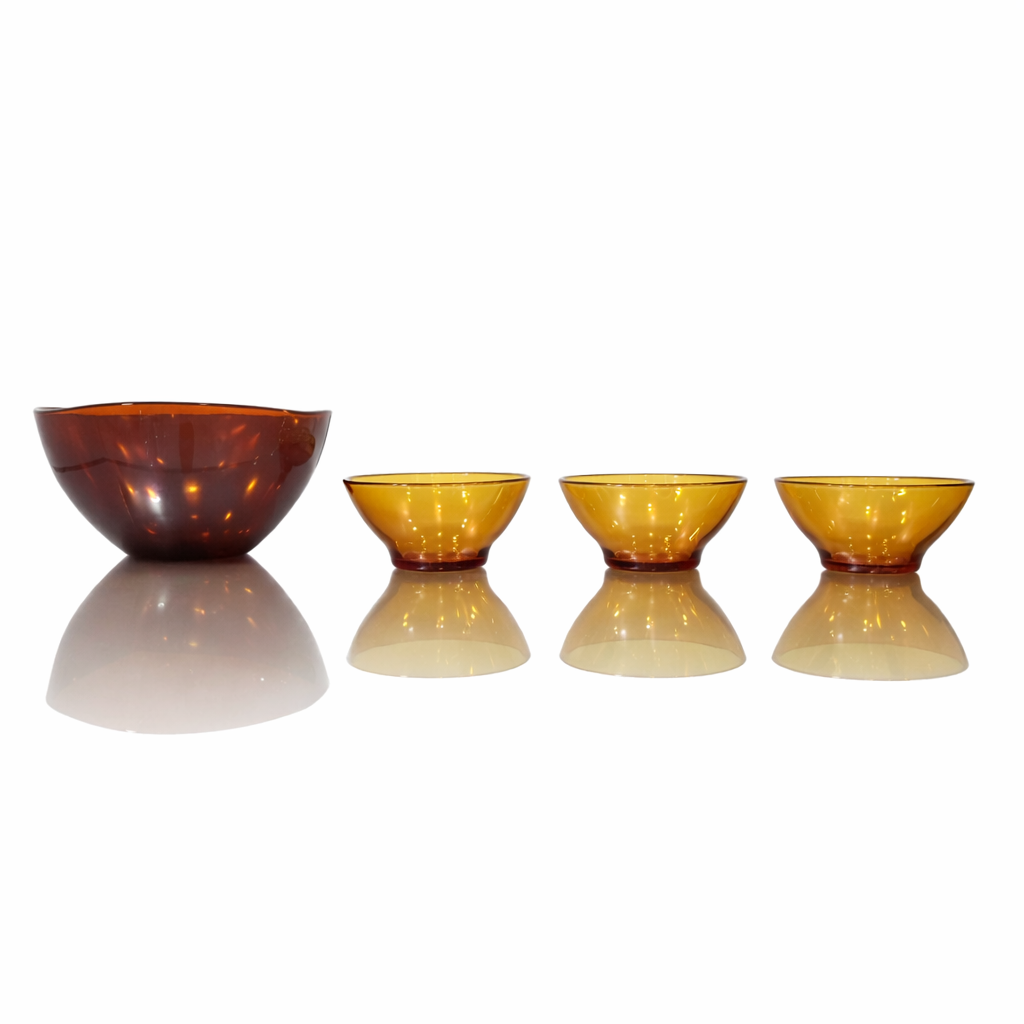
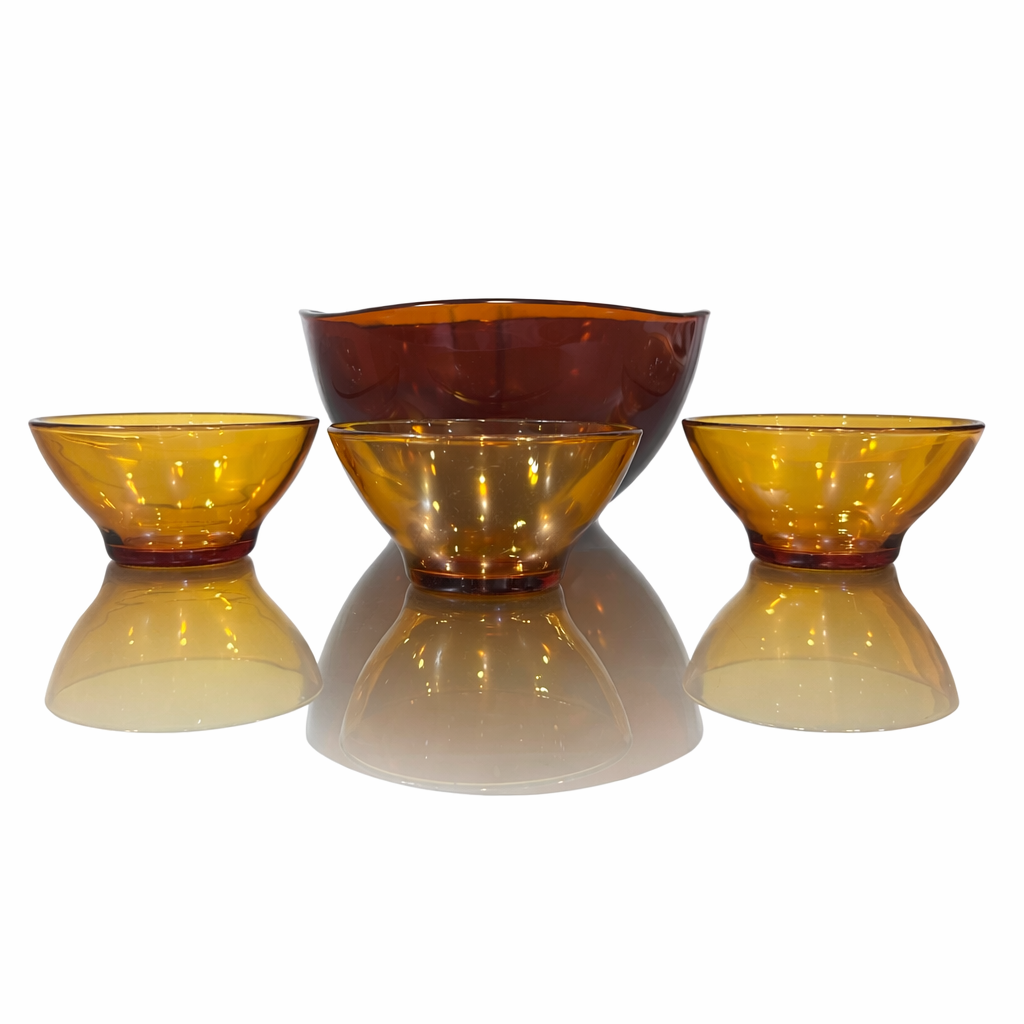
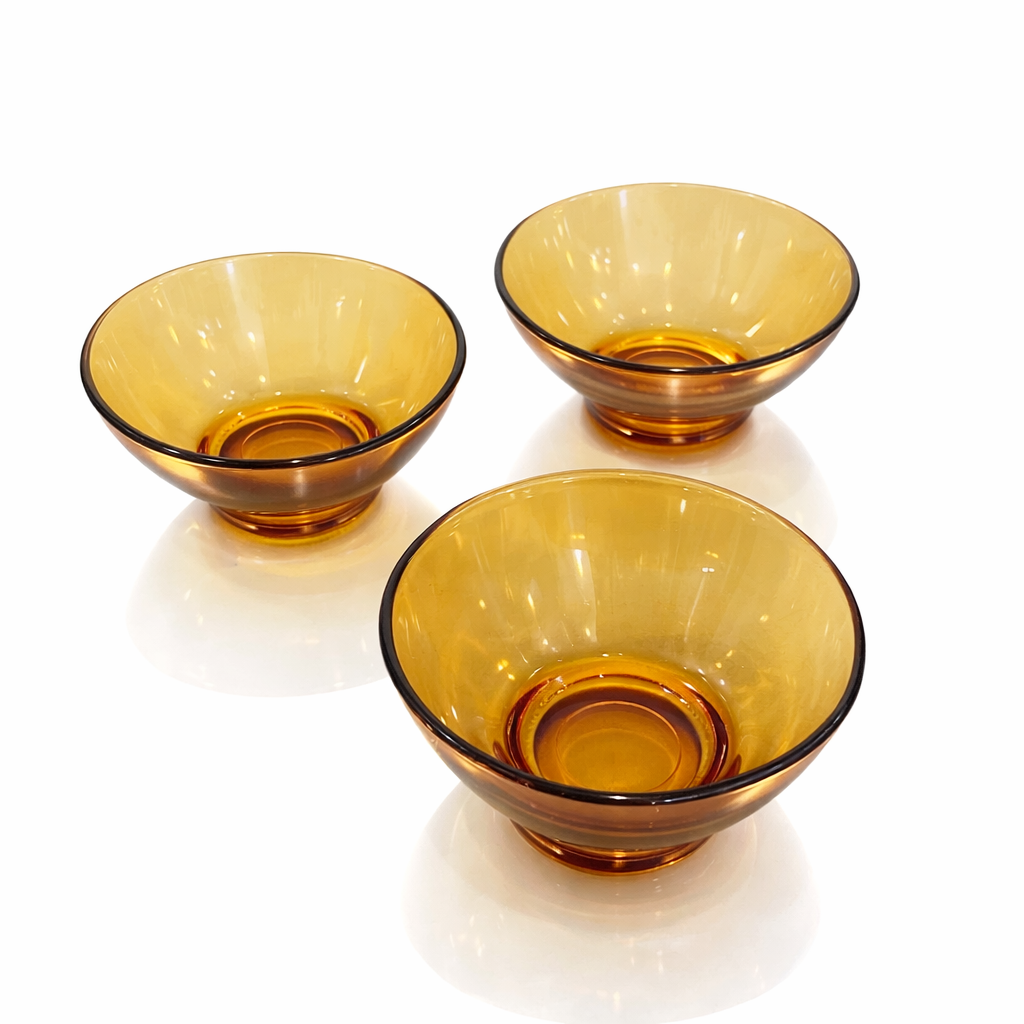
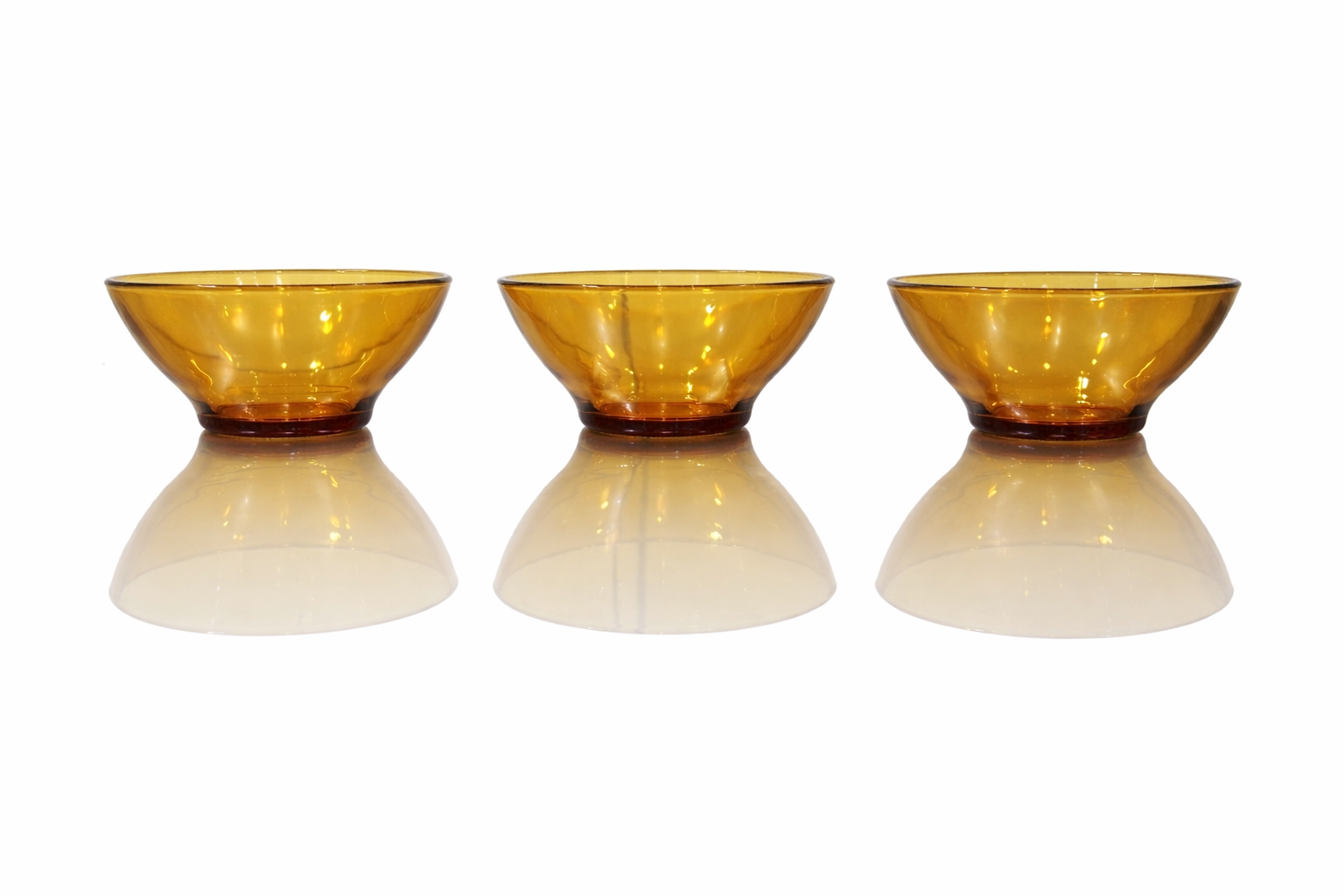
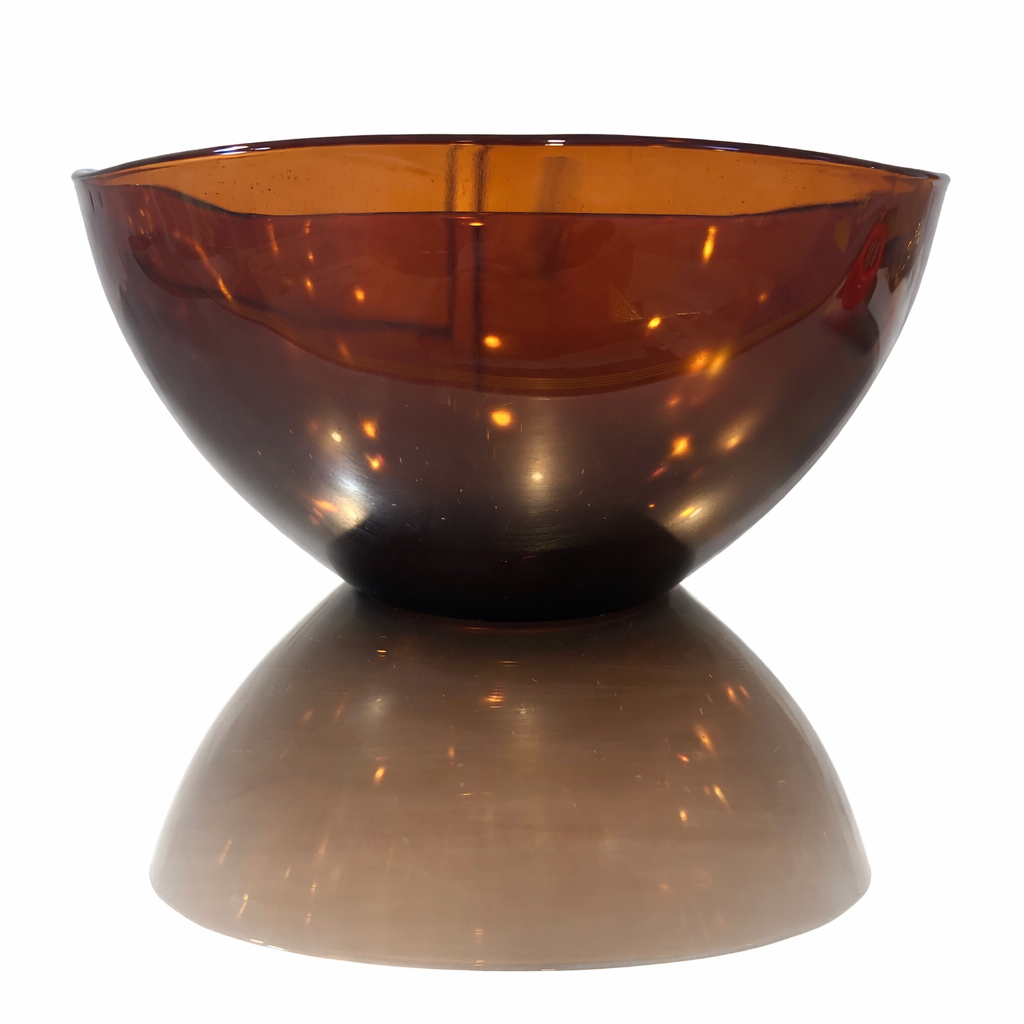
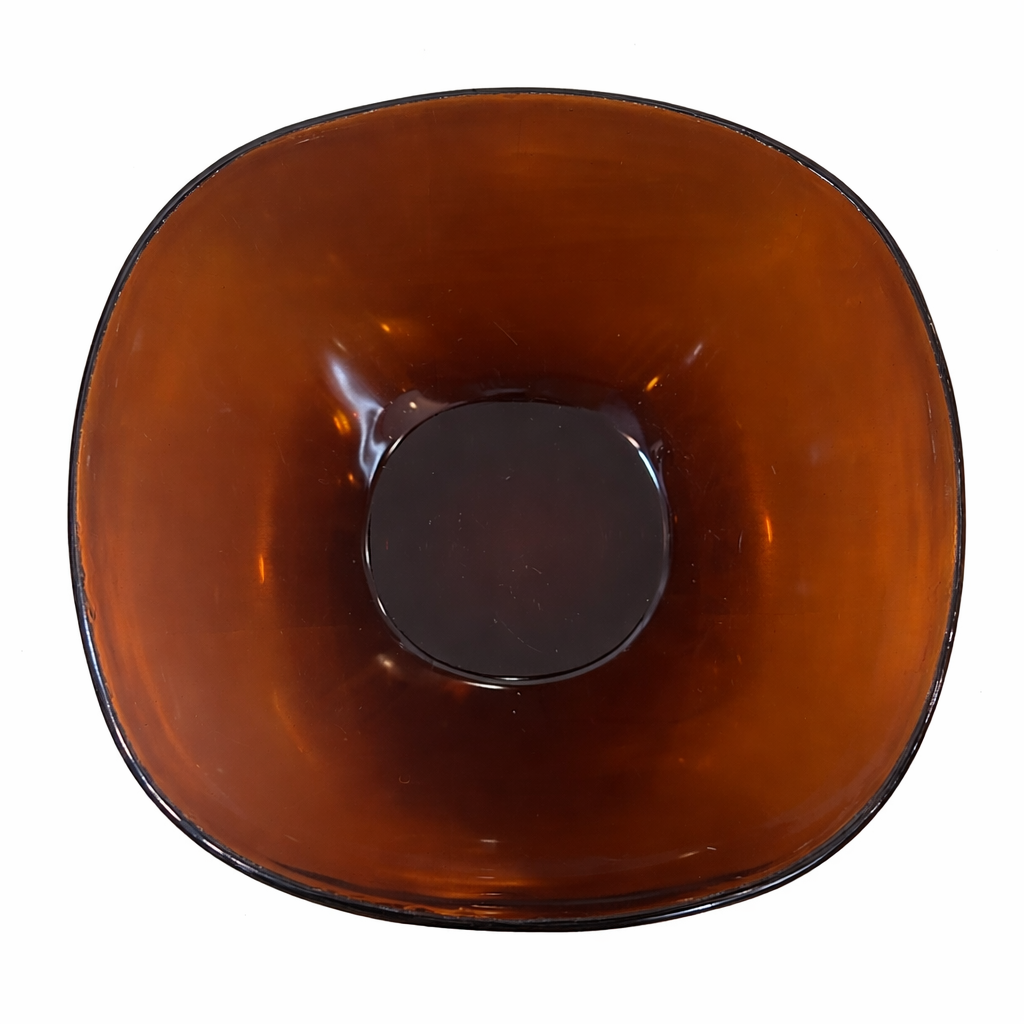
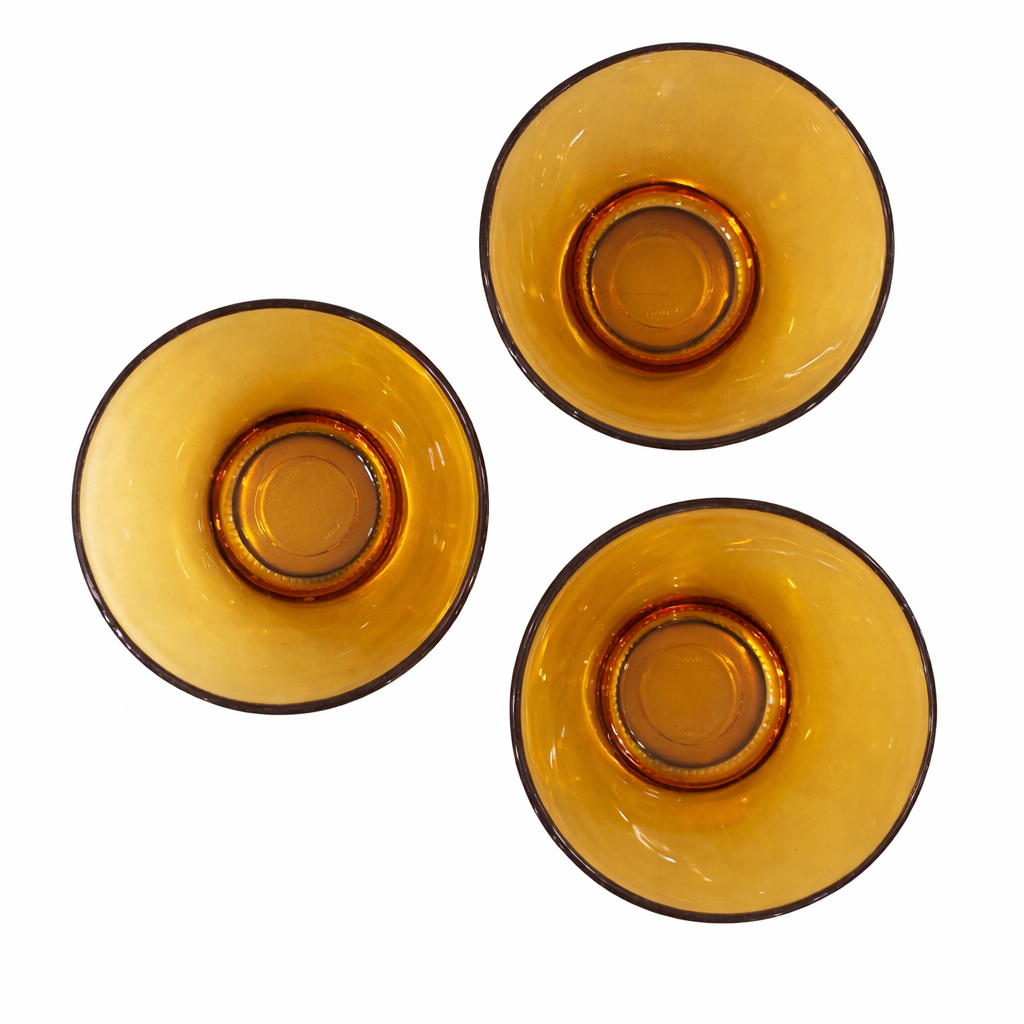
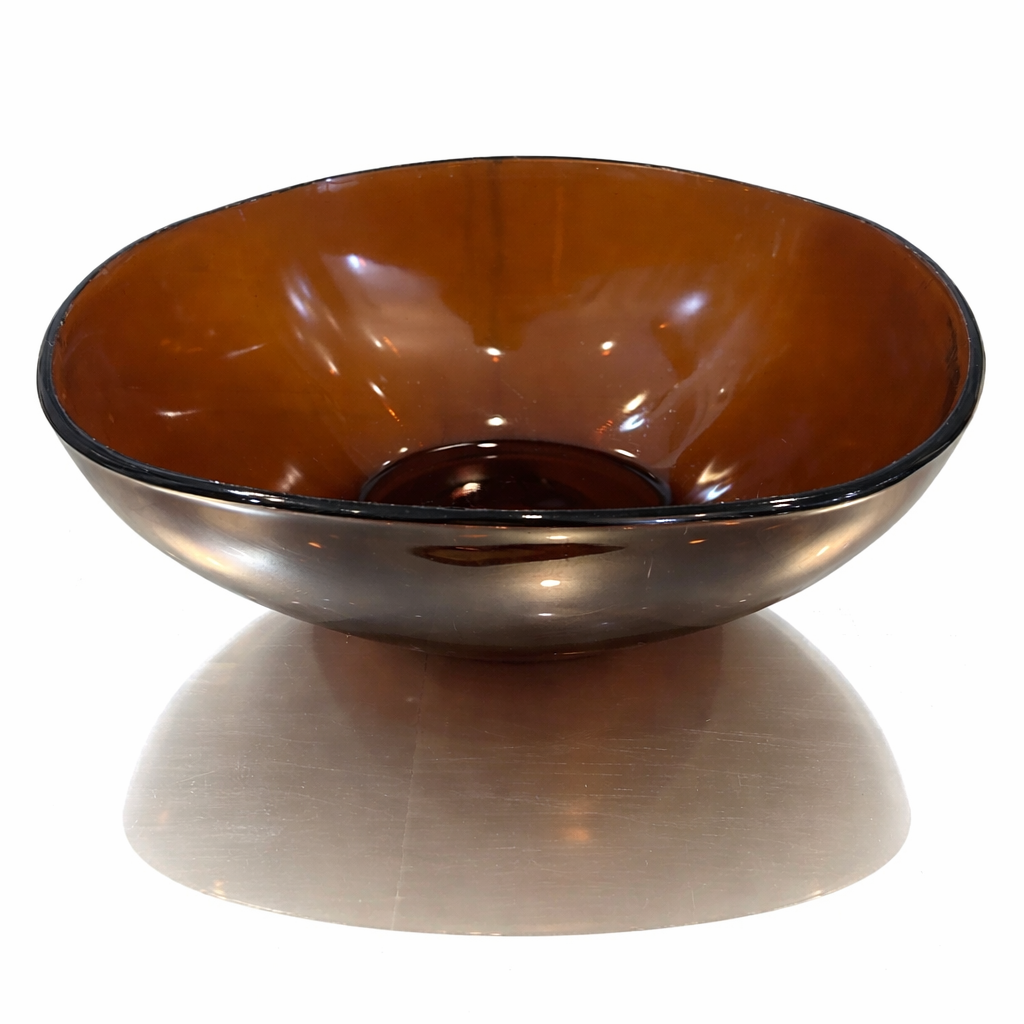
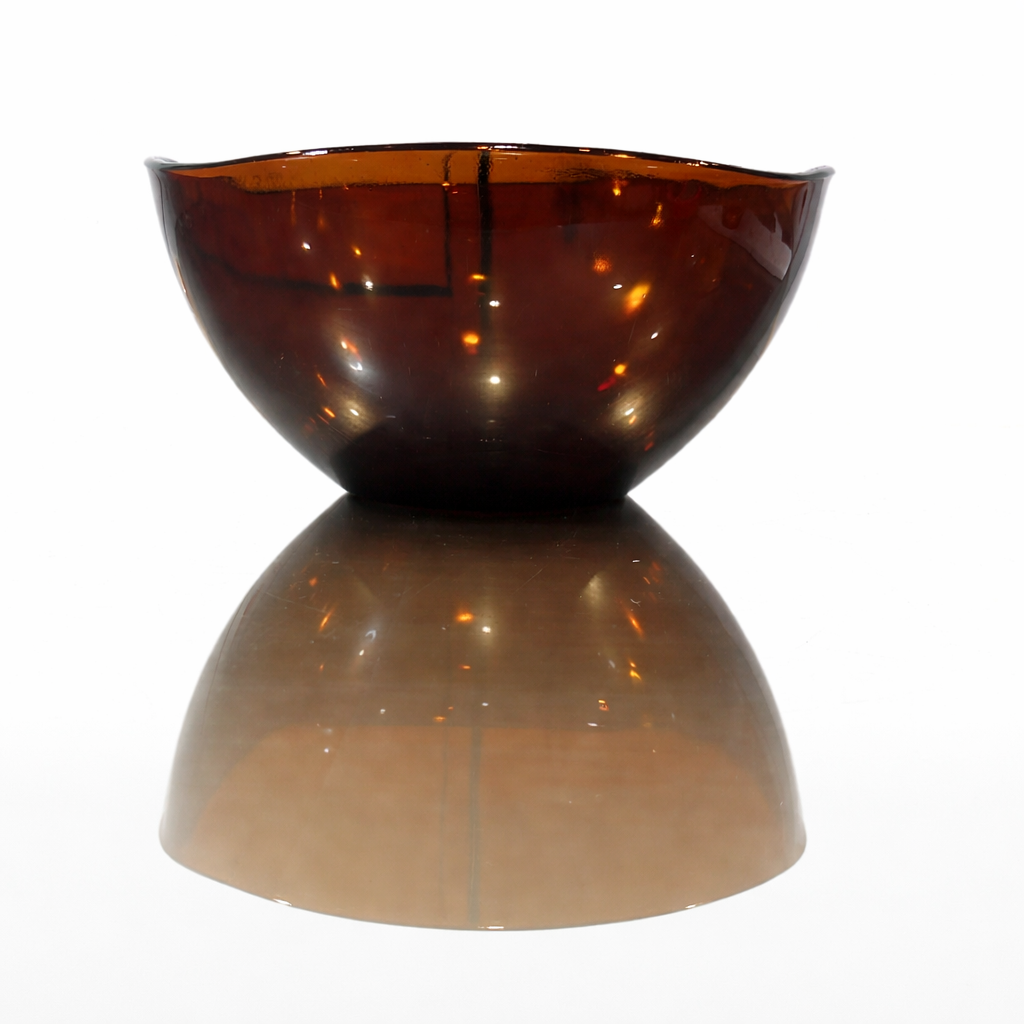
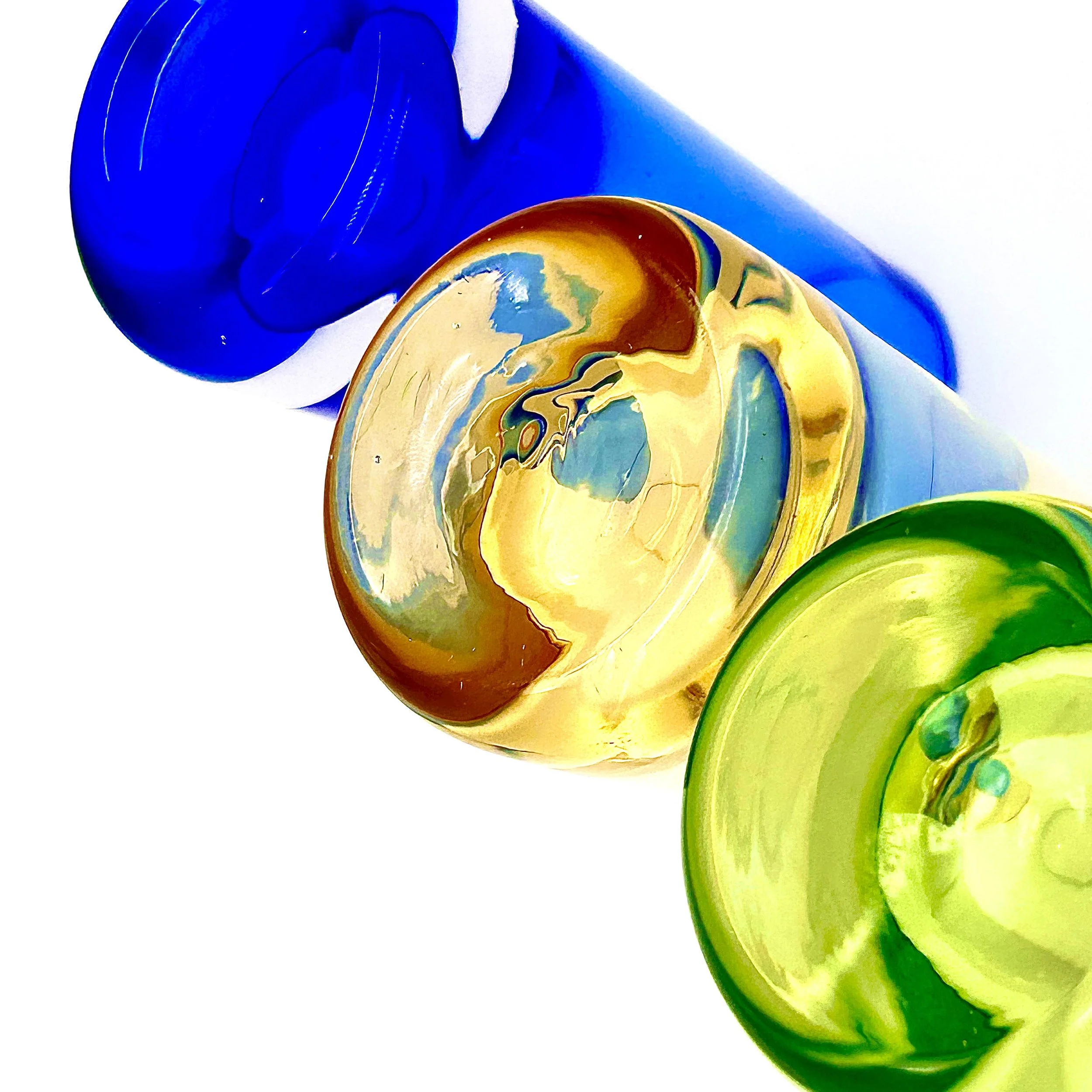
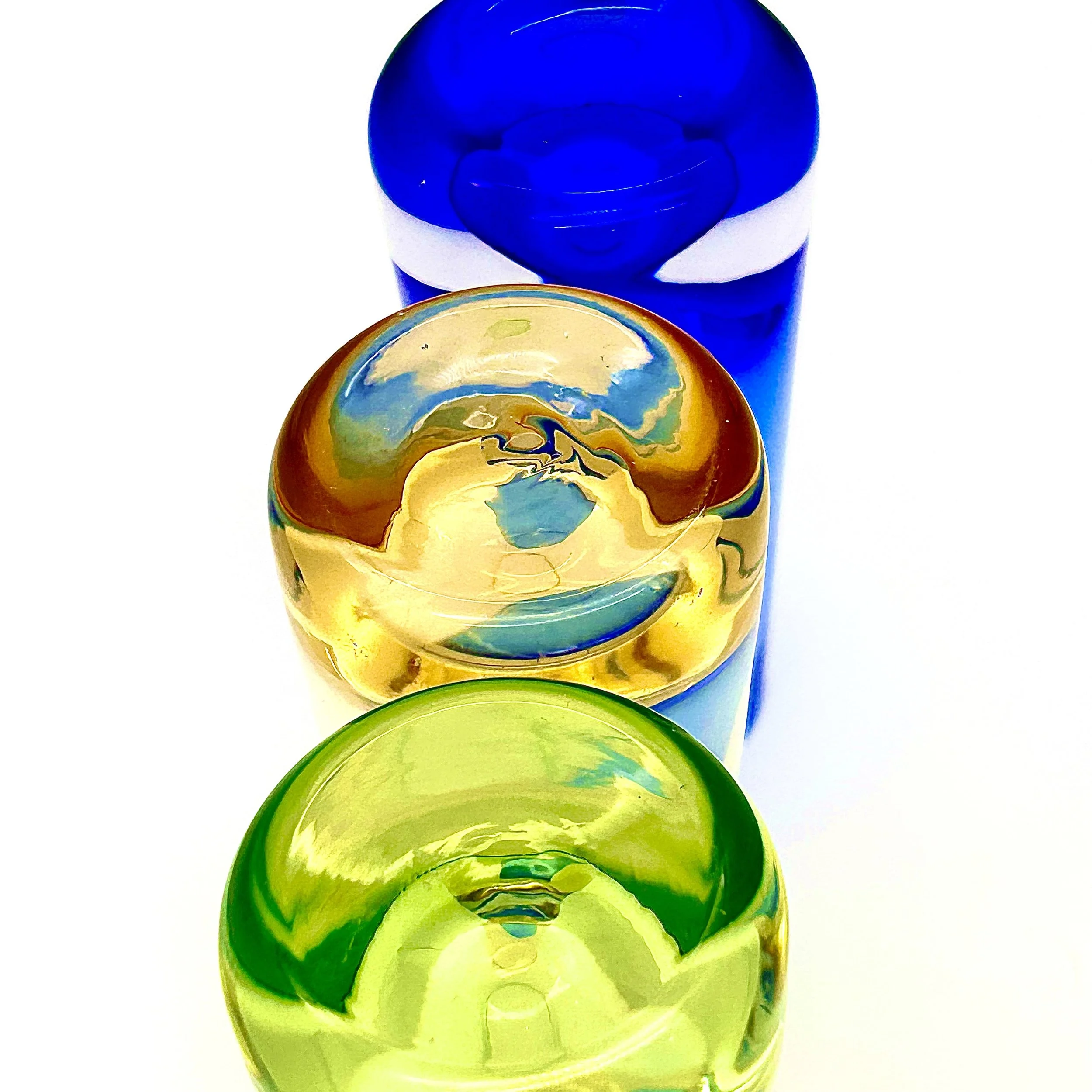
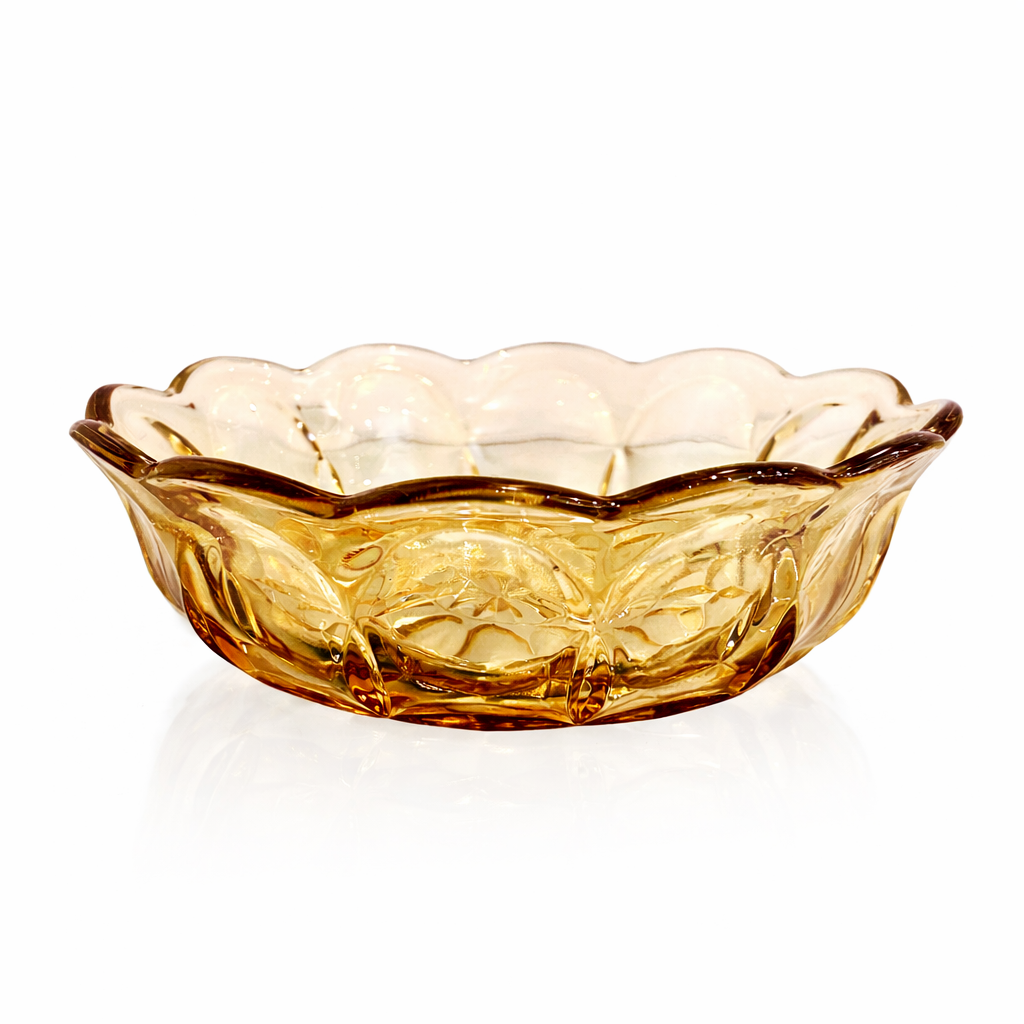
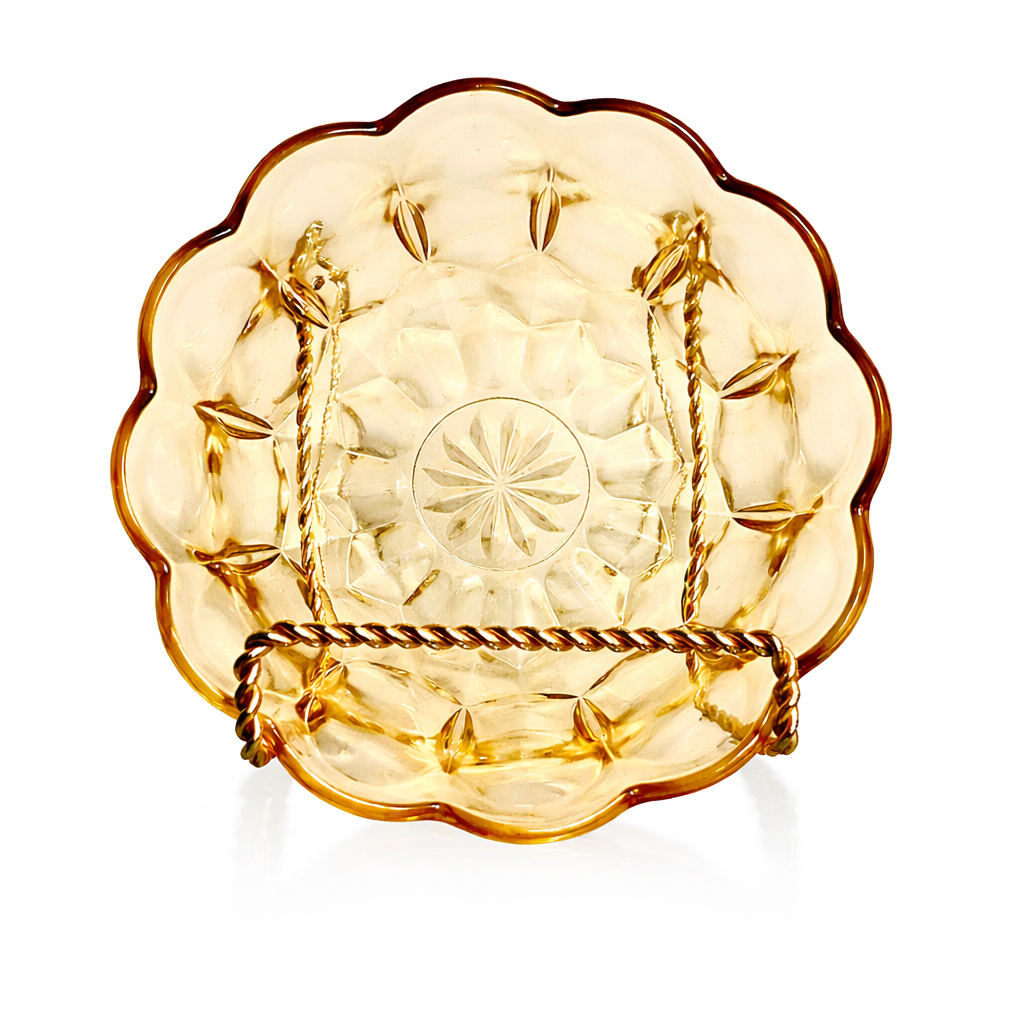
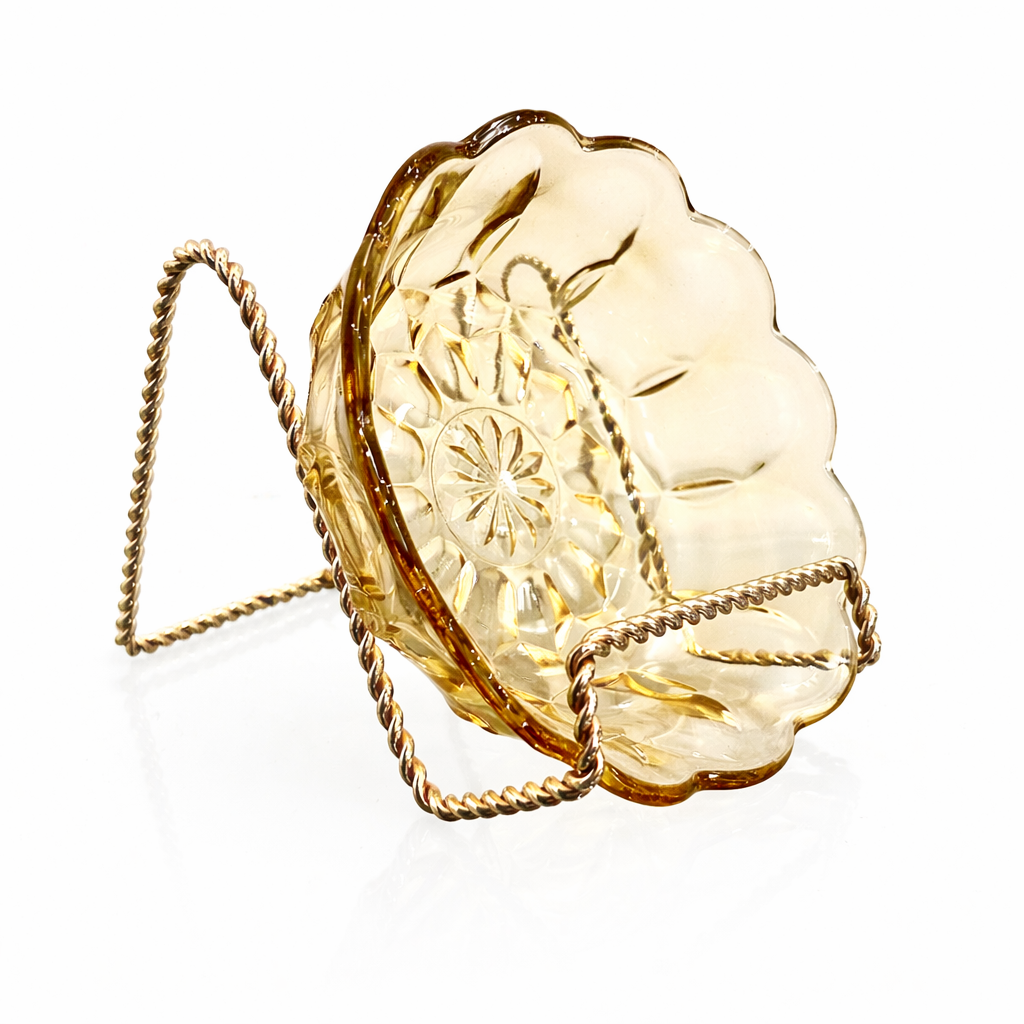
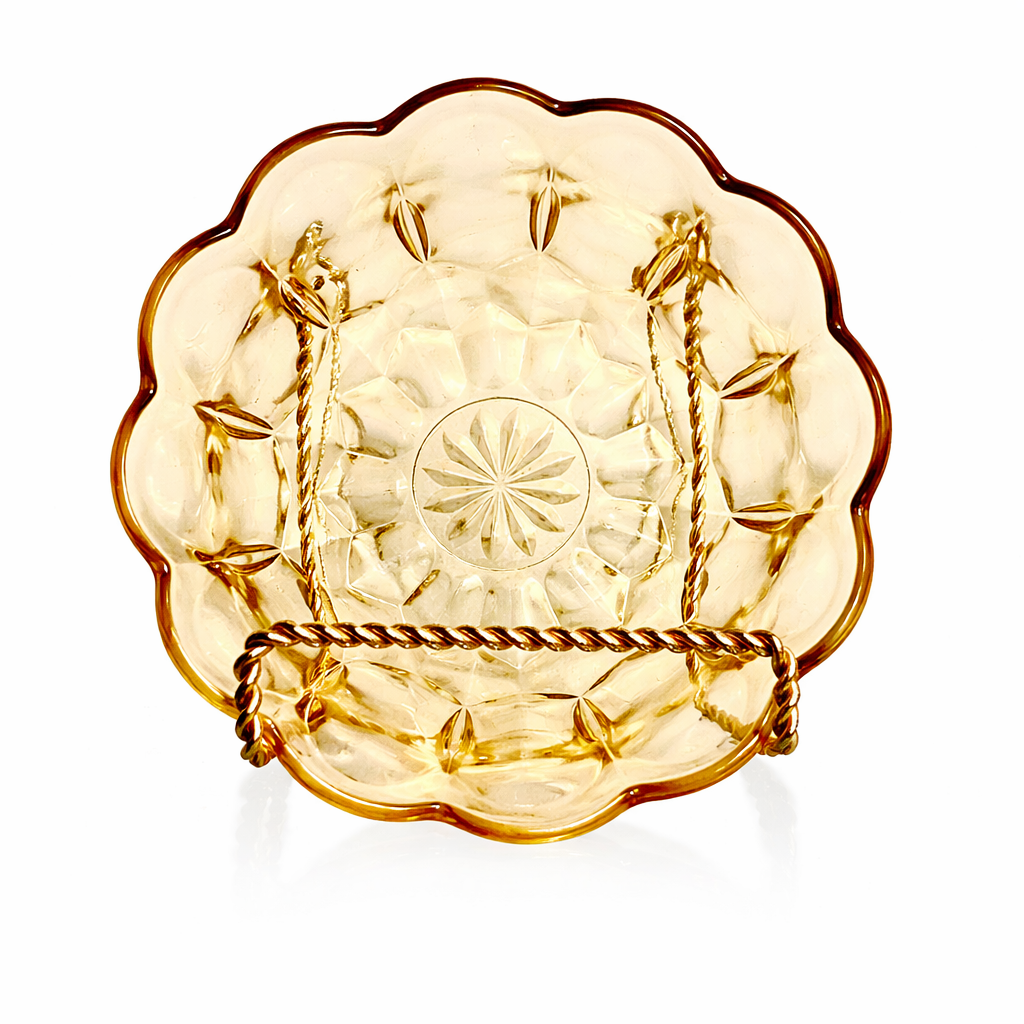
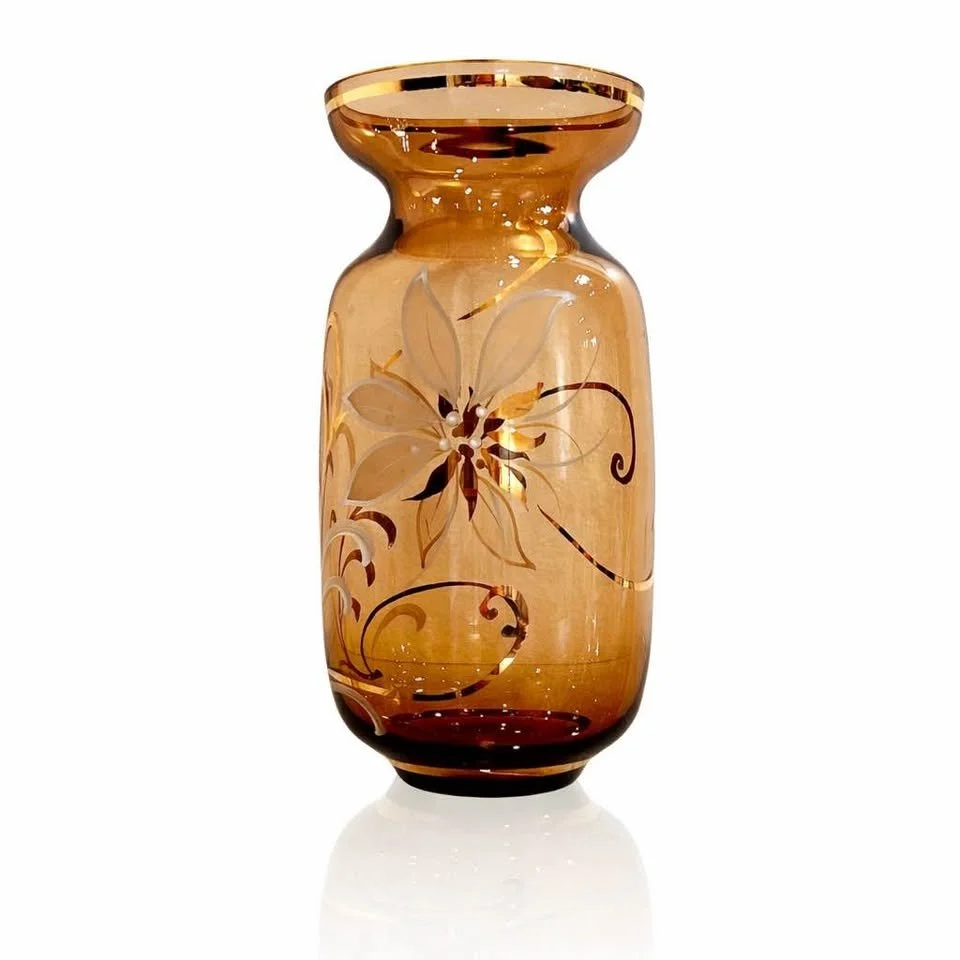
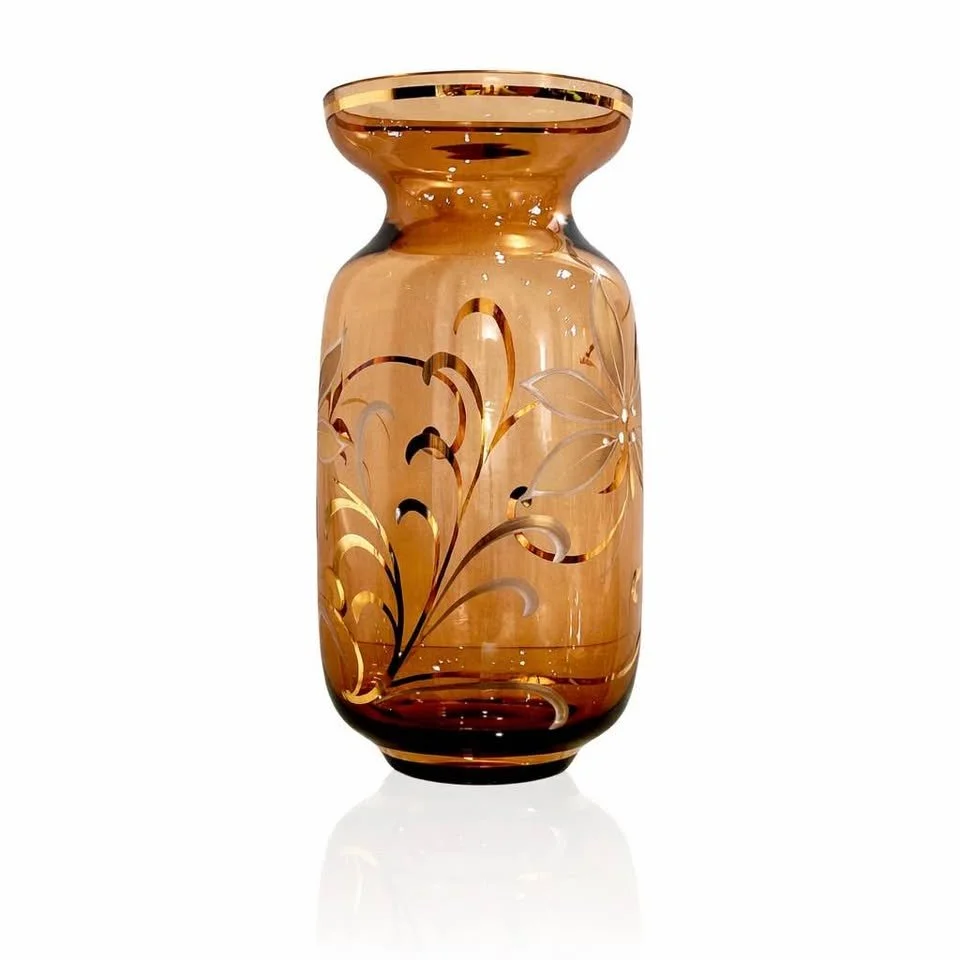
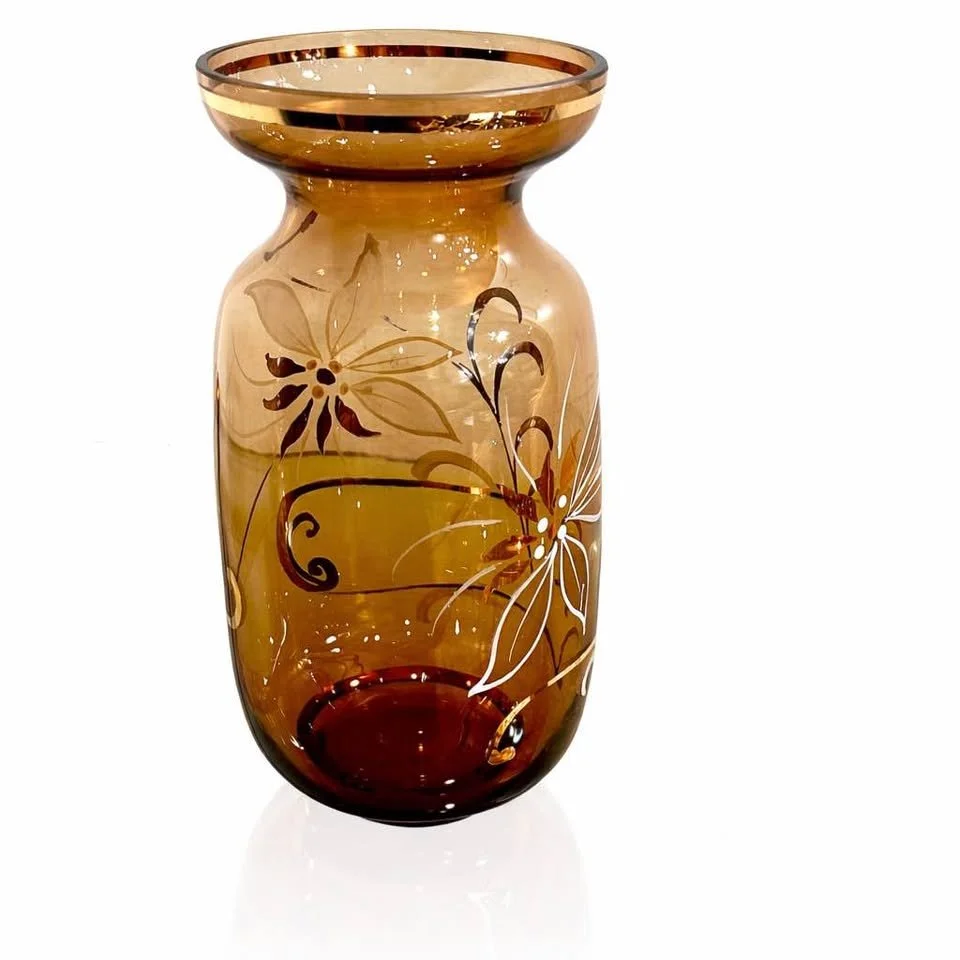
A collector-grade, exceptionally heavy amber art glass centerpiece bowl executed in a bold mid-century European modernist idiom. Architectural in conception and unapologetically sculptural in mass, this piece was conceived as a statement object rather than utilitarian tableware.
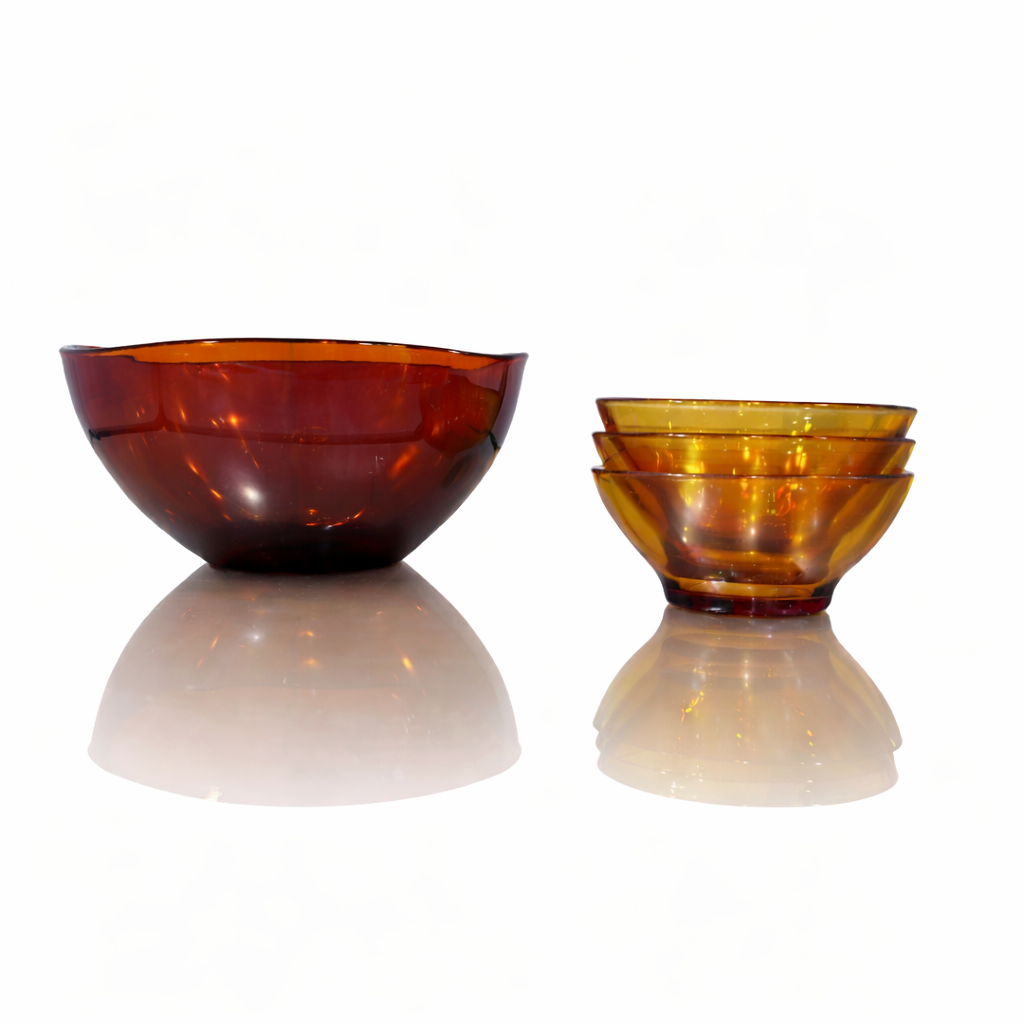
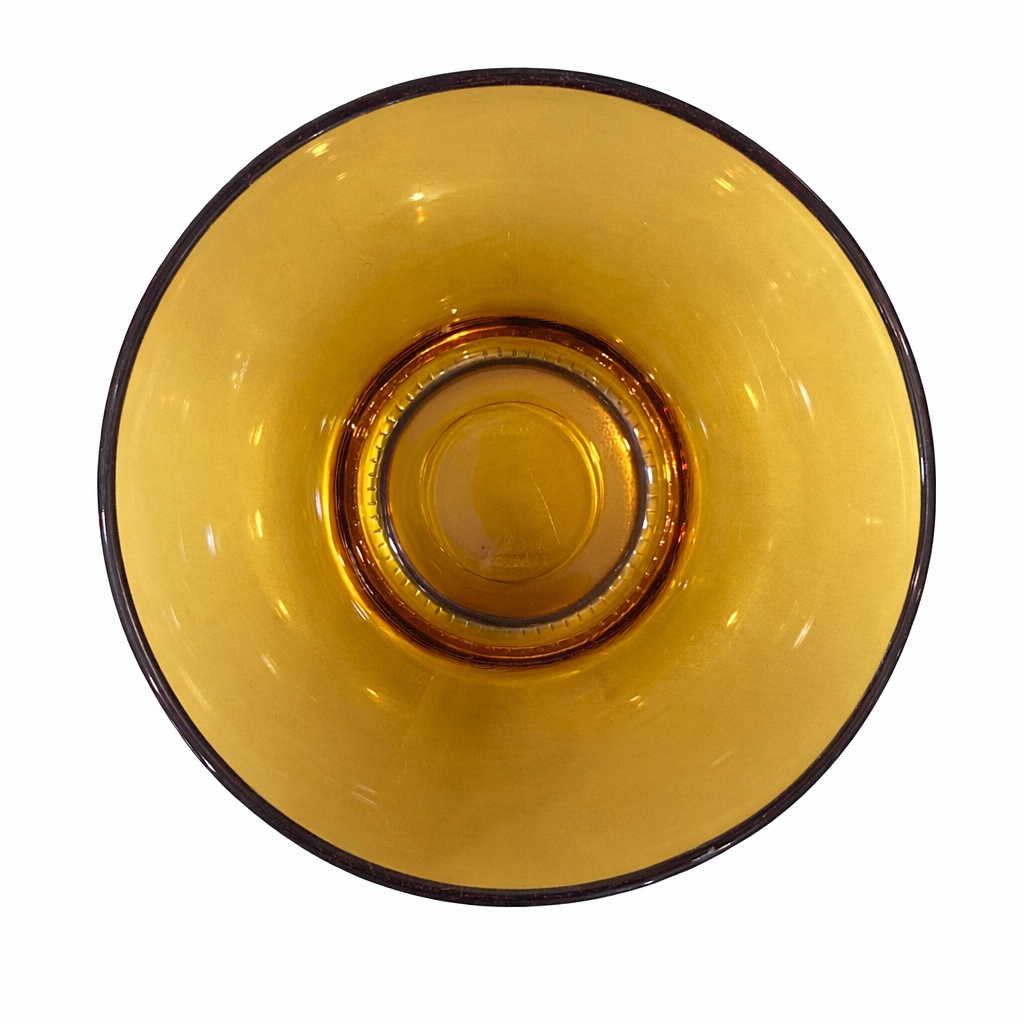
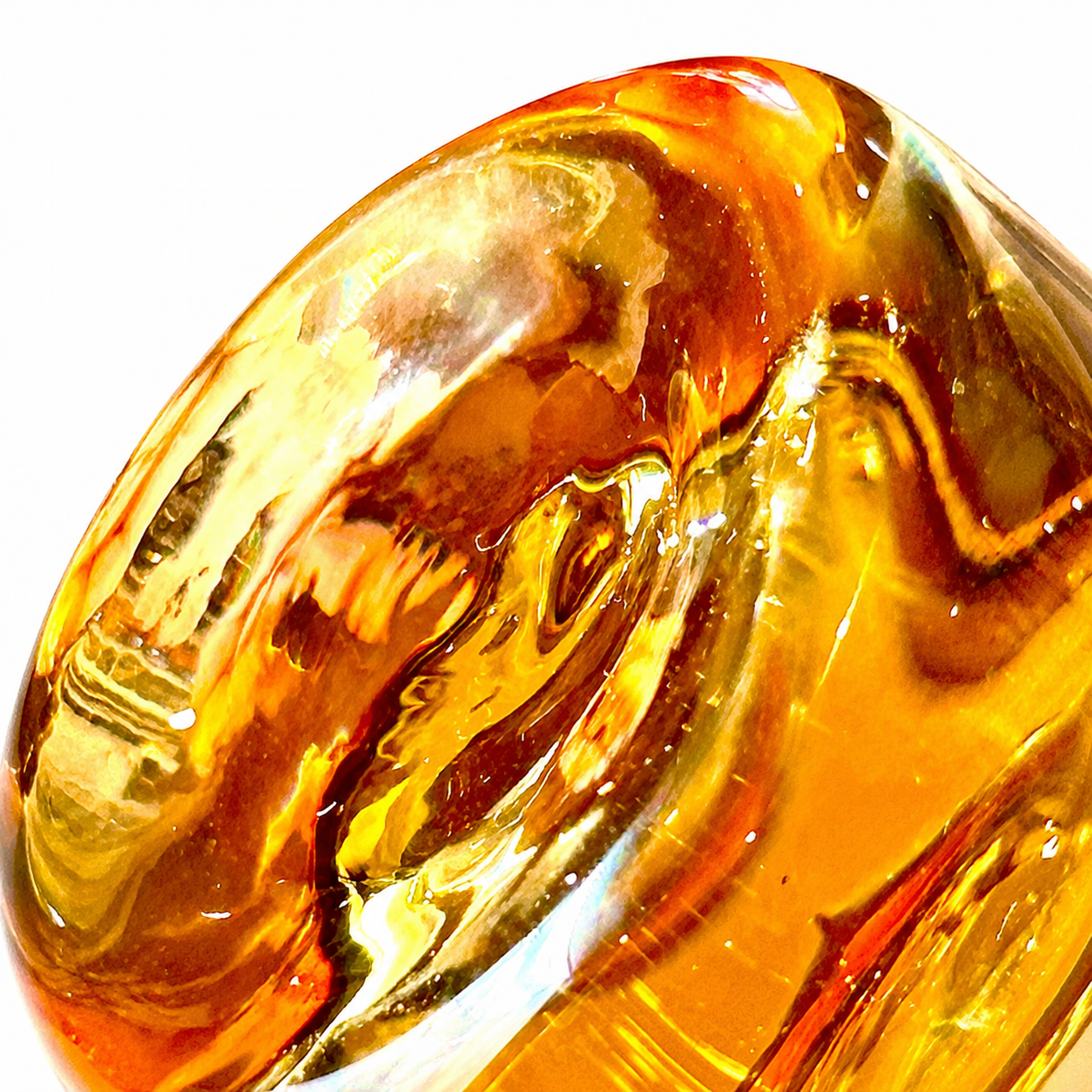
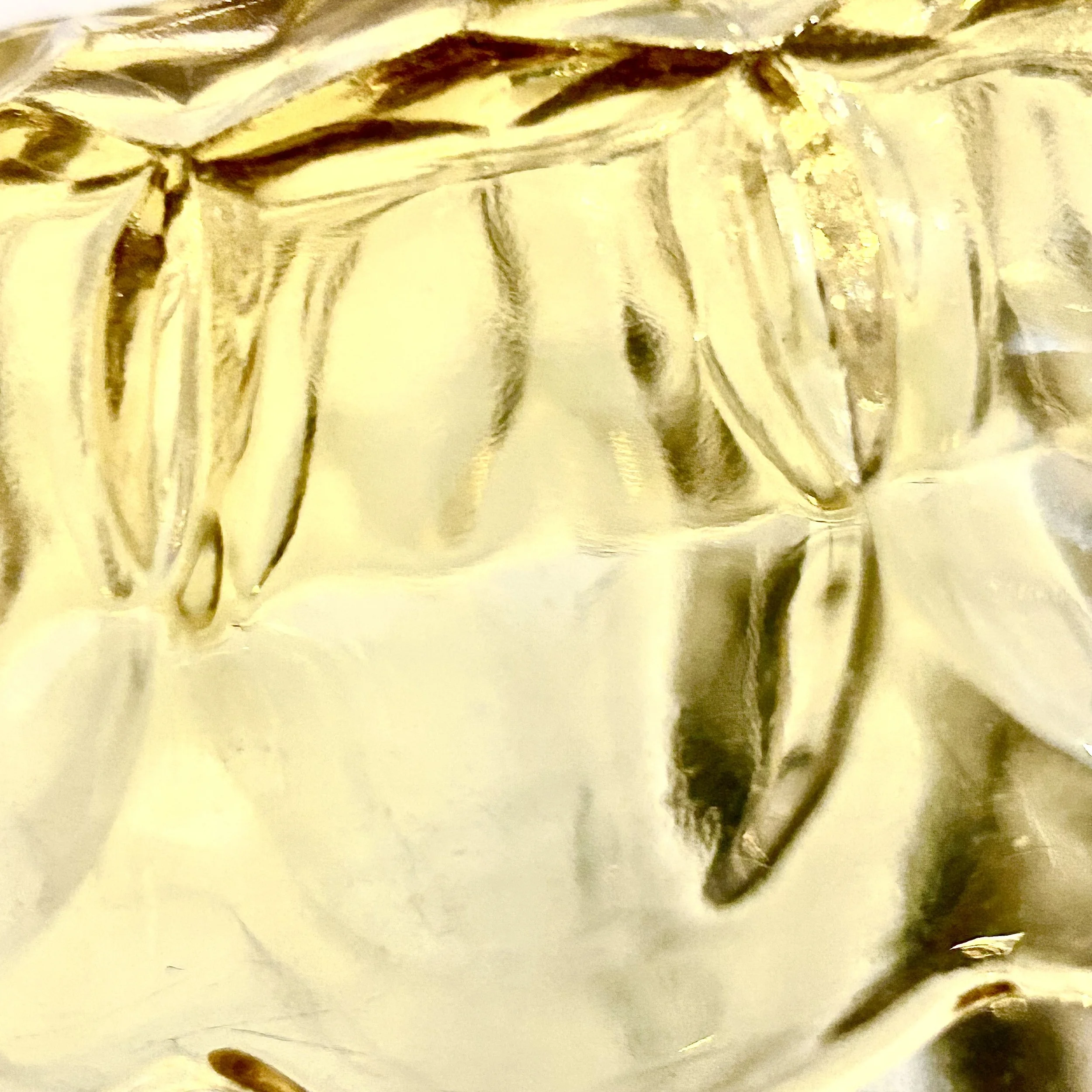
The form is deliberate and geometric: a thick square outer frame with softly radiused corners encasing a raised oval basin, all carved from densely saturated amber batch glass. The glass transitions from deep honey to lighter golden tonalities depending on light angle, producing strong optical depth and internal refraction. Subtle internal distortions and light-bending effects confirm thick, hand-worked art glass rather than lightweight pressed production.
The weight is immediate and commanding—consistent with the 1950s–1960s European movement toward mass-driven glass sculpture, particularly within Murano and Murano-influenced studio circles where clarity, density, and controlled form replaced surface ornamentation. The piece aligns conceptually with Italian centro tavola design—functional objects elevated to sculptural centerpieces for modern interiors.
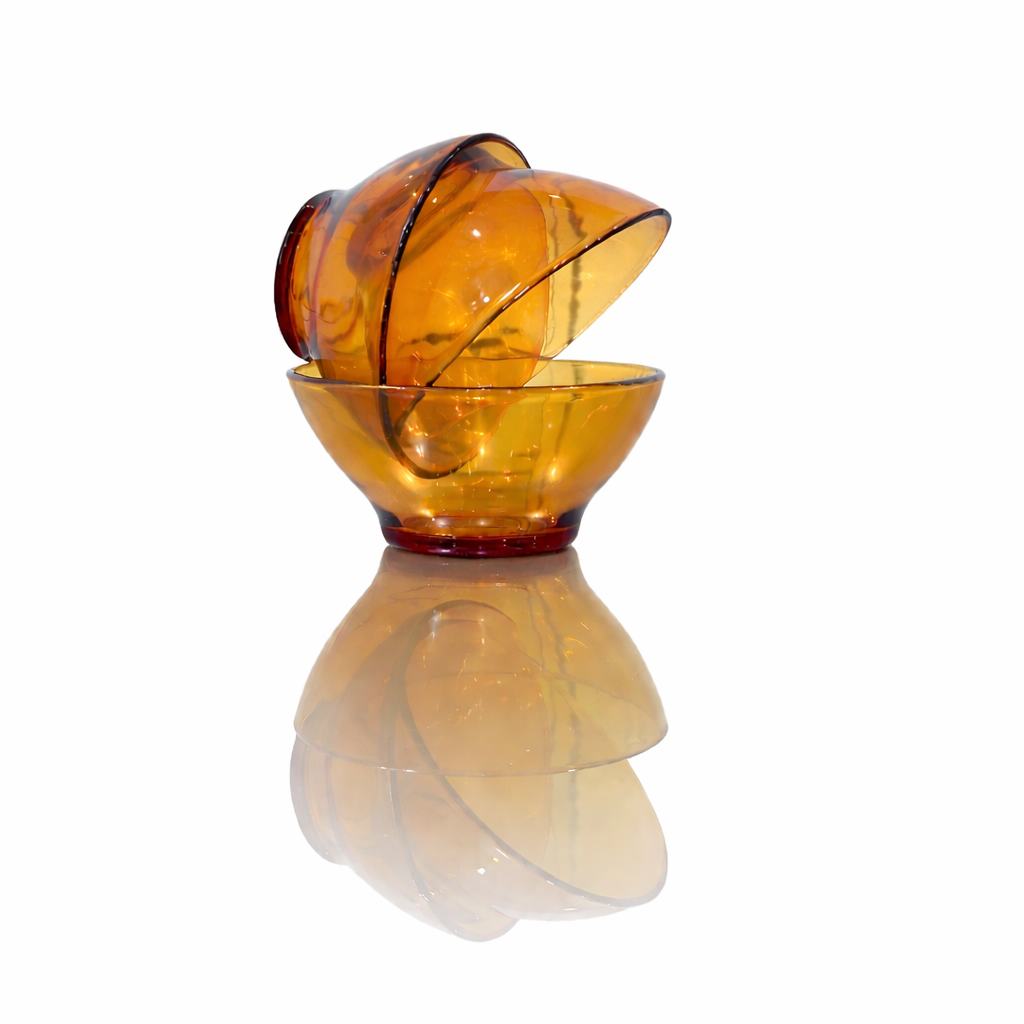
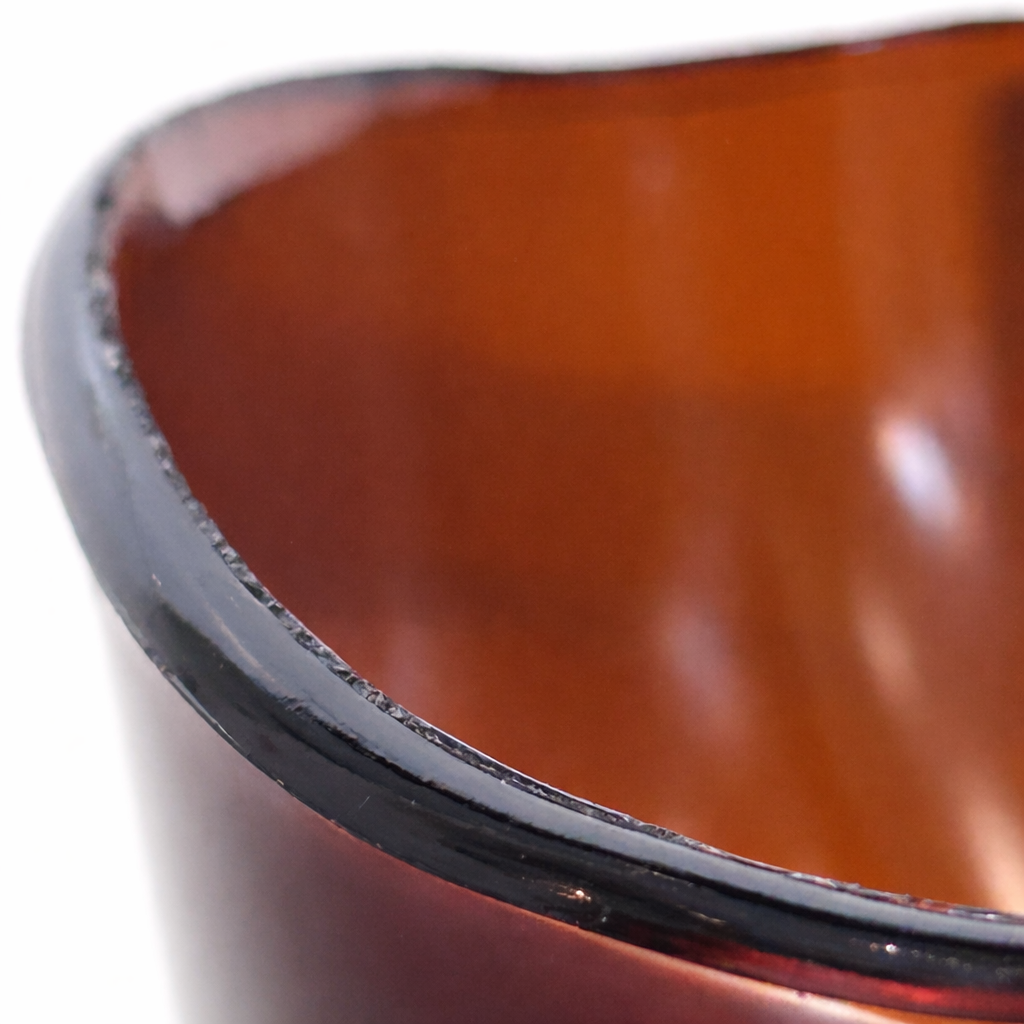
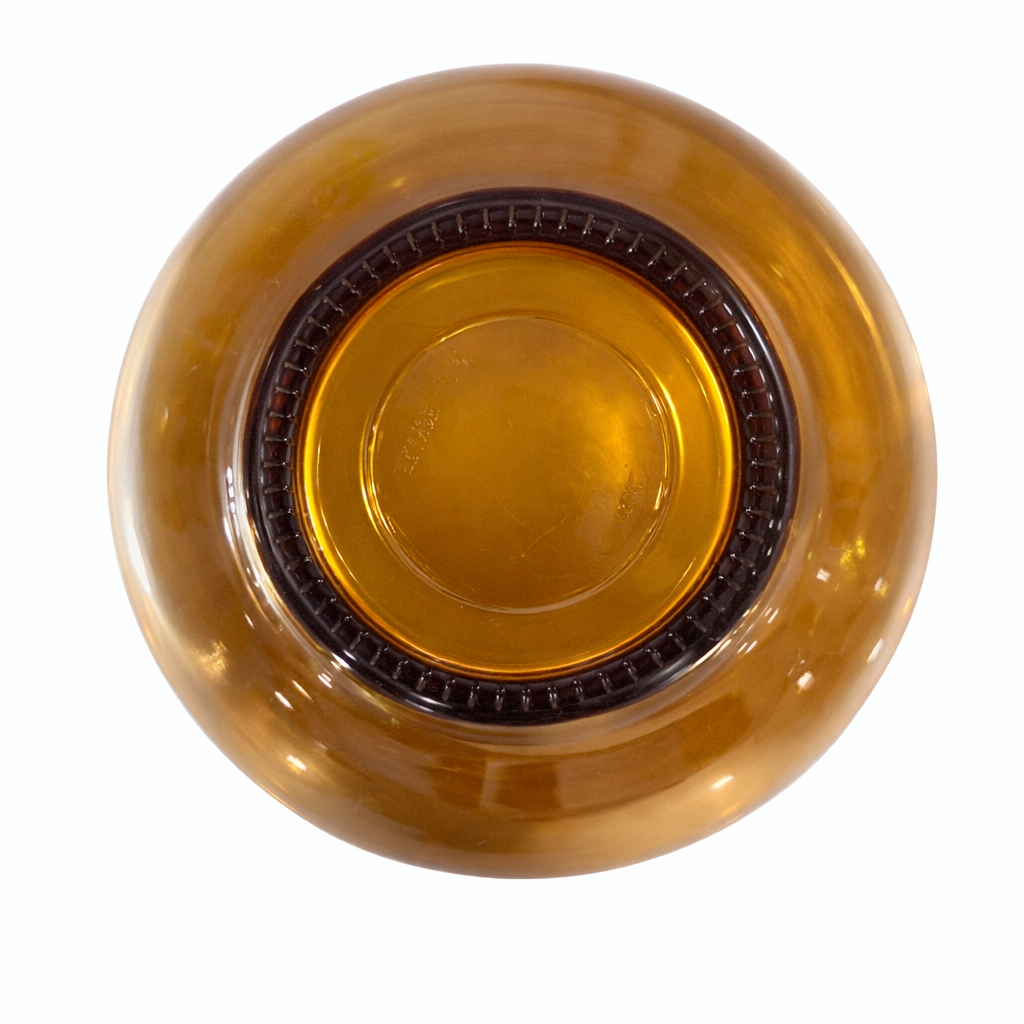
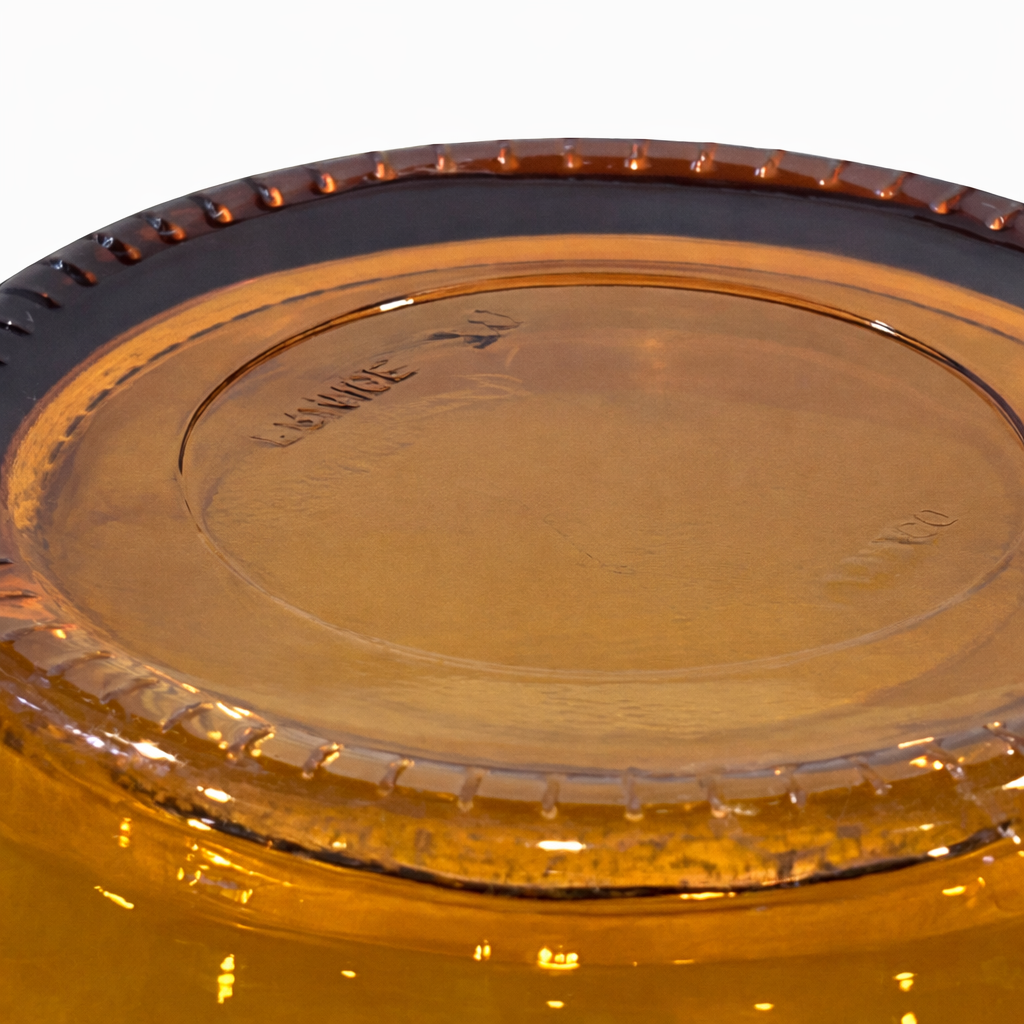
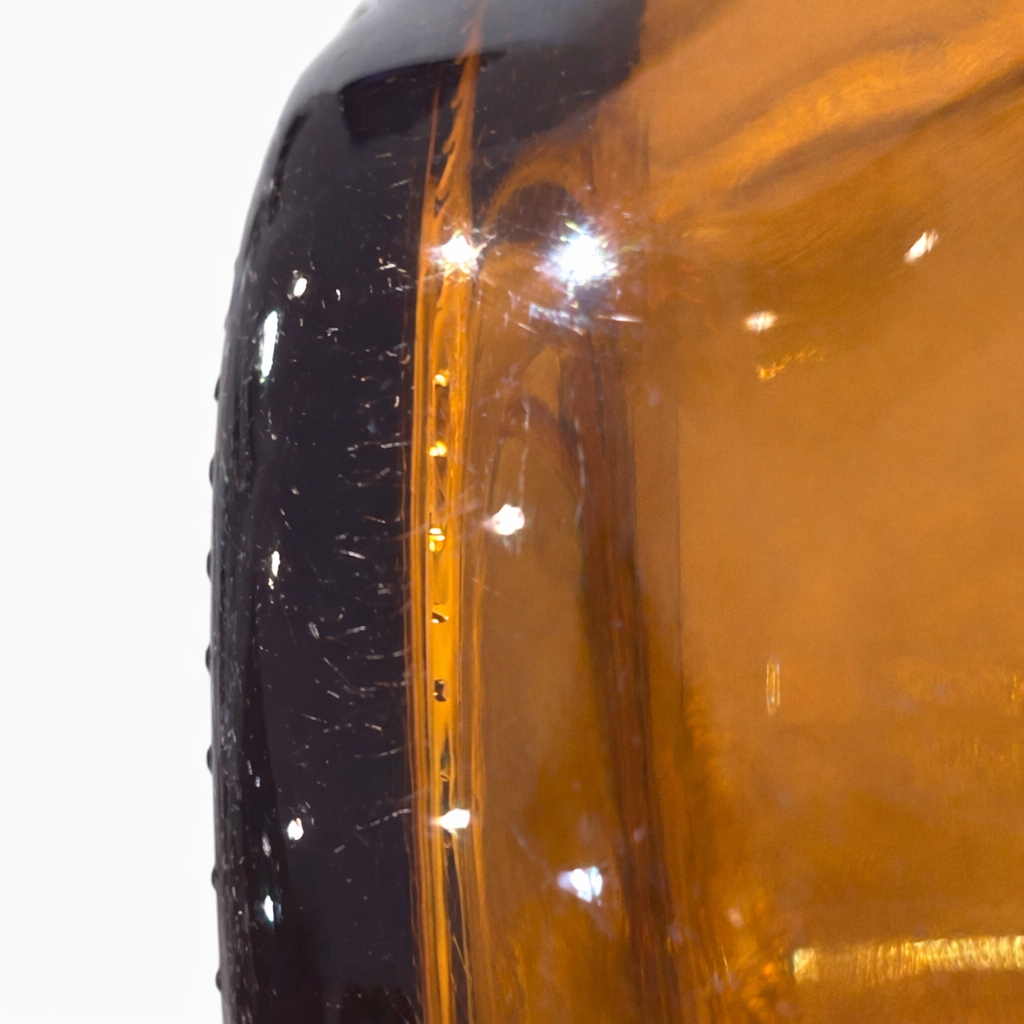
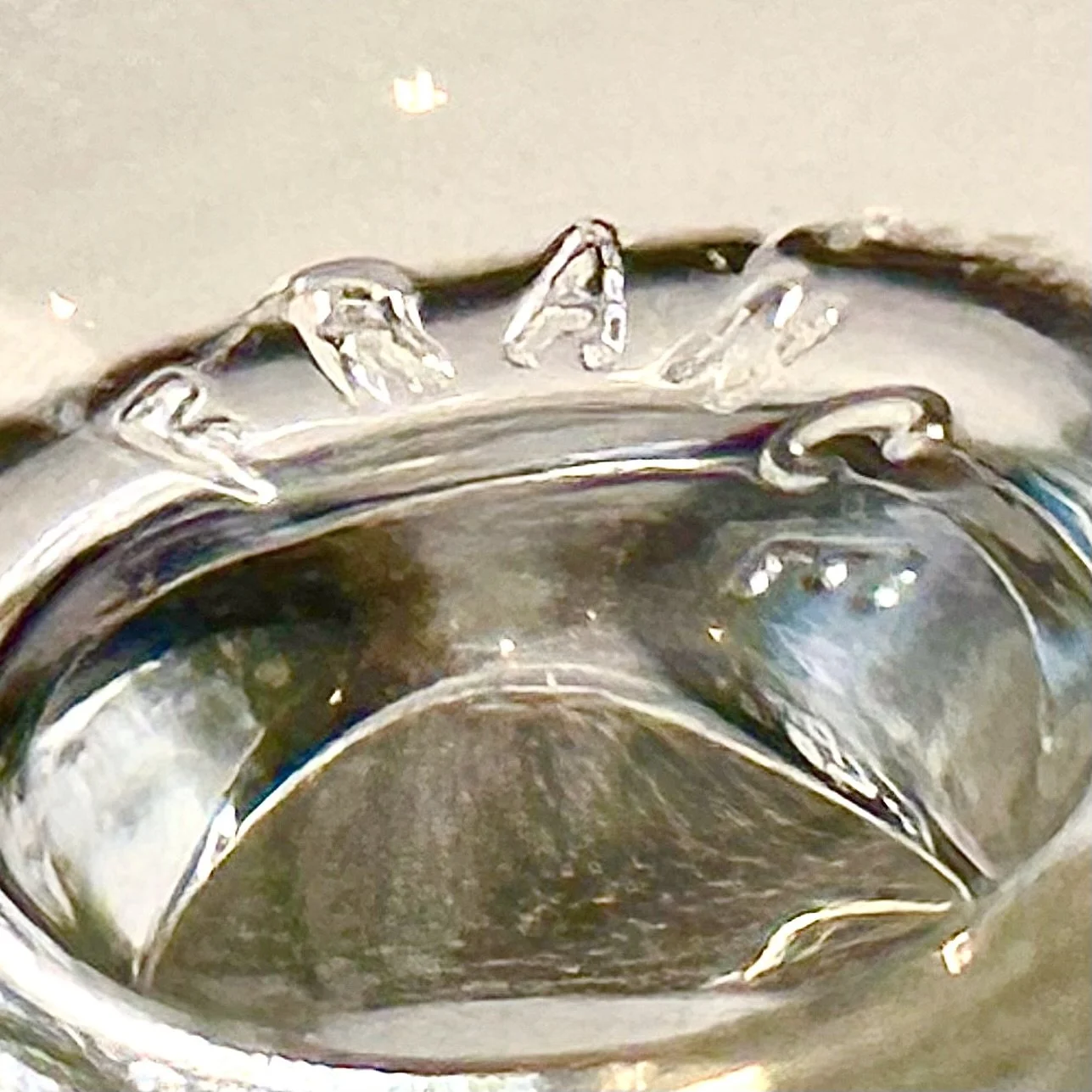
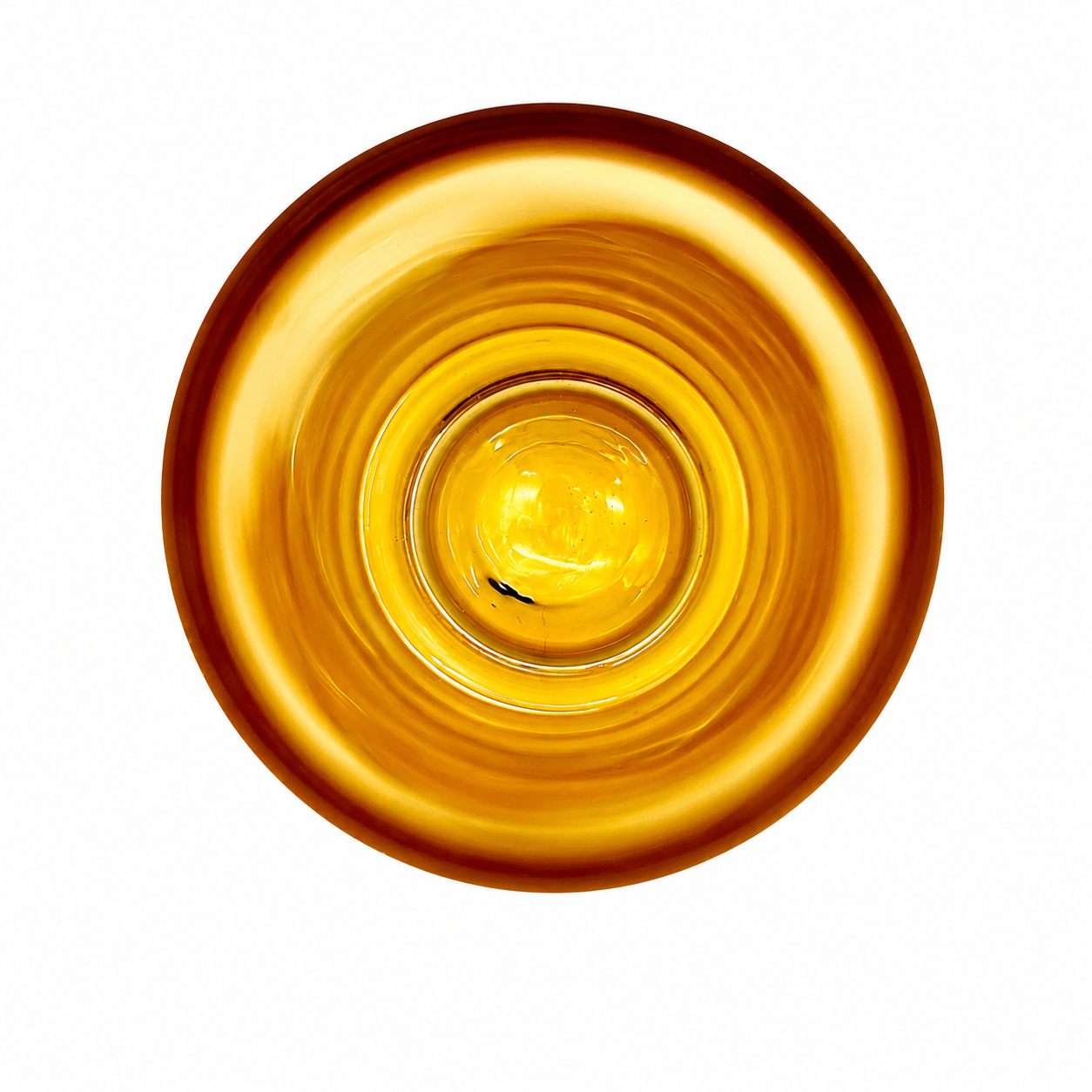
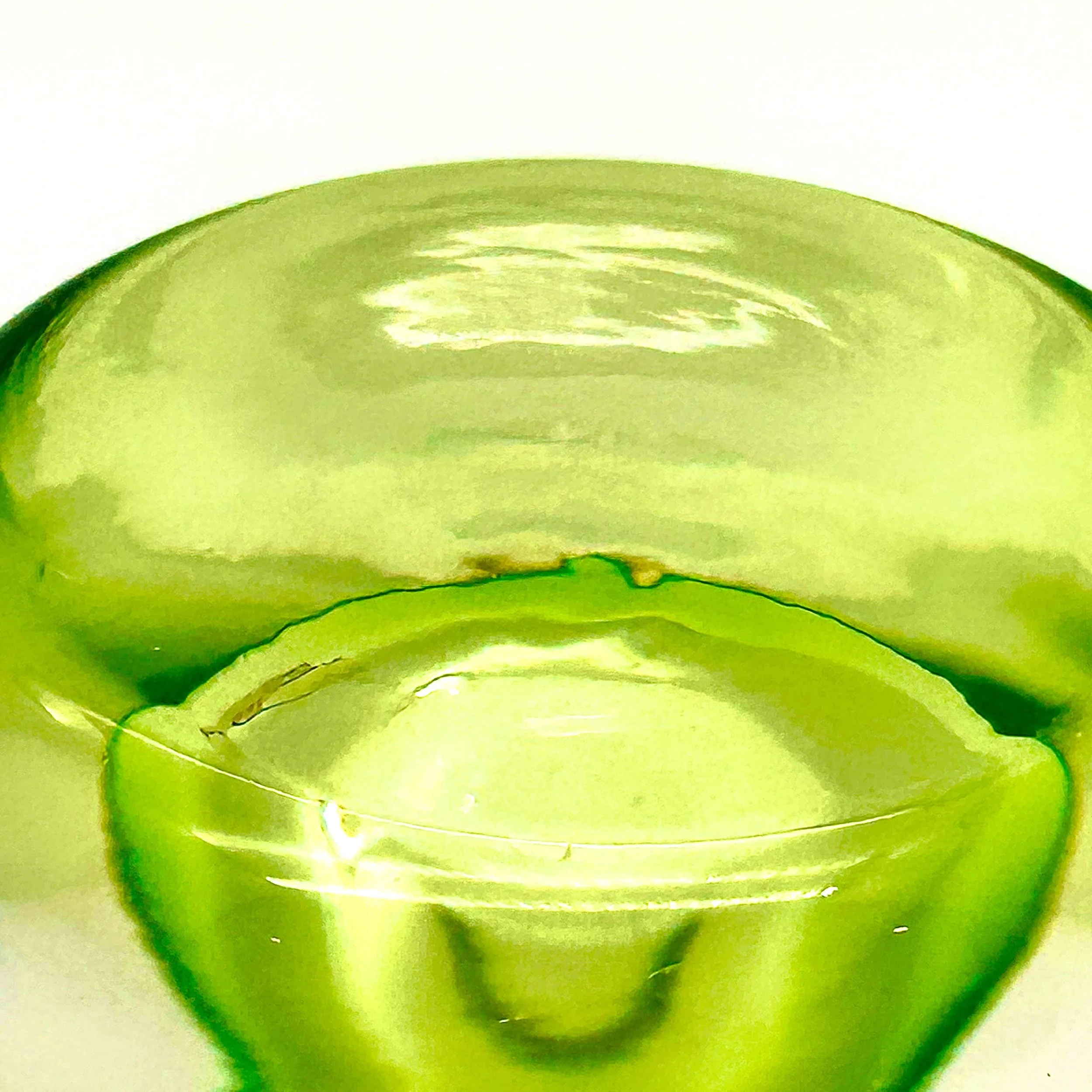
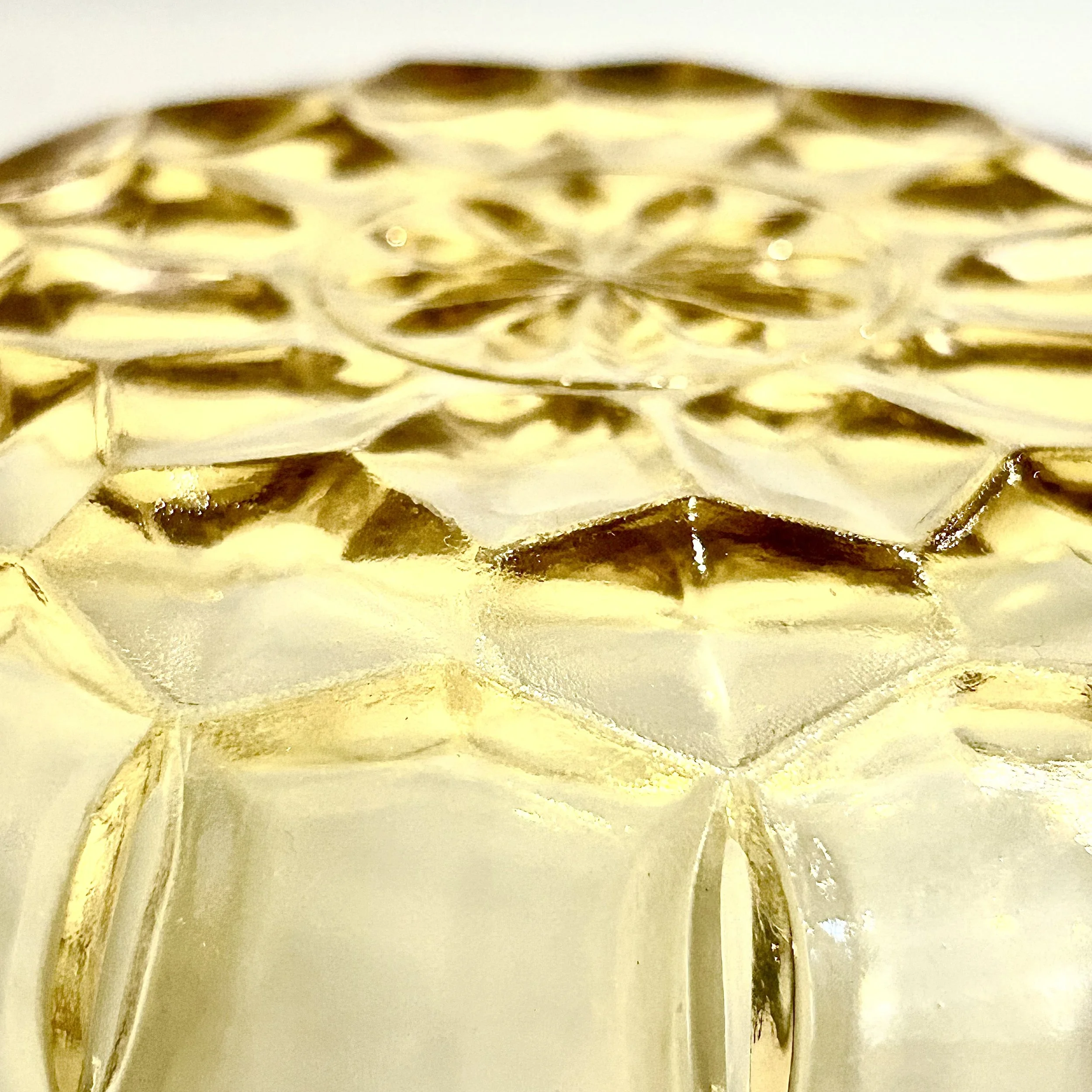
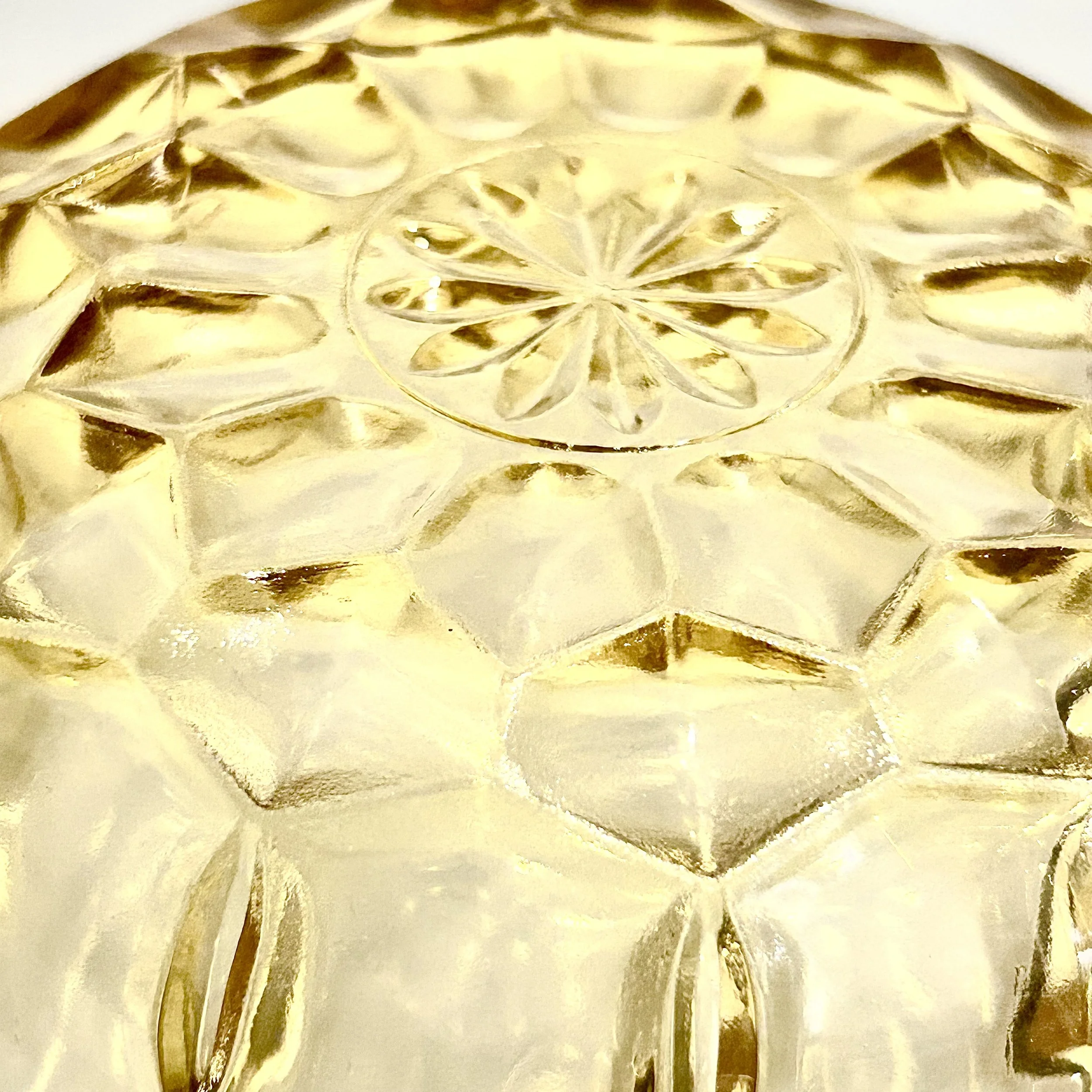
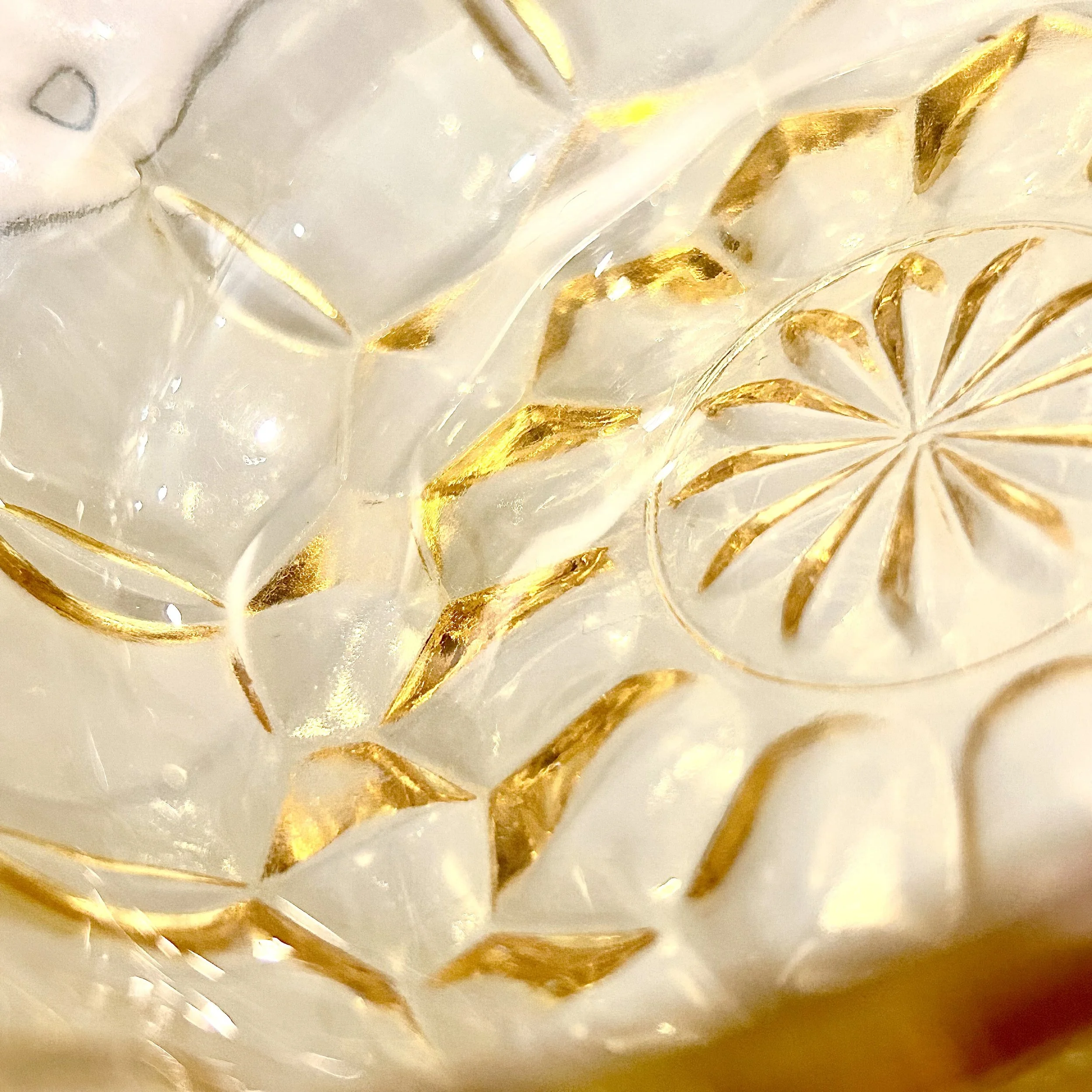
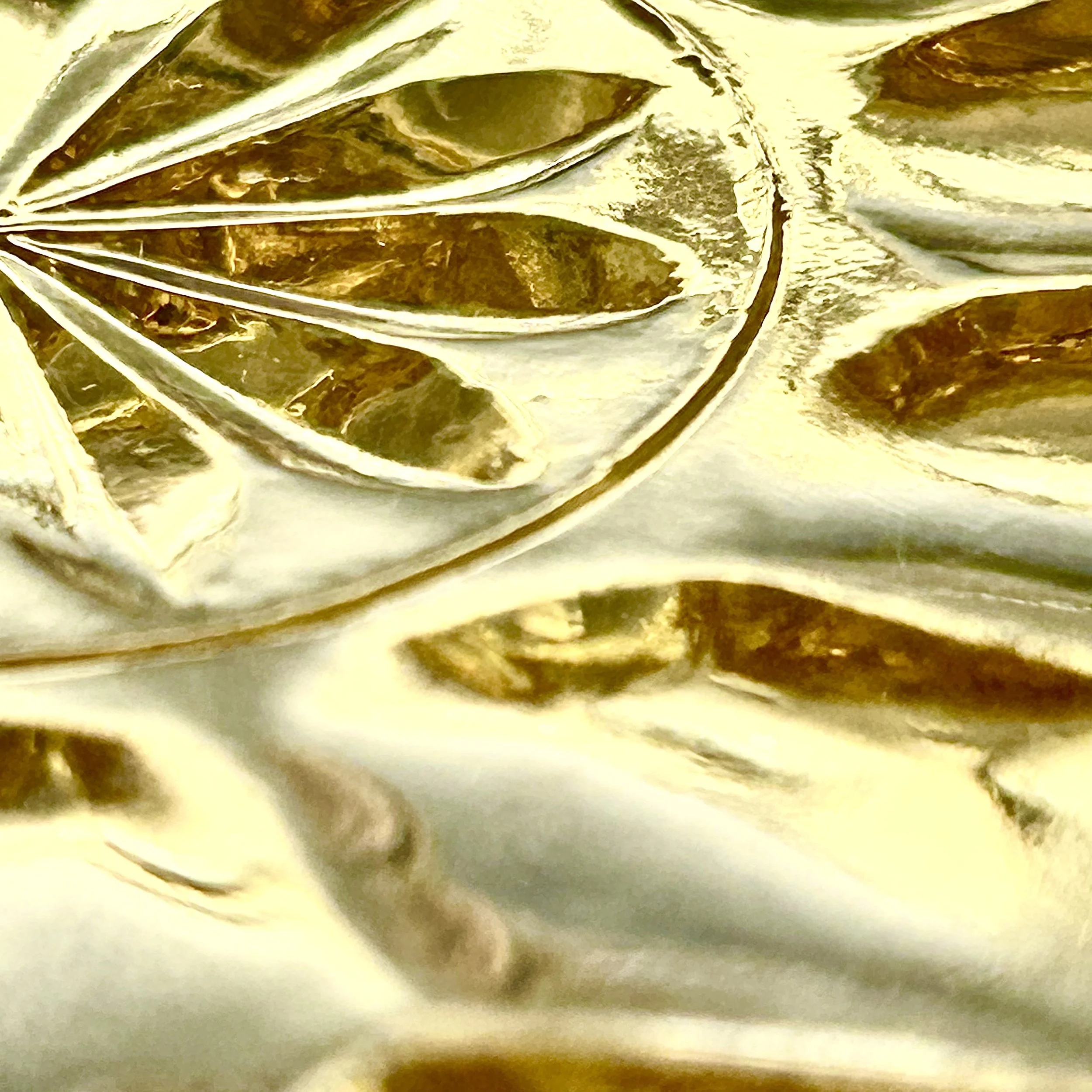
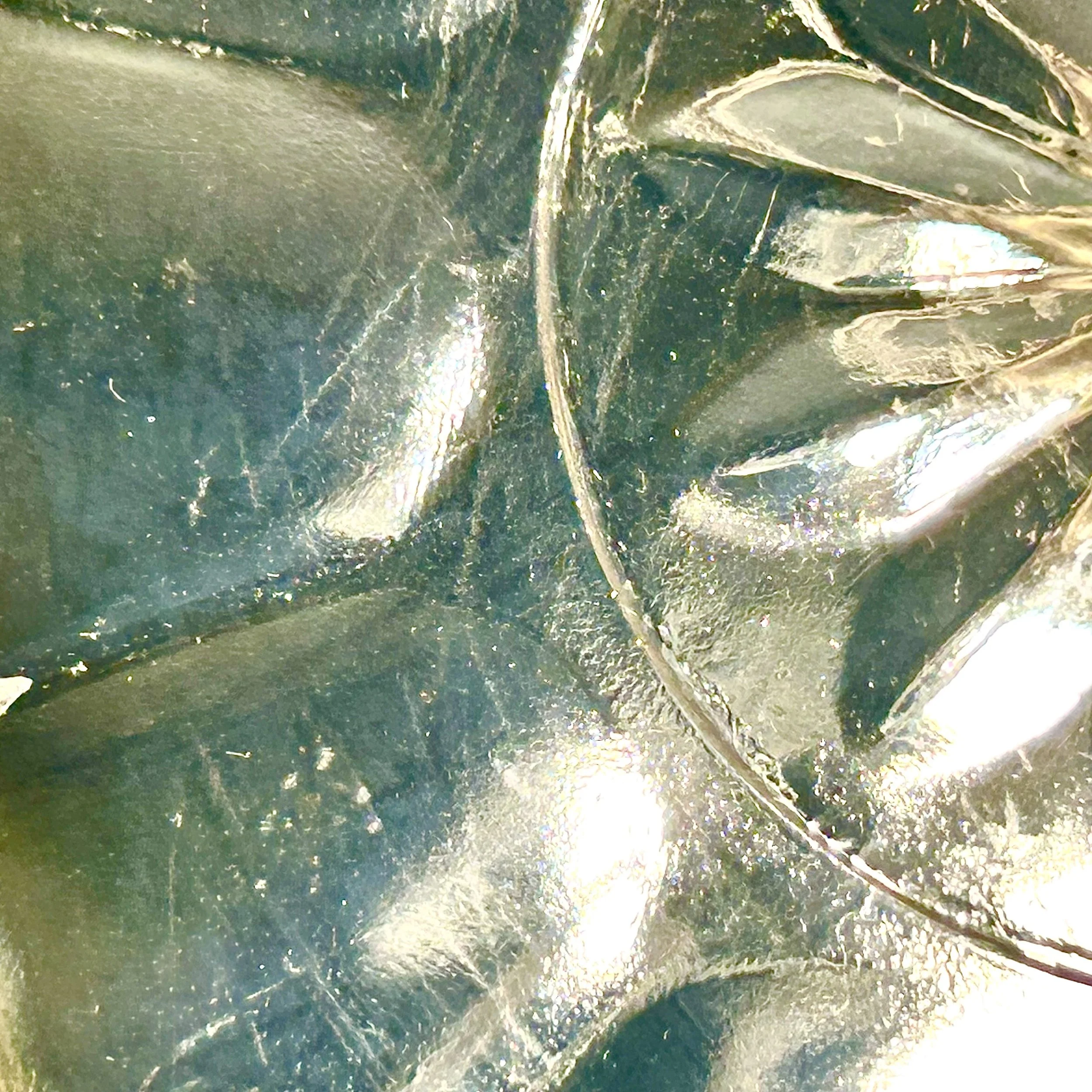
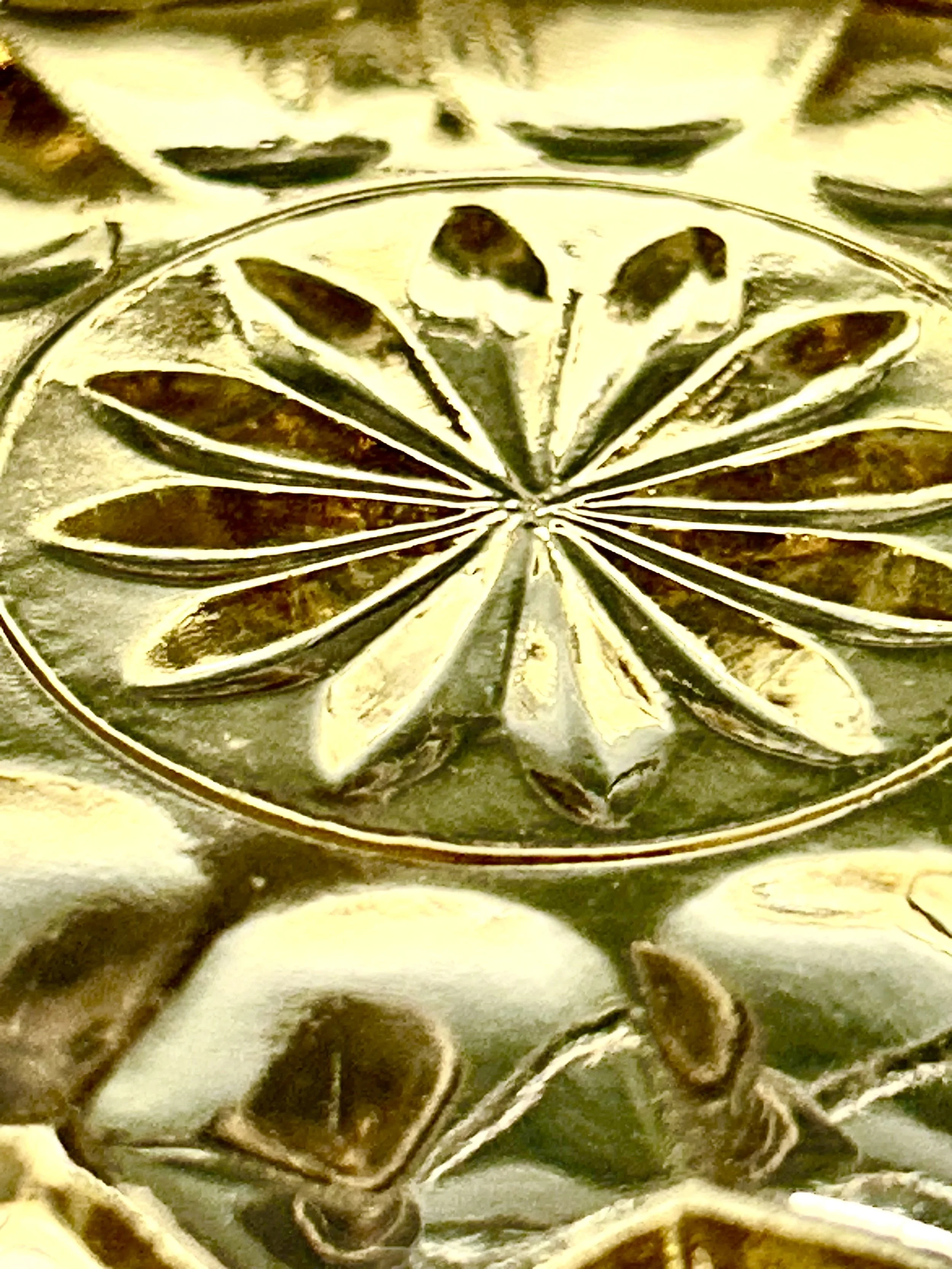
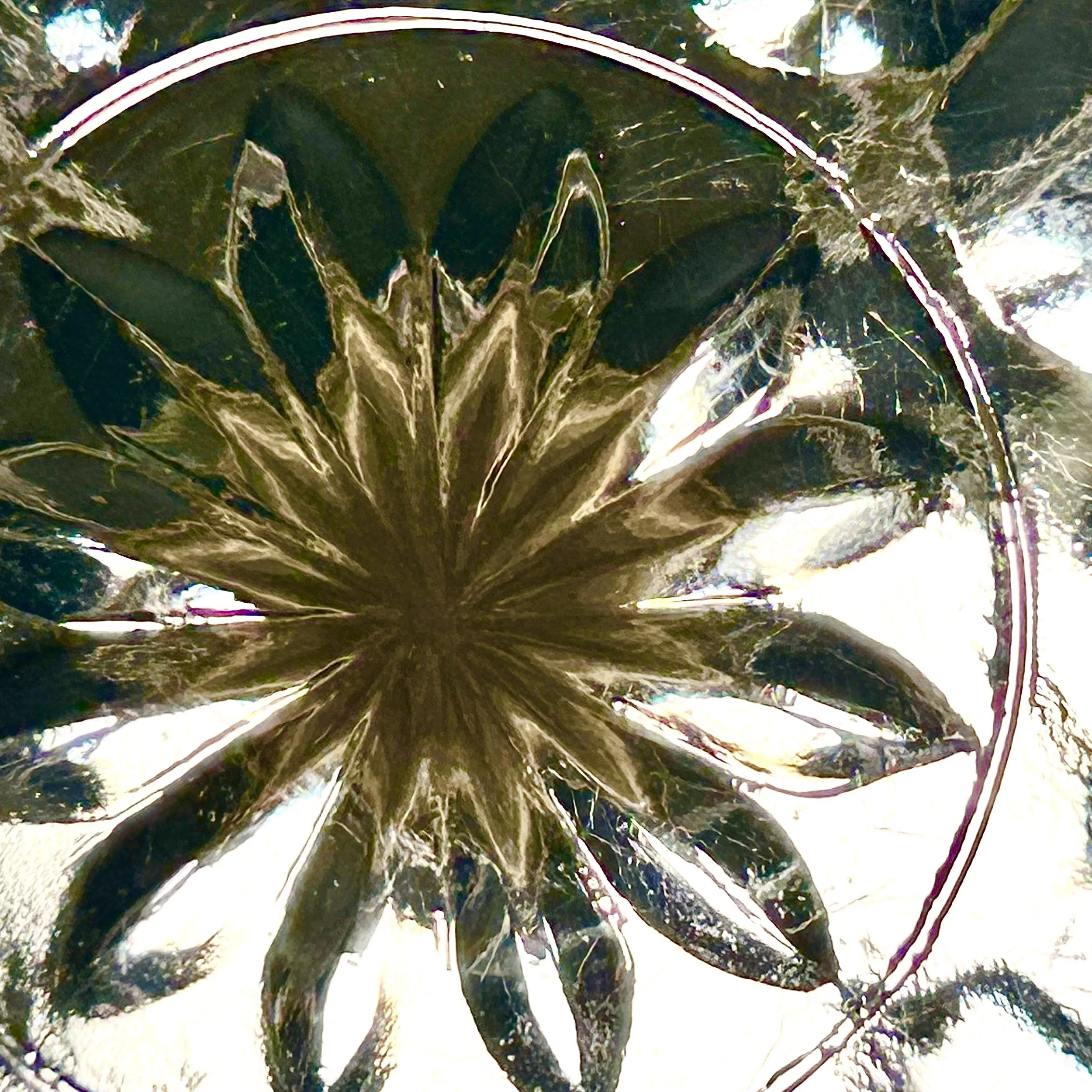
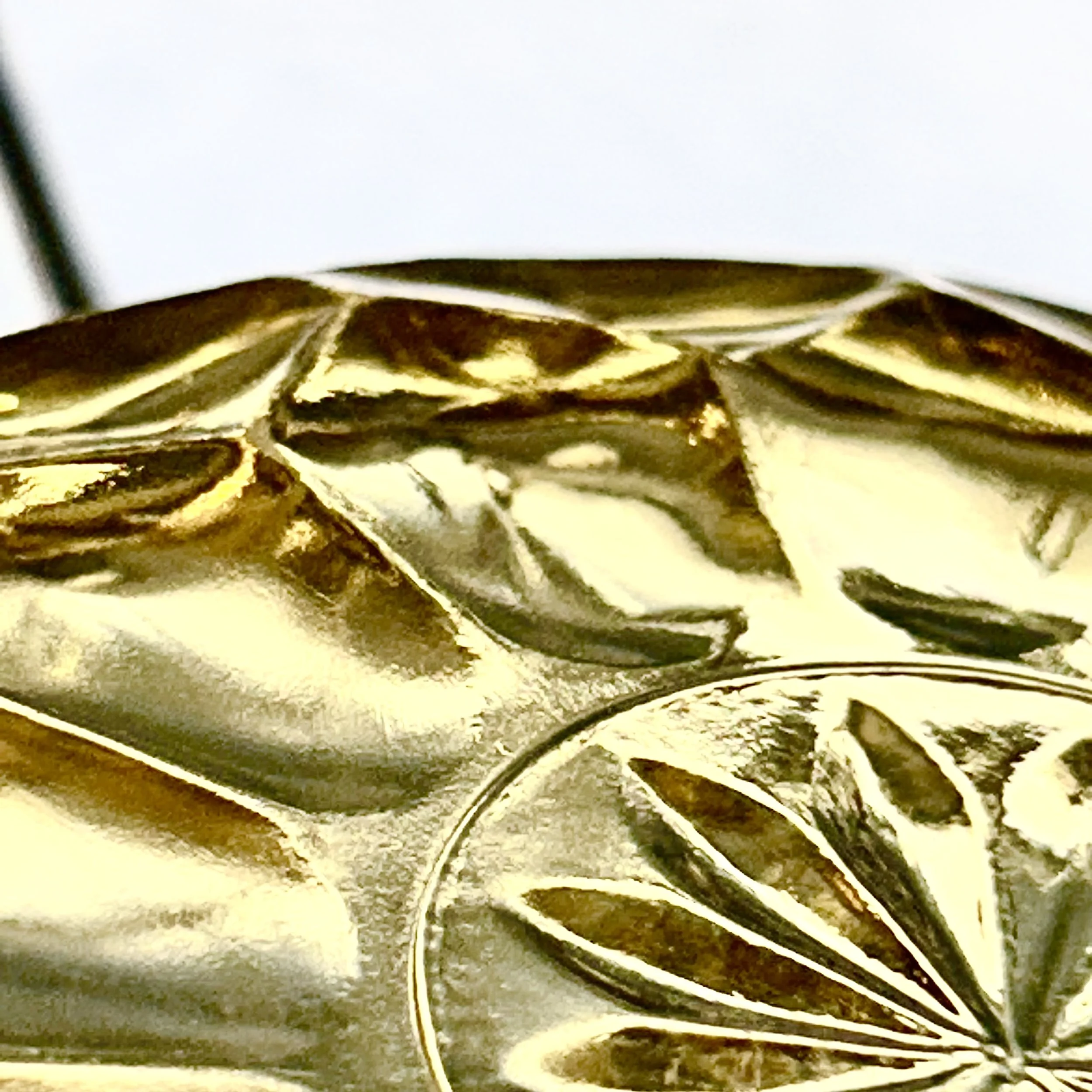
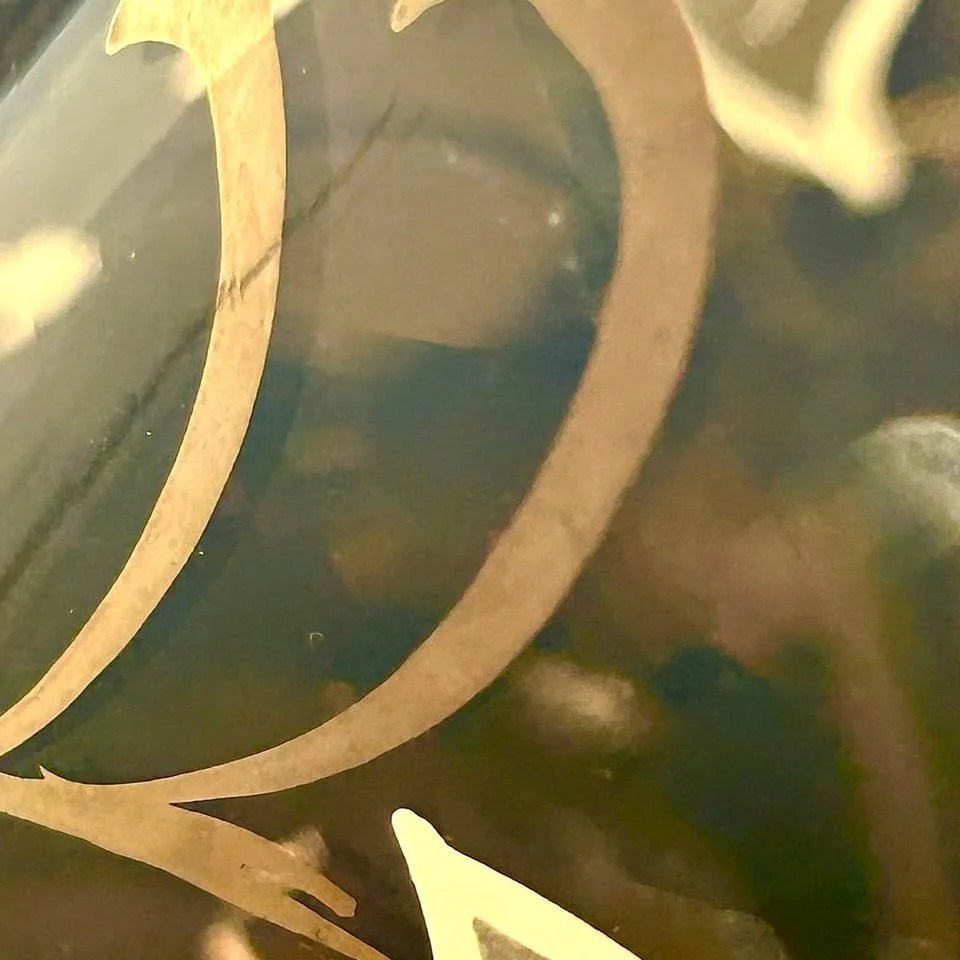
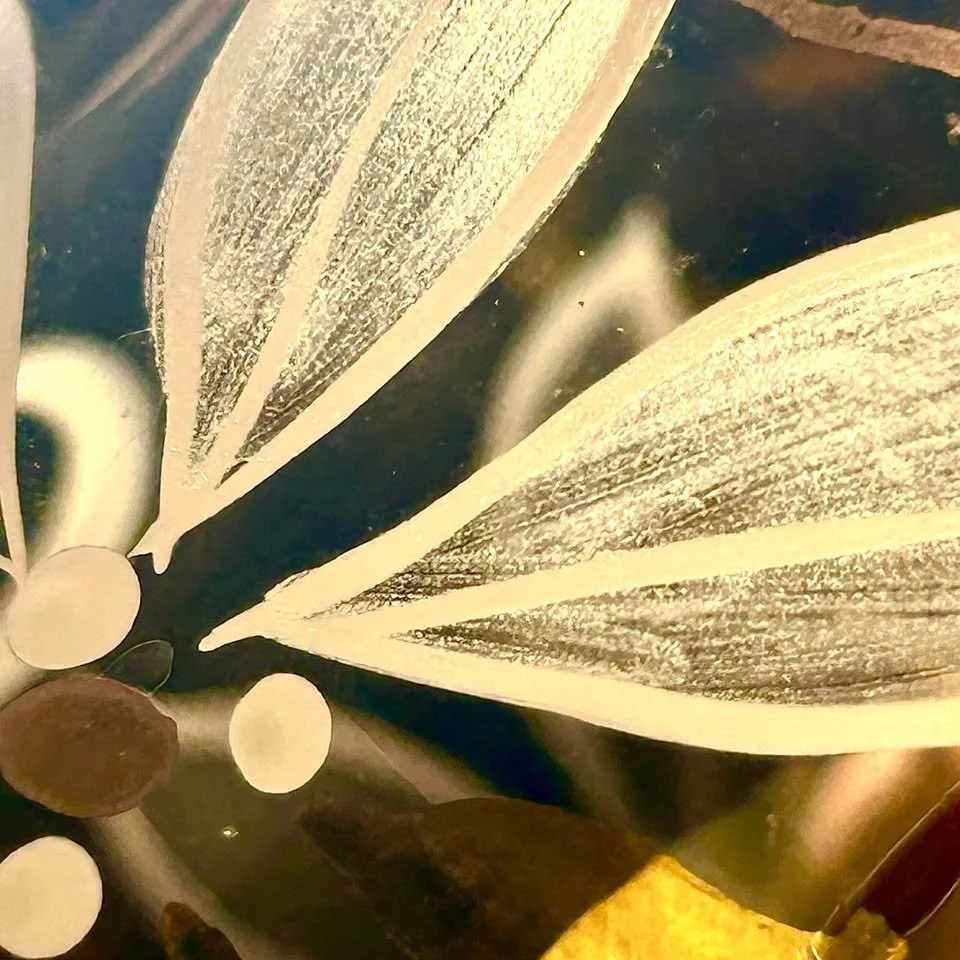
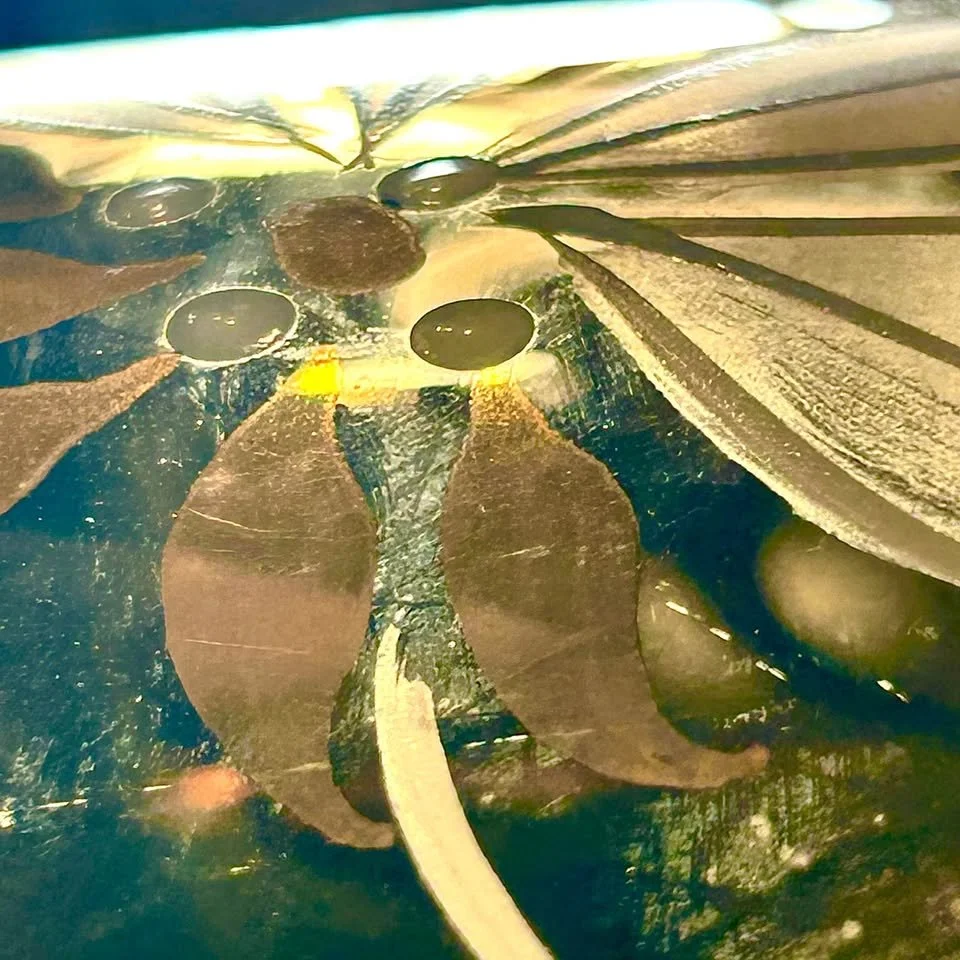
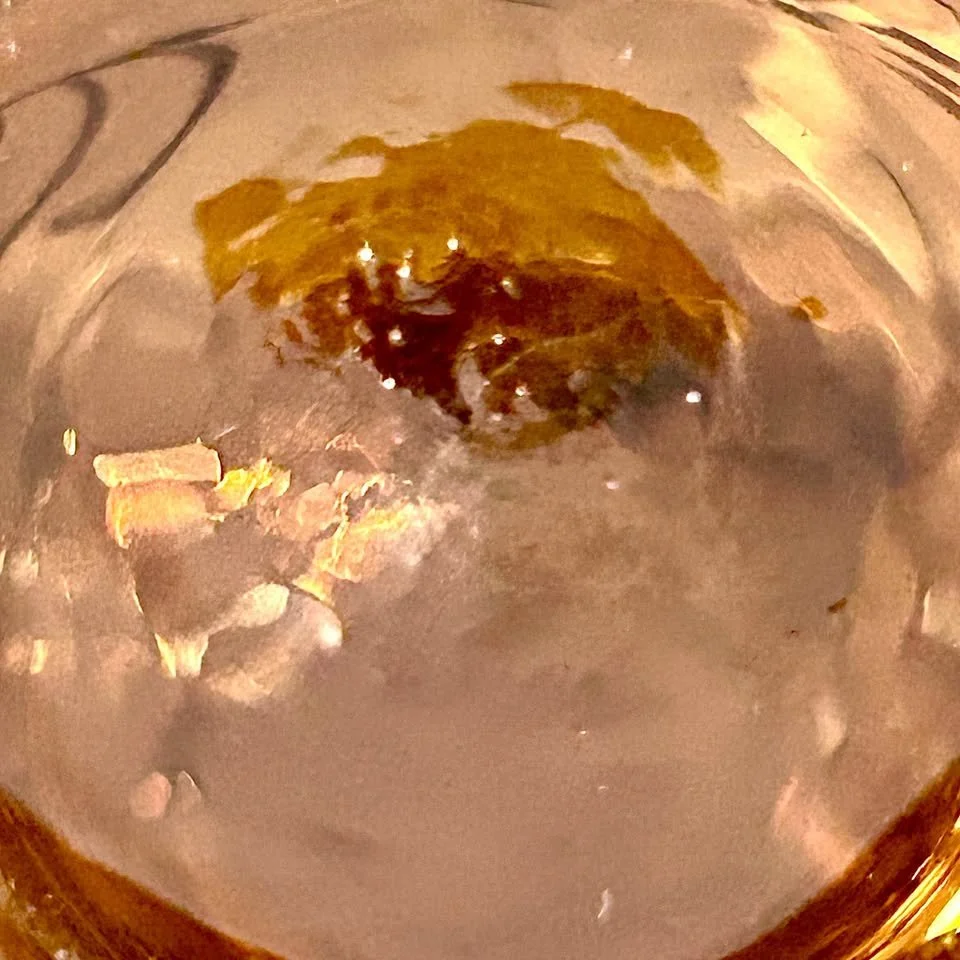
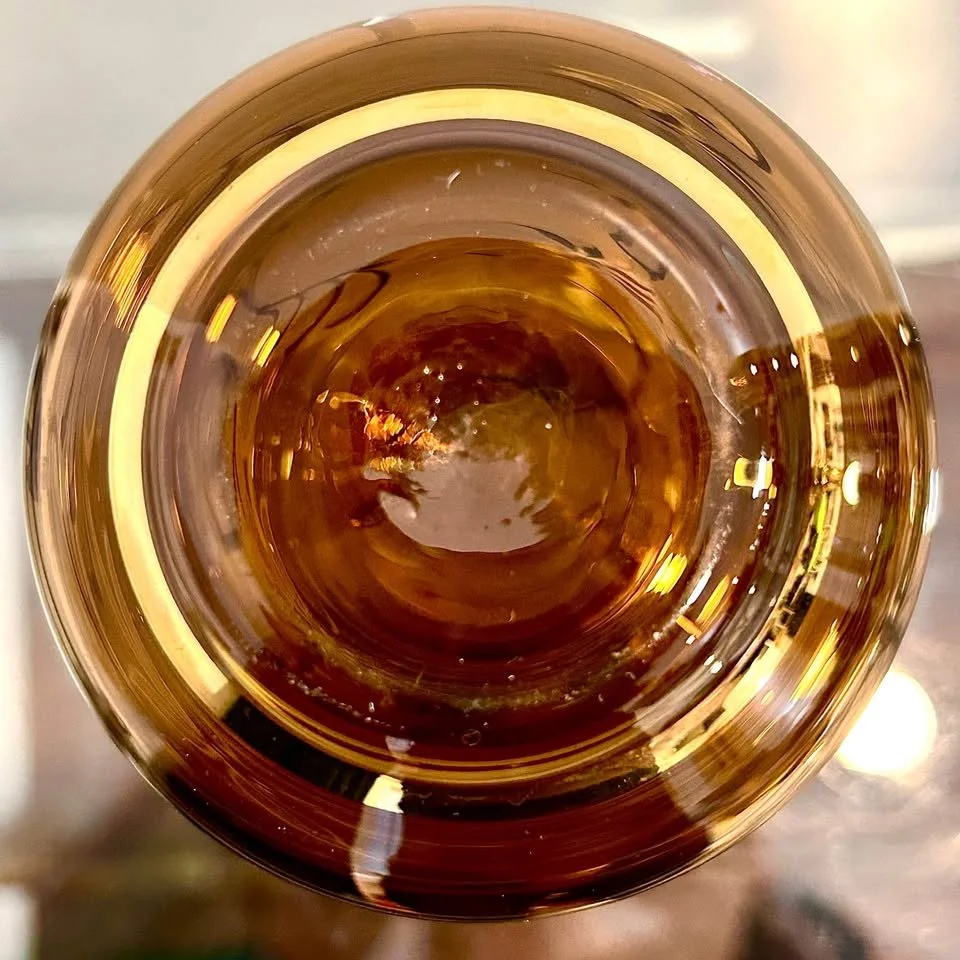
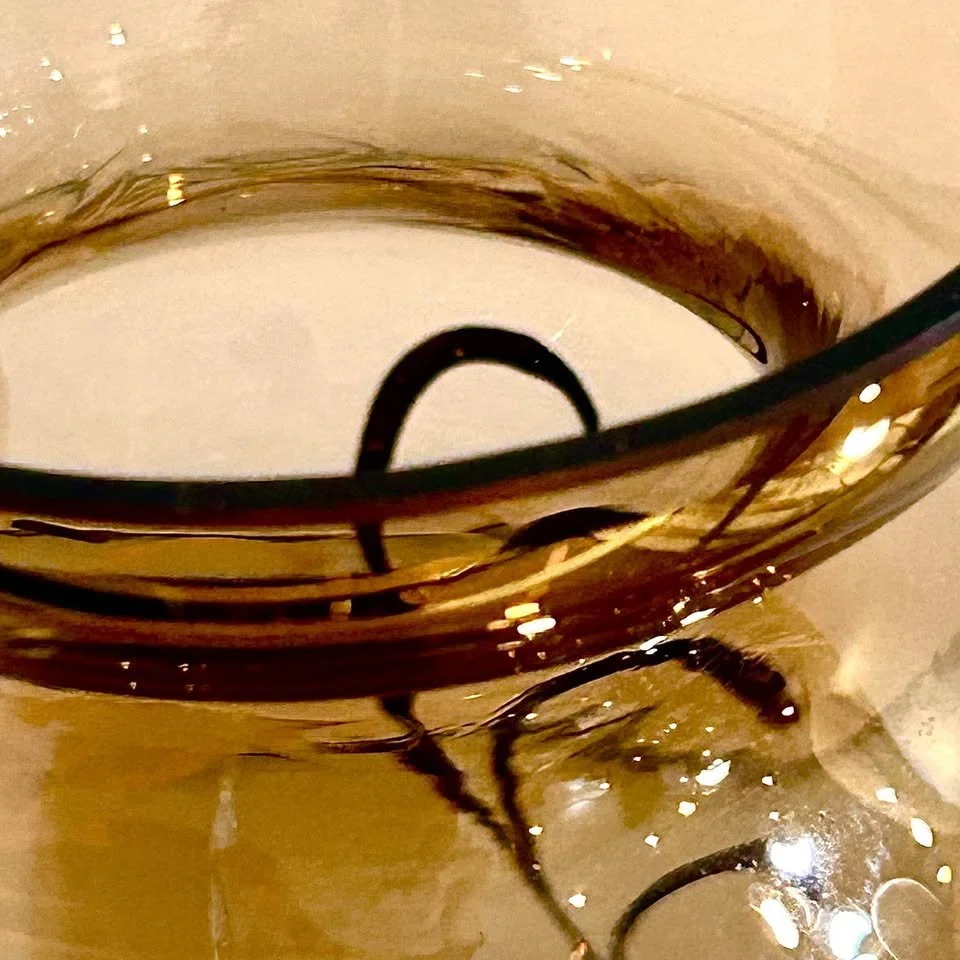
The underside reveals controlled tooling and authentic base wear consistent with age and display. Surface marks visible in magnified photography represent honest, age-appropriate wear and not structural damage. No signature is present; however, the depth of color, sculptural authority, and glass density position the work well above decorative giftware and firmly within collectible art glass territory.
Attribution & Period
Unattributed European art glass.
Likely 1950s–1960s.
Murano or Murano-influenced studio production based on mass, clarity, and formal vocabulary.
Material & Construction
Solid, thick-walled amber art glass.
Hand-worked sculptural form with deeply molded base and raised interior basin.
Extremely heavy construction emphasizing mass and optical distortion.
Condition
Very good condition.
Light surface wear consistent with age and display
No cracks or structural compromise observed
No repairs noted
Honest base wear consistent with mid-century production
Displays powerfully in natural and directional light.
Original & Contemporary Function
Historically used as:
Today ideal for modernist, brutalist, and collector-curated interiors.
Placement
A commanding addition to:
Mid-century modern collections
Murano and Sommerso groupings
Amber tonal glass installations
Architectural console or pedestal display
Its mass and geometry allow it to function as a primary focal object within a space.
STANDARD ATTRIBUTION & VALUE DISCLOSURE
This piece is described to the best of current scholarly and market knowledge. Any maker or regional attribution is based on visual analysis, materials, construction techniques, and documented stylistic comparisons. As with many vintage and antique glass objects, definitive attribution may not be possible without original labels or factory records. Pricing reflects condition, quality, decorative appeal, and current collector demand rather than a guaranteed maker identification.
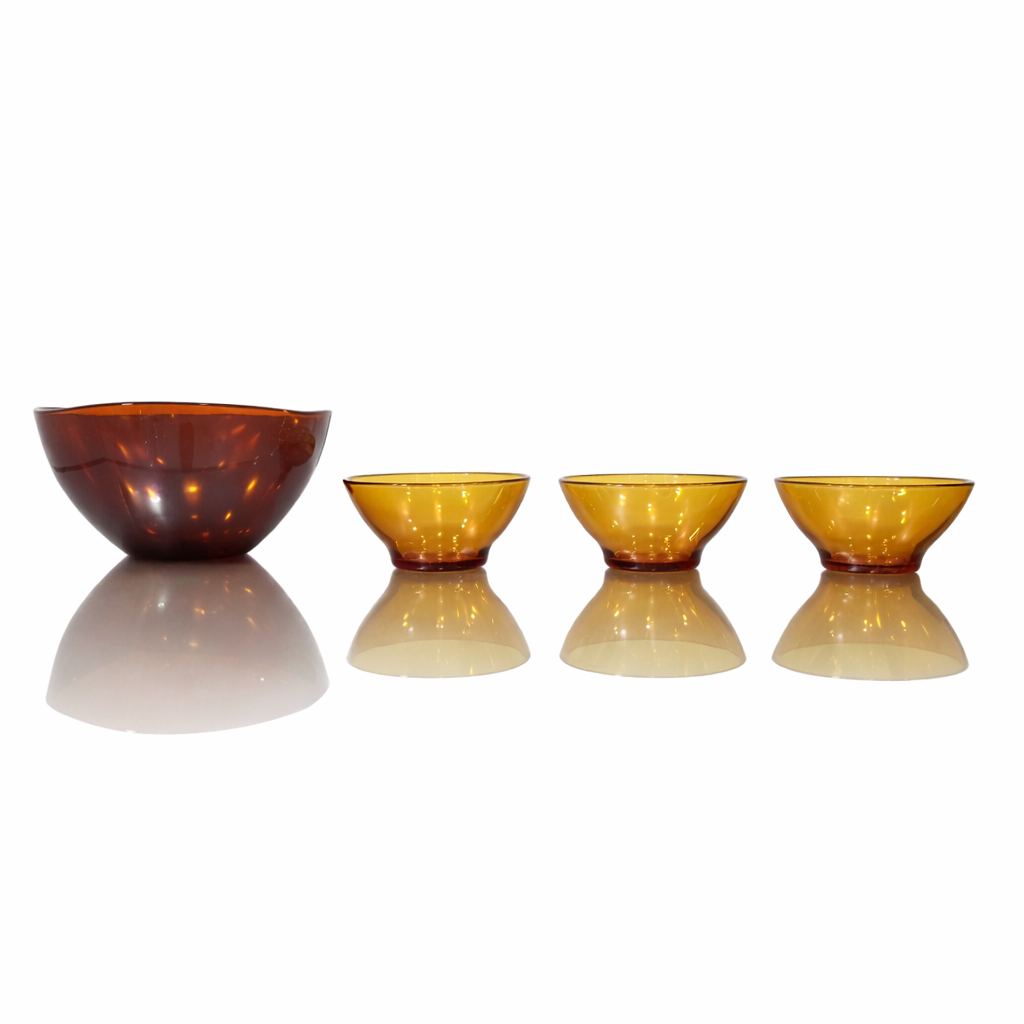
A collector-grade, exceptionally heavy amber art glass centerpiece bowl executed in a bold mid-century European modernist idiom. Architectural in conception and unapologetically sculptural in mass, this piece was conceived as a statement object rather than utilitarian tableware.
The form is deliberate and geometric: a thick square outer frame with softly radiused corners encasing a raised oval basin, all carved from densely saturated amber batch glass. The glass transitions from deep honey to lighter golden tonalities depending on light angle, producing strong optical depth and internal refraction. Subtle internal distortions and light-bending effects confirm thick, hand-worked art glass rather than lightweight pressed production.
The weight is immediate and commanding—consistent with the 1950s–1960s European movement toward mass-driven glass sculpture, particularly within Murano and Murano-influenced studio circles where clarity, density, and controlled form replaced surface ornamentation. The piece aligns conceptually with Italian centro tavola design—functional objects elevated to sculptural centerpieces for modern interiors.
The underside reveals controlled tooling and authentic base wear consistent with age and display. Surface marks visible in magnified photography represent honest, age-appropriate wear and not structural damage. No signature is present; however, the depth of color, sculptural authority, and glass density position the work well above decorative giftware and firmly within collectible art glass territory.
Attribution & Period
Unattributed European art glass.
Likely 1950s–1960s.
Murano or Murano-influenced studio production based on mass, clarity, and formal vocabulary.
Material & Construction
Solid, thick-walled amber art glass.
Hand-worked sculptural form with deeply molded base and raised interior basin.
Extremely heavy construction emphasizing mass and optical distortion.
Condition
Very good condition.
Light surface wear consistent with age and display
No cracks or structural compromise observed
No repairs noted
Honest base wear consistent with mid-century production
Displays powerfully in natural and directional light.
Original & Contemporary Function
Historically used as:
Today ideal for modernist, brutalist, and collector-curated interiors.
Placement
A commanding addition to:
Mid-century modern collections
Murano and Sommerso groupings
Amber tonal glass installations
Architectural console or pedestal display
Its mass and geometry allow it to function as a primary focal object within a space.
STANDARD ATTRIBUTION & VALUE DISCLOSURE
This piece is described to the best of current scholarly and market knowledge. Any maker or regional attribution is based on visual analysis, materials, construction techniques, and documented stylistic comparisons. As with many vintage and antique glass objects, definitive attribution may not be possible without original labels or factory records. Pricing reflects condition, quality, decorative appeal, and current collector demand rather than a guaranteed maker identification.

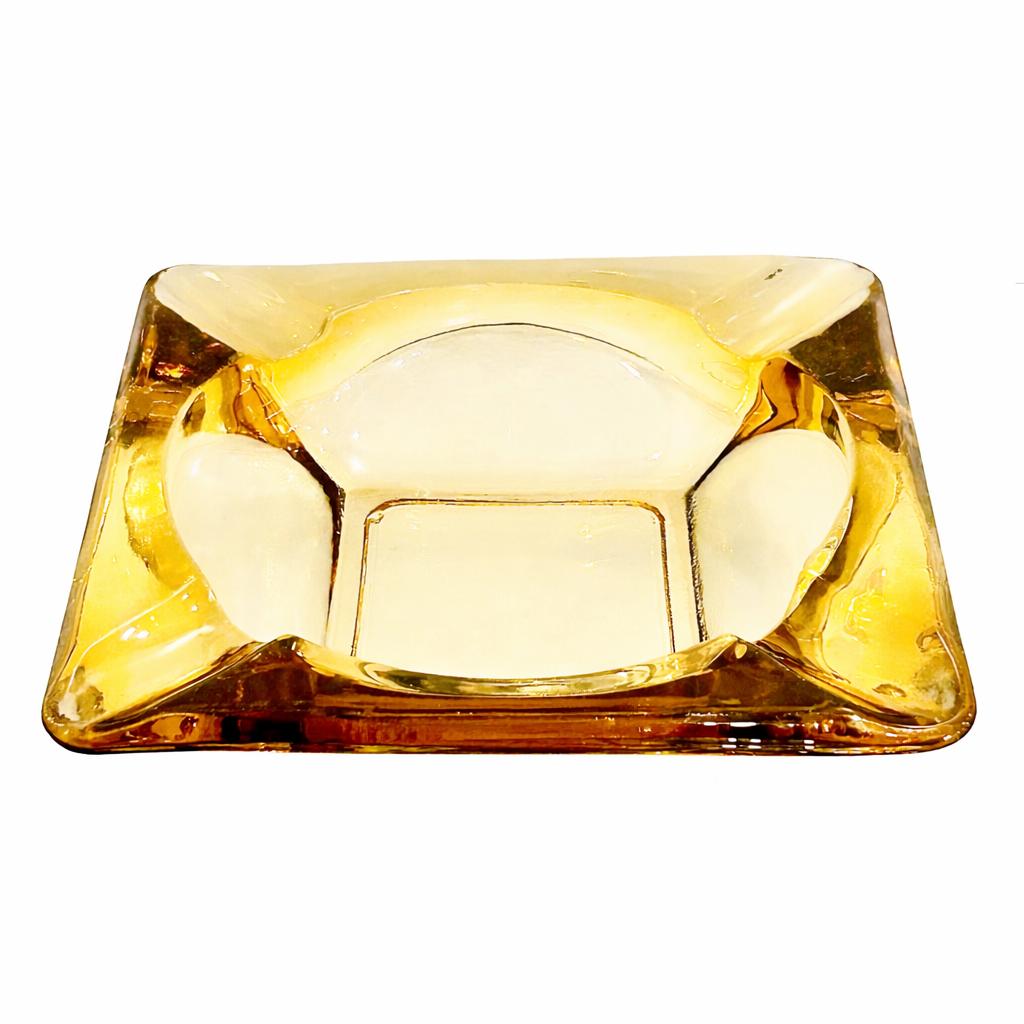 Image 1 of 8
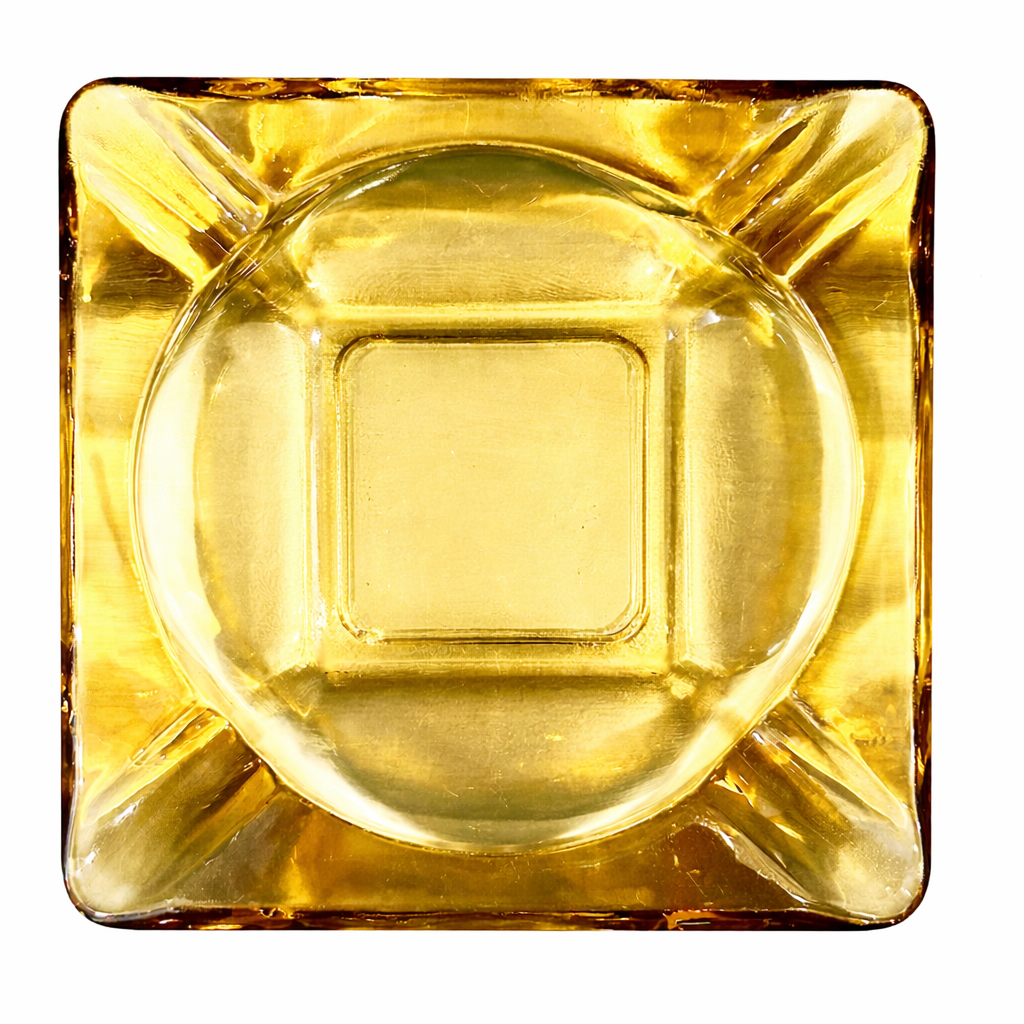 Image 2 of 8
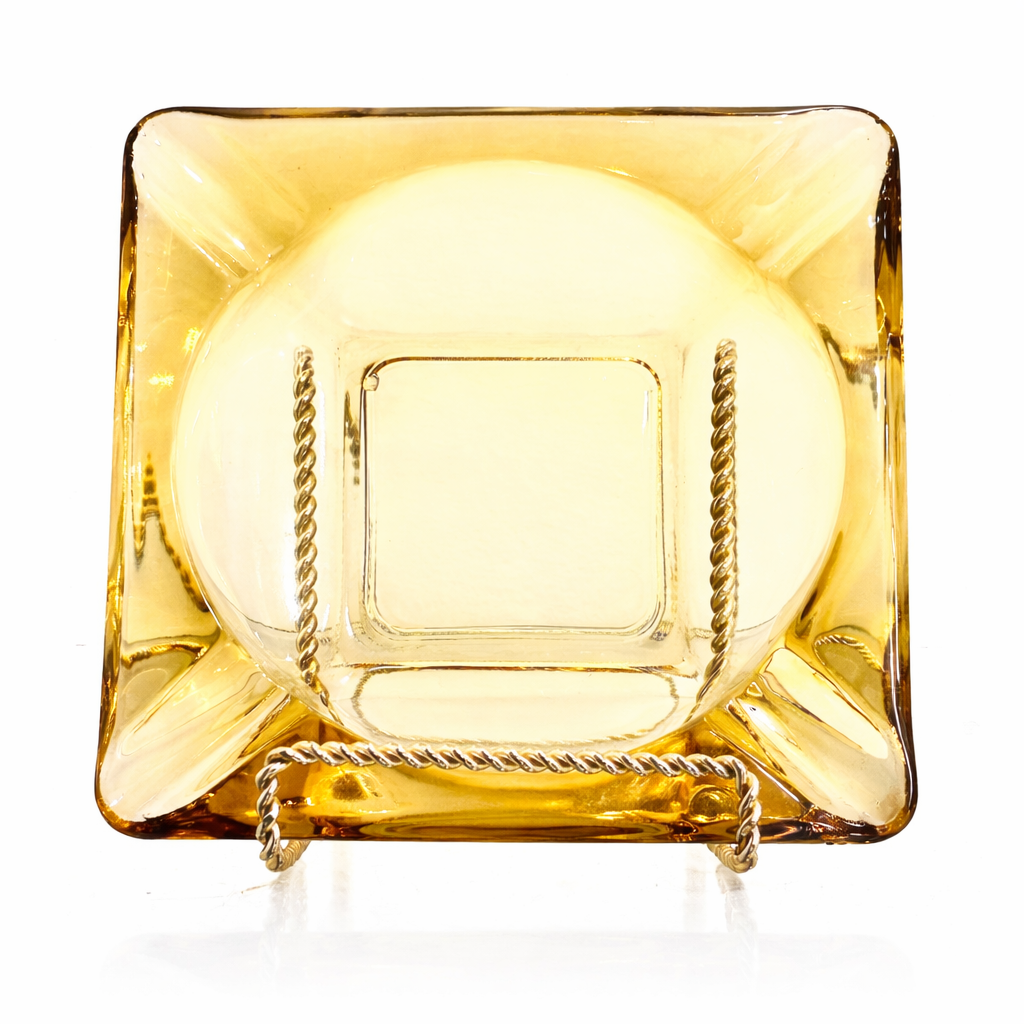 Image 3 of 8
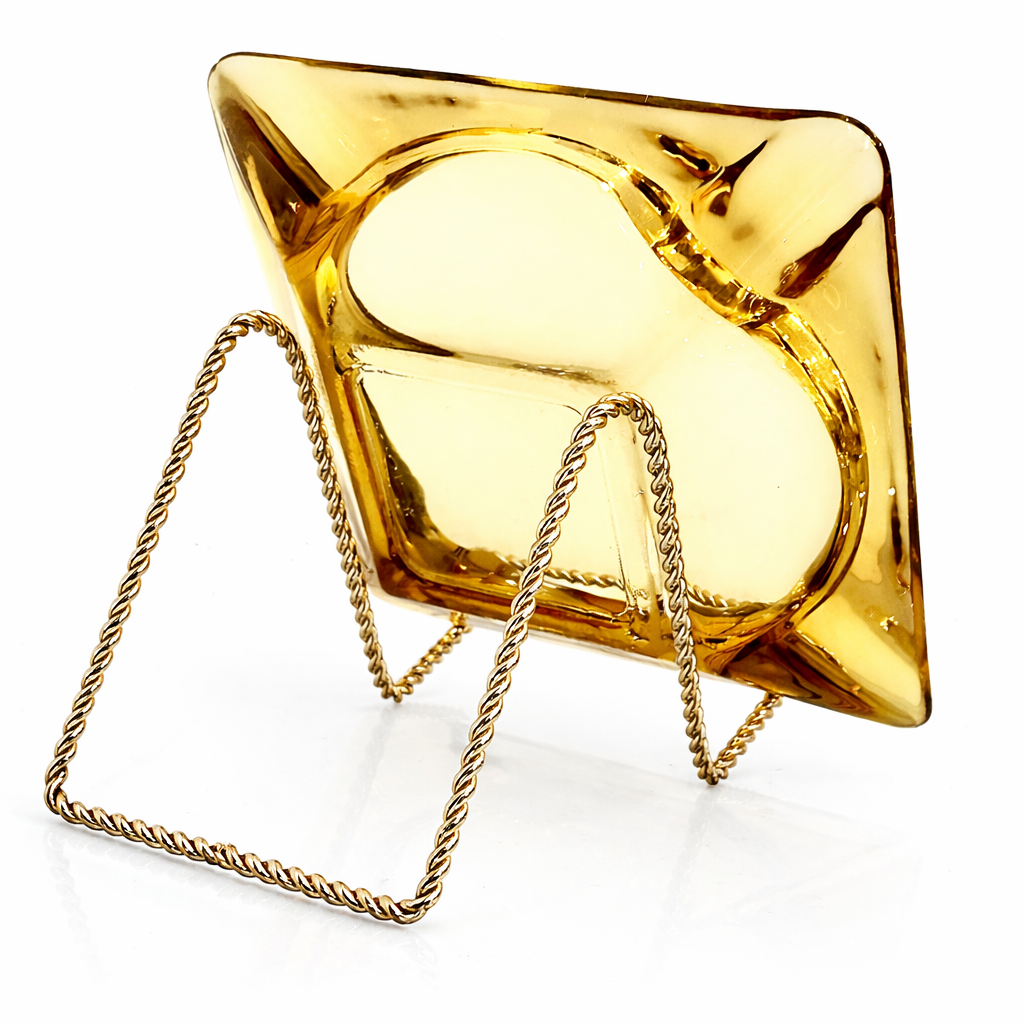 Image 4 of 8
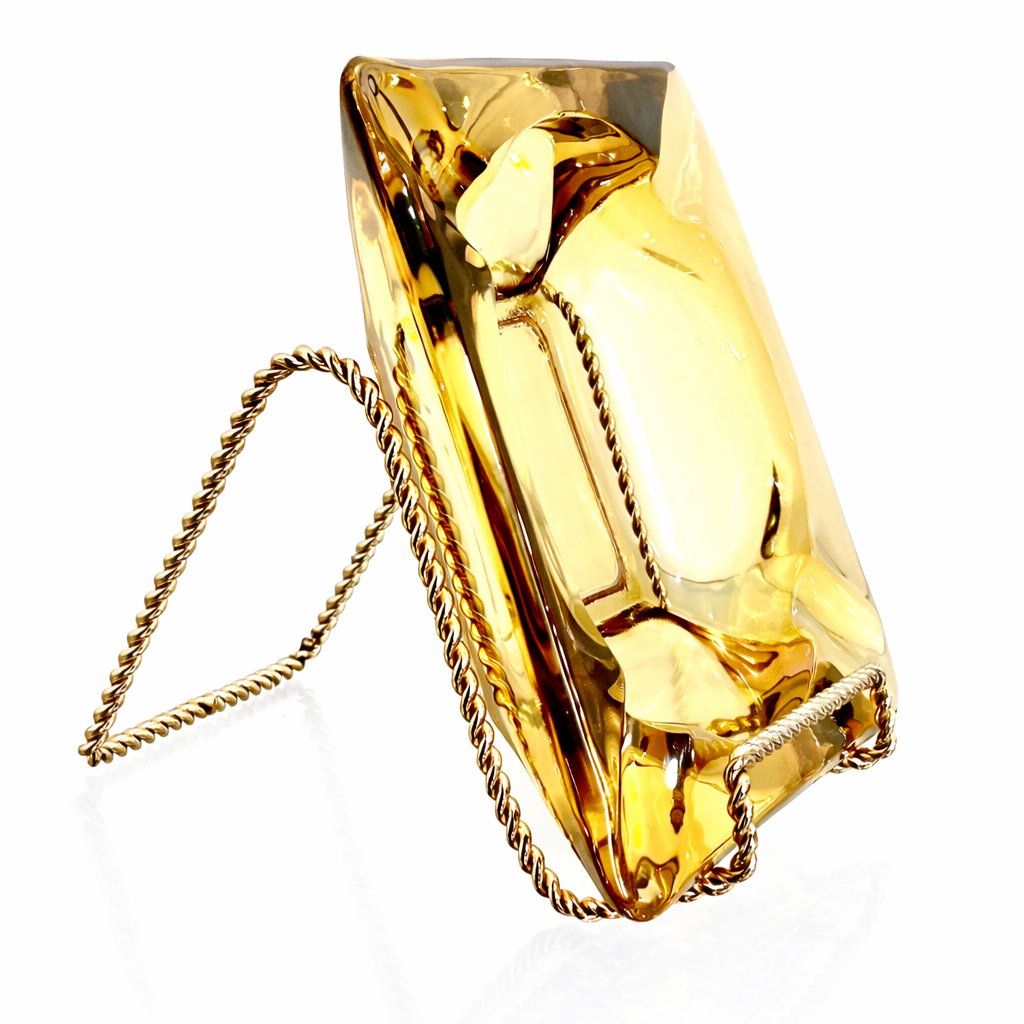 Image 5 of 8
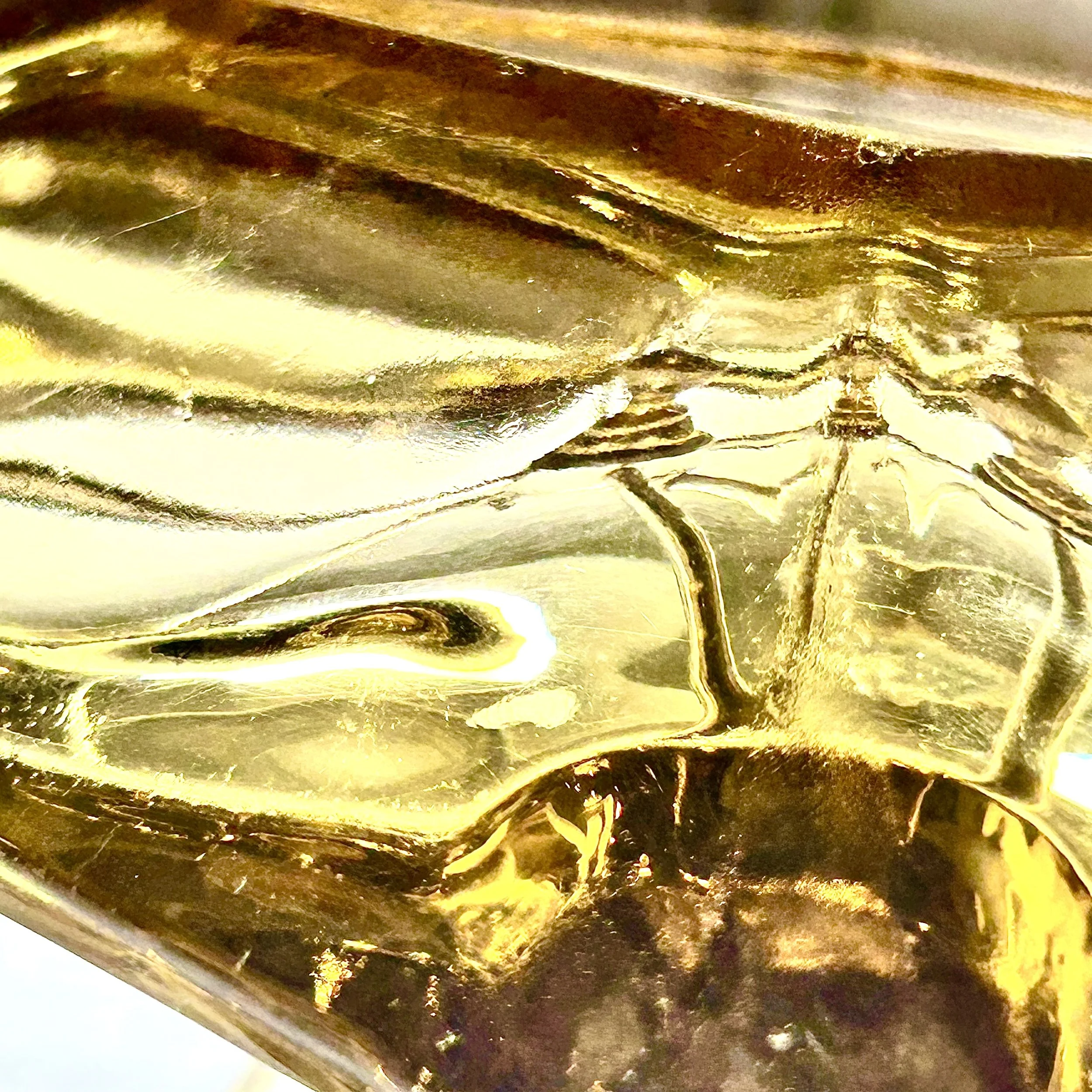 Image 6 of 8
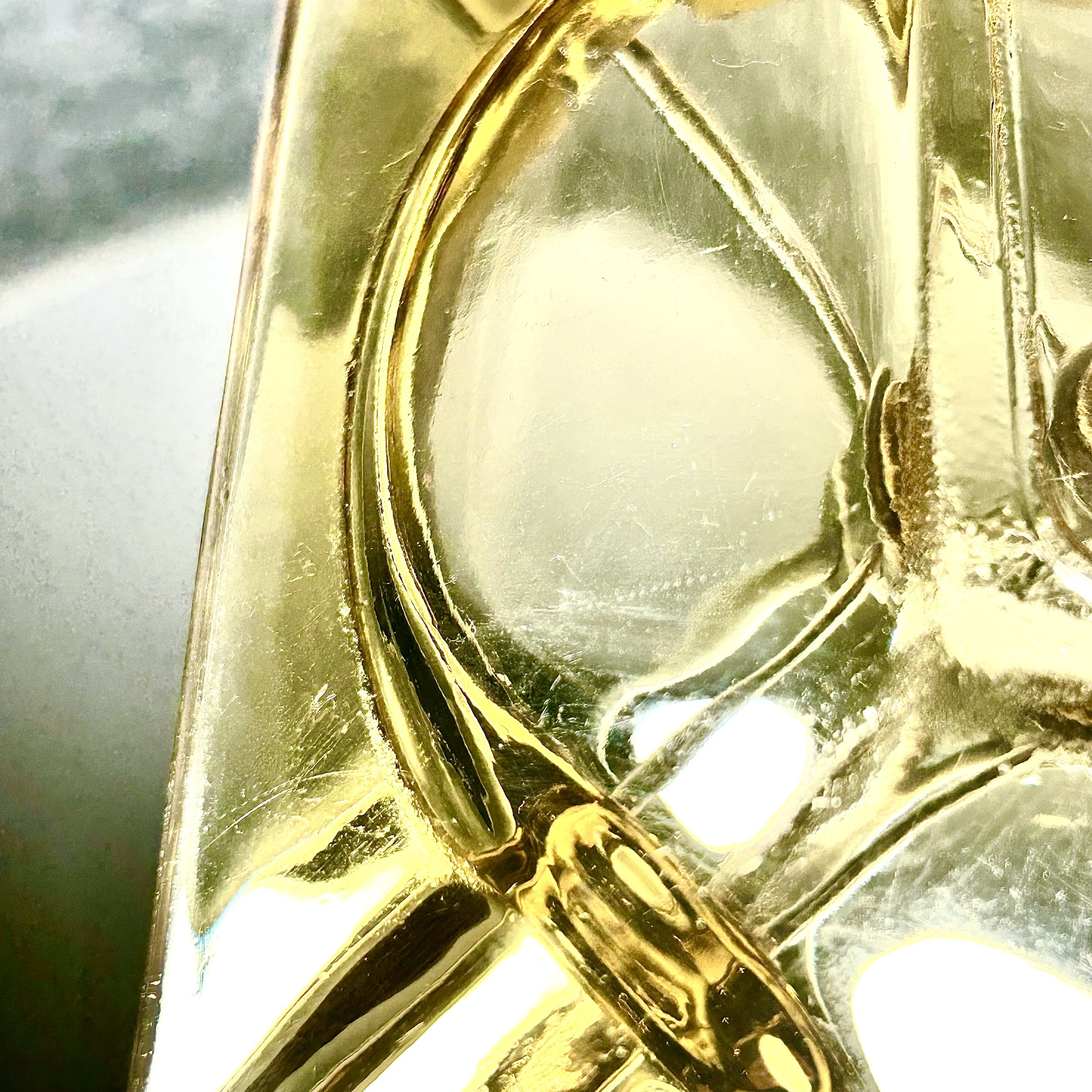 Image 7 of 8
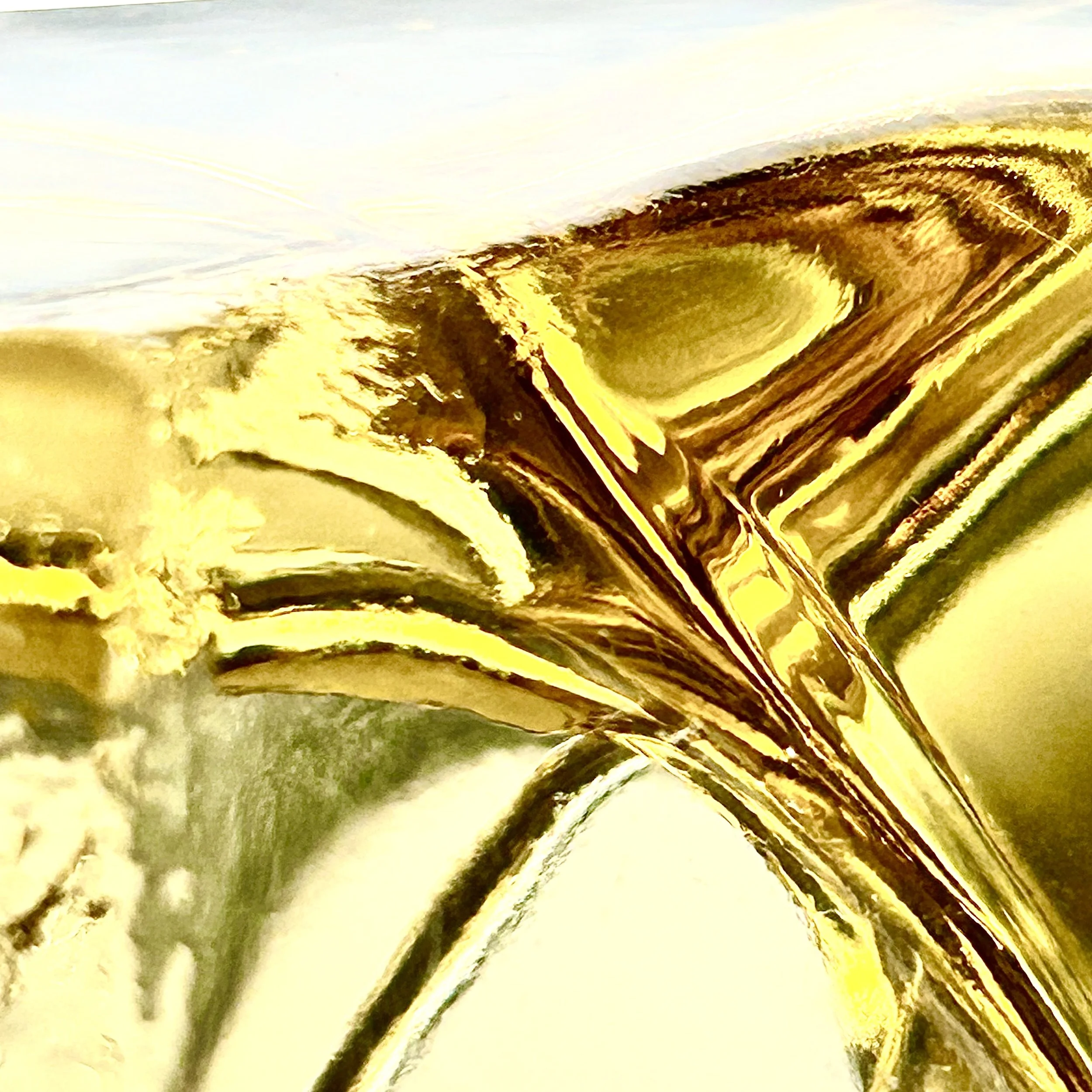 Image 8 of 8