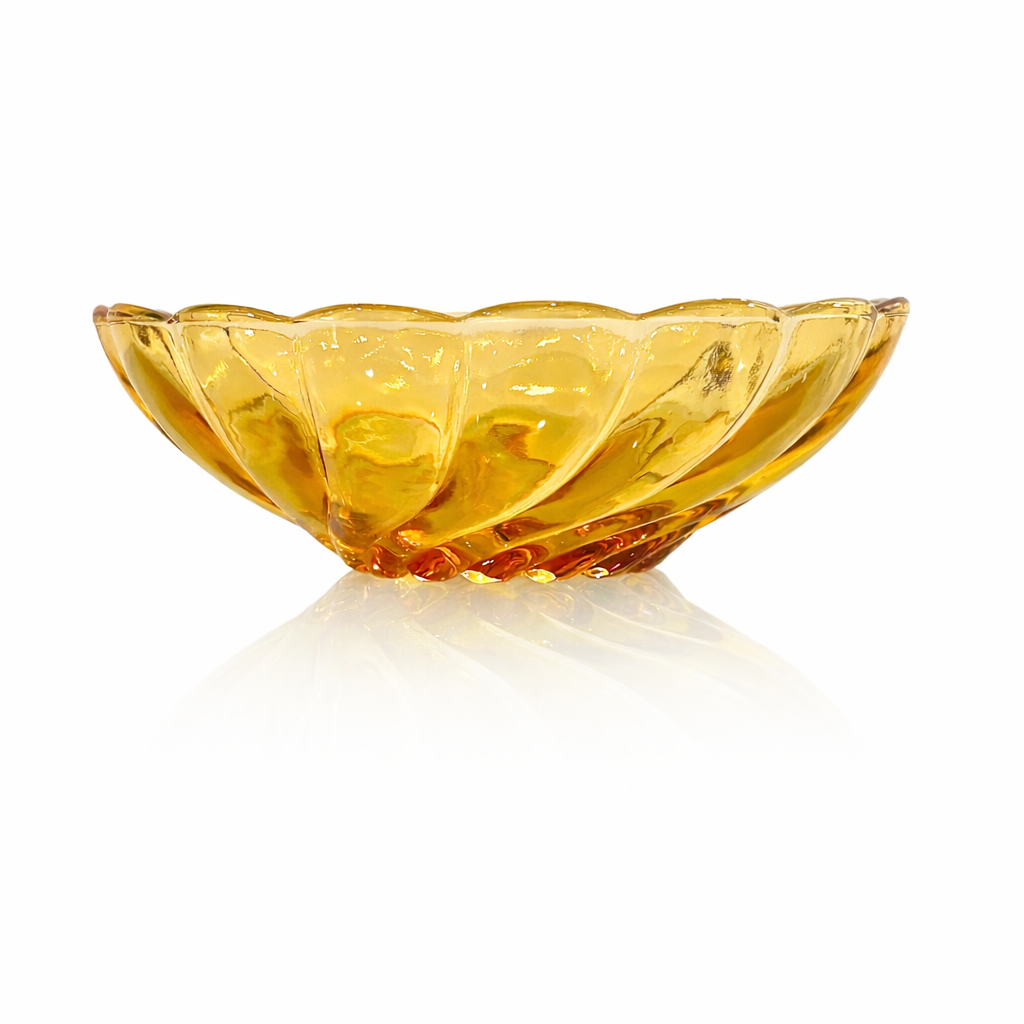
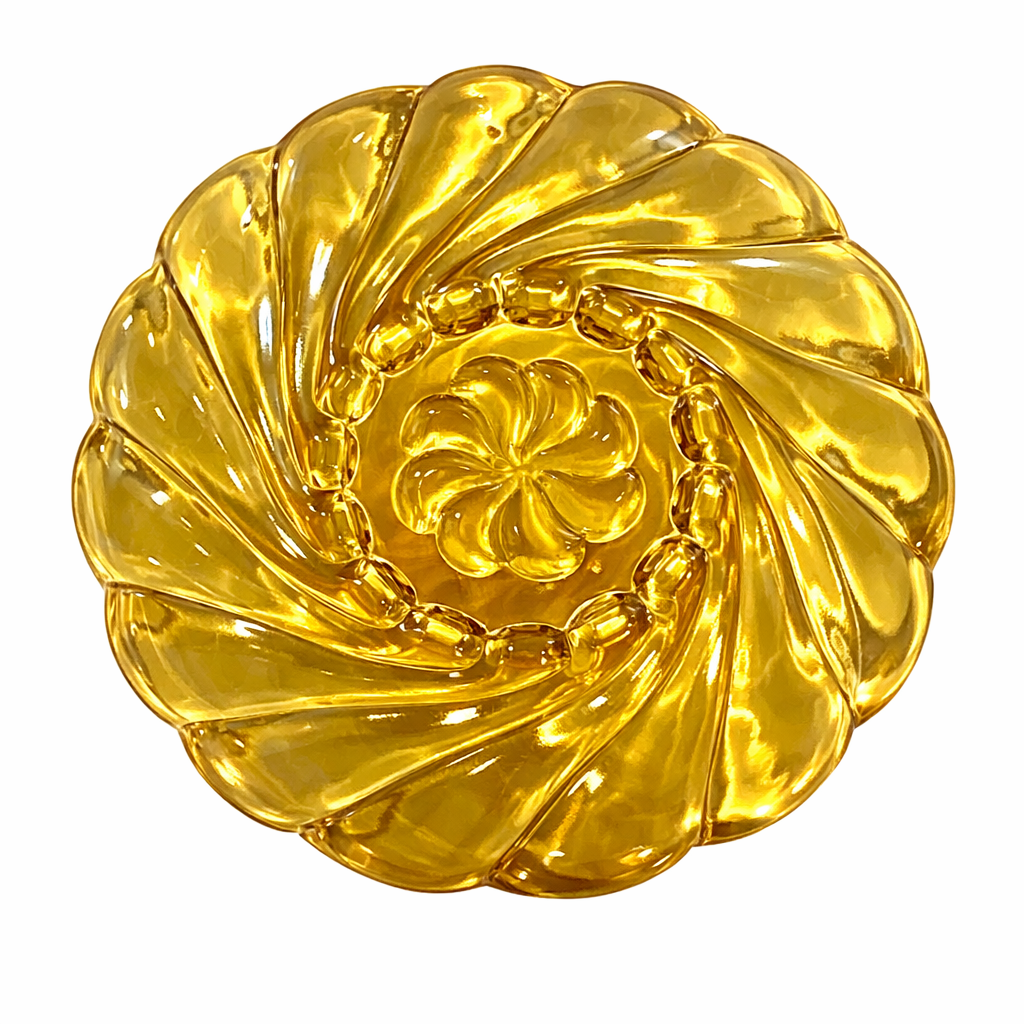
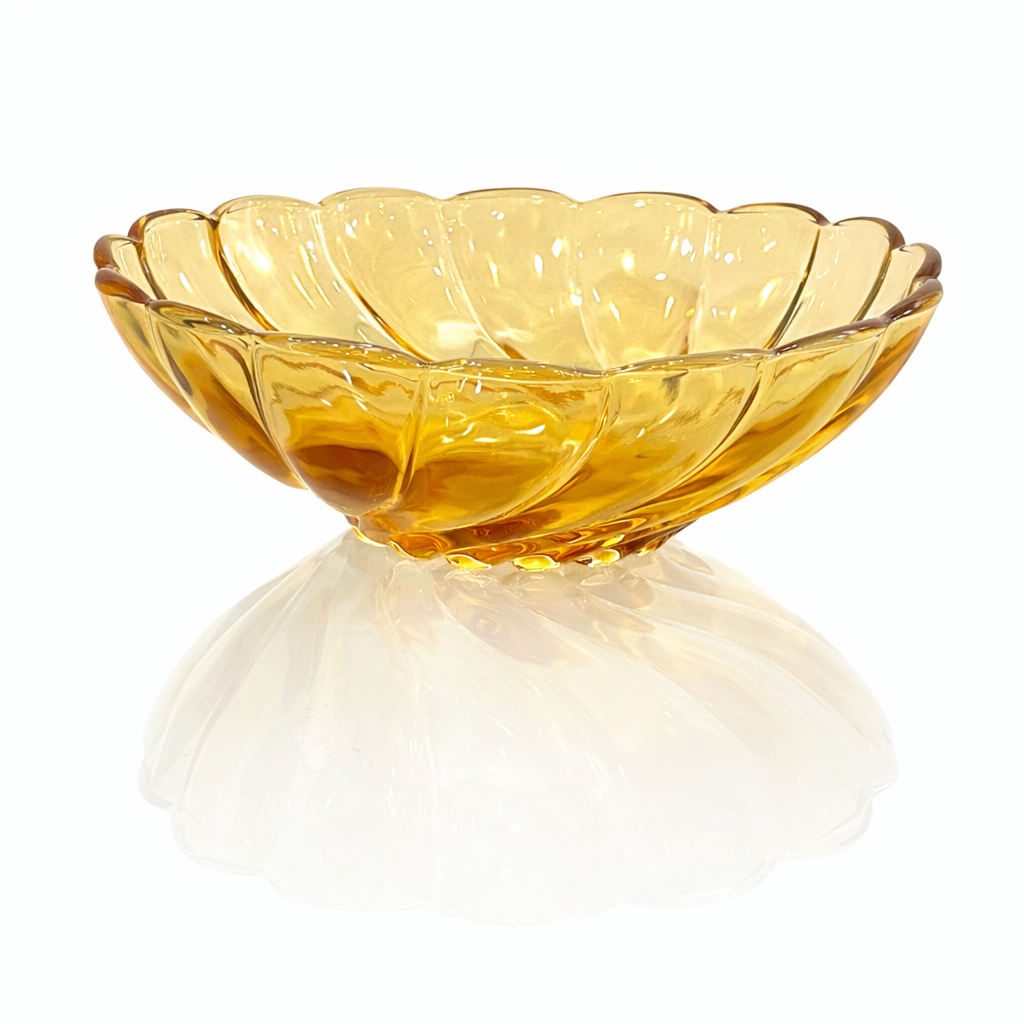
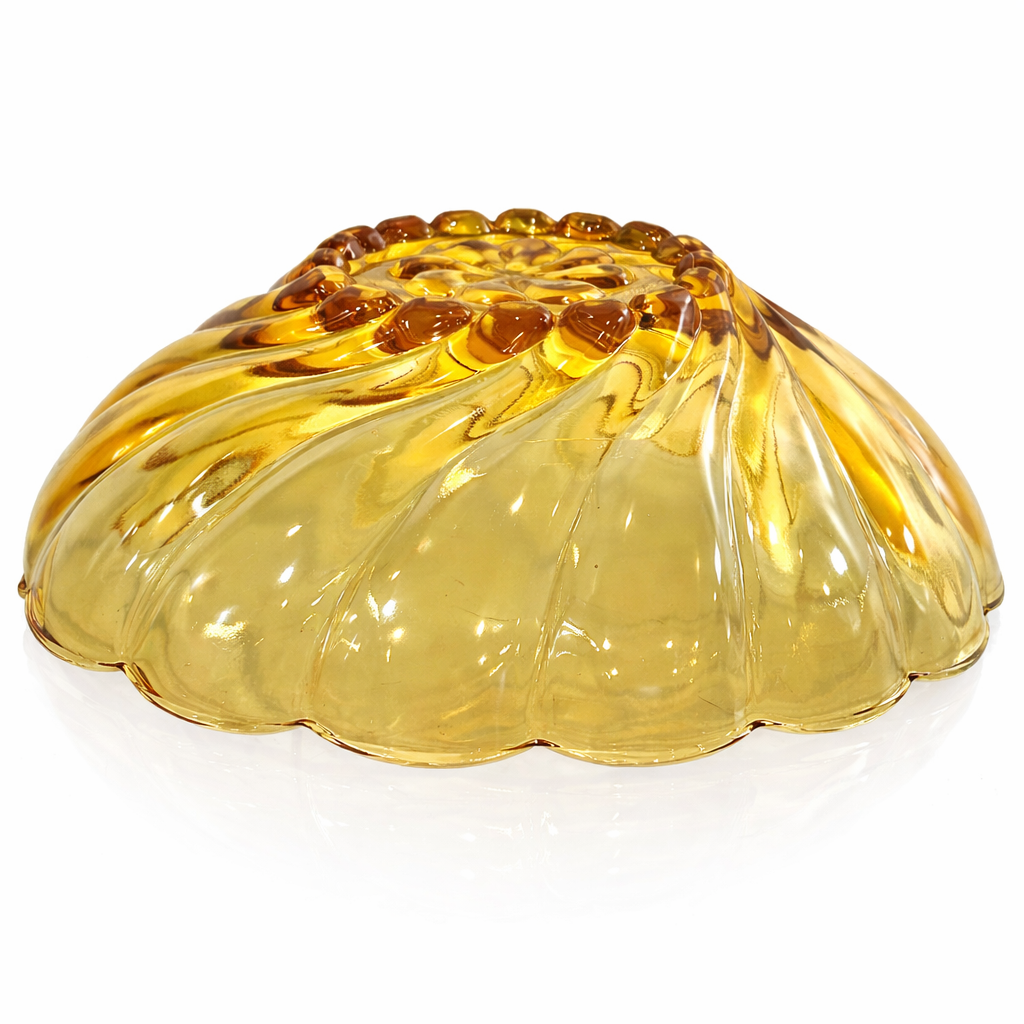
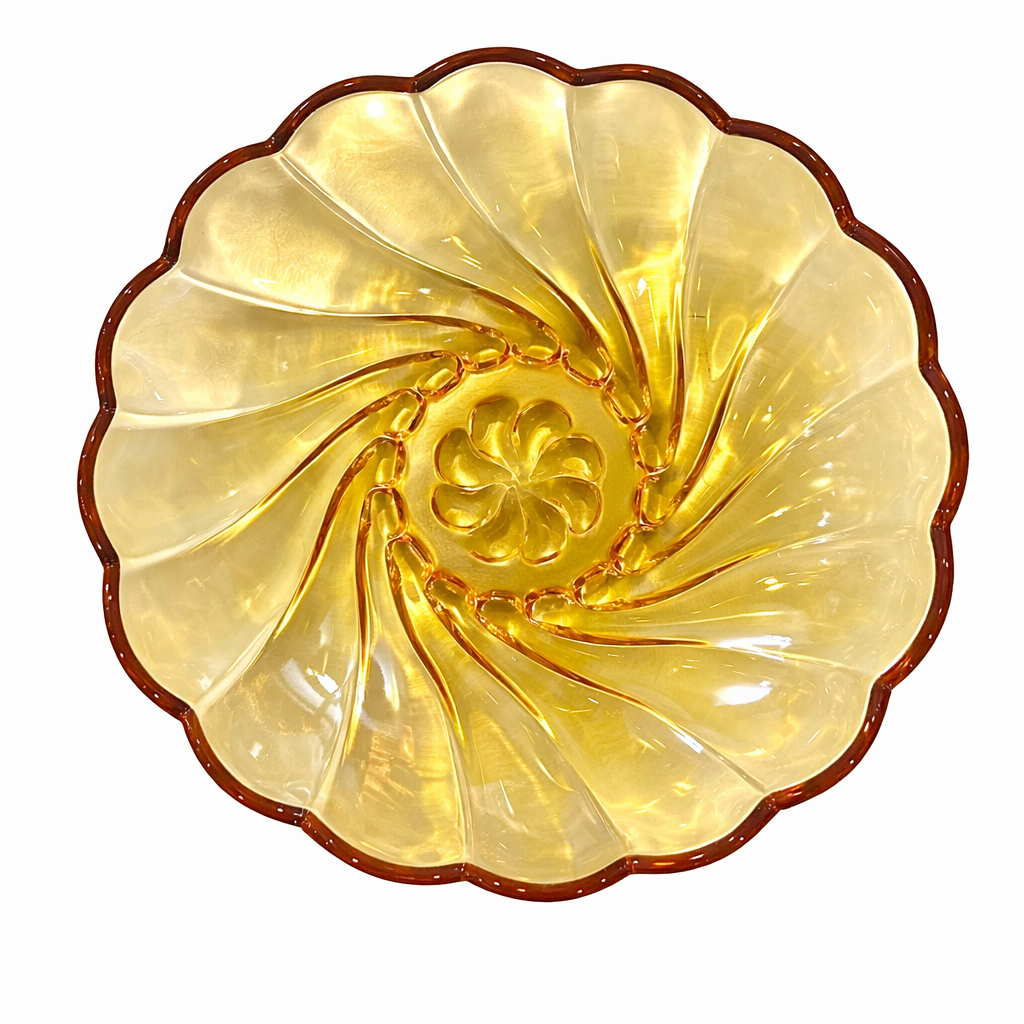
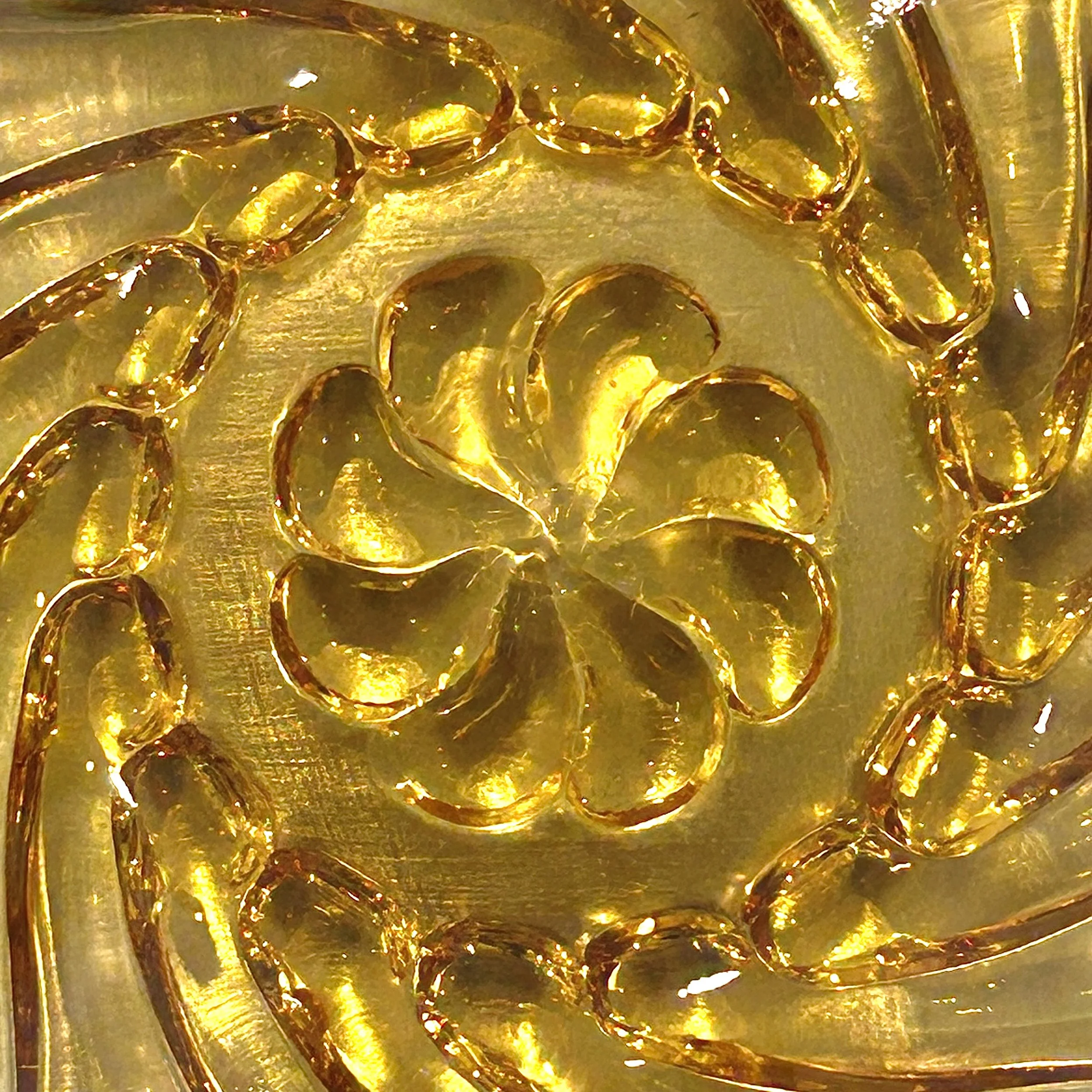
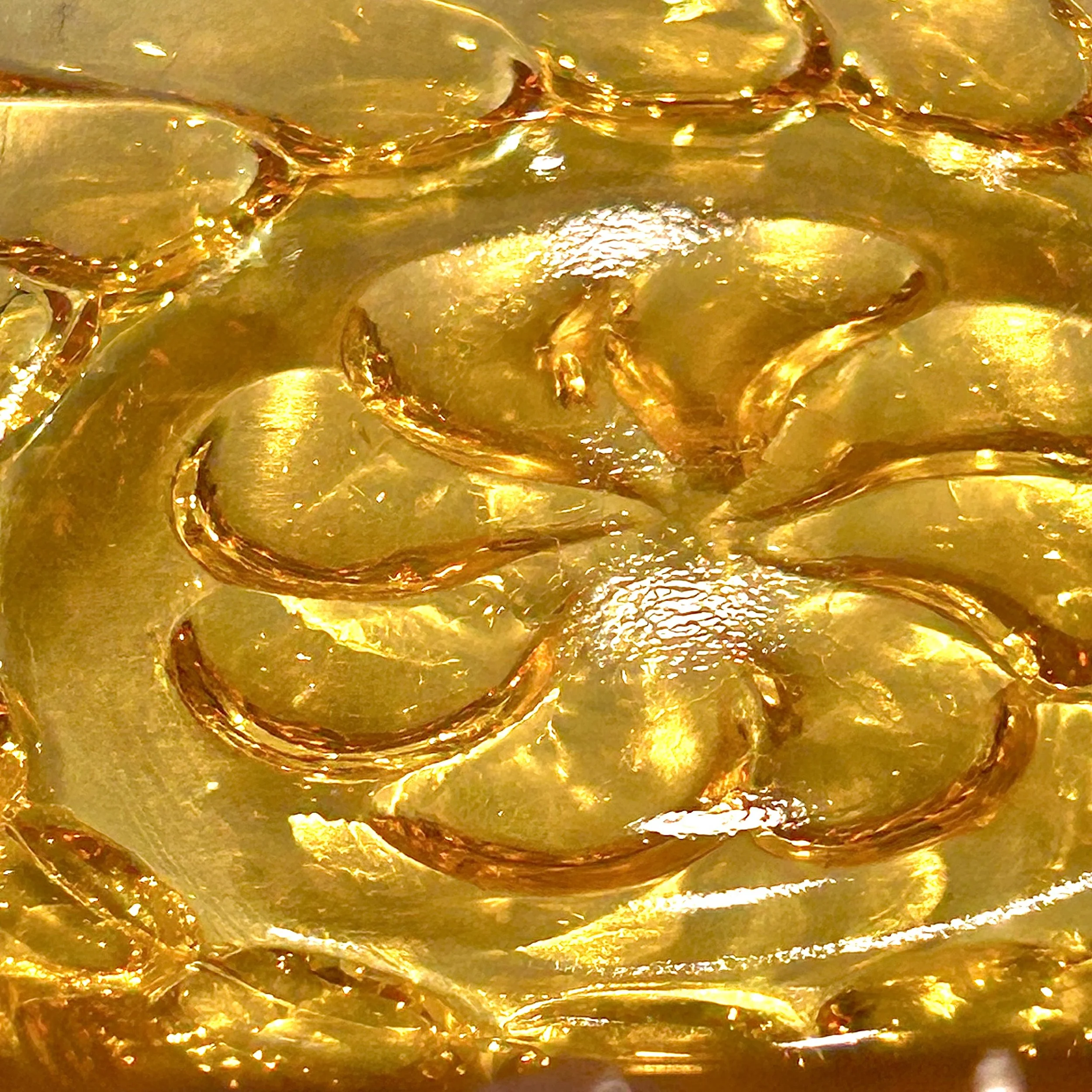
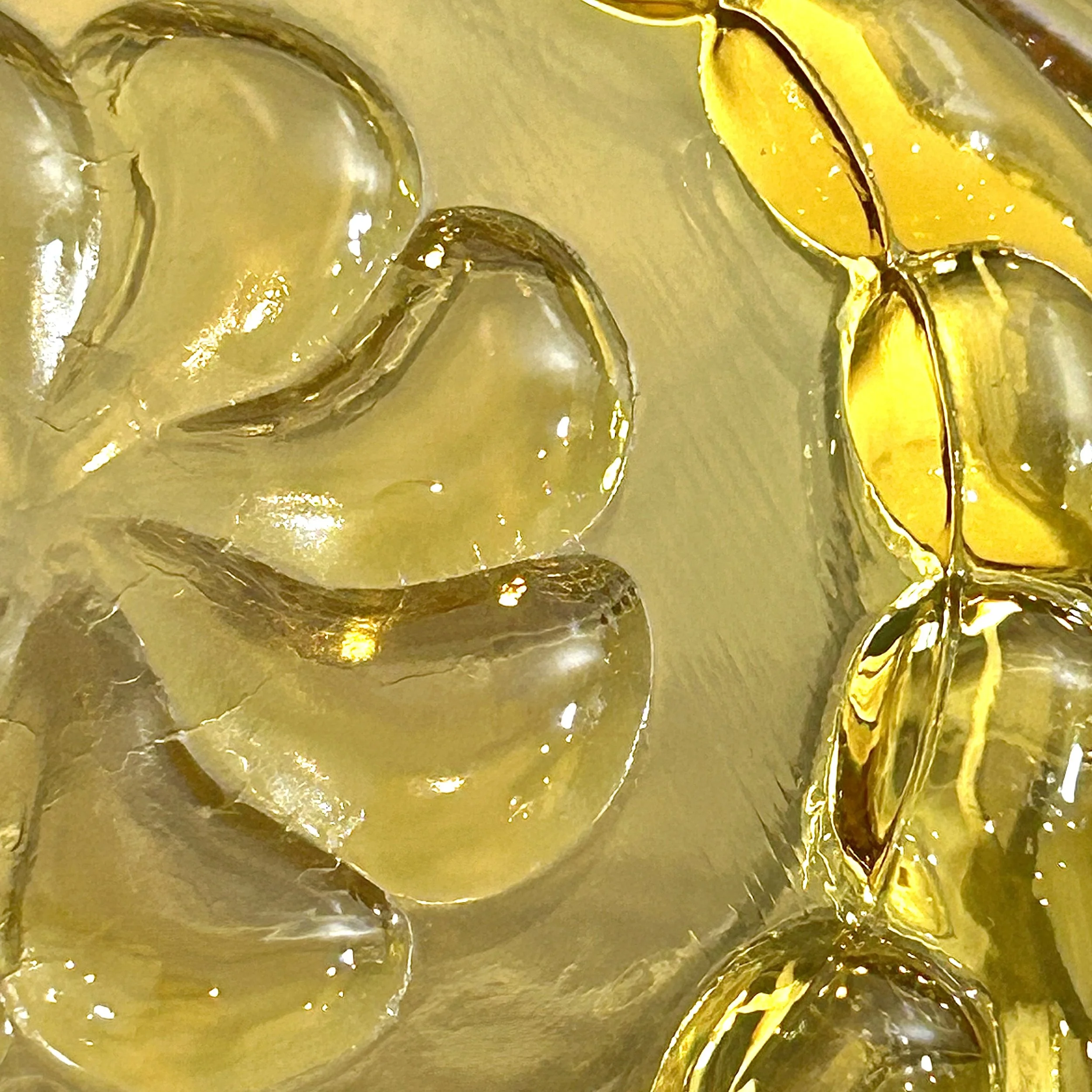
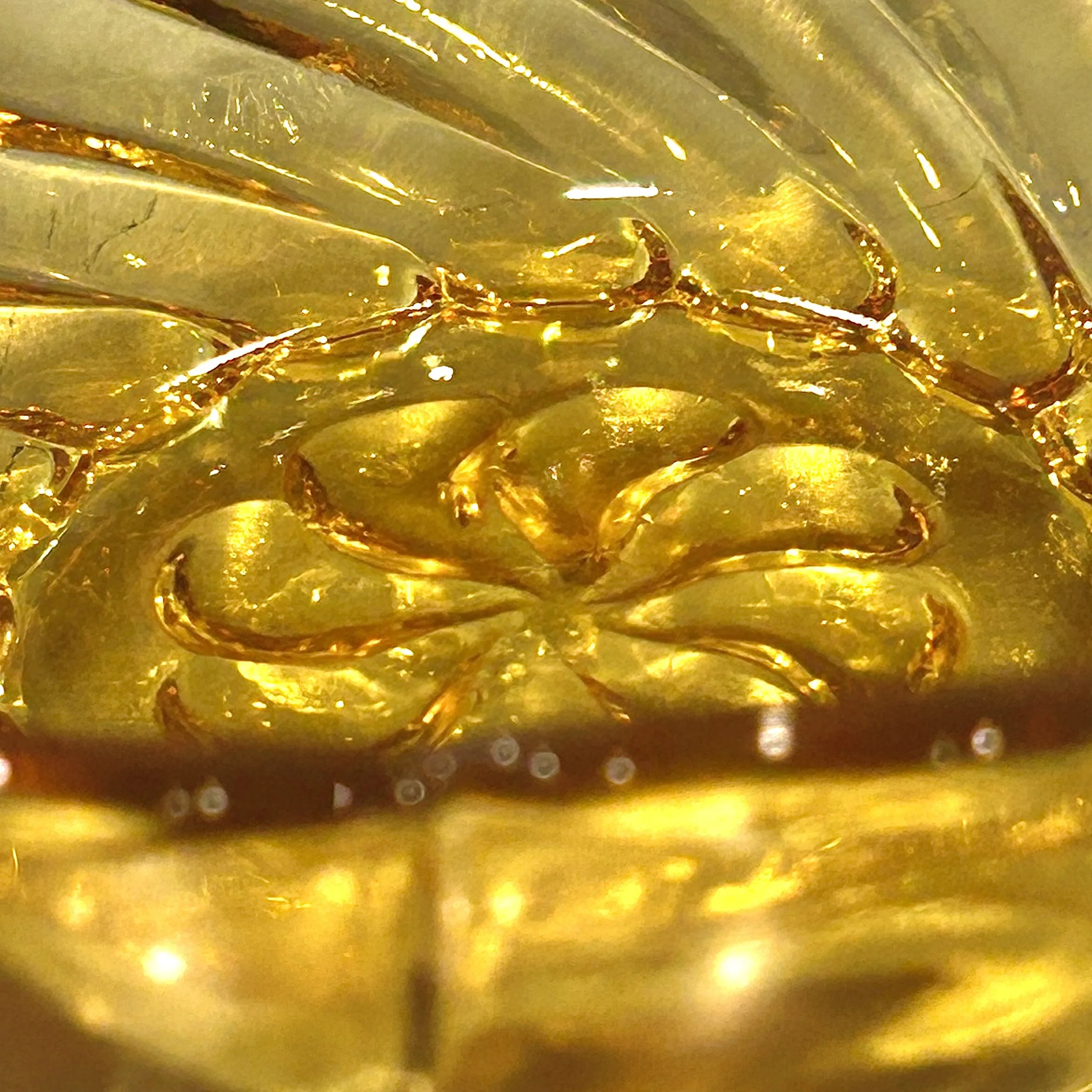
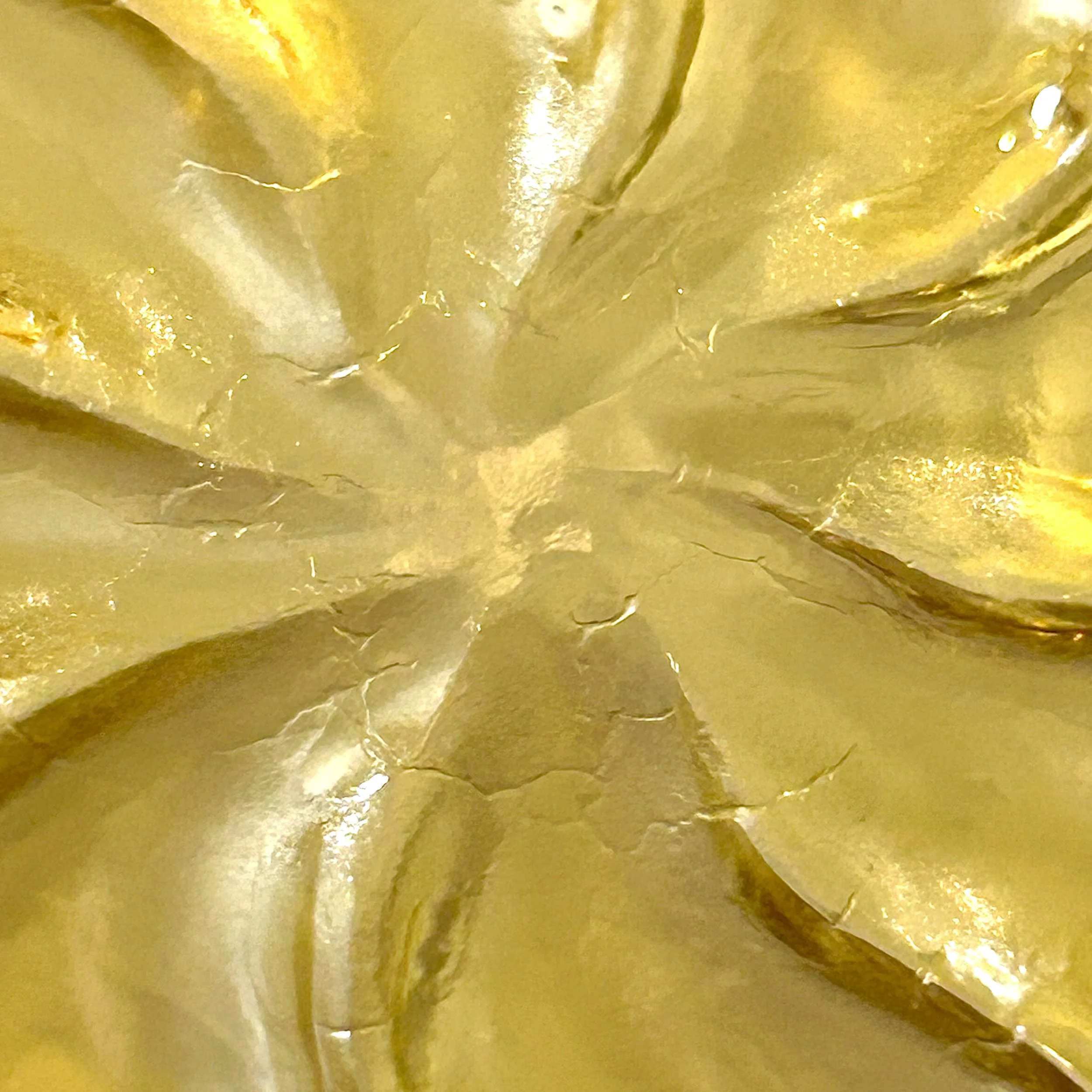
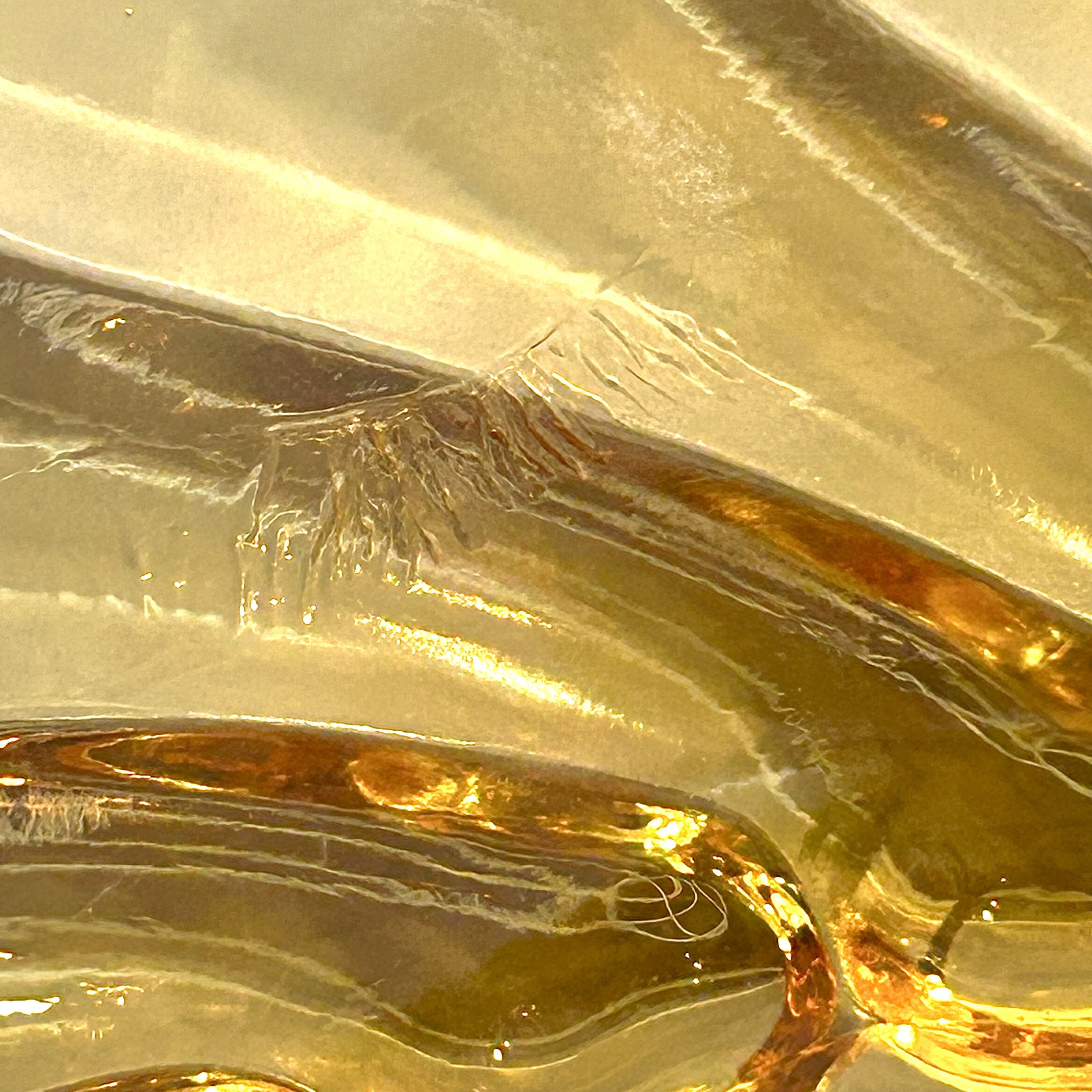
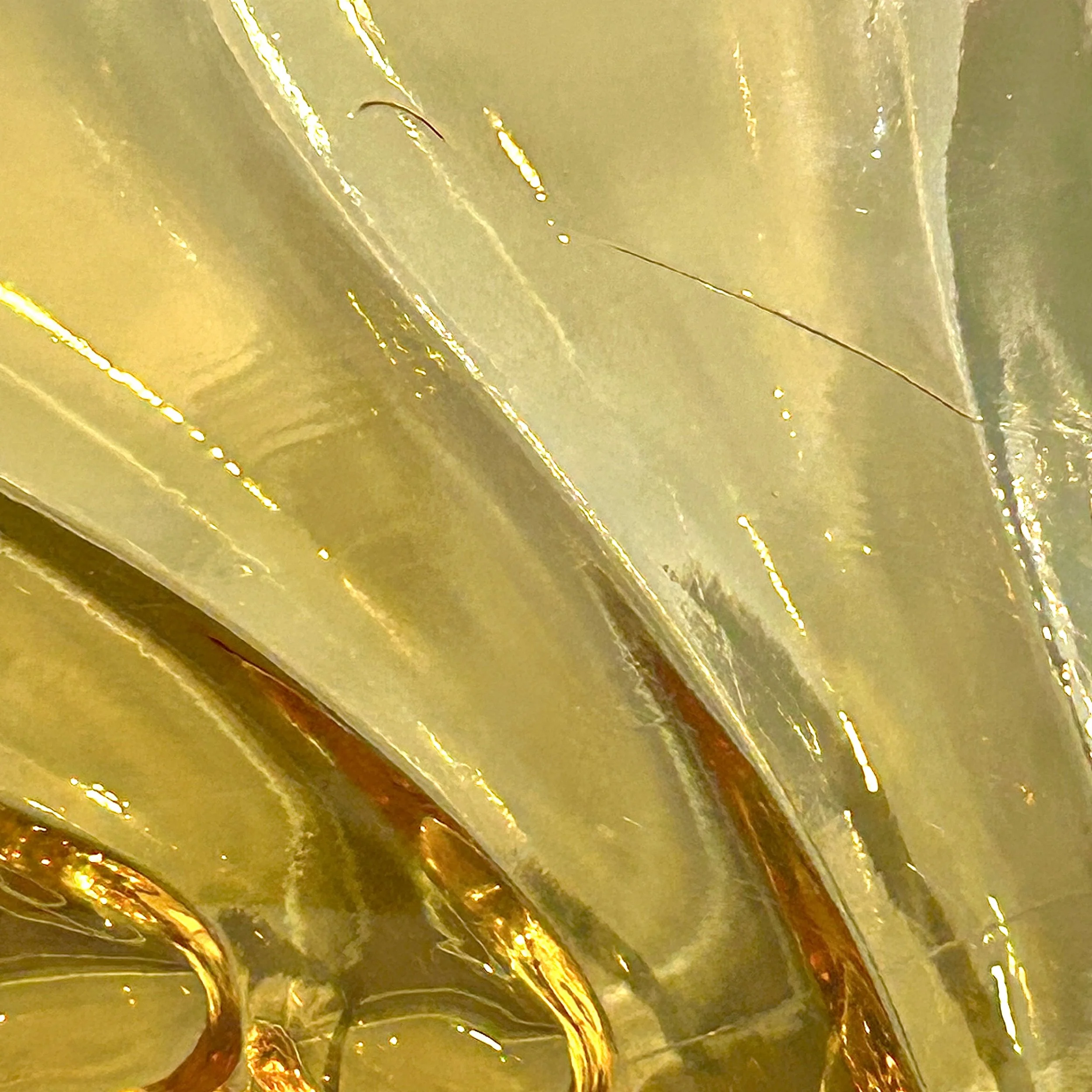
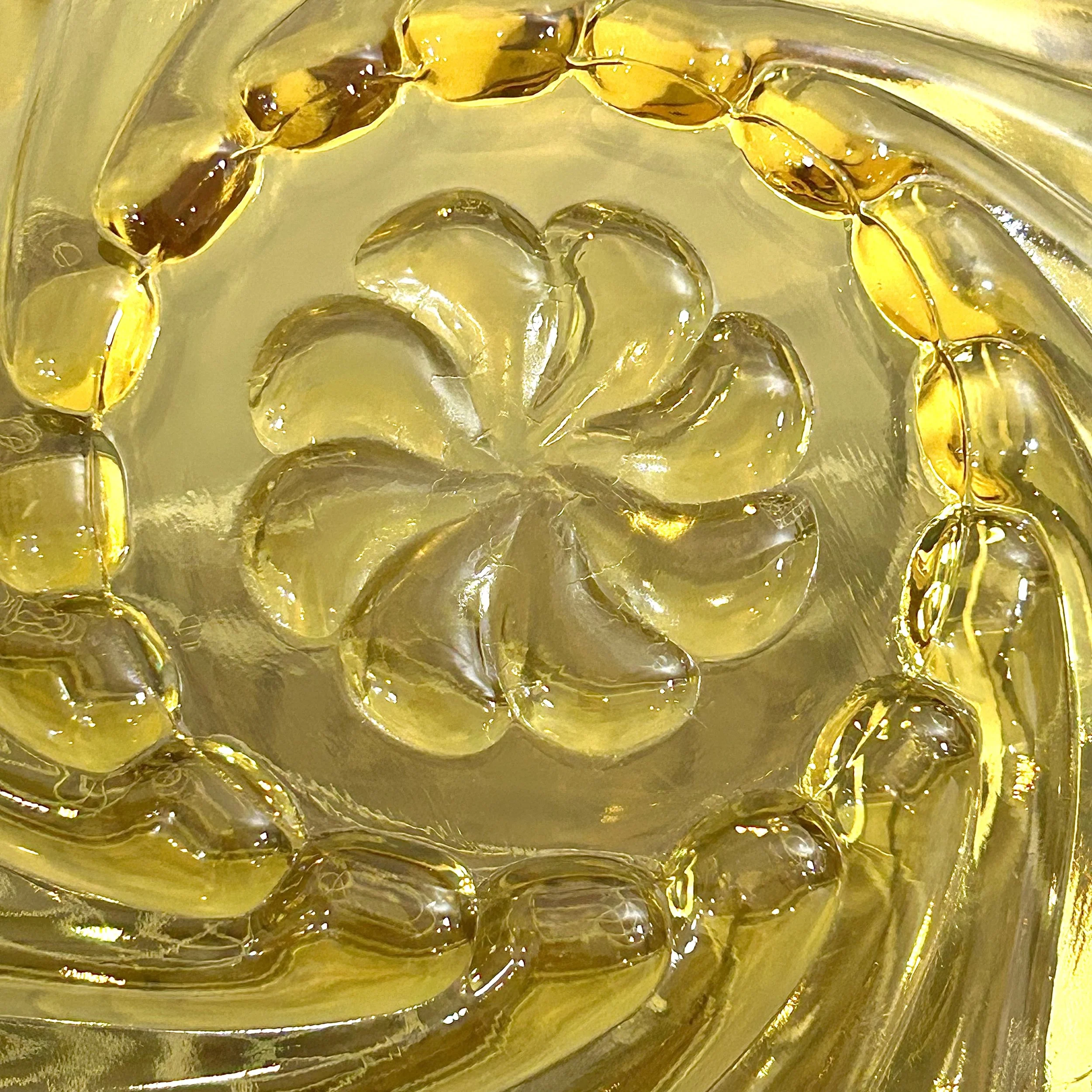
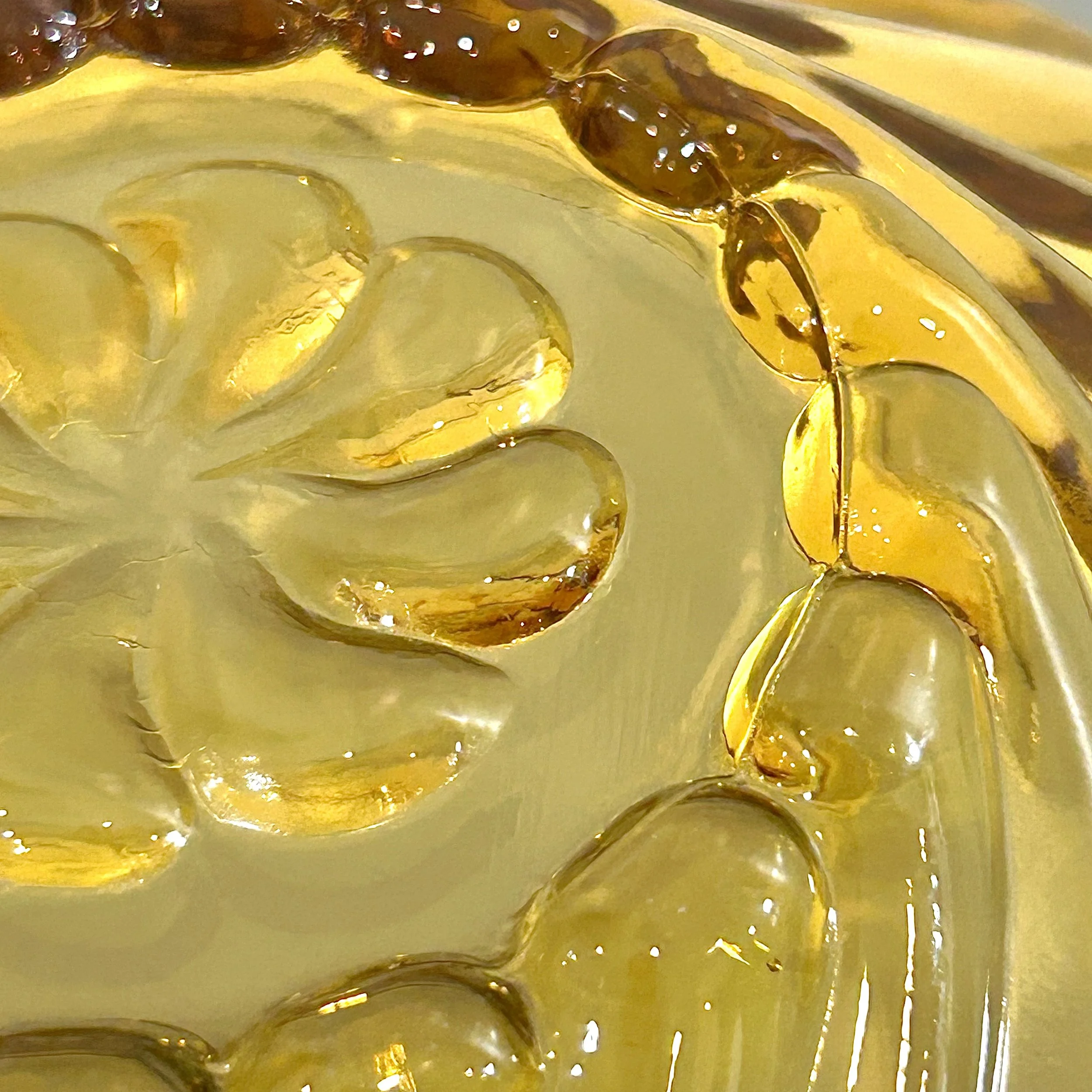
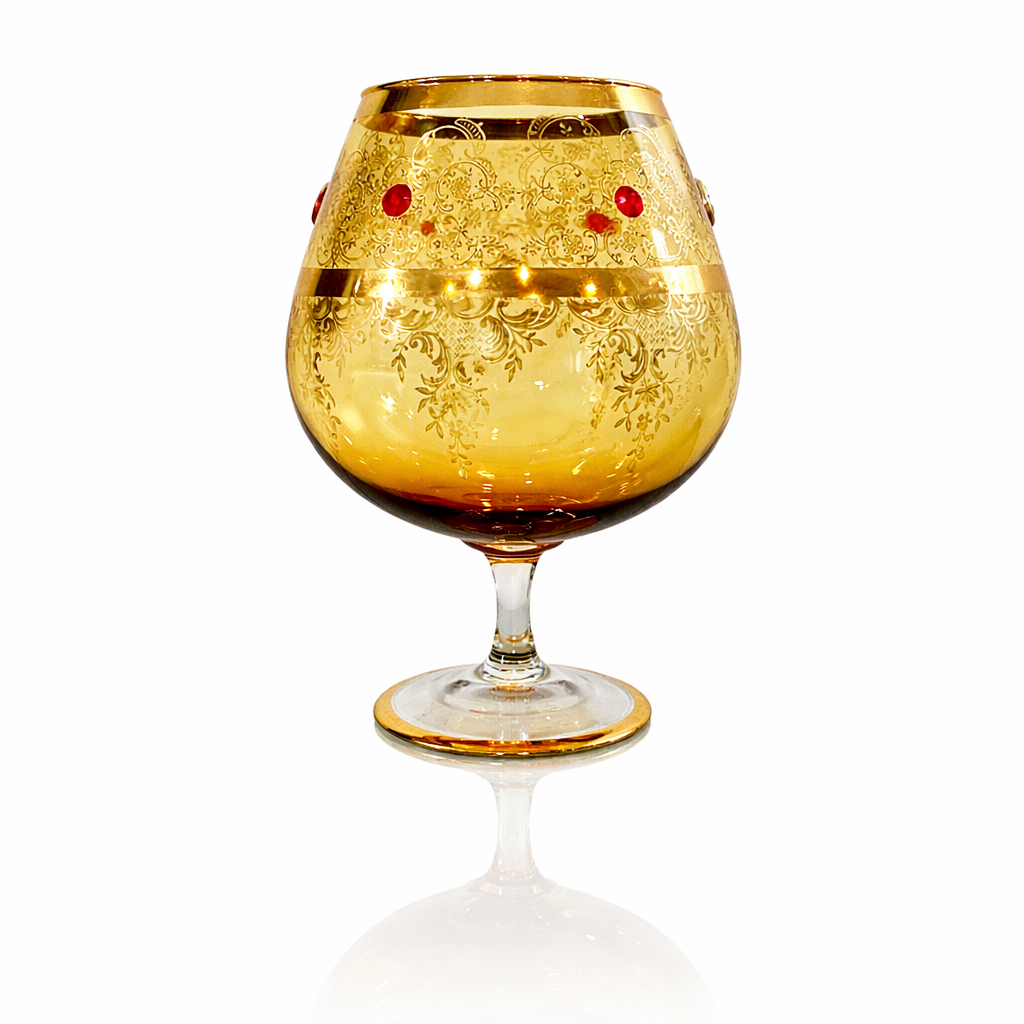
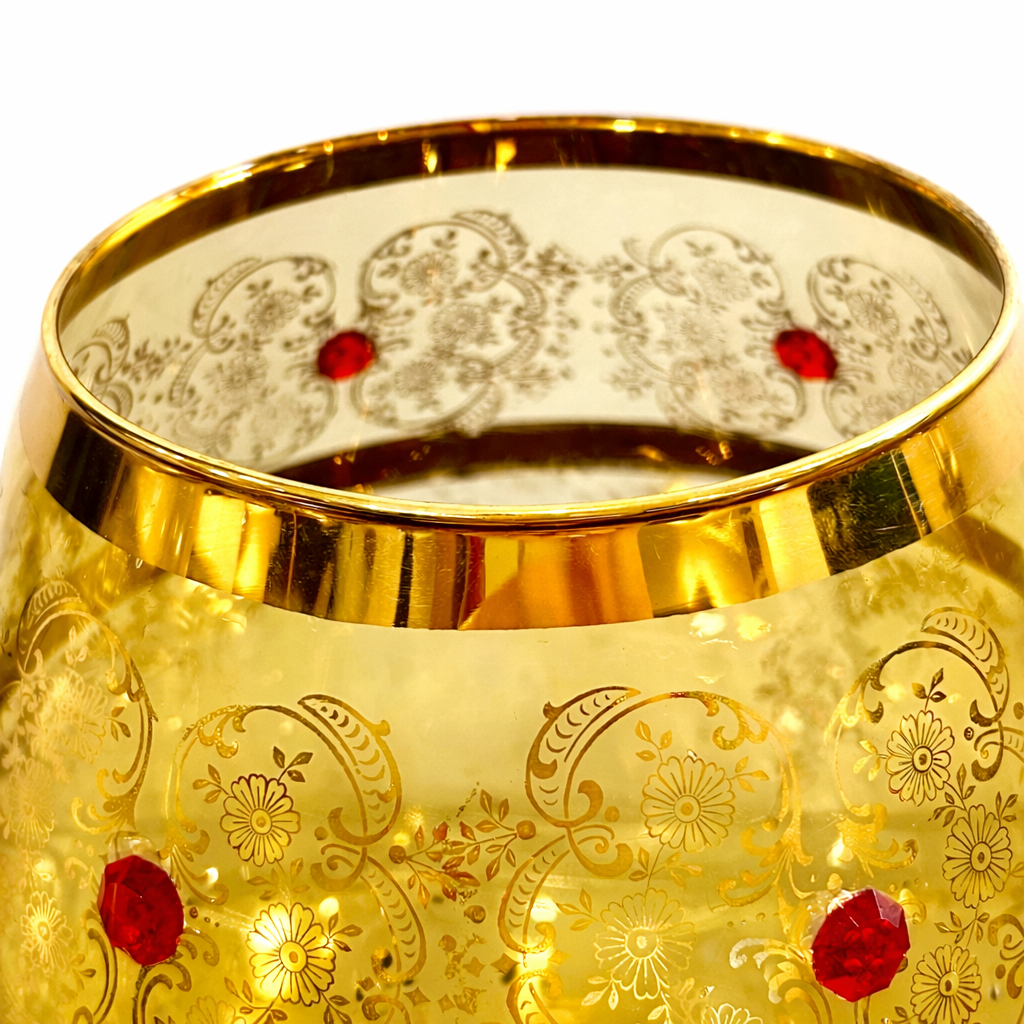
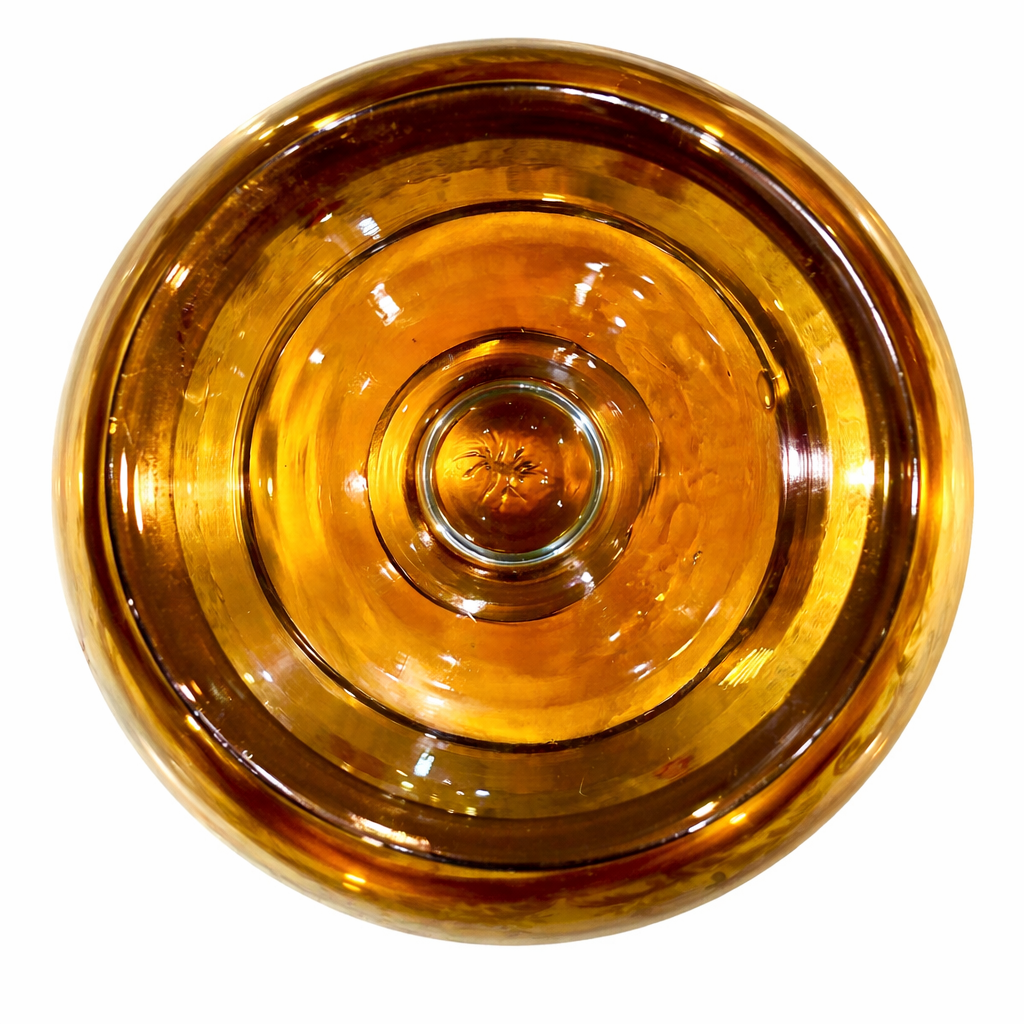
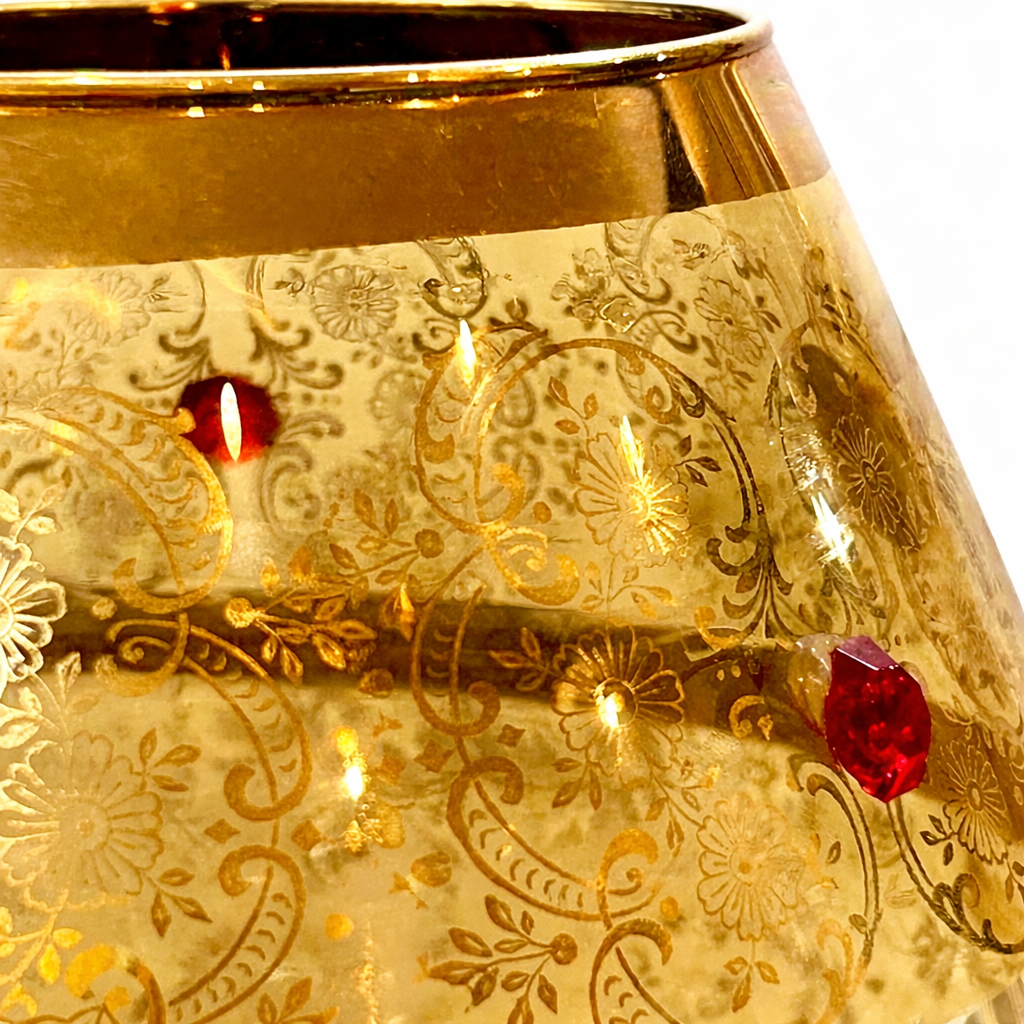
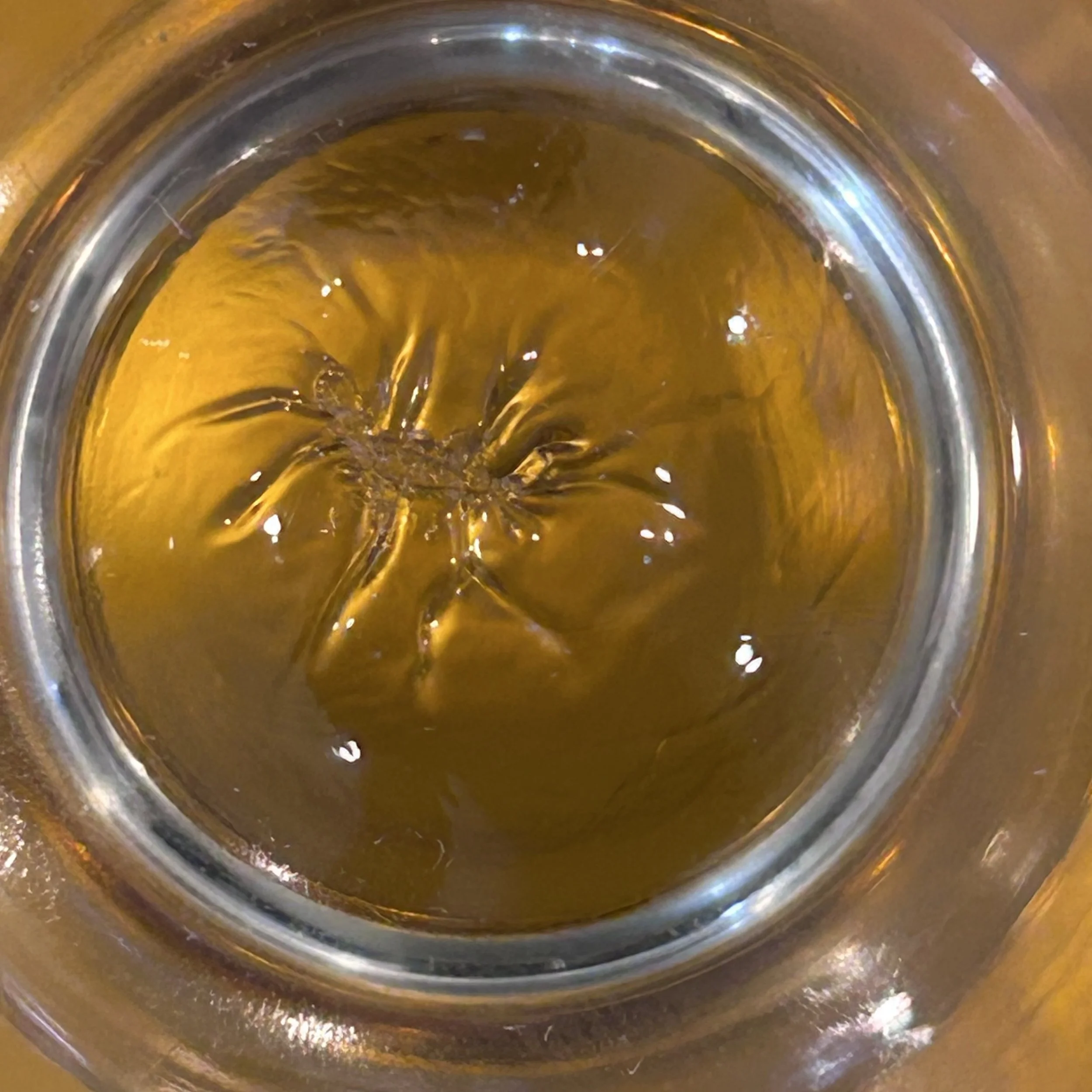
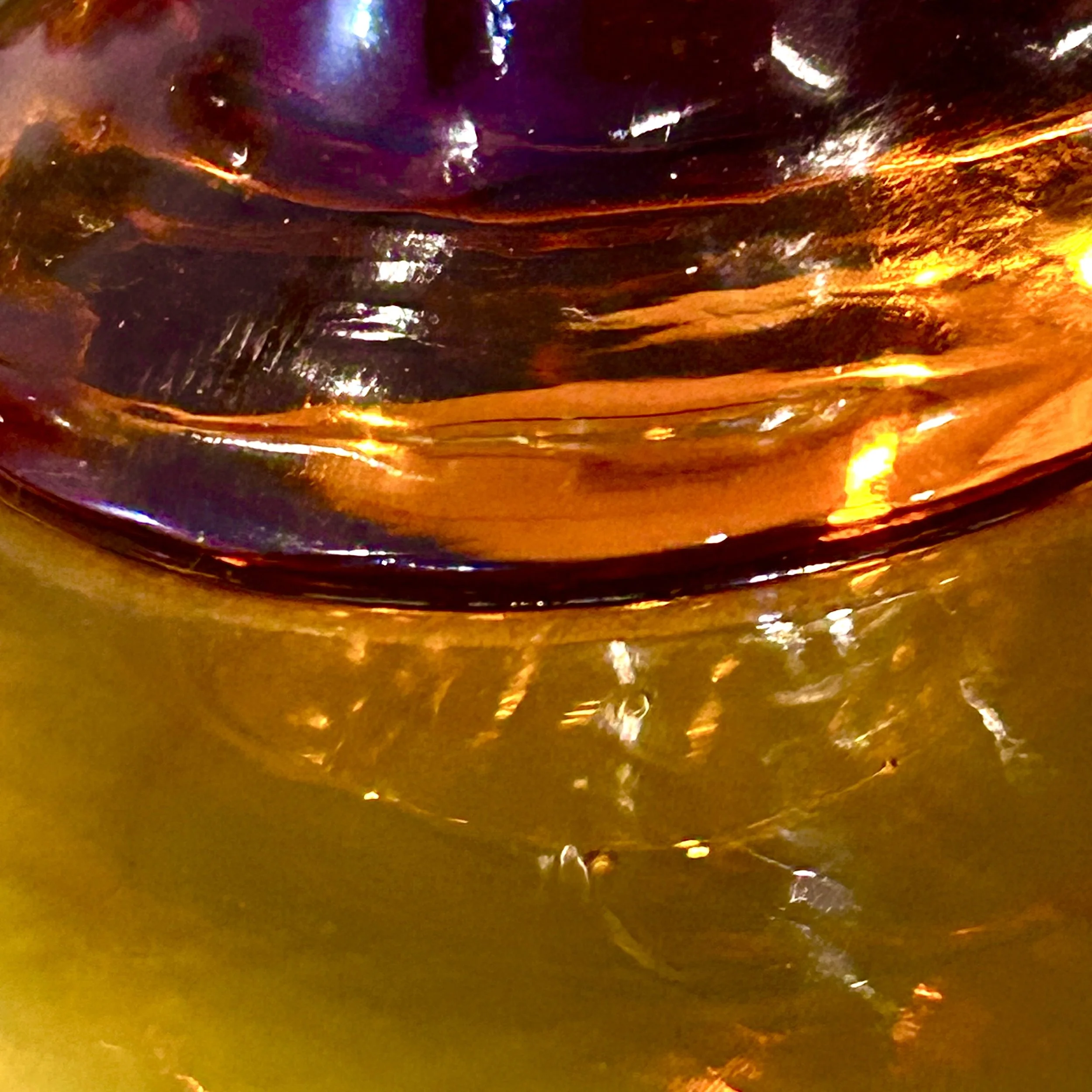
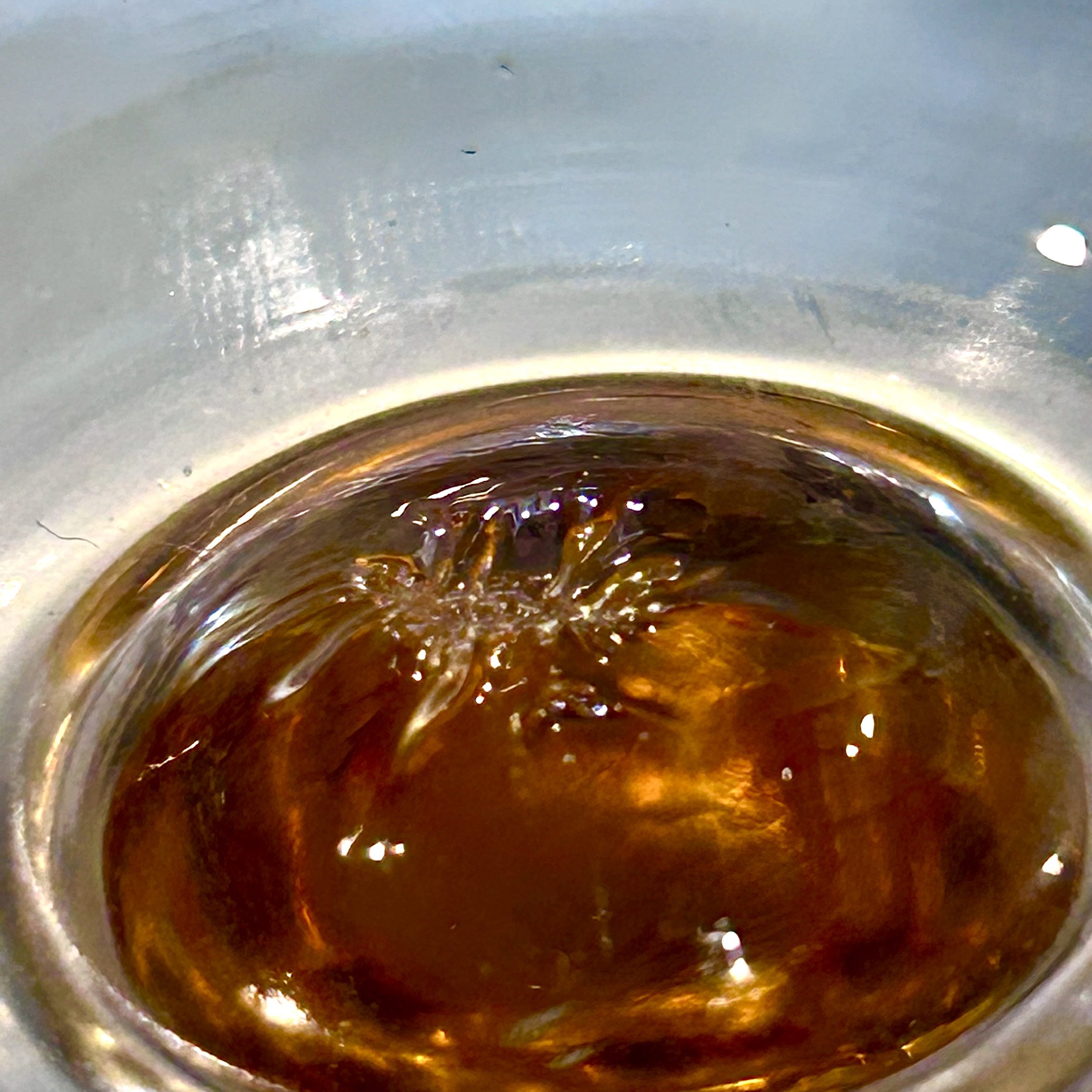
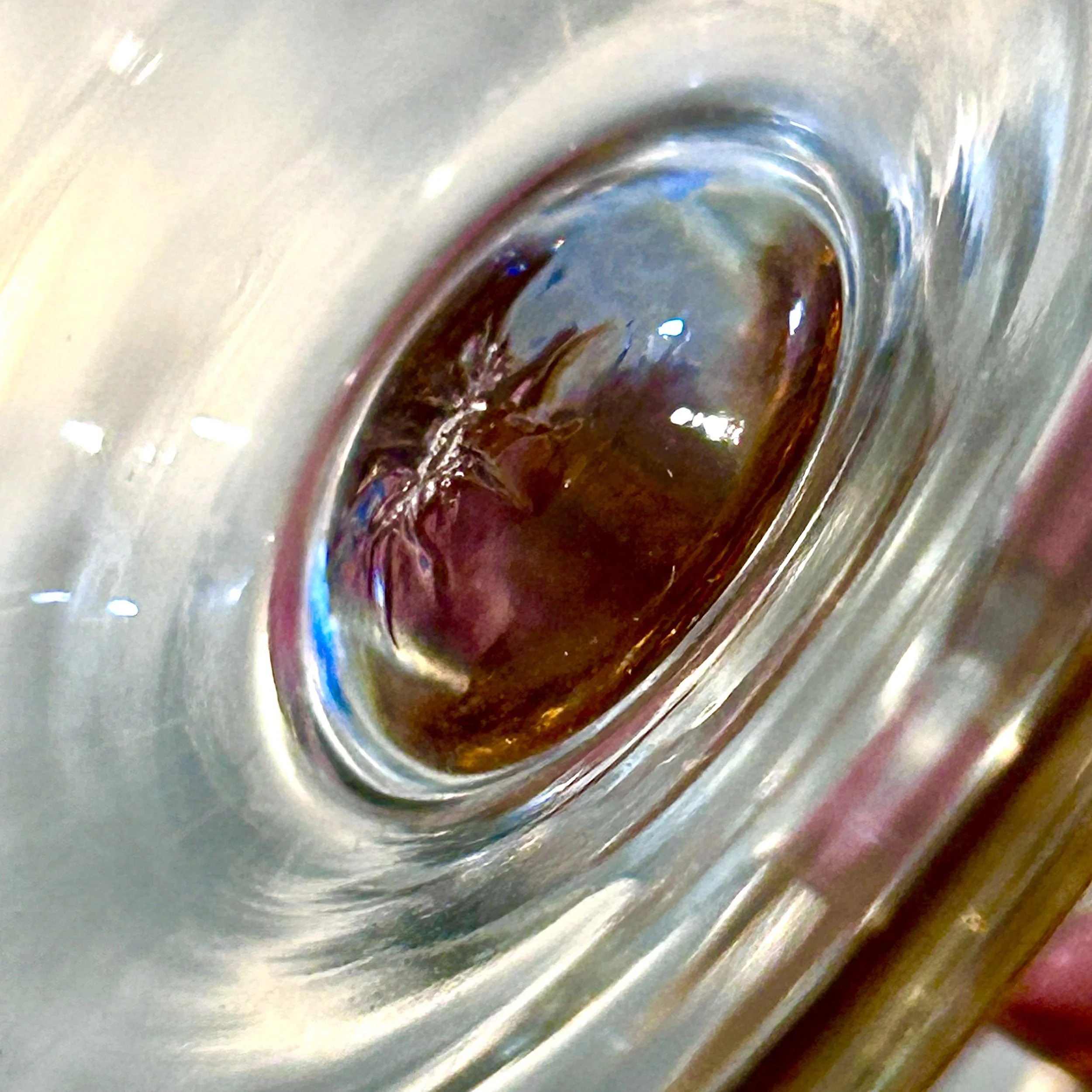
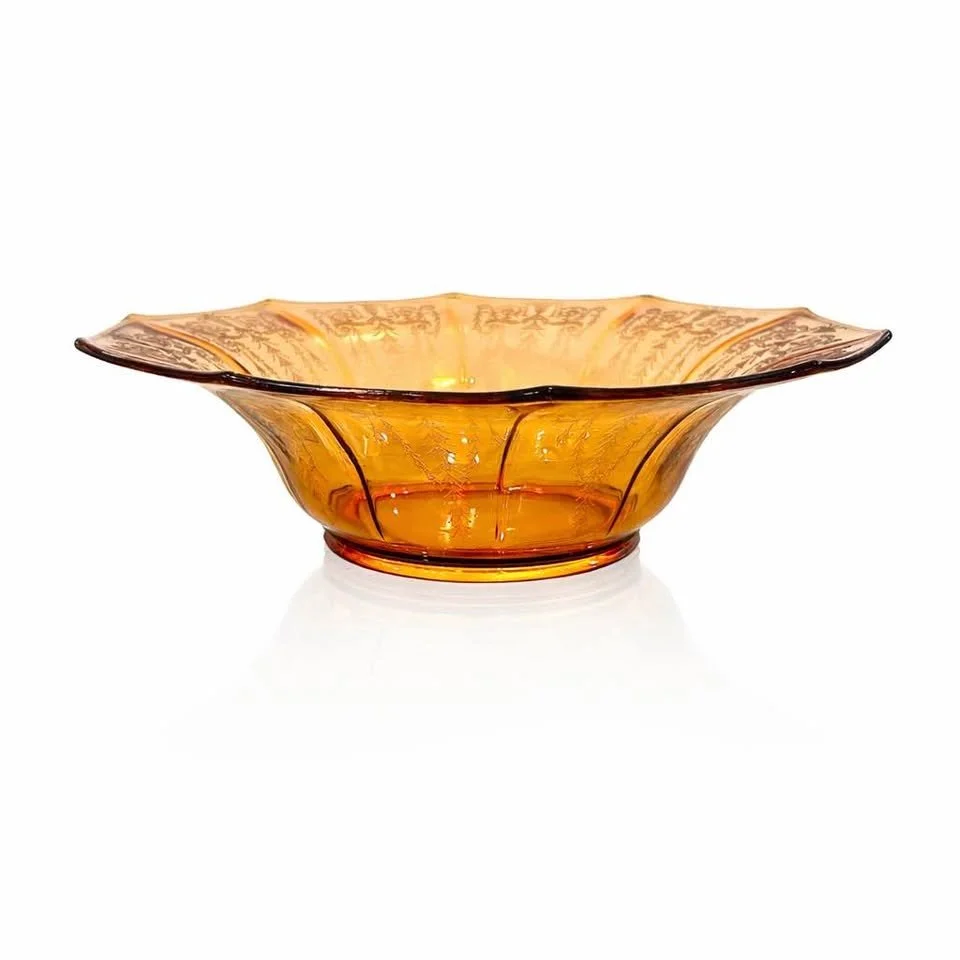
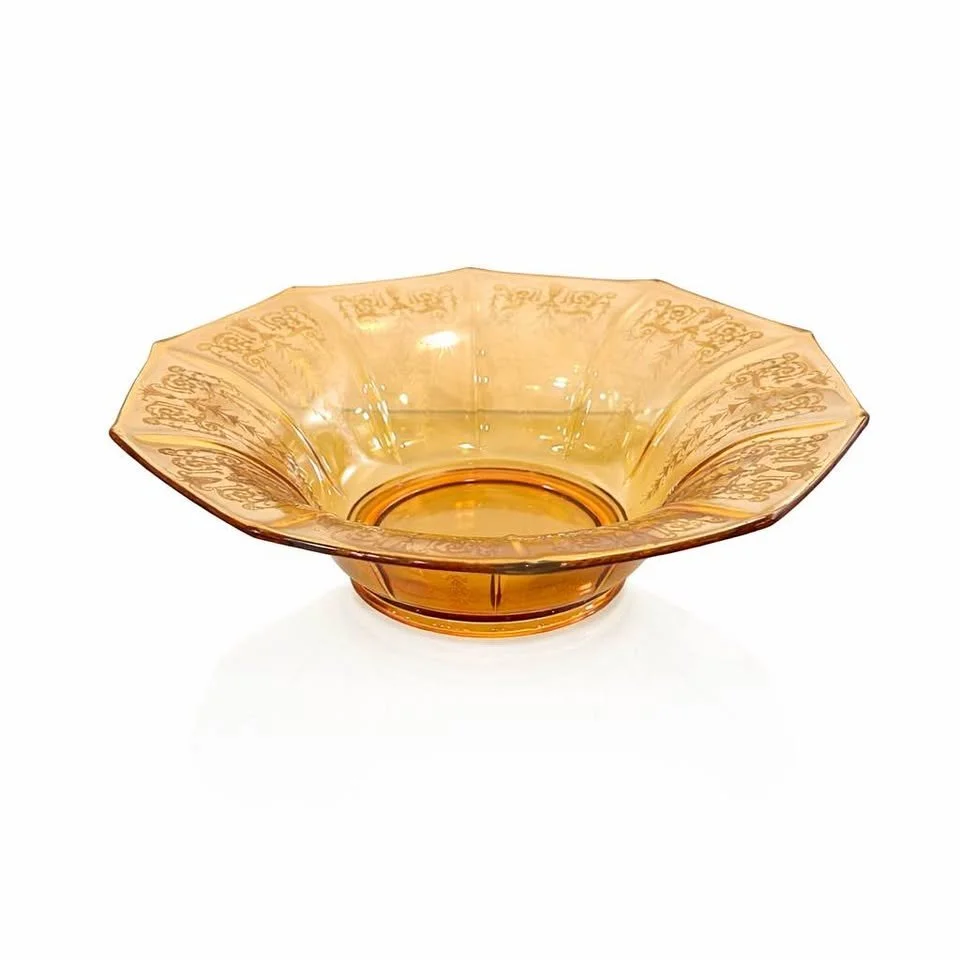
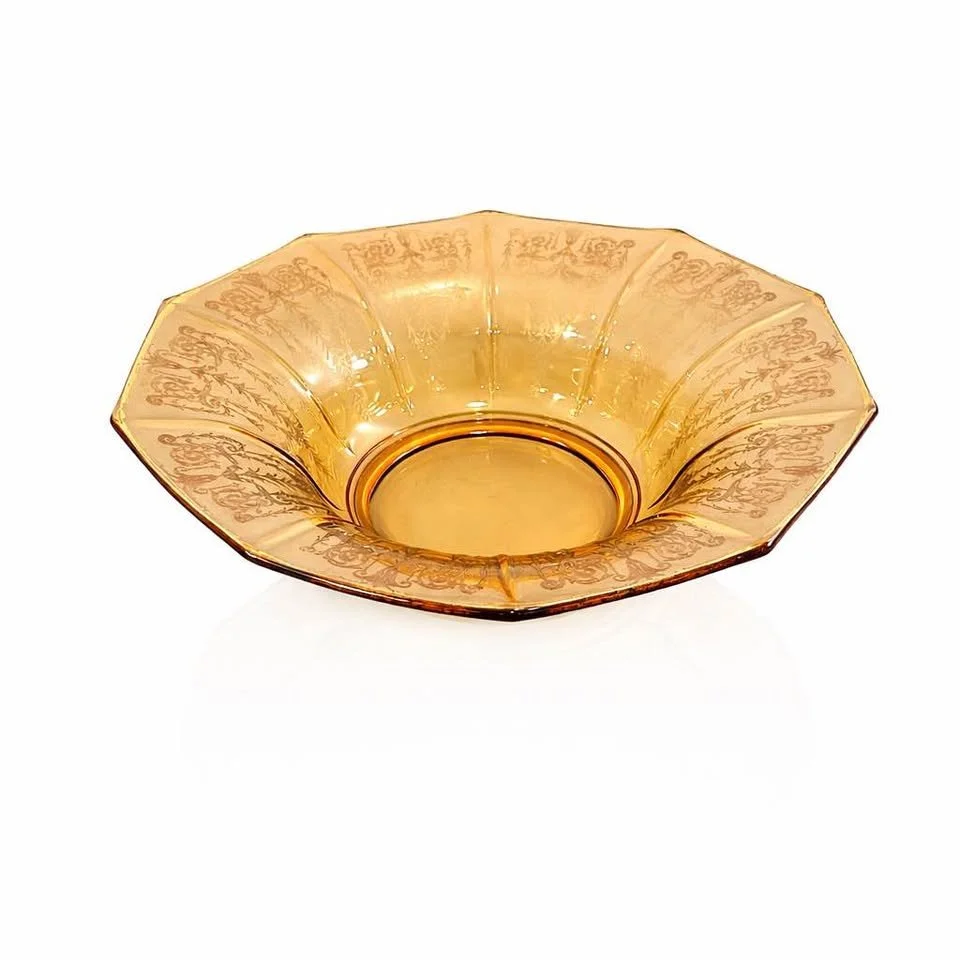
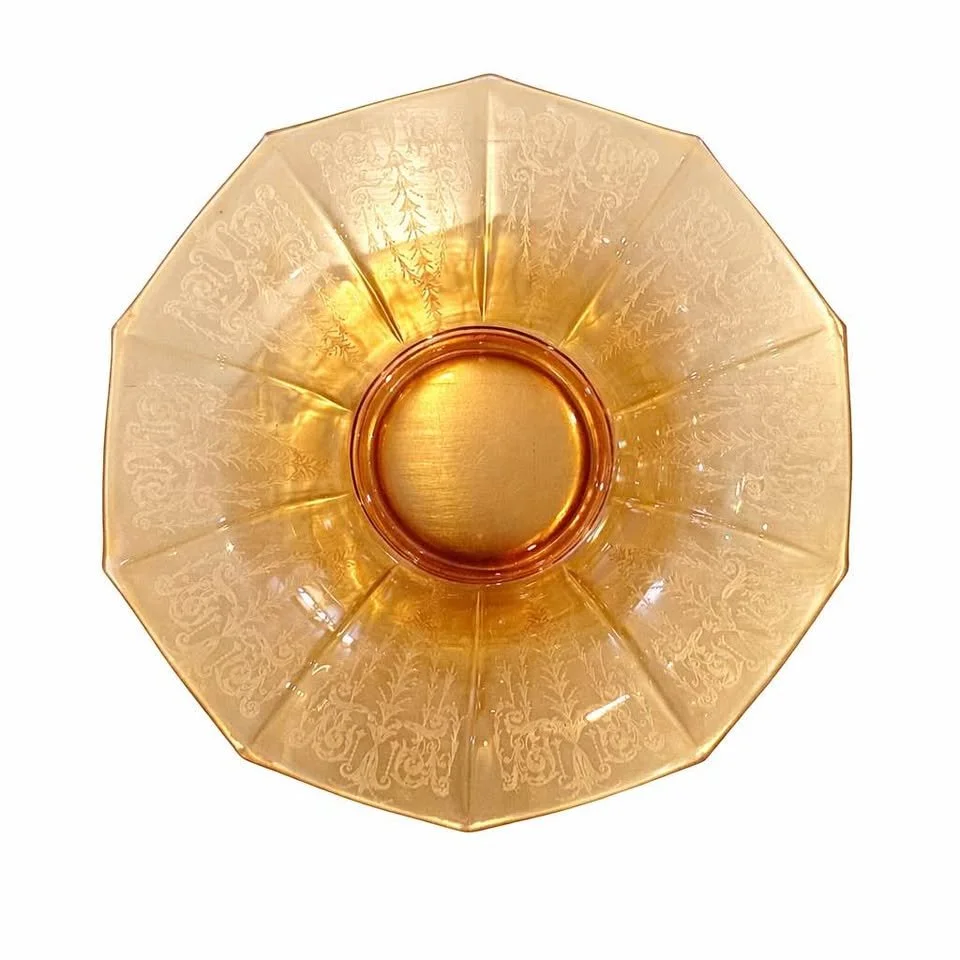
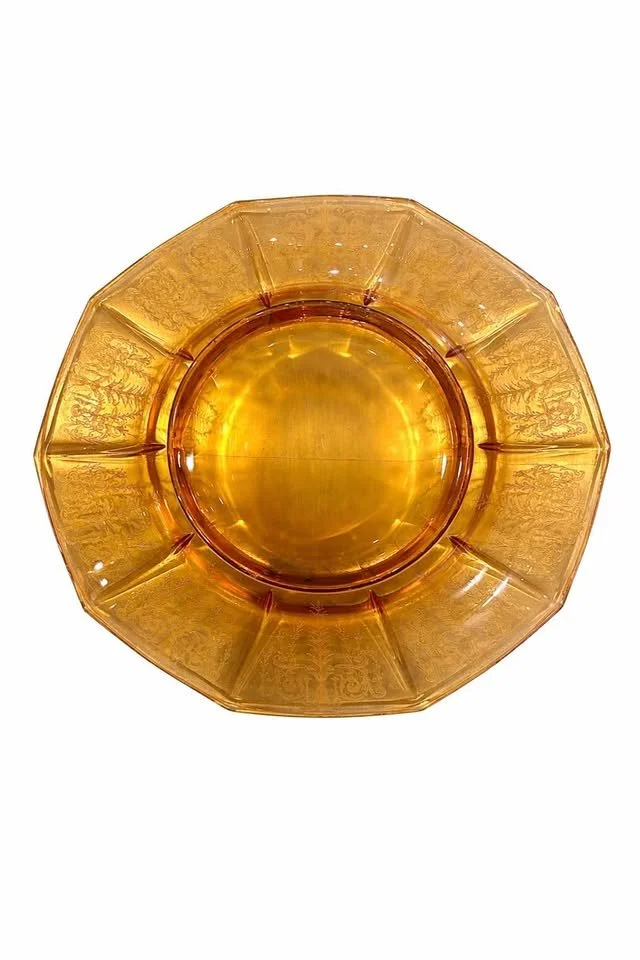
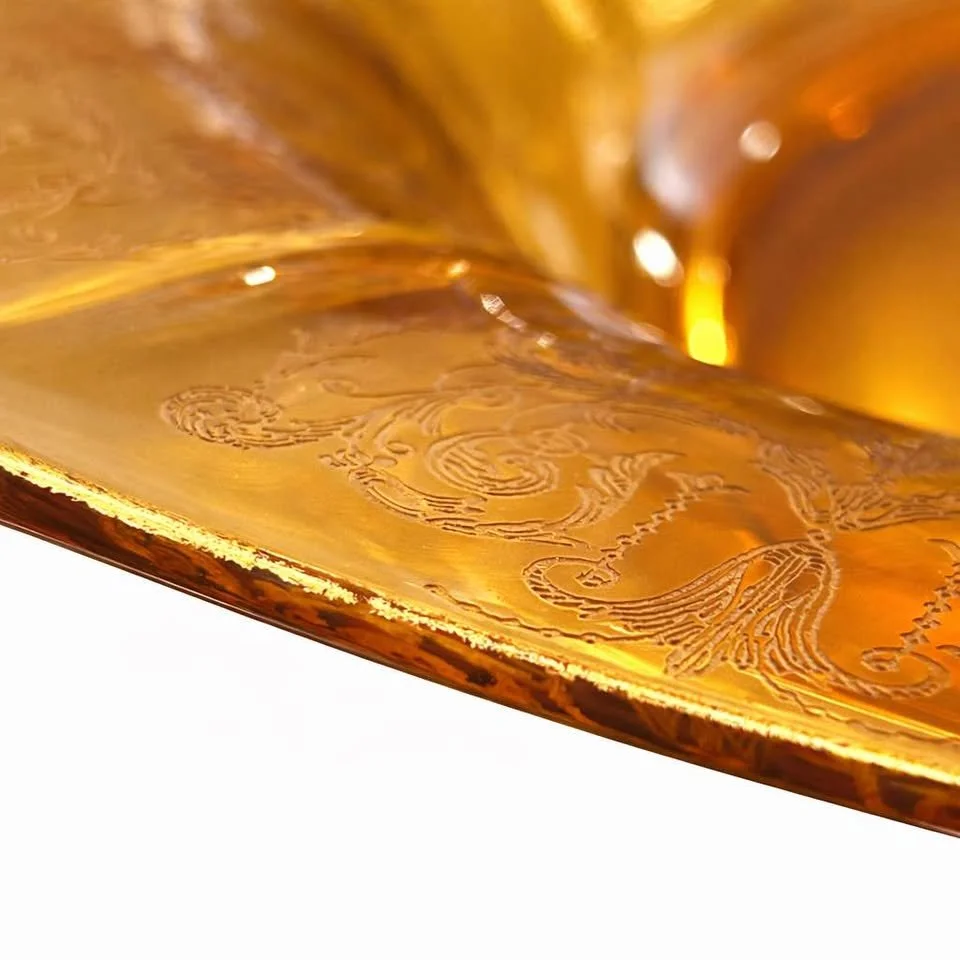
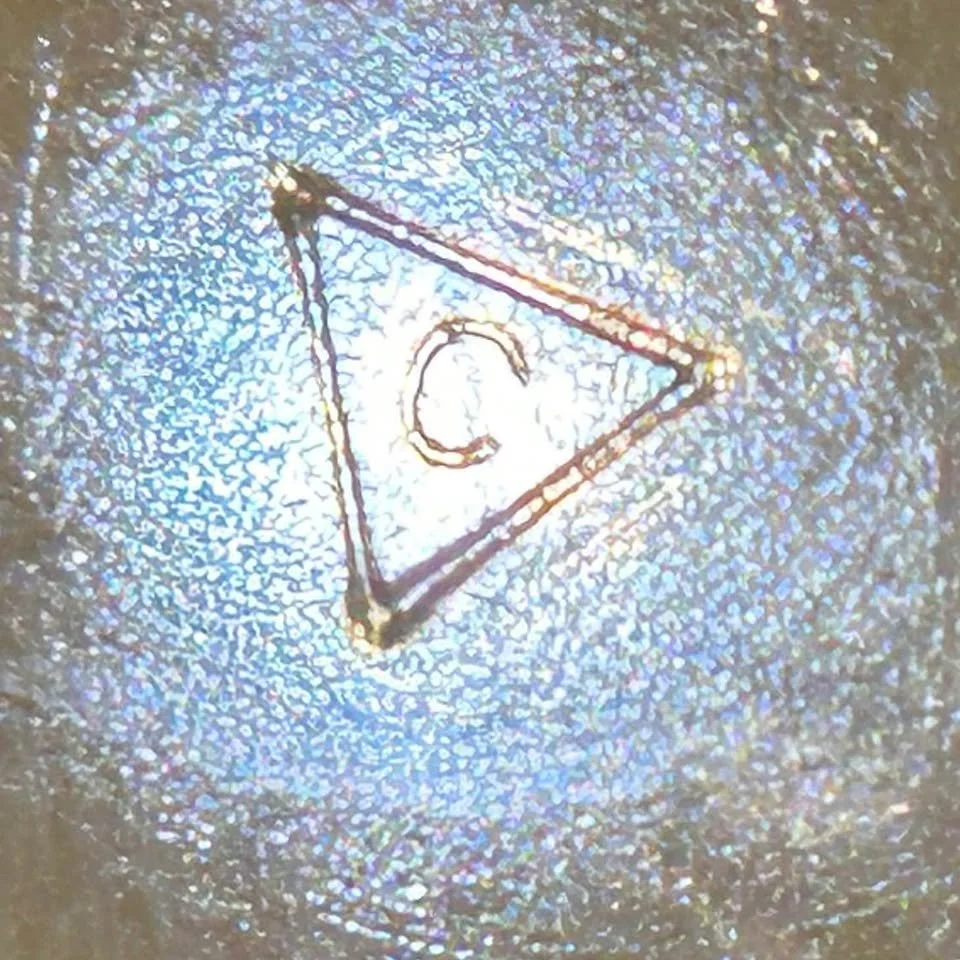
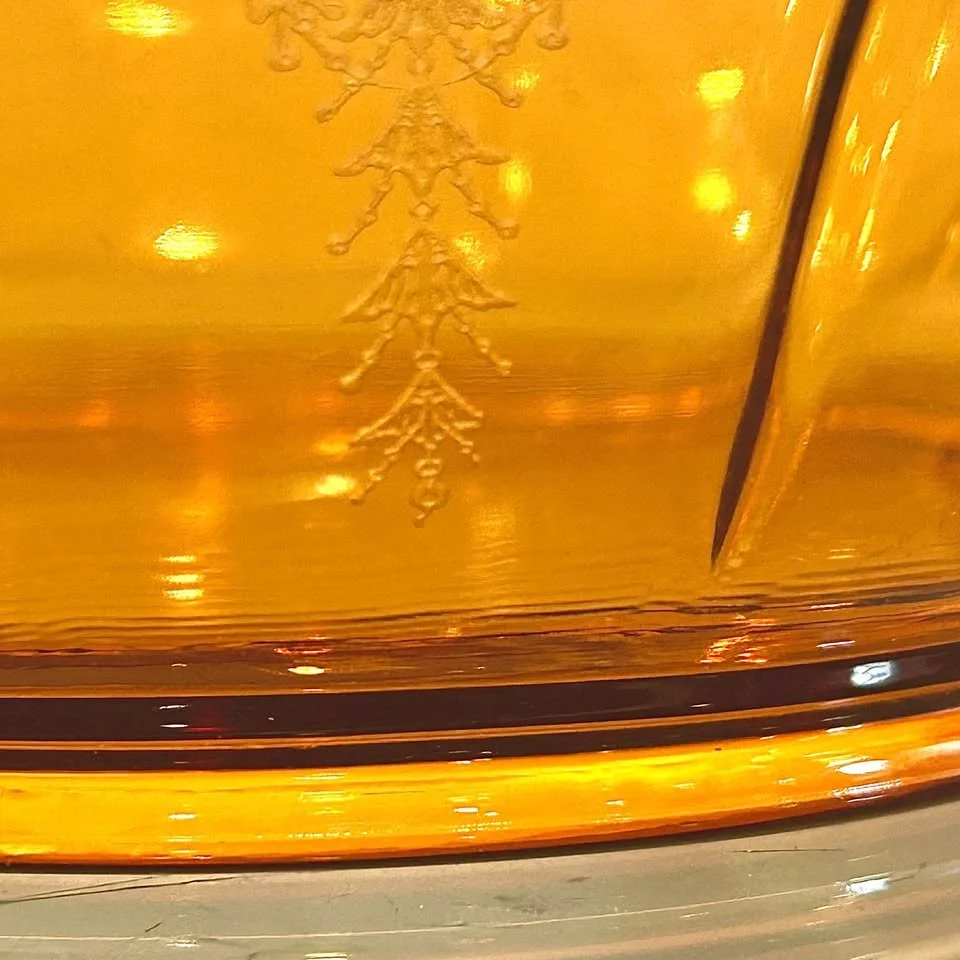
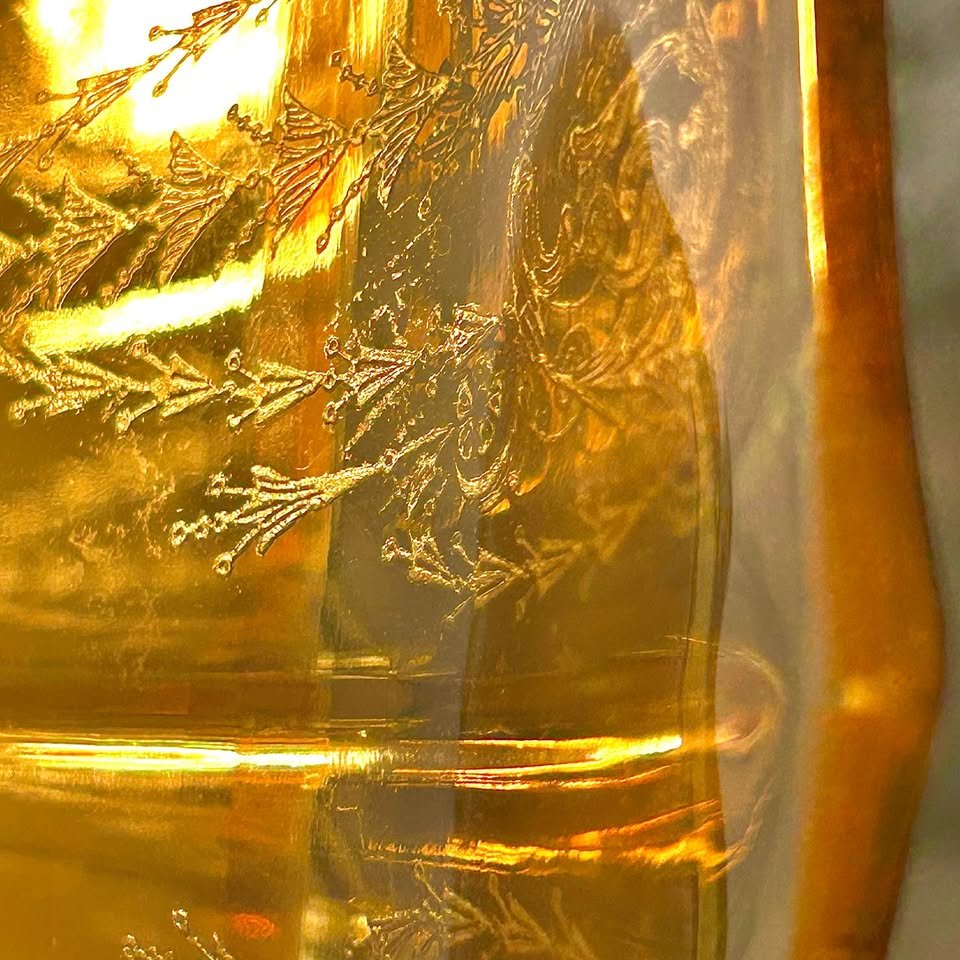
This exceptional 19th-century amber glass charger represents a technically significant milestone in early industrial decorative arts. The piece is defined by its substantial scale and a rhythmic, high-relief radial ribbing that terminates in a scalloped rim, framing a central sunburst medallion of remarkable clarity. The deep amber coloration offers a saturated, honey-like glow that responds dynamically to backlighting, shifting between transparency and dense gold tones. Beyond its aesthetic appeal, the charger serves as a primary study in transitional glassmaking, exhibiting a sculptural density and unique surface character that commands presence as a standalone tabletop or wall-mounted object.Authenticity & Construction A significant example of heavy pressed-glass construction. The clarity of the radial ribs and the presence of fibrous mould inclusions confirm the piece was formed by pressing molten glass into a hand-carved wooden matrix. The cooling process of this era, combined with the specific glass batch, resulted in a high-density object with a superior resonant quality and deep color saturation typical of the mid-Victorian era.
Circa 1840–1870 This timeframe aligns with northern France, Bohemia:, These regions were leading producers of refined pressed glass during this period and are well • Use of wooden moulds • Heavy pressed construction • Deep amber coloration typical of mid-19th-century glass chemistry
Placement An ideal candidate for vertical display in a lit cabinet or as a central architectural object on a mid-century or antique sideboard. Its geometric formality and historical surface texture make it a compelling bridge piece within a collection of early glass or modern sculptural ceramics.
STANDARD ATTRIBUTION & VALUE DISCLOSURE This piece is described to the best of current scholarly and market knowledge. Any maker or regional attribution is based on visual analysis, materials, construction techniques, and documented stylistic comparisons. As with many MCM and antique design objects, definitive attribution may not be possible without original labels or factory records. Pricing reflects condition, quality, decorative appeal, and current collector demand rather than guaranteed maker identification.
This exceptional 19th-century amber glass charger represents a technically significant milestone in early industrial decorative arts. The piece is defined by its substantial scale and a rhythmic, high-relief radial ribbing that terminates in a scalloped rim, framing a central sunburst medallion of remarkable clarity. The deep amber coloration offers a saturated, honey-like glow that responds dynamically to backlighting, shifting between transparency and dense gold tones. Beyond its aesthetic appeal, the charger serves as a primary study in transitional glassmaking, exhibiting a sculptural density and unique surface character that commands presence as a standalone tabletop or wall-mounted object.Authenticity & Construction A significant example of heavy pressed-glass construction. The clarity of the radial ribs and the presence of fibrous mould inclusions confirm the piece was formed by pressing molten glass into a hand-carved wooden matrix. The cooling process of this era, combined with the specific glass batch, resulted in a high-density object with a superior resonant quality and deep color saturation typical of the mid-Victorian era.
Circa 1840–1870 This timeframe aligns with northern France, Bohemia:, These regions were leading producers of refined pressed glass during this period and are well • Use of wooden moulds • Heavy pressed construction • Deep amber coloration typical of mid-19th-century glass chemistry
Placement An ideal candidate for vertical display in a lit cabinet or as a central architectural object on a mid-century or antique sideboard. Its geometric formality and historical surface texture make it a compelling bridge piece within a collection of early glass or modern sculptural ceramics.
STANDARD ATTRIBUTION & VALUE DISCLOSURE This piece is described to the best of current scholarly and market knowledge. Any maker or regional attribution is based on visual analysis, materials, construction techniques, and documented stylistic comparisons. As with many MCM and antique design objects, definitive attribution may not be possible without original labels or factory records. Pricing reflects condition, quality, decorative appeal, and current collector demand rather than guaranteed maker identification.

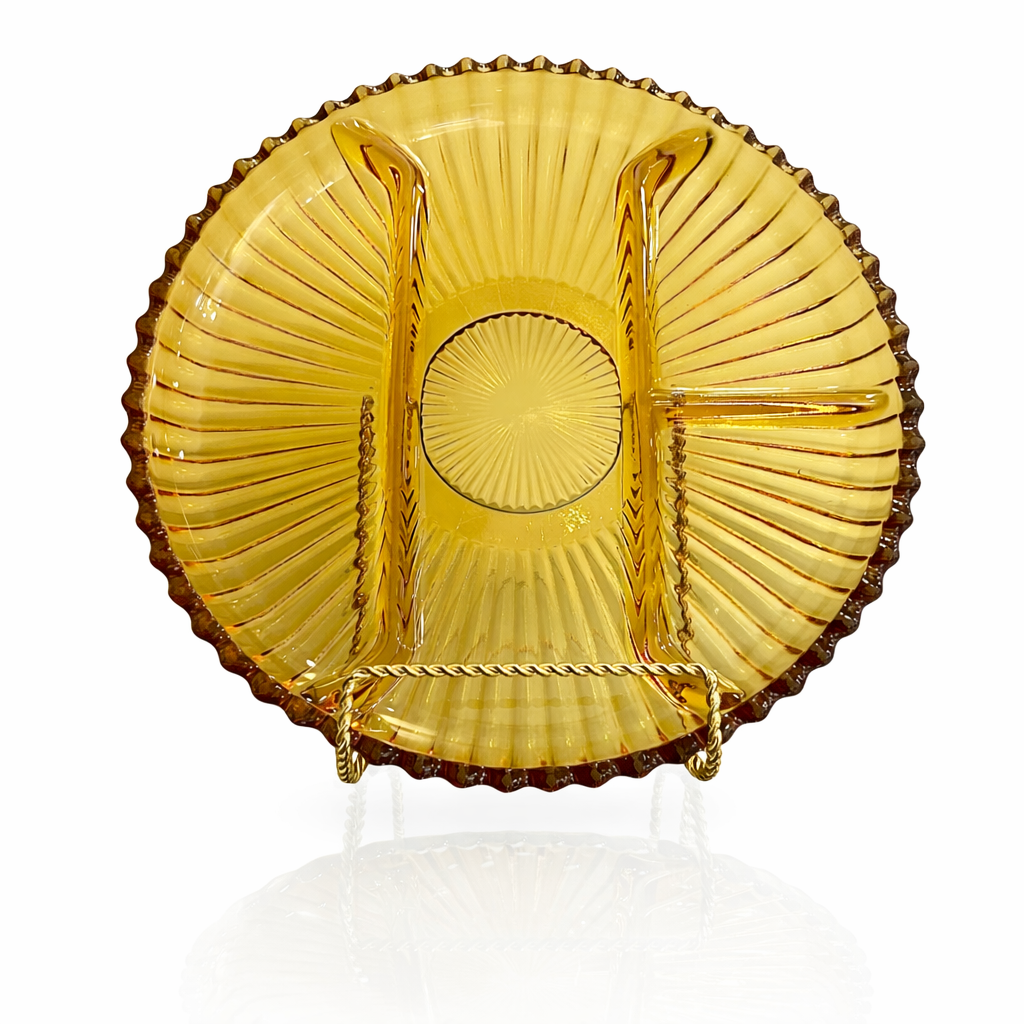 Image 1 of 9
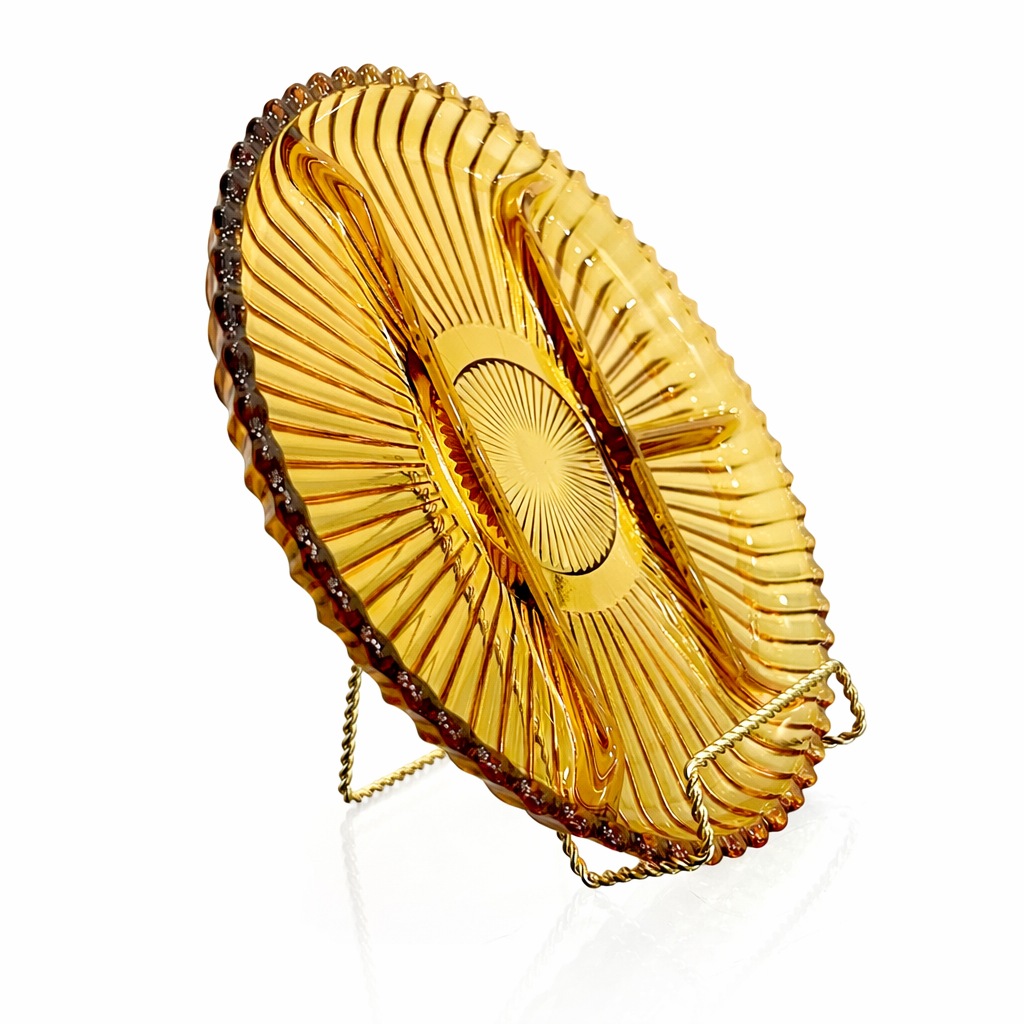 Image 2 of 9
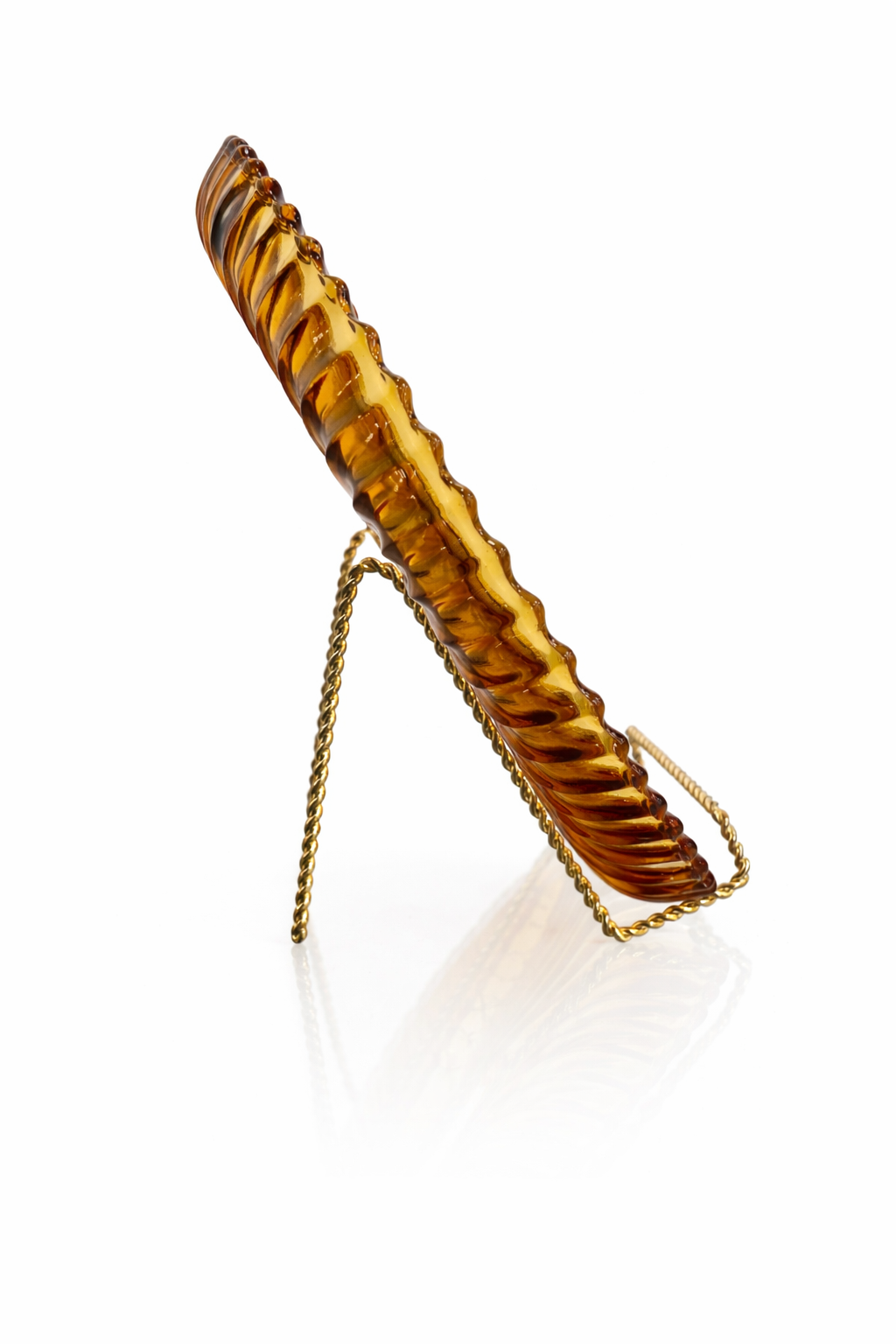 Image 3 of 9
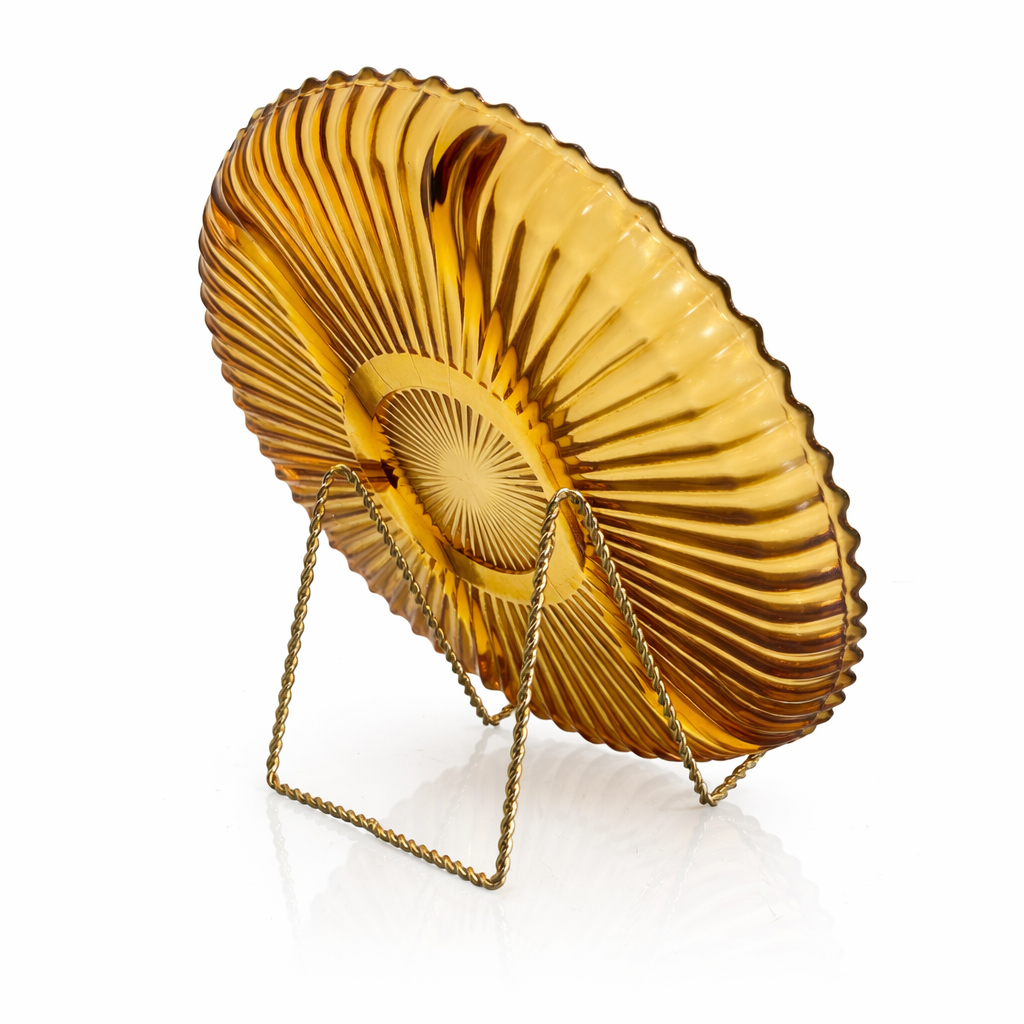 Image 4 of 9
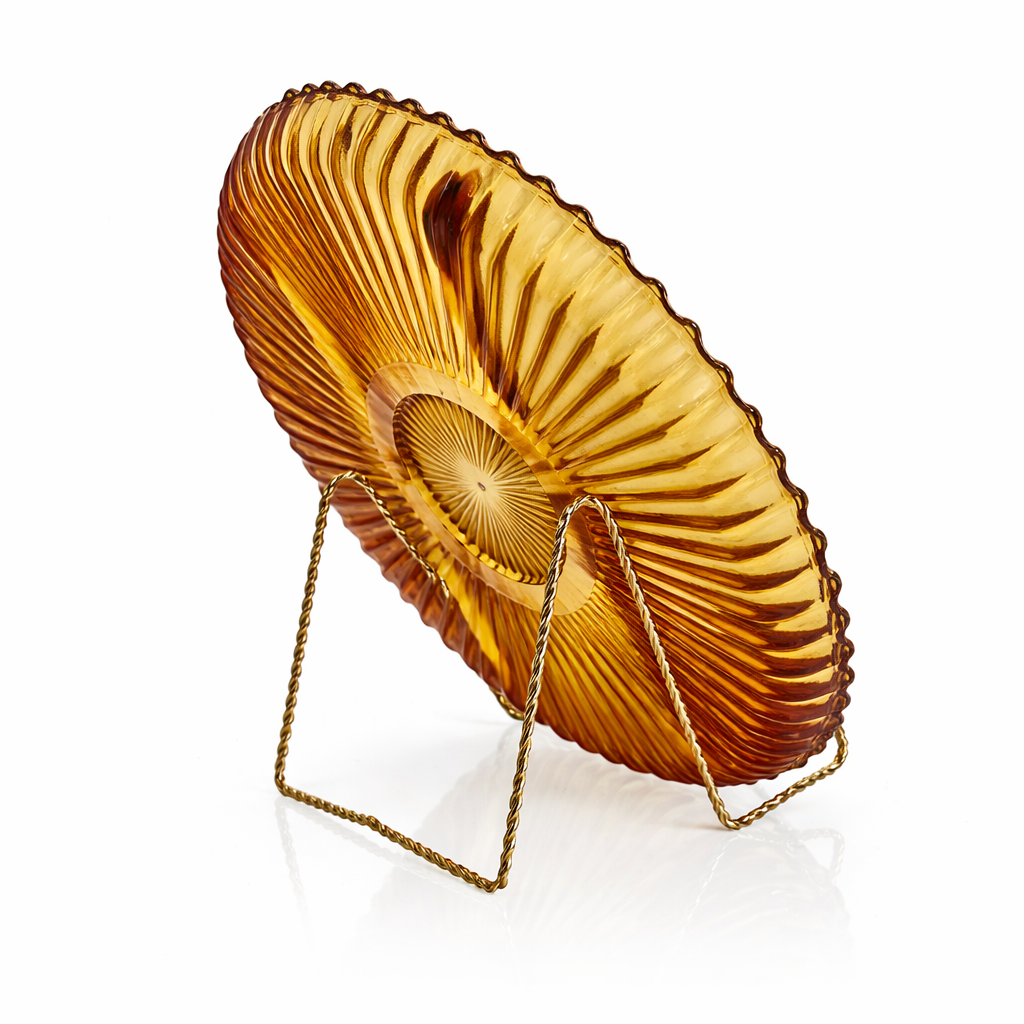 Image 5 of 9
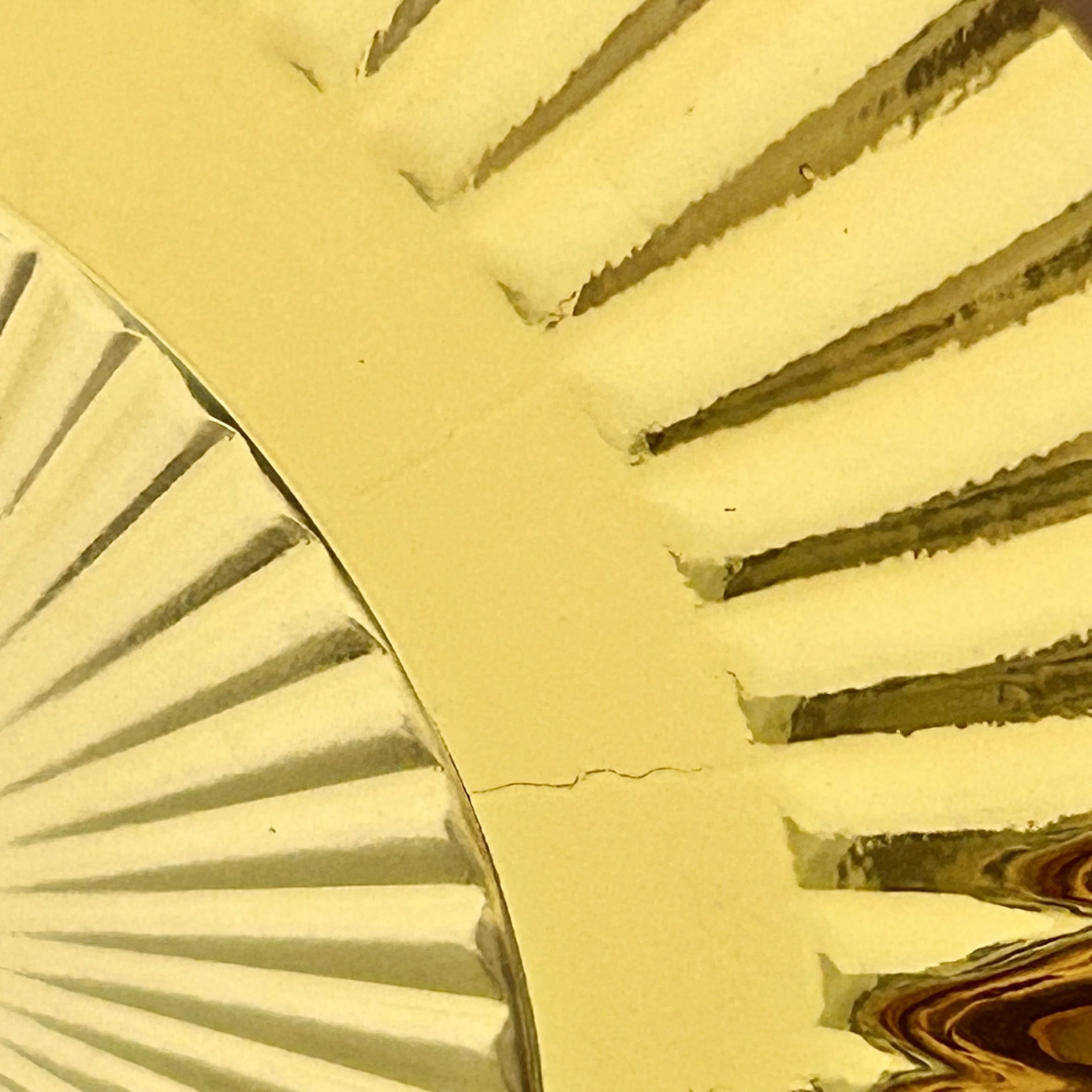 Image 6 of 9
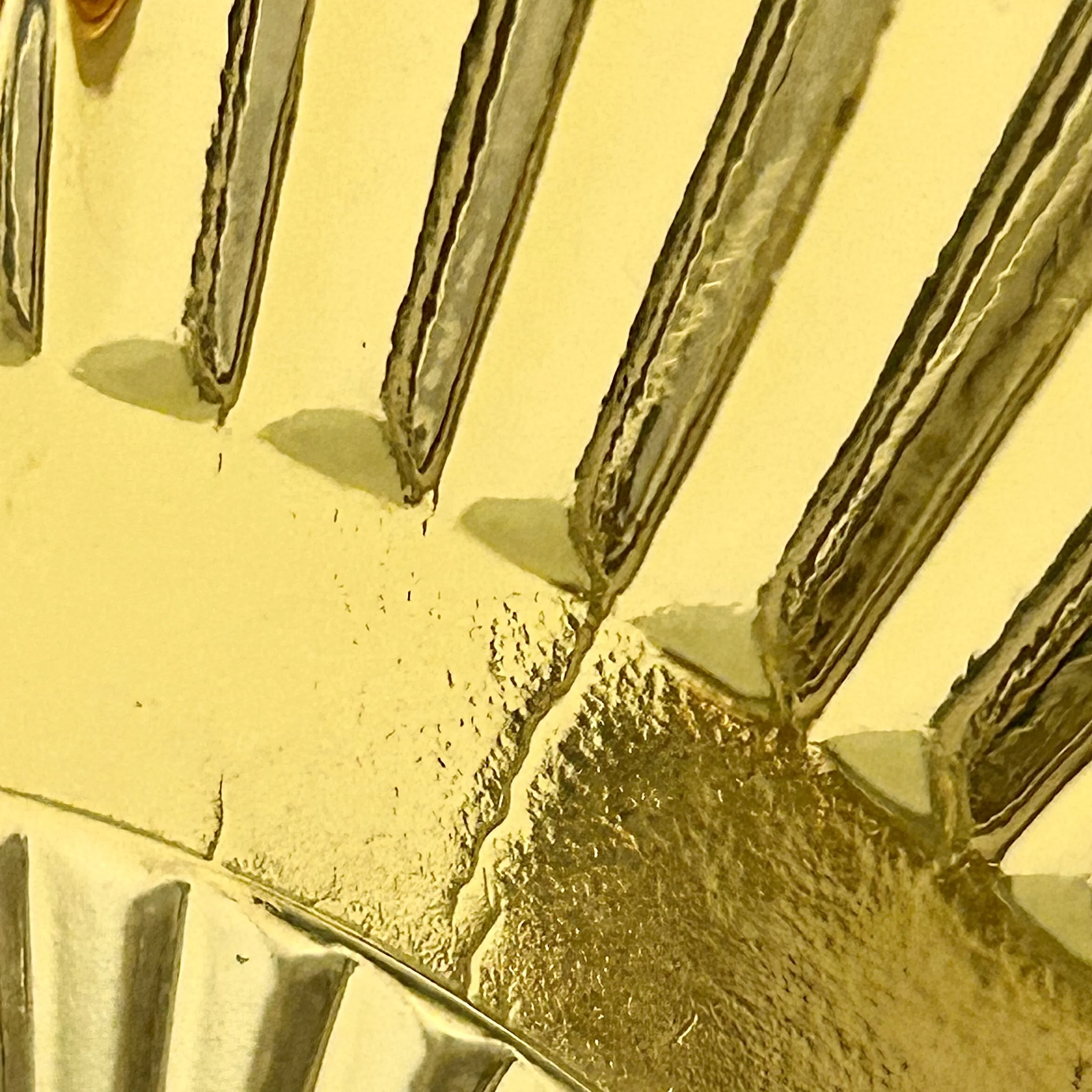 Image 7 of 9
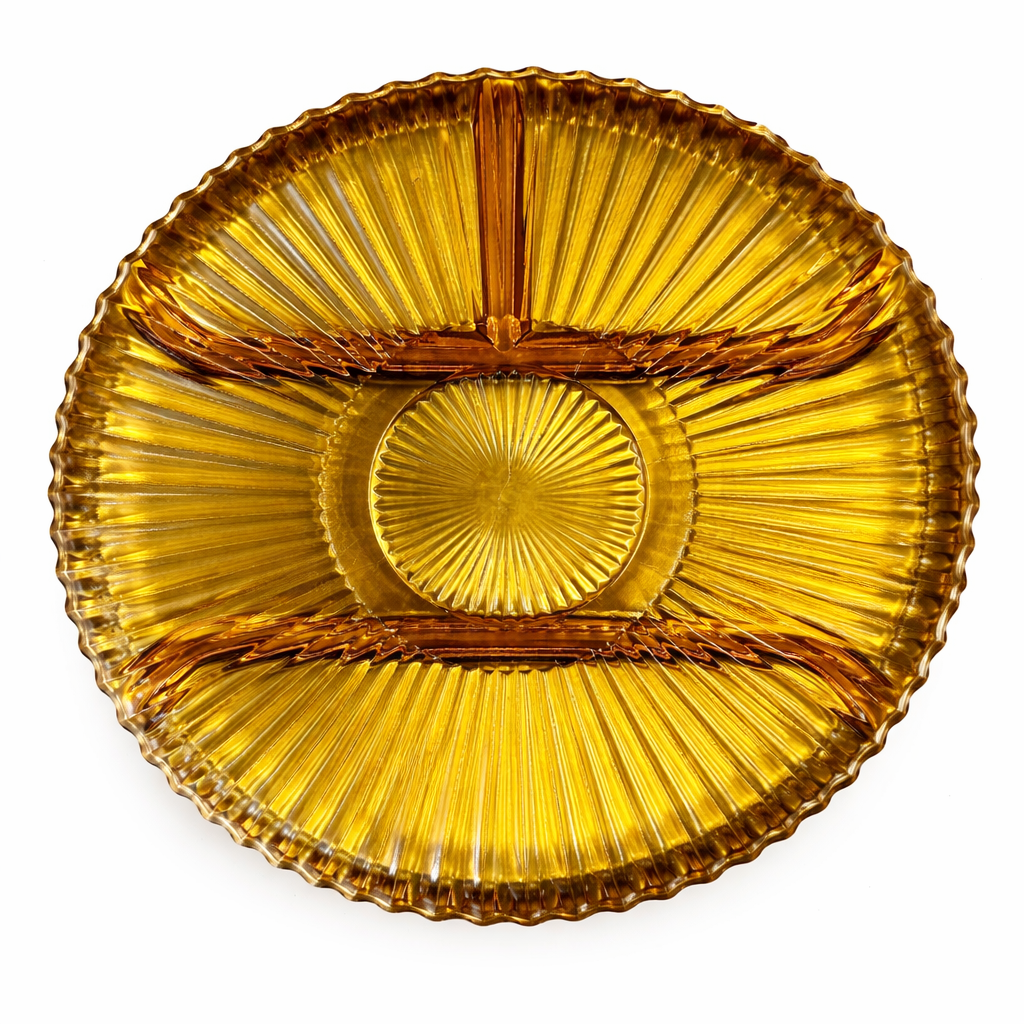 Image 8 of 9
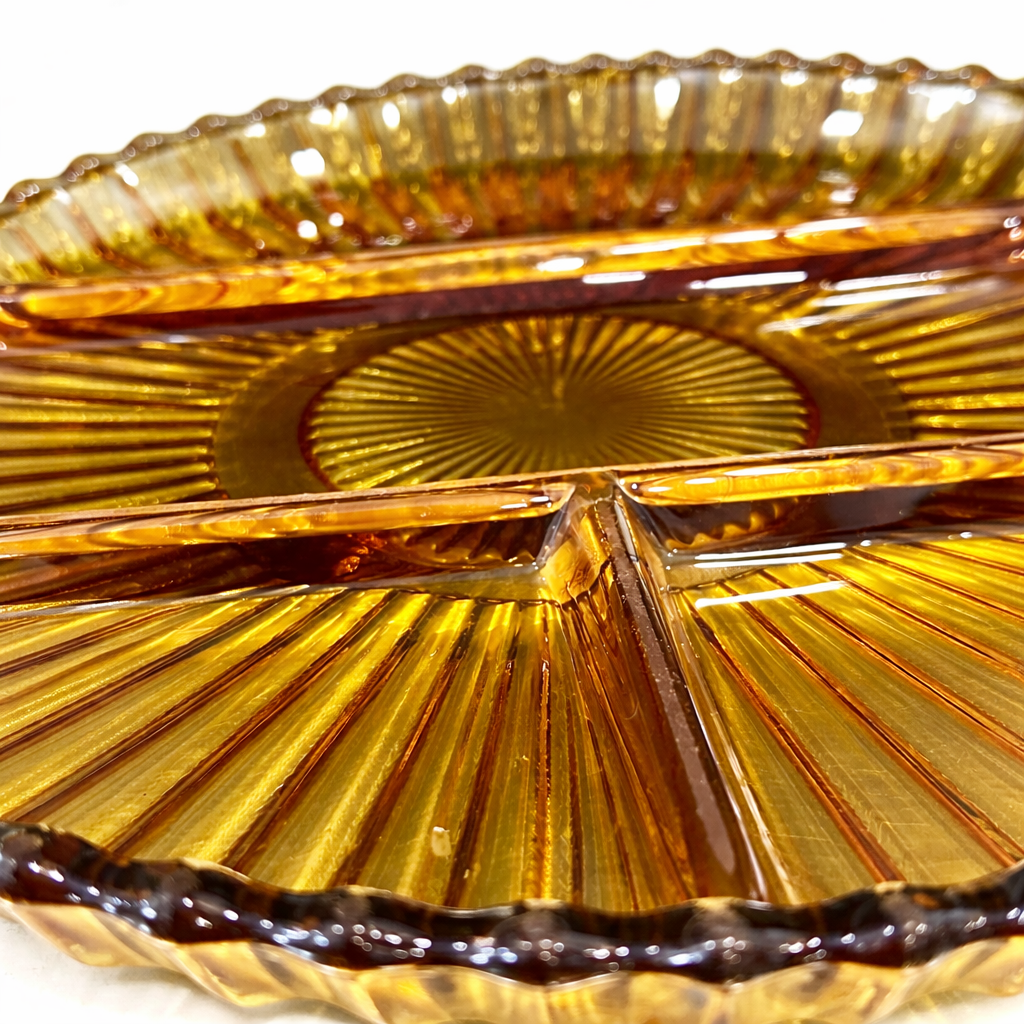 Image 9 of 9