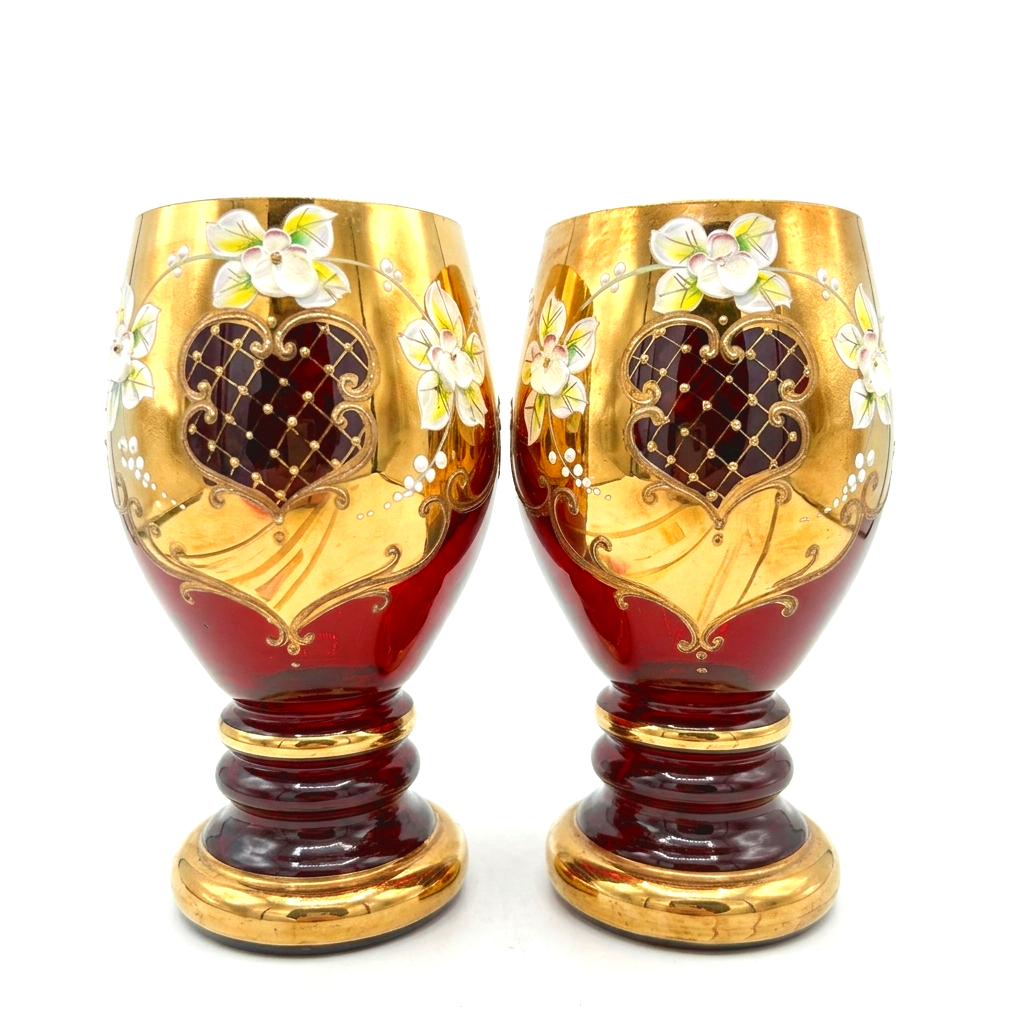
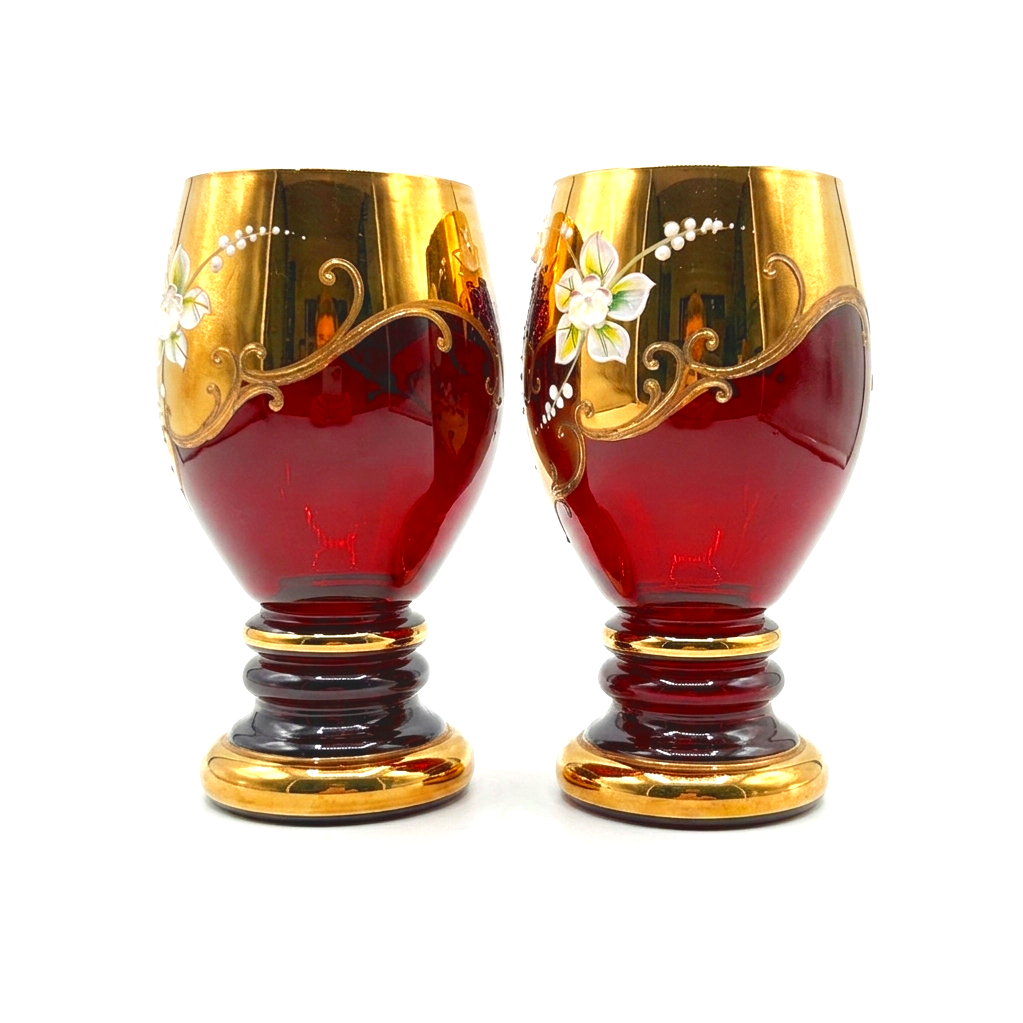
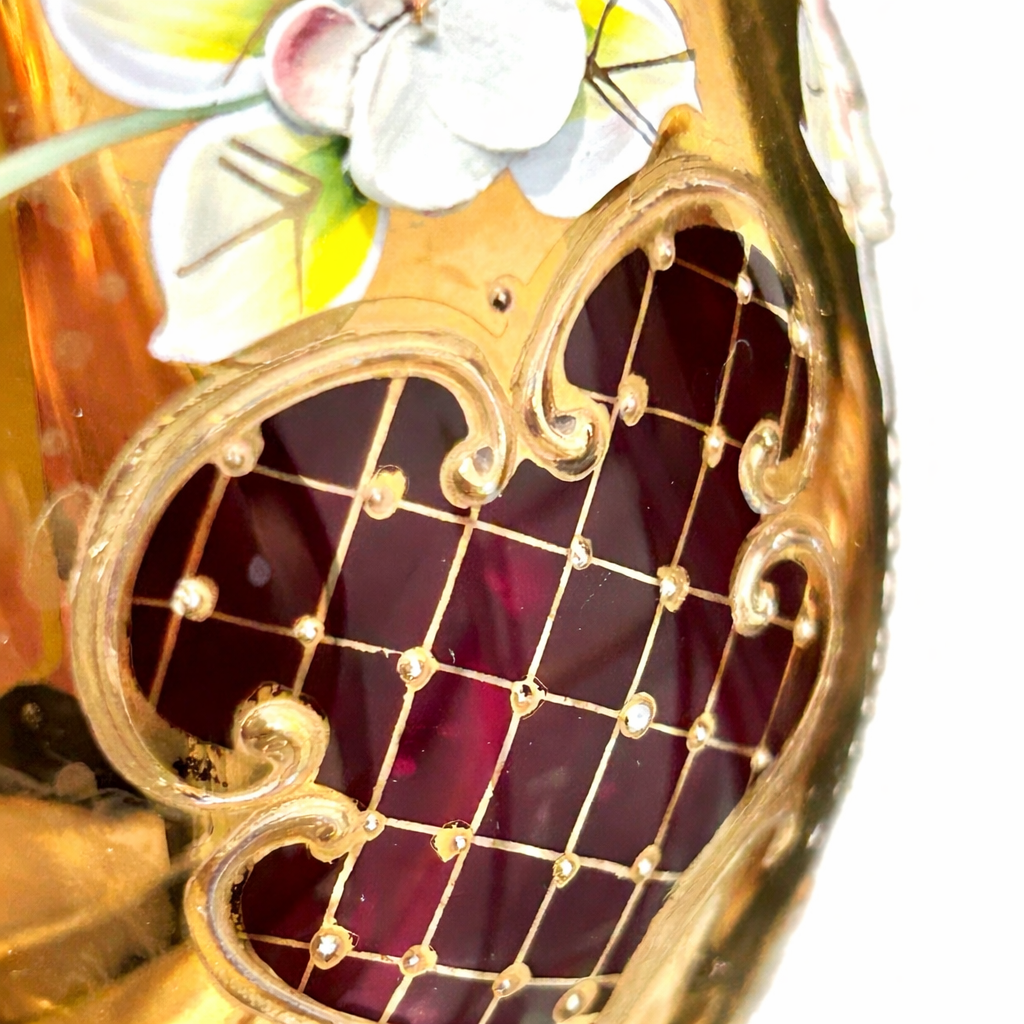
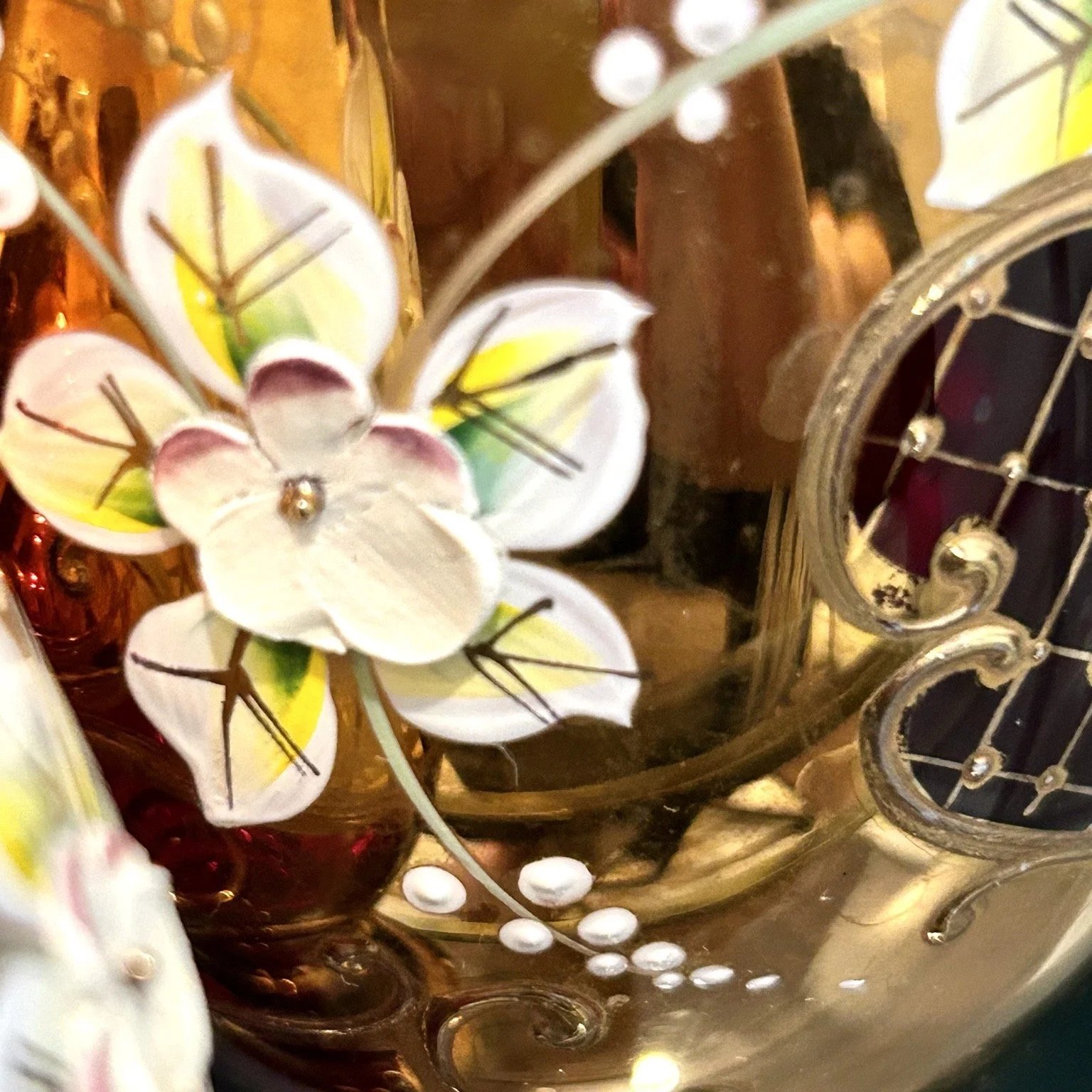
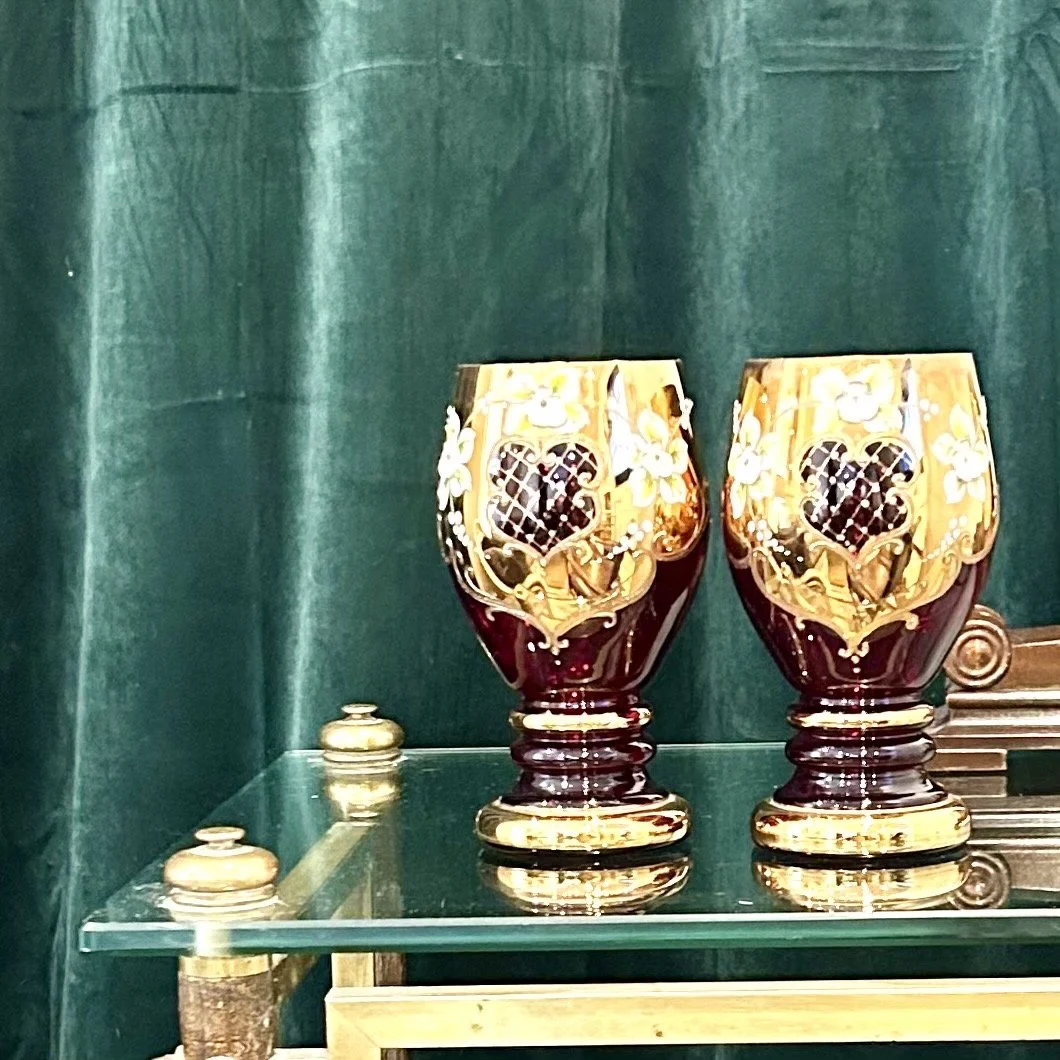
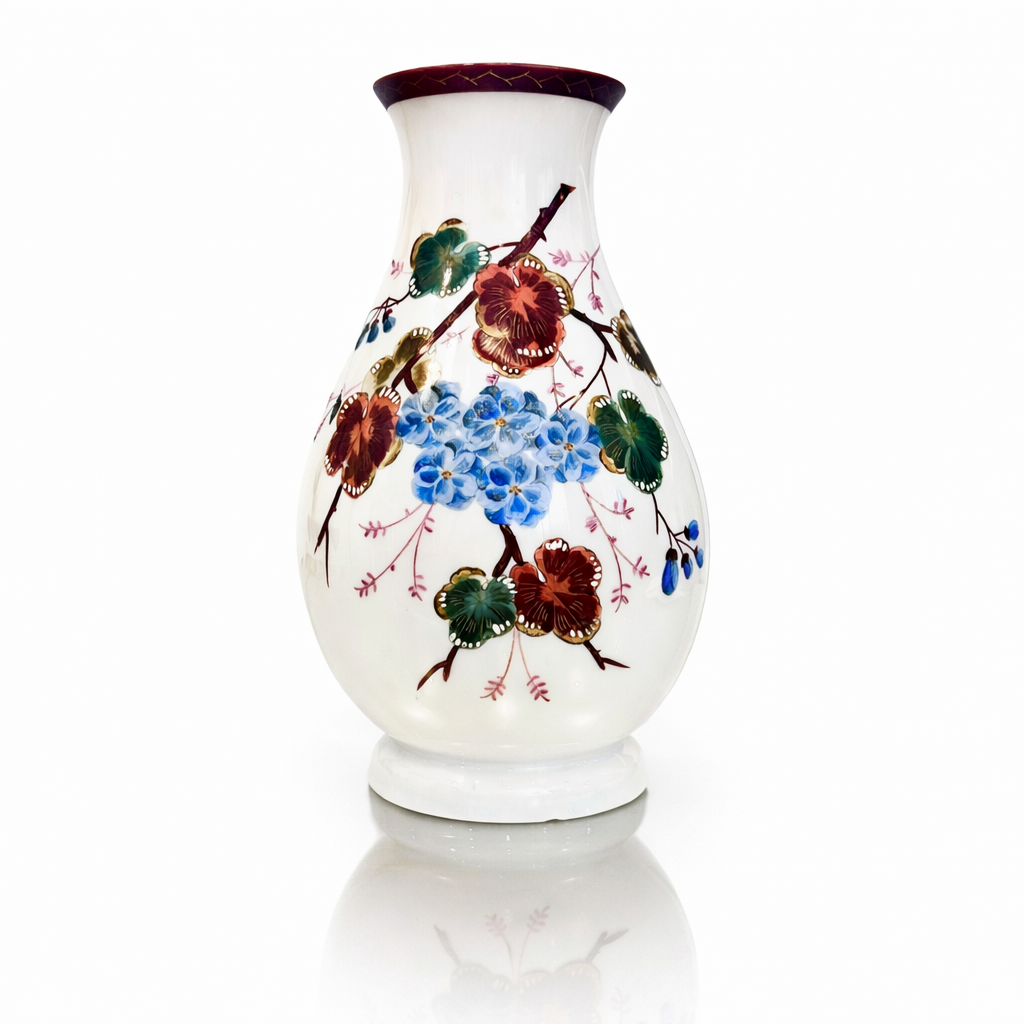
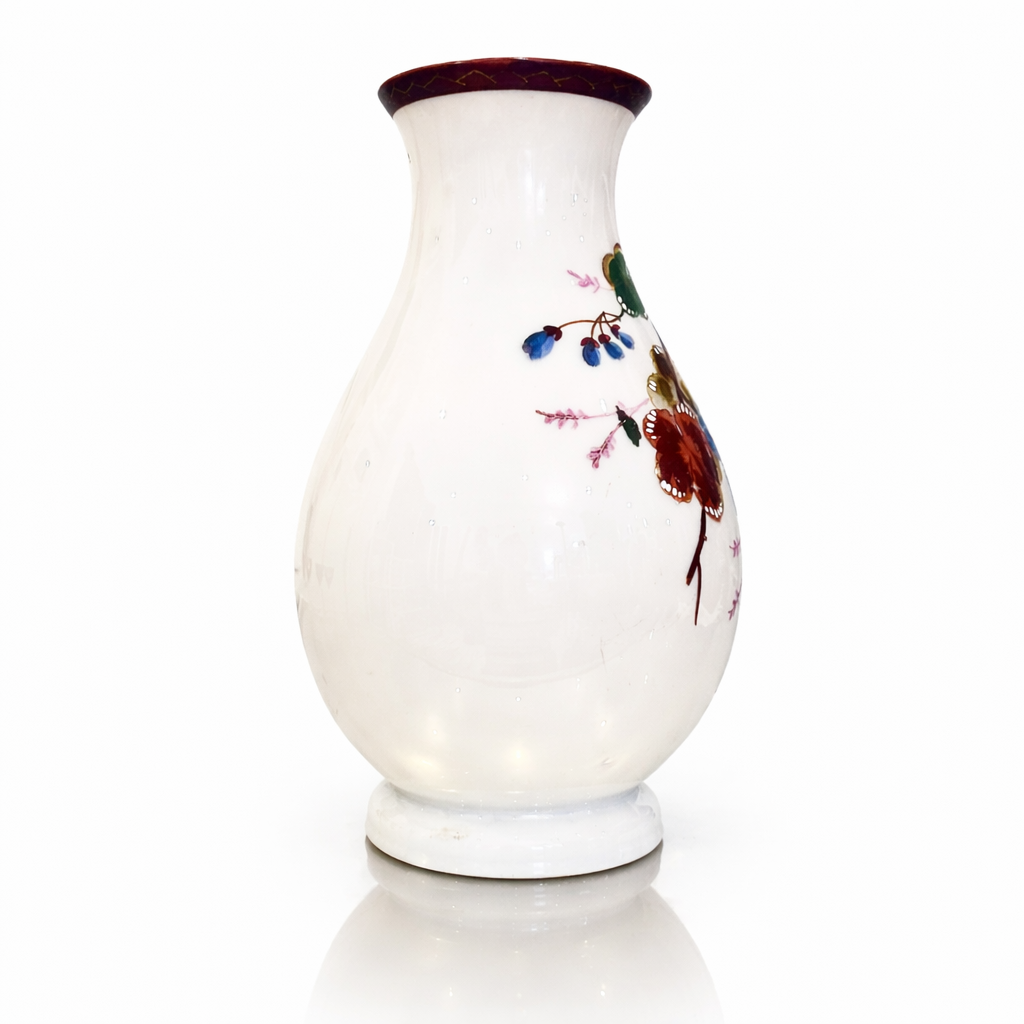
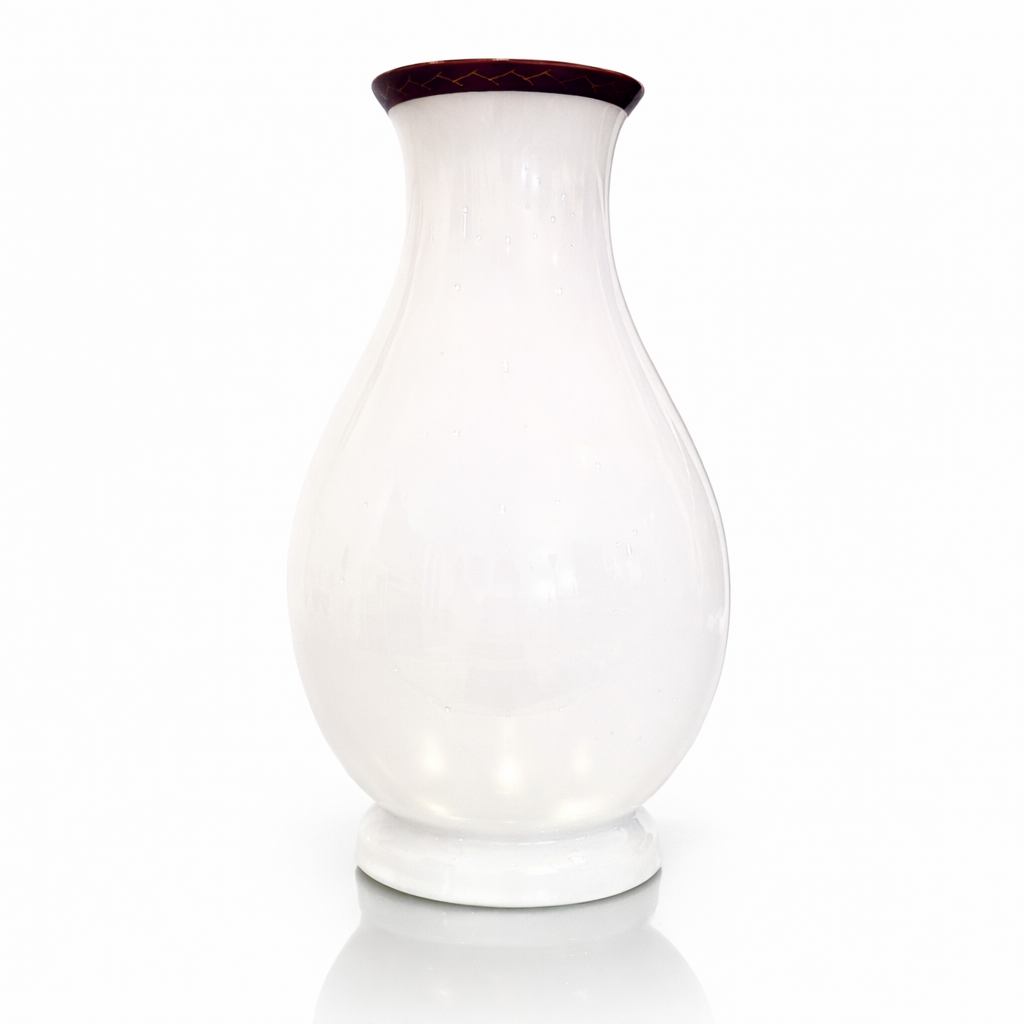
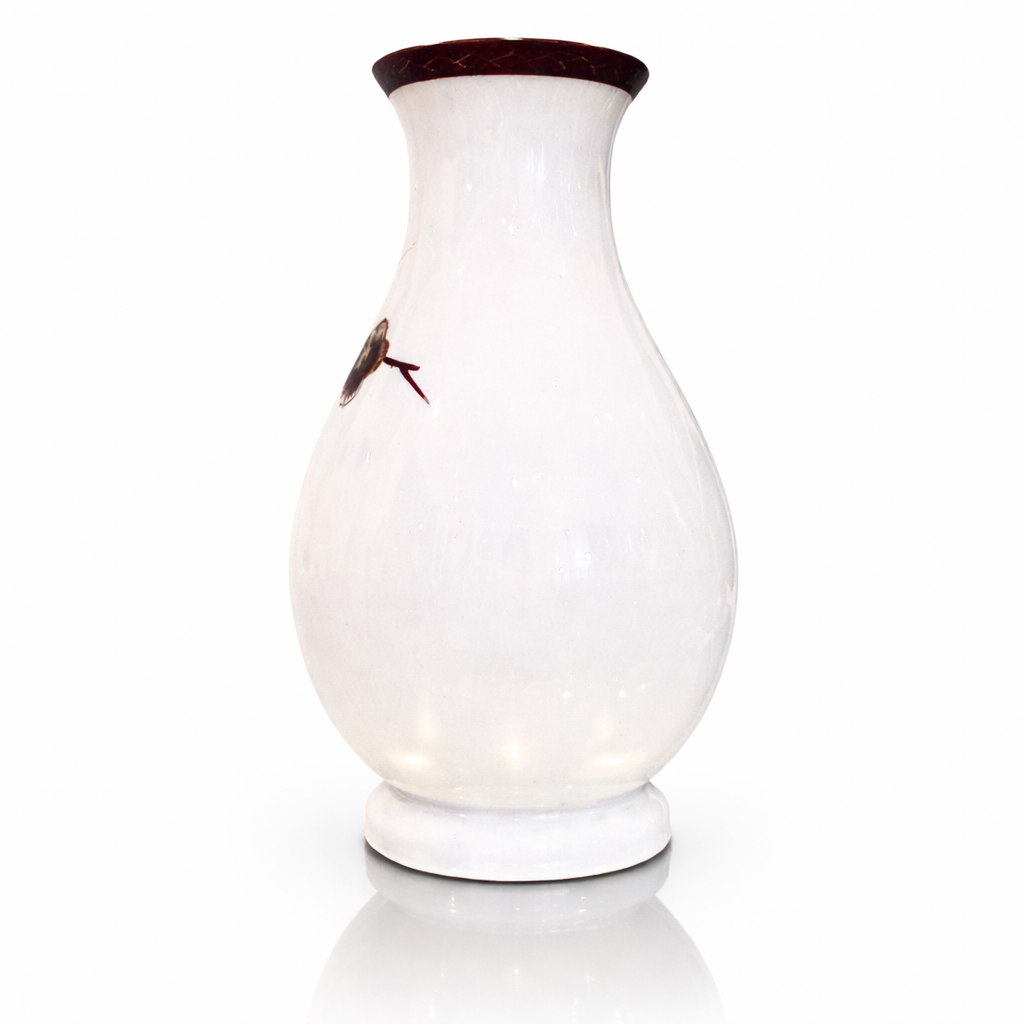
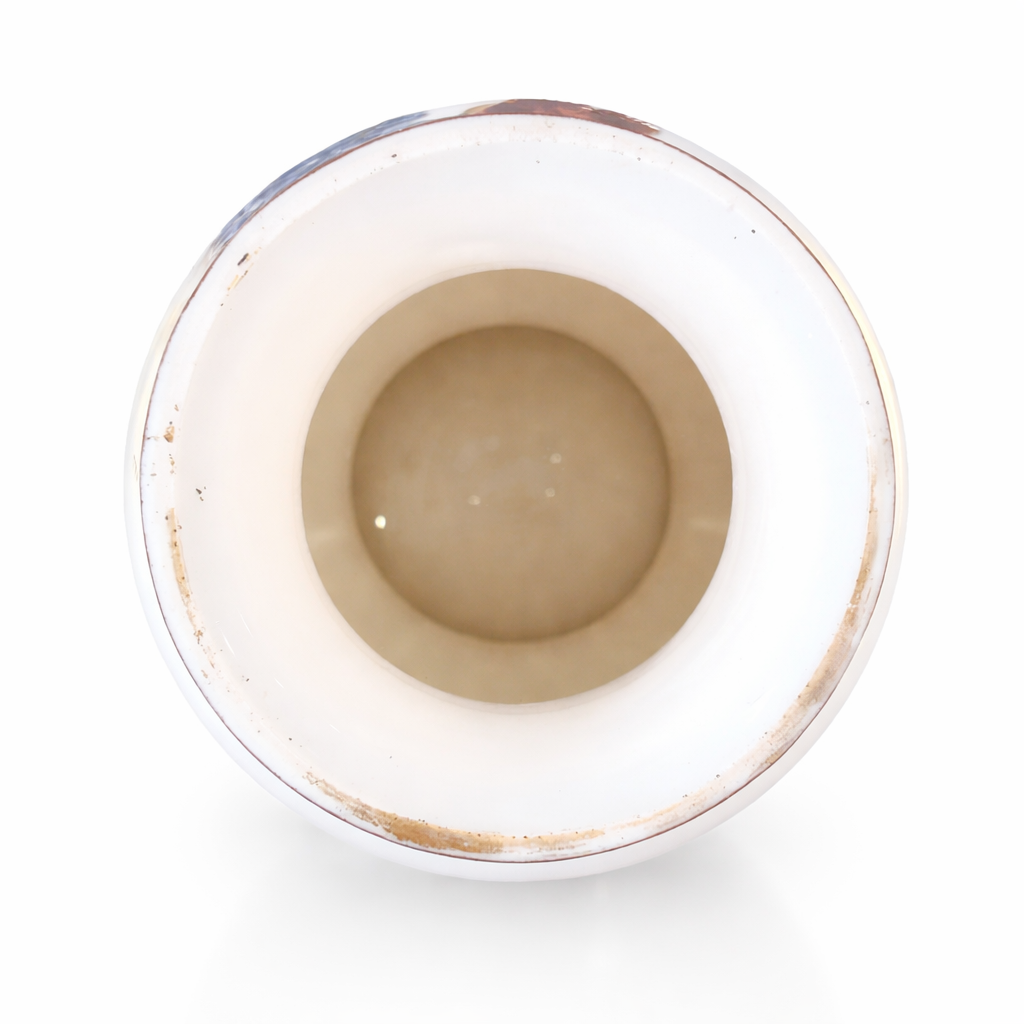
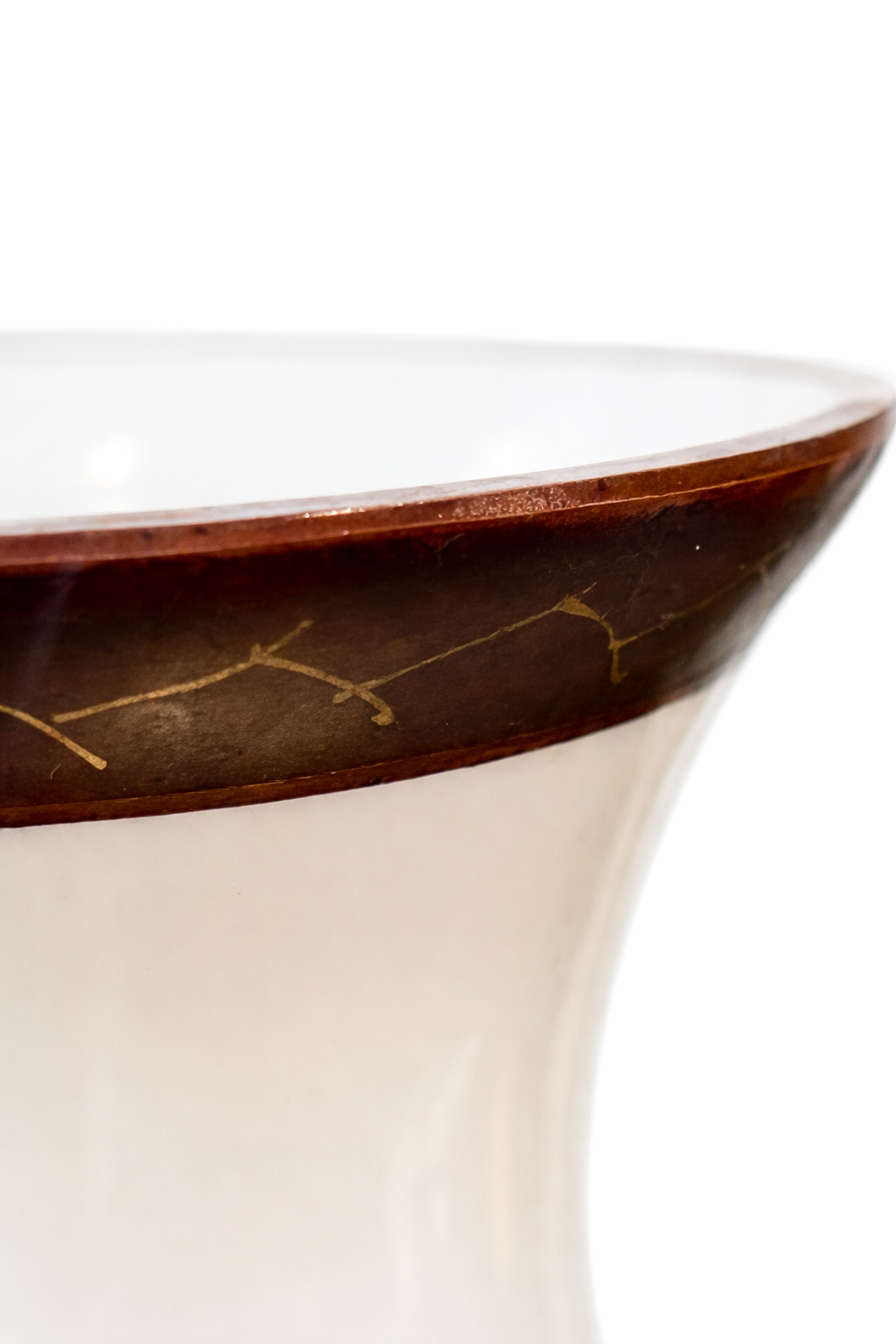
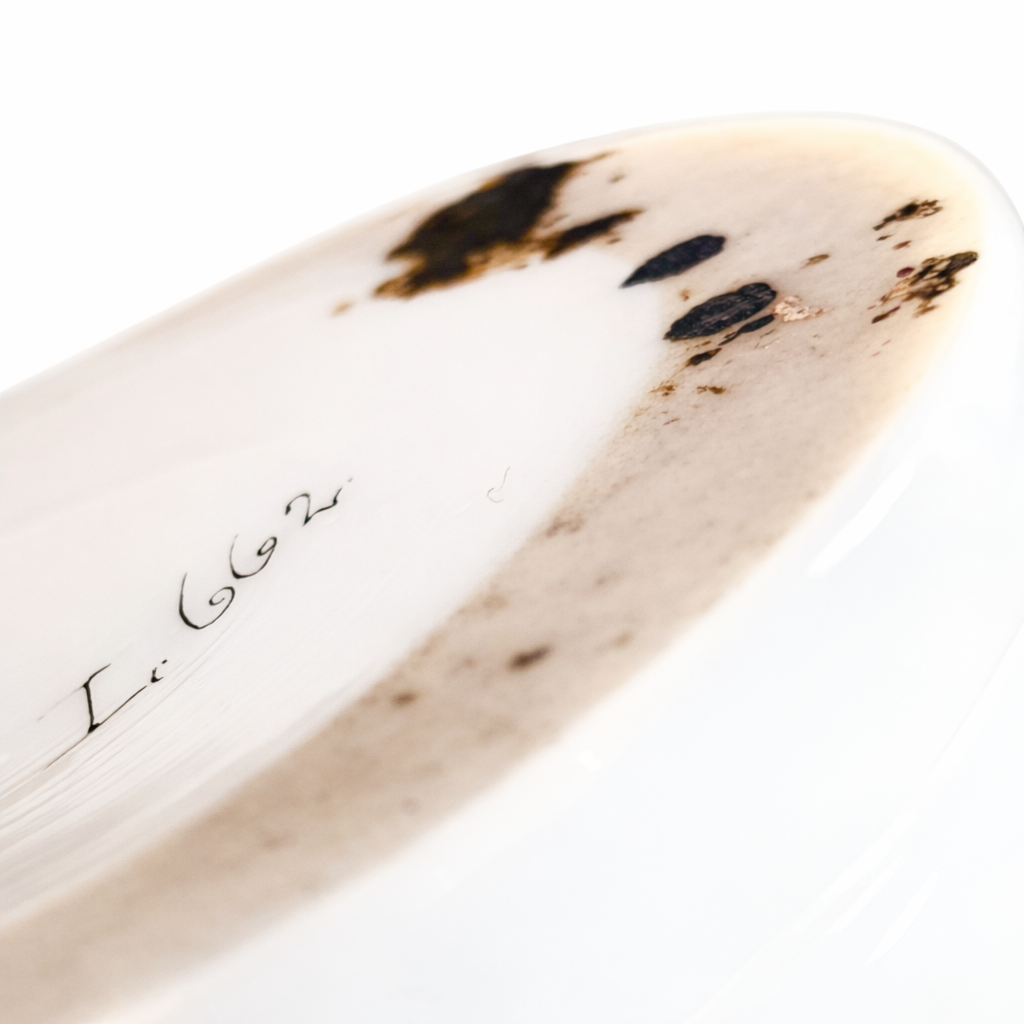
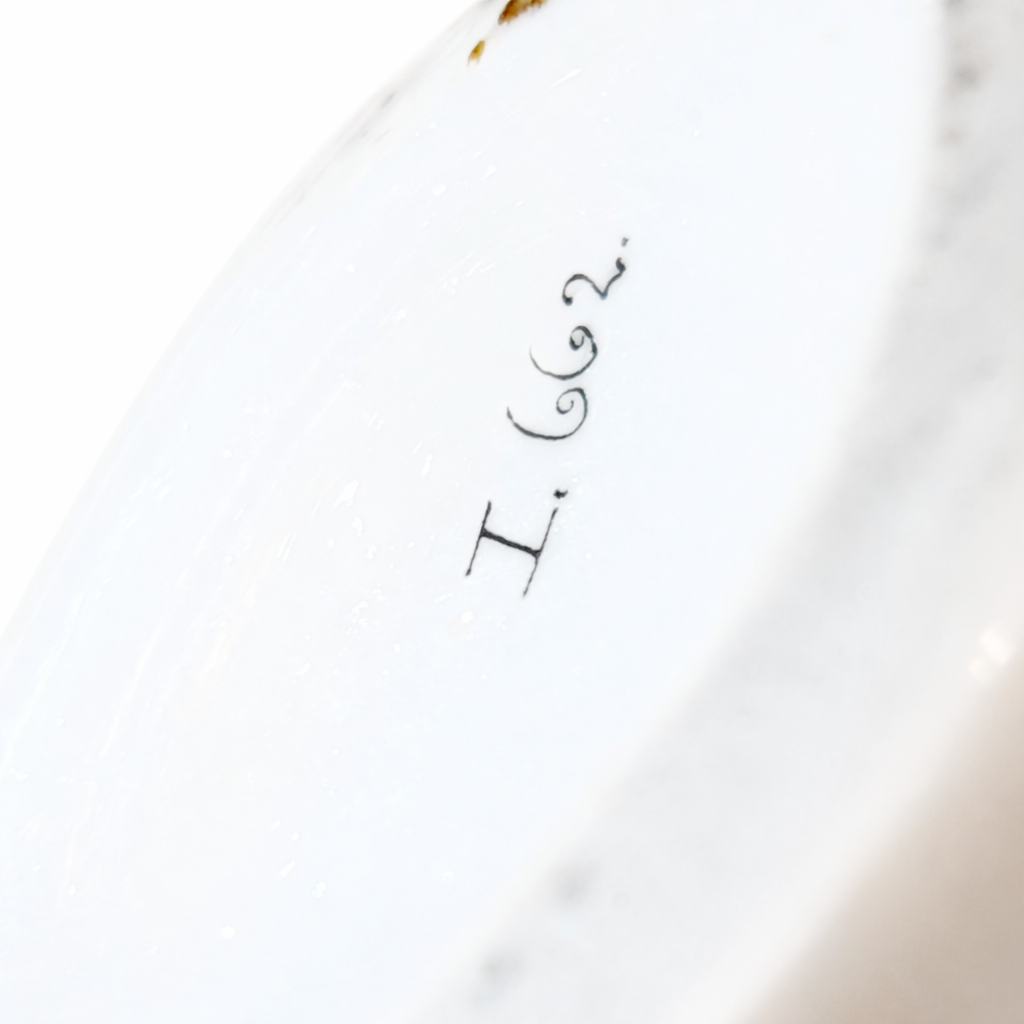
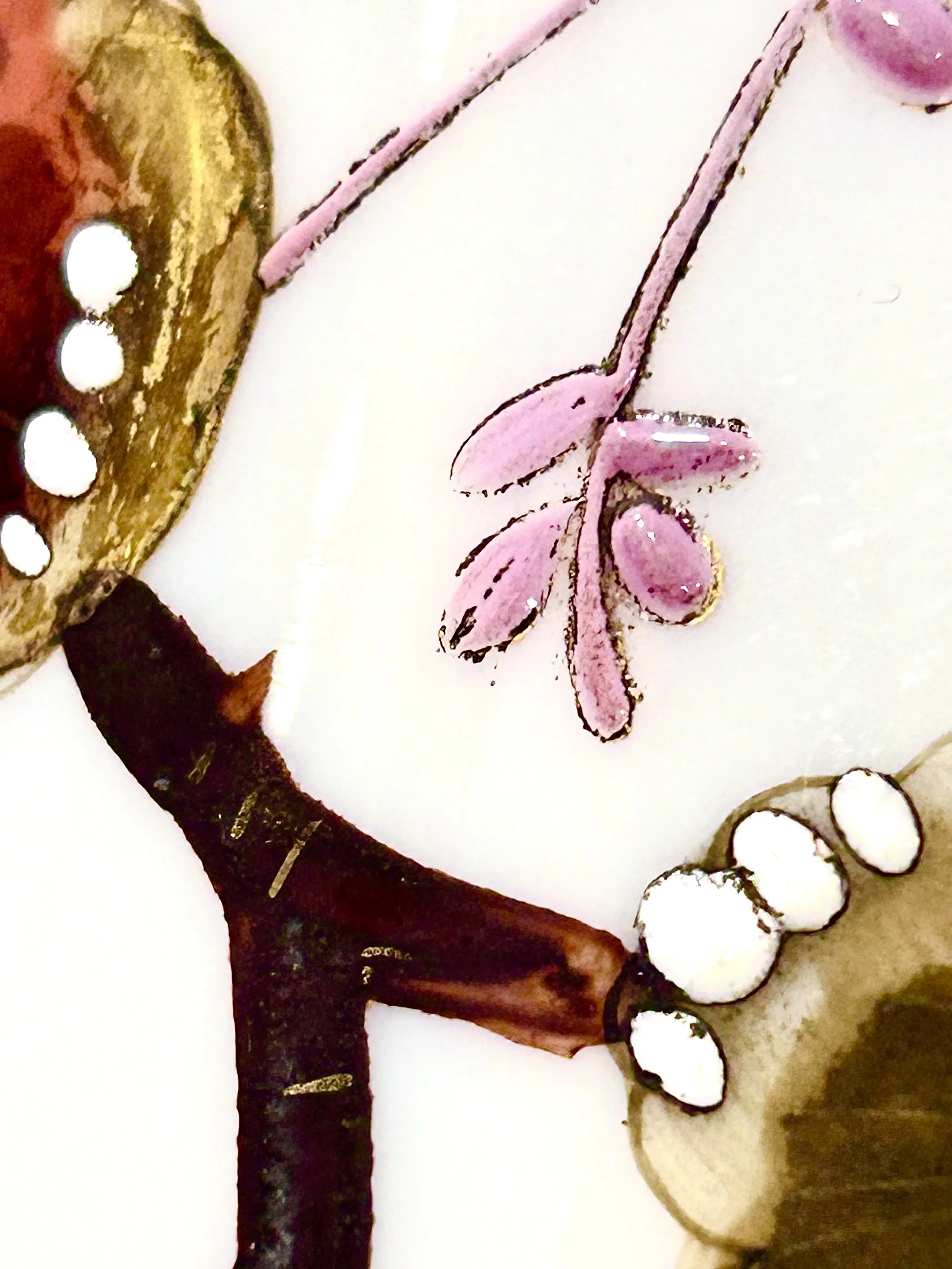
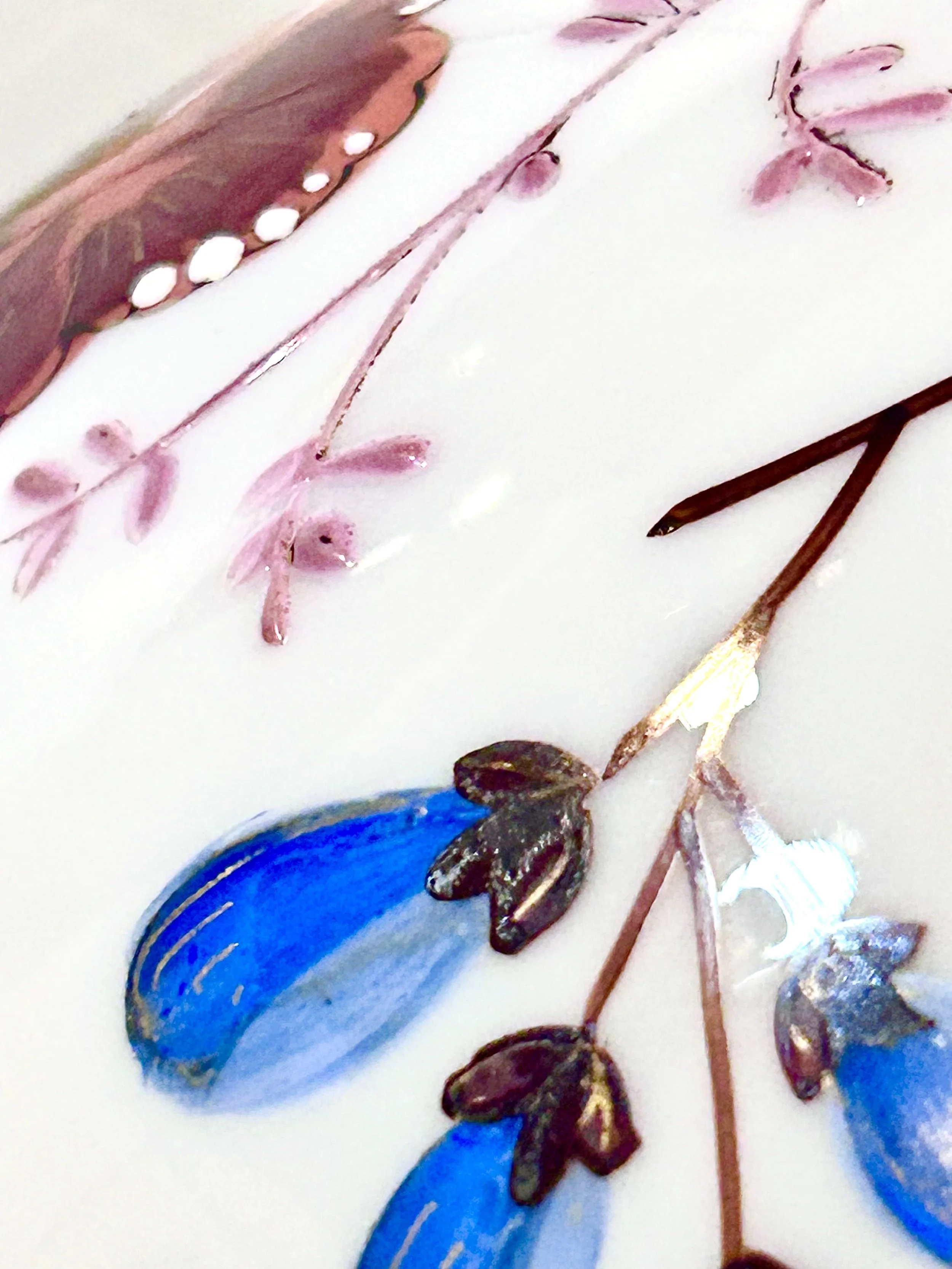
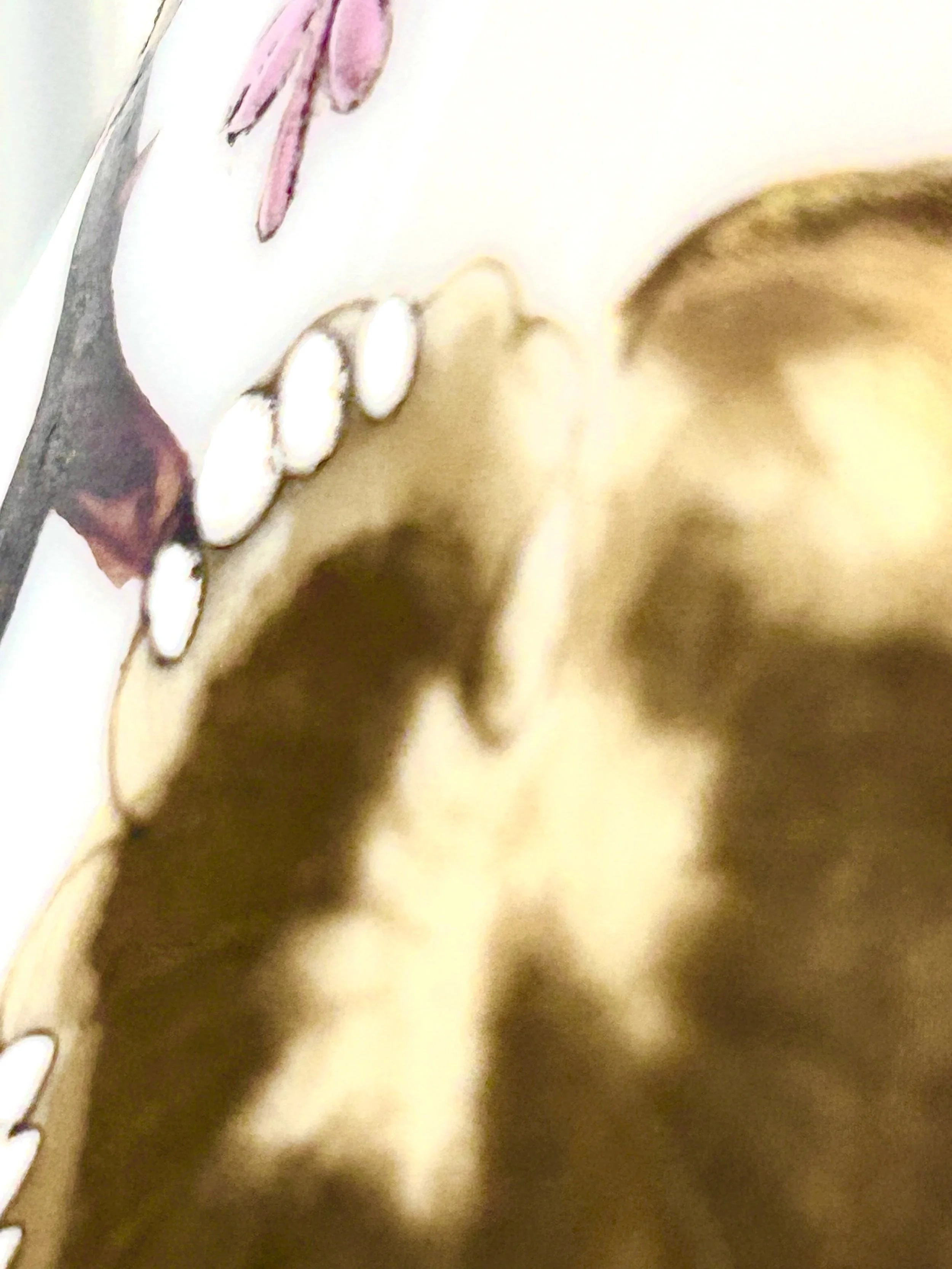
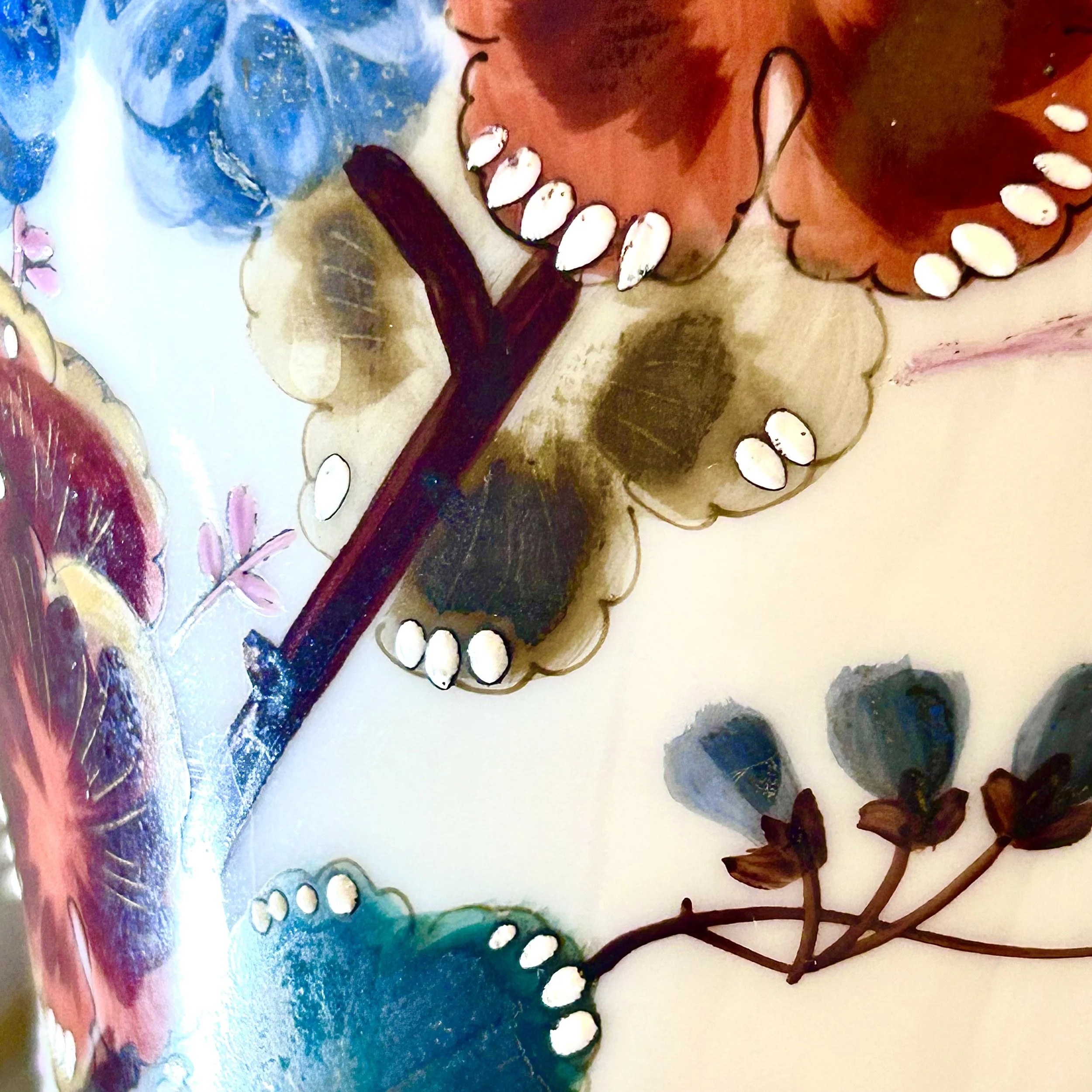
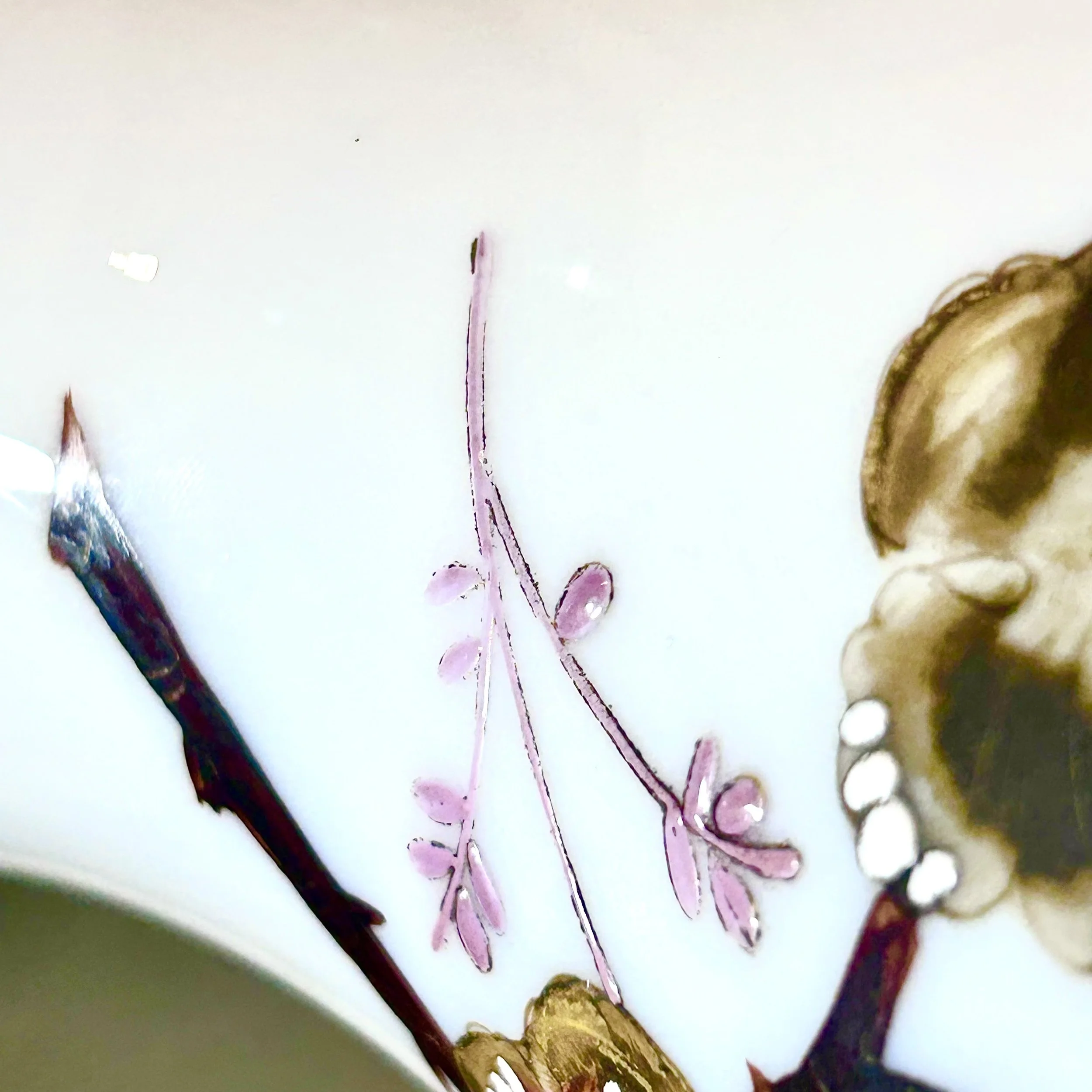
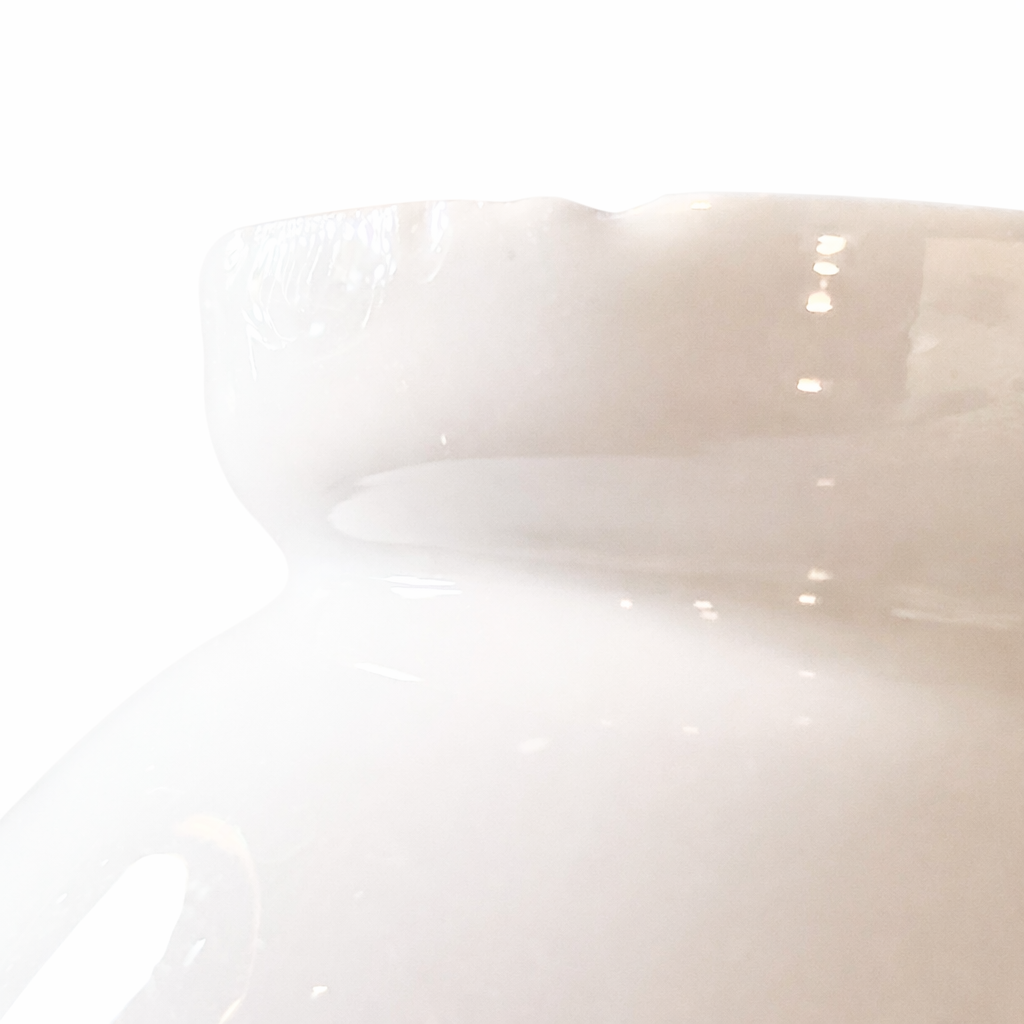
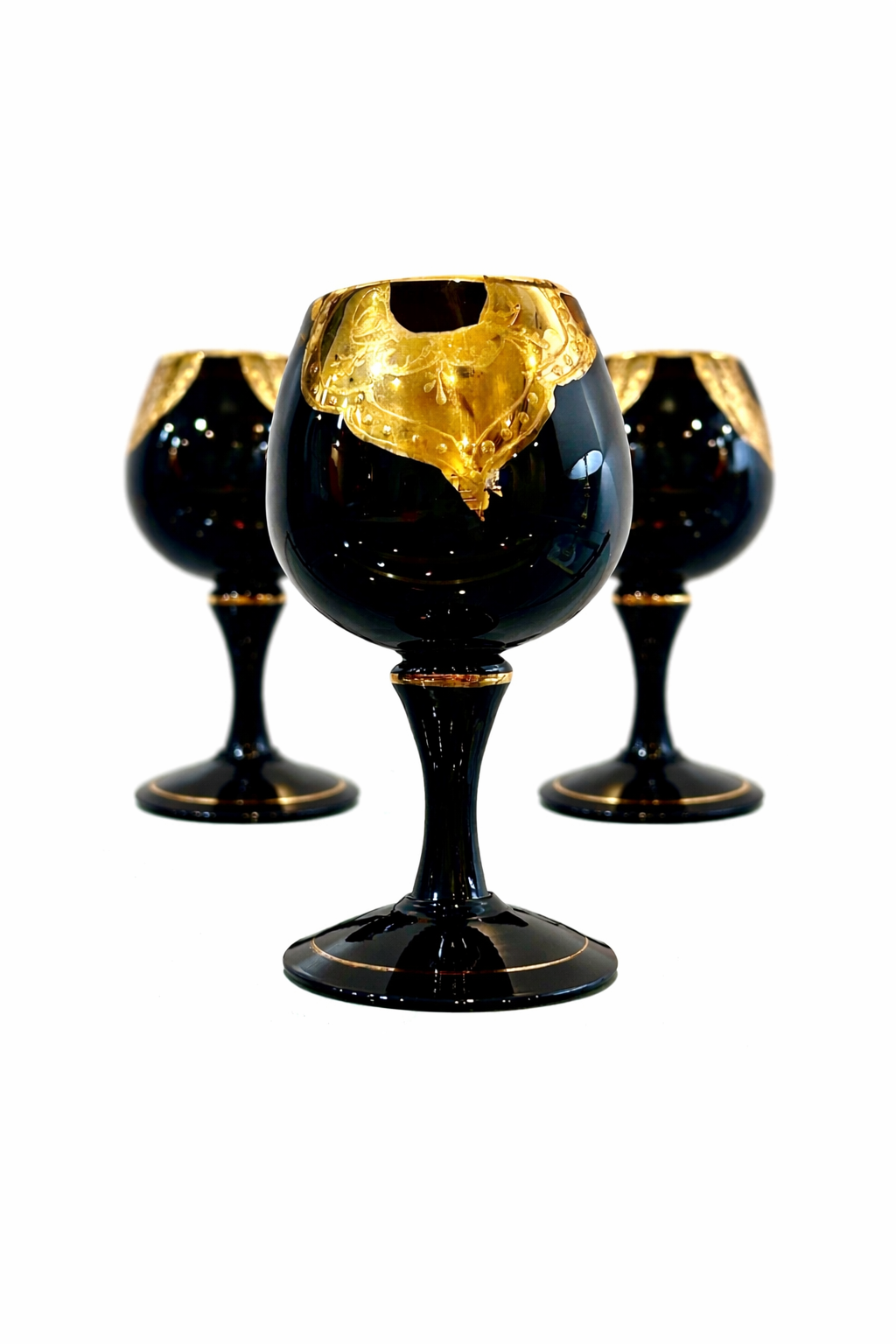
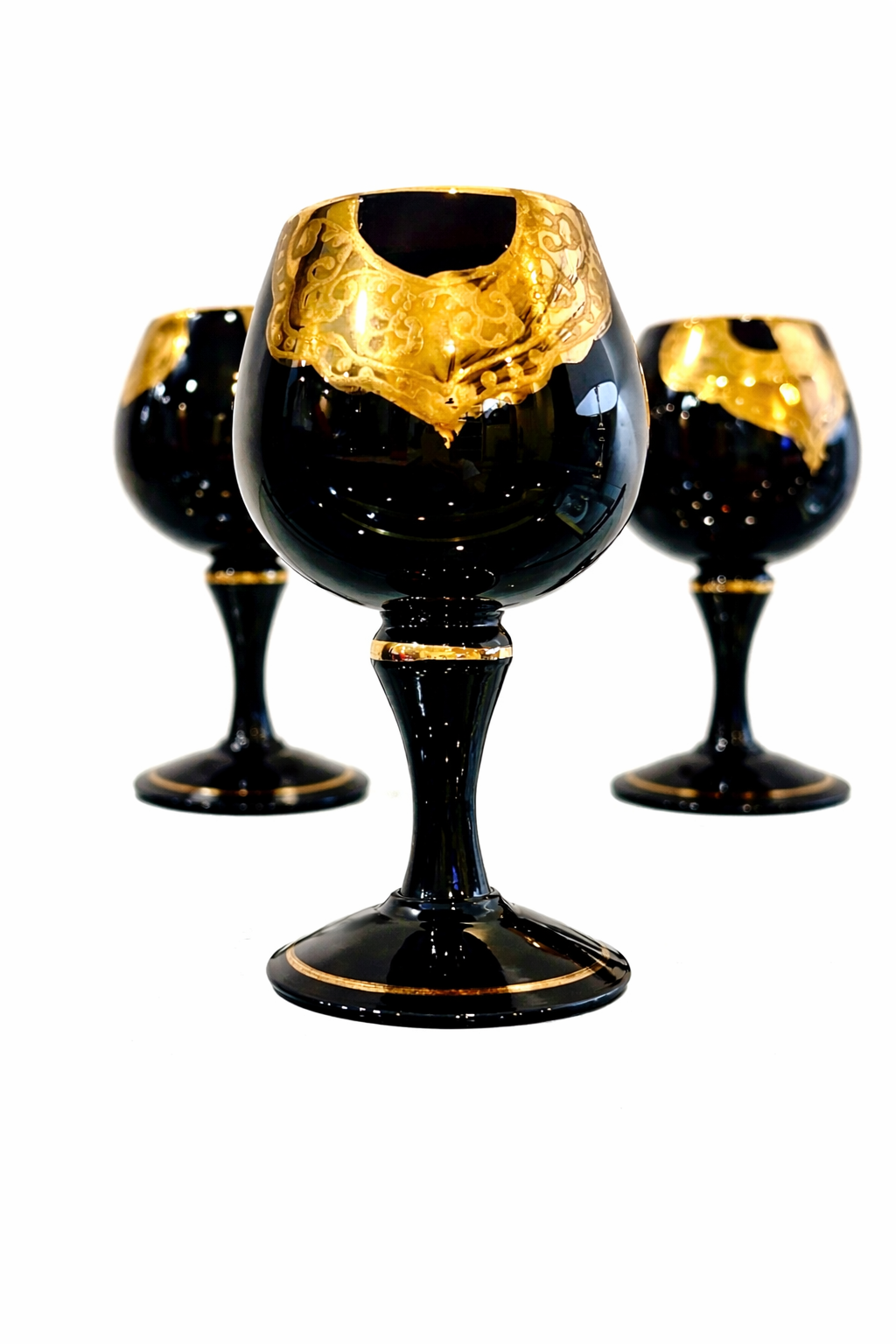
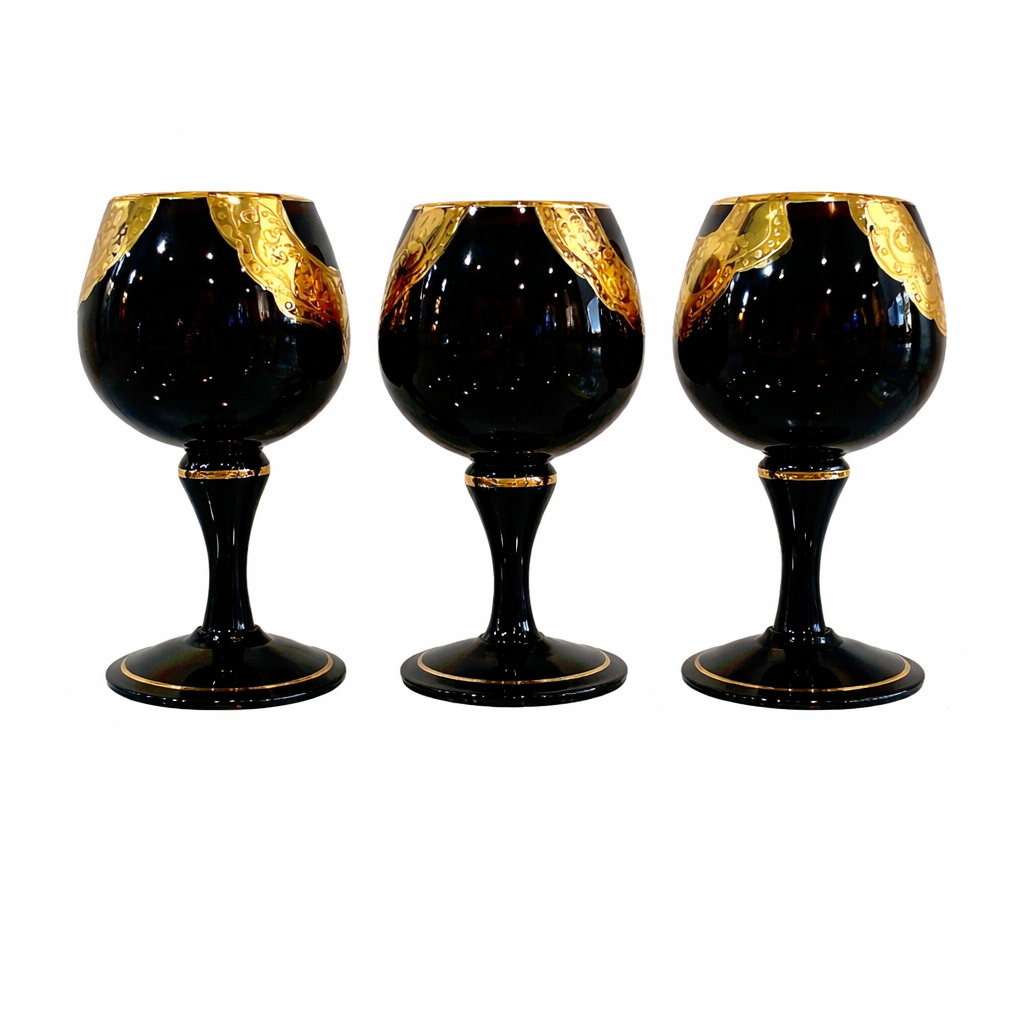
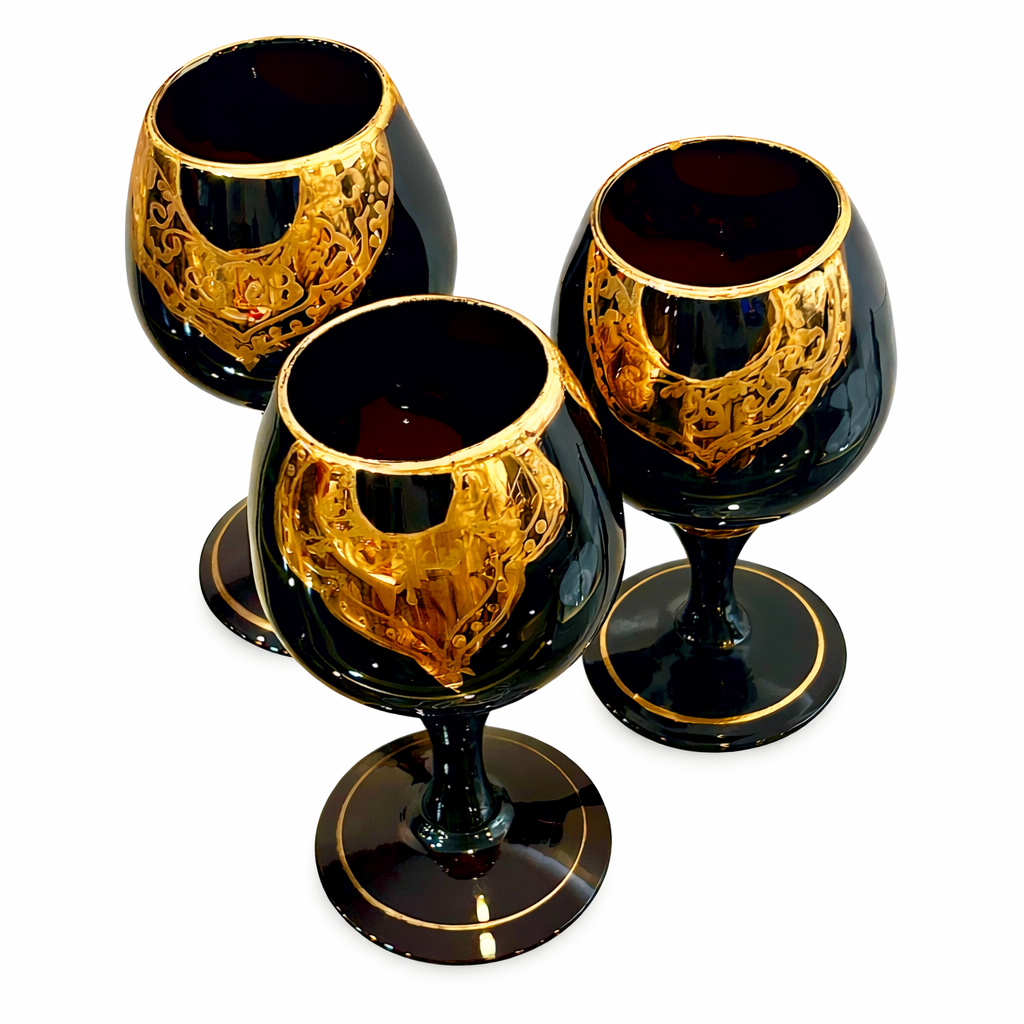
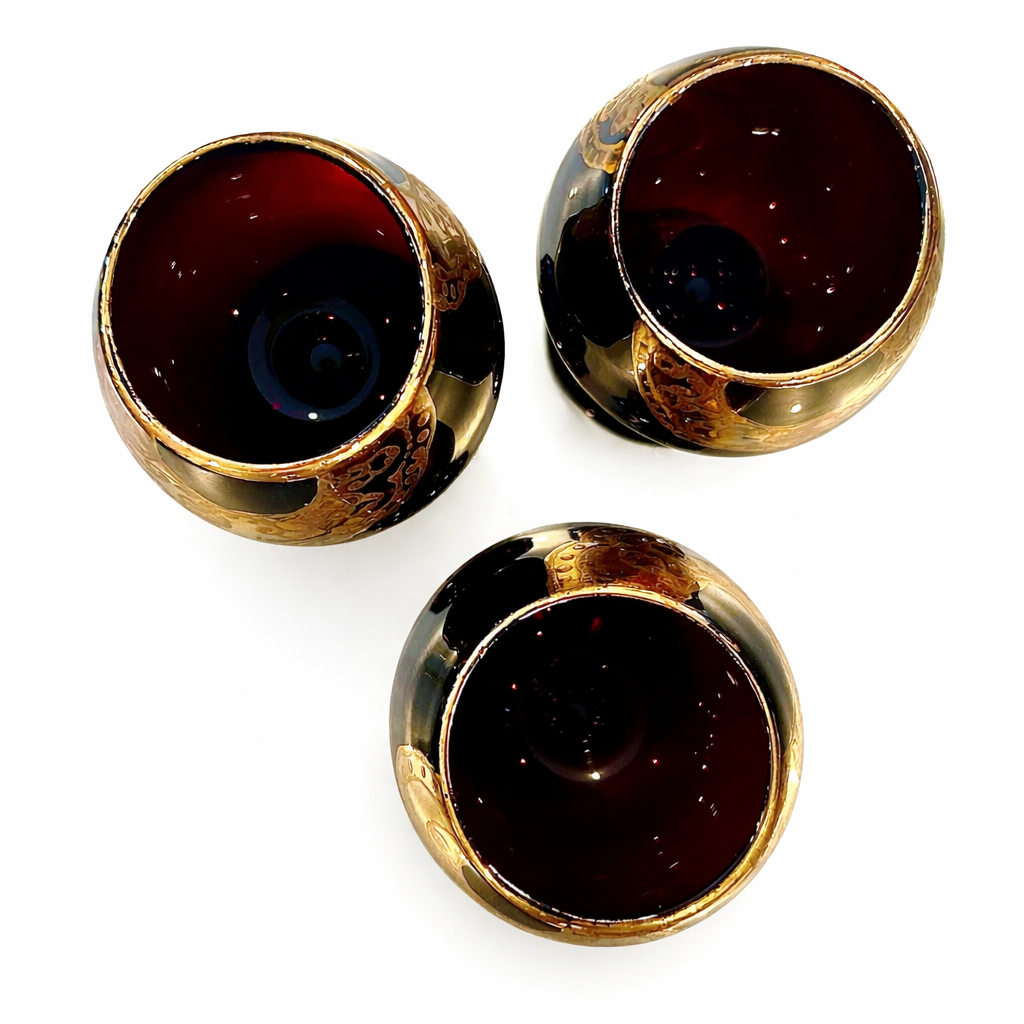
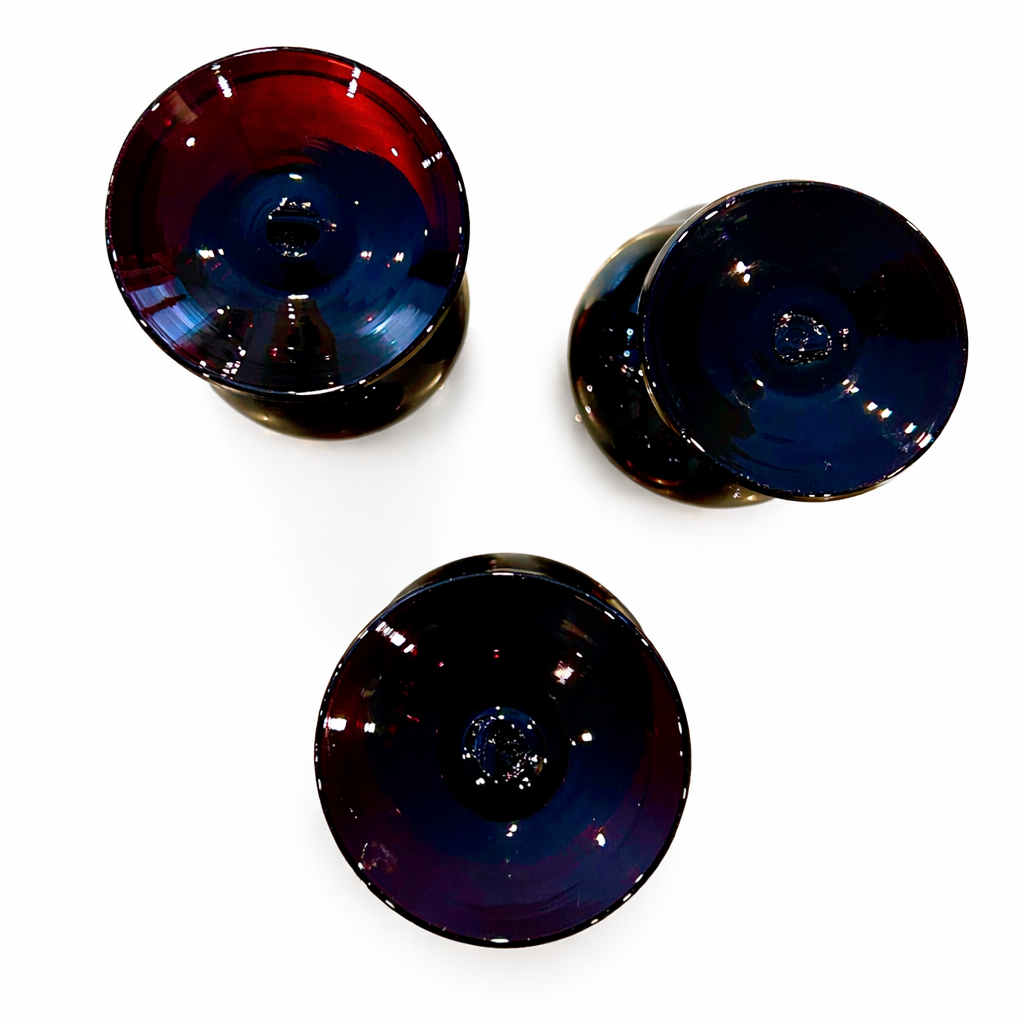
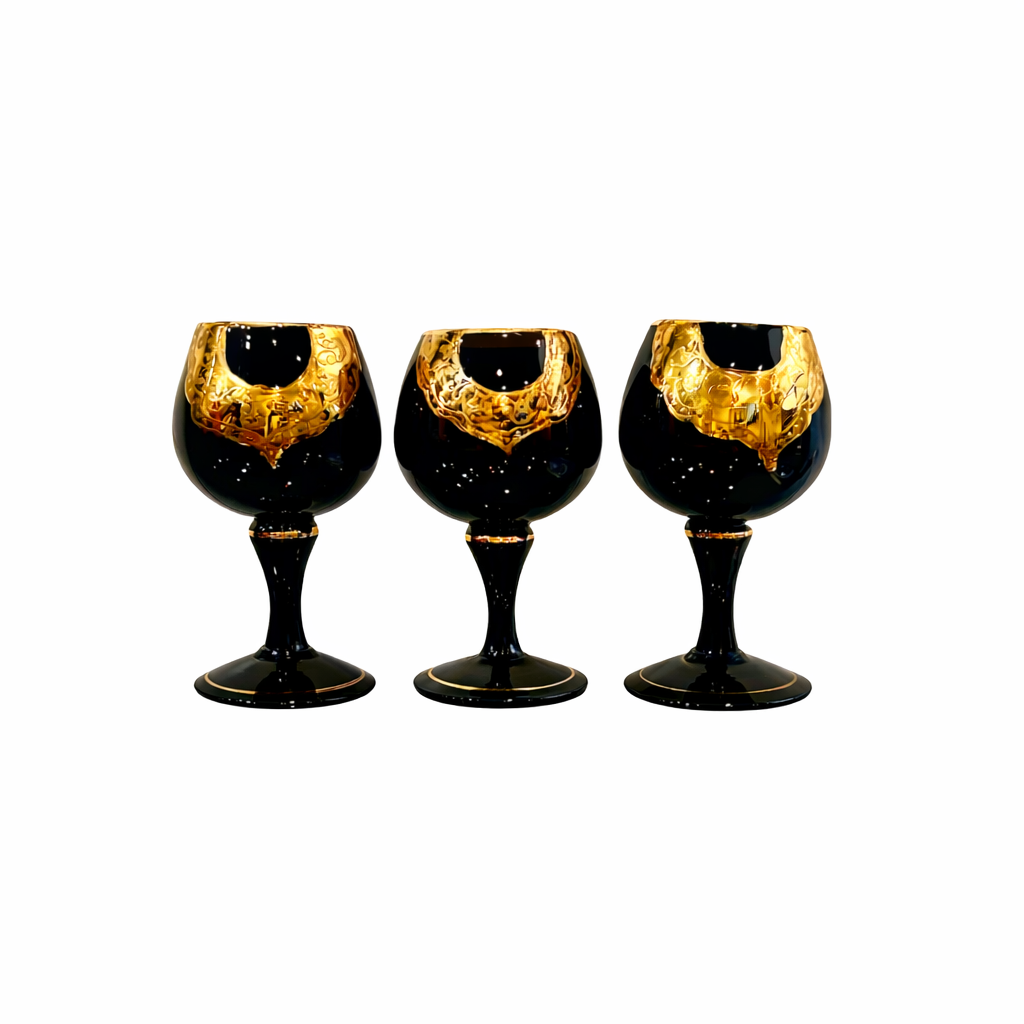
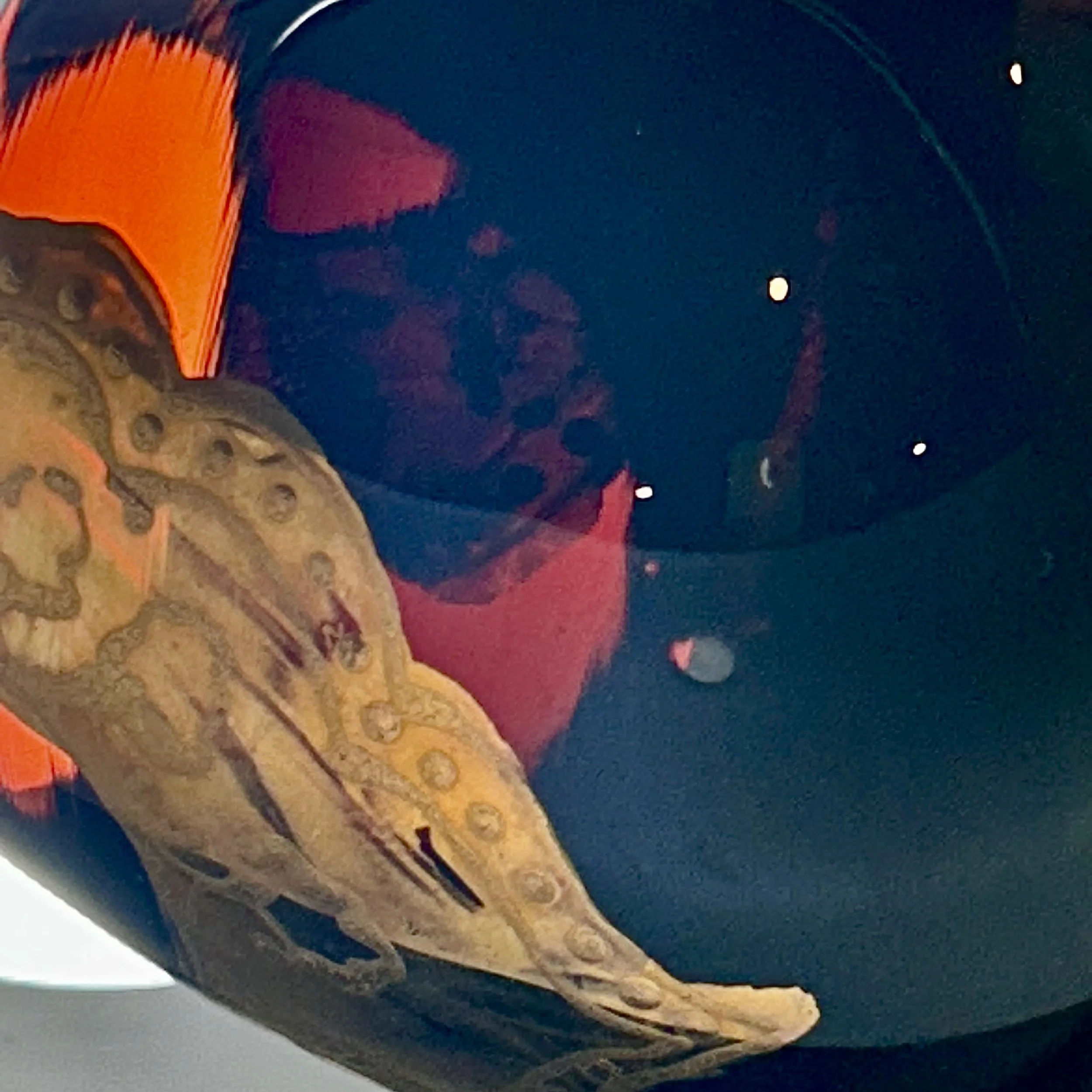
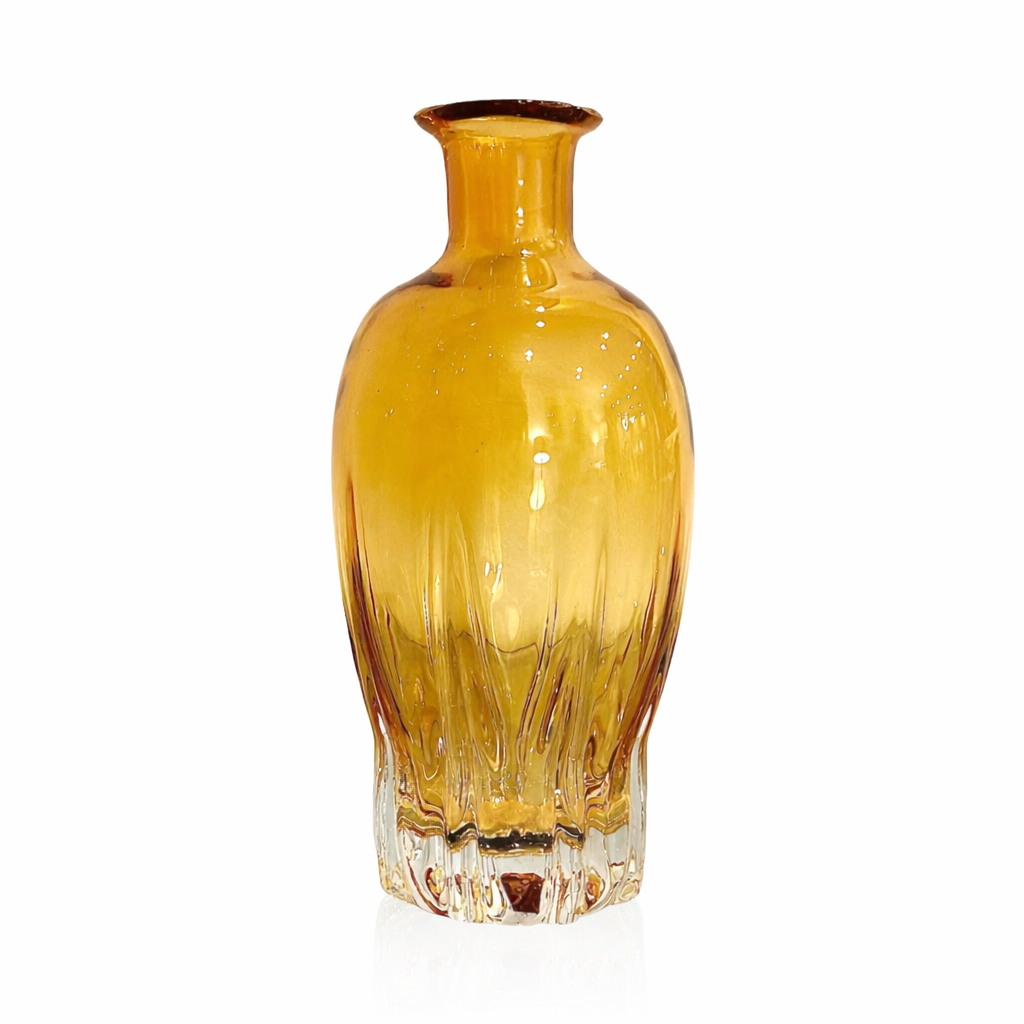
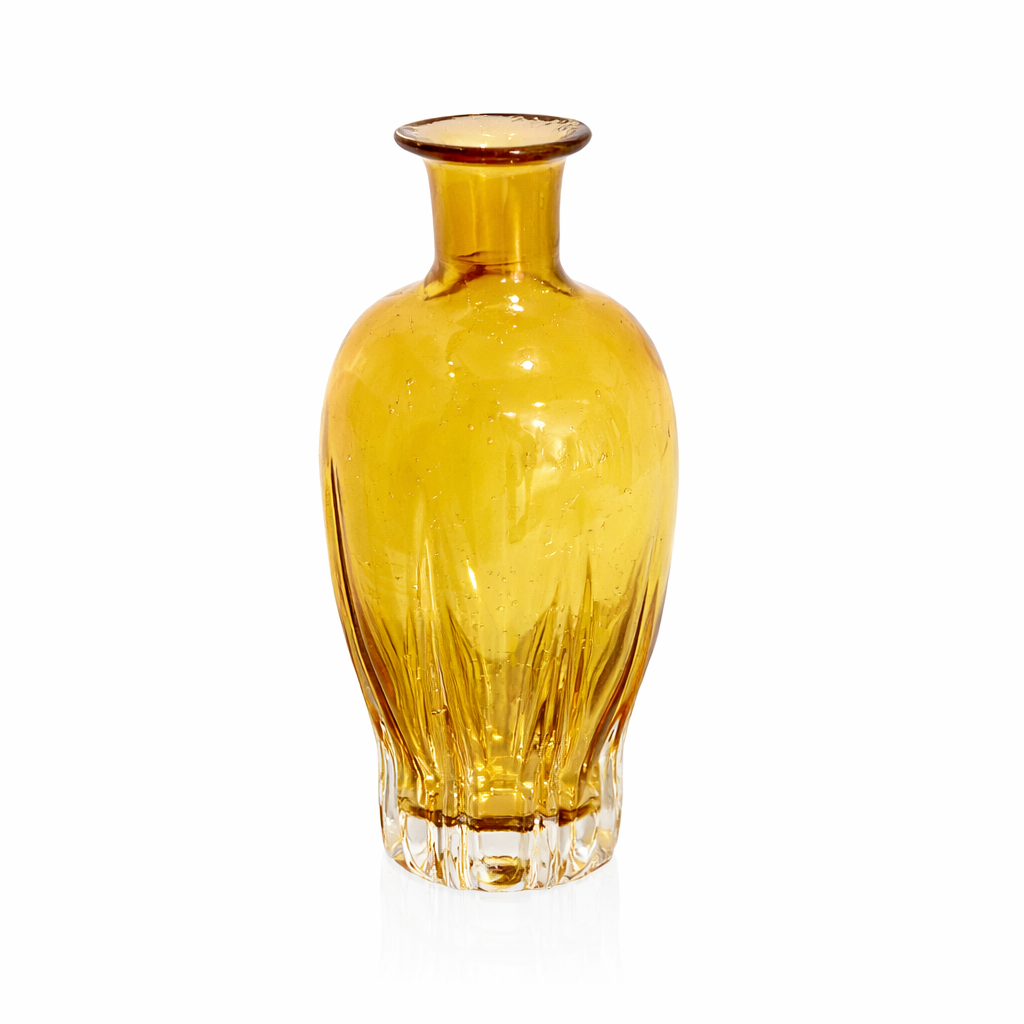
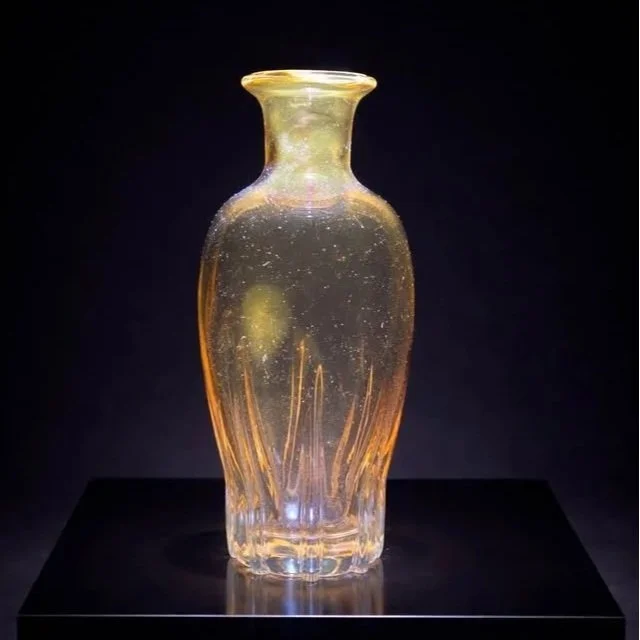
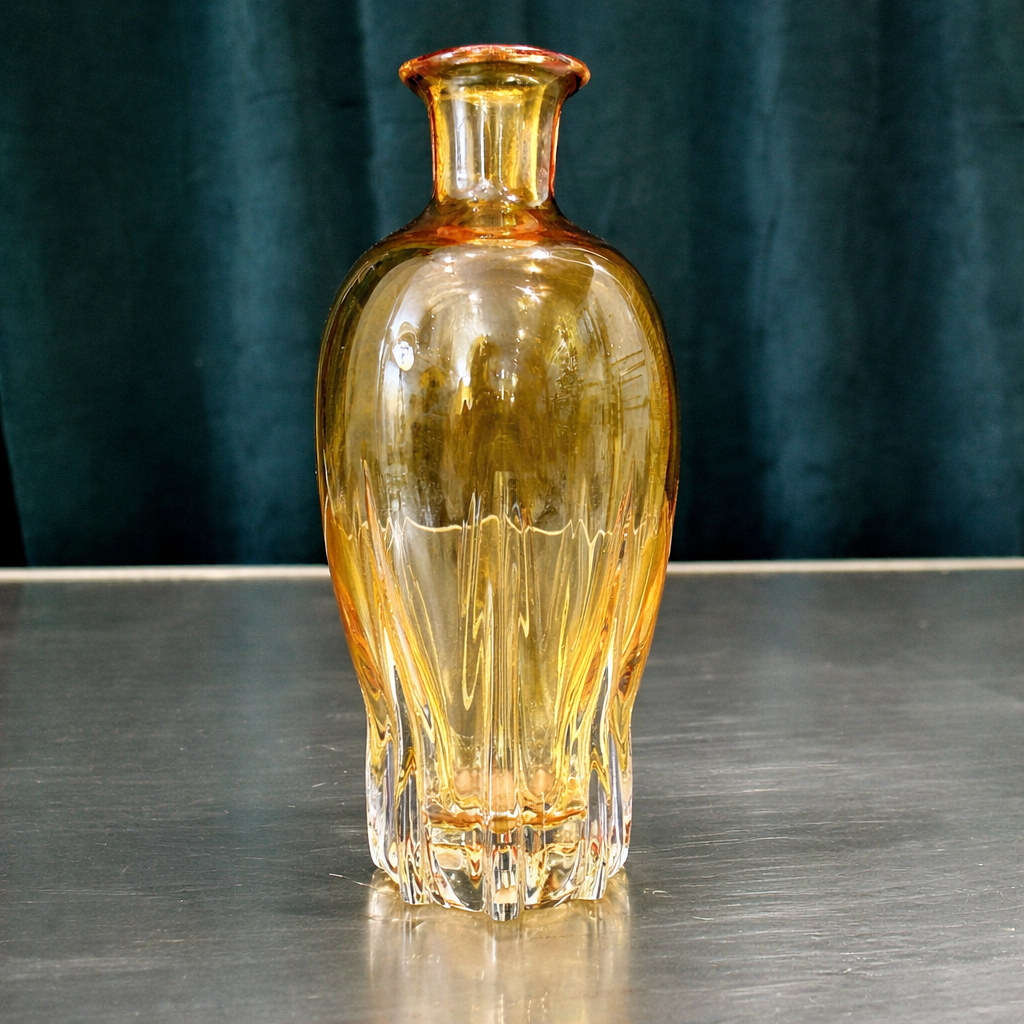
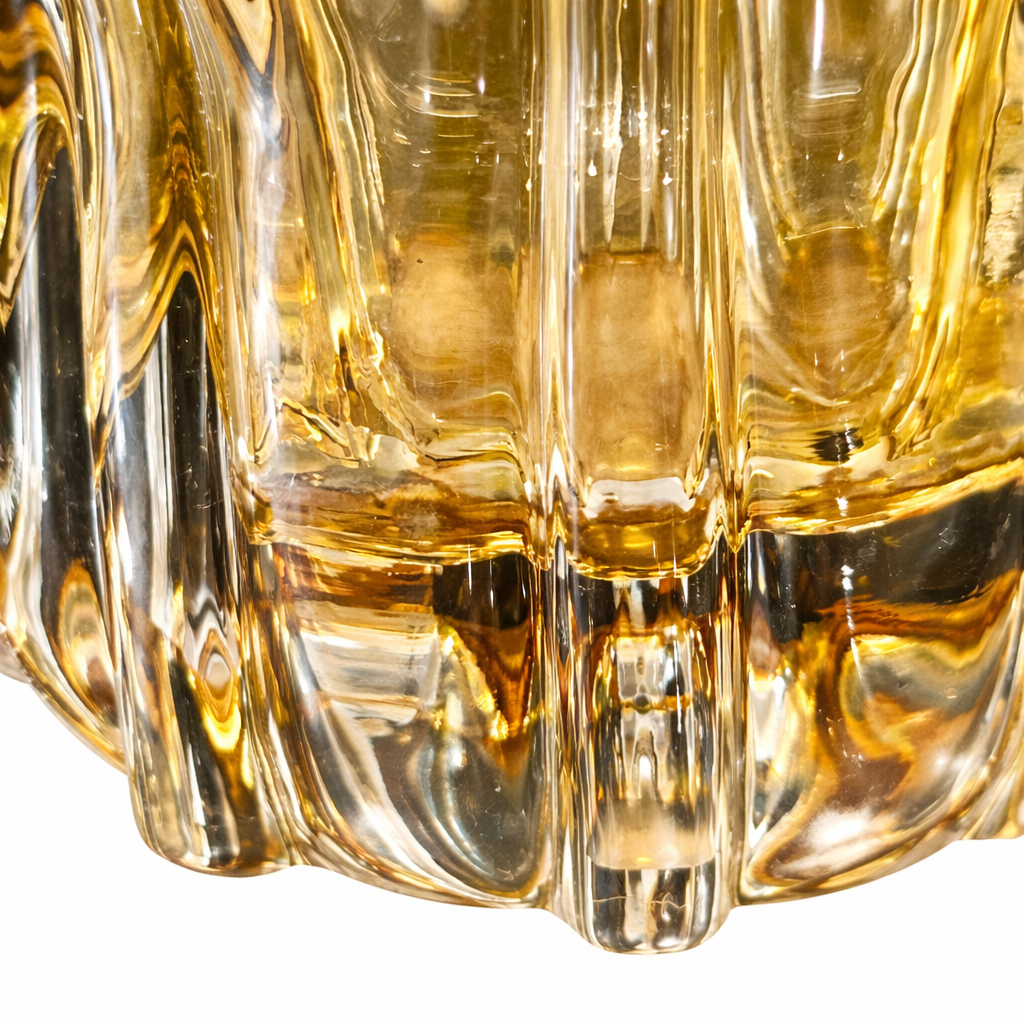
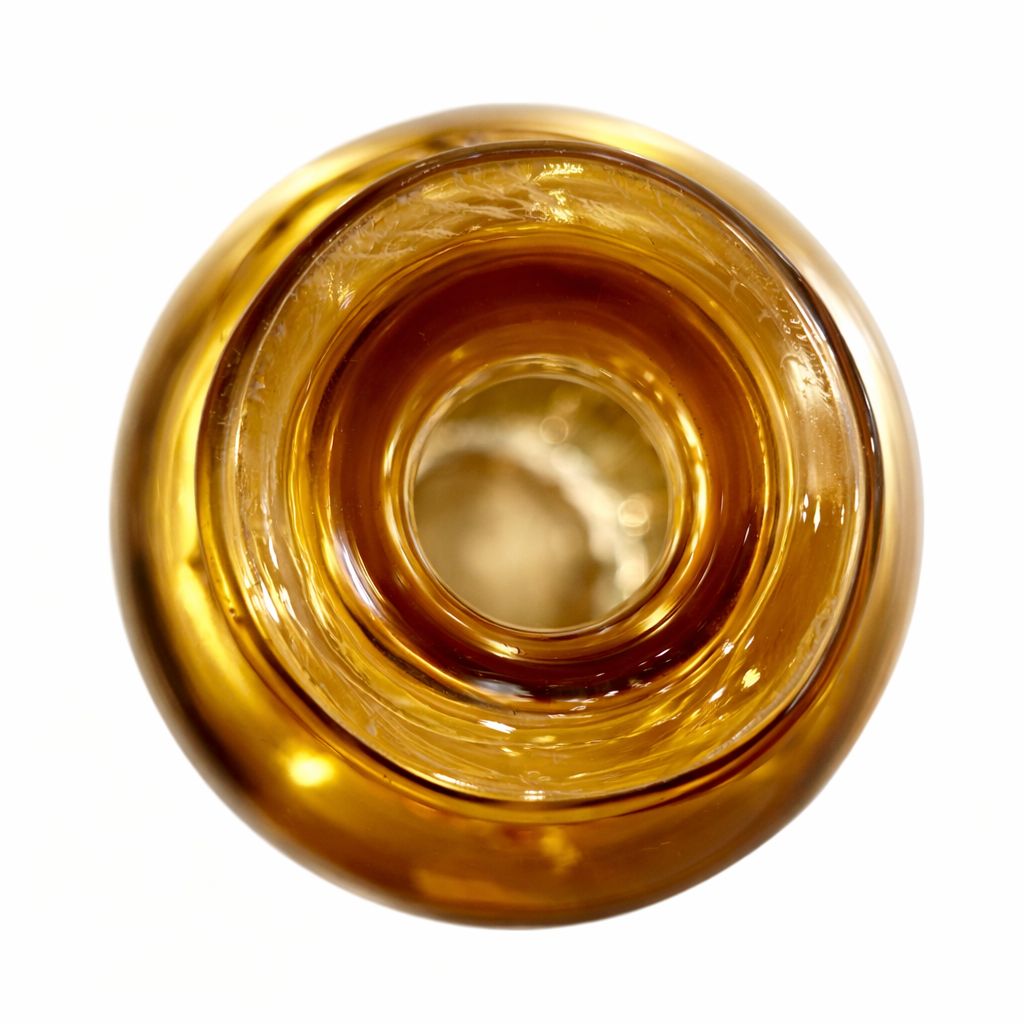
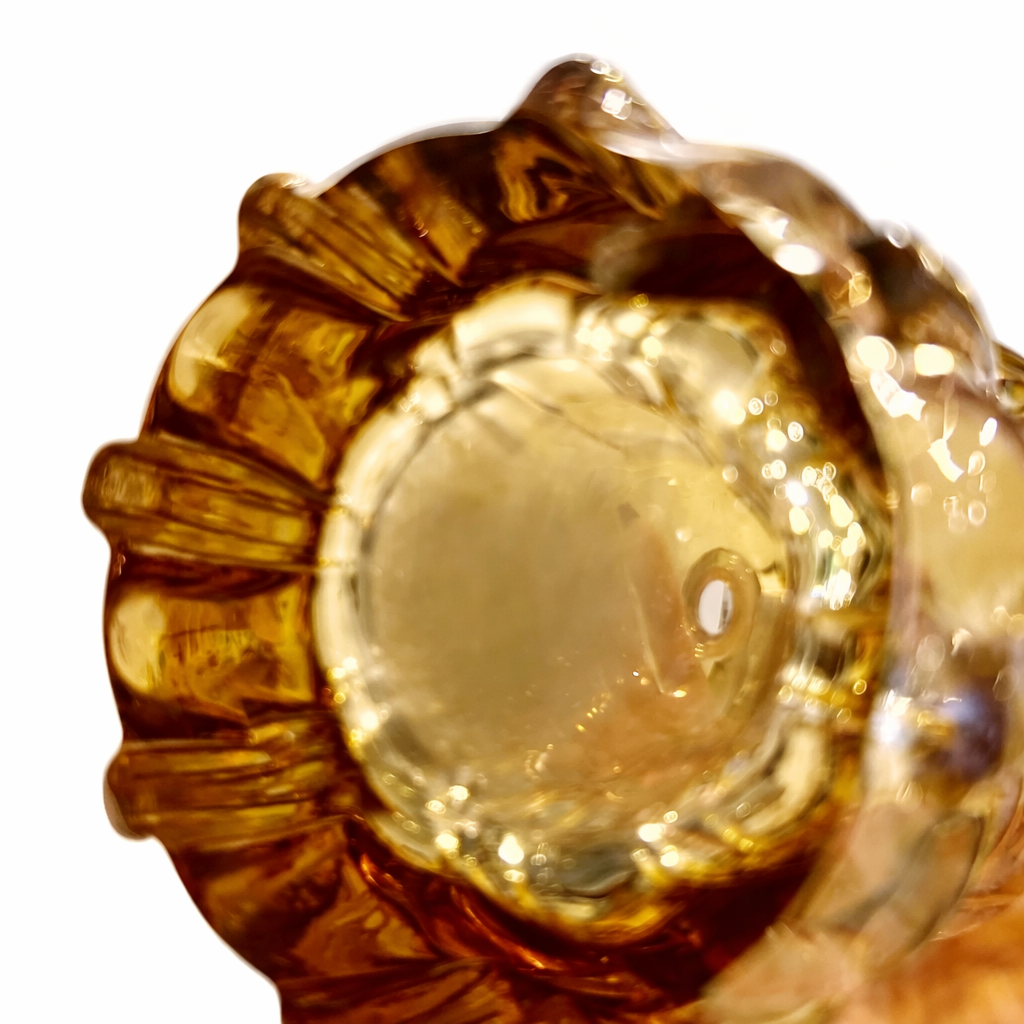
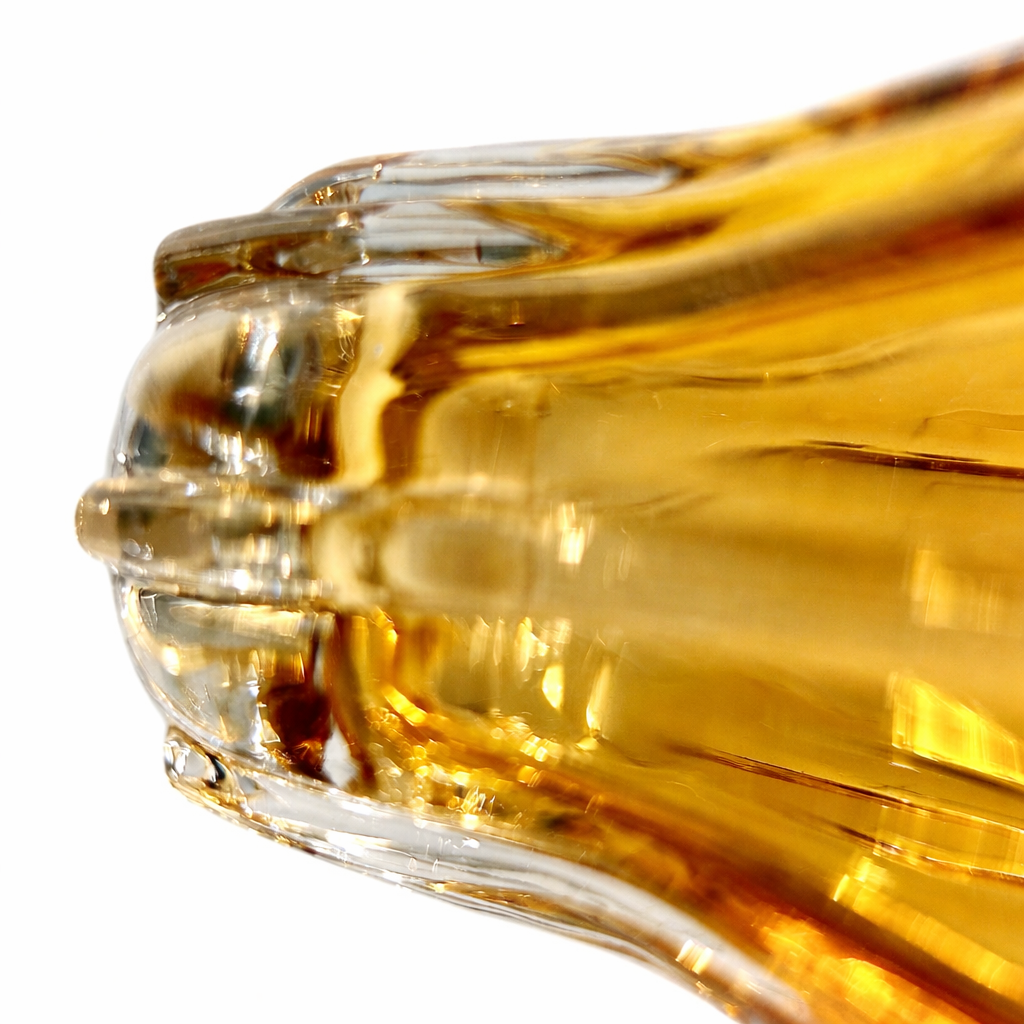
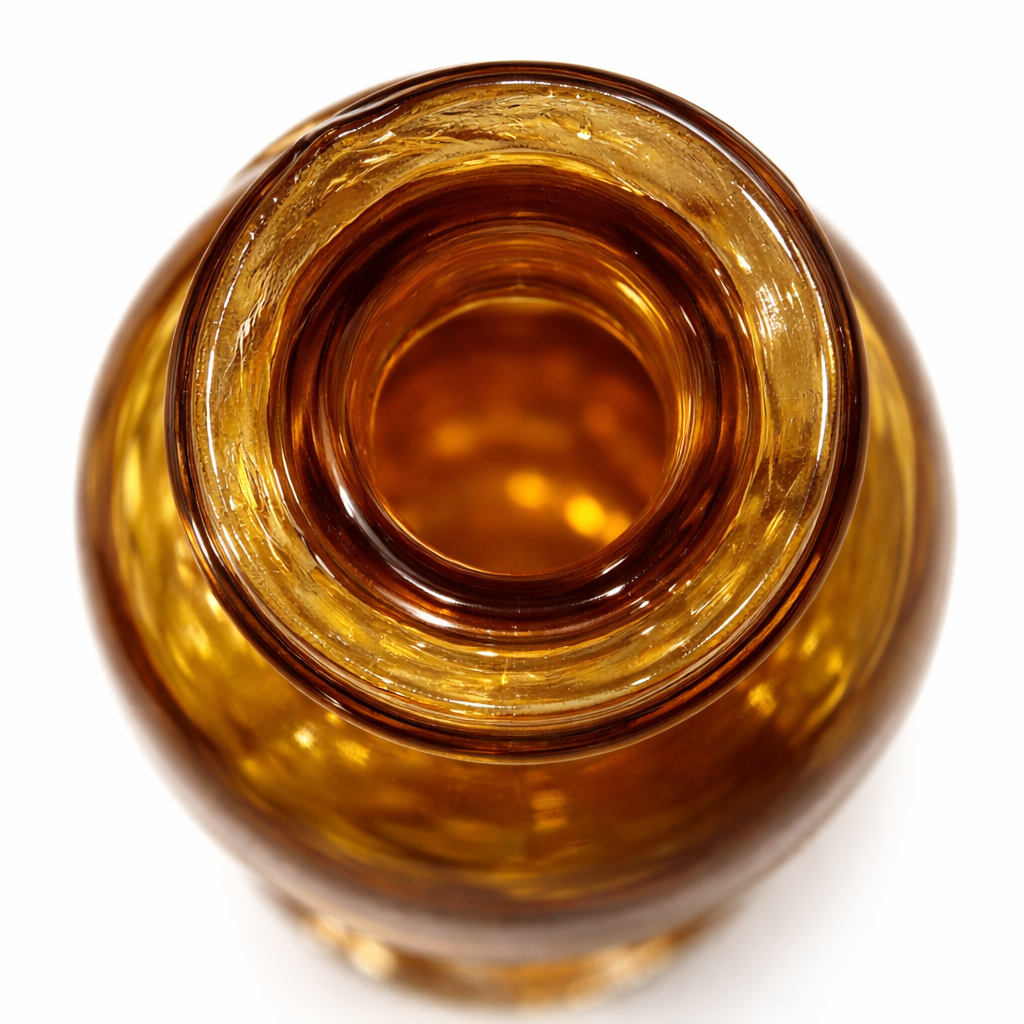
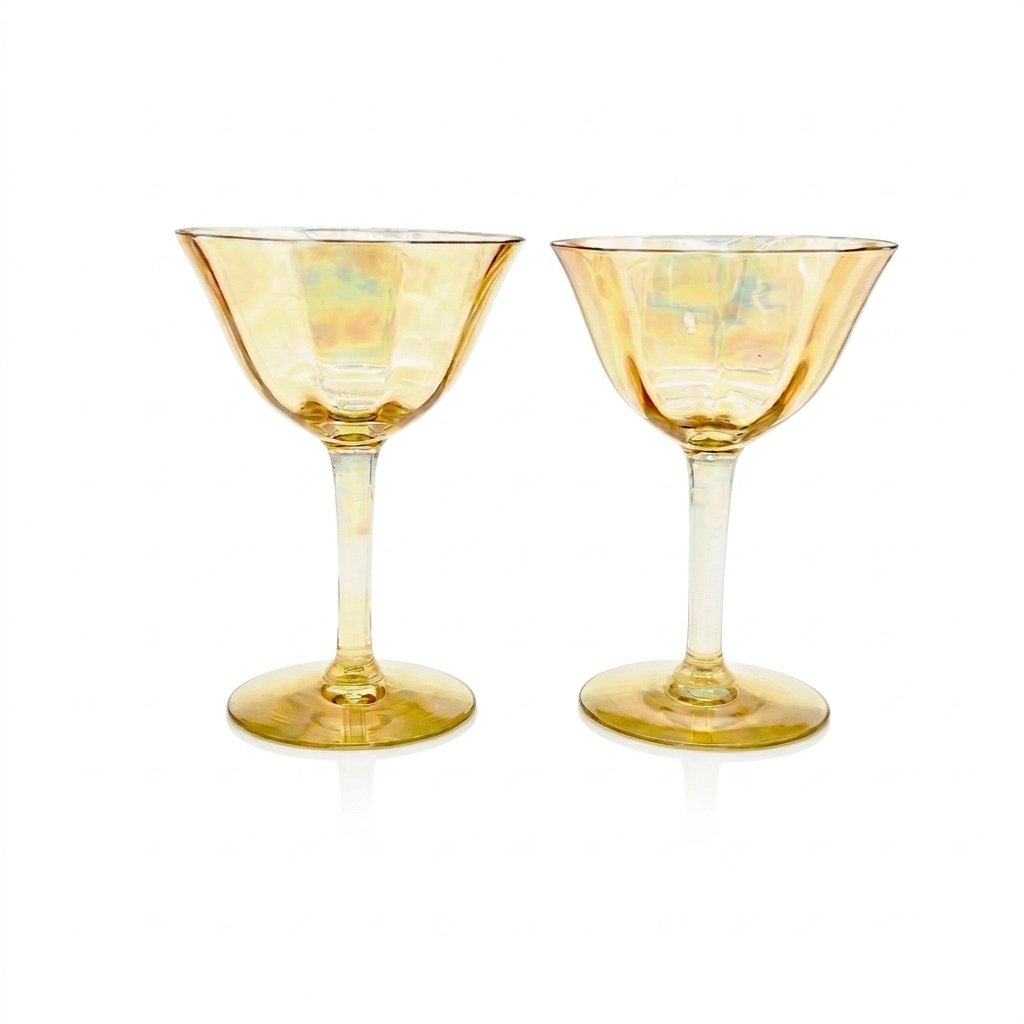
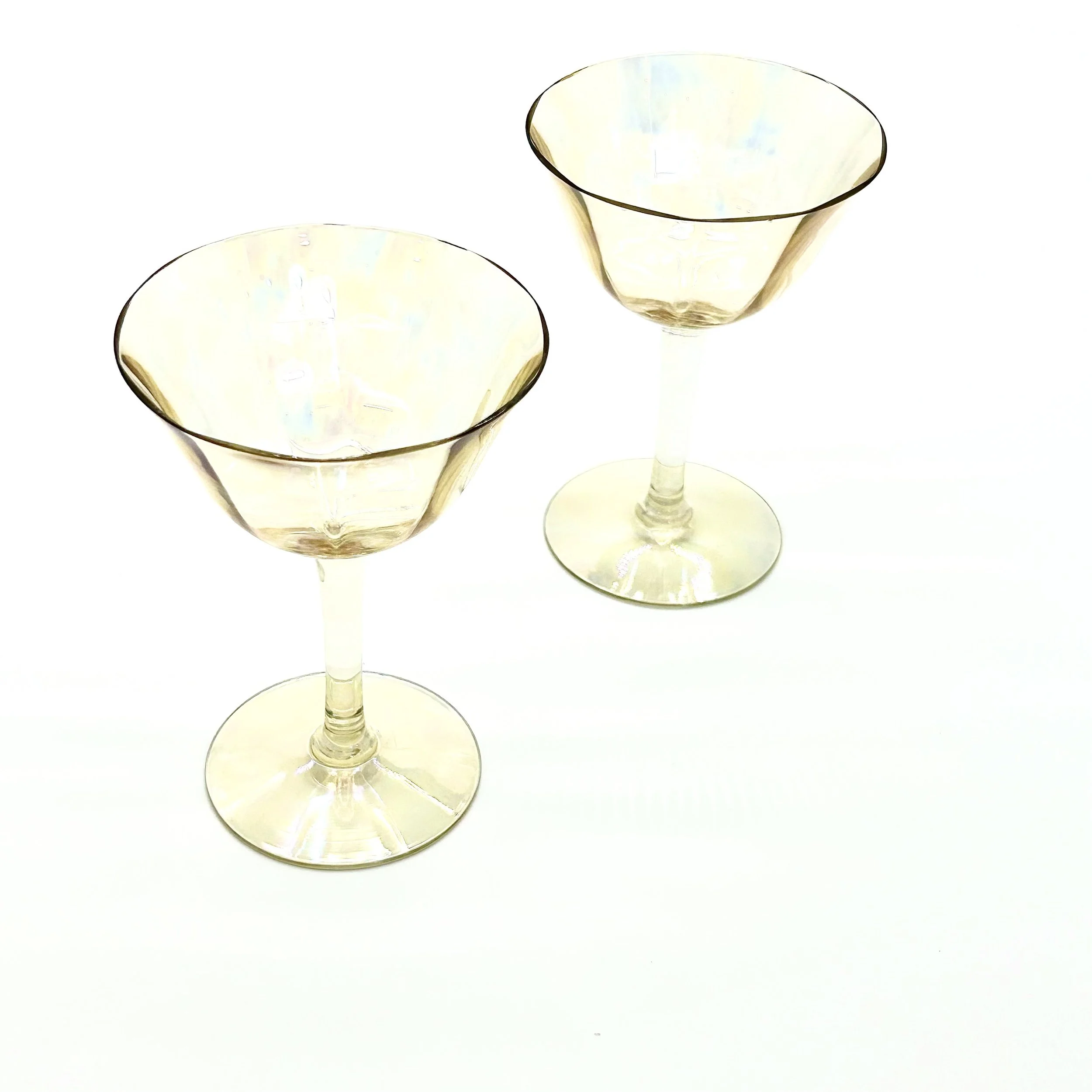
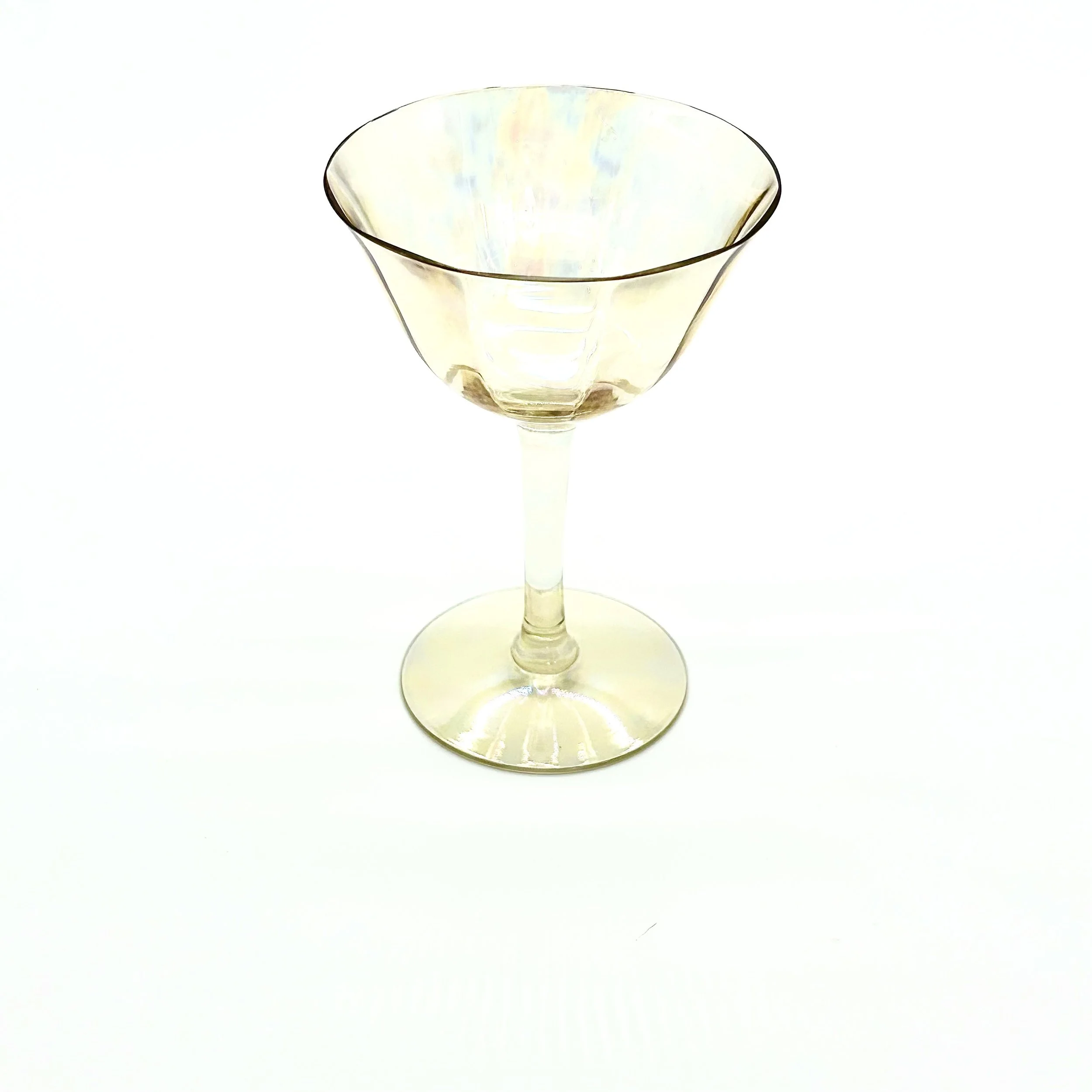
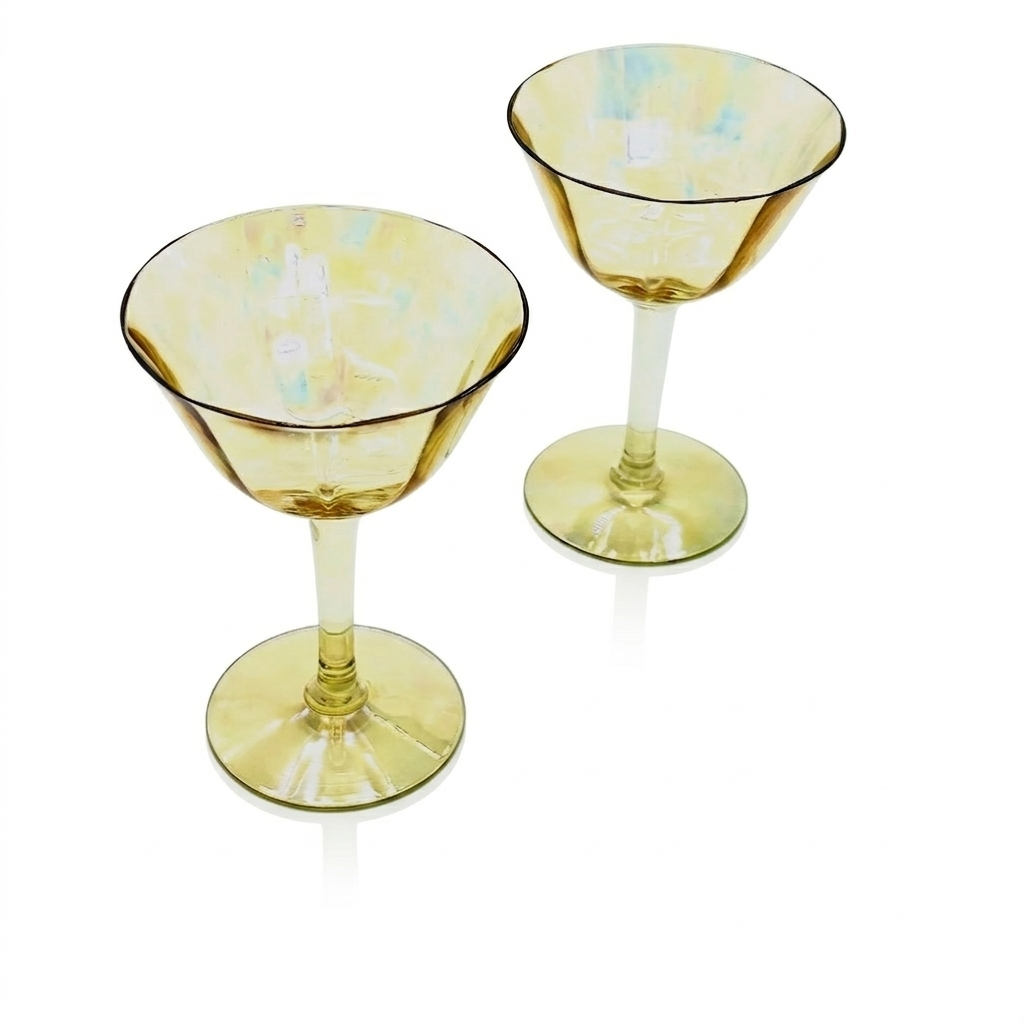
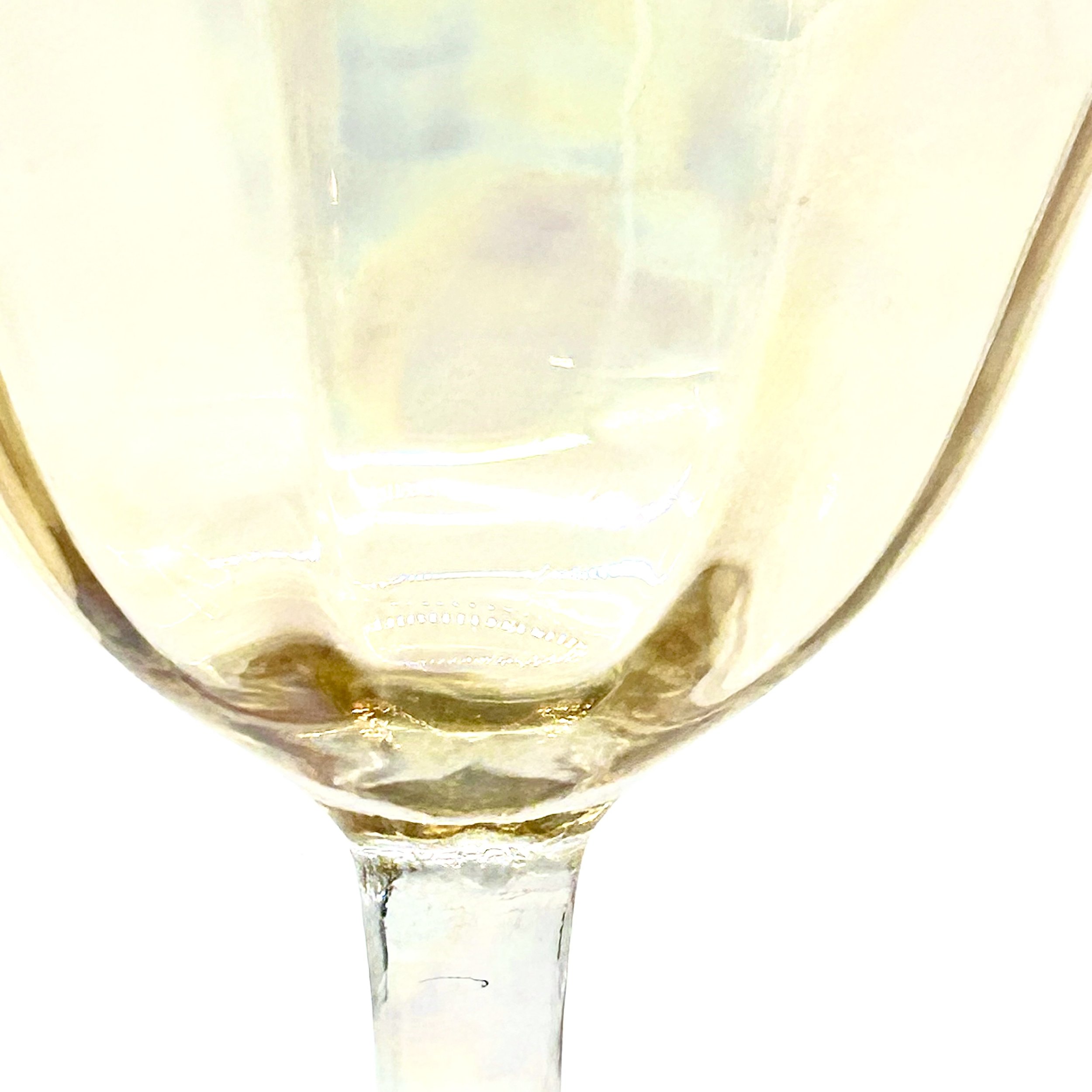
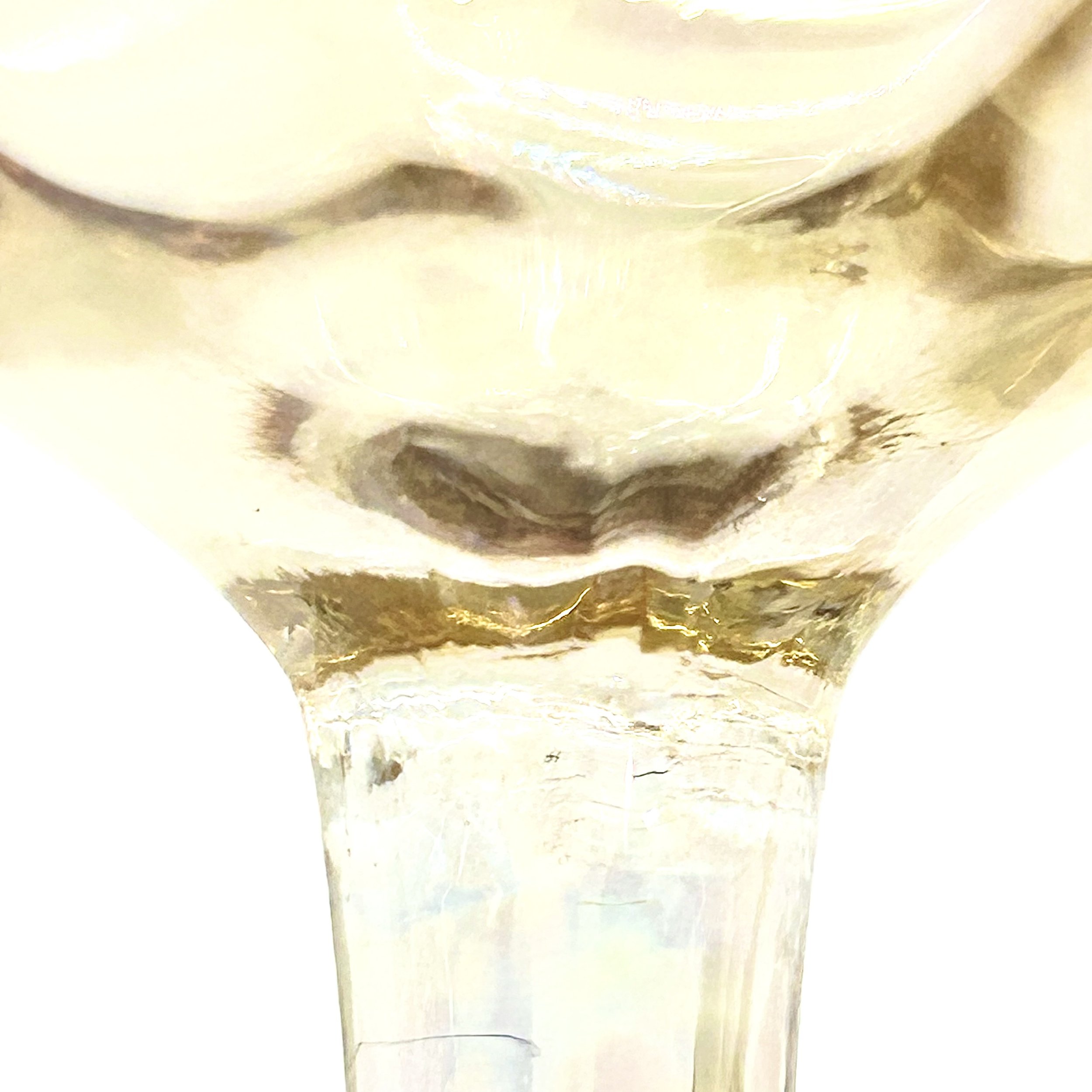
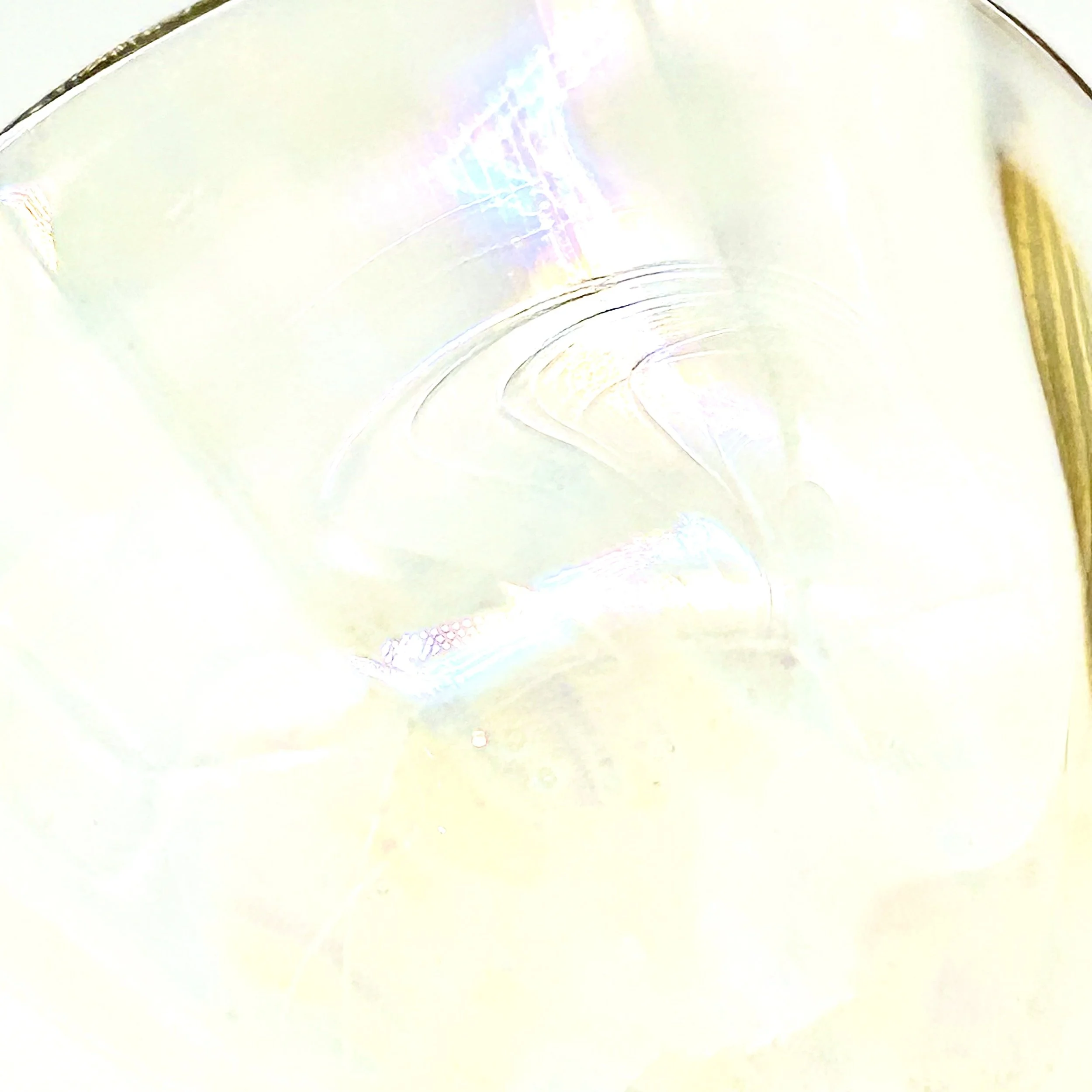
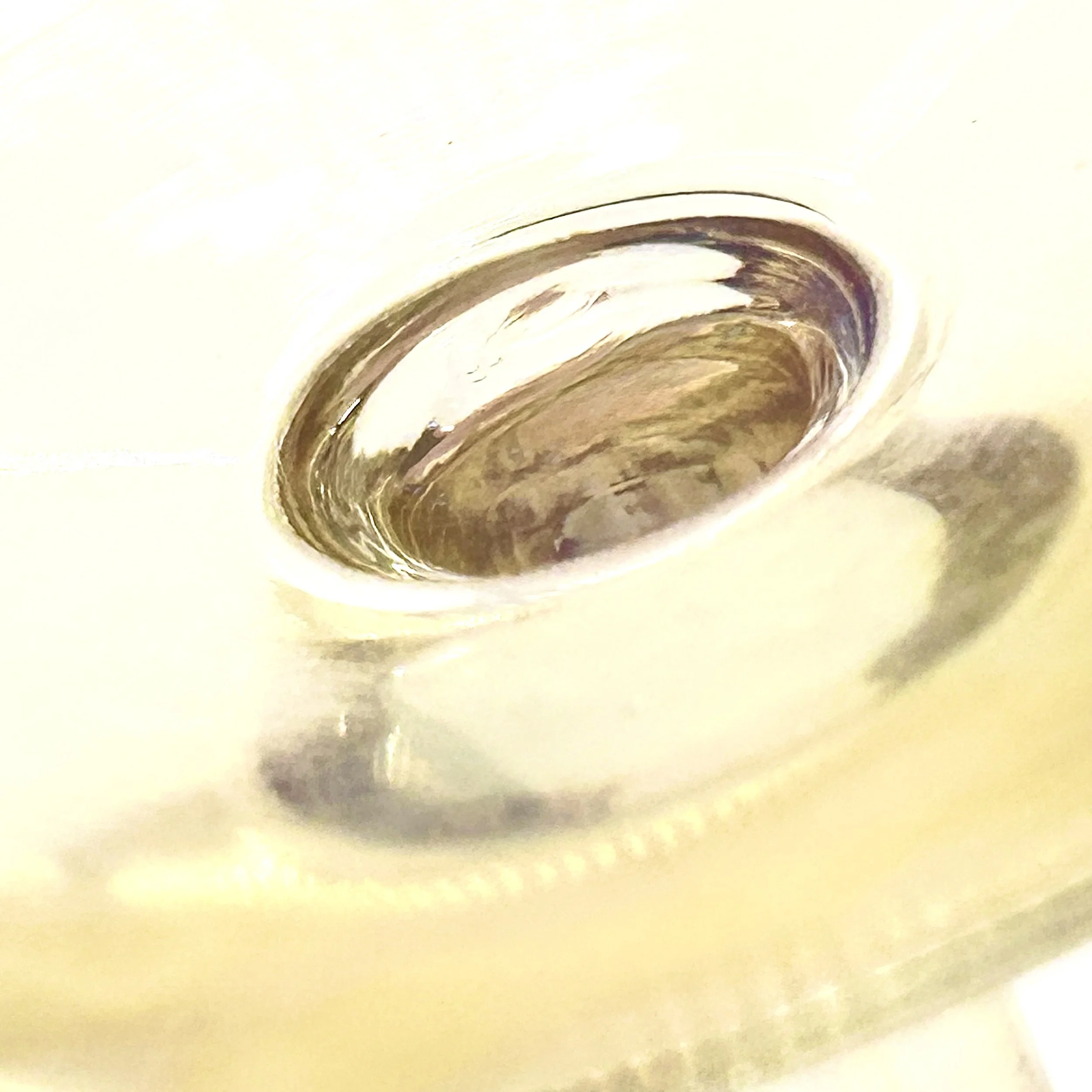
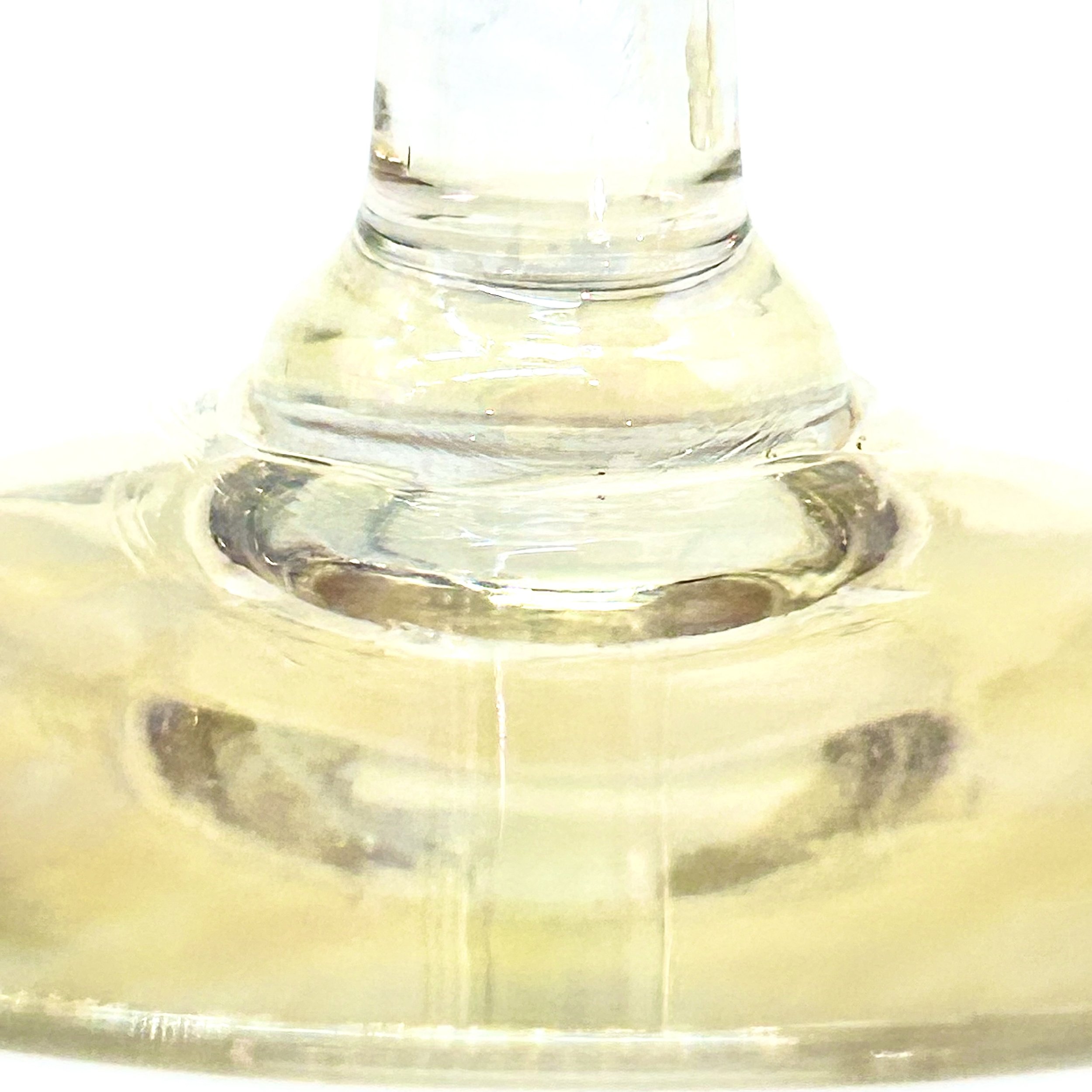
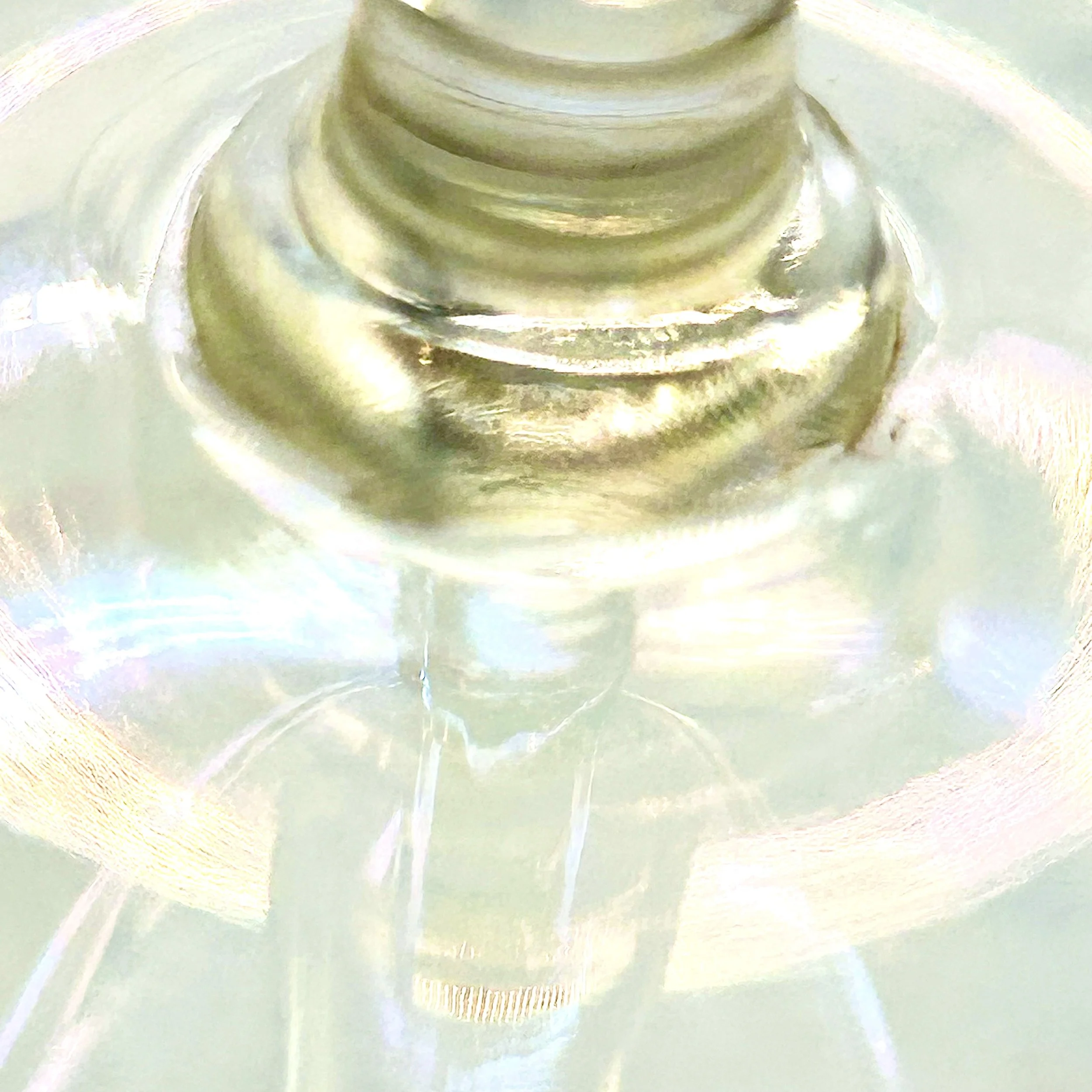
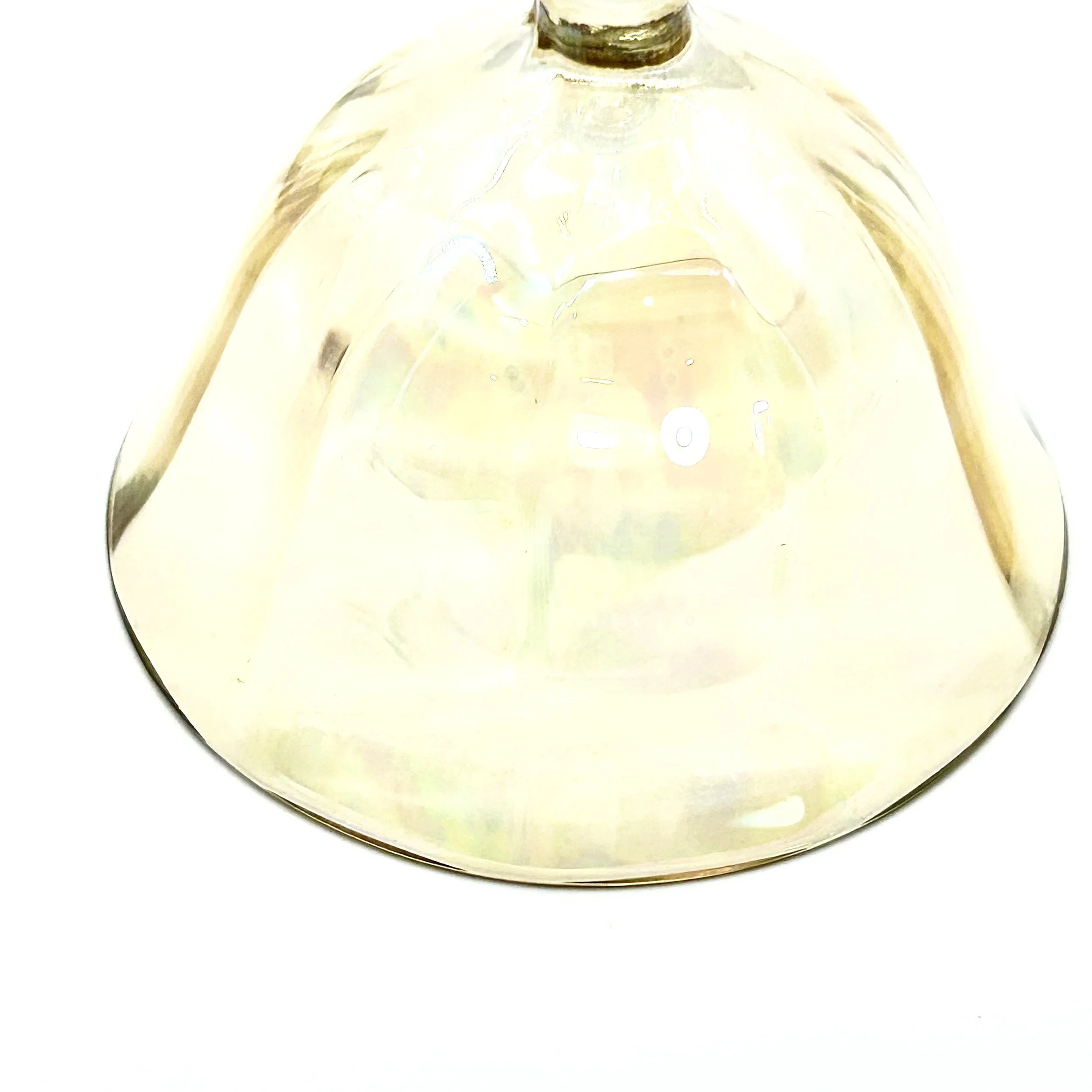
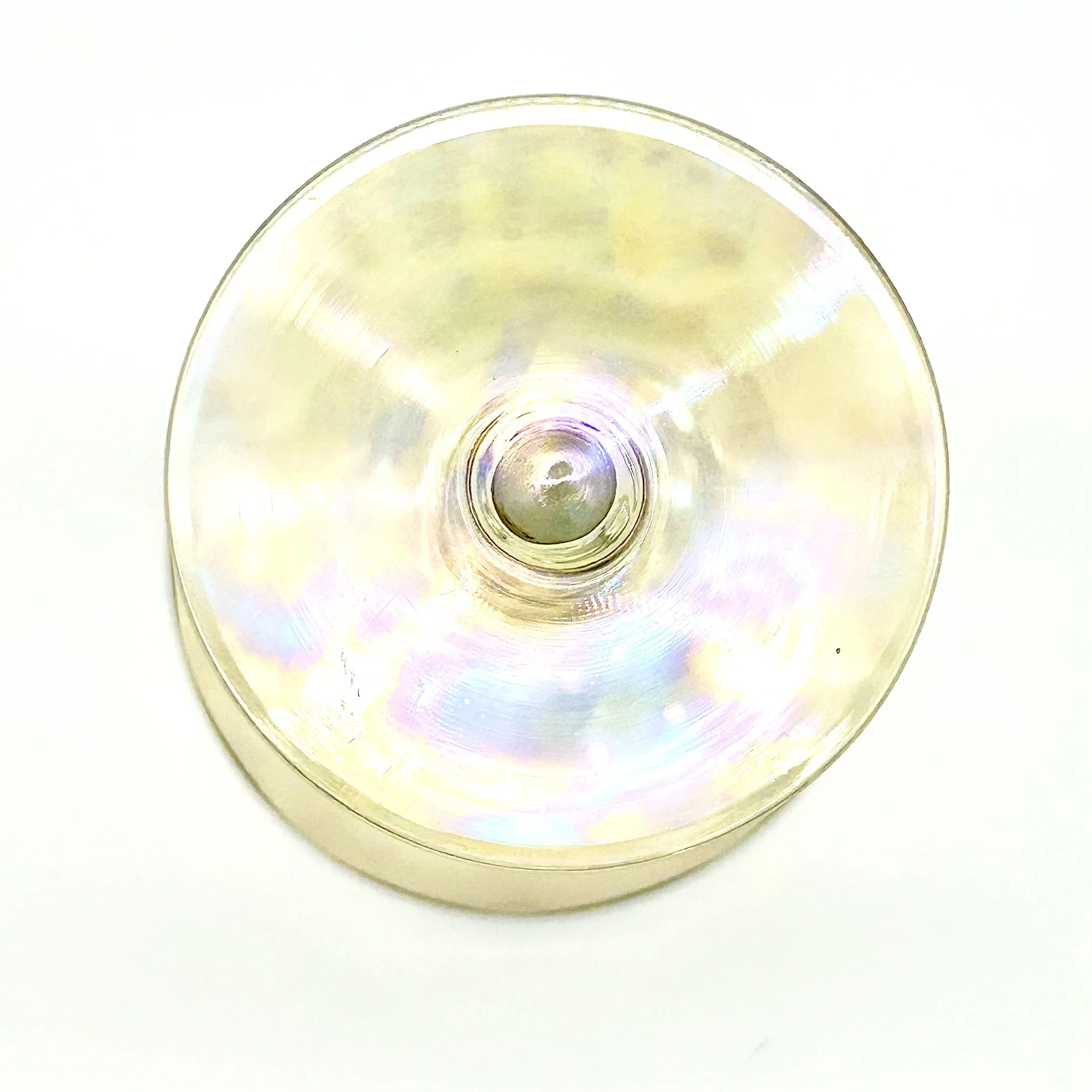
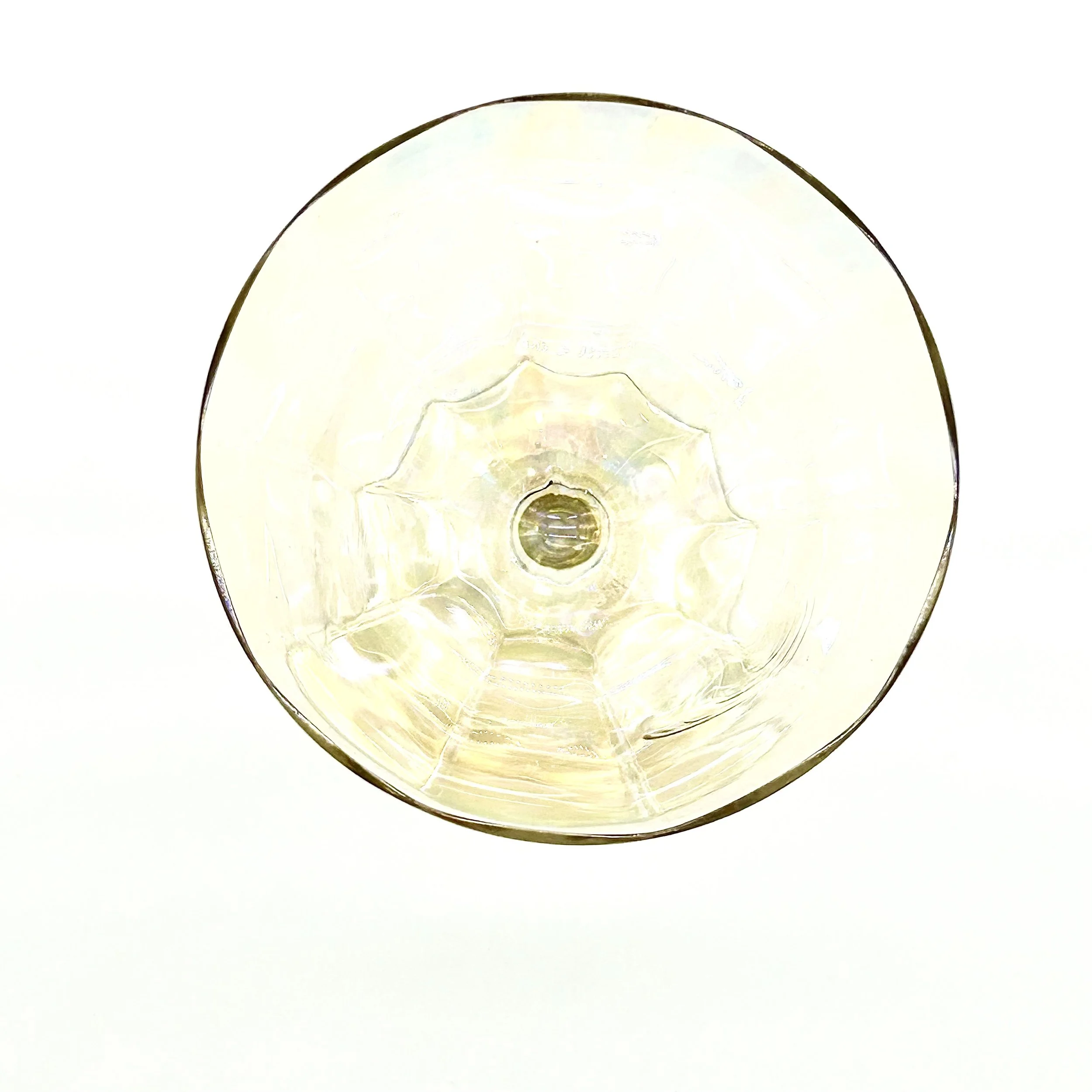
This striking Amberina glass compote exhibits a dramatic ombré transition from a deep, saturated ruby red to a luminous golden amber. The vessel features a sophisticated combination of geometric press-molded patterns, including a faceted diamond-point exterior and a distinctive scalloped "sawtooth" rim accented by polished raised beads. Its flared silhouette and substantial pedestal base allow for exceptional light refraction, making it a commanding sculptural centerpiece for a refined interior.
Attribution & Period
Early Modern, 1910s
This piece is a regional American example of decorative pressed glass, stylistically aligned with the "Early American Prescribed Glass" (EAPG) tradition. The vibrant "Amberina" heat-sensitive coloration—achieved by reheating gold-infused glass—is consistent with the production techniques utilized by the New England Glass Company and later refined by midwestern firms in the early 20th century. The specific molded facets and beadwork are characteristic of the transition from Victorian ornate styles to the more structured geometric forms of the early 1900s.
Dimensions & Weight
Condition
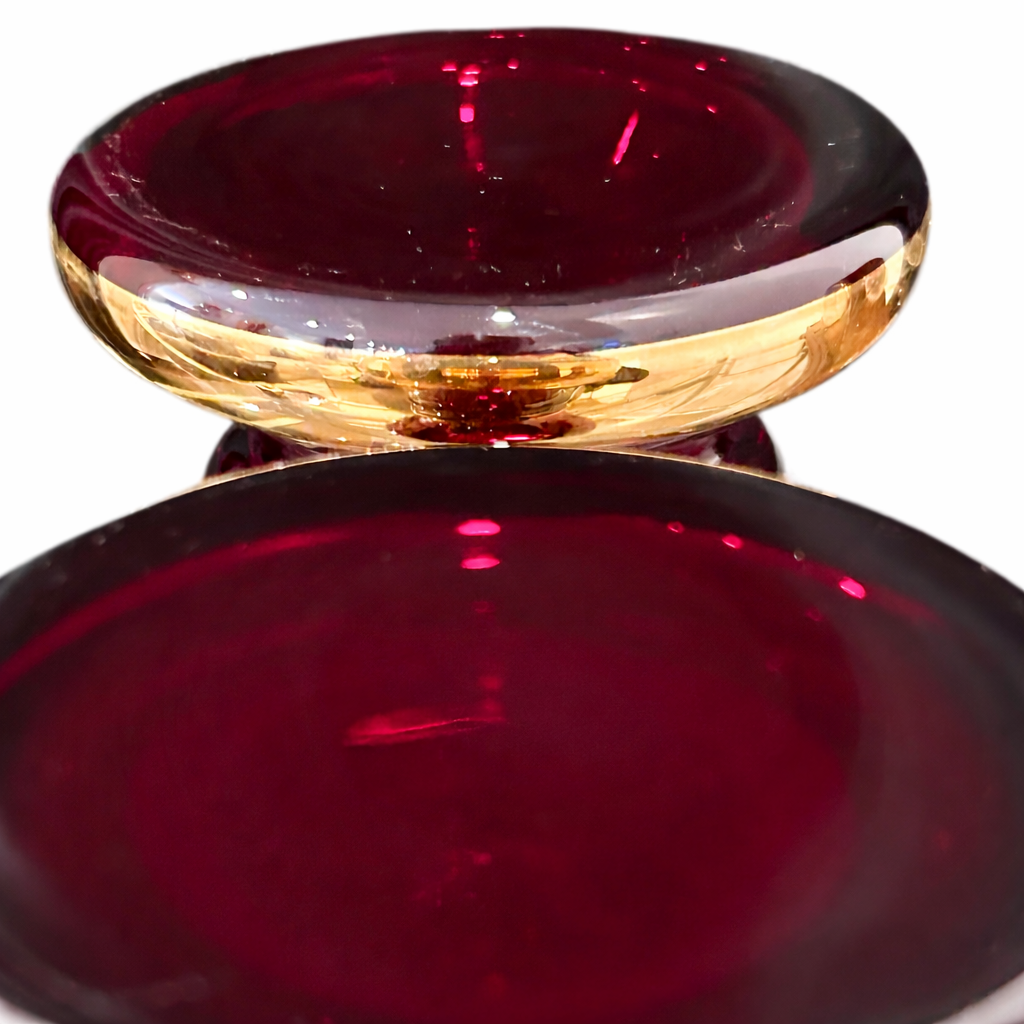
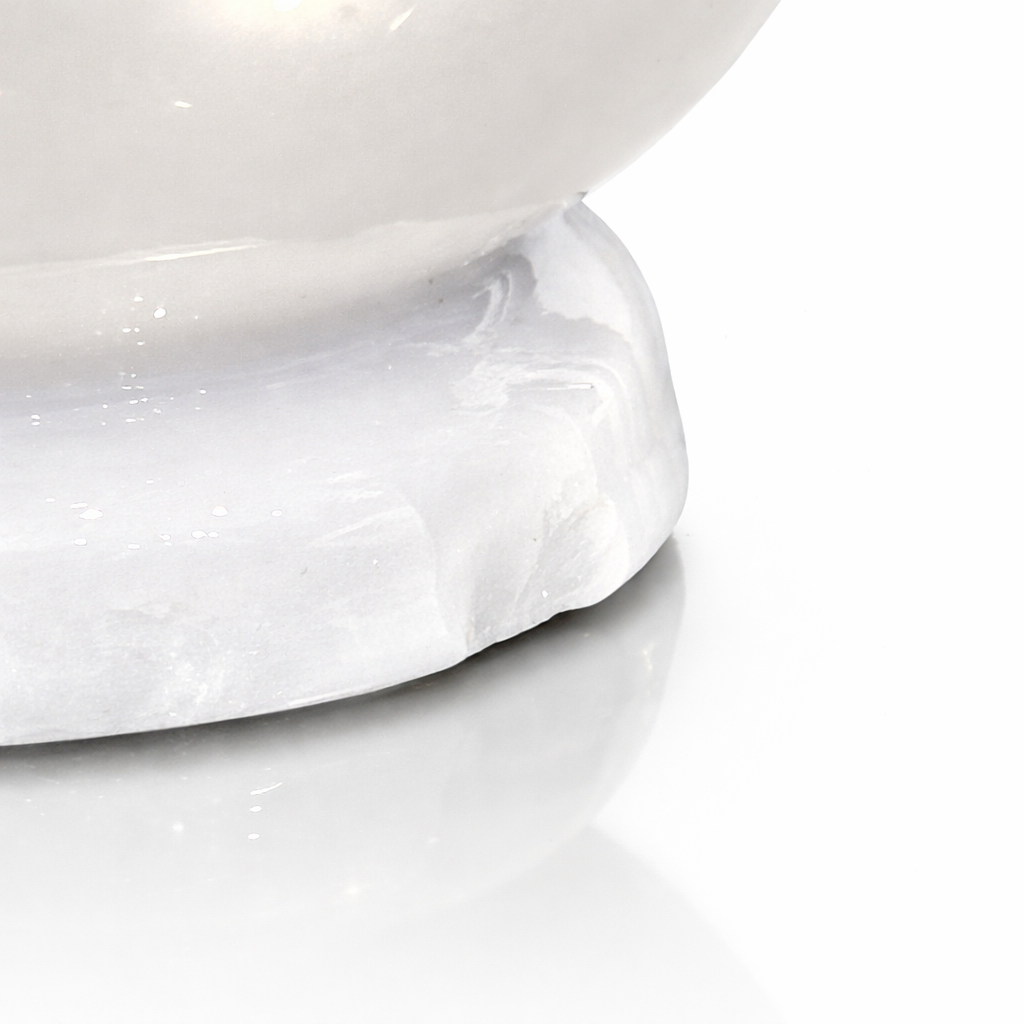
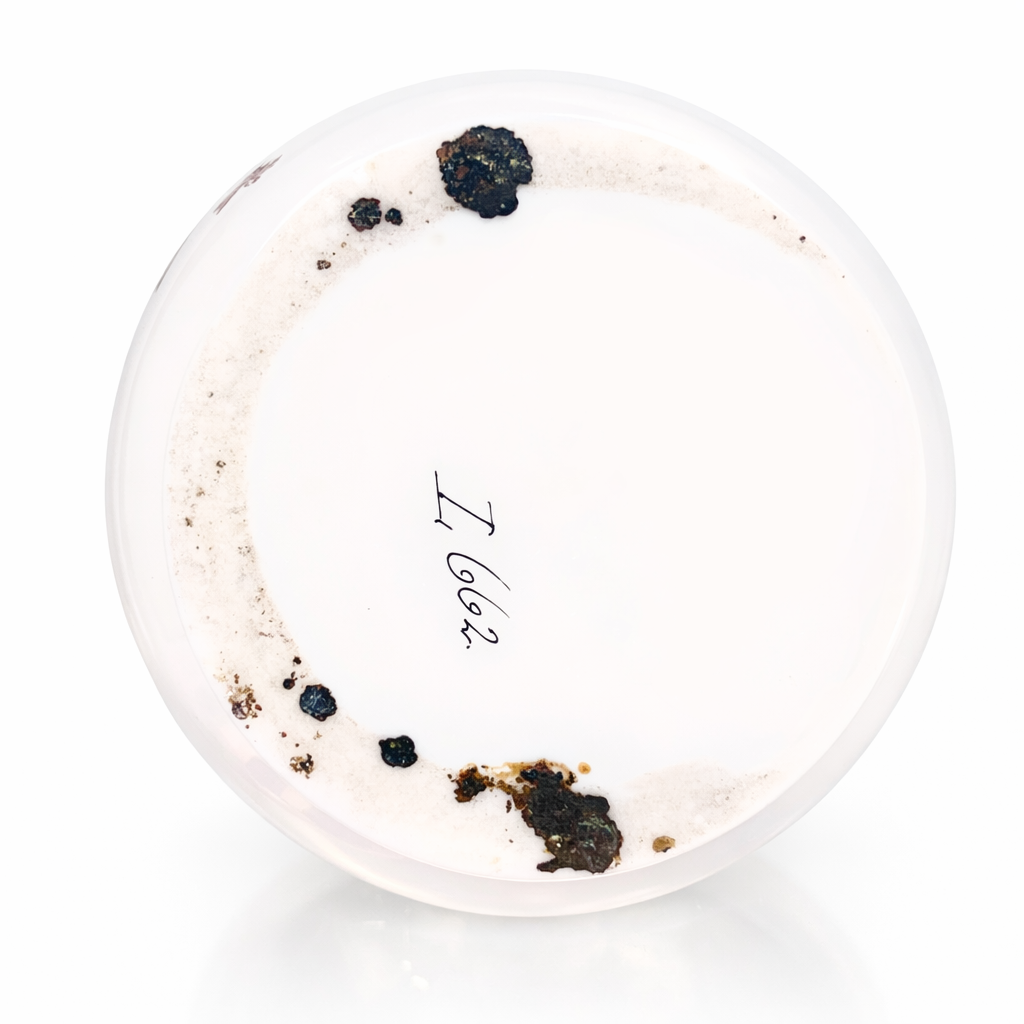
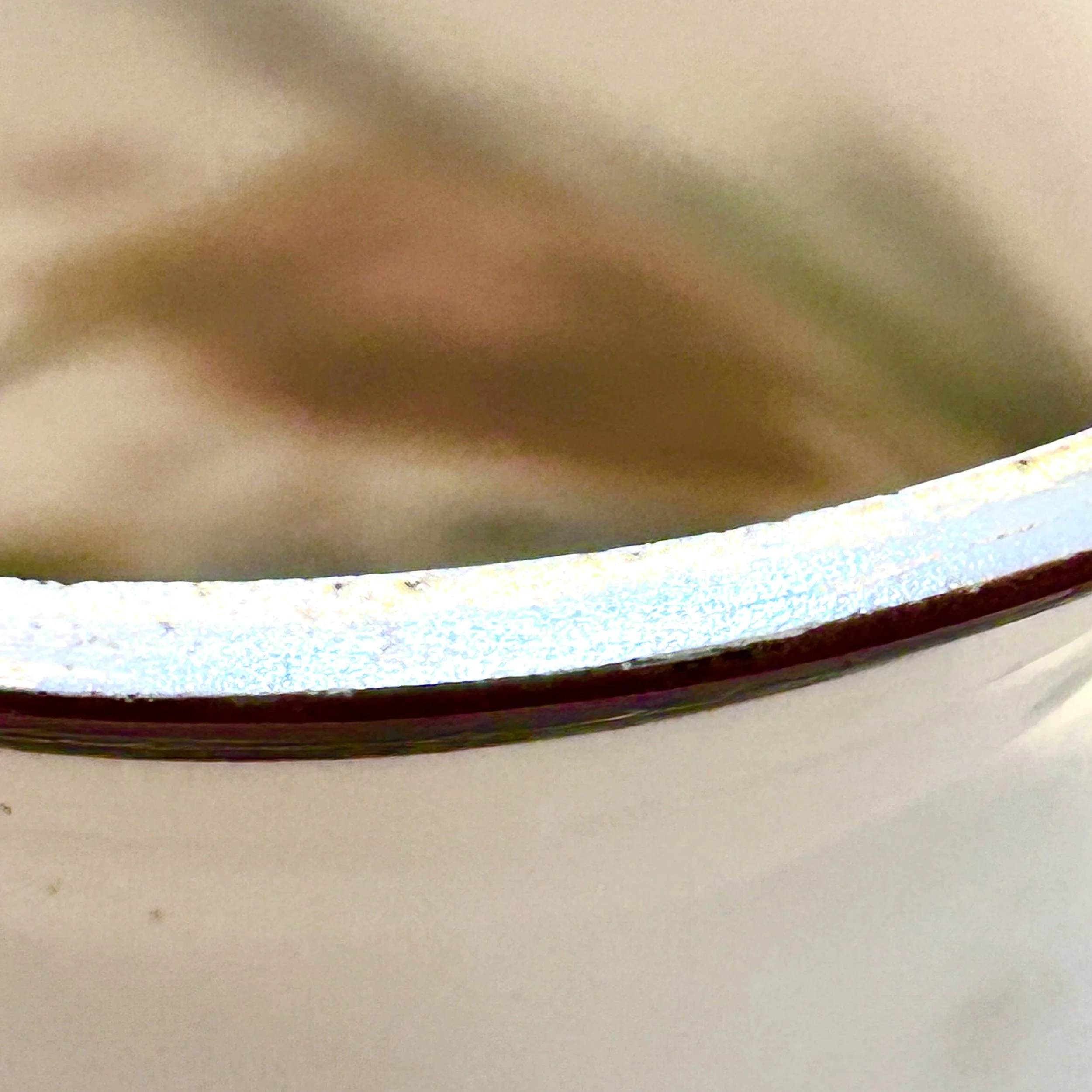
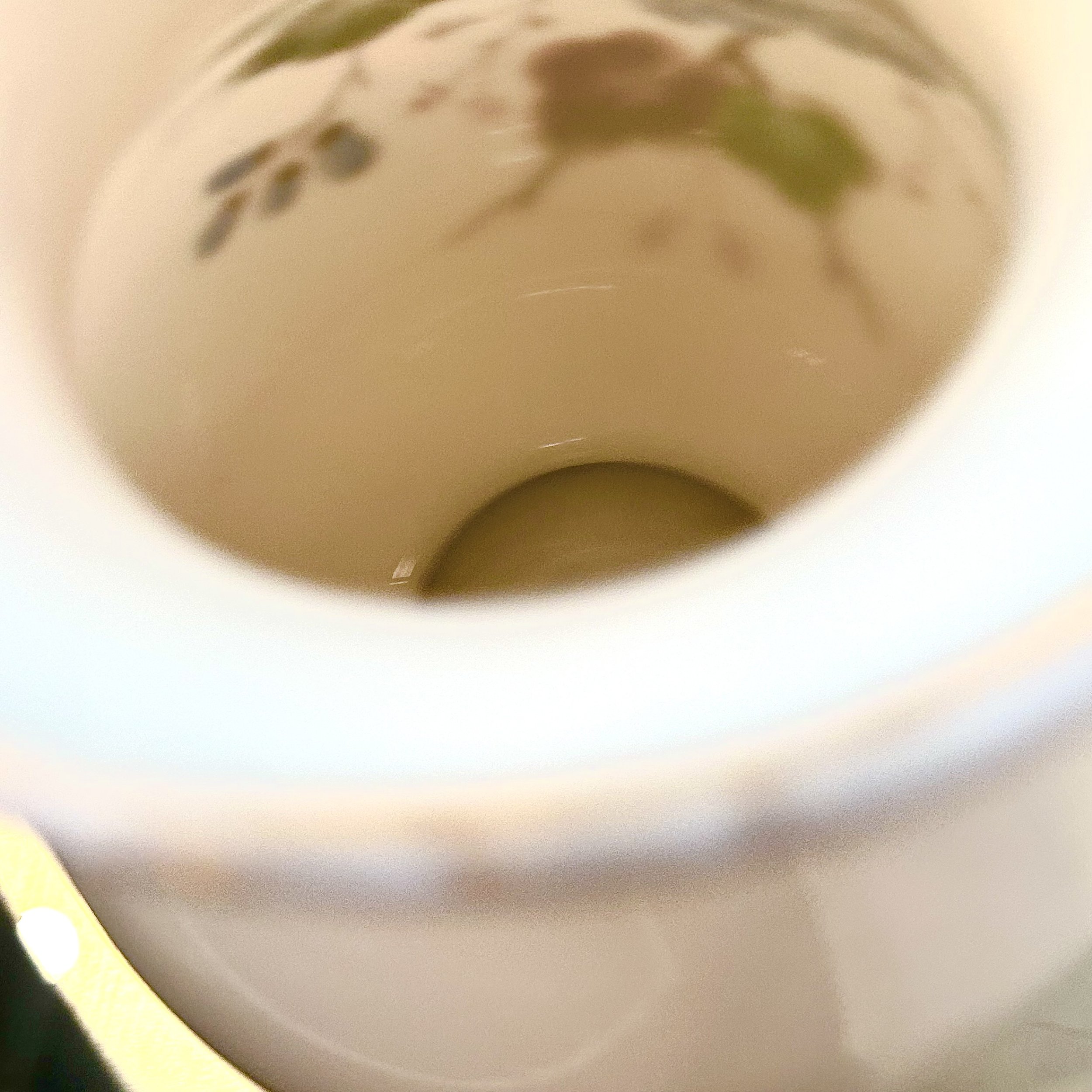
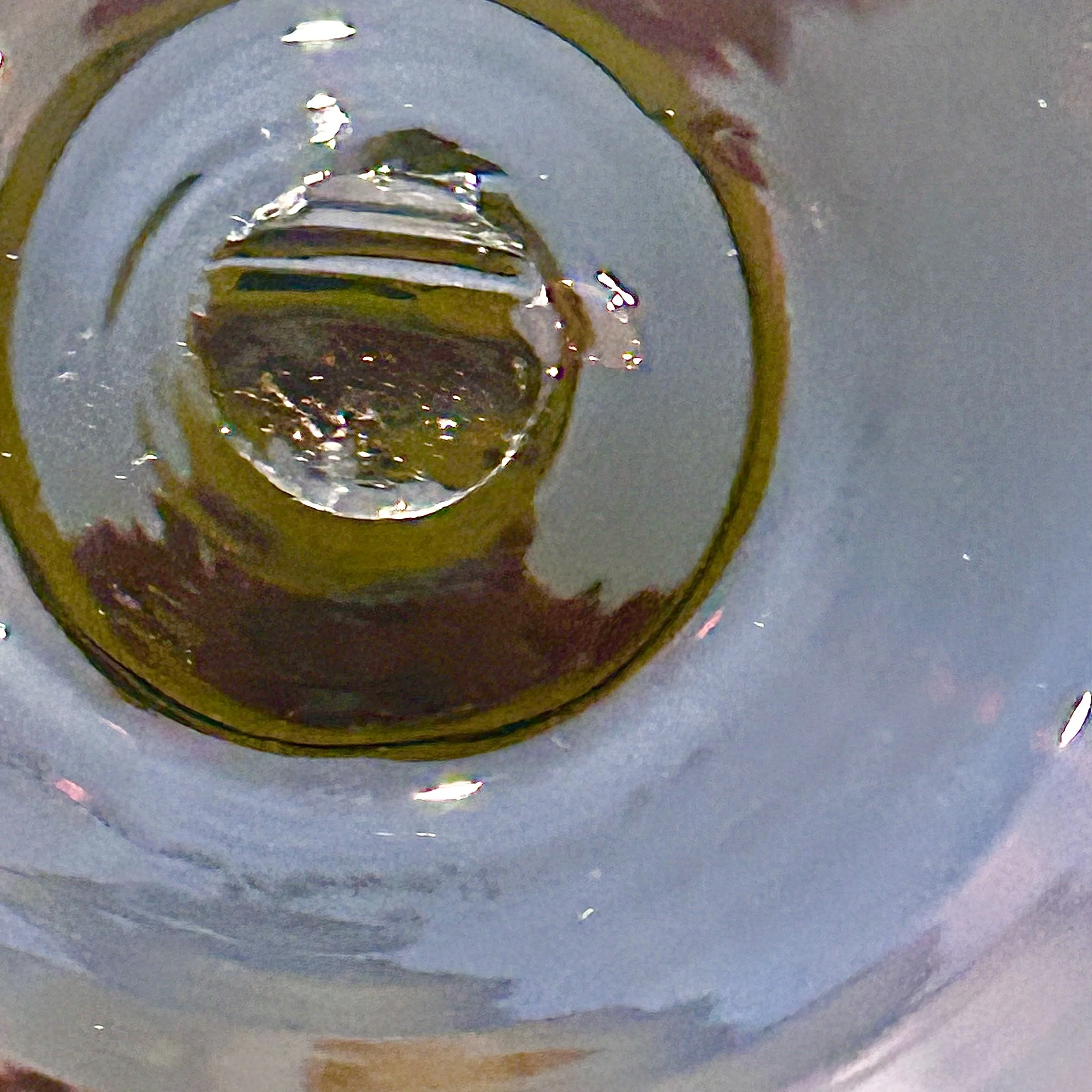
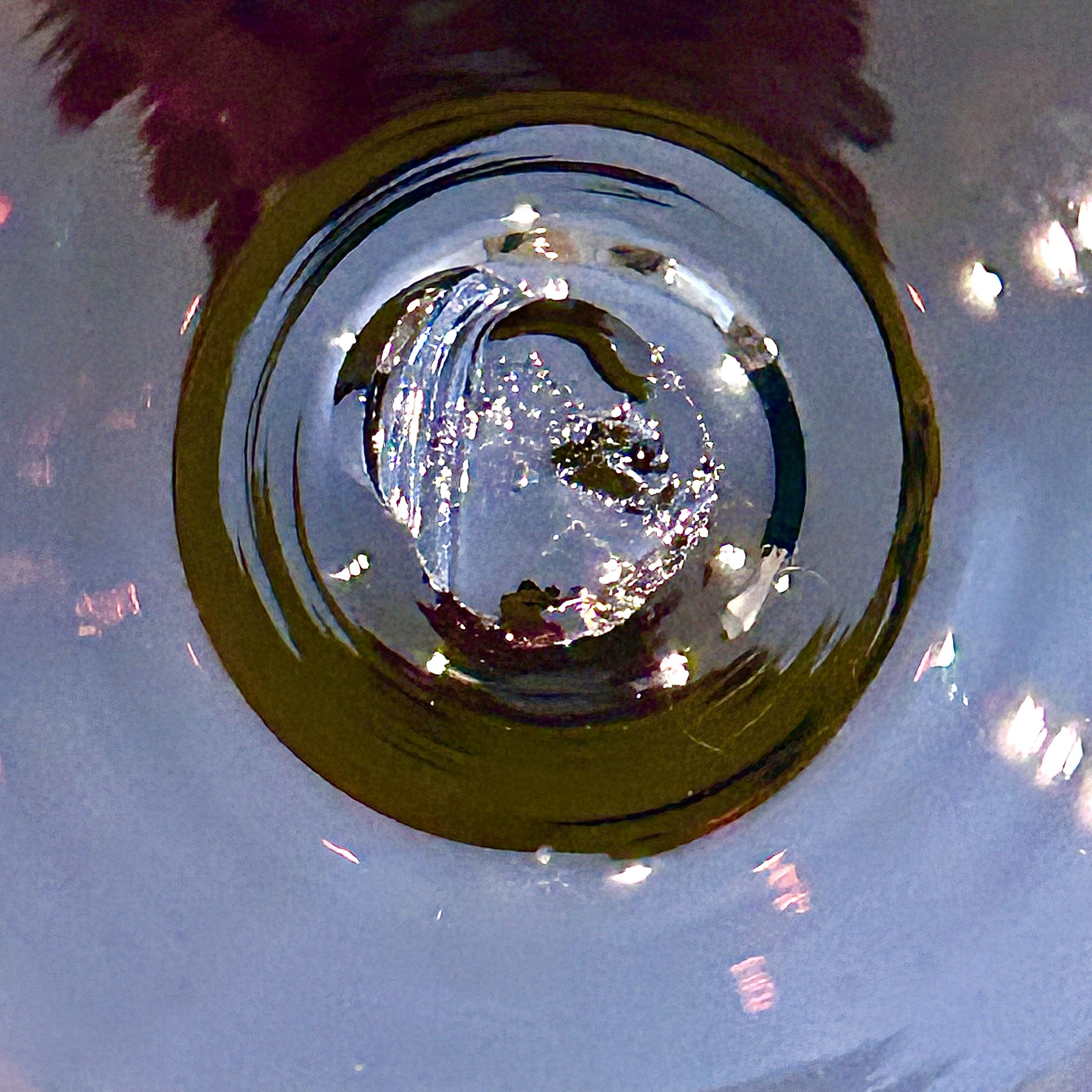
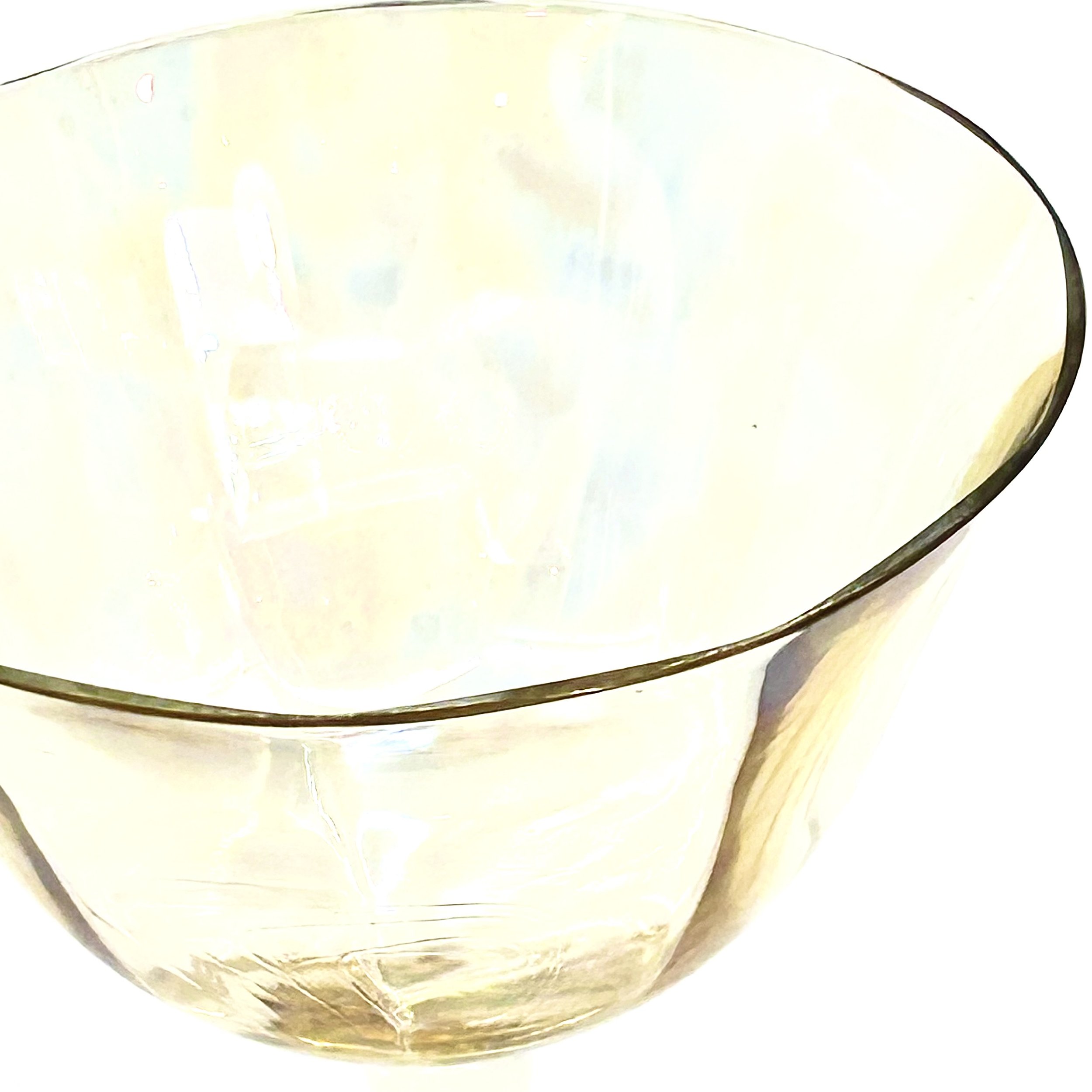
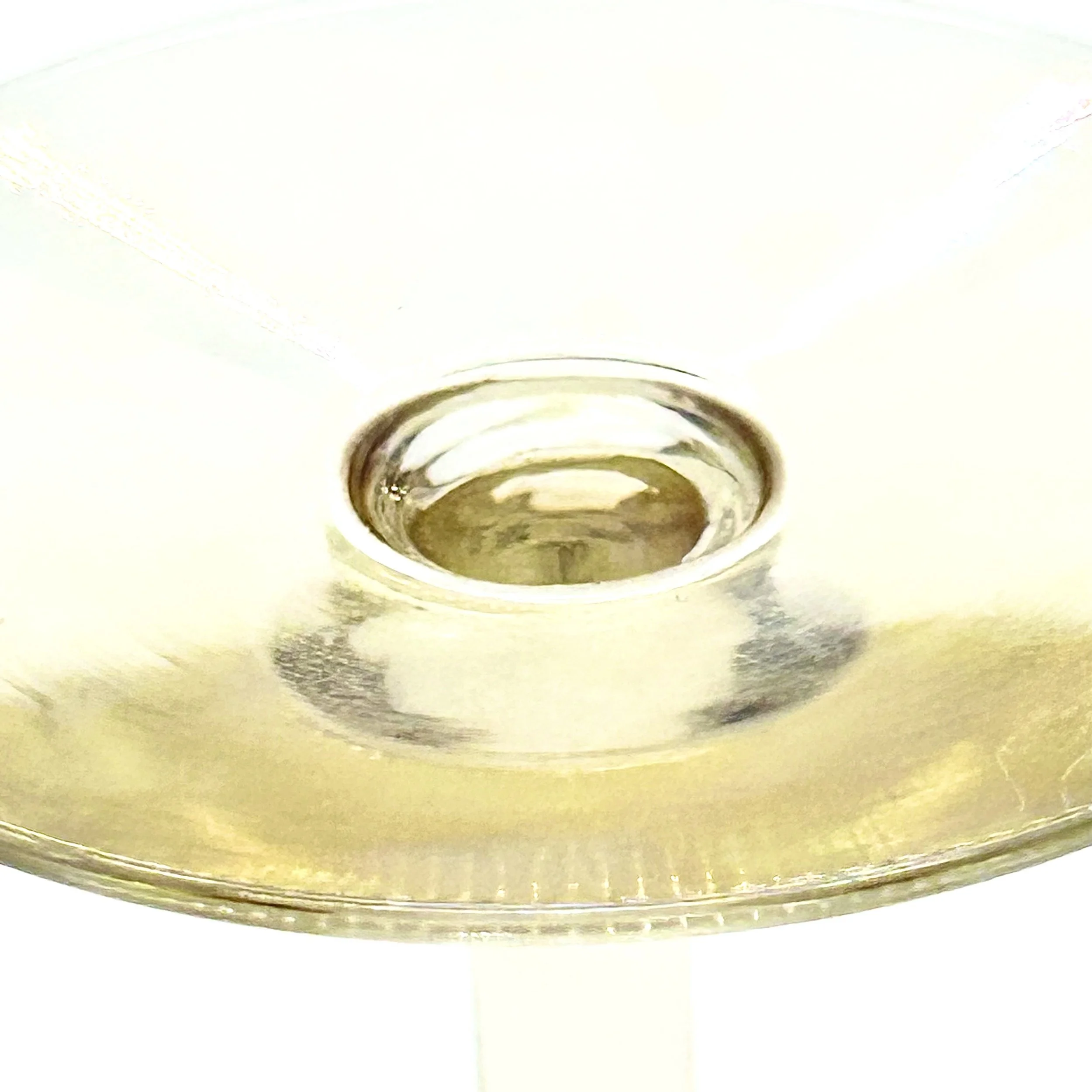
The object is in excellent antique condition. No chips, cracks, or professional repairs are observed. Minor internal straw marks and cooling lines inherent to the early 20th-century pressing process are present, which serve as evidence of authentic period manufacture. Base shows appropriate shelf wear consistent with age.
Authenticity & Construction
This compote was produced using a multi-stage pressing and reheating process. The "Amberina" effect is a chemical reaction where the glass batch contains gold chloride; upon initial cooling, the glass remains amber, but selective reheating of the top portion "strikes" the color to a rich ruby red. This manual heat-tempering ensures that no two pieces possess the exact same gradient, lending this specific example a unique tonal fingerprint.
• The "Ruby Stain" Technique: the rubyis a chemical coating (copper-sulfate) painted onto yellow/clear glass and then refired. This technique peaked in popularity between 1890 and 1905, often sold as "souvenir glass" at fairs and crystal palaces.
• The Pattern Style: The "Beaded" rim and the sharp, geometric faceted base are hallmarks of the Early American Pattern Glass (EAPG) movement, which flourished from roughly 1880 to 1910.
• The Mold Seams: The thin lines visible through the glass (the mold seams) is an indication of being machine-pressed. While pressing machines existed in 1830, the clarity and complexity of this piece's pattern suggest the more advanced steam-powered presses used in the late 1800s.
• Condition Clues: The "crackle" or "crazing" are intentional (often called Crackle Glass), a style that was popular in the 1880s as a revival of older Venetian techniques.
• Pattern: The "beaded" rim (the little bumps around the top) and the "diamond point" or "faceted" base suggest it belongs to a pattern family like Kings Crown or Beaded Grape, though the "crackle" texture makes it a bit more unique.
Placement
The warm, fiery palette of this compote makes it an ideal accent for a minimalist mantle or a sunlit sideboard where its dichroic properties can be fully realized. It serves as a sophisticated bridge between traditional Americana and contemporary high-contrast color palettes.
STANDARD ATTRIBUTION & VALUE DISCLOSURE; This piece is described to the best of current scholarly and market knowledge. Any maker or regional attribution is based on visual analysis, materials, construction techniques, and documented stylistic comparisons. As with many MCM and antique design objects, definitive attribution may not be possible without original labels or factory records. Pricing reflects condition, quality, decorative appeal, and current collector demand rather than guaranteed maker identification.
This striking Amberina glass compote exhibits a dramatic ombré transition from a deep, saturated ruby red to a luminous golden amber. The vessel features a sophisticated combination of geometric press-molded patterns, including a faceted diamond-point exterior and a distinctive scalloped "sawtooth" rim accented by polished raised beads. Its flared silhouette and substantial pedestal base allow for exceptional light refraction, making it a commanding sculptural centerpiece for a refined interior.
Attribution & Period
Early Modern, 1910s
This piece is a regional American example of decorative pressed glass, stylistically aligned with the "Early American Prescribed Glass" (EAPG) tradition. The vibrant "Amberina" heat-sensitive coloration—achieved by reheating gold-infused glass—is consistent with the production techniques utilized by the New England Glass Company and later refined by midwestern firms in the early 20th century. The specific molded facets and beadwork are characteristic of the transition from Victorian ornate styles to the more structured geometric forms of the early 1900s.
Dimensions & Weight
Condition
The object is in excellent antique condition. No chips, cracks, or professional repairs are observed. Minor internal straw marks and cooling lines inherent to the early 20th-century pressing process are present, which serve as evidence of authentic period manufacture. Base shows appropriate shelf wear consistent with age.
Authenticity & Construction
This compote was produced using a multi-stage pressing and reheating process. The "Amberina" effect is a chemical reaction where the glass batch contains gold chloride; upon initial cooling, the glass remains amber, but selective reheating of the top portion "strikes" the color to a rich ruby red. This manual heat-tempering ensures that no two pieces possess the exact same gradient, lending this specific example a unique tonal fingerprint.
• The "Ruby Stain" Technique: the rubyis a chemical coating (copper-sulfate) painted onto yellow/clear glass and then refired. This technique peaked in popularity between 1890 and 1905, often sold as "souvenir glass" at fairs and crystal palaces.
• The Pattern Style: The "Beaded" rim and the sharp, geometric faceted base are hallmarks of the Early American Pattern Glass (EAPG) movement, which flourished from roughly 1880 to 1910.
• The Mold Seams: The thin lines visible through the glass (the mold seams) is an indication of being machine-pressed. While pressing machines existed in 1830, the clarity and complexity of this piece's pattern suggest the more advanced steam-powered presses used in the late 1800s.
• Condition Clues: The "crackle" or "crazing" are intentional (often called Crackle Glass), a style that was popular in the 1880s as a revival of older Venetian techniques.
• Pattern: The "beaded" rim (the little bumps around the top) and the "diamond point" or "faceted" base suggest it belongs to a pattern family like Kings Crown or Beaded Grape, though the "crackle" texture makes it a bit more unique.
Placement
The warm, fiery palette of this compote makes it an ideal accent for a minimalist mantle or a sunlit sideboard where its dichroic properties can be fully realized. It serves as a sophisticated bridge between traditional Americana and contemporary high-contrast color palettes.
STANDARD ATTRIBUTION & VALUE DISCLOSURE; This piece is described to the best of current scholarly and market knowledge. Any maker or regional attribution is based on visual analysis, materials, construction techniques, and documented stylistic comparisons. As with many MCM and antique design objects, definitive attribution may not be possible without original labels or factory records. Pricing reflects condition, quality, decorative appeal, and current collector demand rather than guaranteed maker identification.

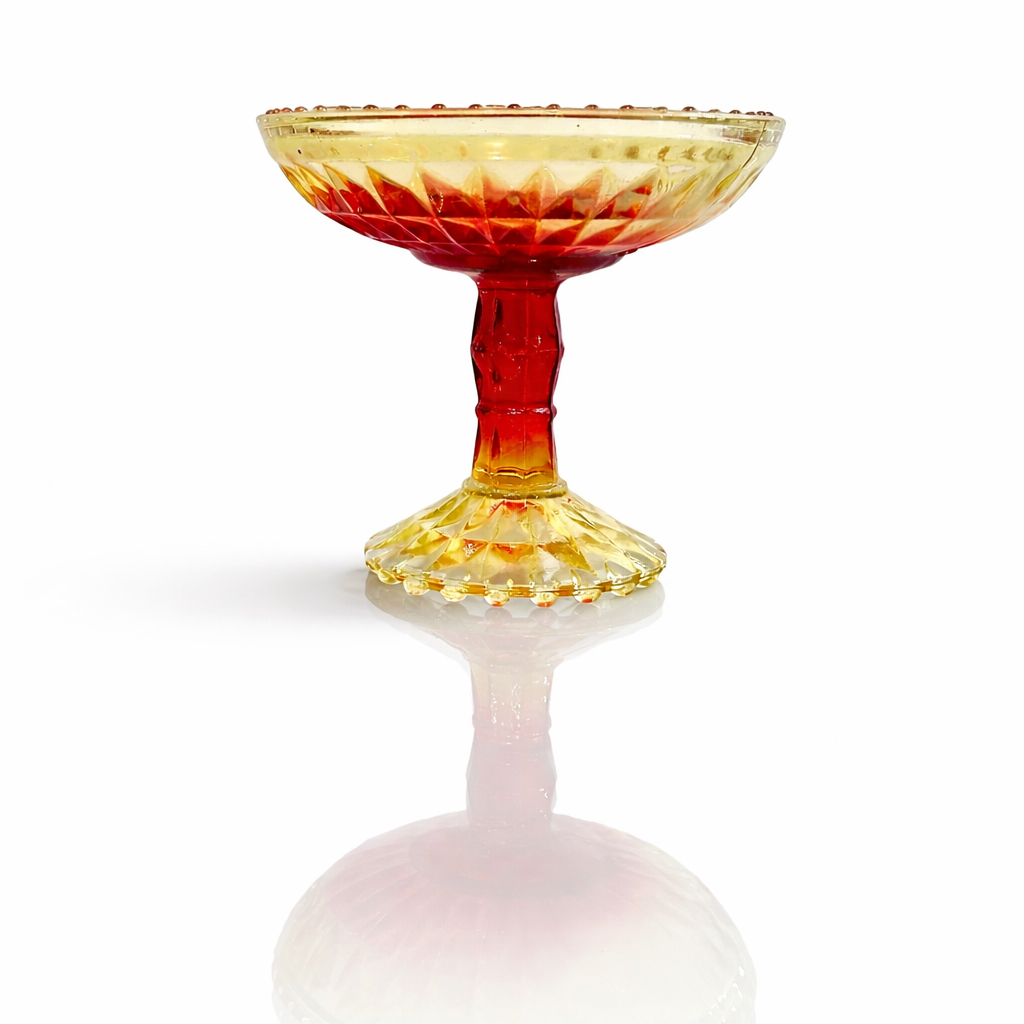 Image 1 of 8
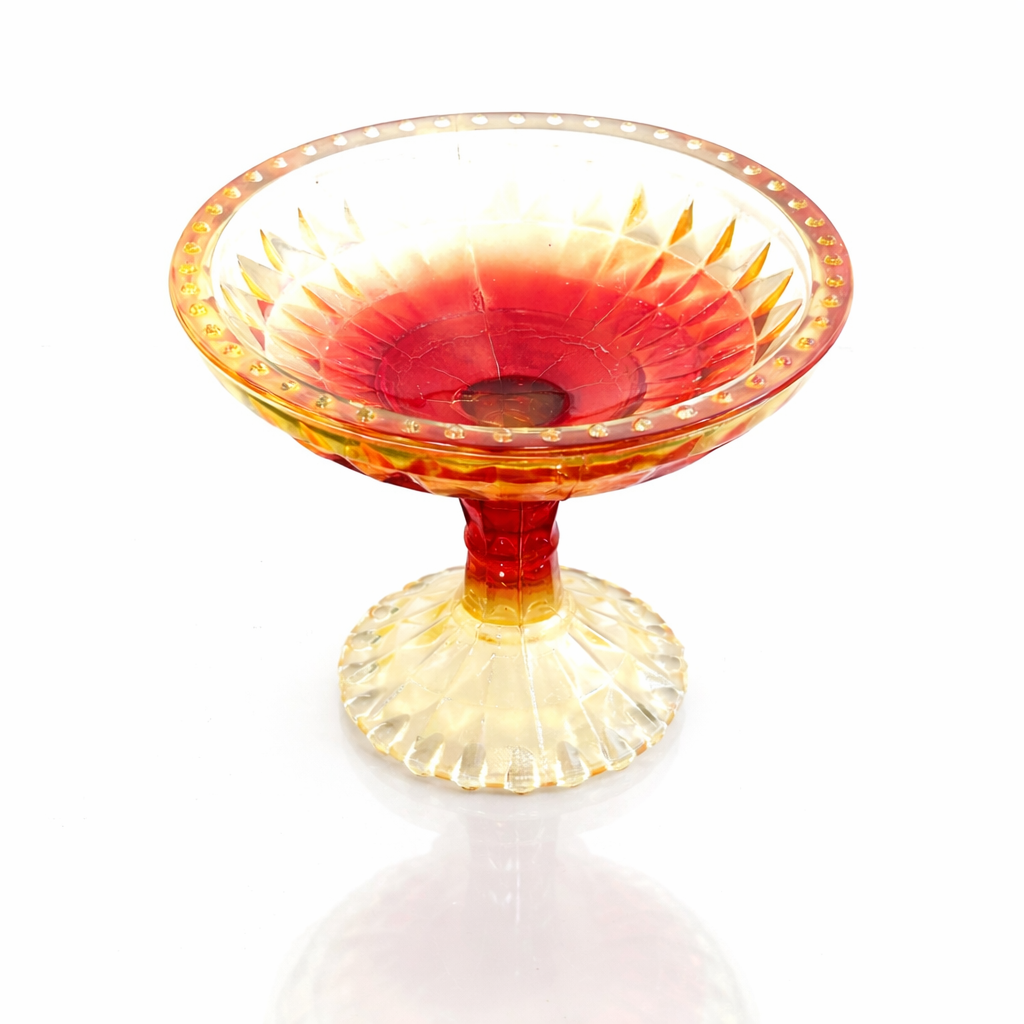 Image 2 of 8
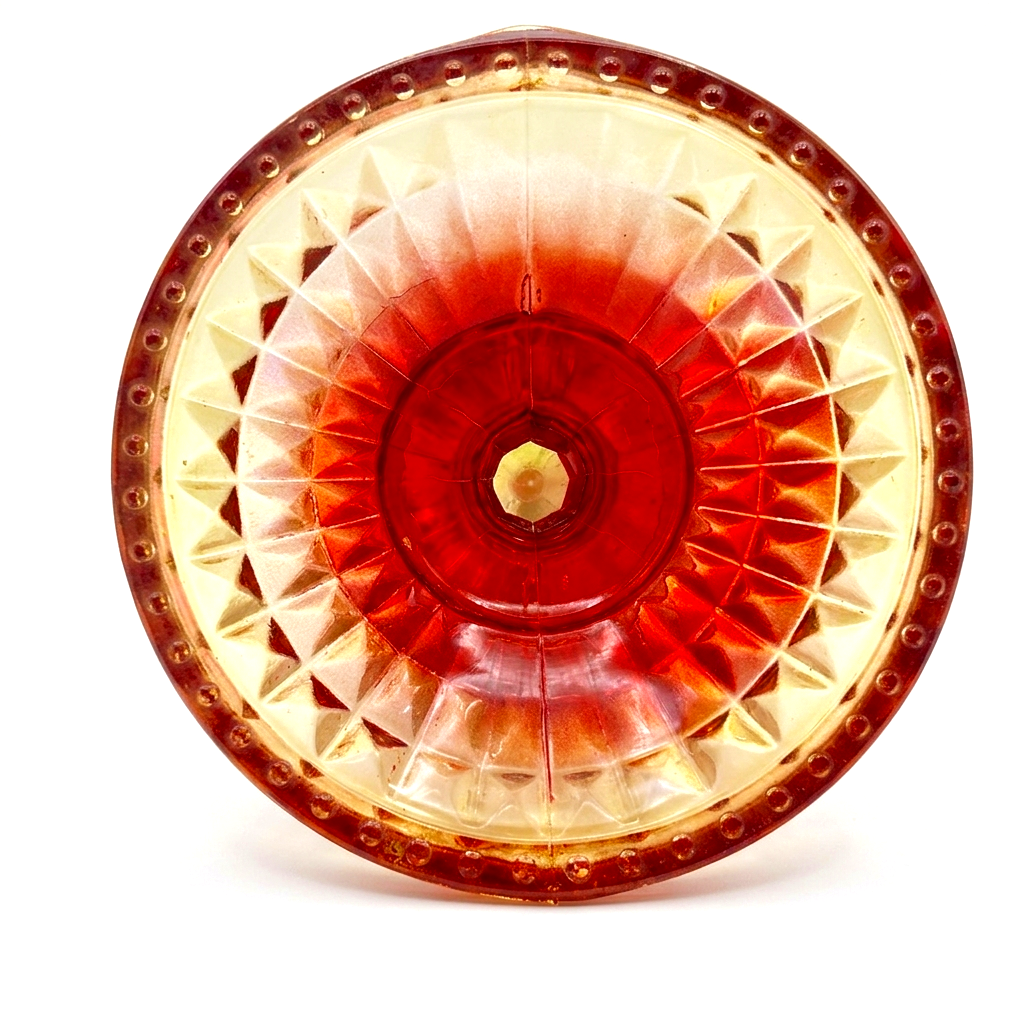 Image 3 of 8
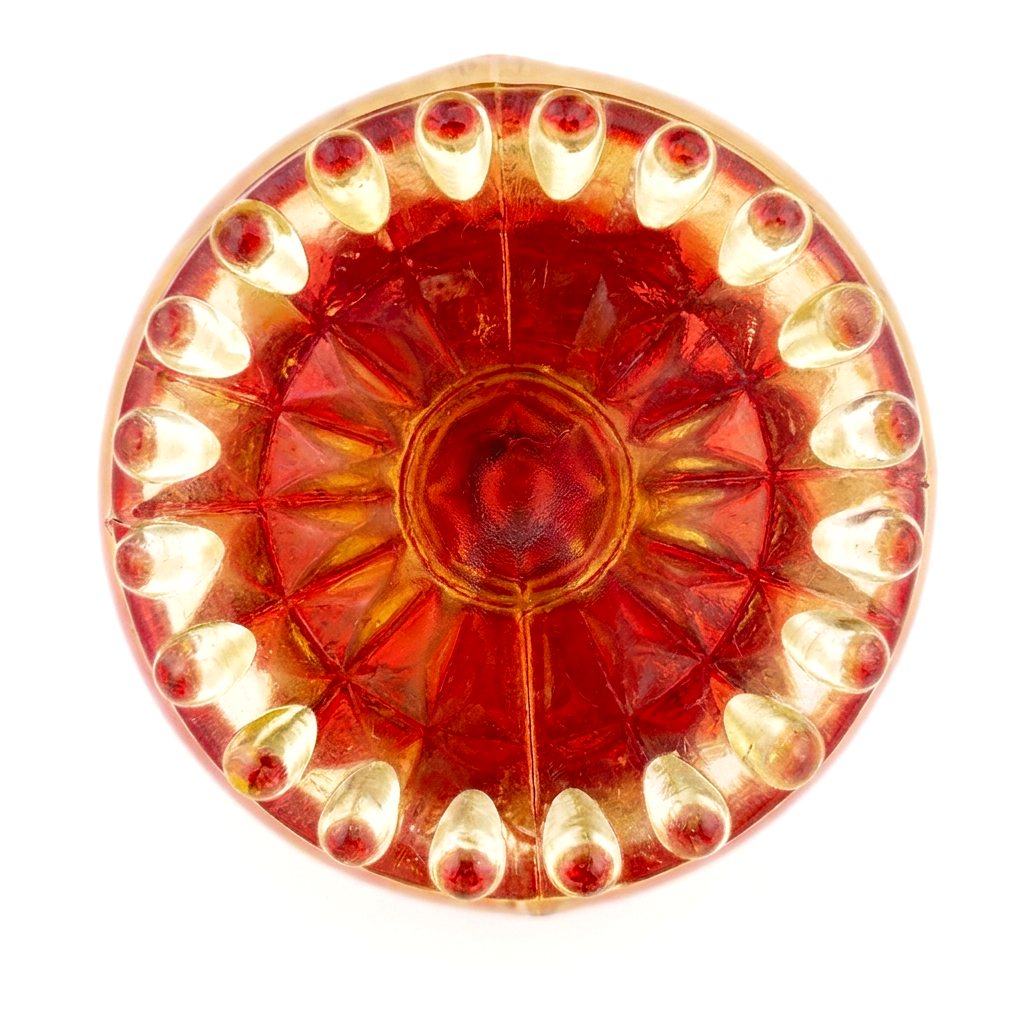 Image 4 of 8
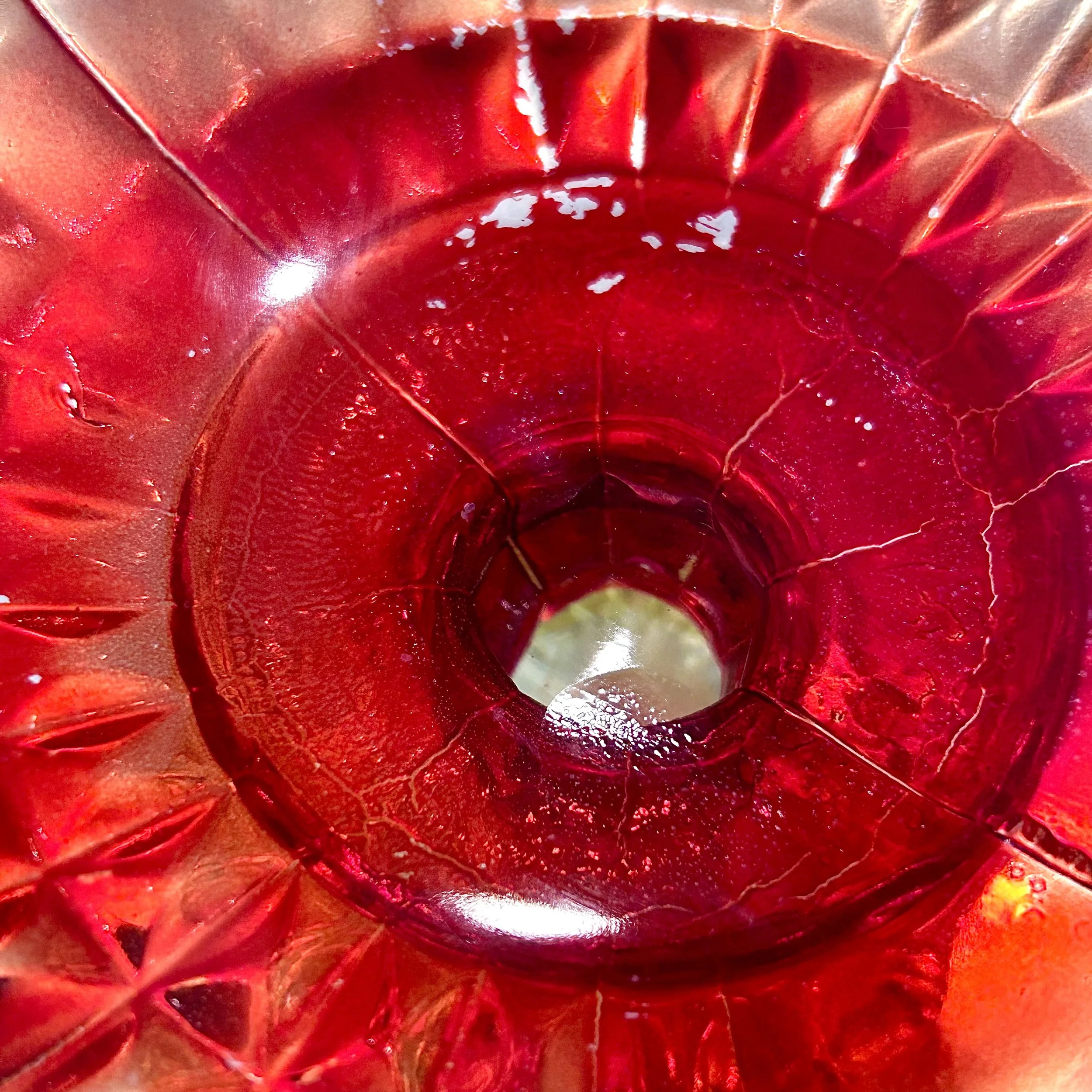 Image 5 of 8
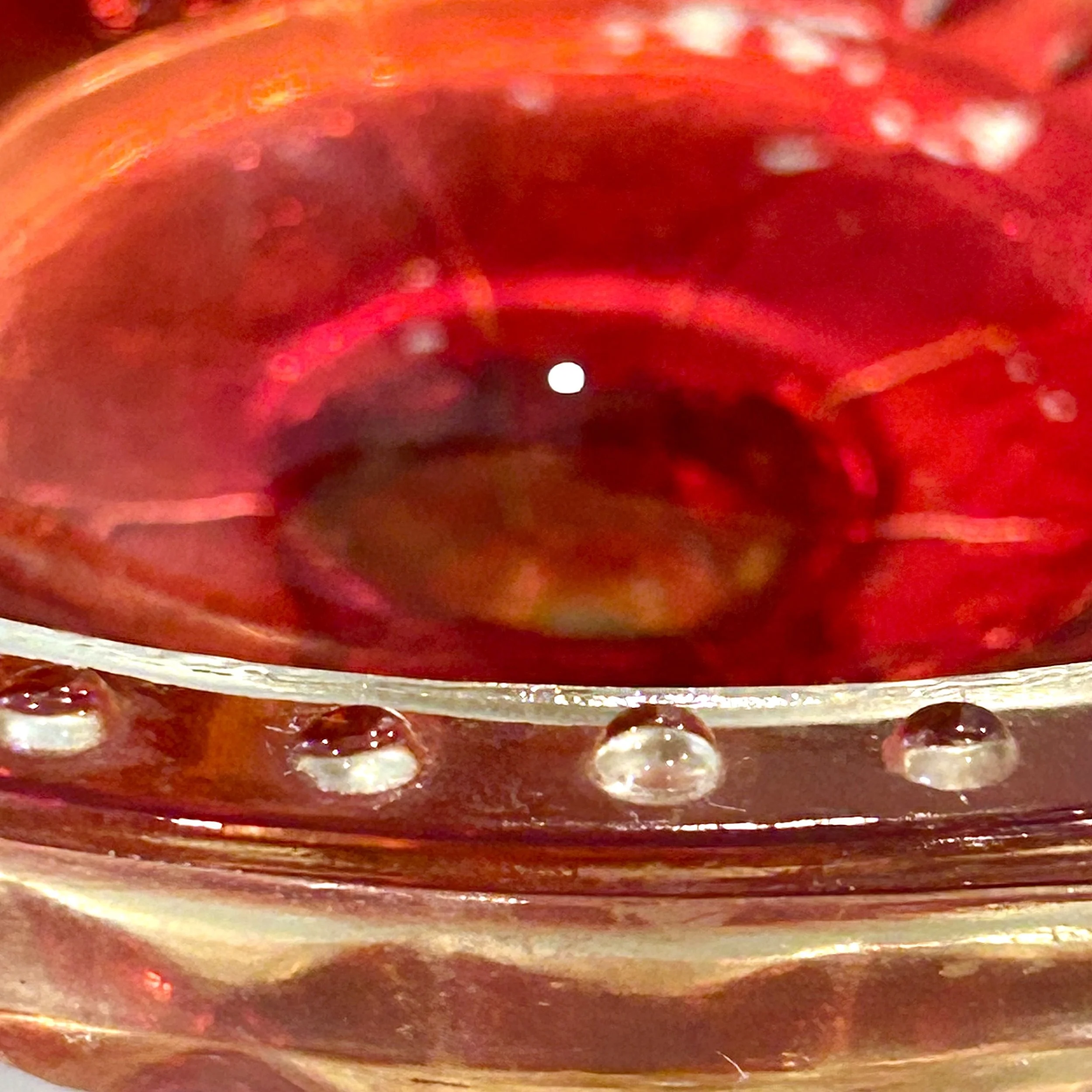 Image 6 of 8
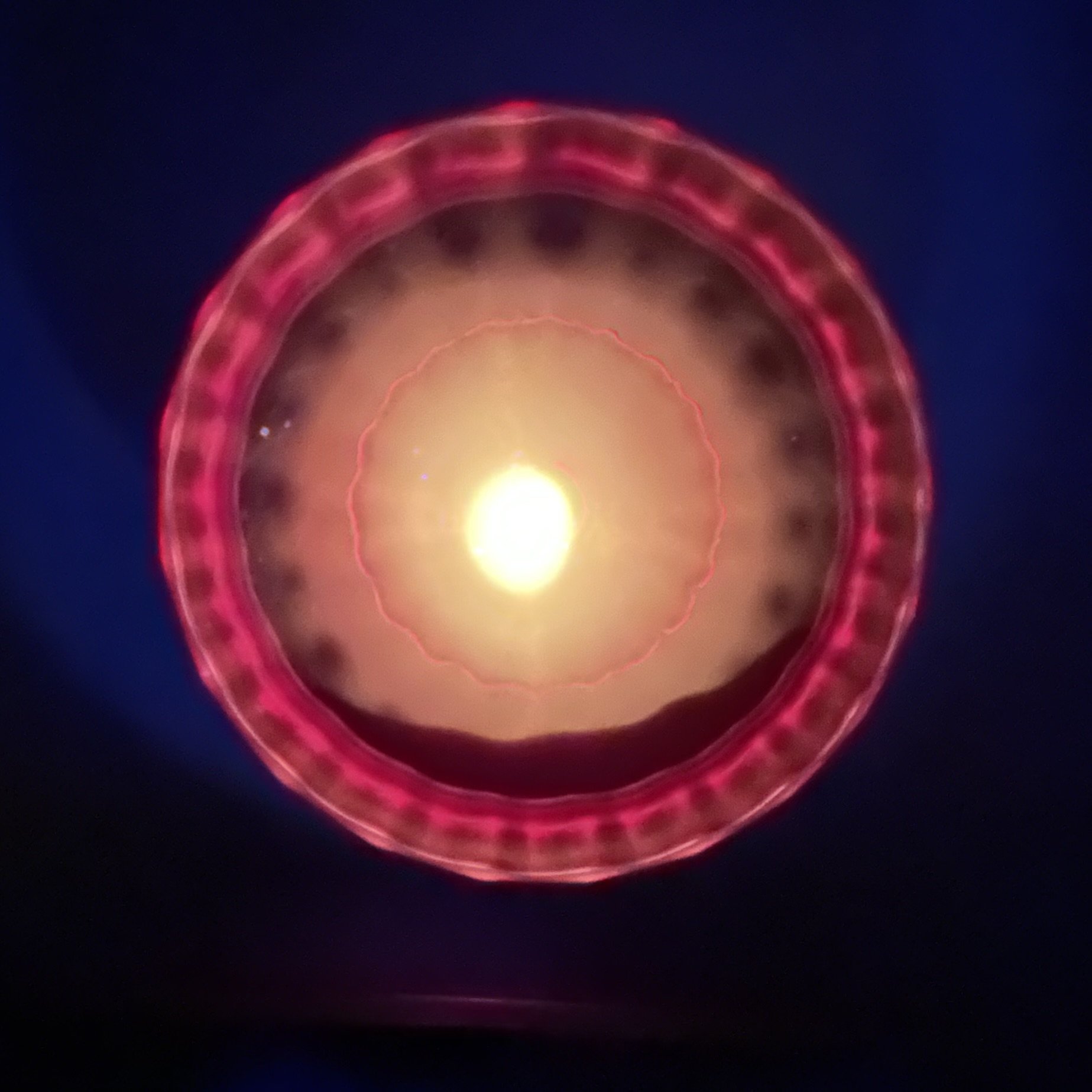 Image 7 of 8
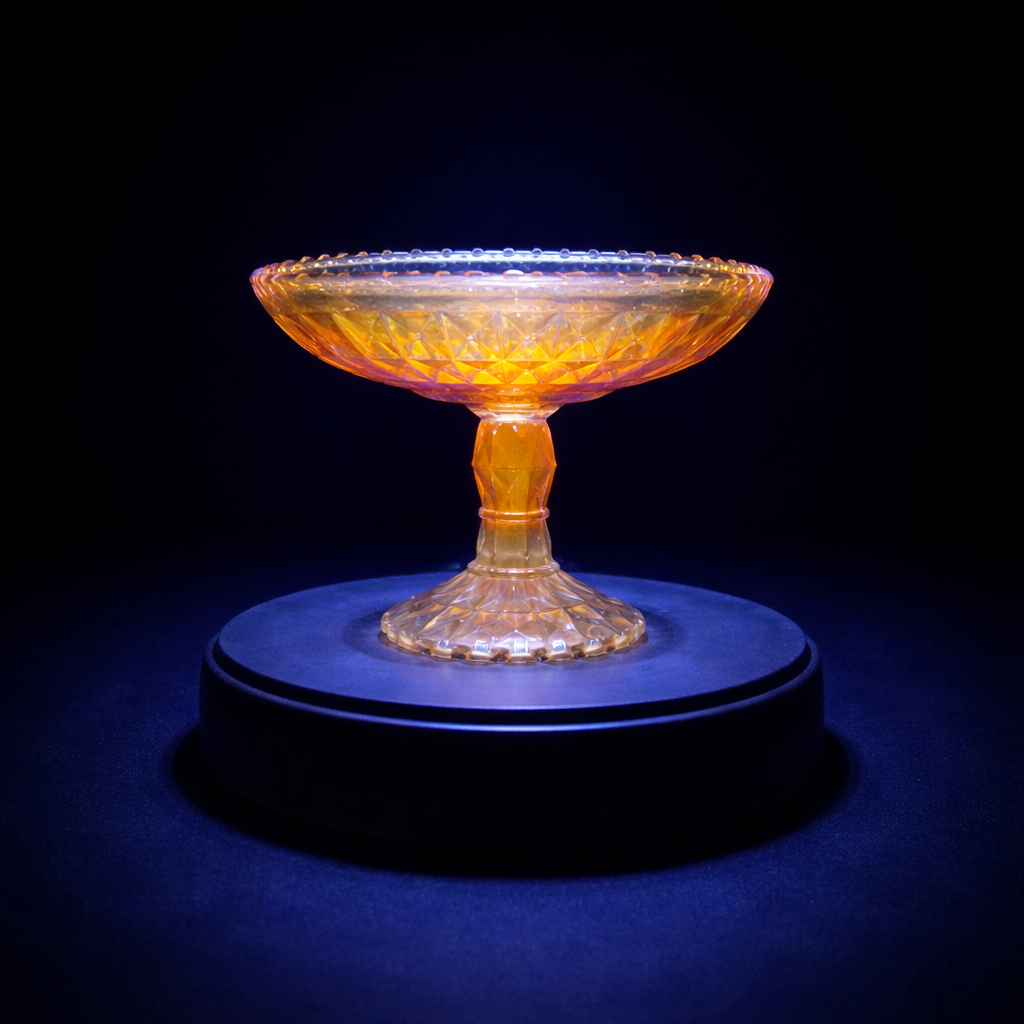 Image 8 of 8