 Image 1 of 5
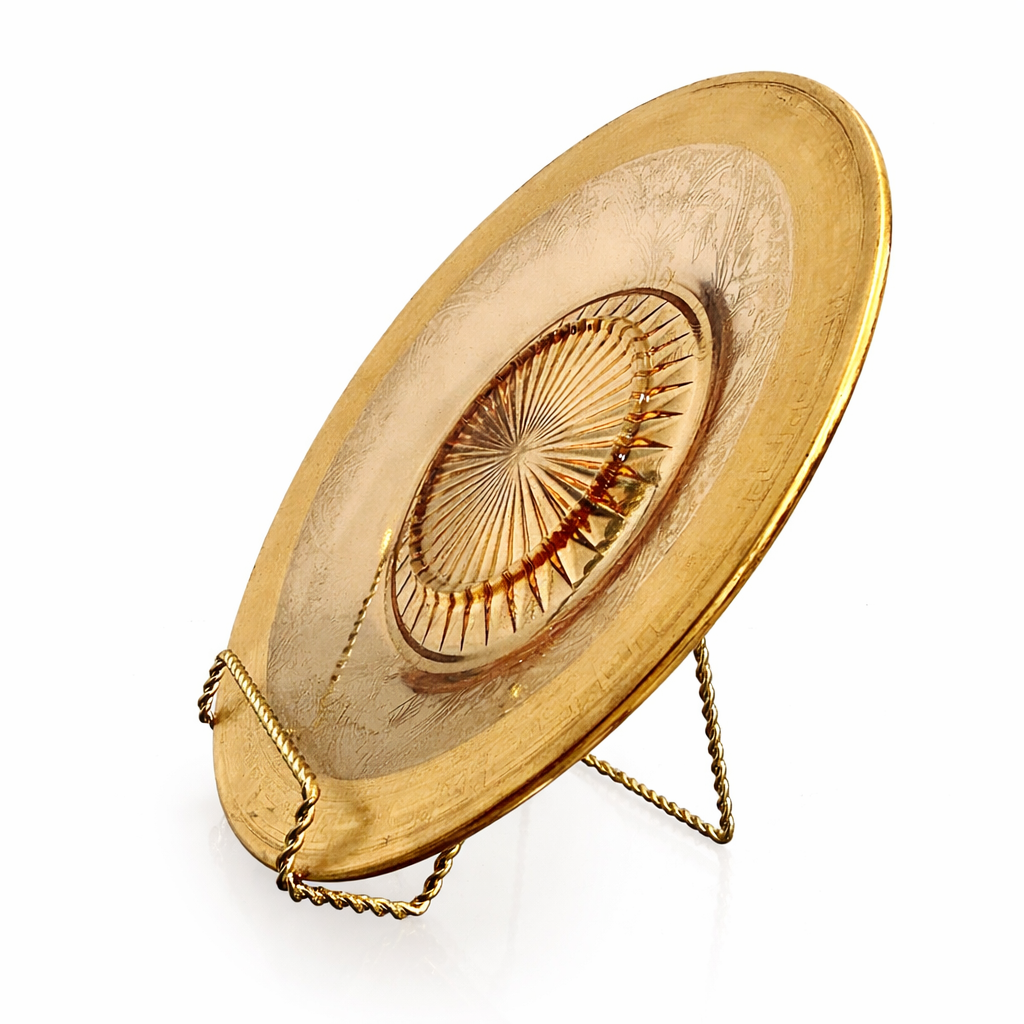 Image 2 of 5
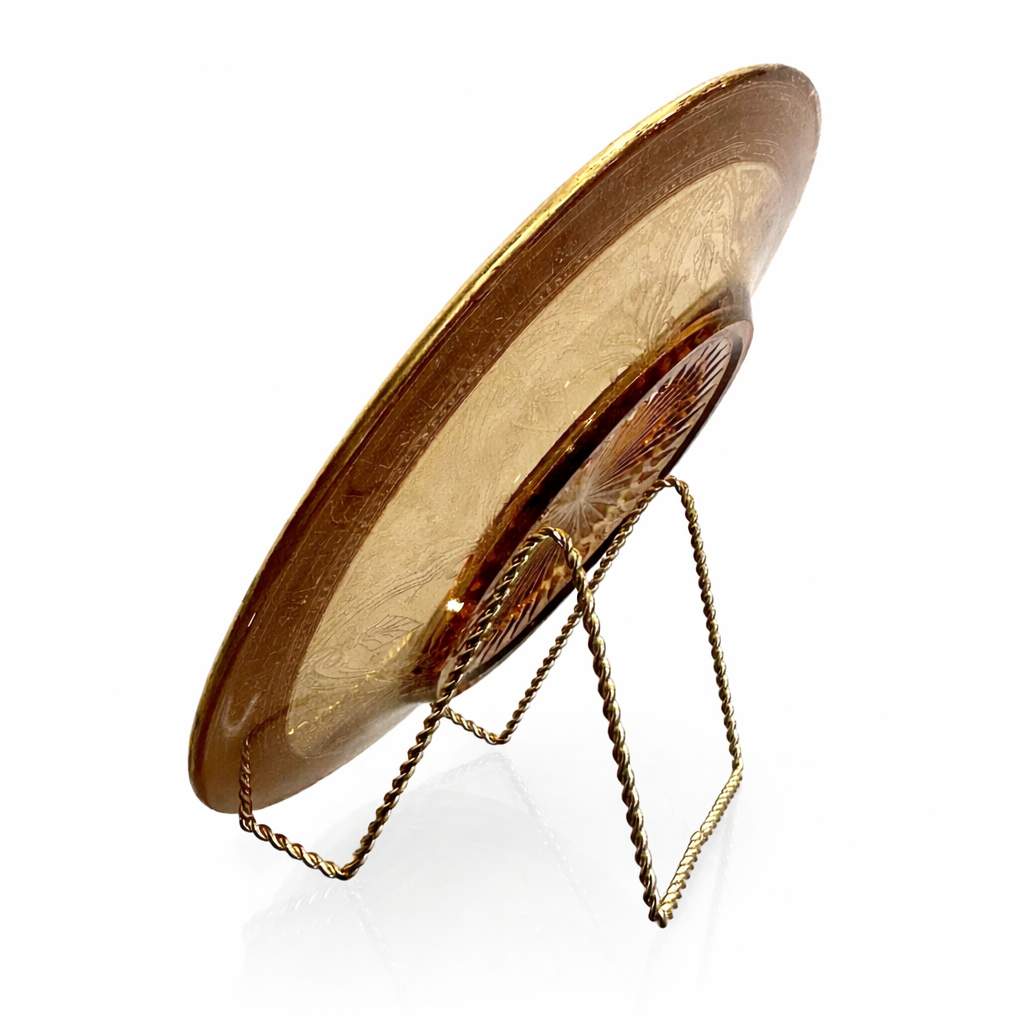 Image 3 of 5
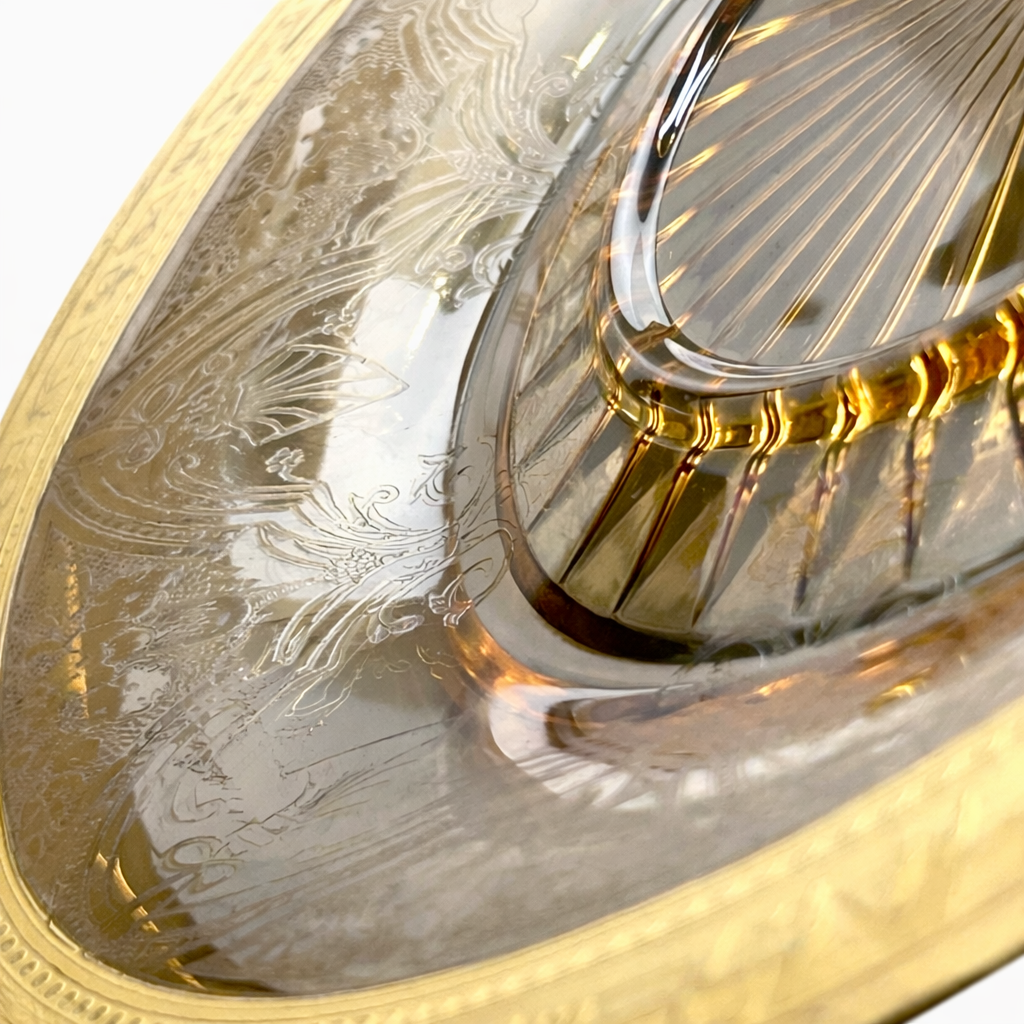 Image 4 of 5
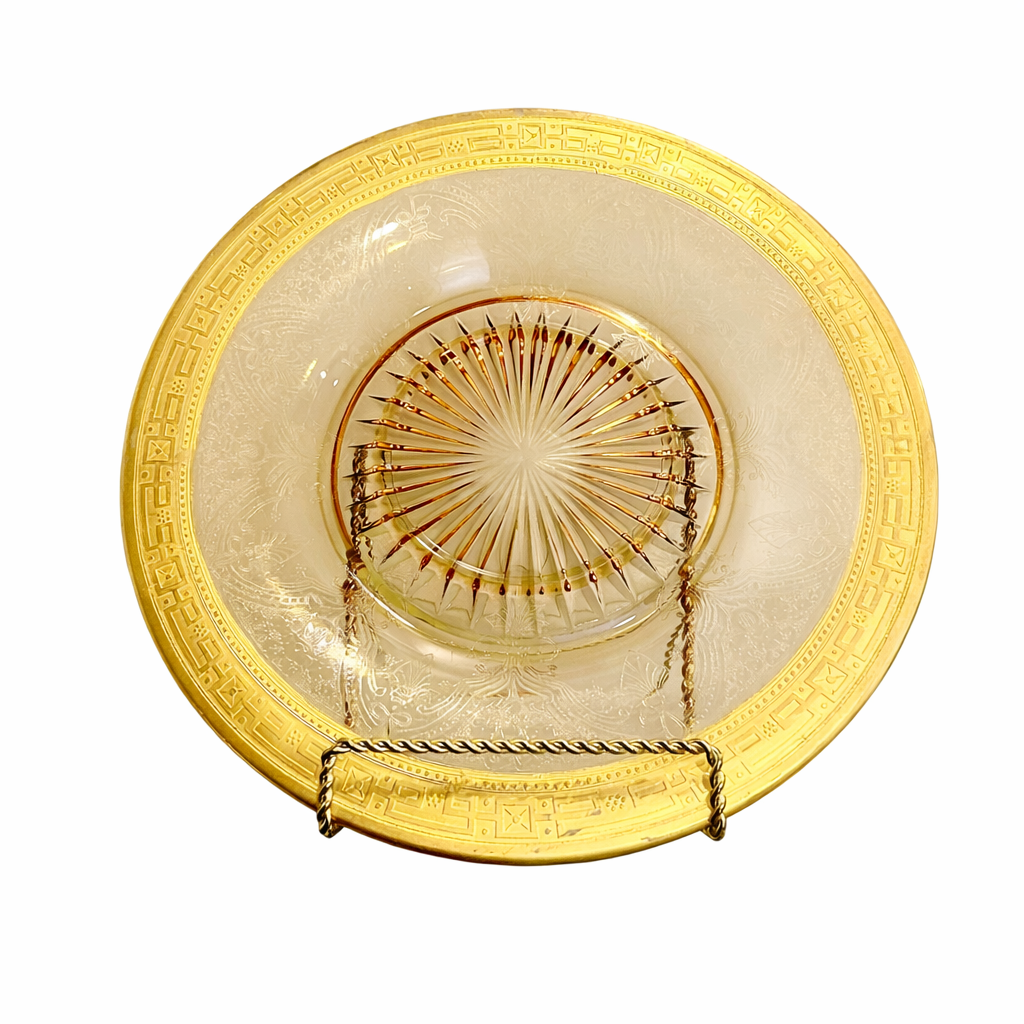 Image 5 of 5
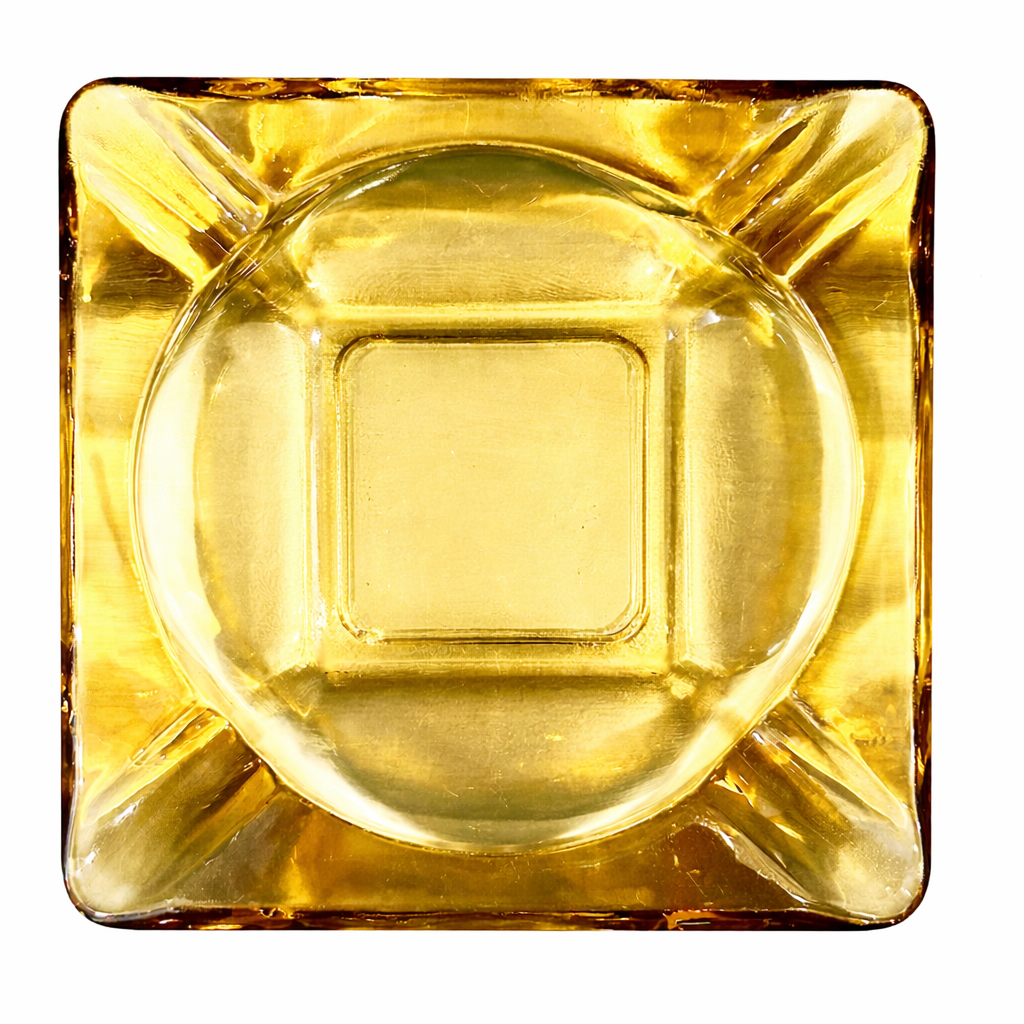
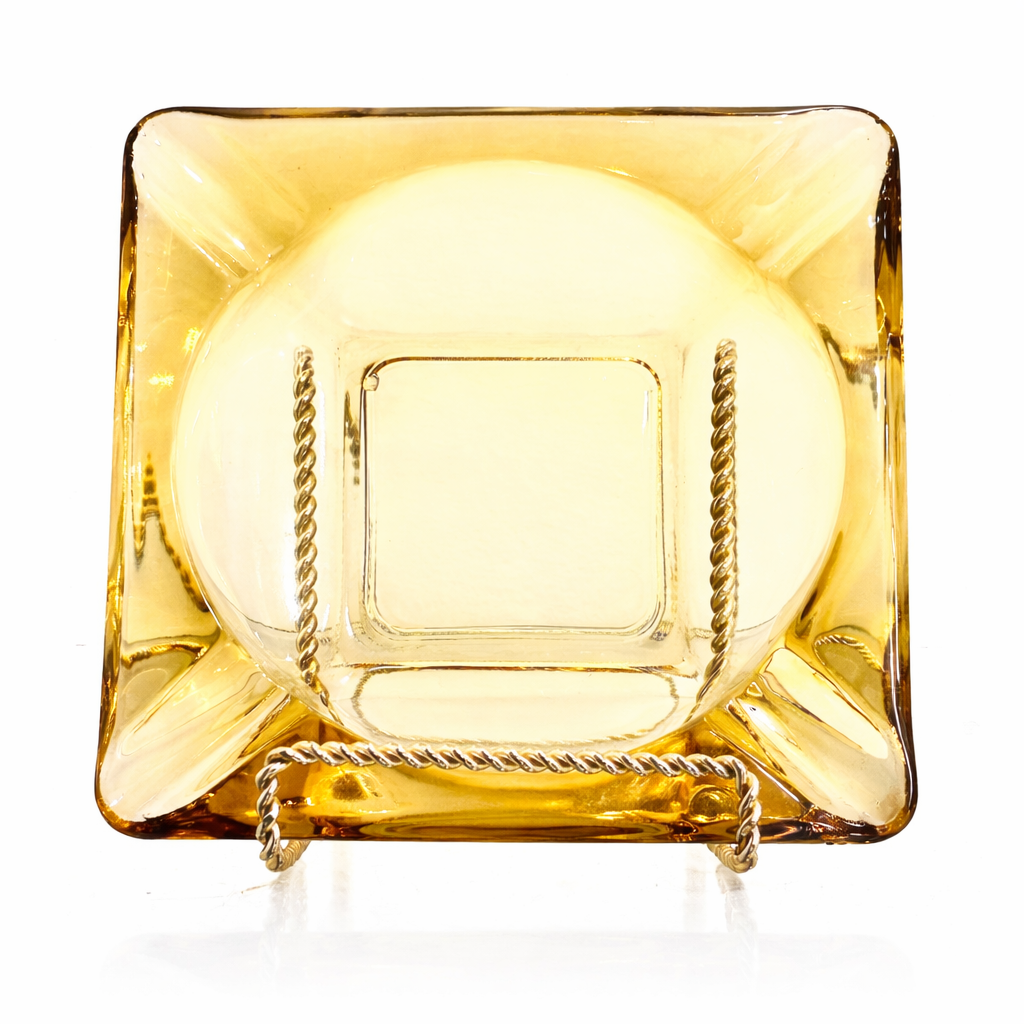
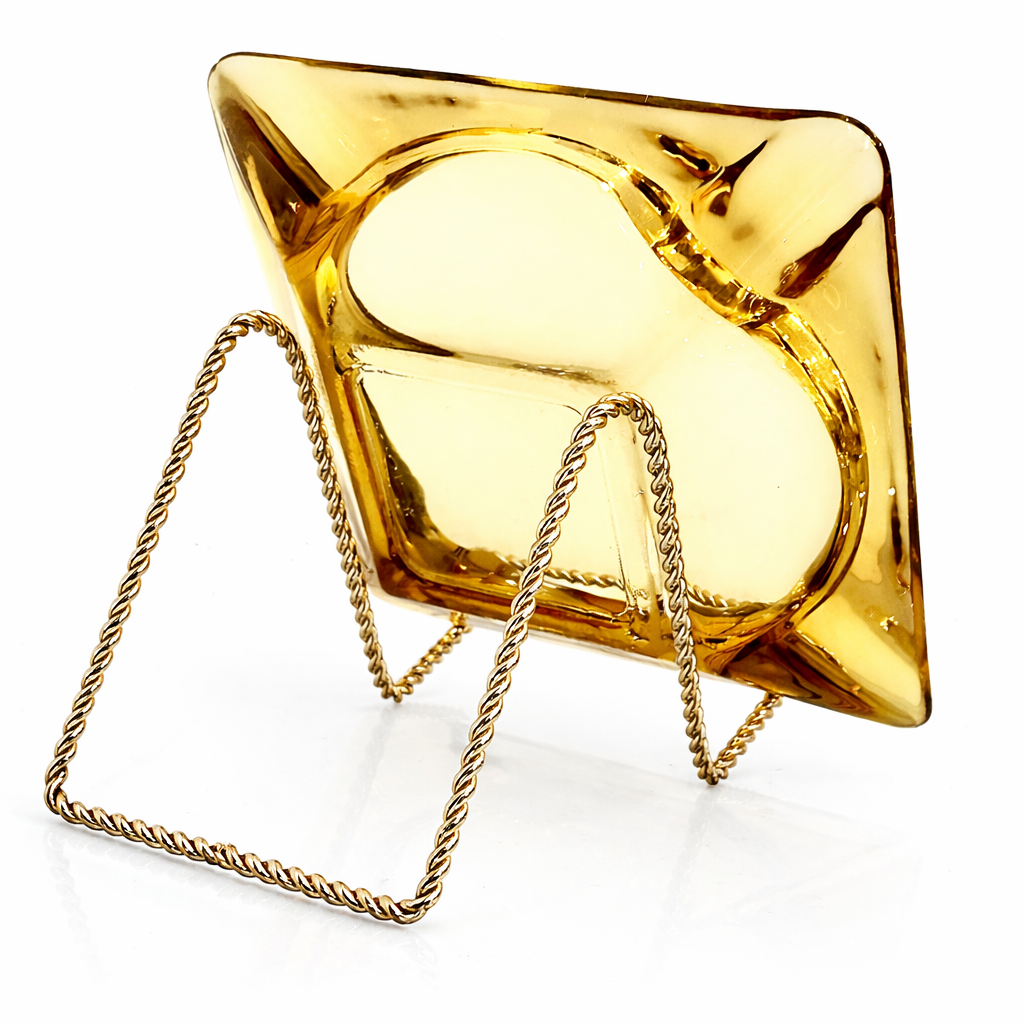
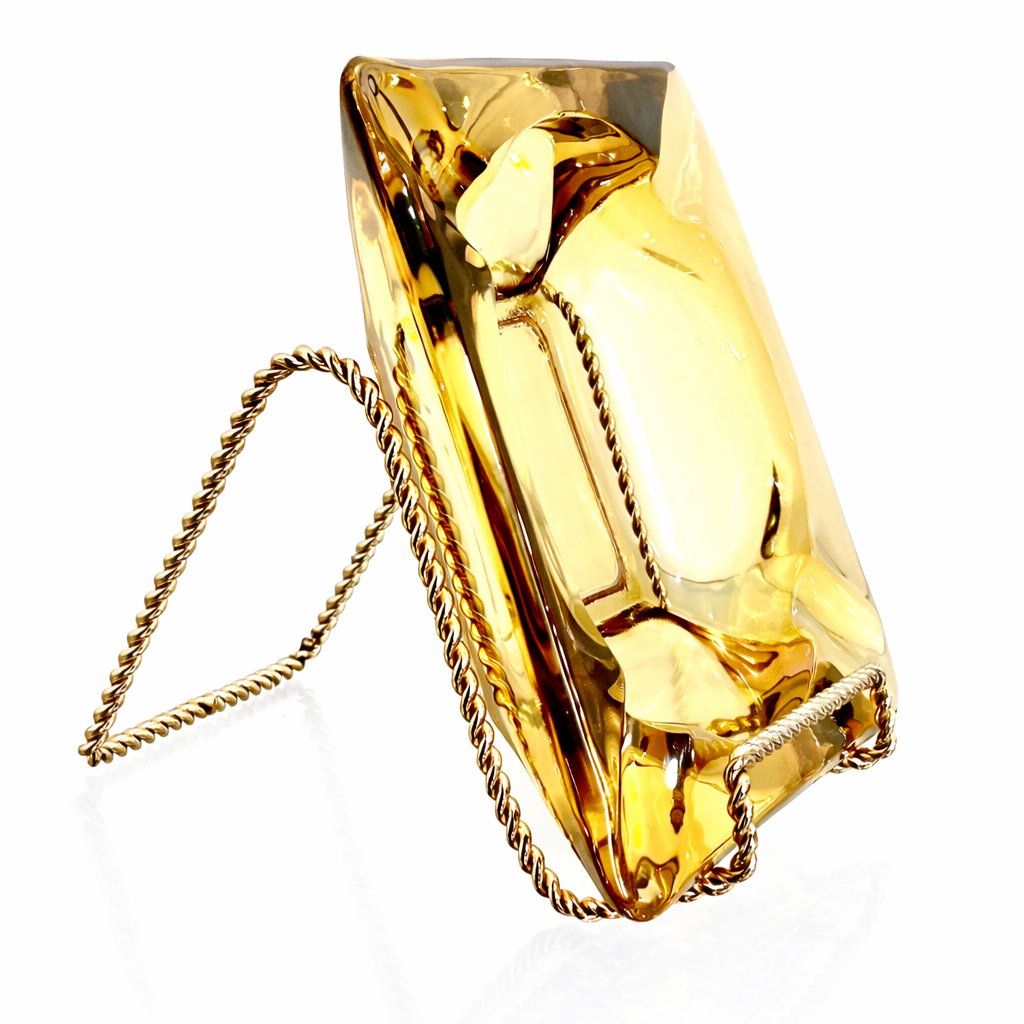
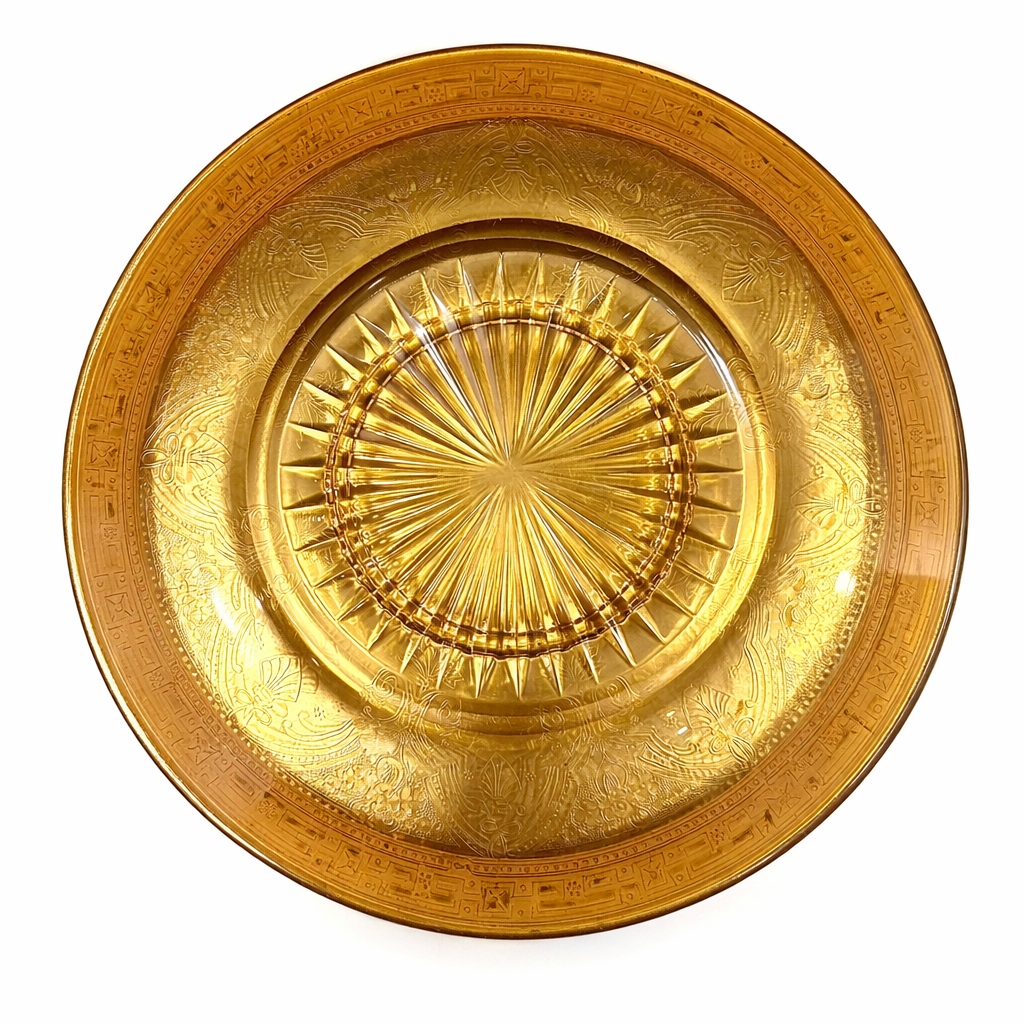
c.1880-1905; A late 19th-century gilt amber pressed and cut glass display plate, produced circa 1880-1905 (late Victorian / early Edwardian).
11 ¾ inches in diameter .
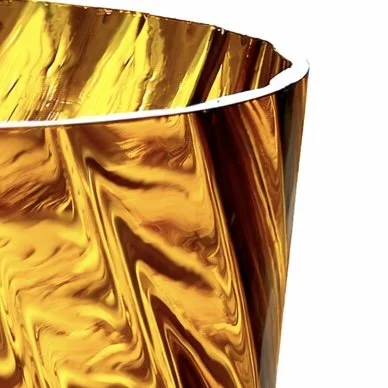
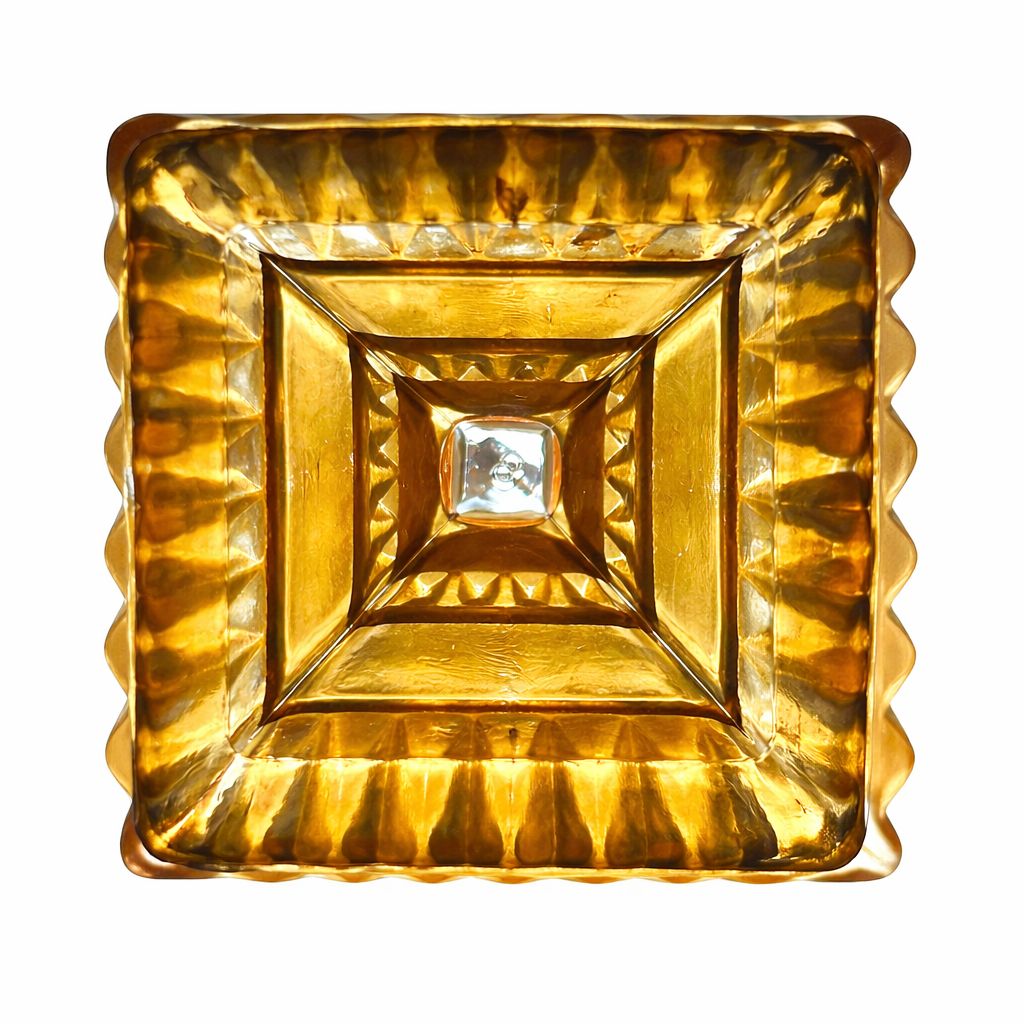
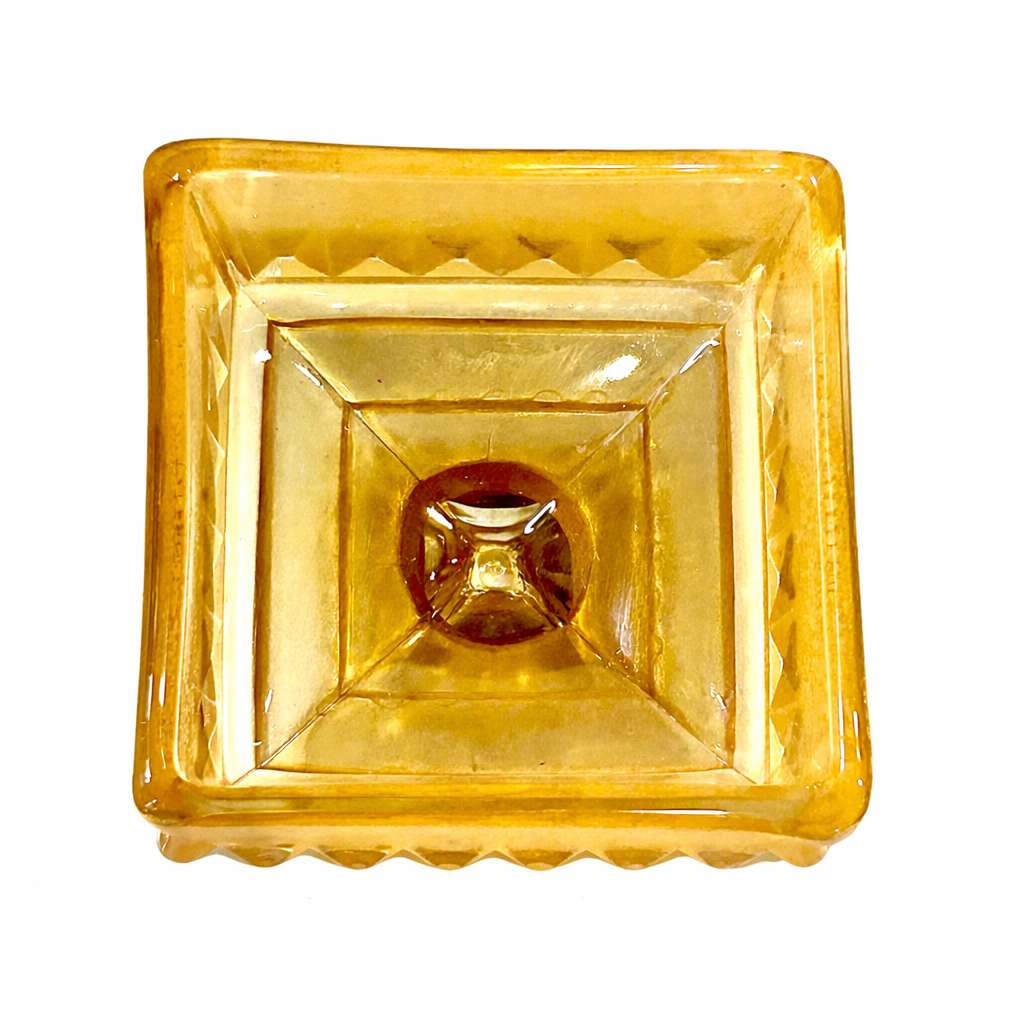
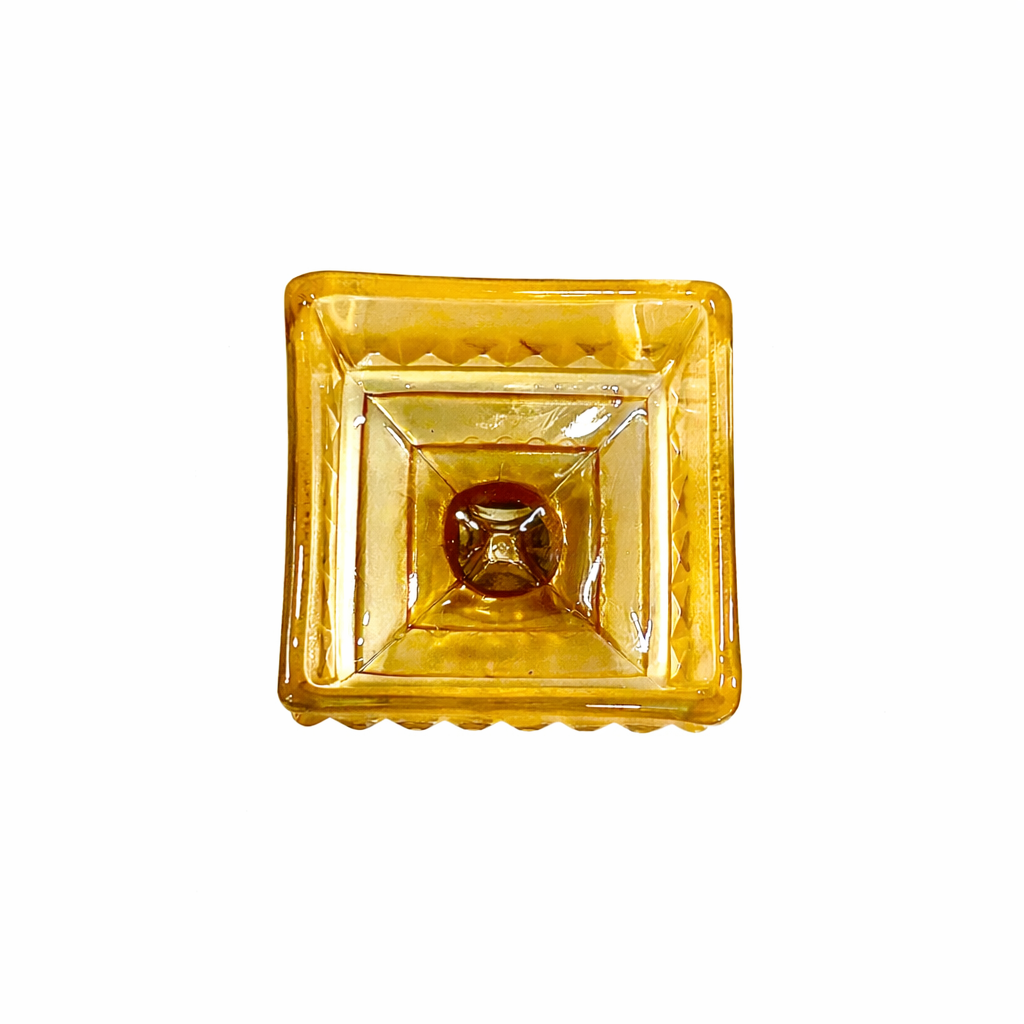
Deep amber/golden glass, Cut radial starburst well , Acid-etched and wheel-engraved decoration, Greek-key border with dot motifs , Original gilt (gold-based) decoration with natural age wear
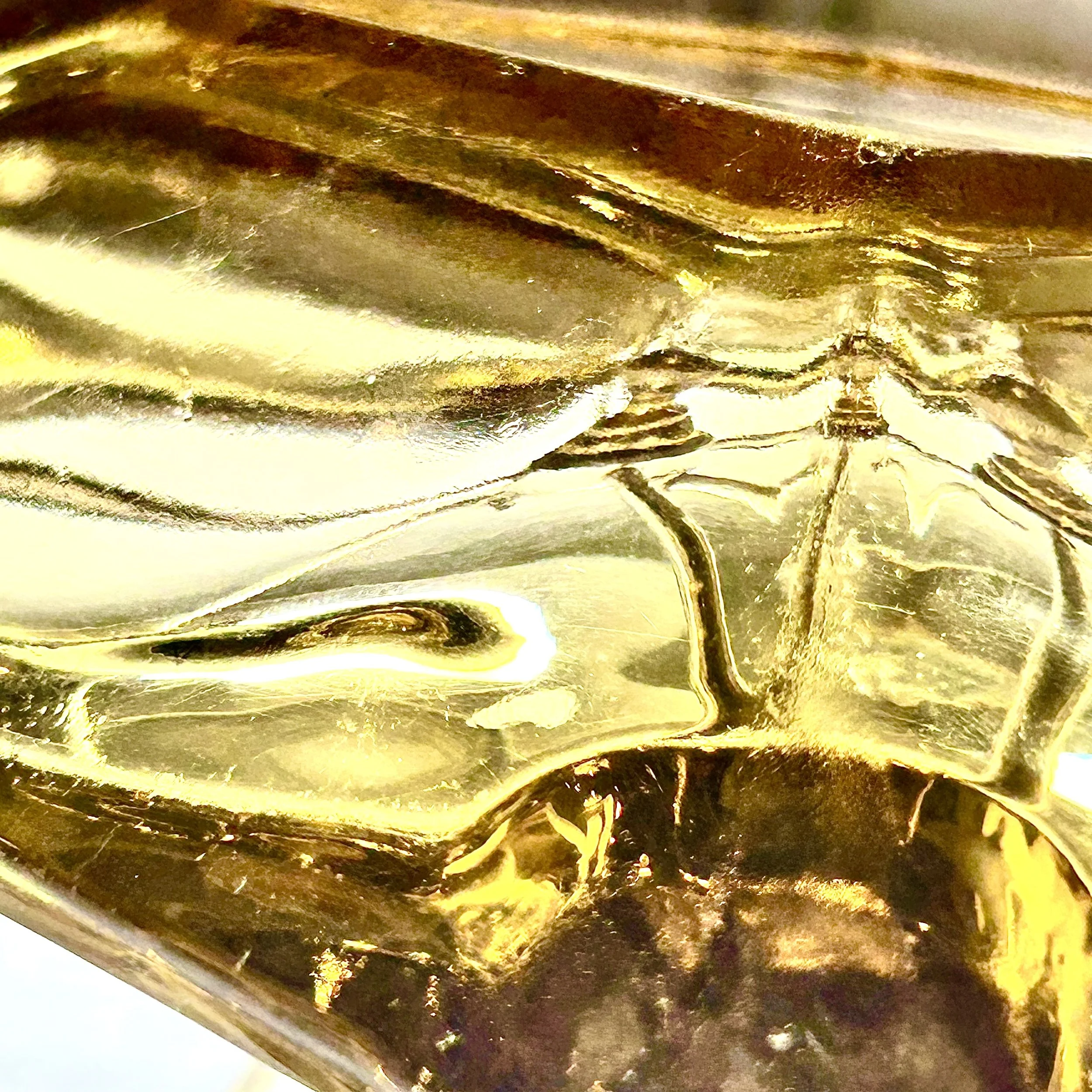
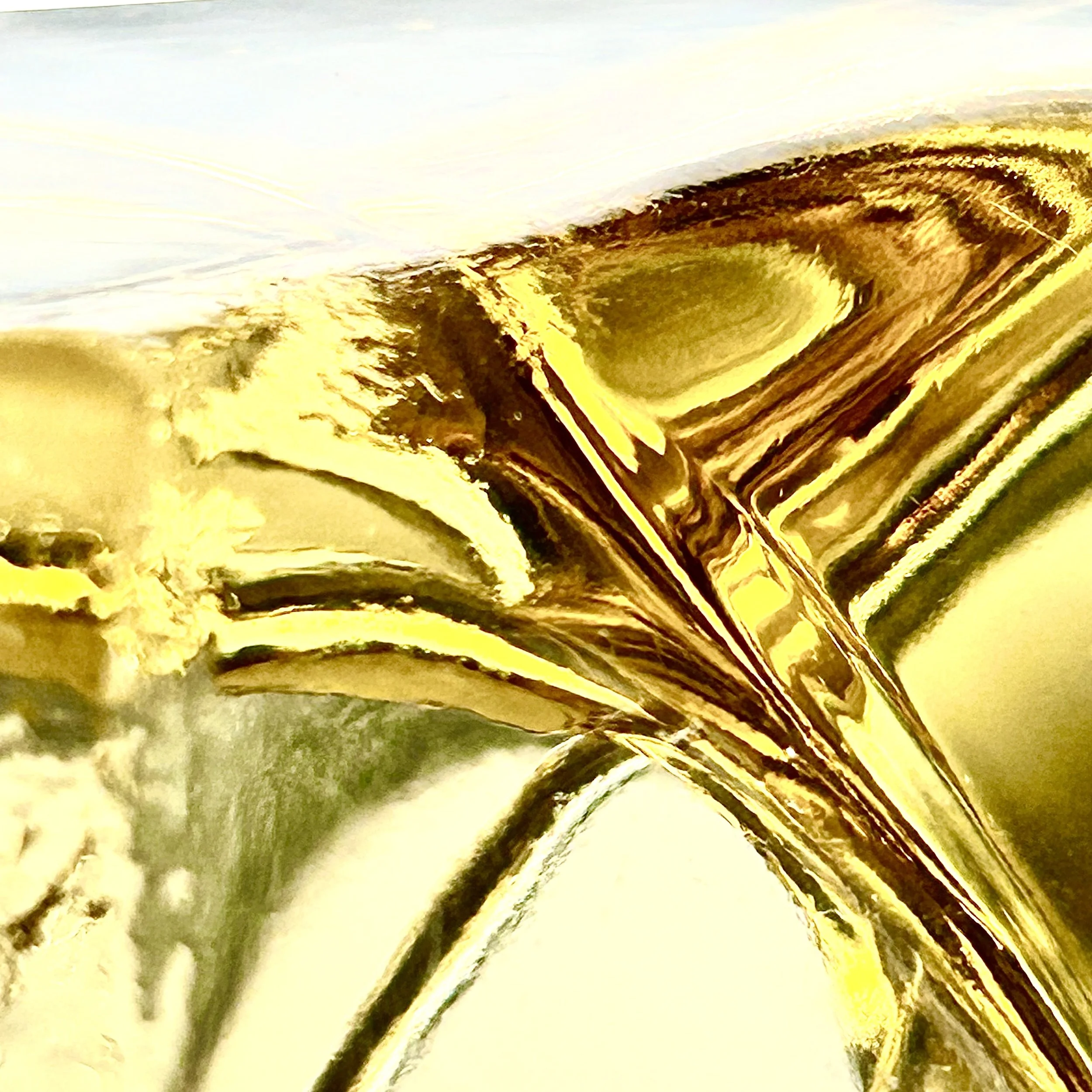
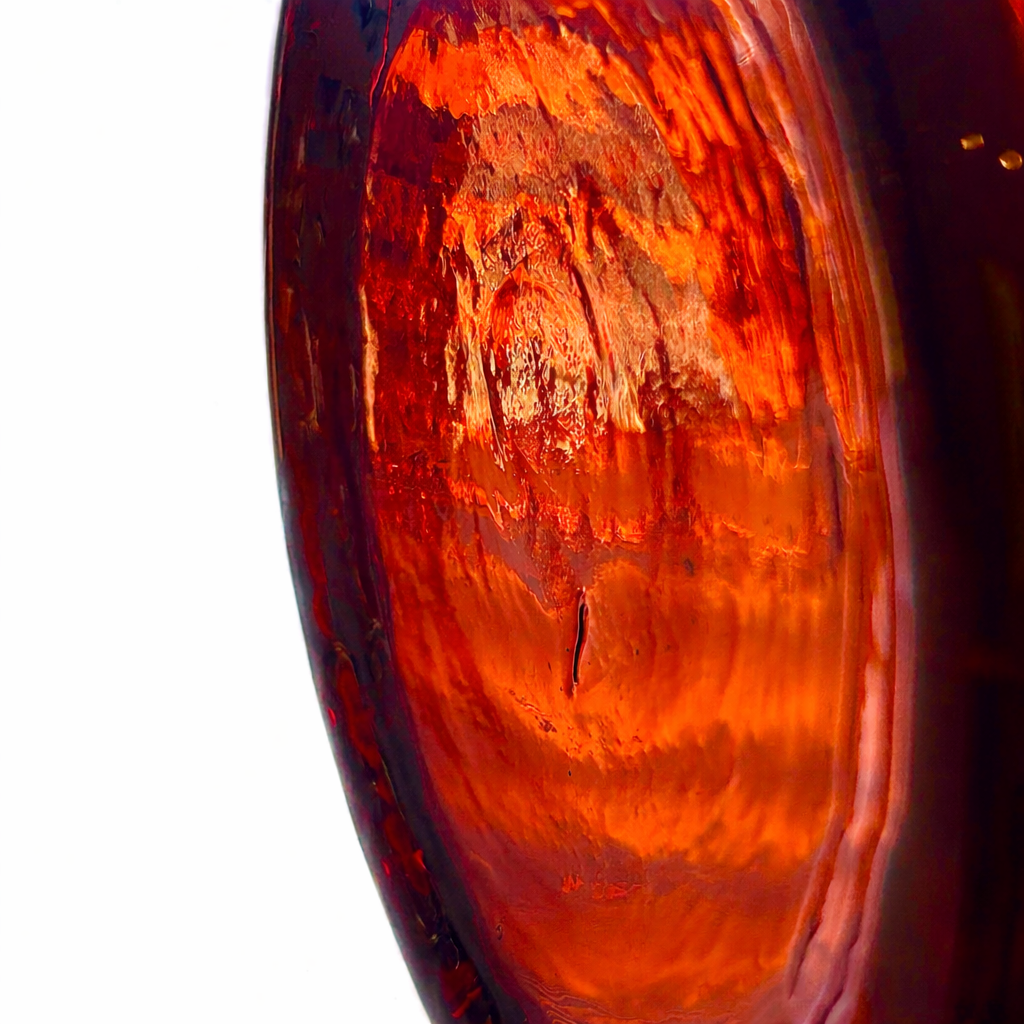
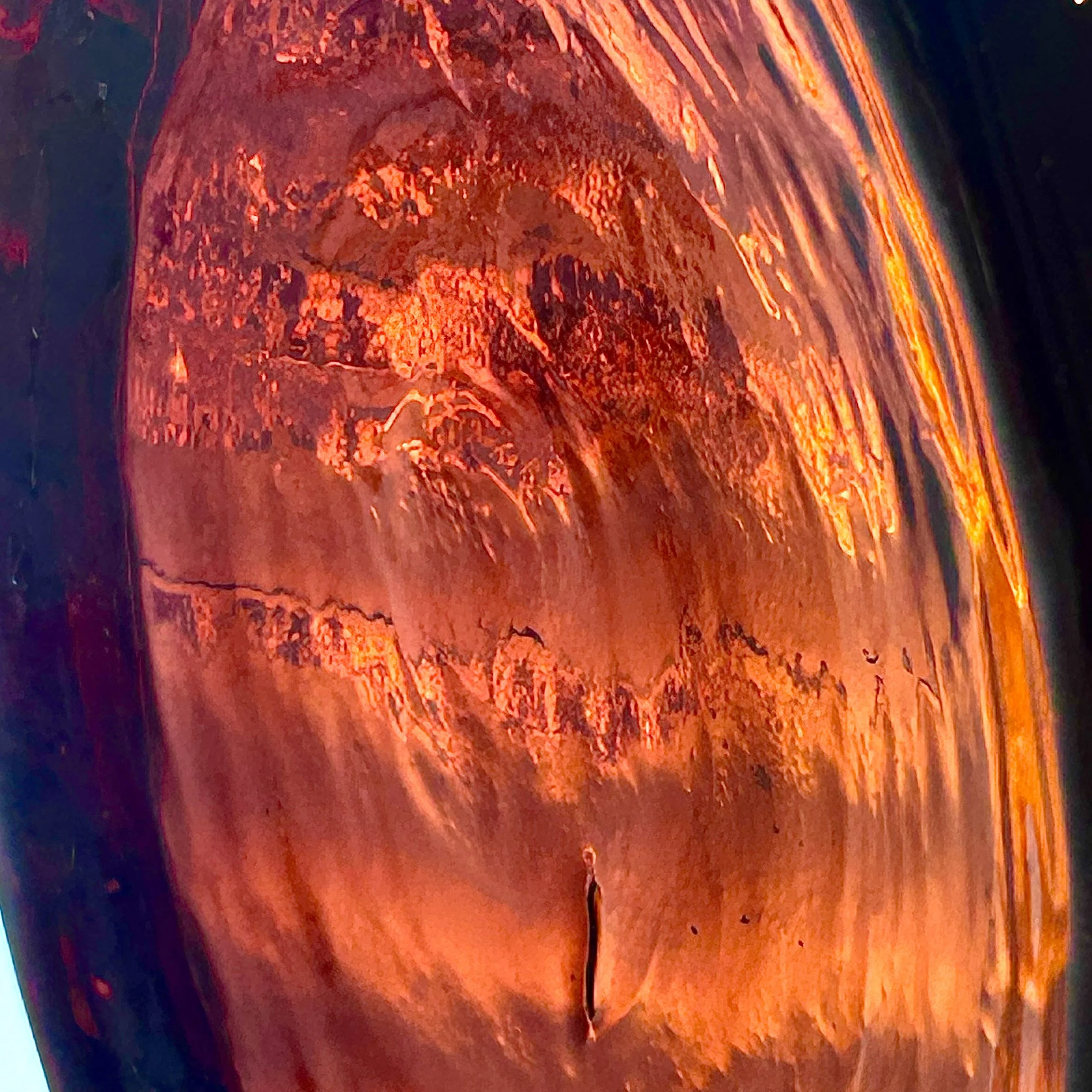
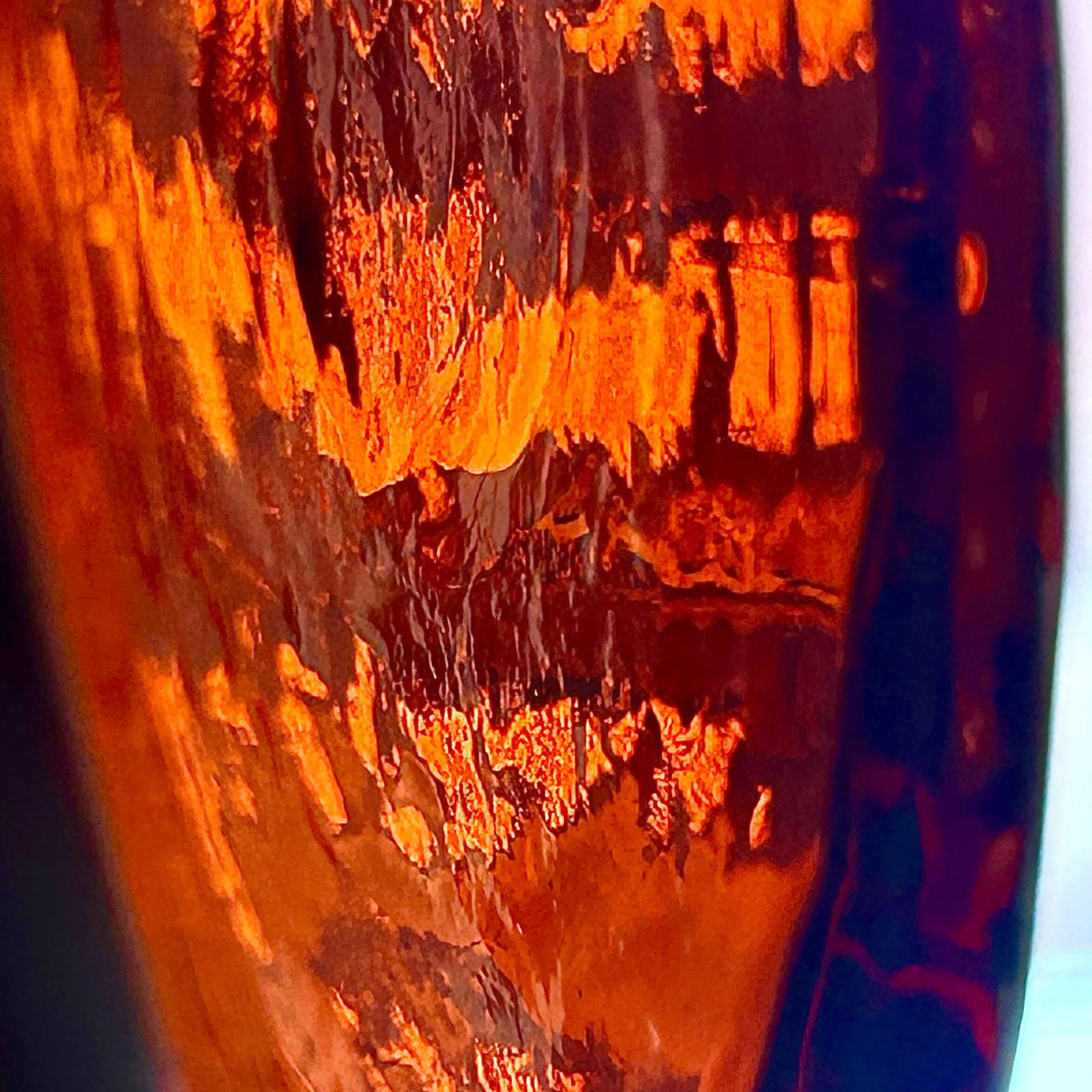
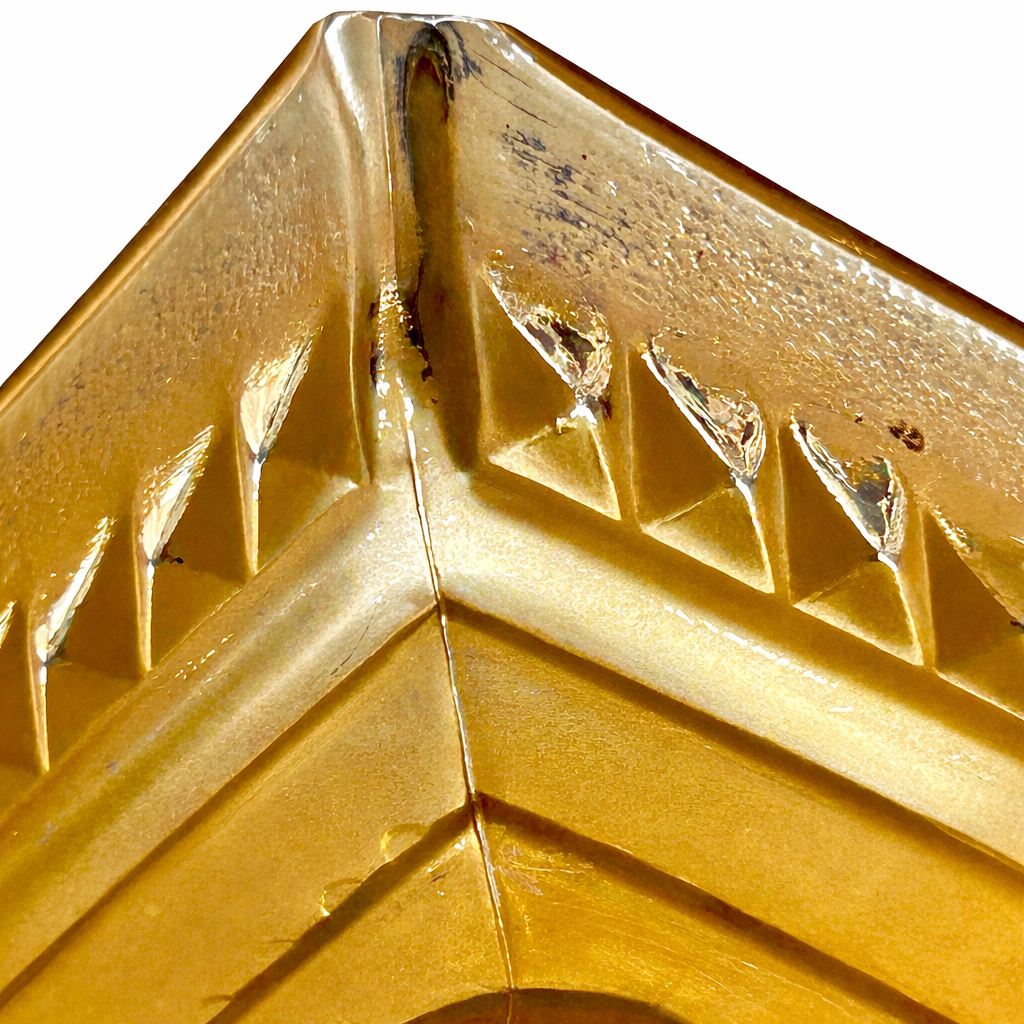
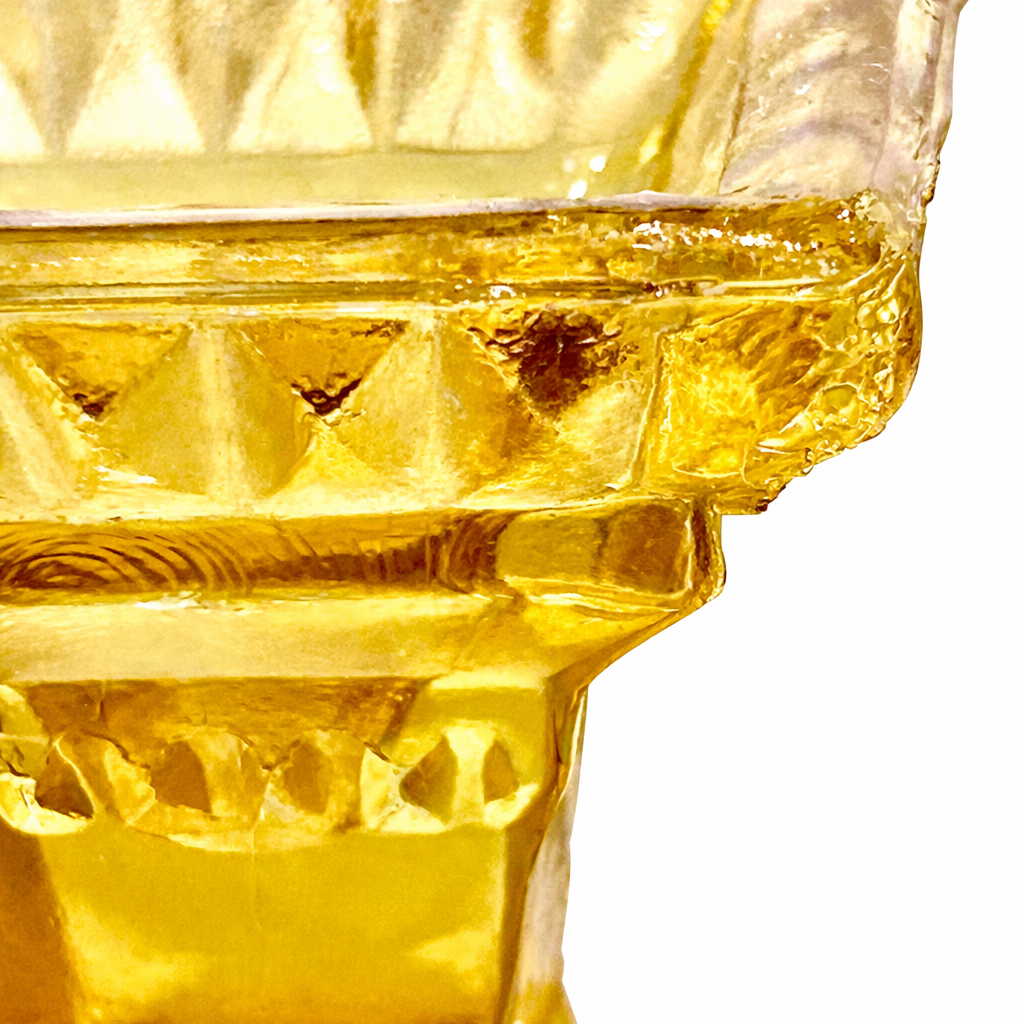
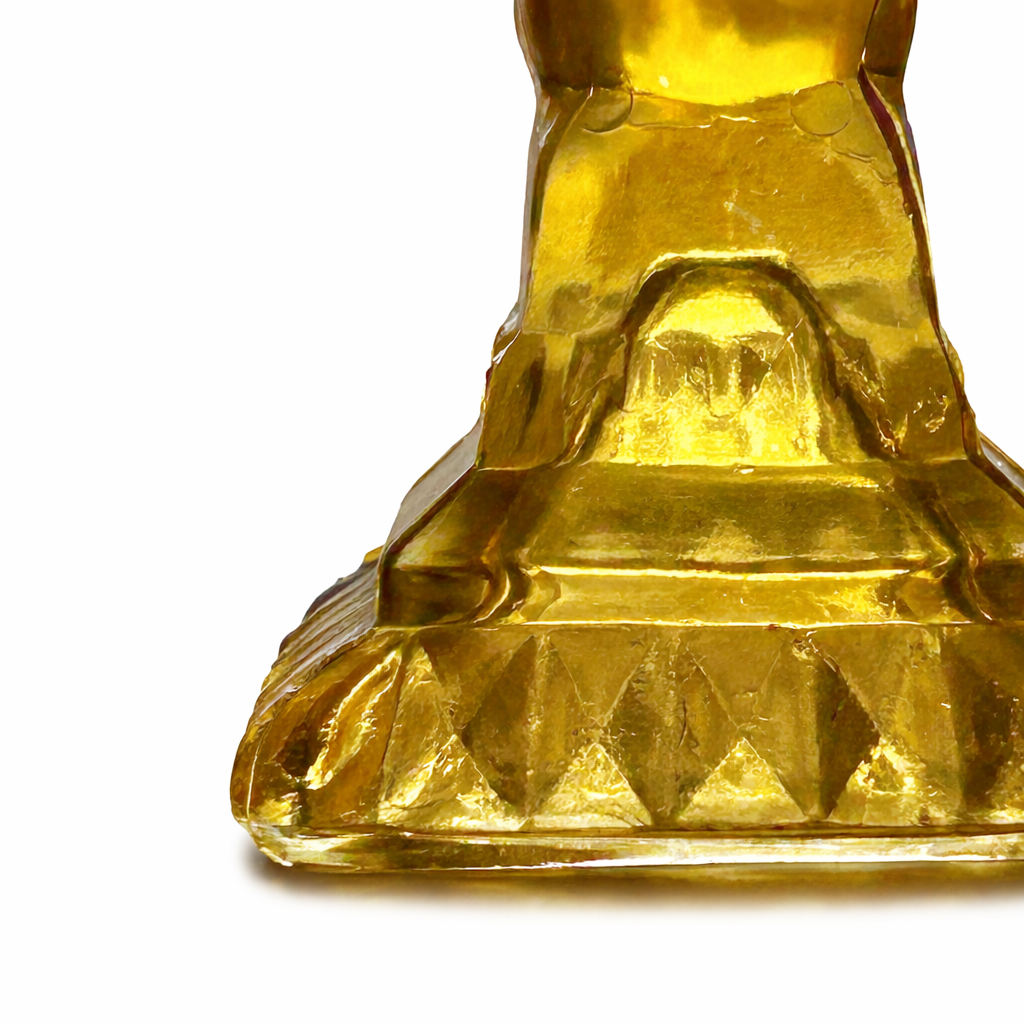
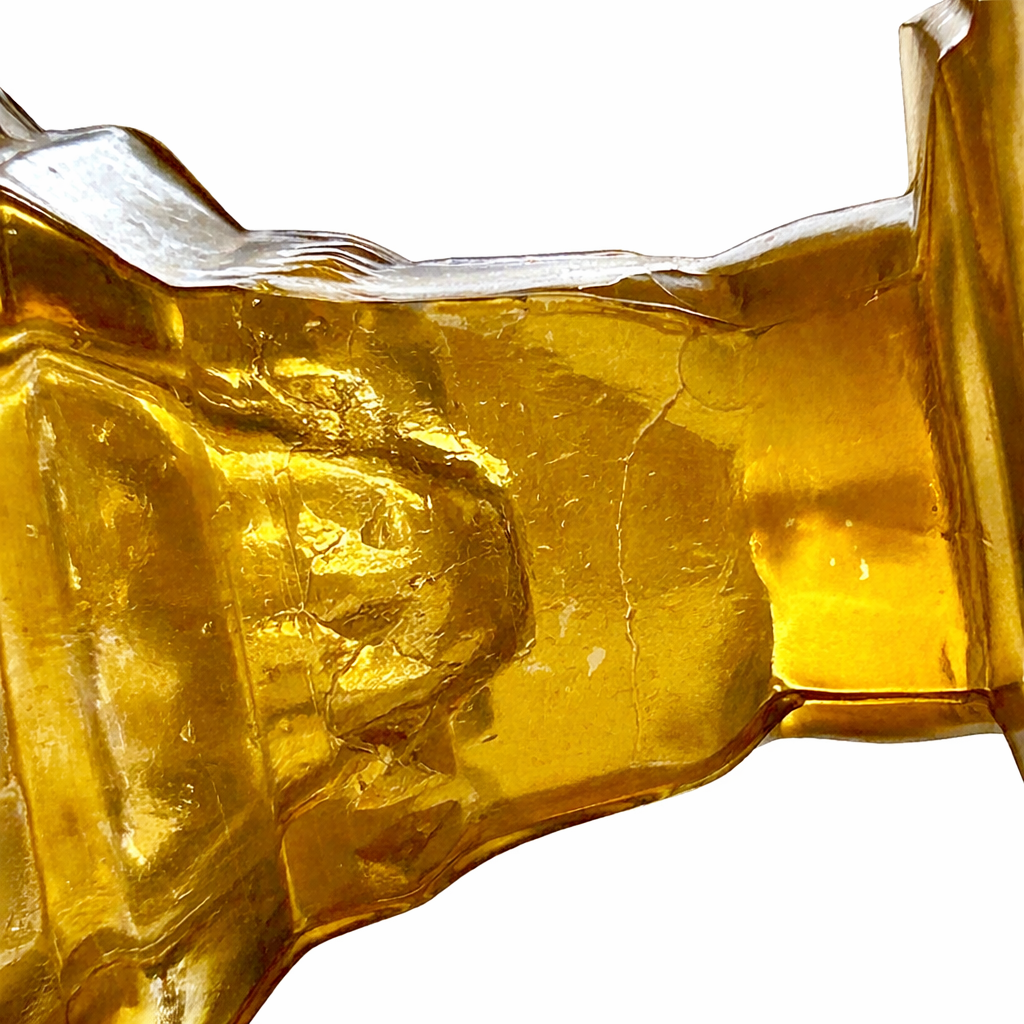
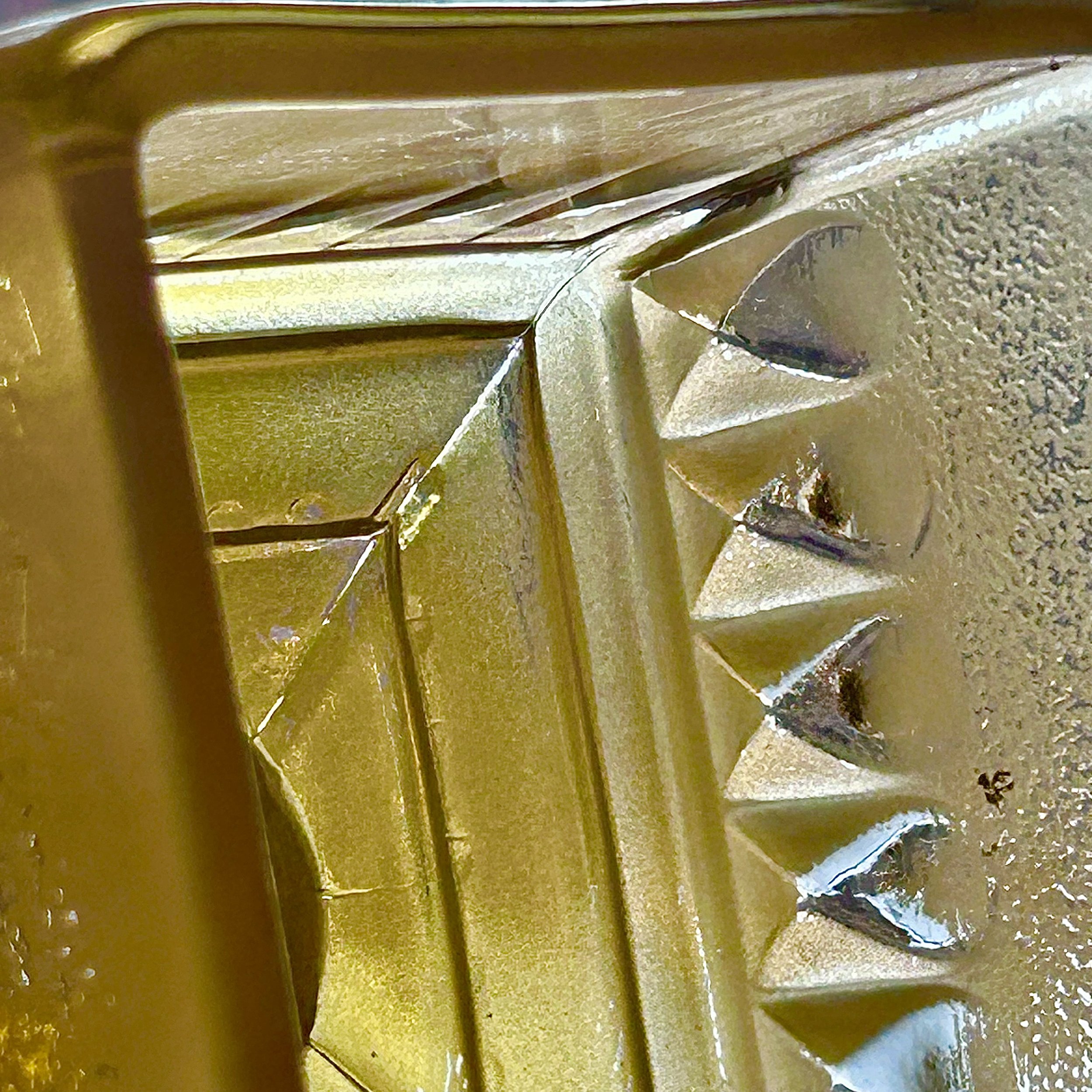
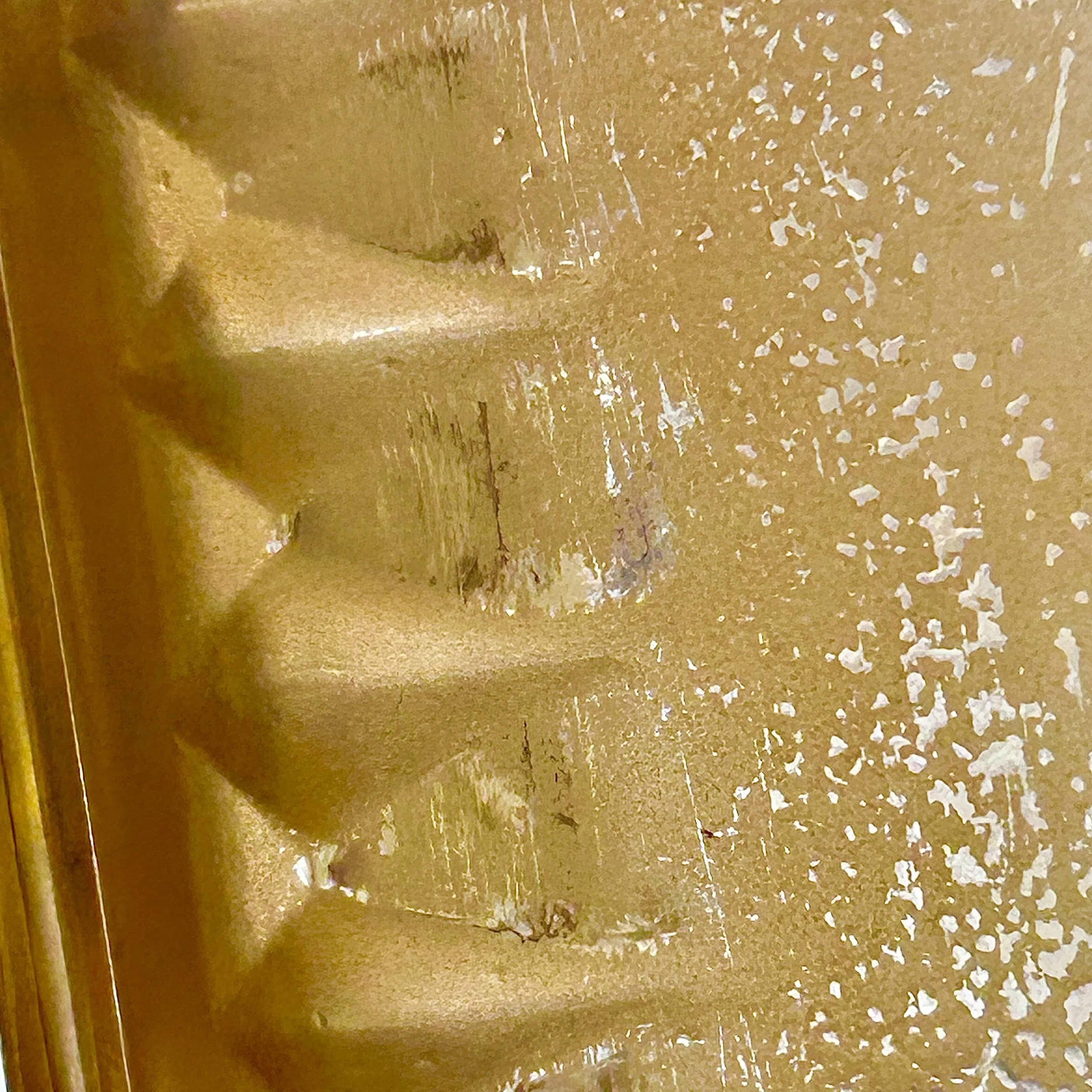
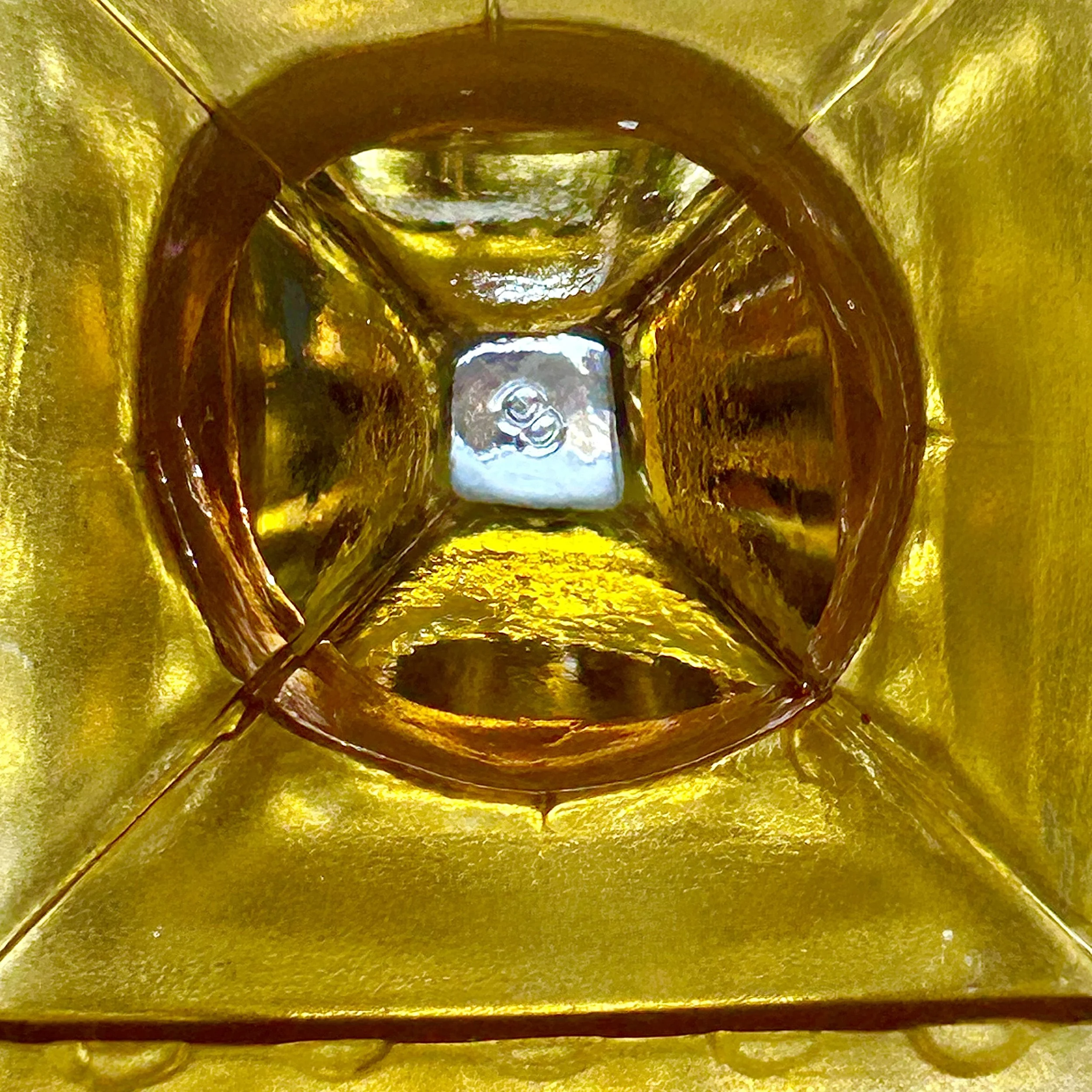
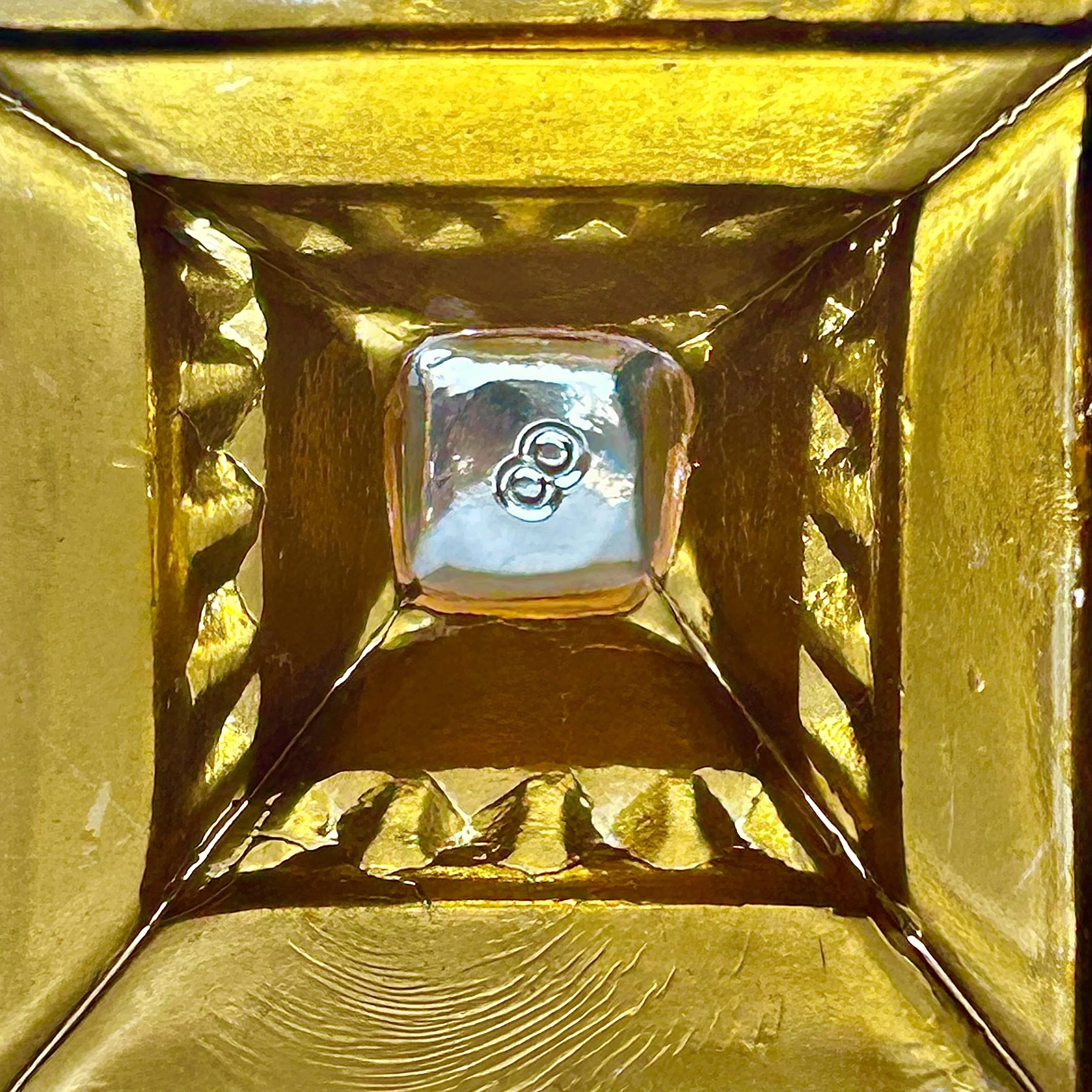
A clear mold seam and adjacent hay marks are visible. Hay marks are fine straw-like flow/settling lines formed as molten glass relaxed against the mold wall during cooling. These are characteristic of period pressed glass and support 19th-century production. Based on the softened seam character and surface flow, manufacture in a wooden or wood-lined mold is very plausible for this era. Wooden molds were commonly used before full steel-mold standardization and often leave subtle, organic transitions like those present here. Unmarked. Attributed by style and technique to Continental European production, likely Bohemian / Czech, late 19th century. Attribution is stylistic, not factory-marked.
No chips or cracks observed. Gilding shows honest, age-appropriate wear. Surface marks consistent with manufacture and age. This is a genuine cabinet/display plate, not a reproduction.
c.1880-1905; A late 19th-century gilt amber pressed and cut glass display plate, produced circa 1880-1905 (late Victorian / early Edwardian).
11 ¾ inches in diameter .
Deep amber/golden glass, Cut radial starburst well , Acid-etched and wheel-engraved decoration, Greek-key border with dot motifs , Original gilt (gold-based) decoration with natural age wear
A clear mold seam and adjacent hay marks are visible. Hay marks are fine straw-like flow/settling lines formed as molten glass relaxed against the mold wall during cooling. These are characteristic of period pressed glass and support 19th-century production. Based on the softened seam character and surface flow, manufacture in a wooden or wood-lined mold is very plausible for this era. Wooden molds were commonly used before full steel-mold standardization and often leave subtle, organic transitions like those present here. Unmarked. Attributed by style and technique to Continental European production, likely Bohemian / Czech, late 19th century. Attribution is stylistic, not factory-marked.
No chips or cracks observed. Gilding shows honest, age-appropriate wear. Surface marks consistent with manufacture and age. This is a genuine cabinet/display plate, not a reproduction.