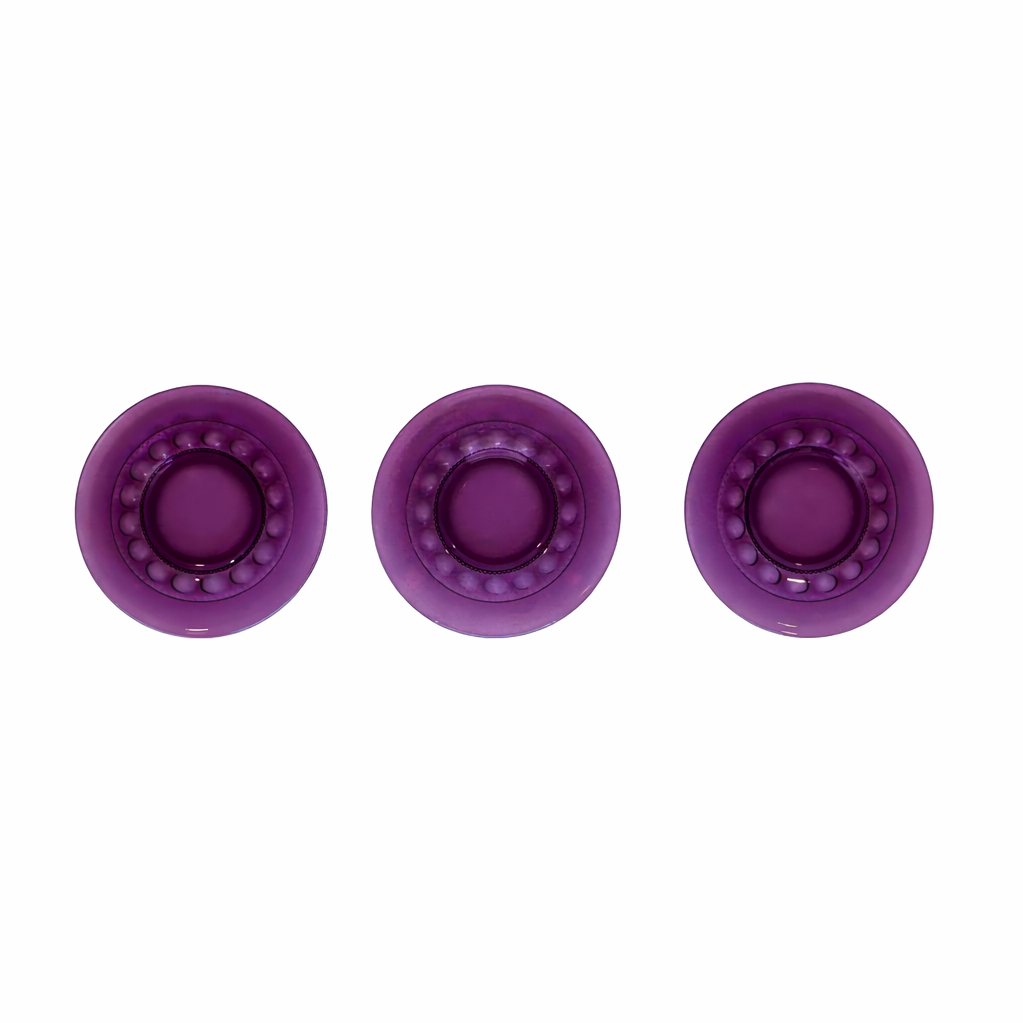
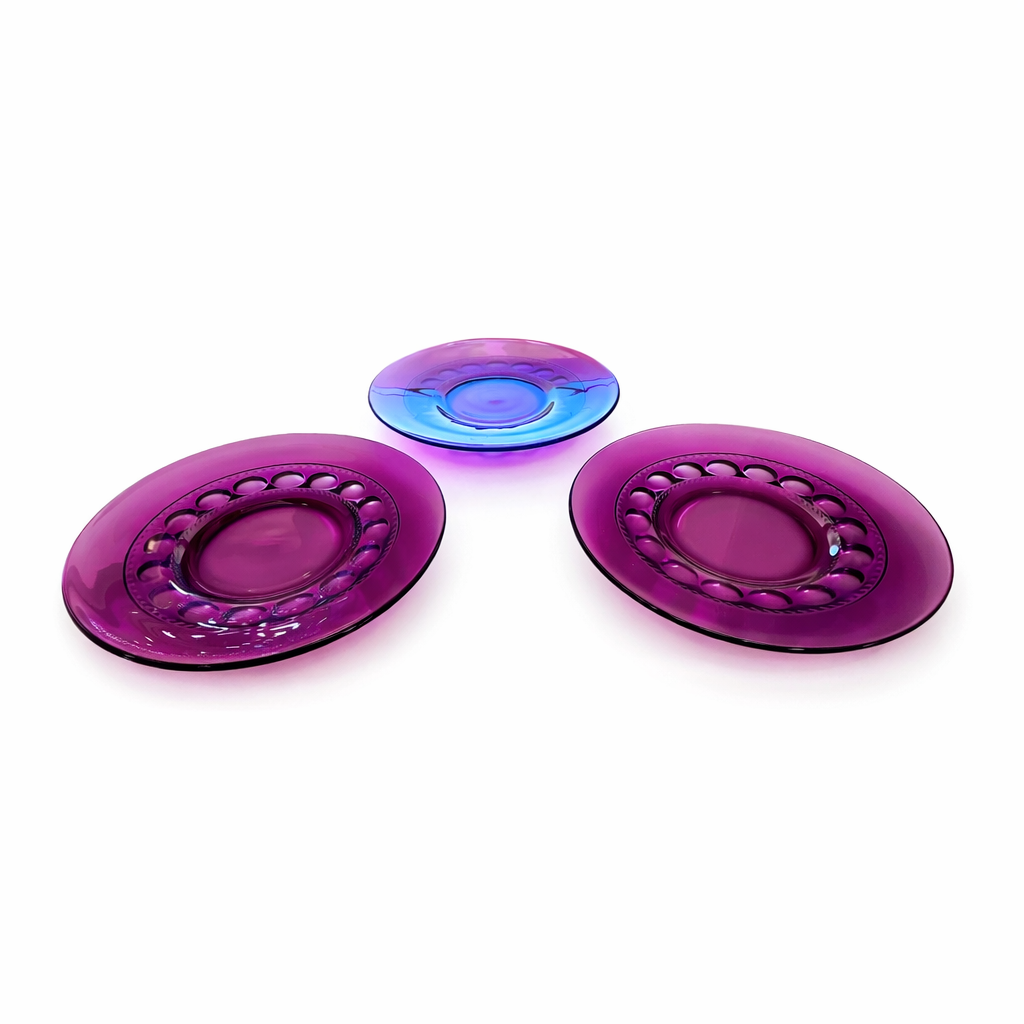
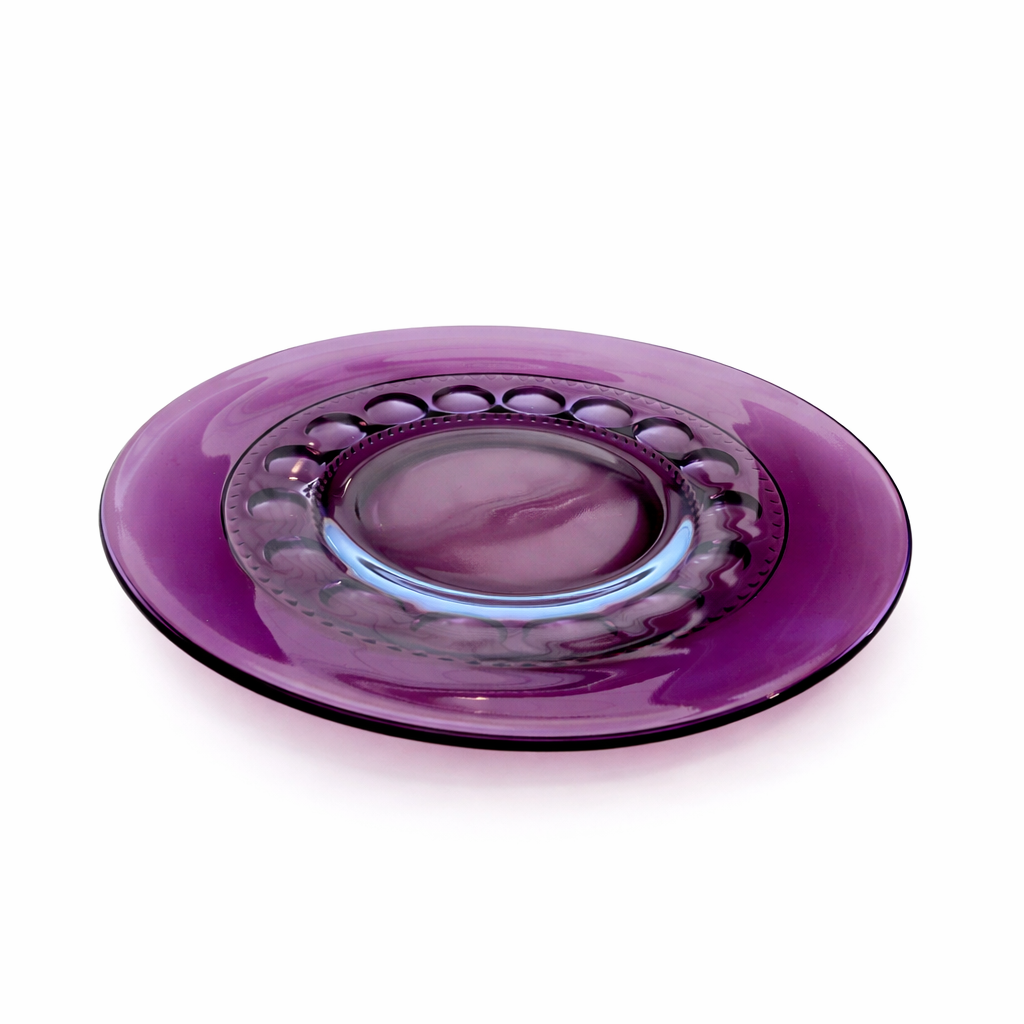
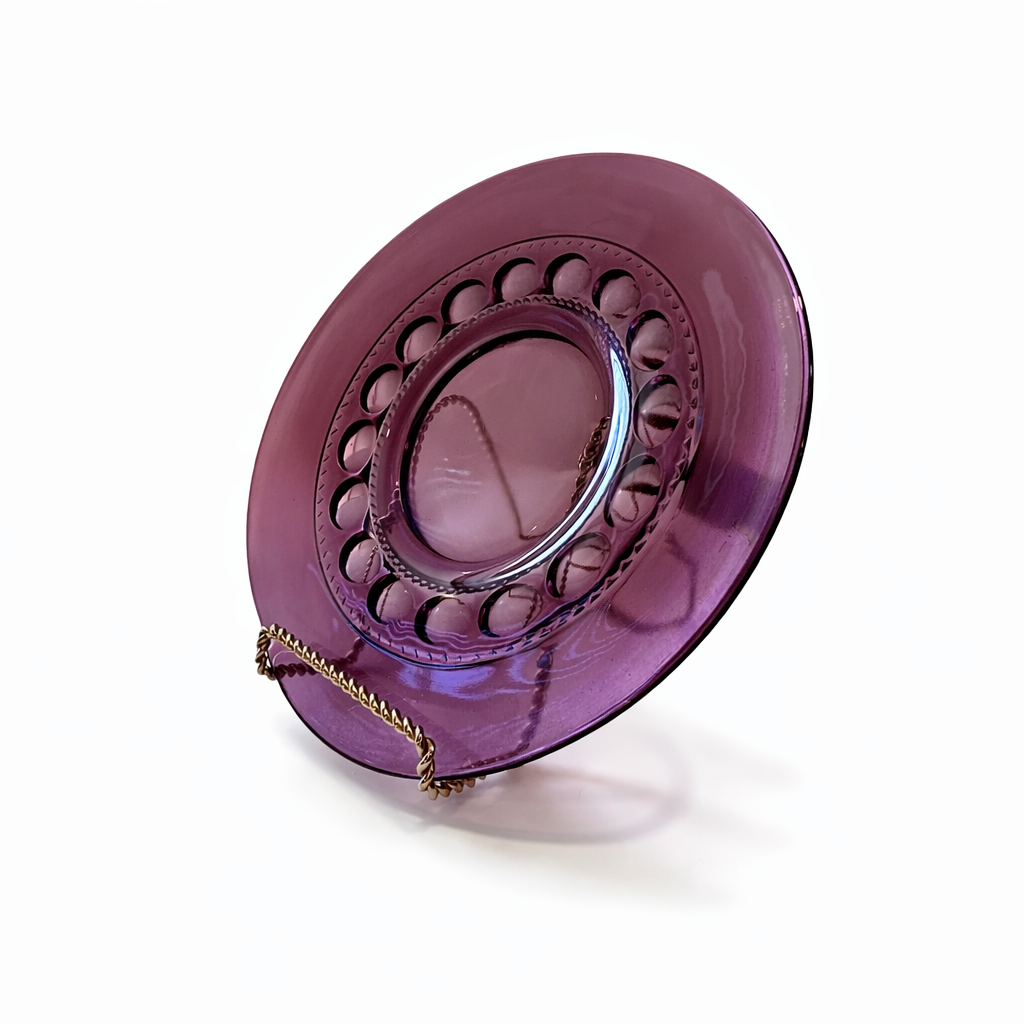
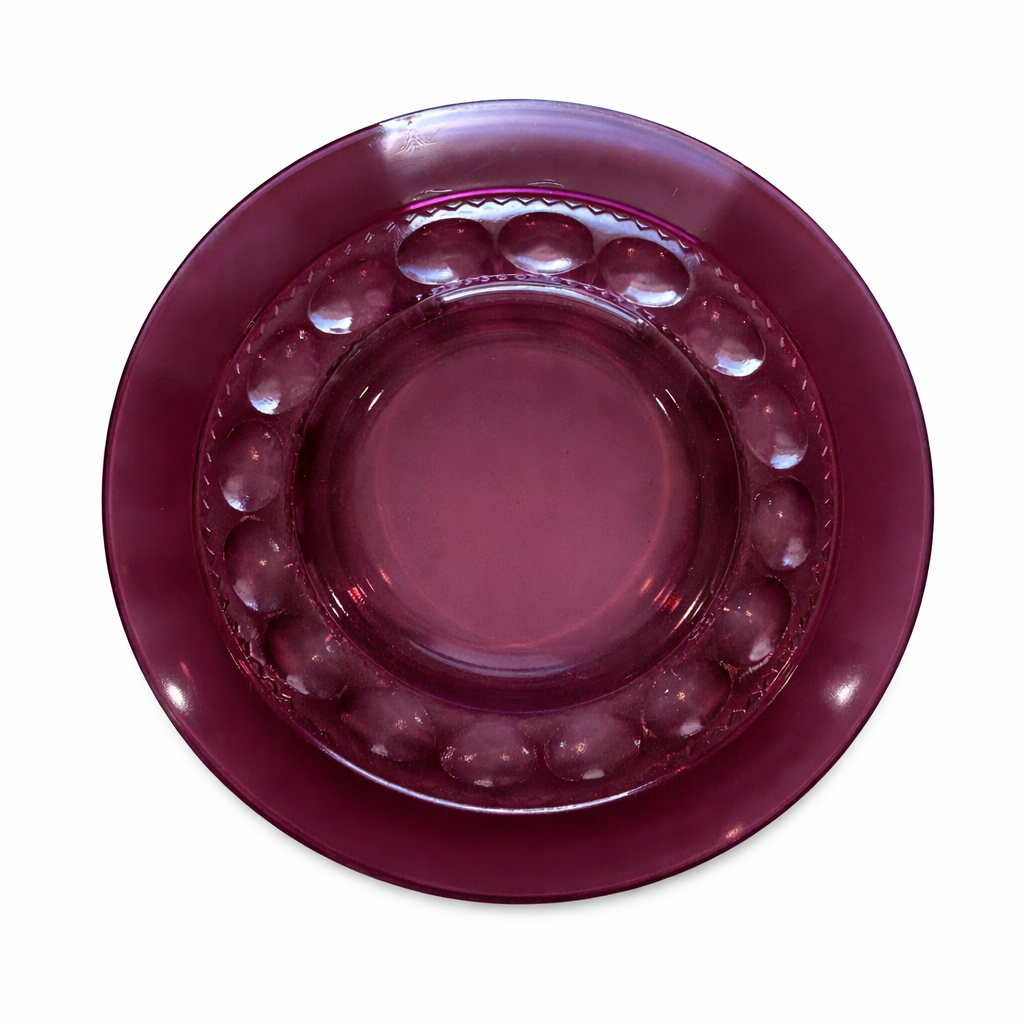
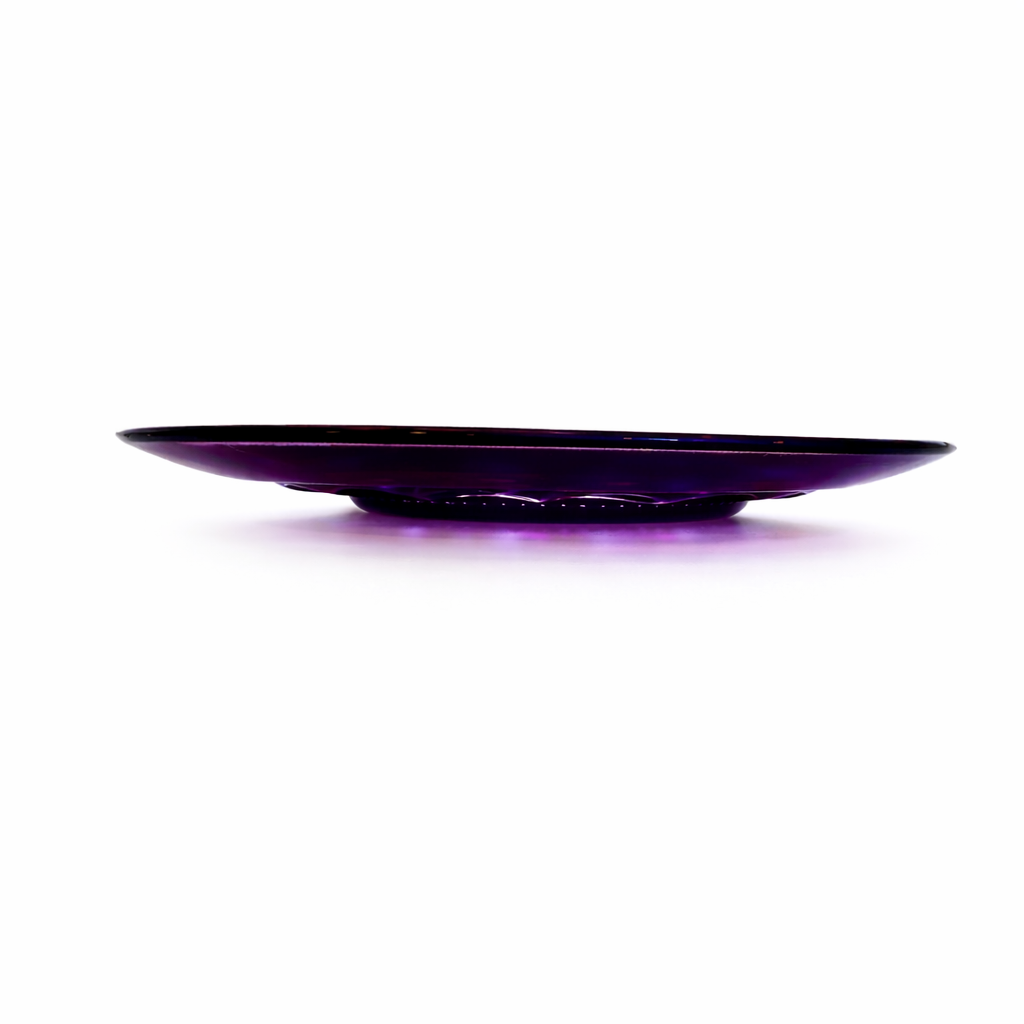
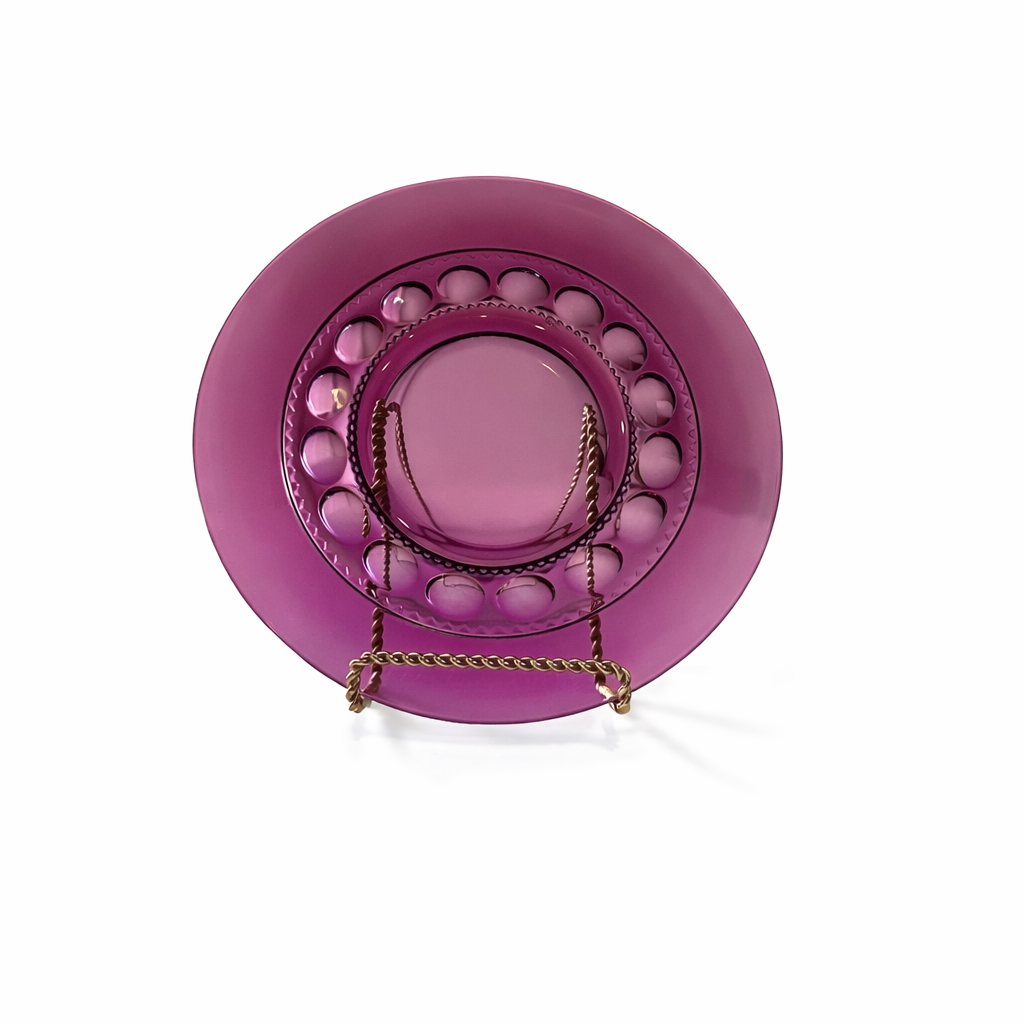
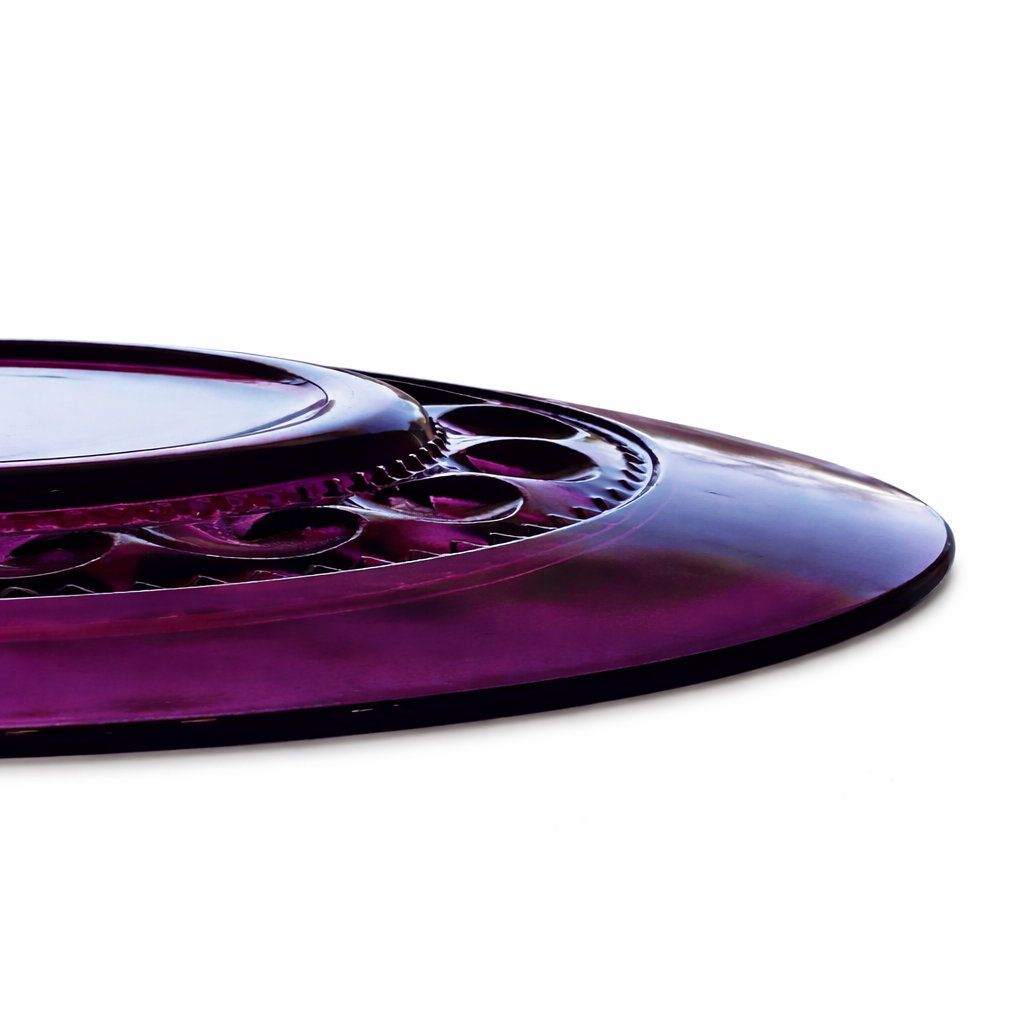
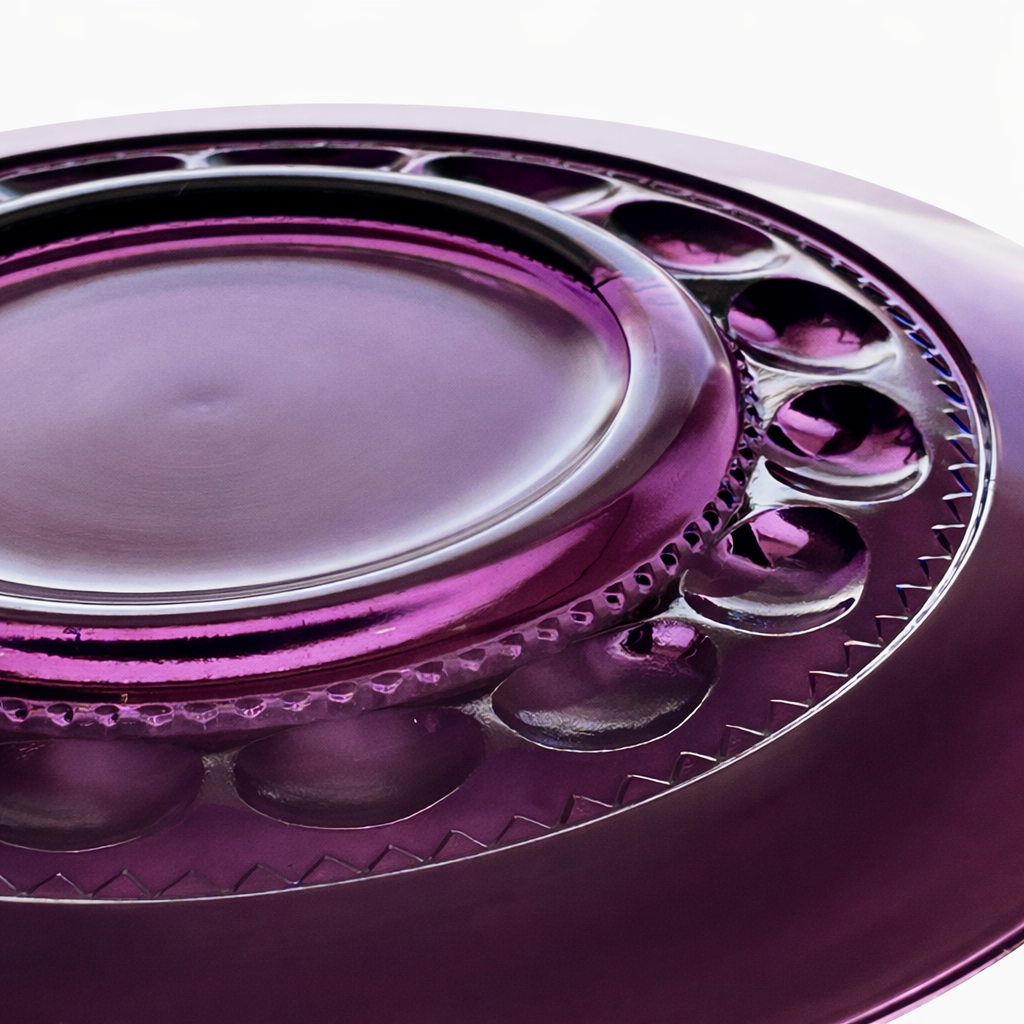
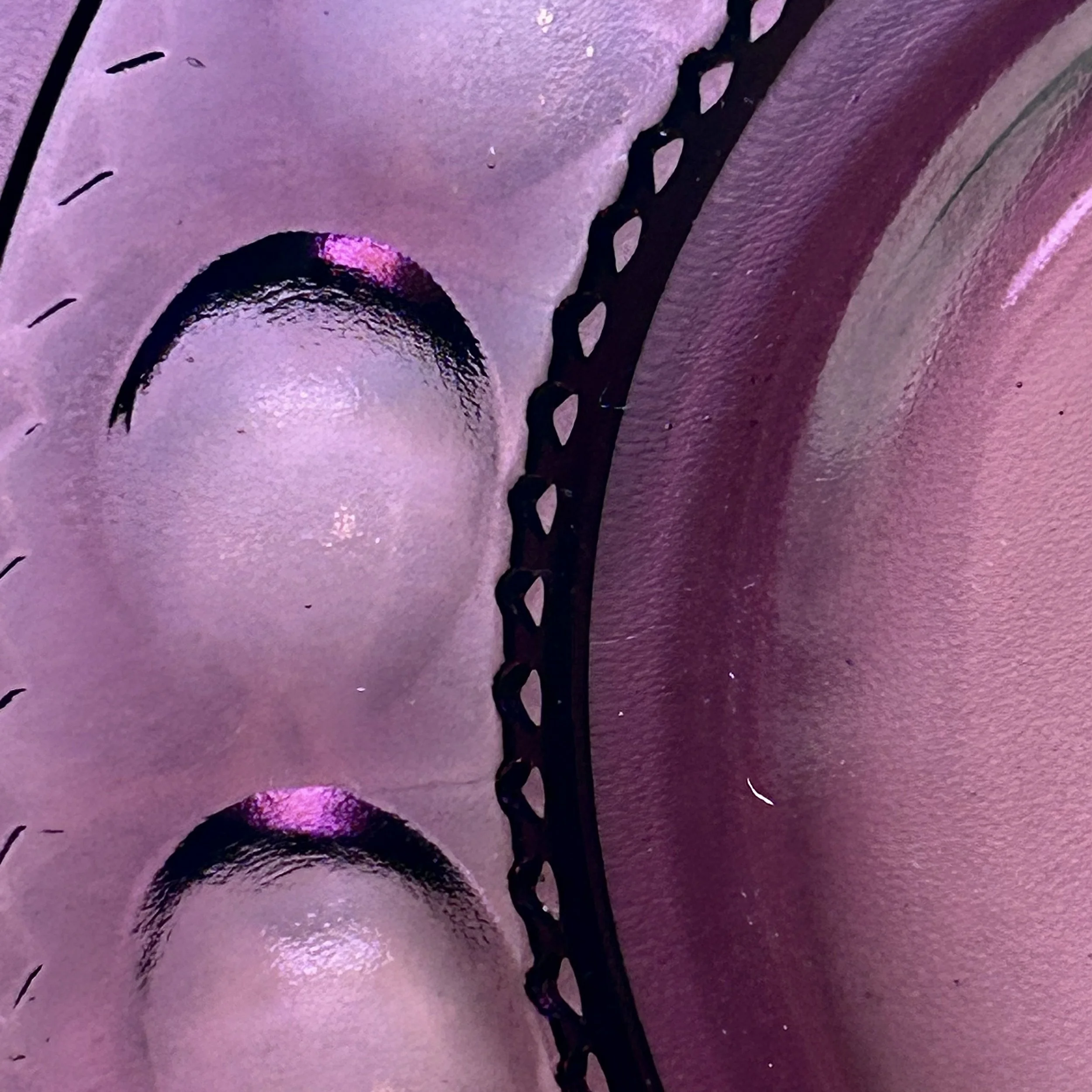
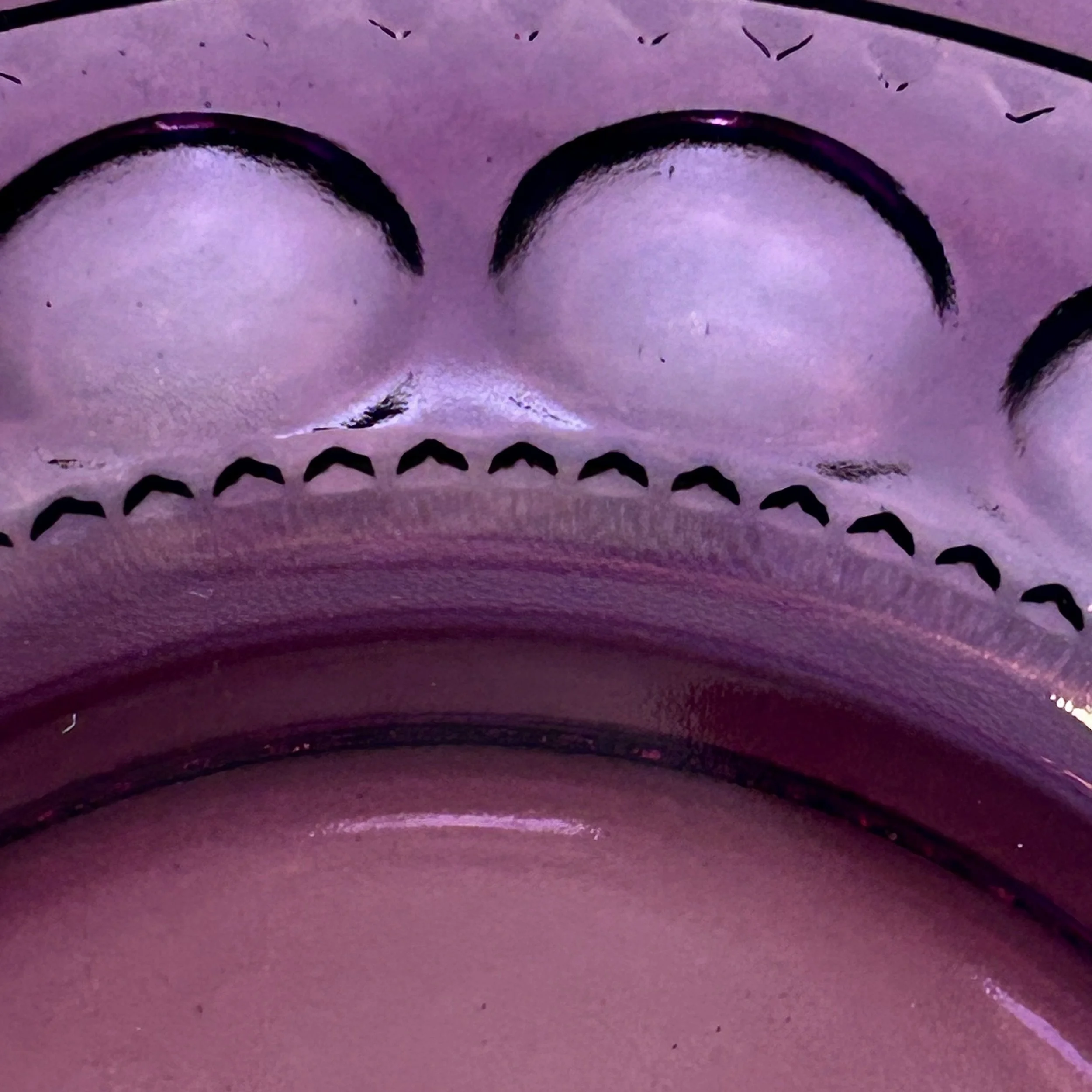
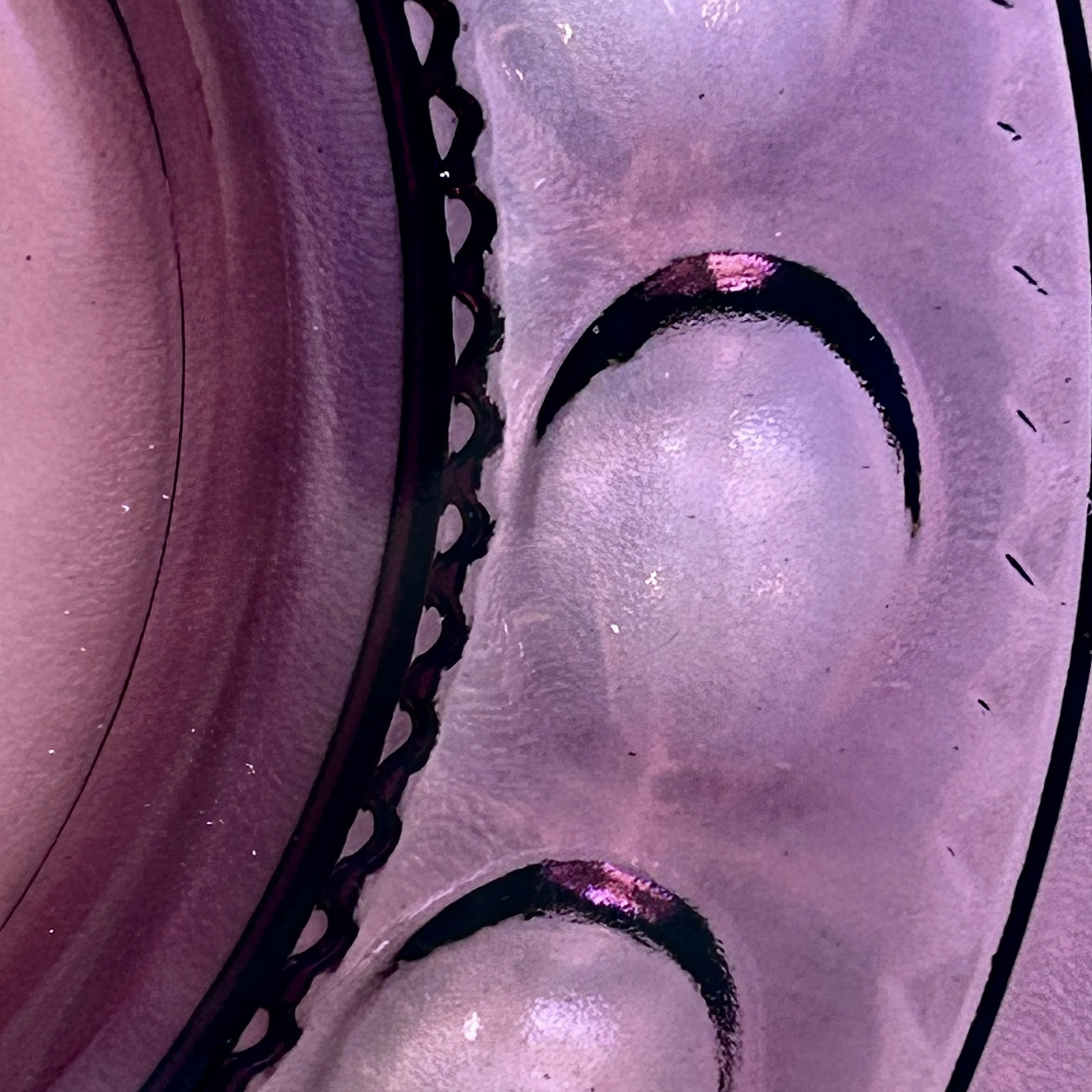
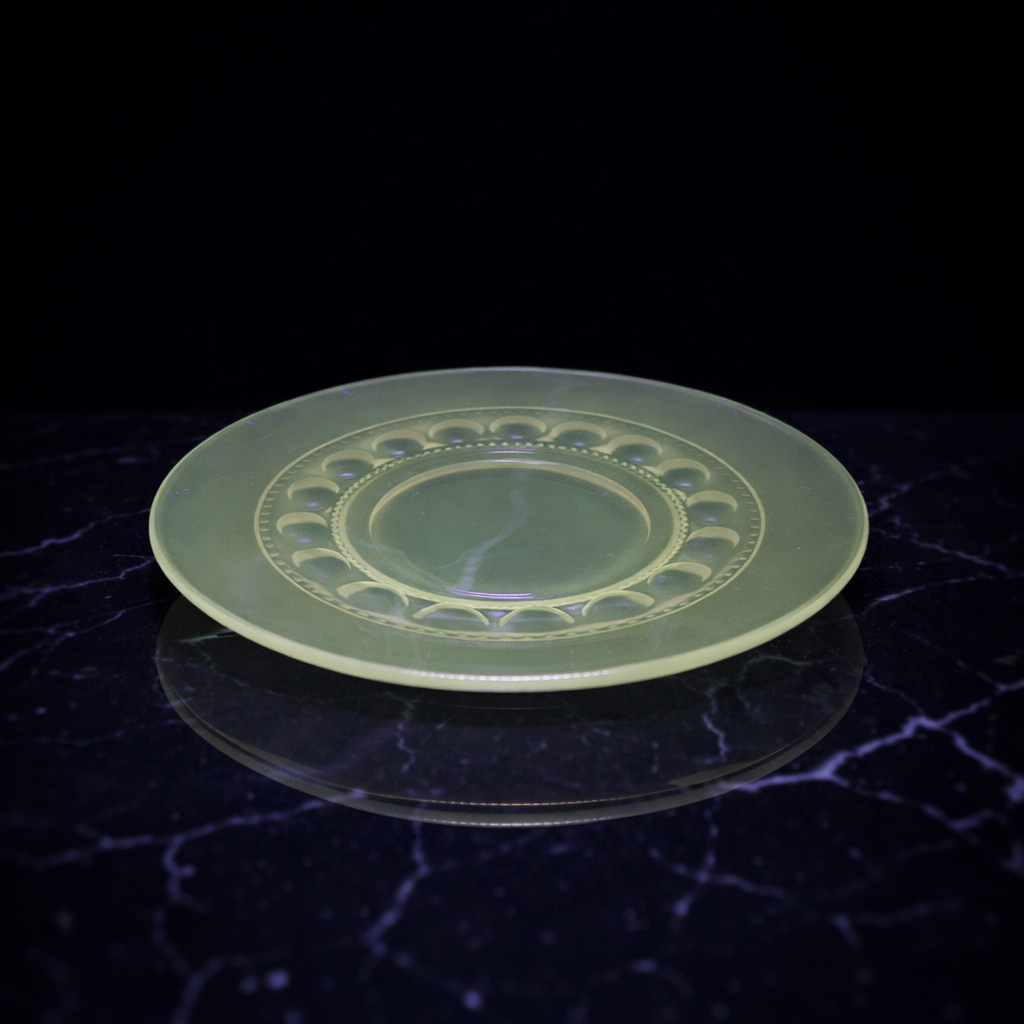
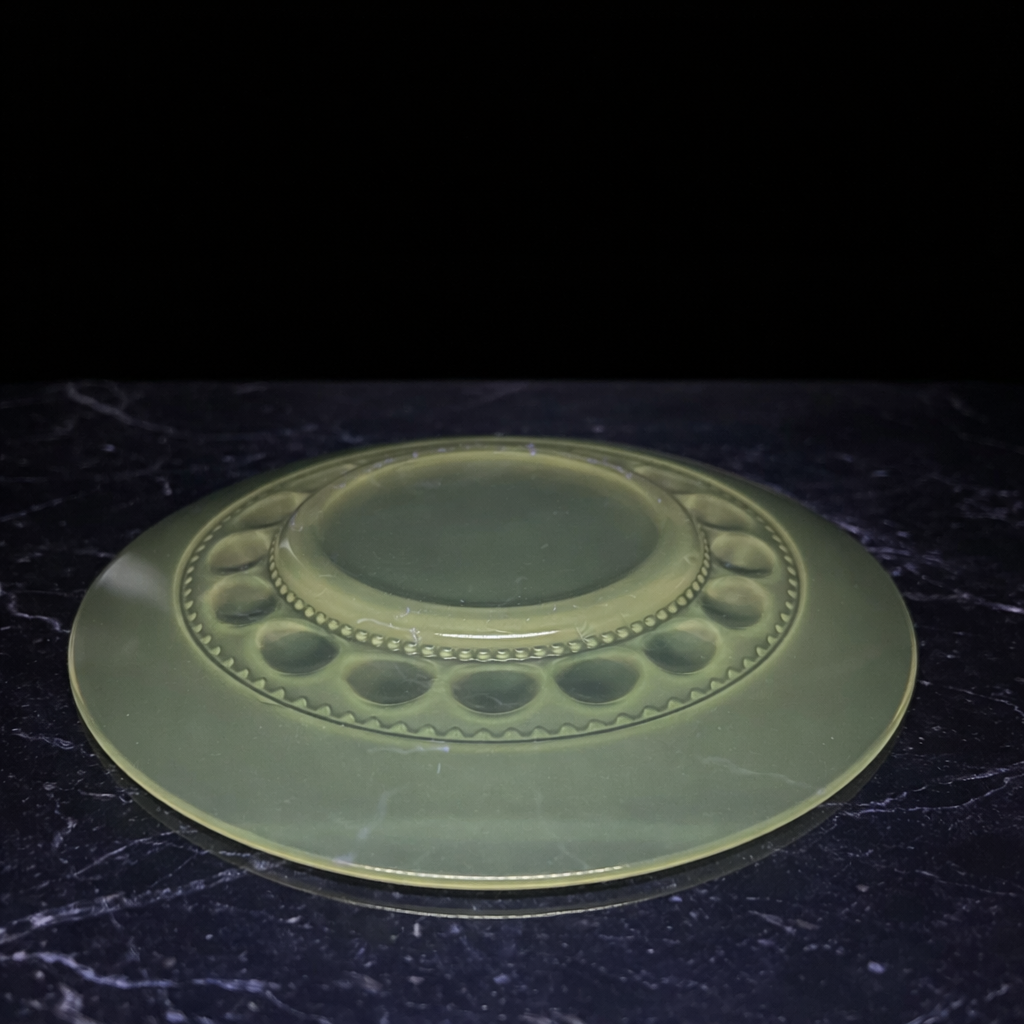
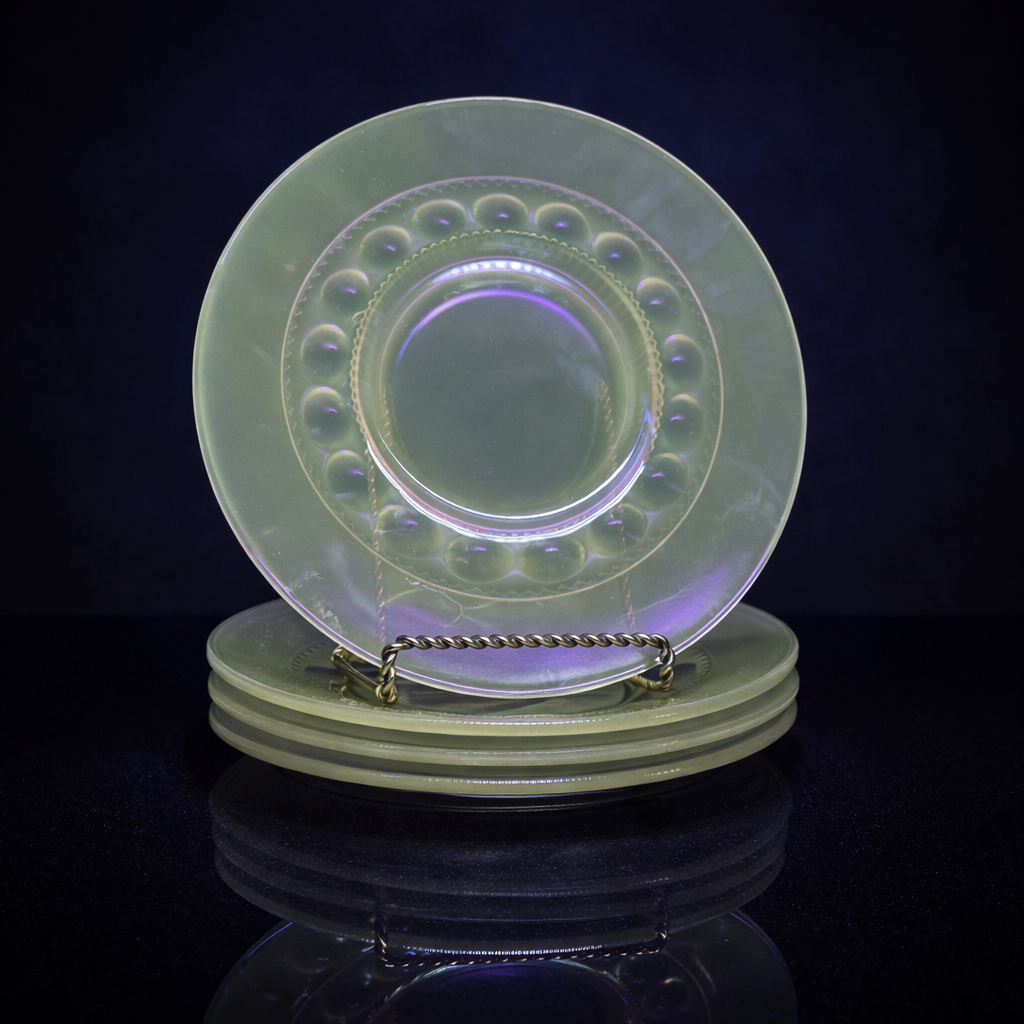
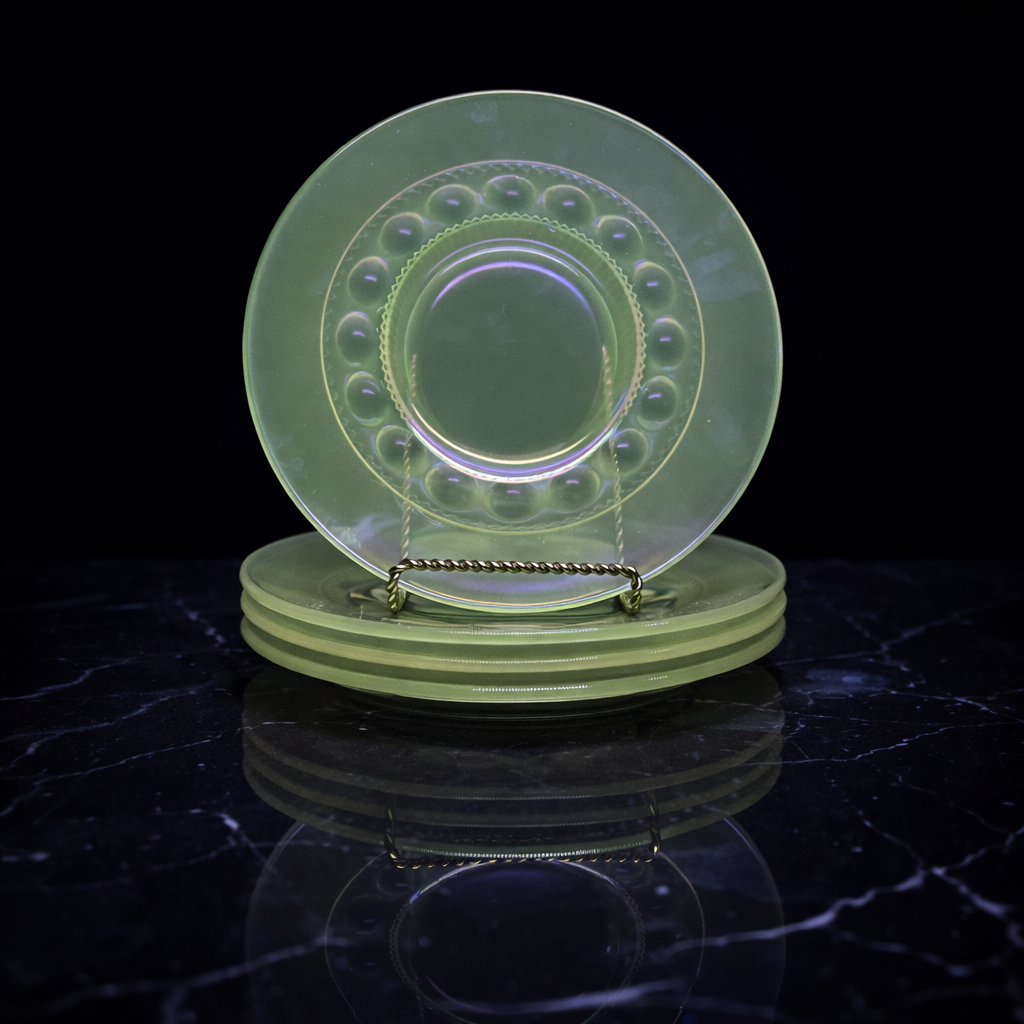
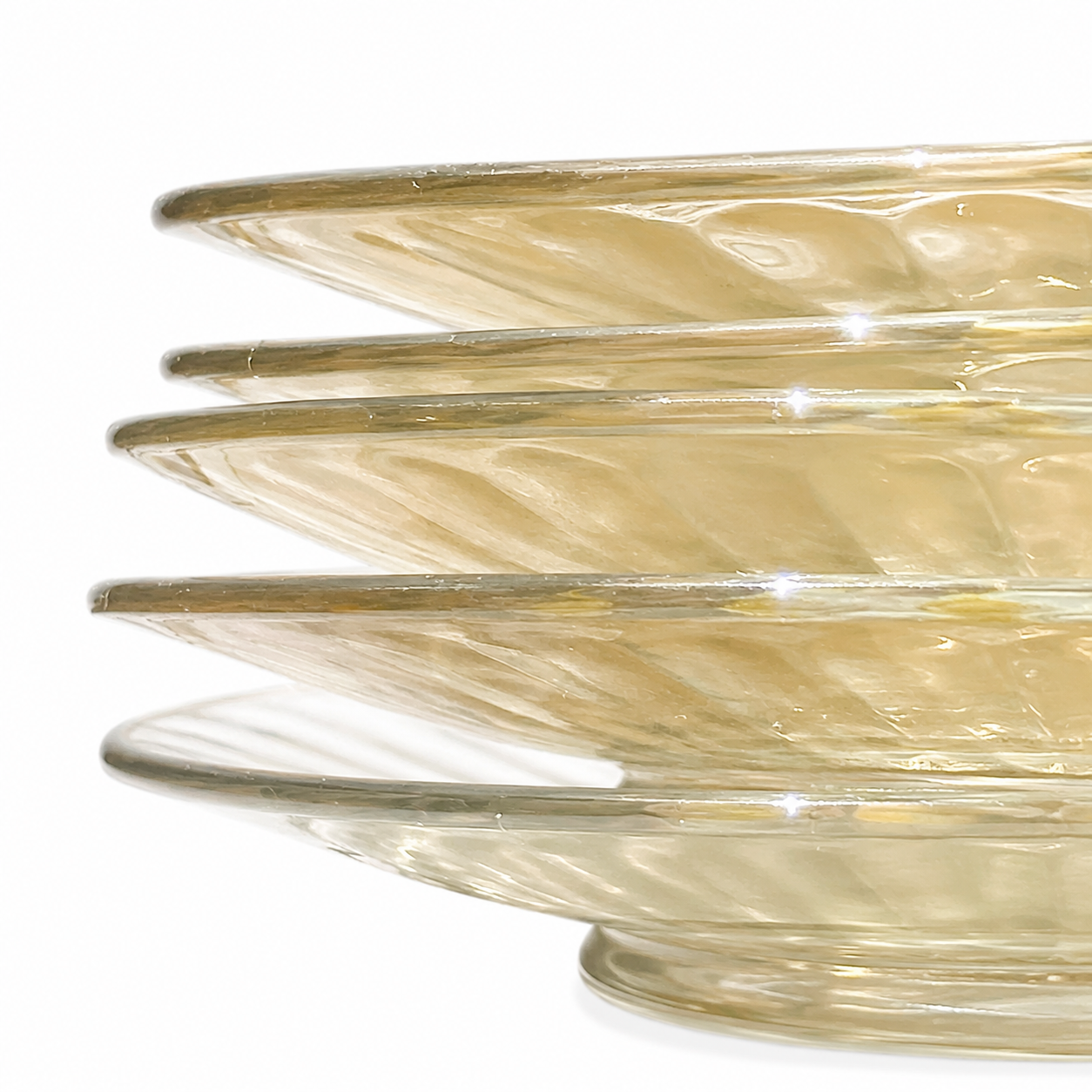
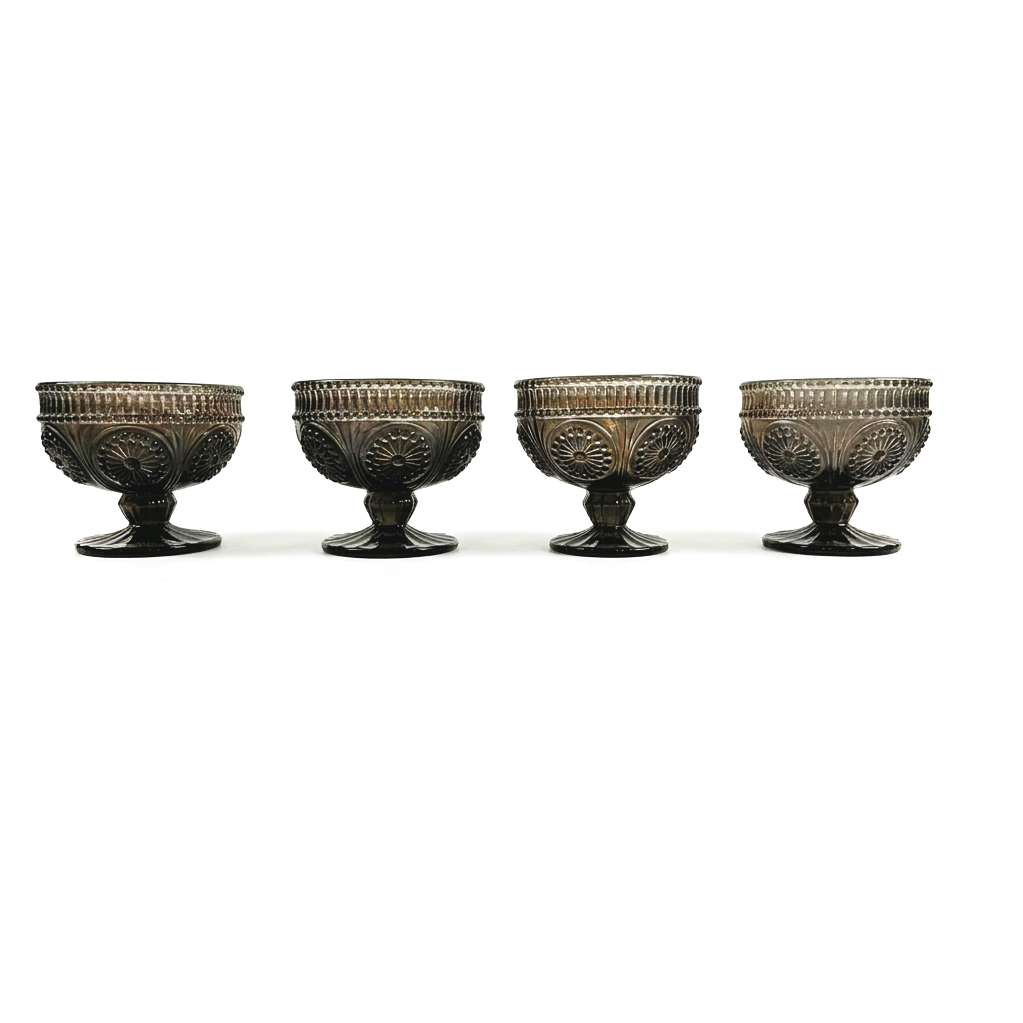
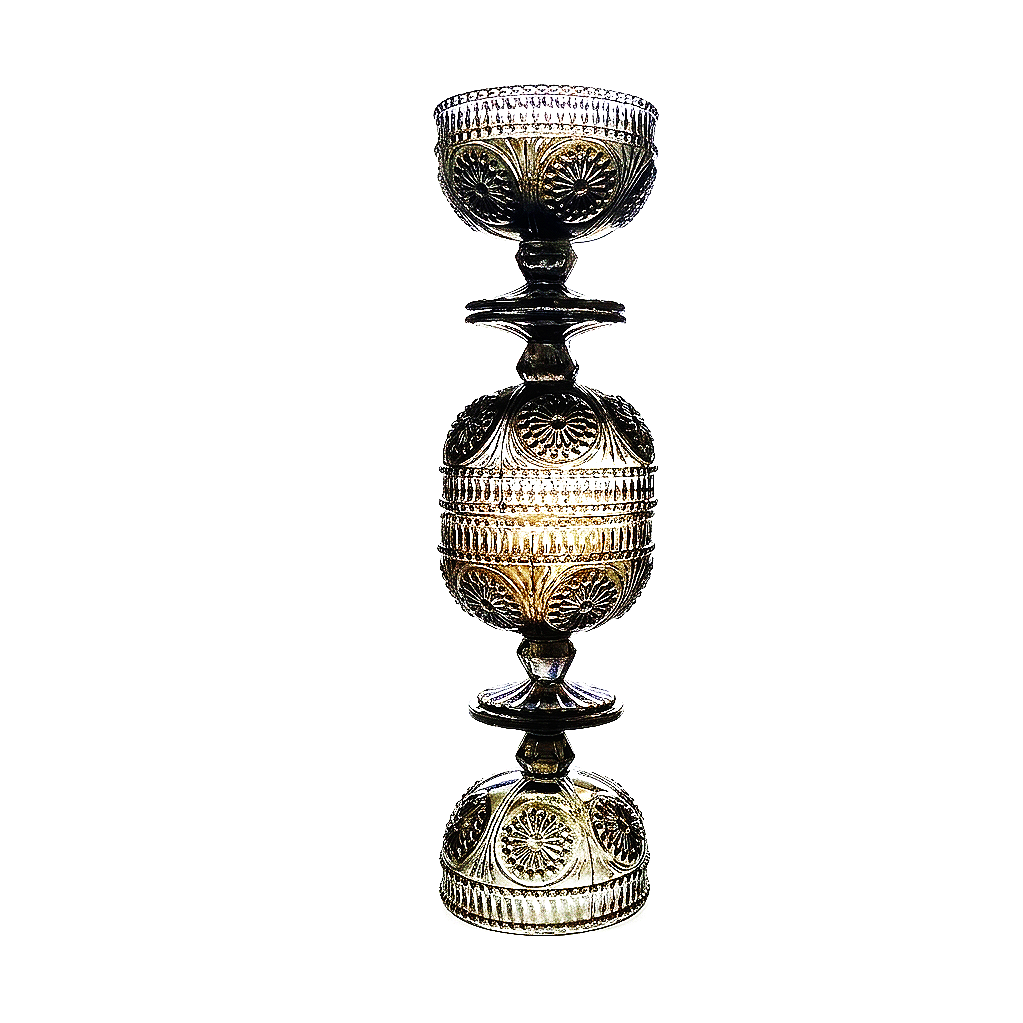
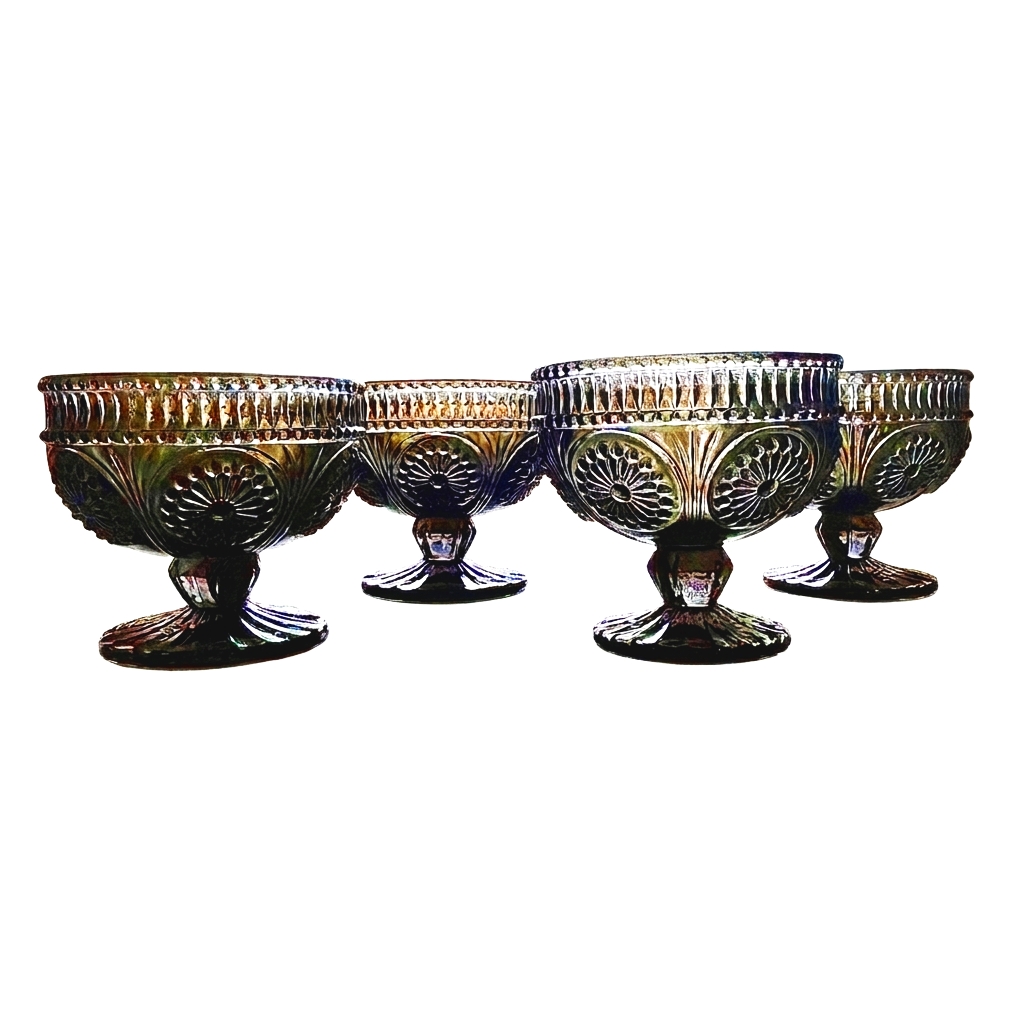
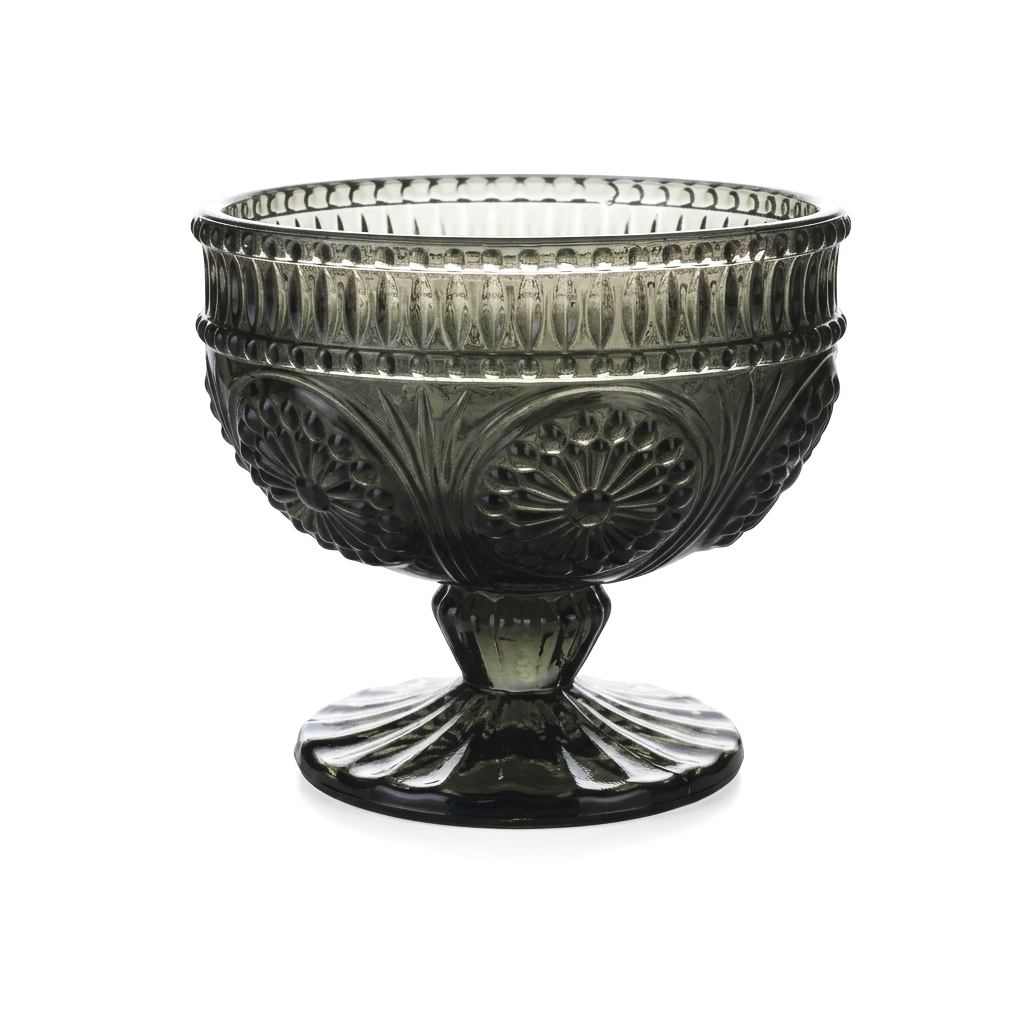
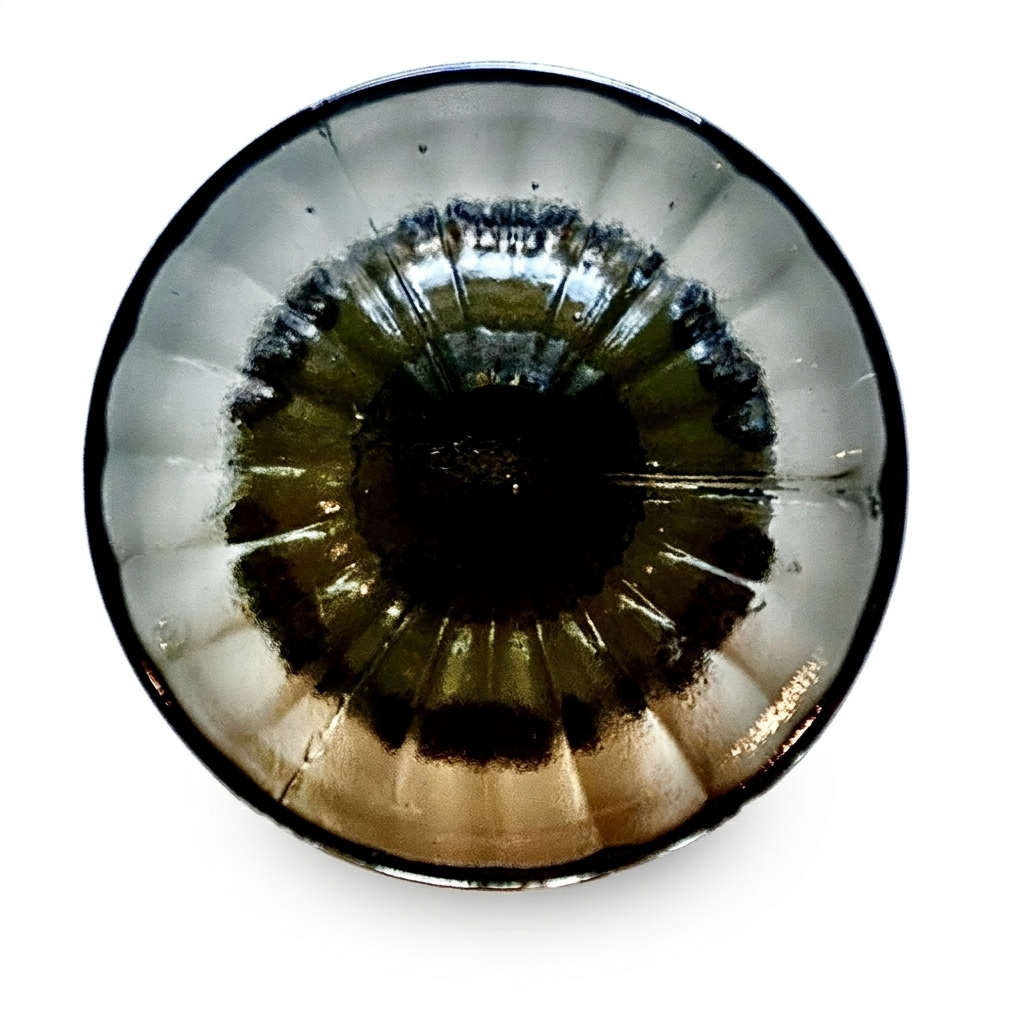
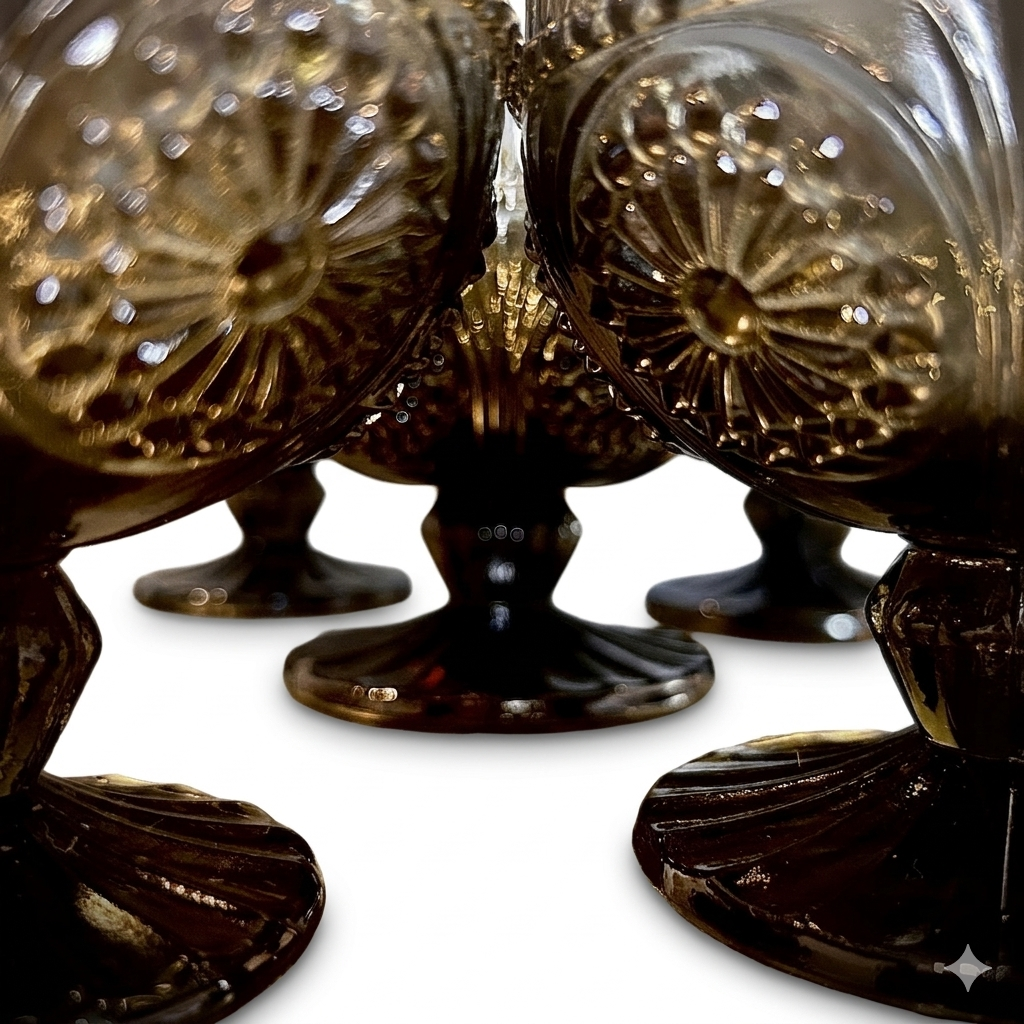
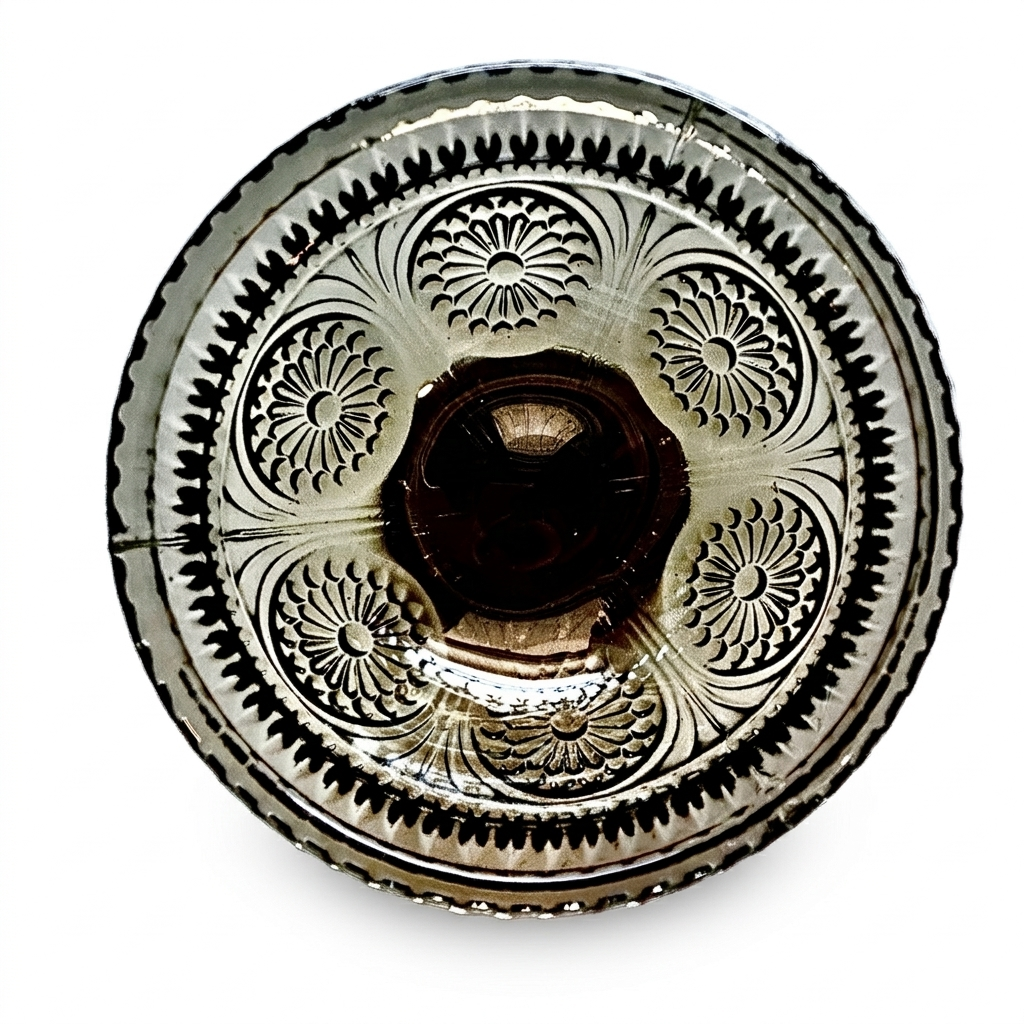
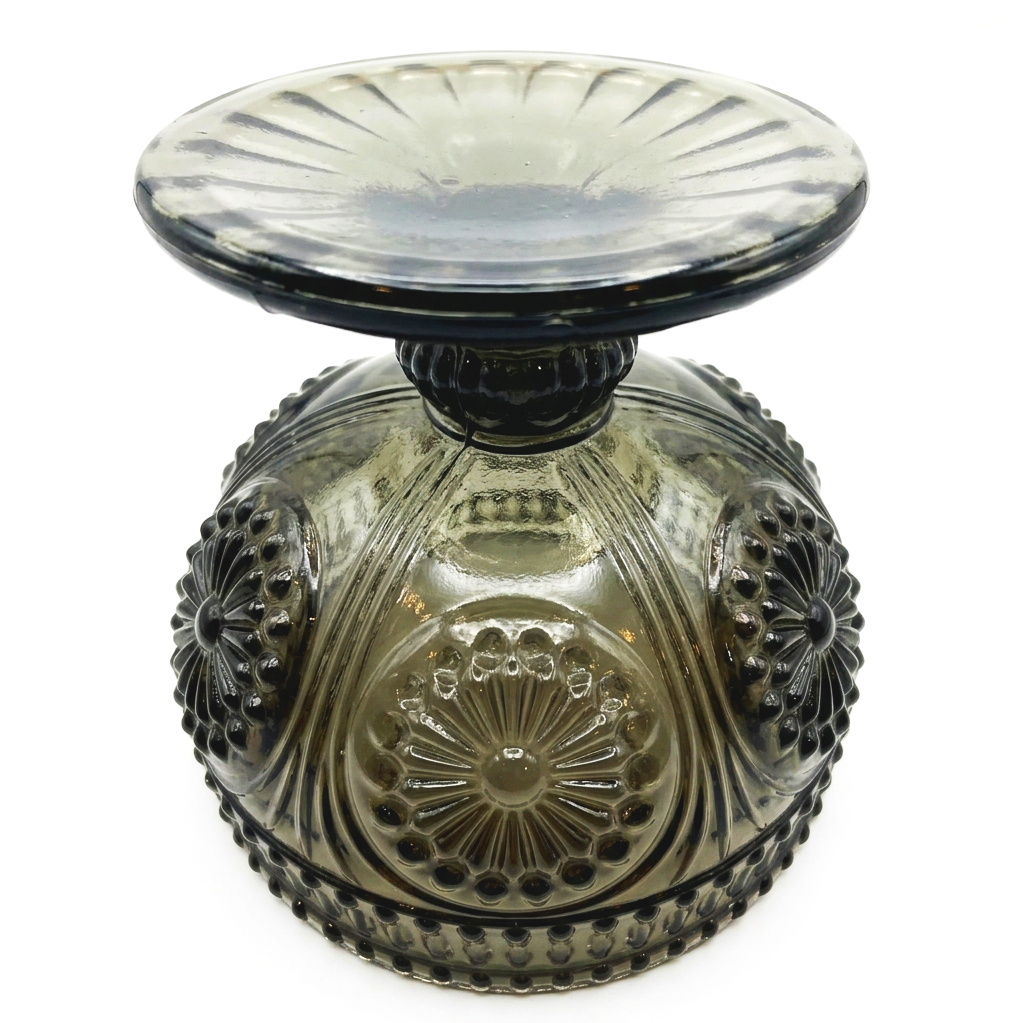
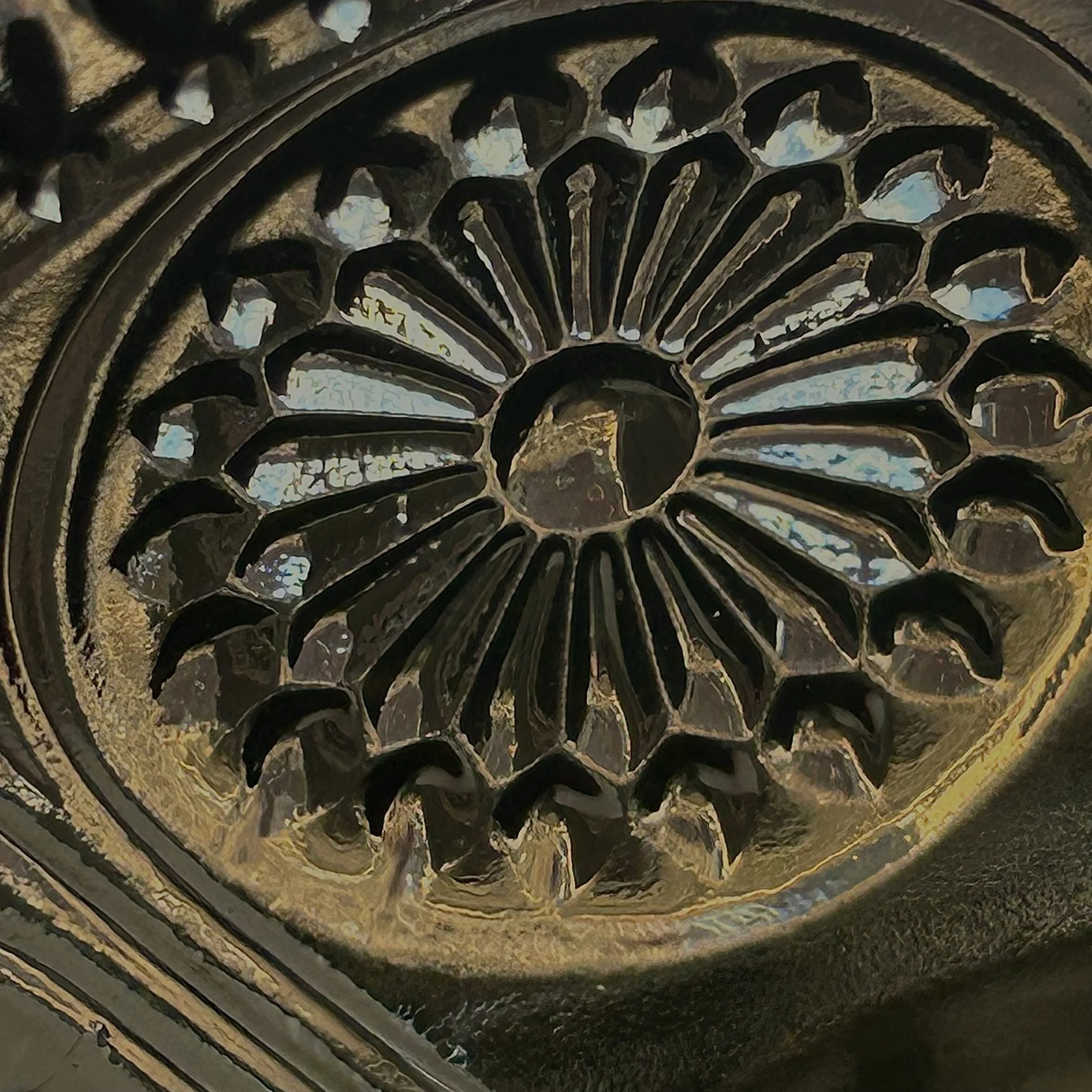
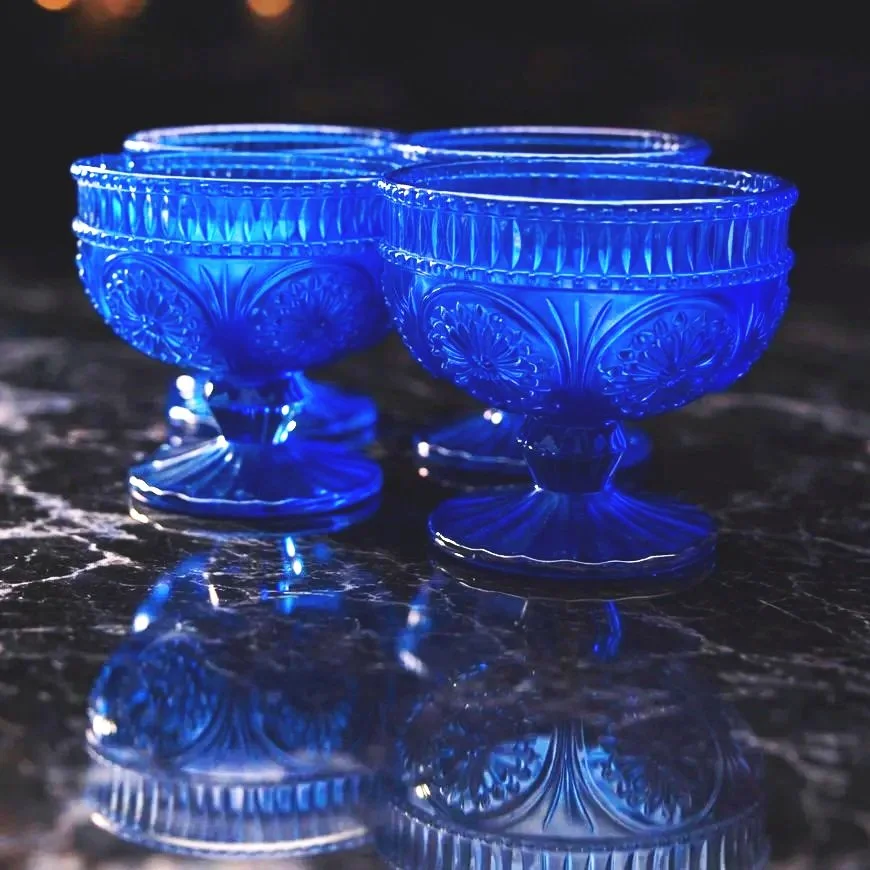
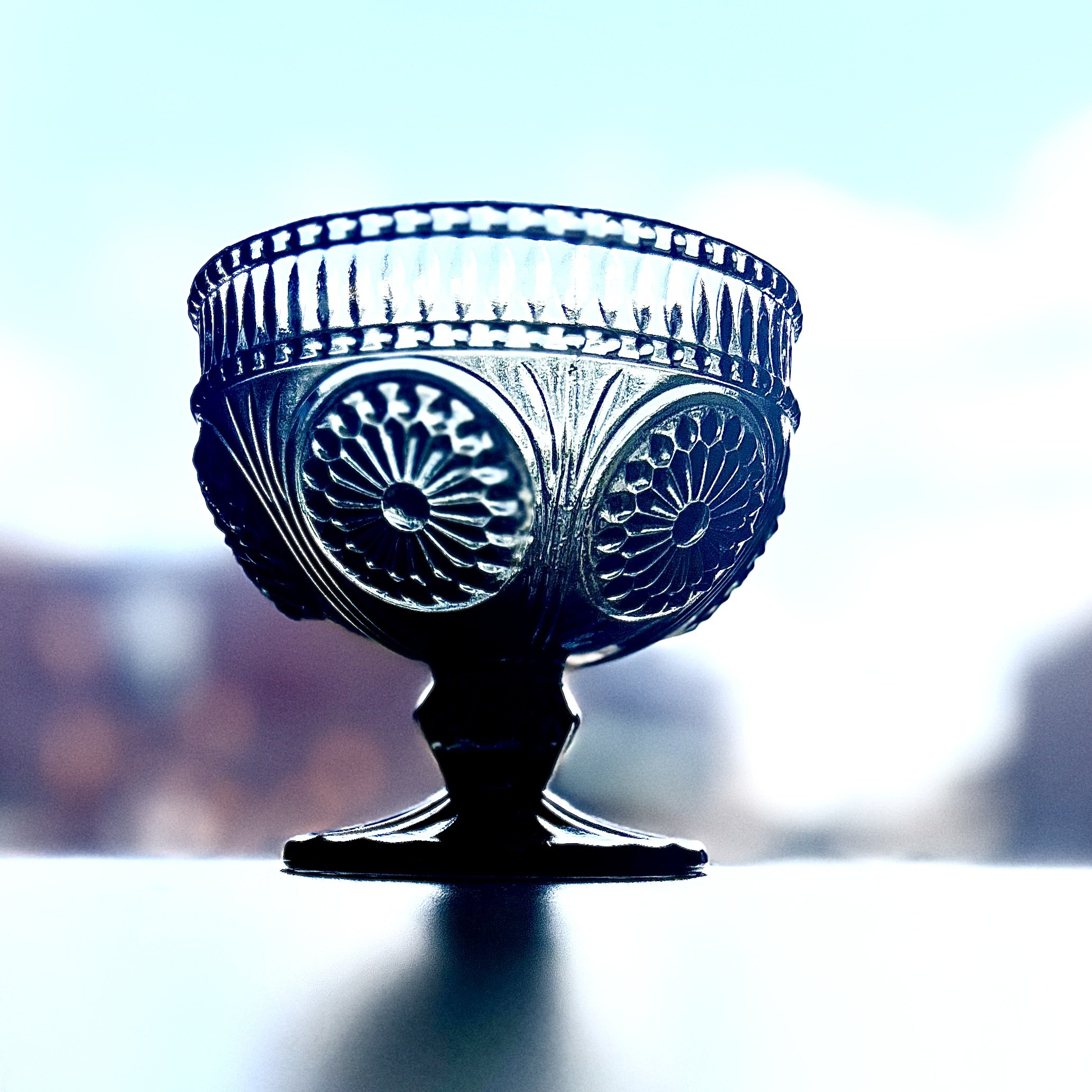
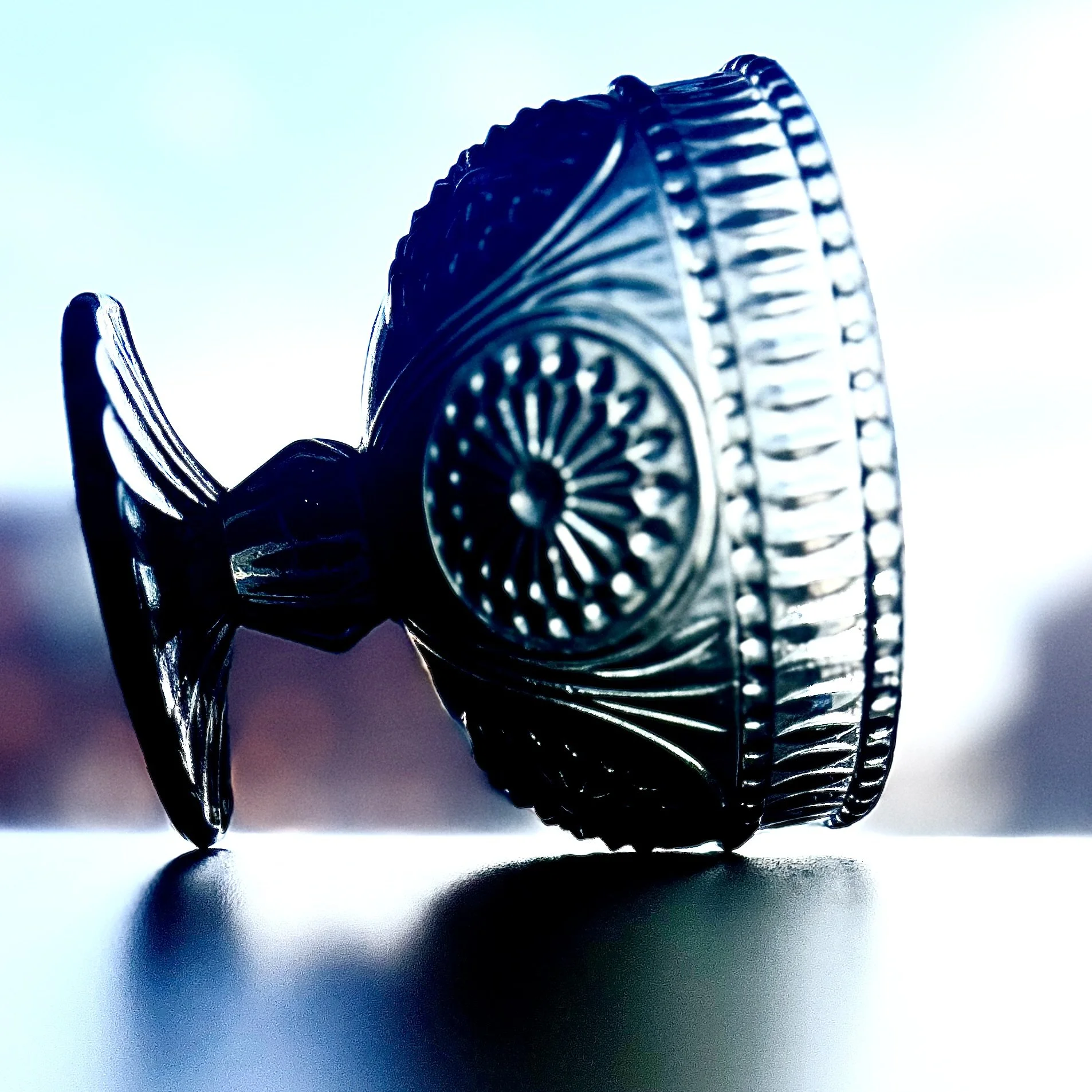
This exquisite pedestal dish exhibits a commanding sculptural presence, characterized by the rhythmic geometry of the iconic "Moon and Star" motif. The deep olive-toned glass interacts dynamically with light, projecting luminous, orb-like reflections through its thick-walled vessel and faceted stem. Its elevated form and scalloped rim create a sophisticated silhouette, making it an arresting decorative object for both modern and traditional interiors. The piece serves as a tactile exploration of light and shadow, balancing Victorian intricacy with a bold, monolithic color profile.
Attribution & Period; by Adams & Co. (Pittsburgh), 1880s
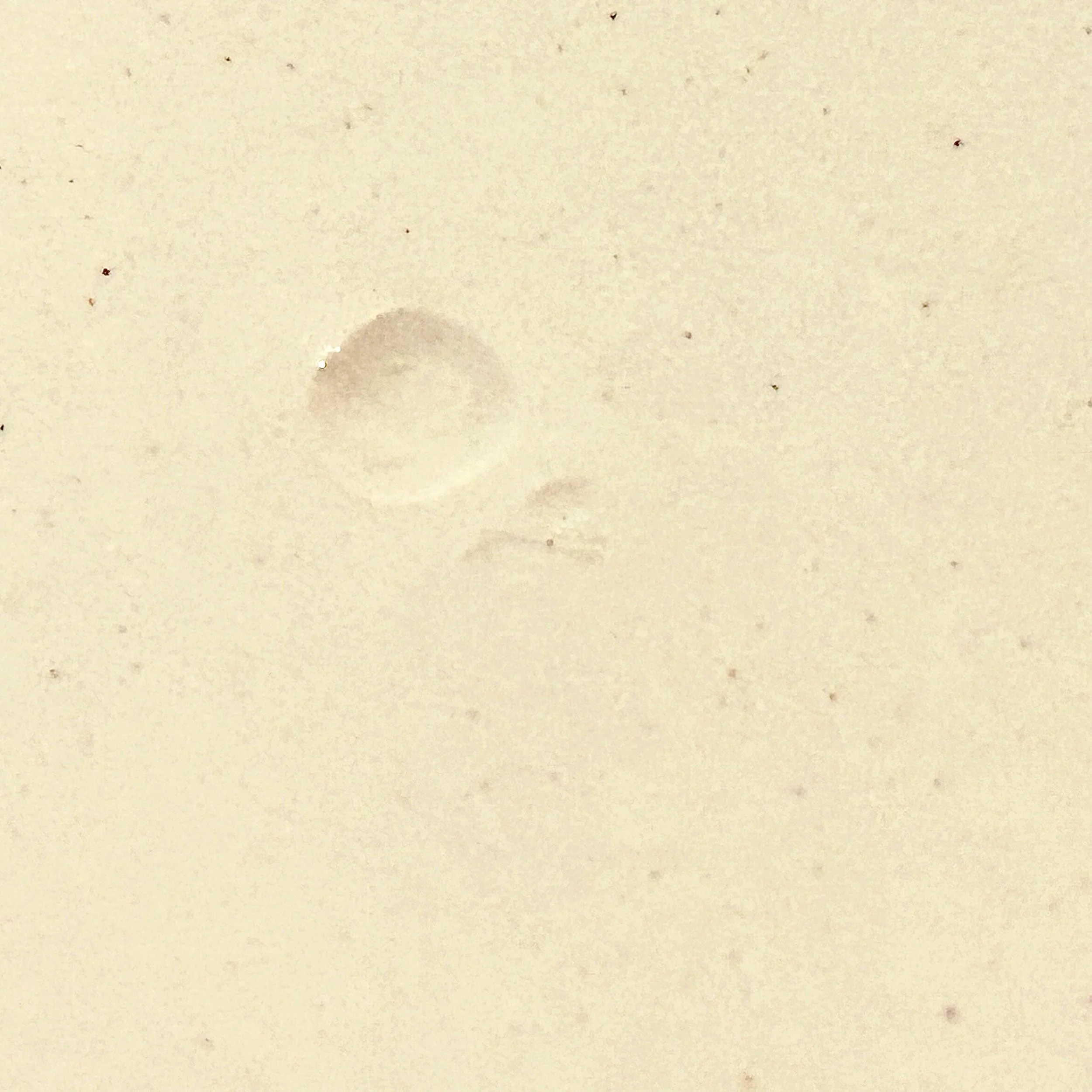
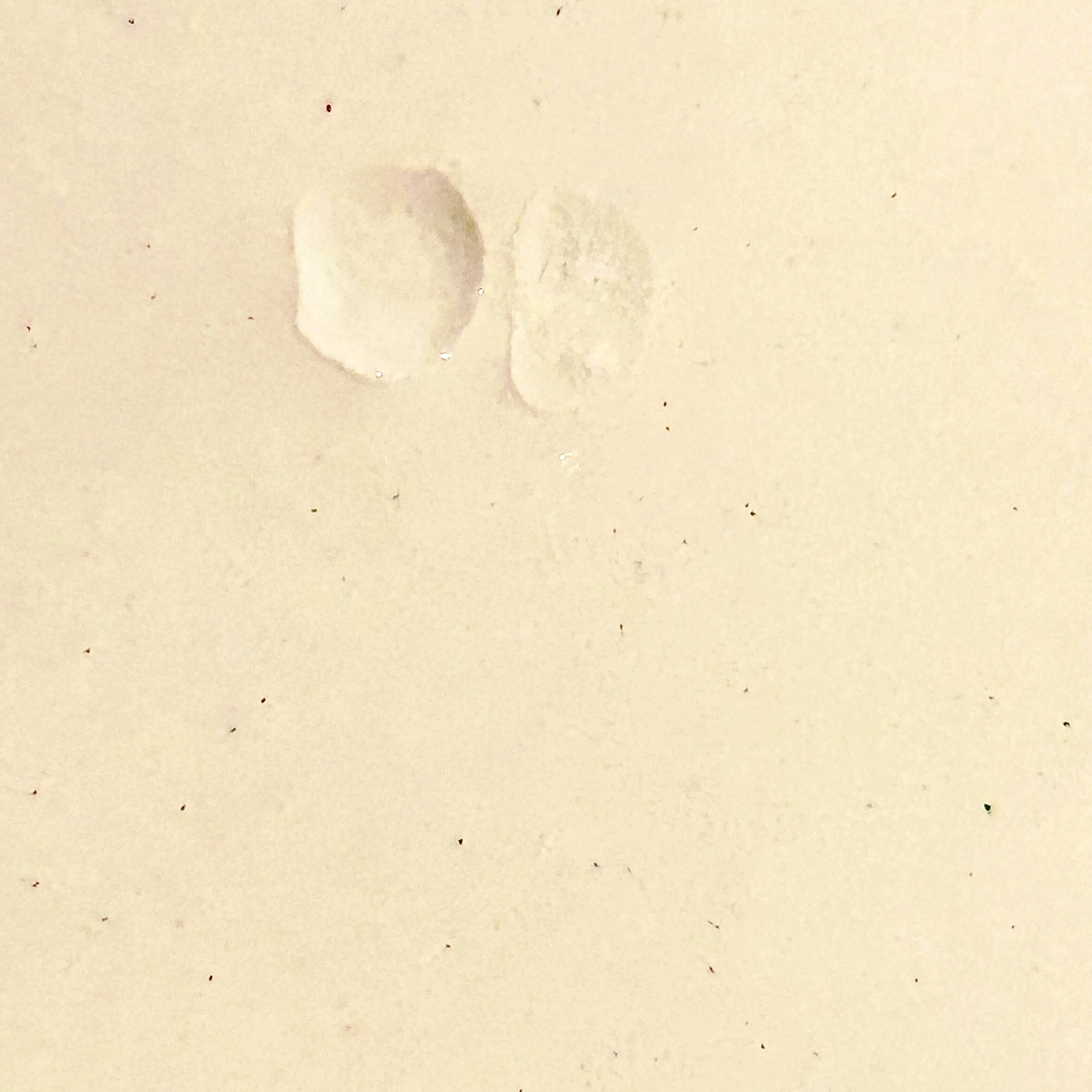
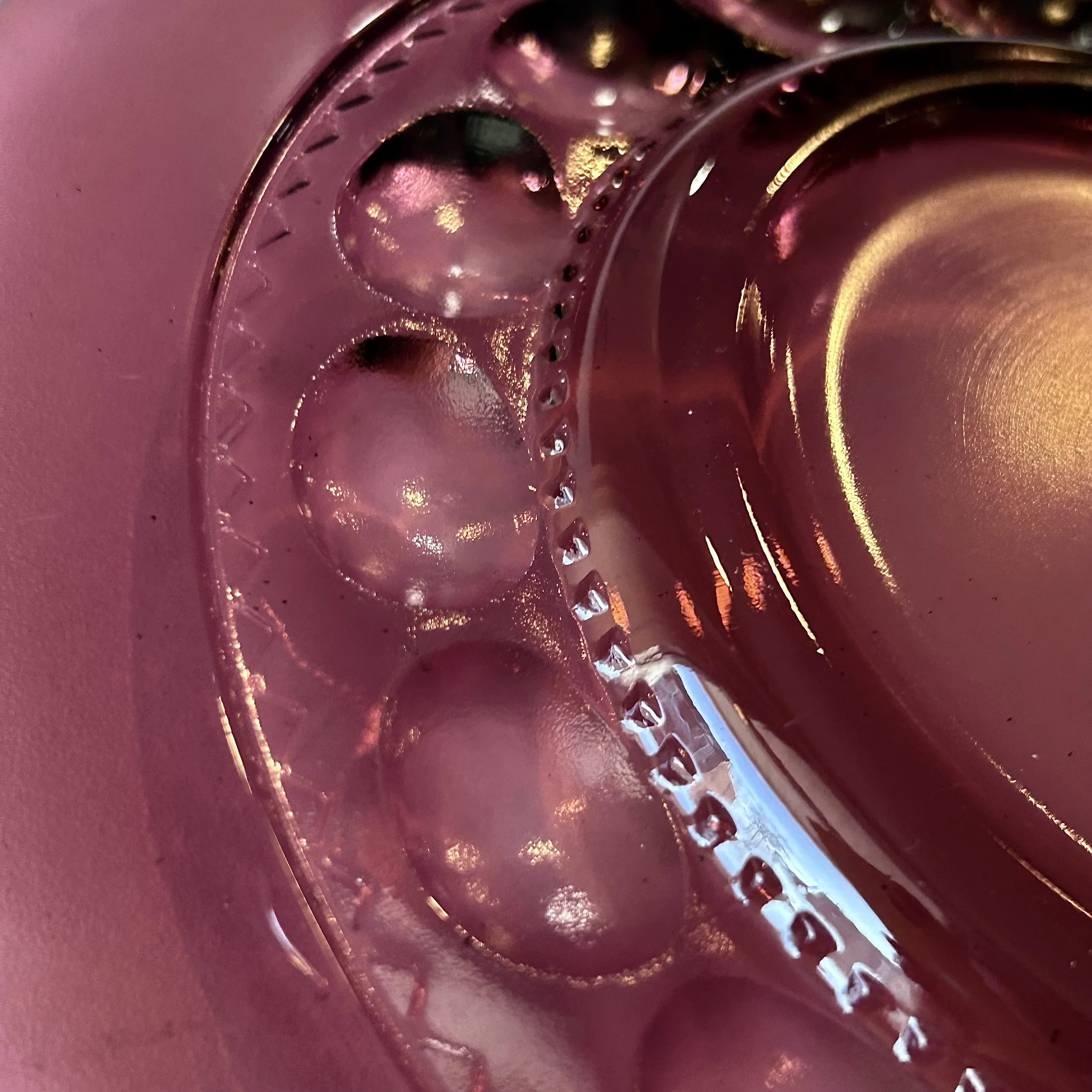
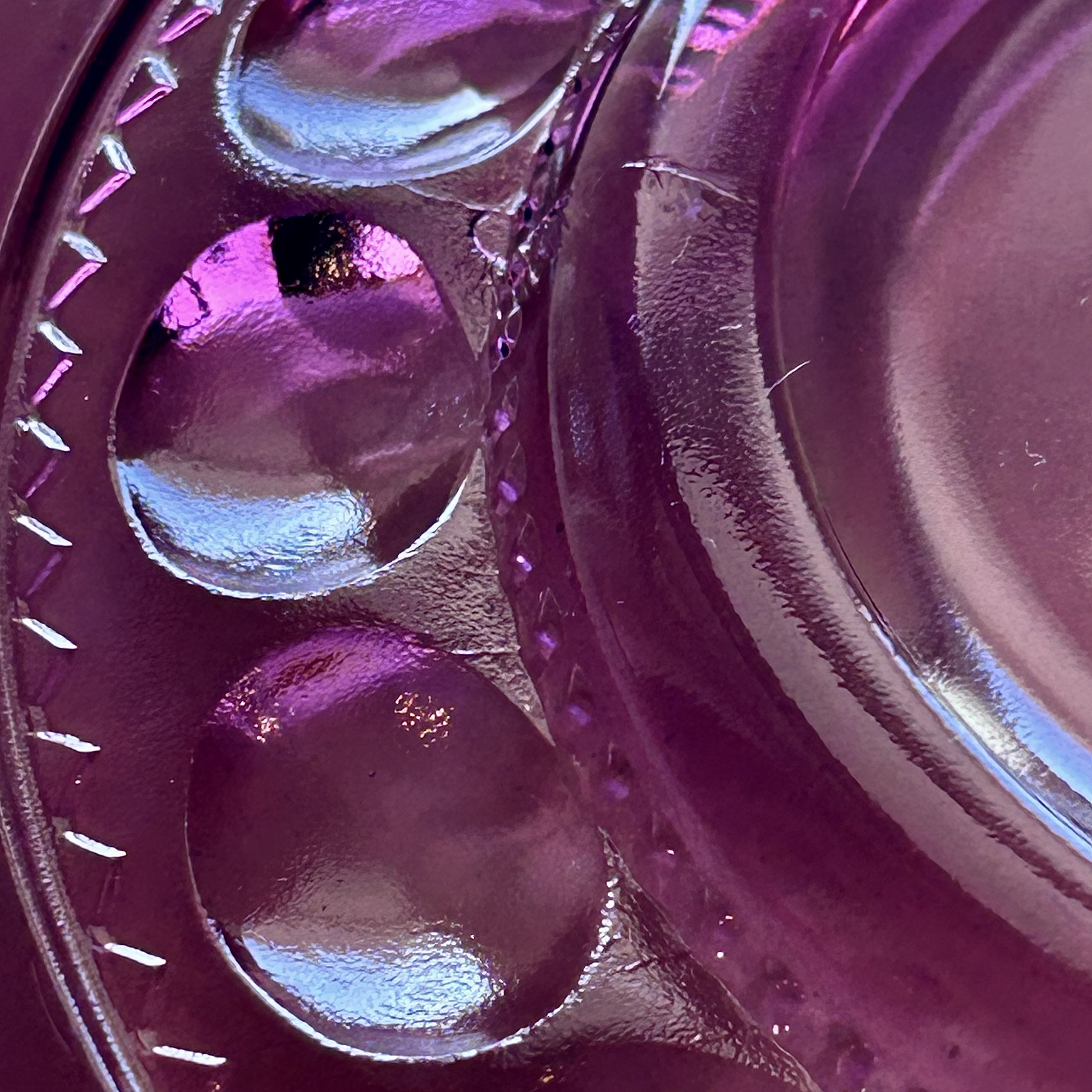
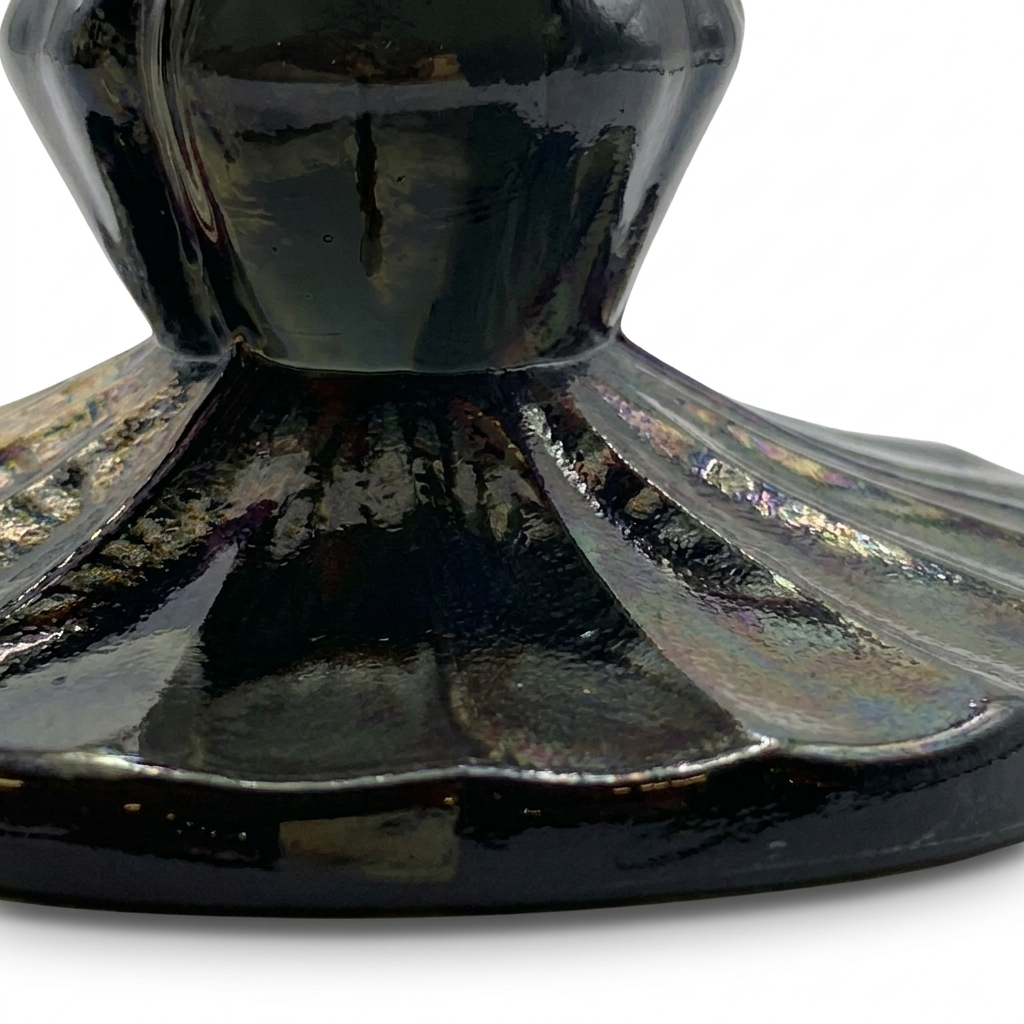
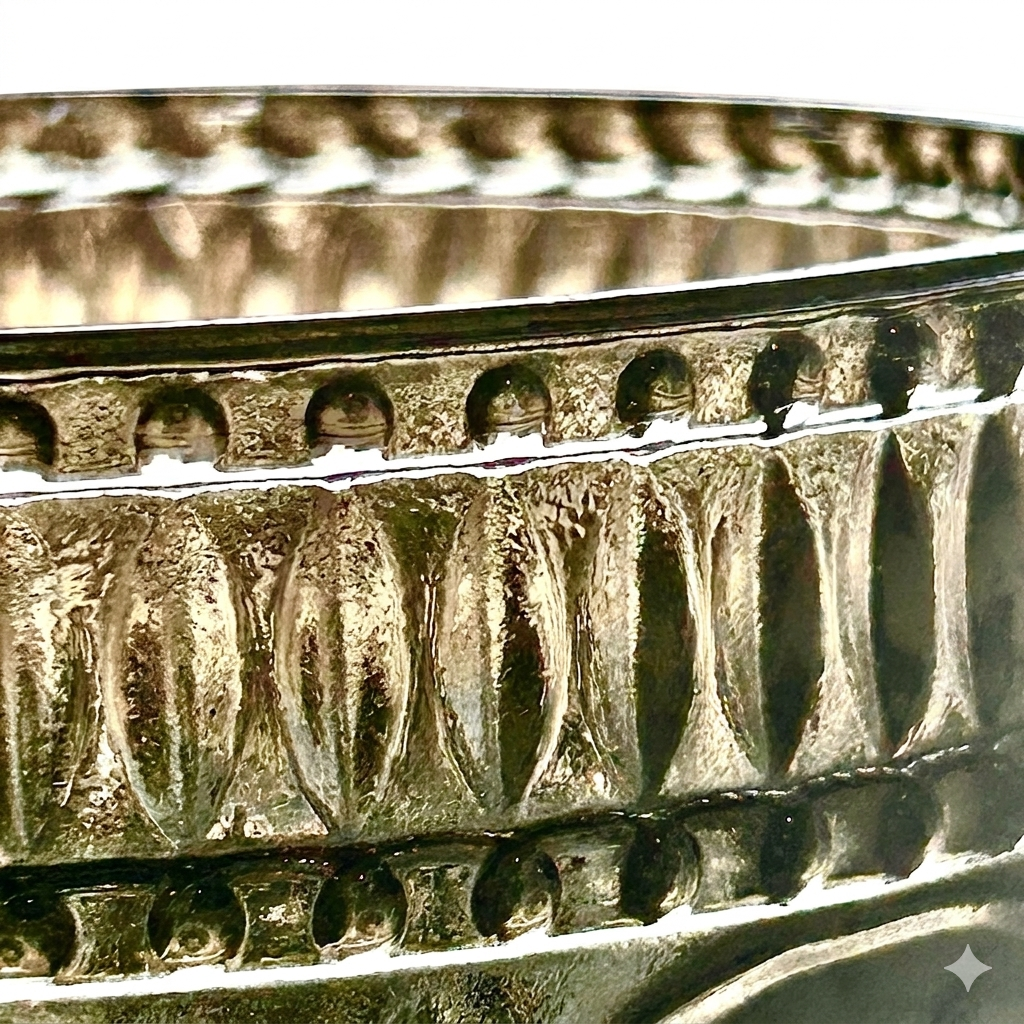
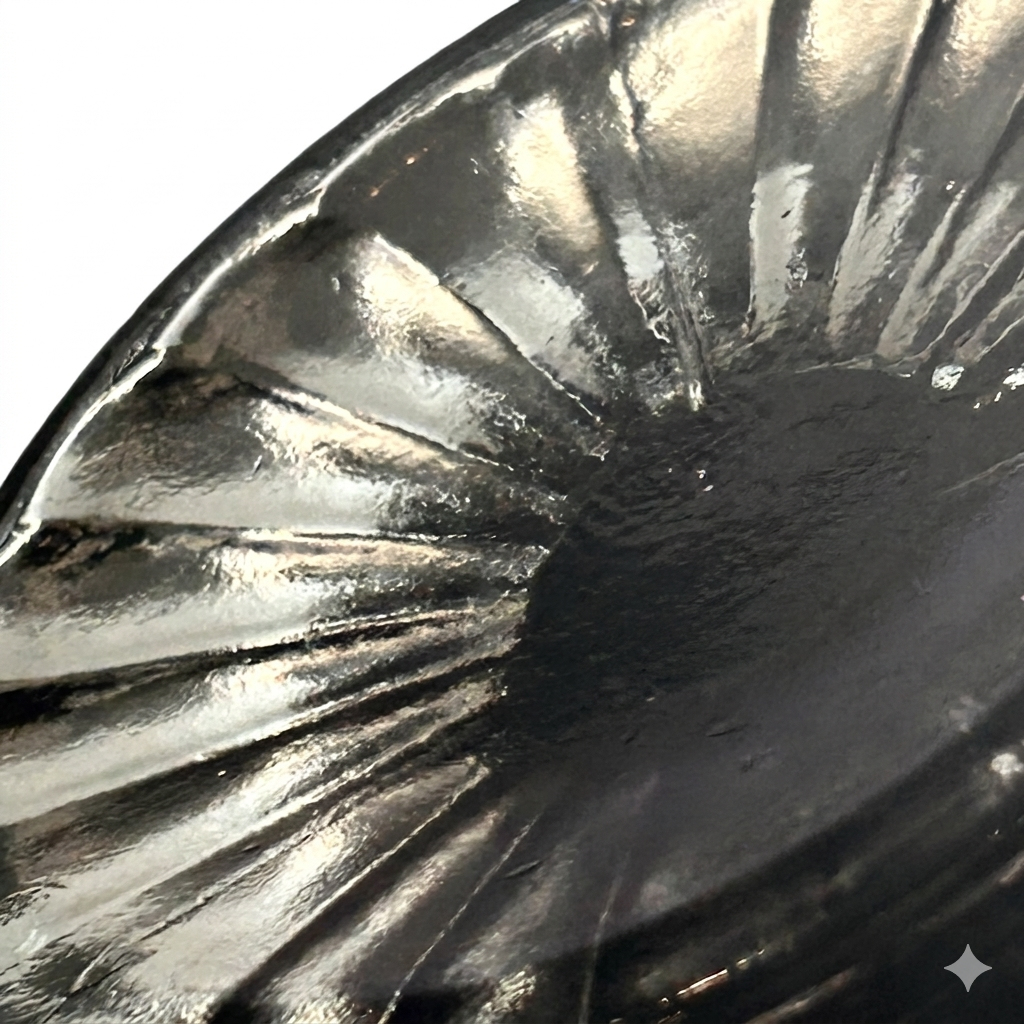
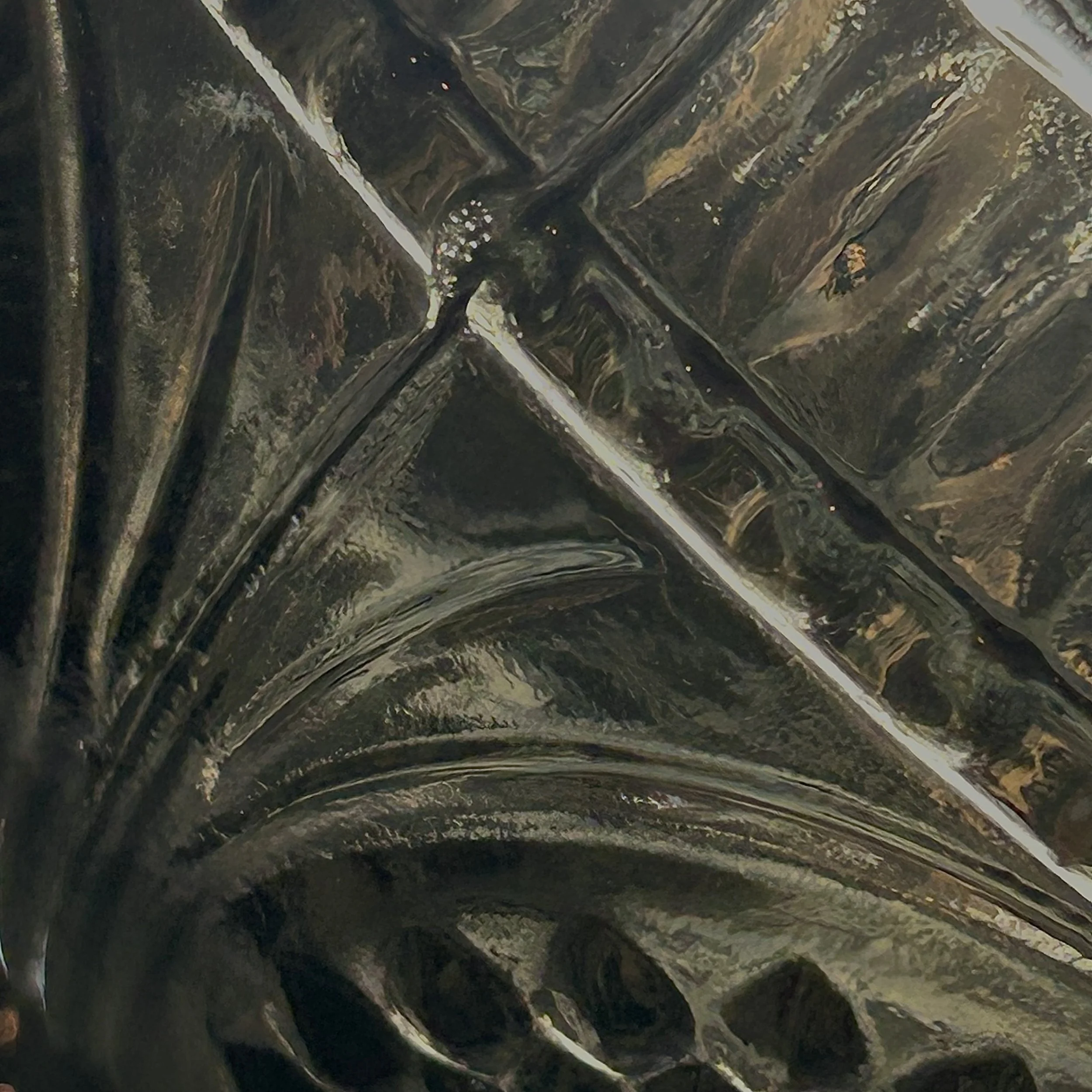
This piece is a definitive example of the "Palace" pattern—popularly known as "Moon and Star"—originally introduced by Adams & Co. in 1874 and reaching its peak production in the 1880s. The attribution is secured by the depth of the pressed "moons" and the specific star-burst geometry of the base. The glass displays prominent "hay marks" (straw marks) and cooling striations, which are diagnostic indicators of 19th-century hand-pressed manufacturing. Unlike mid-century revivals, these surface characteristics confirm an origin in the late Victorian era, specifically circa 1888.
Dimensions & Weight
Condition
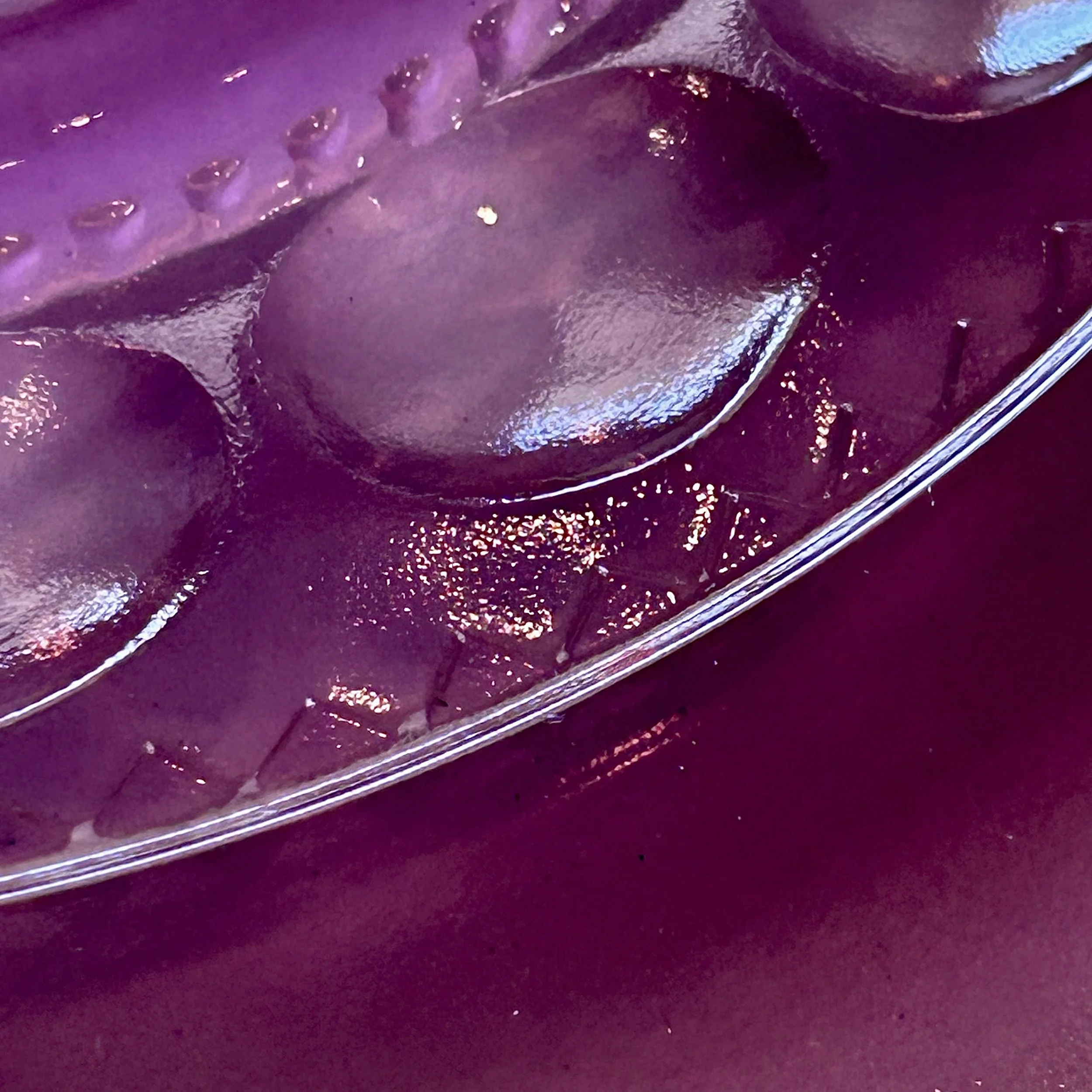
Excellent antique condition. No chips, cracks, or fleabites observed on the scalloped rim or base. The glass exhibits characteristic manufacturing marks including internal striations, faint shear marks, and cooling lines consistent with 1880s-era mold-pressed glass processes. Surface wear is negligible and consistent with age.
Authenticity & Construction
The object was created using a hand-pressed metal mold process, a hallmark of the American Industrial Revolution’s contribution to the decorative arts. The thickness of the glass and the visible "hay marks"—striations formed as the molten glass cooled against the mold—serve as authenticating evidence of its 19th-century origin. This method required significant manual skill to ensure the intricate pattern registered clearly across the vessel's varying thickness, resulting in a piece of substantial heft and historical character.
Placement
This sculptural dish is ideally suited for a curated étagère or a sun-drenched windowsill where its refractive properties can be fully realized. It functions beautifully as a standalone object of interest on a refined bar cart or as a sophisticated vessel for small desktop treasures within a study.
STANDARD ATTRIBUTION & VALUE DISCLOSURE; This piece is described to the best of current scholarly and market knowledge. Any maker or regional attribution is based on visual analysis, materials, construction techniques, and documented stylistic comparisons. As with many MCM and antique design objects, definitive attribution may not be possible without original labels or factory records. Pricing reflects condition, quality, decorative appeal, and current collector demand rather than guaranteed maker identification.
This exquisite pedestal dish exhibits a commanding sculptural presence, characterized by the rhythmic geometry of the iconic "Moon and Star" motif. The deep olive-toned glass interacts dynamically with light, projecting luminous, orb-like reflections through its thick-walled vessel and faceted stem. Its elevated form and scalloped rim create a sophisticated silhouette, making it an arresting decorative object for both modern and traditional interiors. The piece serves as a tactile exploration of light and shadow, balancing Victorian intricacy with a bold, monolithic color profile.
Attribution & Period; by Adams & Co. (Pittsburgh), 1880s
This piece is a definitive example of the "Palace" pattern—popularly known as "Moon and Star"—originally introduced by Adams & Co. in 1874 and reaching its peak production in the 1880s. The attribution is secured by the depth of the pressed "moons" and the specific star-burst geometry of the base. The glass displays prominent "hay marks" (straw marks) and cooling striations, which are diagnostic indicators of 19th-century hand-pressed manufacturing. Unlike mid-century revivals, these surface characteristics confirm an origin in the late Victorian era, specifically circa 1888.
Dimensions & Weight
Condition
Excellent antique condition. No chips, cracks, or fleabites observed on the scalloped rim or base. The glass exhibits characteristic manufacturing marks including internal striations, faint shear marks, and cooling lines consistent with 1880s-era mold-pressed glass processes. Surface wear is negligible and consistent with age.
Authenticity & Construction
The object was created using a hand-pressed metal mold process, a hallmark of the American Industrial Revolution’s contribution to the decorative arts. The thickness of the glass and the visible "hay marks"—striations formed as the molten glass cooled against the mold—serve as authenticating evidence of its 19th-century origin. This method required significant manual skill to ensure the intricate pattern registered clearly across the vessel's varying thickness, resulting in a piece of substantial heft and historical character.
Placement
This sculptural dish is ideally suited for a curated étagère or a sun-drenched windowsill where its refractive properties can be fully realized. It functions beautifully as a standalone object of interest on a refined bar cart or as a sophisticated vessel for small desktop treasures within a study.
STANDARD ATTRIBUTION & VALUE DISCLOSURE; This piece is described to the best of current scholarly and market knowledge. Any maker or regional attribution is based on visual analysis, materials, construction techniques, and documented stylistic comparisons. As with many MCM and antique design objects, definitive attribution may not be possible without original labels or factory records. Pricing reflects condition, quality, decorative appeal, and current collector demand rather than guaranteed maker identification.

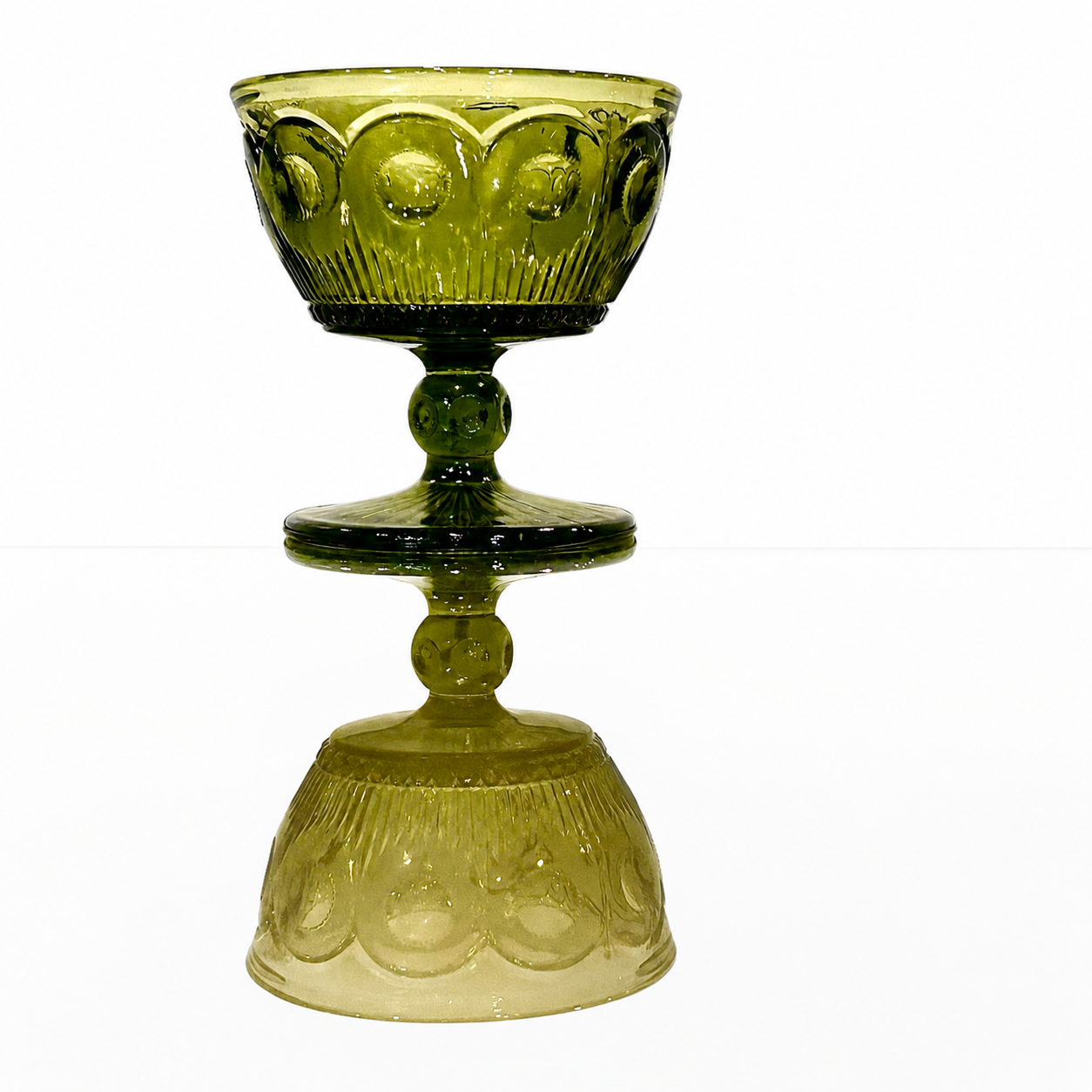 Image 1 of 10
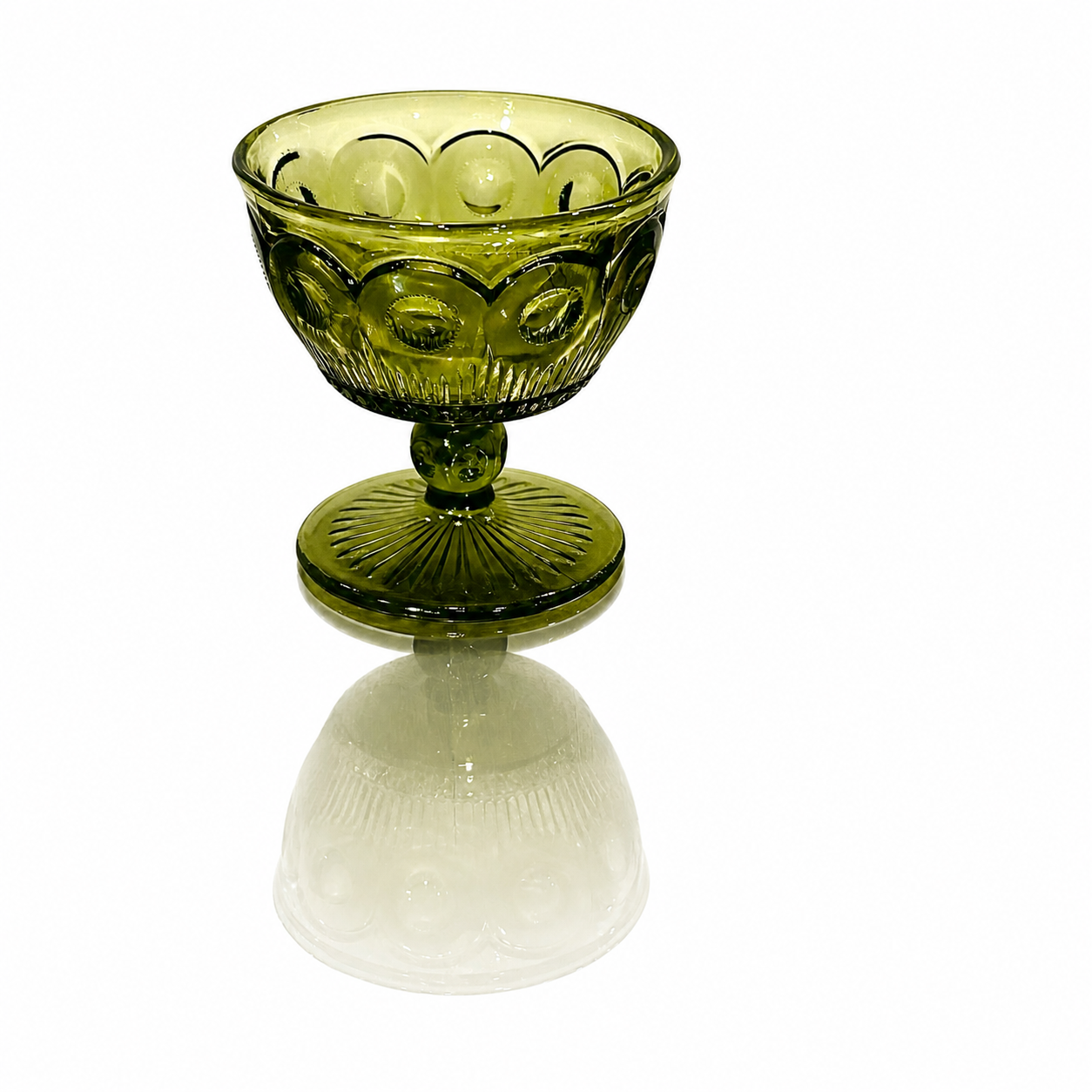 Image 2 of 10
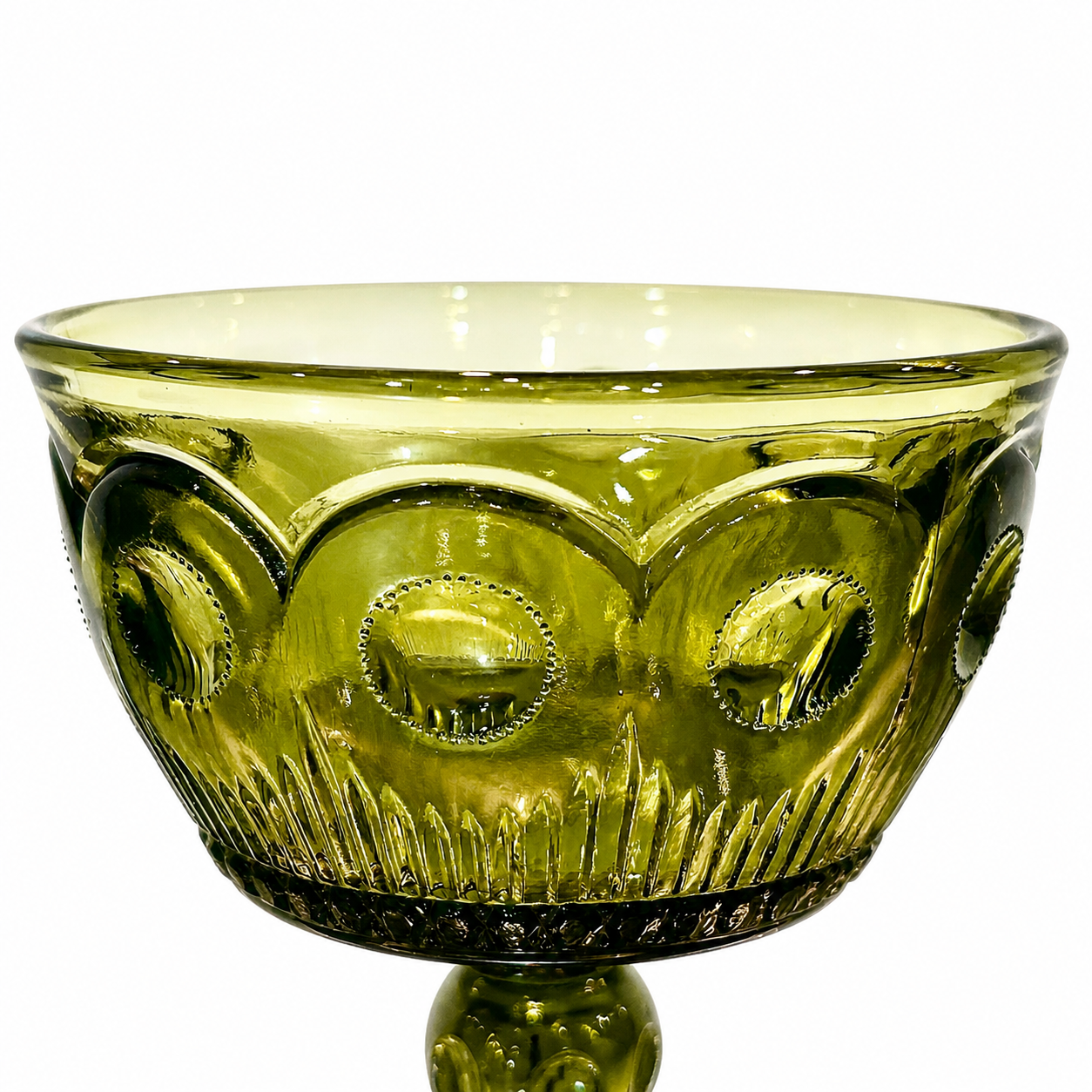 Image 3 of 10
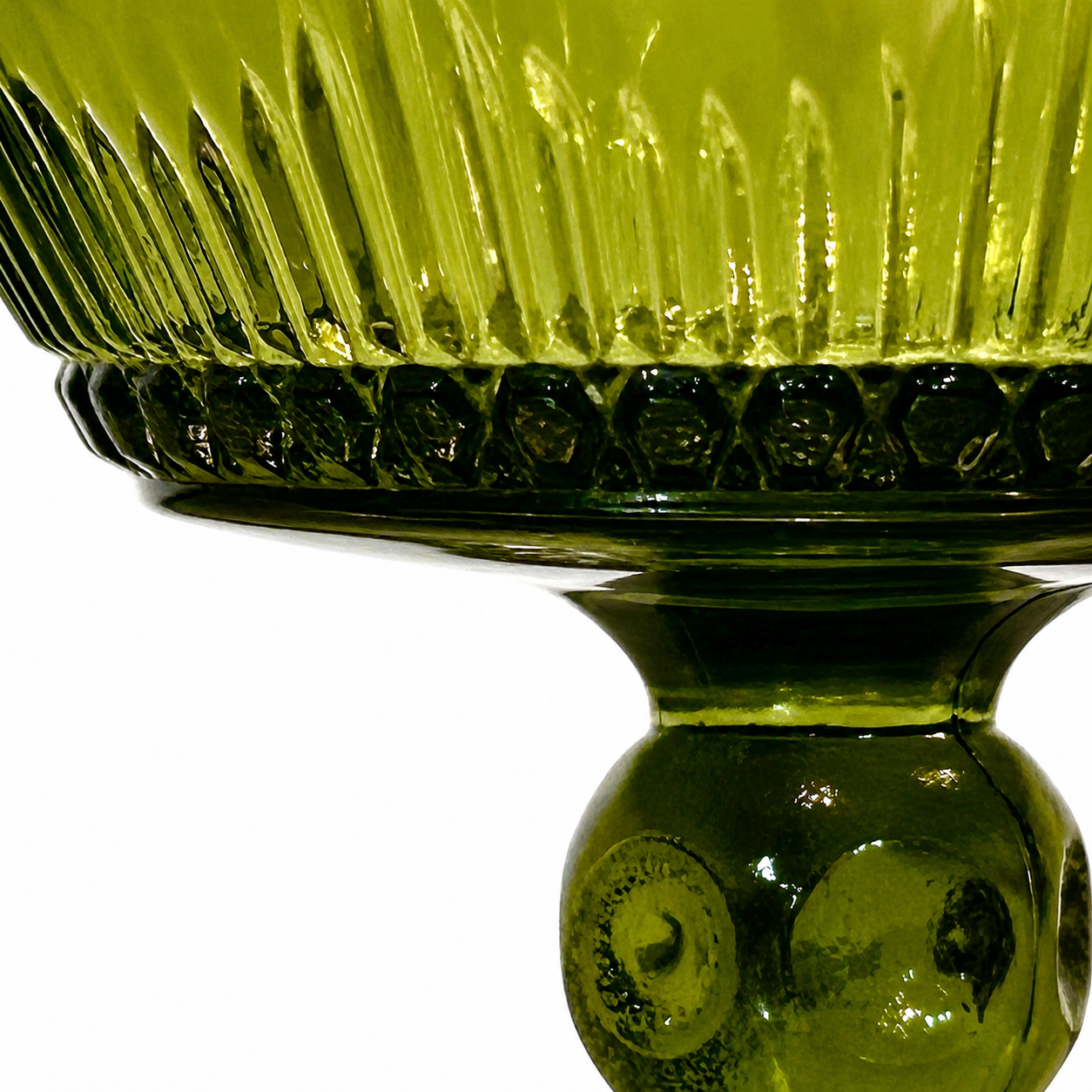 Image 4 of 10
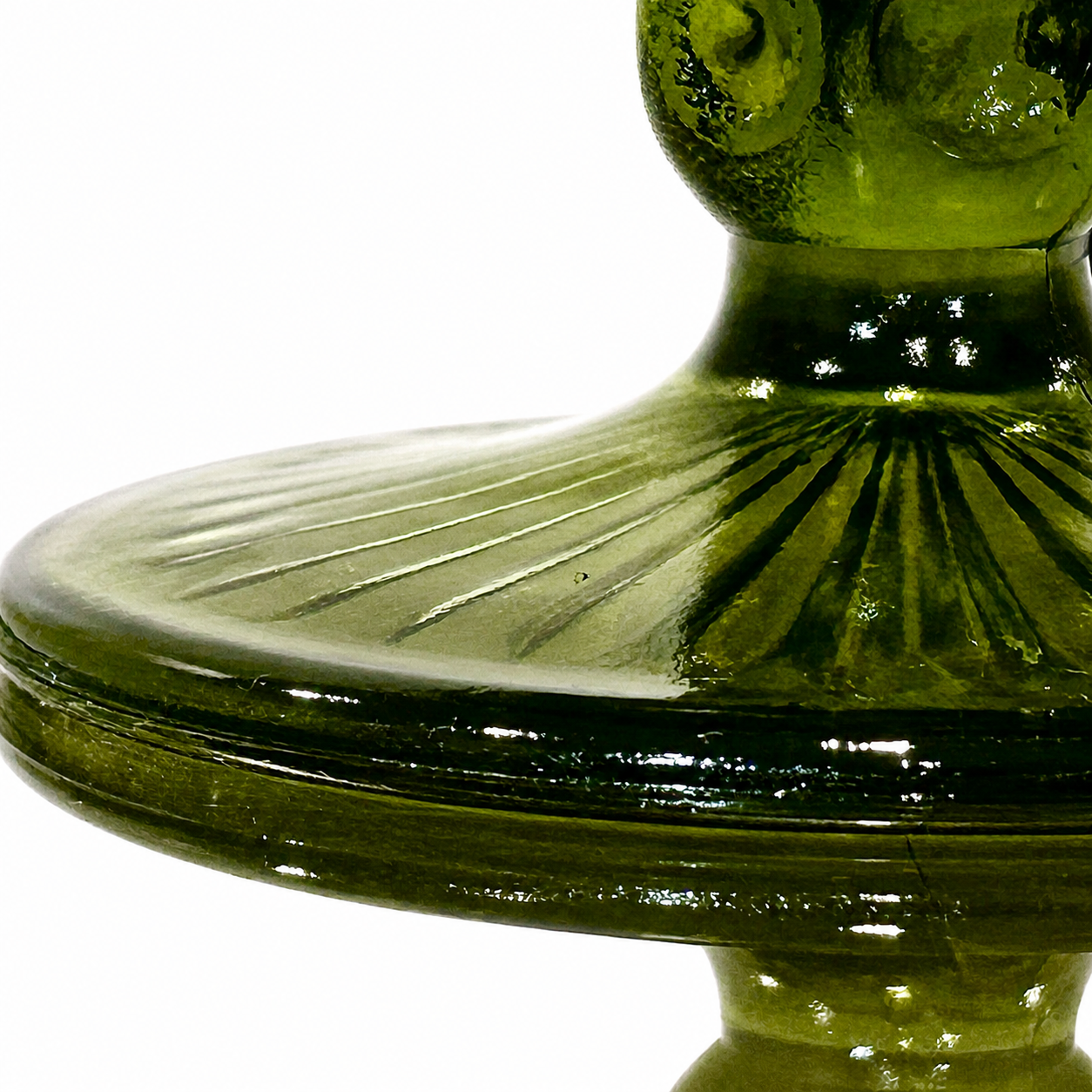 Image 5 of 10
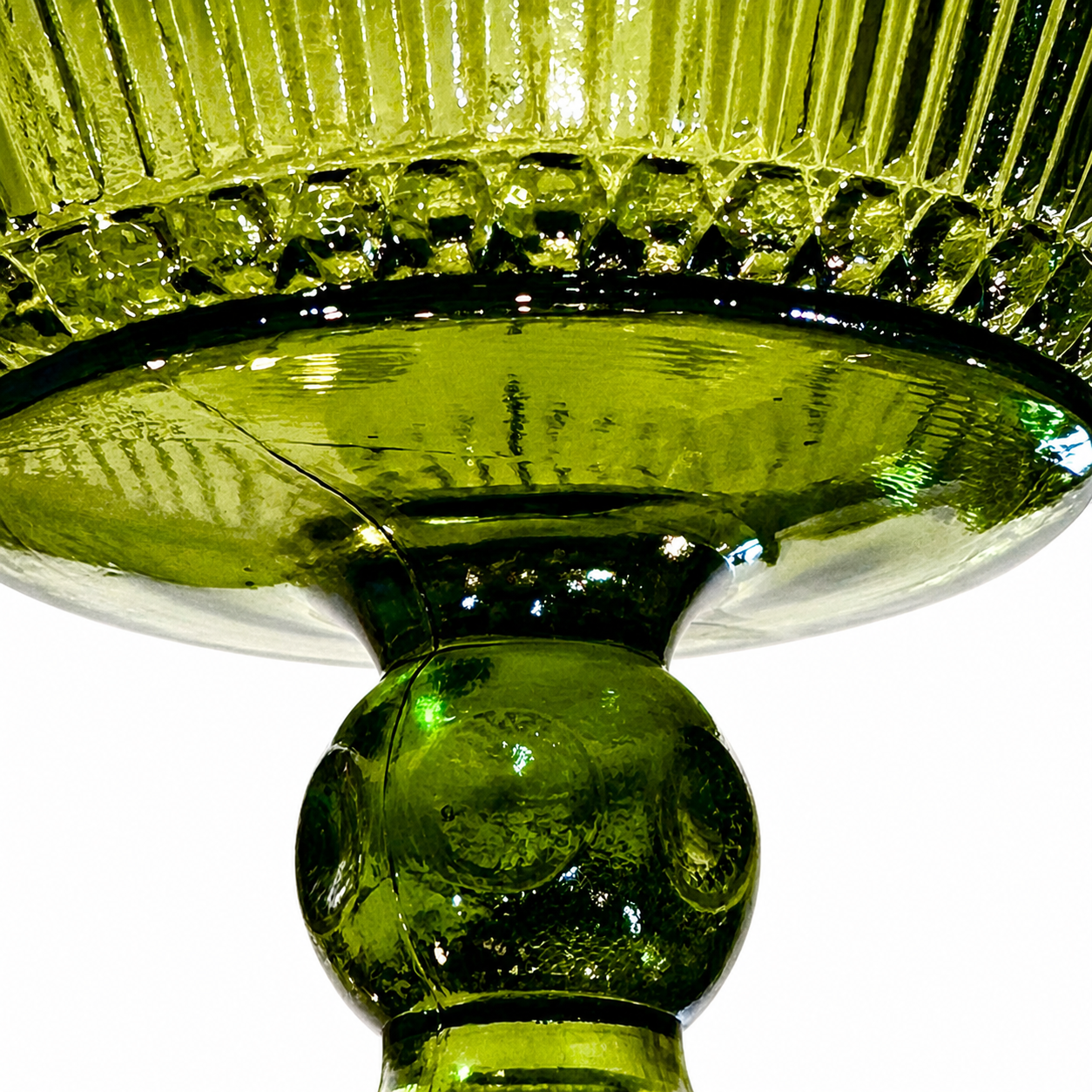 Image 6 of 10
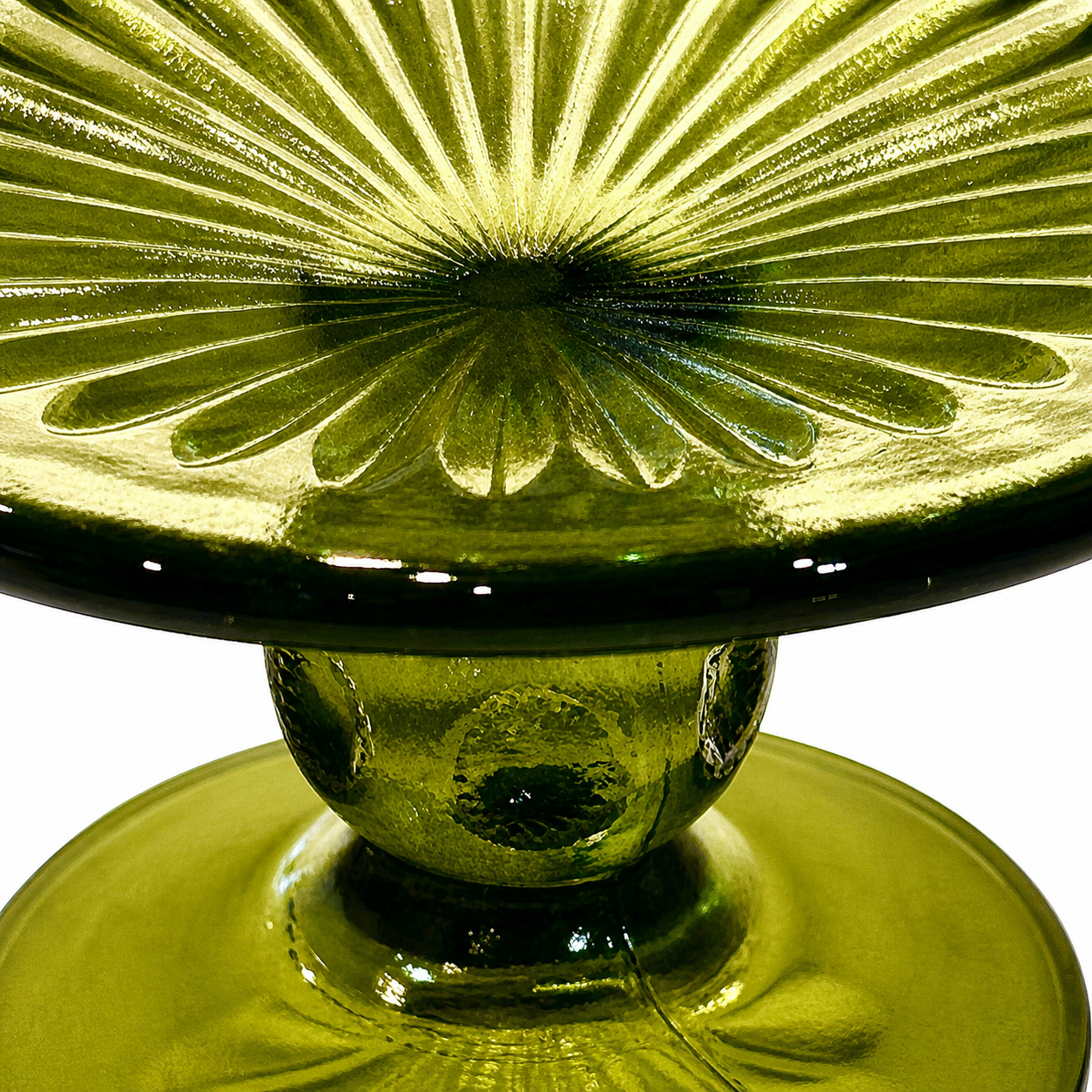 Image 7 of 10
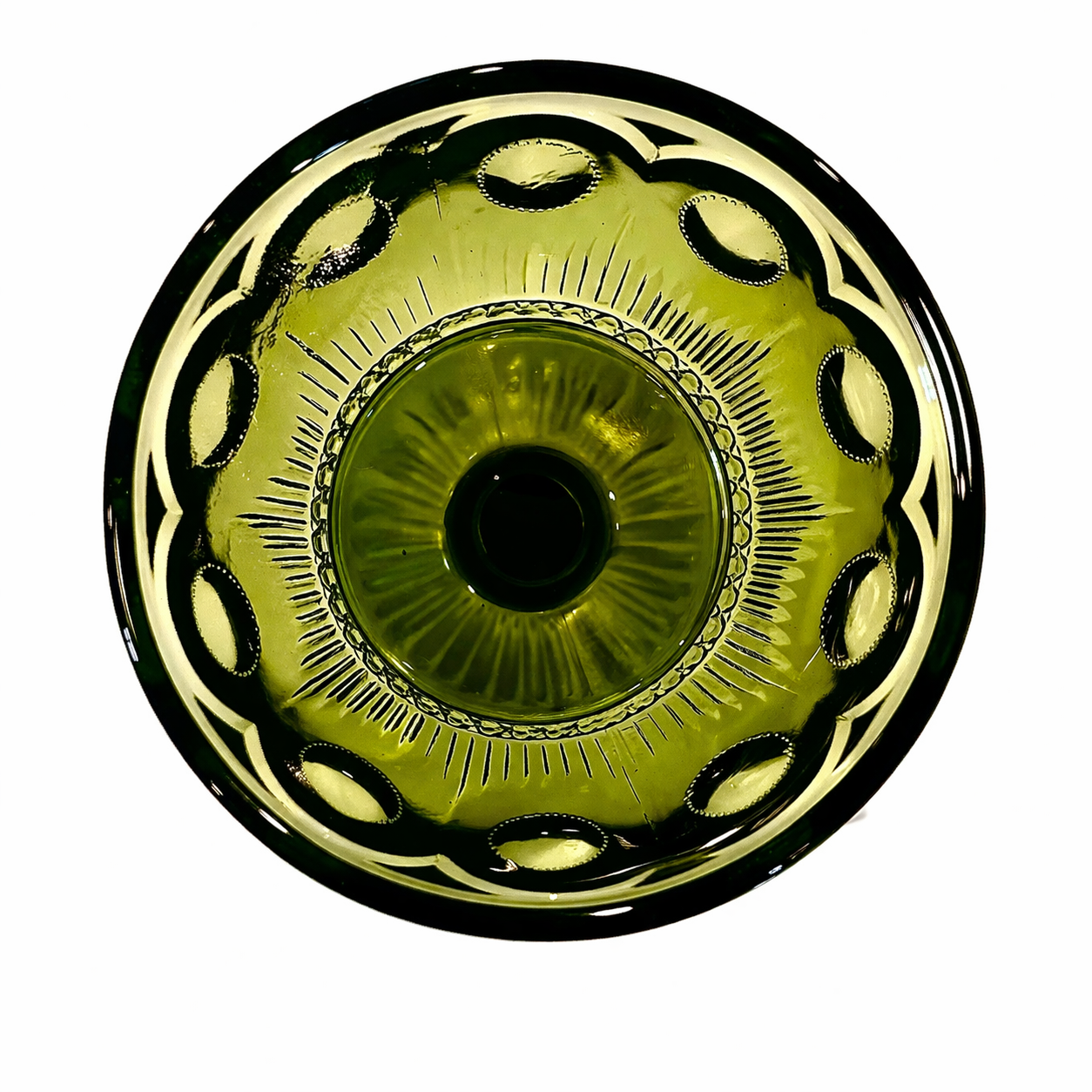 Image 8 of 10
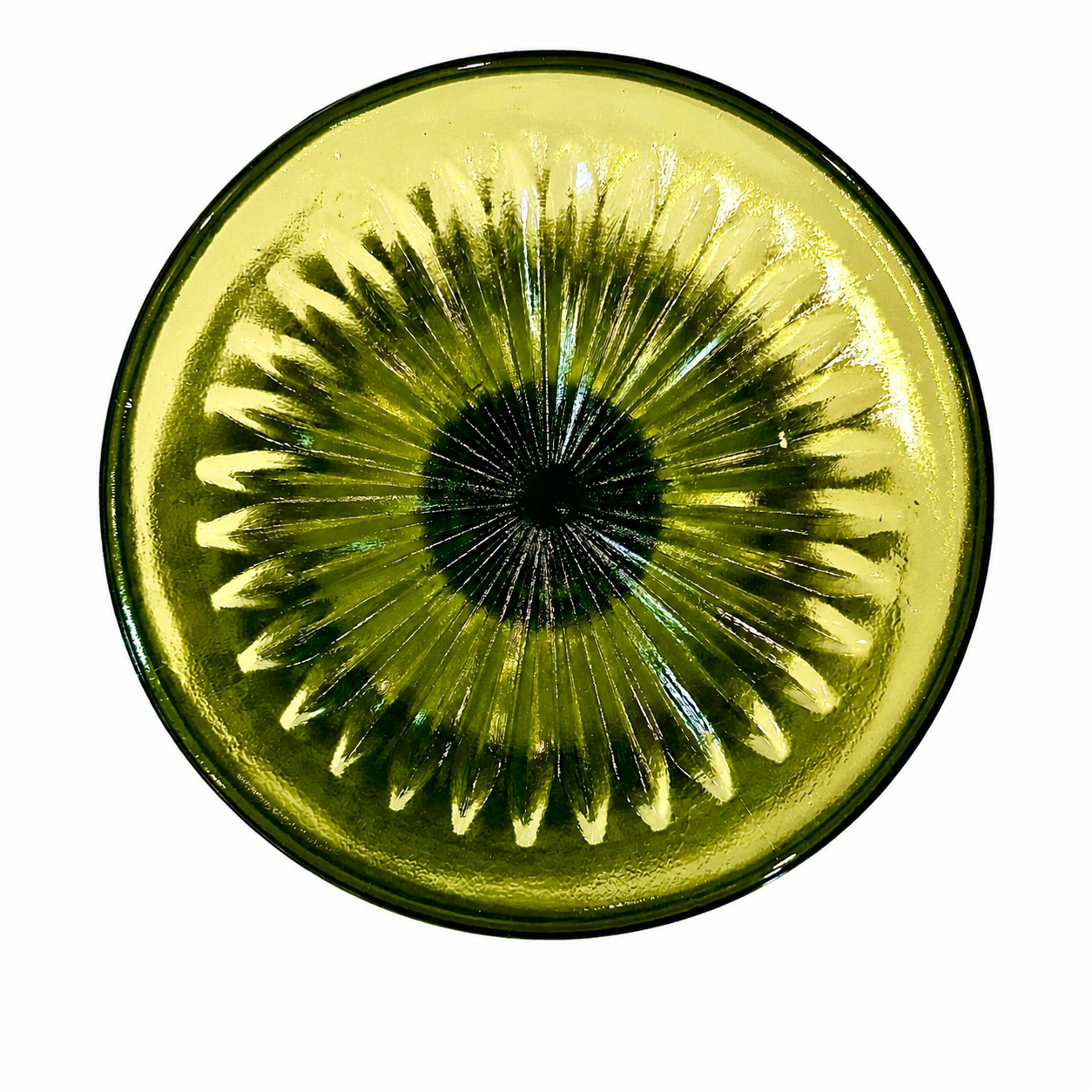 Image 9 of 10
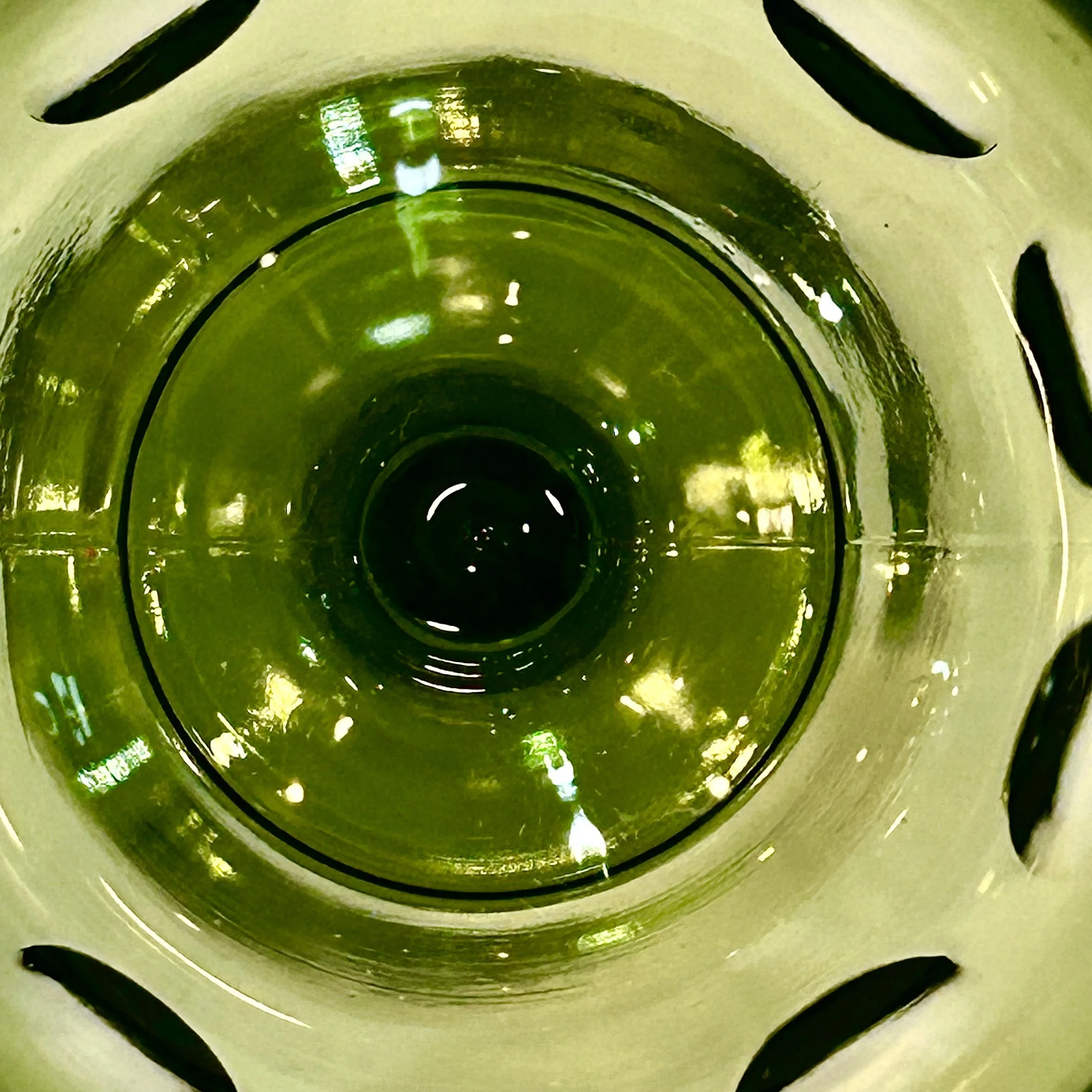 Image 10 of 10