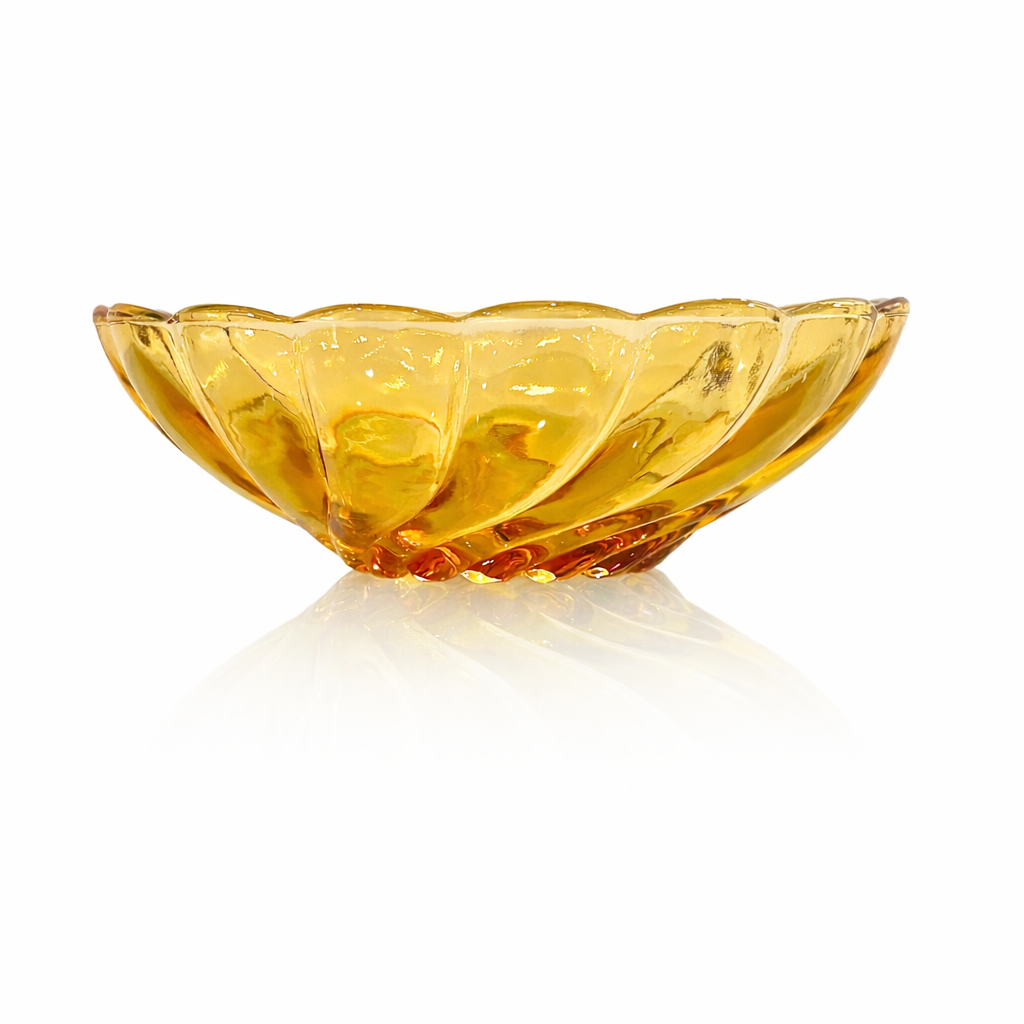
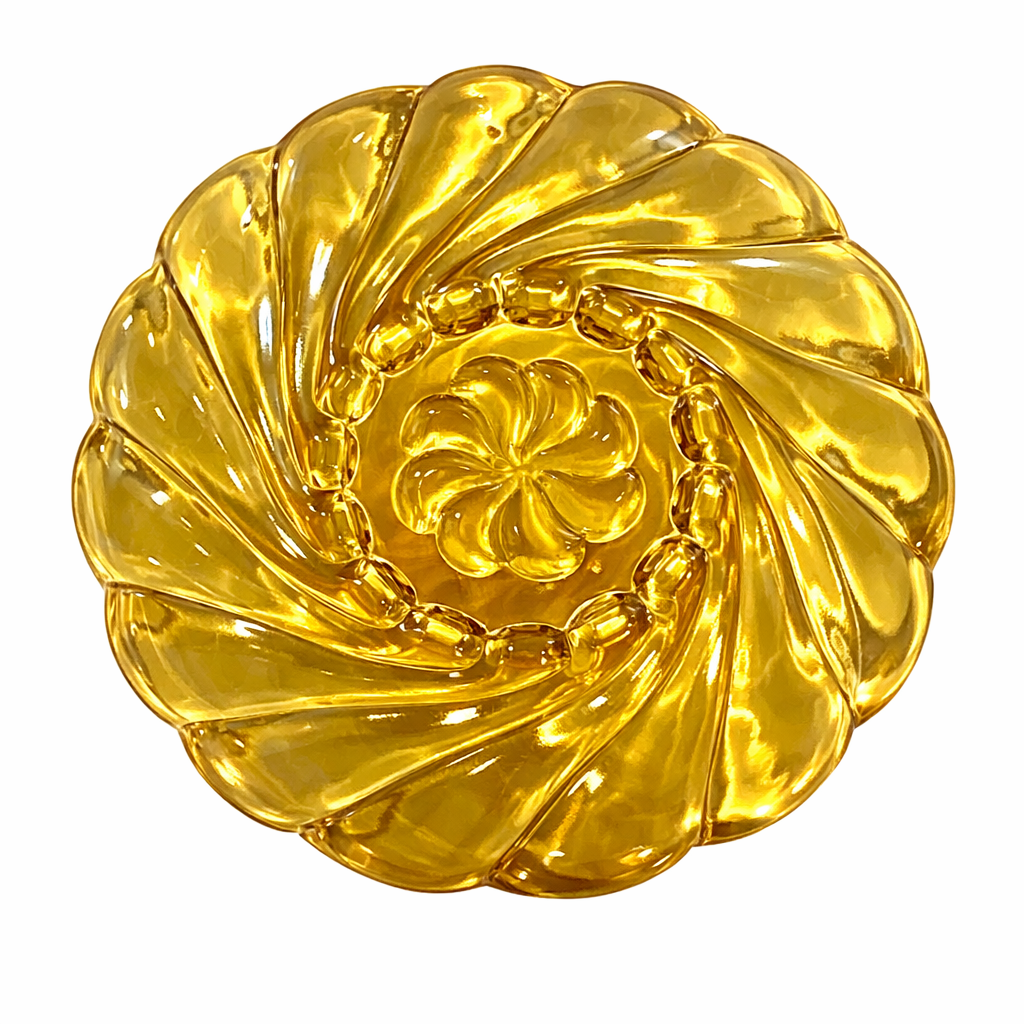
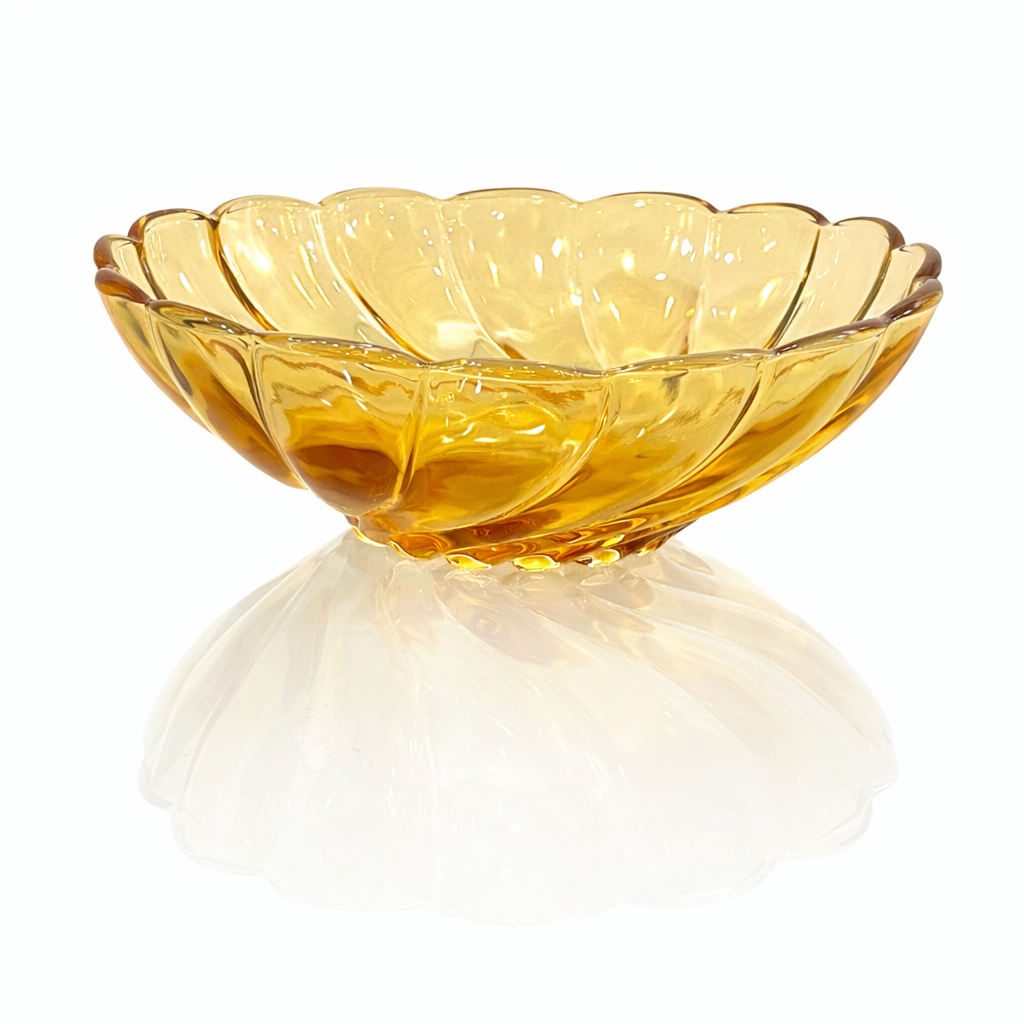
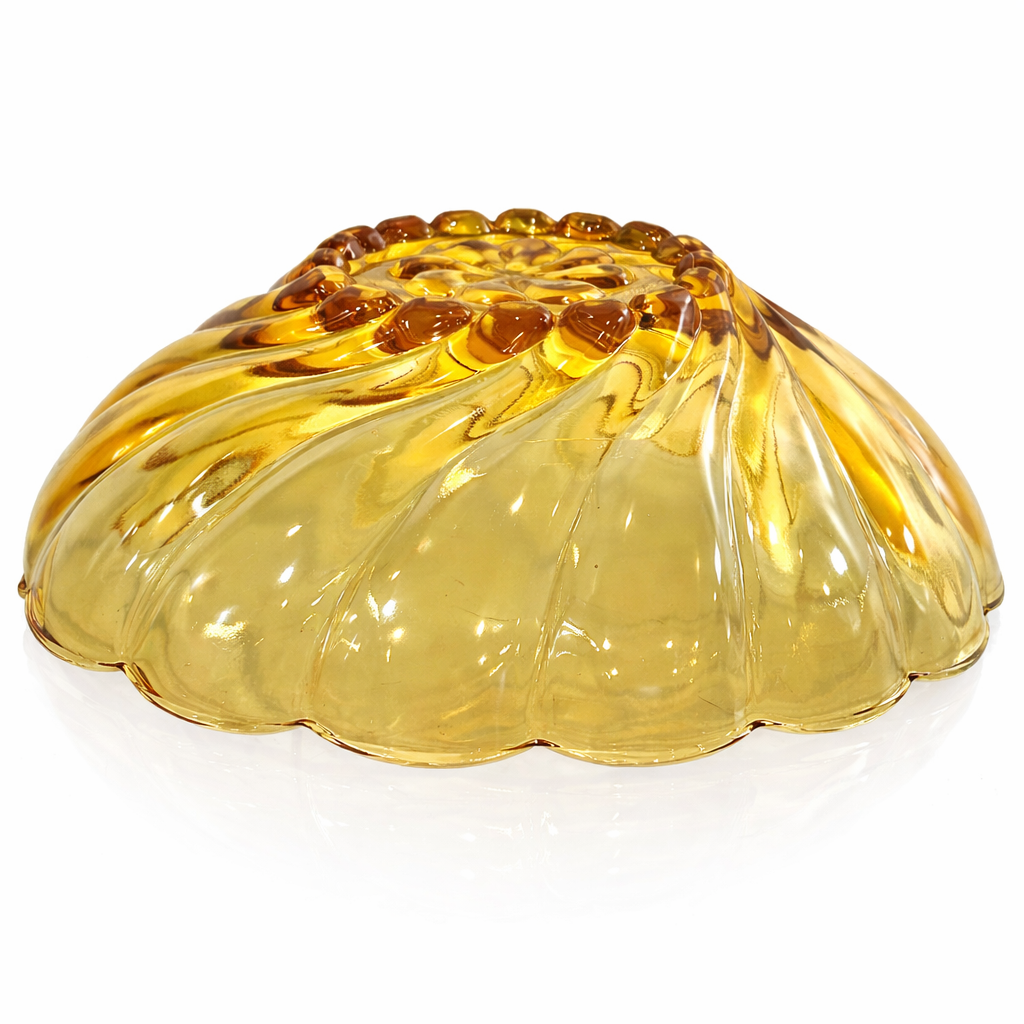
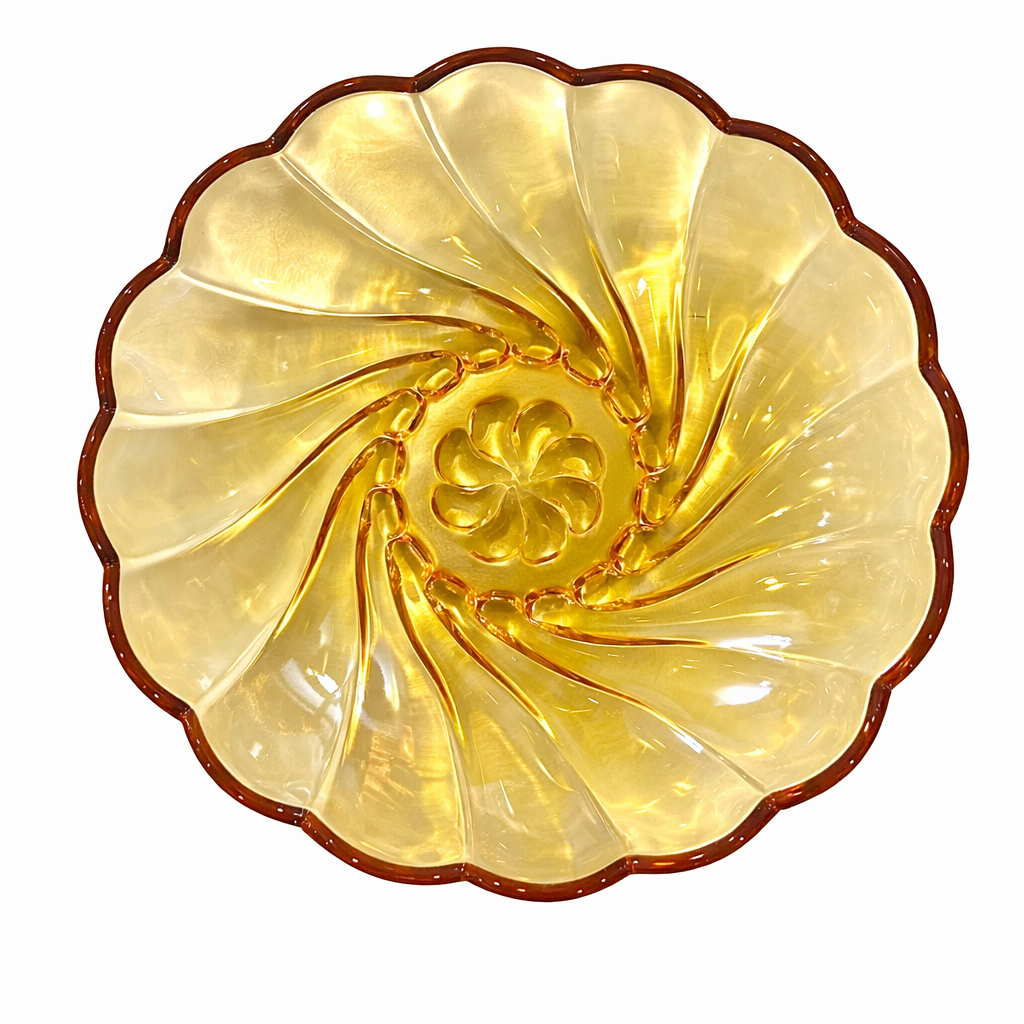
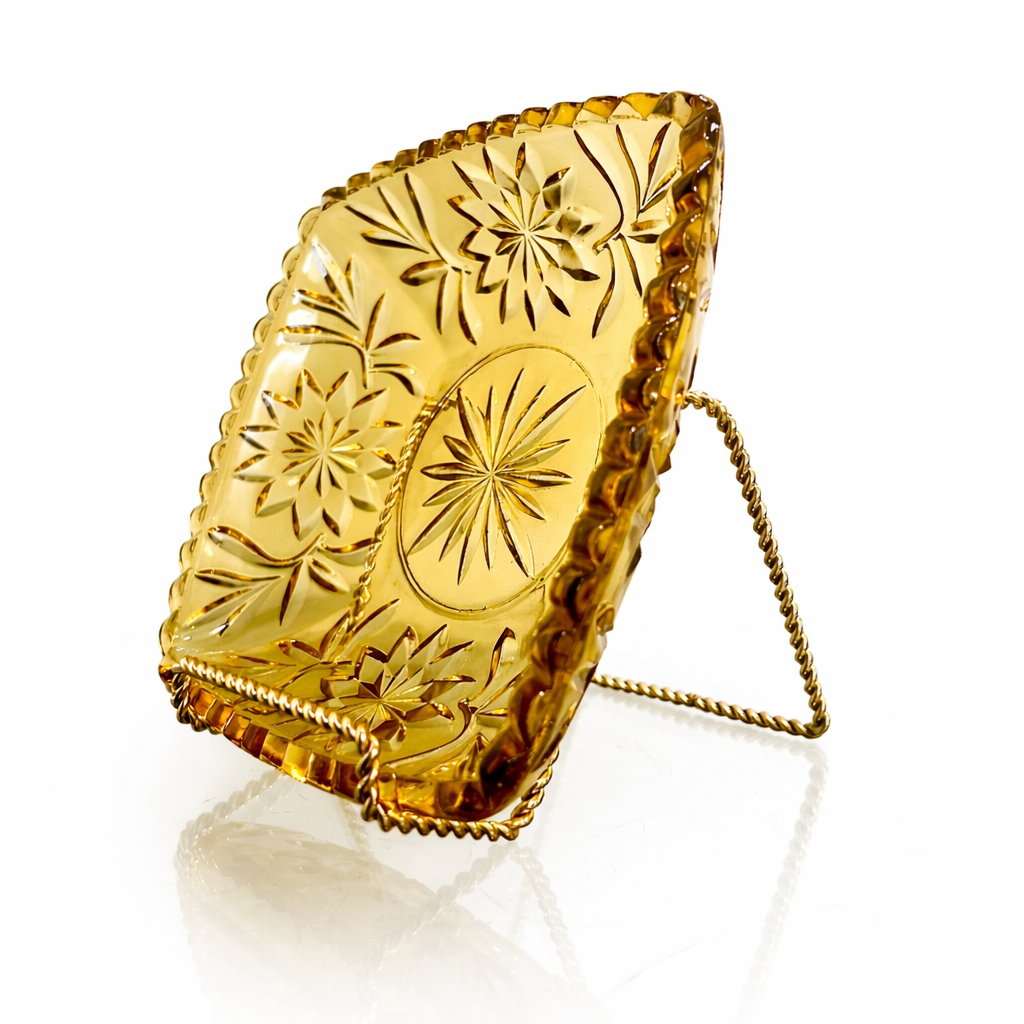
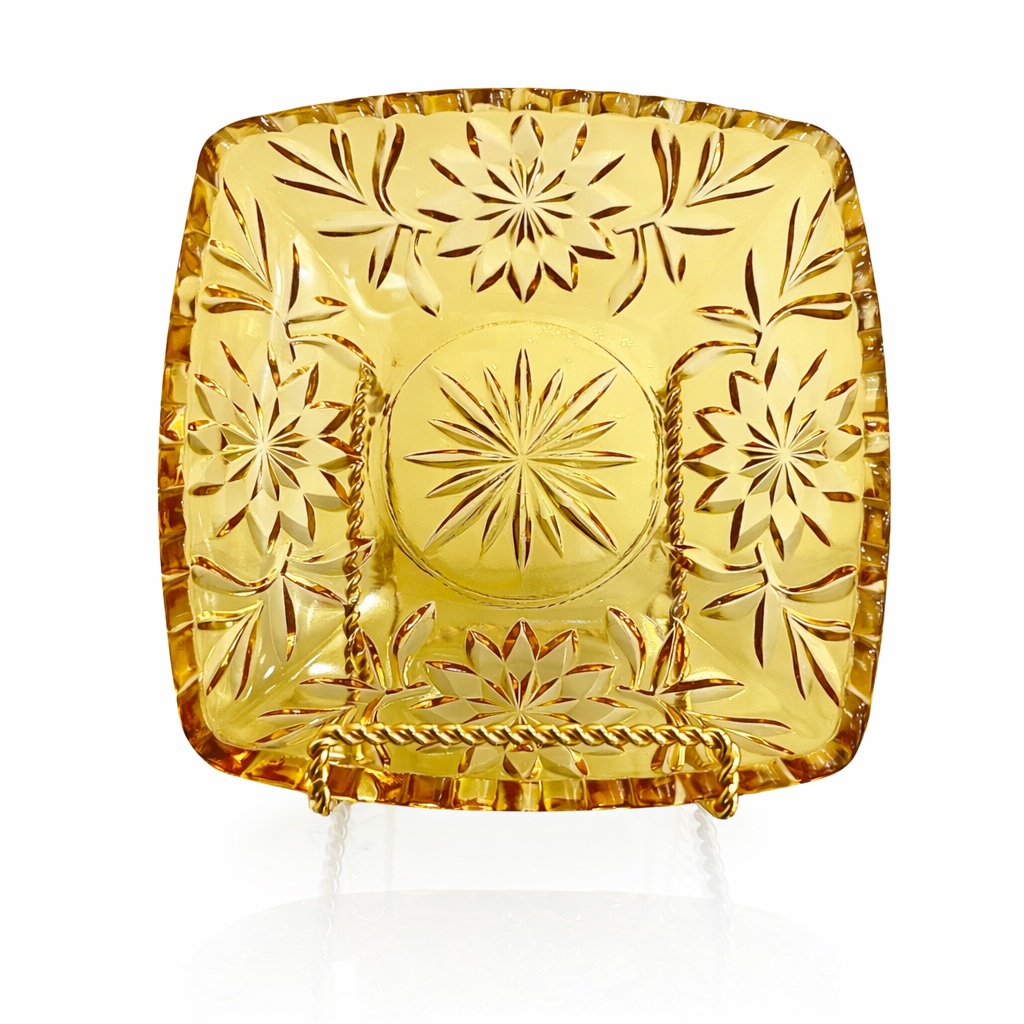
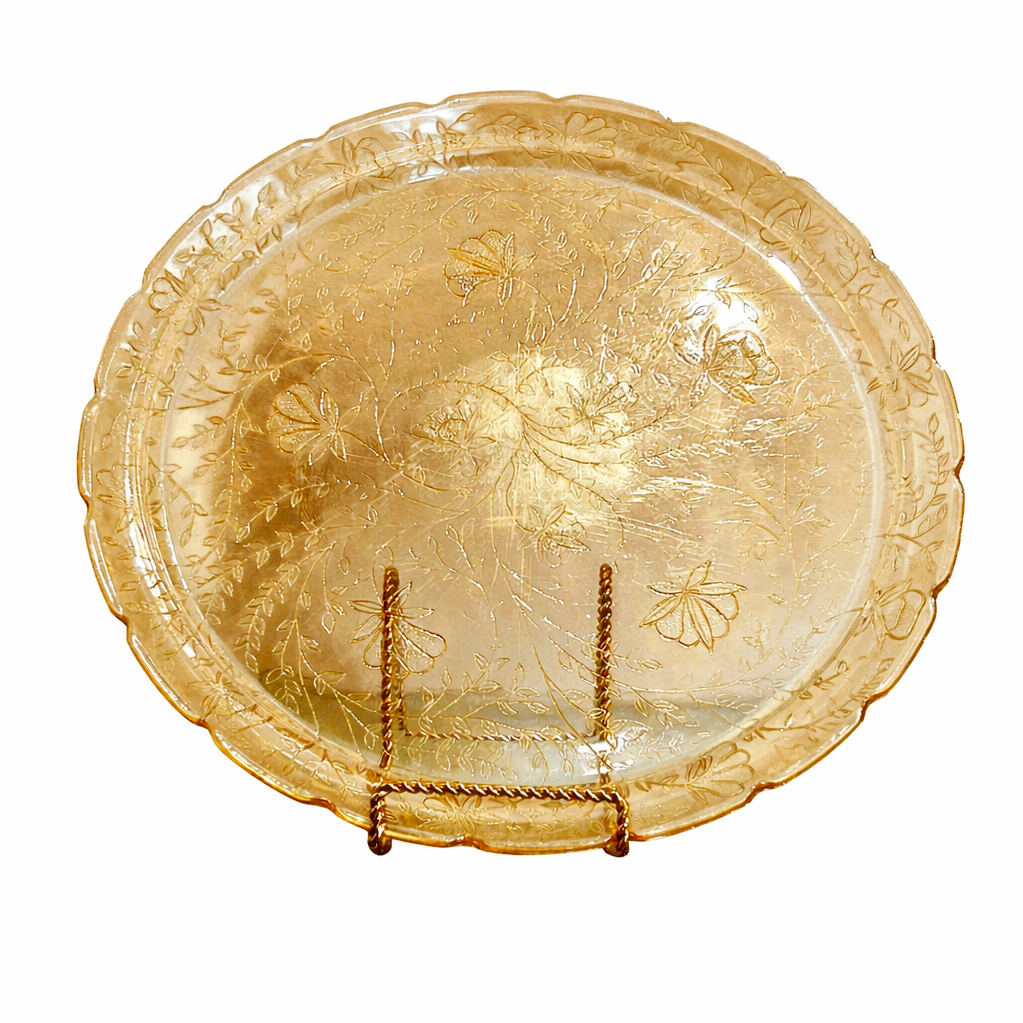
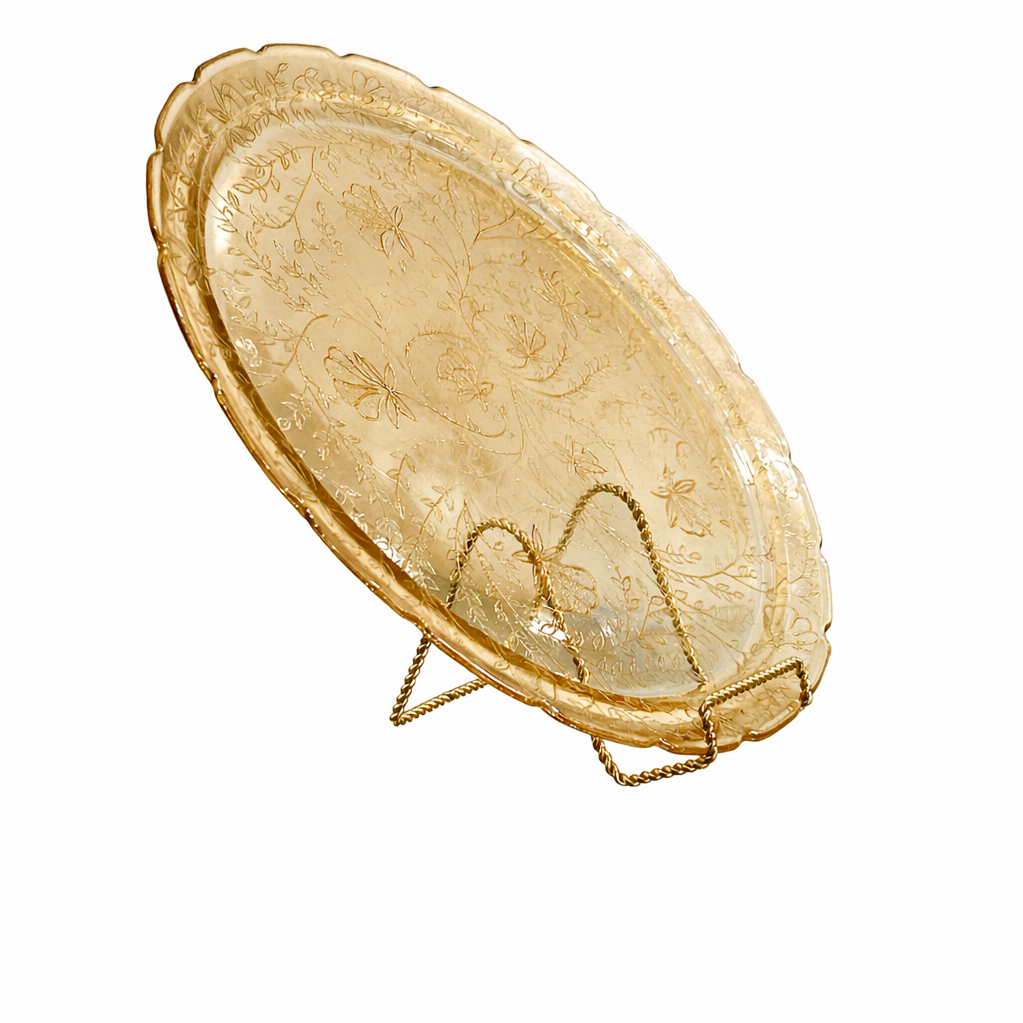
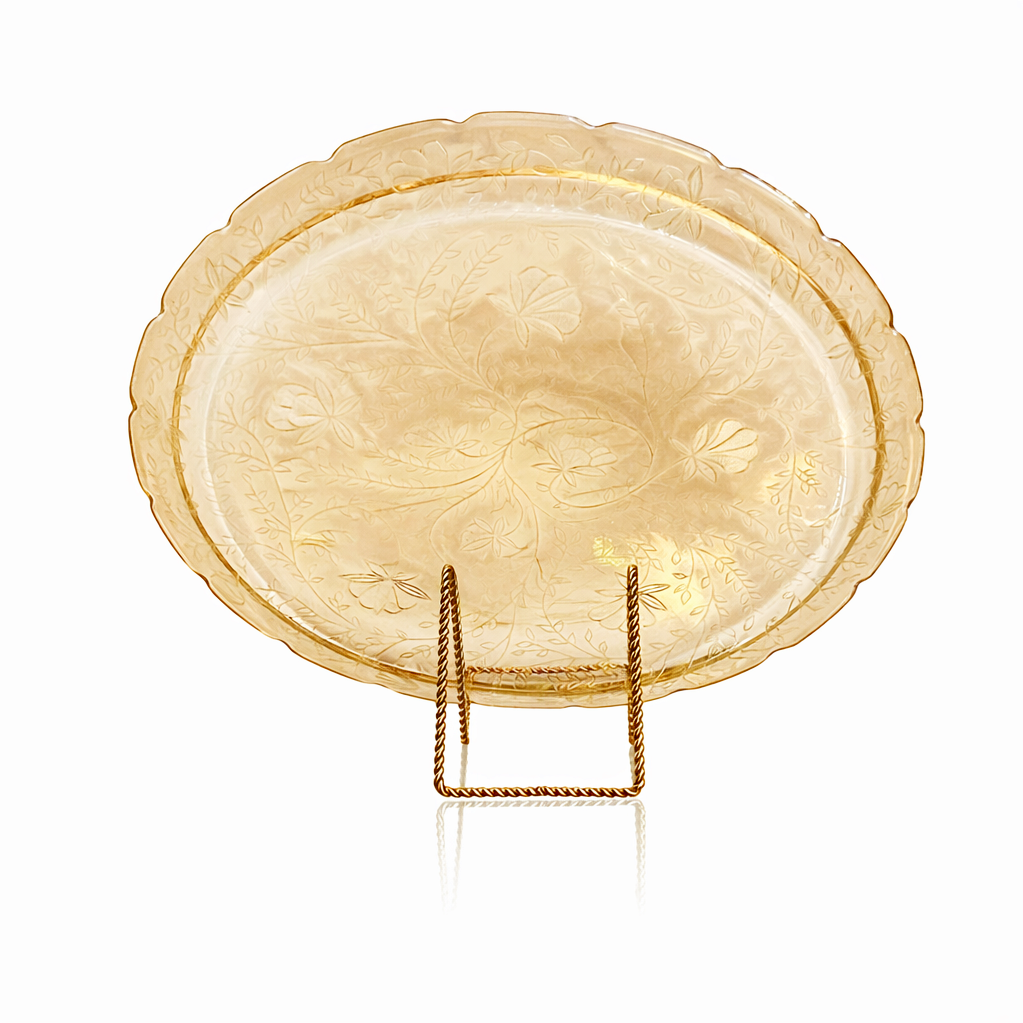
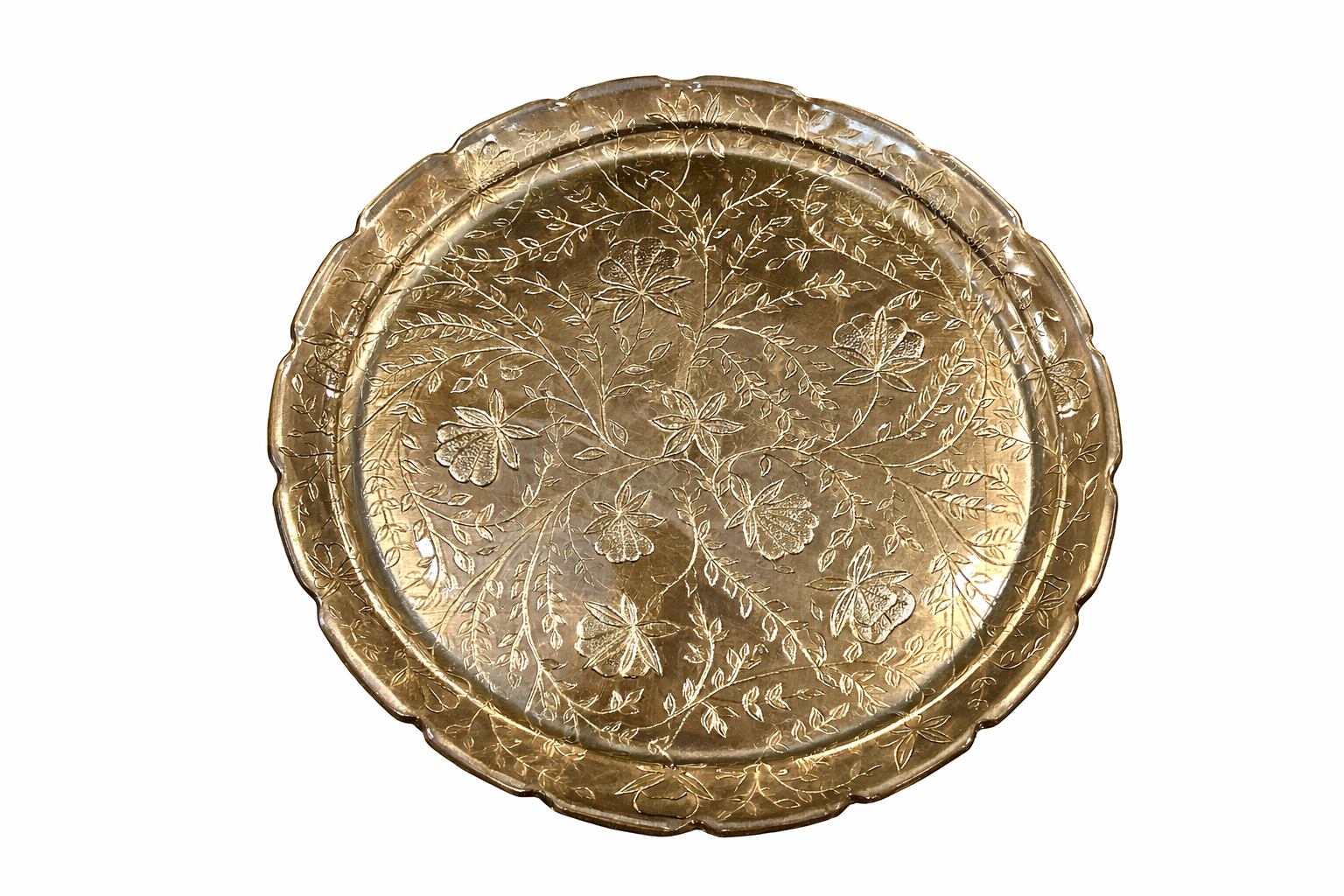
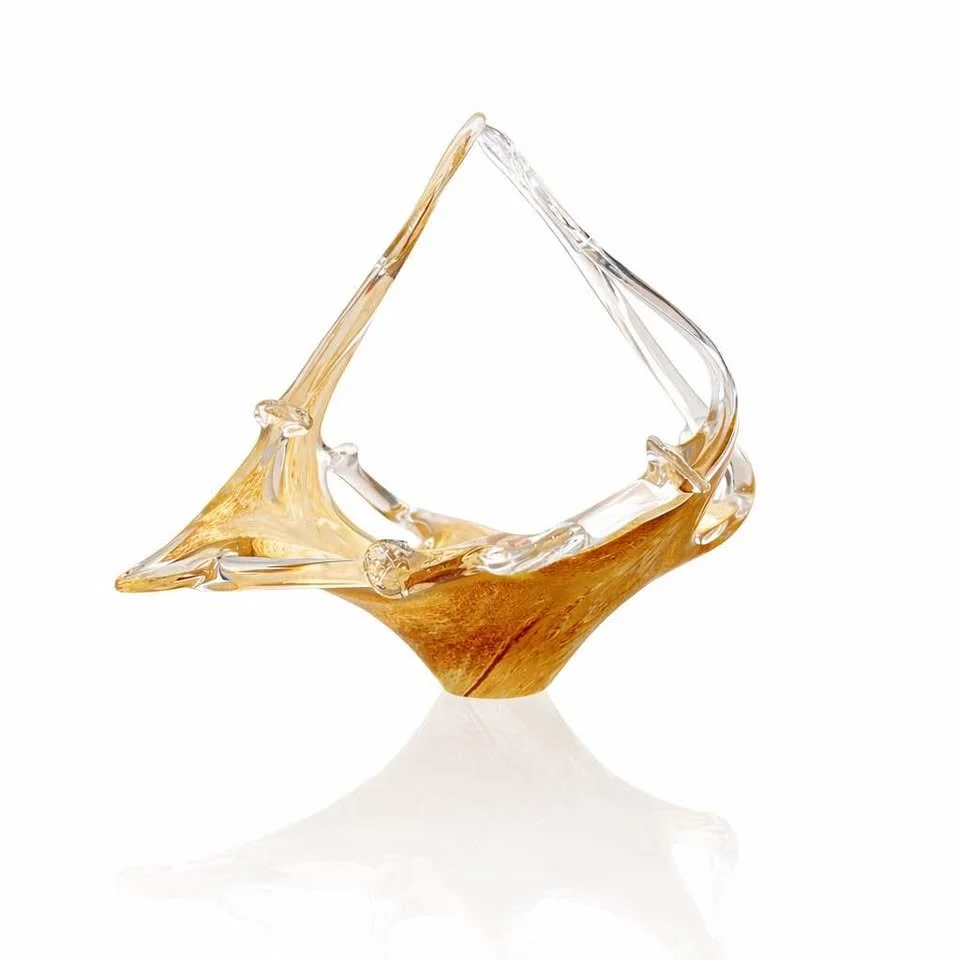
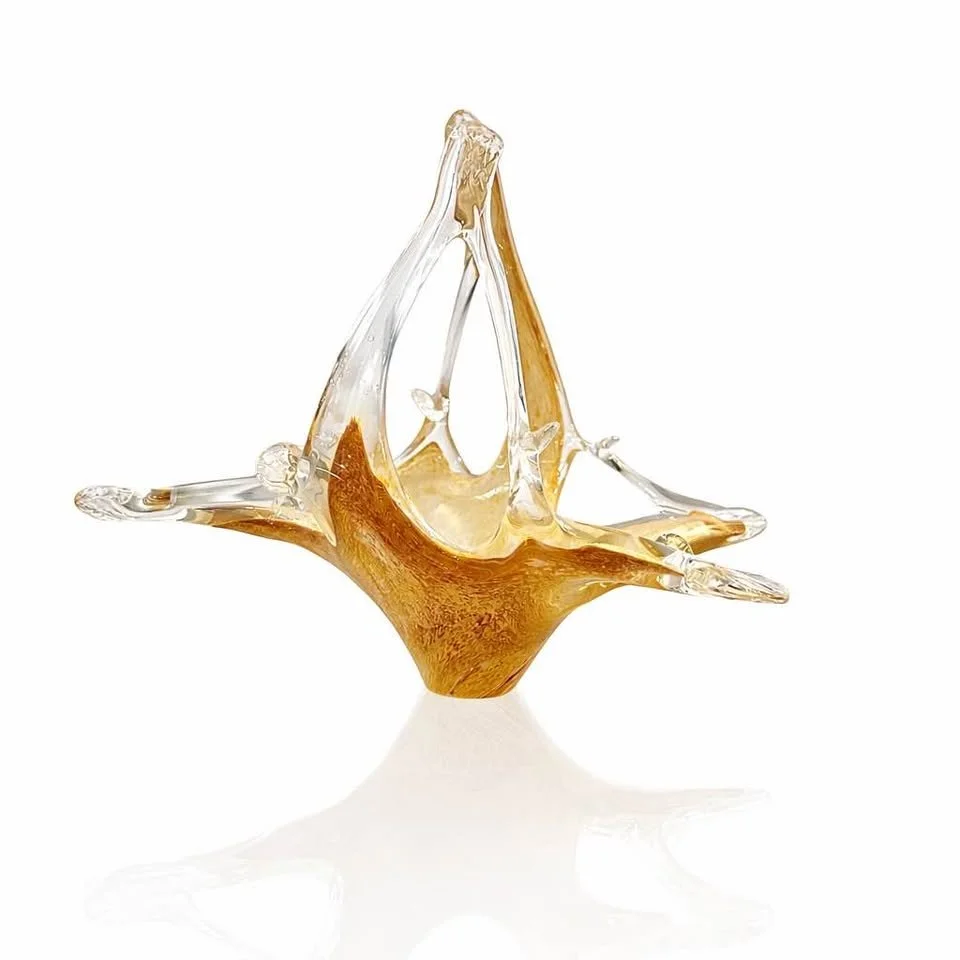
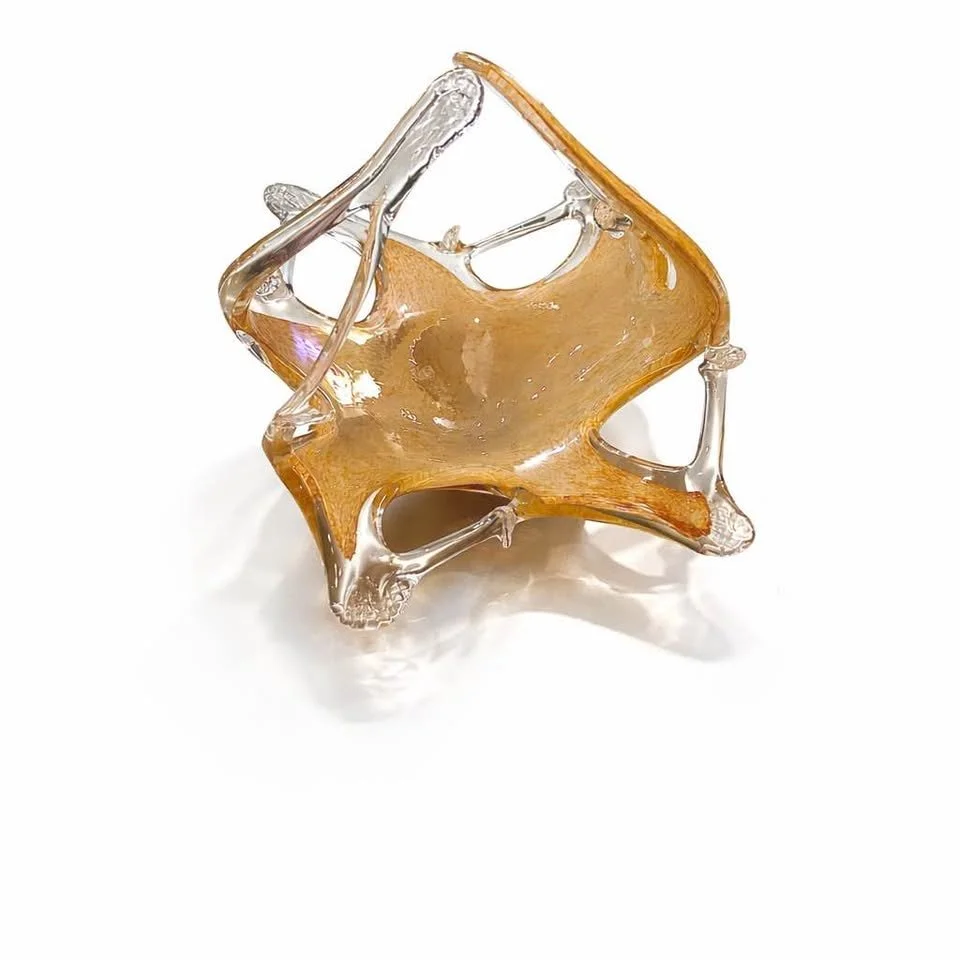
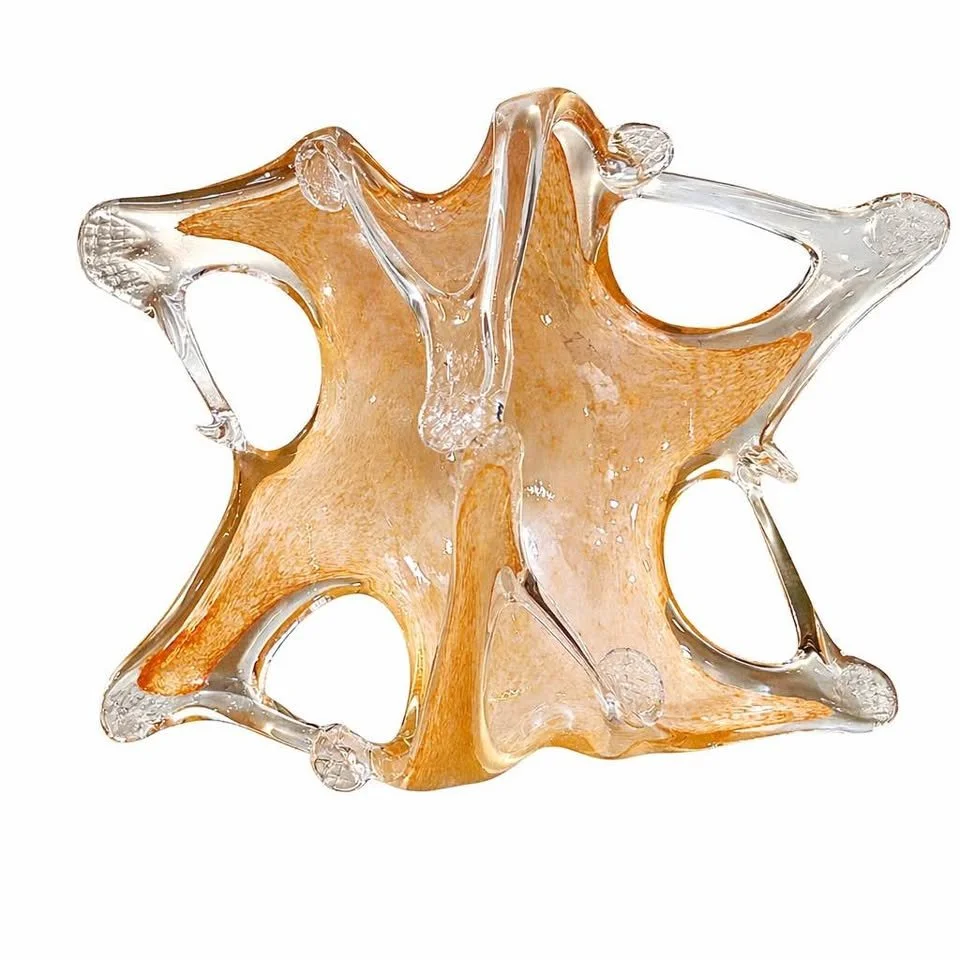
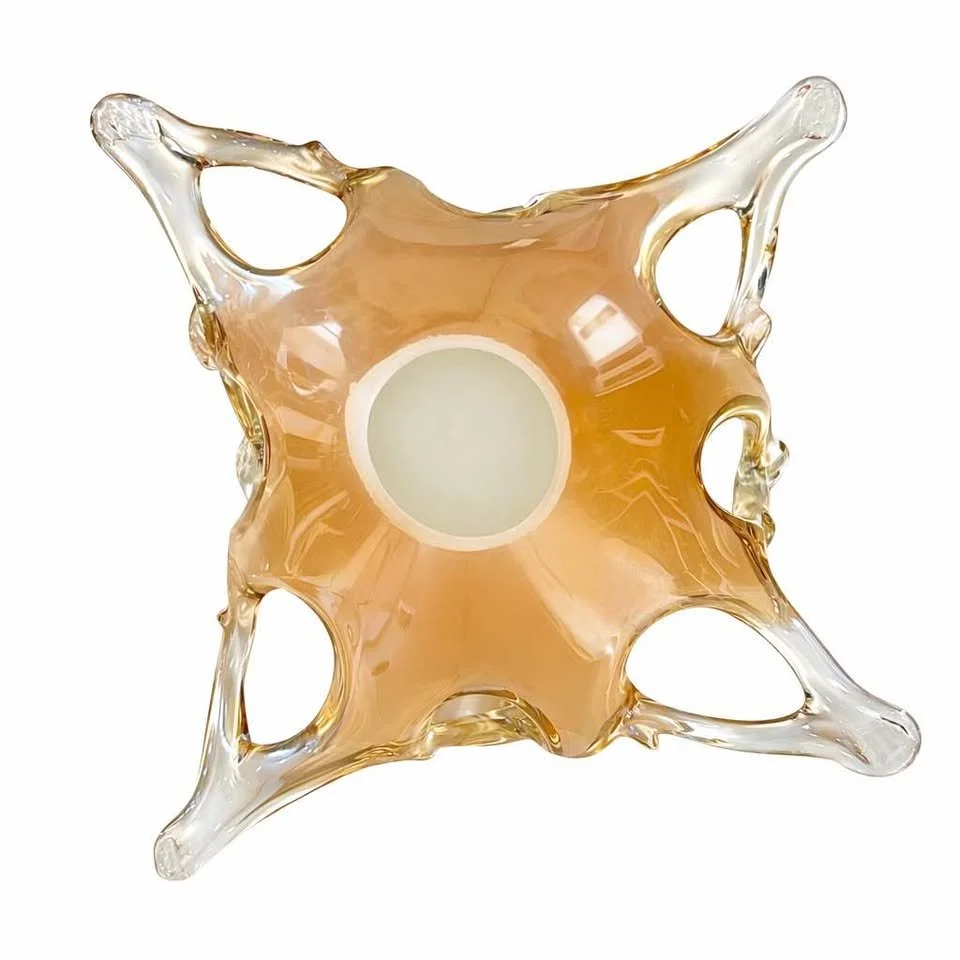
An exceptional and visually commanding early American Carnival Glass serving ensemble in radiant marigold, executed in the highly coveted Grape & Cable pattern — one of the defining motifs of the Carnival Glass golden age (circa 1908–1925).
This pattern stands among the most iconic achievements of early 20th-century American pressed glass, celebrated for its deeply sculpted grape clusters, sinuous vine work, rope-twist cabling, and luminous metallic iridescence. When found in cohesive, matching form, examples of this caliber are increasingly scarce.
Set Composition
(Exact piece count as illustrated)
Pedestal comport / compote with pronounced grape clusters and cable border
Deep handled grape bowl with bold berry articulation
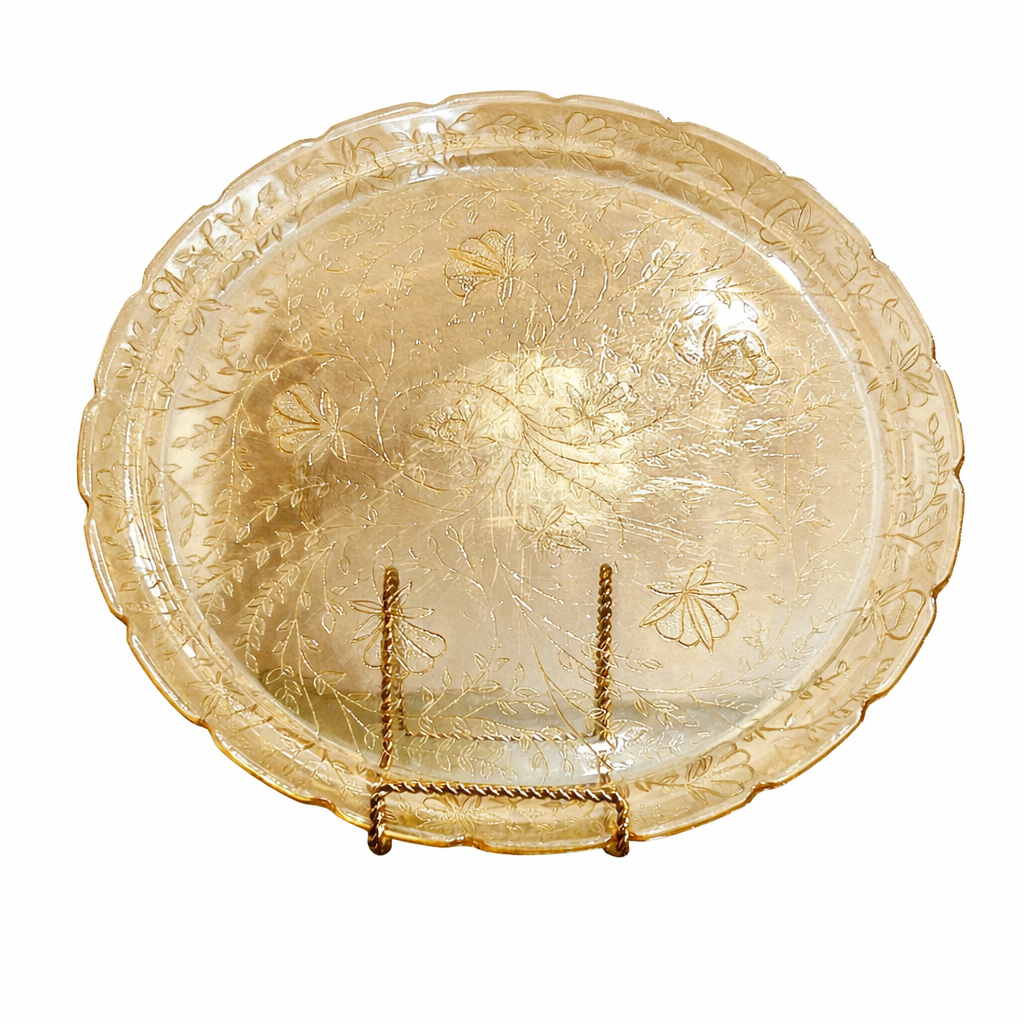
Matching leaf-form dishes / berry bowls
Each element displays consistent coloration and iridescent quality, creating a unified, cabinet-ready presentation.
Pattern & Early Attribution
The Grape & Cable pattern is historically associated with premier American glasshouses including Northwood, Imperial, and contemporaries, produced during Carnival Glass’s formative years when metallic salts were applied to pressed glass to achieve the celebrated oil-slick surface.
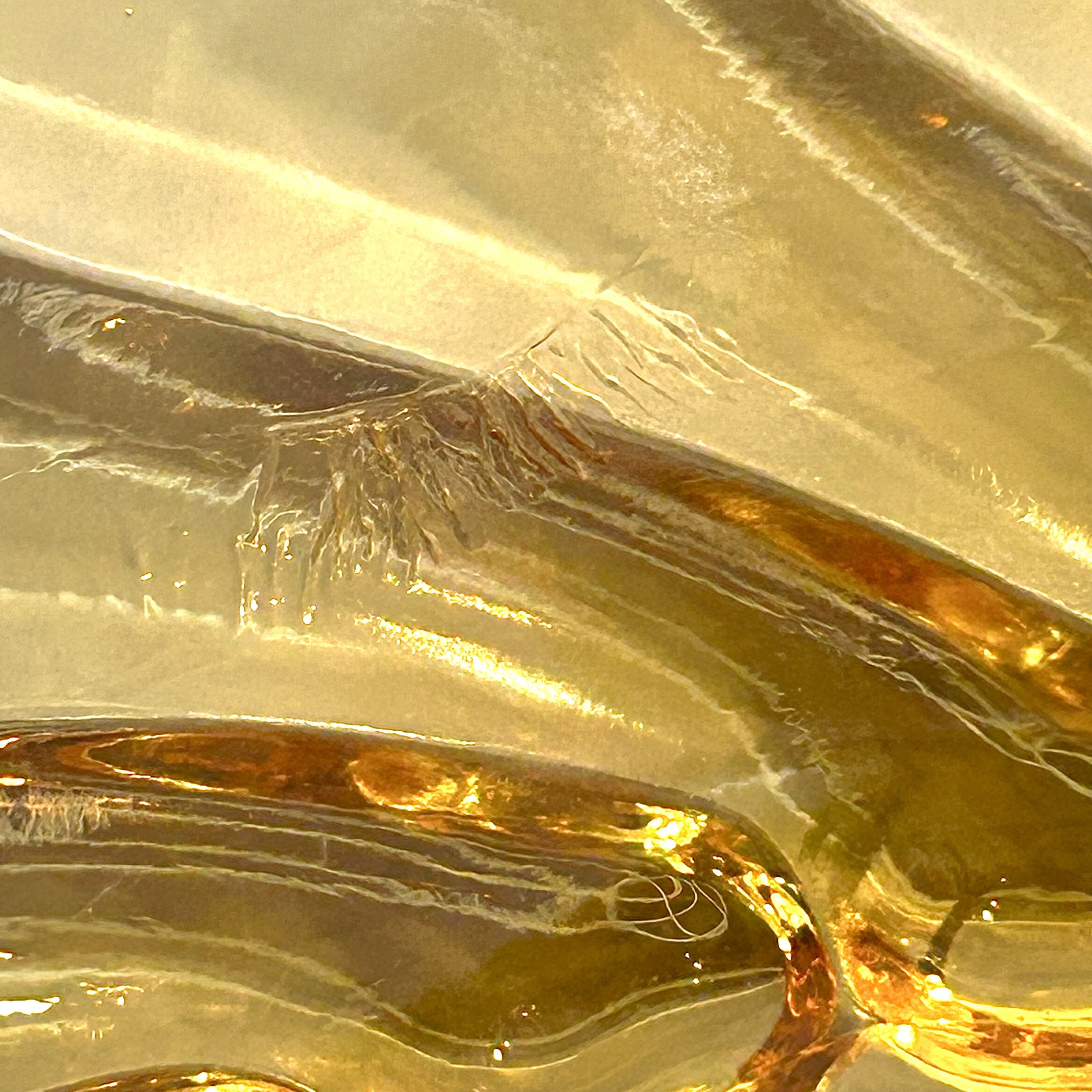
The mold seams, stem structure, grape articulation, and cable detailing align with early production characteristics rather than later revival examples. The relief remains crisp and sculptural, with no evidence of softened re-strike molds.
Color & Surface
Rich marigold base glass
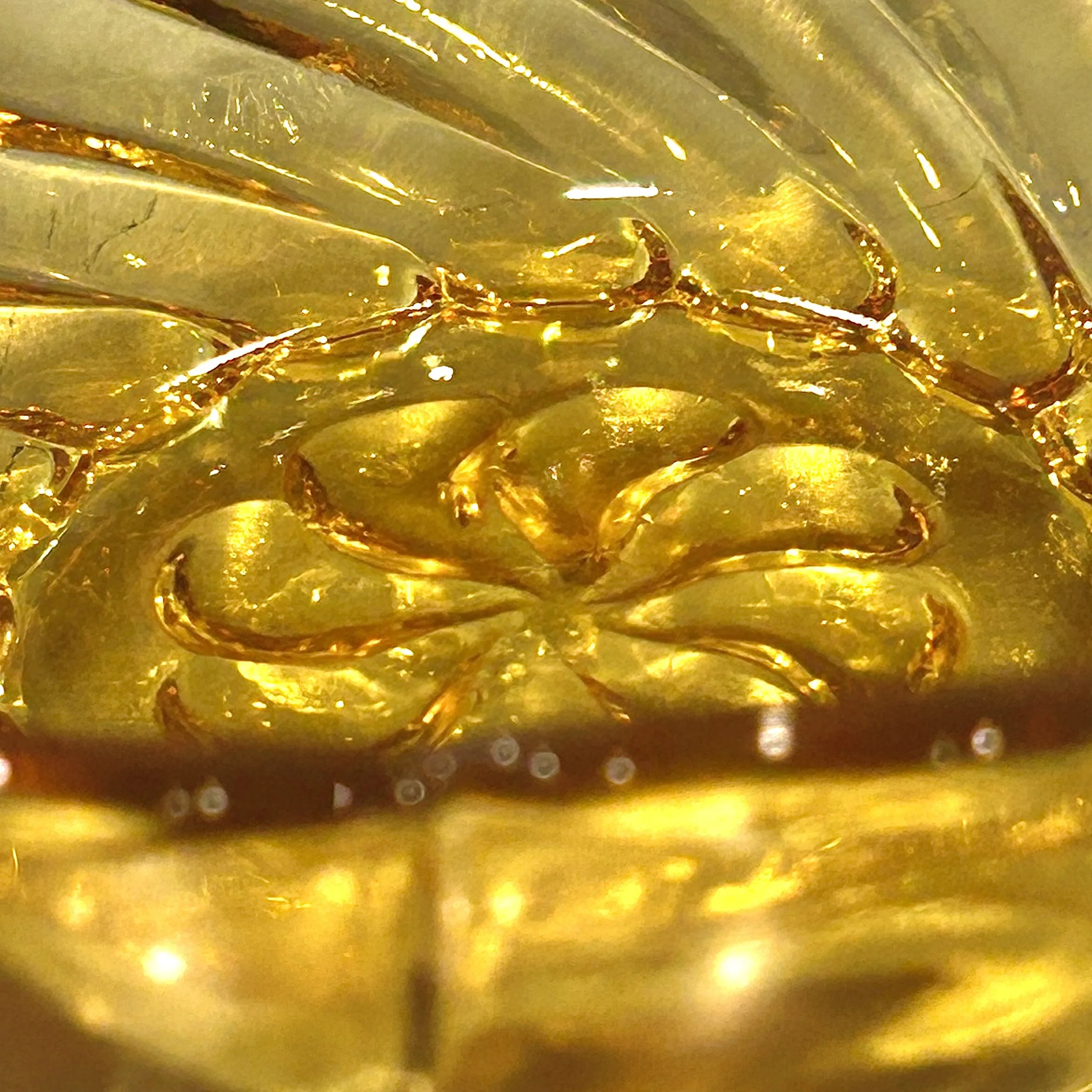
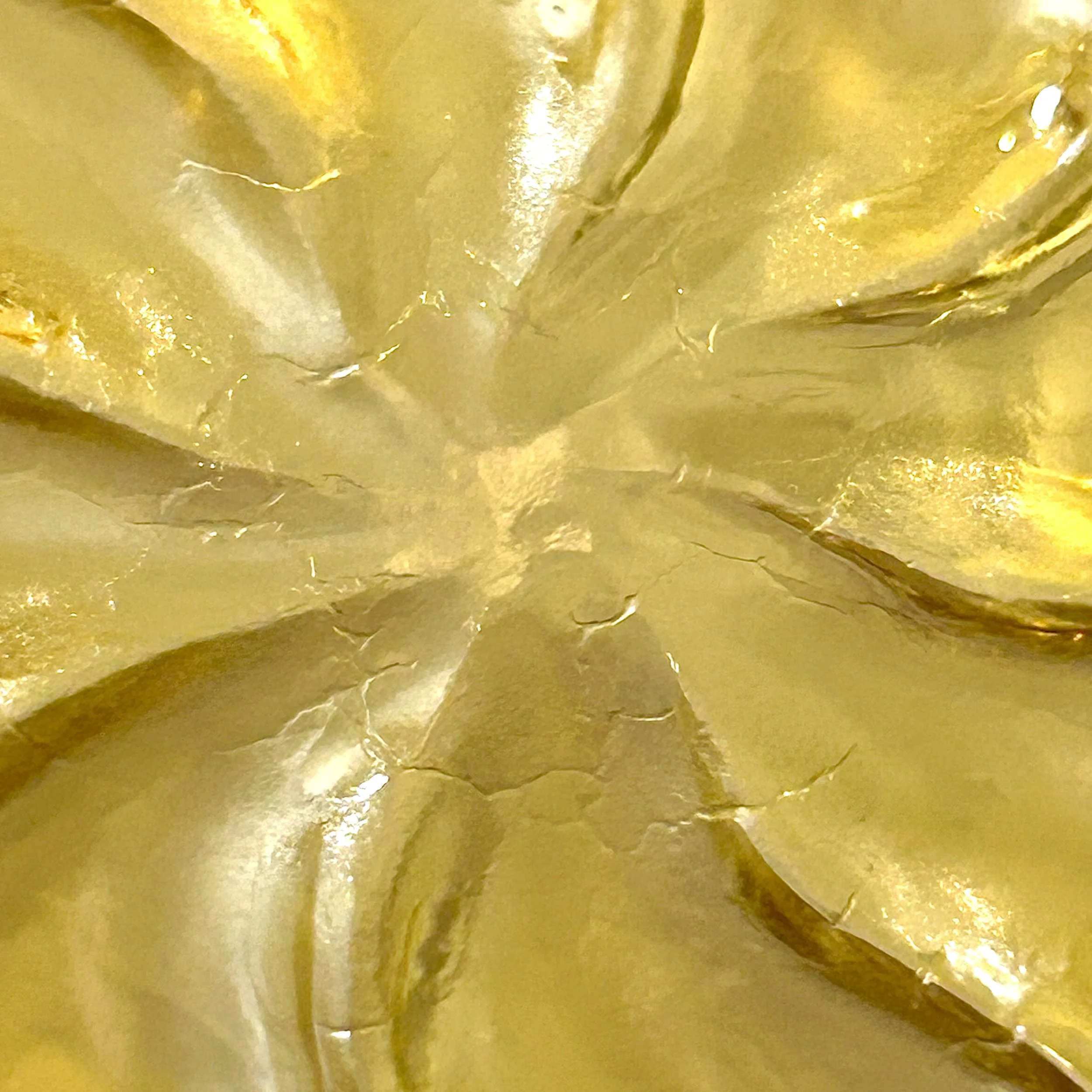
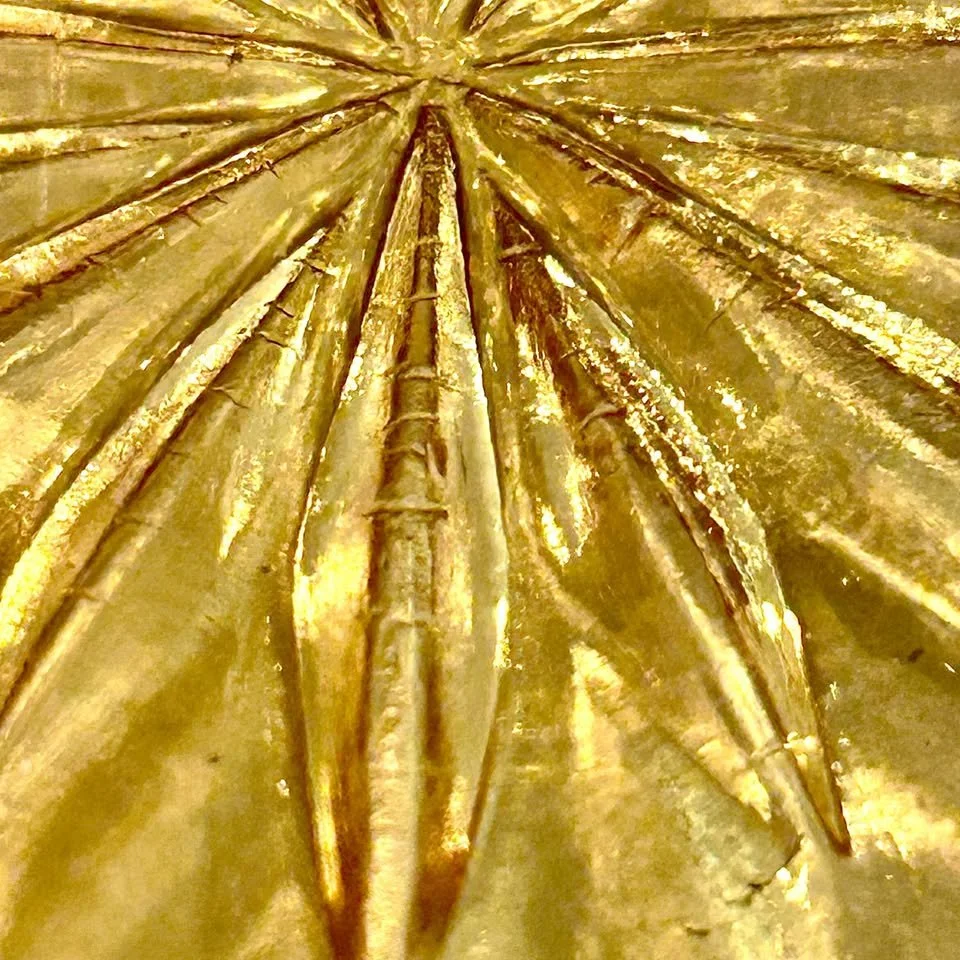
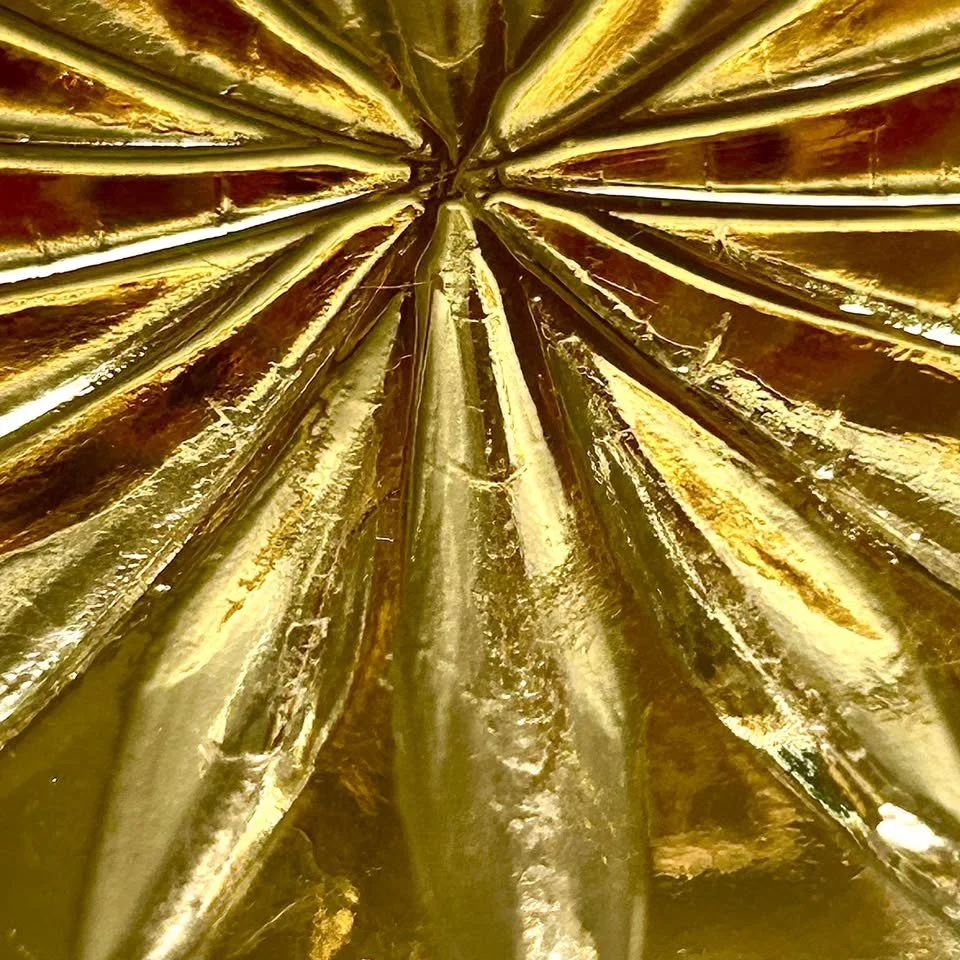
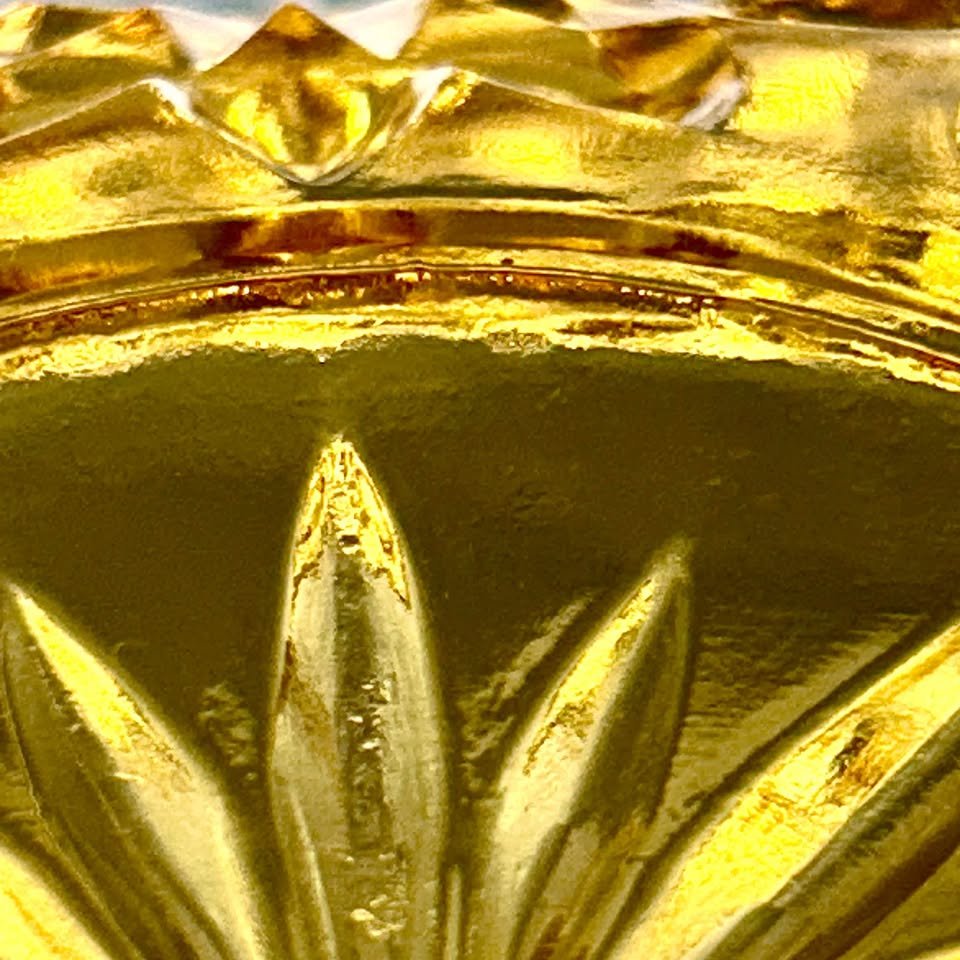
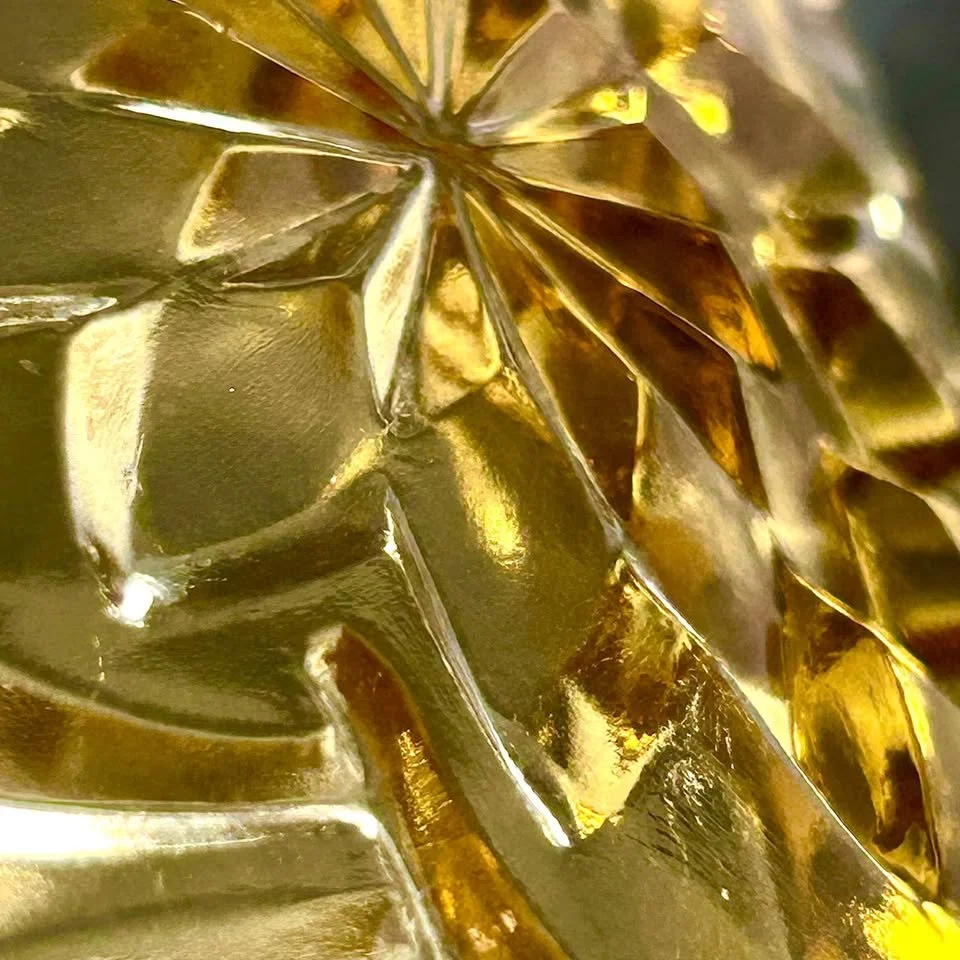
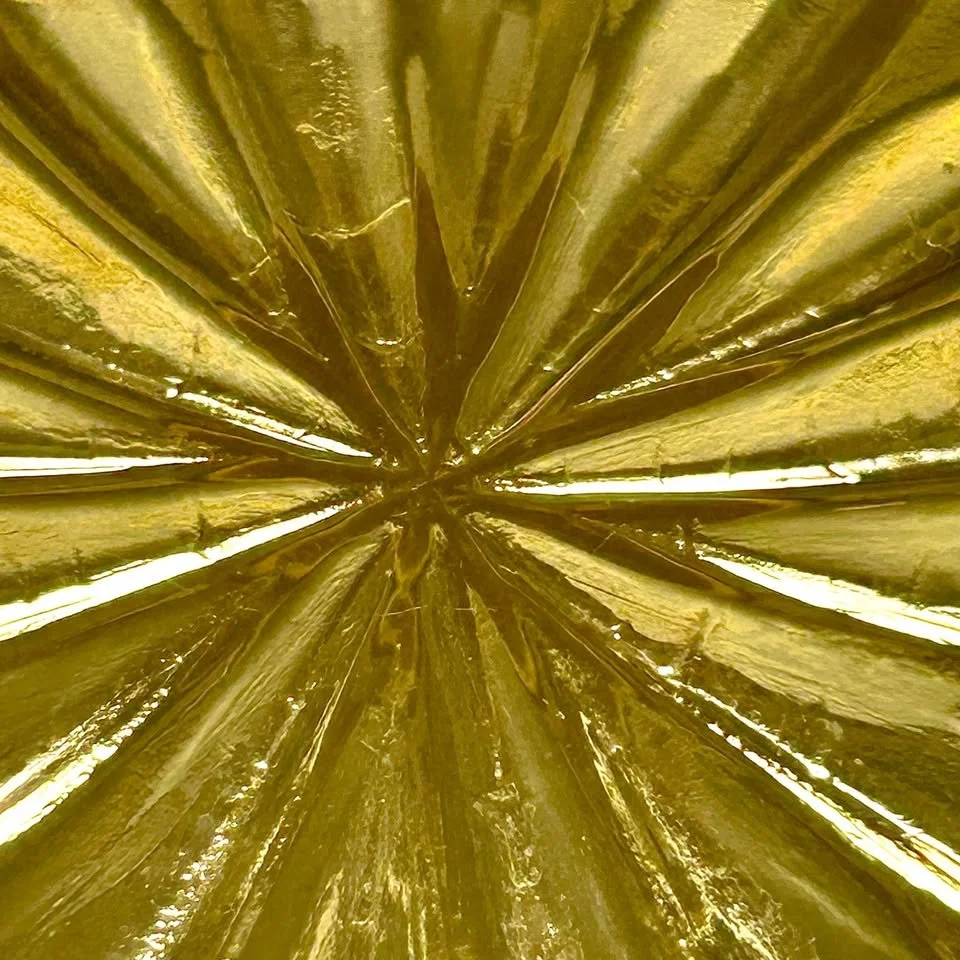
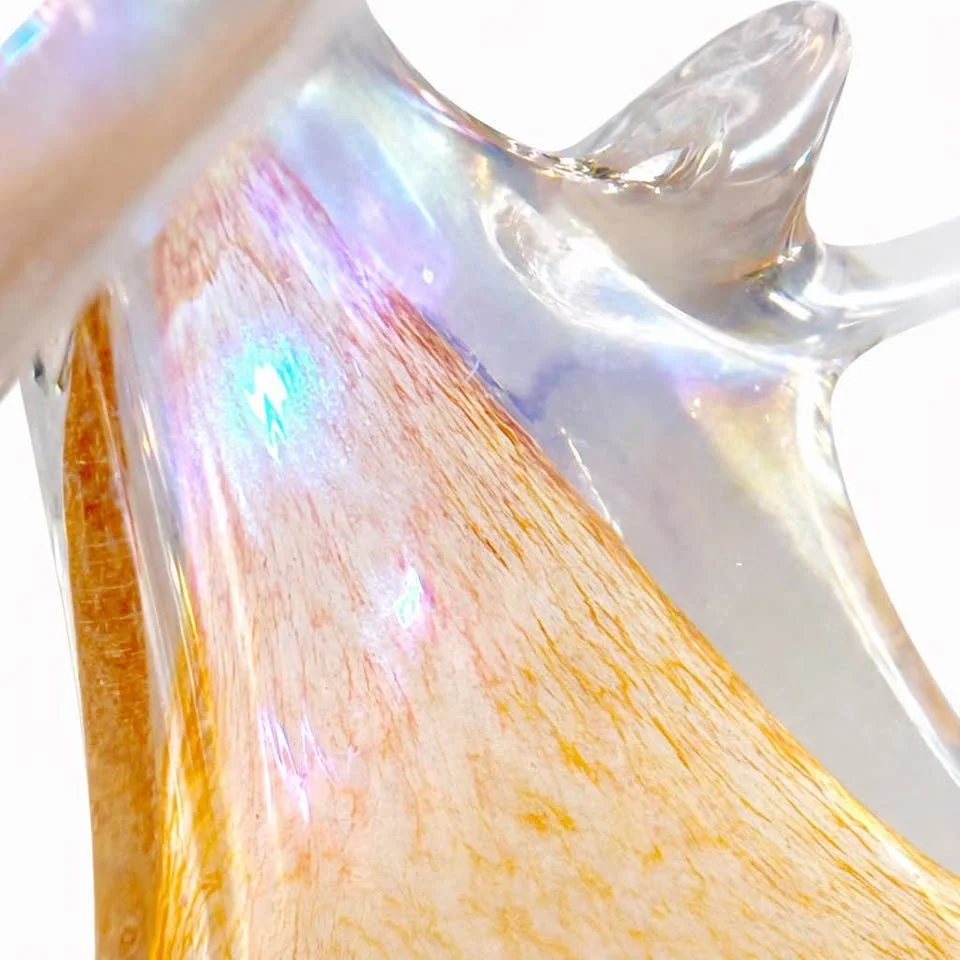
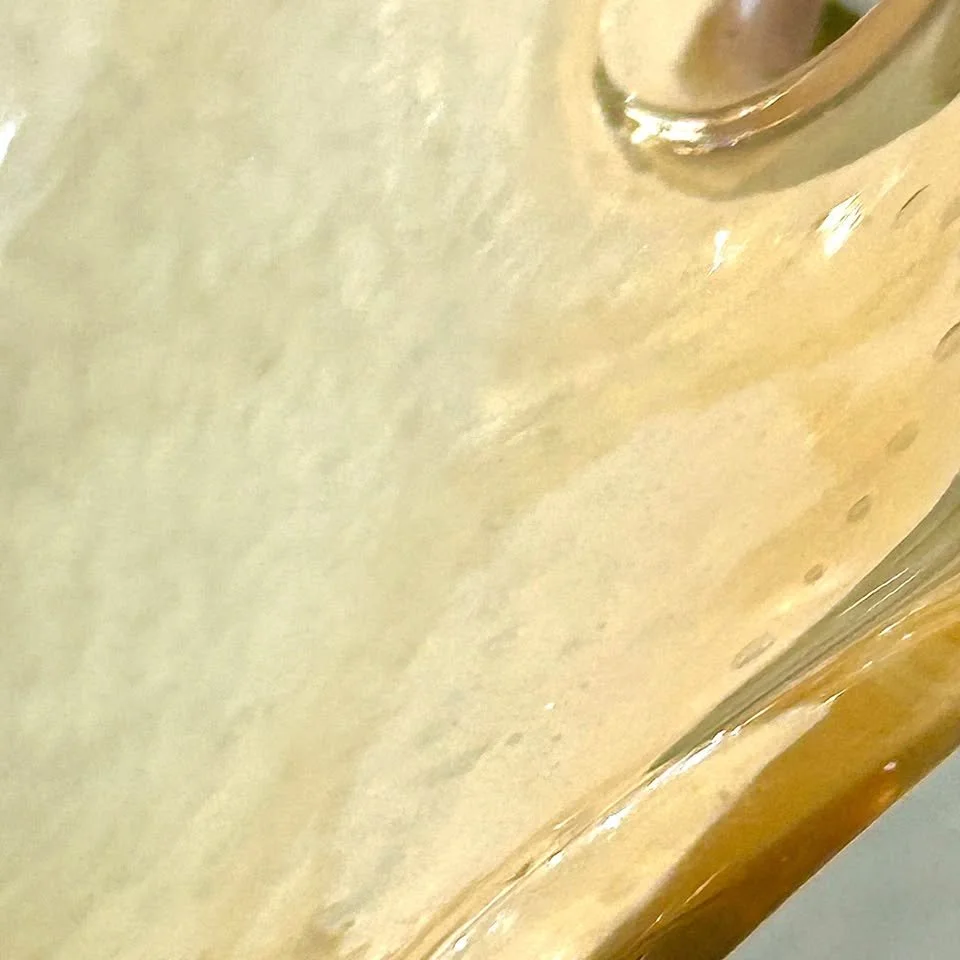
Strong multi-spectral iridescence displaying gold, violet, sapphire, and emerald highlights
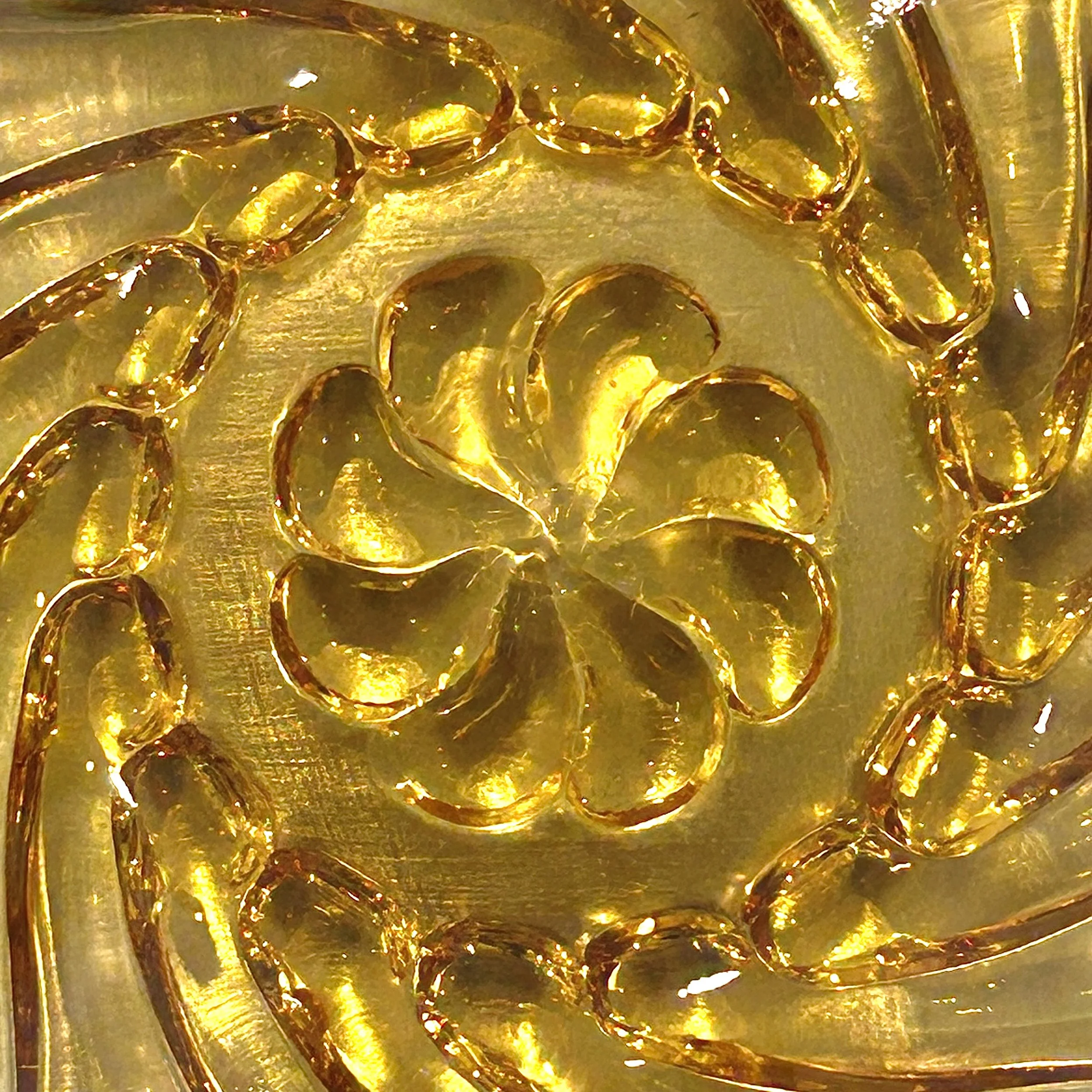
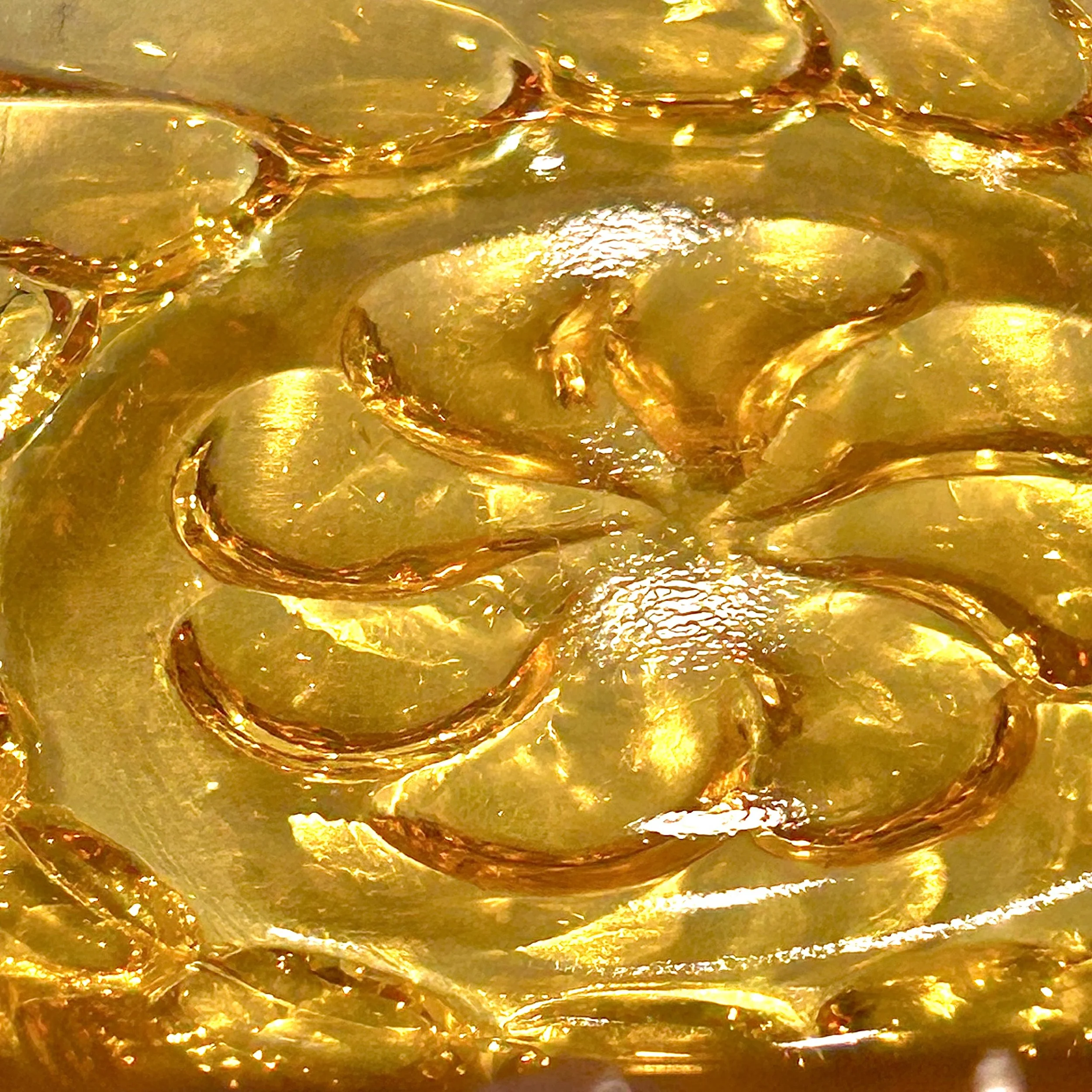
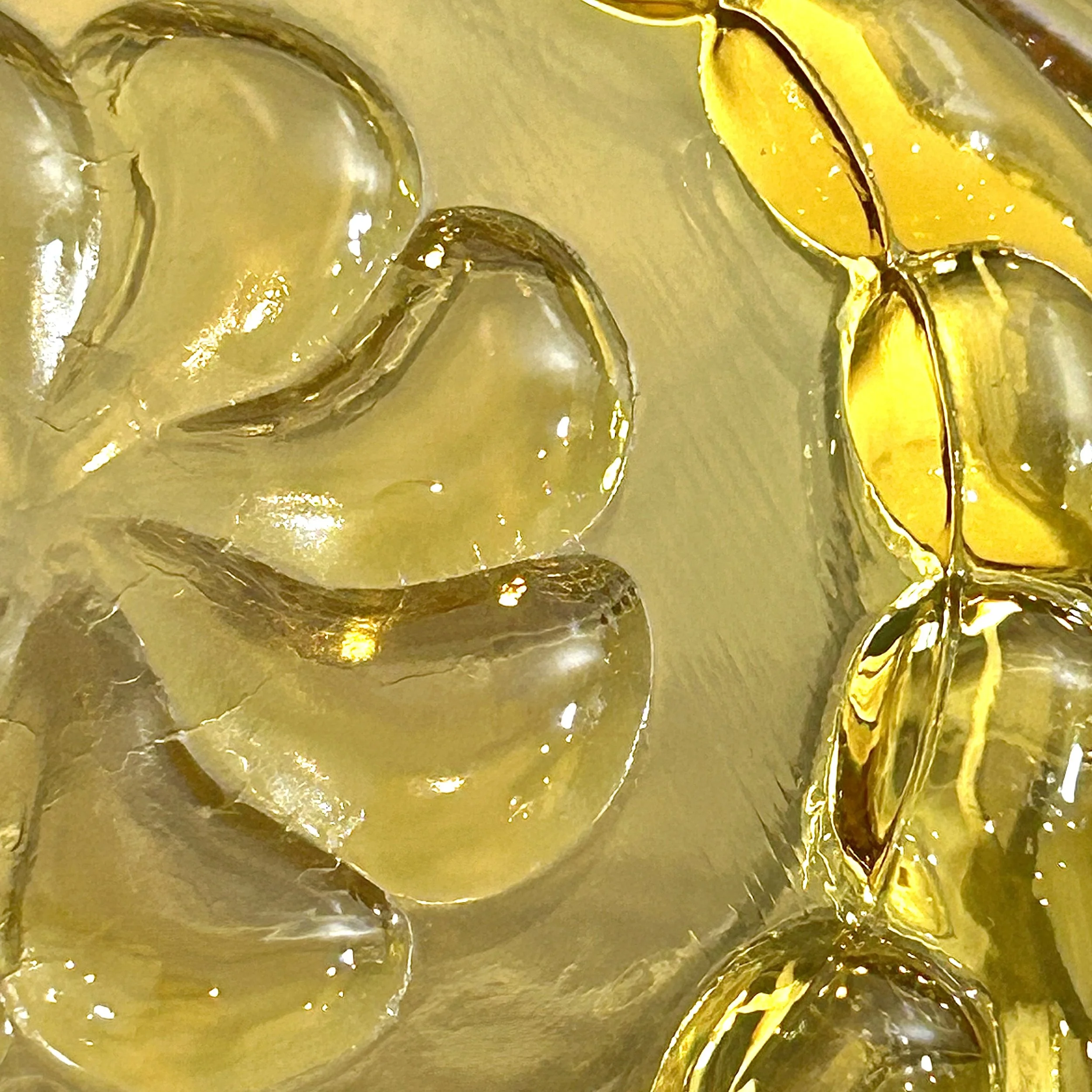
Dynamic light refraction across raised grape clusters and scalloped rims
Even, consistent surface tone across the full grouping
The iridescence retains depth and vitality, with exceptional color play under both natural and directional light.
Condition
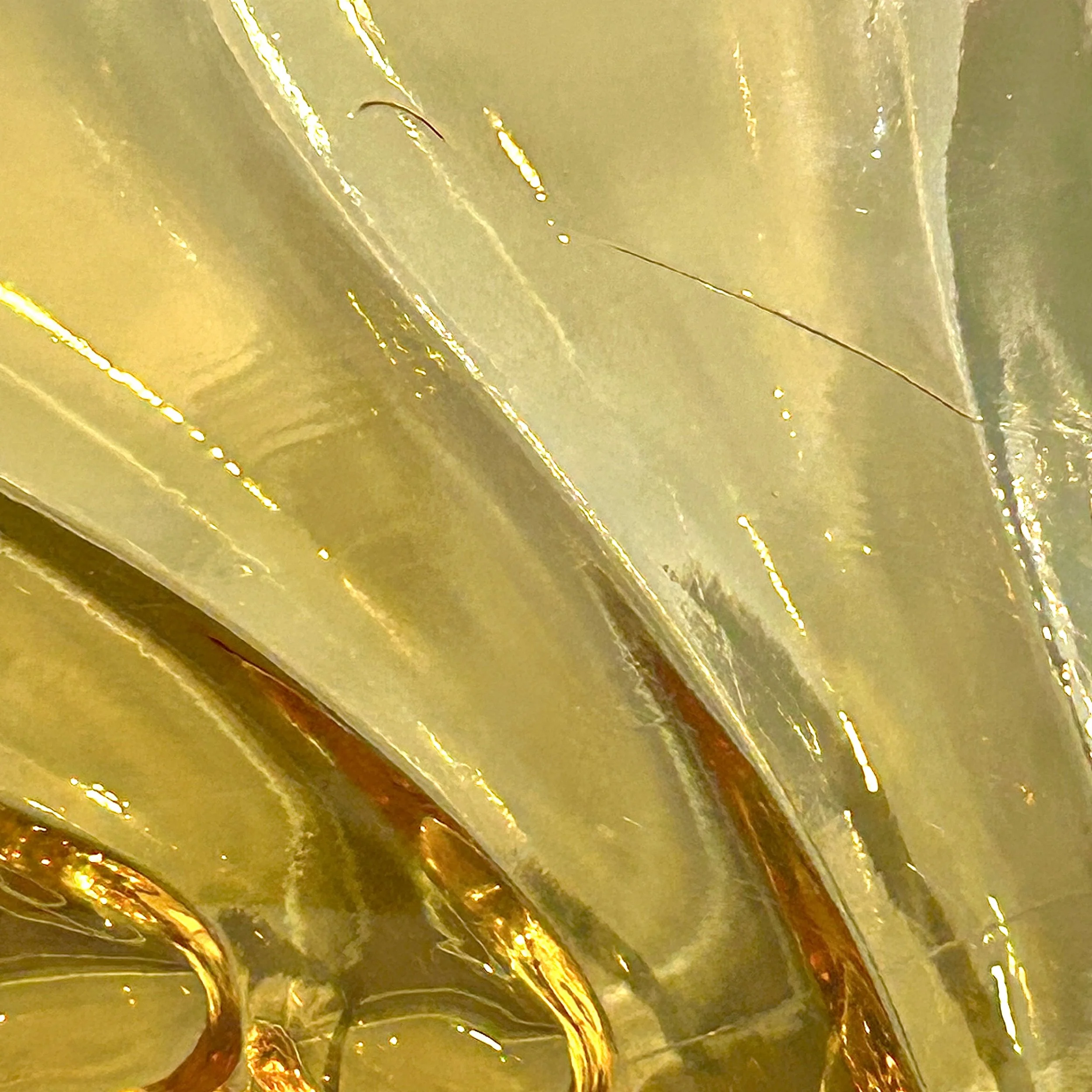
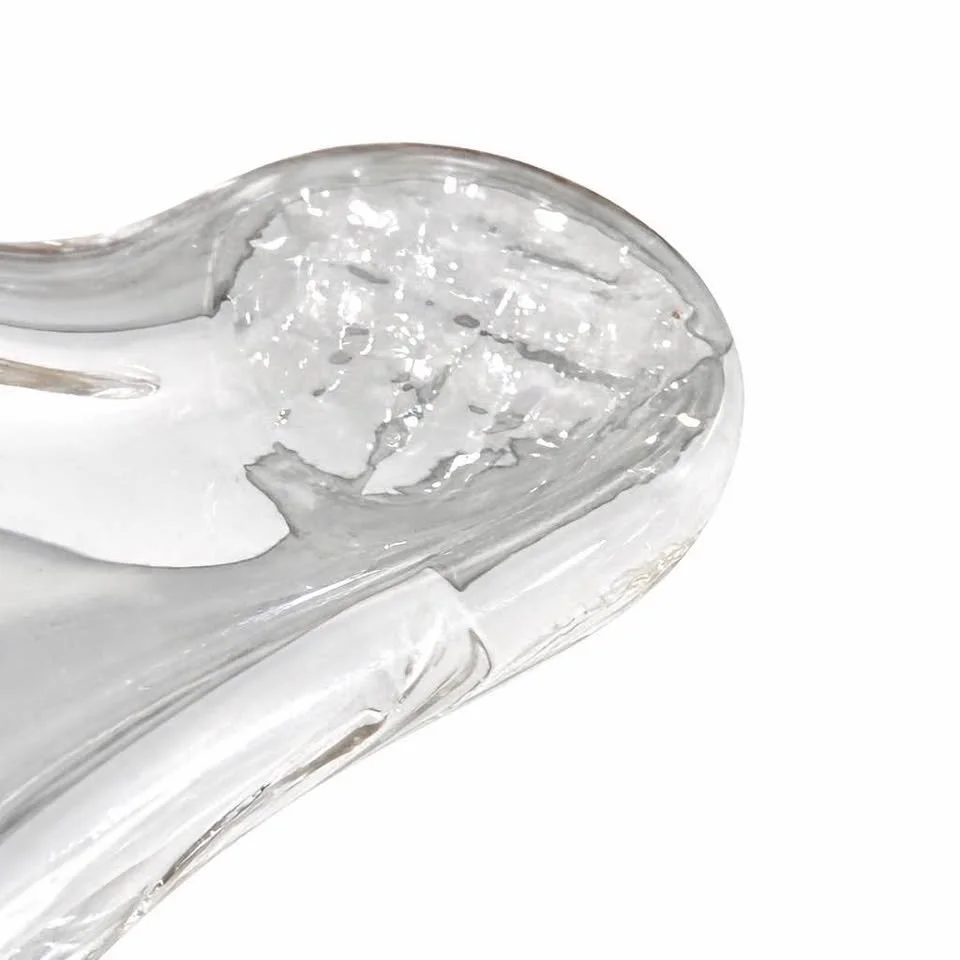
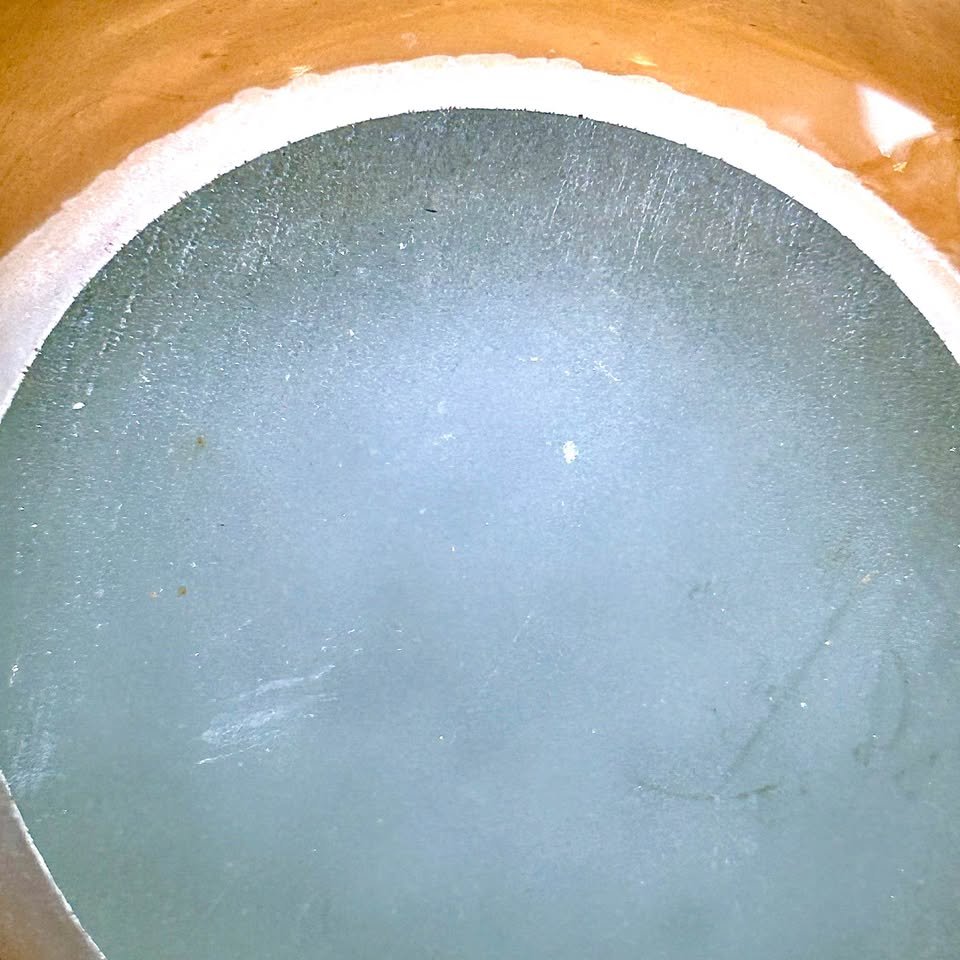
No cracks or repairs observed
Light, age-appropriate base wear consistent with careful cabinet storage
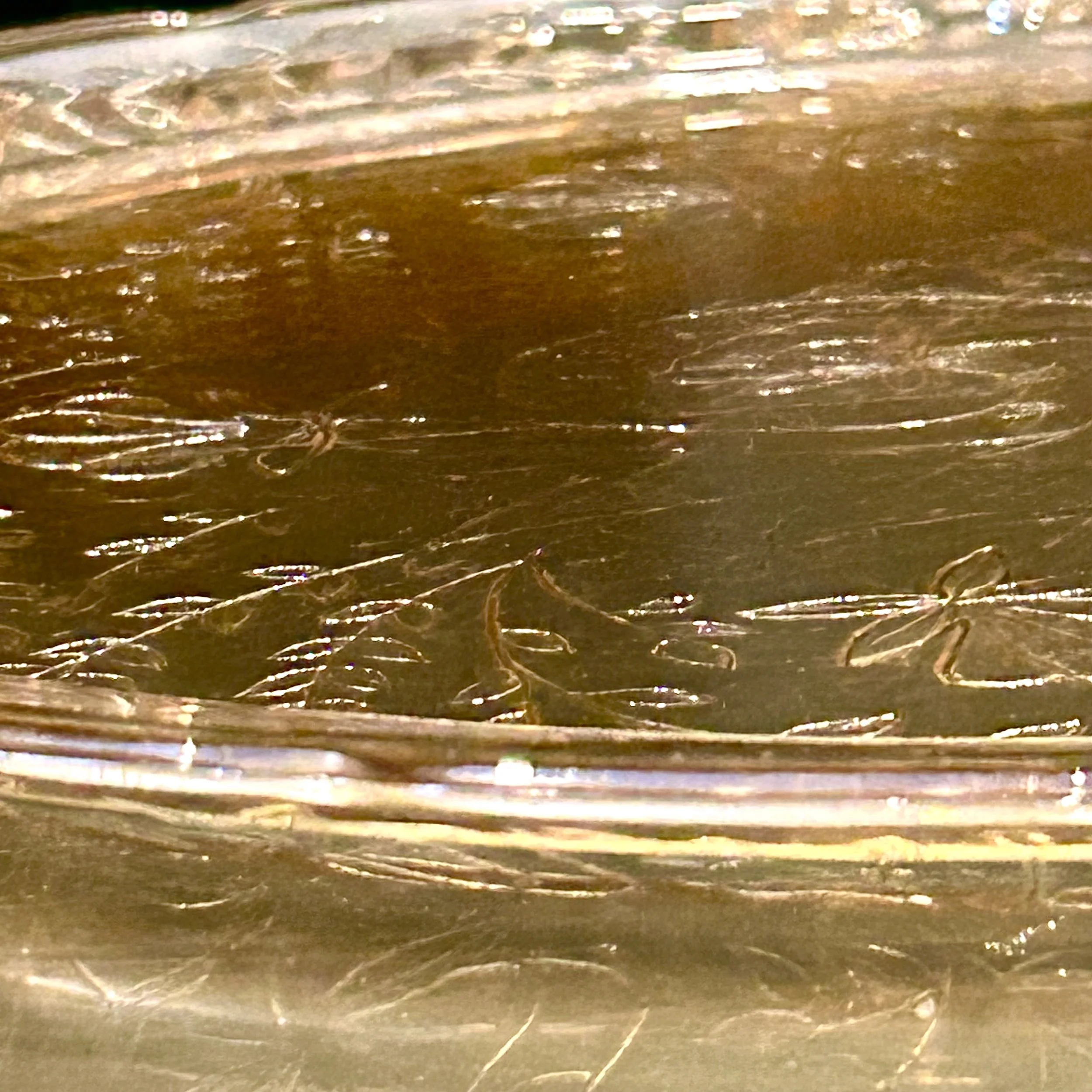
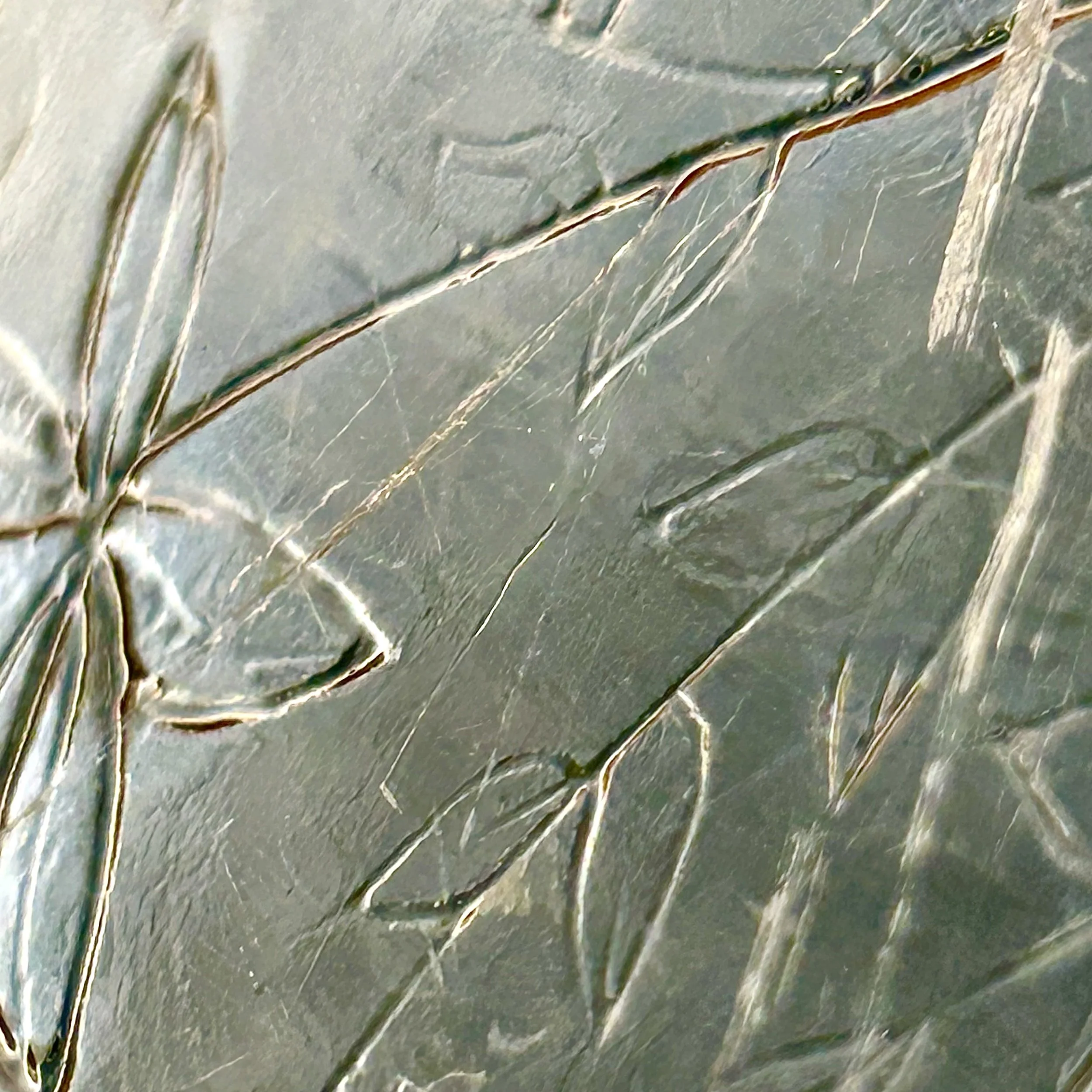
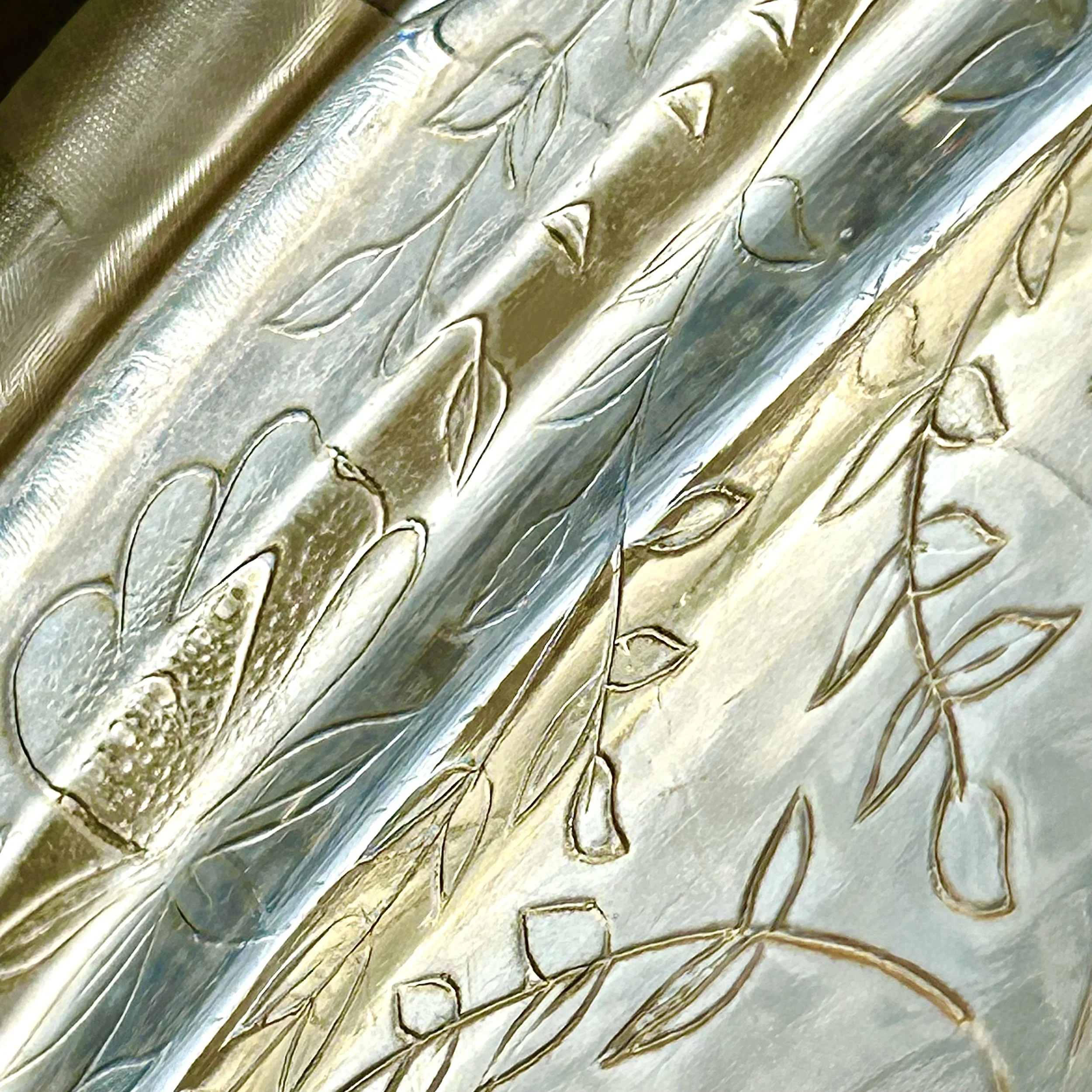
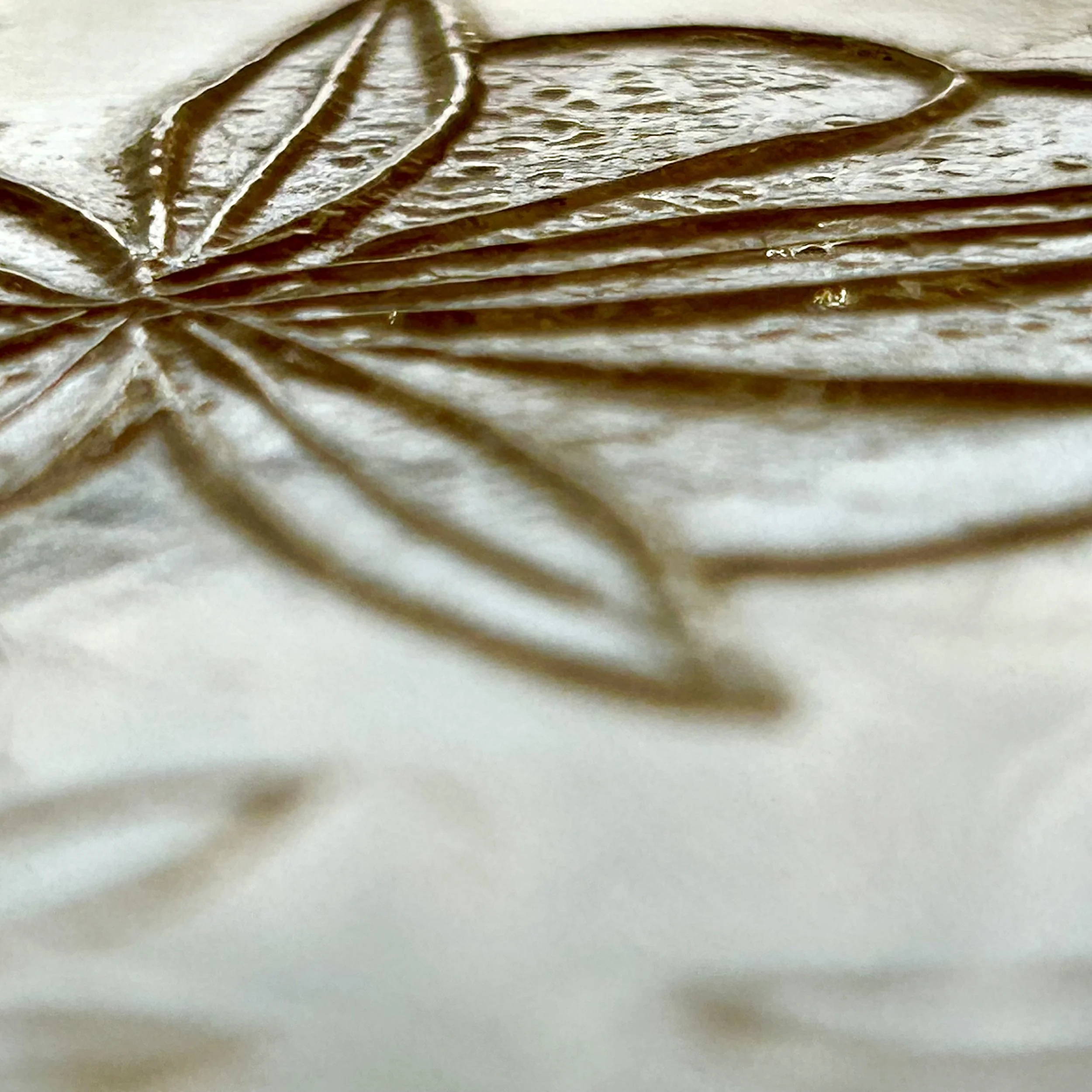
Mold detail remains sharp and well defined
Surface iridescence intact and undiminished
A remarkably well-preserved early set.
Rarity & Collector Significance
While individual Carnival Glass pieces remain obtainable, intact and visually cohesive serving sets have largely been dispersed over the past century. Advanced collectors recognize that assembling matched marigold examples with uniform iridescence requires considerable time and risk.
Marigold remains the most historically significant and recognizable Carnival color, and the Grape & Cable motif remains foundational within serious collections. When preserved together, examples such as this move beyond decorative appeal into collection-defining territory.
This ensemble presents as display-ready and museum-caliber in presence.
An exceptional and visually commanding early American Carnival Glass serving ensemble in radiant marigold, executed in the highly coveted Grape & Cable pattern — one of the defining motifs of the Carnival Glass golden age (circa 1908–1925).
This pattern stands among the most iconic achievements of early 20th-century American pressed glass, celebrated for its deeply sculpted grape clusters, sinuous vine work, rope-twist cabling, and luminous metallic iridescence. When found in cohesive, matching form, examples of this caliber are increasingly scarce.
Set Composition
(Exact piece count as illustrated)
Pedestal comport / compote with pronounced grape clusters and cable border
Deep handled grape bowl with bold berry articulation
Matching leaf-form dishes / berry bowls
Each element displays consistent coloration and iridescent quality, creating a unified, cabinet-ready presentation.
Pattern & Early Attribution
The Grape & Cable pattern is historically associated with premier American glasshouses including Northwood, Imperial, and contemporaries, produced during Carnival Glass’s formative years when metallic salts were applied to pressed glass to achieve the celebrated oil-slick surface.
The mold seams, stem structure, grape articulation, and cable detailing align with early production characteristics rather than later revival examples. The relief remains crisp and sculptural, with no evidence of softened re-strike molds.
Color & Surface
Rich marigold base glass
Strong multi-spectral iridescence displaying gold, violet, sapphire, and emerald highlights
Dynamic light refraction across raised grape clusters and scalloped rims
Even, consistent surface tone across the full grouping
The iridescence retains depth and vitality, with exceptional color play under both natural and directional light.
Condition
No cracks or repairs observed
Light, age-appropriate base wear consistent with careful cabinet storage
Mold detail remains sharp and well defined
Surface iridescence intact and undiminished
A remarkably well-preserved early set.
Rarity & Collector Significance
While individual Carnival Glass pieces remain obtainable, intact and visually cohesive serving sets have largely been dispersed over the past century. Advanced collectors recognize that assembling matched marigold examples with uniform iridescence requires considerable time and risk.
Marigold remains the most historically significant and recognizable Carnival color, and the Grape & Cable motif remains foundational within serious collections. When preserved together, examples such as this move beyond decorative appeal into collection-defining territory.
This ensemble presents as display-ready and museum-caliber in presence.

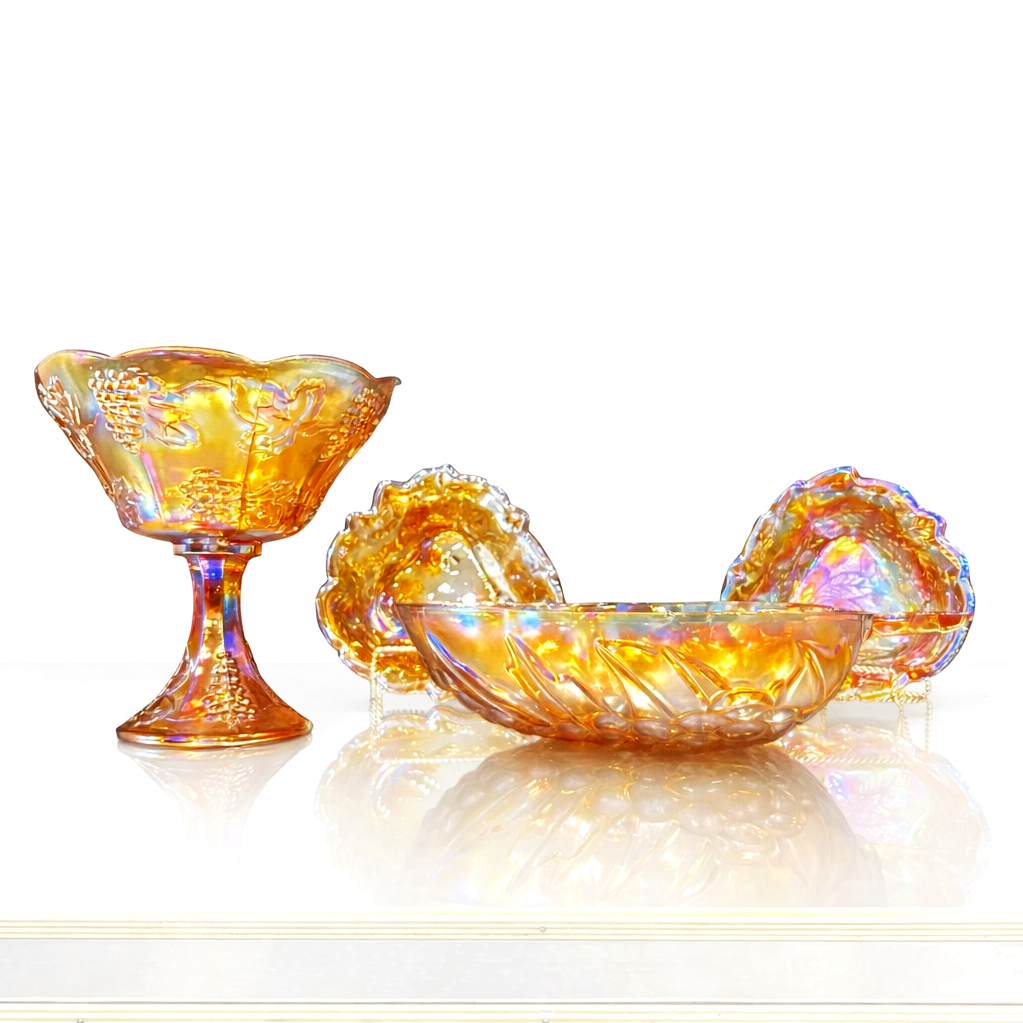 Image 1 of 13
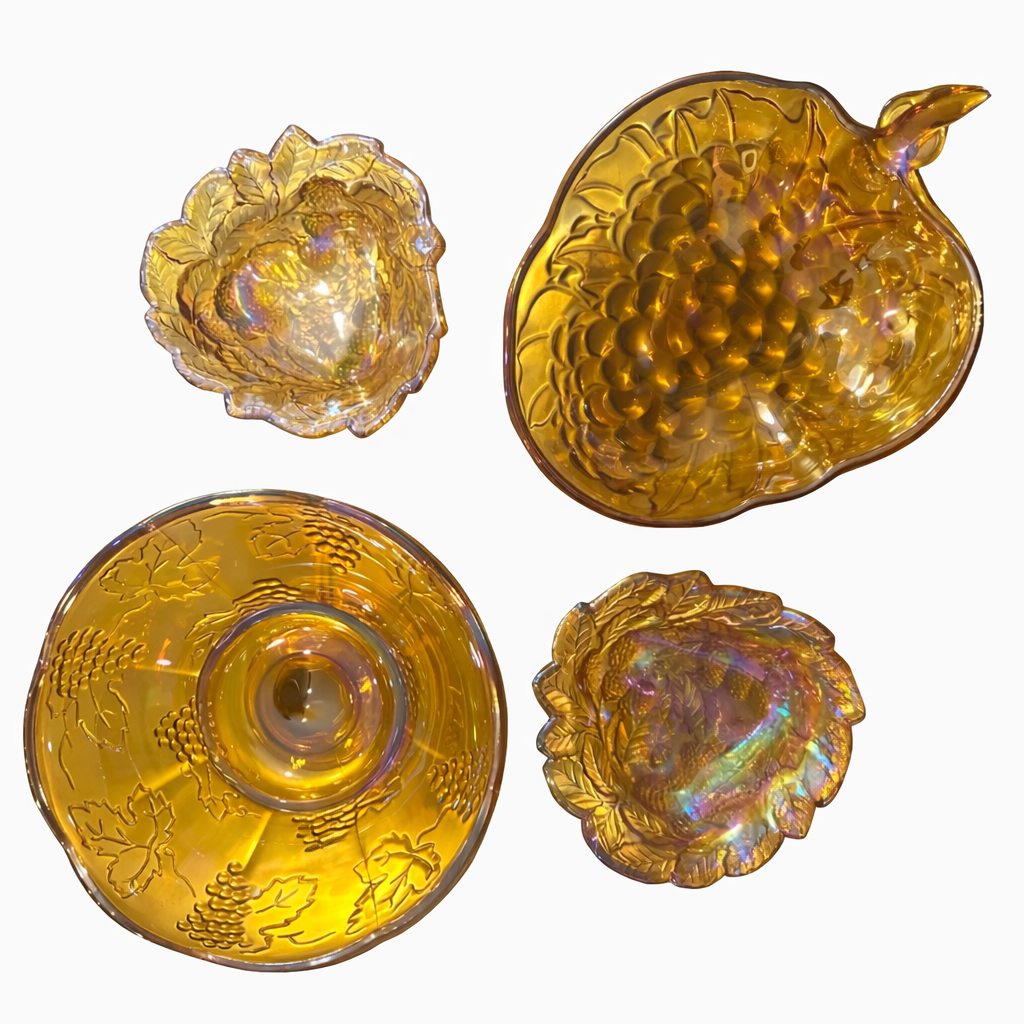 Image 2 of 13
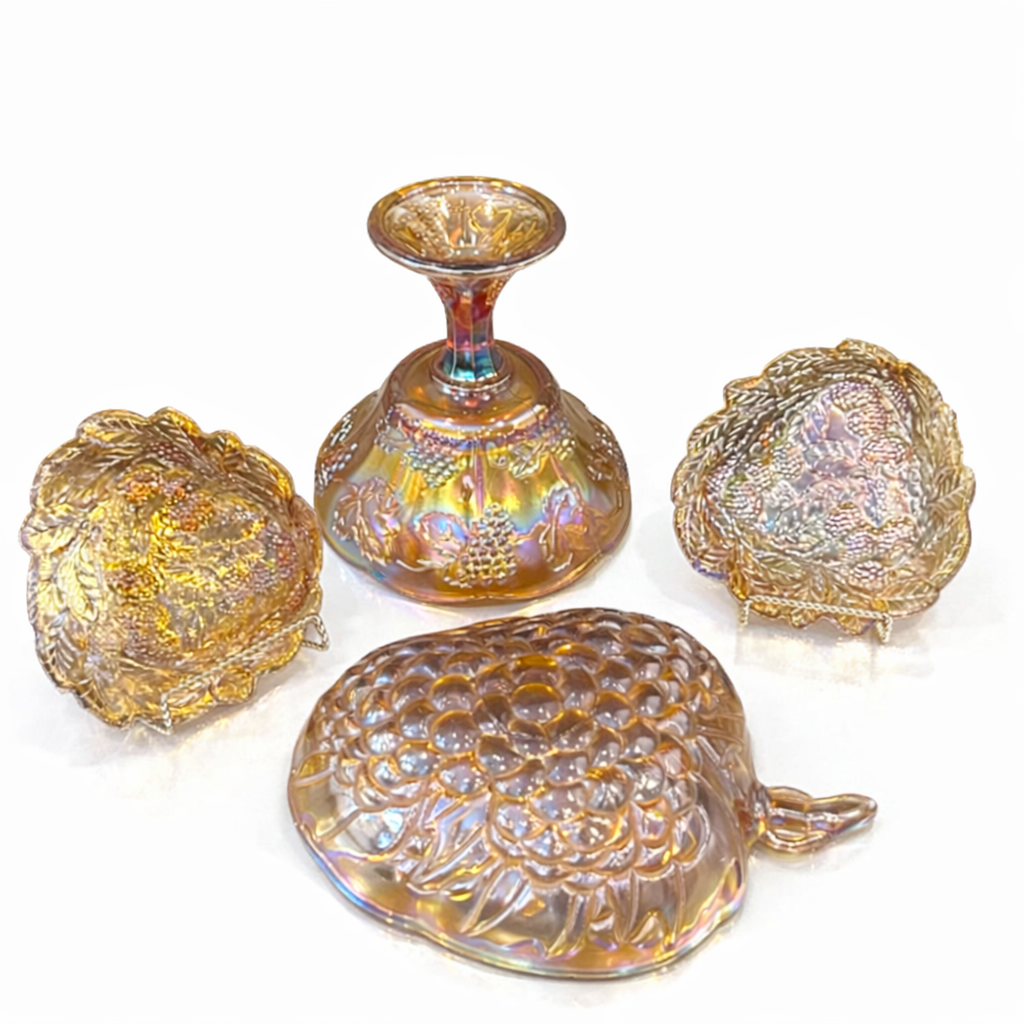 Image 3 of 13
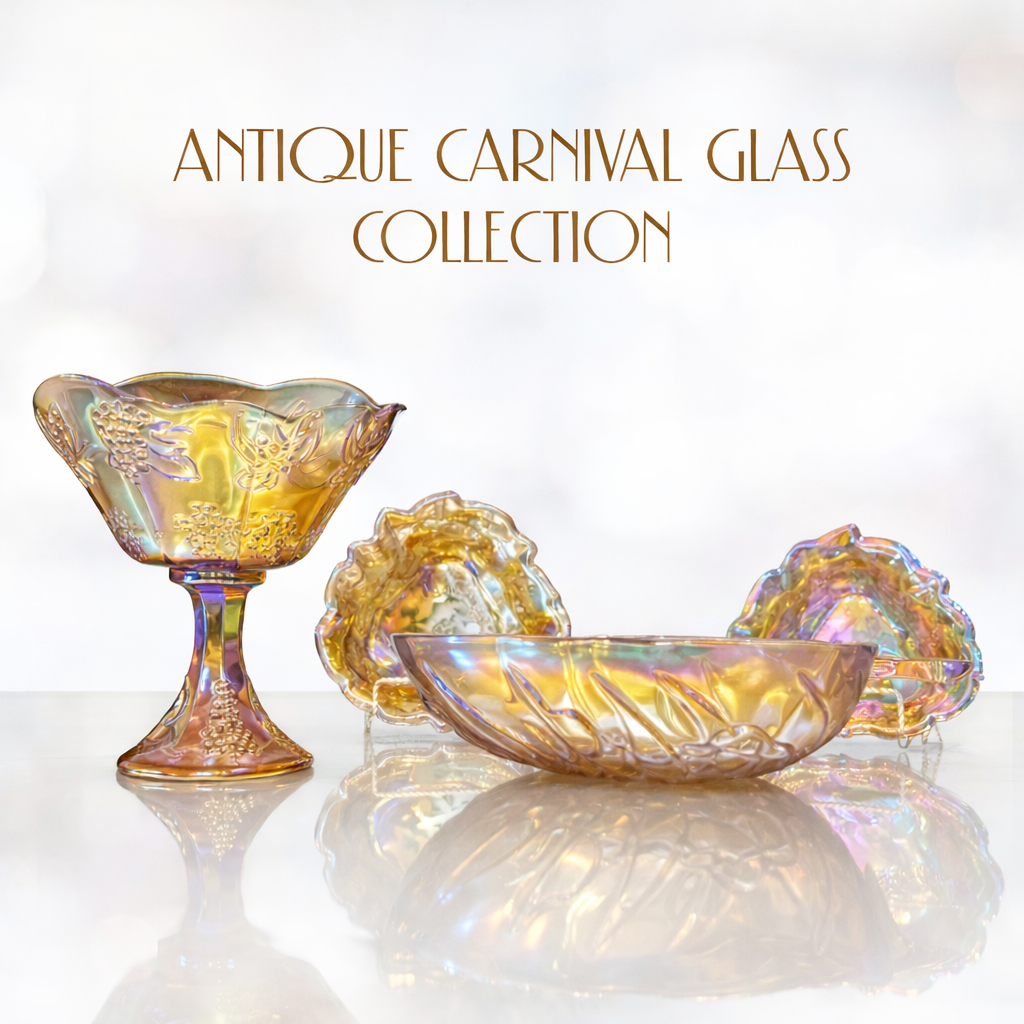 Image 4 of 13
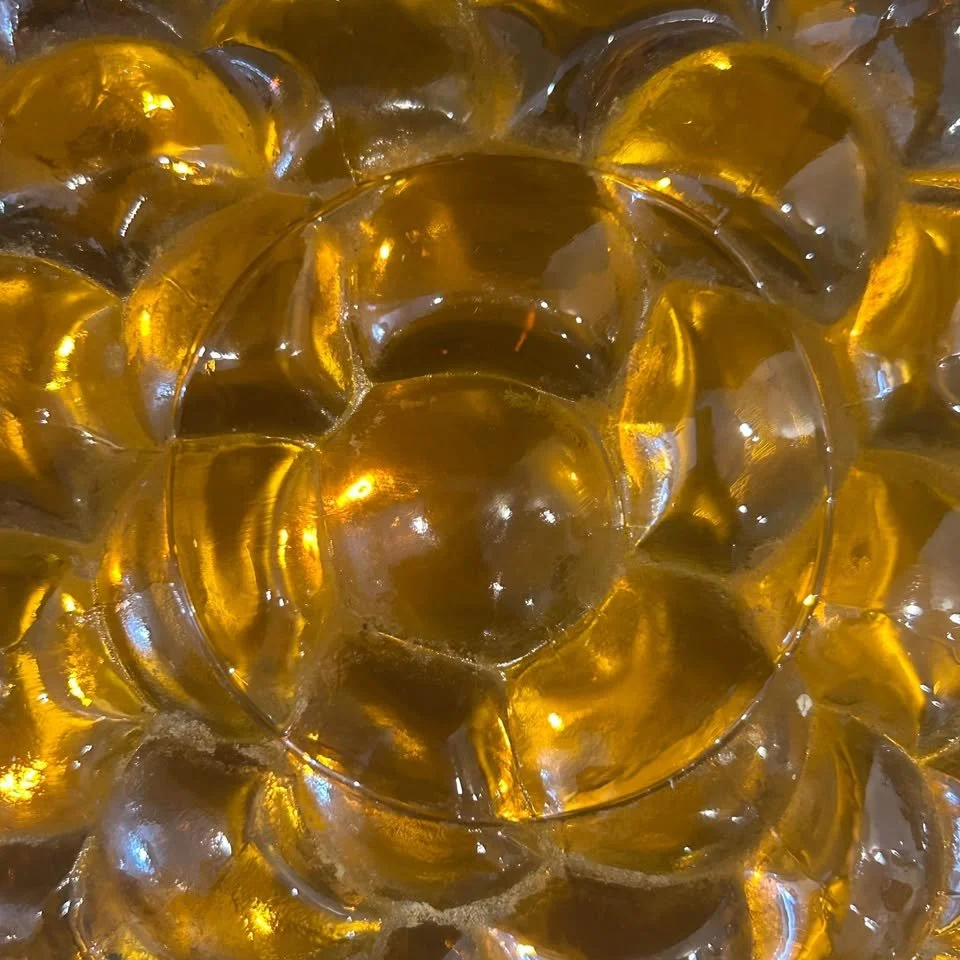 Image 5 of 13
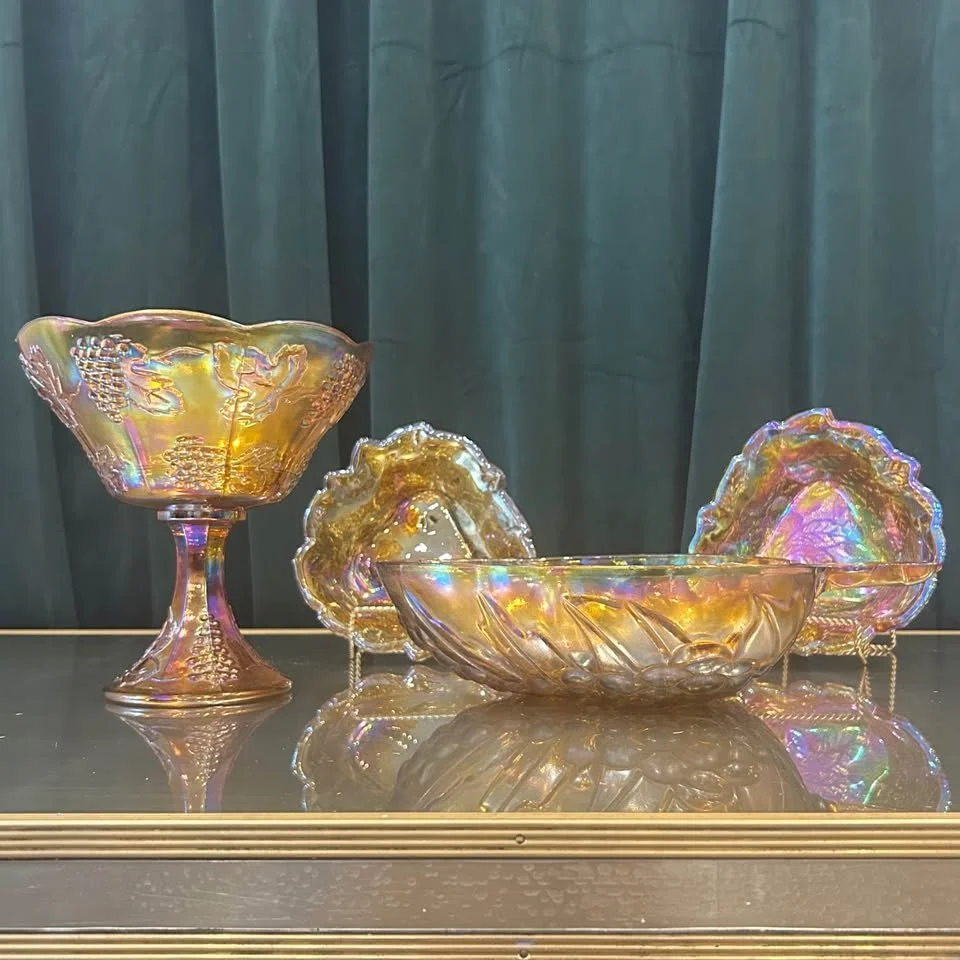 Image 6 of 13
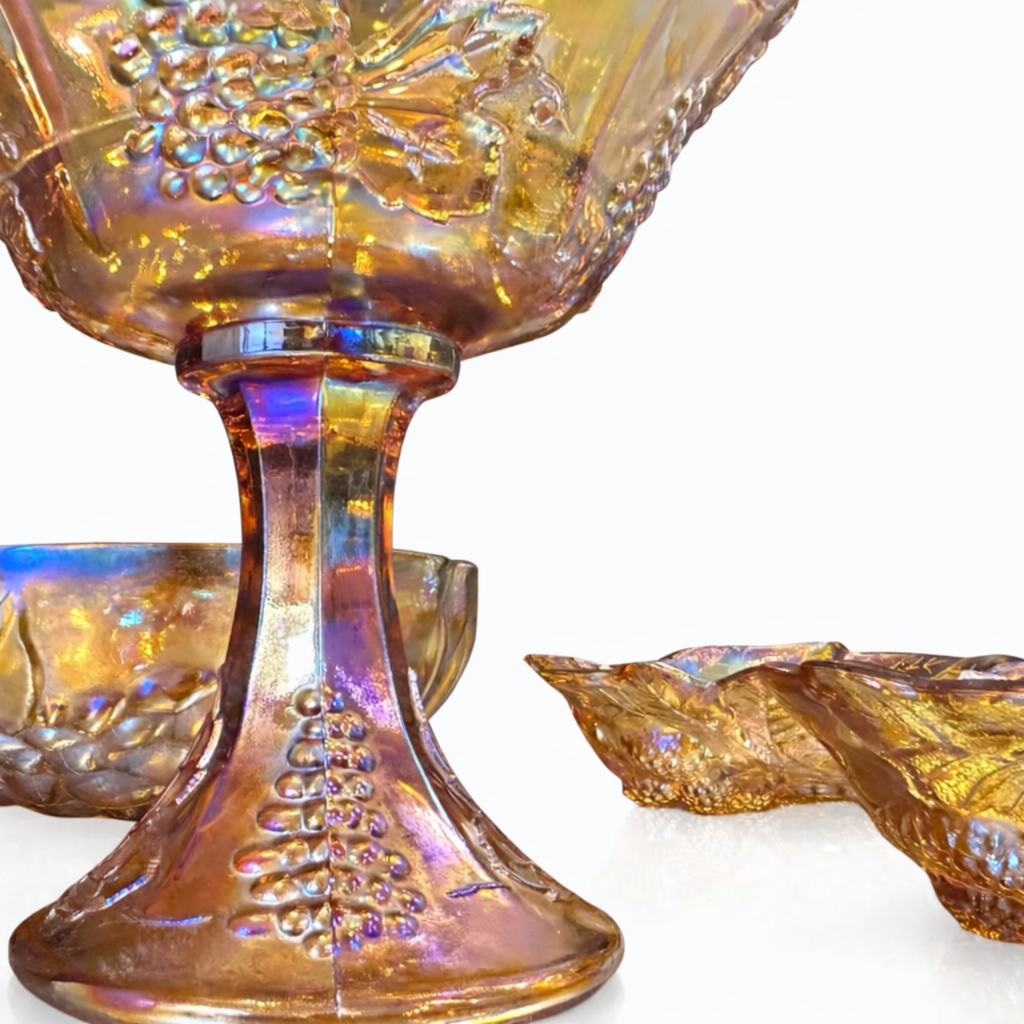 Image 7 of 13
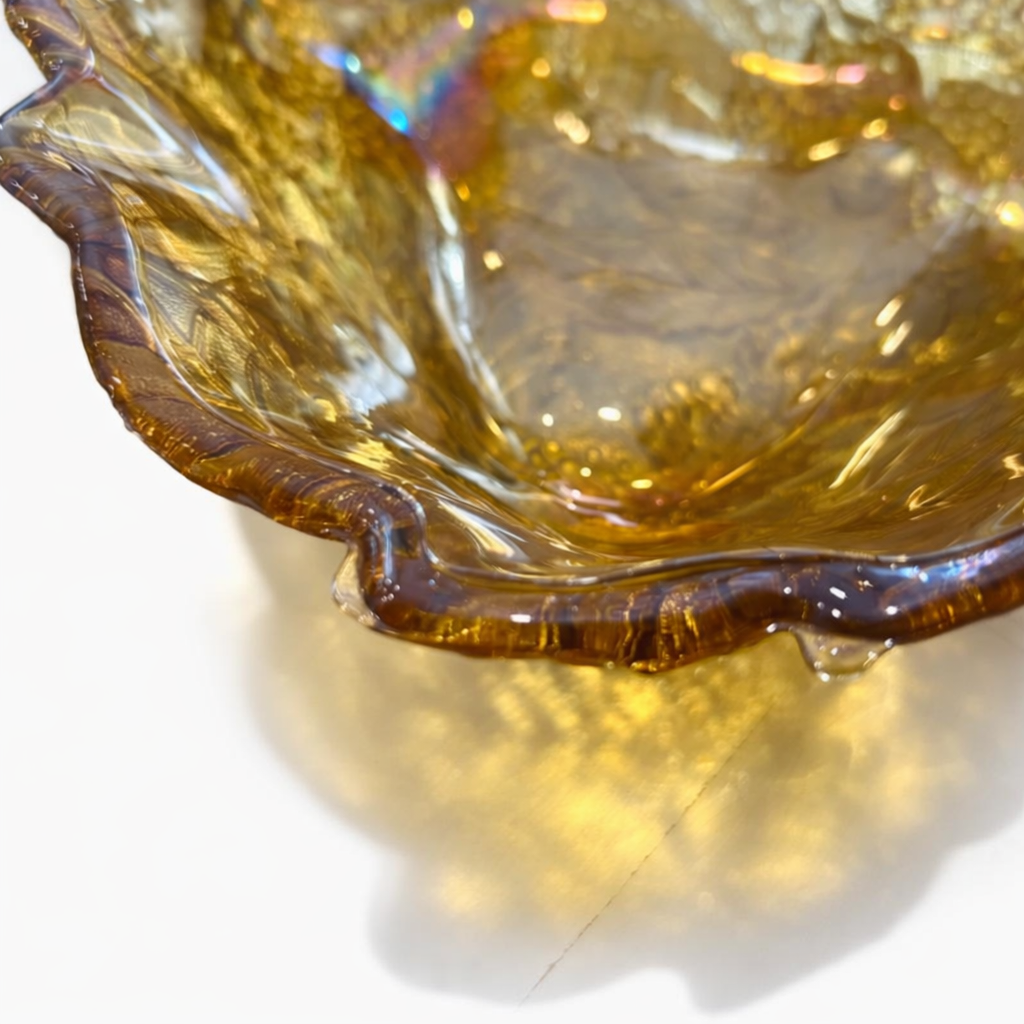 Image 8 of 13
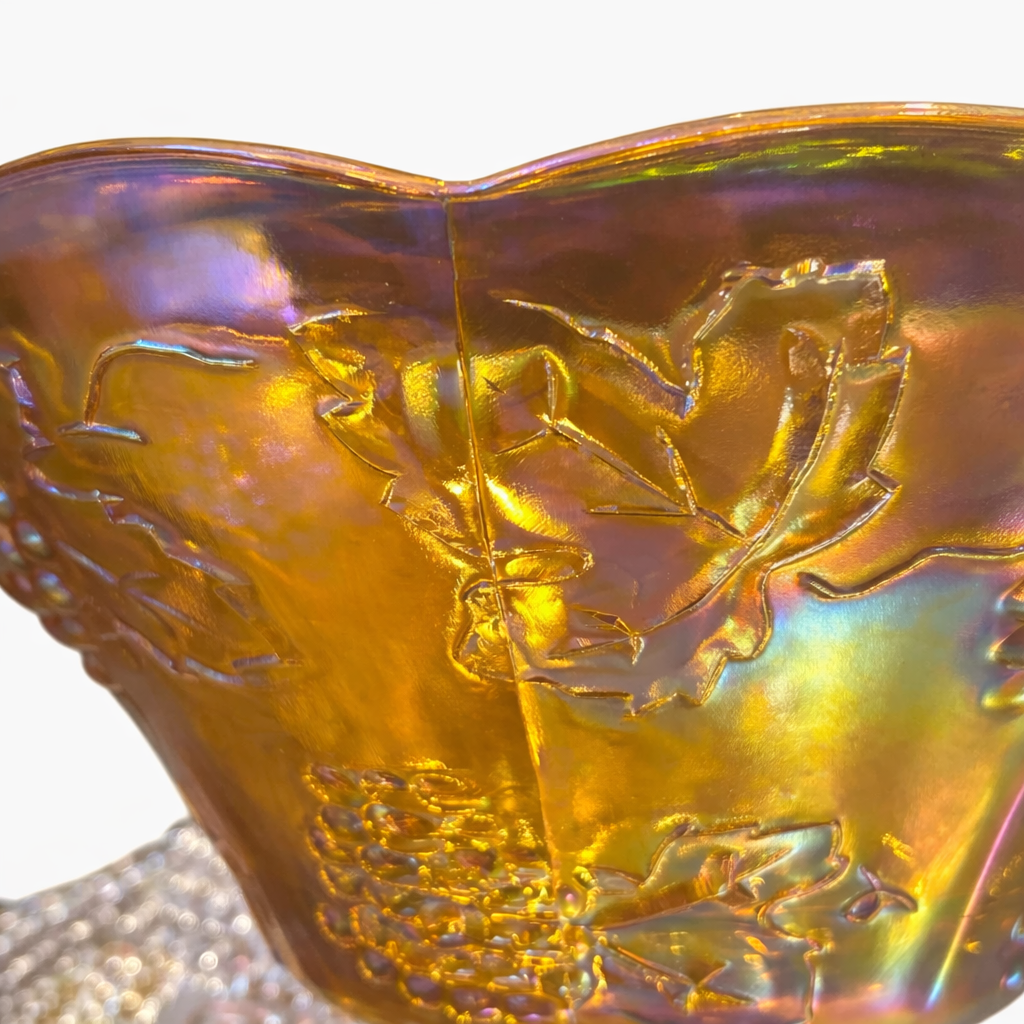 Image 9 of 13
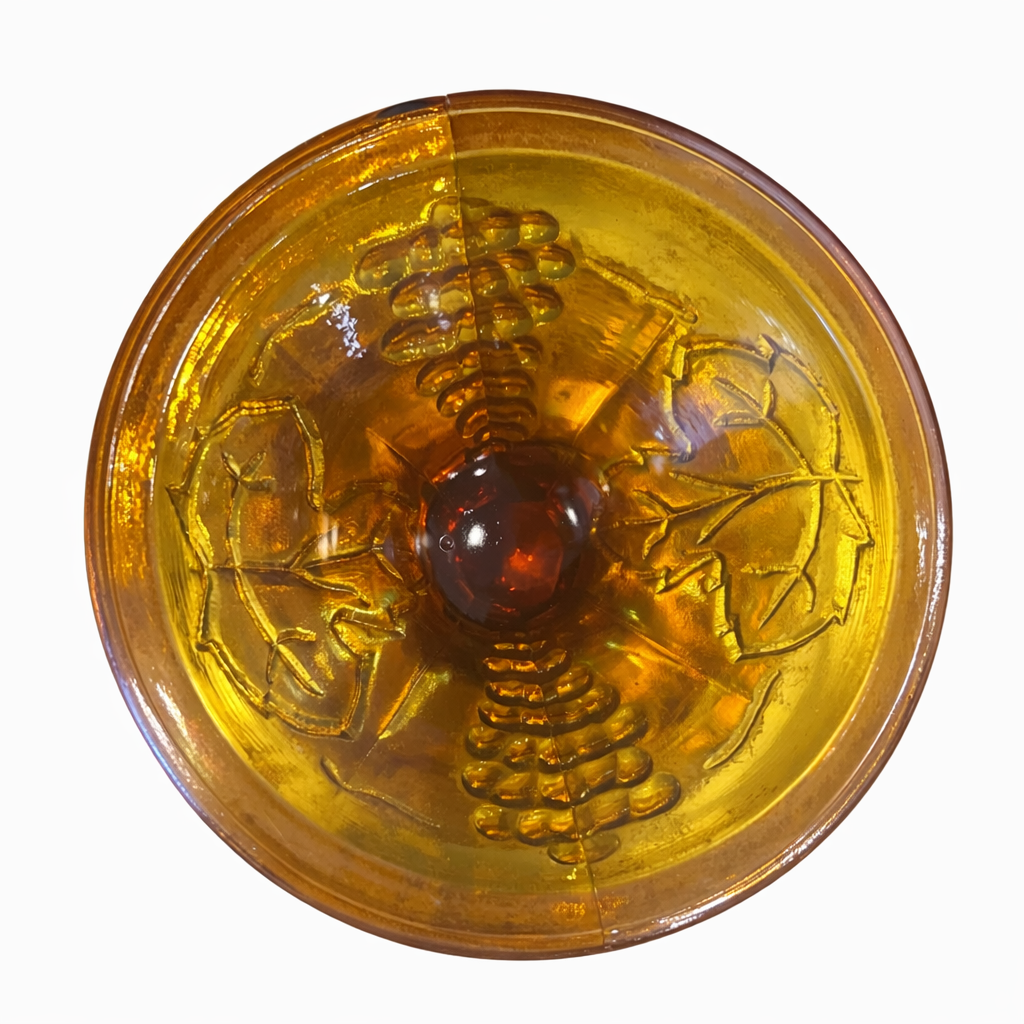 Image 10 of 13
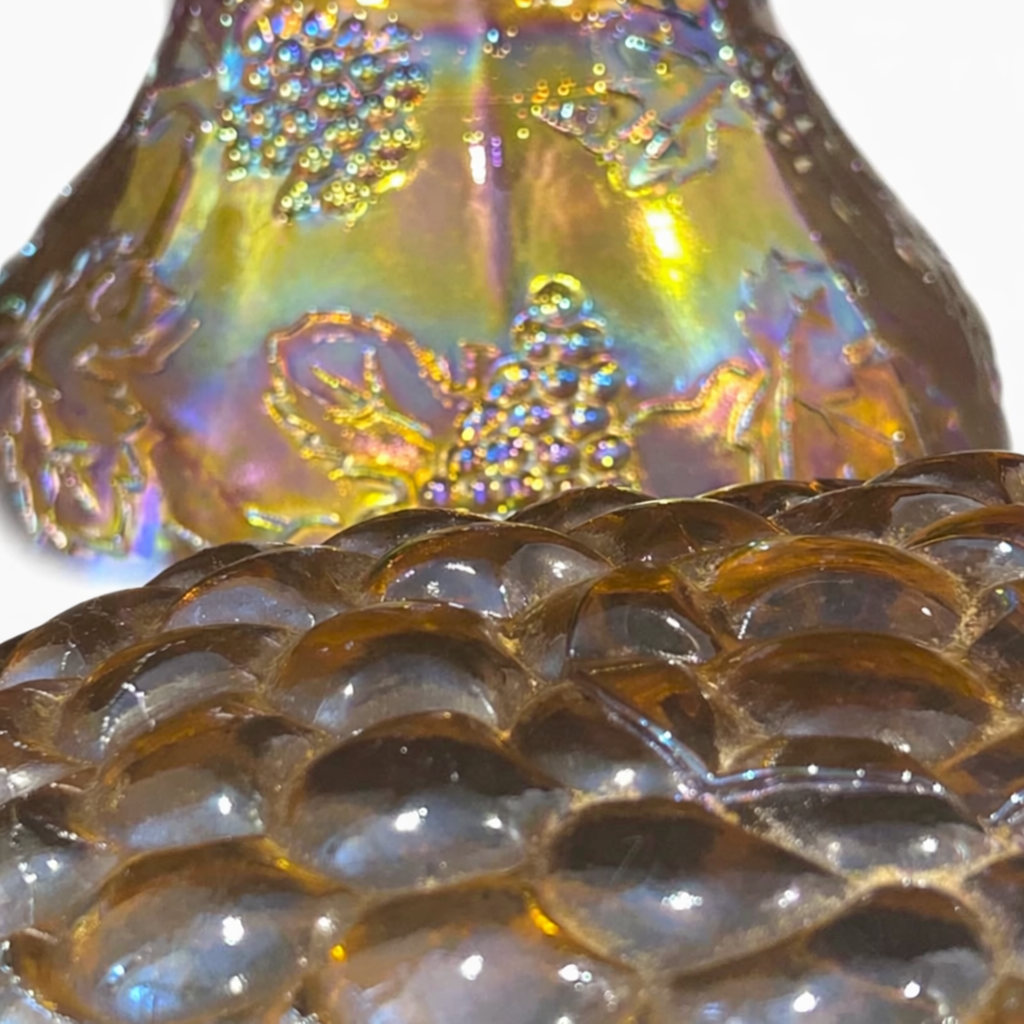 Image 11 of 13
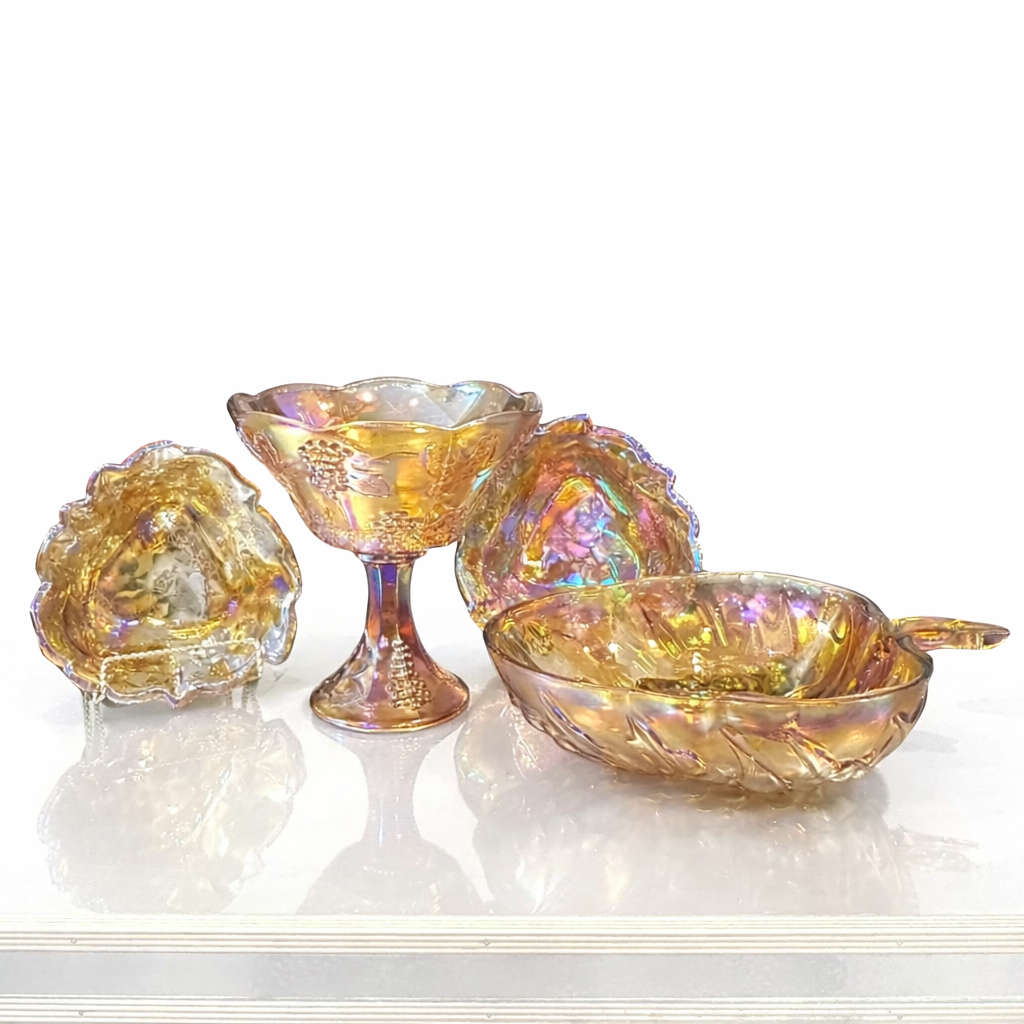 Image 12 of 13
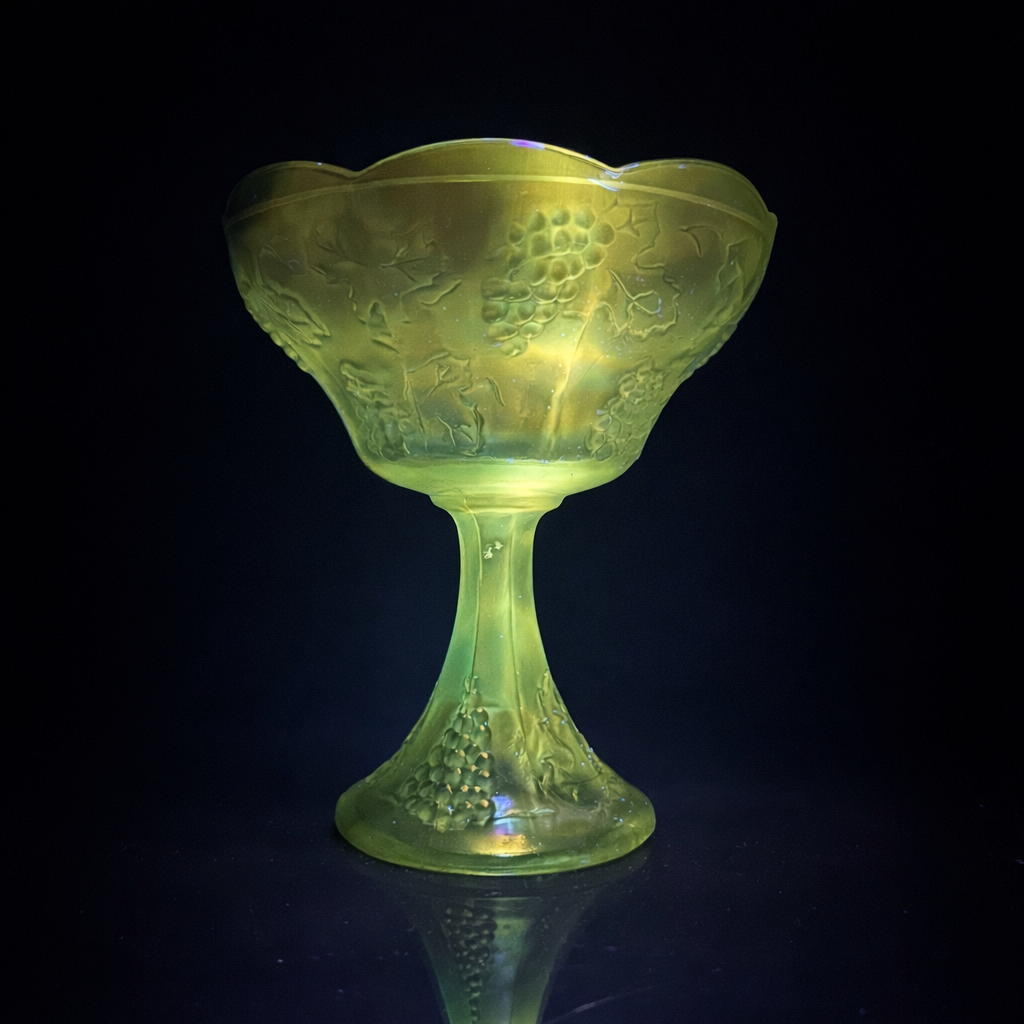 Image 13 of 13