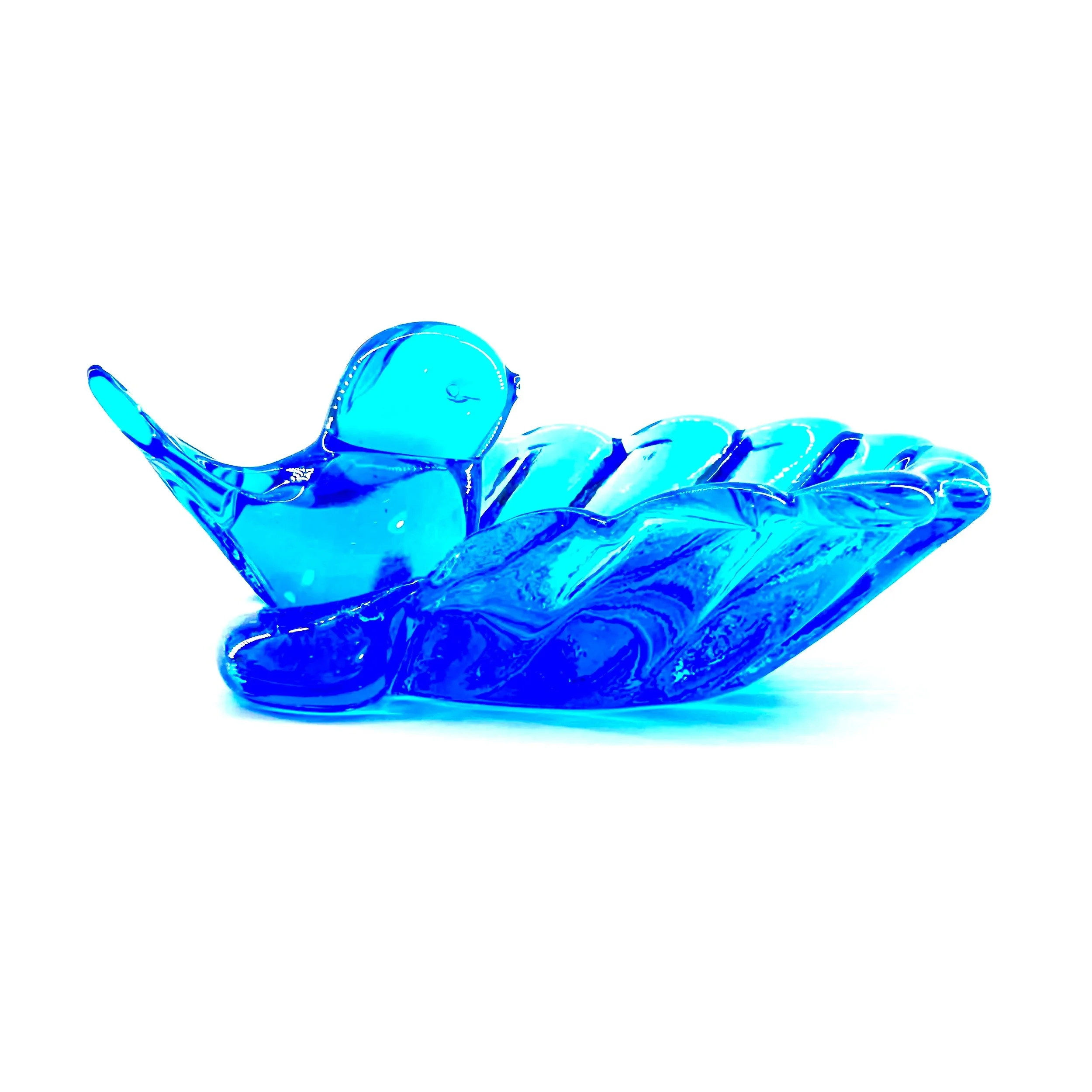
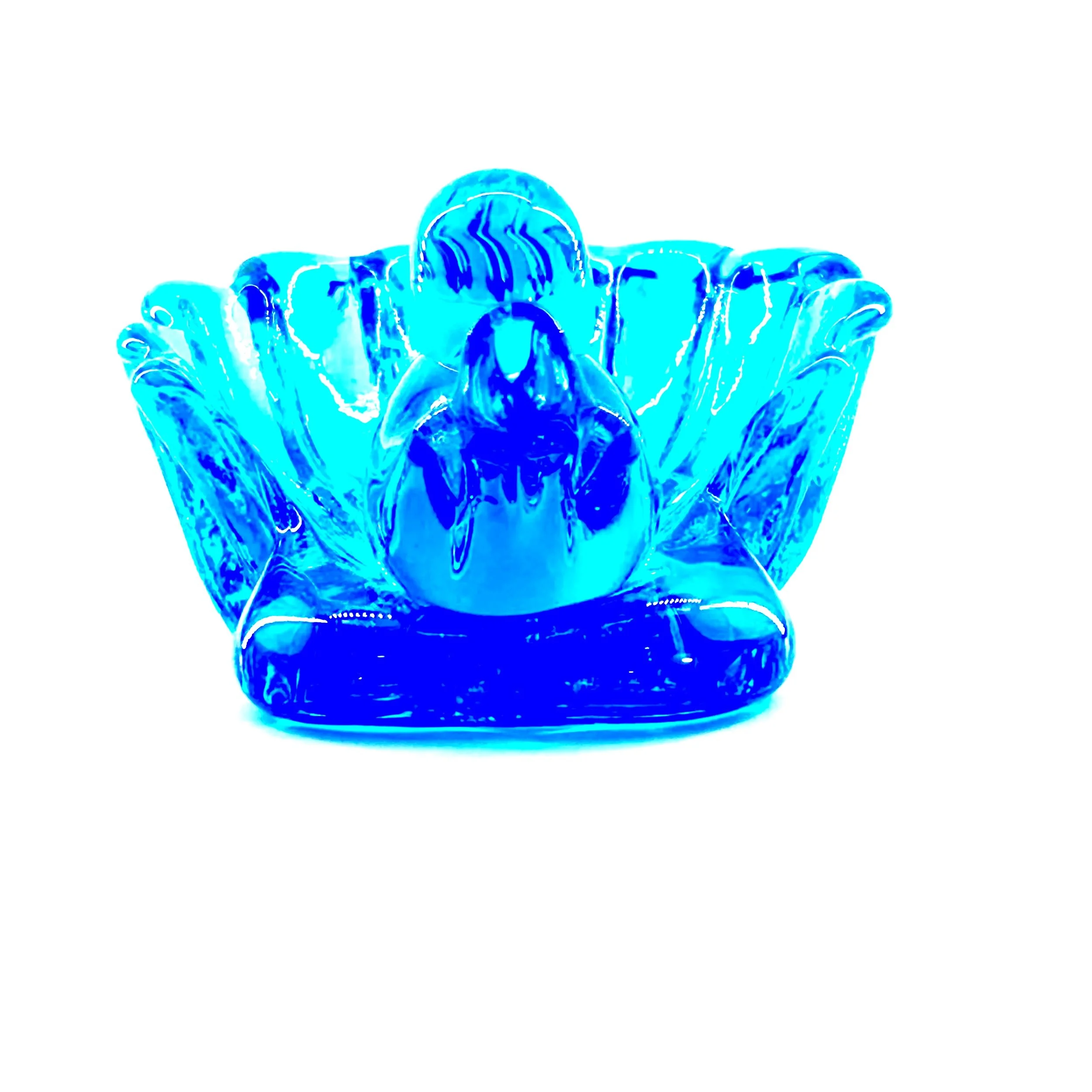
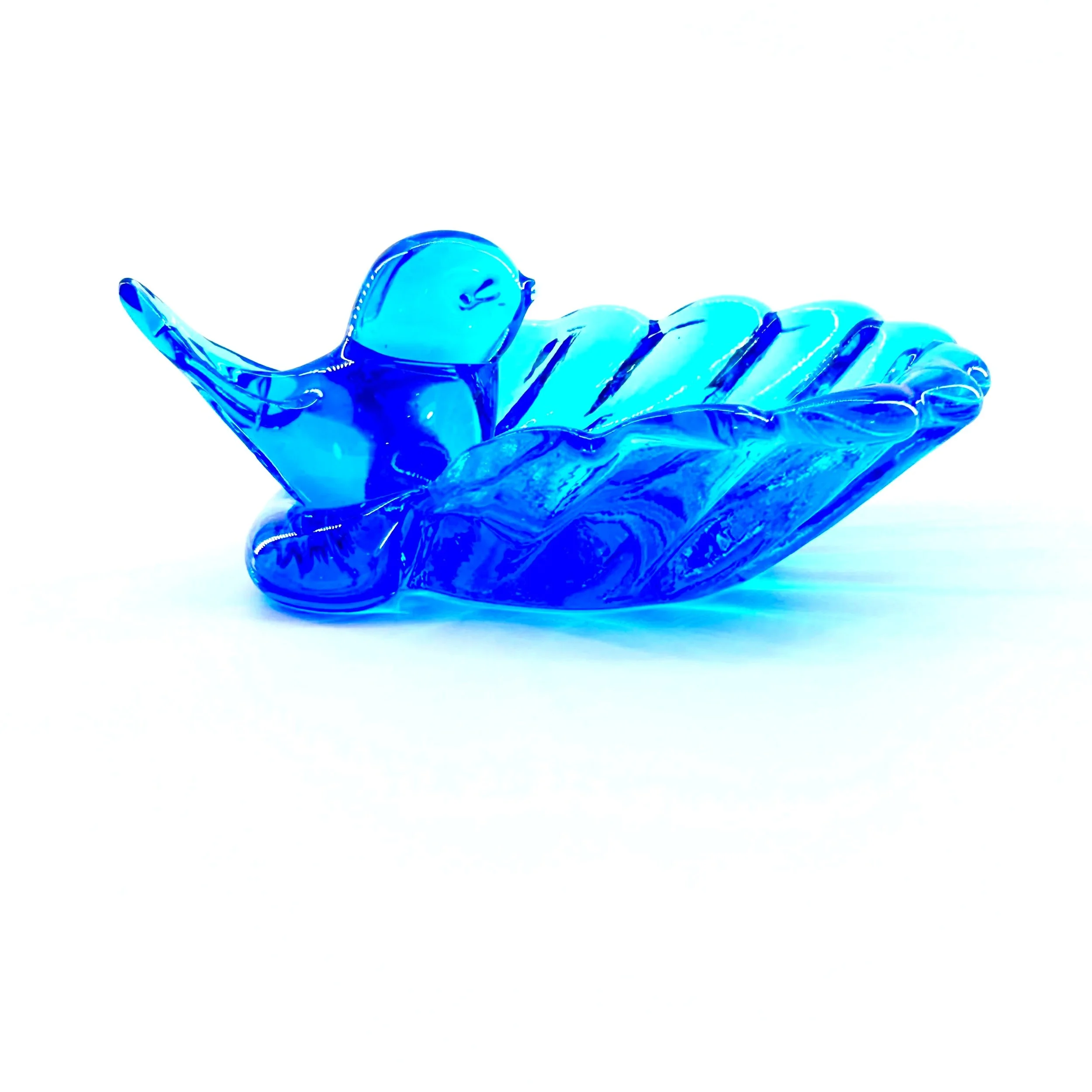
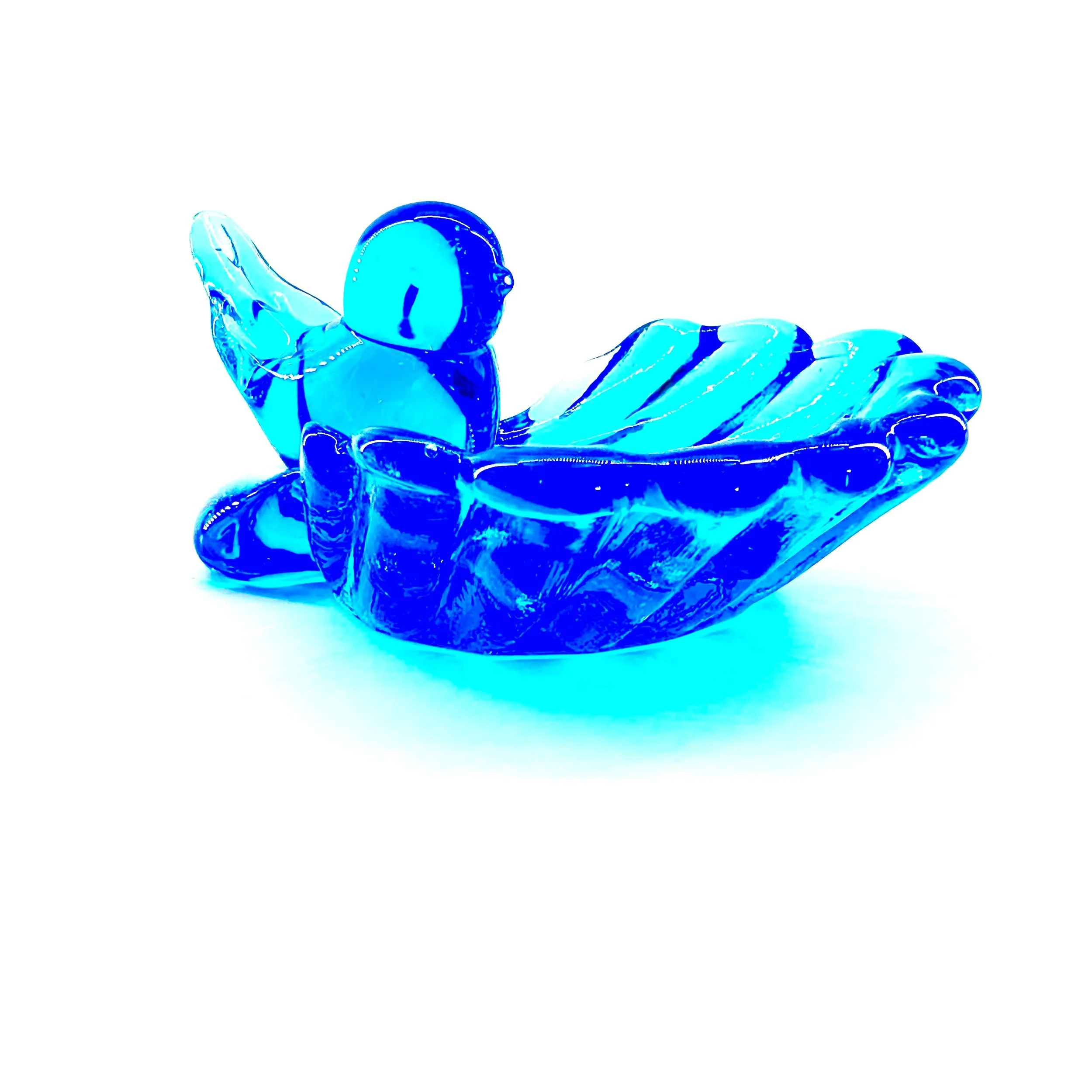
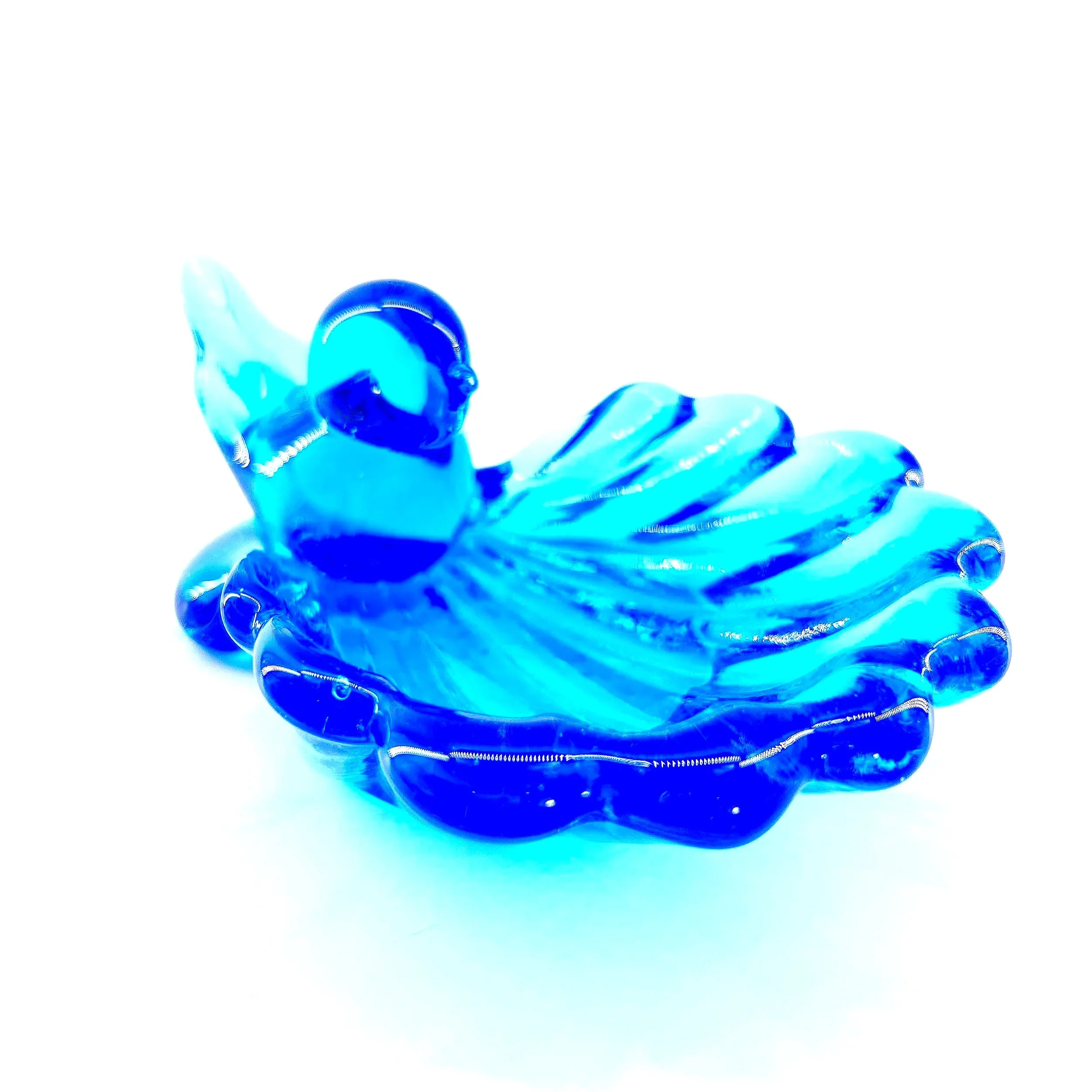
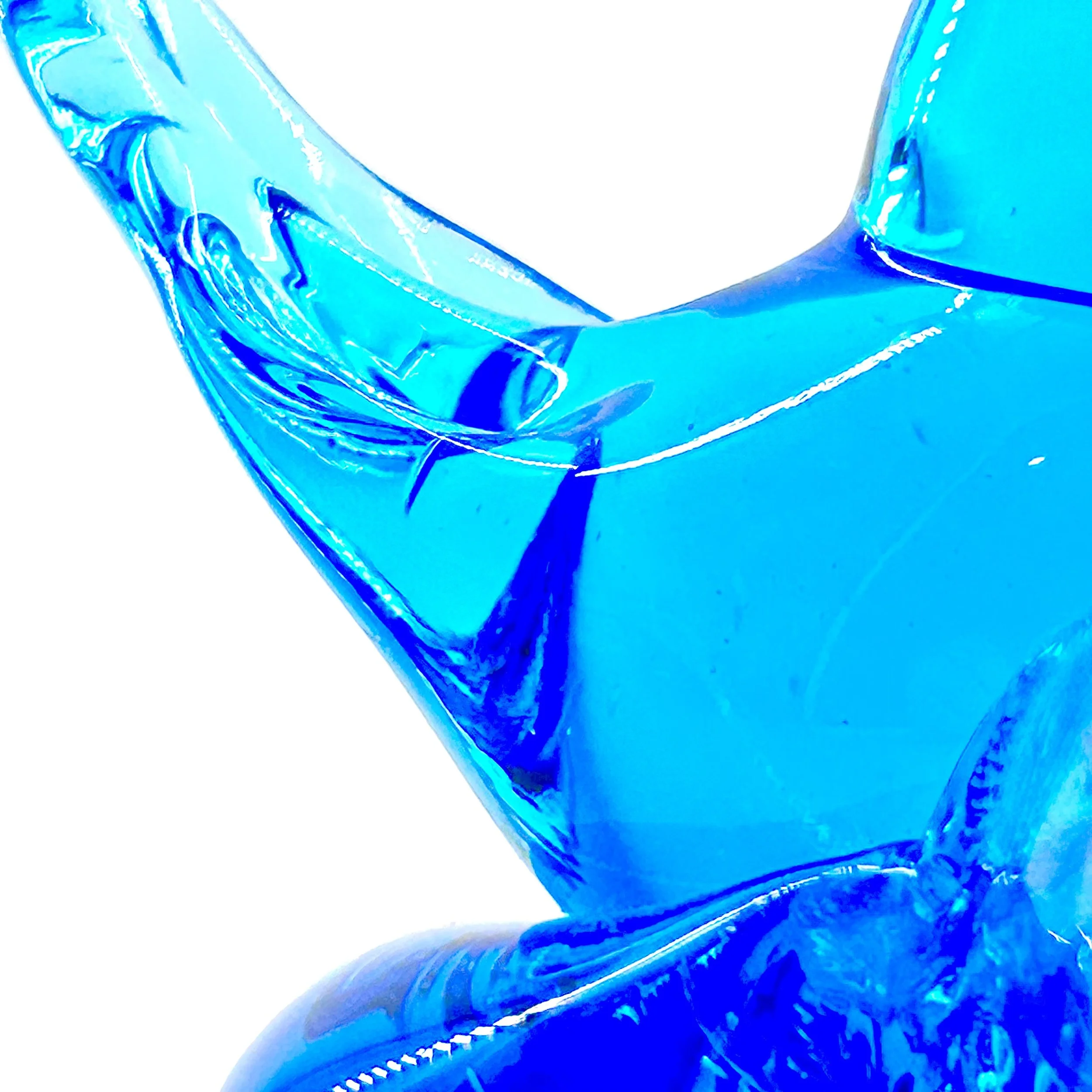
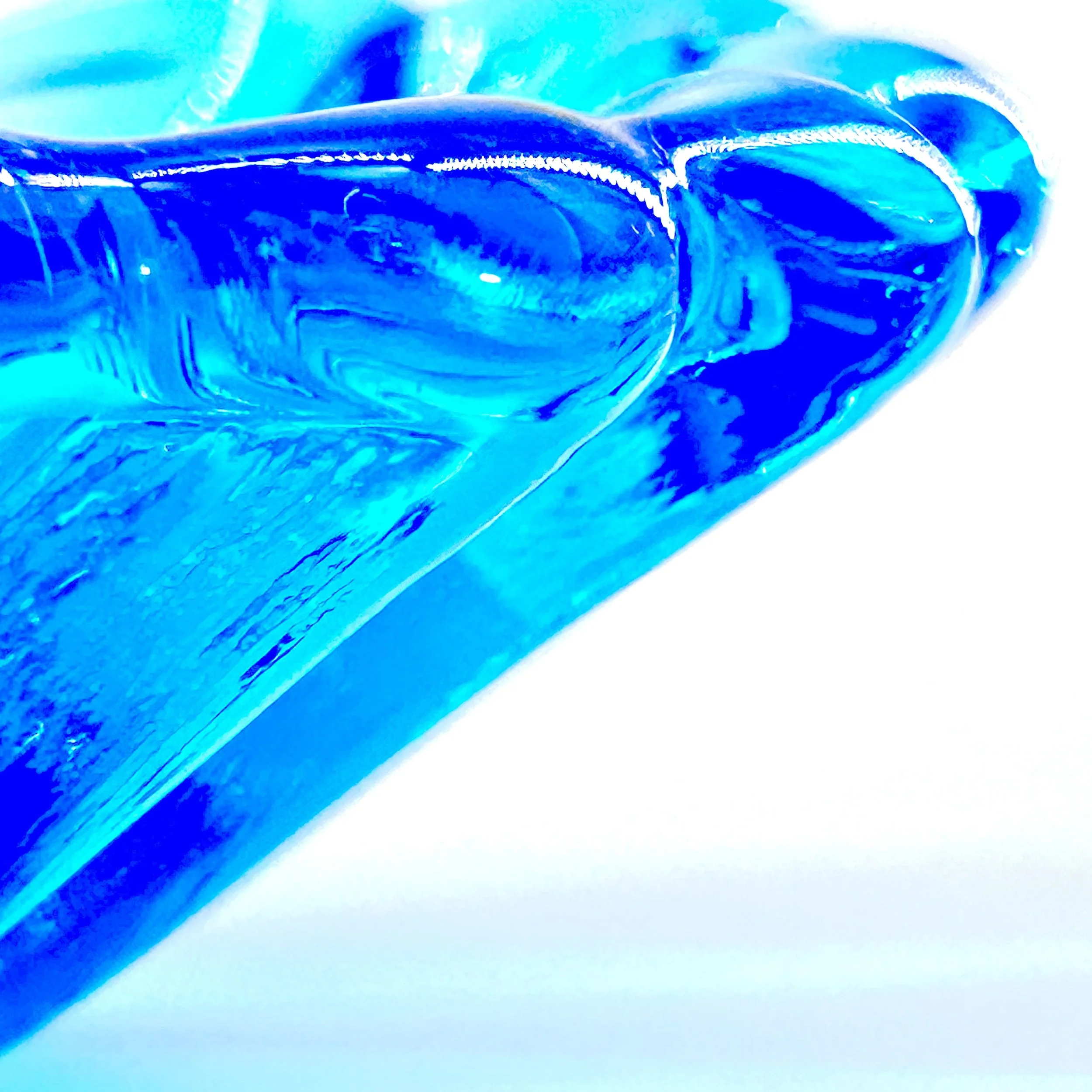
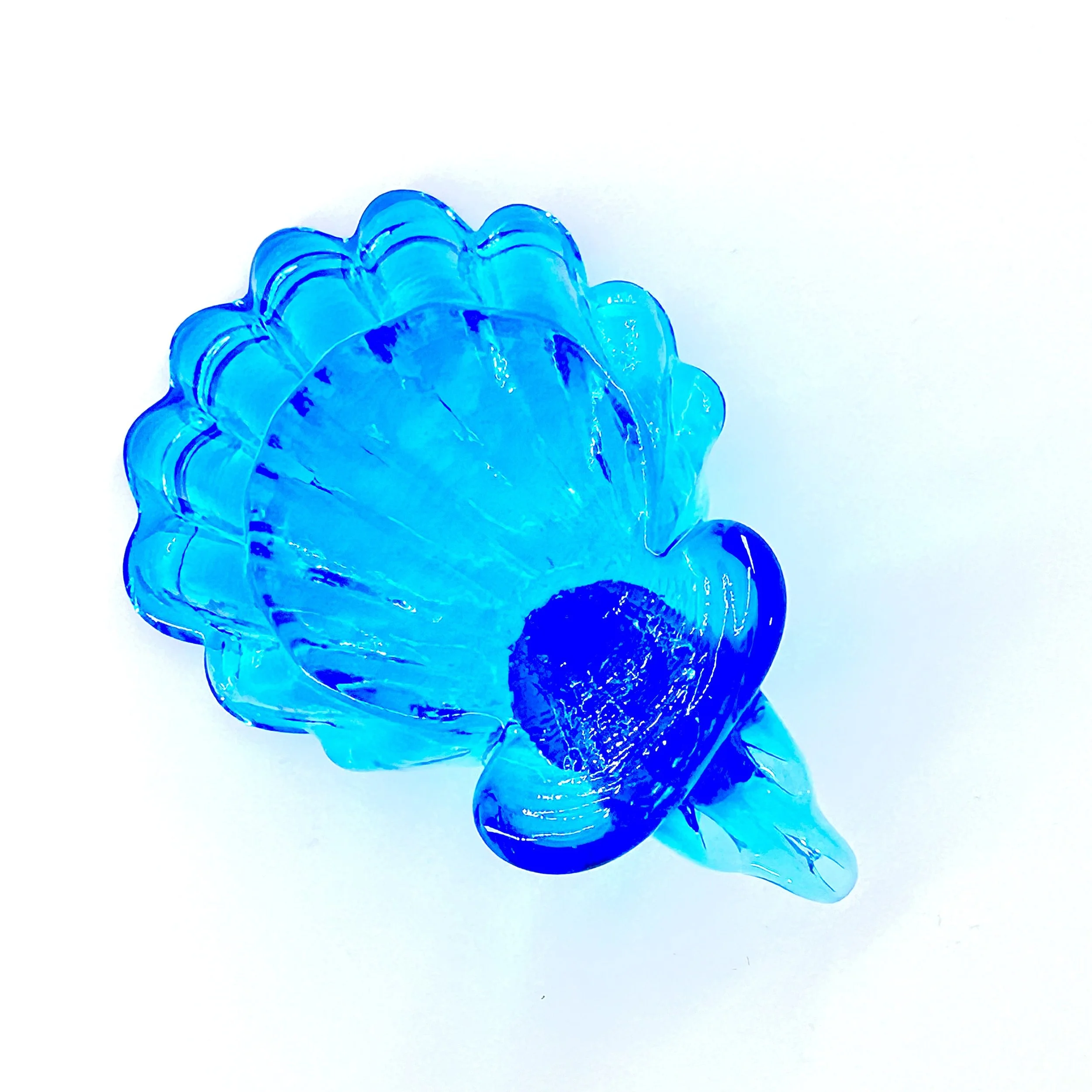
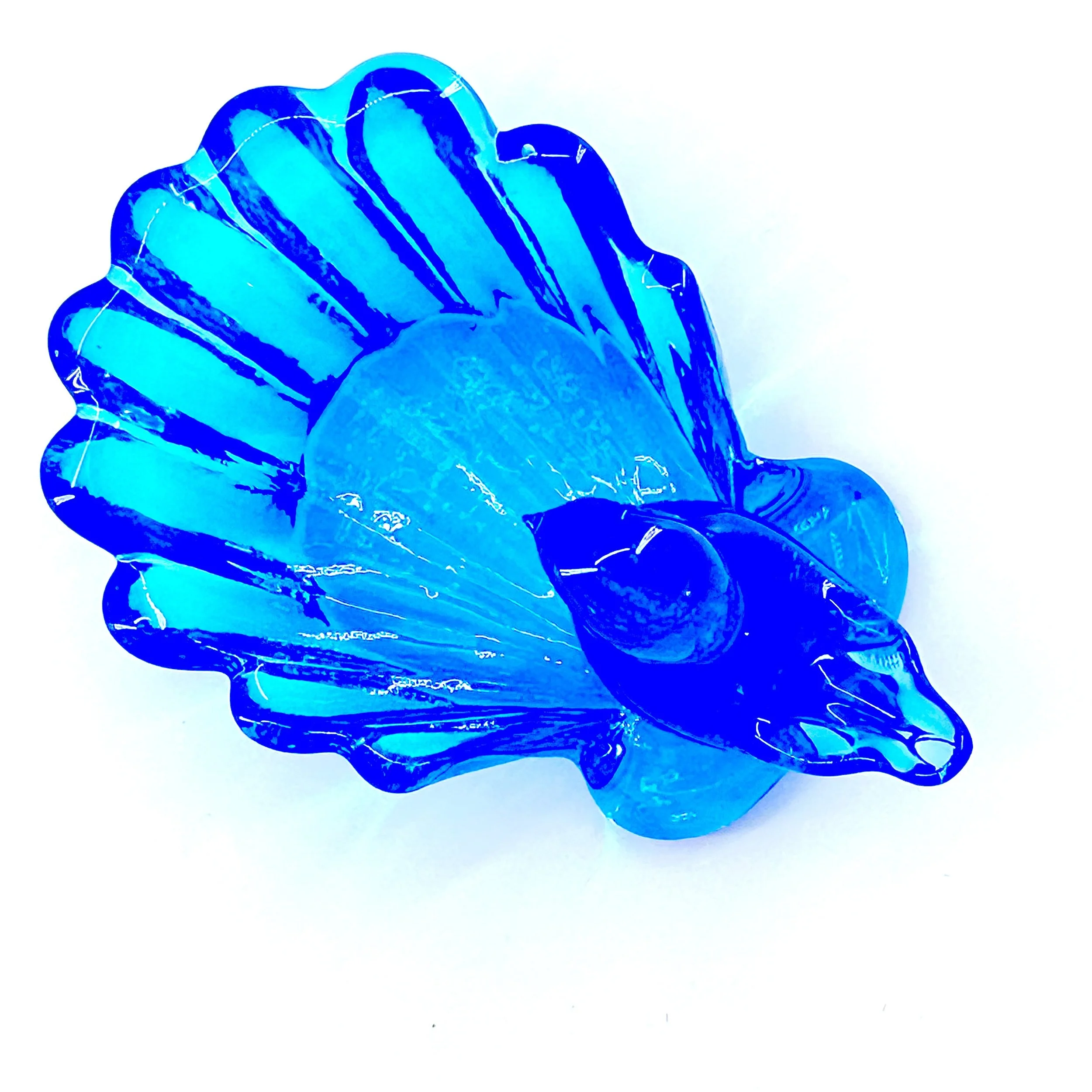
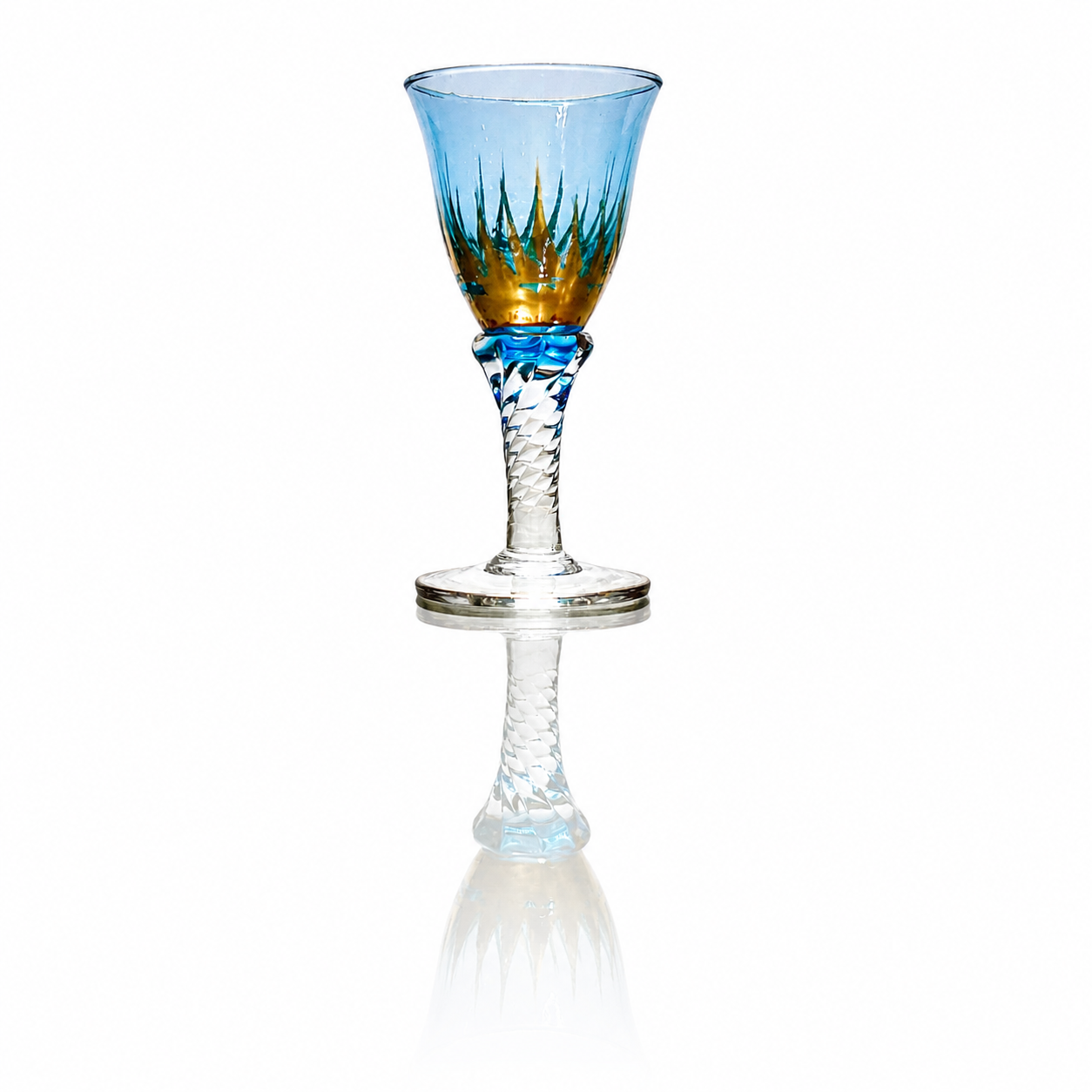
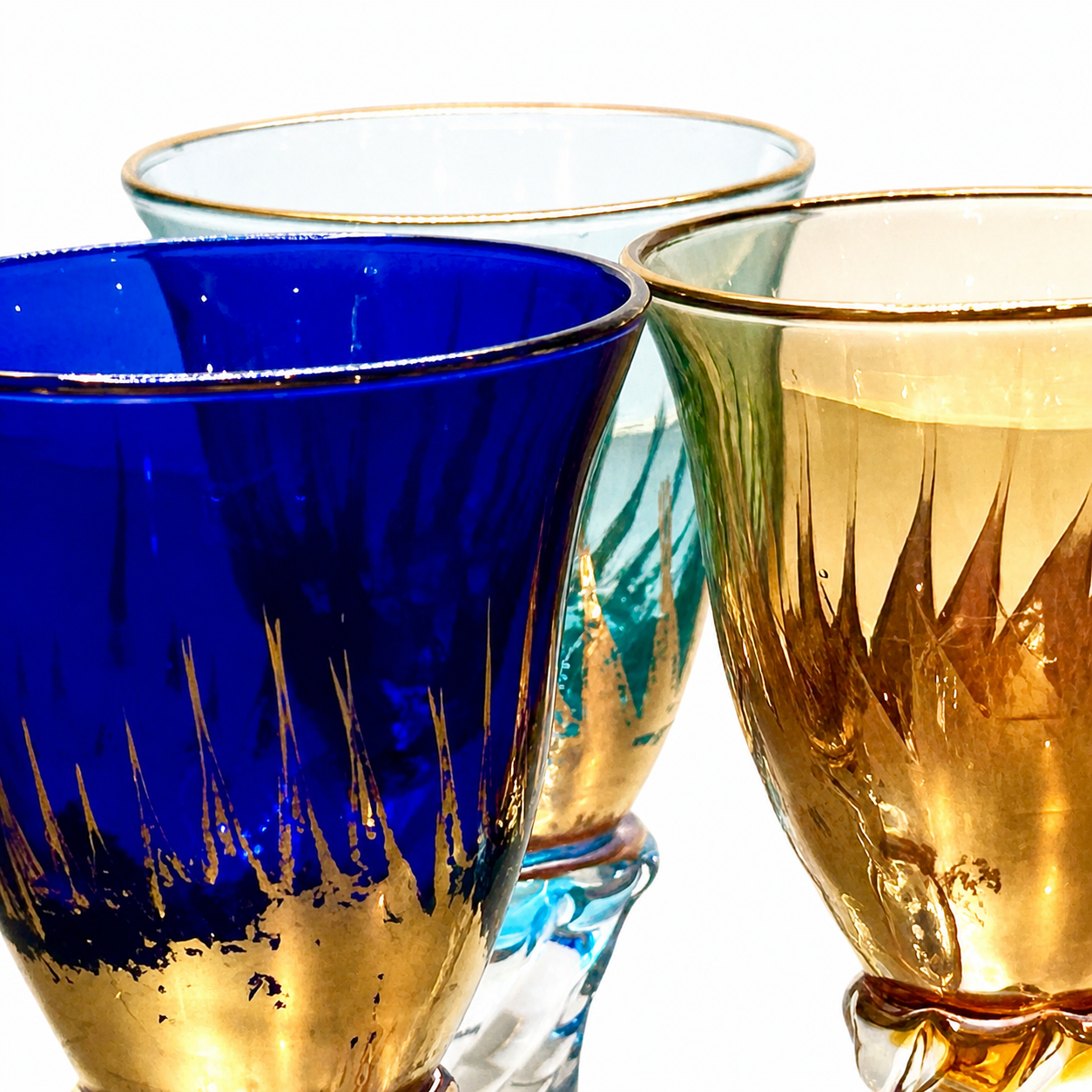
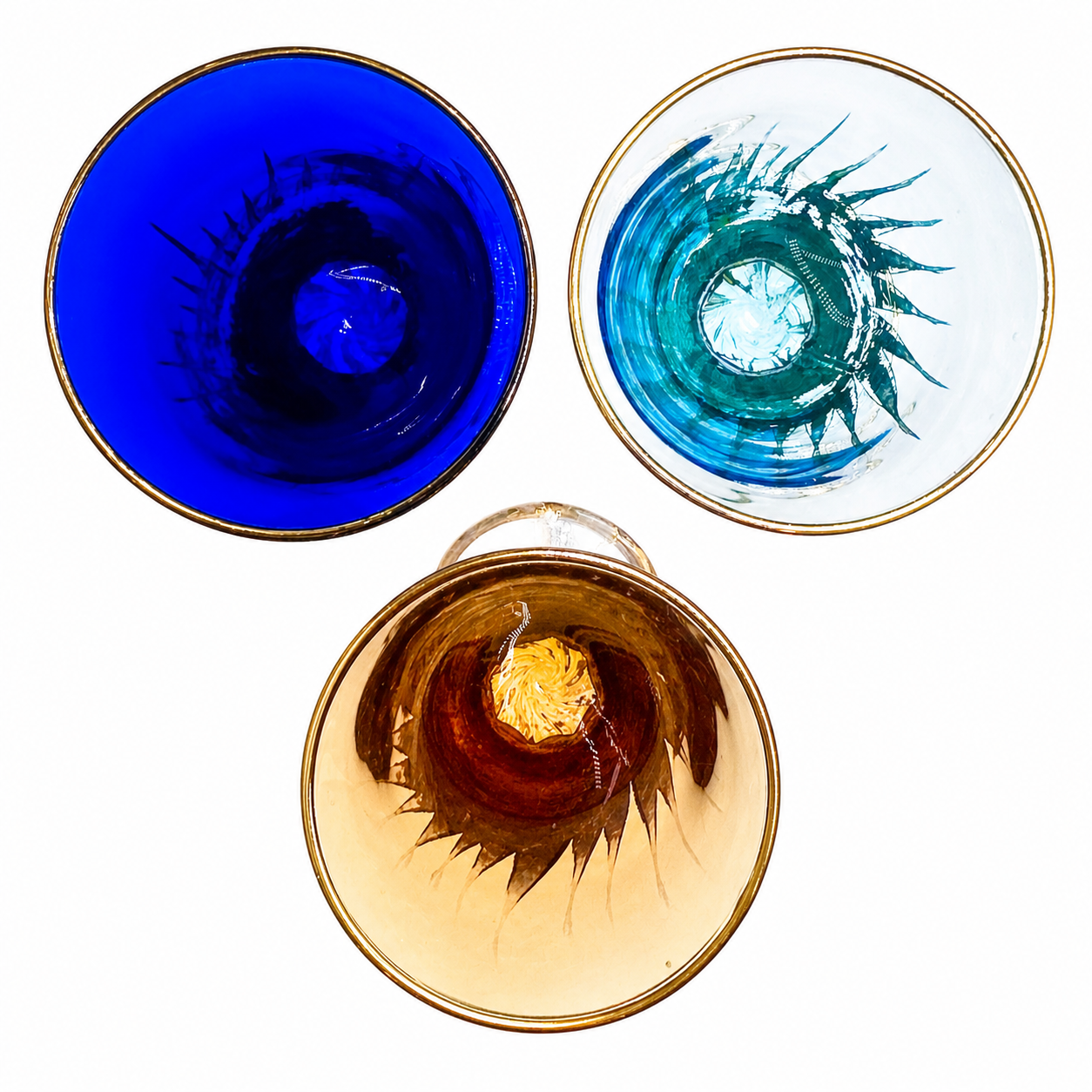
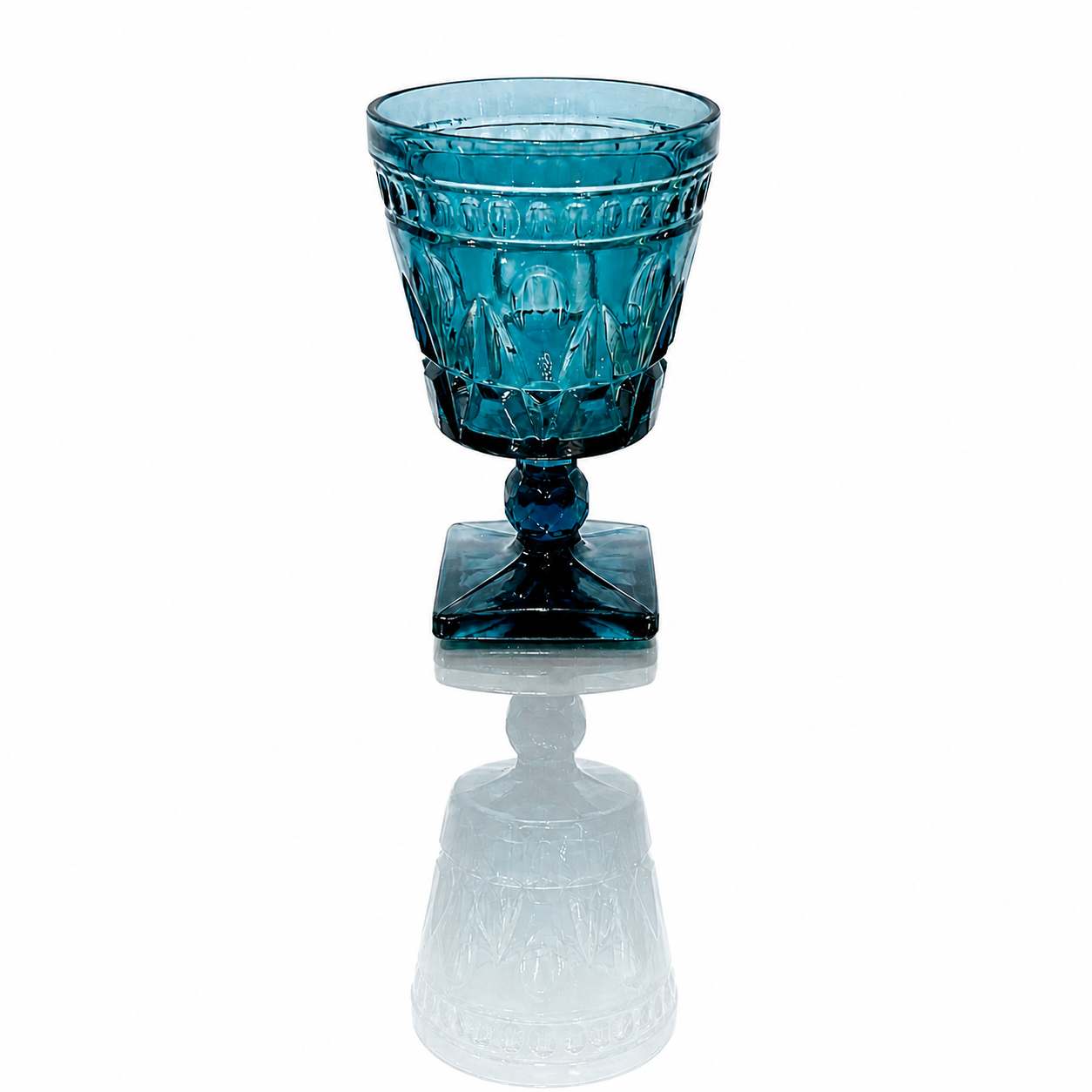
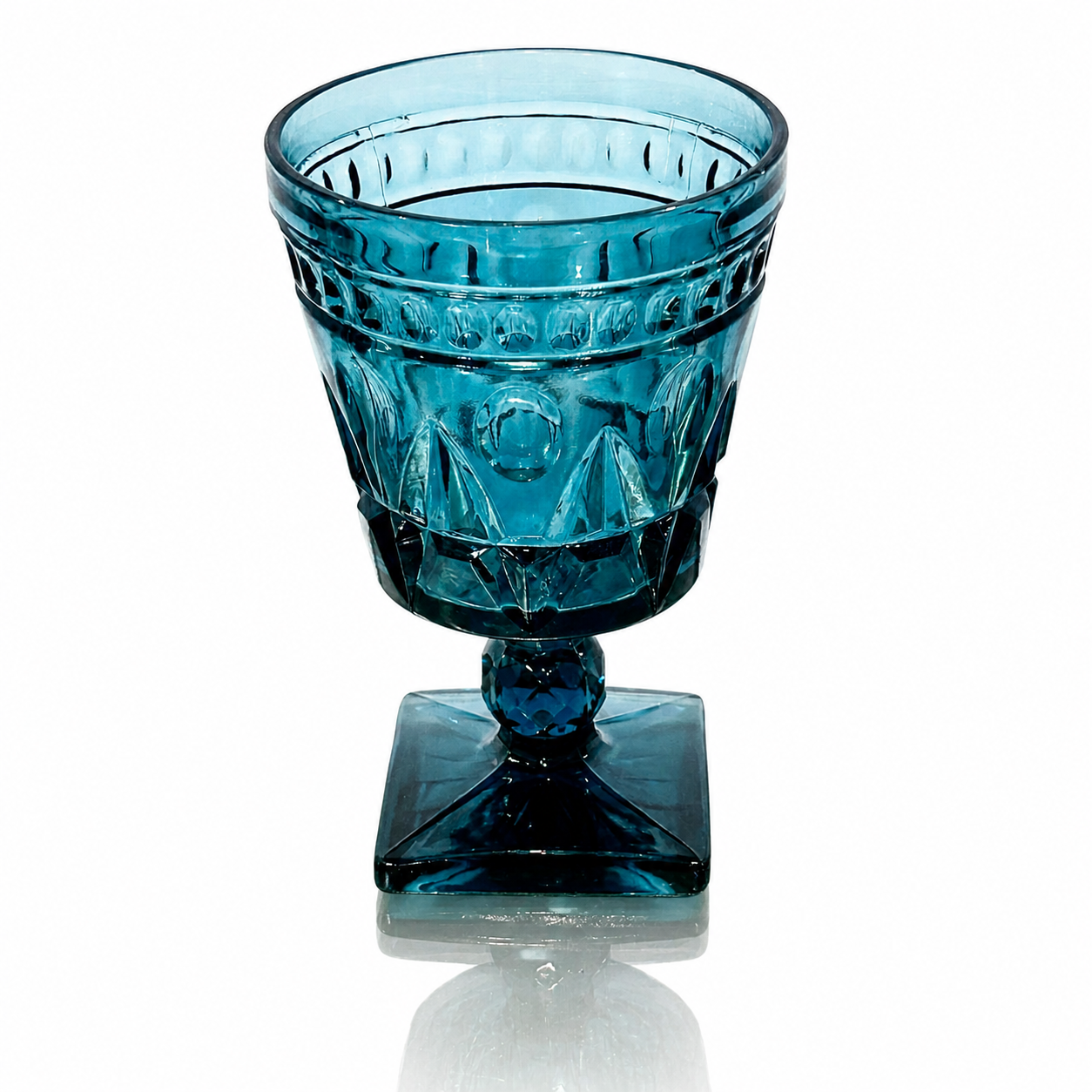
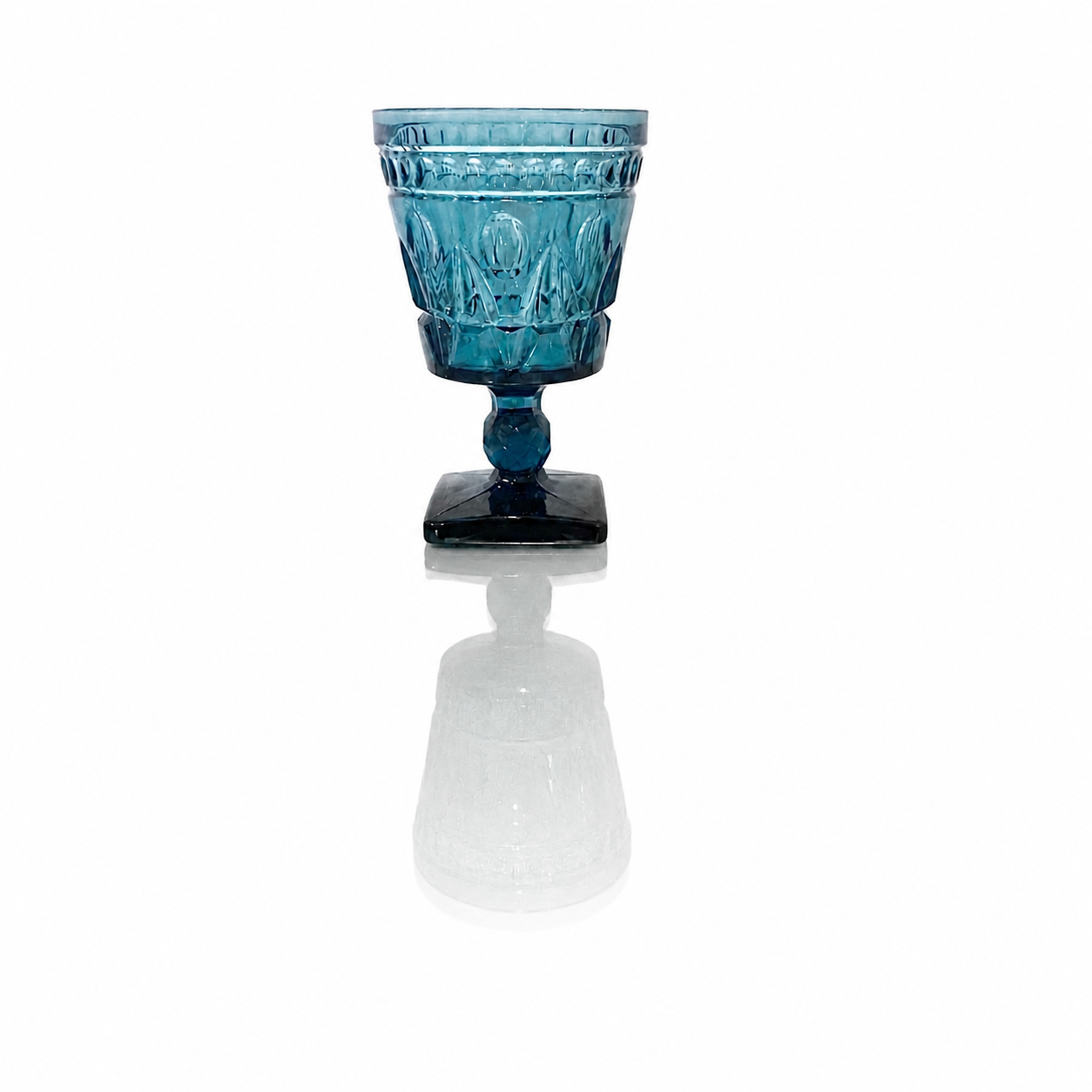
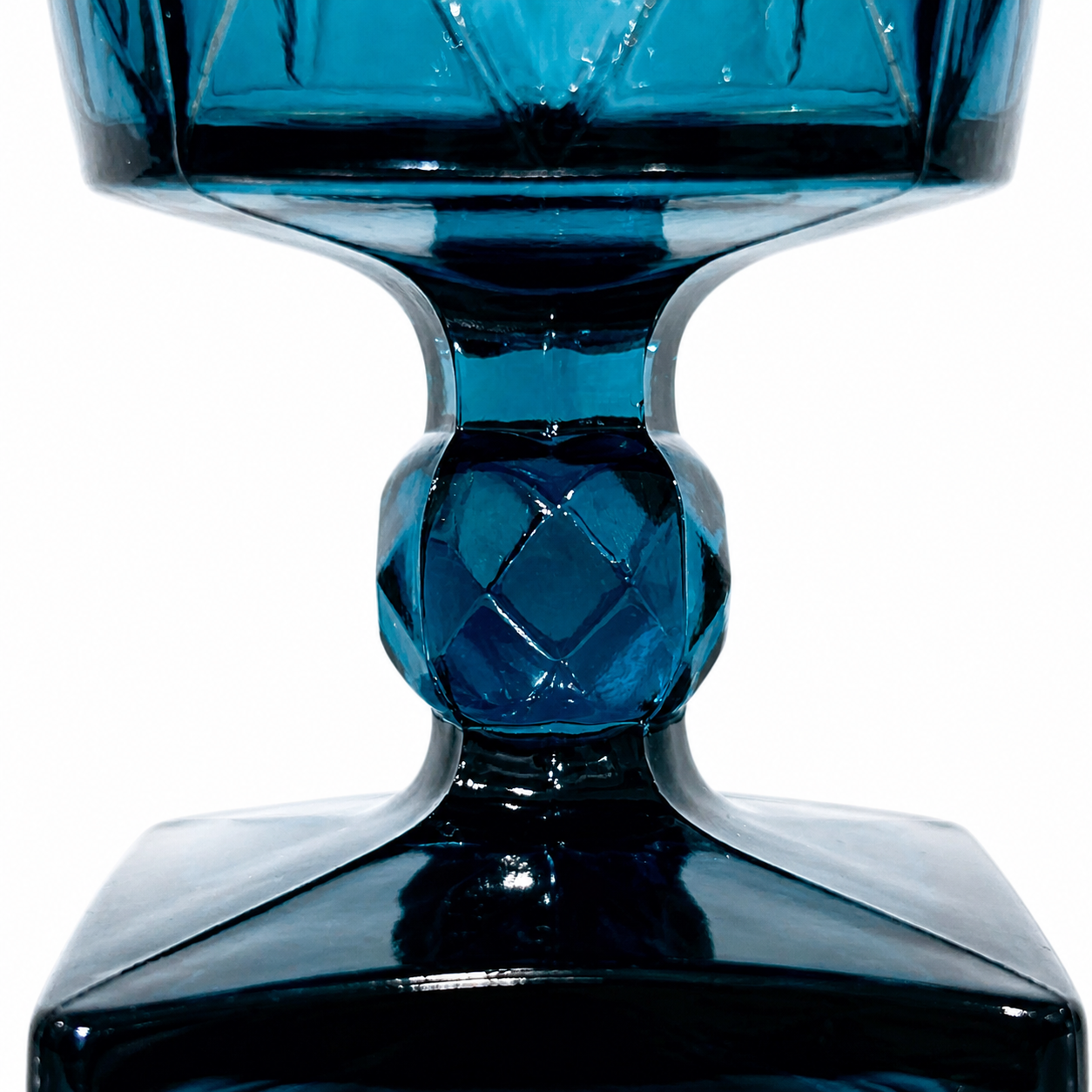
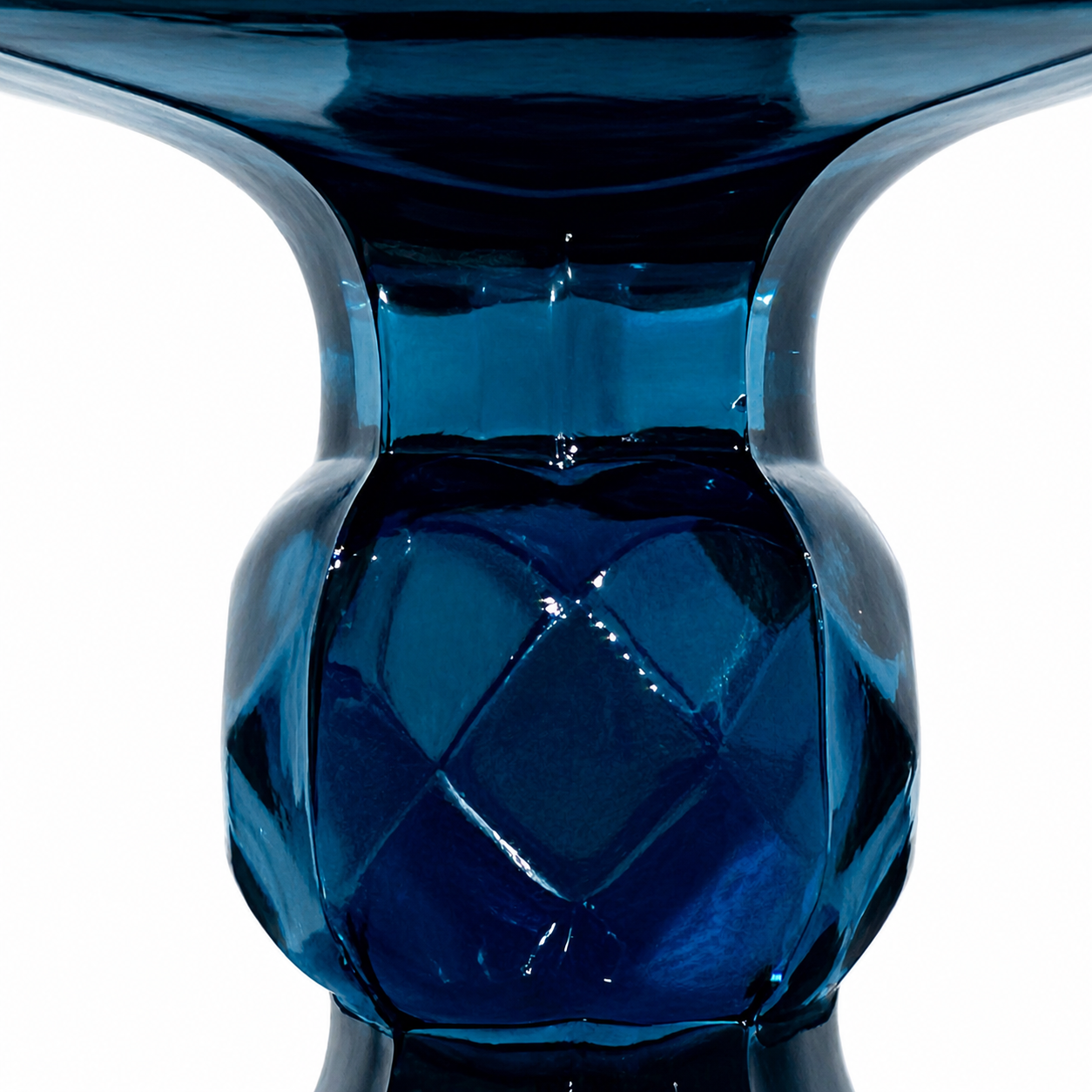
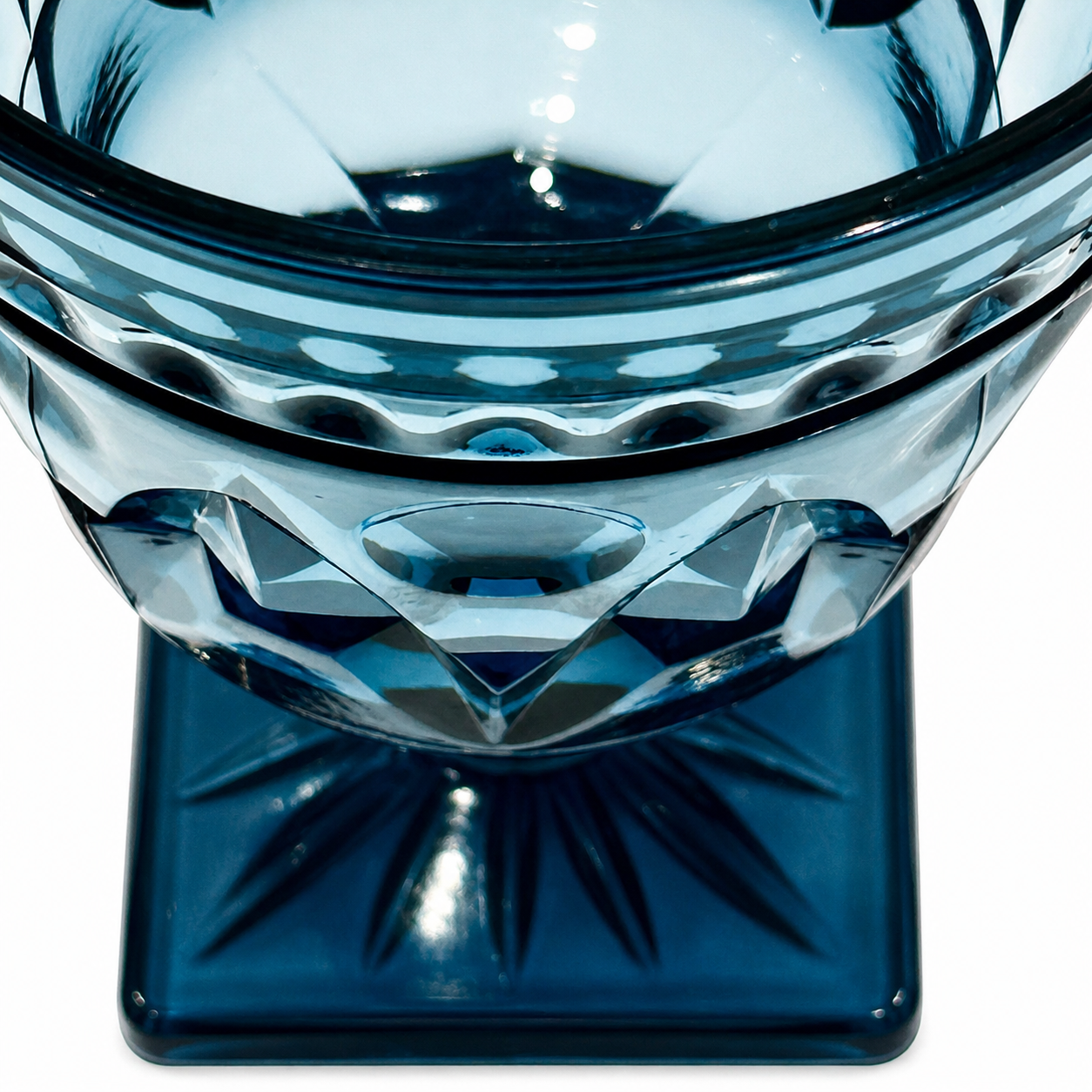
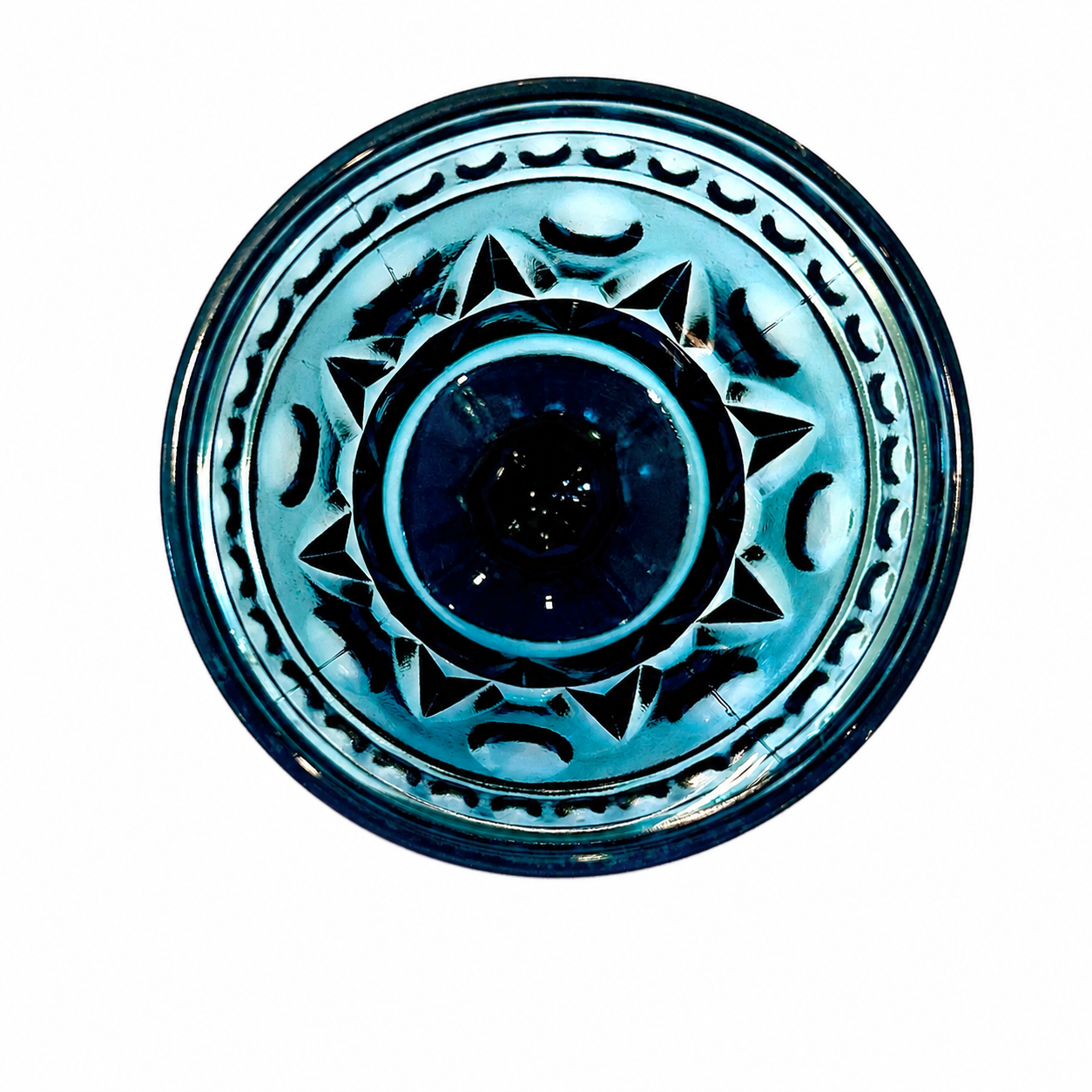
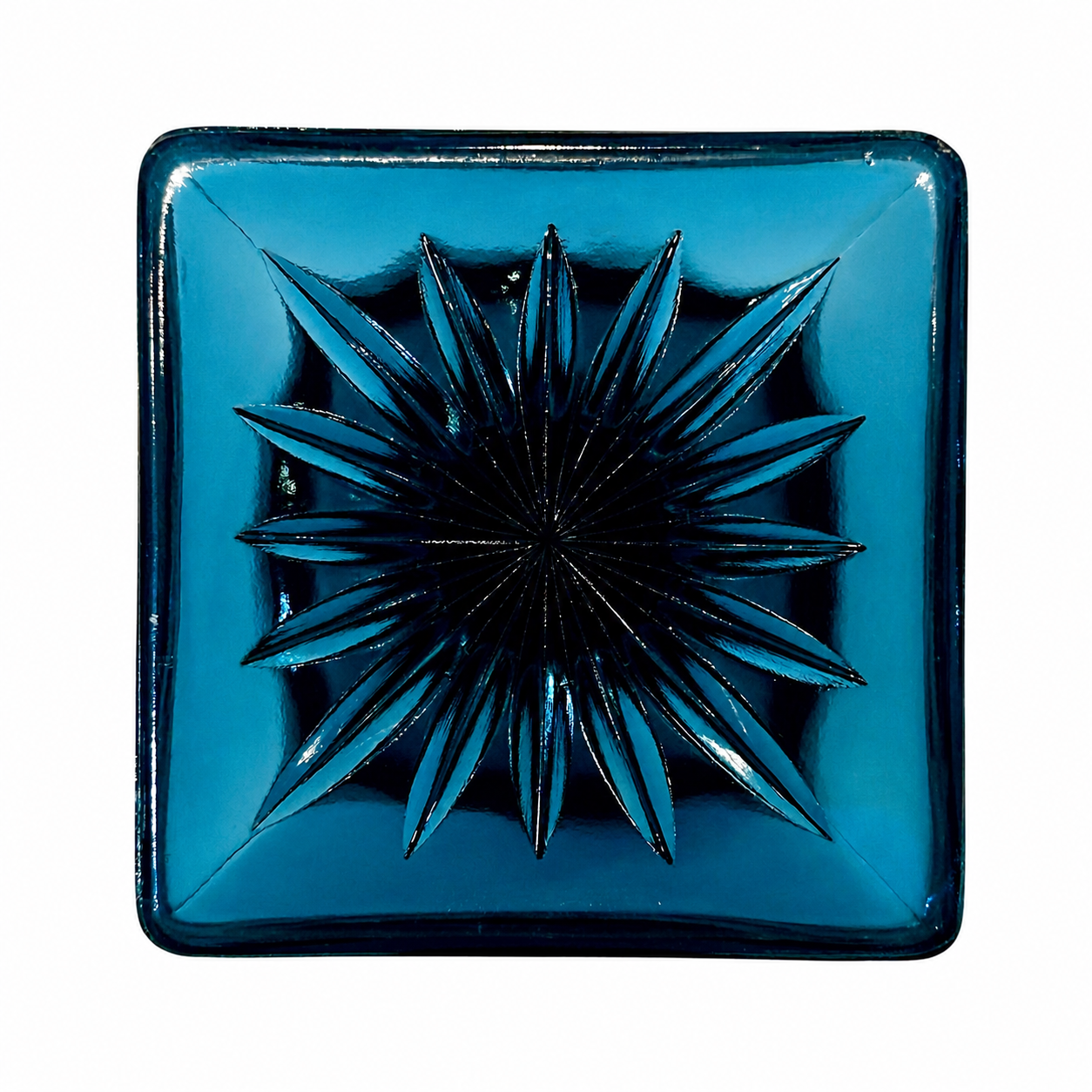
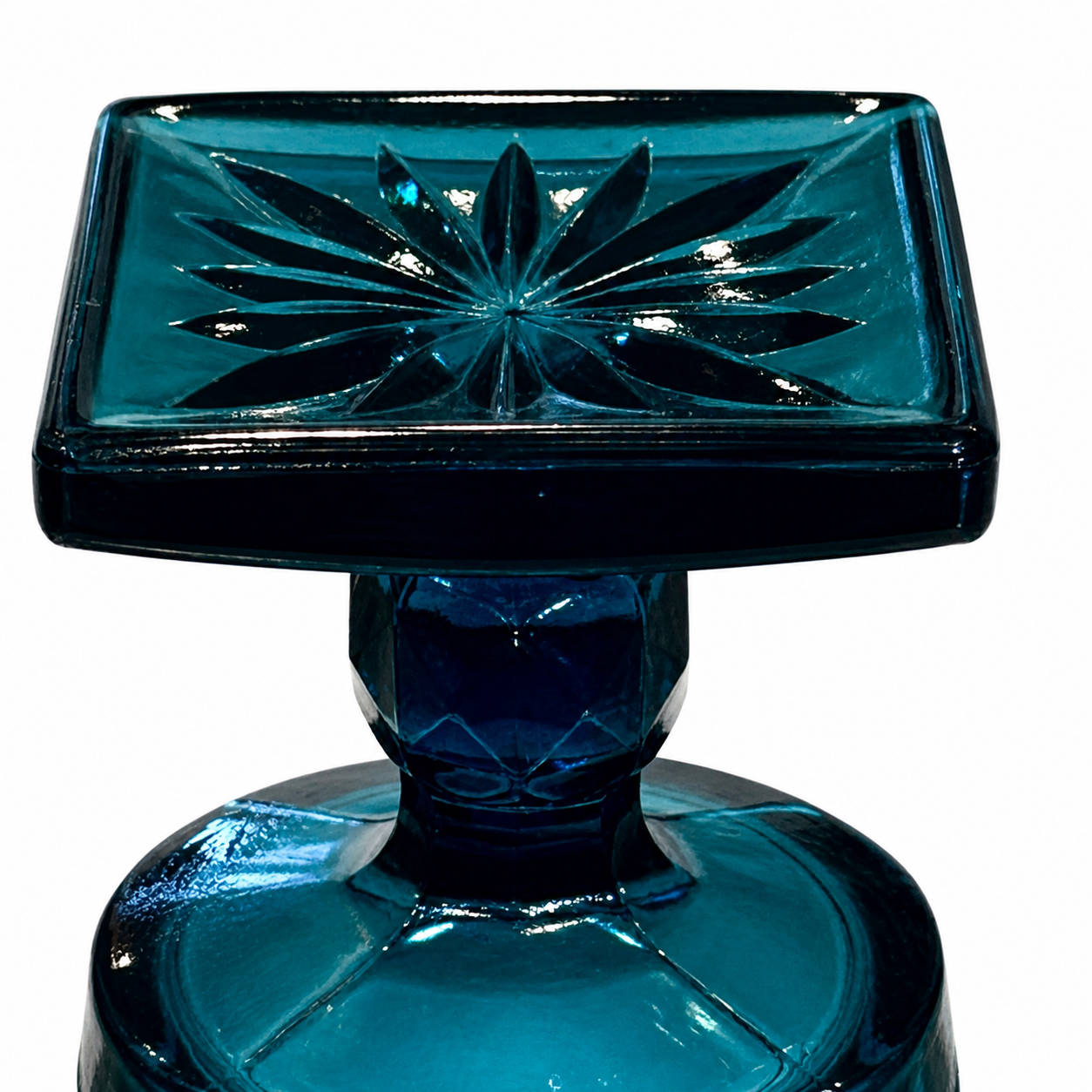
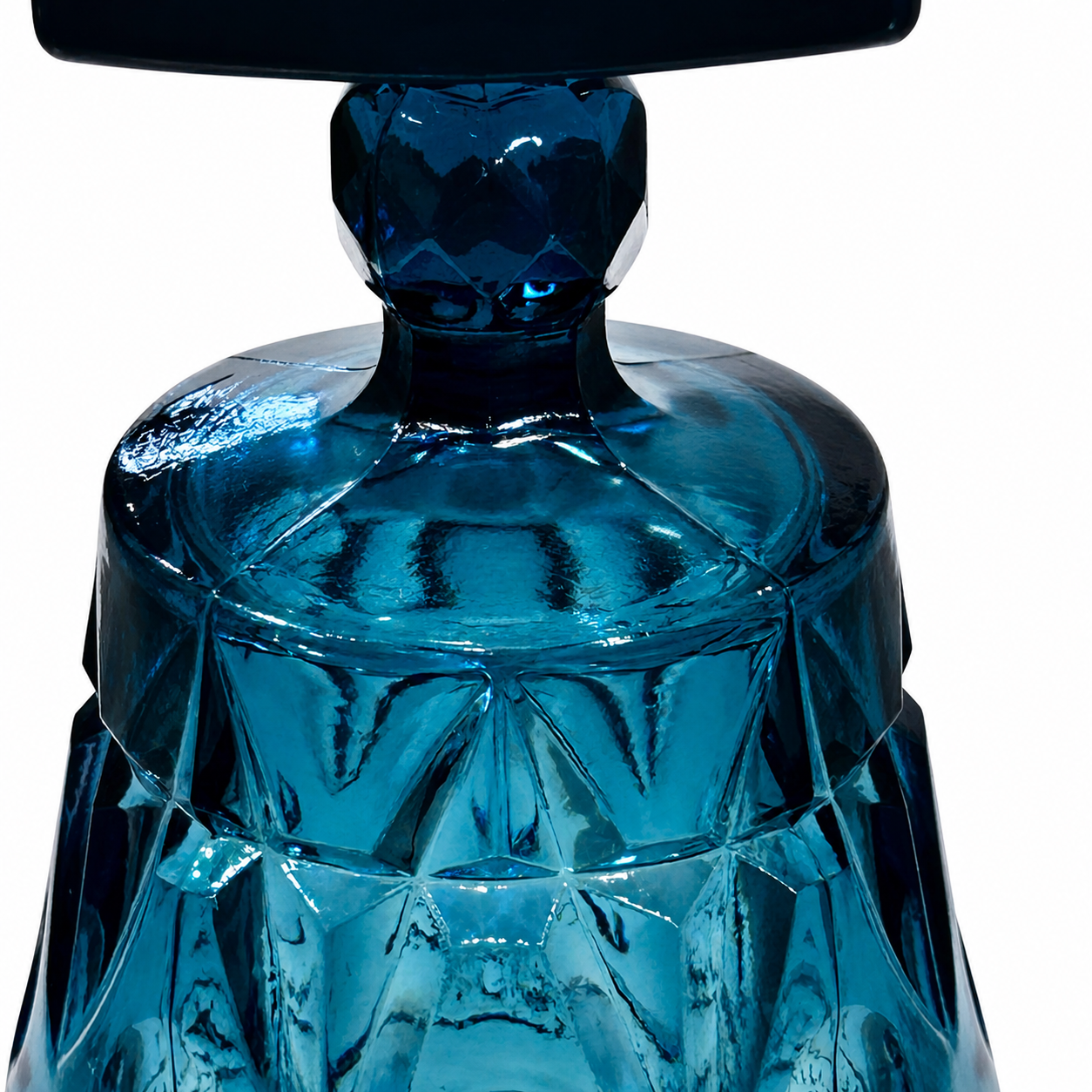
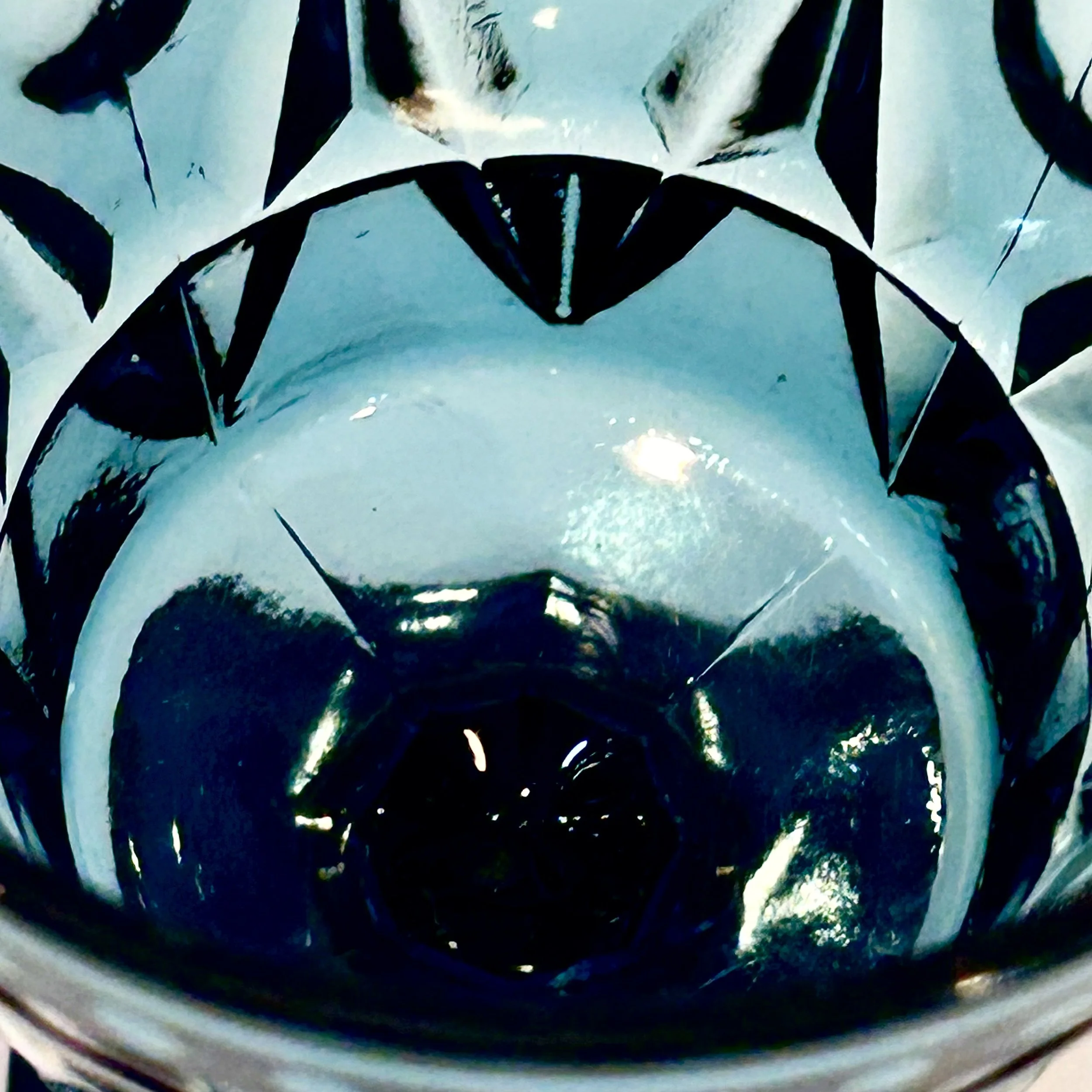
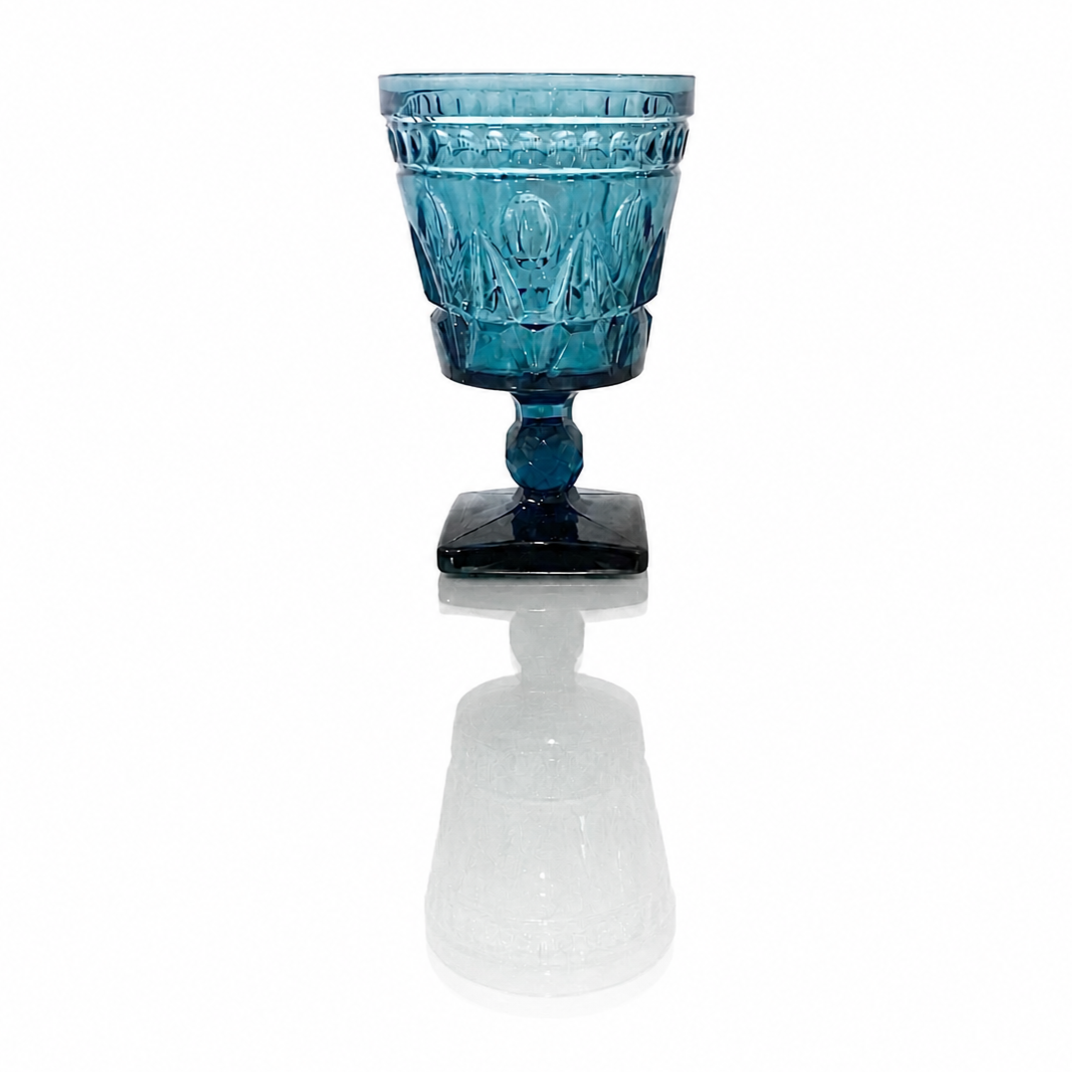
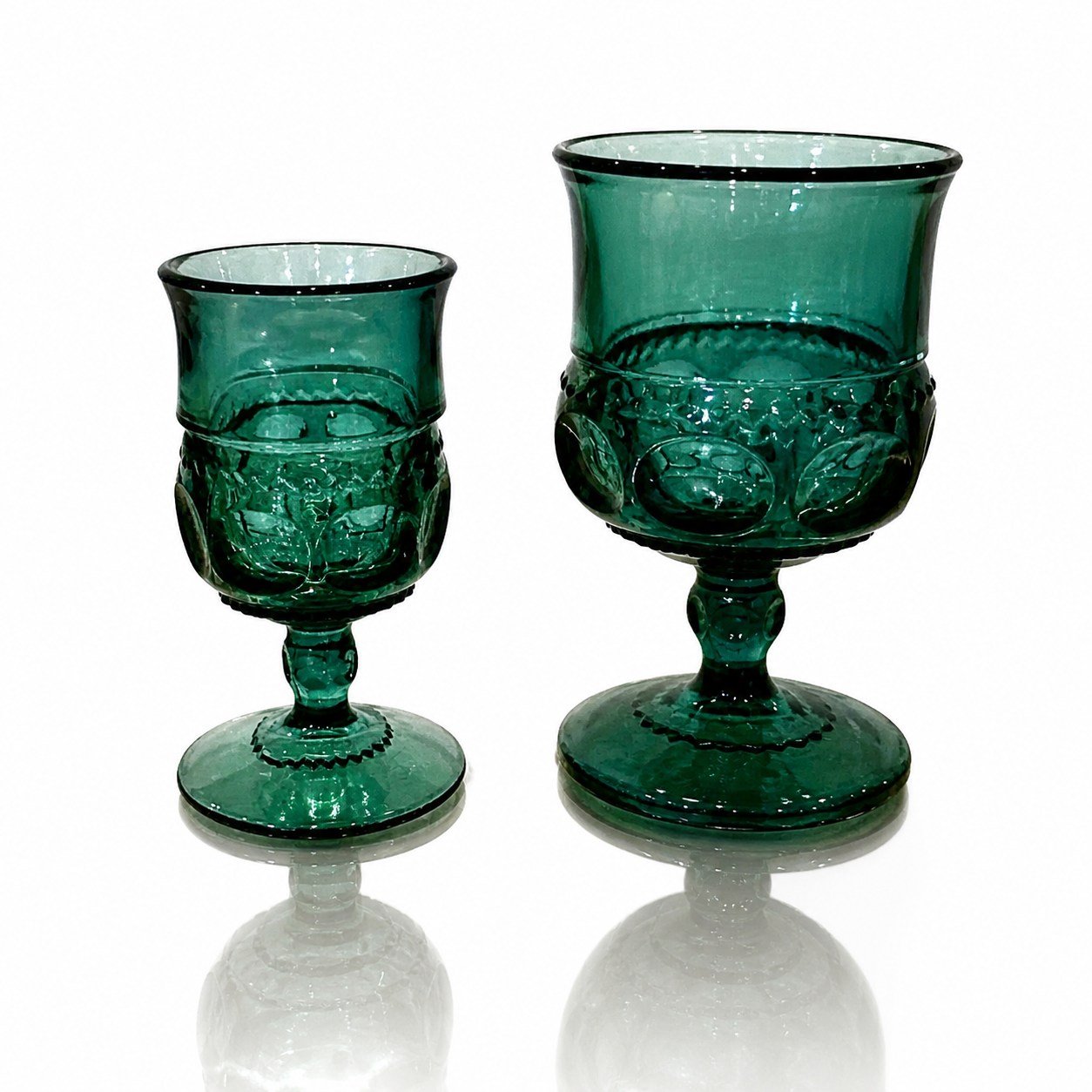
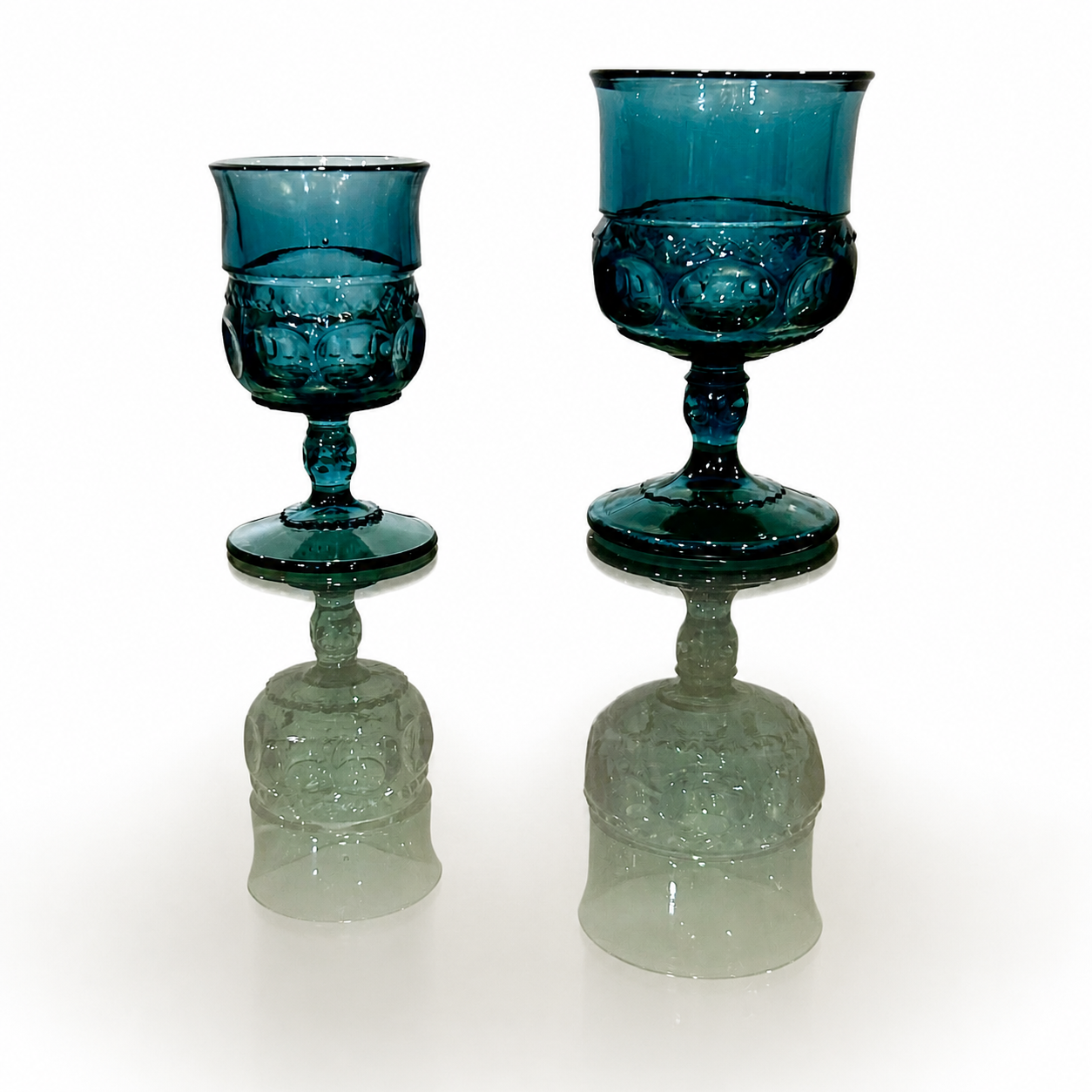
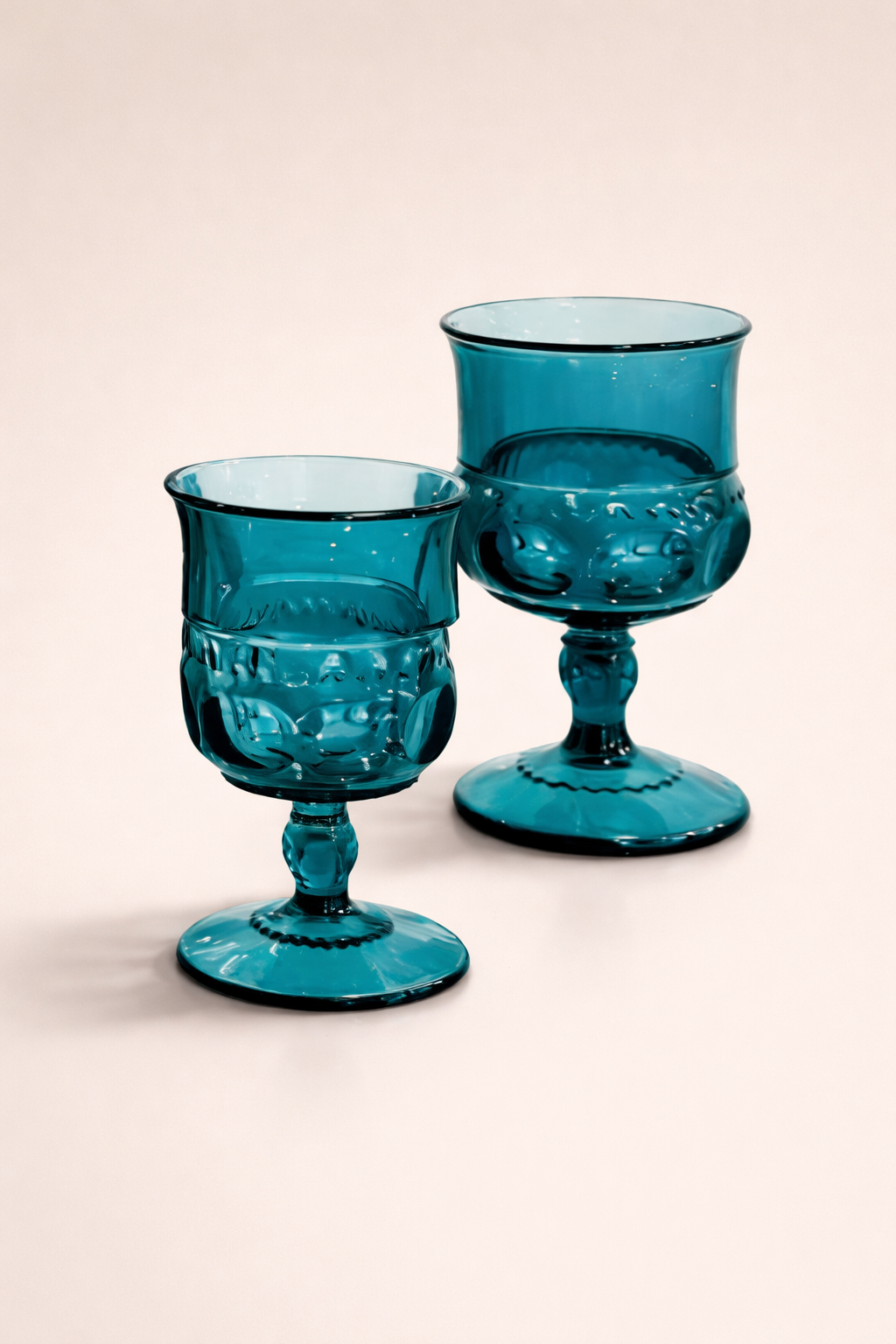
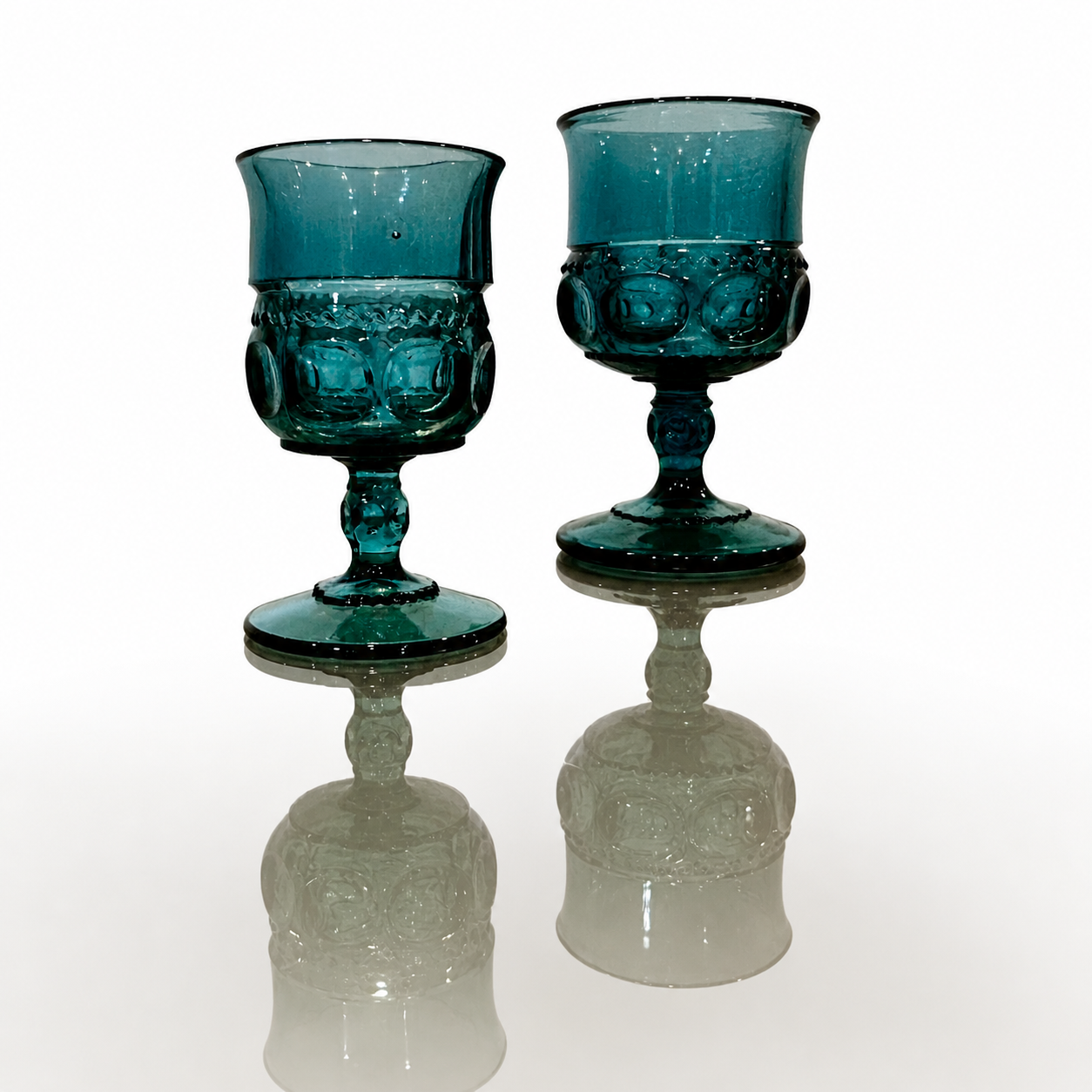
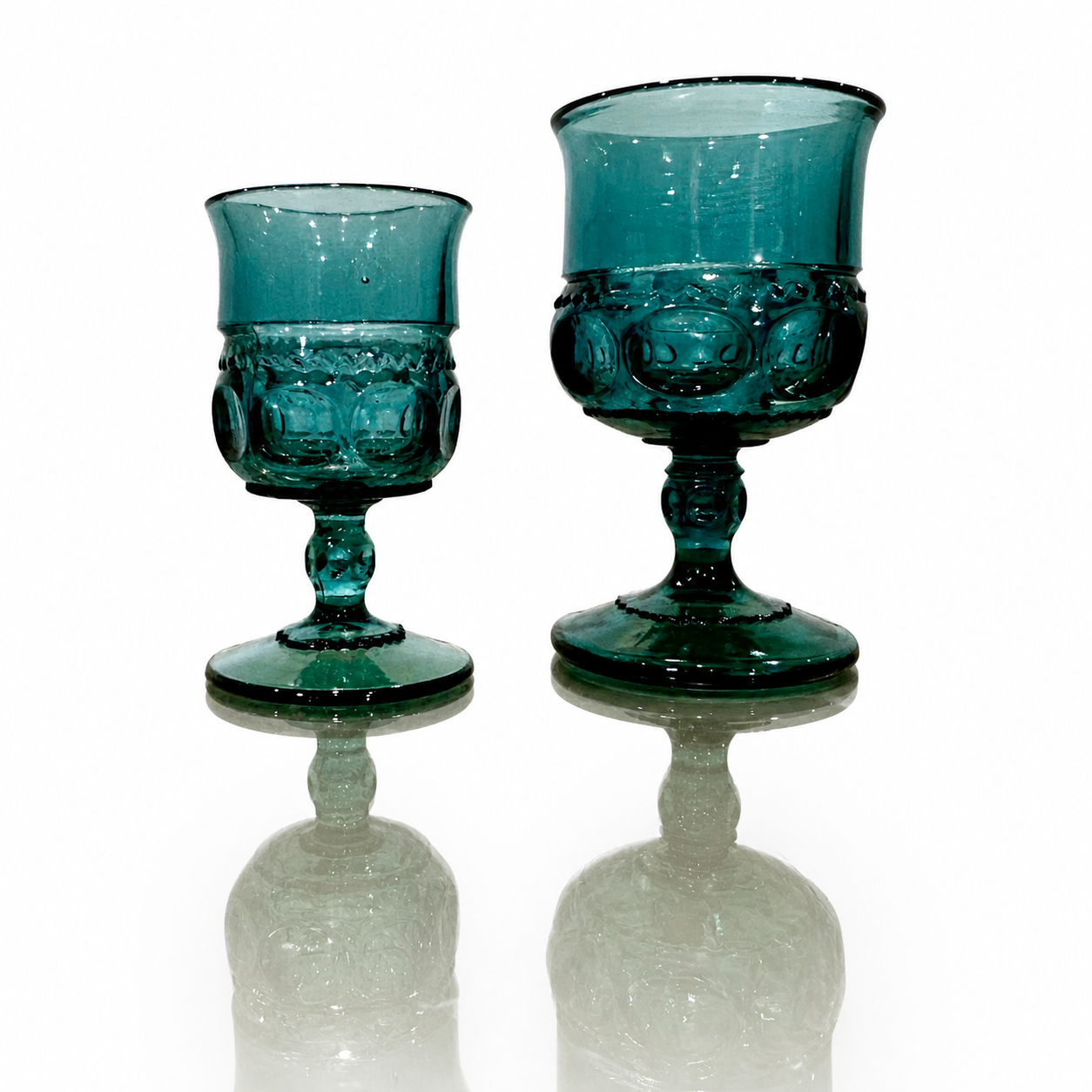
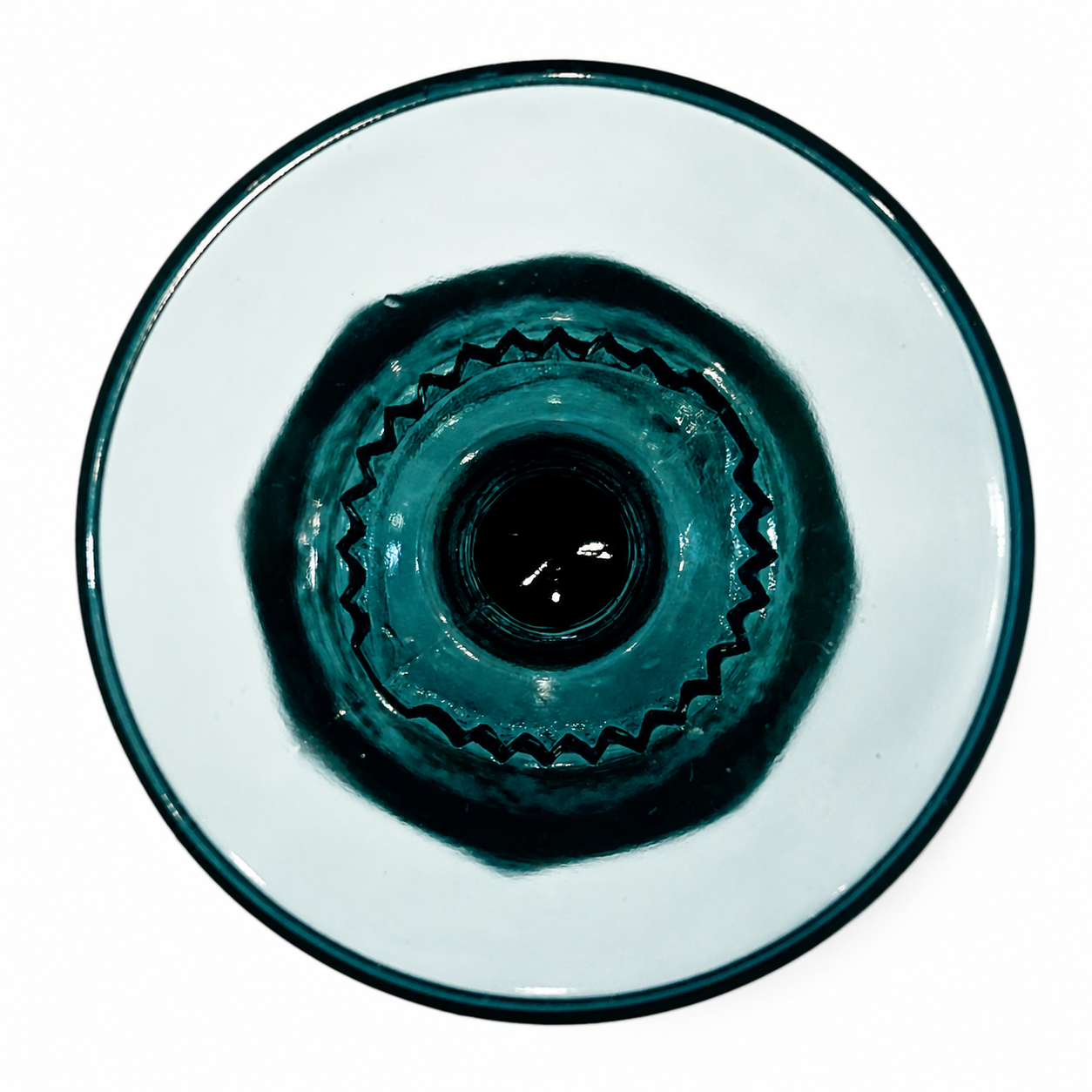
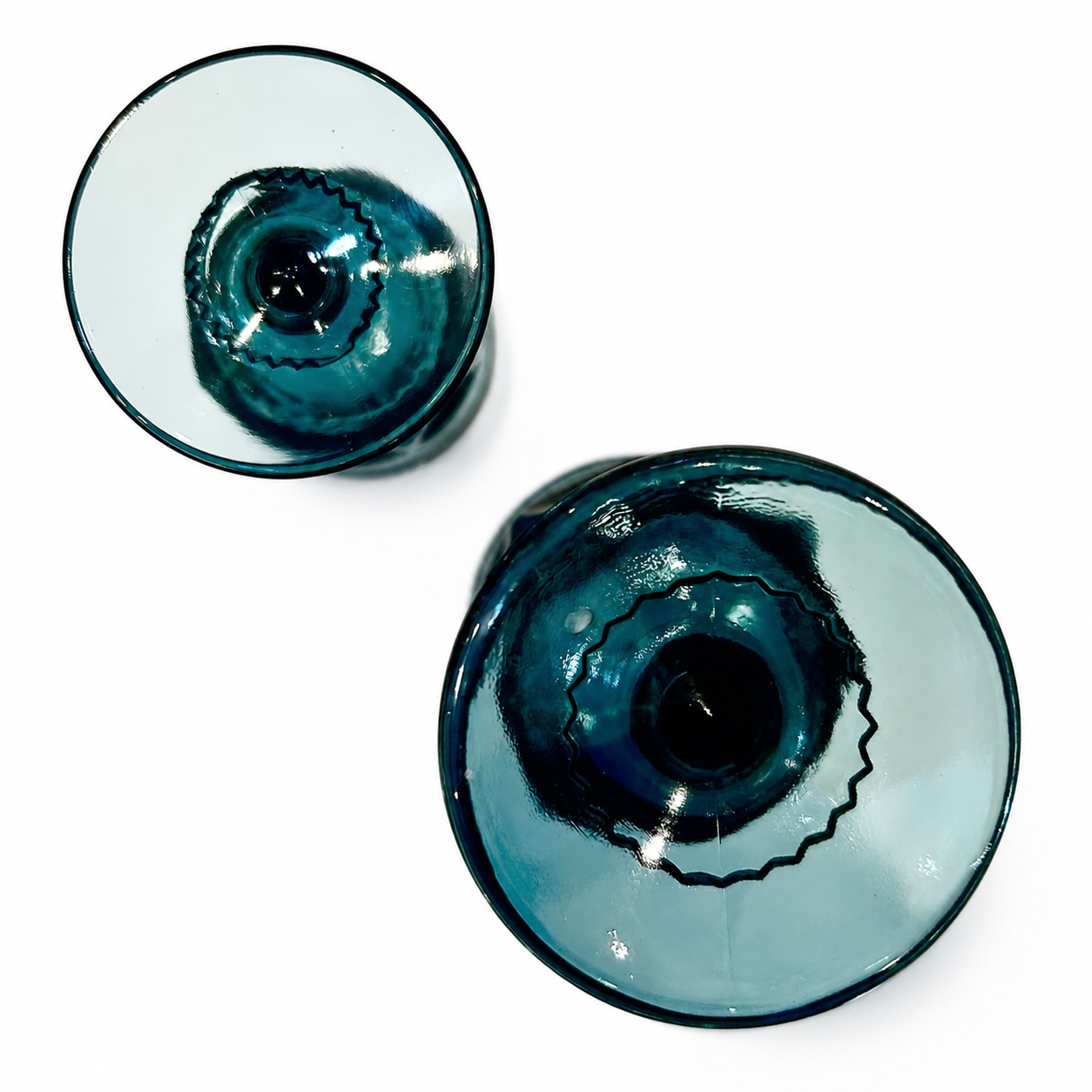
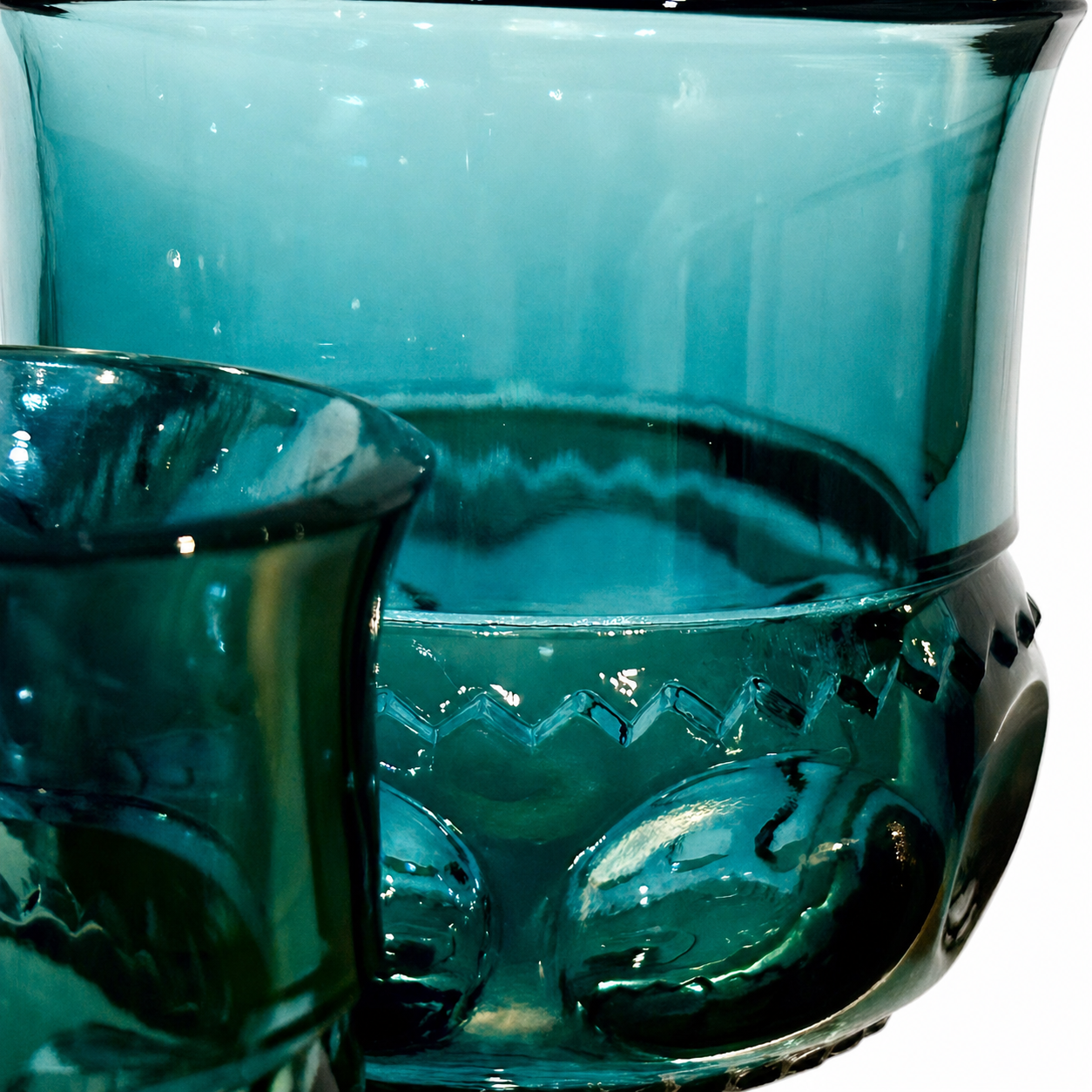
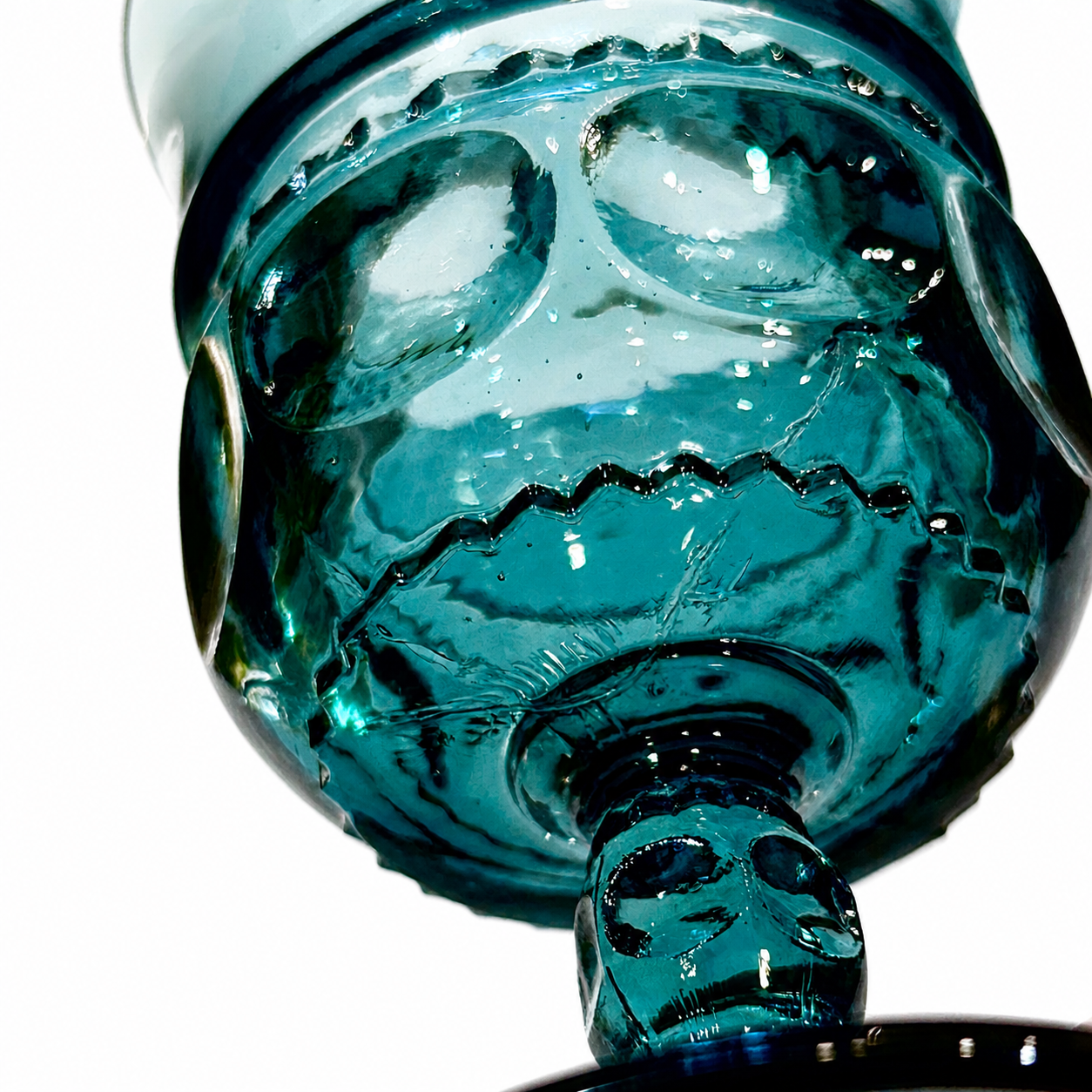
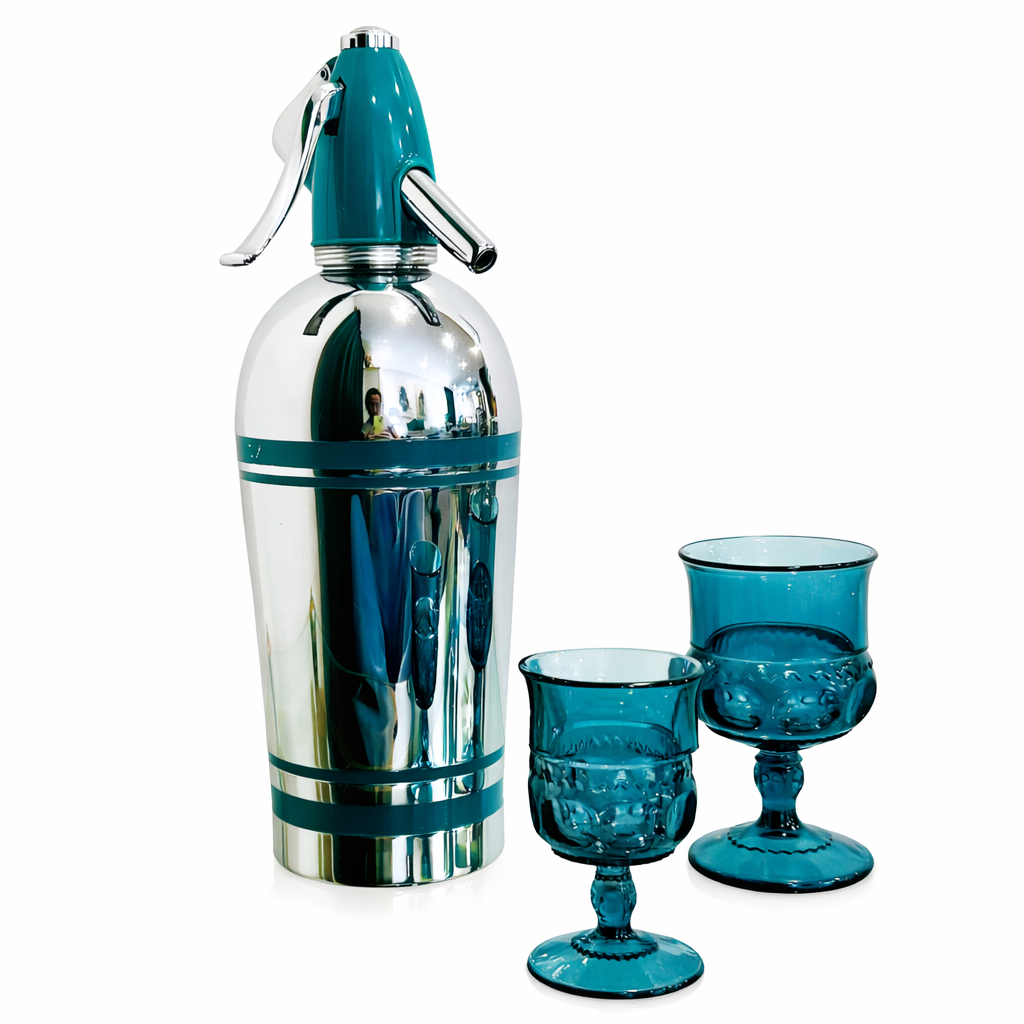
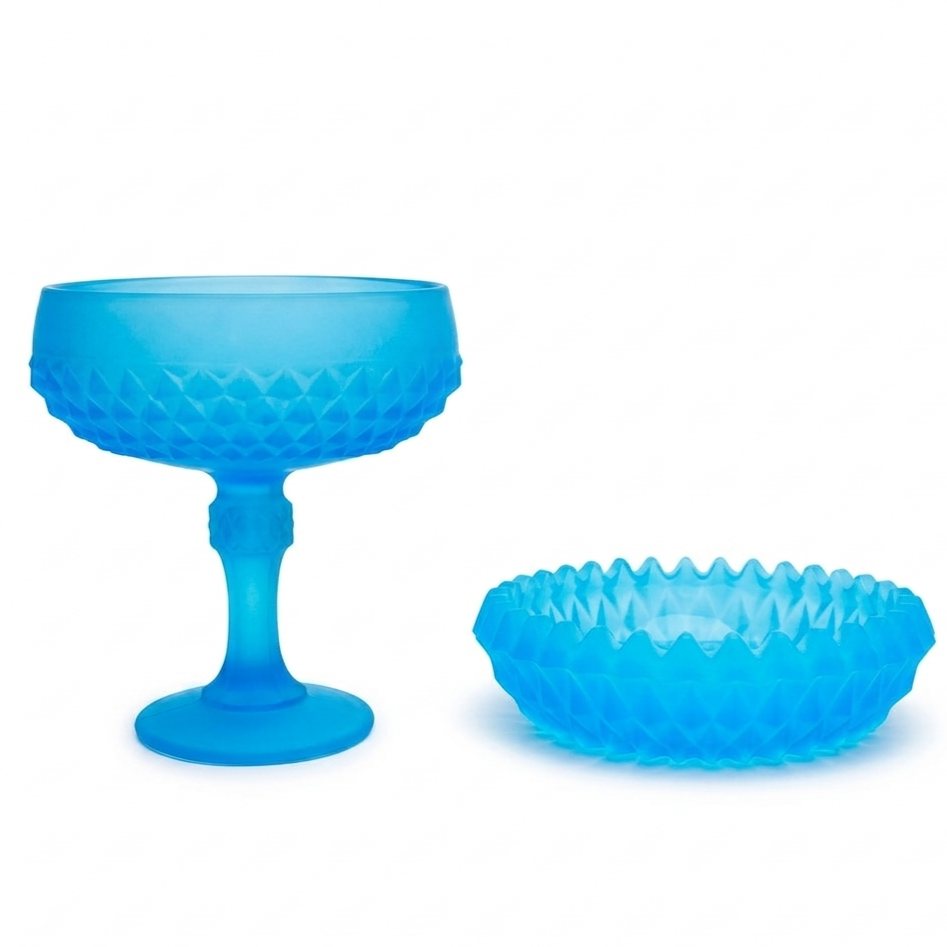
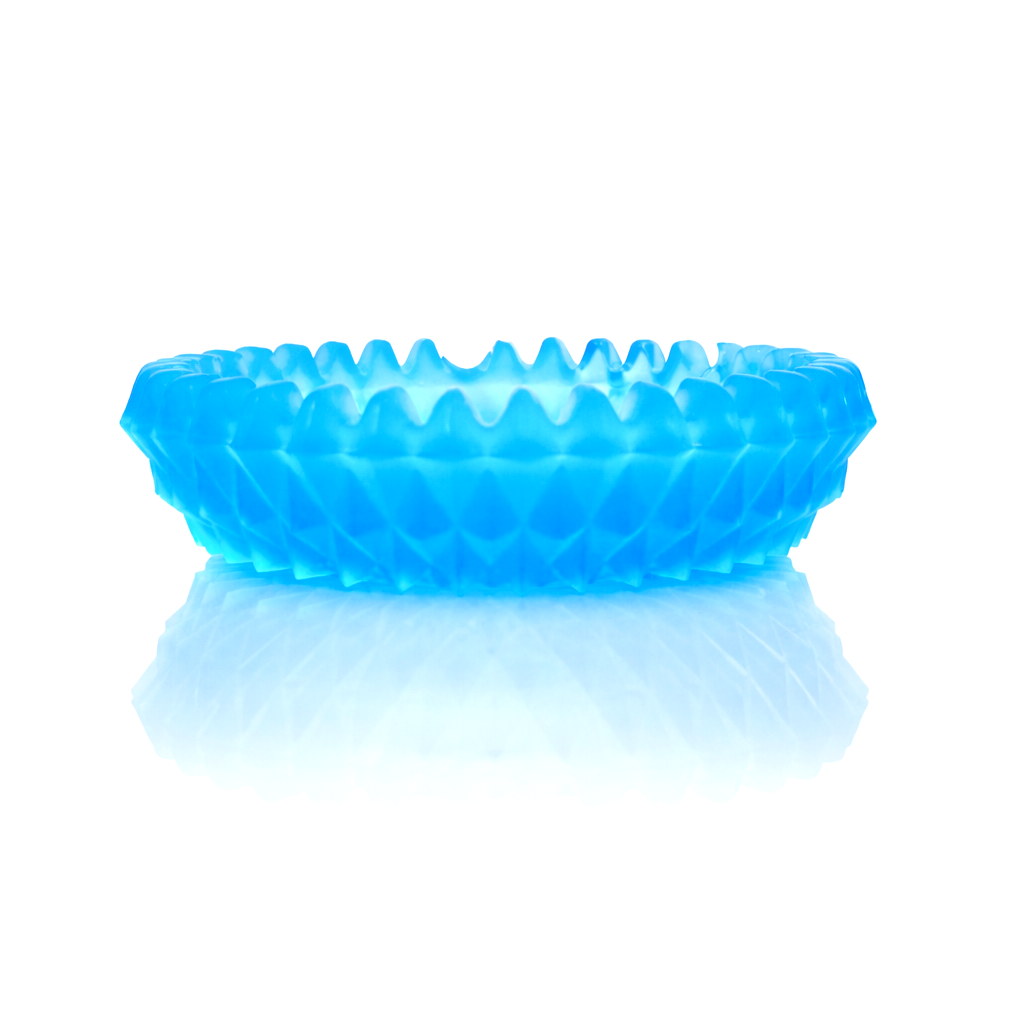
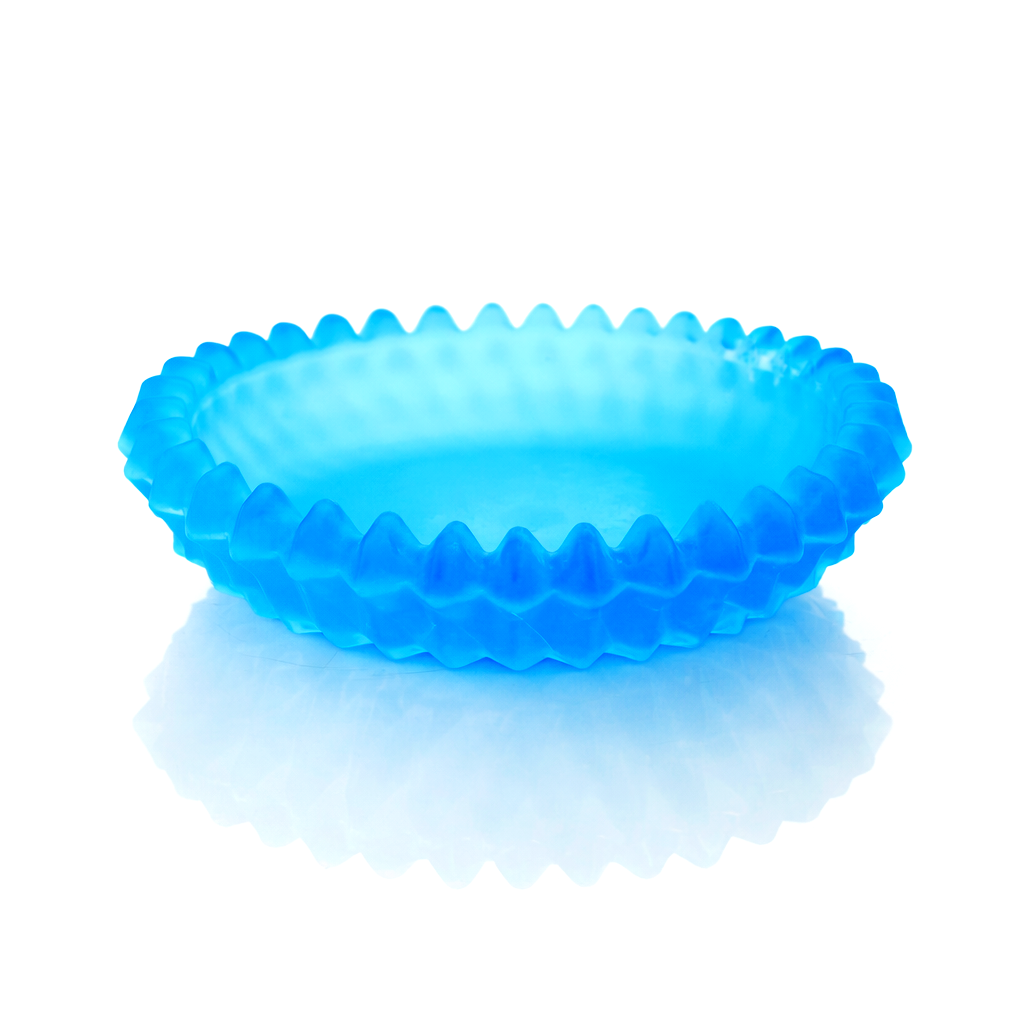
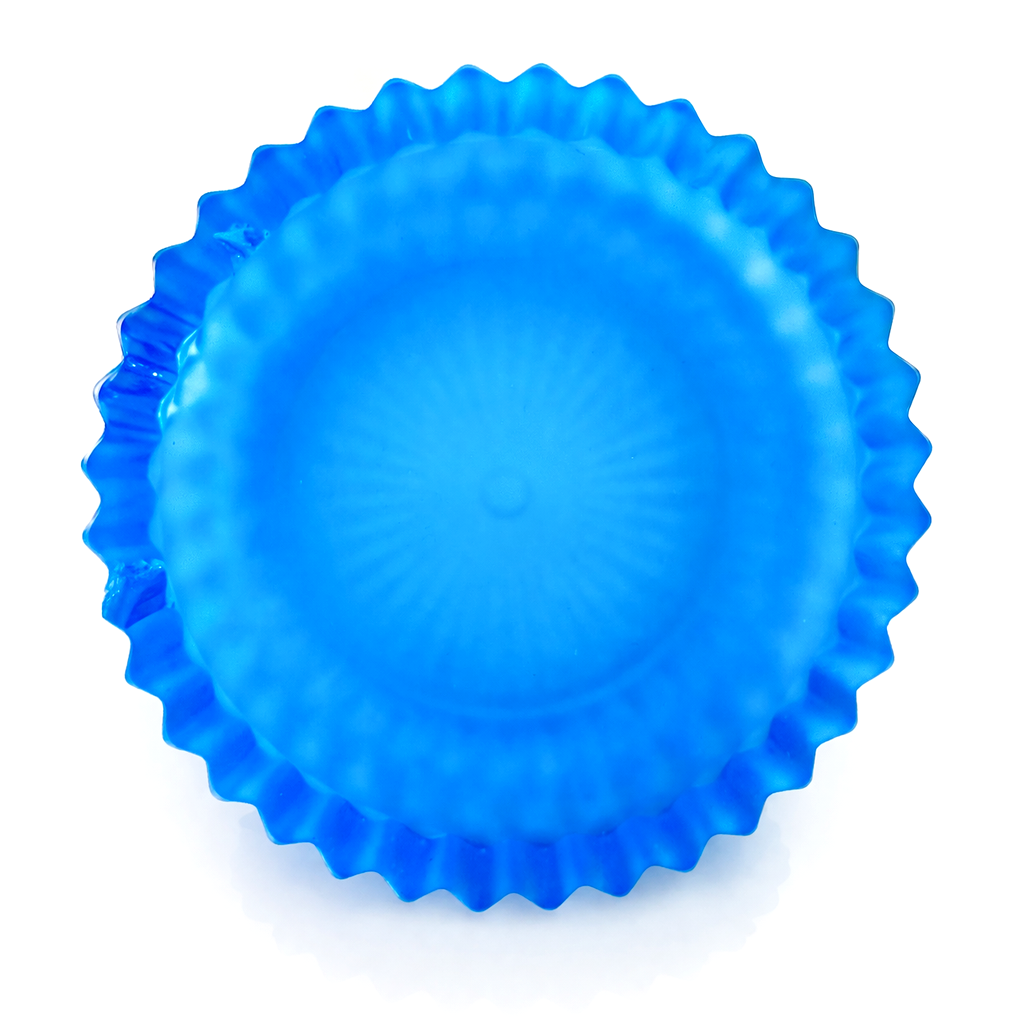
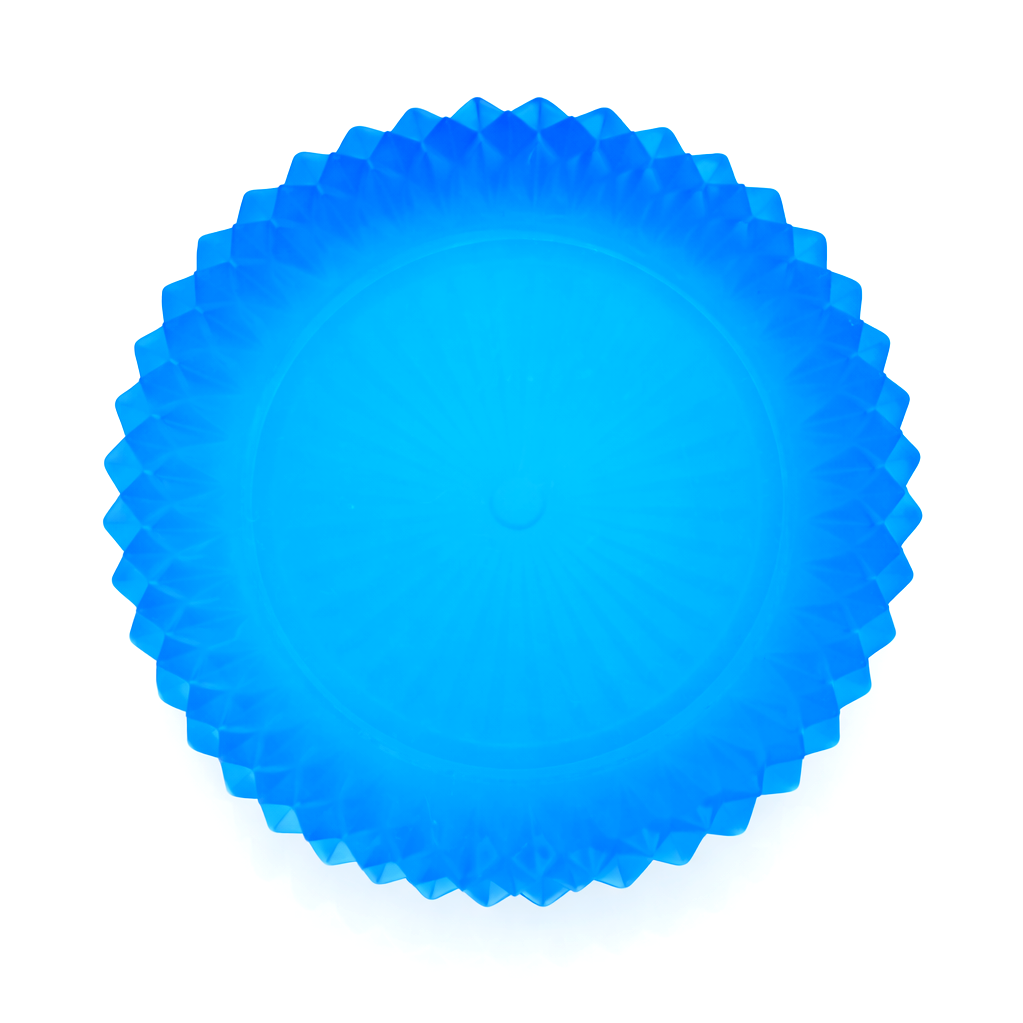
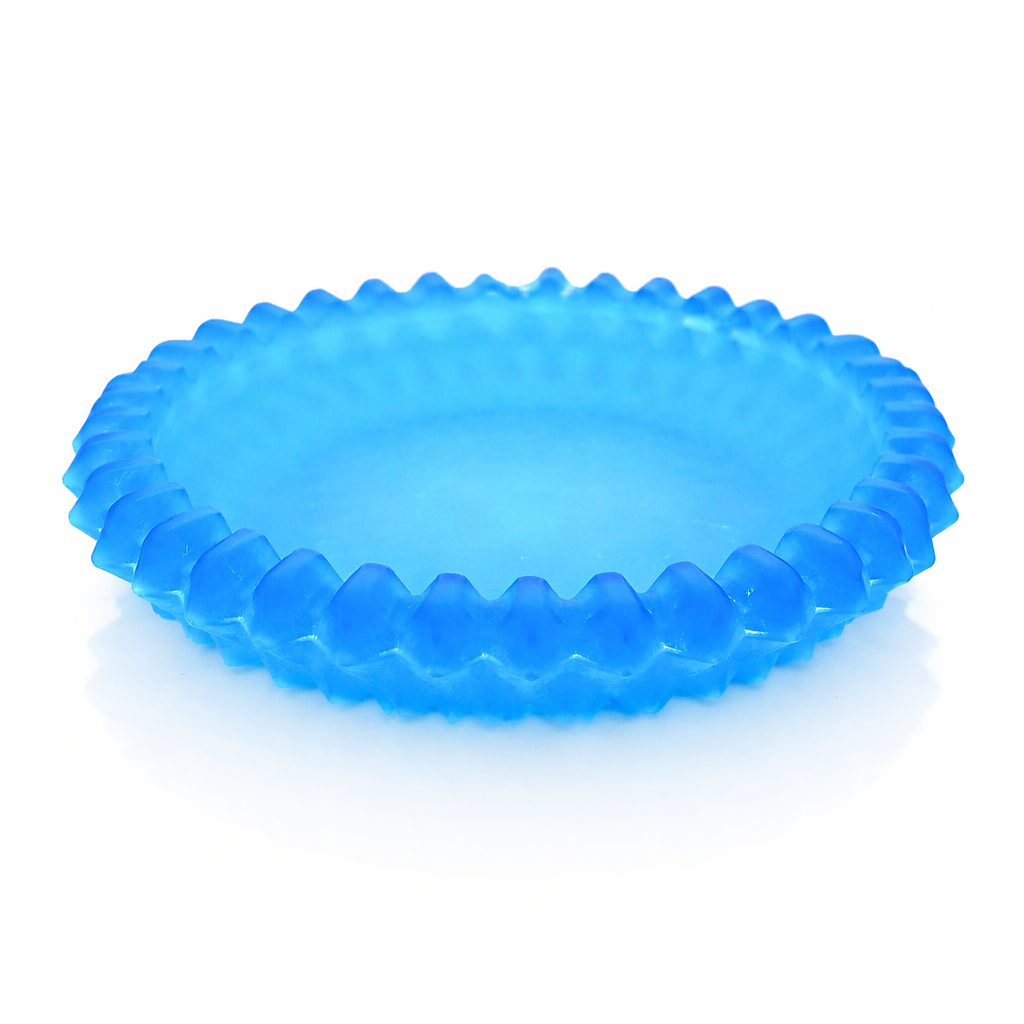
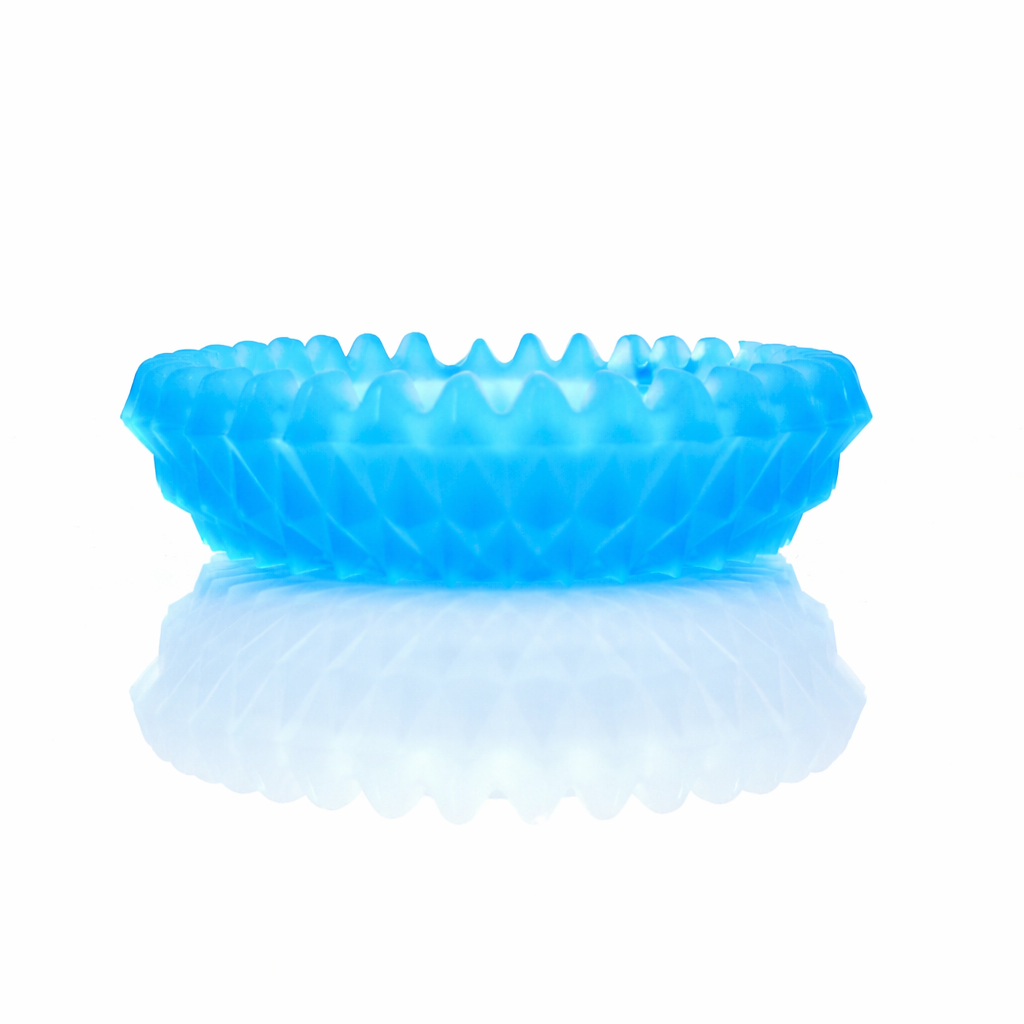
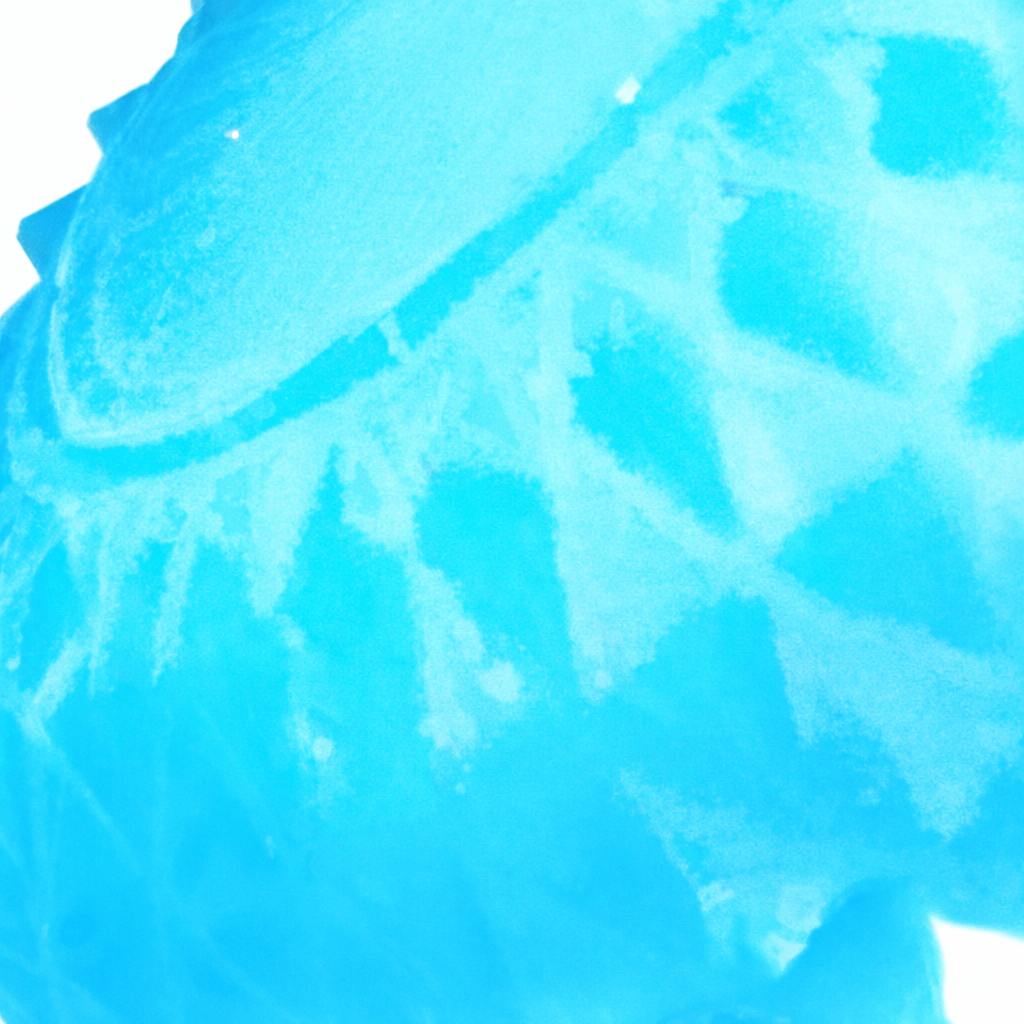
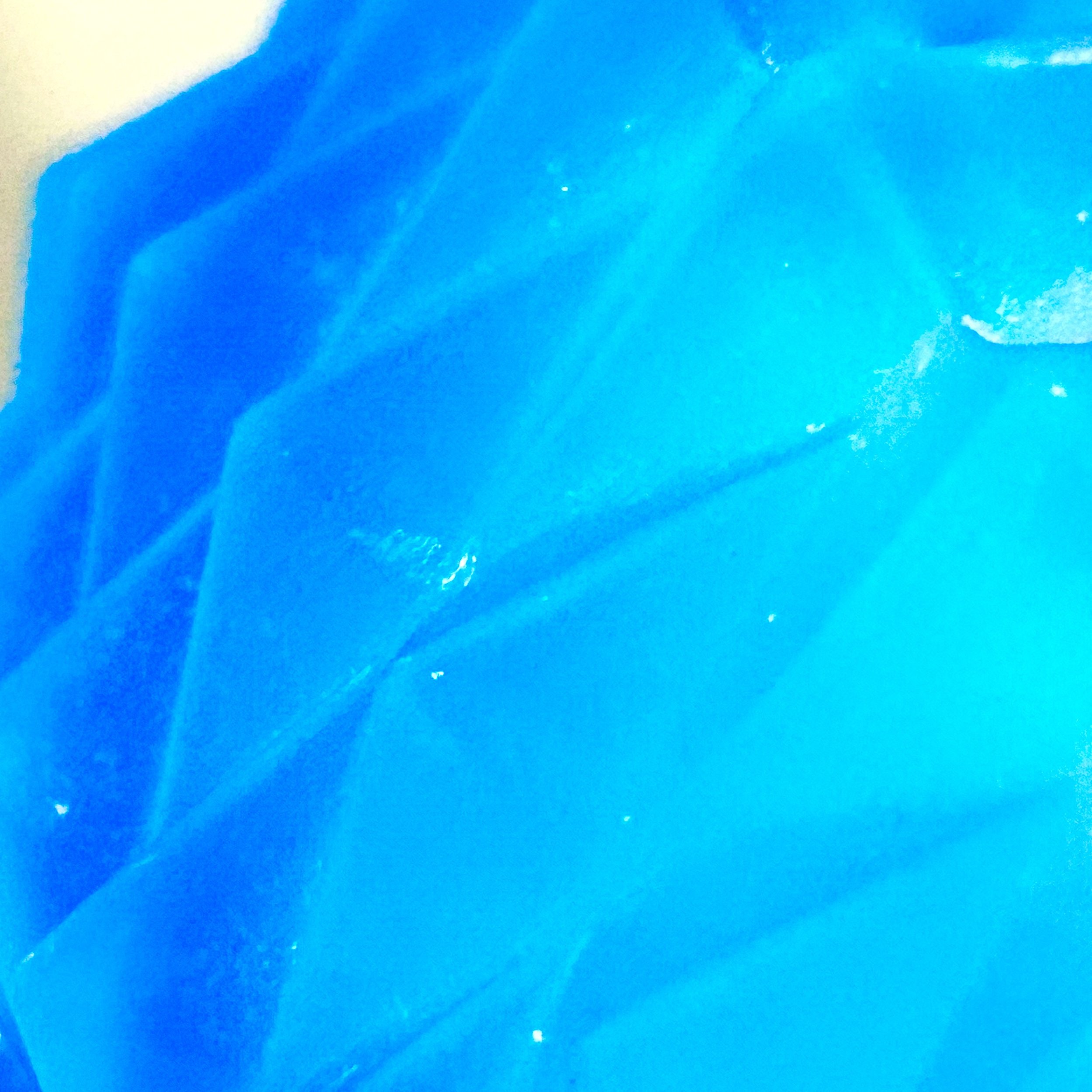
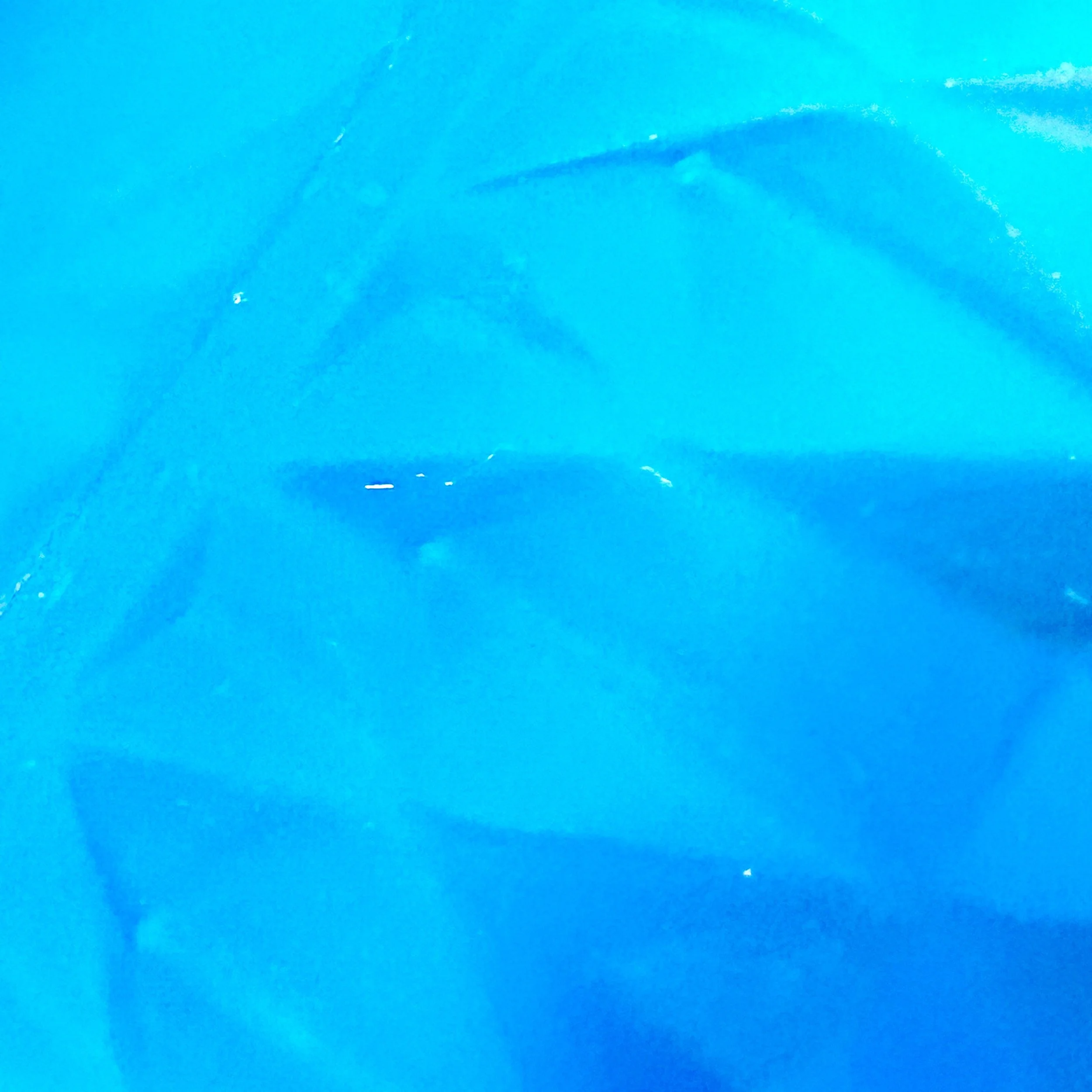
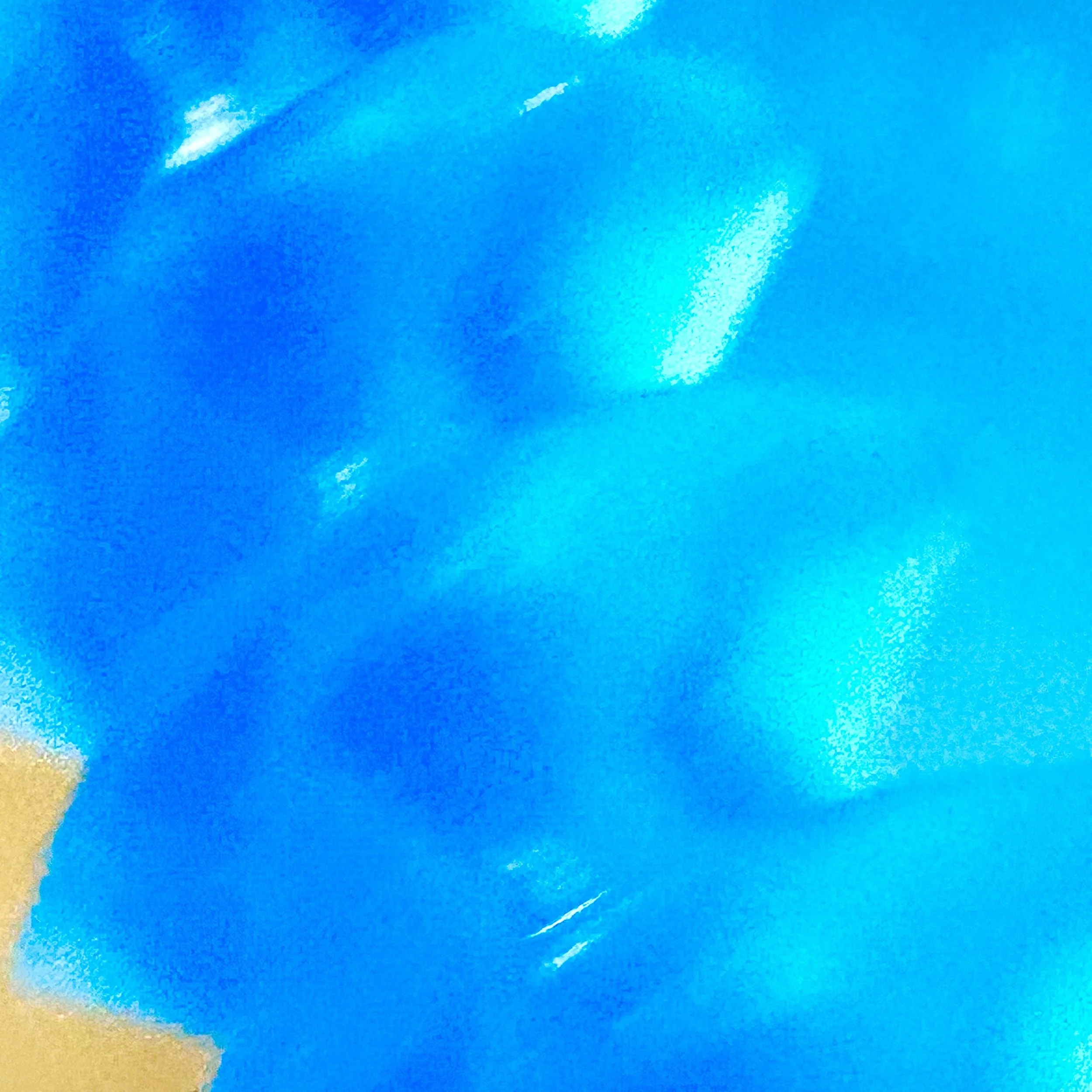
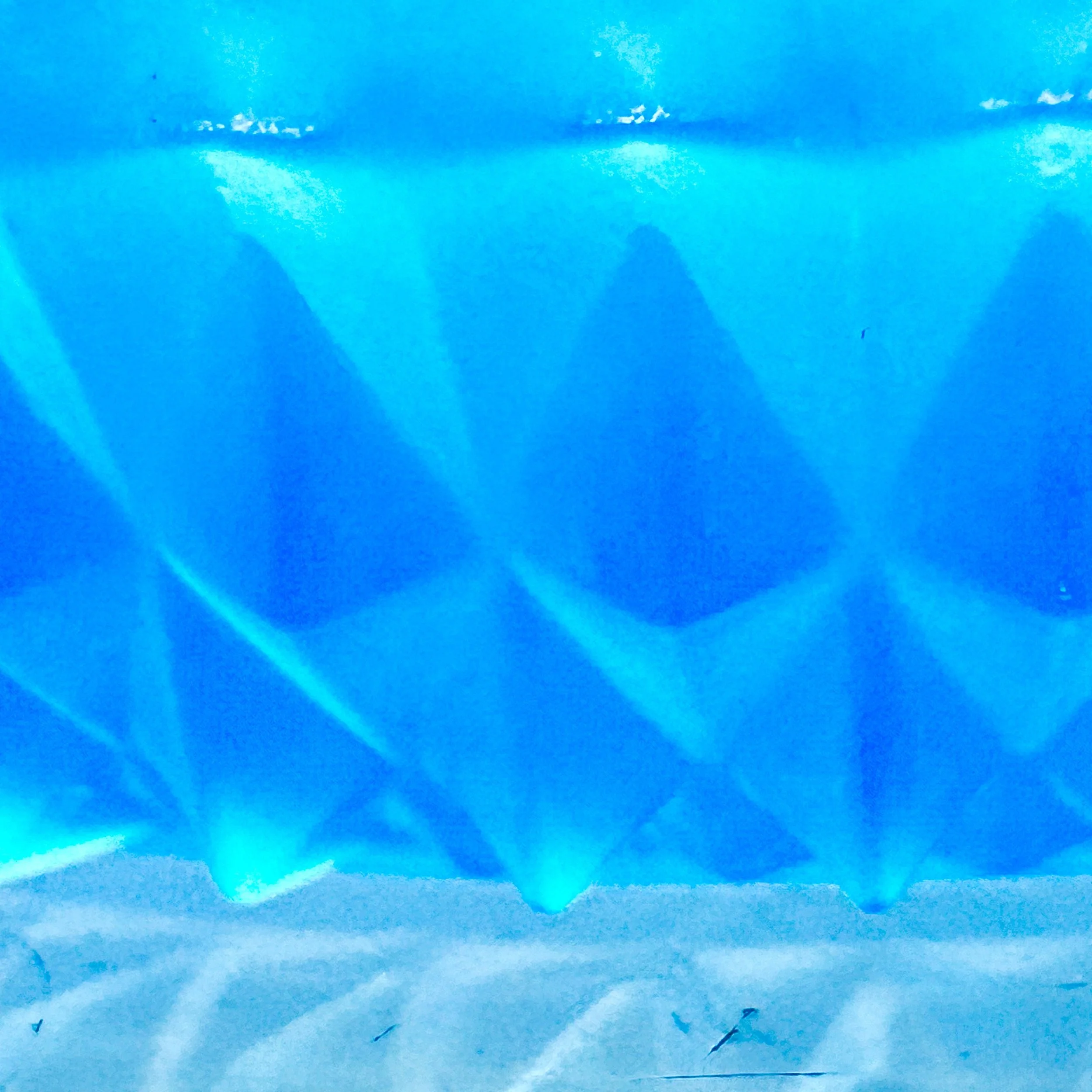
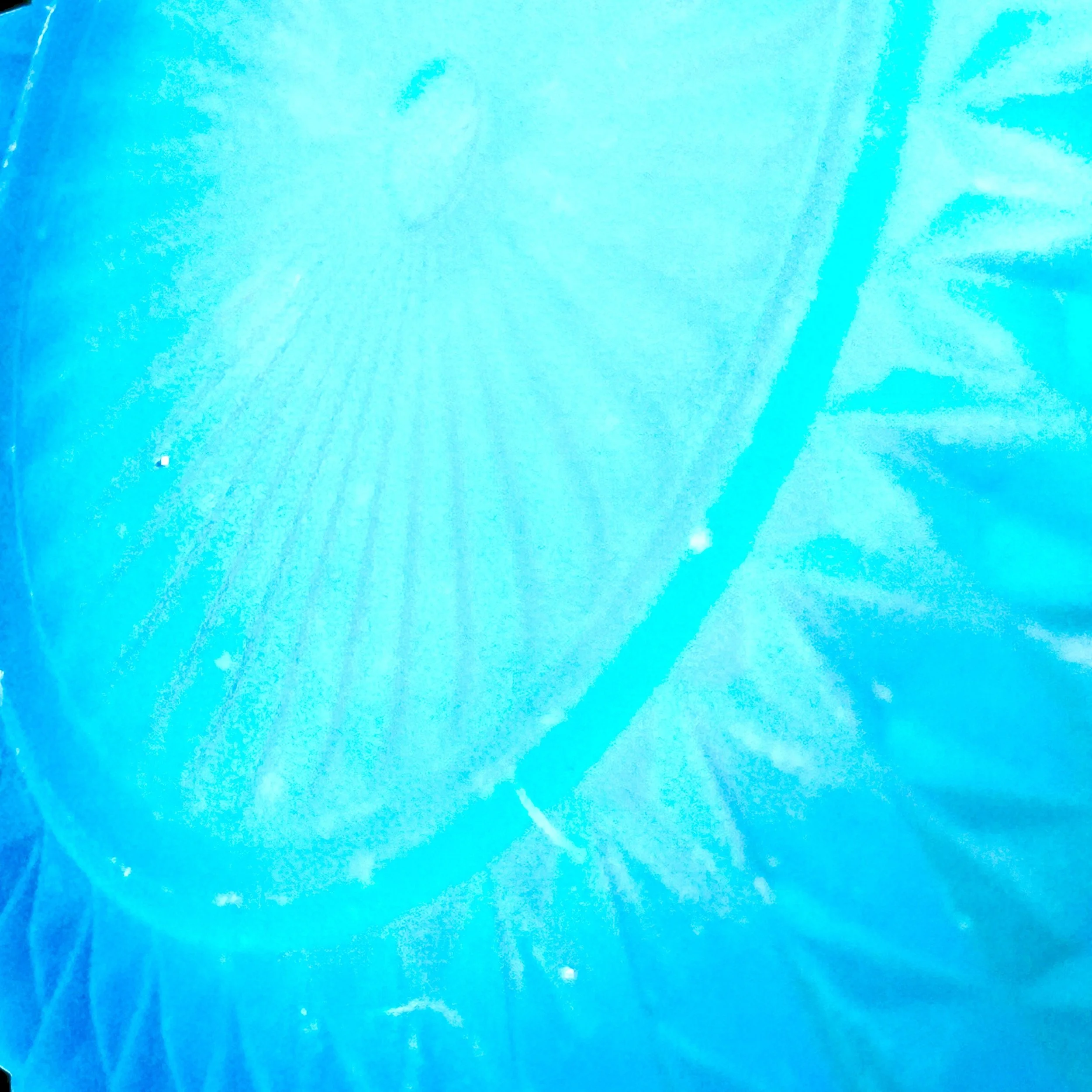
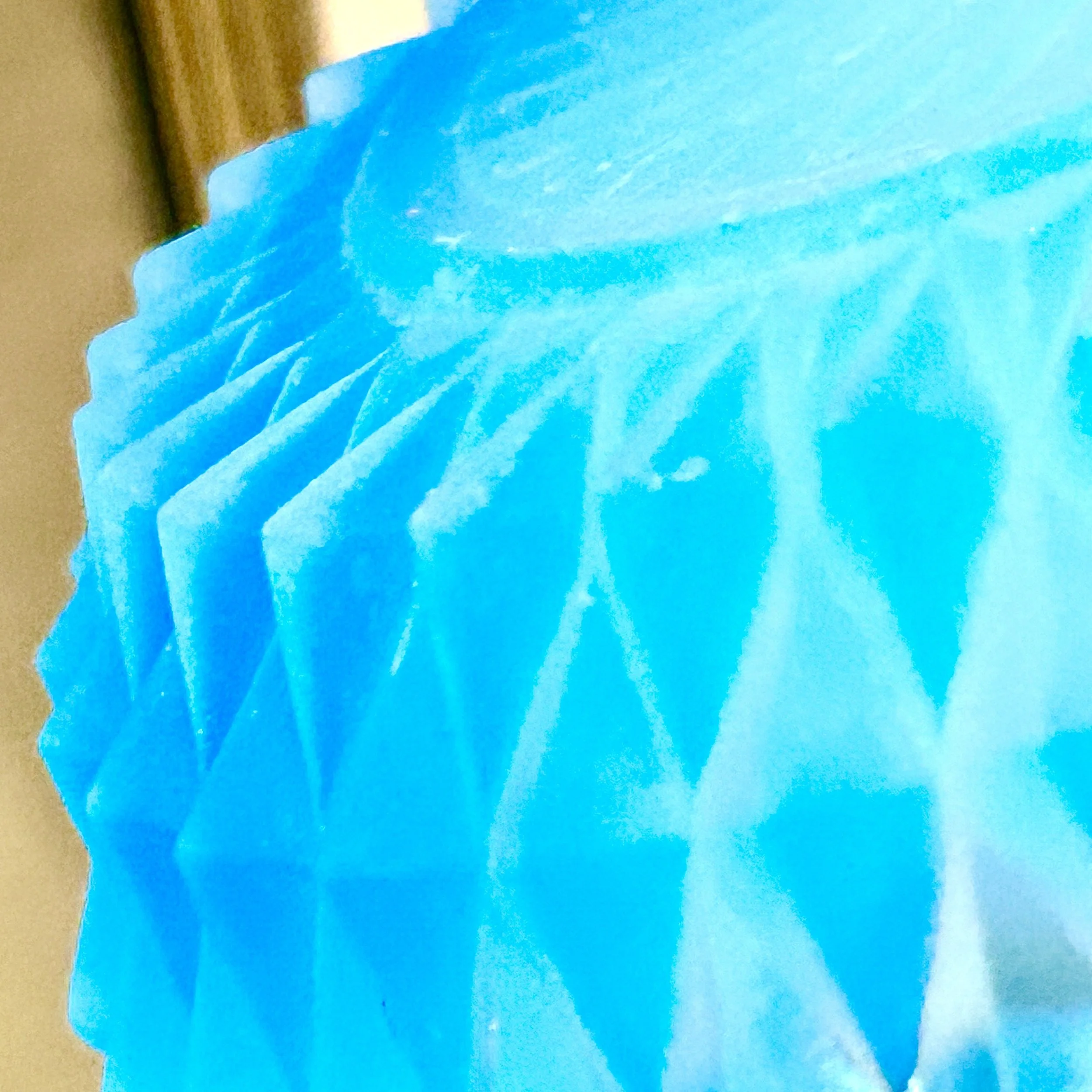
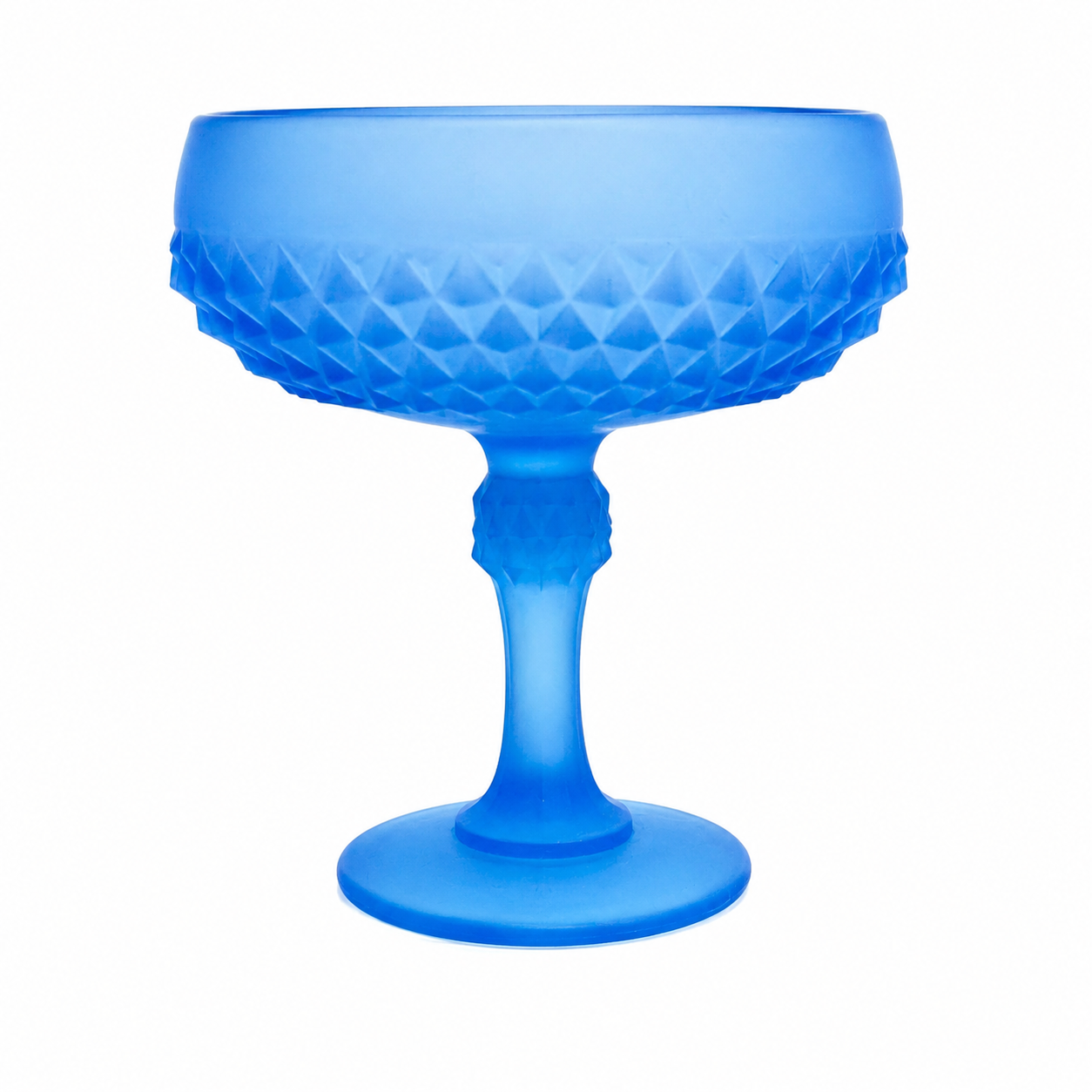
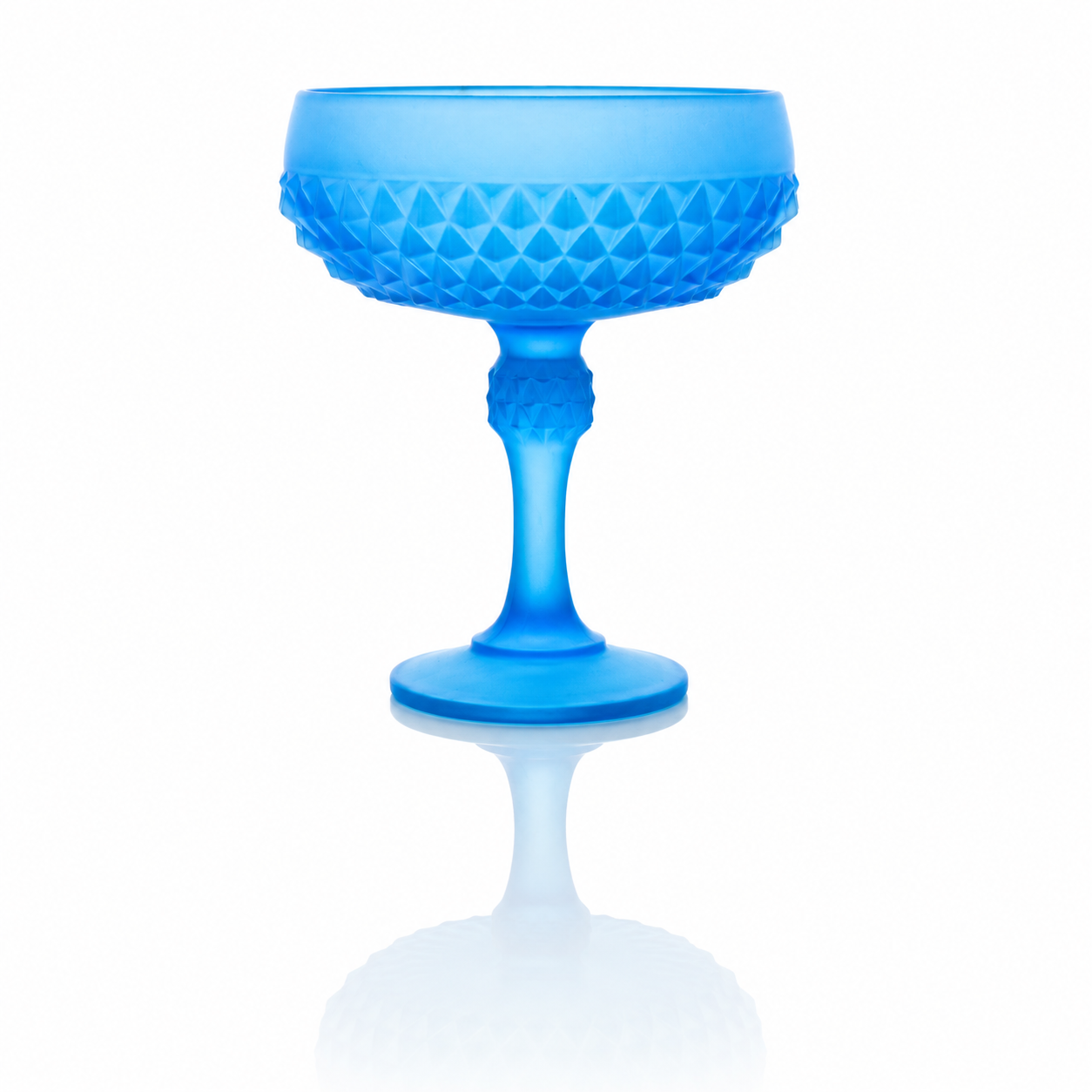
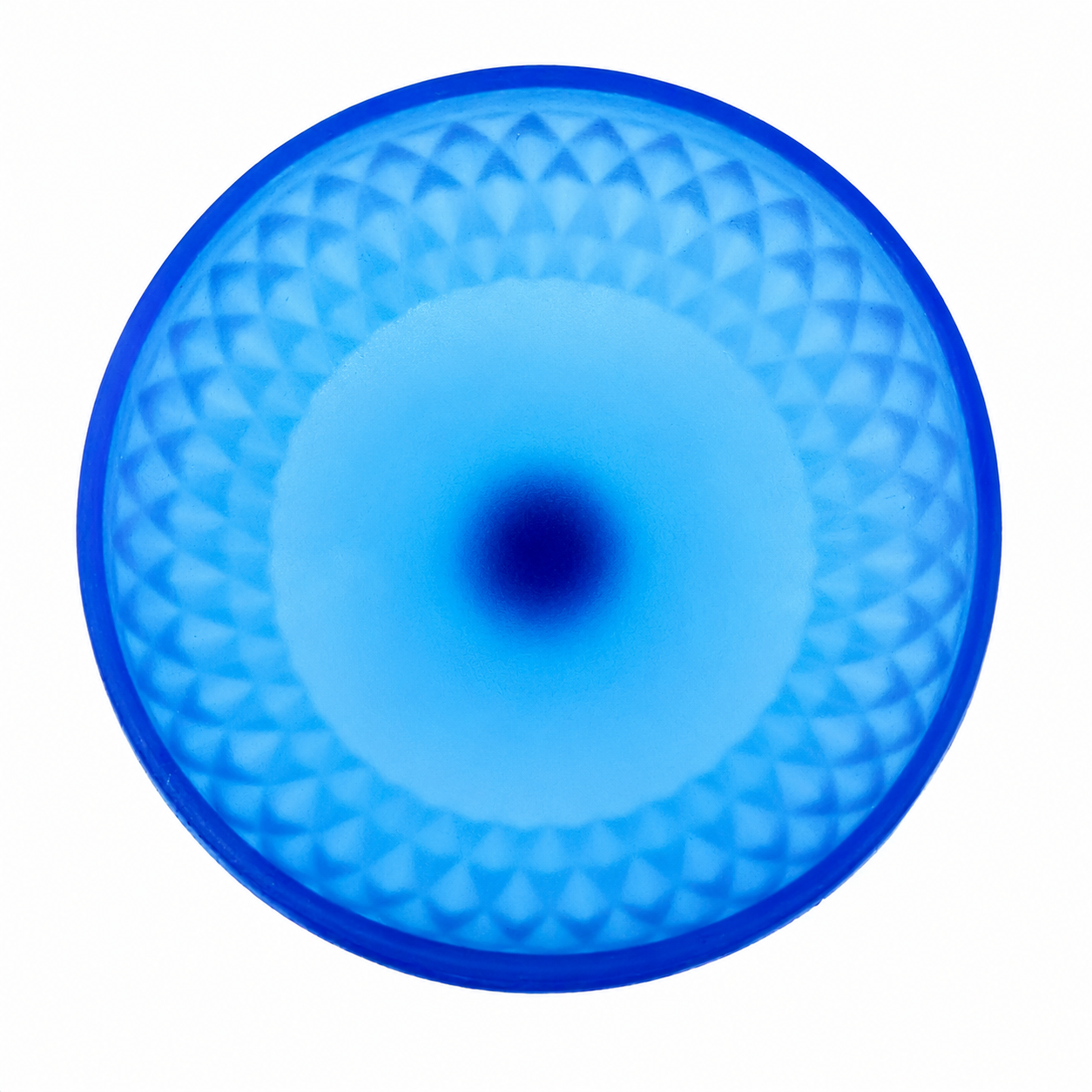
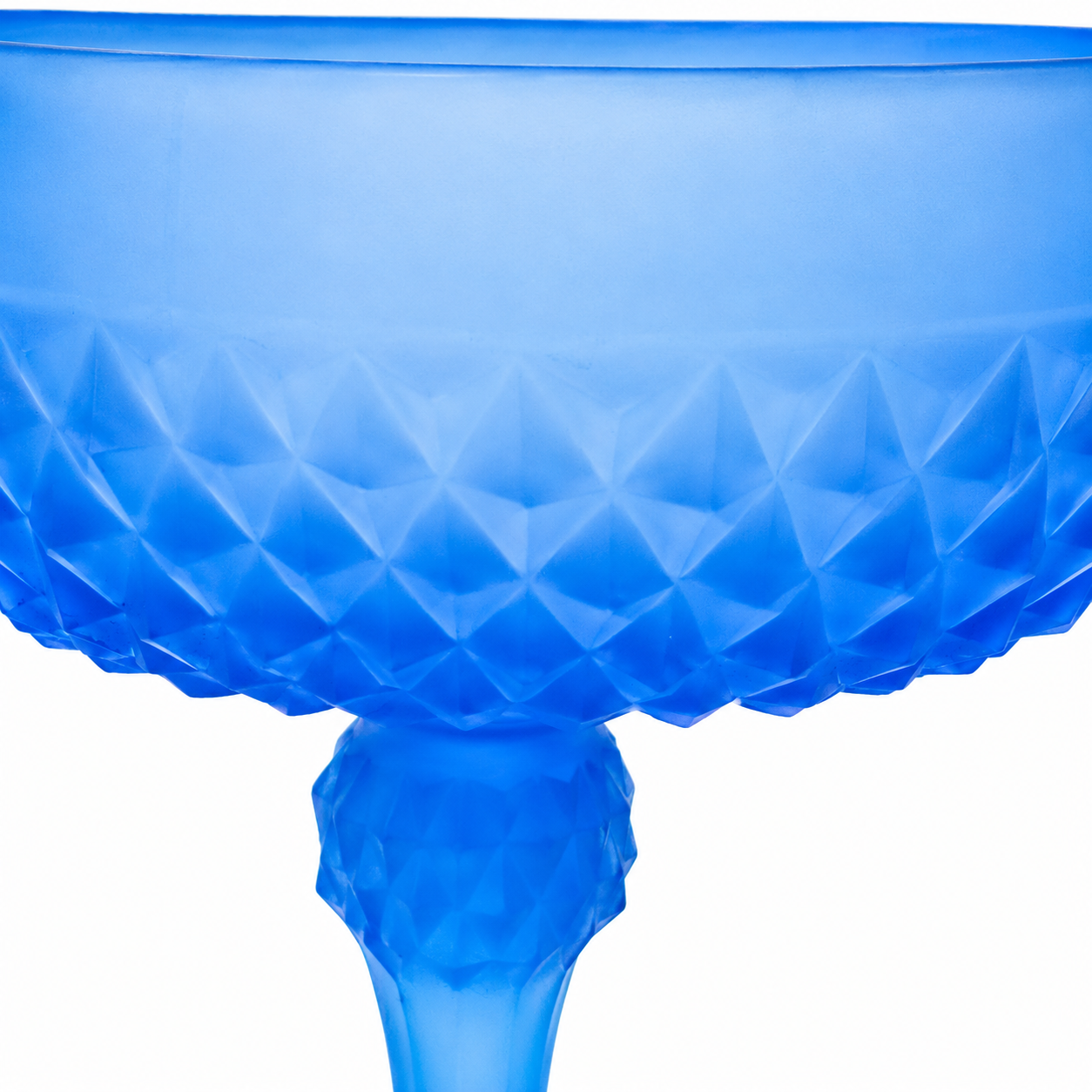
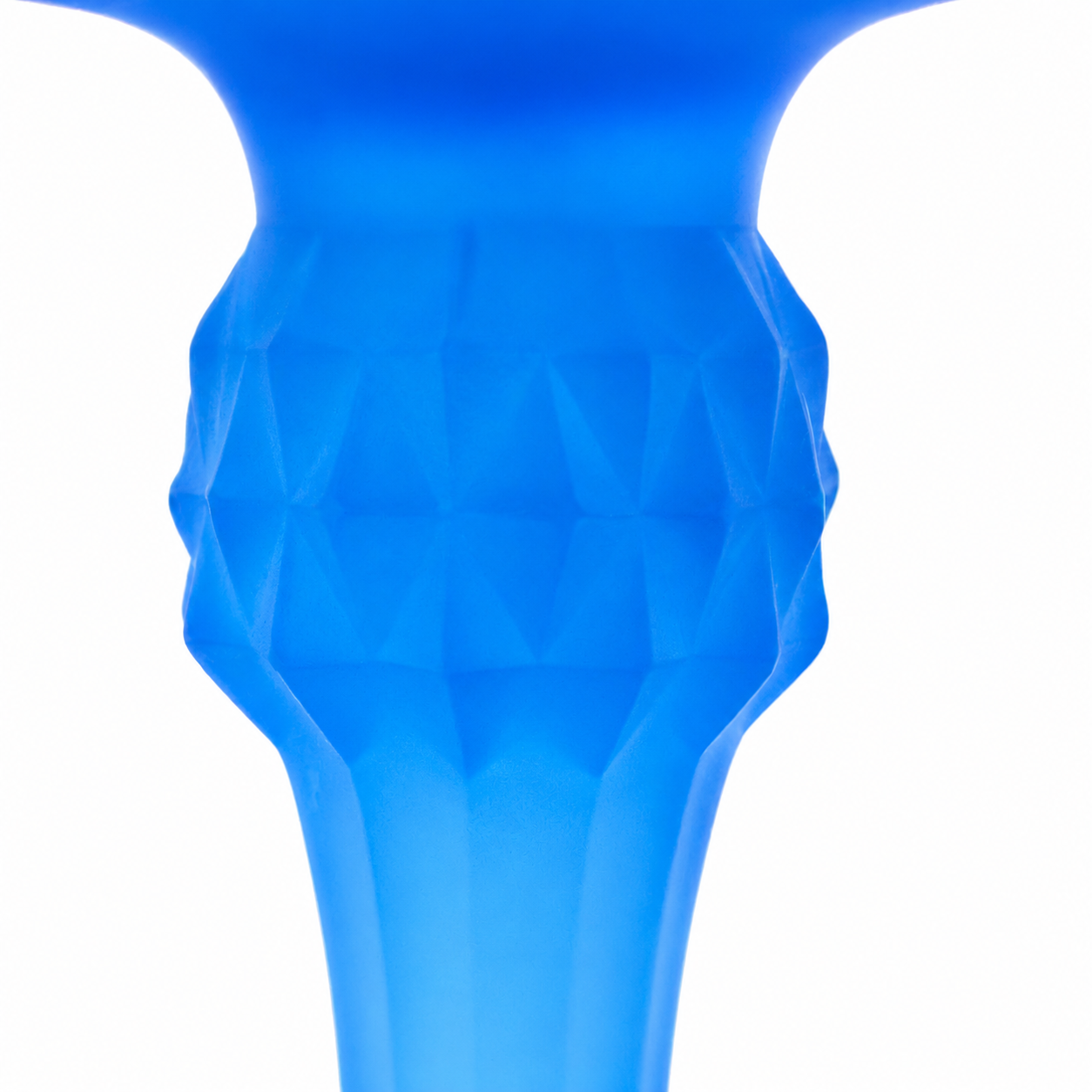
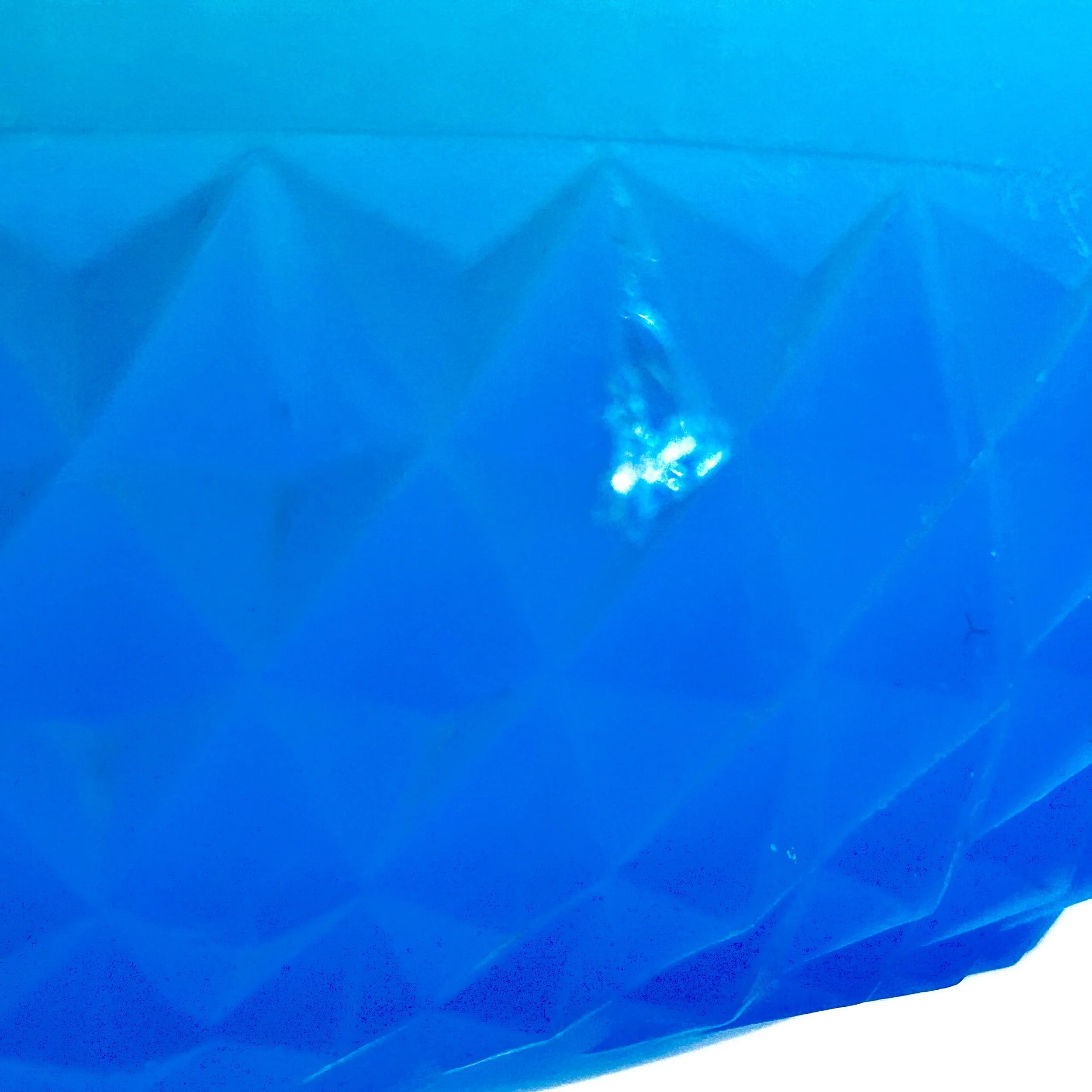
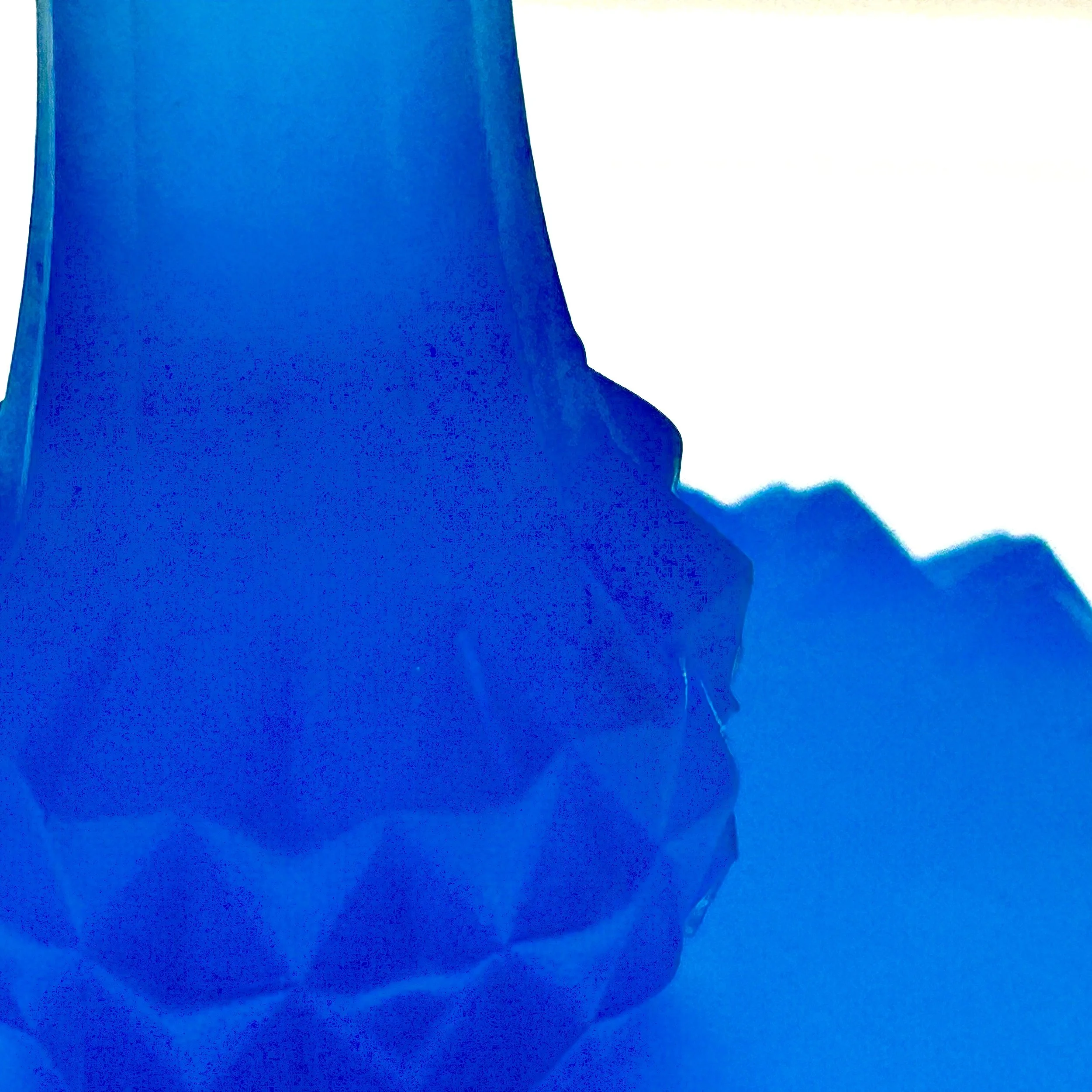
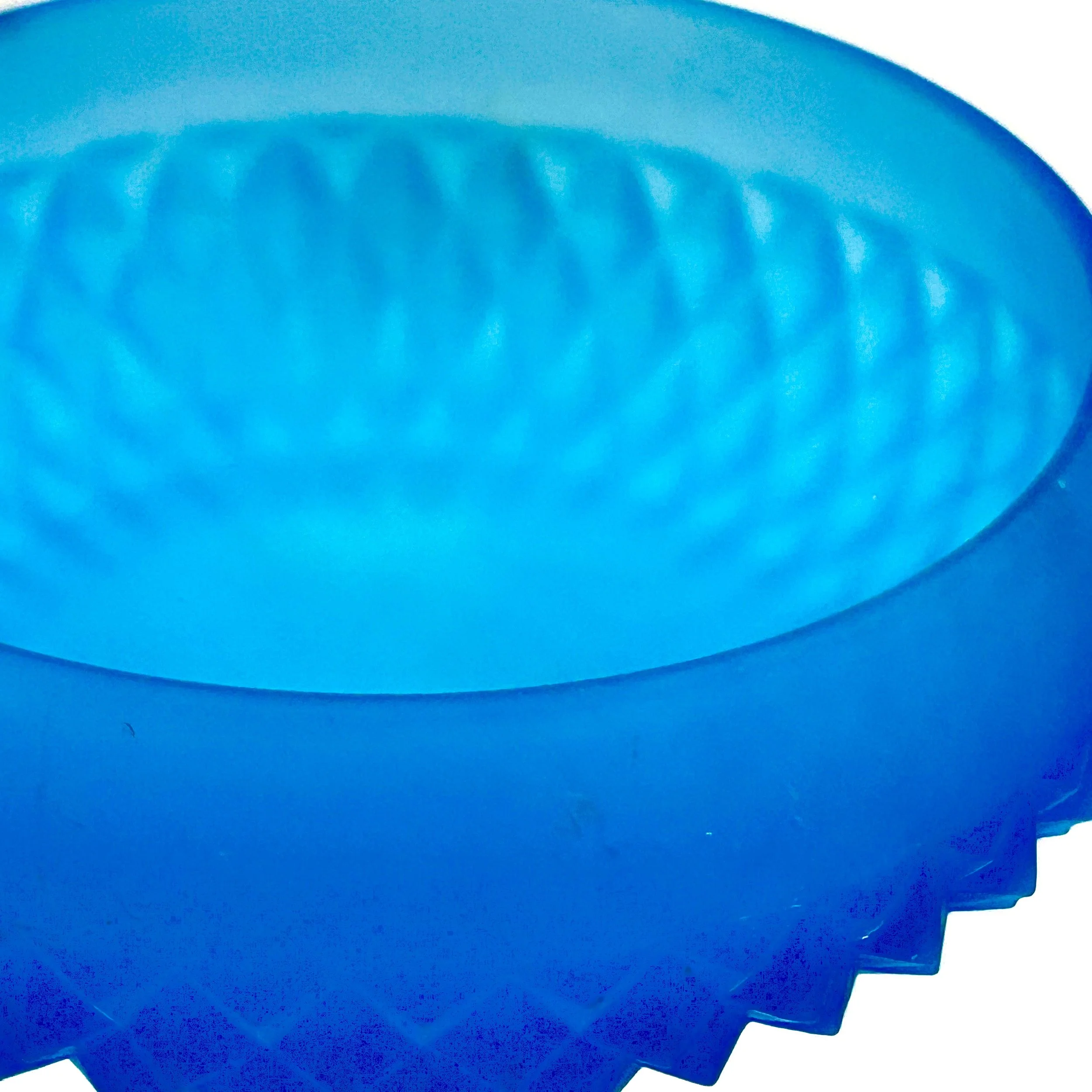
This sculptural candlestick is a vibrant study in 19th-century materiality, featuring a saturated turquoise-blue hue that distinguishes it from standard cobalt examples. The intricate diamond point pattern creates a complex, crystalline interplay of light, refracting illumination across its multi-faceted surface to provide a high-impact decorative presence. Its substantial form and rare color profile make it a compelling architectural accent, offering both historical depth and contemporary aesthetic appeal.
Attribution & Period
Late 19th Century (1880s). This piece is a premier regional example of Early American Pattern Glass (EAPG). The specific geometric mold and "Electric Turquoise" saturation are stylistically aligned with the high-quality production of Adams & Company or similar Pittsburgh-era glasshouses. The attribution is supported by the density of the pattern and the heavy soda-lime glass composition characteristic of the Victorian "Brilliant" period.
Dimensions & Weight
Condition
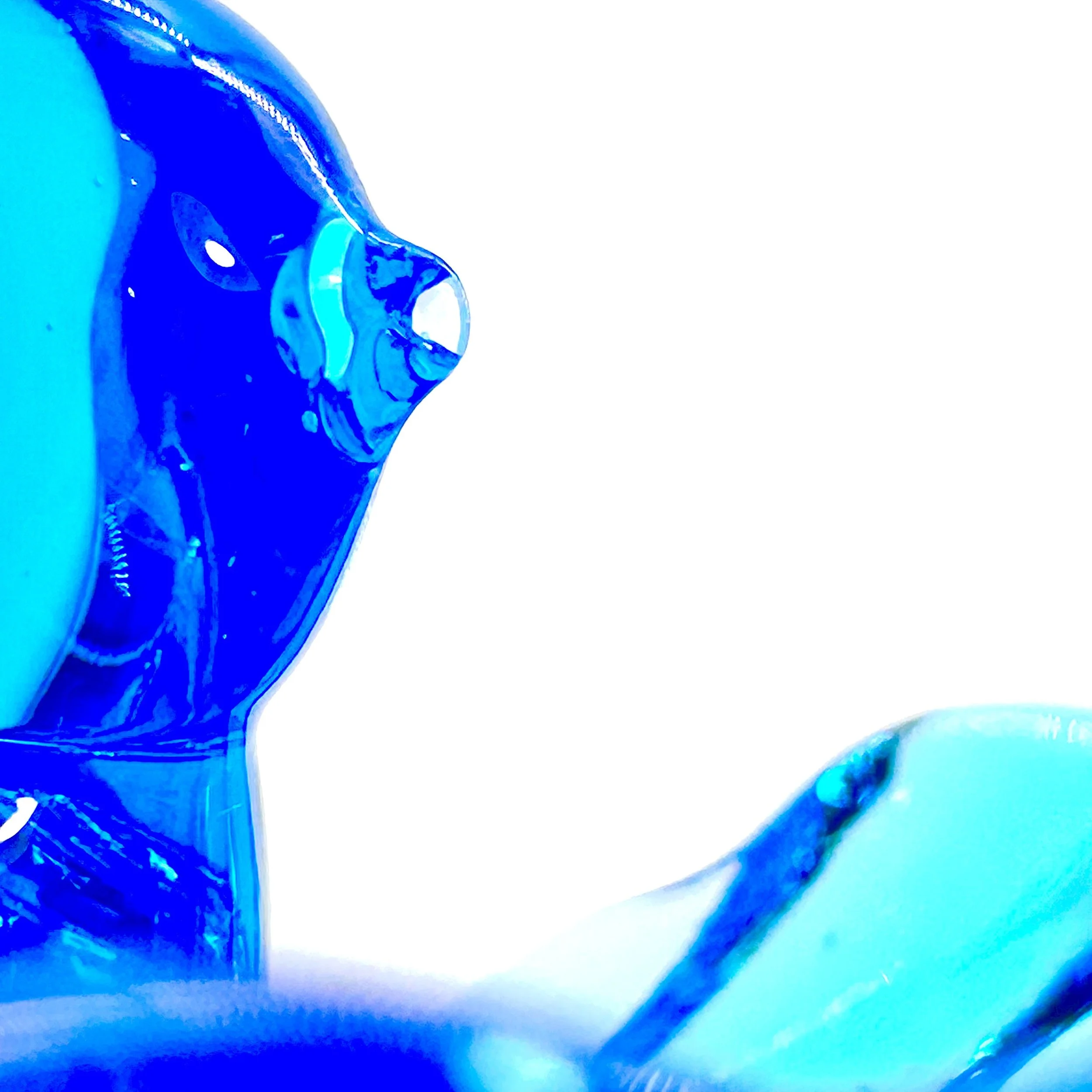
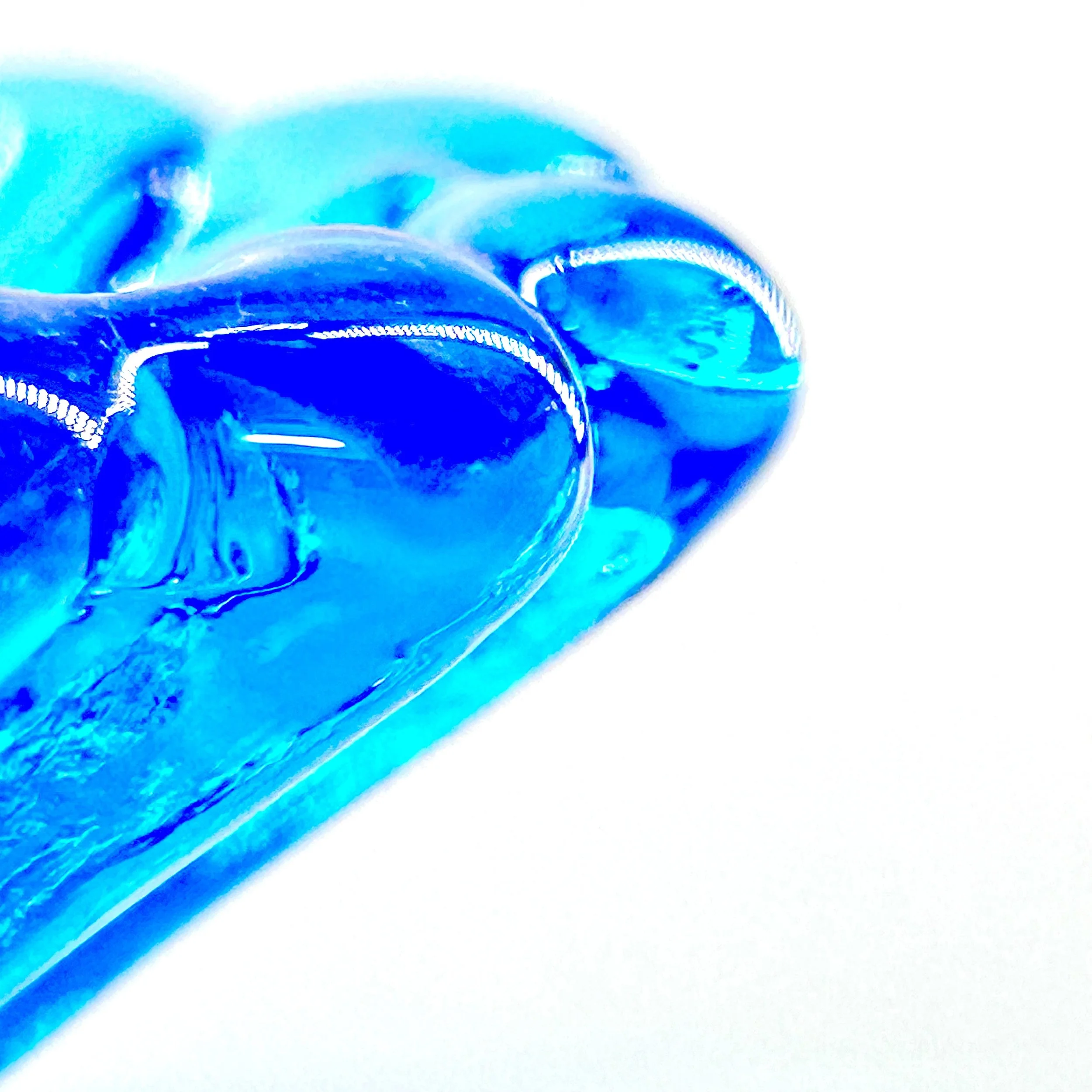
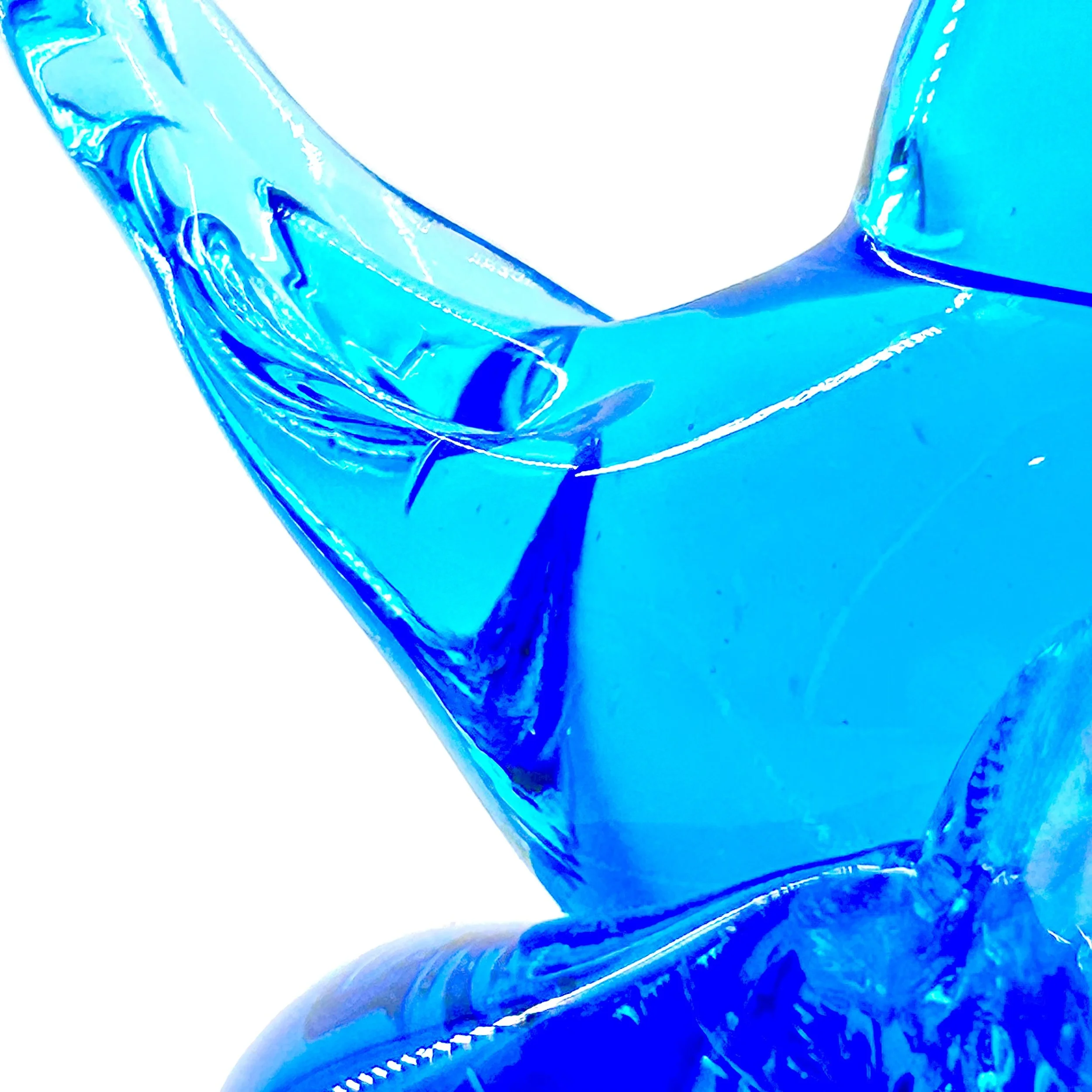
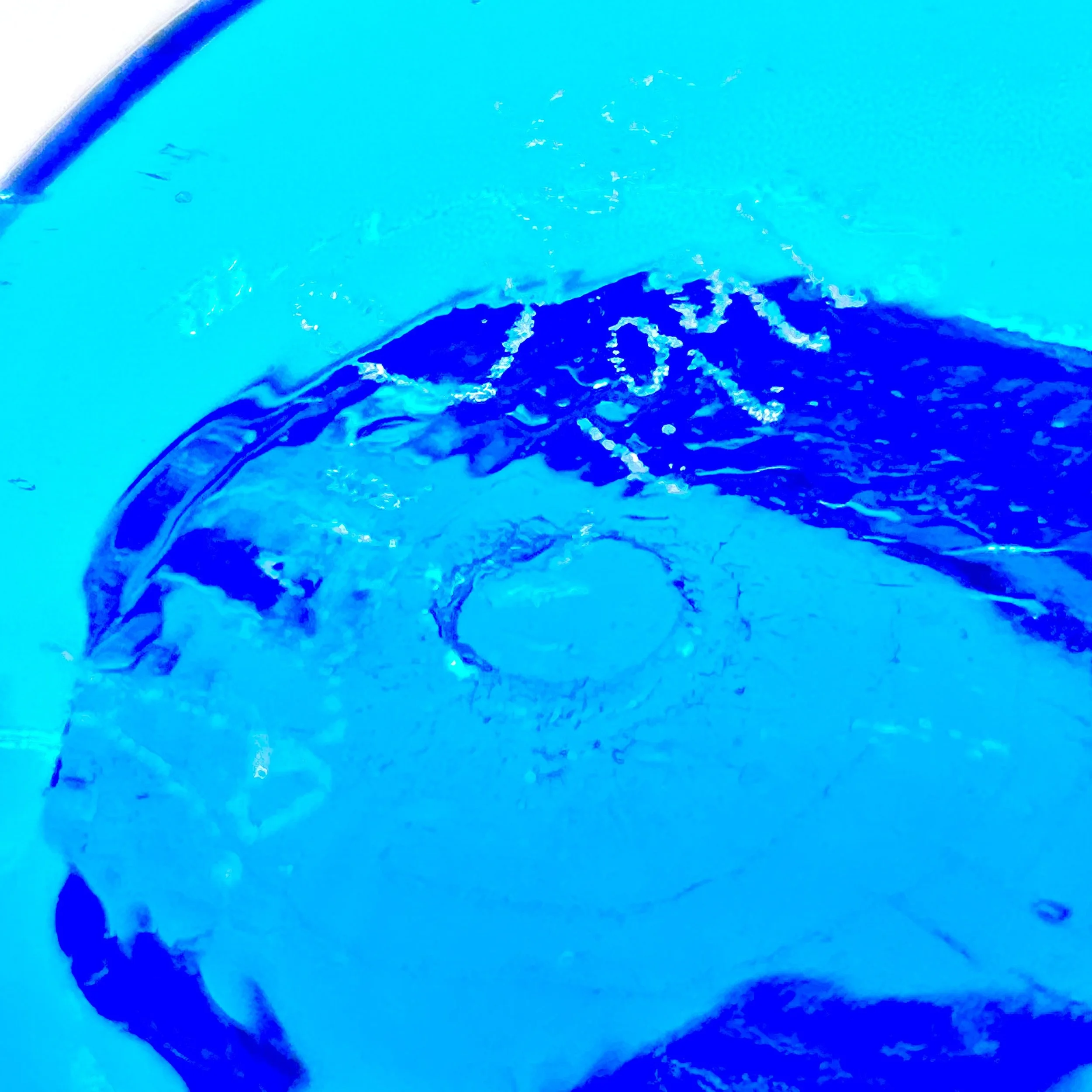
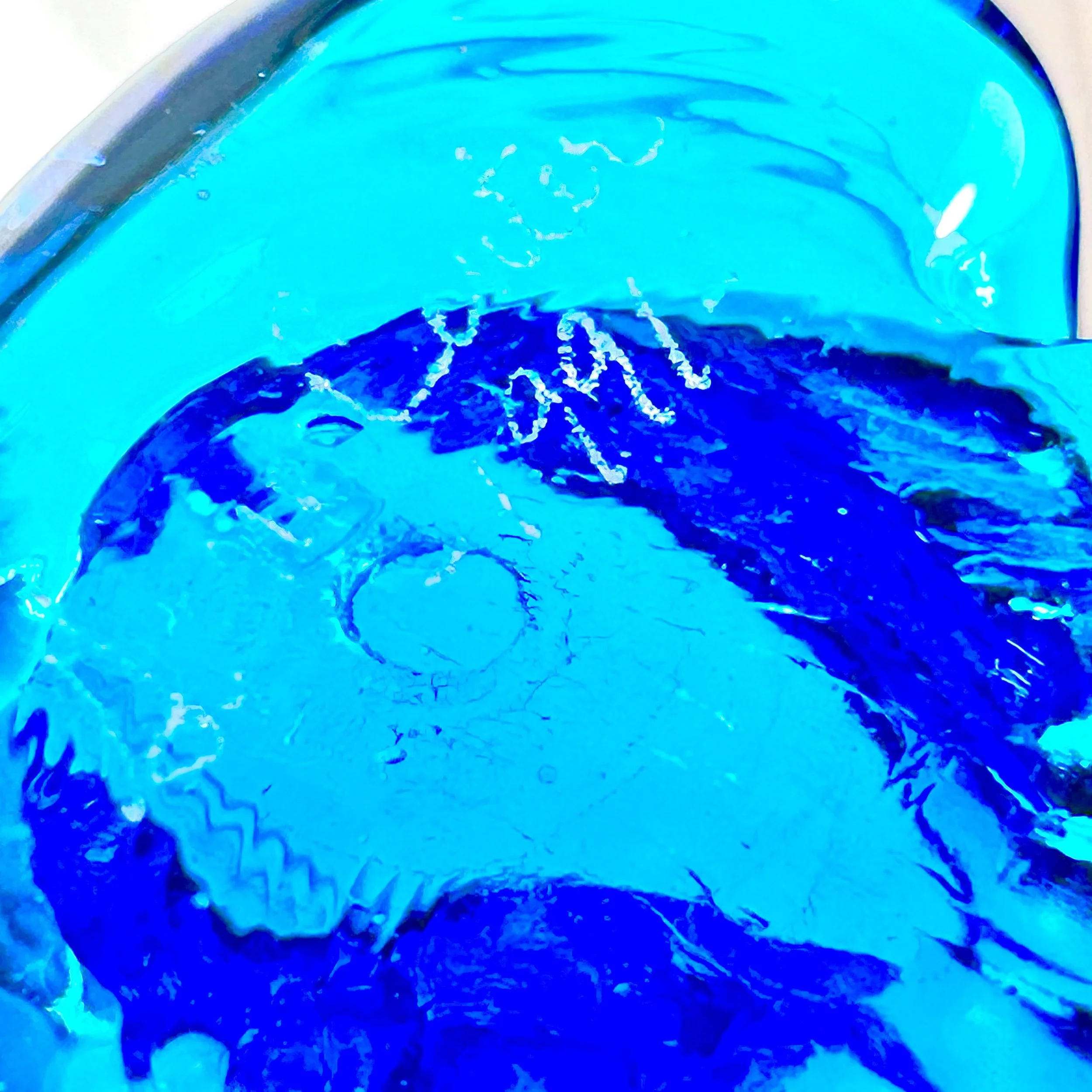
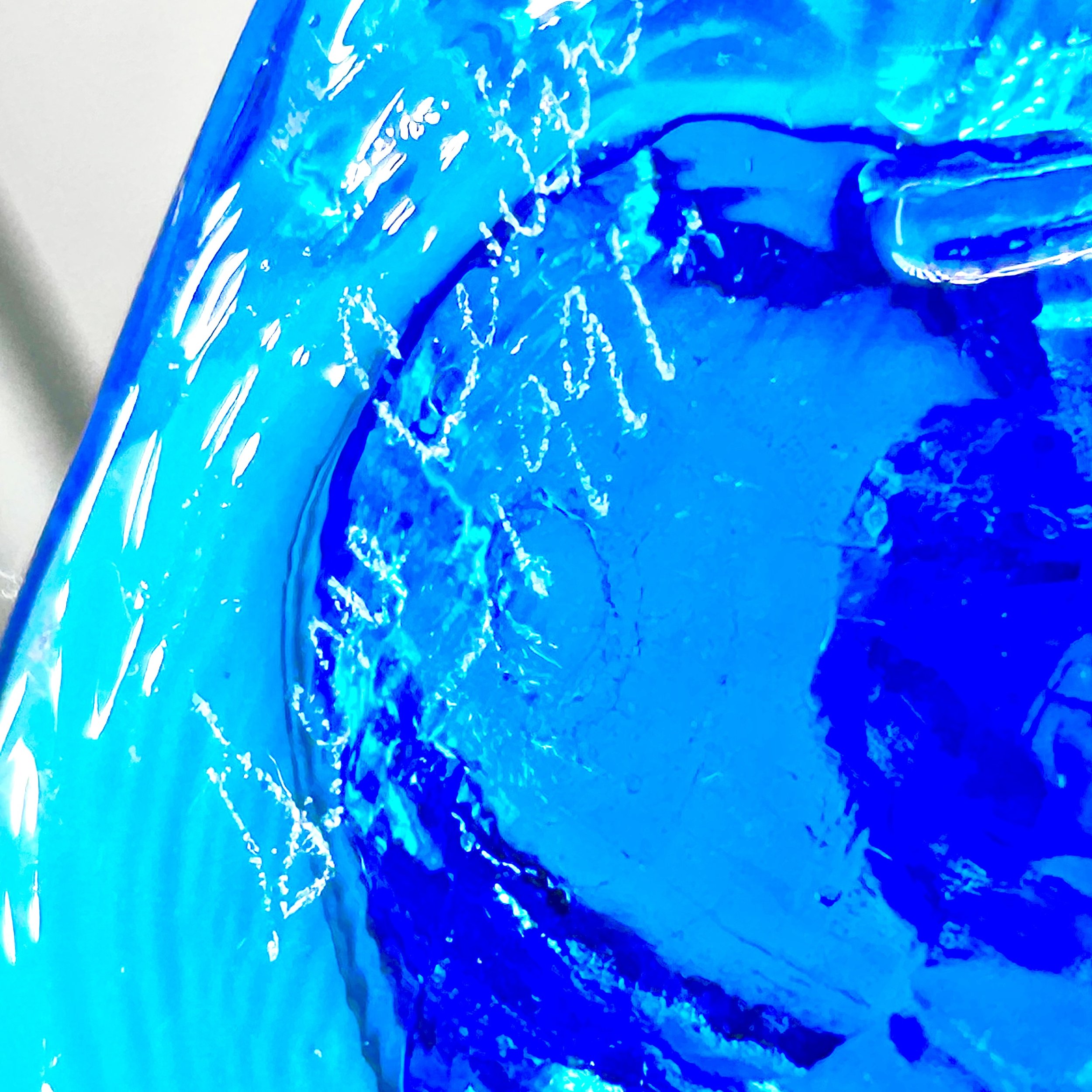
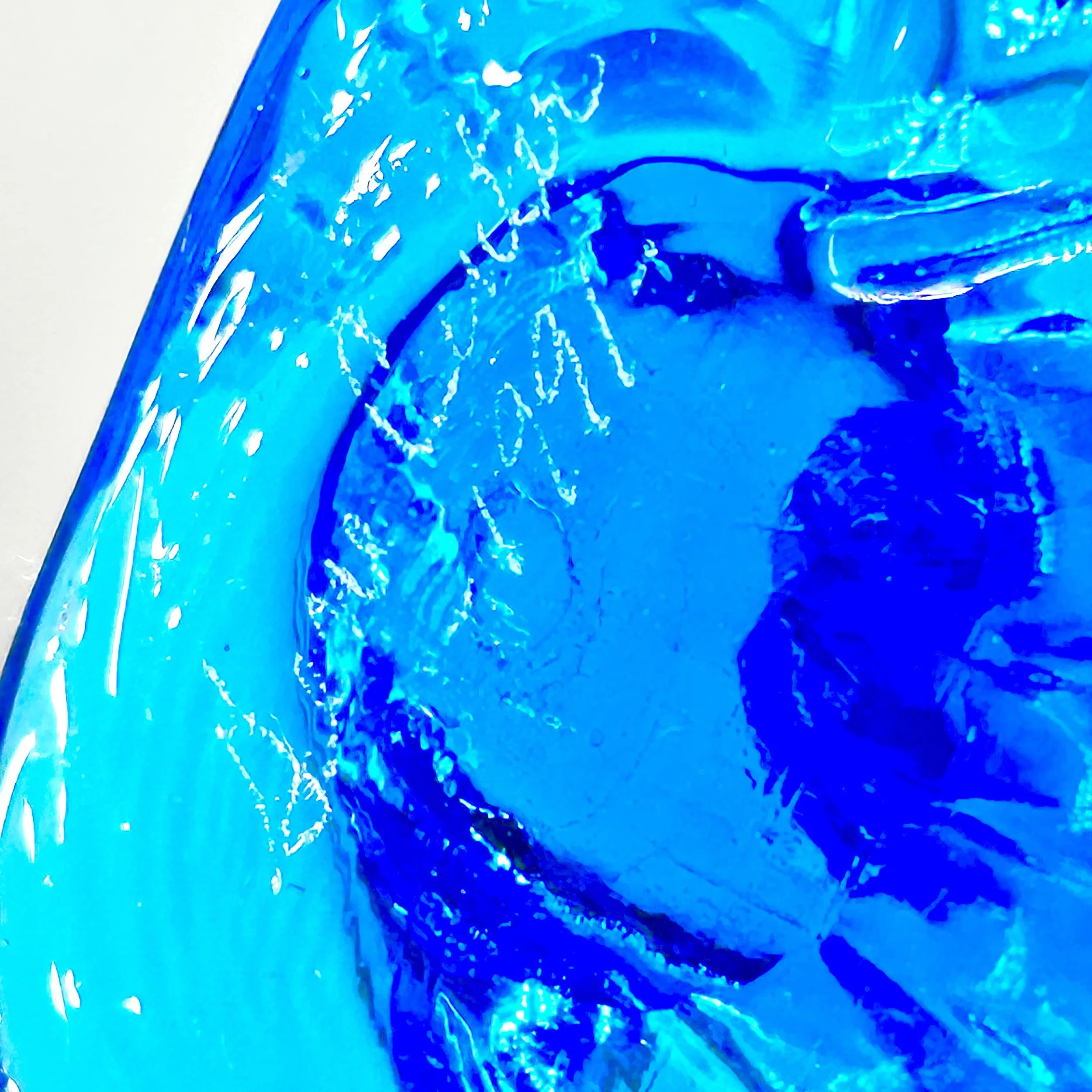
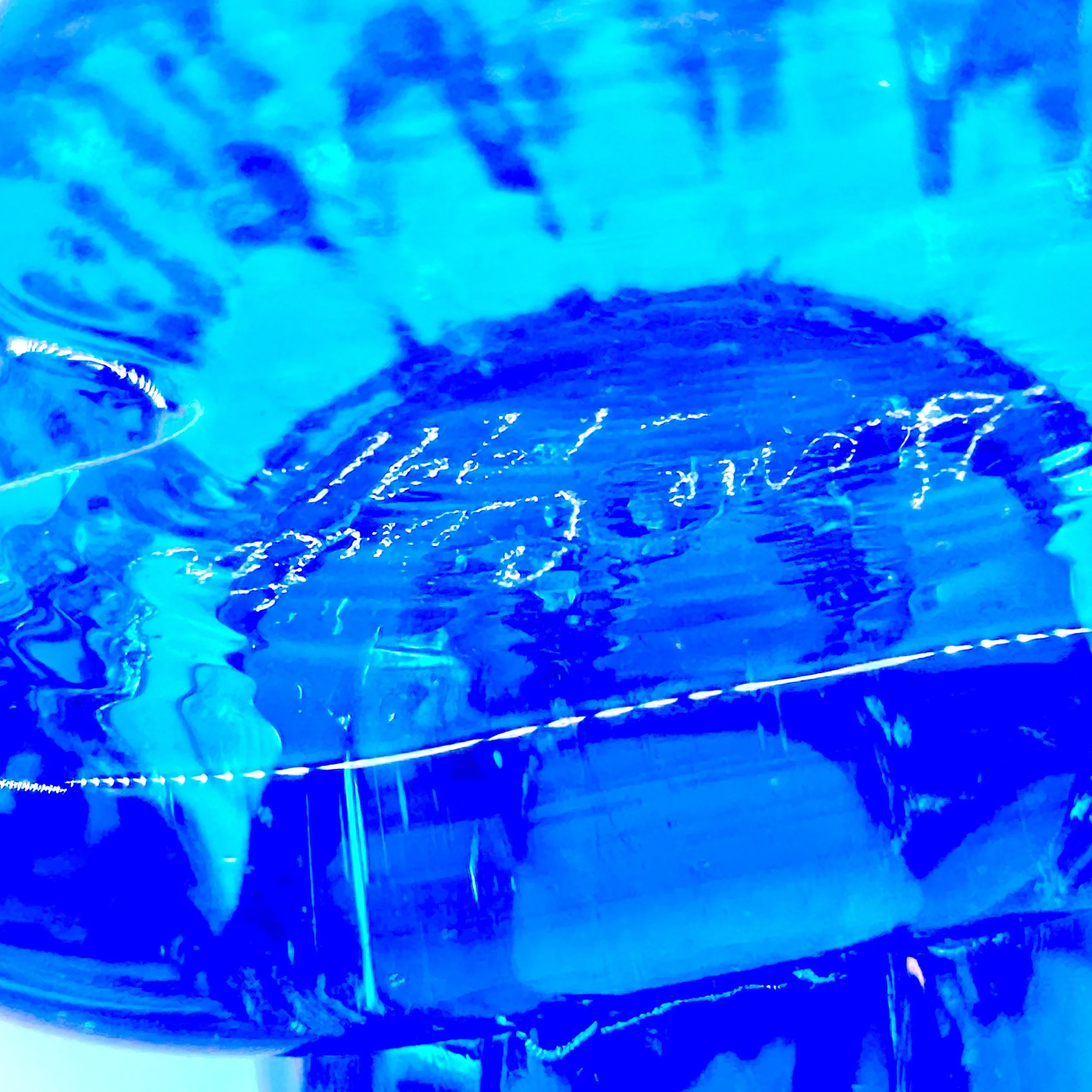
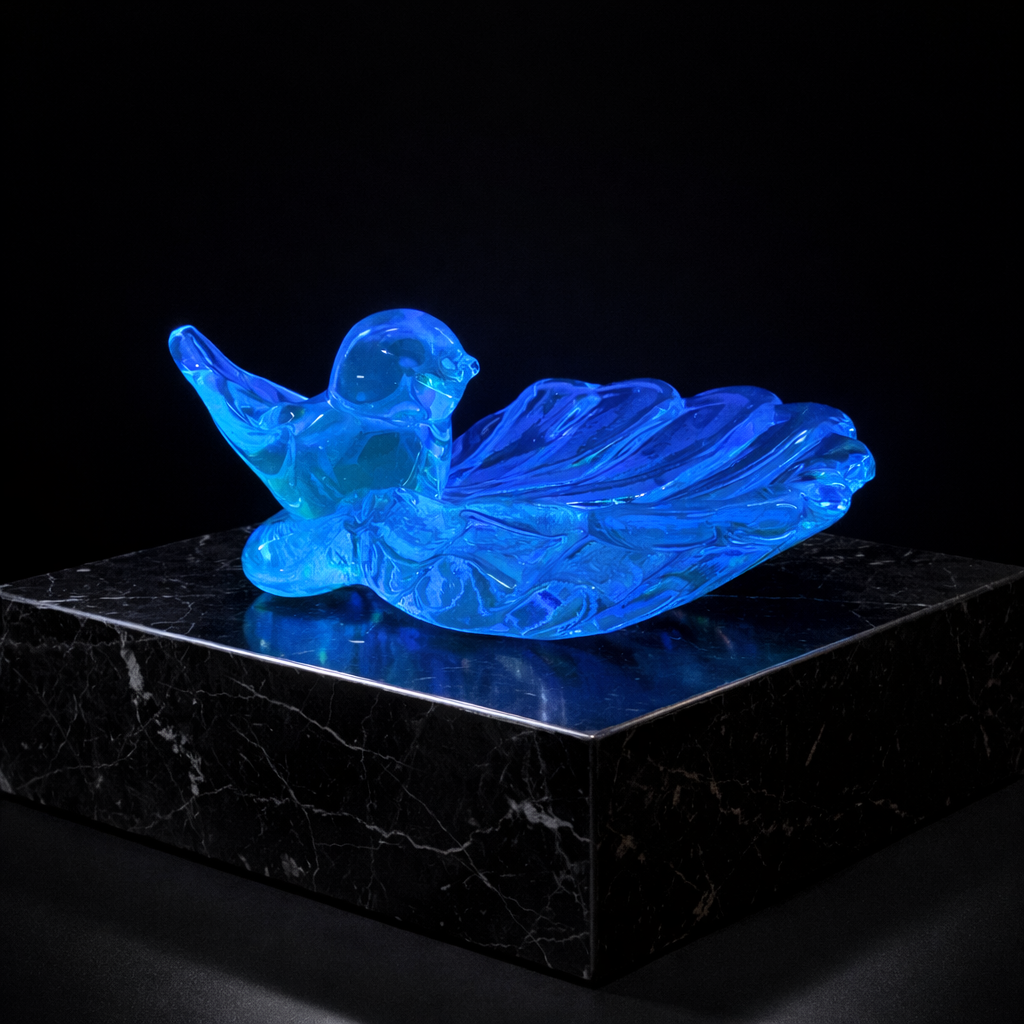
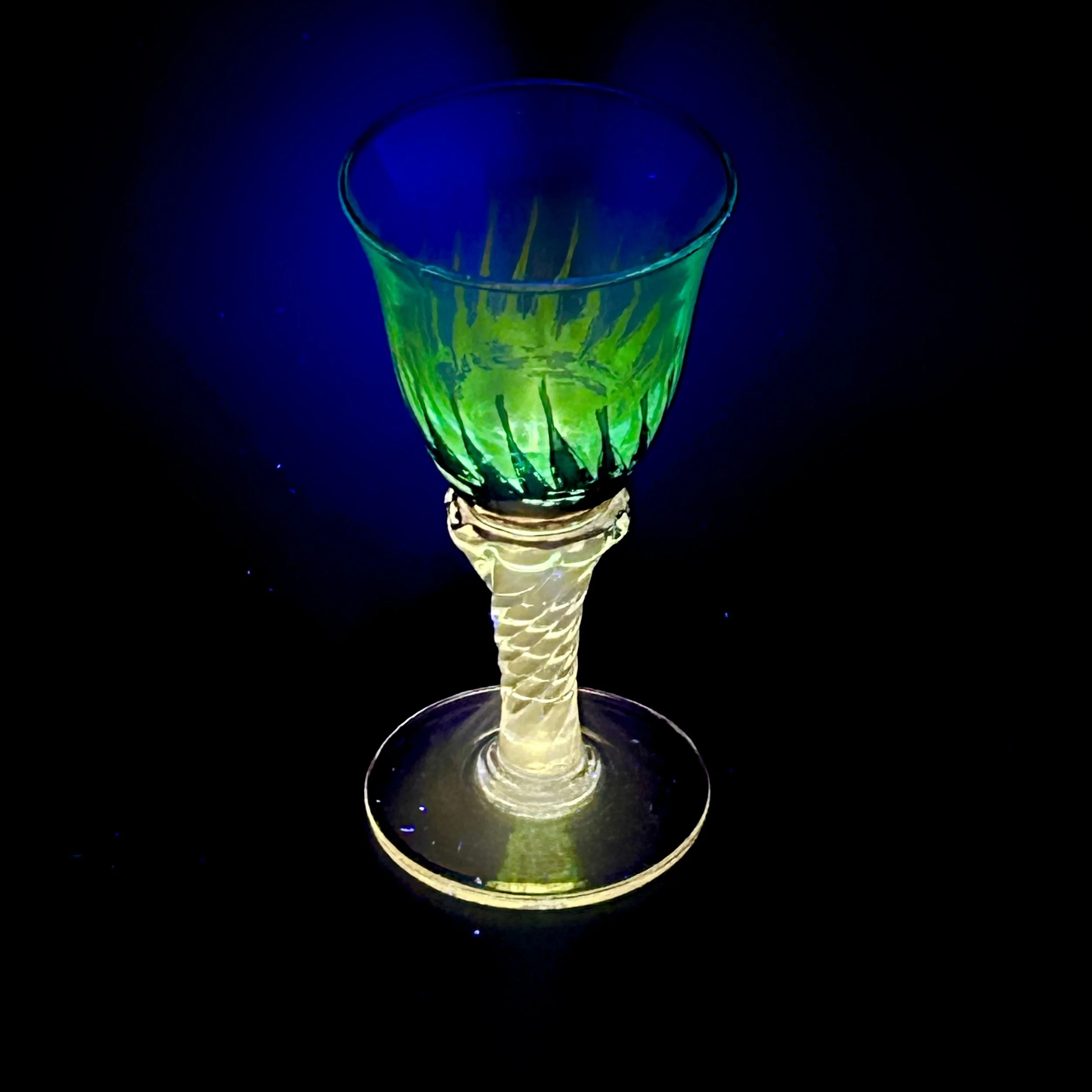
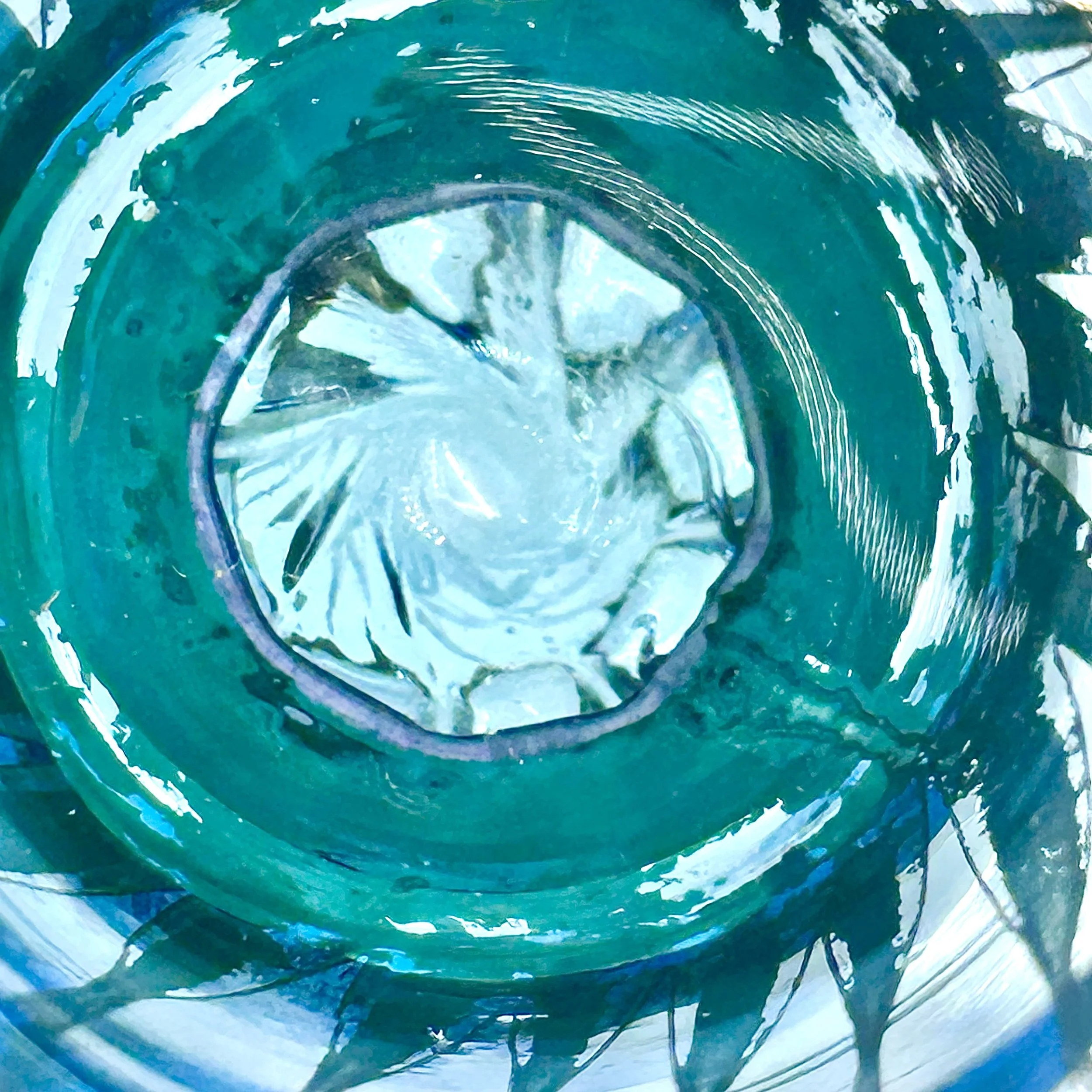
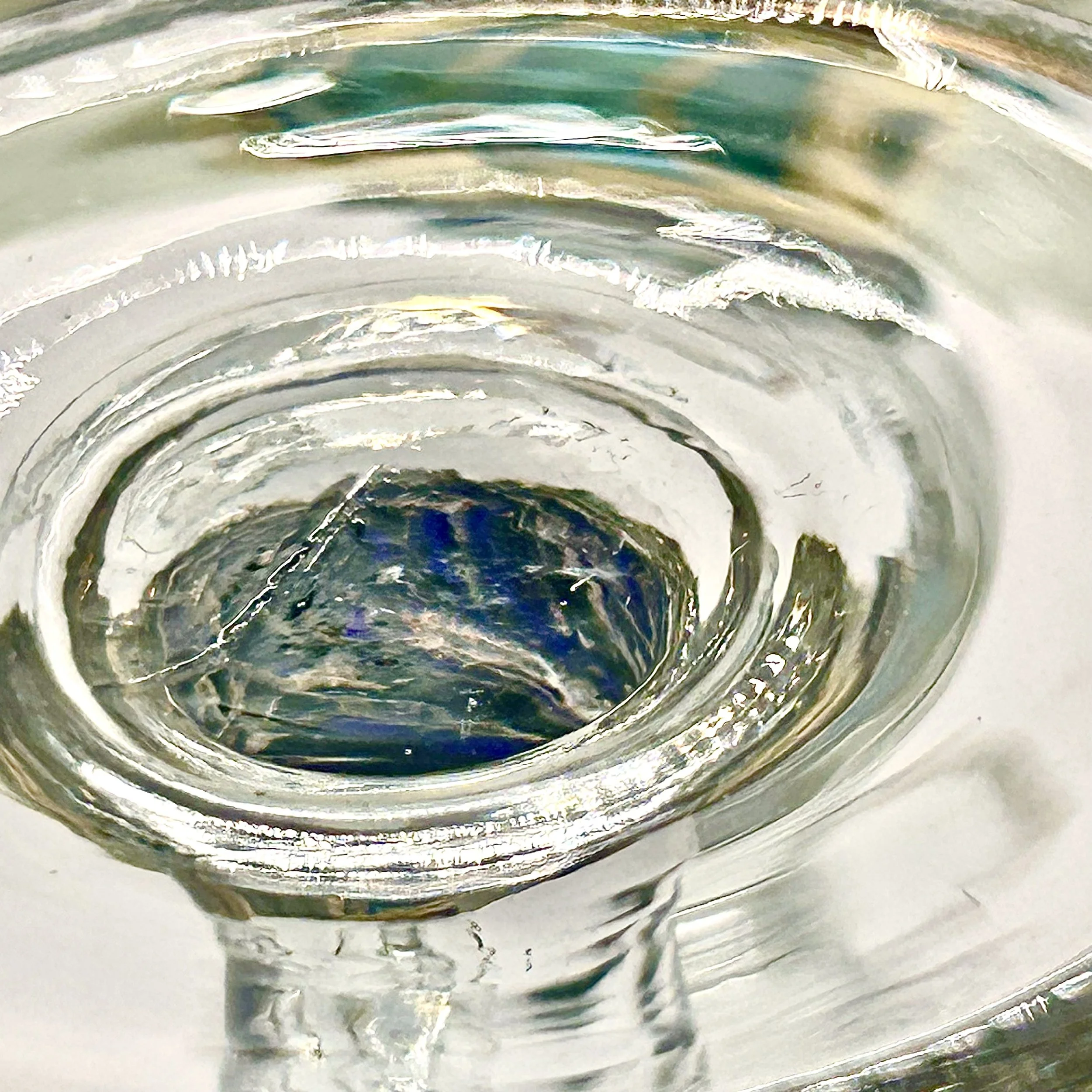
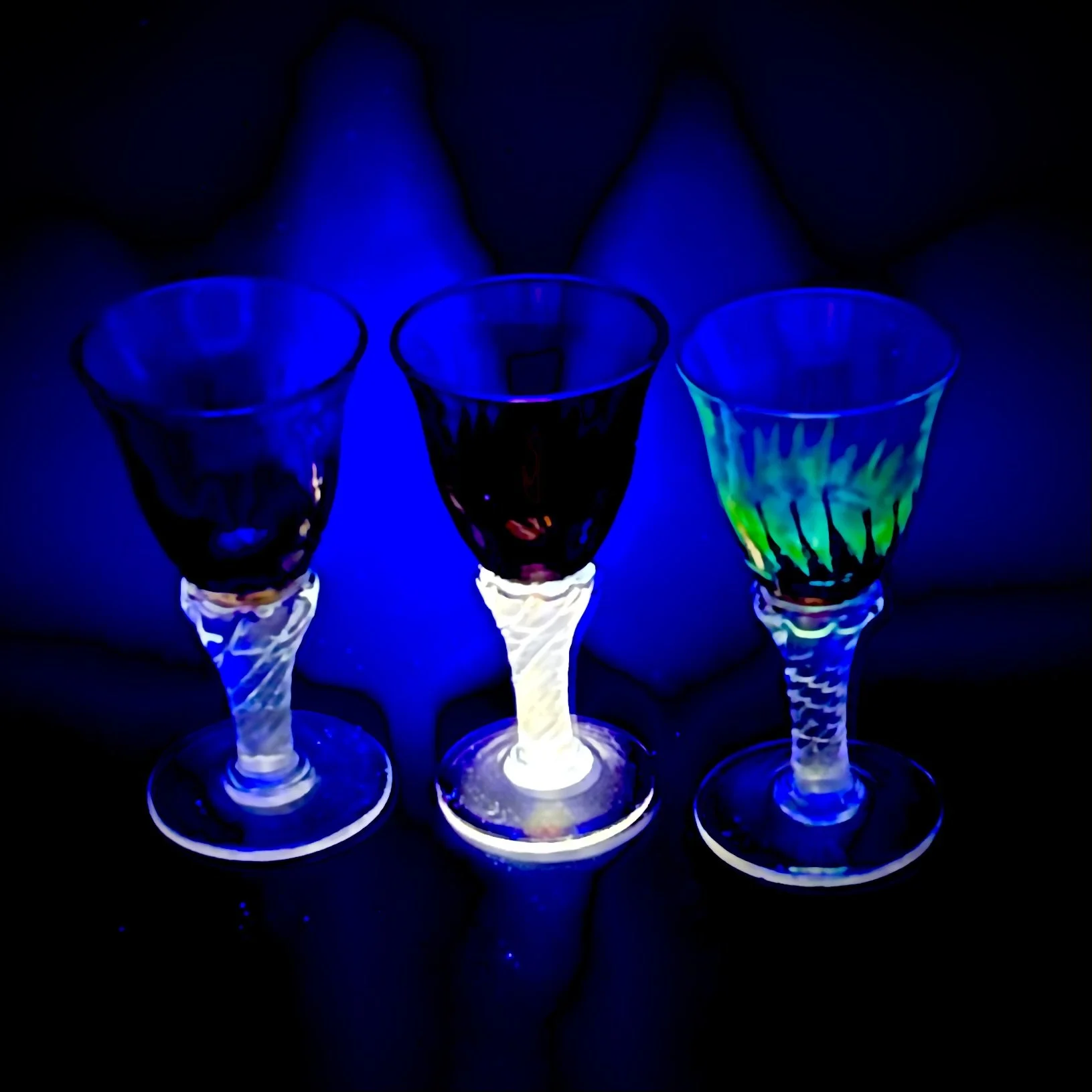
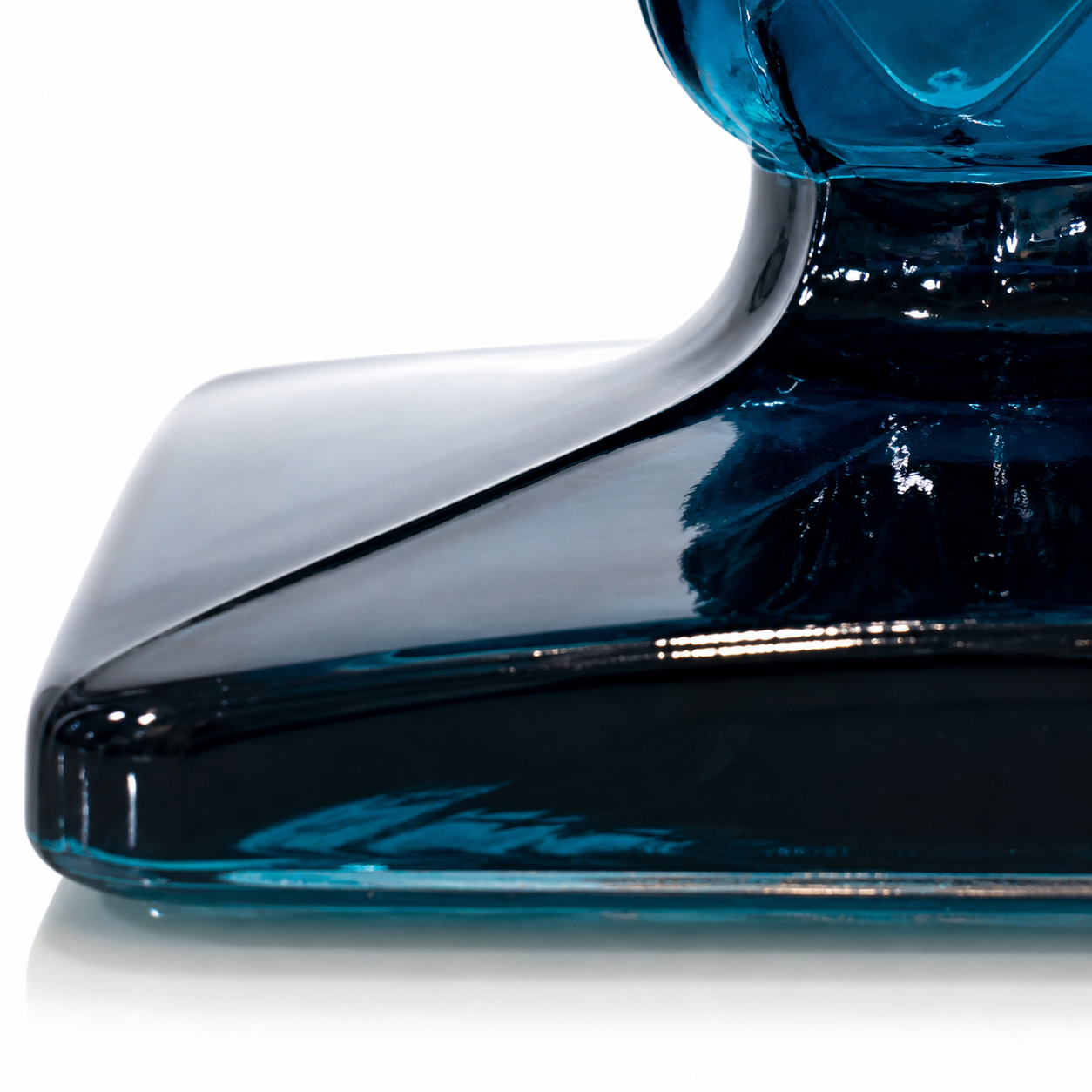
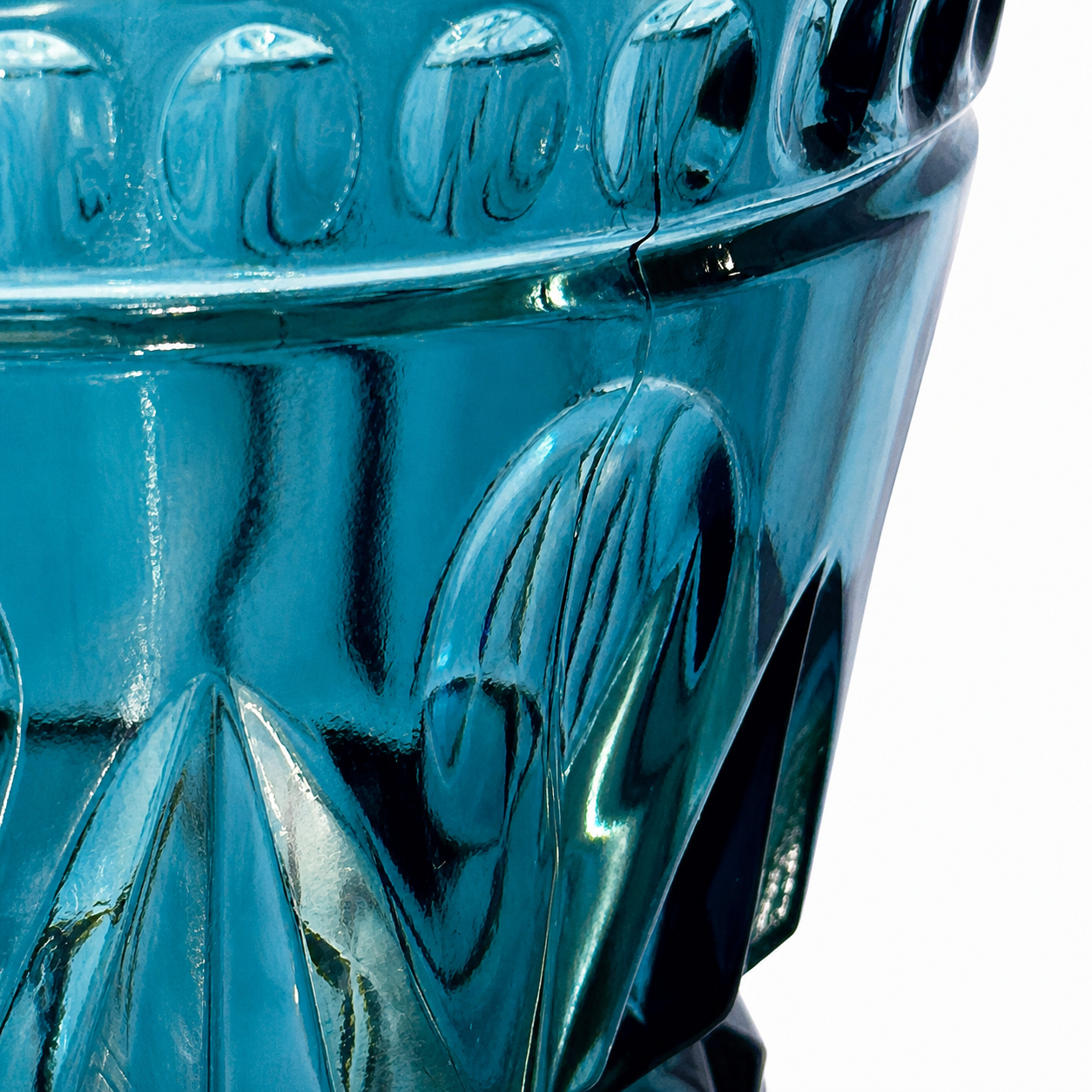
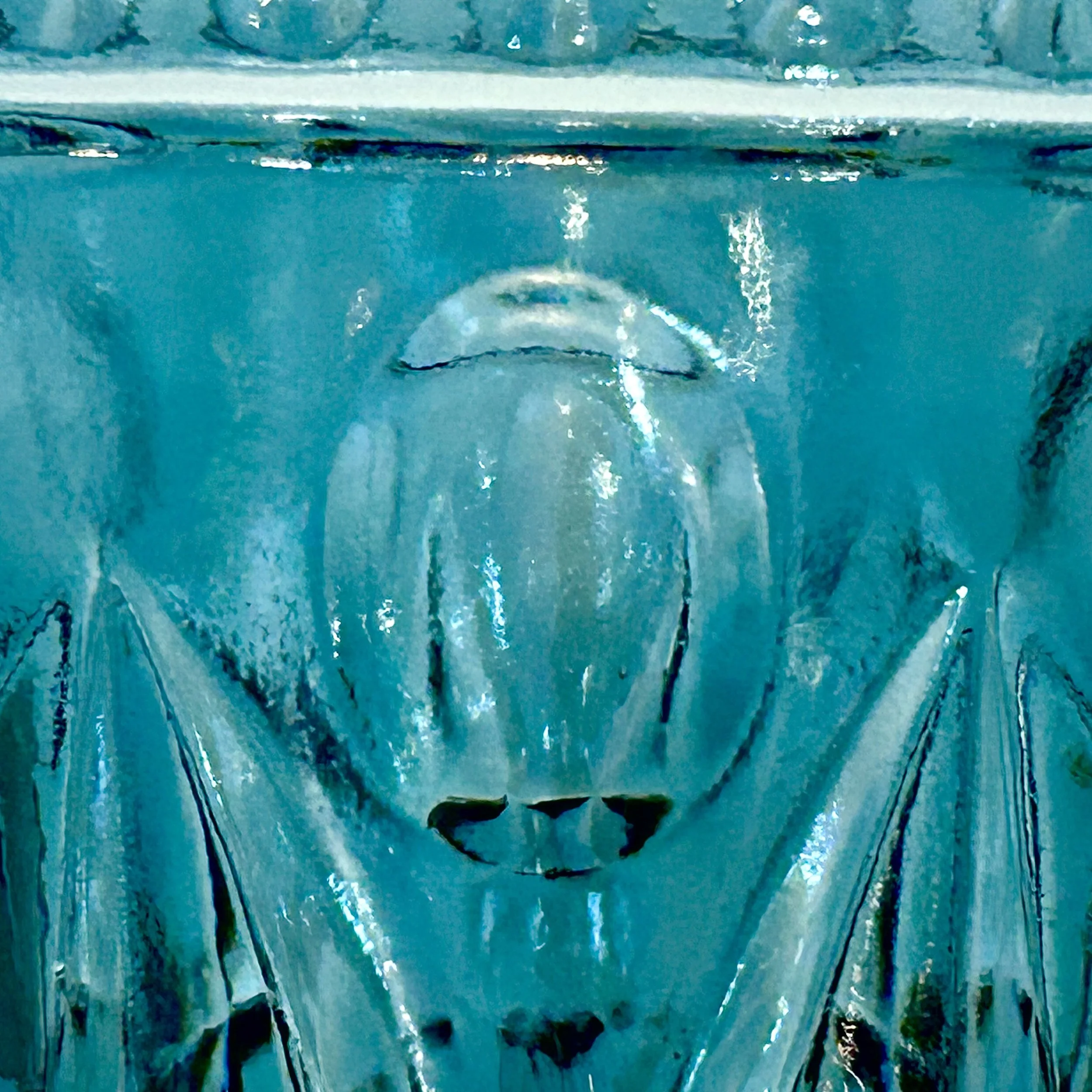
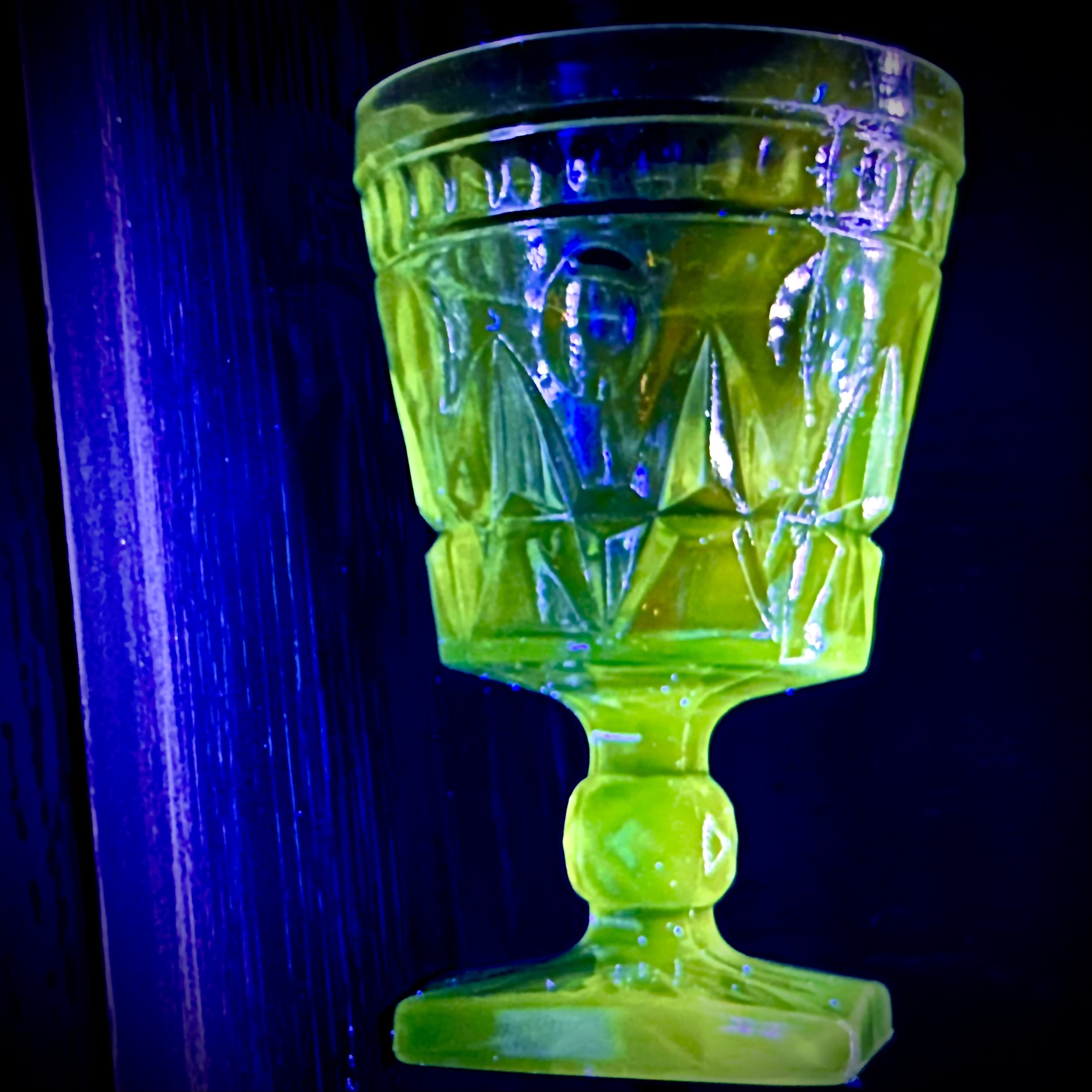
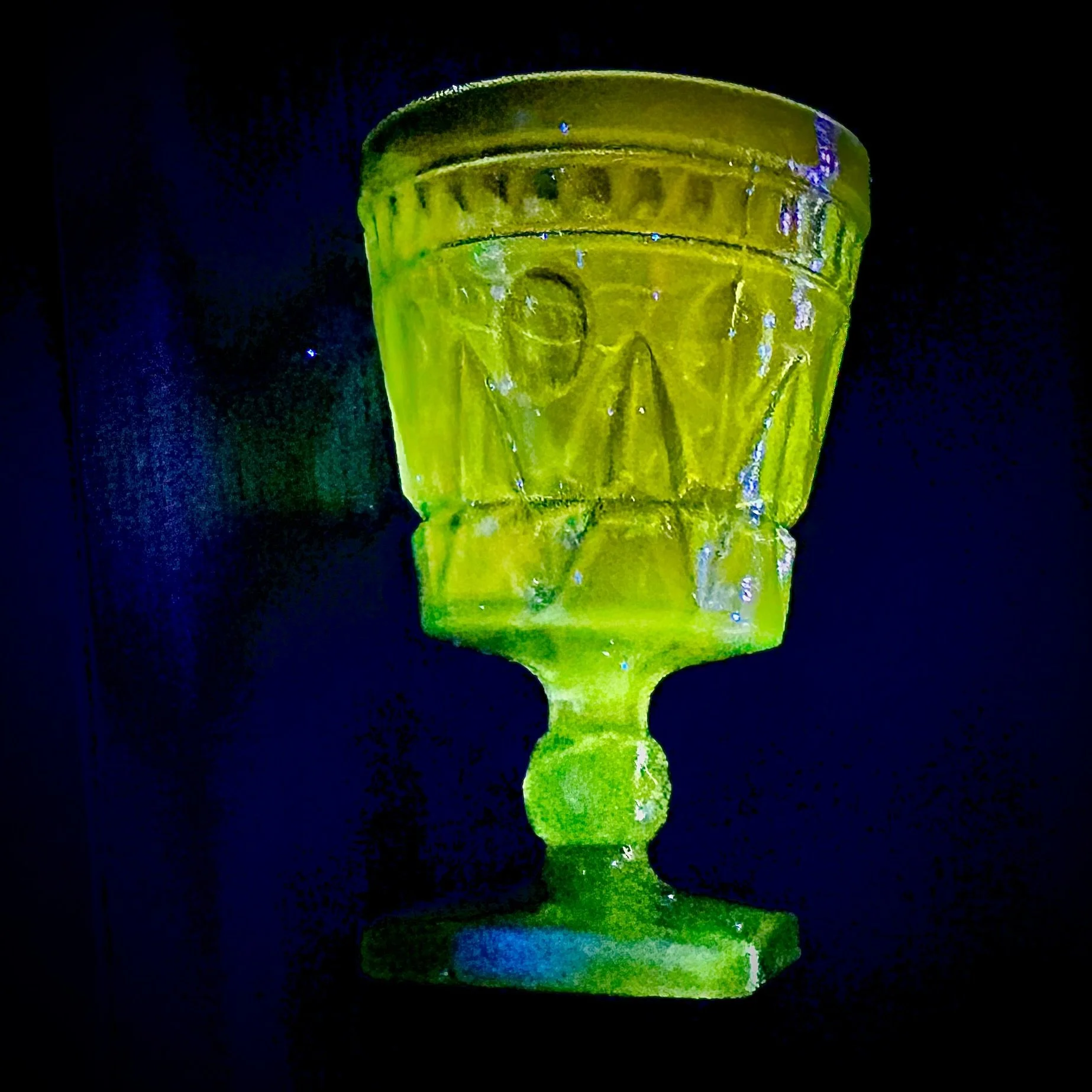
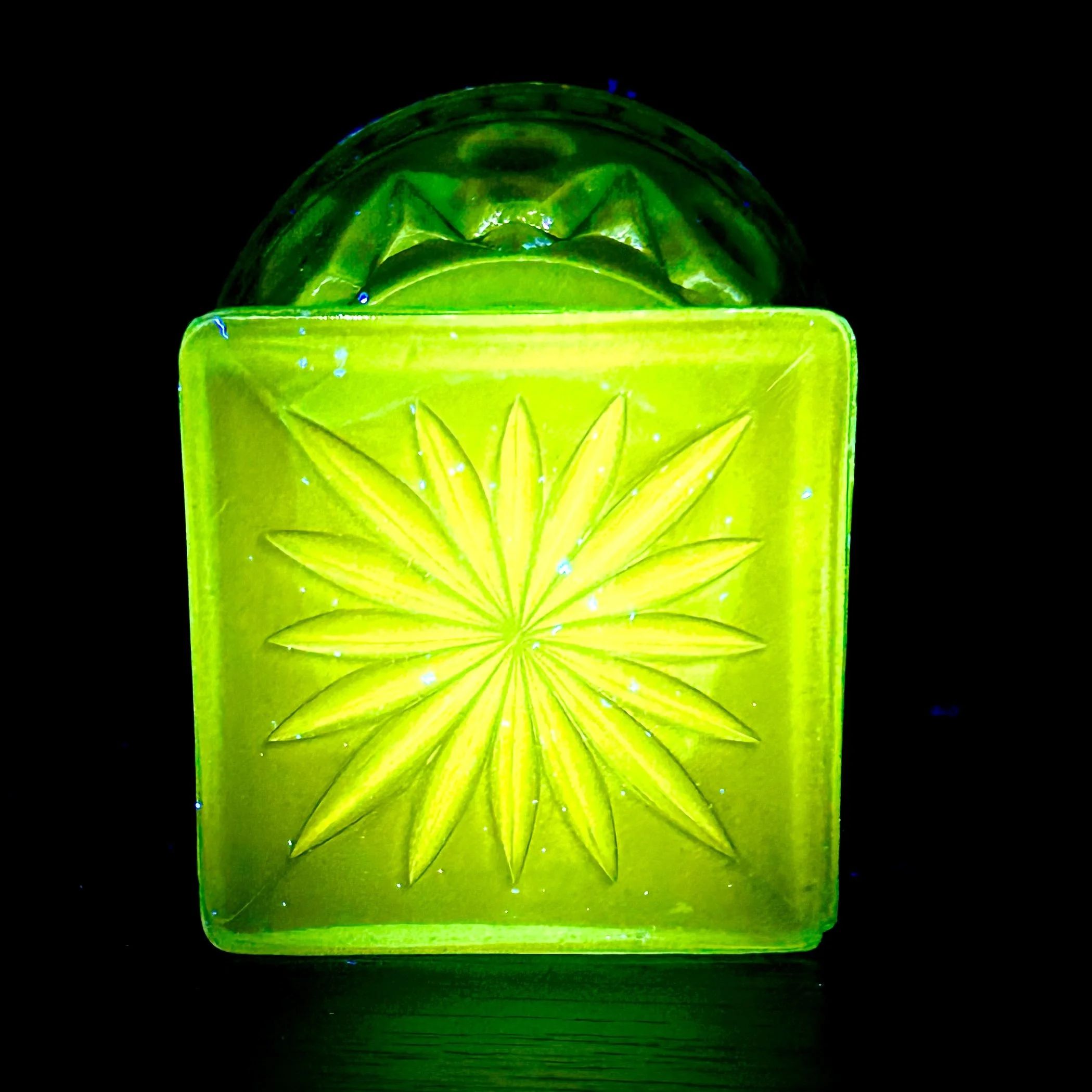
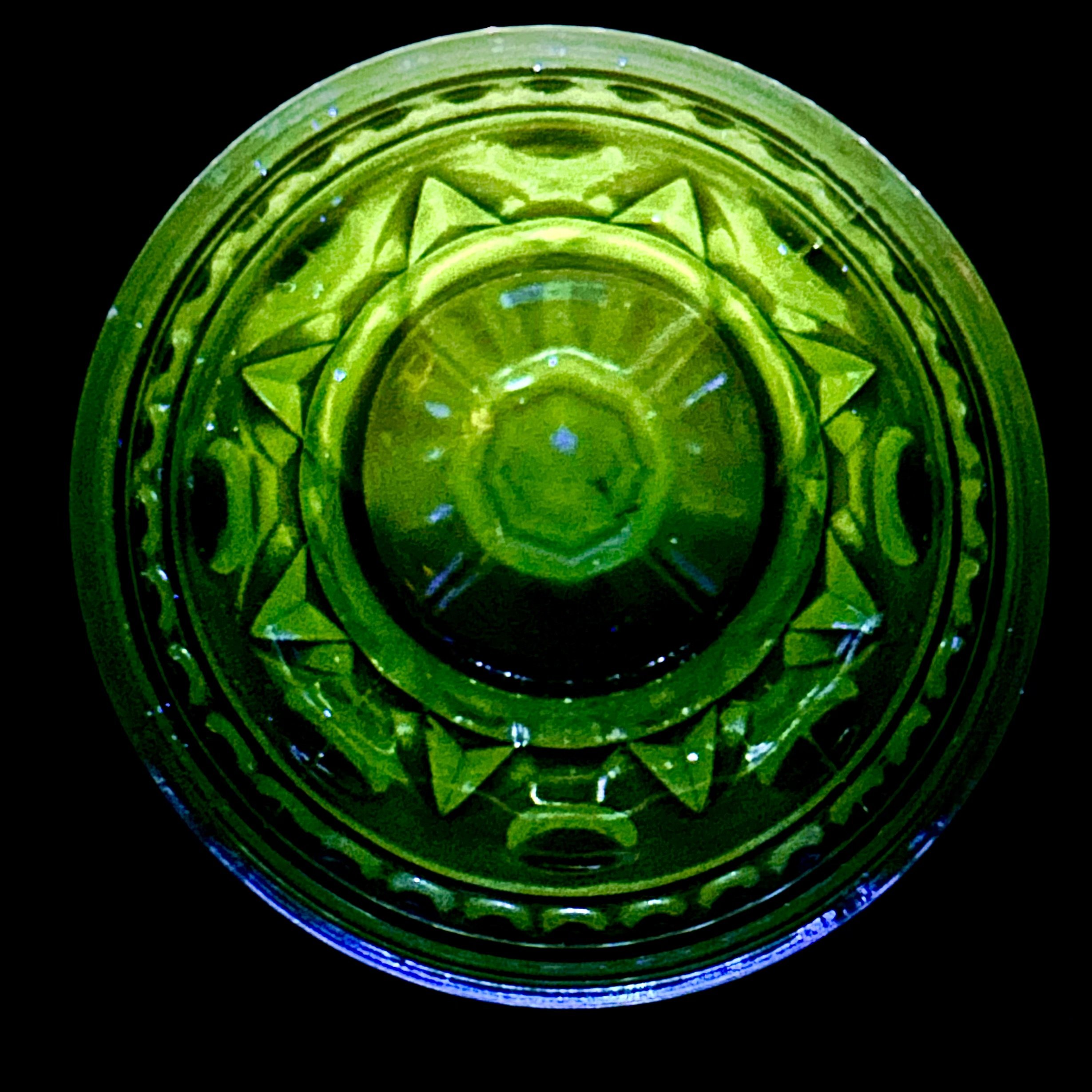
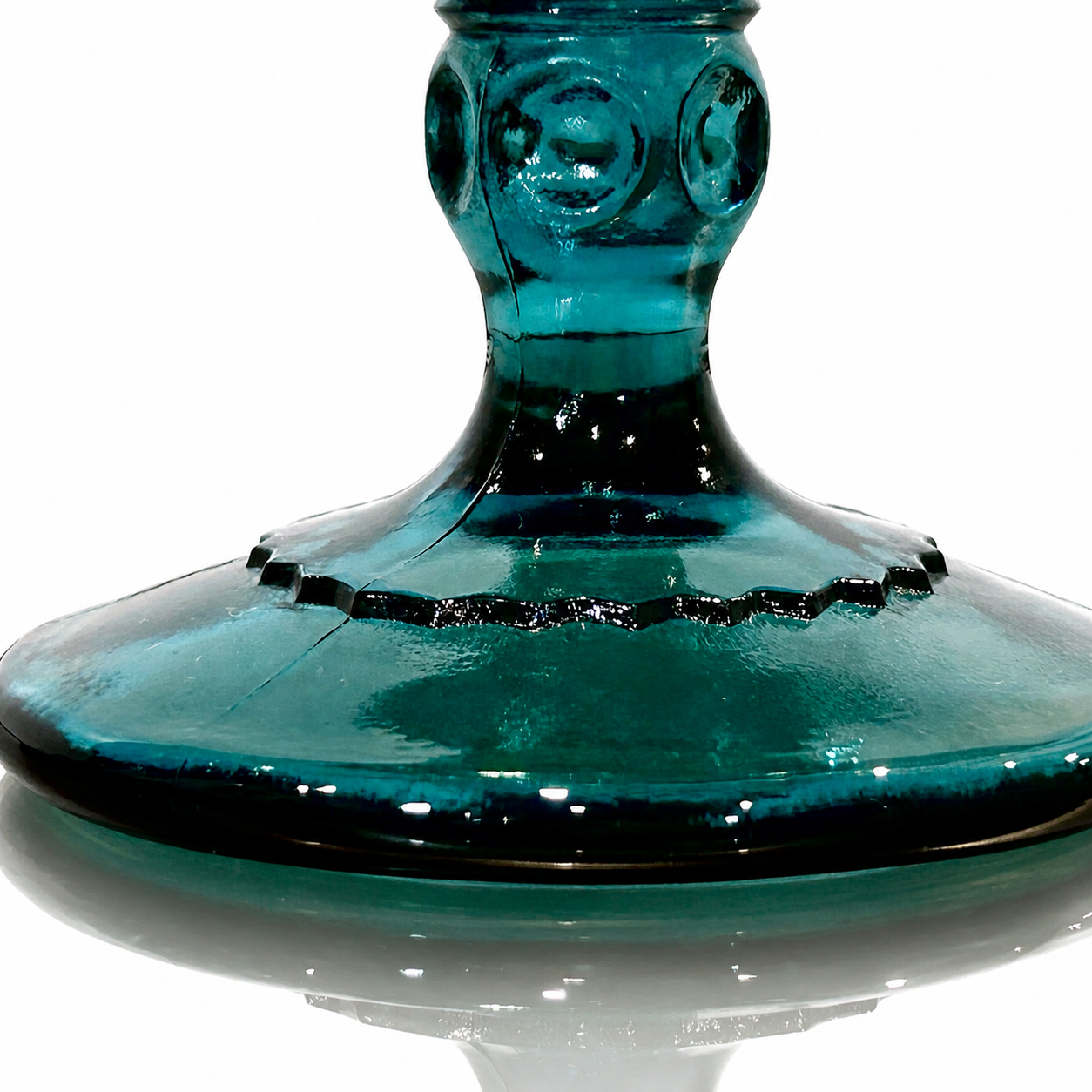
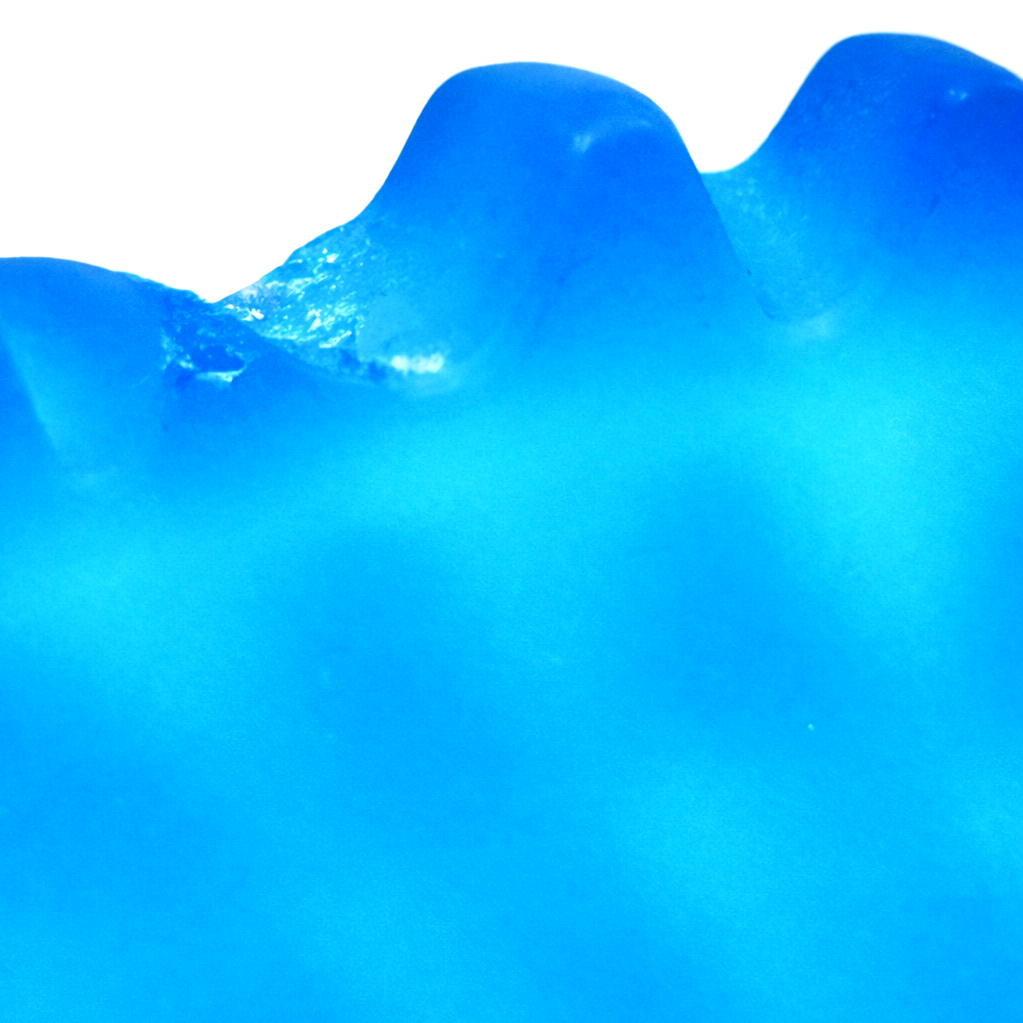
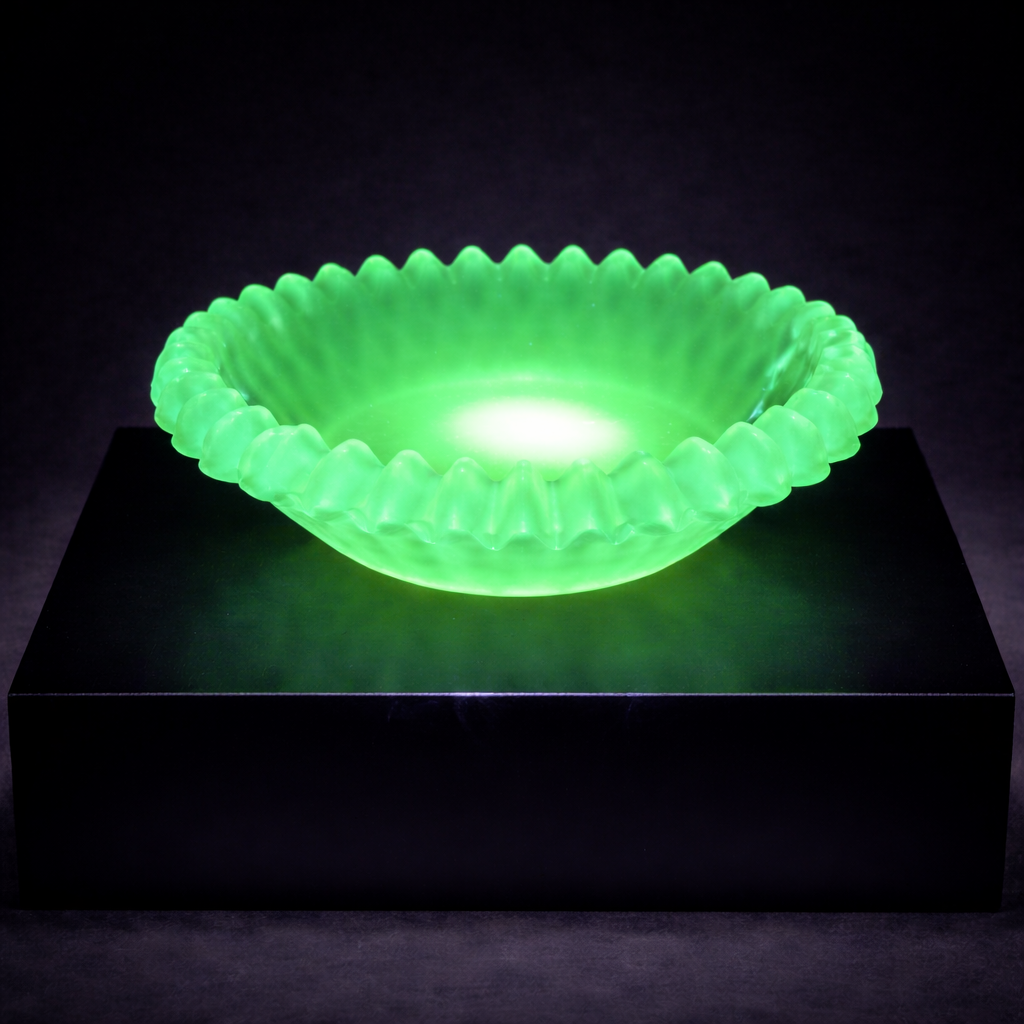
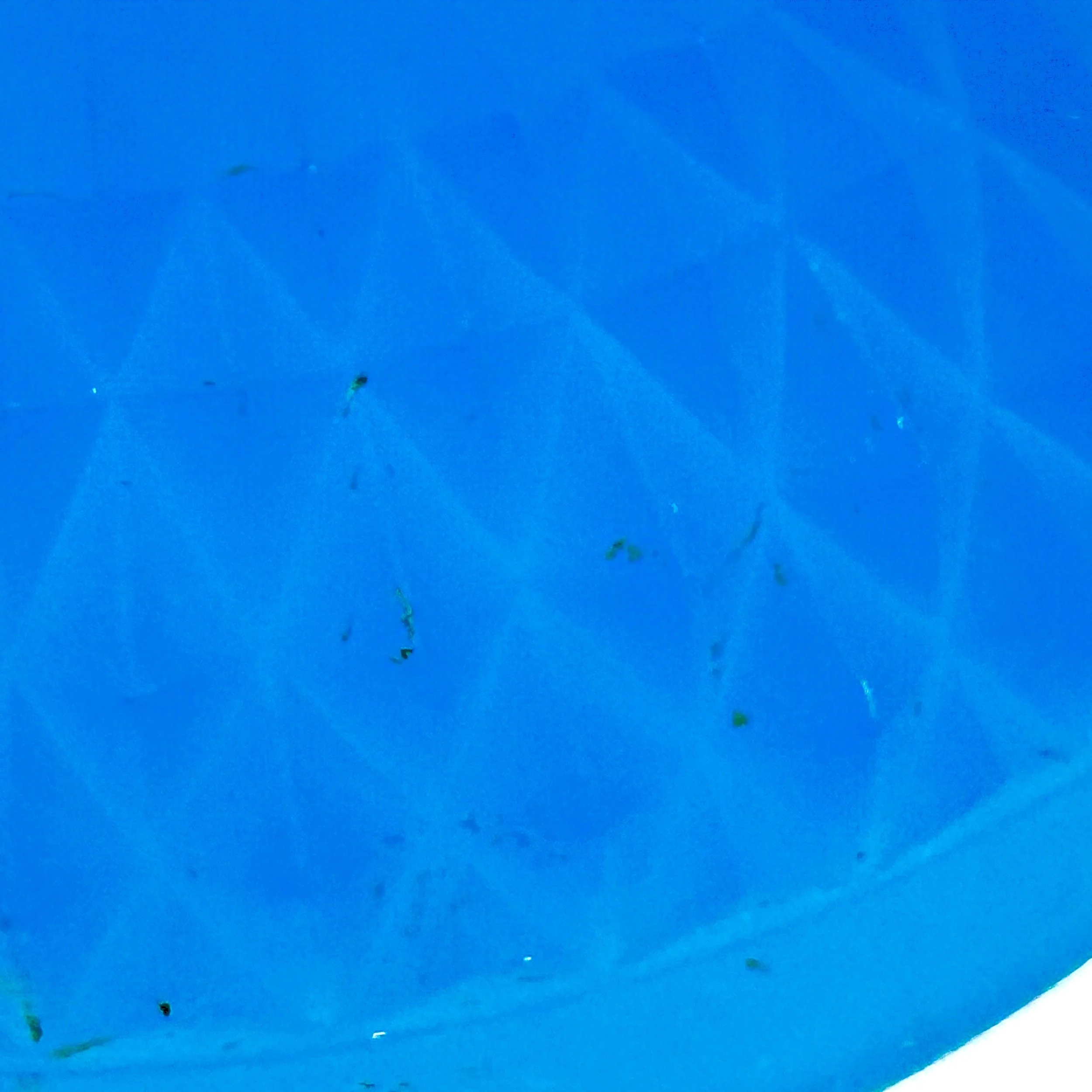
The object is in excellent antique condition. Clinical observation reveals period-correct manufacturing markers: distinct mold seams and original "hay marks" (fine cooling lines) inherent to late 19th-century pressing techniques. Notably, the glass exhibits a strong green-yellow fluorescence under UV light, confirming an early chemical formulation. No post-production chips, cracks, or restorations are observed.
Authenticity & Construction
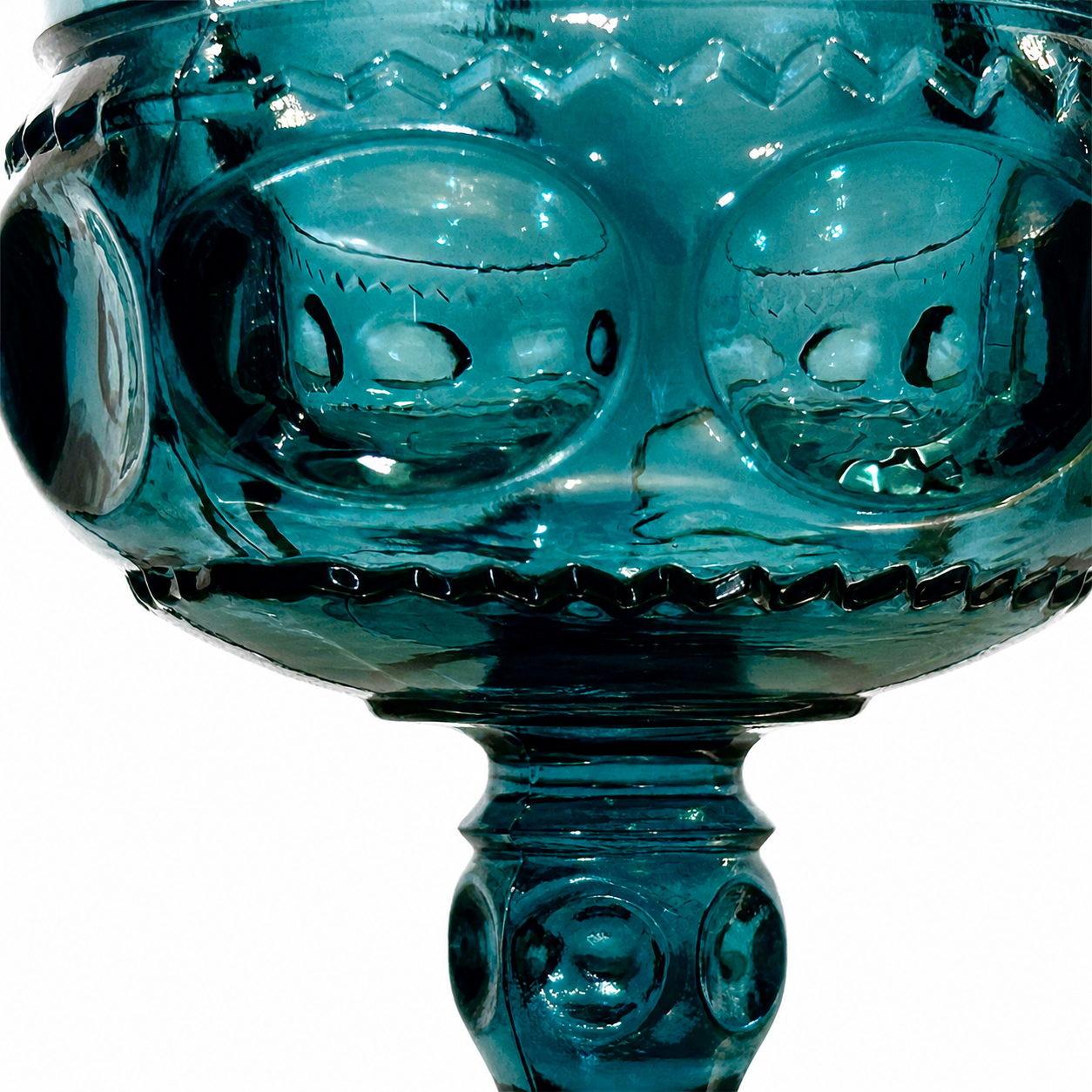
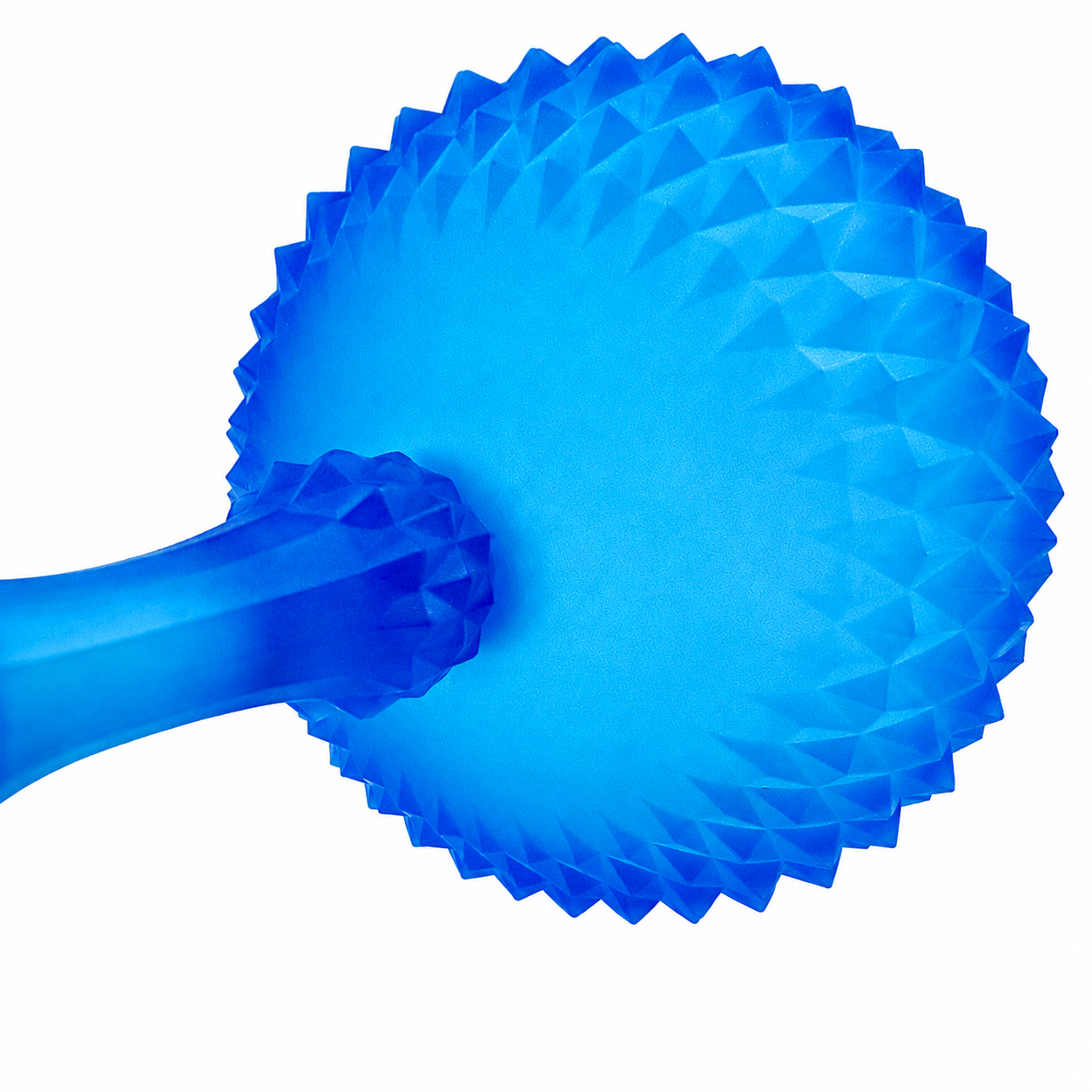
Produced using the mechanical pressing method, this piece was designed to emulate the sharp facets of expensive hand-cut crystal. The clarity of the turquoise tint and the preservation of the sharp points in the relief reflect the superior mold integrity of early American industrial glassmaking.
Placement
The rare turquoise tonality makes this an ideal focal point for an ocean-inspired palette, a curated library shelving unit, or as a sophisticated textural contrast in a modern, neutral interior.
STANDARD ATTRIBUTION & VALUE DISCLOSURE
This piece is described to the best of current scholarly and market knowledge. Any maker or regional attribution is based on visual analysis, materials, construction techniques, and documented stylistic comparisons. As with many MCM and antique design objects, definitive attribution may not be possible without original labels or factory records. Pricing reflects condition, quality, decorative appeal, and current collector demand rather than guaranteed maker identification.
The "Electric Blue" 19th-Century Discovery
The Glow is Real.
Rarely do we find a piece that bridges the gap between Victorian industrial artistry and modern "electric" aesthetics quite like this. This 1880s Diamond Point candlestick isn't just blue—it’s a high-saturation Turquoise that practically vibrates in natural light.
But the real magic happens after hours. Swipe to see the "smoking gun" of 19th-century glassmaking: a stunning green-yellow UV fluorescence caused by early mineral formulations.
Featuring authentic "hay marks" and crisp mold seams that tell a 140-year-old story, this isn't just a candlestick—it's a sculptural artifact for the serious collector of Early American Pattern Glass.
Highlights:
• Period: Late 19th Century (c. 1880s)
• Color: Rare Electric Turquoise
• Effect: Strong UV Reactive Glow
• Form: Geometric Diamond Point Relief
This sculptural candlestick is a vibrant study in 19th-century materiality, featuring a saturated turquoise-blue hue that distinguishes it from standard cobalt examples. The intricate diamond point pattern creates a complex, crystalline interplay of light, refracting illumination across its multi-faceted surface to provide a high-impact decorative presence. Its substantial form and rare color profile make it a compelling architectural accent, offering both historical depth and contemporary aesthetic appeal.
Attribution & Period
Late 19th Century (1880s). This piece is a premier regional example of Early American Pattern Glass (EAPG). The specific geometric mold and "Electric Turquoise" saturation are stylistically aligned with the high-quality production of Adams & Company or similar Pittsburgh-era glasshouses. The attribution is supported by the density of the pattern and the heavy soda-lime glass composition characteristic of the Victorian "Brilliant" period.
Dimensions & Weight
Condition
The object is in excellent antique condition. Clinical observation reveals period-correct manufacturing markers: distinct mold seams and original "hay marks" (fine cooling lines) inherent to late 19th-century pressing techniques. Notably, the glass exhibits a strong green-yellow fluorescence under UV light, confirming an early chemical formulation. No post-production chips, cracks, or restorations are observed.
Authenticity & Construction
Produced using the mechanical pressing method, this piece was designed to emulate the sharp facets of expensive hand-cut crystal. The clarity of the turquoise tint and the preservation of the sharp points in the relief reflect the superior mold integrity of early American industrial glassmaking.
Placement
The rare turquoise tonality makes this an ideal focal point for an ocean-inspired palette, a curated library shelving unit, or as a sophisticated textural contrast in a modern, neutral interior.
STANDARD ATTRIBUTION & VALUE DISCLOSURE
This piece is described to the best of current scholarly and market knowledge. Any maker or regional attribution is based on visual analysis, materials, construction techniques, and documented stylistic comparisons. As with many MCM and antique design objects, definitive attribution may not be possible without original labels or factory records. Pricing reflects condition, quality, decorative appeal, and current collector demand rather than guaranteed maker identification.
The "Electric Blue" 19th-Century Discovery
The Glow is Real.
Rarely do we find a piece that bridges the gap between Victorian industrial artistry and modern "electric" aesthetics quite like this. This 1880s Diamond Point candlestick isn't just blue—it’s a high-saturation Turquoise that practically vibrates in natural light.
But the real magic happens after hours. Swipe to see the "smoking gun" of 19th-century glassmaking: a stunning green-yellow UV fluorescence caused by early mineral formulations.
Featuring authentic "hay marks" and crisp mold seams that tell a 140-year-old story, this isn't just a candlestick—it's a sculptural artifact for the serious collector of Early American Pattern Glass.
Highlights:
• Period: Late 19th Century (c. 1880s)
• Color: Rare Electric Turquoise
• Effect: Strong UV Reactive Glow
• Form: Geometric Diamond Point Relief

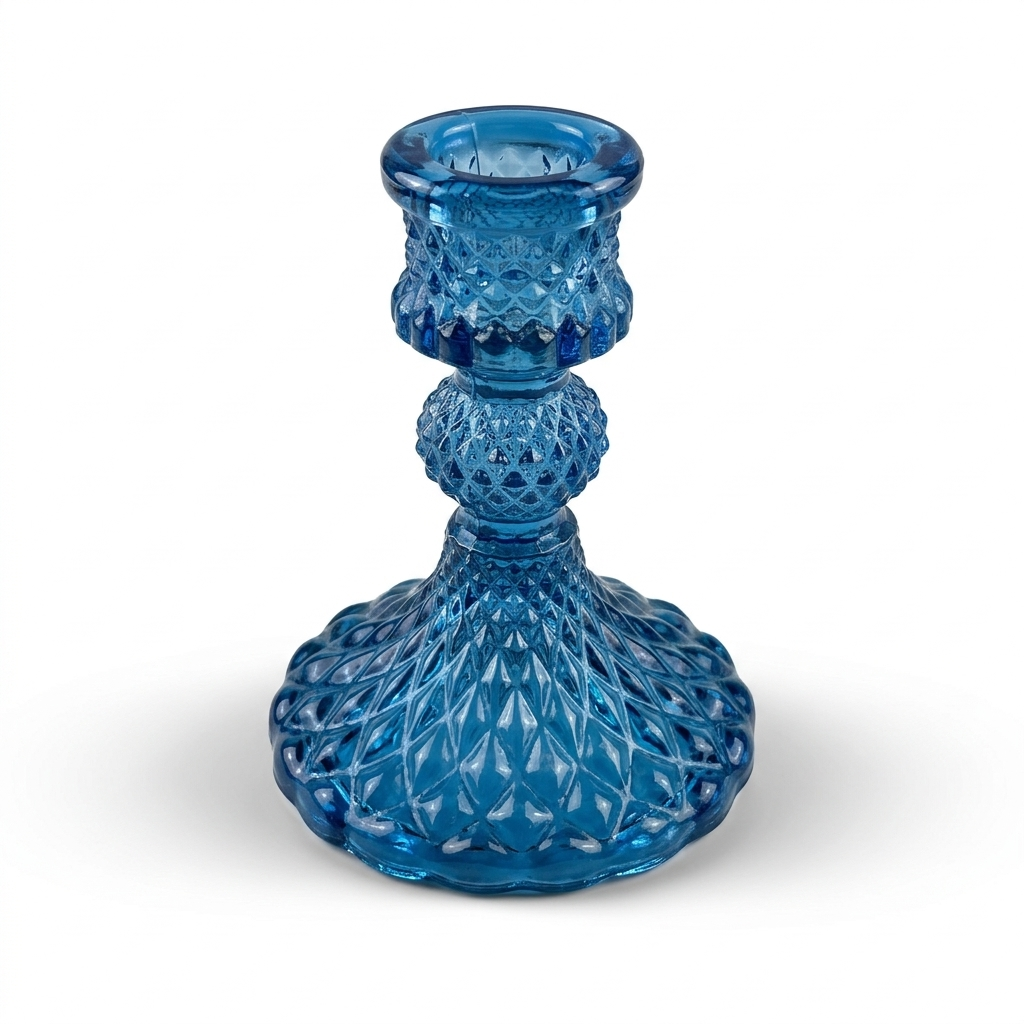 Image 1 of 13
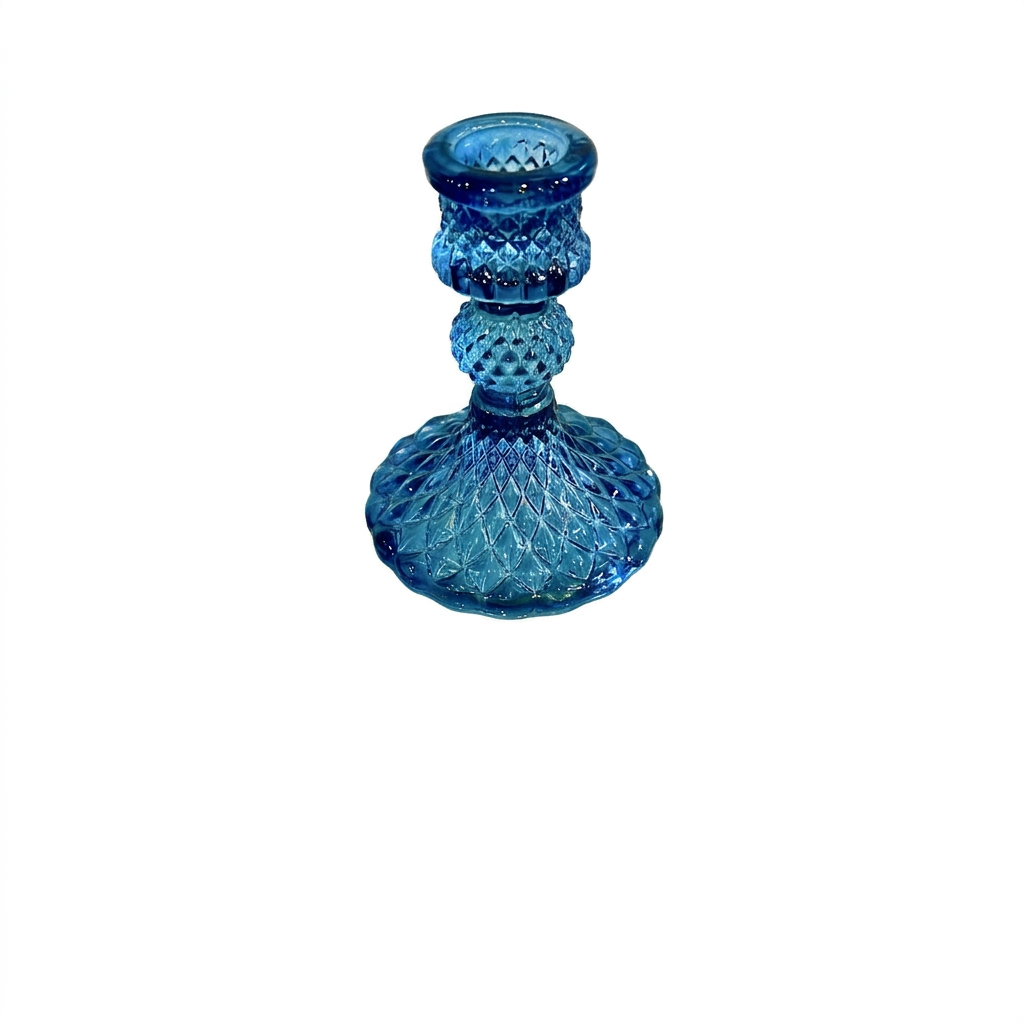 Image 2 of 13
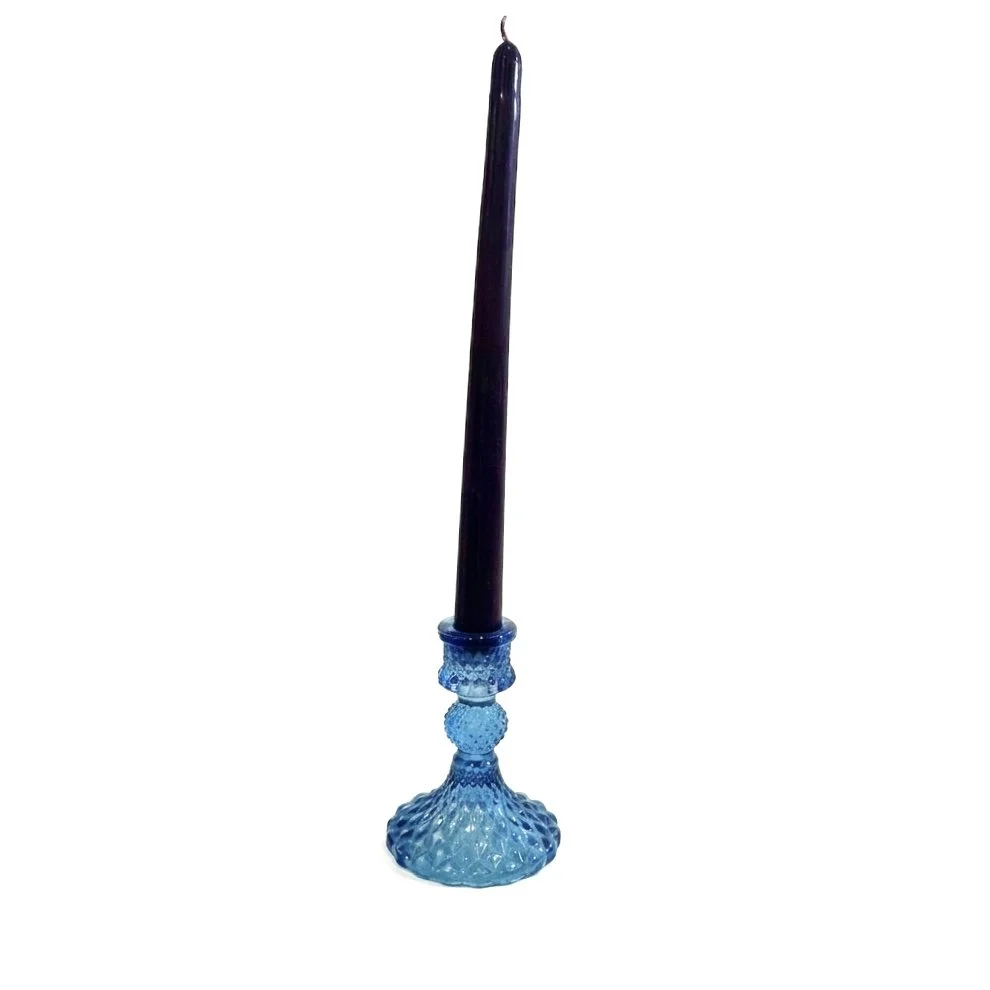 Image 3 of 13
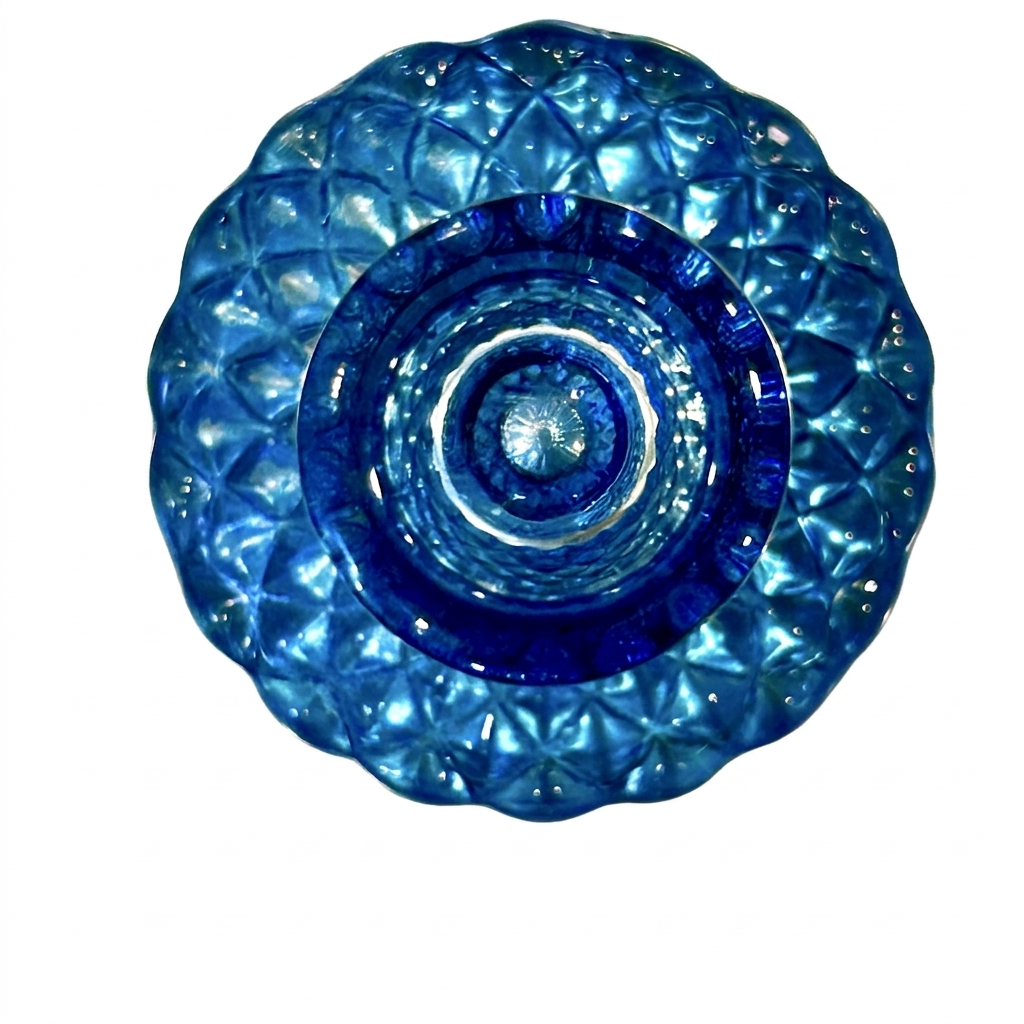 Image 4 of 13
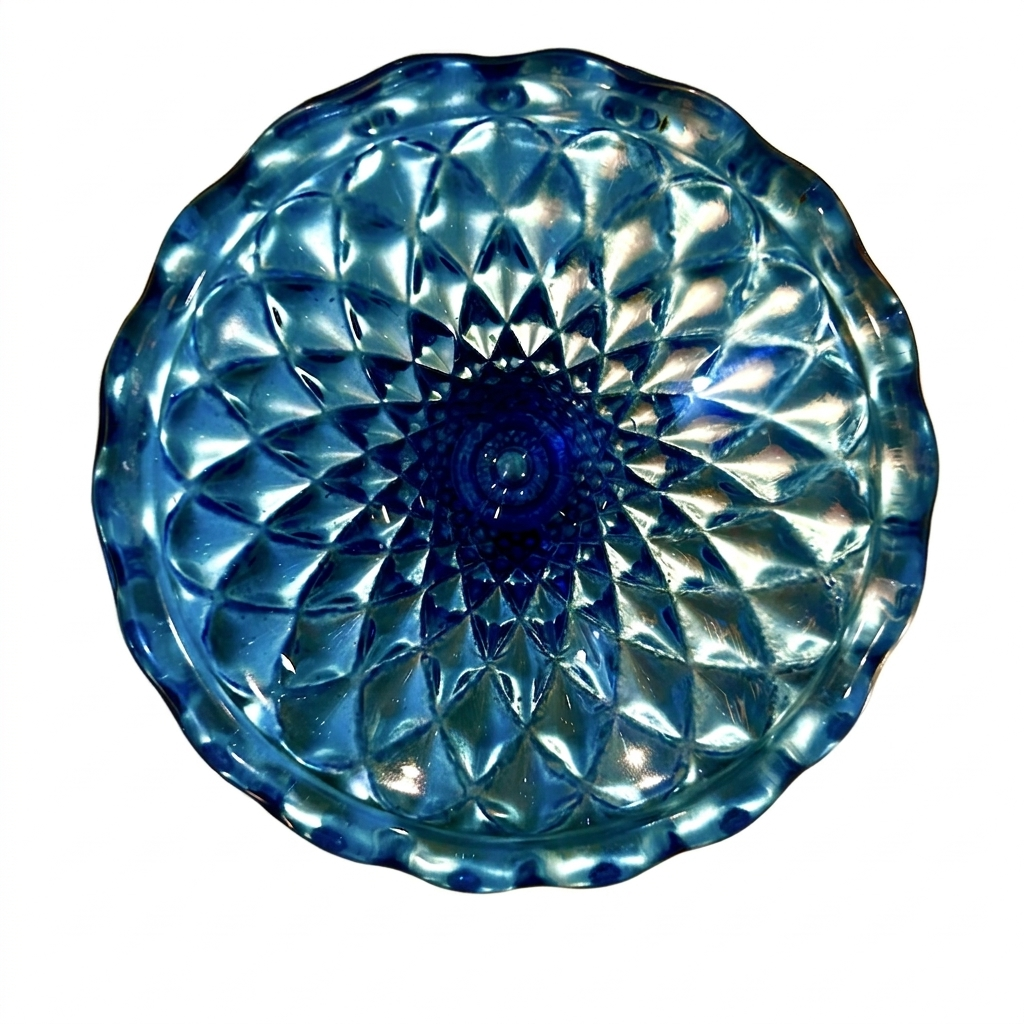 Image 5 of 13
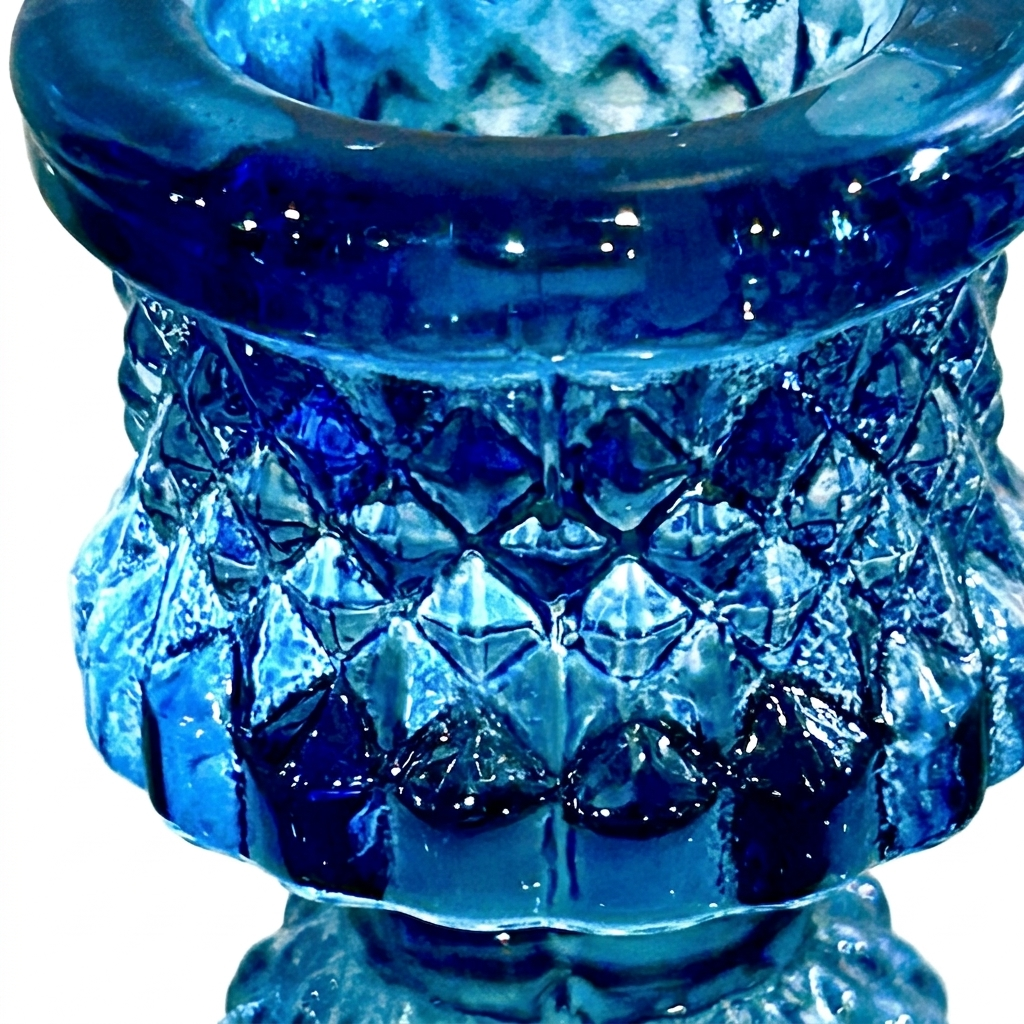 Image 6 of 13
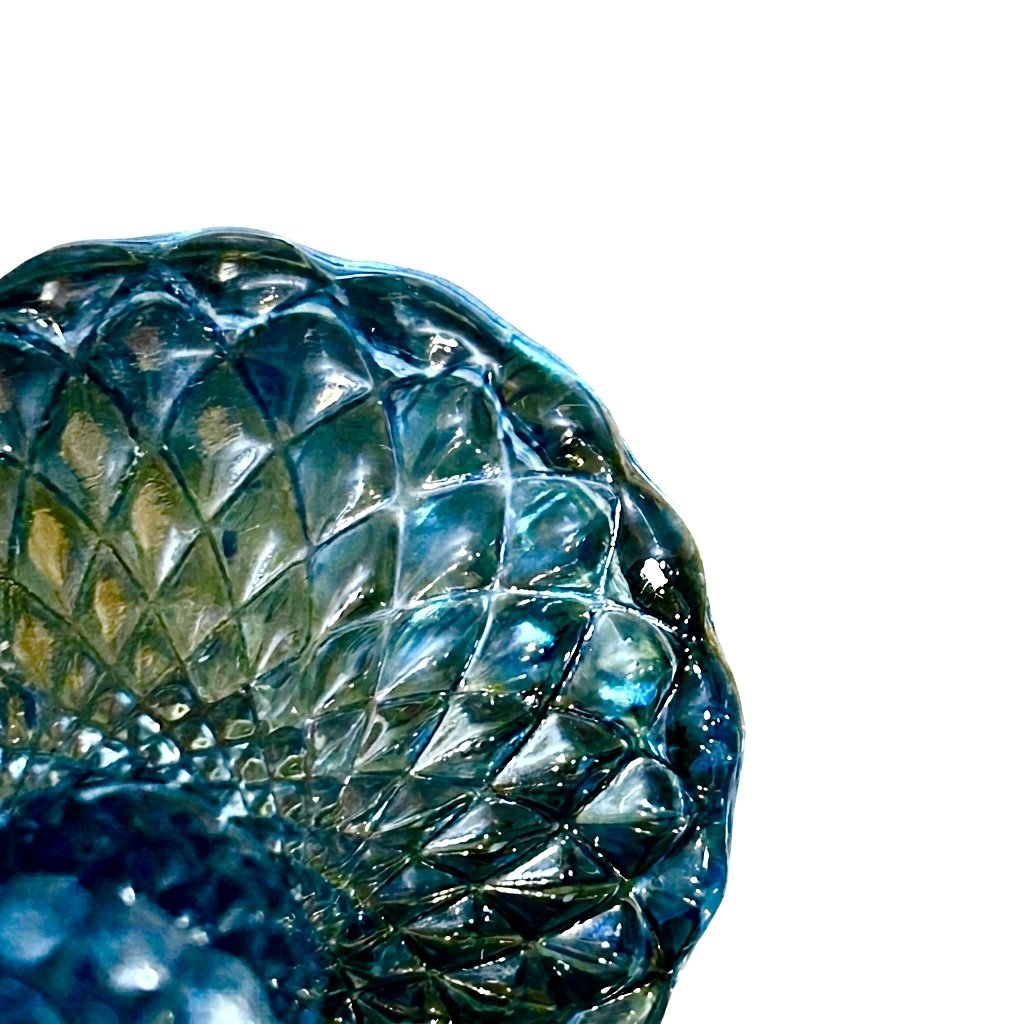 Image 7 of 13
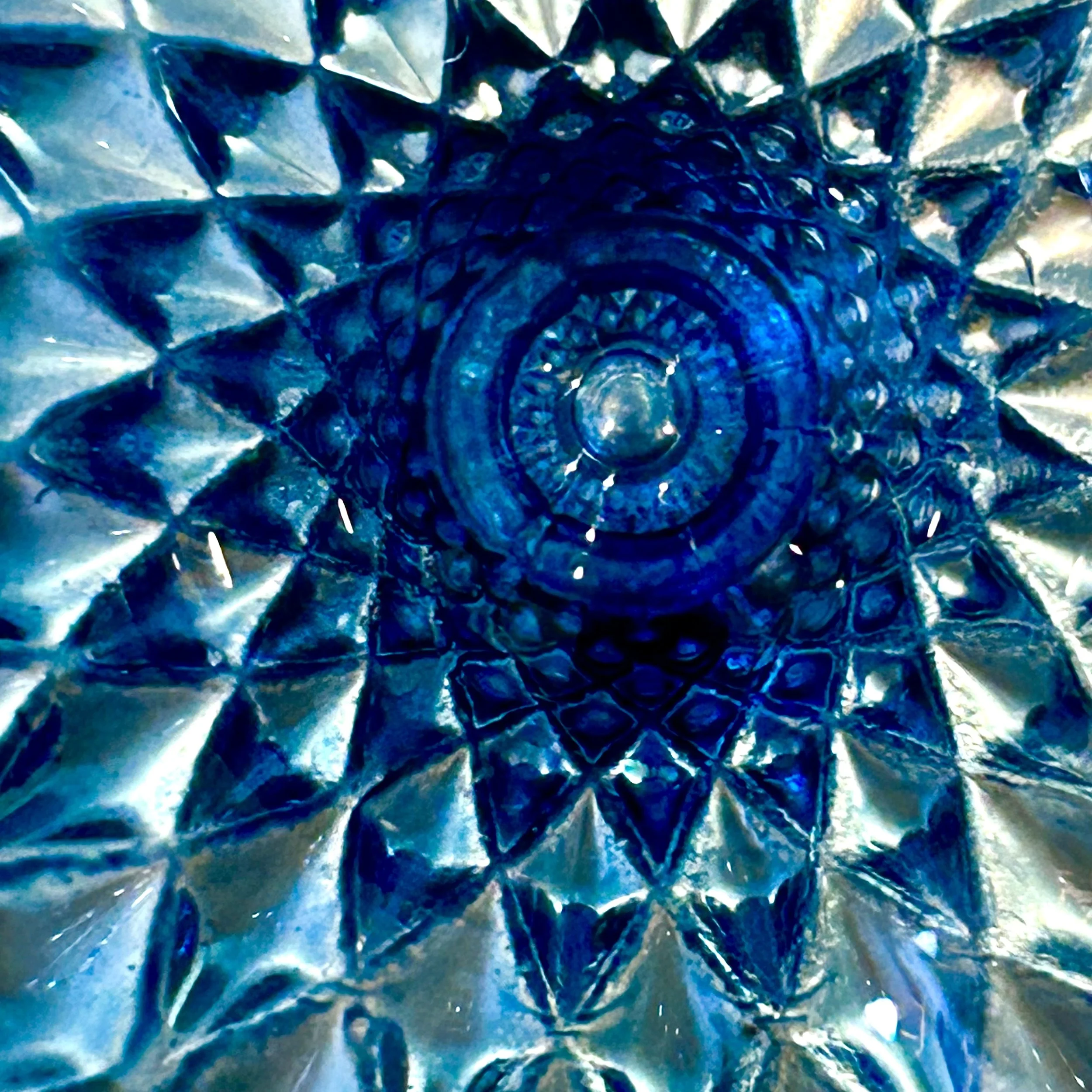 Image 8 of 13
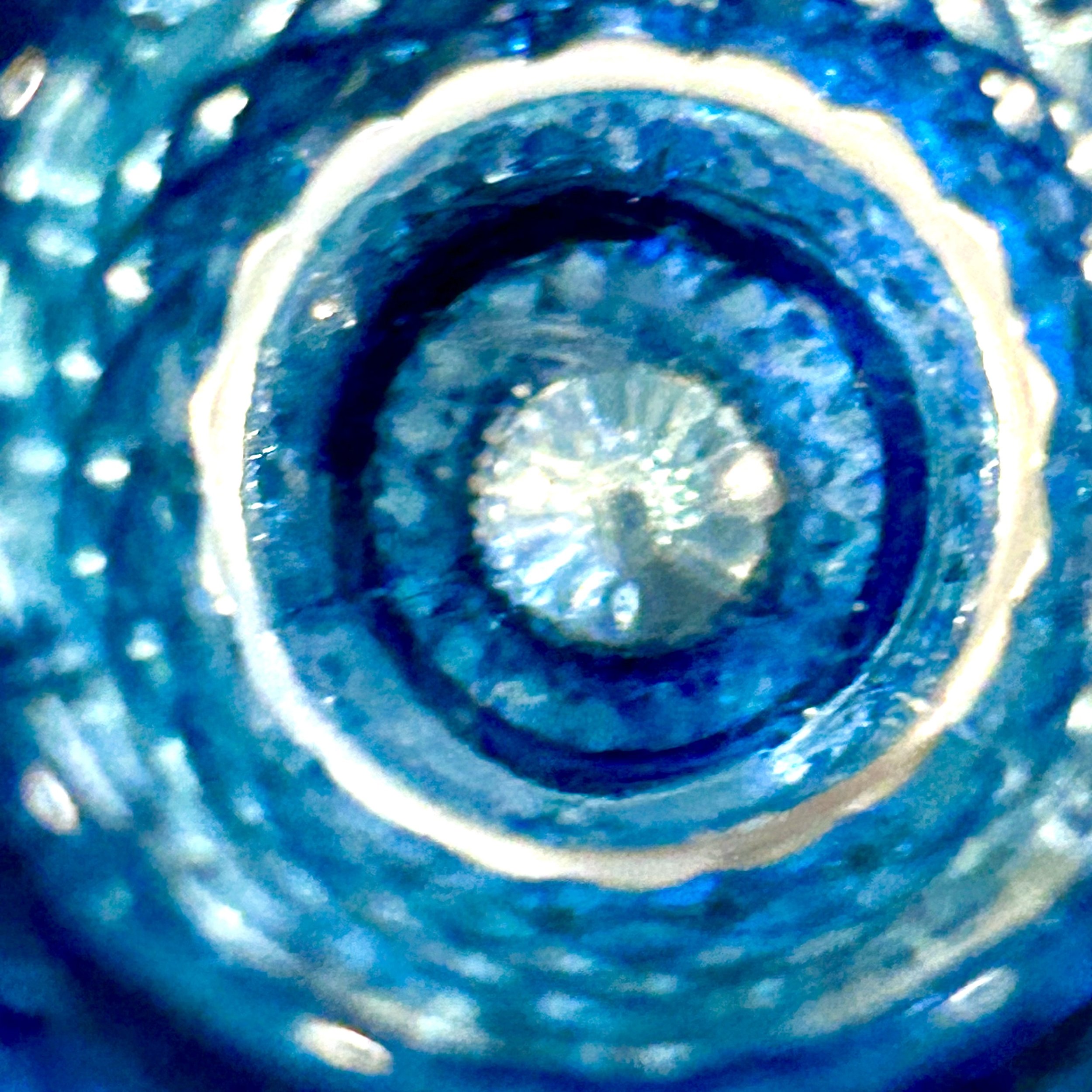 Image 9 of 13
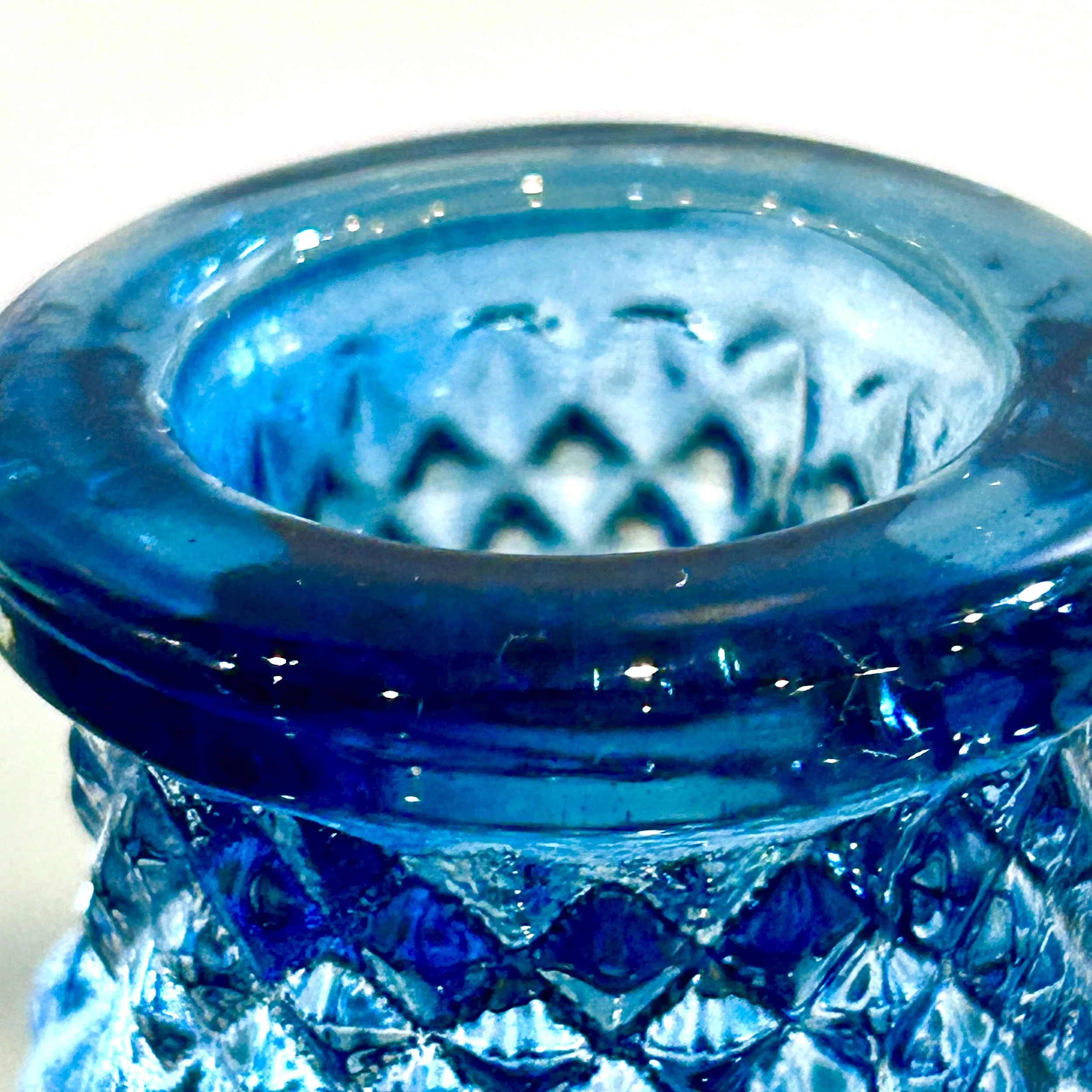 Image 10 of 13
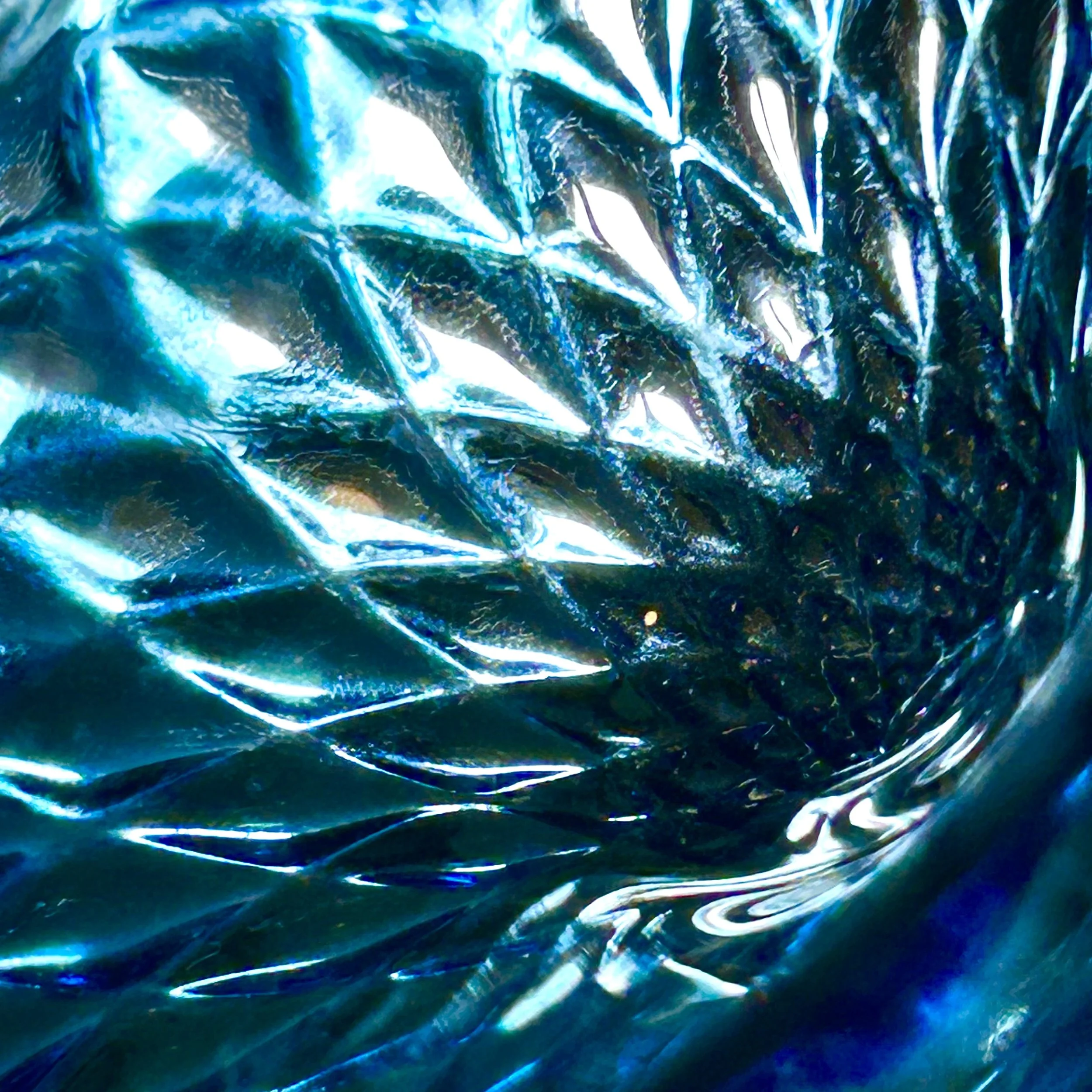 Image 11 of 13
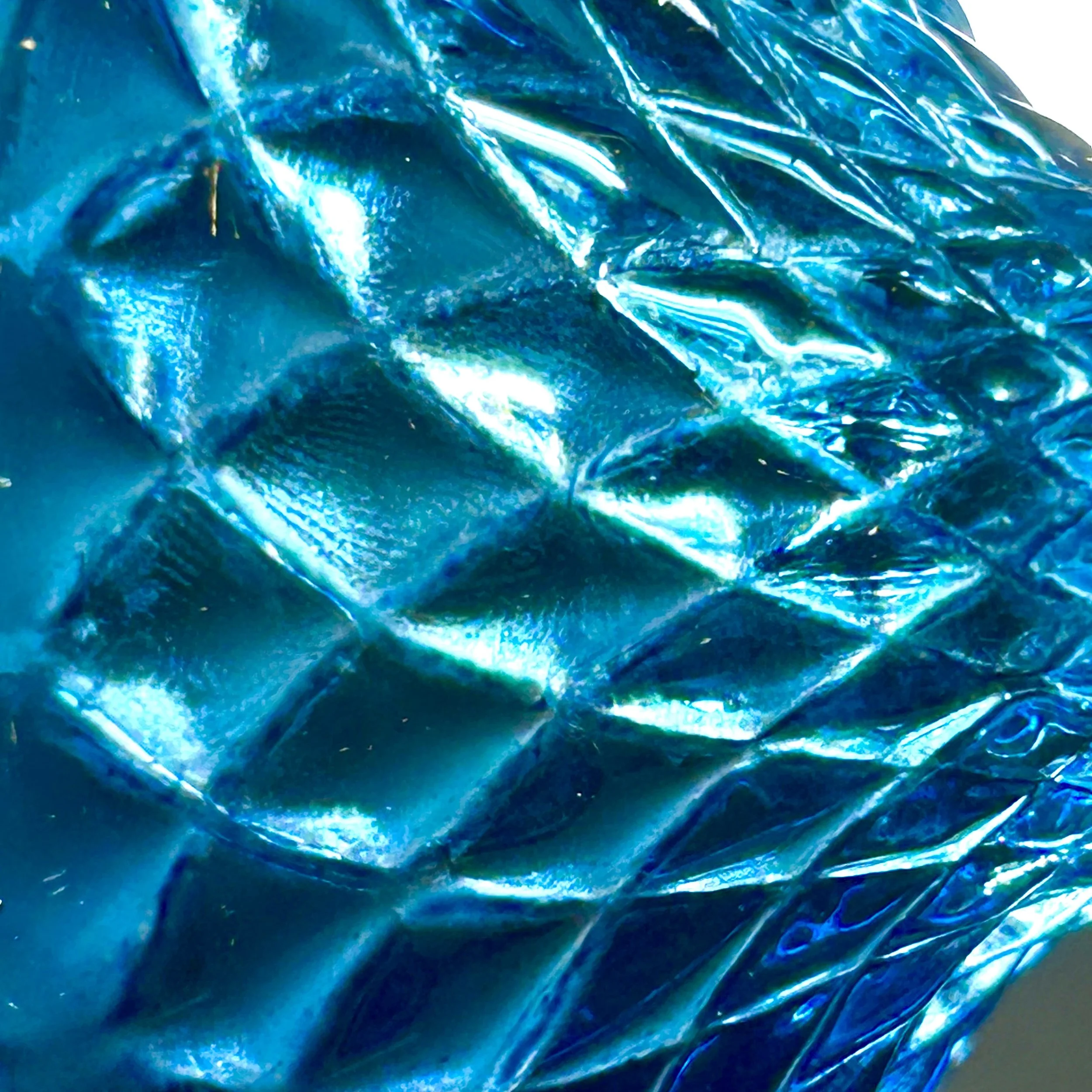 Image 12 of 13
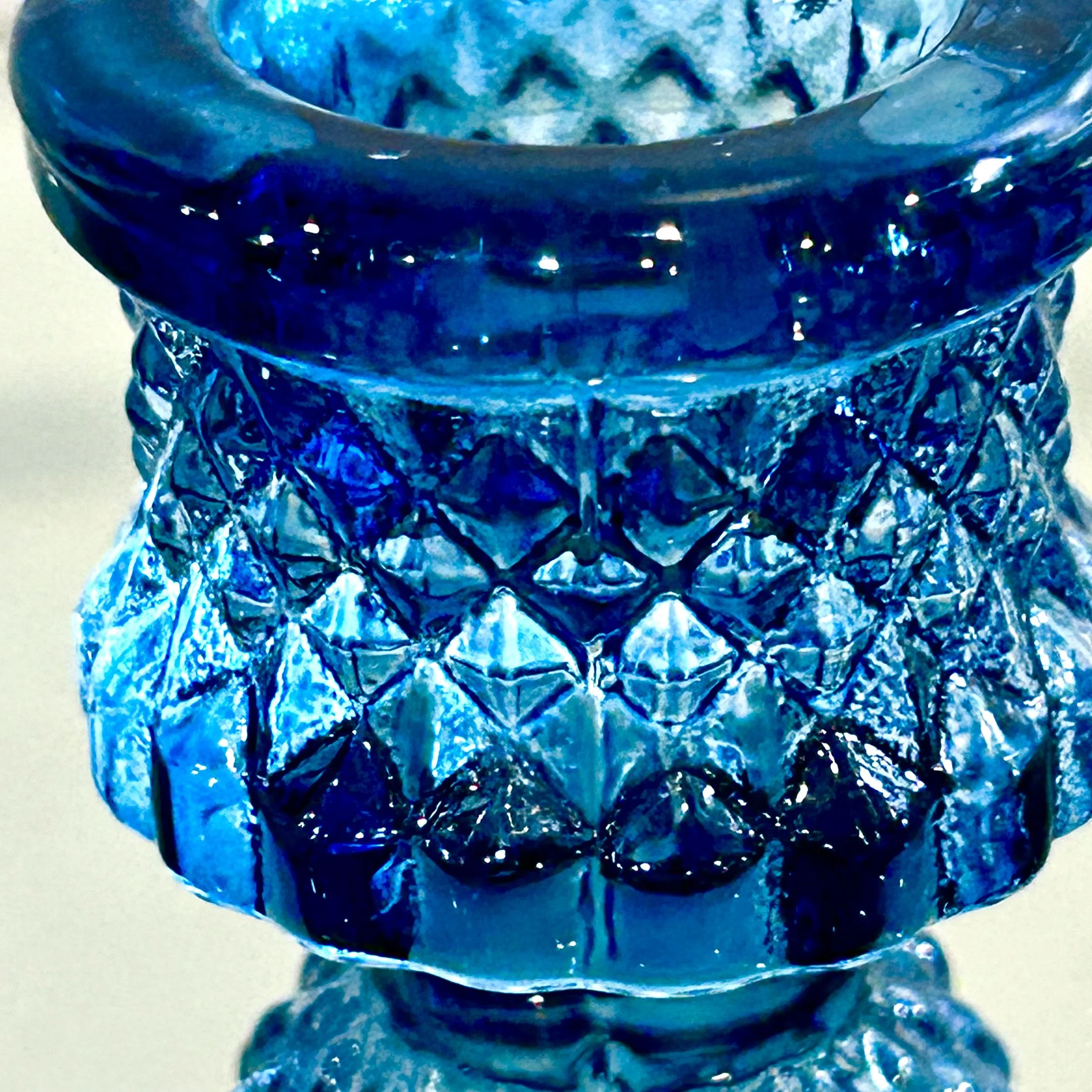 Image 13 of 13