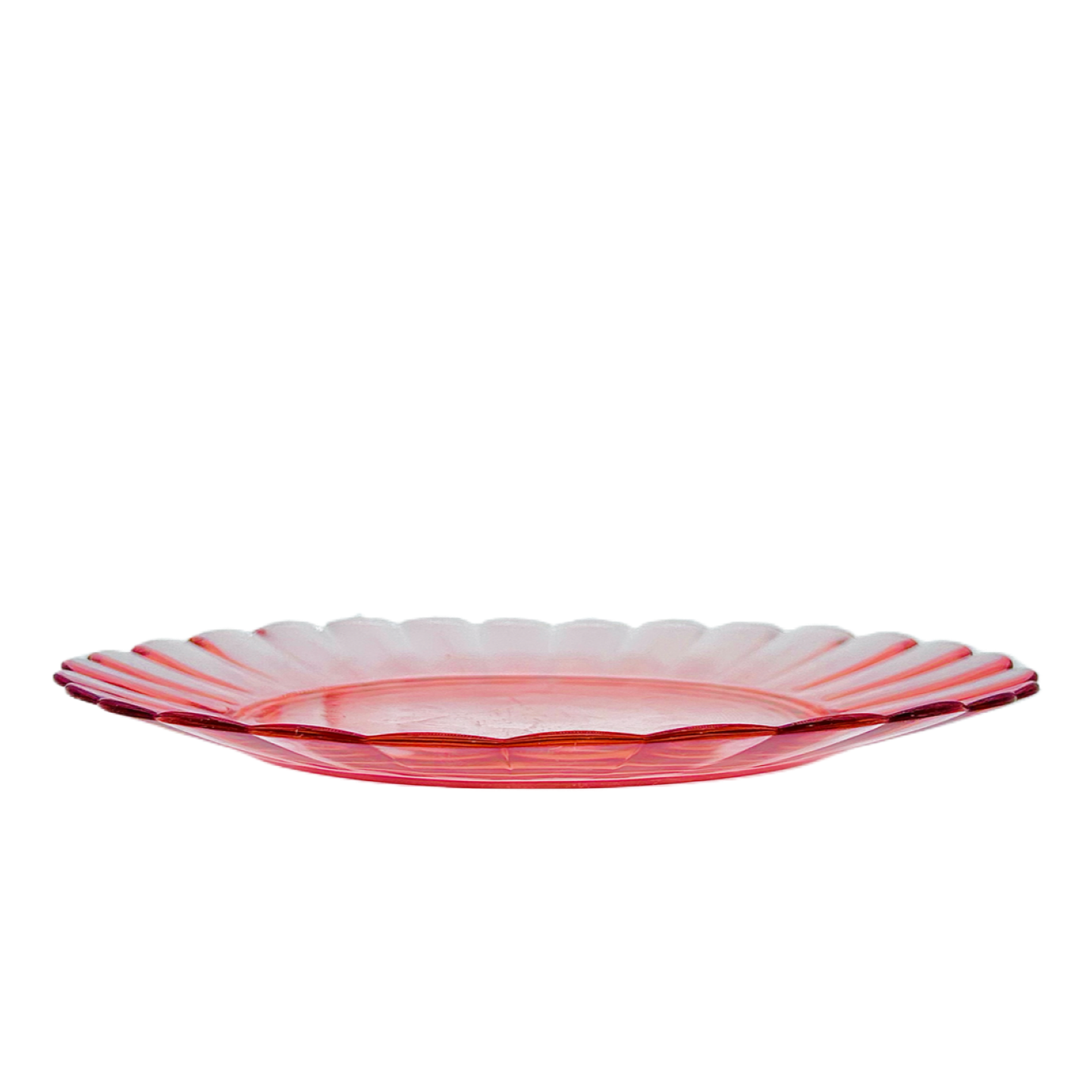
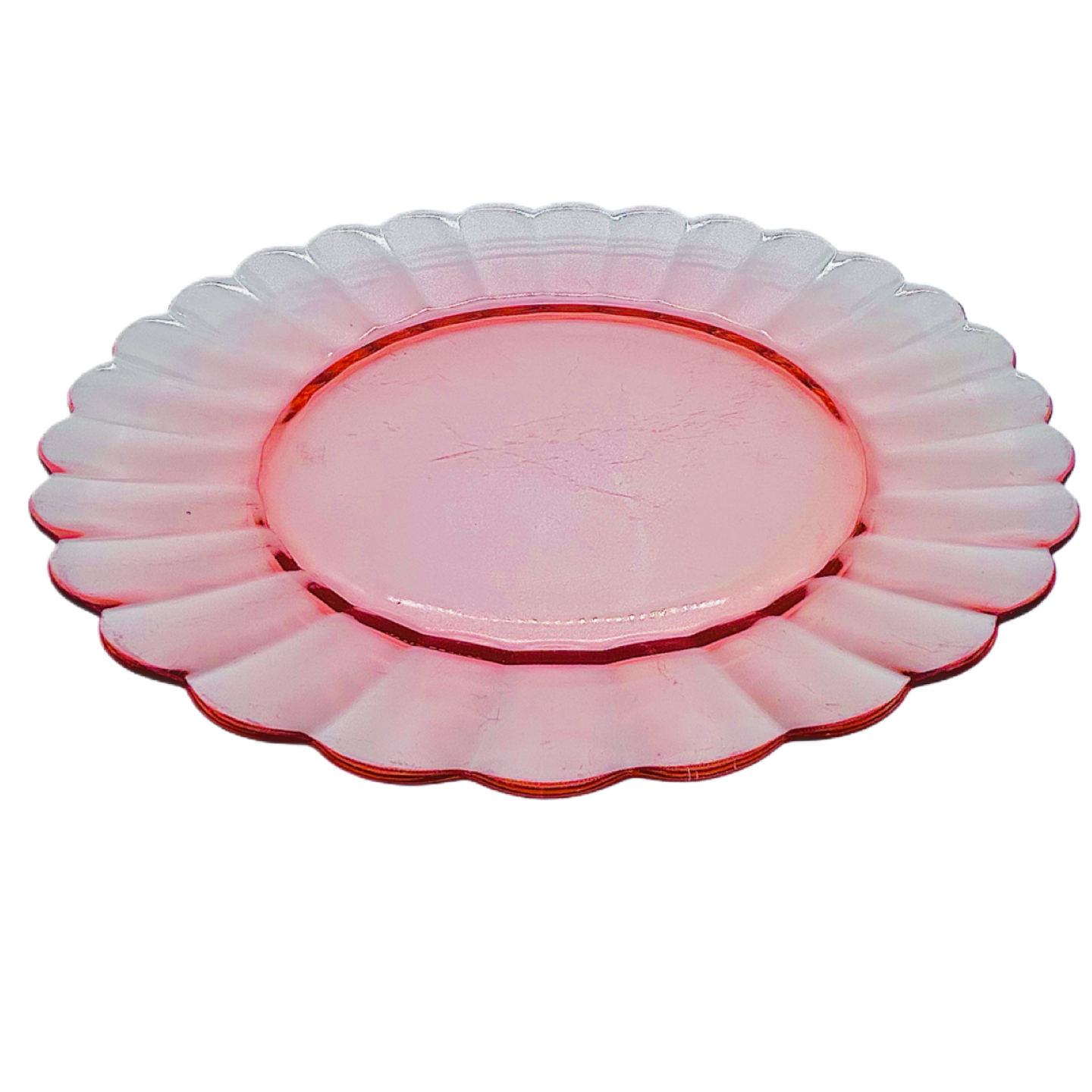
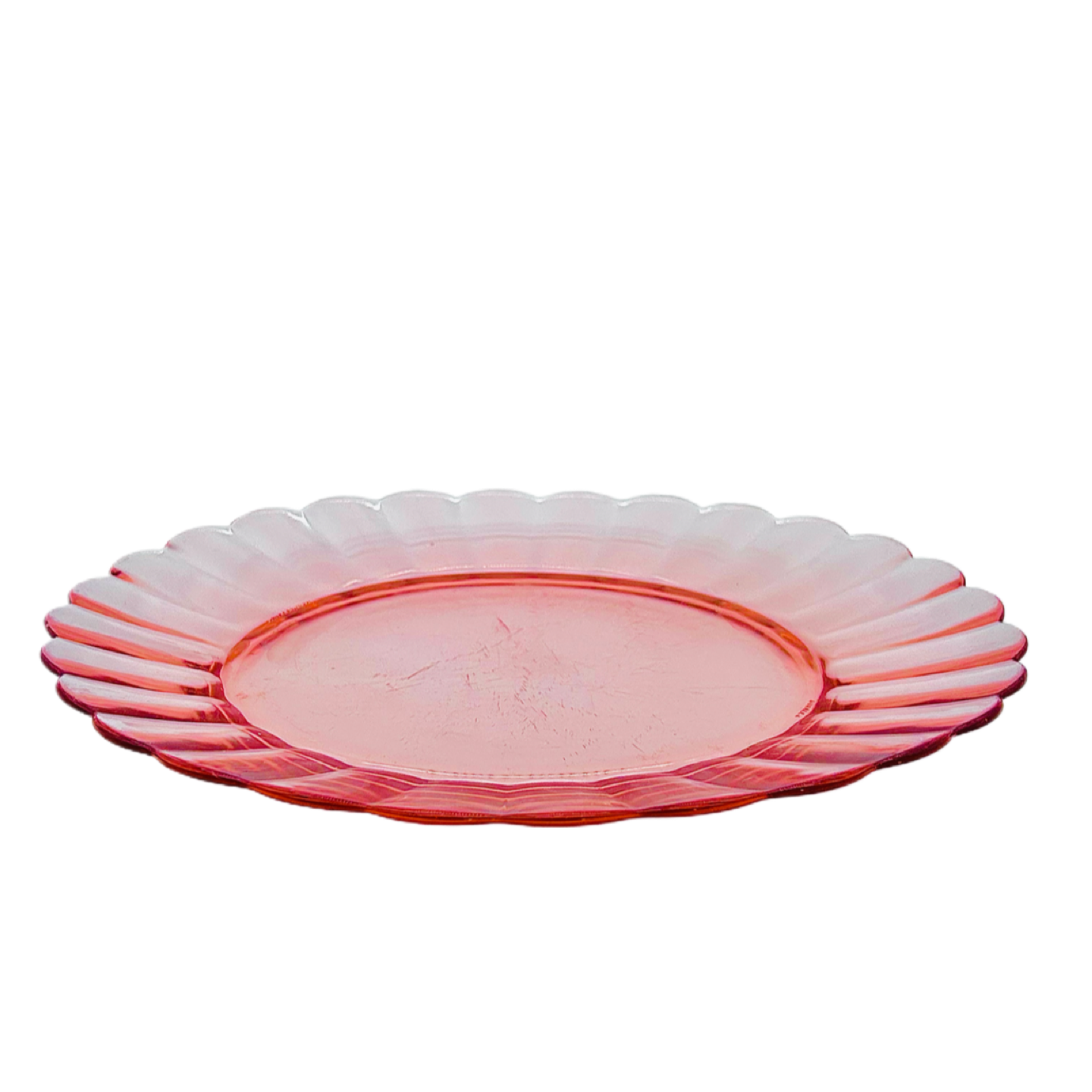
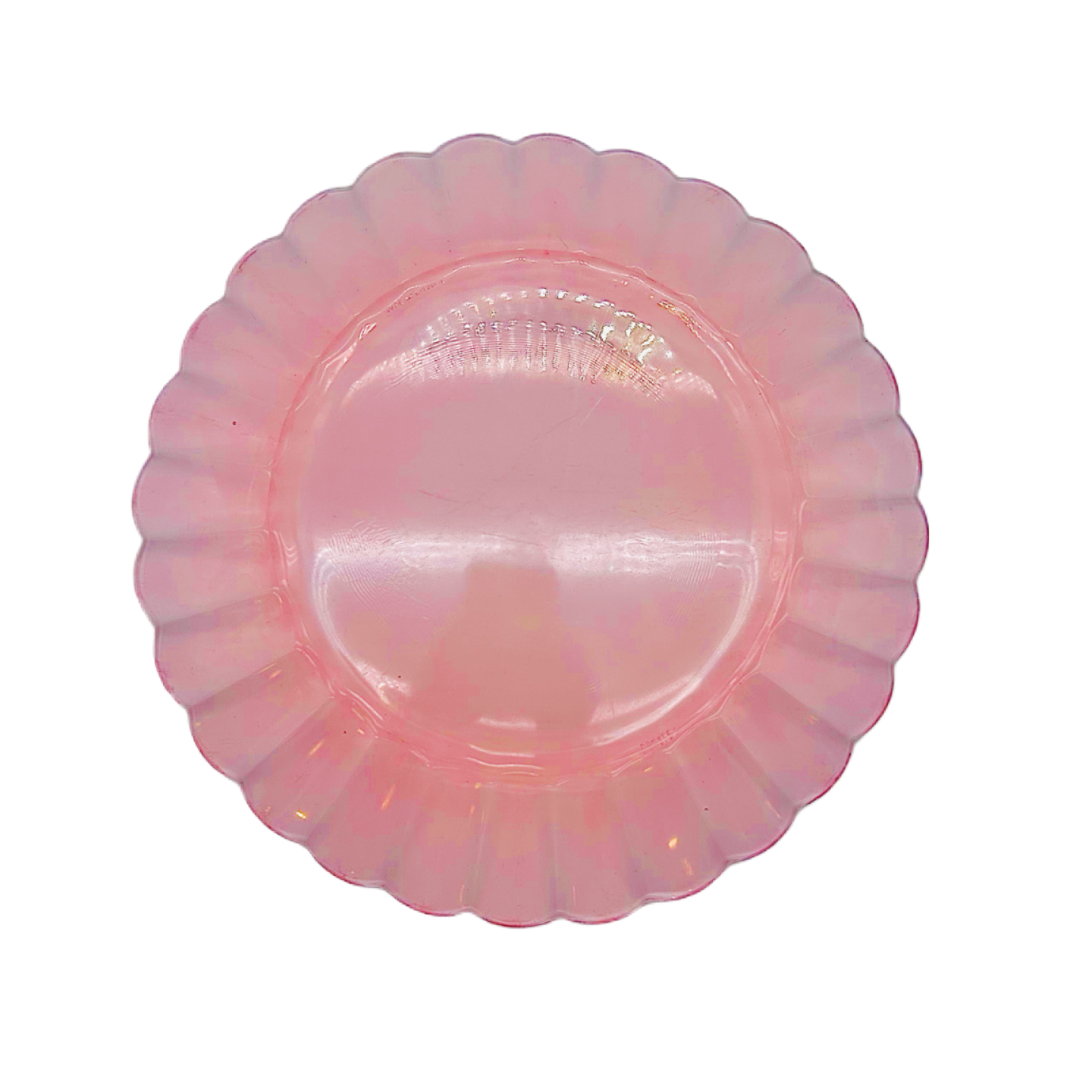
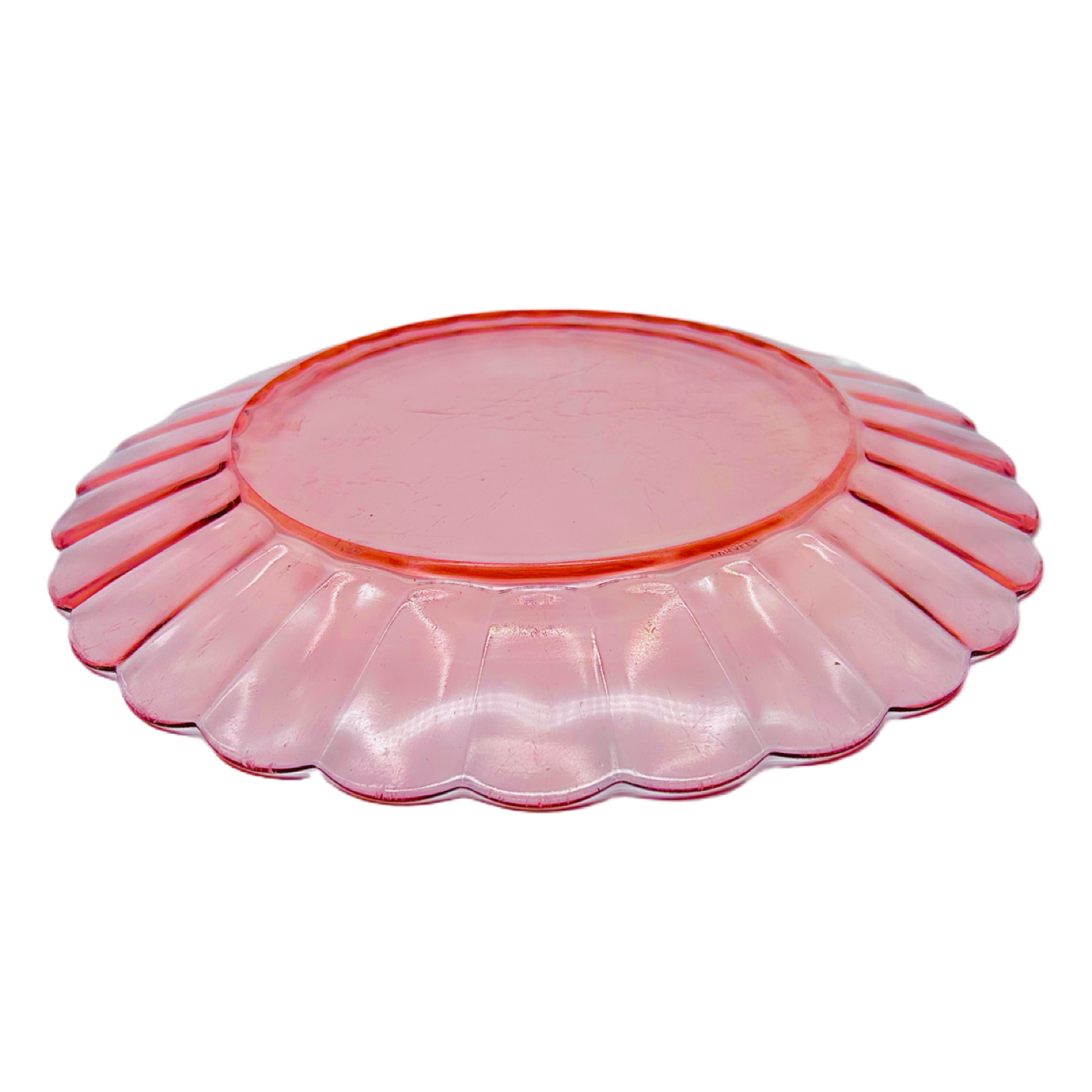
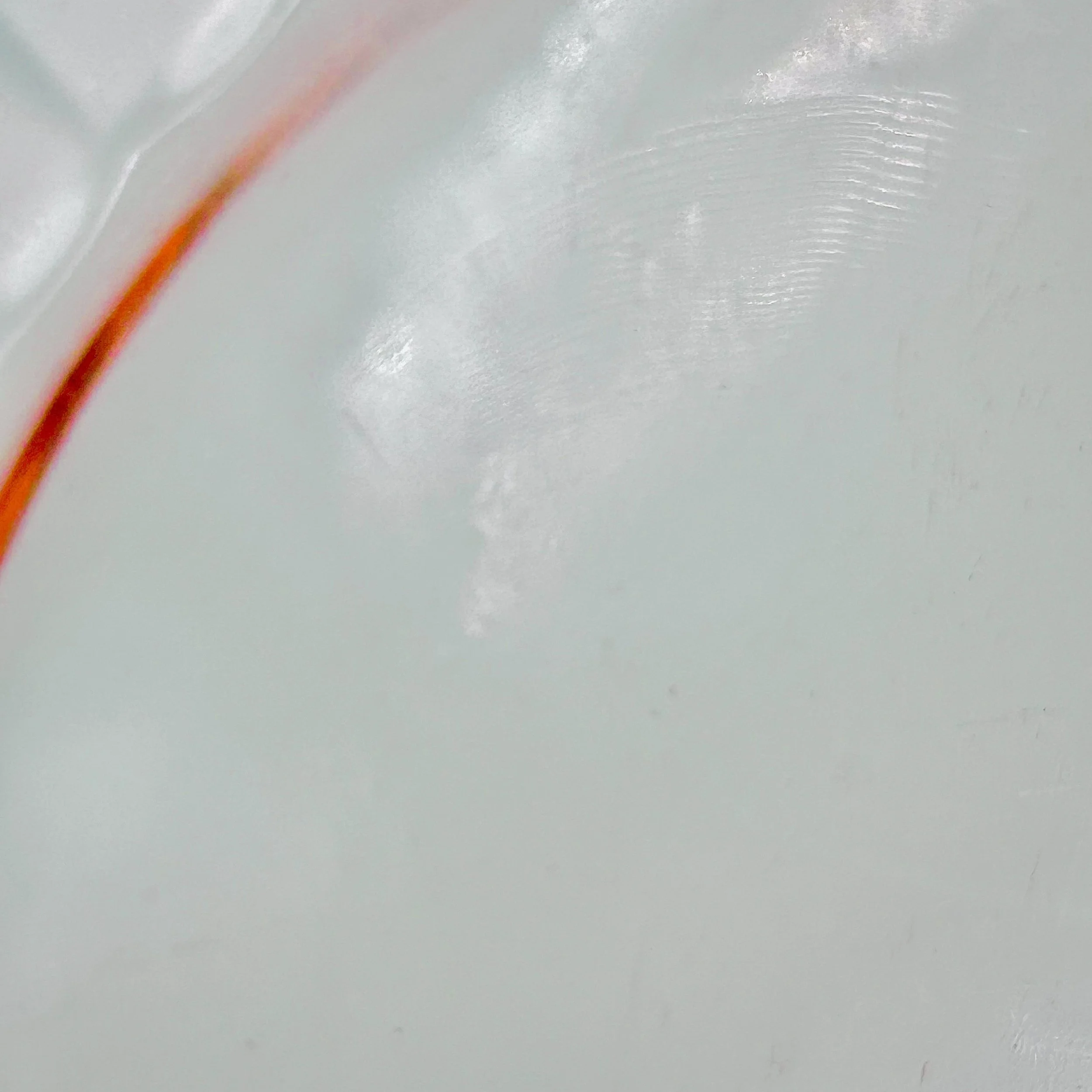
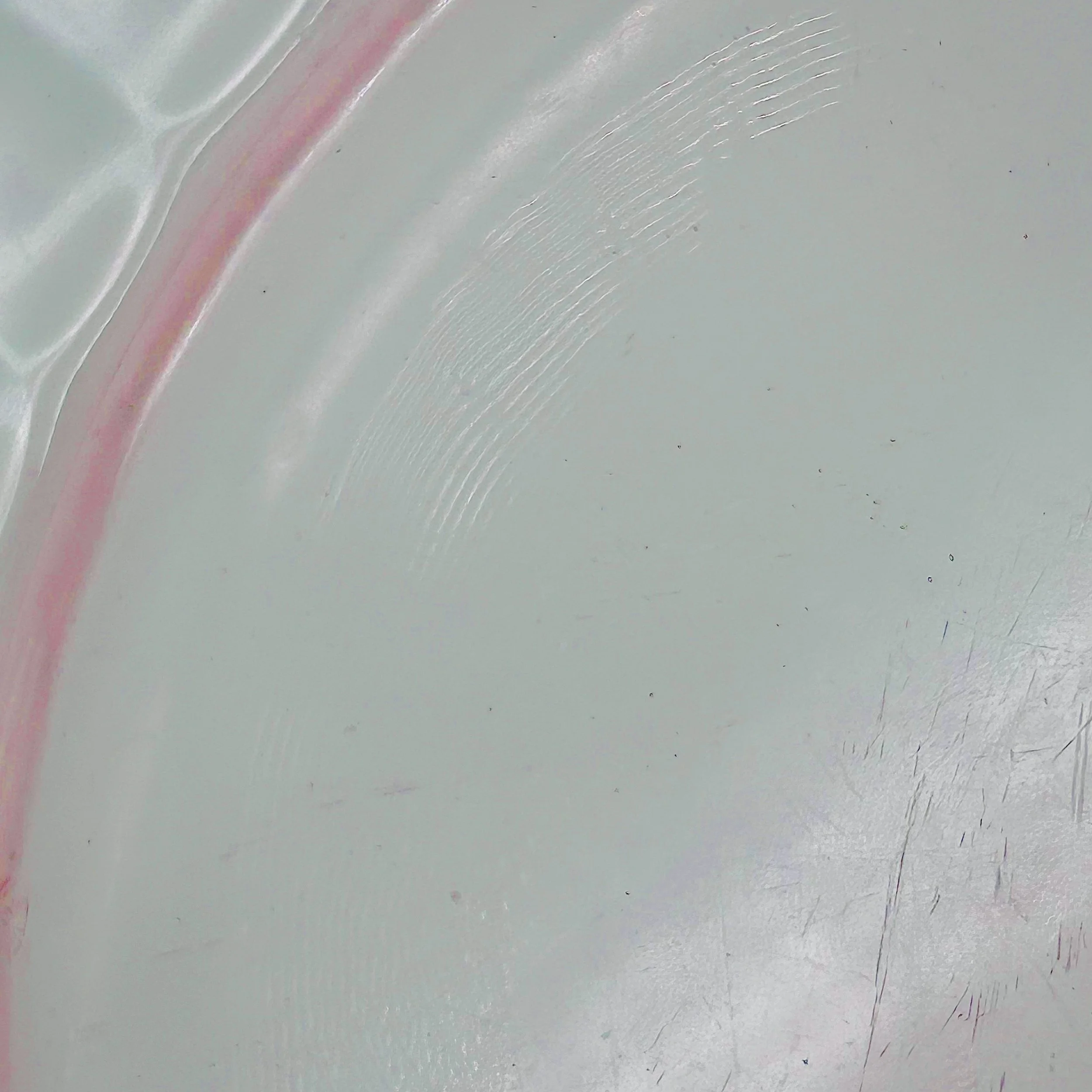
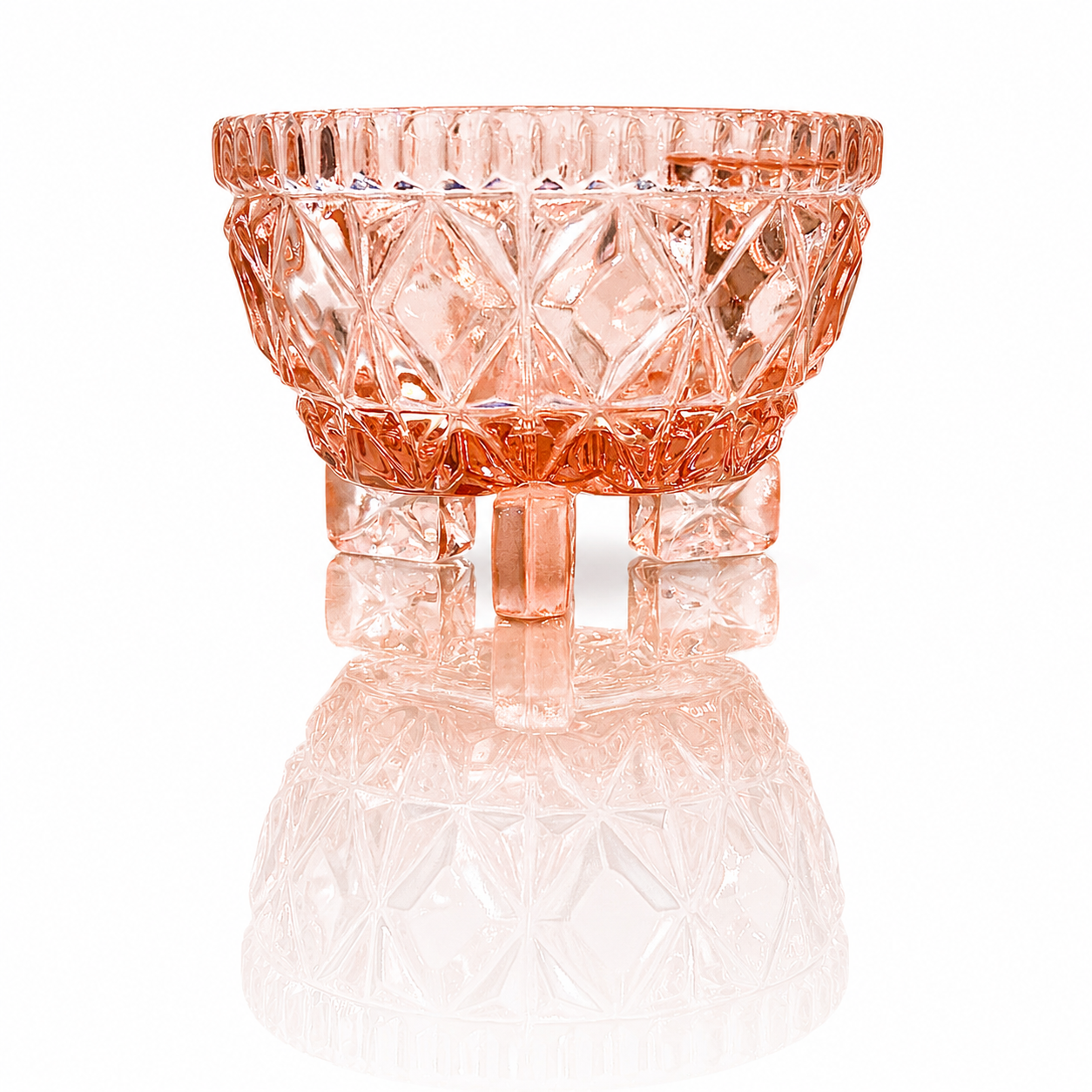
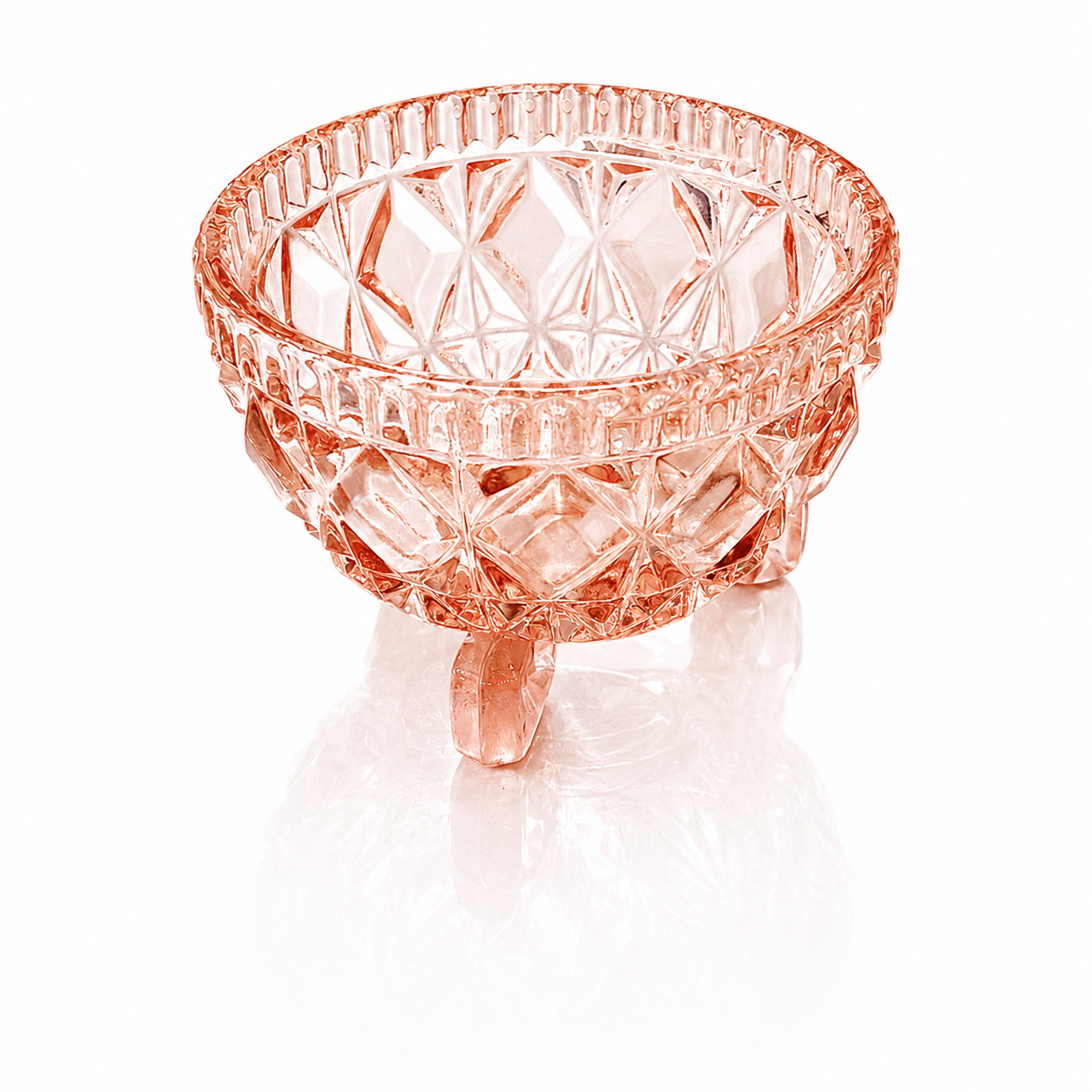
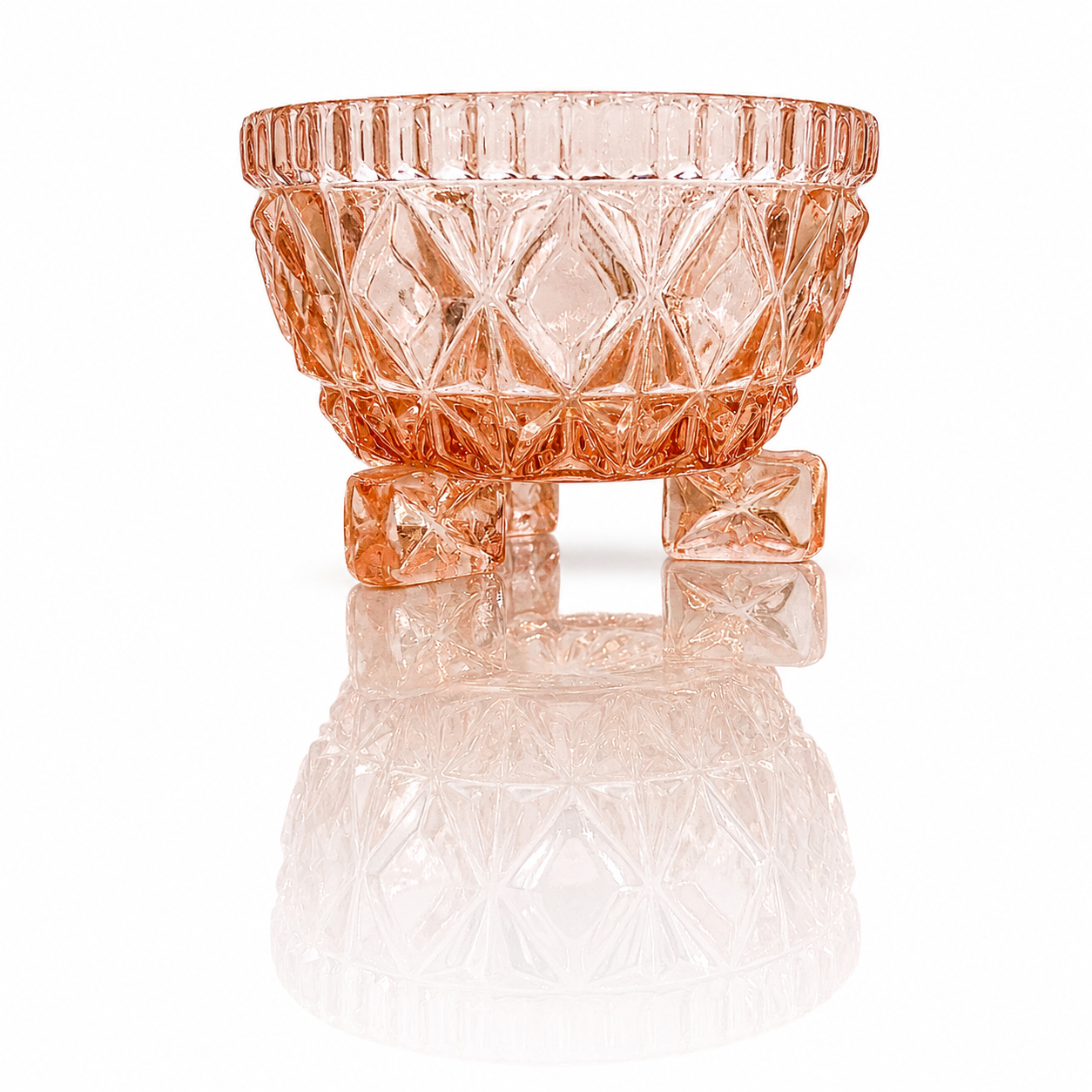
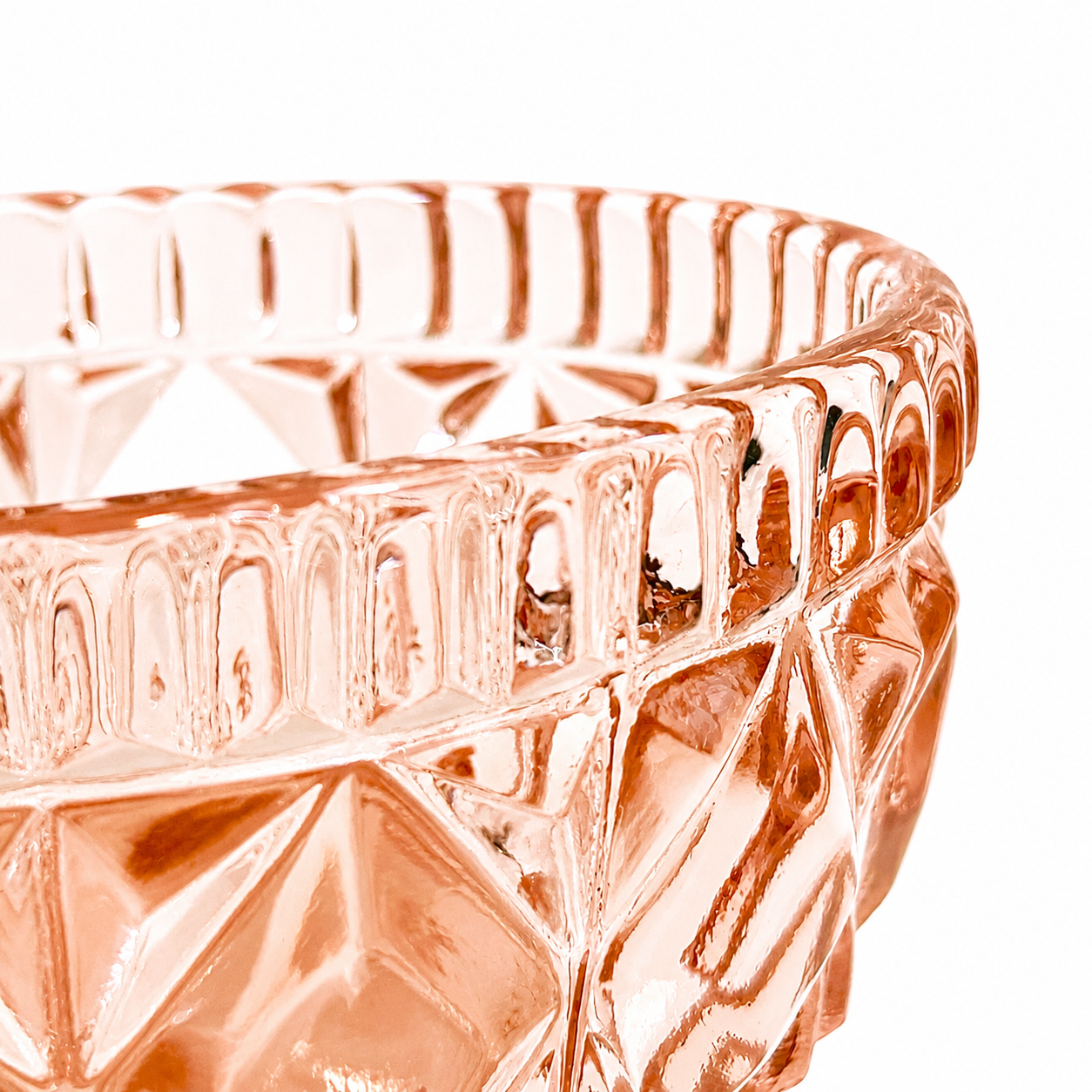
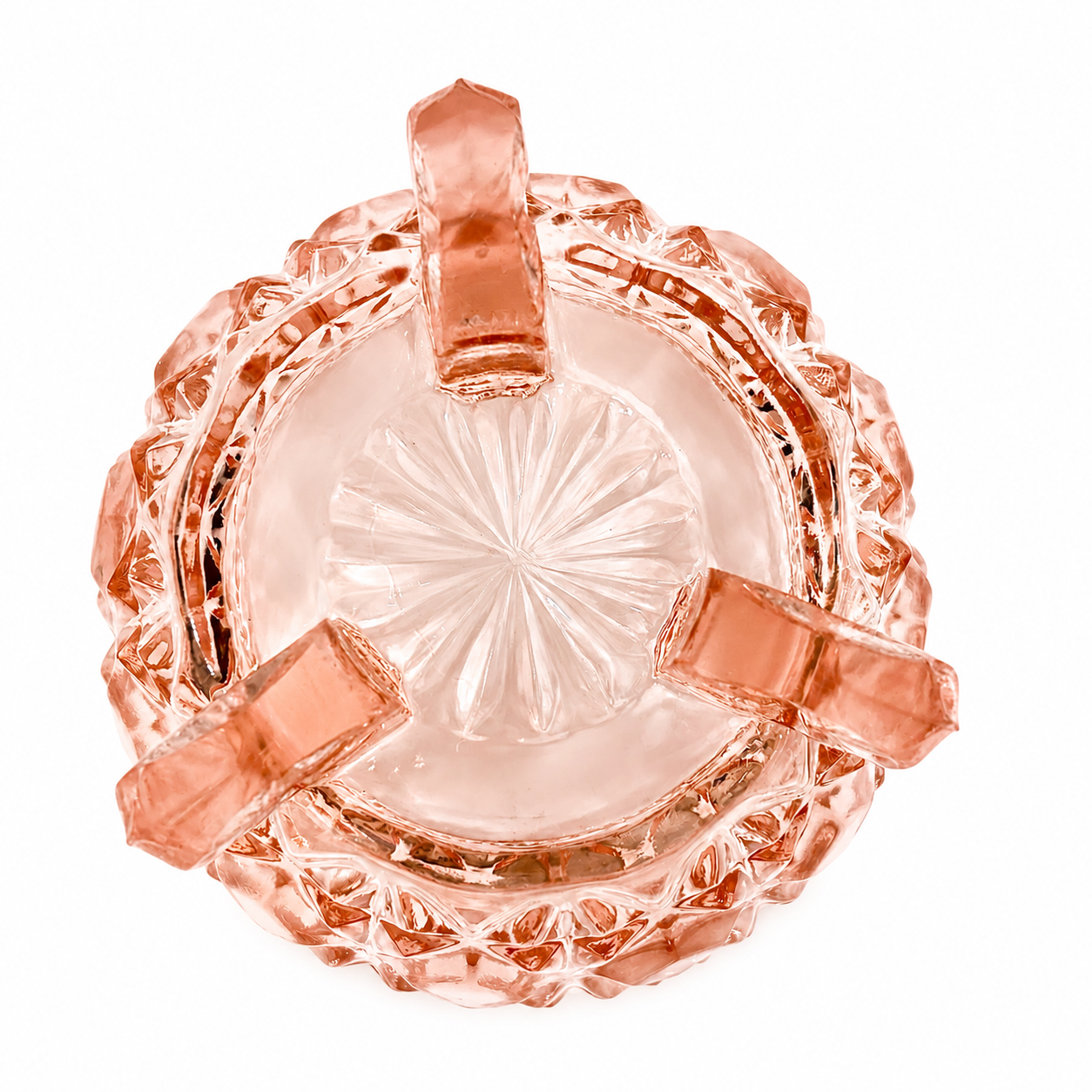
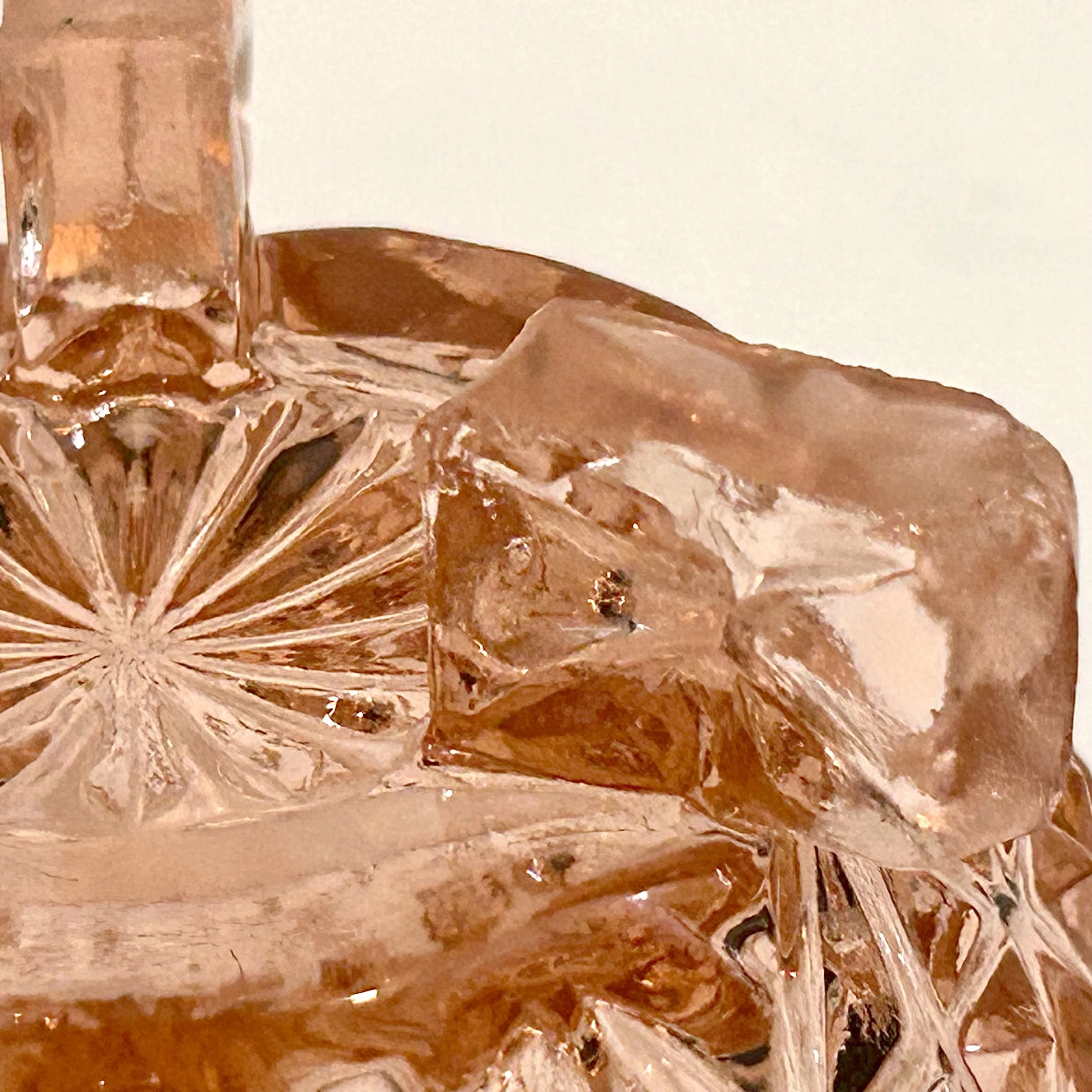
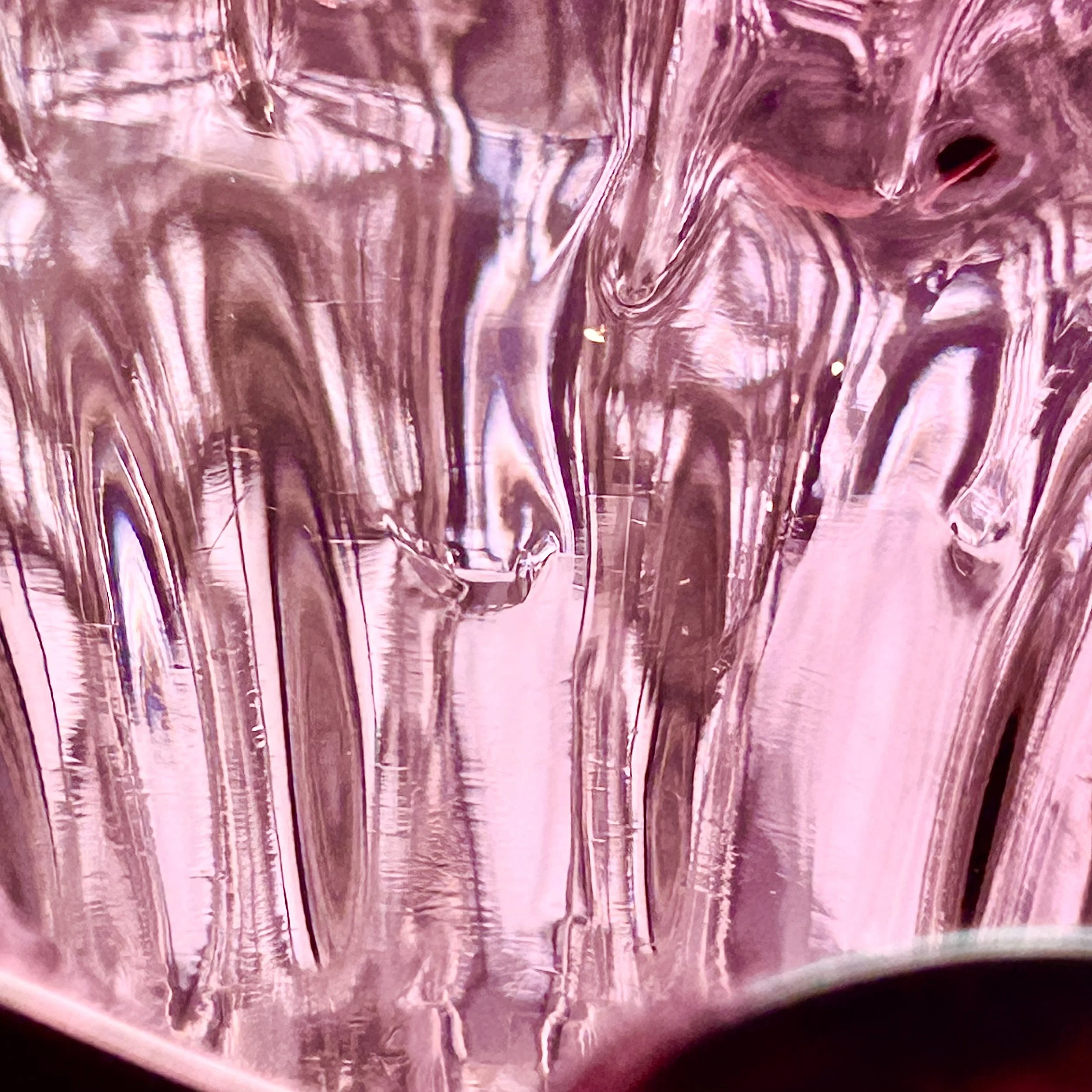
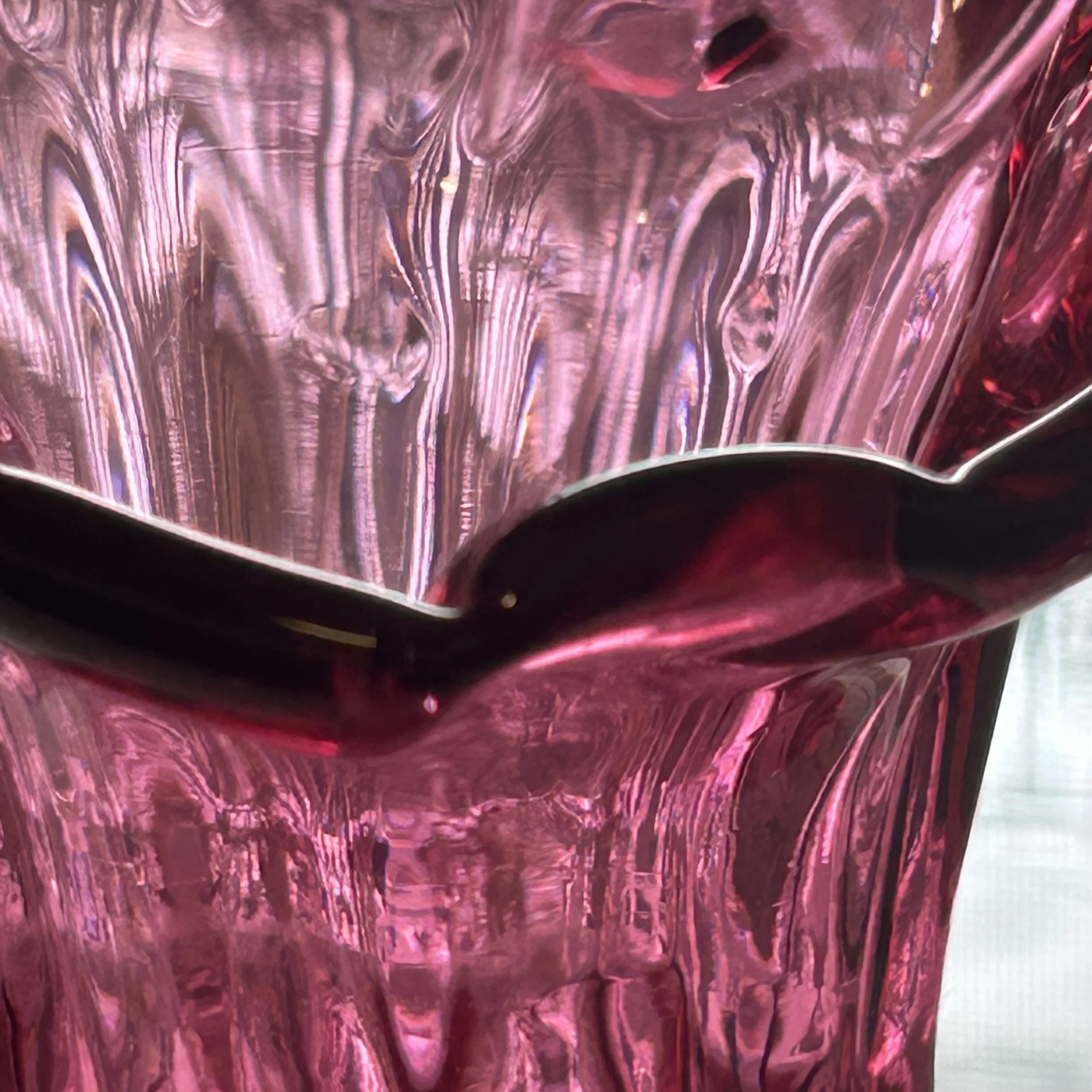
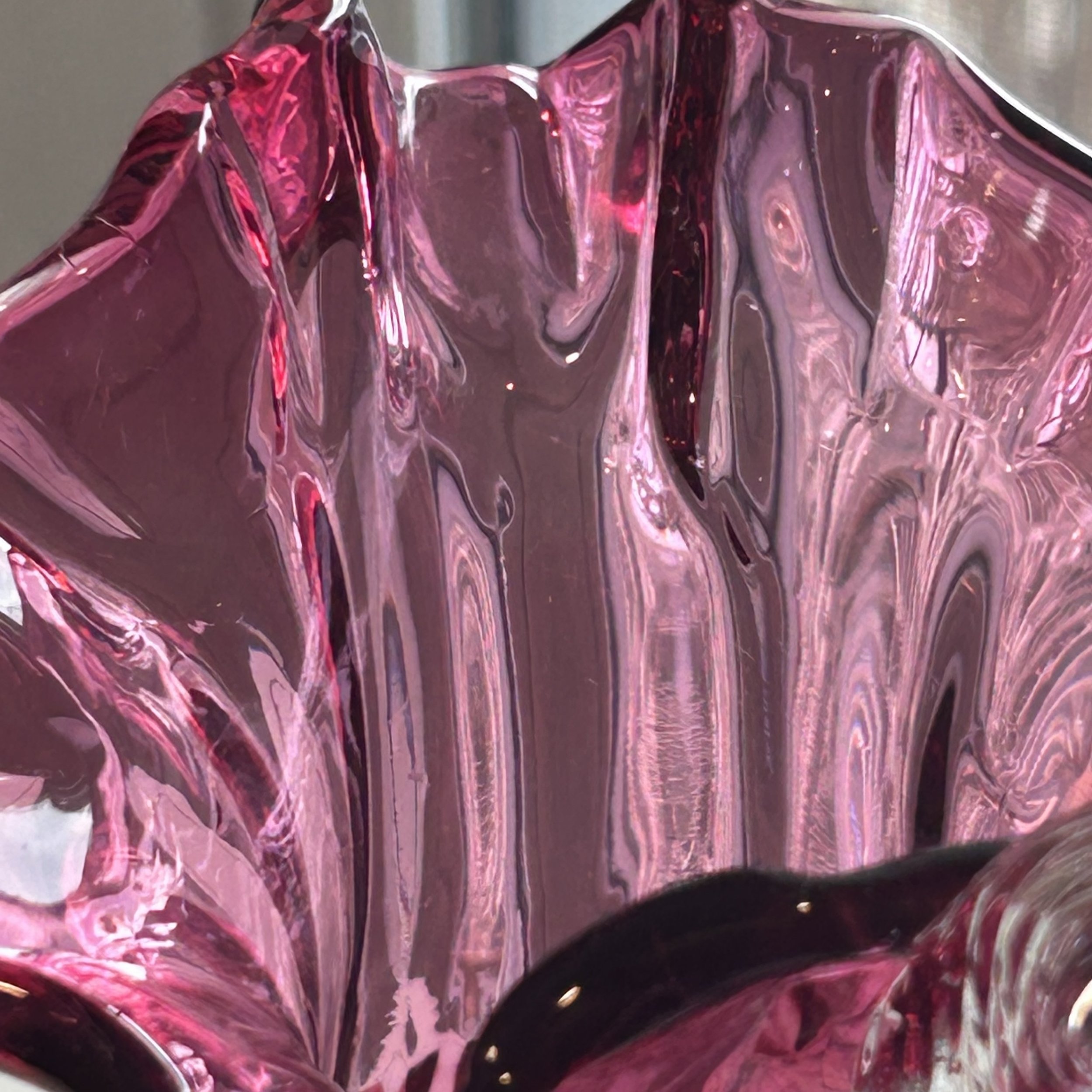
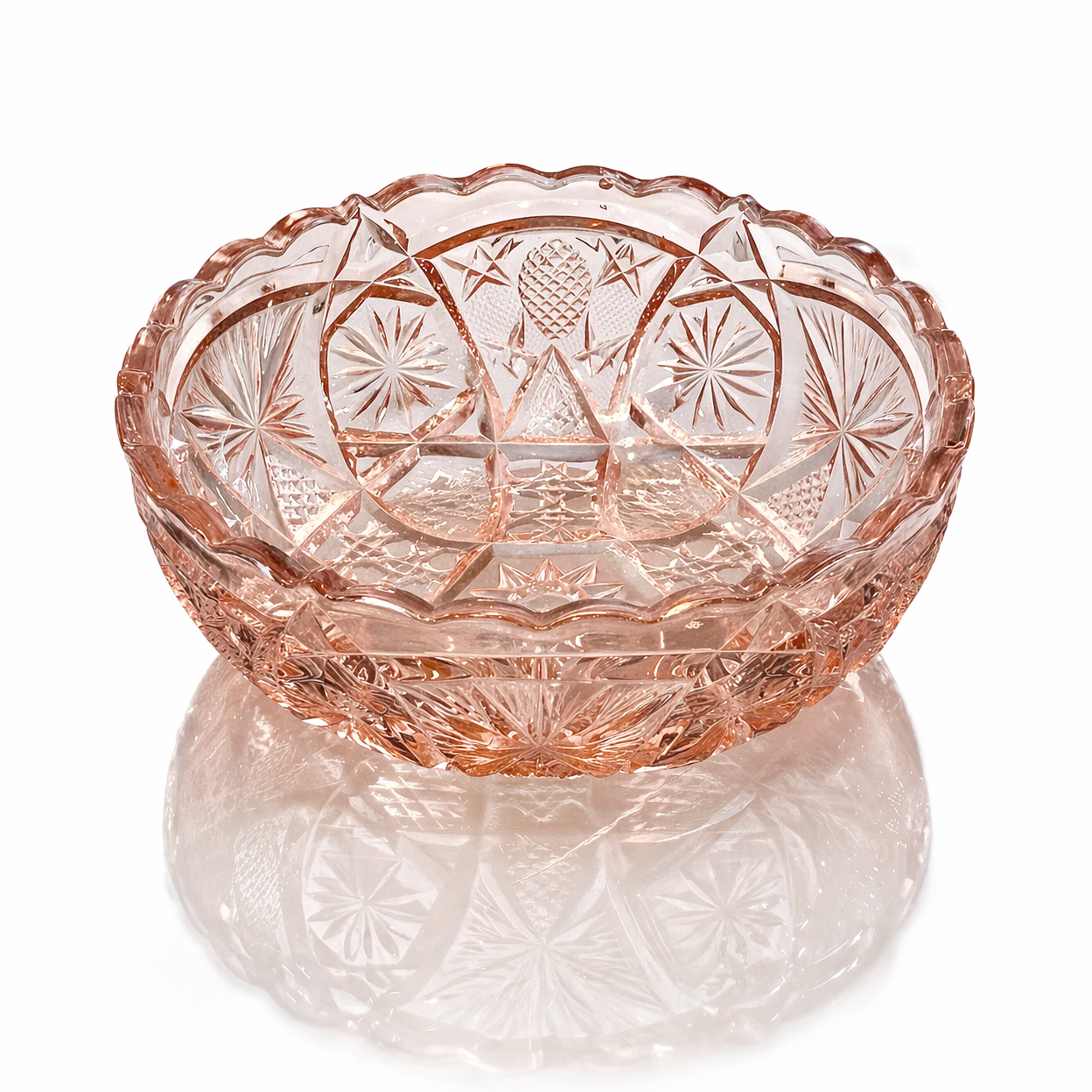
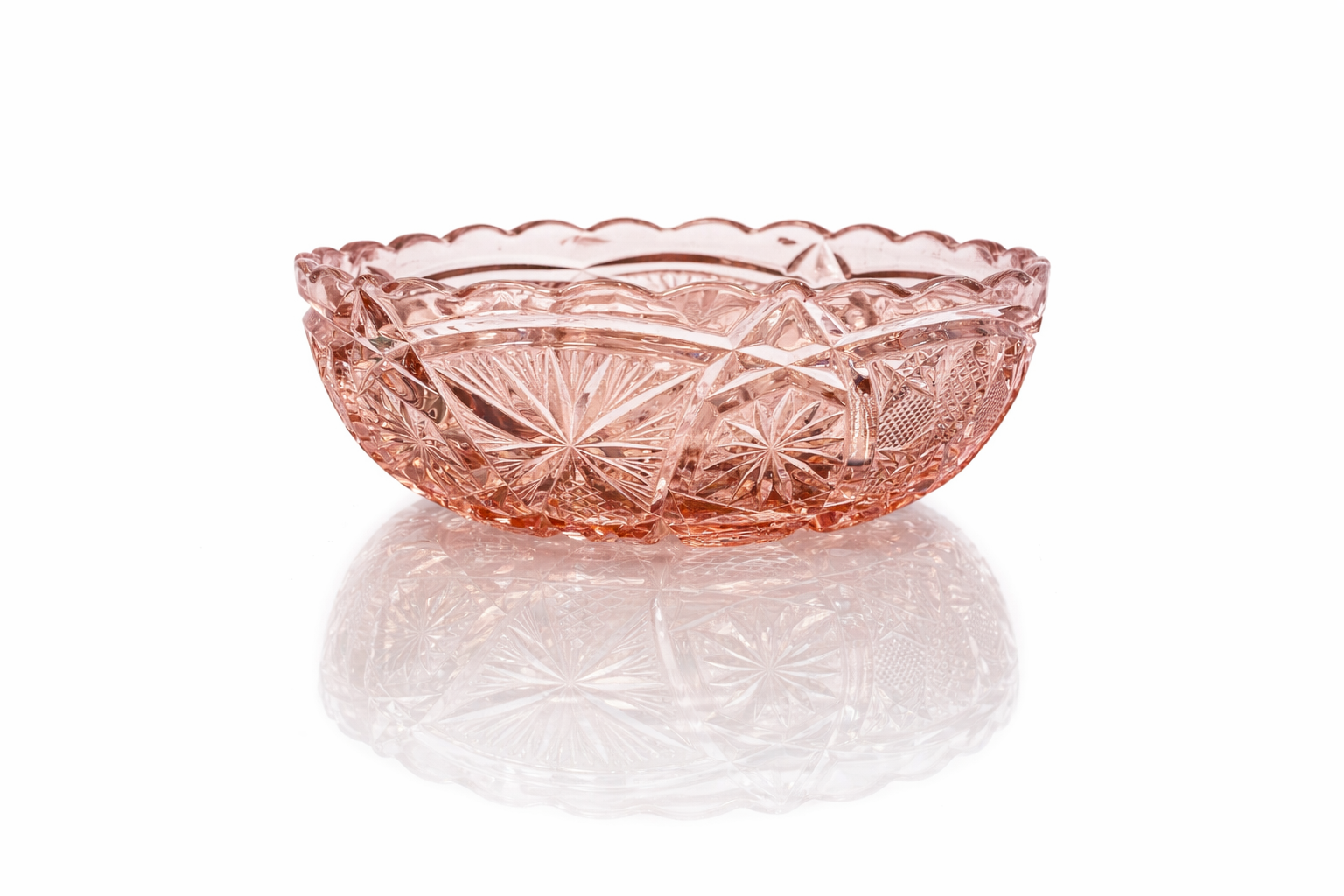
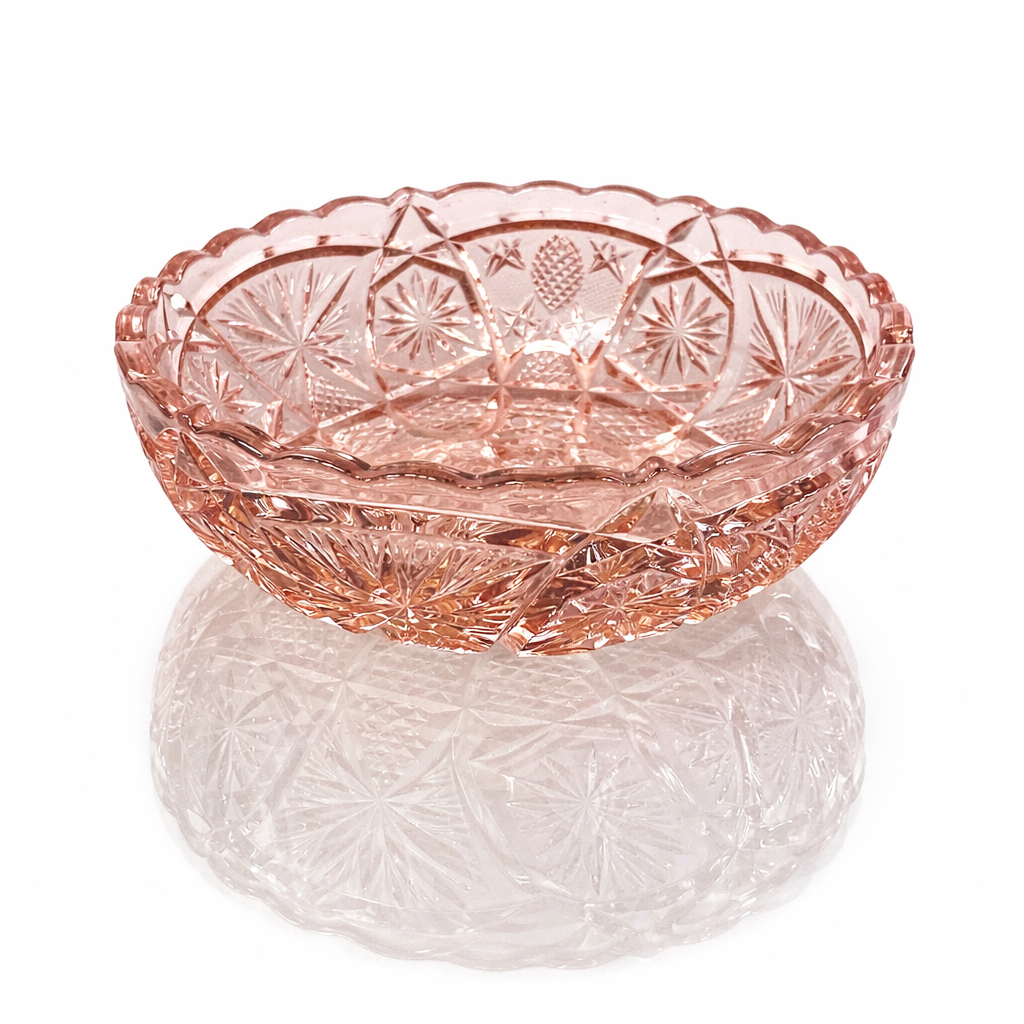
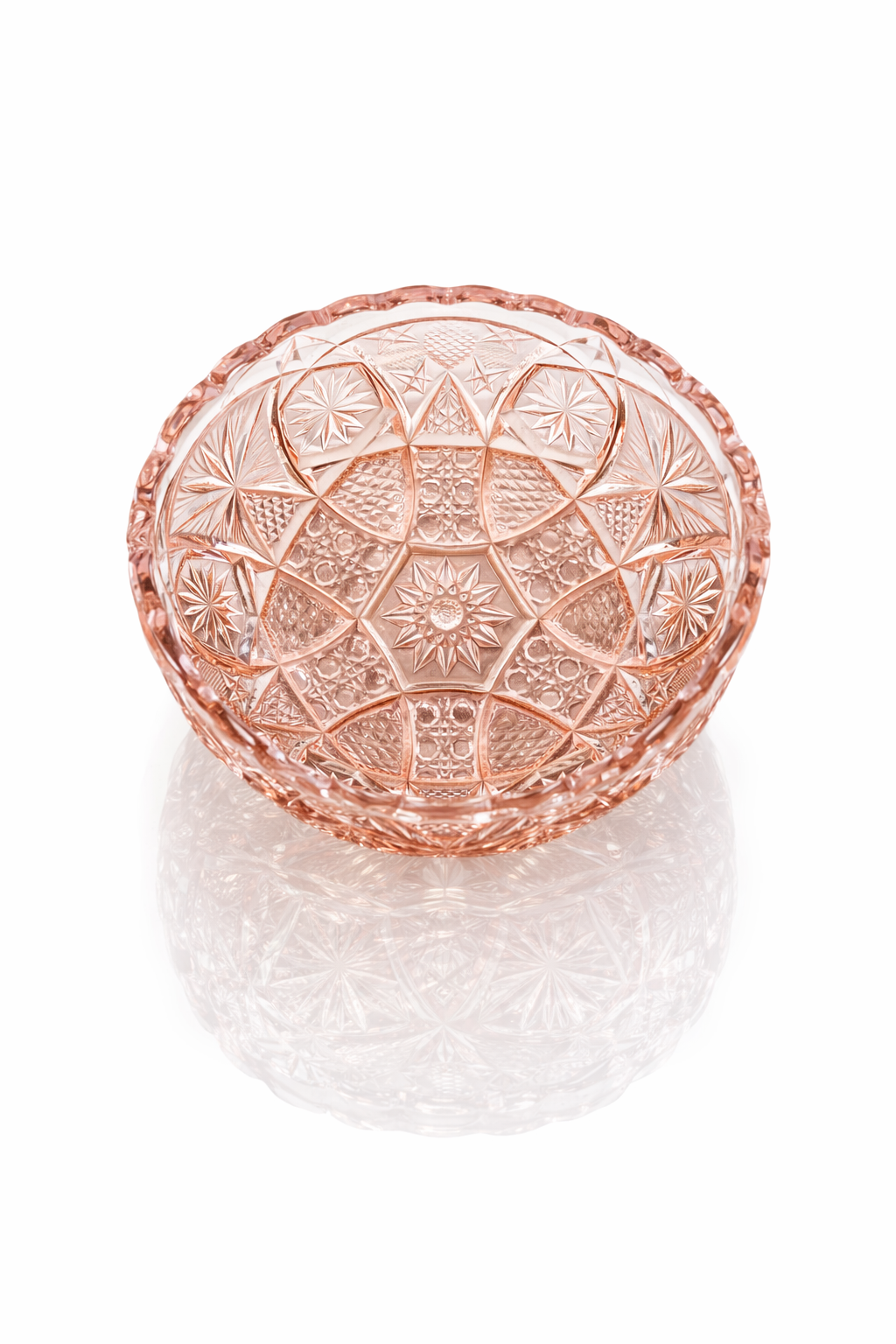
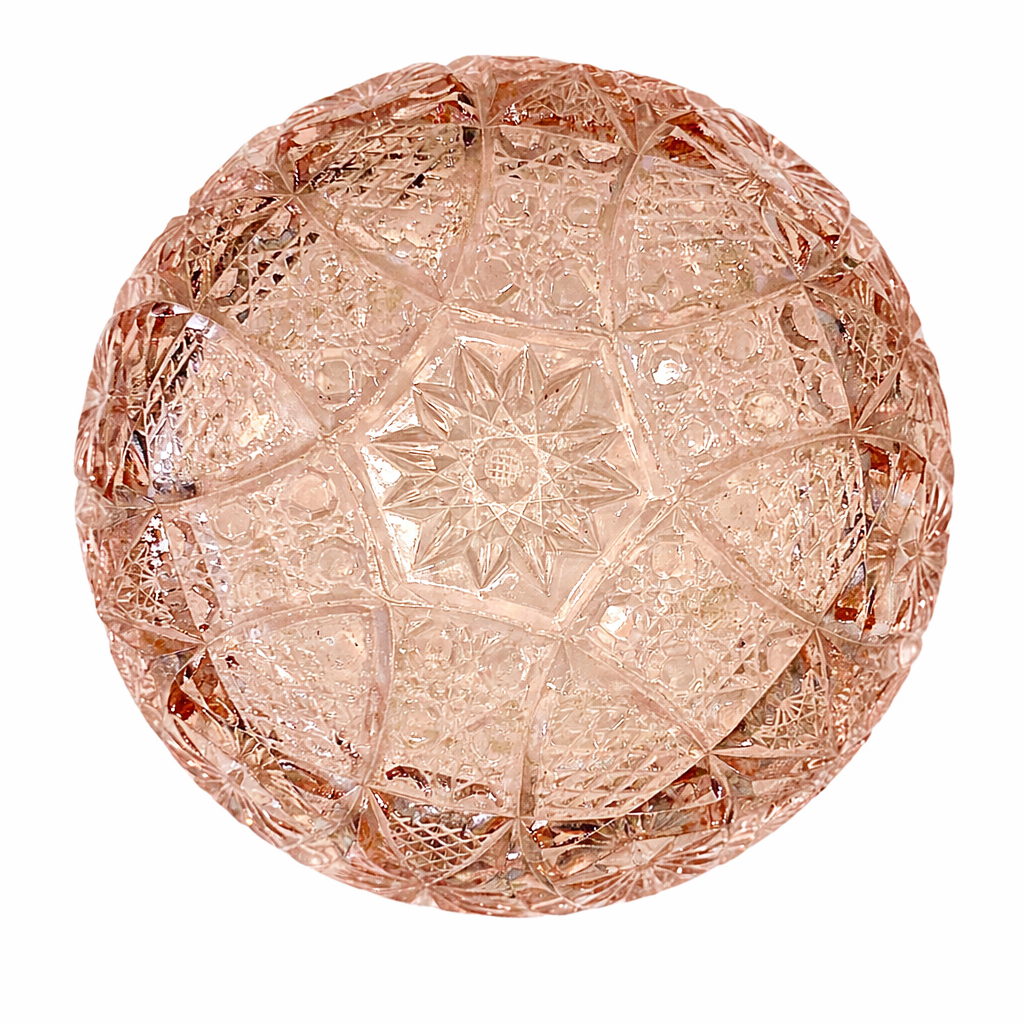
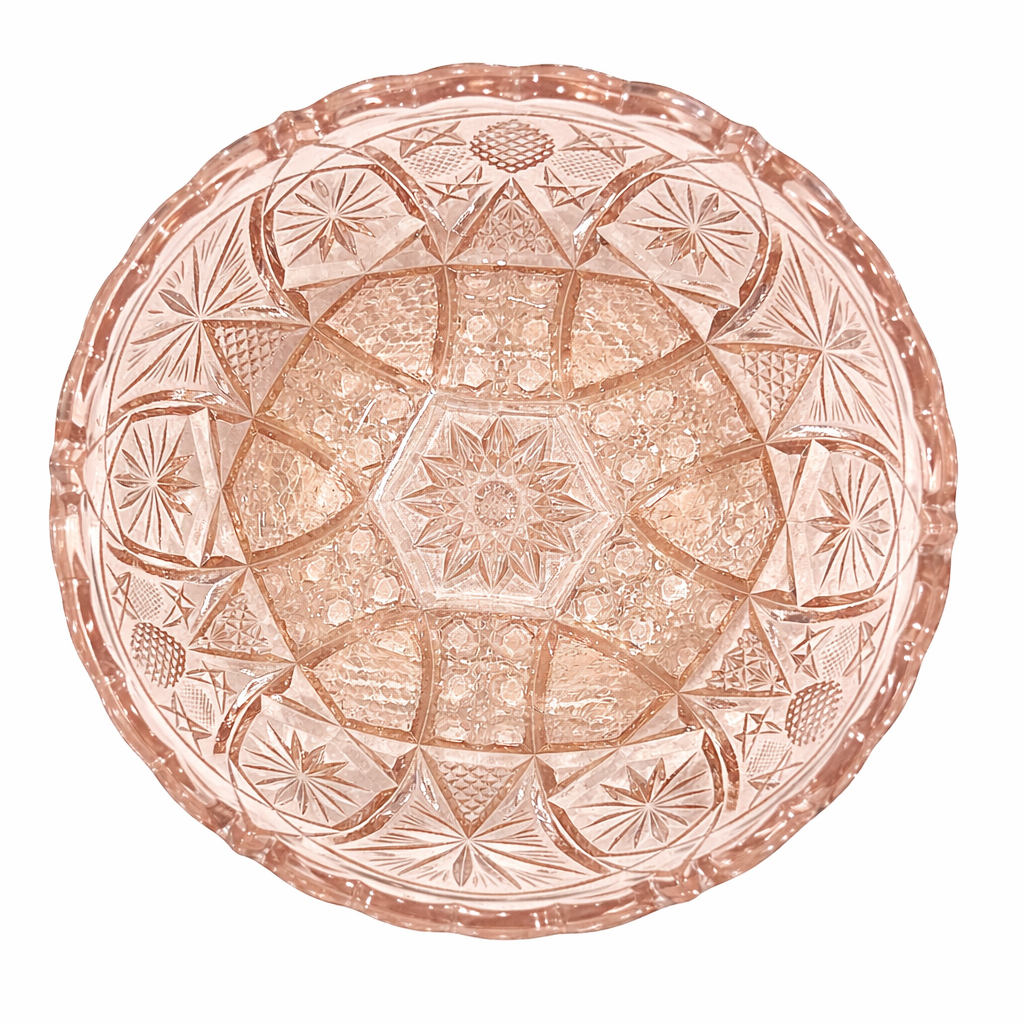
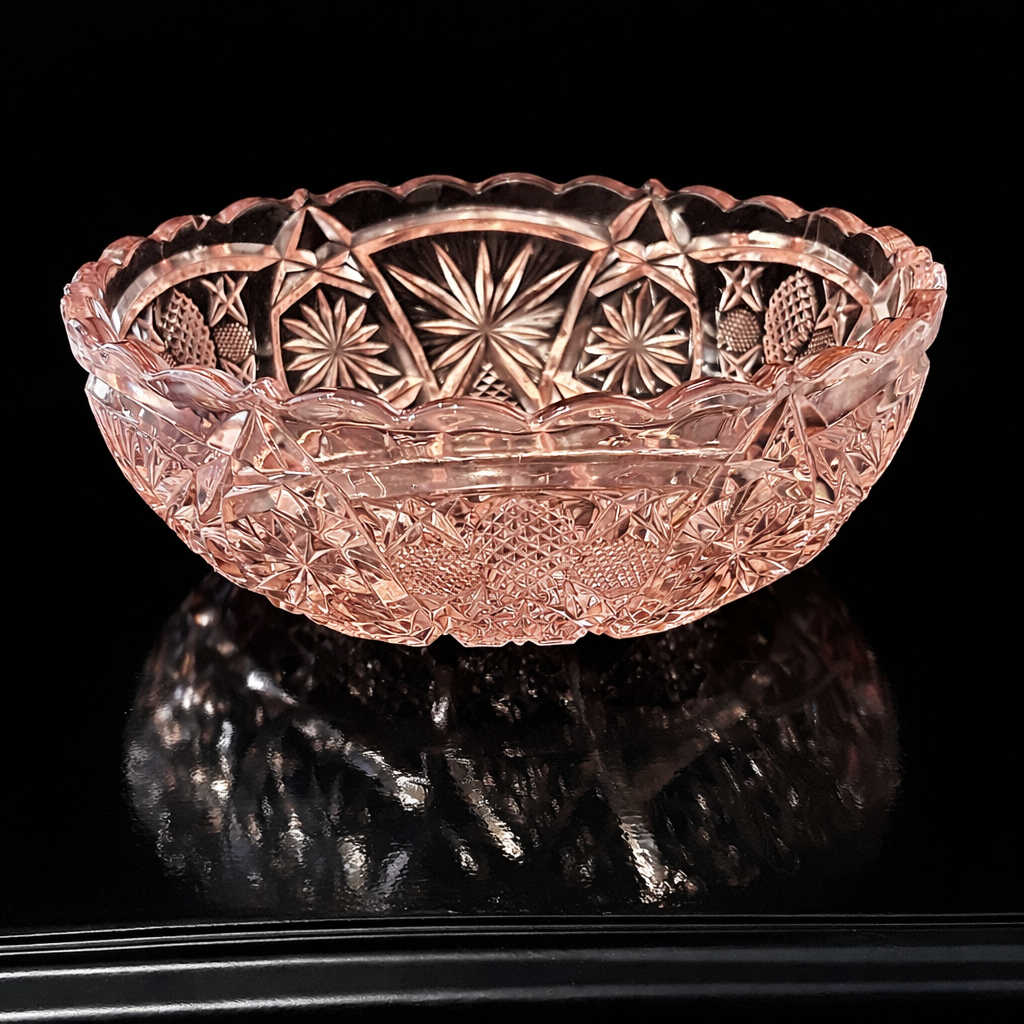
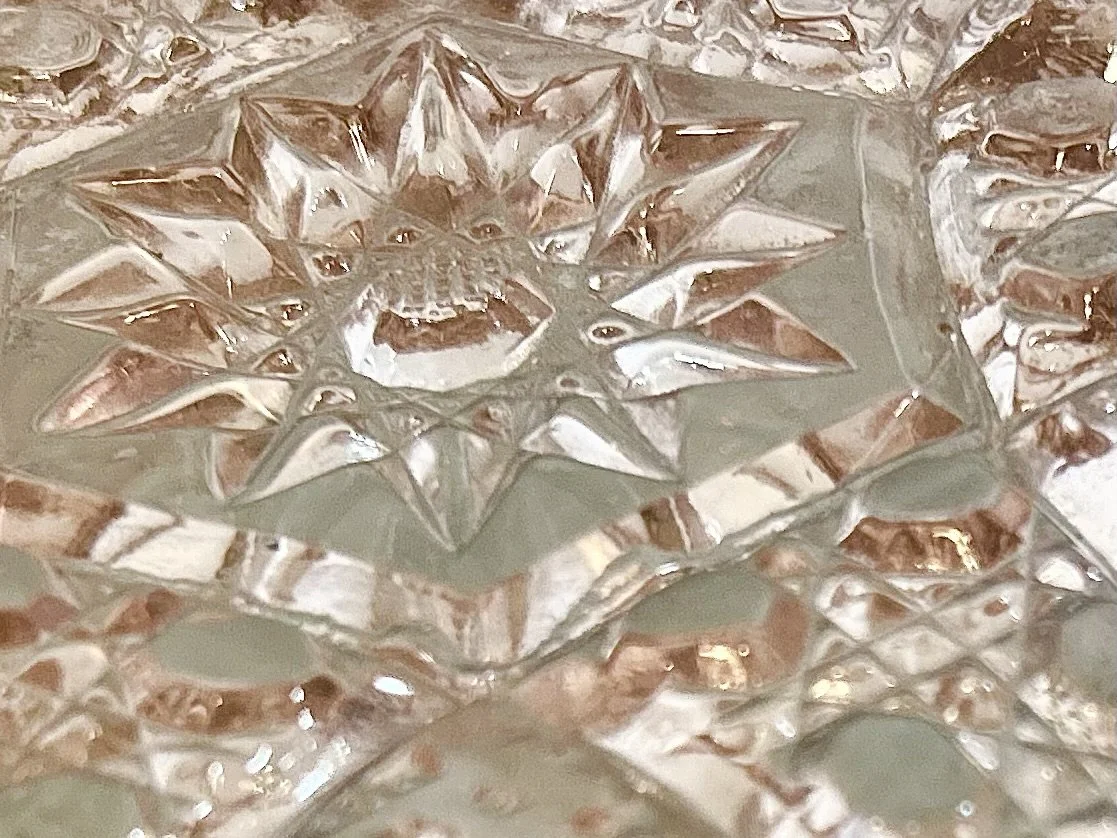
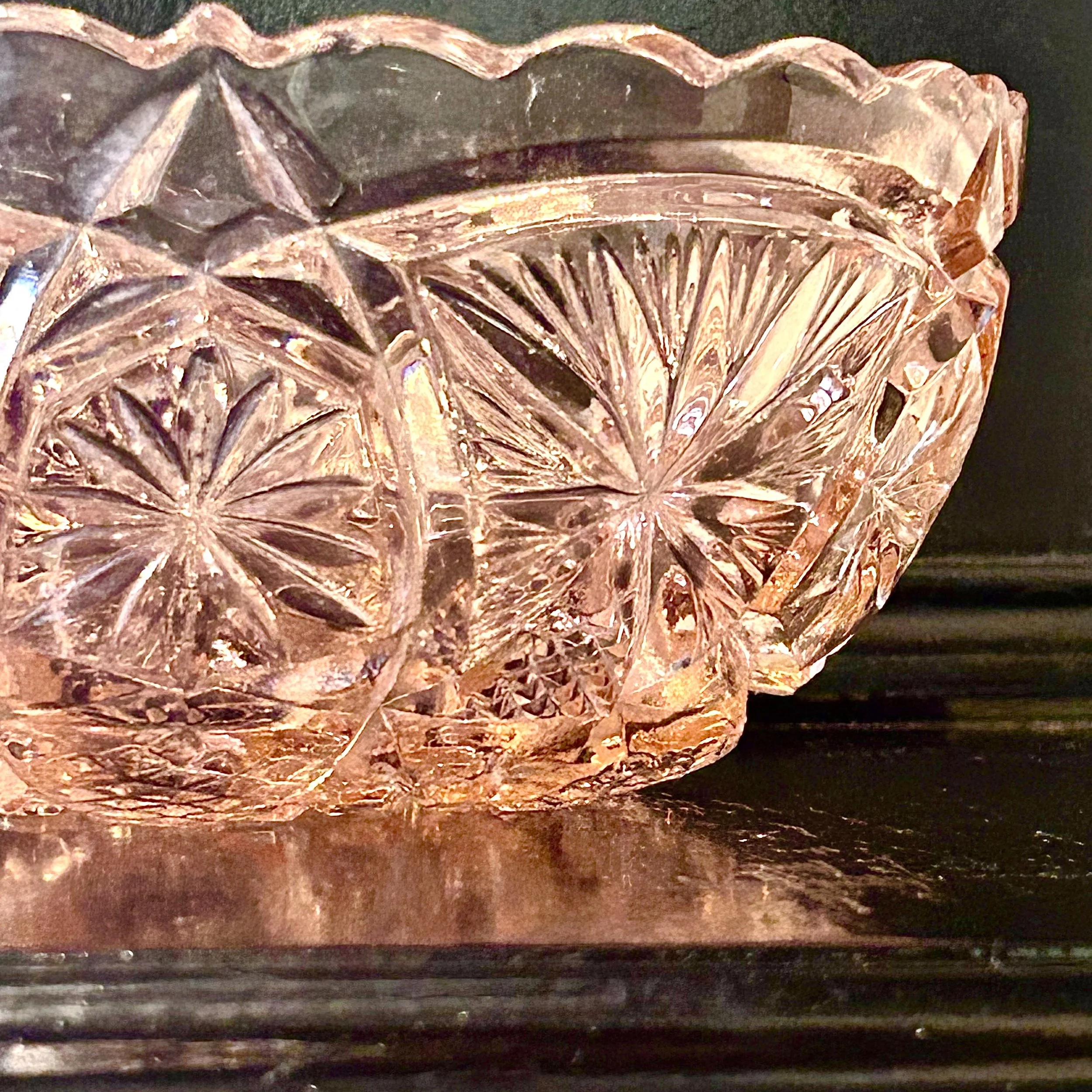
A commanding Art Deco pedestal bowl executed in cadmium-rich ruby transitioning to amber and pale honey, distinguished by sharply faceted geometry and an applied beaded rim. Sculptural and unapologetically architectural, the form embodies Central European Deco design at its most assertive.
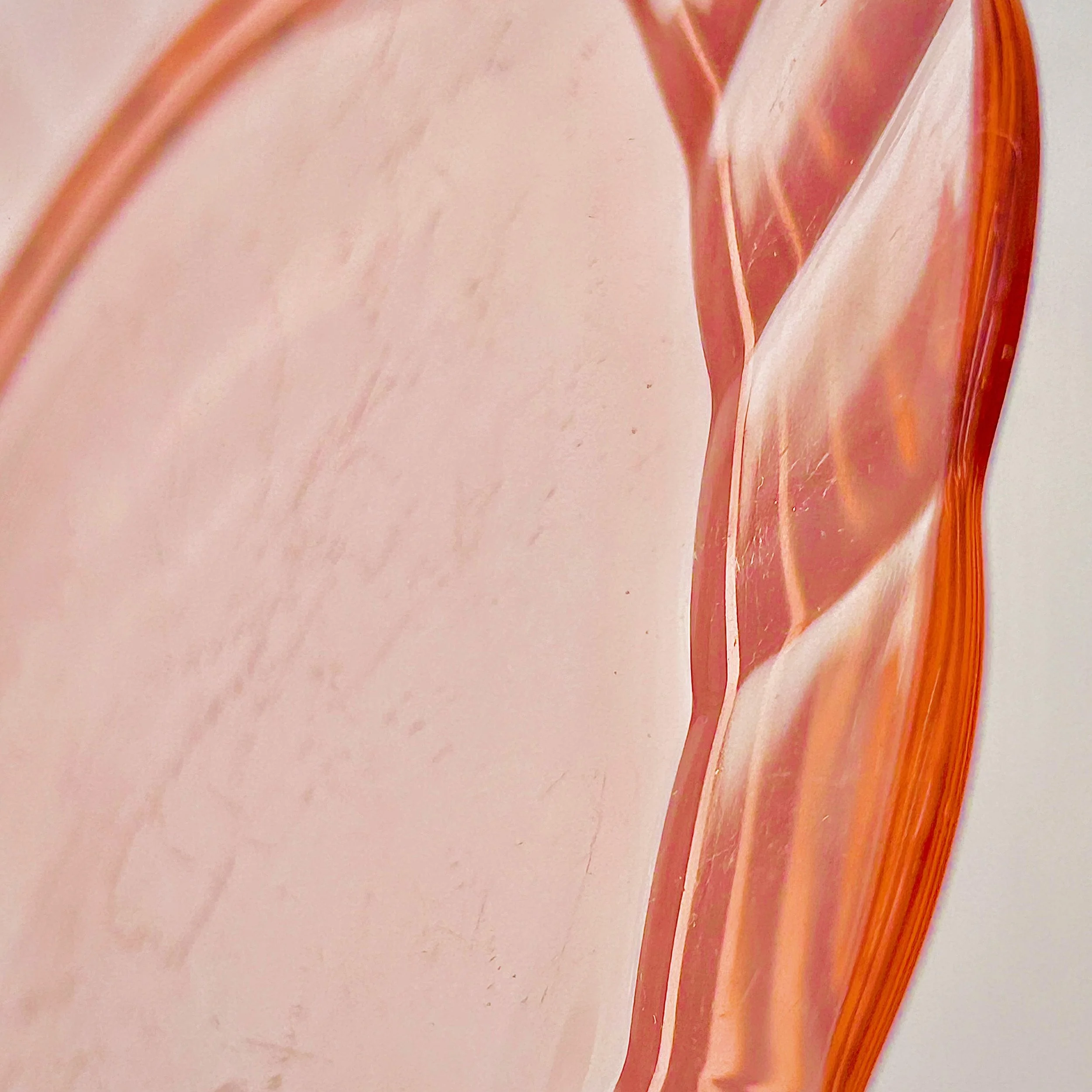
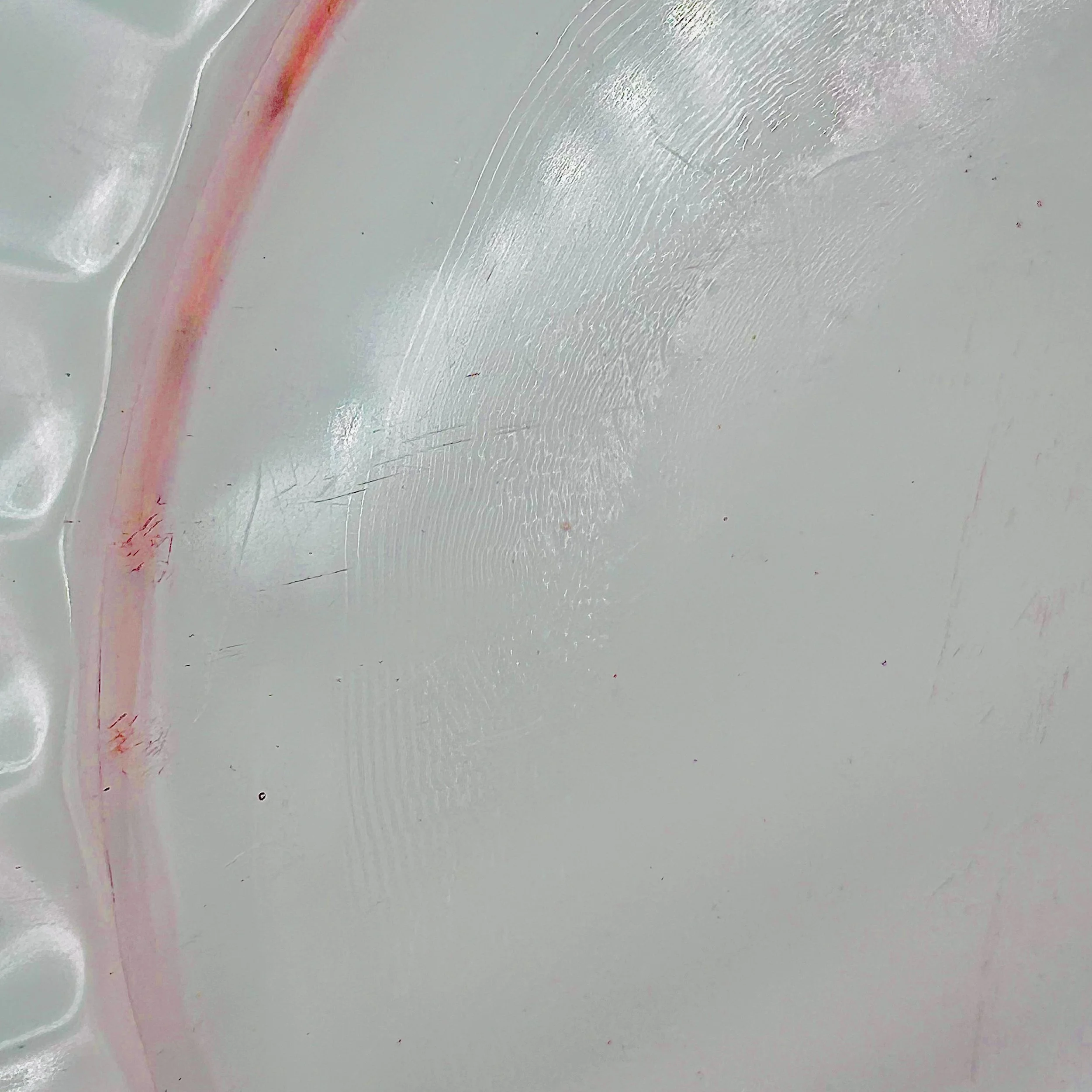
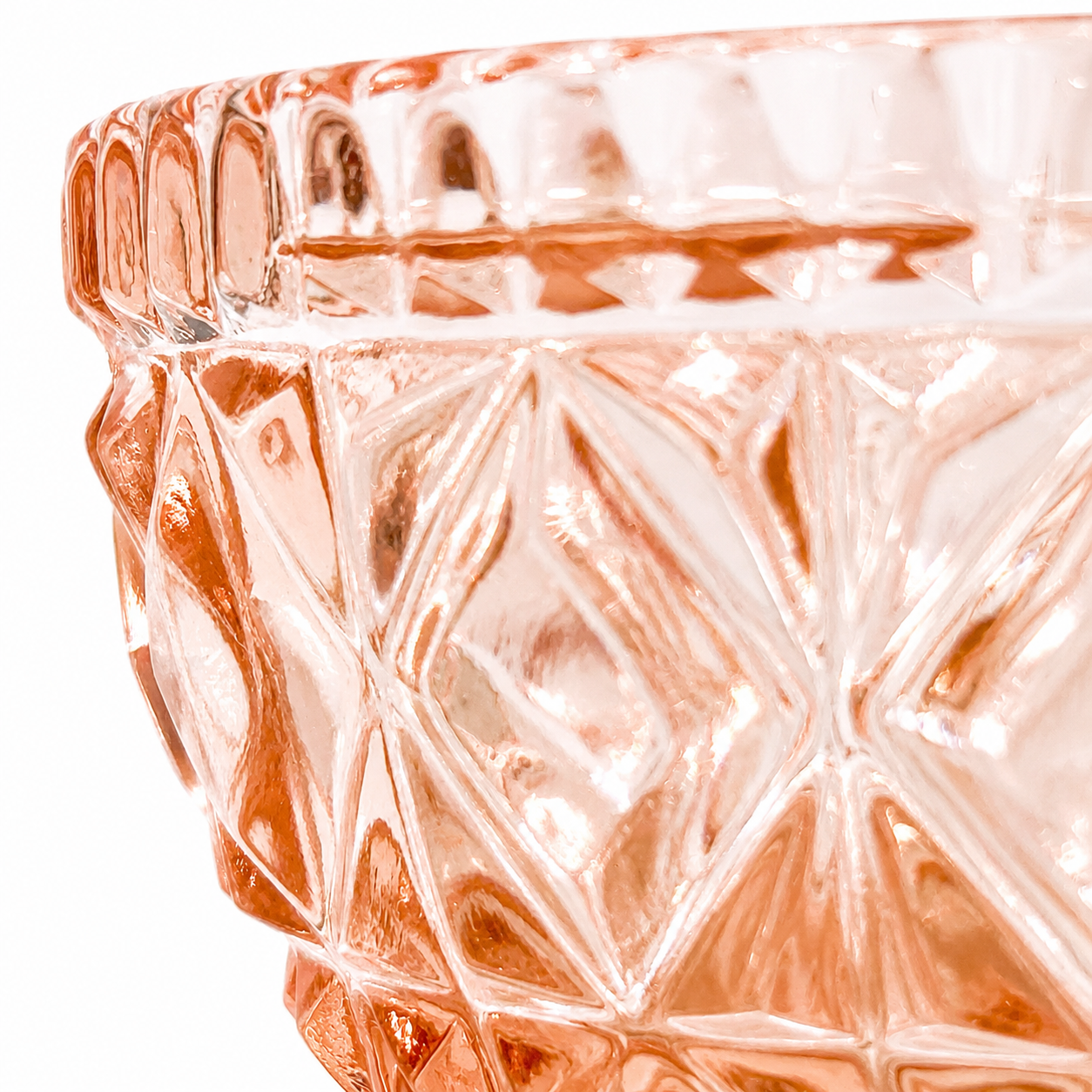
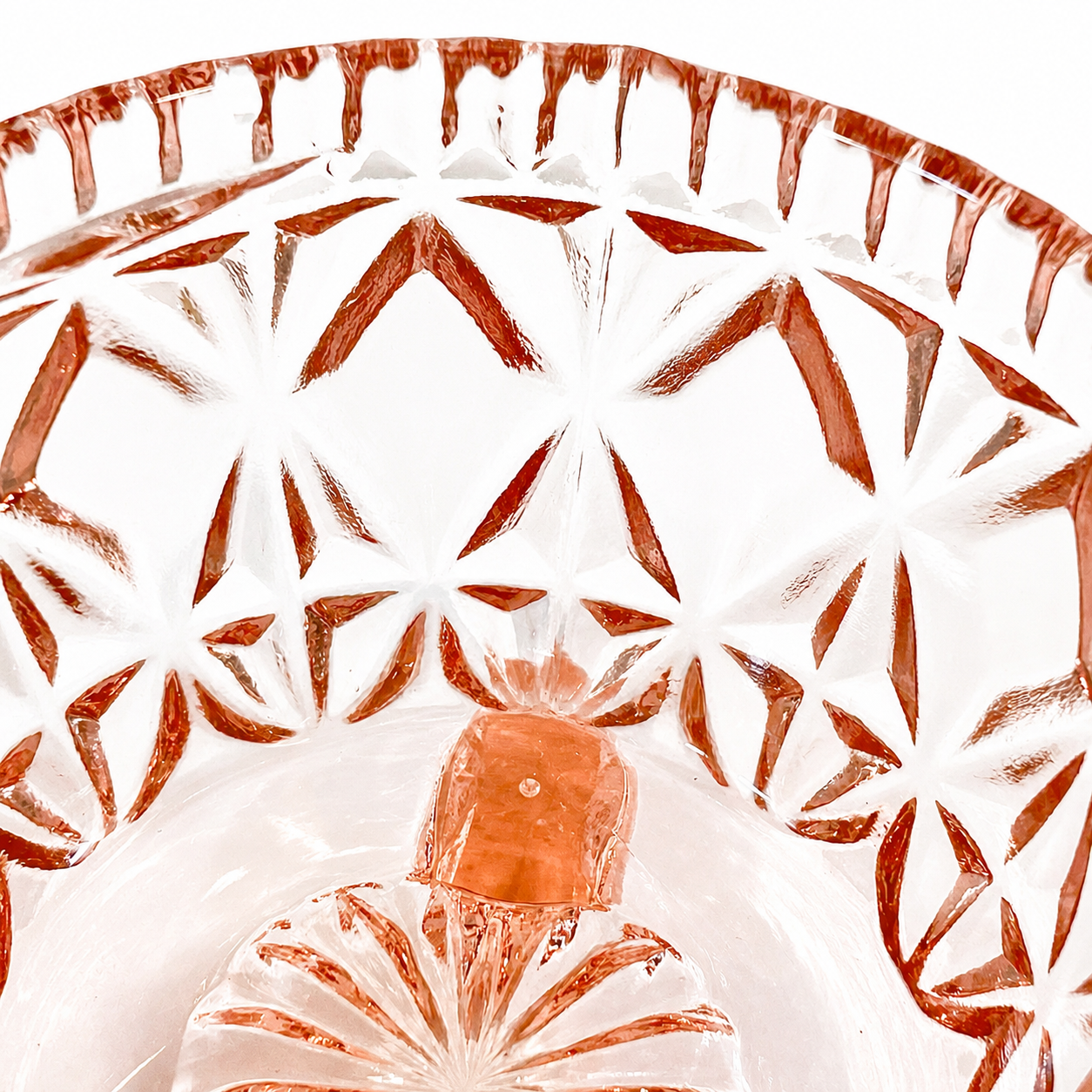
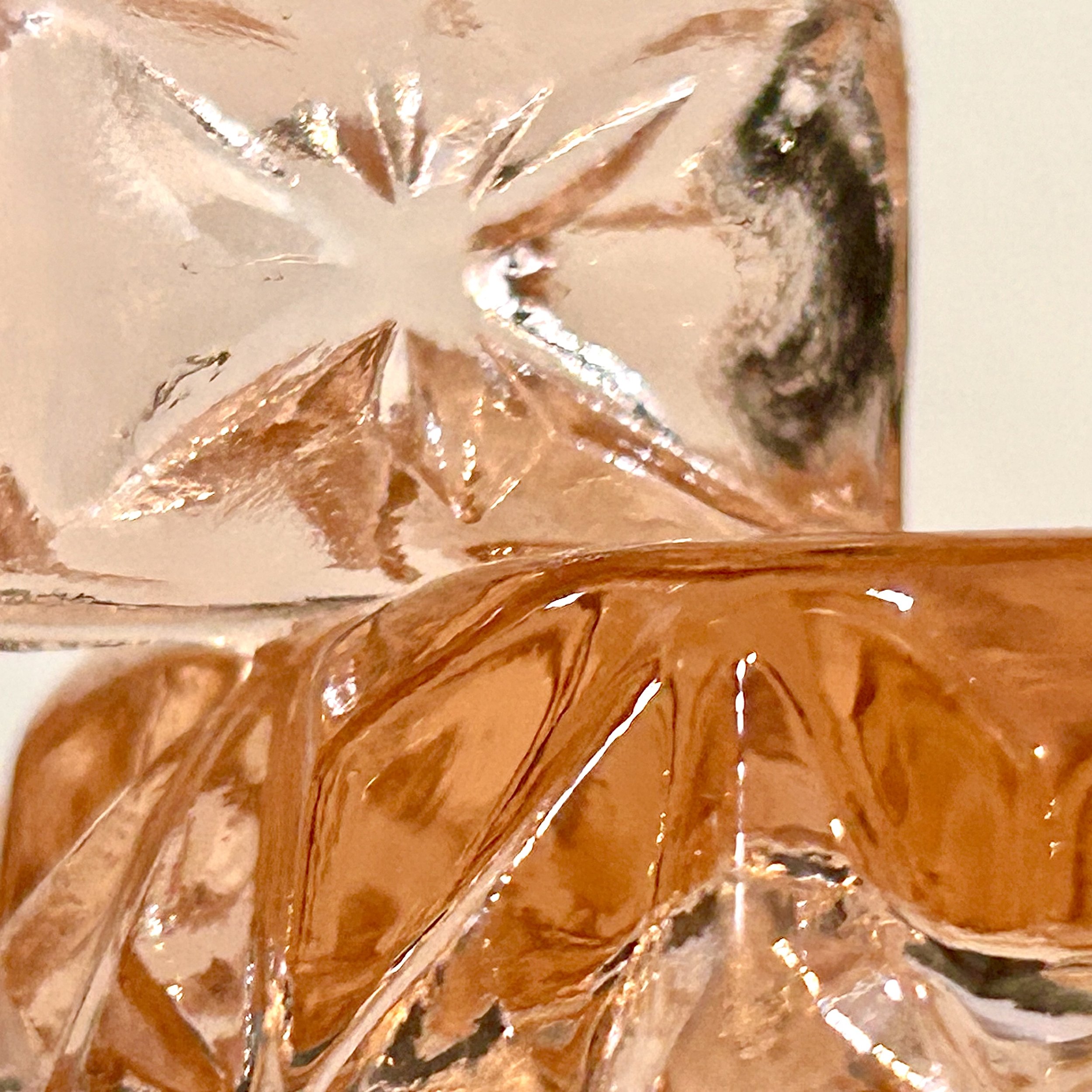
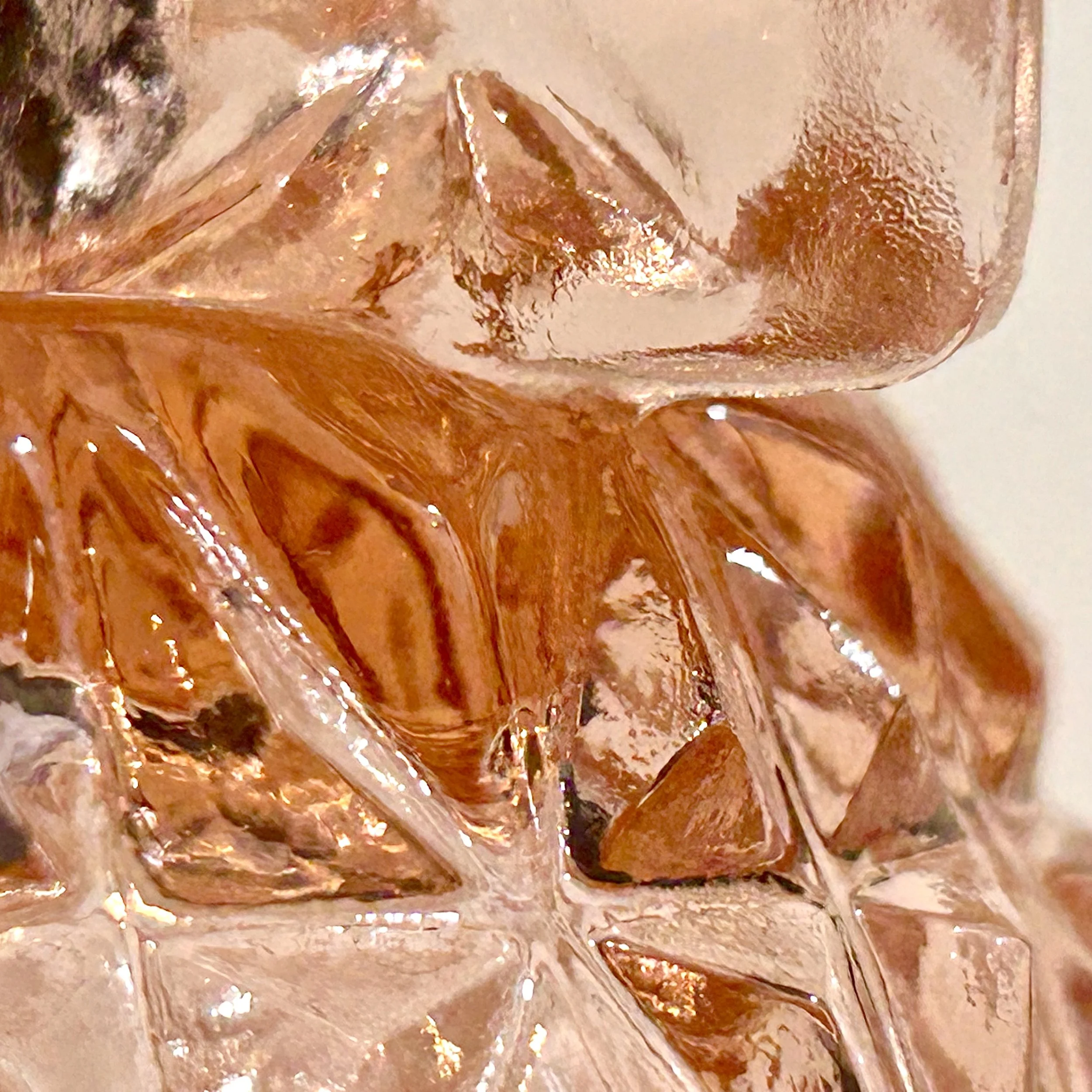
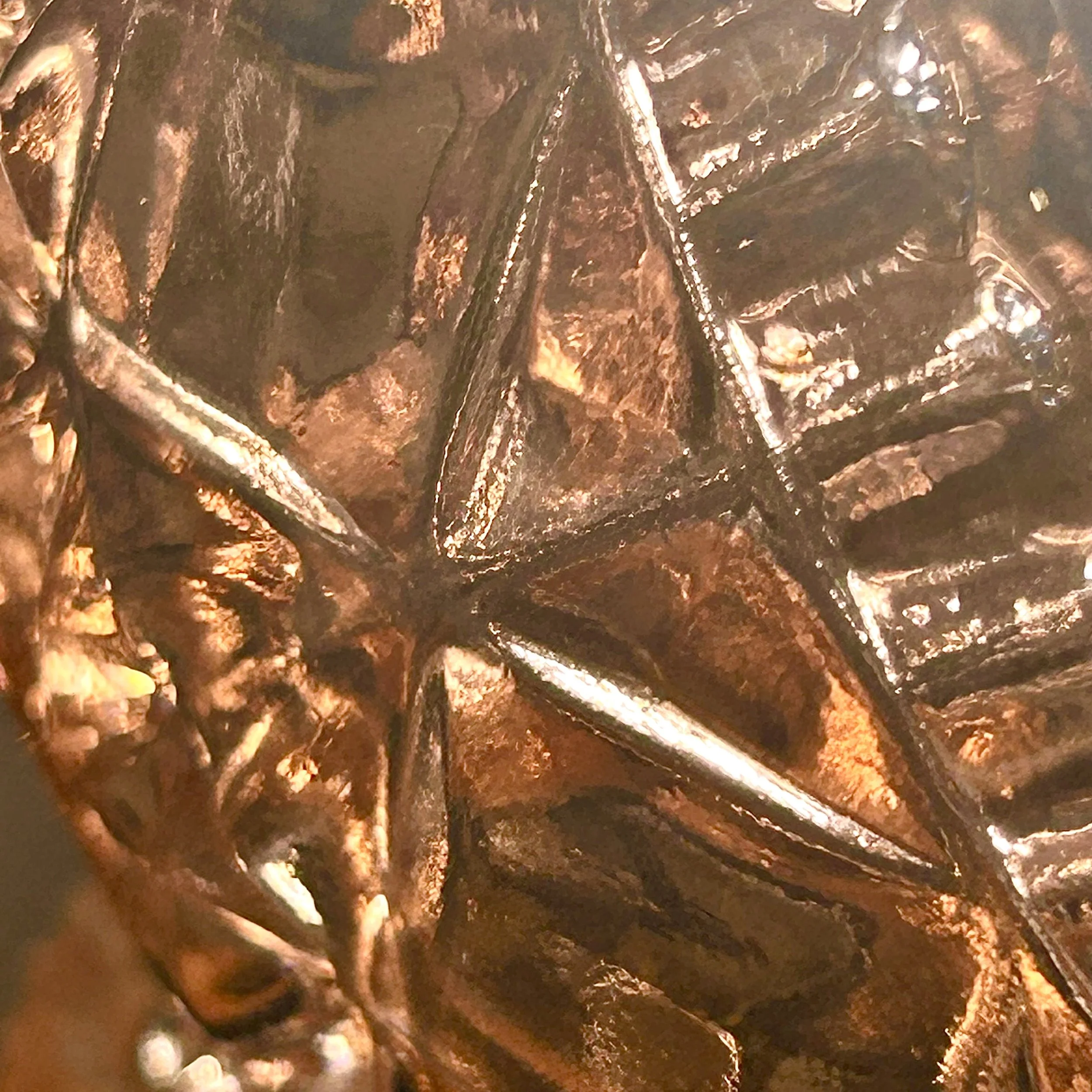
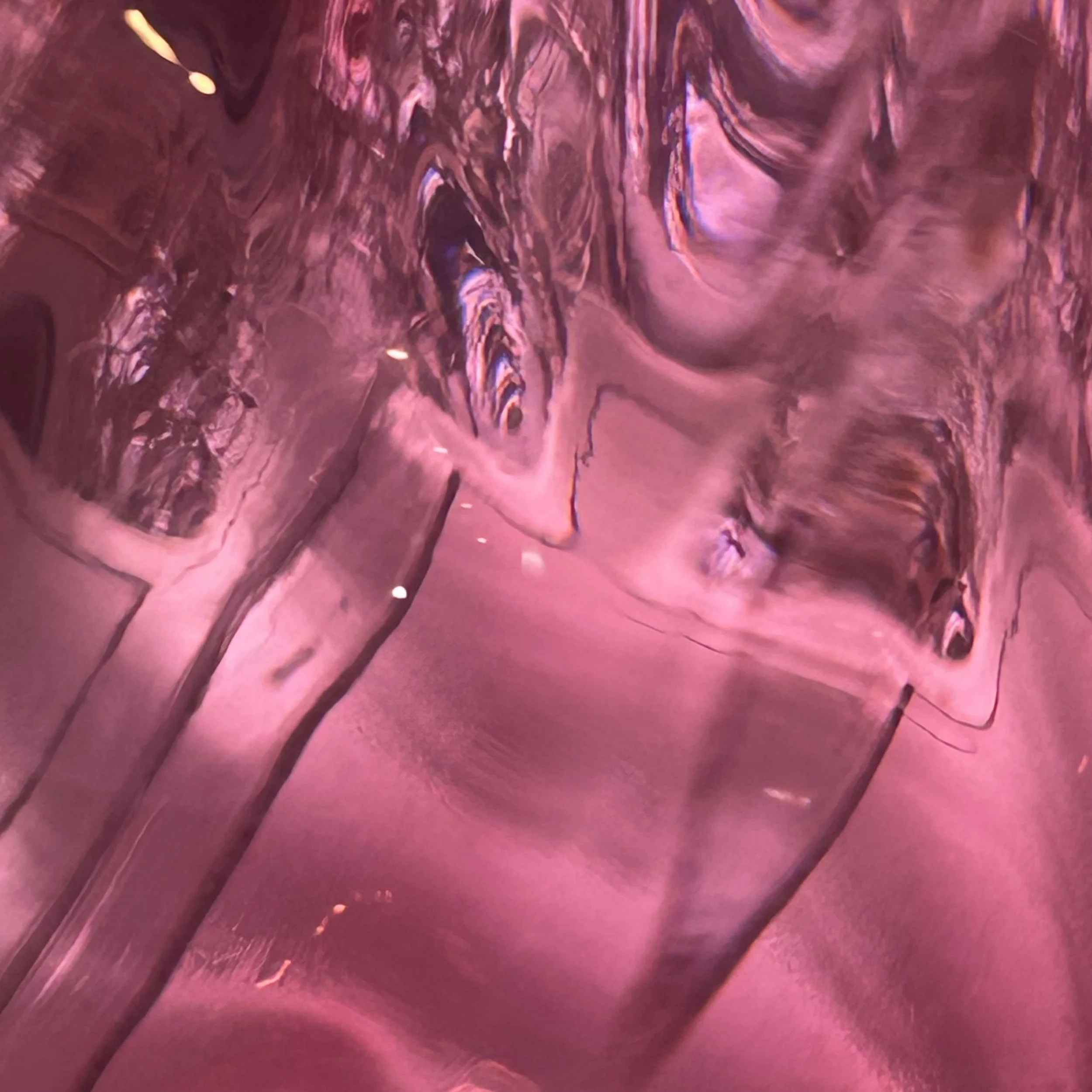
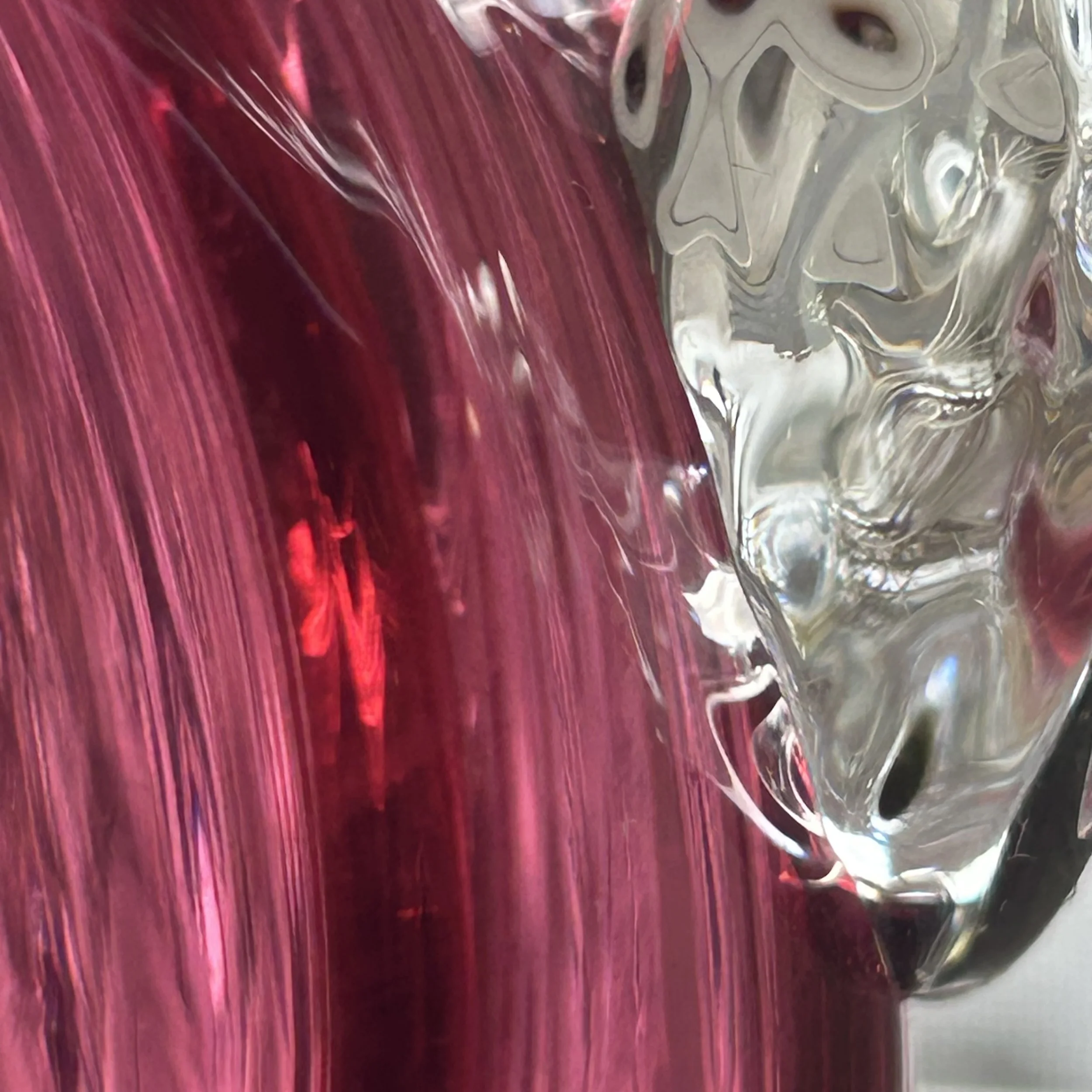
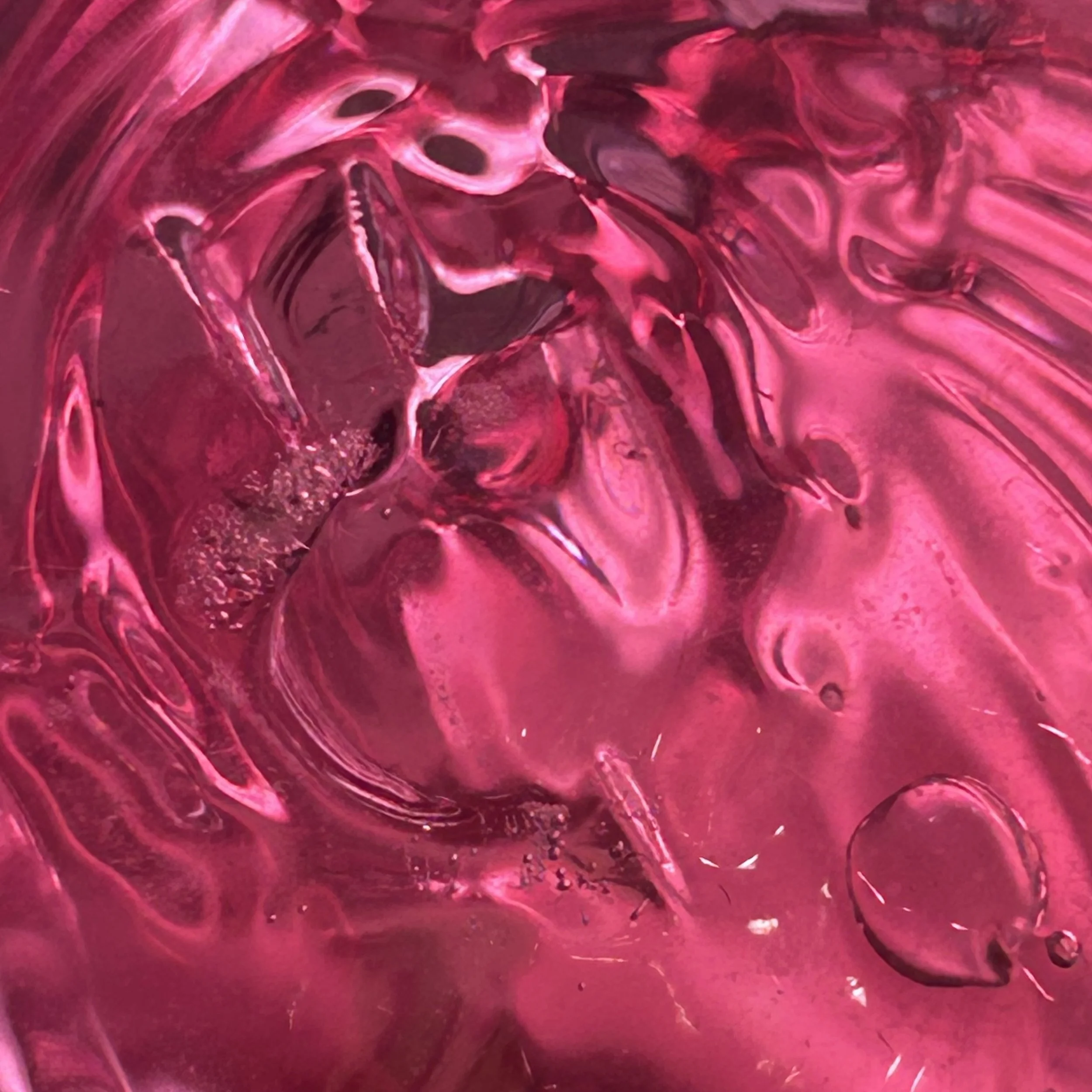
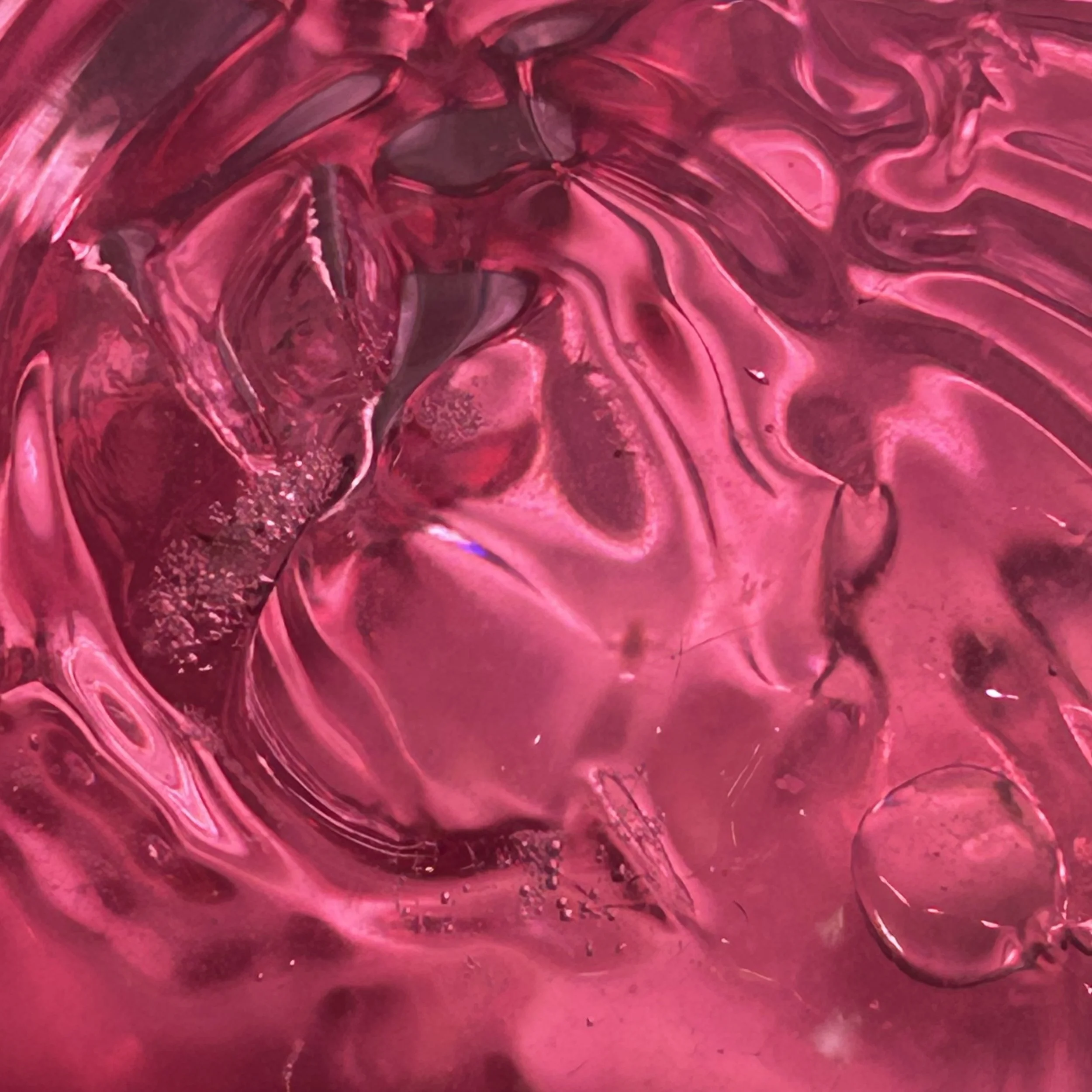
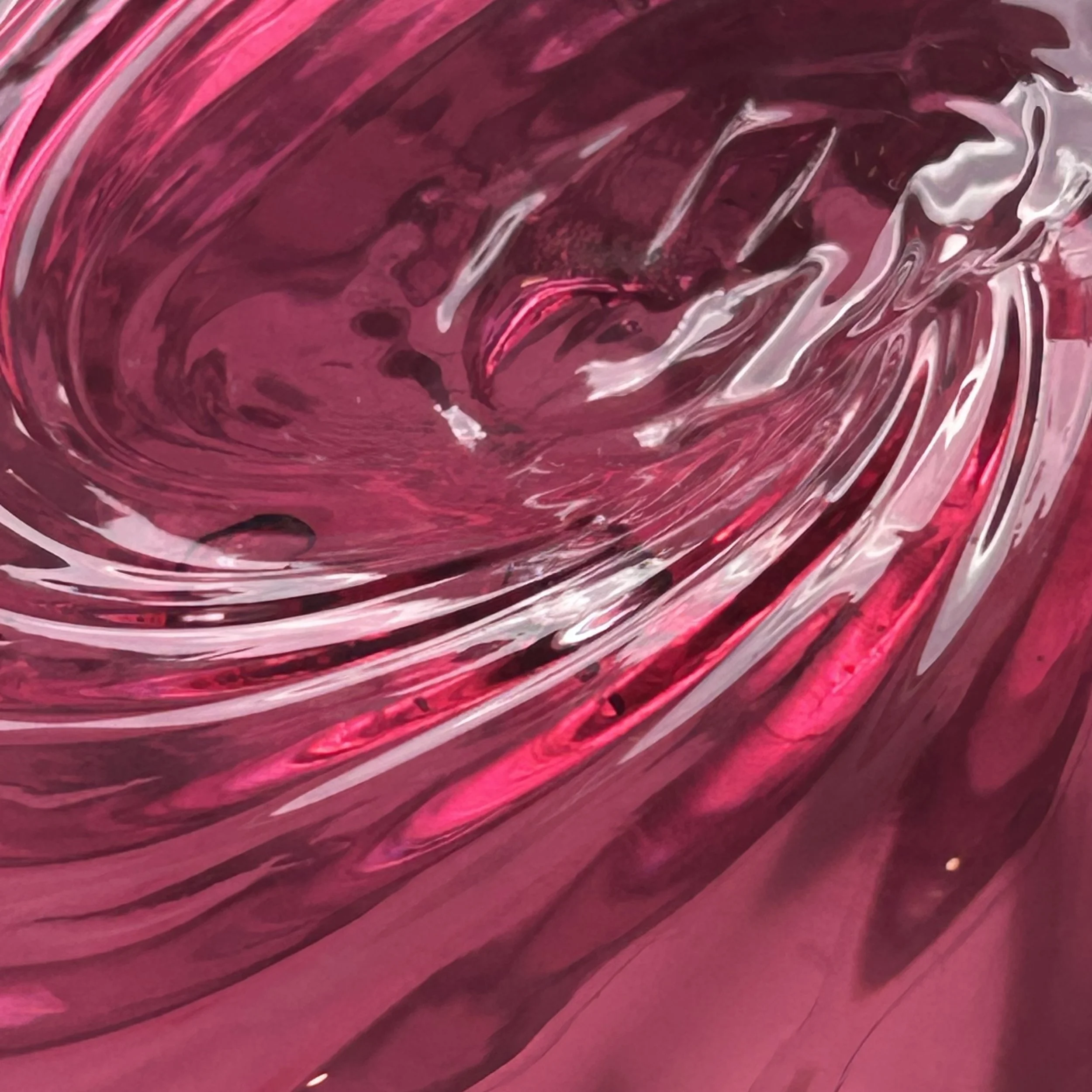
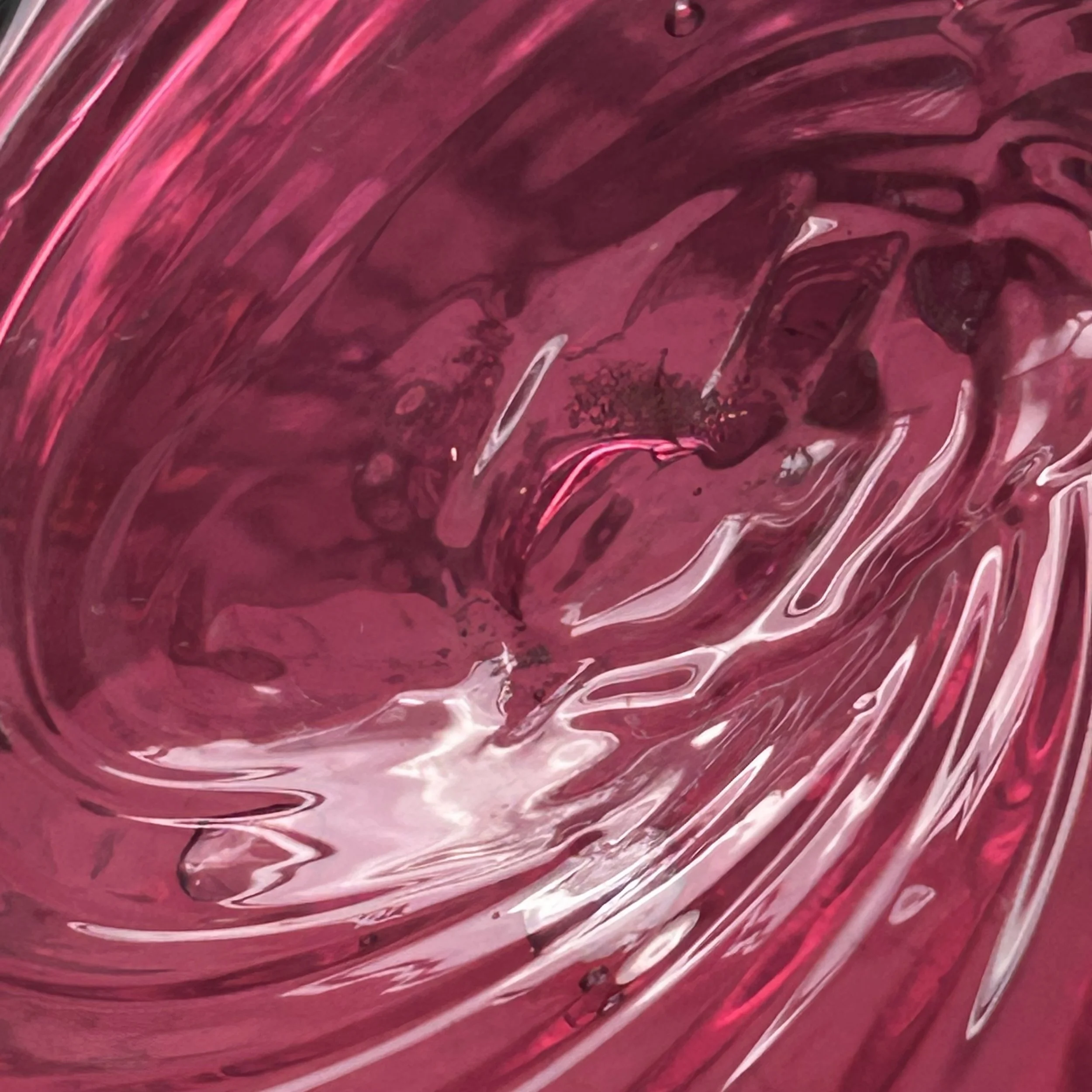
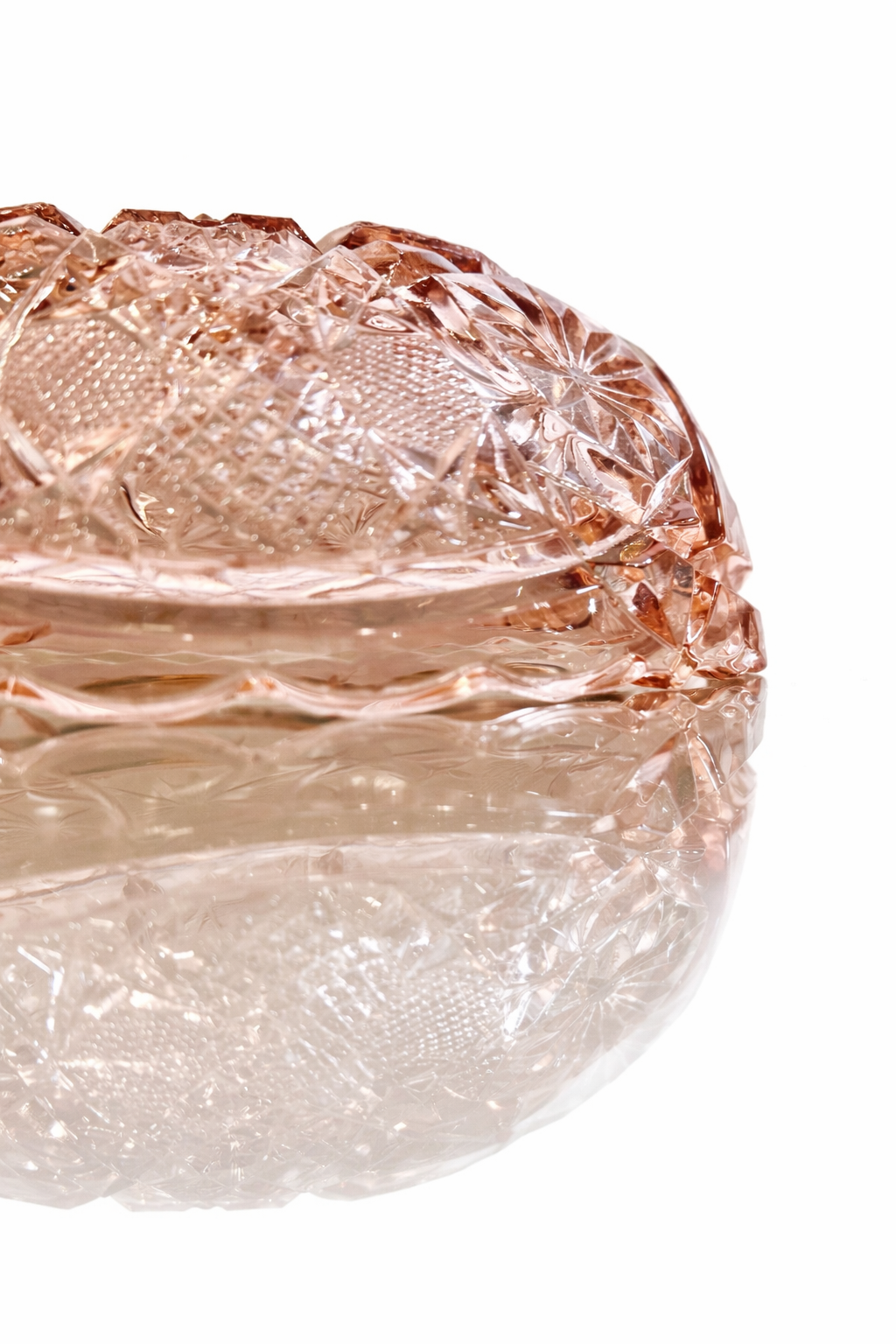
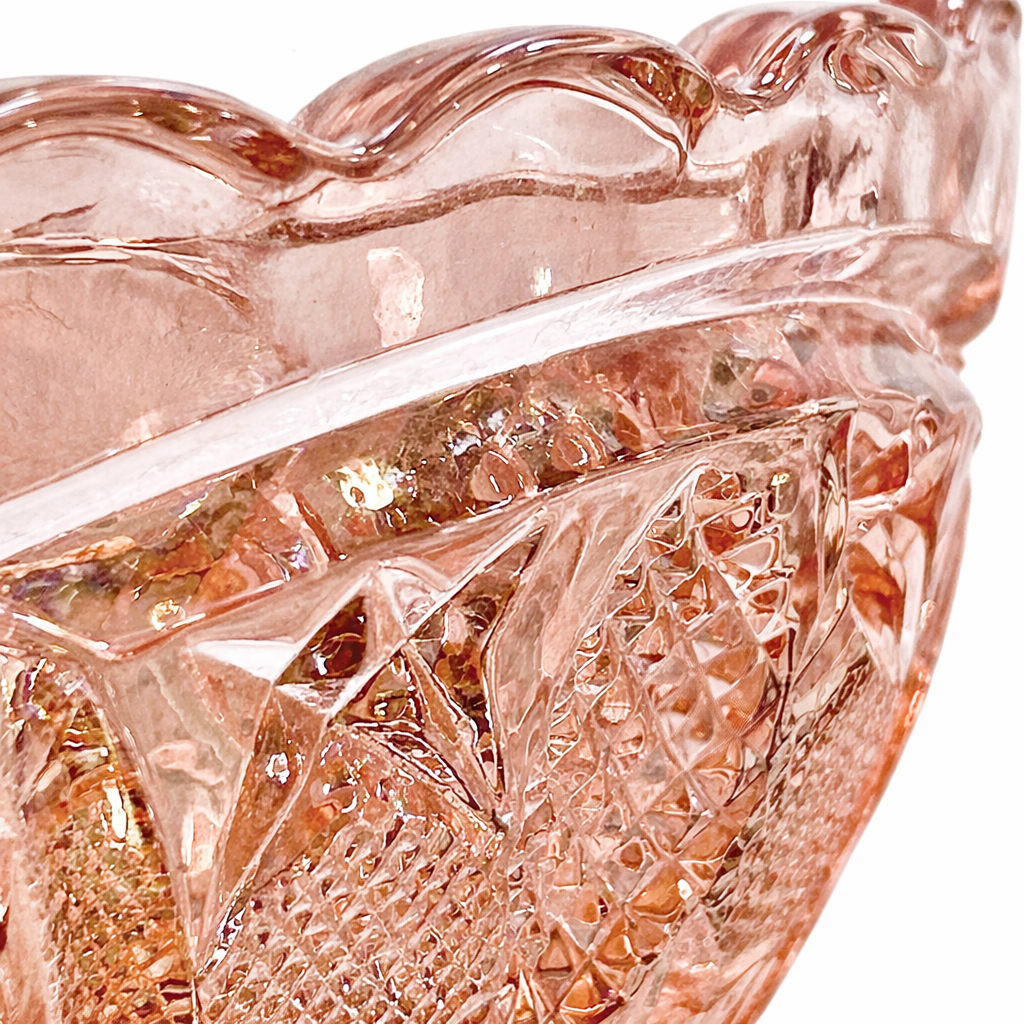
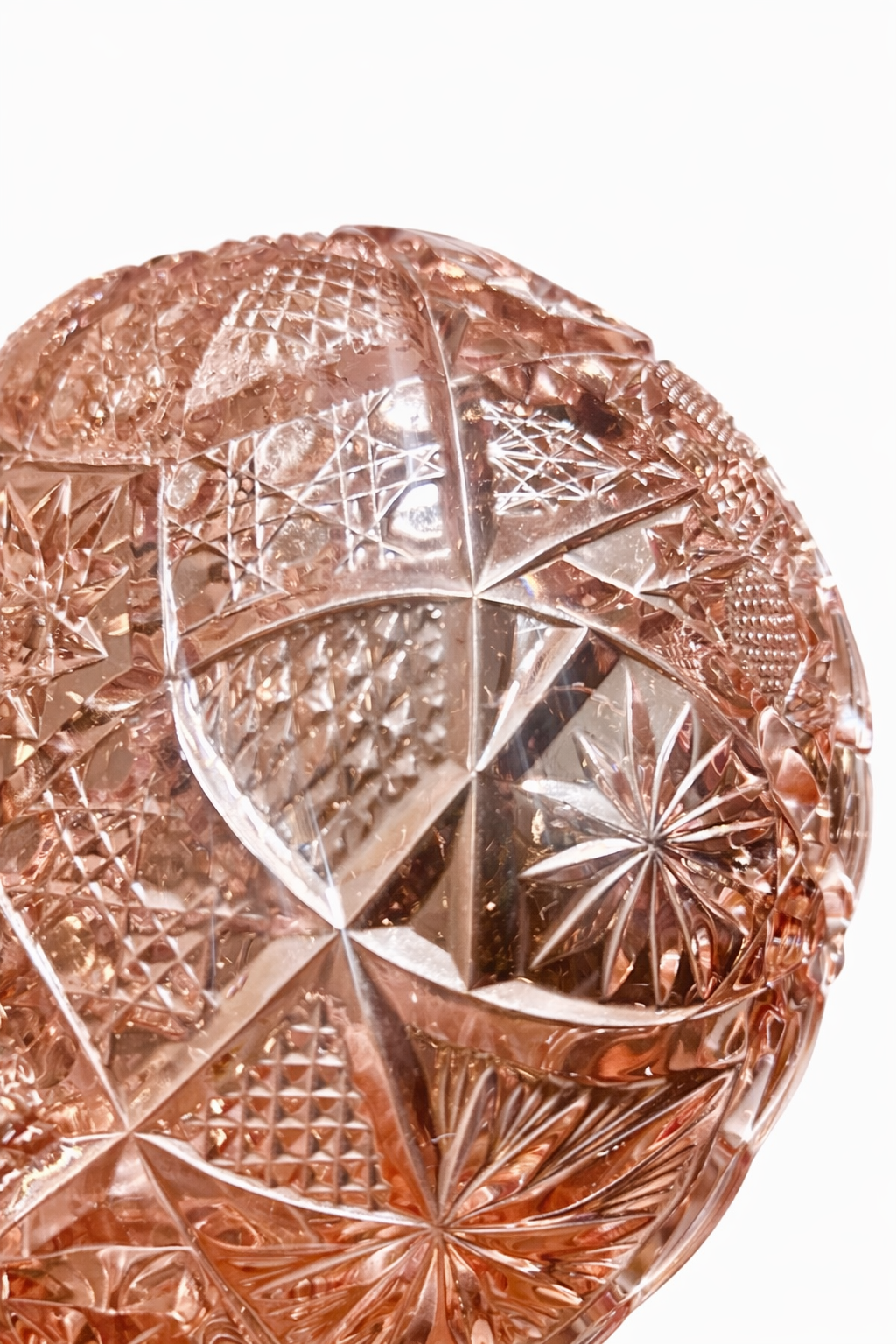
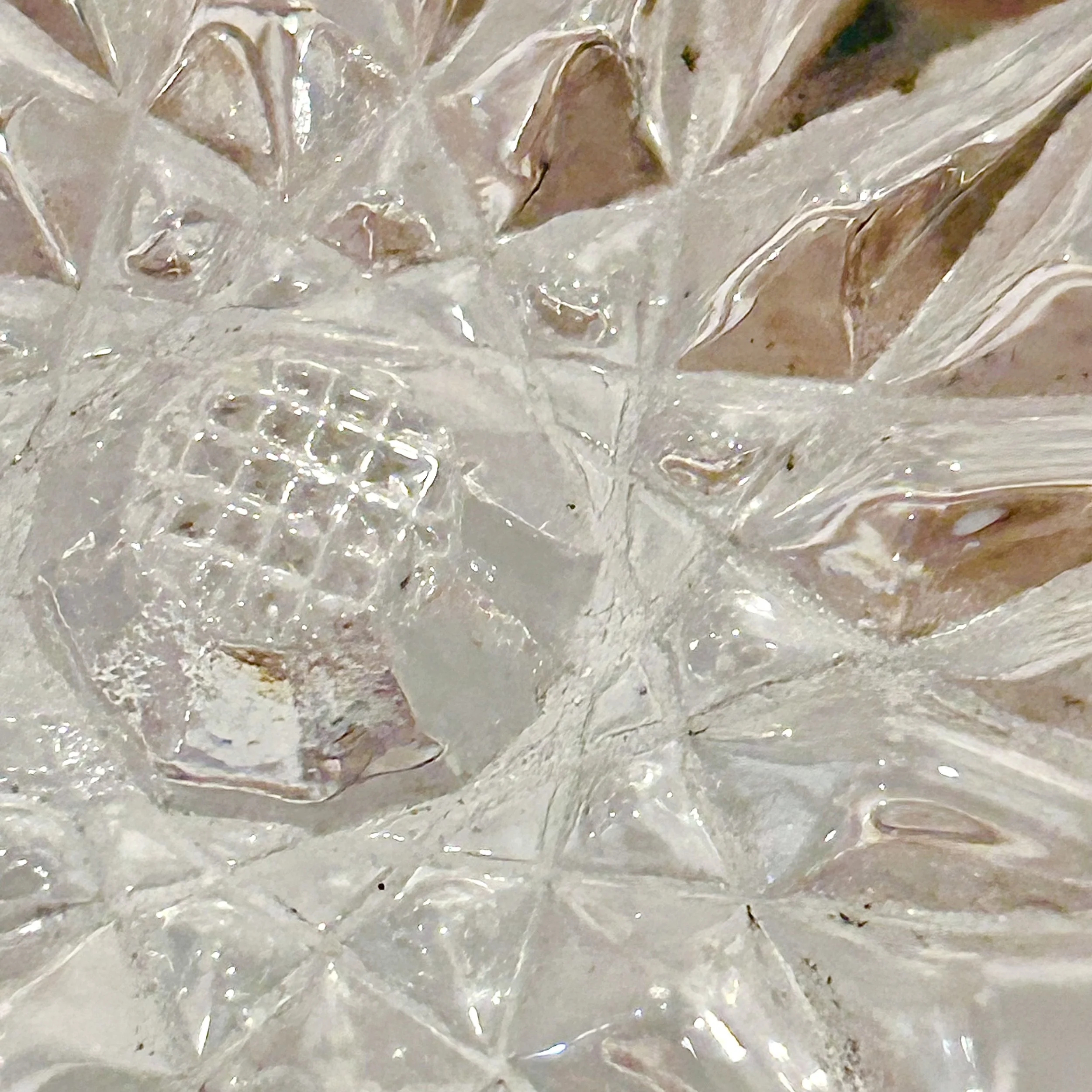
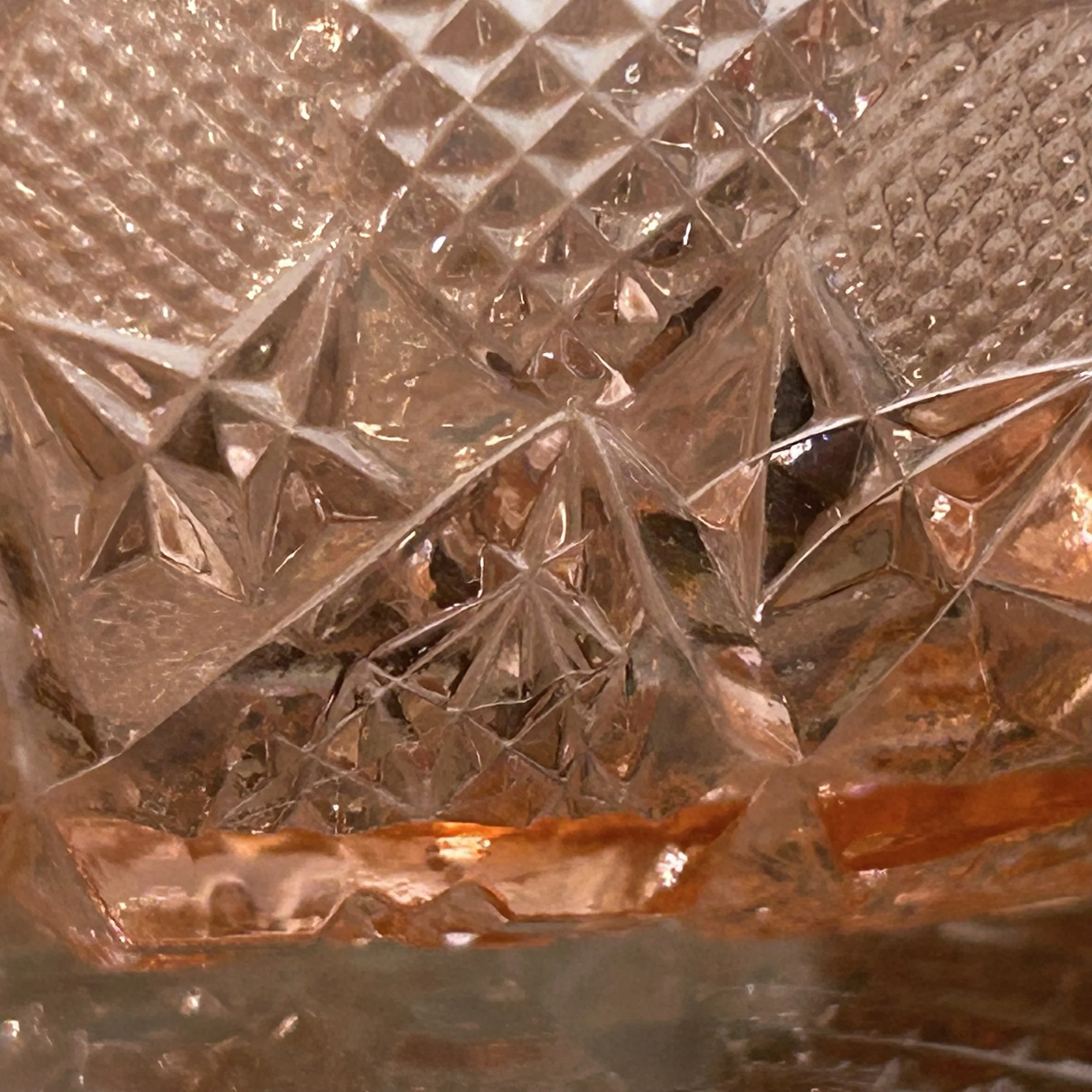
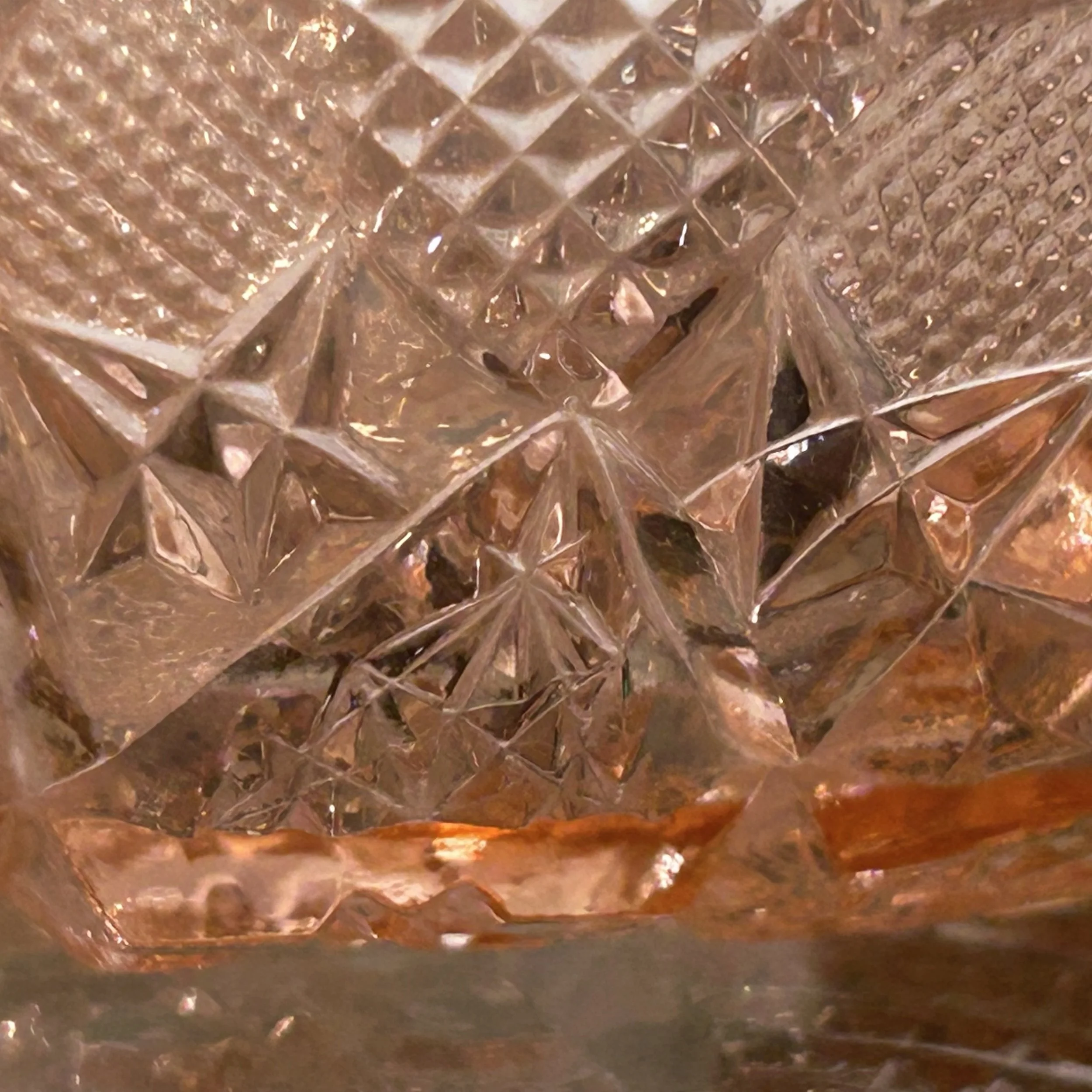
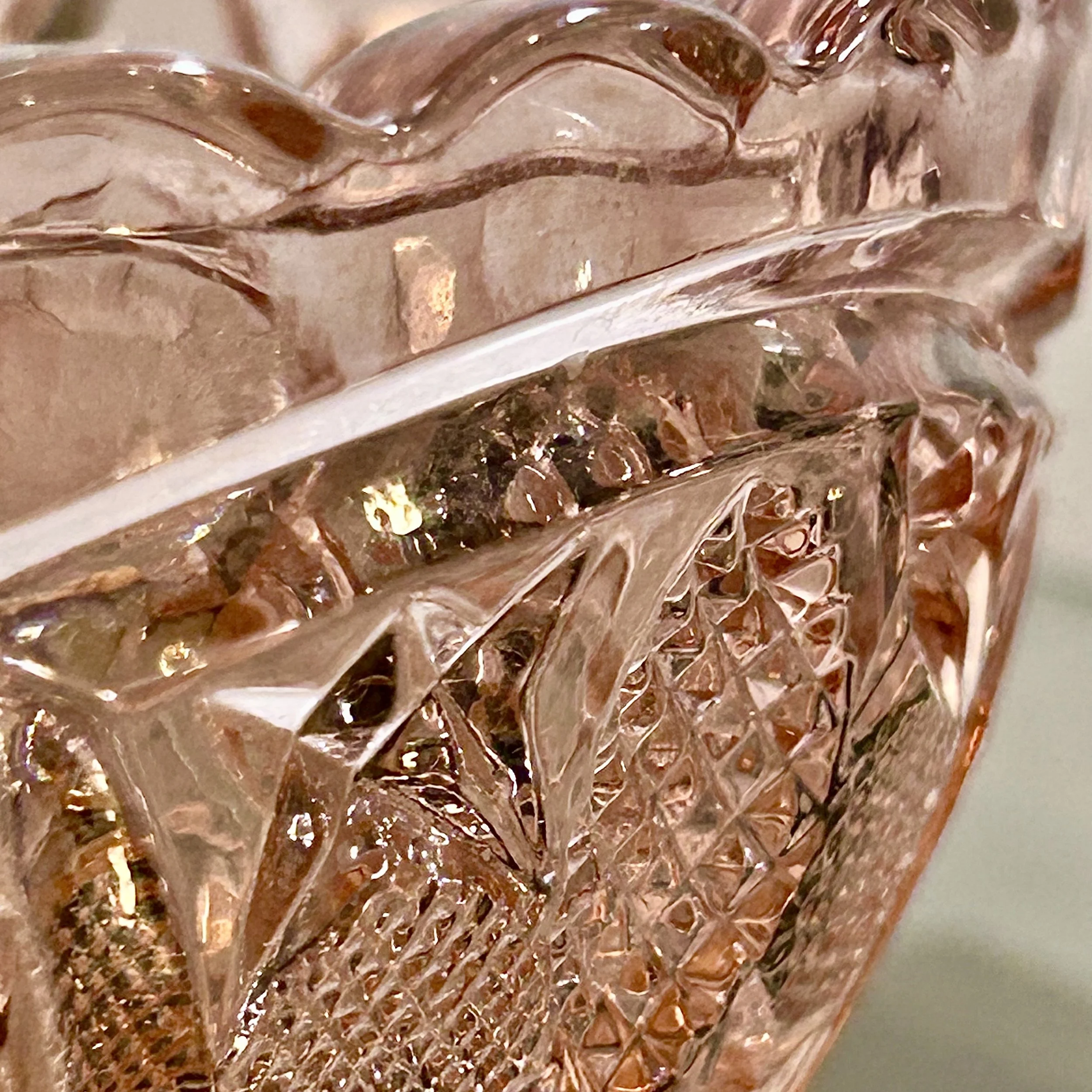
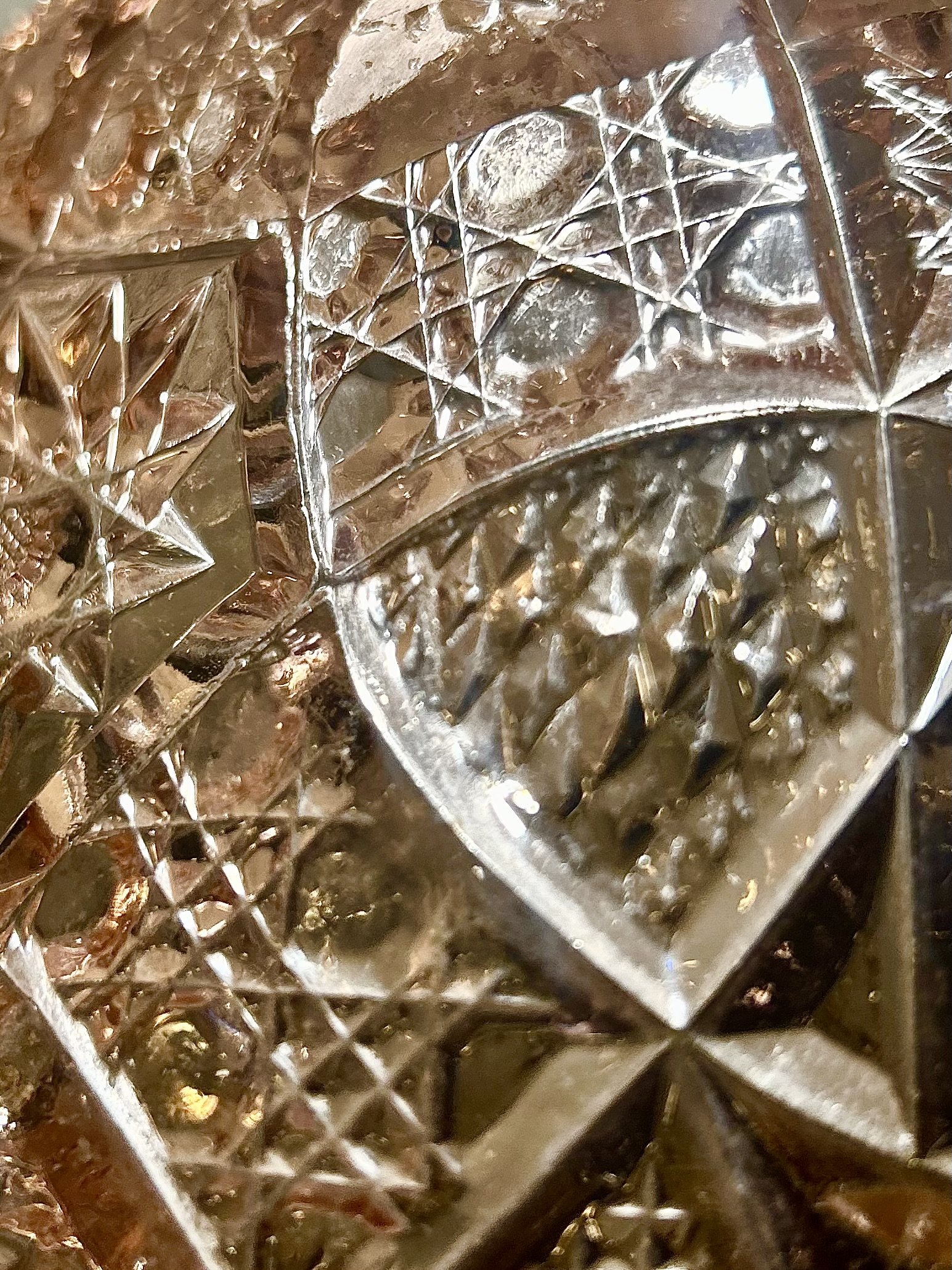
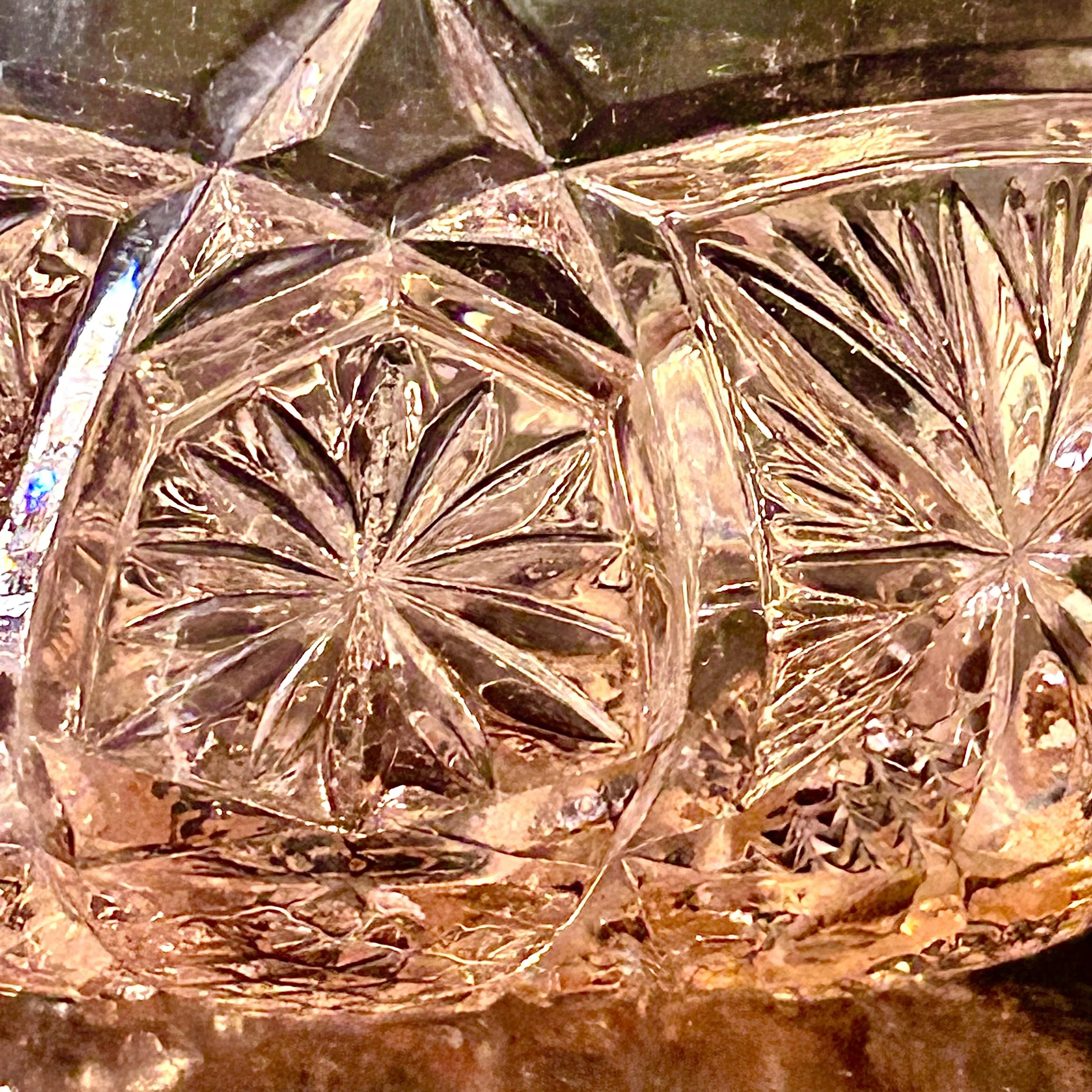
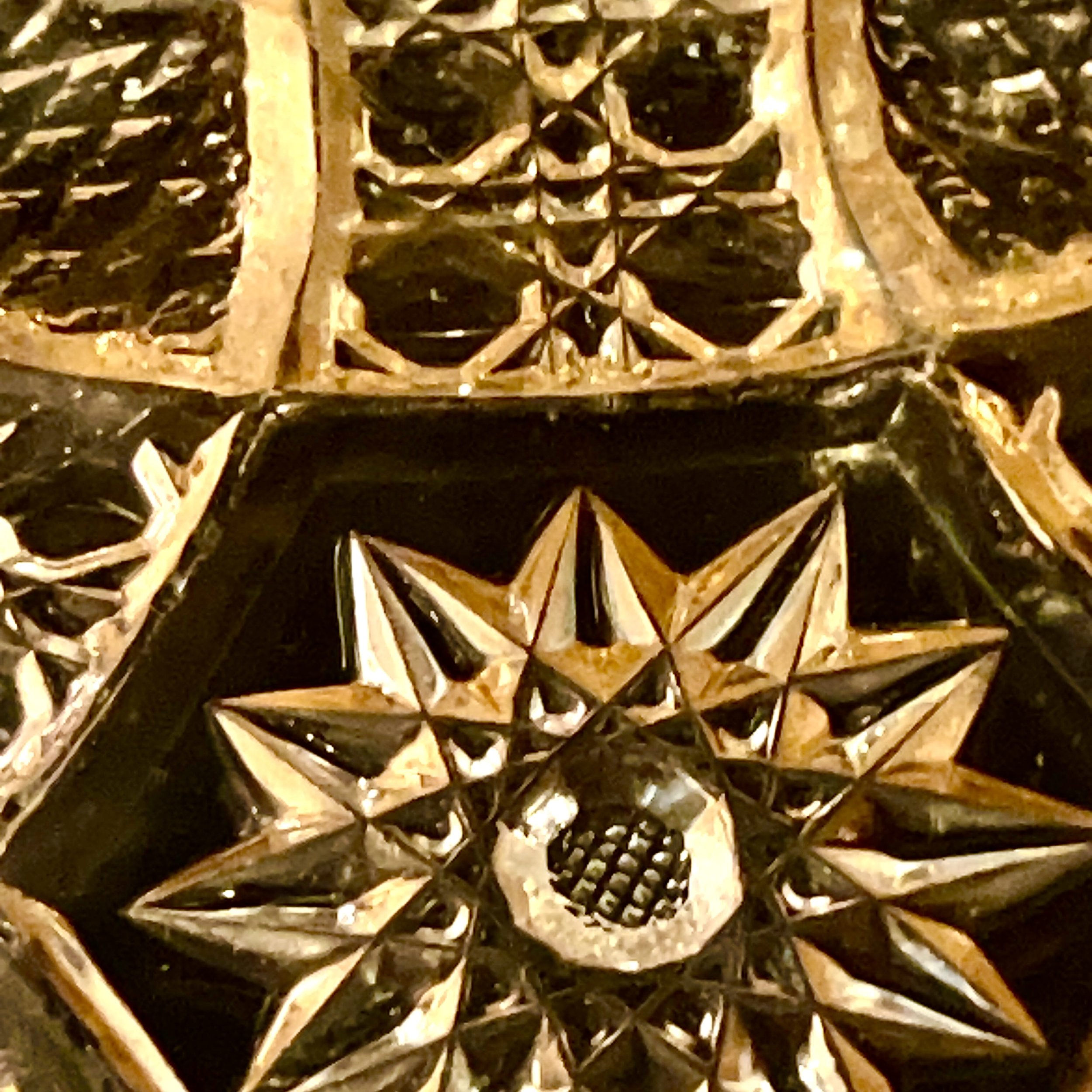
The bowl’s walls are crisply molded into bold angular facets that fracture and refract light across the saturated ruby interior. The coloration graduates outward into warm amber tones—a true batch-color transition achieved through cadmium-based glass chemistry rather than surface staining or flashing. Under 365 nm black light, the glass emits a pronounced orange-red fluorescence, confirming cadmium content consistent with higher-quality decorative pressed glass of the period.
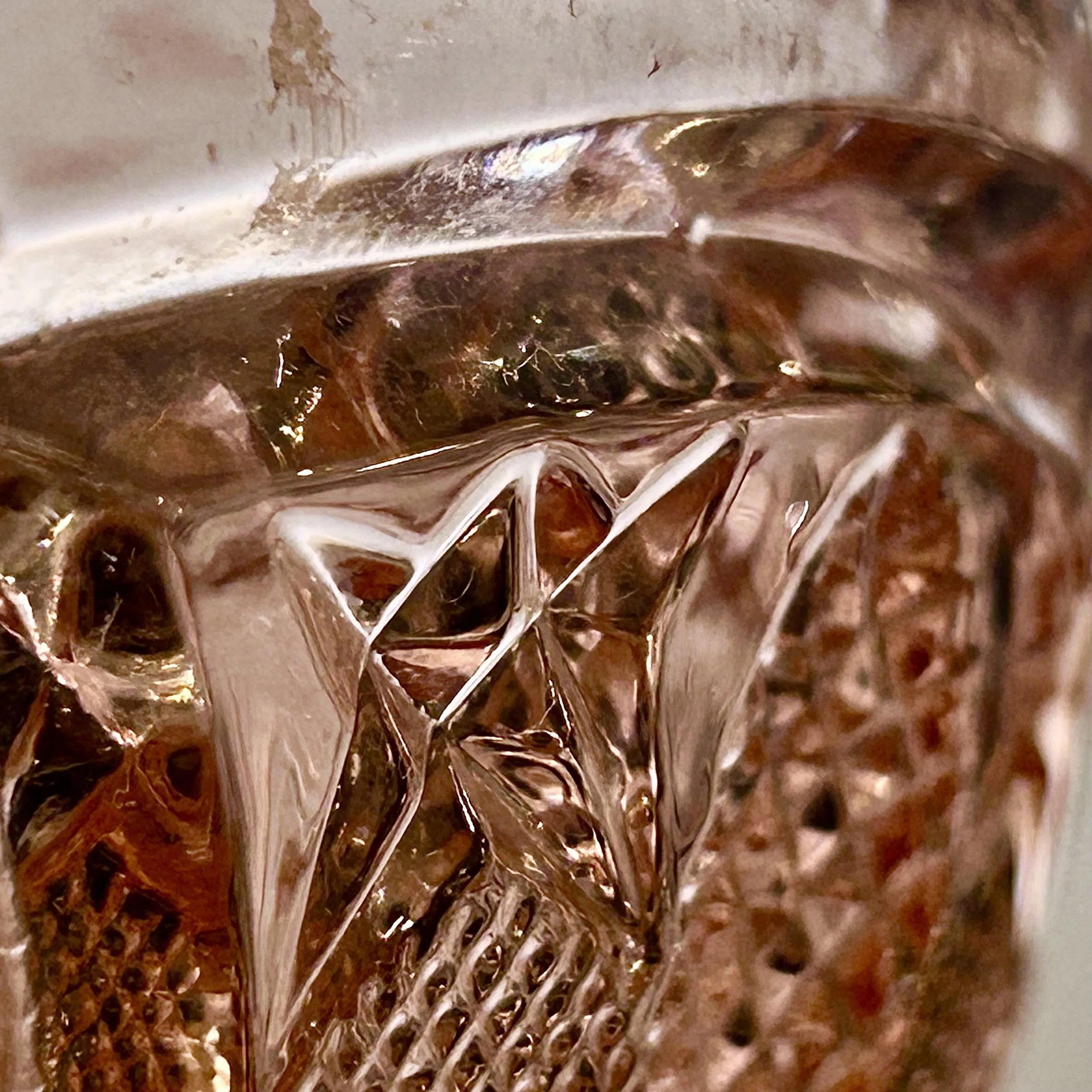
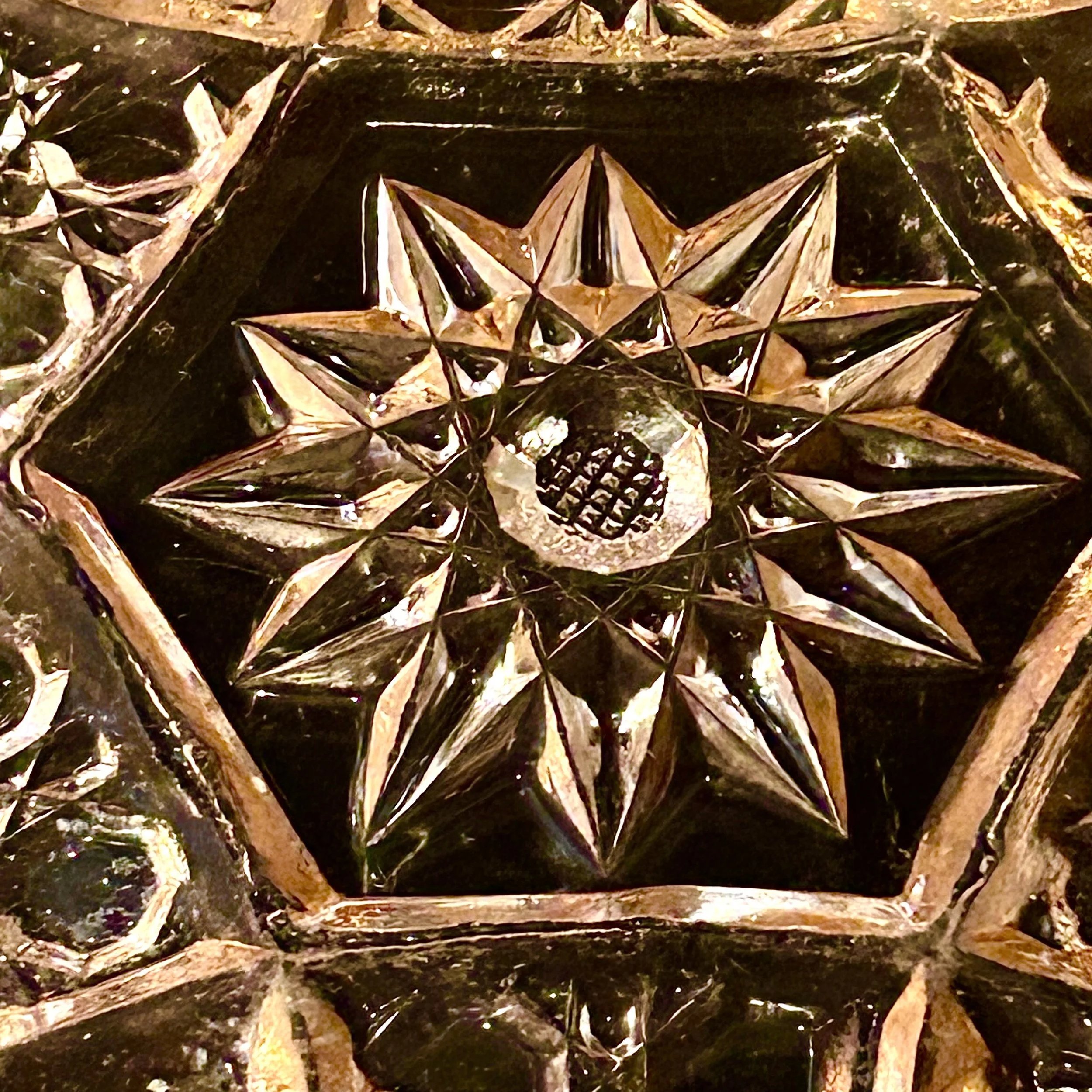
An applied beaded rim encircles the lip, introducing dimensional refinement and elevating the piece beyond purely utilitarian pressed wares. The faceted pedestal stem and flared foot repeat the geometry of the bowl, creating a cohesive vertical rhythm and balanced Deco silhouette.
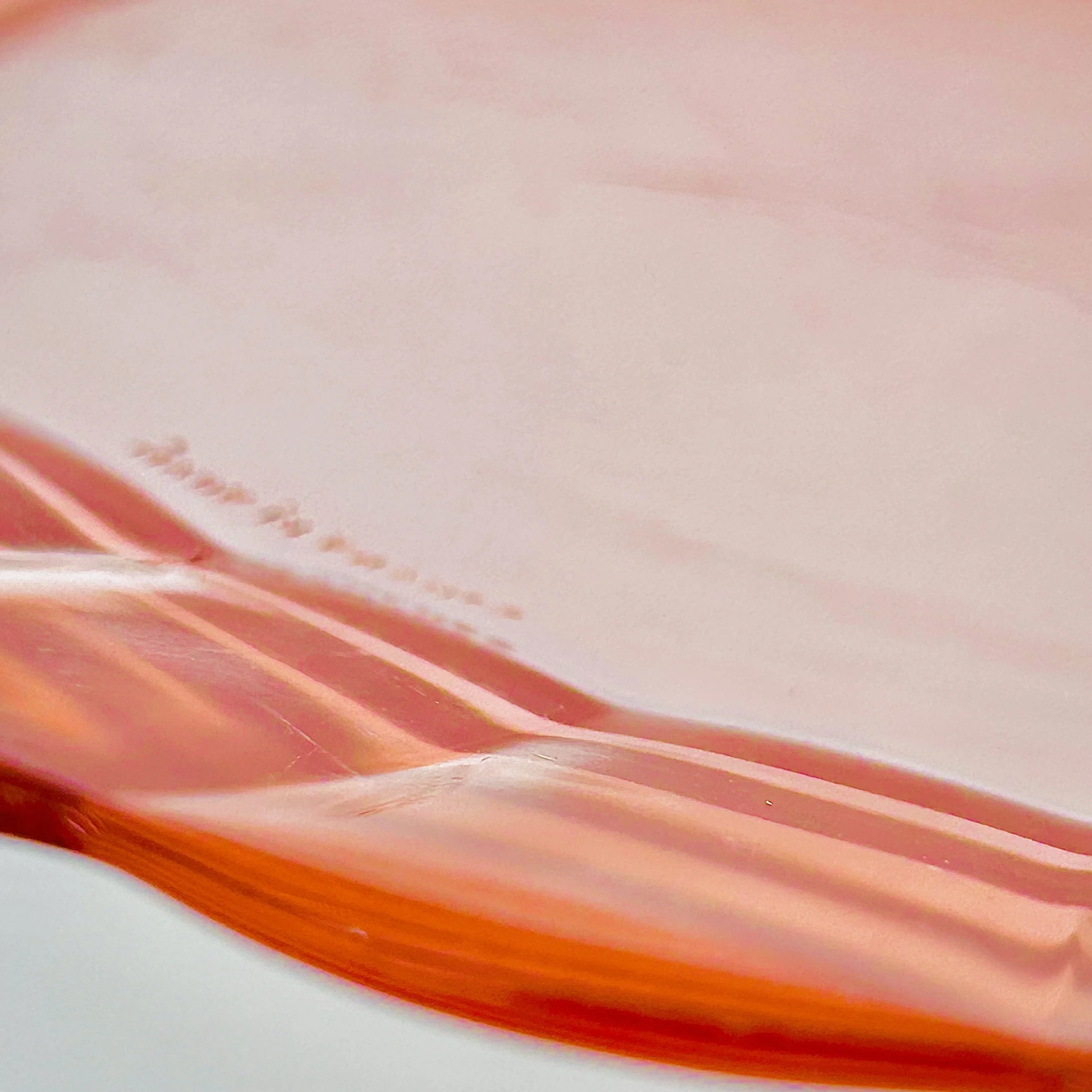
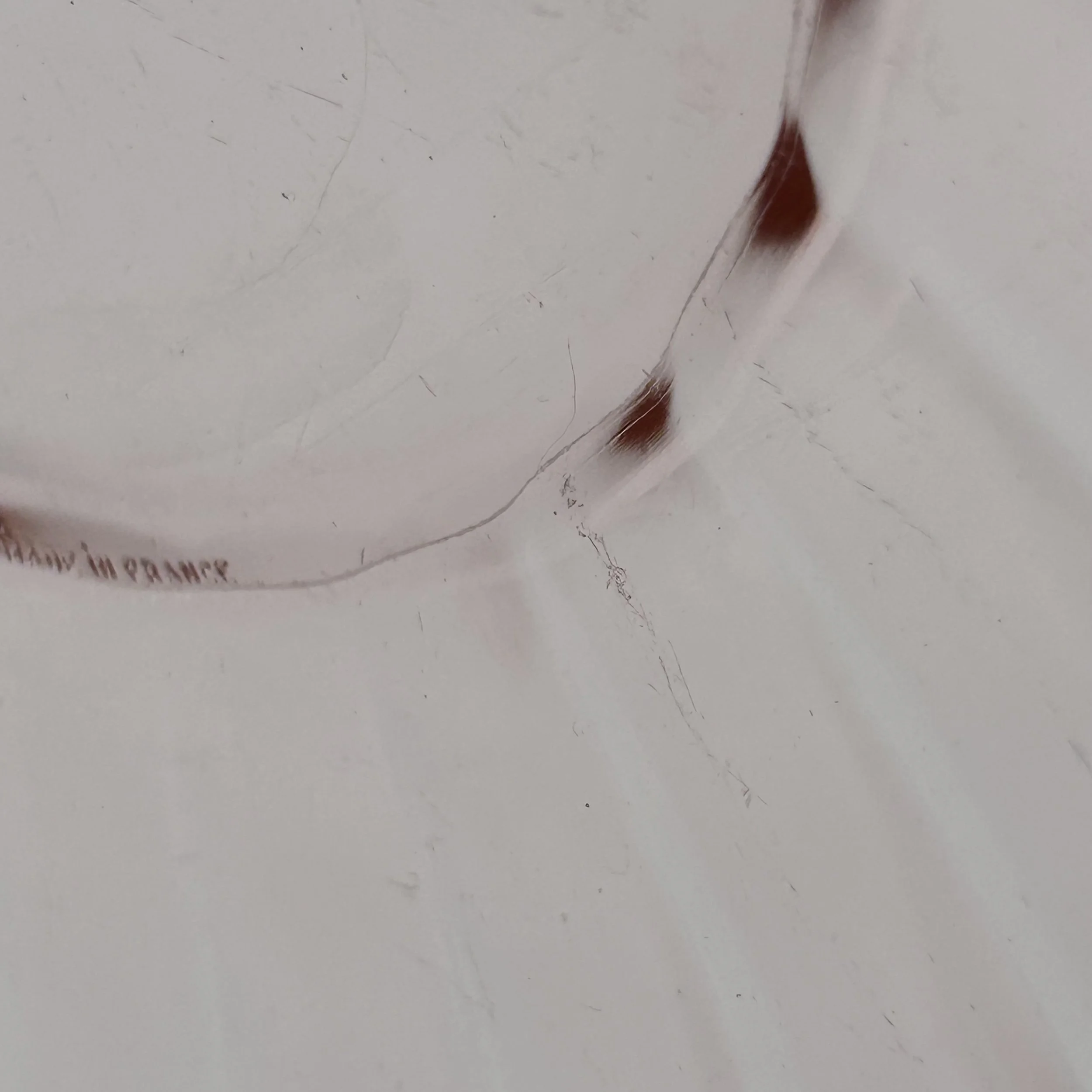
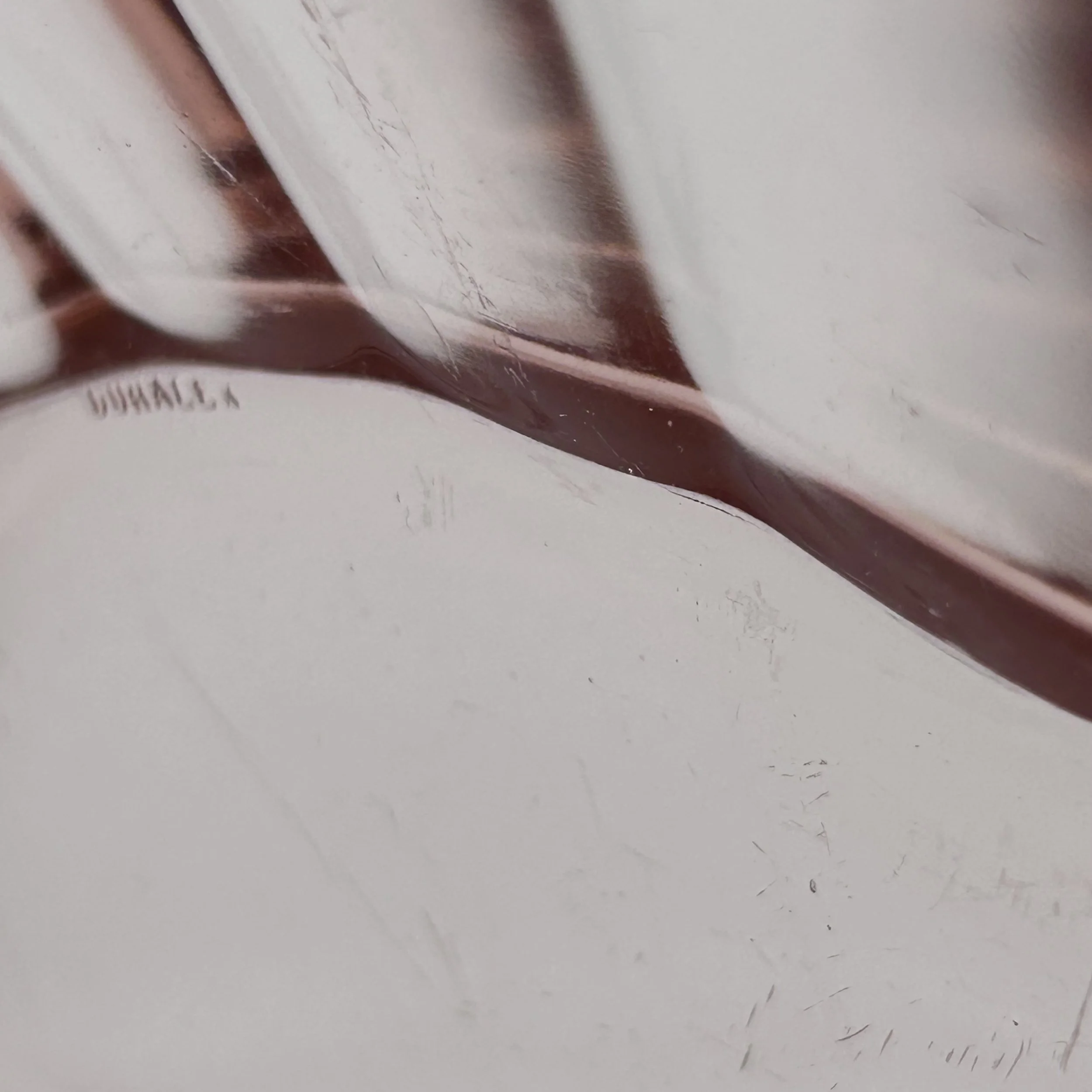
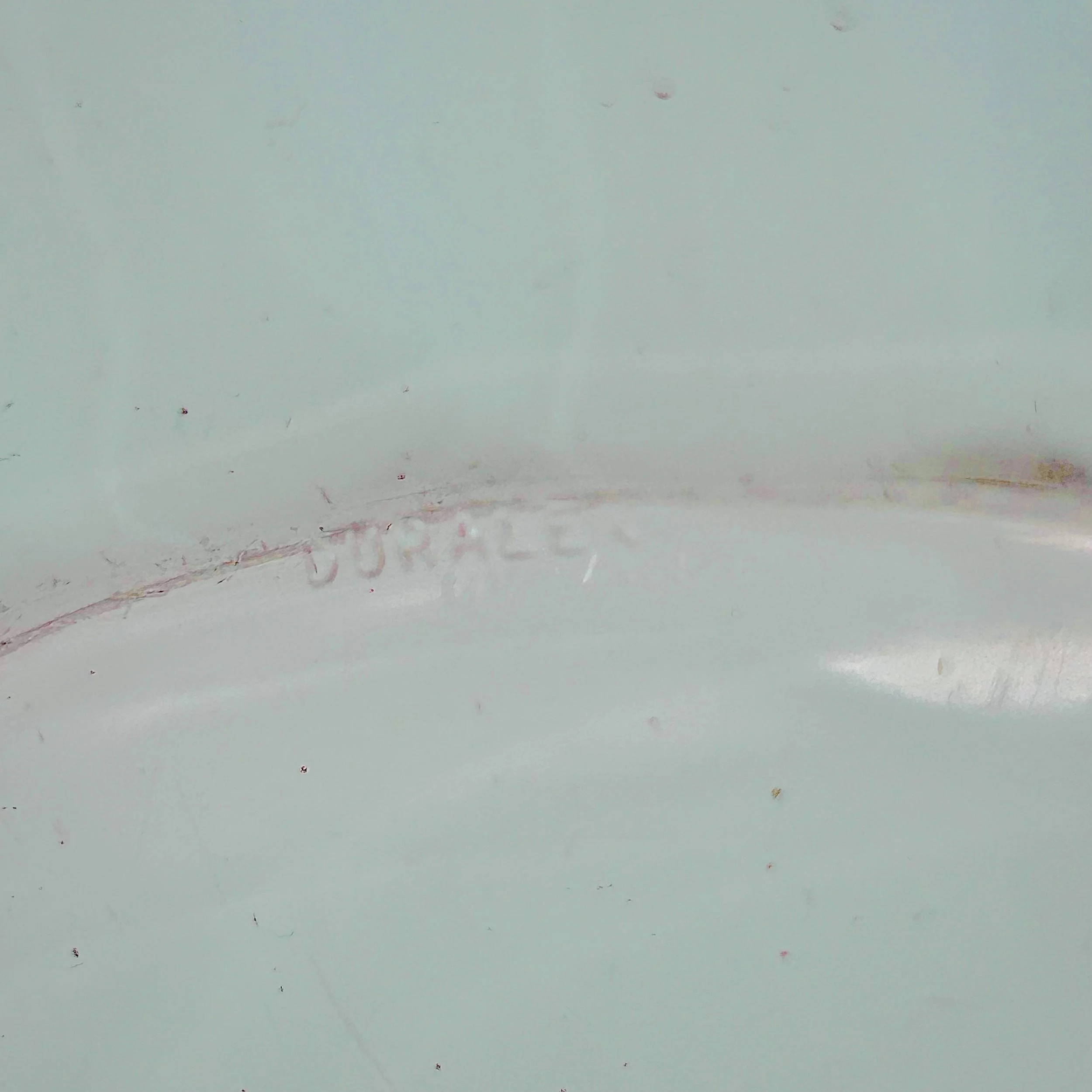
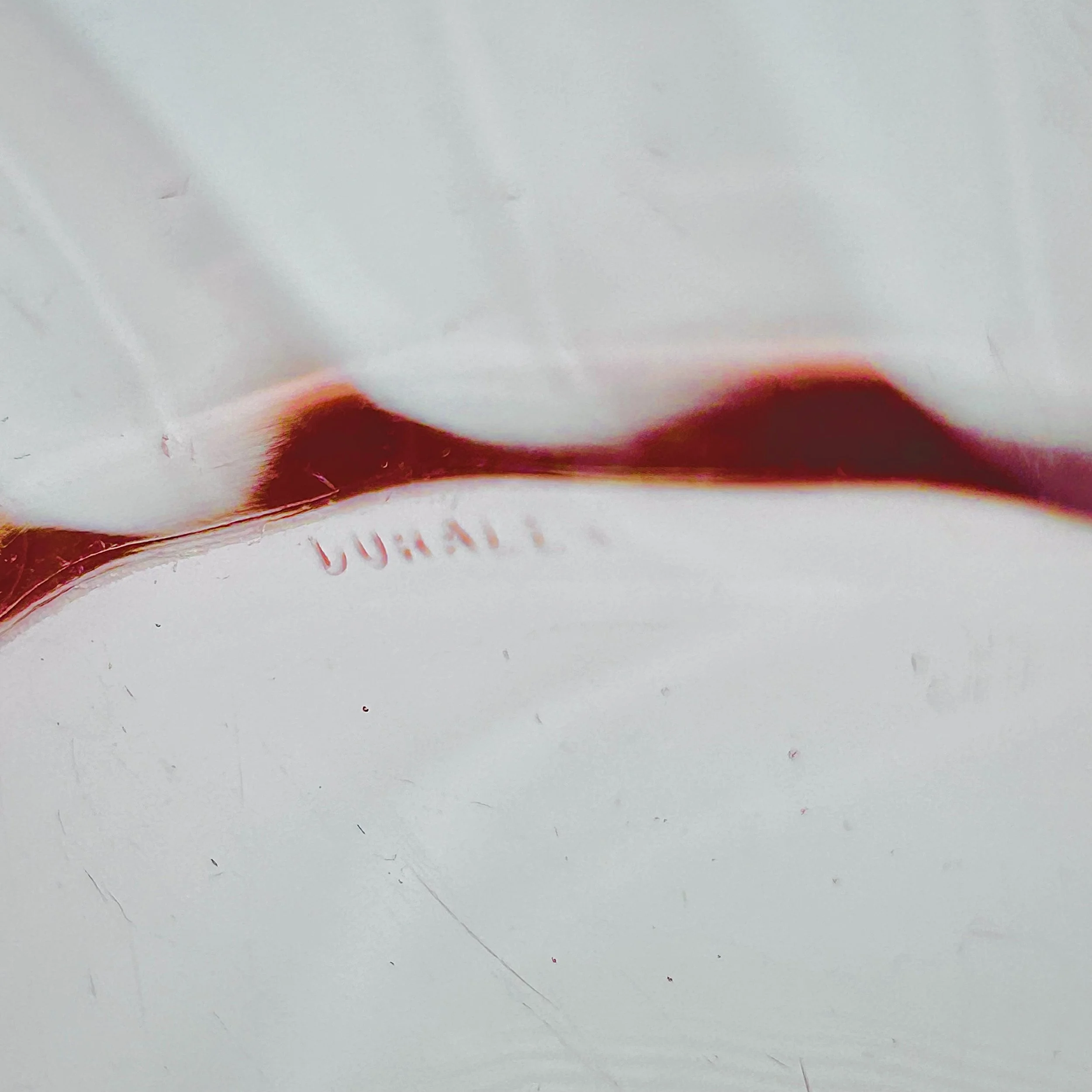
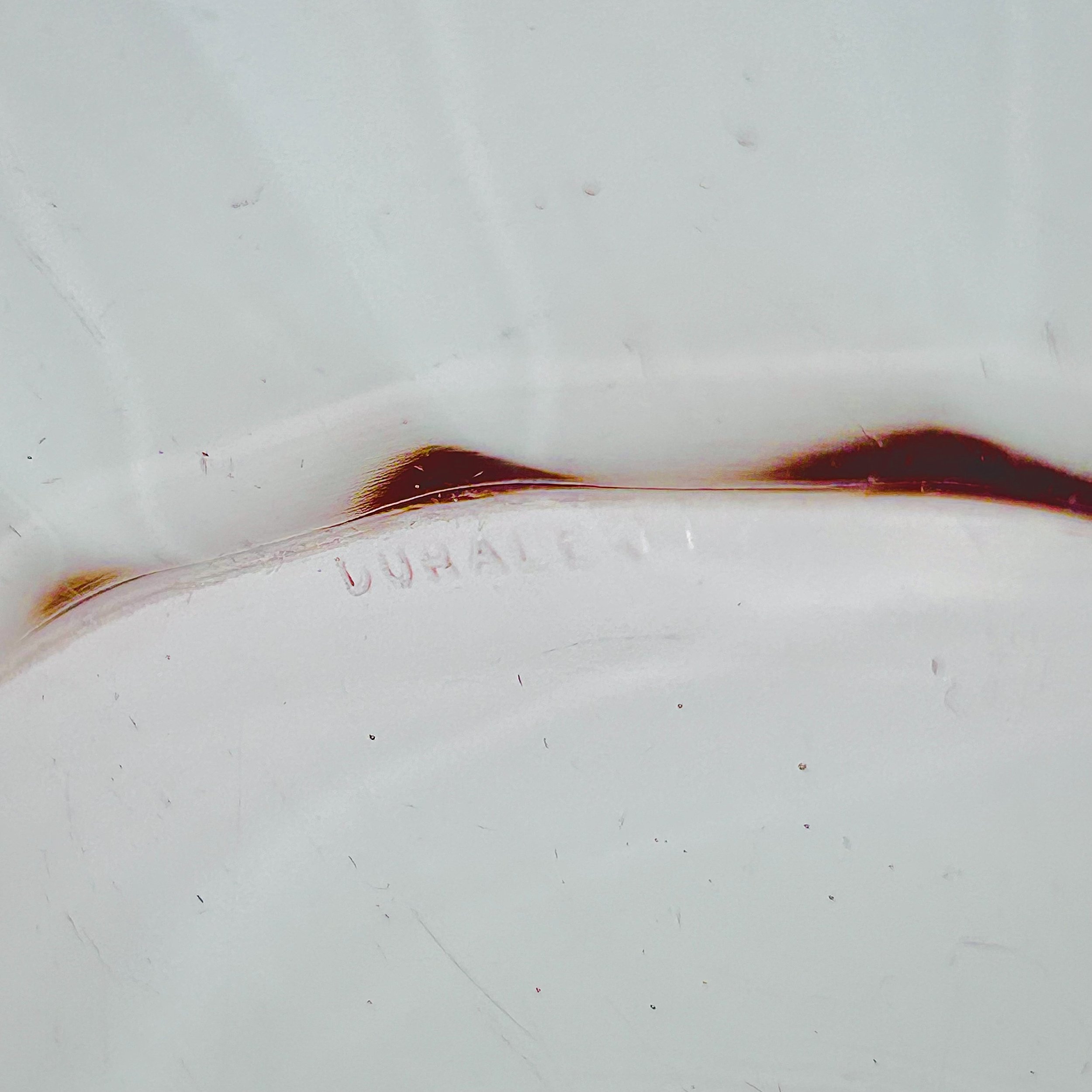
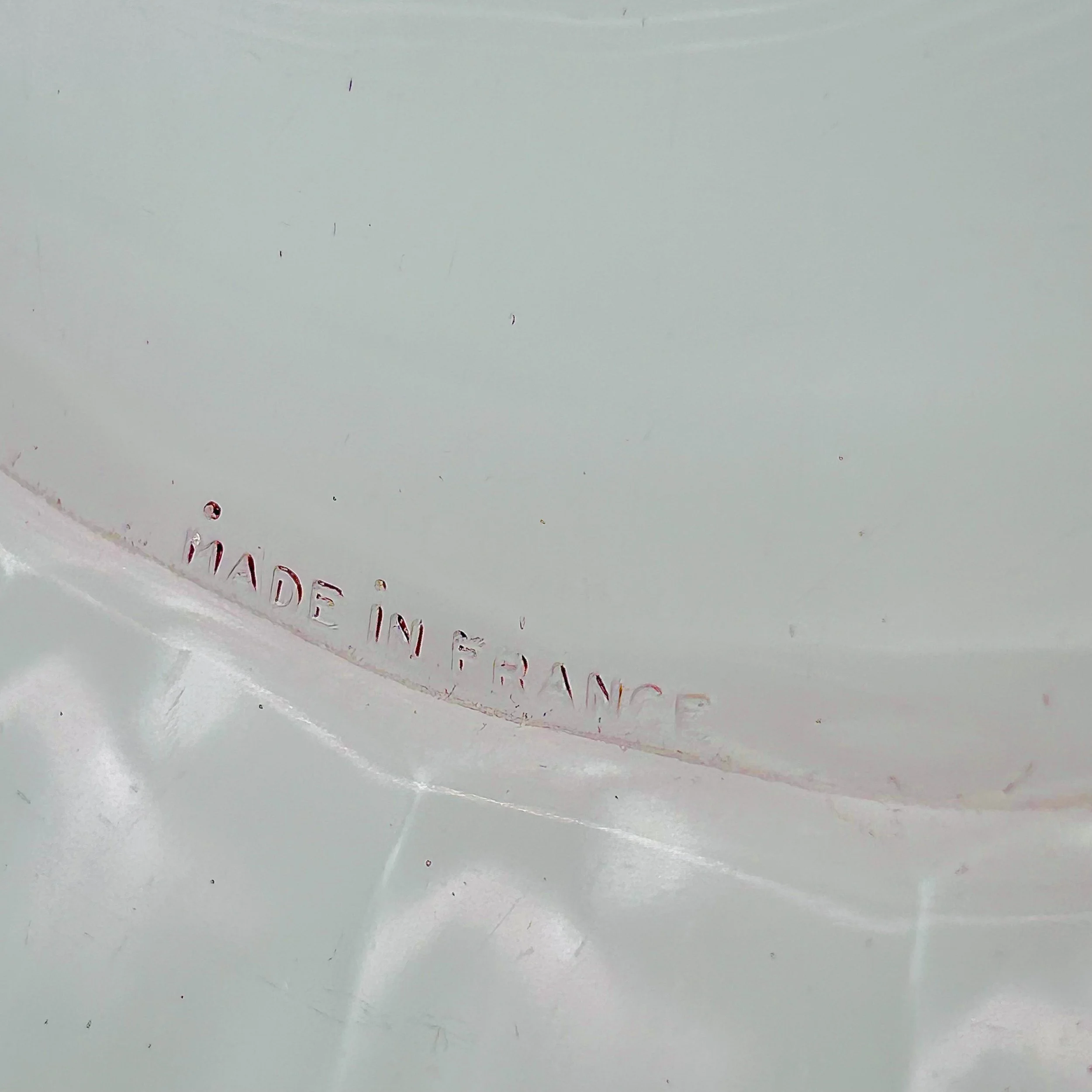
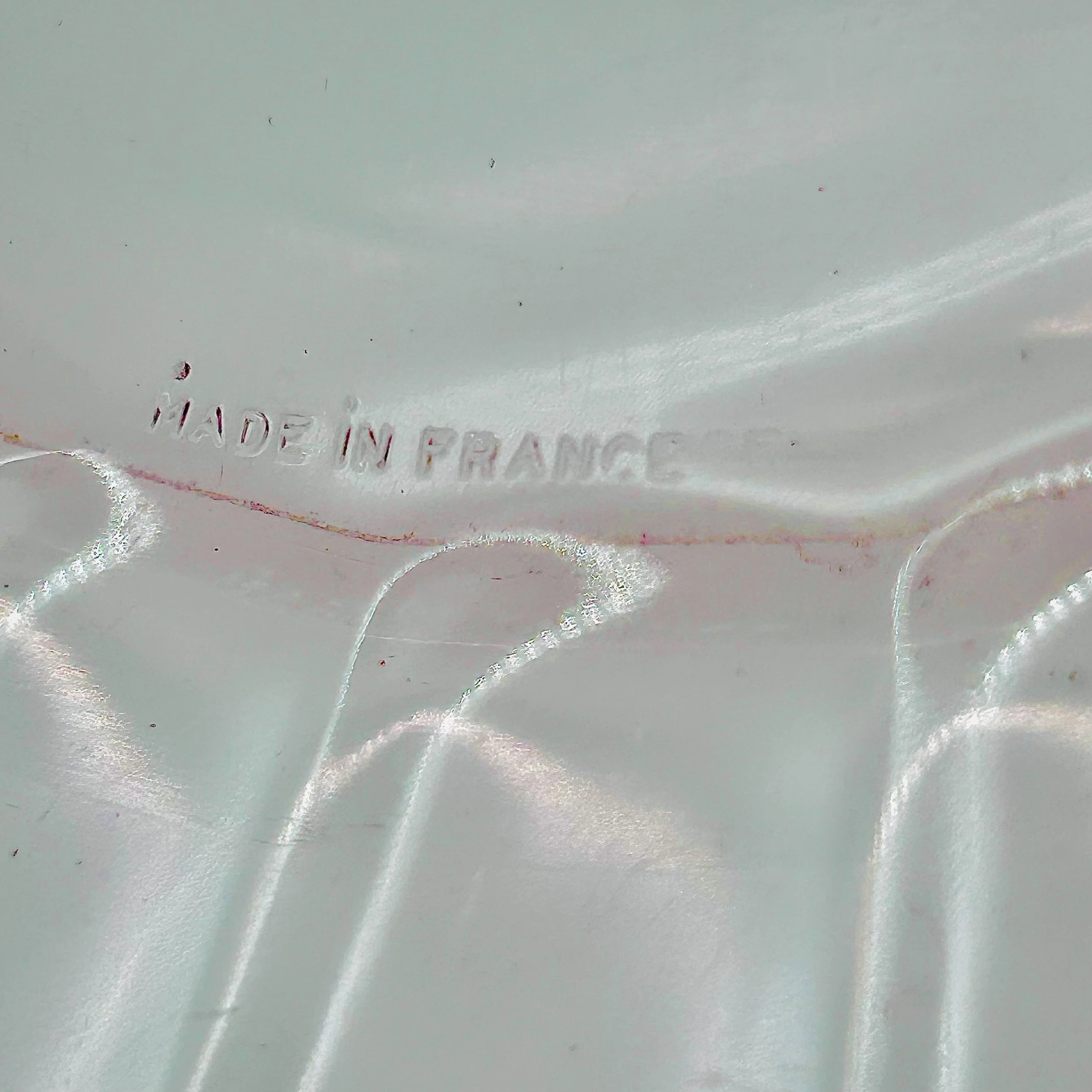
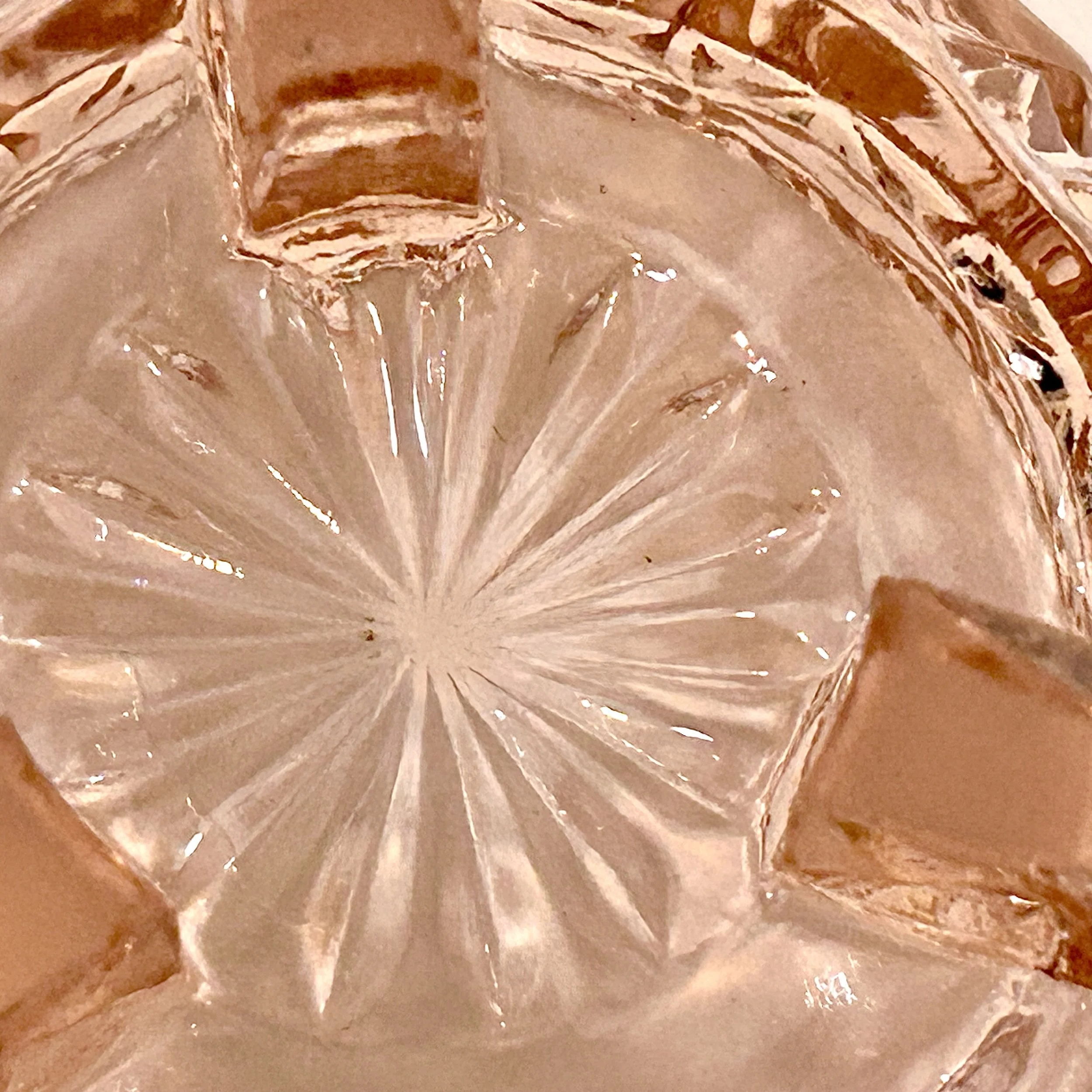
Manufacturing characteristics—including visible mold seams, consistent facet repetition, layered color transition, and confirmed UV response—align strongly with Bohemian (Czechoslovakian) pressed glass production widely exported between the 1930s and 1950s. No maker’s mark is present; attribution is based on material analysis, construction, and comparative examples.
In the 2026 collector market, authentic cadmium-reactive Art Deco glass continues to draw strong interest, particularly when color transition, architectural form, and pedestal presentation combine in a single object.
Attribution & Period
Bohemia (Czechoslovakia), Central Europe.
Circa 1930s–1950s.
Unattributed; assessed through construction, UV response, and stylistic comparison.
Material & Technique
Pressed cadmium-based ruby and amber glass
Applied beaded rim
UV-reactive under 365 nm black light
Faceted pedestal stem with flared foot
Dimensions & Weight
Height: 5.5 in
Mouth diameter: 6 in
Base diameter: 3.58 in
Weight: 1.474 lb
Substantial for scale with strong visual density.
Condition
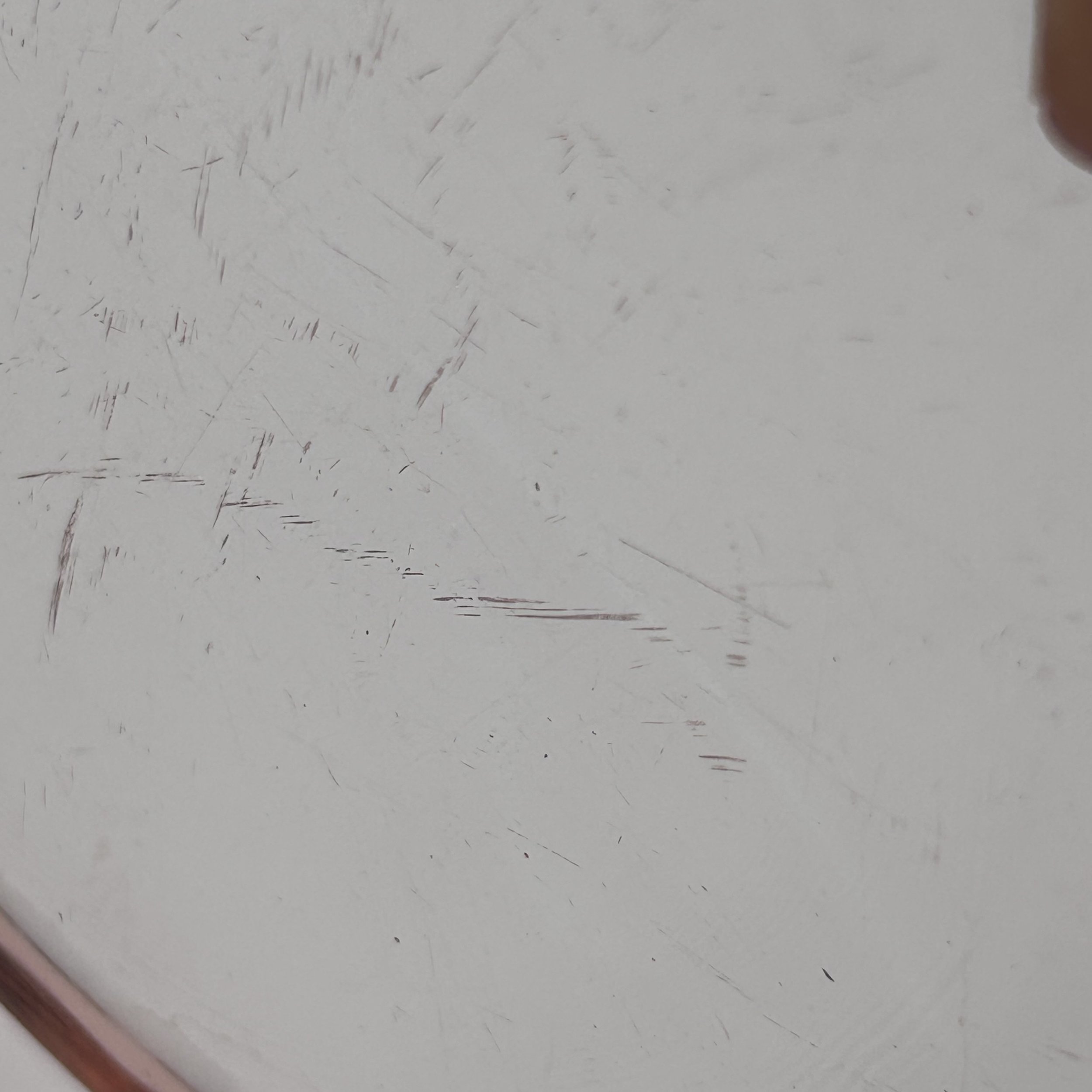
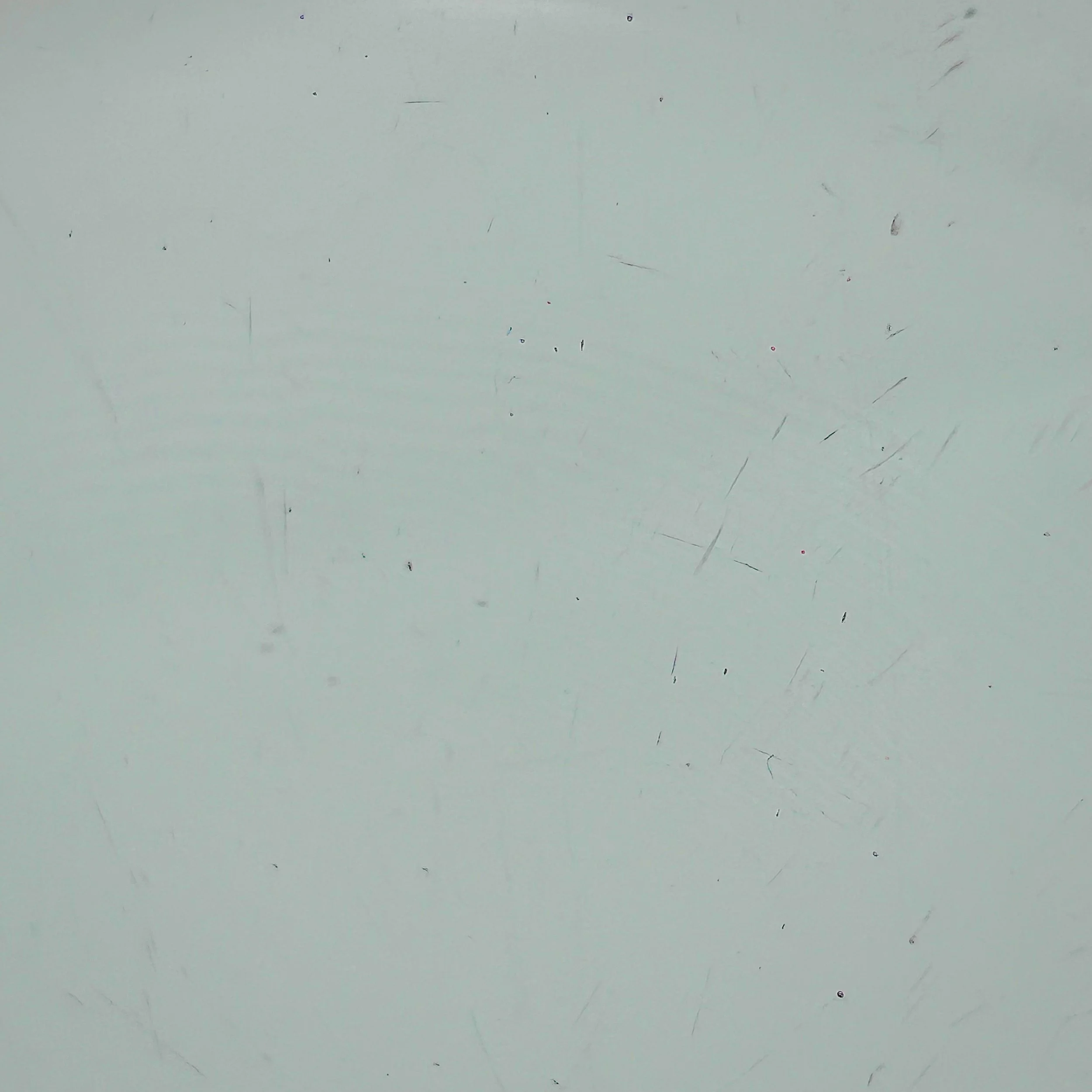
Good vintage condition.
Structurally sound and visually impactful in display.
Placement
Ideal for:
Art Deco collections
Bohemian glass groupings
UV-reactive glass displays
Centerpiece or console presentation
Jewel-toned layered interiors
Its chromatic transition and angular form allow it to function as both decorative centerpiece and collector-level example of Central European Deco glass.
STANDARD ATTRIBUTION & VALUE DISCLOSURE
This piece is described to the best of current scholarly and market knowledge. Any maker or regional attribution is based on visual analysis, materials, construction techniques, and documented stylistic comparisons. As with many vintage and antique glass objects, definitive attribution may not be possible without original labels or factory records. Pricing reflects condition, quality, decorative appeal, and current collector demand rather than a guaranteed maker identification.
A commanding Art Deco pedestal bowl executed in cadmium-rich ruby transitioning to amber and pale honey, distinguished by sharply faceted geometry and an applied beaded rim. Sculptural and unapologetically architectural, the form embodies Central European Deco design at its most assertive.
The bowl’s walls are crisply molded into bold angular facets that fracture and refract light across the saturated ruby interior. The coloration graduates outward into warm amber tones—a true batch-color transition achieved through cadmium-based glass chemistry rather than surface staining or flashing. Under 365 nm black light, the glass emits a pronounced orange-red fluorescence, confirming cadmium content consistent with higher-quality decorative pressed glass of the period.
An applied beaded rim encircles the lip, introducing dimensional refinement and elevating the piece beyond purely utilitarian pressed wares. The faceted pedestal stem and flared foot repeat the geometry of the bowl, creating a cohesive vertical rhythm and balanced Deco silhouette.
Manufacturing characteristics—including visible mold seams, consistent facet repetition, layered color transition, and confirmed UV response—align strongly with Bohemian (Czechoslovakian) pressed glass production widely exported between the 1930s and 1950s. No maker’s mark is present; attribution is based on material analysis, construction, and comparative examples.
In the 2026 collector market, authentic cadmium-reactive Art Deco glass continues to draw strong interest, particularly when color transition, architectural form, and pedestal presentation combine in a single object.
Attribution & Period
Bohemia (Czechoslovakia), Central Europe.
Circa 1930s–1950s.
Unattributed; assessed through construction, UV response, and stylistic comparison.
Material & Technique
Pressed cadmium-based ruby and amber glass
Applied beaded rim
UV-reactive under 365 nm black light
Faceted pedestal stem with flared foot
Dimensions & Weight
Height: 5.5 in
Mouth diameter: 6 in
Base diameter: 3.58 in
Weight: 1.474 lb
Substantial for scale with strong visual density.
Condition
Good vintage condition.
Structurally sound and visually impactful in display.
Placement
Ideal for:
Art Deco collections
Bohemian glass groupings
UV-reactive glass displays
Centerpiece or console presentation
Jewel-toned layered interiors
Its chromatic transition and angular form allow it to function as both decorative centerpiece and collector-level example of Central European Deco glass.
STANDARD ATTRIBUTION & VALUE DISCLOSURE
This piece is described to the best of current scholarly and market knowledge. Any maker or regional attribution is based on visual analysis, materials, construction techniques, and documented stylistic comparisons. As with many vintage and antique glass objects, definitive attribution may not be possible without original labels or factory records. Pricing reflects condition, quality, decorative appeal, and current collector demand rather than a guaranteed maker identification.

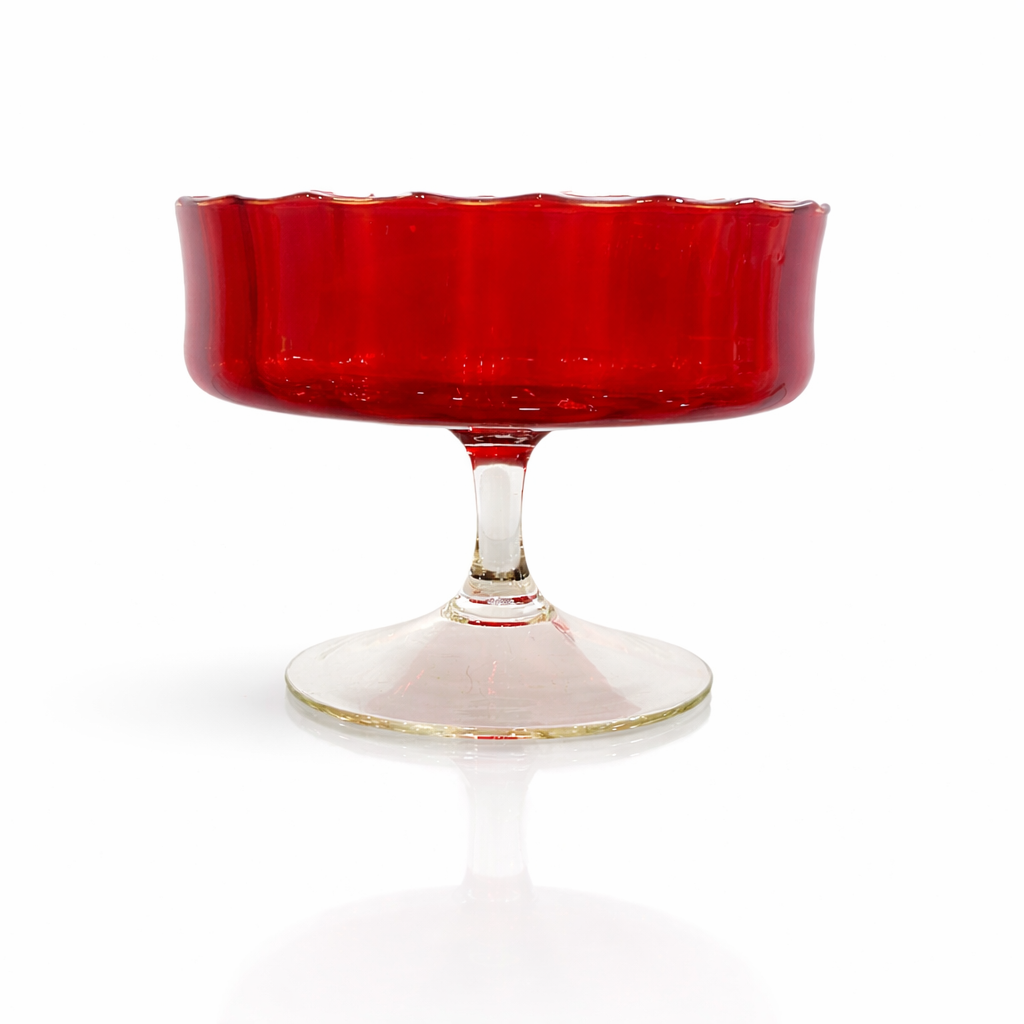 Image 1 of 9
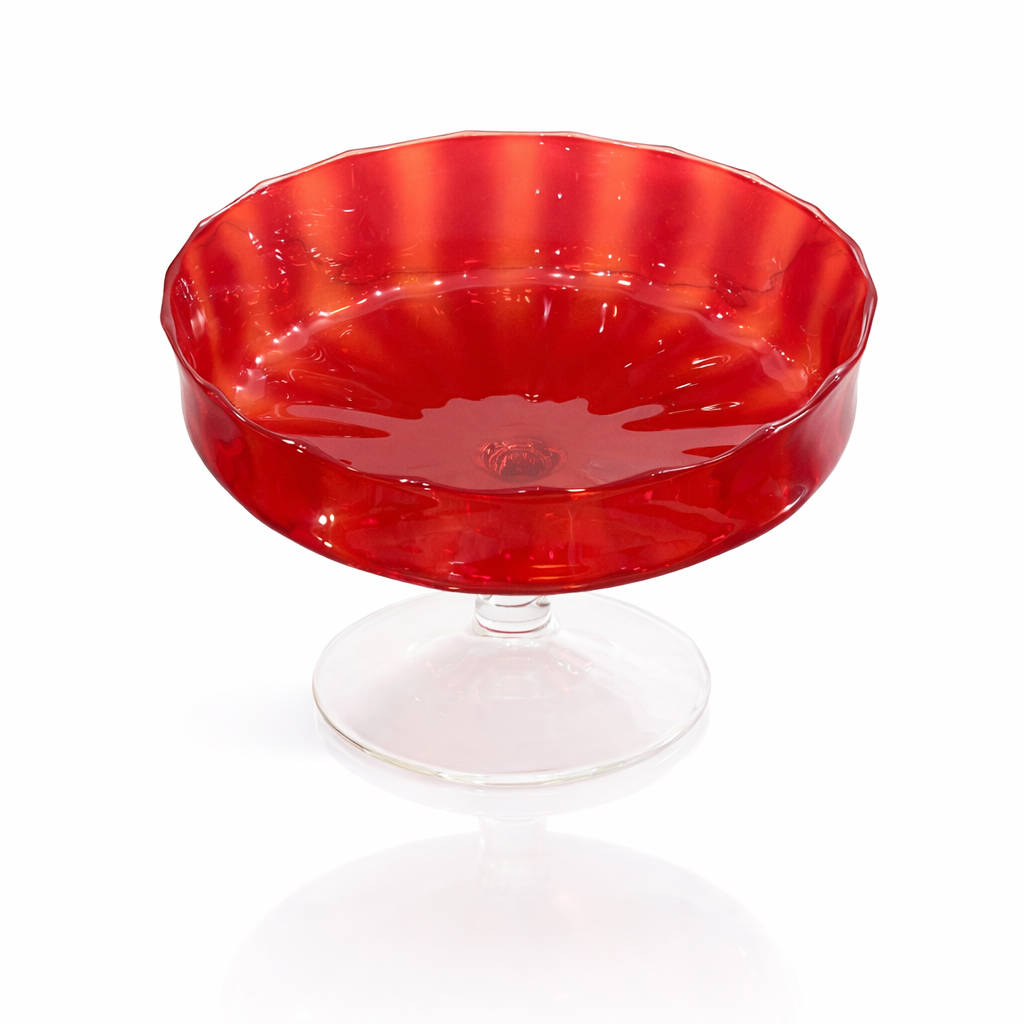 Image 2 of 9
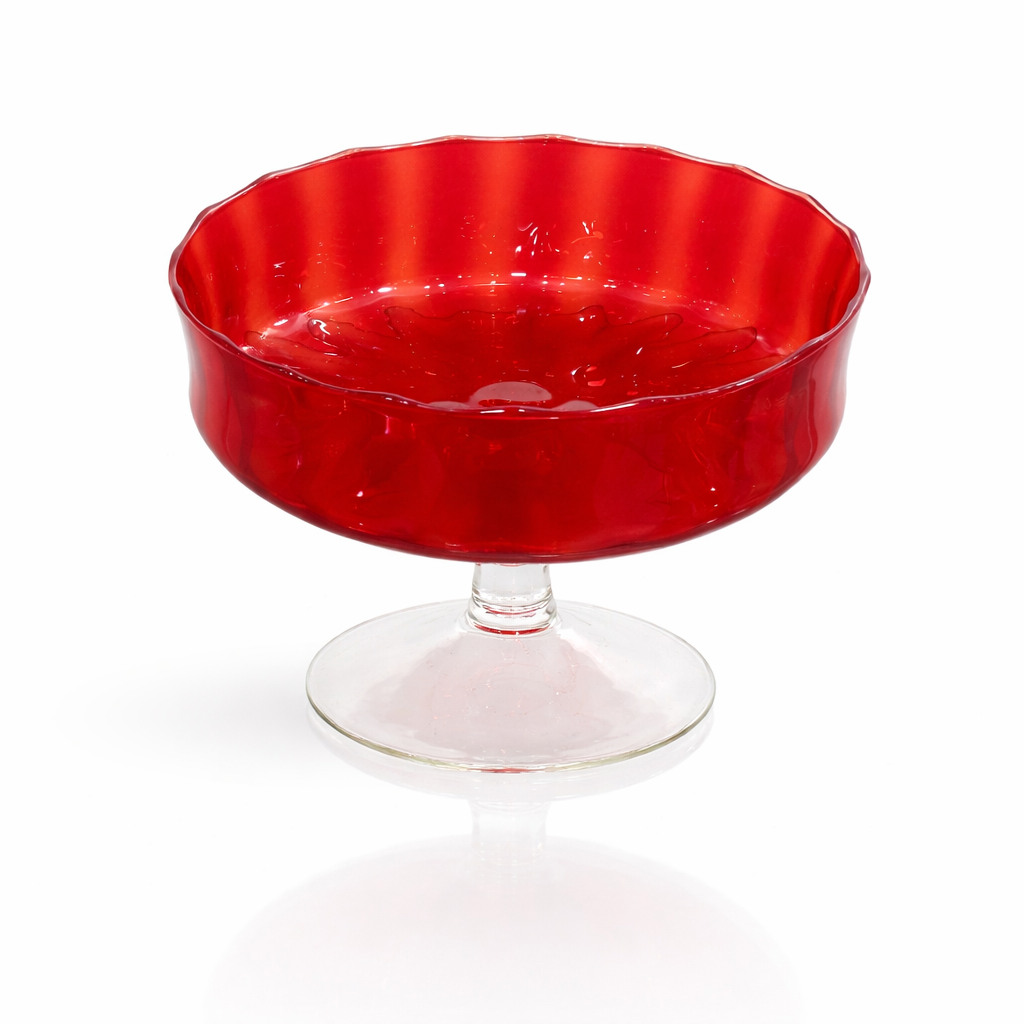 Image 3 of 9
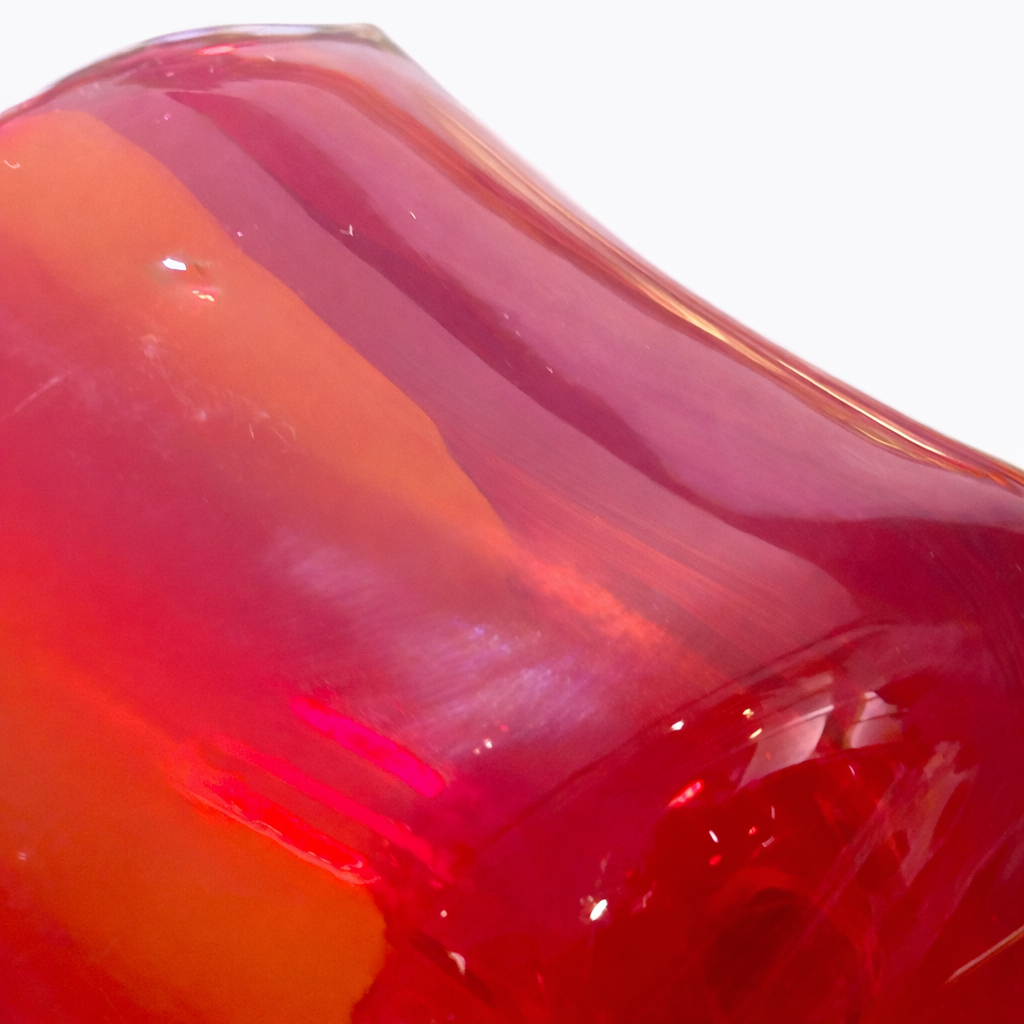 Image 4 of 9
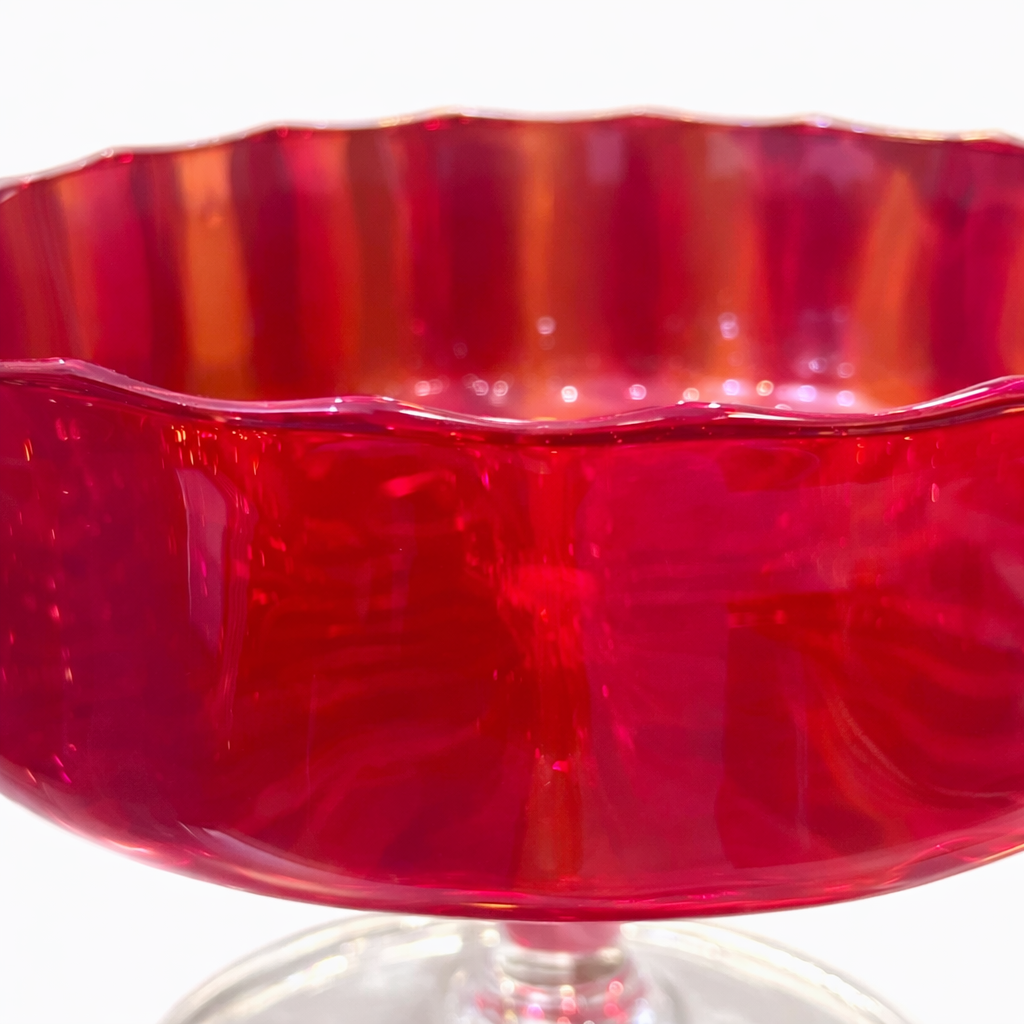 Image 5 of 9
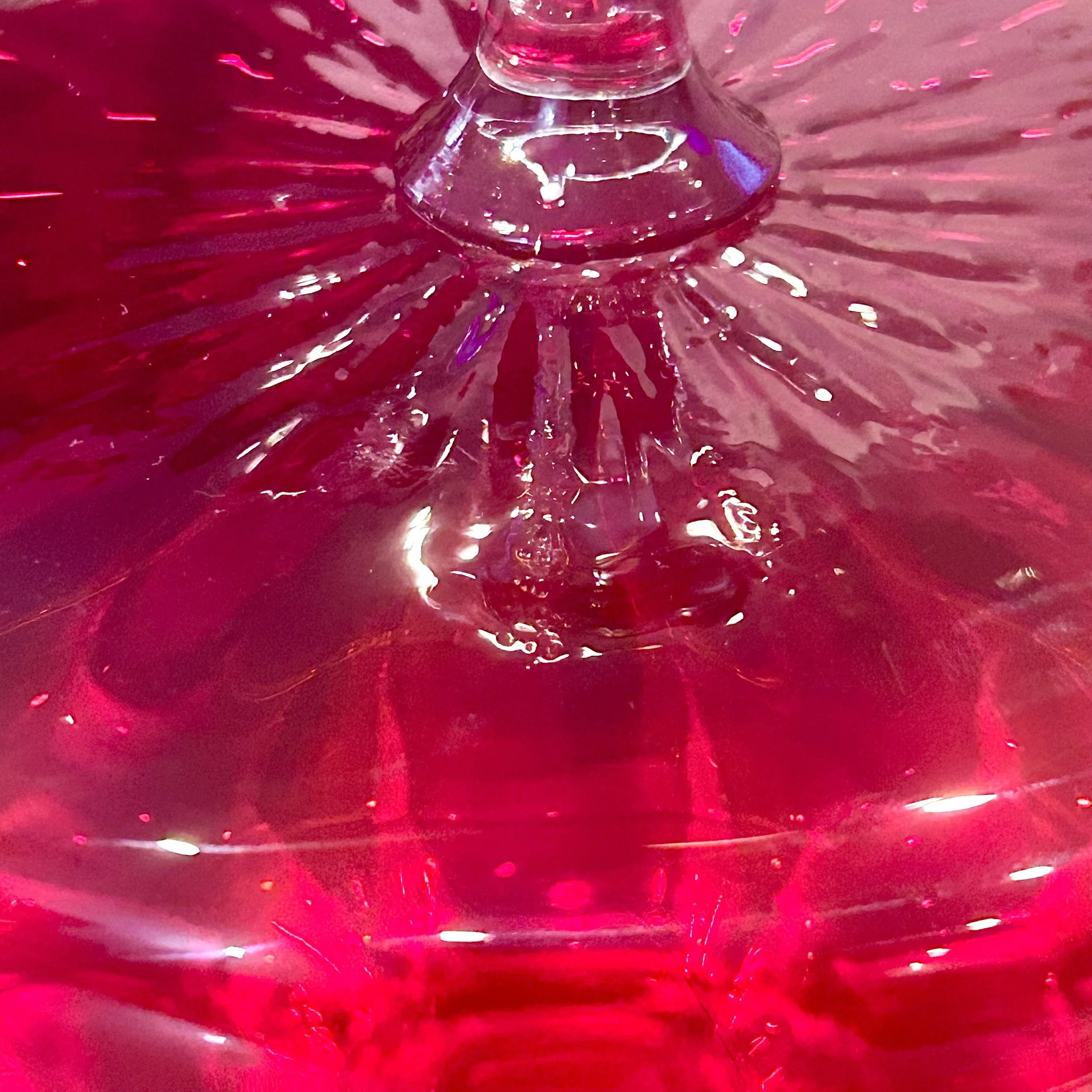 Image 6 of 9
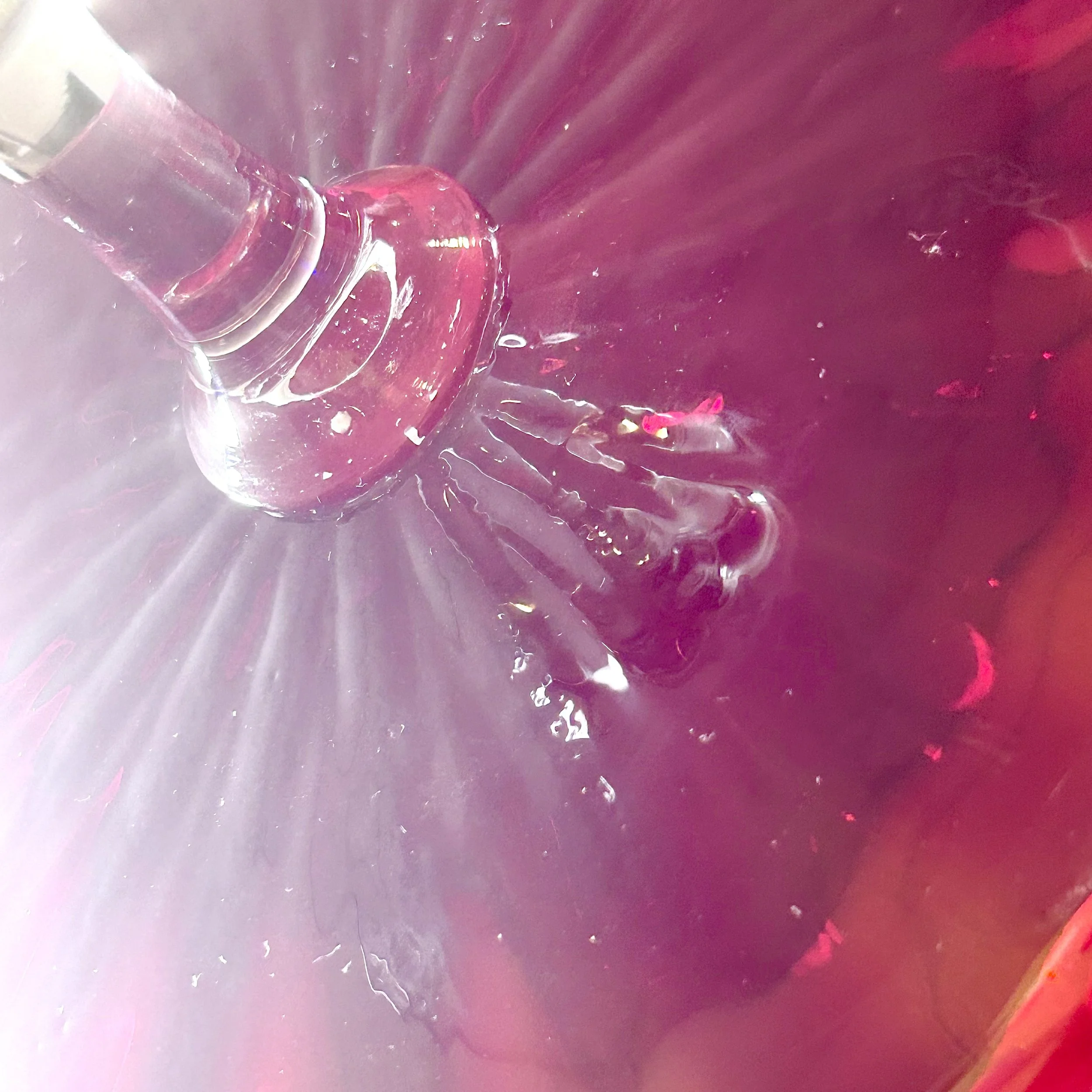 Image 7 of 9
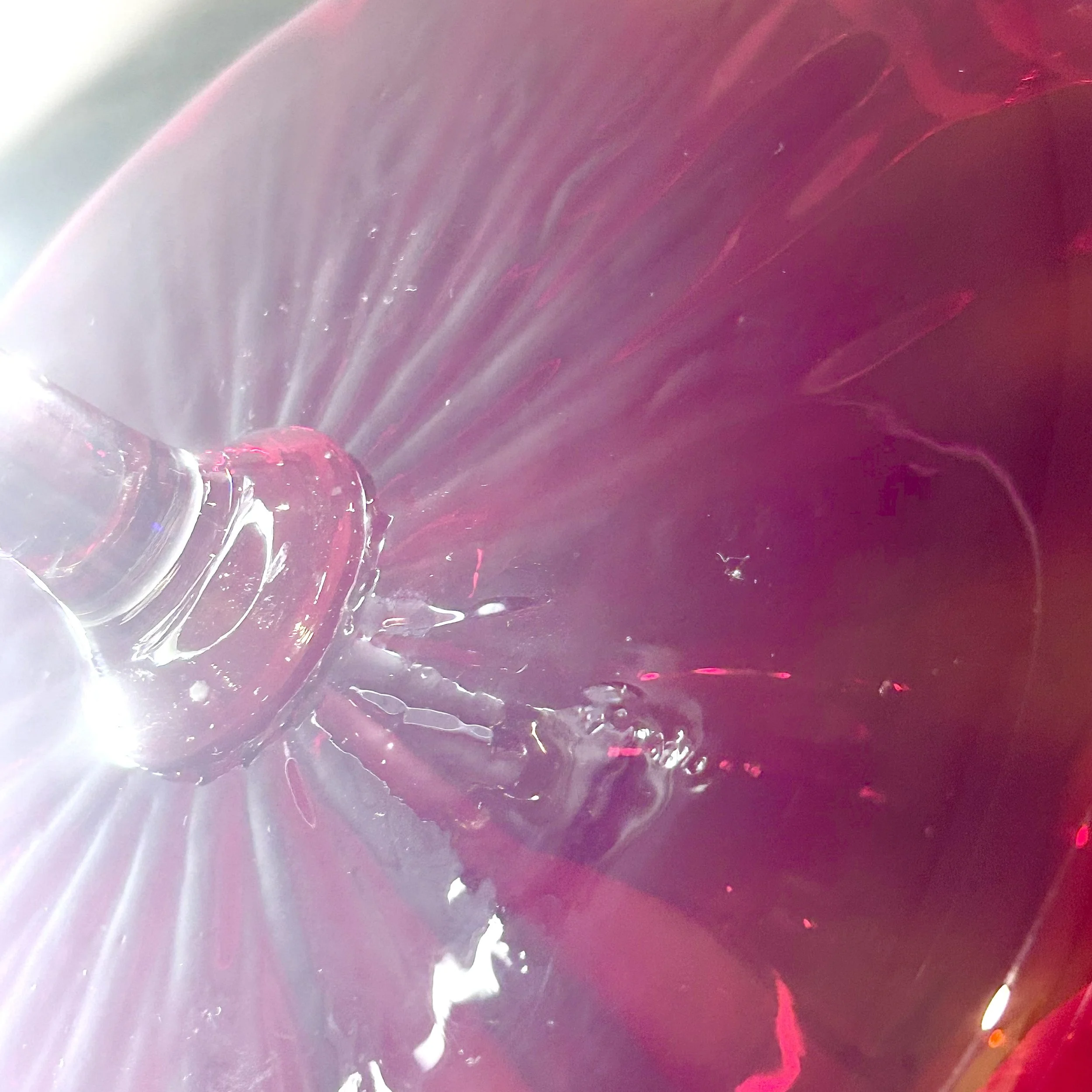 Image 8 of 9
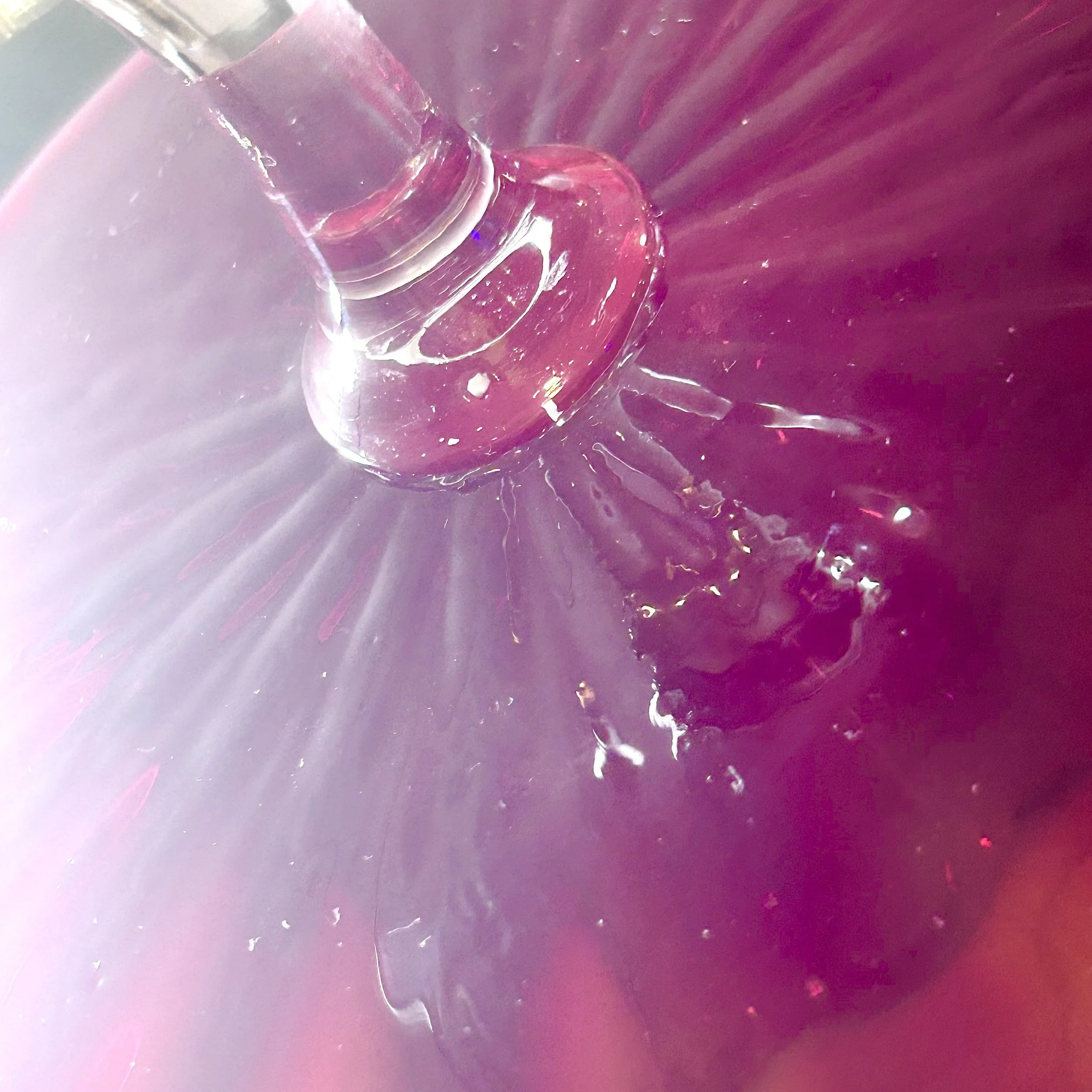 Image 9 of 9