Image 1 of 10
Image 2 of 10
Image 3 of 10
Image 4 of 10
Image 5 of 10
Image 6 of 10
Image 7 of 10
Image 8 of 10
Image 9 of 10
Image 10 of 10
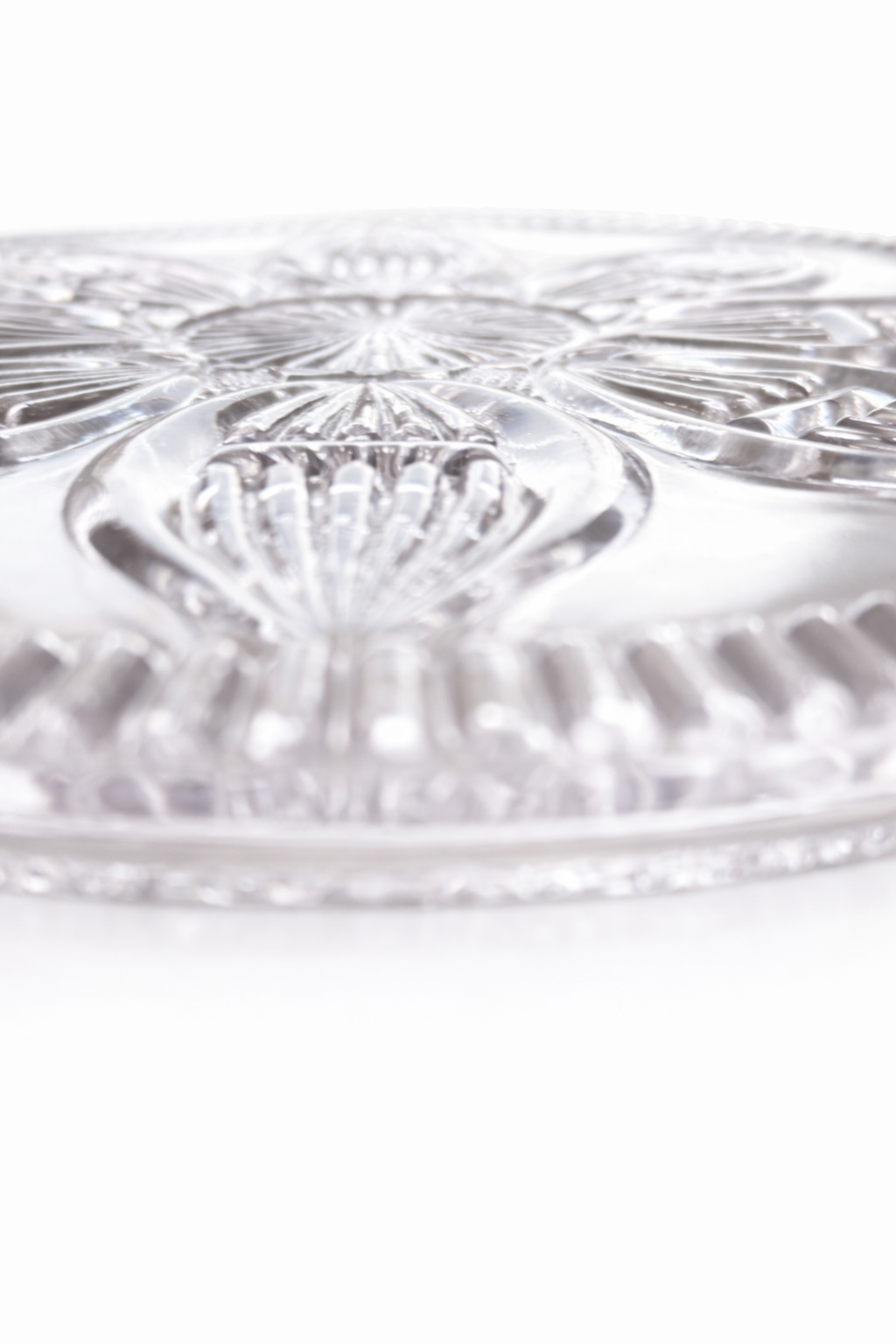
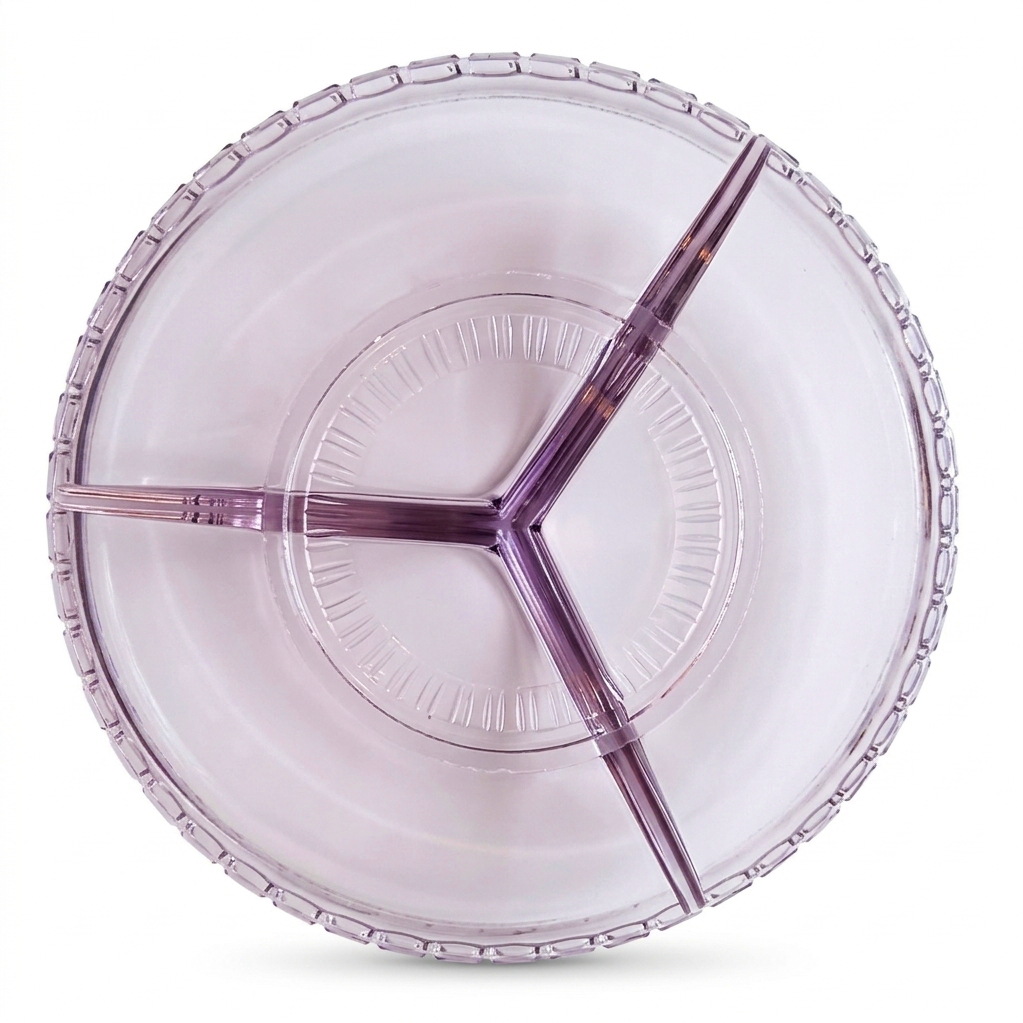
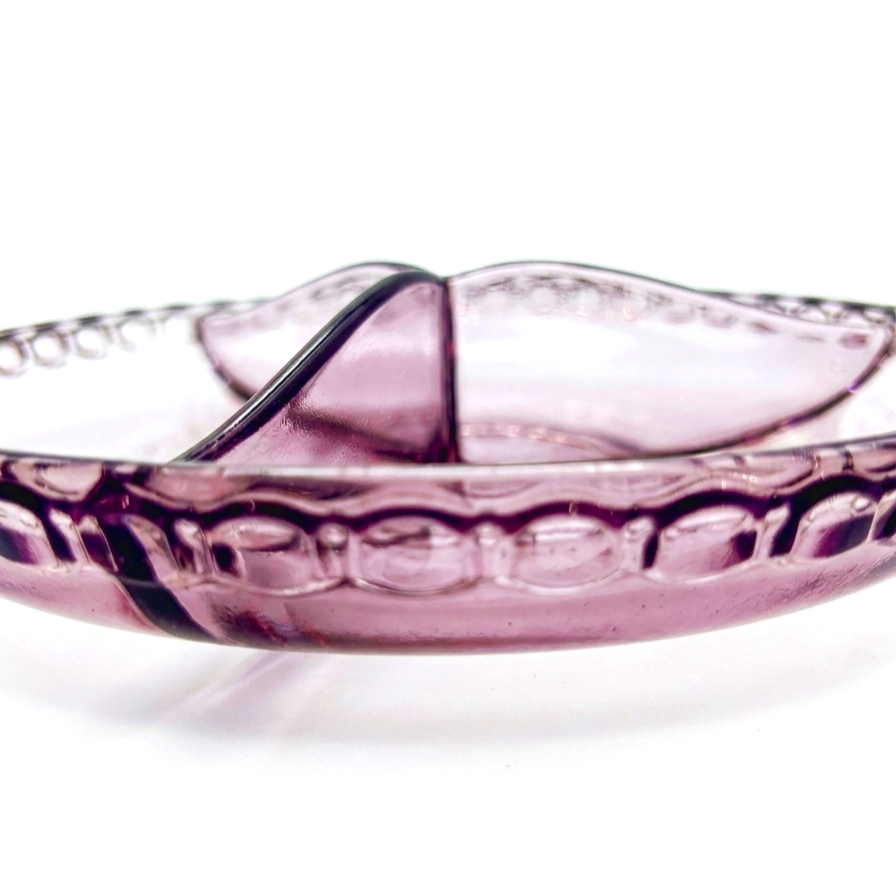
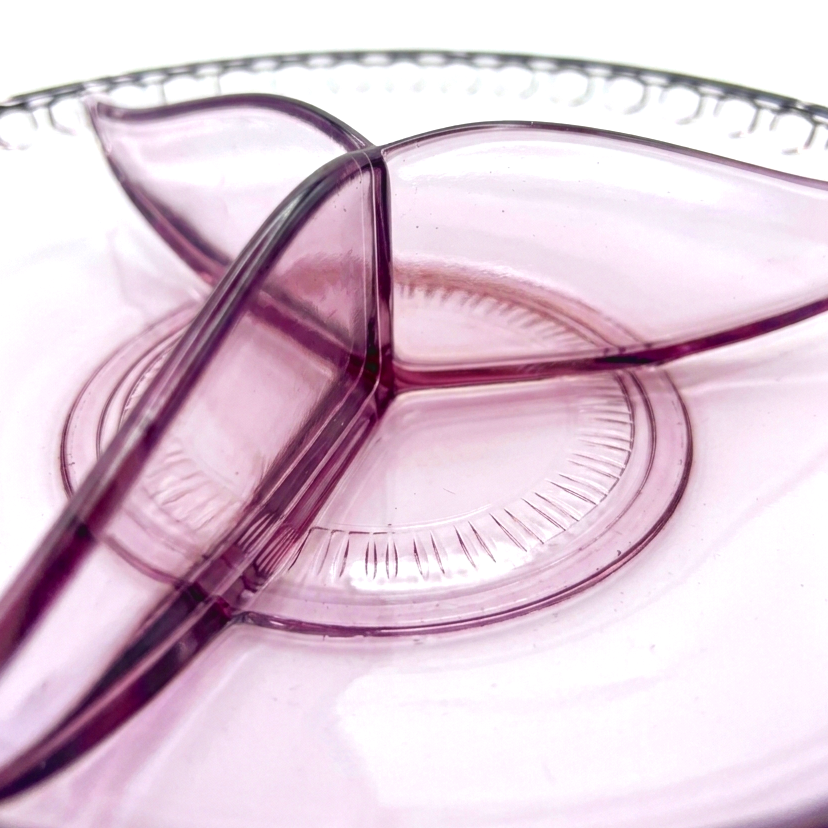
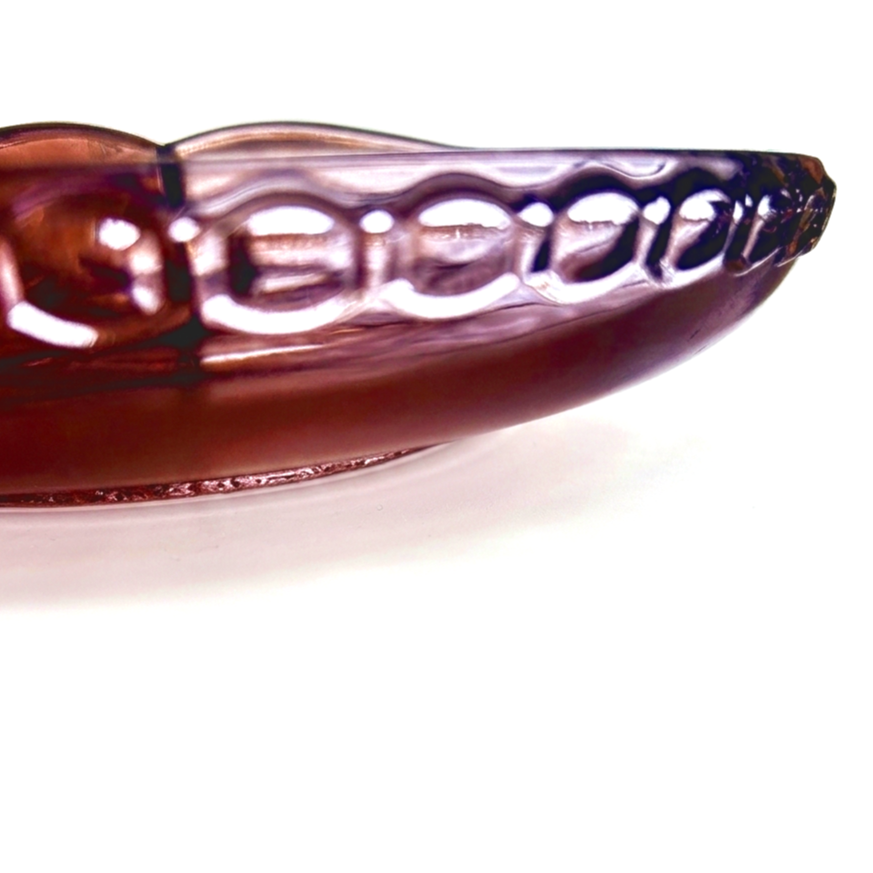
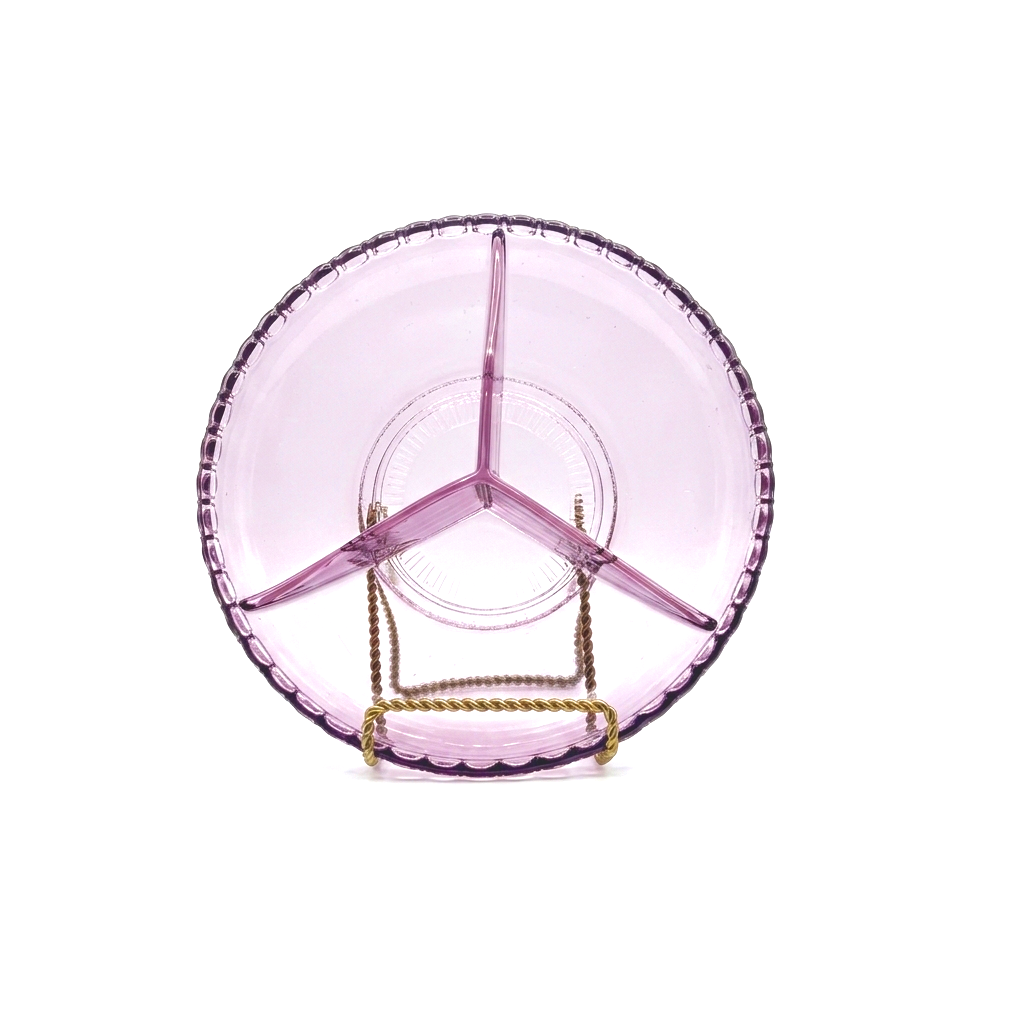
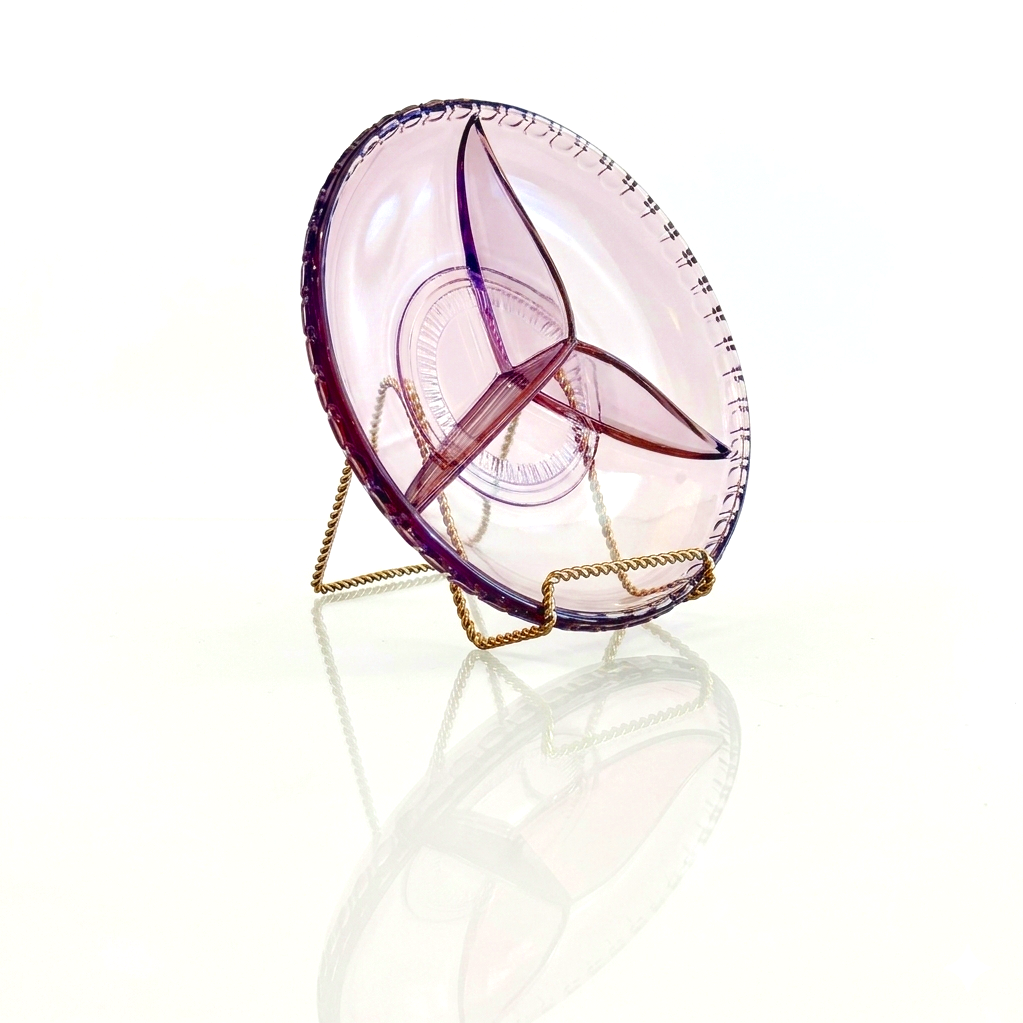
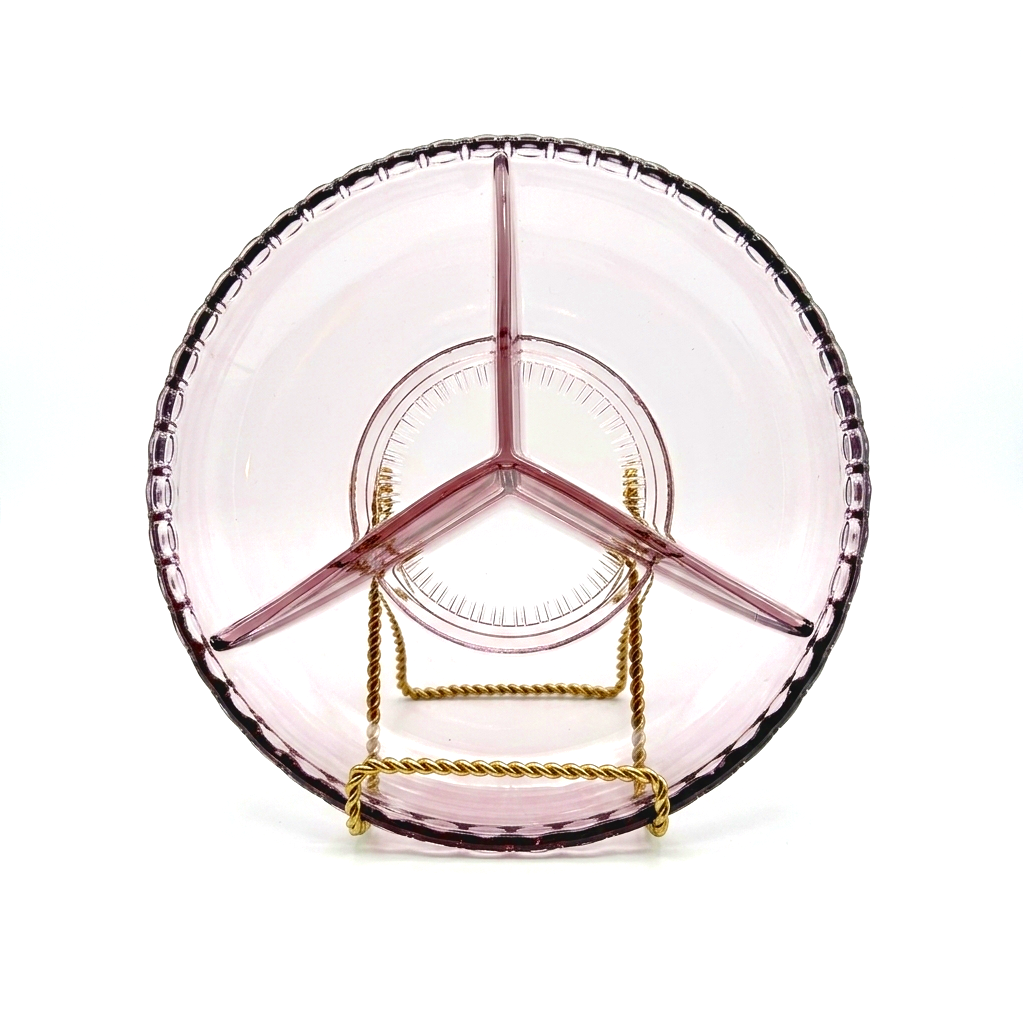
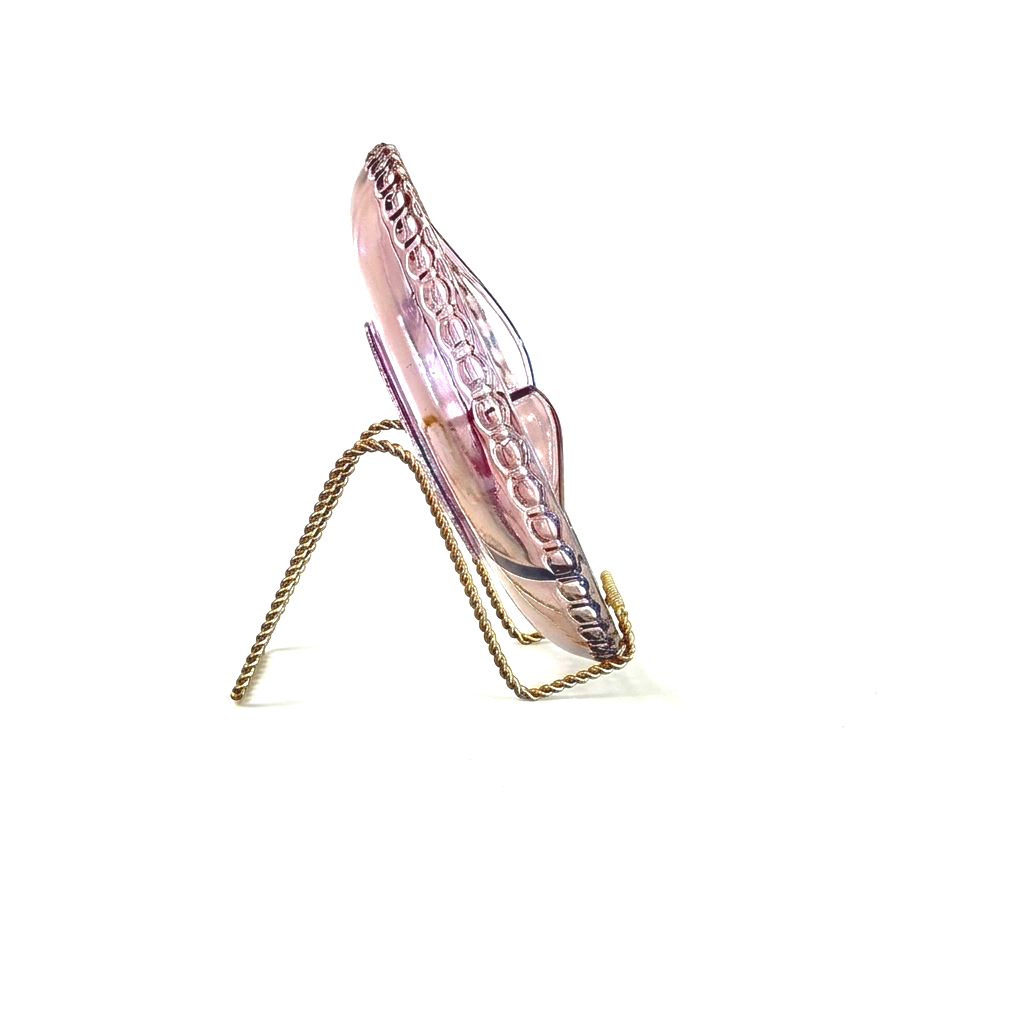
c.1935-1945 Cambridge Amber Etched Decagon Bowl, Triangle-C
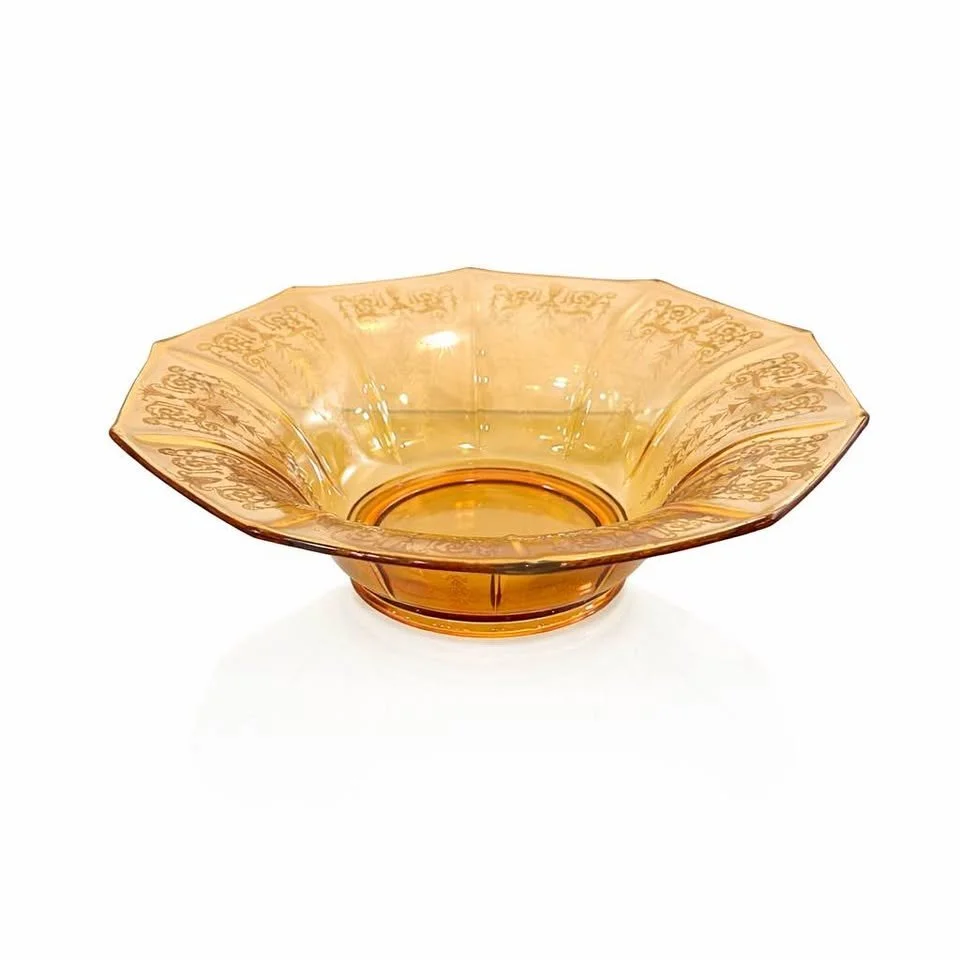
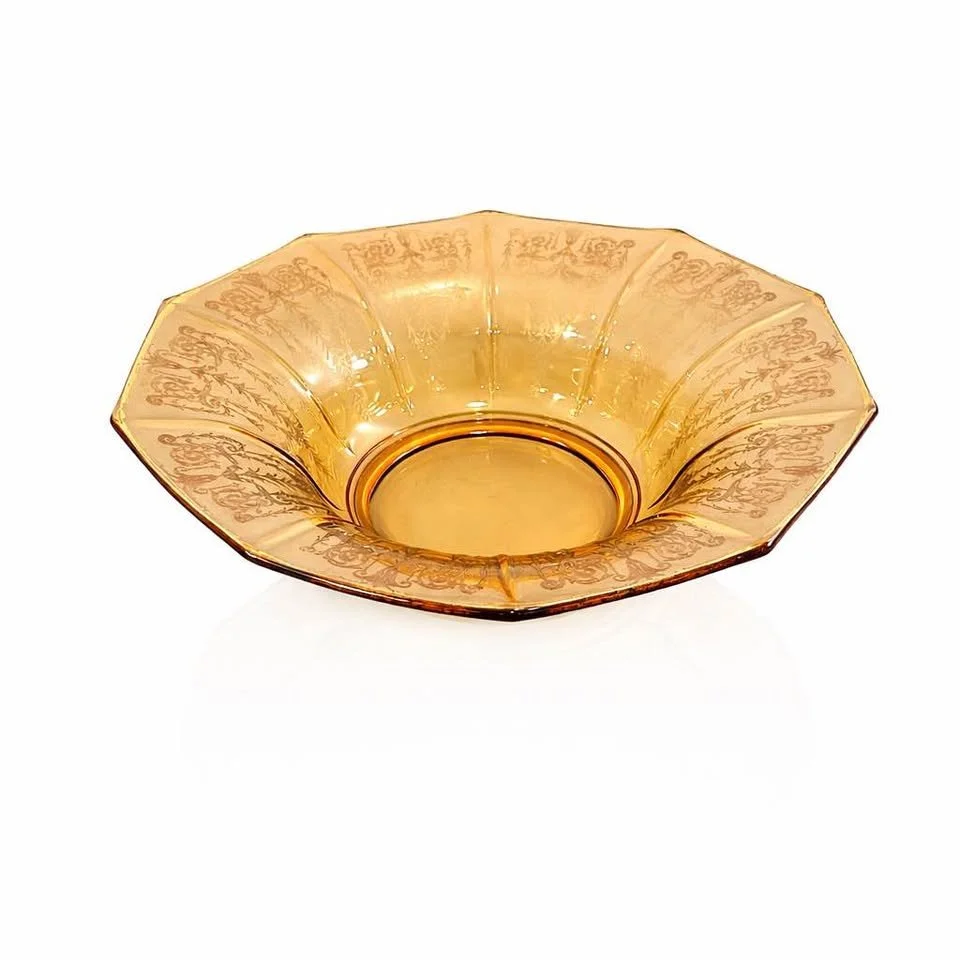
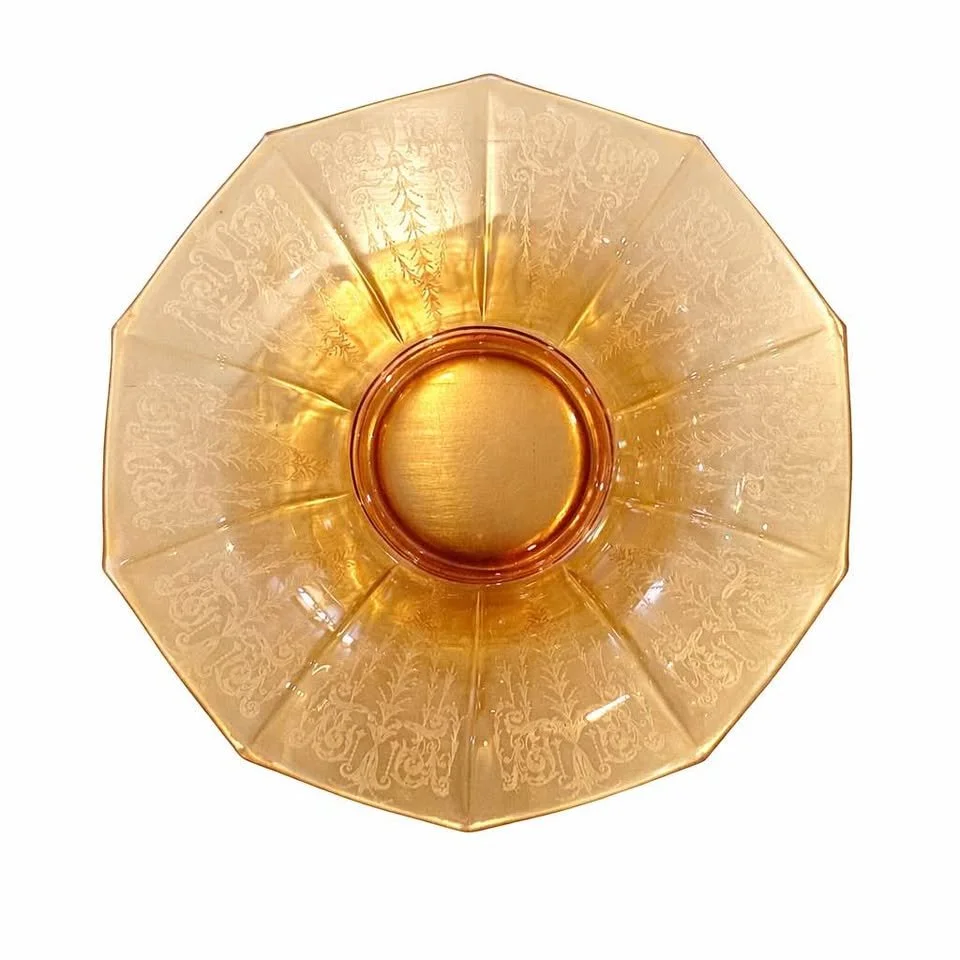
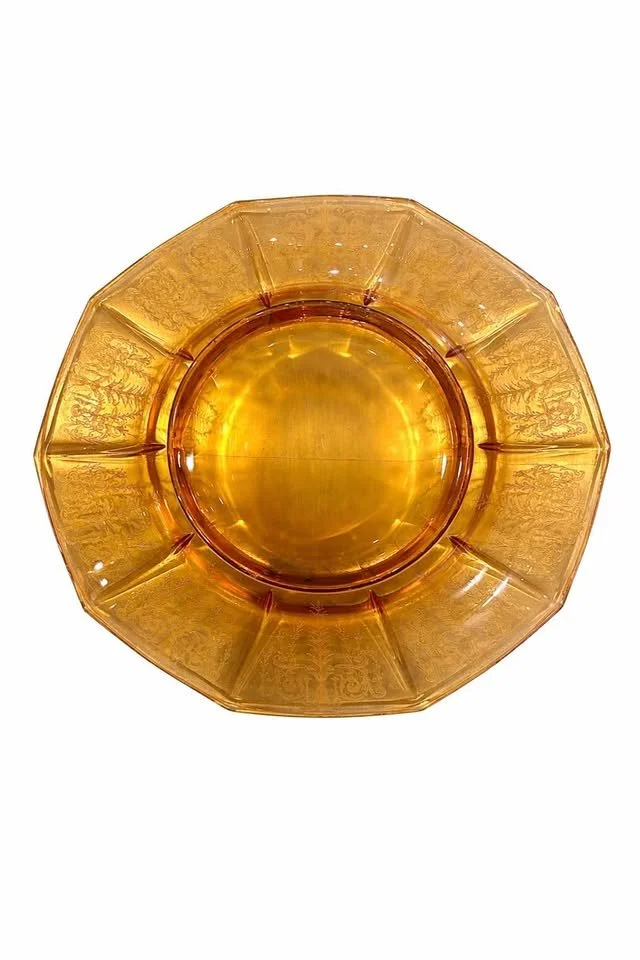
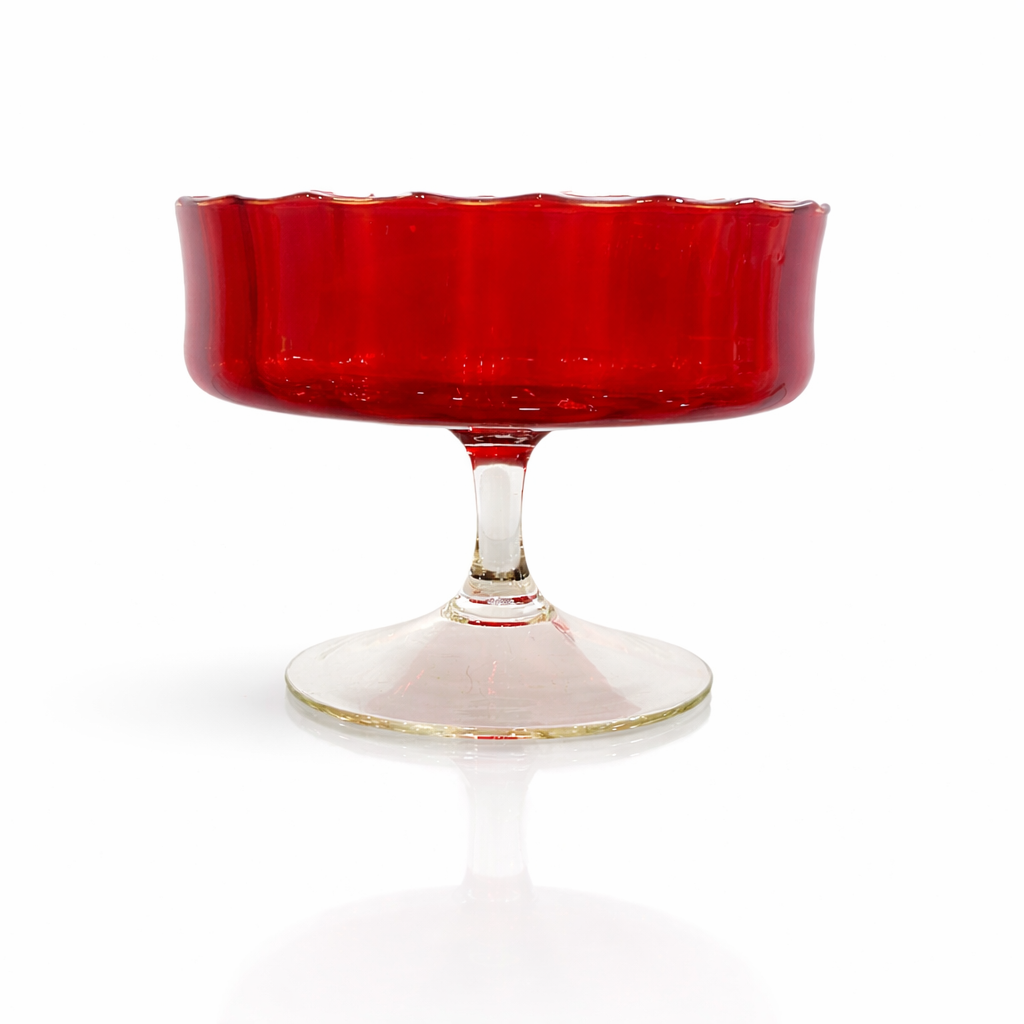
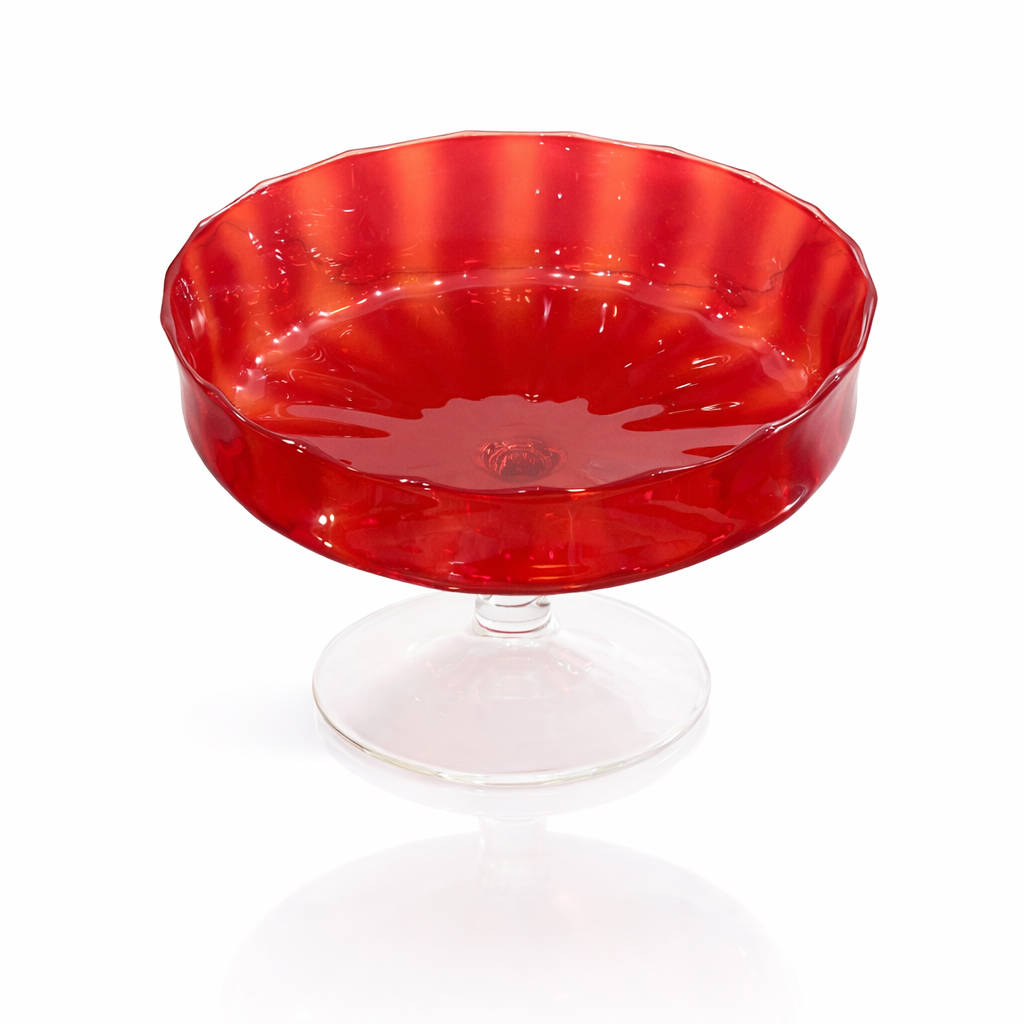
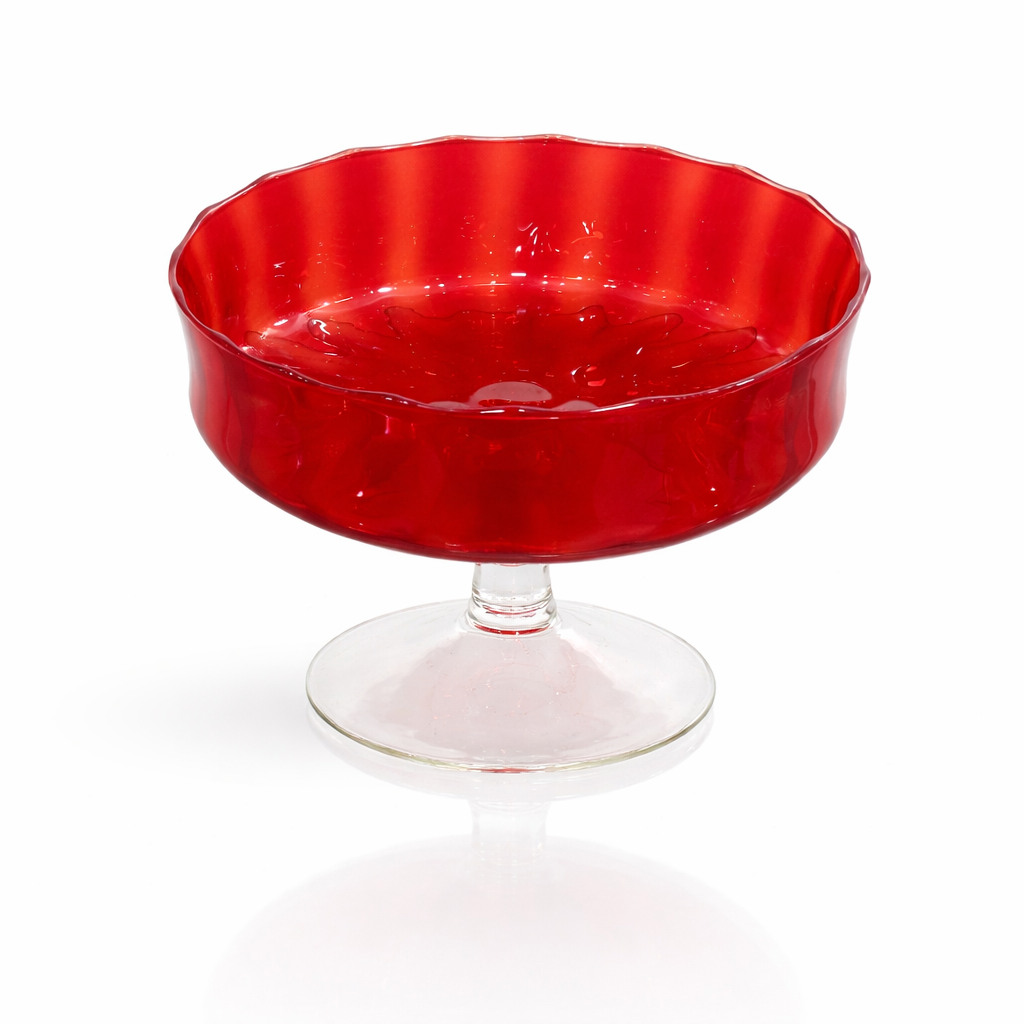
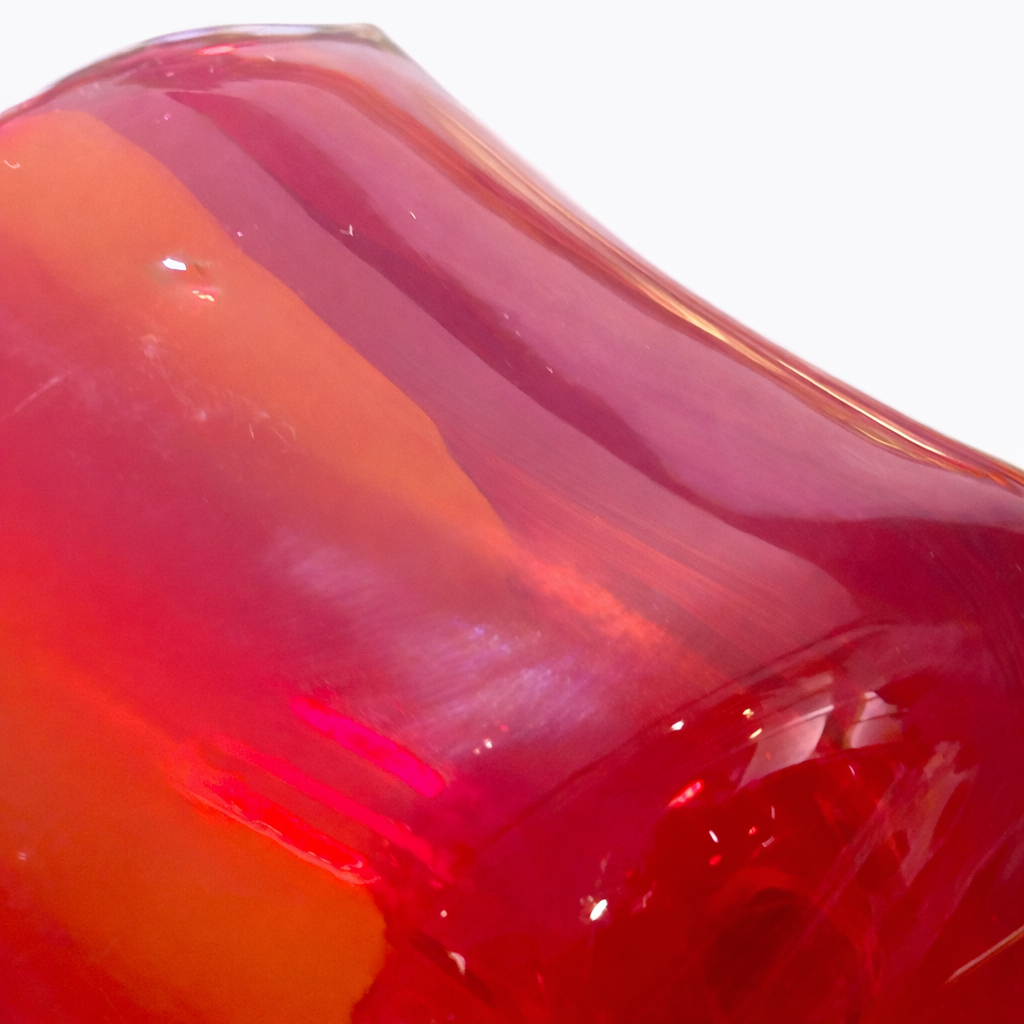
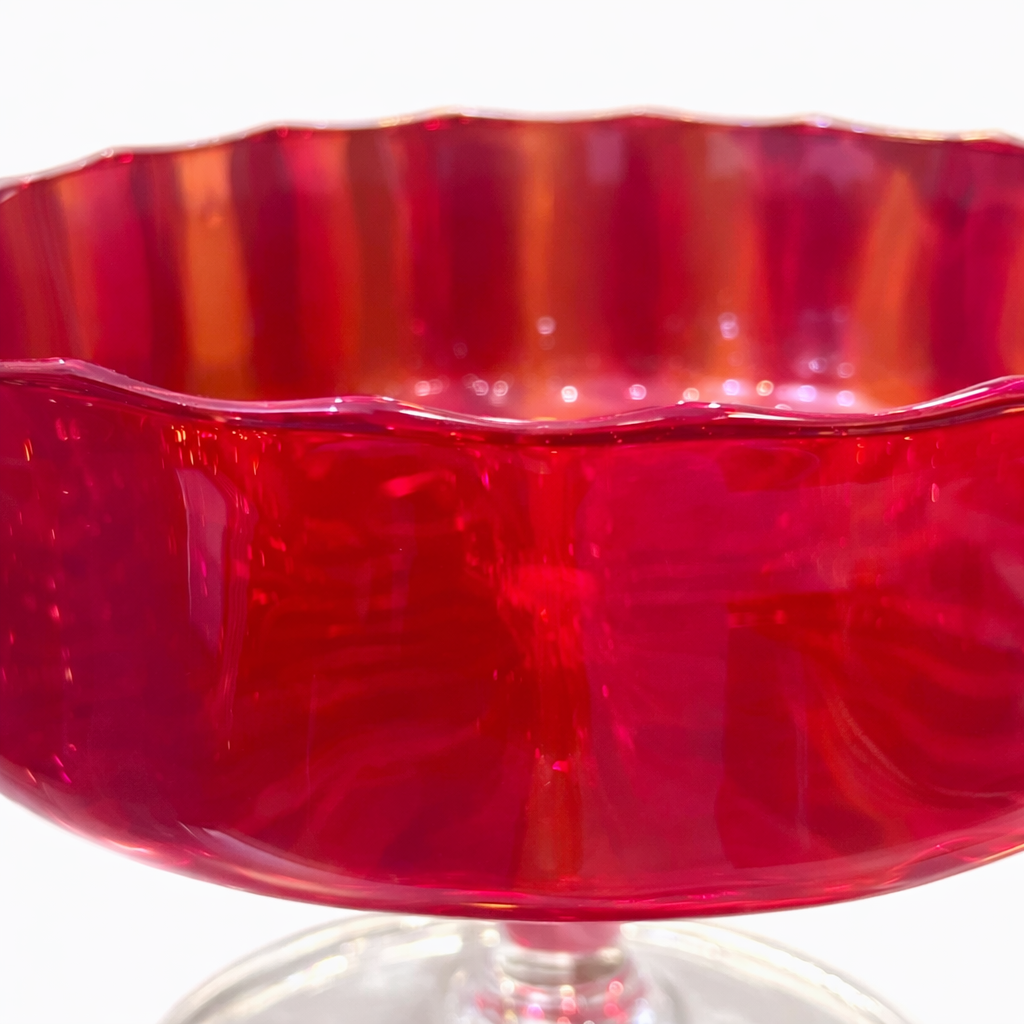
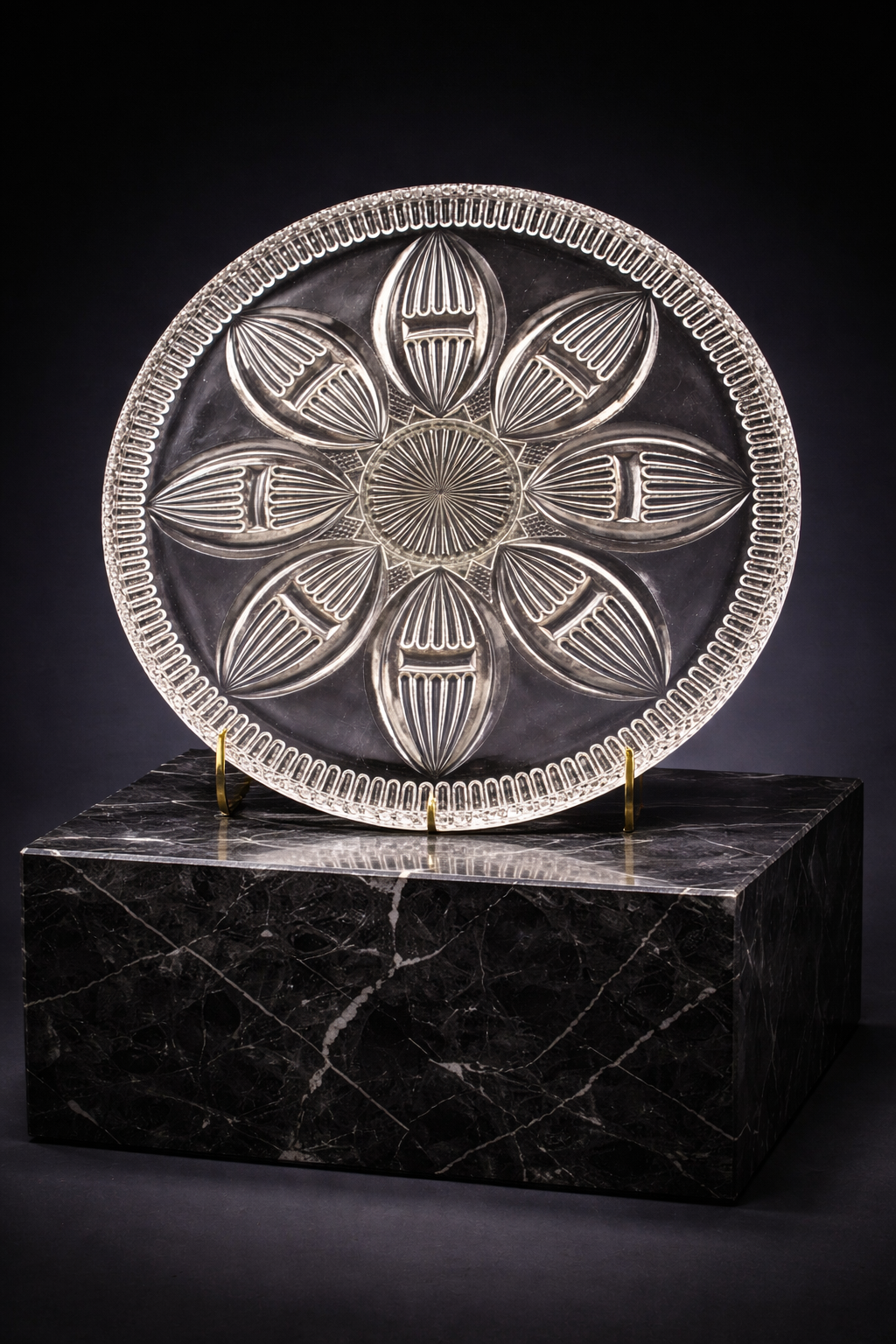
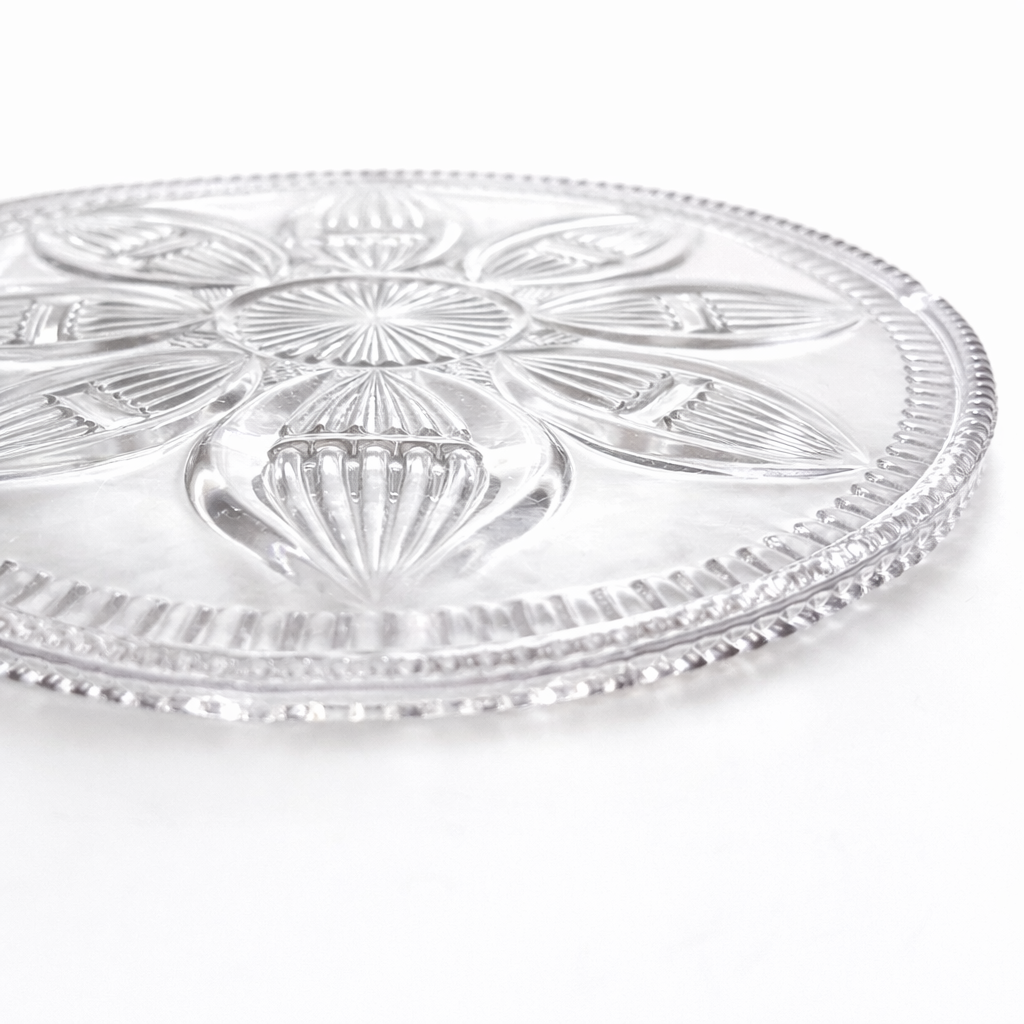
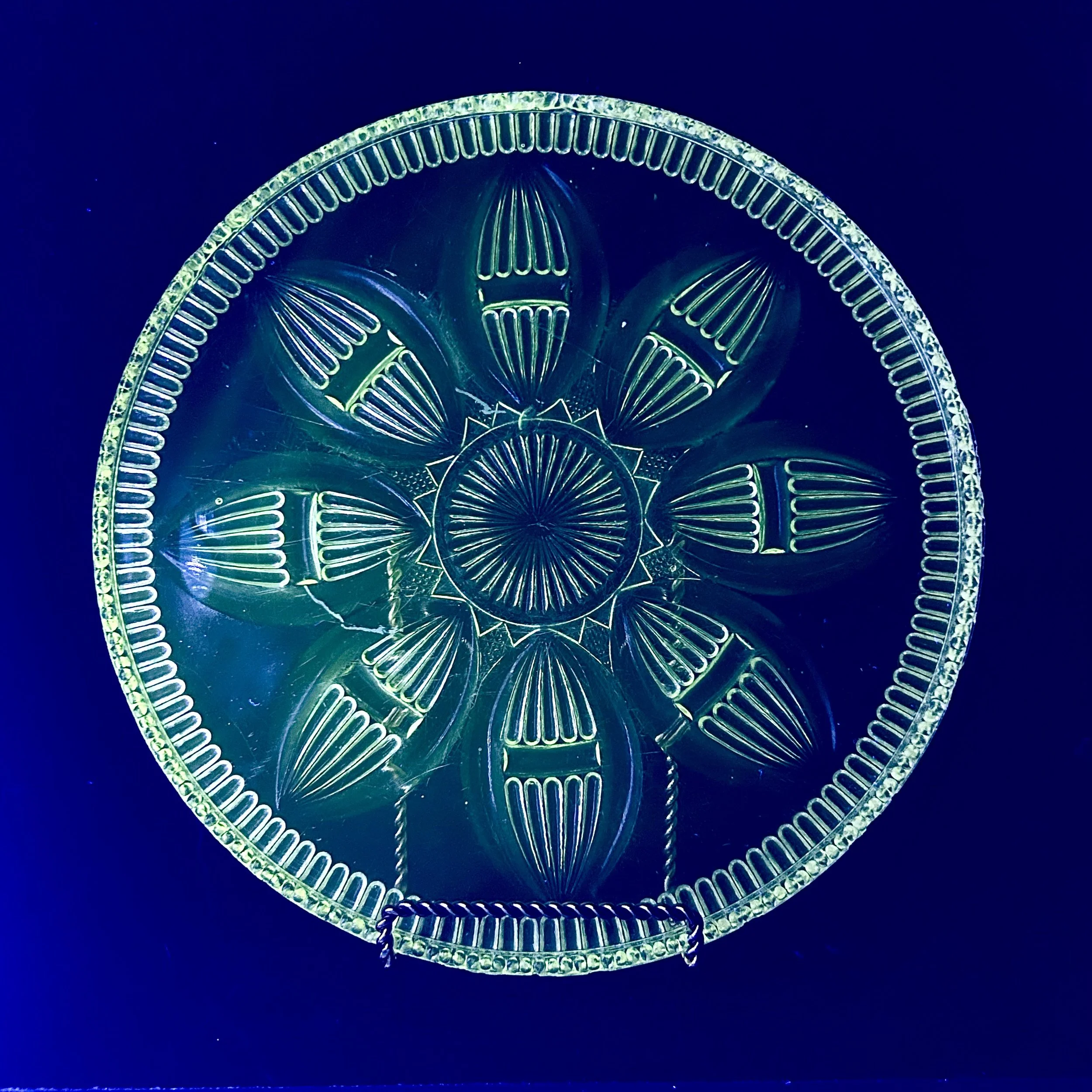
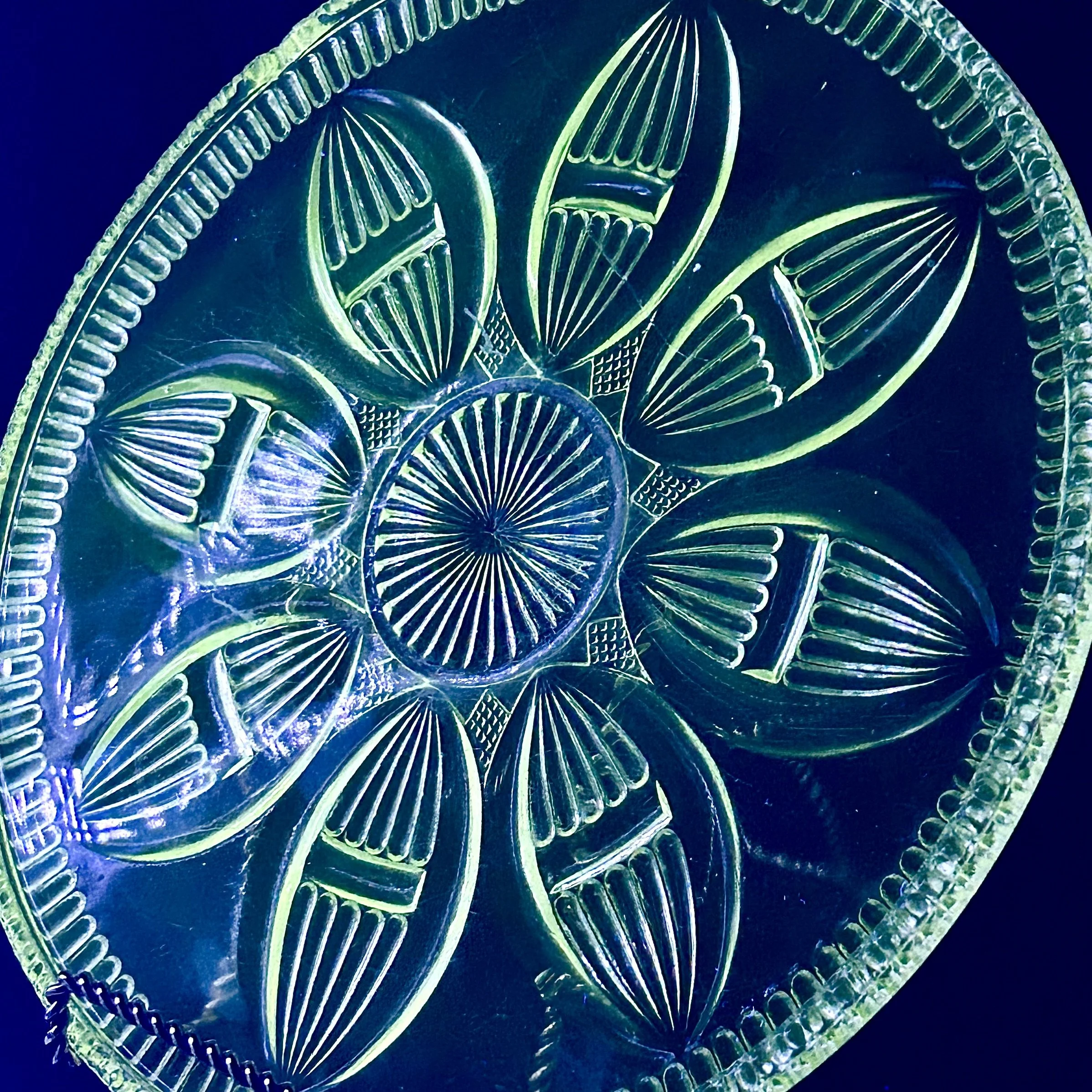
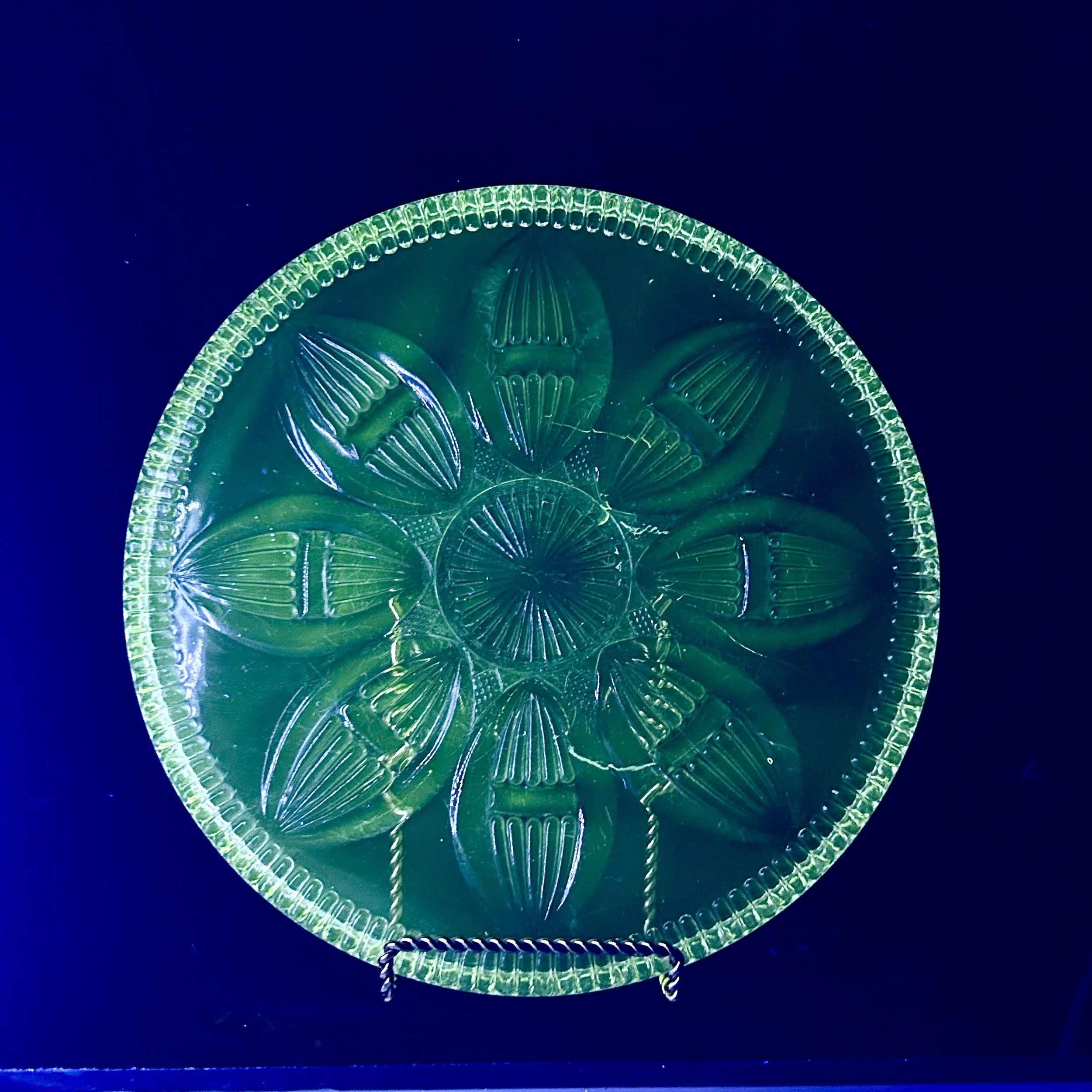
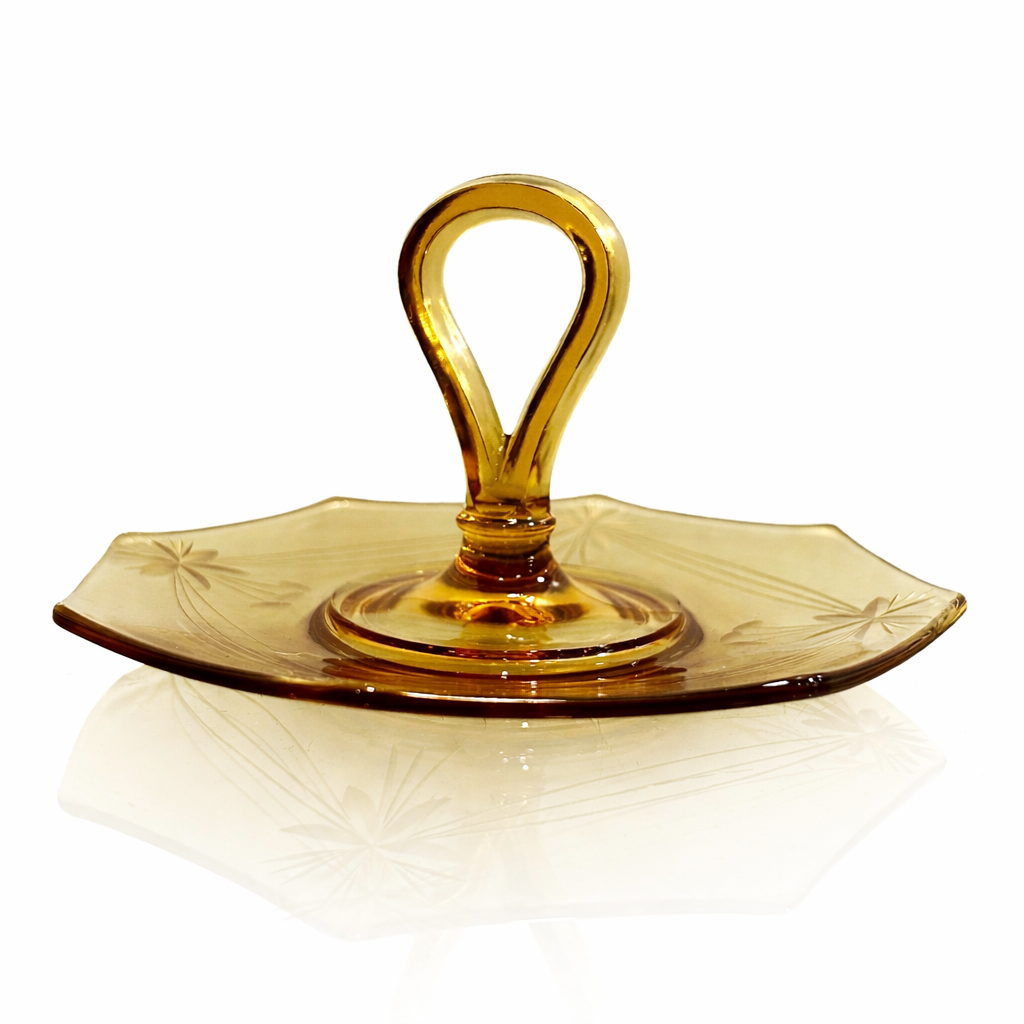
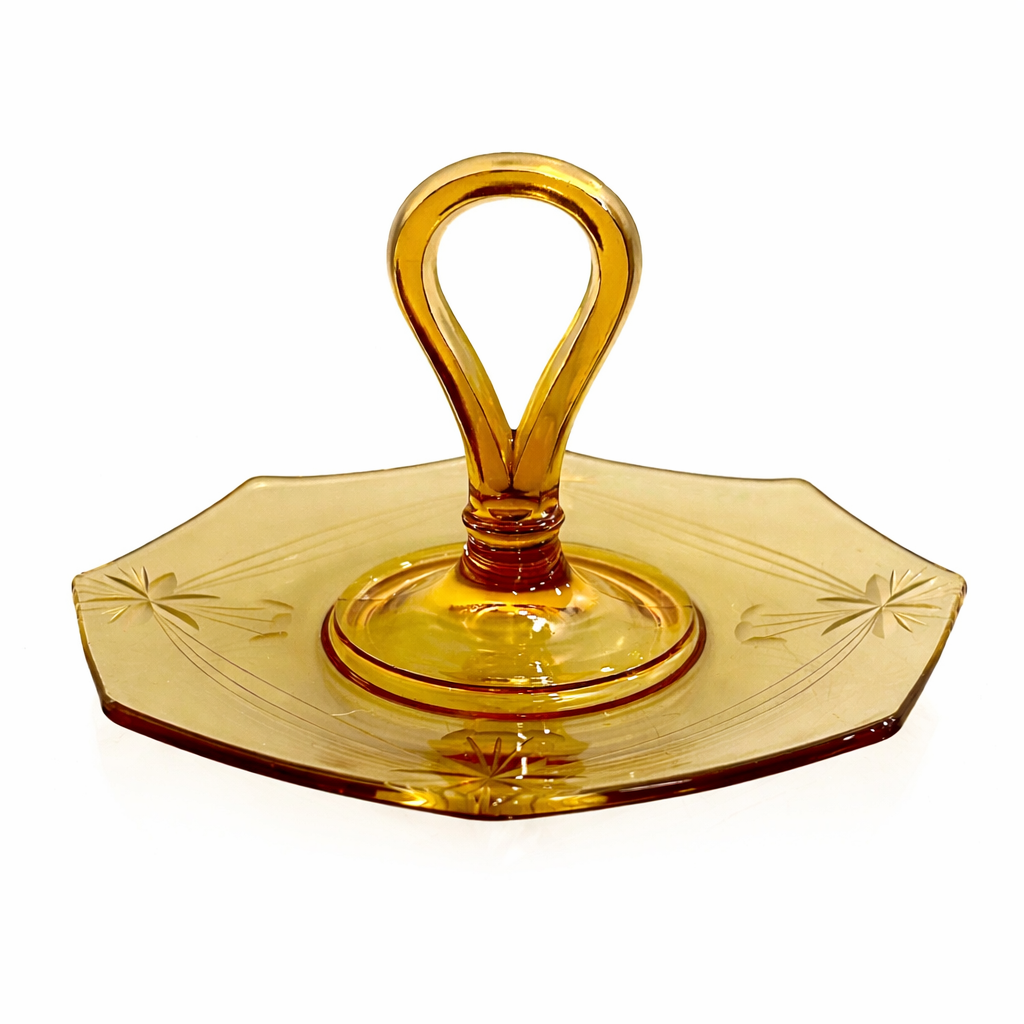
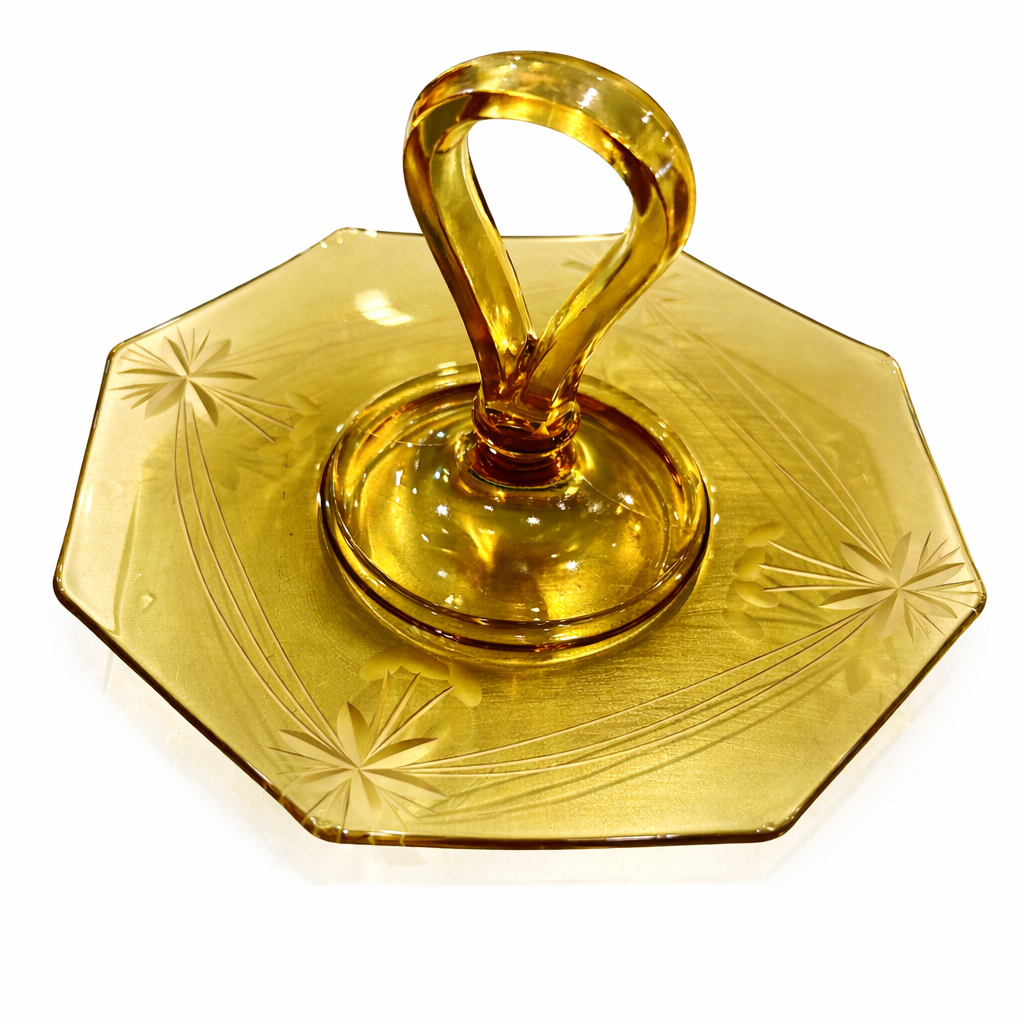
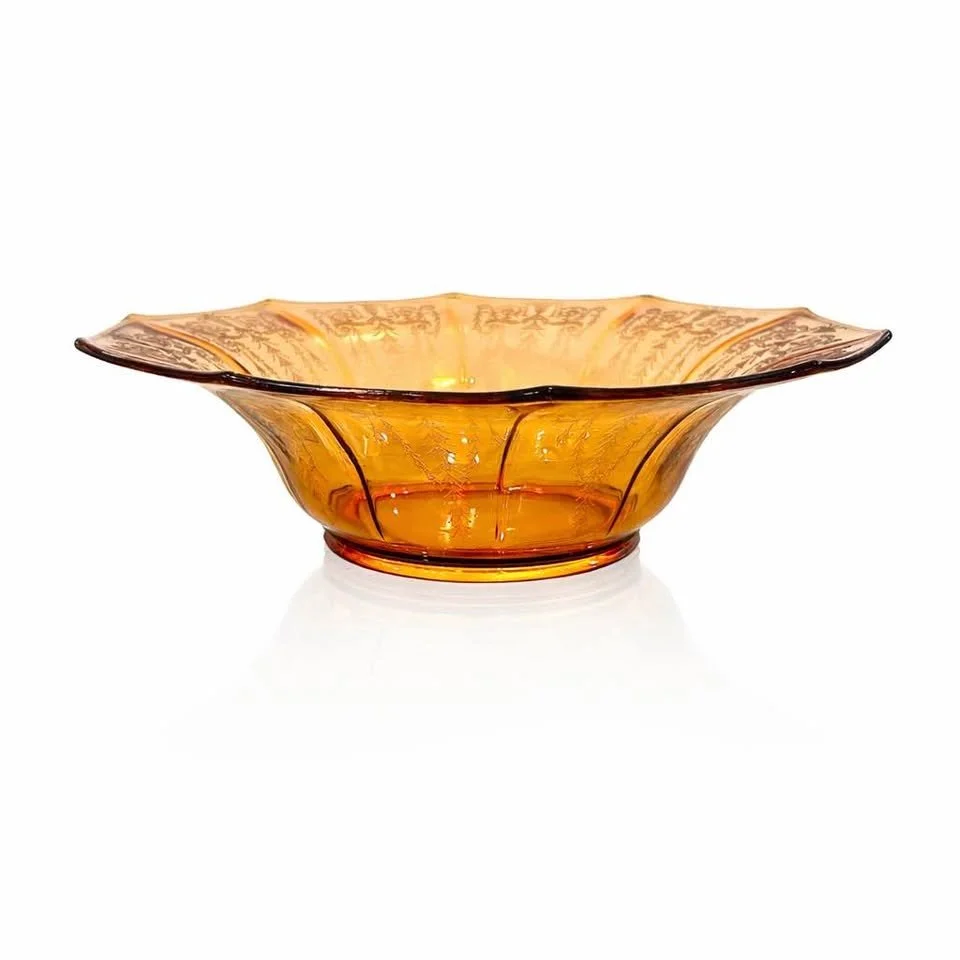
This is an authentic vintage Cambridge Glass Company bowl, confidently attributed based on form, decoration, color, and ”critically’the applied Triangle-C mark. The bowl is executed in a rich amber (golden honey) glass, formed as a 10-sided decagon, a geometry strongly associated with Cambridge’s Art Deco and early Mid-Century production.
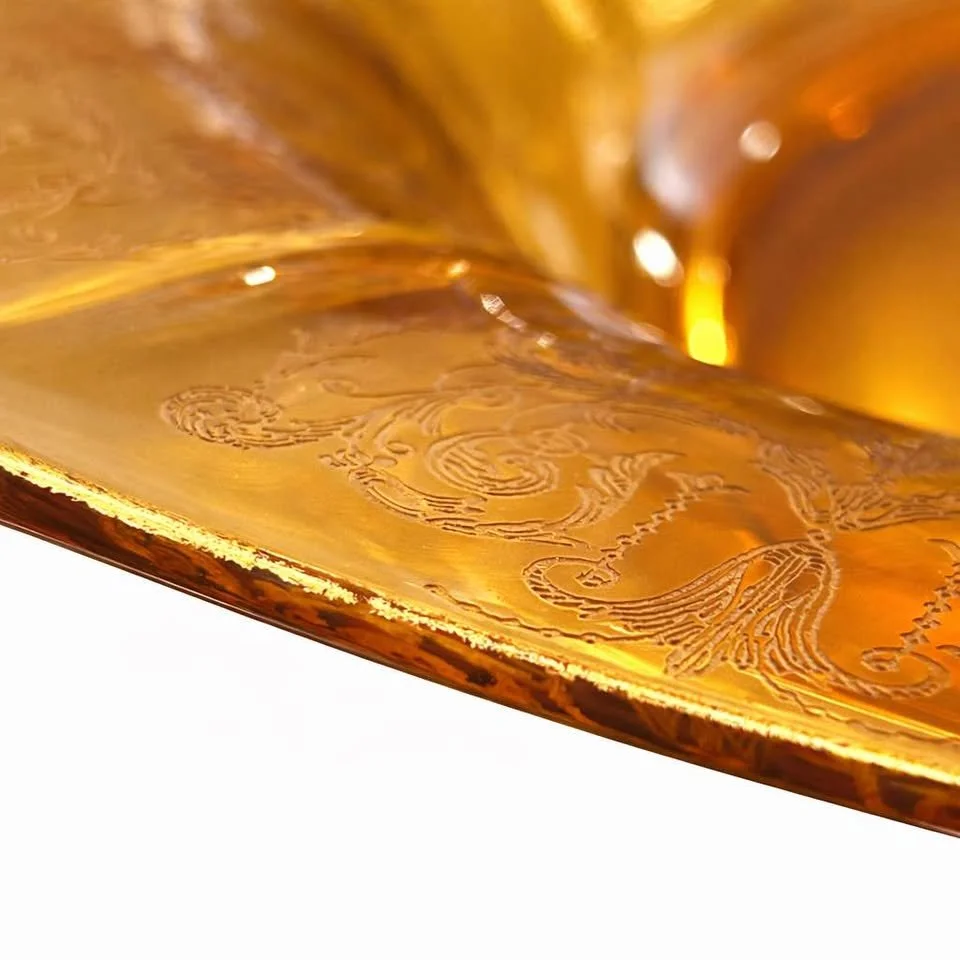
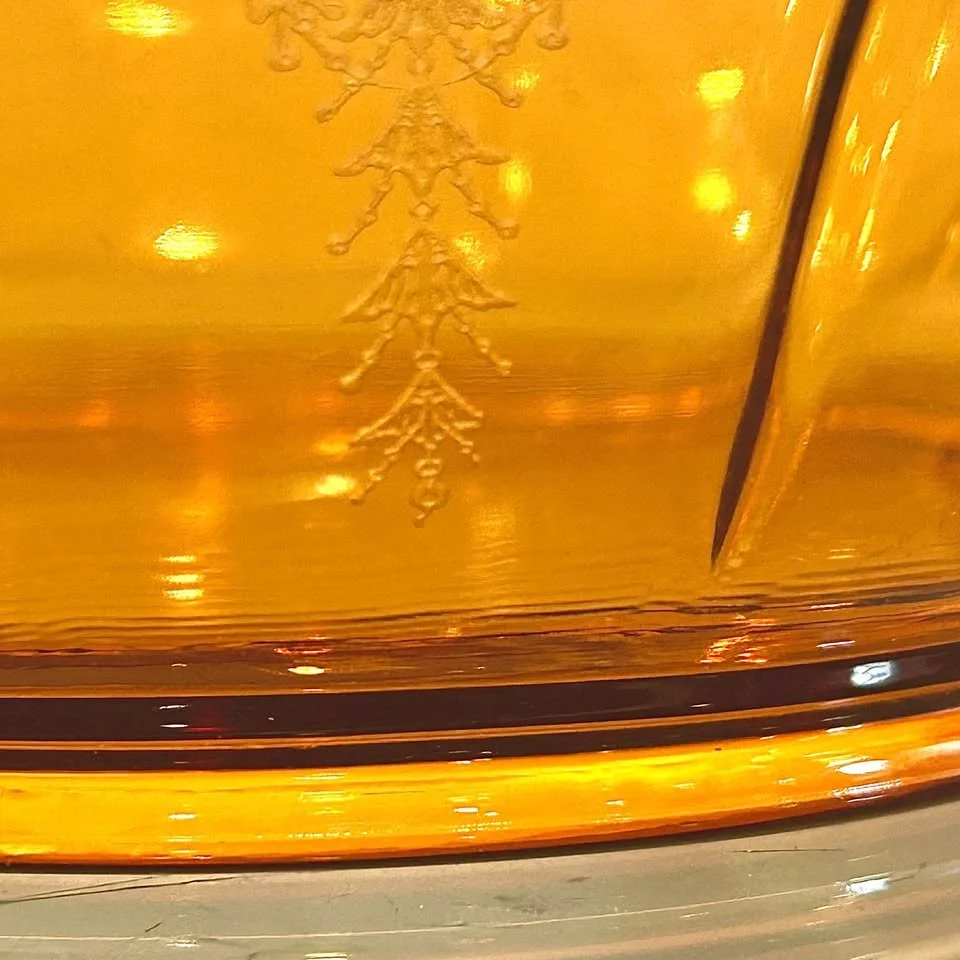
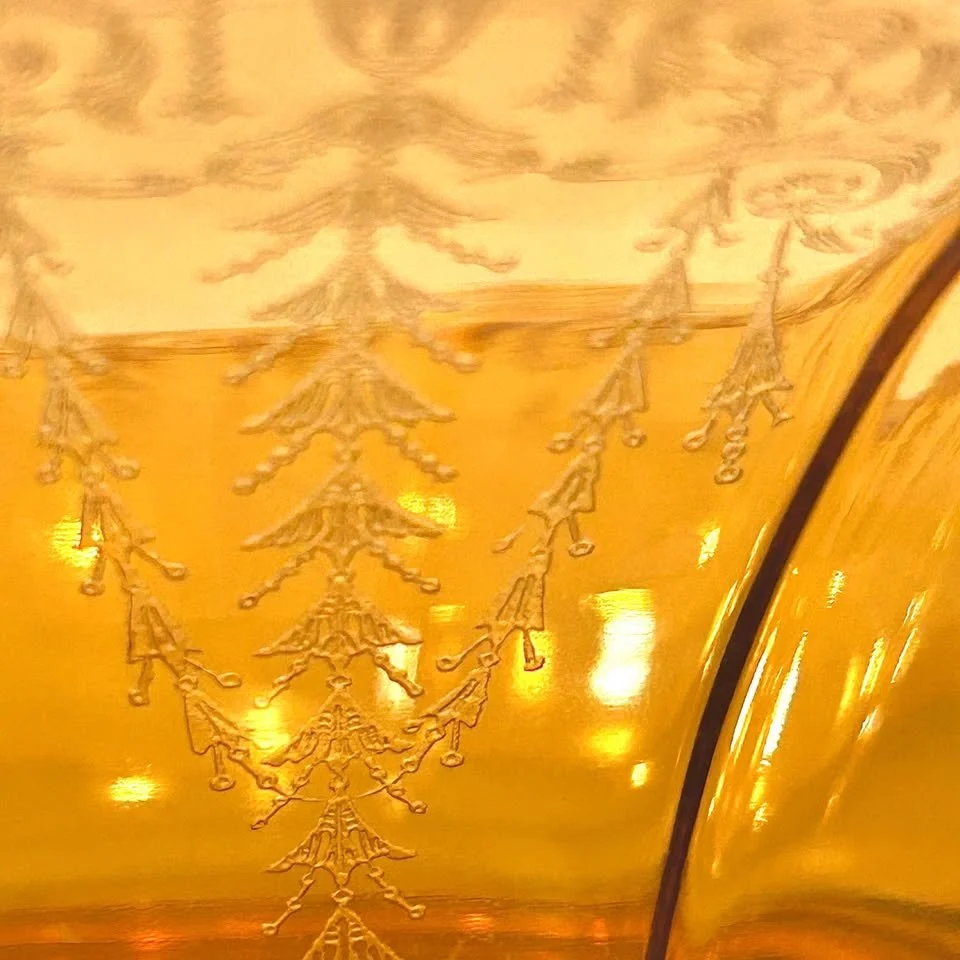
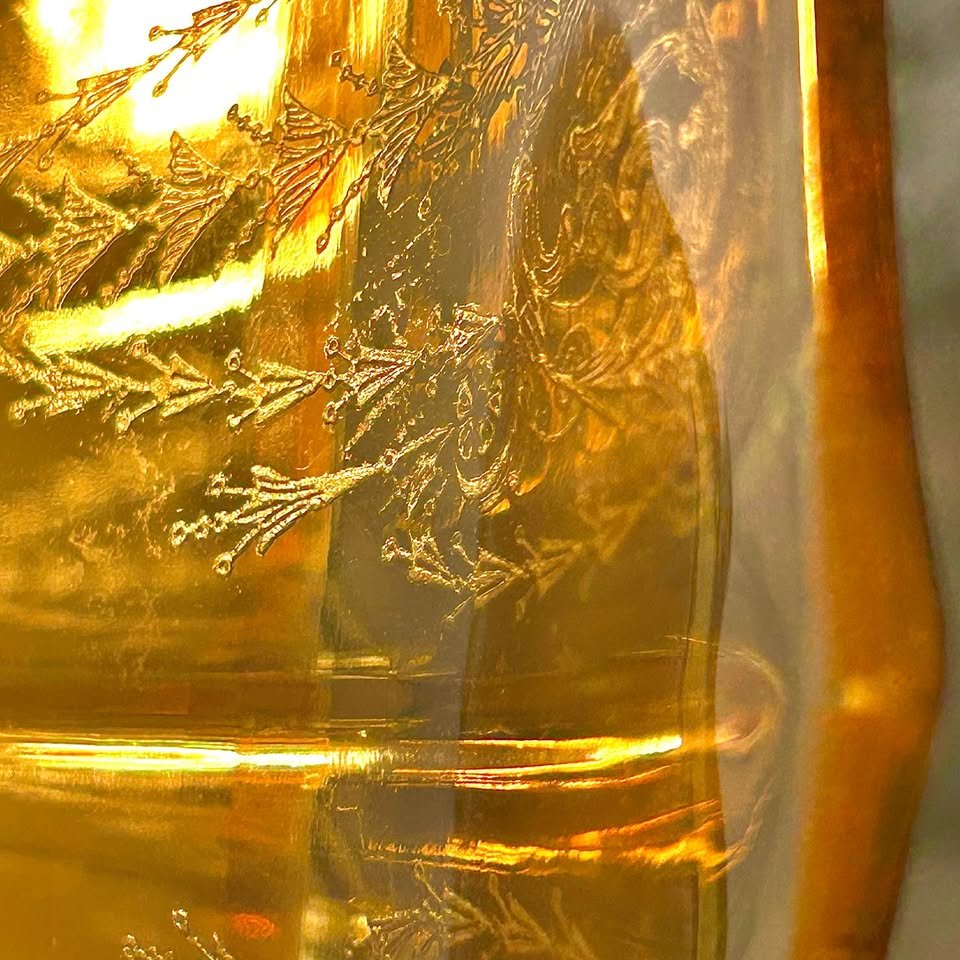
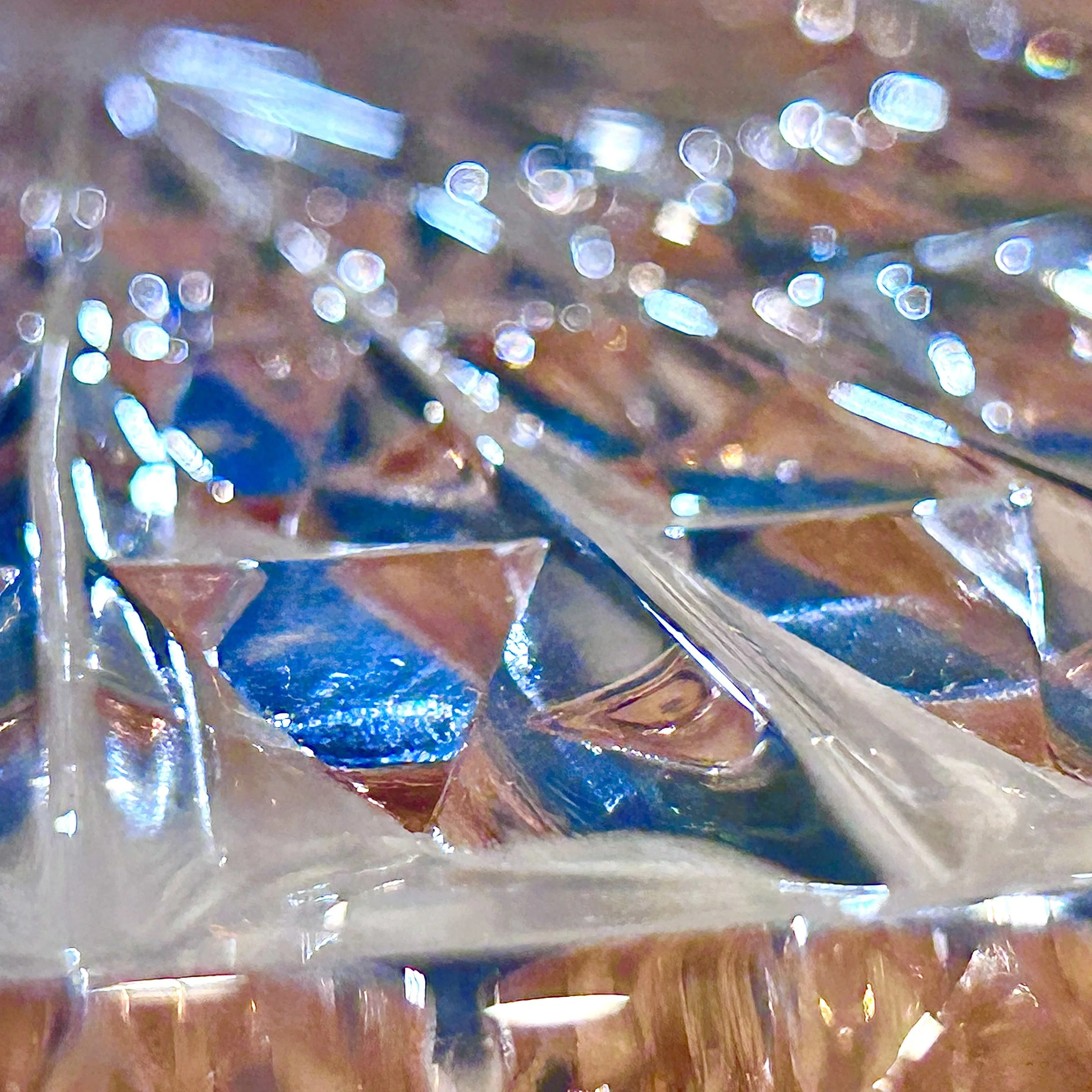
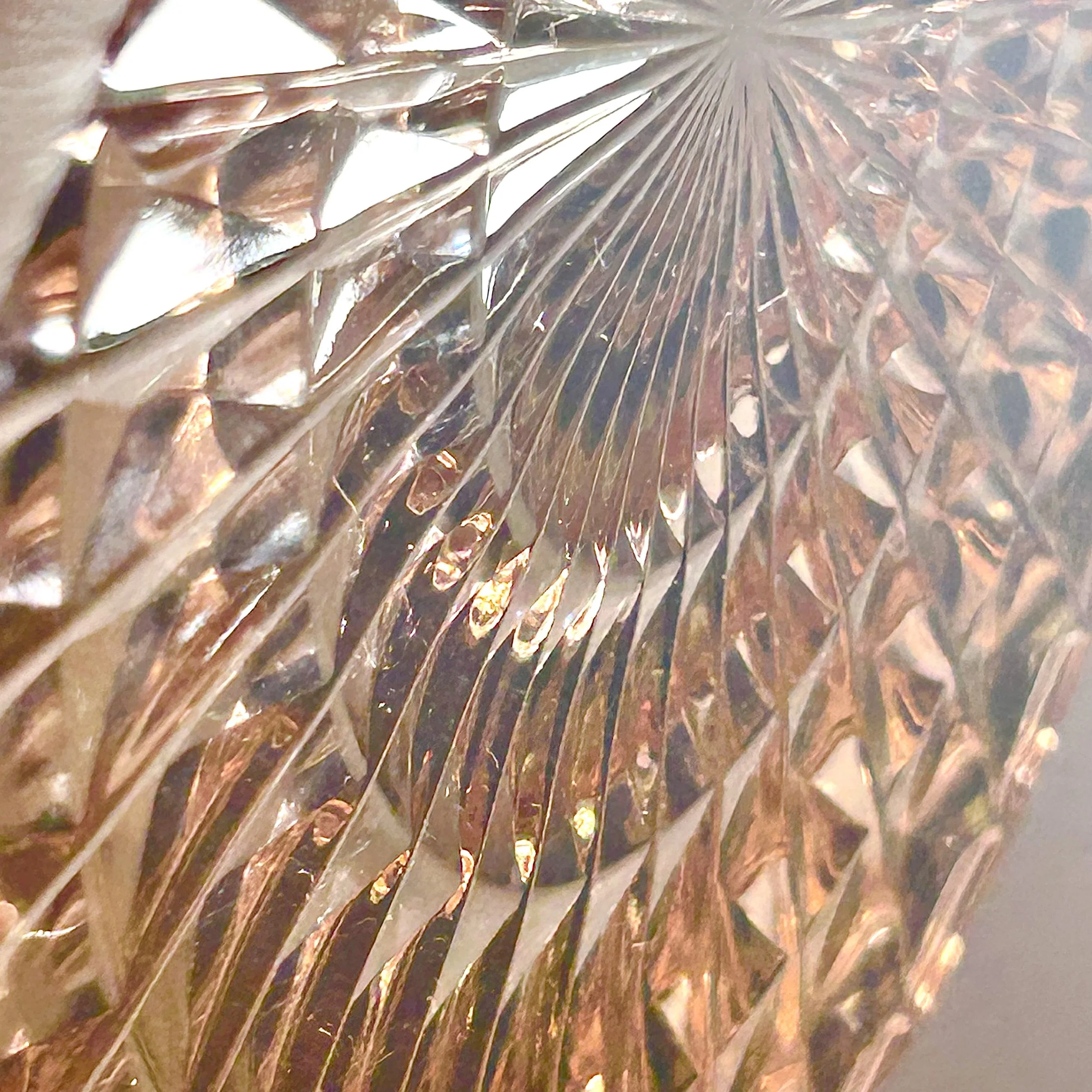
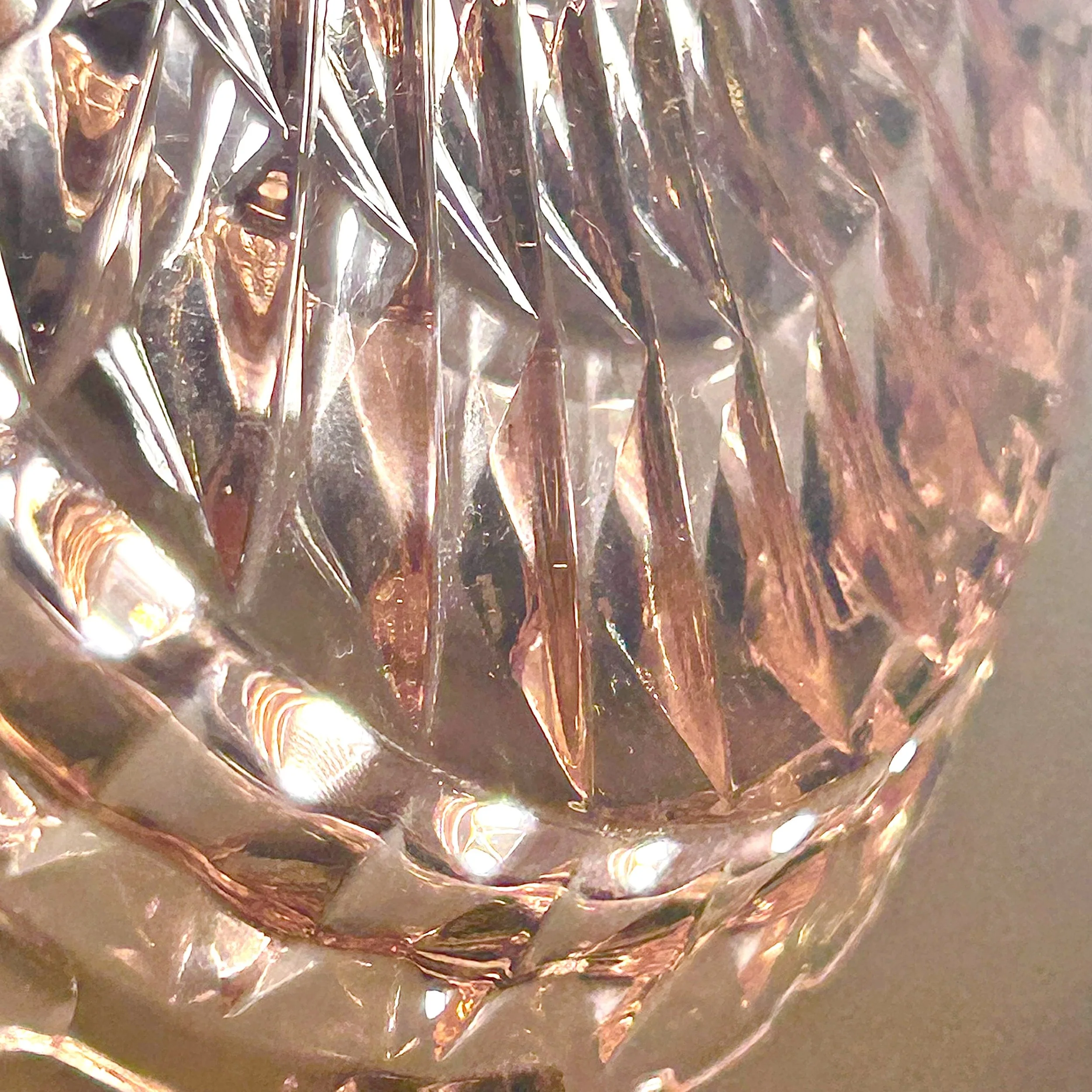
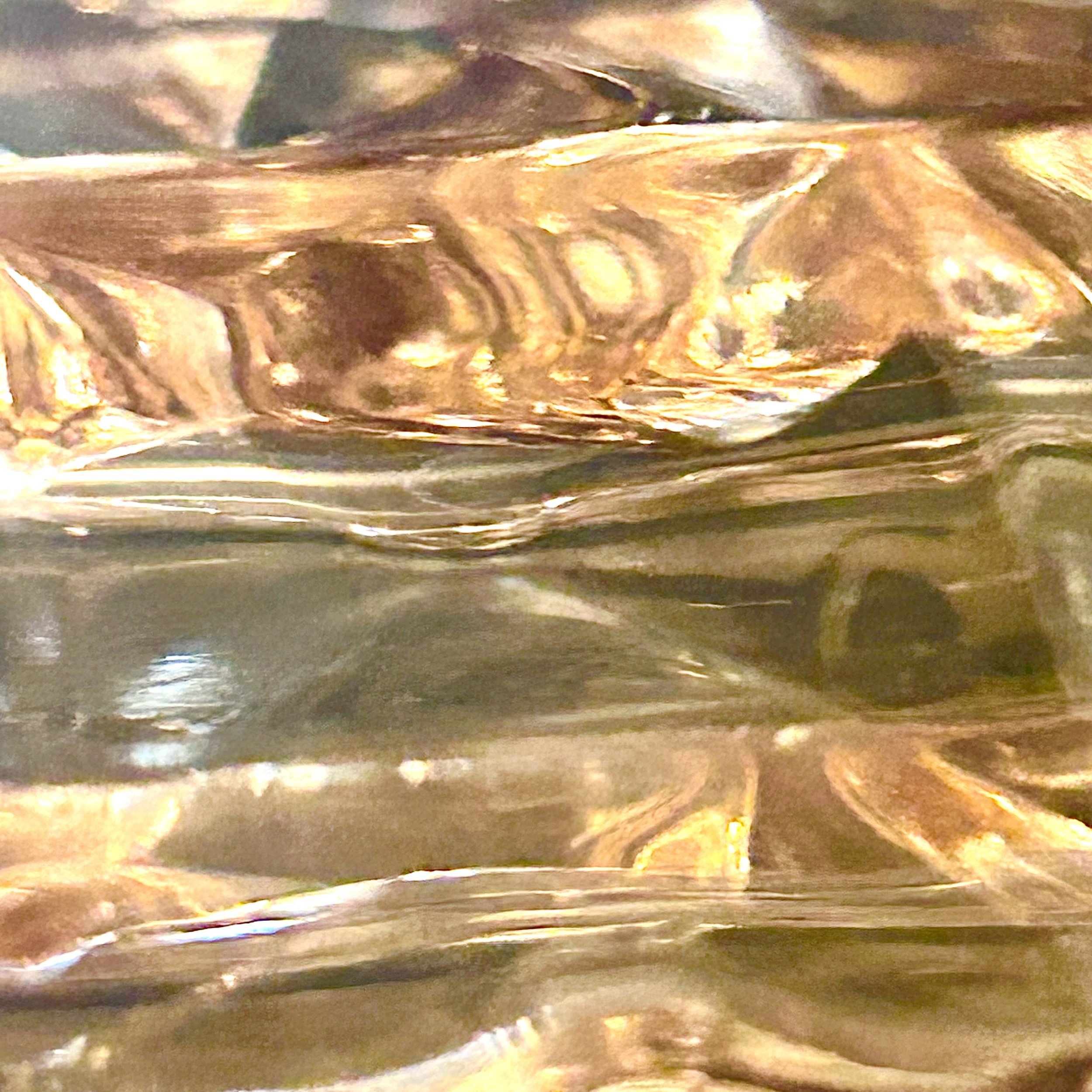
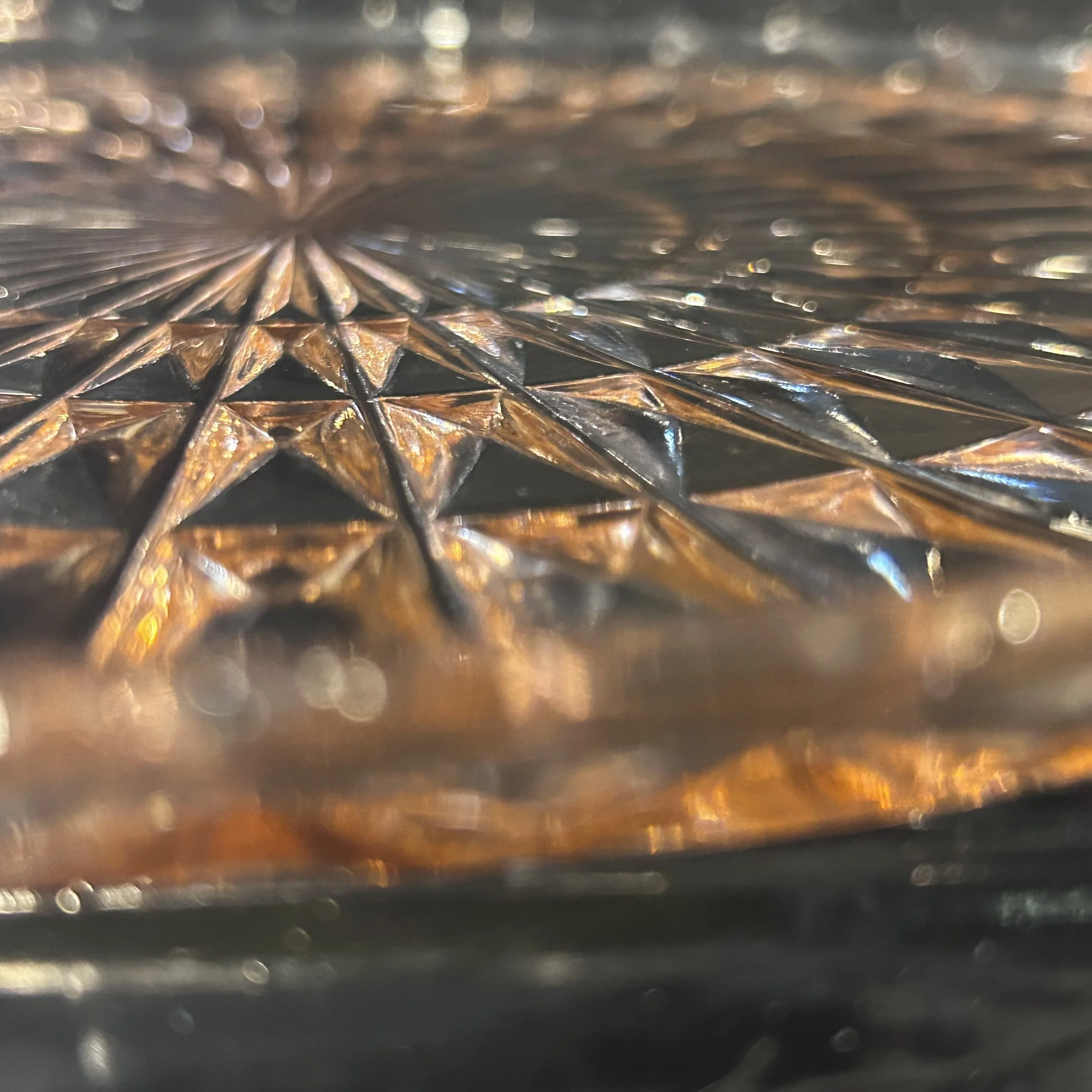
Each side measures 3 ¾ inches, creating a crisp, architectural profile that reflects light beautifully. The surface is decorated with fine acid-etched foliate and scroll motifs, deeply and evenly etched into the glass rather than surface-applied. The etching is consistent across all panels, with no breaks or misalignment; an important indicator of factory production rather than later reproduction.
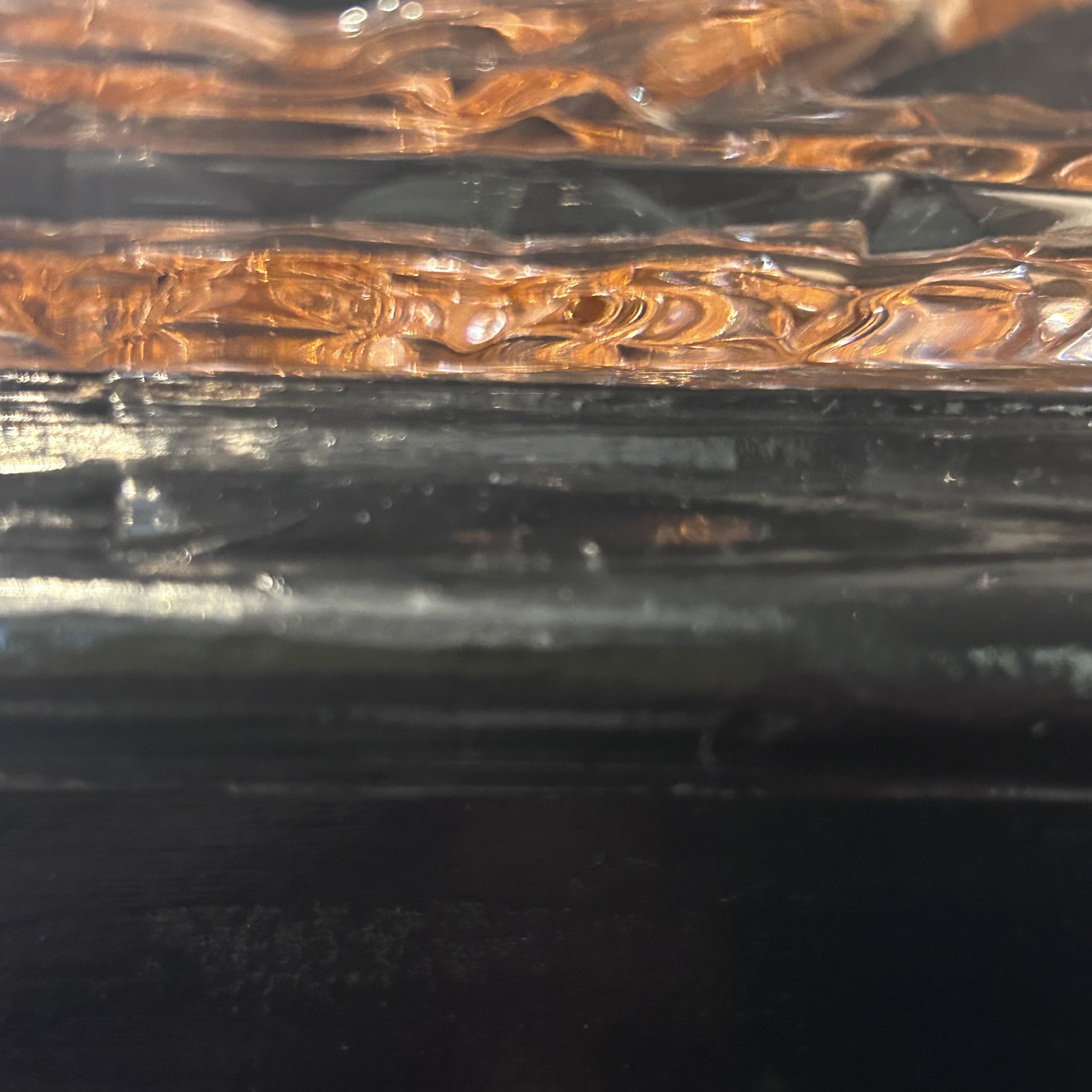
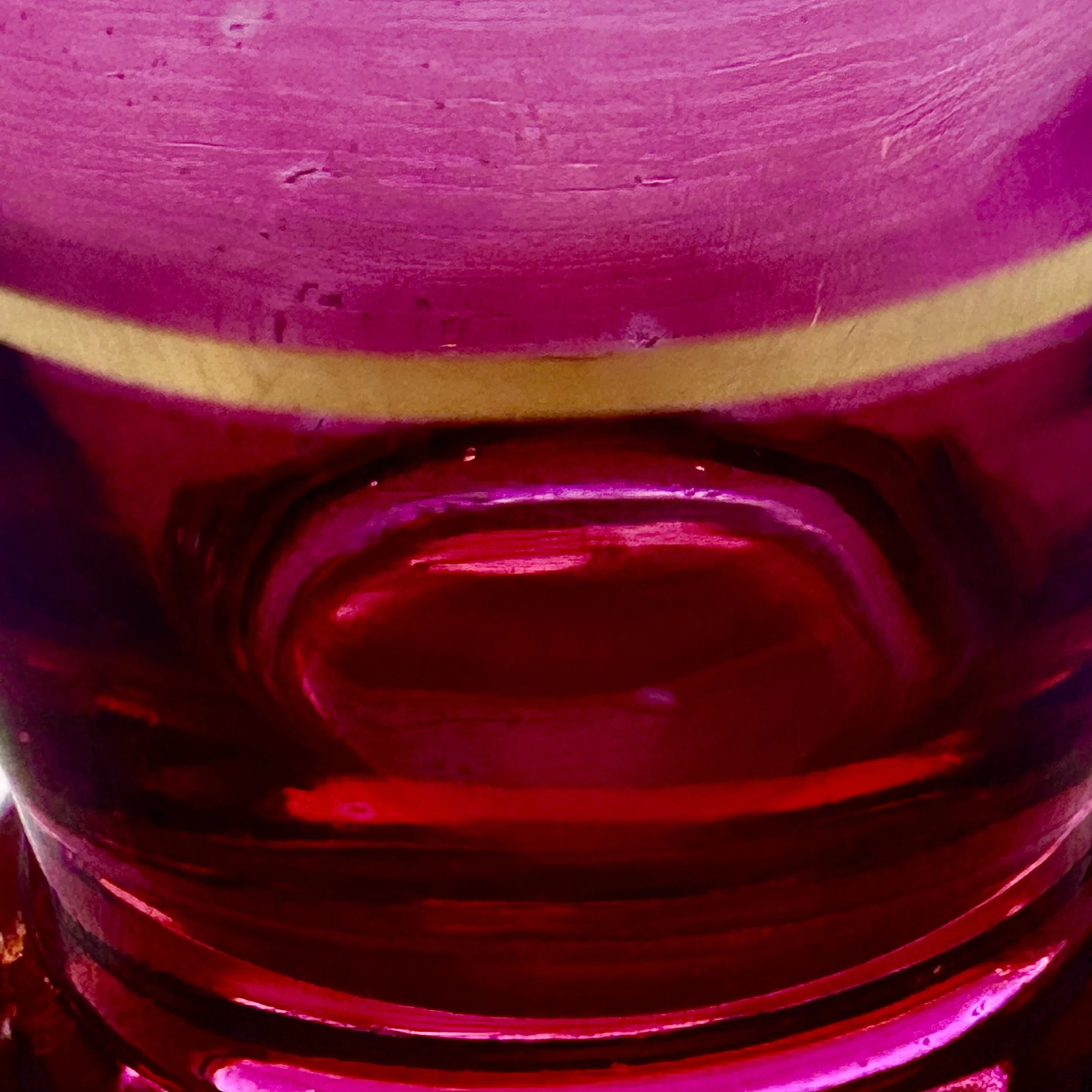
The bowl is finished with a gold-trimmed rim, now showing light, even wear, exactly as expected on genuine vintage Cambridge glass and considered desirable by collectors as evidence of age.
Cambridge Glass Authentication Details (Why This Is Not a Replica)
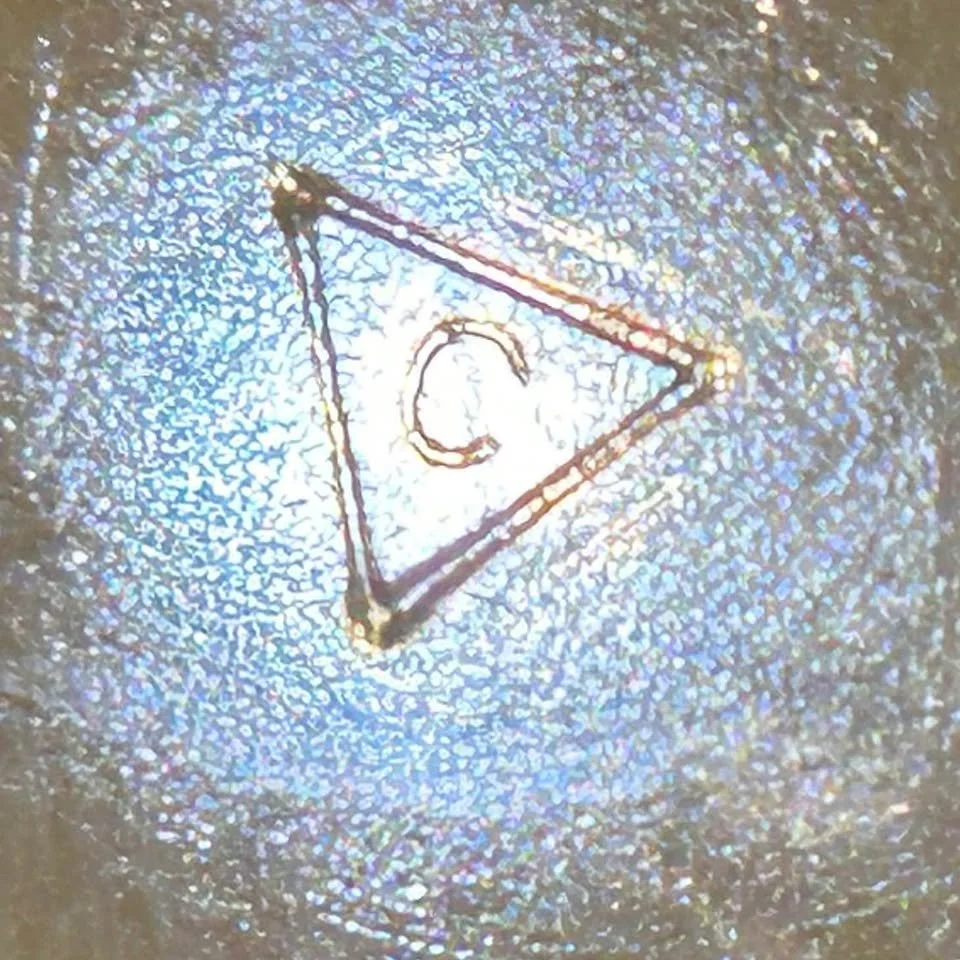
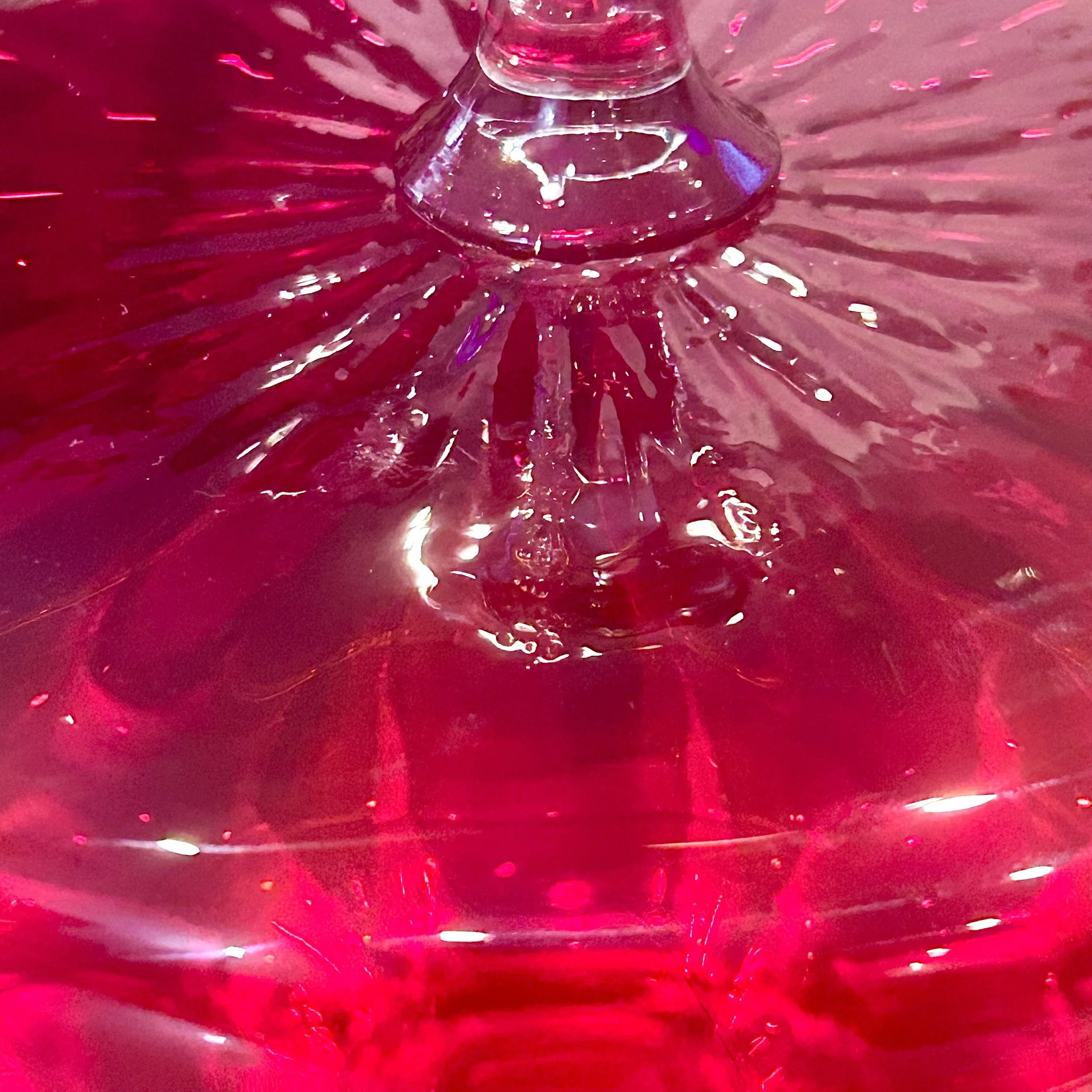
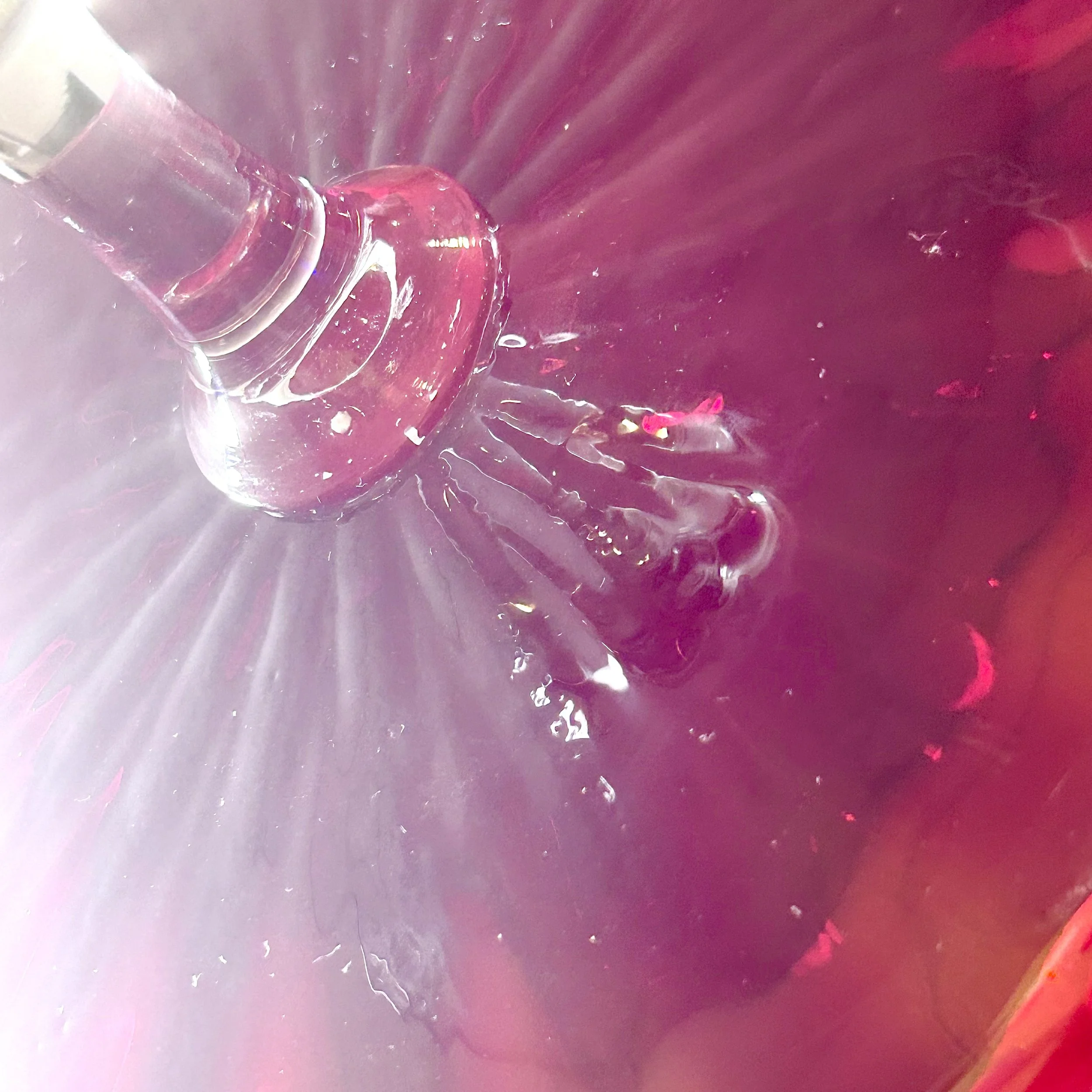
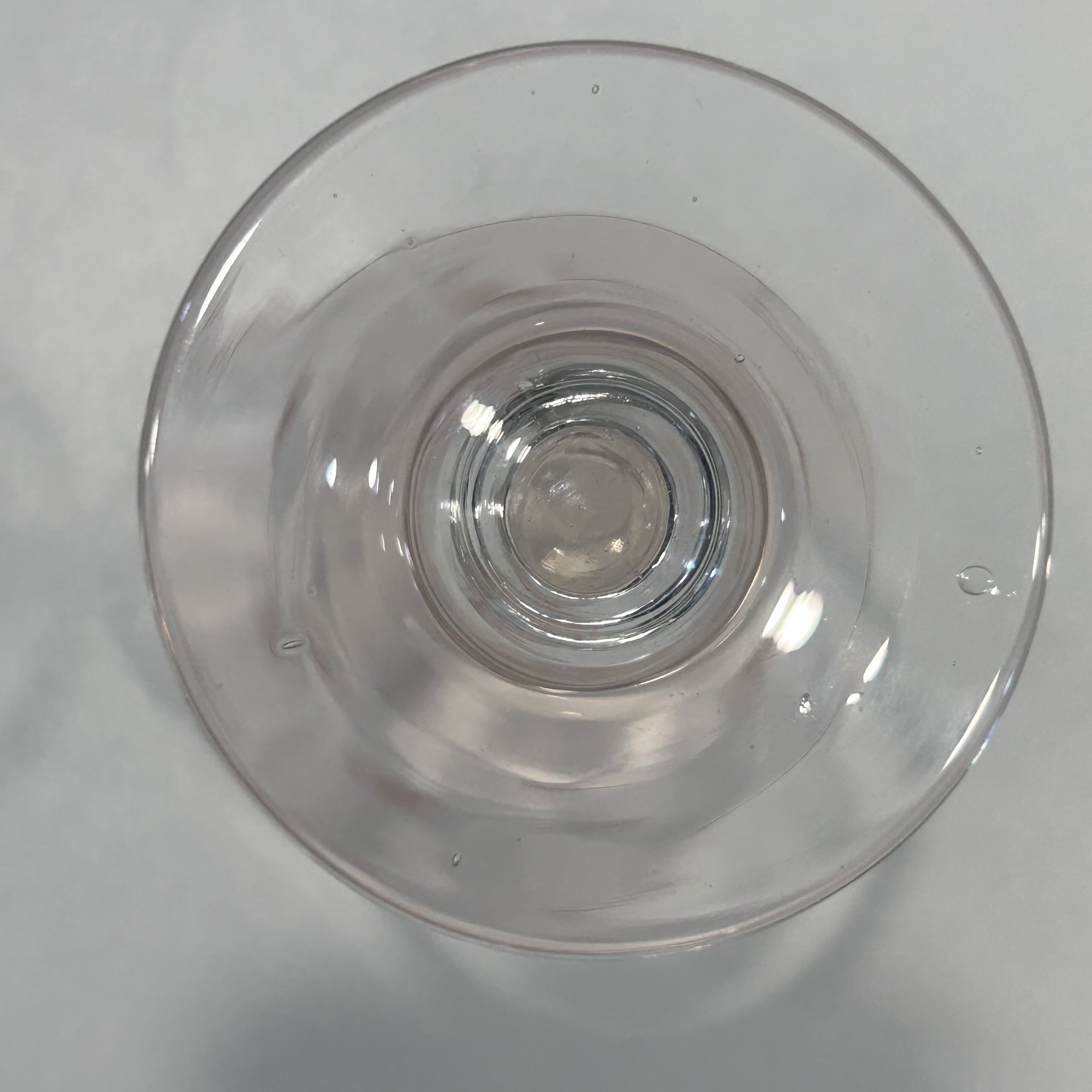
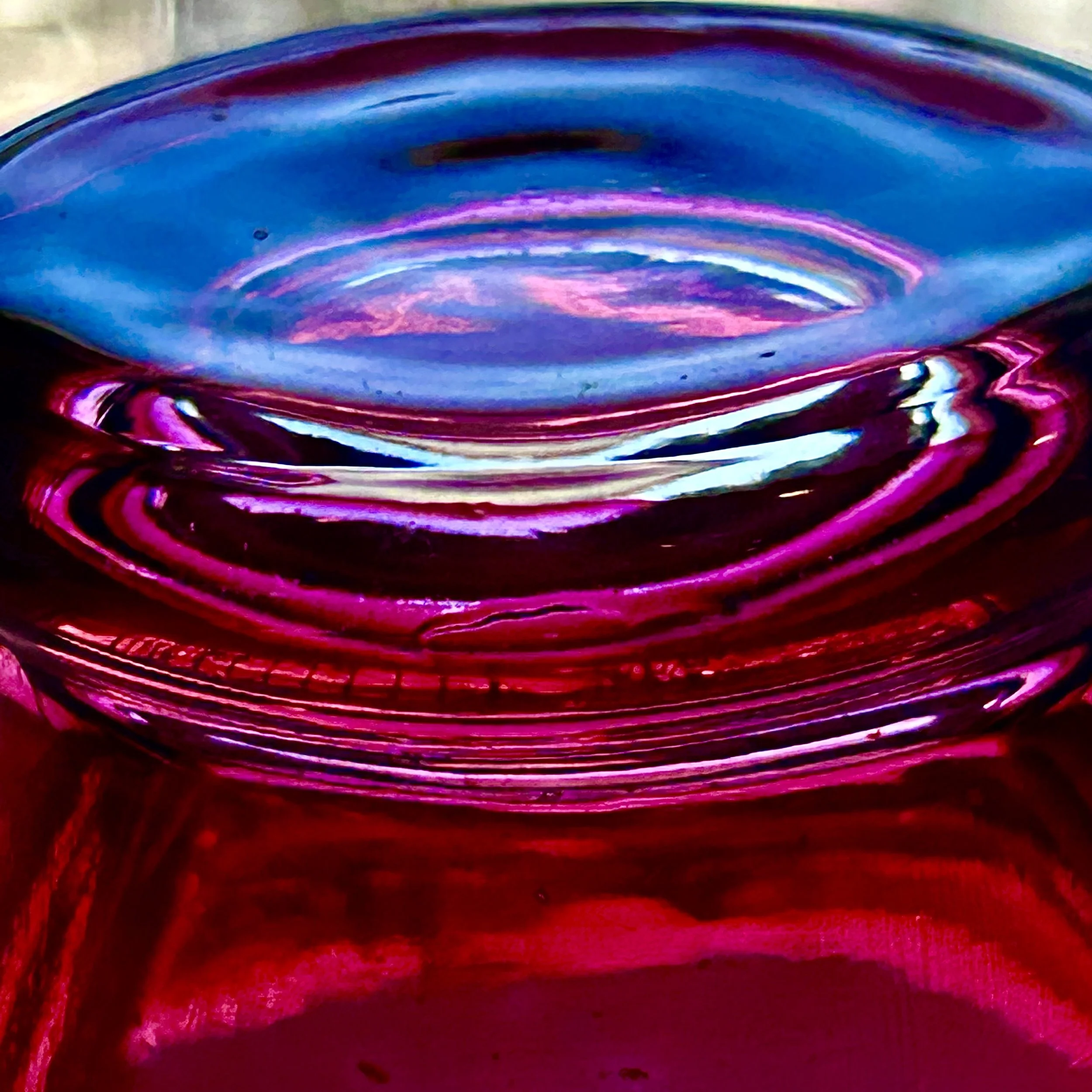
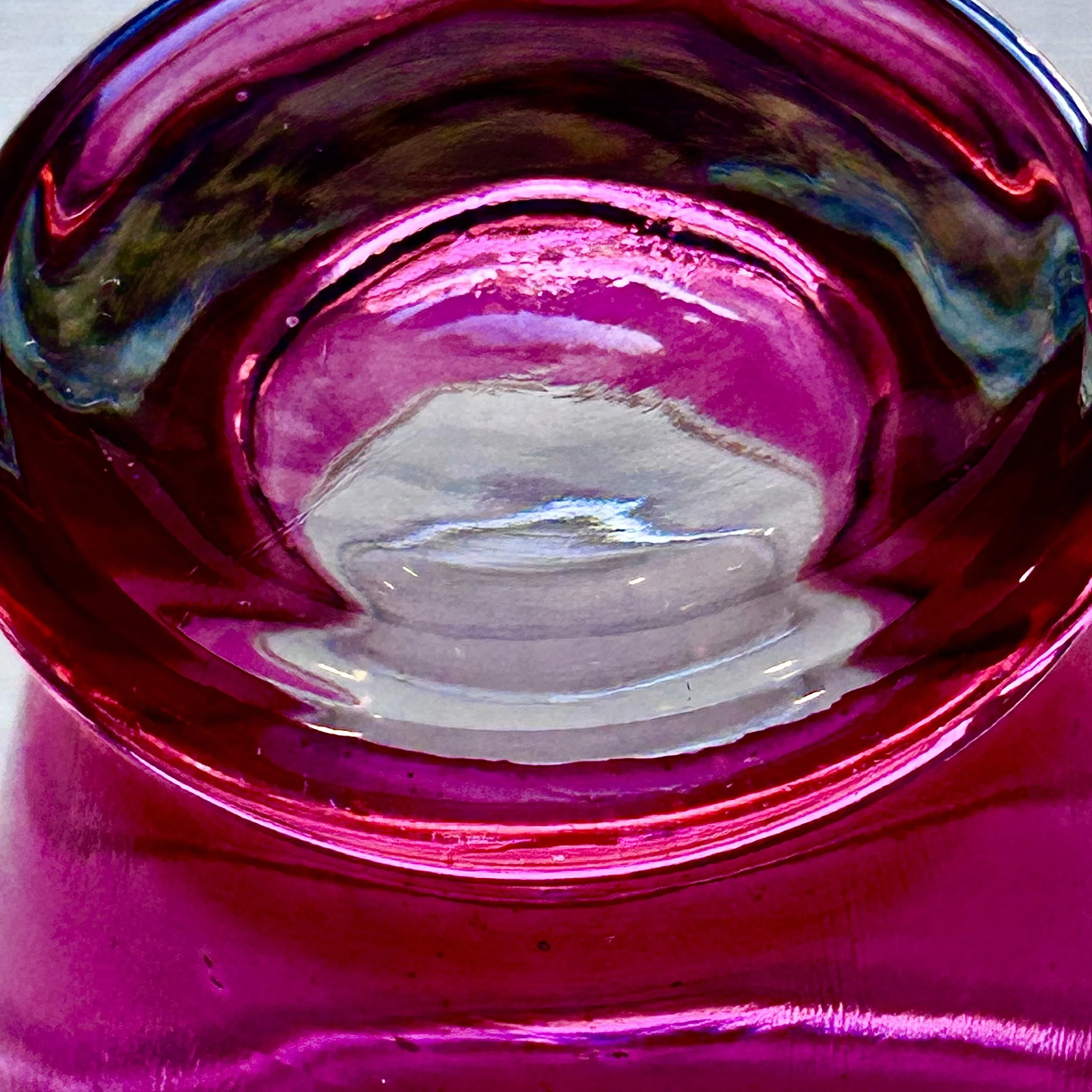
This bowl bears the Cambridge Glass Triangle-C trademark, which is: An equilateral triangle, measuring approximately 5 mm per side. The triangle protrudes outward from the exterior base (not acid-etched or printed) . A perfectly centered capital “C”, evenly spaced within the triangle This is significant because: “Cambridge’s Triangle-C” was mold-formed or applied, not laser-etched or stamped.
Reproductions typically show shallow, soft, or poorly centered marks, or marks etched into the glass rather than raised
The precise geometry of both the triangle and the centered “C” is consistent with known authentic examples. The mark placement on the outer base aligns with documented Cambridge production practices Additionally, replicas rarely reproduce all three elements correctly at once:
1. Correct decagonal geometry
2. Proper depth and quality of acid etching
3. A raised, dimensionally accurate Triangle-C mark This piece satisfies all three
Condition
No cracks, chips, or repairs
Minimal surface scratching in a few small areas, consistent with age
Gold rim shows light wear from decades of careful use
Etching remains crisp and intact throughout Overall condition is very good vintage, display-ready.
Dimensions & Weight
Diameter (mouth): 12 inches
Base diameter: 5 inches
Height: 3 inches
Shape: 10-sided (decagonal)
Each side: 3 ¾ inches
Attribution & Period
Production Era Circa 1935-1945 (best-supported collector range). Cambridge did not date-stamp pieces, but the combination of decagonal Art Deco form, period acid-etching, and the Triangle-C mark aligns most strongly with Cambridge’s mid-1930s through 1940s production.
Collector Notes
Amber etched Cambridge glass is increasingly sought after, particularly pieces with strong geometry, intact etching, and confirmed marks.
Placement
This bowl works equally well as a table centerpiece, console display, or cabinet piece, and photographs exceptionally well under natural or gallery lighting. This is not modern glass and not a reproduction.
This is an authentic vintage Cambridge Glass Company bowl, confidently attributed based on form, decoration, color, and ”critically’the applied Triangle-C mark. The bowl is executed in a rich amber (golden honey) glass, formed as a 10-sided decagon, a geometry strongly associated with Cambridge’s Art Deco and early Mid-Century production.
Each side measures 3 ¾ inches, creating a crisp, architectural profile that reflects light beautifully. The surface is decorated with fine acid-etched foliate and scroll motifs, deeply and evenly etched into the glass rather than surface-applied. The etching is consistent across all panels, with no breaks or misalignment; an important indicator of factory production rather than later reproduction.
The bowl is finished with a gold-trimmed rim, now showing light, even wear, exactly as expected on genuine vintage Cambridge glass and considered desirable by collectors as evidence of age.
Cambridge Glass Authentication Details (Why This Is Not a Replica)
This bowl bears the Cambridge Glass Triangle-C trademark, which is: An equilateral triangle, measuring approximately 5 mm per side. The triangle protrudes outward from the exterior base (not acid-etched or printed) . A perfectly centered capital “C”, evenly spaced within the triangle This is significant because: “Cambridge’s Triangle-C” was mold-formed or applied, not laser-etched or stamped.
Reproductions typically show shallow, soft, or poorly centered marks, or marks etched into the glass rather than raised
The precise geometry of both the triangle and the centered “C” is consistent with known authentic examples. The mark placement on the outer base aligns with documented Cambridge production practices Additionally, replicas rarely reproduce all three elements correctly at once:
1. Correct decagonal geometry
2. Proper depth and quality of acid etching
3. A raised, dimensionally accurate Triangle-C mark This piece satisfies all three
Condition
No cracks, chips, or repairs
Minimal surface scratching in a few small areas, consistent with age
Gold rim shows light wear from decades of careful use
Etching remains crisp and intact throughout Overall condition is very good vintage, display-ready.
Dimensions & Weight
Diameter (mouth): 12 inches
Base diameter: 5 inches
Height: 3 inches
Shape: 10-sided (decagonal)
Each side: 3 ¾ inches
Attribution & Period
Production Era Circa 1935-1945 (best-supported collector range). Cambridge did not date-stamp pieces, but the combination of decagonal Art Deco form, period acid-etching, and the Triangle-C mark aligns most strongly with Cambridge’s mid-1930s through 1940s production.
Collector Notes
Amber etched Cambridge glass is increasingly sought after, particularly pieces with strong geometry, intact etching, and confirmed marks.
Placement
This bowl works equally well as a table centerpiece, console display, or cabinet piece, and photographs exceptionally well under natural or gallery lighting. This is not modern glass and not a reproduction.