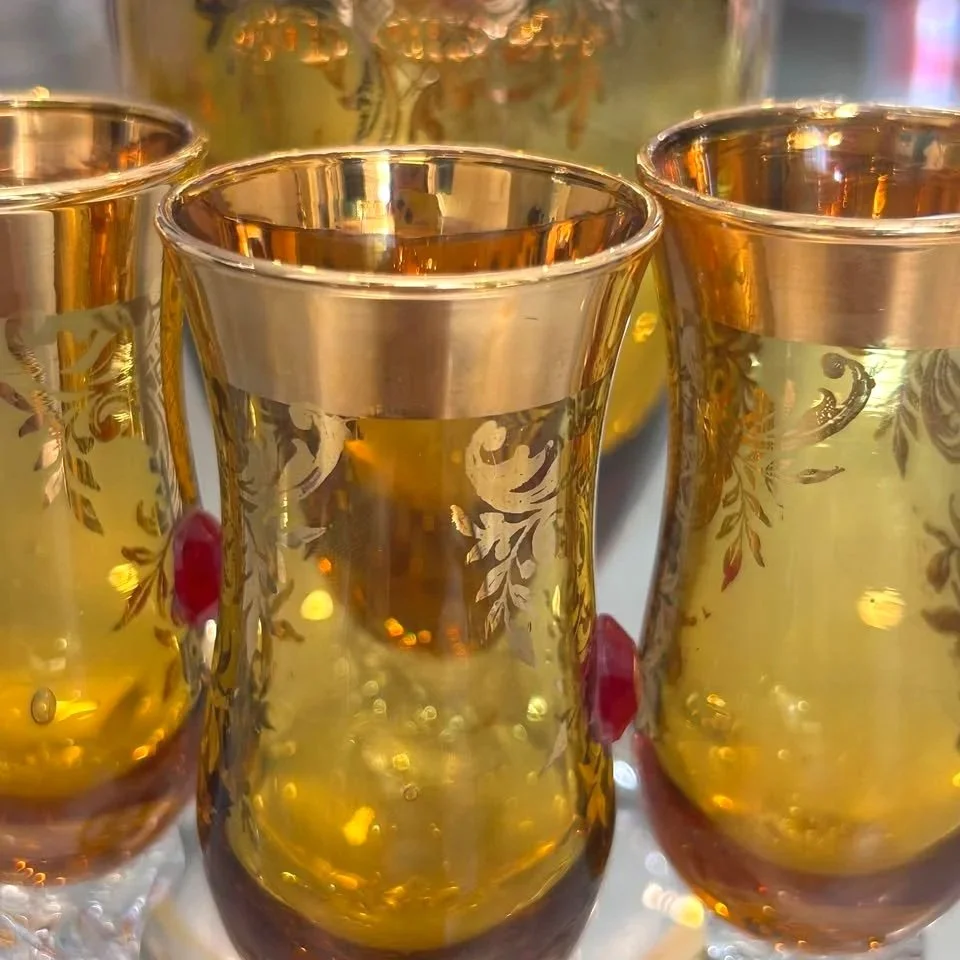
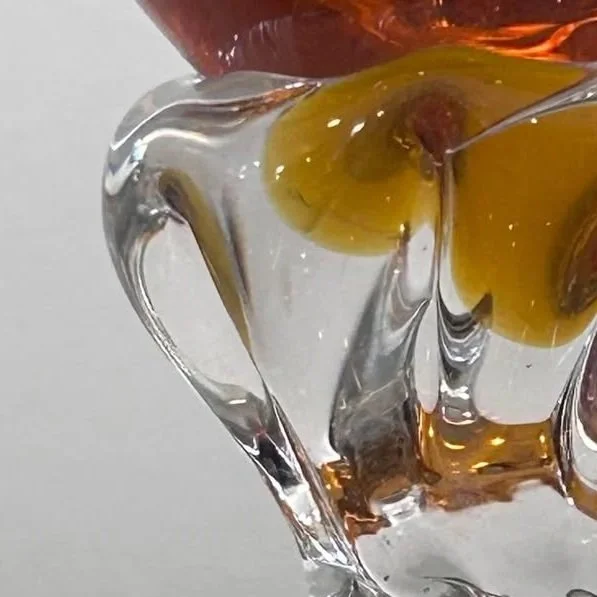
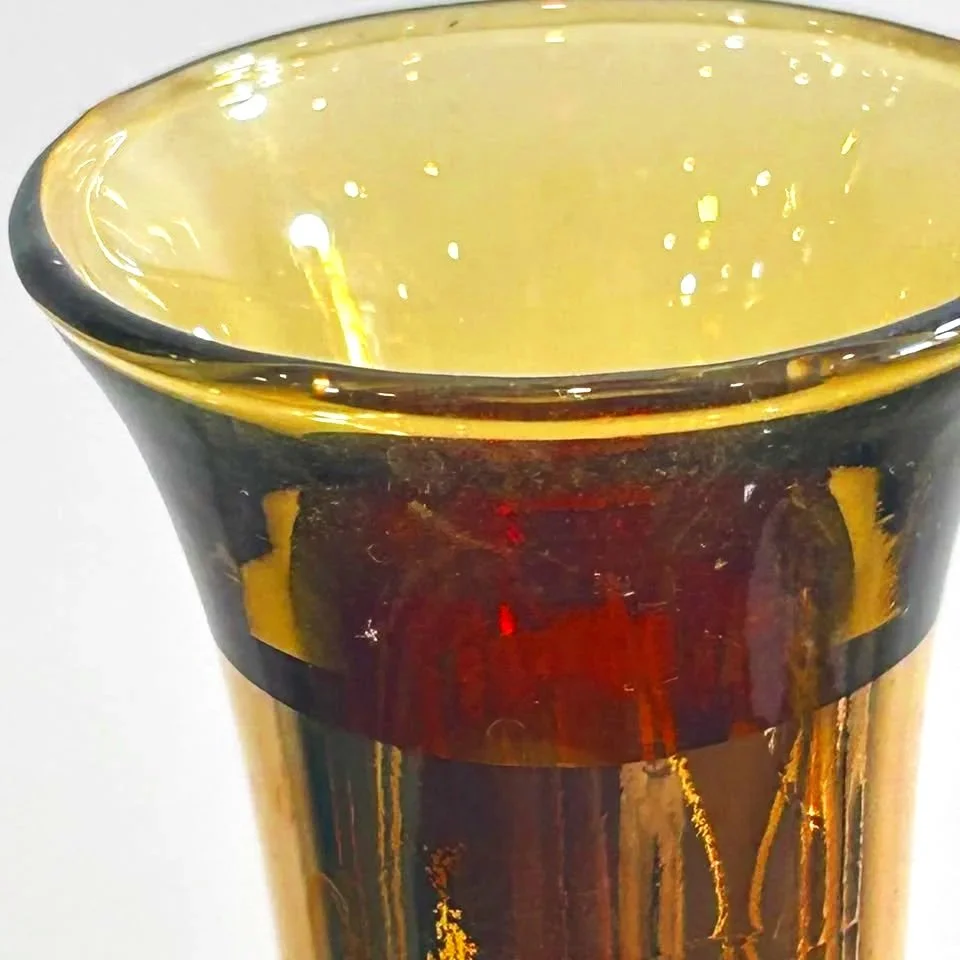
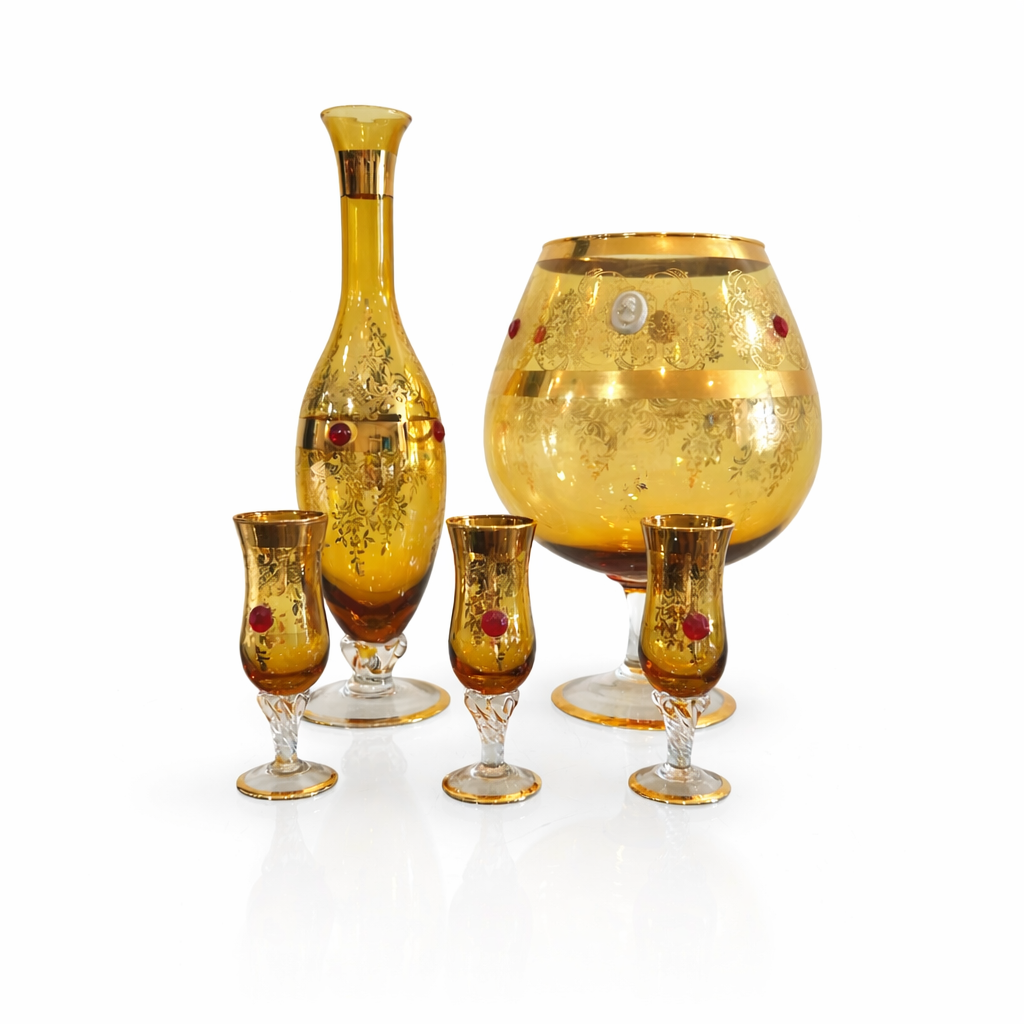
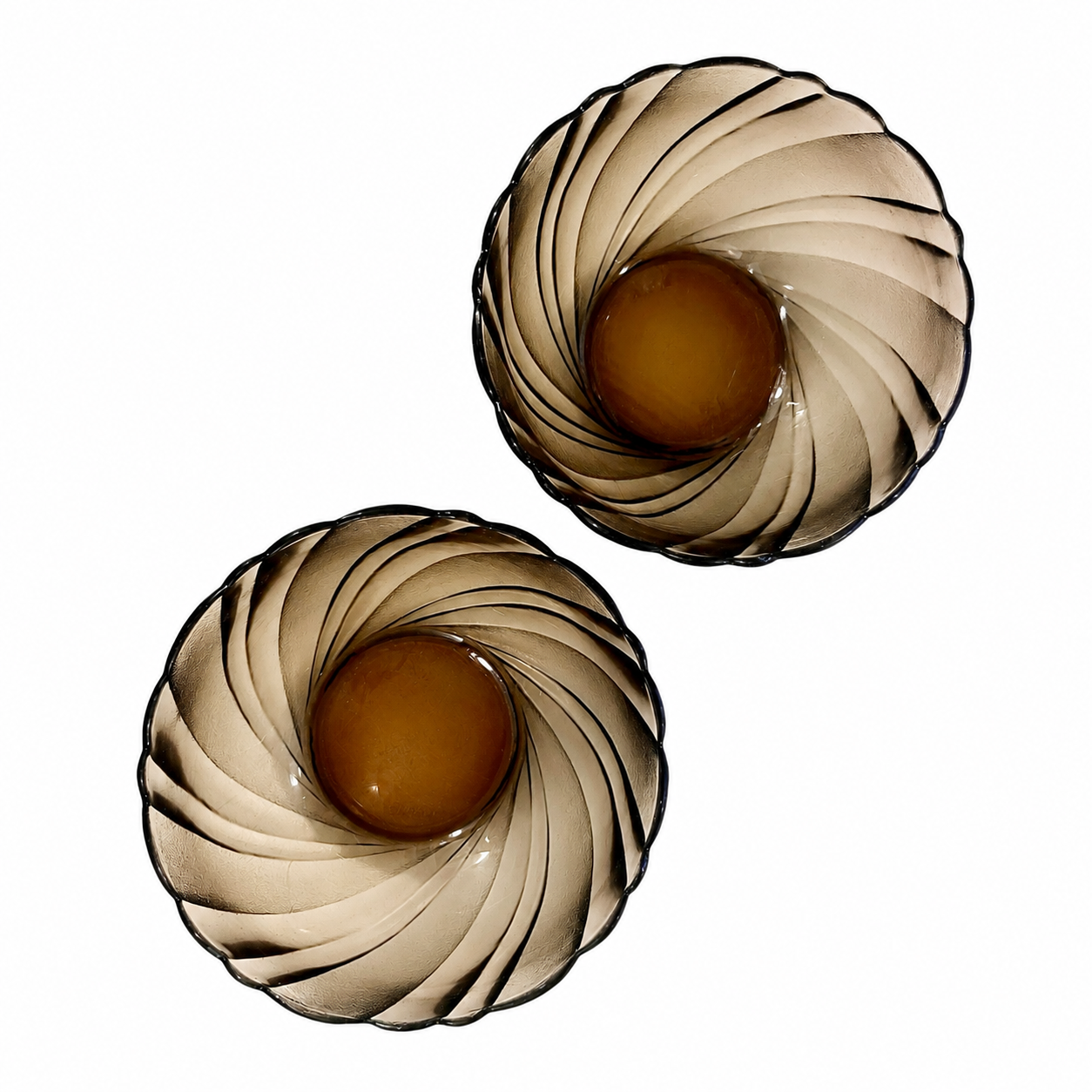
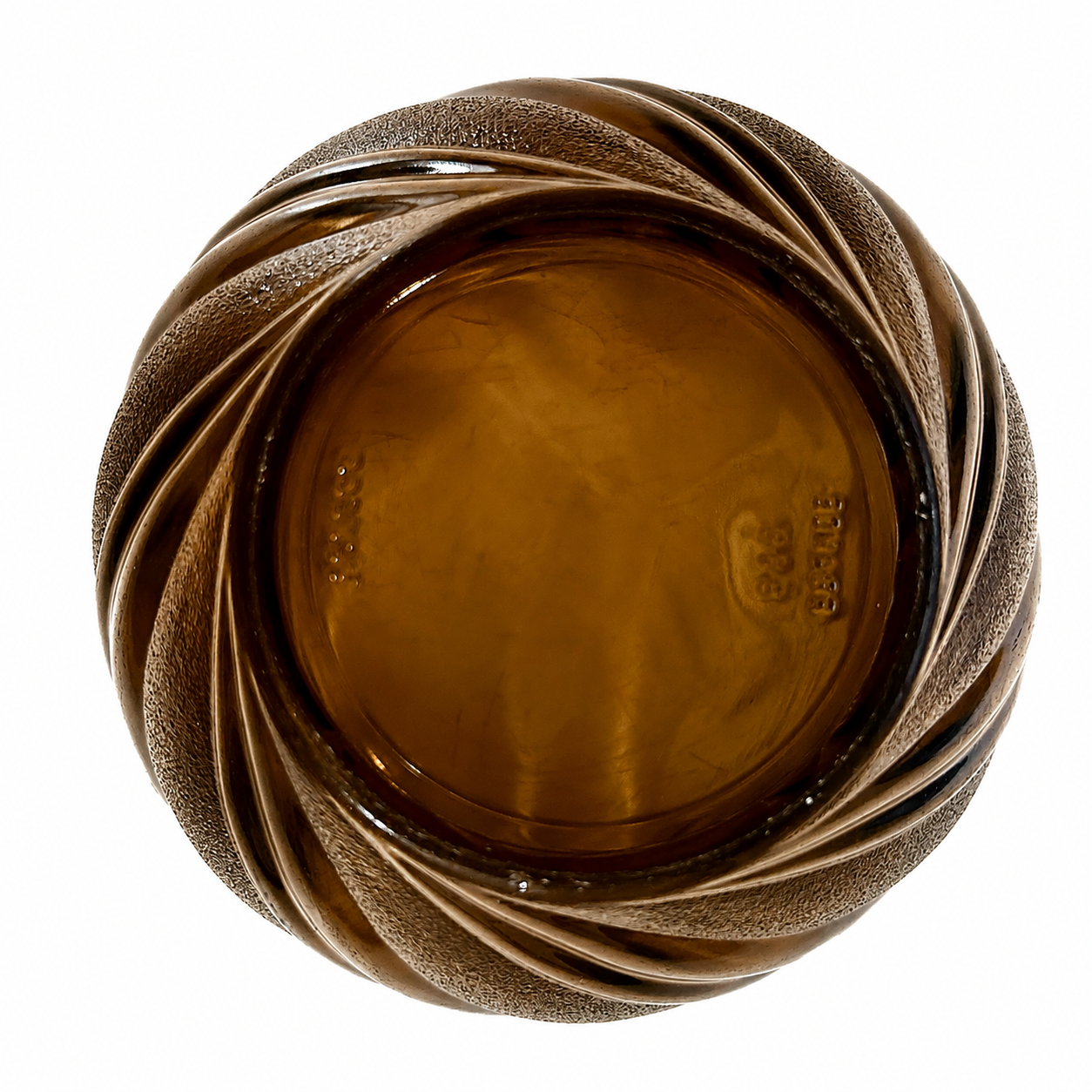
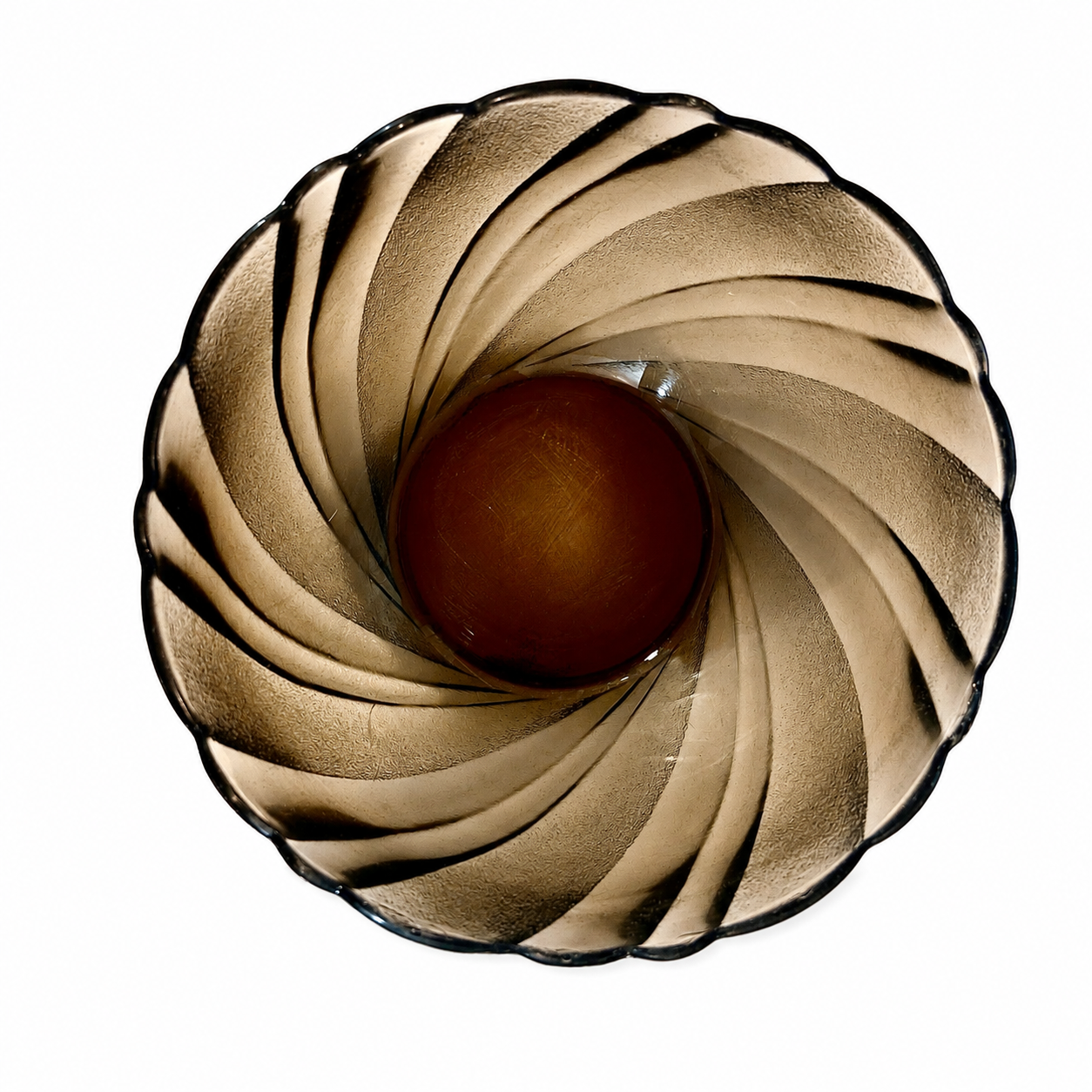
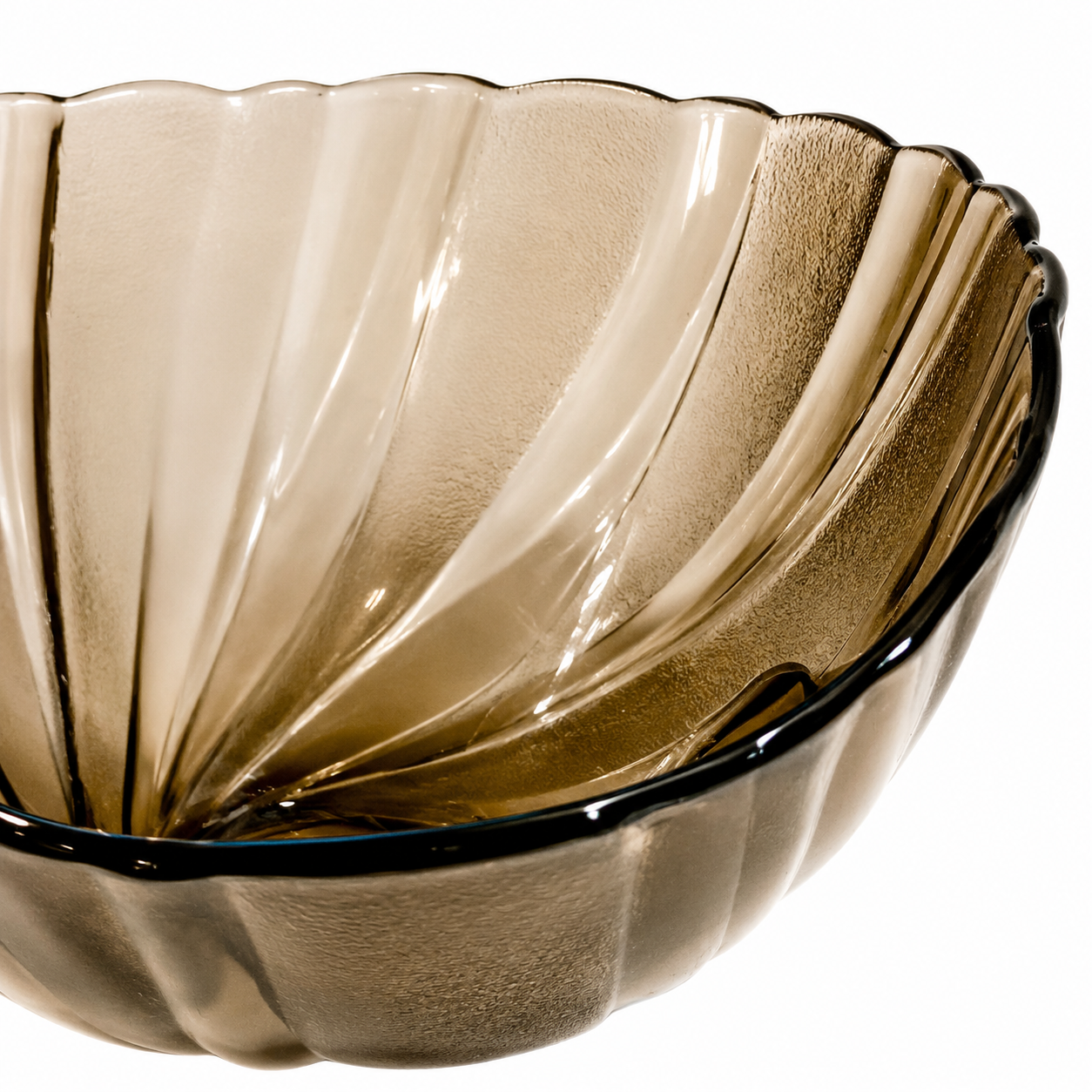
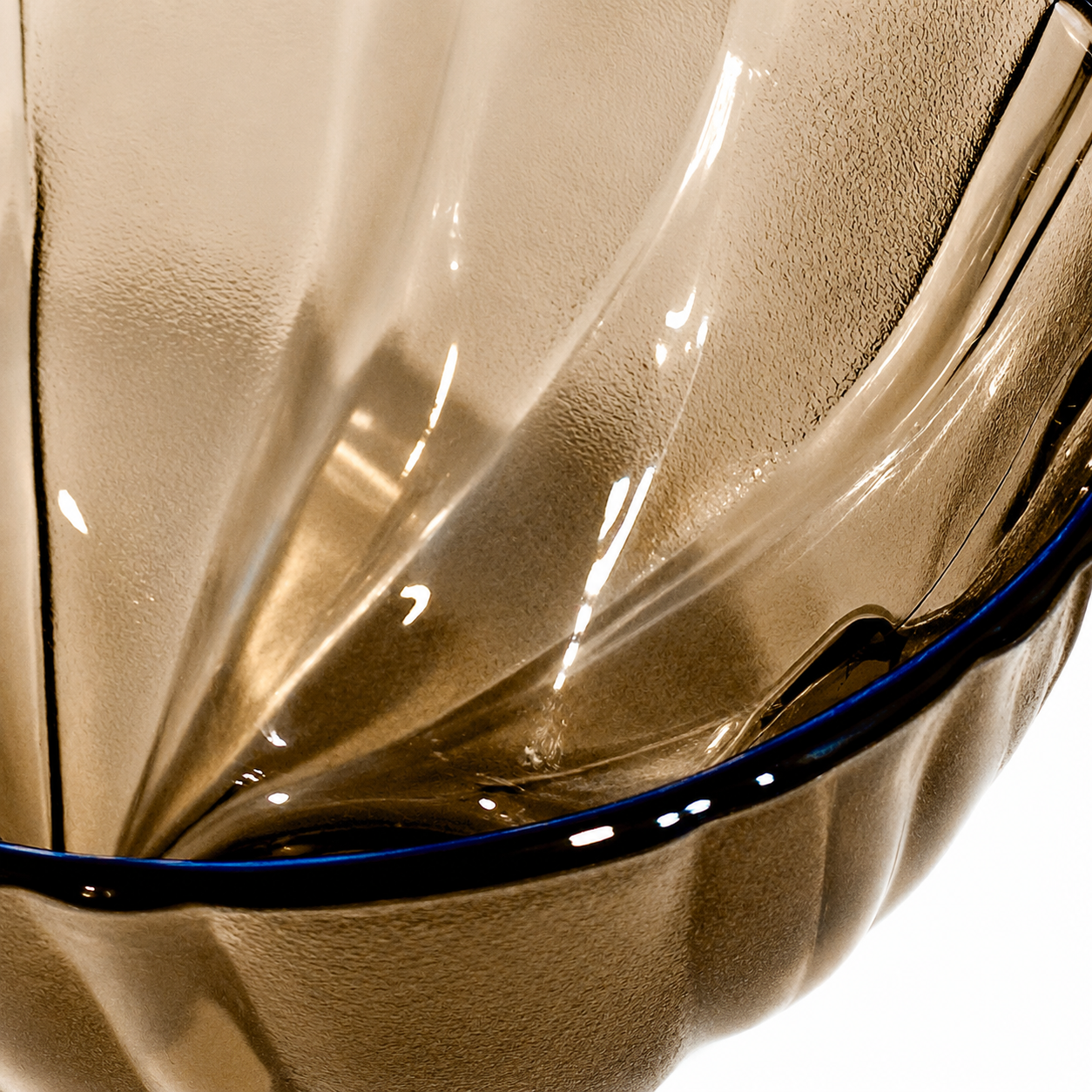
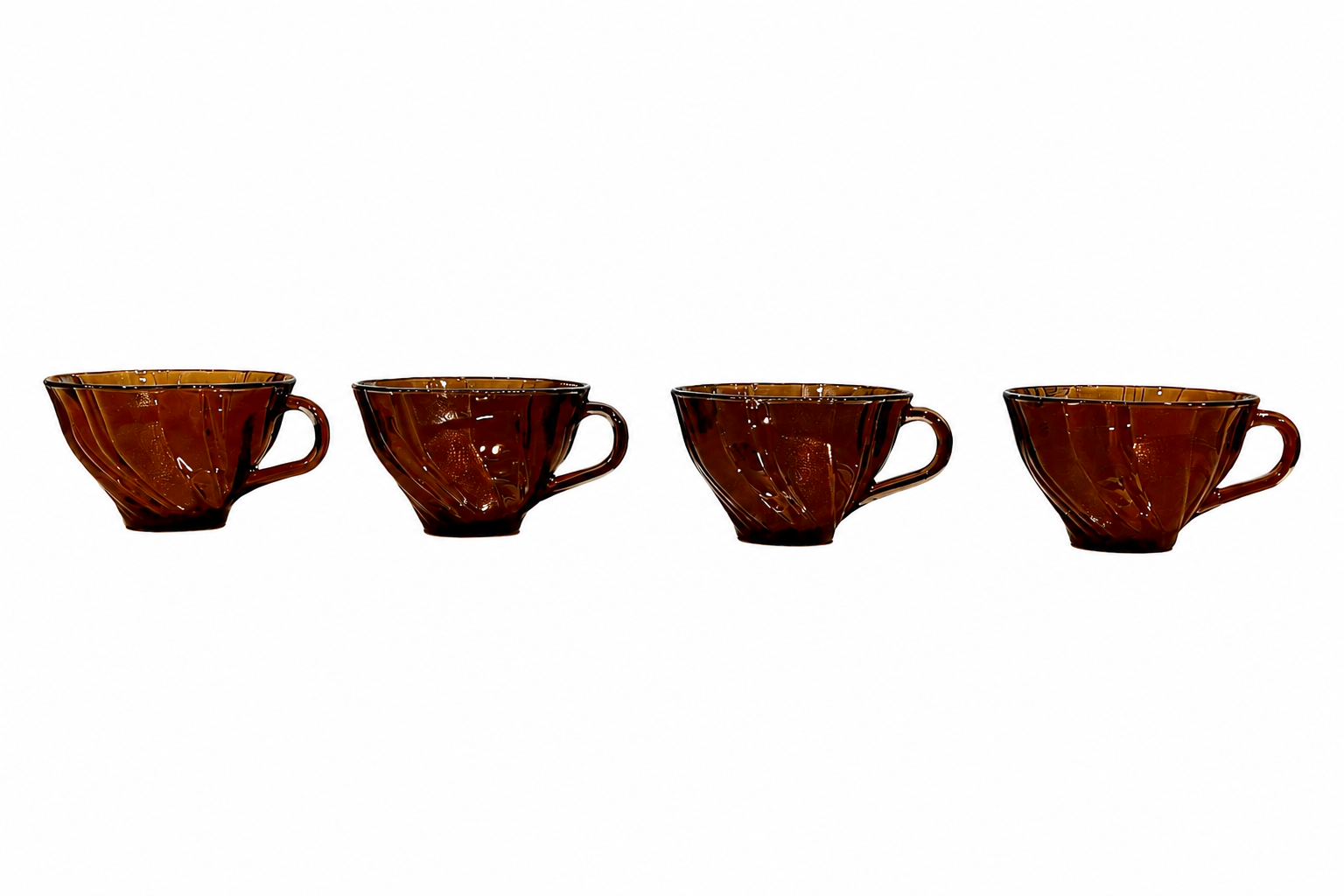
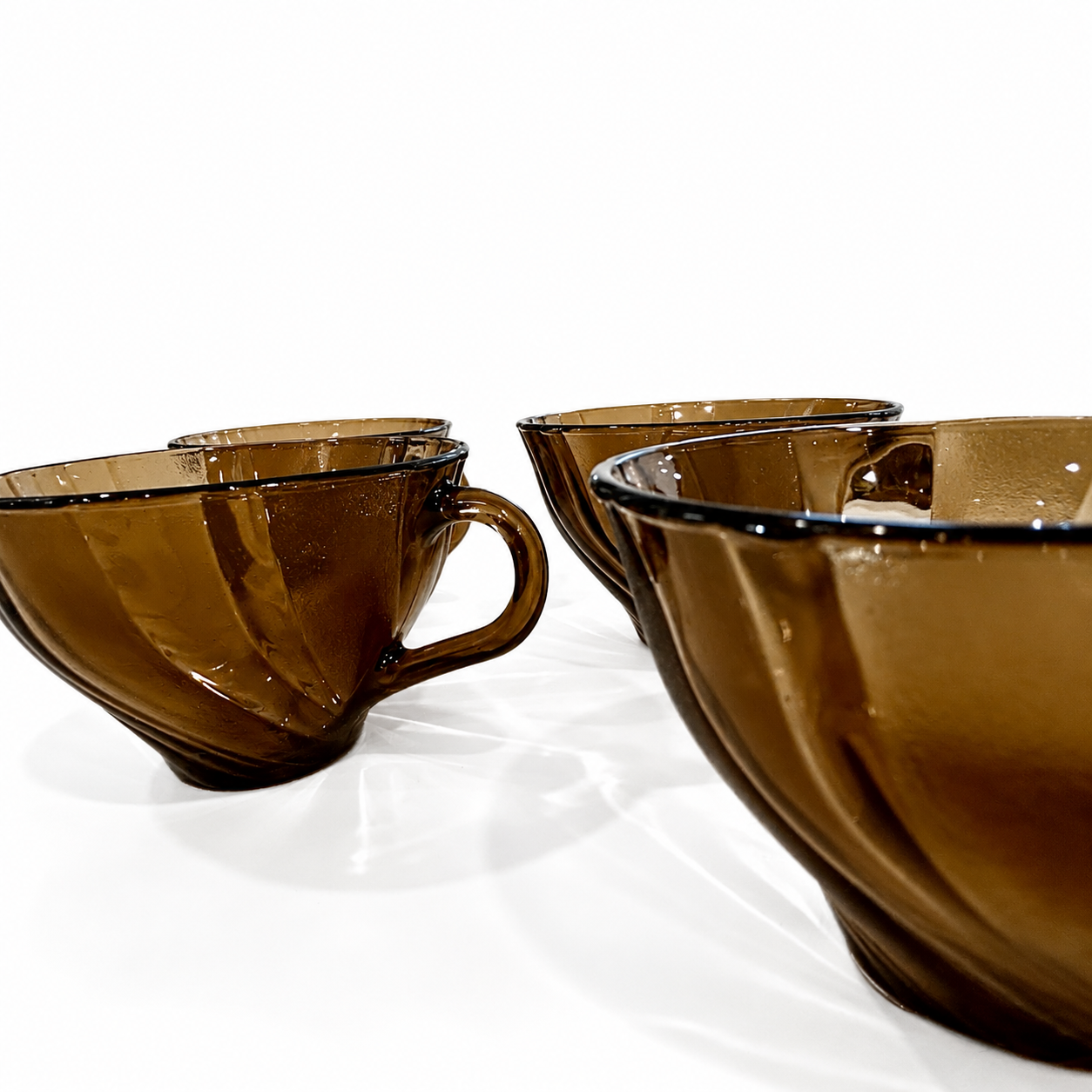
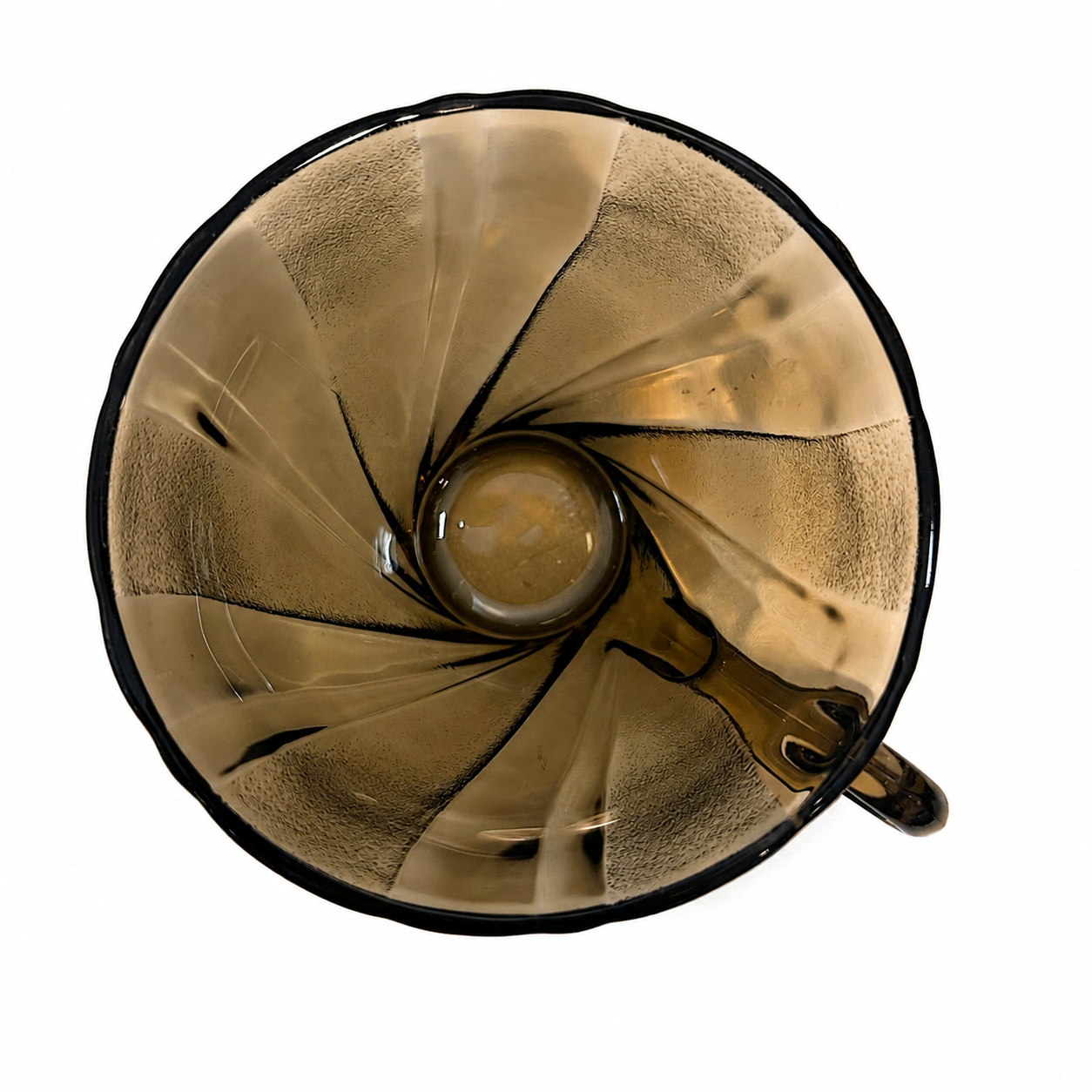
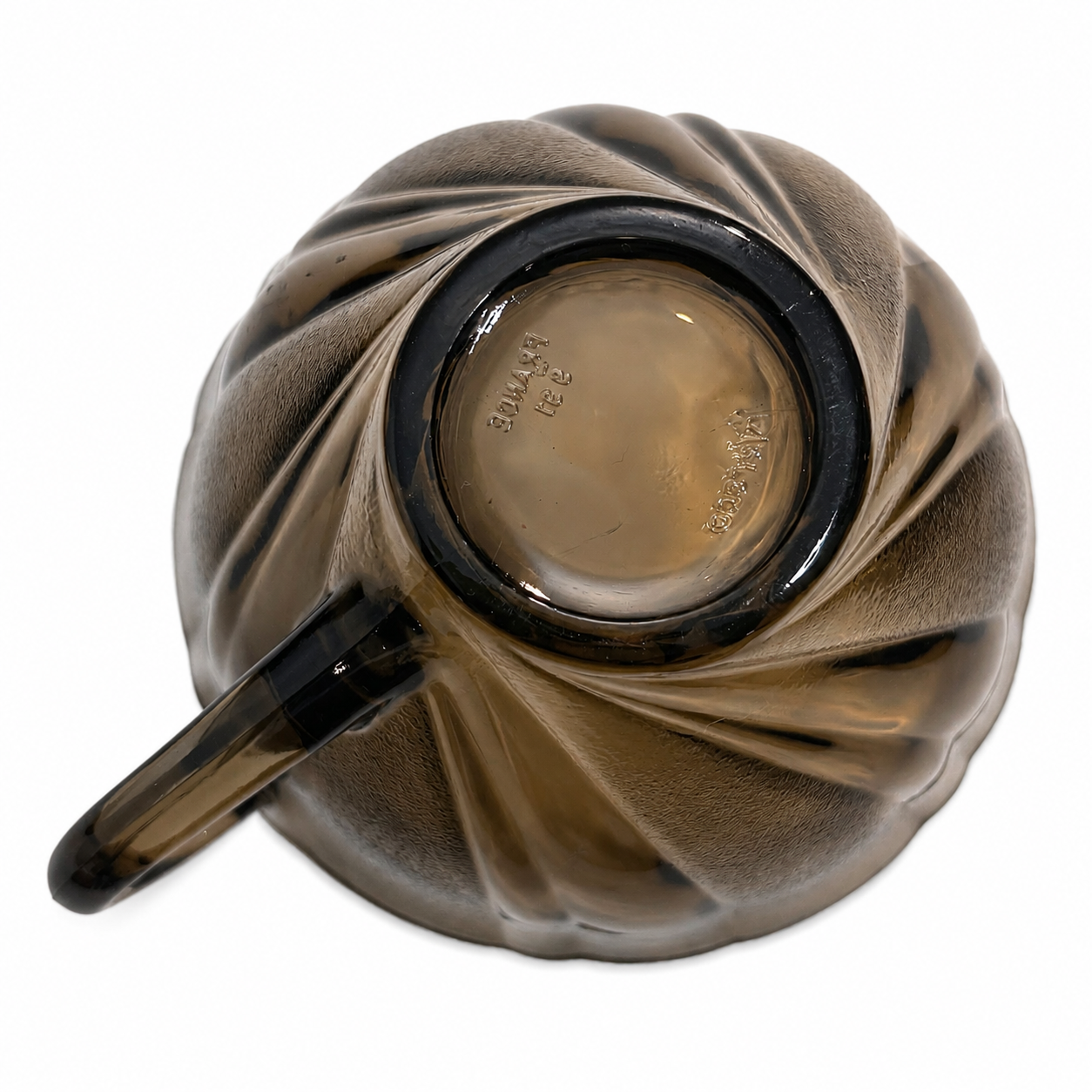
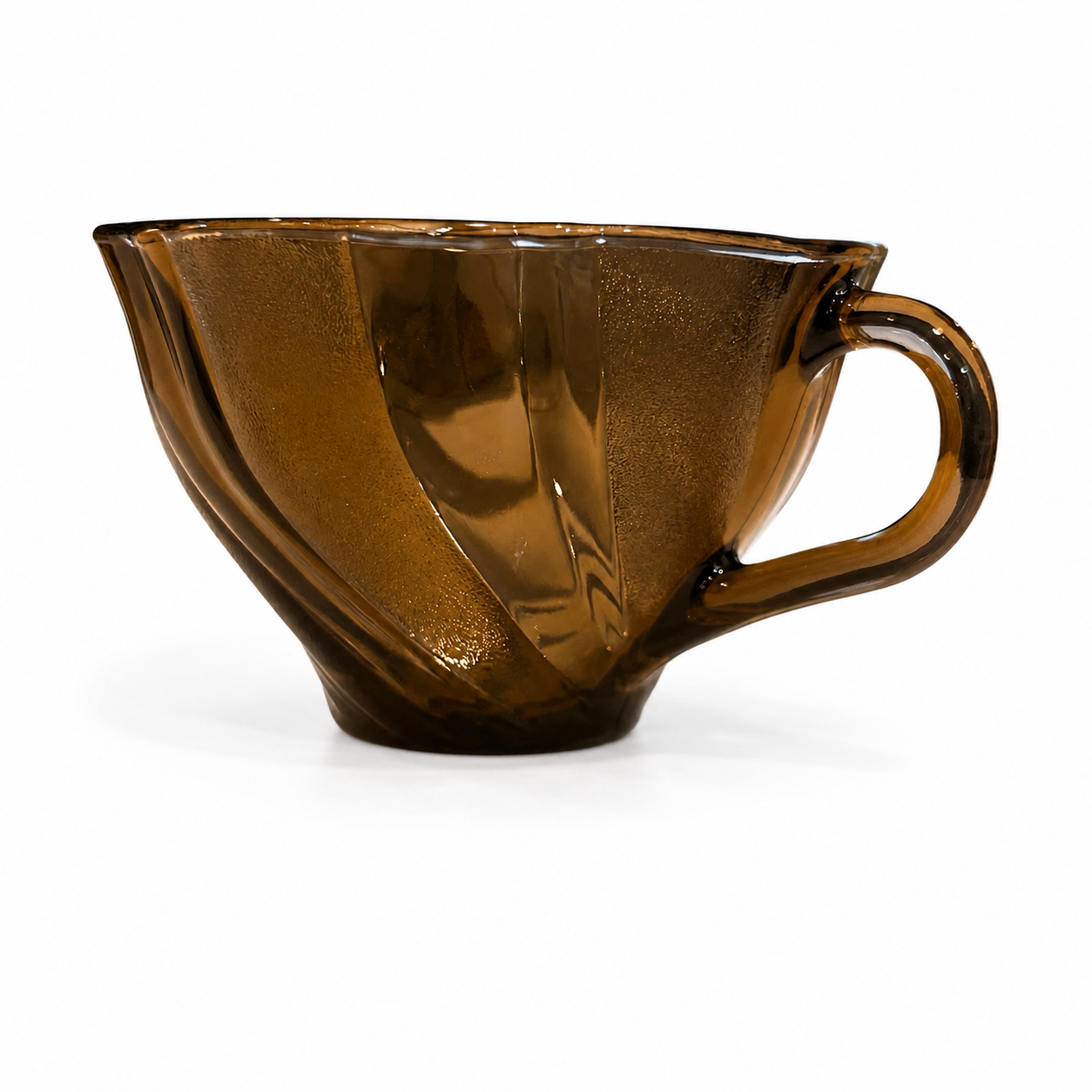
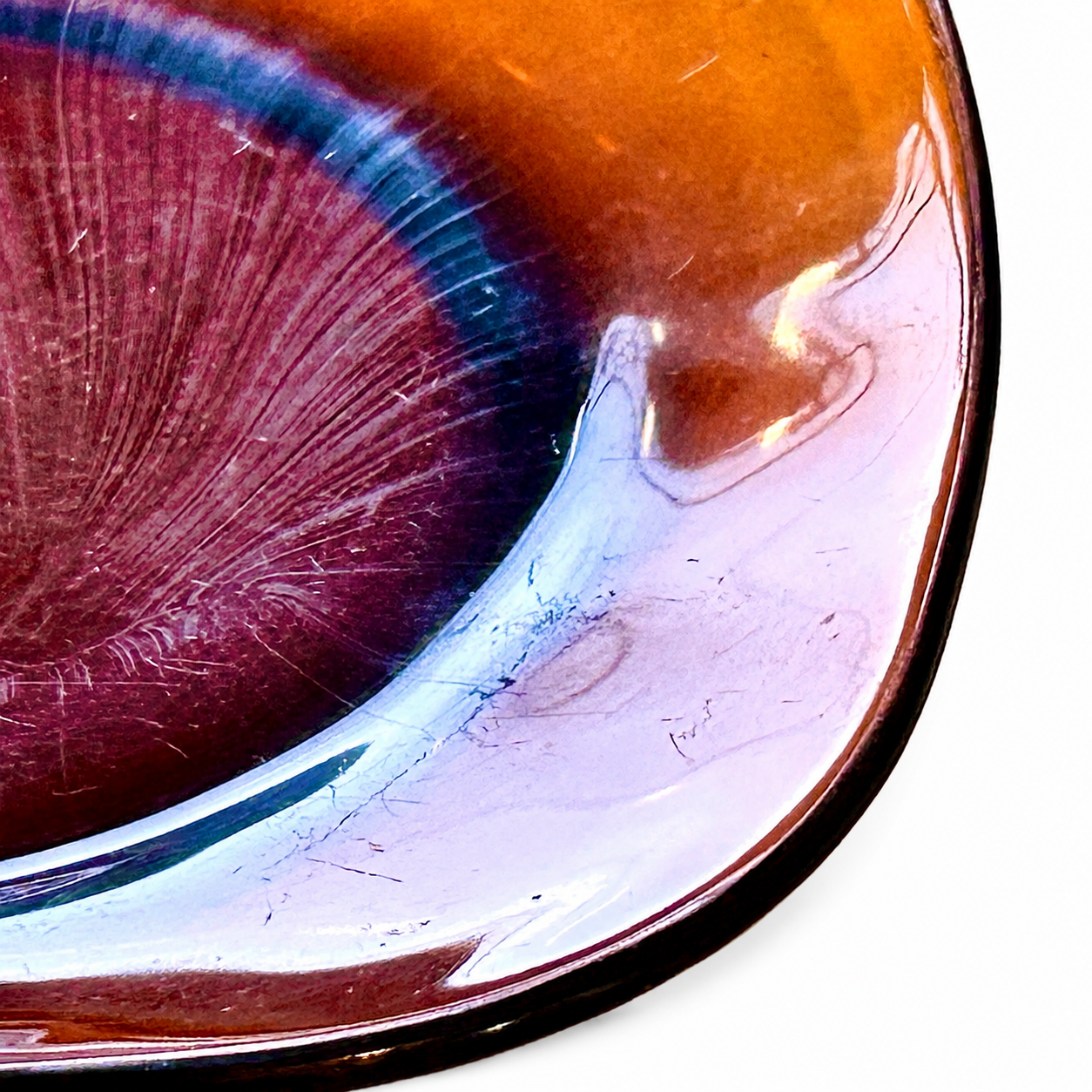
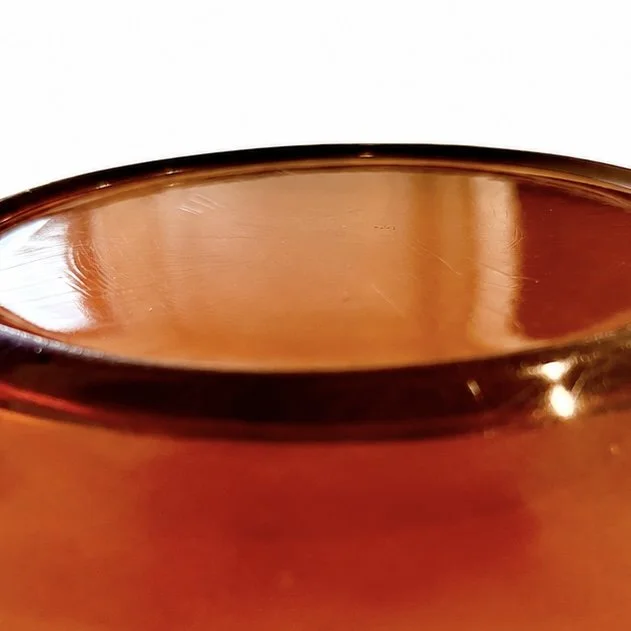
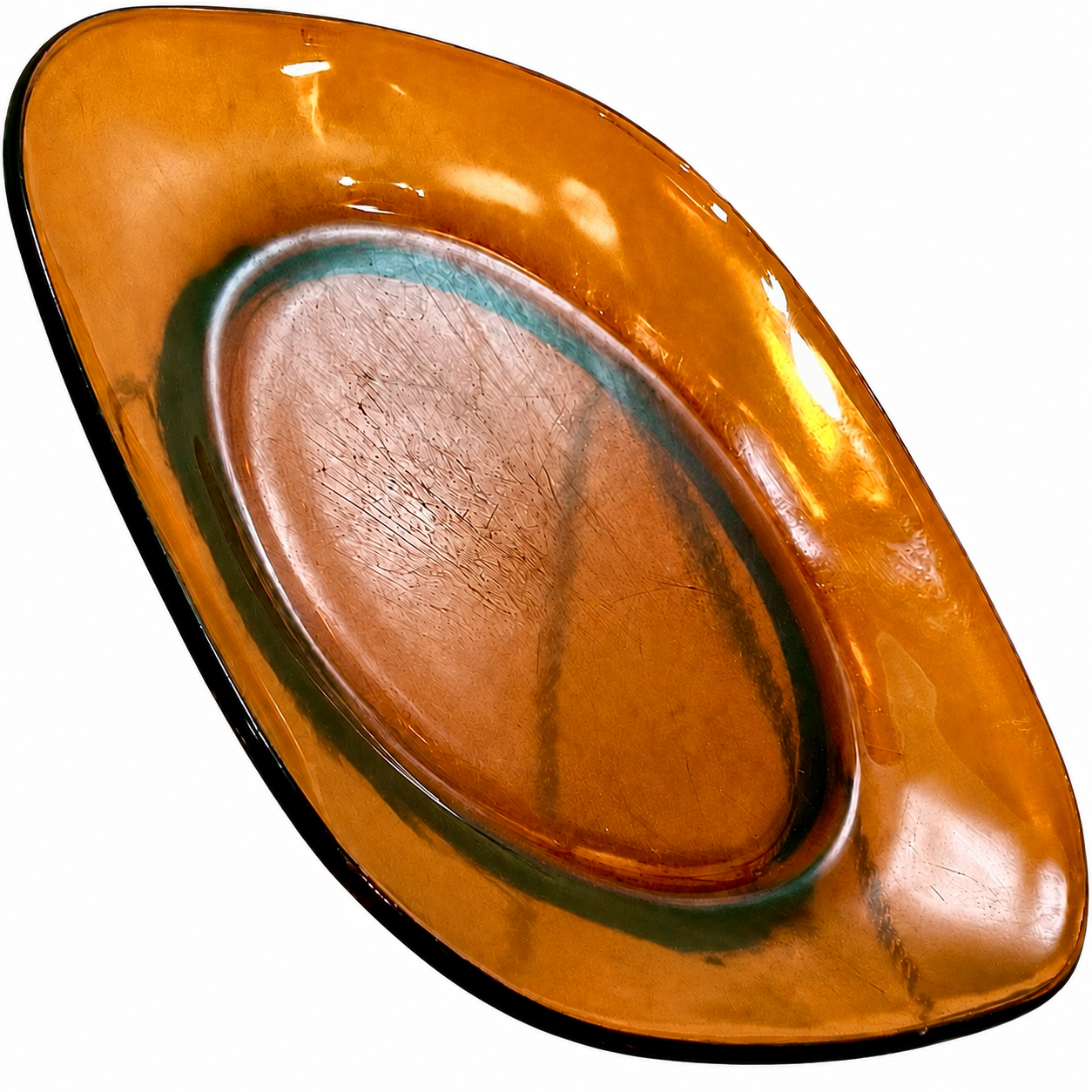
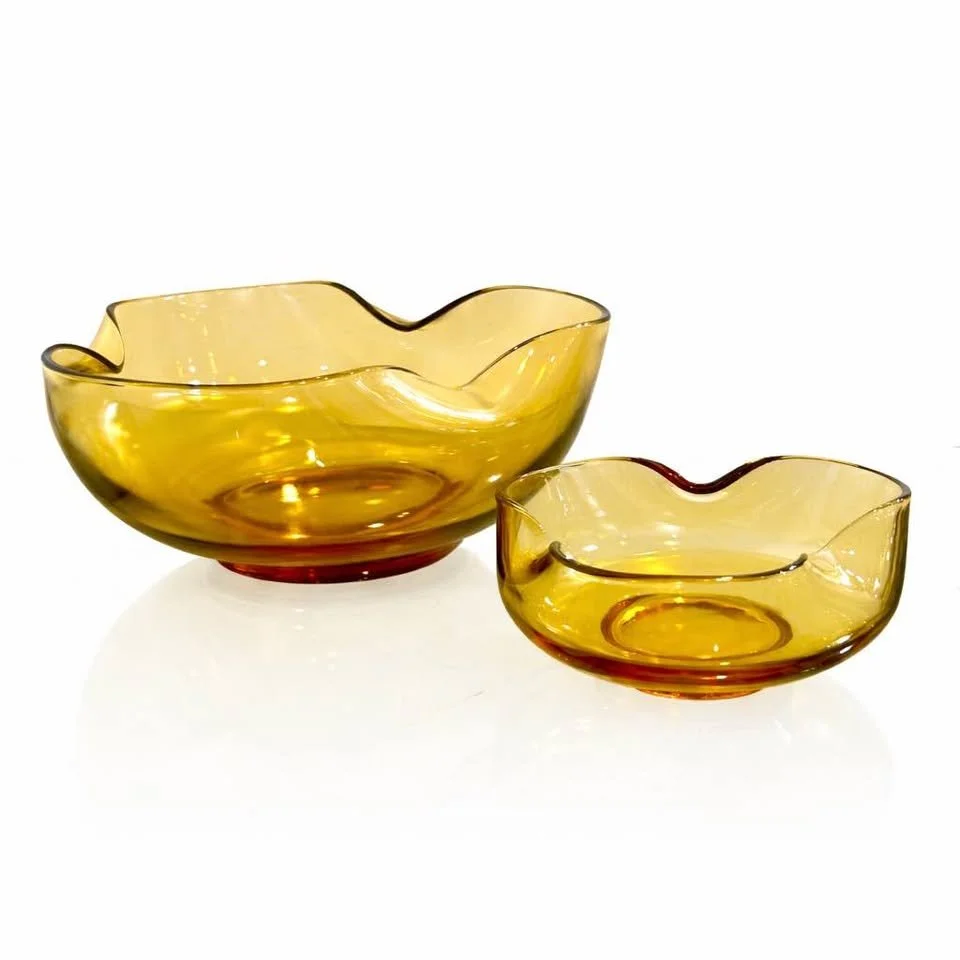
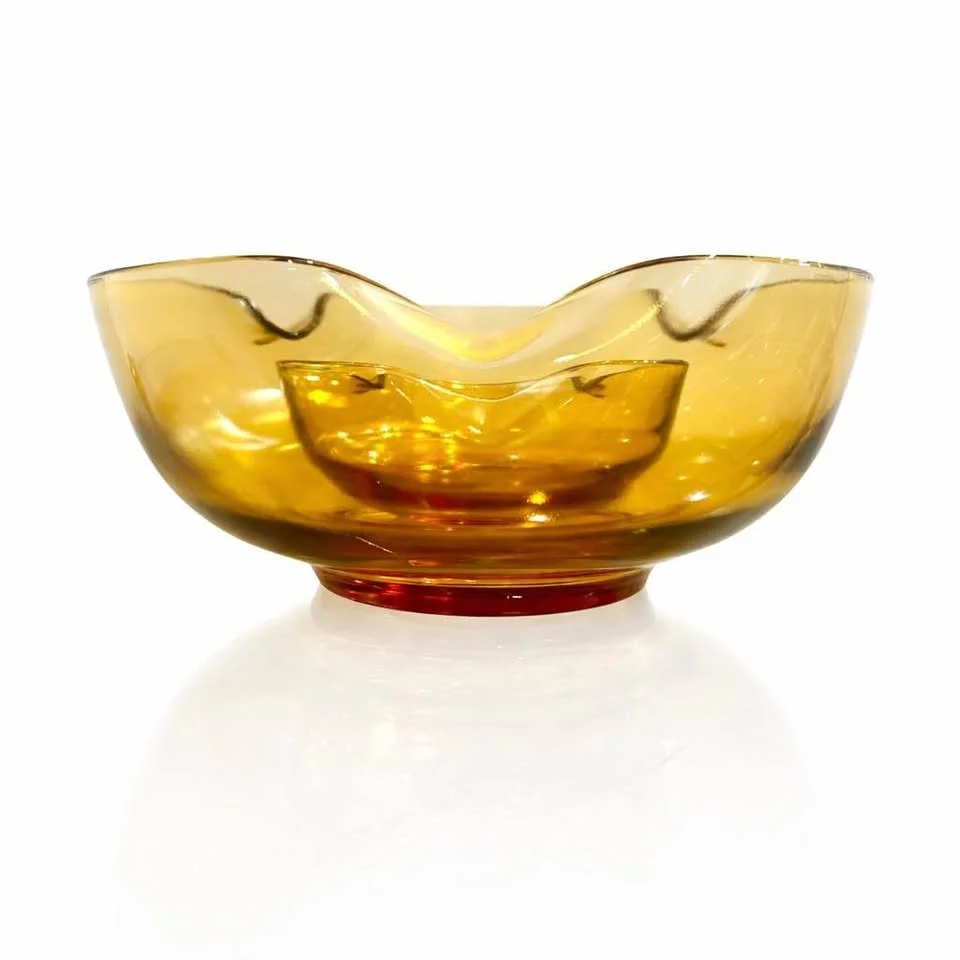
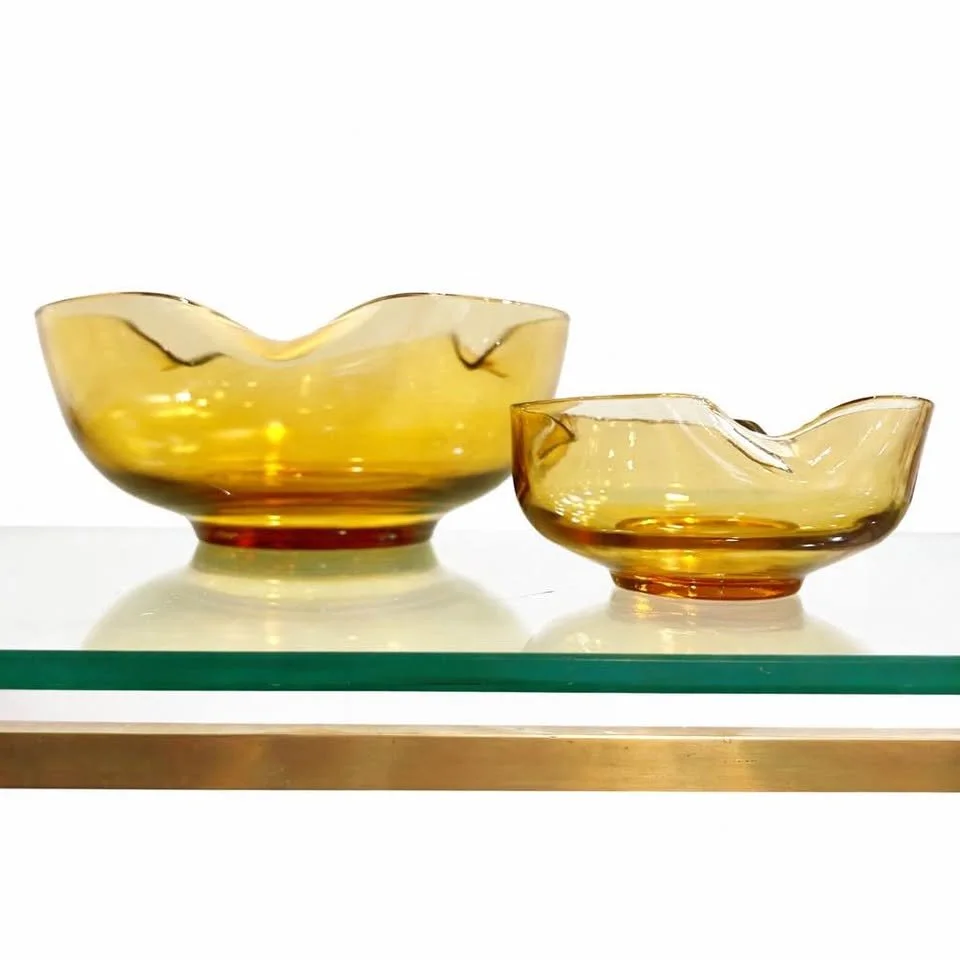
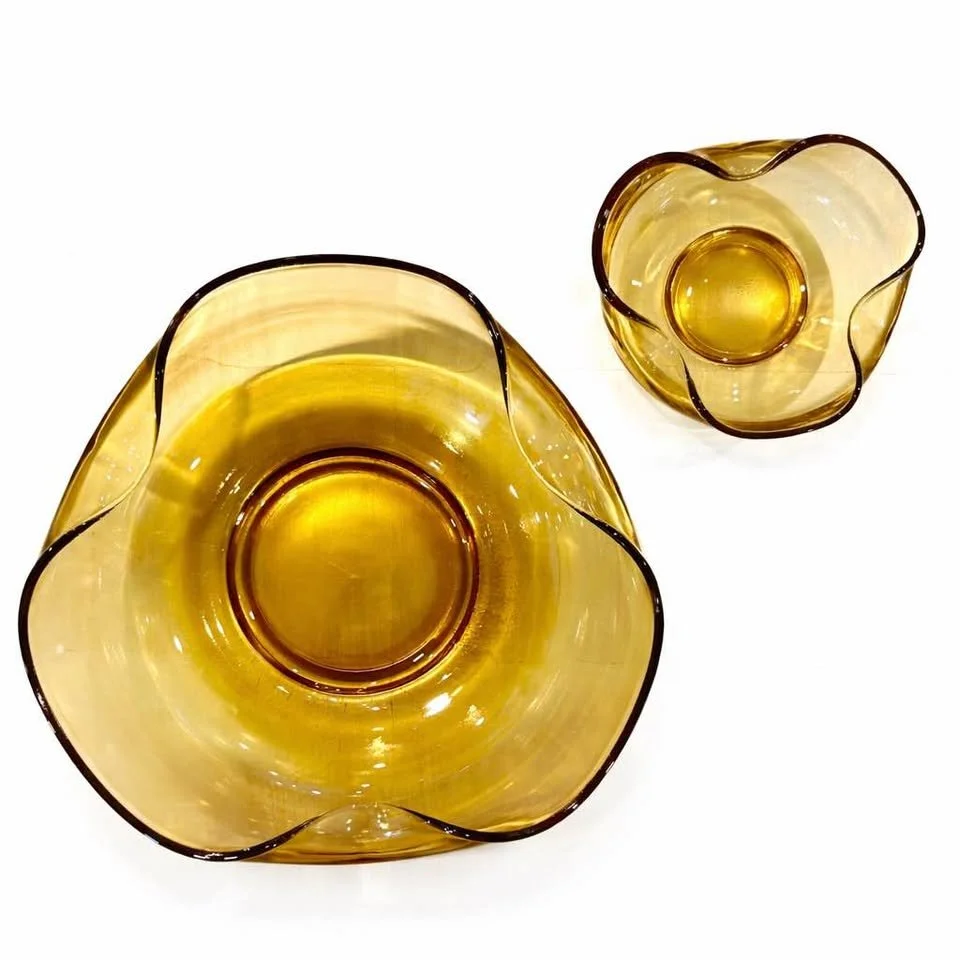
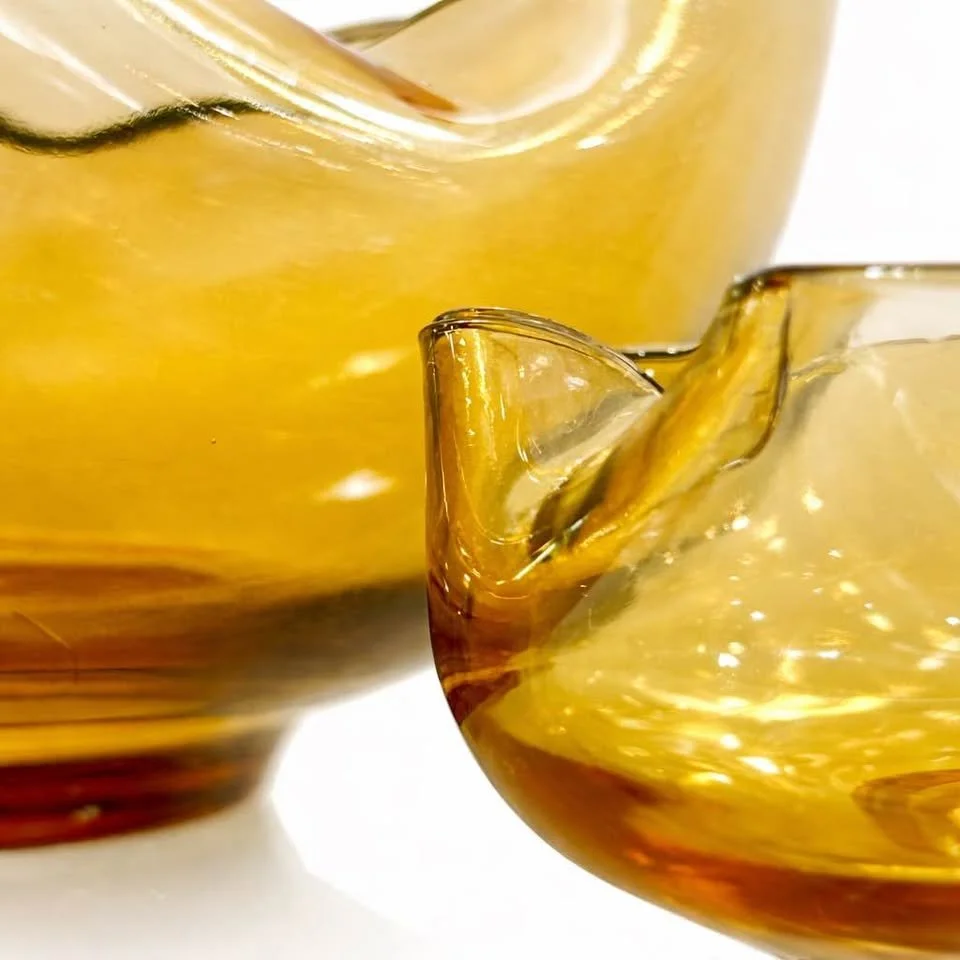
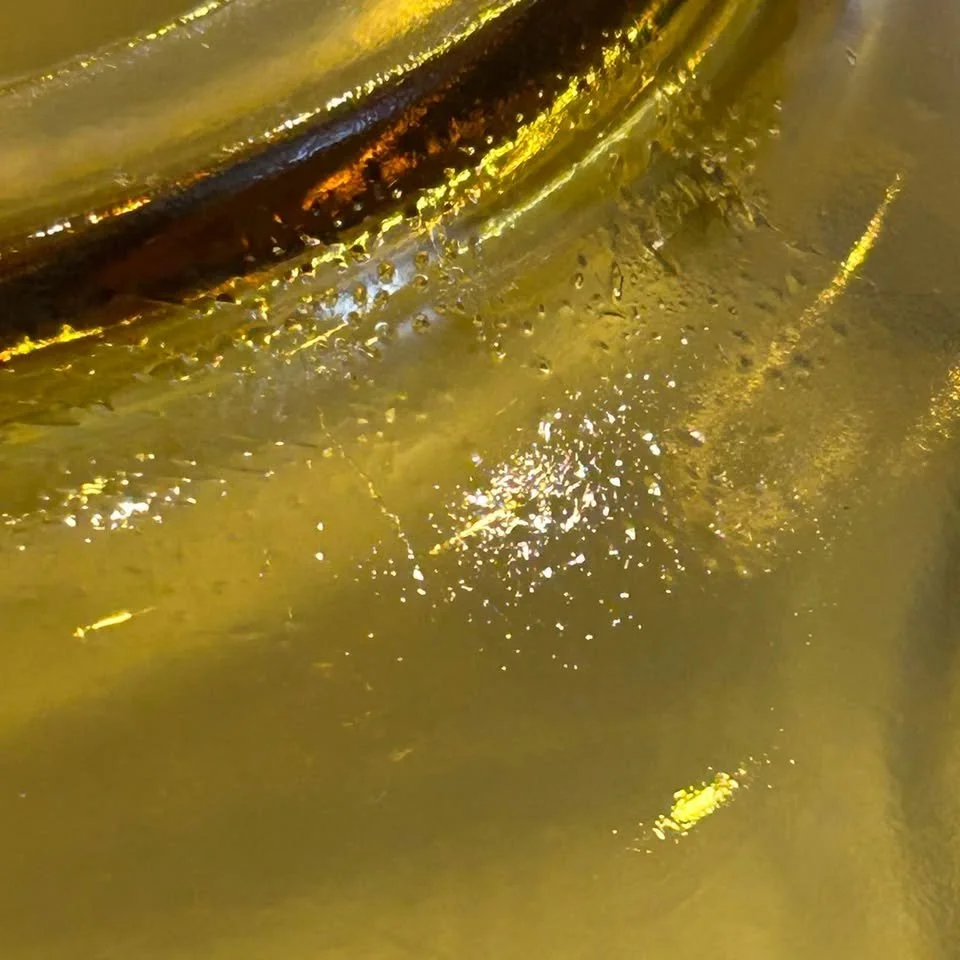
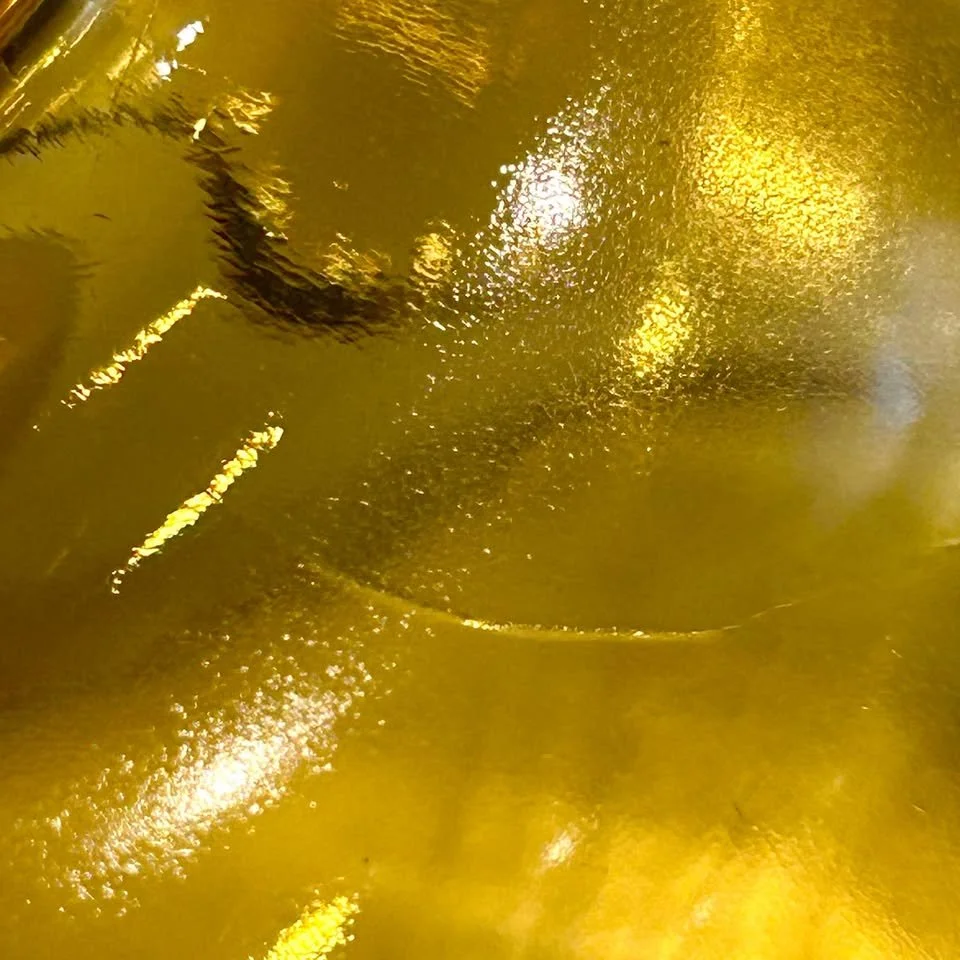
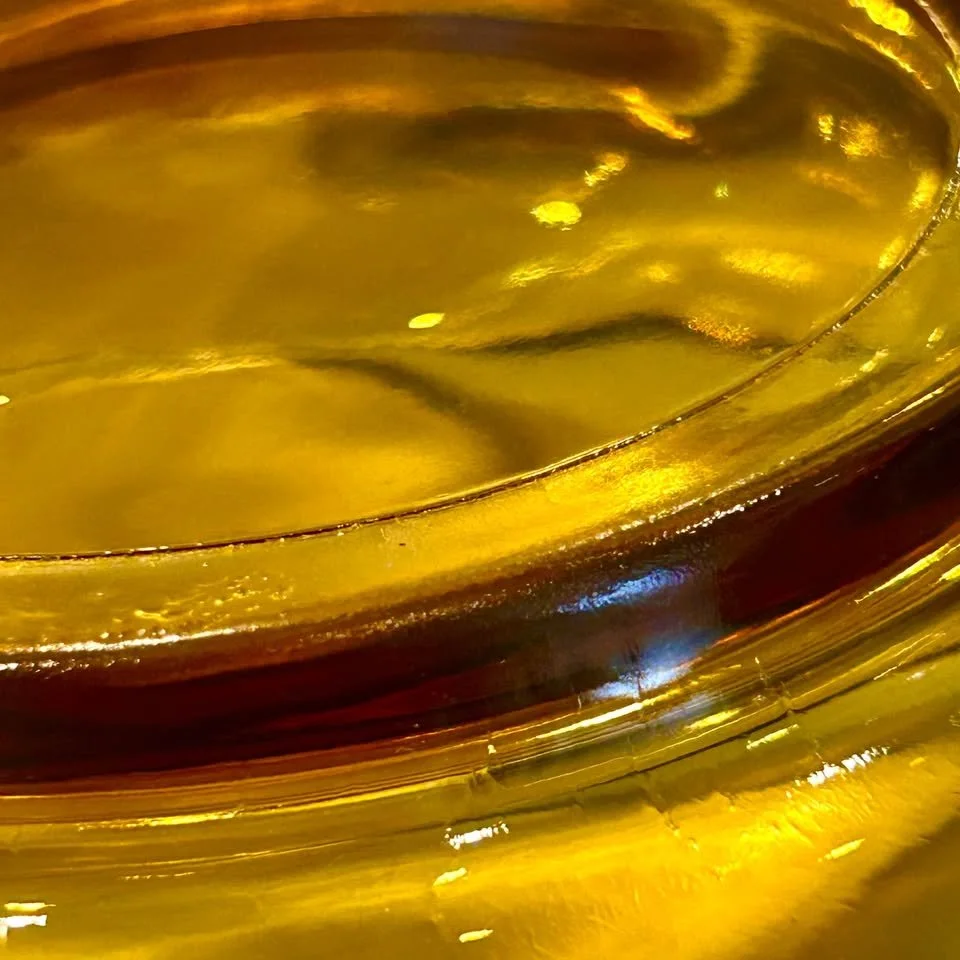
A compact yet visually dense sculptural vase defined by its saturated amber tone and suspended bubble inclusions. The rounded, low-bodied form rises into a flared collar, creating a balanced silhouette with strong optical presence. Internal air bubbles scatter light throughout the body, producing a dynamic glow that shifts from honeyed amber to deeper burnt orange tones. Subtle vertical optic patterning reinforces the sense of structure while maintaining fluidity. The piece reads as both atmospheric and architectural, with a strong decorative footprint relative to its scale.
Attribution & Period
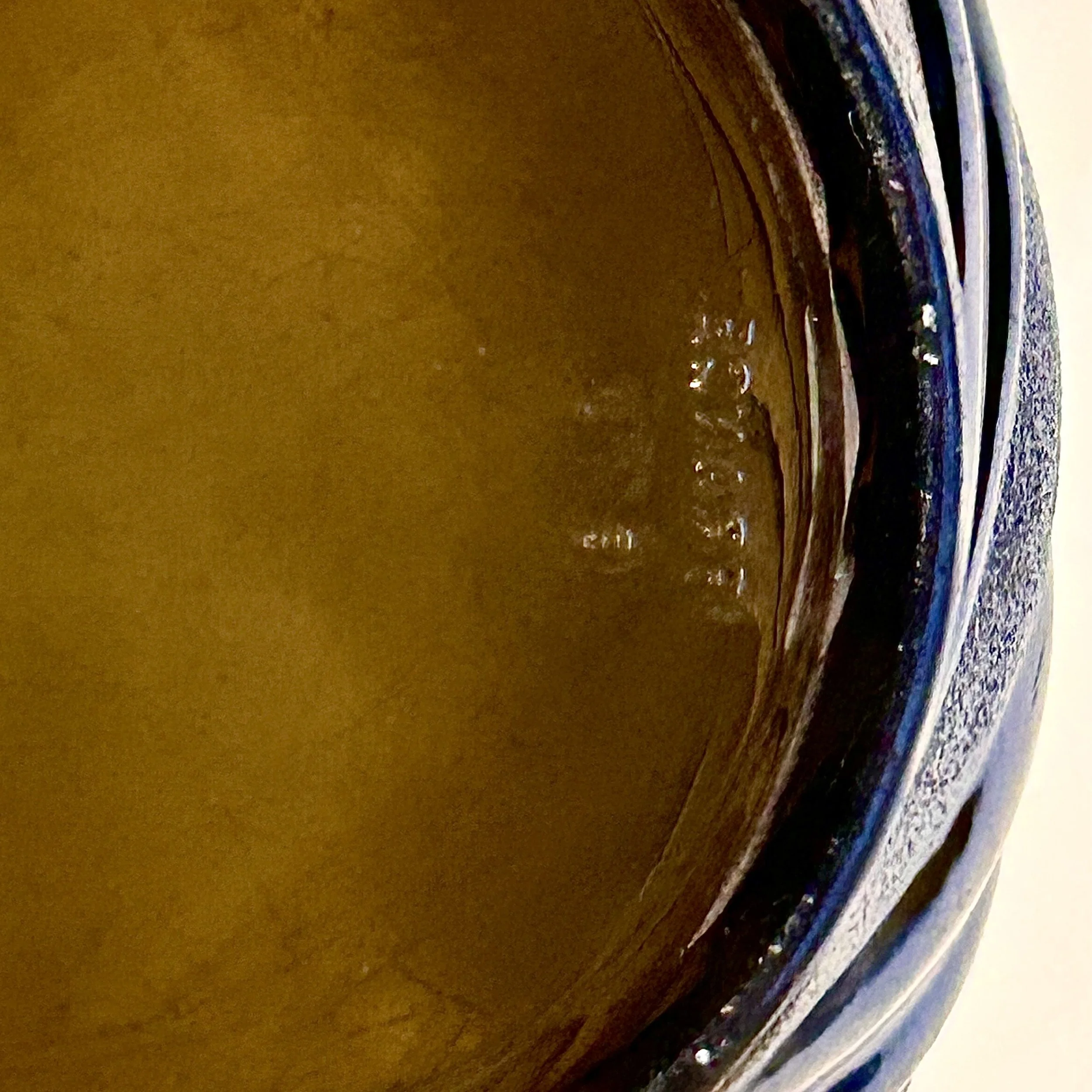
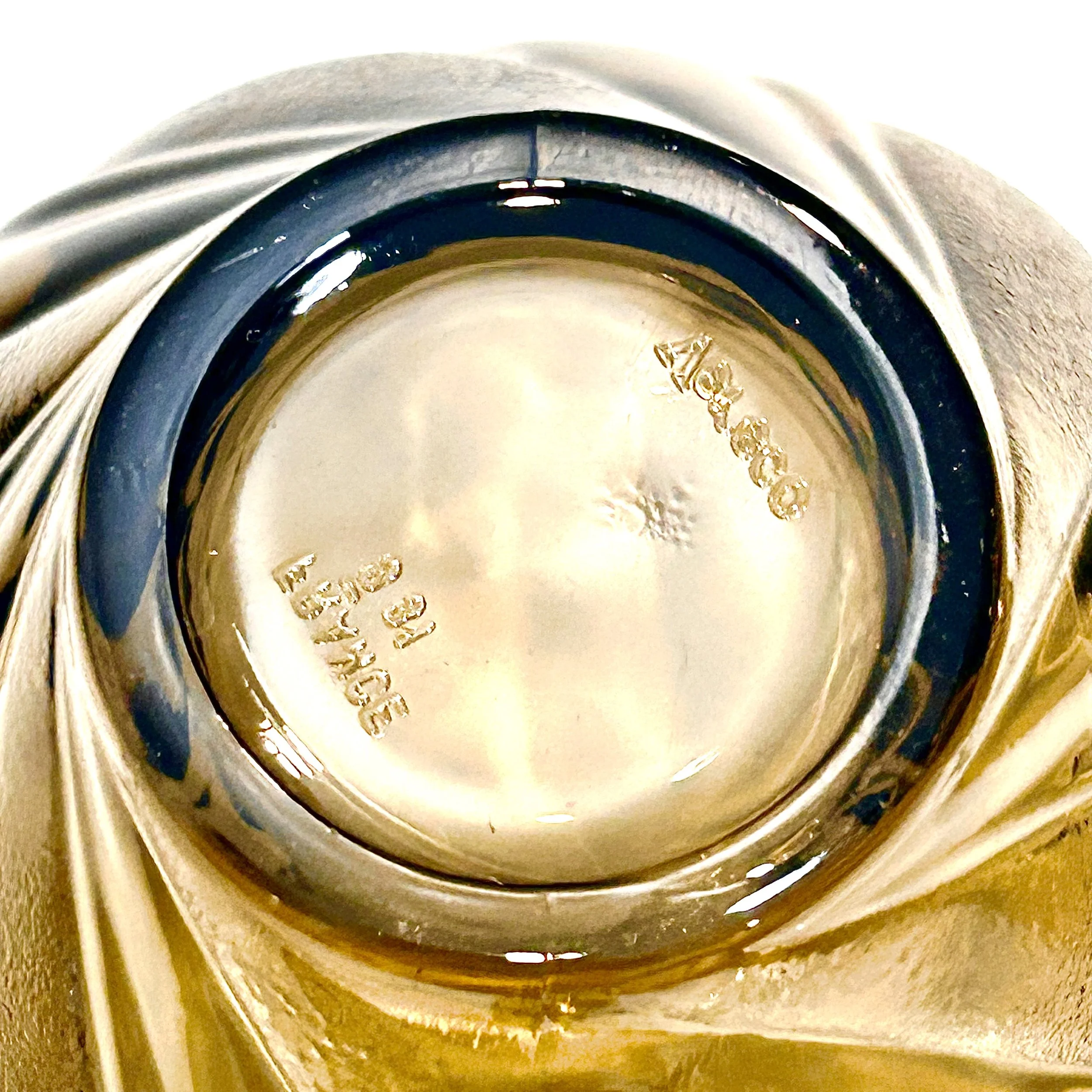
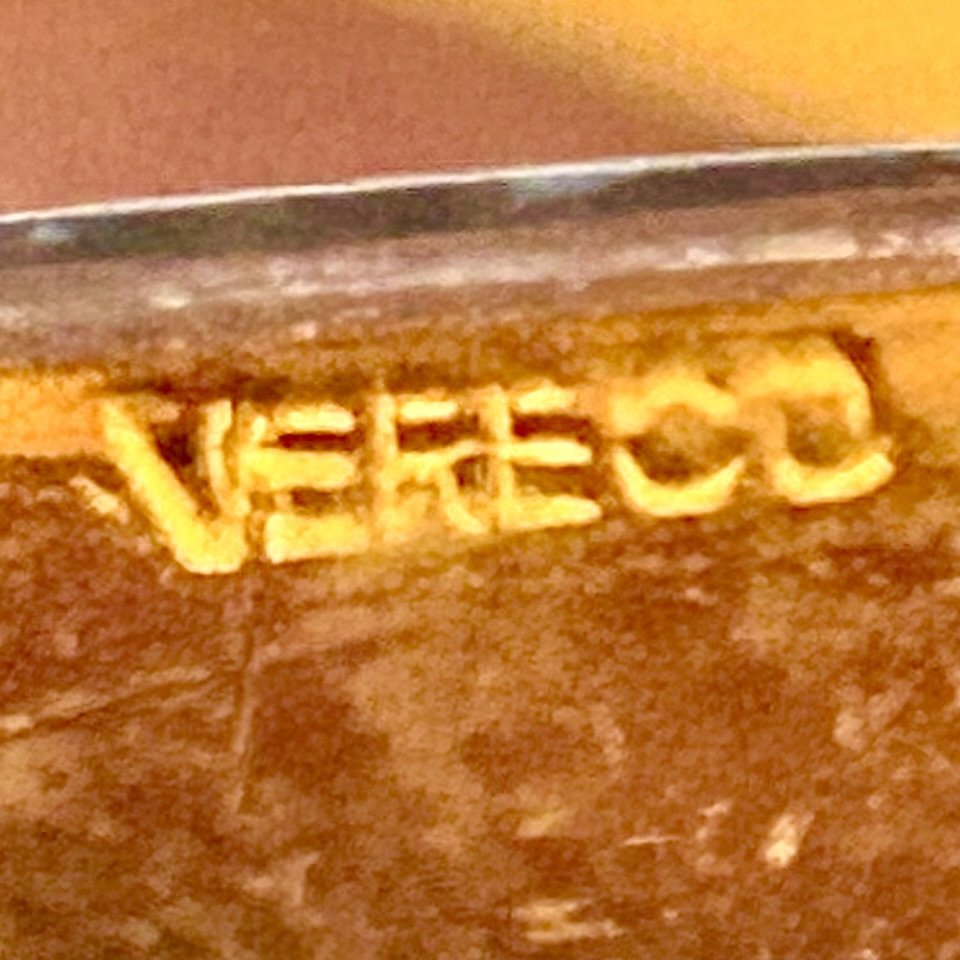
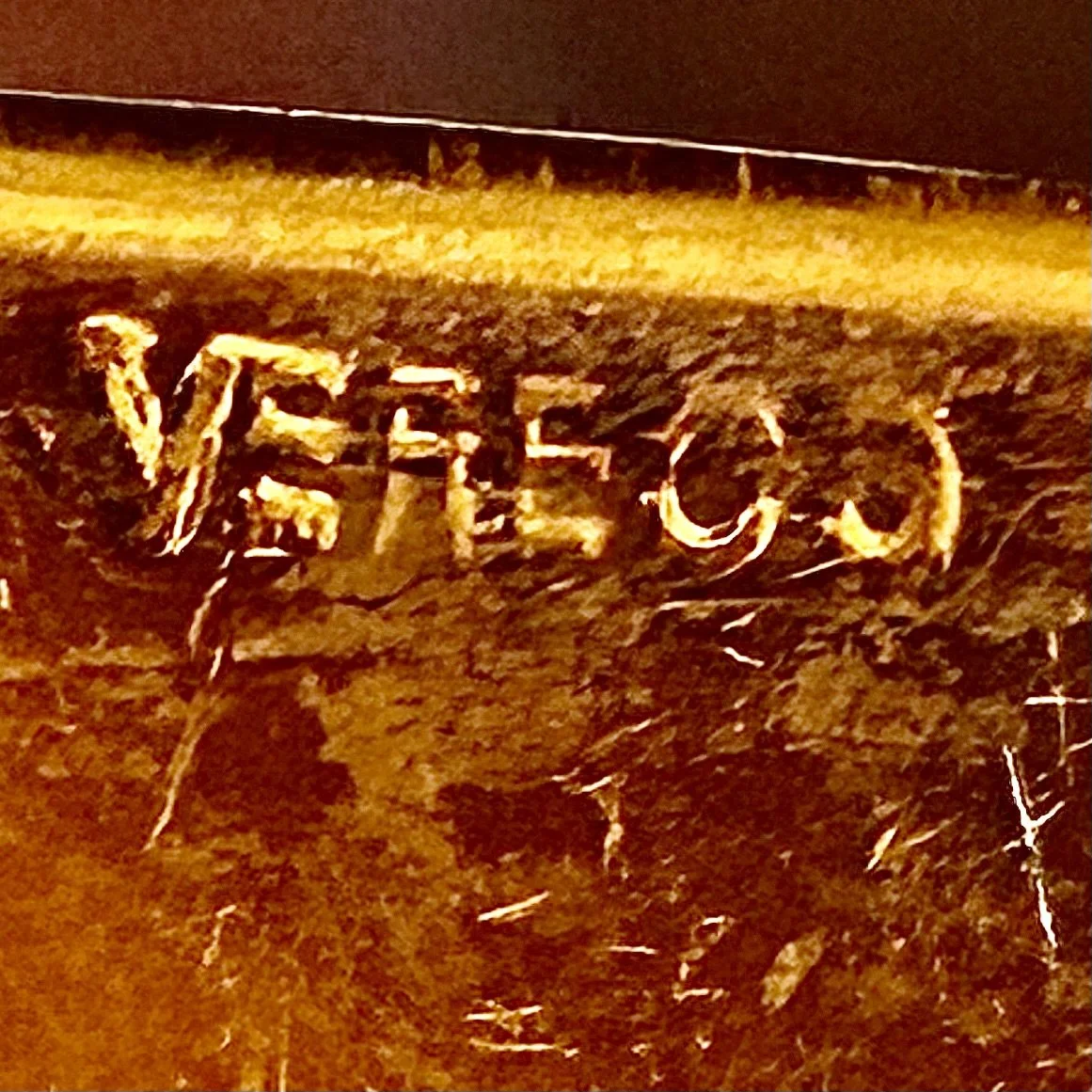
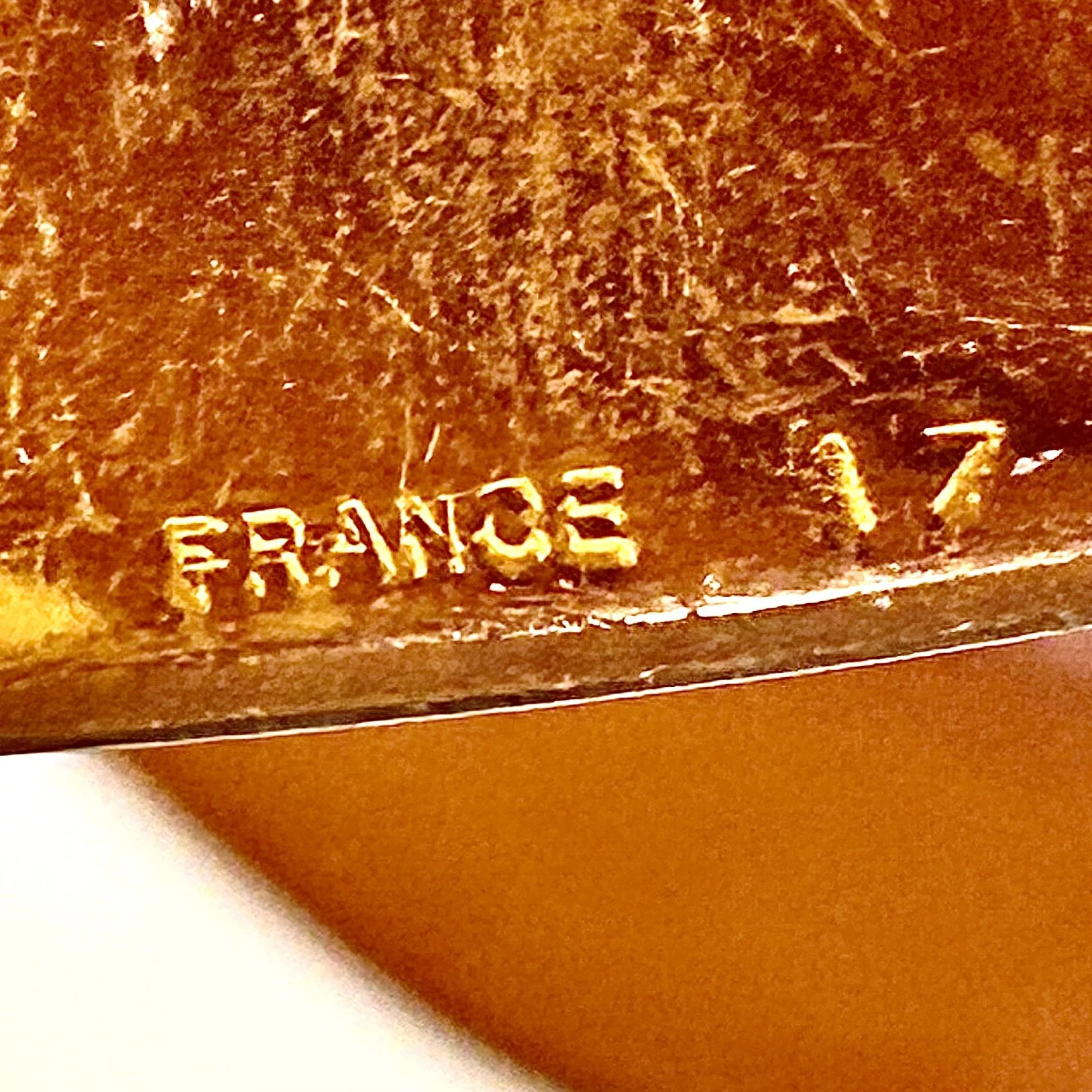
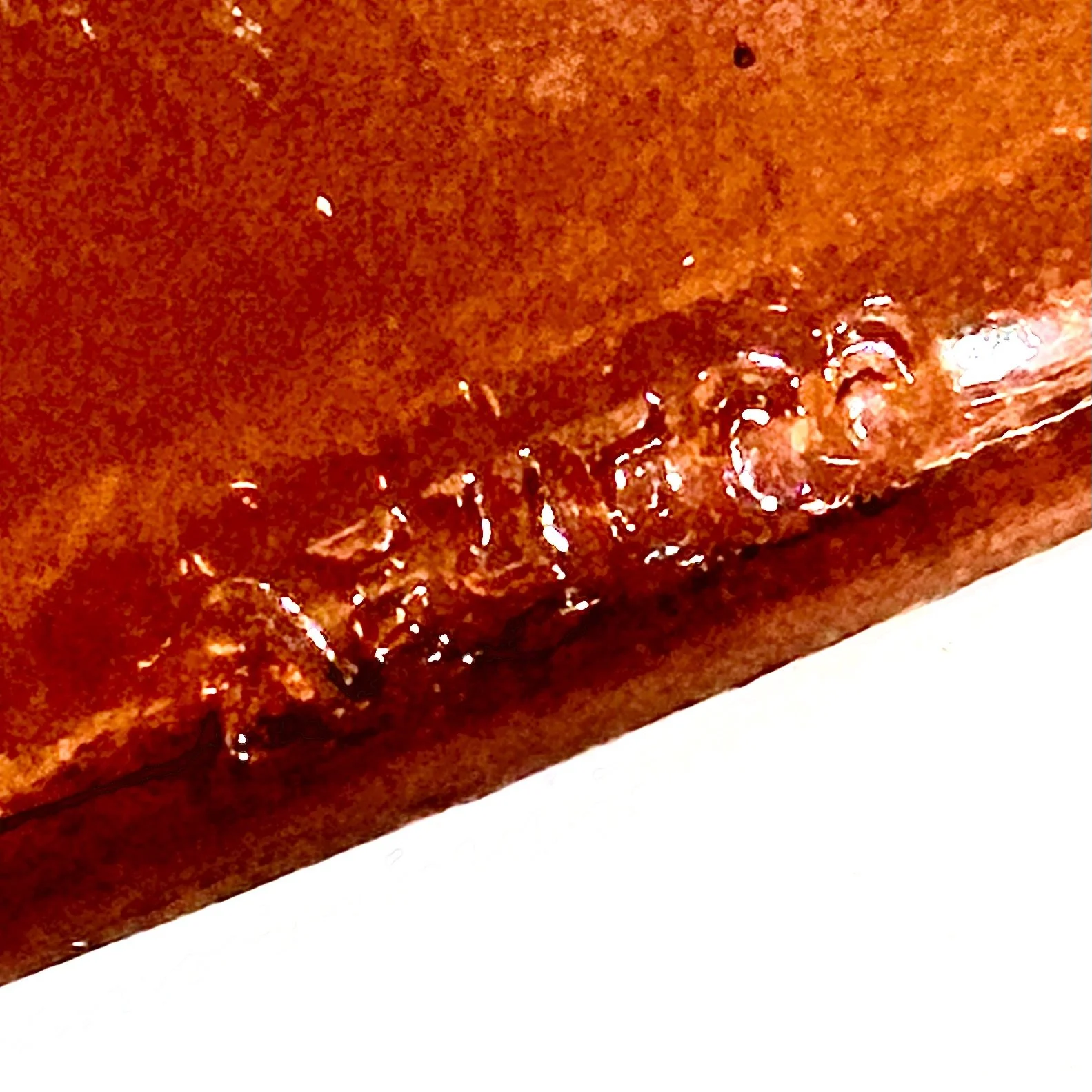
Unmarked Central European glass example, consistent with Czech studio and factory production of the 1960s–1970s. The controlled bubble inclusions, thick-walled construction, and amber coloration align closely with Bohemian glassmaking traditions, particularly pieces associated with mid-century pressed-blown hybrid techniques. The form and internal patterning reflect design language seen in Czechoslovakian export glass of the period. Attribution remains visual rather than documented, with no factory mark observed.
Dimensions & Weight
Height: 4.75 in
Width / Diameter: 5.25 in (widest point)
Depth / Base Diameter: 2.75 in base diameter; 3.25 in opening diameter
Weight: 1.4 lbs
Condition
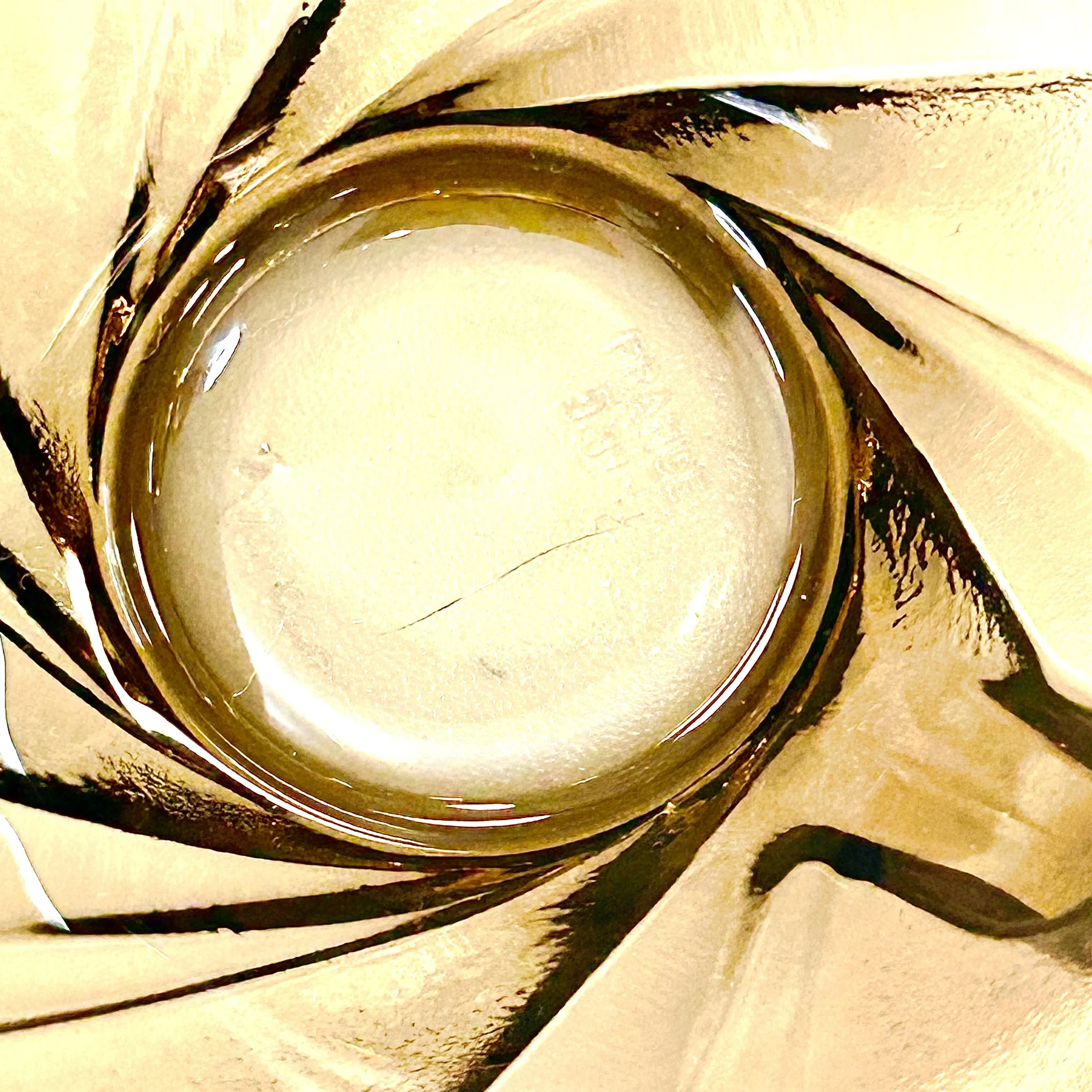
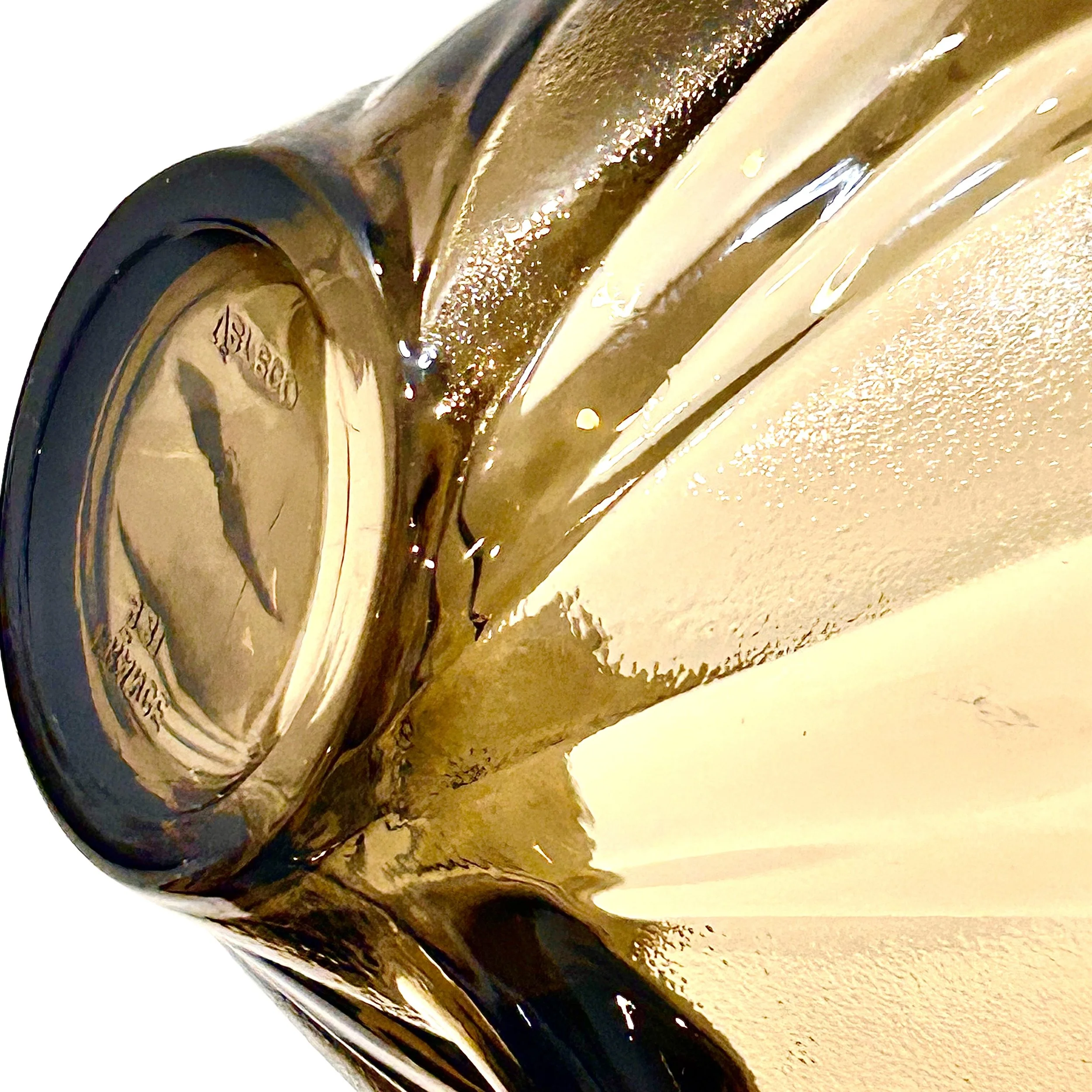
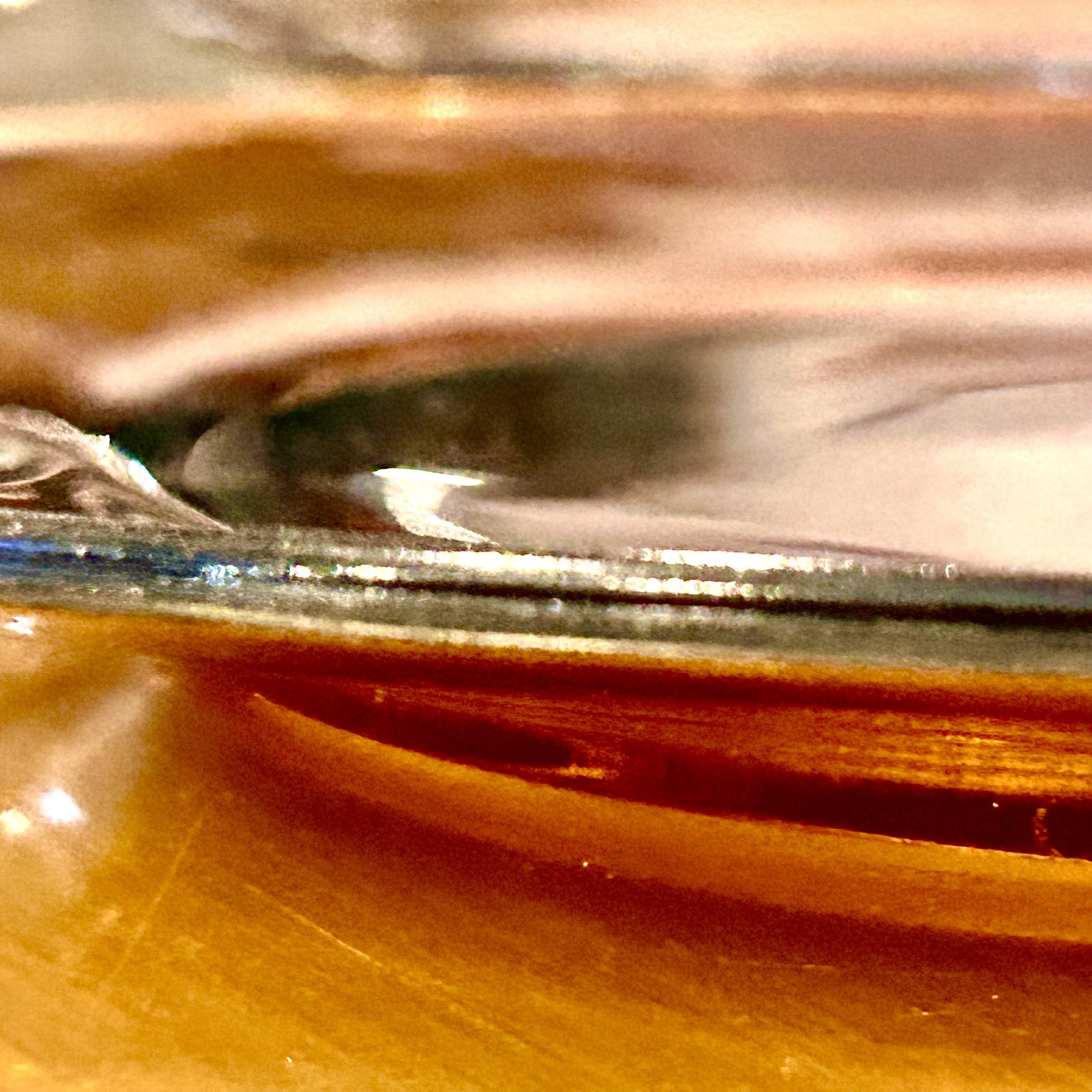
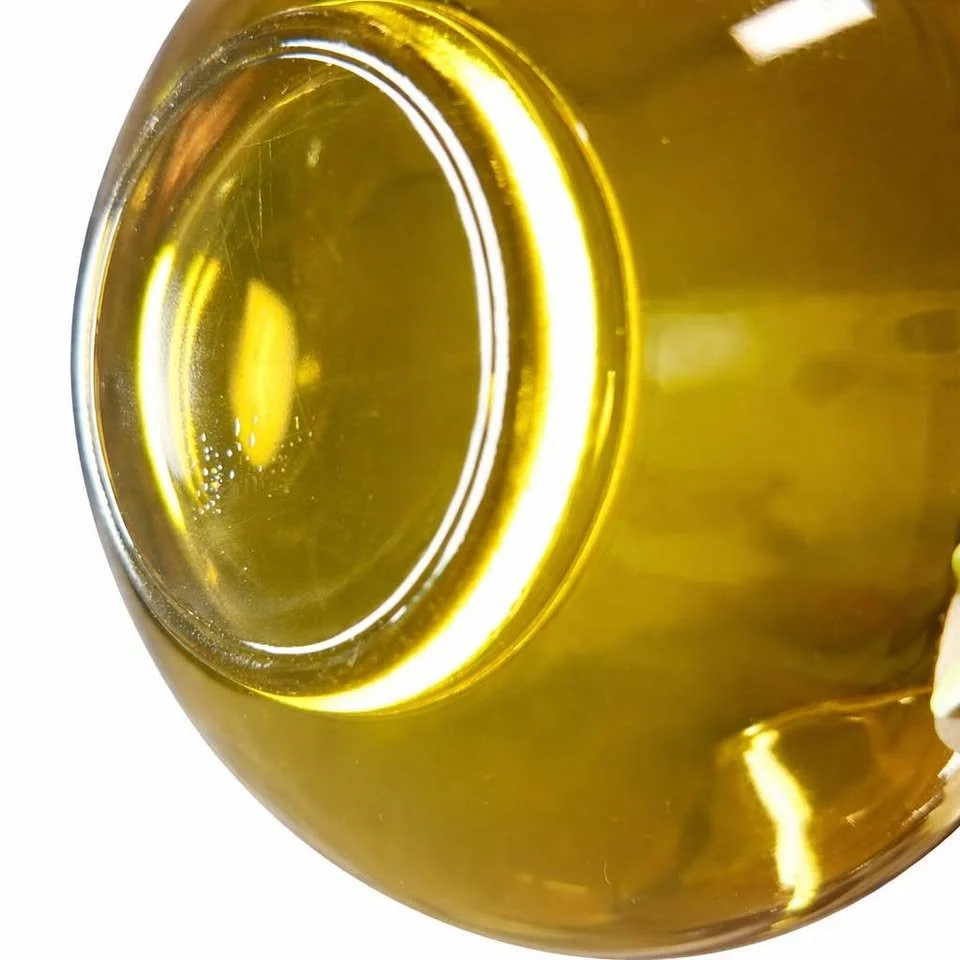
Excellent condition. No visible chips or cracks observed. Surface retains strong gloss with minimal handling wear. Internal bubbles and inclusions are consistent with manufacturing. Base shows light expected wear from placement.
Authenticity & Construction
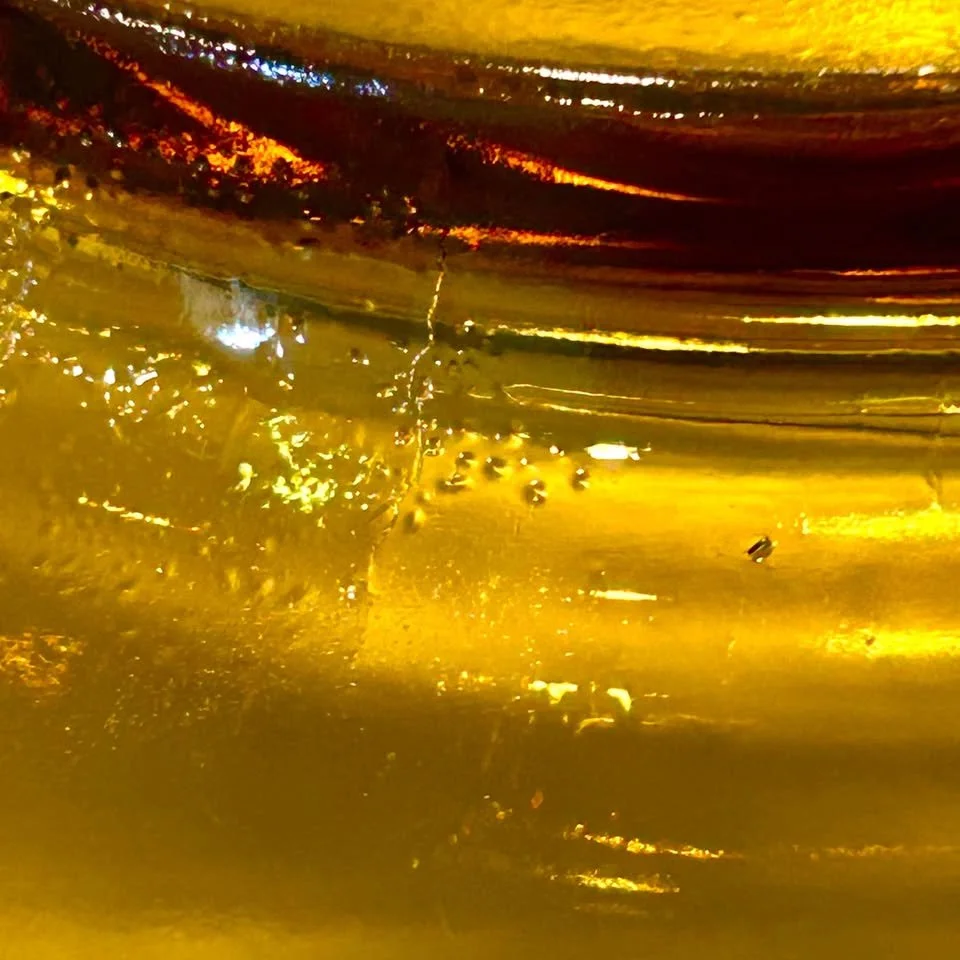
Thick-walled blown glass with controlled bubble inclusions, likely achieved through deliberate air trapping during the forming process. The vessel appears to have been shaped in a mold-assisted environment and then hand-finished at the rim. The substantial weight relative to size indicates dense glass composition. Under UV 365 black light, the glass exhibits a fluorescent pink-orange response, suggesting the presence of reactive mineral additives (commonly associated with elements such as cadmium or manganese used in coloration processes). This fluorescence supports mid-century production techniques and material composition typical of Central European glassworks.
Placement
Ideal for low-profile display on coffee tables, shelves, or grouped within a glass vignette. Its compact scale and intense color make it effective in layered interior compositions, especially when paired with neutral or darker materials. Works well in mid-century, modernist, and contemporary interiors requiring a concentrated visual accent.
STANDARD ATTRIBUTION & VALUE DISCLOSURE
This piece is described to the best of current scholarly and market knowledge. Any maker or regional attribution is based on visual analysis, materials, construction techniques, and documented stylistic comparisons. As with many MCM and antique design objects, definitive attribution may not be possible without original labels or factory records. Pricing reflects condition, quality, decorative appeal, and current collector demand rather than guaranteed maker identification.
A compact yet visually dense sculptural vase defined by its saturated amber tone and suspended bubble inclusions. The rounded, low-bodied form rises into a flared collar, creating a balanced silhouette with strong optical presence. Internal air bubbles scatter light throughout the body, producing a dynamic glow that shifts from honeyed amber to deeper burnt orange tones. Subtle vertical optic patterning reinforces the sense of structure while maintaining fluidity. The piece reads as both atmospheric and architectural, with a strong decorative footprint relative to its scale.
Attribution & Period
Unmarked Central European glass example, consistent with Czech studio and factory production of the 1960s–1970s. The controlled bubble inclusions, thick-walled construction, and amber coloration align closely with Bohemian glassmaking traditions, particularly pieces associated with mid-century pressed-blown hybrid techniques. The form and internal patterning reflect design language seen in Czechoslovakian export glass of the period. Attribution remains visual rather than documented, with no factory mark observed.
Dimensions & Weight
Height: 4.75 in
Width / Diameter: 5.25 in (widest point)
Depth / Base Diameter: 2.75 in base diameter; 3.25 in opening diameter
Weight: 1.4 lbs
Condition
Excellent condition. No visible chips or cracks observed. Surface retains strong gloss with minimal handling wear. Internal bubbles and inclusions are consistent with manufacturing. Base shows light expected wear from placement.
Authenticity & Construction
Thick-walled blown glass with controlled bubble inclusions, likely achieved through deliberate air trapping during the forming process. The vessel appears to have been shaped in a mold-assisted environment and then hand-finished at the rim. The substantial weight relative to size indicates dense glass composition. Under UV 365 black light, the glass exhibits a fluorescent pink-orange response, suggesting the presence of reactive mineral additives (commonly associated with elements such as cadmium or manganese used in coloration processes). This fluorescence supports mid-century production techniques and material composition typical of Central European glassworks.
Placement
Ideal for low-profile display on coffee tables, shelves, or grouped within a glass vignette. Its compact scale and intense color make it effective in layered interior compositions, especially when paired with neutral or darker materials. Works well in mid-century, modernist, and contemporary interiors requiring a concentrated visual accent.
STANDARD ATTRIBUTION & VALUE DISCLOSURE
This piece is described to the best of current scholarly and market knowledge. Any maker or regional attribution is based on visual analysis, materials, construction techniques, and documented stylistic comparisons. As with many MCM and antique design objects, definitive attribution may not be possible without original labels or factory records. Pricing reflects condition, quality, decorative appeal, and current collector demand rather than guaranteed maker identification.

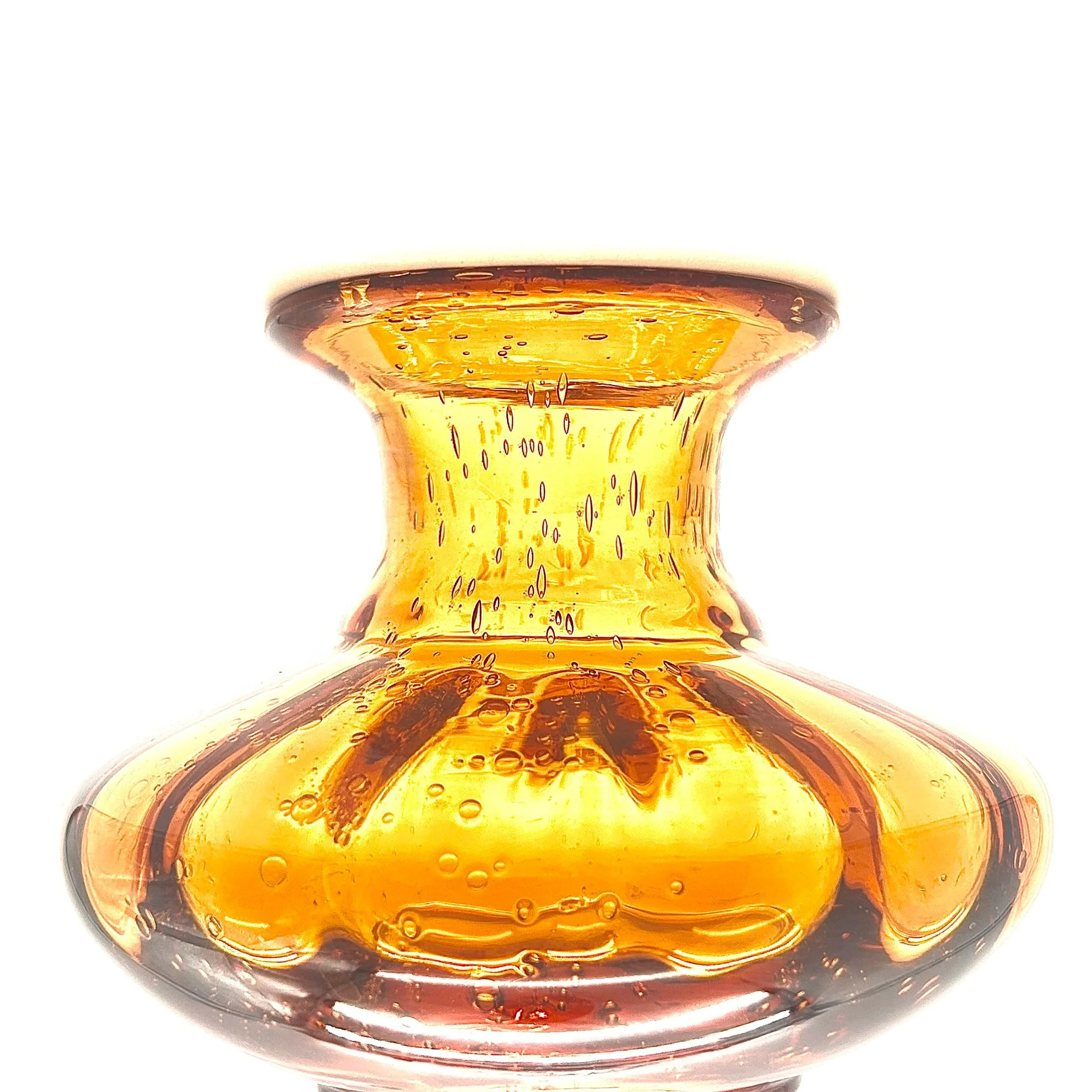 Image 1 of 17
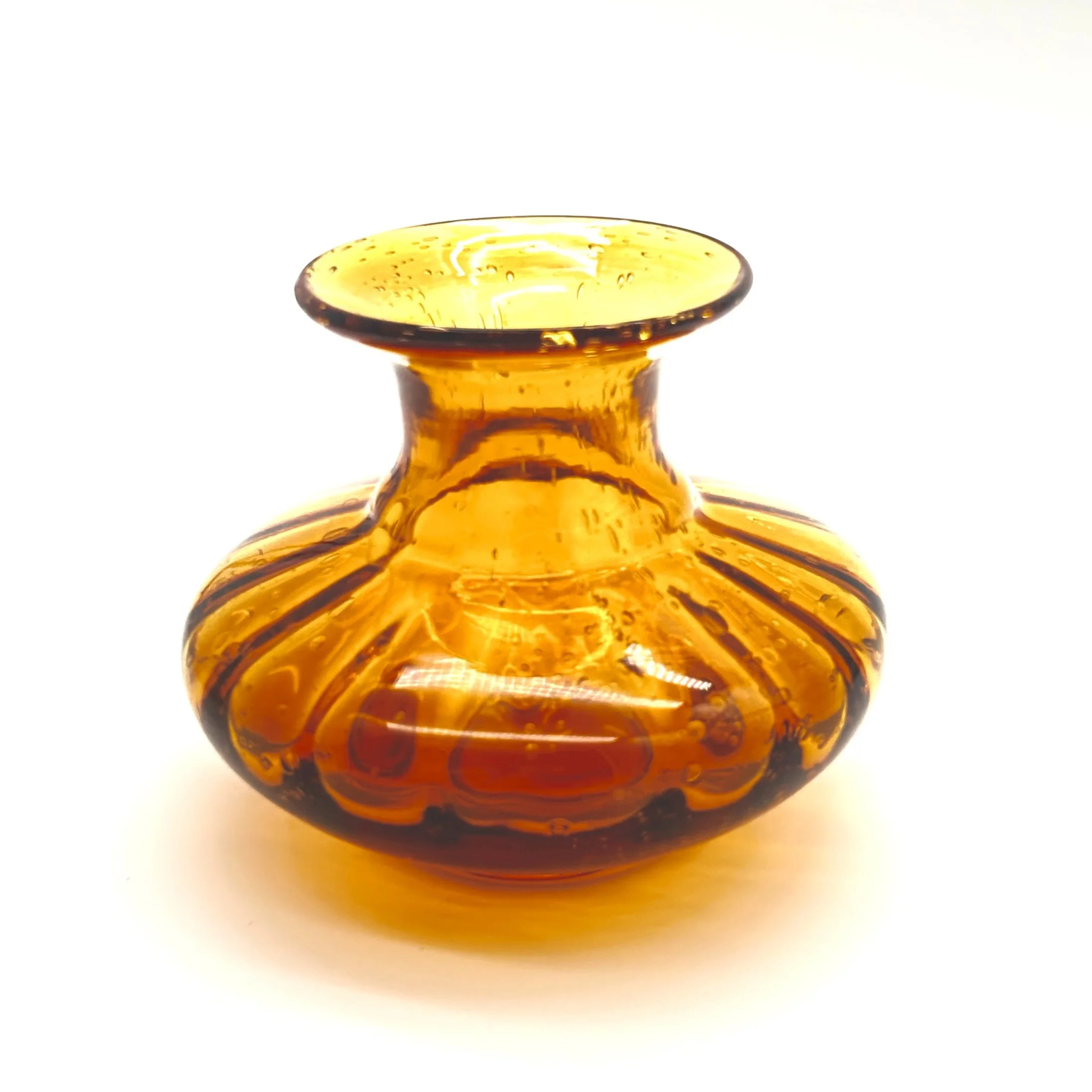 Image 2 of 17
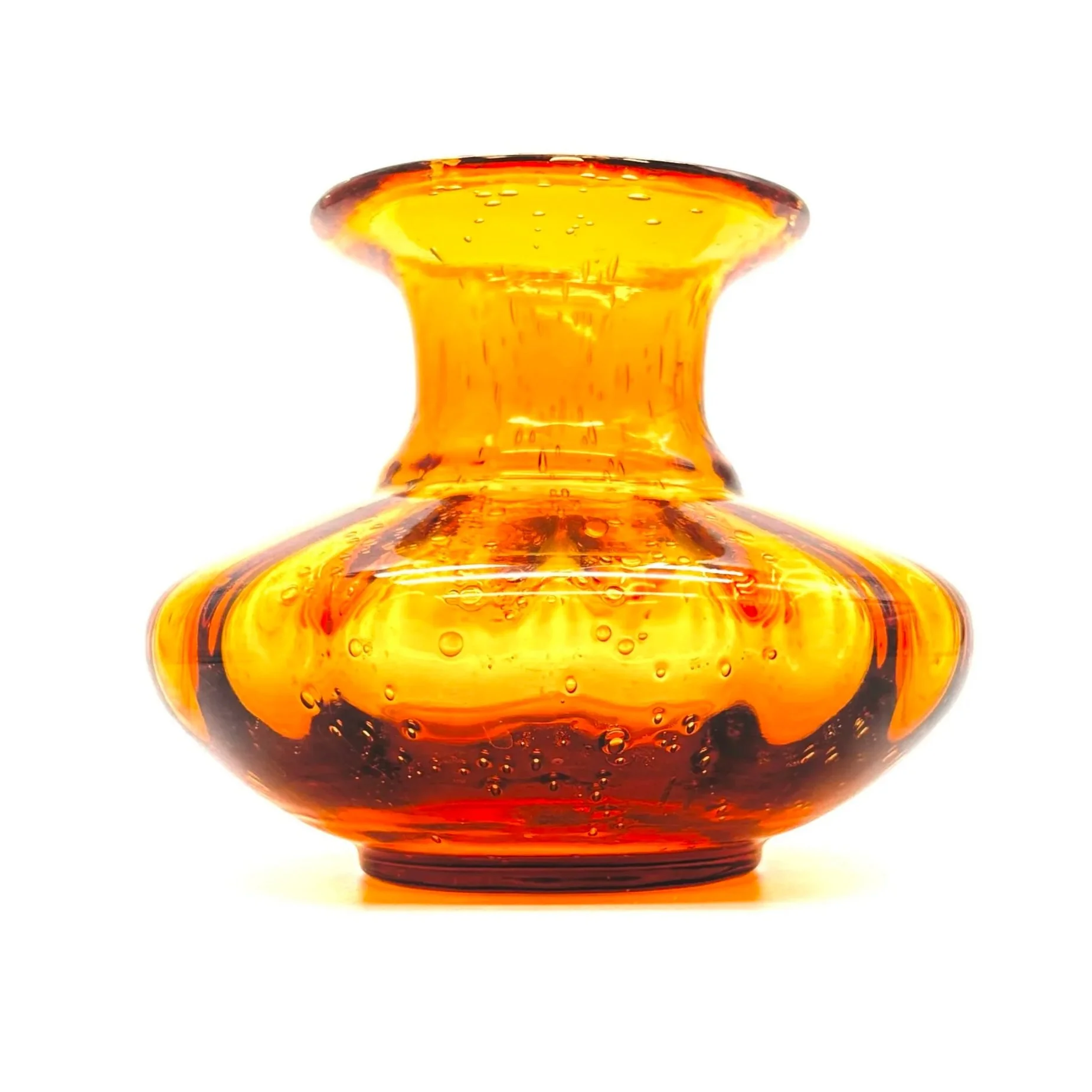 Image 3 of 17
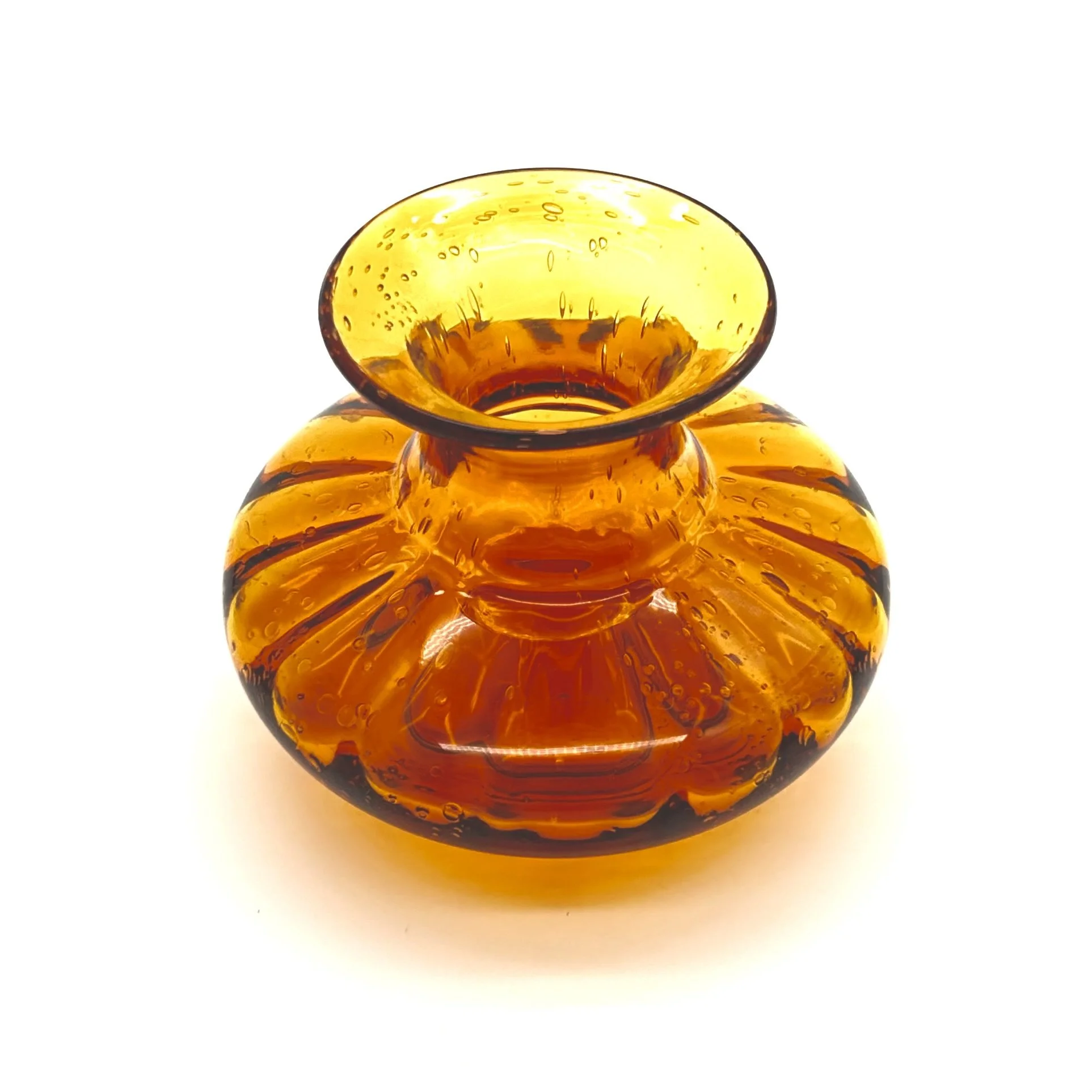 Image 4 of 17
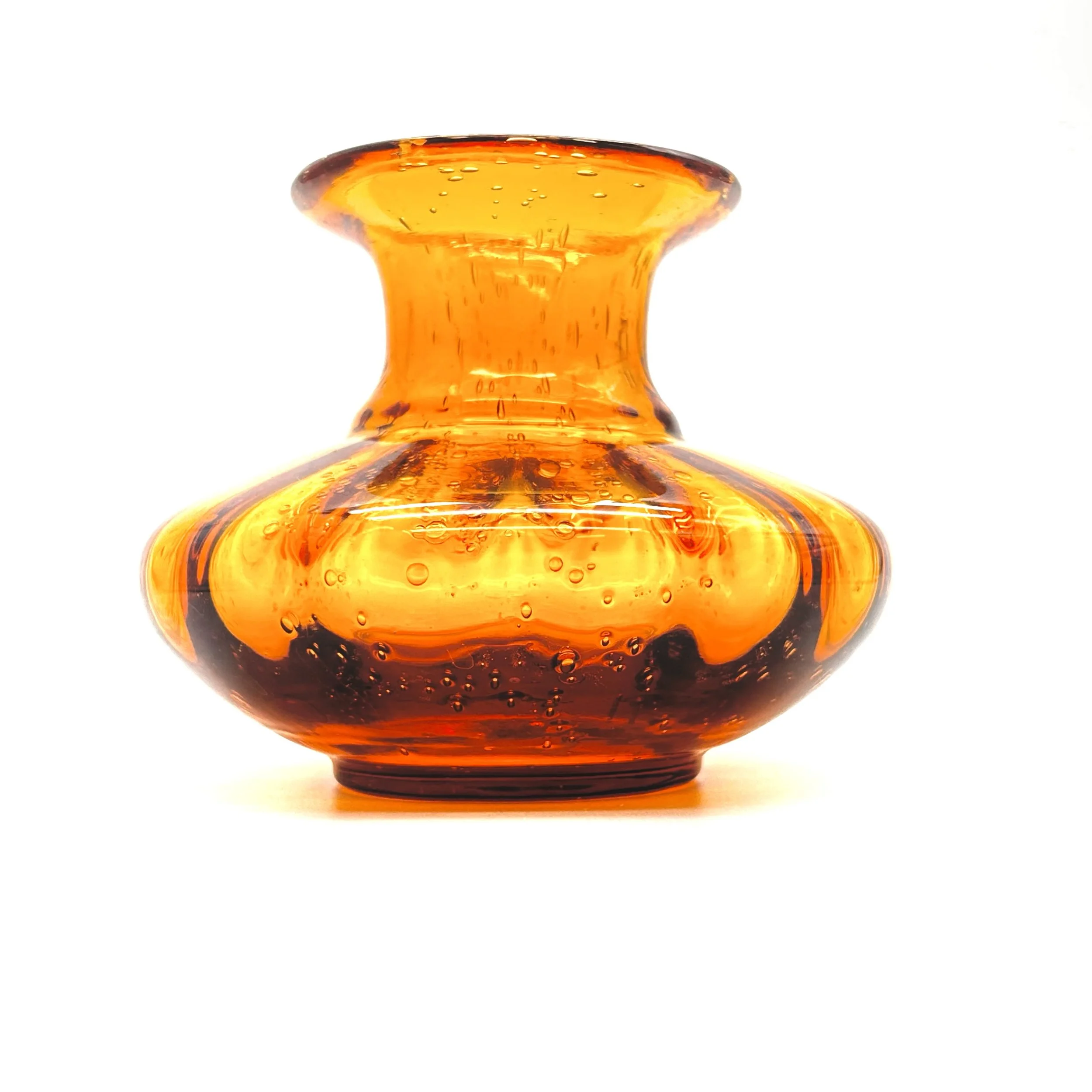 Image 5 of 17
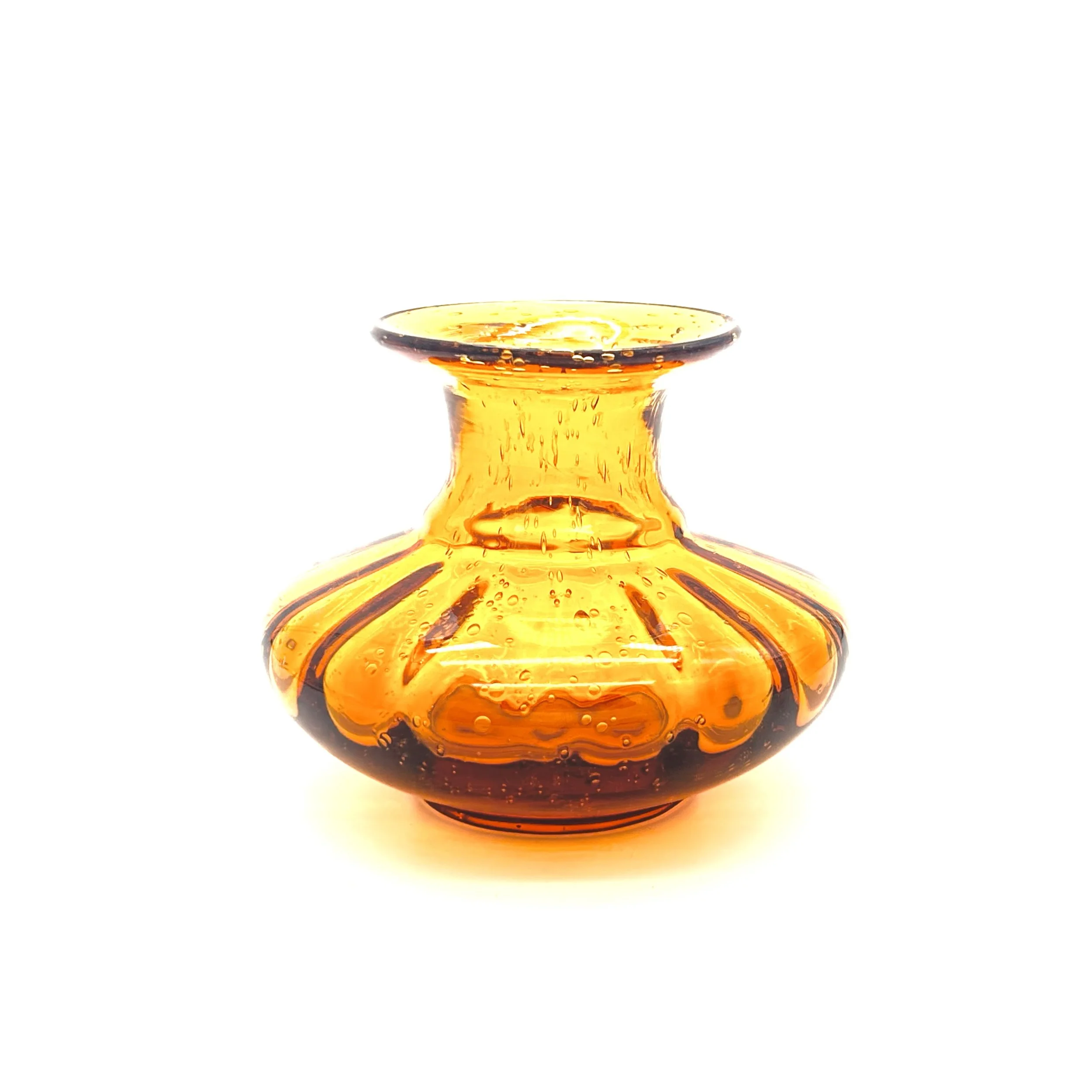 Image 6 of 17
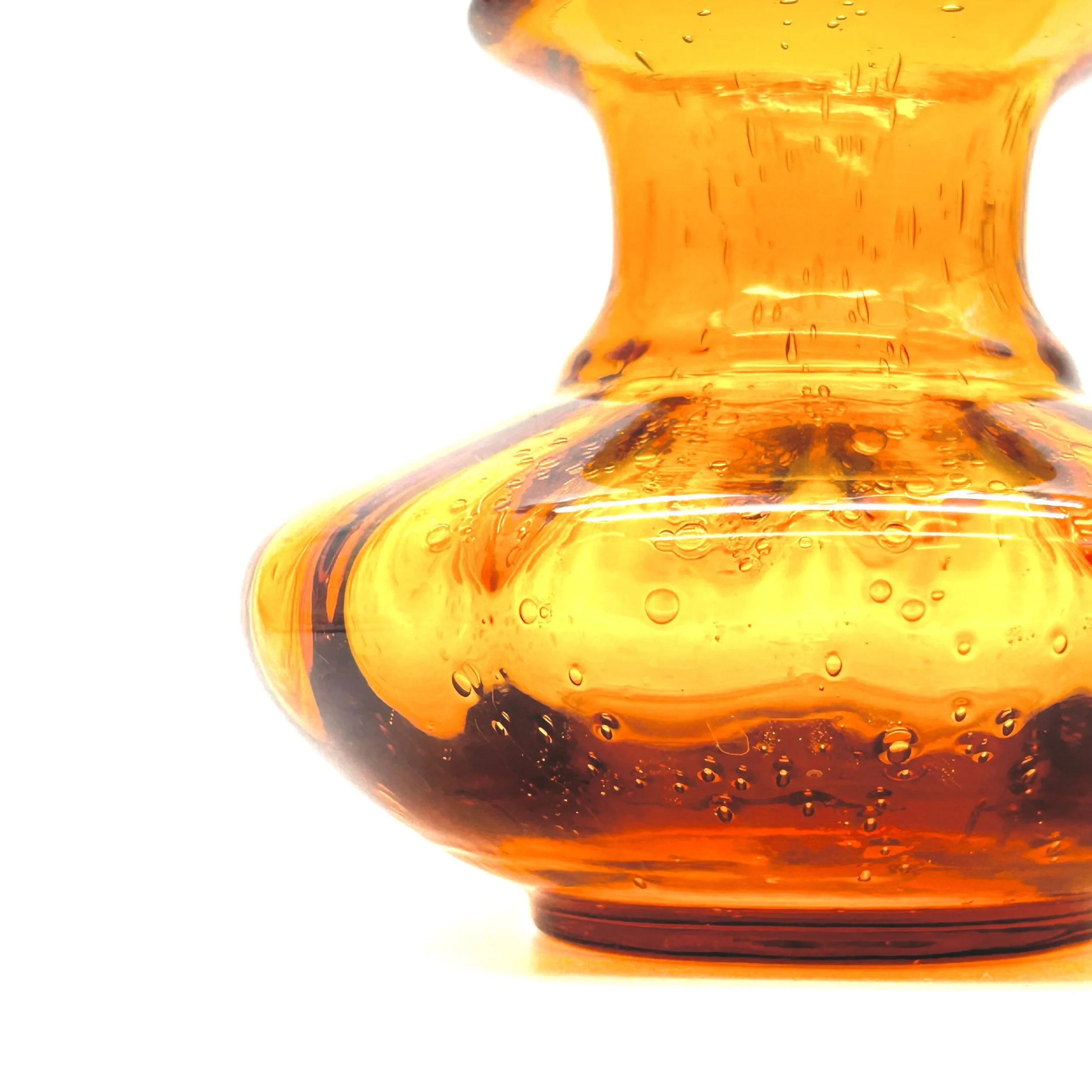 Image 7 of 17
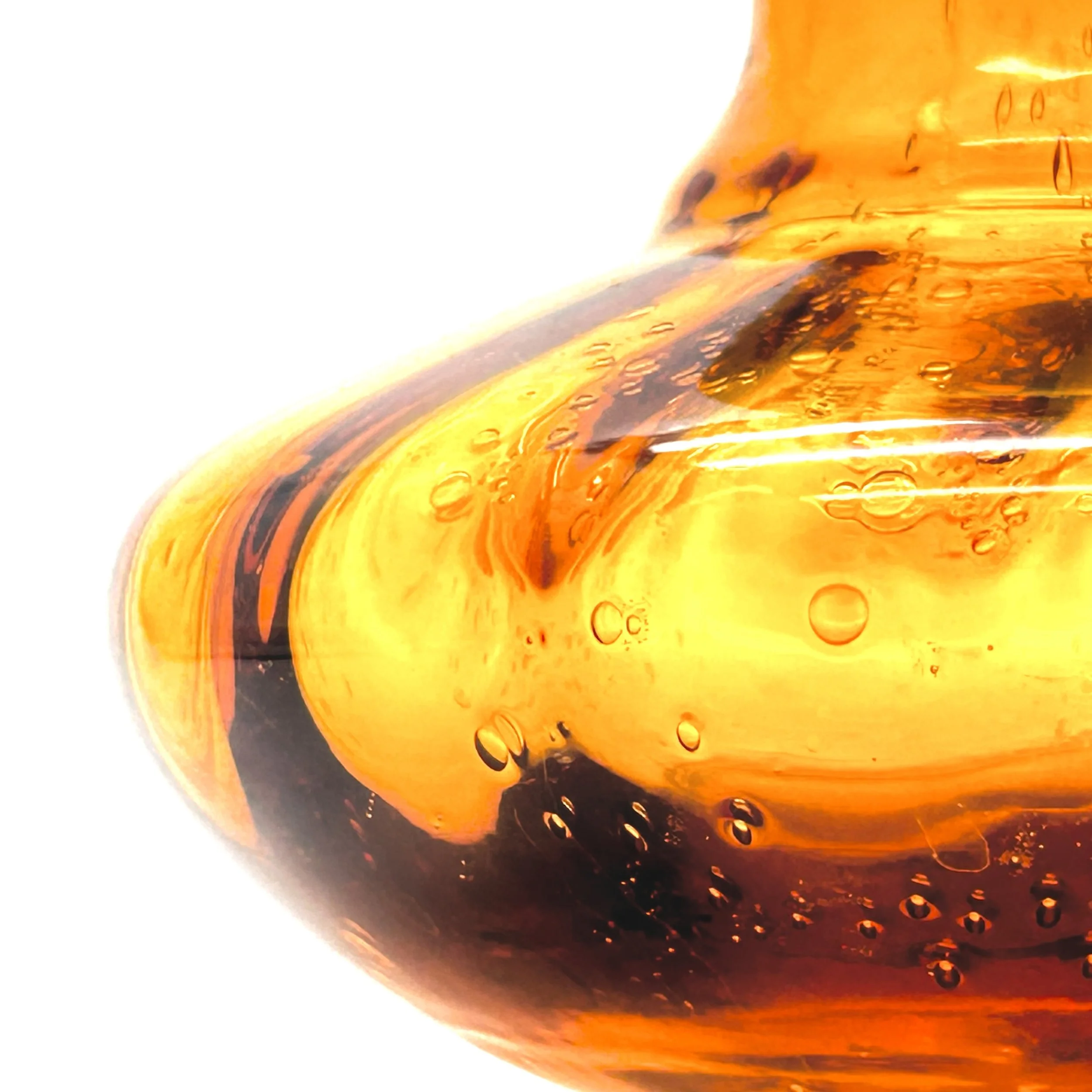 Image 8 of 17
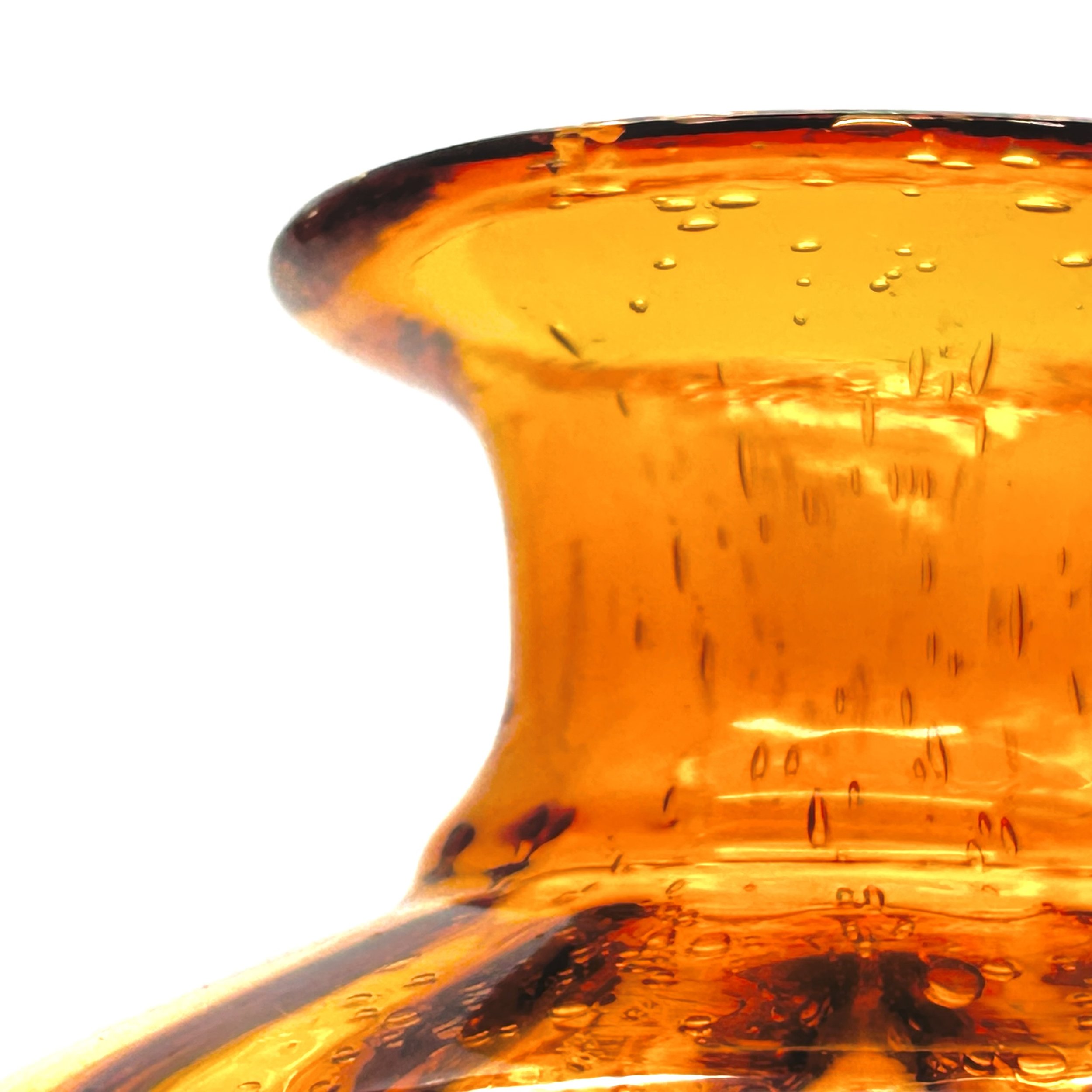 Image 9 of 17
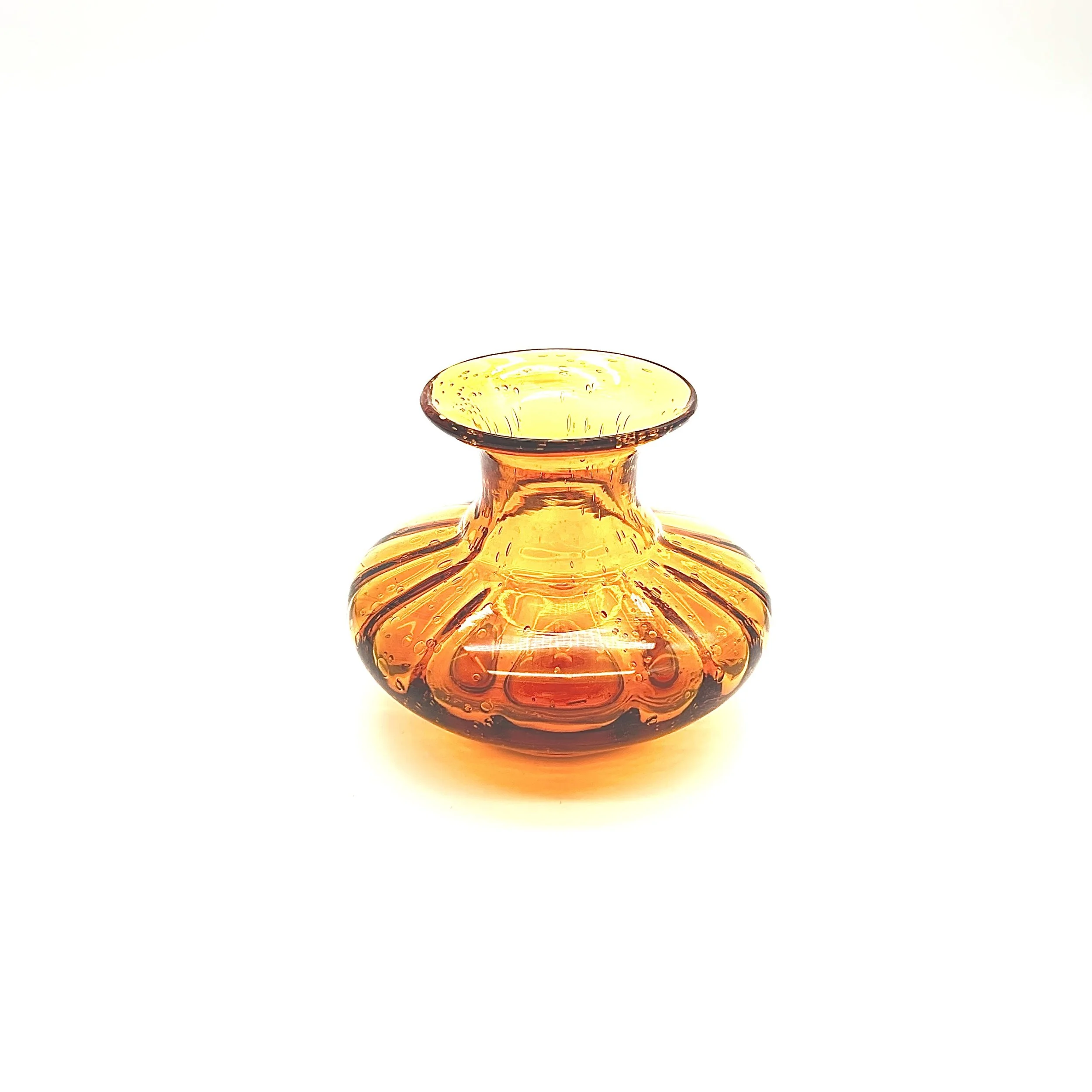 Image 10 of 17
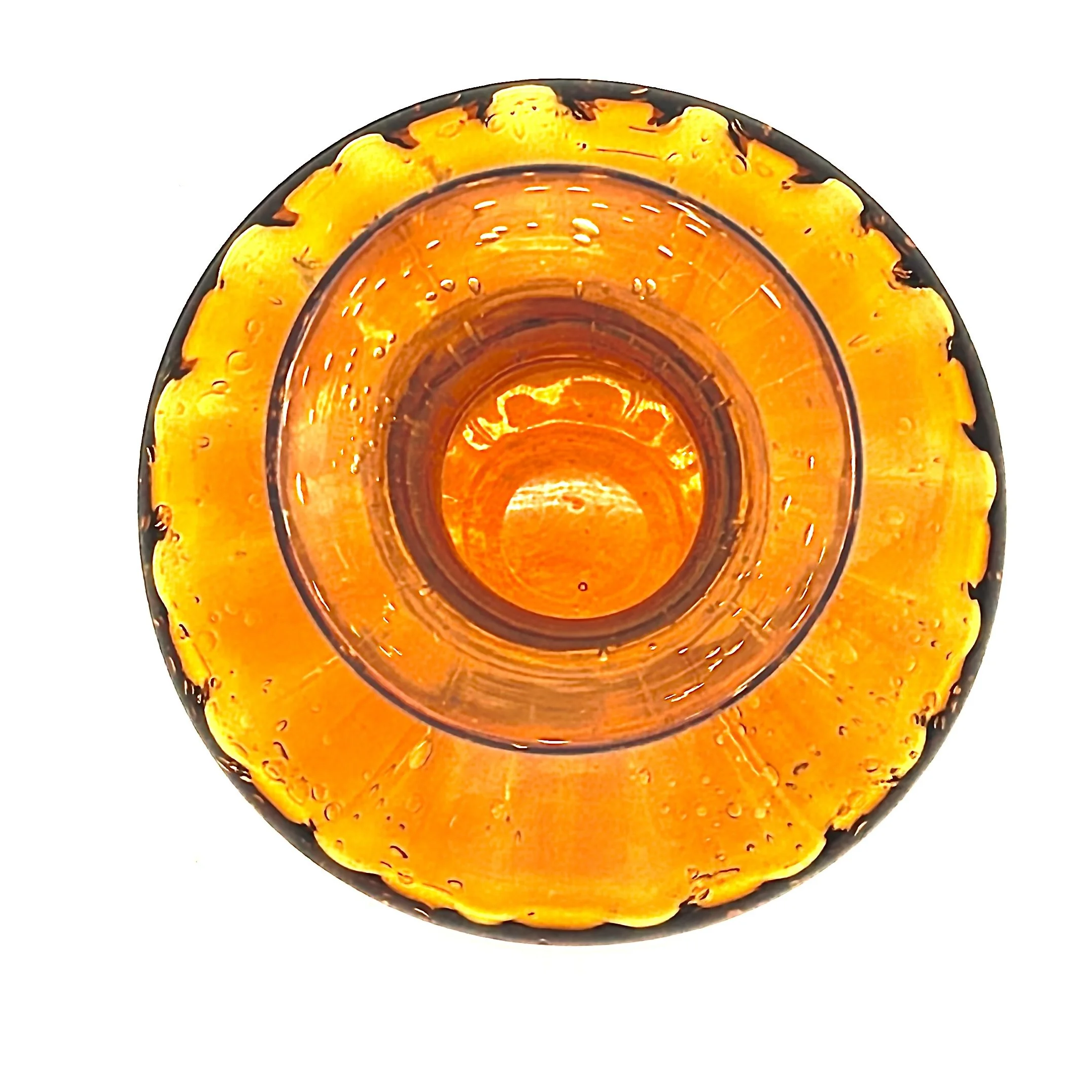 Image 11 of 17
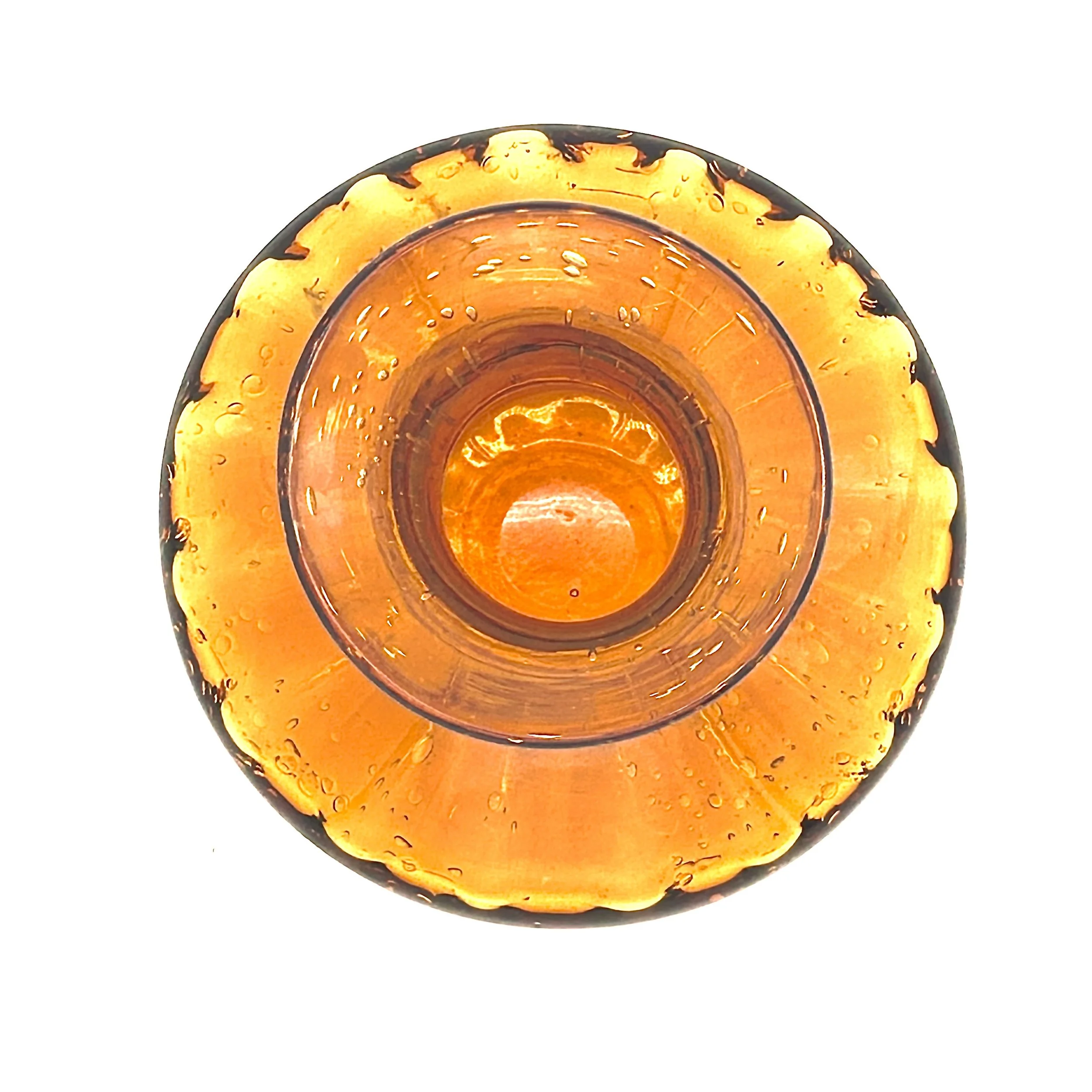 Image 12 of 17
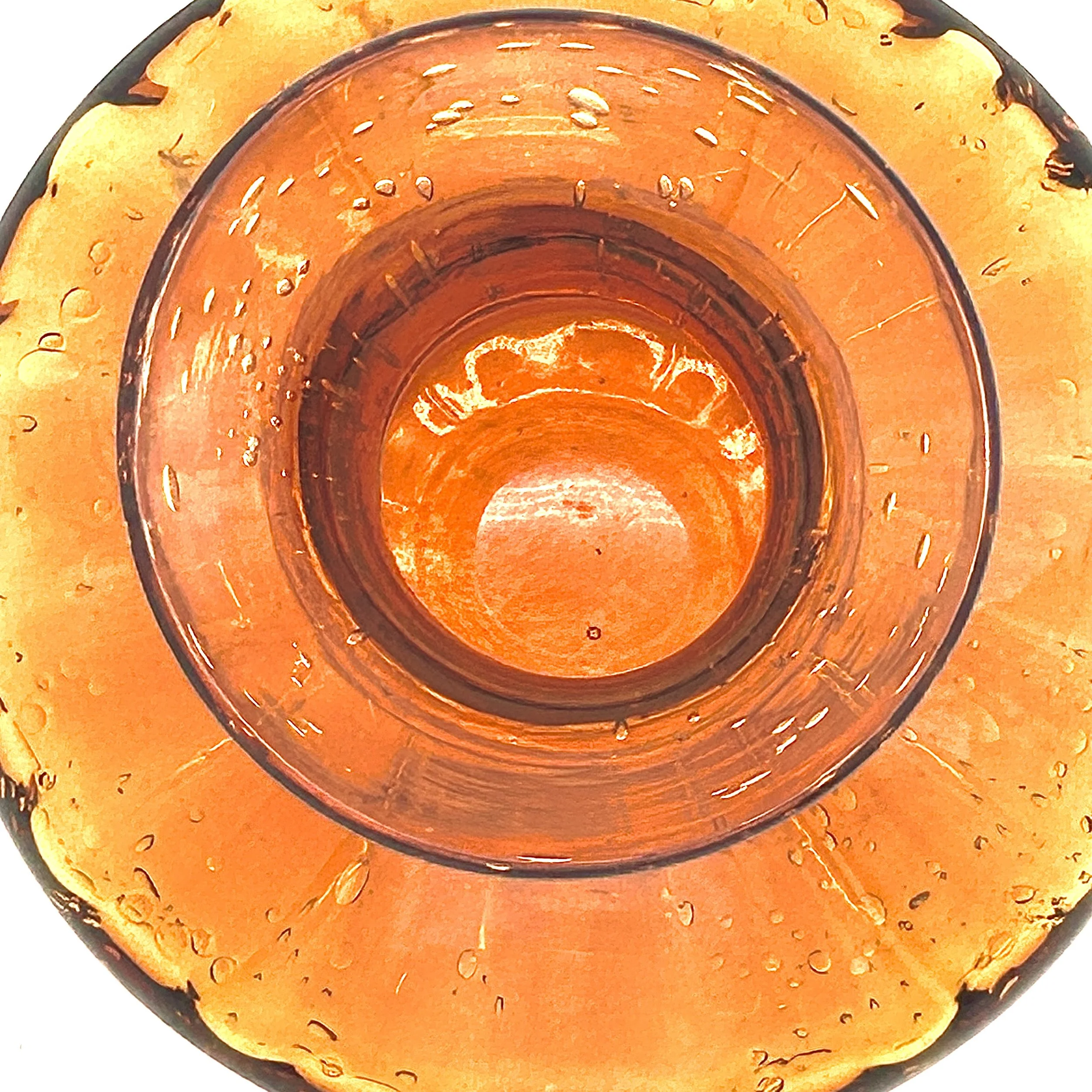 Image 13 of 17
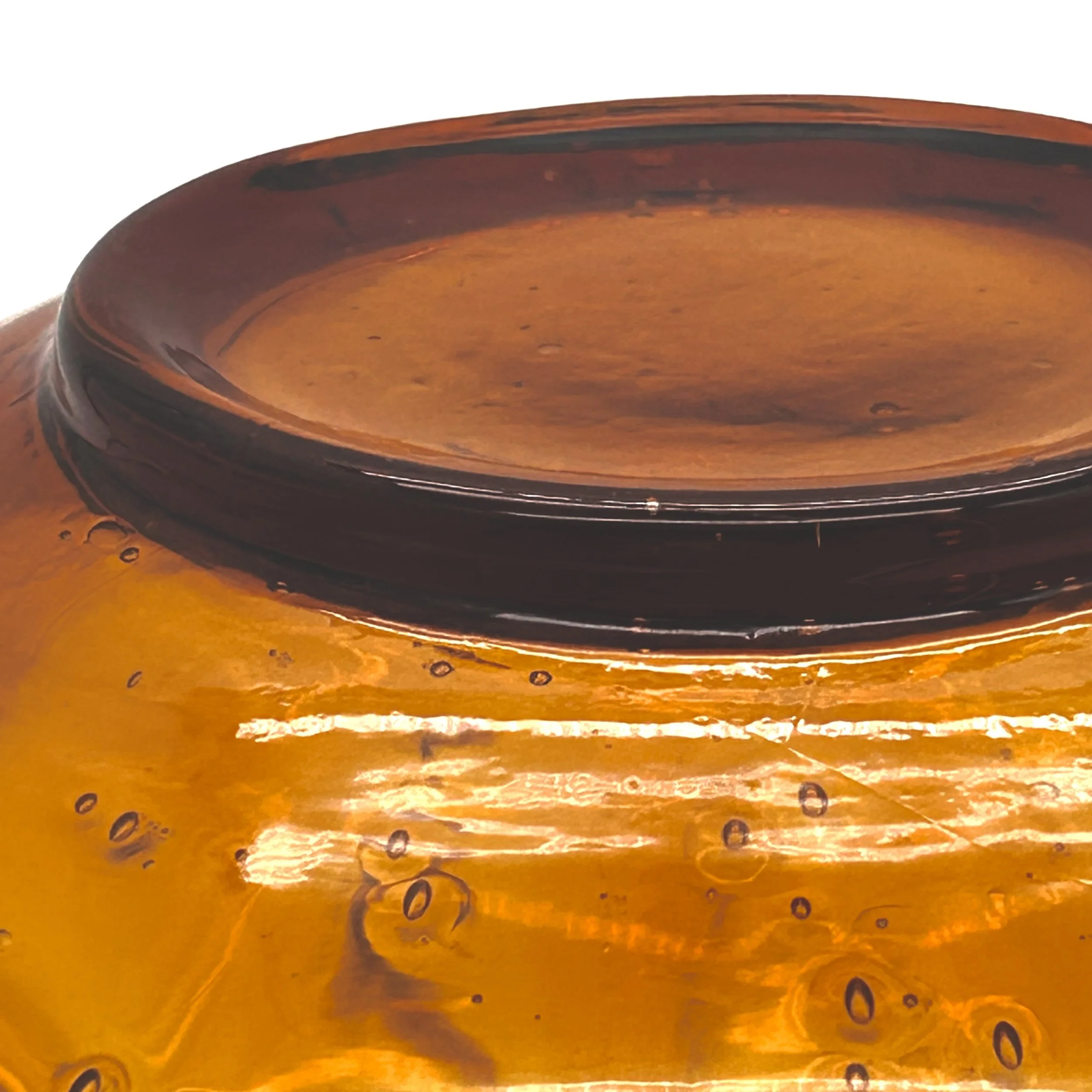 Image 14 of 17
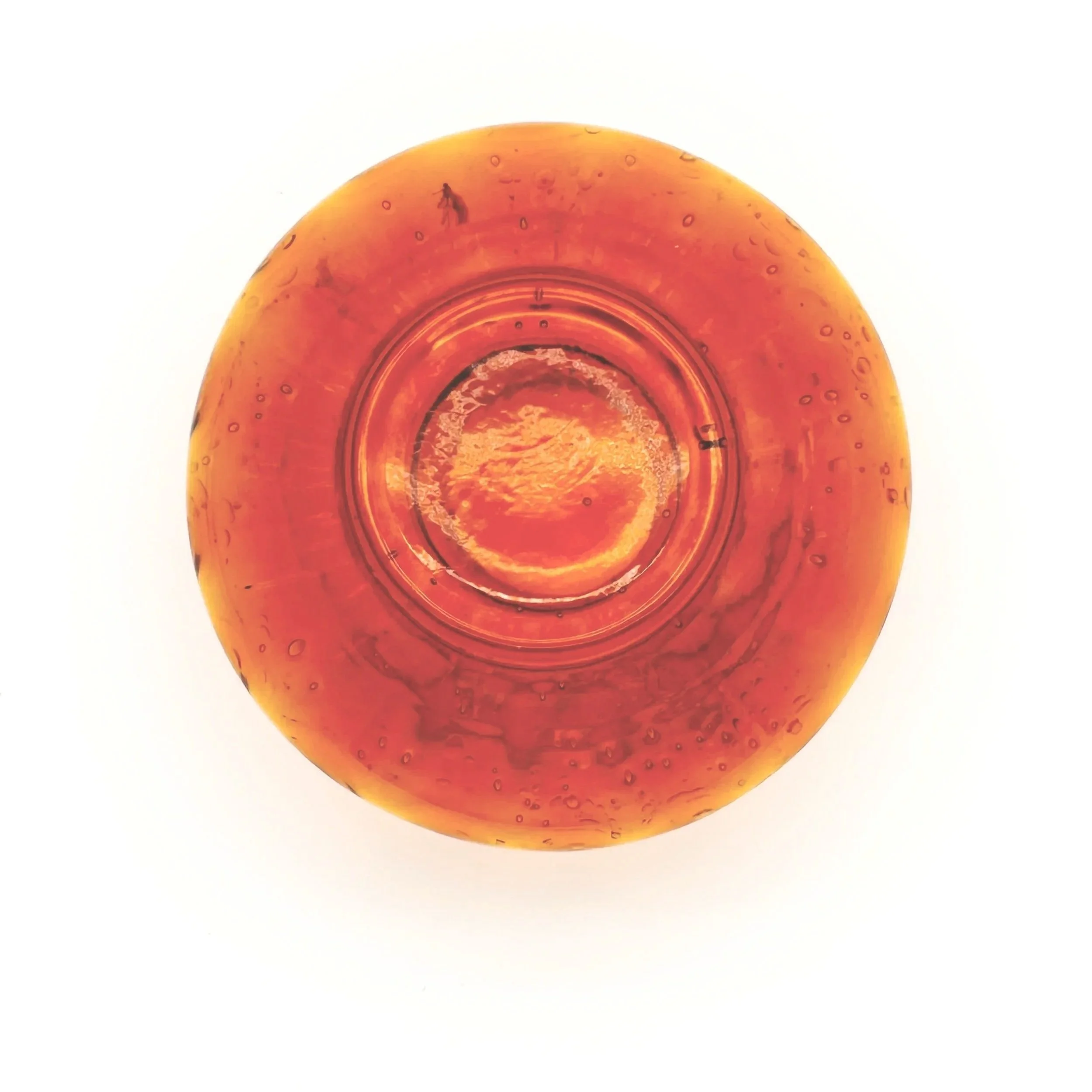 Image 15 of 17
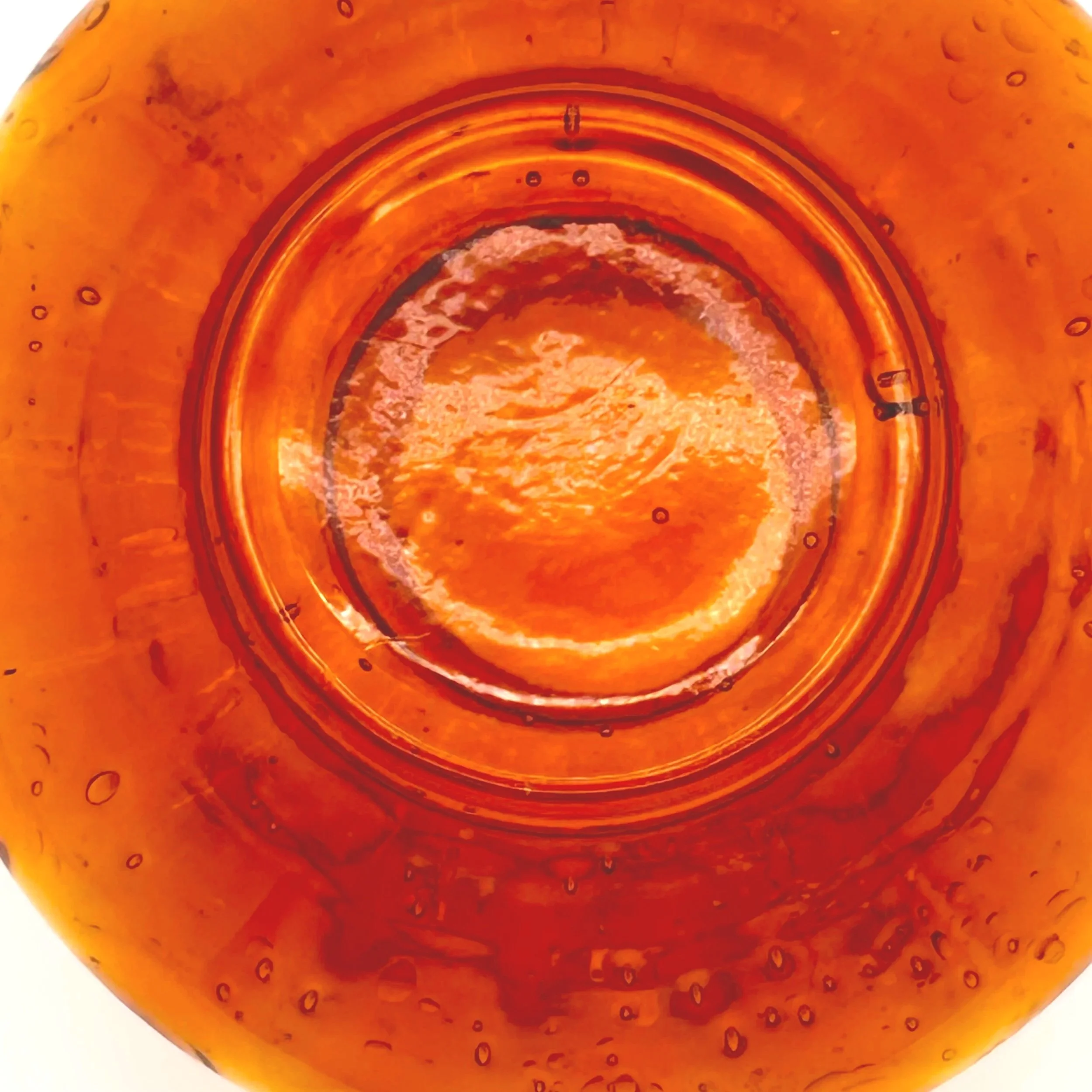 Image 16 of 17
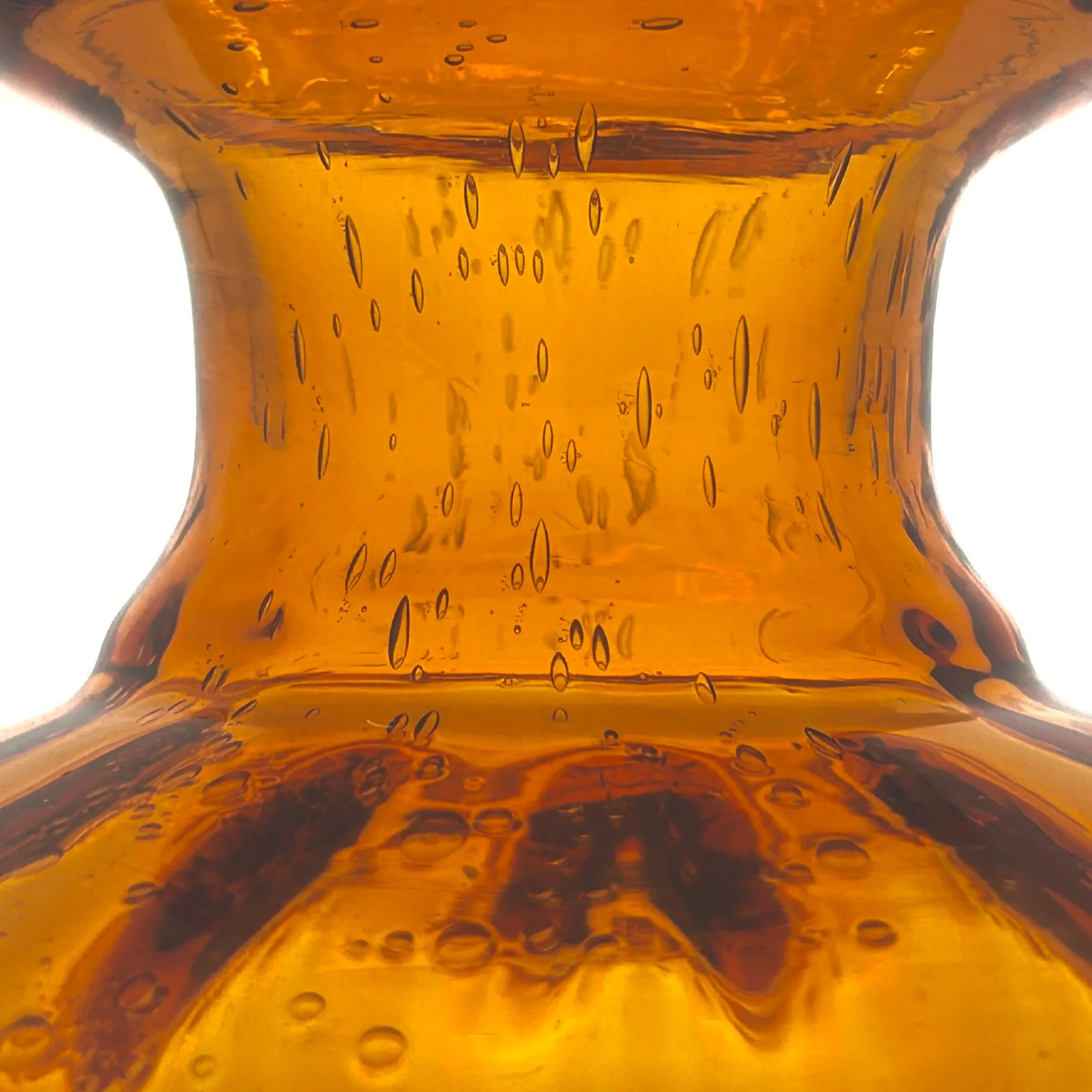 Image 17 of 17