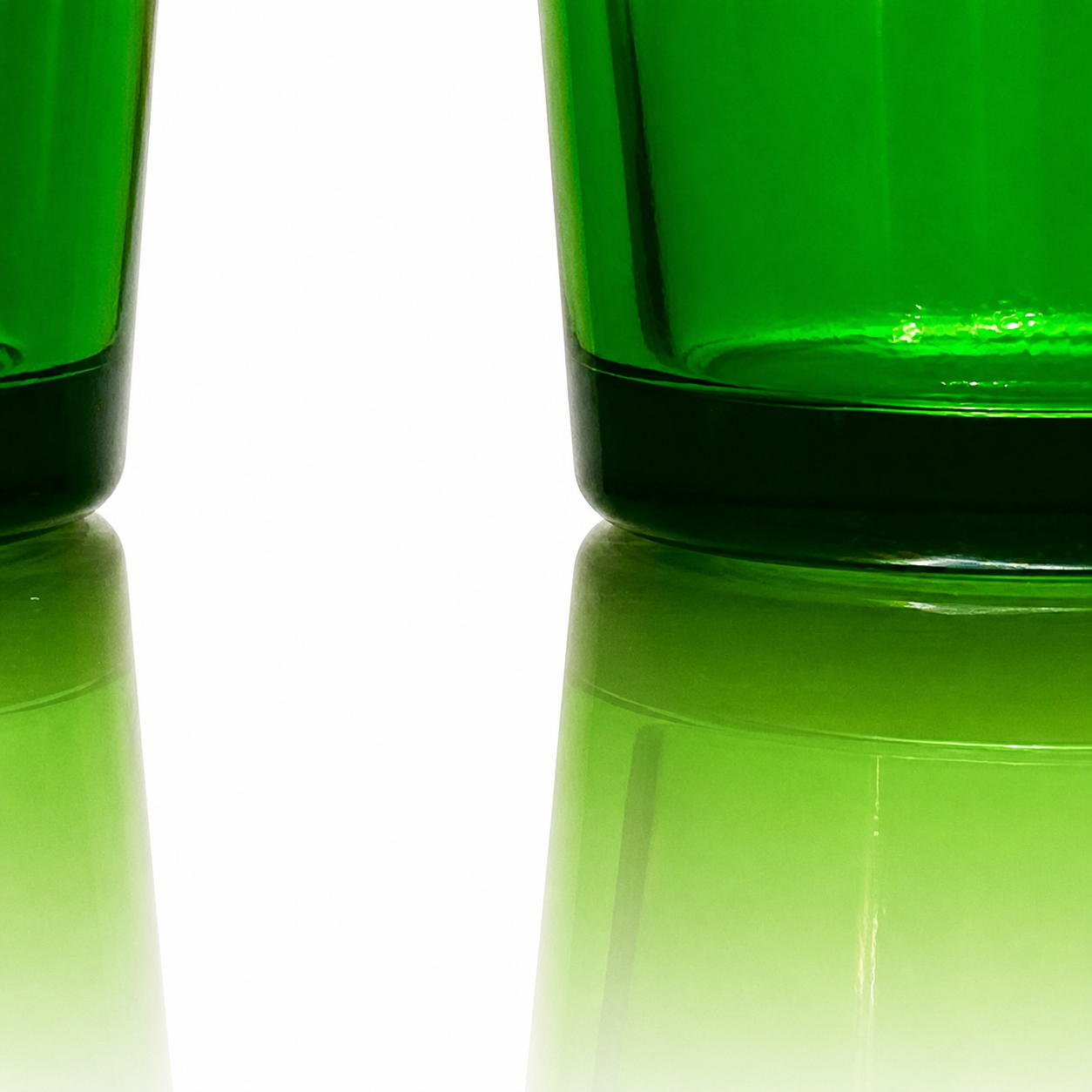
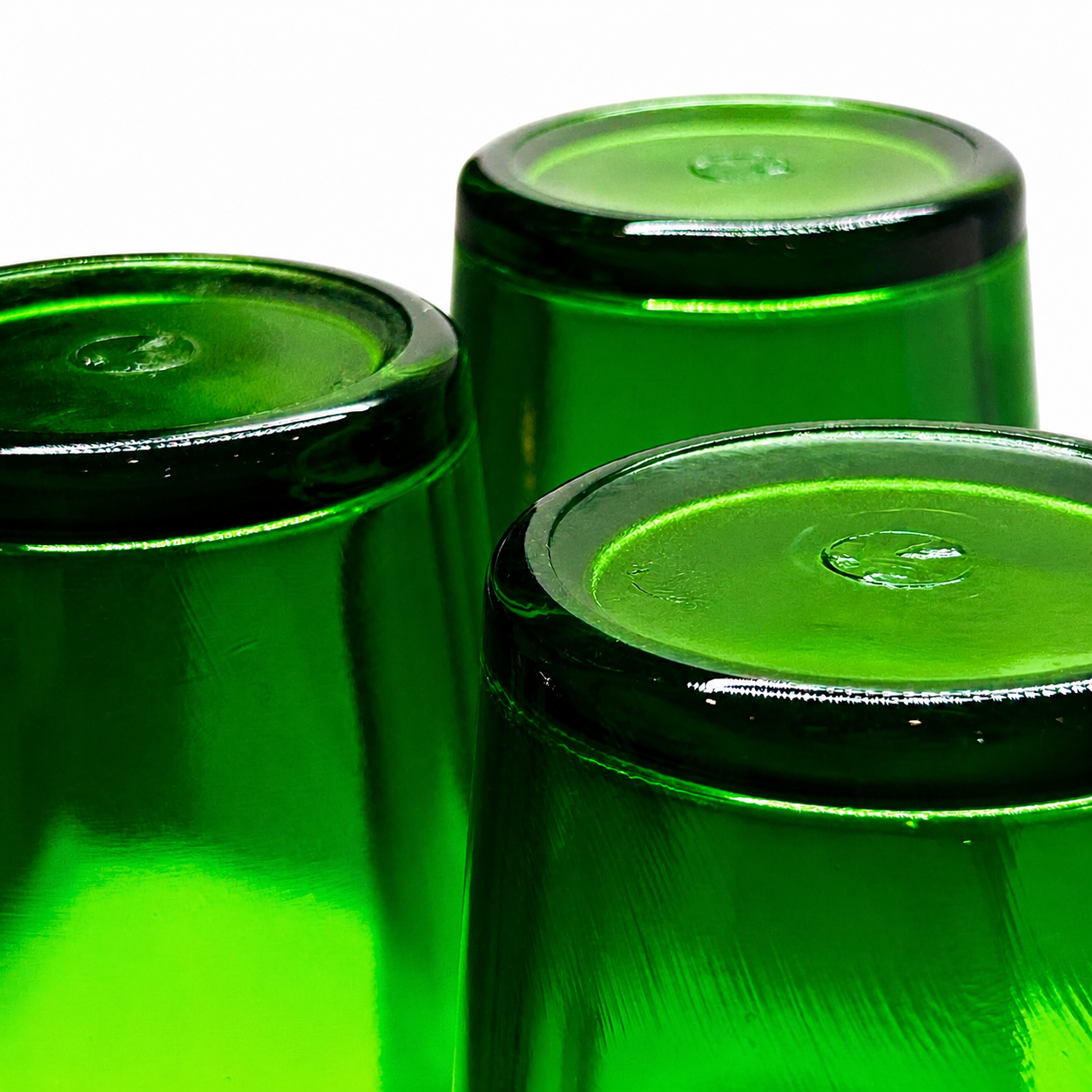
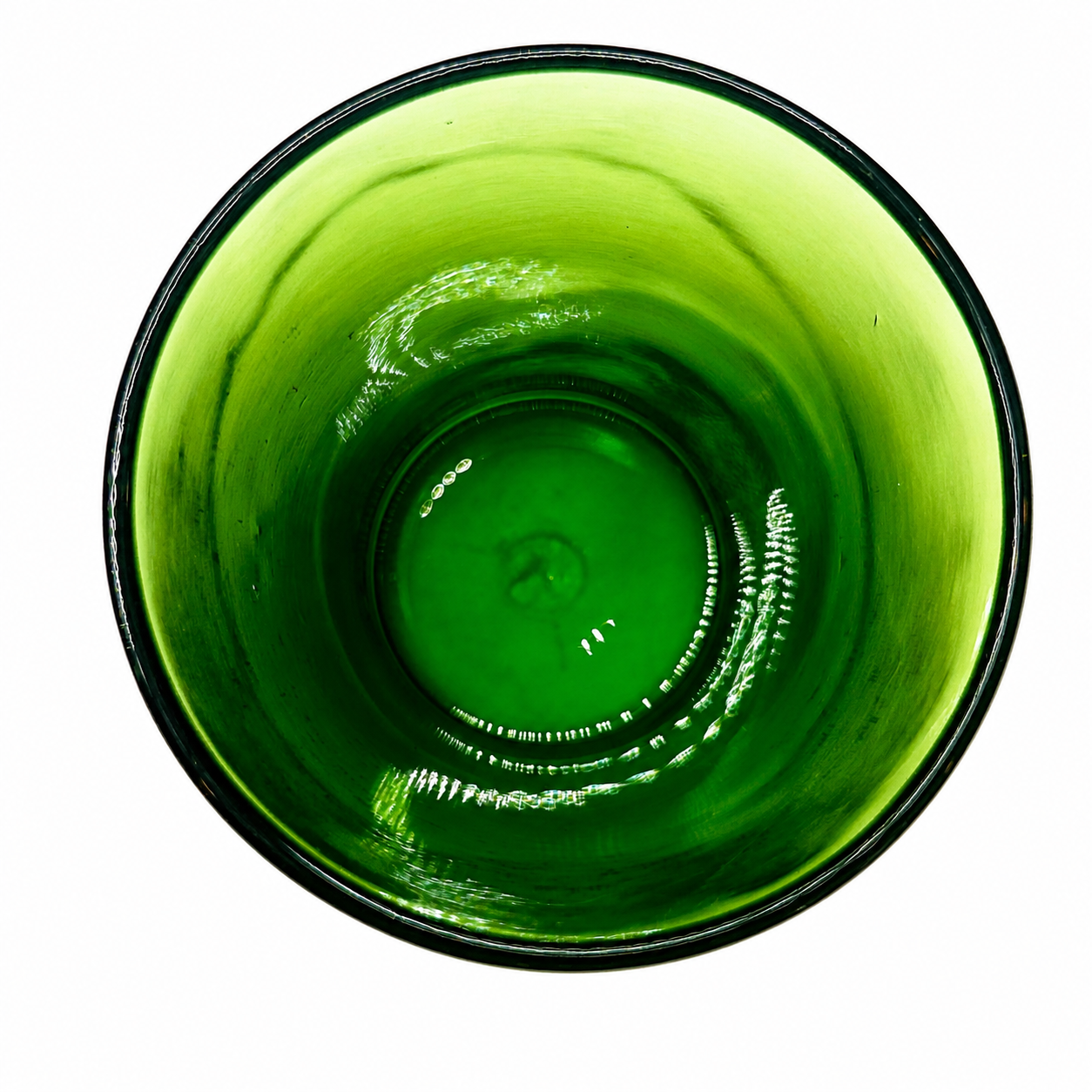
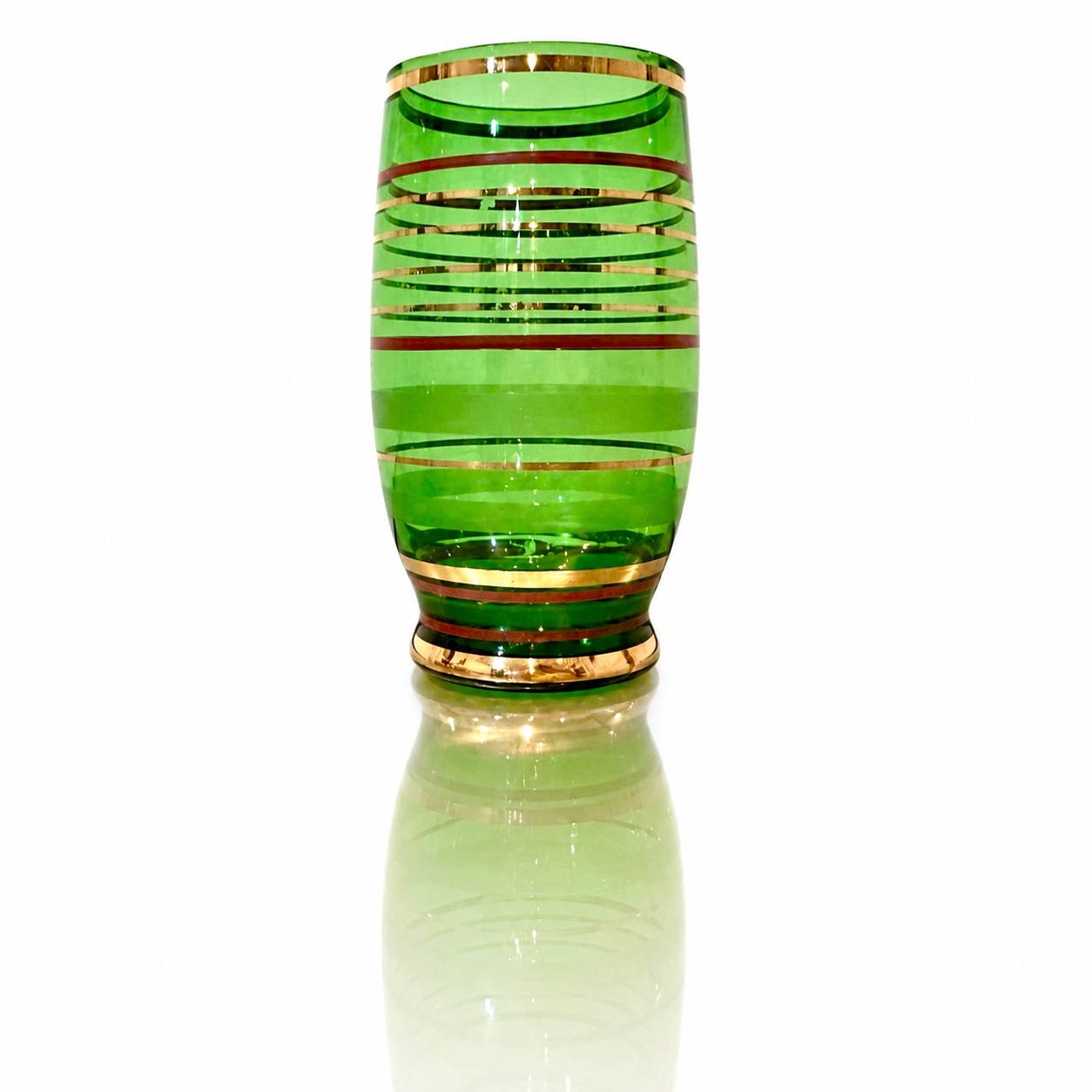
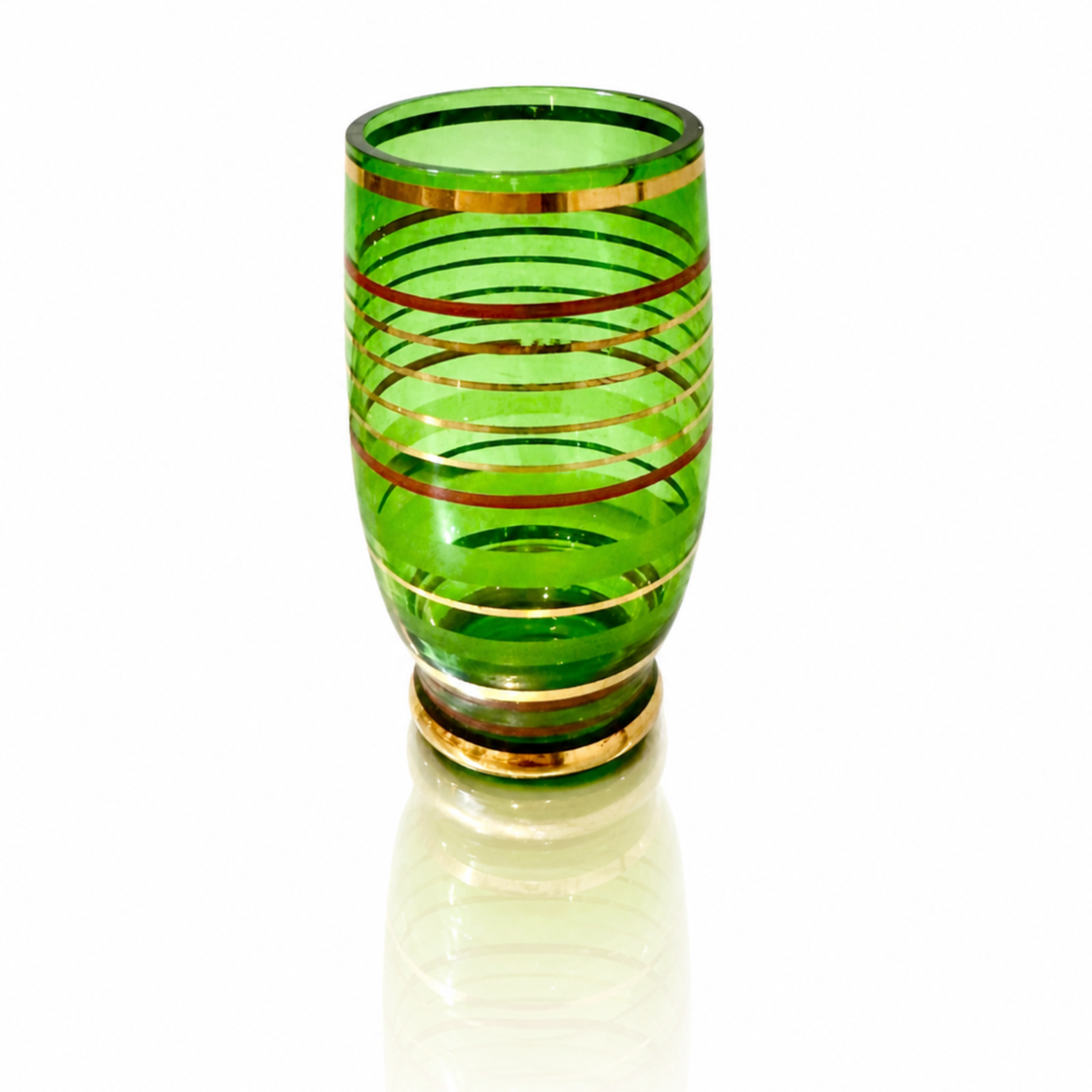
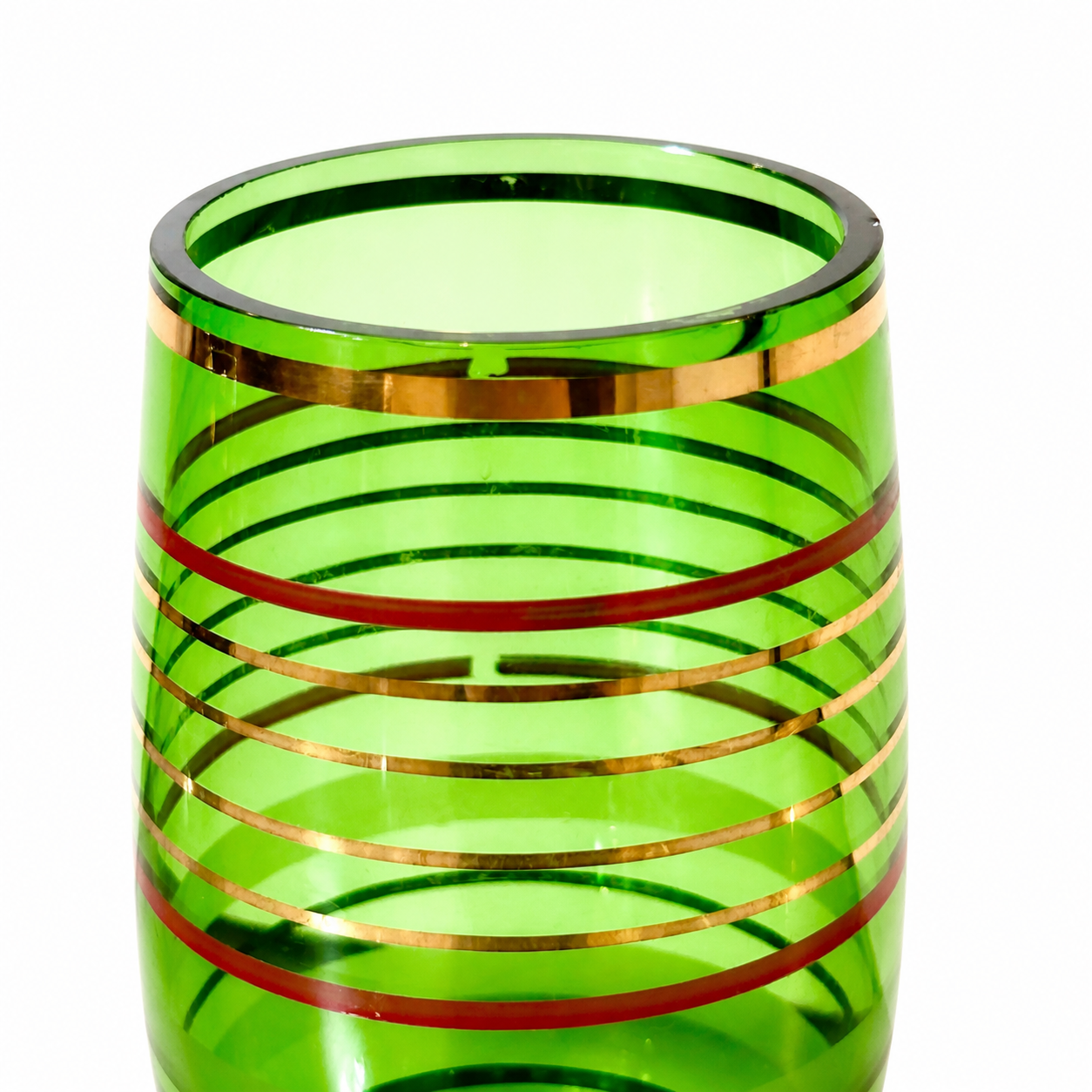
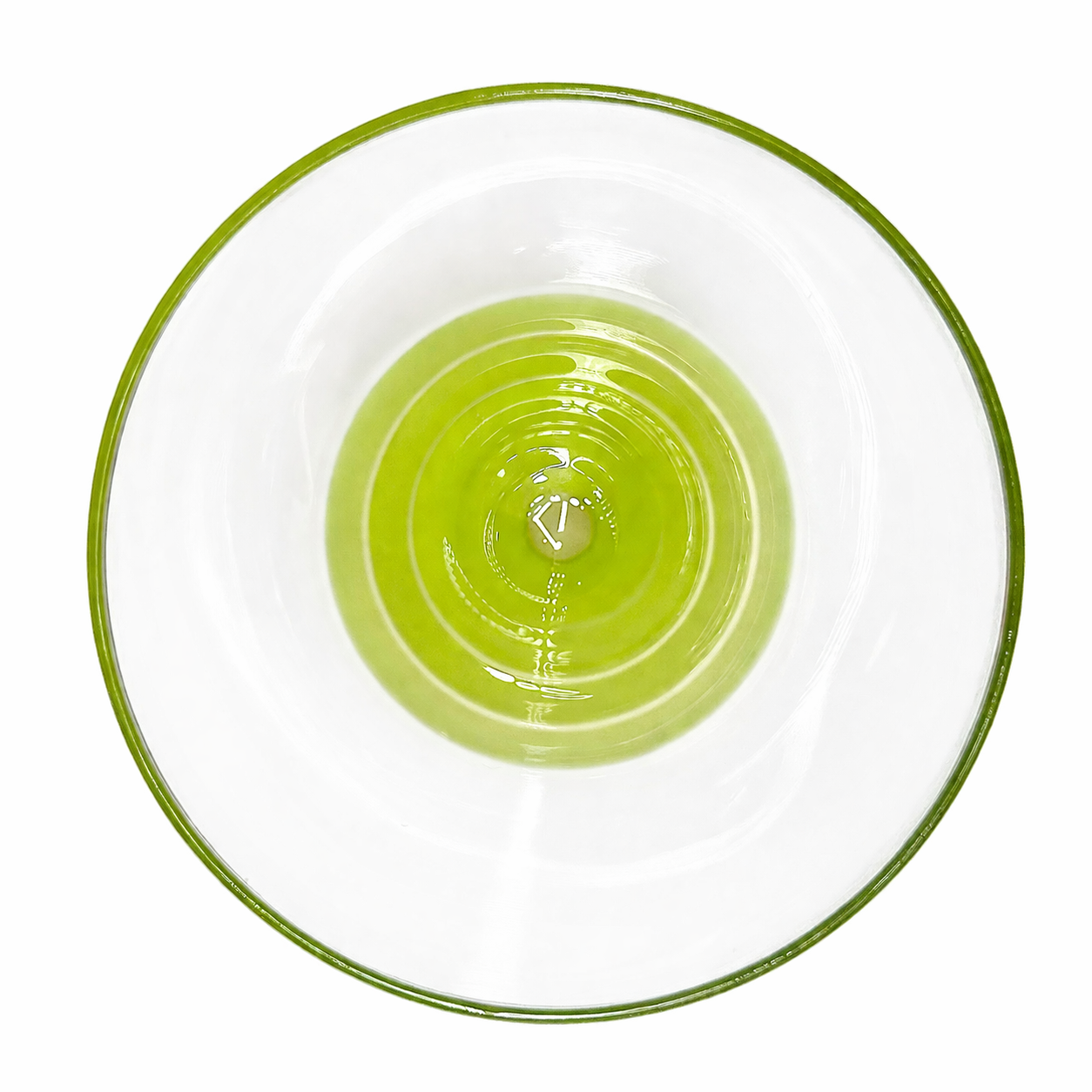
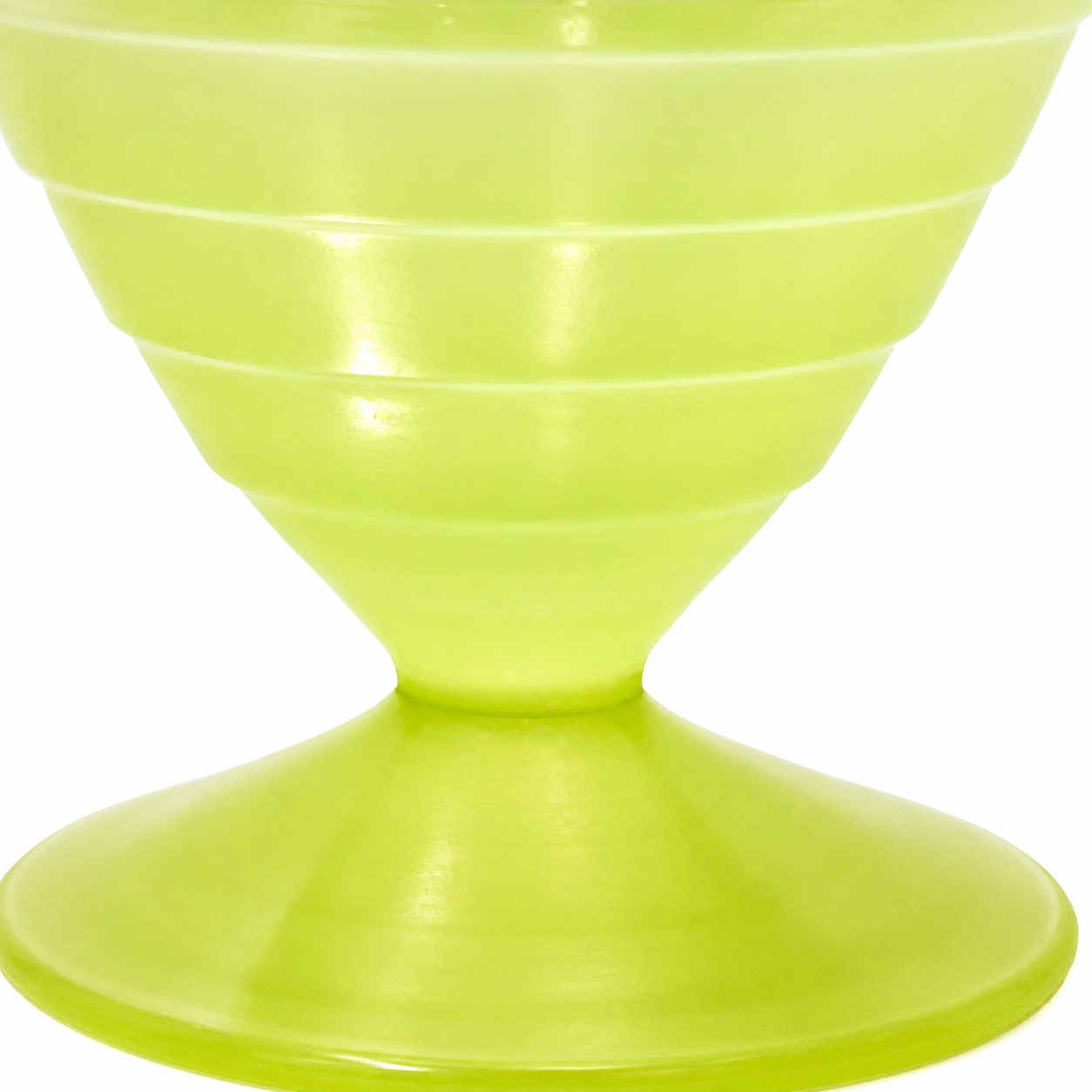
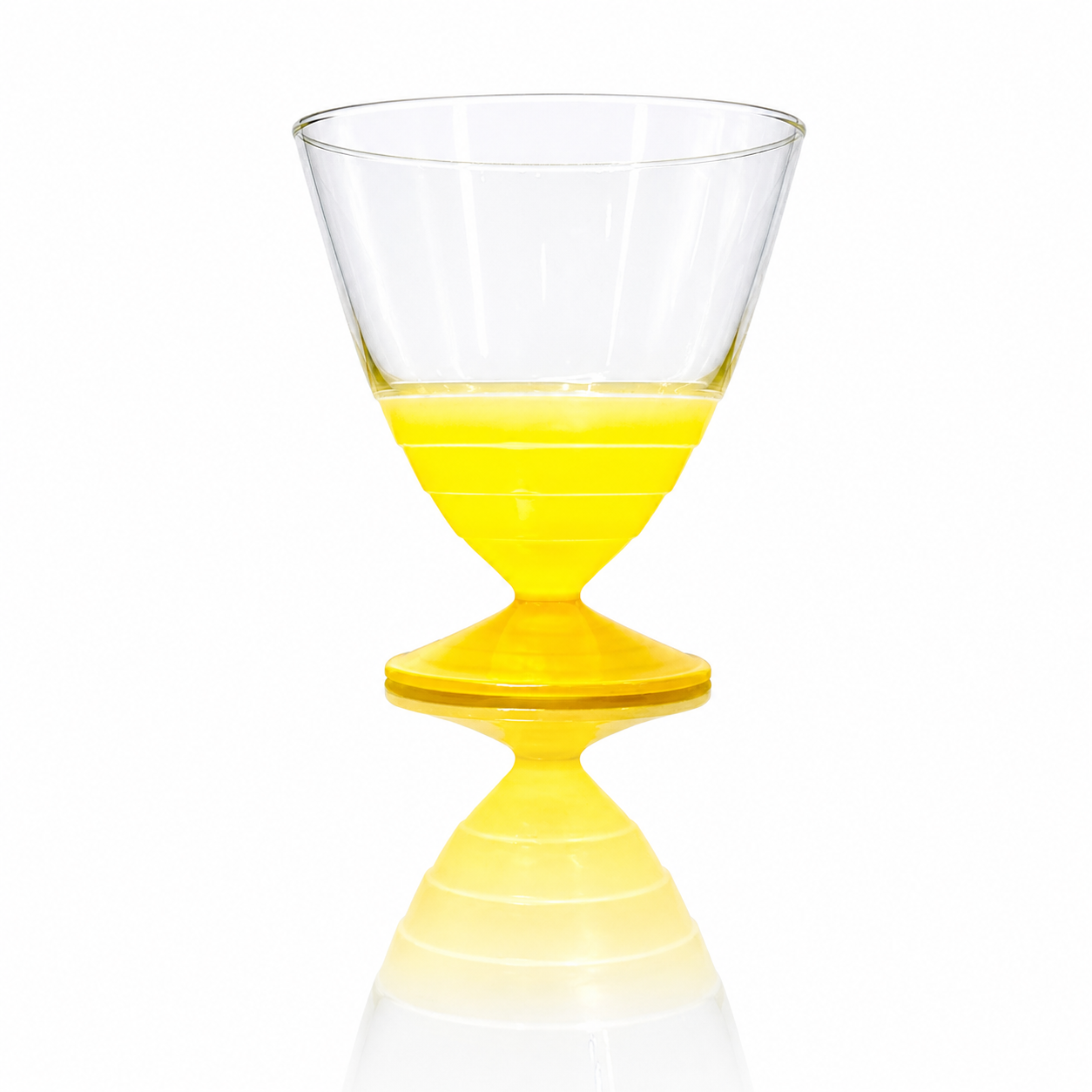
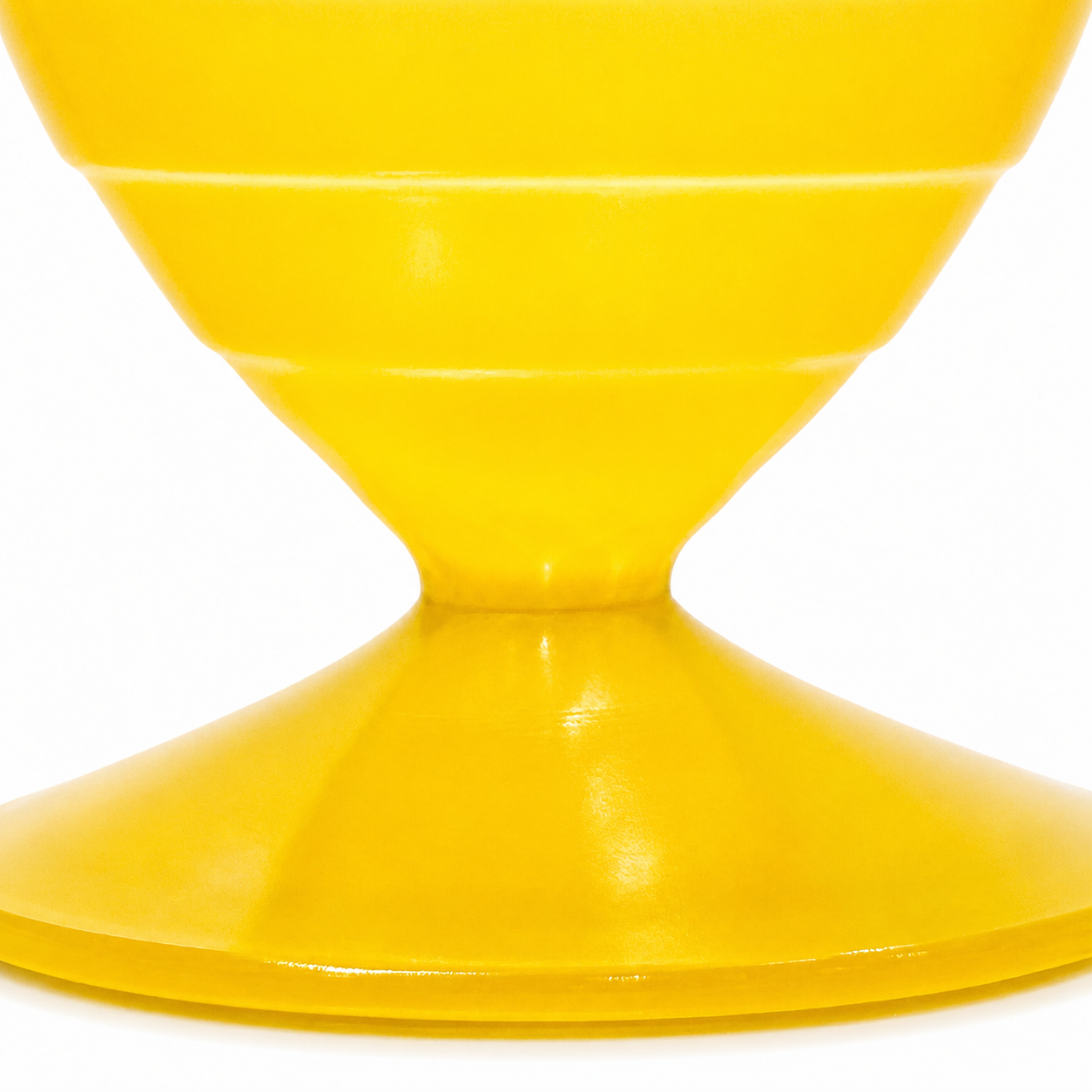
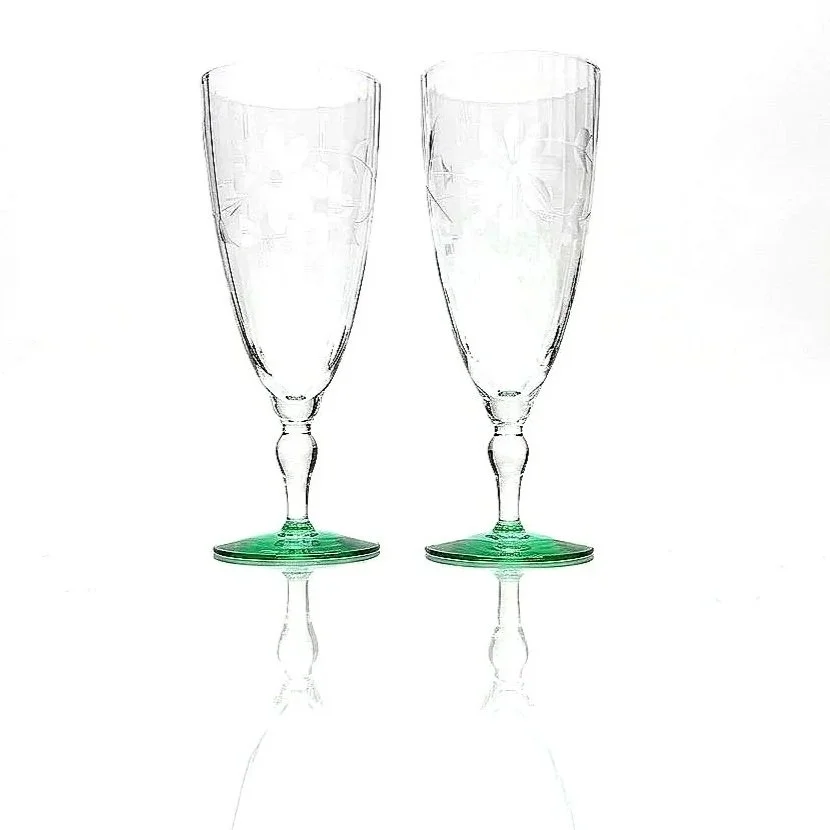
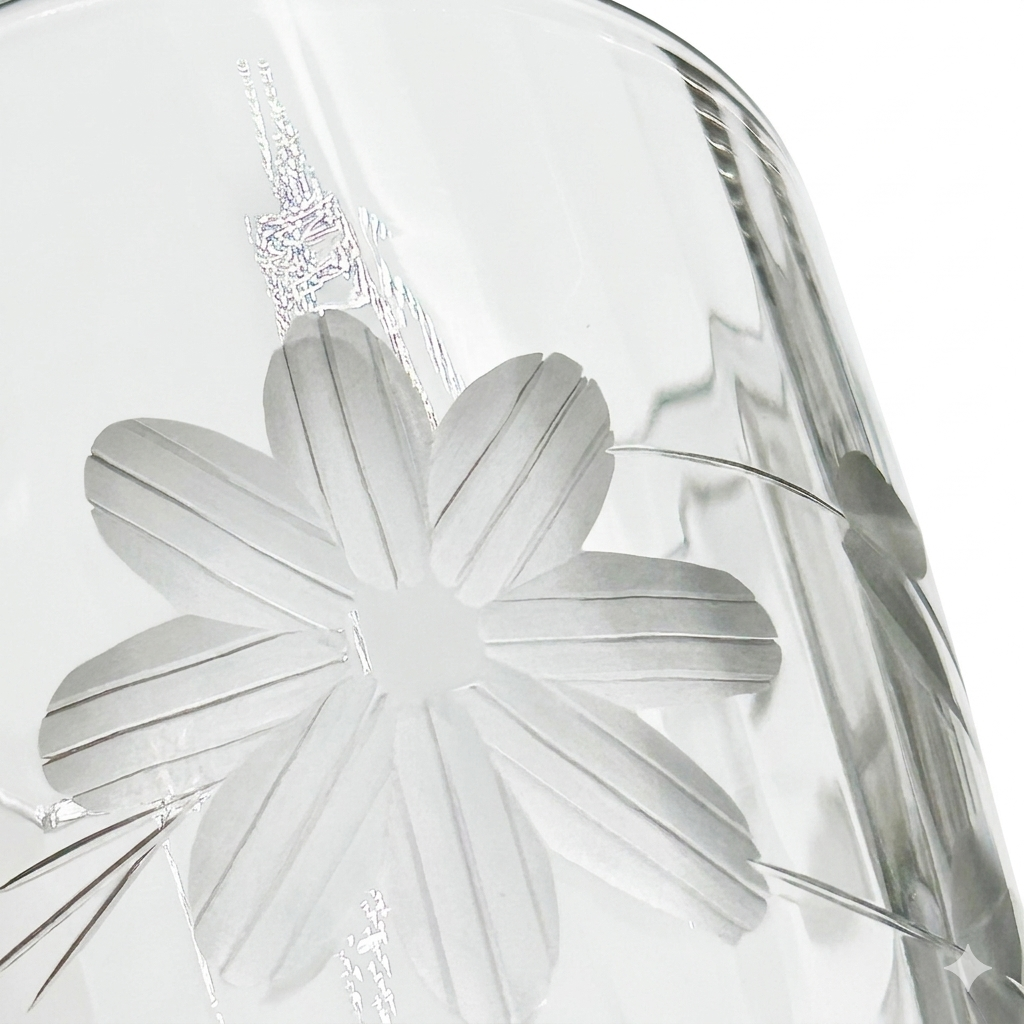
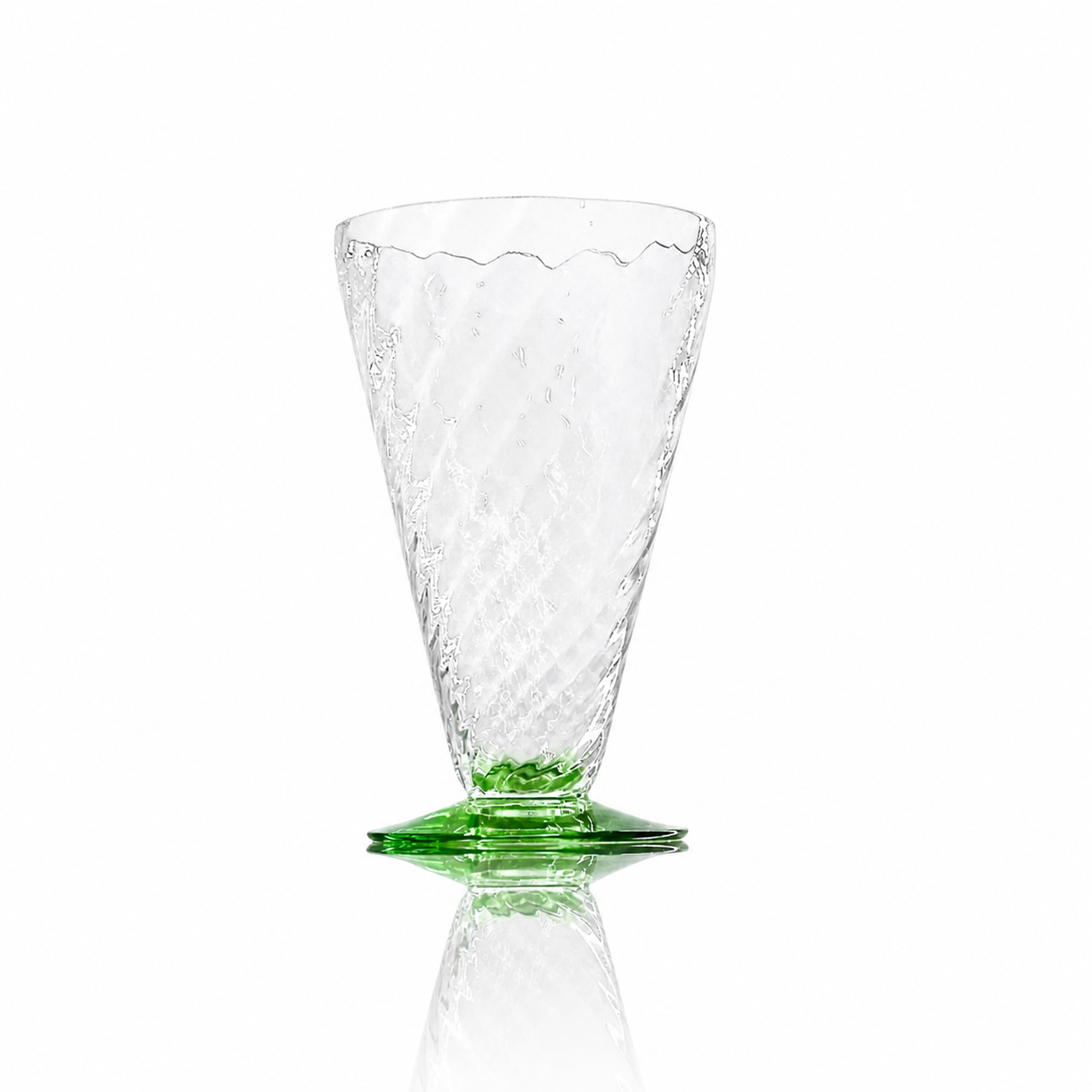
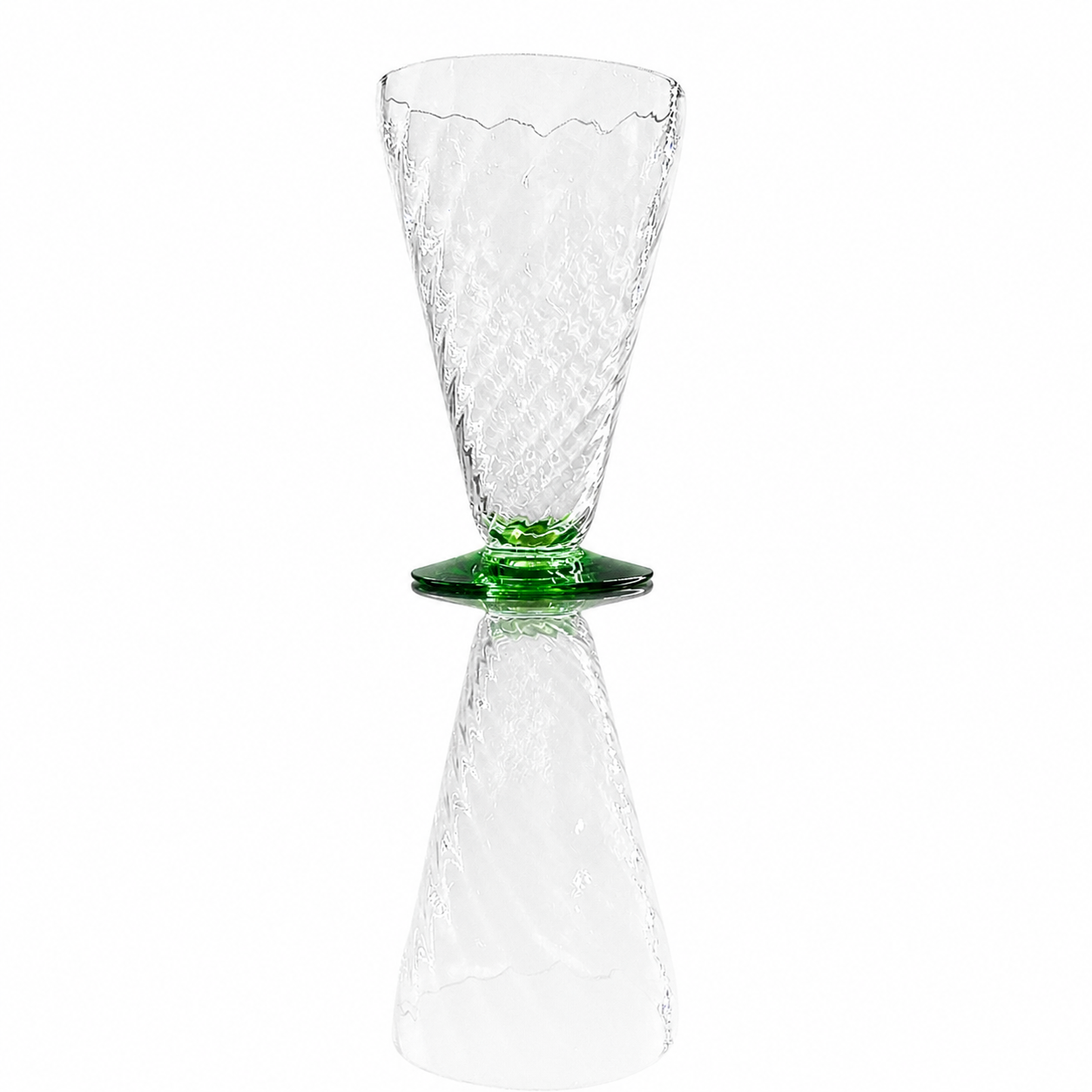
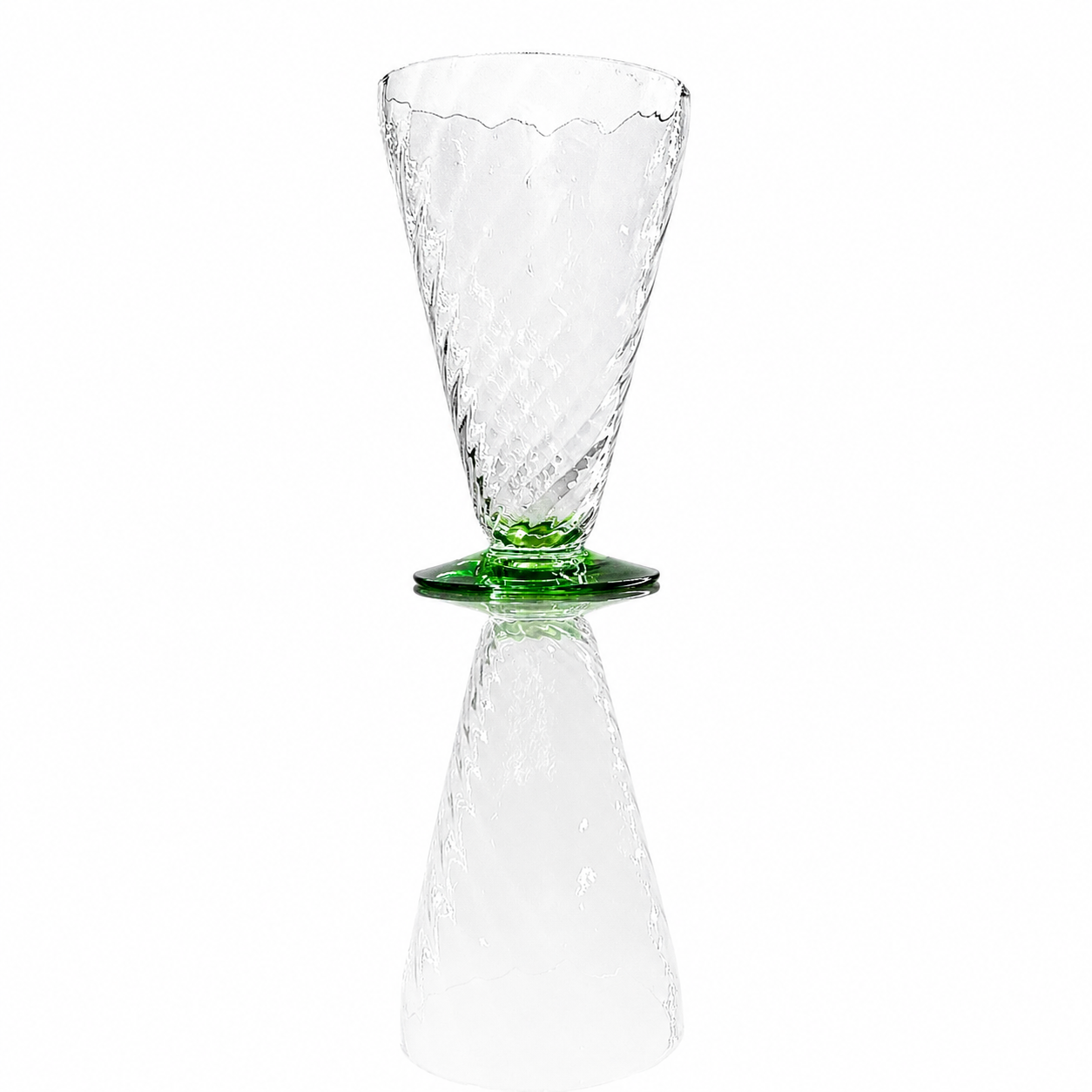
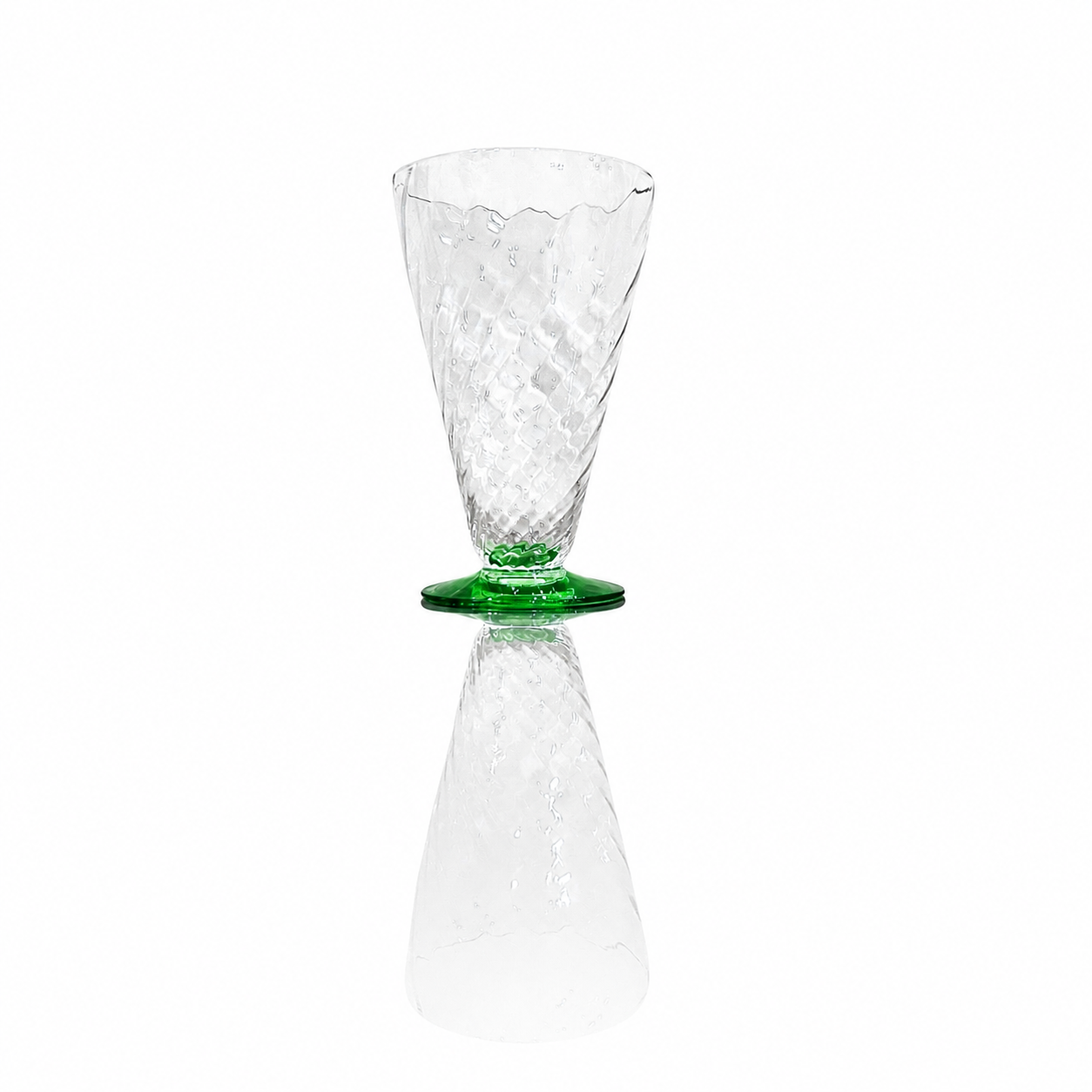
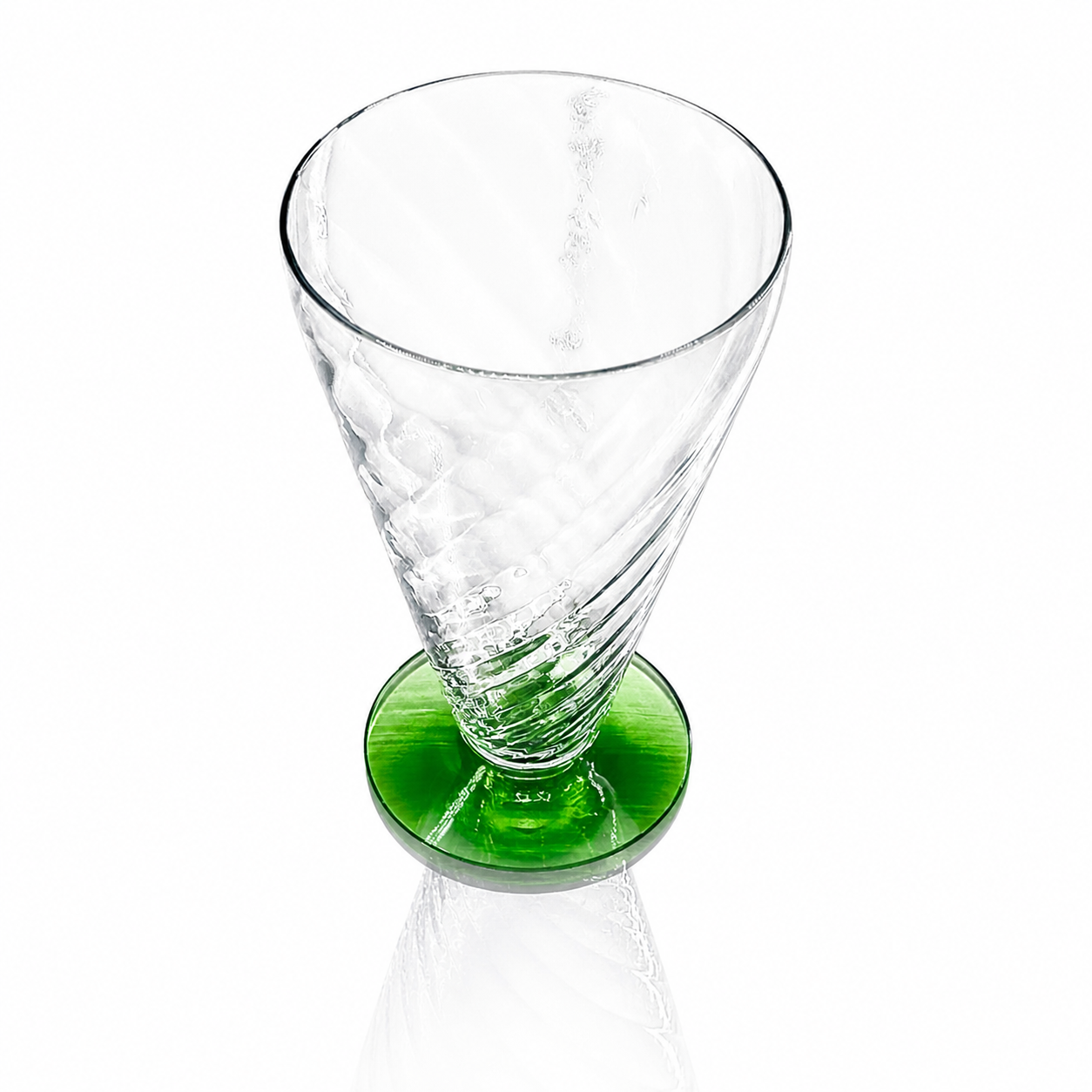
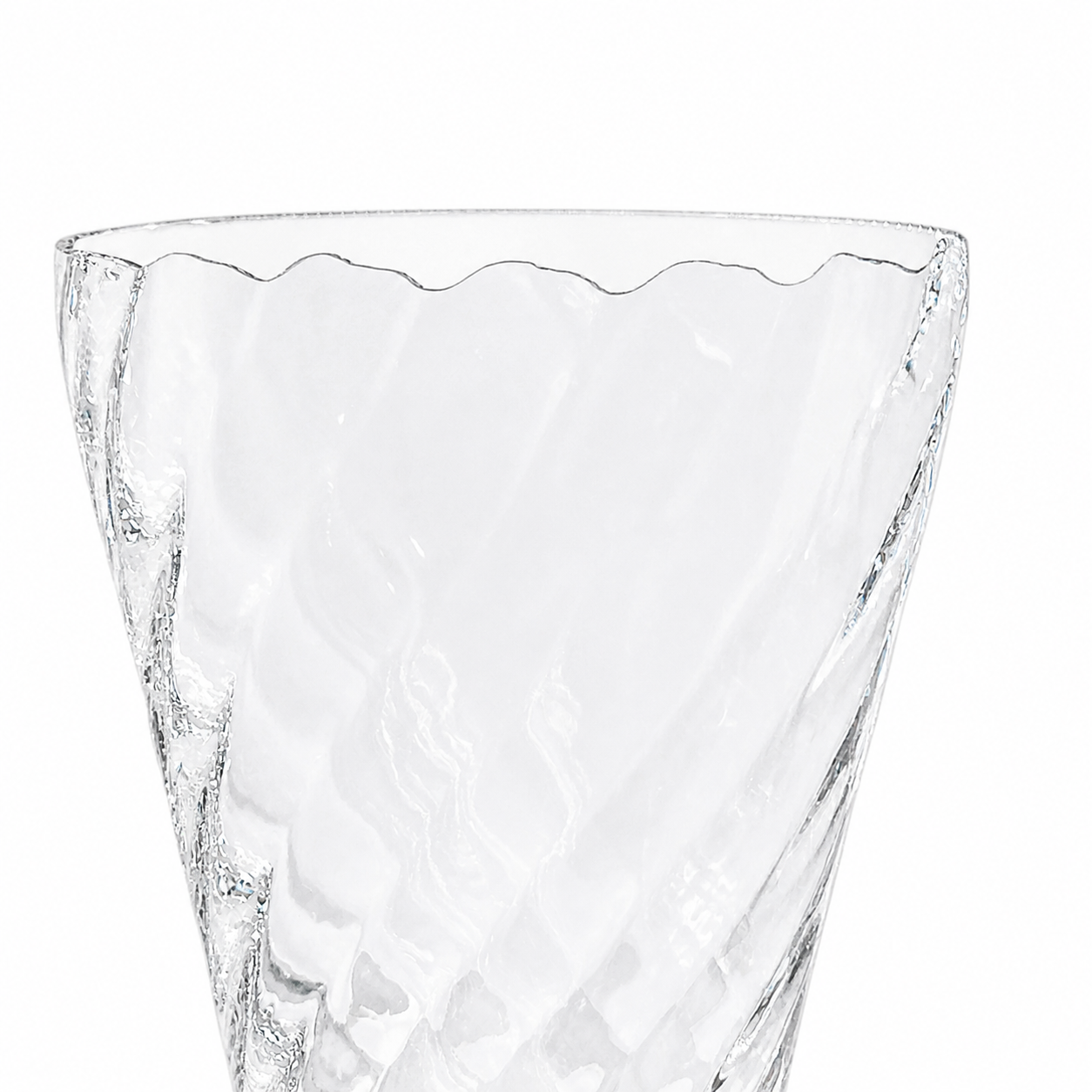
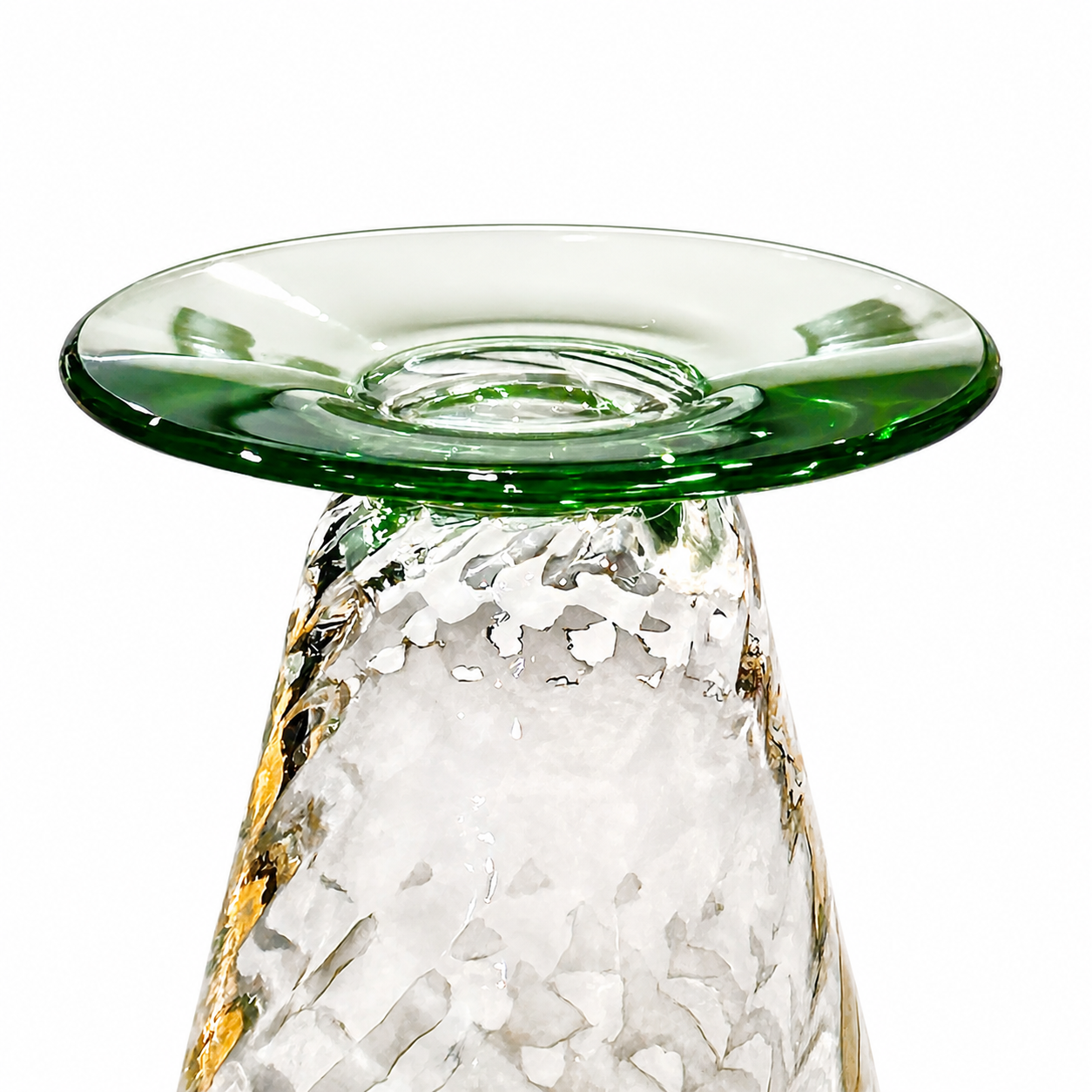
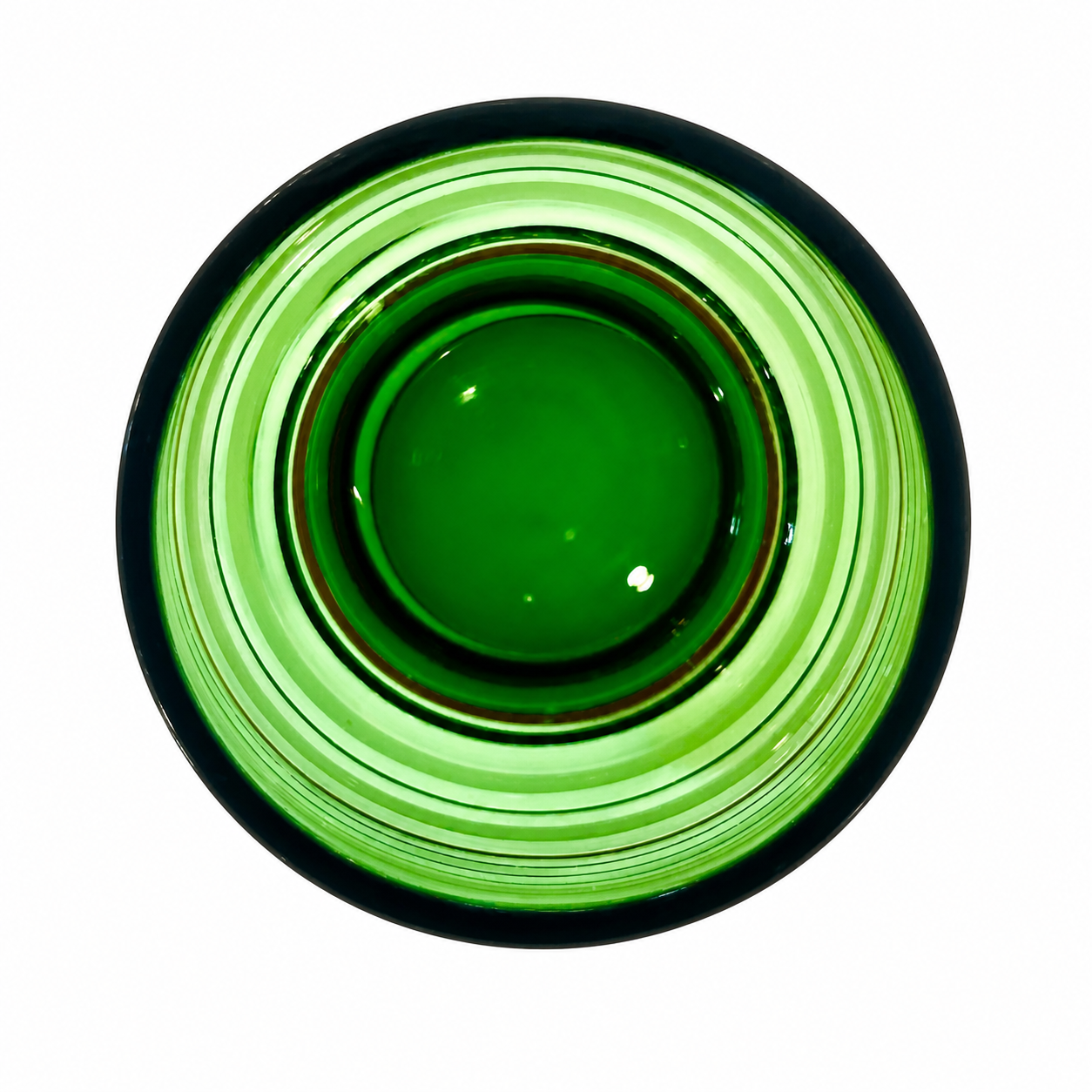
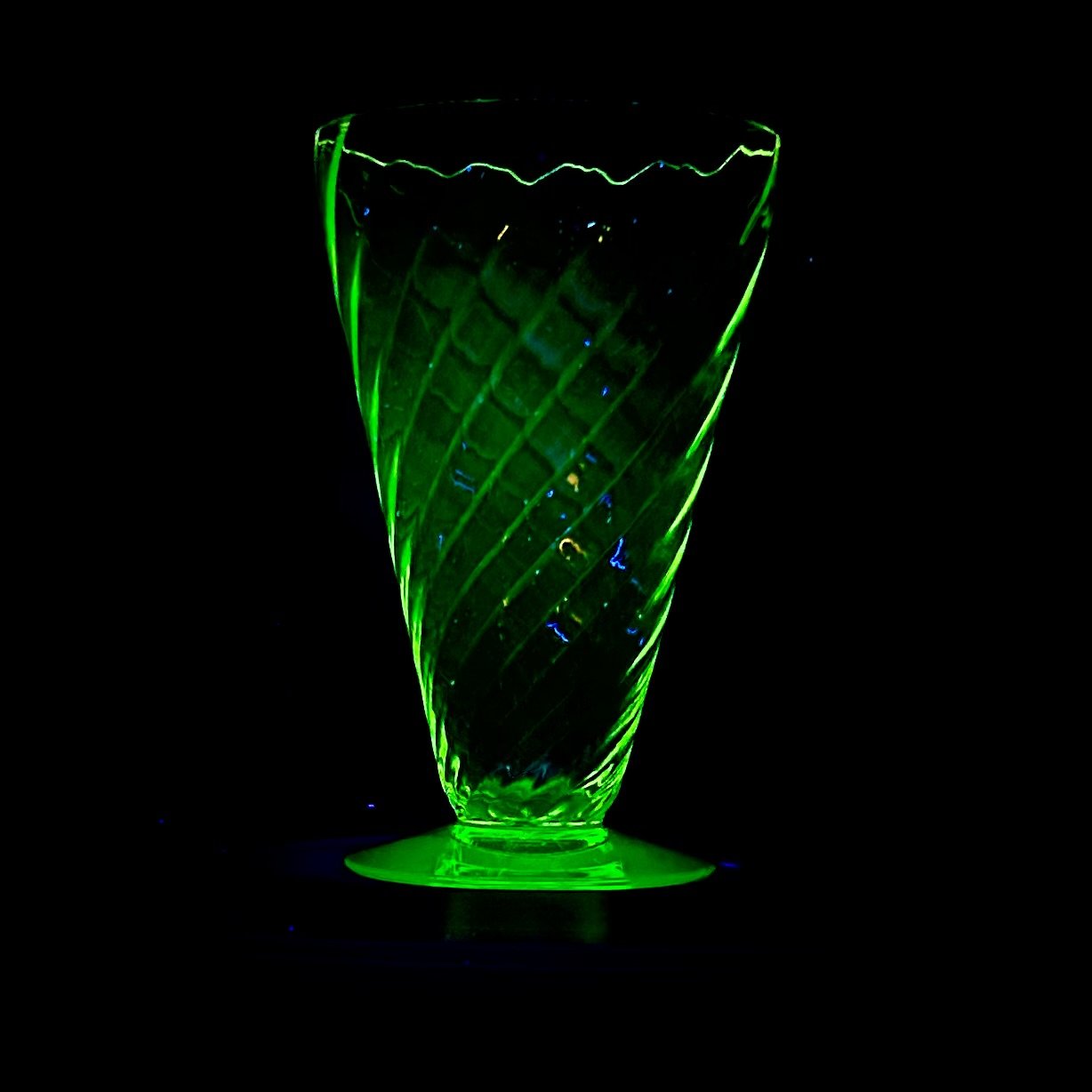
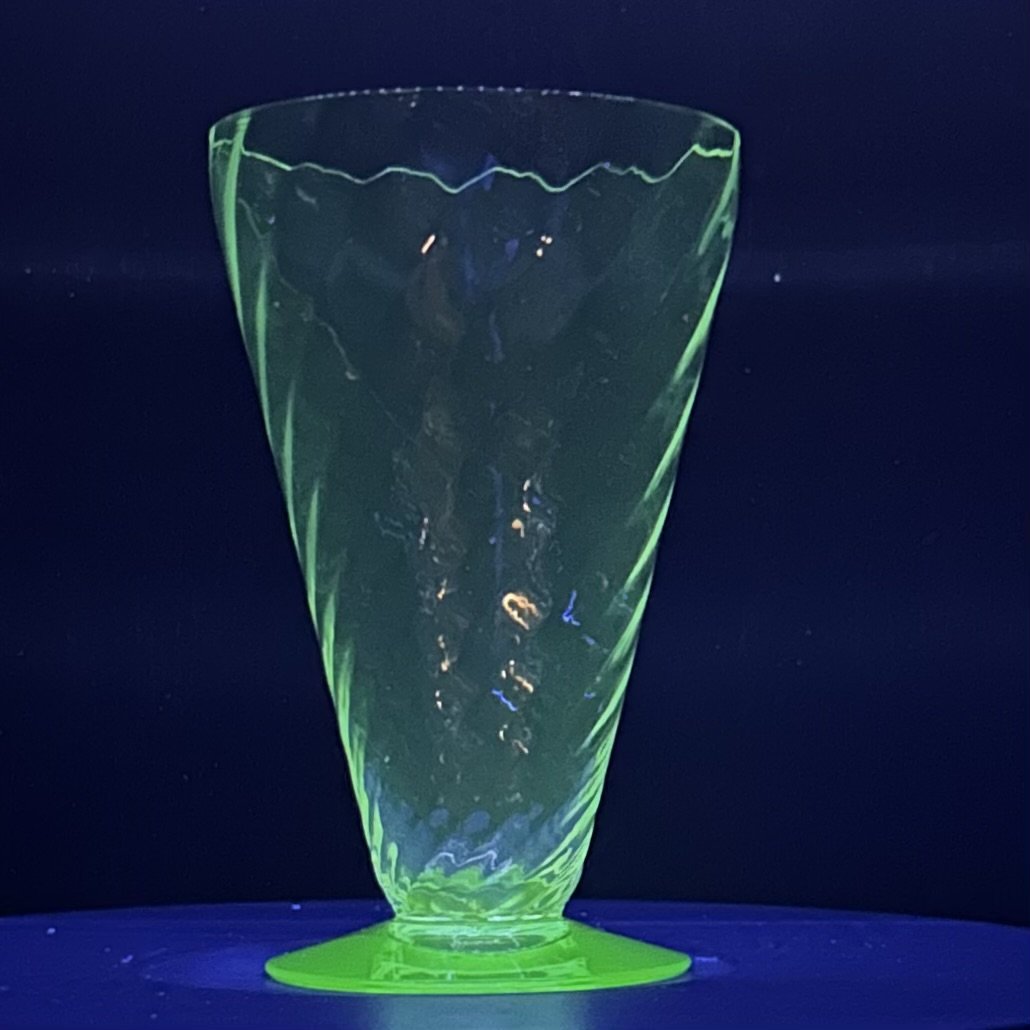
Striking early 20th century art glass vase distinguished by a dramatic organic silhouette and luminous green cased glass body. The form rises from a softly squared base into a fluid, petal-like mouth with undulating scalloped edges that evoke natural botanical movement.
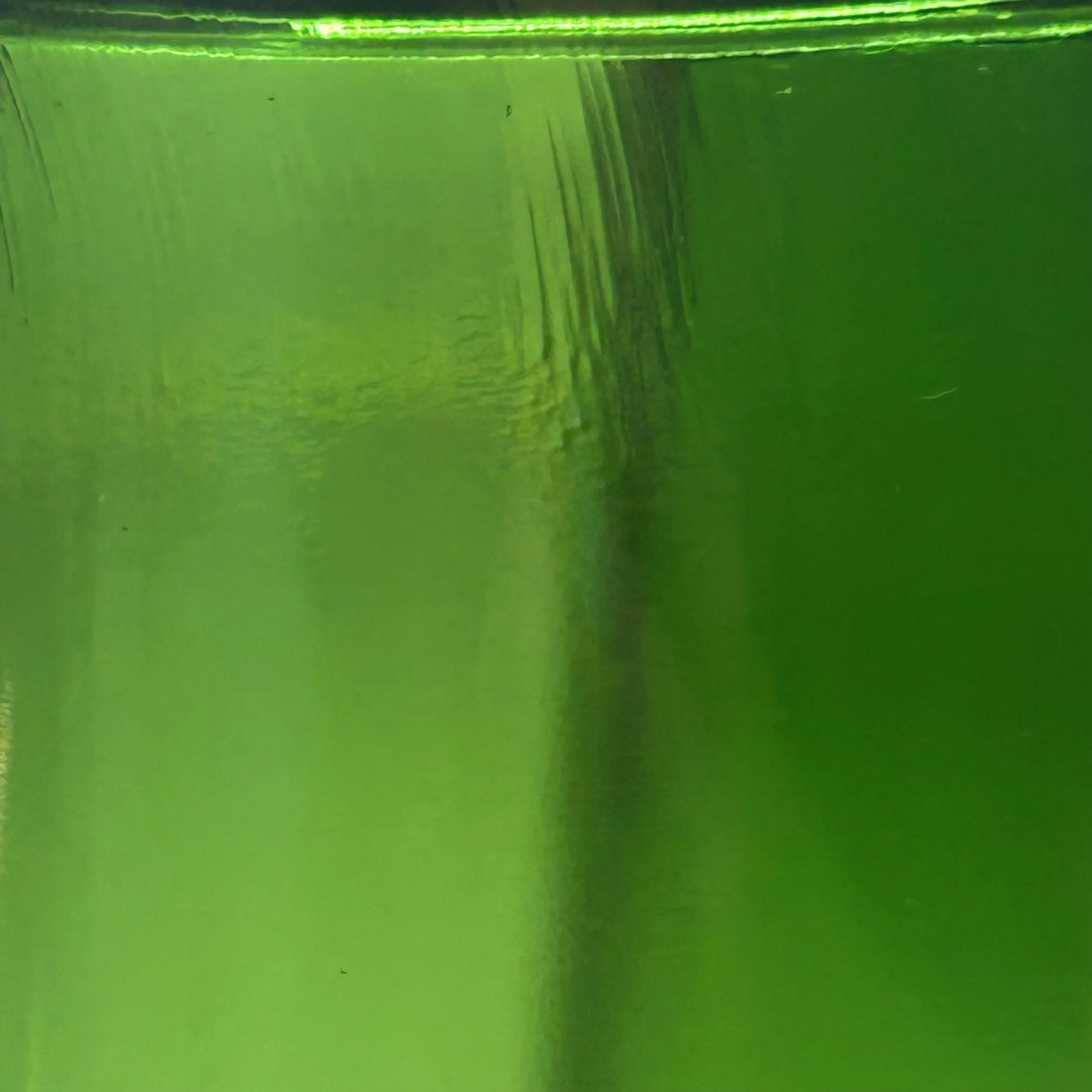
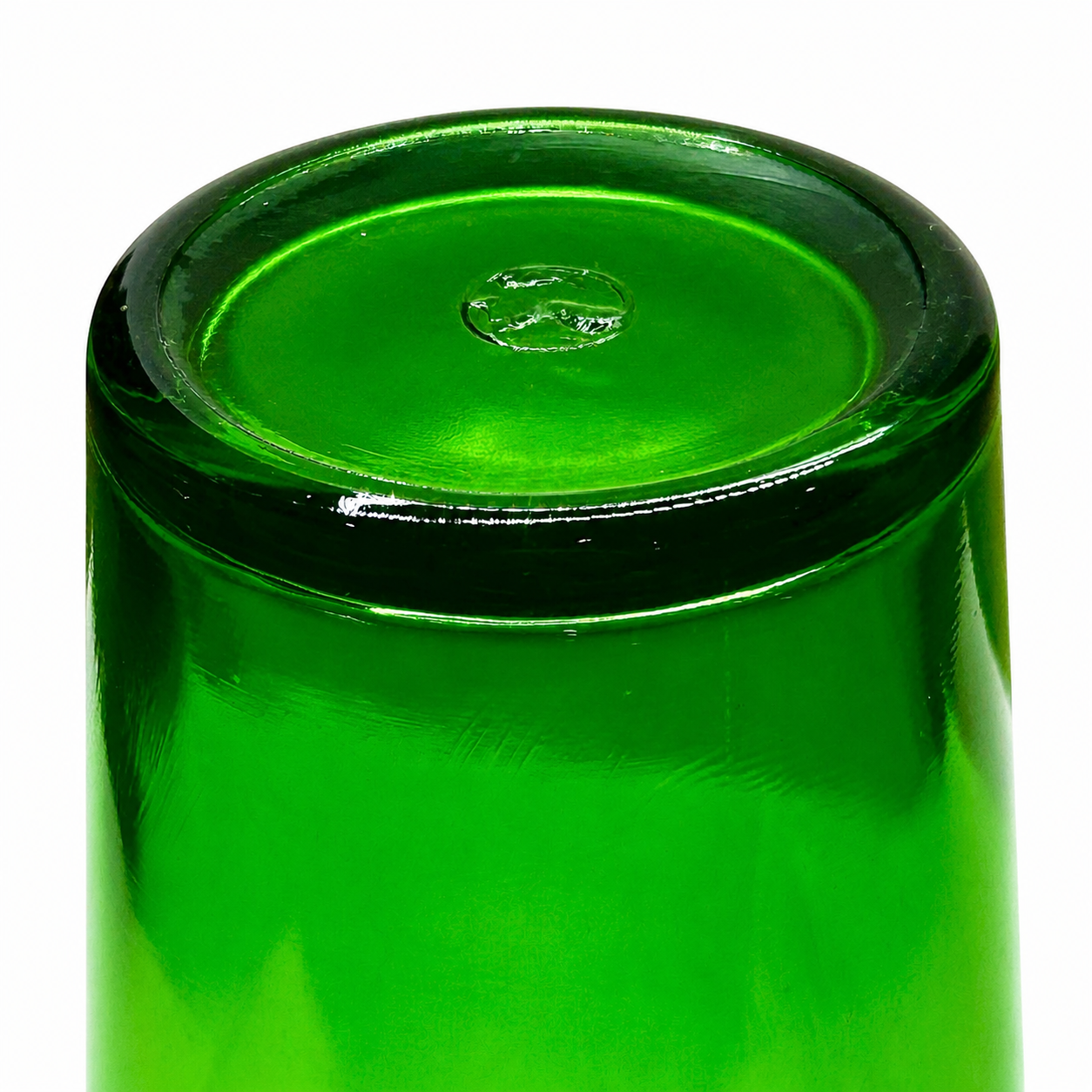
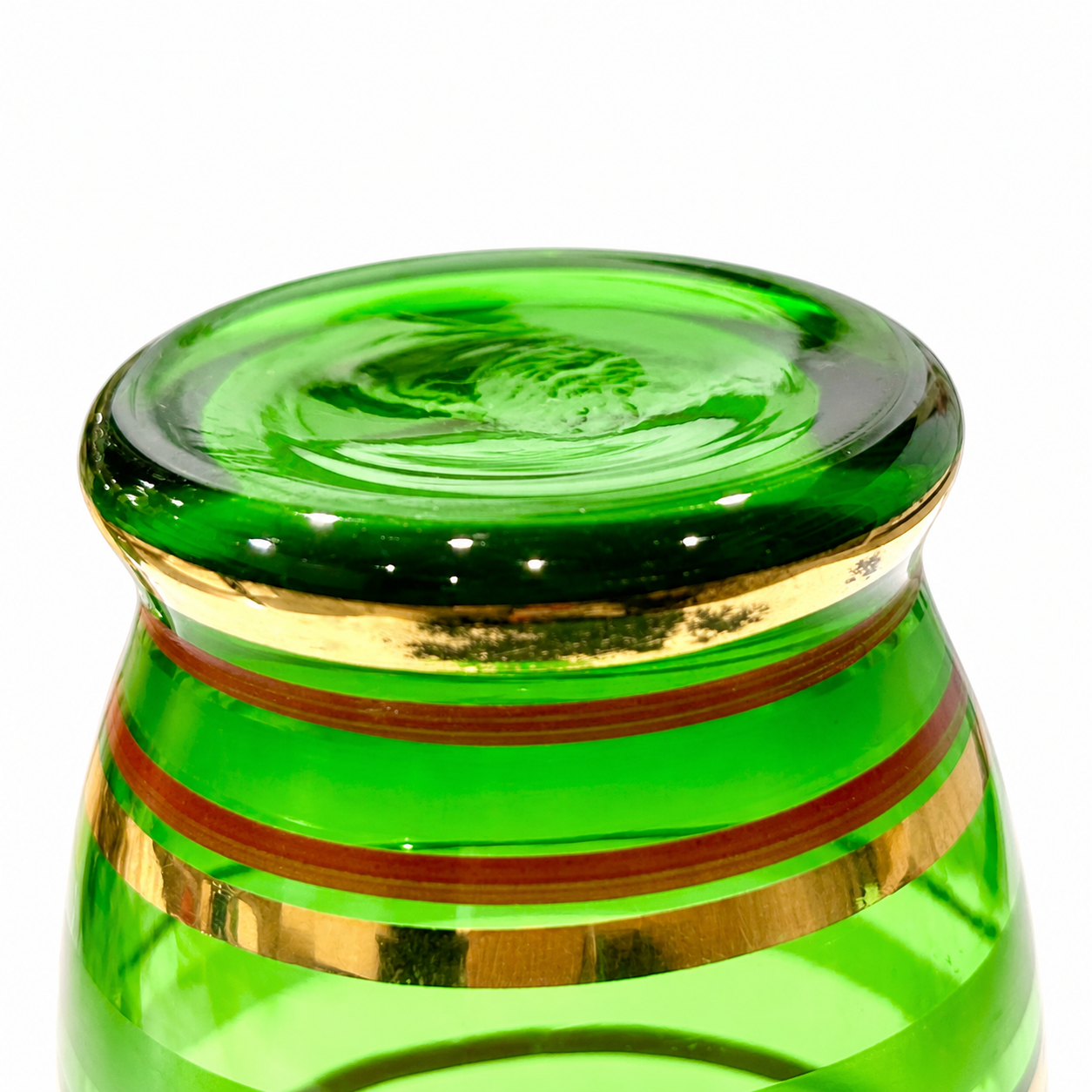
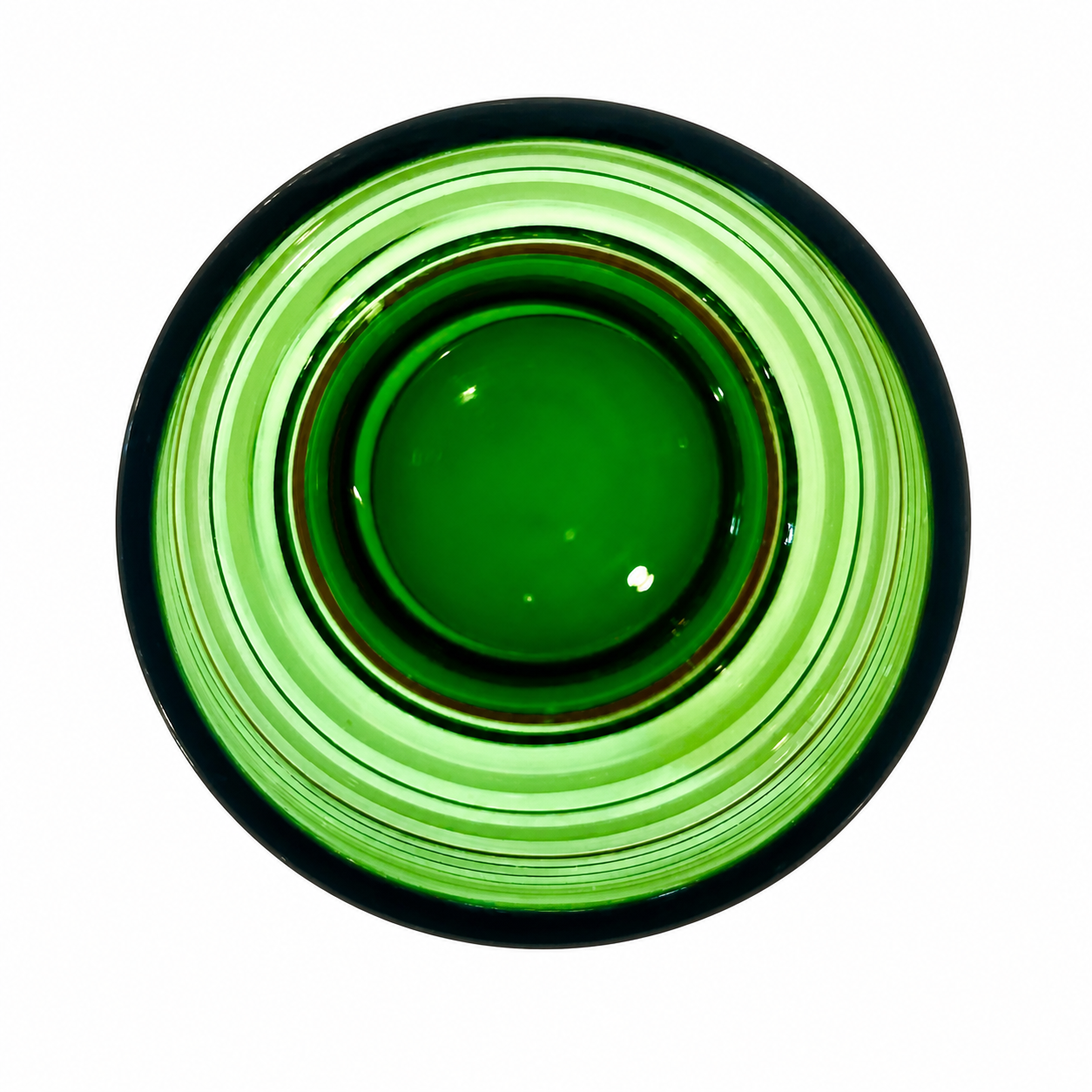
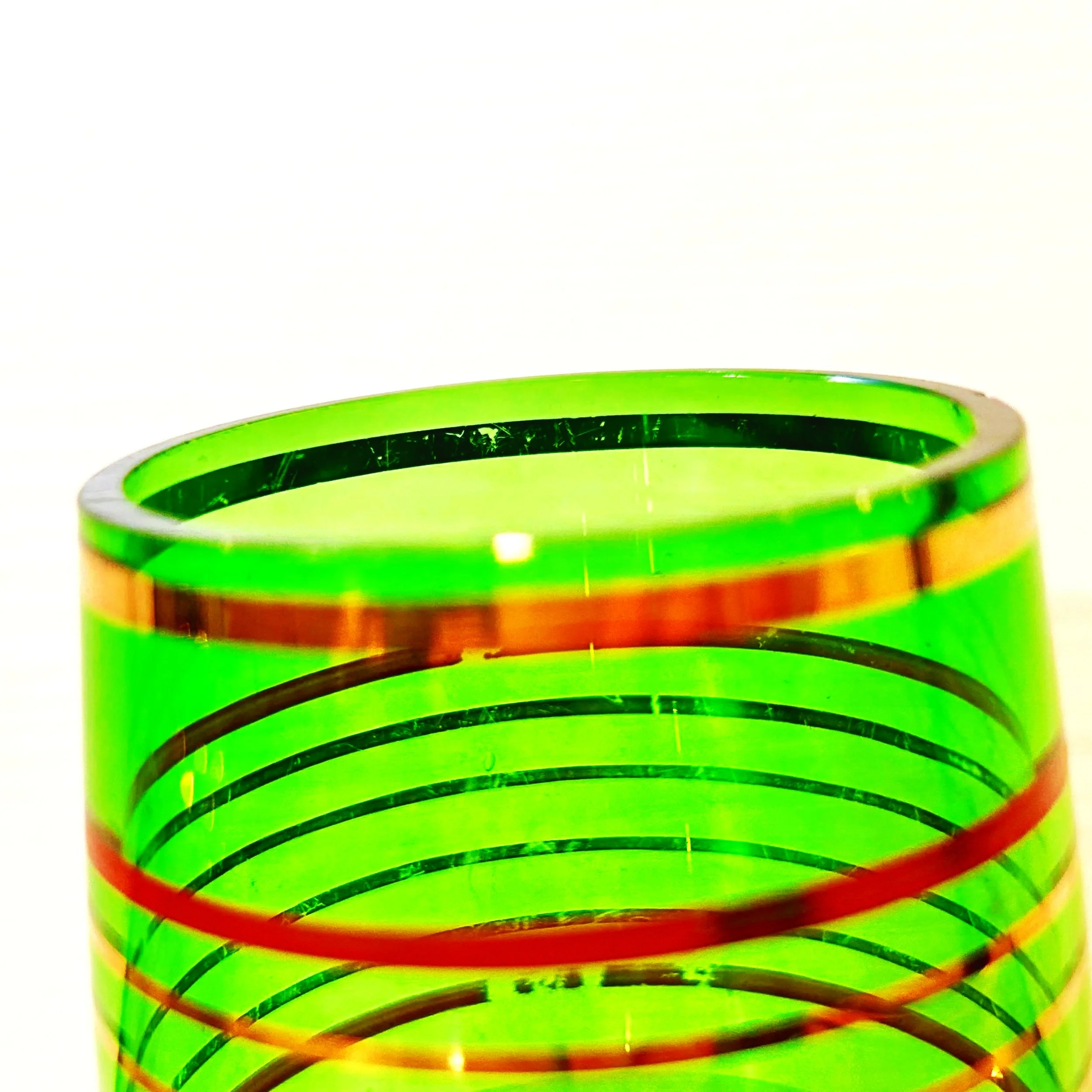
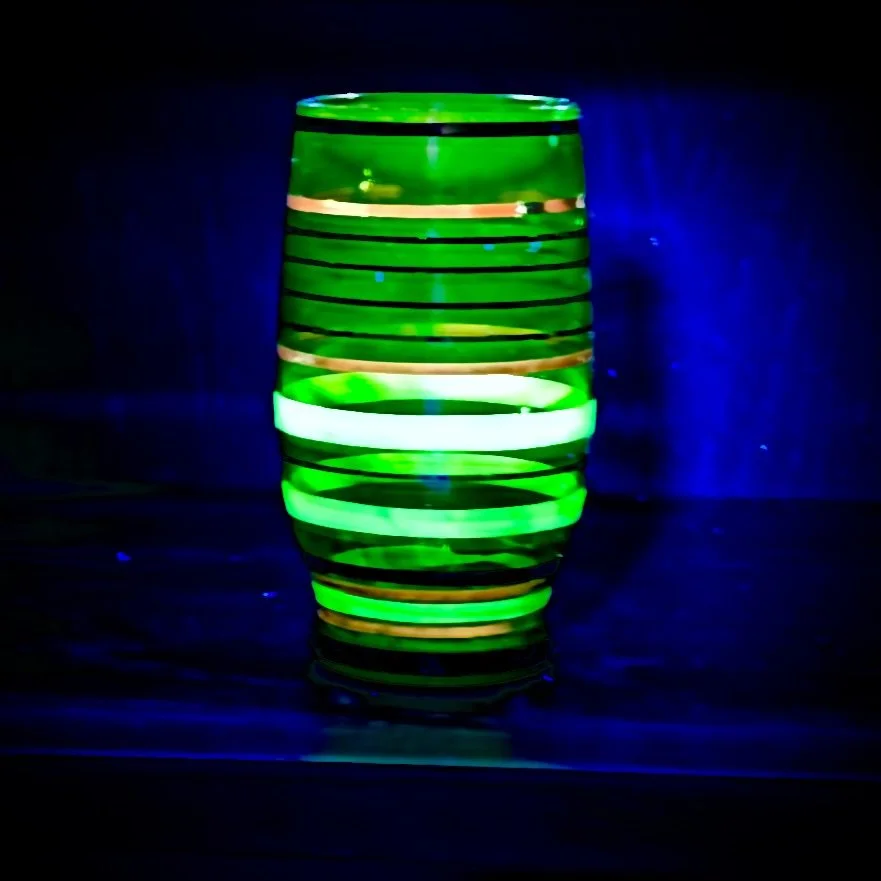
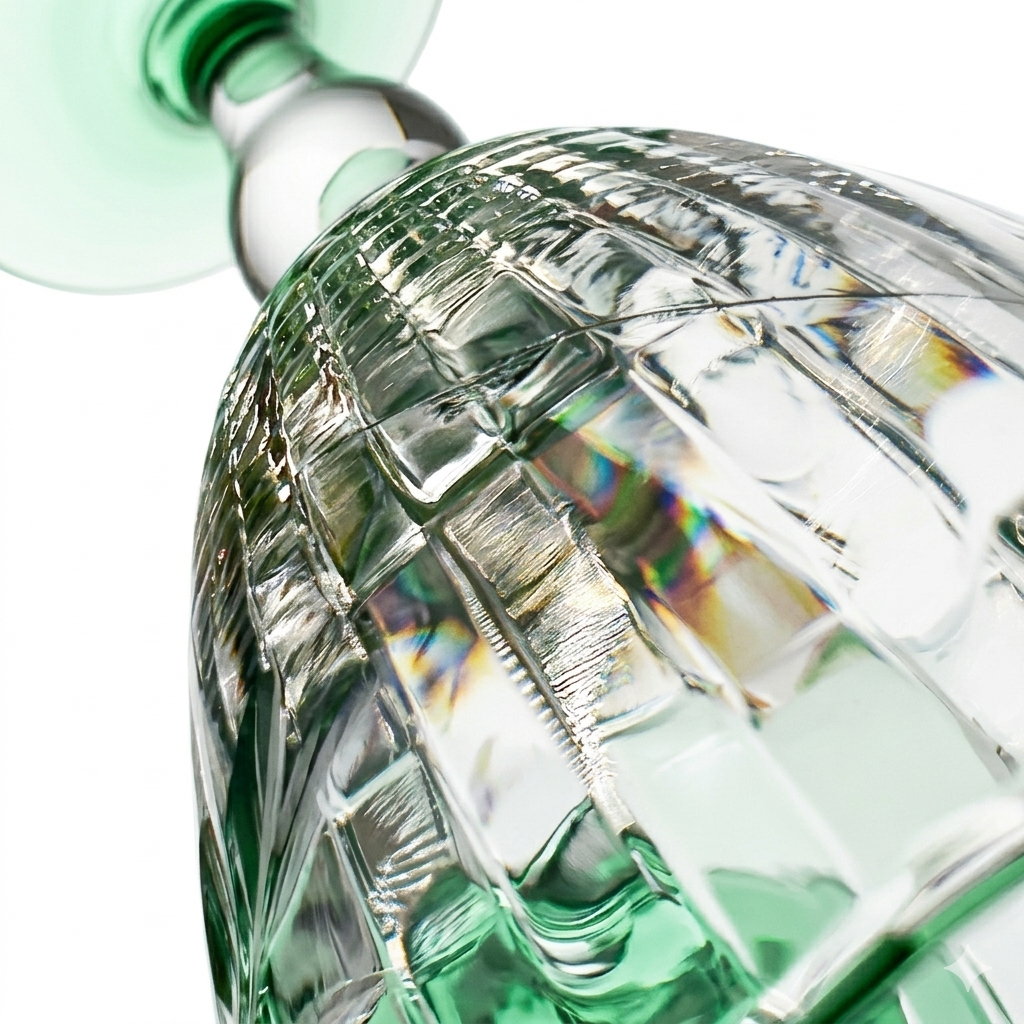
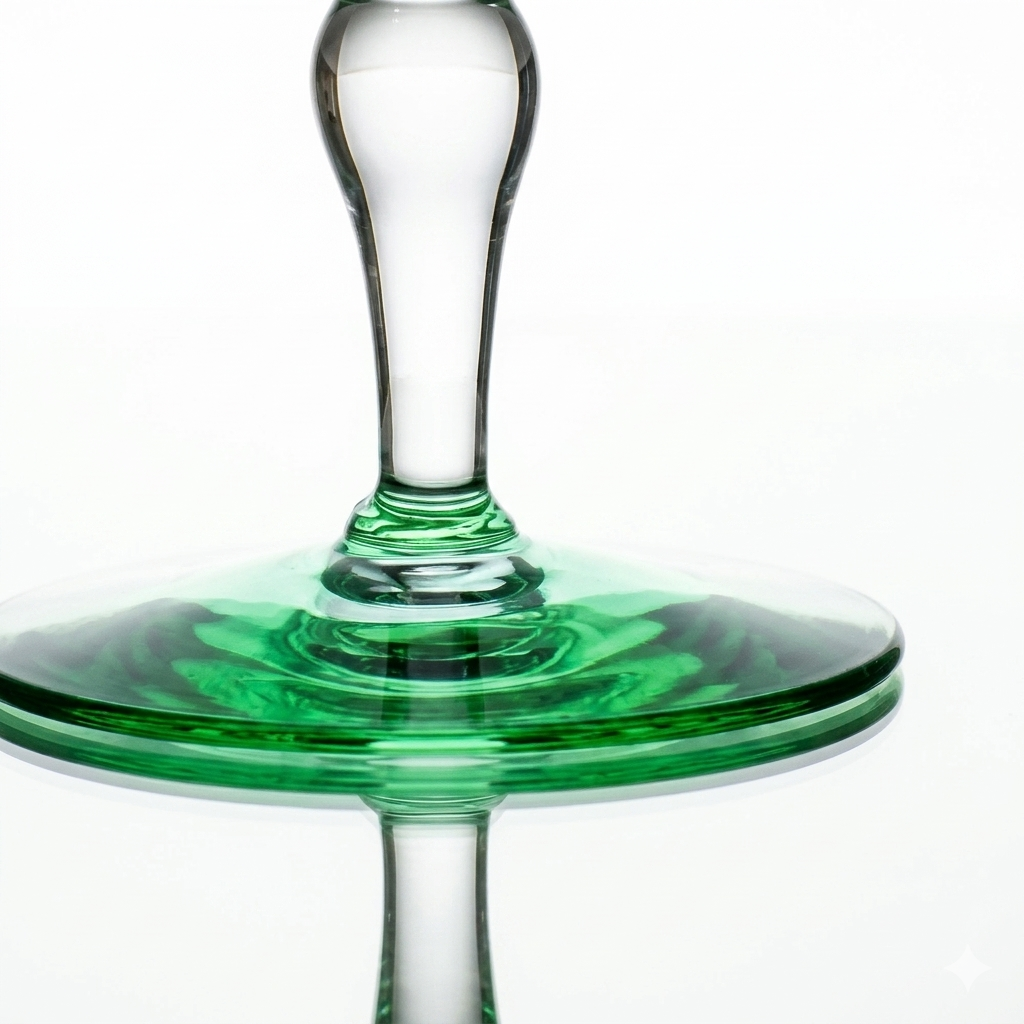
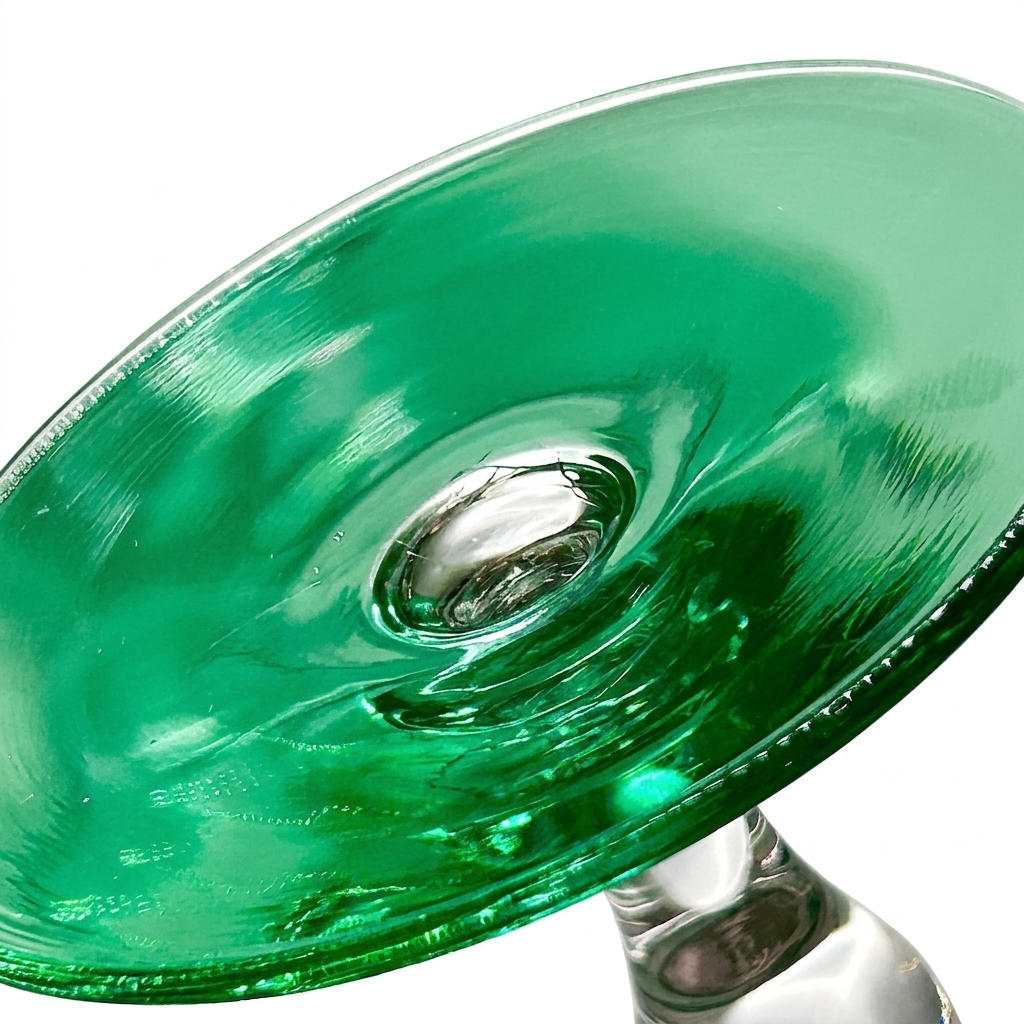
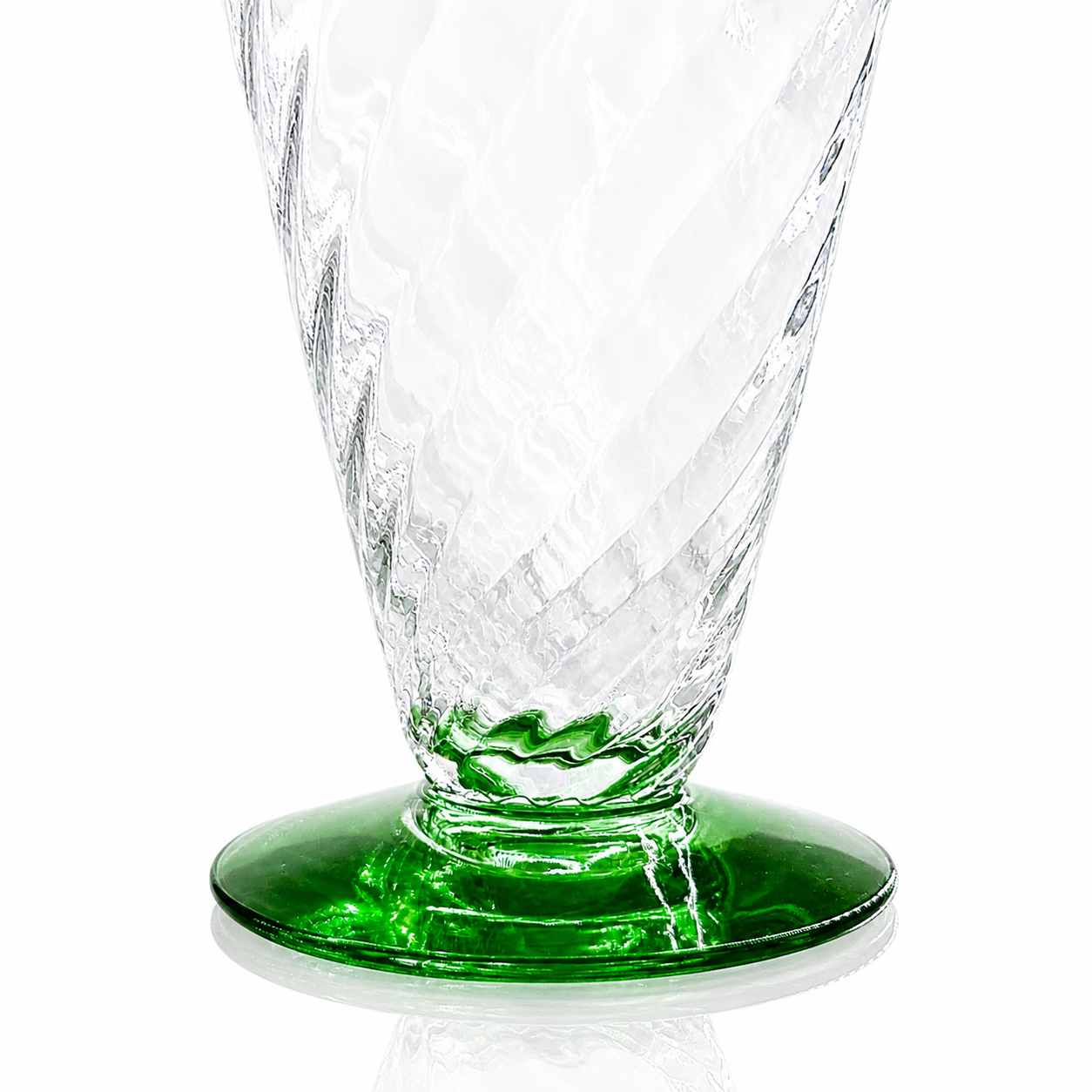
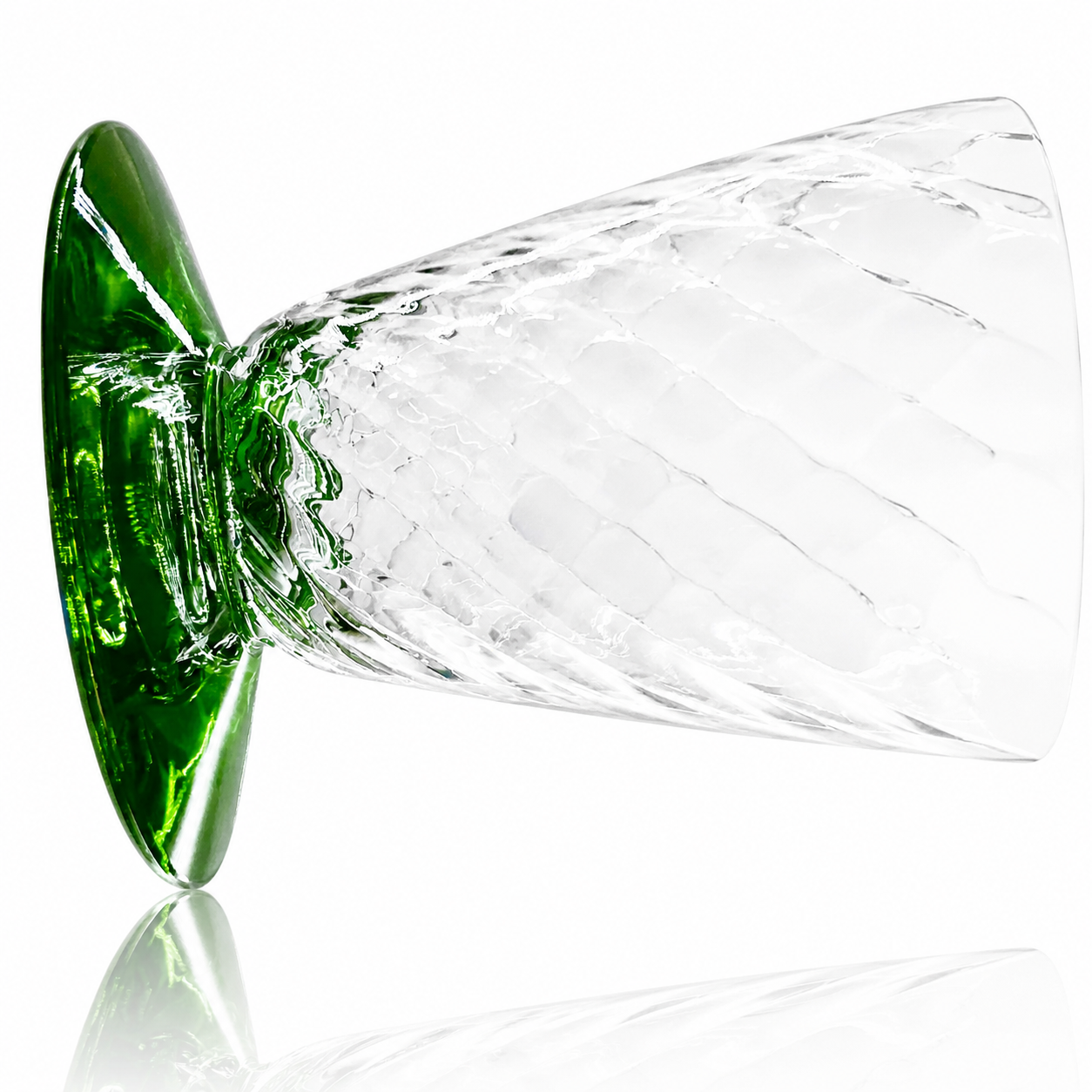
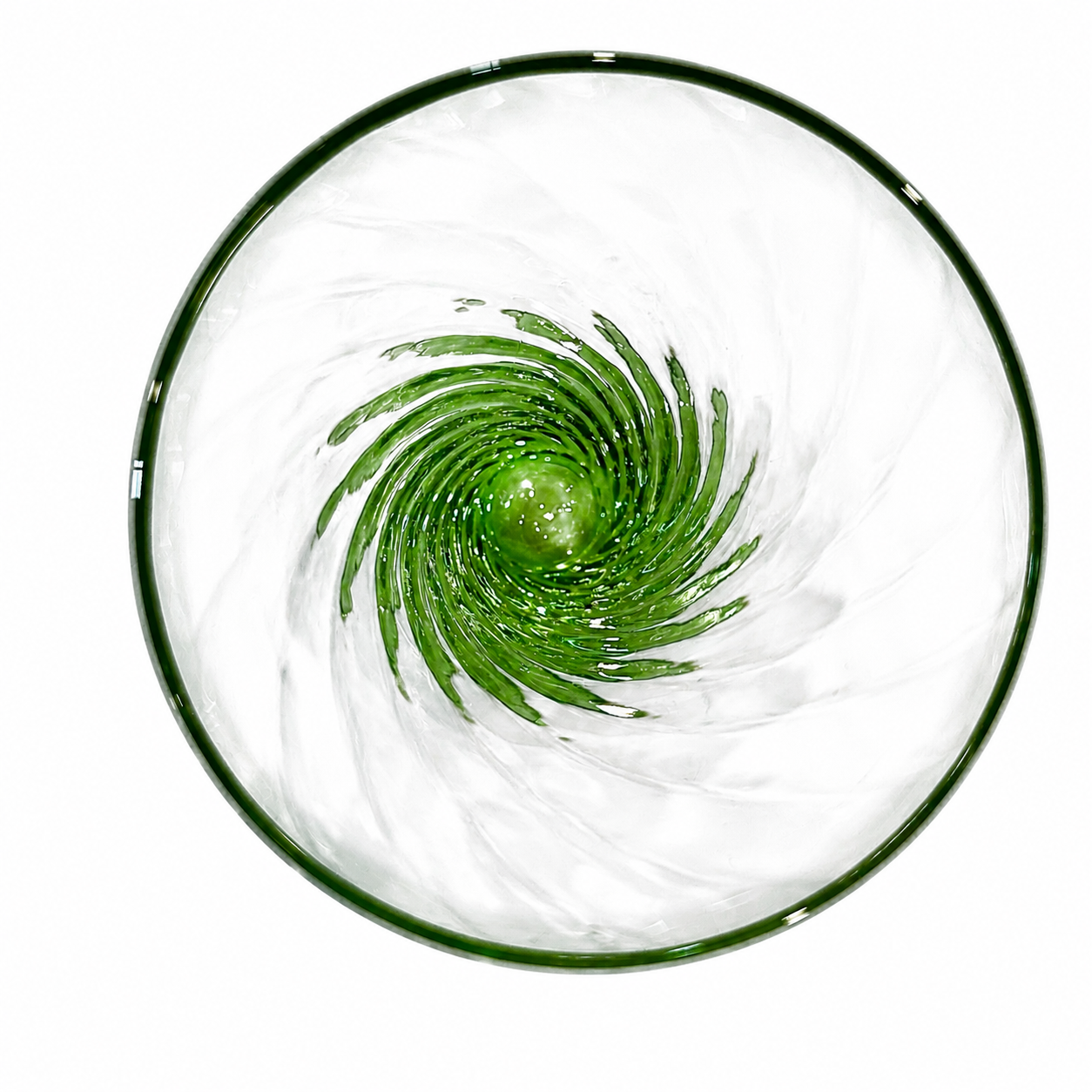
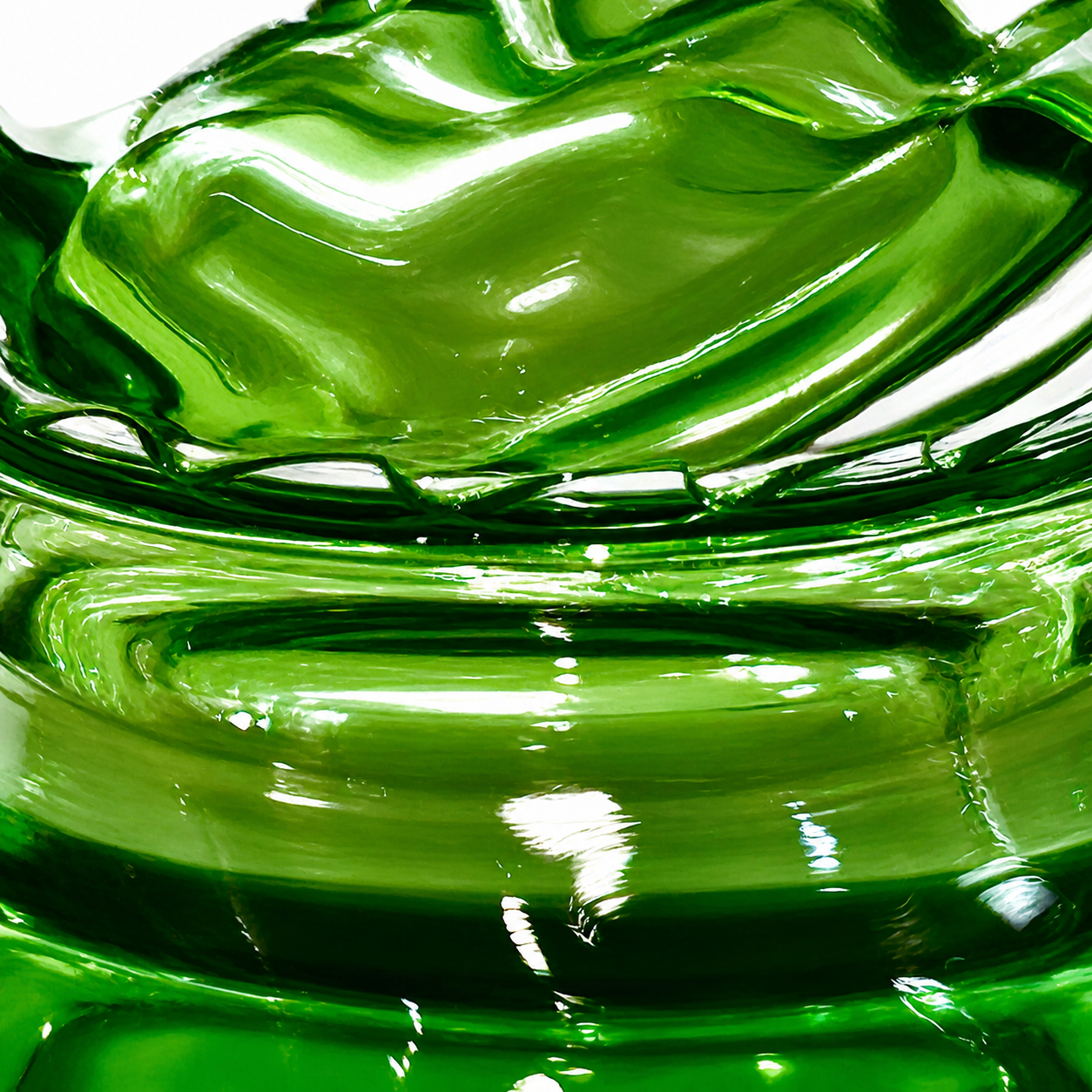
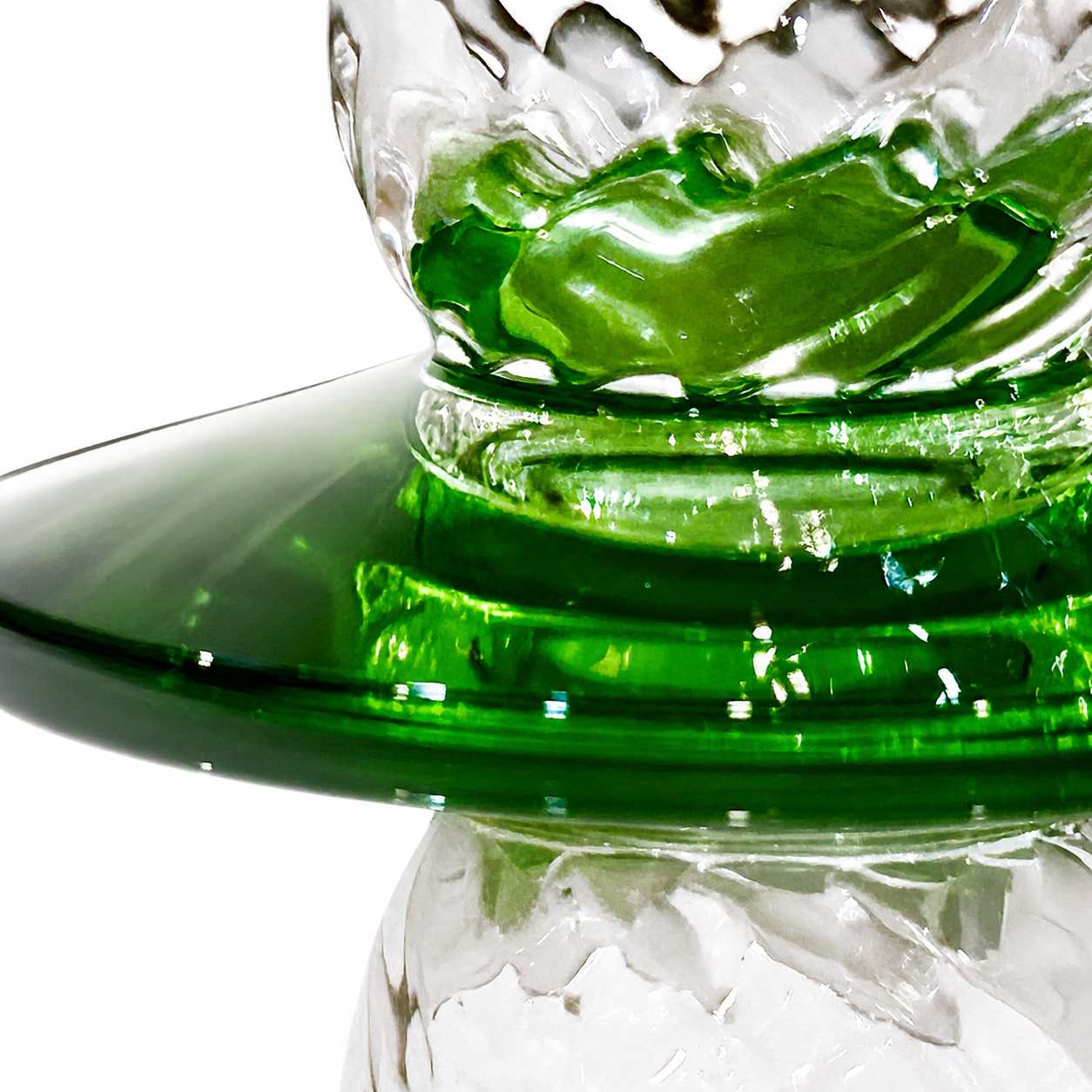
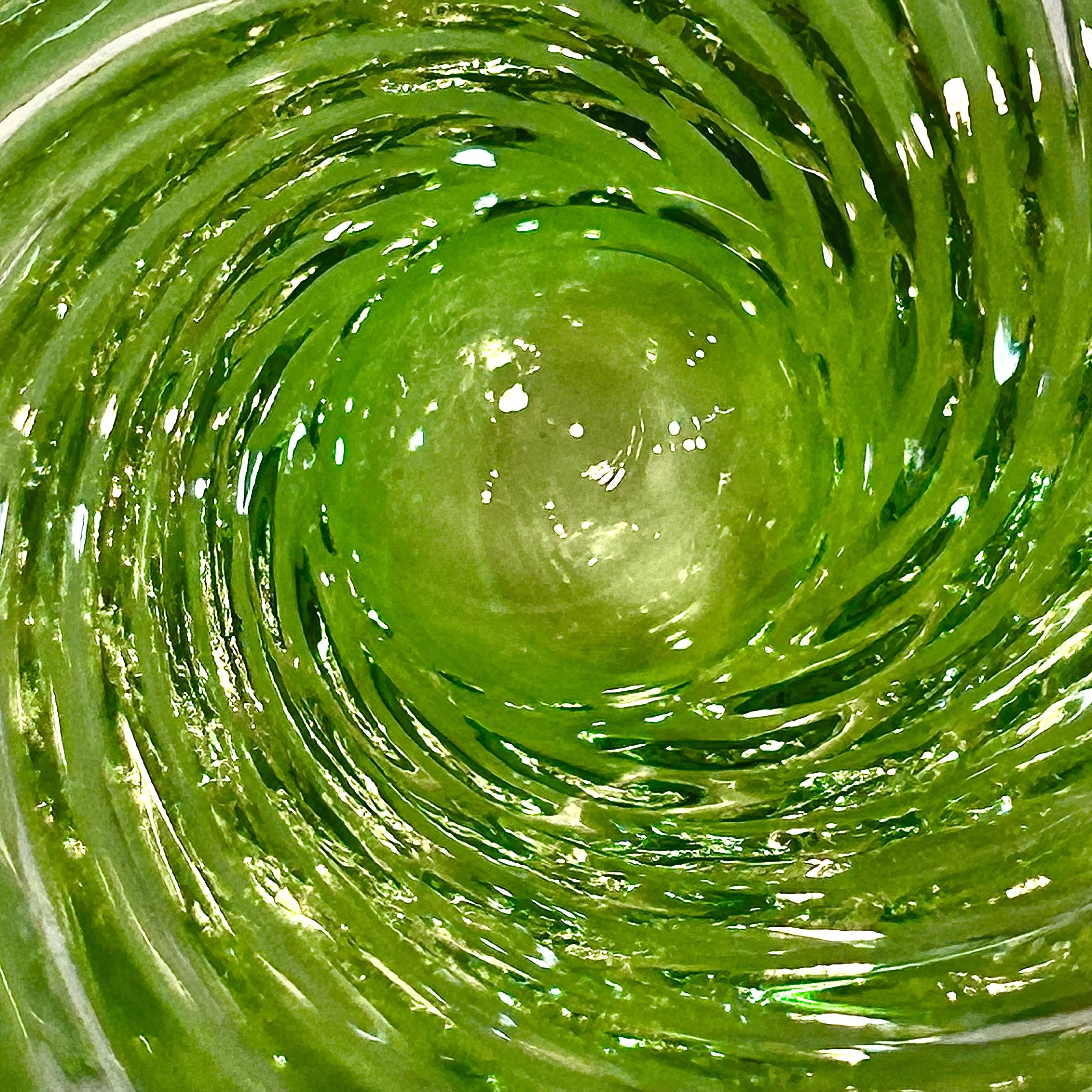
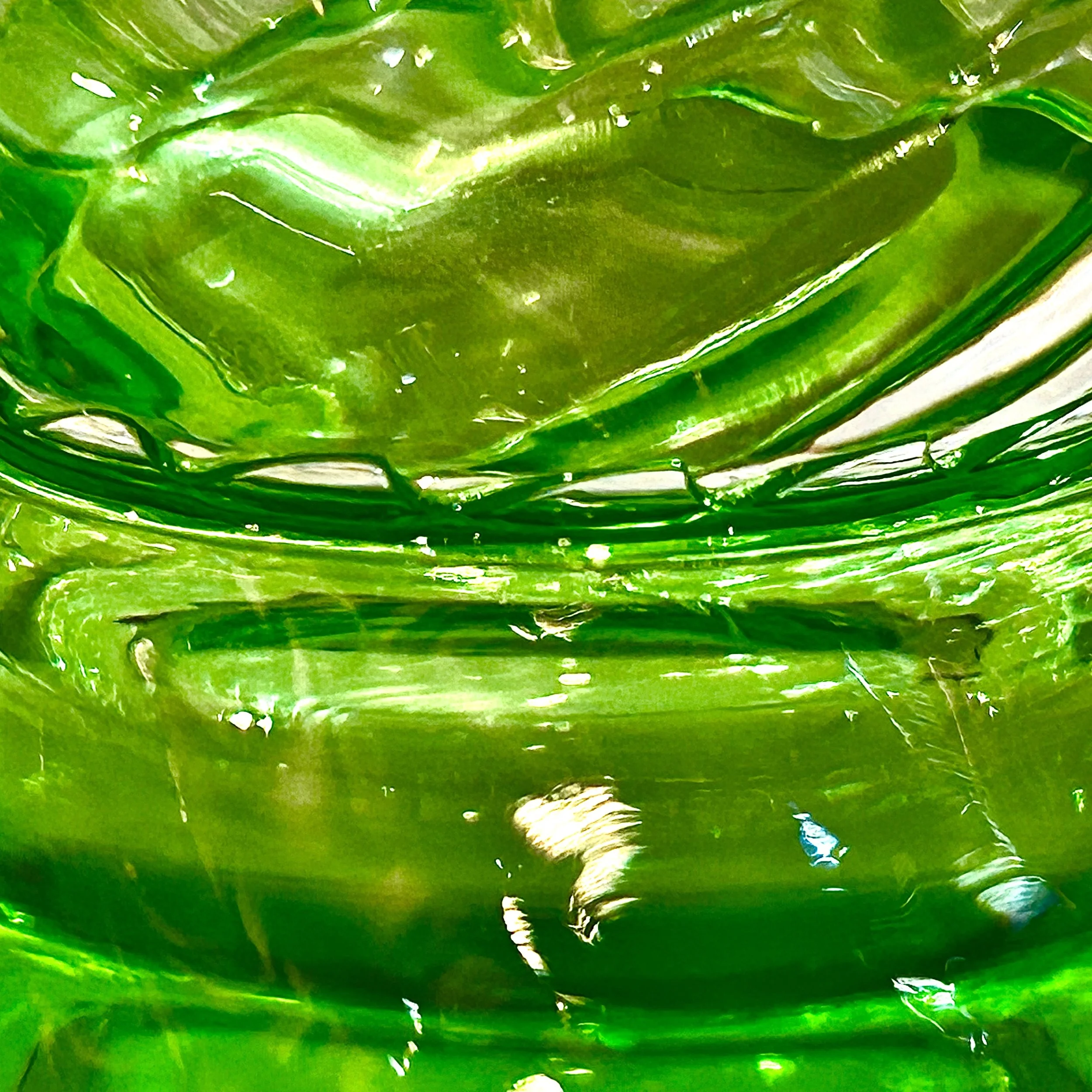
The glass displays a distinctive layered construction: a clear upper section transitions into a saturated emerald green base with a textured, effervescent bubble field suspended within the body. This internal texture creates remarkable depth and movement as light passes through the vessel, producing a shifting gradient from translucent crystal to rich green.
The surface reveals the subtle irregularities and character expected of hand-blown studio glass, including natural internal bubbles and flowing color transitions formed during the molten glass process. The sculptural rim folds and curls irregularly, giving the piece a strong presence whether displayed empty or holding stems.
The overall aesthetic aligns with early studio art glass traditions associated with European decorative glasshouses producing expressive organic forms in the early decades of the 20th century.
This example functions equally well as a vase, sculptural centerpiece, or illuminated decorative object where natural or artificial light can interact with the layered glass body.
Dimensions
Height: 8 in
Width: 5.25 in
Mouth Opening: 5.5 in
Weight: 2.342 lbs
Condition
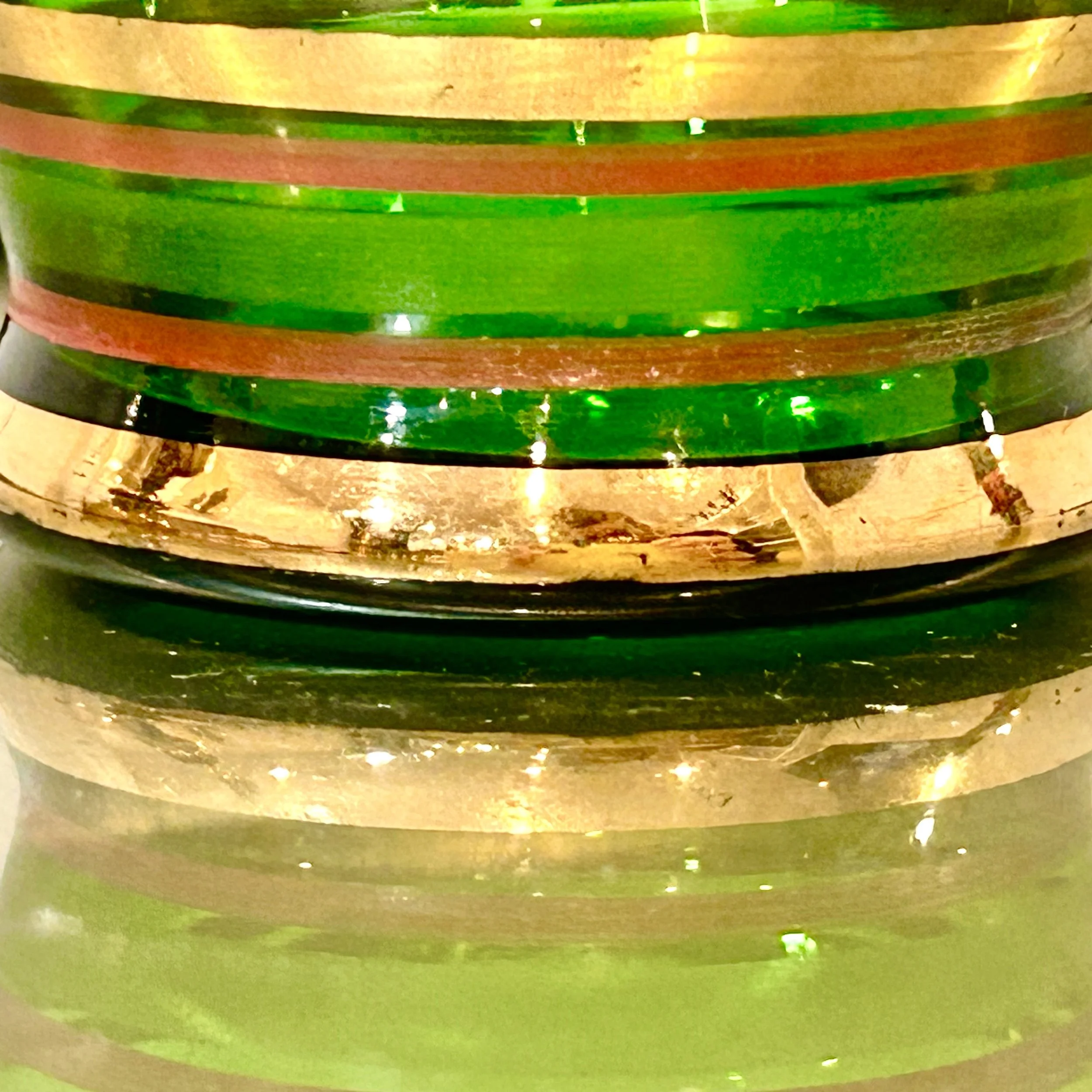
Excellent condition overall. The glass body is structurally sound with no cracks, chips, or repairs observed. The surface retains strong clarity and gloss consistent with well-preserved early art glass.
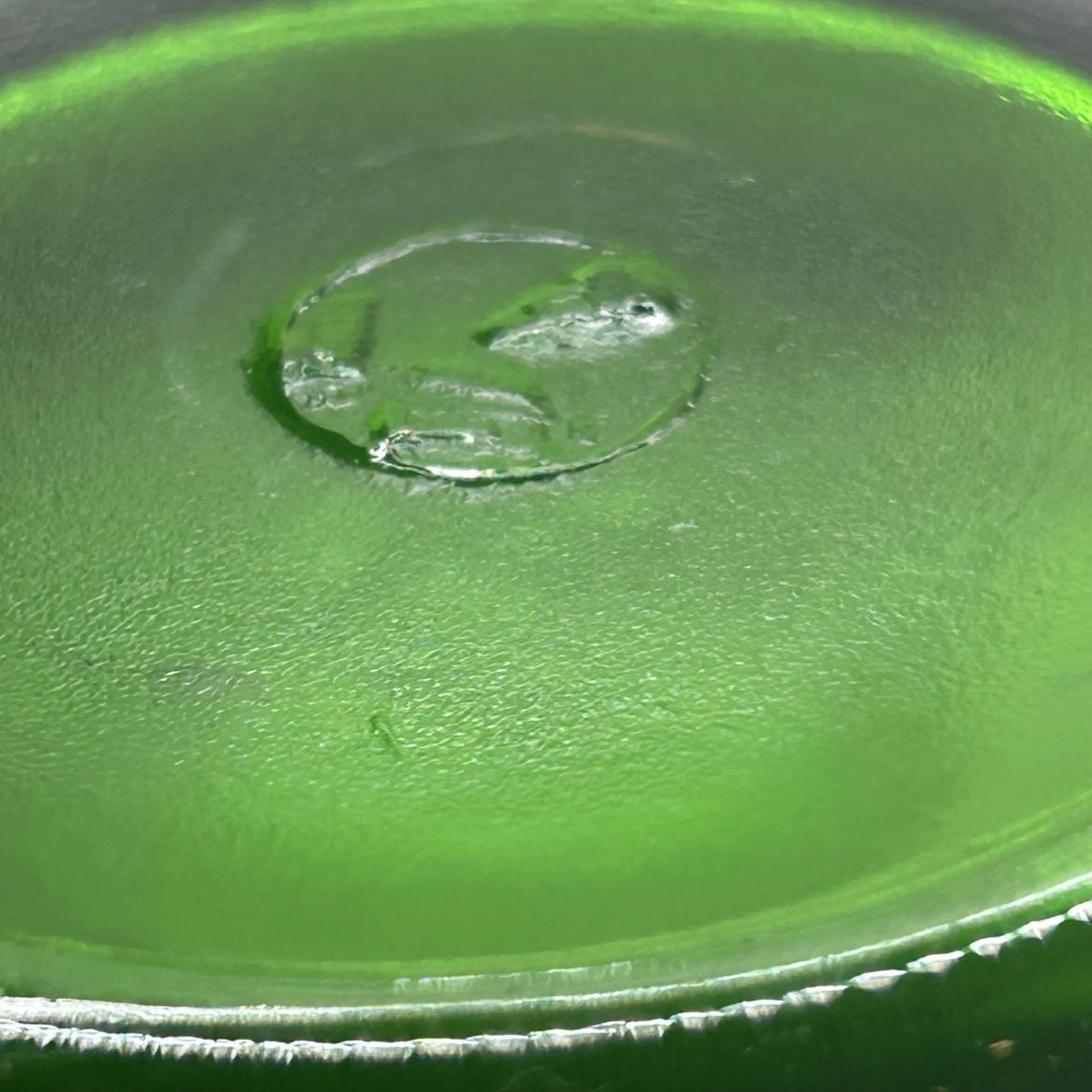
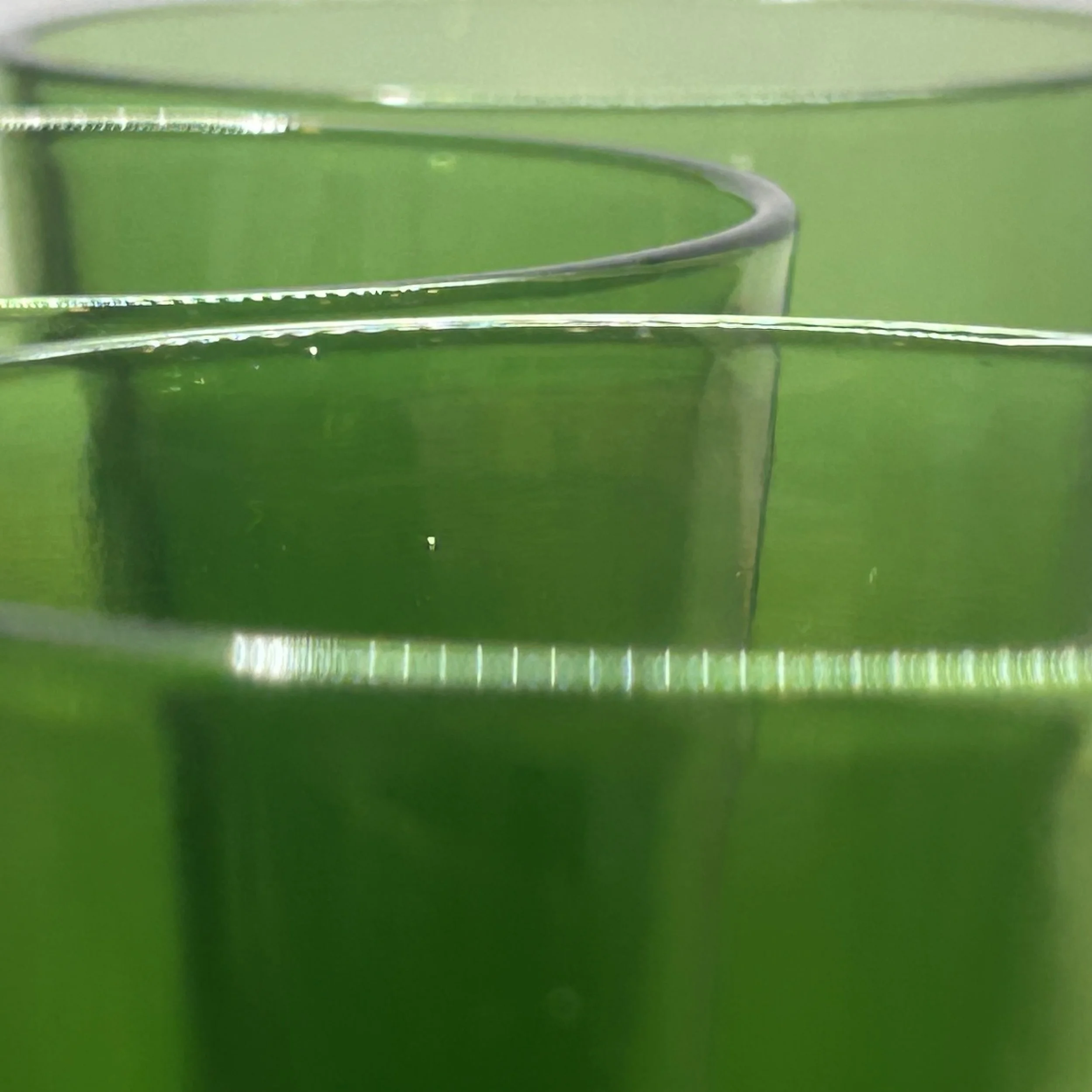
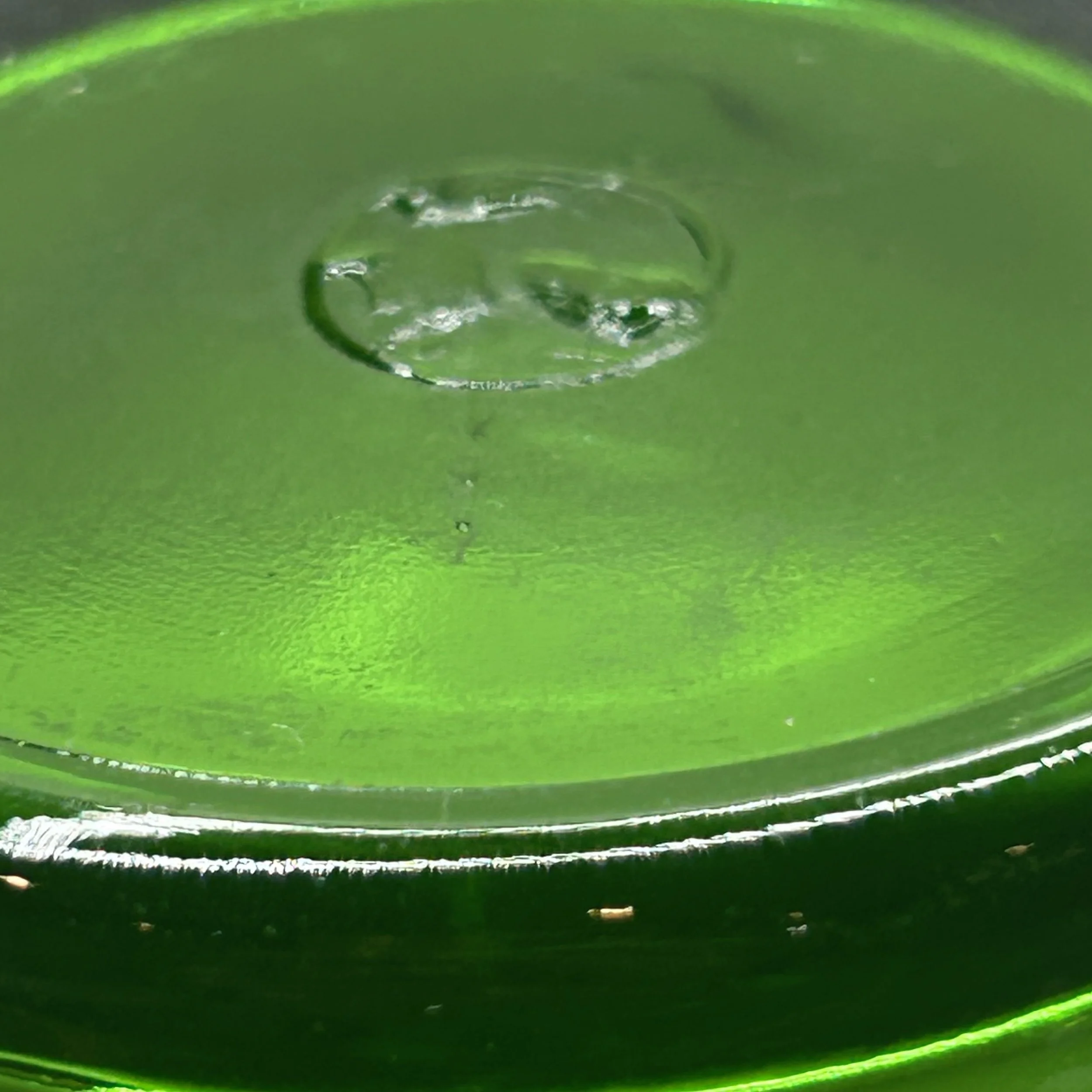
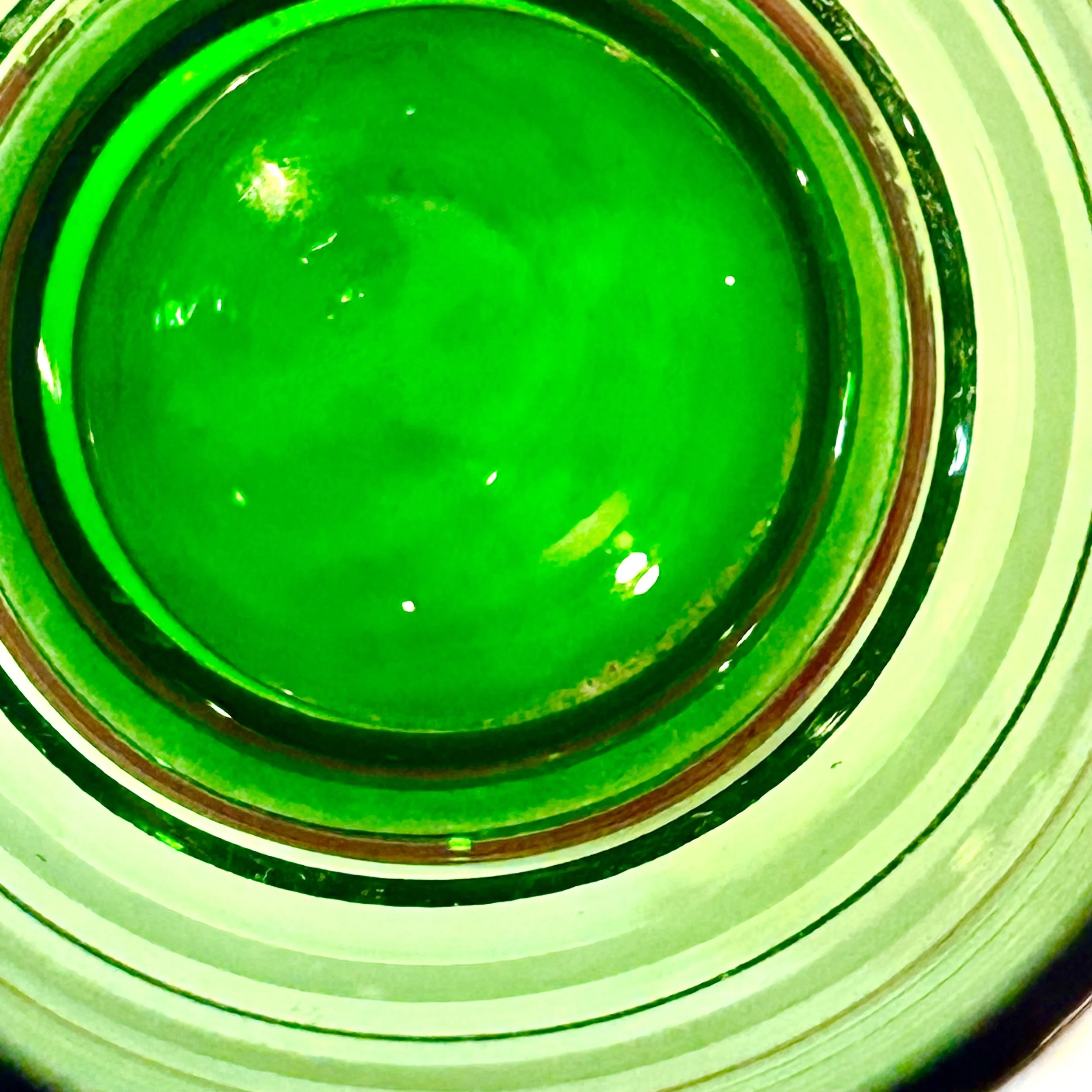
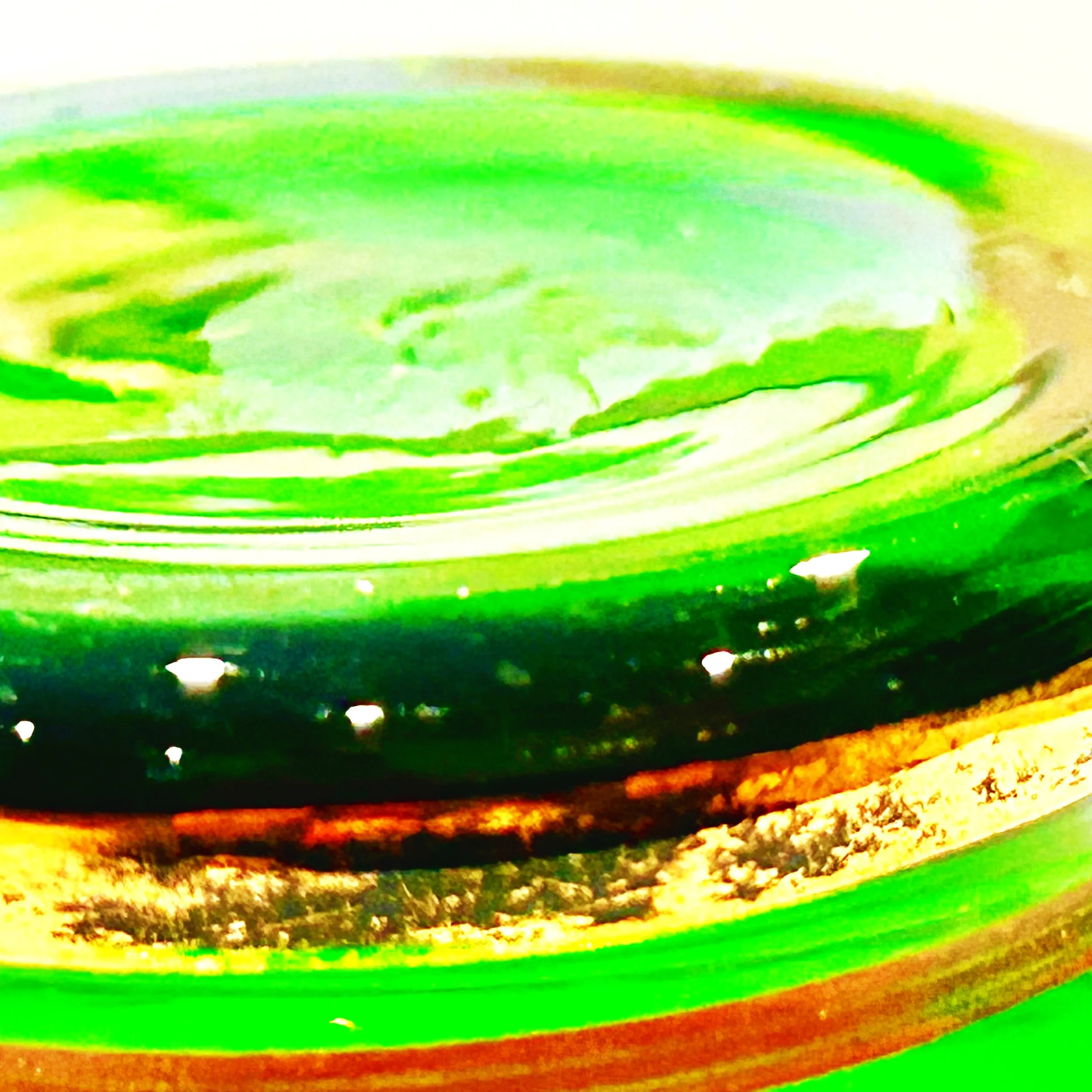
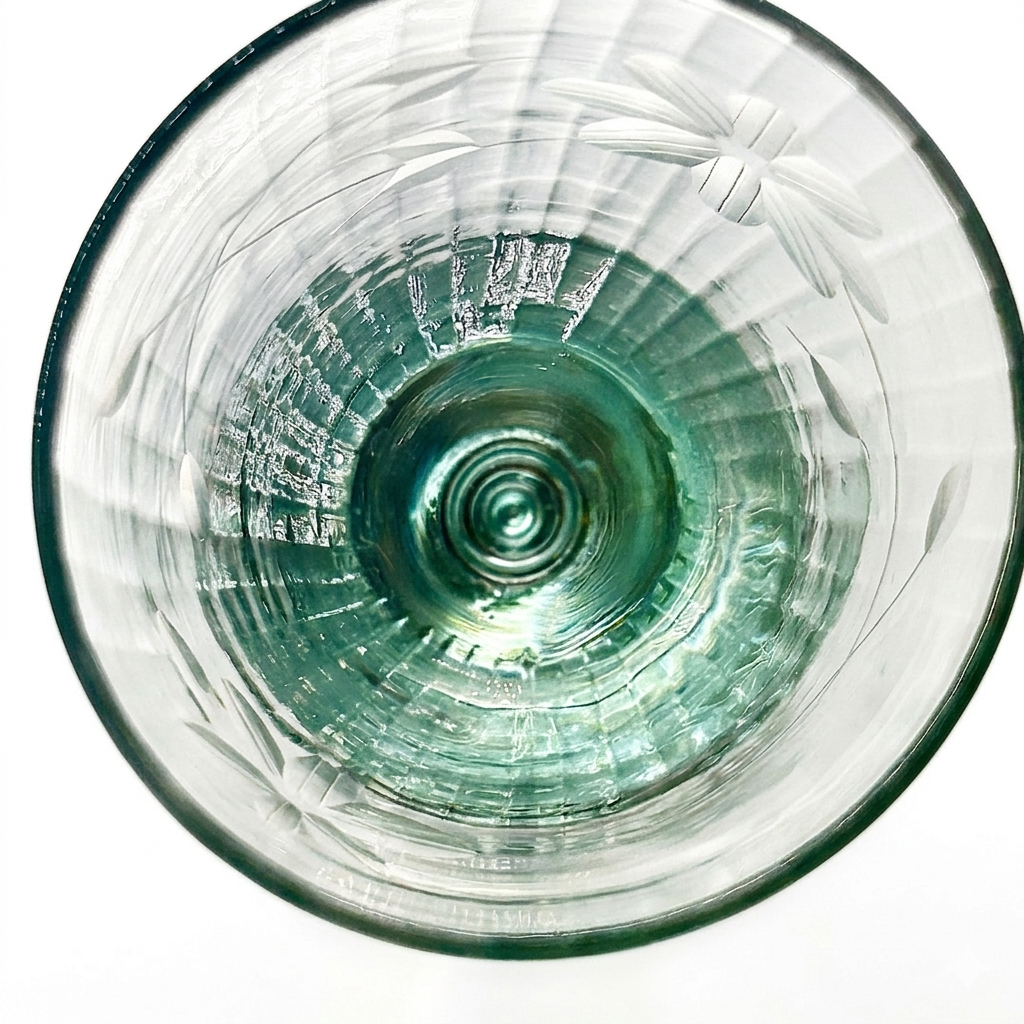
Minor areas of surface residue are present within the interior, visible in close inspection photographs as small brownish spots. These appear to be accumulated dirt or mineral residue rather than staining or damage. Some of this residue has responded to gentle soaking and light cleaning, indicating it is removable. Out of caution, further cleaning was not pursued to avoid unnecessary abrasion, leaving the option for a professional conservator or the future owner to complete cleaning if desired.
The presence of this light residue does not affect the structural integrity or display quality of the piece.
Attribution
Unmarked European art glass, early 20th century.
The hand-blown construction, organic rim treatment, internal bubble texture, and cased color gradient are consistent with decorative studio glass produced across several European glassmaking regions during the early modern decorative arts period. Without a factory mark, attribution remains stylistic rather than maker-specific.
Display Presence
This vase has strong sculptural character and reads almost like a frozen organic form. The undulating rim and luminous green base make it particularly effective when displayed near natural light or on a shelf where the internal bubble texture can interact with illumination.
Standard Attribution & Value Disclosure; This piece is described to the best of current scholarly and market knowledge. Any maker or regional attribution is based on visual analysis, materials, construction techniques, and stylistic comparisons. Definitive factory attribution may not be possible without original labels or archival documentation. Pricing reflects aesthetic quality, condition, decorative appeal, and collector demand rather than guaranteed manufacturer identification.
Striking early 20th century art glass vase distinguished by a dramatic organic silhouette and luminous green cased glass body. The form rises from a softly squared base into a fluid, petal-like mouth with undulating scalloped edges that evoke natural botanical movement.
The glass displays a distinctive layered construction: a clear upper section transitions into a saturated emerald green base with a textured, effervescent bubble field suspended within the body. This internal texture creates remarkable depth and movement as light passes through the vessel, producing a shifting gradient from translucent crystal to rich green.
The surface reveals the subtle irregularities and character expected of hand-blown studio glass, including natural internal bubbles and flowing color transitions formed during the molten glass process. The sculptural rim folds and curls irregularly, giving the piece a strong presence whether displayed empty or holding stems.
The overall aesthetic aligns with early studio art glass traditions associated with European decorative glasshouses producing expressive organic forms in the early decades of the 20th century.
This example functions equally well as a vase, sculptural centerpiece, or illuminated decorative object where natural or artificial light can interact with the layered glass body.
Dimensions
Height: 8 in
Width: 5.25 in
Mouth Opening: 5.5 in
Weight: 2.342 lbs
Condition
Excellent condition overall. The glass body is structurally sound with no cracks, chips, or repairs observed. The surface retains strong clarity and gloss consistent with well-preserved early art glass.
Minor areas of surface residue are present within the interior, visible in close inspection photographs as small brownish spots. These appear to be accumulated dirt or mineral residue rather than staining or damage. Some of this residue has responded to gentle soaking and light cleaning, indicating it is removable. Out of caution, further cleaning was not pursued to avoid unnecessary abrasion, leaving the option for a professional conservator or the future owner to complete cleaning if desired.
The presence of this light residue does not affect the structural integrity or display quality of the piece.
Attribution
Unmarked European art glass, early 20th century.
The hand-blown construction, organic rim treatment, internal bubble texture, and cased color gradient are consistent with decorative studio glass produced across several European glassmaking regions during the early modern decorative arts period. Without a factory mark, attribution remains stylistic rather than maker-specific.
Display Presence
This vase has strong sculptural character and reads almost like a frozen organic form. The undulating rim and luminous green base make it particularly effective when displayed near natural light or on a shelf where the internal bubble texture can interact with illumination.
Standard Attribution & Value Disclosure; This piece is described to the best of current scholarly and market knowledge. Any maker or regional attribution is based on visual analysis, materials, construction techniques, and stylistic comparisons. Definitive factory attribution may not be possible without original labels or archival documentation. Pricing reflects aesthetic quality, condition, decorative appeal, and collector demand rather than guaranteed manufacturer identification.

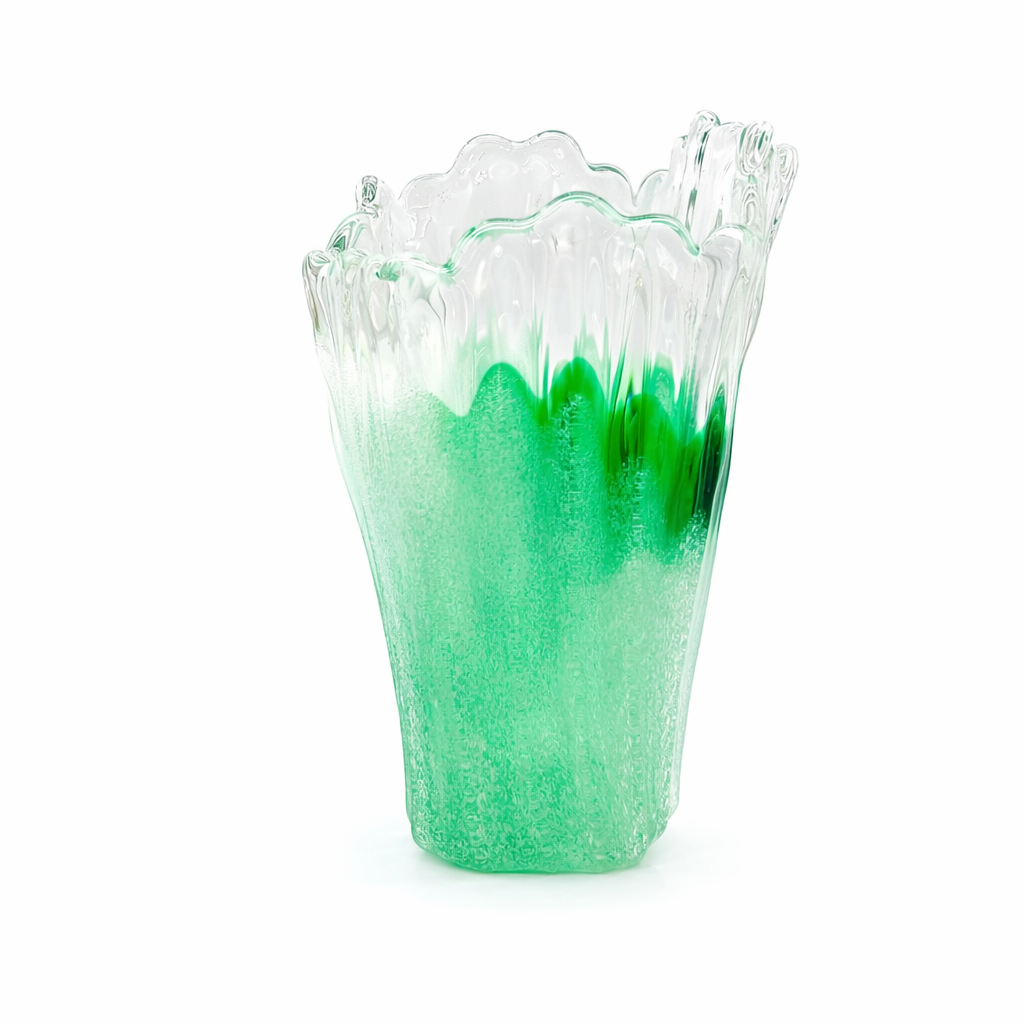 Image 1 of 23
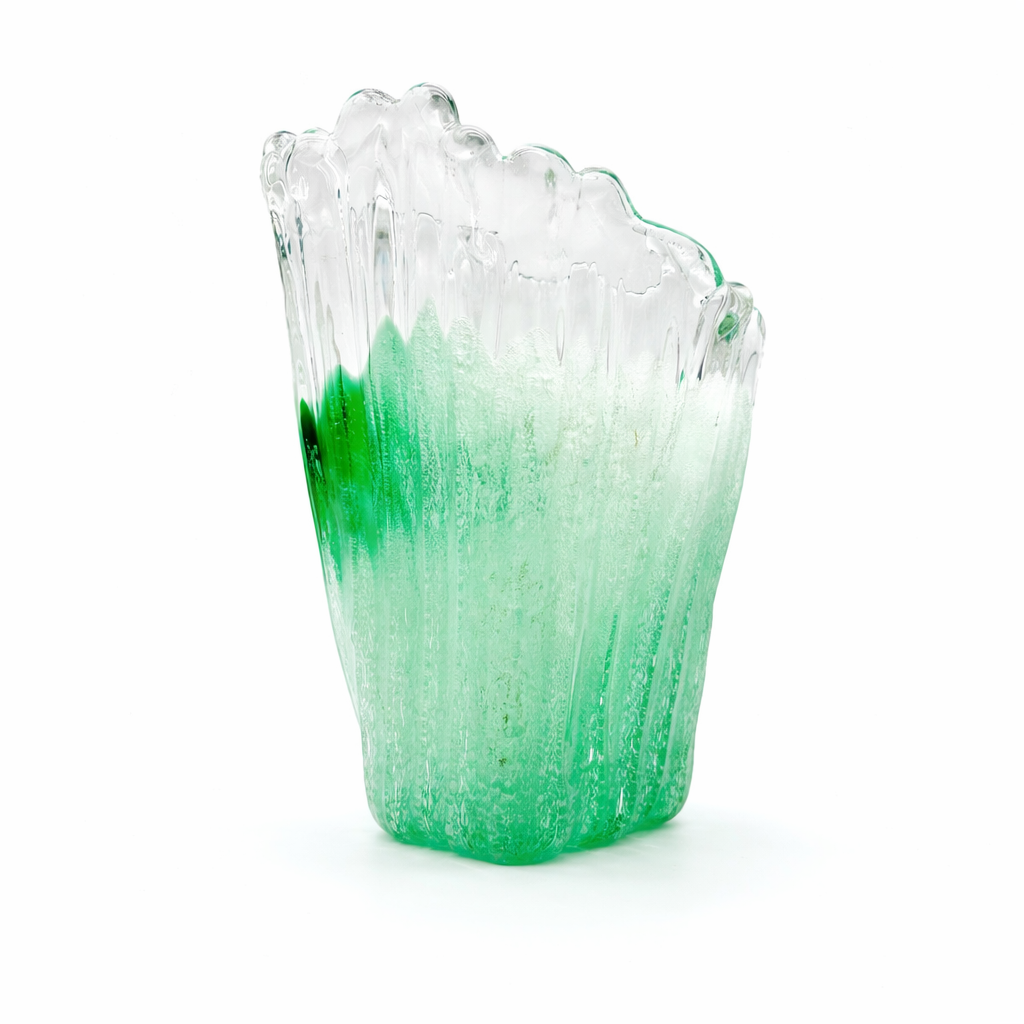 Image 2 of 23
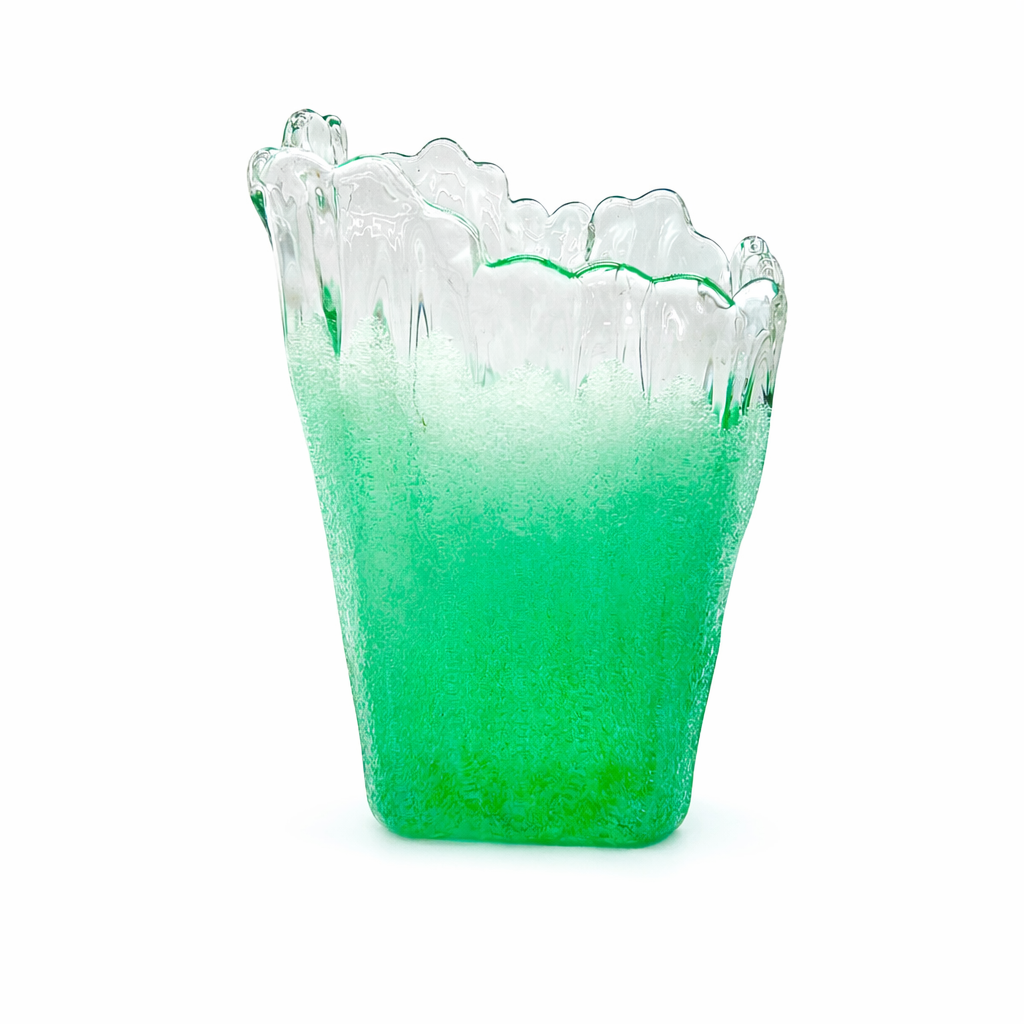 Image 3 of 23
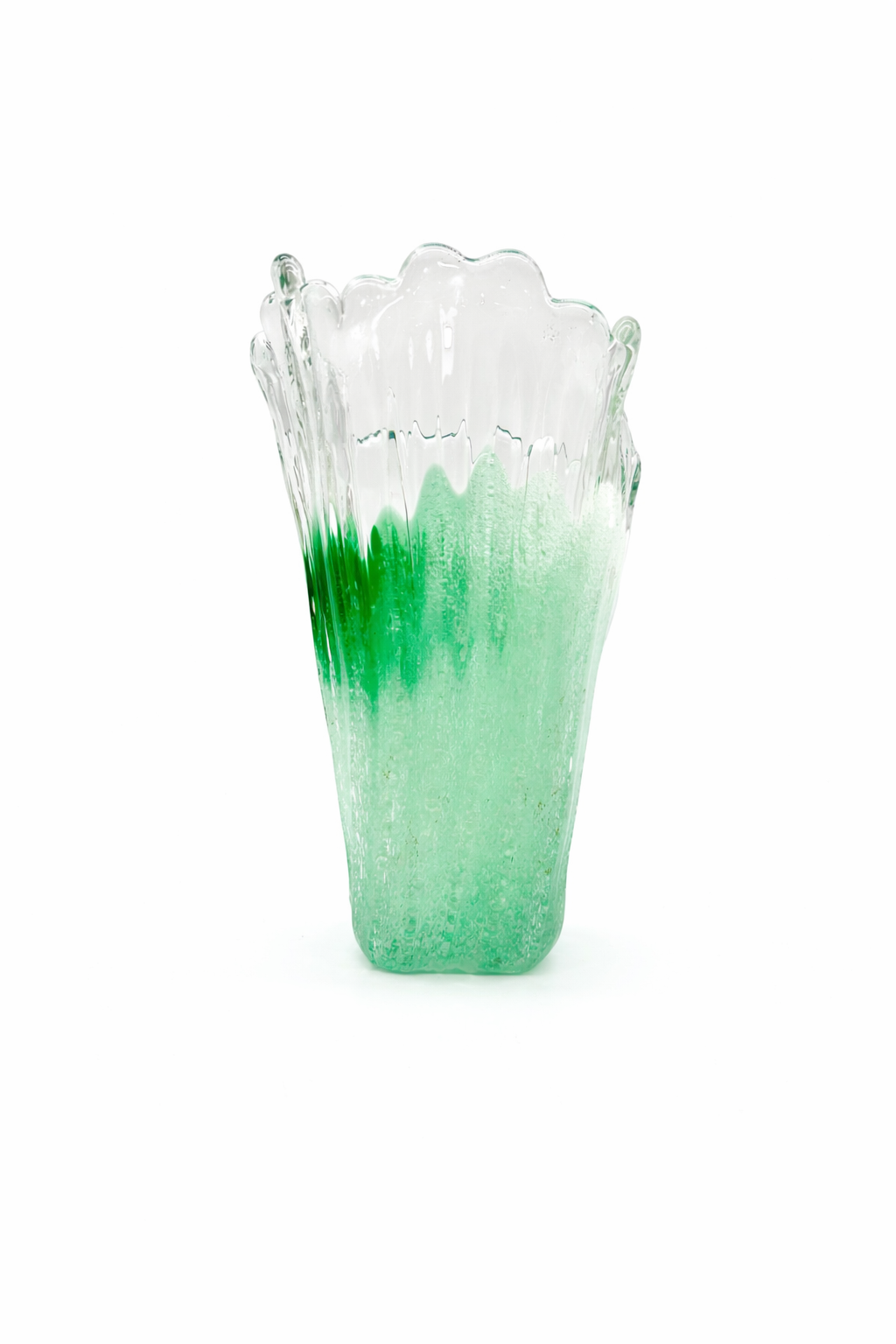 Image 4 of 23
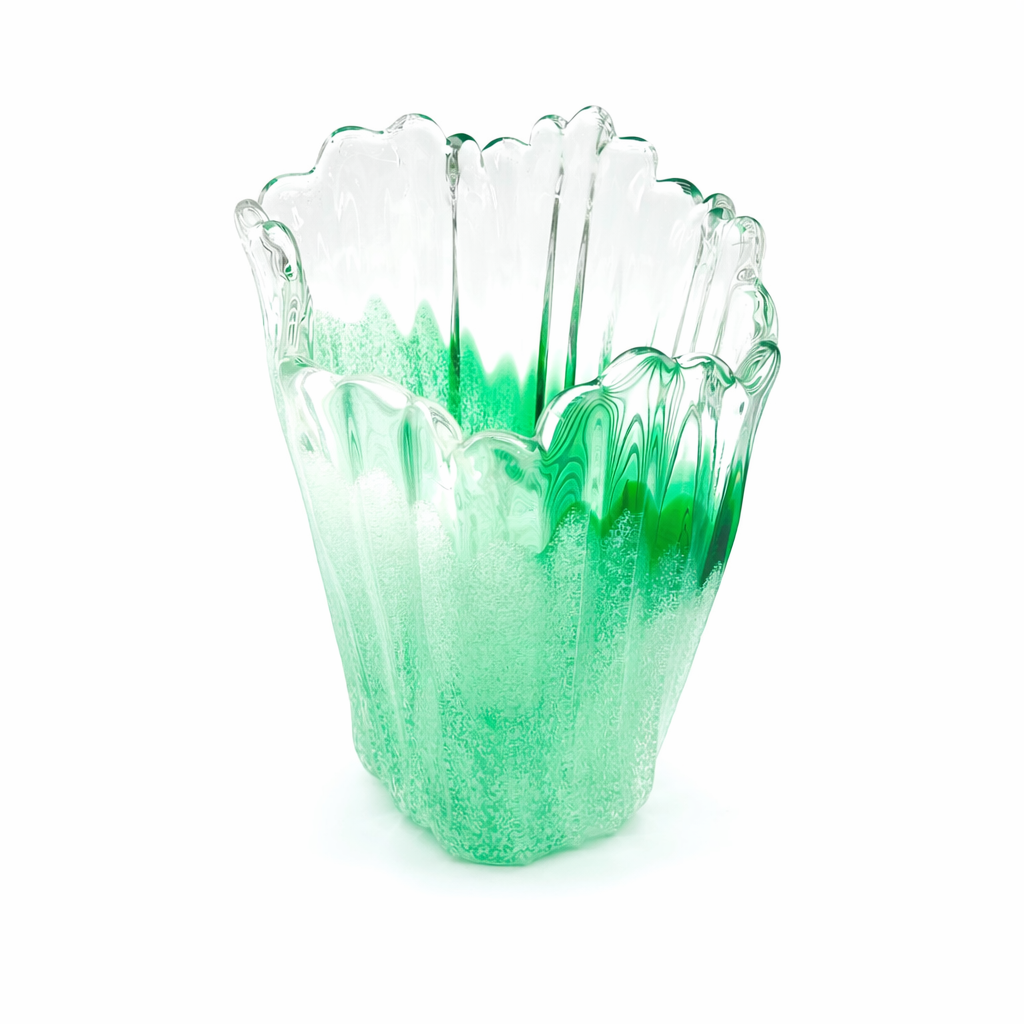 Image 5 of 23
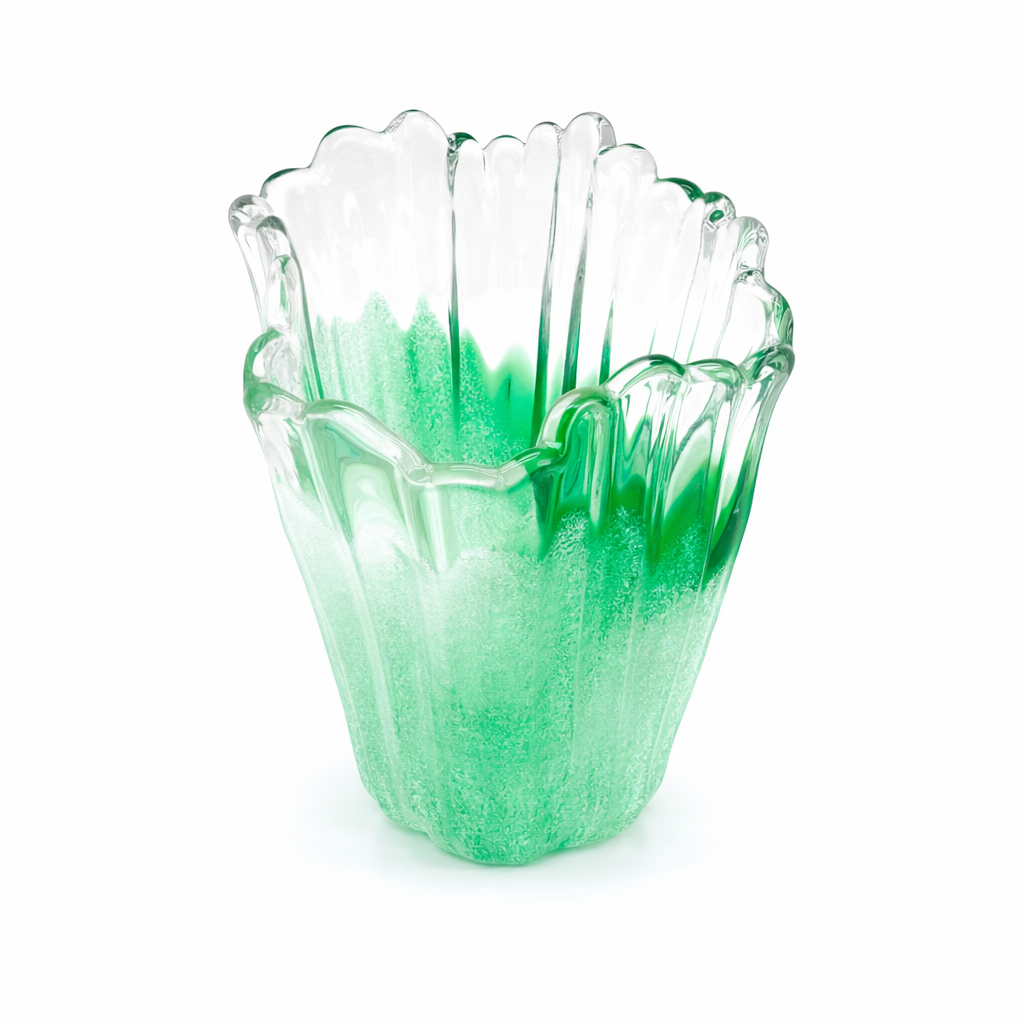 Image 6 of 23
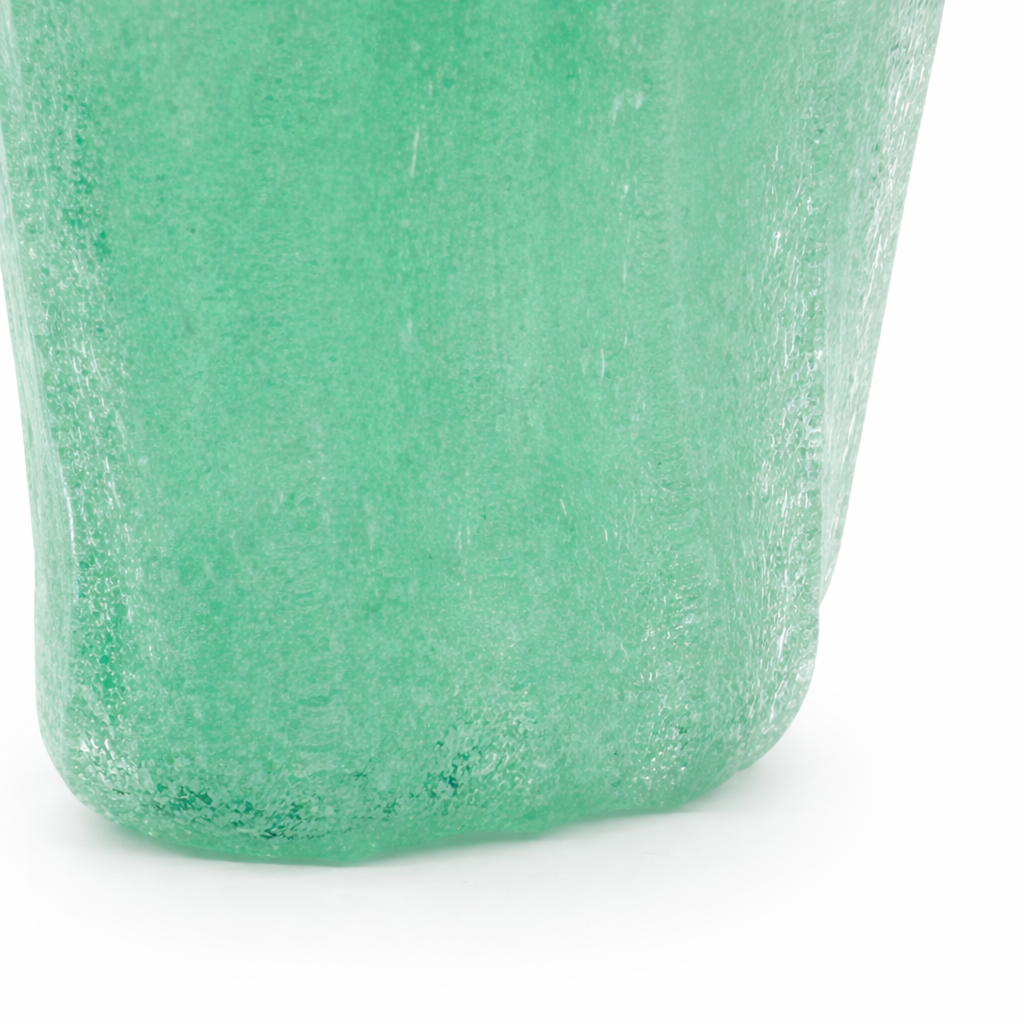 Image 7 of 23
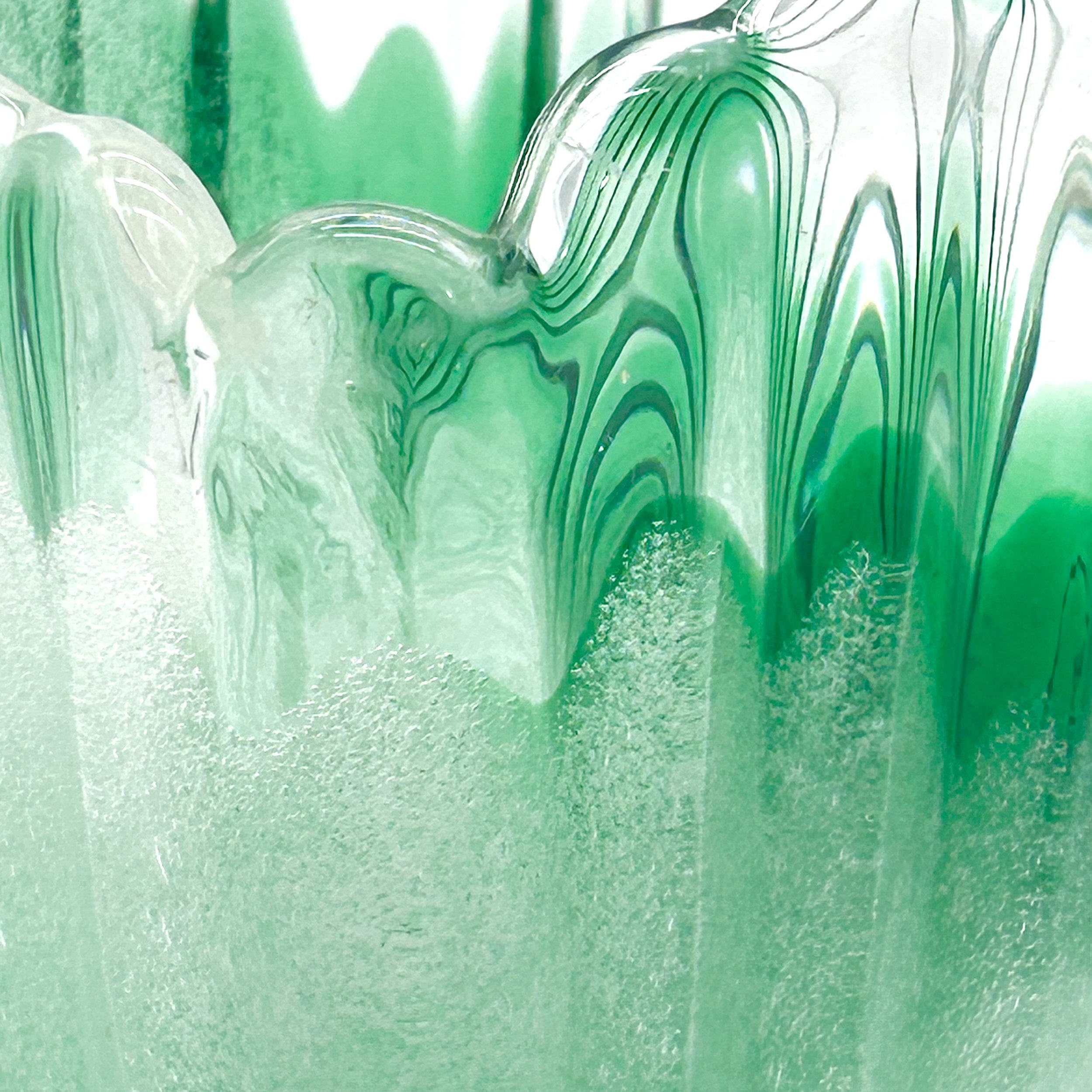 Image 8 of 23
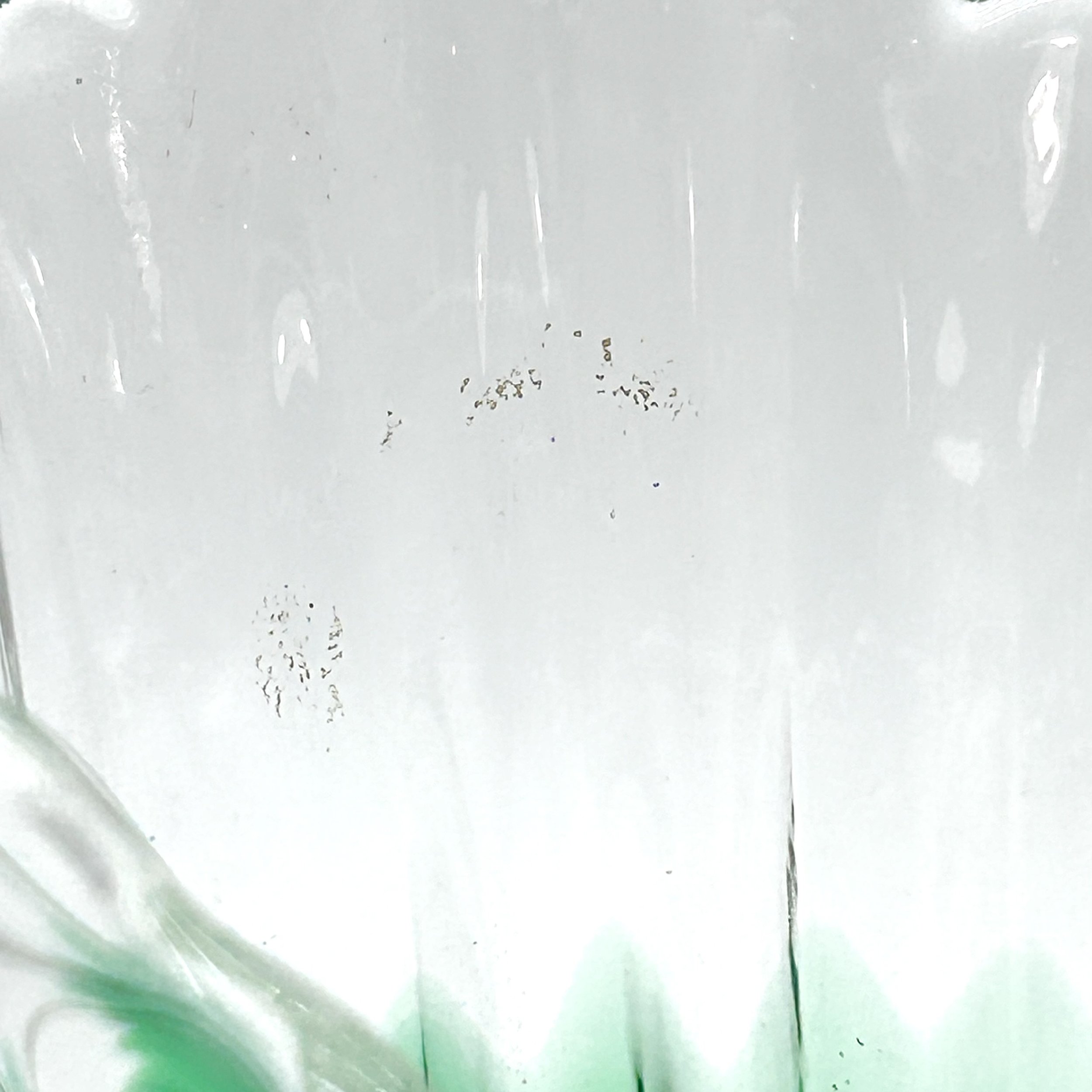 Image 9 of 23
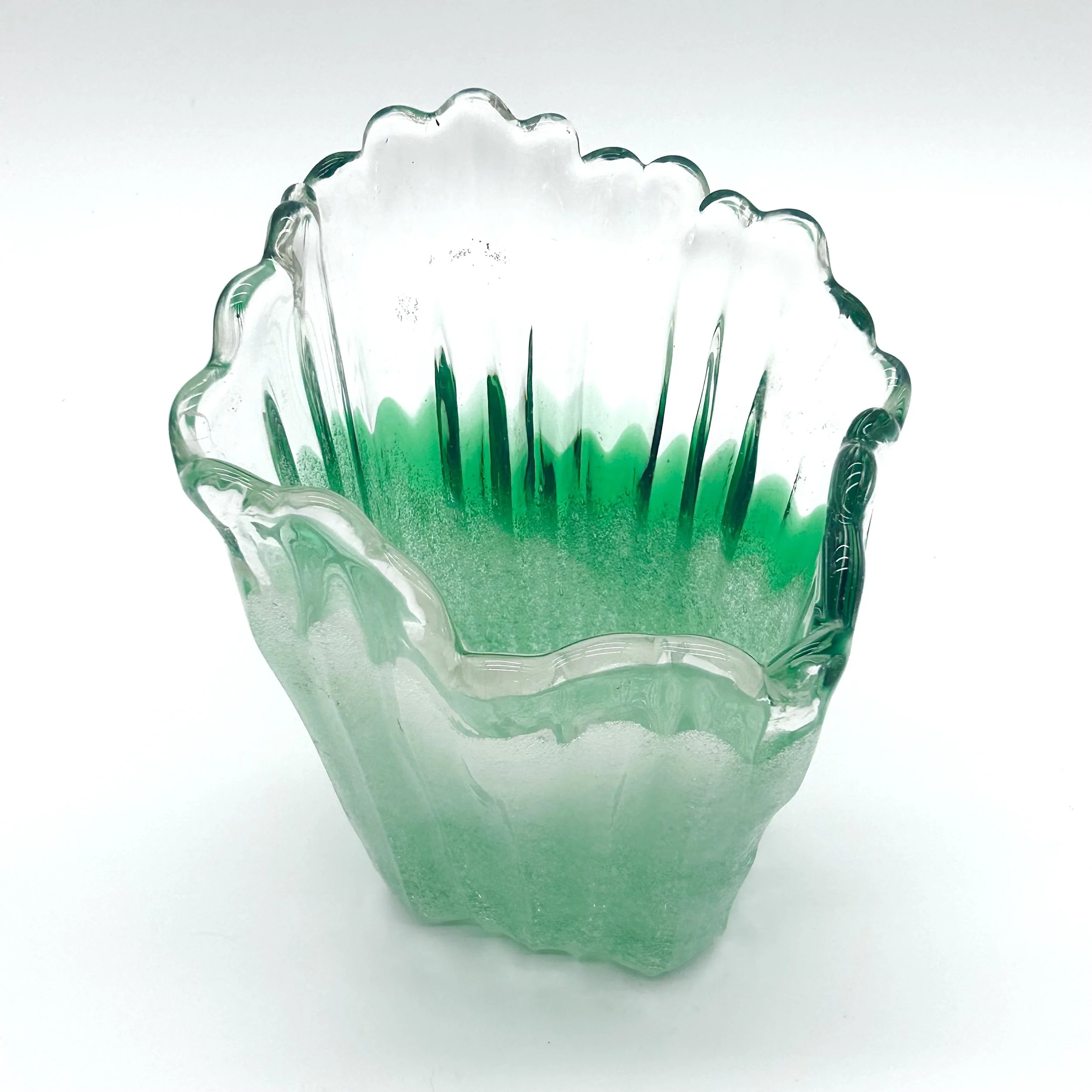 Image 10 of 23
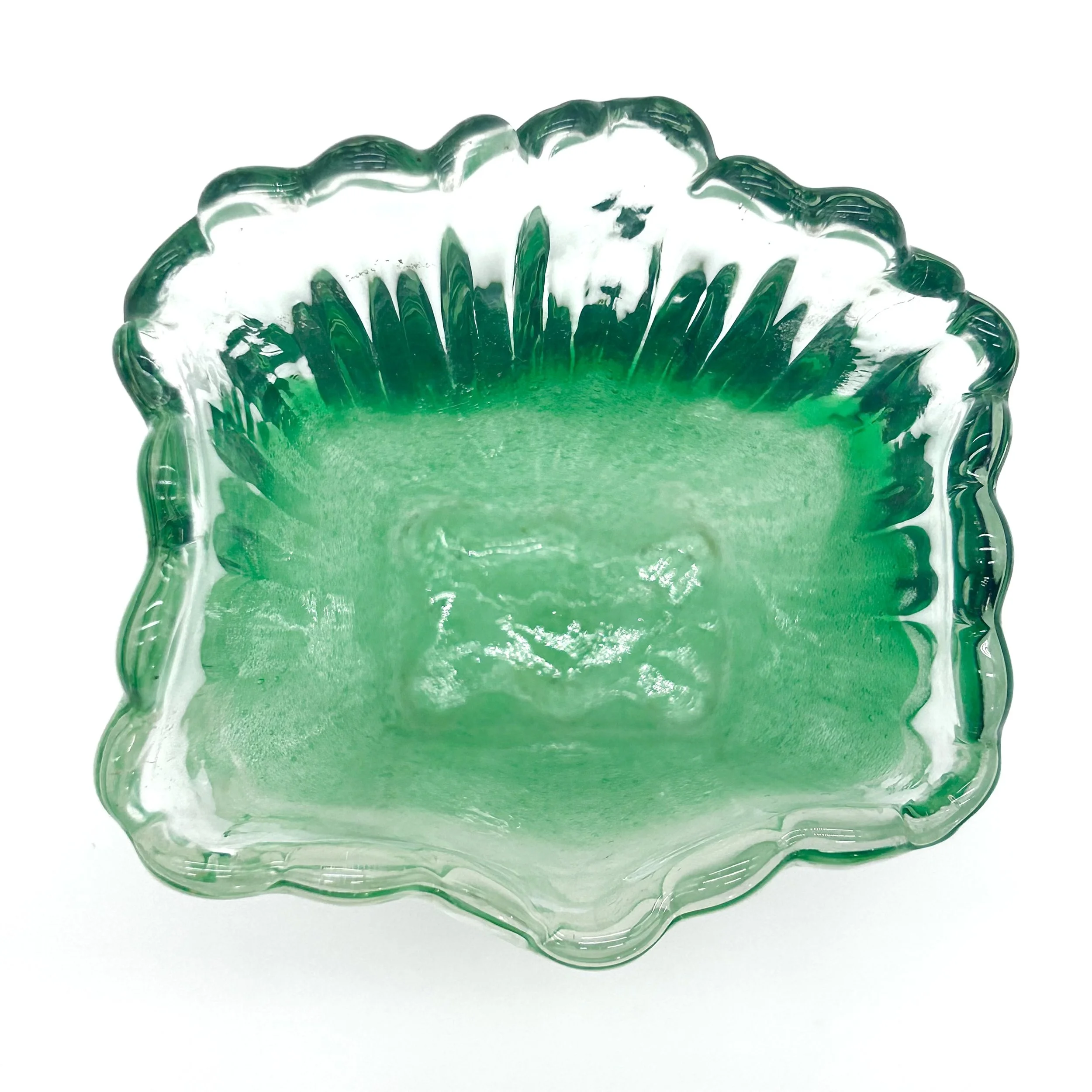 Image 11 of 23
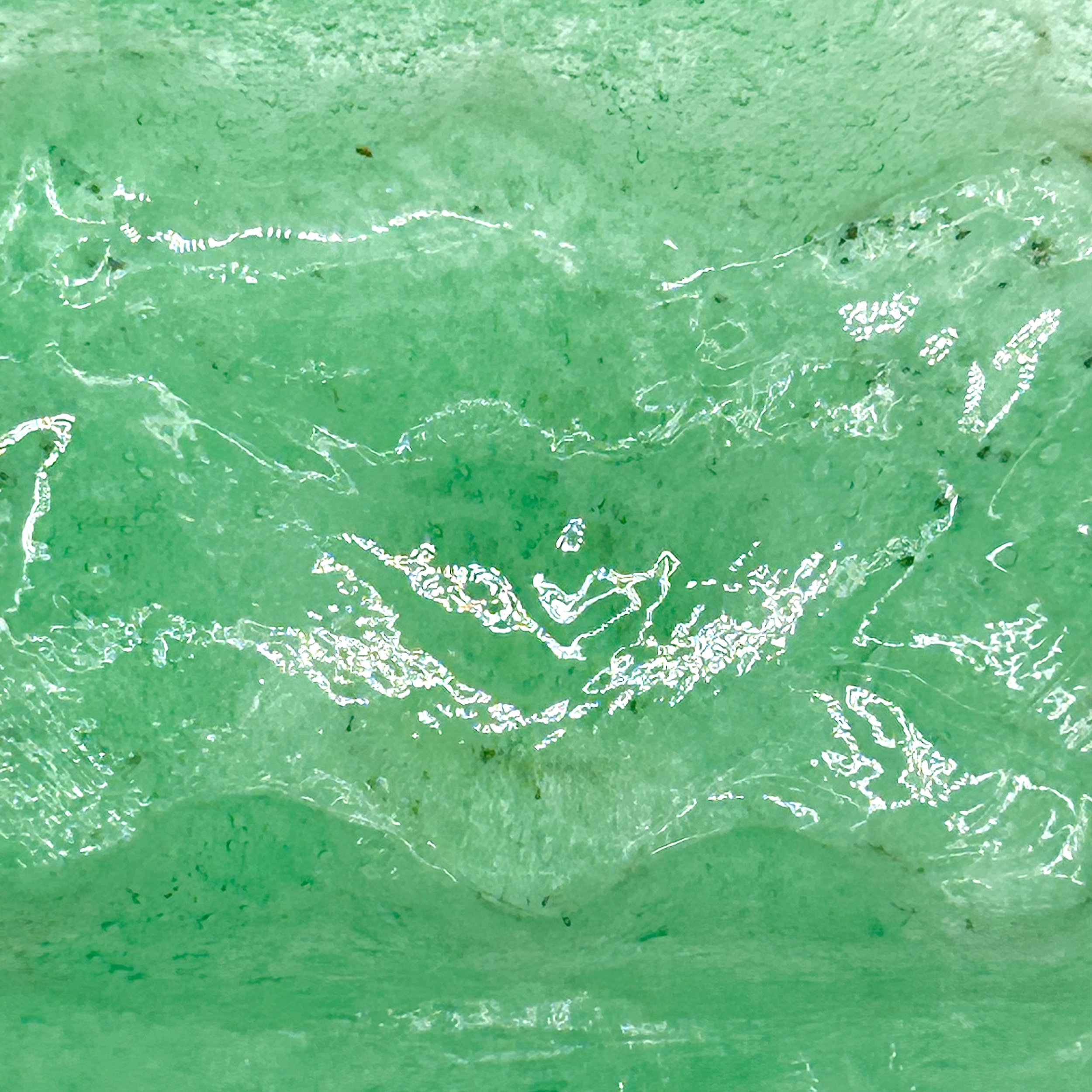 Image 12 of 23
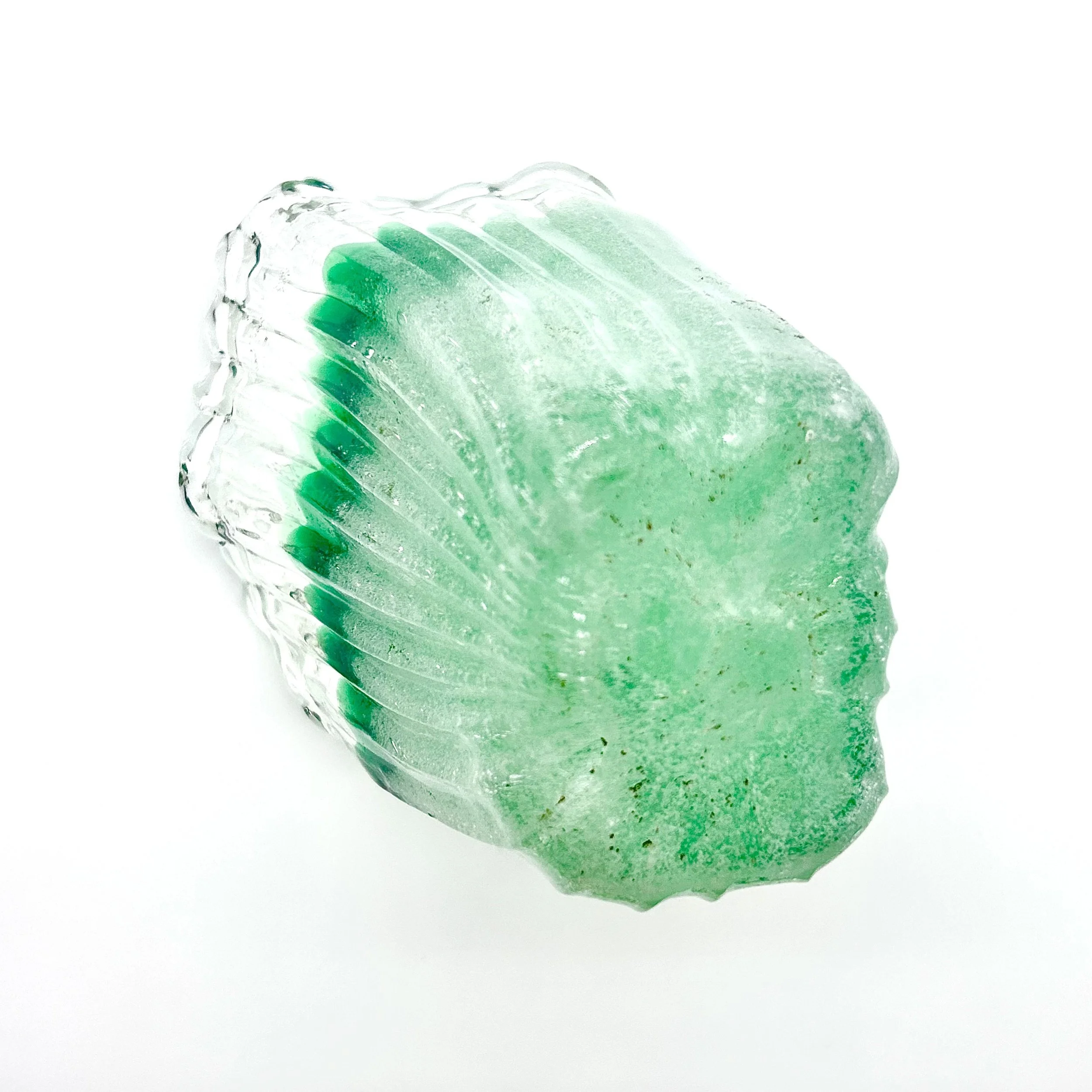 Image 13 of 23
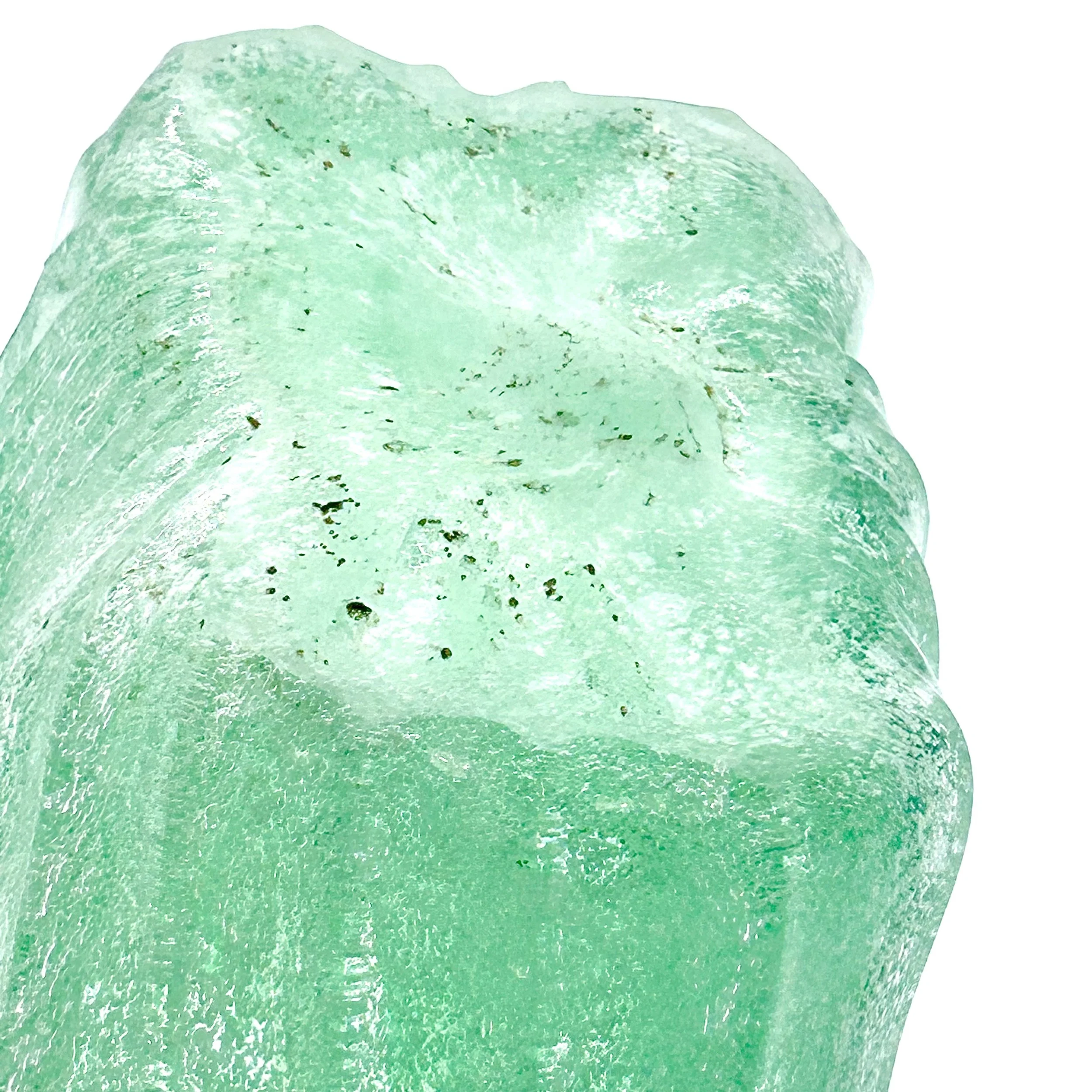 Image 14 of 23
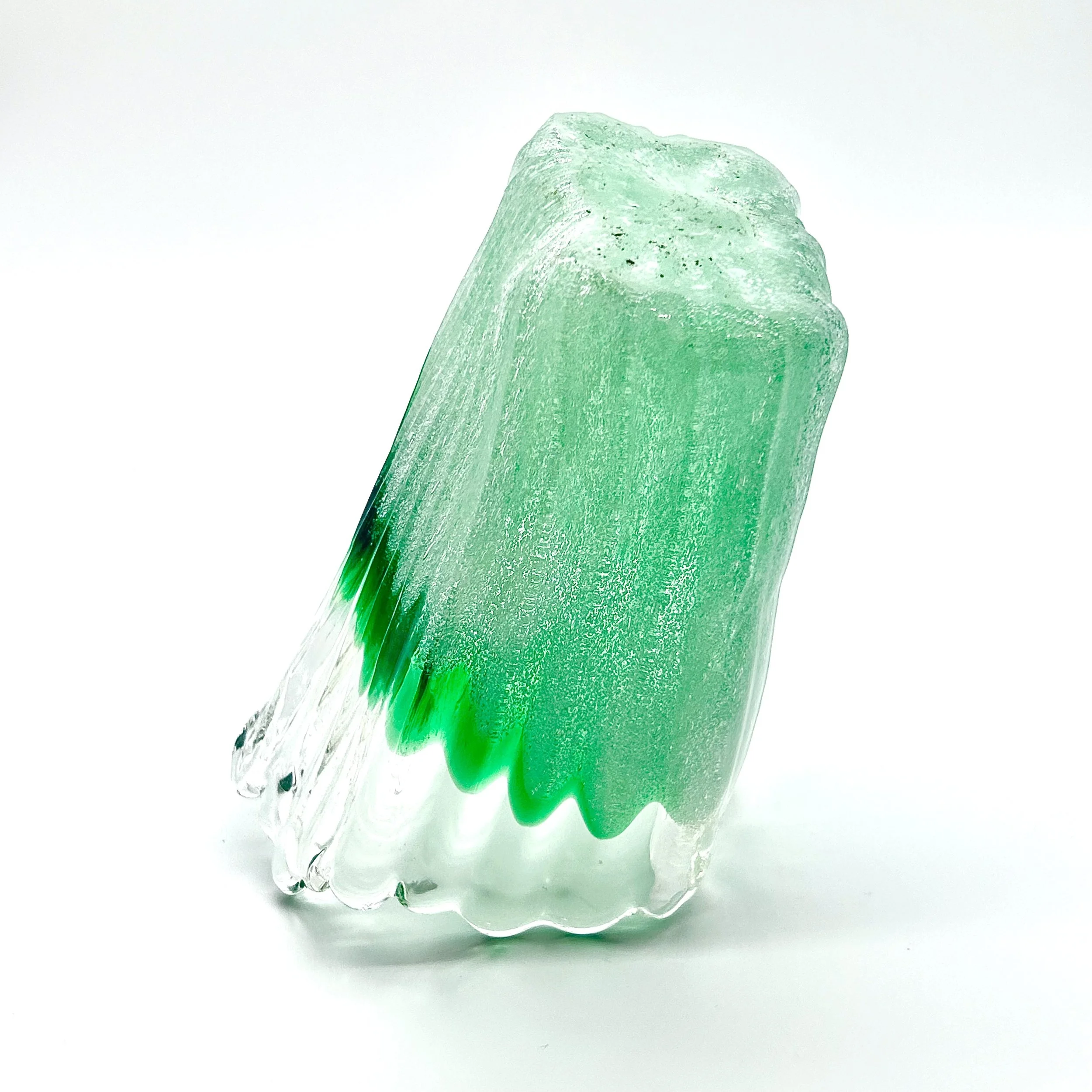 Image 15 of 23
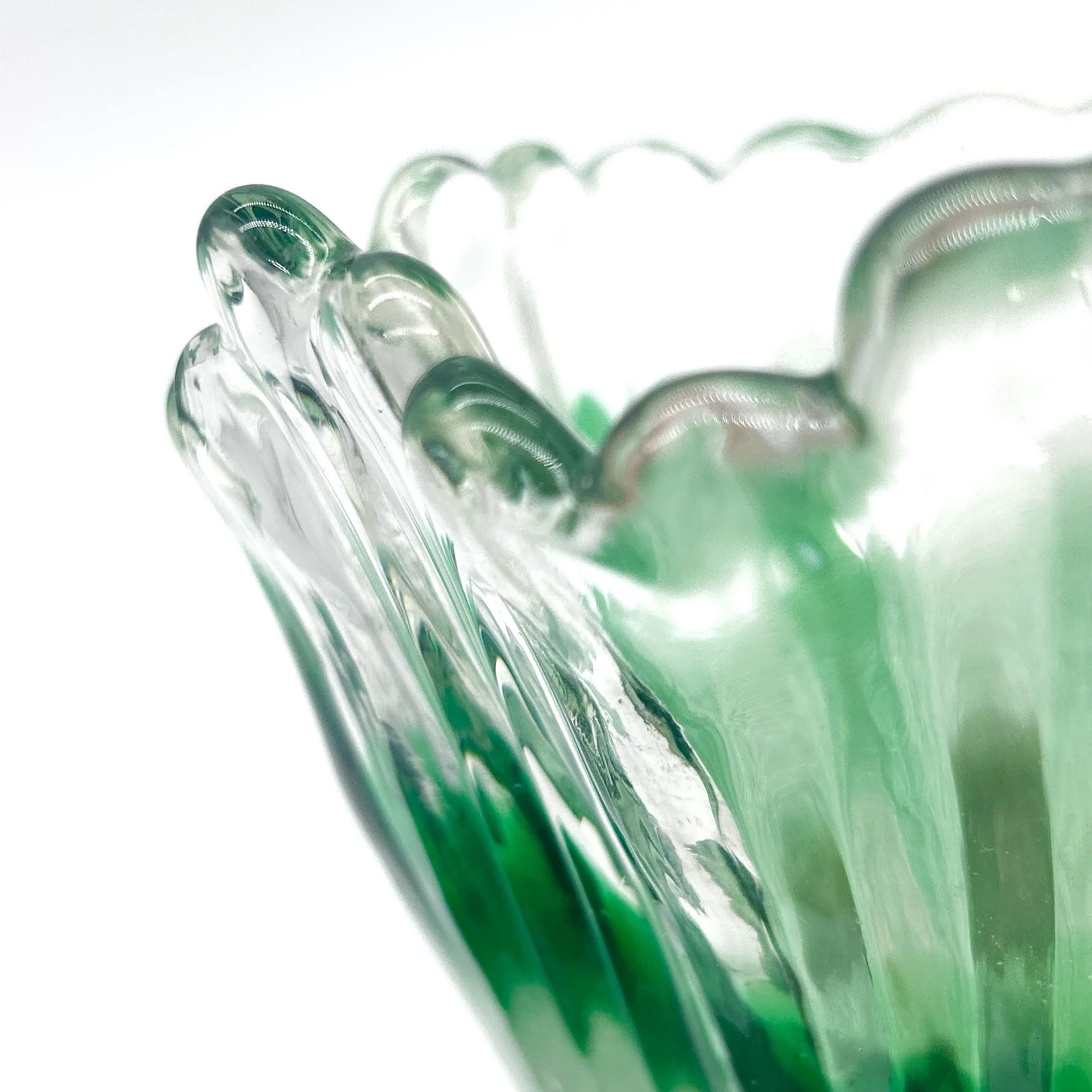 Image 16 of 23
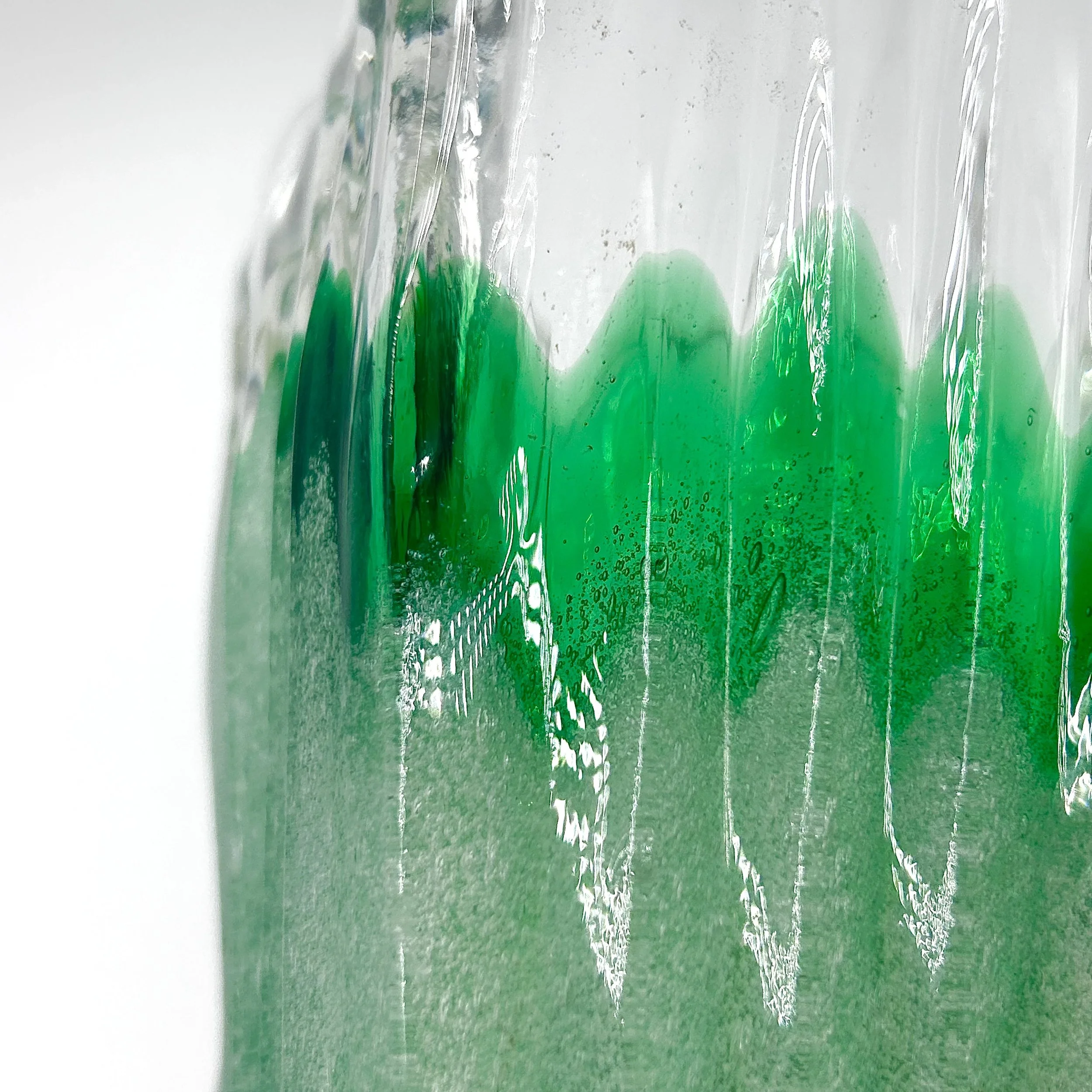 Image 17 of 23
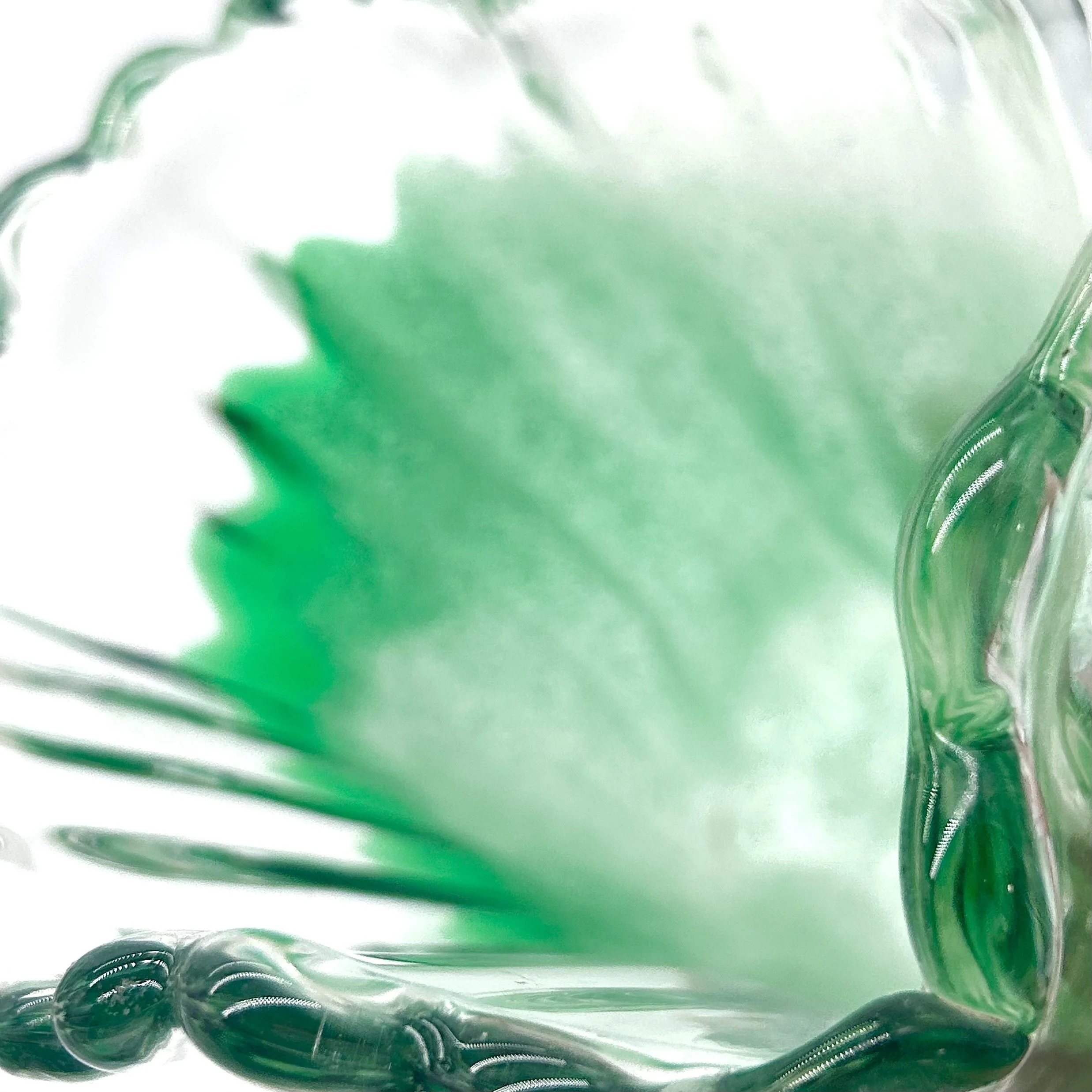 Image 18 of 23
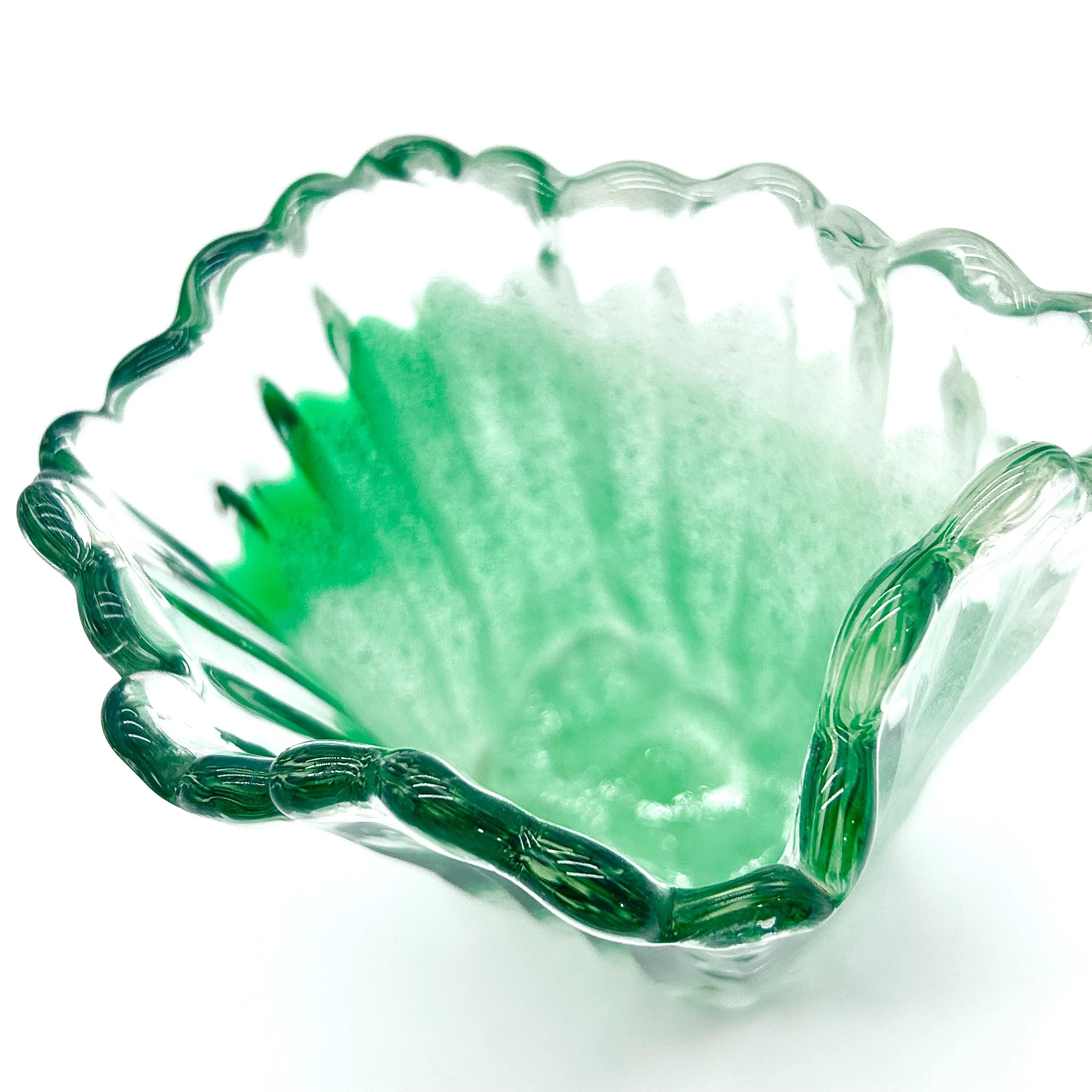 Image 19 of 23
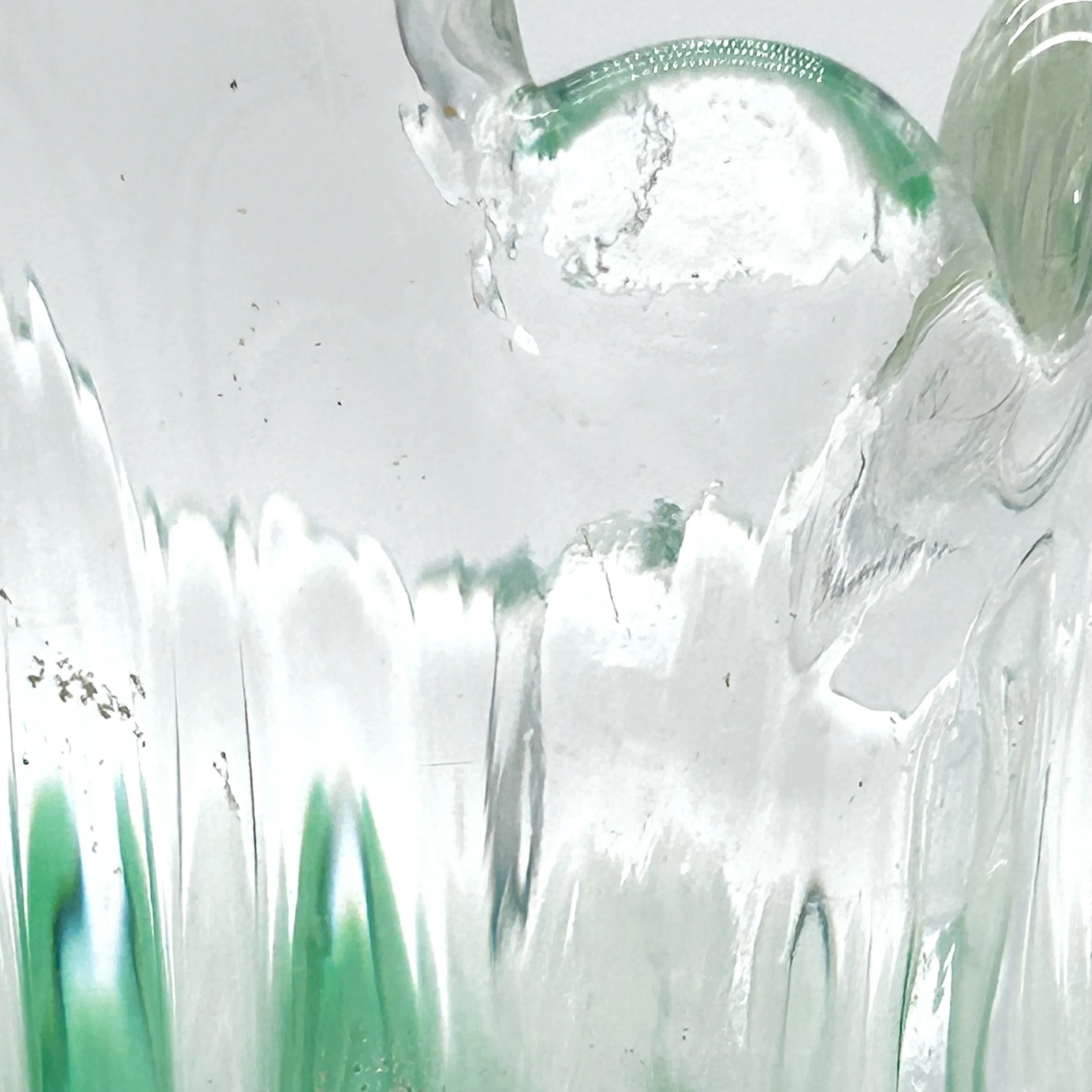 Image 20 of 23
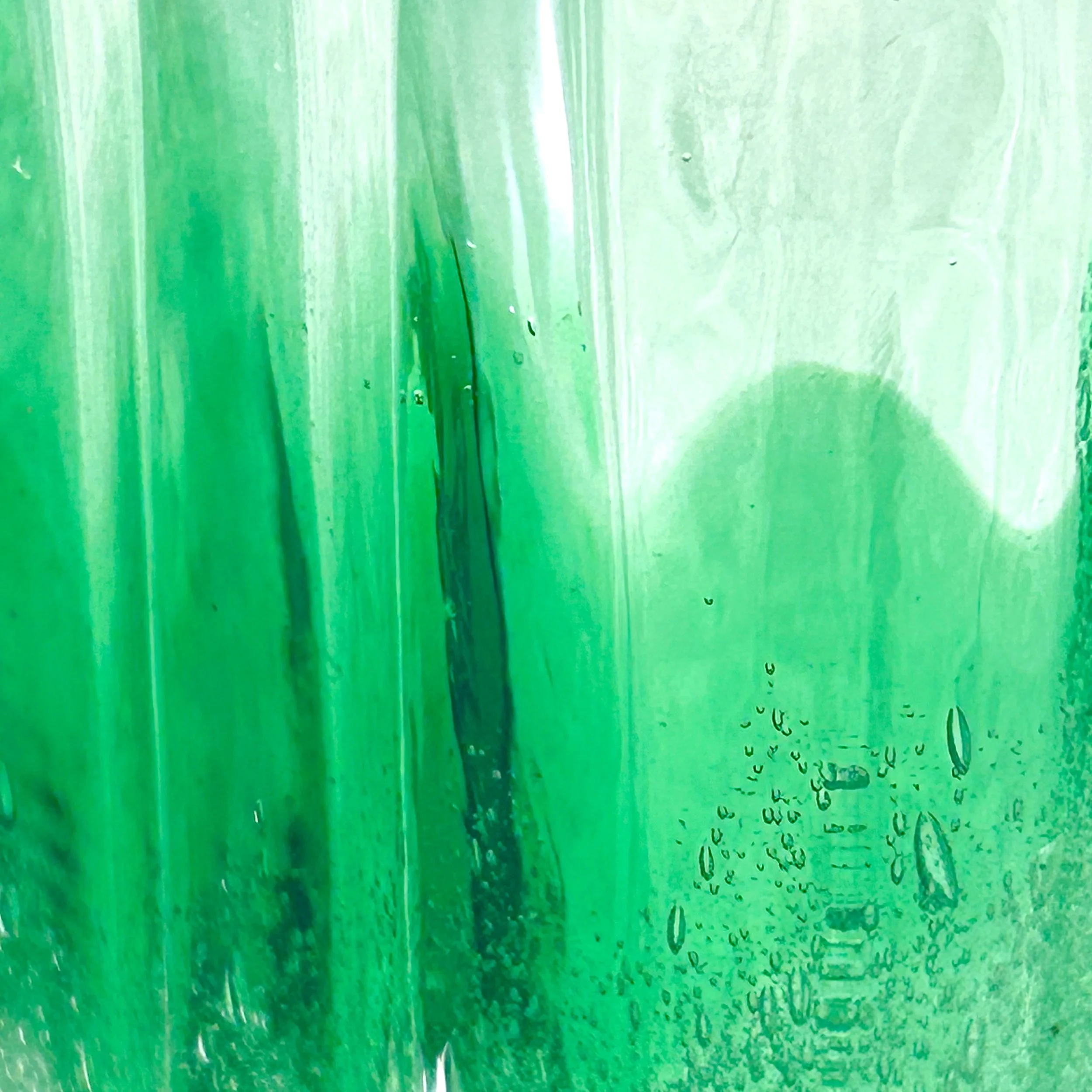 Image 21 of 23
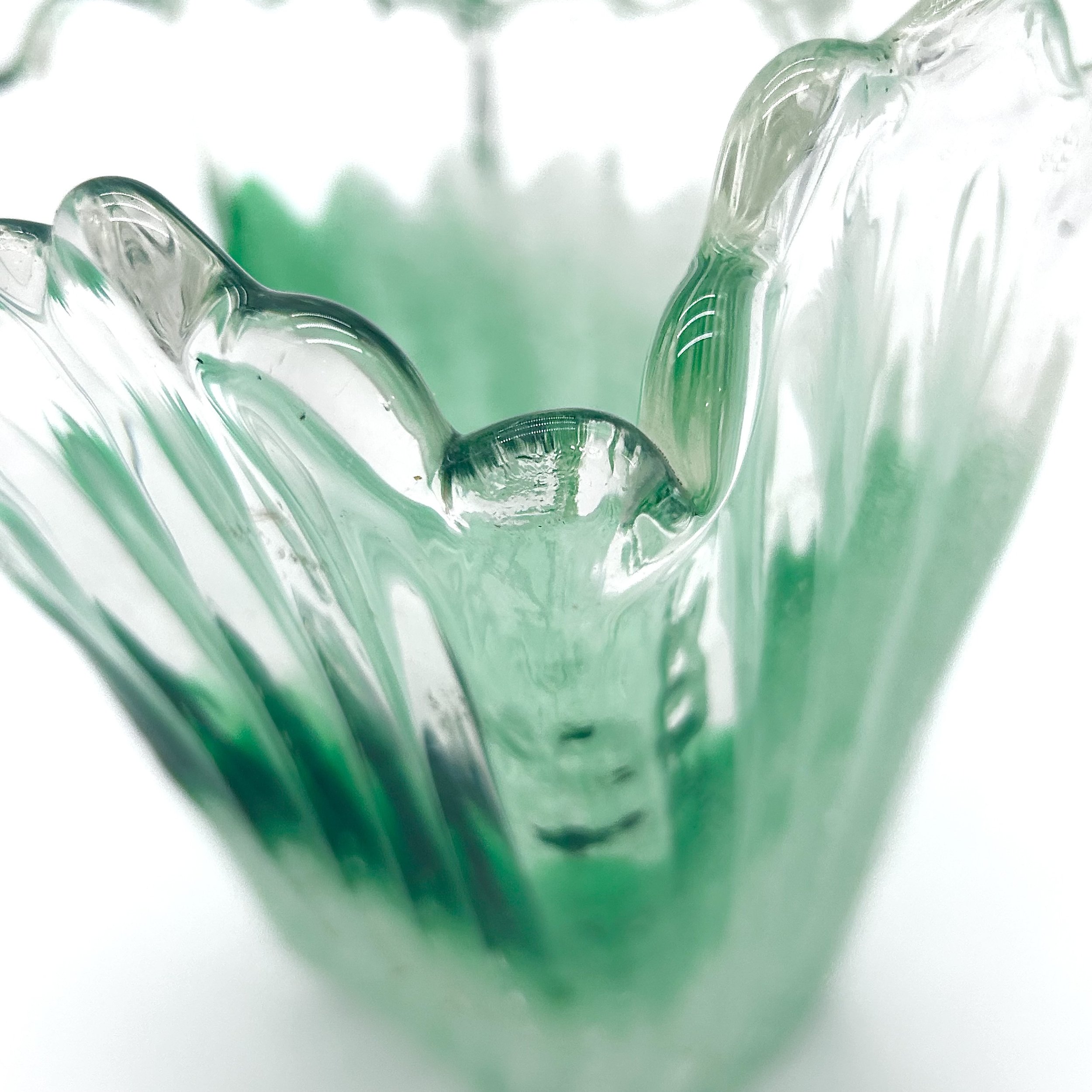 Image 22 of 23
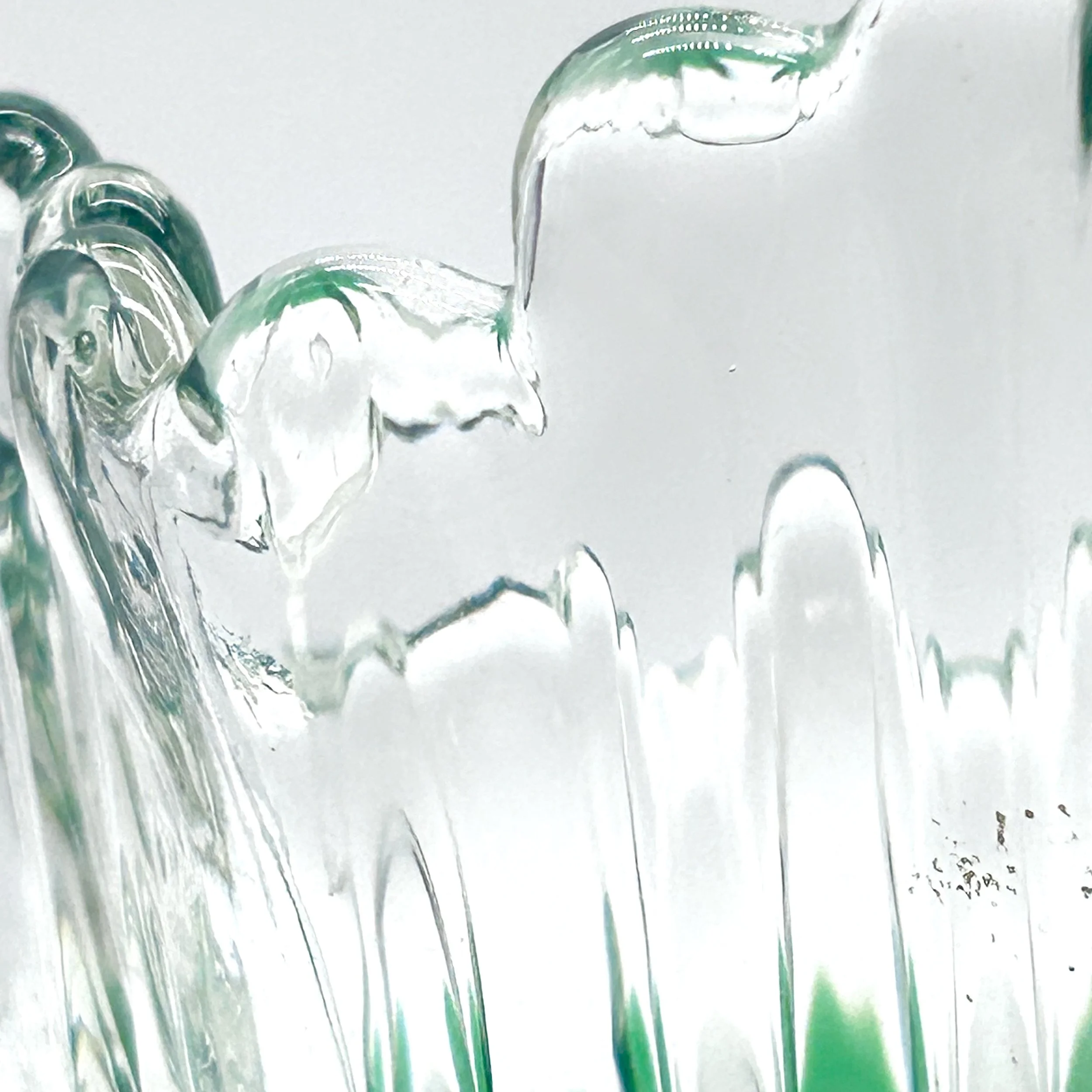 Image 23 of 23