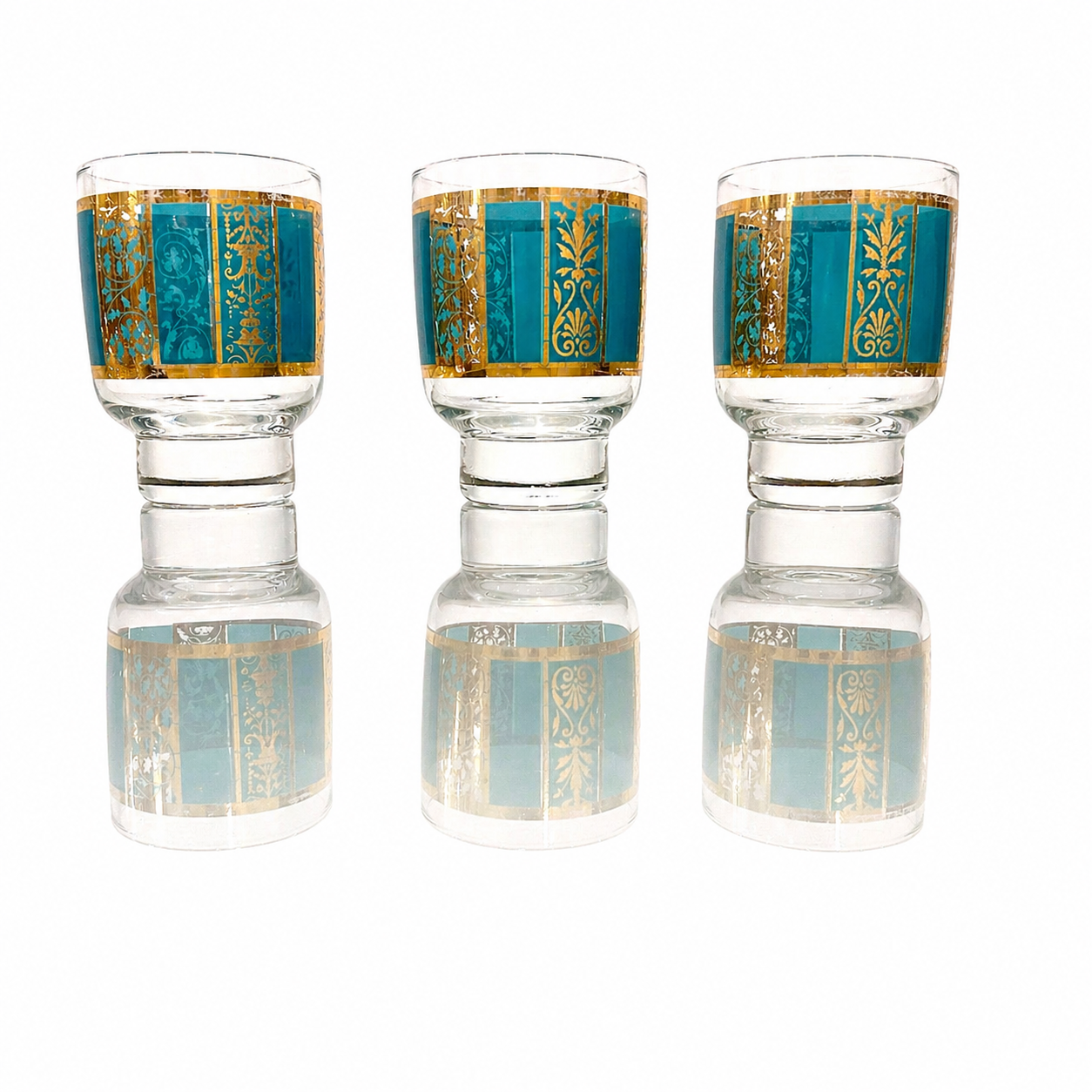
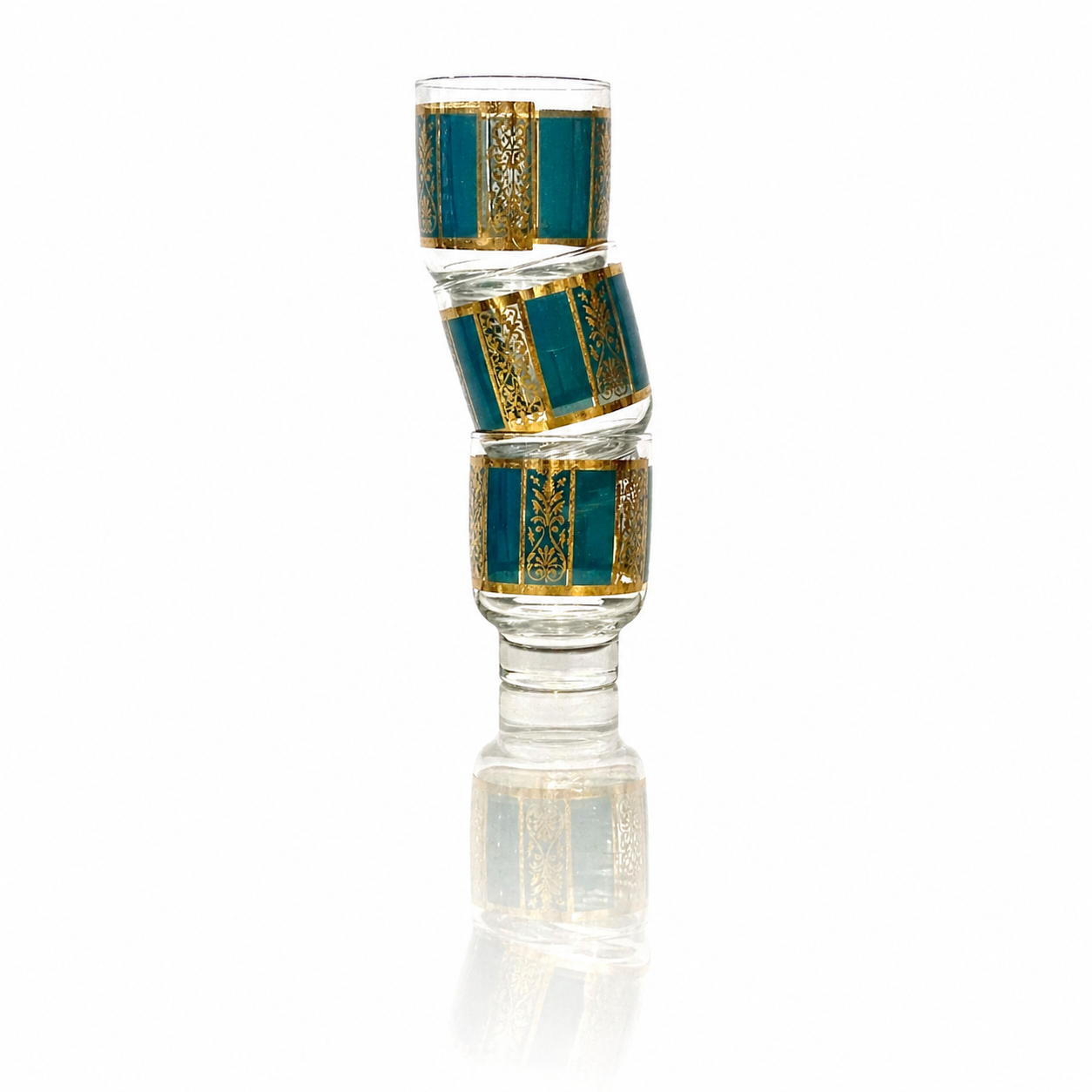
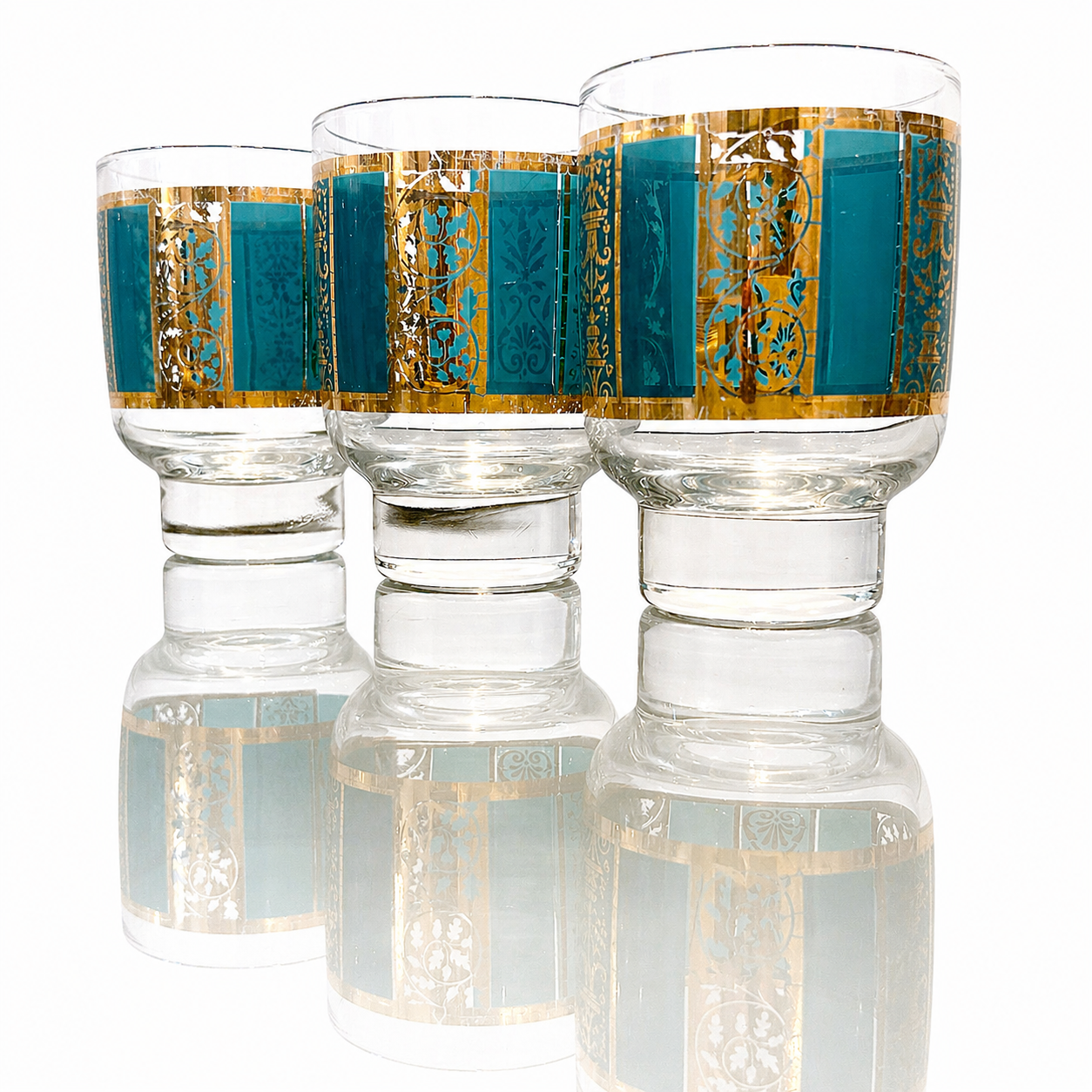
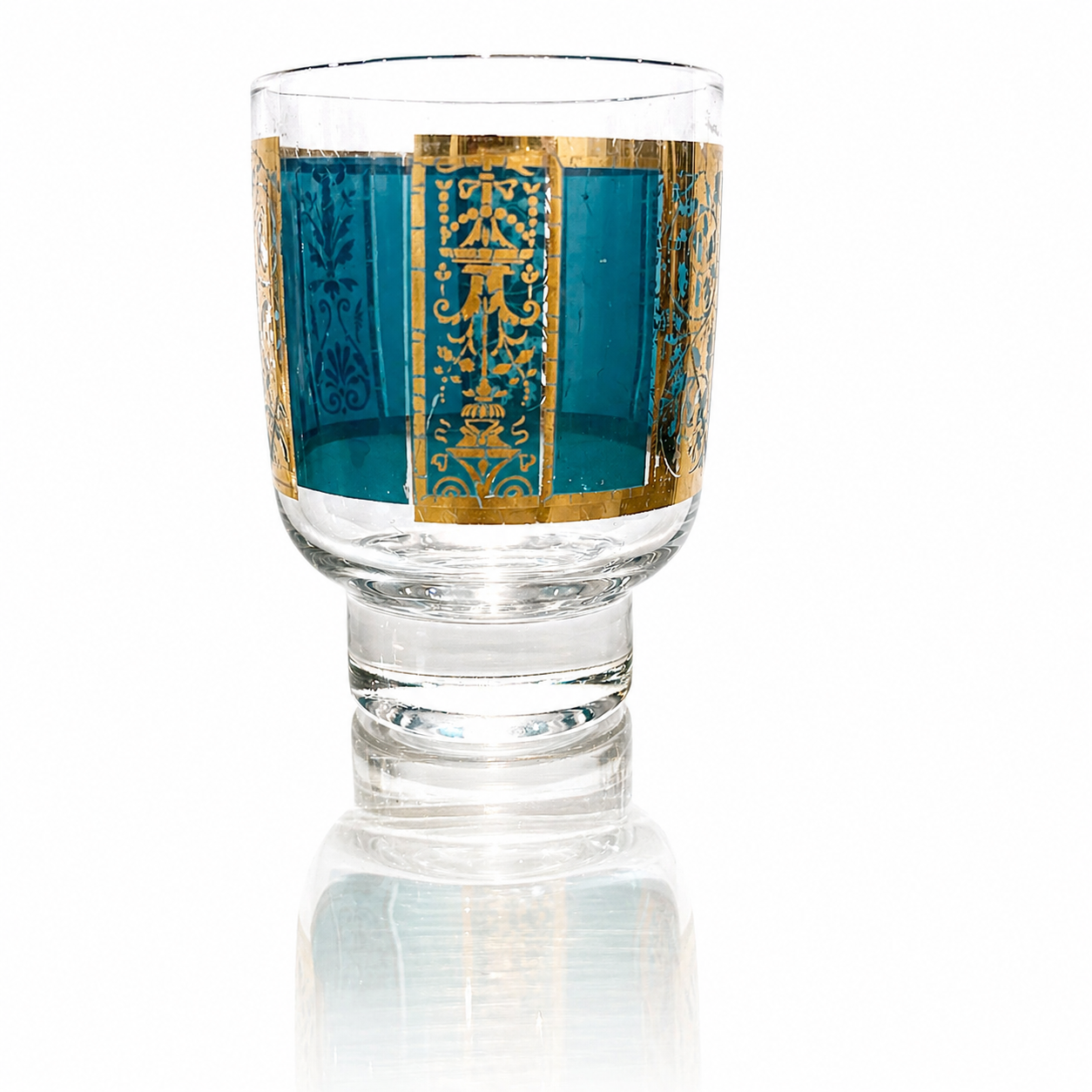
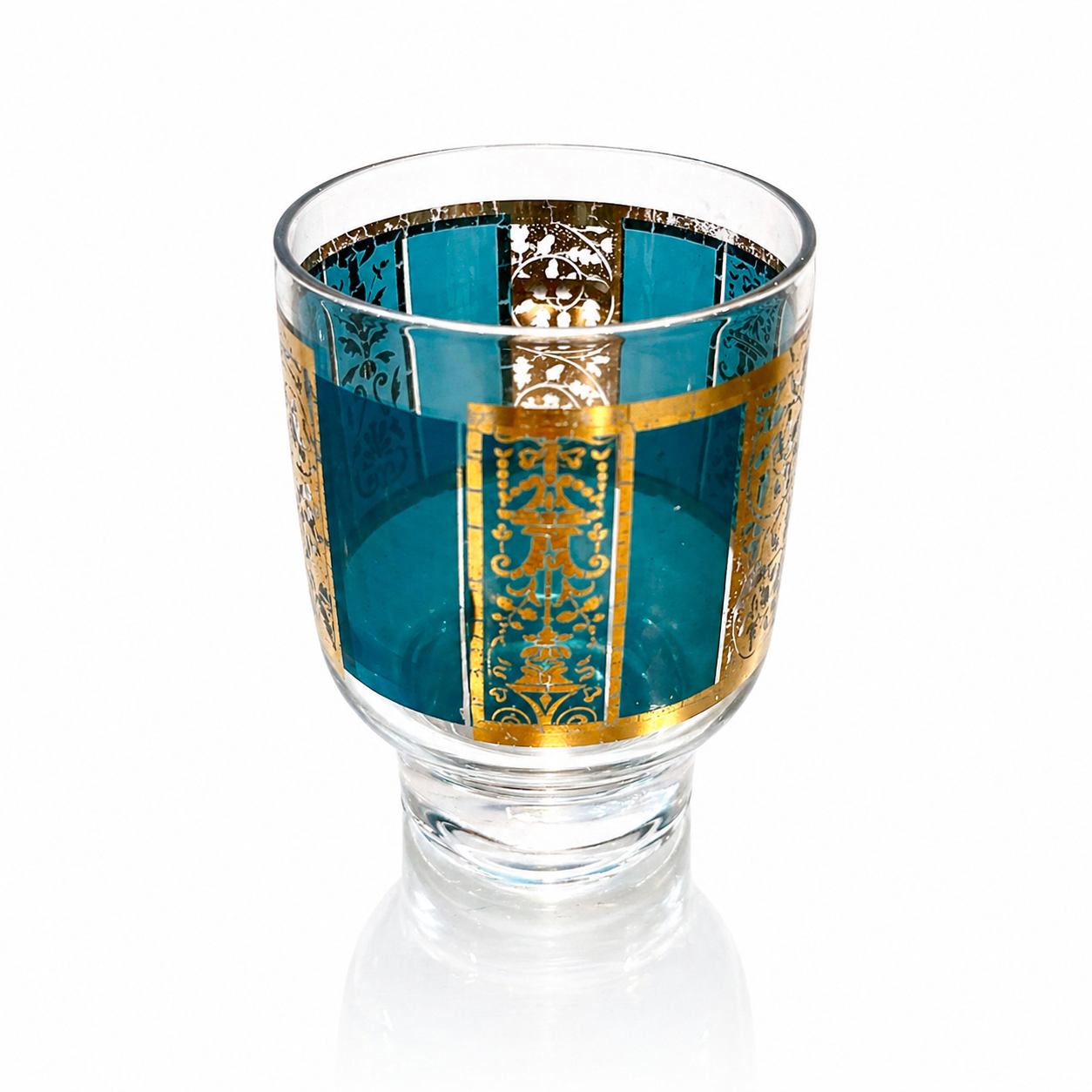
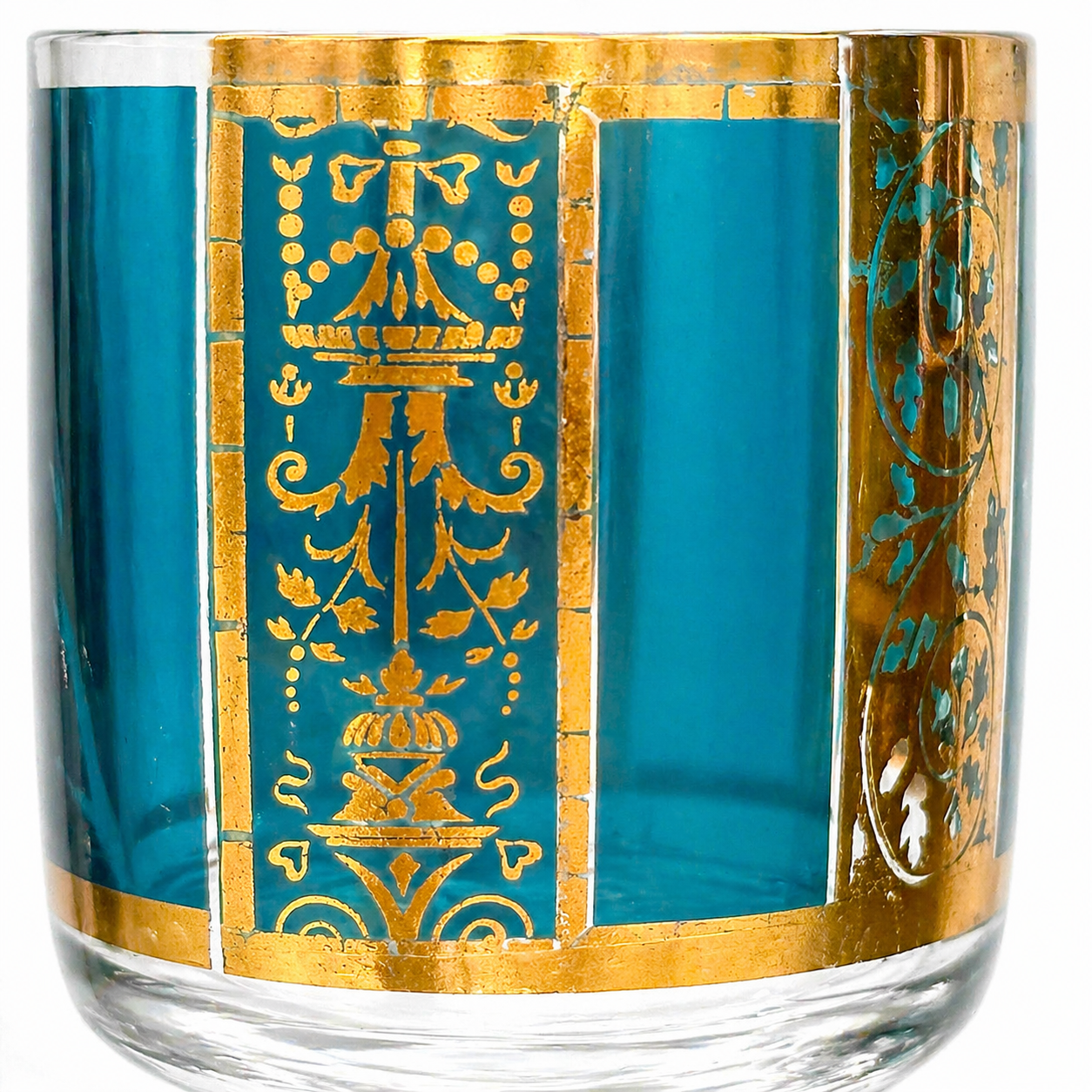
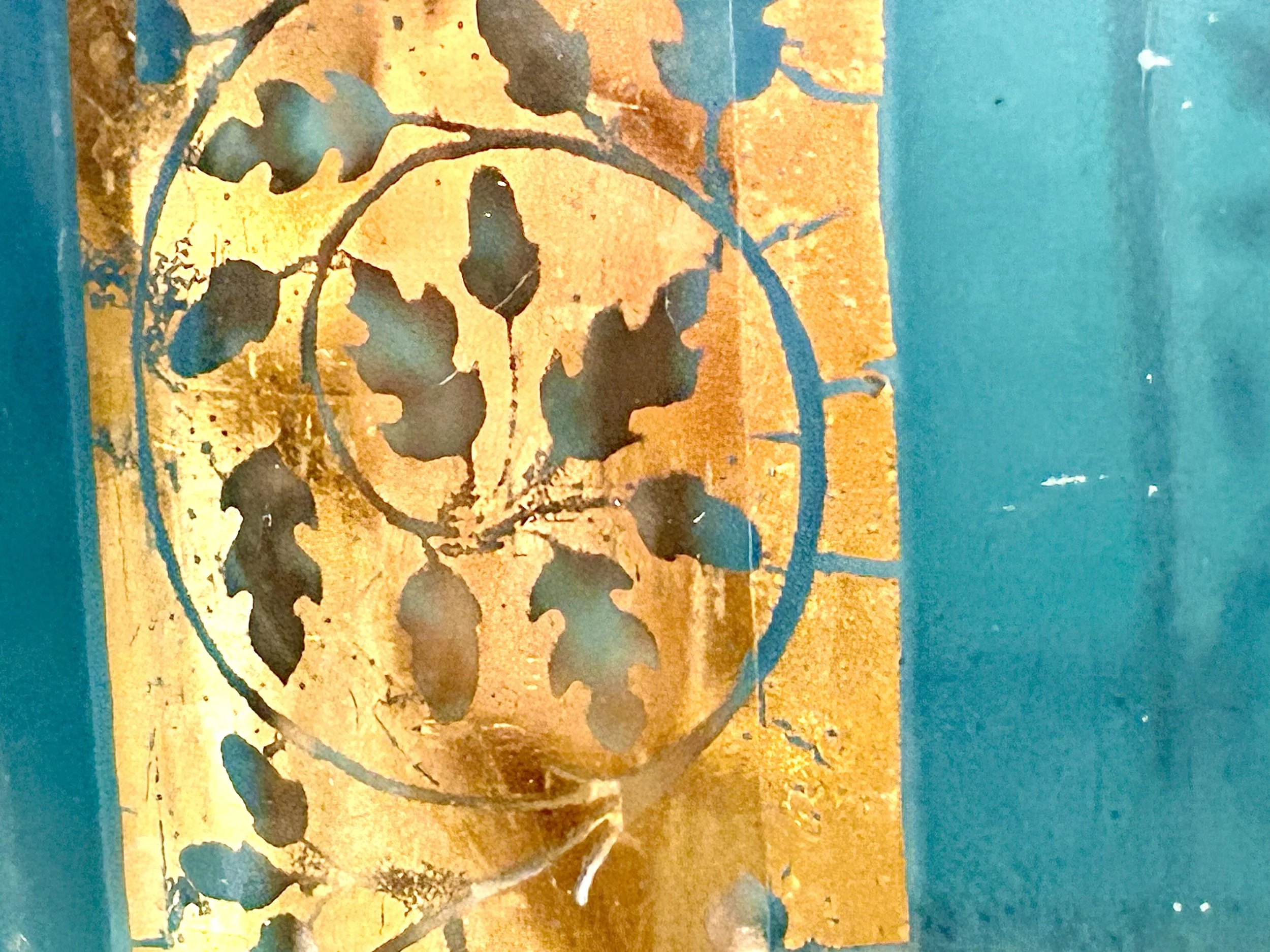
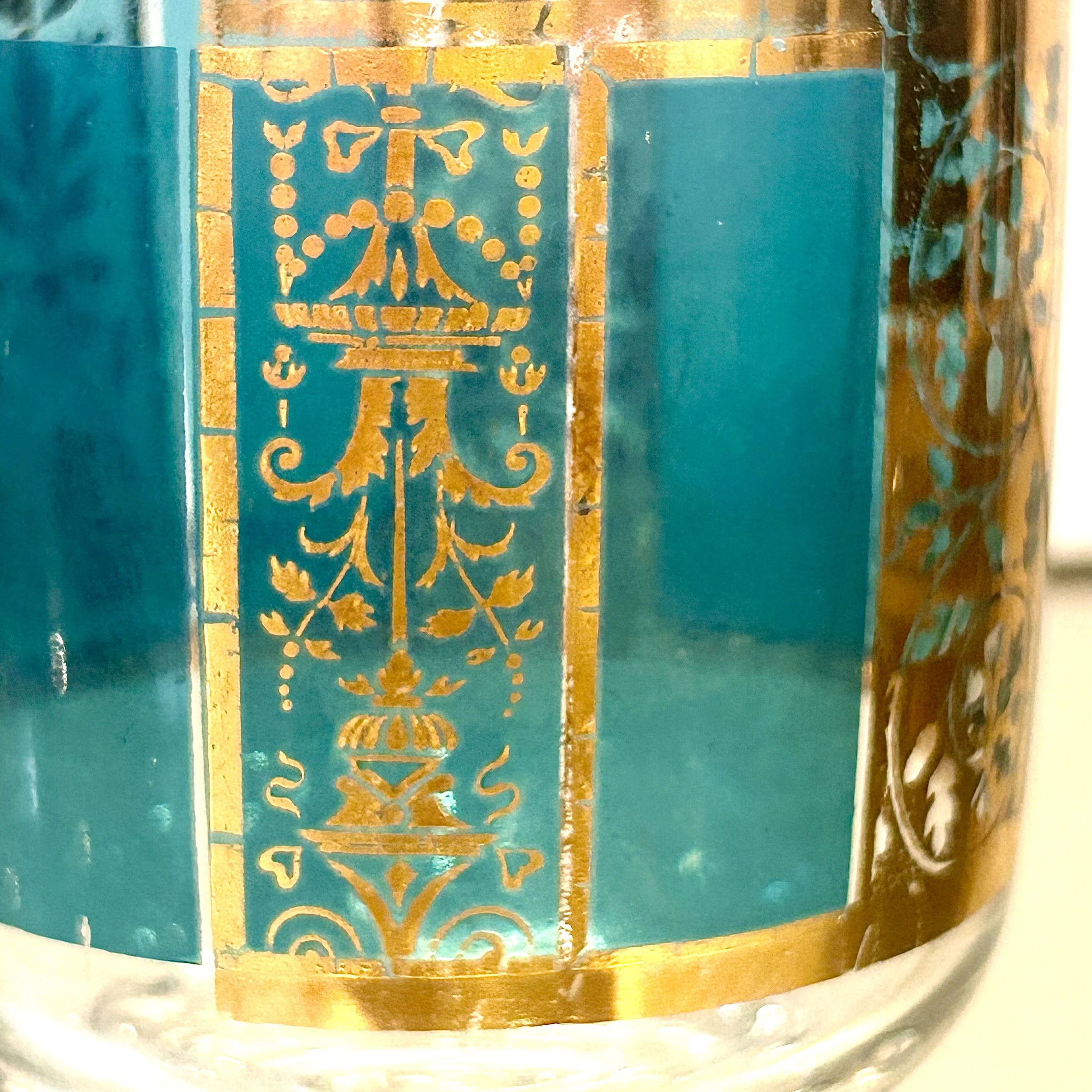
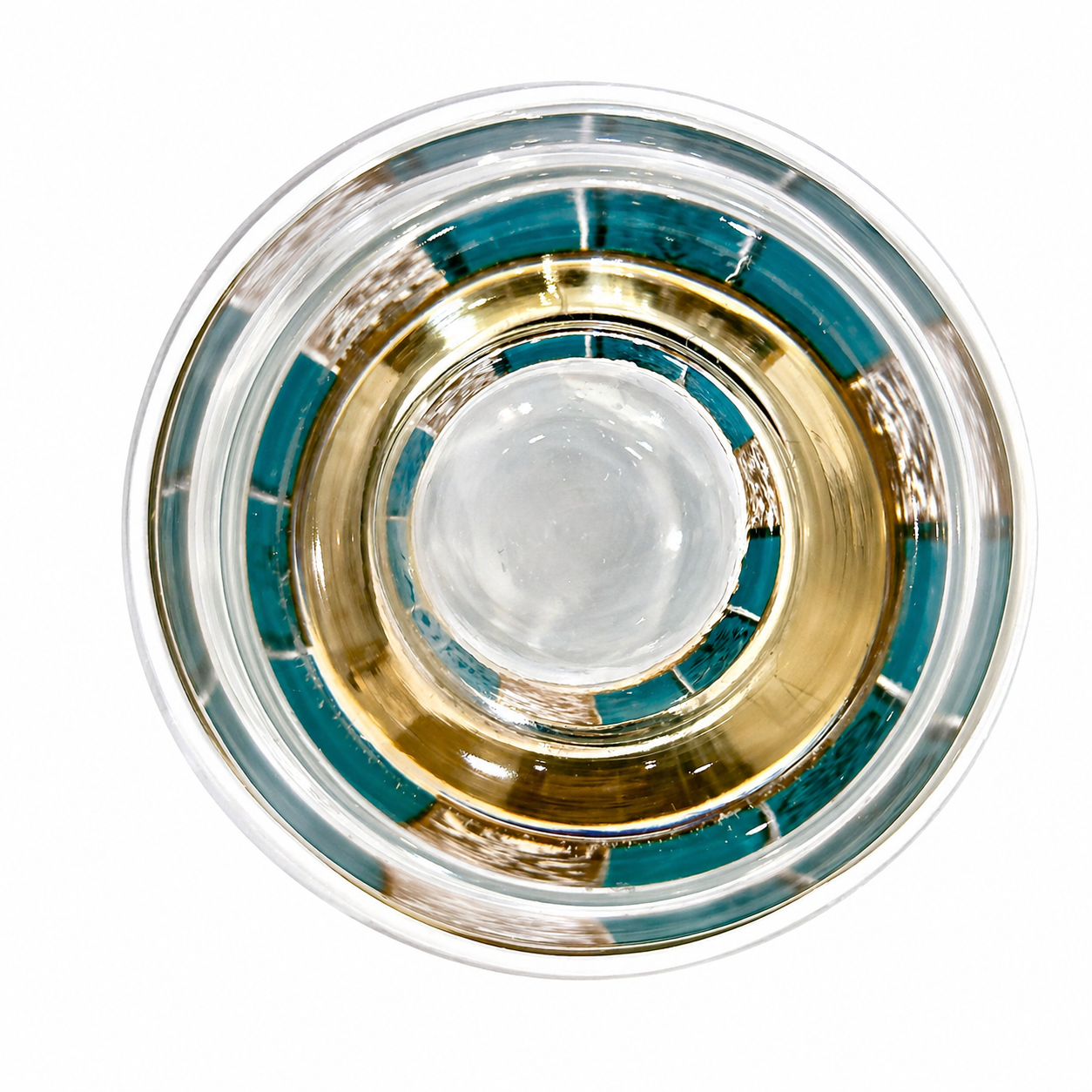
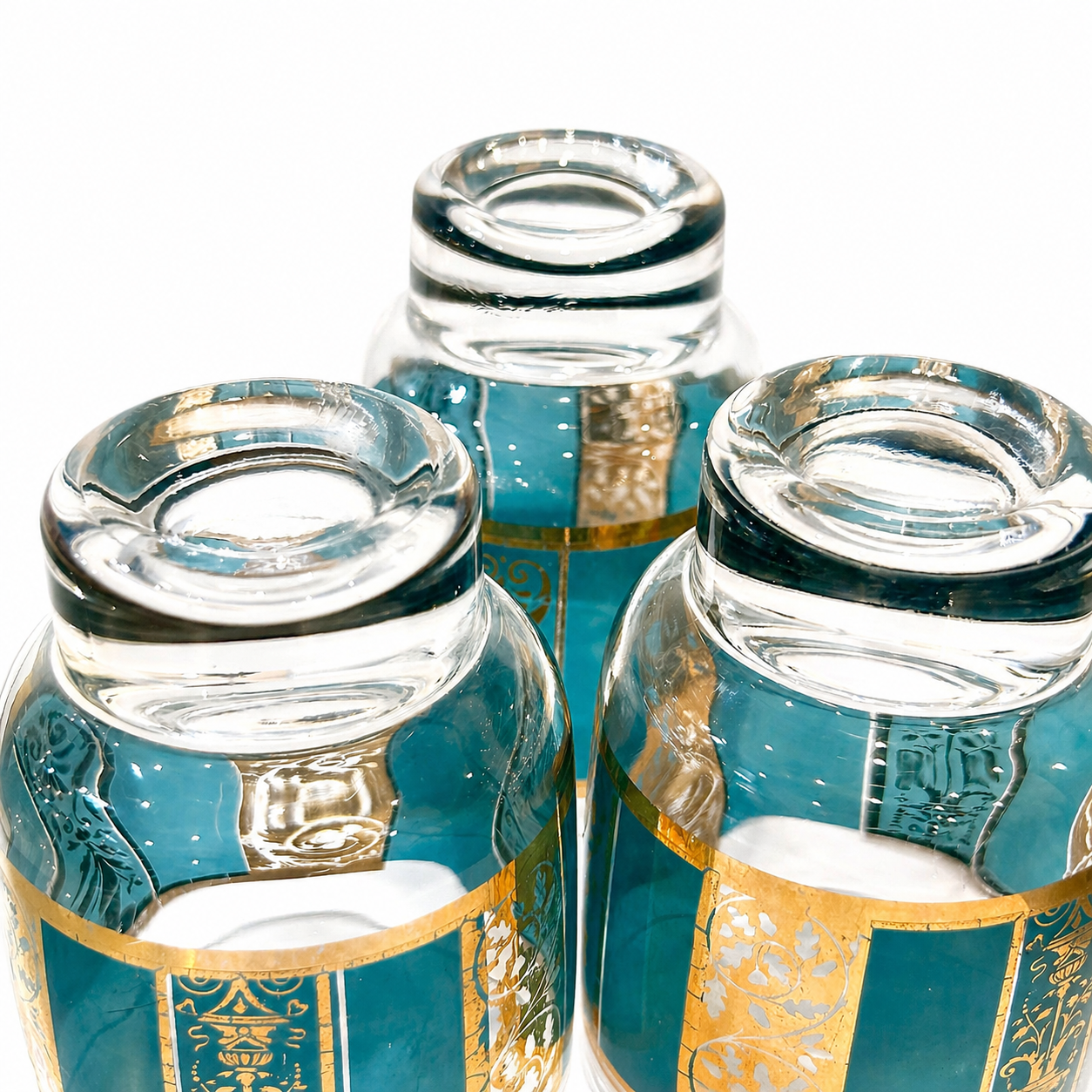
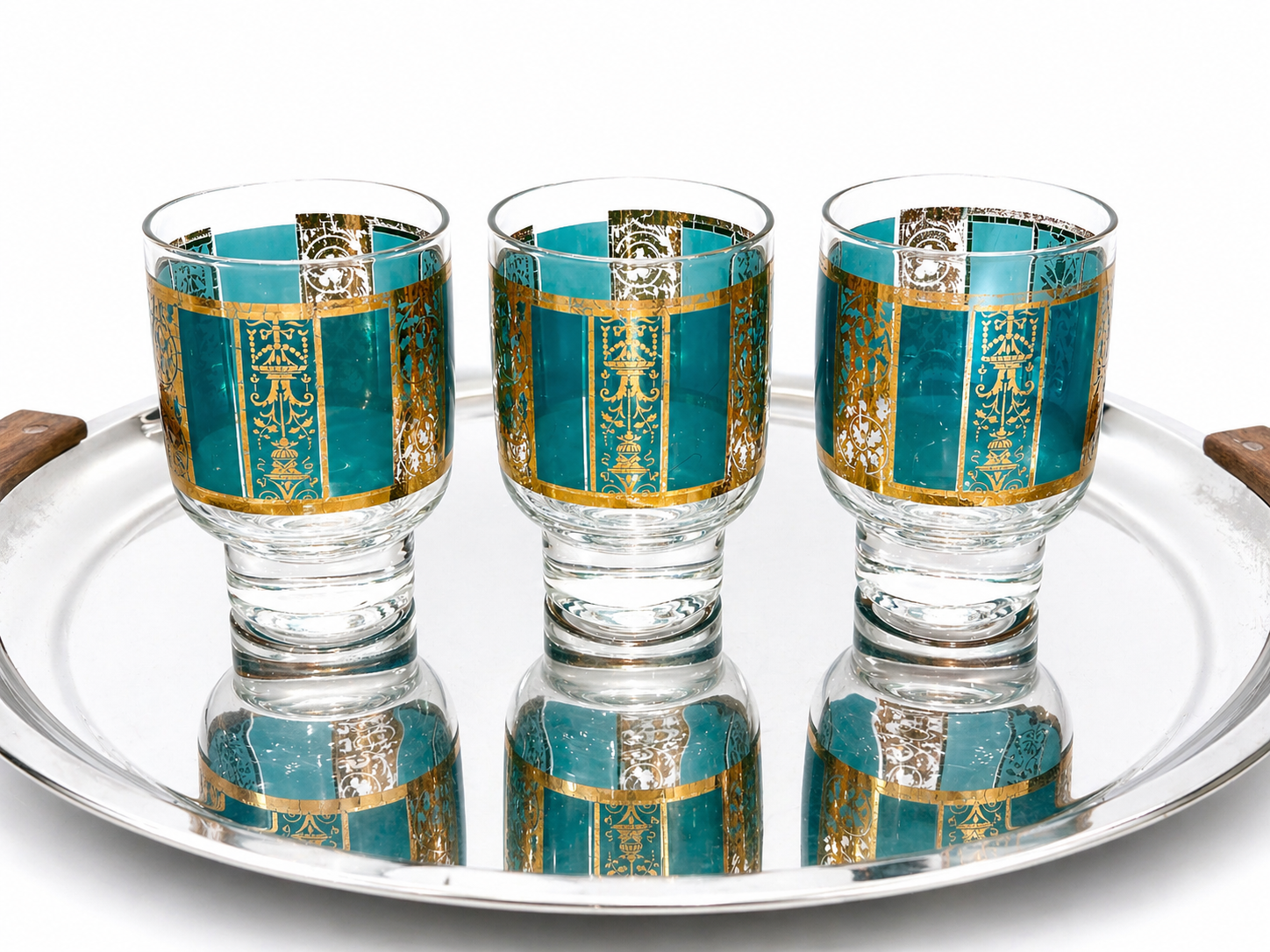
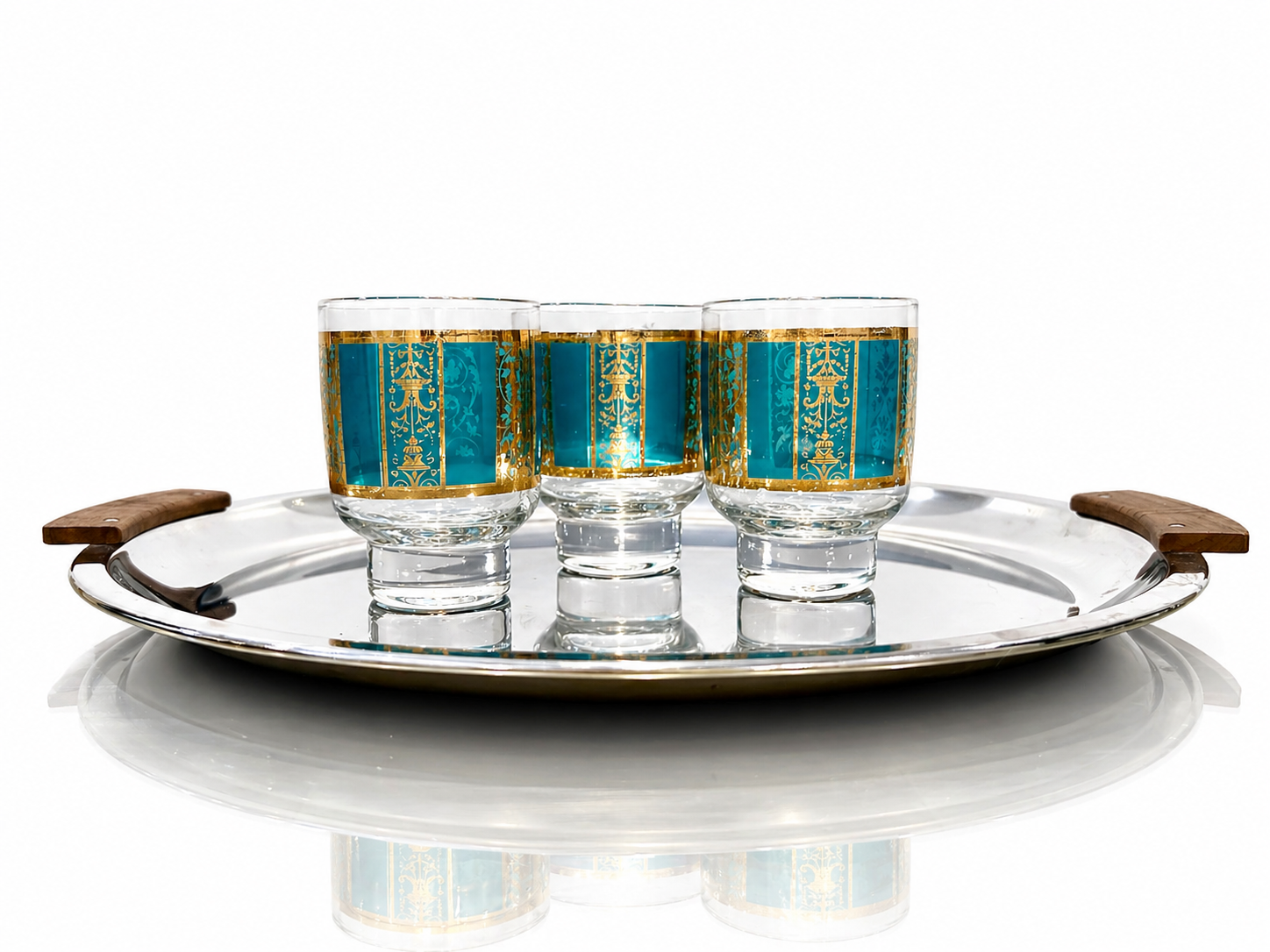
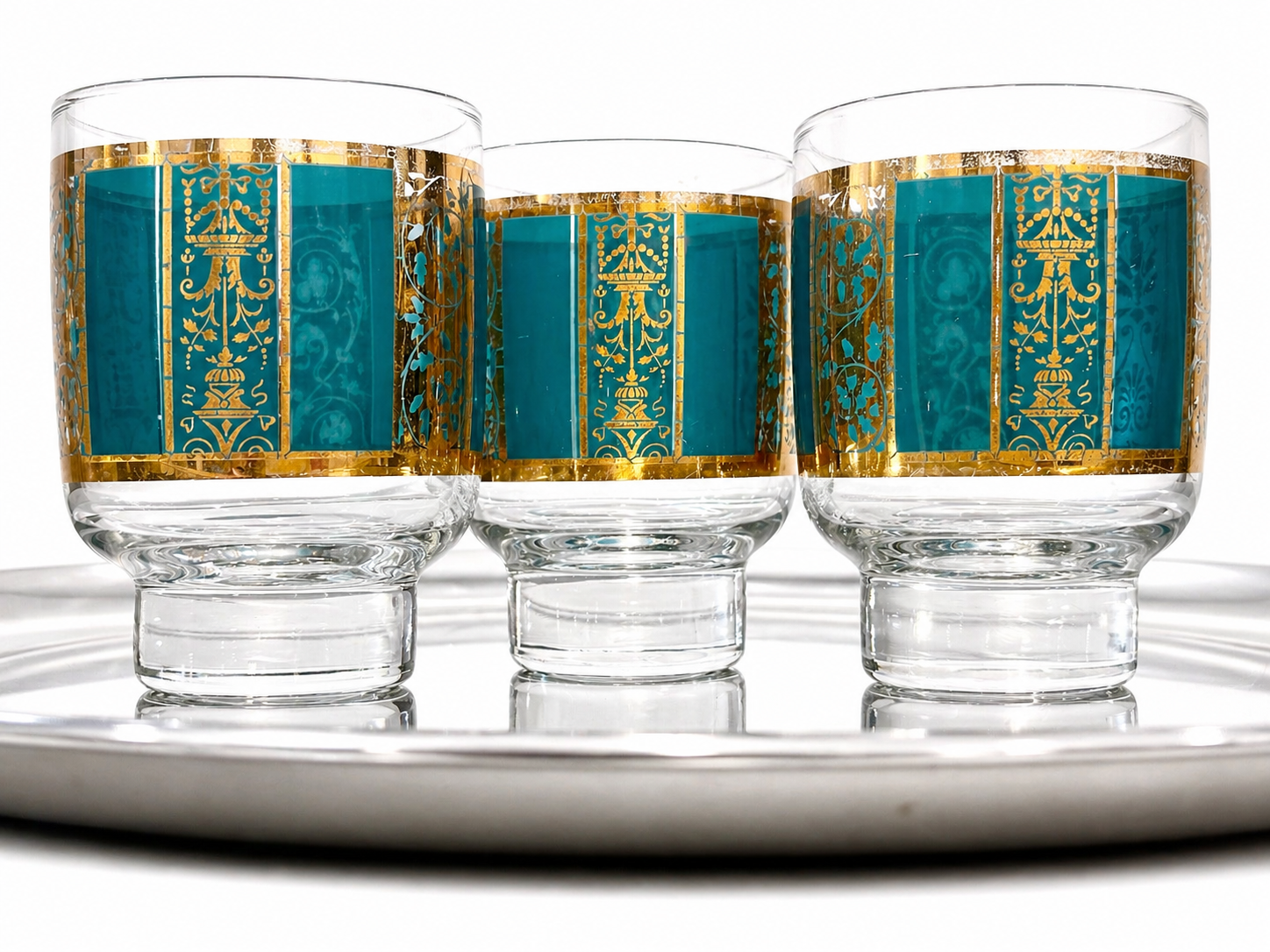
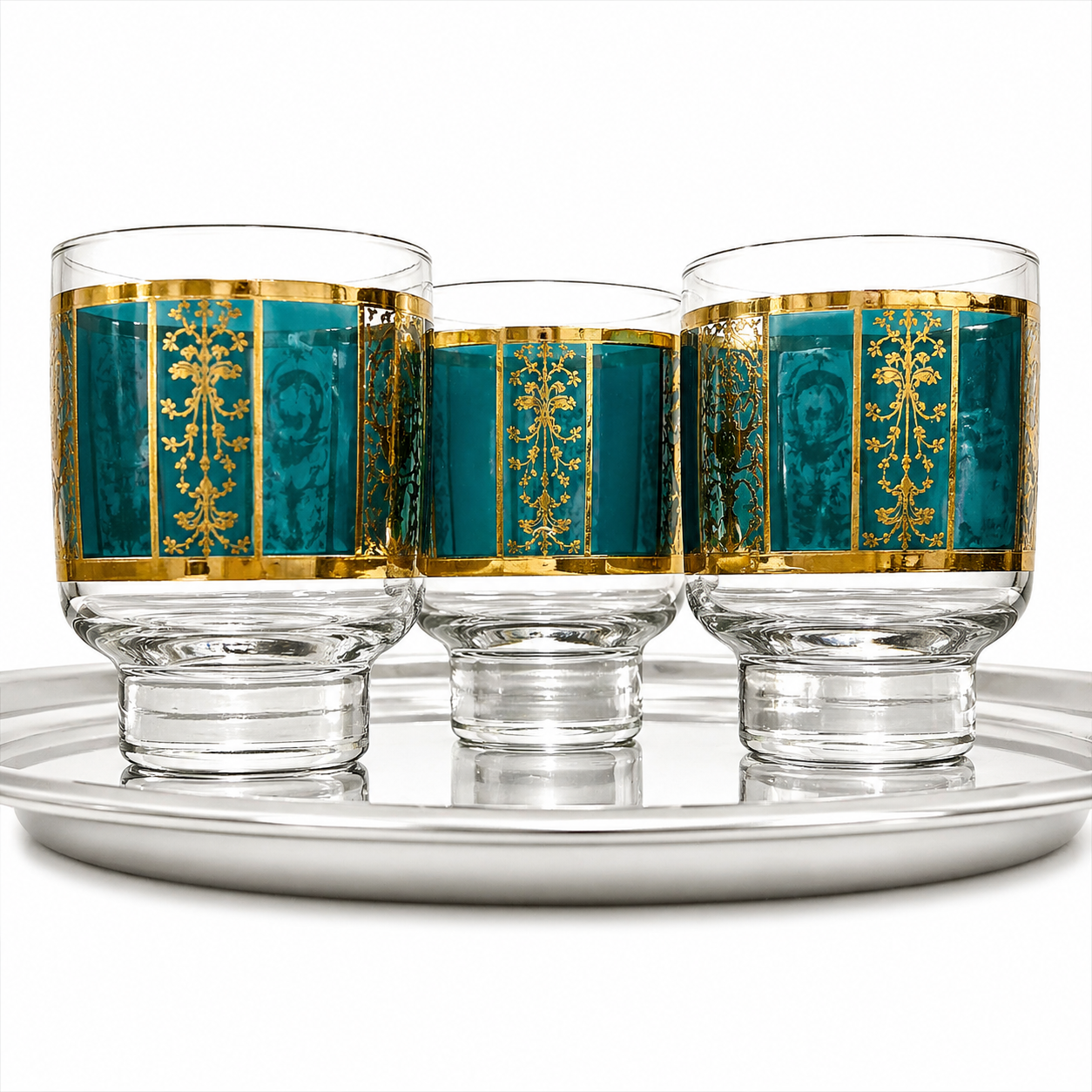
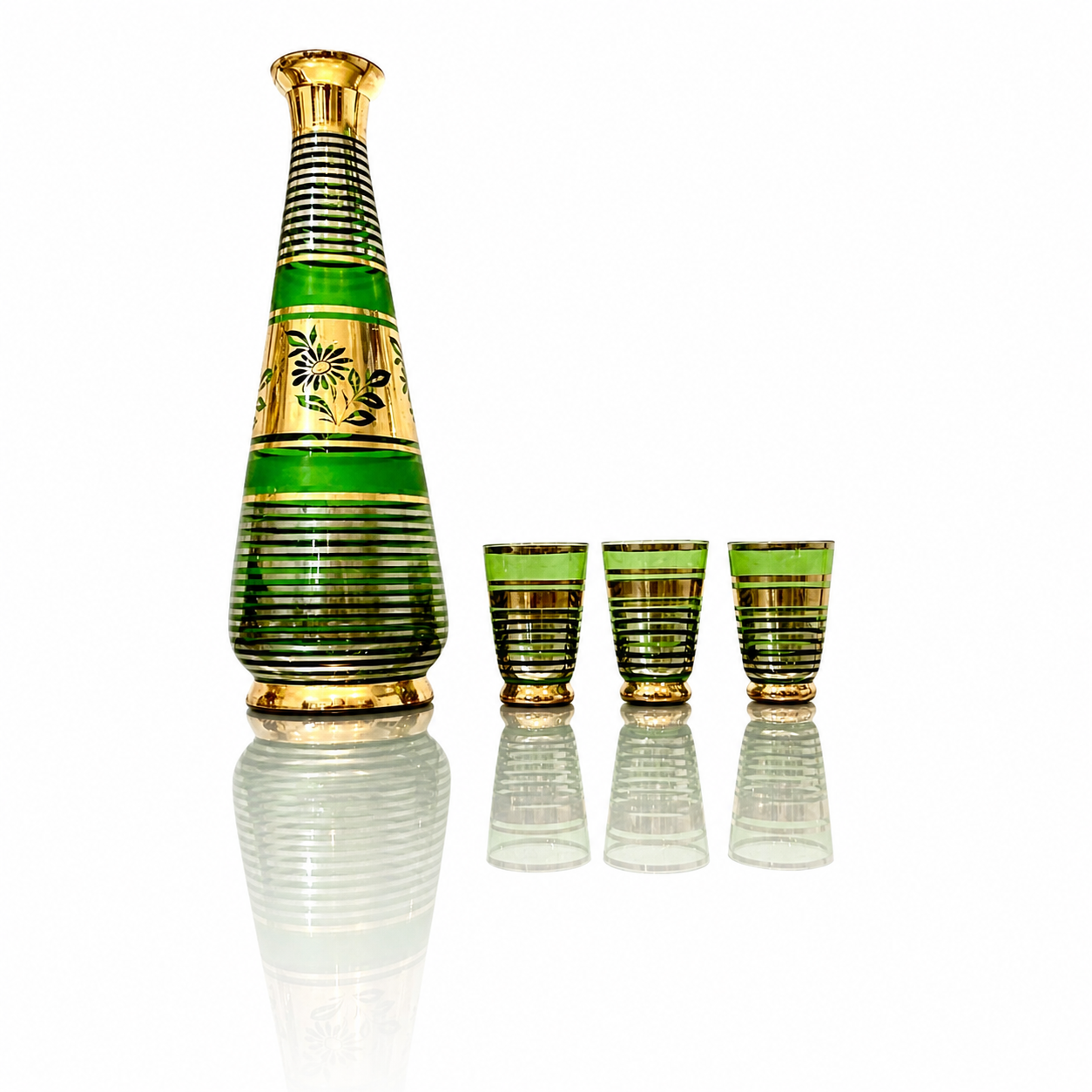
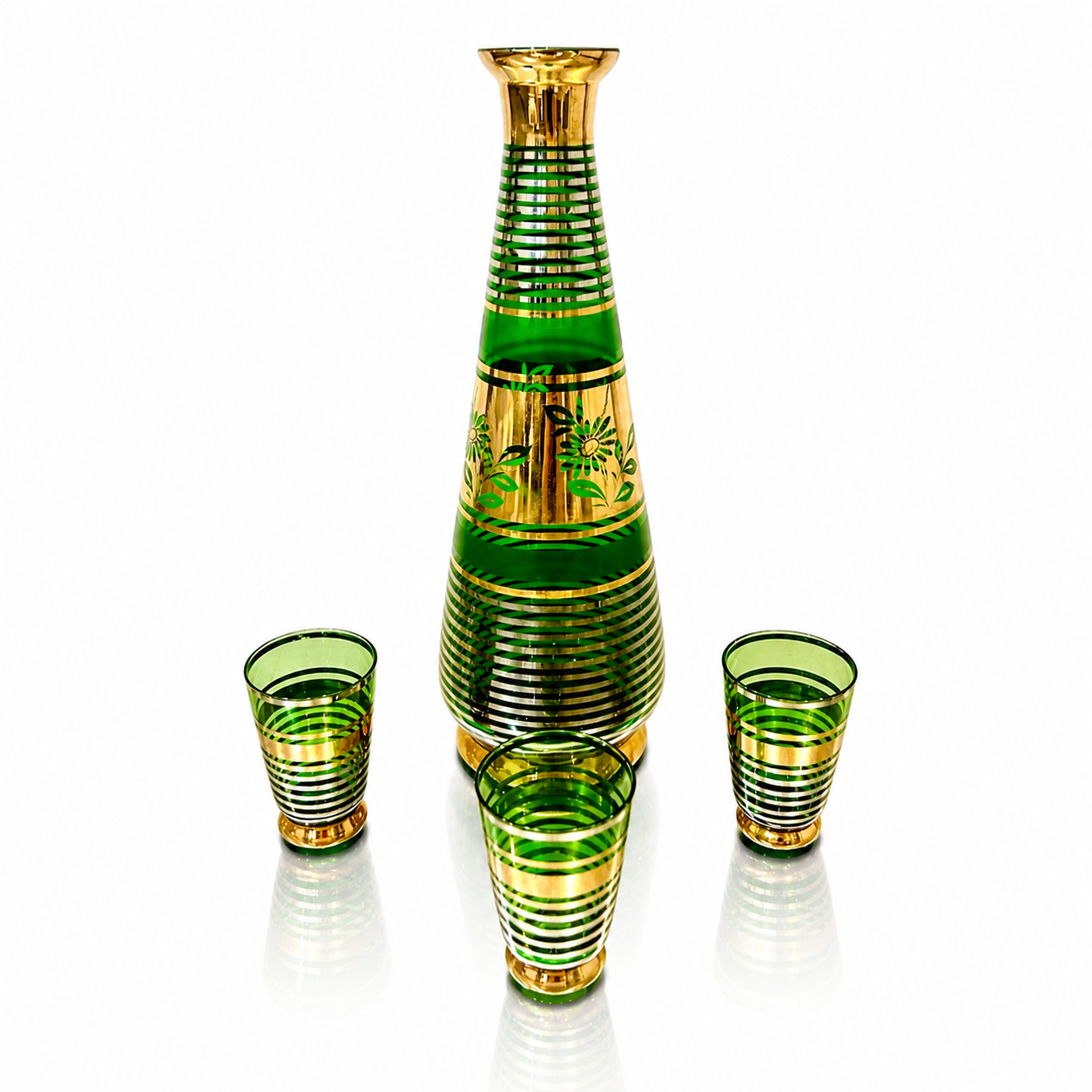
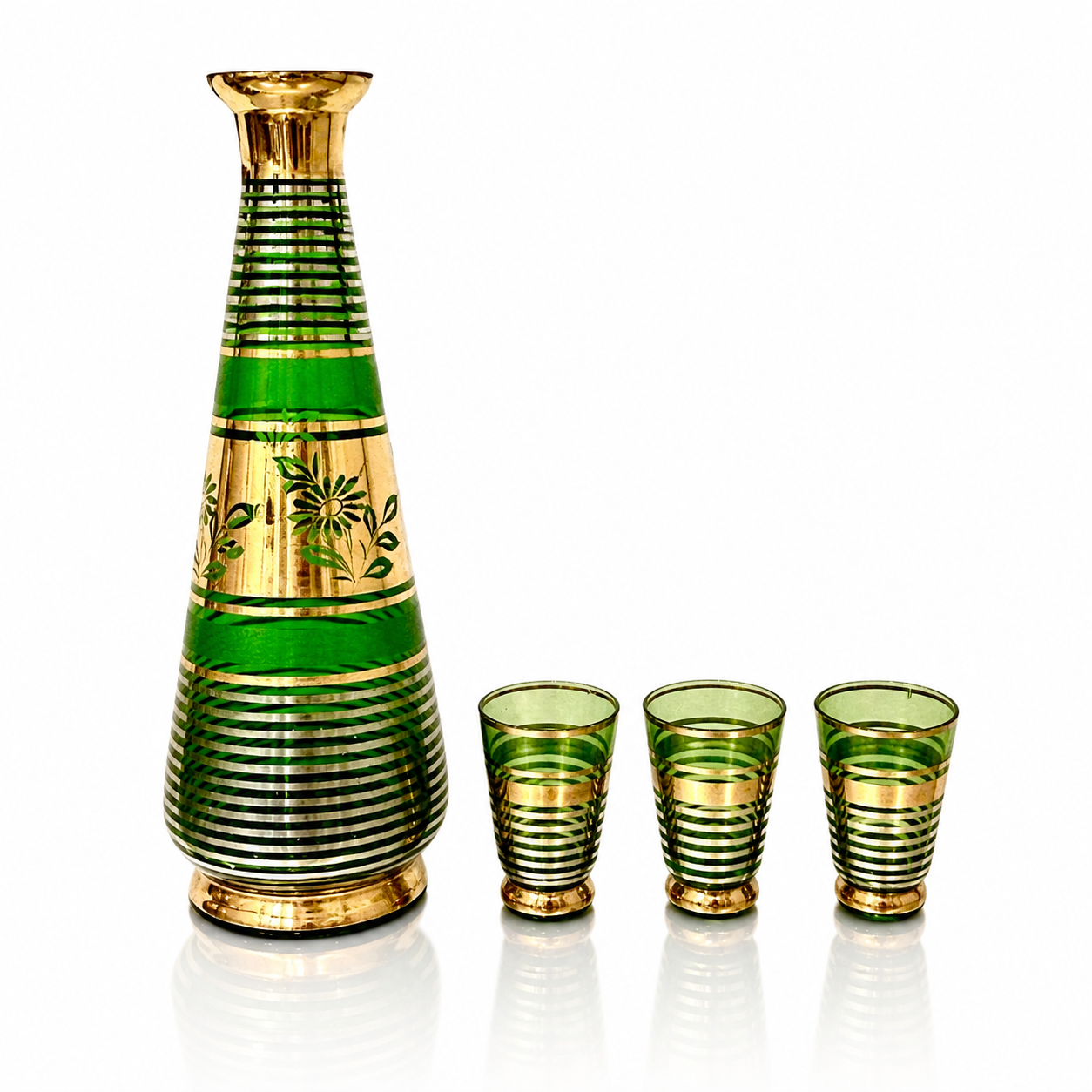
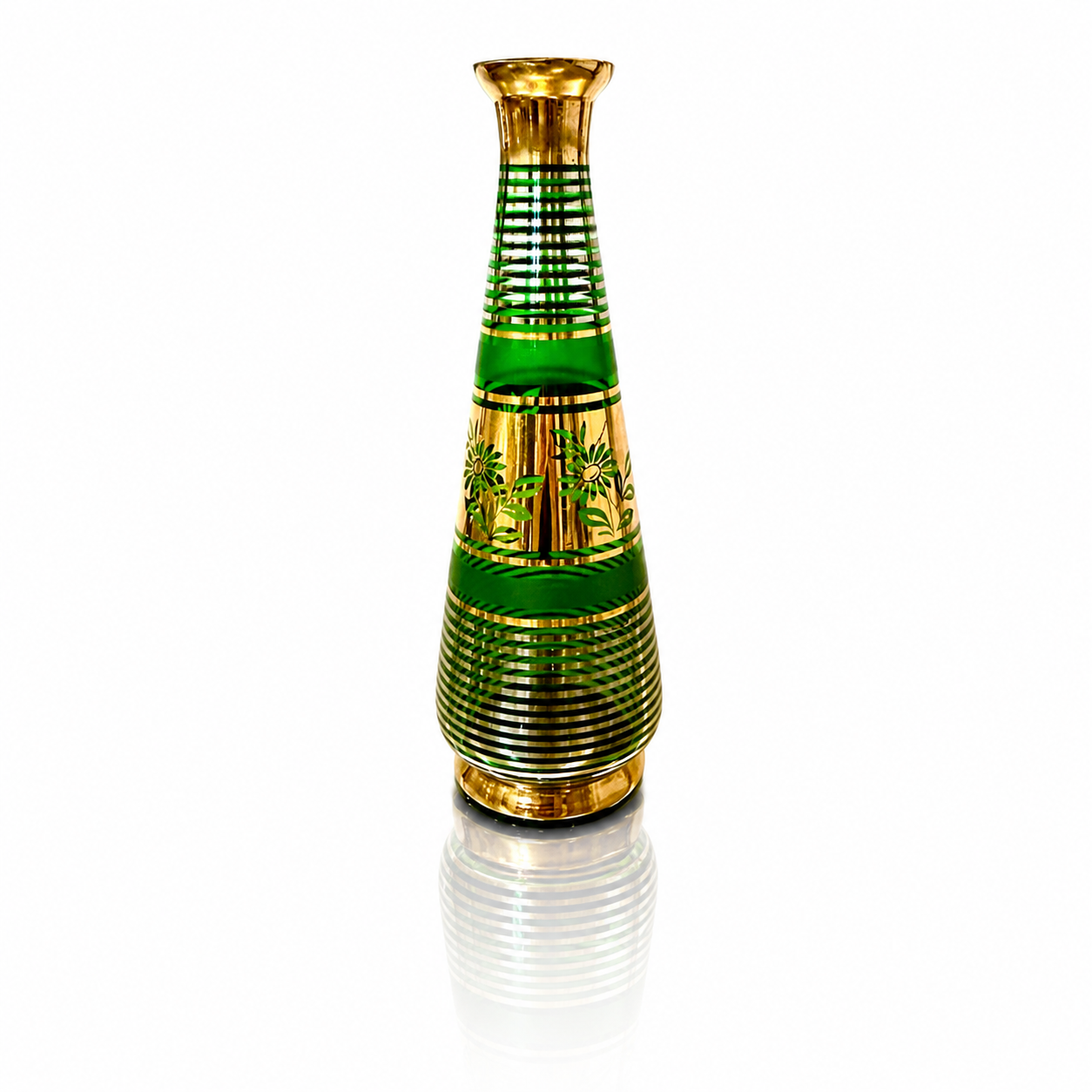
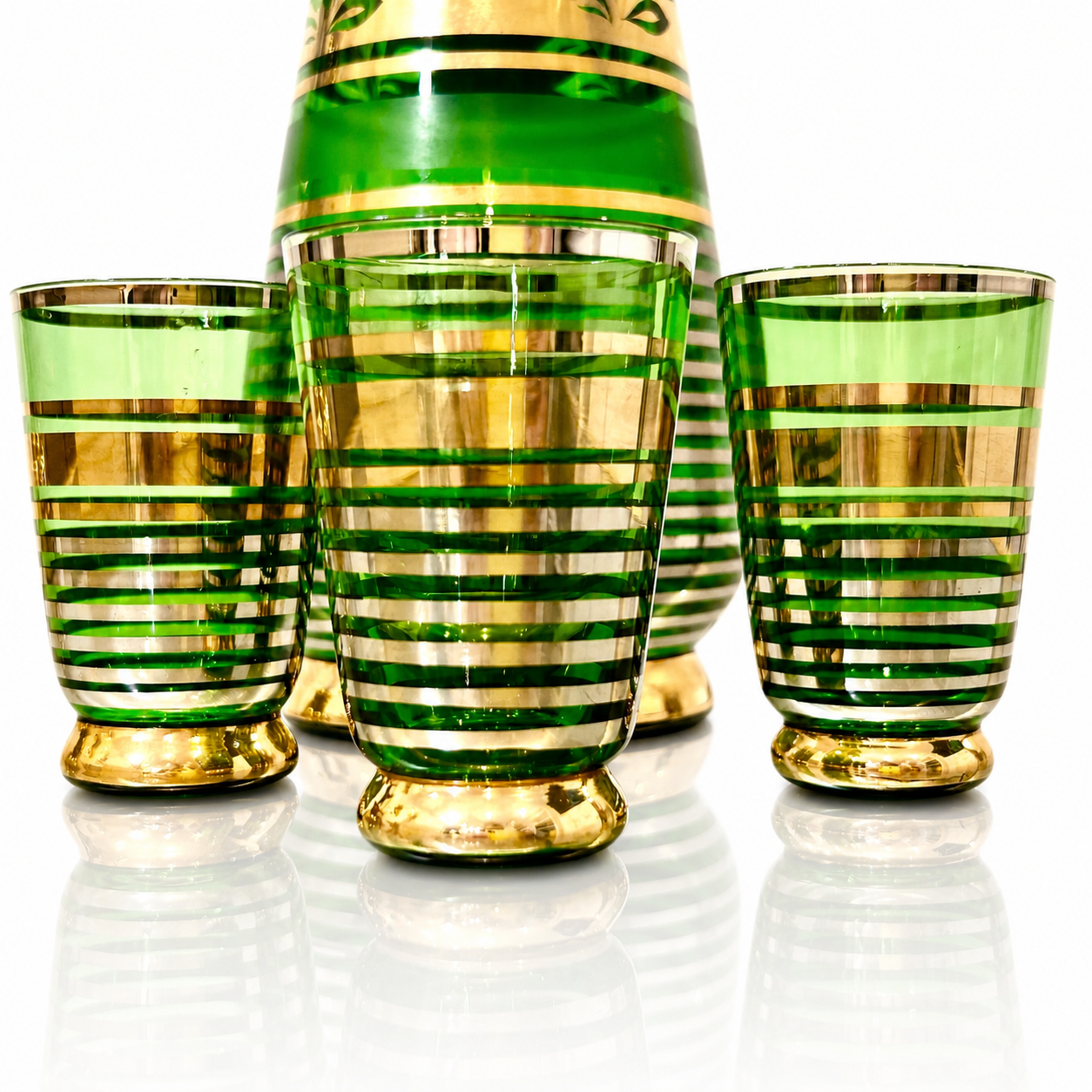
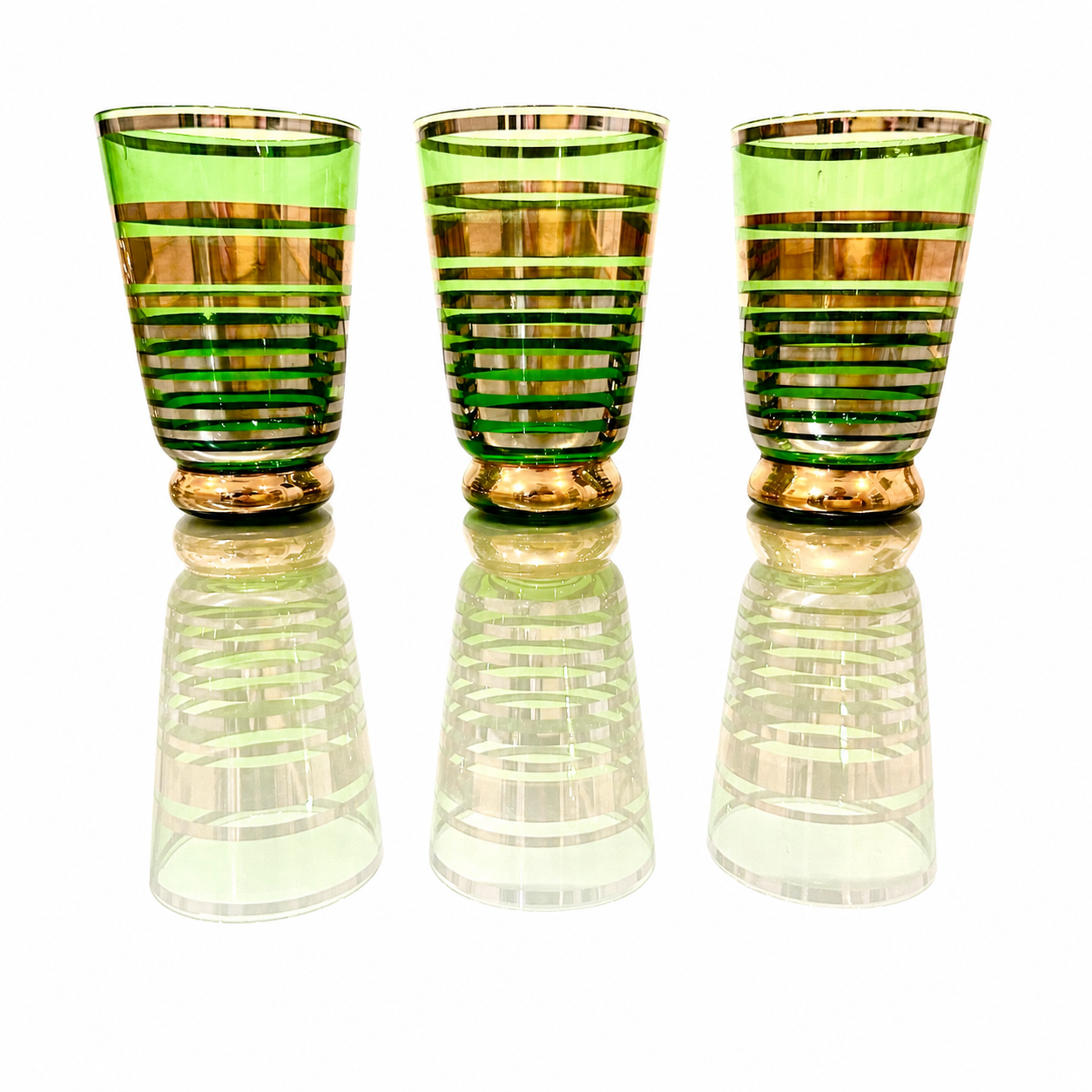
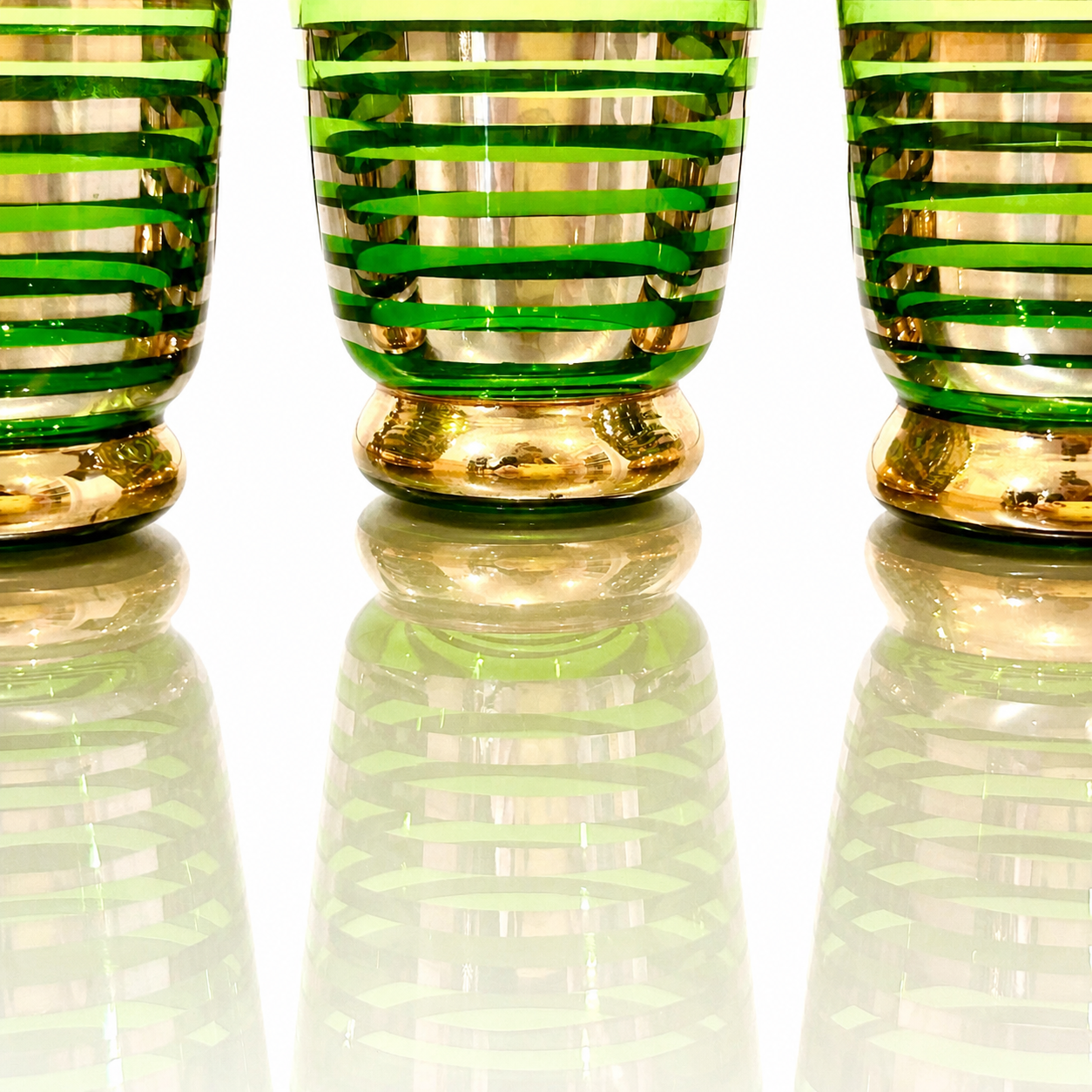
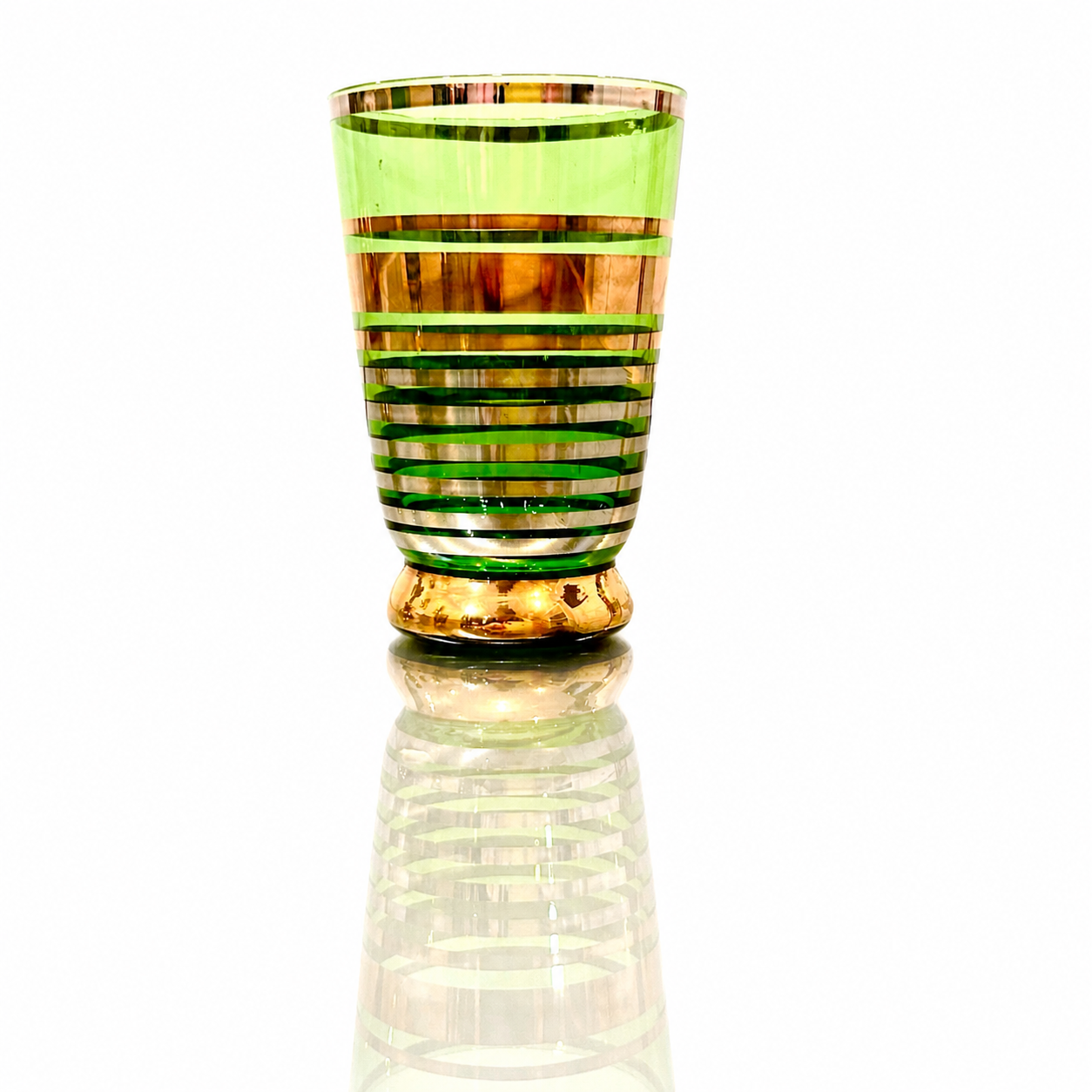
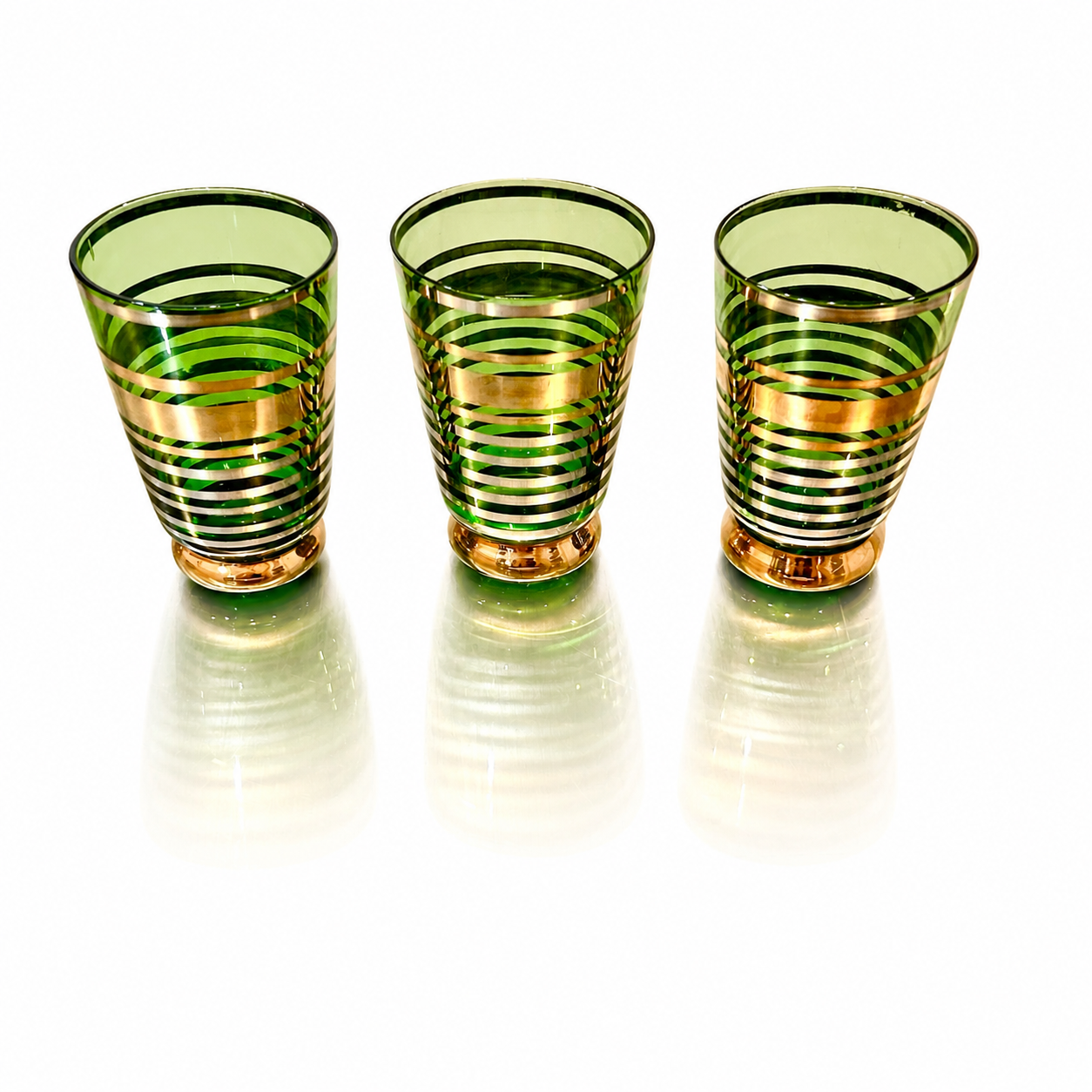
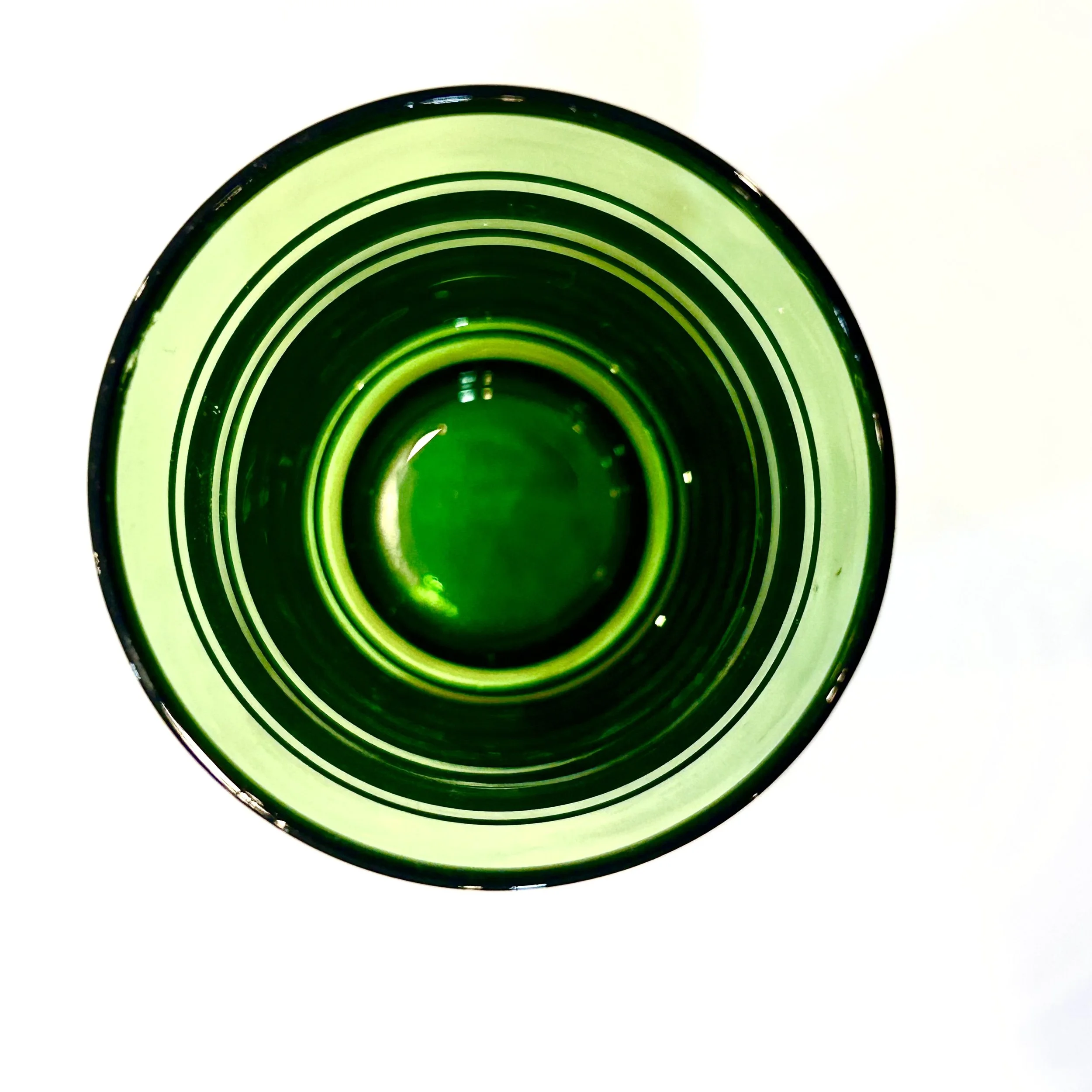
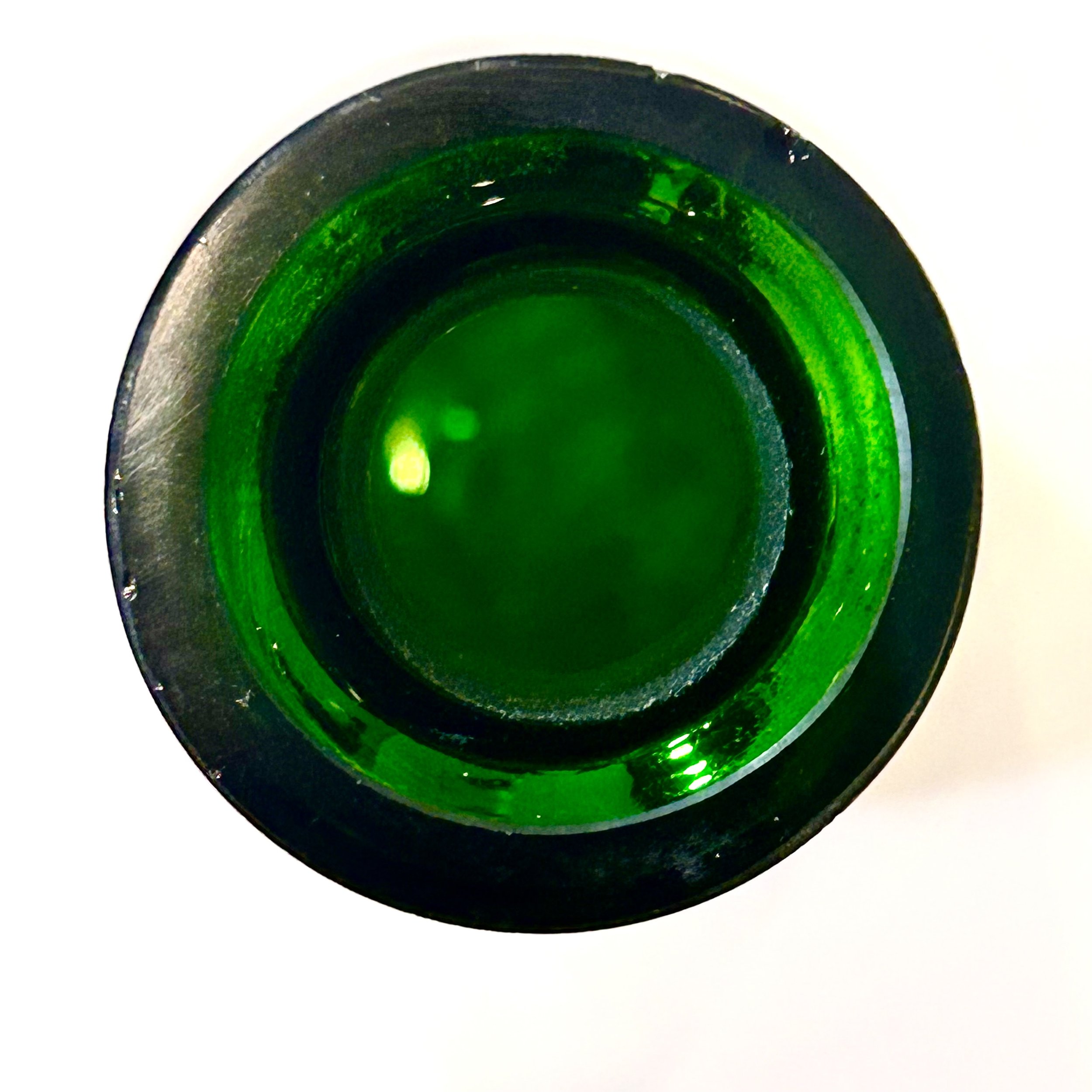
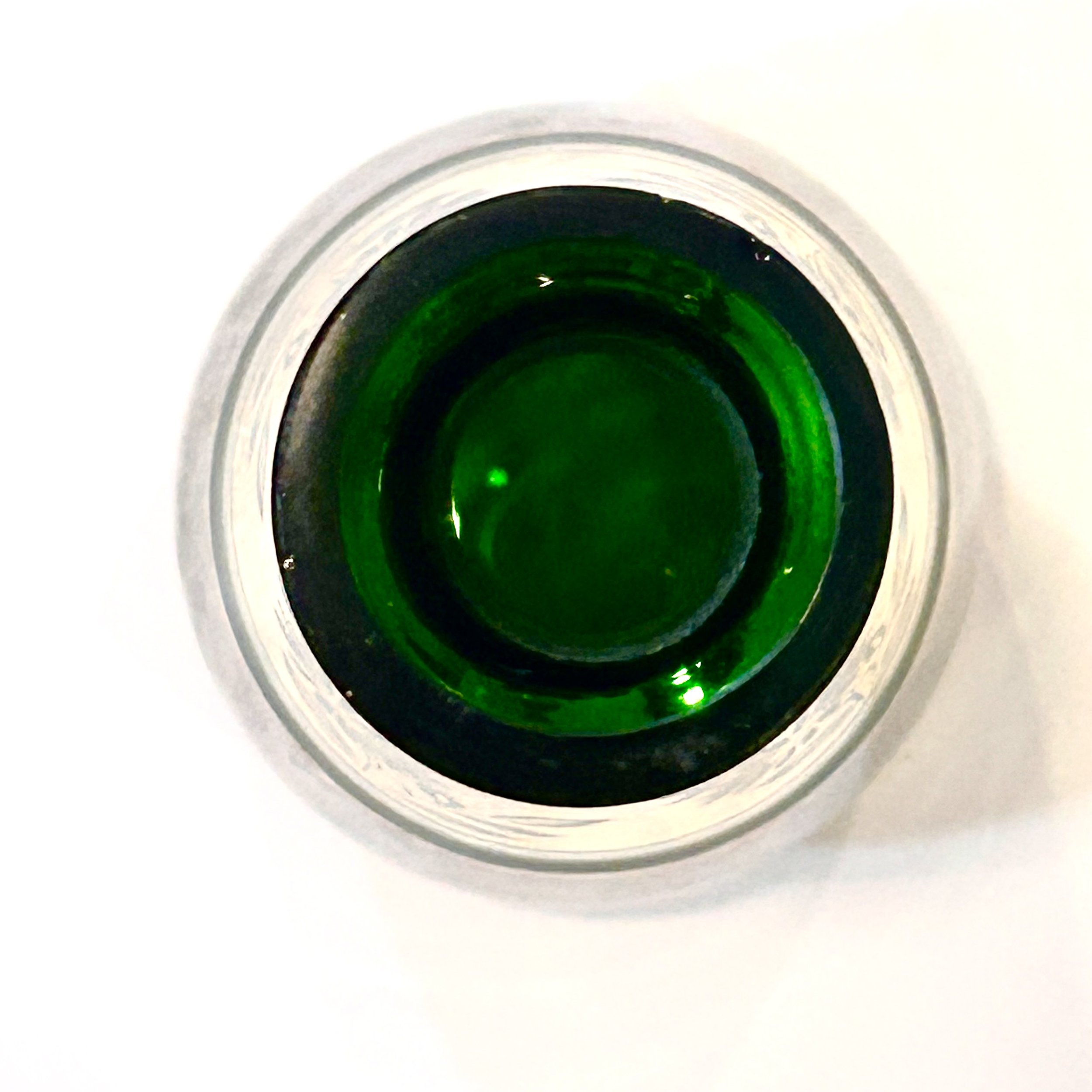
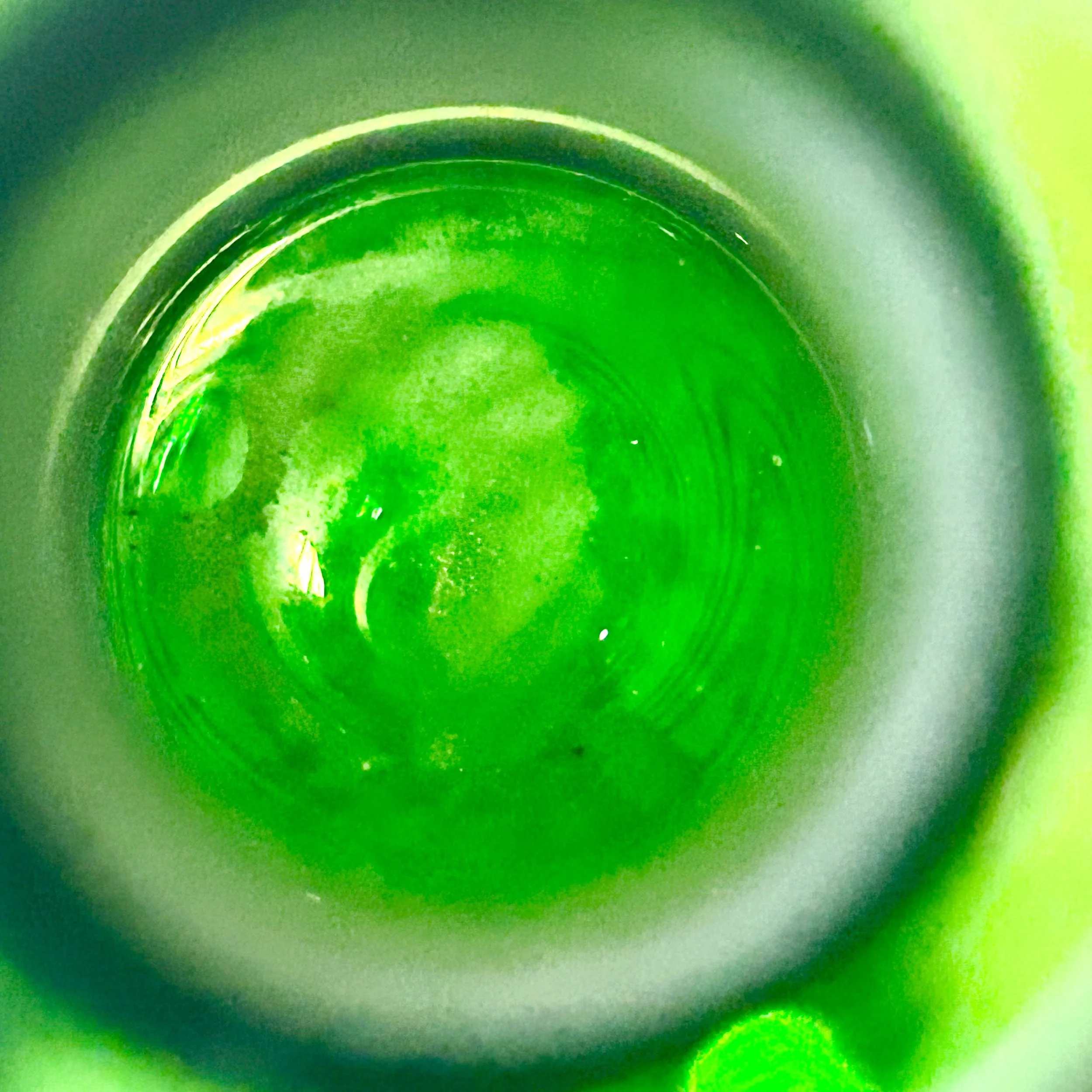
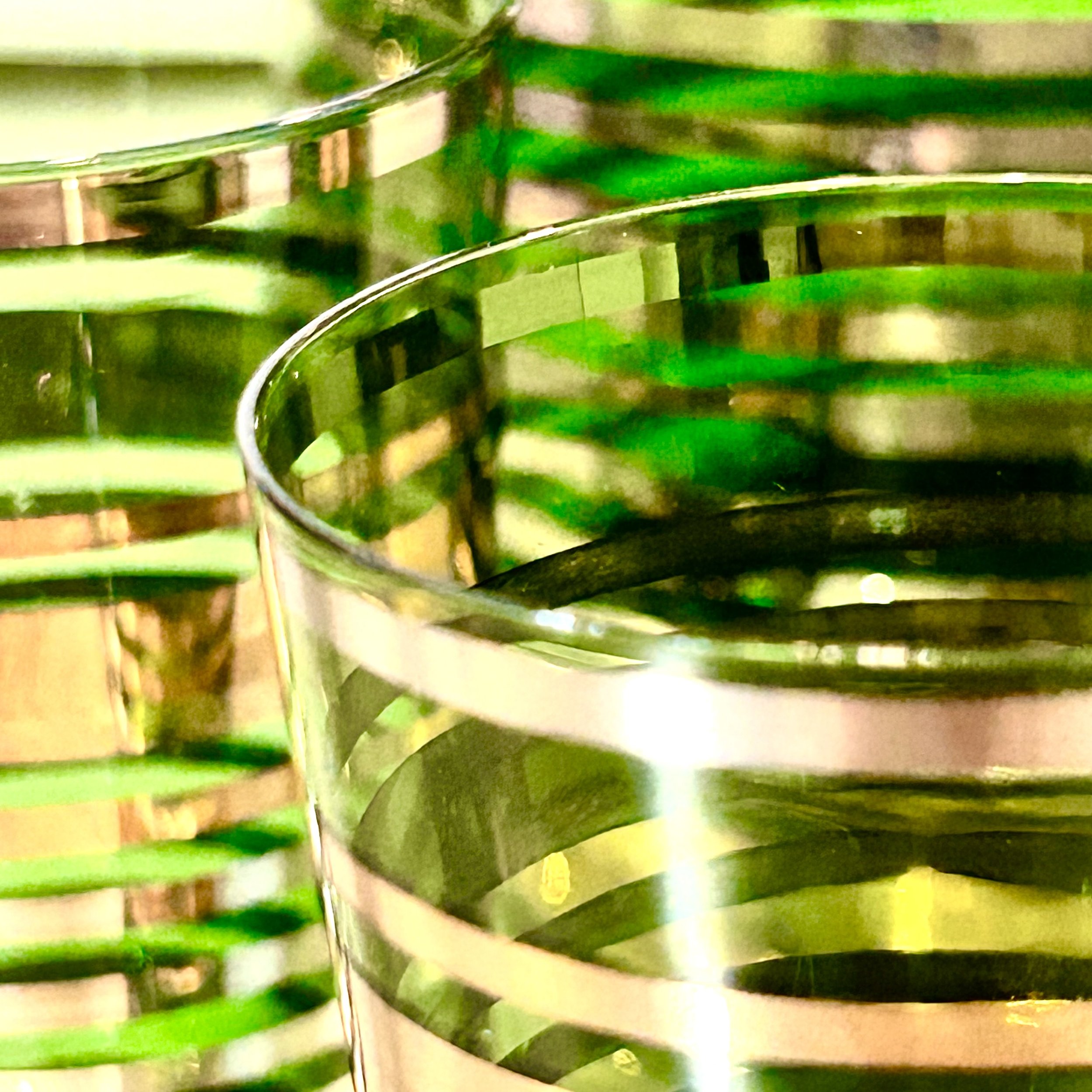
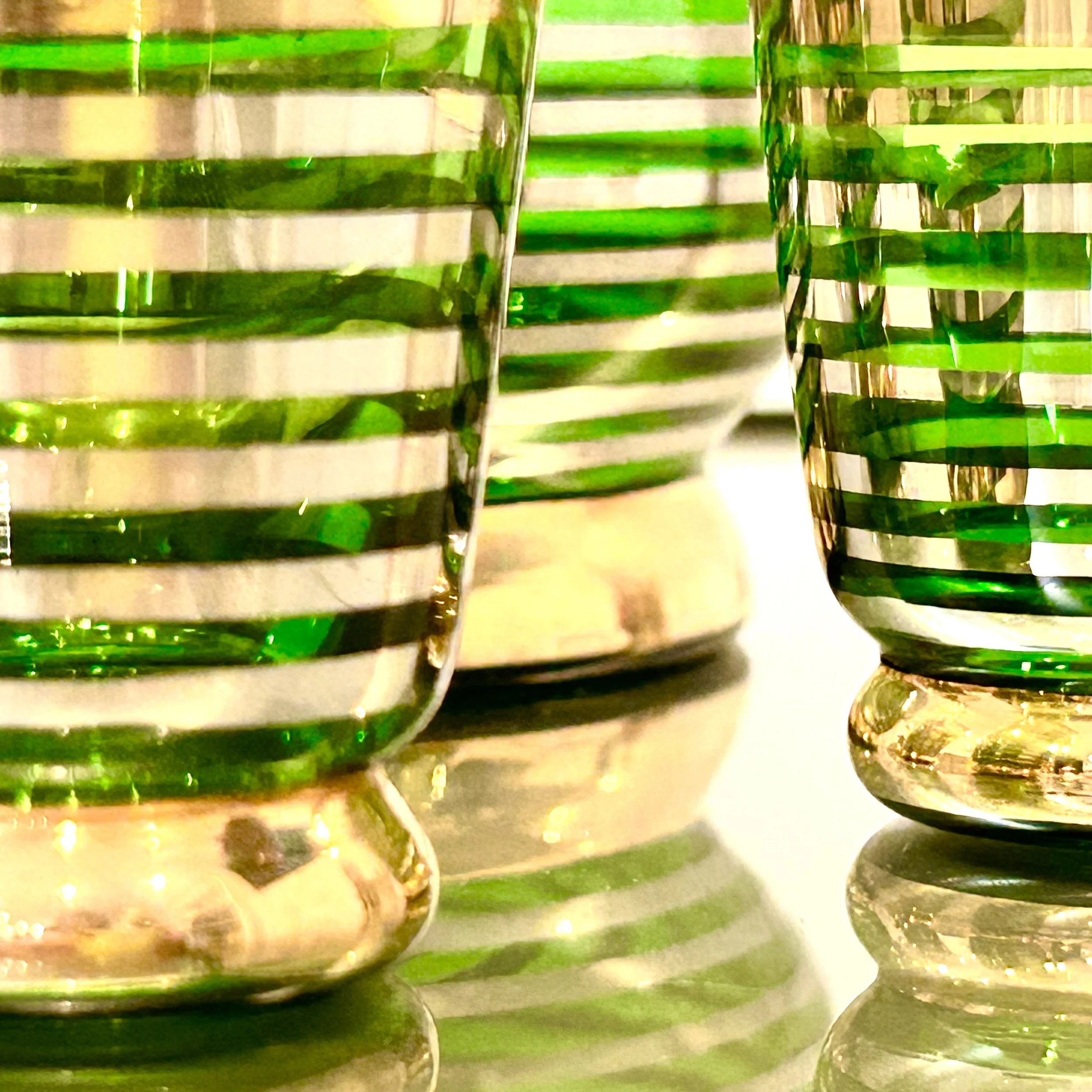
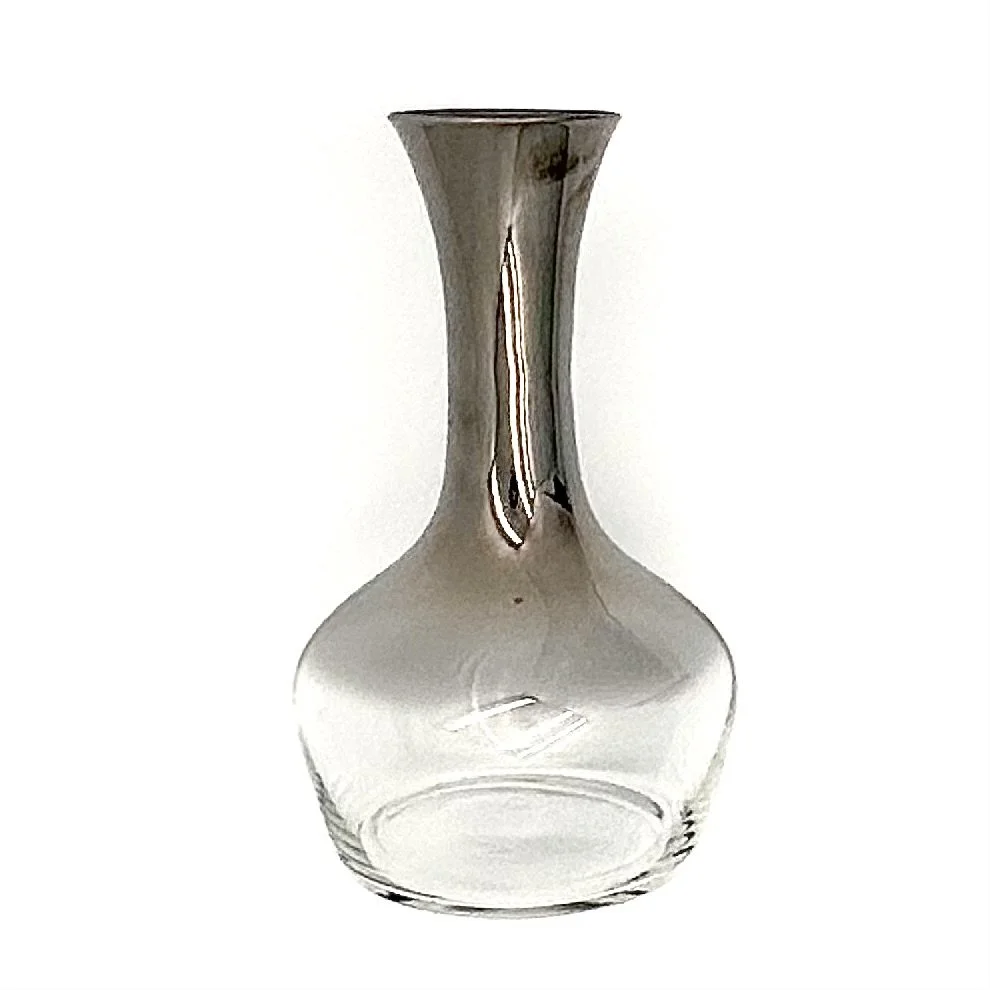
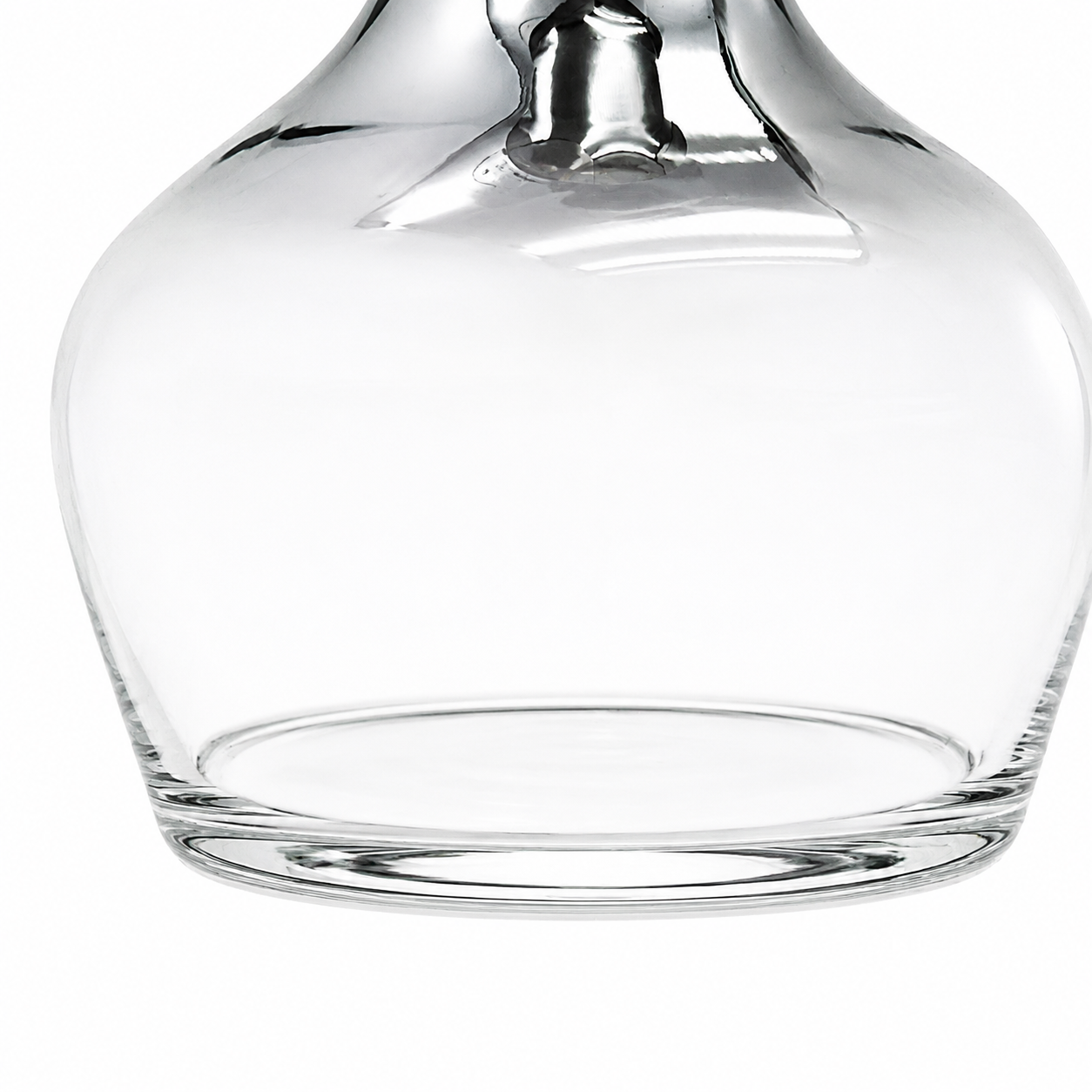
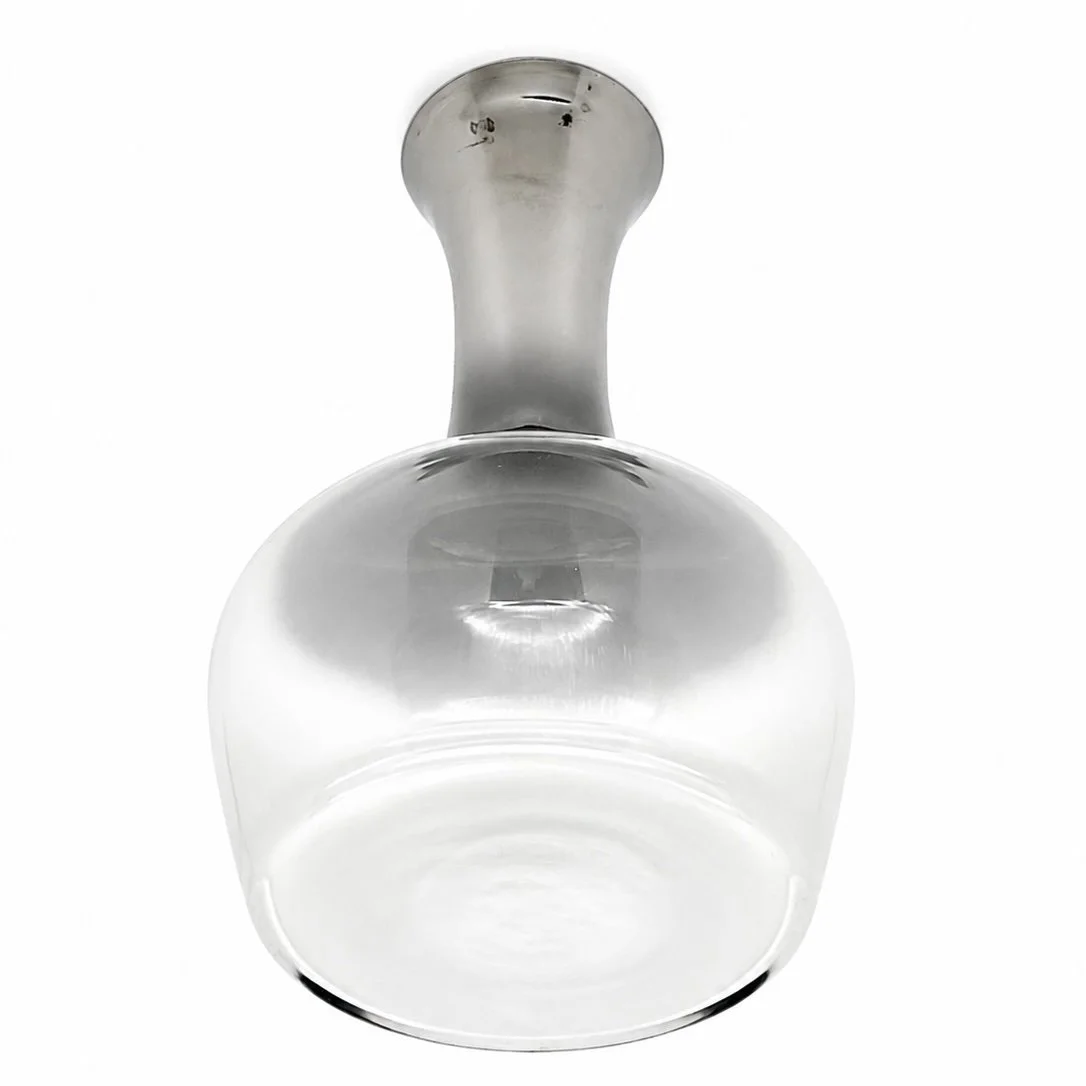
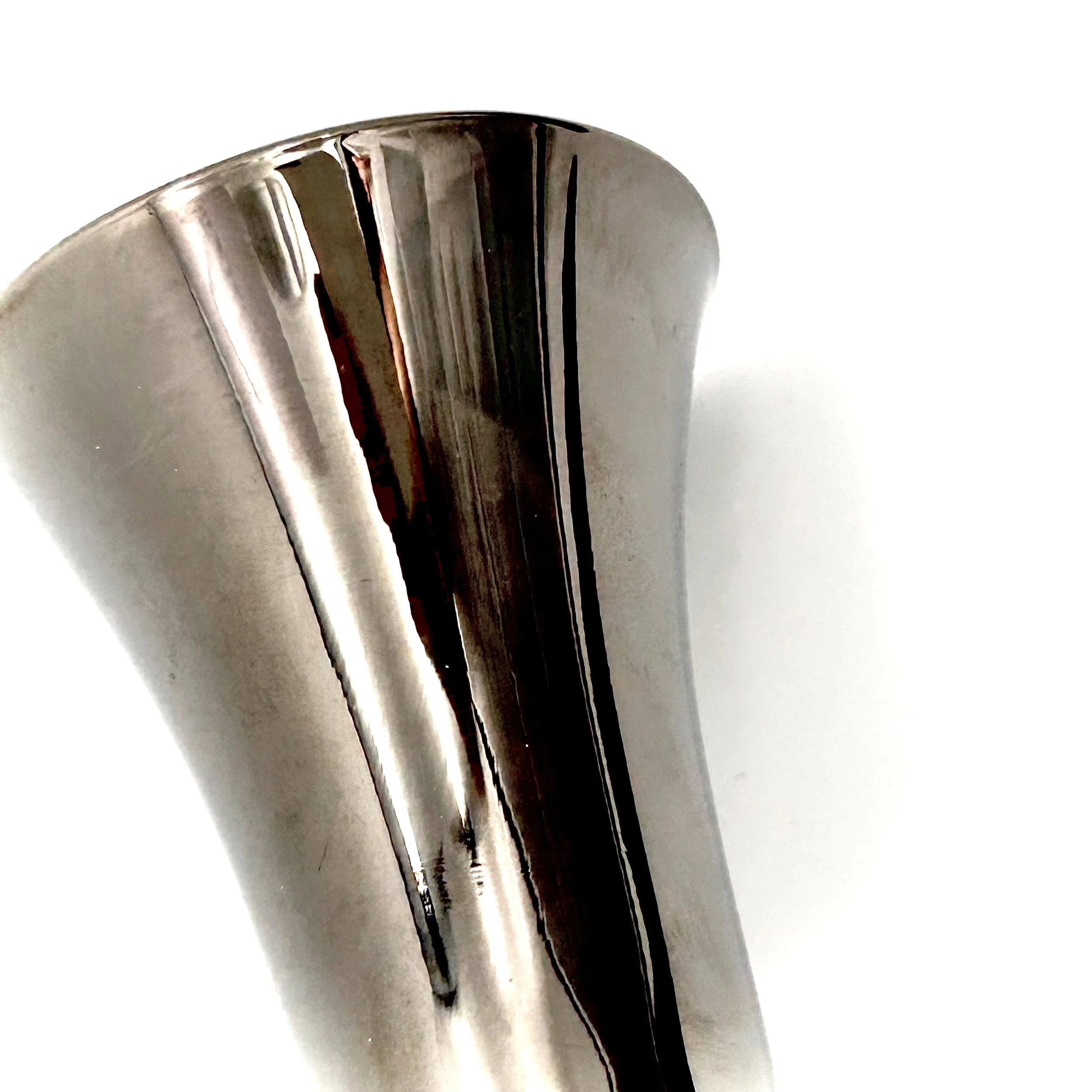
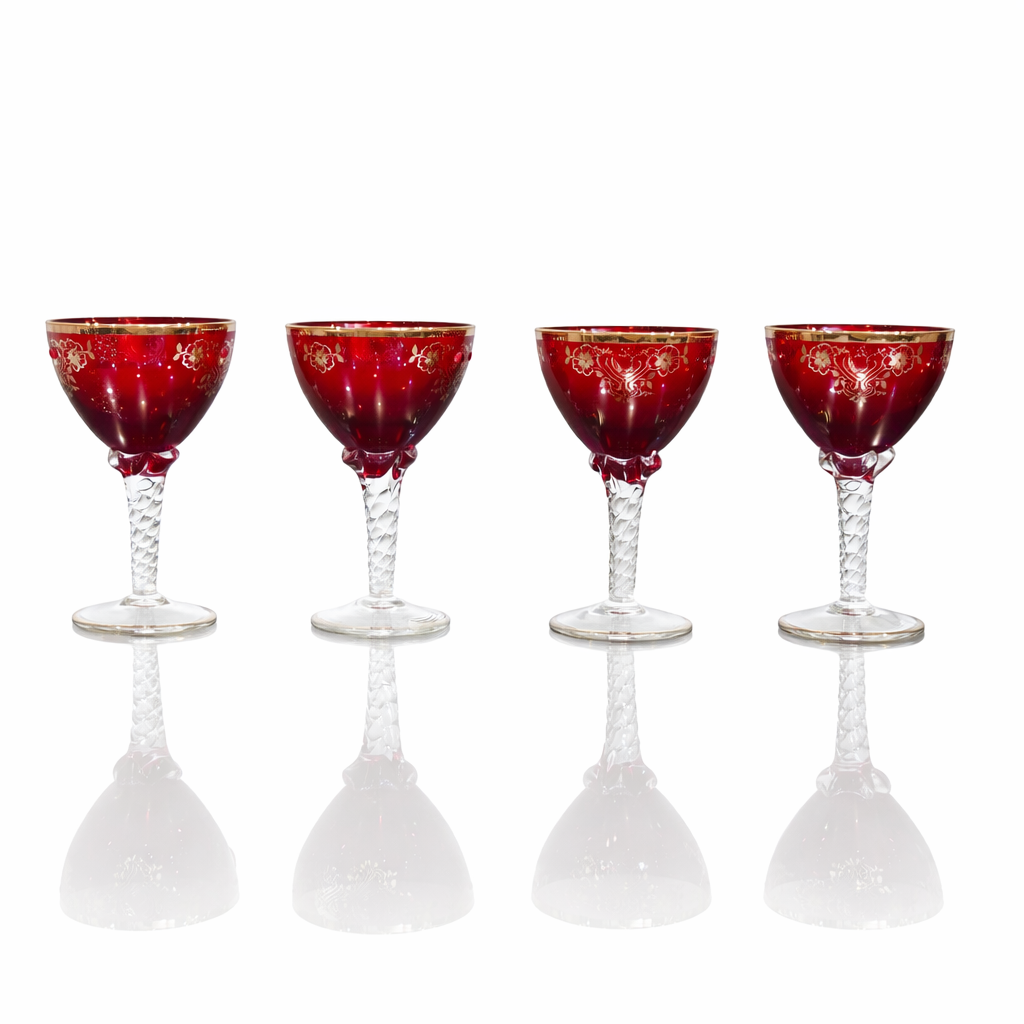
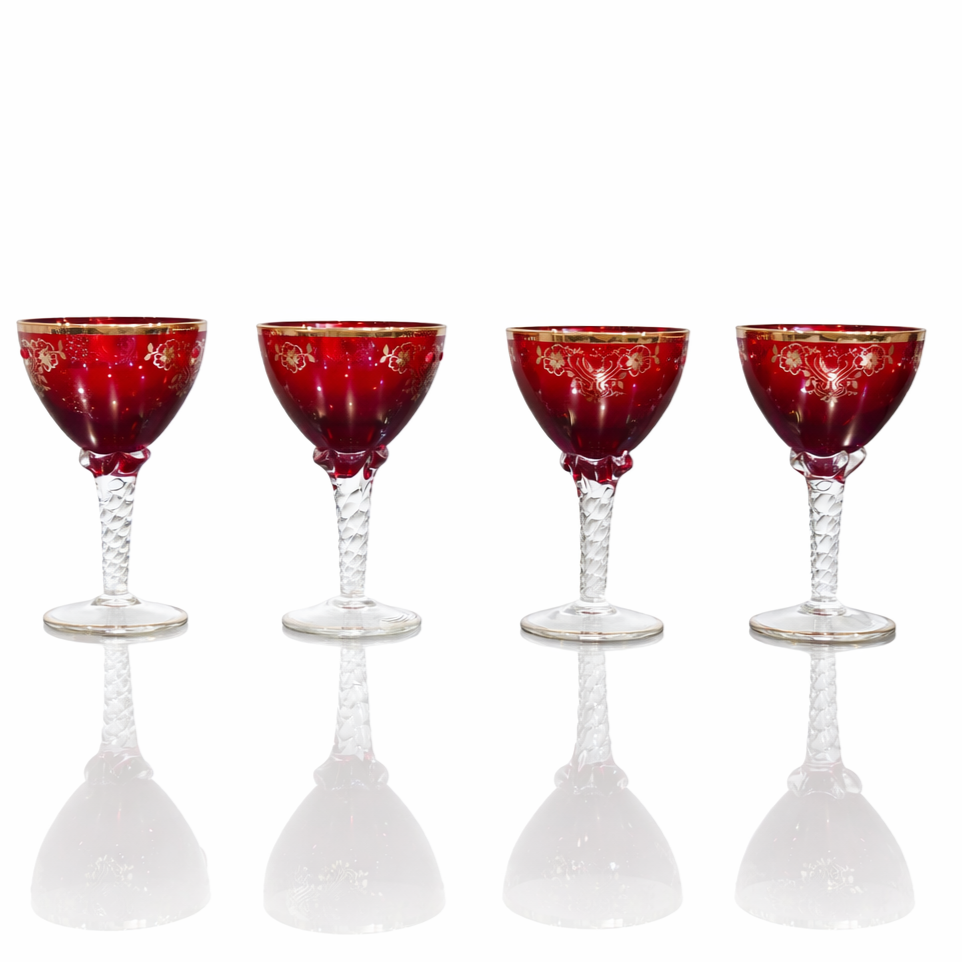
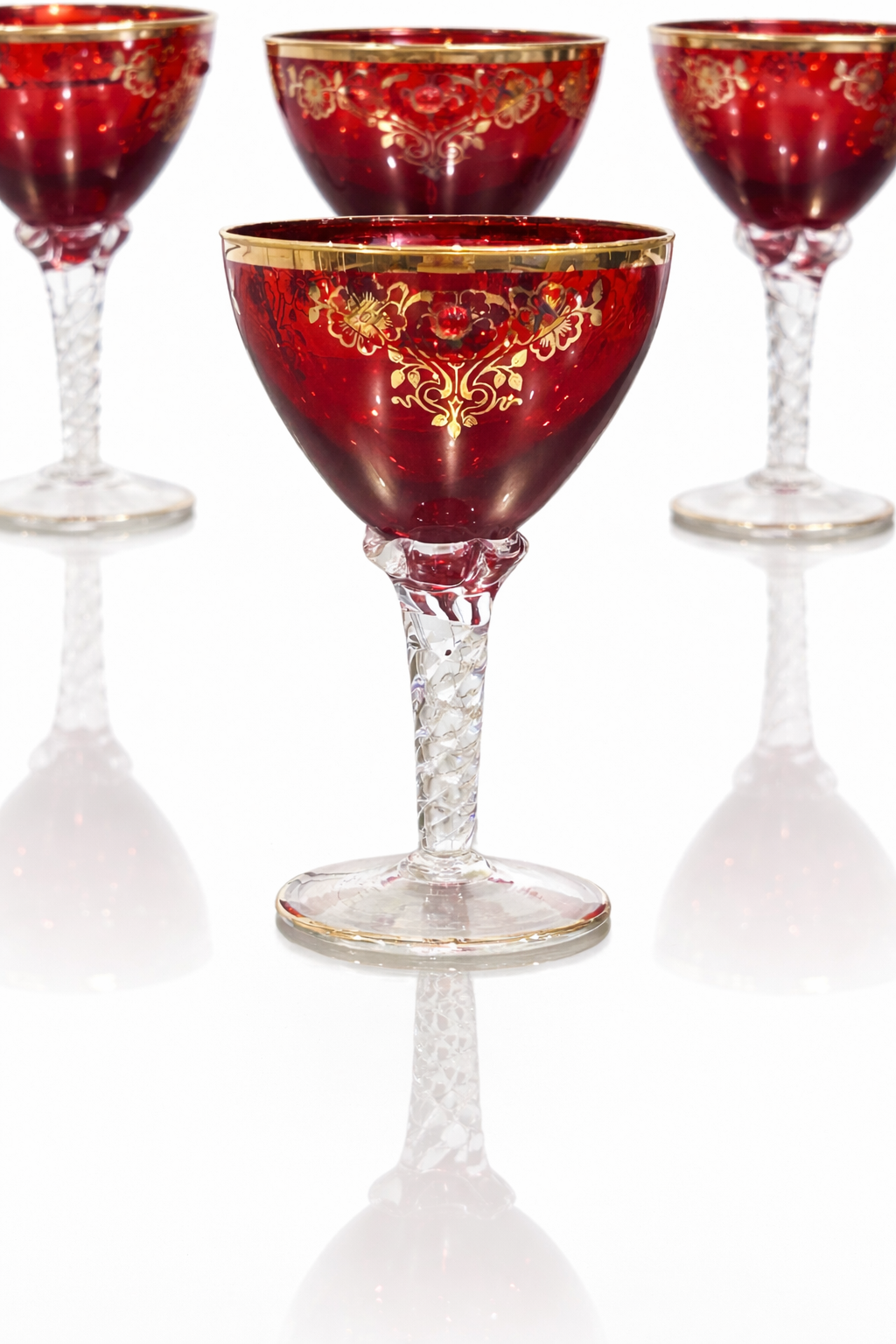
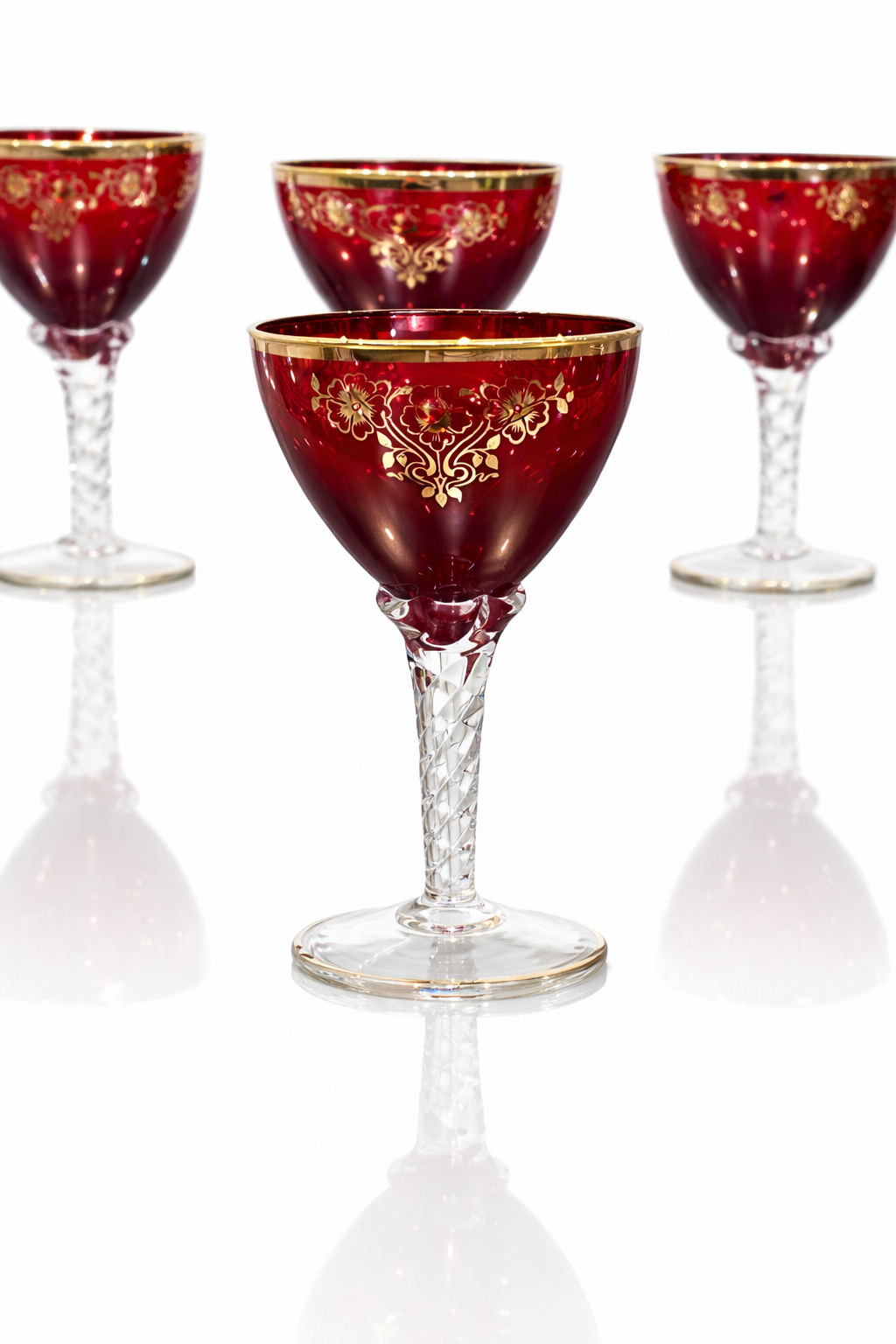
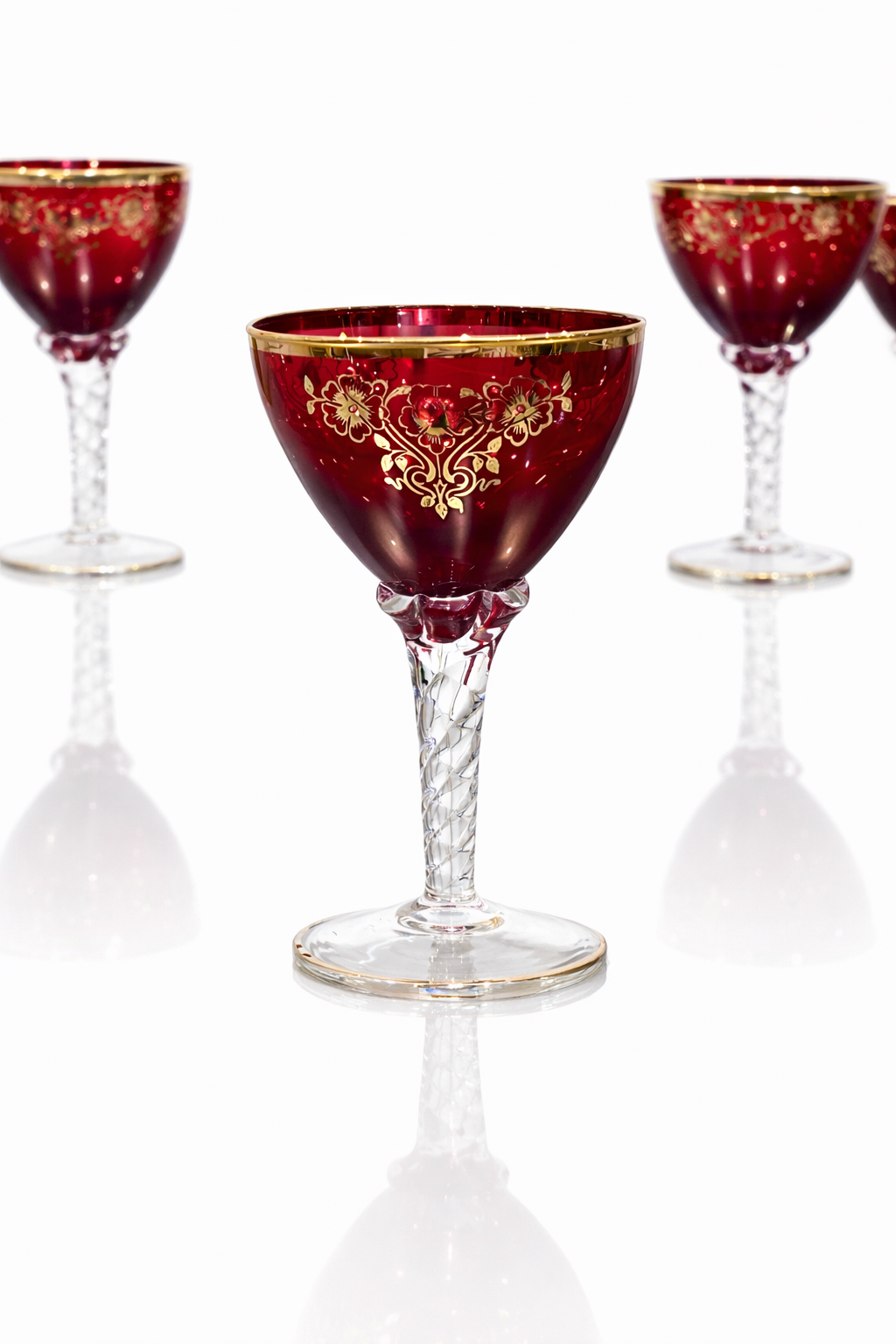
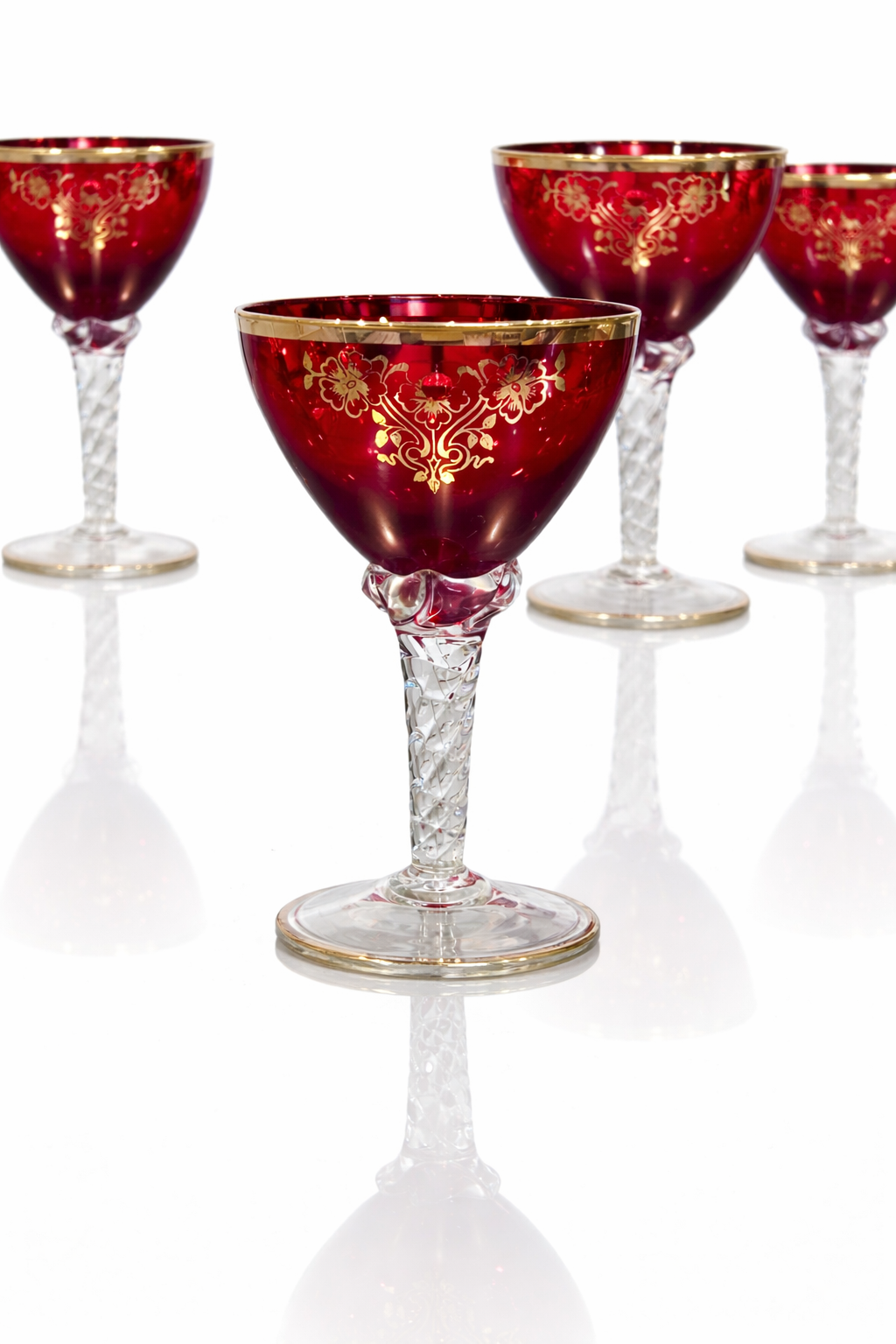
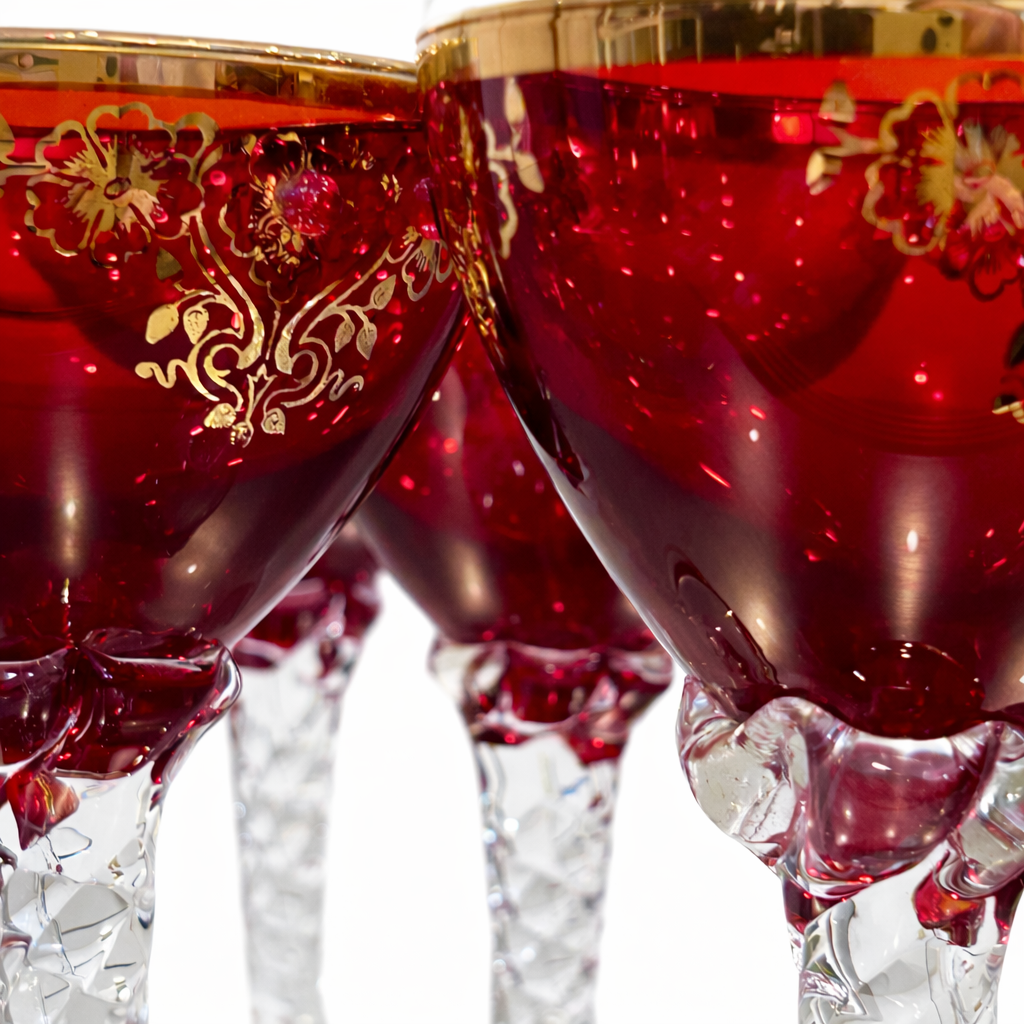
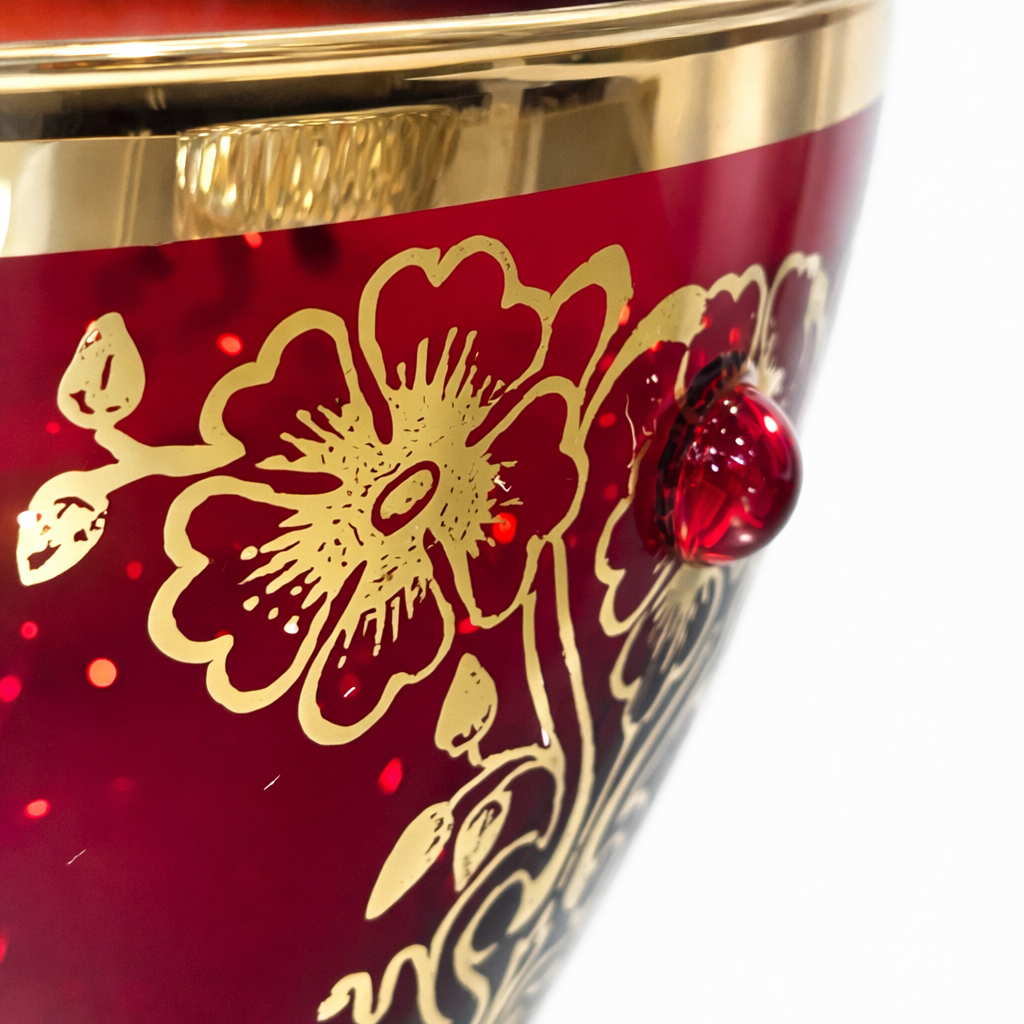
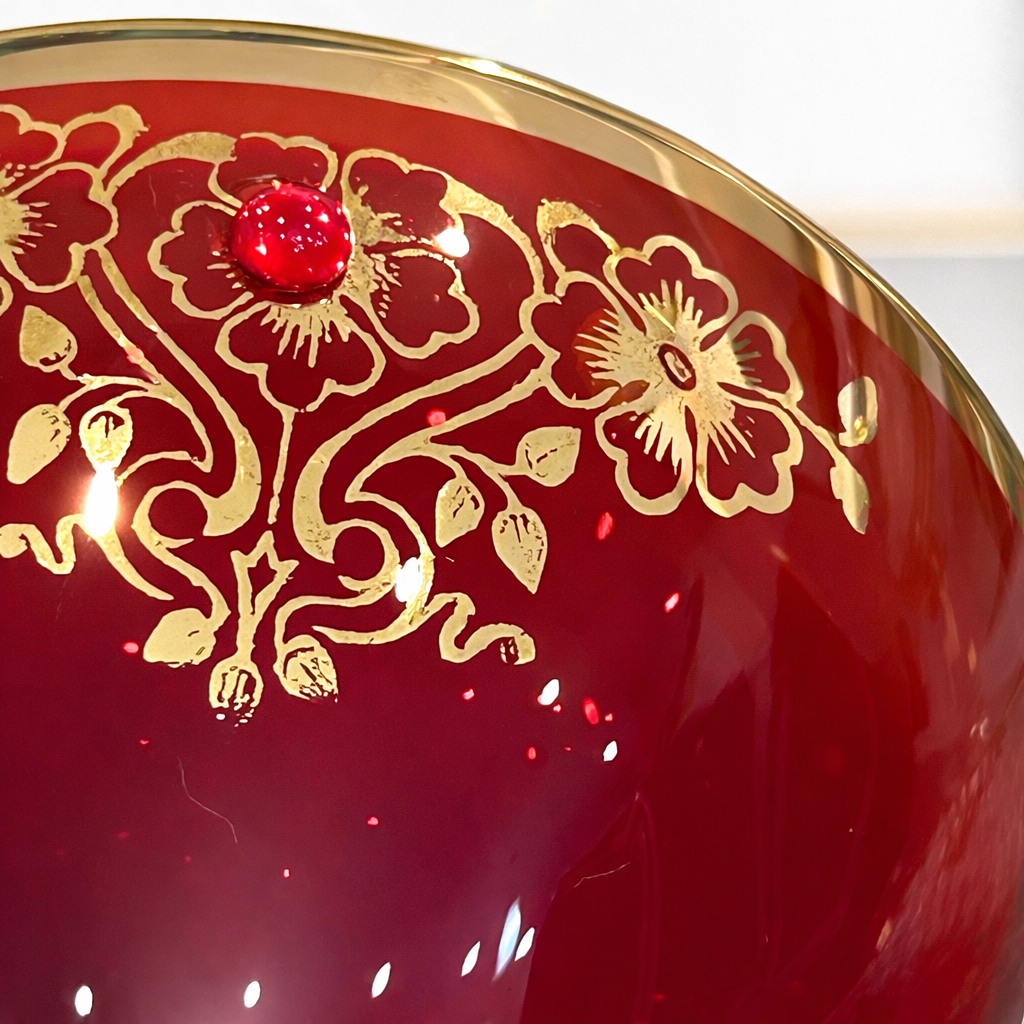
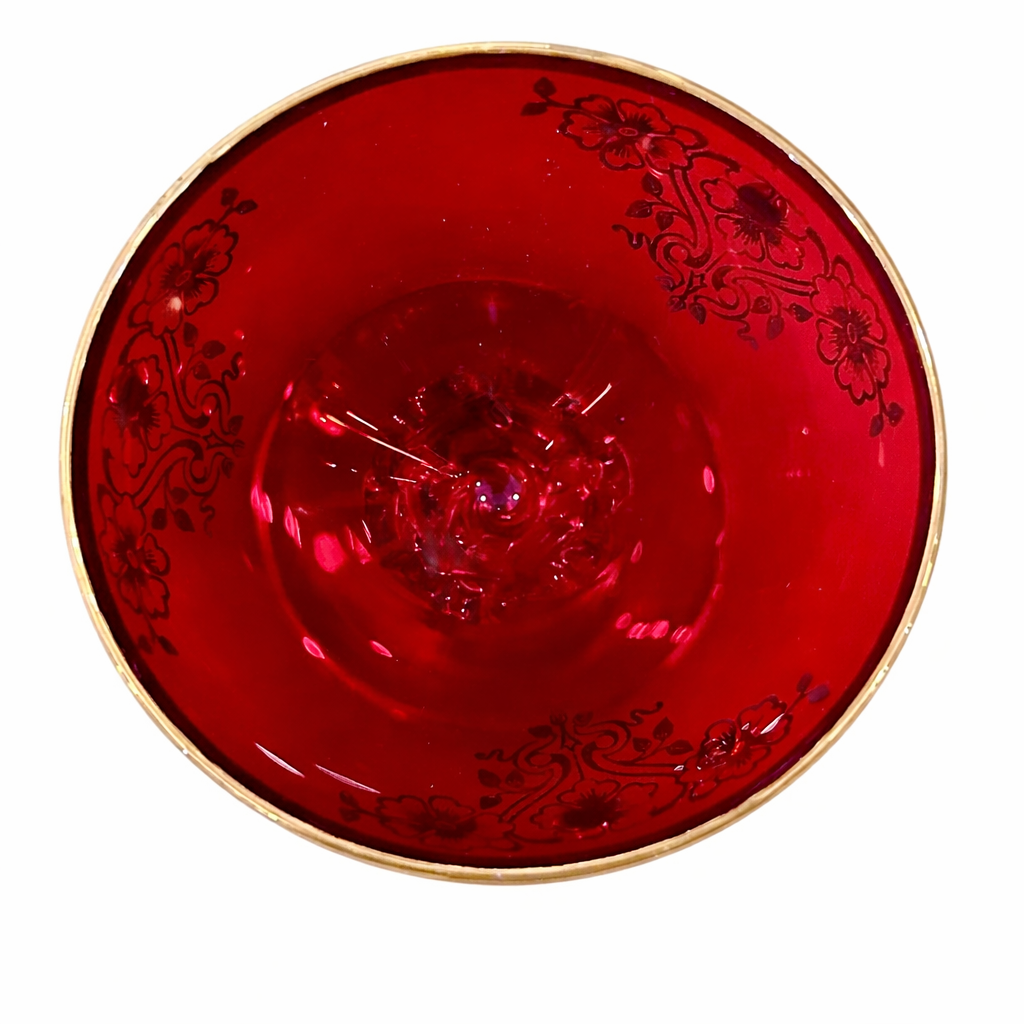
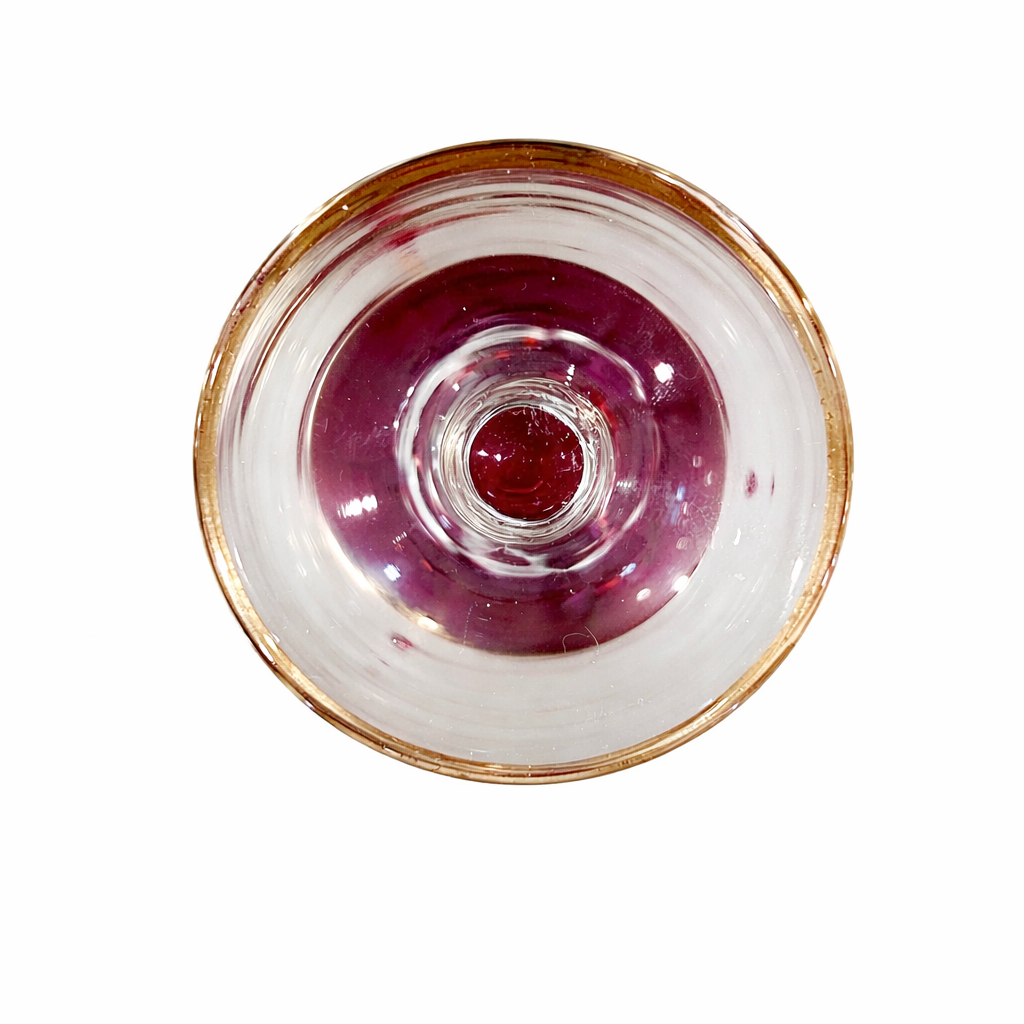
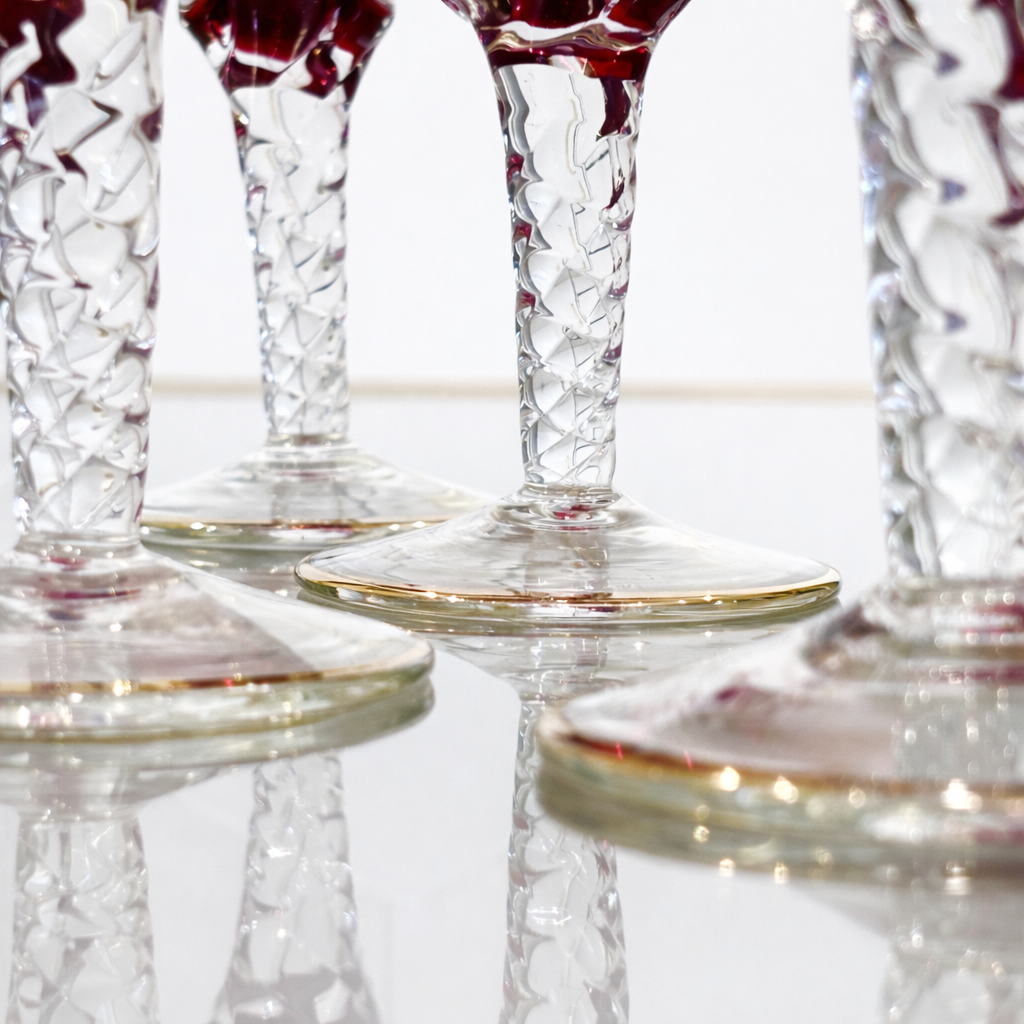
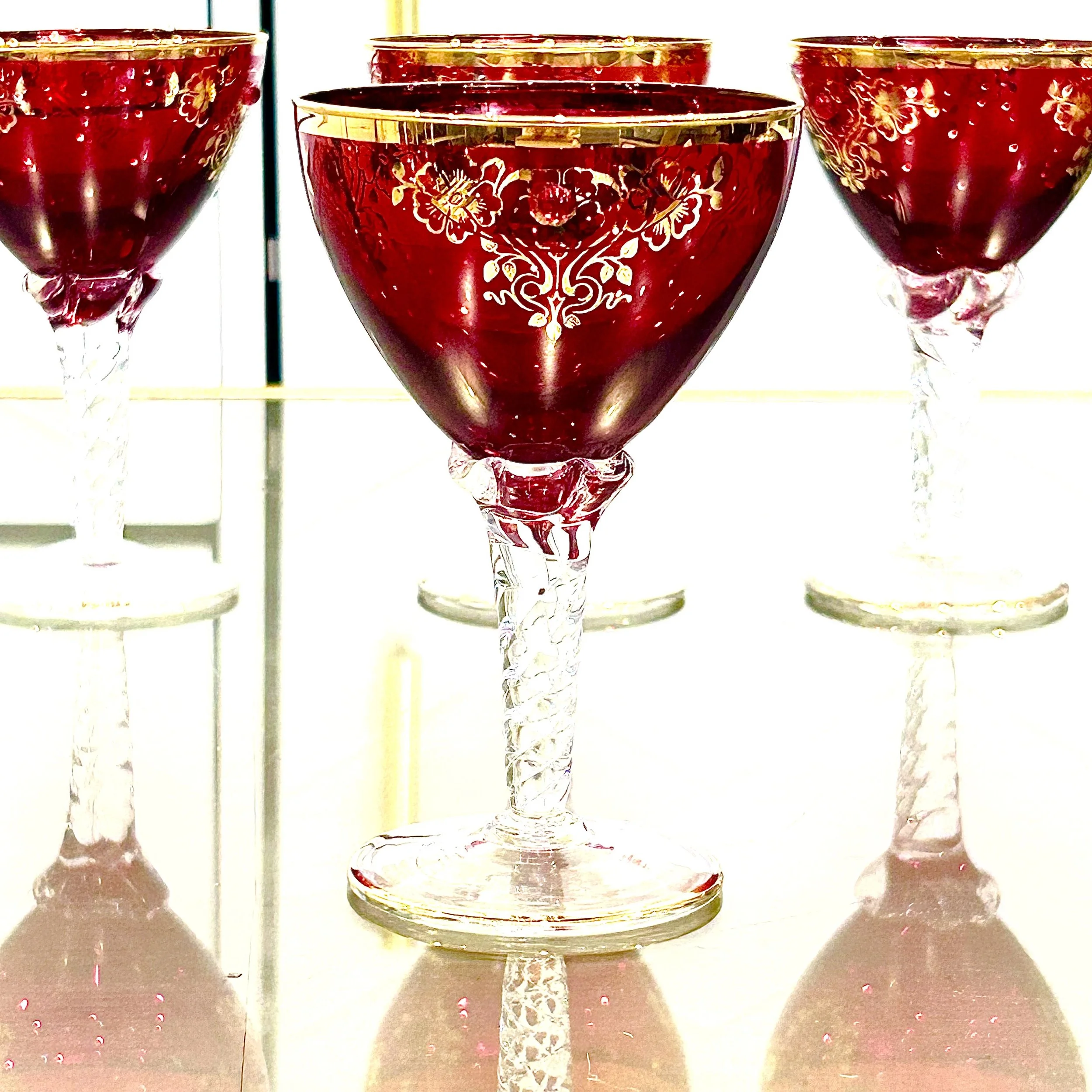
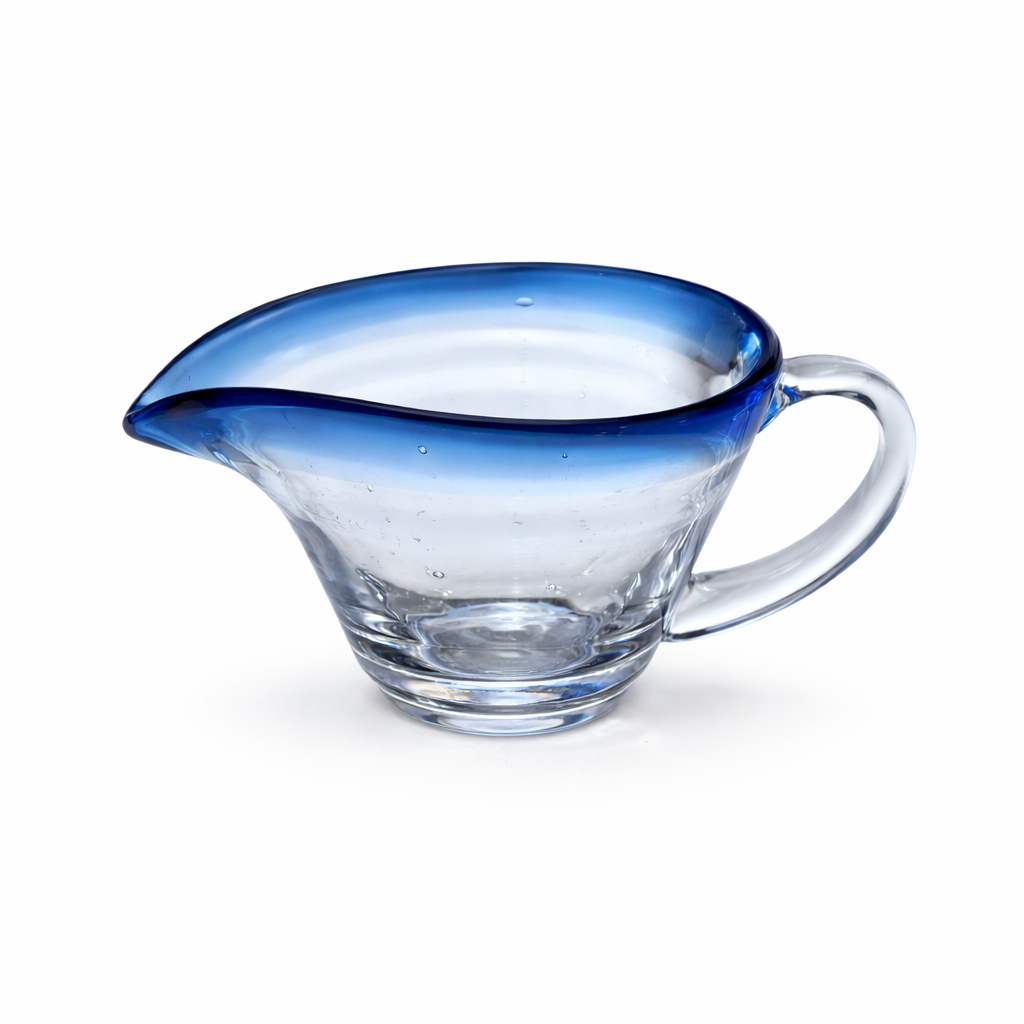
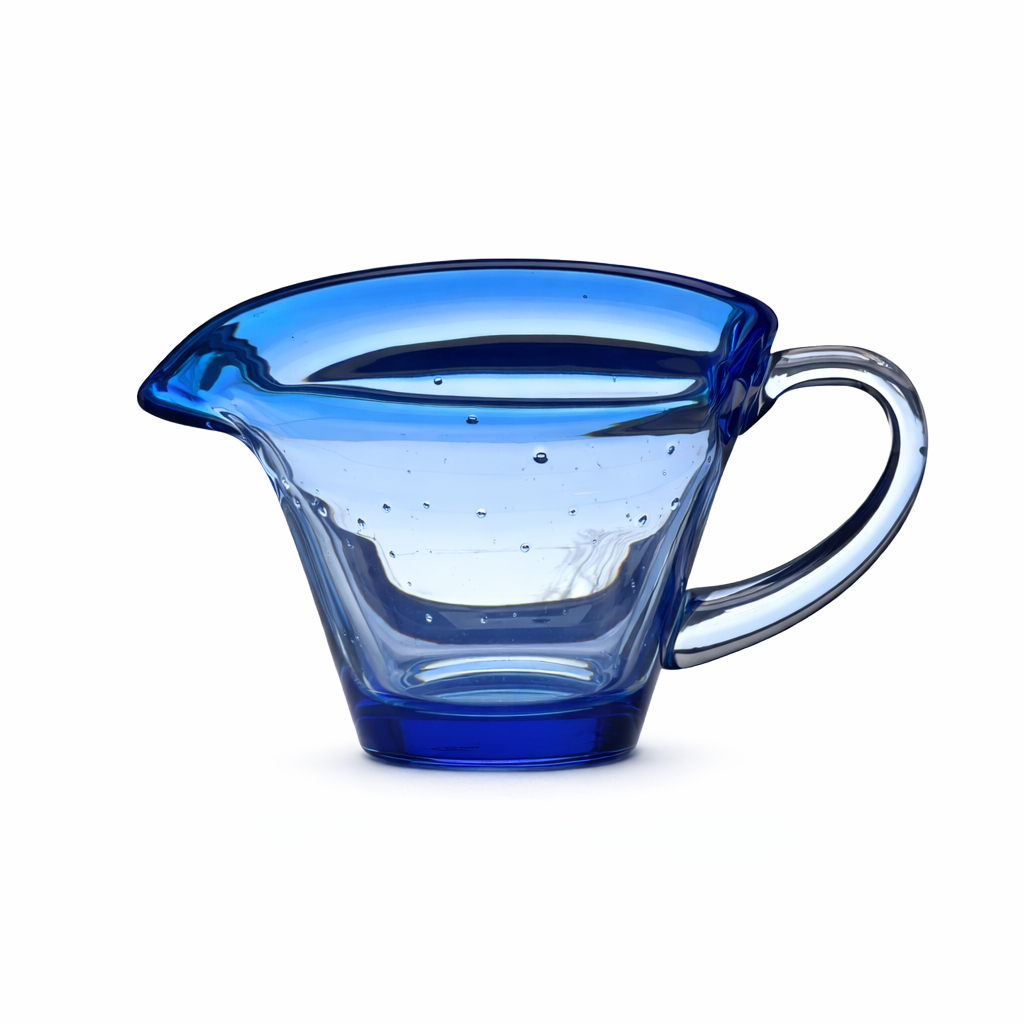
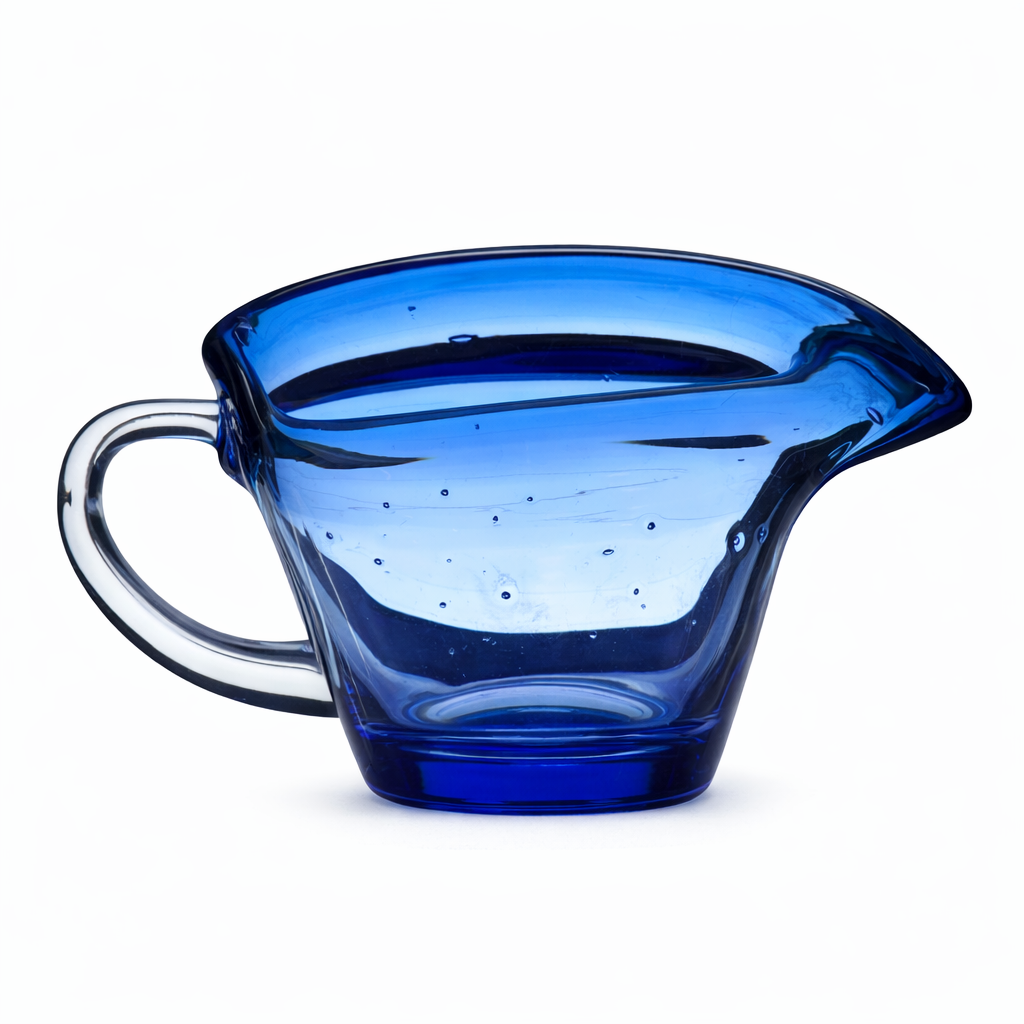
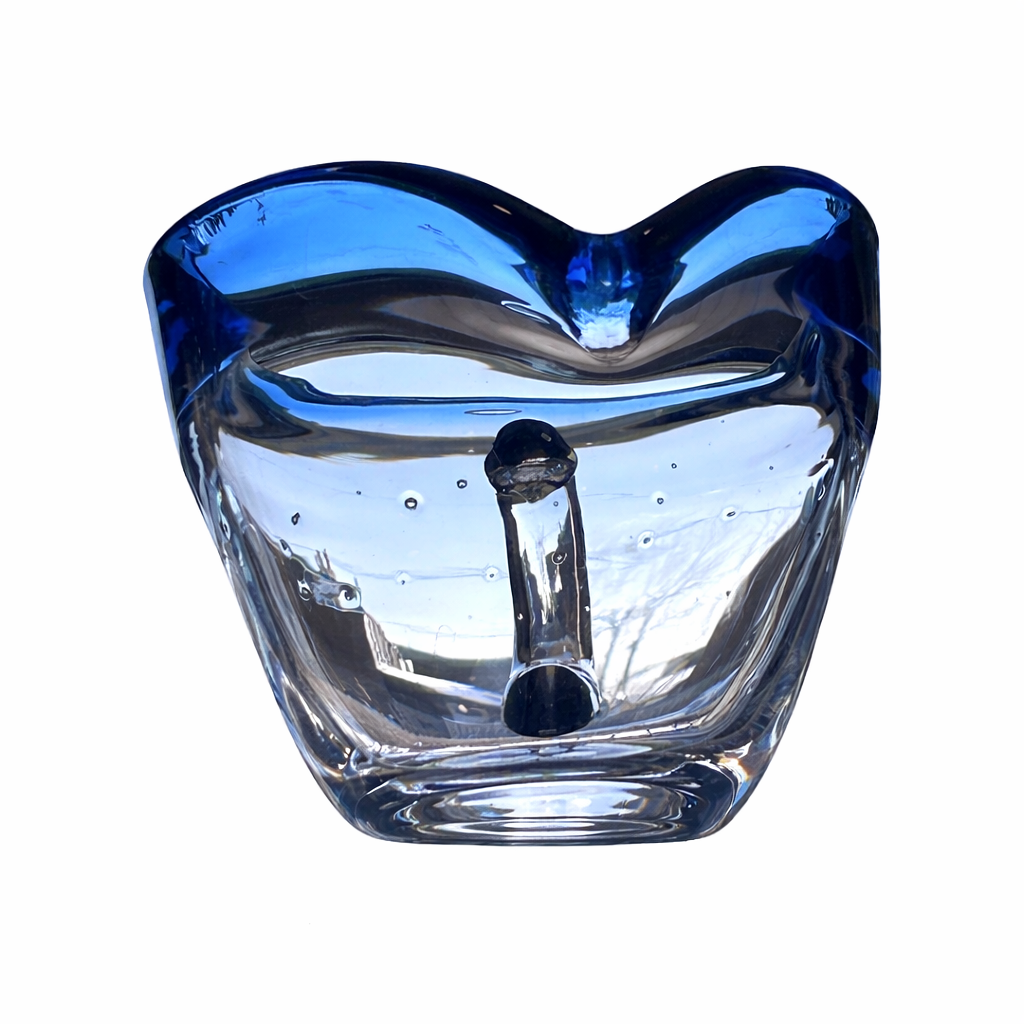
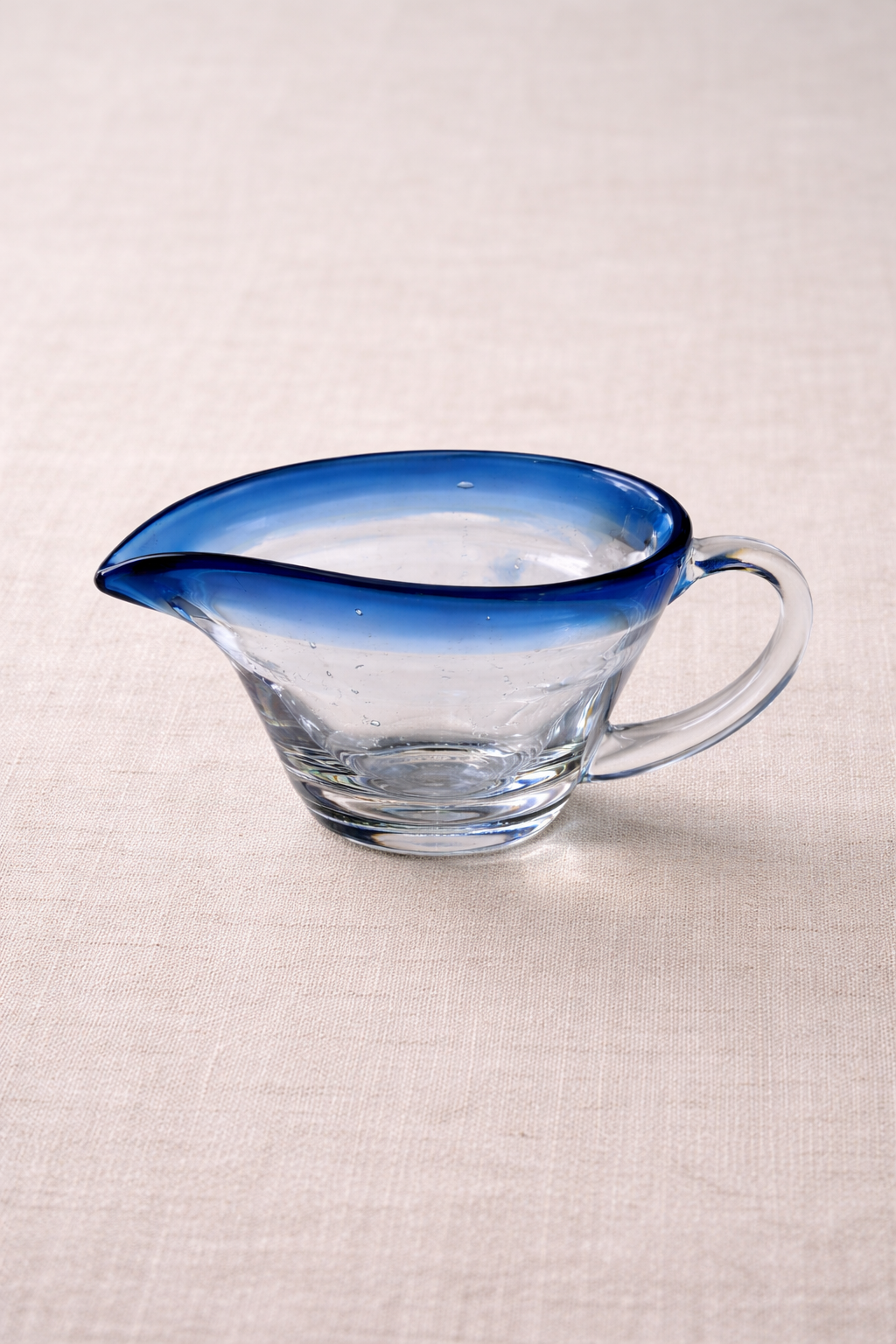
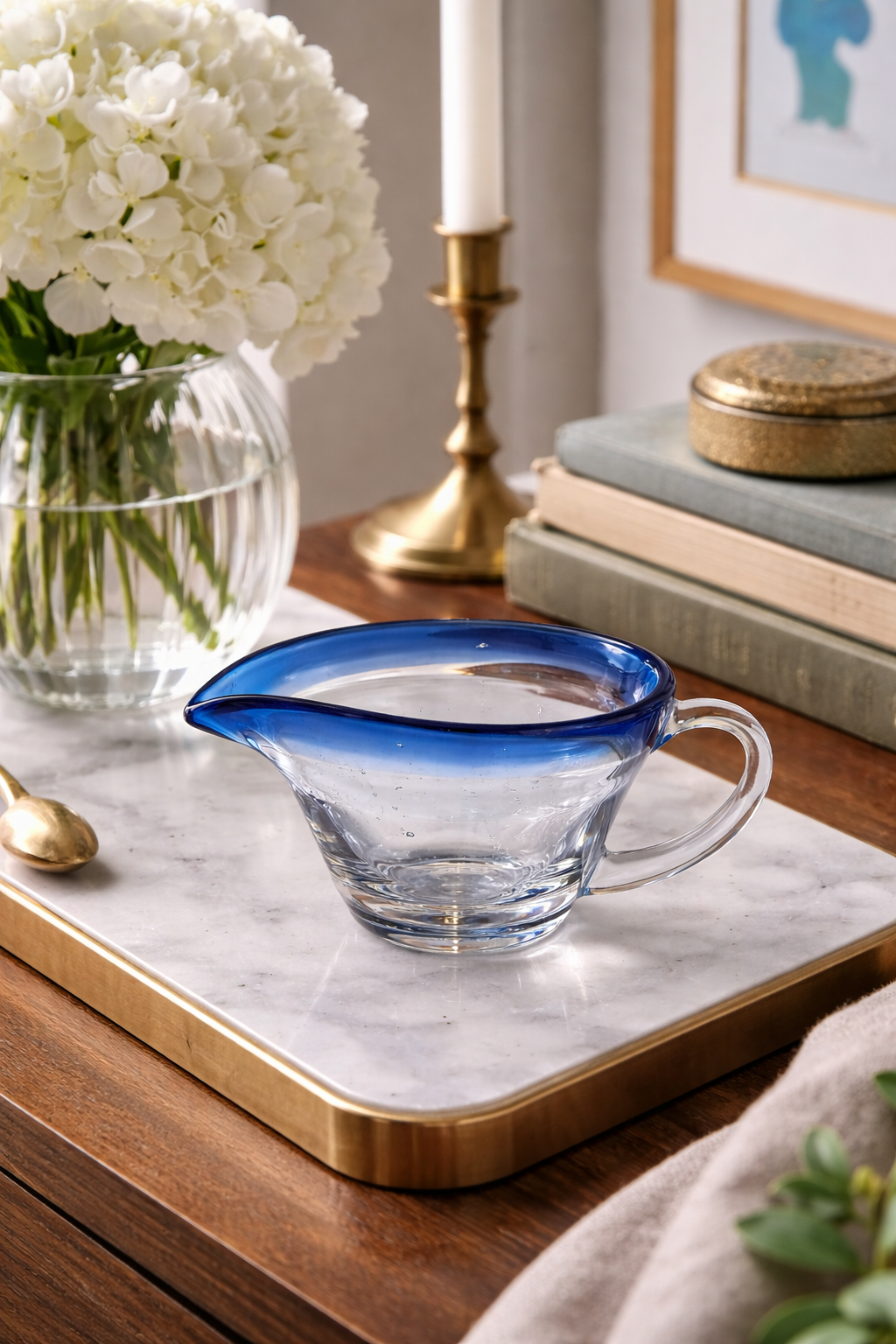
This sophisticated set of liqueur glasses possesses a striking sculptural presence defined by their slender stems and rich, forest green bowls. The ultra-delicate glass construction interacts elegantly with ambient light, casting a vibrant, translucent glow onto any surface they occupy. With an understated yet commanding minimalist geometry, these vessels offer an interior-designer friendly accent that elevates any contemporary home bar or tablescape. Their elegant proportions ensure a high decorative impact, transforming a classic entertaining essential into an object of compelling artistic merit.
Attribution & Period
Unmarked decorative arts example. Stylistically aligned with mid-century European art glass movements of the 1960s, these cordials mirror the refined, clean-lined aesthetics championed by prominent Scandinavian and French glassworks of the post-war era. The absence of an embossed factory mark is typical for fine, delicate stemware from this period, where branding was originally relegated to paper or foil labels. The attribution remains visual, supported by the exceptional thinness of the glass walls, the precise execution of the jewel-toned forest green hue, and the iconic modernist silhouette.
Dimensions & Weight
Condition
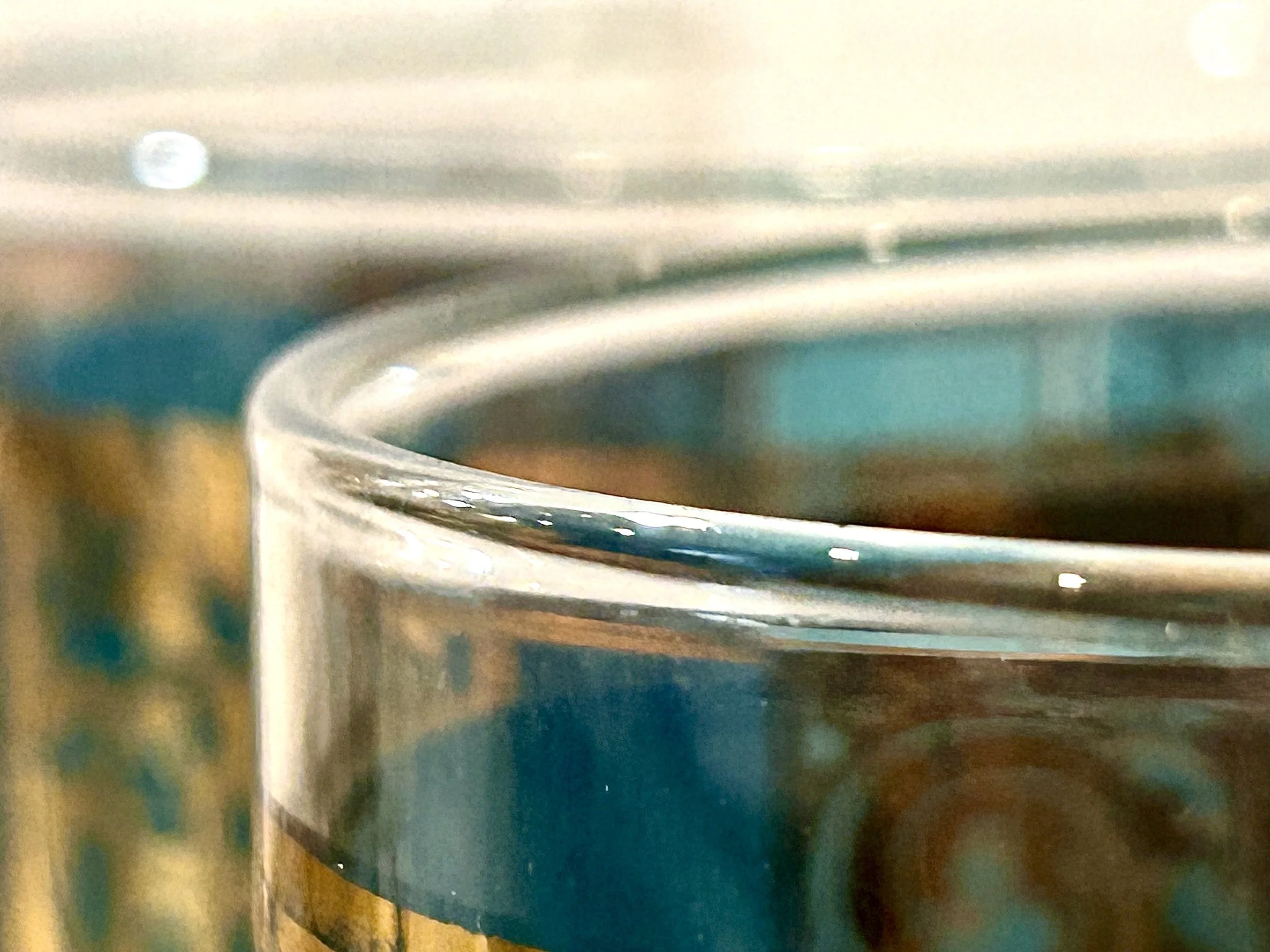
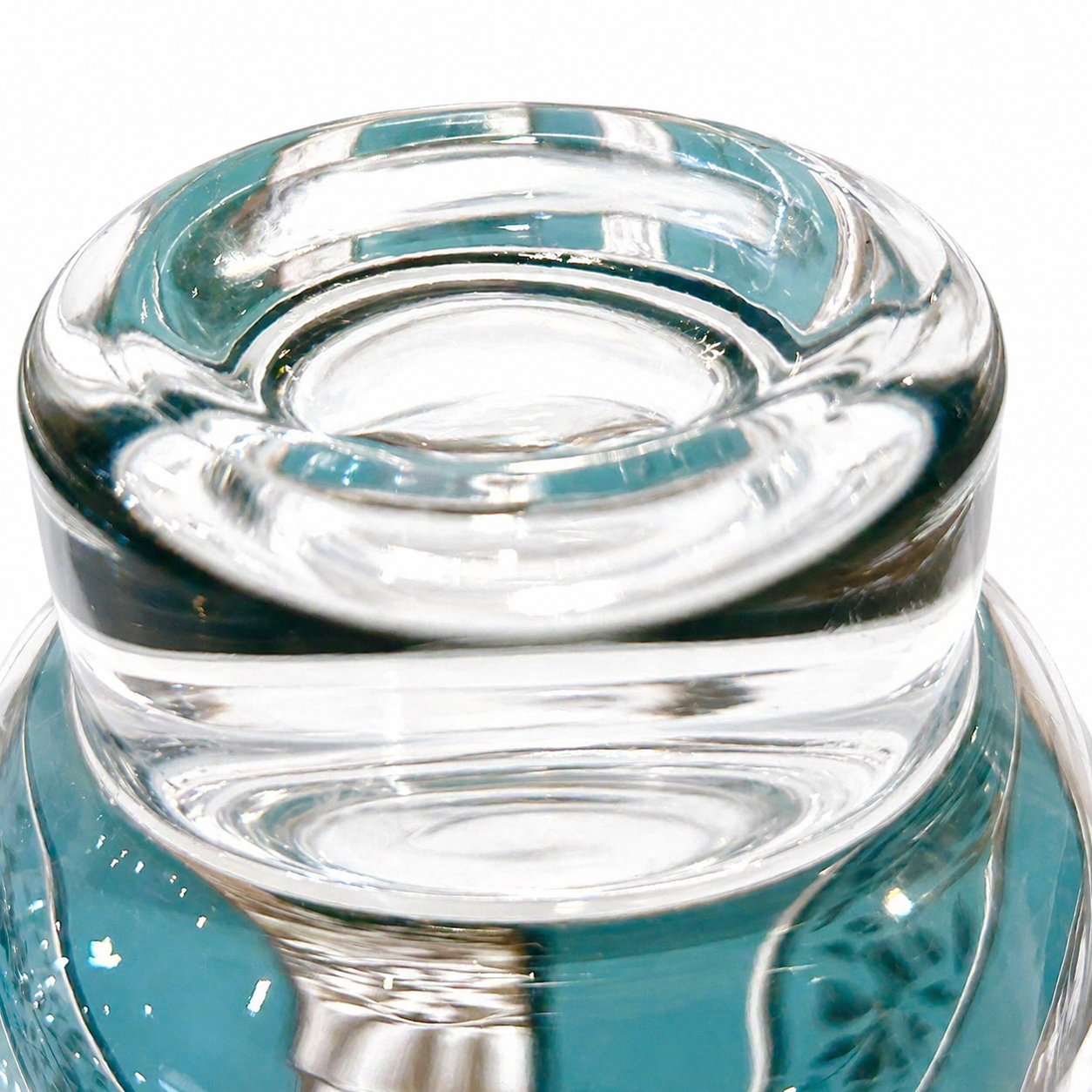
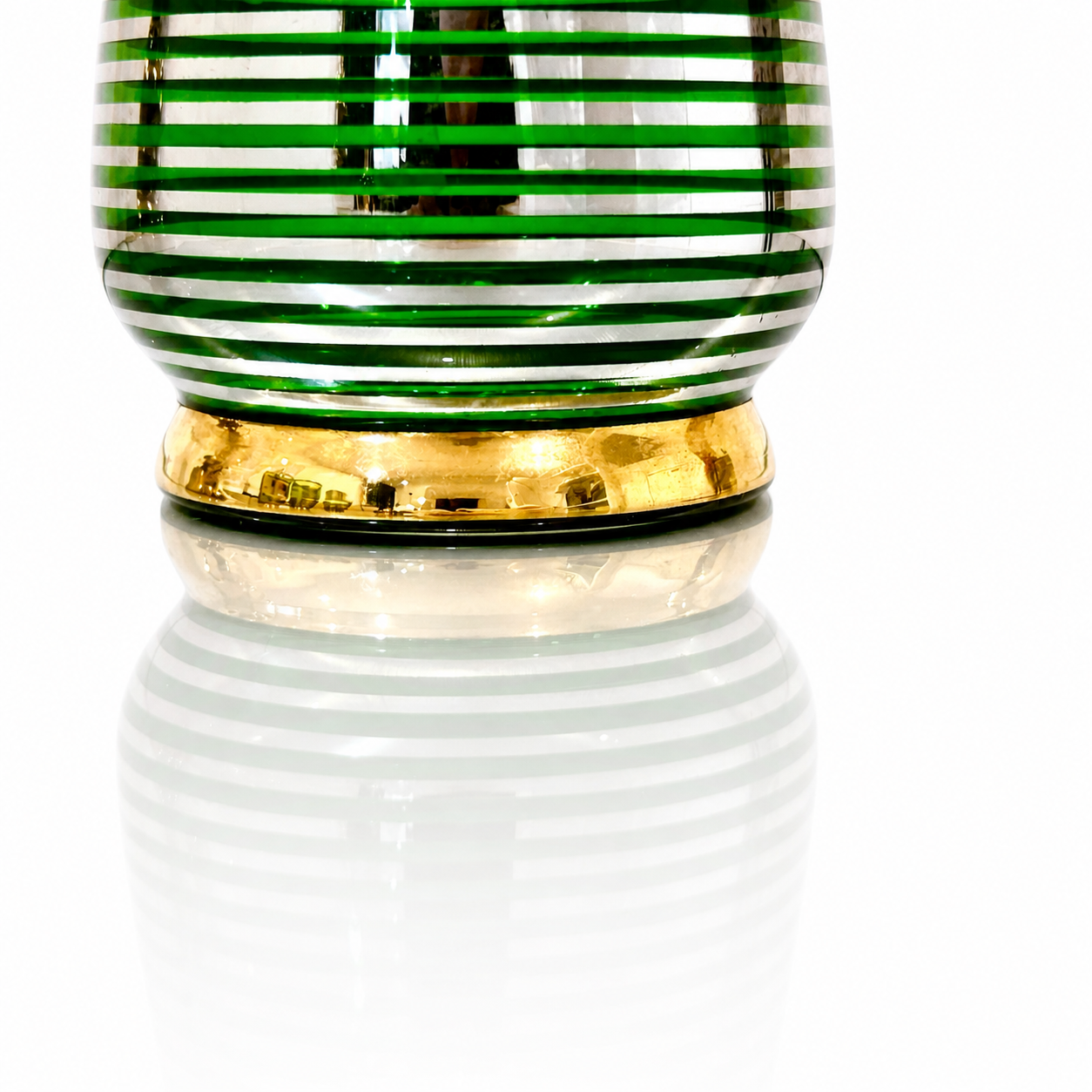
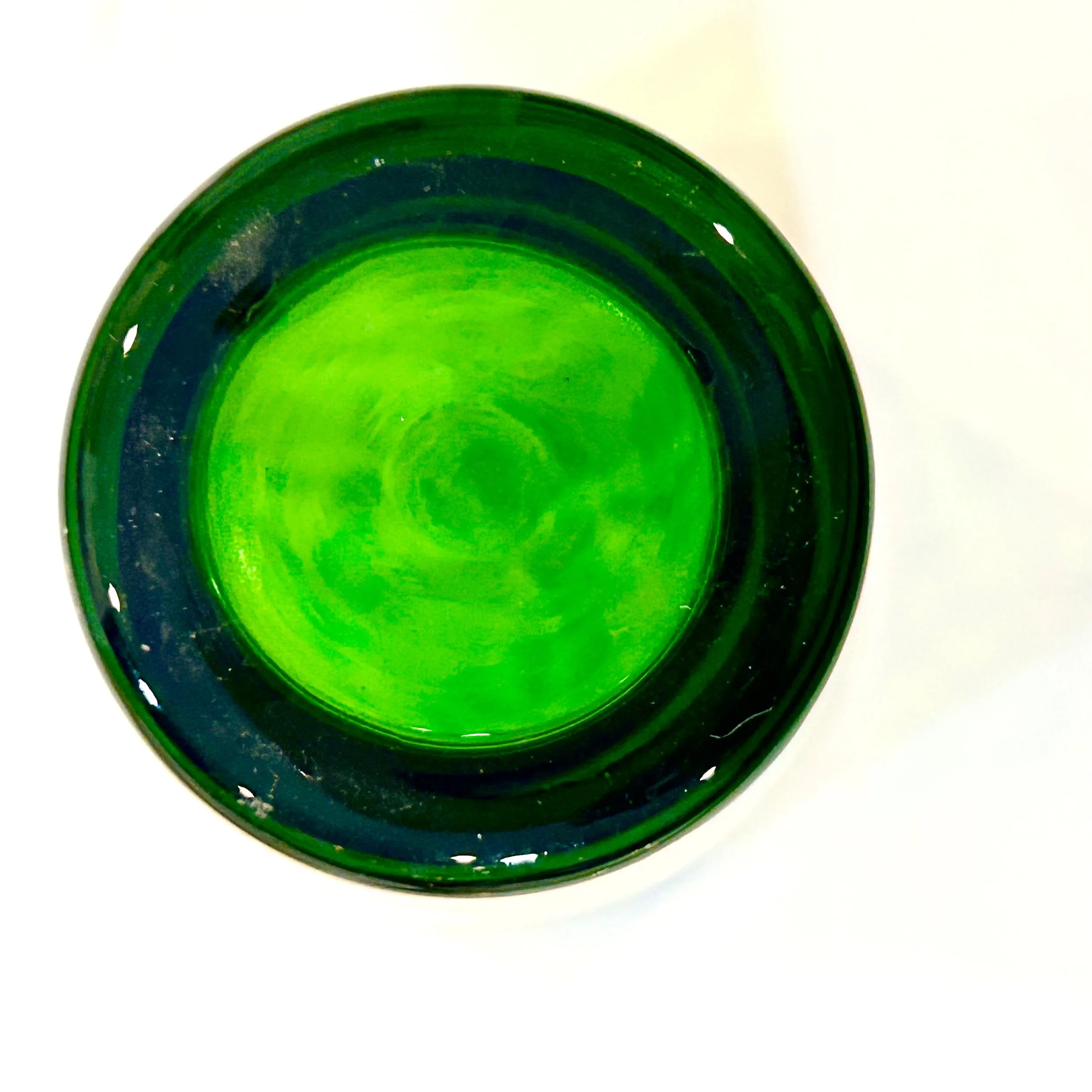
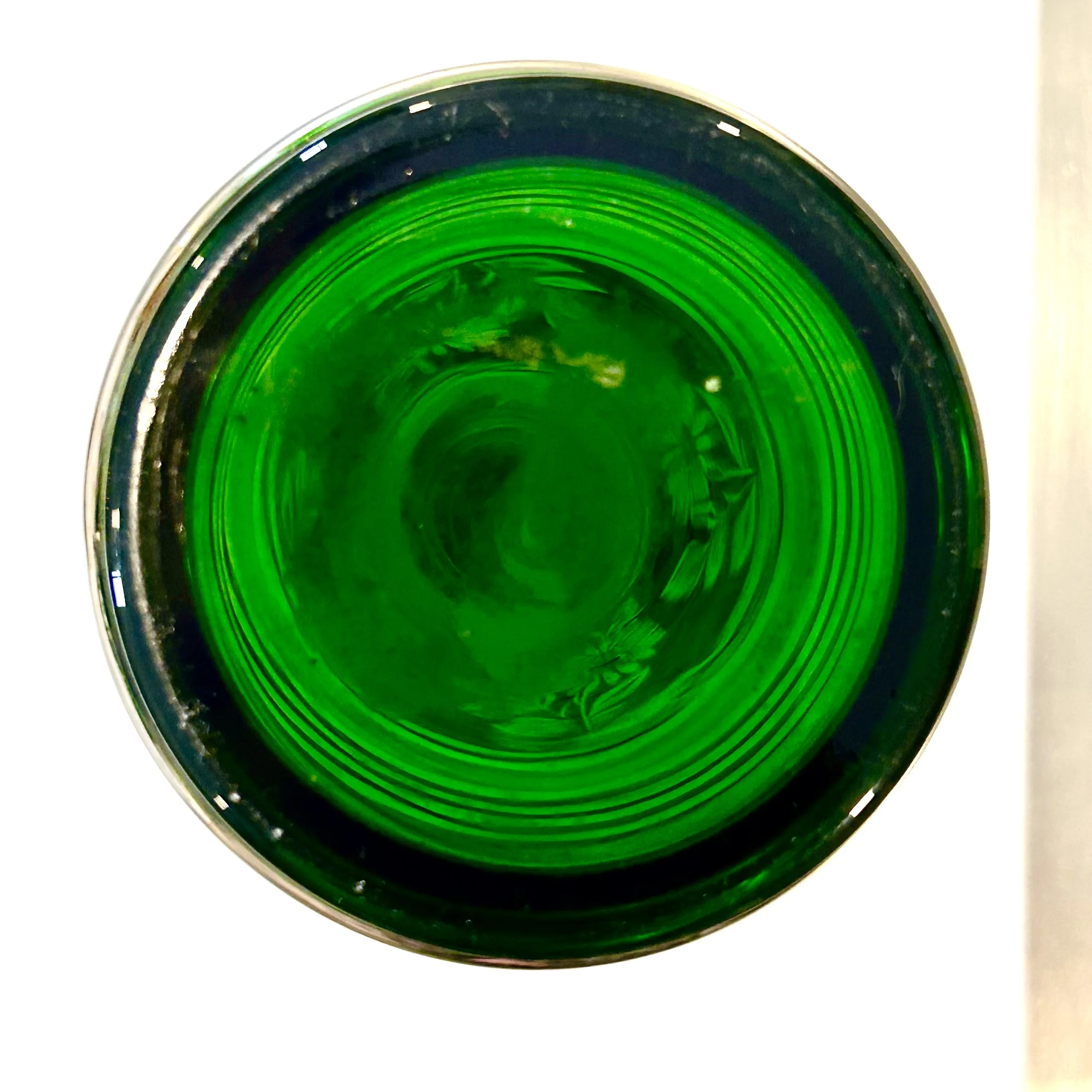
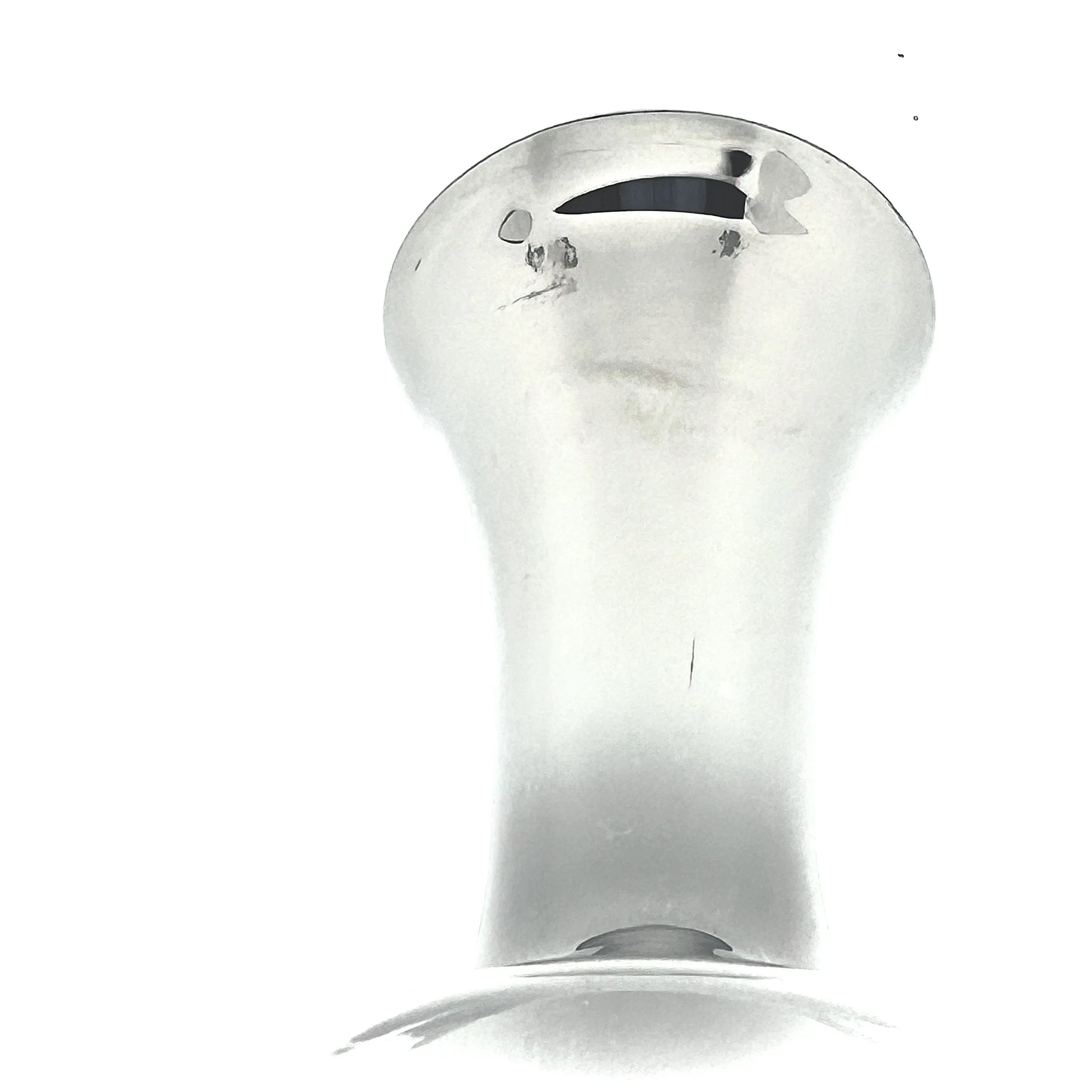
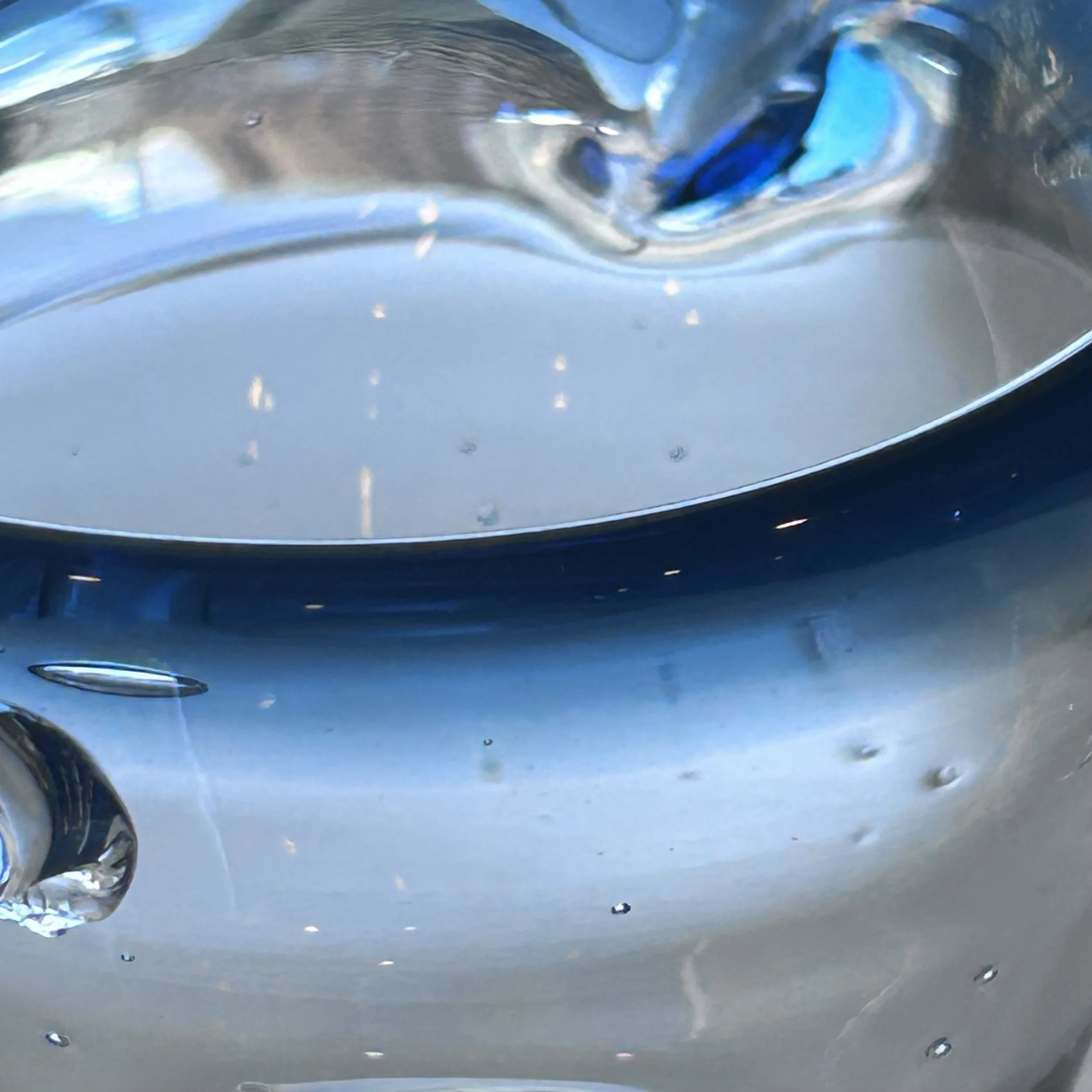
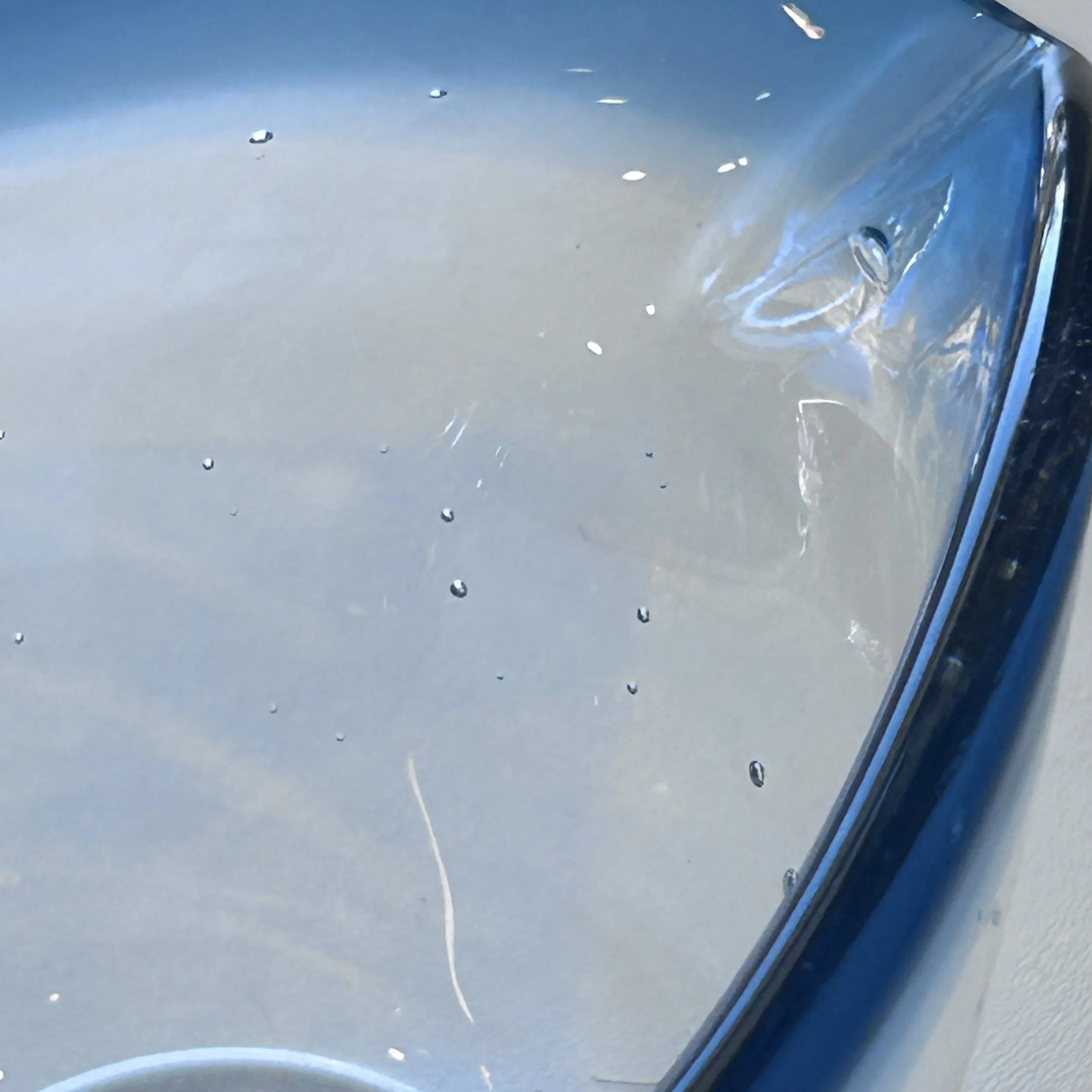
Clinical and direct condition report. The set is in excellent condition overall, retaining remarkable clarity and a high-gloss luster. A singular, minute and entirely superficial micro-chip is present along the upper rim of one glass, as isolated in the final reference photograph; this does not impact the structural integrity or overall display value of the collection. The remaining glasses are completely pristine, free of cracks, structural flaws, clouding, or deep scratching.
Authenticity & Construction
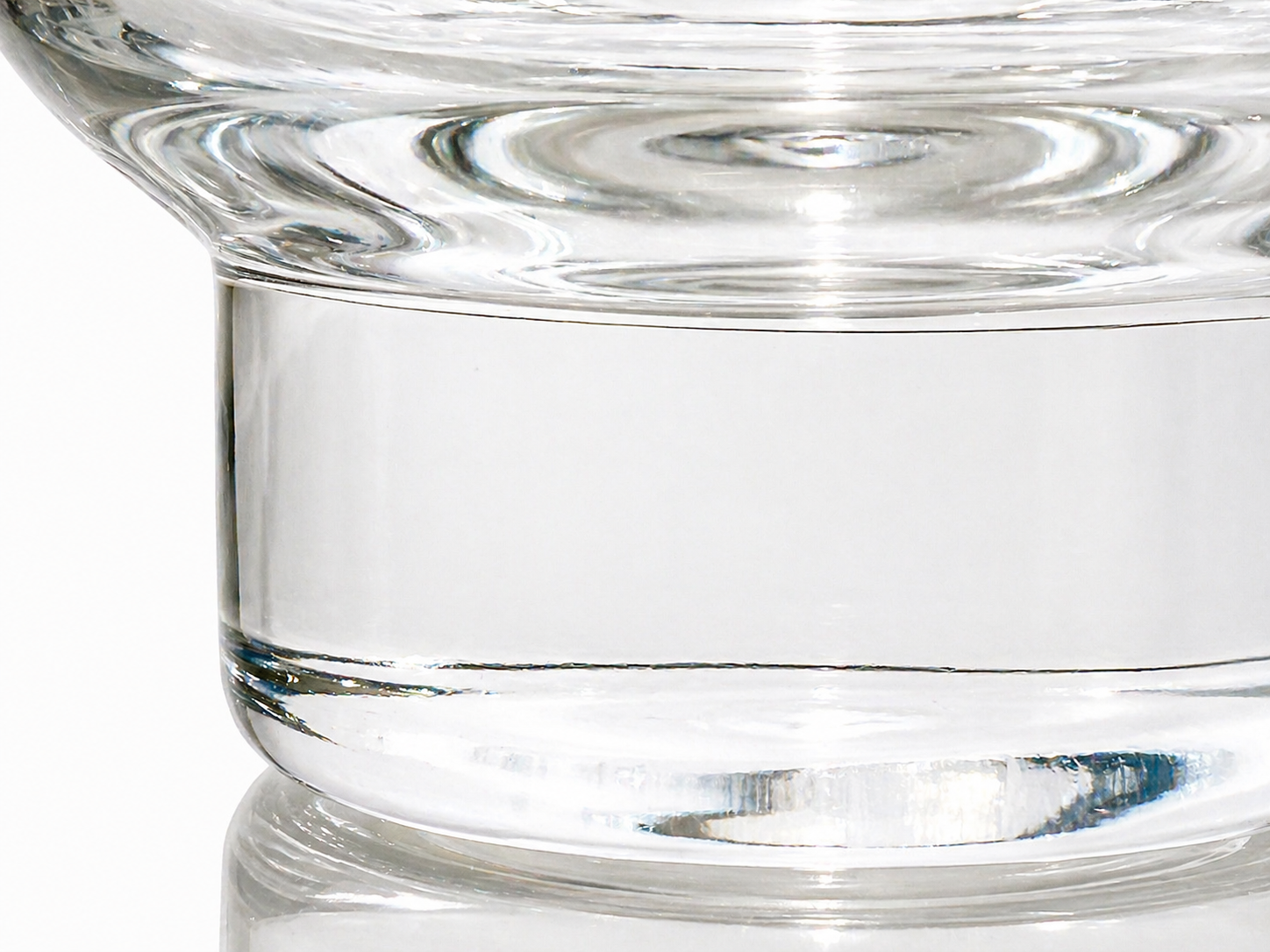
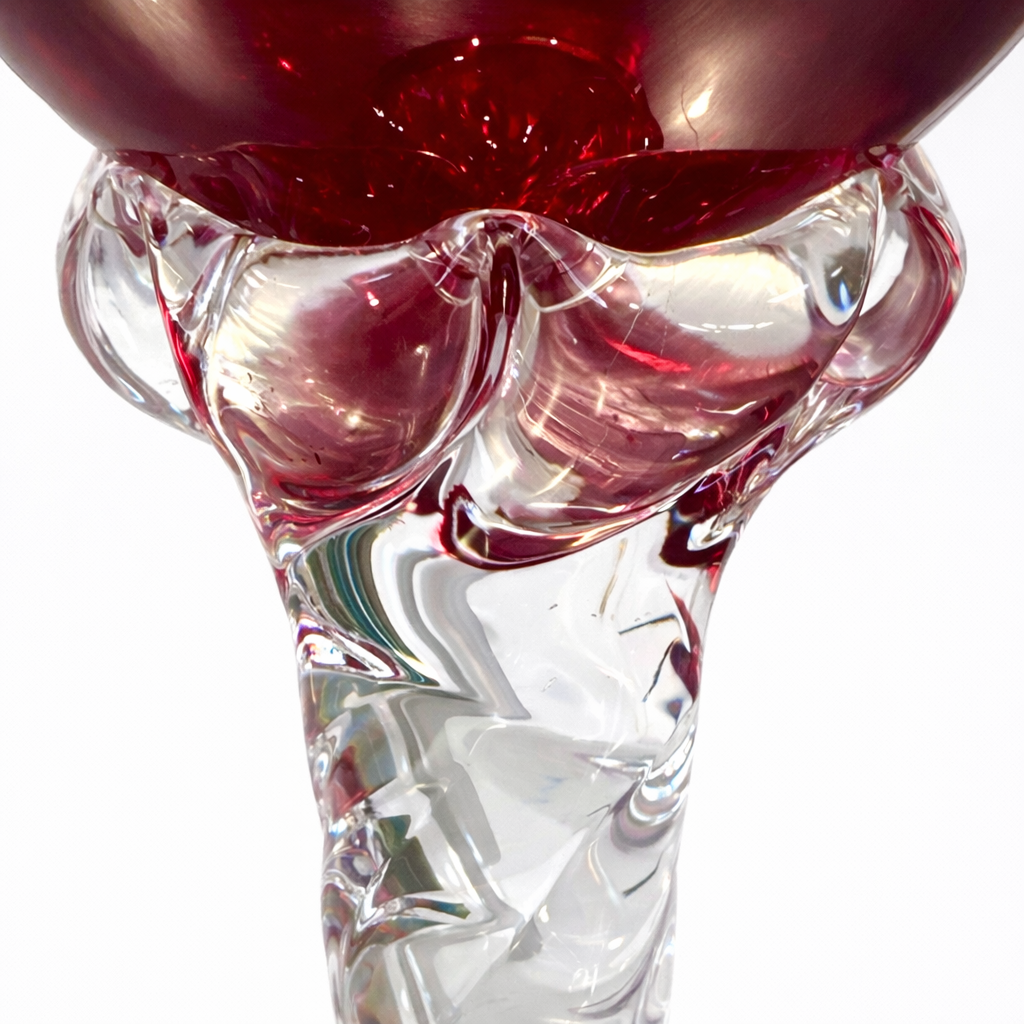
These glasses demonstrate exceptional craftsmanship, featuring delicate, fine-walled bowls seamlessly fused to slender, clear stems. The uniform distribution of the rich forest green coloration and the lightweight, ethereal feel point to high-quality mold-blown or semi-industrial mouth-blown production techniques. This delicate construction requires immense technical mastery, resulting in a resonant clarity and a sophisticated tactile experience that distinguishes collector-grade mid-century stemware from mass-produced modern reproductions.
Placement
An exquisite addition to a polished brass bar cart, displayed within a backlit mid-century walnut cabinet, or arranged as a sophisticated finishing touch on an intimate dining table setting.
STANDARD ATTRIBUTION & VALUE DISCLOSURE; This piece is described to the best of current scholarly and market knowledge. Any maker or regional attribution is based on visual analysis, materials, construction techniques, and documented stylistic comparisons. As with many MCM and antique design objects, definitive attribution may not be possible without original labels or factory records. Pricing reflects condition, quality, decorative appeal, and current collector demand rather than guaranteed maker identification.
This sophisticated set of liqueur glasses possesses a striking sculptural presence defined by their slender stems and rich, forest green bowls. The ultra-delicate glass construction interacts elegantly with ambient light, casting a vibrant, translucent glow onto any surface they occupy. With an understated yet commanding minimalist geometry, these vessels offer an interior-designer friendly accent that elevates any contemporary home bar or tablescape. Their elegant proportions ensure a high decorative impact, transforming a classic entertaining essential into an object of compelling artistic merit.
Attribution & Period
Unmarked decorative arts example. Stylistically aligned with mid-century European art glass movements of the 1960s, these cordials mirror the refined, clean-lined aesthetics championed by prominent Scandinavian and French glassworks of the post-war era. The absence of an embossed factory mark is typical for fine, delicate stemware from this period, where branding was originally relegated to paper or foil labels. The attribution remains visual, supported by the exceptional thinness of the glass walls, the precise execution of the jewel-toned forest green hue, and the iconic modernist silhouette.
Dimensions & Weight
Condition
Clinical and direct condition report. The set is in excellent condition overall, retaining remarkable clarity and a high-gloss luster. A singular, minute and entirely superficial micro-chip is present along the upper rim of one glass, as isolated in the final reference photograph; this does not impact the structural integrity or overall display value of the collection. The remaining glasses are completely pristine, free of cracks, structural flaws, clouding, or deep scratching.
Authenticity & Construction
These glasses demonstrate exceptional craftsmanship, featuring delicate, fine-walled bowls seamlessly fused to slender, clear stems. The uniform distribution of the rich forest green coloration and the lightweight, ethereal feel point to high-quality mold-blown or semi-industrial mouth-blown production techniques. This delicate construction requires immense technical mastery, resulting in a resonant clarity and a sophisticated tactile experience that distinguishes collector-grade mid-century stemware from mass-produced modern reproductions.
Placement
An exquisite addition to a polished brass bar cart, displayed within a backlit mid-century walnut cabinet, or arranged as a sophisticated finishing touch on an intimate dining table setting.
STANDARD ATTRIBUTION & VALUE DISCLOSURE; This piece is described to the best of current scholarly and market knowledge. Any maker or regional attribution is based on visual analysis, materials, construction techniques, and documented stylistic comparisons. As with many MCM and antique design objects, definitive attribution may not be possible without original labels or factory records. Pricing reflects condition, quality, decorative appeal, and current collector demand rather than guaranteed maker identification.

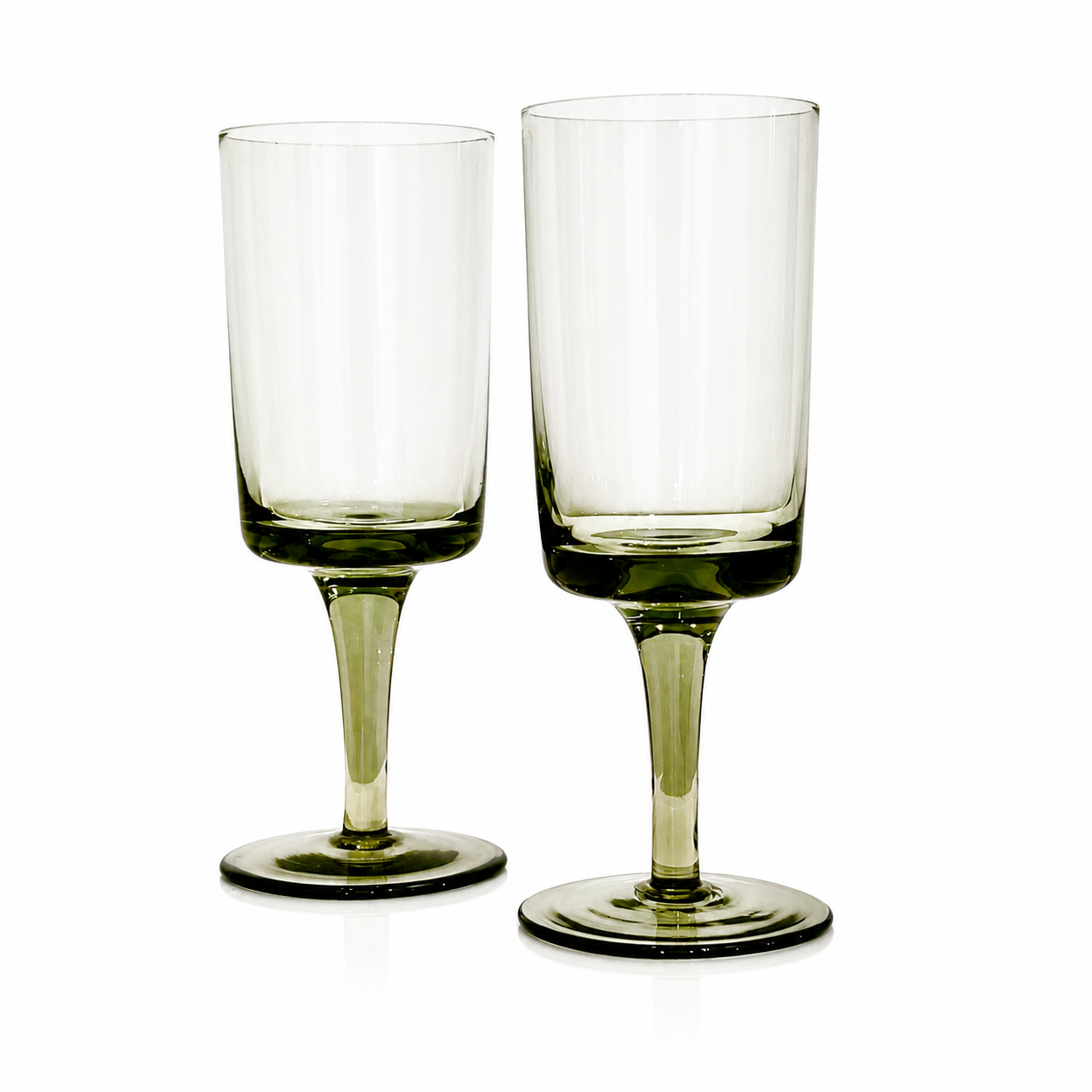 Image 1 of 12
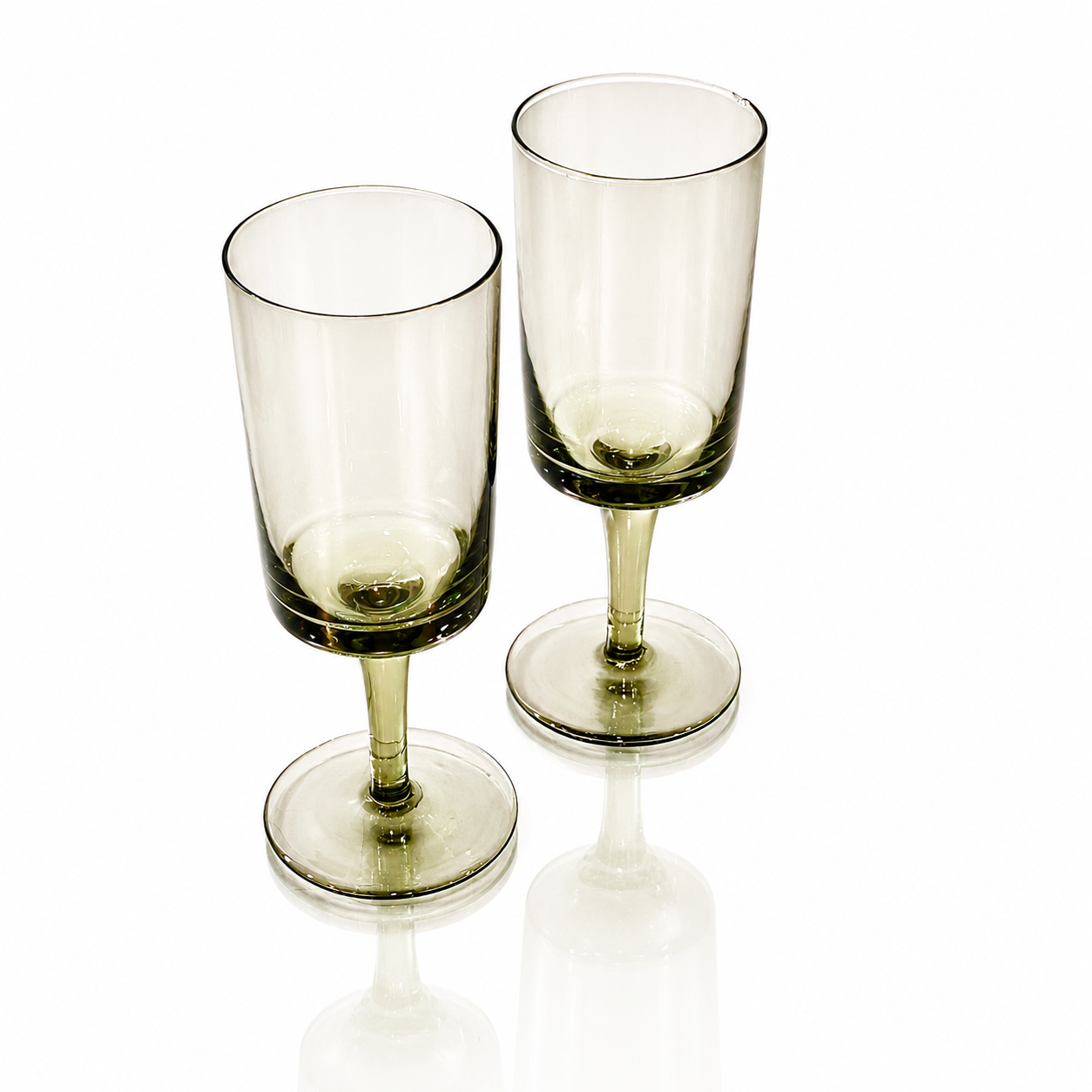 Image 2 of 12
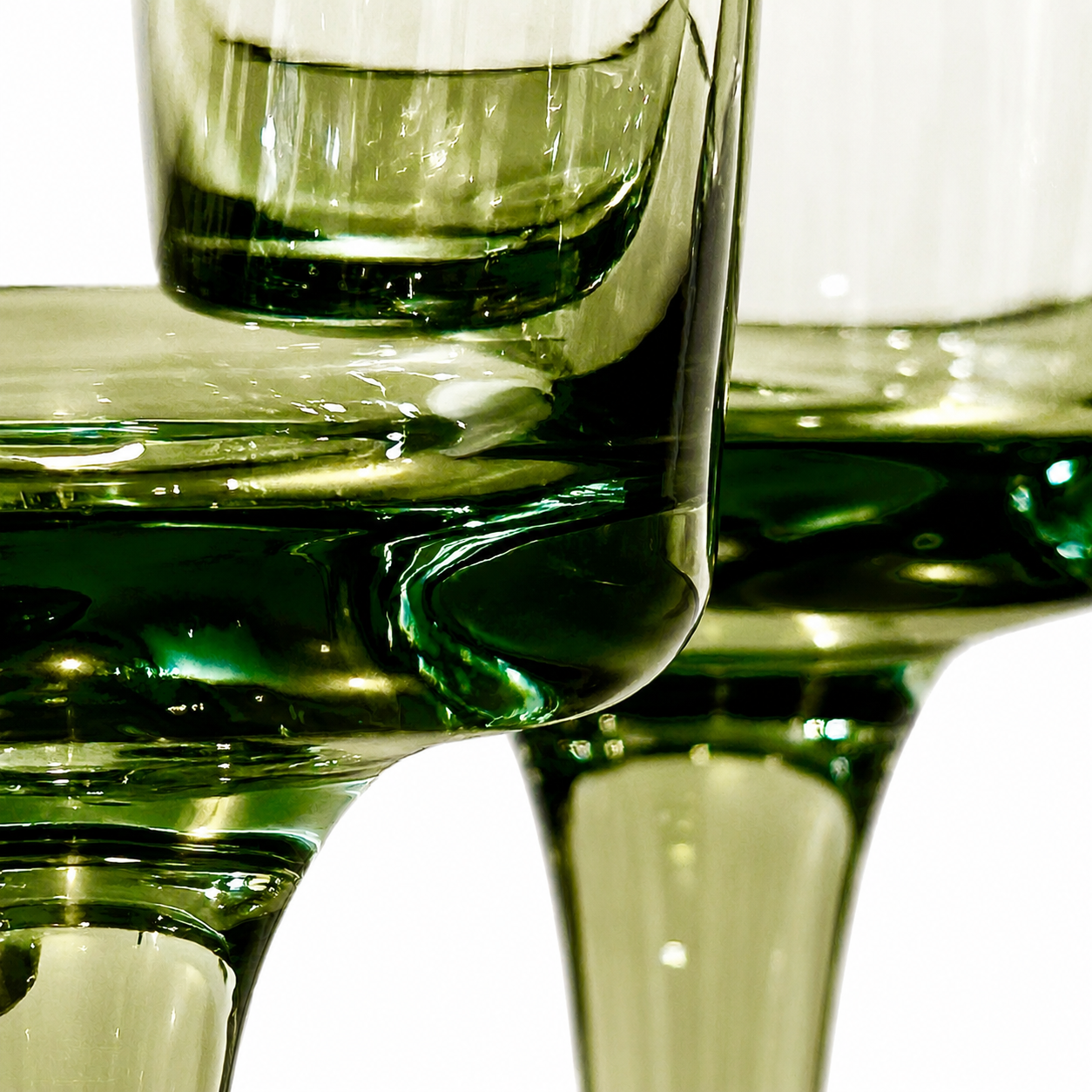 Image 3 of 12
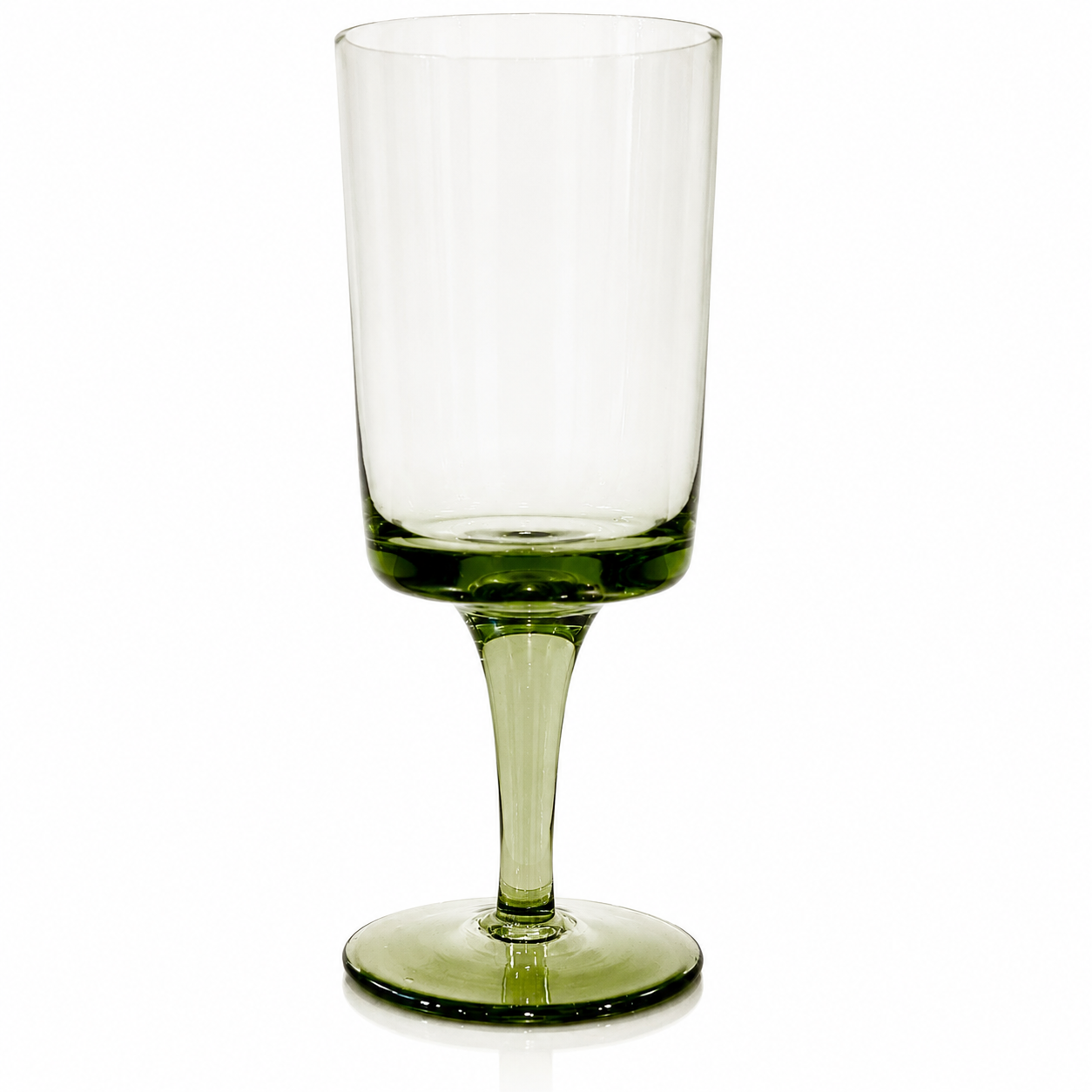 Image 4 of 12
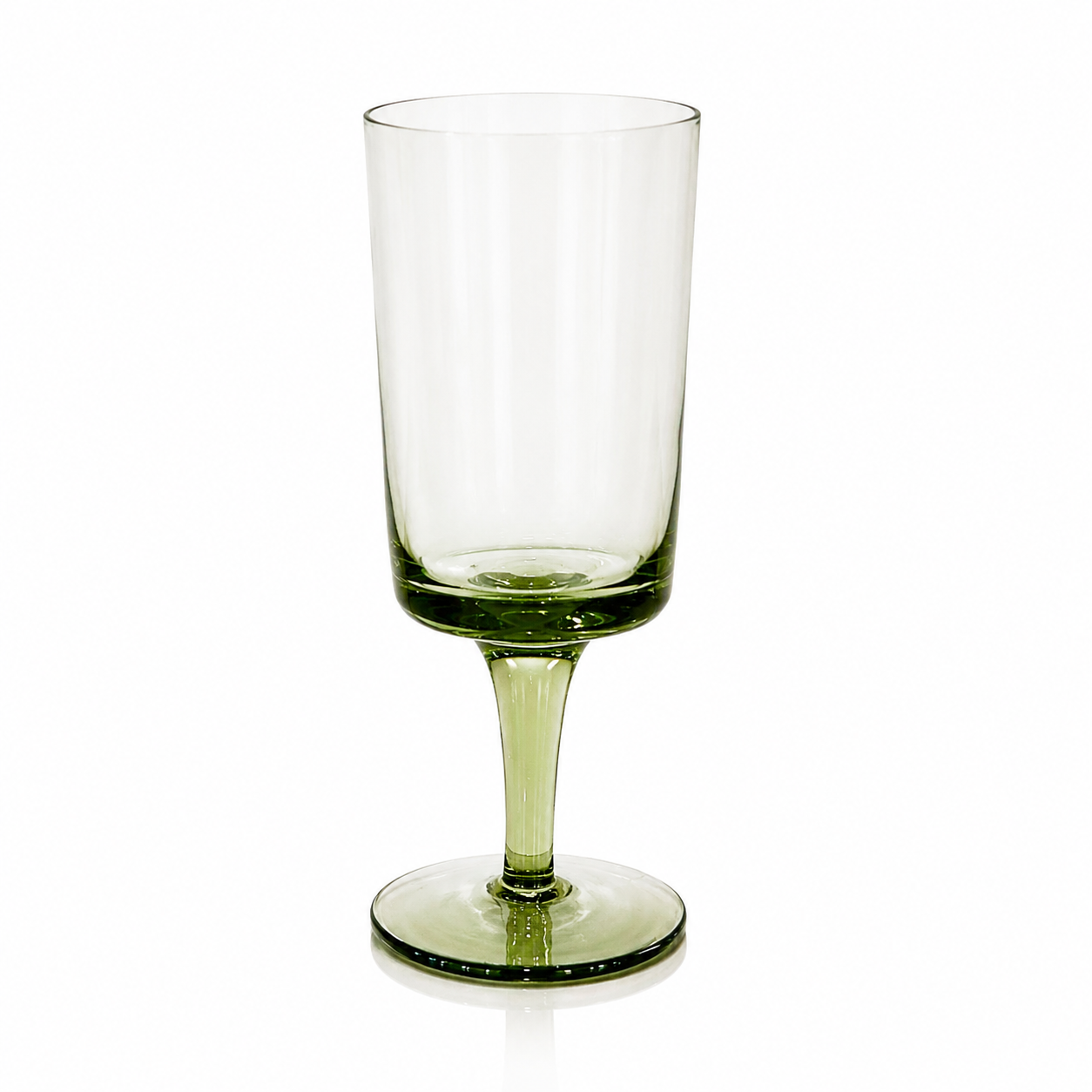 Image 5 of 12
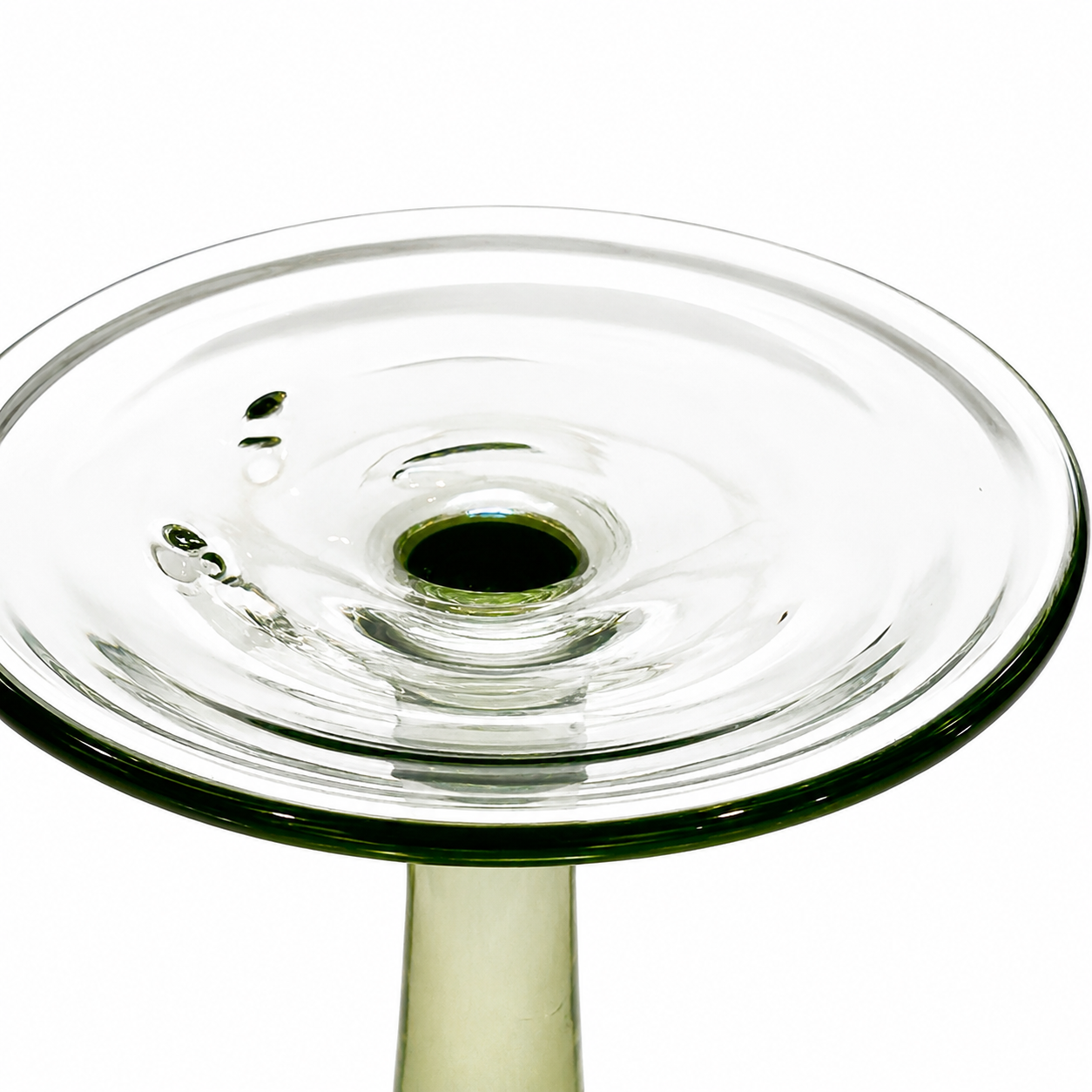 Image 6 of 12
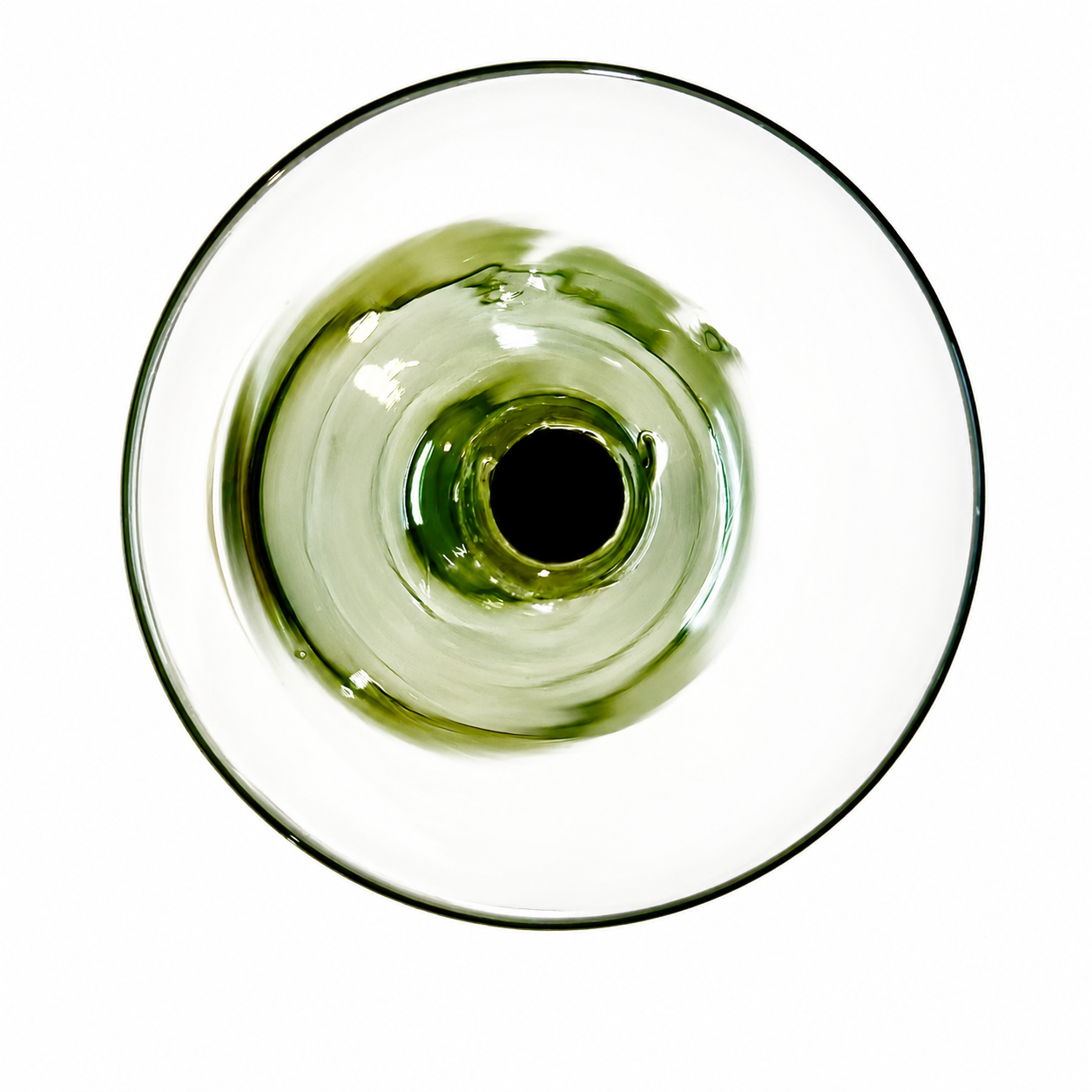 Image 7 of 12
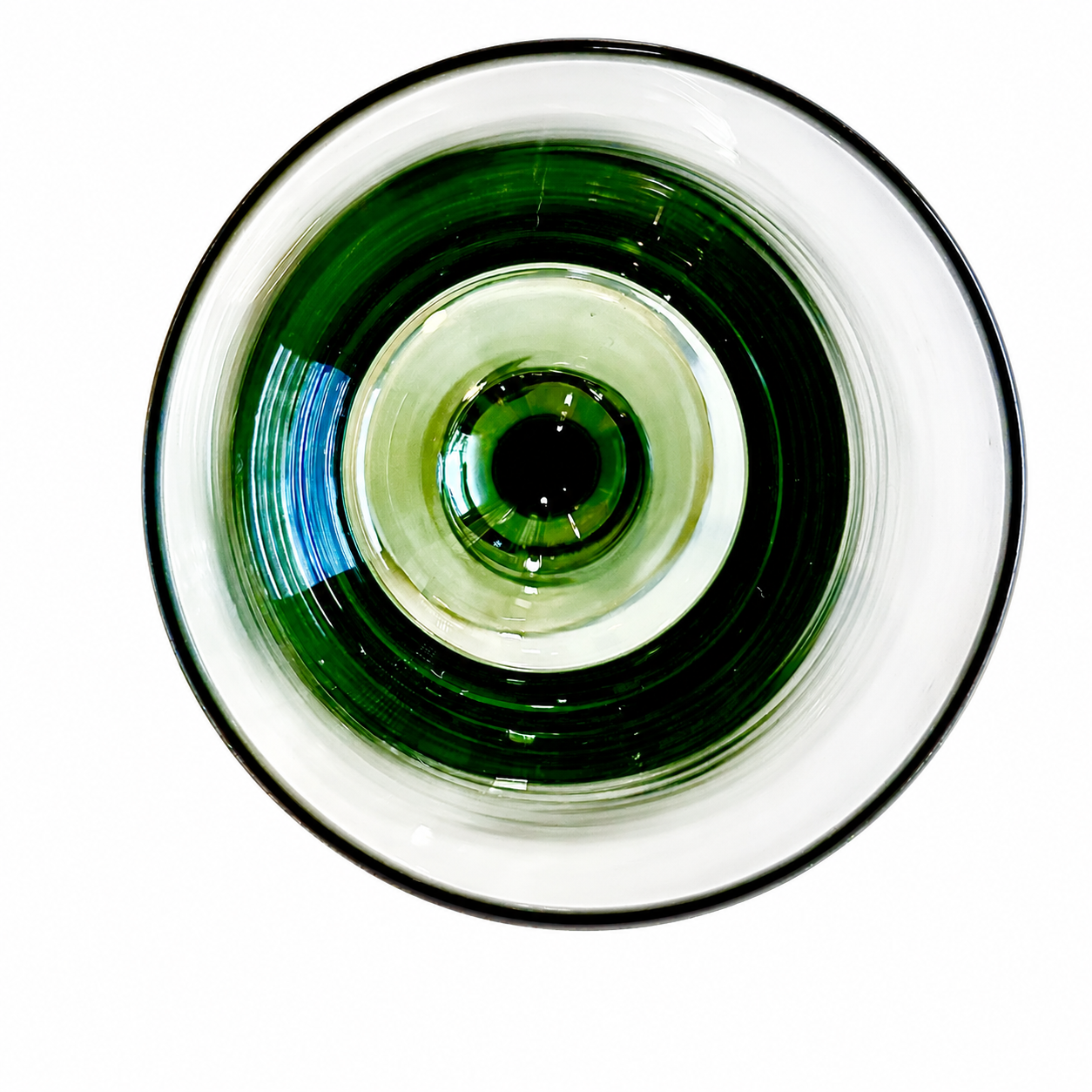 Image 8 of 12
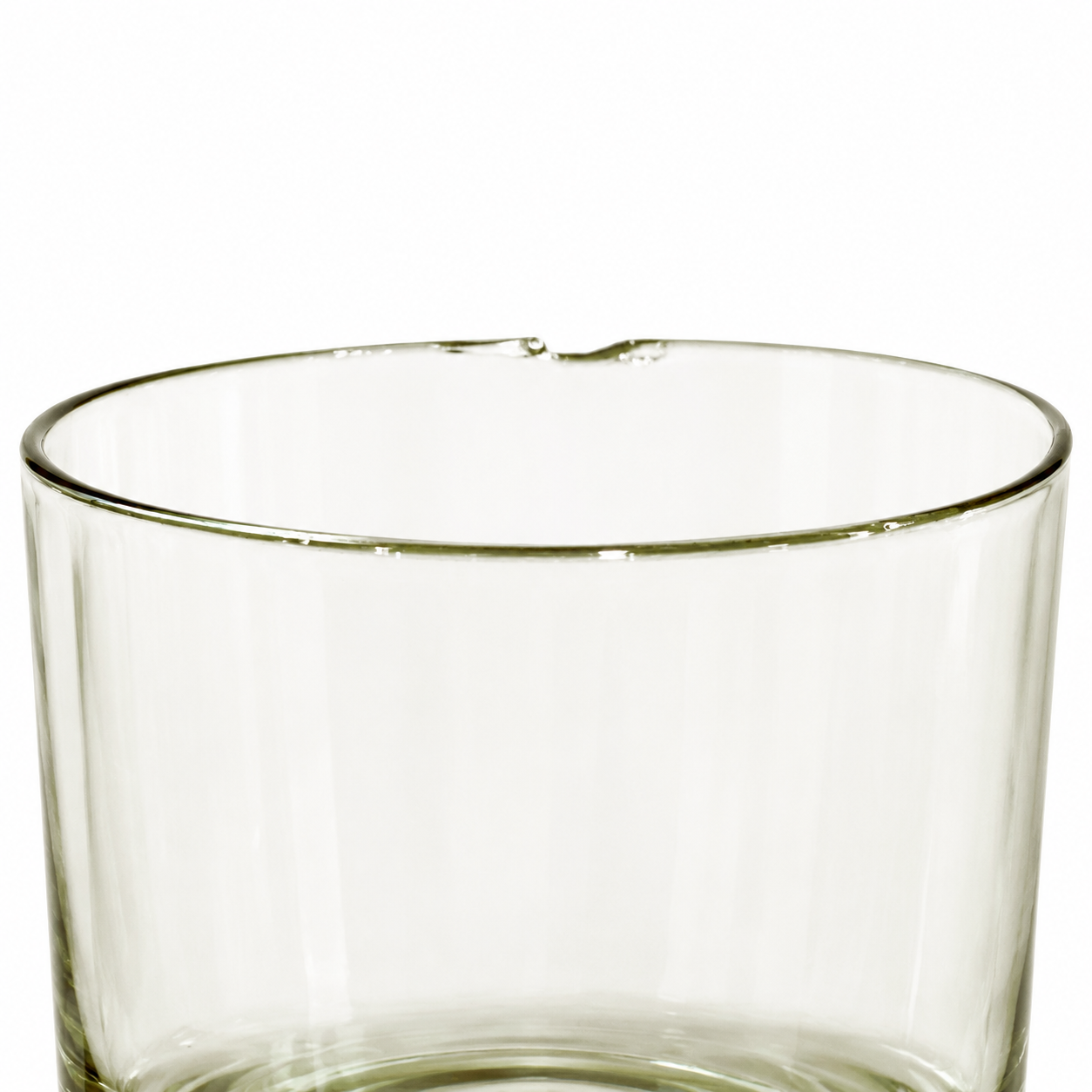 Image 9 of 12
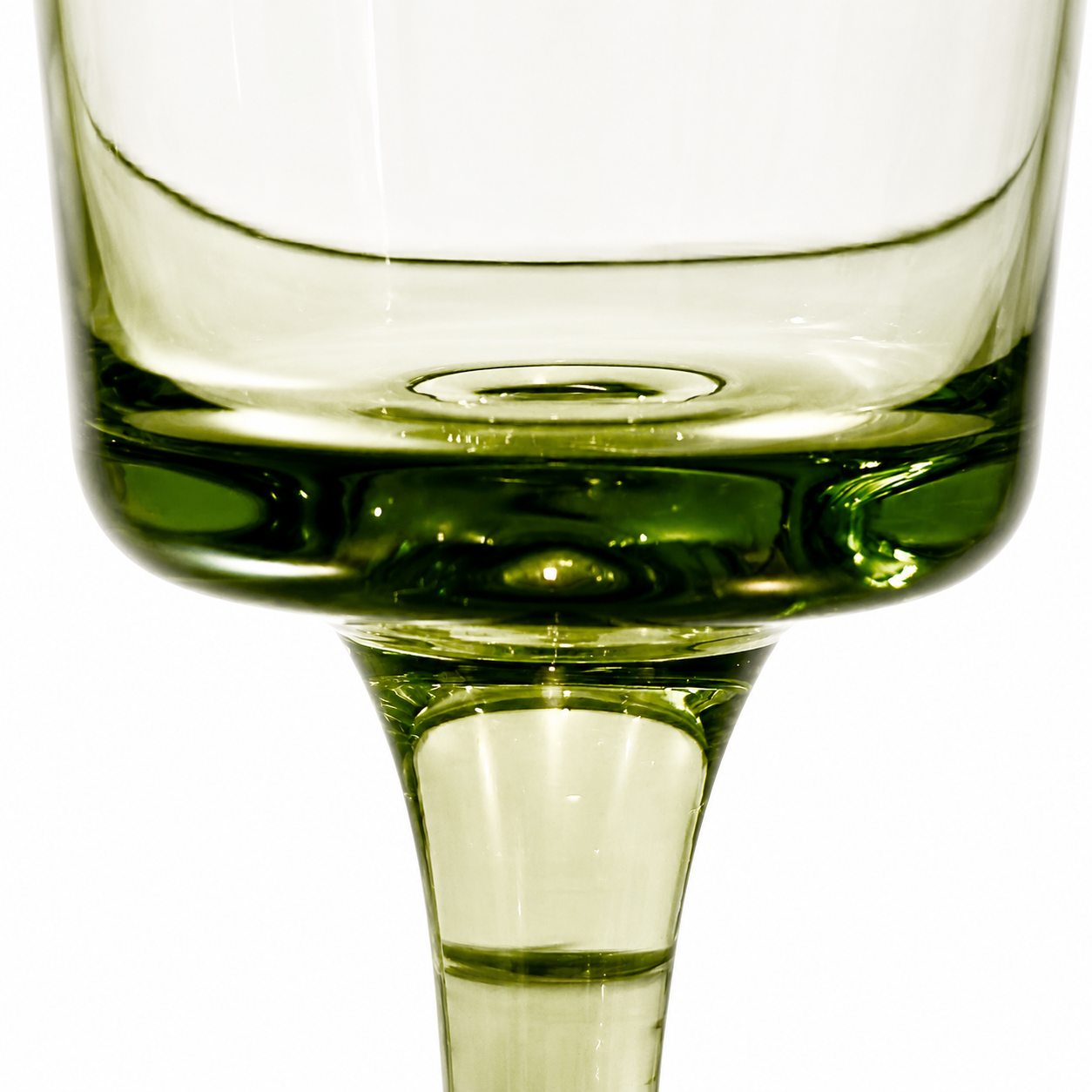 Image 10 of 12
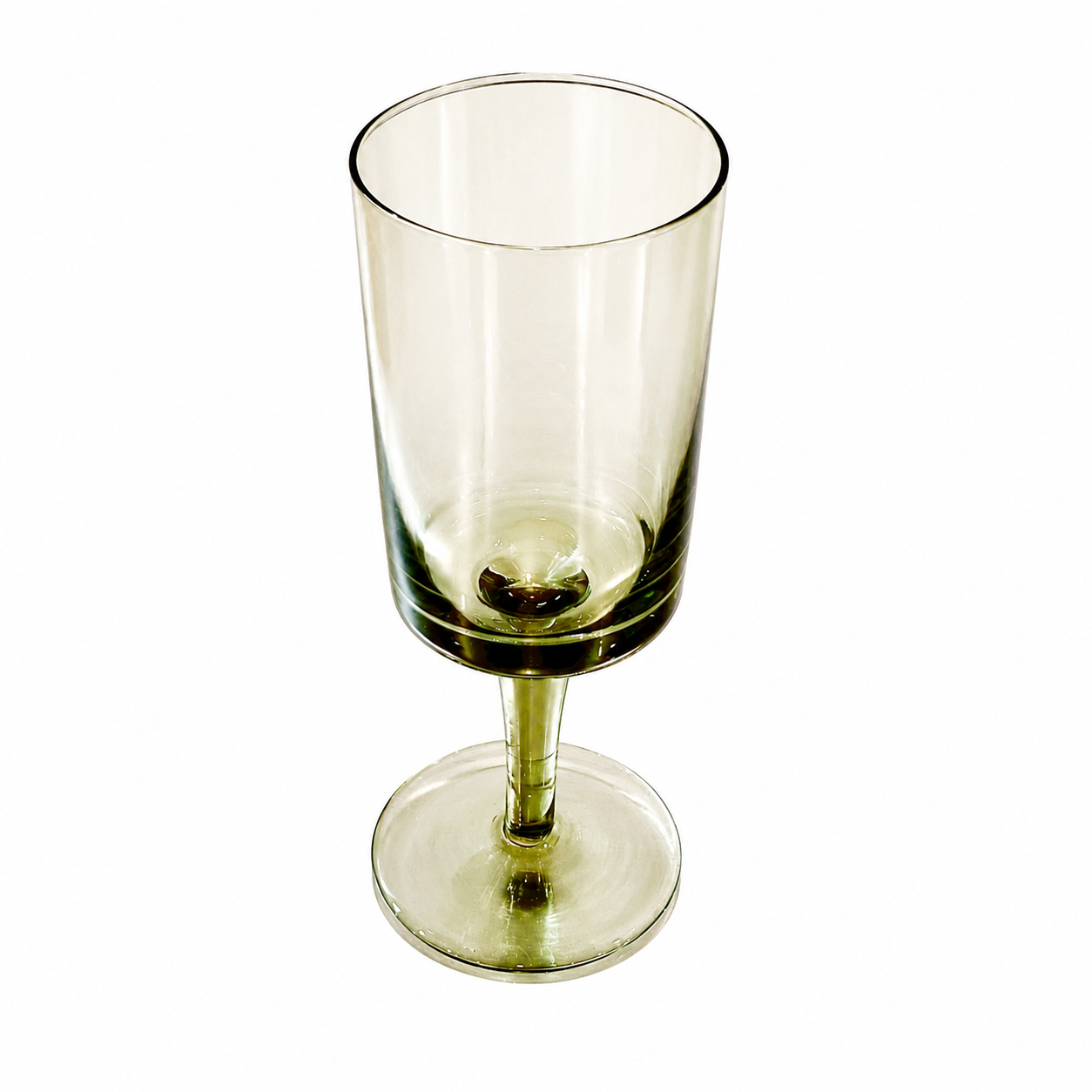 Image 11 of 12
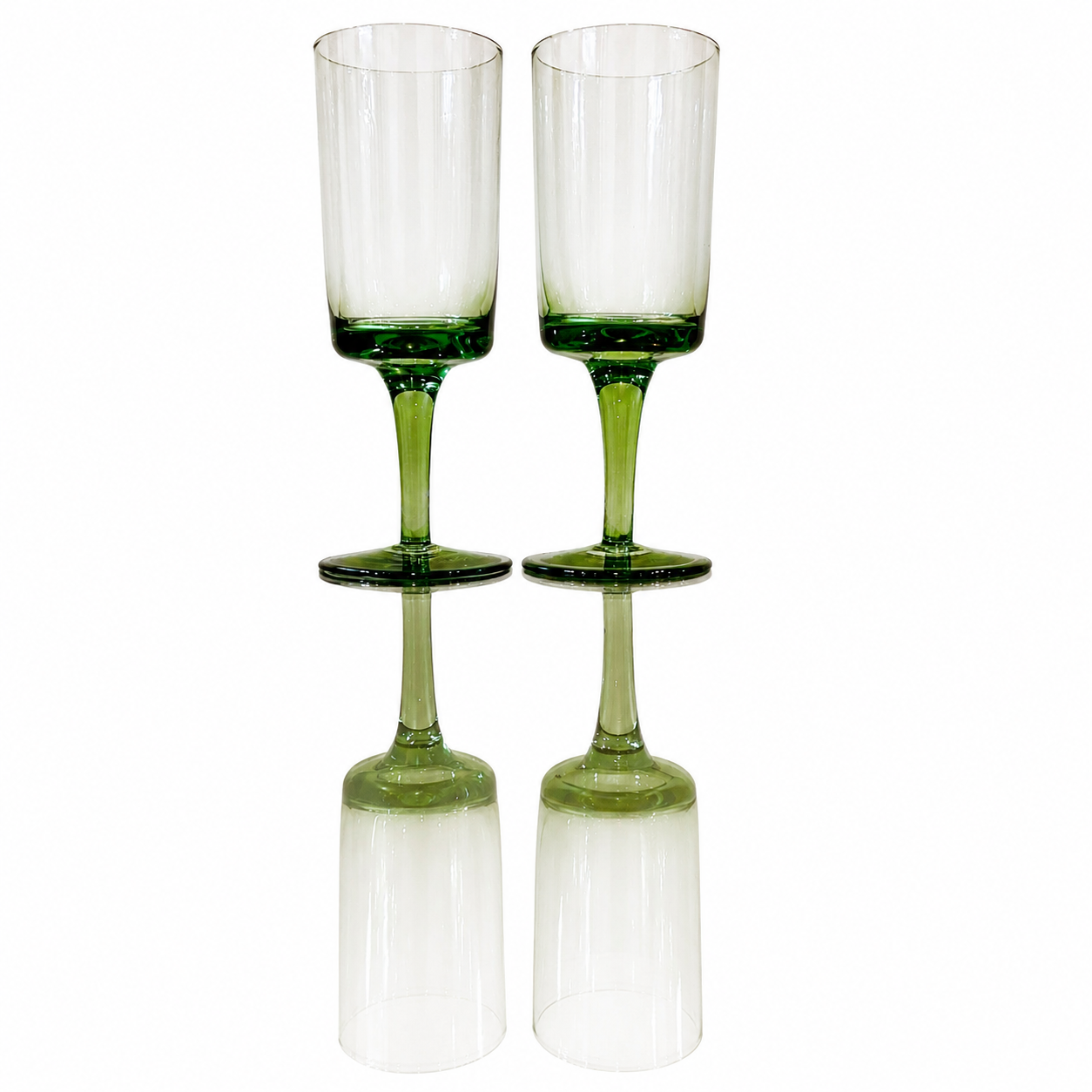 Image 12 of 12