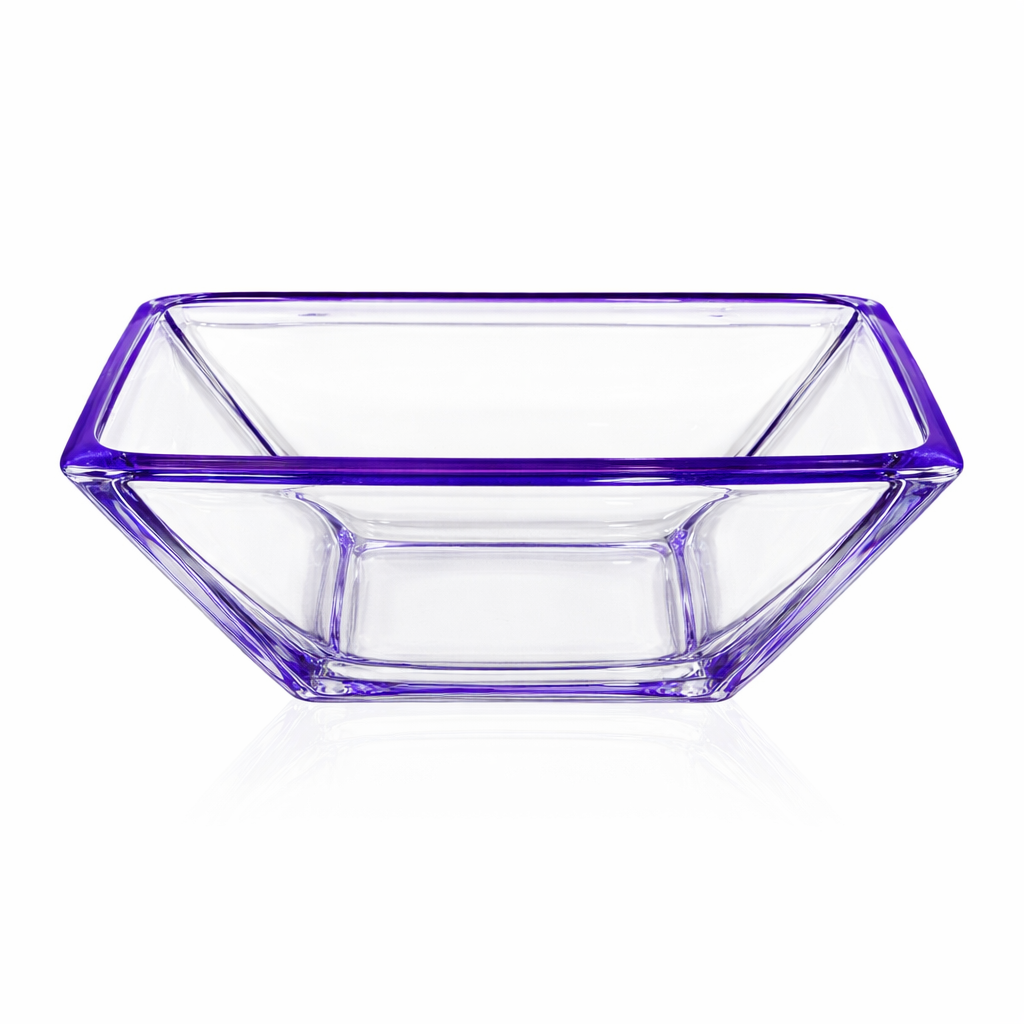
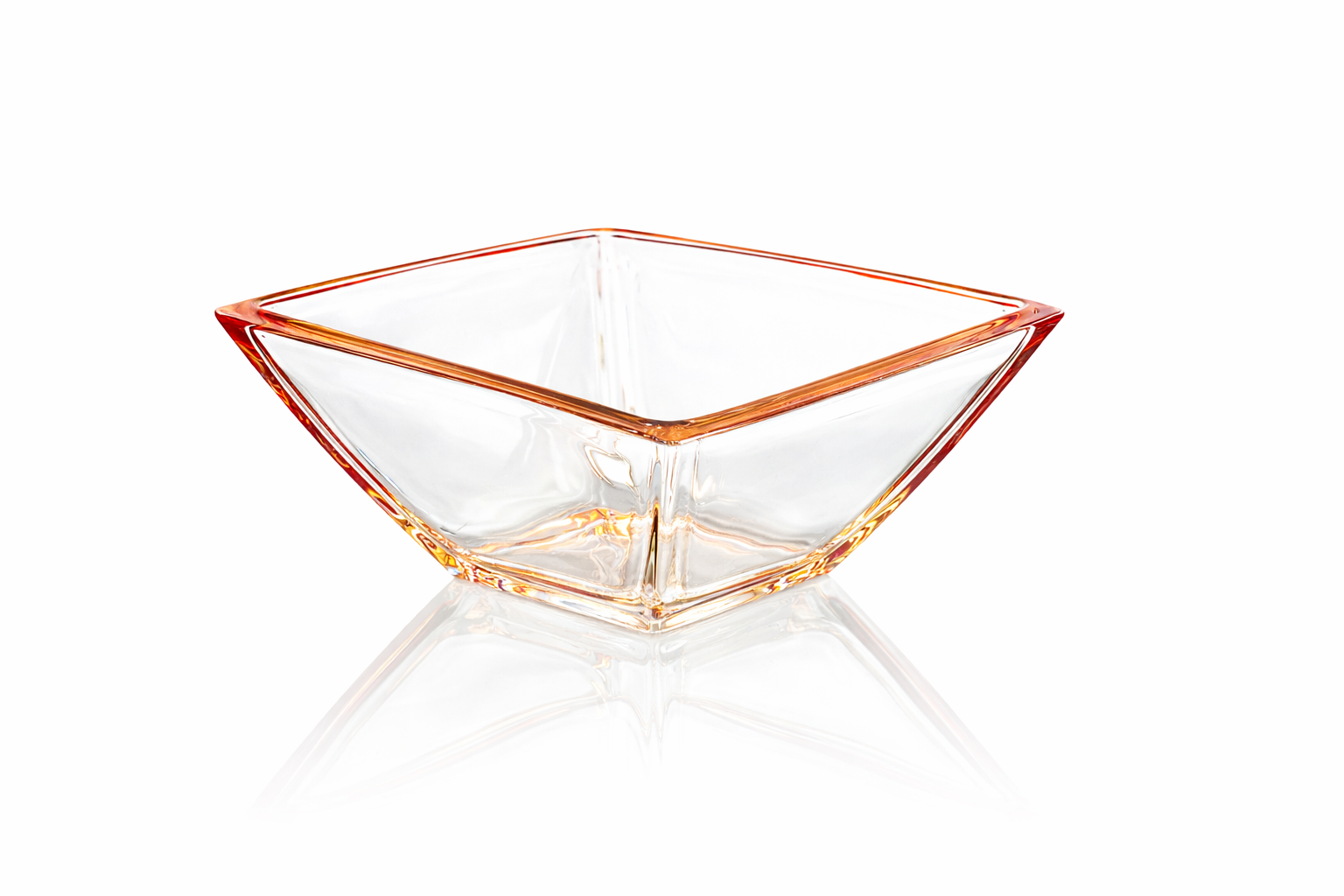
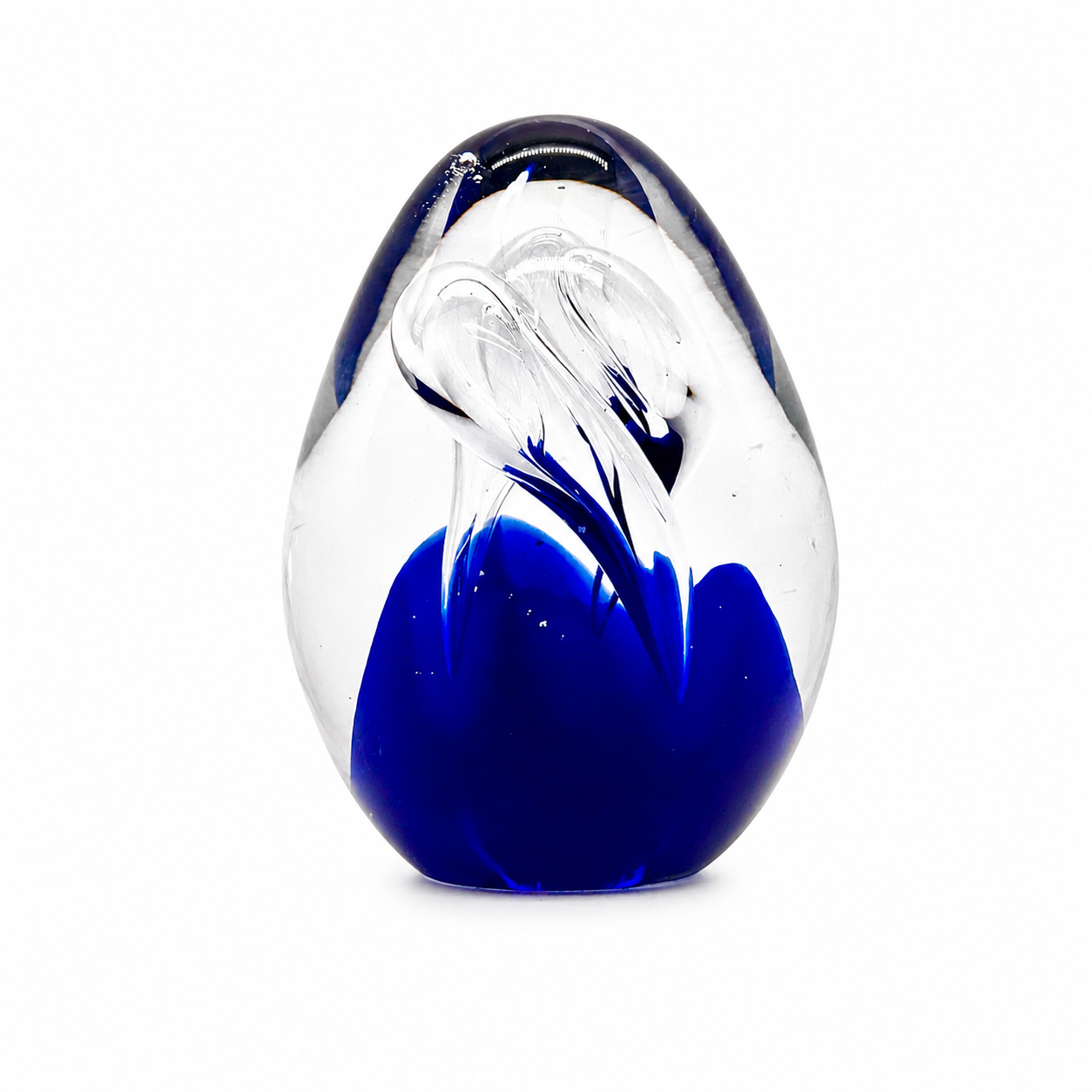
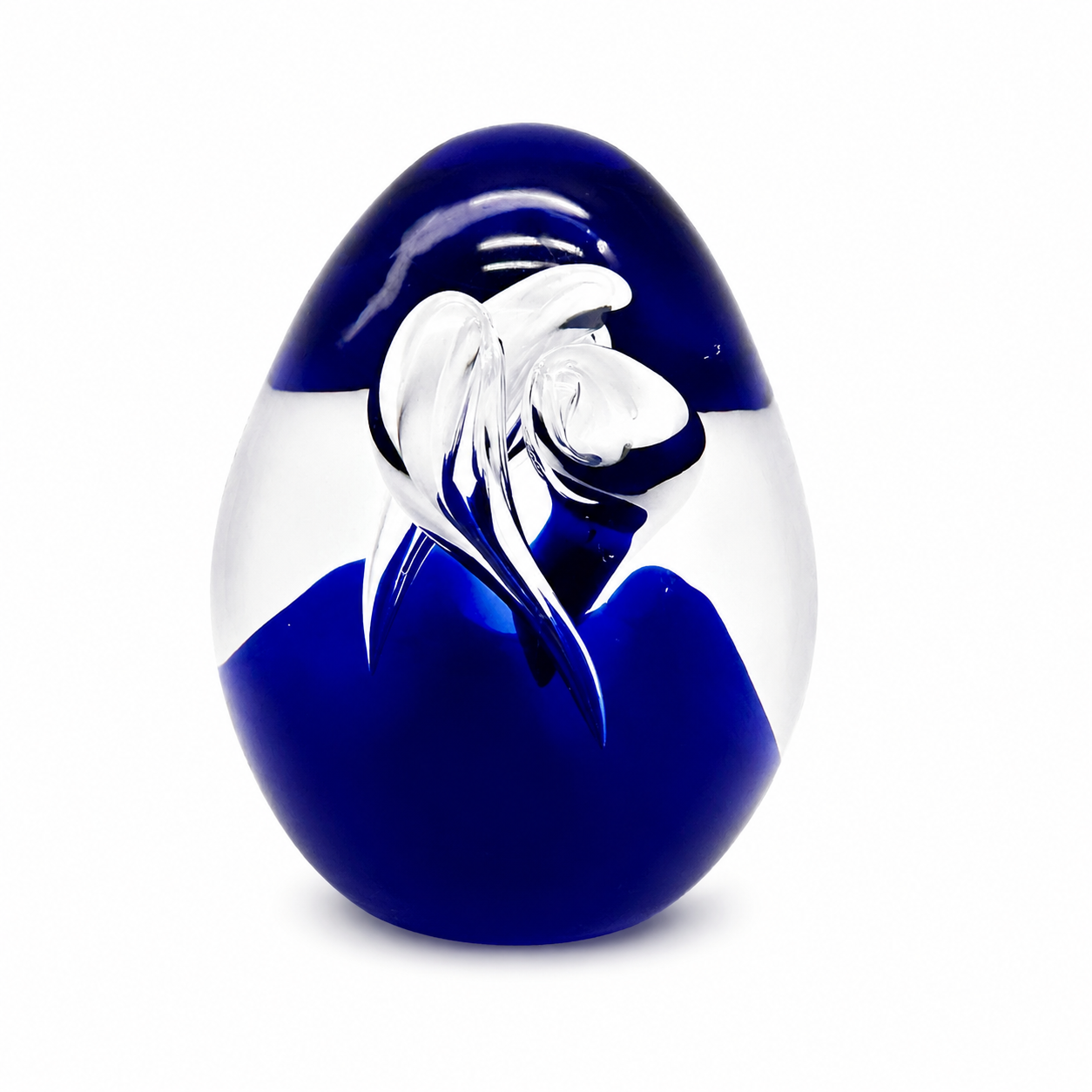
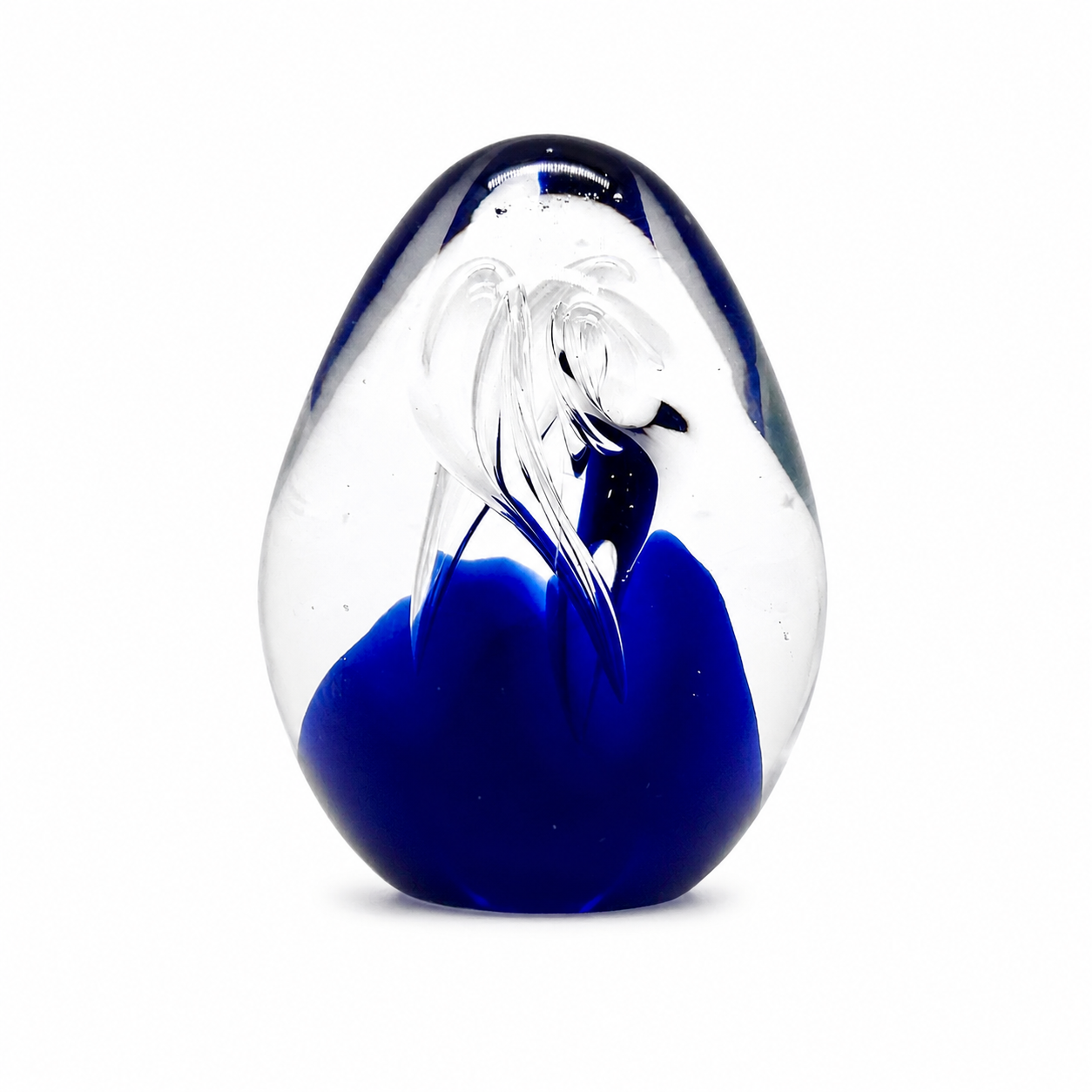
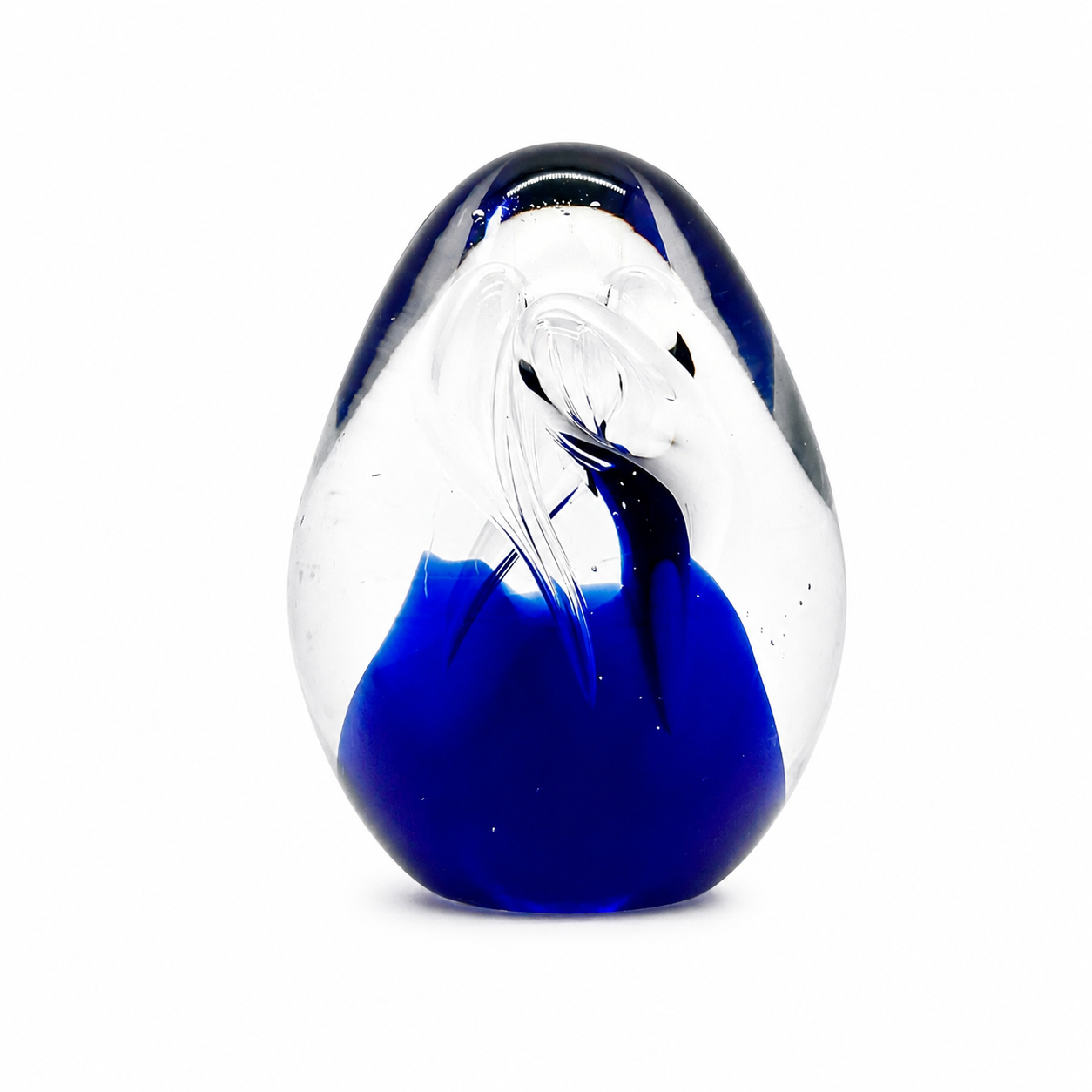
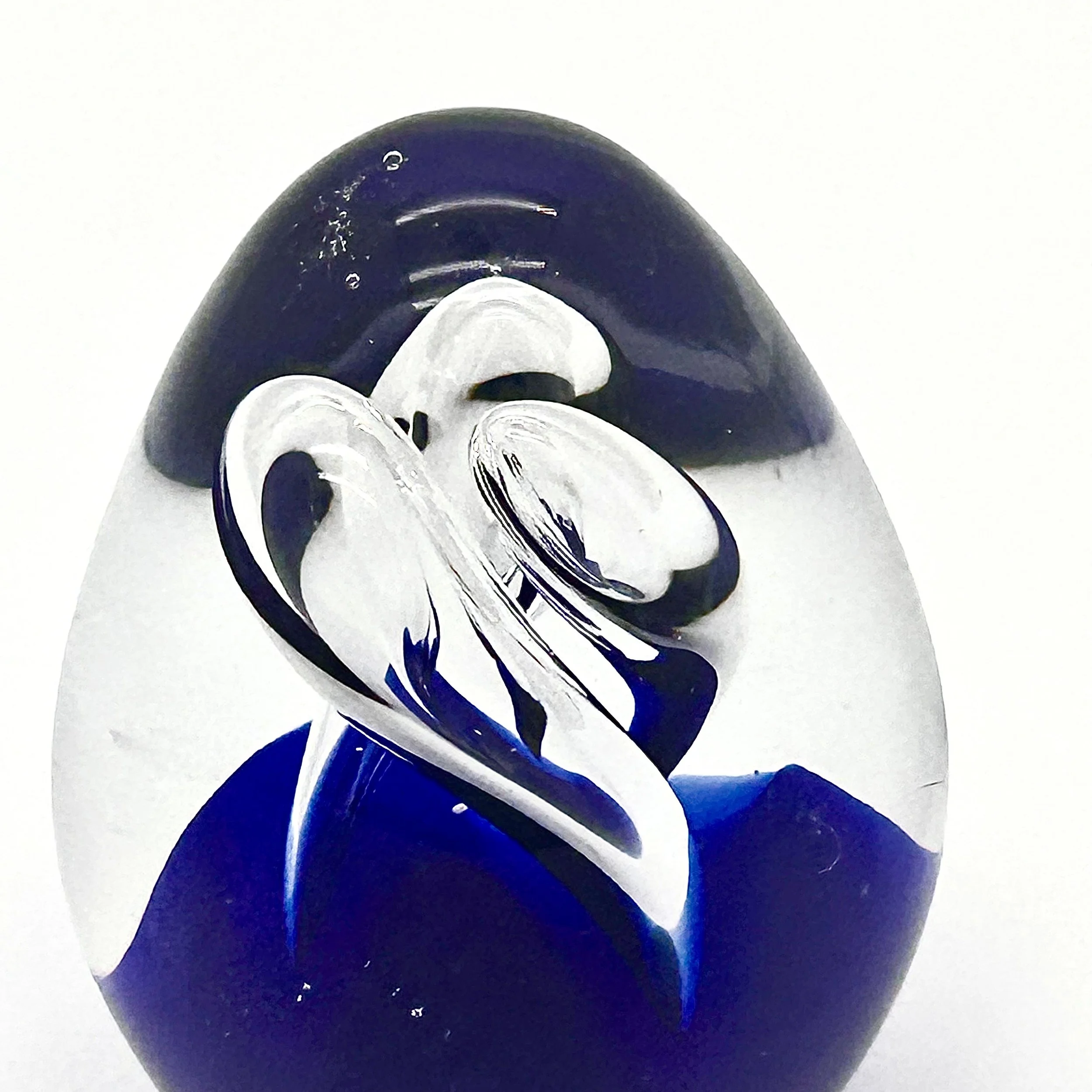
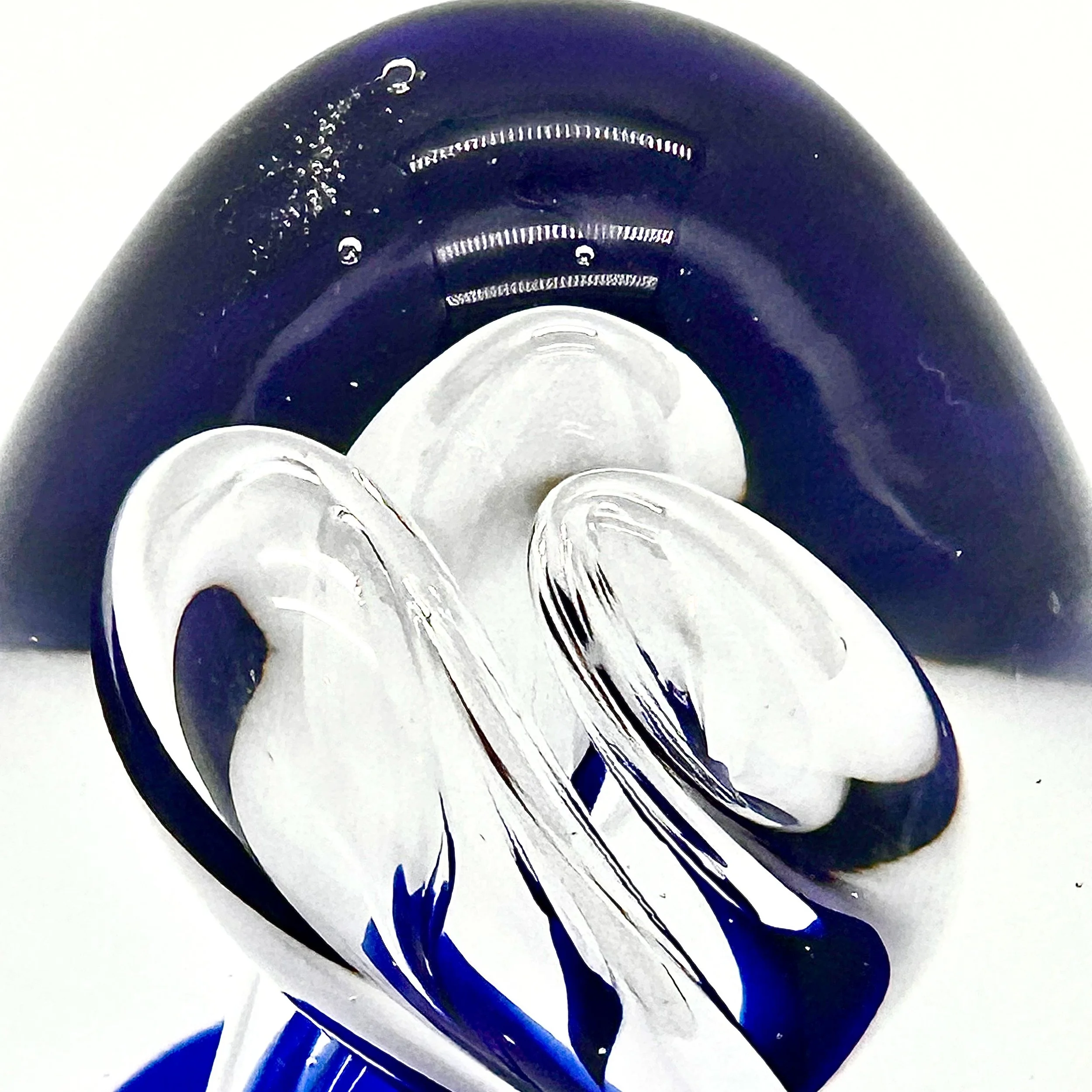
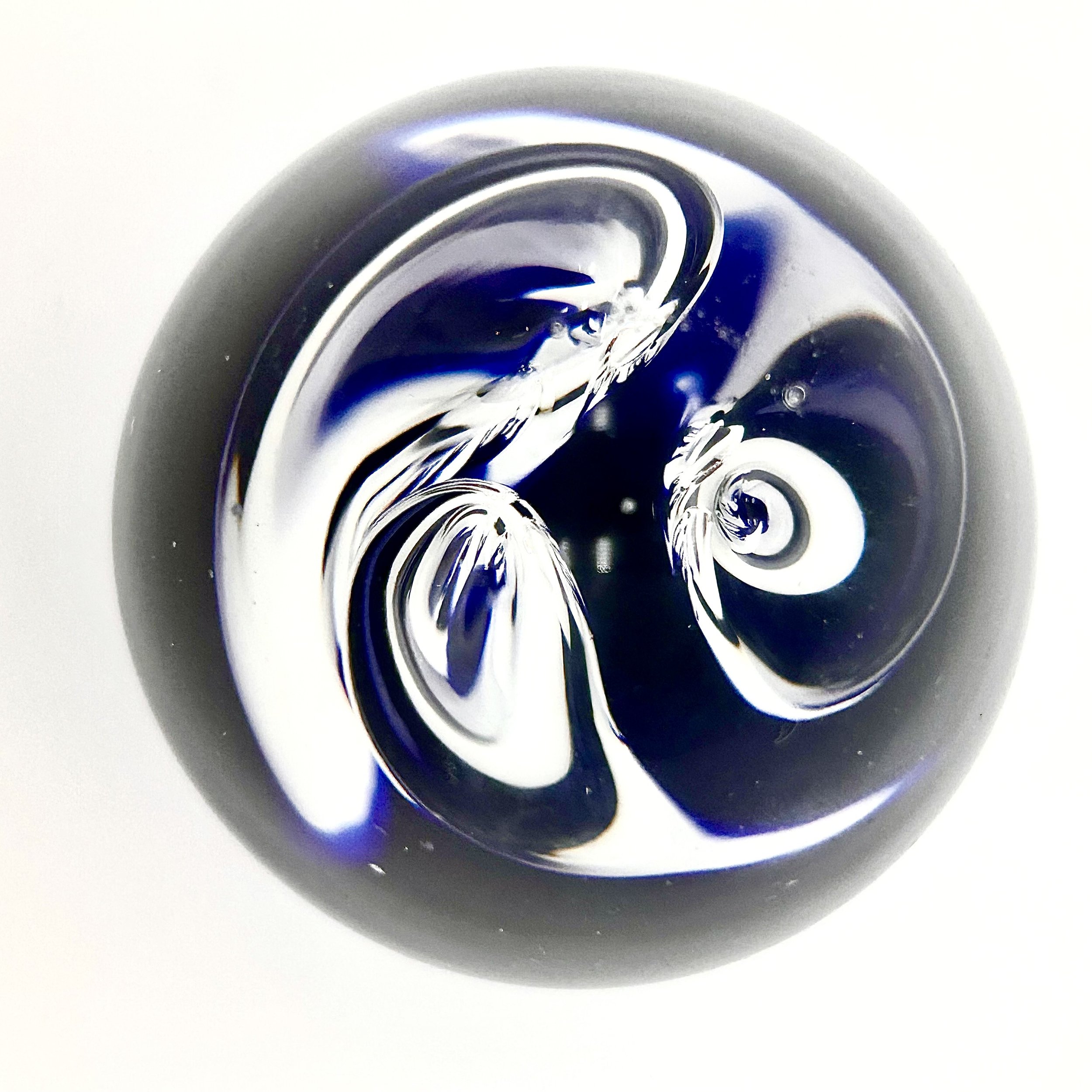
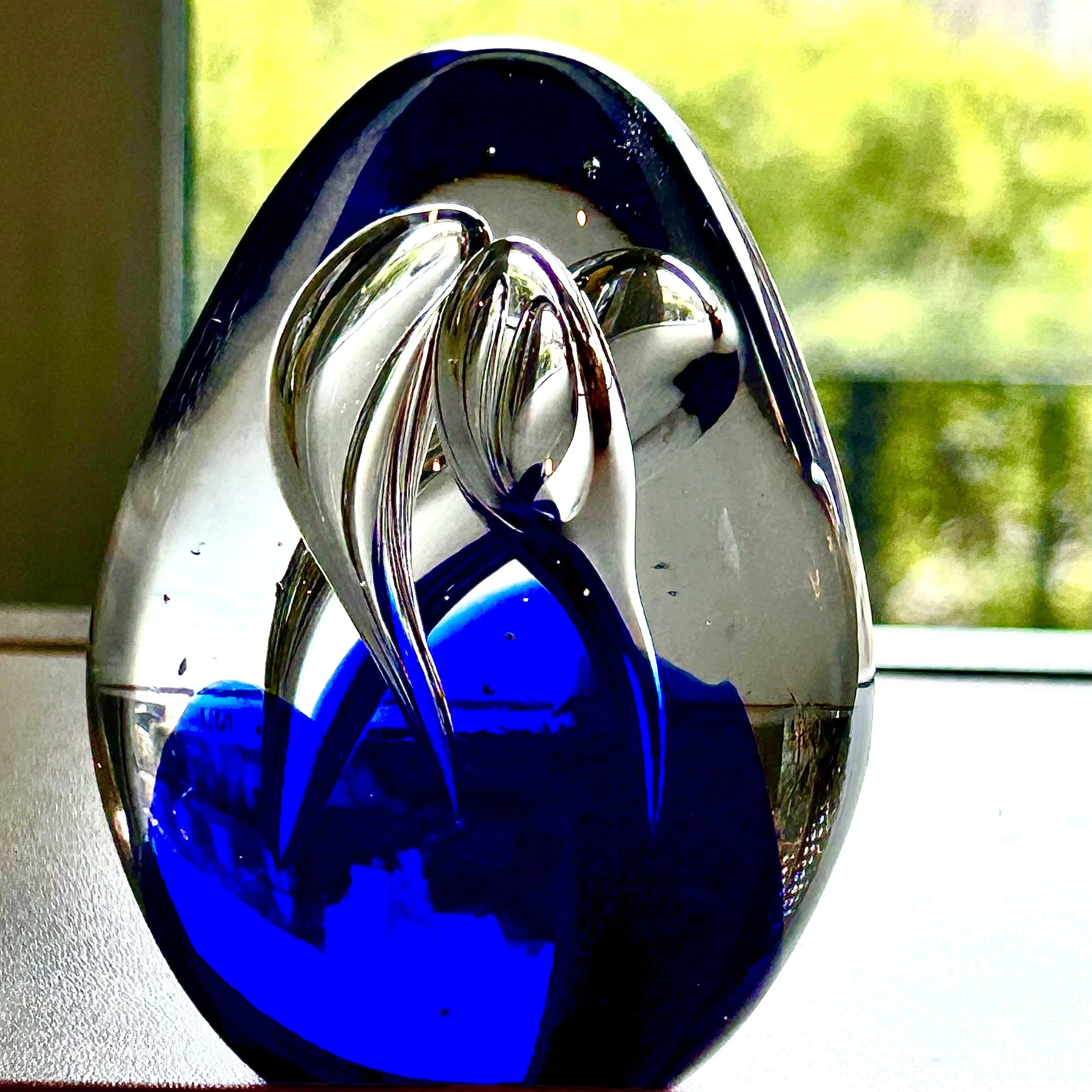
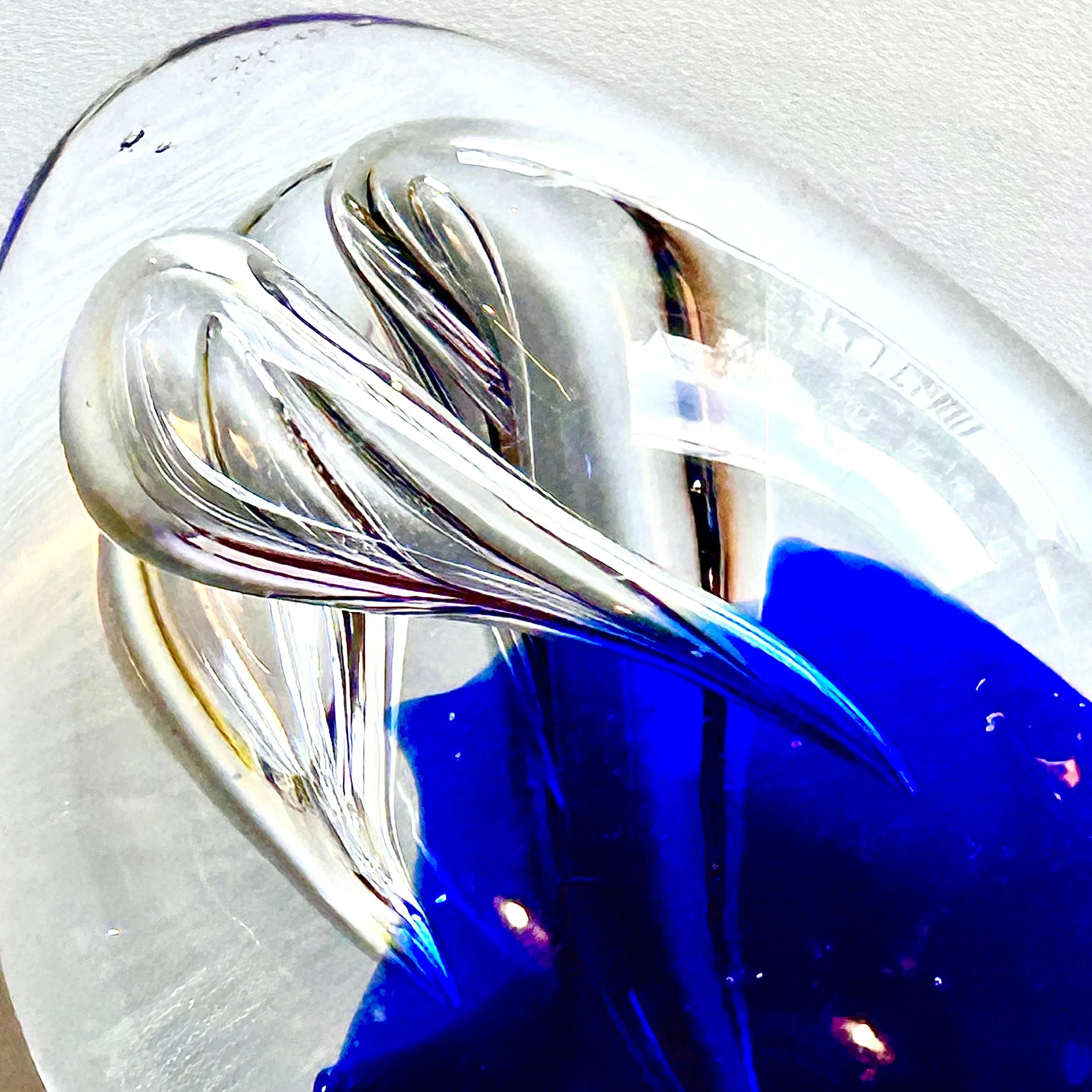
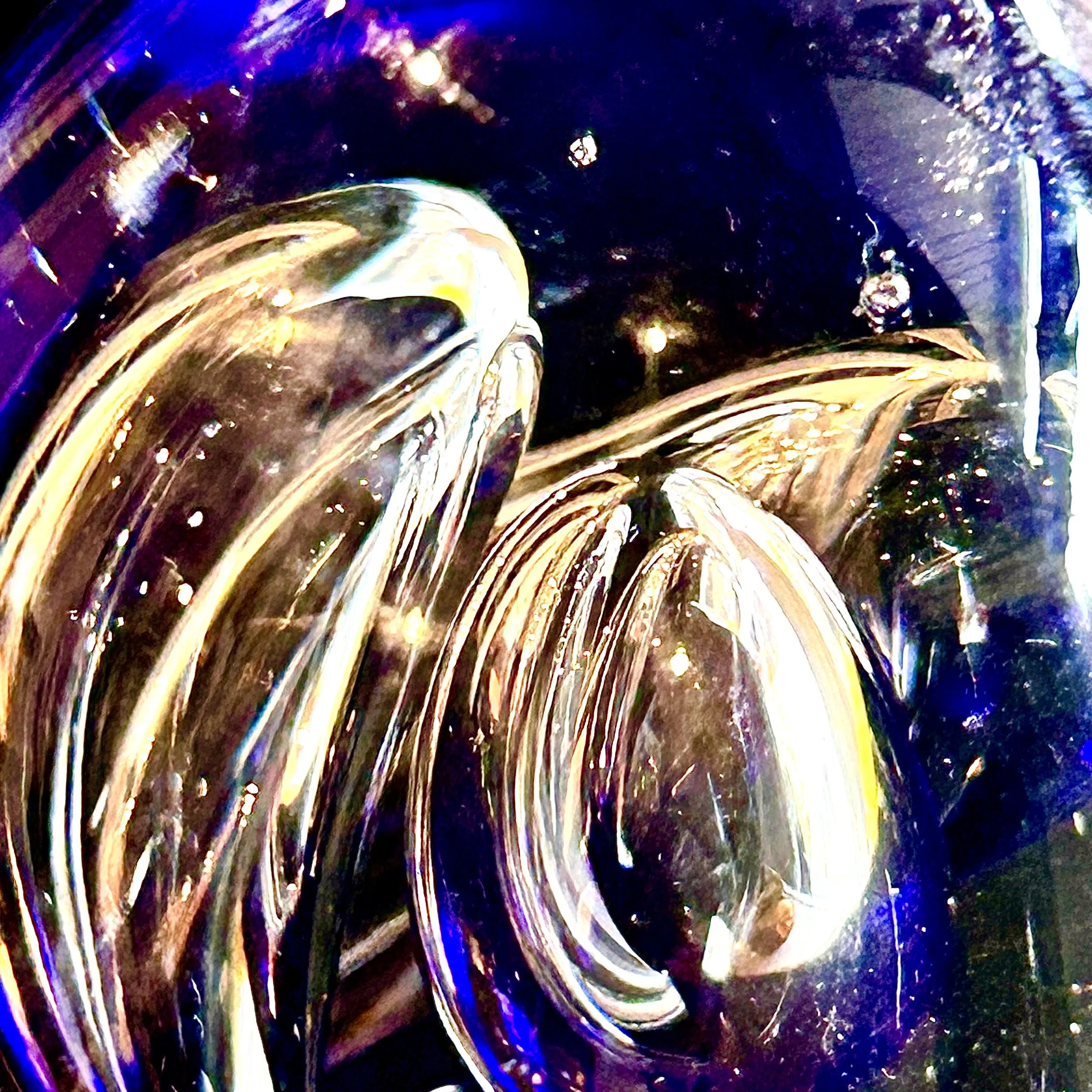
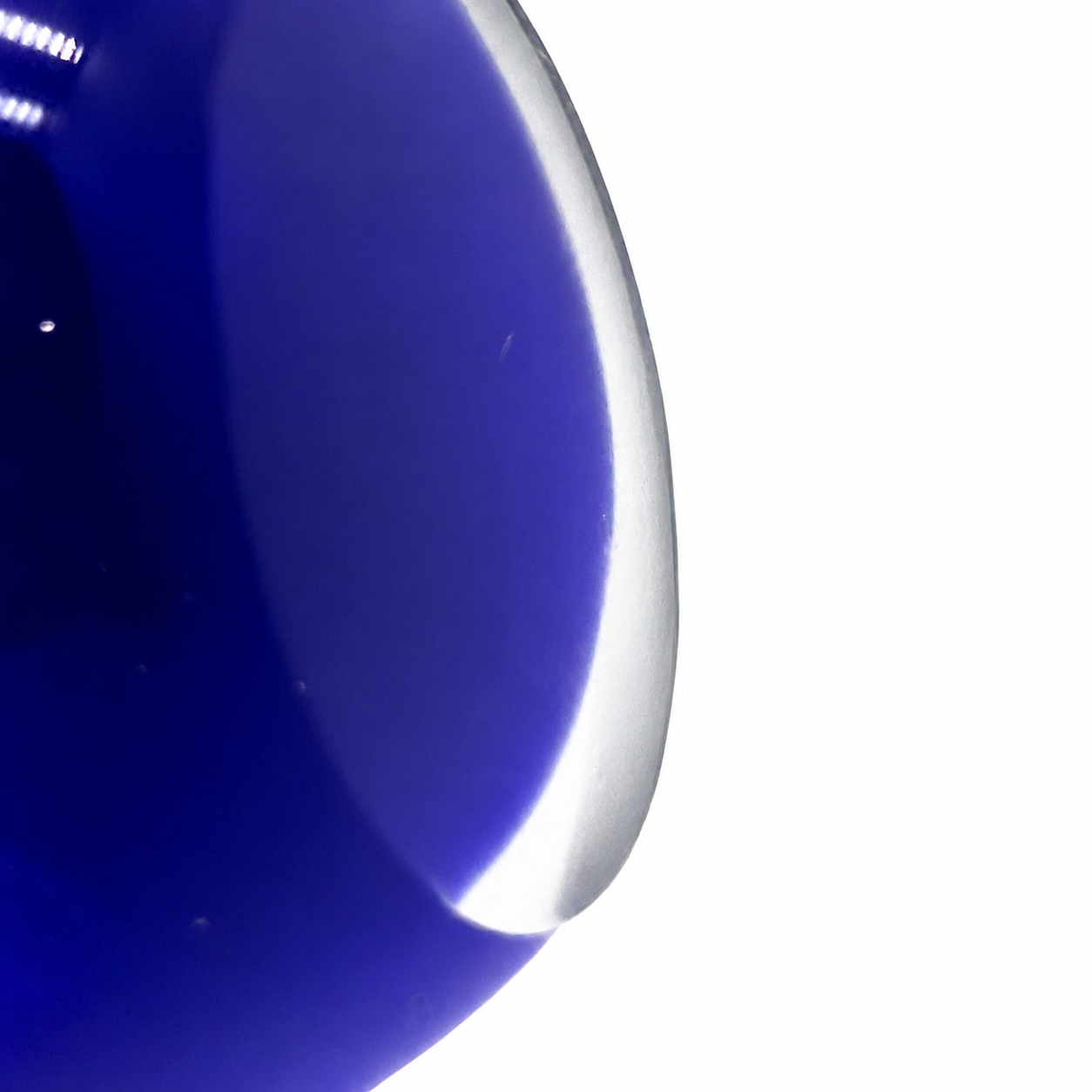
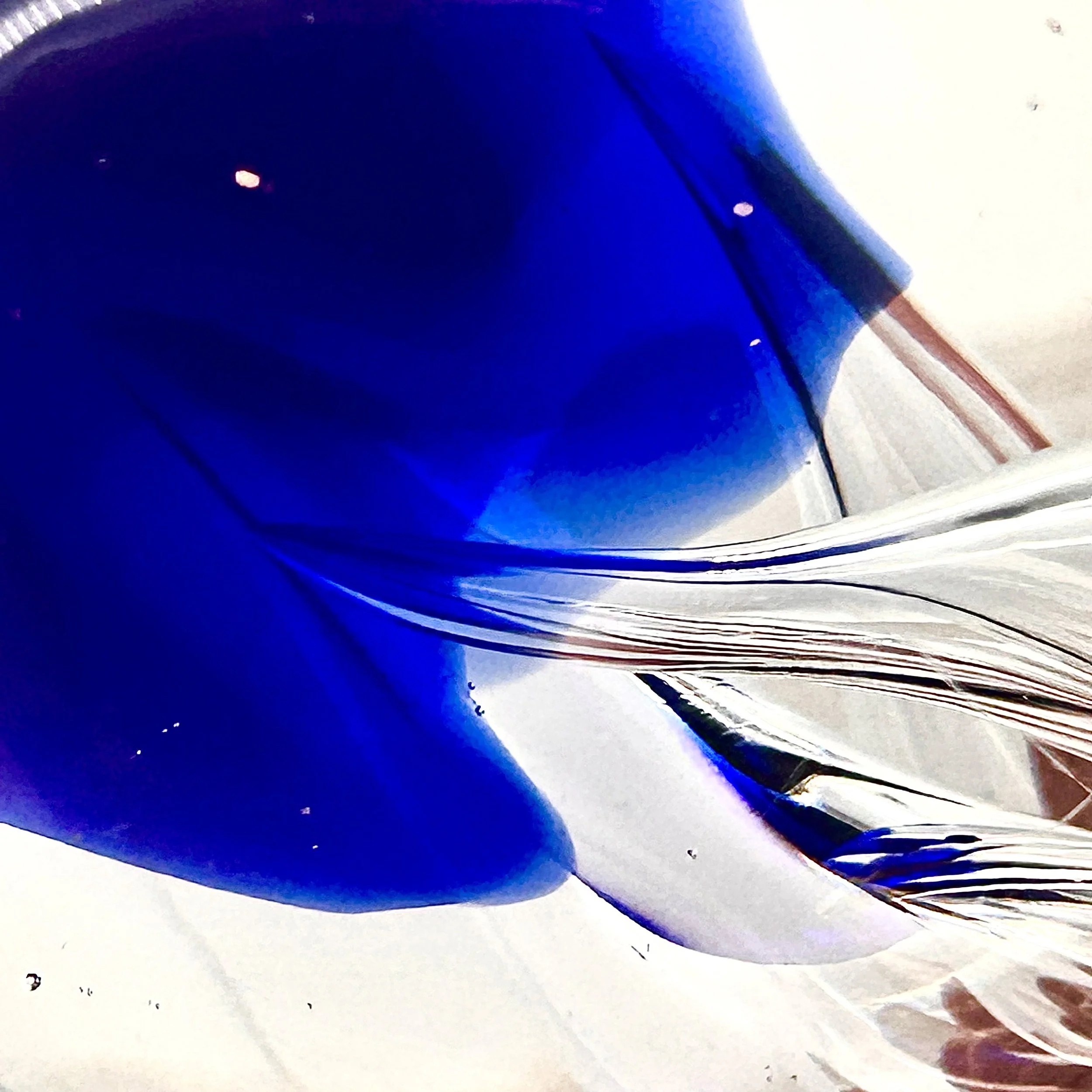
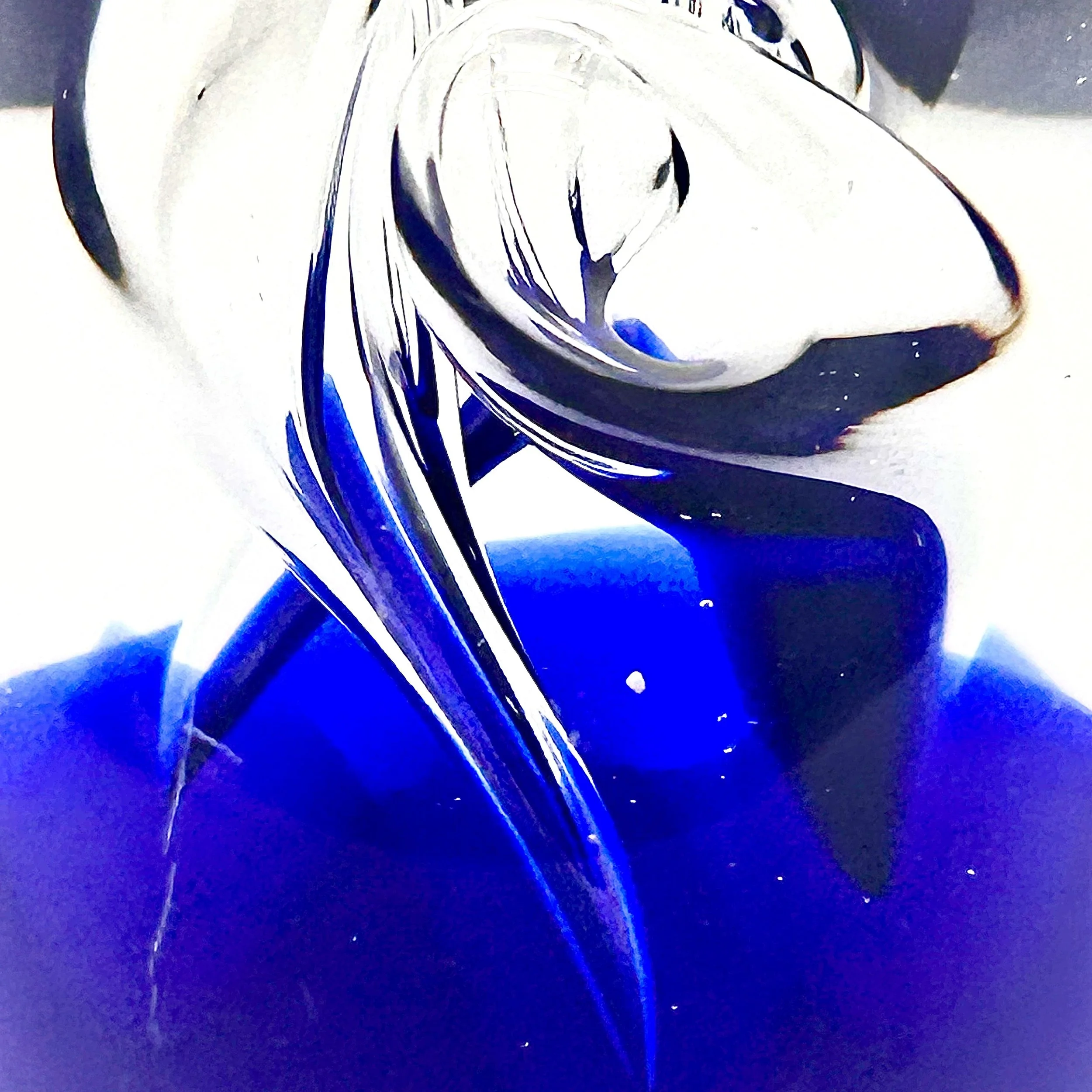
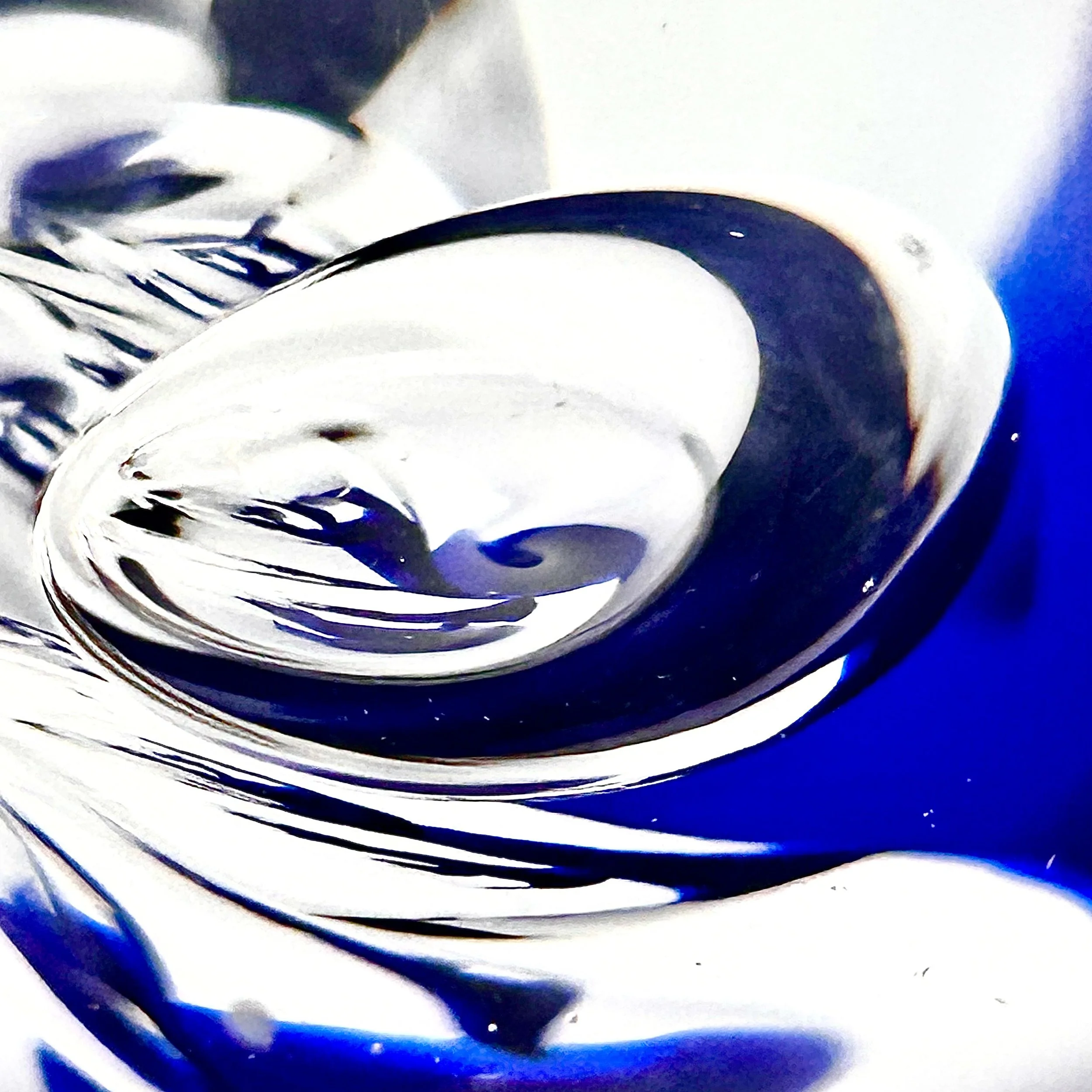
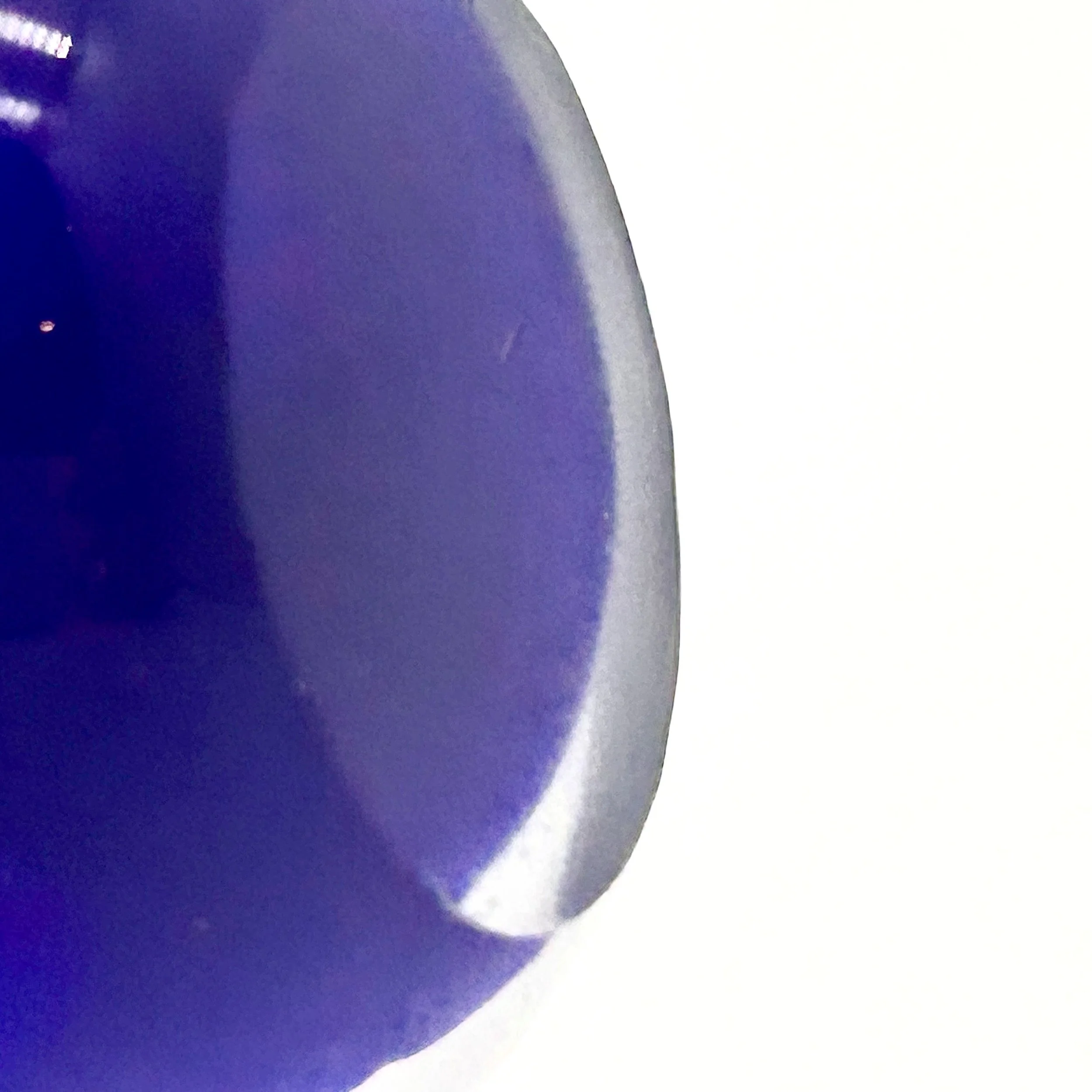
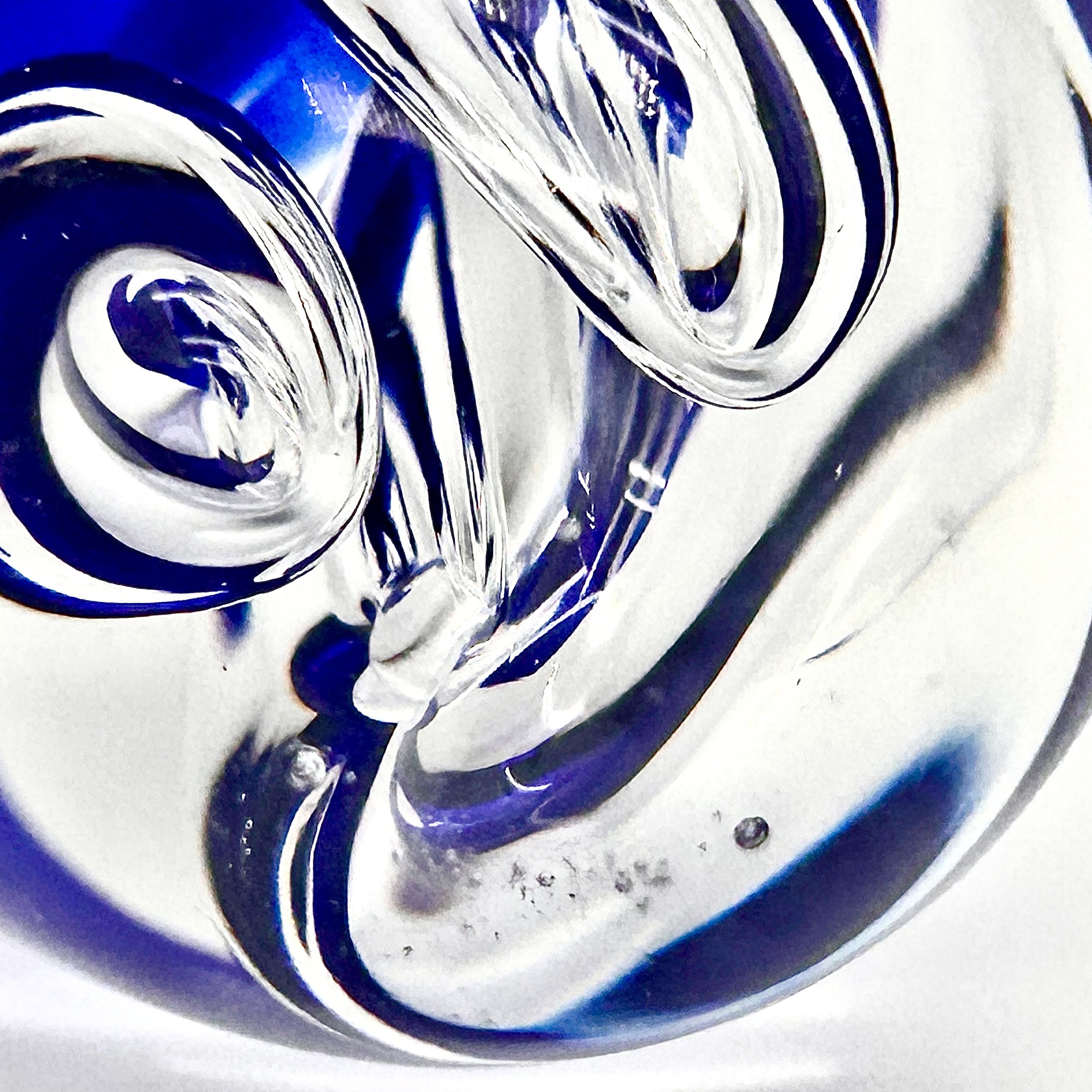
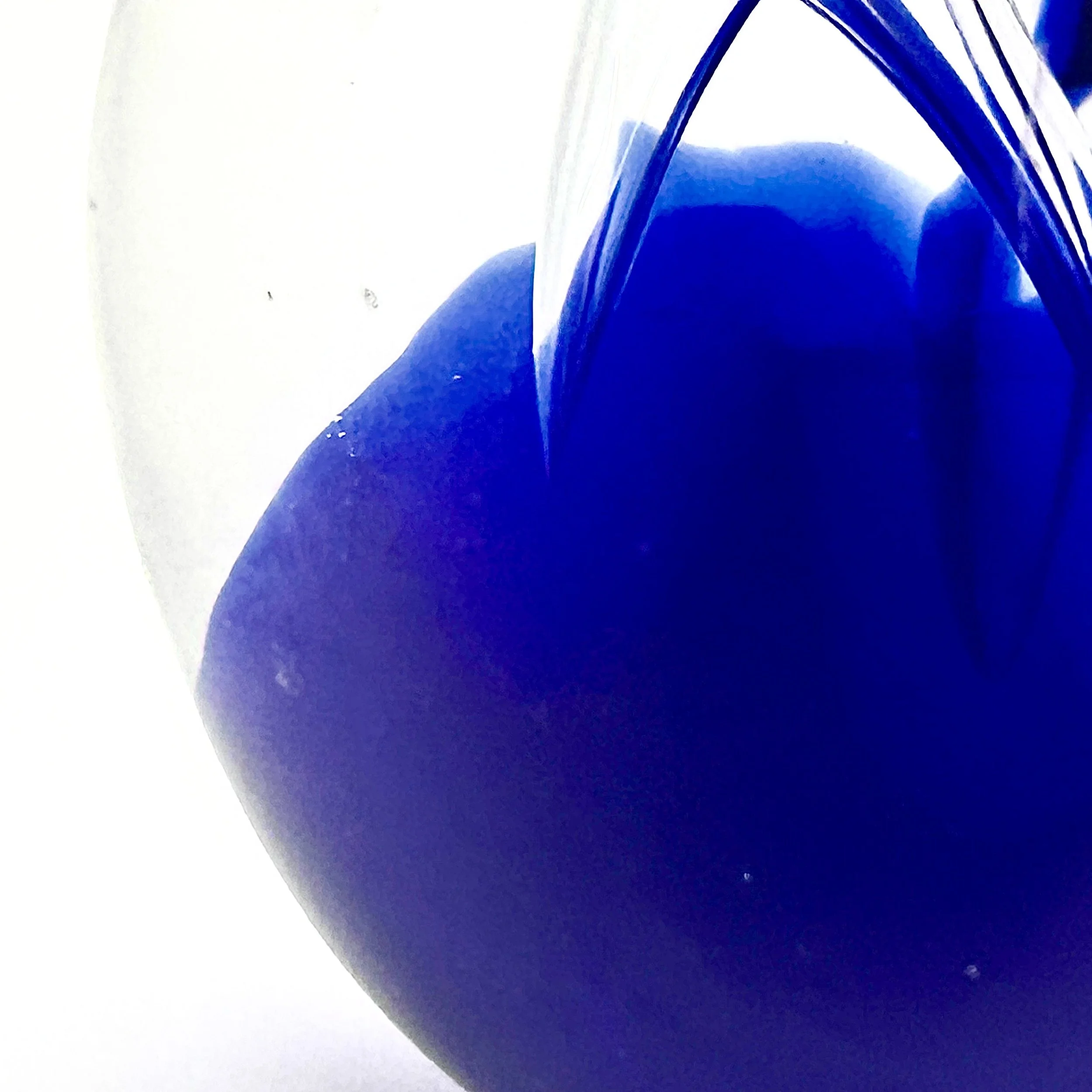
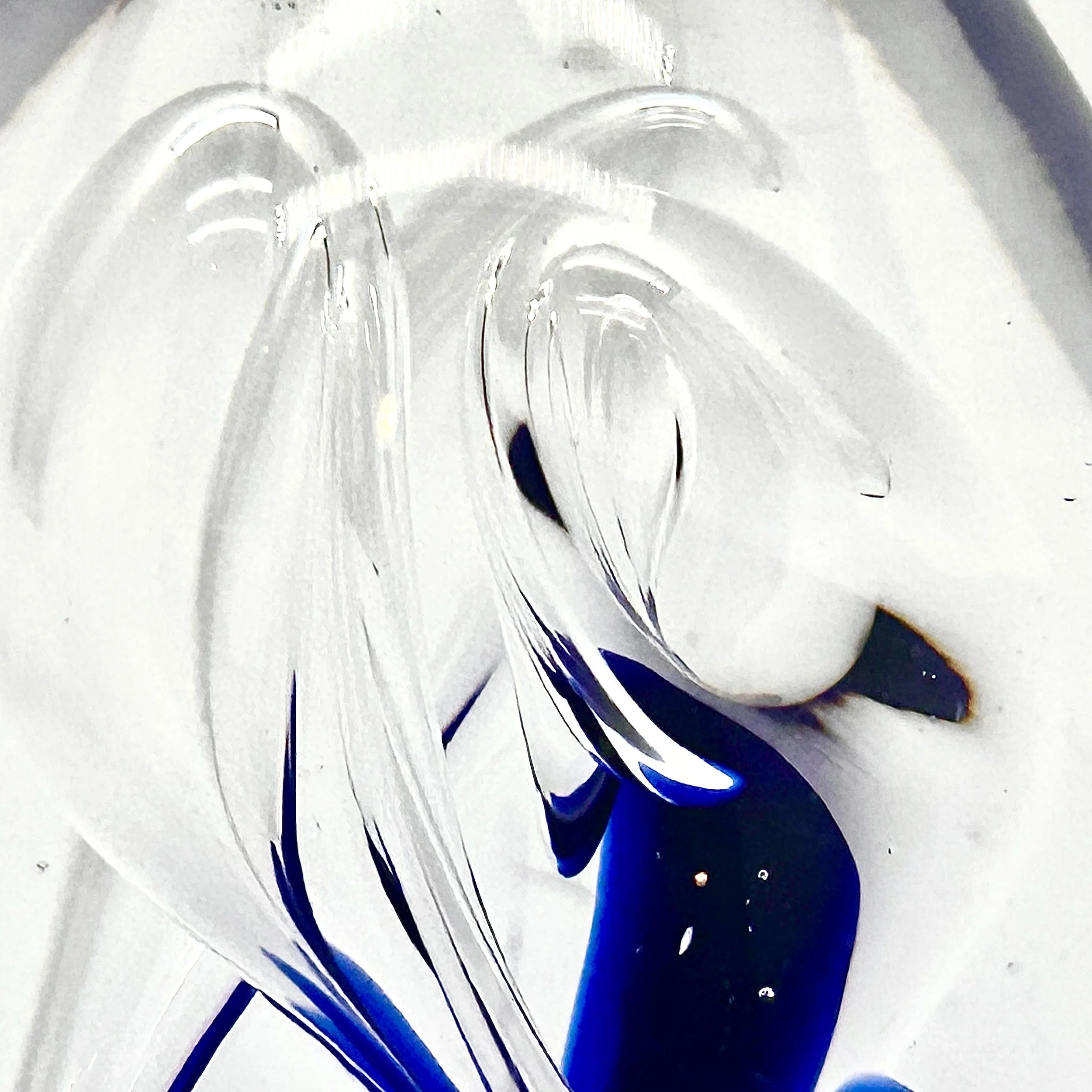
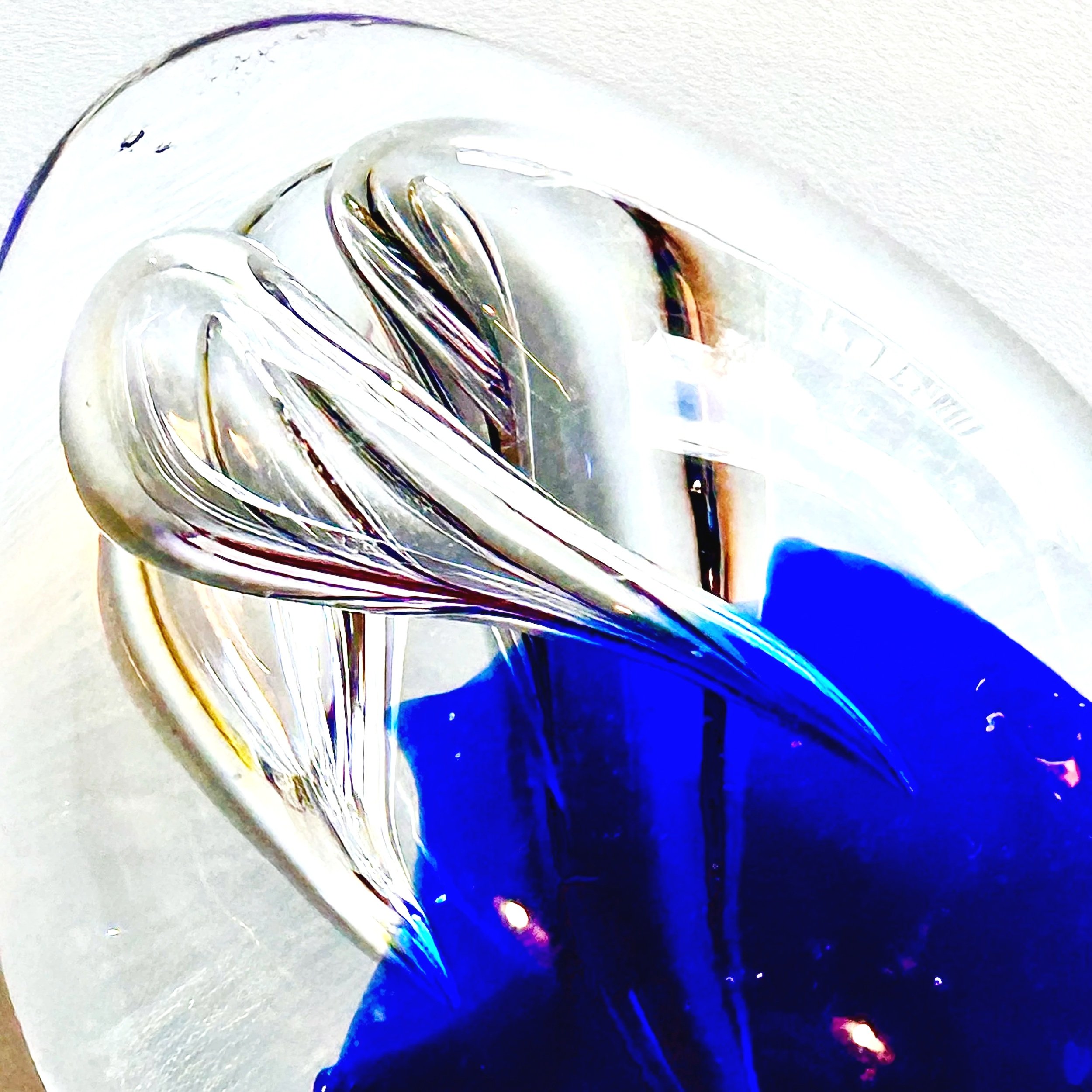
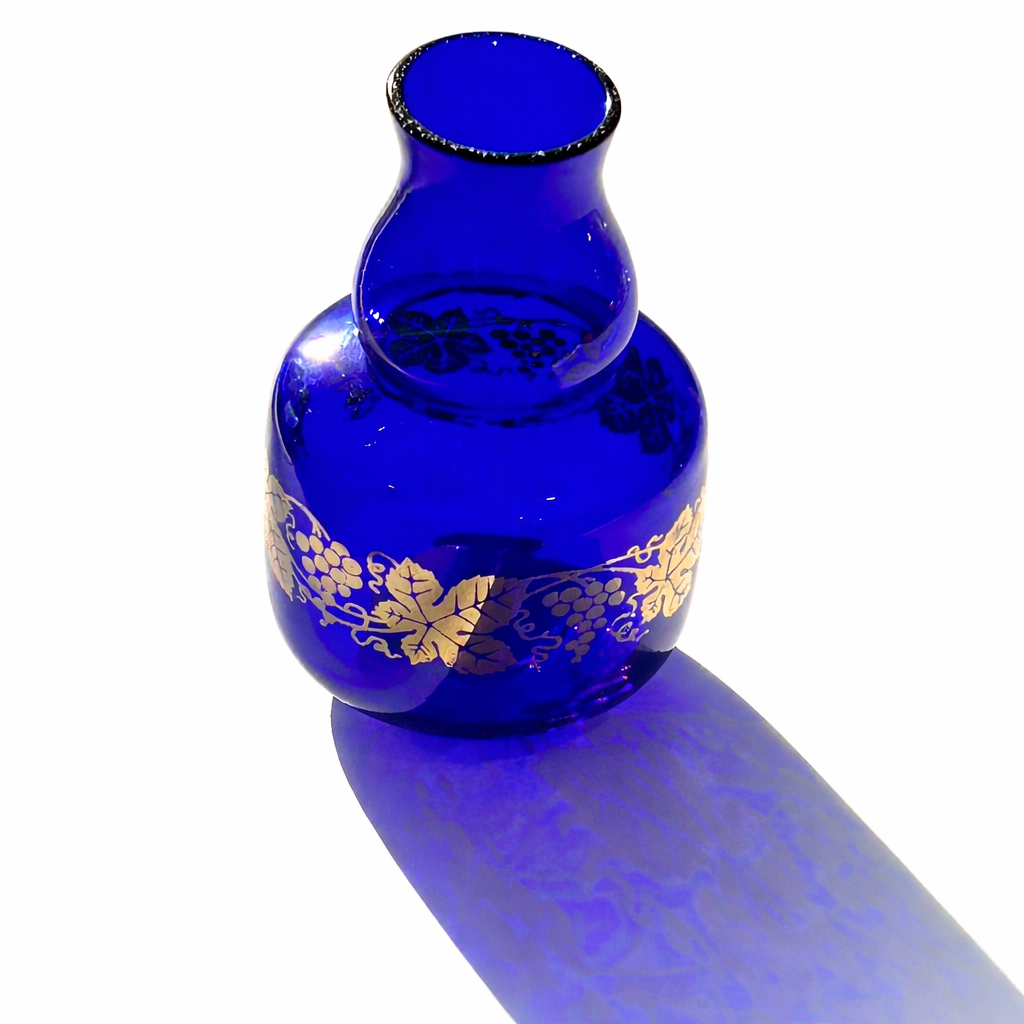
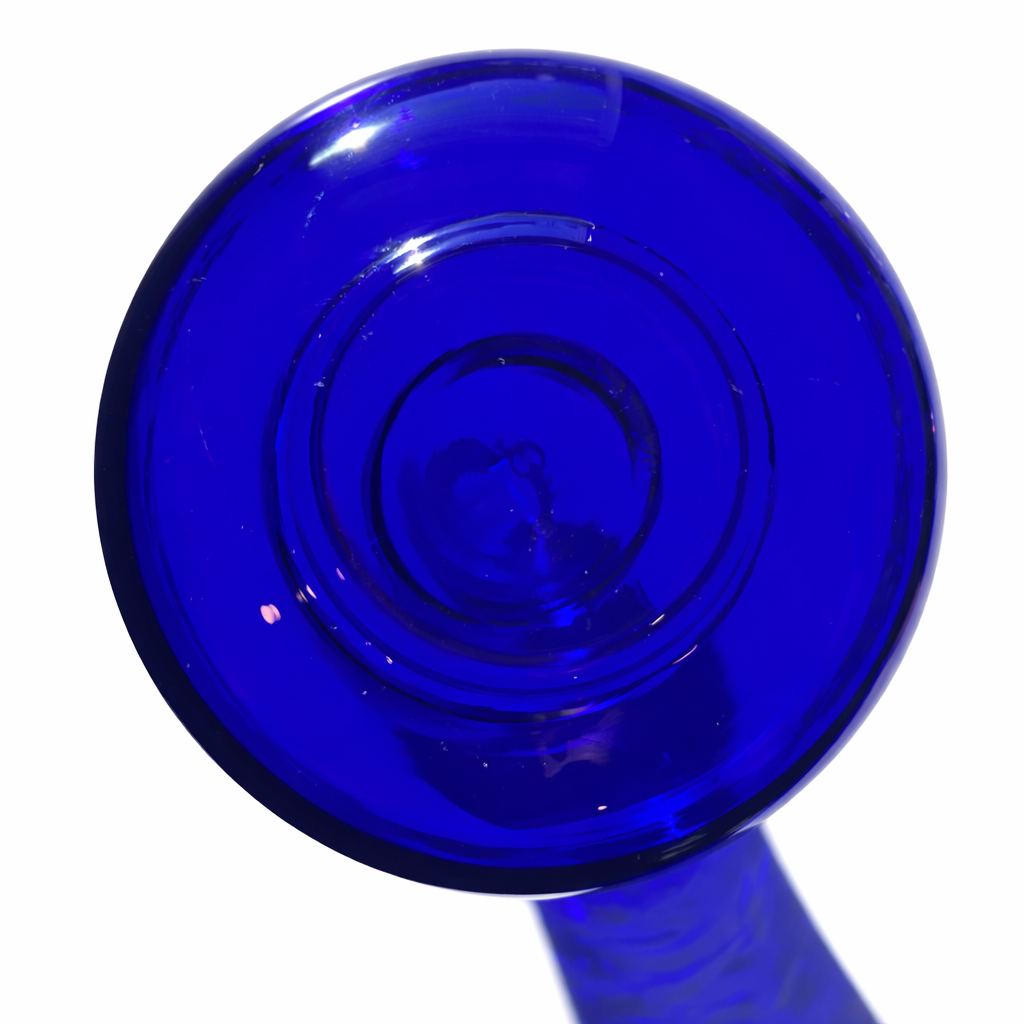
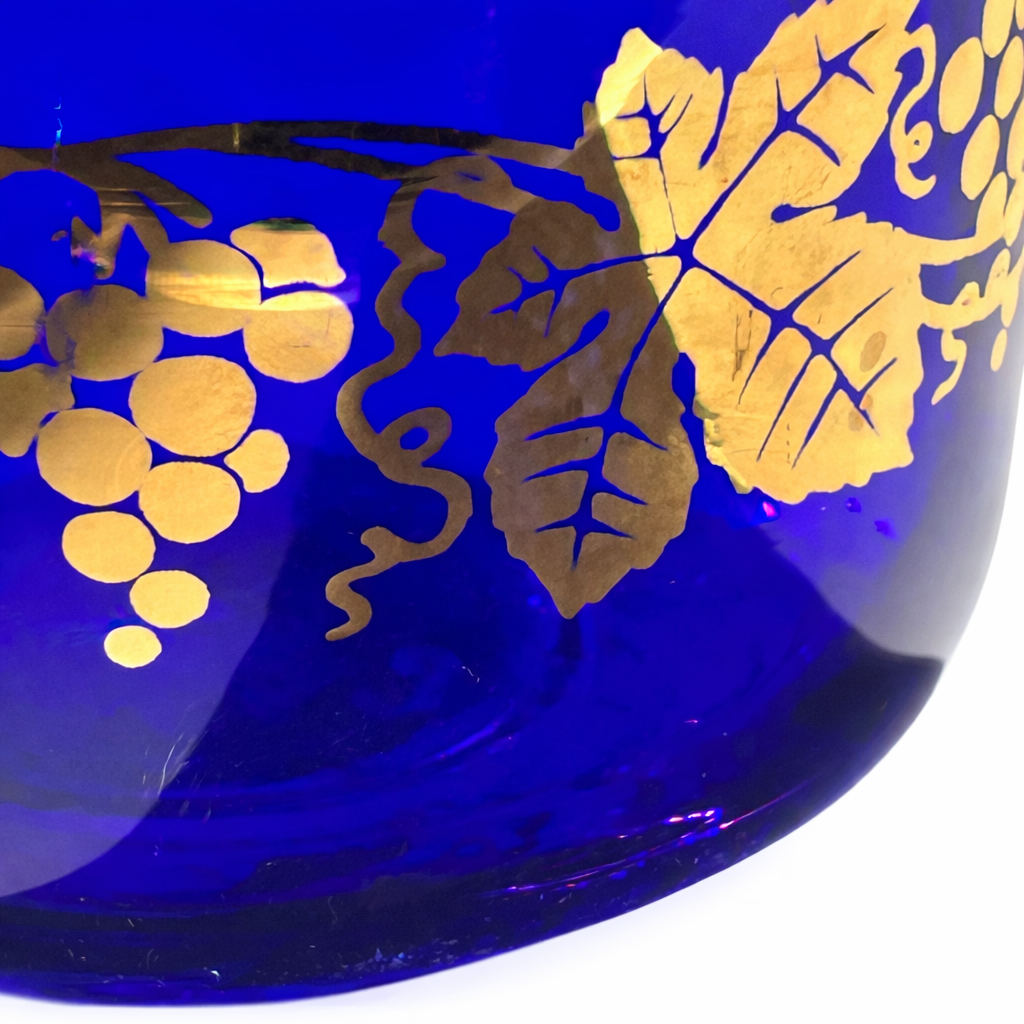
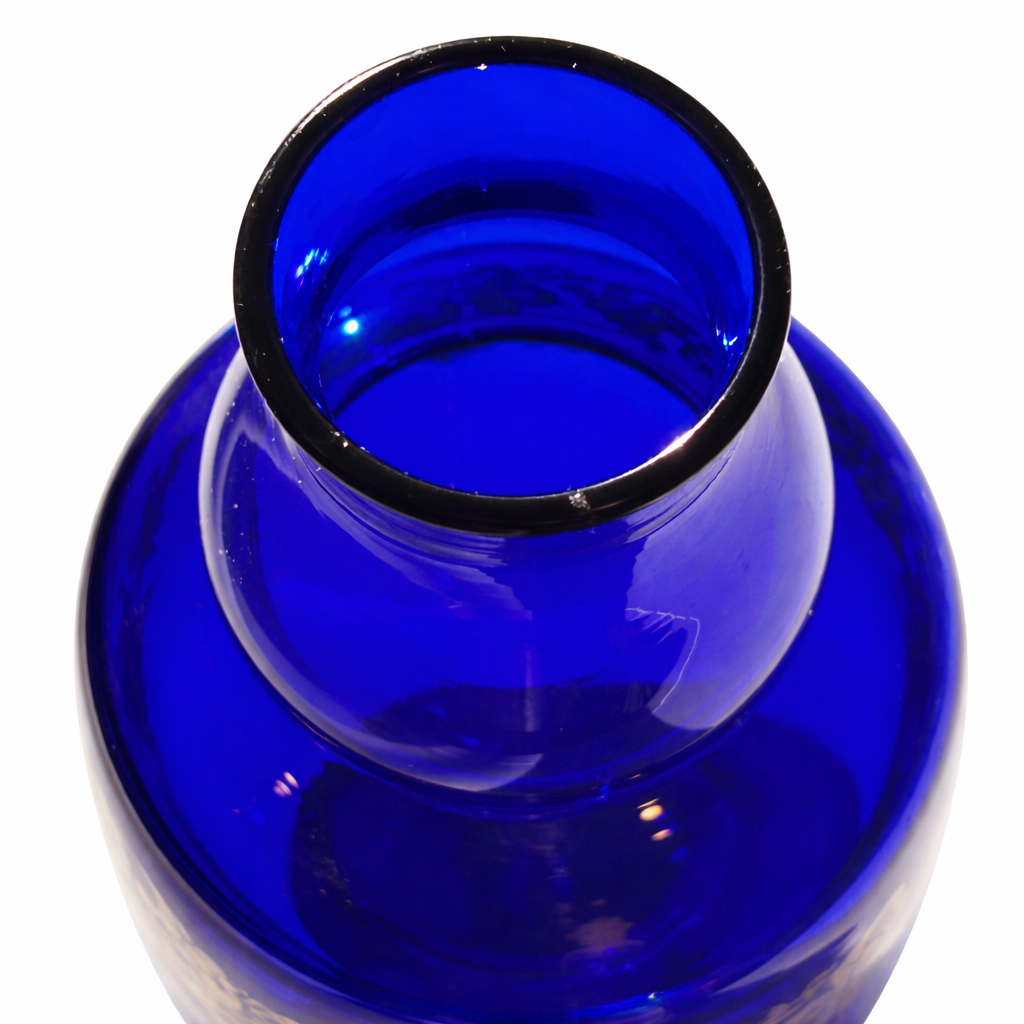
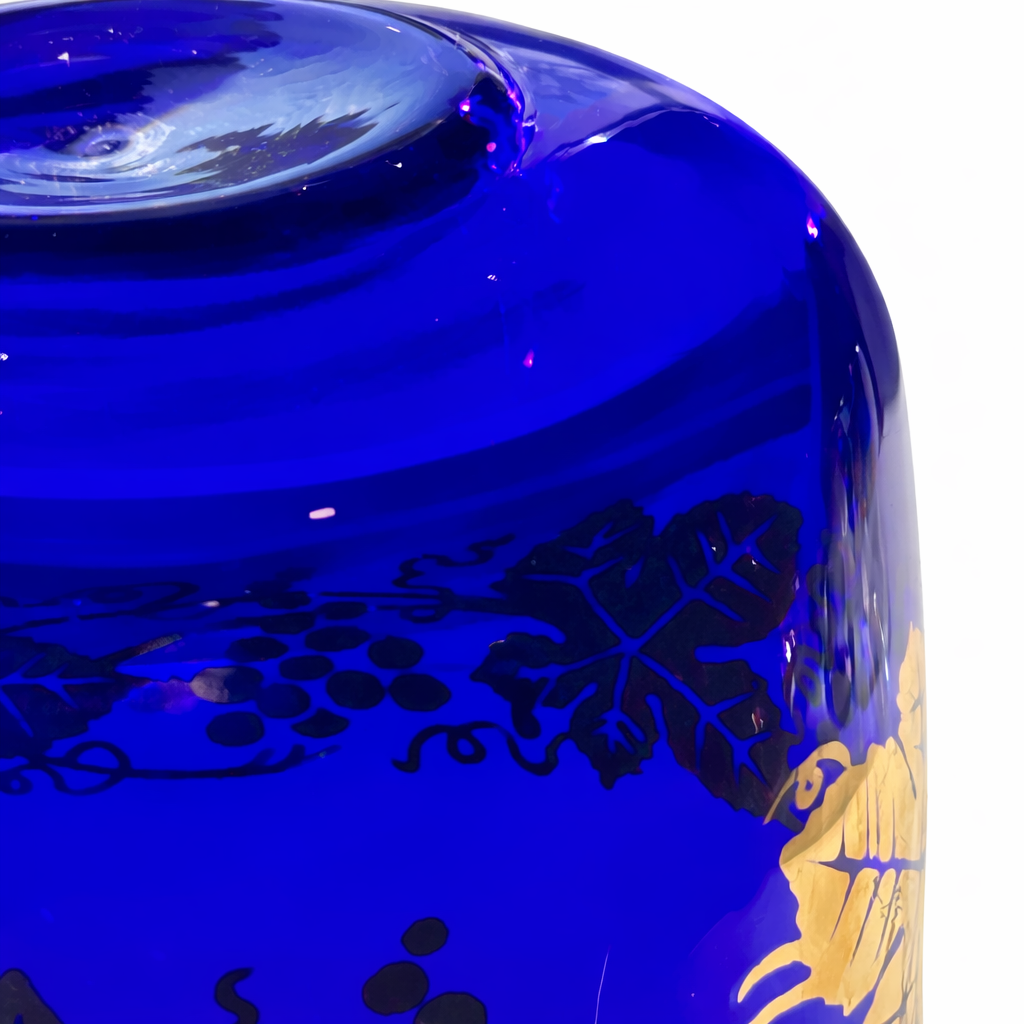
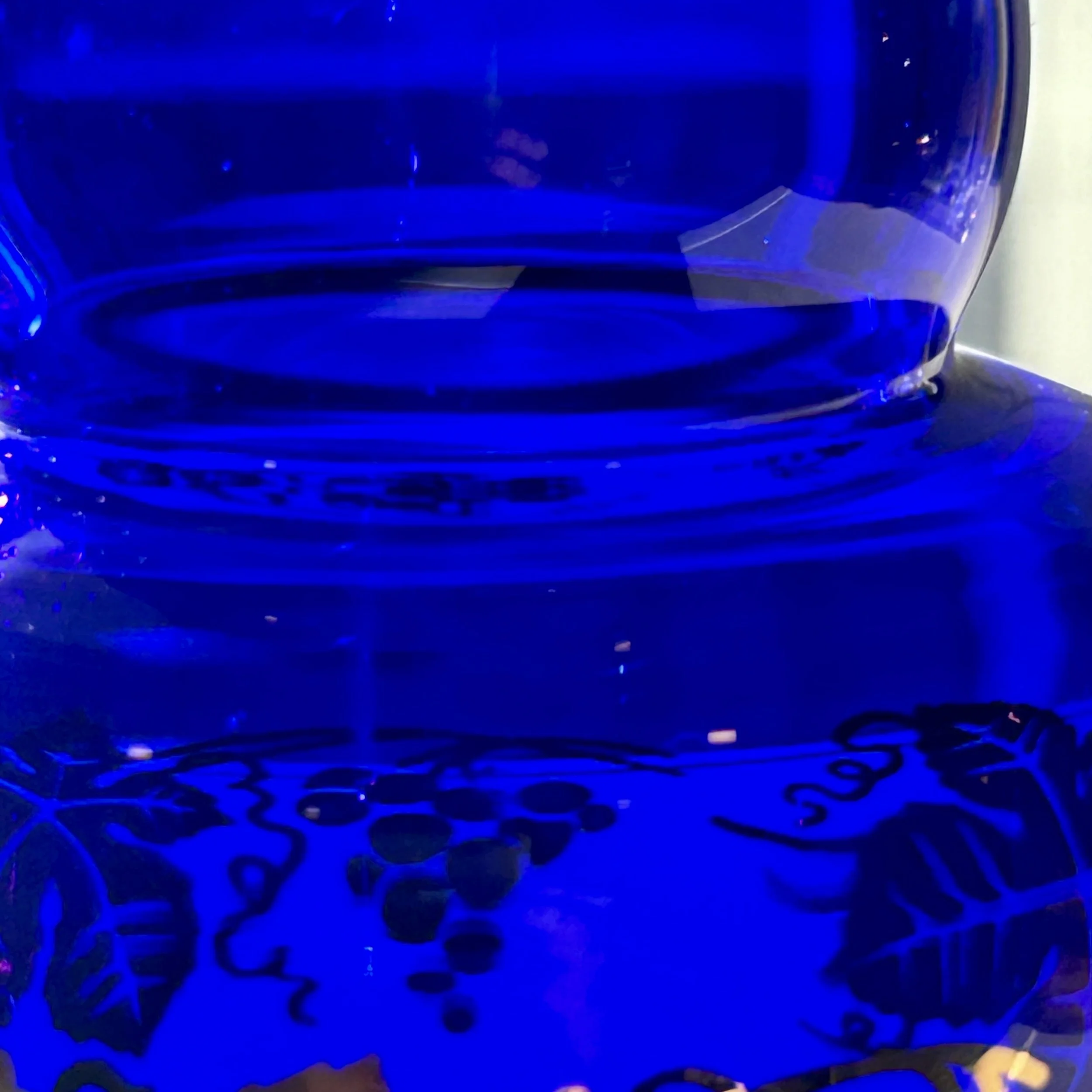
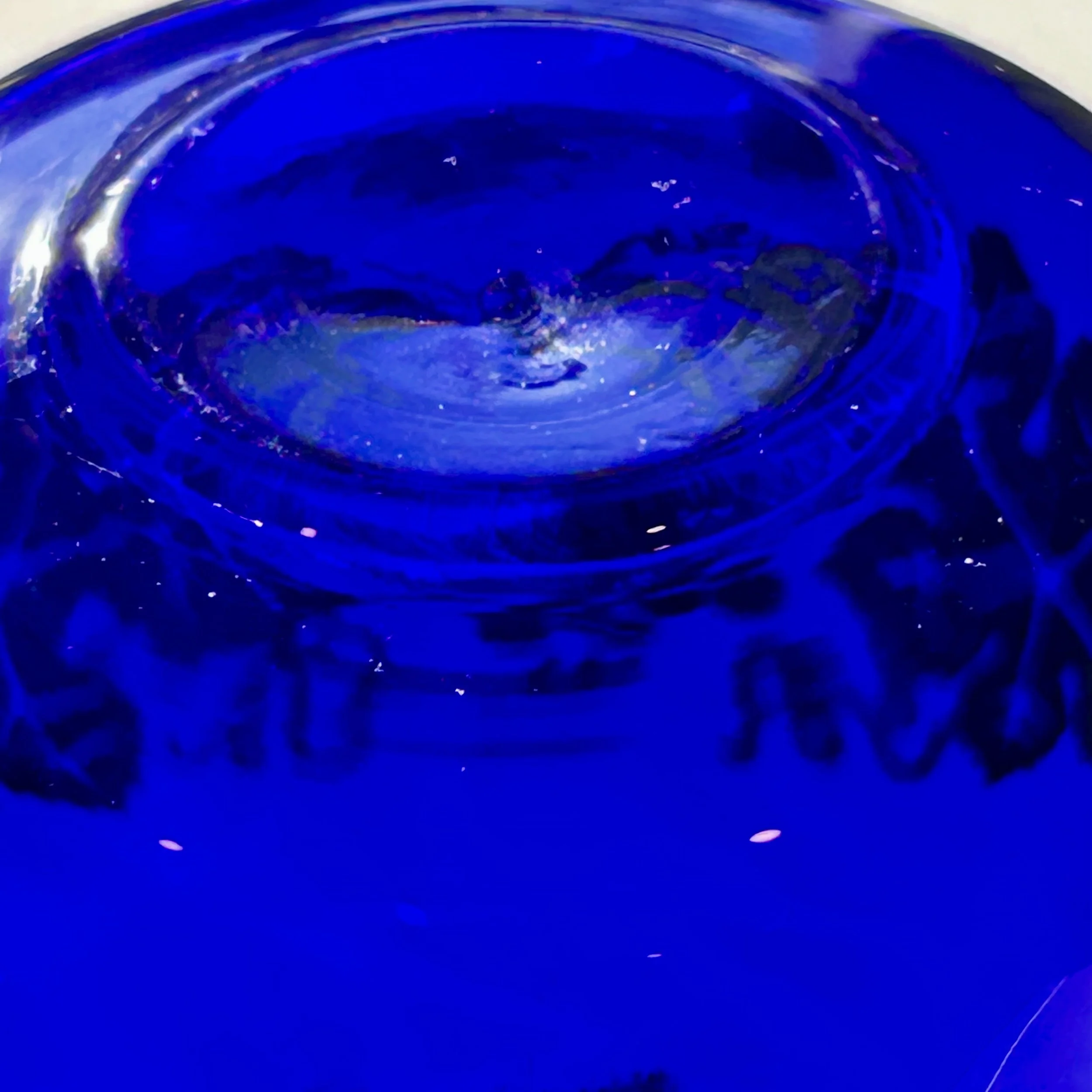
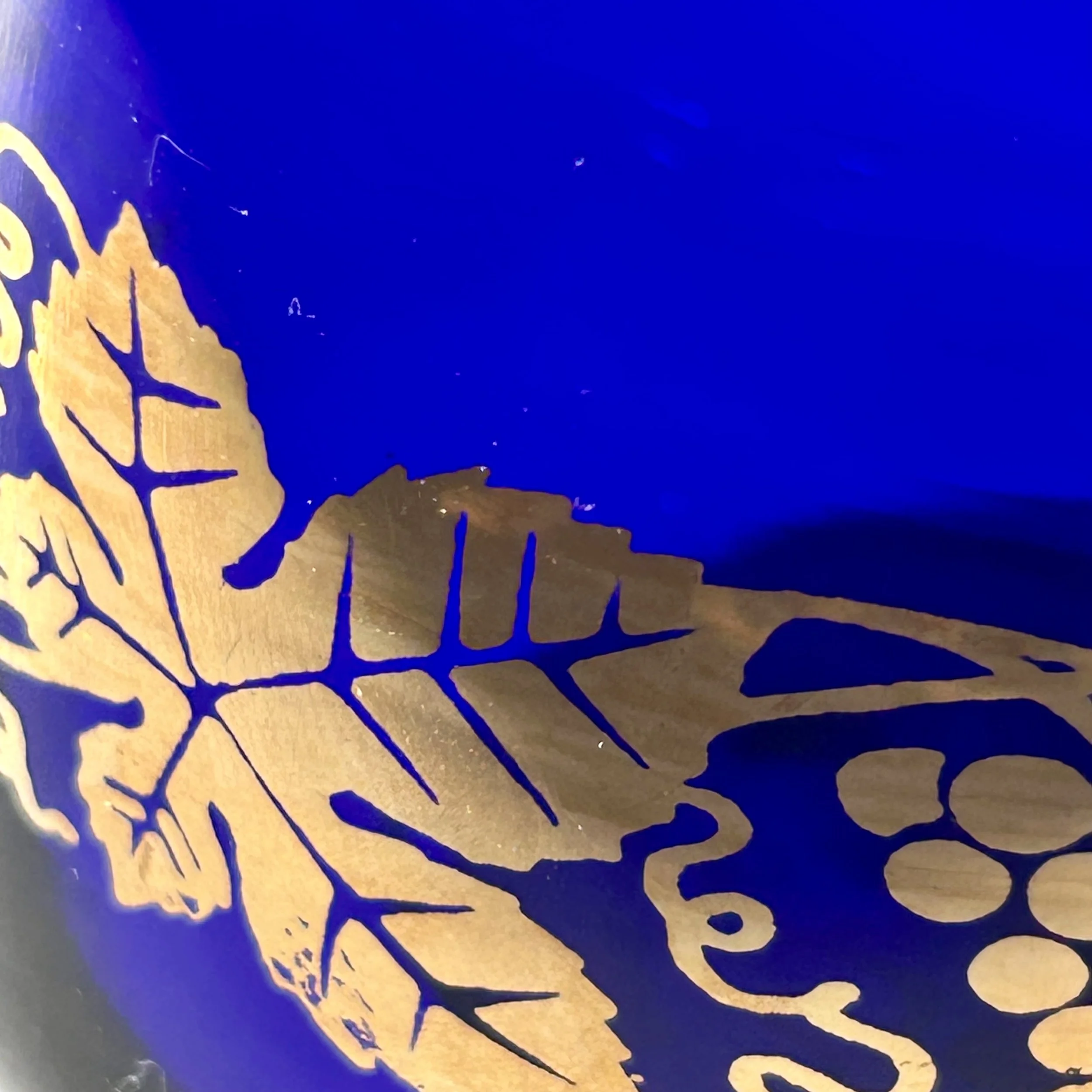
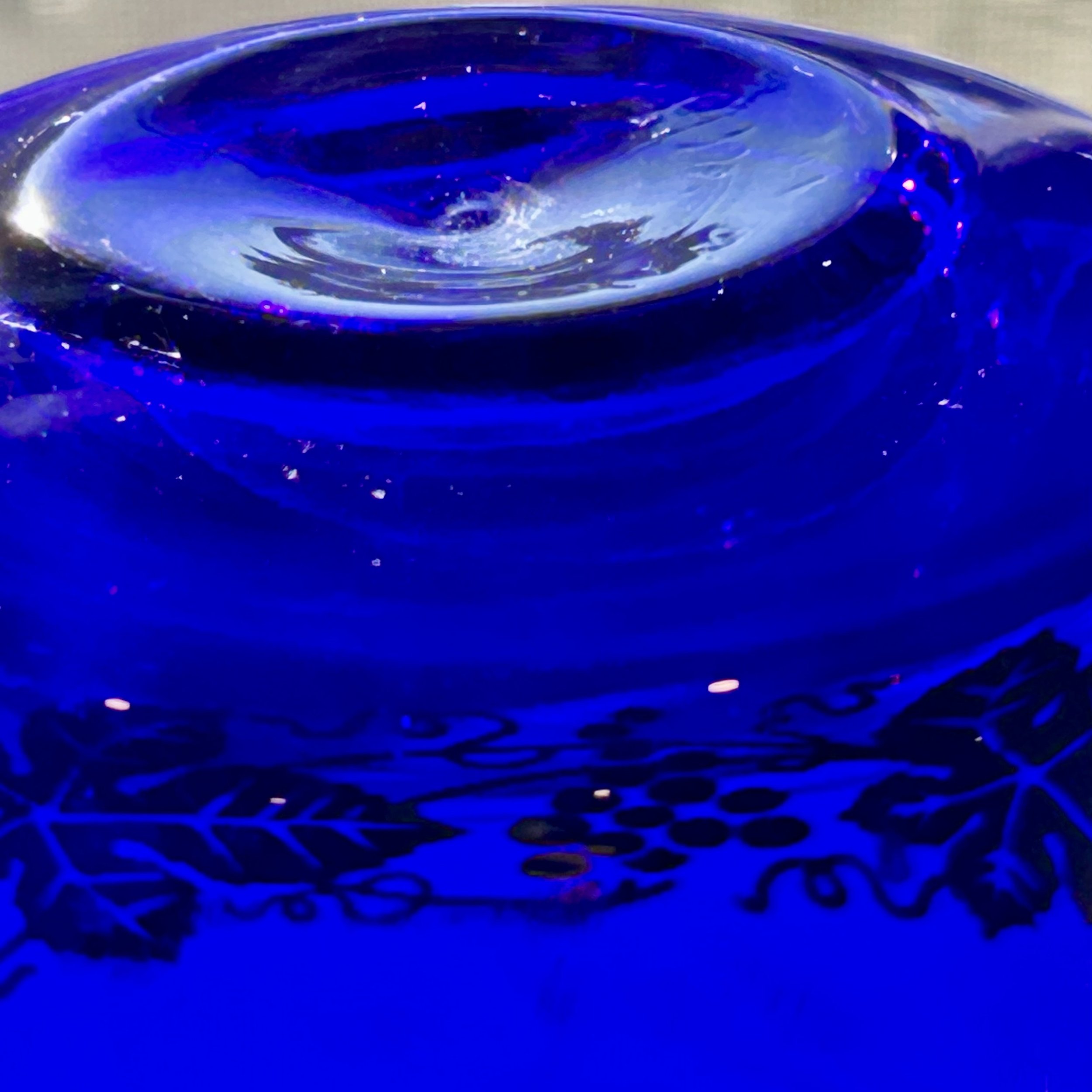
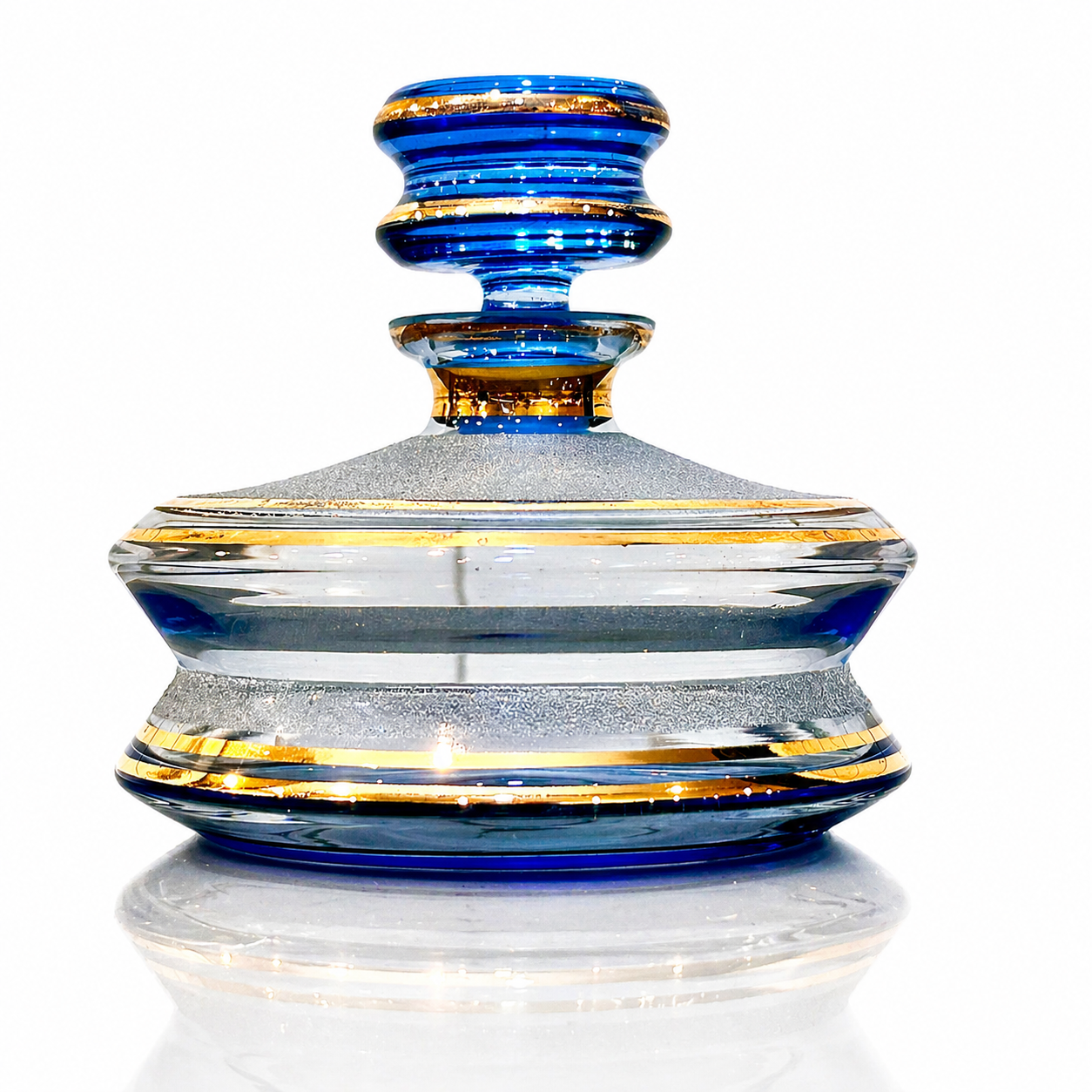
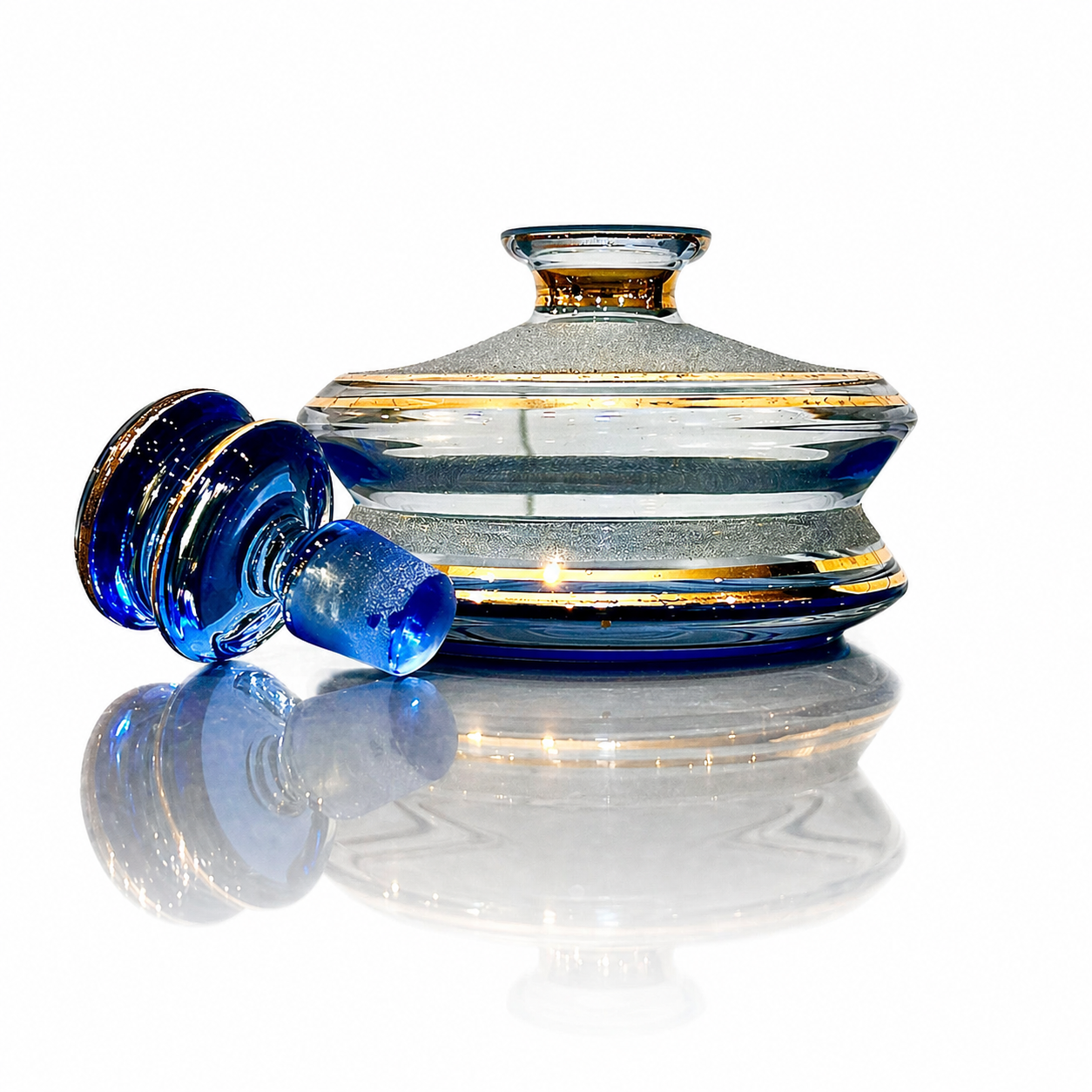
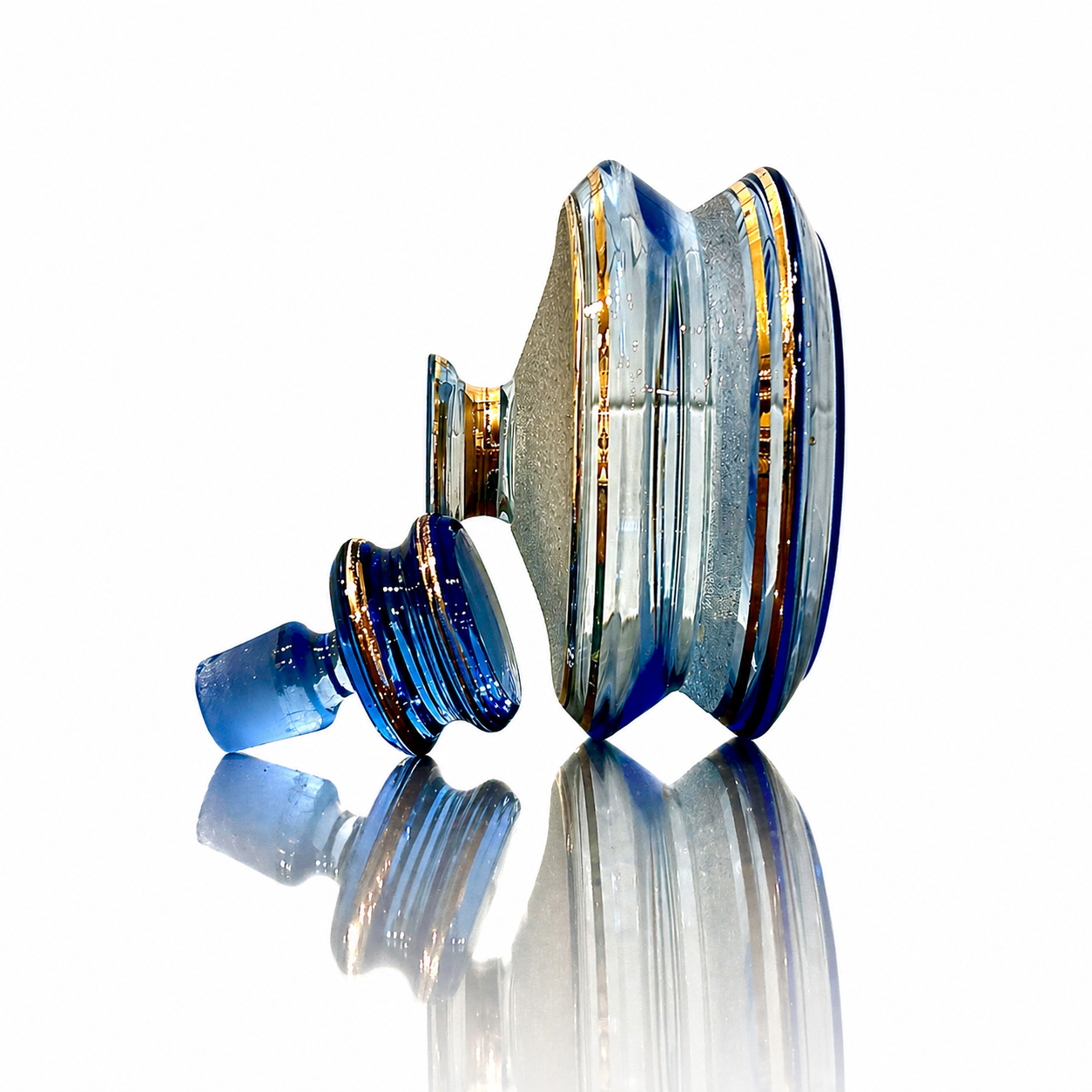
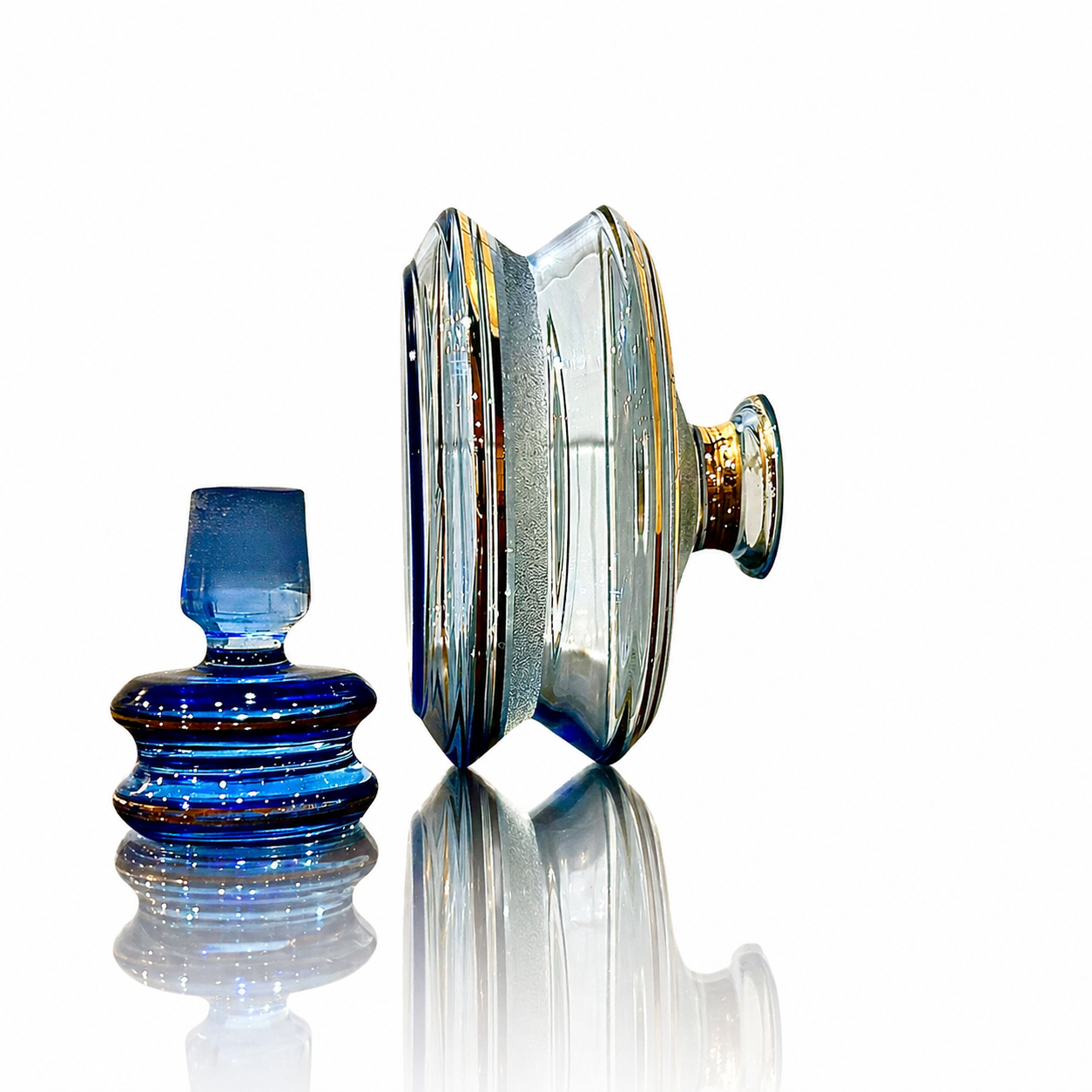
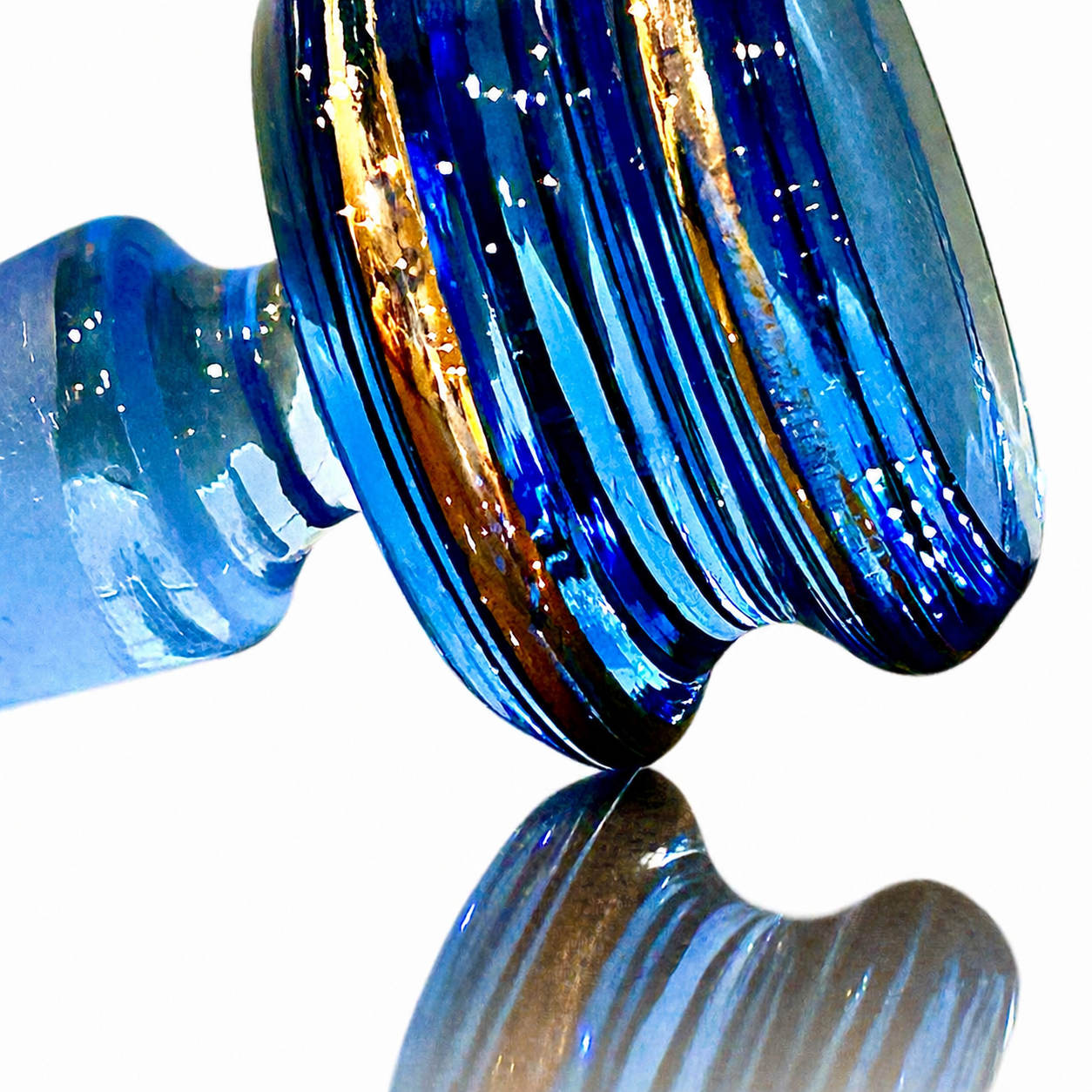
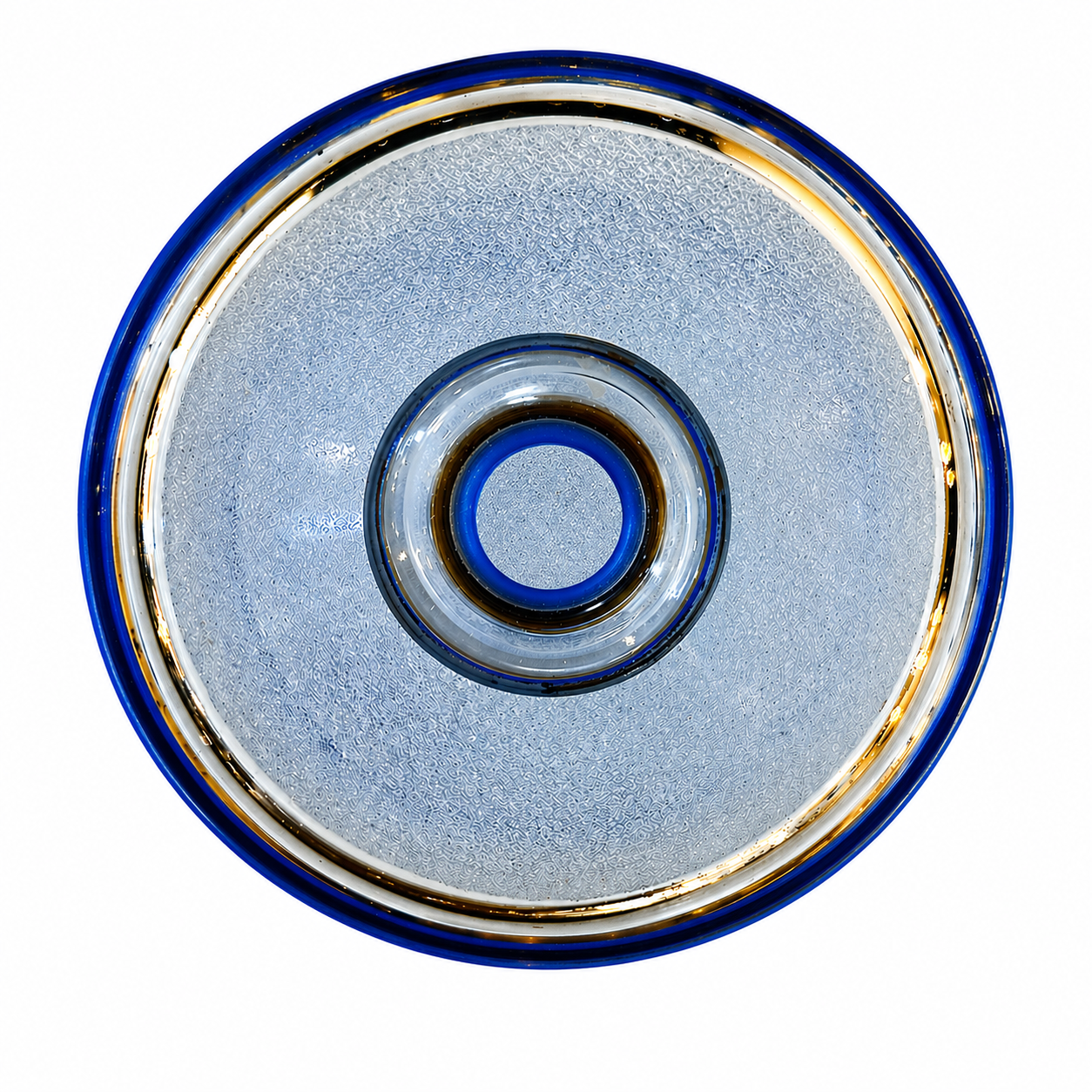
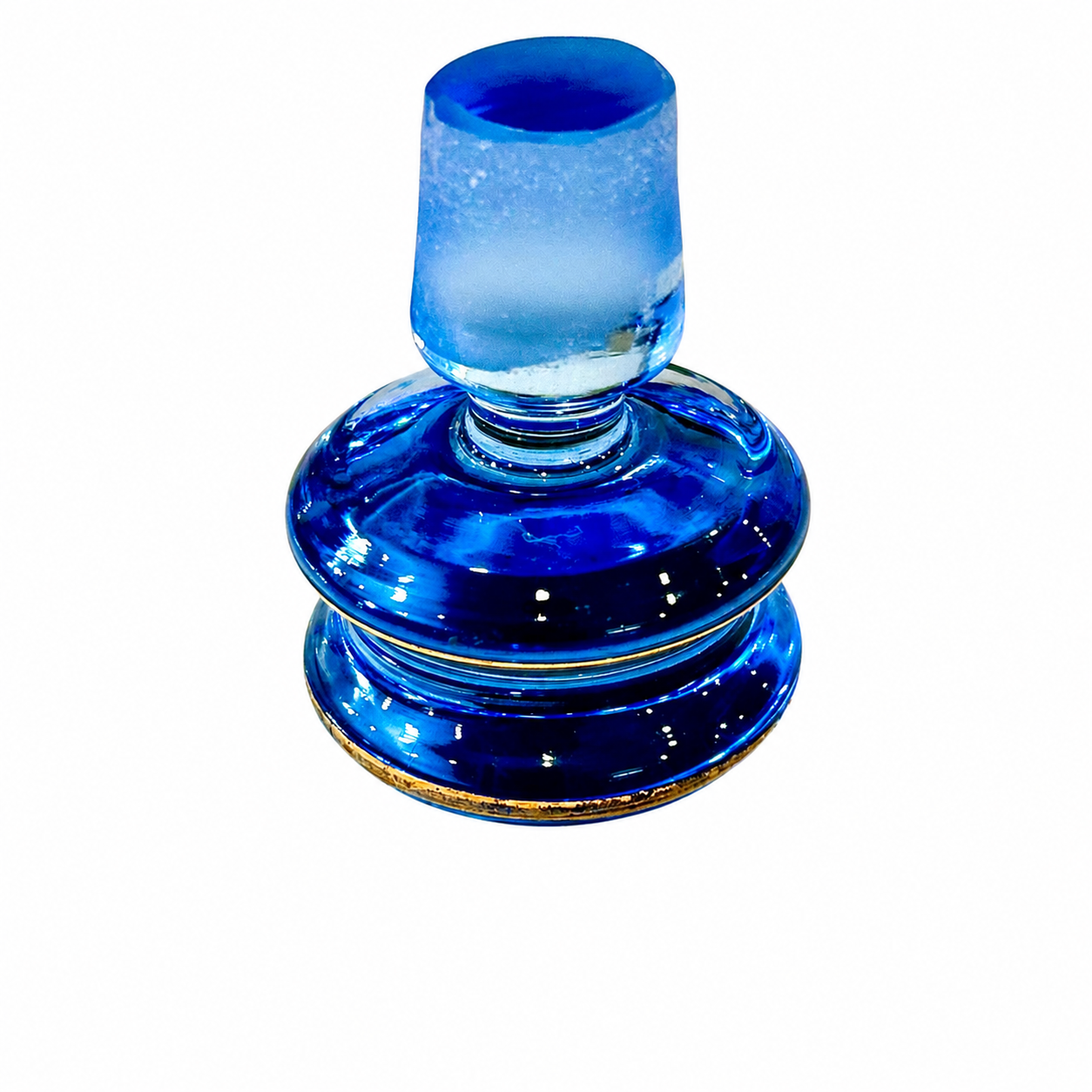
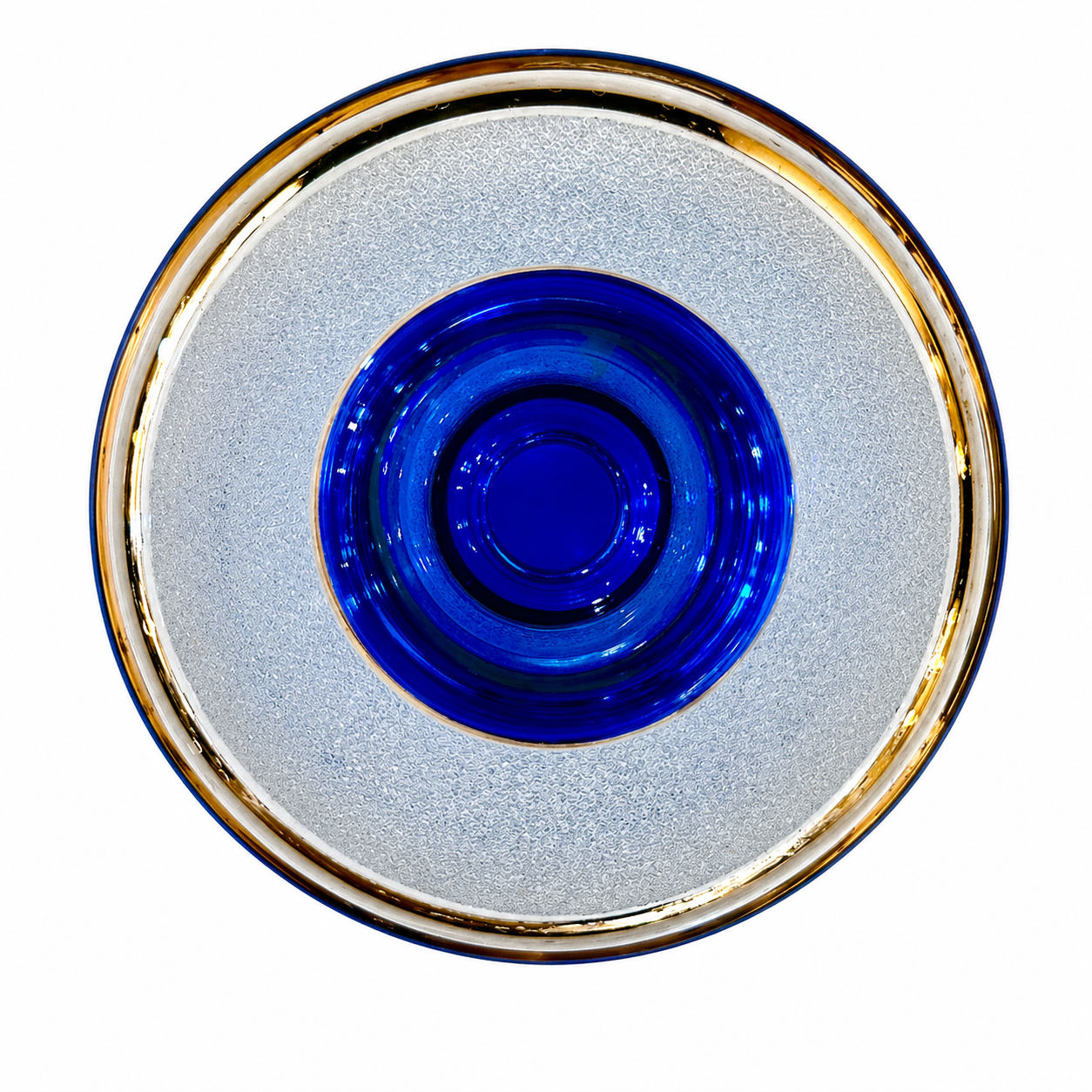
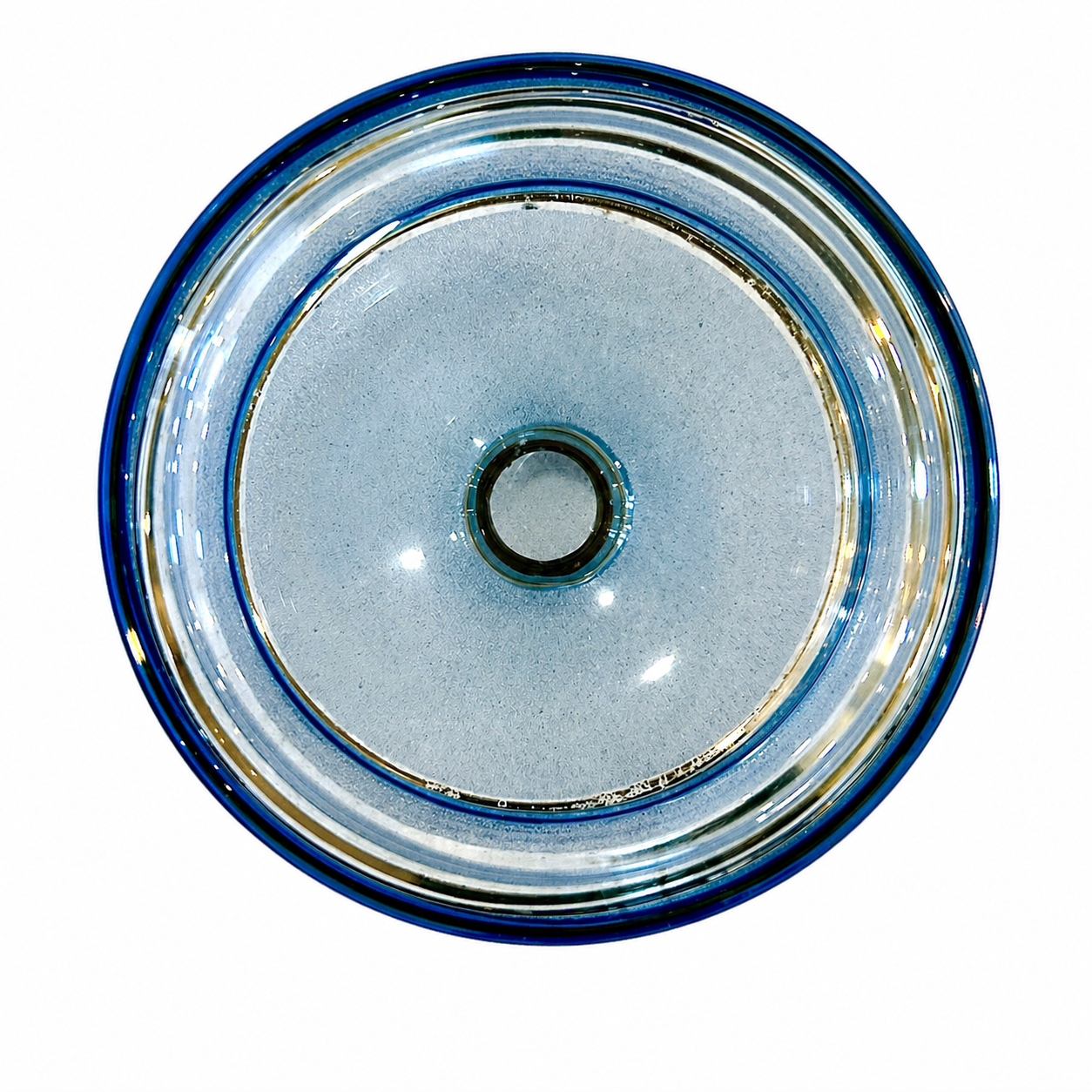
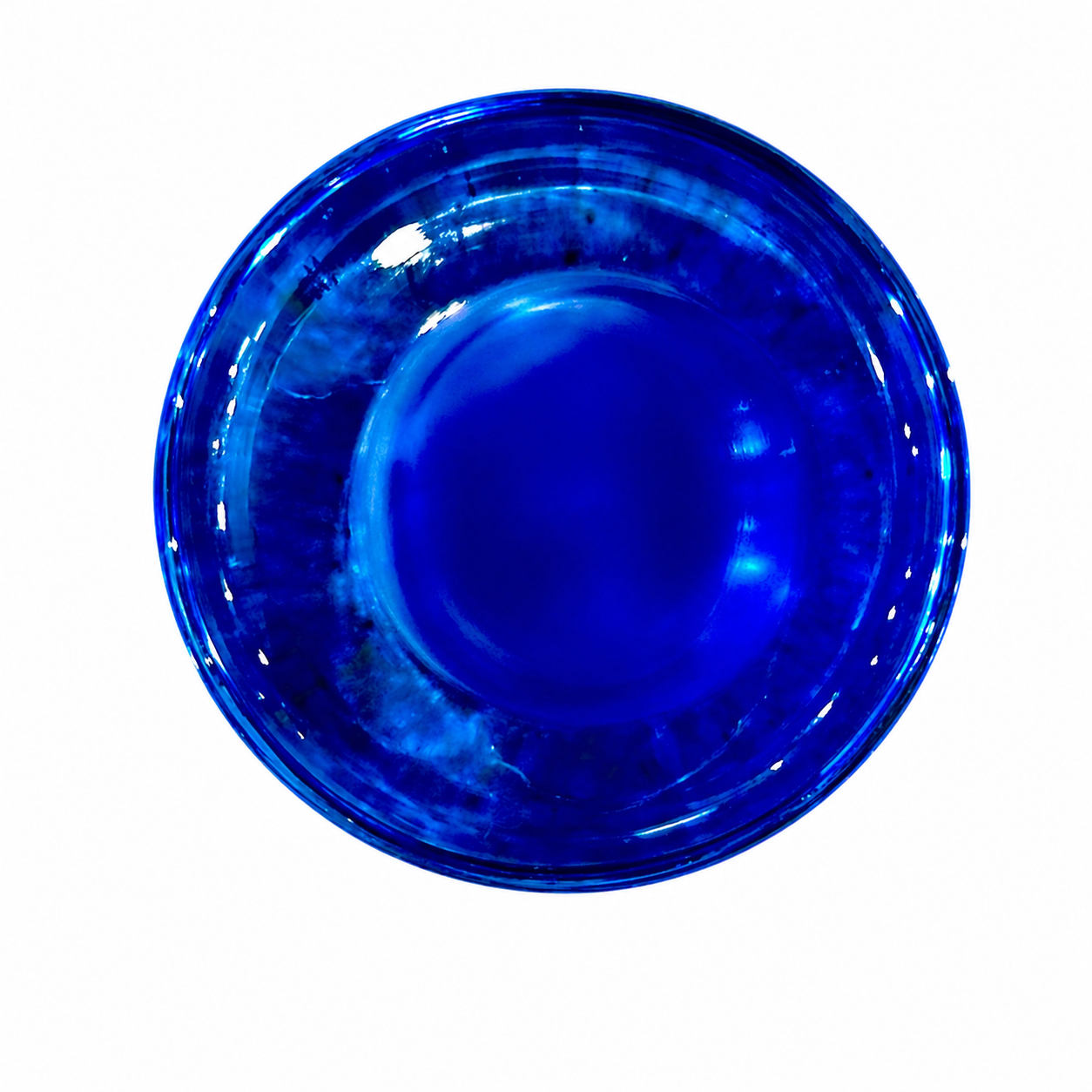
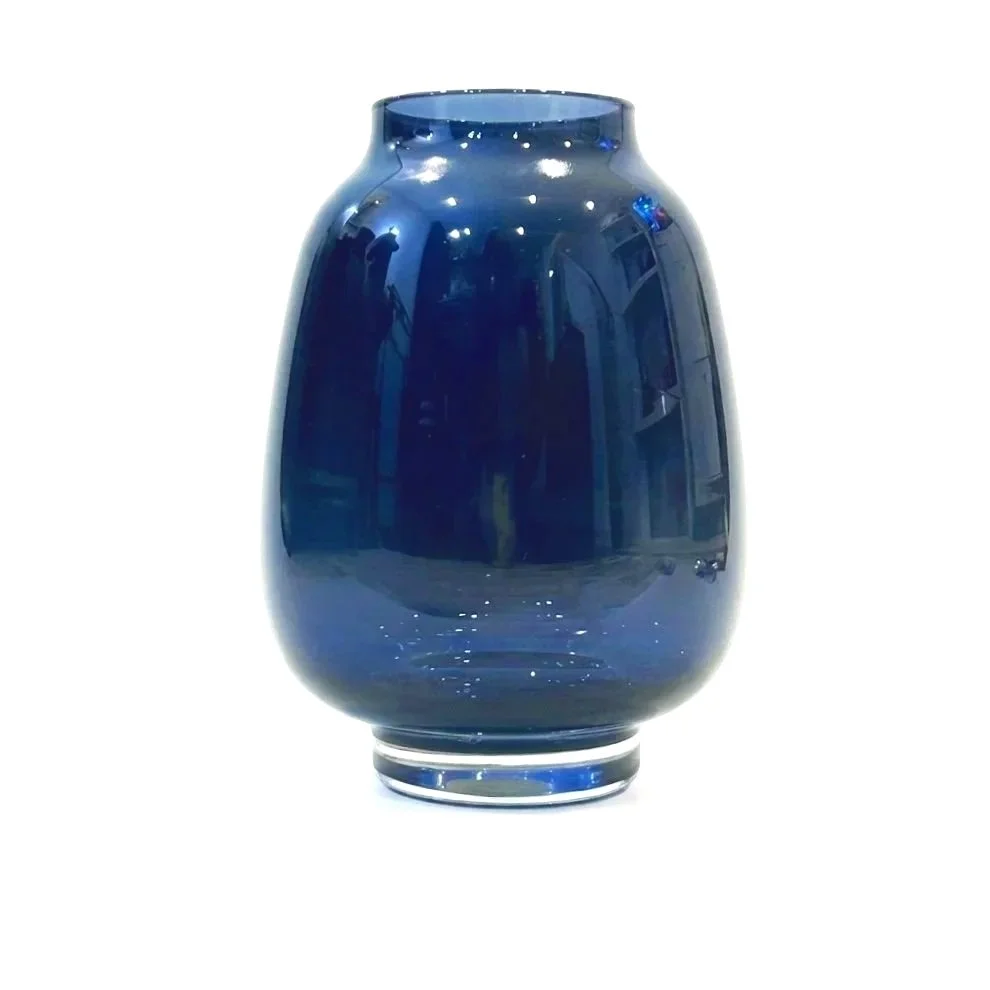
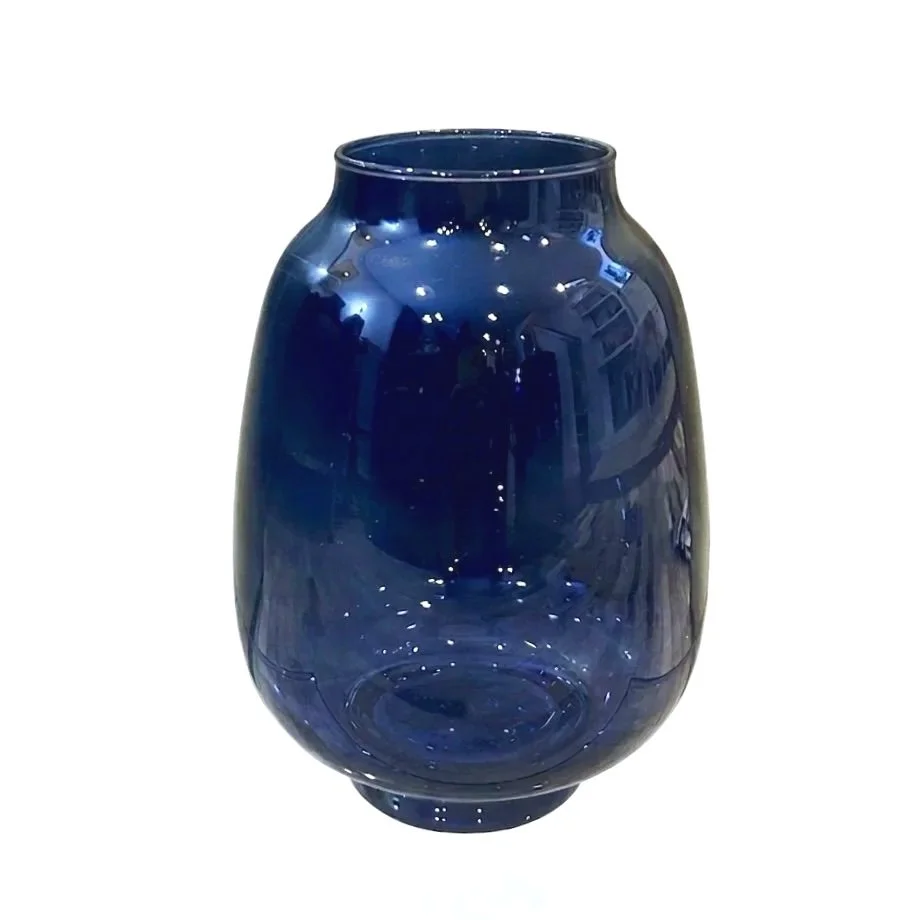
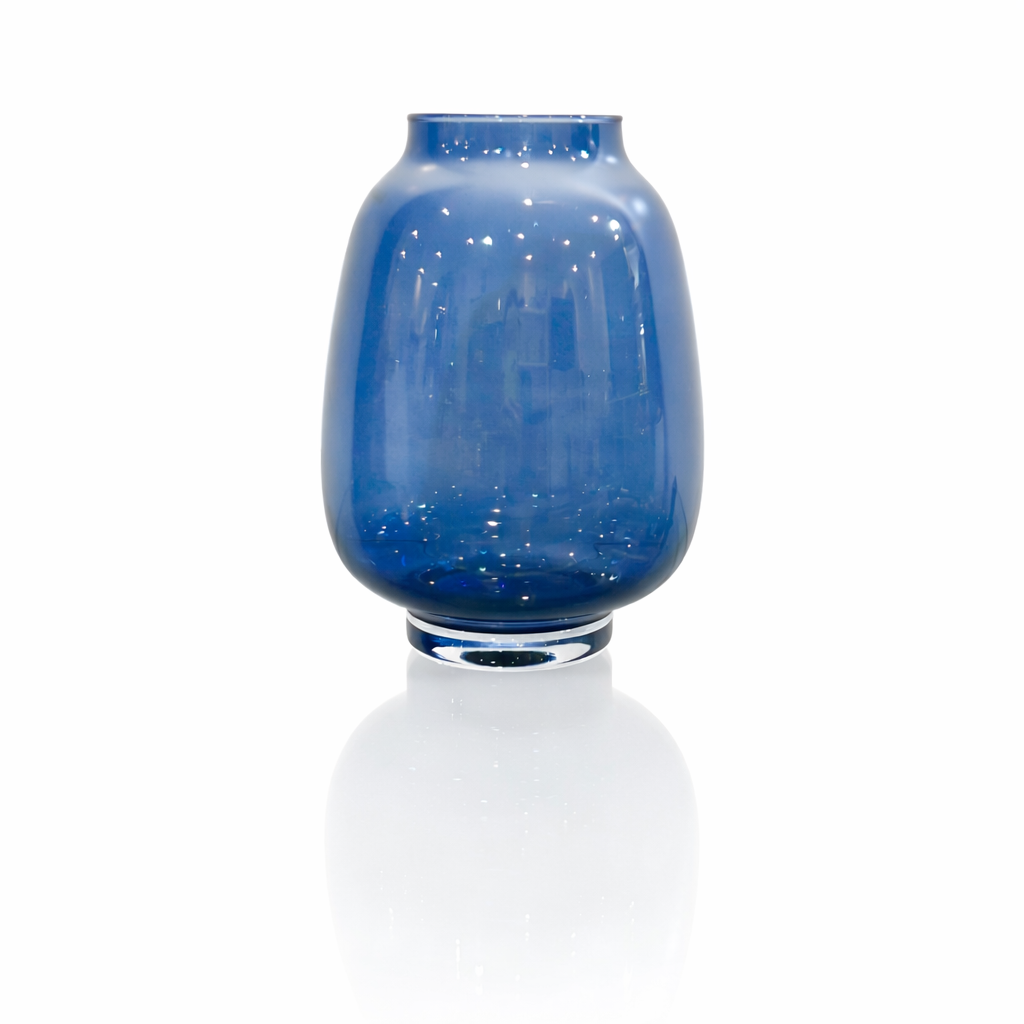
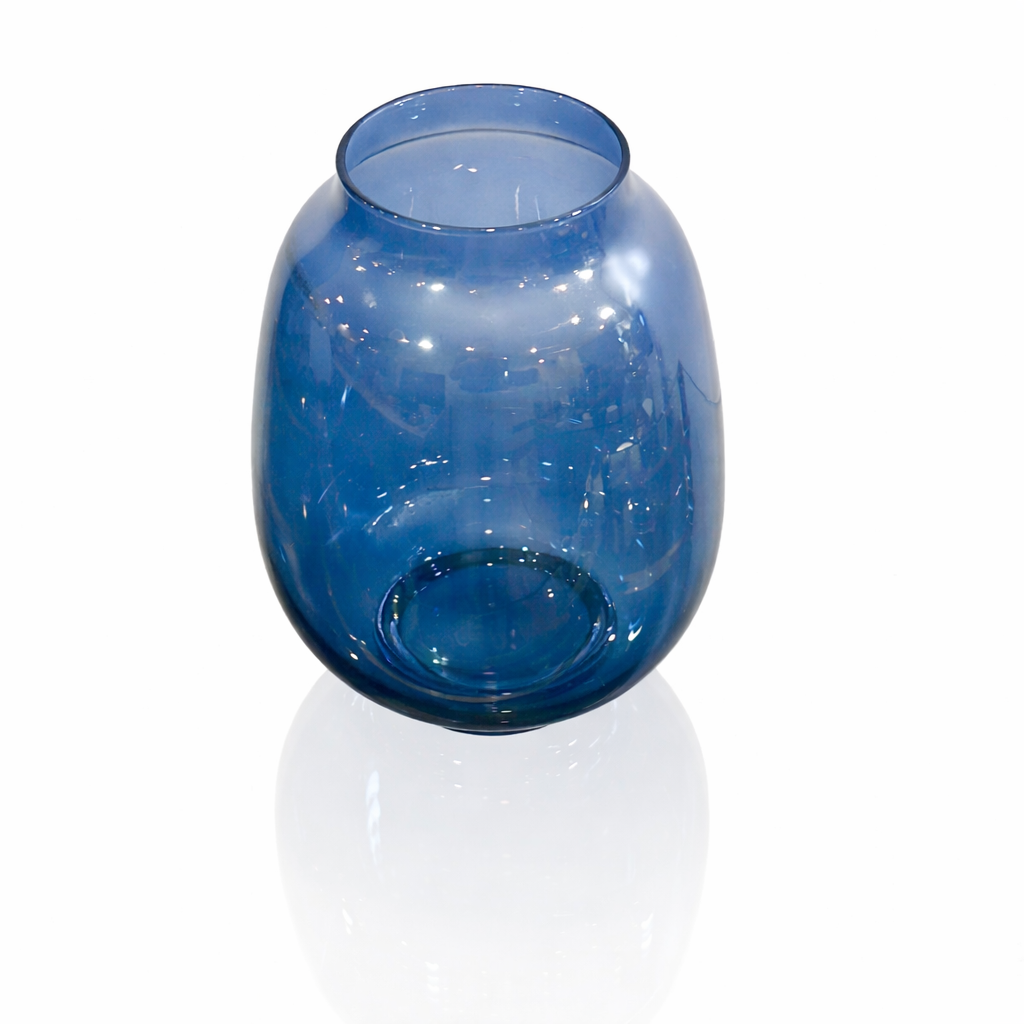
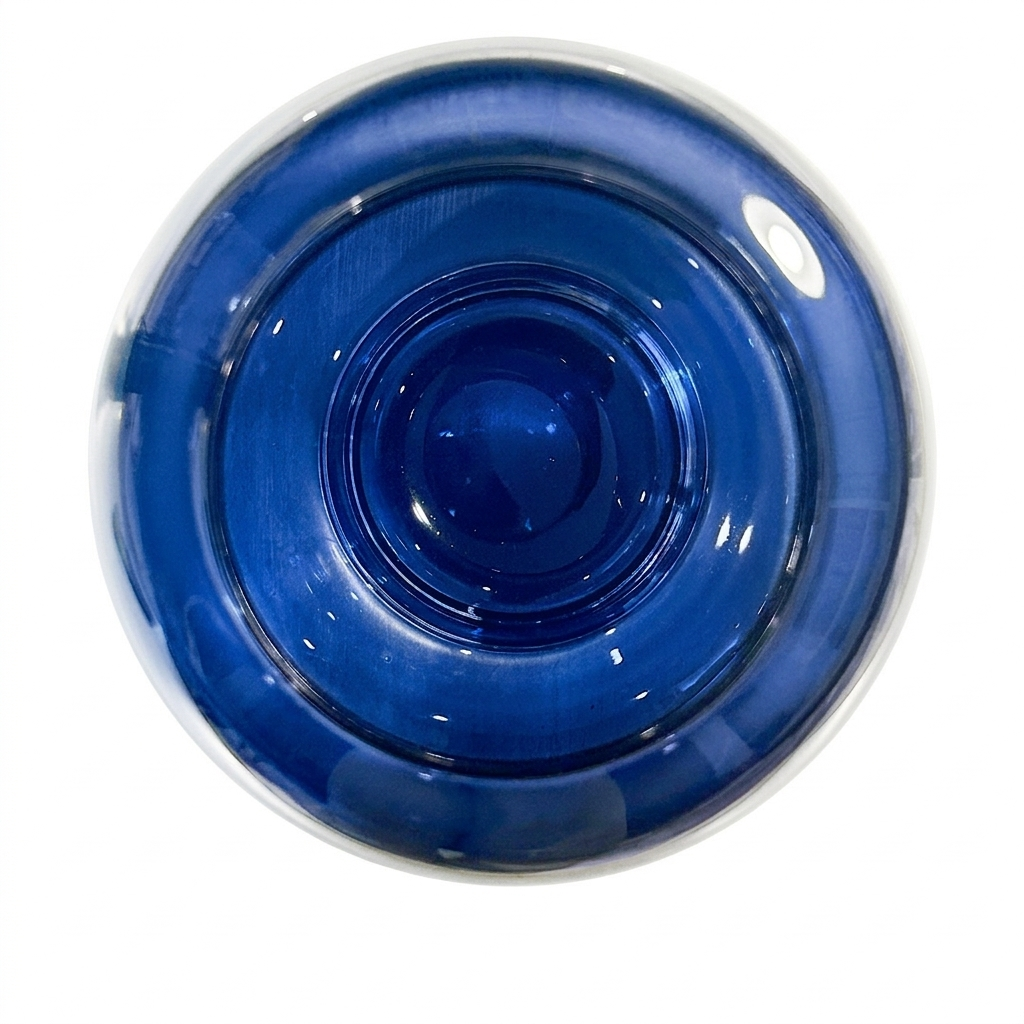
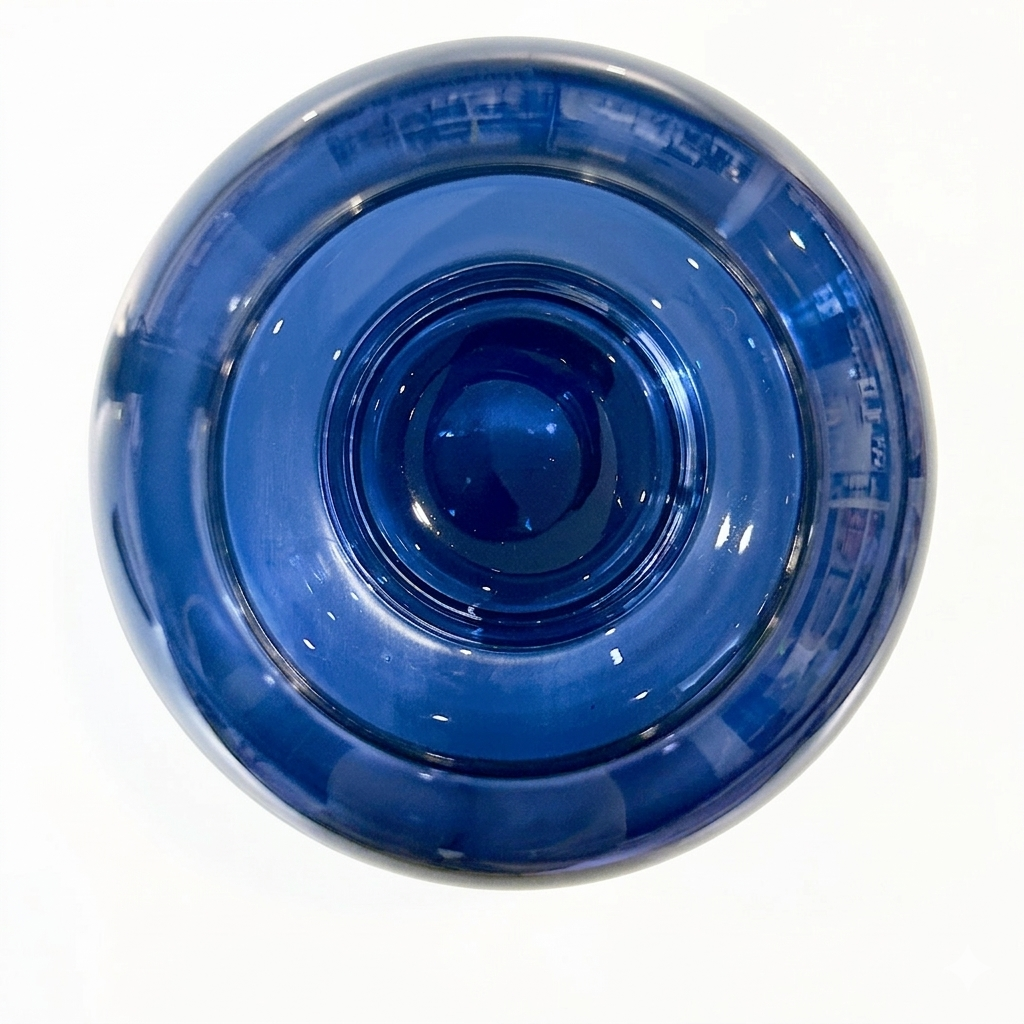
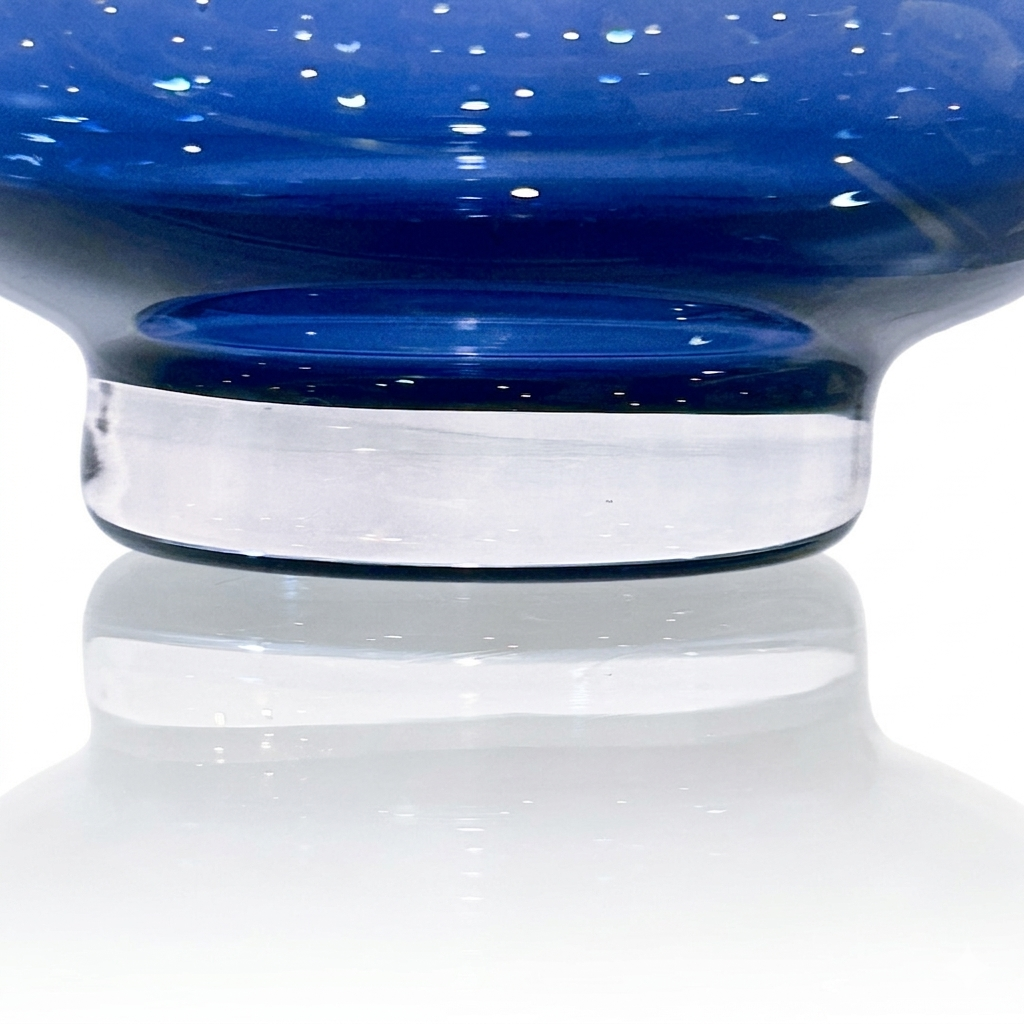
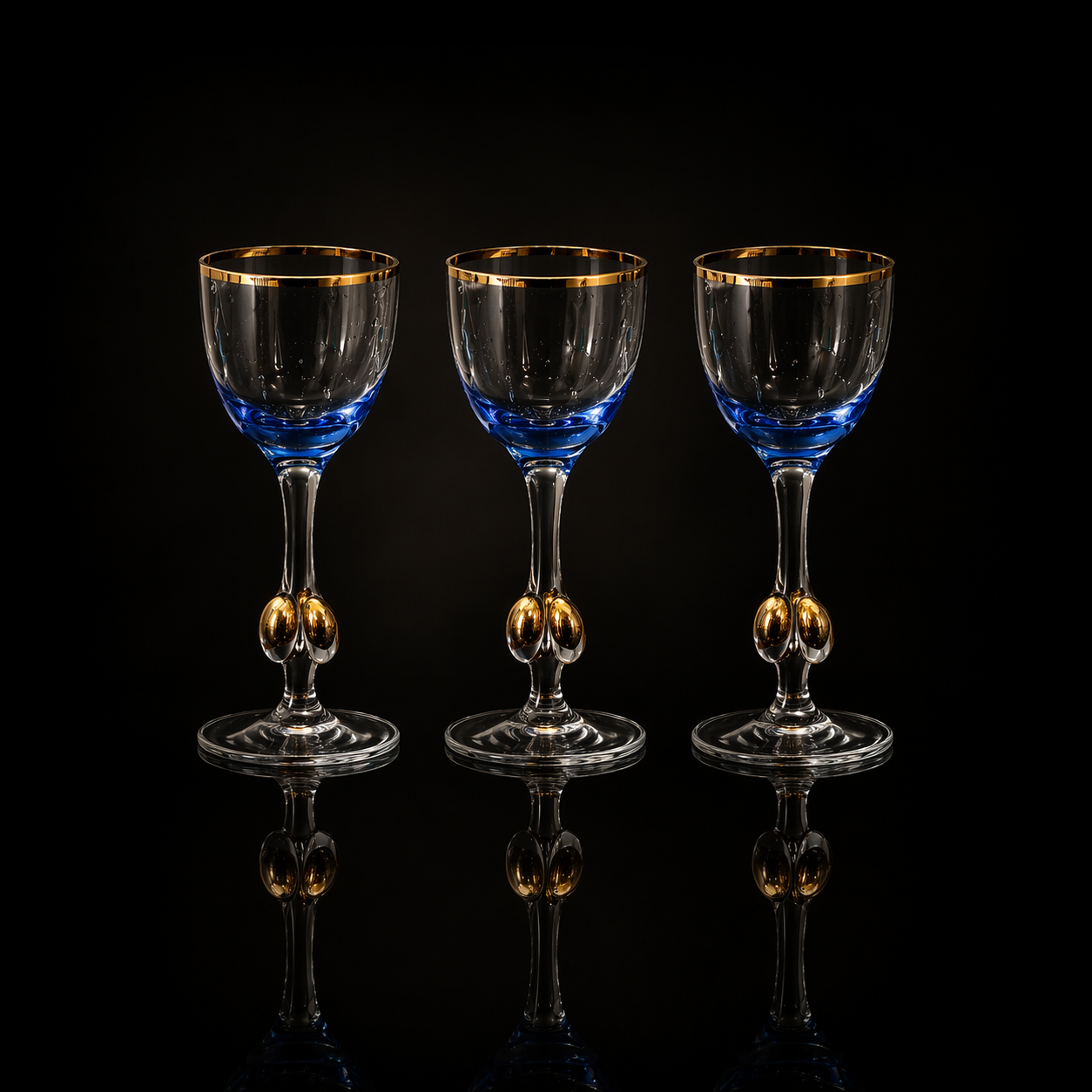
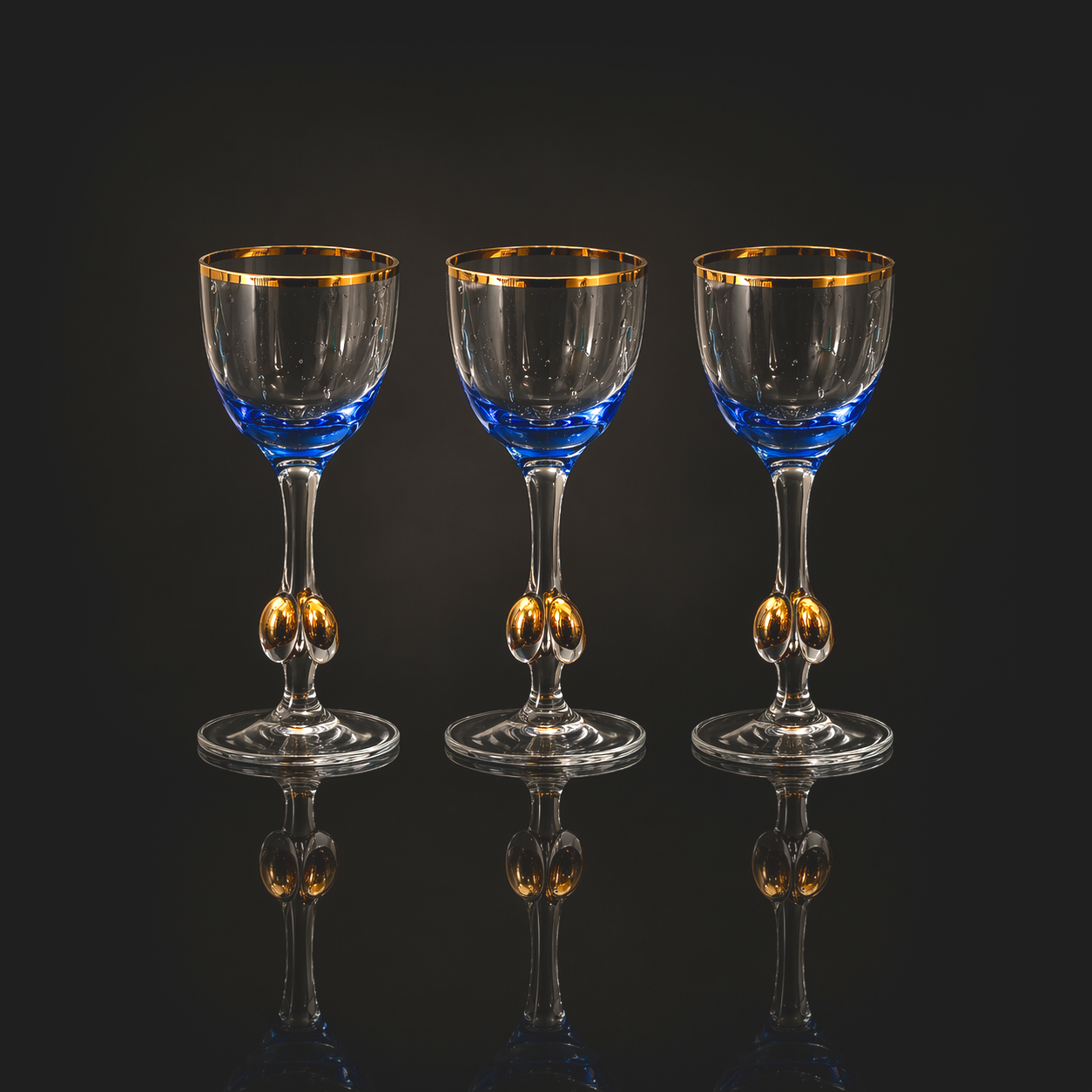
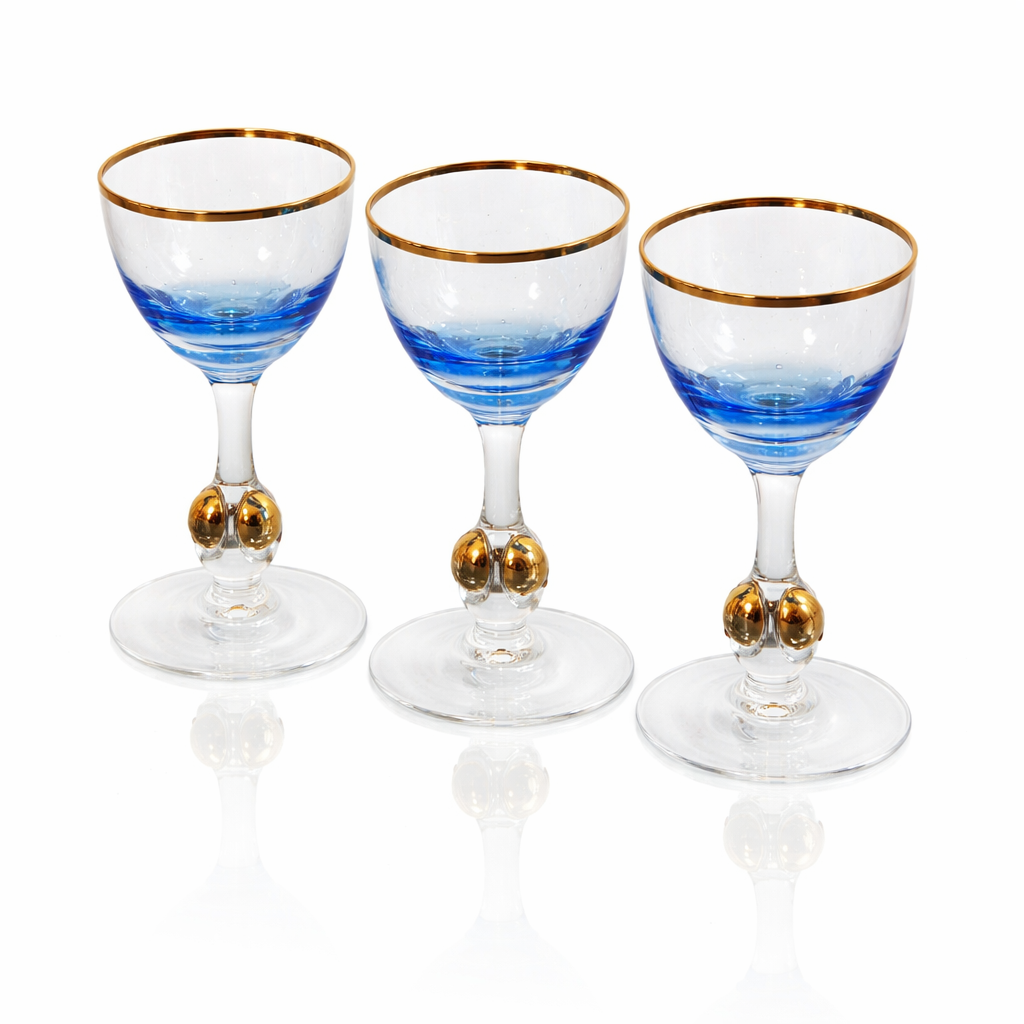
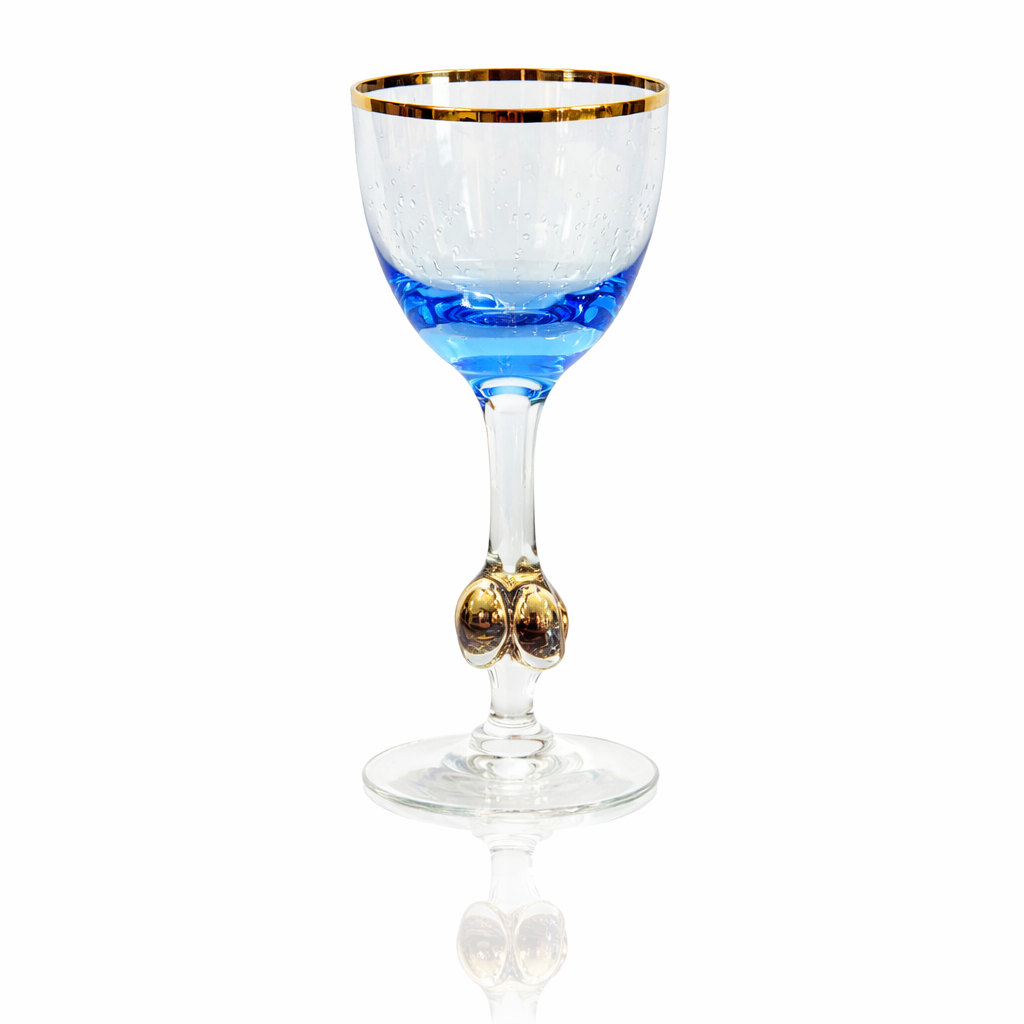
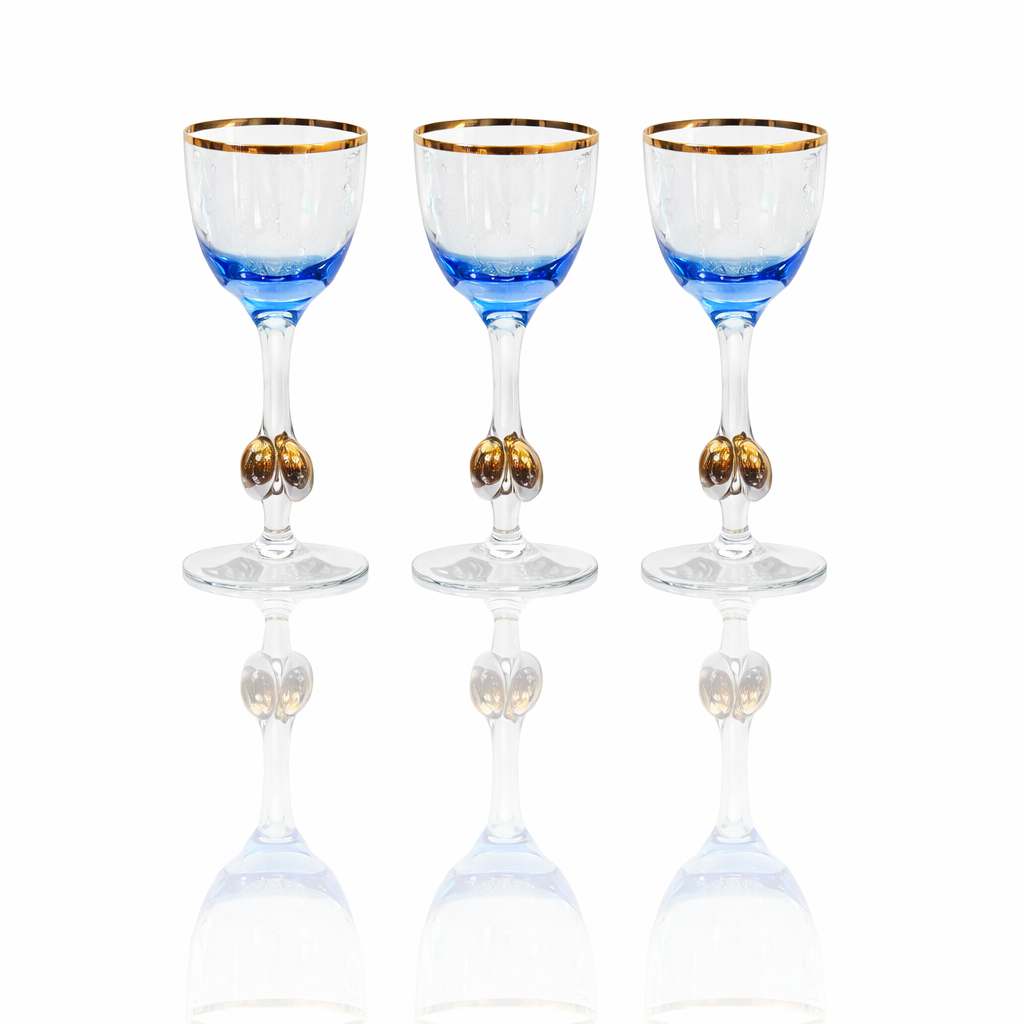
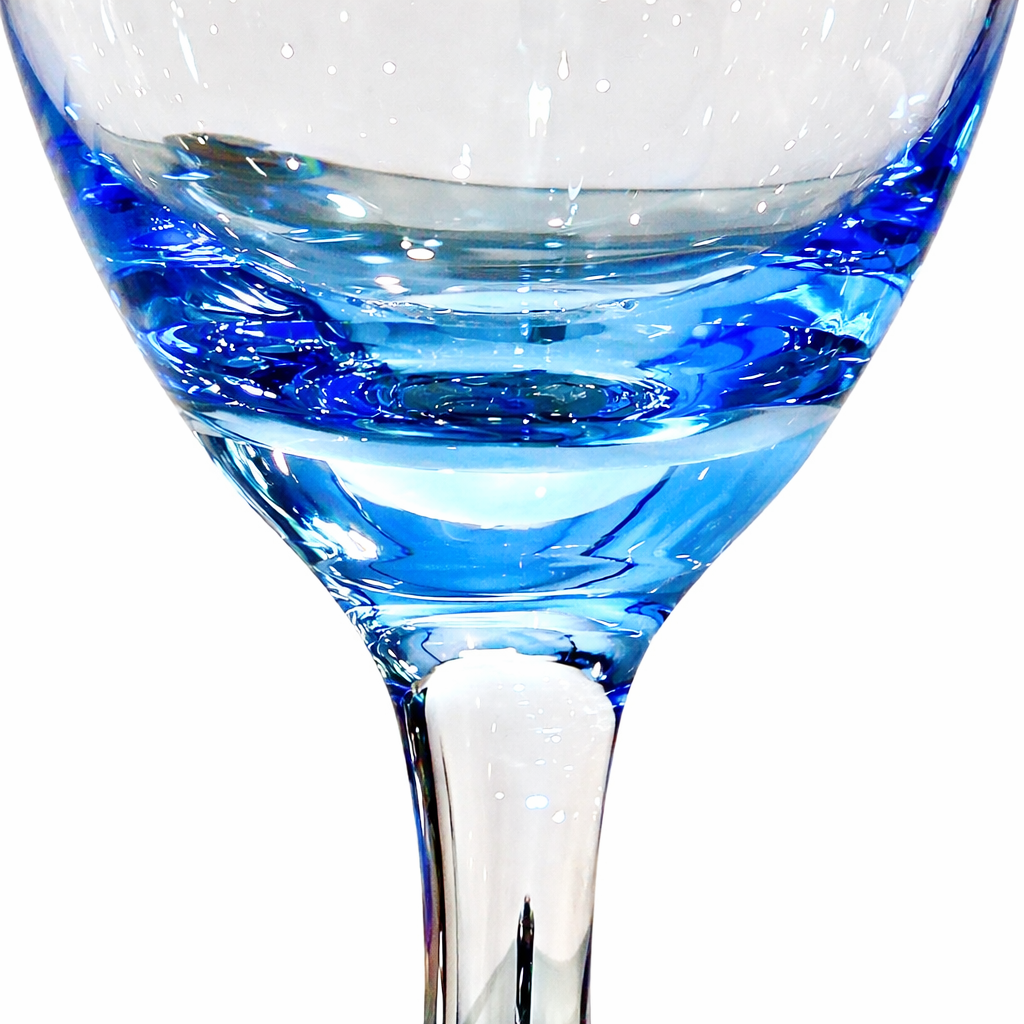
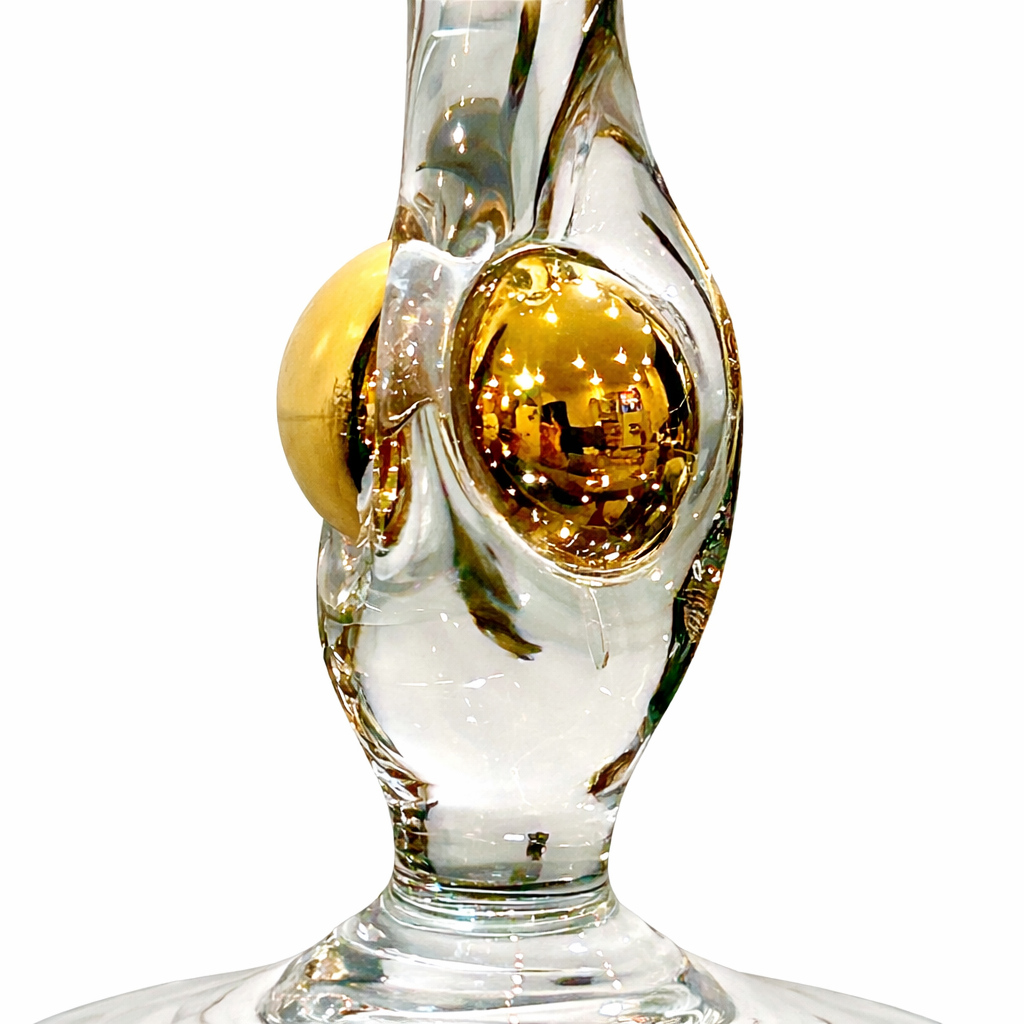
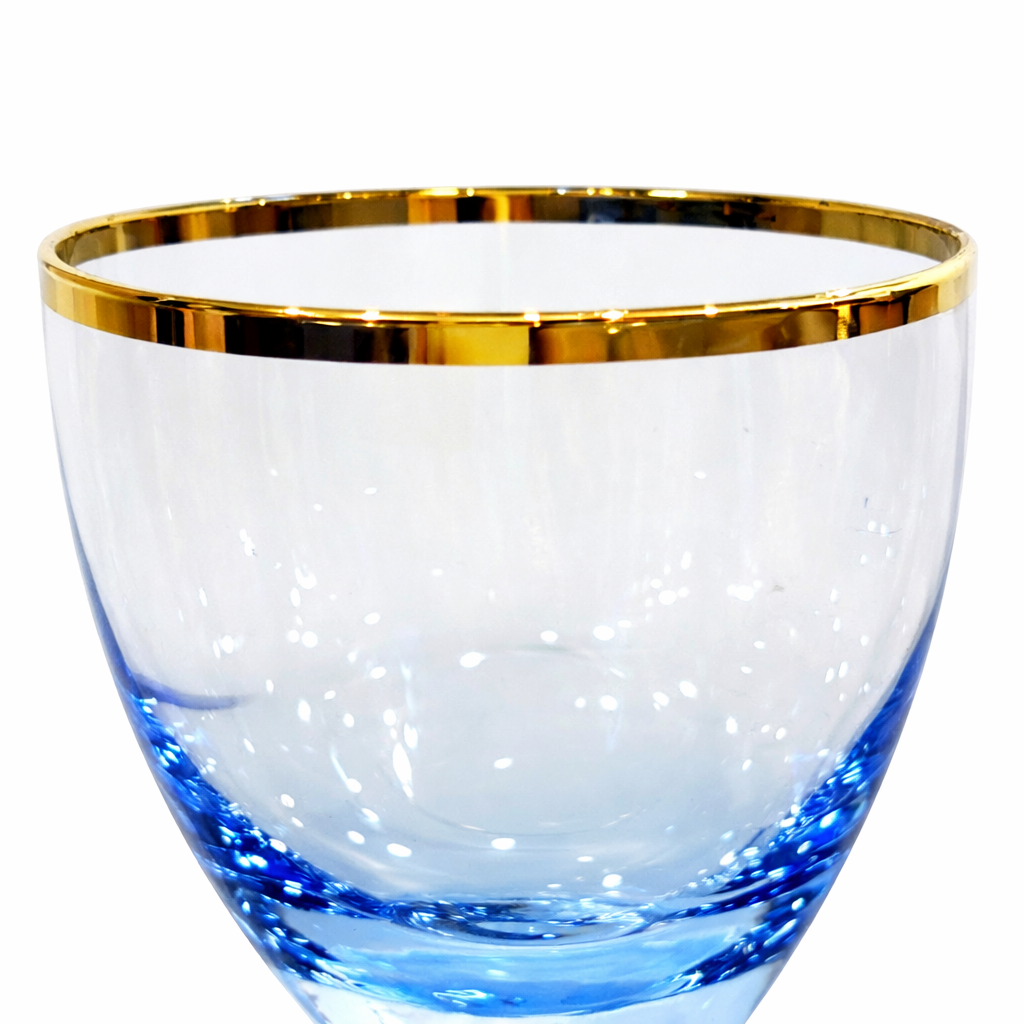
This refined pair of nesting bowls showcases the fluid elegance and technical precision of mid-century Venetian glassmaking. Utilizing the sophisticated "sommerso" technique, each vessel features a vibrant cerulean blue core suspended within a heavy, clear glass exterior, creating a luminous internal glow. The softly rounded, boat-like forms provide a gentle organic contrast to the more rigid geometric pieces from the same designer, offering a versatile and architecturally interesting addition to a curated art glass collection.
Attribution & Period
Consistent with Italian Murano ; Stylistically aligned with Murano Mandruzzato or Flavio Poli.
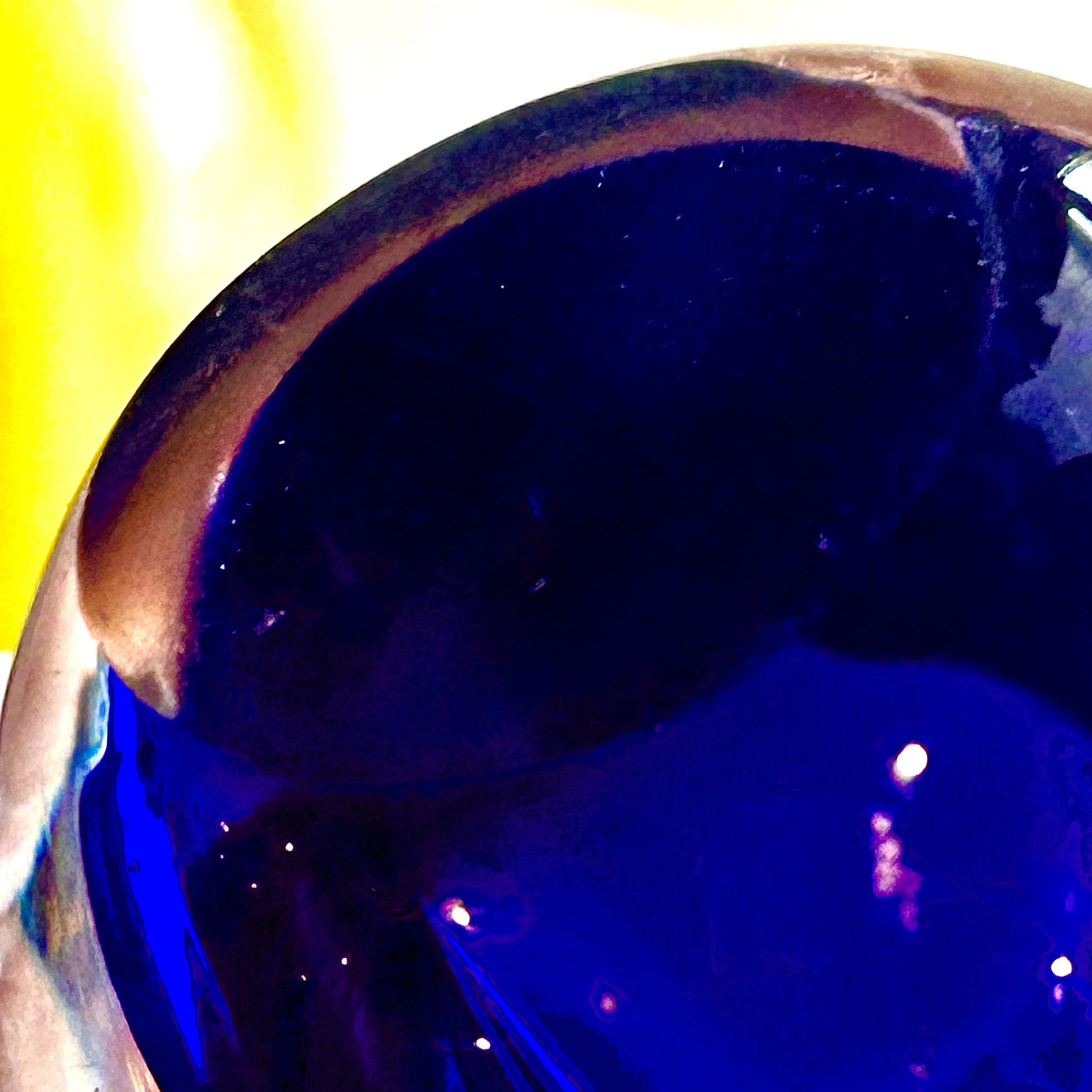
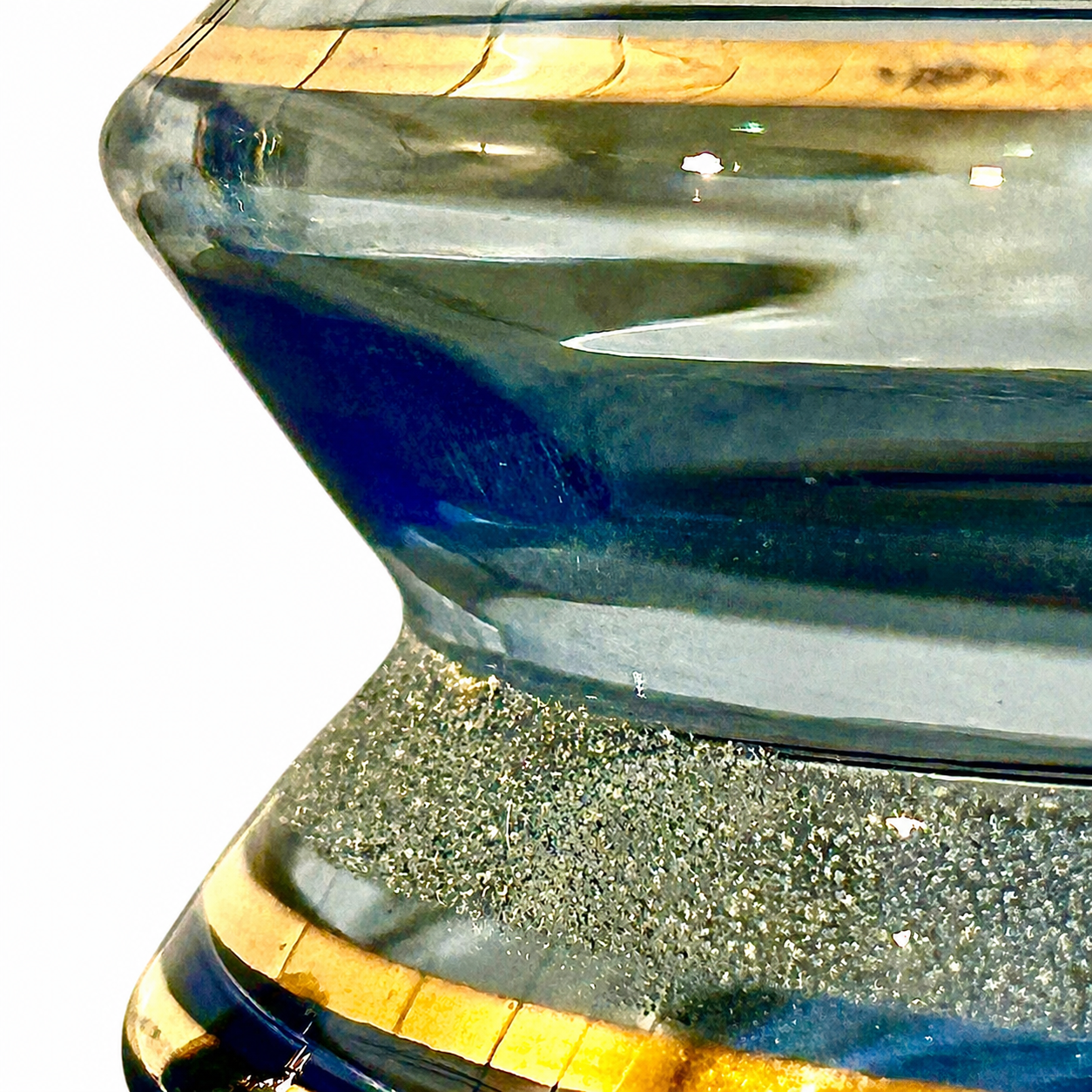
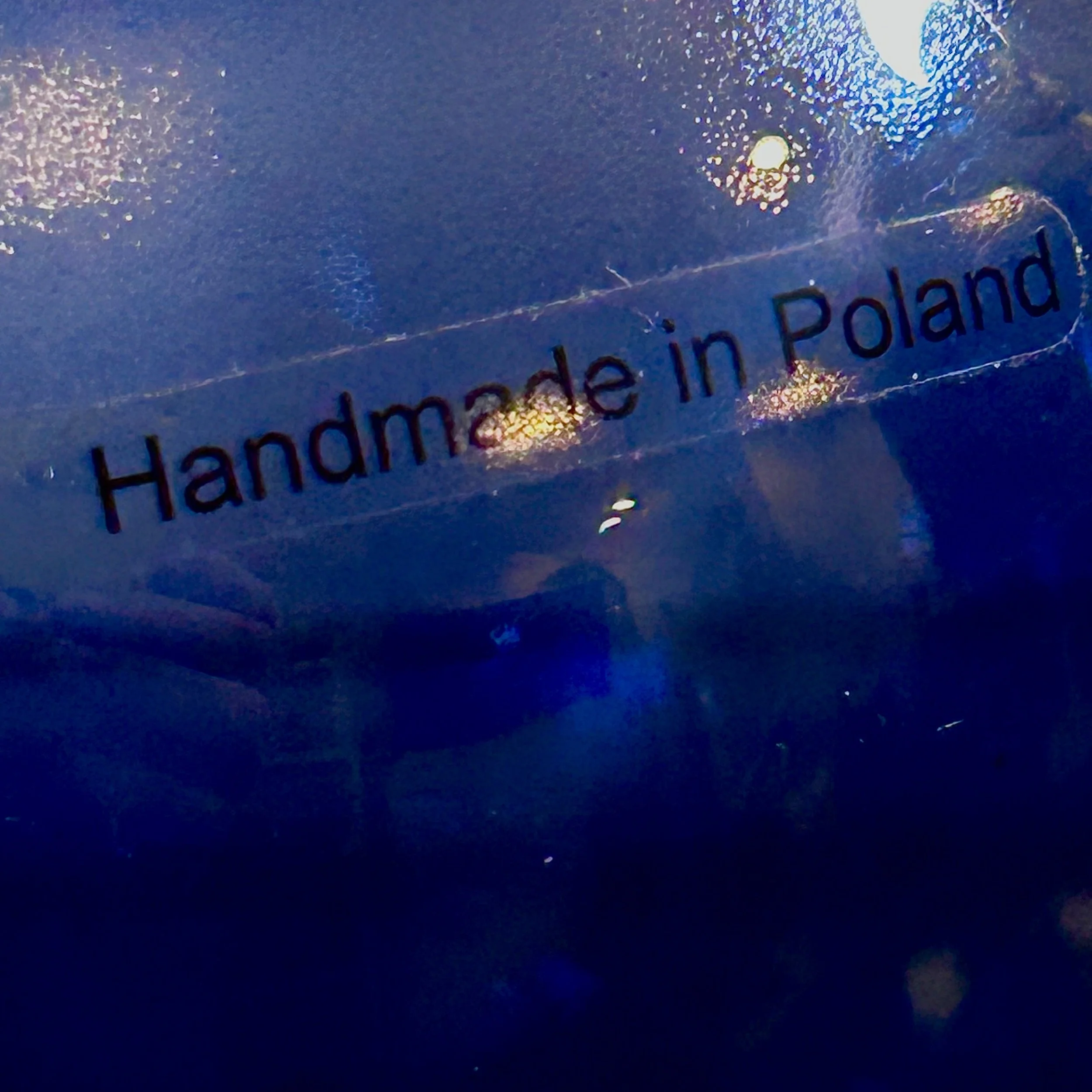
These vessels are consistent with the mid-20th-century Murano tradition, specifically the work emerging from prominent workshops in the 1960s. The clarity of the lead glass, the seamless suspension of the blue pigment, and the high-polish finish on the base are characteristic of high-end Italian production from this era. While no factory mark is observed, the pair’s form and material quality strongly align with the sommerso aesthetic popularized by designers like Flavio Poli for Seguso or Mandruzzato. The use of a vibrant, "wrapped" colored rim on a thick, clear glass body is a technique frequently utilized by Murano furnaces to highlight the fluidity of the material. The organic, non-symmetrical silhouette aligns with the post-war shift toward expressive, biomorphic glass forms.
Dimensions & Weight
Height: 2.75 in (7 cm)
Width / Diameter: 7.75 in (19.7 cm)
Depth / Base Diameter: 5 in (12.7 cm)
Weight: 2.45 lb (Combined)
Condition
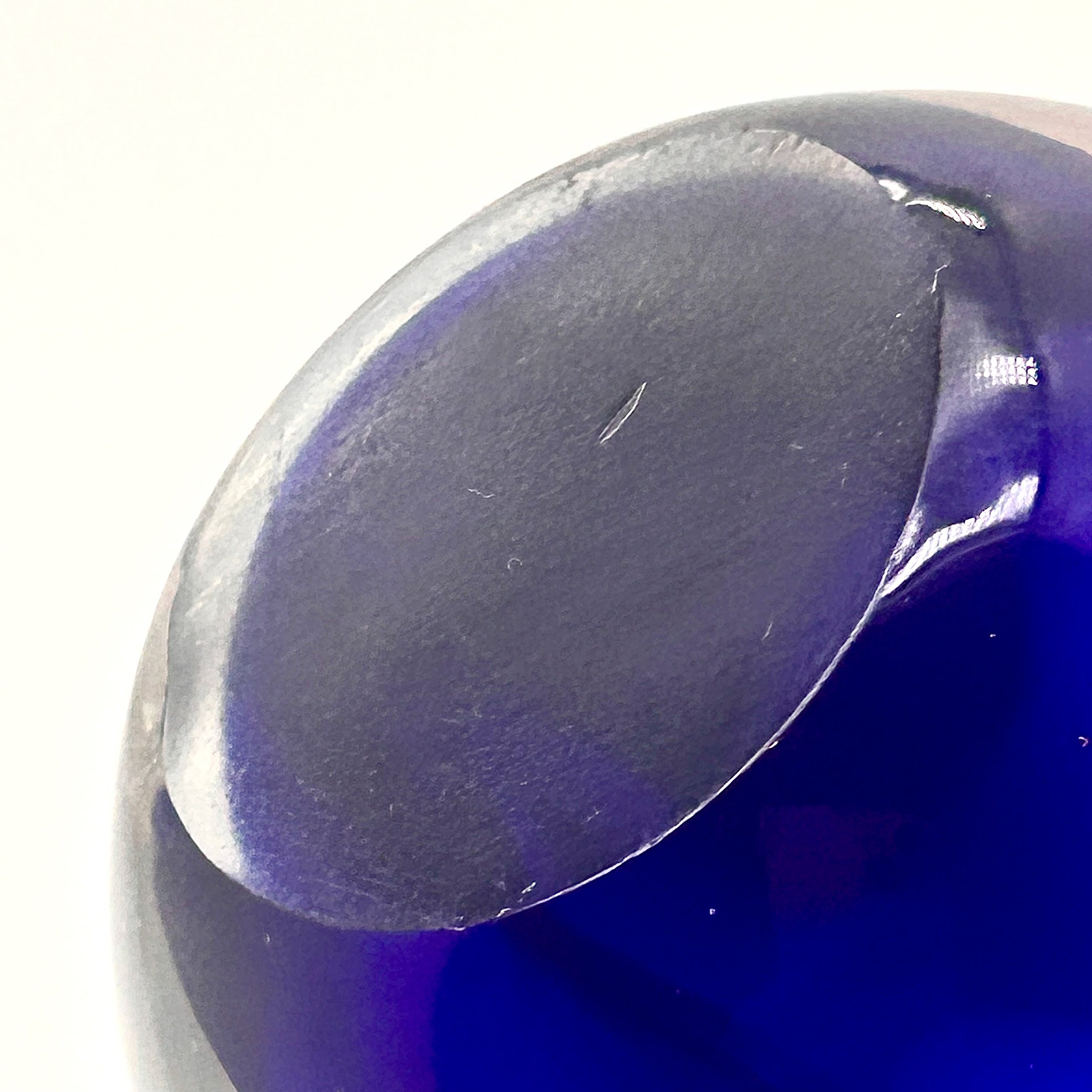
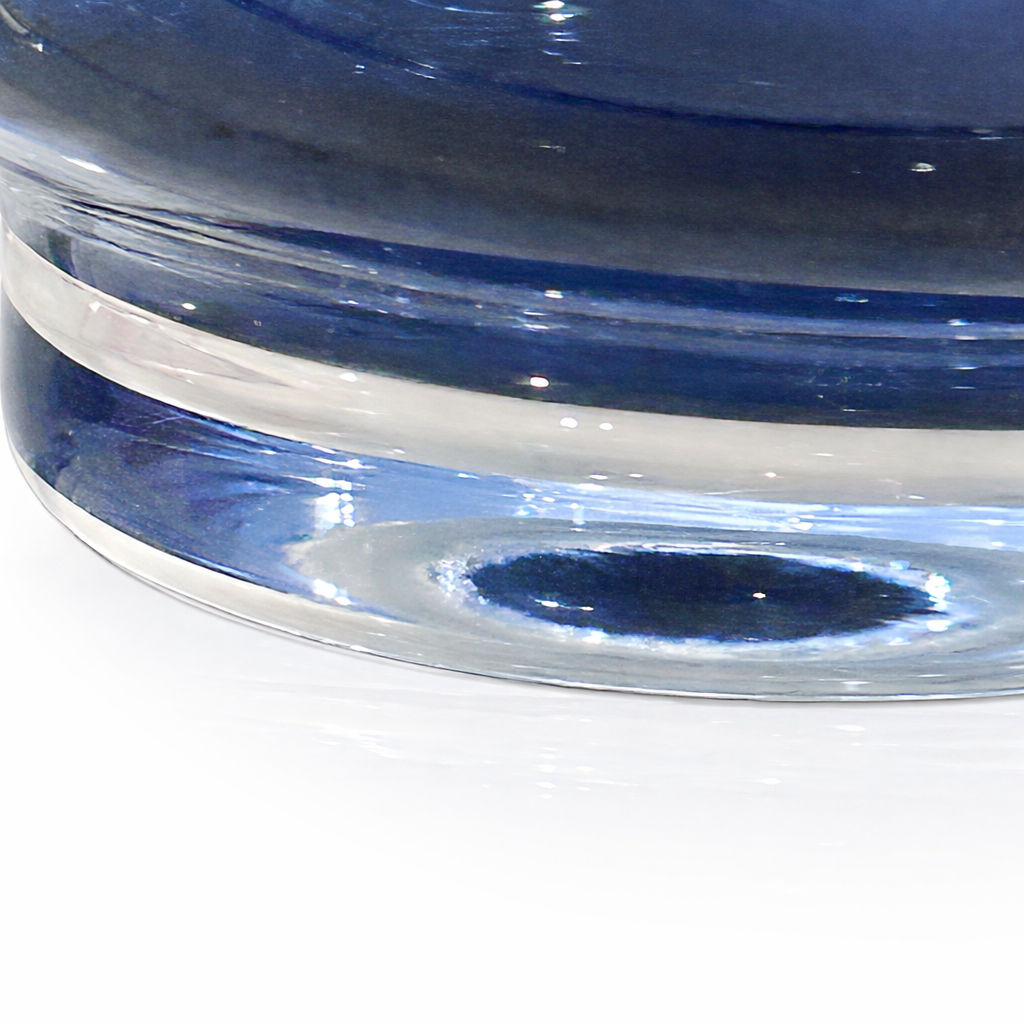
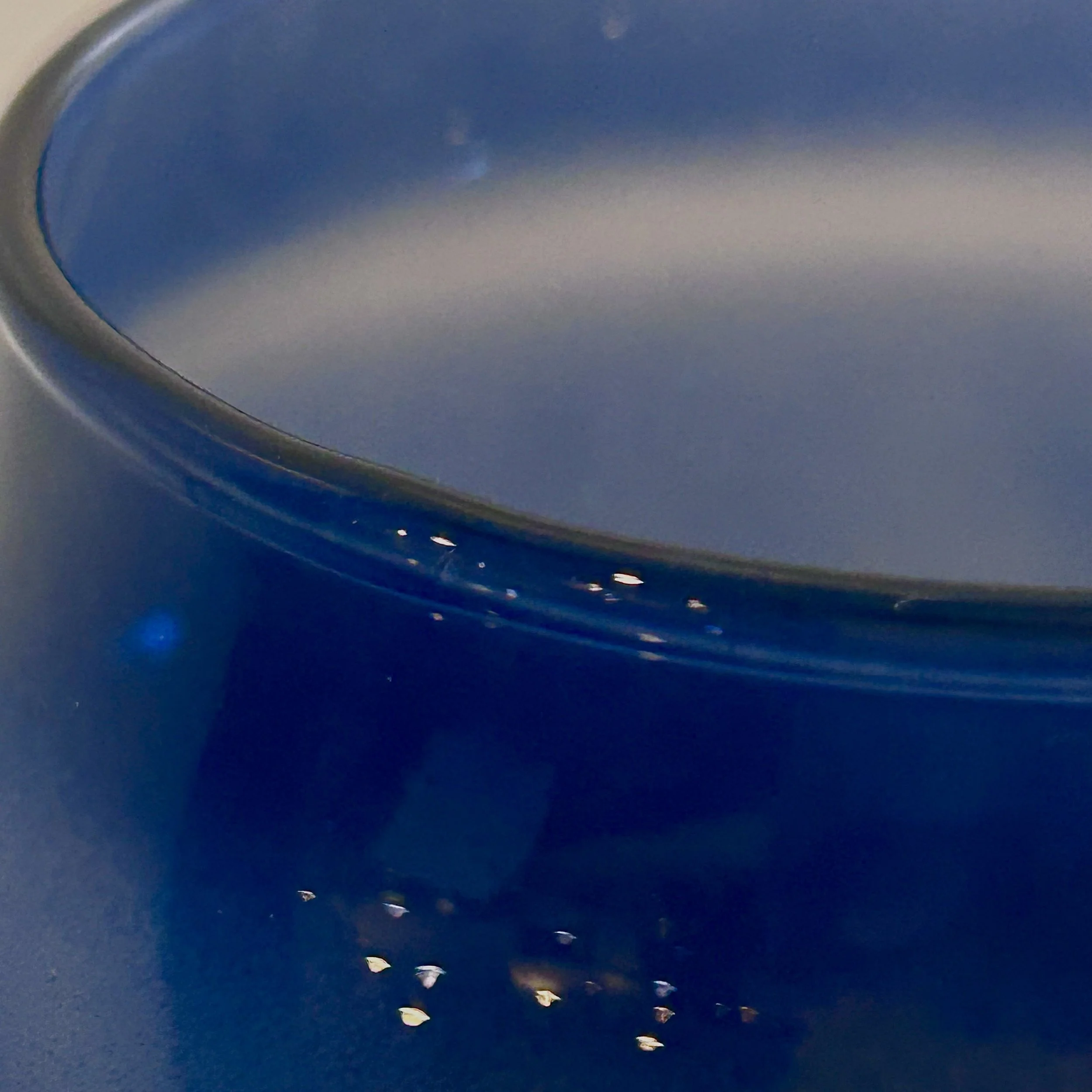
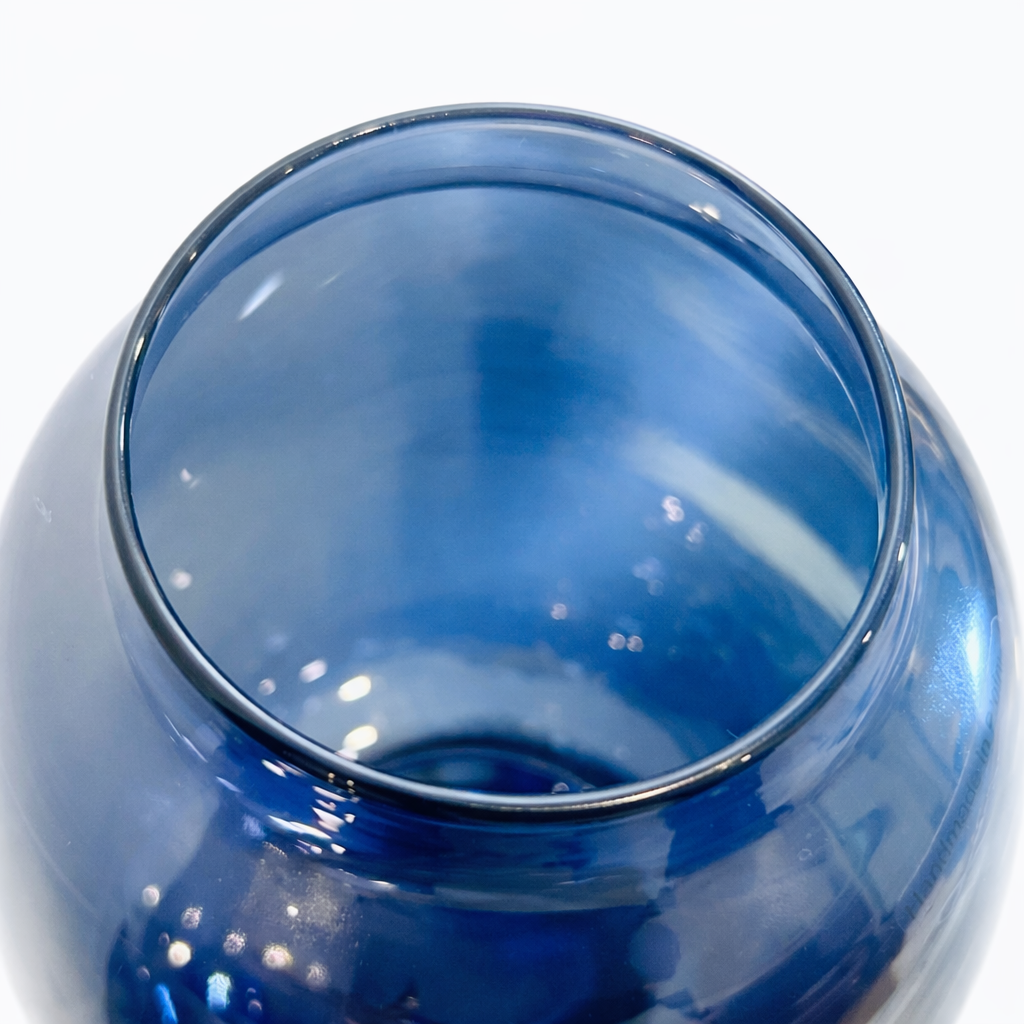
The bowls are in excellent, collector-grade condition. There are no chips, cracks, or professional repairs present. The surfaces remain exceptionally clear with no observed scratches or significant abrasions. Expected minor shelf wear to the underside of the bases is consistent with age and authenticity.
Authenticity & Construction
Hand-crafted using the sommerso (submerged) method, these bowls were created by layering molten blue glass within a larger gather of clear glass. The resulting thick-walled forms were then hand-blown and shaped before being slowly cooled and polished to a brilliant luster. The "nesting" design is a deliberate decorative choice, allowing the two forms to interact with light and color differently depending on their orientation.
Placement
These bowls are ideally suited for a minimalist credenza, a low-profile coffee table, or as sculptural accents within a curated shelving unit. Their vibrant blue hue allows them to serve as a pop of color in a monochromatic Modernist interior or as a complementary element in a Mediterranean-inspired architectural space.
STANDARD ATTRIBUTION & VALUE DISCLOSURE This piece is described to the best of current scholarly and market knowledge. Any maker or regional attribution is based on visual analysis, materials, construction techniques, and documented stylistic comparisons. As with many MCM and antique design objects, definitive attribution may not be possible without original labels or factory records. Pricing reflects condition, quality, decorative appeal, and current collector demand rather than guaranteed maker identification.
This refined pair of nesting bowls showcases the fluid elegance and technical precision of mid-century Venetian glassmaking. Utilizing the sophisticated "sommerso" technique, each vessel features a vibrant cerulean blue core suspended within a heavy, clear glass exterior, creating a luminous internal glow. The softly rounded, boat-like forms provide a gentle organic contrast to the more rigid geometric pieces from the same designer, offering a versatile and architecturally interesting addition to a curated art glass collection.
Attribution & Period
Consistent with Italian Murano ; Stylistically aligned with Murano Mandruzzato or Flavio Poli.
These vessels are consistent with the mid-20th-century Murano tradition, specifically the work emerging from prominent workshops in the 1960s. The clarity of the lead glass, the seamless suspension of the blue pigment, and the high-polish finish on the base are characteristic of high-end Italian production from this era. While no factory mark is observed, the pair’s form and material quality strongly align with the sommerso aesthetic popularized by designers like Flavio Poli for Seguso or Mandruzzato. The use of a vibrant, "wrapped" colored rim on a thick, clear glass body is a technique frequently utilized by Murano furnaces to highlight the fluidity of the material. The organic, non-symmetrical silhouette aligns with the post-war shift toward expressive, biomorphic glass forms.
Dimensions & Weight
Height: 2.75 in (7 cm)
Width / Diameter: 7.75 in (19.7 cm)
Depth / Base Diameter: 5 in (12.7 cm)
Weight: 2.45 lb (Combined)
Condition
The bowls are in excellent, collector-grade condition. There are no chips, cracks, or professional repairs present. The surfaces remain exceptionally clear with no observed scratches or significant abrasions. Expected minor shelf wear to the underside of the bases is consistent with age and authenticity.
Authenticity & Construction
Hand-crafted using the sommerso (submerged) method, these bowls were created by layering molten blue glass within a larger gather of clear glass. The resulting thick-walled forms were then hand-blown and shaped before being slowly cooled and polished to a brilliant luster. The "nesting" design is a deliberate decorative choice, allowing the two forms to interact with light and color differently depending on their orientation.
Placement
These bowls are ideally suited for a minimalist credenza, a low-profile coffee table, or as sculptural accents within a curated shelving unit. Their vibrant blue hue allows them to serve as a pop of color in a monochromatic Modernist interior or as a complementary element in a Mediterranean-inspired architectural space.
STANDARD ATTRIBUTION & VALUE DISCLOSURE This piece is described to the best of current scholarly and market knowledge. Any maker or regional attribution is based on visual analysis, materials, construction techniques, and documented stylistic comparisons. As with many MCM and antique design objects, definitive attribution may not be possible without original labels or factory records. Pricing reflects condition, quality, decorative appeal, and current collector demand rather than guaranteed maker identification.

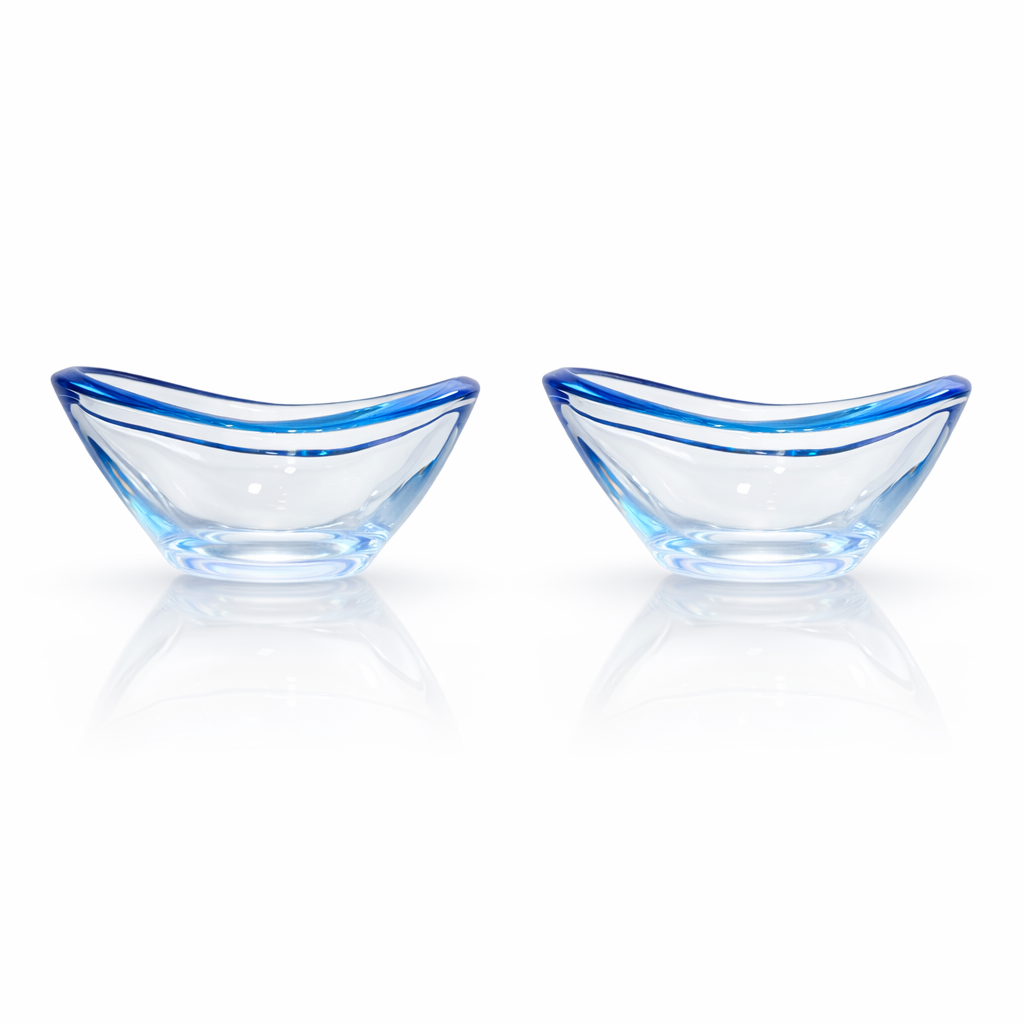 Image 1 of 4
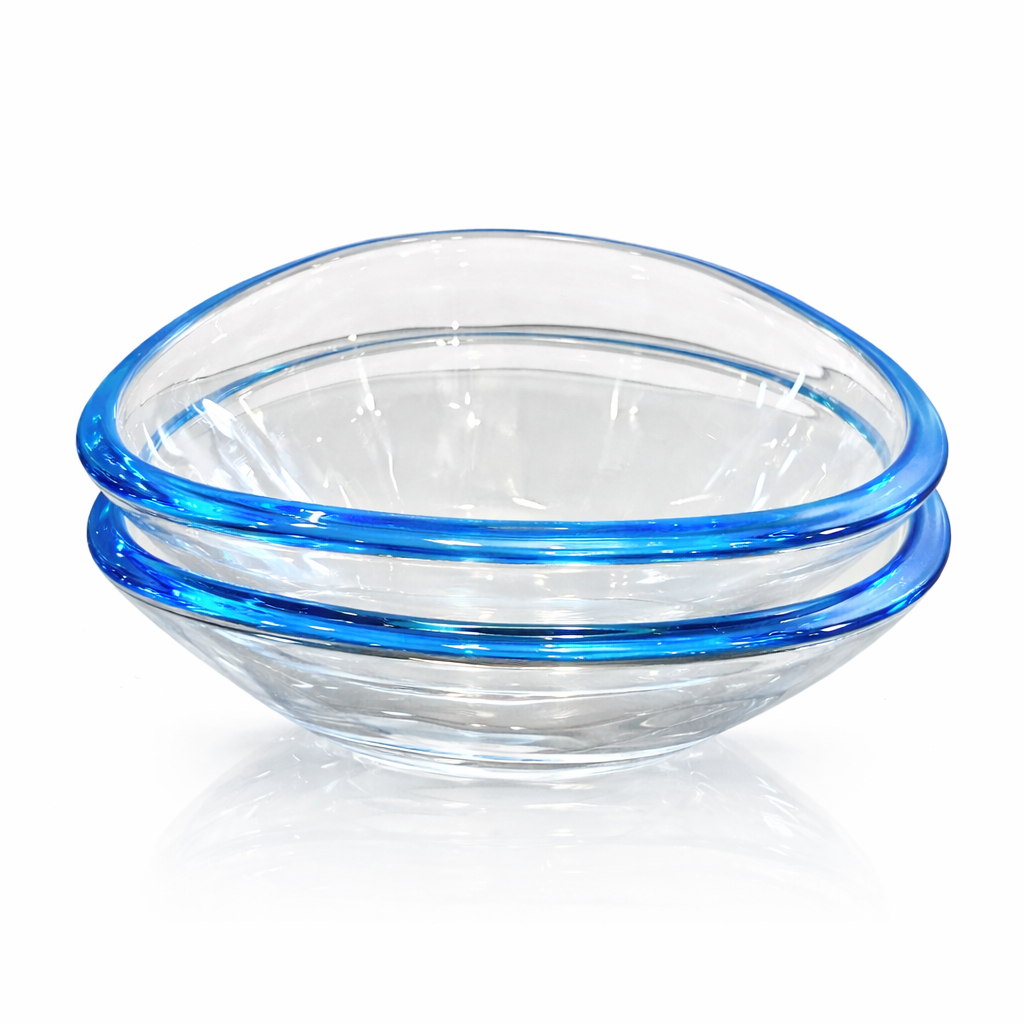 Image 2 of 4
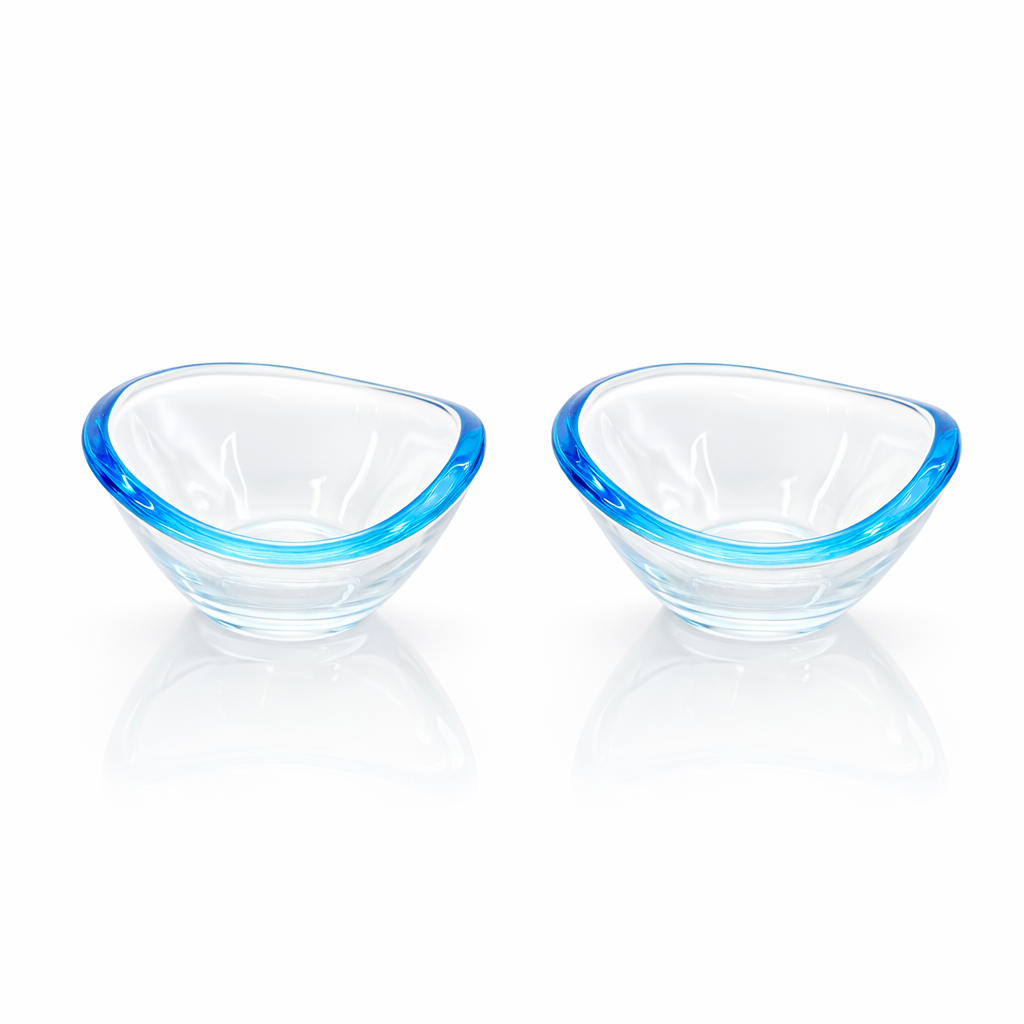 Image 3 of 4
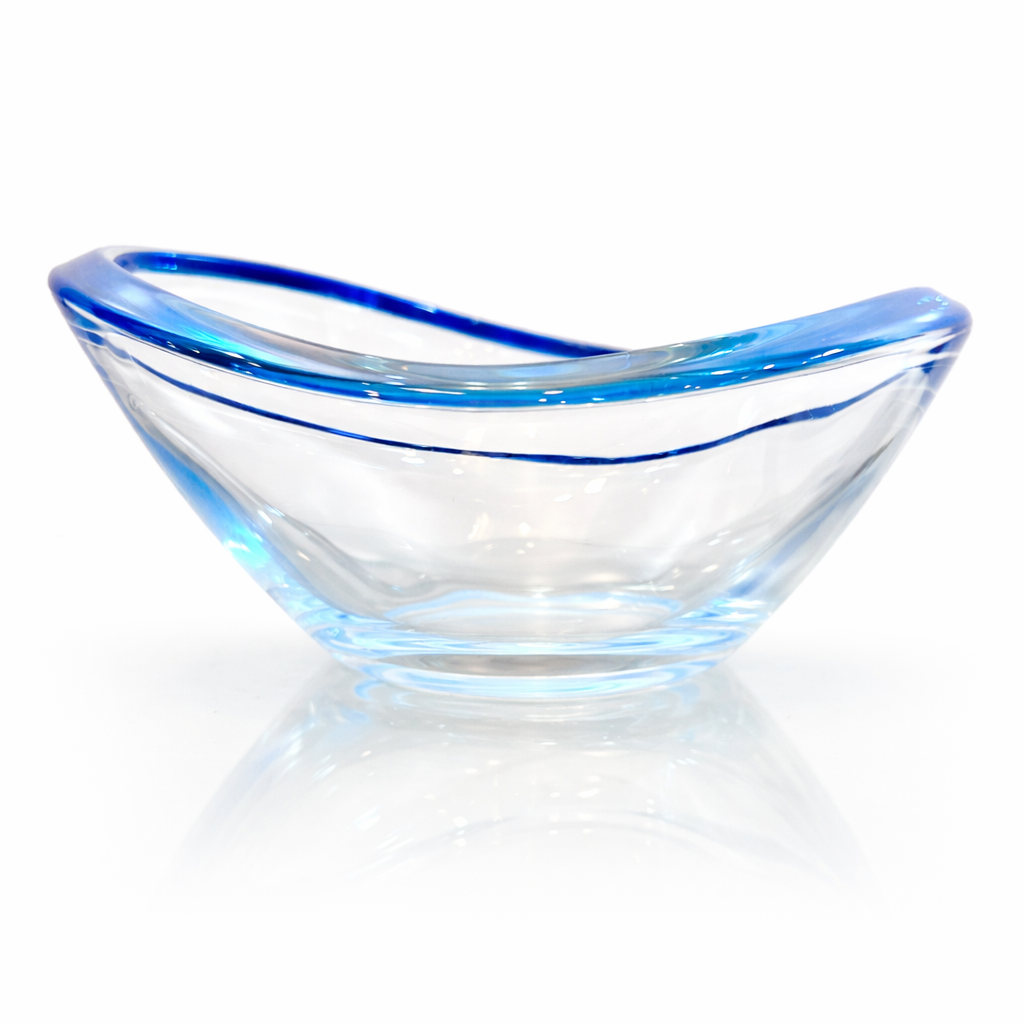 Image 4 of 4