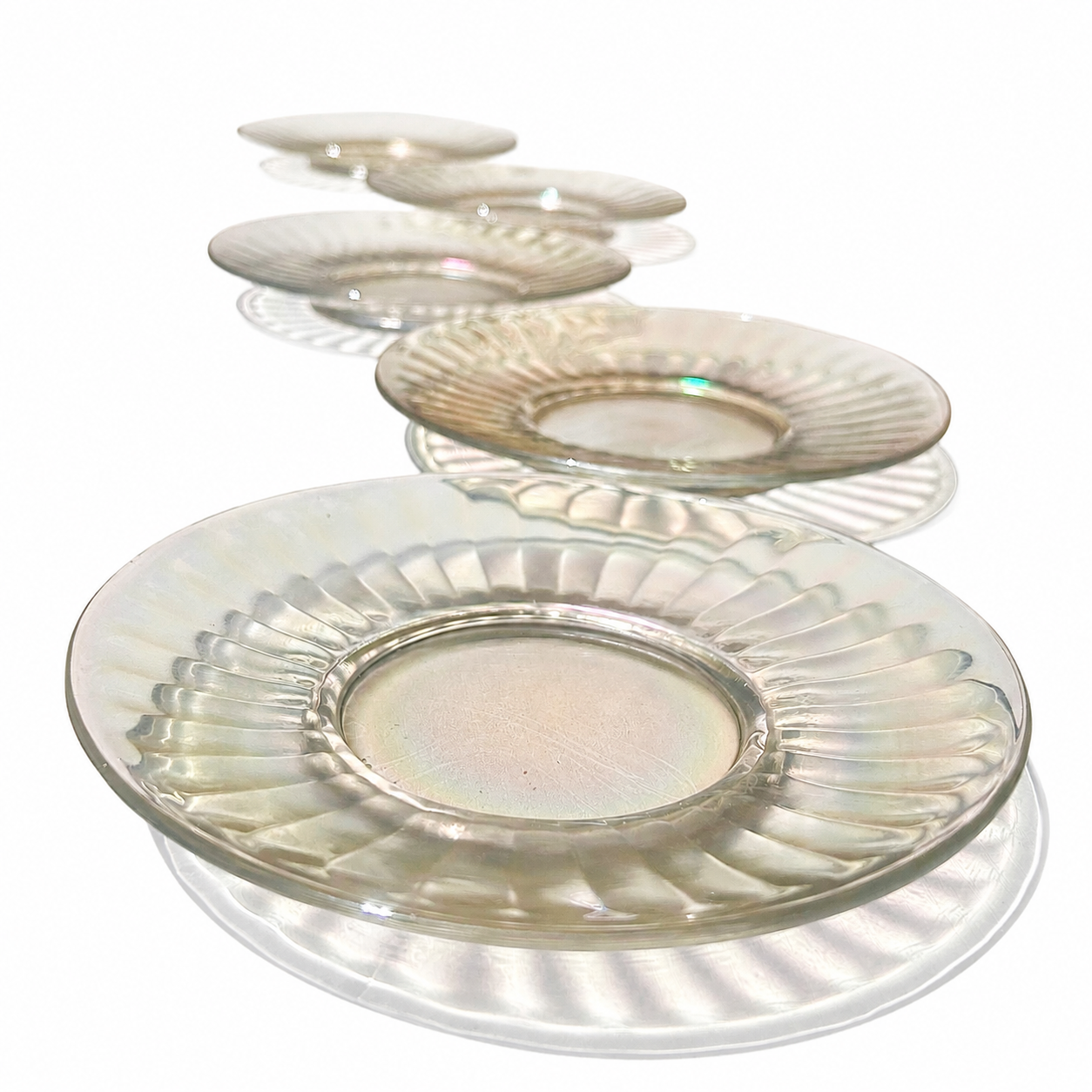
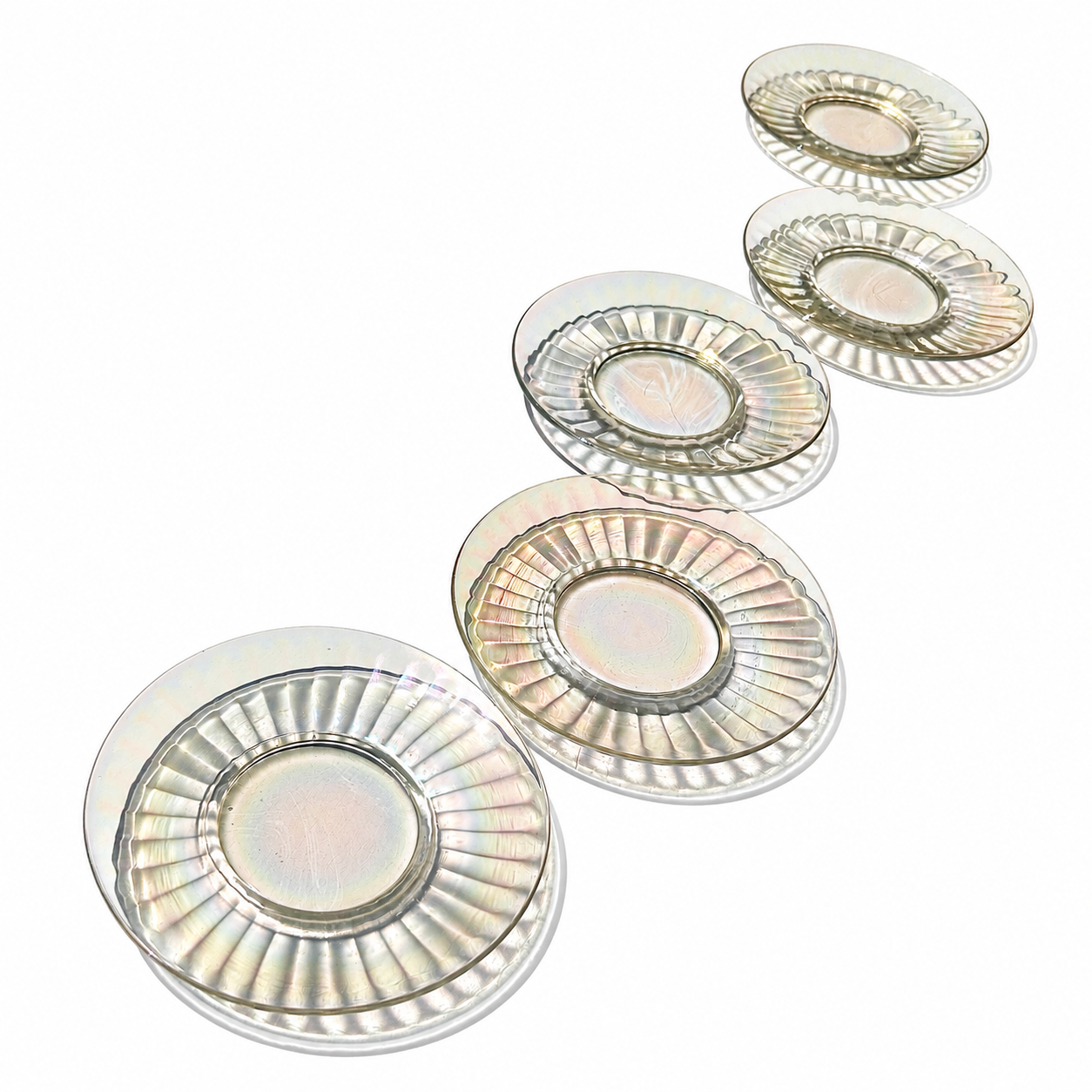
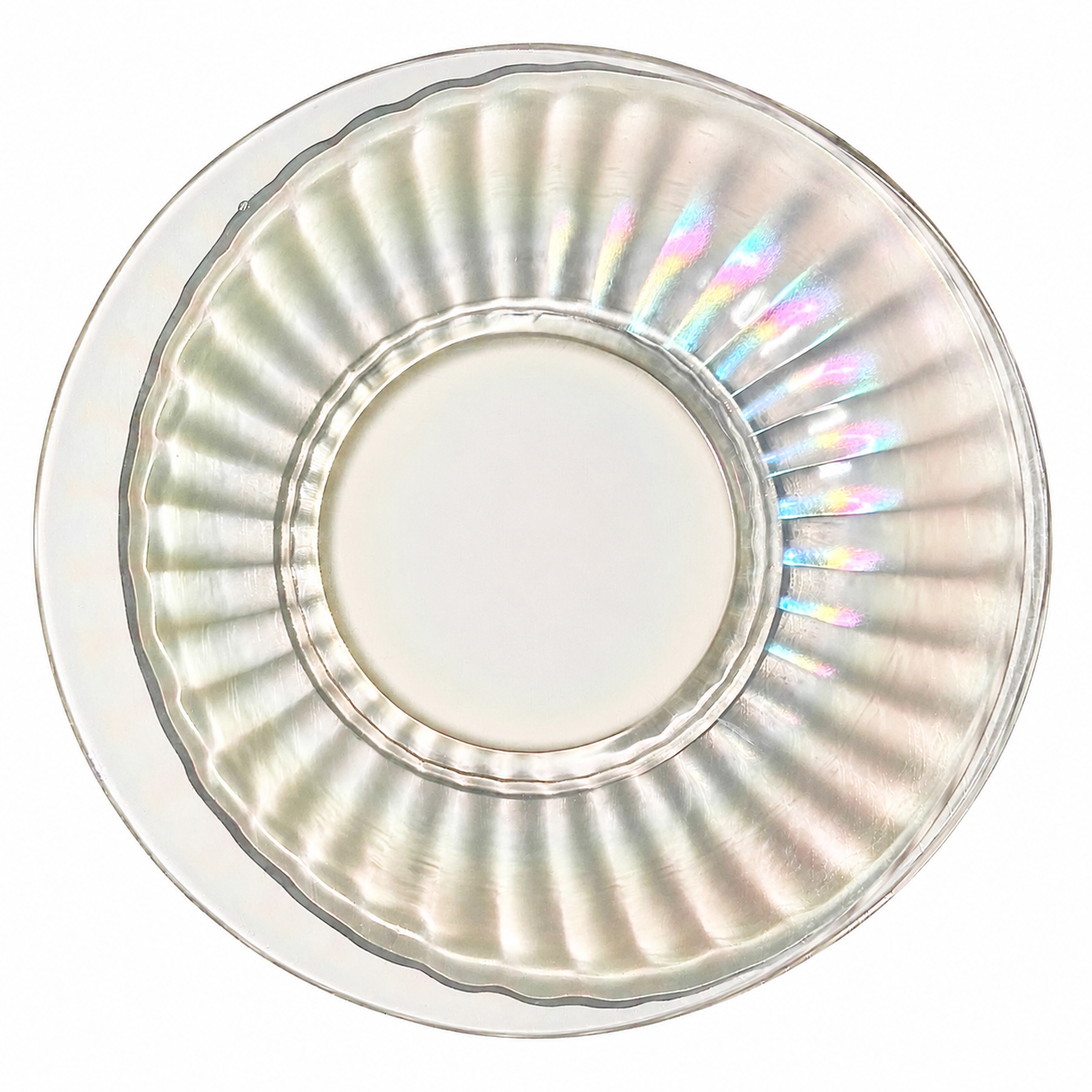
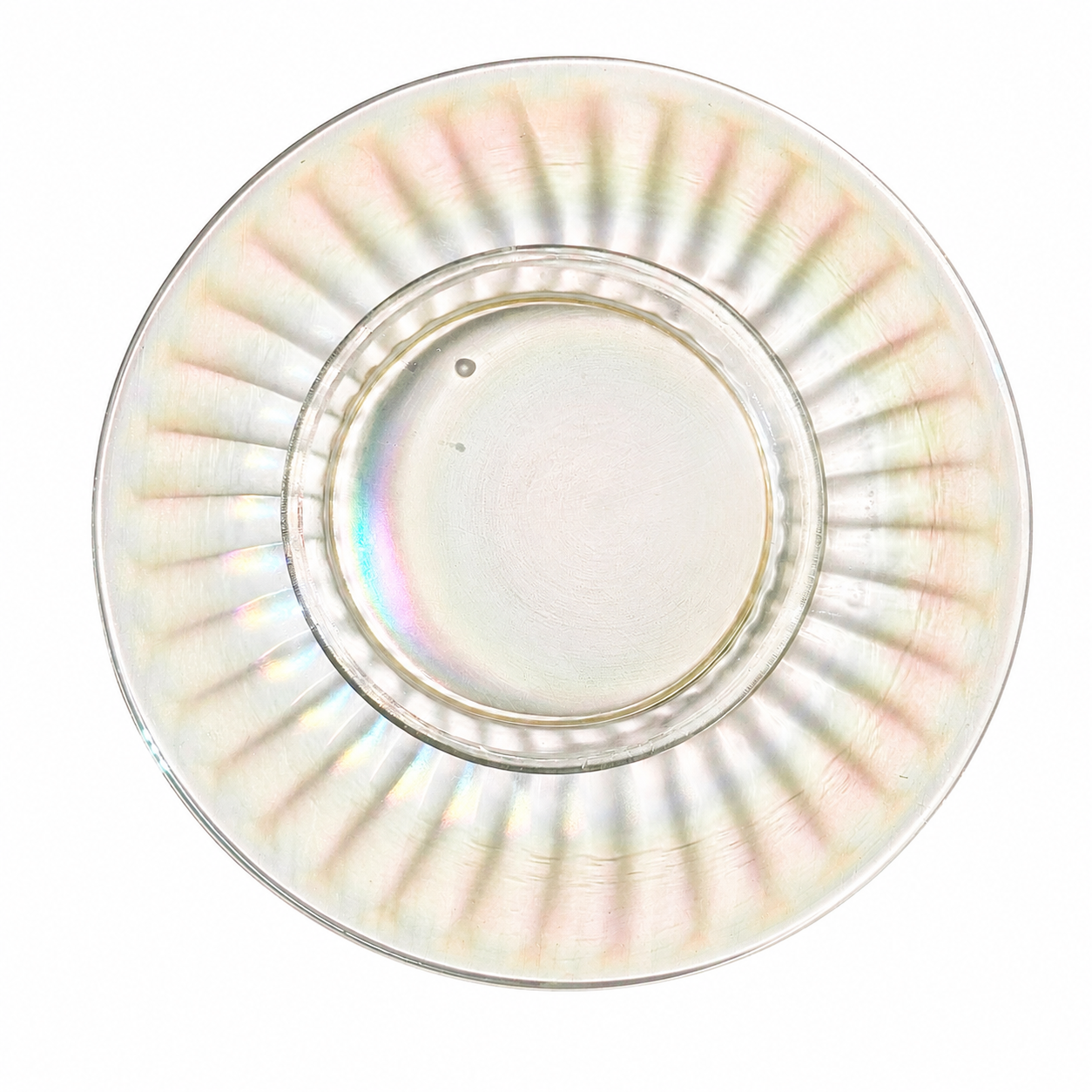
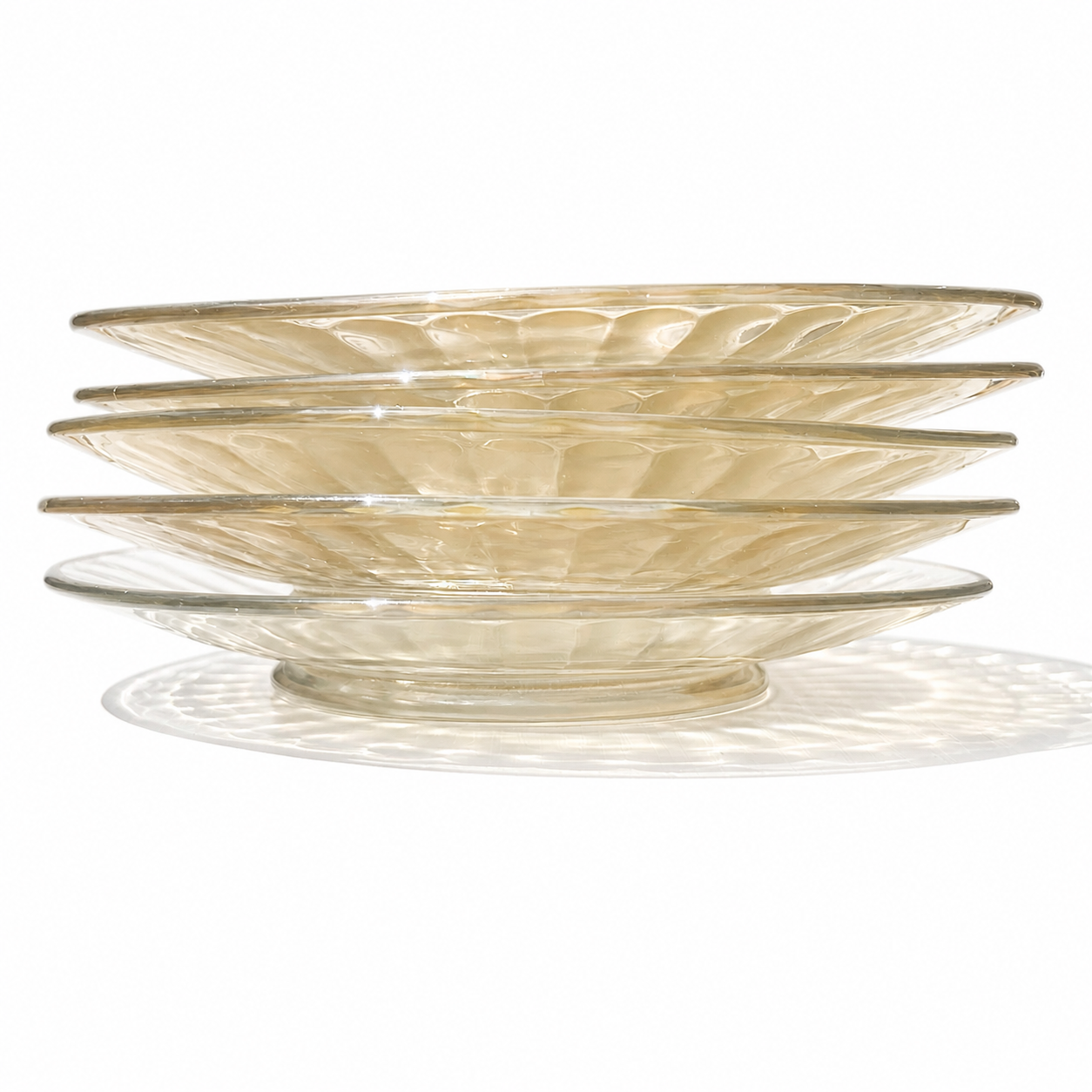
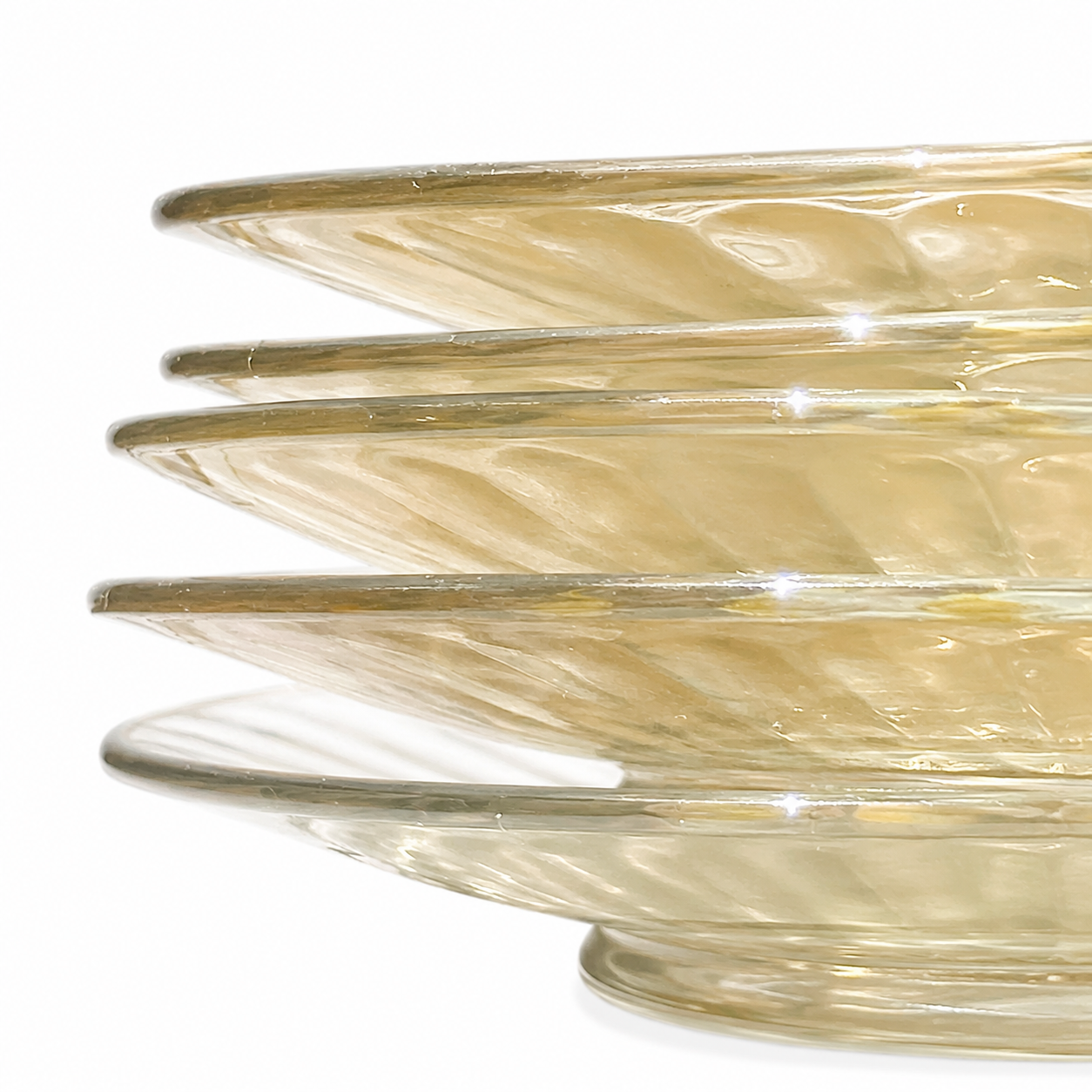
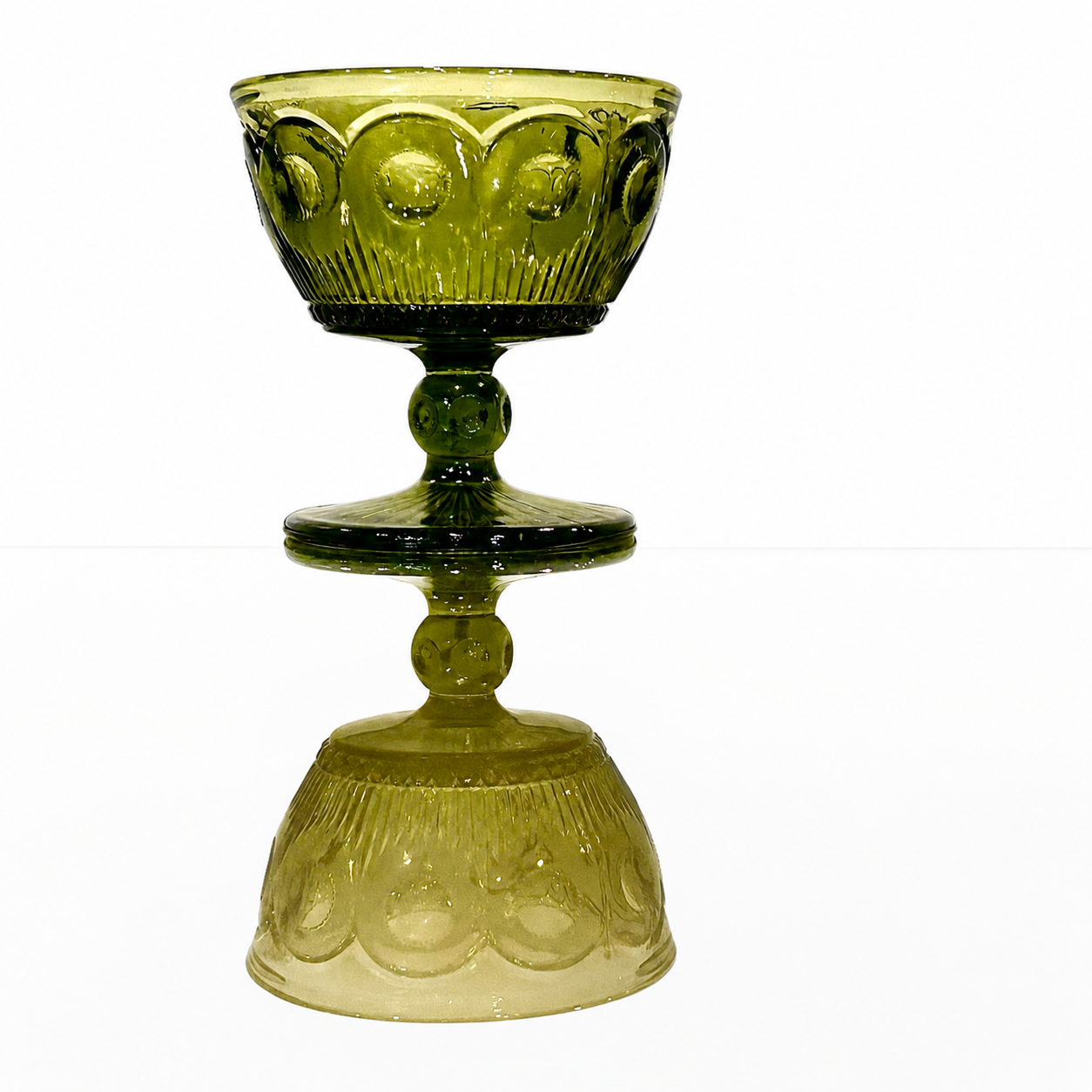
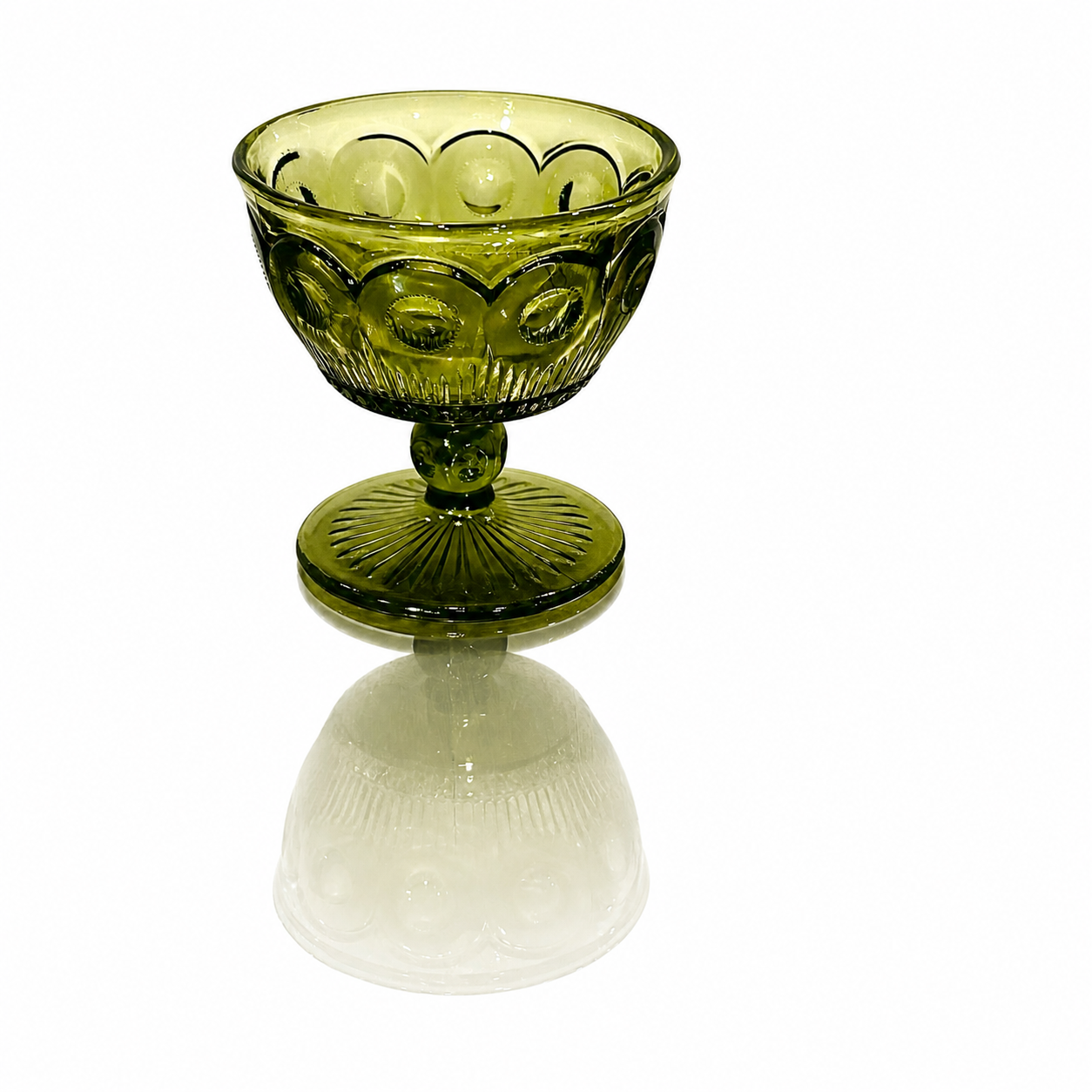
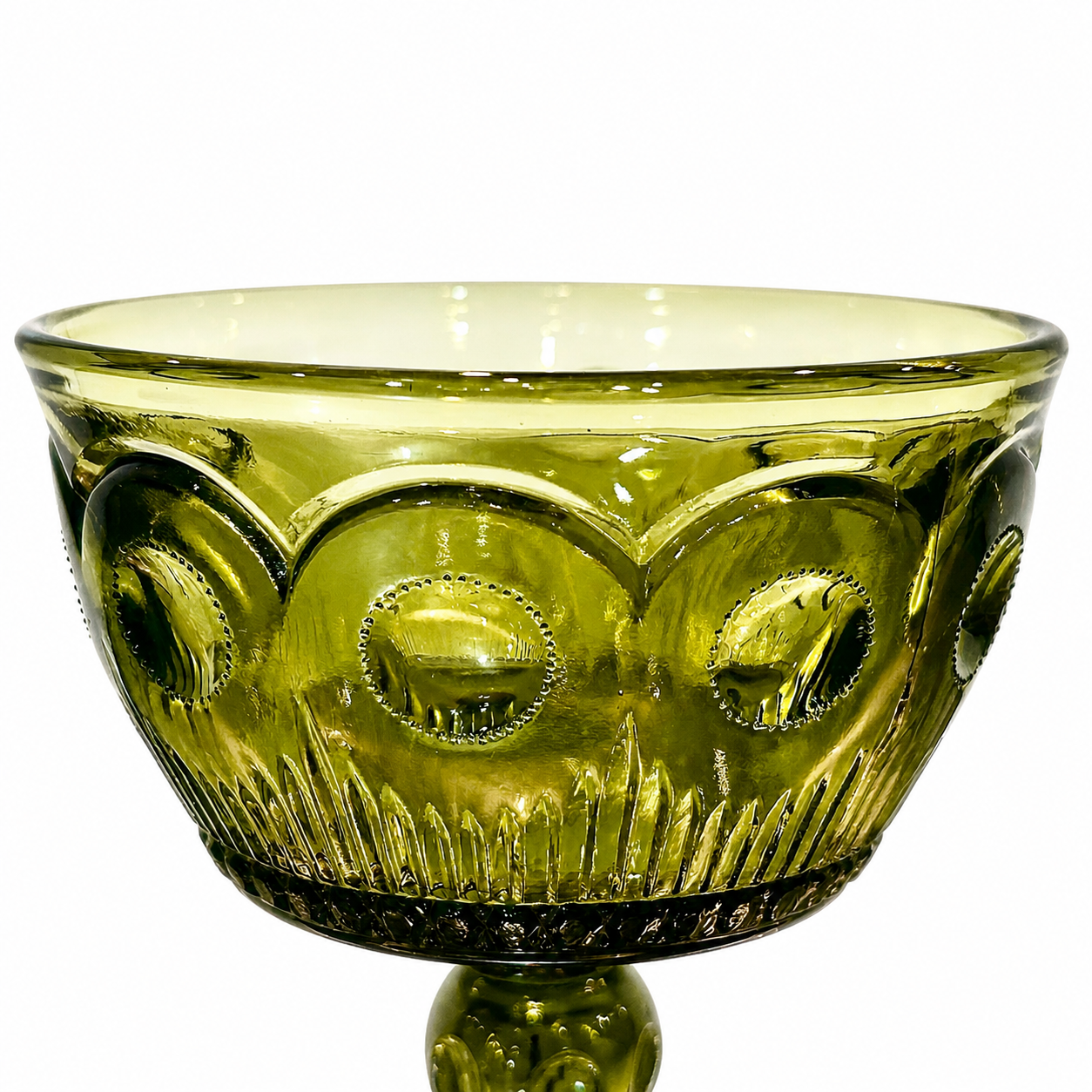
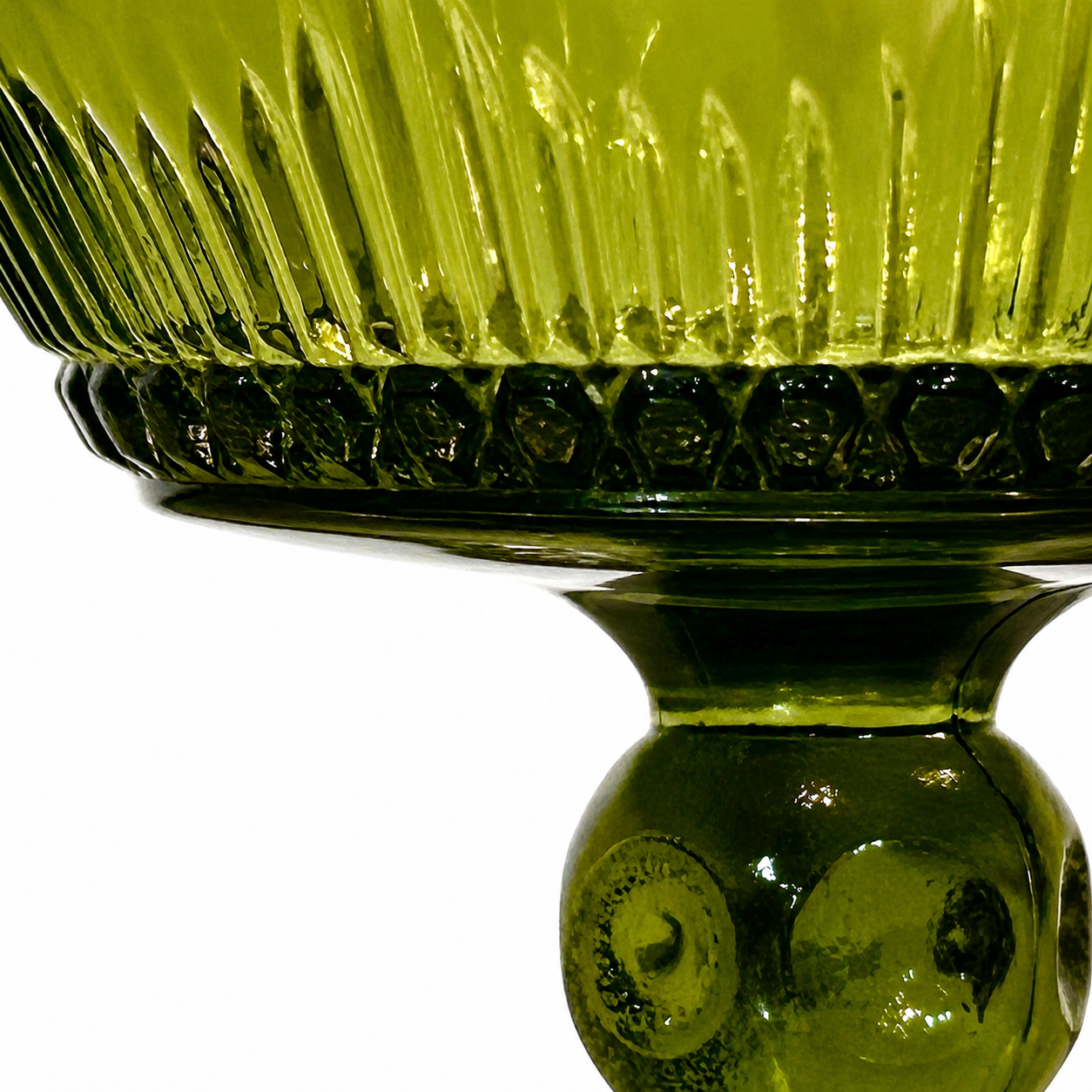
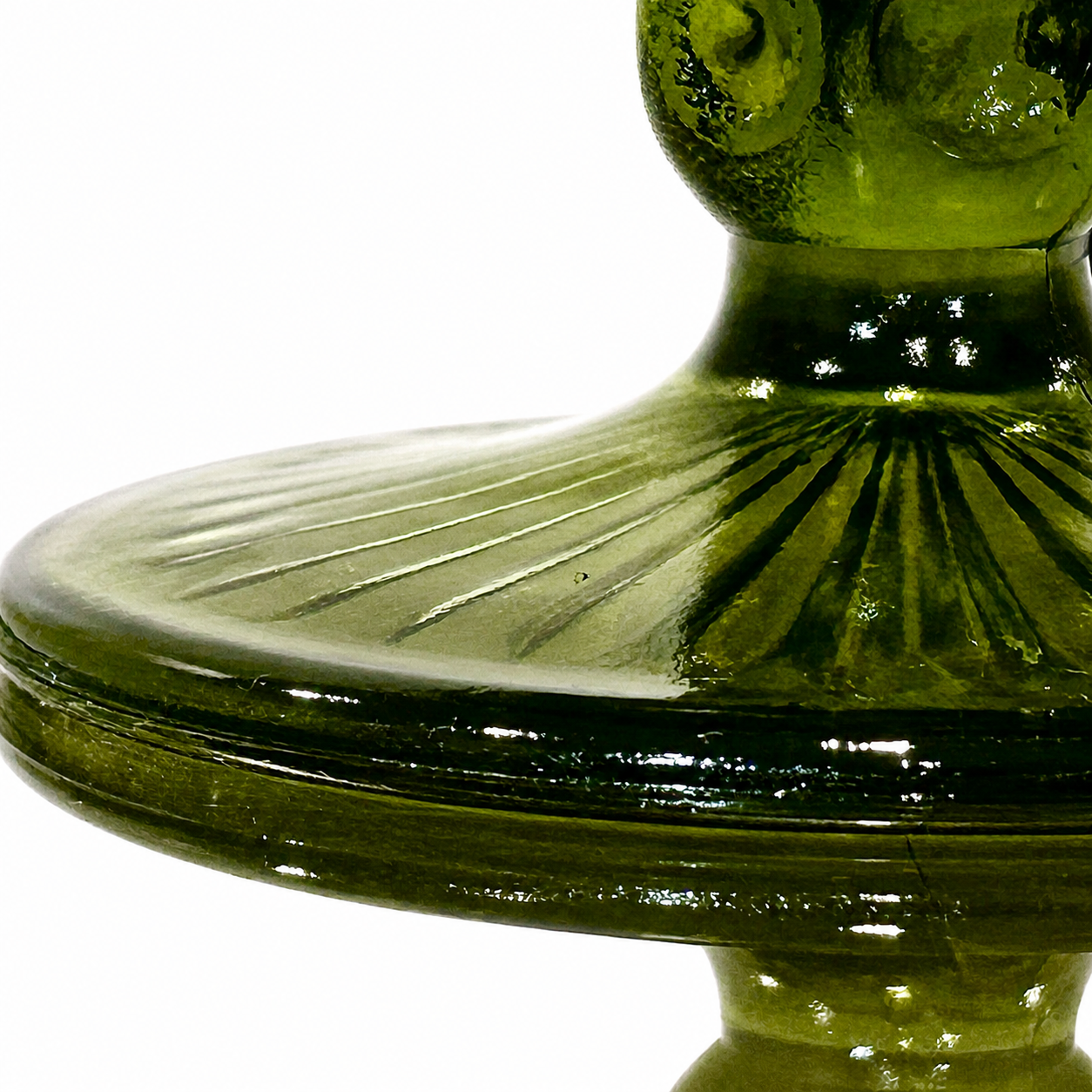
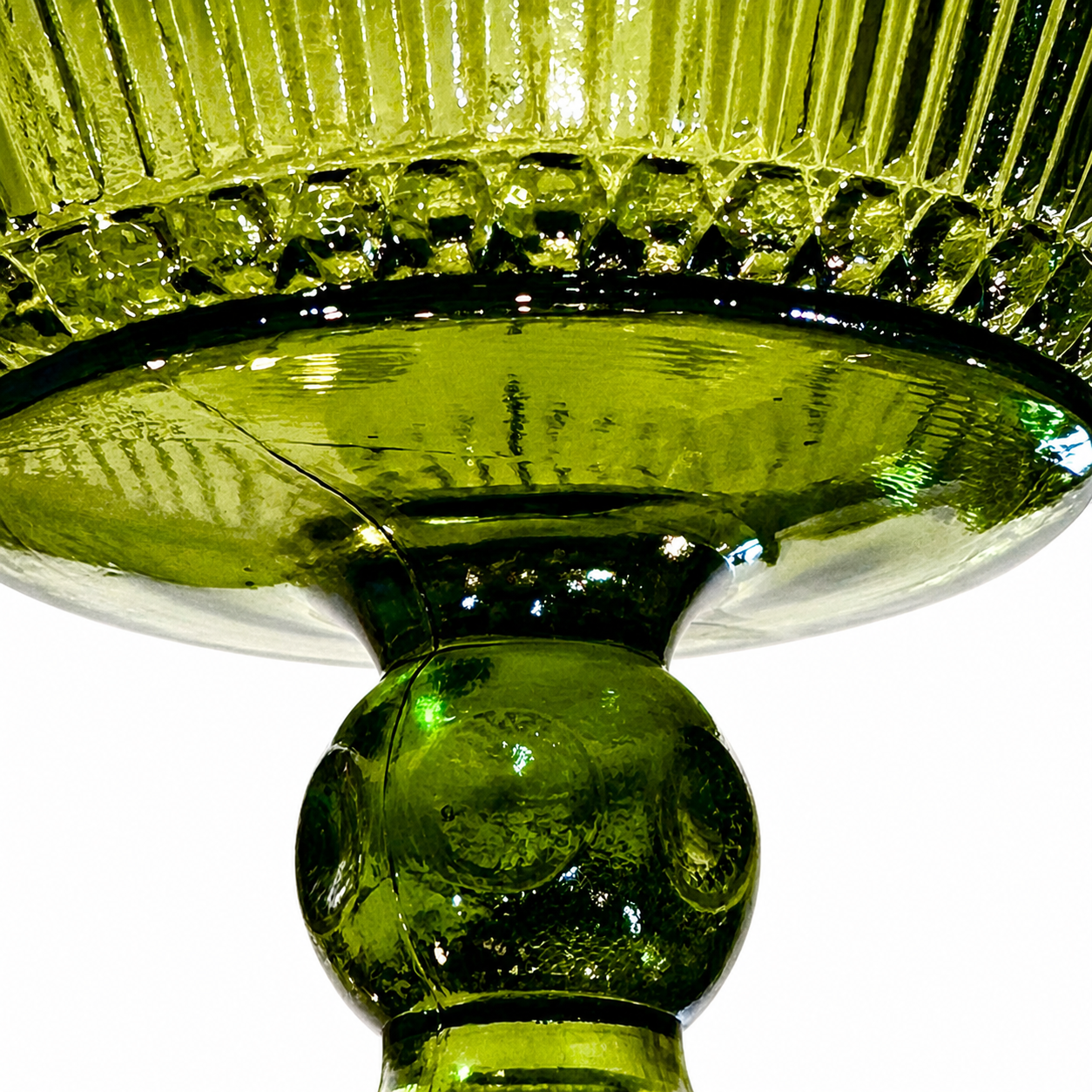
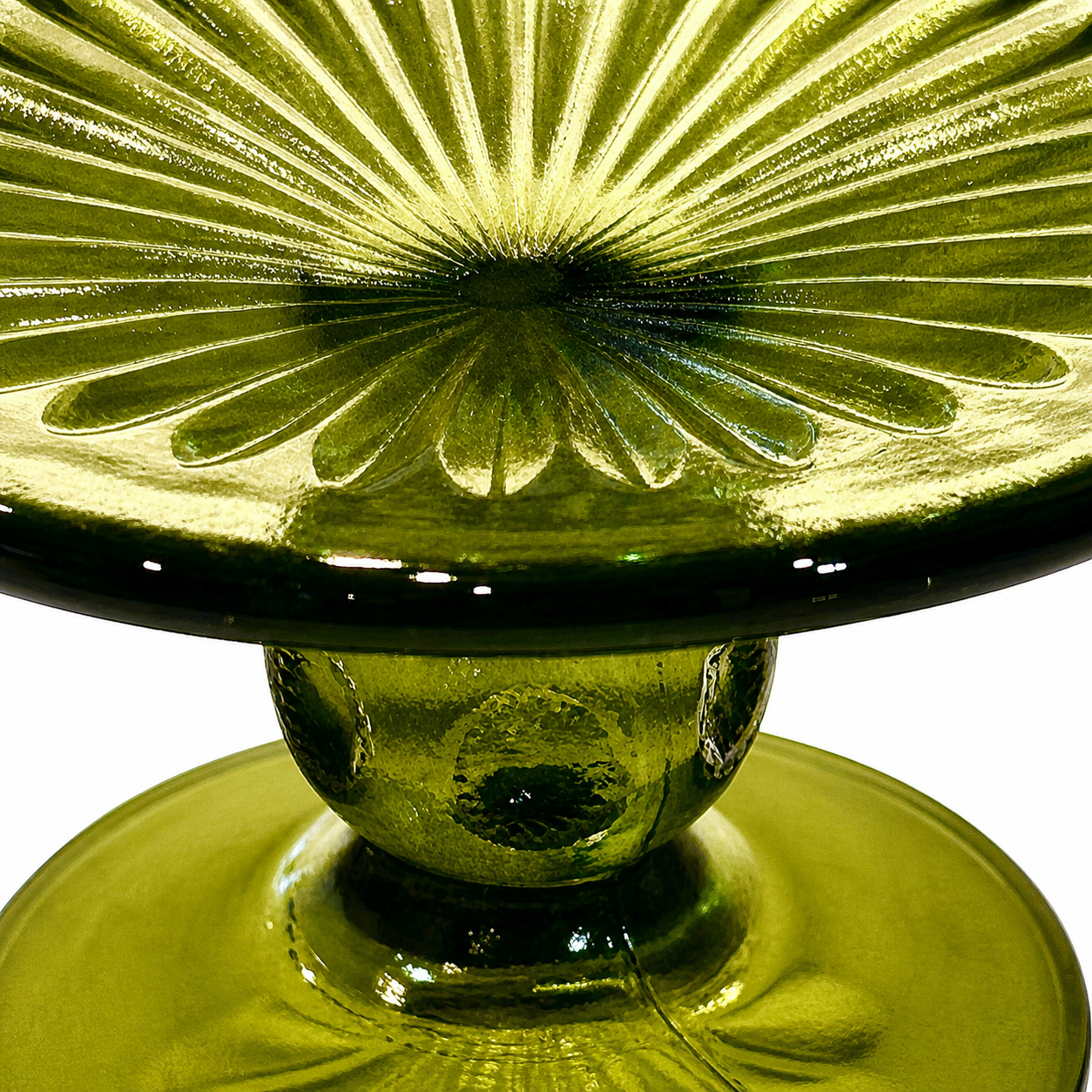
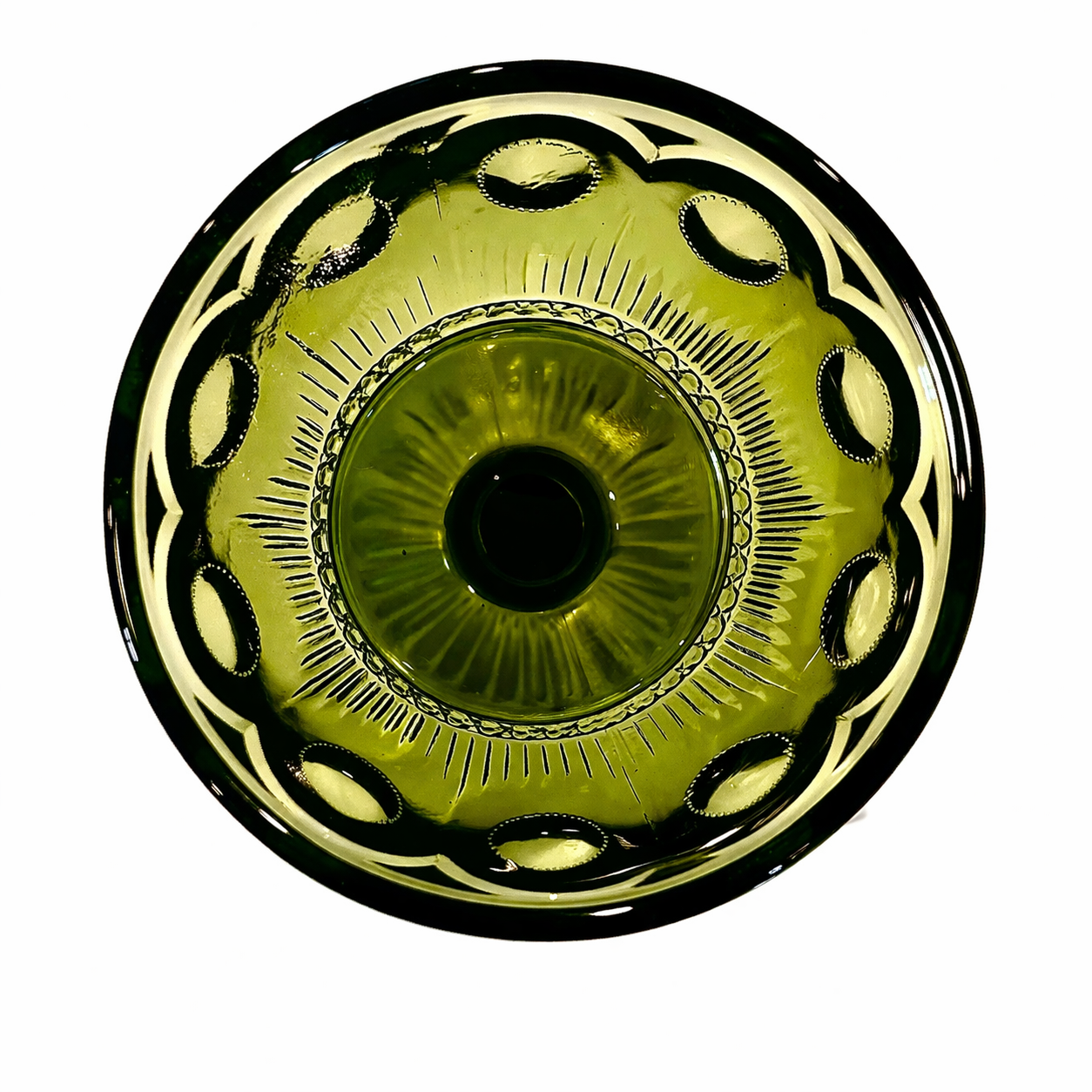
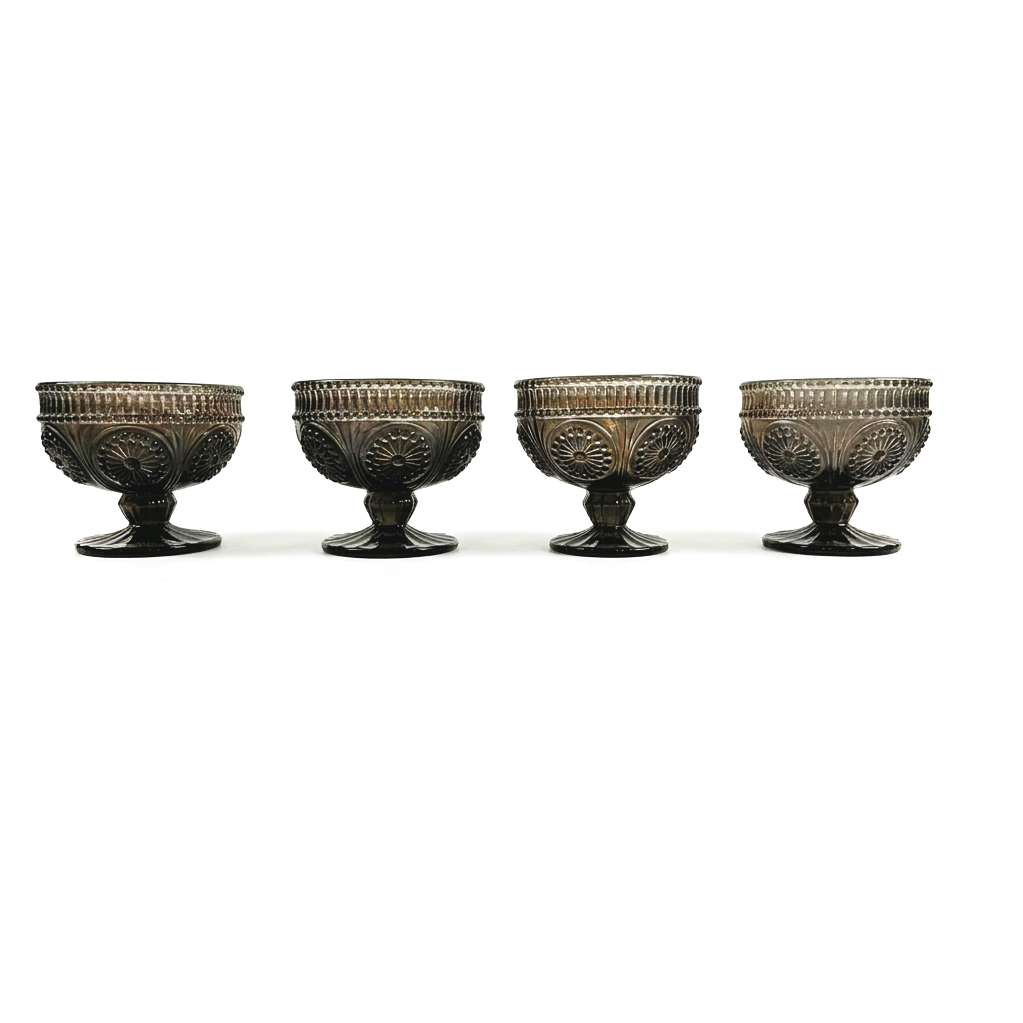
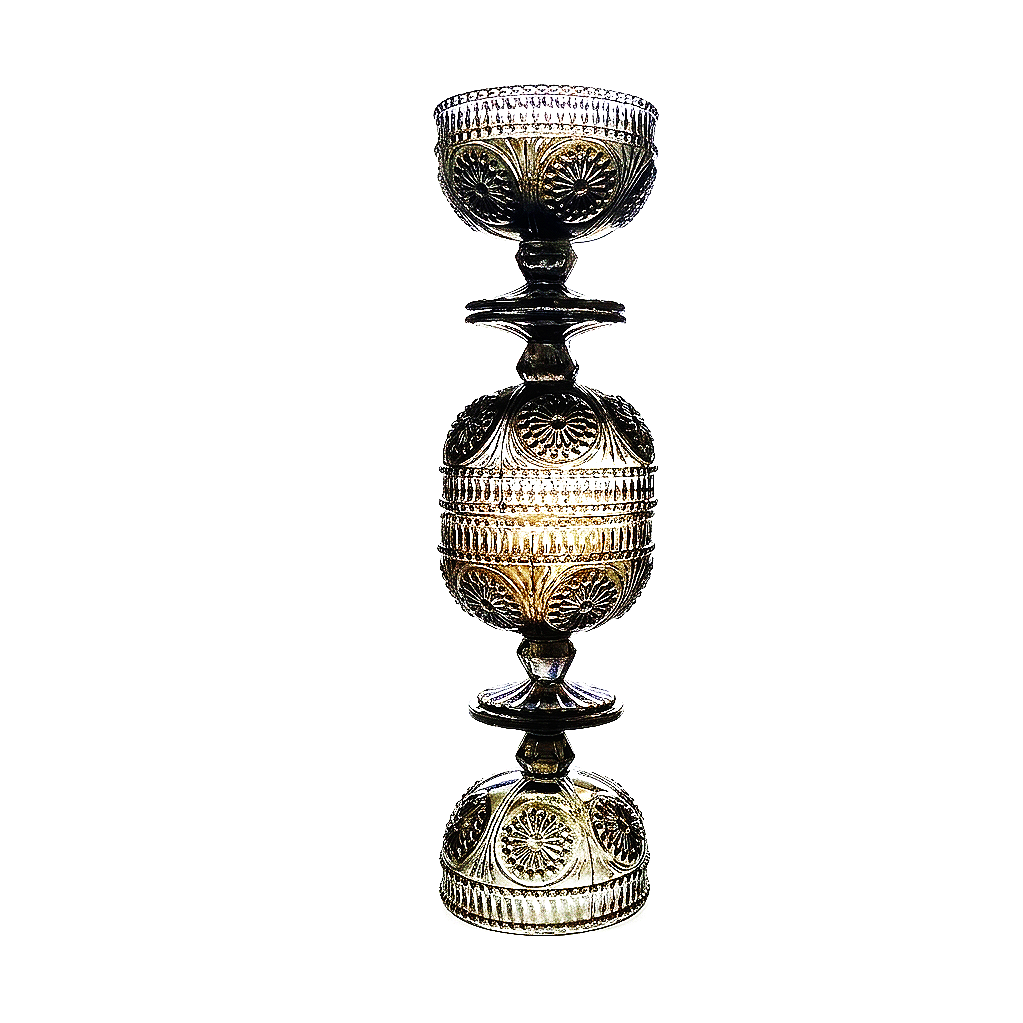
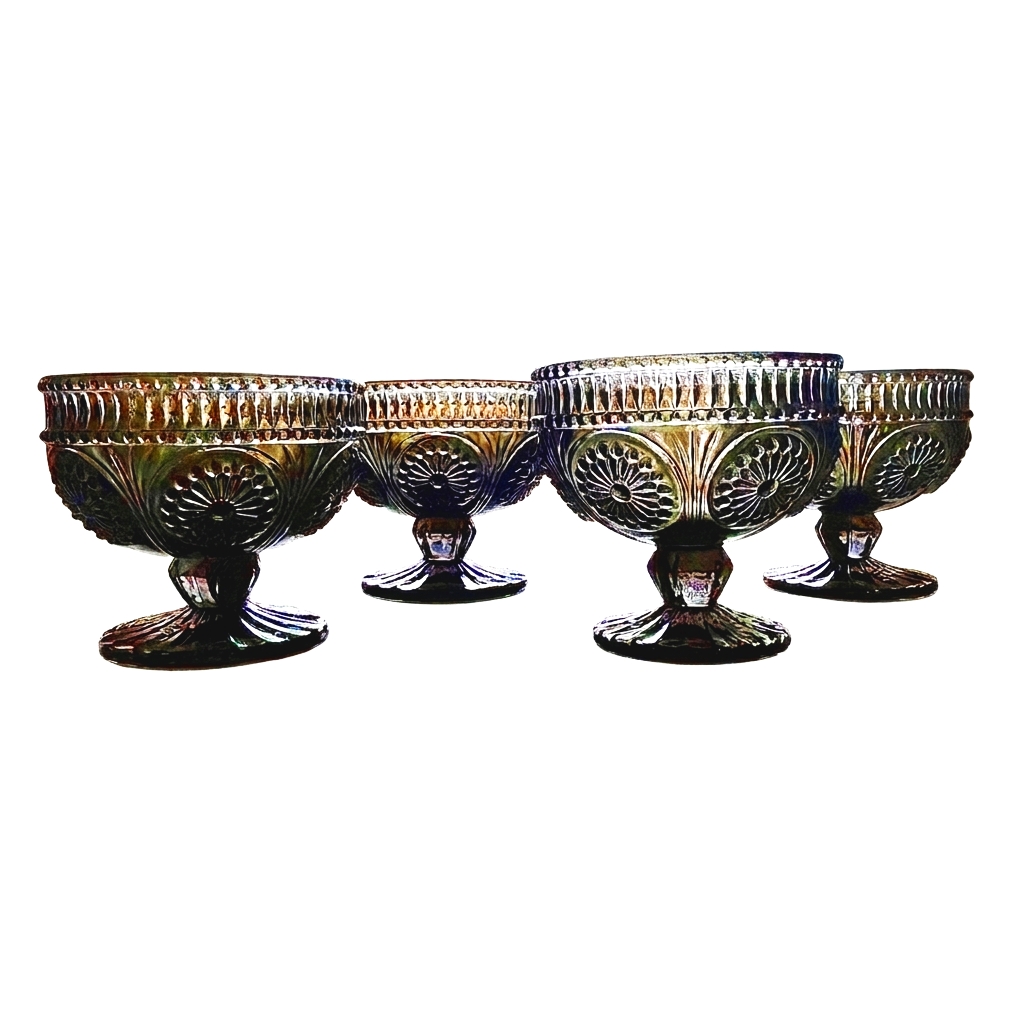
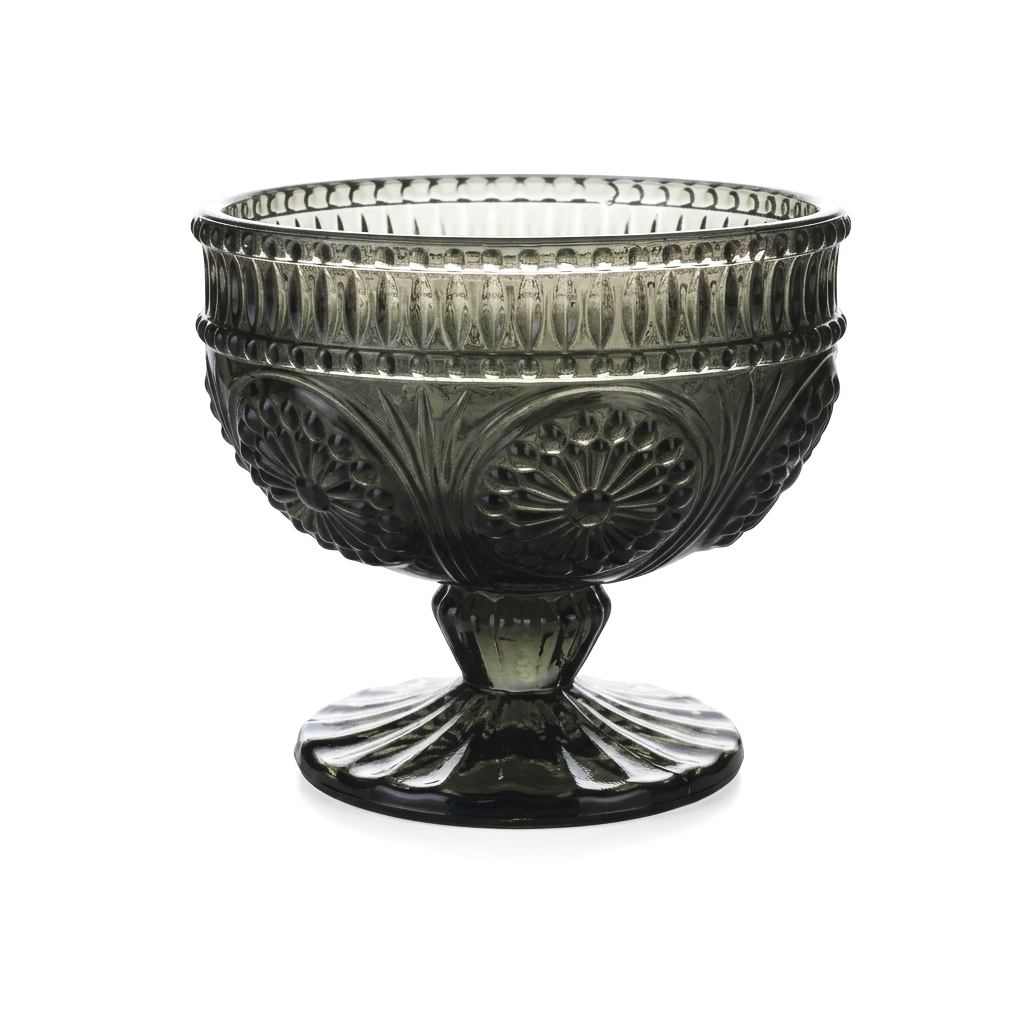
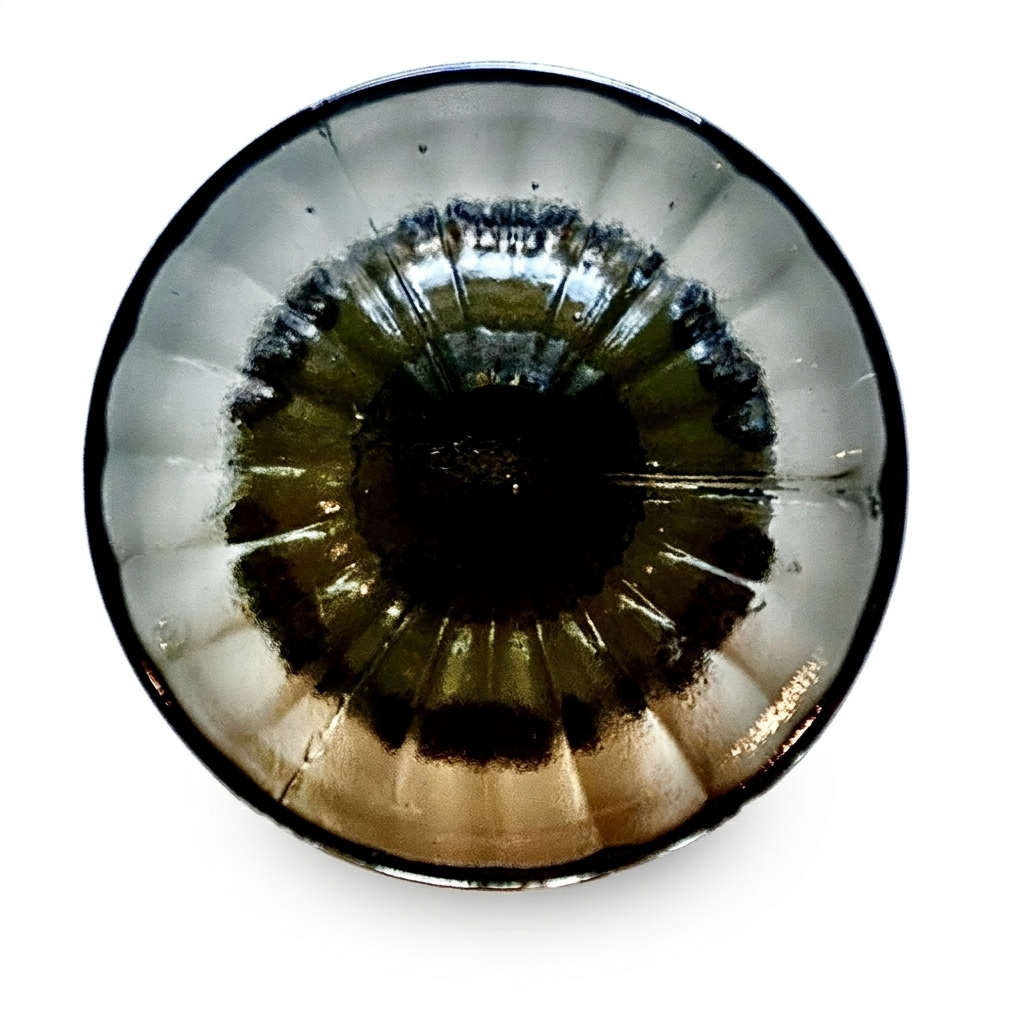
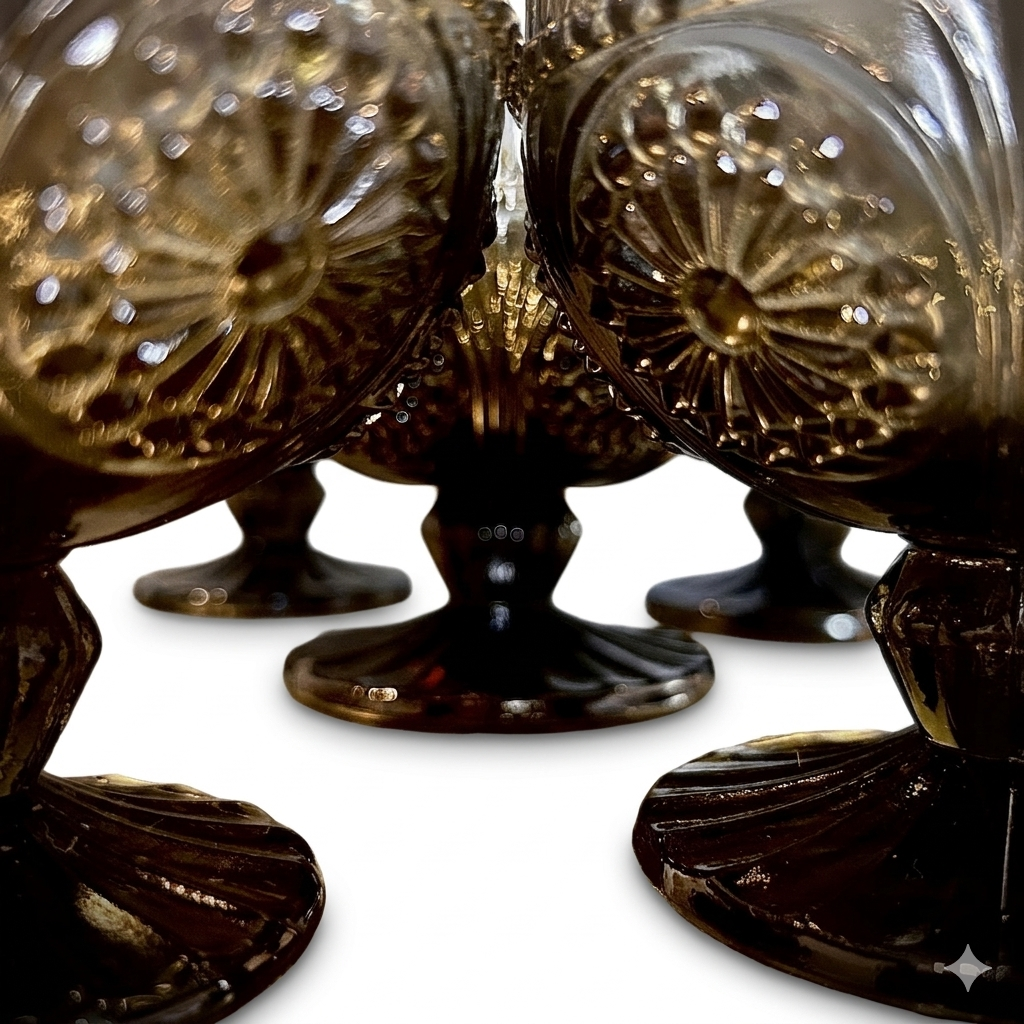
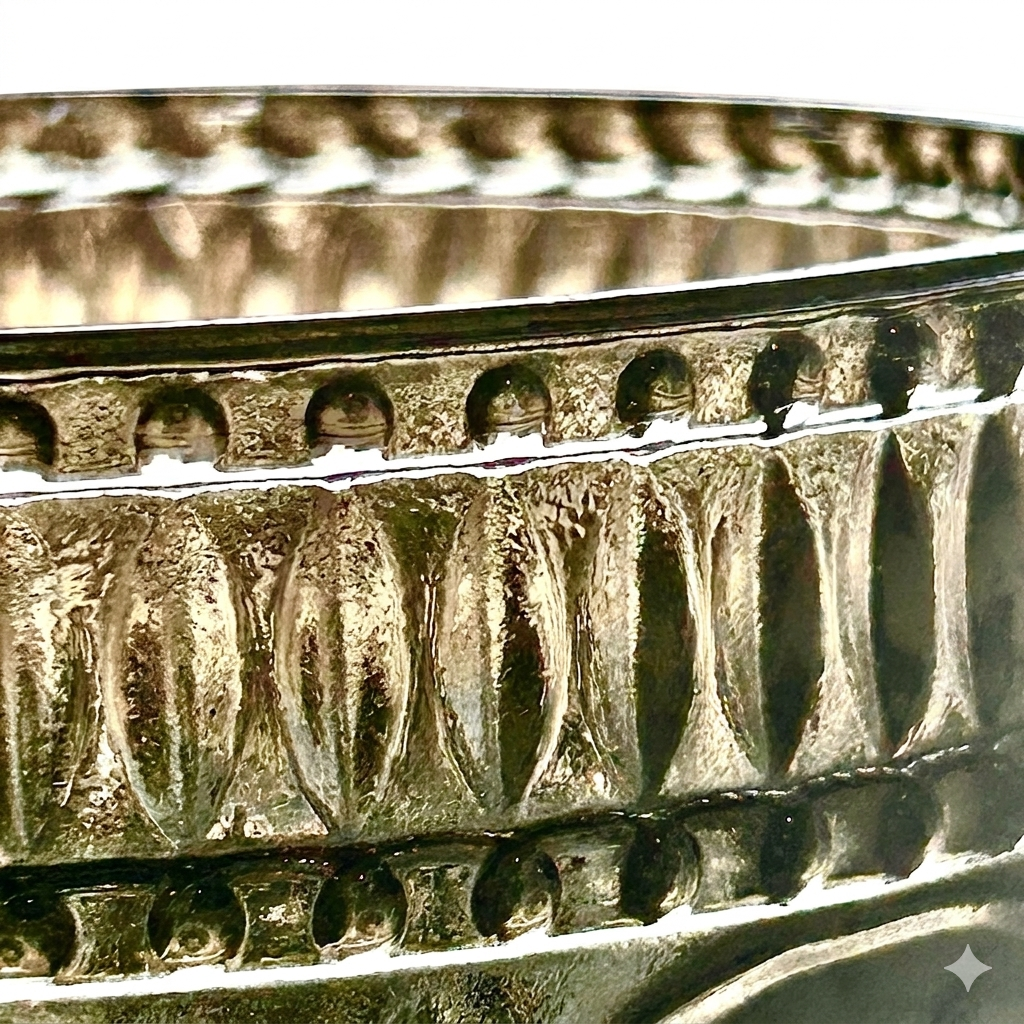
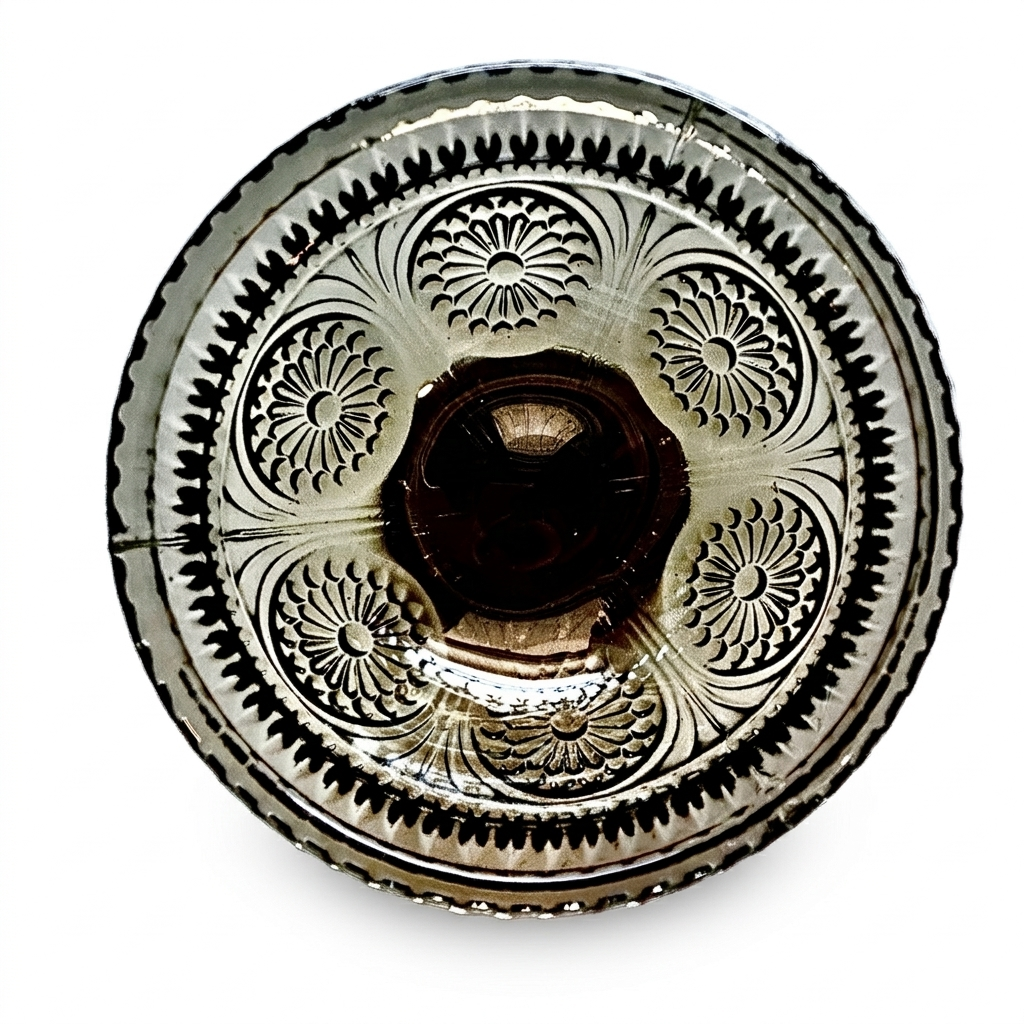
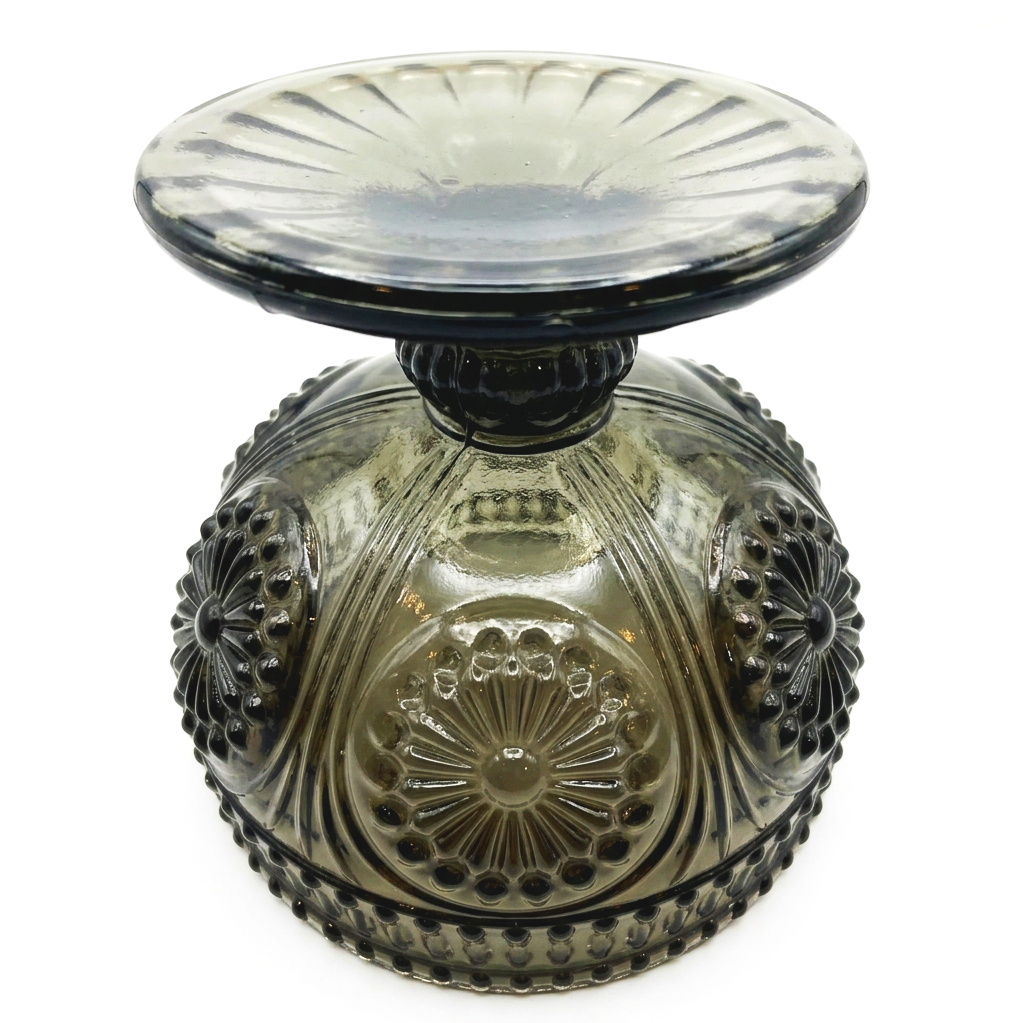
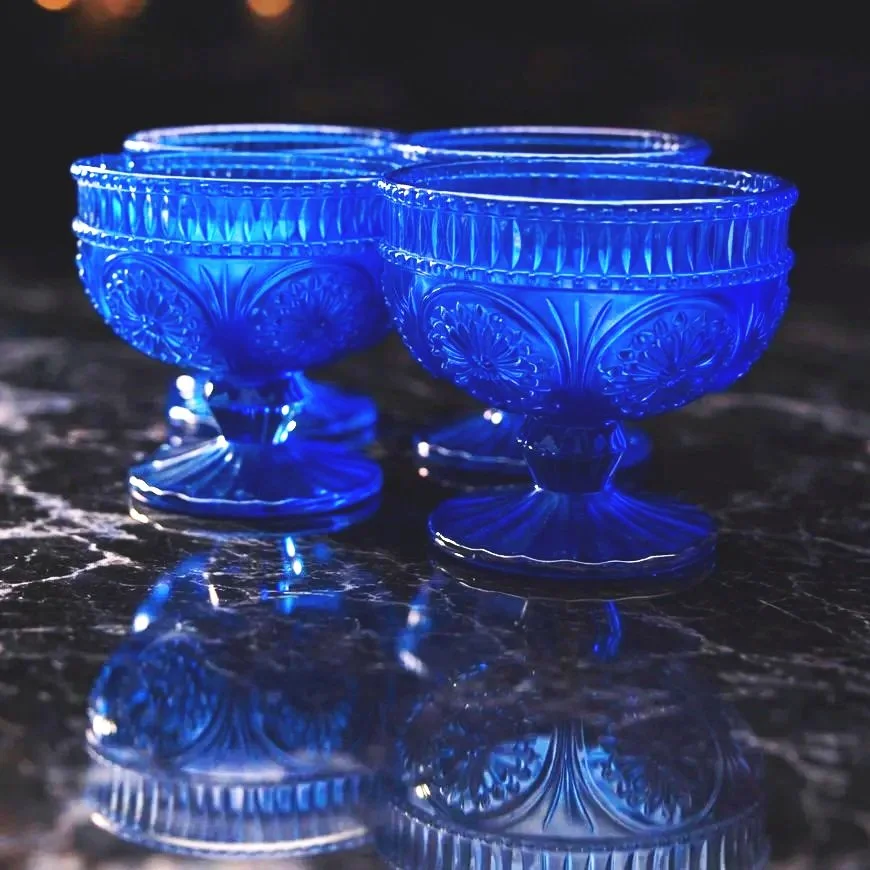
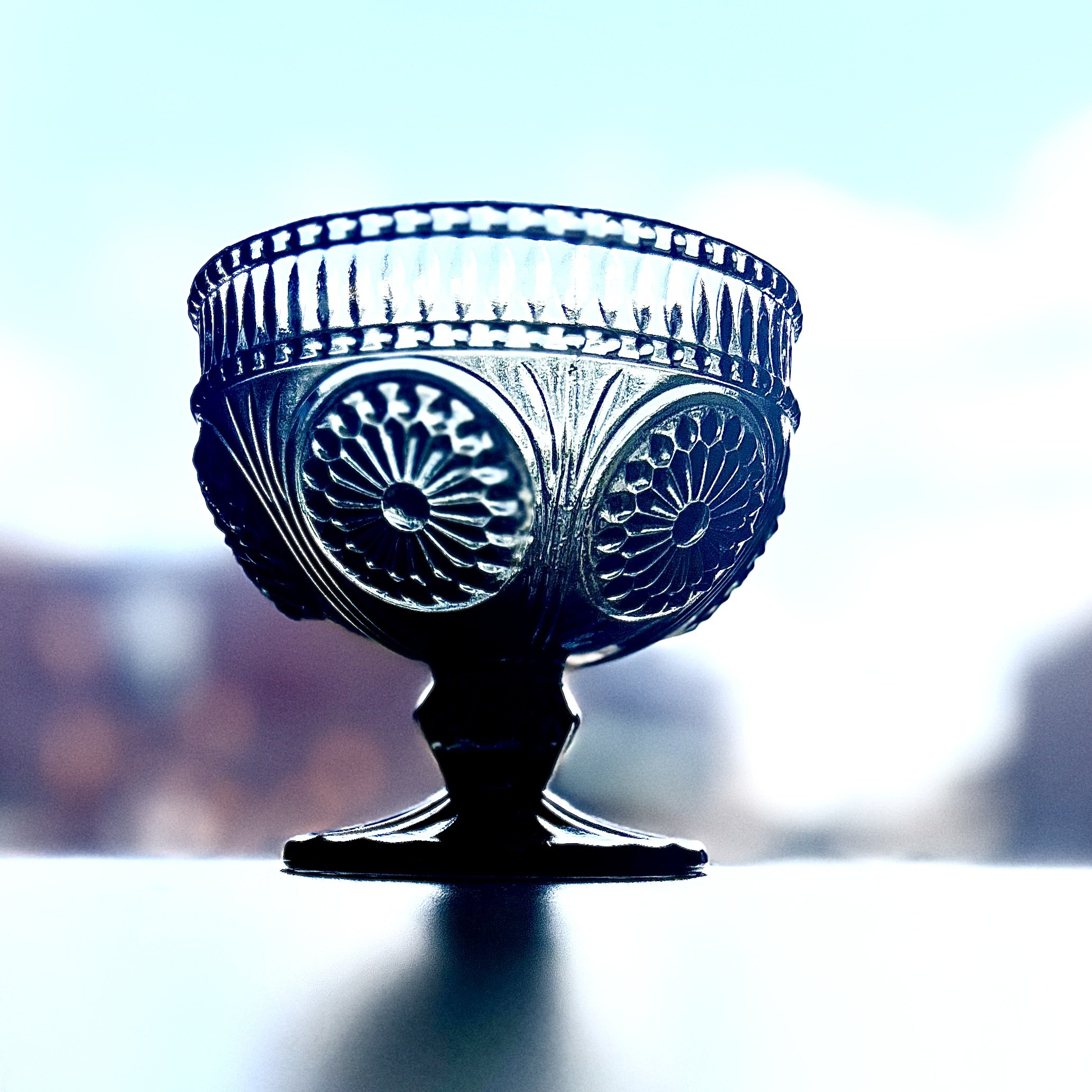
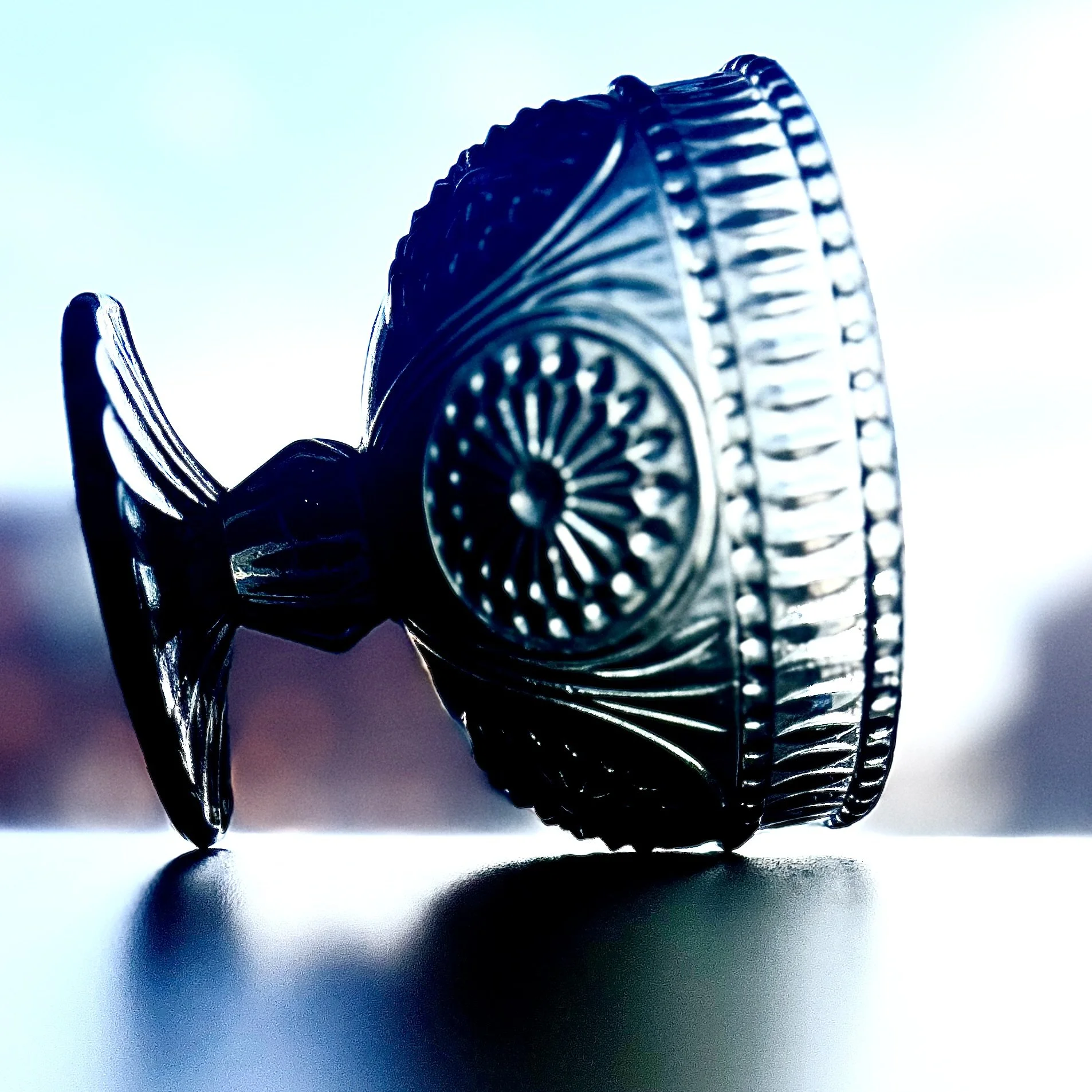
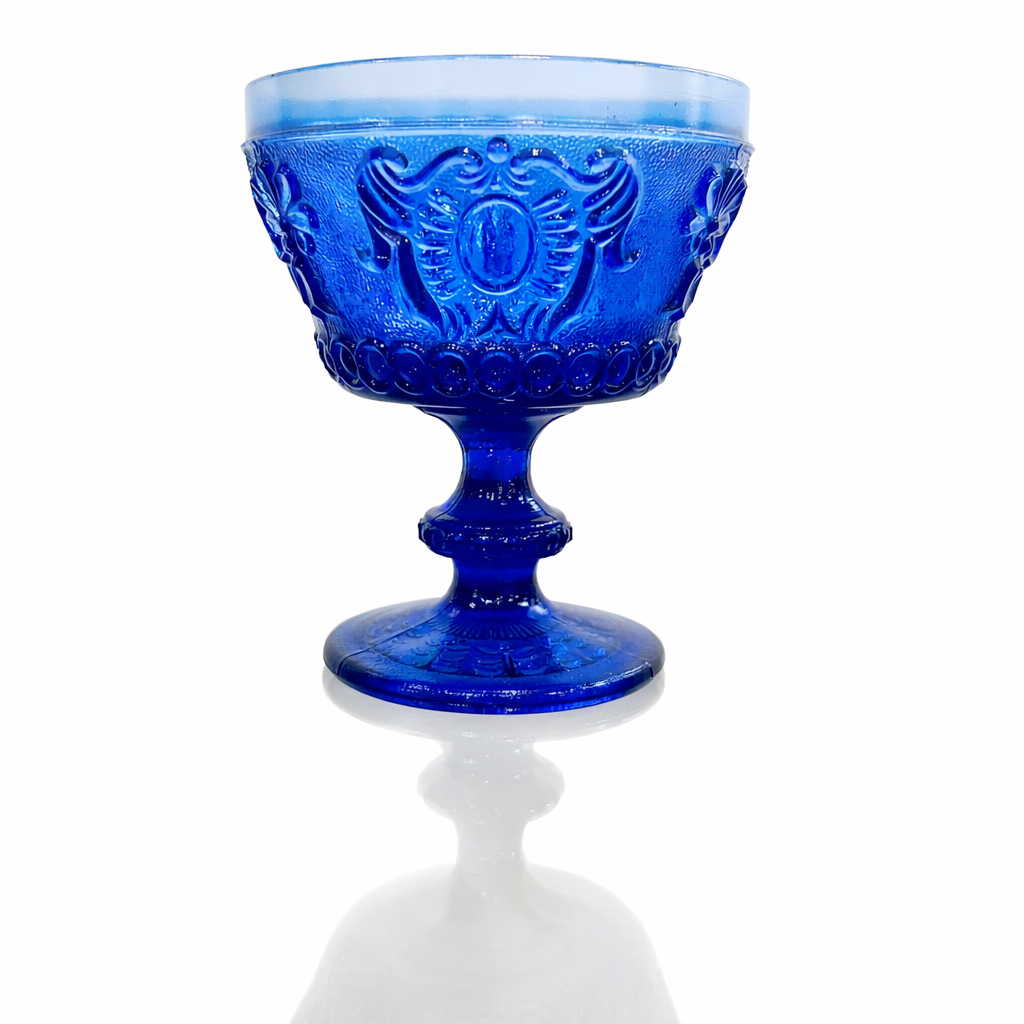
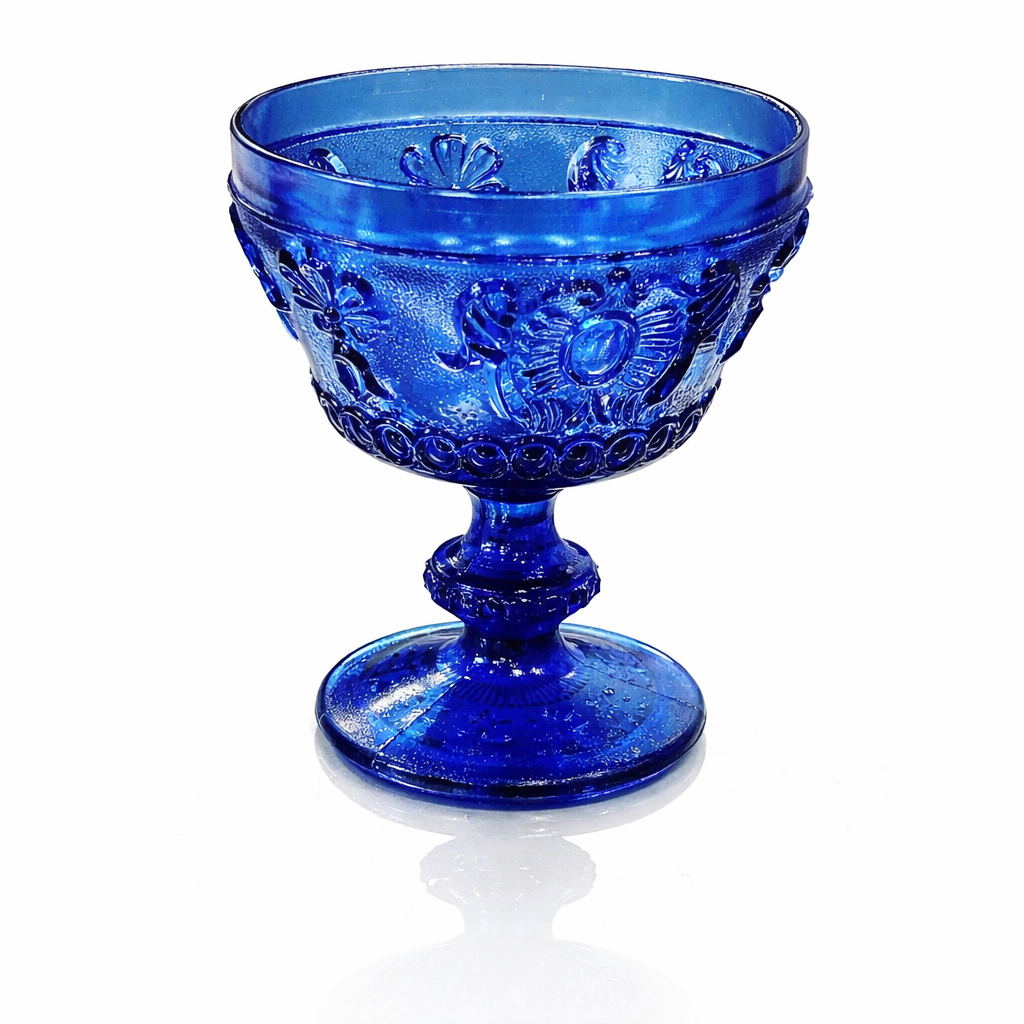
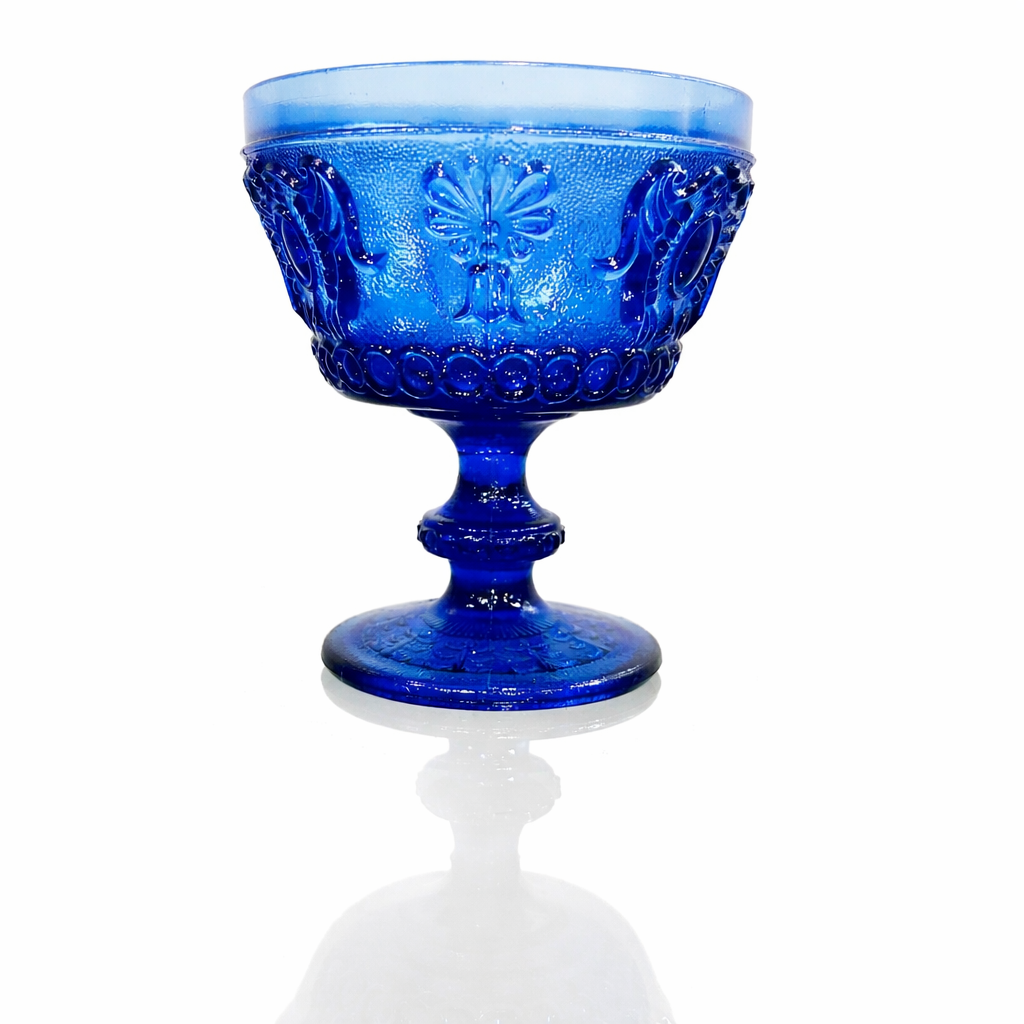
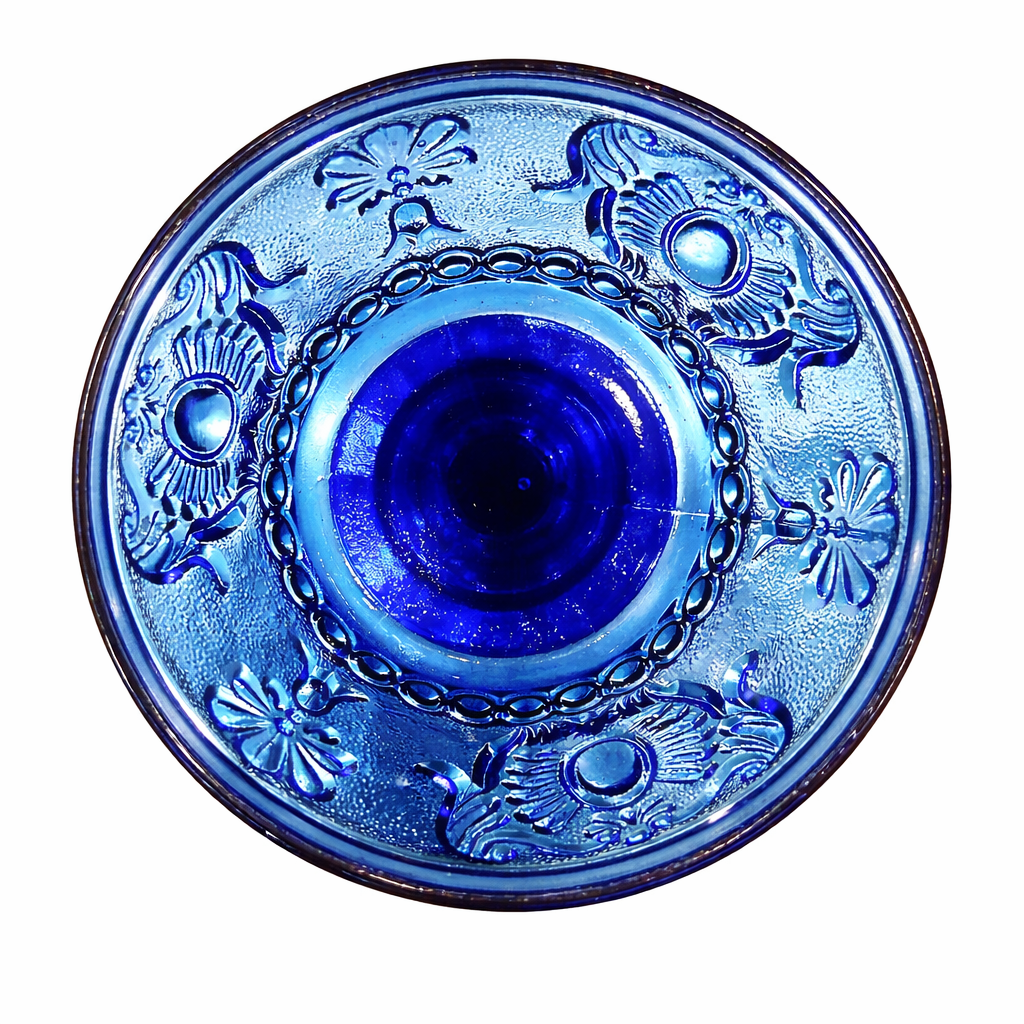
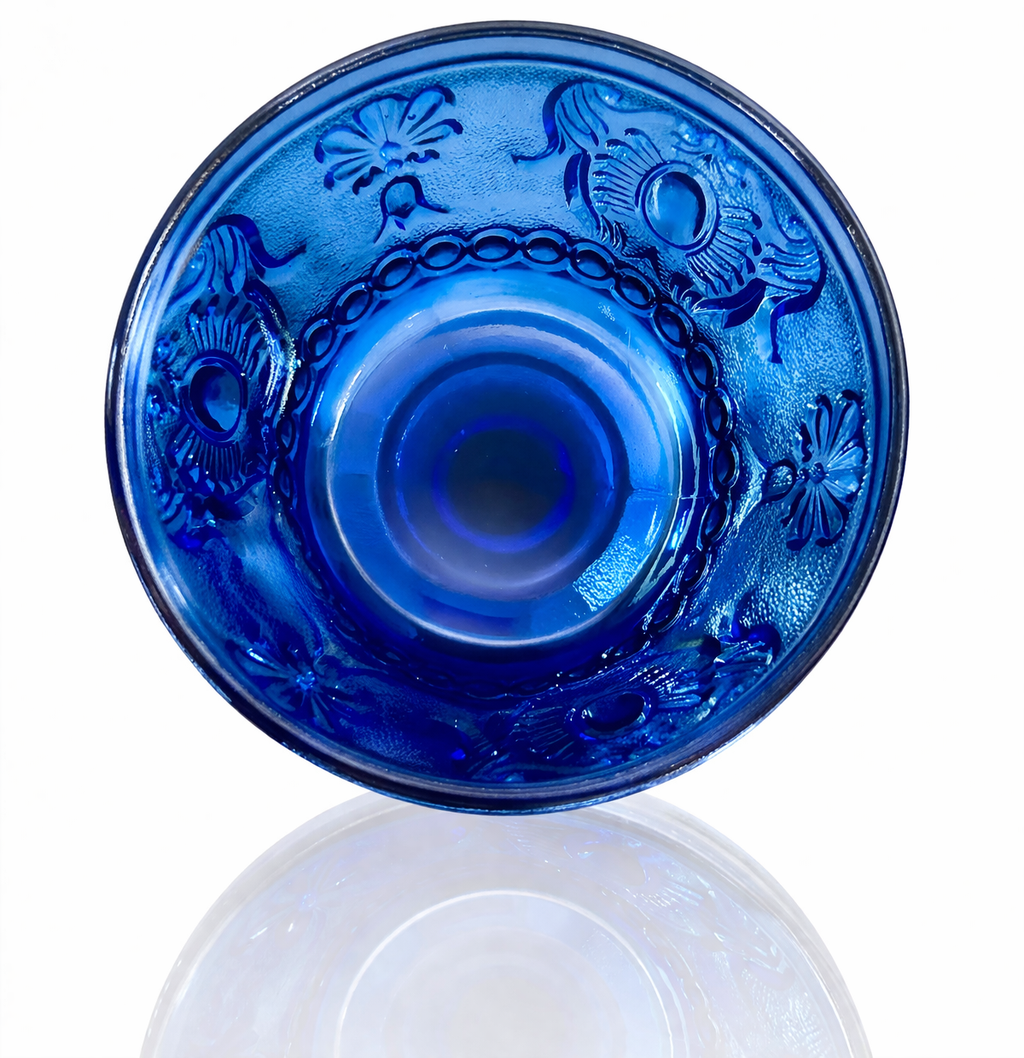
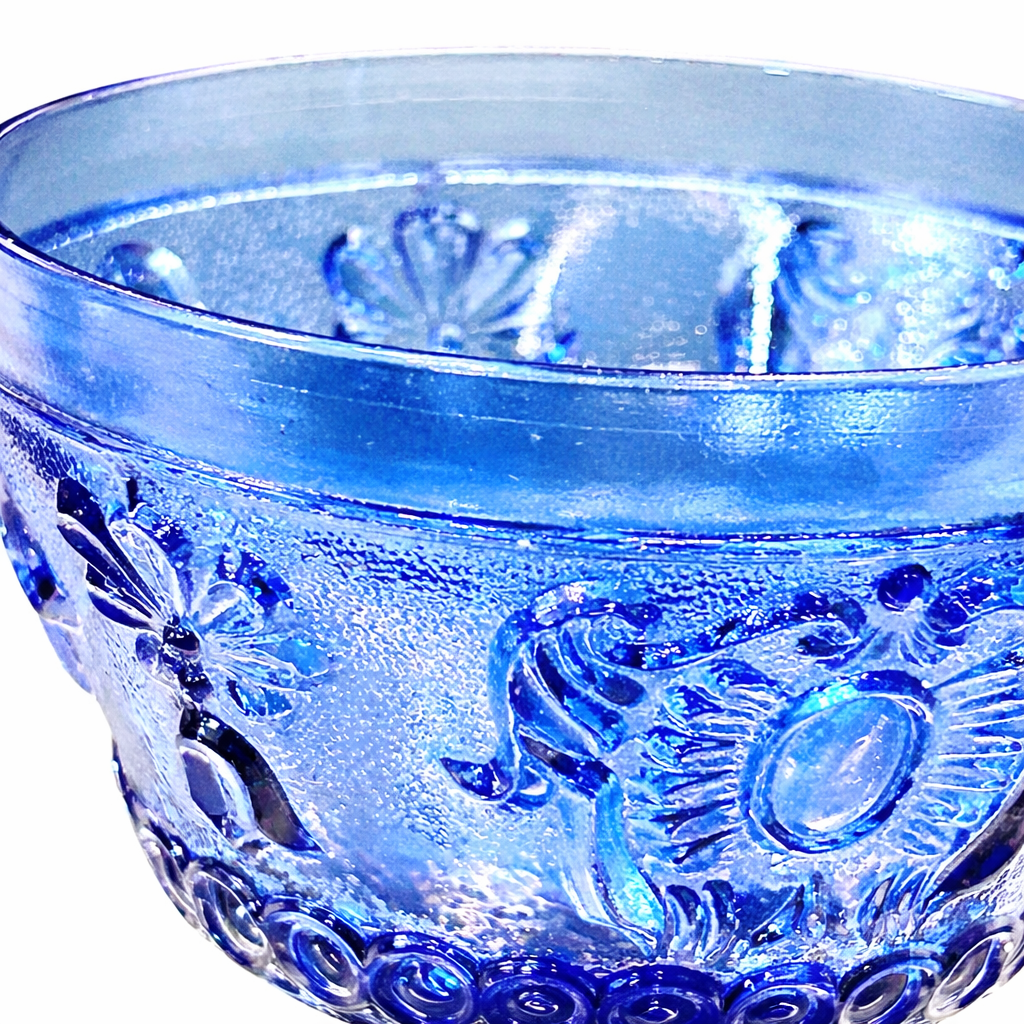
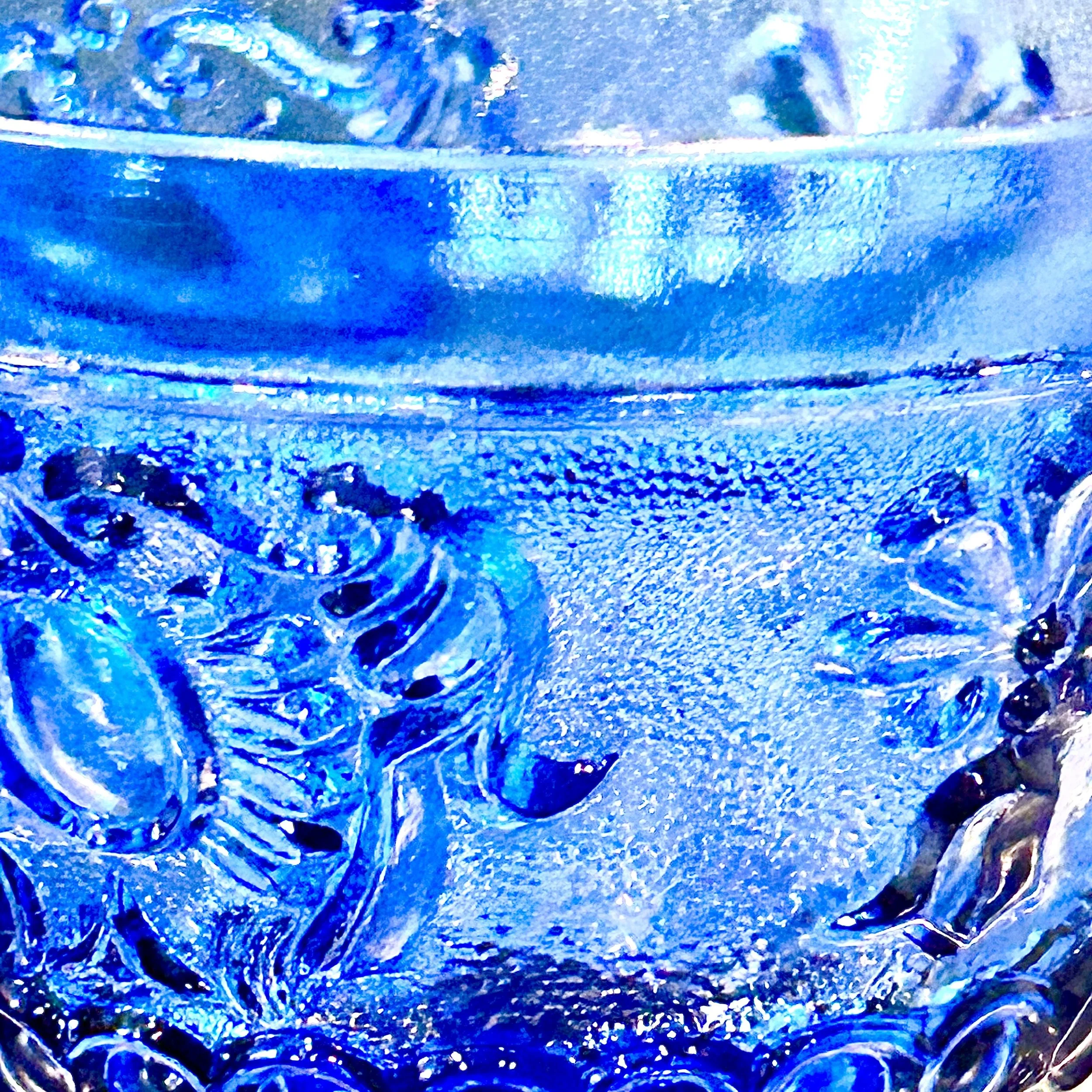
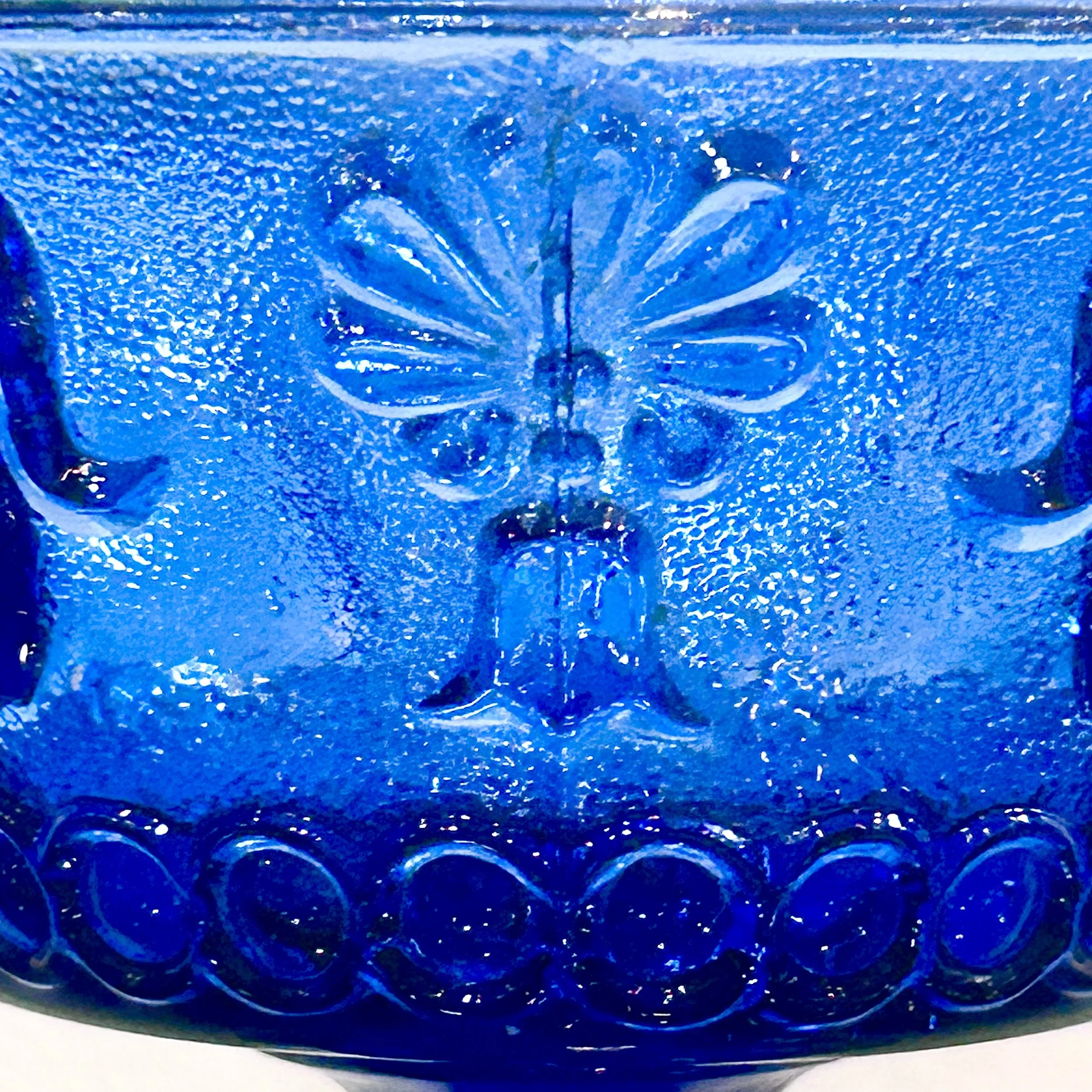
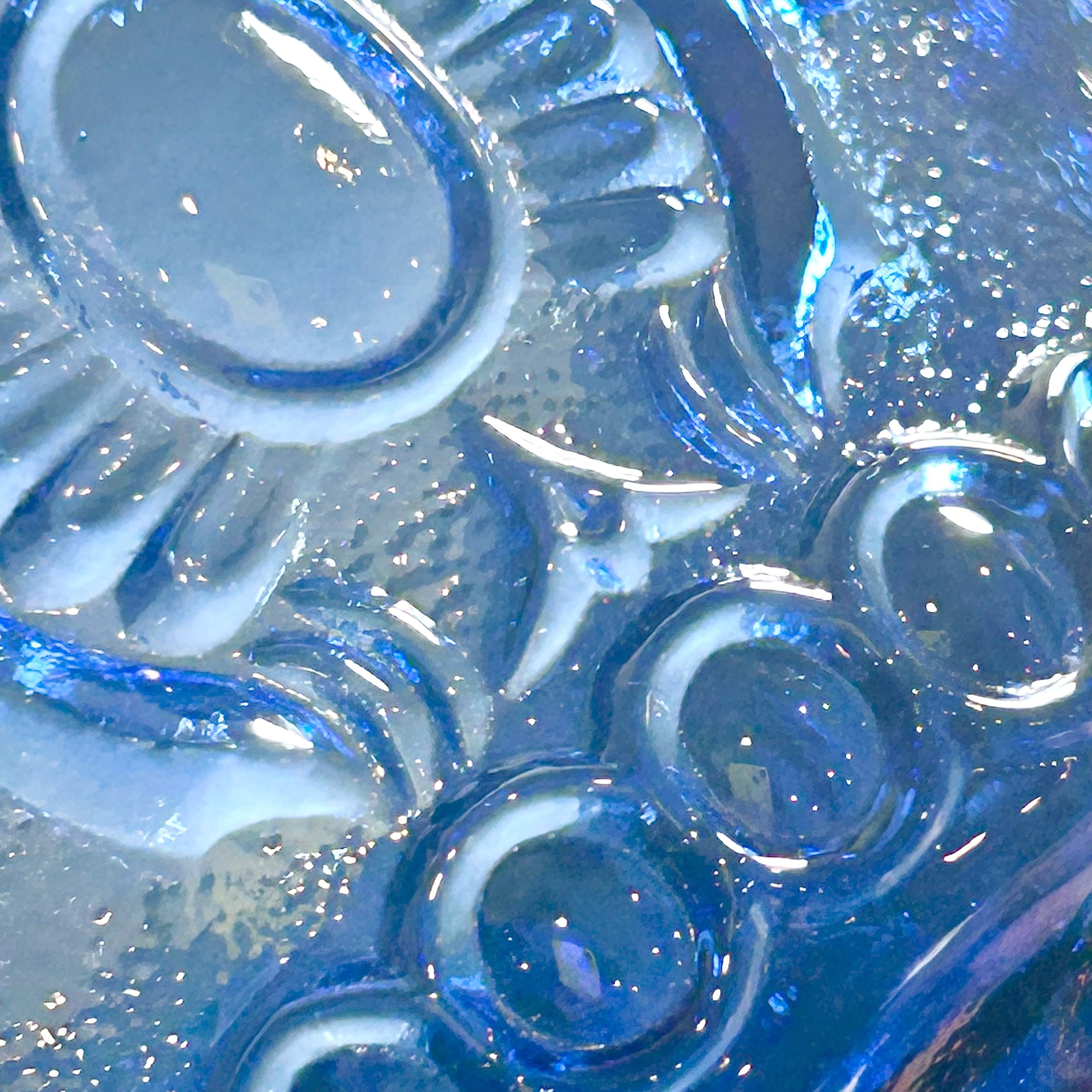
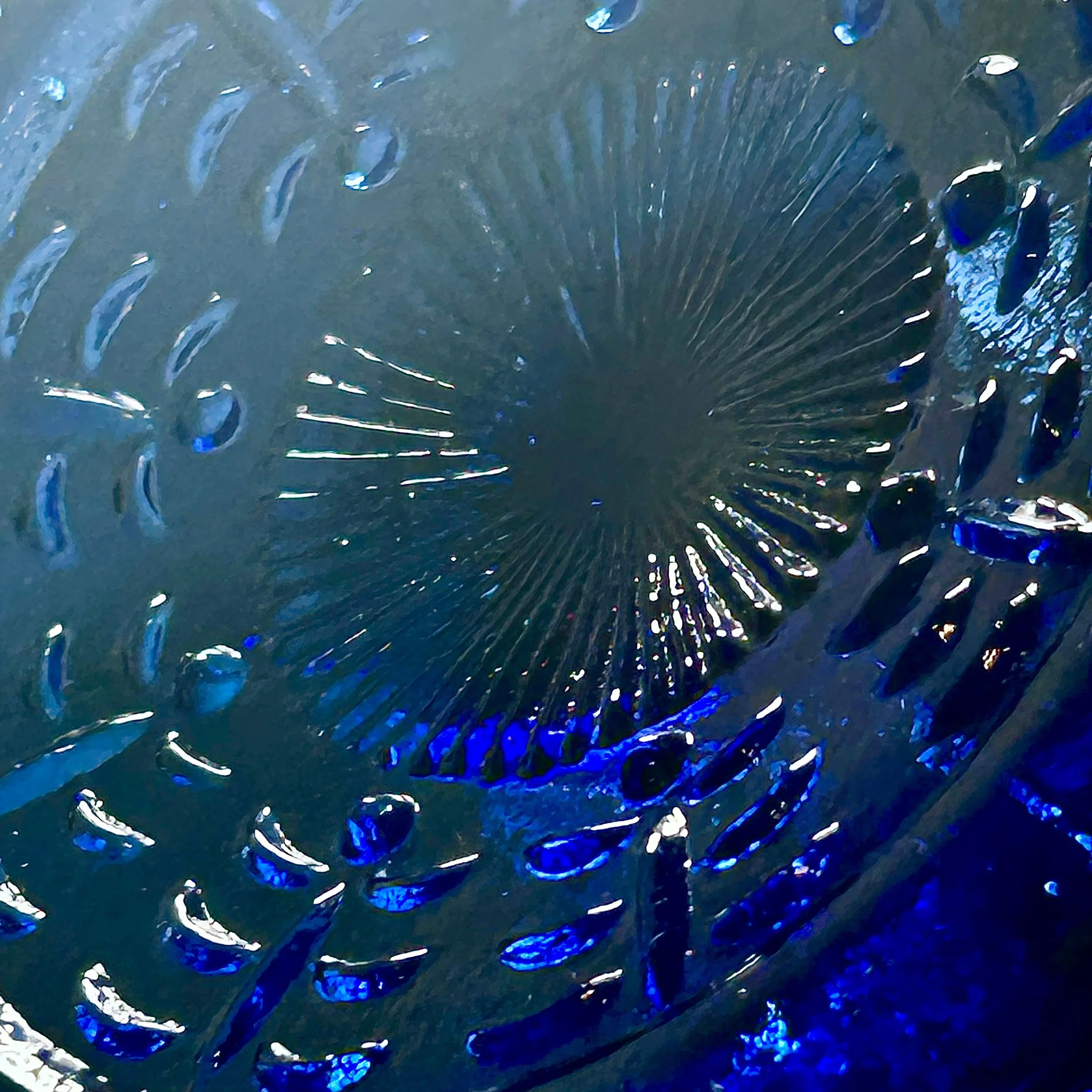
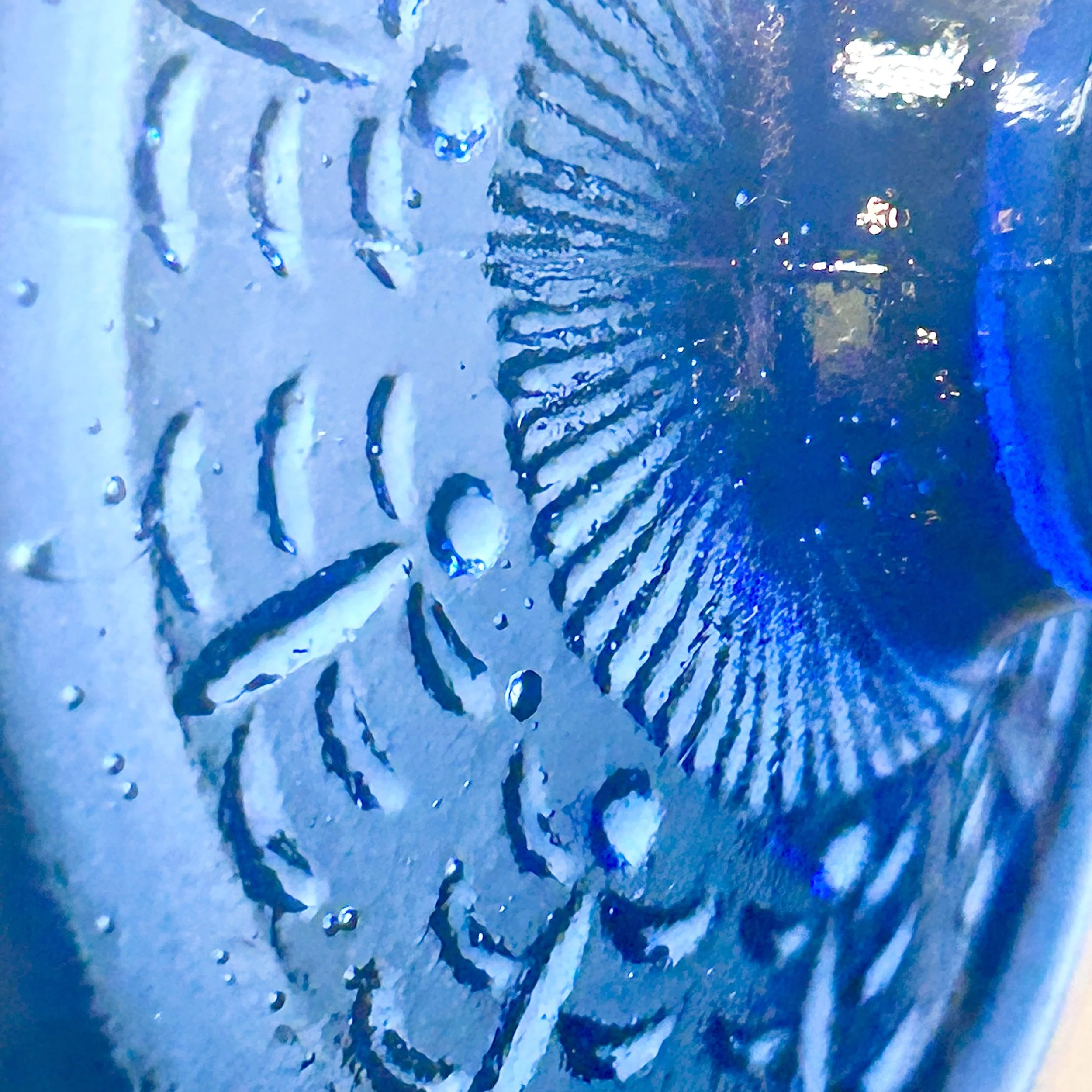
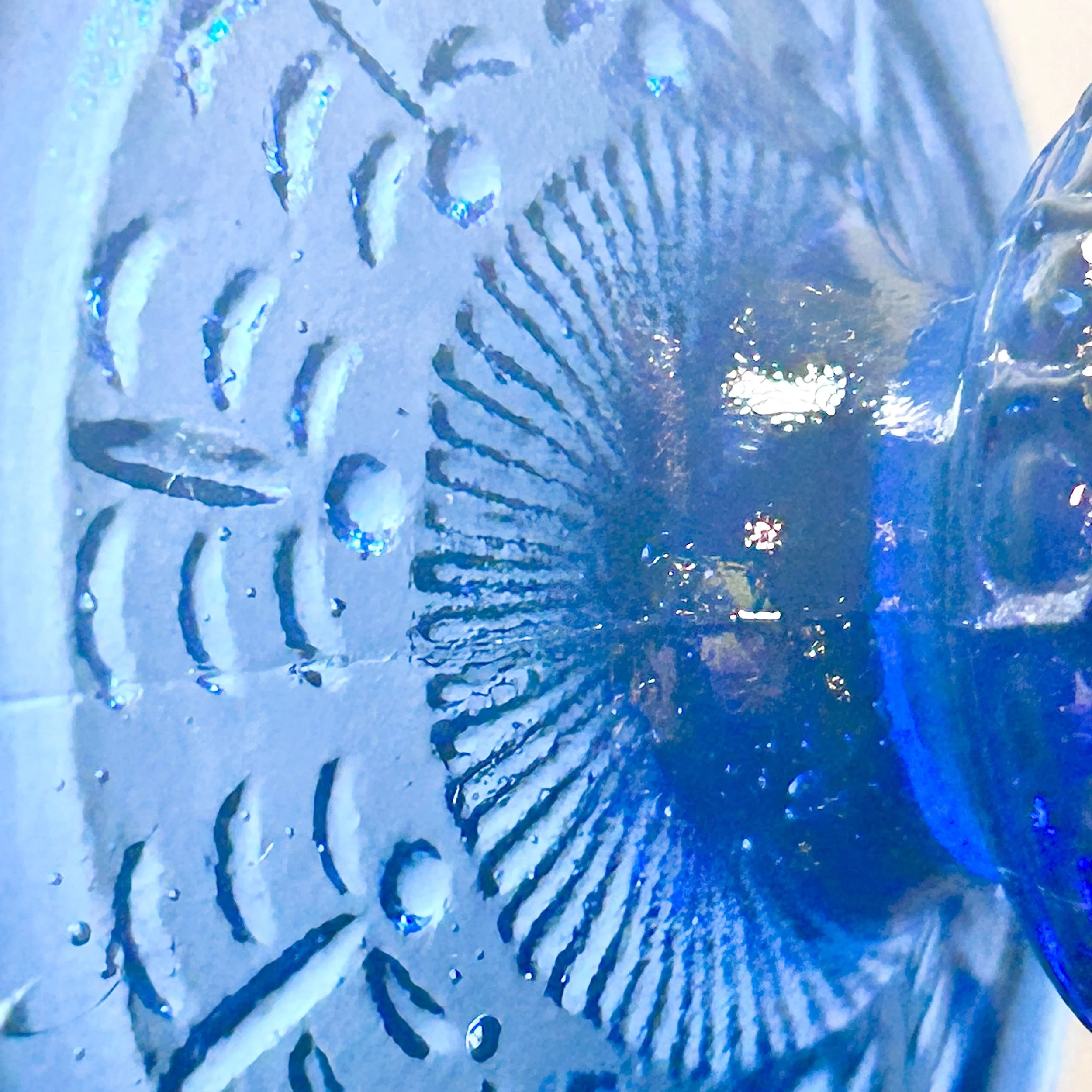
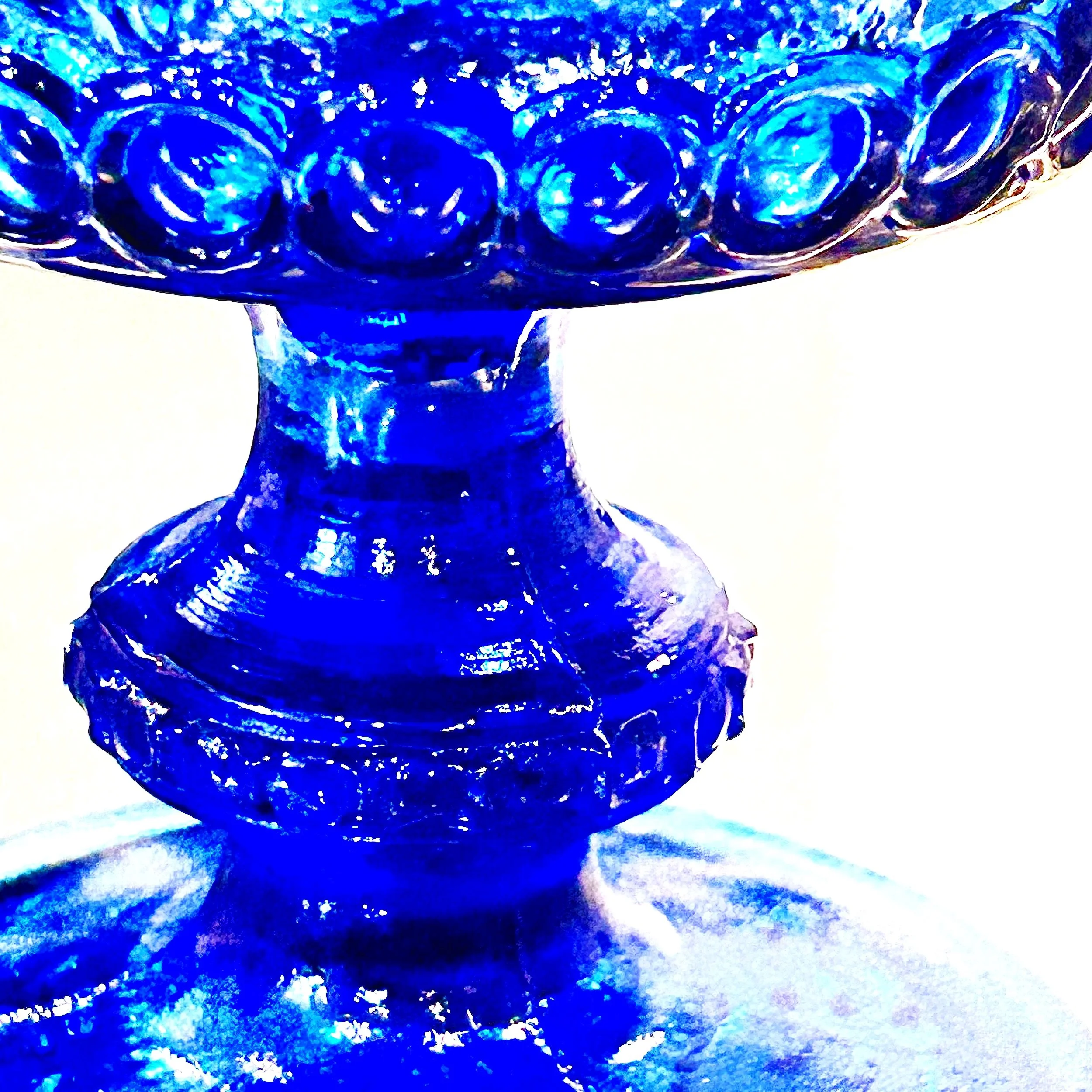
This exceptional service for four amethyst glass dessert coupes commands a striking sculptural presence, produced during the final decade of the historic L.E. Smith Glass Company. The thick, traditional pressed glass construction interacts dynamically with ambient light, casting rich violet and plum shadows across any surface. Featuring a wide, architectural bowl elevated by a sturdy, low-profile base, these vessels transcend their utilitarian origins to become compelling decorative objects. Their sophisticated color palette and tactile weight offer an interior-designer friendly accent perfect for elevating a contemporary tablescape or glass display case.
Attribution & Period
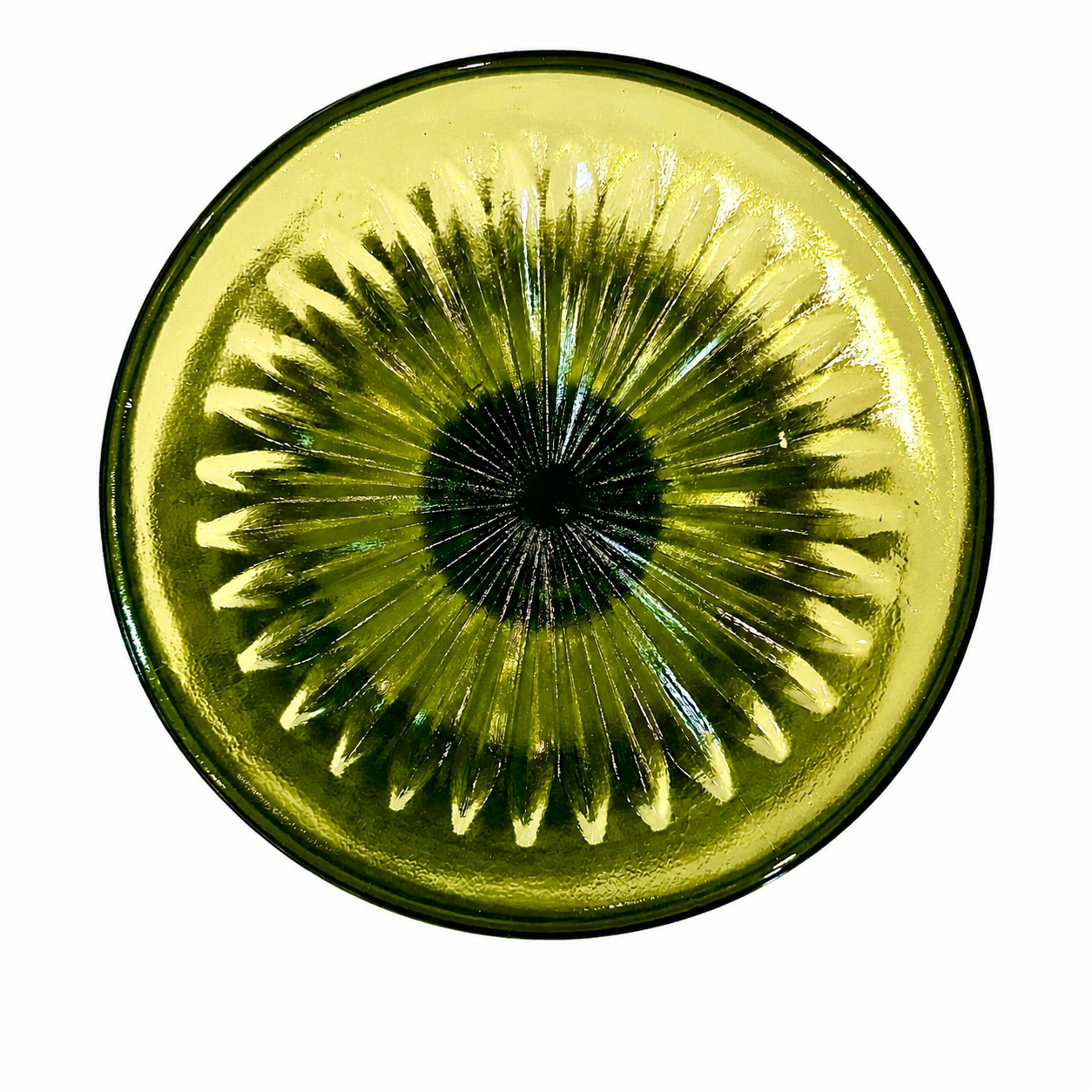
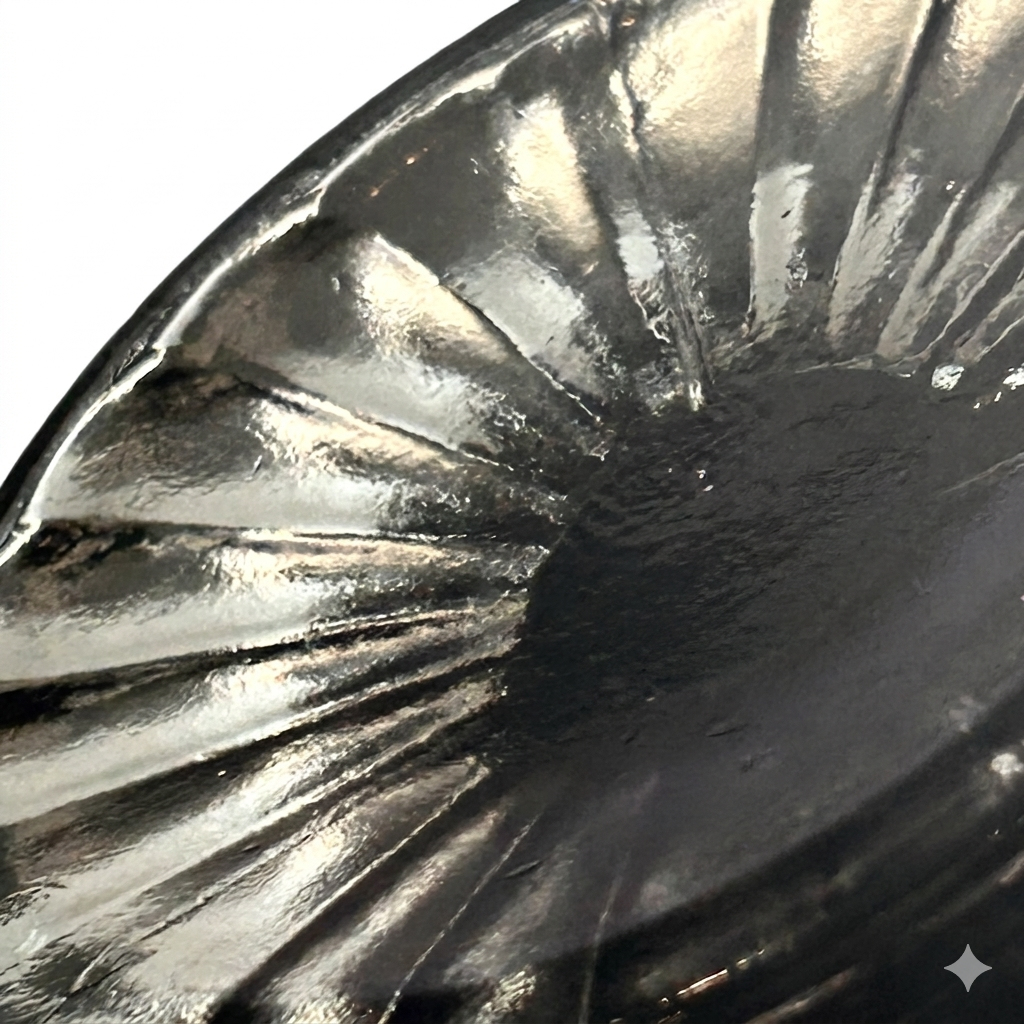
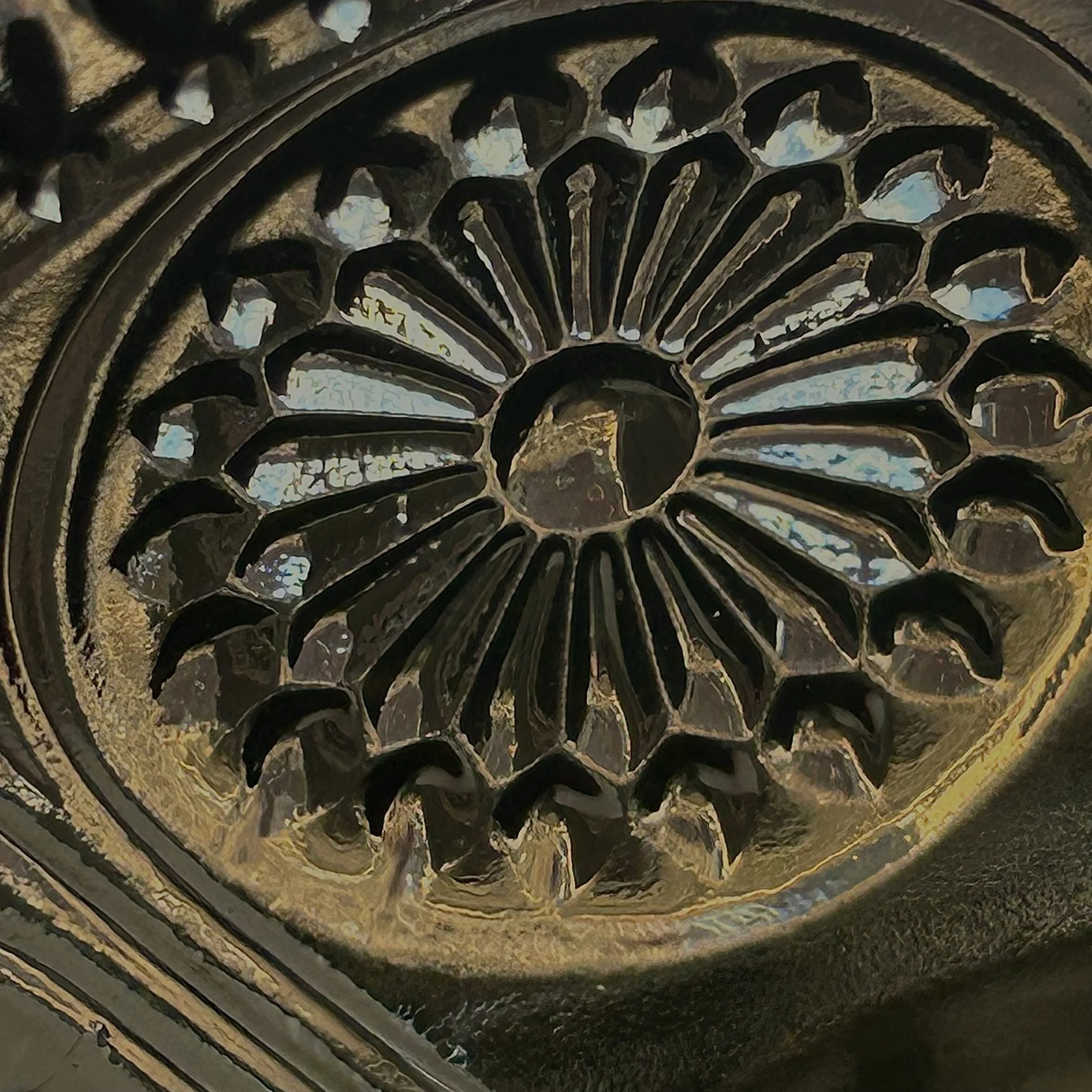
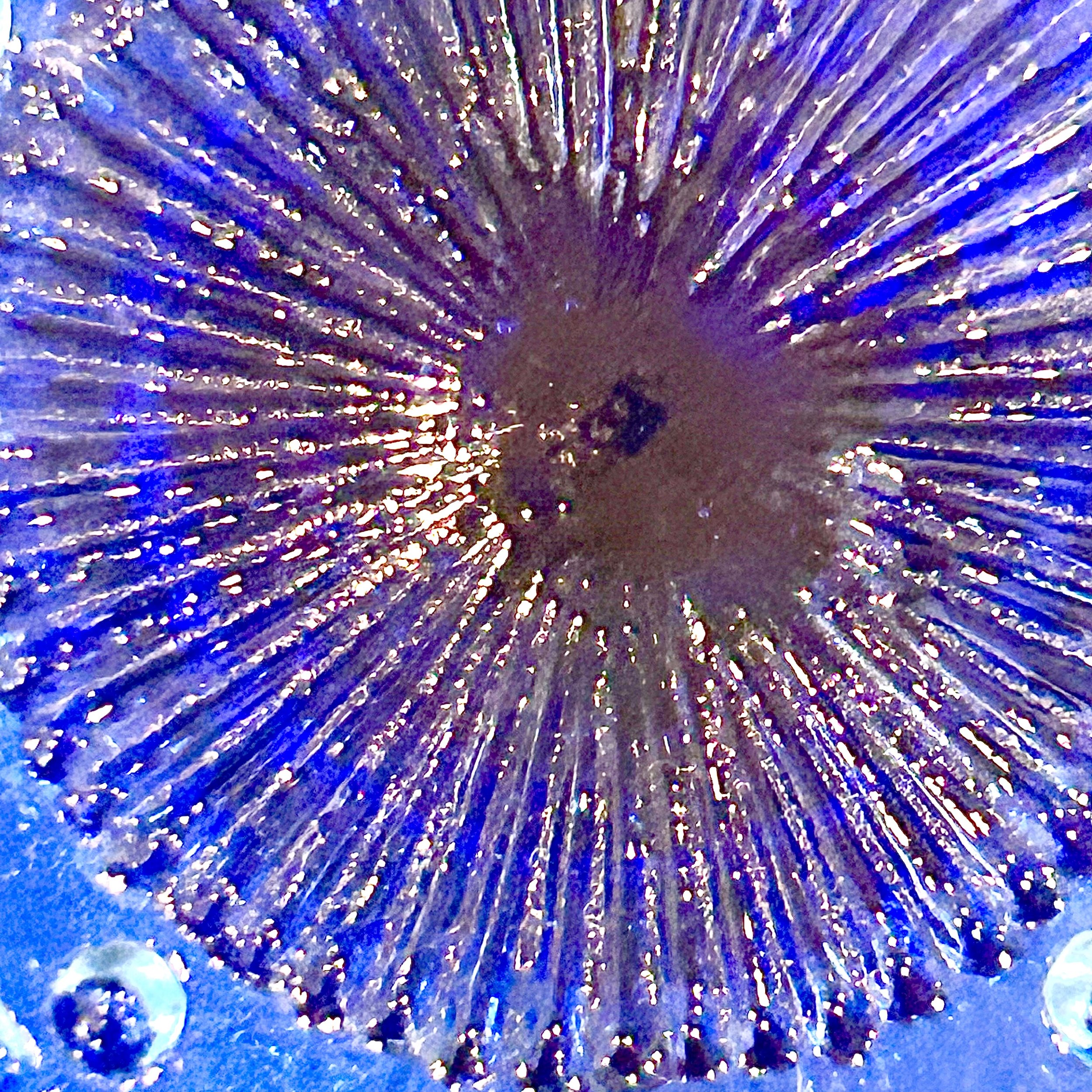
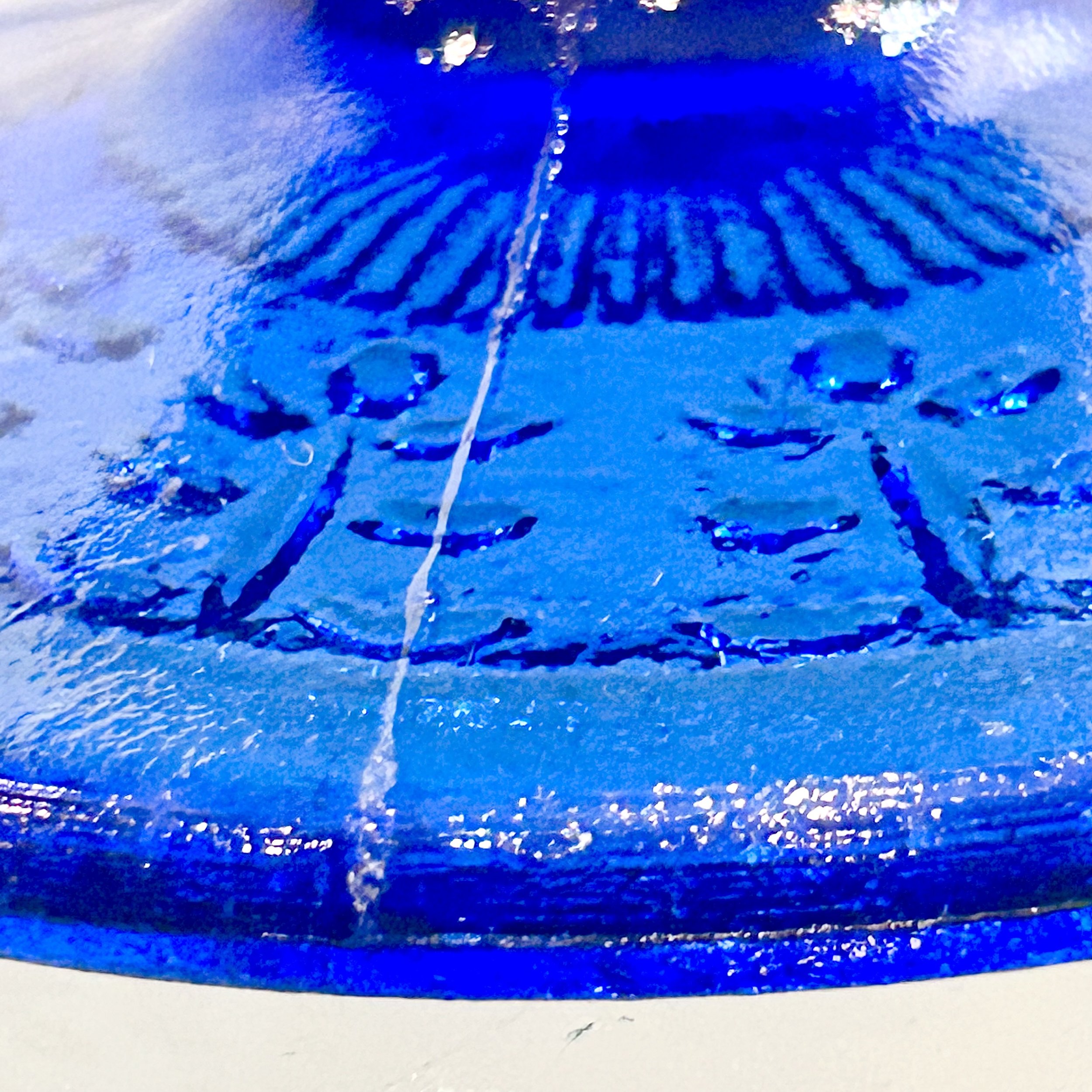
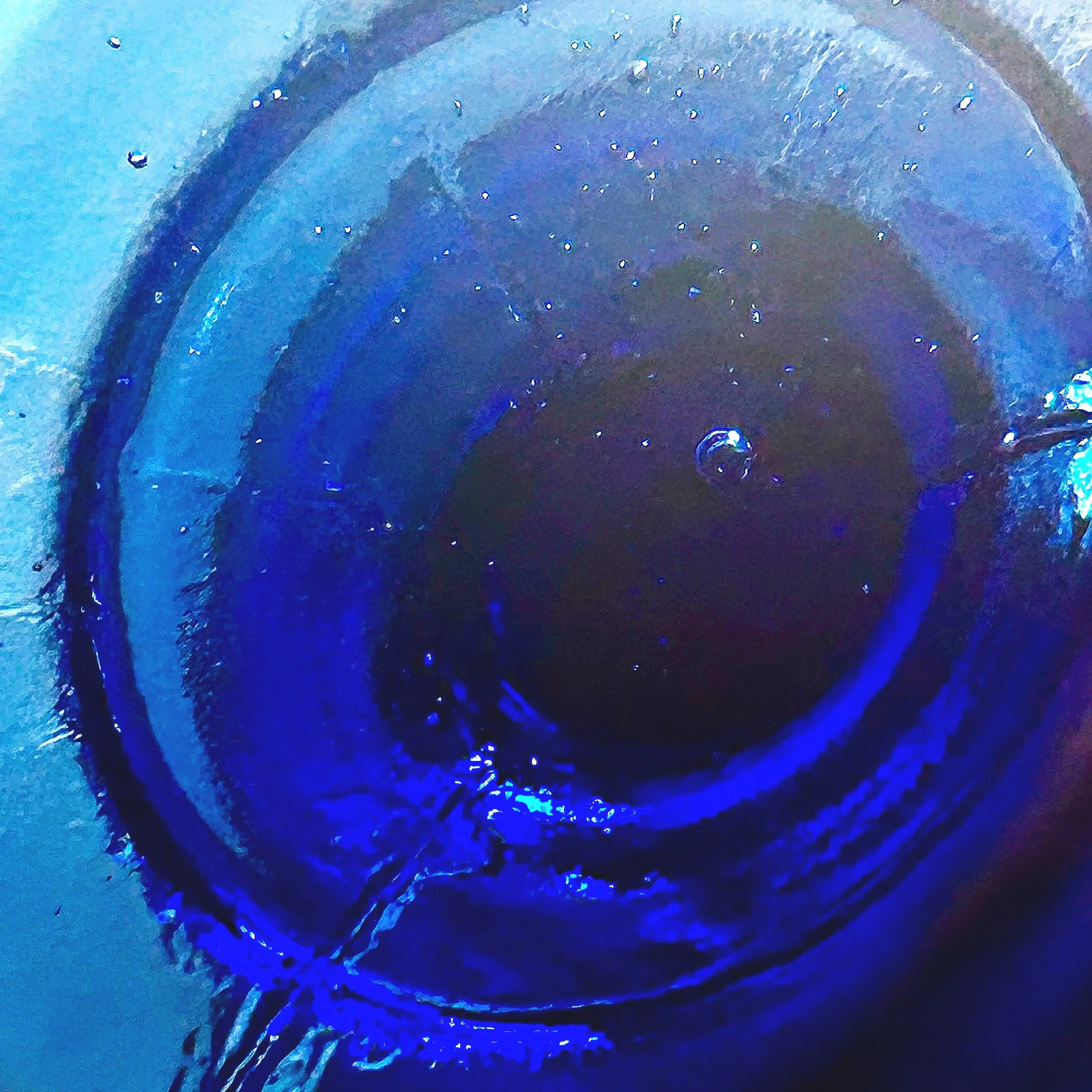
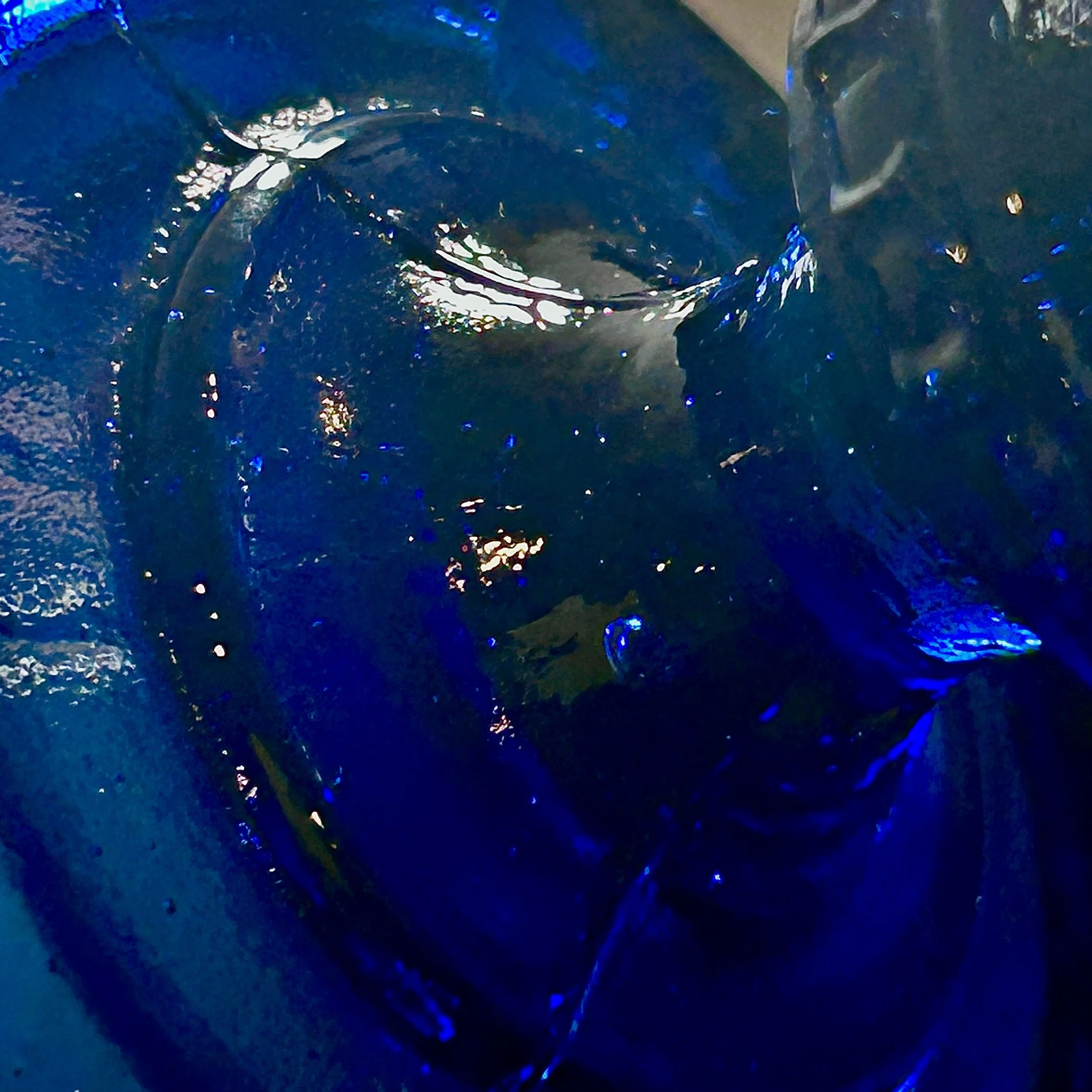
Officially marked heritage glassware. This set features the embossed cursive "S" on the underside of each base—a trademark introduced by the L.E. Smith Glass Company in 1997 and utilized until the historic Pennsylvania foundry closed in 2004. Highly collectible as a representation of the final years of American hand-pressed glass production, these coupes were pressed using multi-cavity industrial molds, indicated by the single and double-digit cavity numbers (1, 2, and 10) on the bases. Subtle variation in the plum-amethyst hue between the vessels showcases the authentic, traditional furnace batch-mixing process that defined Smith's legendary art glass runs.
Dimensions & Weight
• Height: 4.0 inches
• Width / Diameter: 4.6 inches
• Depth / Base Diameter: 3.0 inches
• Weight: 0.692 lbs (each)
Condition
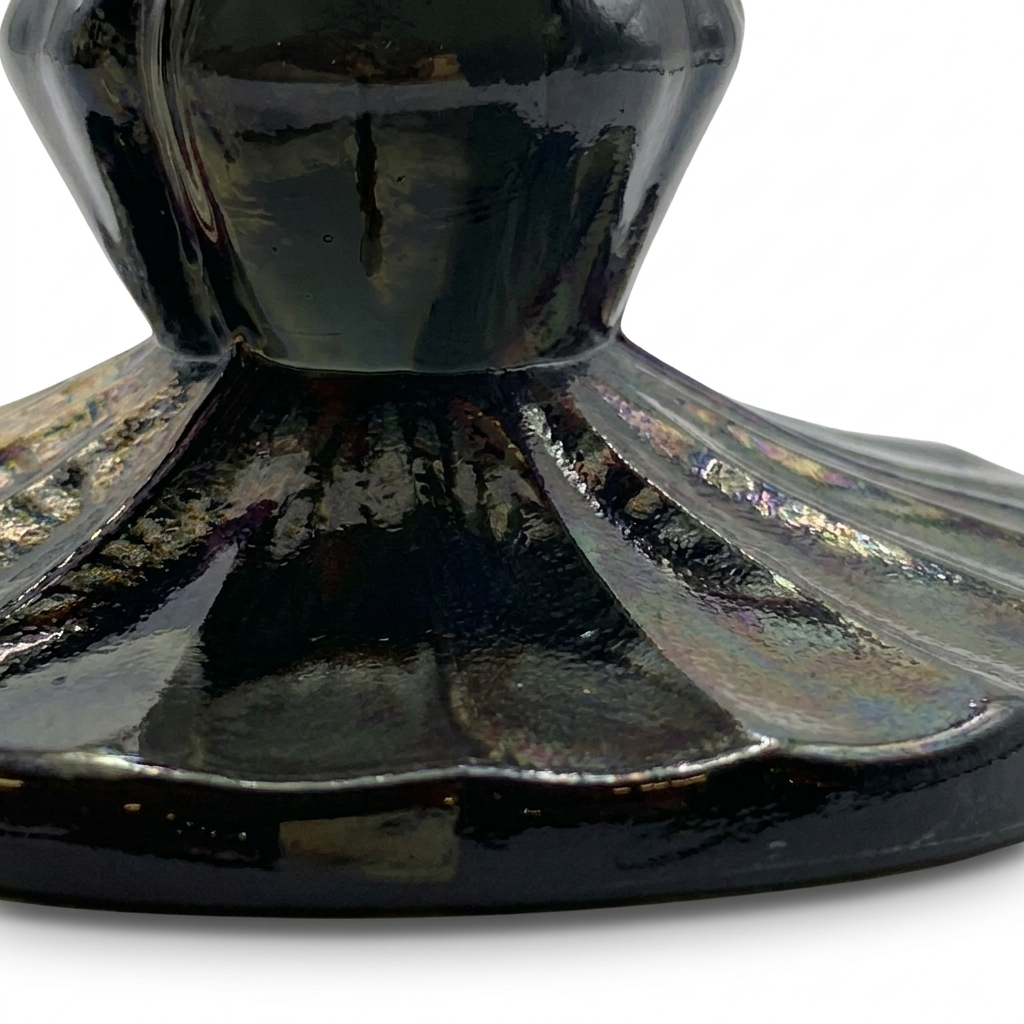
Clinical and direct condition report. The set is in good, collector-grade condition, showcasing a brilliant high-gloss polish and excellent clarity throughout. A singular, minor superficial scuff is present on the exterior wall of one glass, which does not disrupt the color continuity or structural integrity of the piece. No chips, fractures, or cracks are present along the rims or bases, and the interior bowls remain free of clouding or significant utensil scratching.
Authenticity & Construction
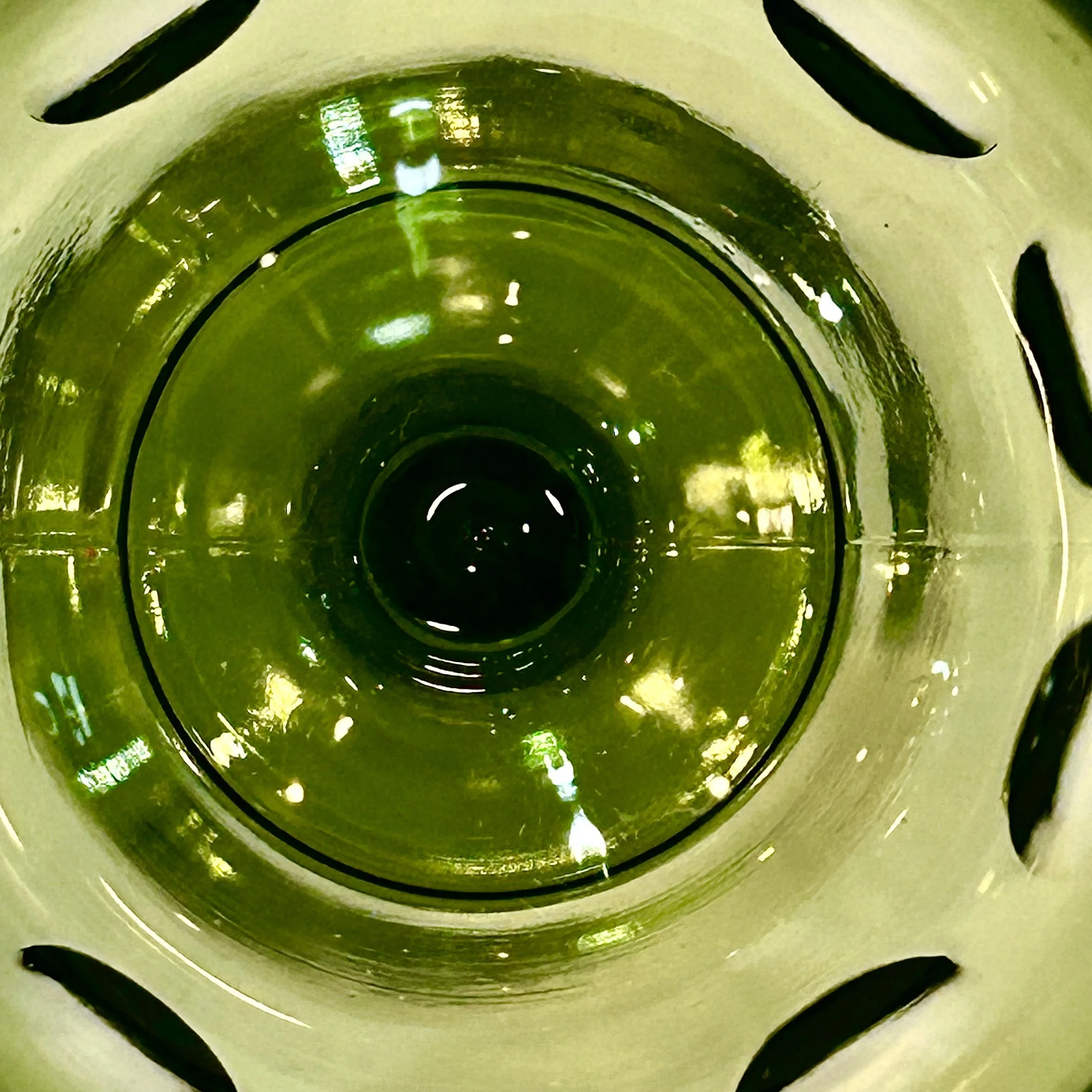
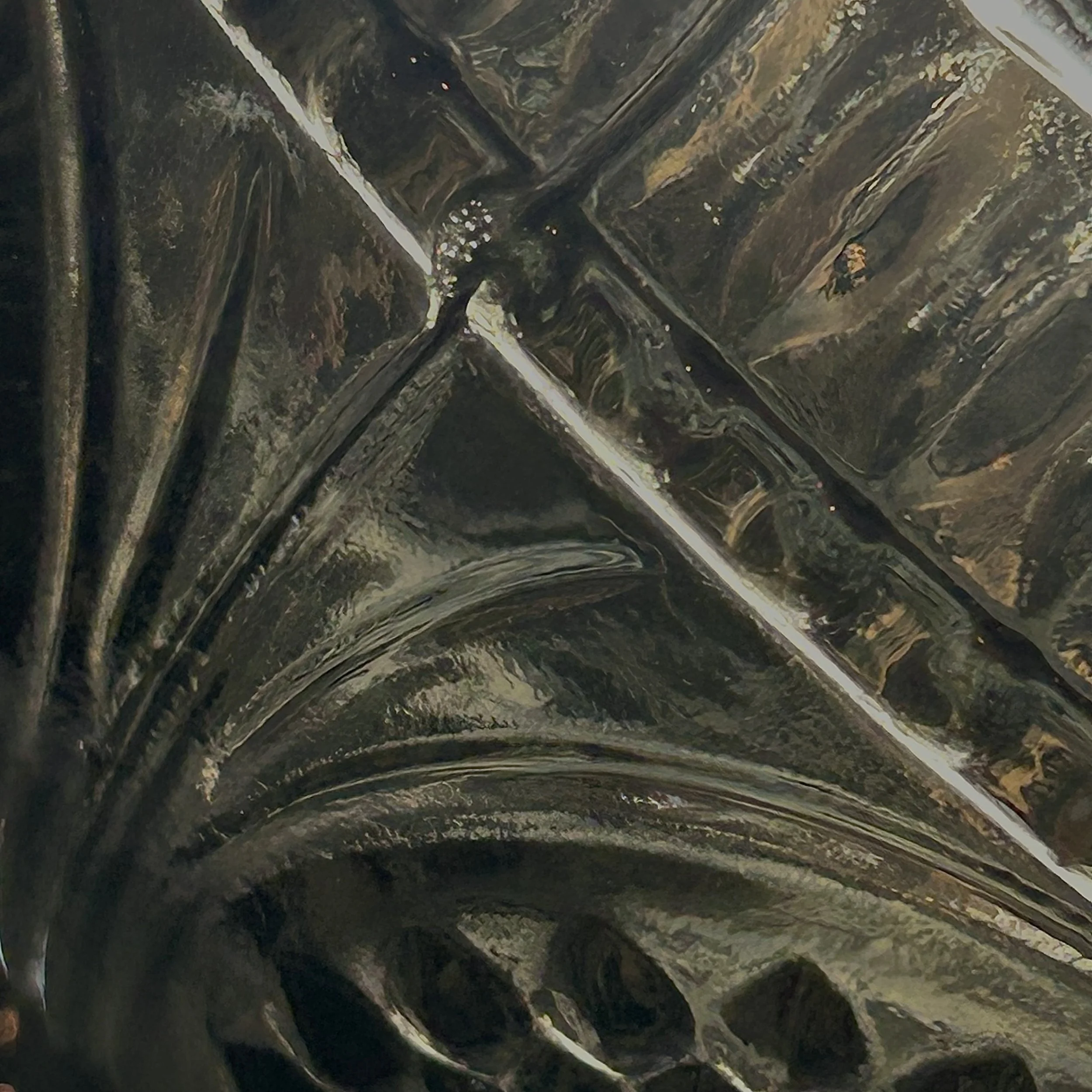
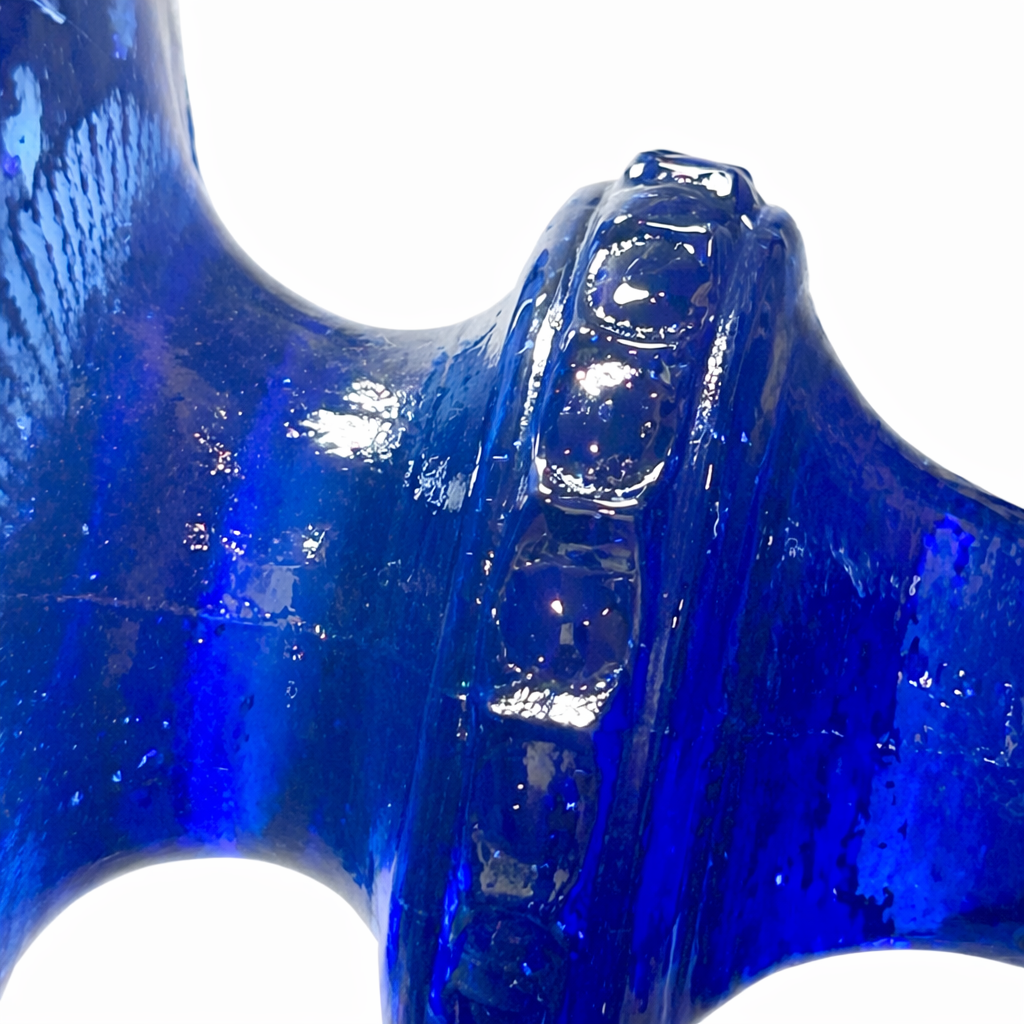
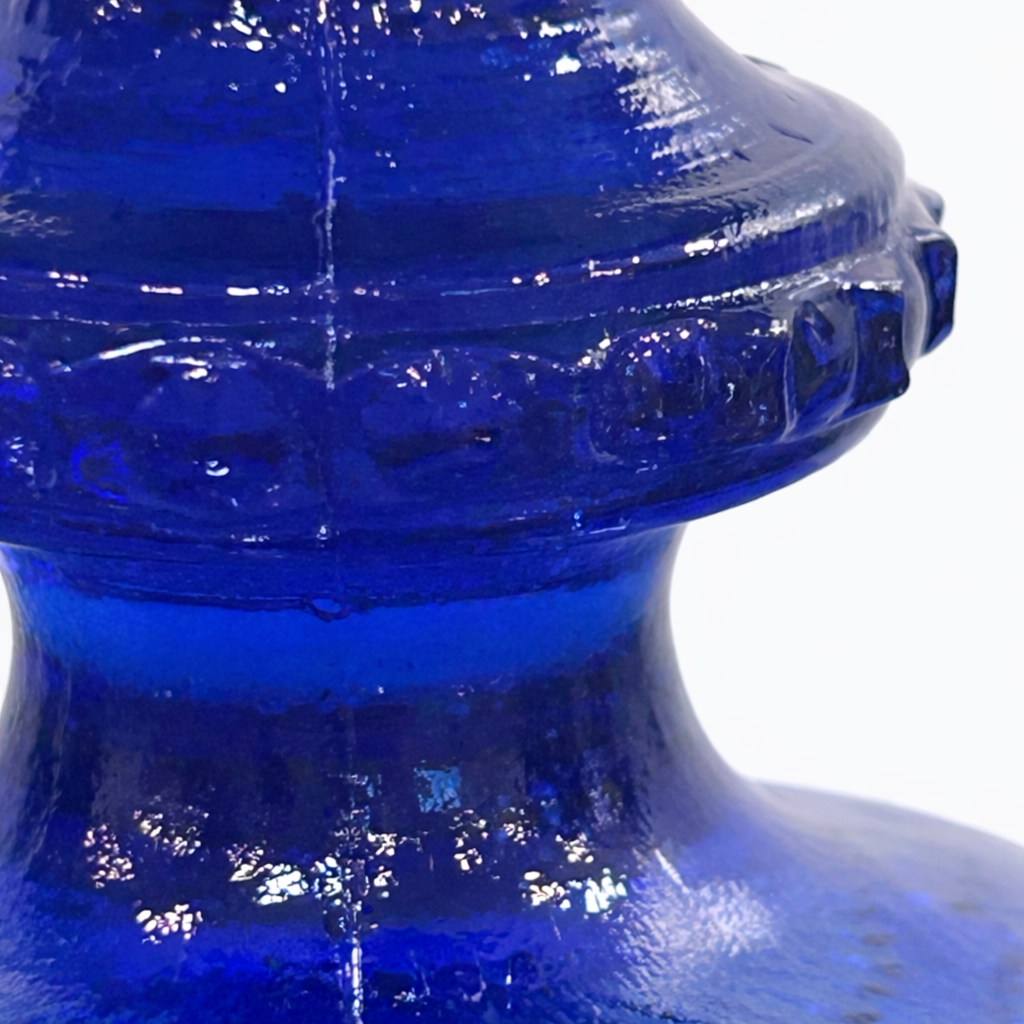
These vessels are exemplary specimens of late-20th-century American pressed glass engineering, where molten amethyst glass was pressed into highly articulated multi-part steel molds. This process is documented by the subtle, clean mold seams running vertically down the sides of each piece. The heavy weight and deliberate thickness of the glass maximize the refraction of light through the faceted panels, illustrating the durable yet luxurious medium that made L.E. Smith a household name in American decorative arts.
Placement
An exceptional addition to an open-concept kitchen shelf, styled within a backlit brutalist cabinet, or arranged as a vibrant pop of color on a modern travertine dining table.
STANDARD ATTRIBUTION & VALUE DISCLOSURE; This piece is described to the best of current scholarly and market knowledge. Attribution is verified by the embossed manufacturer's mark on the underside of the base. Pricing reflects the verified maker status, condition, quality, decorative appeal, and current collector demand for late-era American glasshouse production.
This exceptional service for four amethyst glass dessert coupes commands a striking sculptural presence, produced during the final decade of the historic L.E. Smith Glass Company. The thick, traditional pressed glass construction interacts dynamically with ambient light, casting rich violet and plum shadows across any surface. Featuring a wide, architectural bowl elevated by a sturdy, low-profile base, these vessels transcend their utilitarian origins to become compelling decorative objects. Their sophisticated color palette and tactile weight offer an interior-designer friendly accent perfect for elevating a contemporary tablescape or glass display case.
Attribution & Period
Officially marked heritage glassware. This set features the embossed cursive "S" on the underside of each base—a trademark introduced by the L.E. Smith Glass Company in 1997 and utilized until the historic Pennsylvania foundry closed in 2004. Highly collectible as a representation of the final years of American hand-pressed glass production, these coupes were pressed using multi-cavity industrial molds, indicated by the single and double-digit cavity numbers (1, 2, and 10) on the bases. Subtle variation in the plum-amethyst hue between the vessels showcases the authentic, traditional furnace batch-mixing process that defined Smith's legendary art glass runs.
Dimensions & Weight
• Height: 4.0 inches
• Width / Diameter: 4.6 inches
• Depth / Base Diameter: 3.0 inches
• Weight: 0.692 lbs (each)
Condition
Clinical and direct condition report. The set is in good, collector-grade condition, showcasing a brilliant high-gloss polish and excellent clarity throughout. A singular, minor superficial scuff is present on the exterior wall of one glass, which does not disrupt the color continuity or structural integrity of the piece. No chips, fractures, or cracks are present along the rims or bases, and the interior bowls remain free of clouding or significant utensil scratching.
Authenticity & Construction
These vessels are exemplary specimens of late-20th-century American pressed glass engineering, where molten amethyst glass was pressed into highly articulated multi-part steel molds. This process is documented by the subtle, clean mold seams running vertically down the sides of each piece. The heavy weight and deliberate thickness of the glass maximize the refraction of light through the faceted panels, illustrating the durable yet luxurious medium that made L.E. Smith a household name in American decorative arts.
Placement
An exceptional addition to an open-concept kitchen shelf, styled within a backlit brutalist cabinet, or arranged as a vibrant pop of color on a modern travertine dining table.
STANDARD ATTRIBUTION & VALUE DISCLOSURE; This piece is described to the best of current scholarly and market knowledge. Attribution is verified by the embossed manufacturer's mark on the underside of the base. Pricing reflects the verified maker status, condition, quality, decorative appeal, and current collector demand for late-era American glasshouse production.

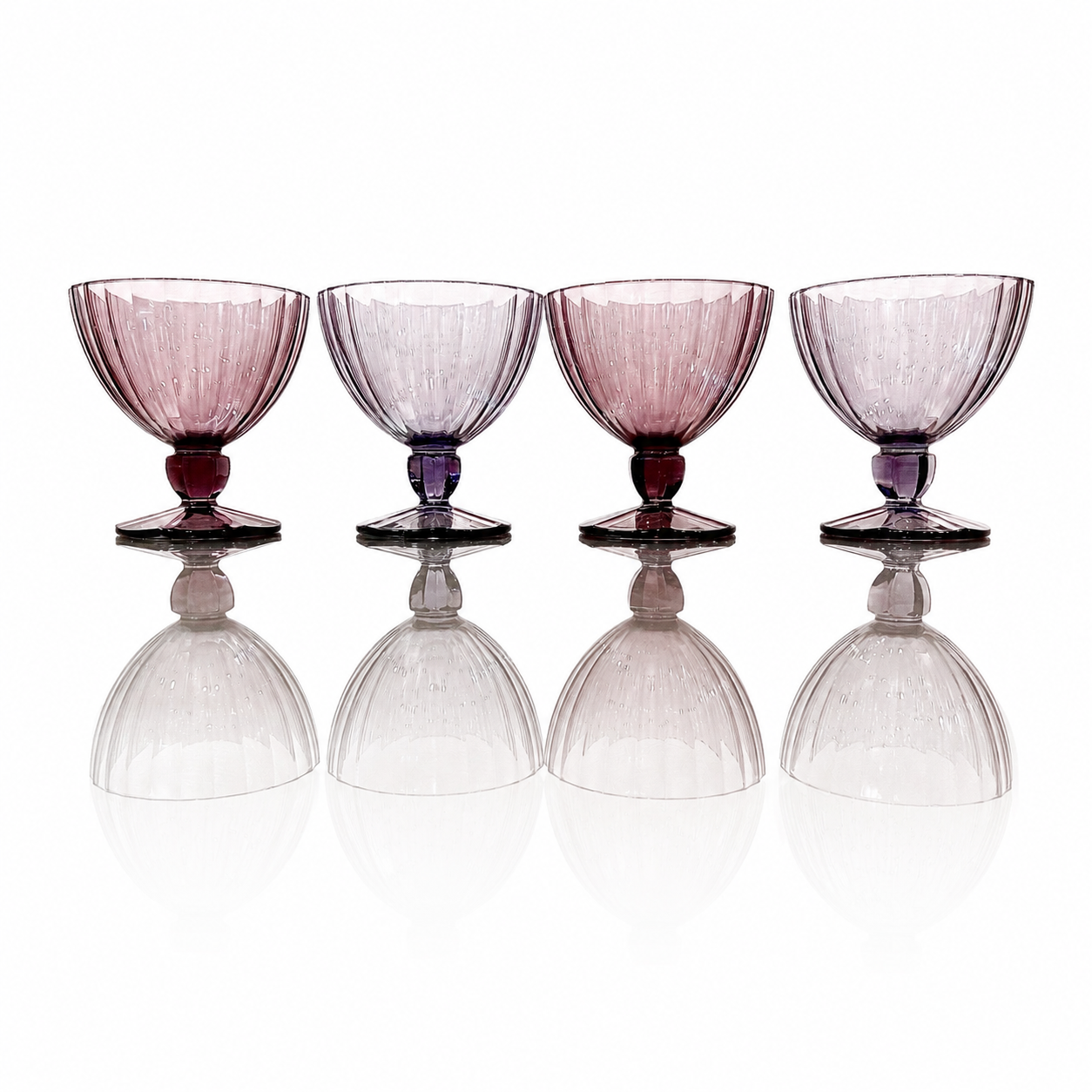 Image 1 of 15
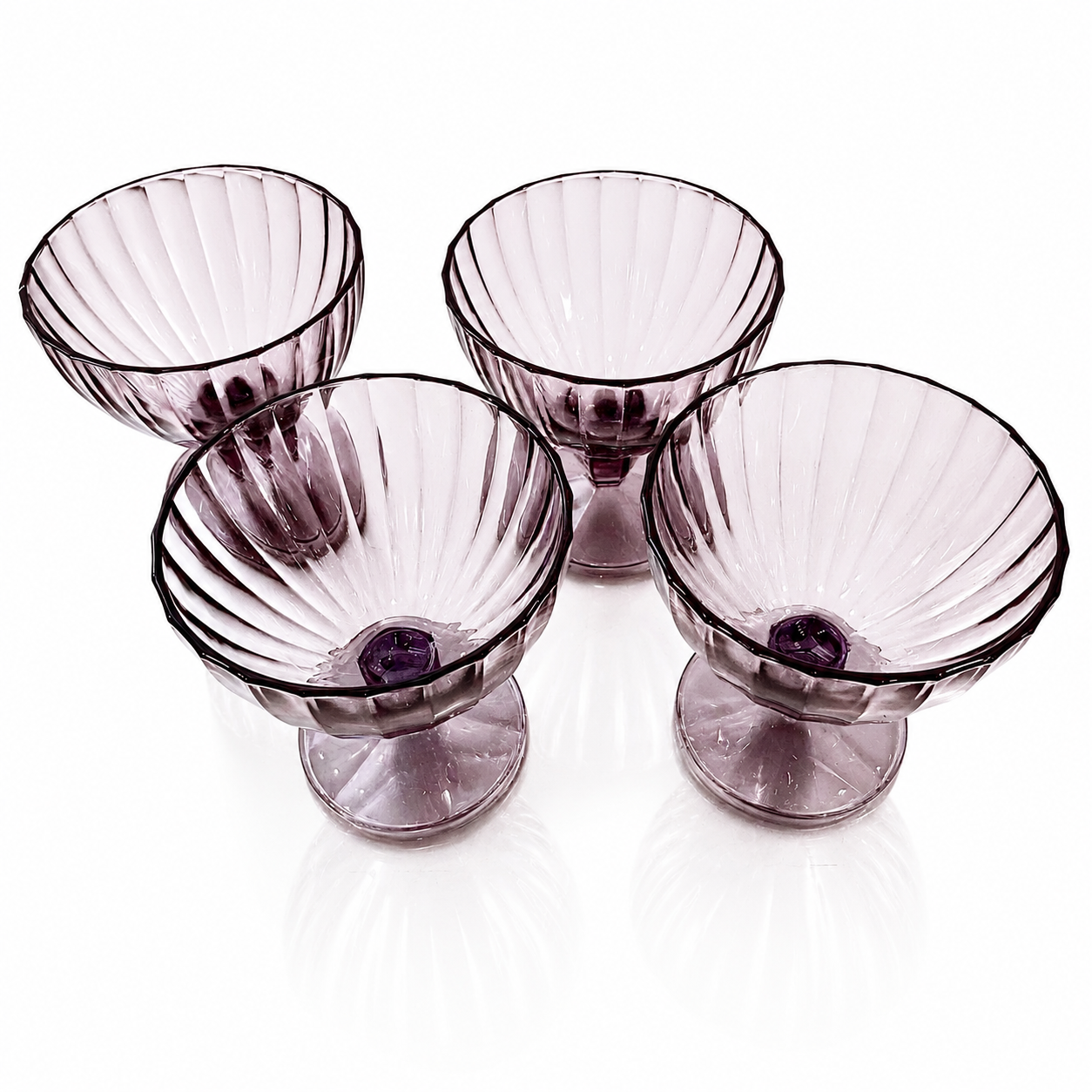 Image 2 of 15
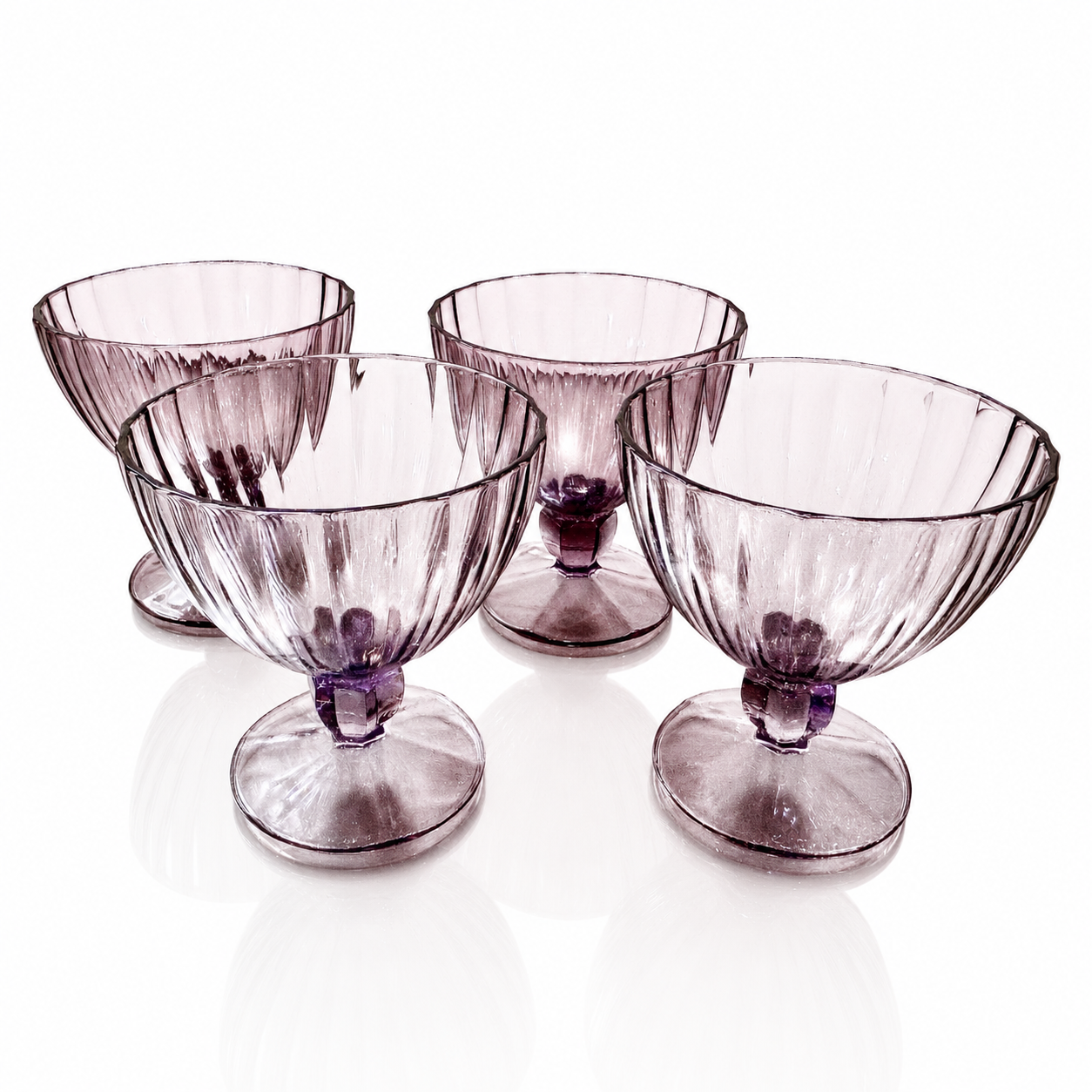 Image 3 of 15
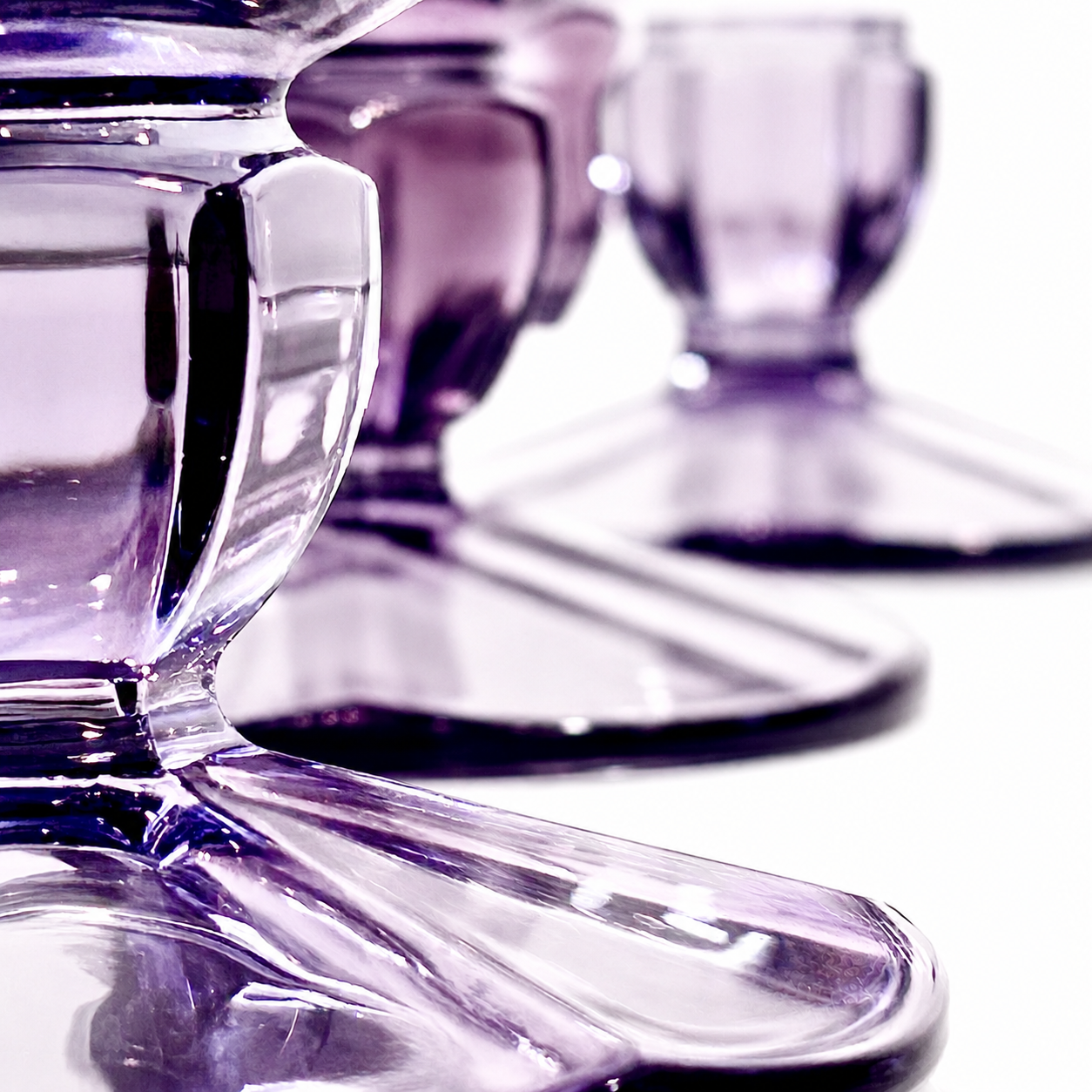 Image 4 of 15
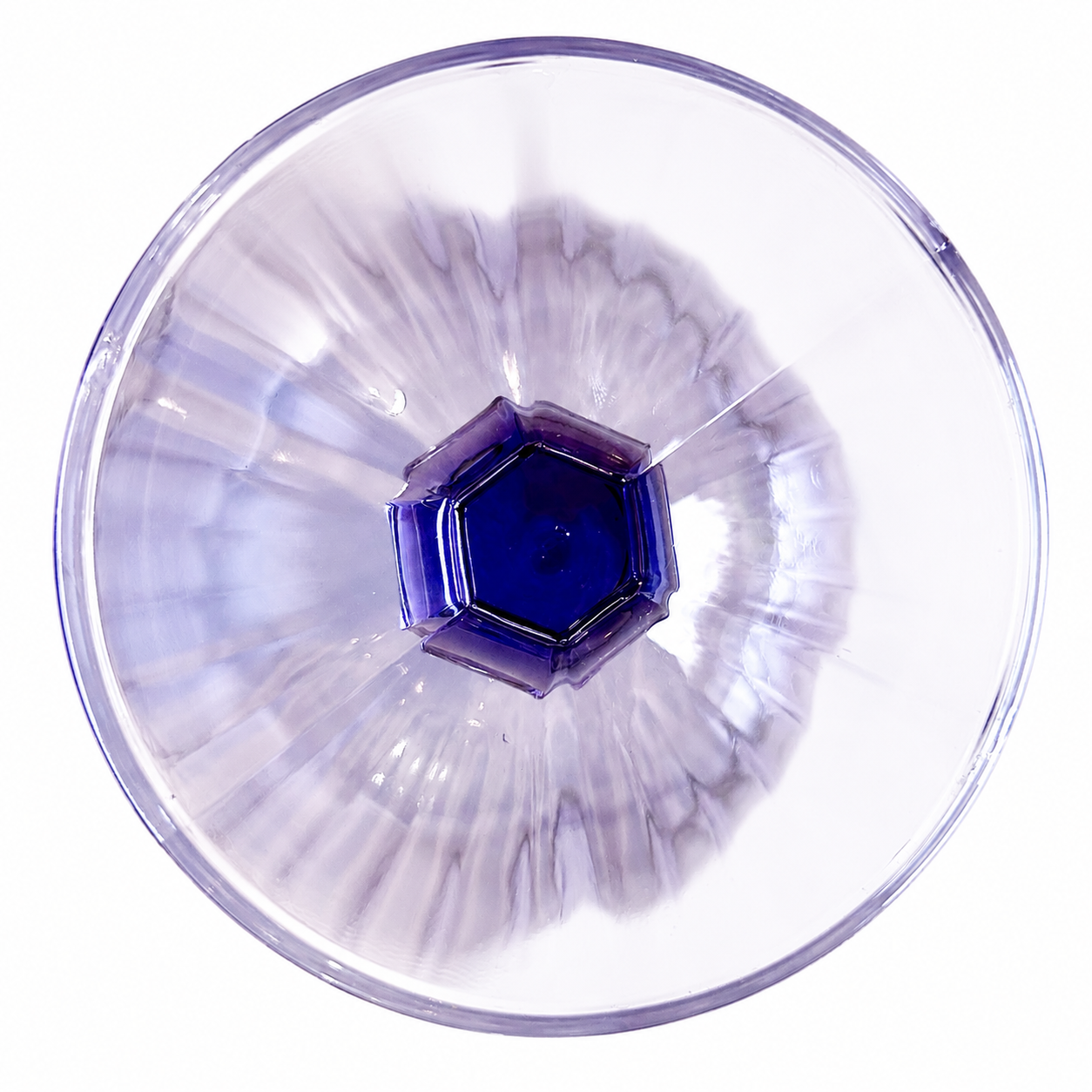 Image 5 of 15
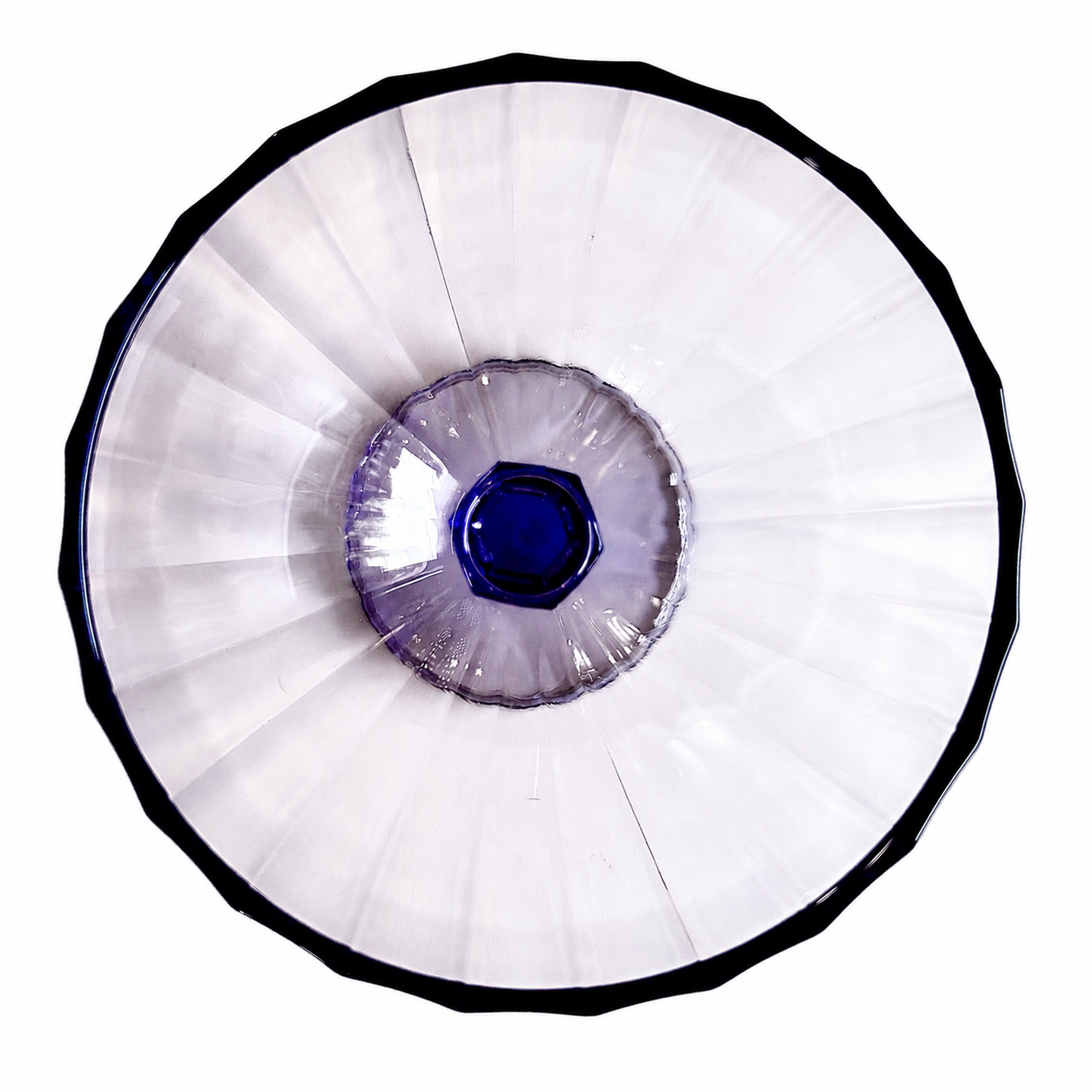 Image 6 of 15
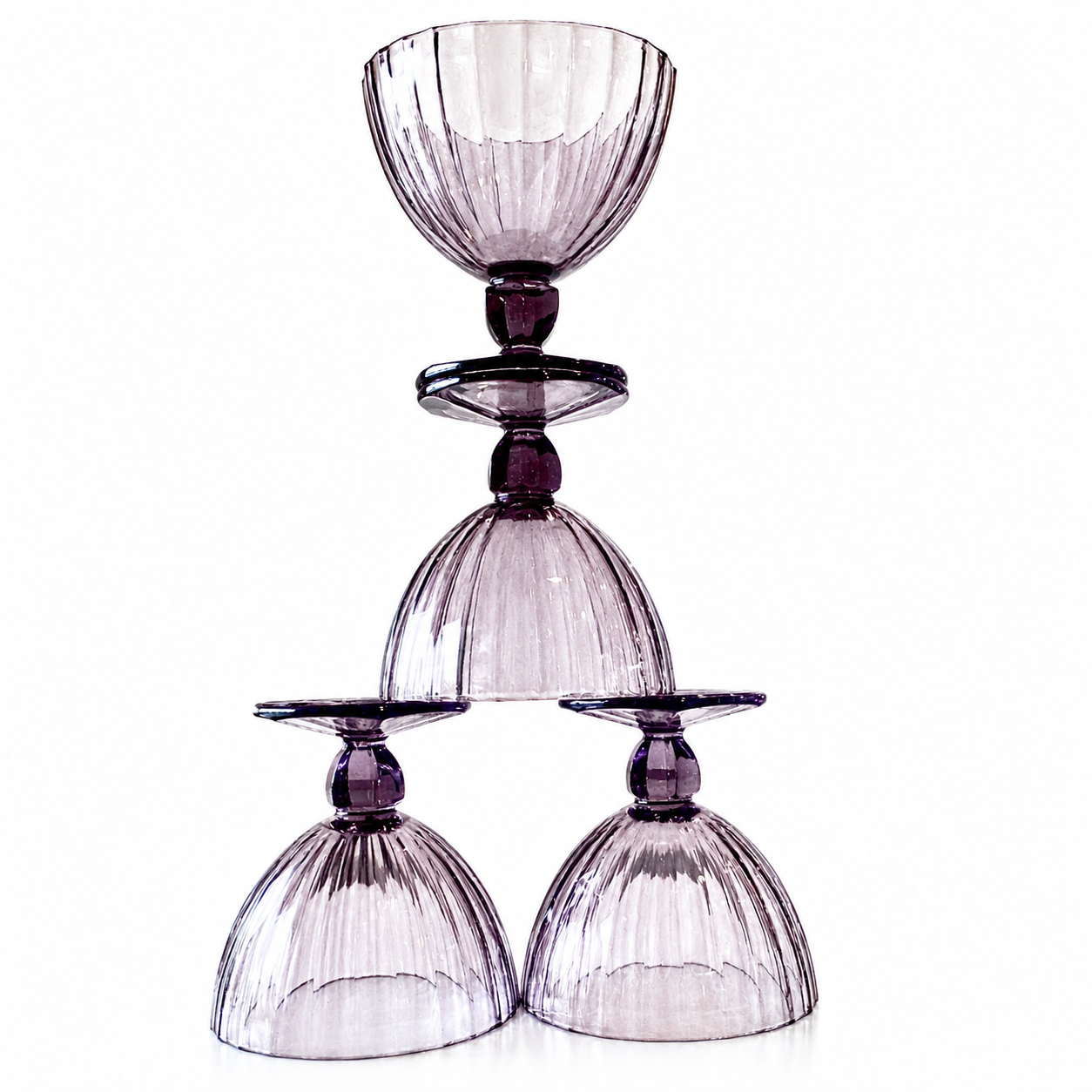 Image 7 of 15
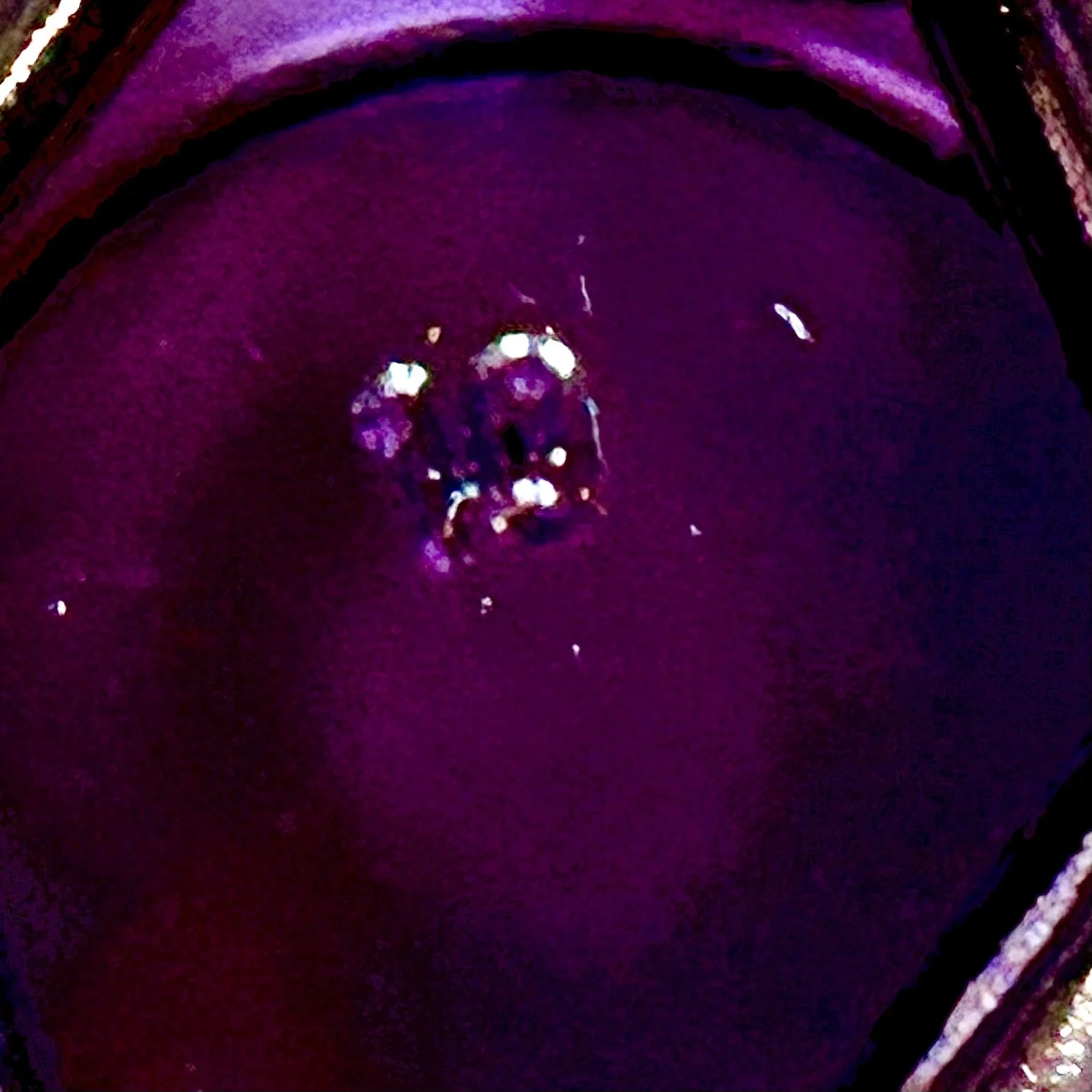 Image 8 of 15
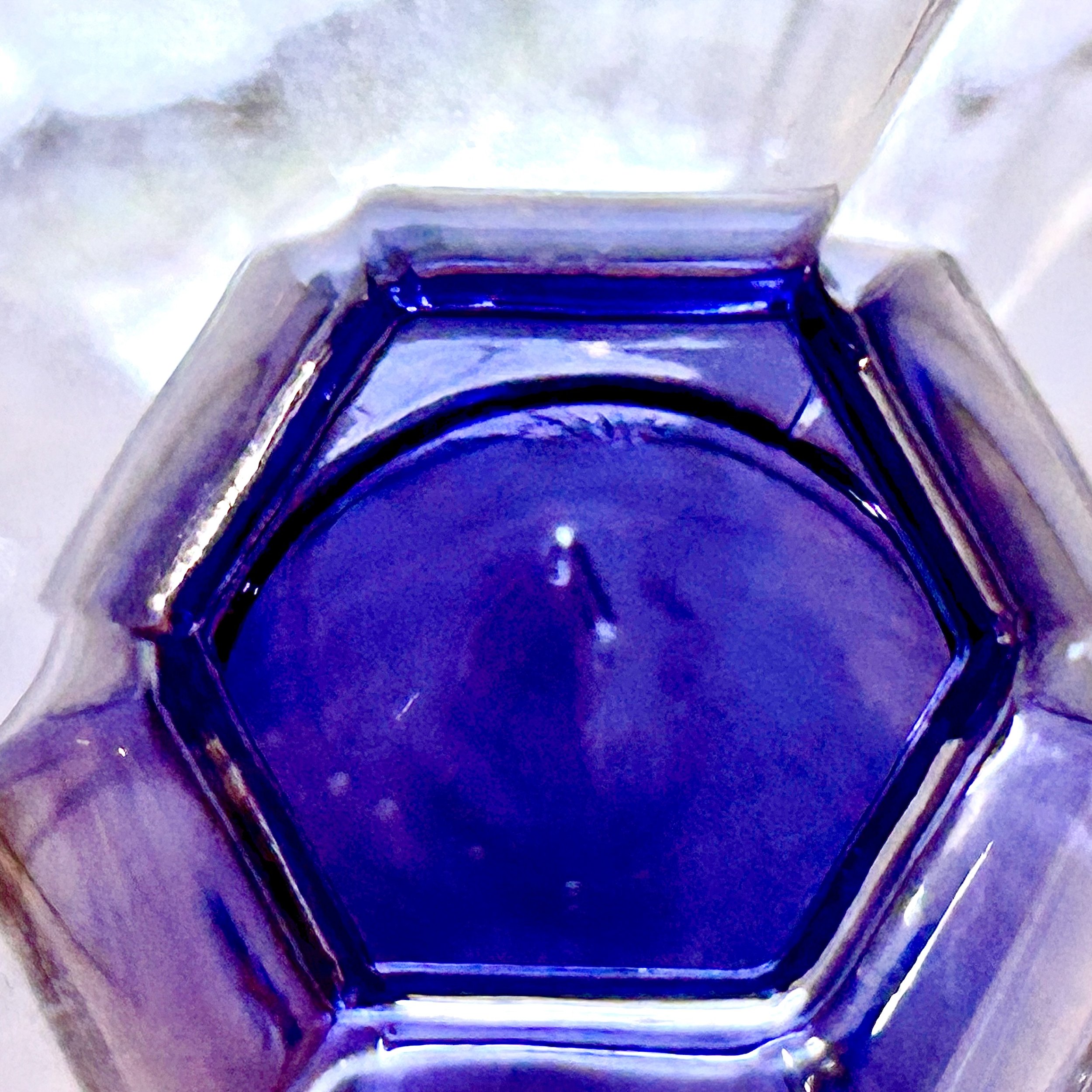 Image 9 of 15
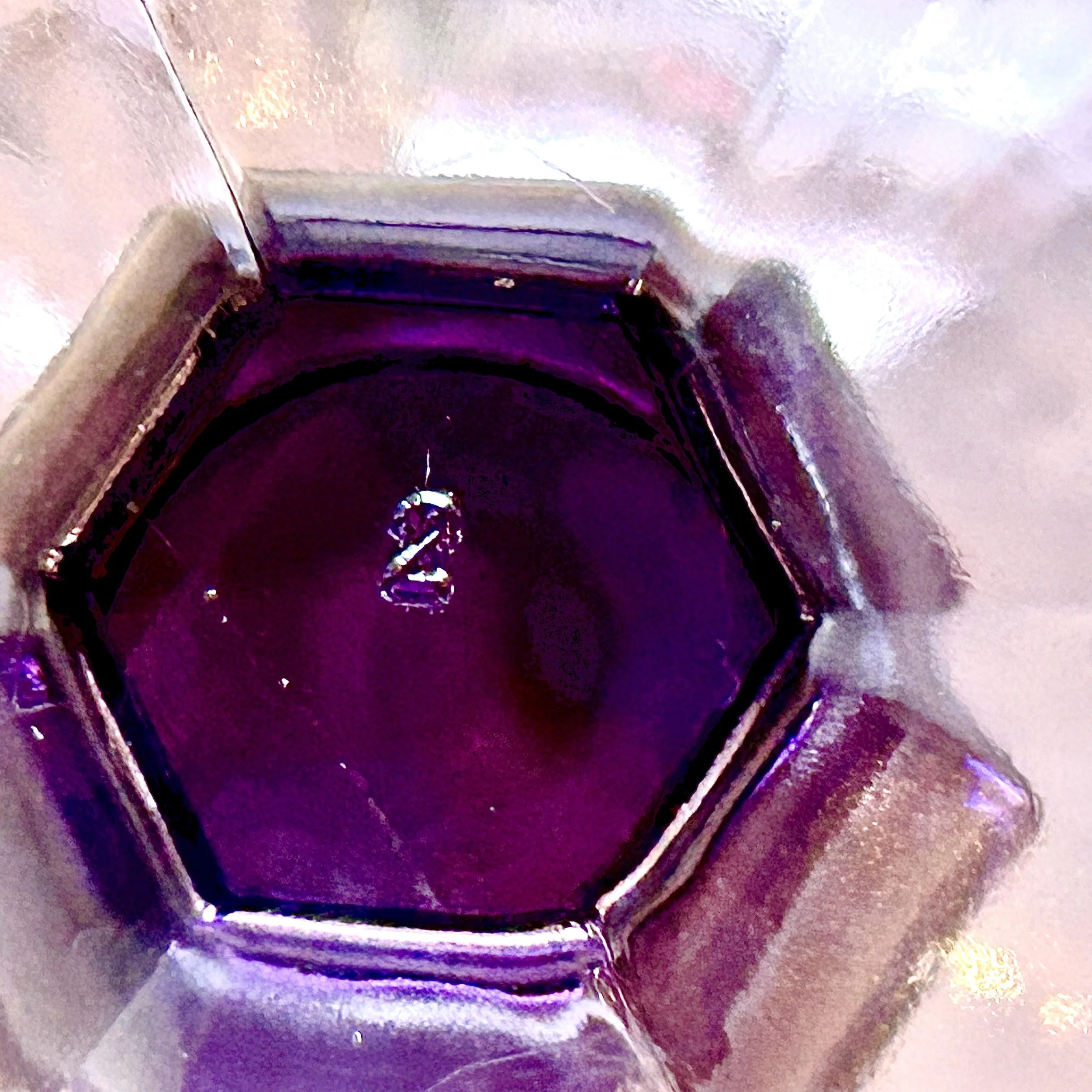 Image 10 of 15
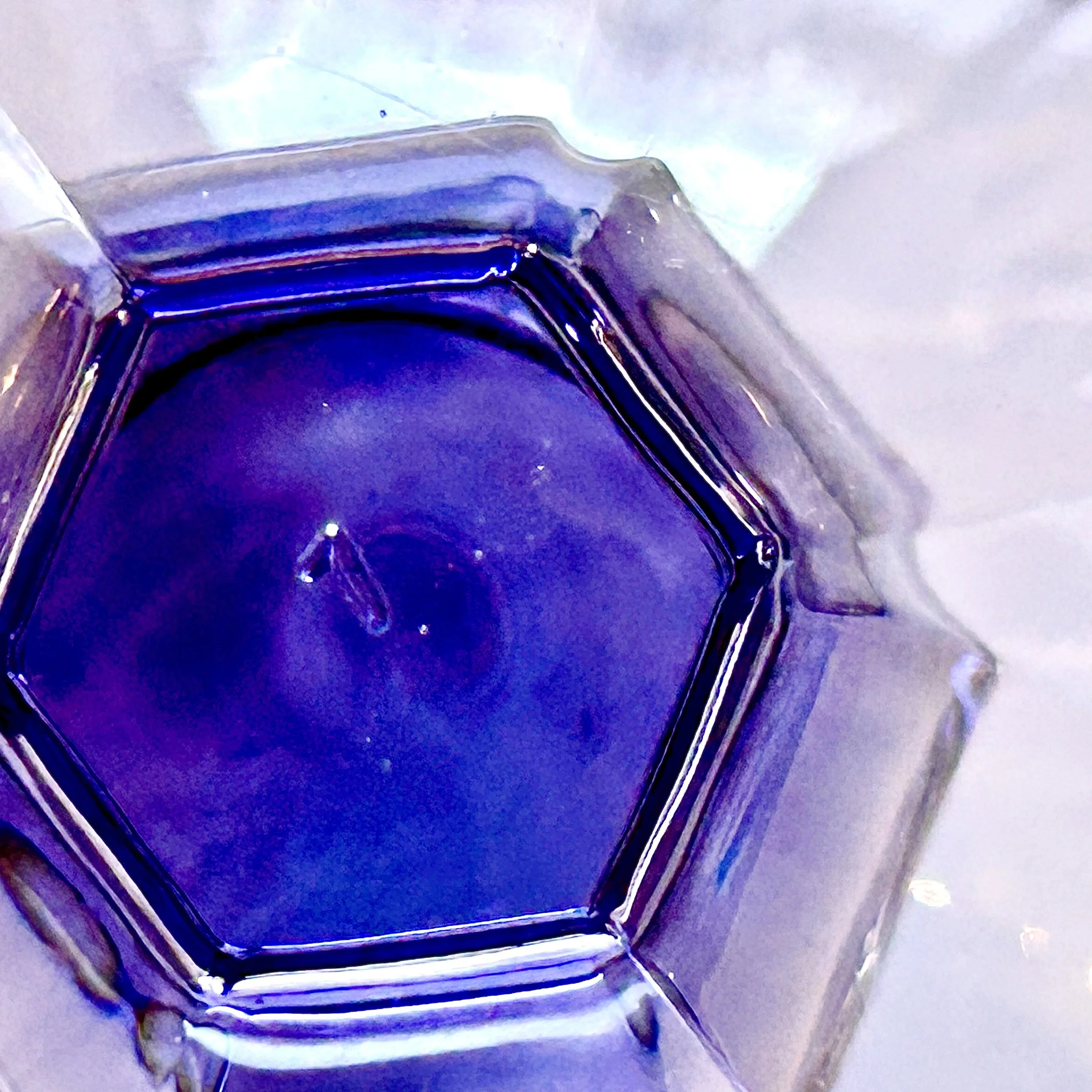 Image 11 of 15
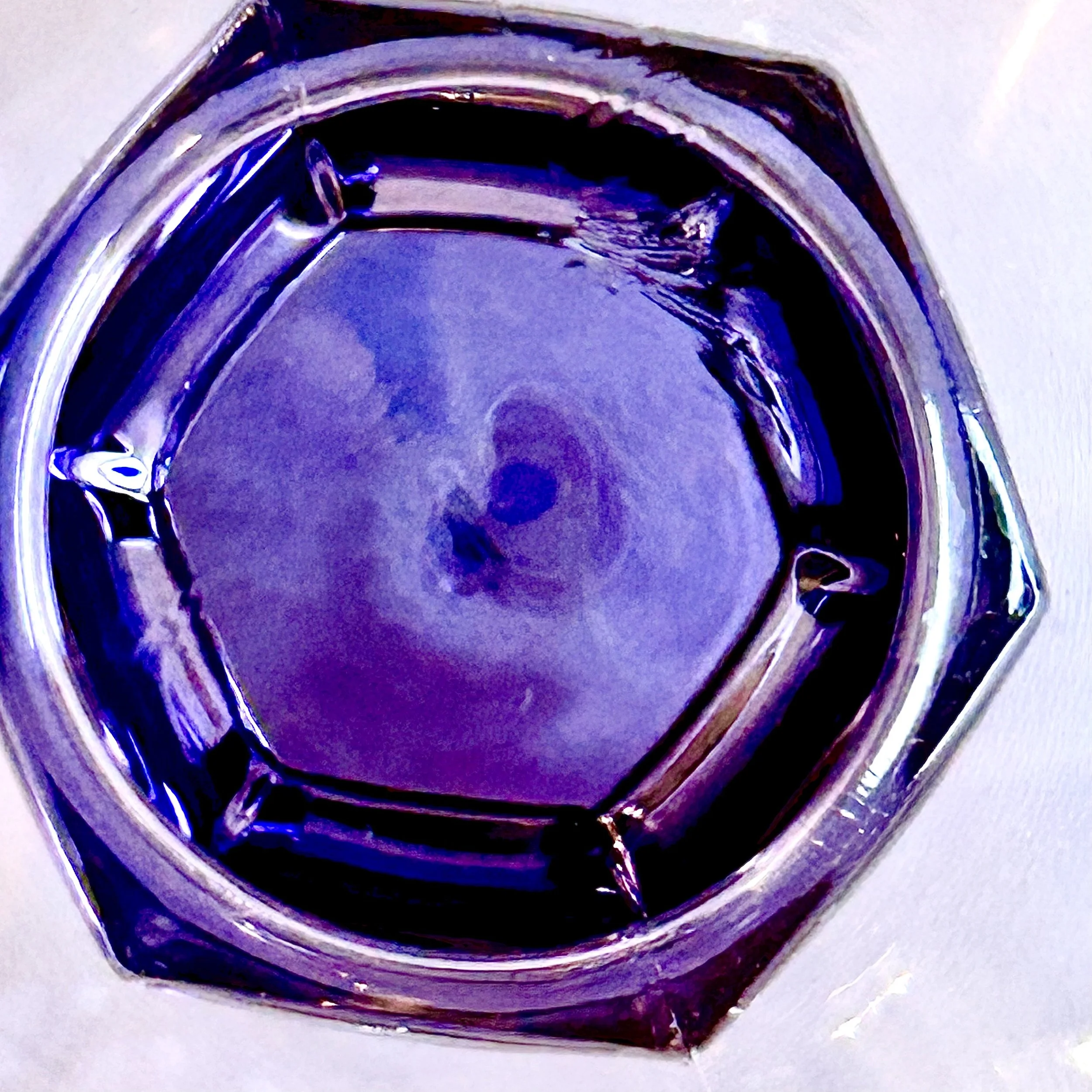 Image 12 of 15
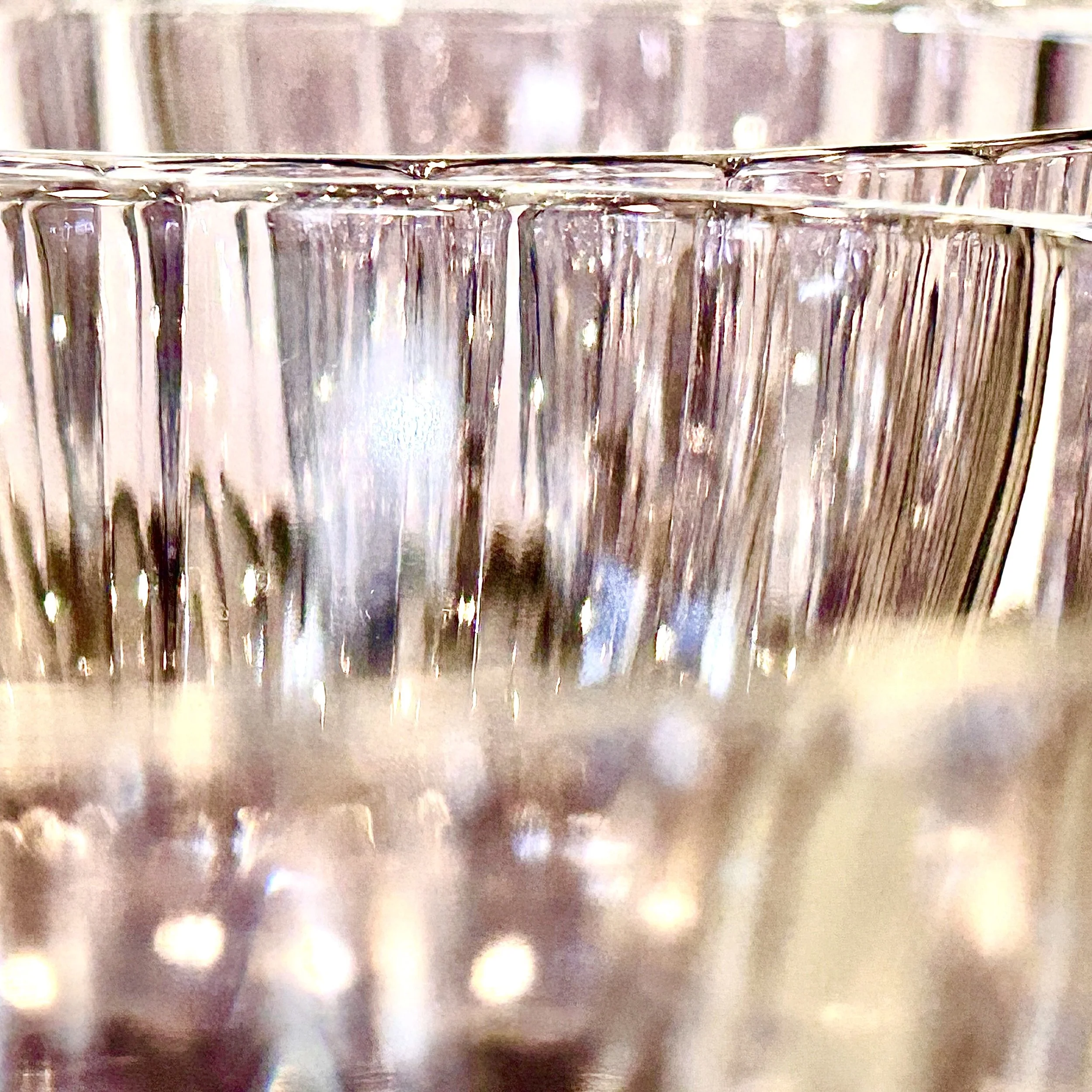 Image 13 of 15
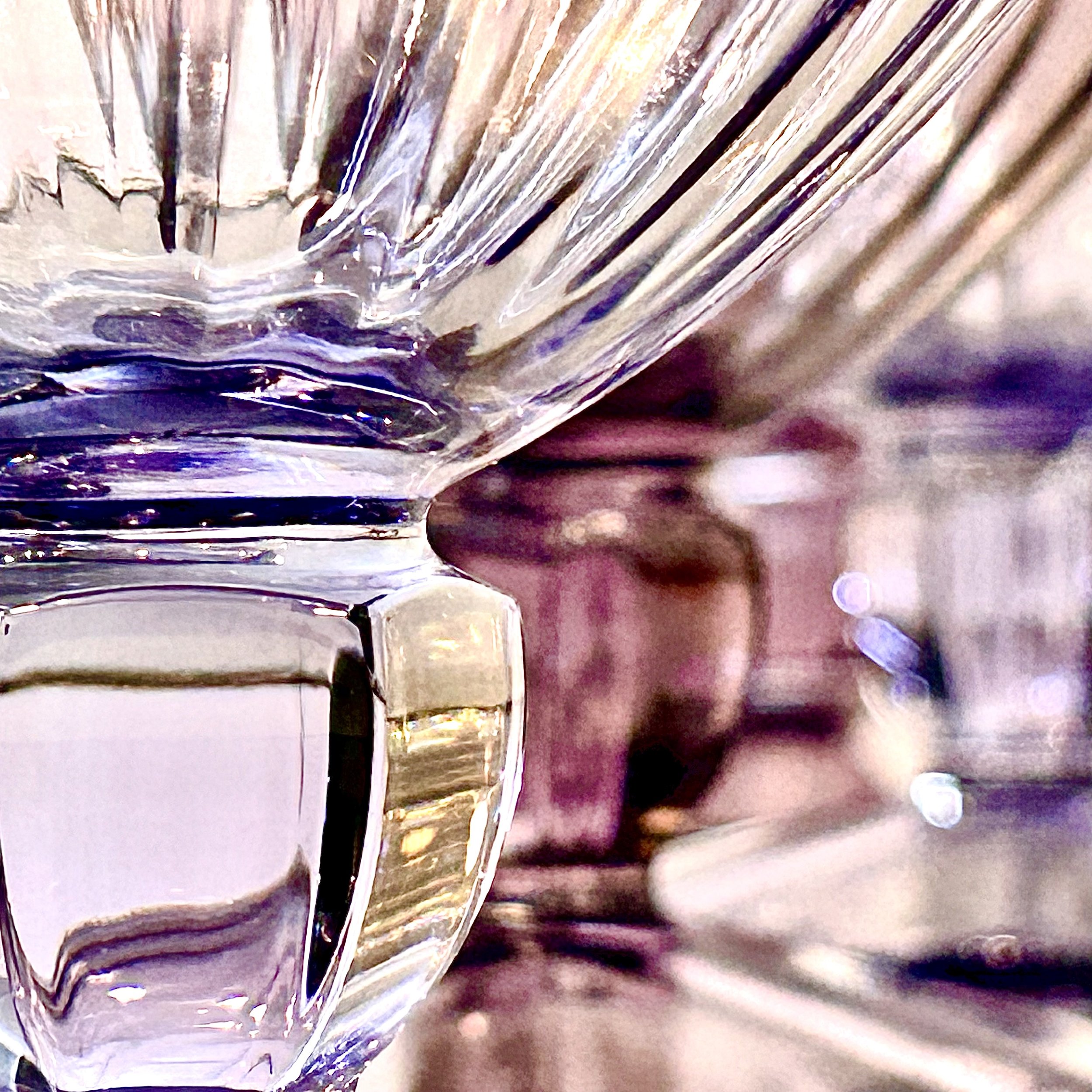 Image 14 of 15
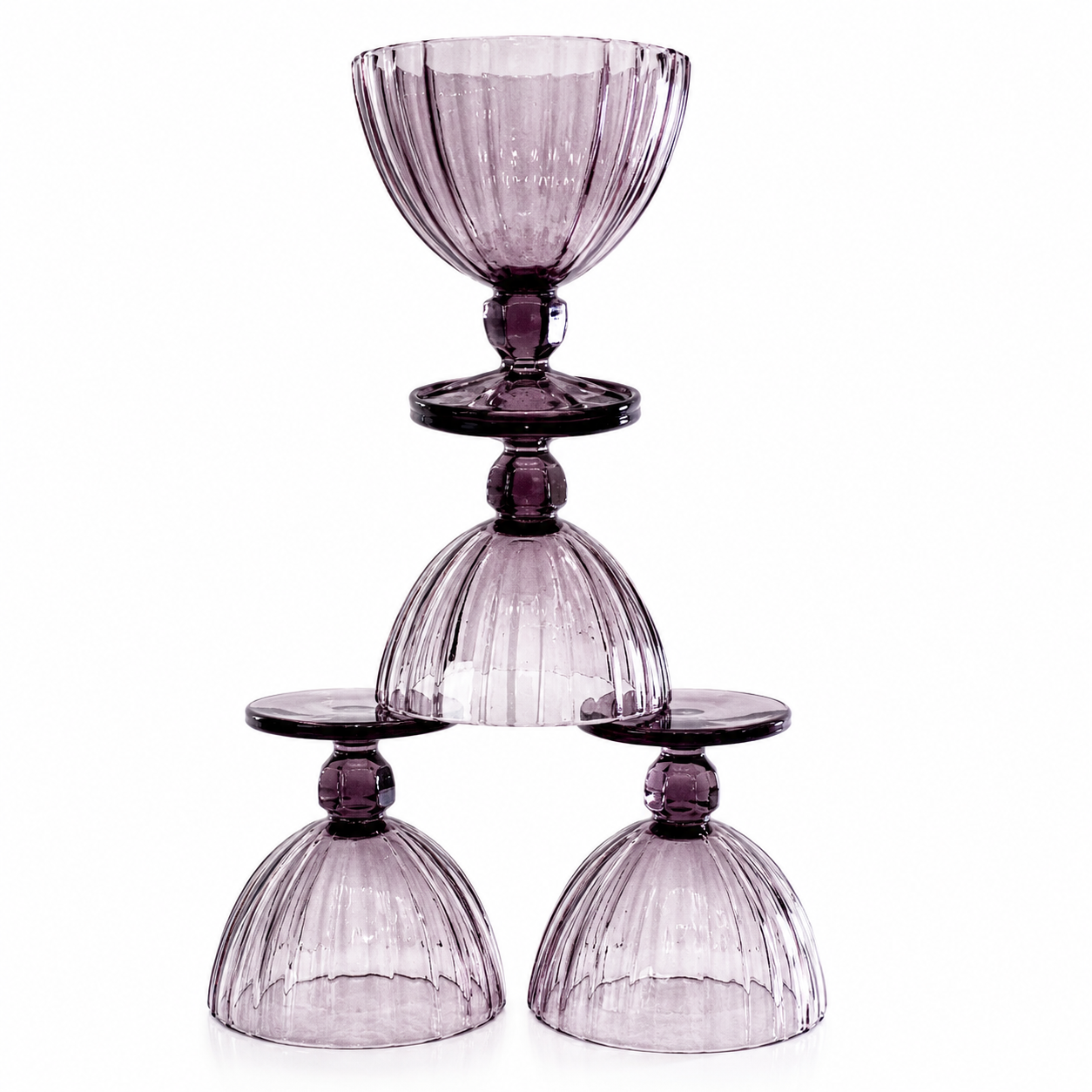 Image 15 of 15