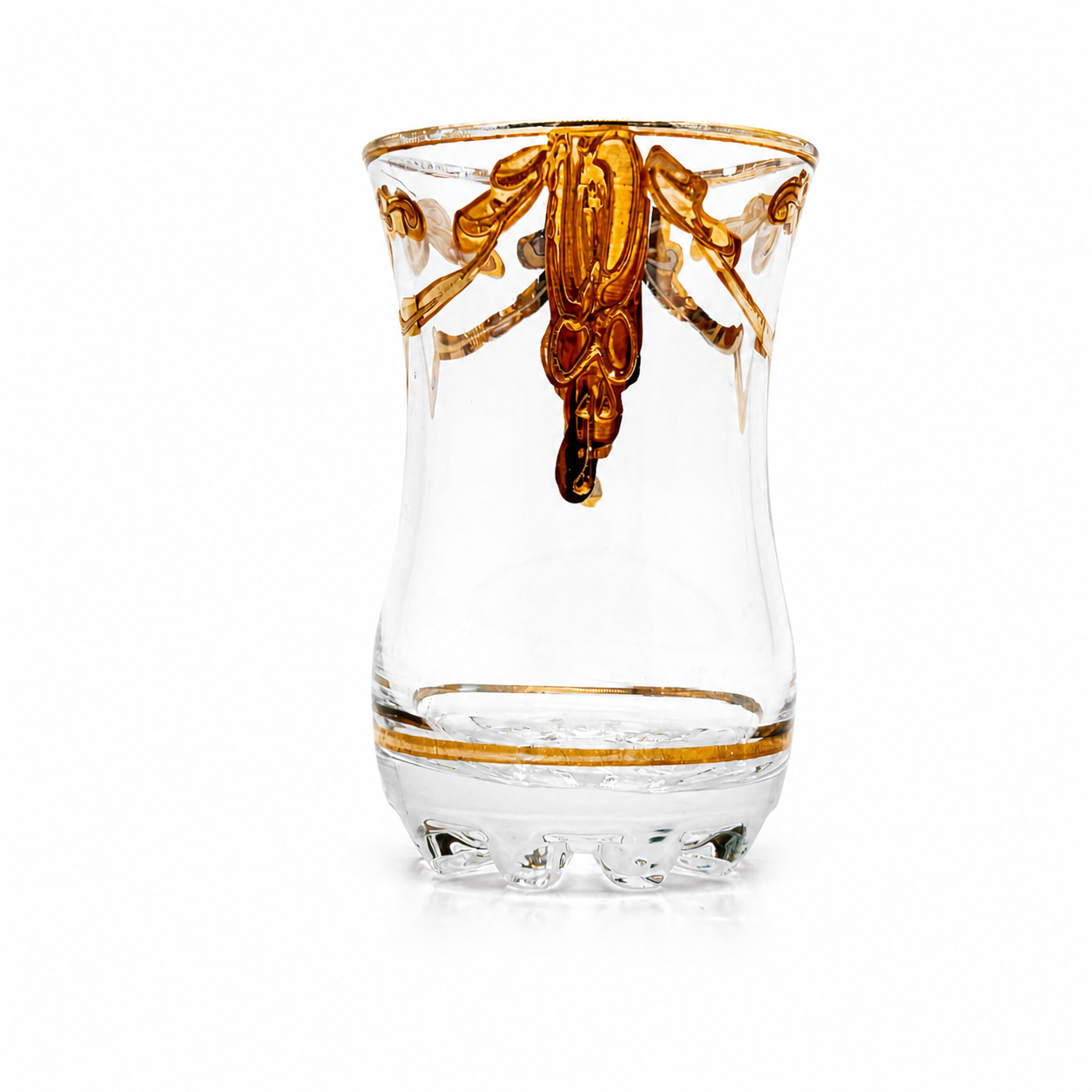
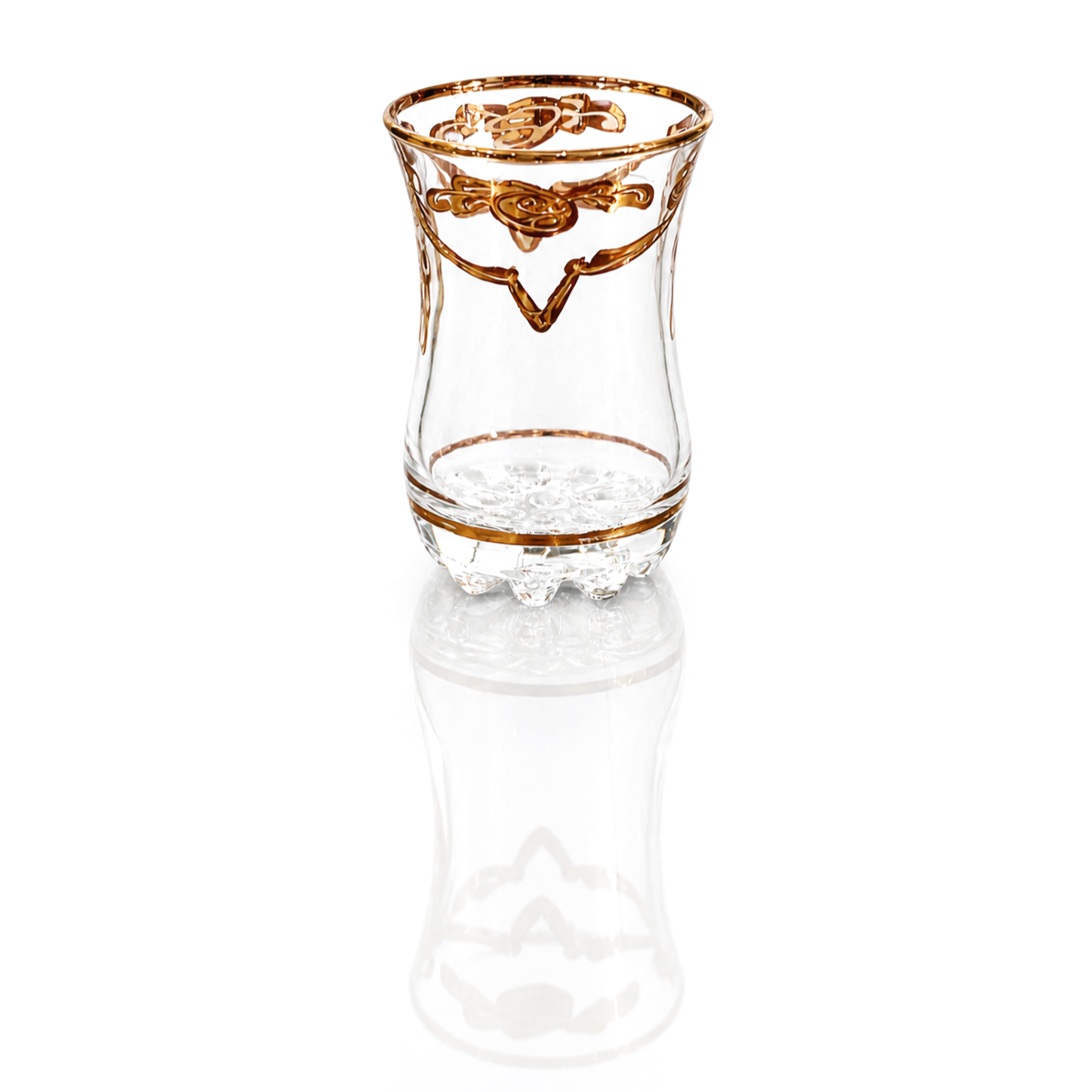
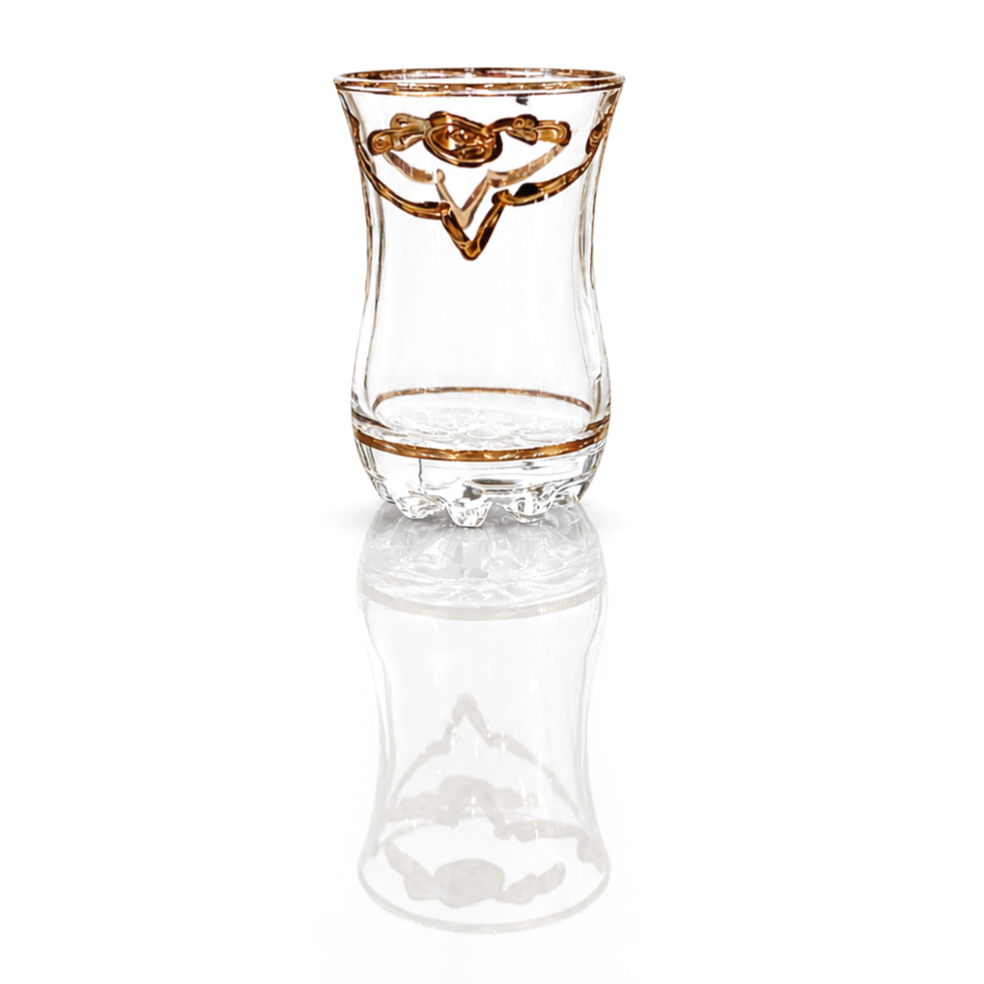
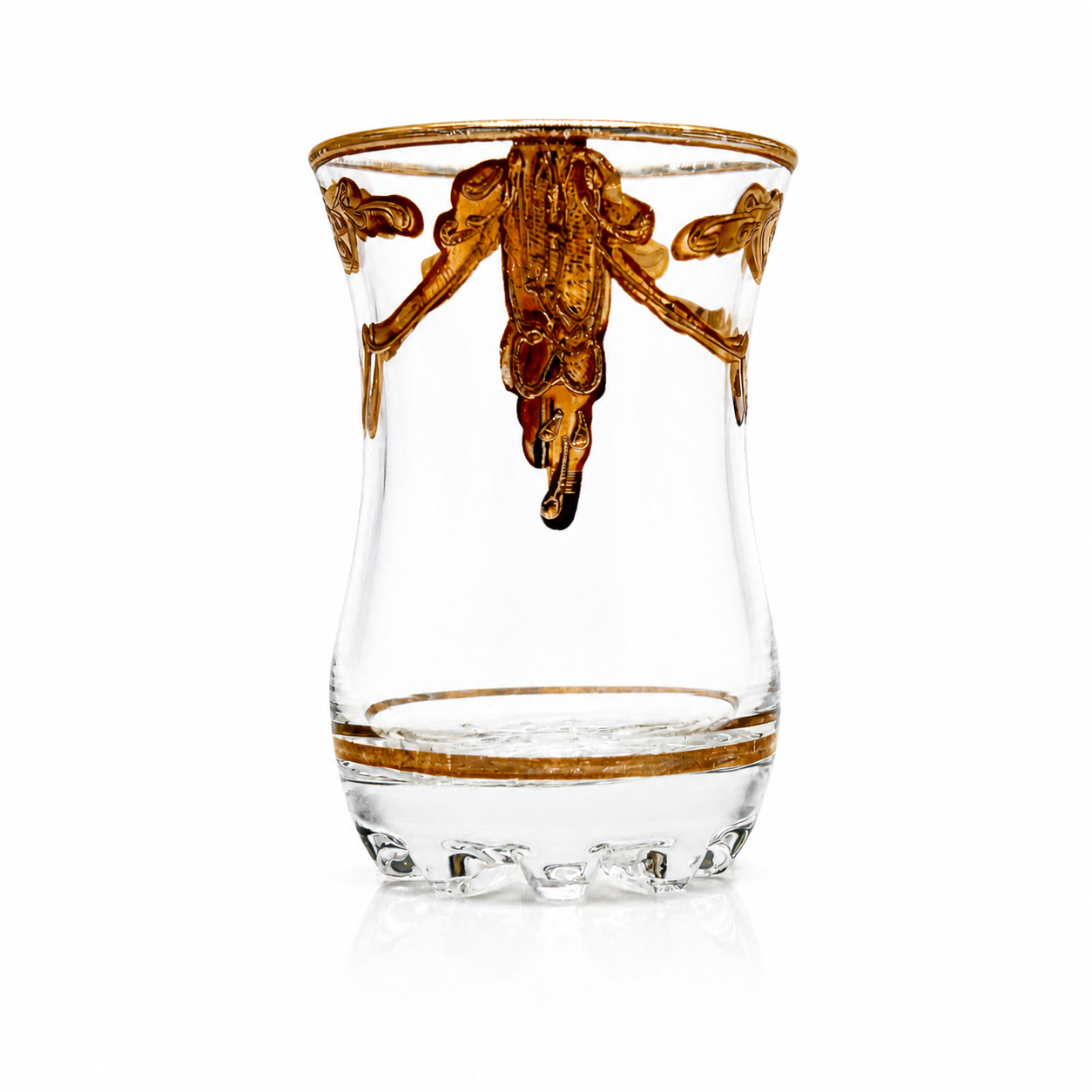
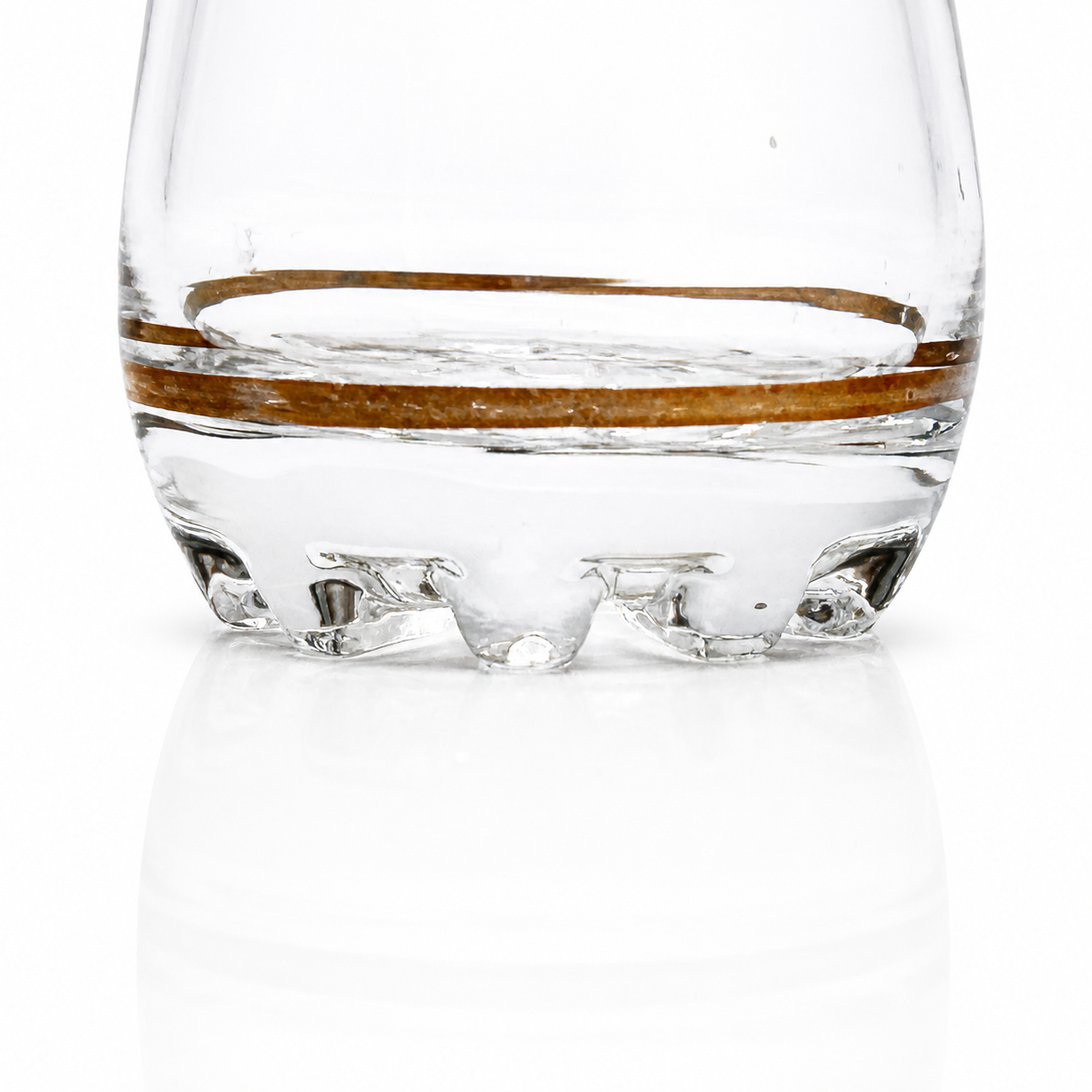
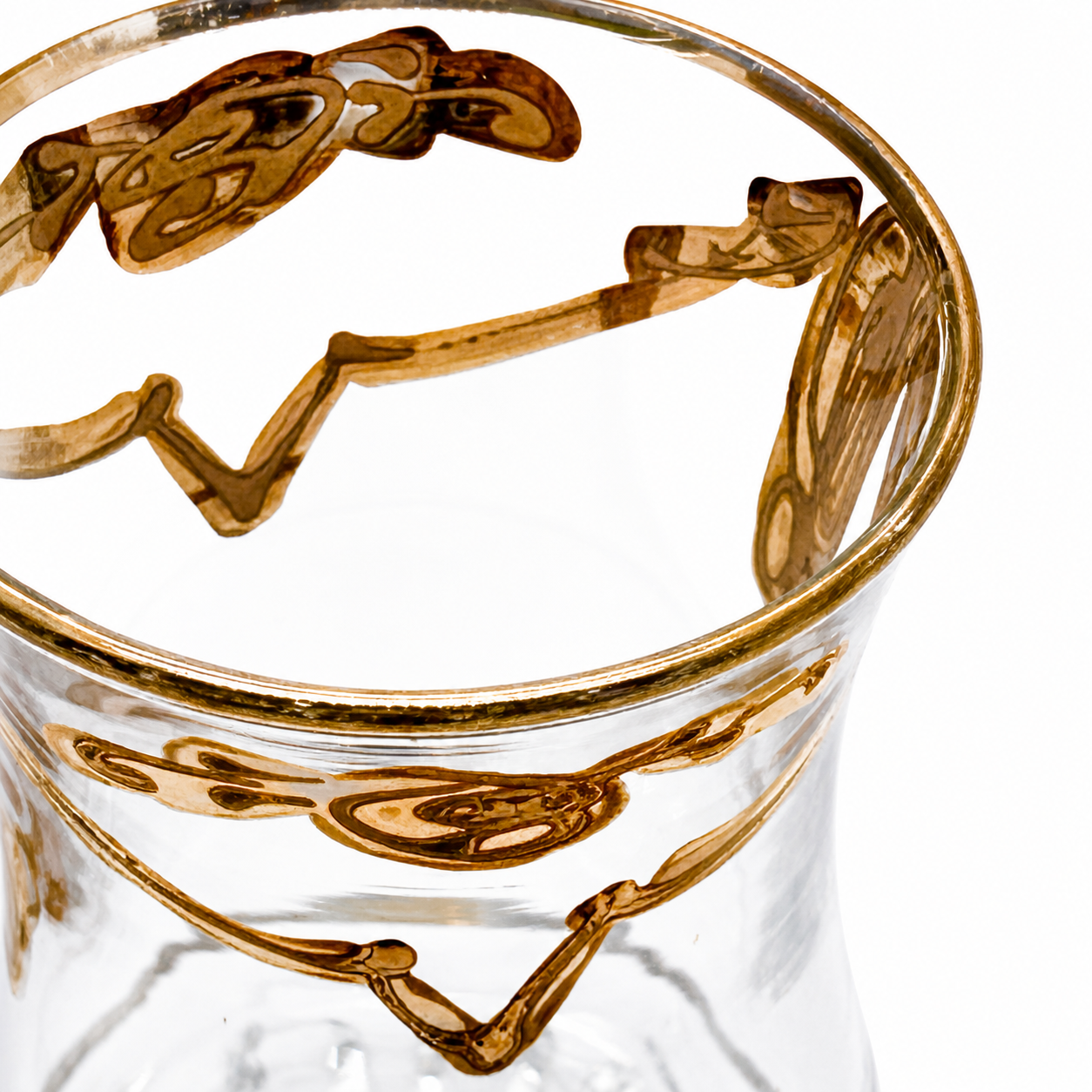
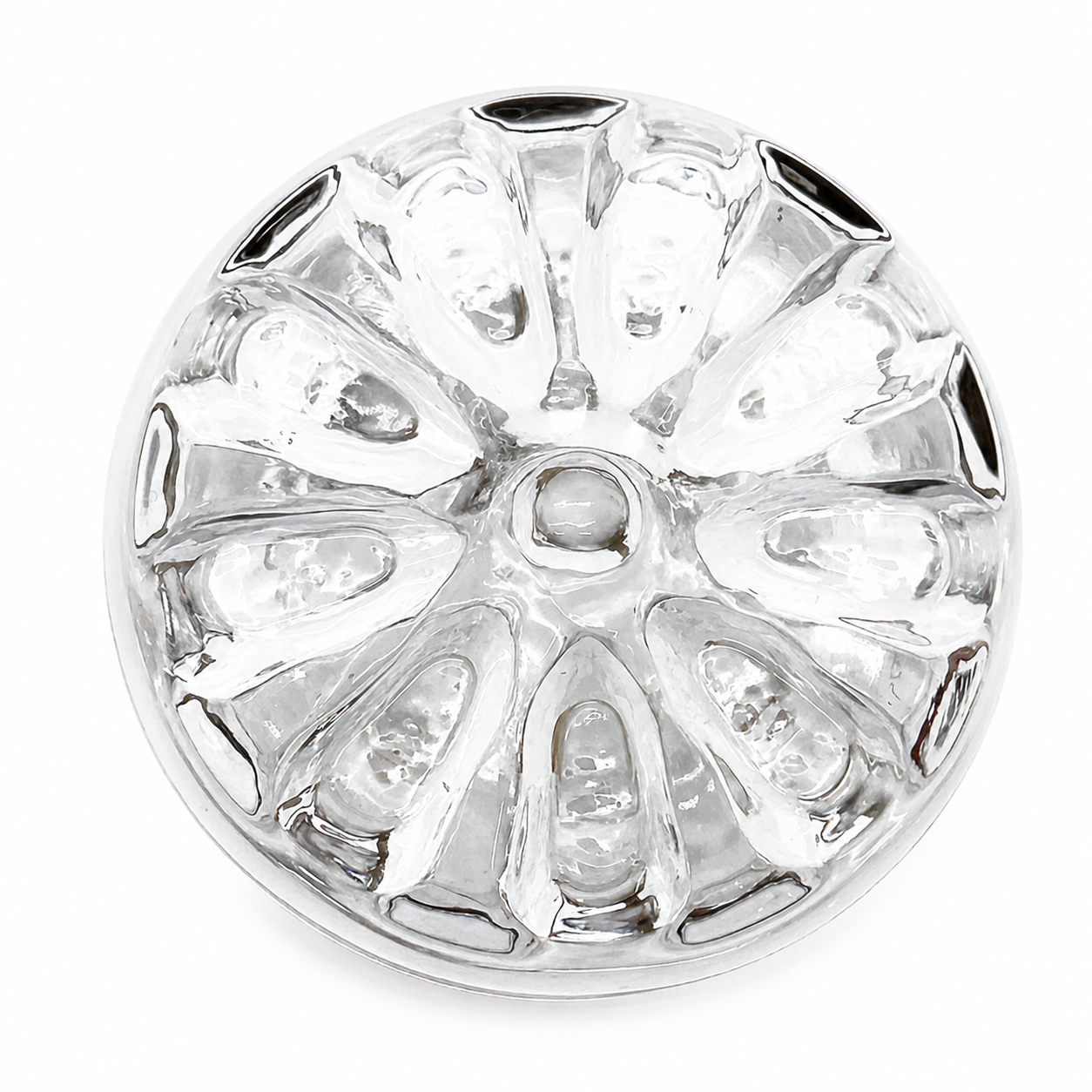
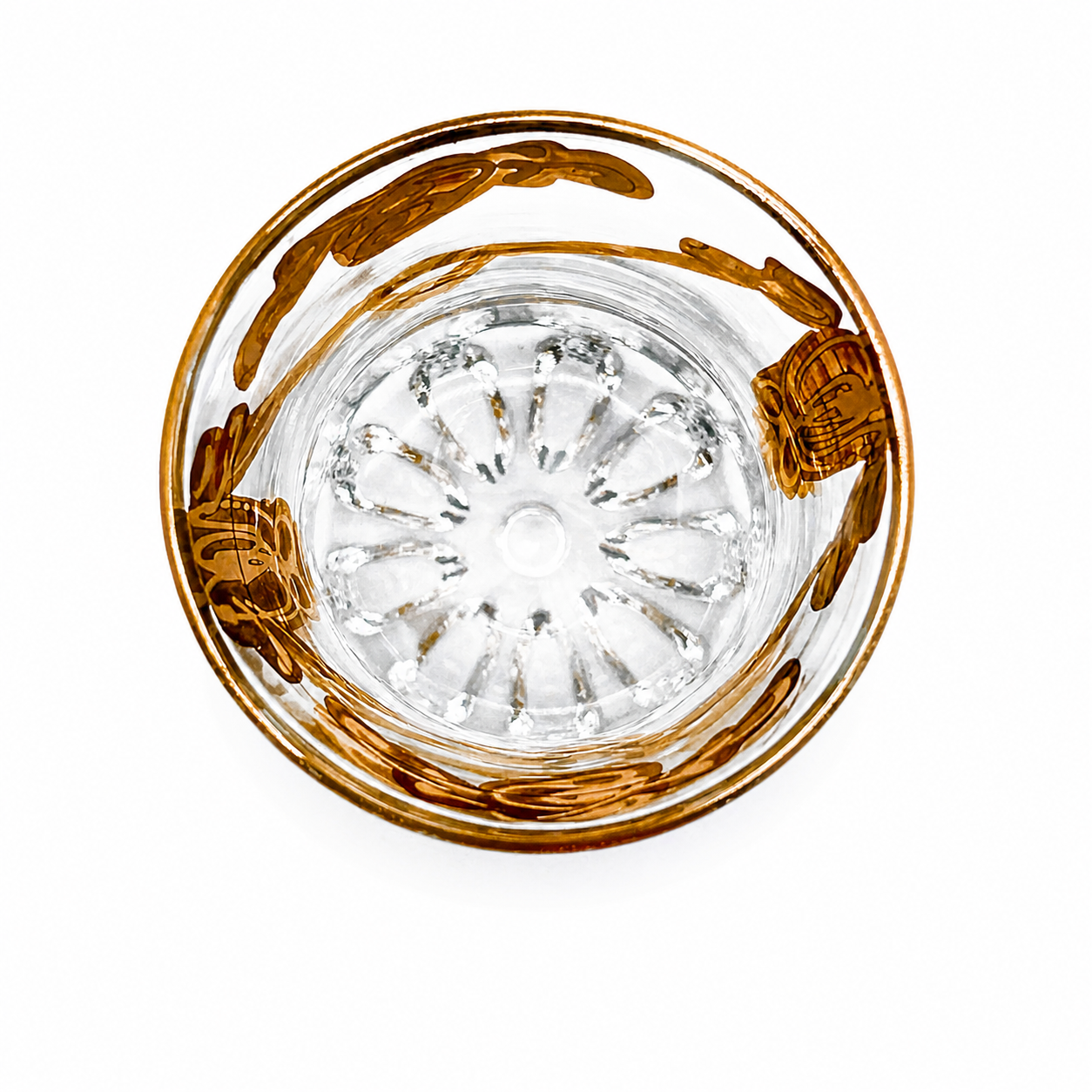
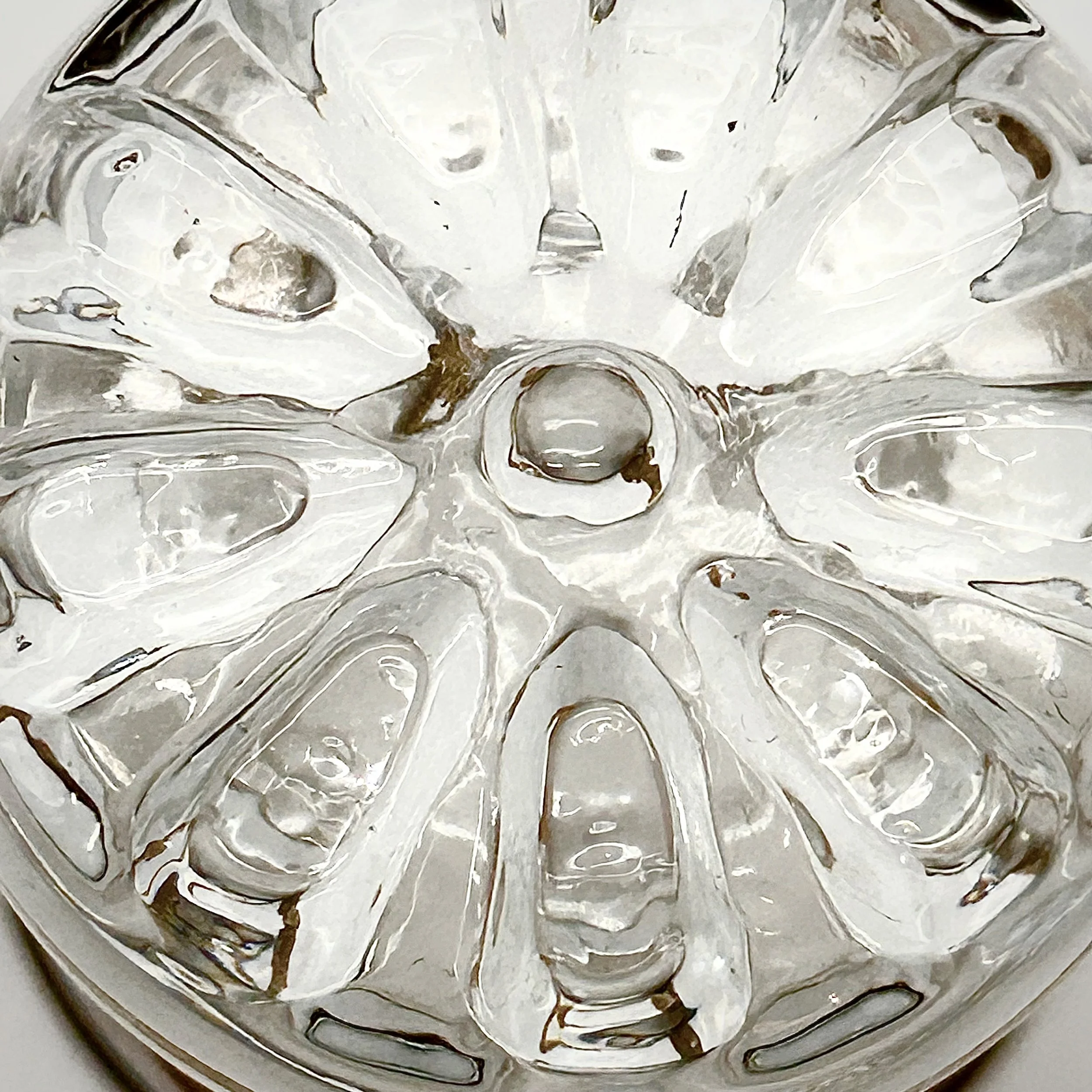
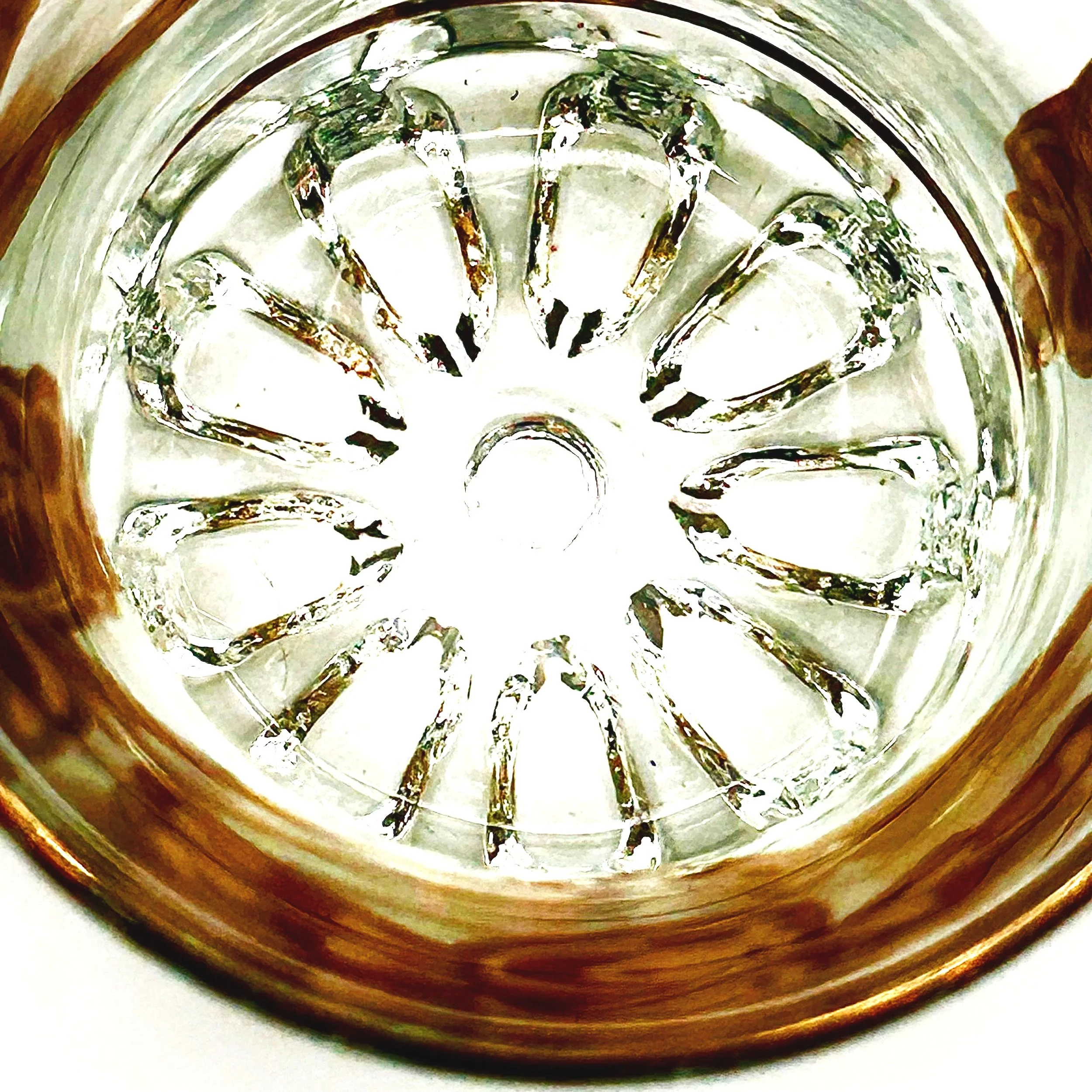
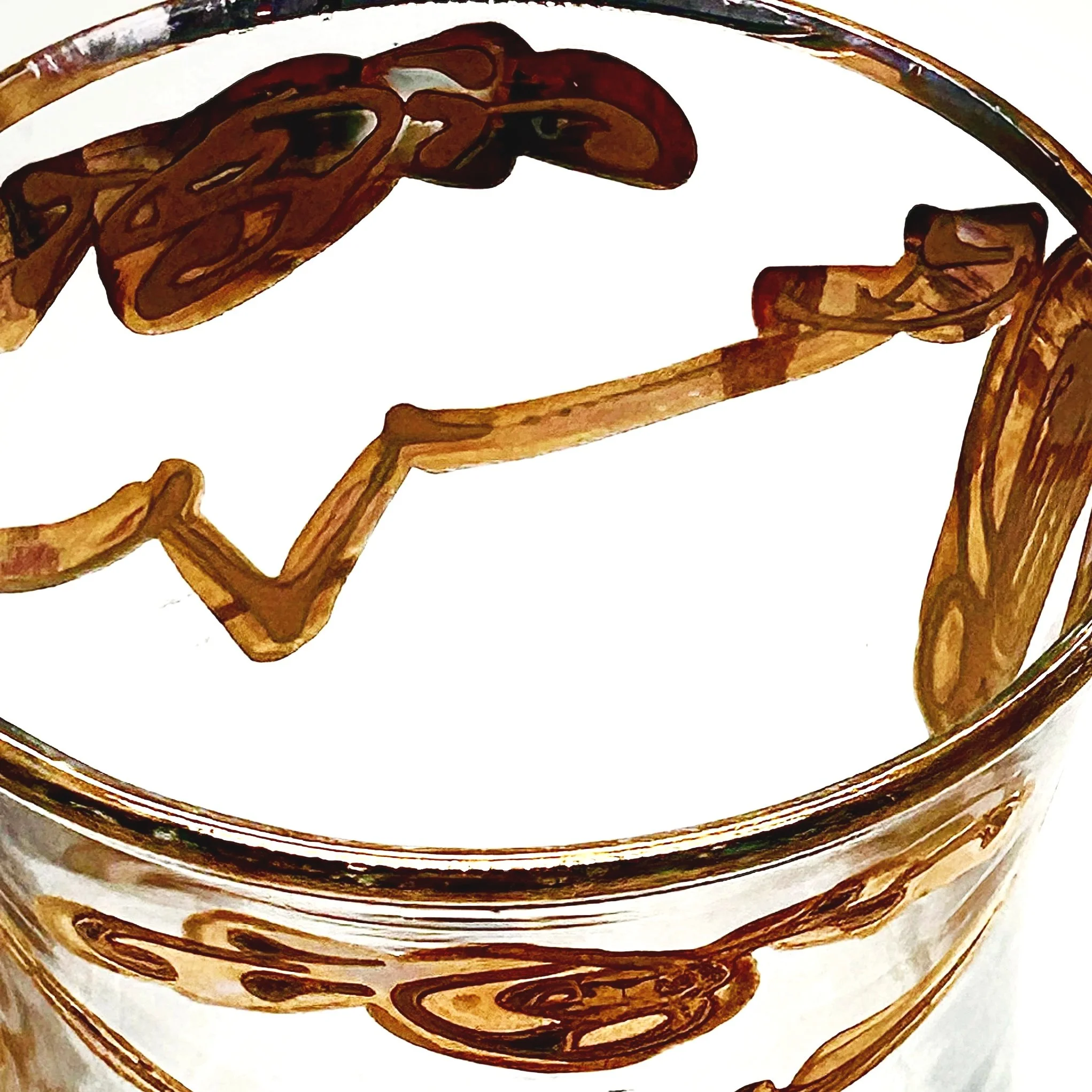
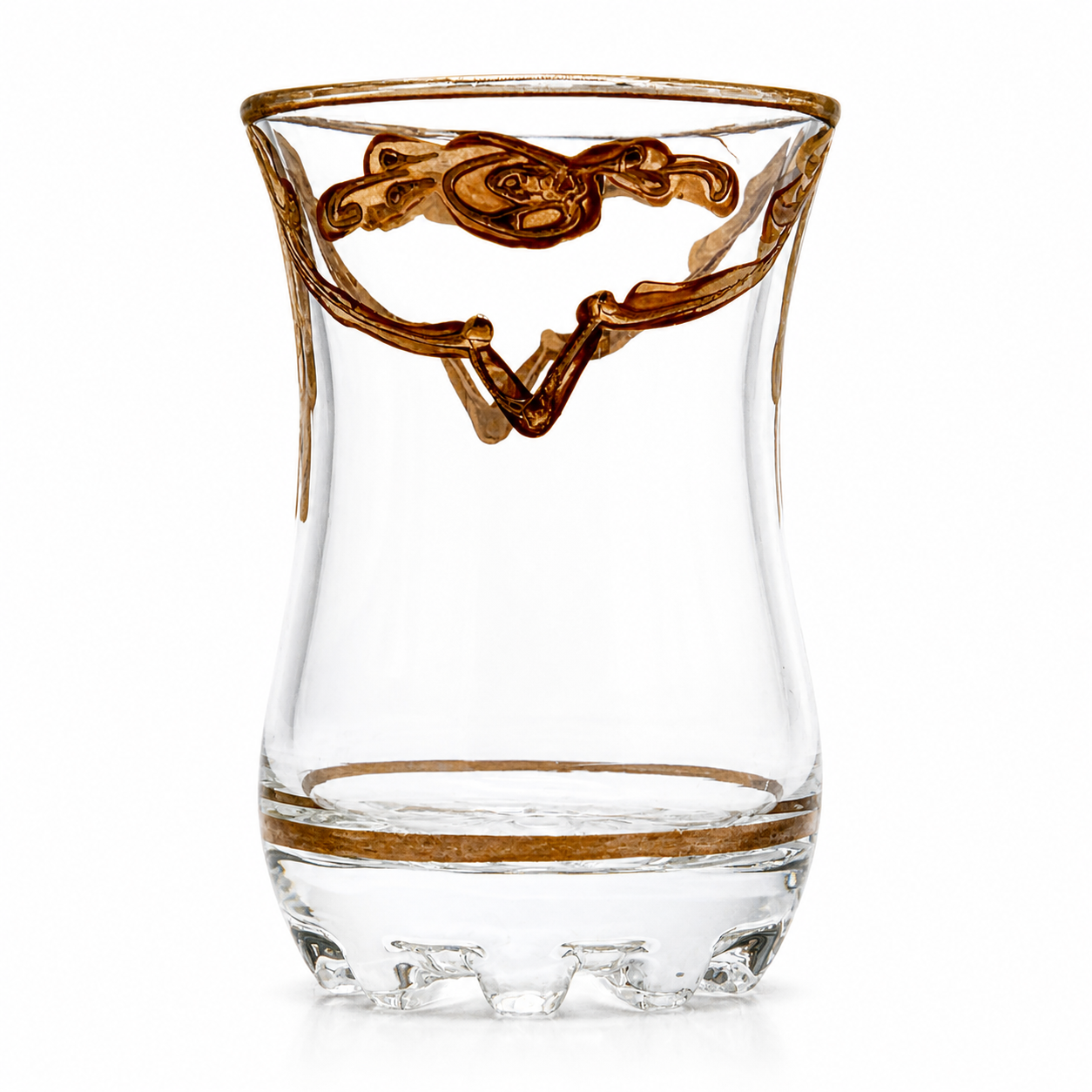
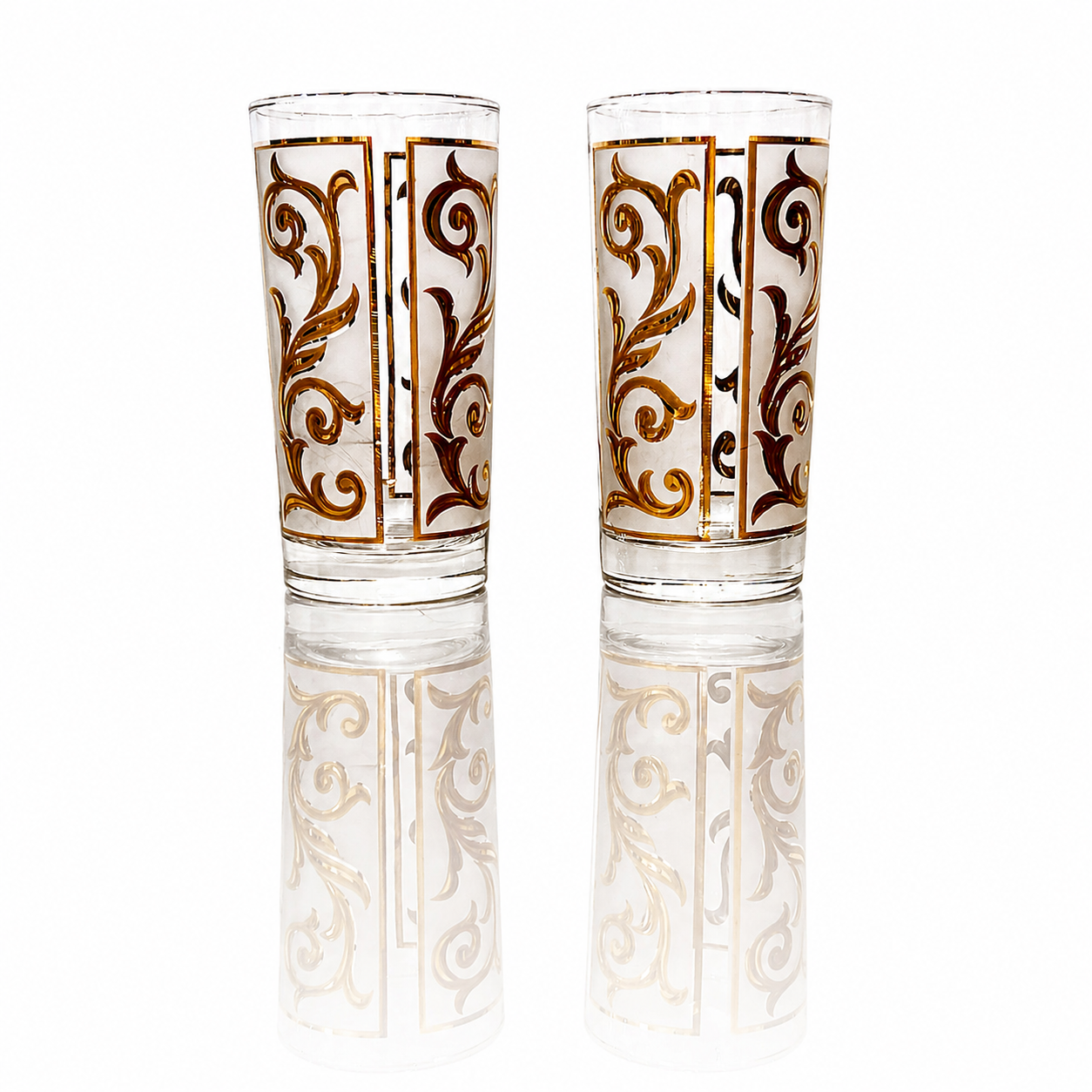
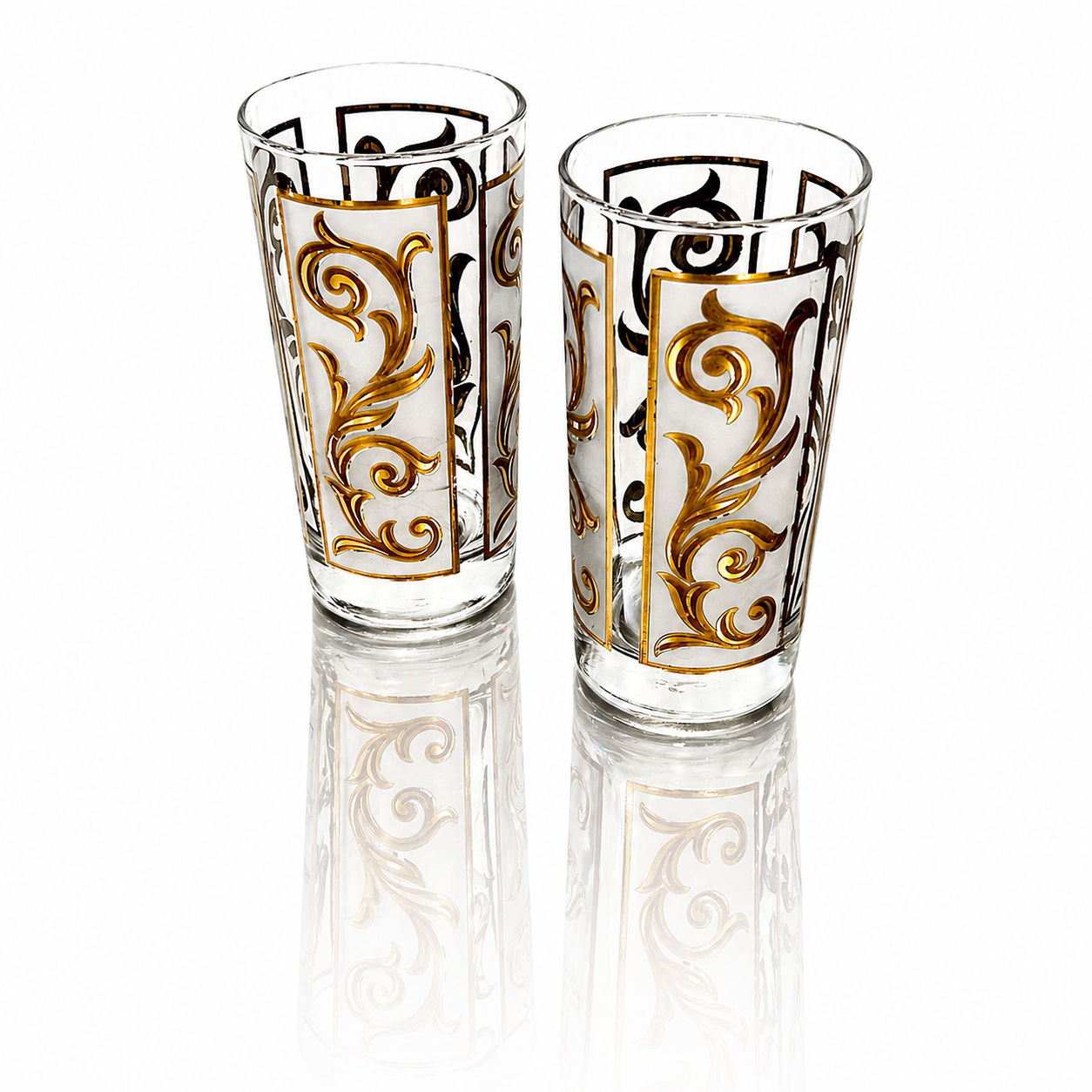
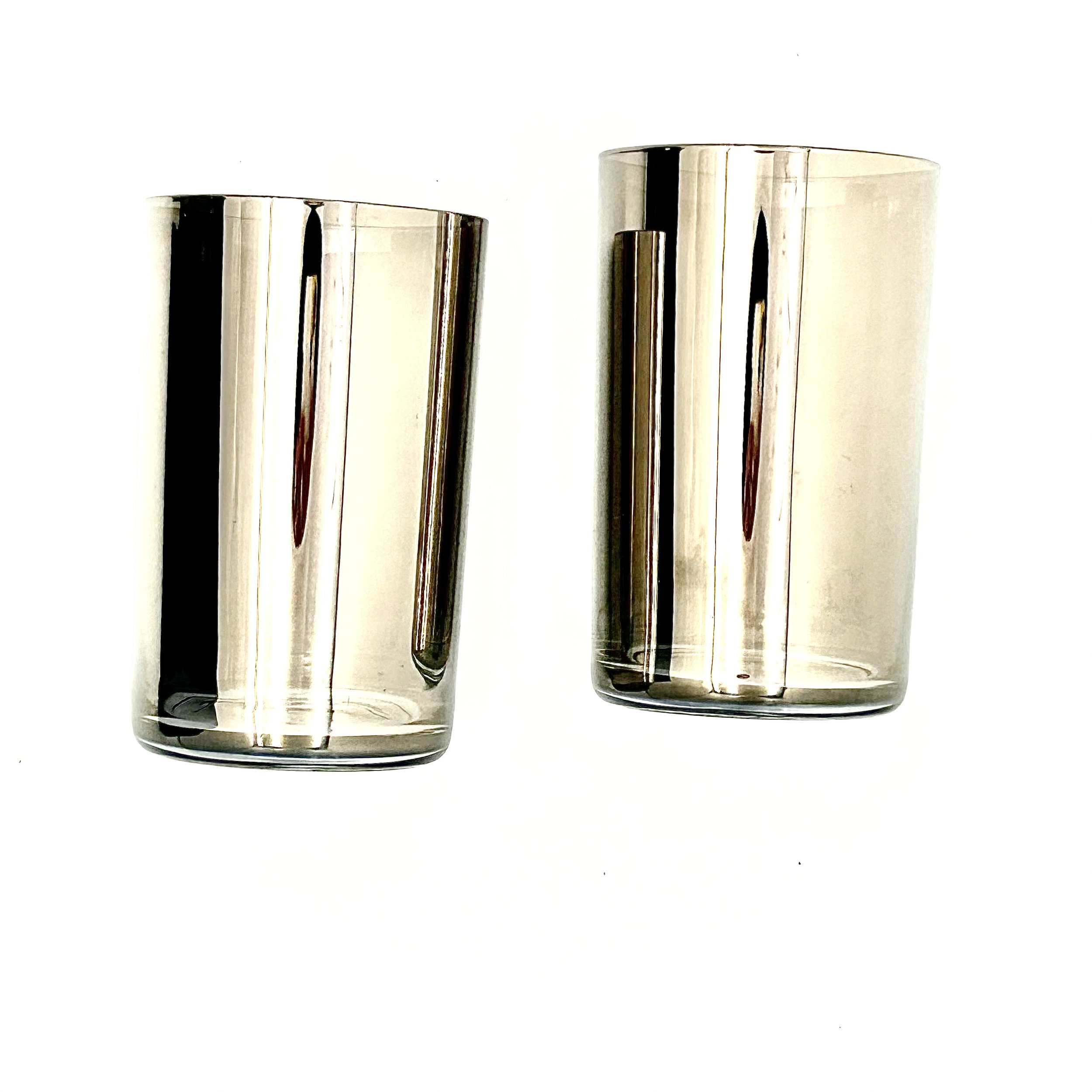
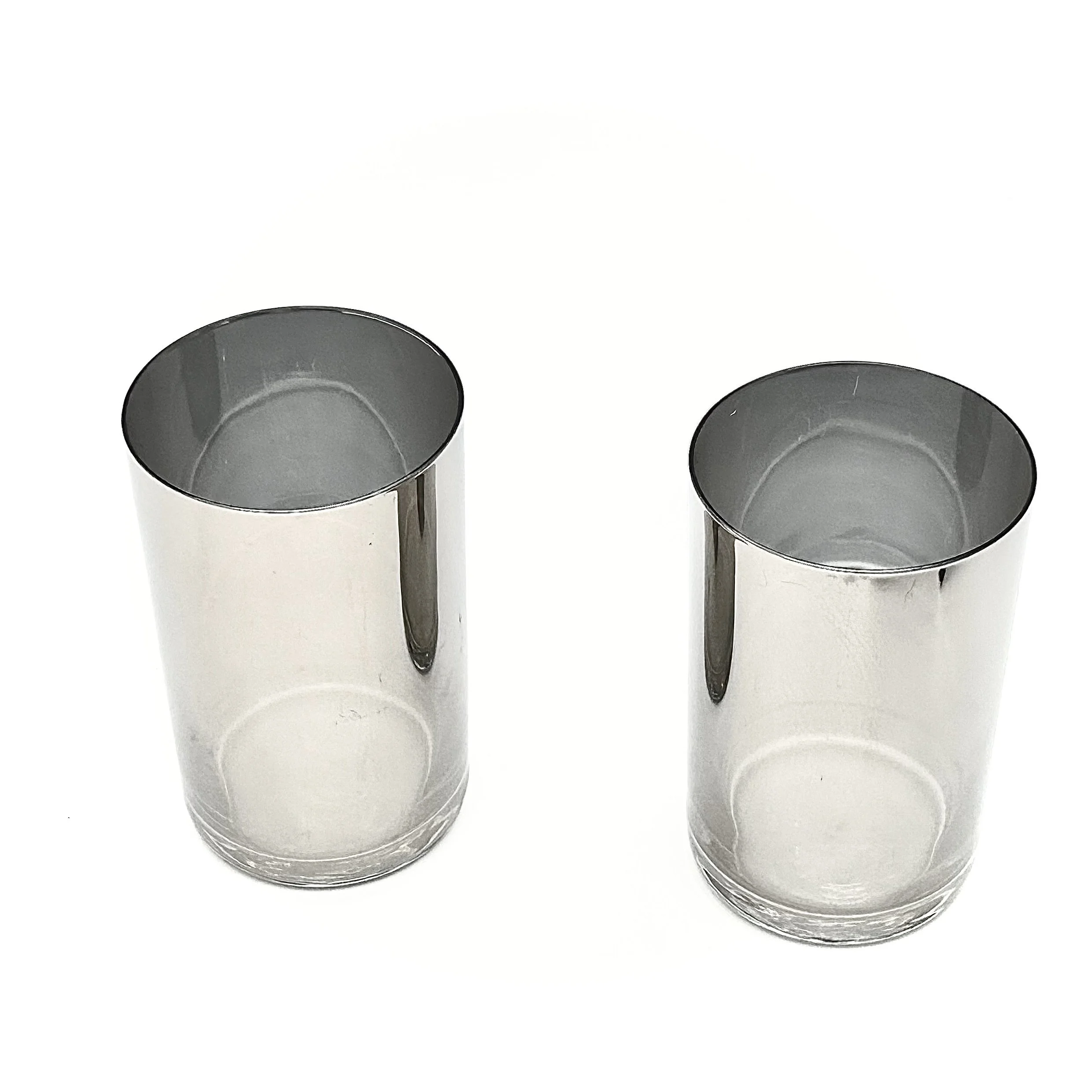
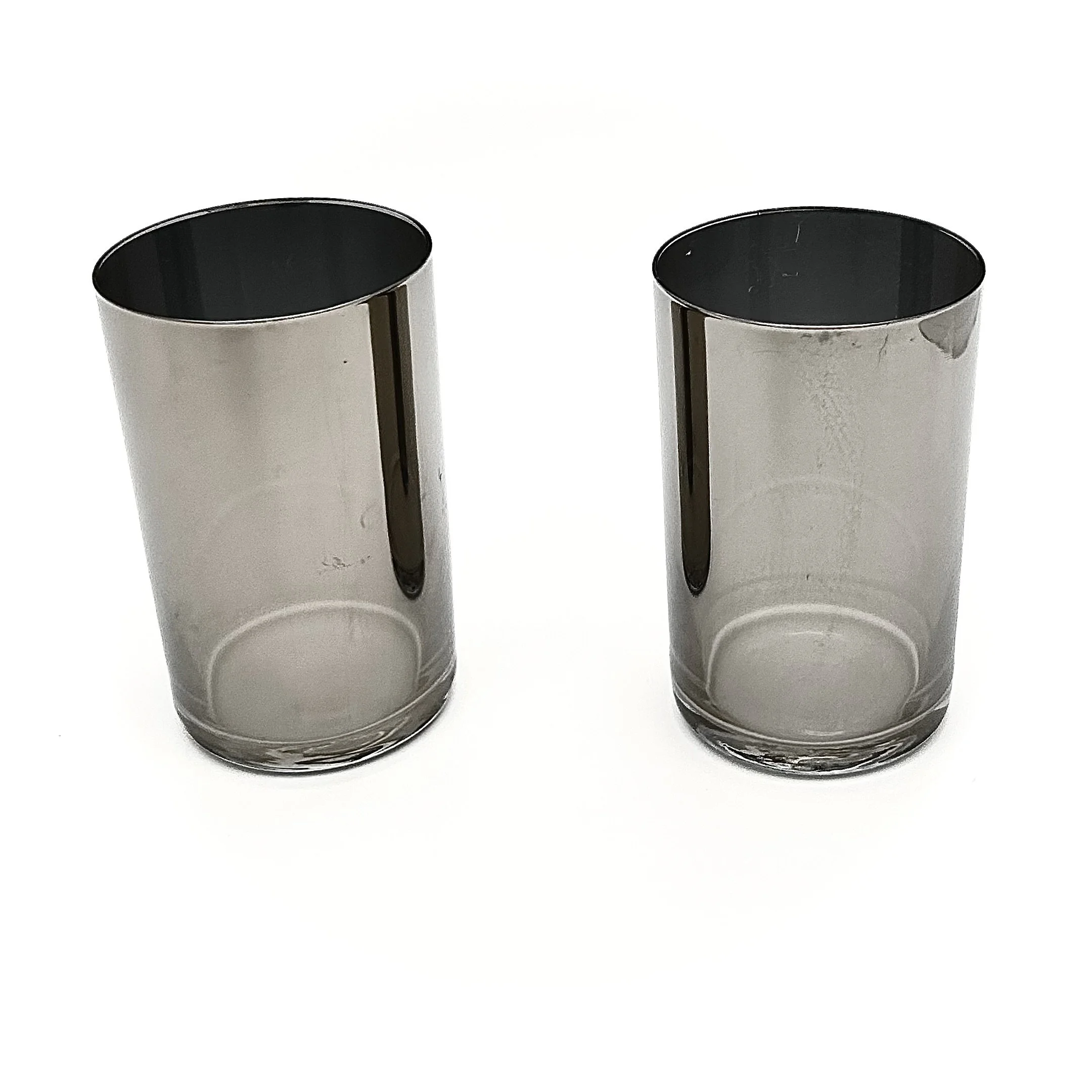
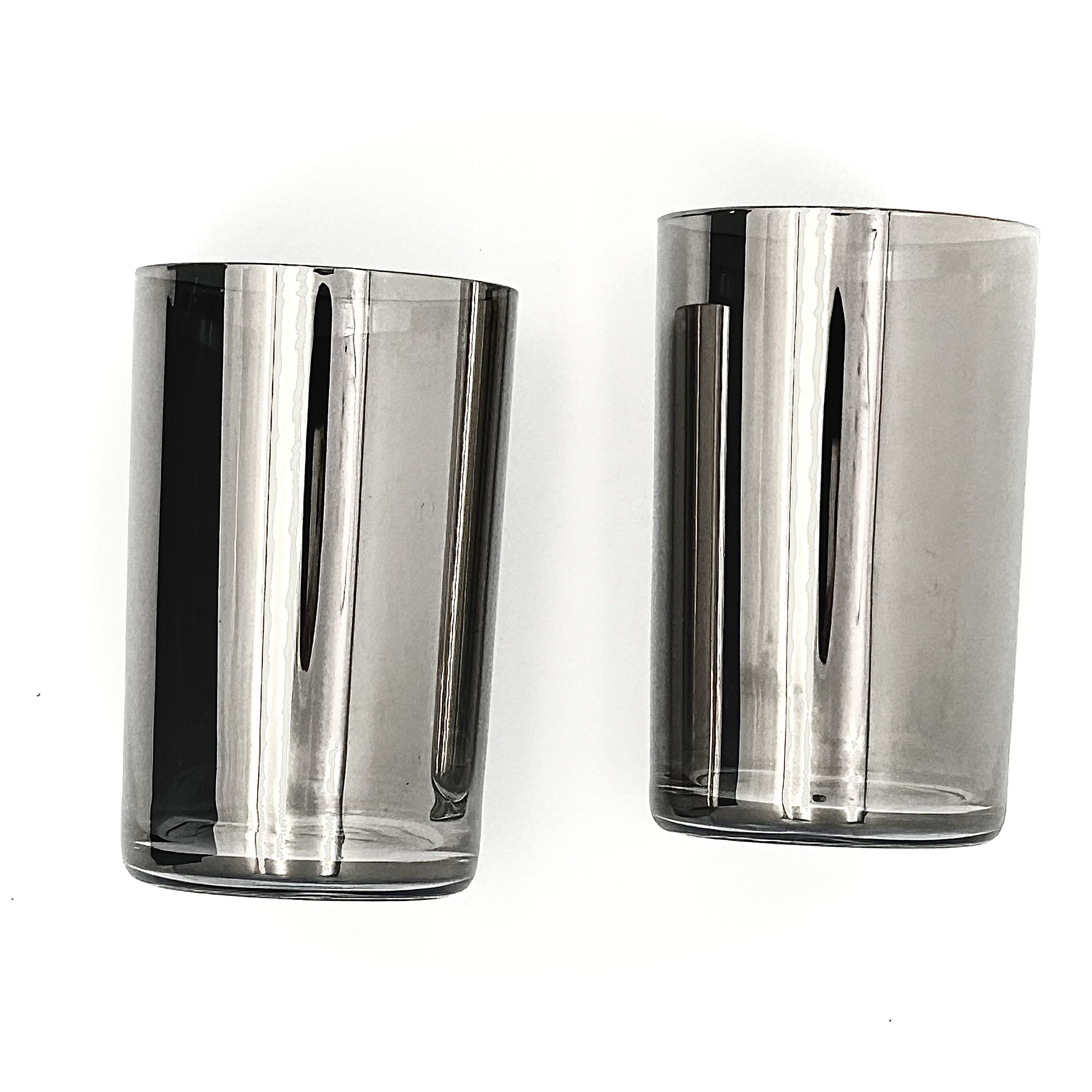
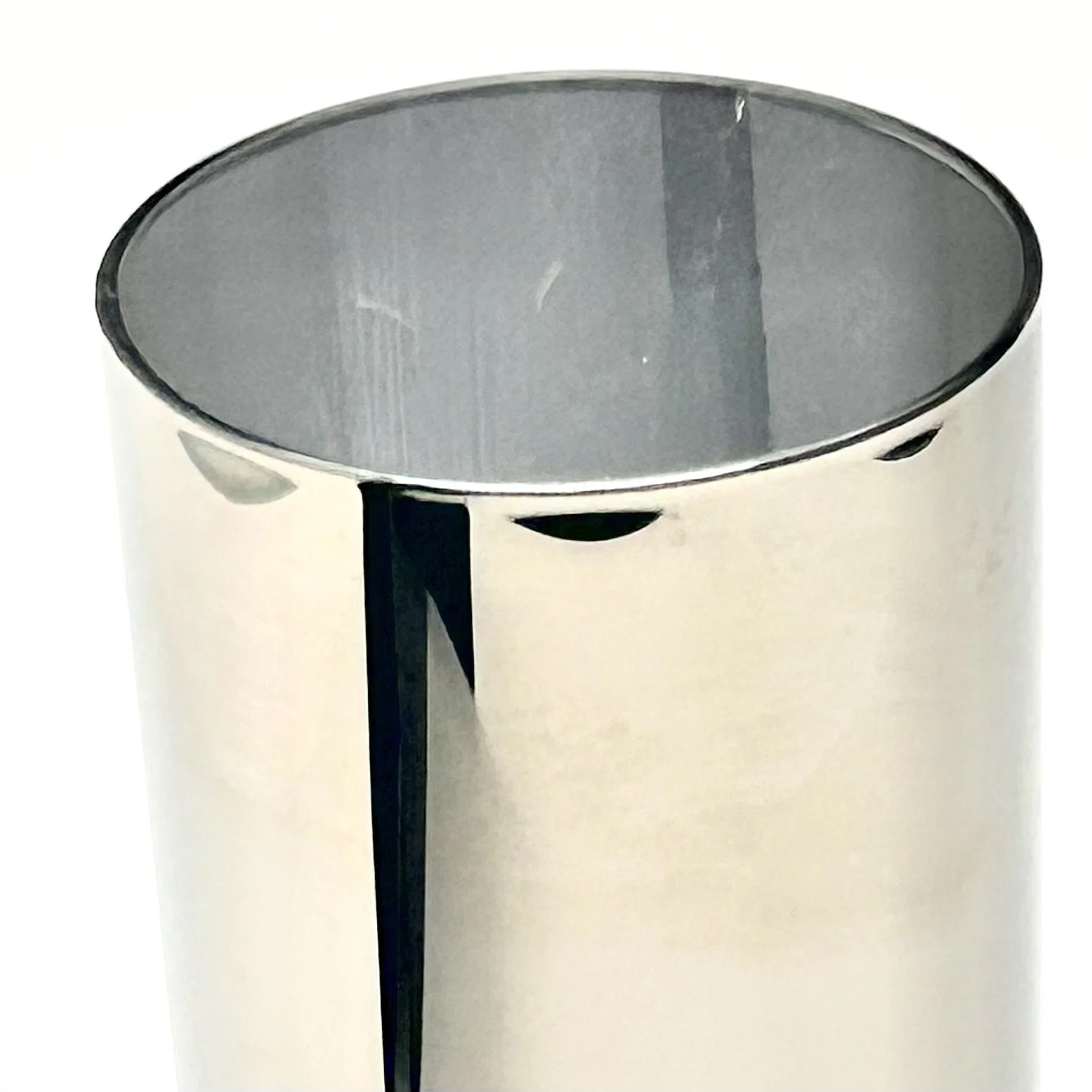
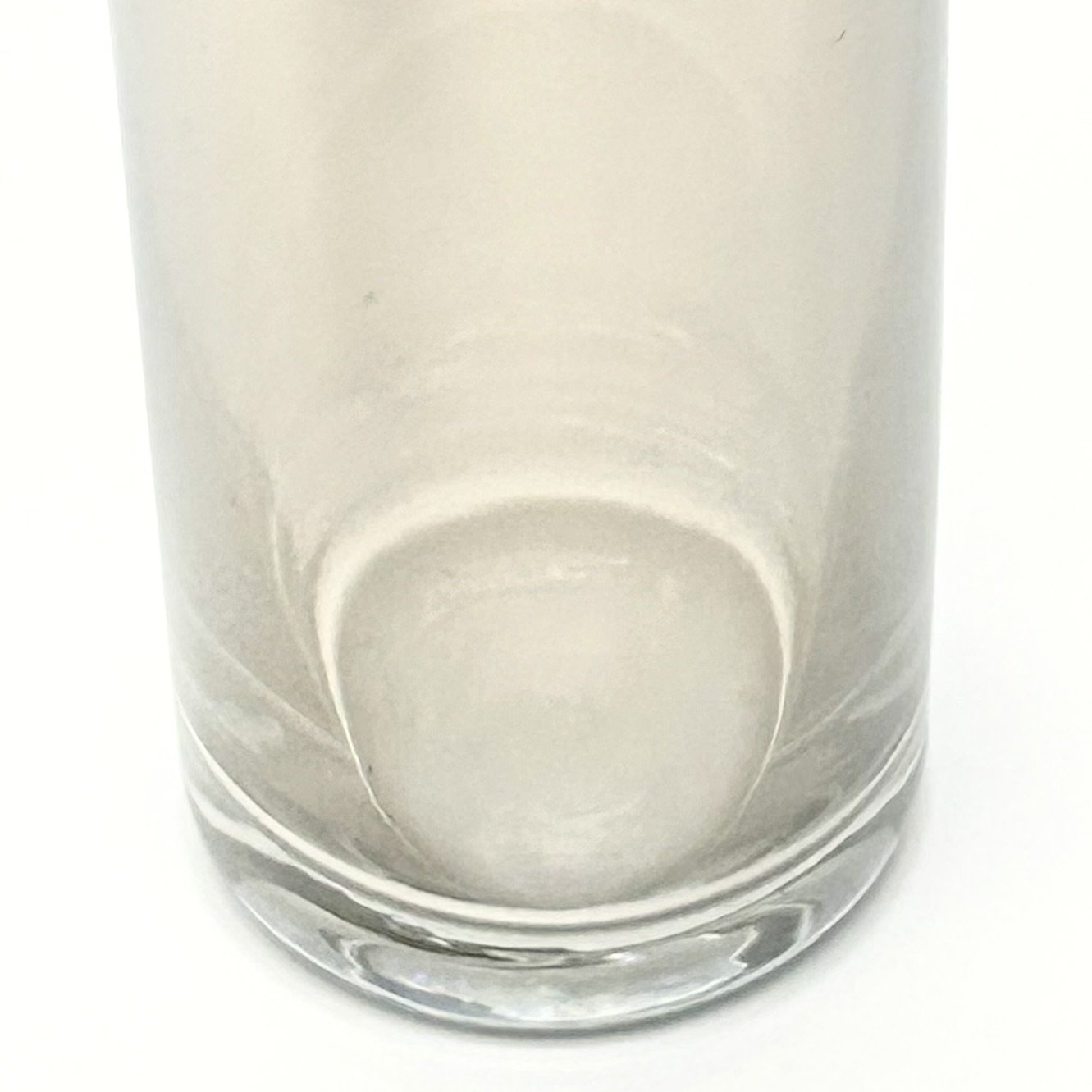
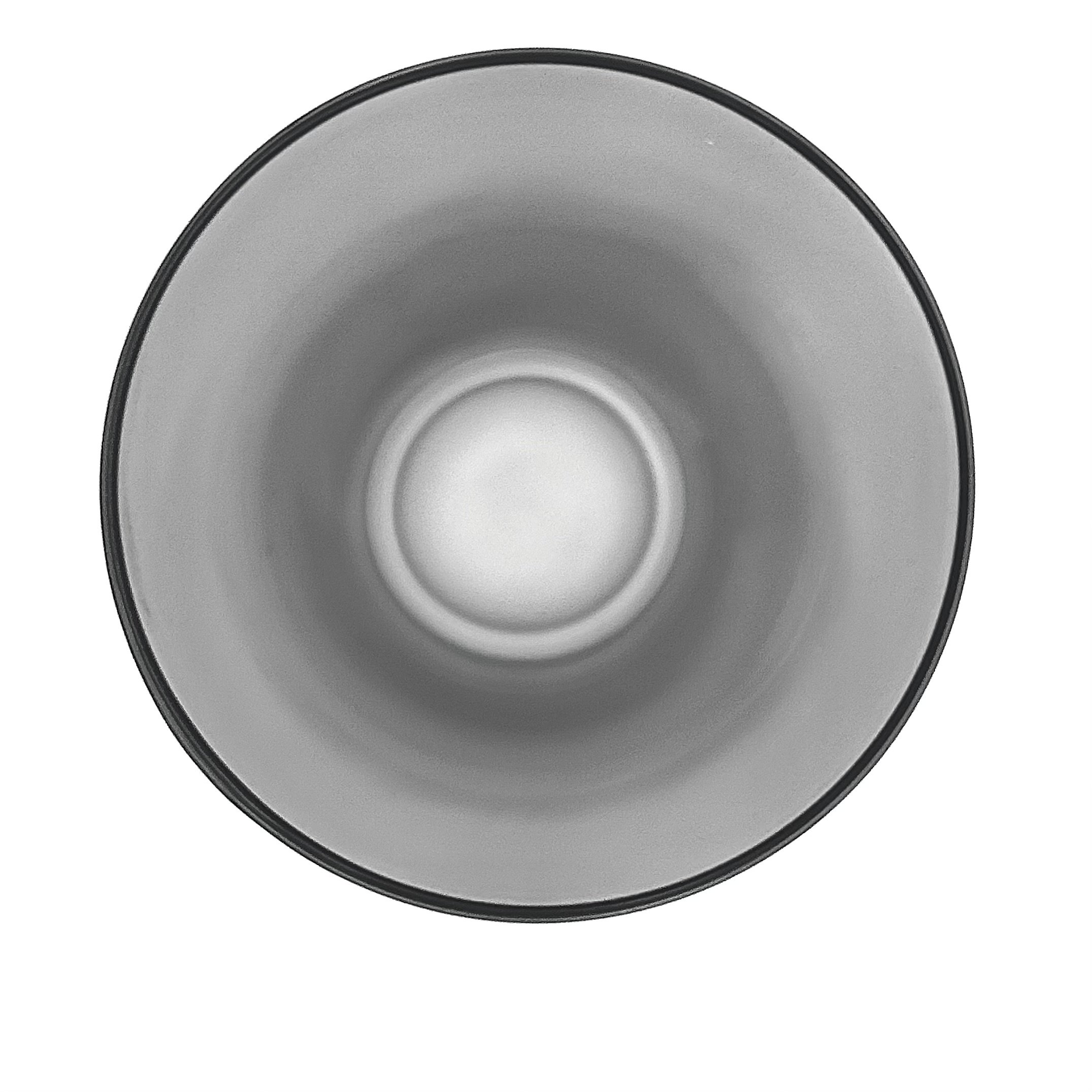
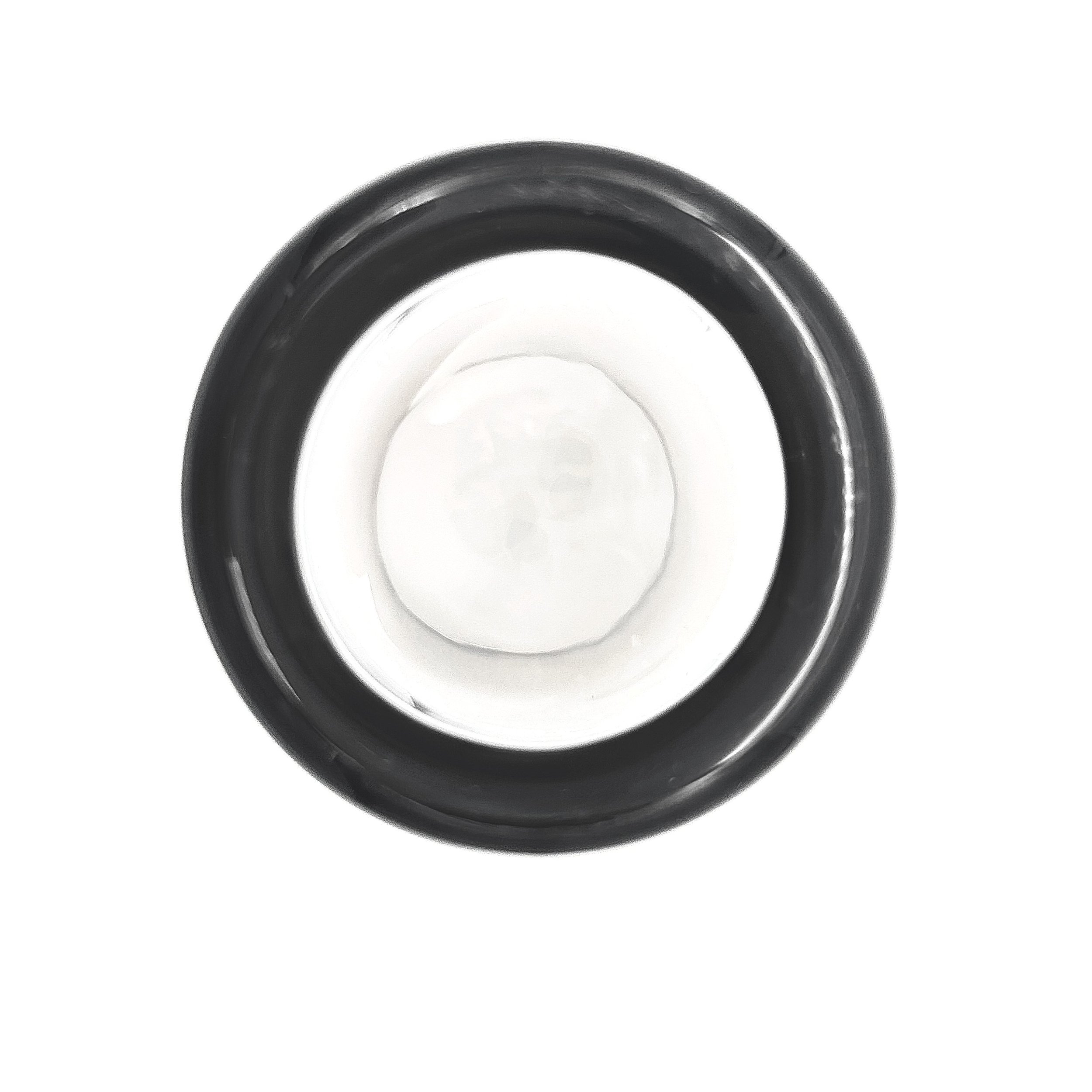
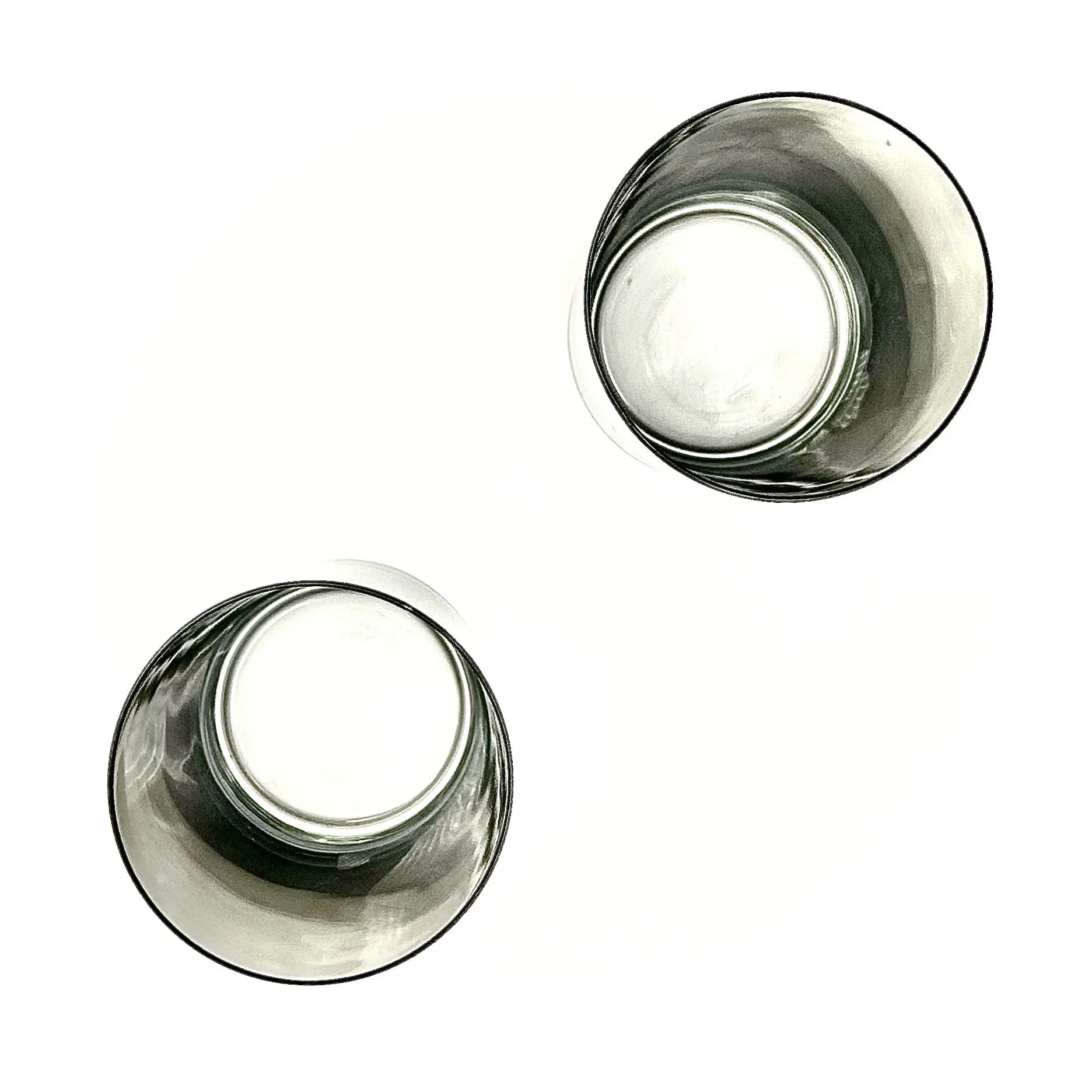
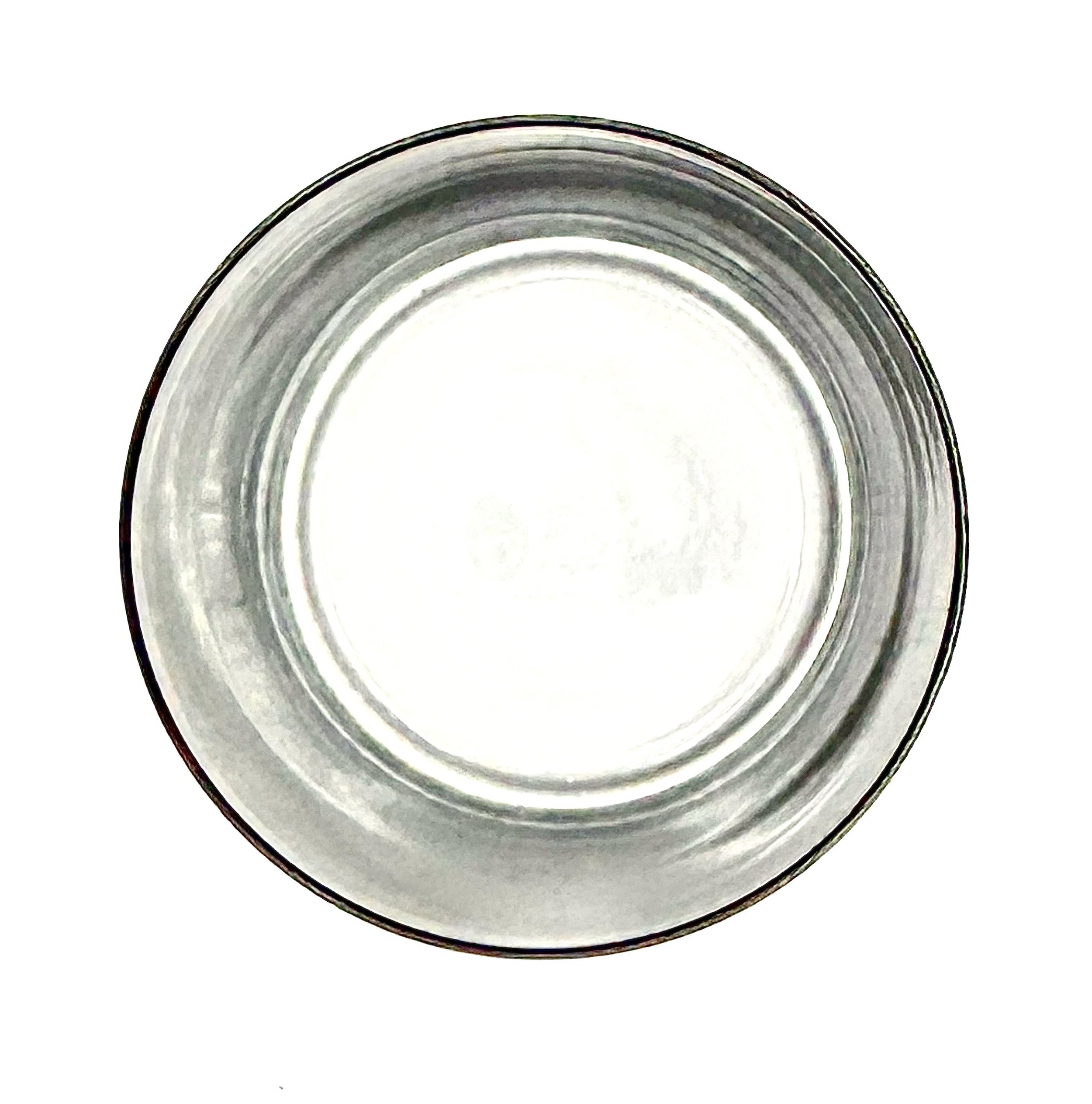
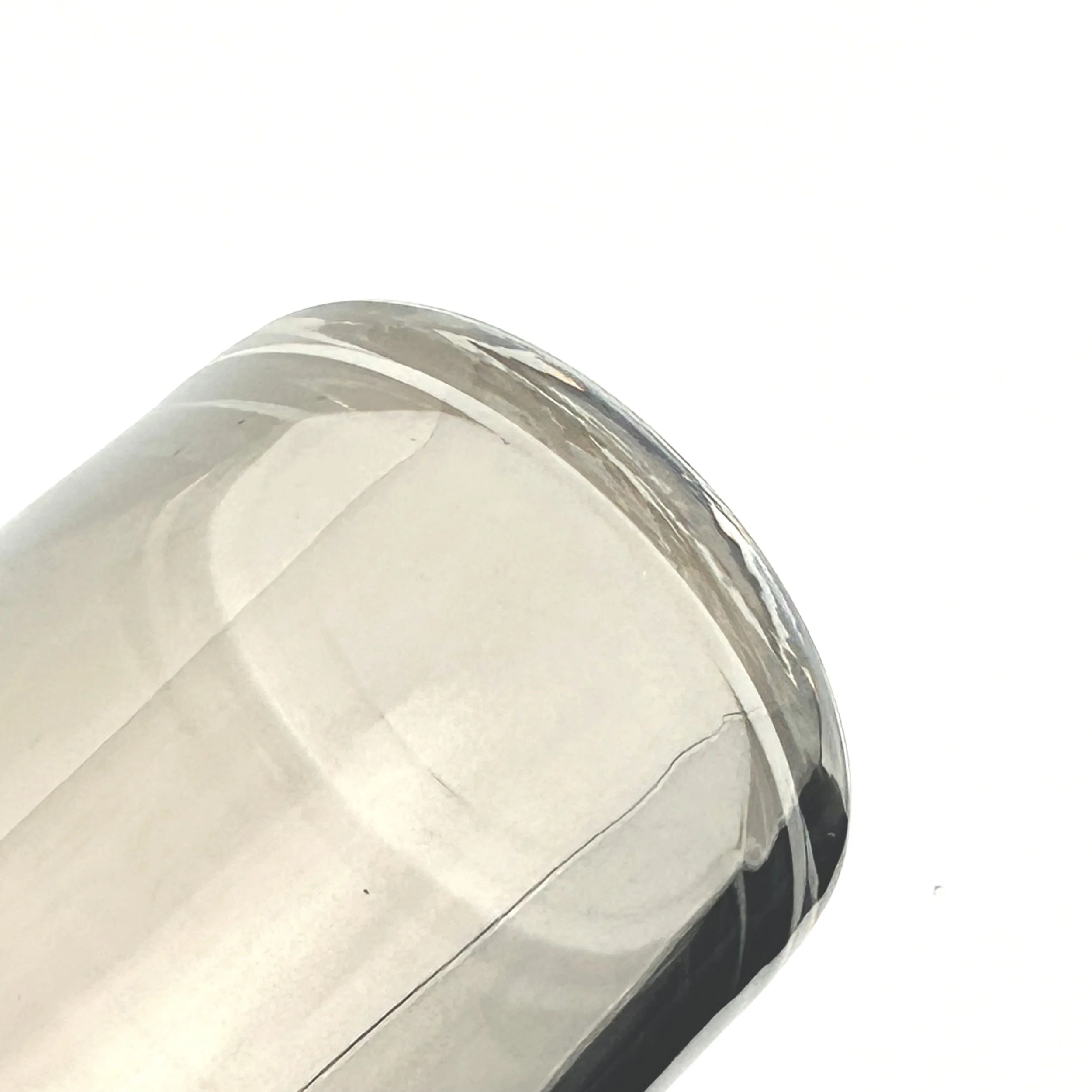
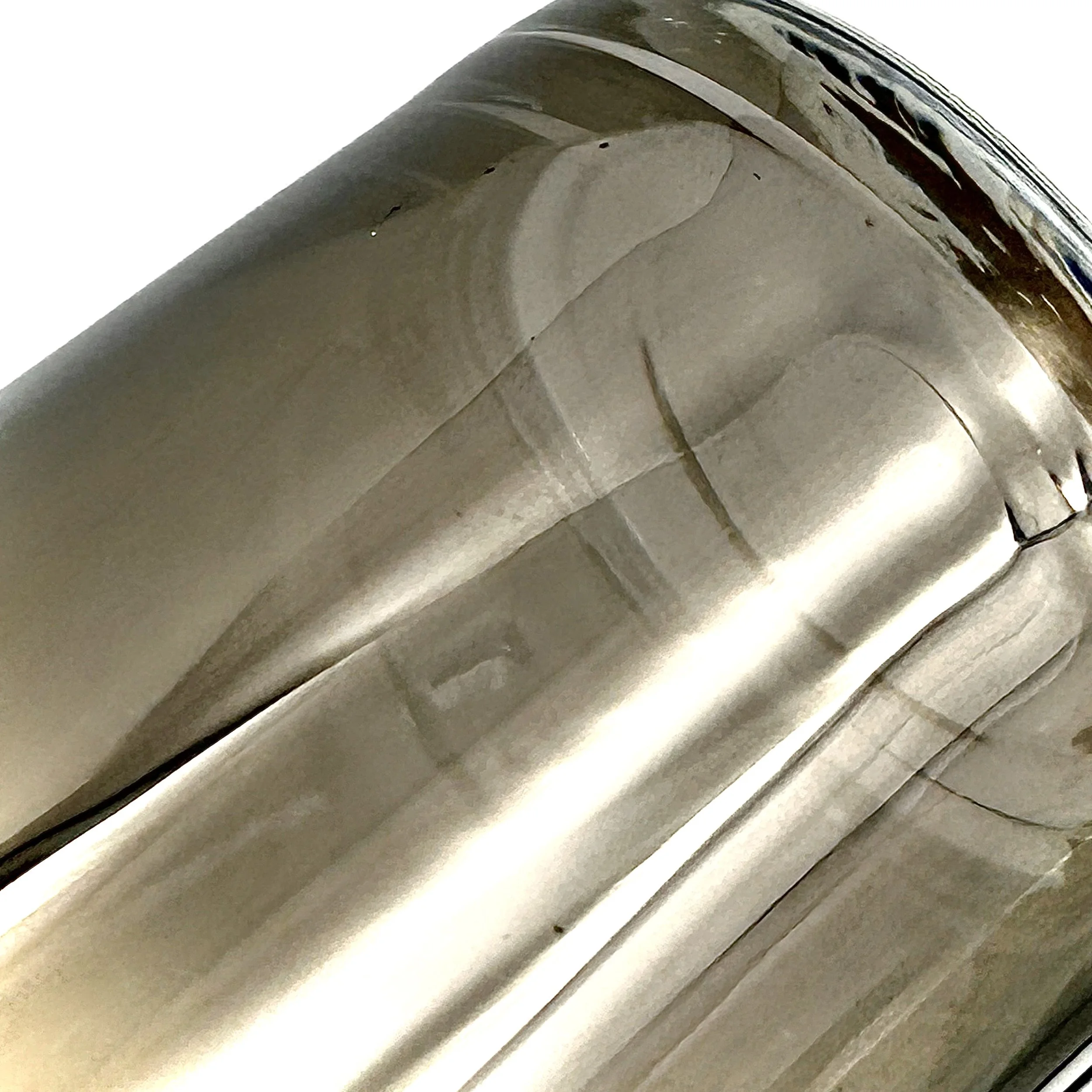
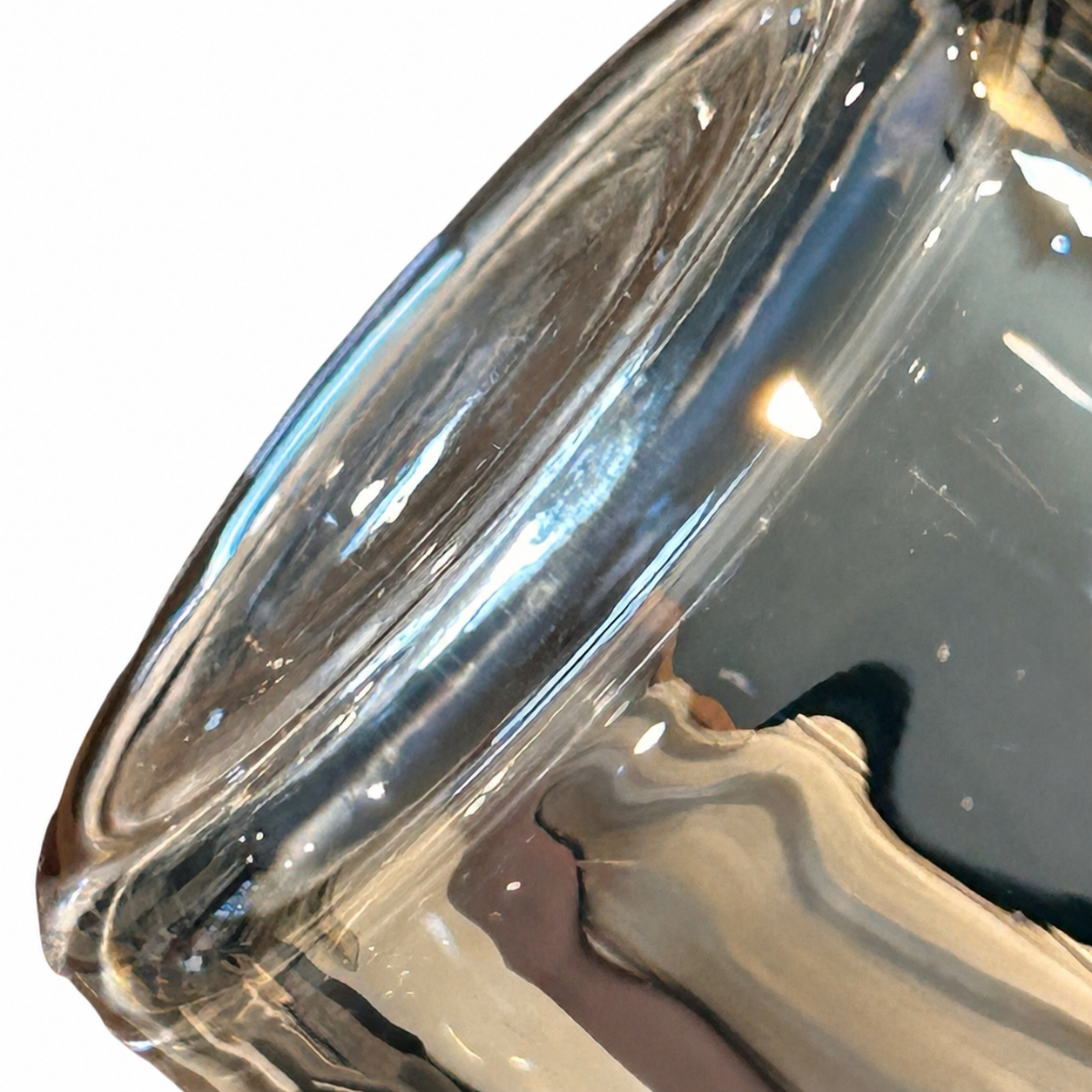
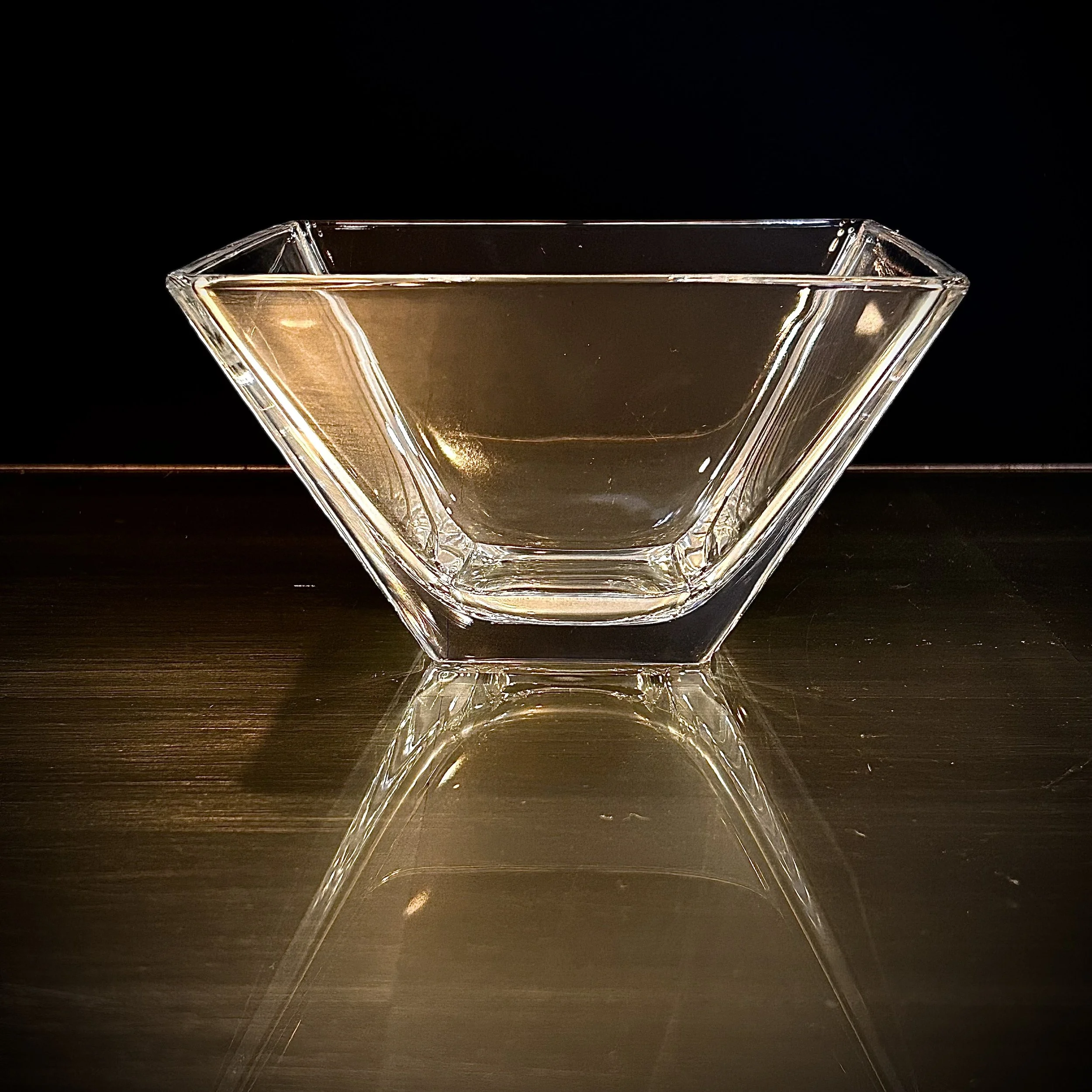
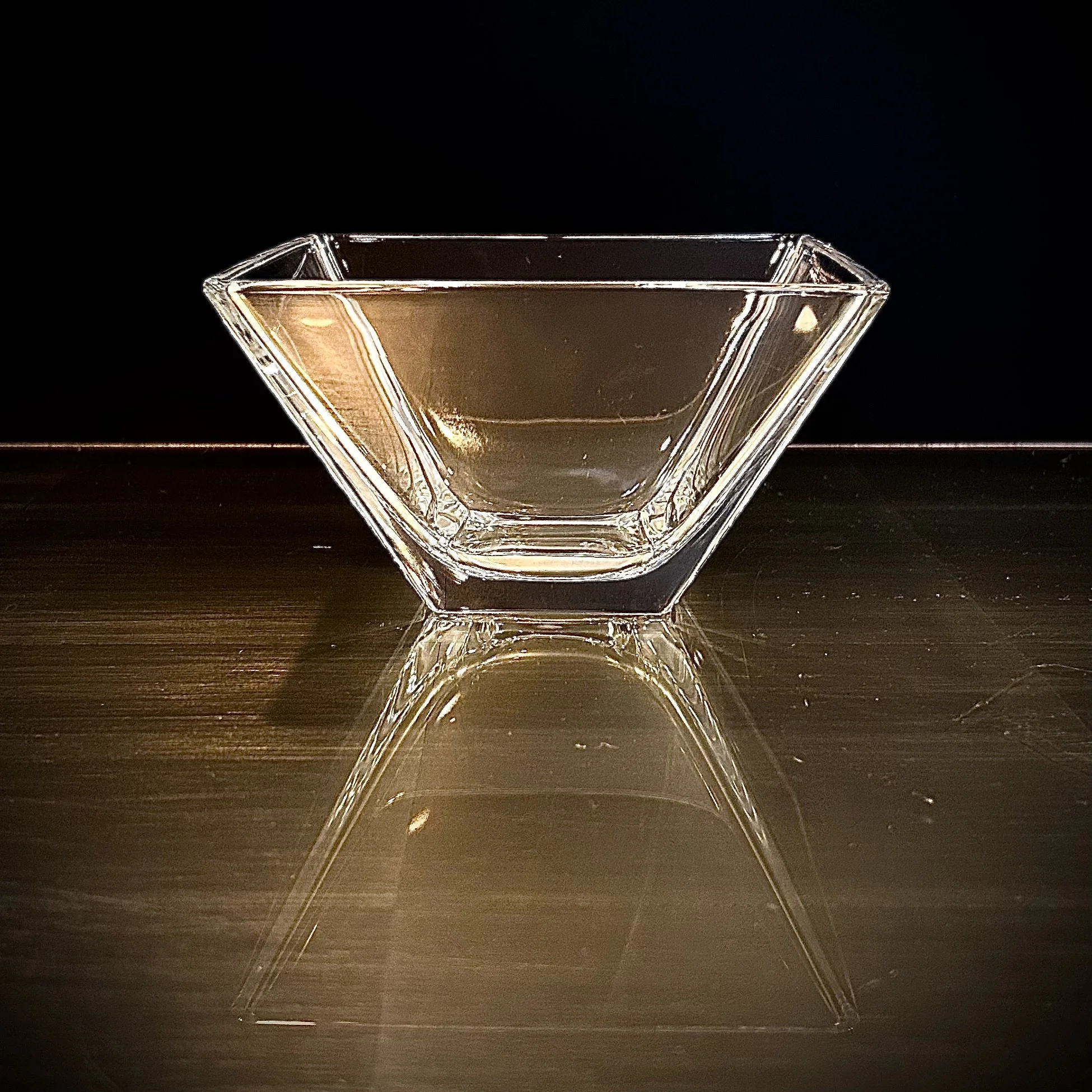
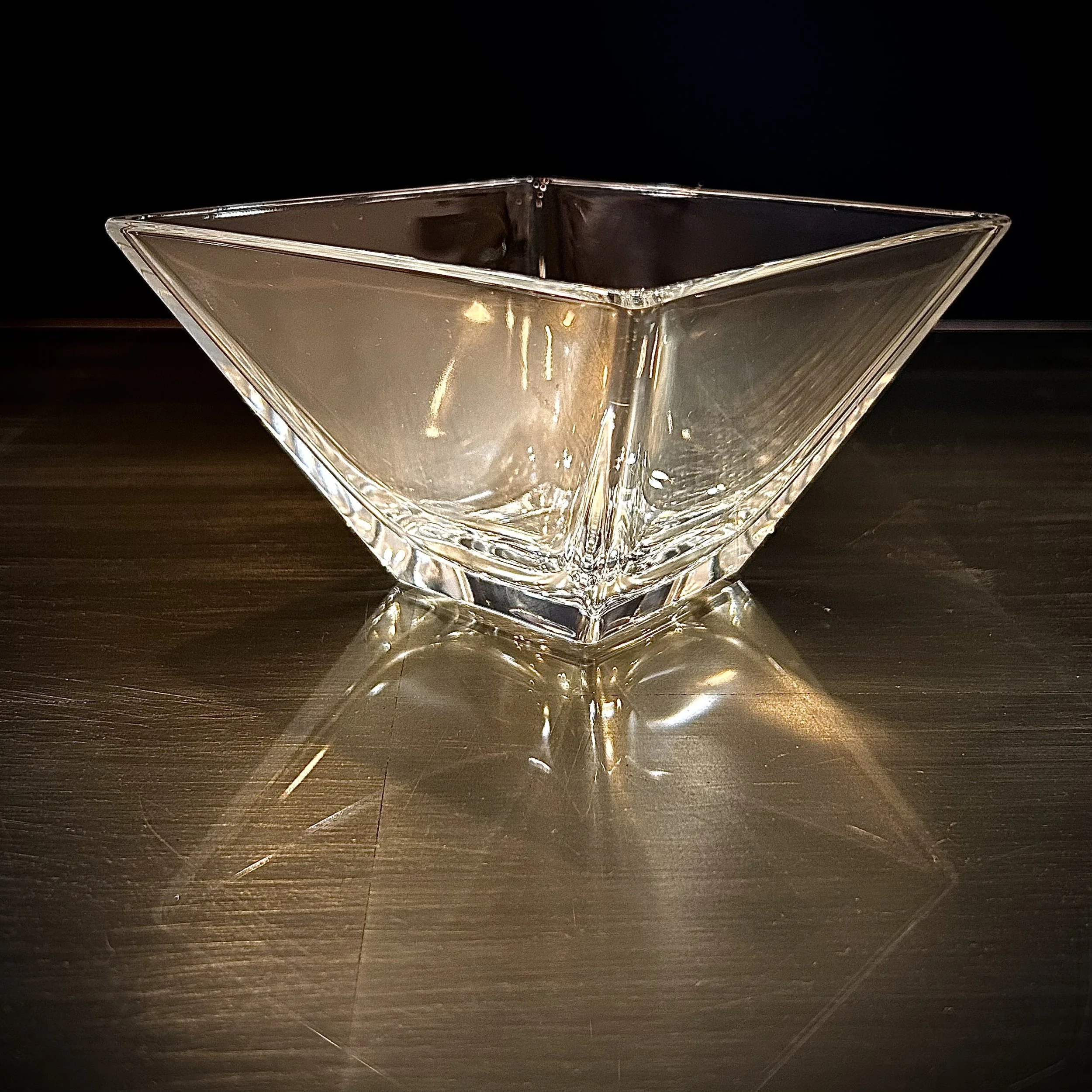
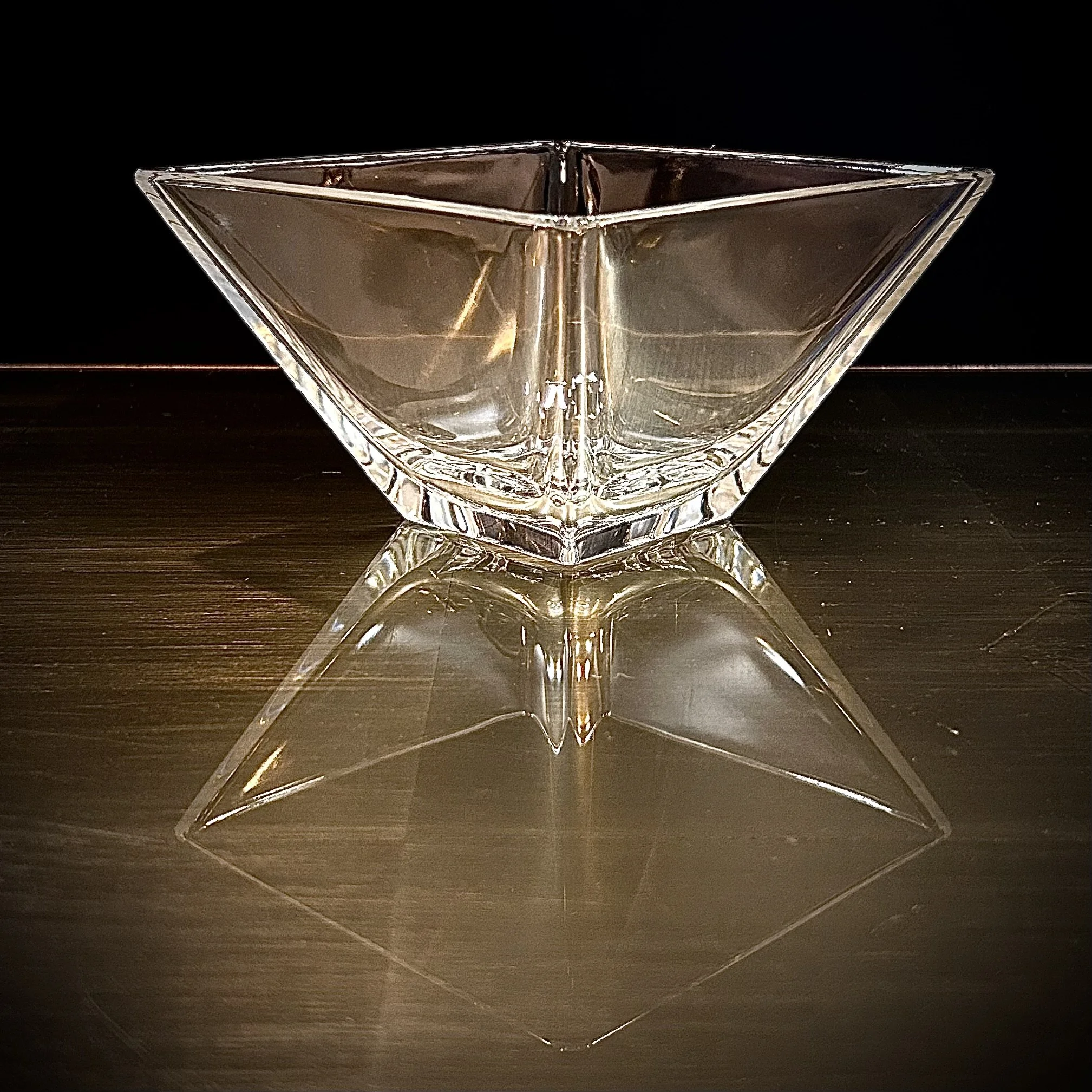
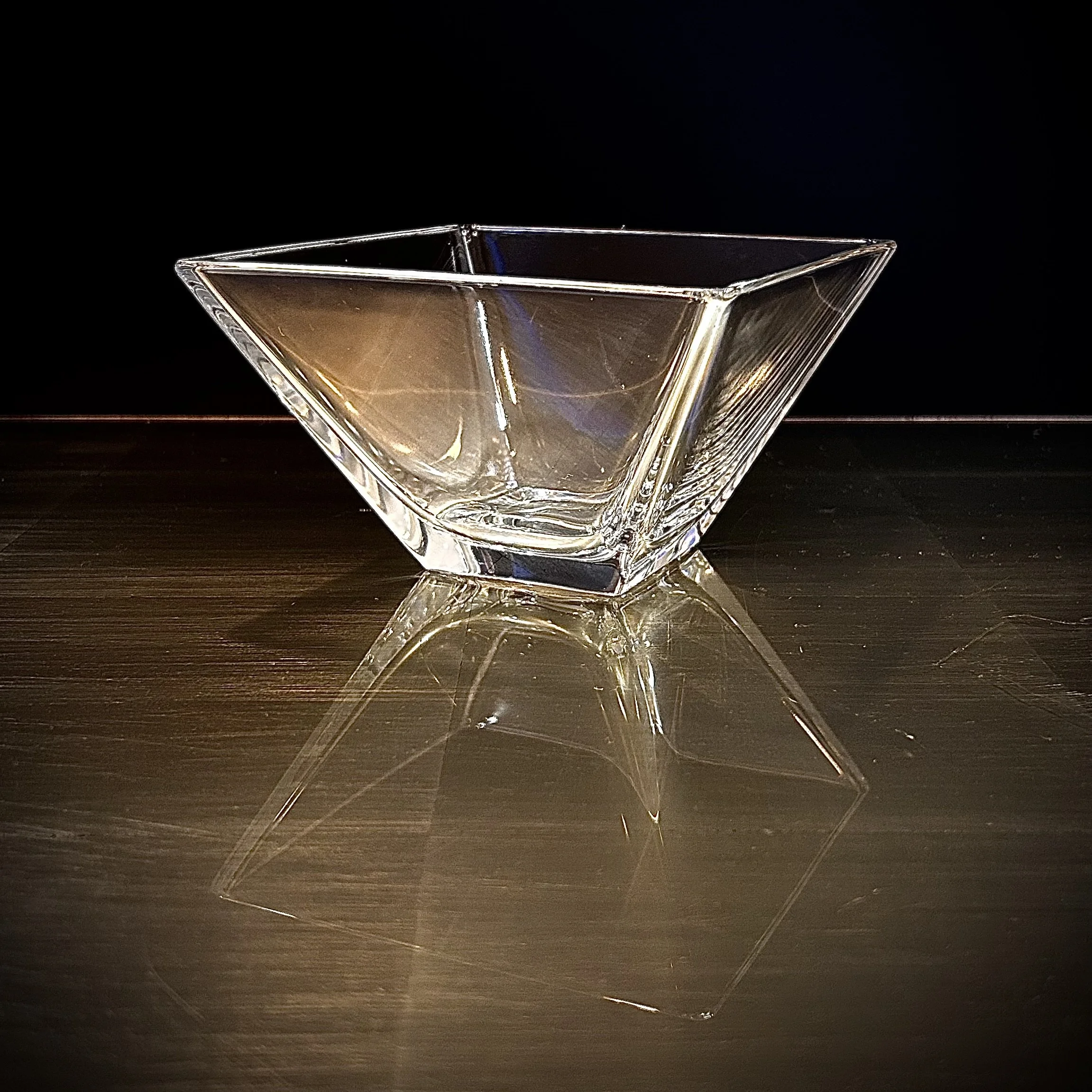
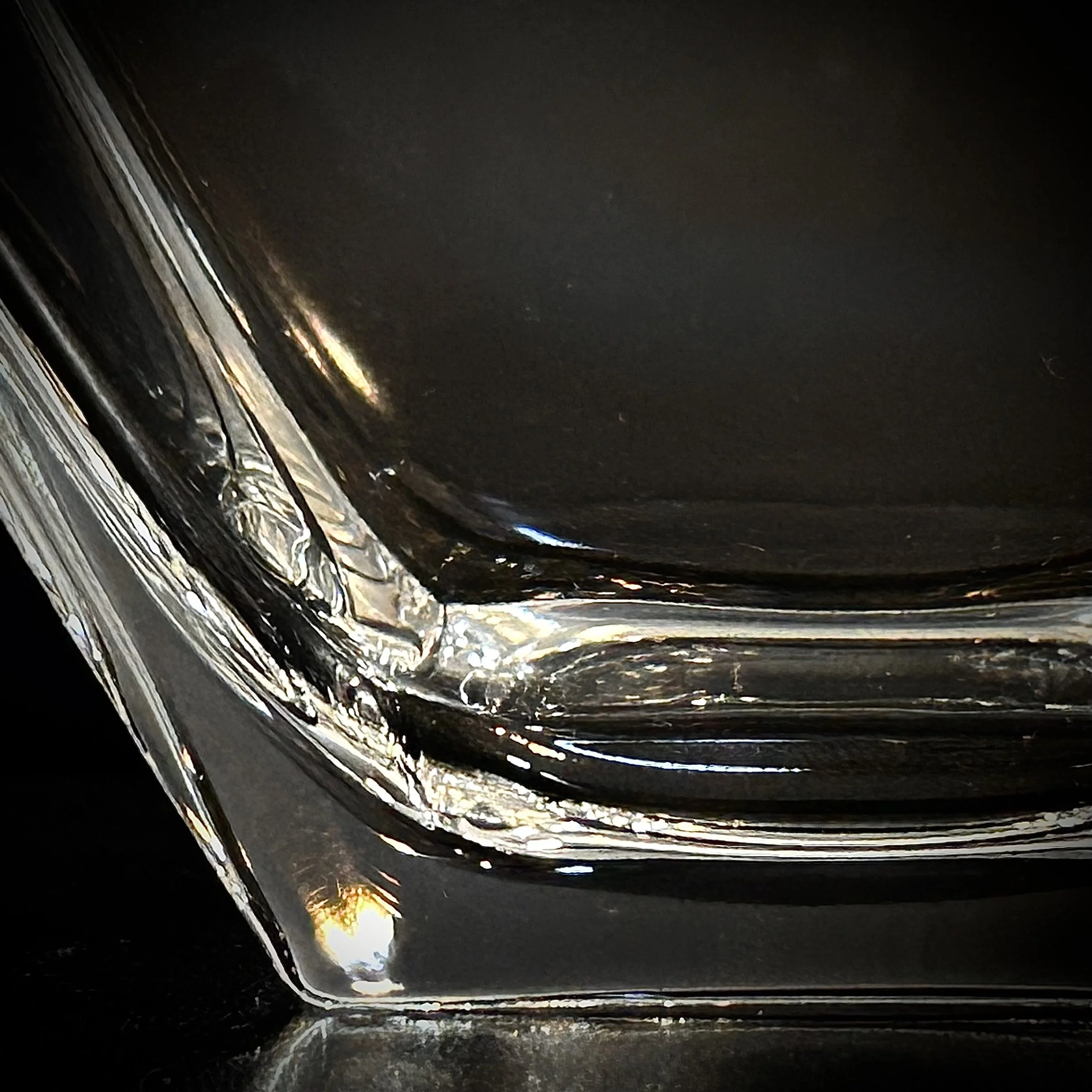
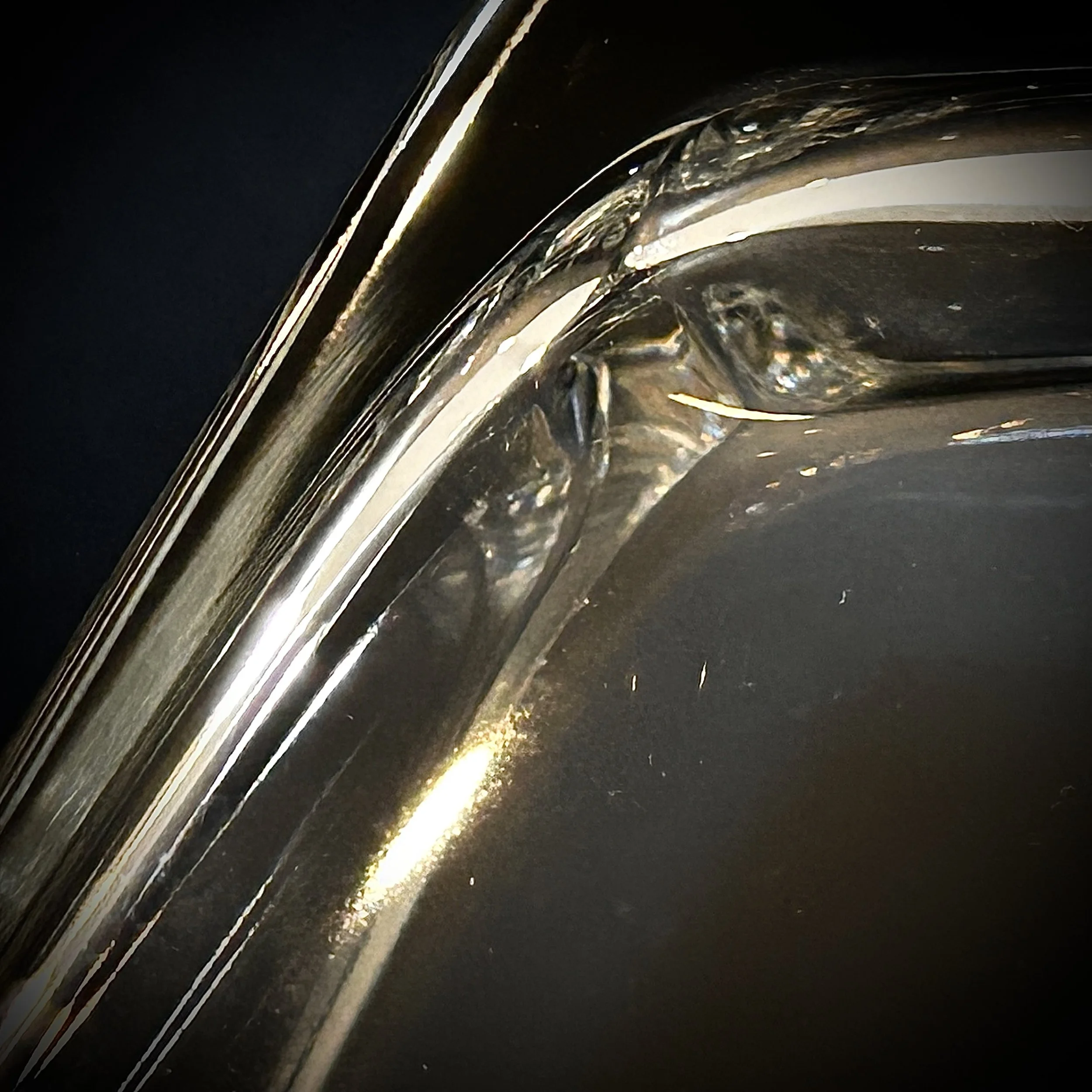
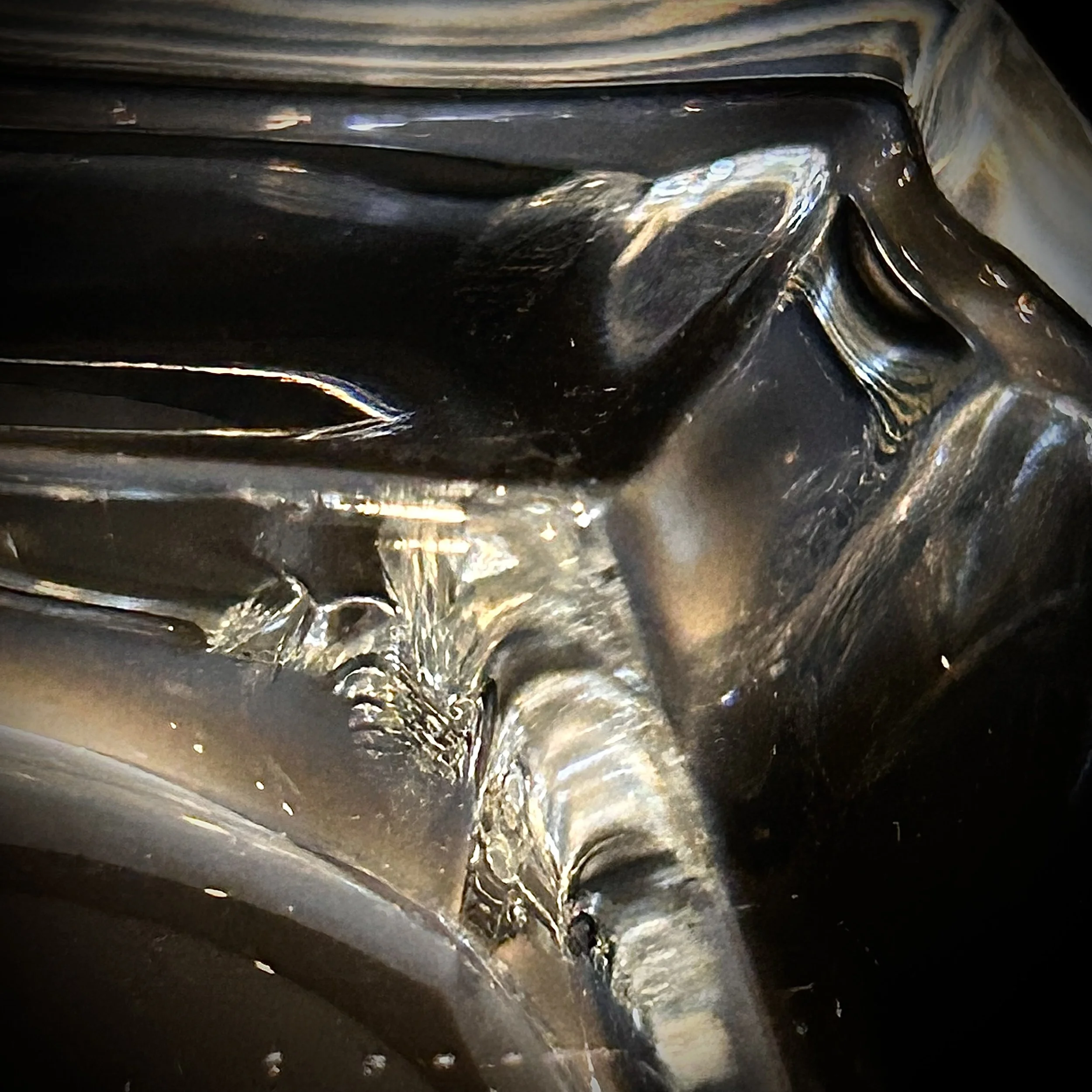
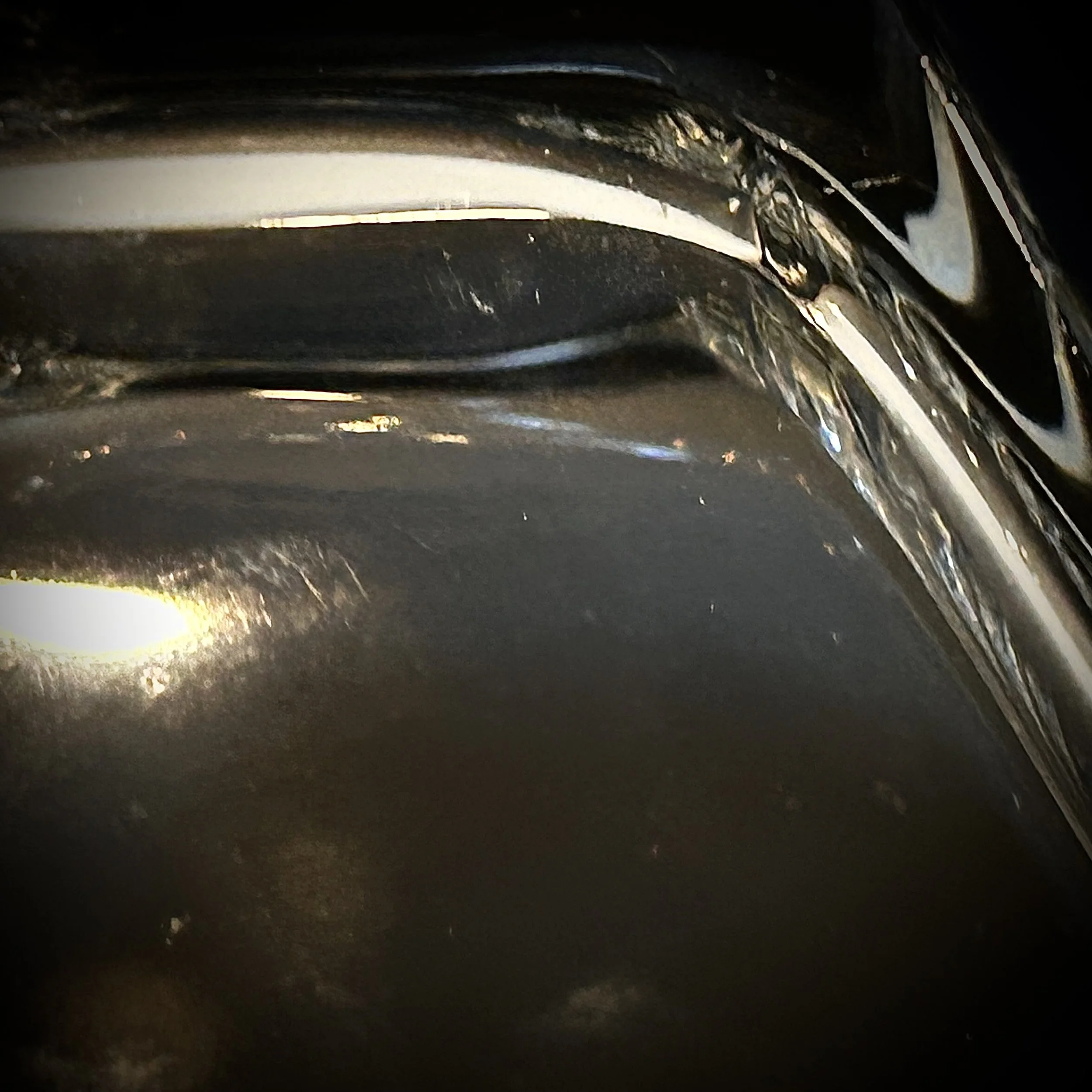
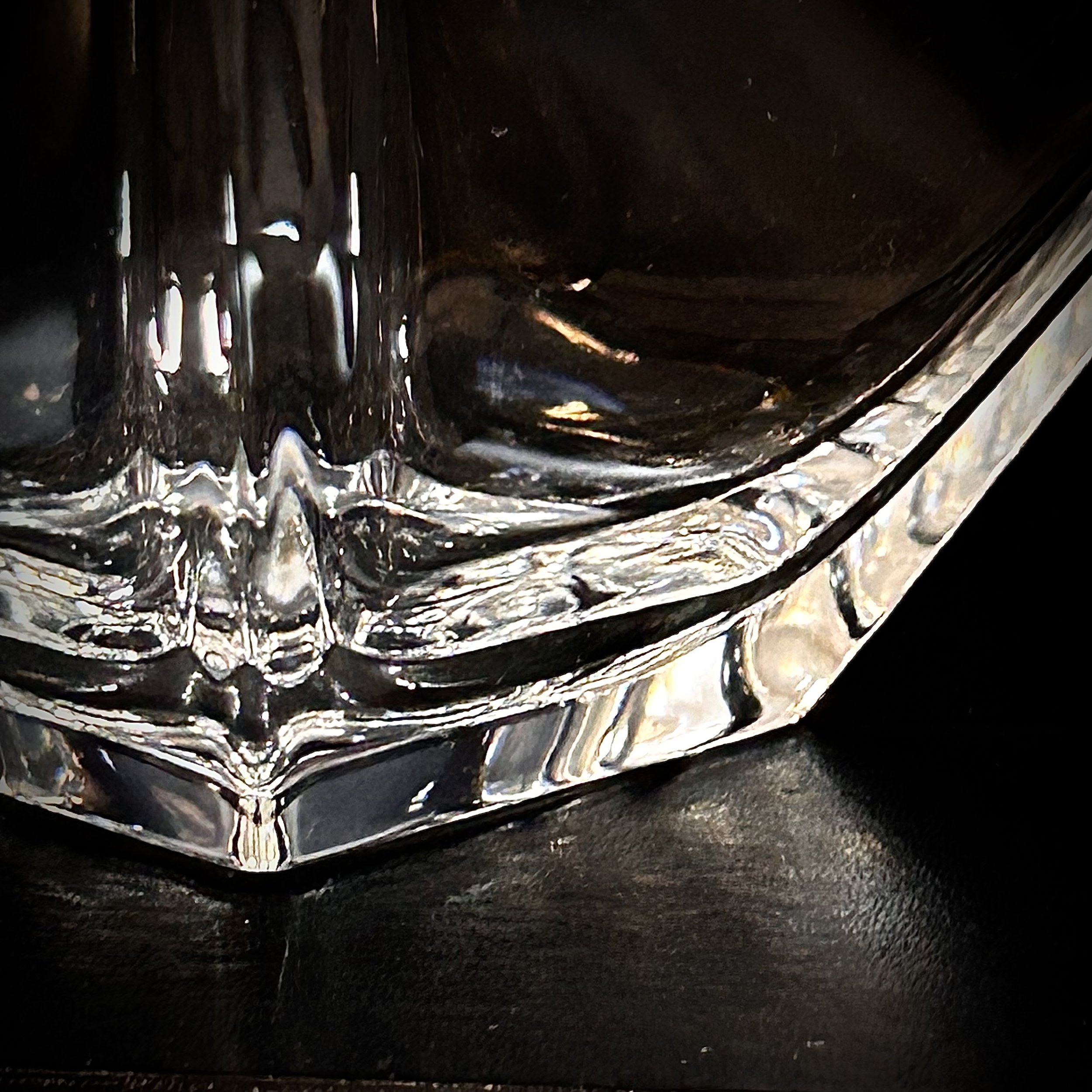
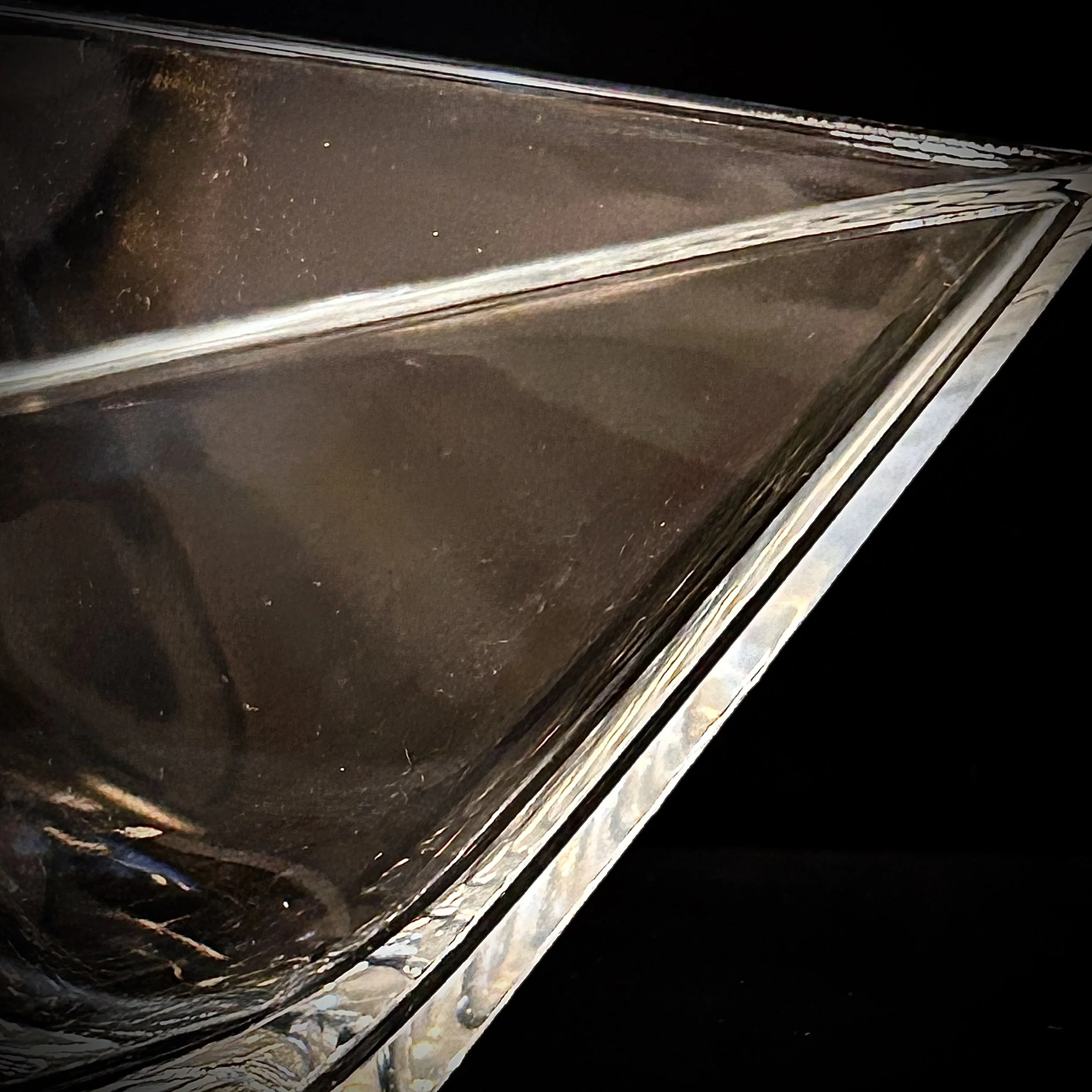
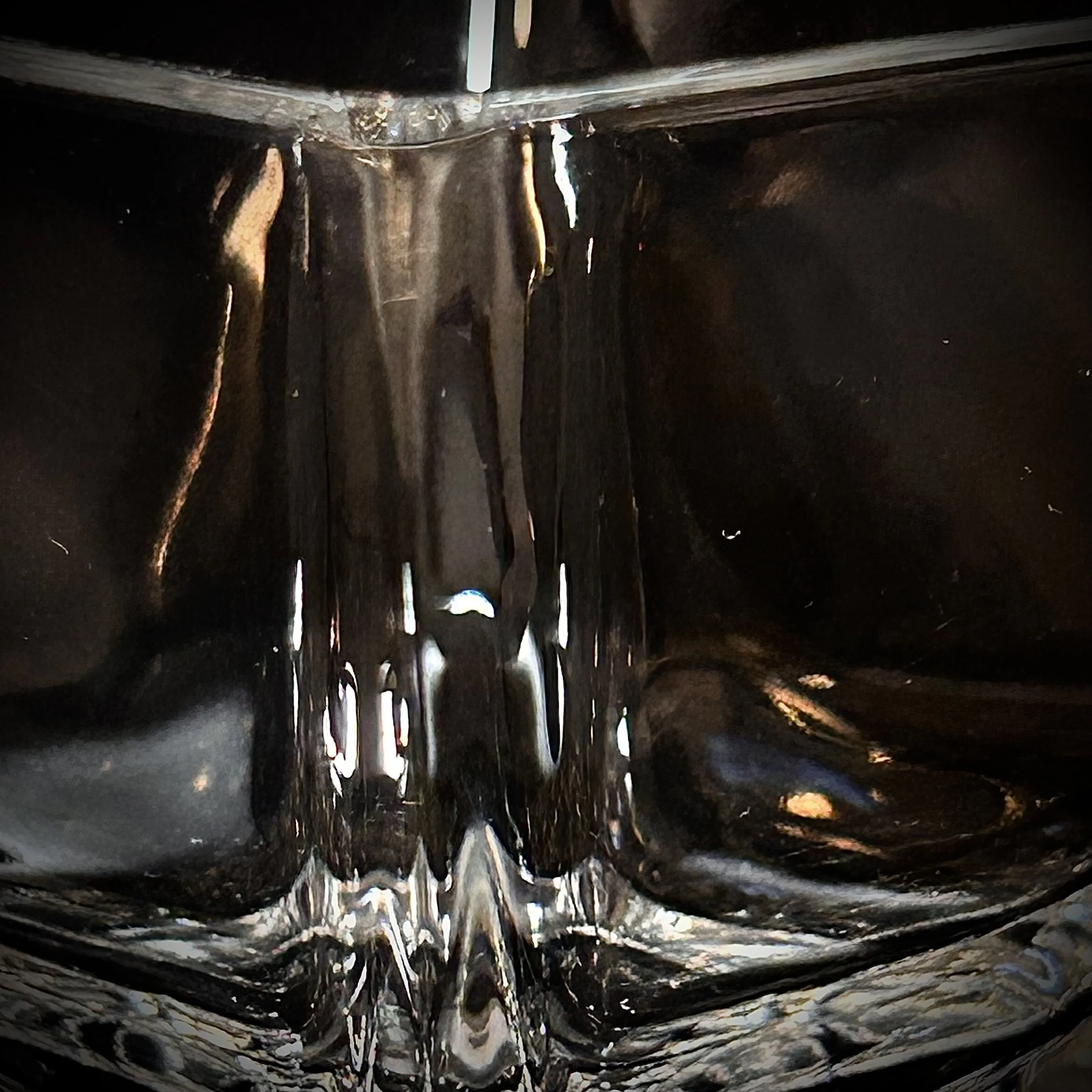
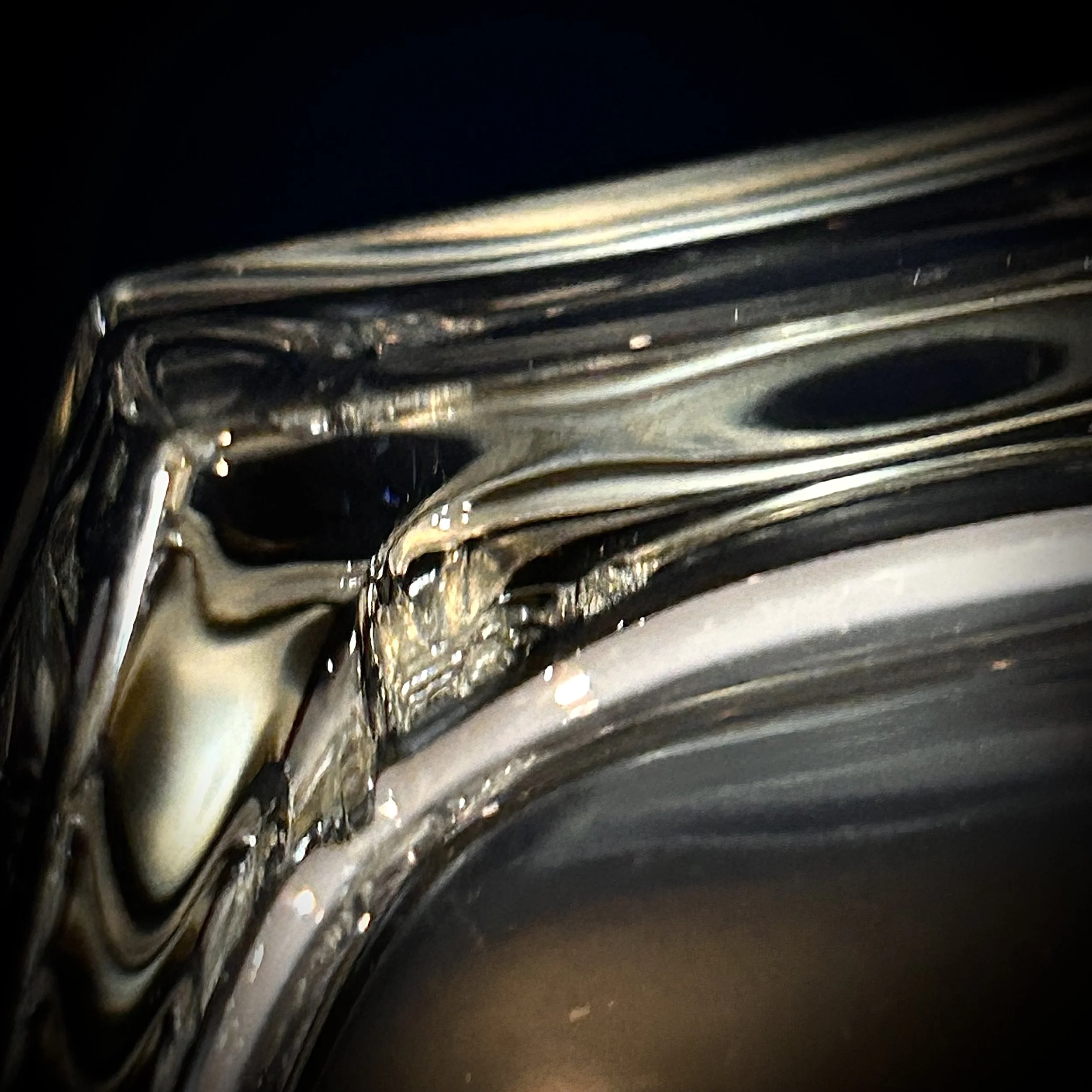
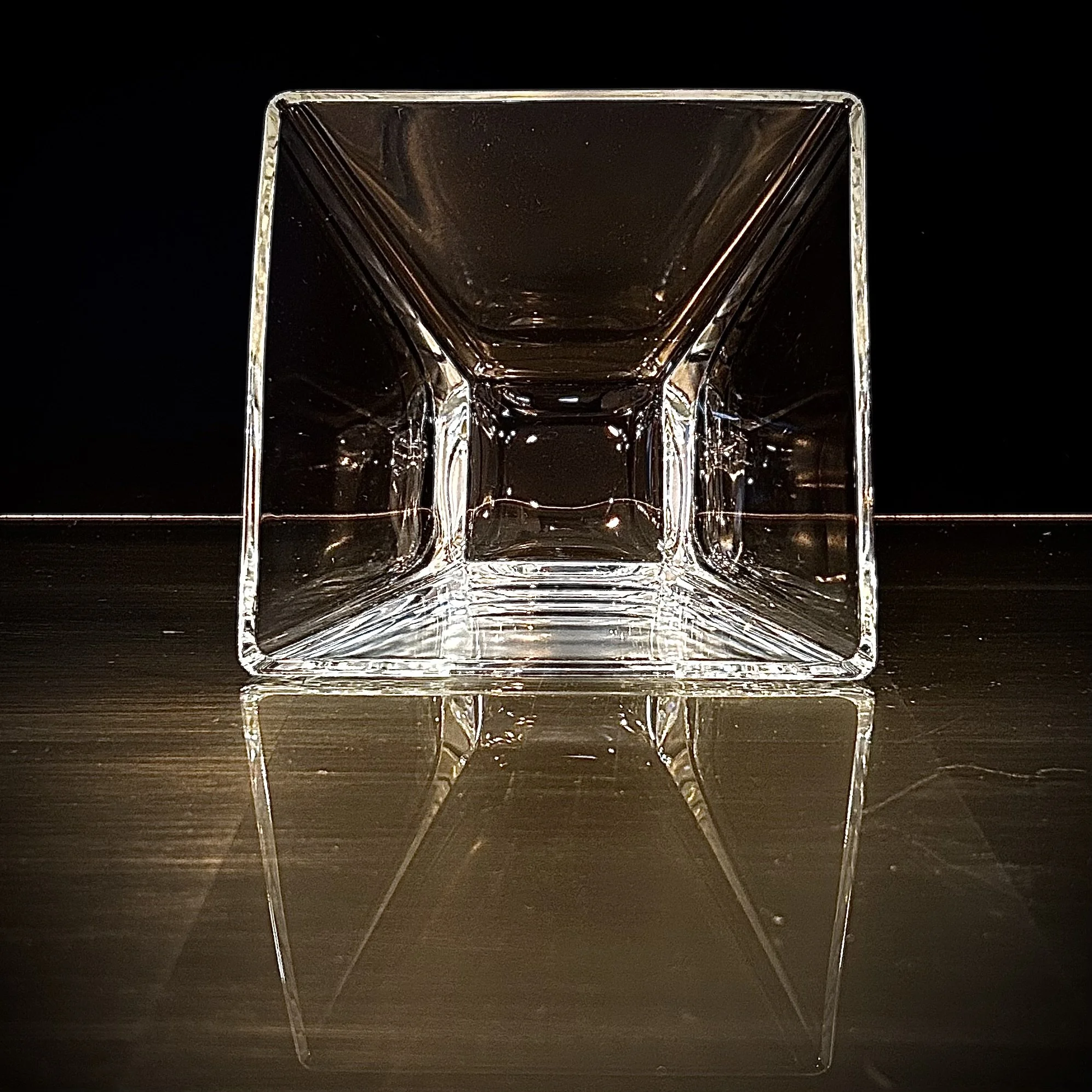
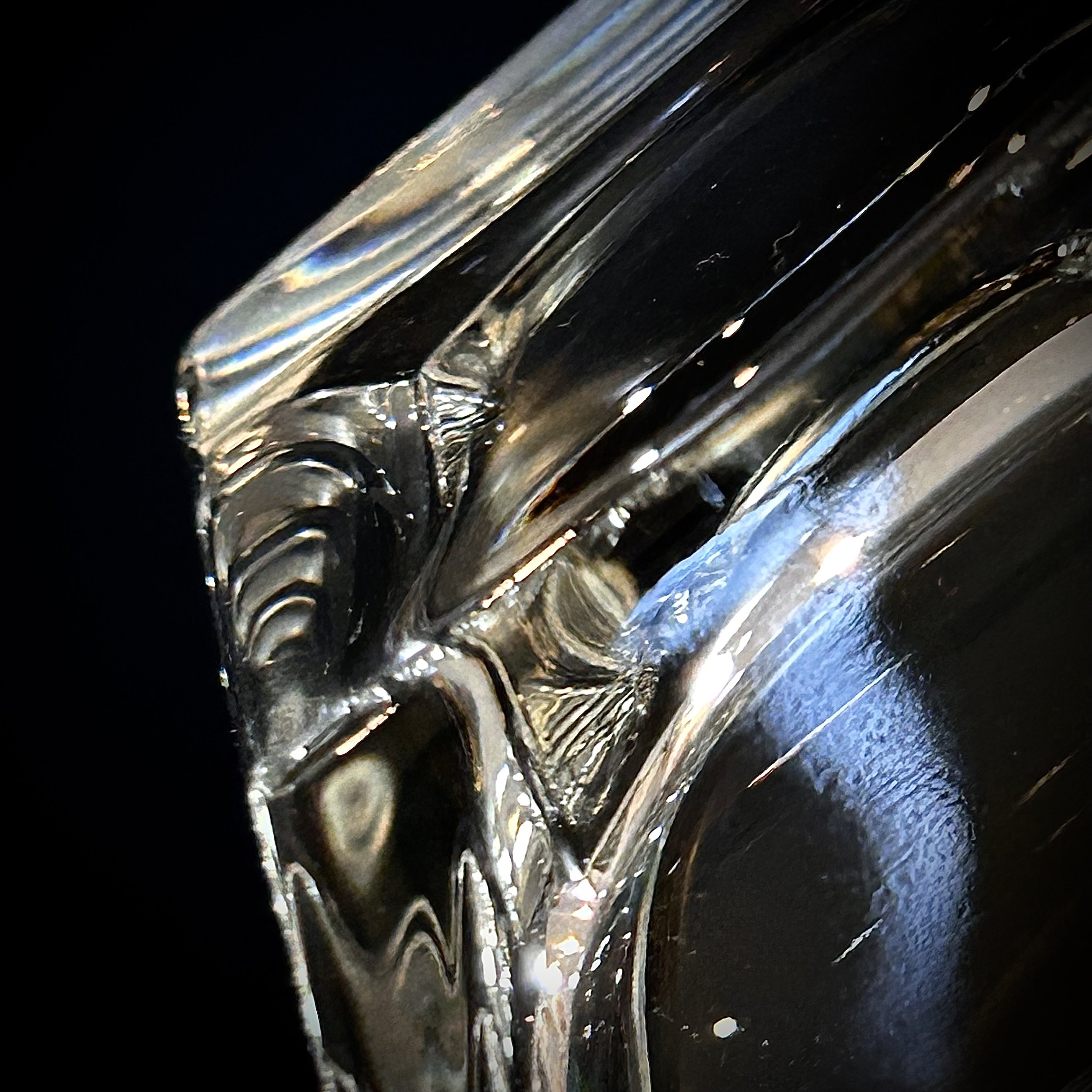
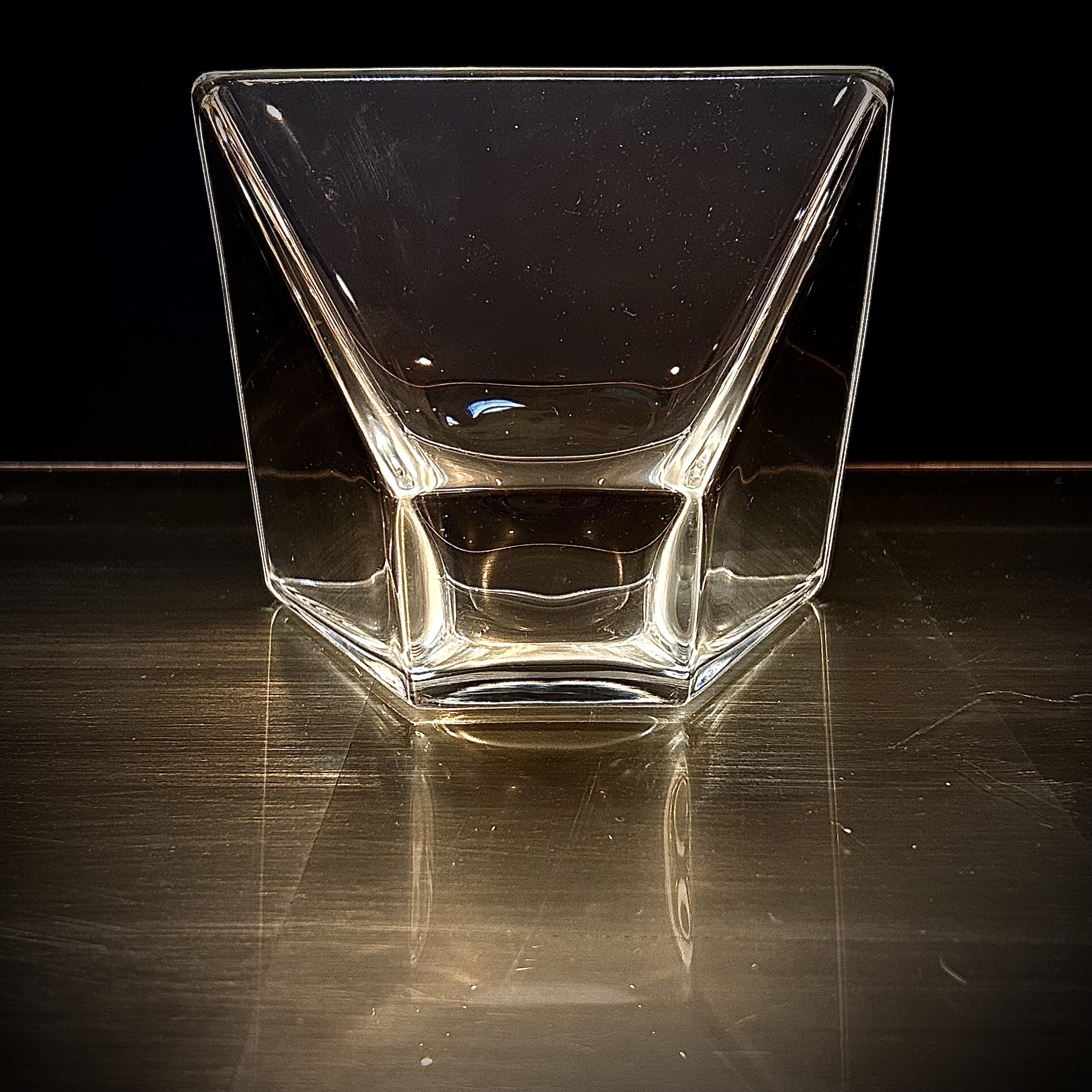
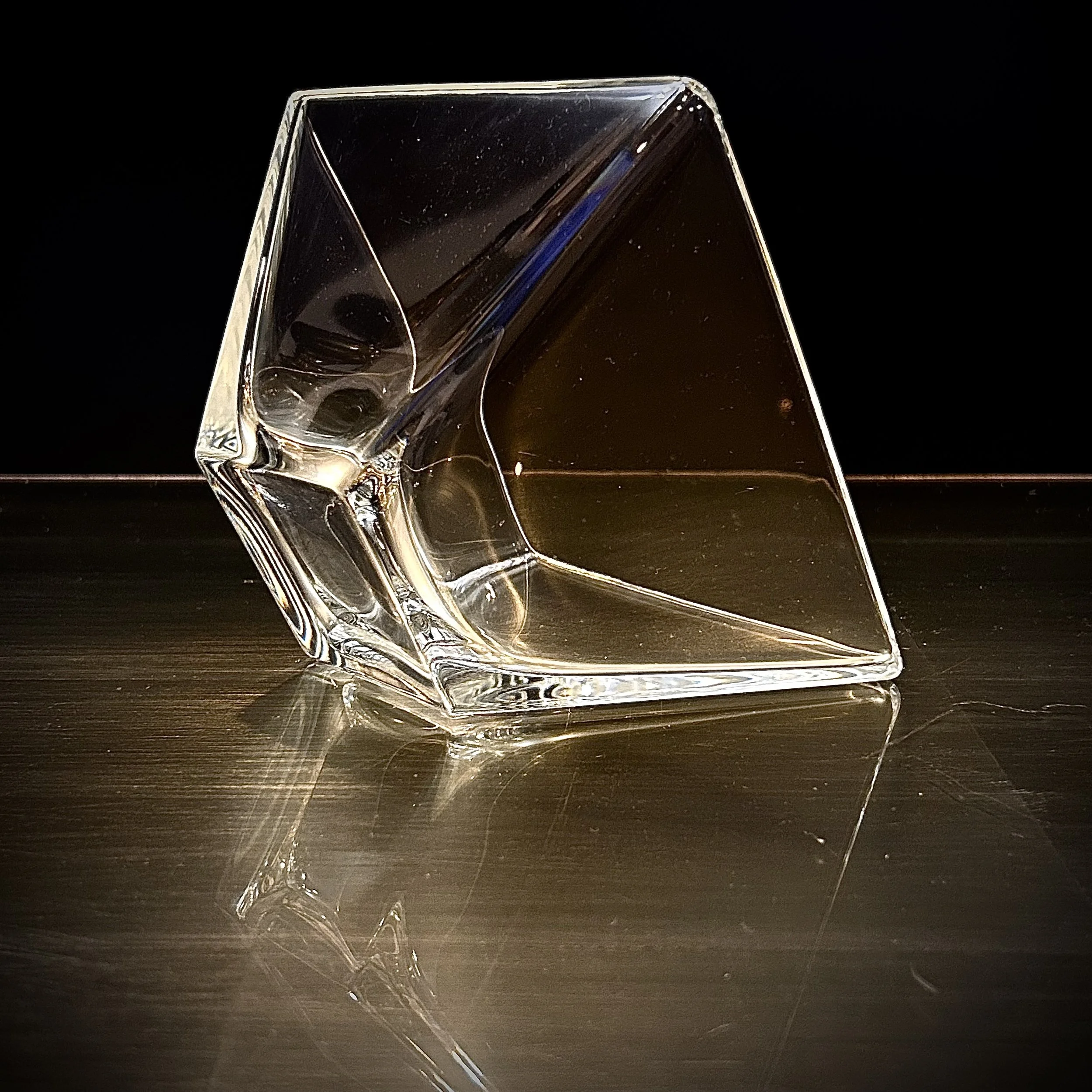
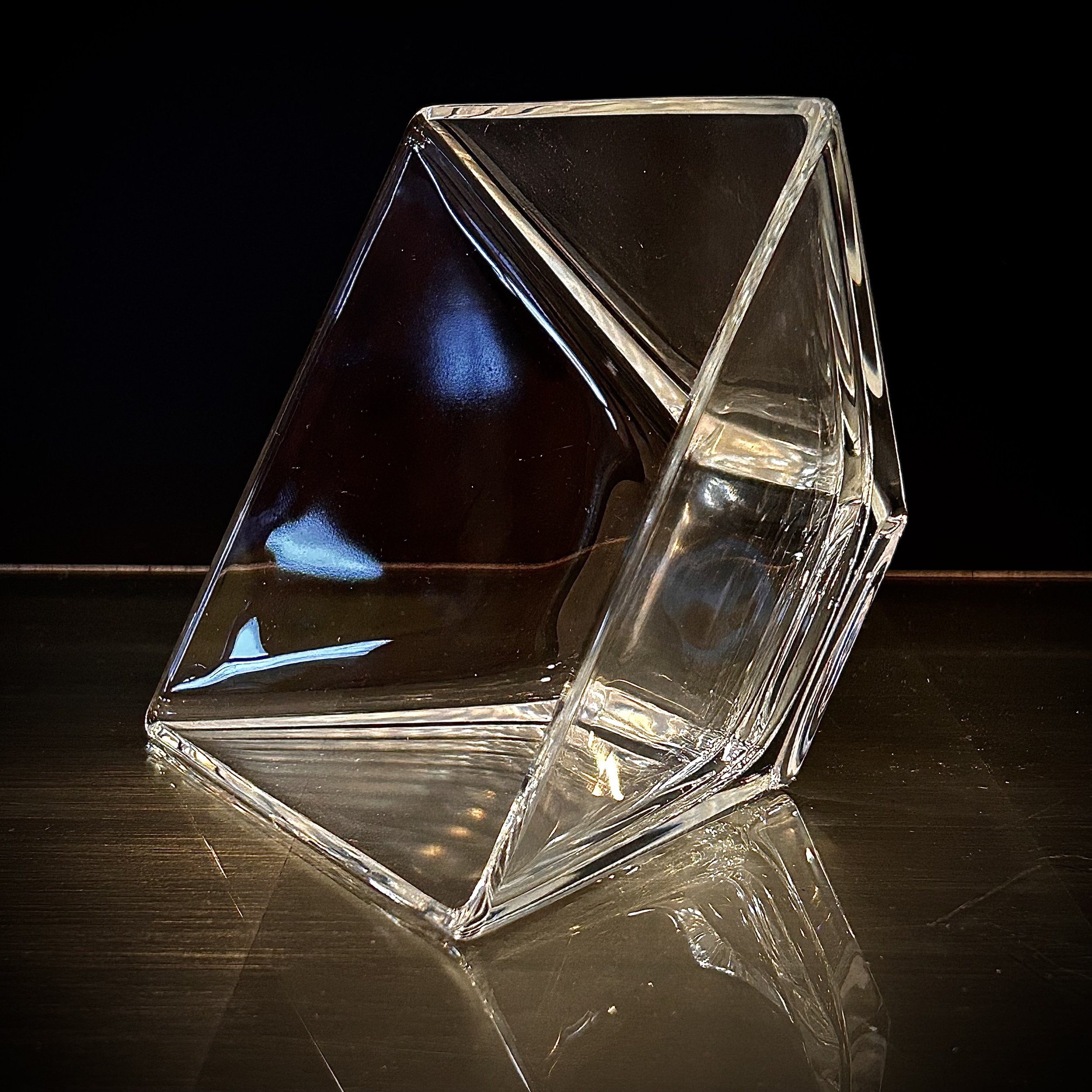
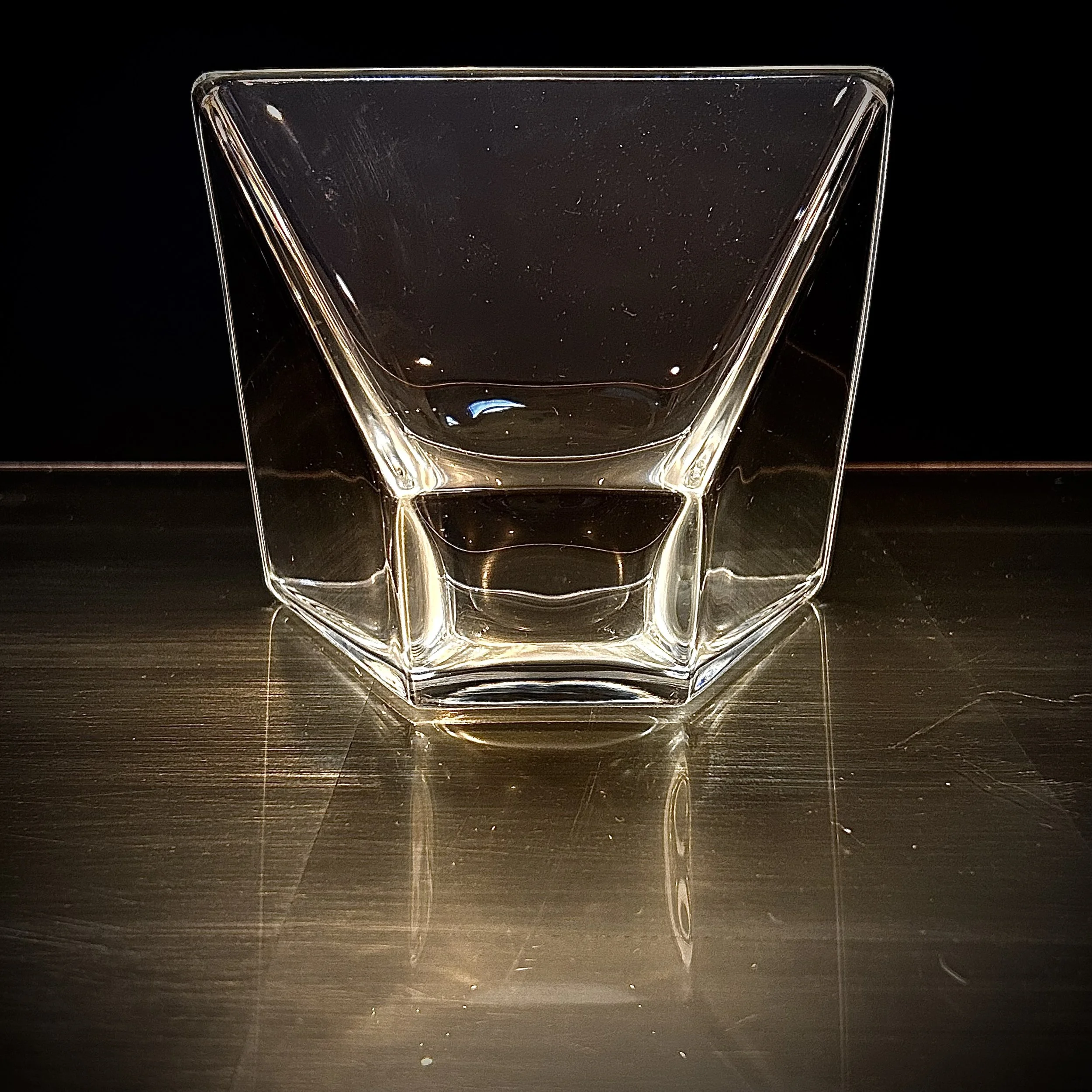
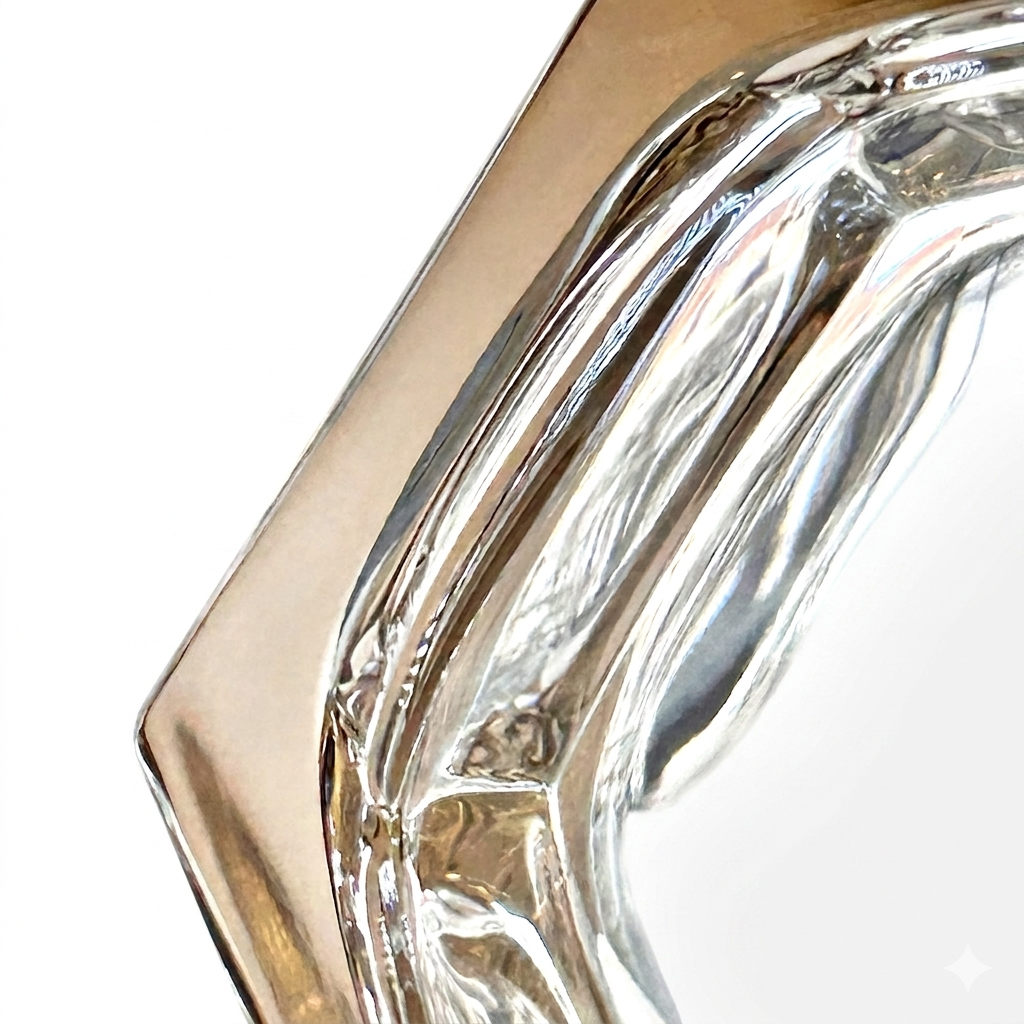
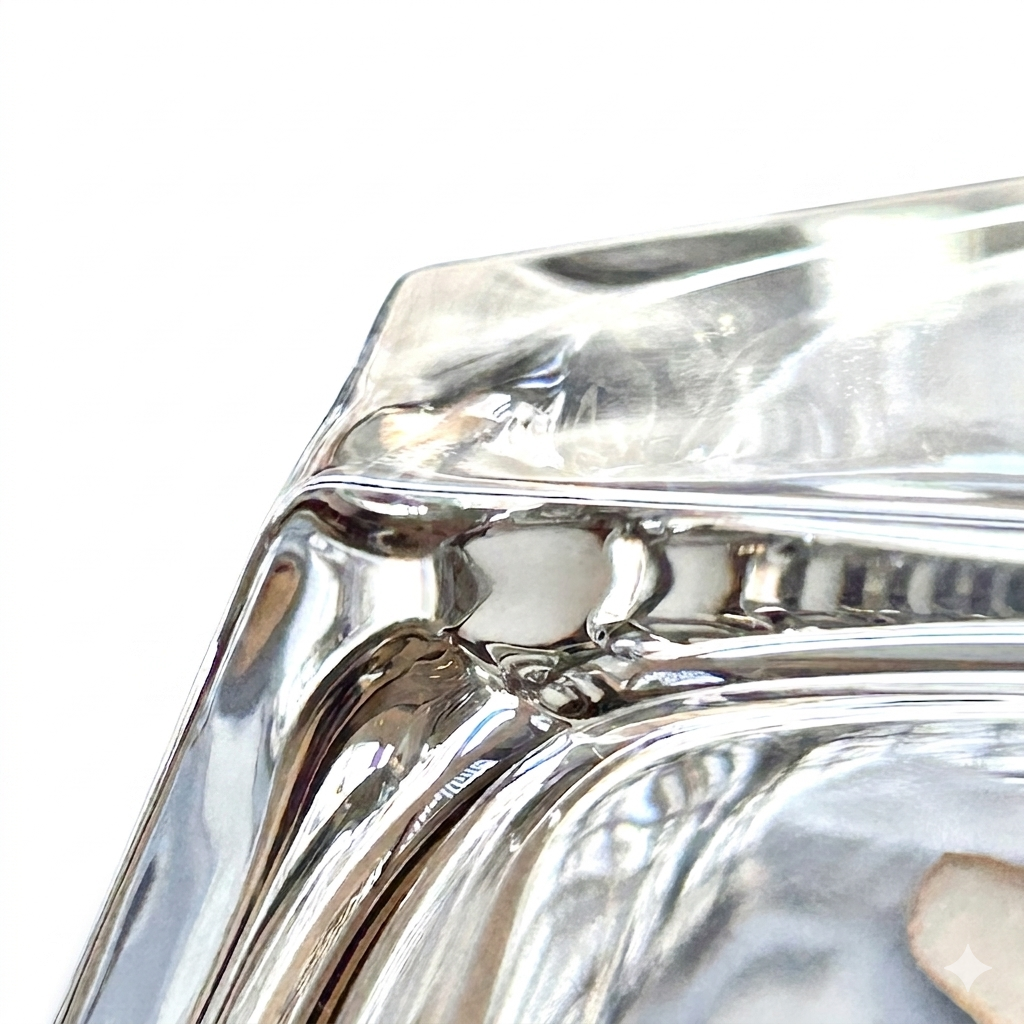
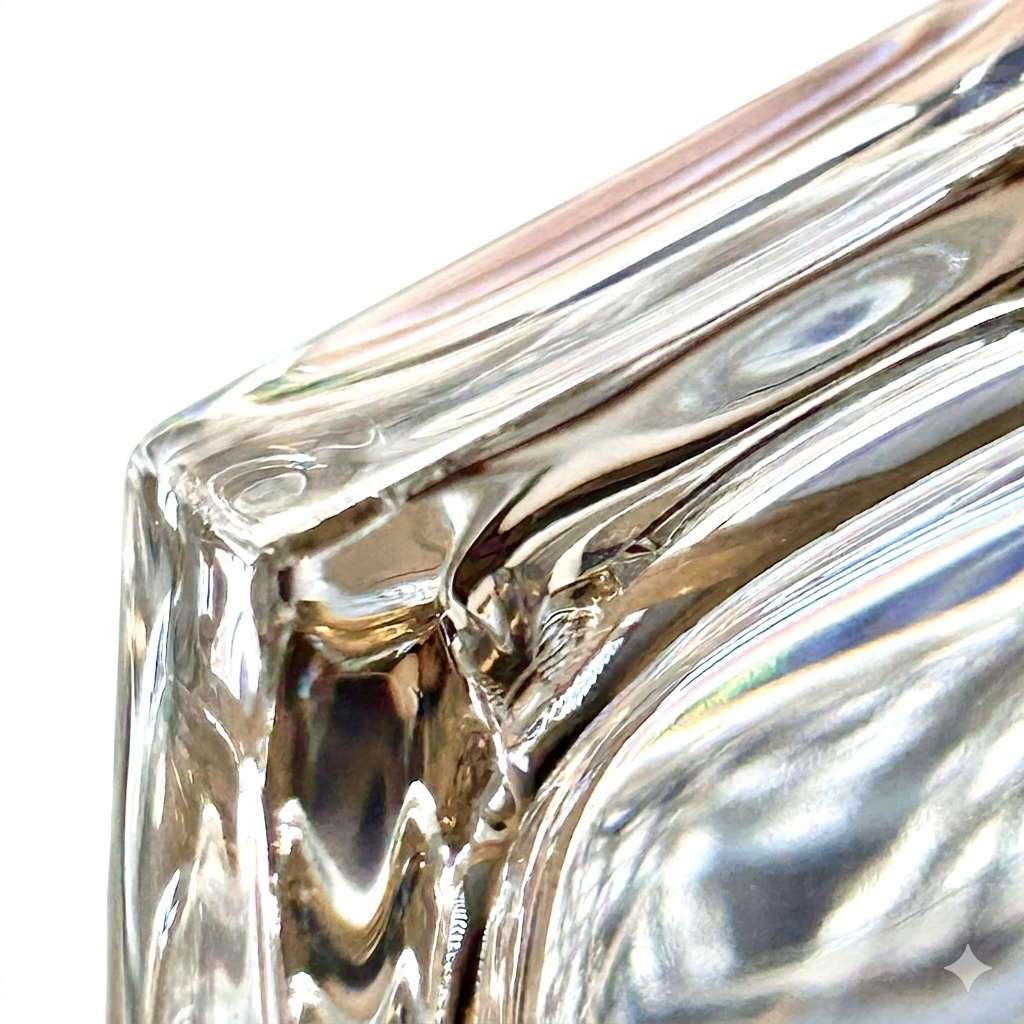
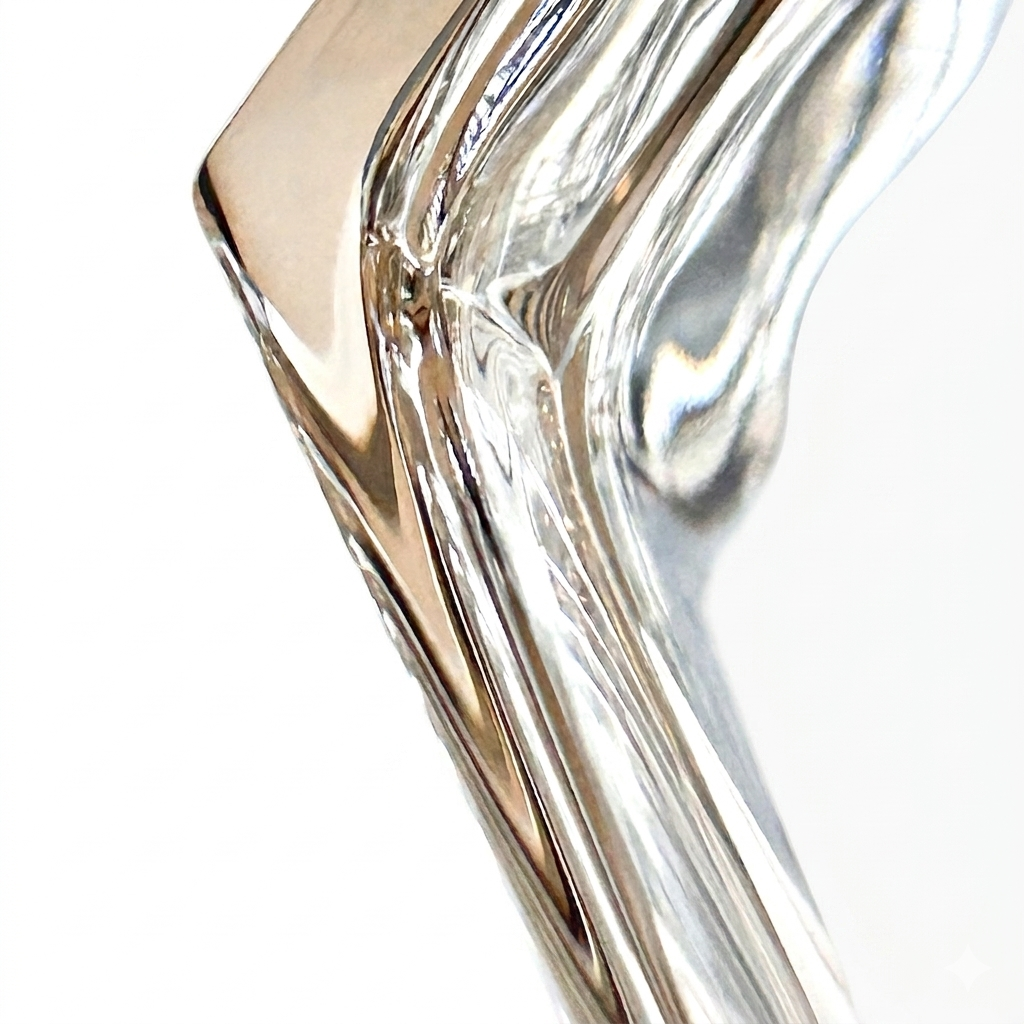
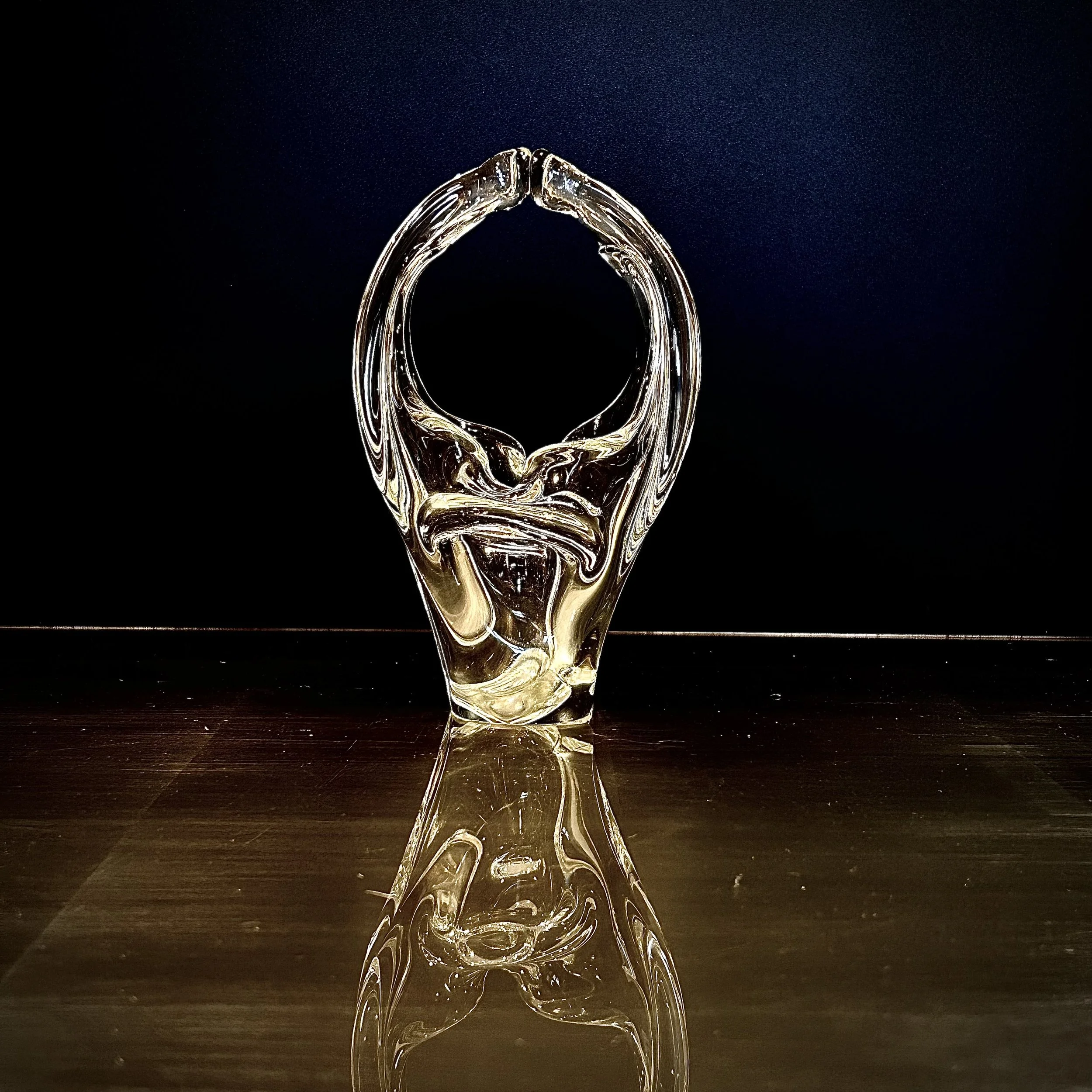
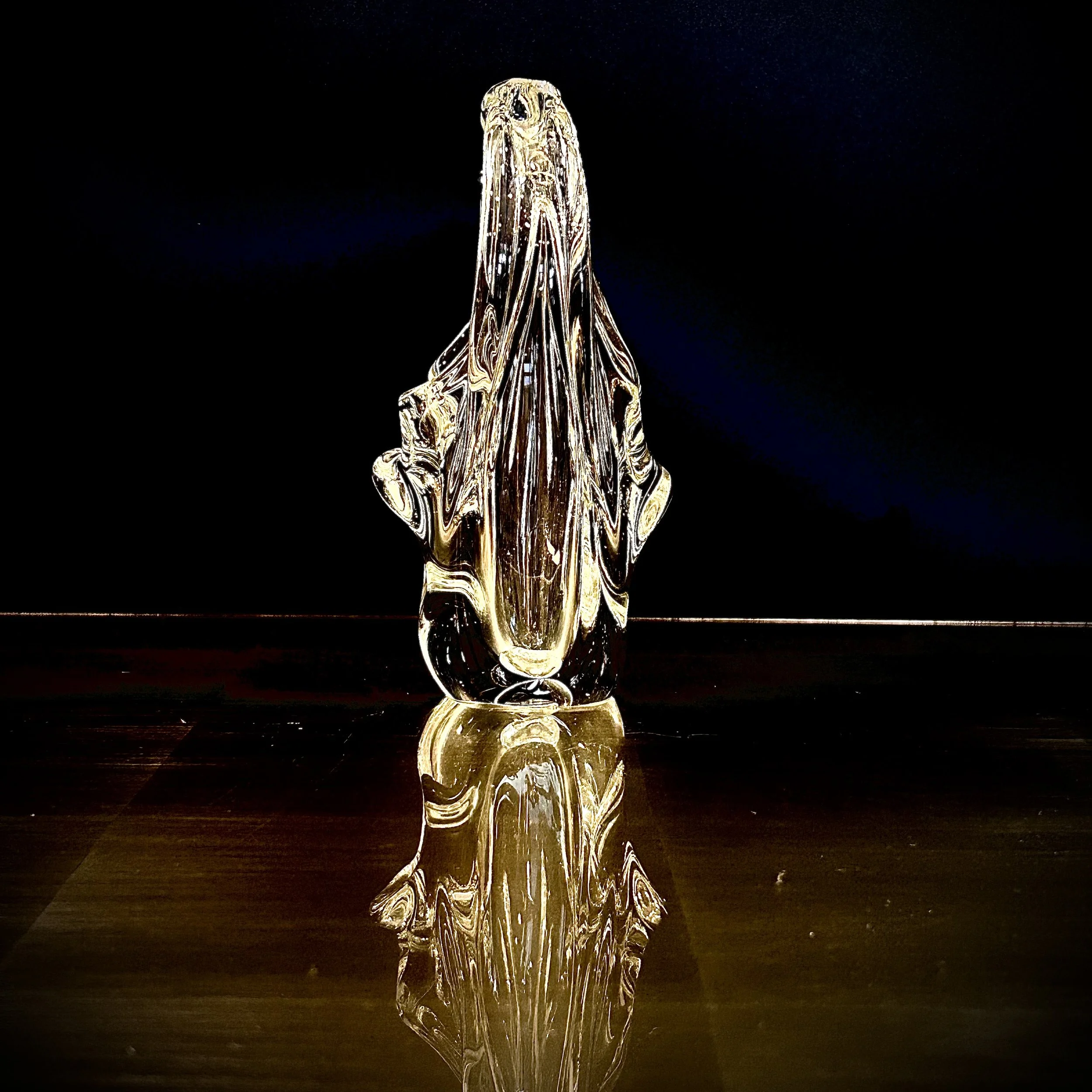
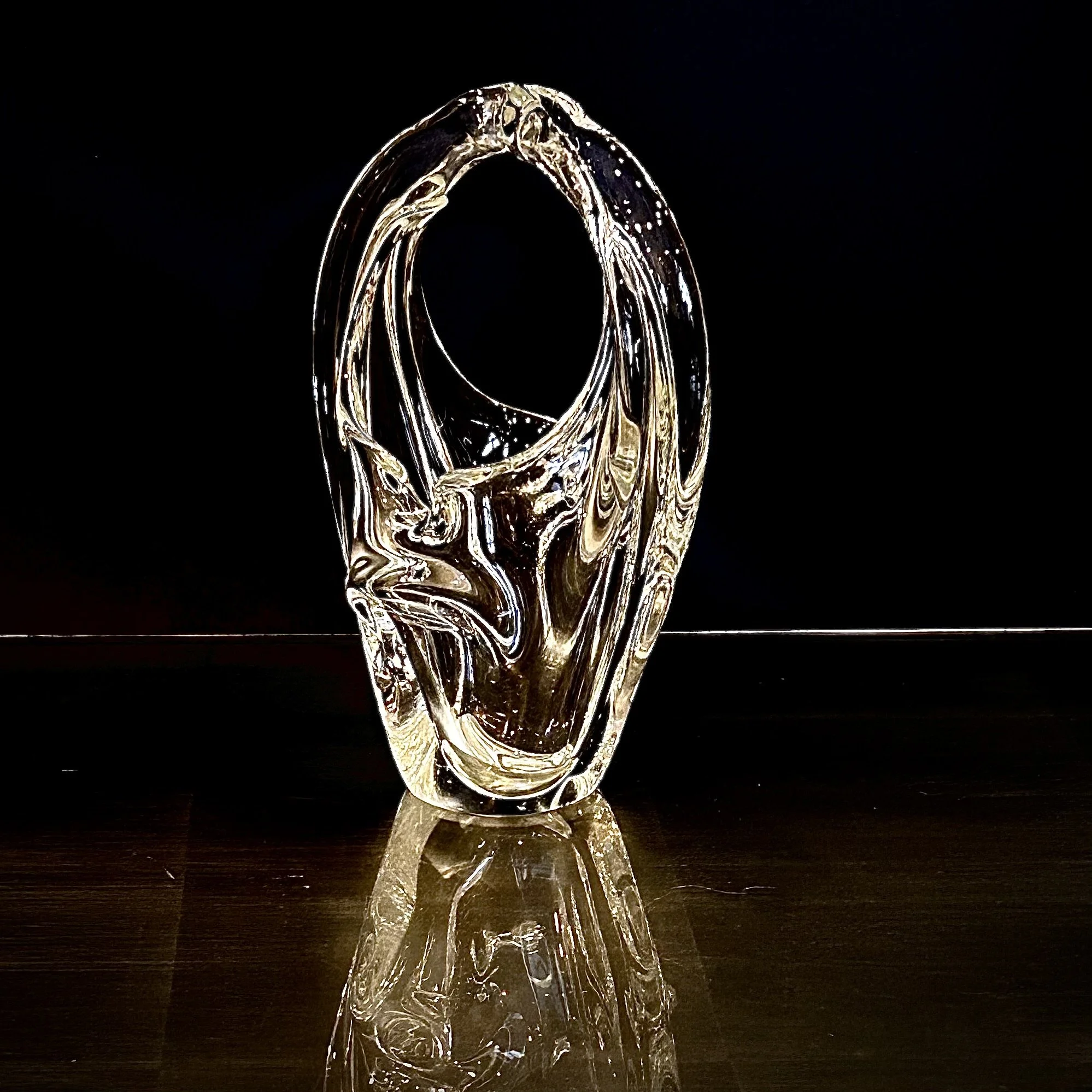
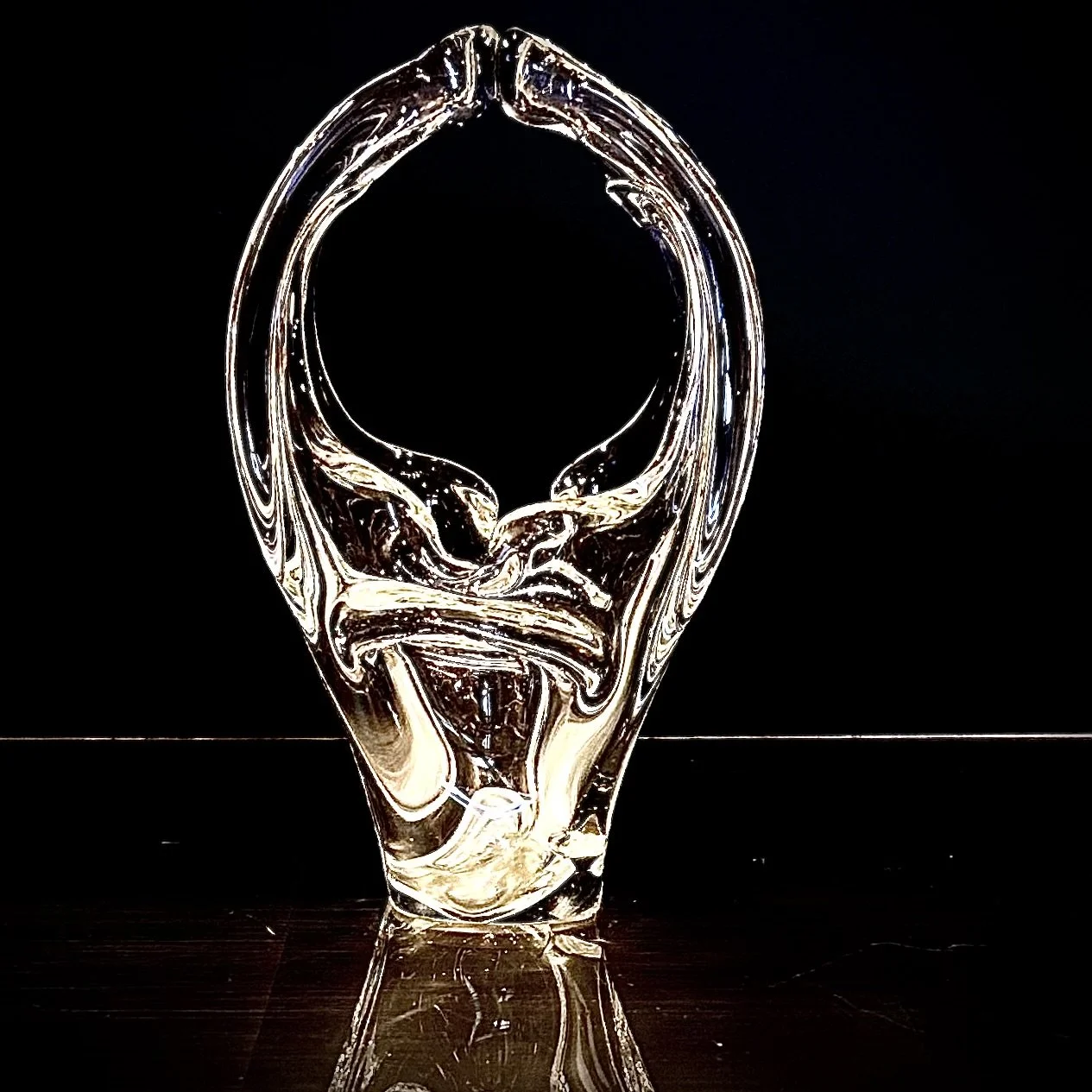
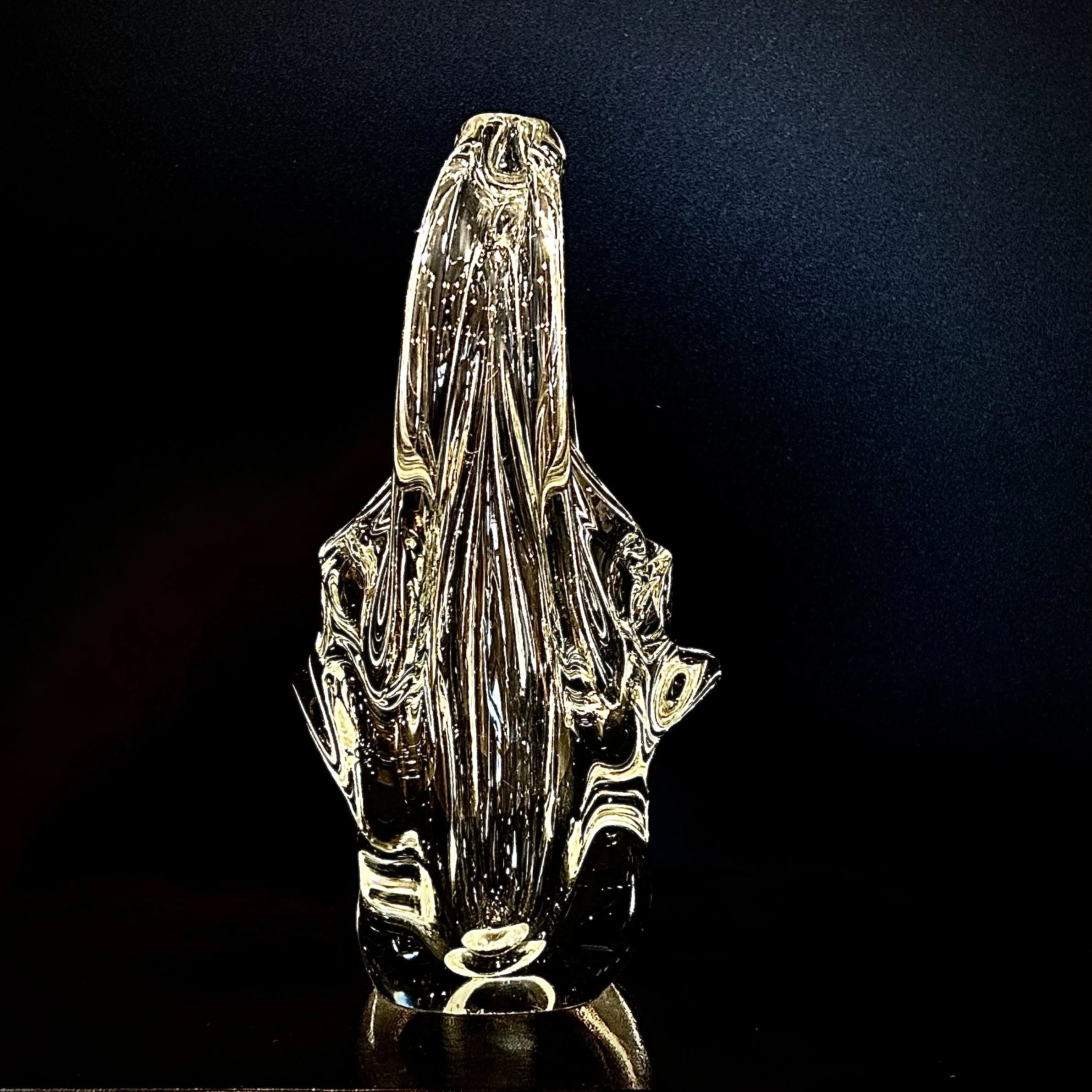
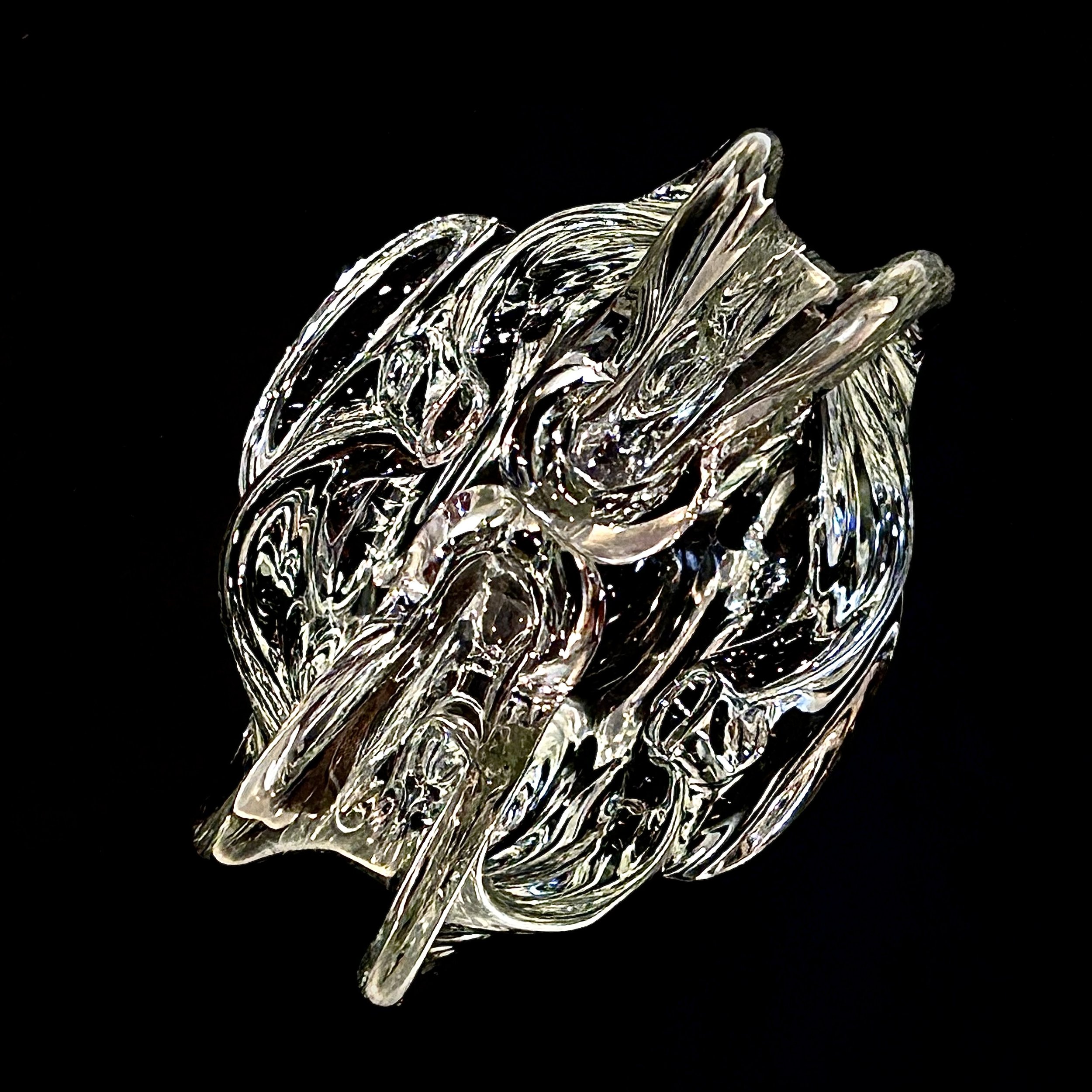
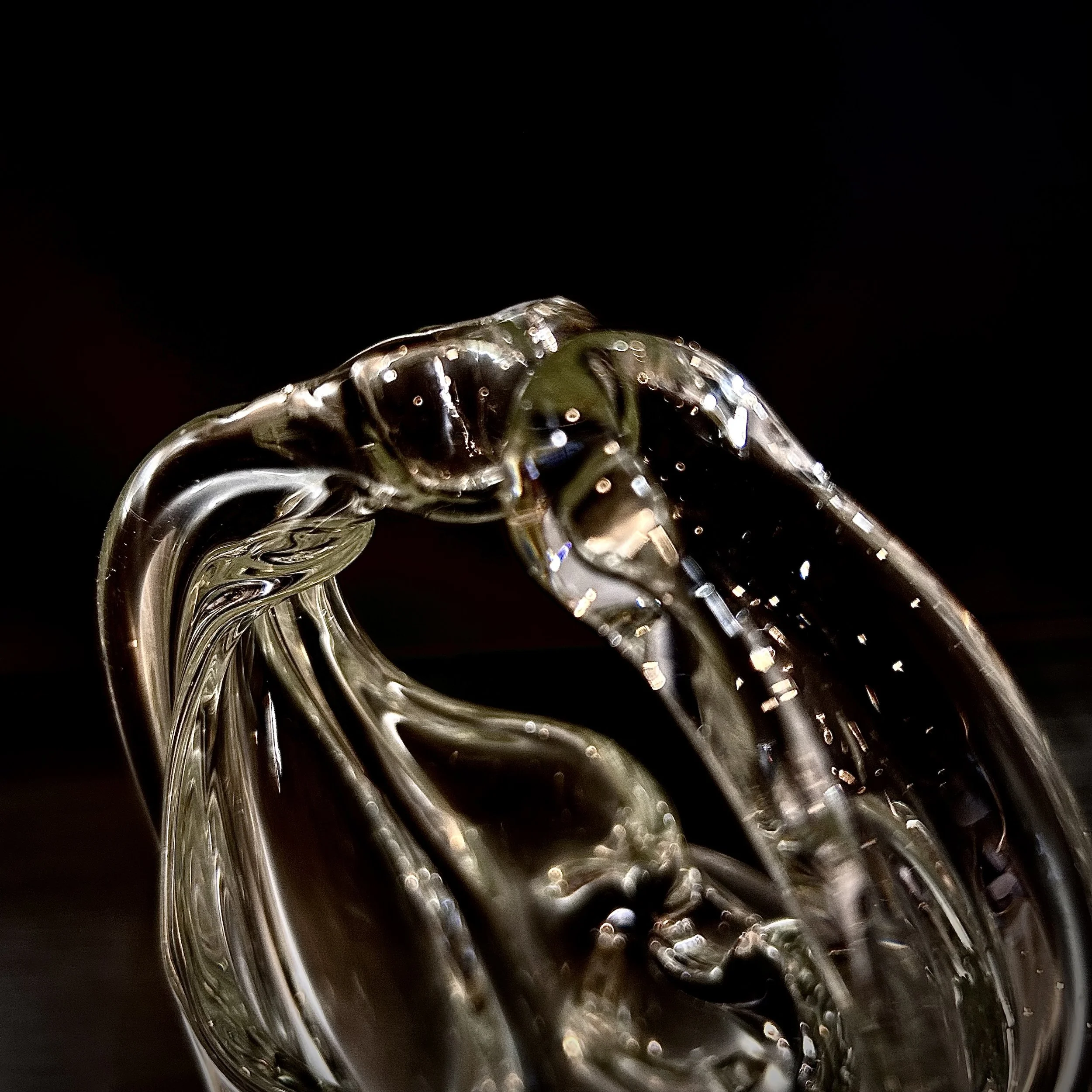
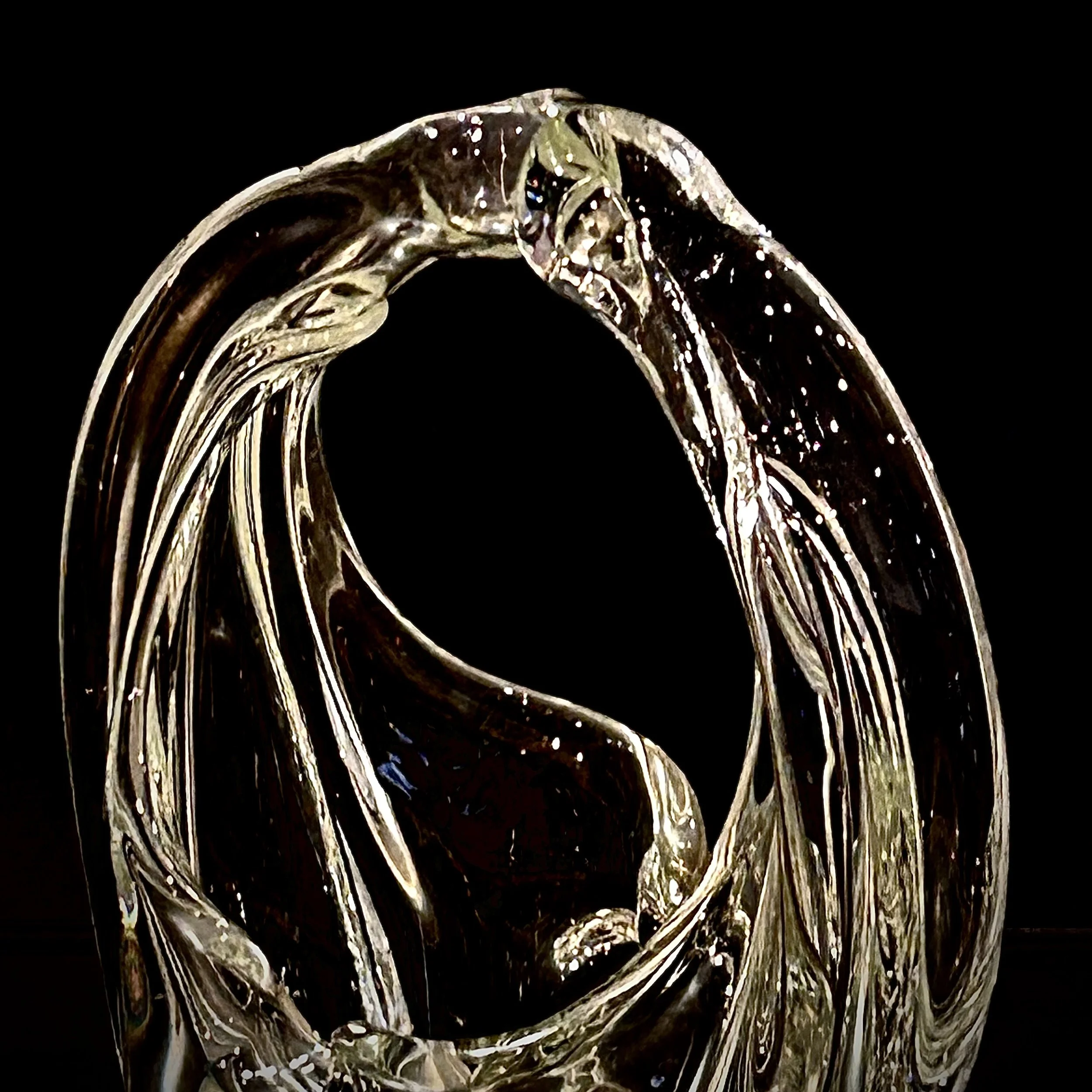
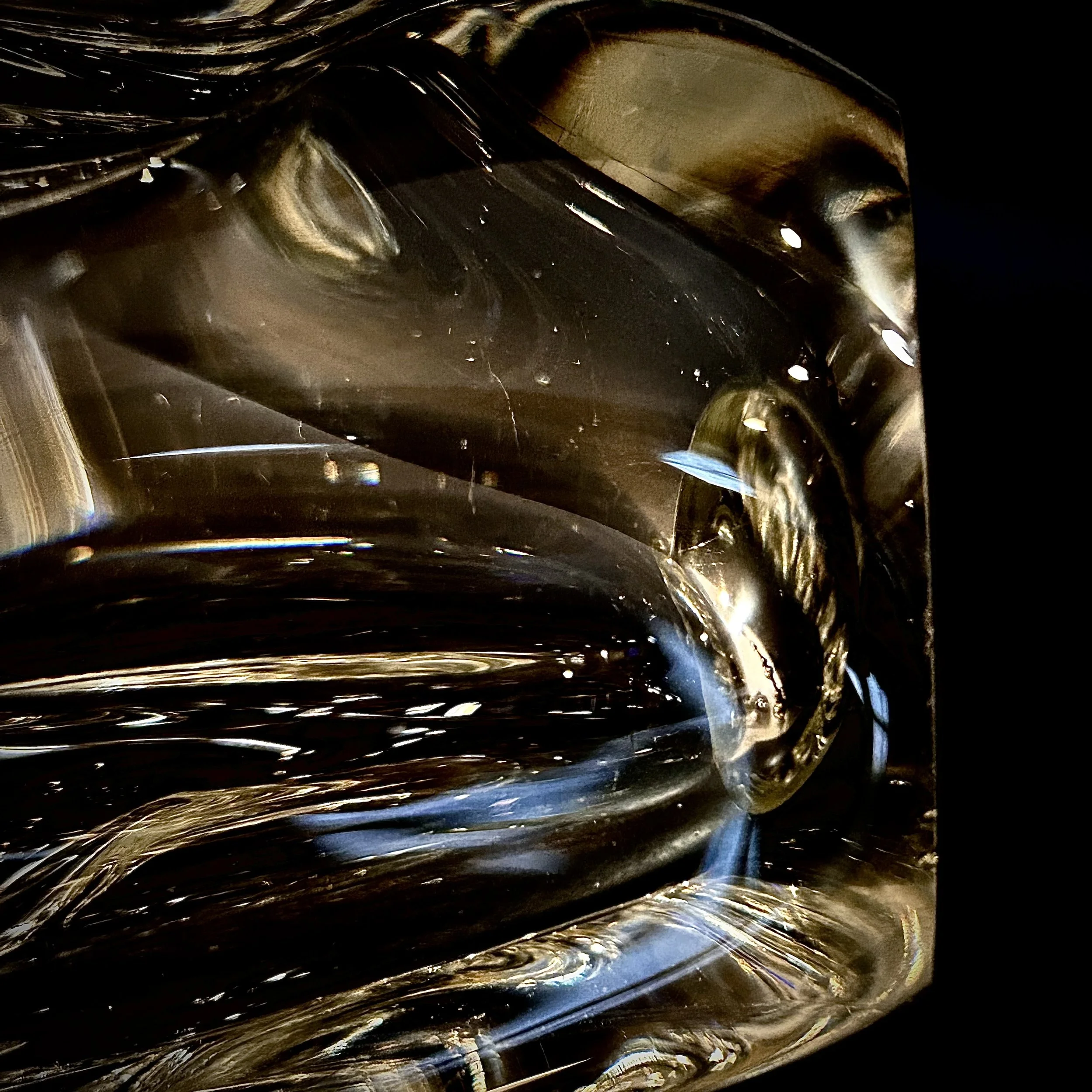
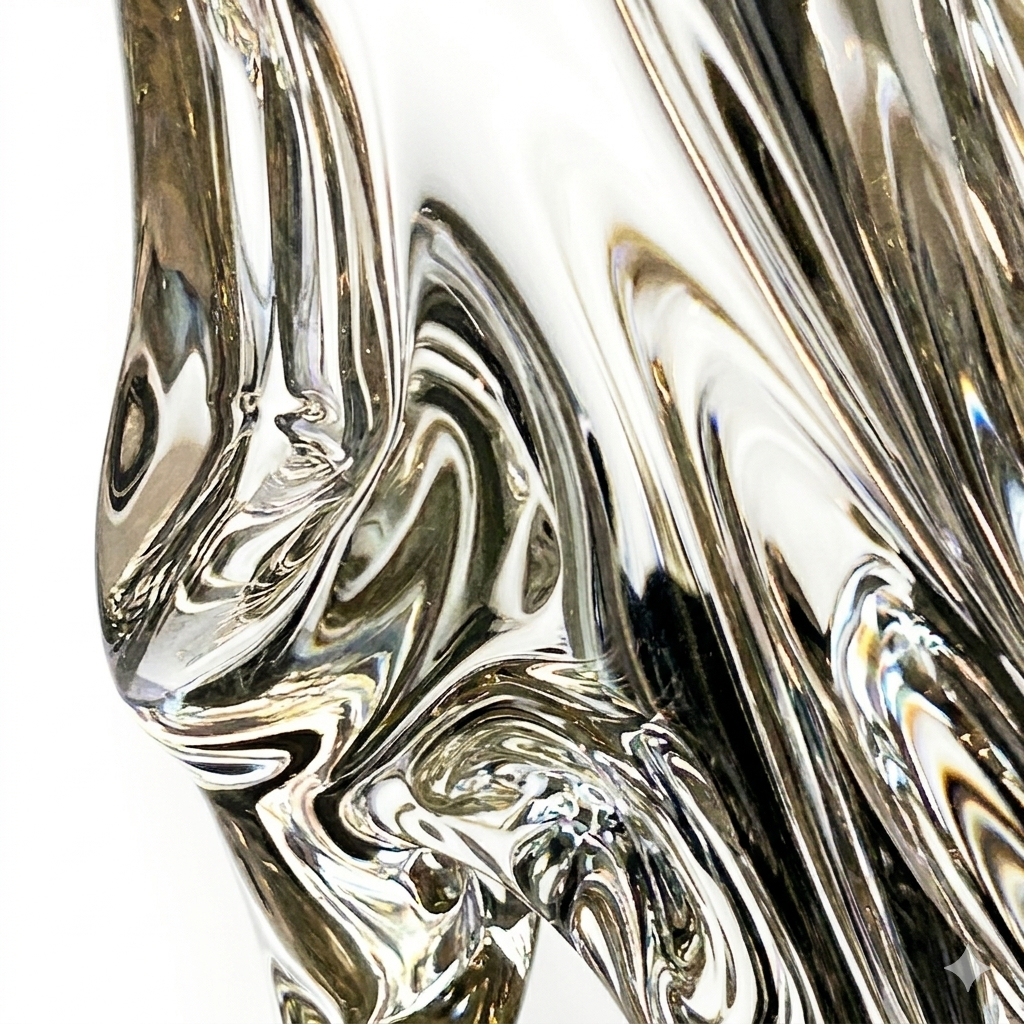
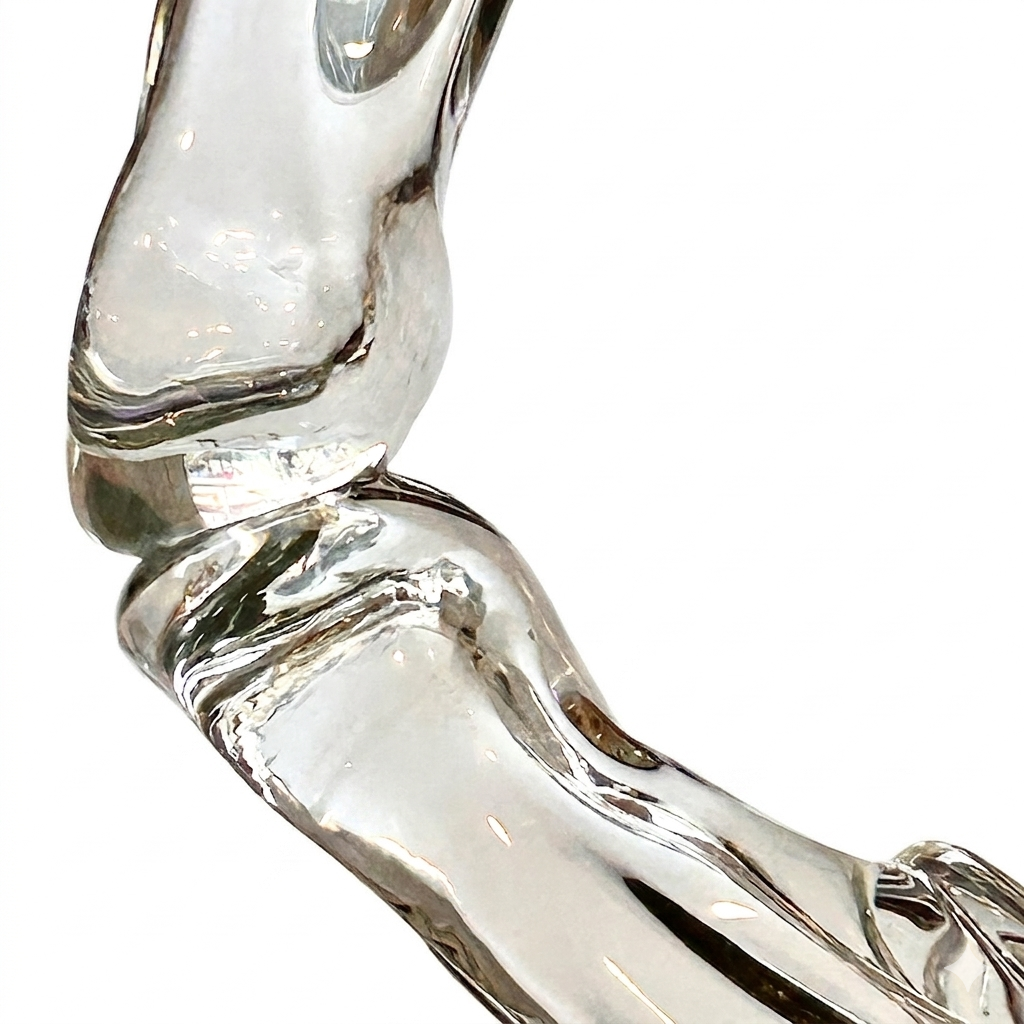
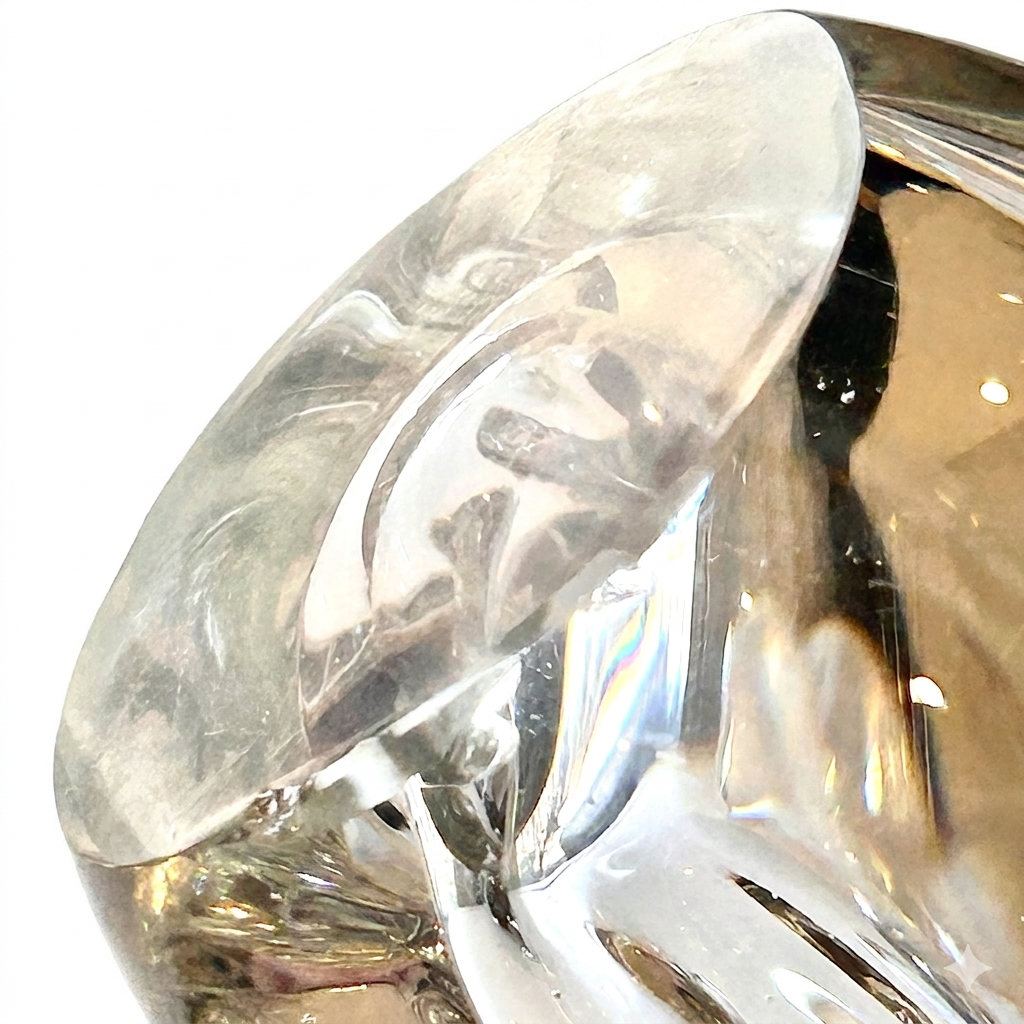
This seven-piece service features a captivating synthesis of mid-century glamour and geometric precision. The set is anchored by a stately decanter and accompanied by graduated glassware, all defined by a brilliant silver luster that transitions into clear, optical glass. The most compelling architectural detail is found in the stems: a singular, oversized diamond-faceted "jewel" transition that captures and refracts light, providing a tactile and sculptural focal point. Housed in a custom black-and-chrome tiered display stand, the ensemble creates a rhythmic, stepped silhouette that serves as a sophisticated centerpiece for the curated bar.
Attribution & Period
Stylistically aligned with Vitreon Queen’s Lusterware
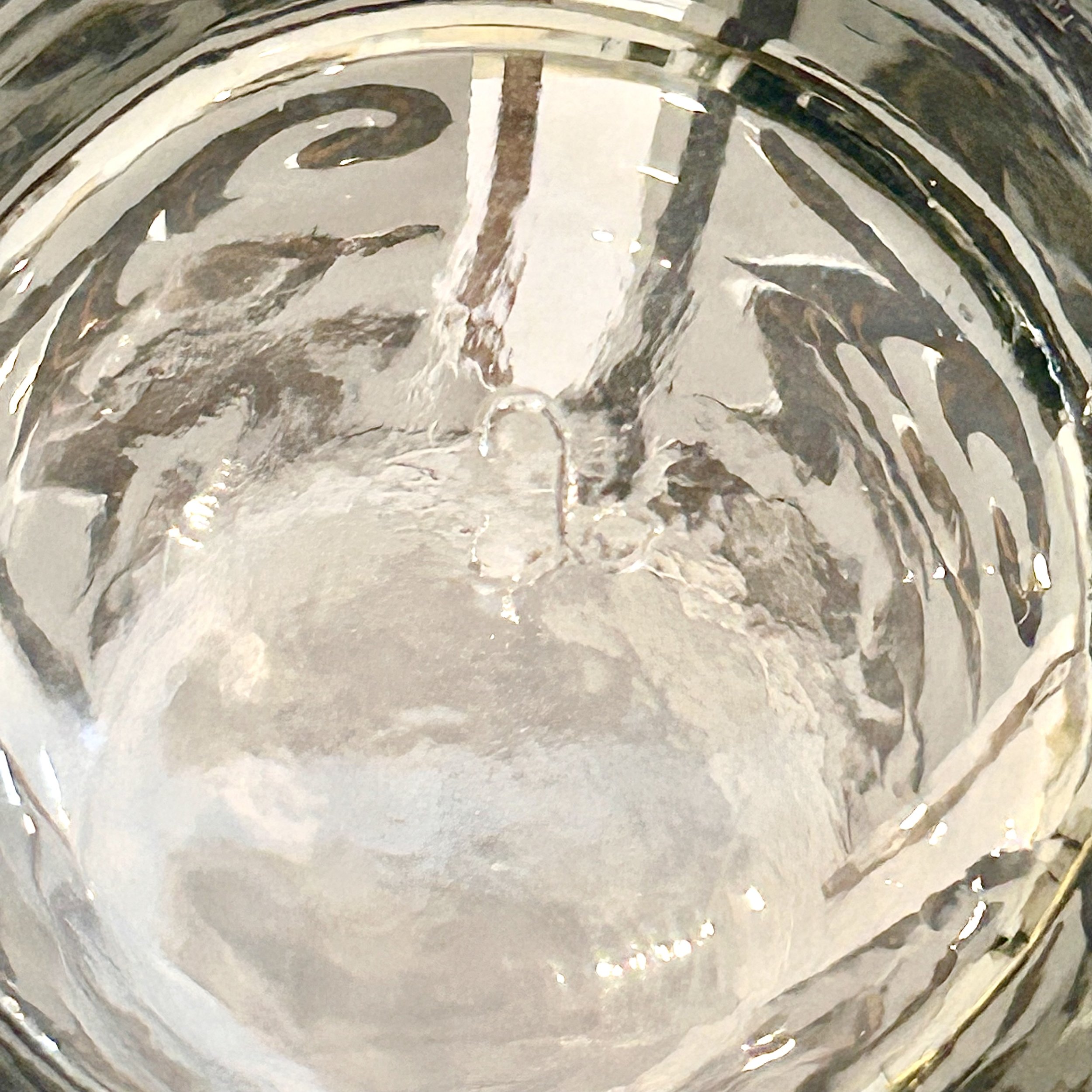
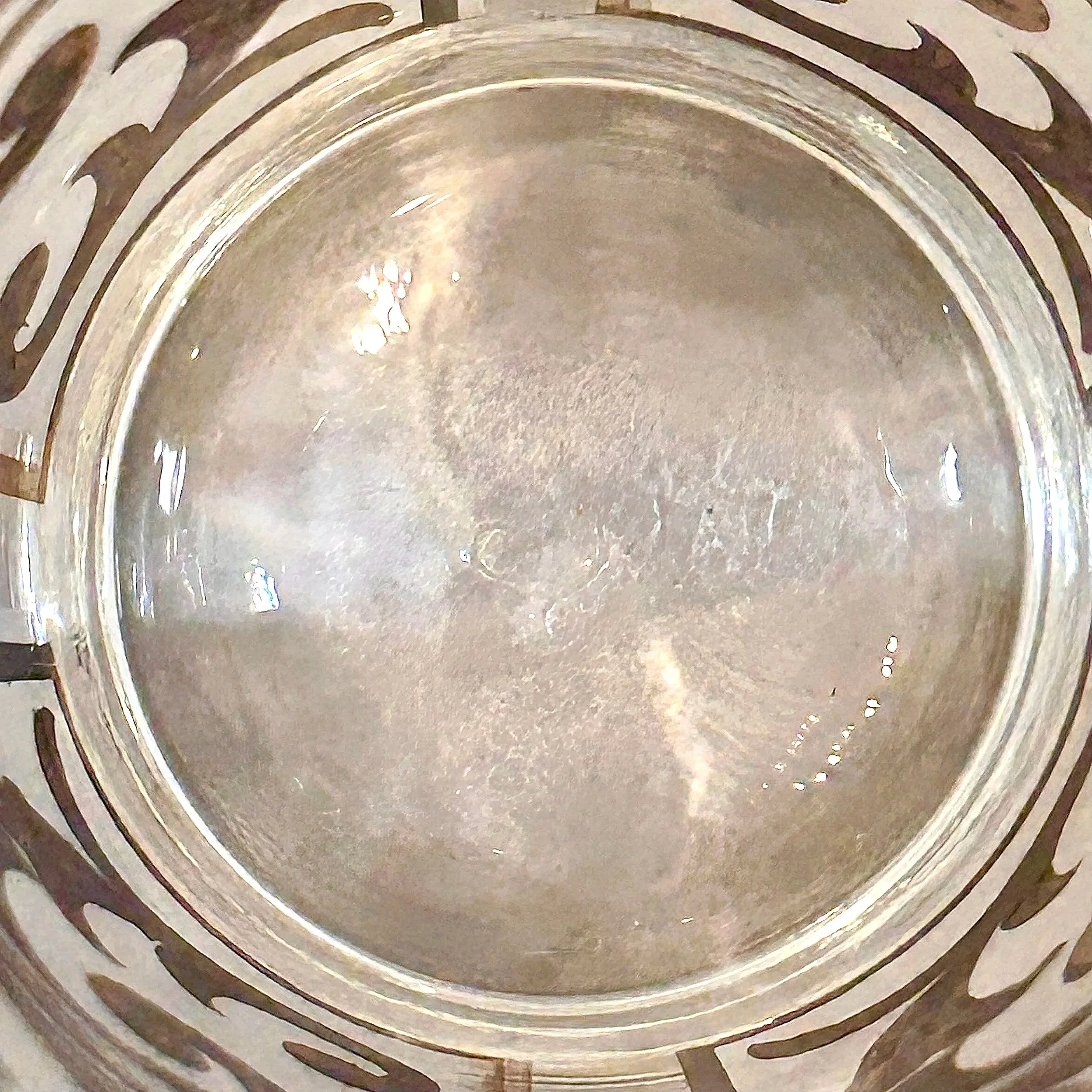
While no factory signature is present, the specific combination of heavy silver deposit and the molded diamond-facet stem is a hallmark of high-end American glass decorators of the 1950s and 1960s. This set is consistent with the "Silver Rims" and "Lusterware" trends popularized by the Vitreon Queen’s Lusterware Co. of Brooklyn or the early West Virginia Glass Specialty Co. The use of a specialized display rack further confirms its origin as a complete, designer-coordinated hostess set from the mid-century era.
Dimensions & Weight
Decanter: Height: 8” | Base Diameter: 4” | Mouth Diameter: 2.5” | Weight: 0.806 lbs
Large Glass (x5): Height: 4 7/8” | Base Diameter: 2.25” | Mouth Diameter: 2.25” | Weight: 0.236 lbs
Small Glass (x1): Height: 3 5/8” | Base Diameter: 2.25” | Mouth Diameter: 1.75” | Weight: 0.224 lbs
Condition
Great Condition. The glass remains structurally sound with no chips or cracks to the bodies or the delicate diamond stems. The silver luster application is largely vibrant; minor, age-appropriate wear is noted on the silver plating near the rims of two of the larger glasses. The tiered stand remains sturdy and retains its original structural integrity.
Authenticity & Construction
The set is constructed from blown and molded glass, featuring a hand-applied metallic luster coating. Unlike modern electroplating, this process involved firing a thin layer of silver-toned metal onto the glass to create a deep, mirror-like finish. The "diamond" feature in the stem is a pressed-glass component integrated during the hot-working process, designed to provide a secure grip and a faceted aesthetic that mimics the brilliance of cut crystal.
Placement
This ensemble is designed for high-visibility placement on a credenza or a low-profile bar cart. The tiered stand allows for an architectural "stair-step" display, making it an ideal choice for rooms with overhead or back-lighting that can accentuate the silver gradient and the faceted stems. It is a perfect addition to a Hollywood Regency or sophisticated Mad Men-inspired interior.
Collectors Note:
Technique: known as Silver Fade or Silver Ombré
• Silver Fade: The most common term used by collectors and designers.
• Silver Ombré: A more "high-fashion" term often used by decorators to describe the gradient effect.
Material: Platinum or Silver Luster
Additional metal material beyond "Glass," is Silver Luster. Historically, companies like Vitreon Queen's Lusterware (the likely maker of these) used a fired-on metallic finish to achieve this specific reflective gradient.
Primary Color Category: Silver
Even though the glass is clear at the bottom, "Silver" is the dominant search term for this style.
Glass Type / Style: Mercury Glass (or Silvered Glass). While these aren't traditional double-walled mercury glass from the 1800s, the term "Mercury Glass" is the standard industry keyword for this mirrored finish.
Designer: "Queen's Luster Style" or "Thorpe-Style Silver Fade." Mad Men aesthetic
STANDARD ATTRIBUTION & VALUE DISCLOSURE; This piece is described to the best of current scholarly and market knowledge. Any maker or regional attribution is based on visual analysis, materials, construction techniques, and documented stylistic comparisons. As with many MCM and antique design objects, definitive attribution may not be possible without original labels or factory records. Pricing reflects condition, quality, decorative appeal, and current collector demand rather than guaranteed maker identification.
This seven-piece service features a captivating synthesis of mid-century glamour and geometric precision. The set is anchored by a stately decanter and accompanied by graduated glassware, all defined by a brilliant silver luster that transitions into clear, optical glass. The most compelling architectural detail is found in the stems: a singular, oversized diamond-faceted "jewel" transition that captures and refracts light, providing a tactile and sculptural focal point. Housed in a custom black-and-chrome tiered display stand, the ensemble creates a rhythmic, stepped silhouette that serves as a sophisticated centerpiece for the curated bar.
Attribution & Period
Stylistically aligned with Vitreon Queen’s Lusterware
While no factory signature is present, the specific combination of heavy silver deposit and the molded diamond-facet stem is a hallmark of high-end American glass decorators of the 1950s and 1960s. This set is consistent with the "Silver Rims" and "Lusterware" trends popularized by the Vitreon Queen’s Lusterware Co. of Brooklyn or the early West Virginia Glass Specialty Co. The use of a specialized display rack further confirms its origin as a complete, designer-coordinated hostess set from the mid-century era.
Dimensions & Weight
Decanter: Height: 8” | Base Diameter: 4” | Mouth Diameter: 2.5” | Weight: 0.806 lbs
Large Glass (x5): Height: 4 7/8” | Base Diameter: 2.25” | Mouth Diameter: 2.25” | Weight: 0.236 lbs
Small Glass (x1): Height: 3 5/8” | Base Diameter: 2.25” | Mouth Diameter: 1.75” | Weight: 0.224 lbs
Condition
Great Condition. The glass remains structurally sound with no chips or cracks to the bodies or the delicate diamond stems. The silver luster application is largely vibrant; minor, age-appropriate wear is noted on the silver plating near the rims of two of the larger glasses. The tiered stand remains sturdy and retains its original structural integrity.
Authenticity & Construction
The set is constructed from blown and molded glass, featuring a hand-applied metallic luster coating. Unlike modern electroplating, this process involved firing a thin layer of silver-toned metal onto the glass to create a deep, mirror-like finish. The "diamond" feature in the stem is a pressed-glass component integrated during the hot-working process, designed to provide a secure grip and a faceted aesthetic that mimics the brilliance of cut crystal.
Placement
This ensemble is designed for high-visibility placement on a credenza or a low-profile bar cart. The tiered stand allows for an architectural "stair-step" display, making it an ideal choice for rooms with overhead or back-lighting that can accentuate the silver gradient and the faceted stems. It is a perfect addition to a Hollywood Regency or sophisticated Mad Men-inspired interior.
Collectors Note:
Technique: known as Silver Fade or Silver Ombré
• Silver Fade: The most common term used by collectors and designers.
• Silver Ombré: A more "high-fashion" term often used by decorators to describe the gradient effect.
Material: Platinum or Silver Luster
Additional metal material beyond "Glass," is Silver Luster. Historically, companies like Vitreon Queen's Lusterware (the likely maker of these) used a fired-on metallic finish to achieve this specific reflective gradient.
Primary Color Category: Silver
Even though the glass is clear at the bottom, "Silver" is the dominant search term for this style.
Glass Type / Style: Mercury Glass (or Silvered Glass). While these aren't traditional double-walled mercury glass from the 1800s, the term "Mercury Glass" is the standard industry keyword for this mirrored finish.
Designer: "Queen's Luster Style" or "Thorpe-Style Silver Fade." Mad Men aesthetic
STANDARD ATTRIBUTION & VALUE DISCLOSURE; This piece is described to the best of current scholarly and market knowledge. Any maker or regional attribution is based on visual analysis, materials, construction techniques, and documented stylistic comparisons. As with many MCM and antique design objects, definitive attribution may not be possible without original labels or factory records. Pricing reflects condition, quality, decorative appeal, and current collector demand rather than guaranteed maker identification.

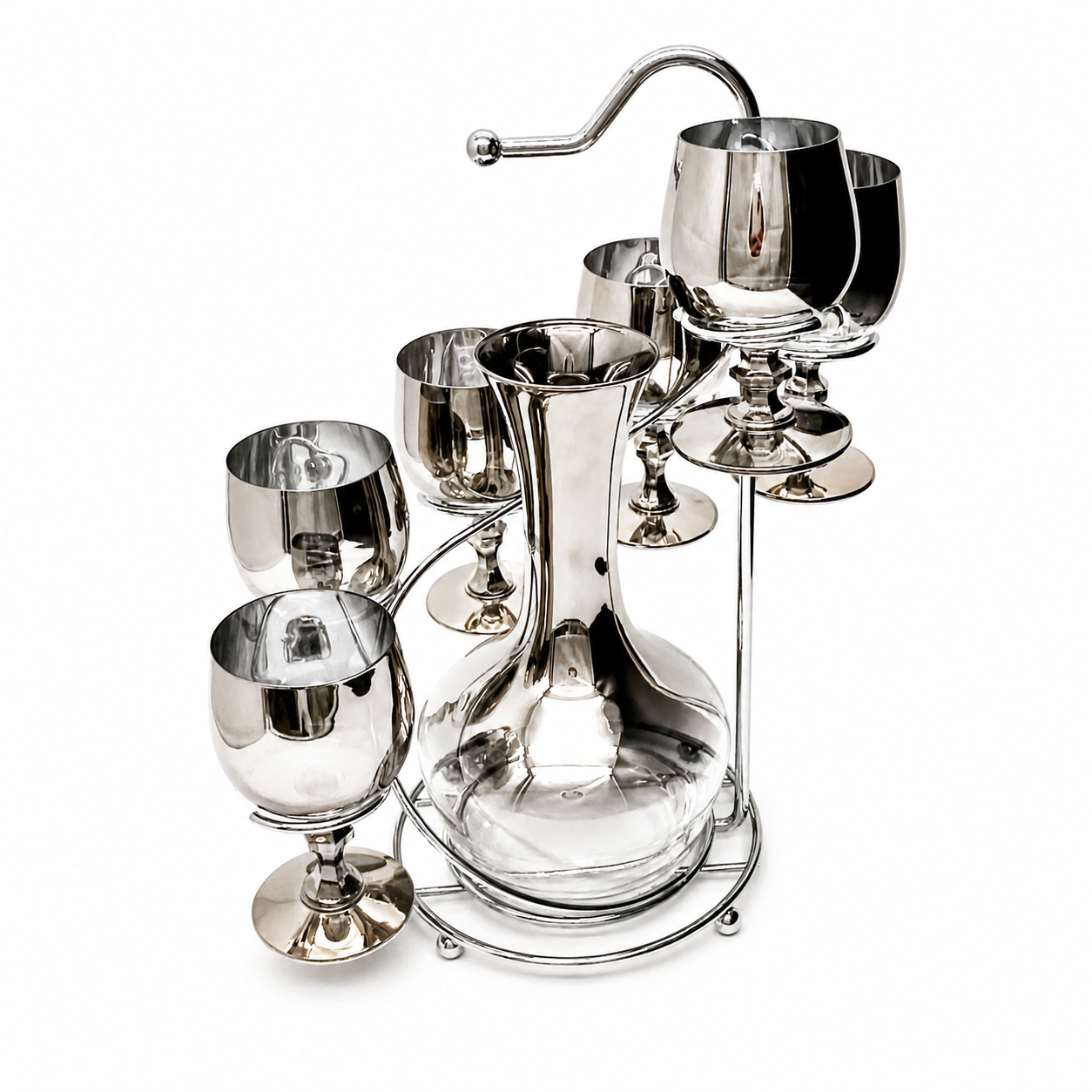 Image 1 of 15
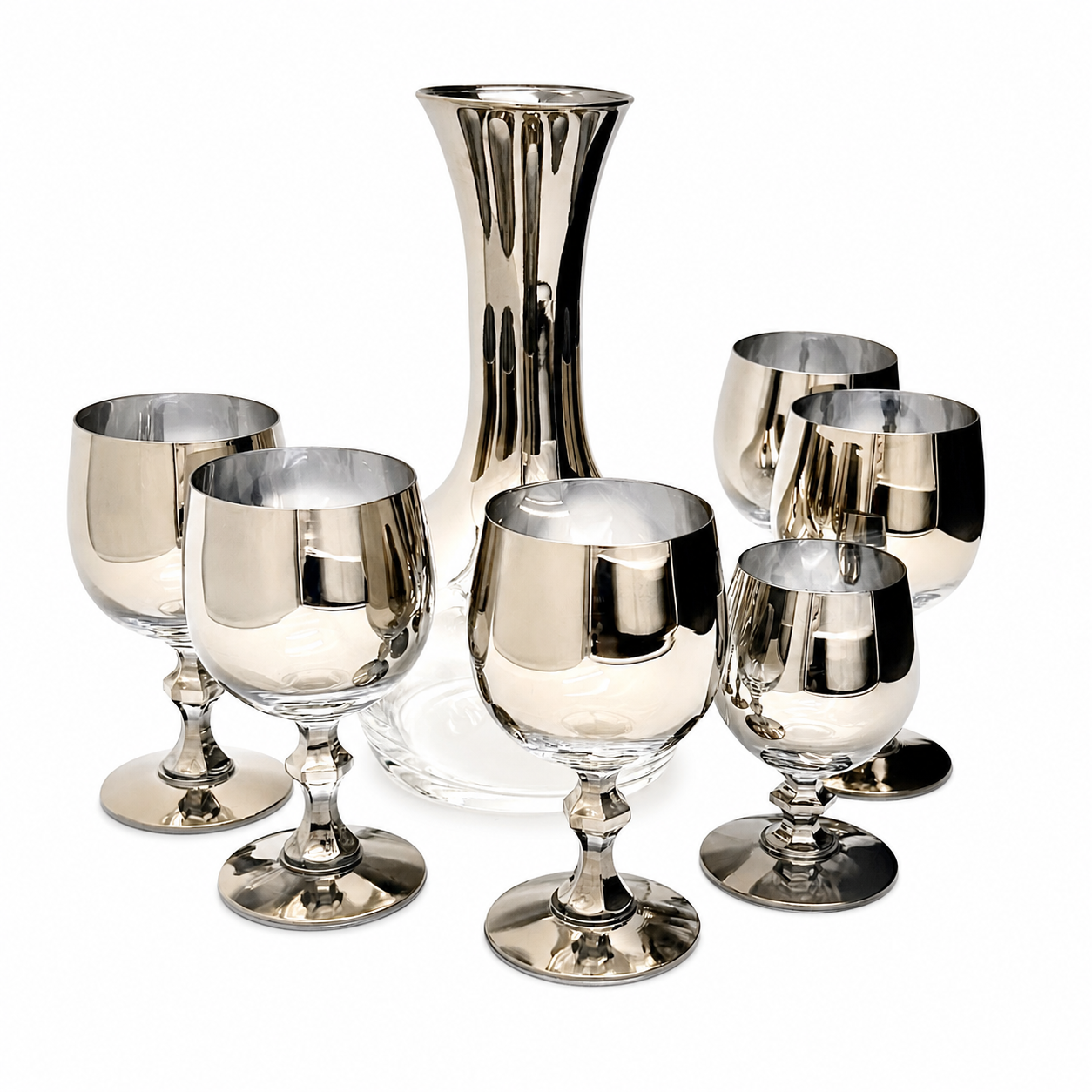 Image 2 of 15
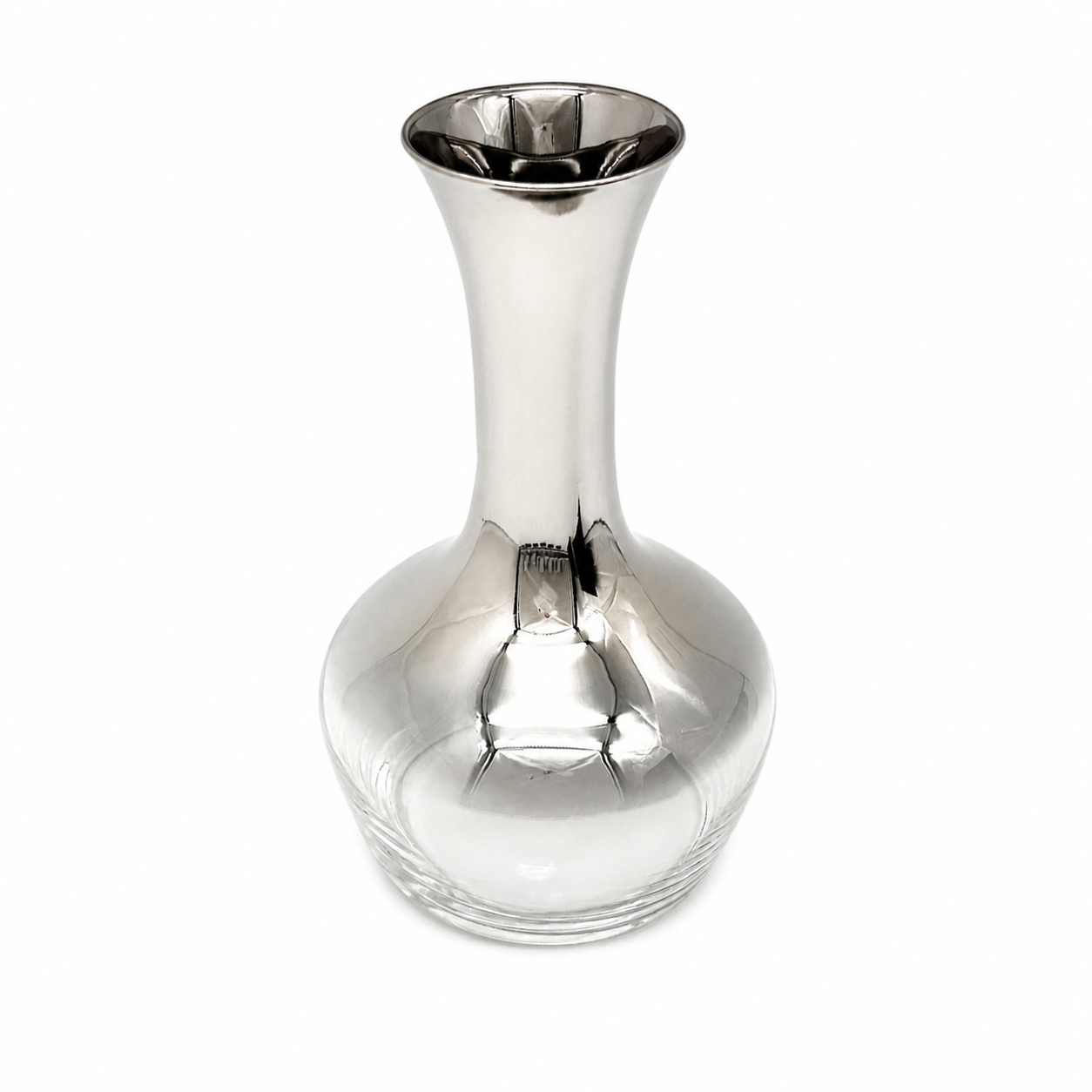 Image 3 of 15
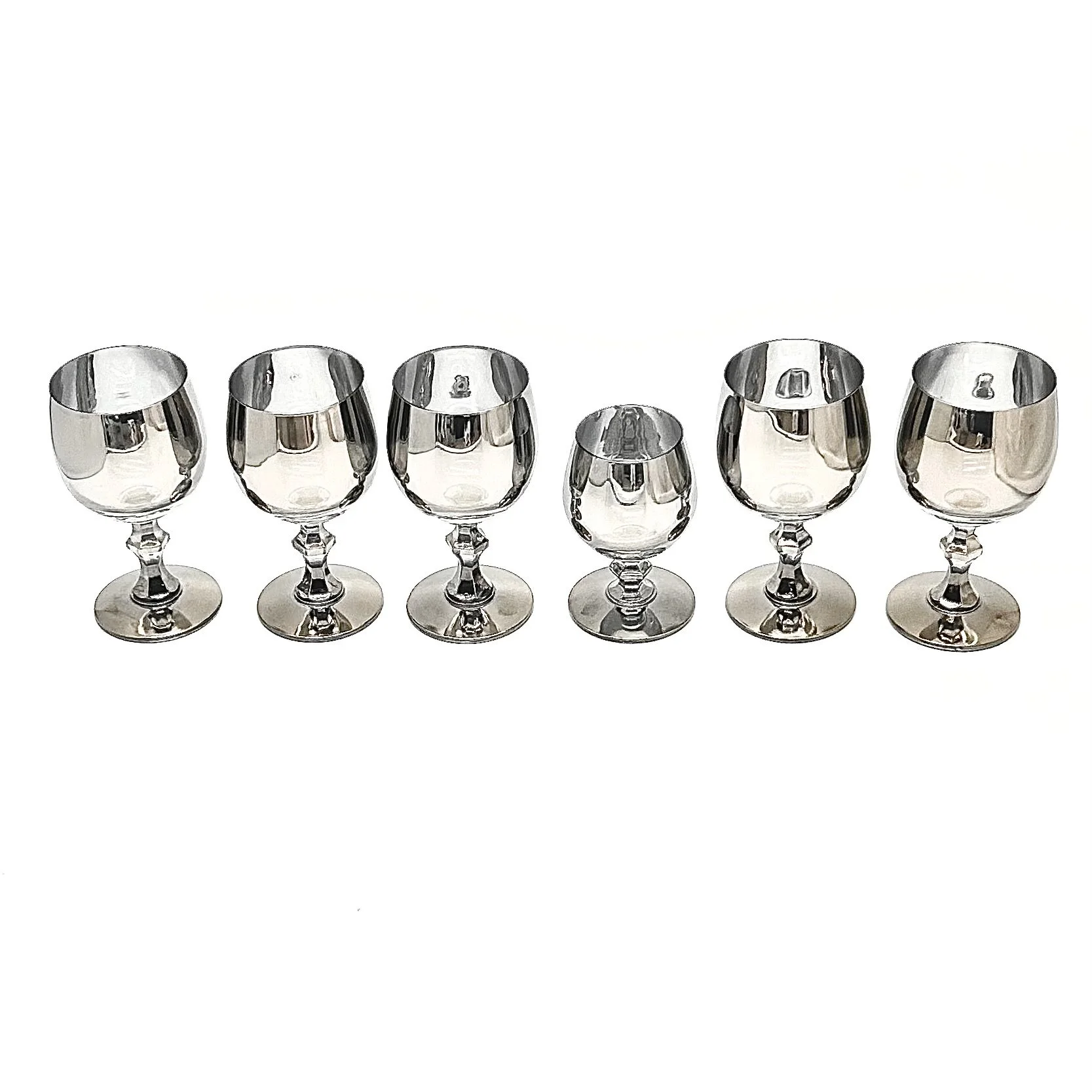 Image 4 of 15
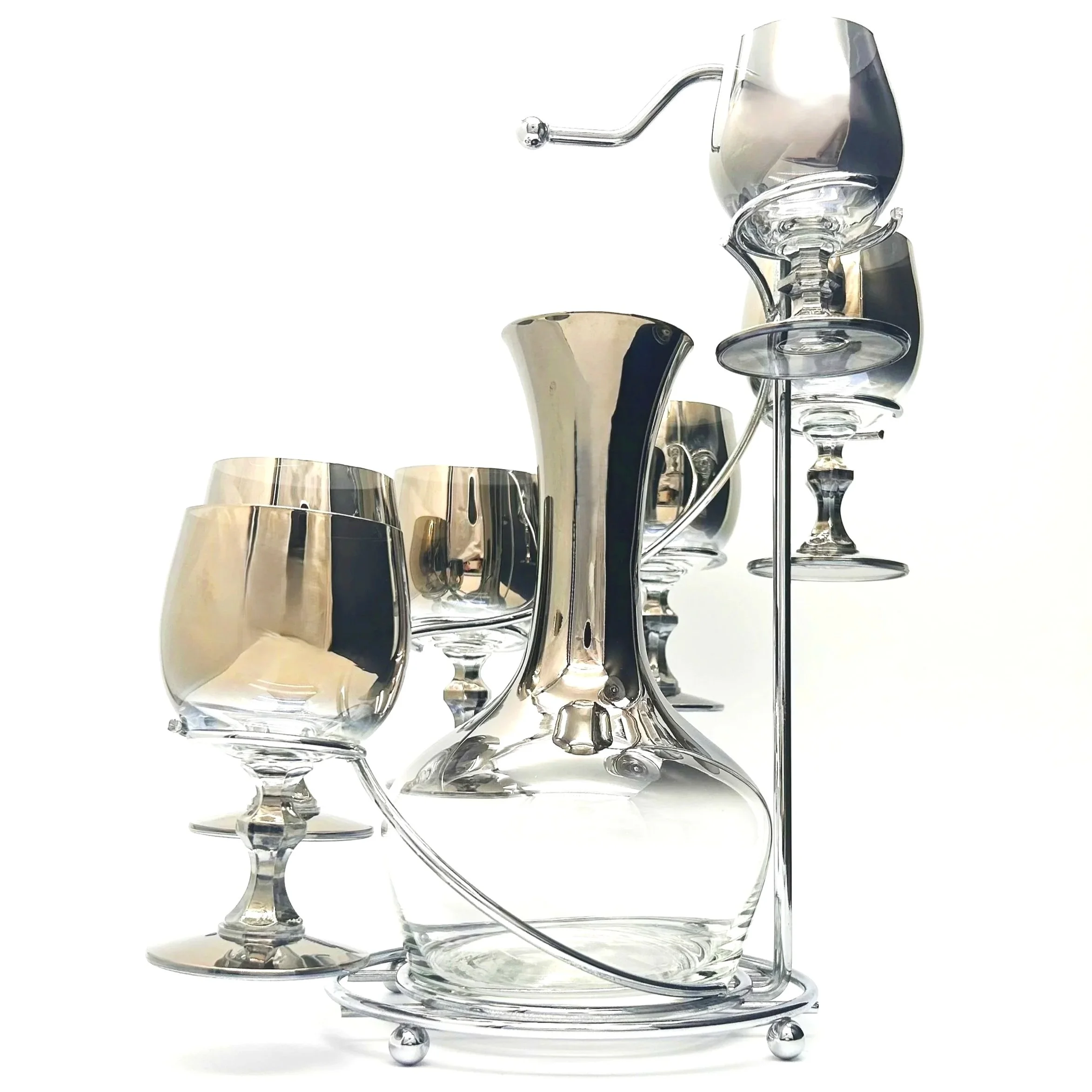 Image 5 of 15
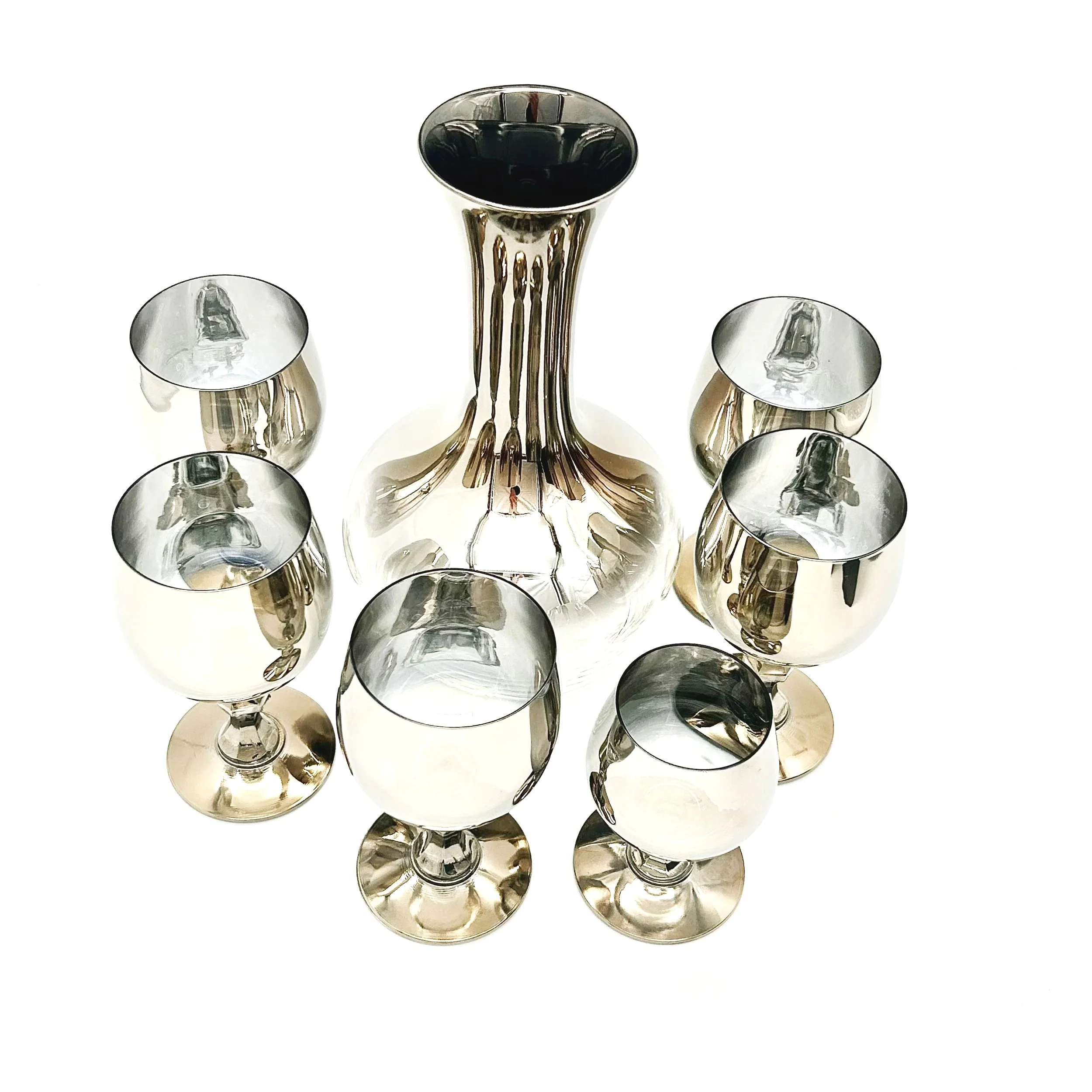 Image 6 of 15
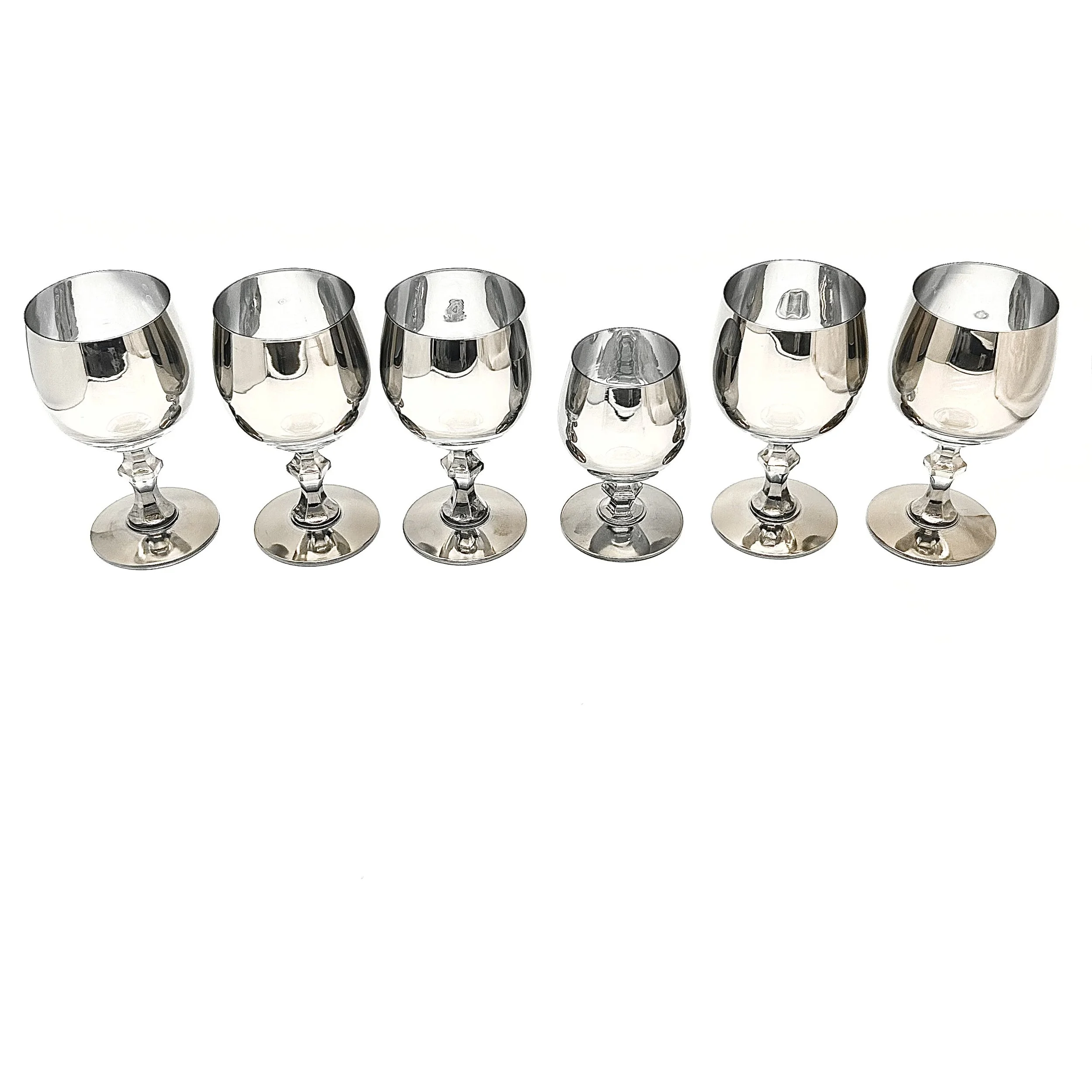 Image 7 of 15
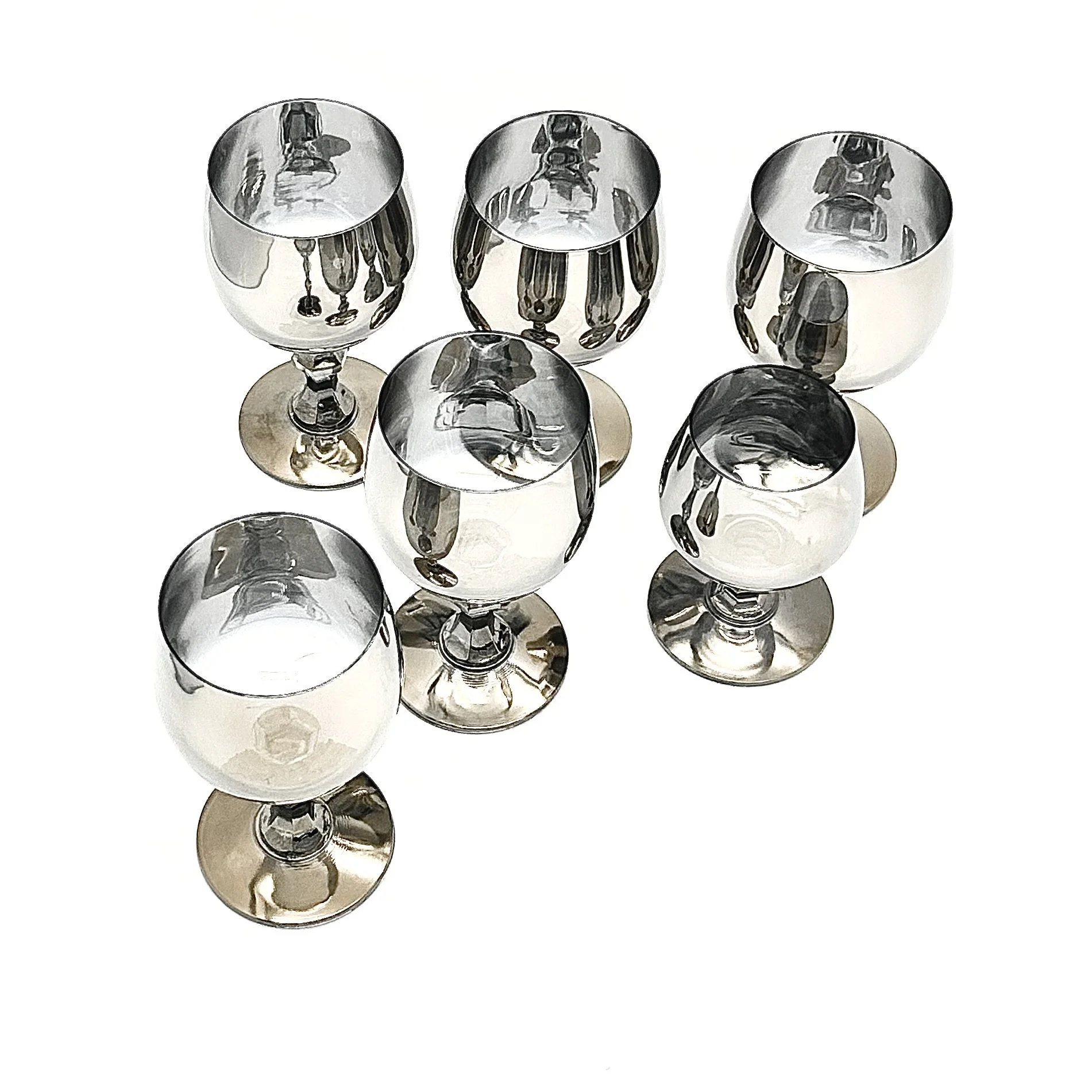 Image 8 of 15
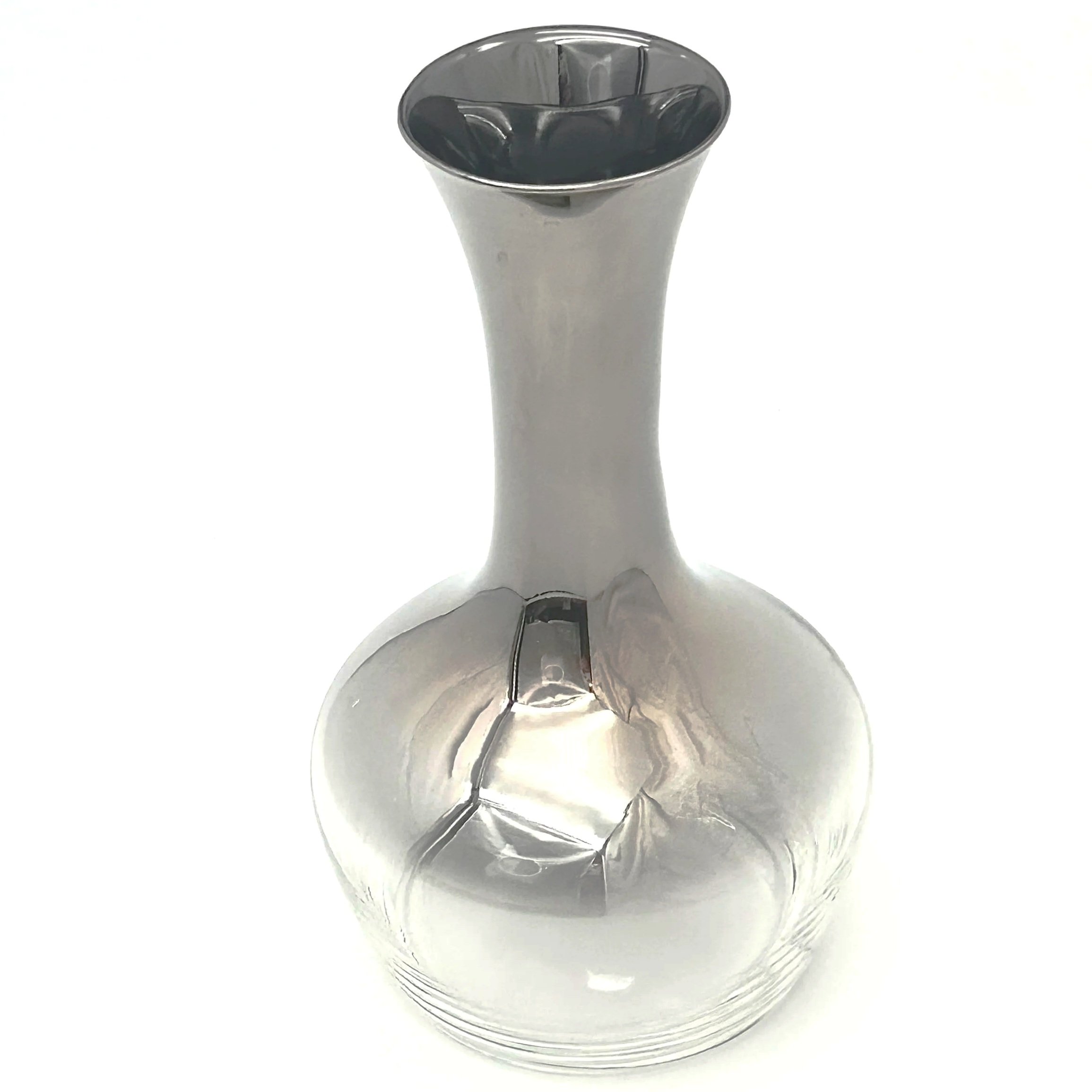 Image 9 of 15
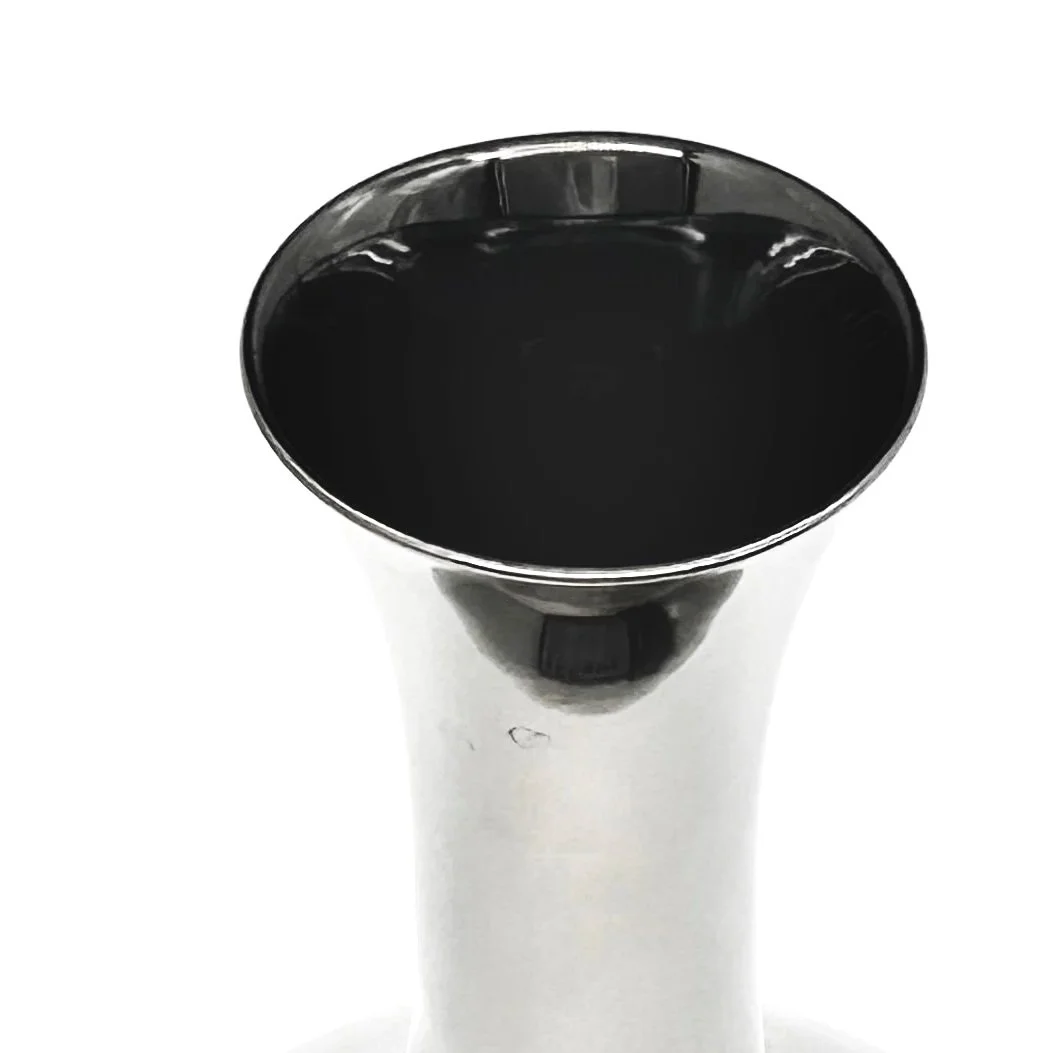 Image 10 of 15
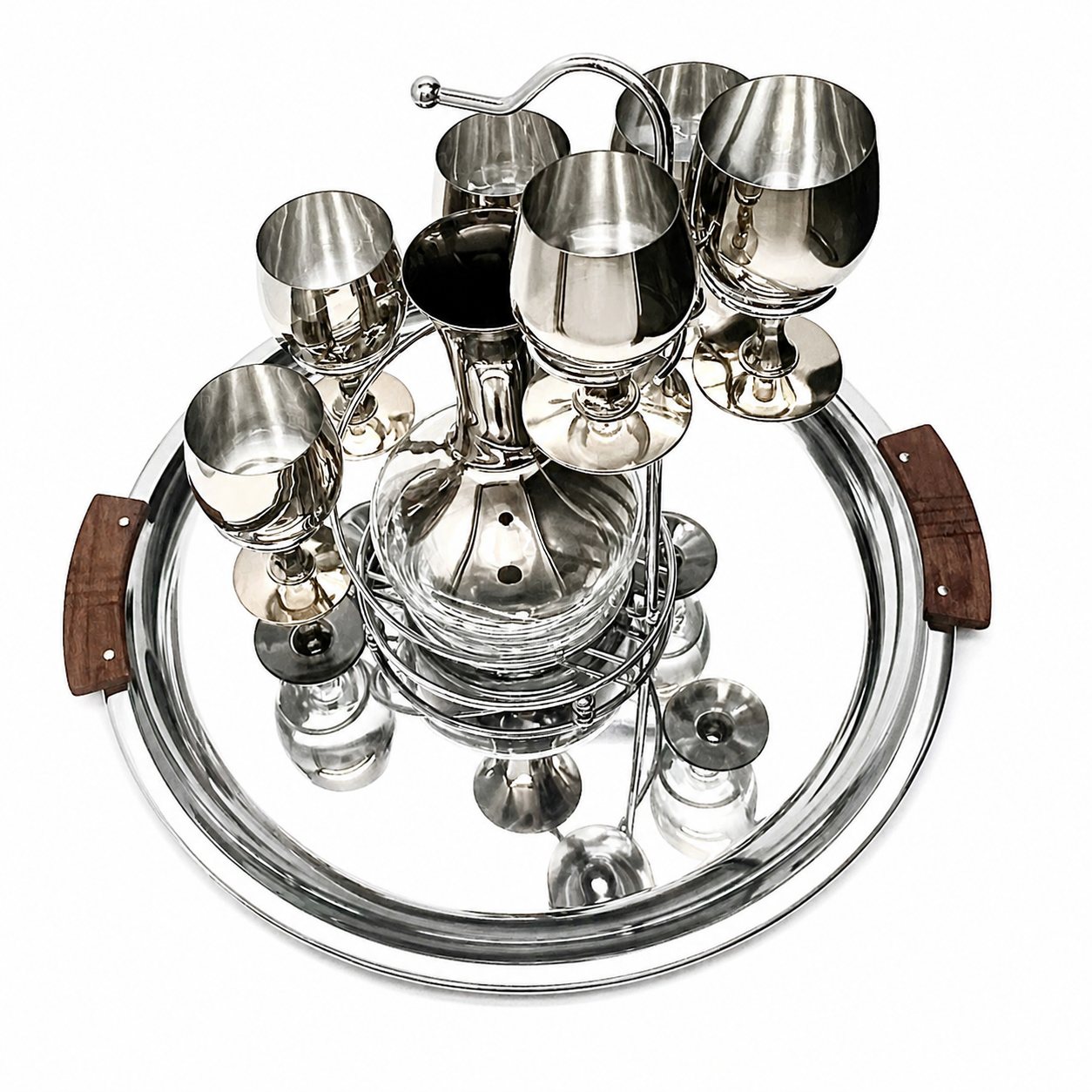 Image 11 of 15
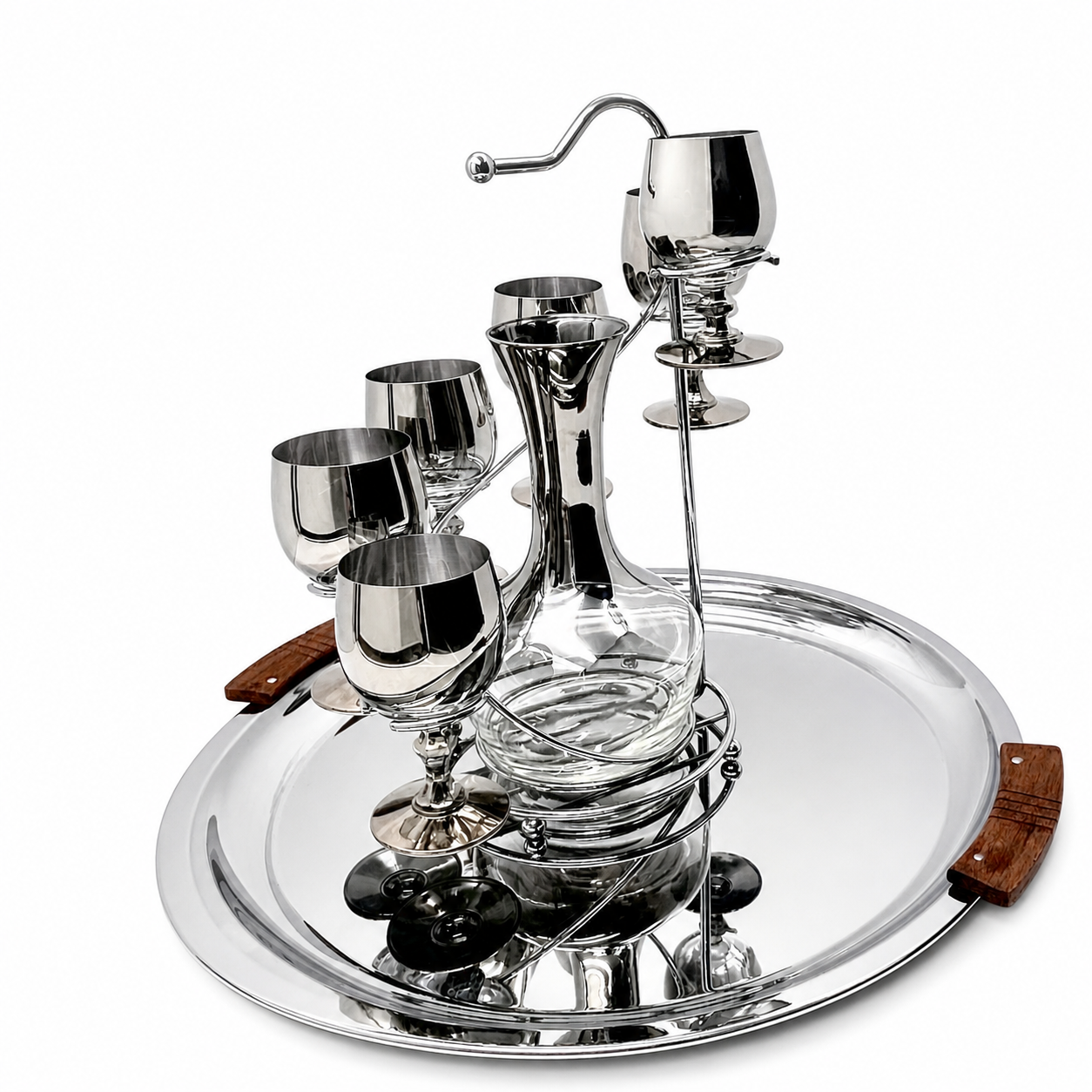 Image 12 of 15
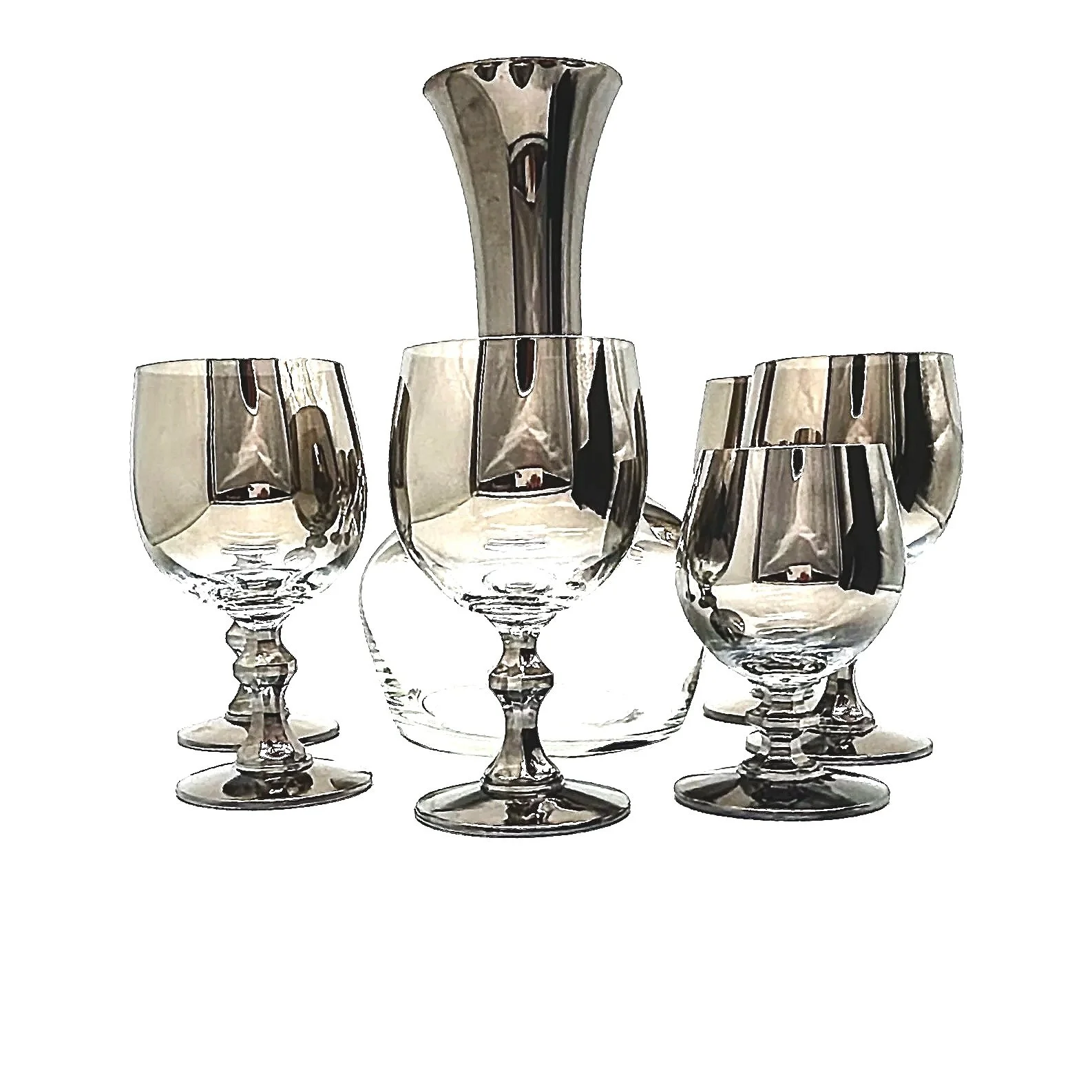 Image 13 of 15
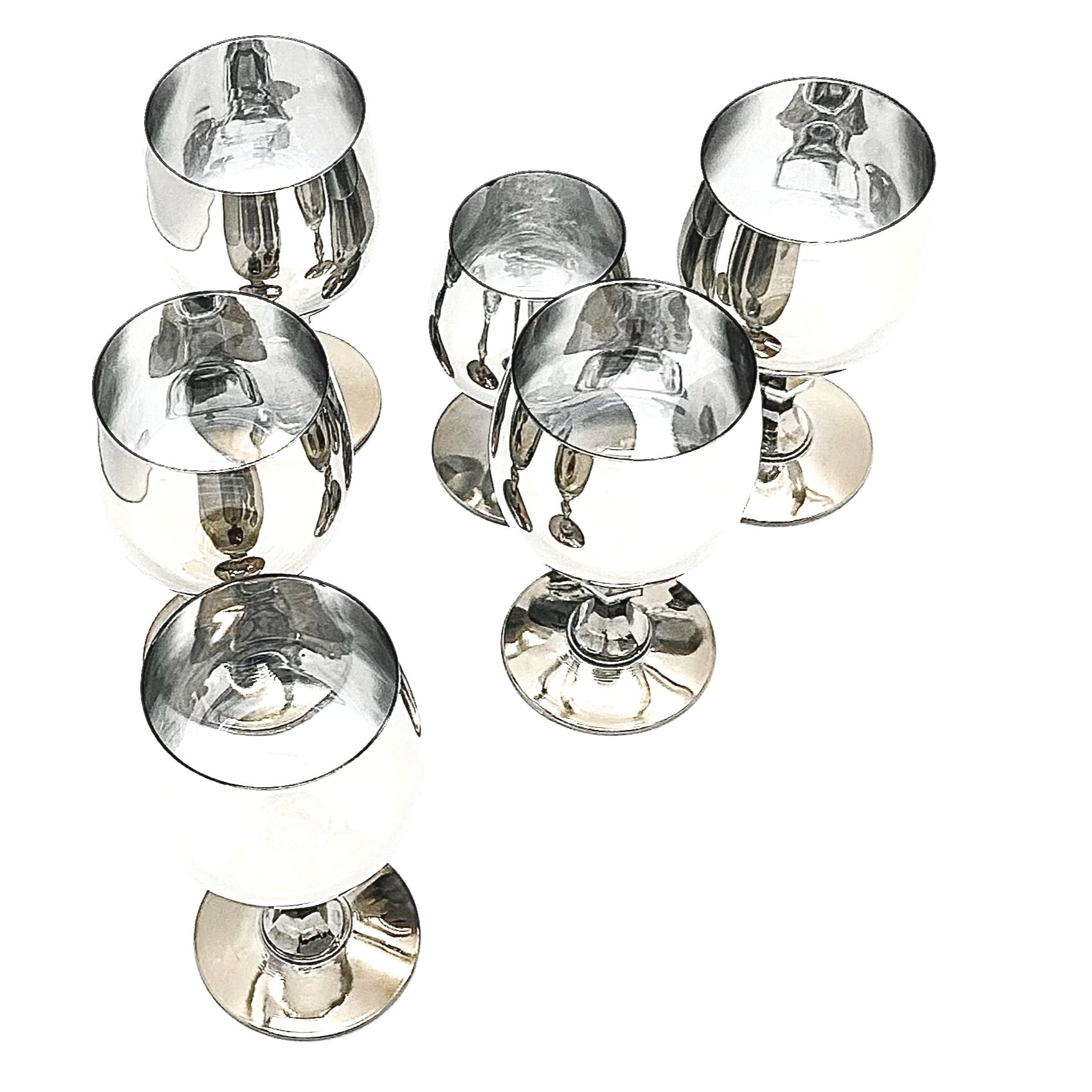 Image 14 of 15
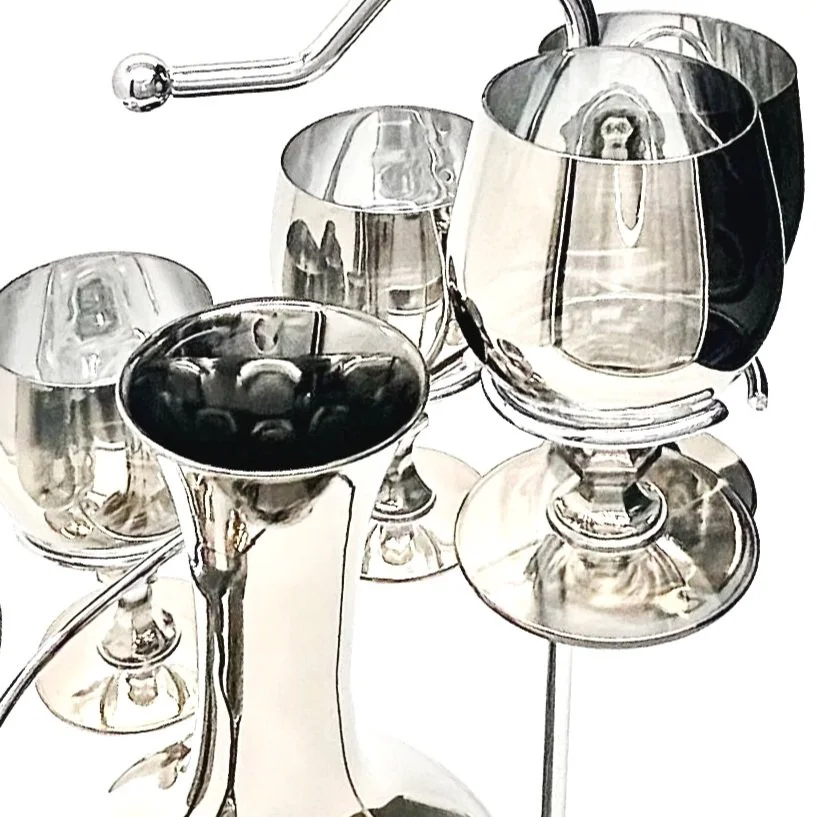 Image 15 of 15