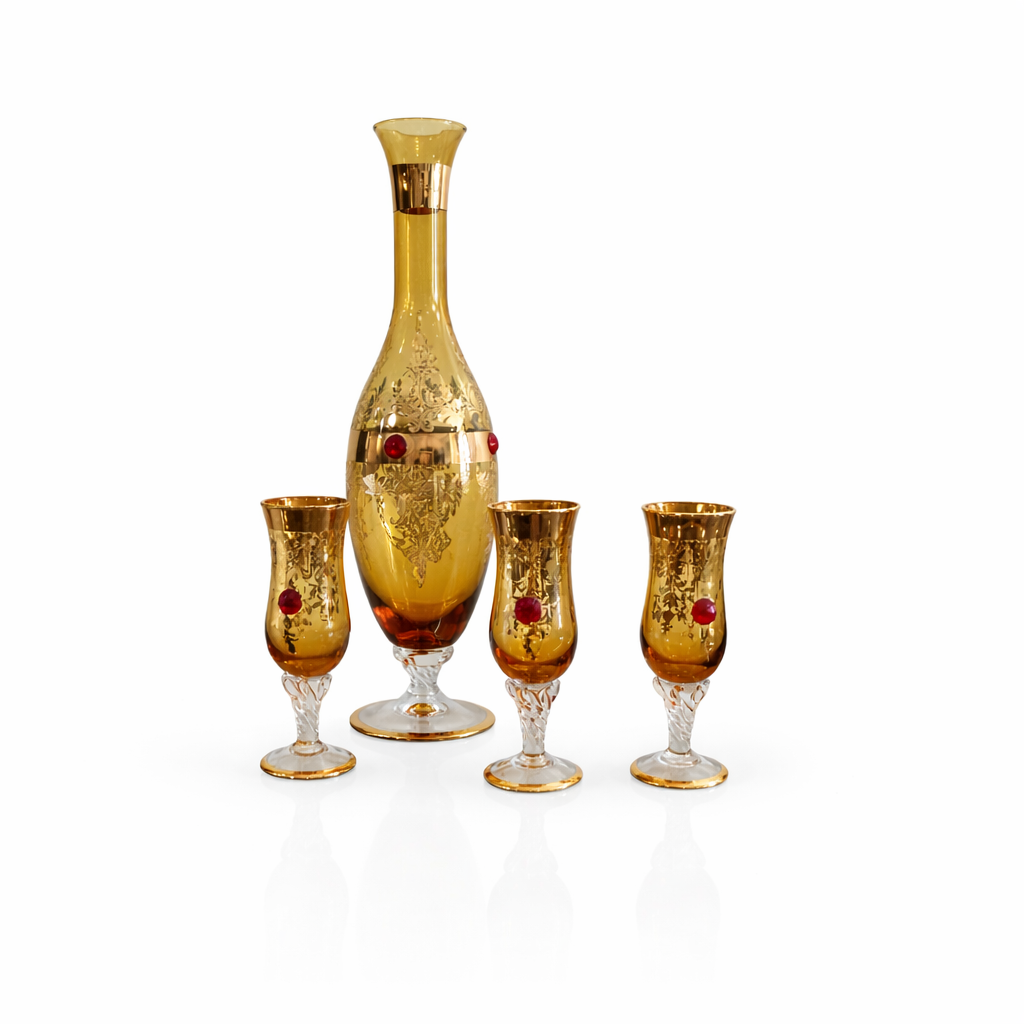
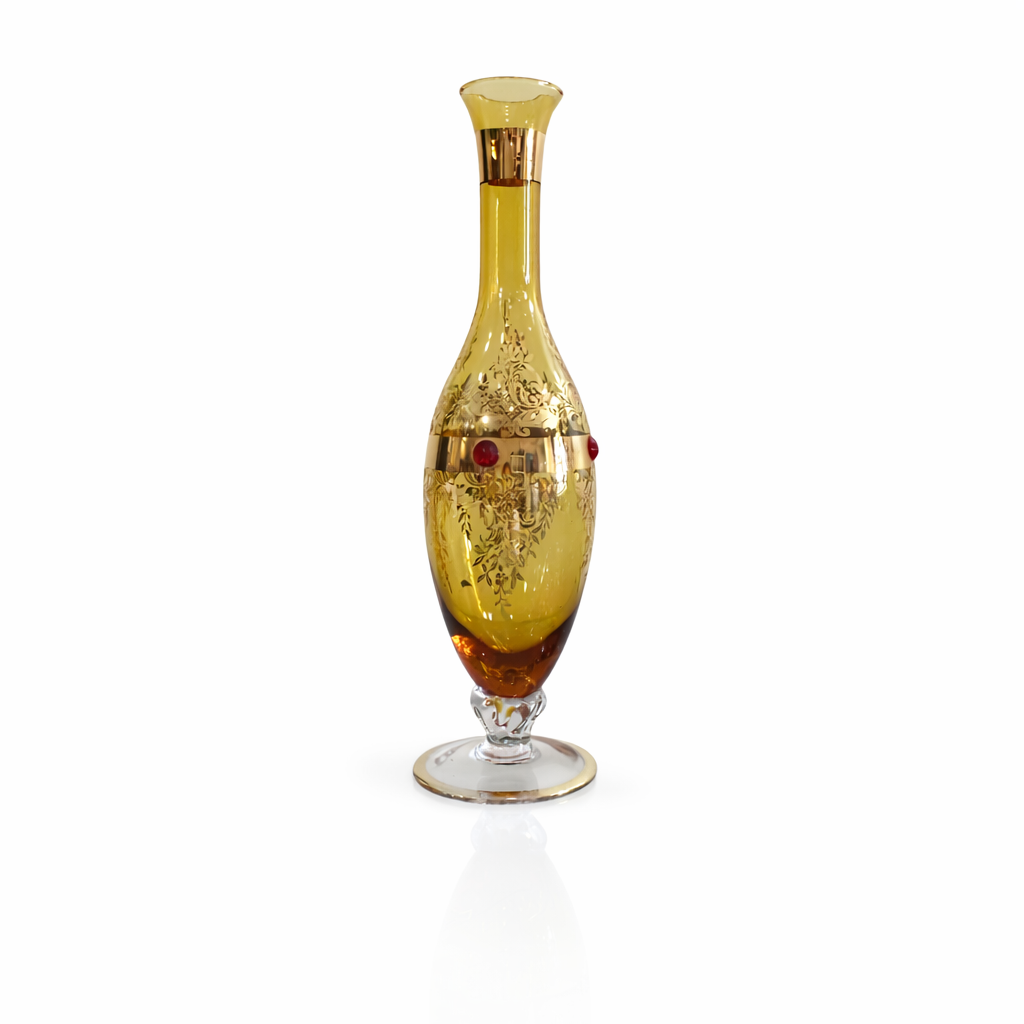
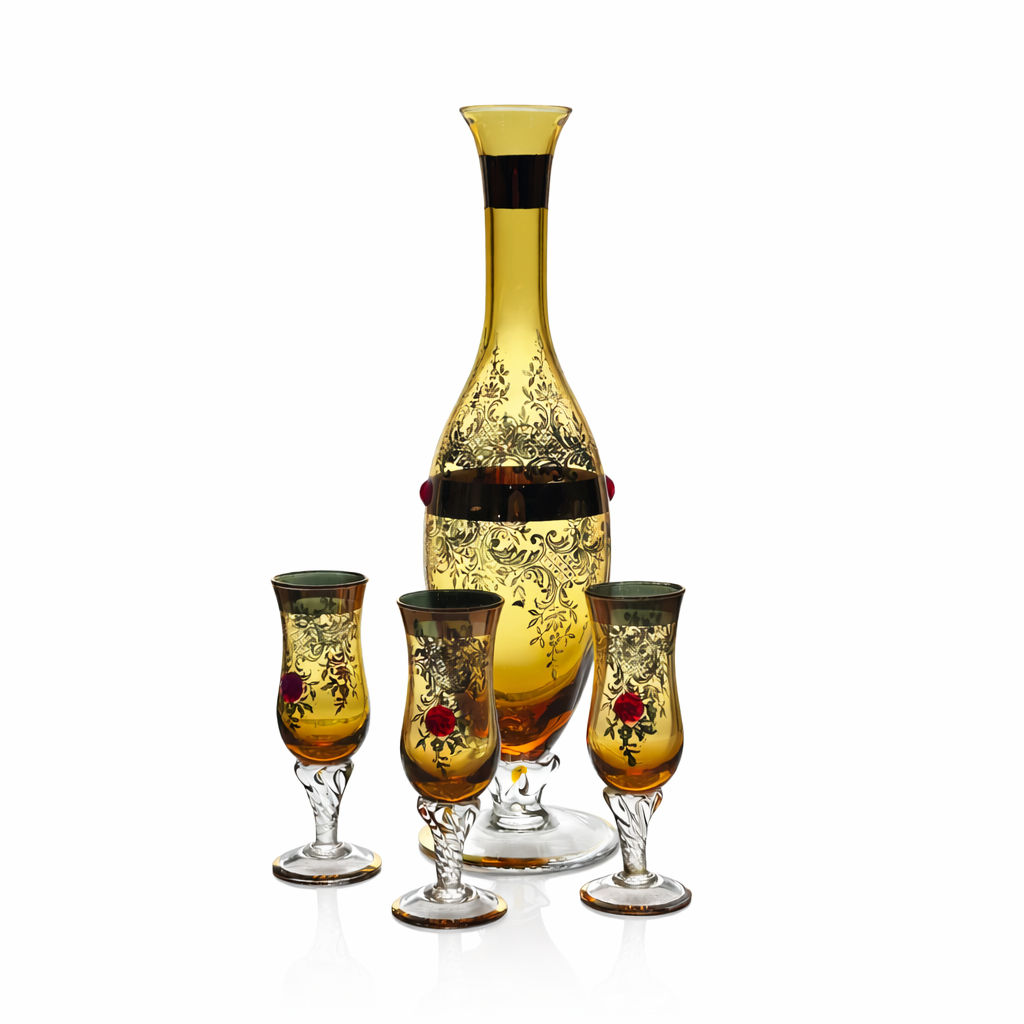
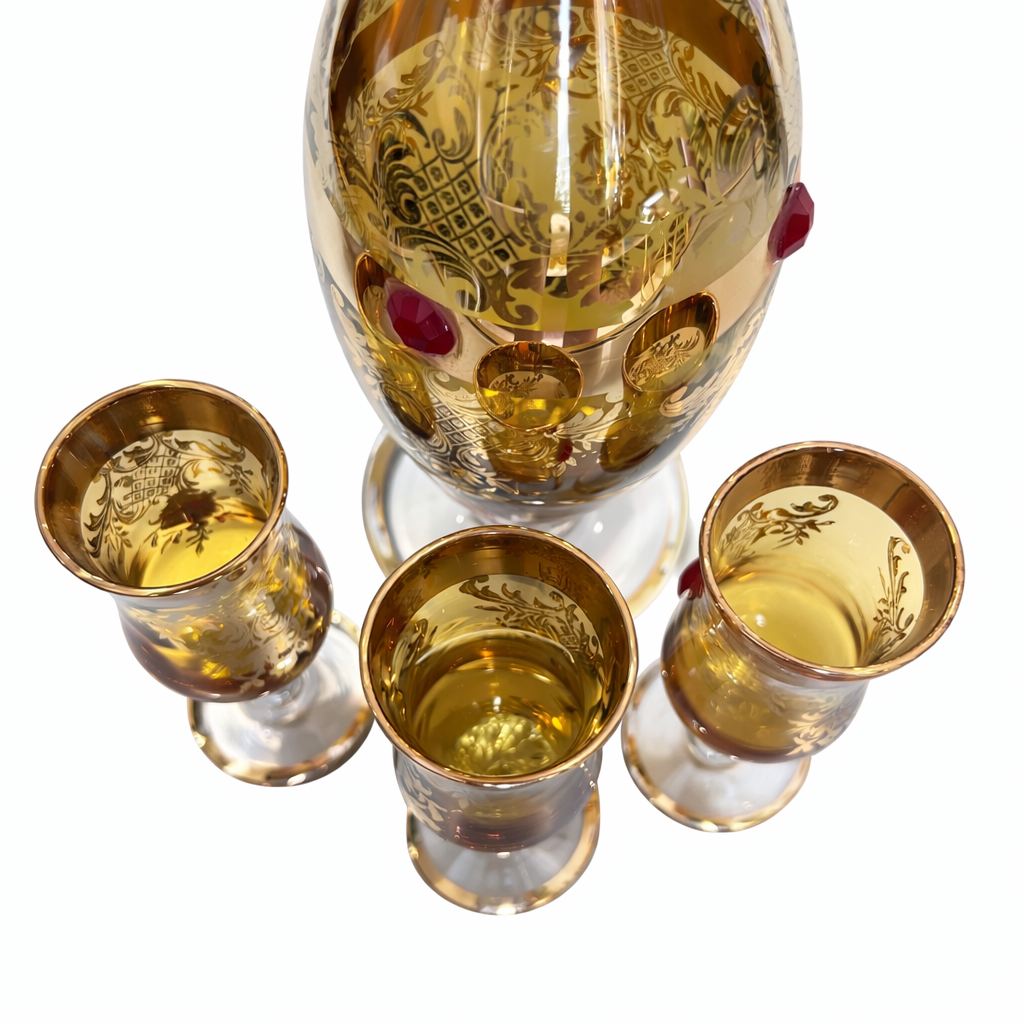
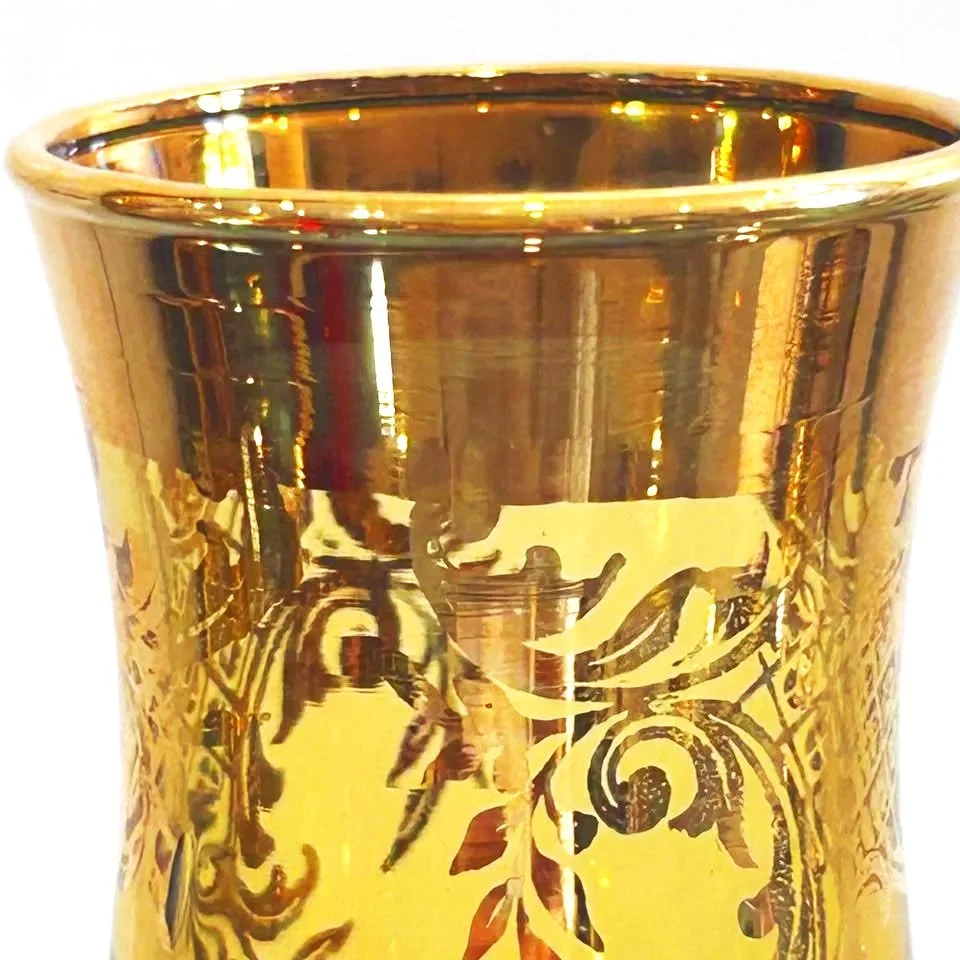
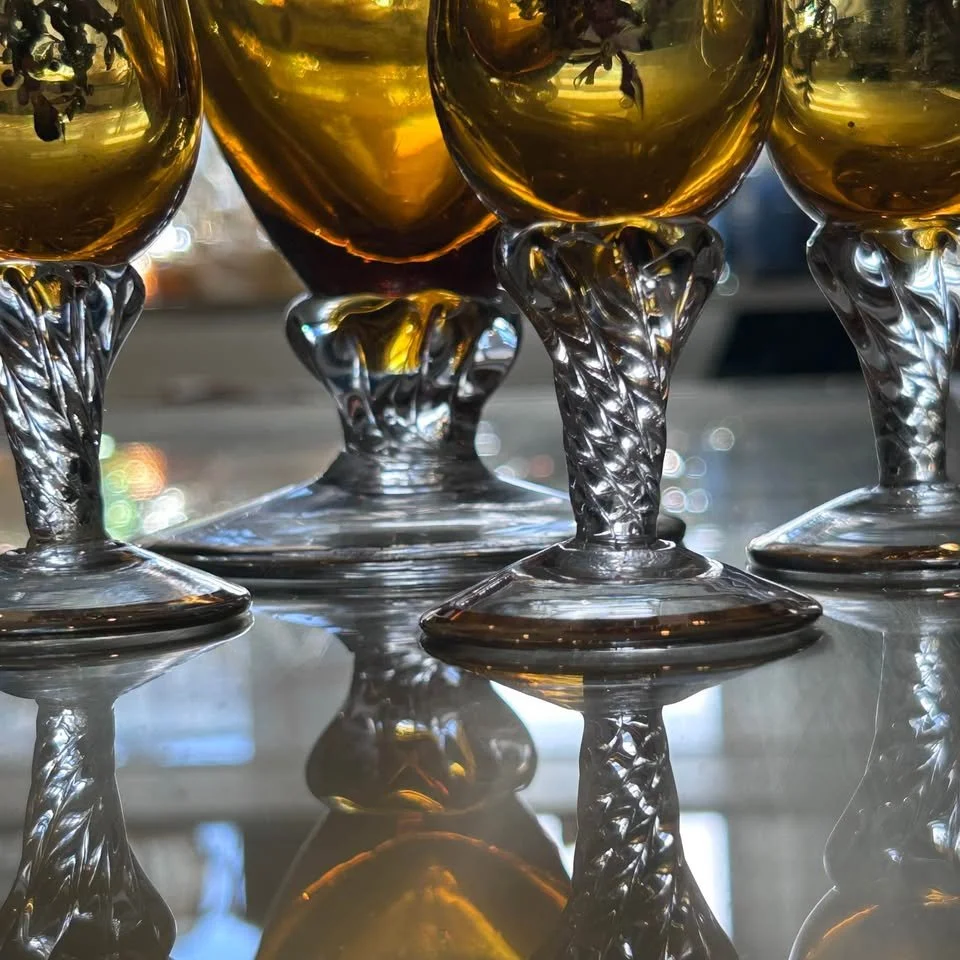
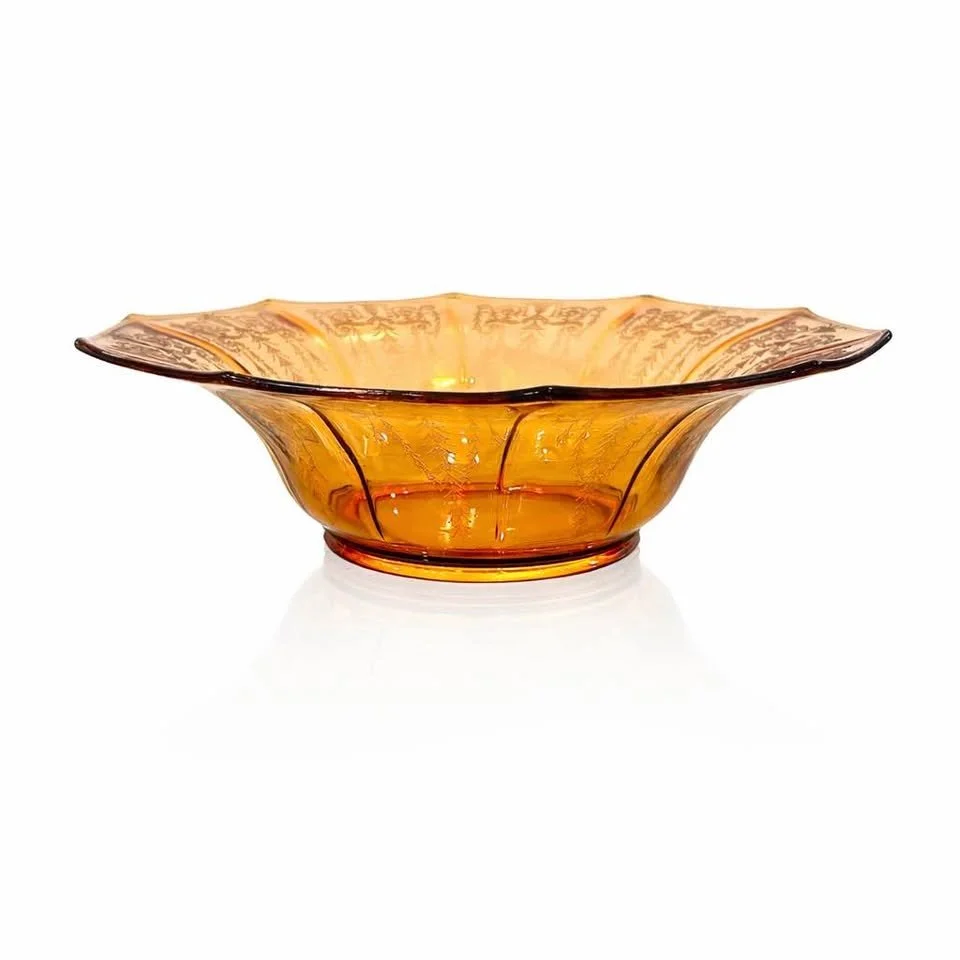
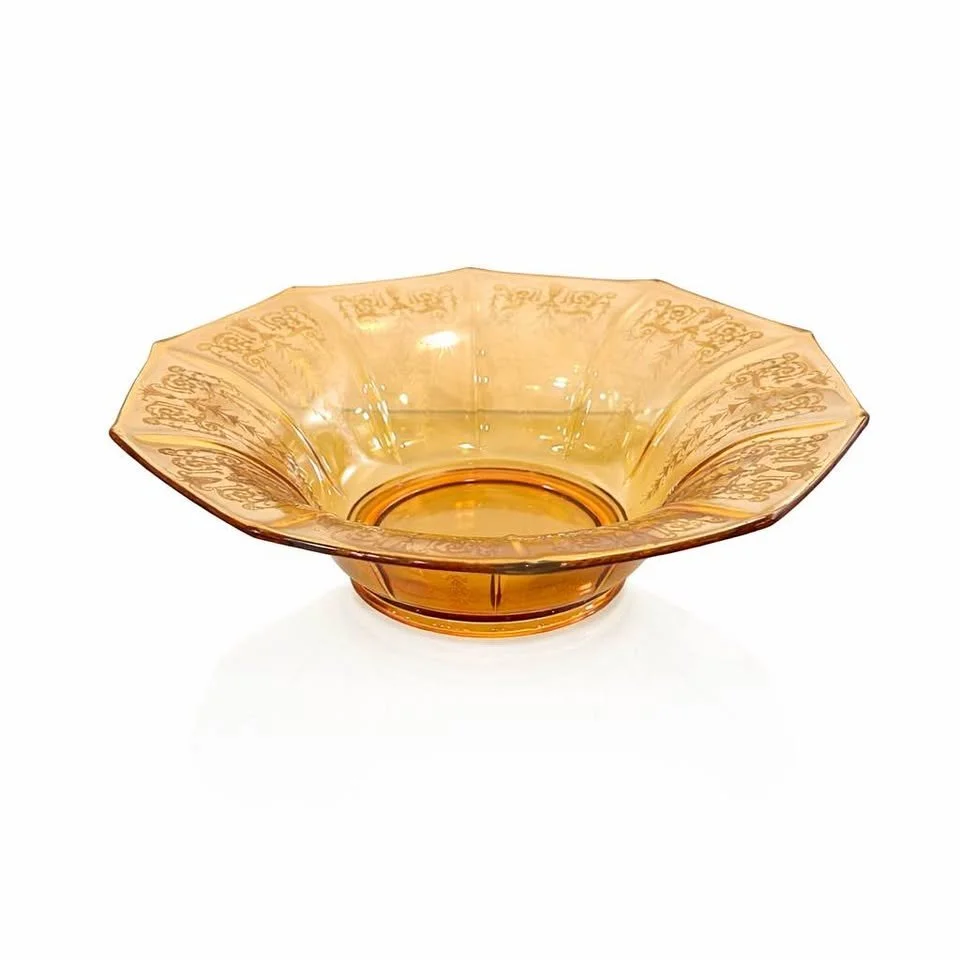
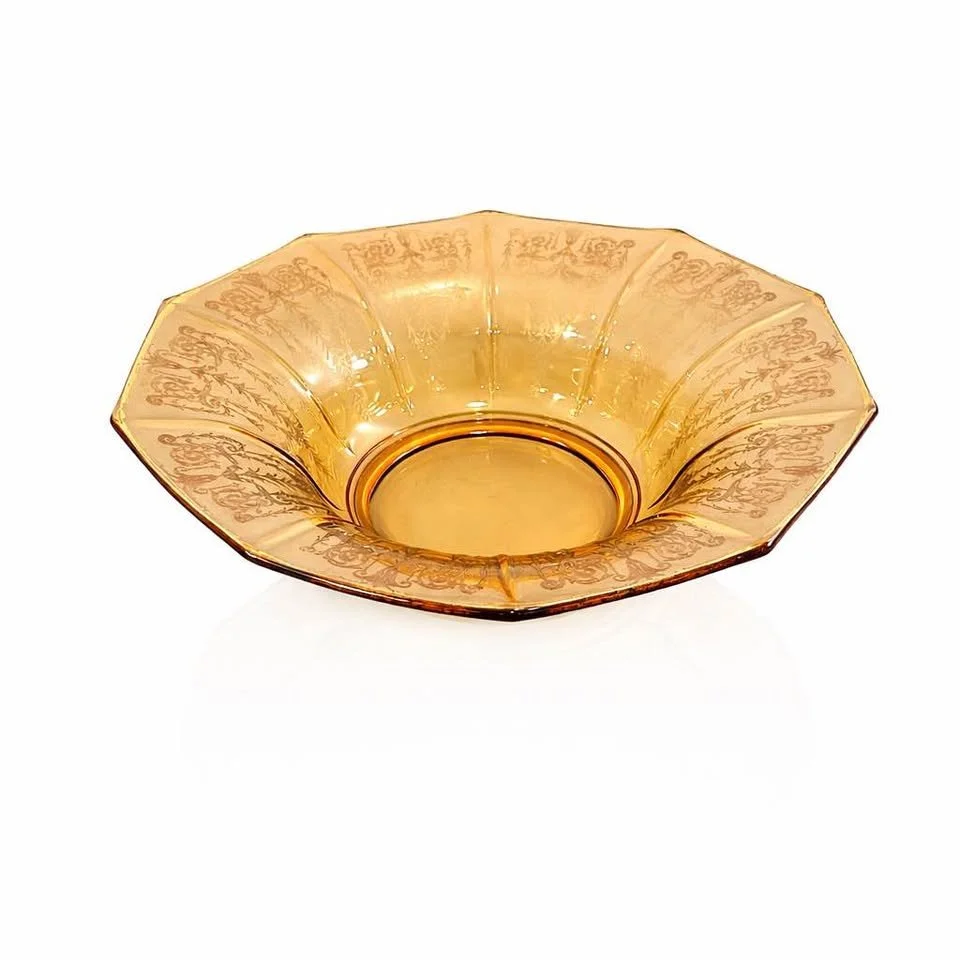
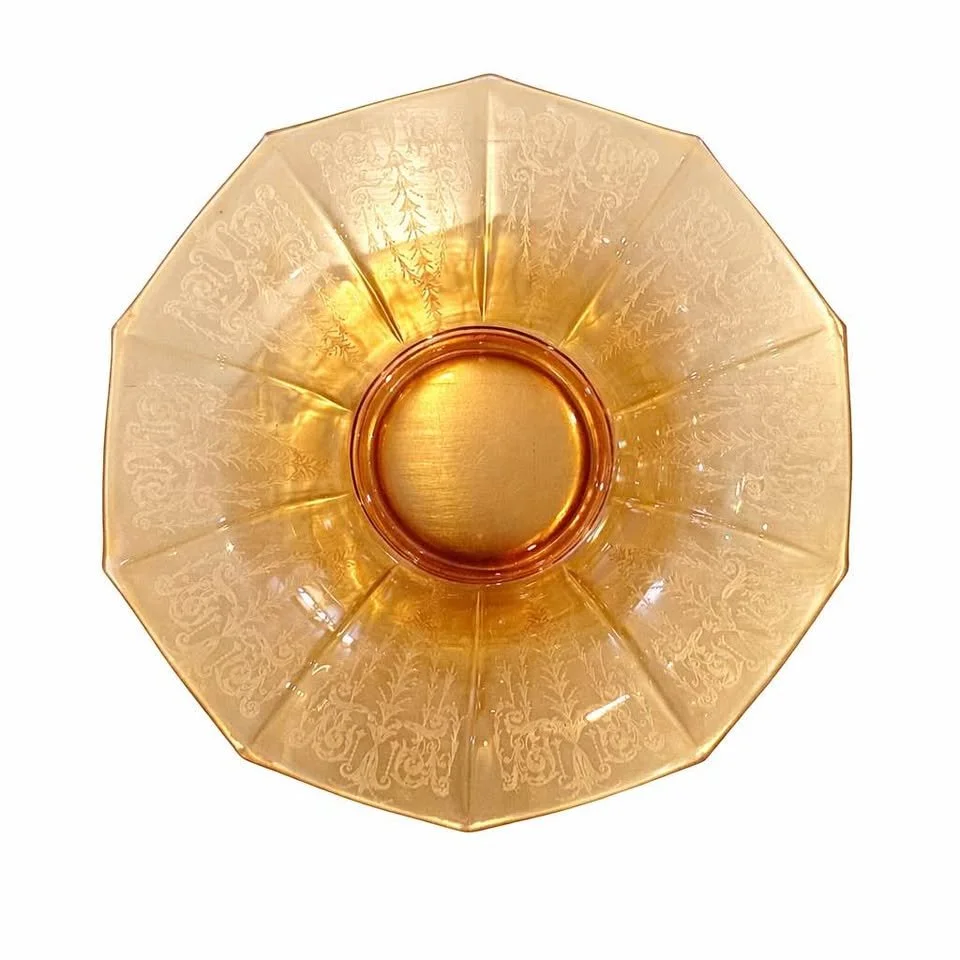
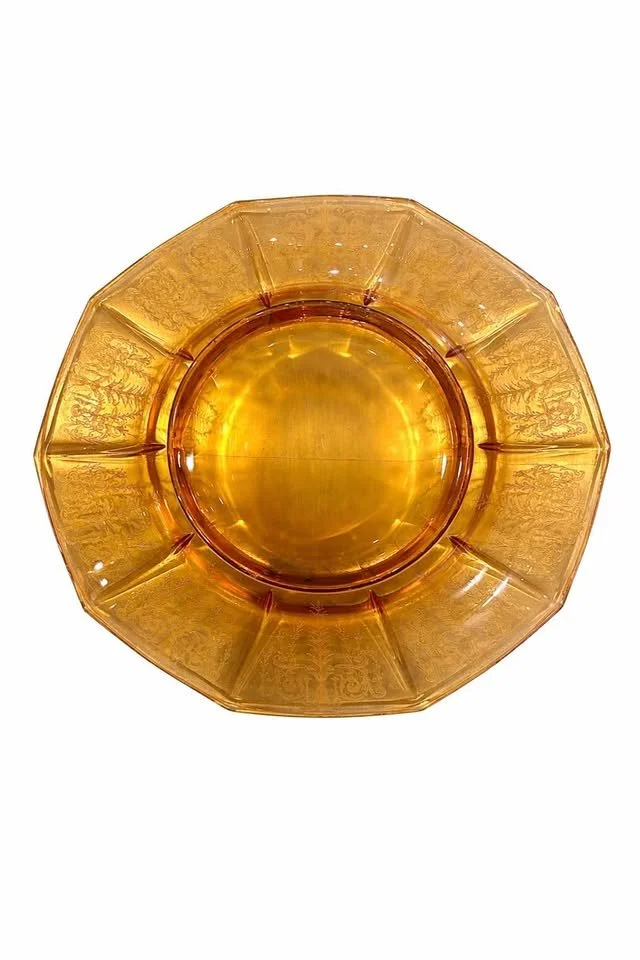
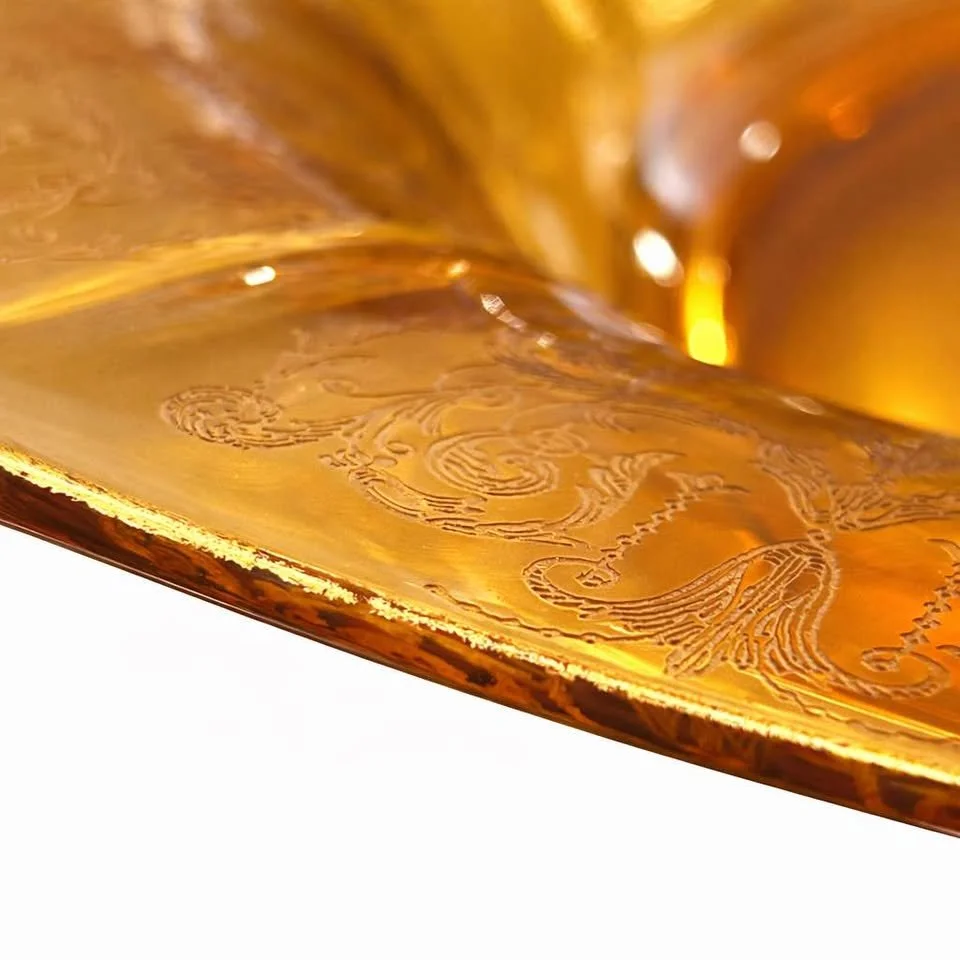
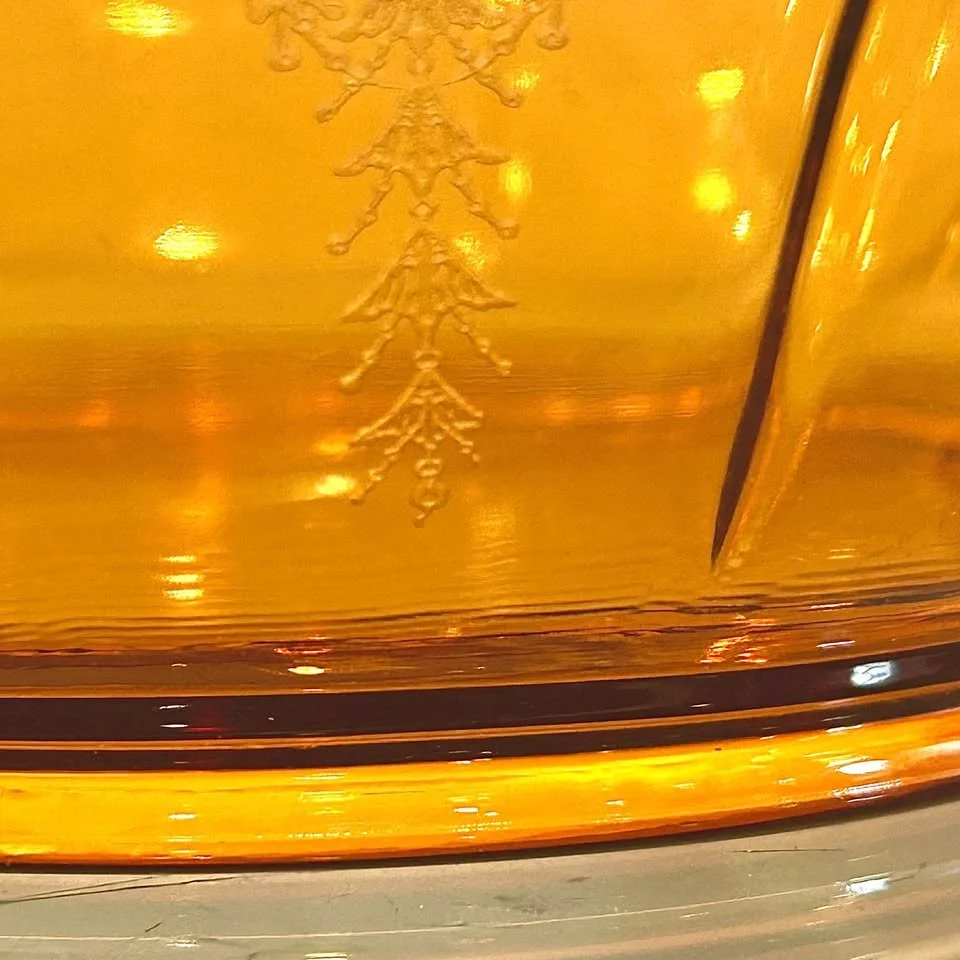
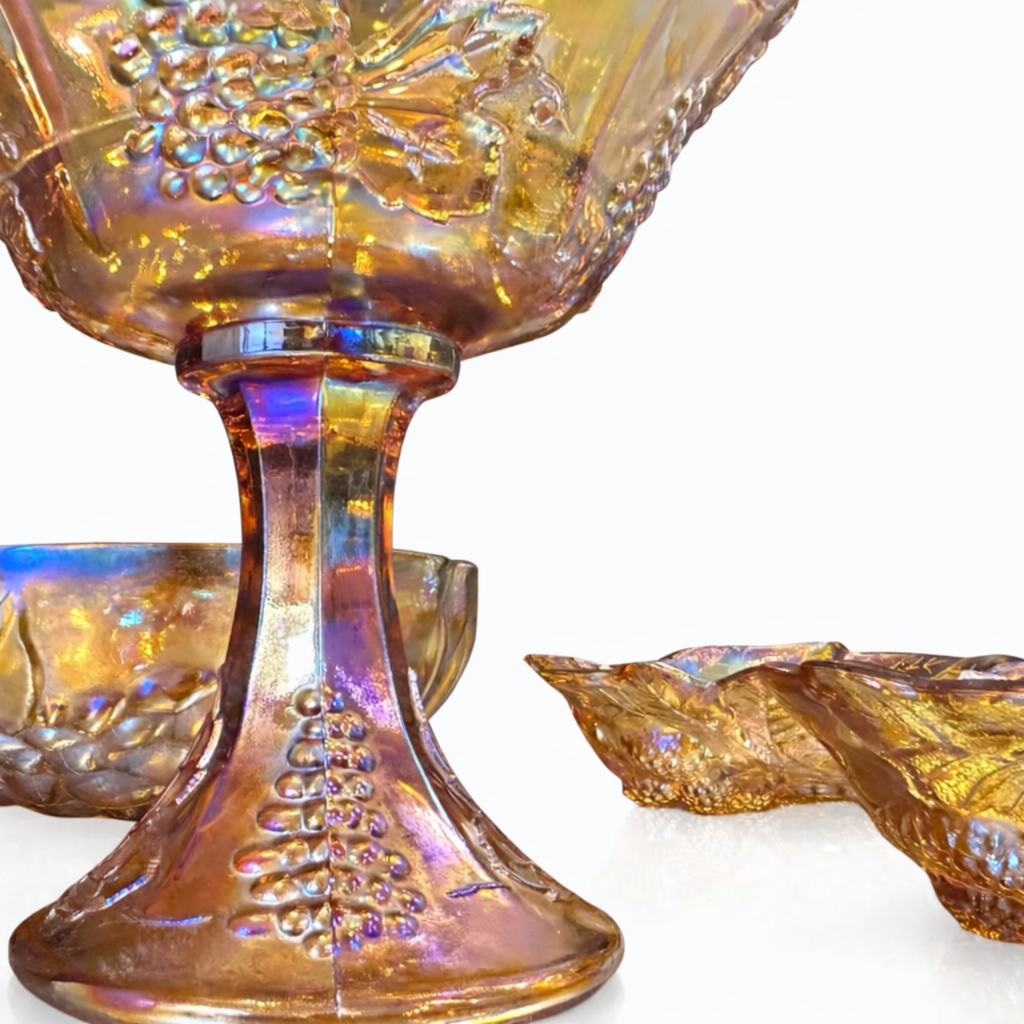
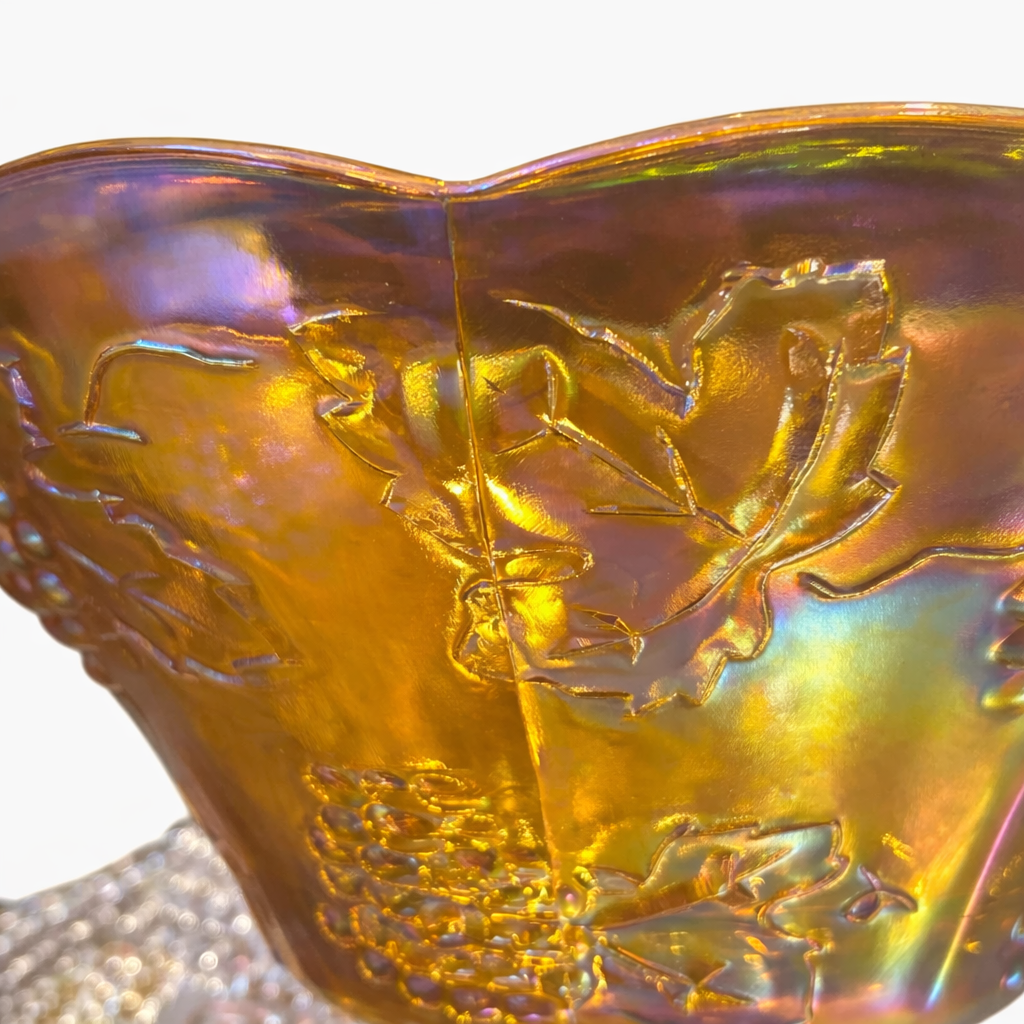
Heavy amber pressed glass bottle of baluster form, the ovoid body rising from a thick molded foot with vertically ribbed panels tapering upward into a rounded shoulder and short cylindrical neck, finished with a fire-polished everted rim. The glass displays a warm honey-to-amber coloration with subtle tonal variation, typical of mid-19th-century continental glass chemistry.
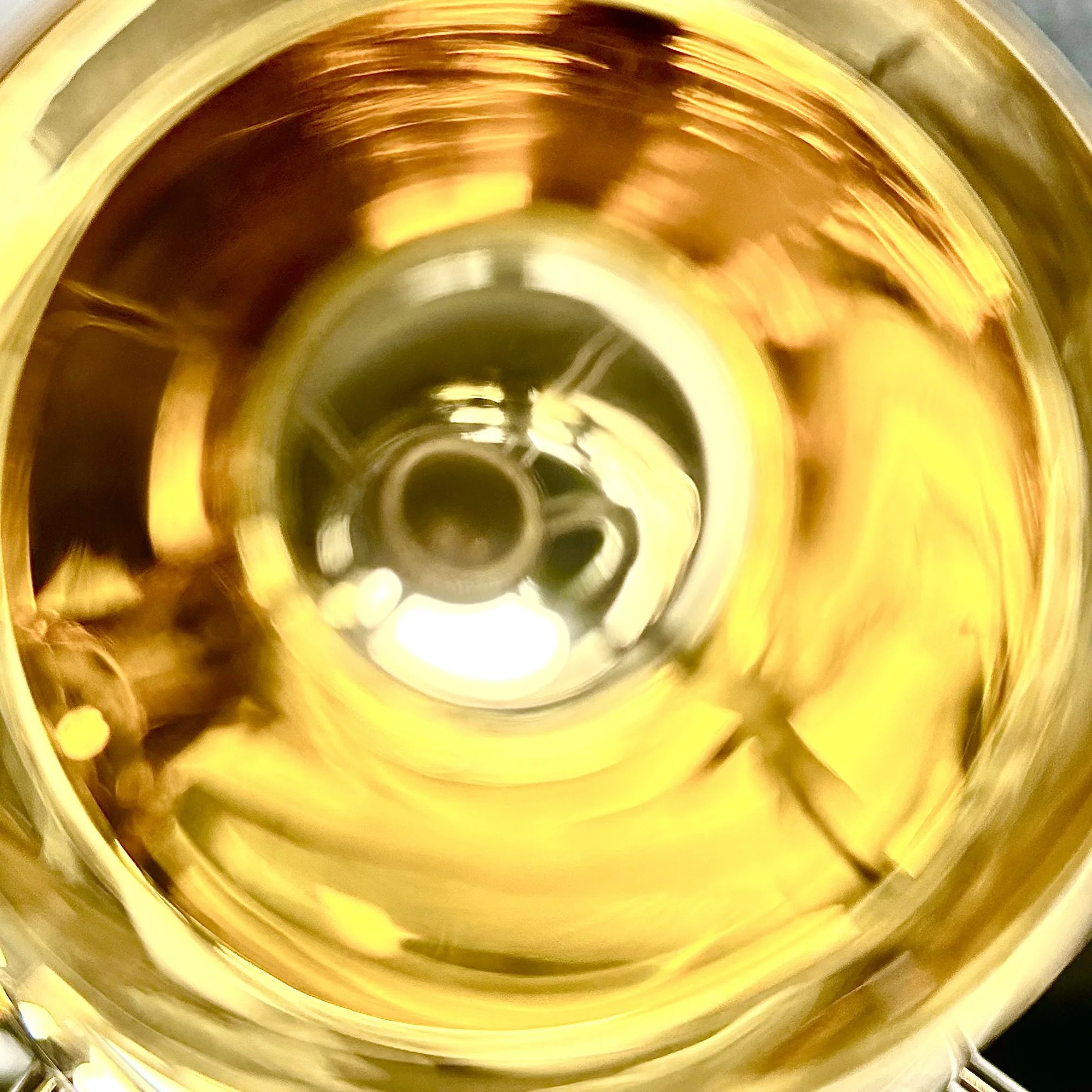
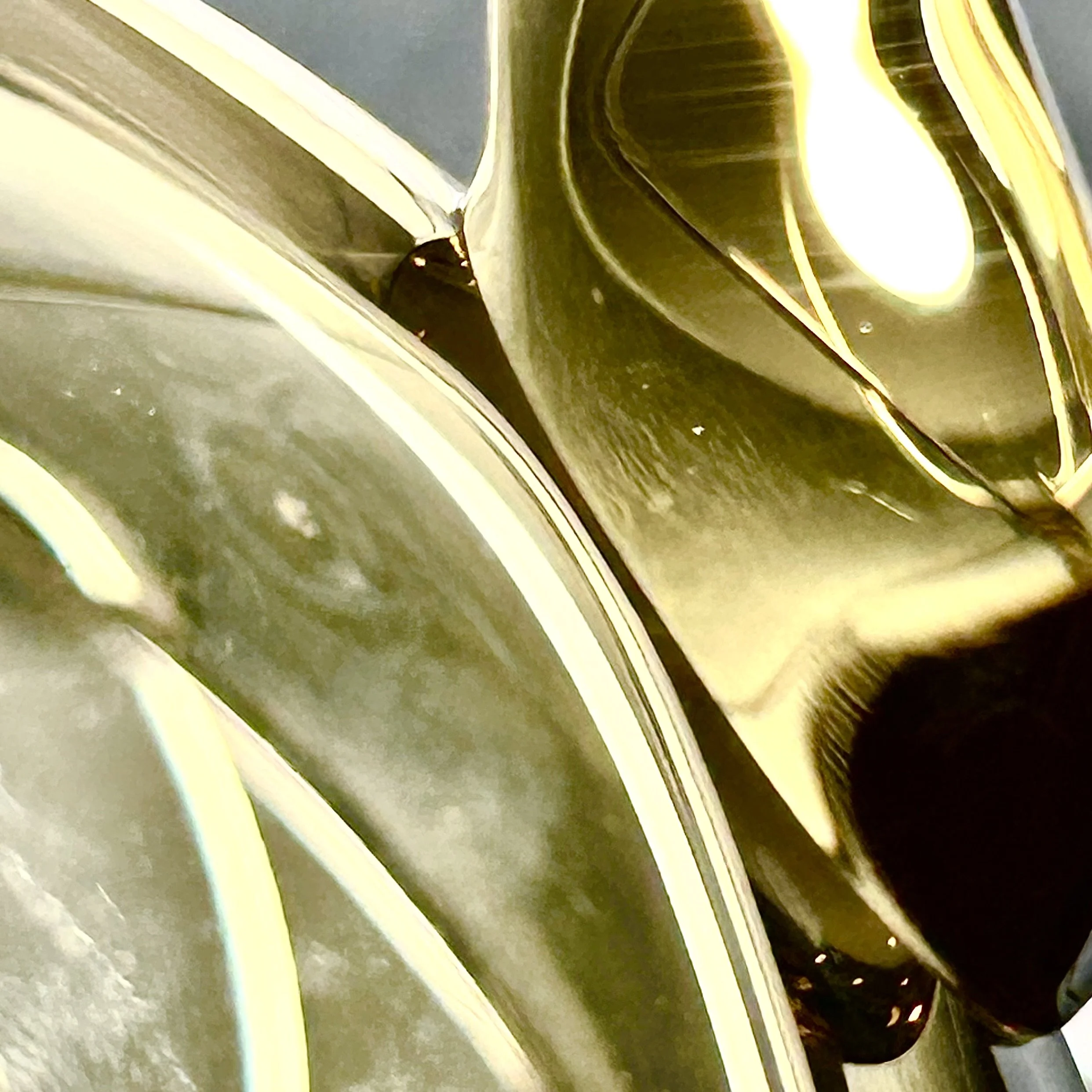
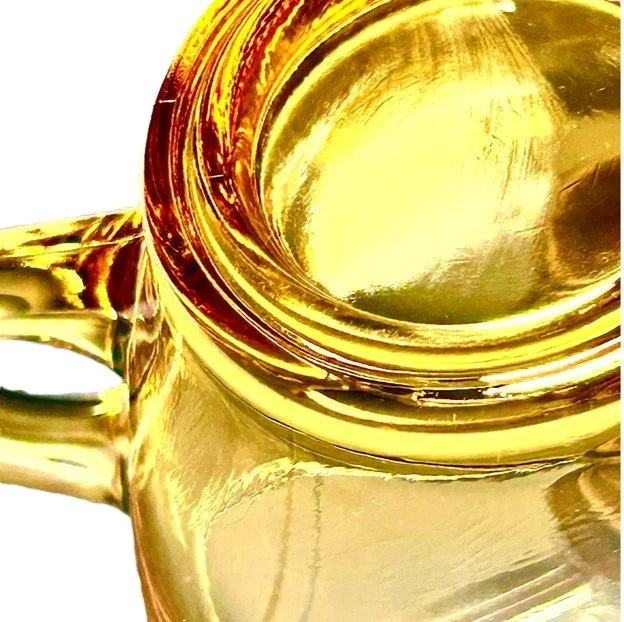
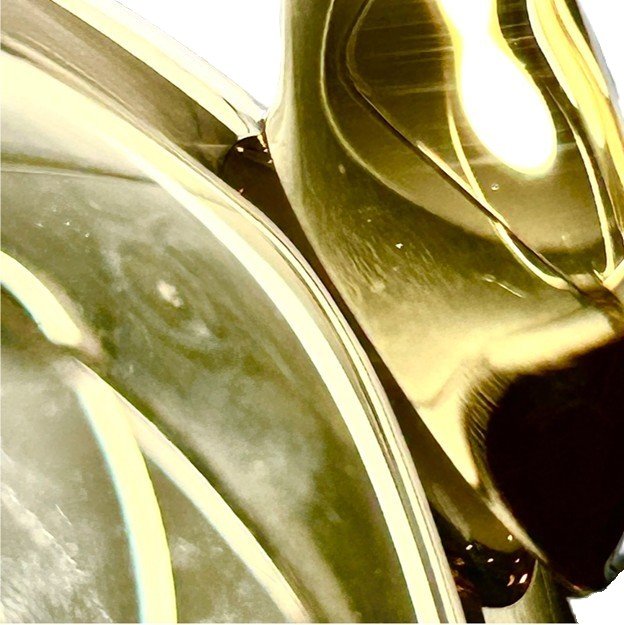
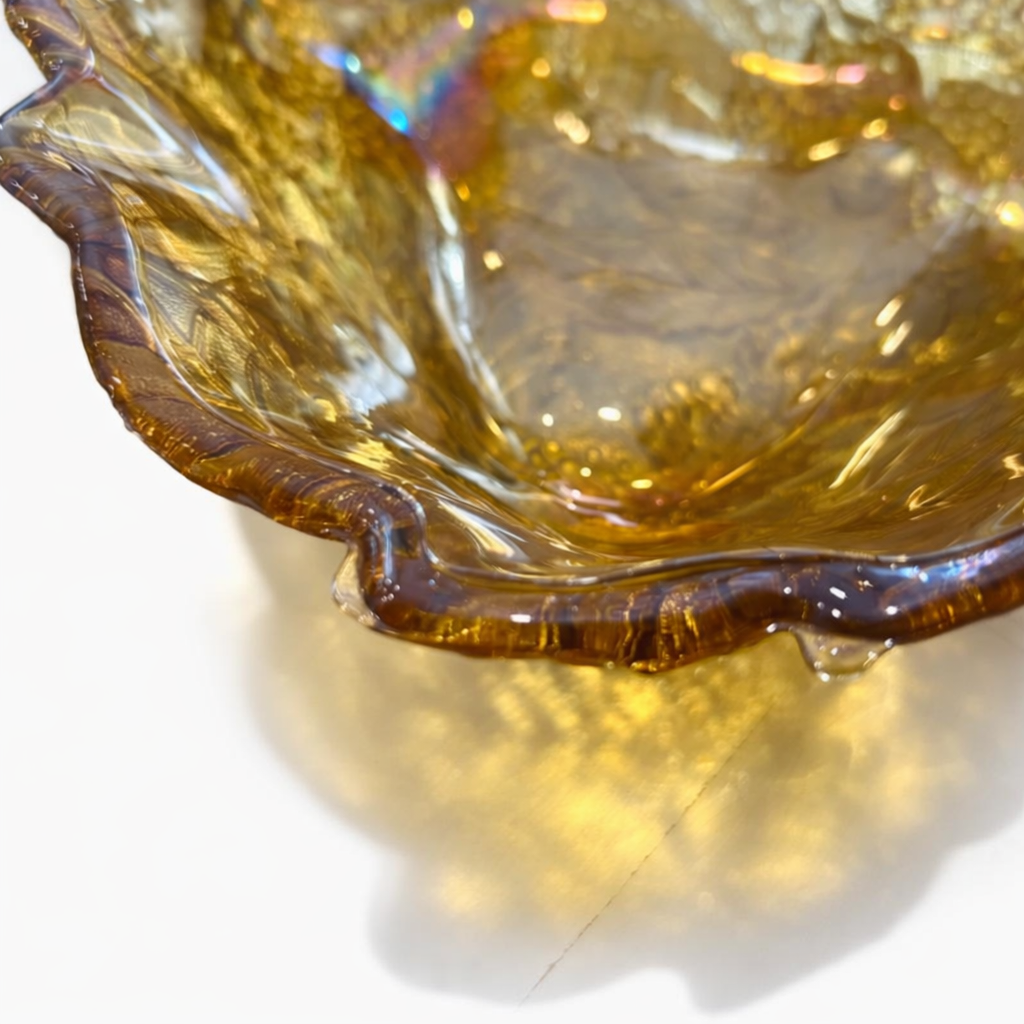
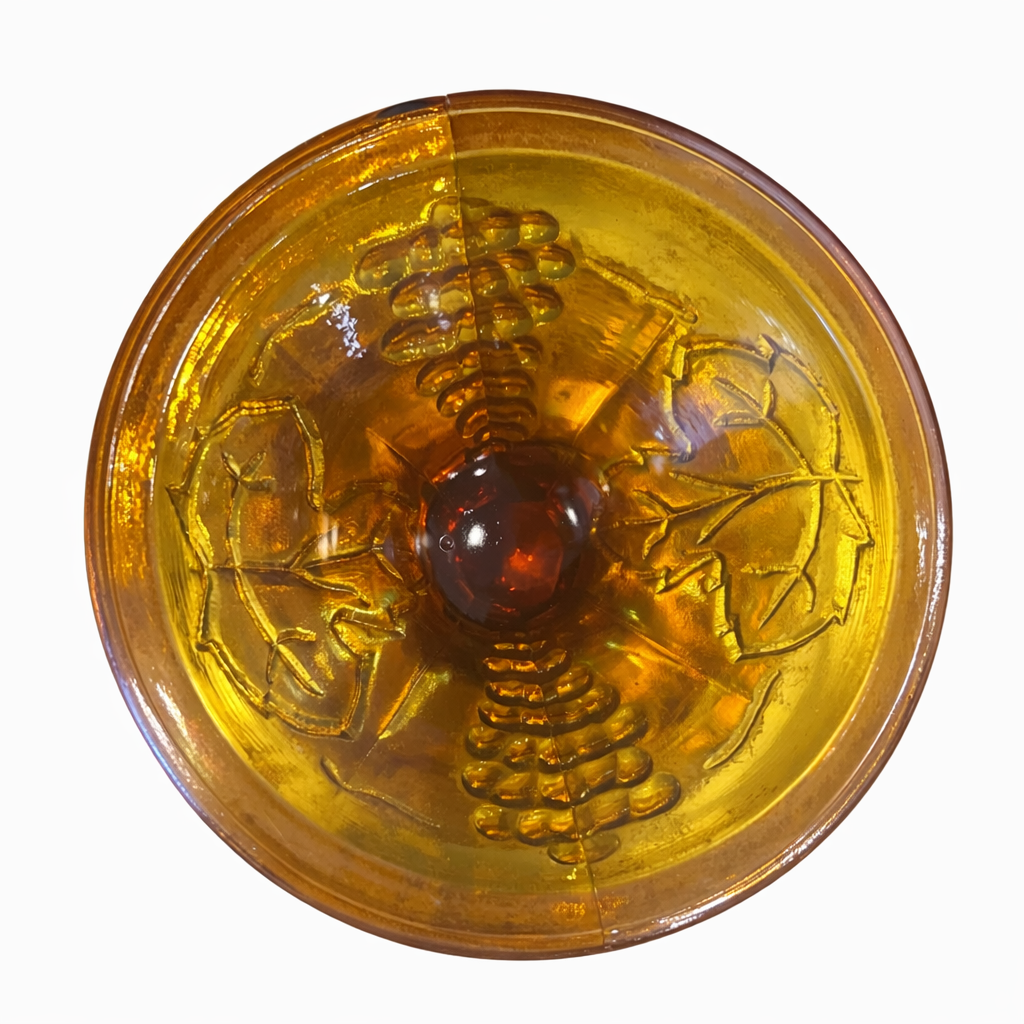
Numerous small entrapped air bubbles and slight irregularities in wall thickness confirm early pressing rather than later machine manufacture. The base is integrally molded, showing early foot construction with minor asymmetry visible to the interior—consistent with transitional production techniques prior to full mechanization. The rim exhibits light tooling and polishing marks, with no evidence of later alteration.
Pressed glass bottles of this type were produced in relatively limited quantities compared to tablewares and were commonly discarded after use, making intact examples scarce. Likely intended for apothecary, cosmetic, or perfumed liquid storage.
Comparable forms are associated with Bohemian and Northern European glasshouses active during the mid-19th century.
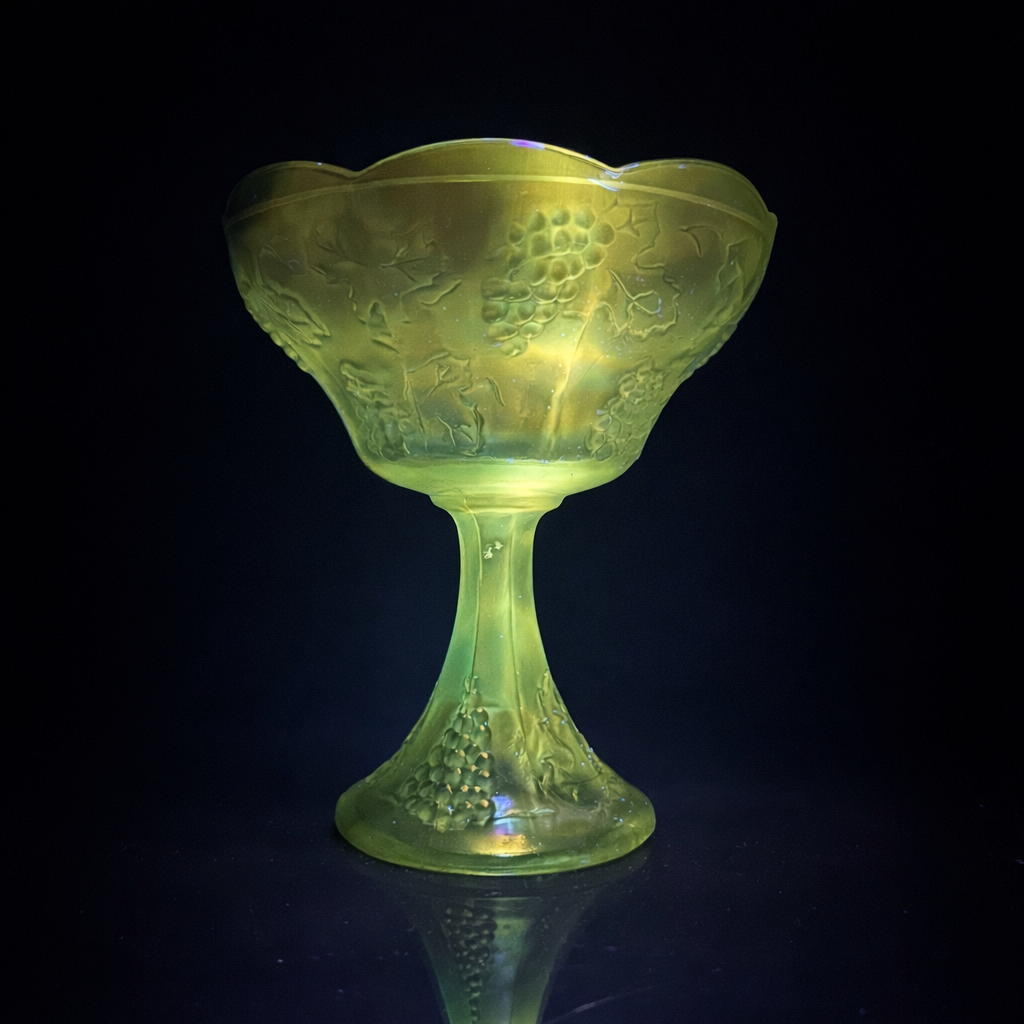
Ultraviolet Response
Under black light, the bottle exhibits a pronounced yellow-green fluorescence consistent with uranium-bearing glass formulations used in mid-19th-century continental production. This strong reaction supports authentic period glass chemistry rather than later reproduction. Uranium was historically incorporated in small quantities to enrich tone and improve optical clarity, and its presence is a recognized diagnostic feature of early European pressed glass. The documented UV response further reinforces the bottle’s circa 1845–1875 attribution and enhances its desirability among advanced collectors of uranium and early industrial glass.
This is a rare mid-19th century amber pressed glass bottle, an early industrial form combining utilitarian function with refined decorative intent. This piece exemplifies transitional glassmaking—where handcraft and early mechanization overlapped—making it especially desirable to advanced collectors.
Material & Glass Composition:
• Pressed glass, heavy and well-saturated amber tone
• Natural color achieved through period glass chemistry (iron and carbon impurities)
• Clear, colorless foot with amber body—typical of early pressed wares
• Numerous entrapped air bubbles (seeds) consistent with 19th-century melts
The glass exhibits a warm honey-to-amber hue that deepens toward the lower body, a hallmark of early continental production.
Manufacturing Technique
• Produced using a two-part mould, likely wood transitioning to early metal
• Vertical ribbing rises organically from the base, softening as it reaches the shoulder
• Slight asymmetry in rib alignment and wall thickness confirms early pressing rather than later machine production
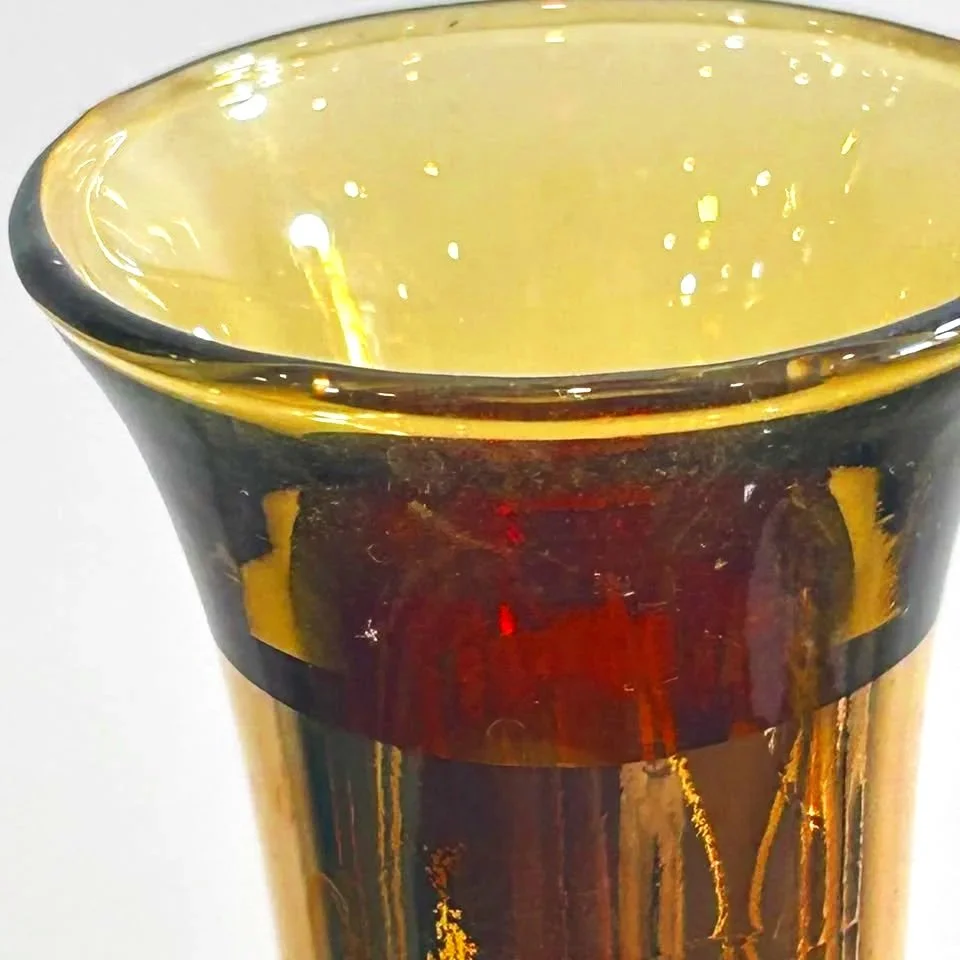
• Ground and fire-polished rim, with subtle tooling marks visible under magnification
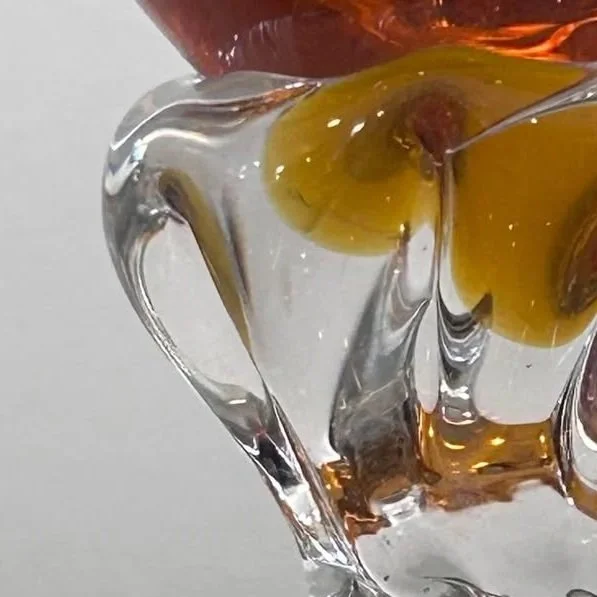
The base shows a thick, molded foot with a slightly uneven interior profile, consistent with early pressed bottles made before standardized finishing tools.
Date: Circa 1845–1875 This timeframe is supported by:
• Use of pressed glass for bottles rather than blown forms
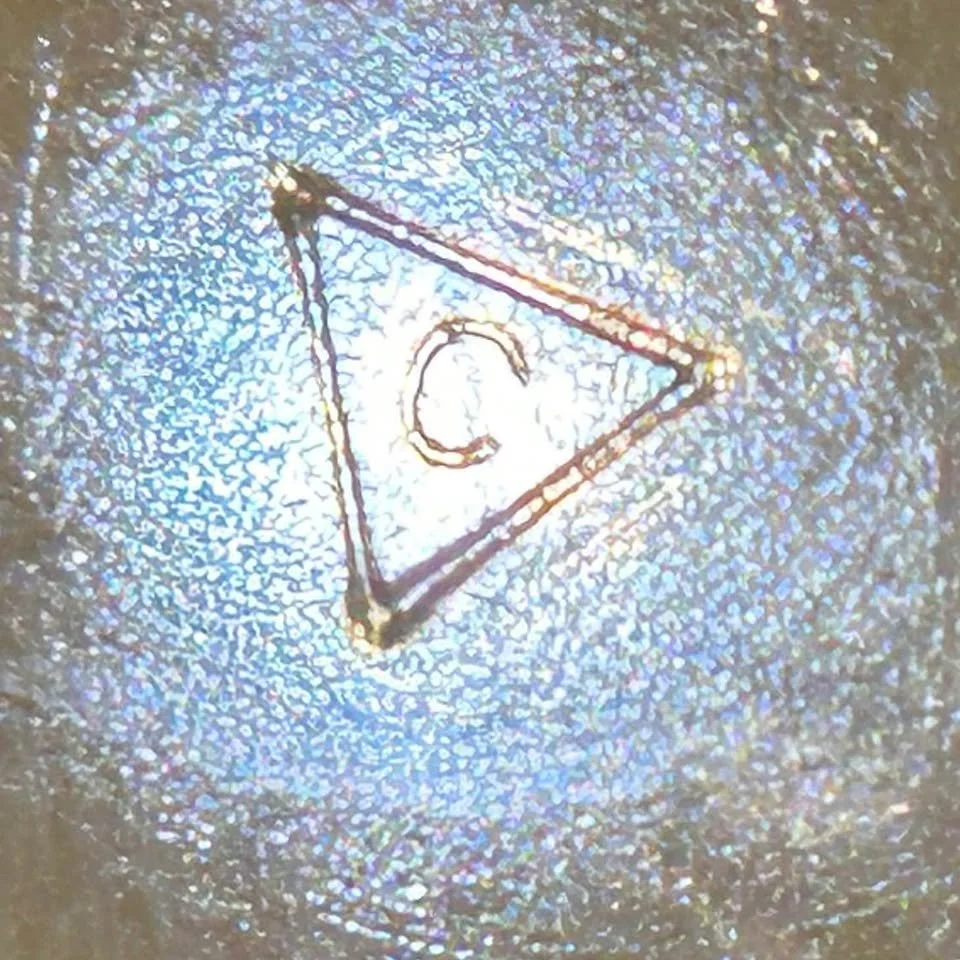
• Absence of maker’s mark
• Early foot construction and rim finishing
• Color and glass clarity typical of mid-19th-century production Probable
Origin:
Bohemia (present-day Czech Republic) Possibly also Northern France or Germanic regions, all major centers of early pressed glass innovation during this period. Bohemian glasshouses in particular were leaders in amber pressed tablewares and decorative vessels intended for both domestic and export markets.
Dimensions:
Height: 8 1/4 inches
Width . 2 7/8 inches
Condition:
Excellent antique condition:
• No cracks, chips, or repairs
• Minor surface wear consistent with age
• Strong structural integrity
• Colour (amber > clear)
• Early production indicators (bubbles, uneven pressing, heavy base)
• Form rarity (bottles scarcer than dishes or bowls)
• Condition (intact rim and foot are critical)
Collector Context:
Pressed glass bottles from this period were produced in far smaller quantities than tablewares and were often discarded after use. Surviving examples—especially in rich amber tones—are increasingly scarce.
This form would have been used for:
• Apothecary contents
• Perfumed waters
• Oils or spirits Today, it stands as a display-grade study piece illustrating early industrial glassmaking techniques.
Heavy amber pressed glass bottle of baluster form, the ovoid body rising from a thick molded foot with vertically ribbed panels tapering upward into a rounded shoulder and short cylindrical neck, finished with a fire-polished everted rim. The glass displays a warm honey-to-amber coloration with subtle tonal variation, typical of mid-19th-century continental glass chemistry.
Numerous small entrapped air bubbles and slight irregularities in wall thickness confirm early pressing rather than later machine manufacture. The base is integrally molded, showing early foot construction with minor asymmetry visible to the interior—consistent with transitional production techniques prior to full mechanization. The rim exhibits light tooling and polishing marks, with no evidence of later alteration.
Pressed glass bottles of this type were produced in relatively limited quantities compared to tablewares and were commonly discarded after use, making intact examples scarce. Likely intended for apothecary, cosmetic, or perfumed liquid storage.
Comparable forms are associated with Bohemian and Northern European glasshouses active during the mid-19th century.
Ultraviolet Response
Under black light, the bottle exhibits a pronounced yellow-green fluorescence consistent with uranium-bearing glass formulations used in mid-19th-century continental production. This strong reaction supports authentic period glass chemistry rather than later reproduction. Uranium was historically incorporated in small quantities to enrich tone and improve optical clarity, and its presence is a recognized diagnostic feature of early European pressed glass. The documented UV response further reinforces the bottle’s circa 1845–1875 attribution and enhances its desirability among advanced collectors of uranium and early industrial glass.
This is a rare mid-19th century amber pressed glass bottle, an early industrial form combining utilitarian function with refined decorative intent. This piece exemplifies transitional glassmaking—where handcraft and early mechanization overlapped—making it especially desirable to advanced collectors.
Material & Glass Composition:
• Pressed glass, heavy and well-saturated amber tone
• Natural color achieved through period glass chemistry (iron and carbon impurities)
• Clear, colorless foot with amber body—typical of early pressed wares
• Numerous entrapped air bubbles (seeds) consistent with 19th-century melts
The glass exhibits a warm honey-to-amber hue that deepens toward the lower body, a hallmark of early continental production.
Manufacturing Technique
• Produced using a two-part mould, likely wood transitioning to early metal
• Vertical ribbing rises organically from the base, softening as it reaches the shoulder
• Slight asymmetry in rib alignment and wall thickness confirms early pressing rather than later machine production
• Ground and fire-polished rim, with subtle tooling marks visible under magnification
The base shows a thick, molded foot with a slightly uneven interior profile, consistent with early pressed bottles made before standardized finishing tools.
Date: Circa 1845–1875 This timeframe is supported by:
• Use of pressed glass for bottles rather than blown forms
• Absence of maker’s mark
• Early foot construction and rim finishing
• Color and glass clarity typical of mid-19th-century production Probable
Origin:
Bohemia (present-day Czech Republic) Possibly also Northern France or Germanic regions, all major centers of early pressed glass innovation during this period. Bohemian glasshouses in particular were leaders in amber pressed tablewares and decorative vessels intended for both domestic and export markets.
Dimensions:
Height: 8 1/4 inches
Width . 2 7/8 inches
Condition:
Excellent antique condition:
• No cracks, chips, or repairs
• Minor surface wear consistent with age
• Strong structural integrity
• Colour (amber > clear)
• Early production indicators (bubbles, uneven pressing, heavy base)
• Form rarity (bottles scarcer than dishes or bowls)
• Condition (intact rim and foot are critical)
Collector Context:
Pressed glass bottles from this period were produced in far smaller quantities than tablewares and were often discarded after use. Surviving examples—especially in rich amber tones—are increasingly scarce.
This form would have been used for:
• Apothecary contents
• Perfumed waters
• Oils or spirits Today, it stands as a display-grade study piece illustrating early industrial glassmaking techniques.

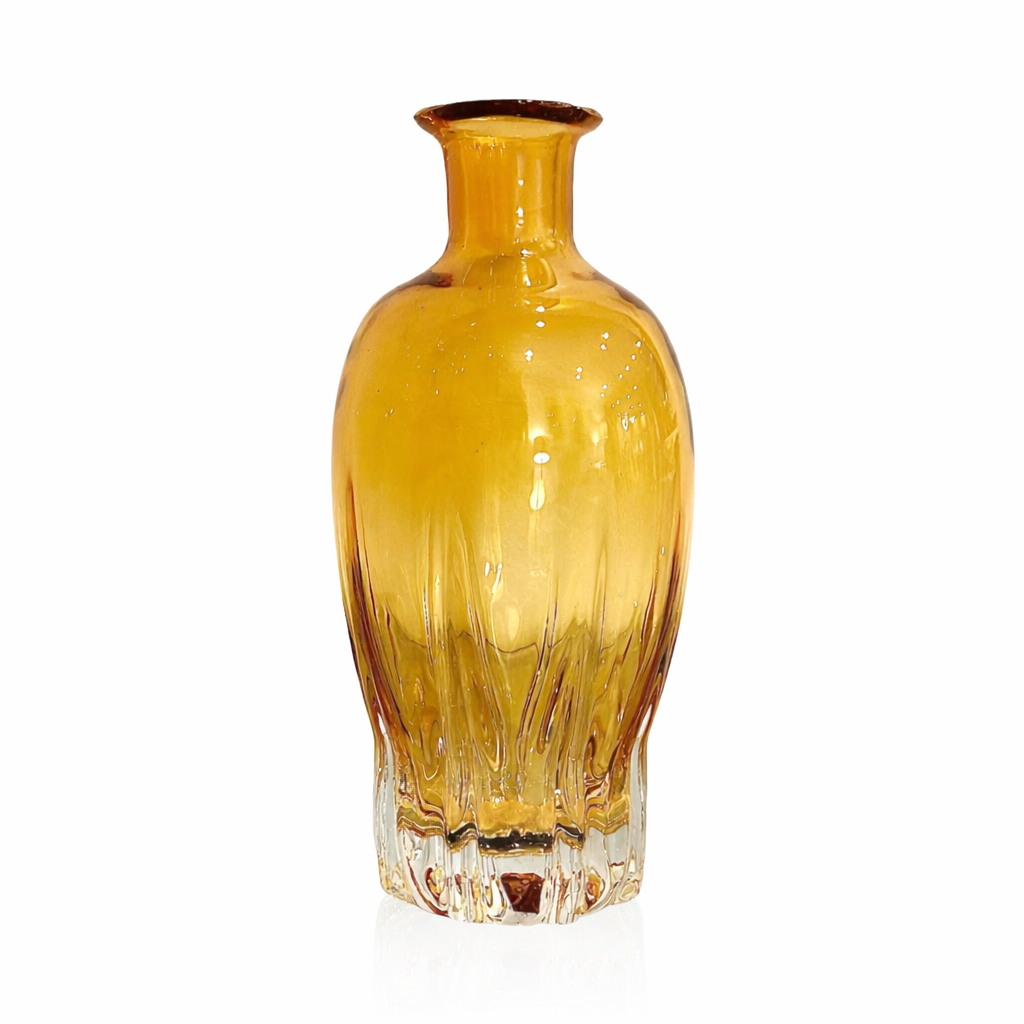 Image 1 of 9
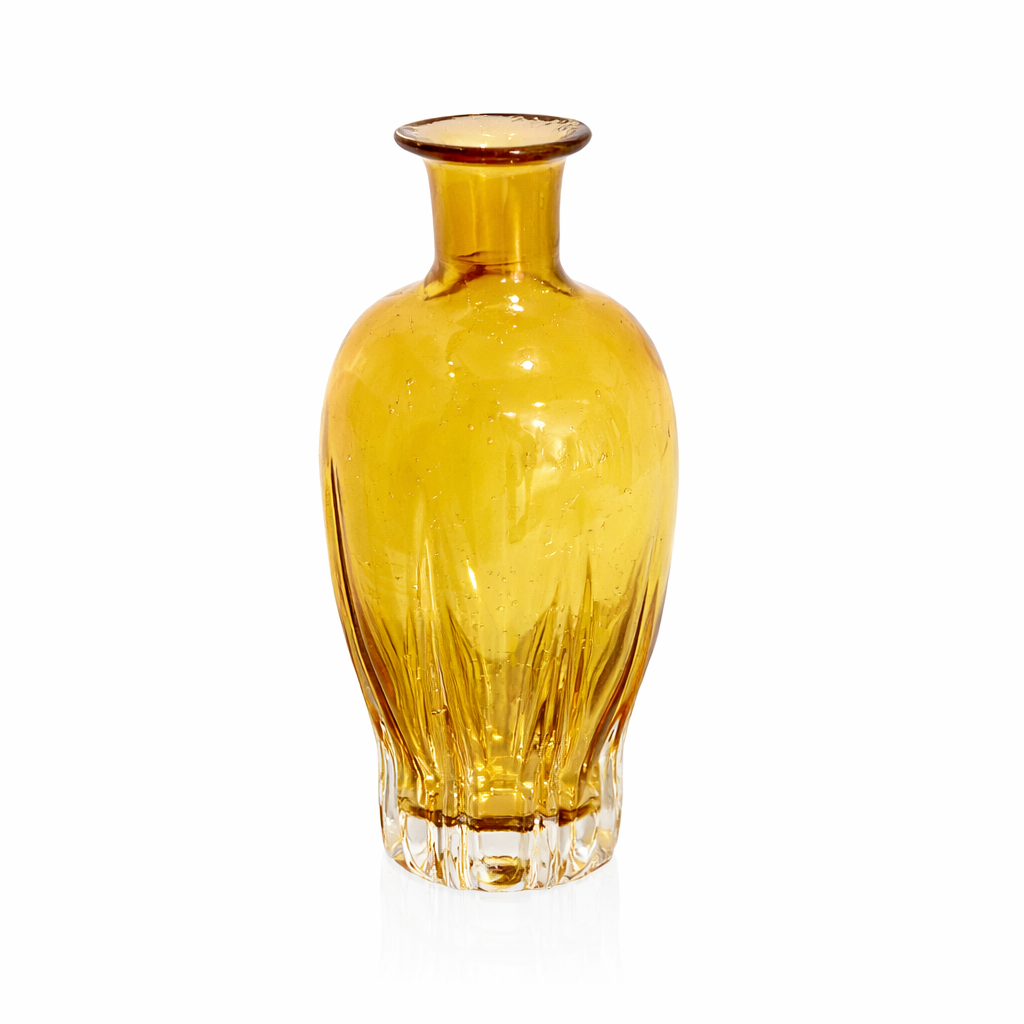 Image 2 of 9
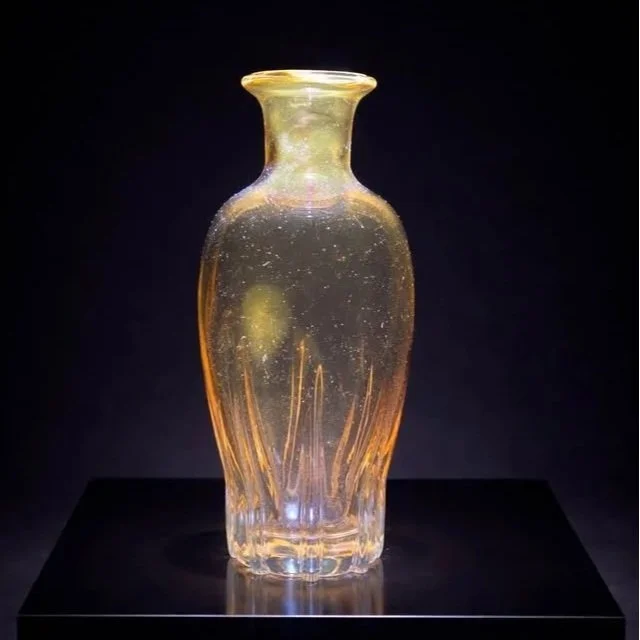 Image 3 of 9
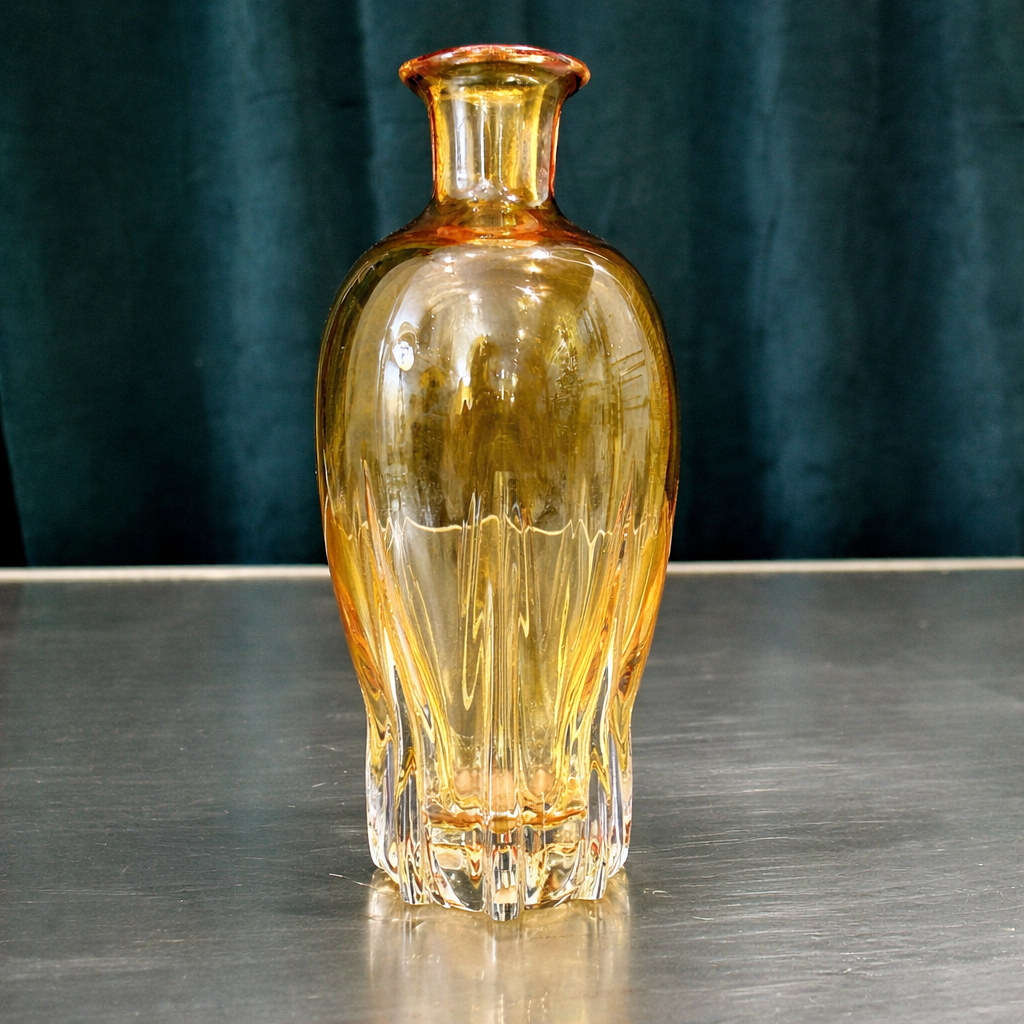 Image 4 of 9
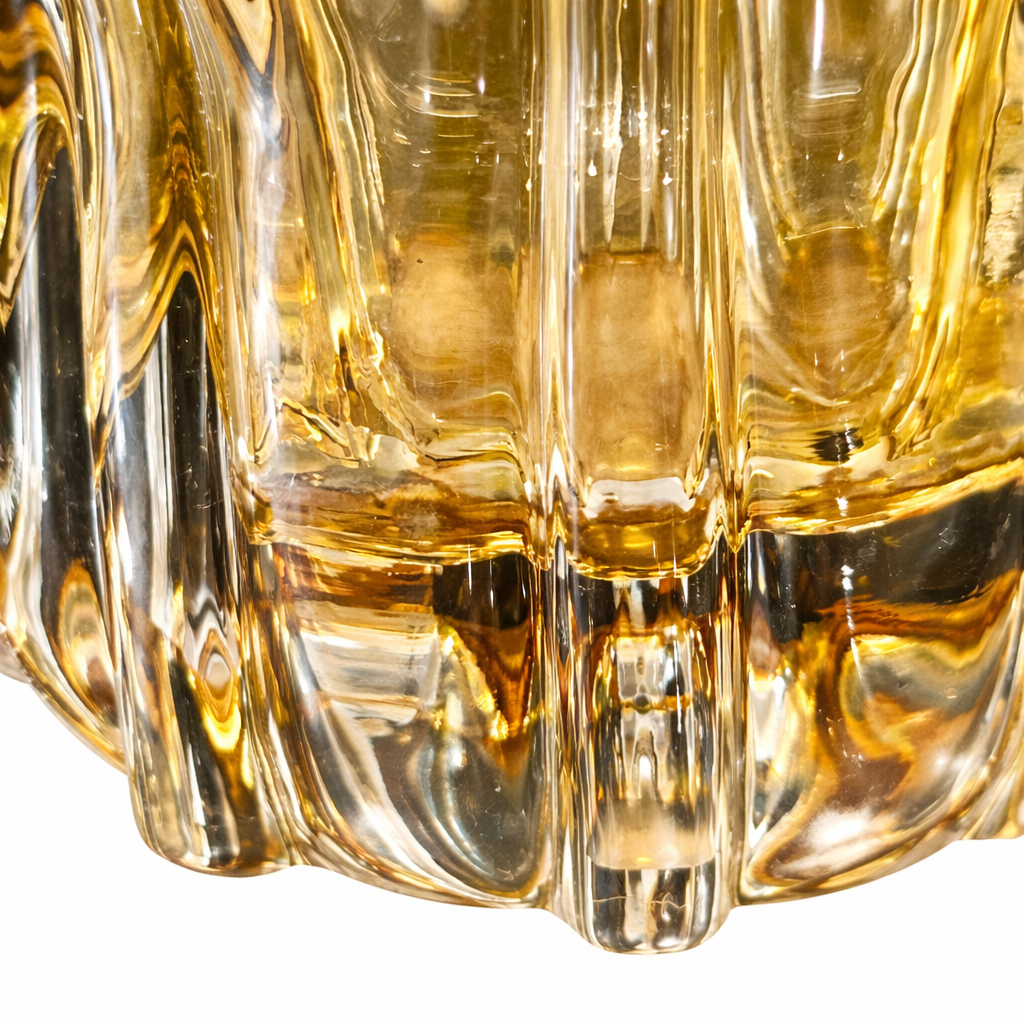 Image 5 of 9
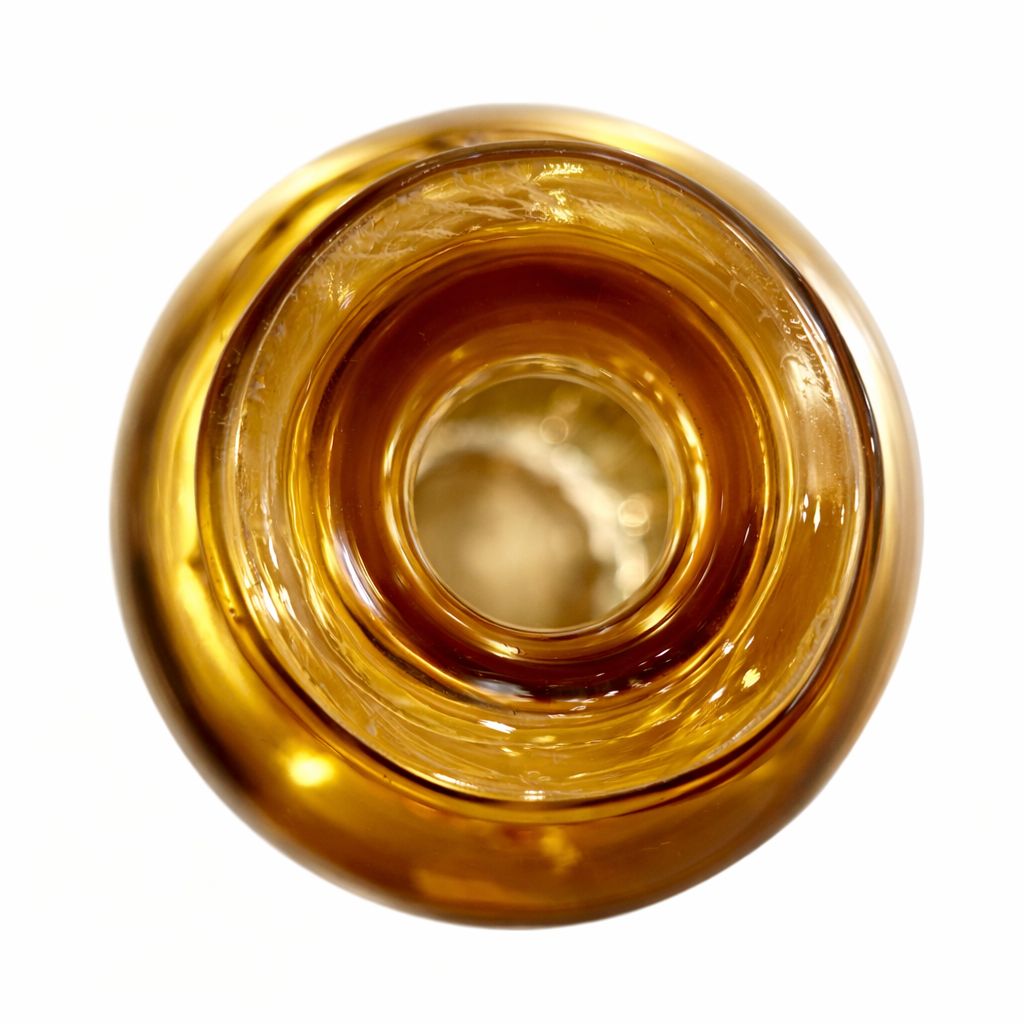 Image 6 of 9
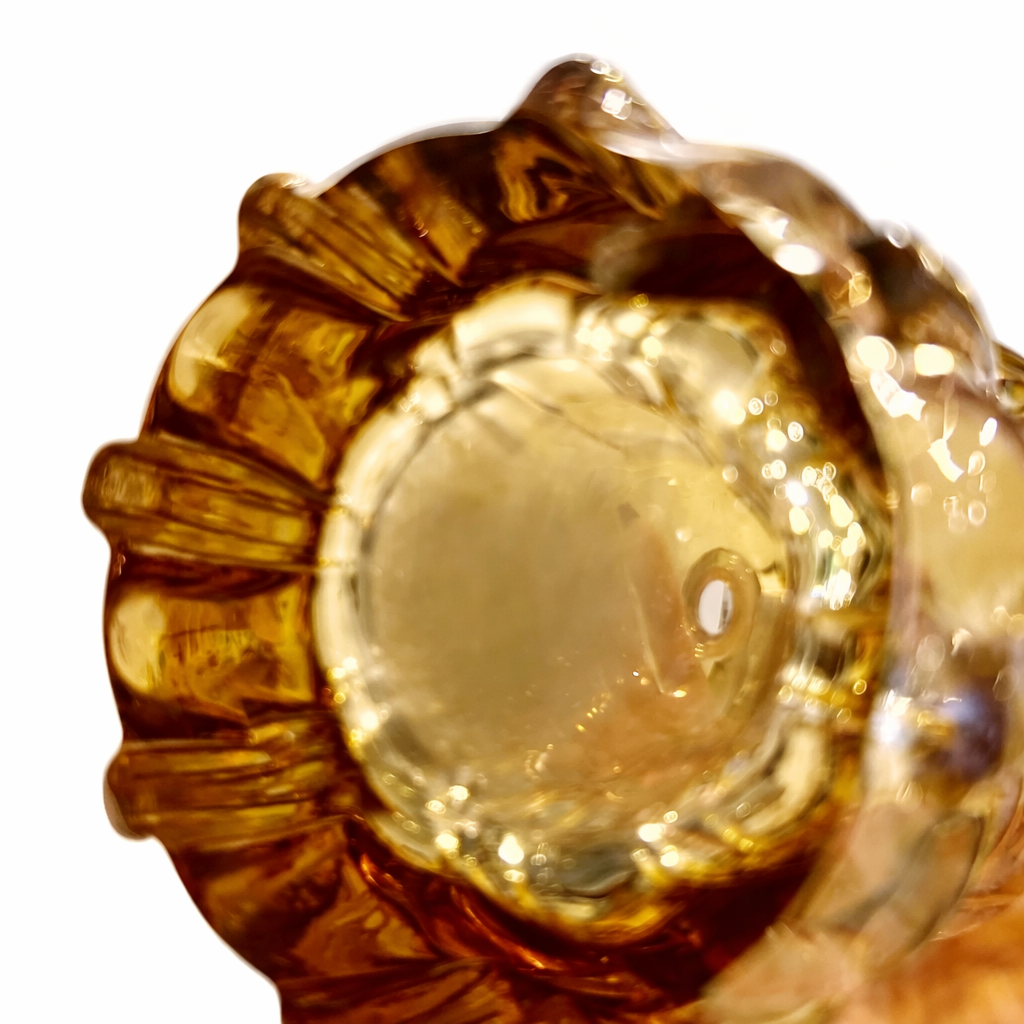 Image 7 of 9
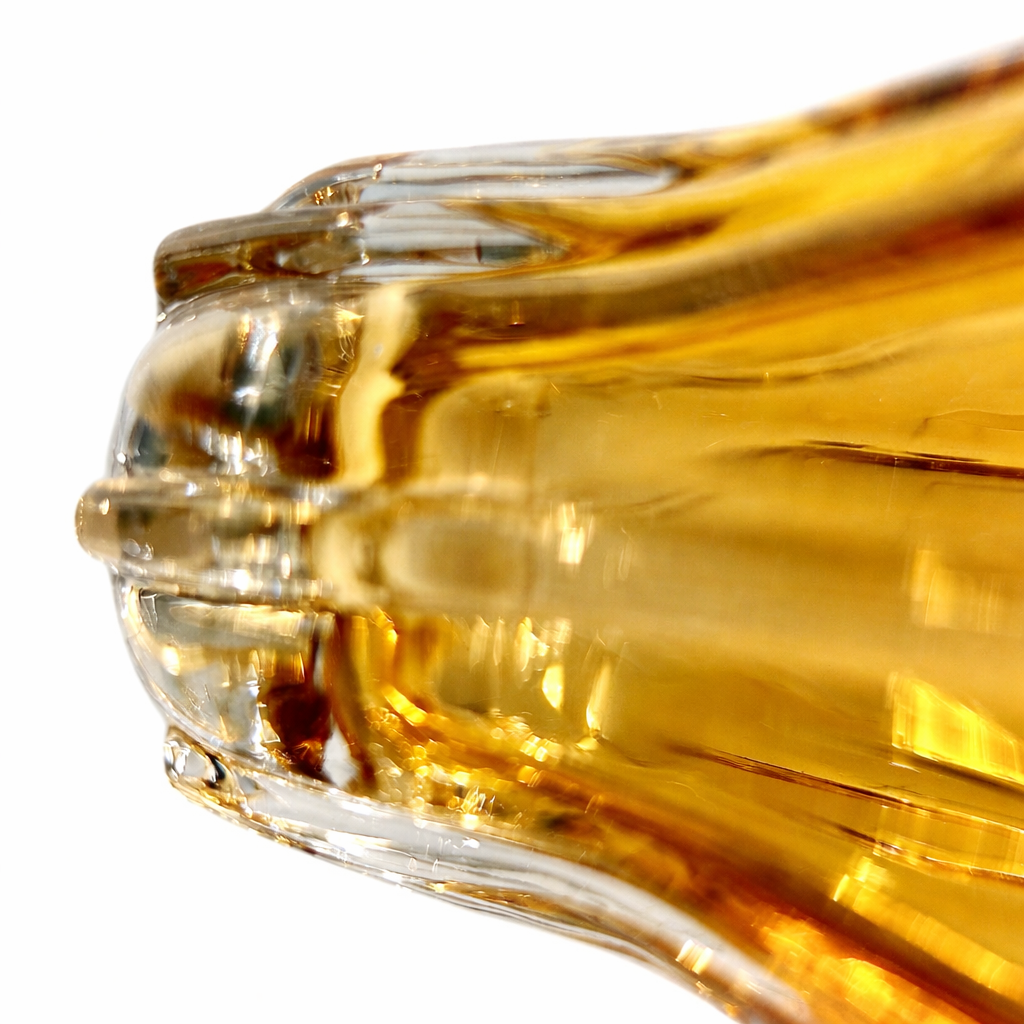 Image 8 of 9
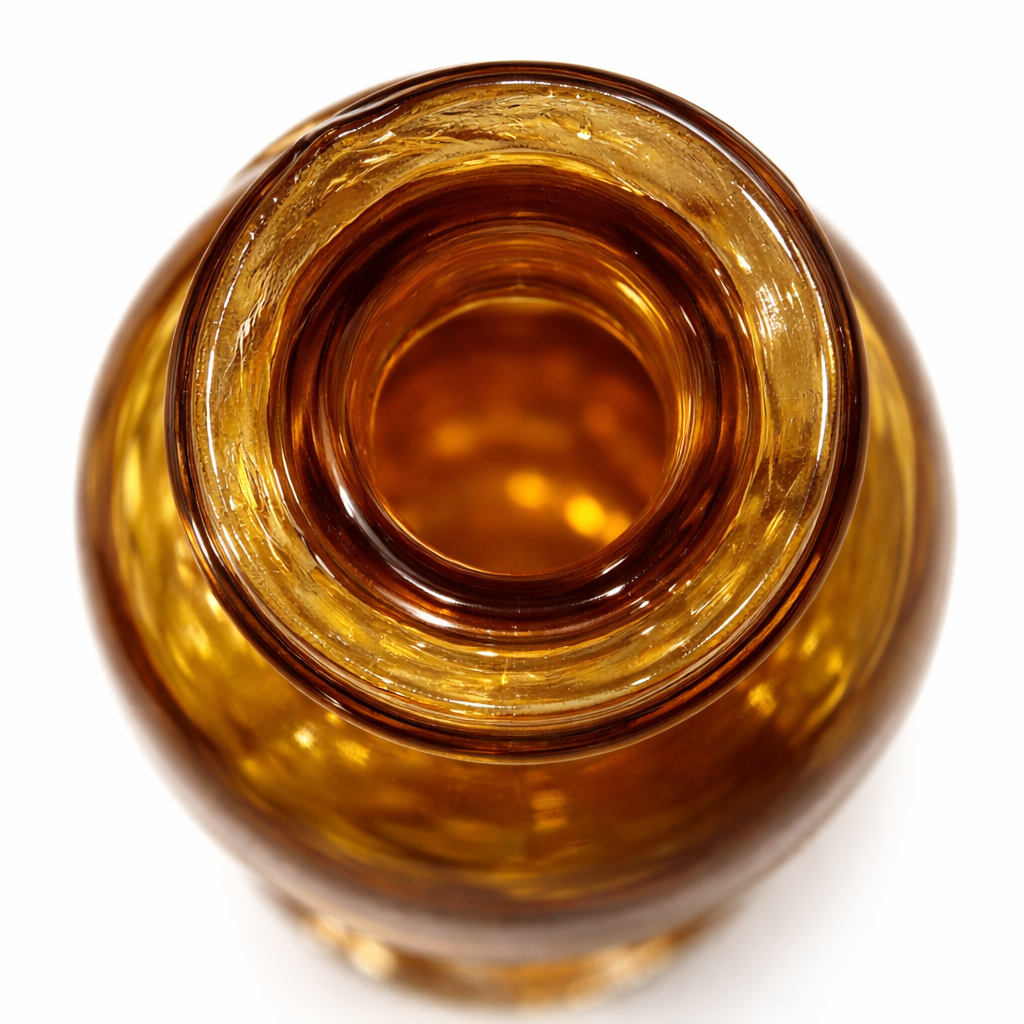 Image 9 of 9