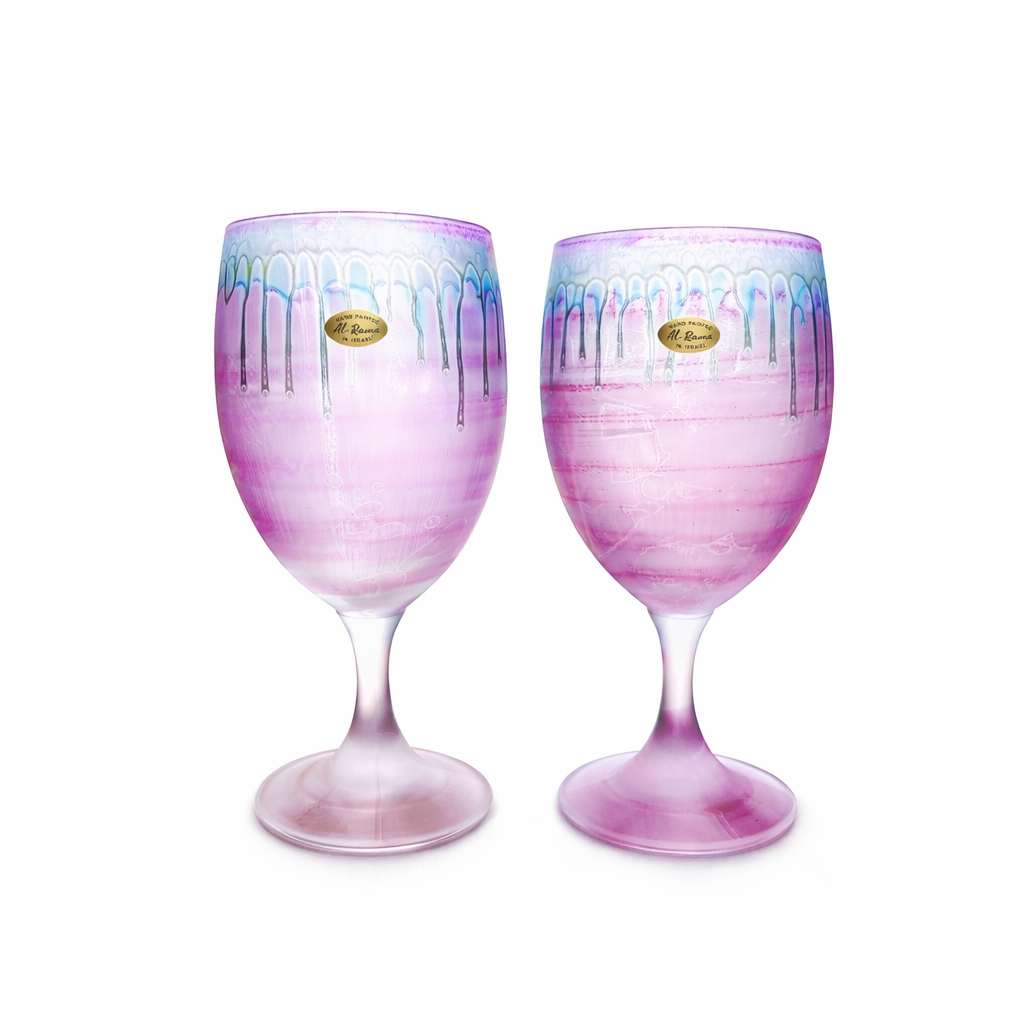
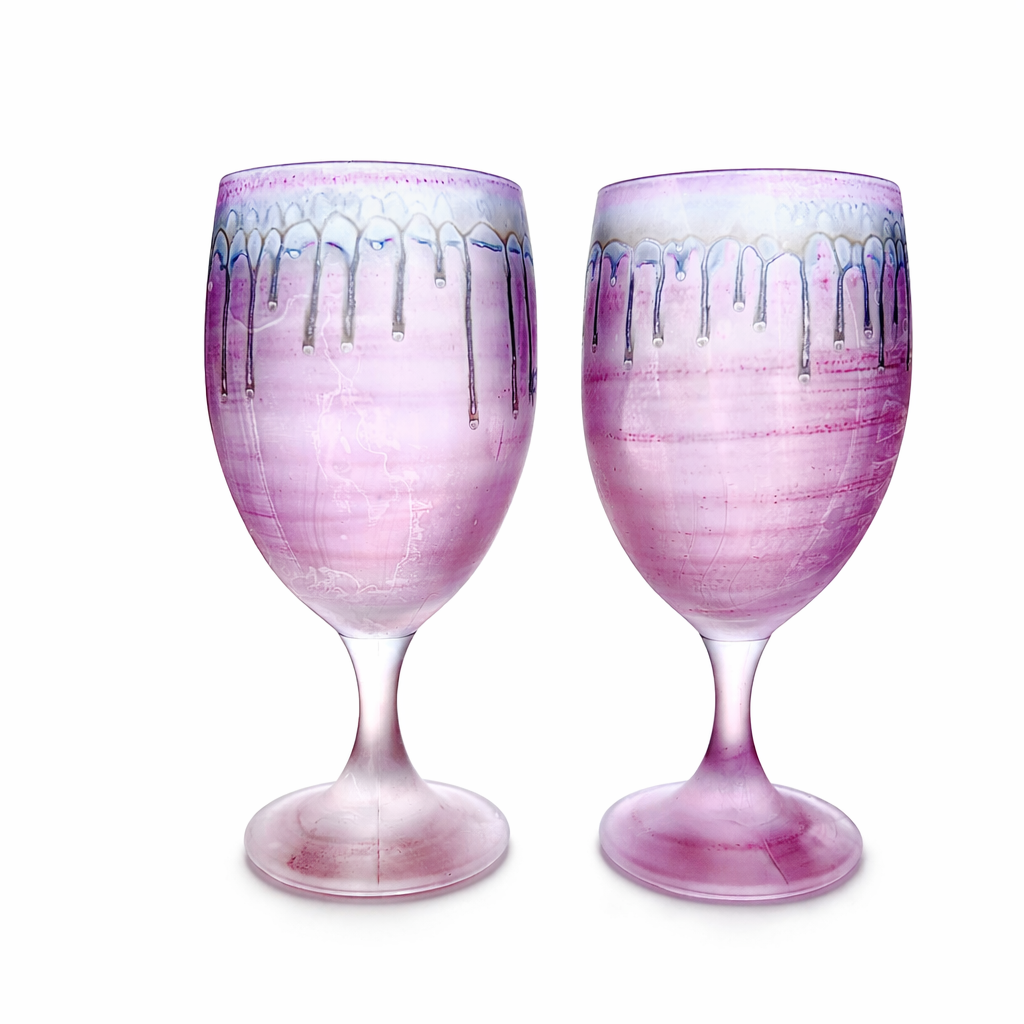
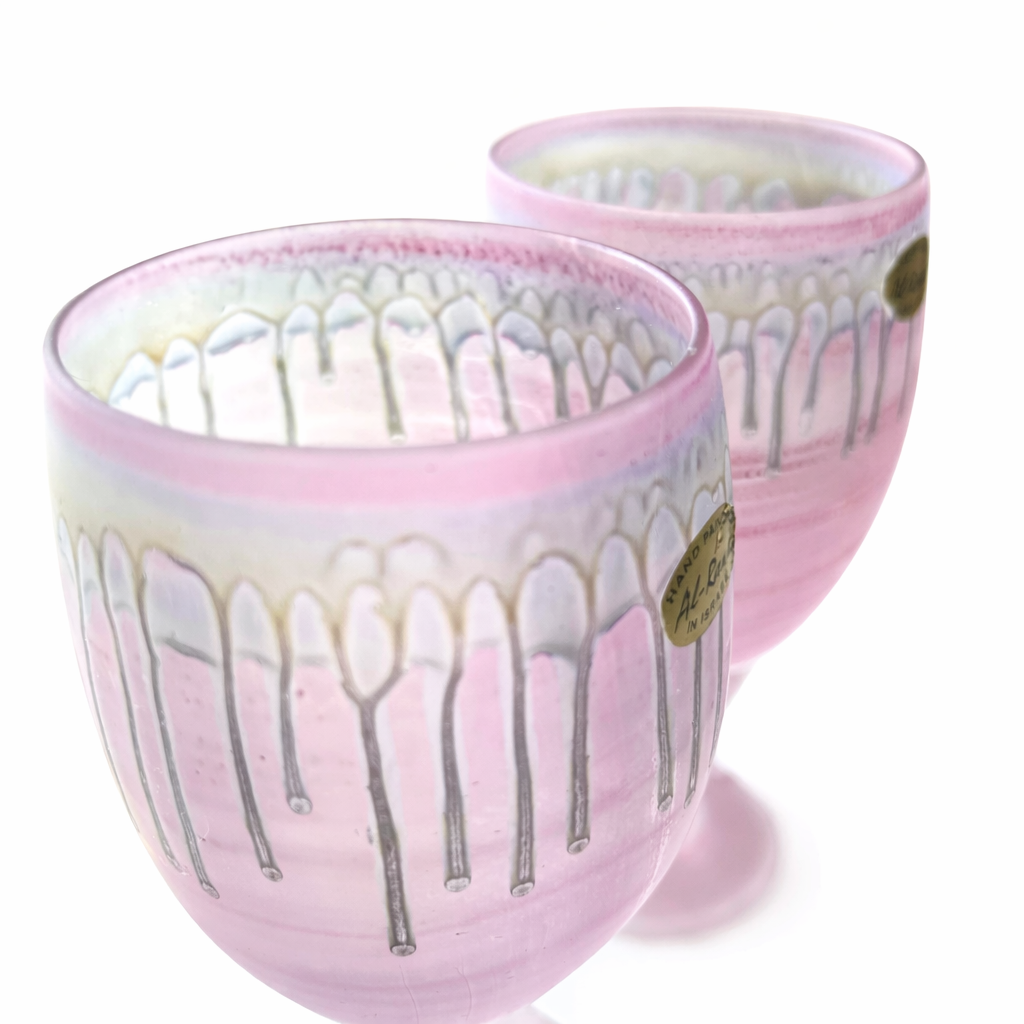
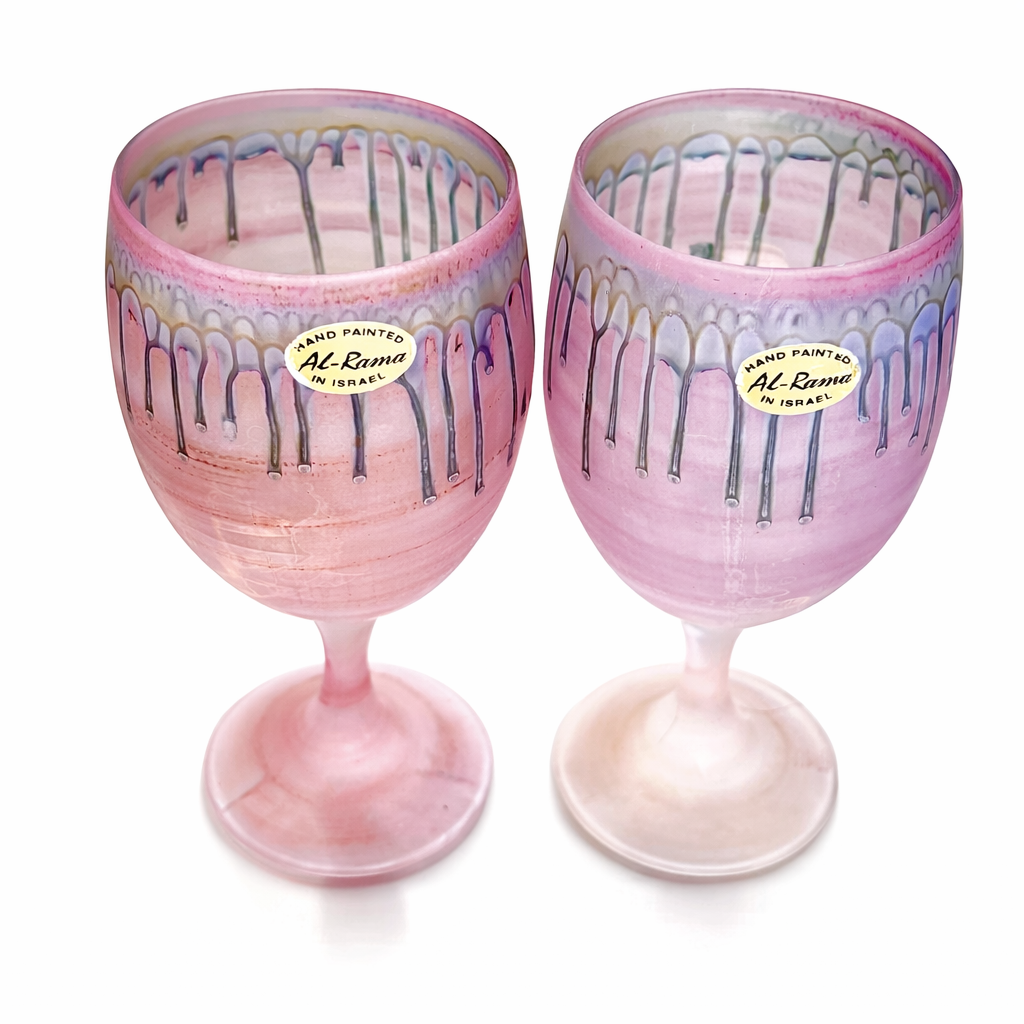
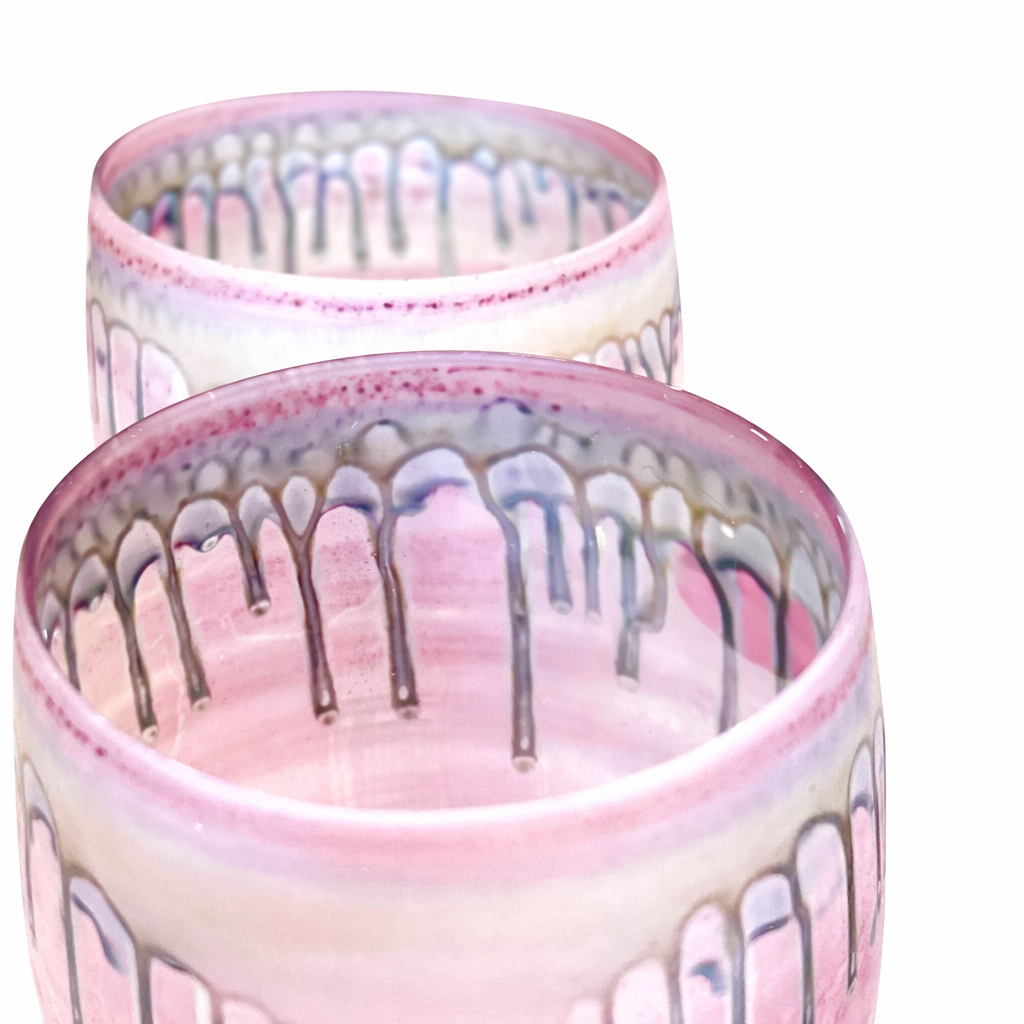
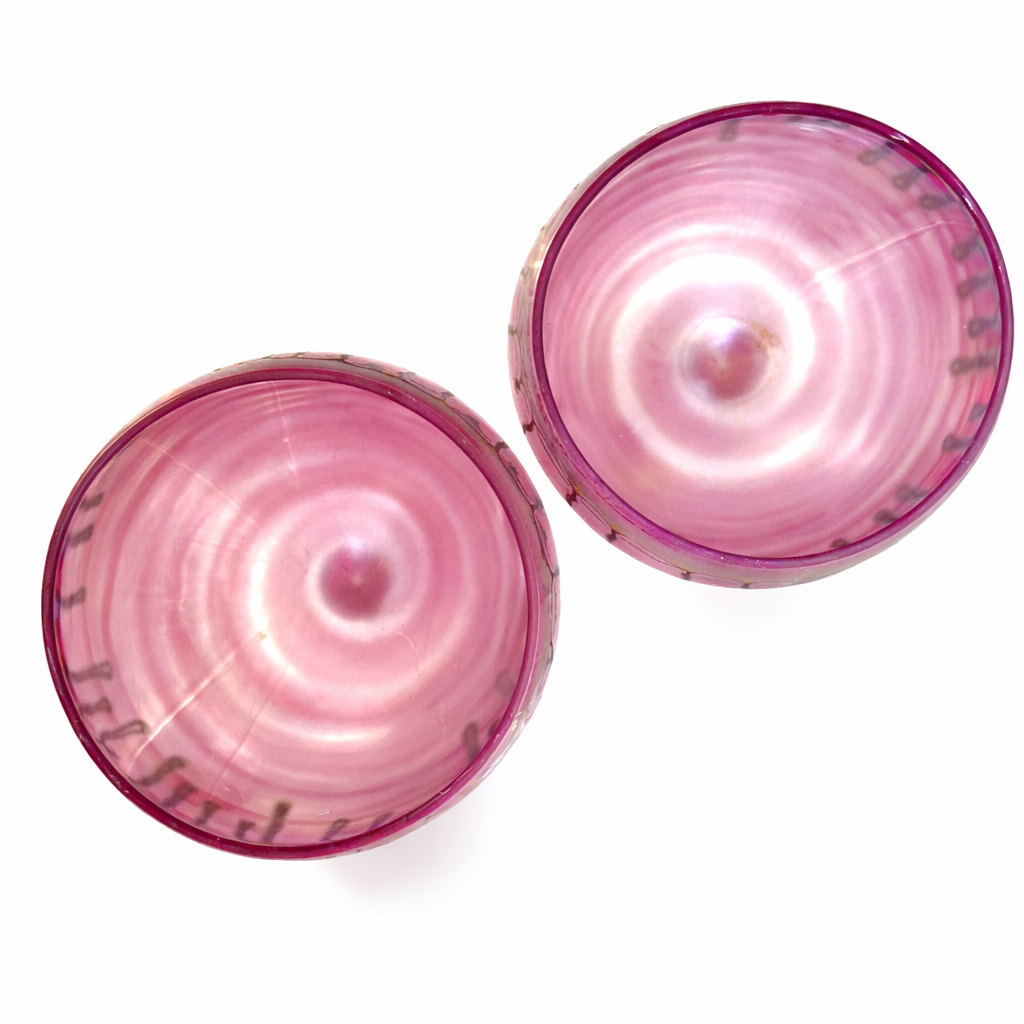
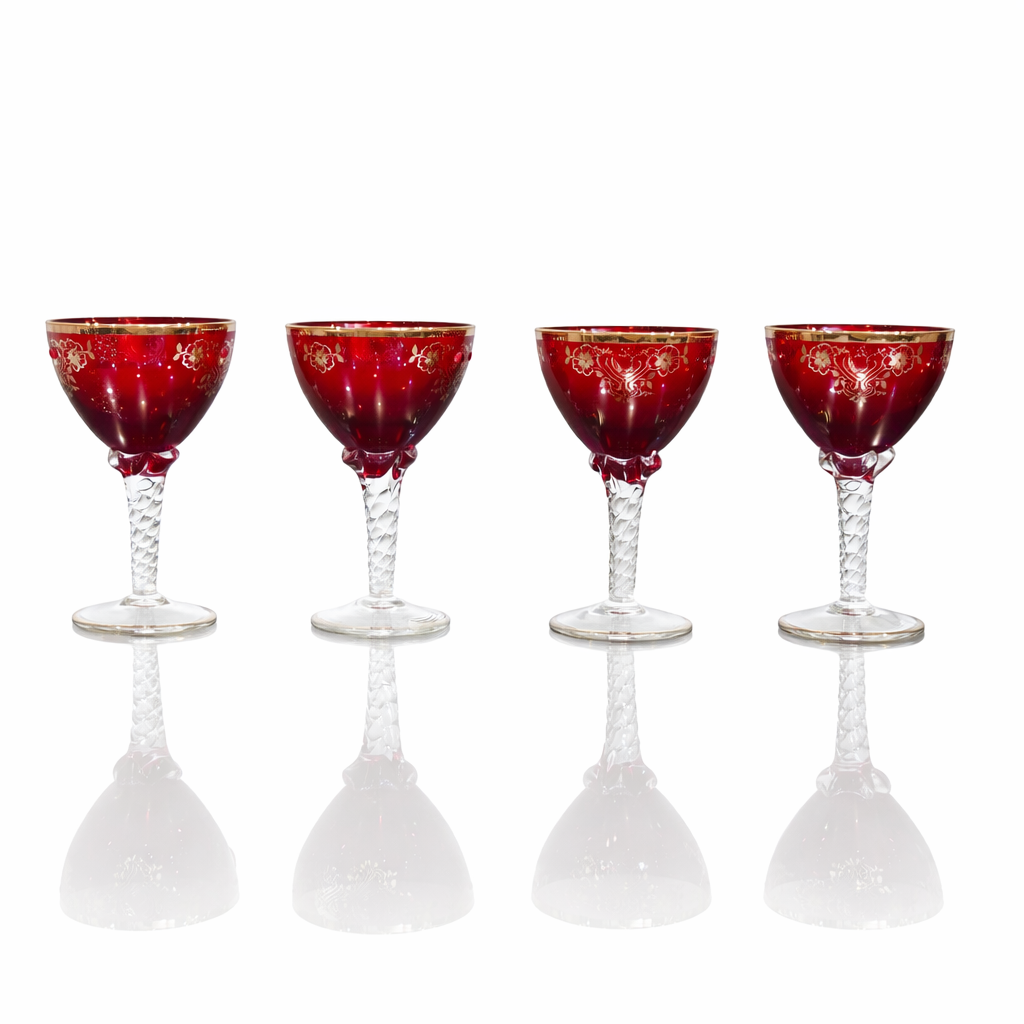
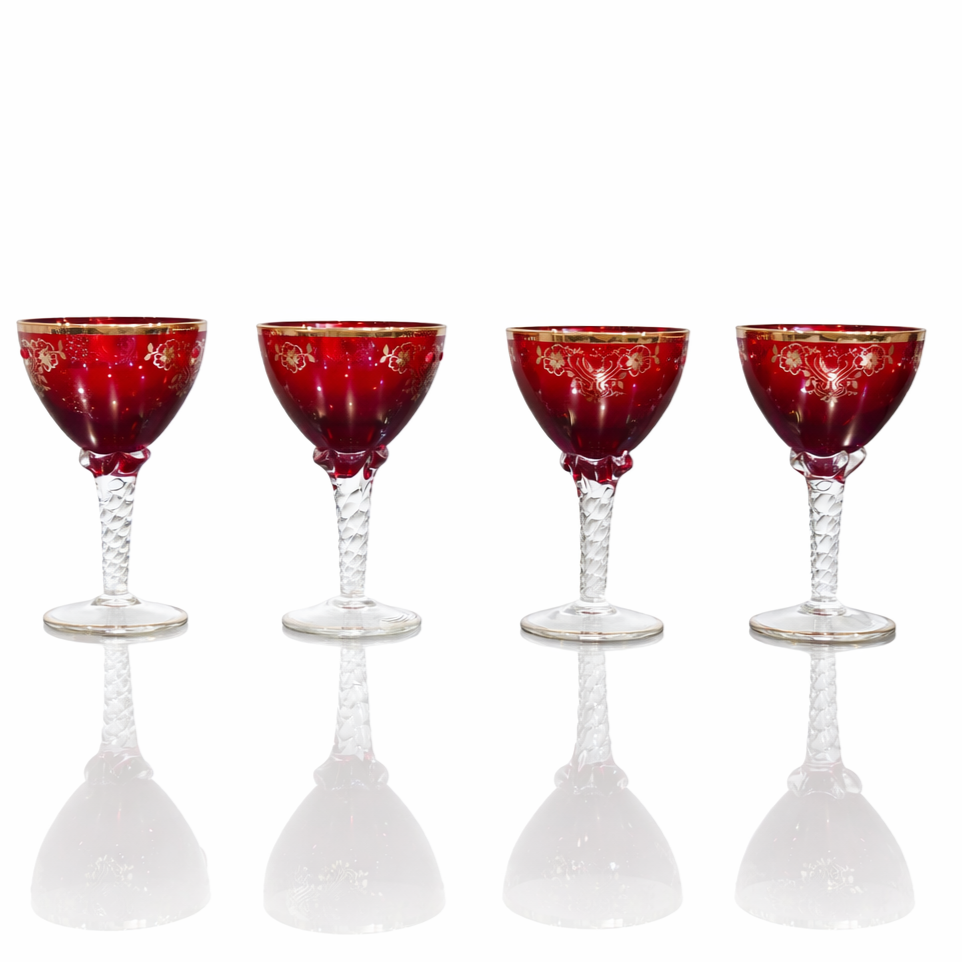
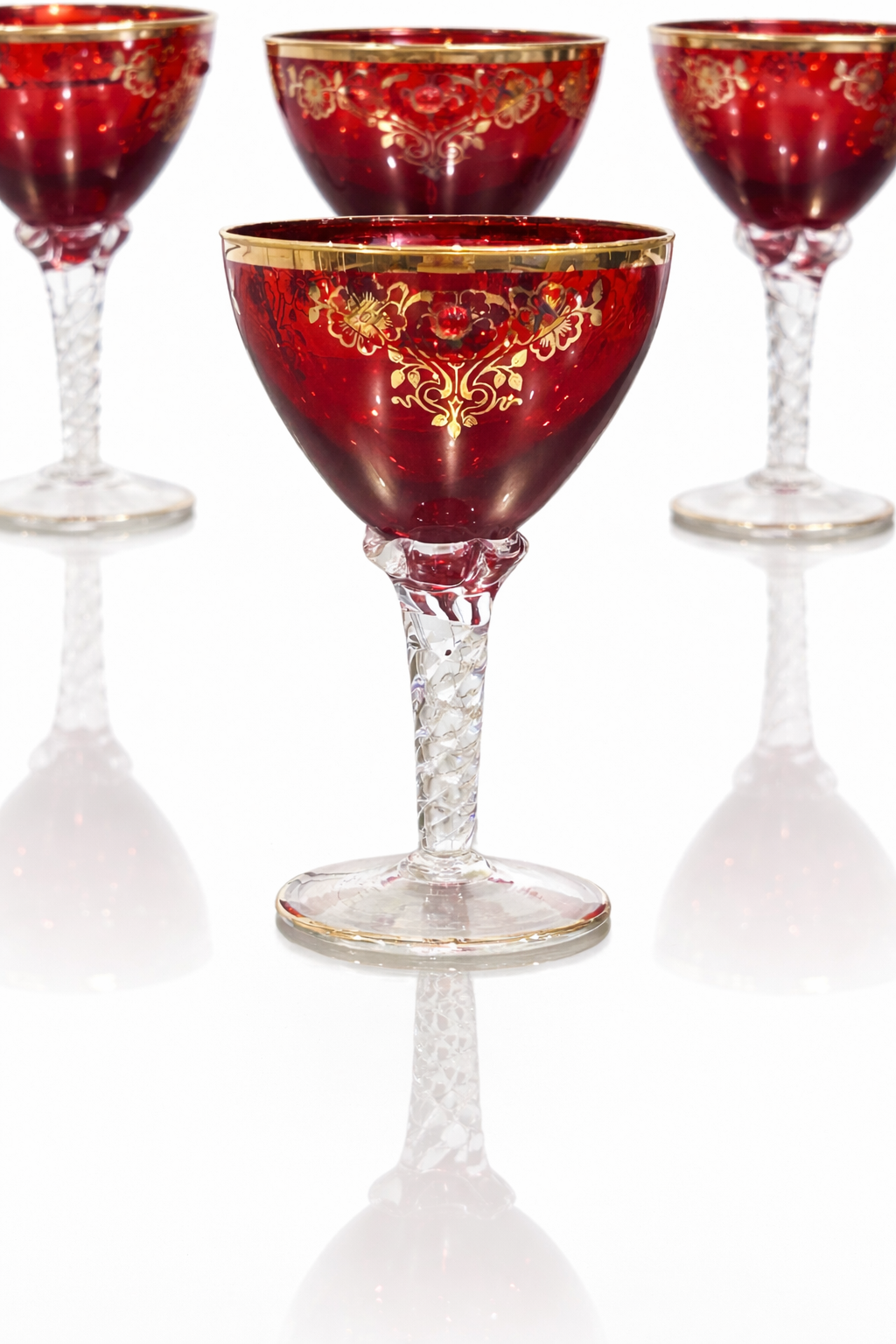
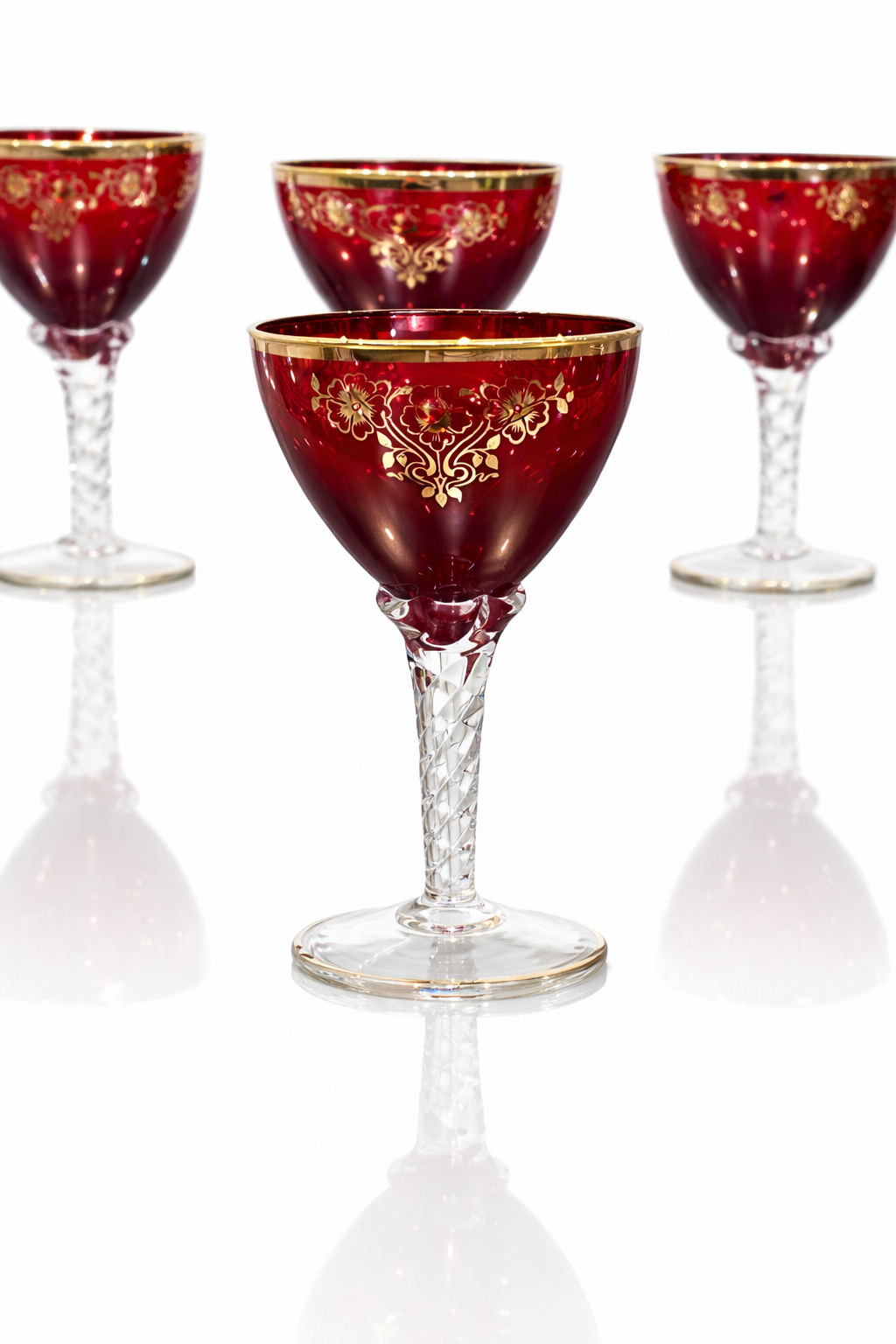
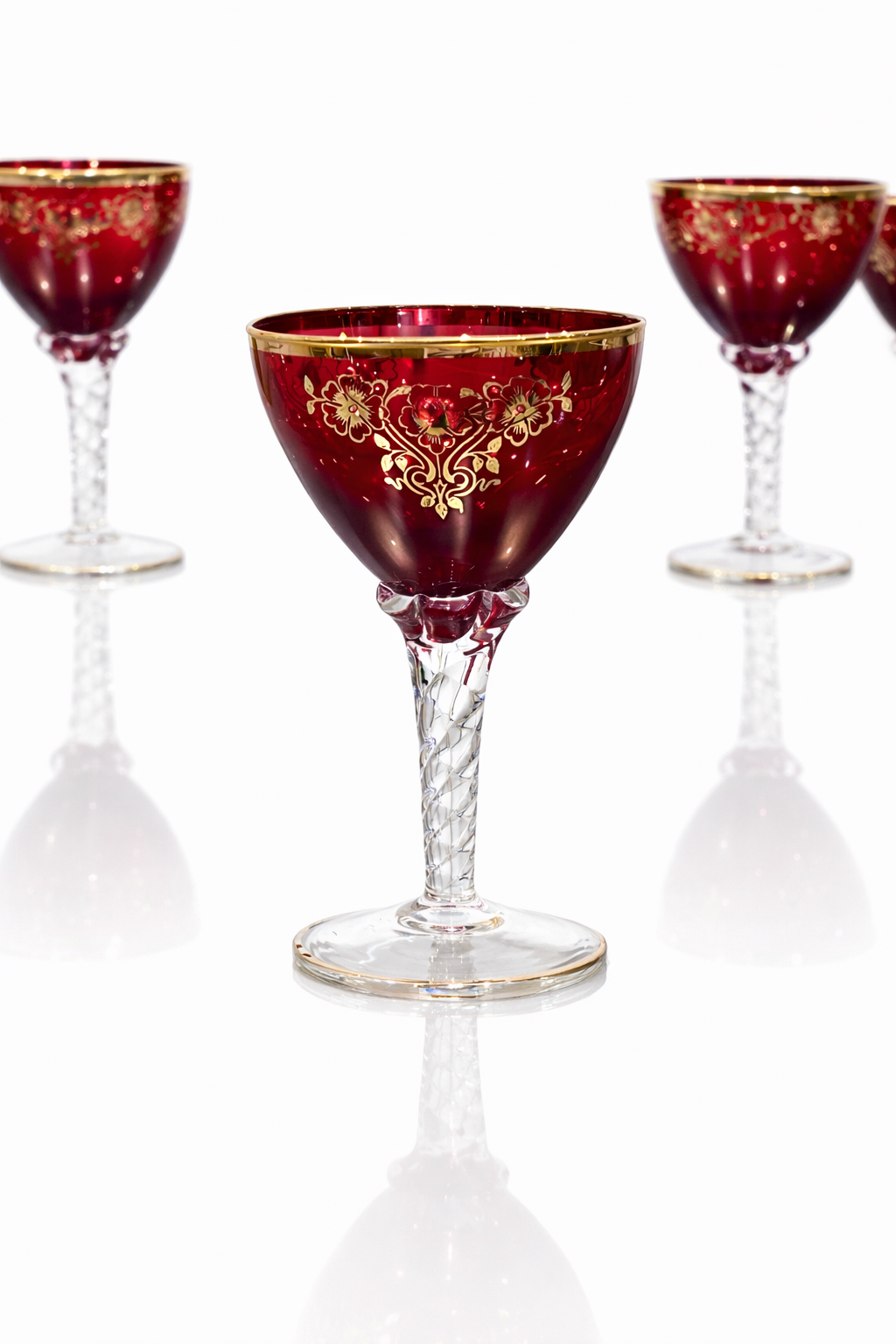
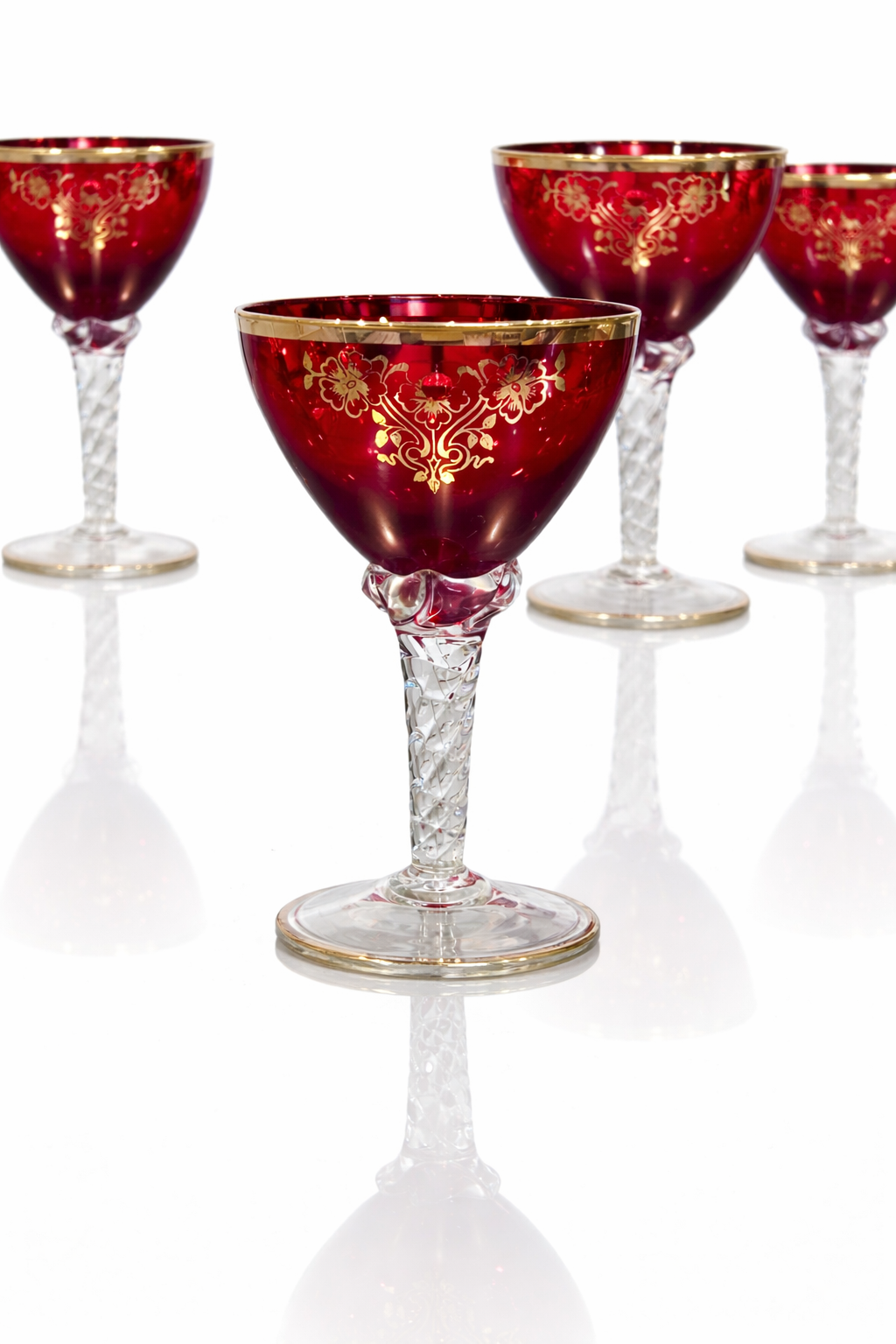
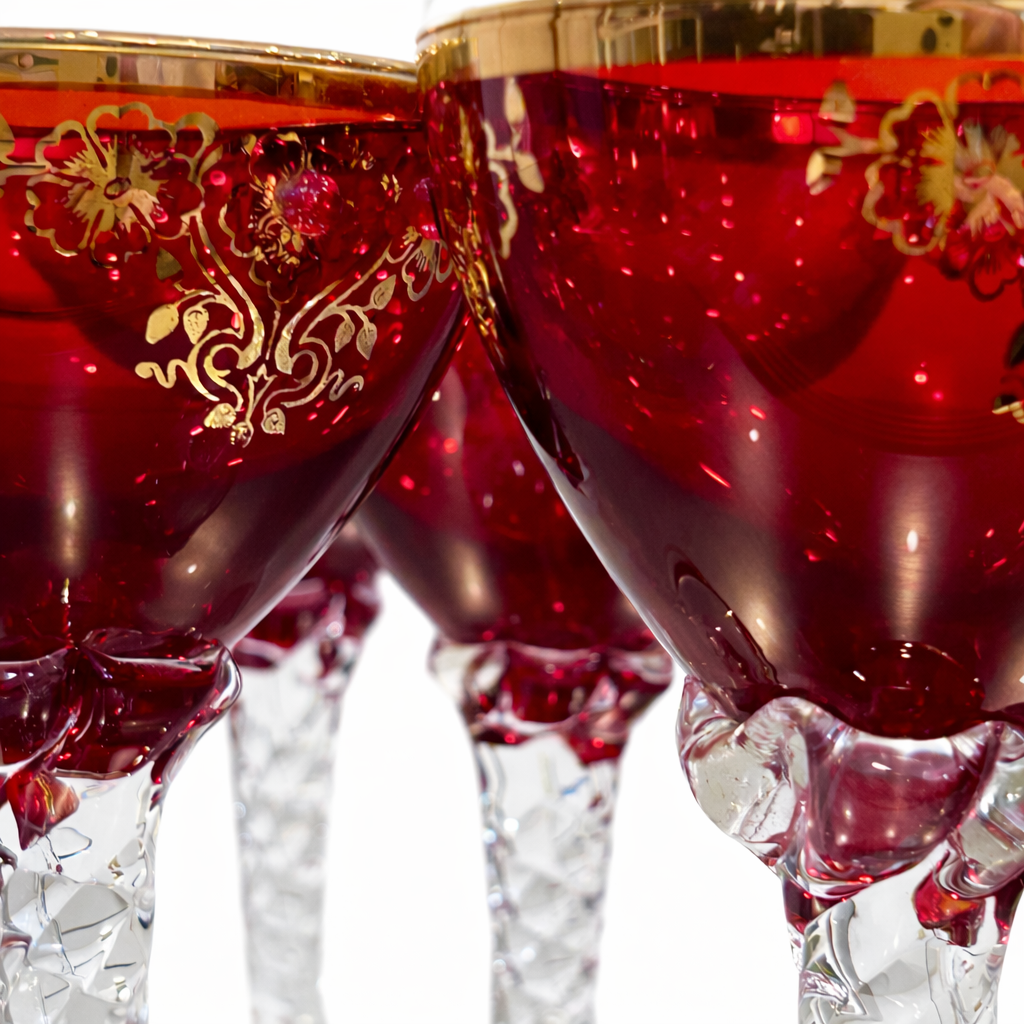
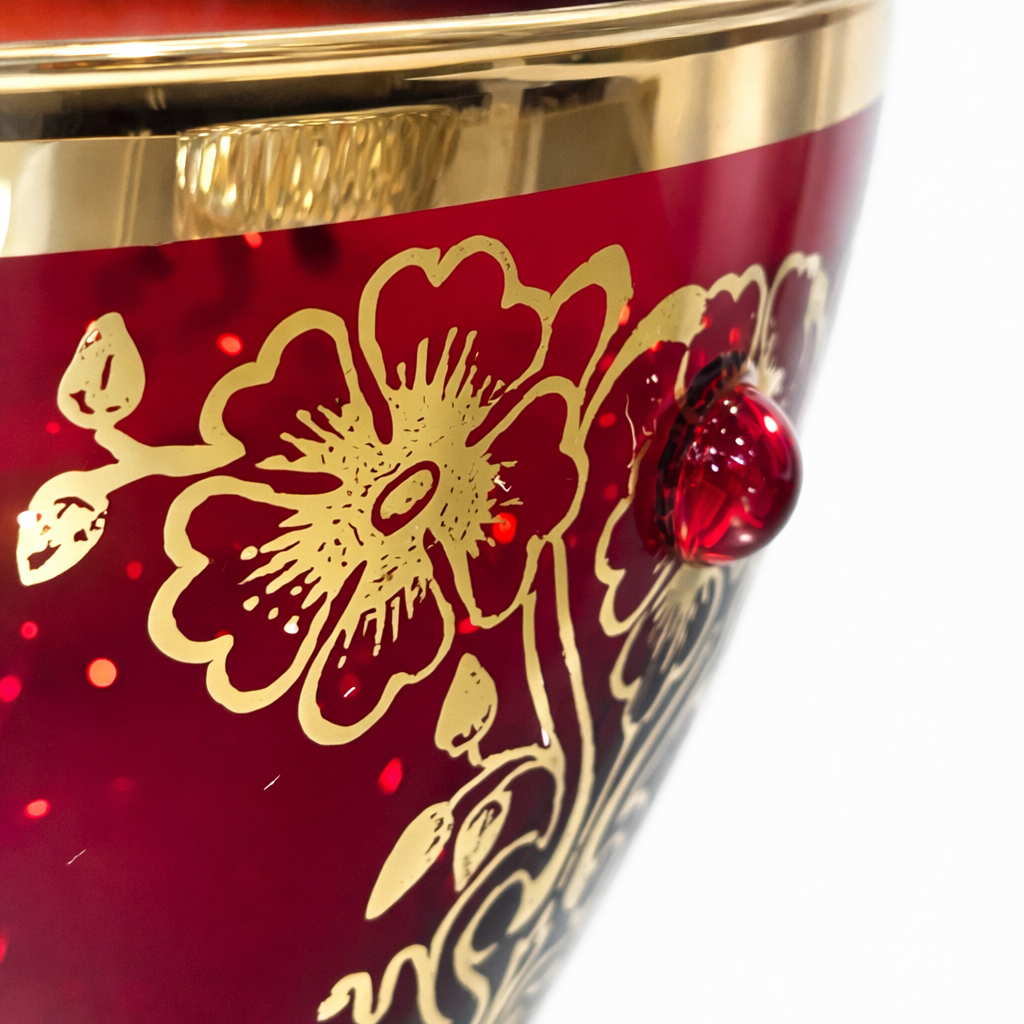
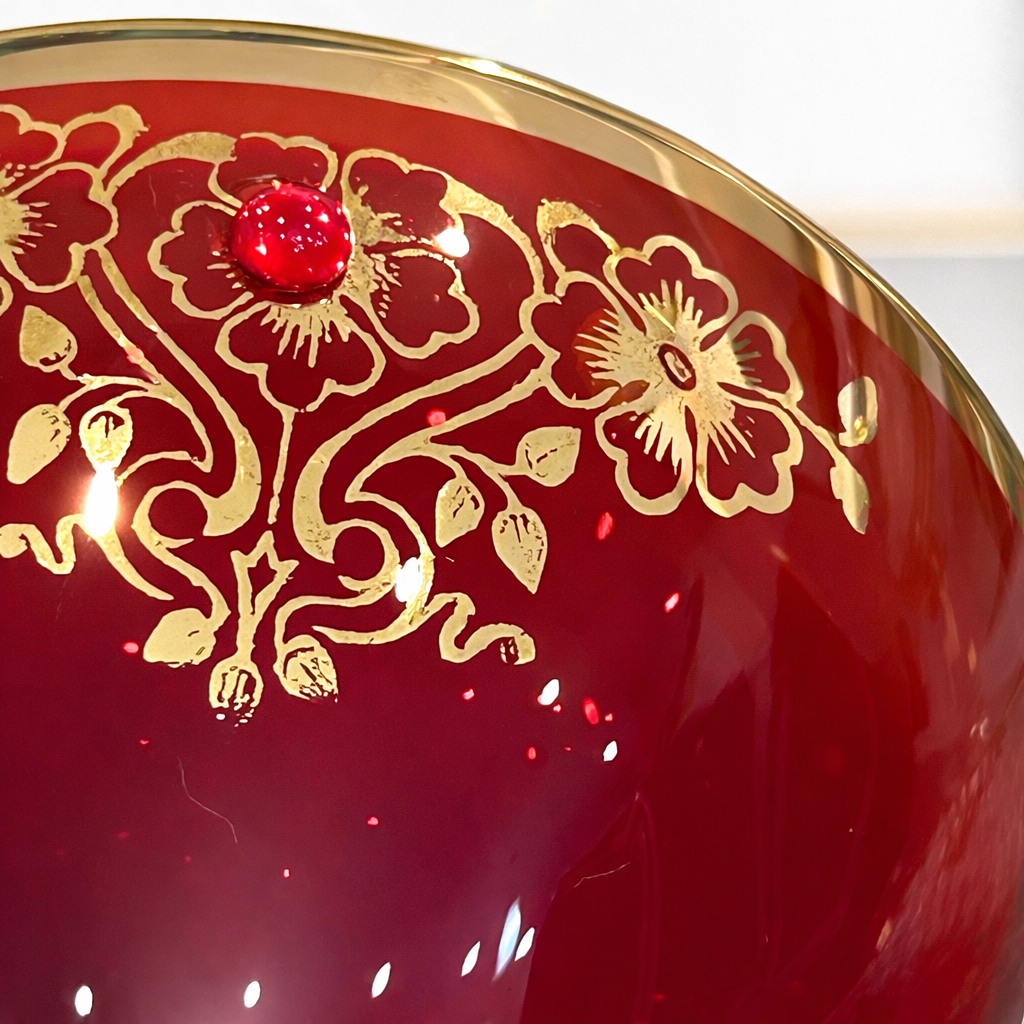
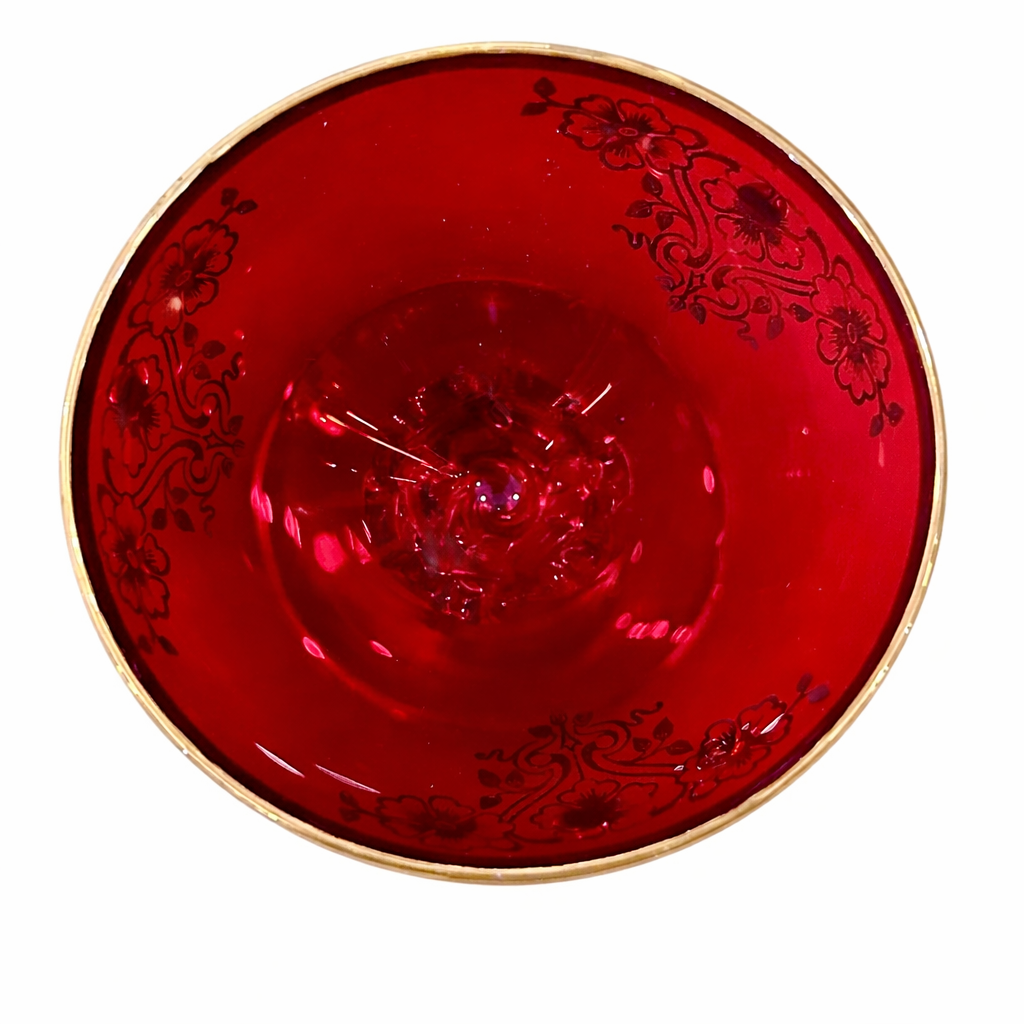
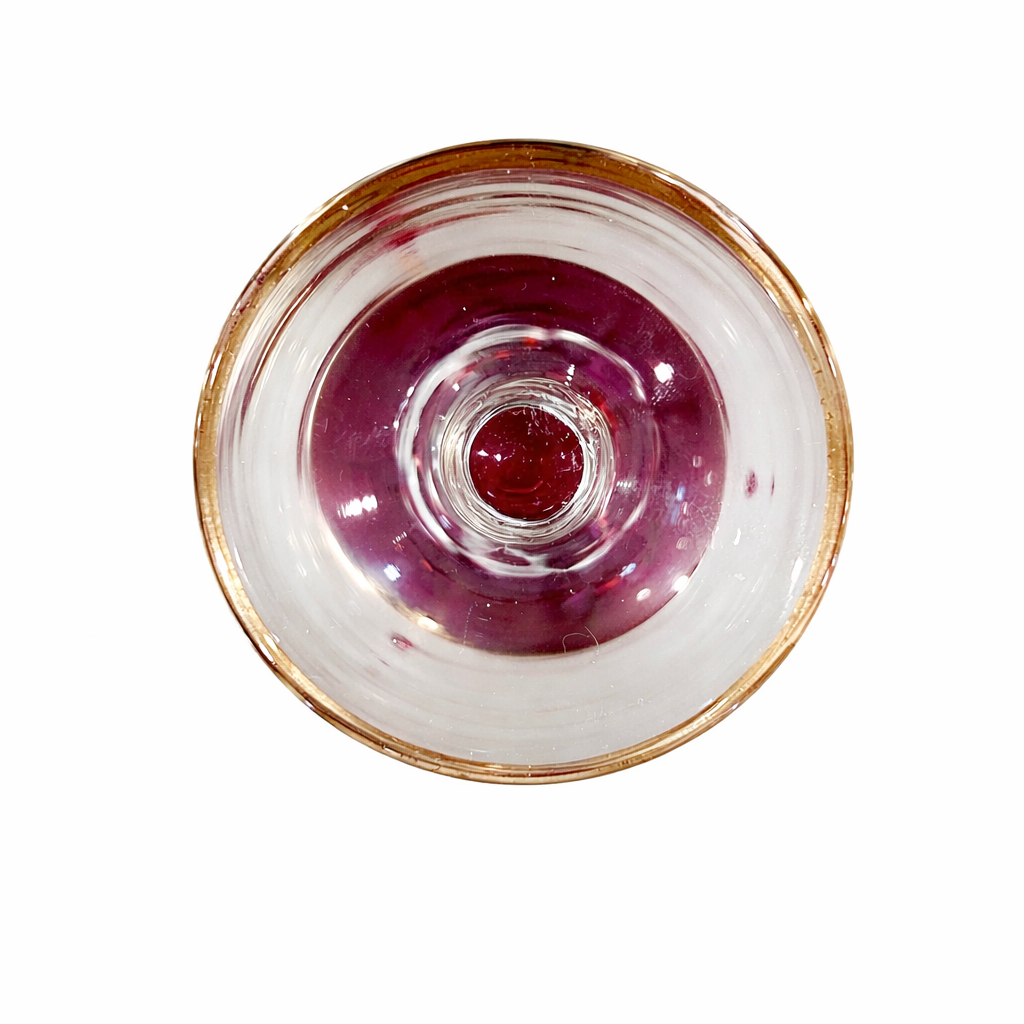
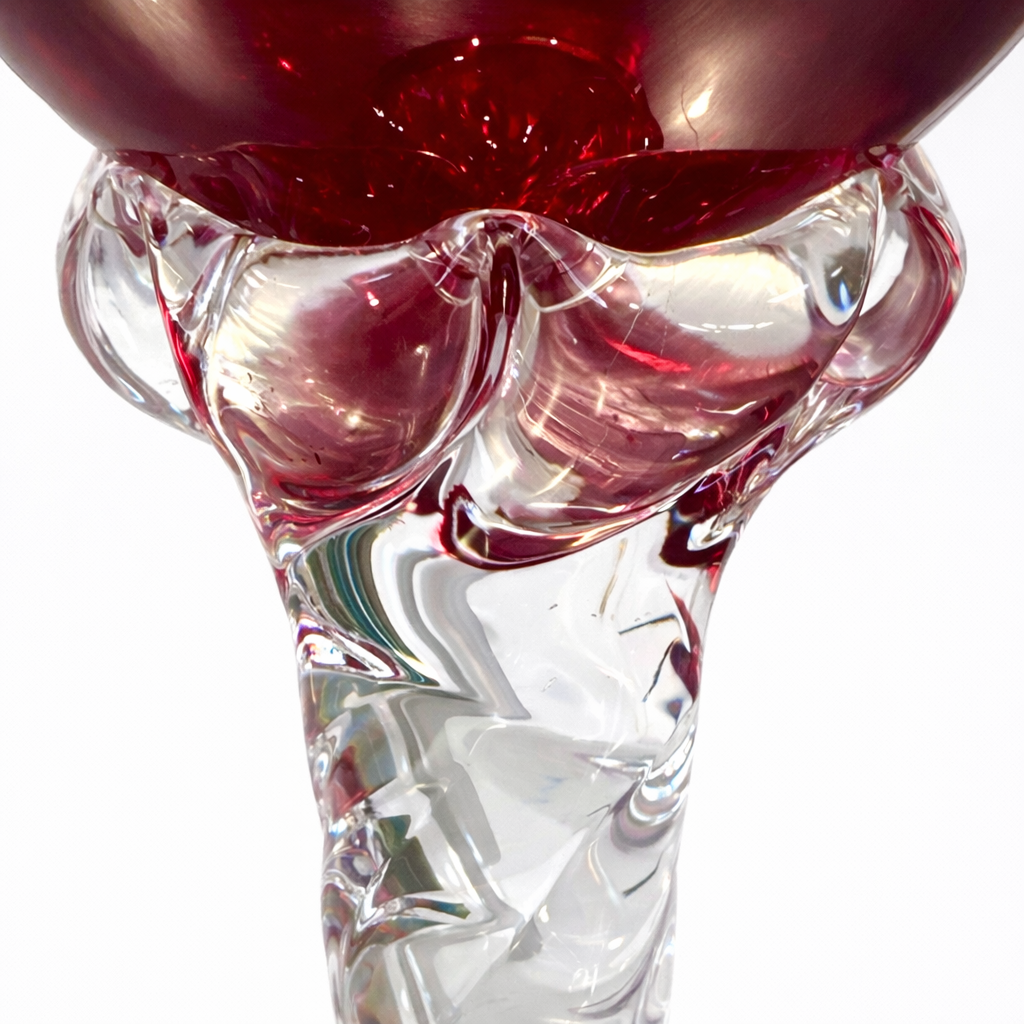
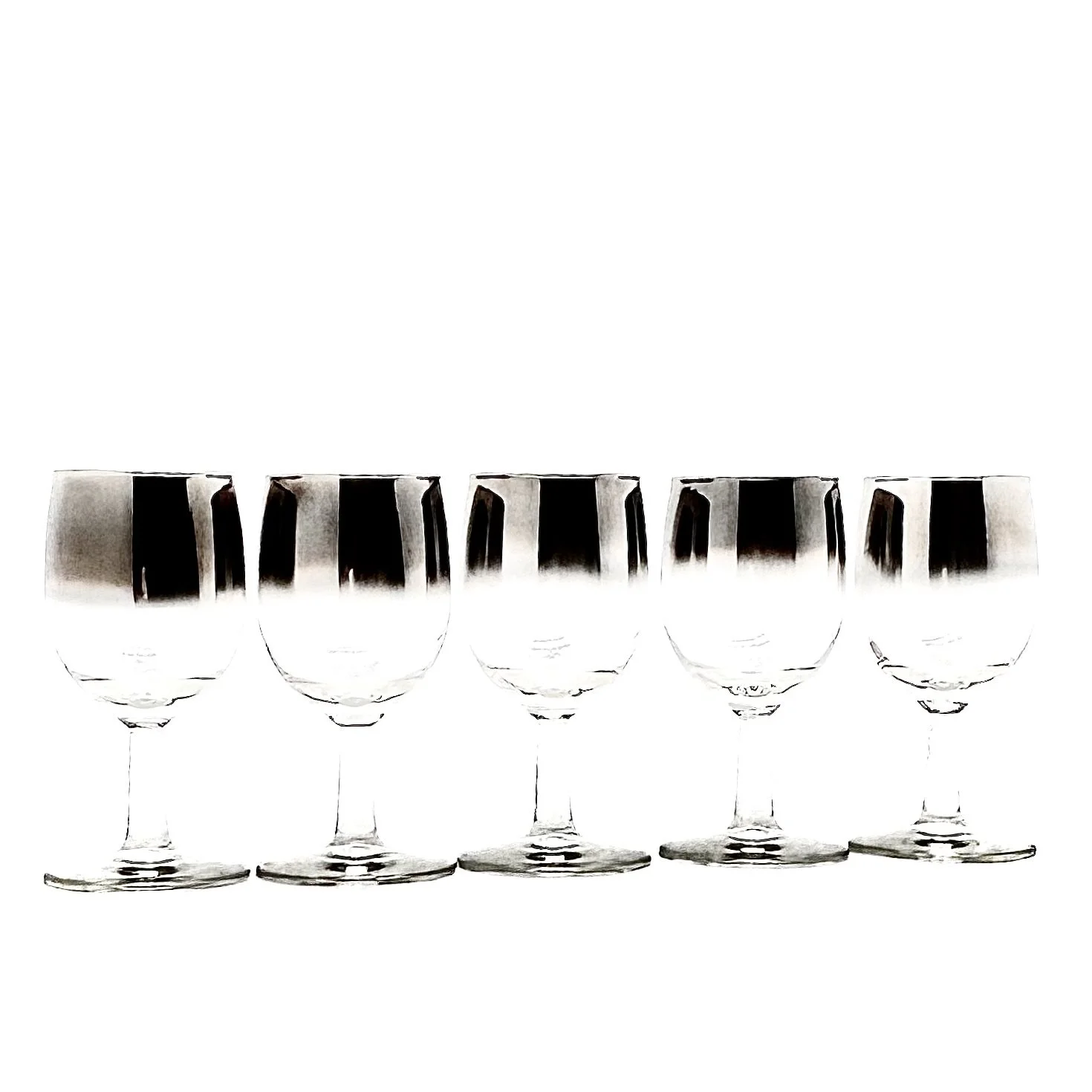
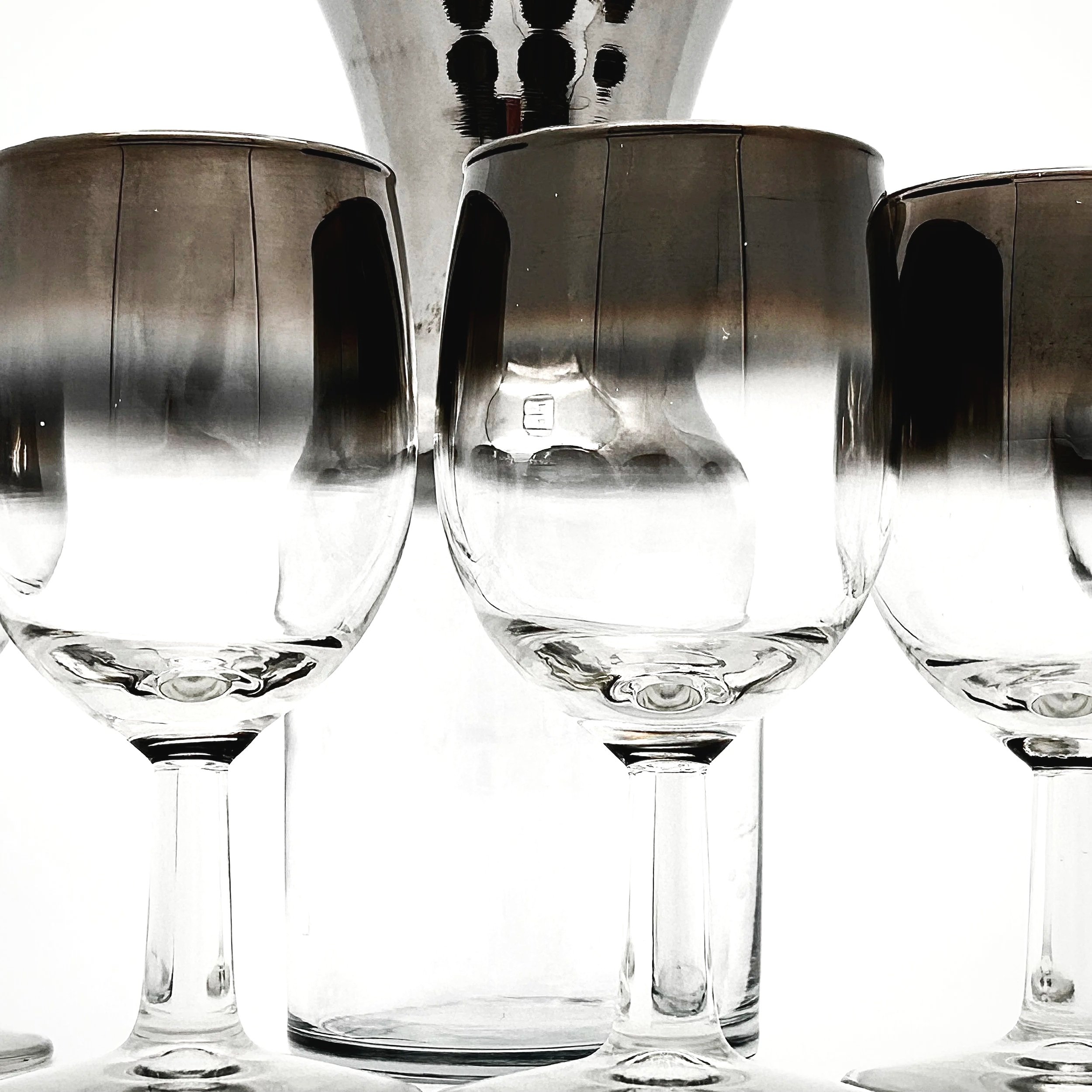
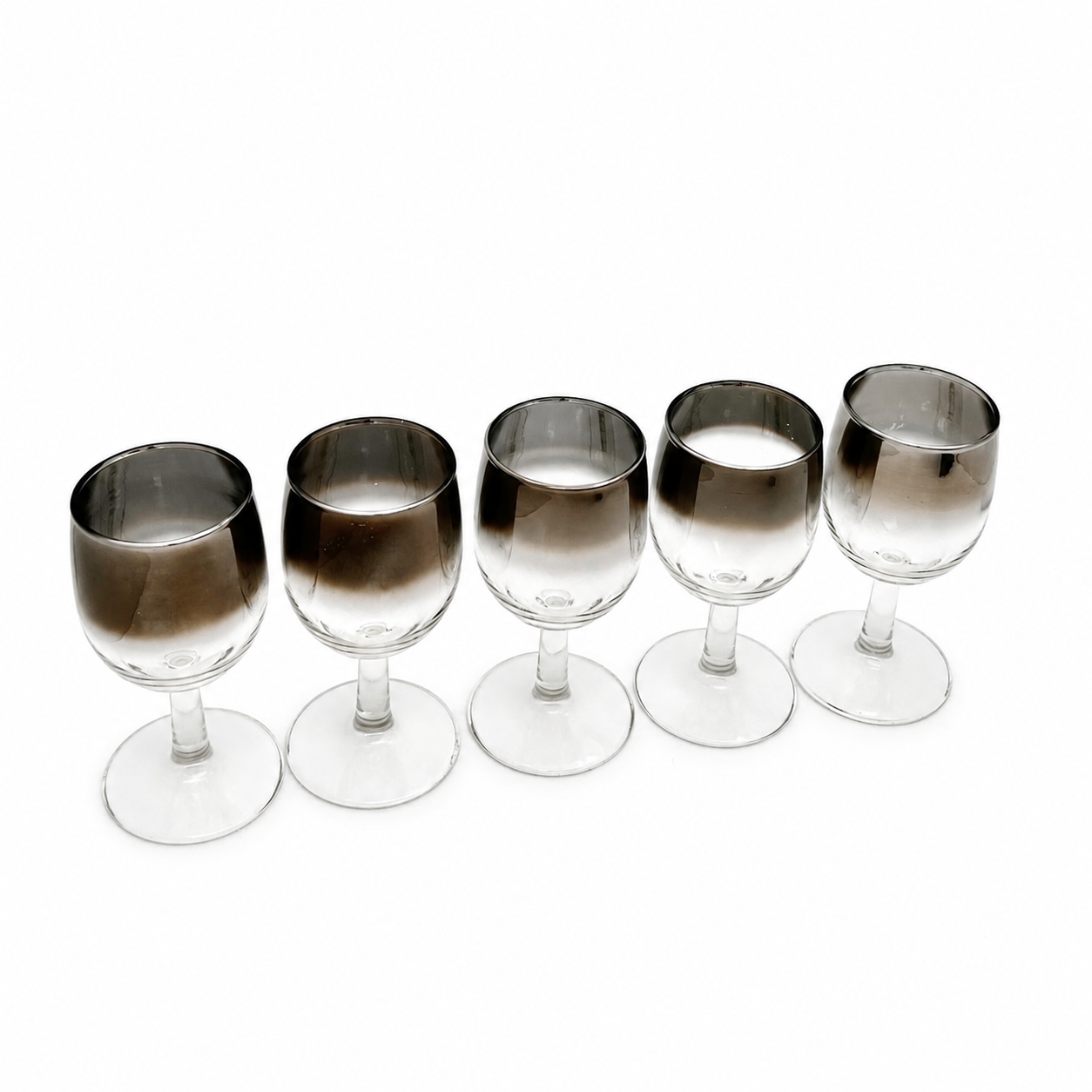
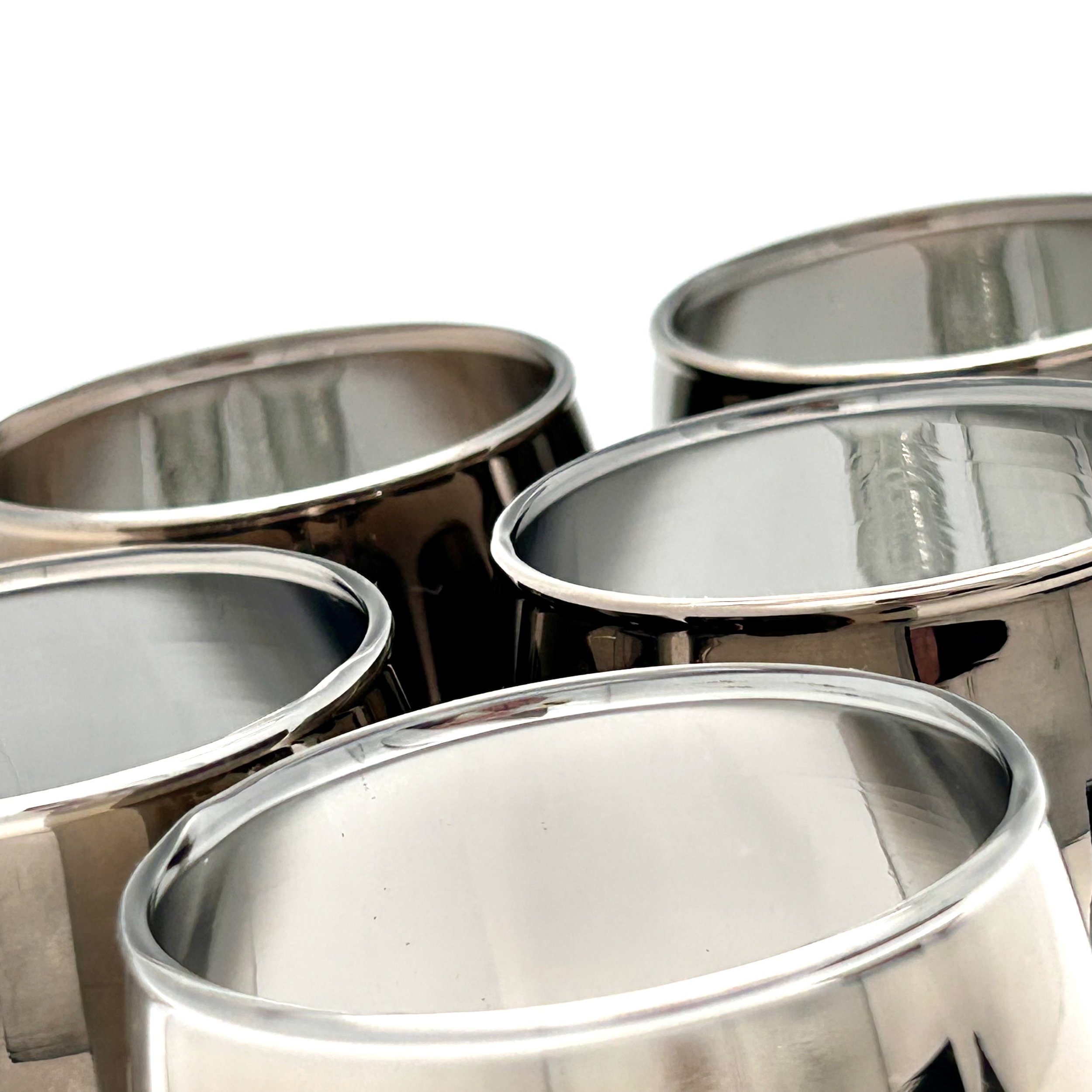
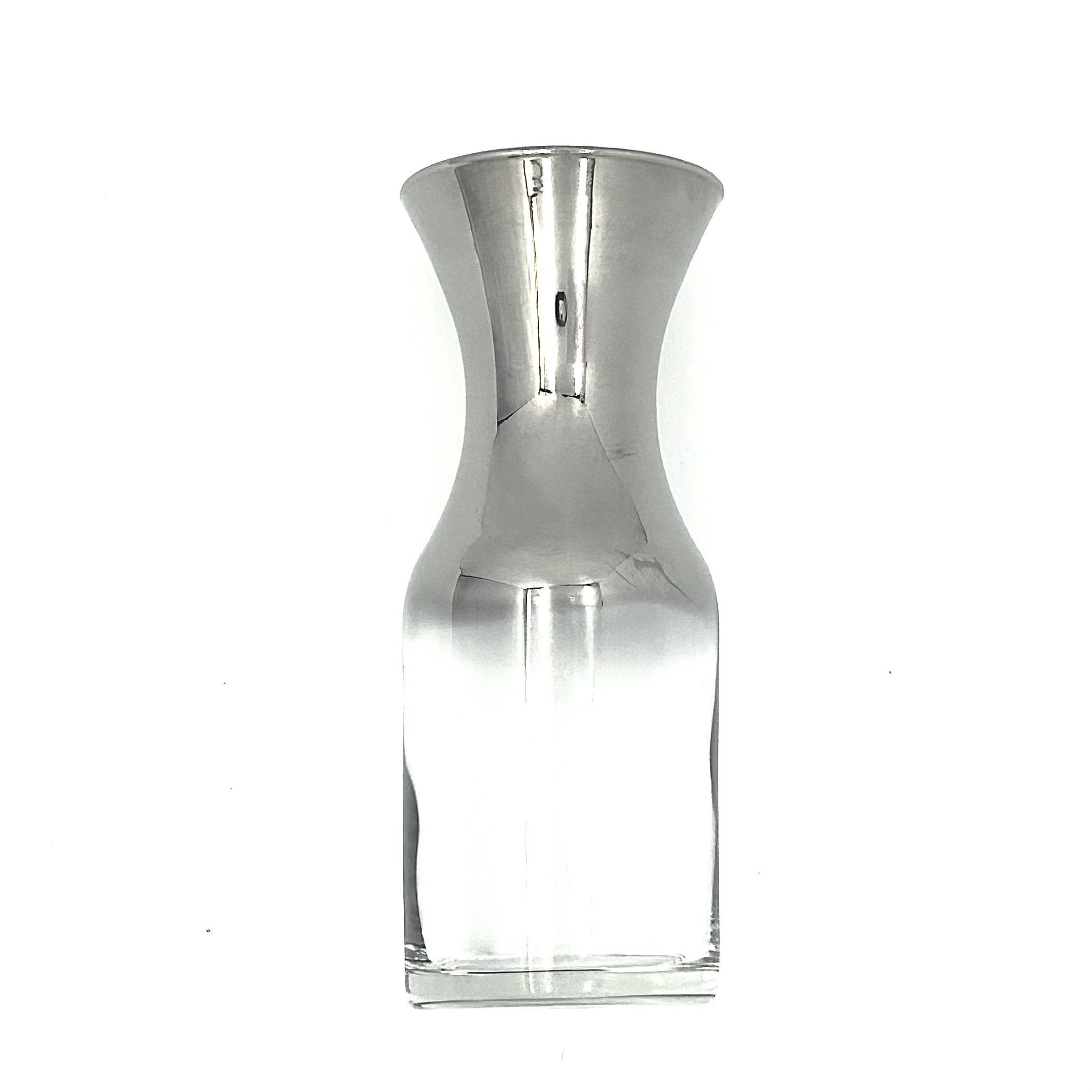
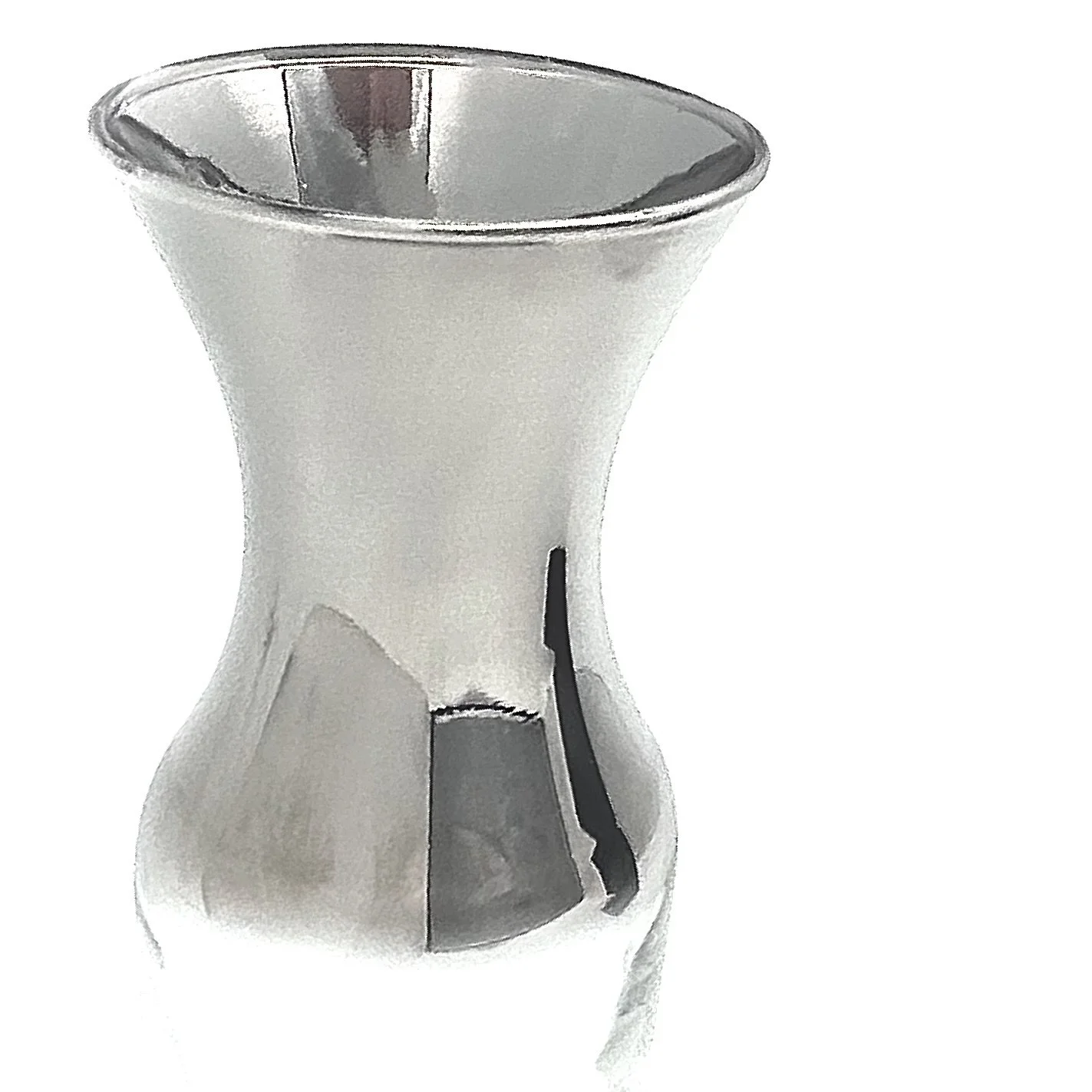
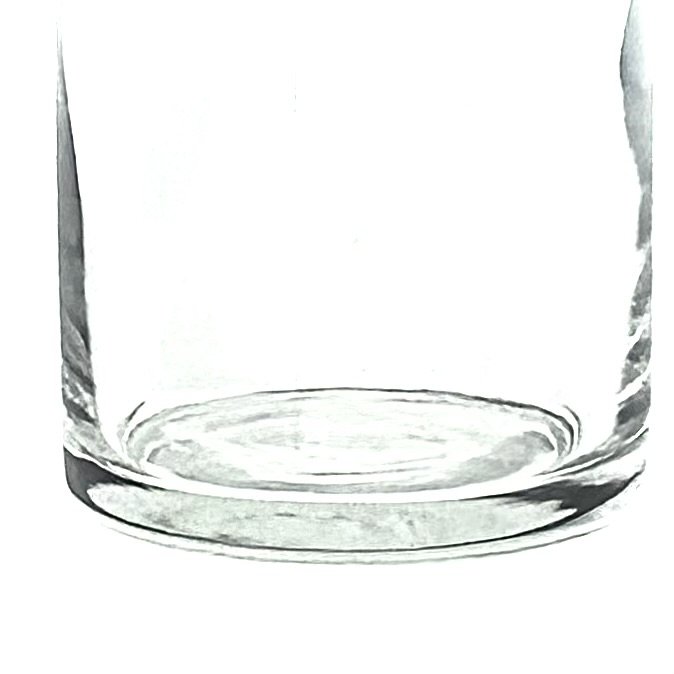
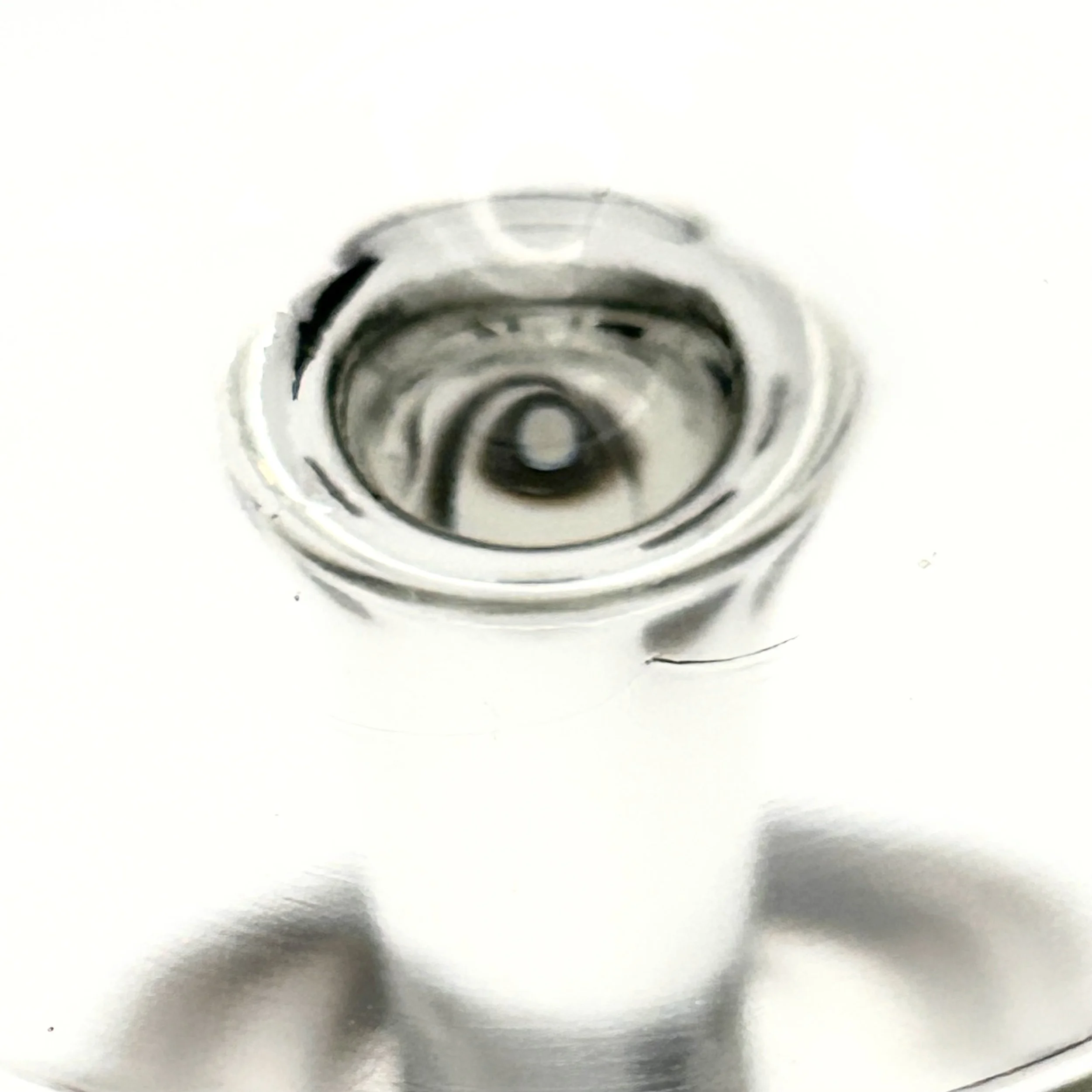
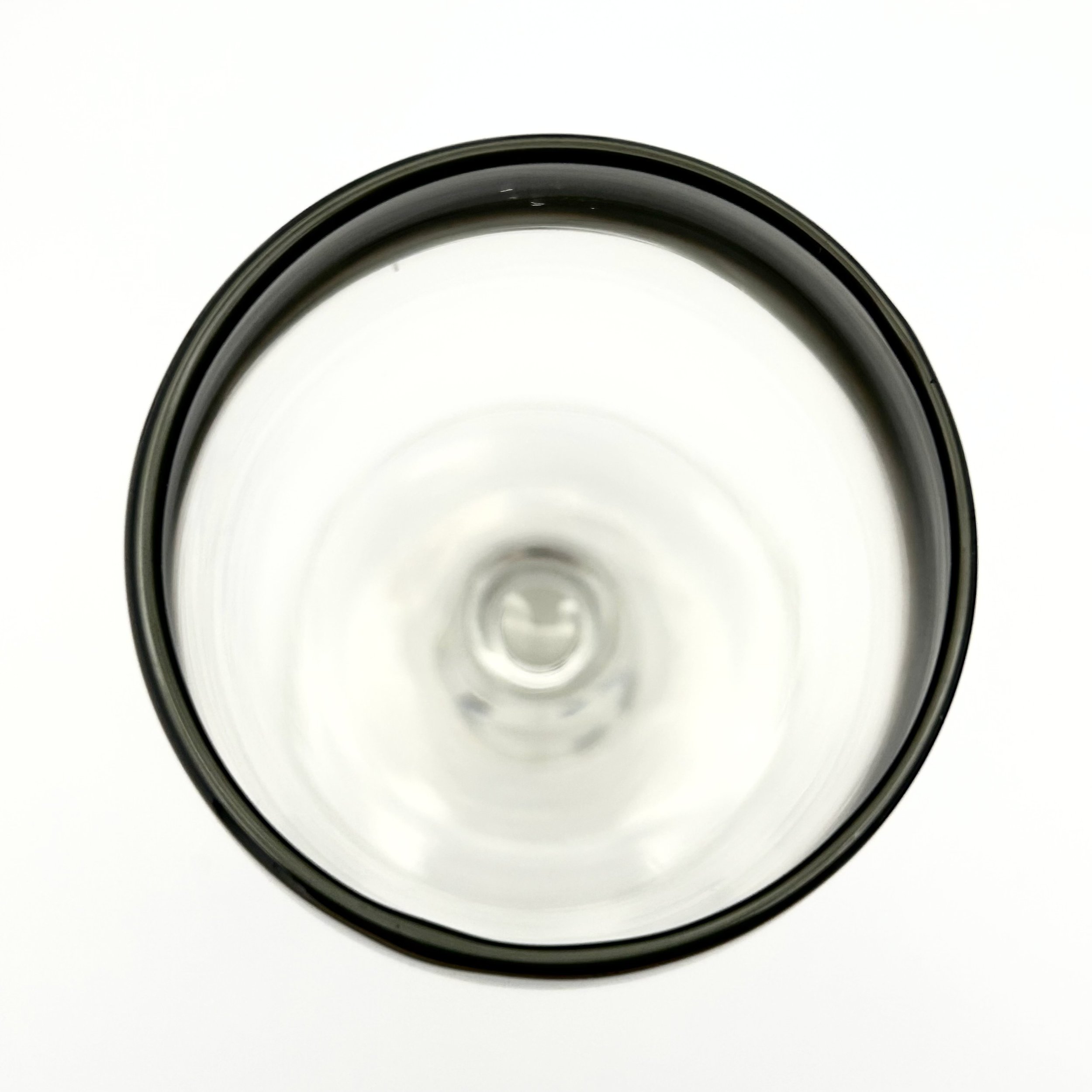
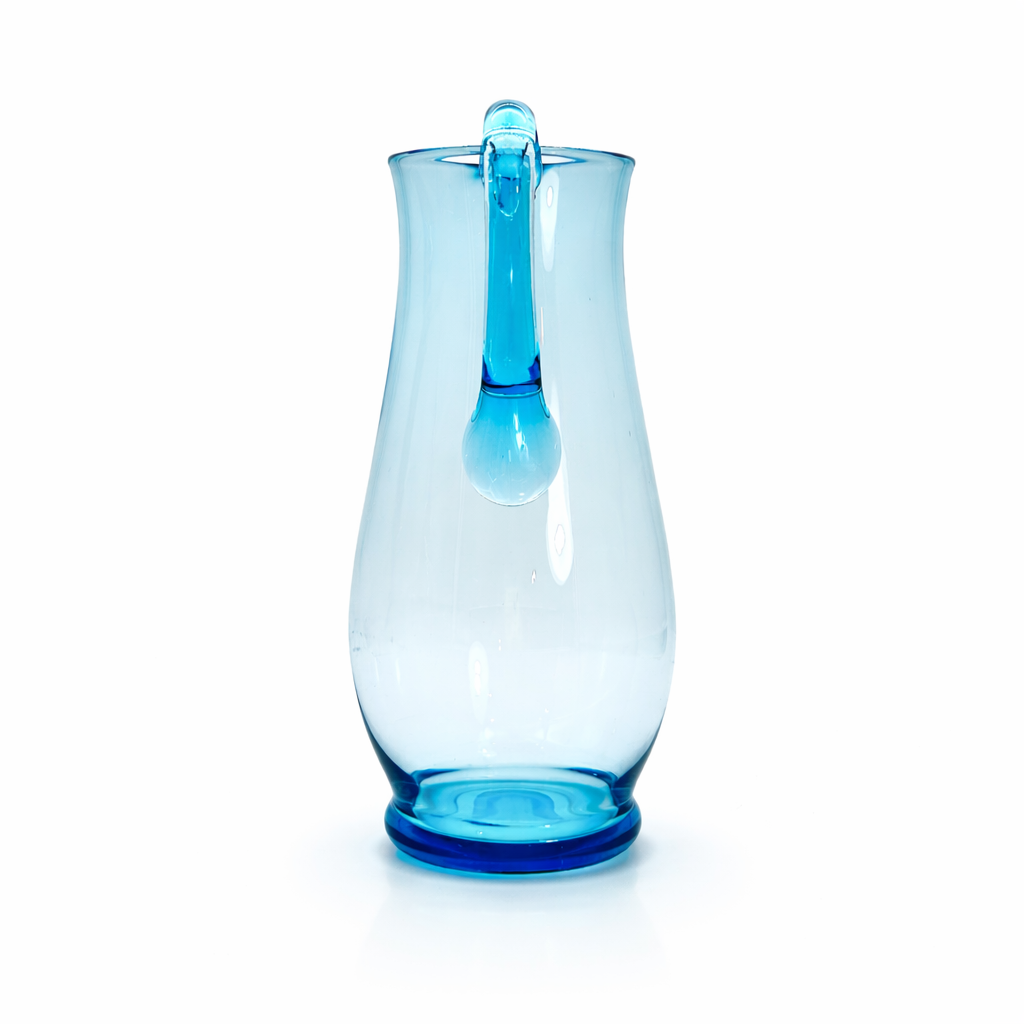
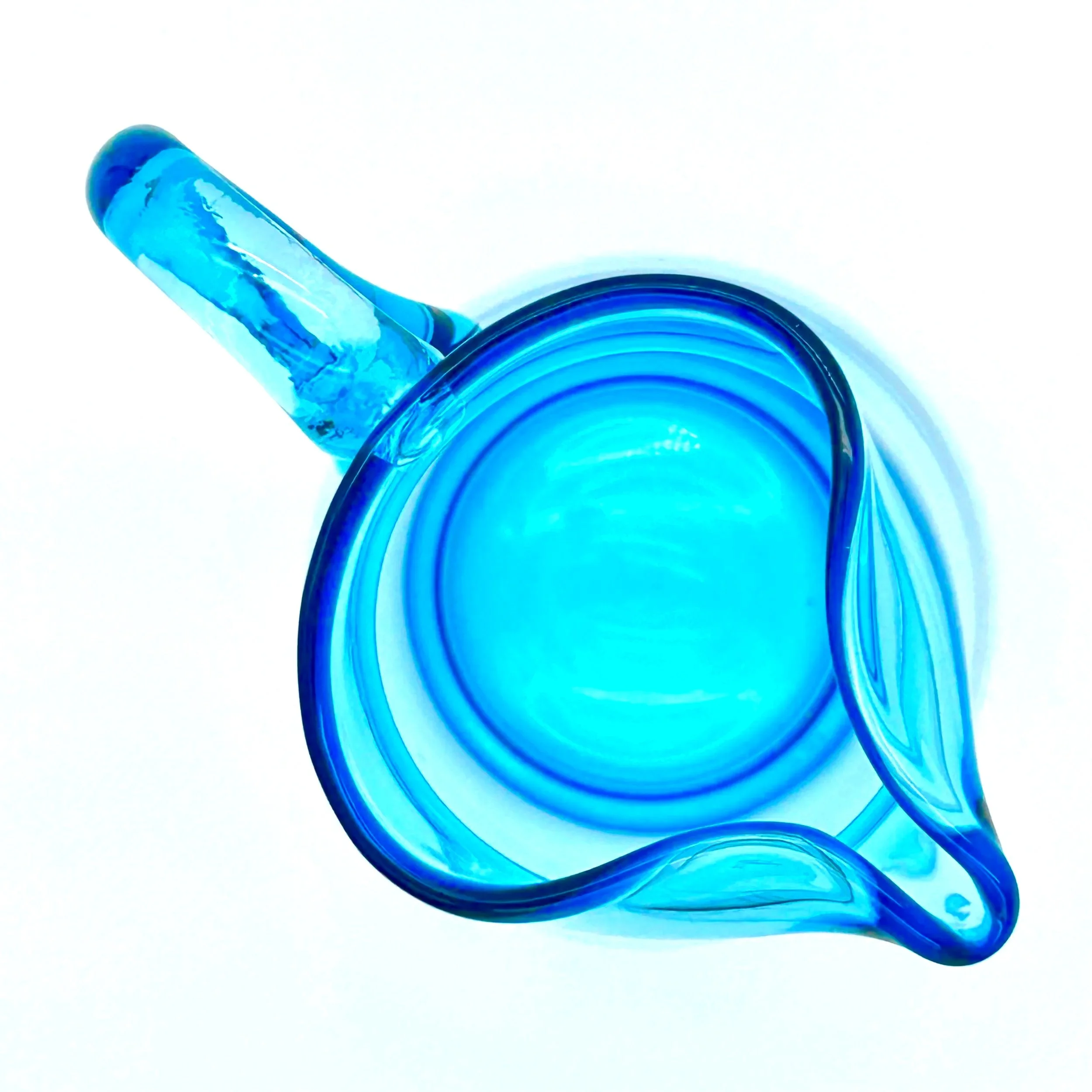
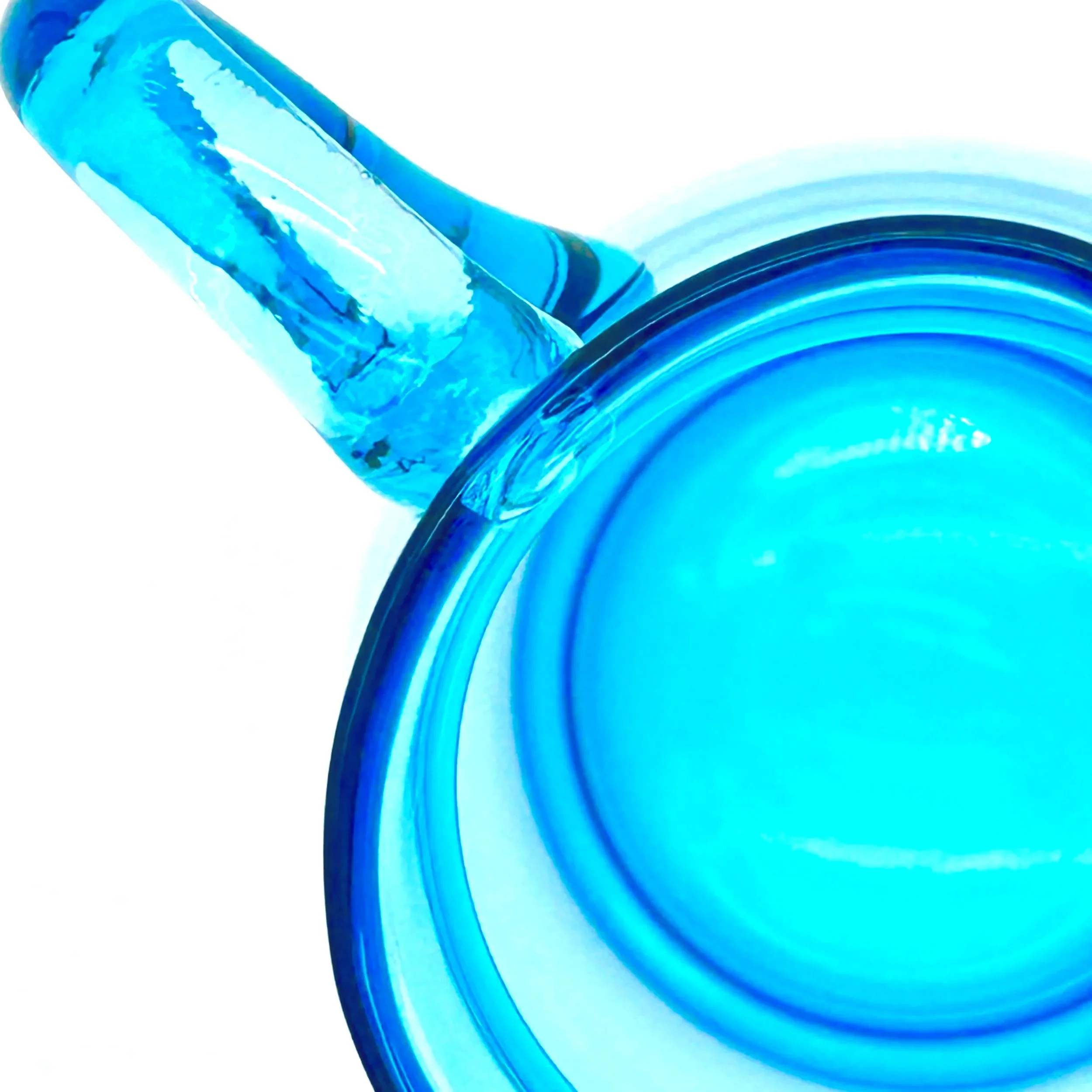
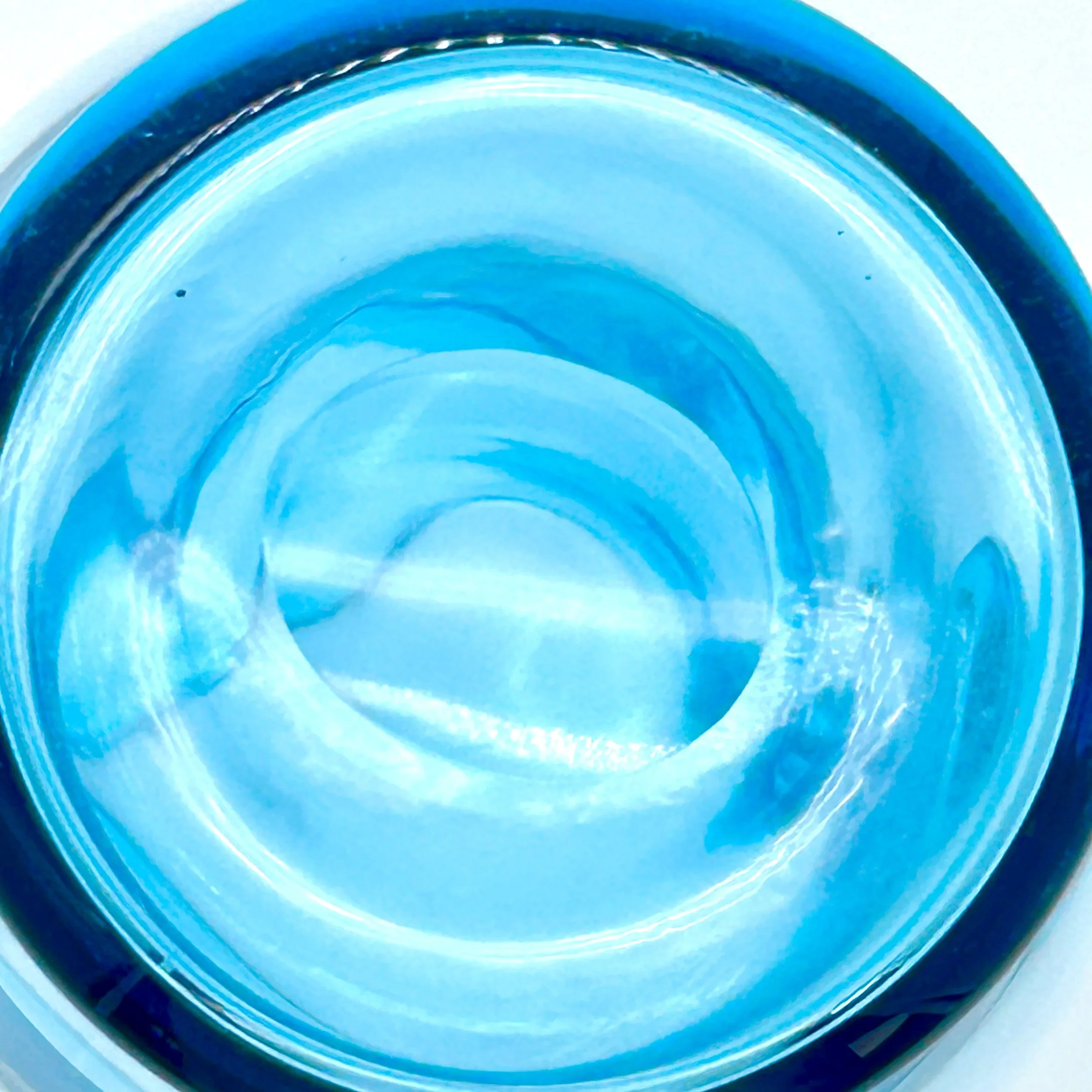
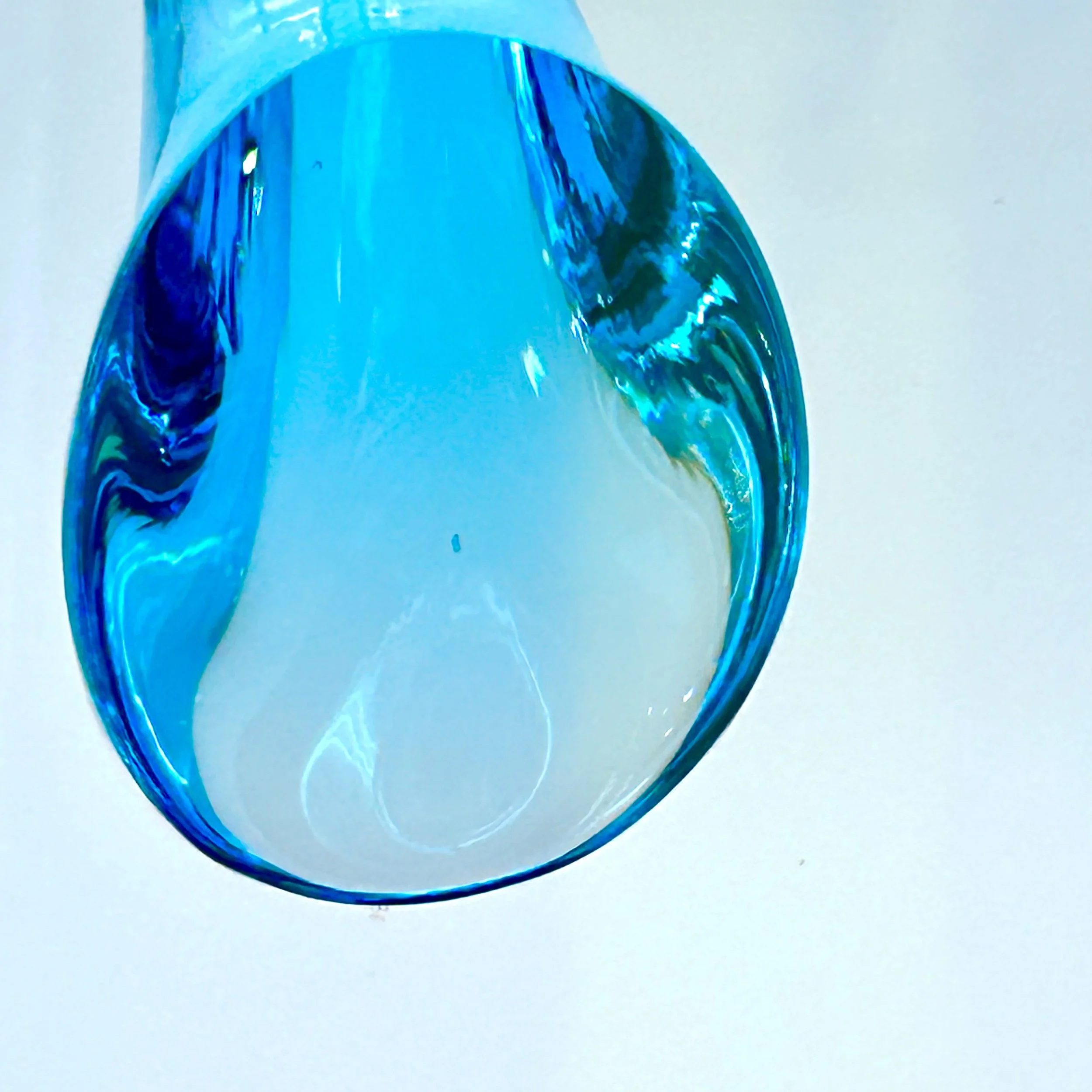
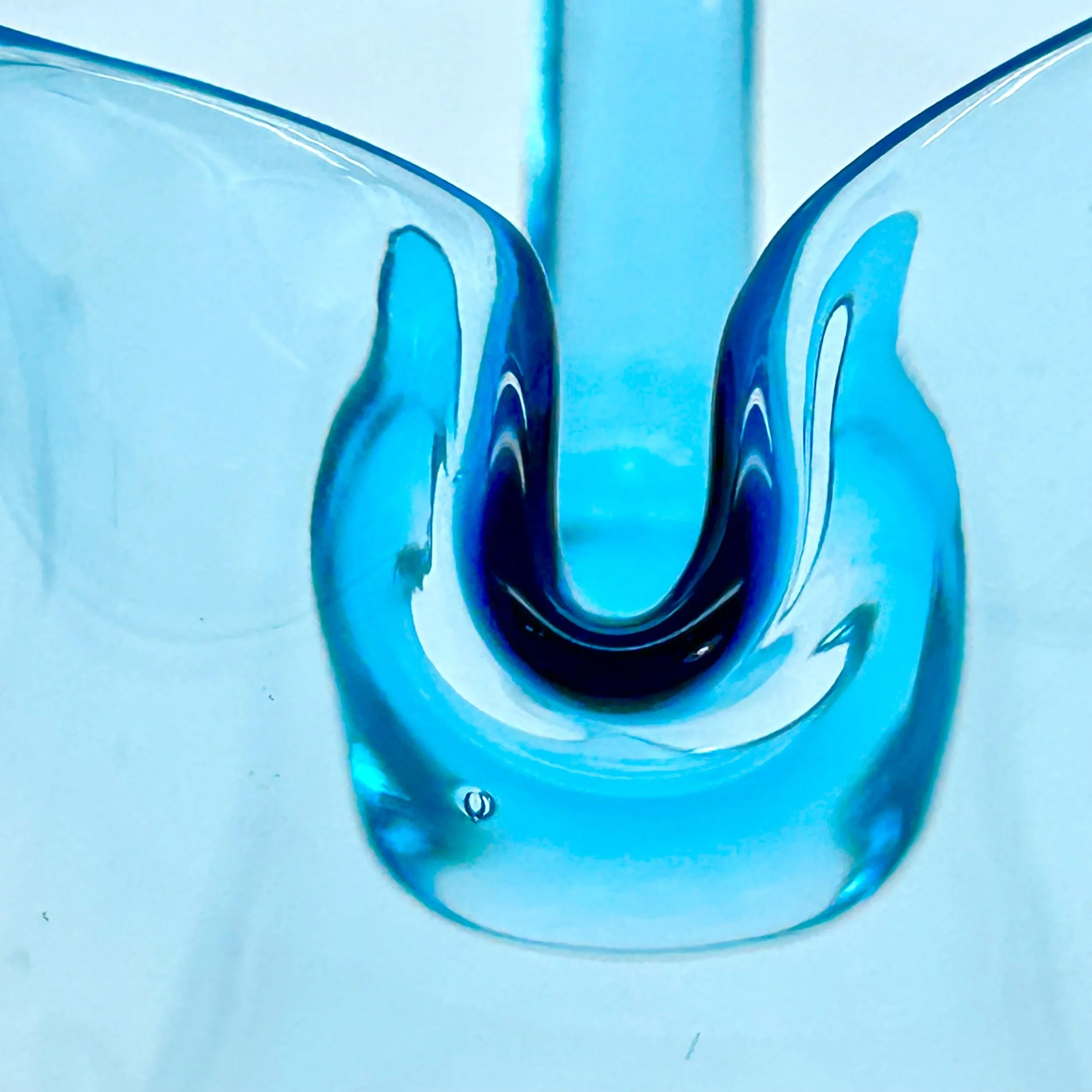
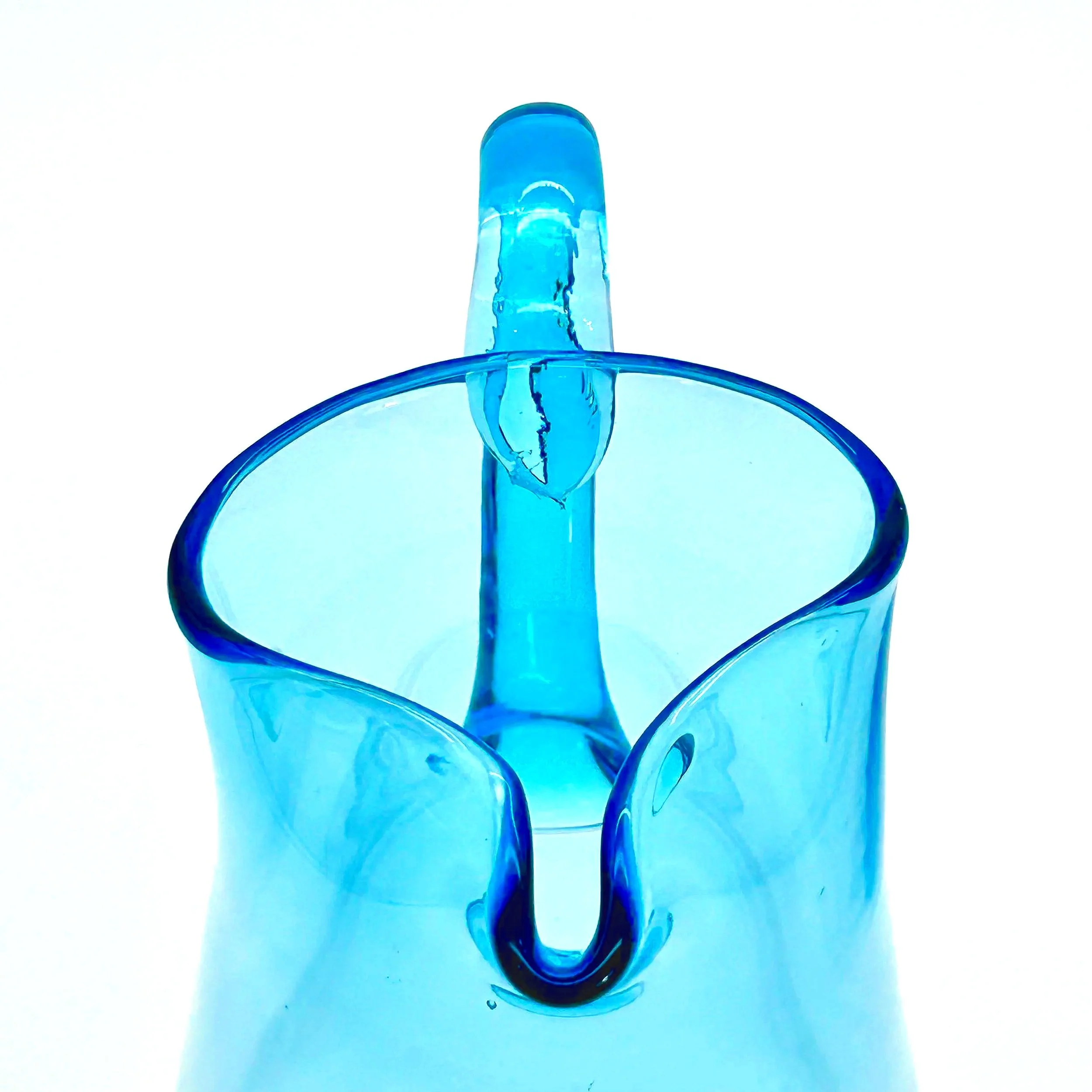
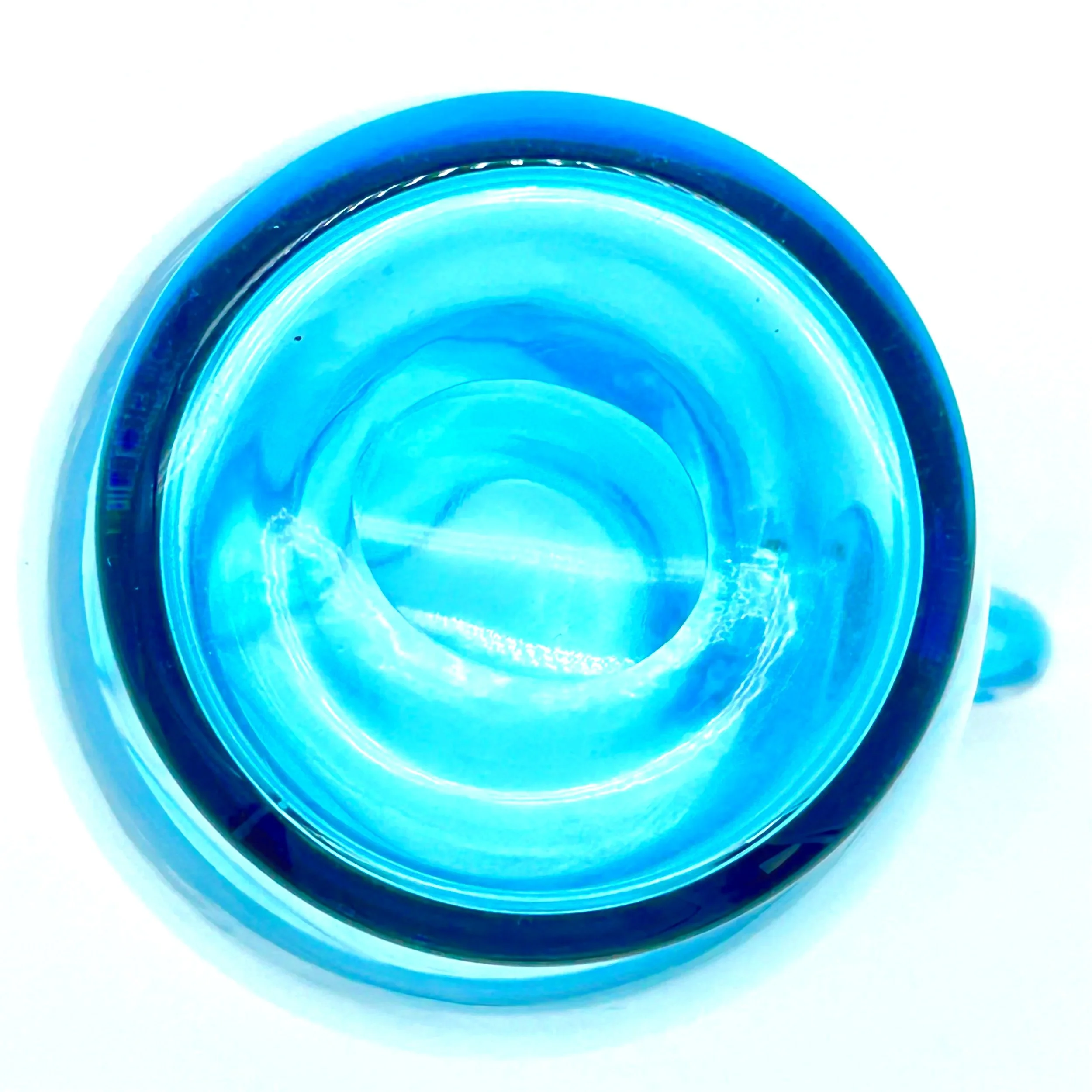
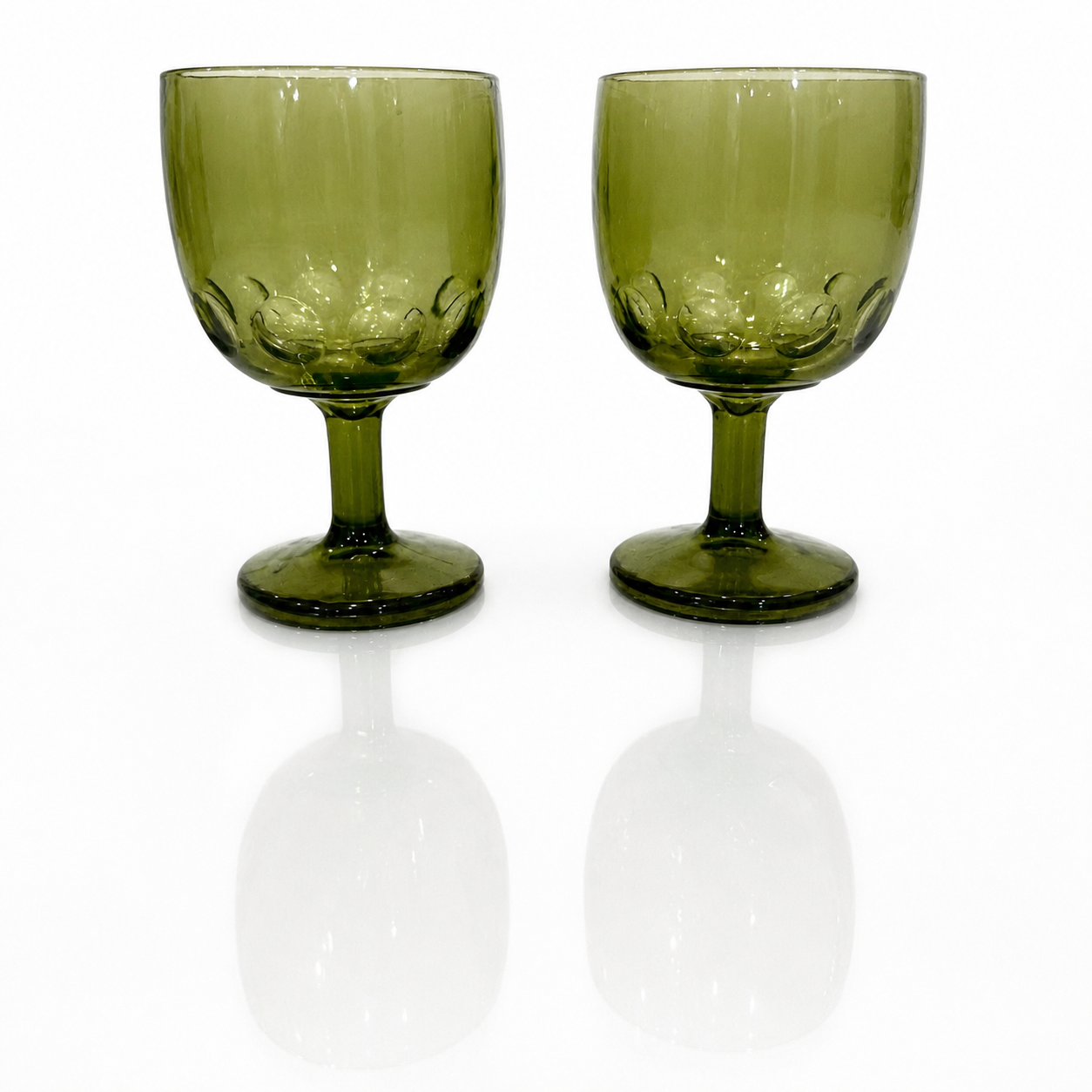
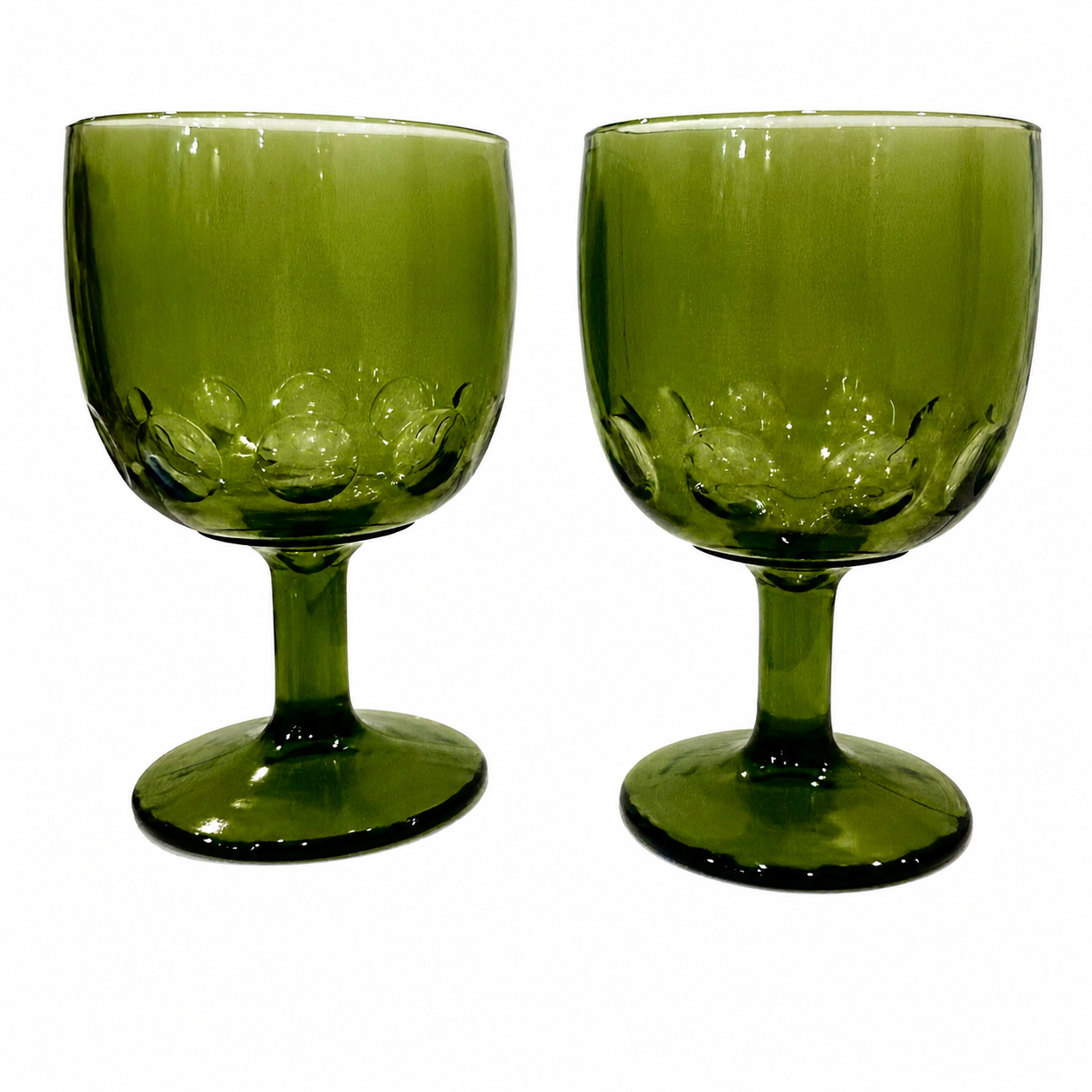
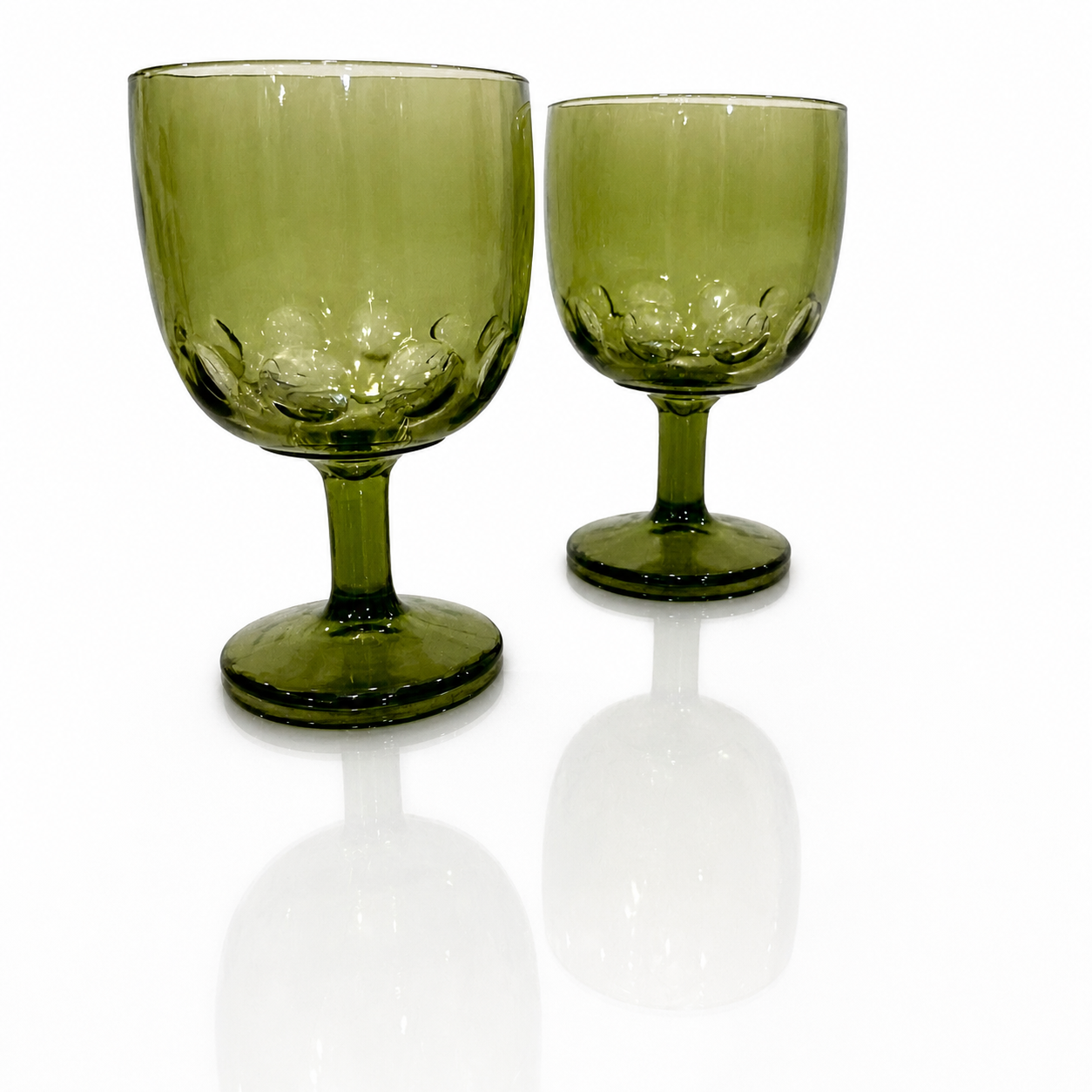
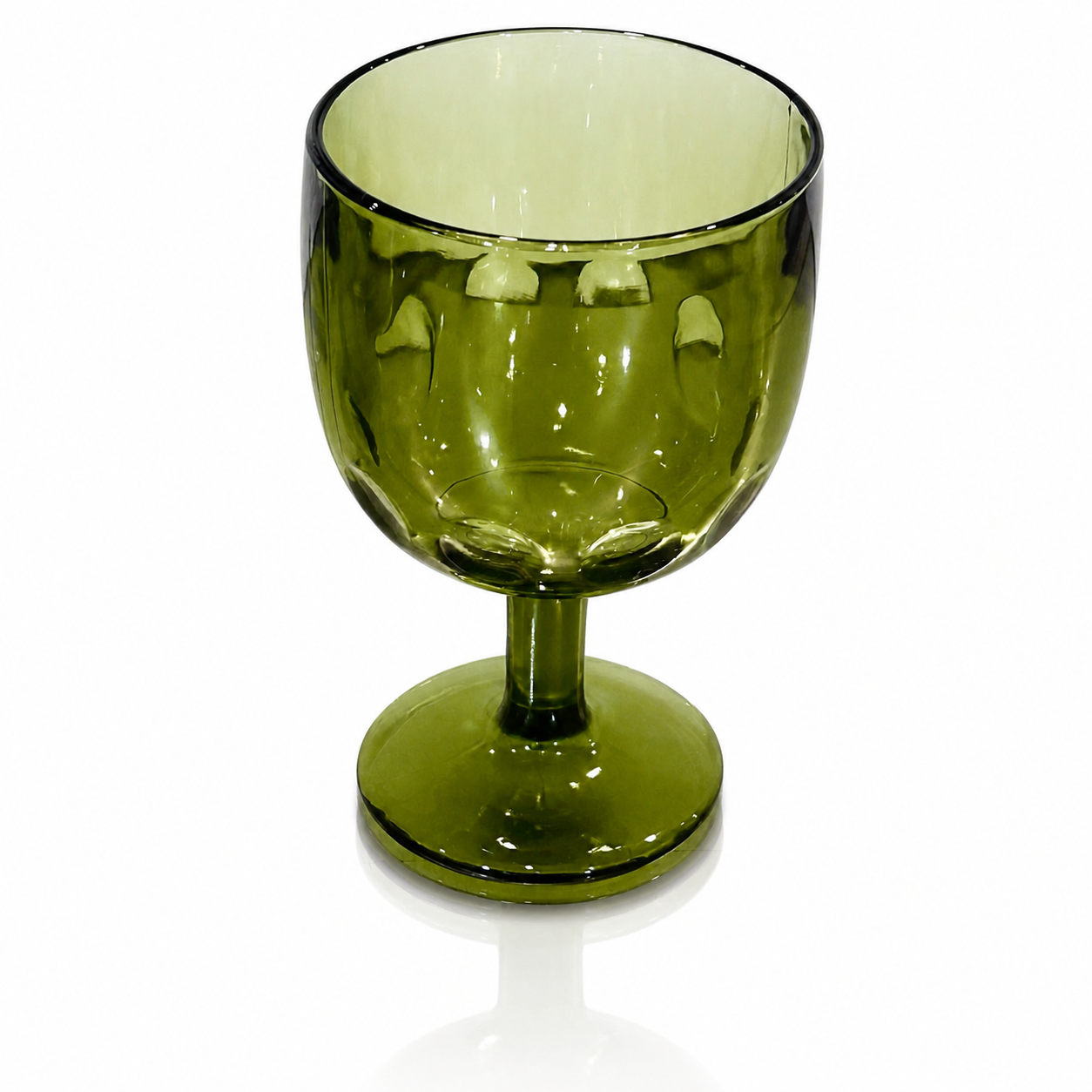
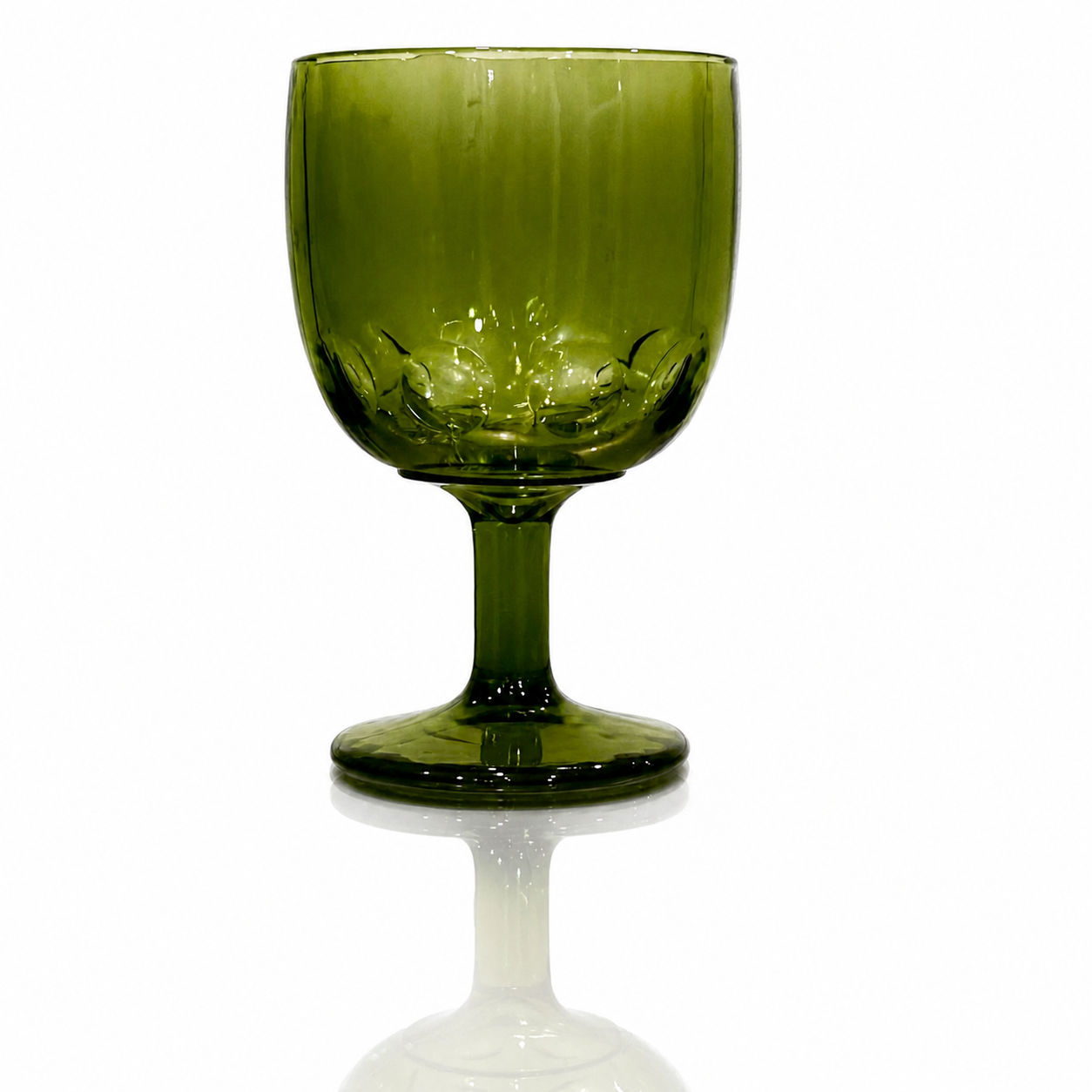
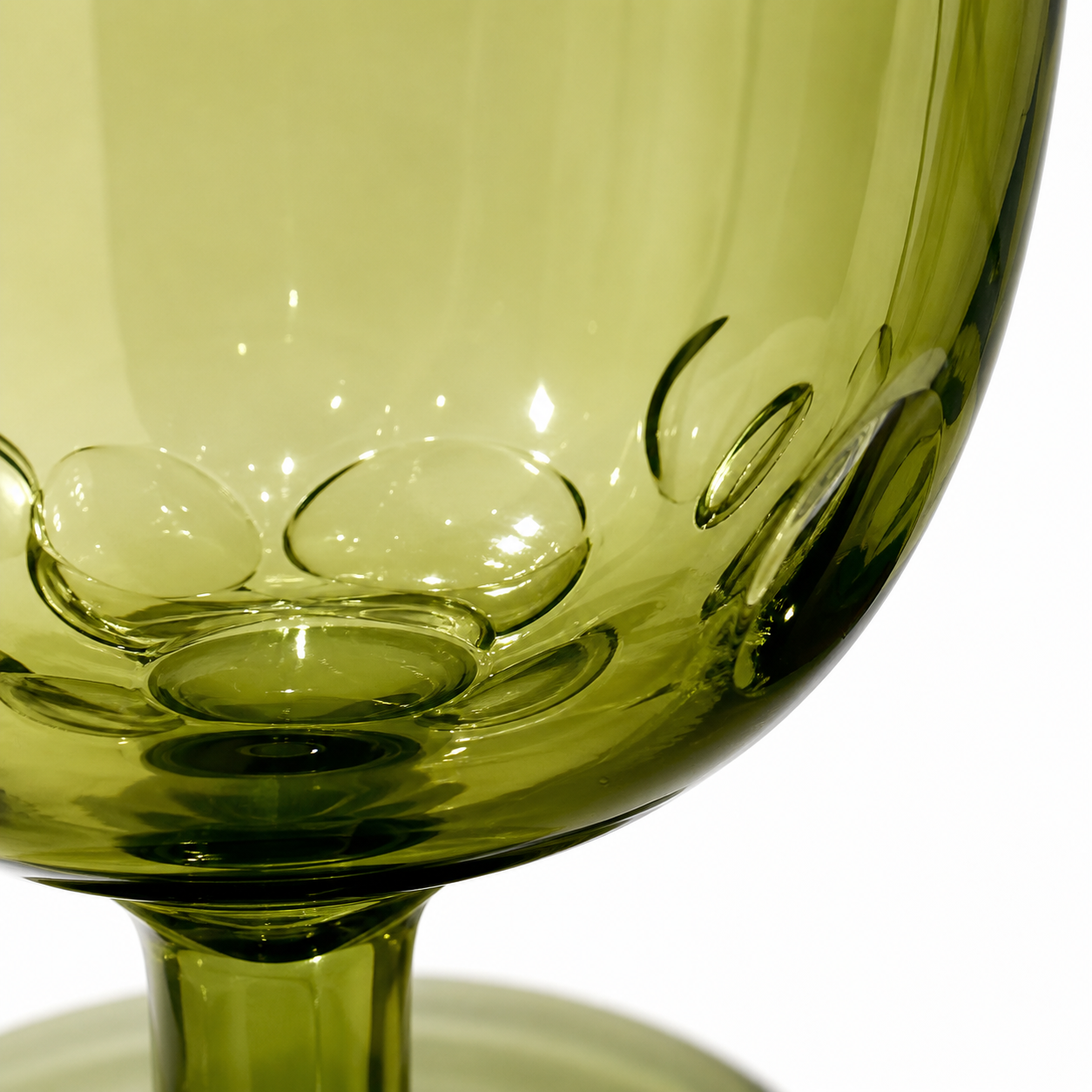
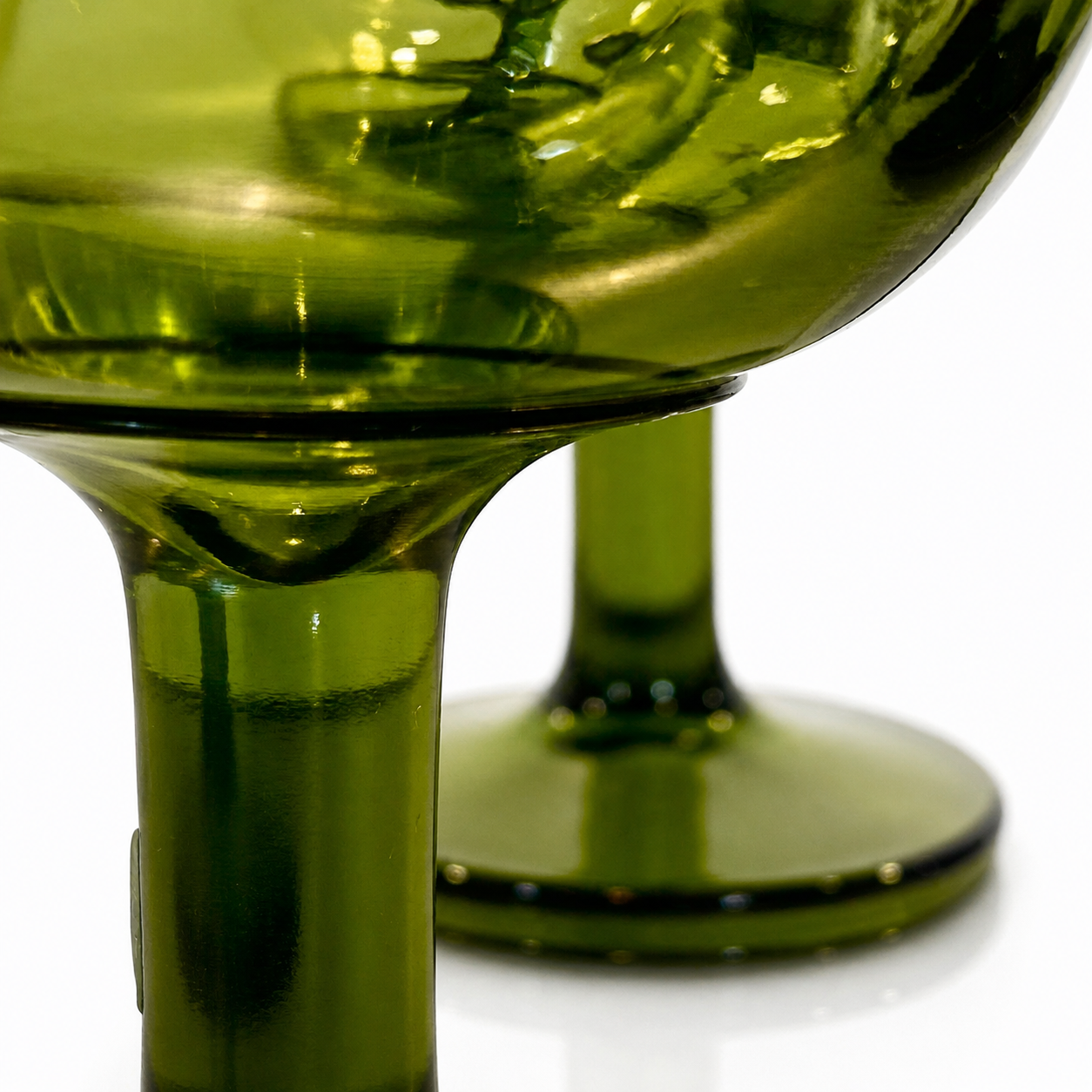
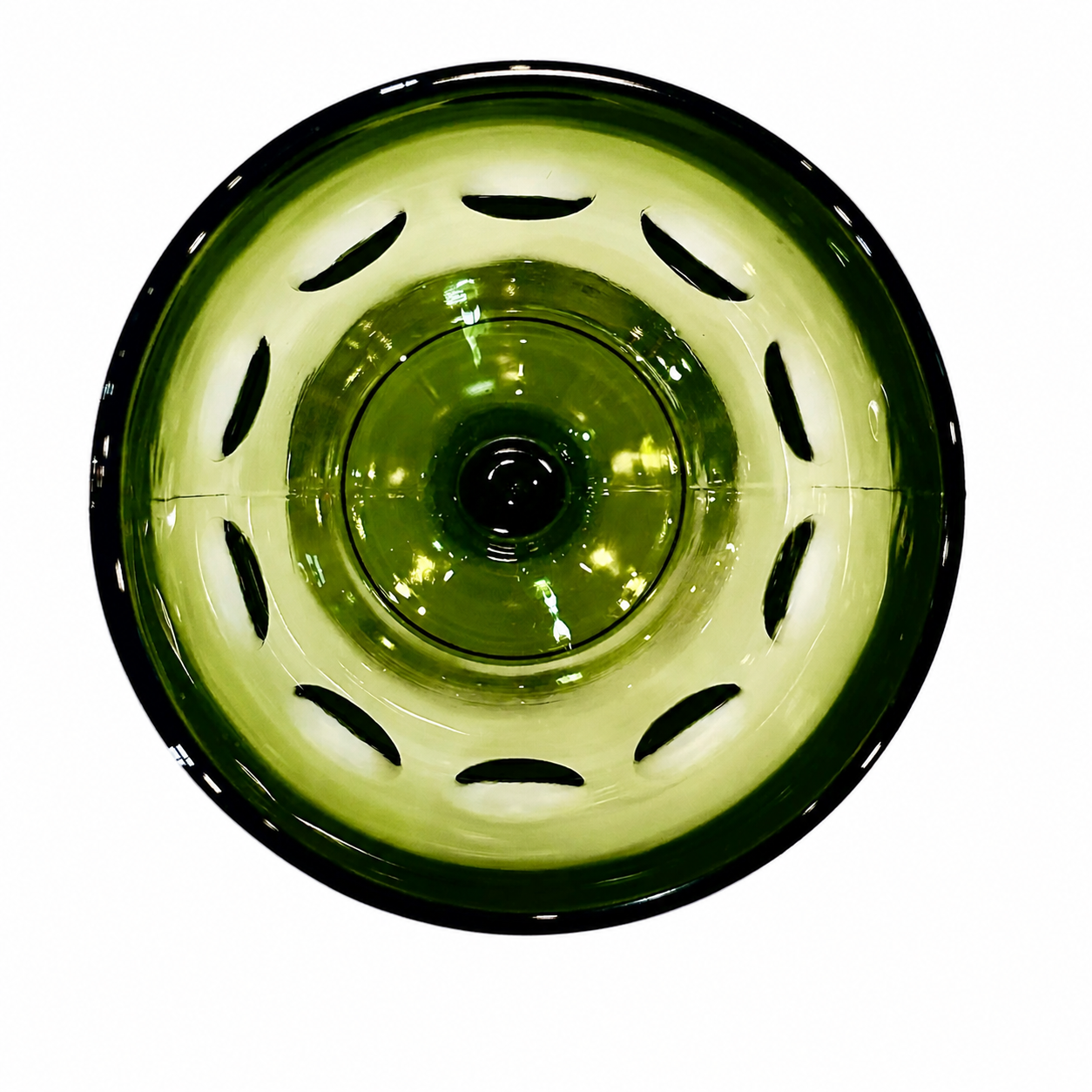
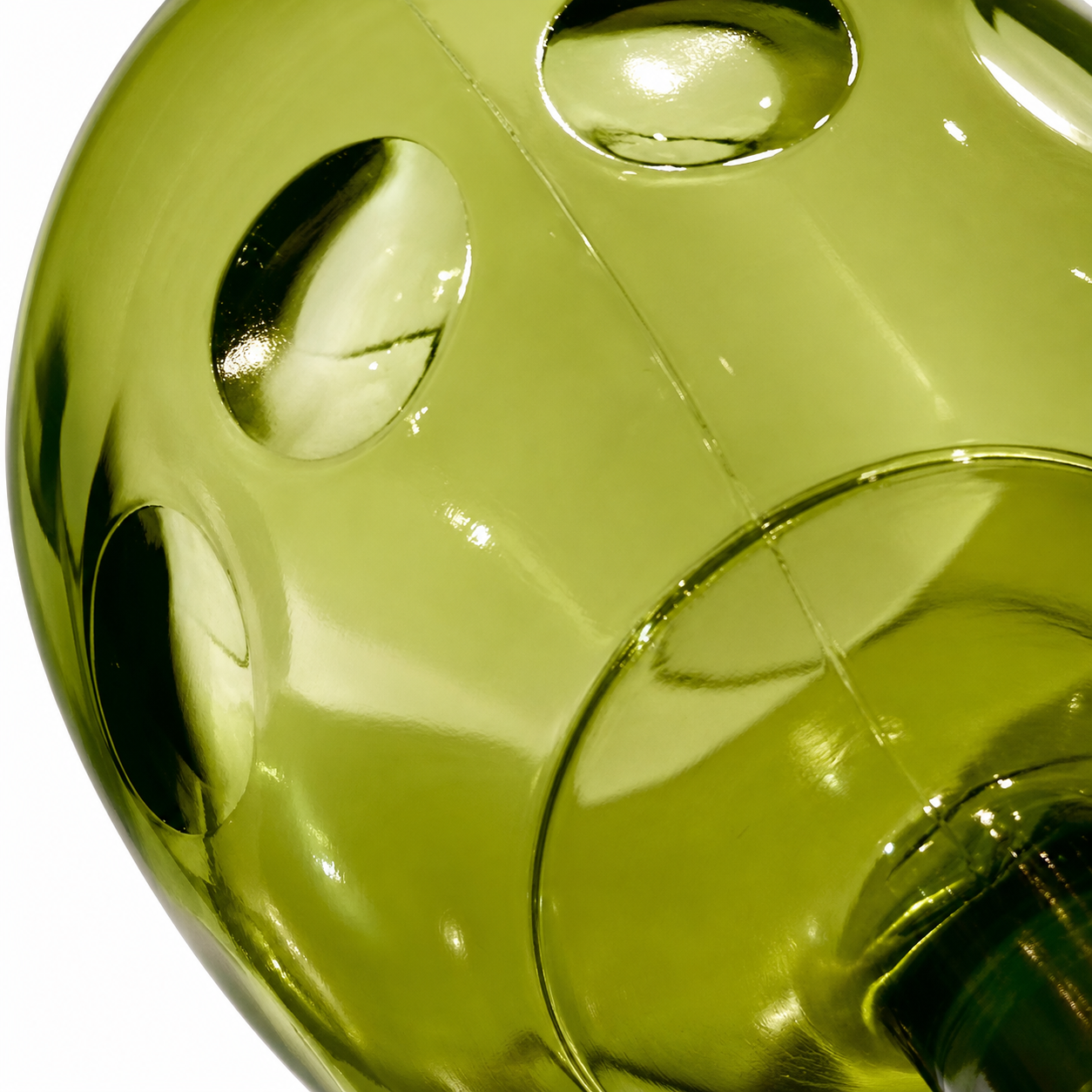
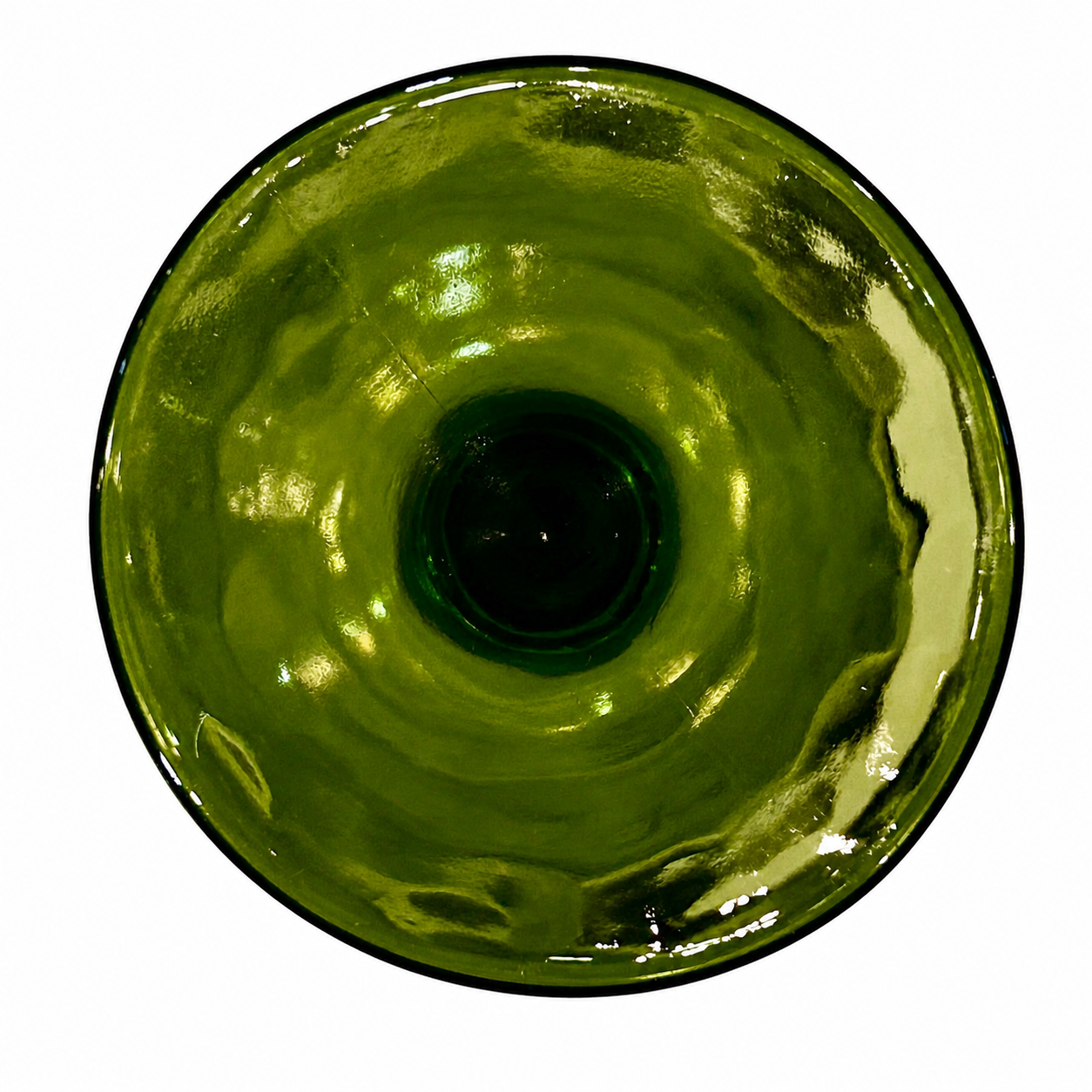
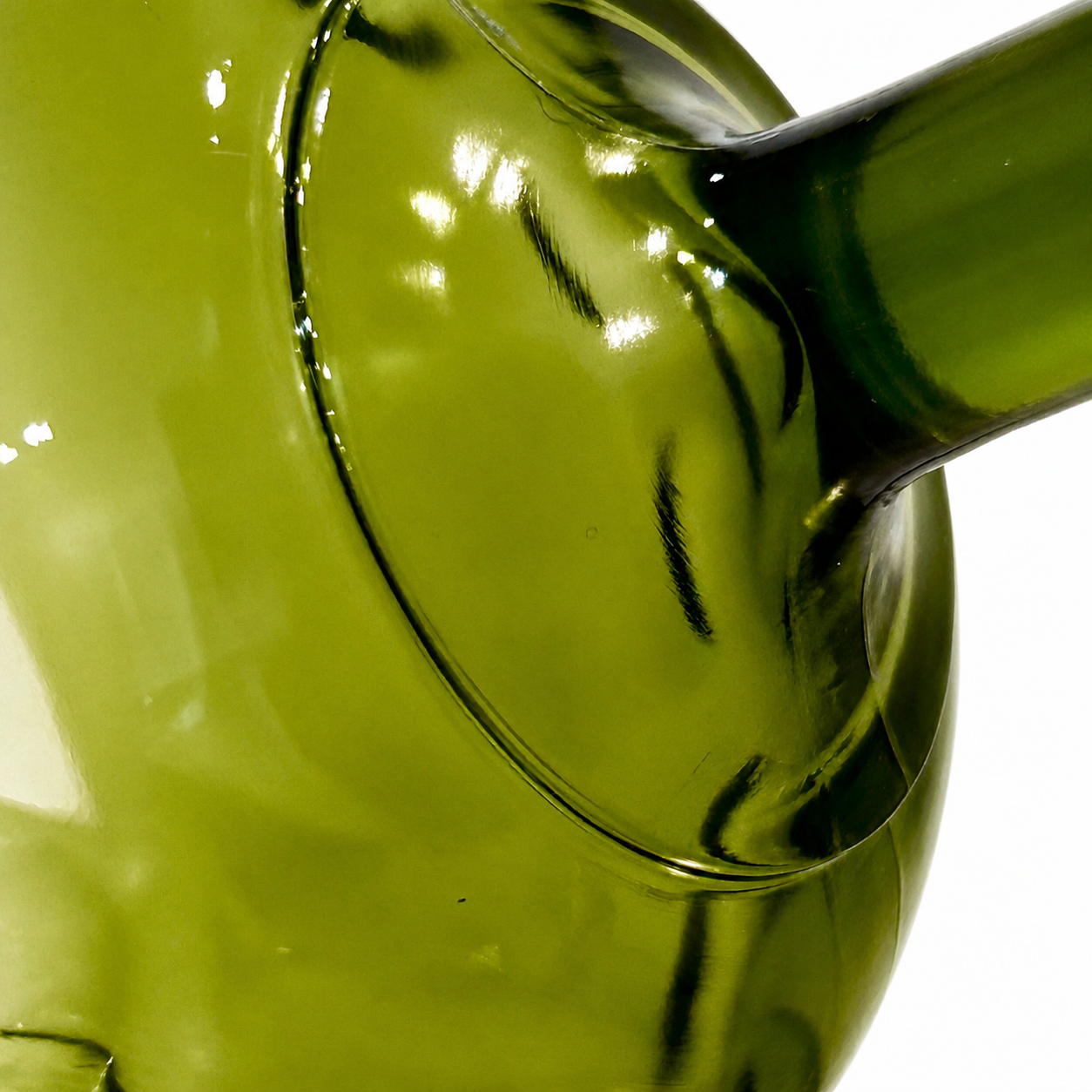
A richly toned amber pressed-glass goblet featuring a sharply defined honeycomb optic bowl, elegant baluster stem, and broad rounded foot. The glass displays a luminous golden-amber body that deepens to cognac at the stem and base, producing strong light refraction and a warm, architectural presence when styled.
The form and weight align with late 20th-century European and North American decorative pressed production, distinct from earlier heavy Depression-era examples. The crisp mold definition and clean rim finish indicate quality later manufacturing typical of the 1970s–1980s export market.
Attribution & Period
Late 20th century, circa 1970s–1980s.
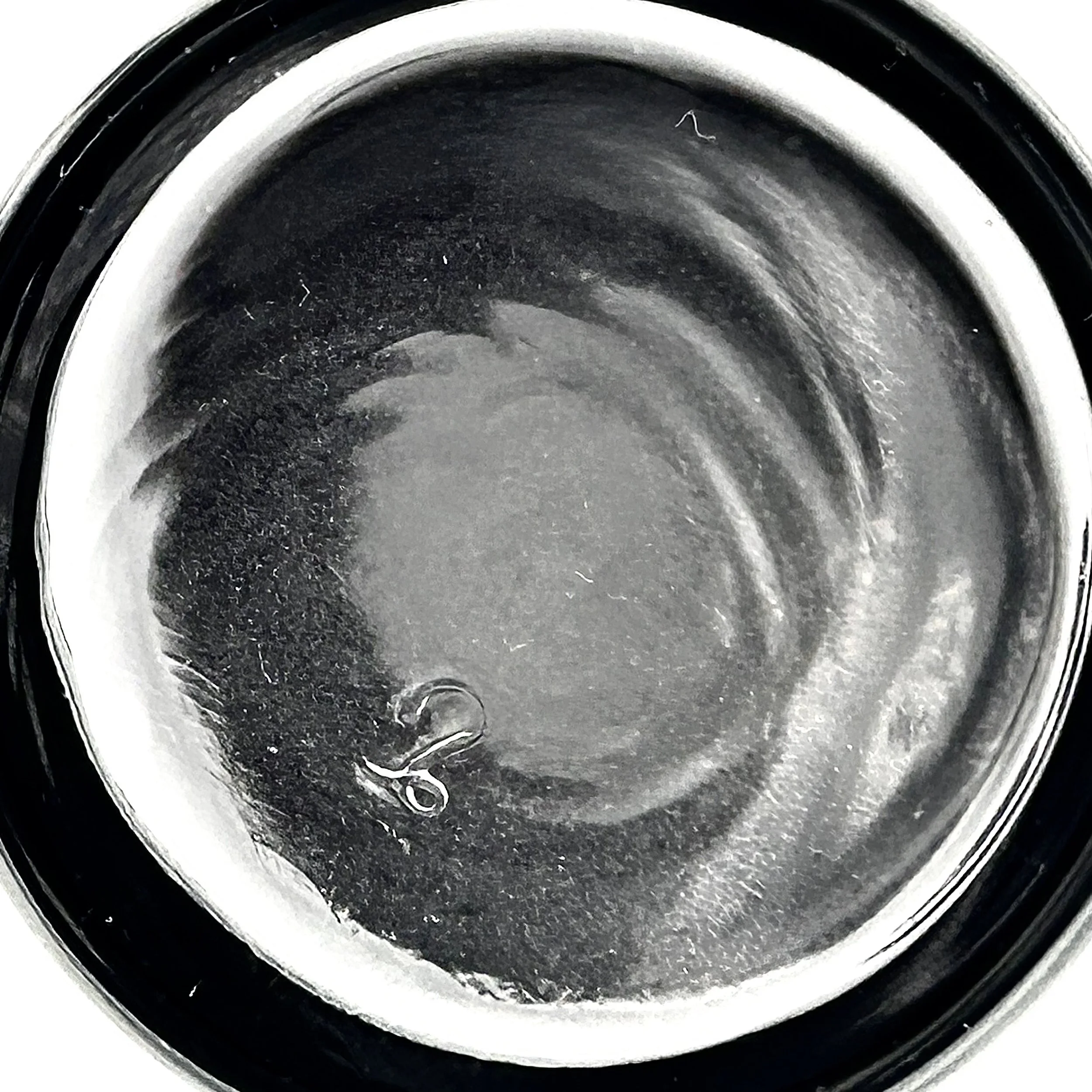
Unmarked, consistent with many decorative pressed-glass tablewares of the period.
Dimensions & Weight
Height: ~6.25 inches (16 cm)
Rim diameter: ~3.75 inches (9.5 cm)
Foot diameter: ~3.5 inches (9 cm)
Weight: Moderate; lighter than early 20th-century heavy pressed wares.
Condition
Very good condition.
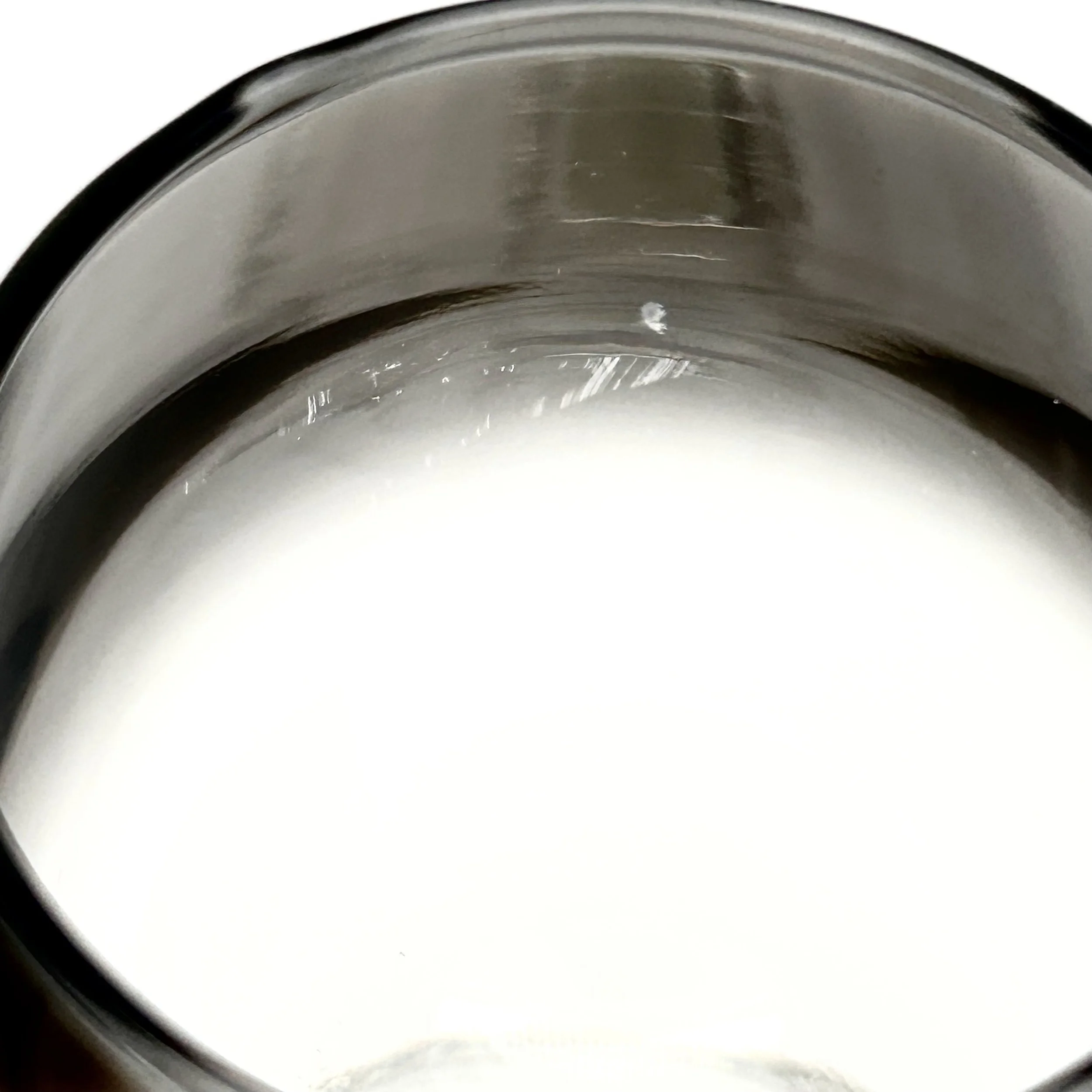
No chips, cracks, or repairs observed.
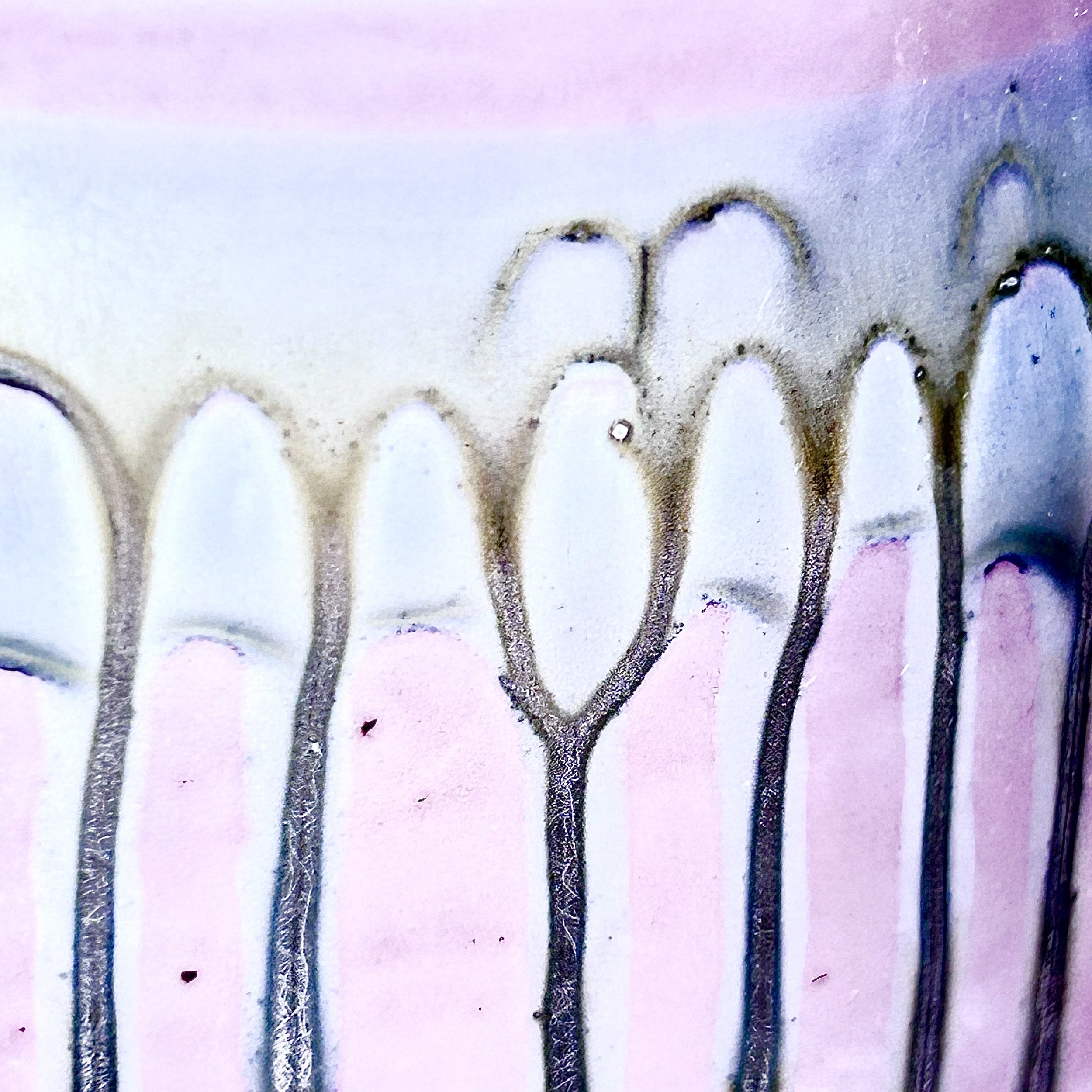
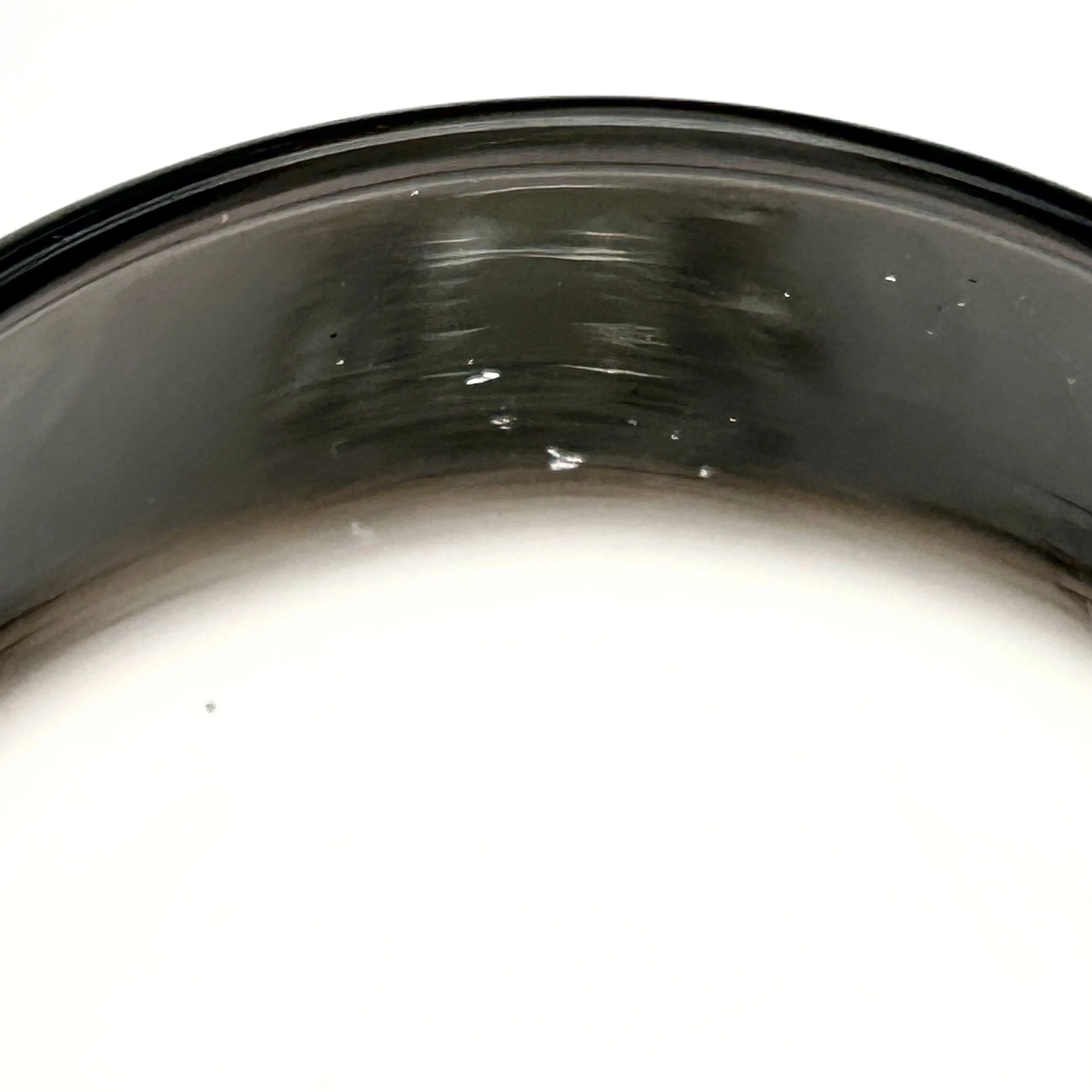
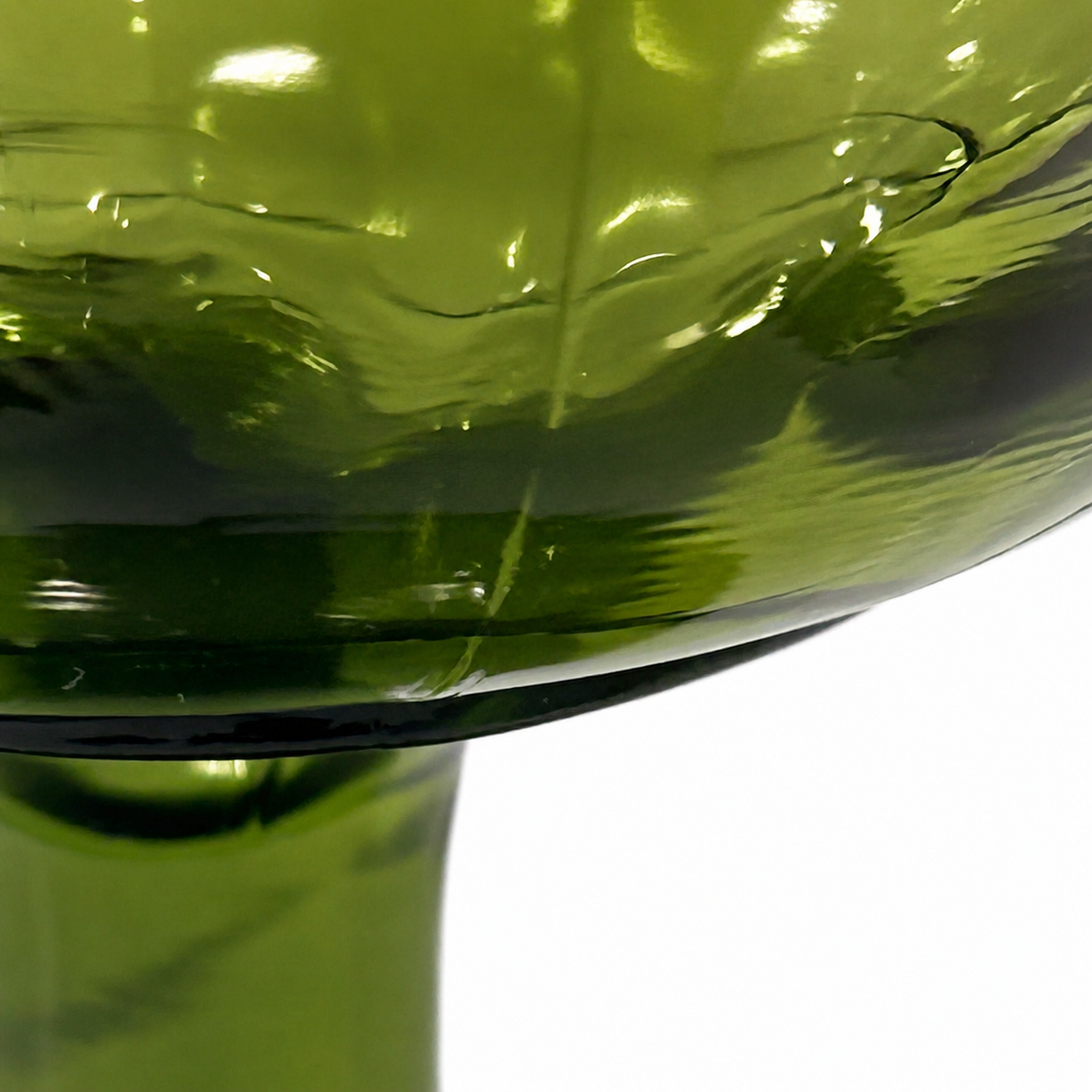
Minor mold lines and occasional small air bubbles consistent with period manufacture.
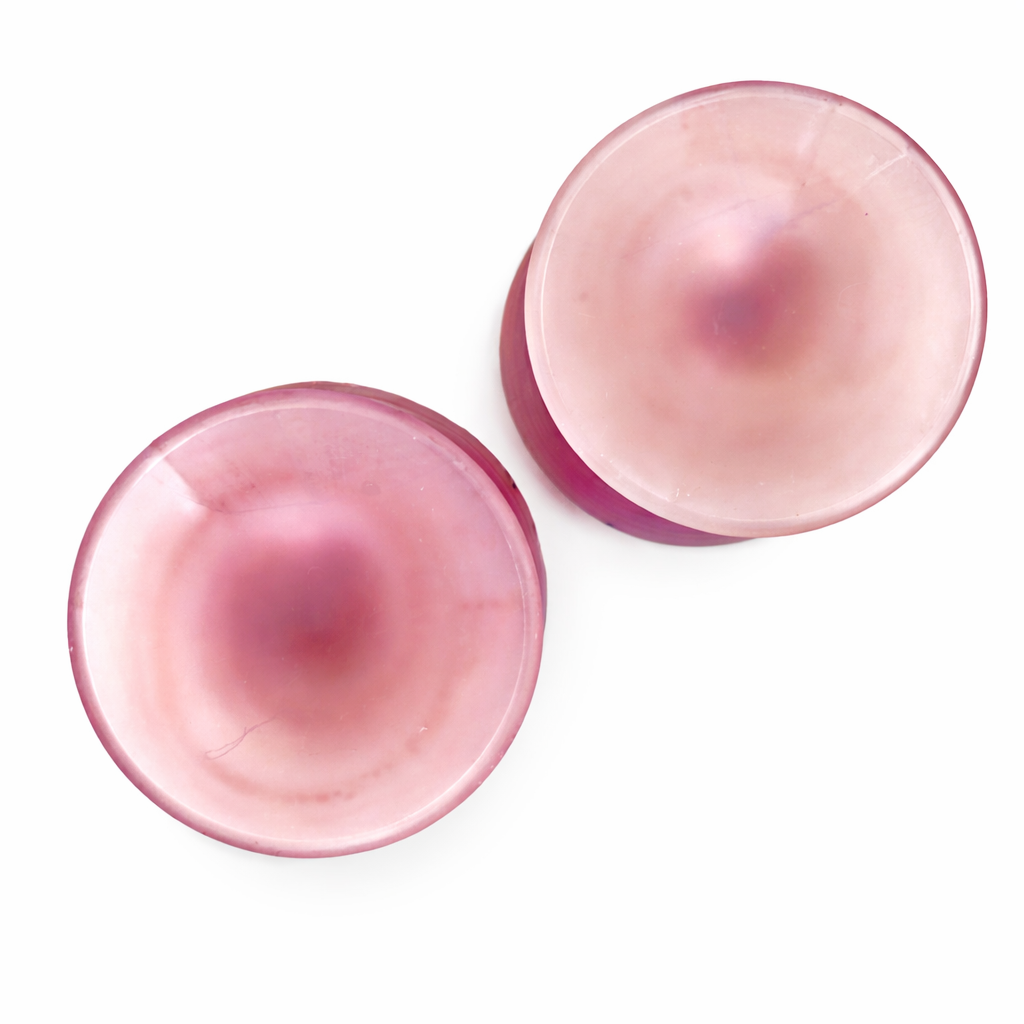
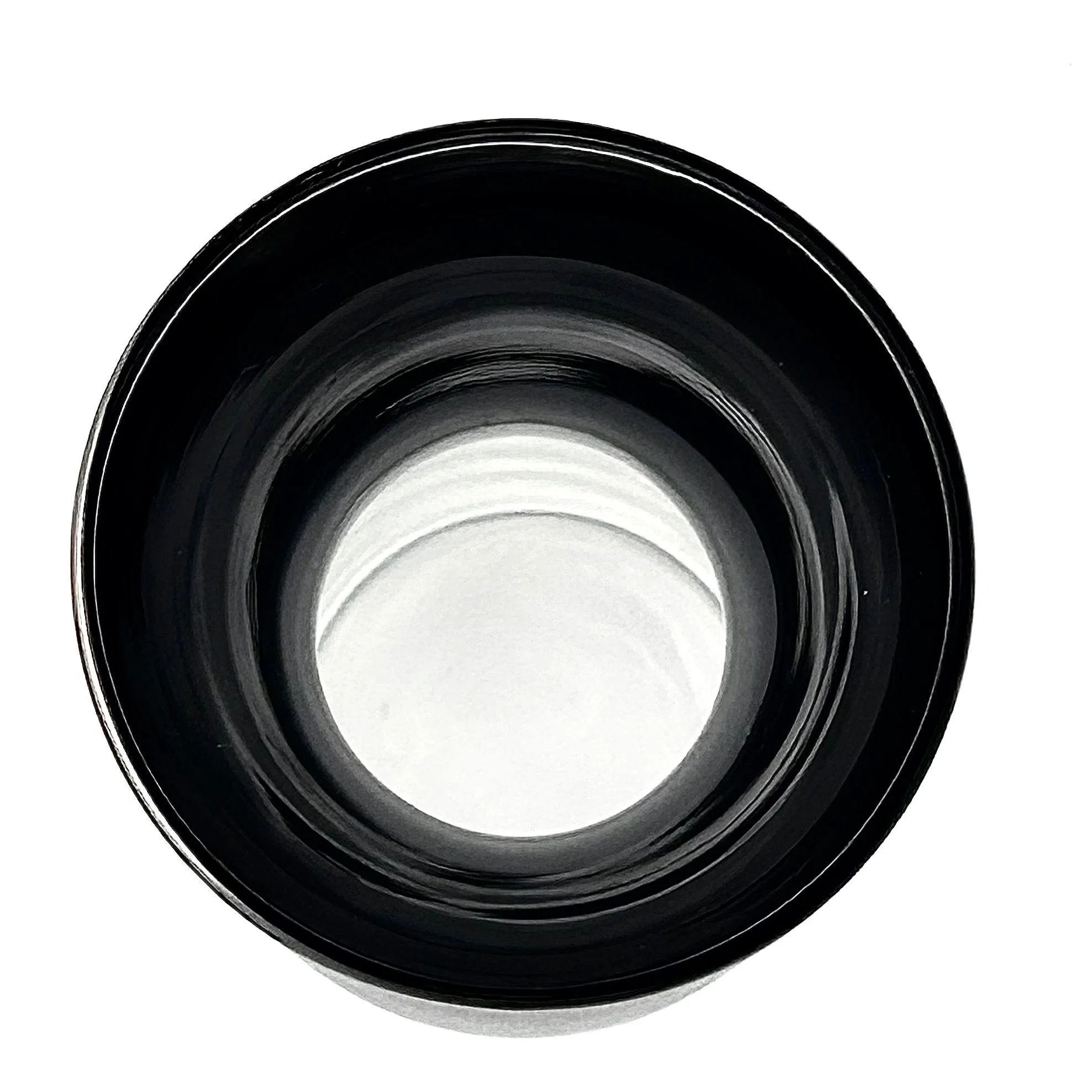
Rim clean; base sits flat and stable.
Authenticity & Construction
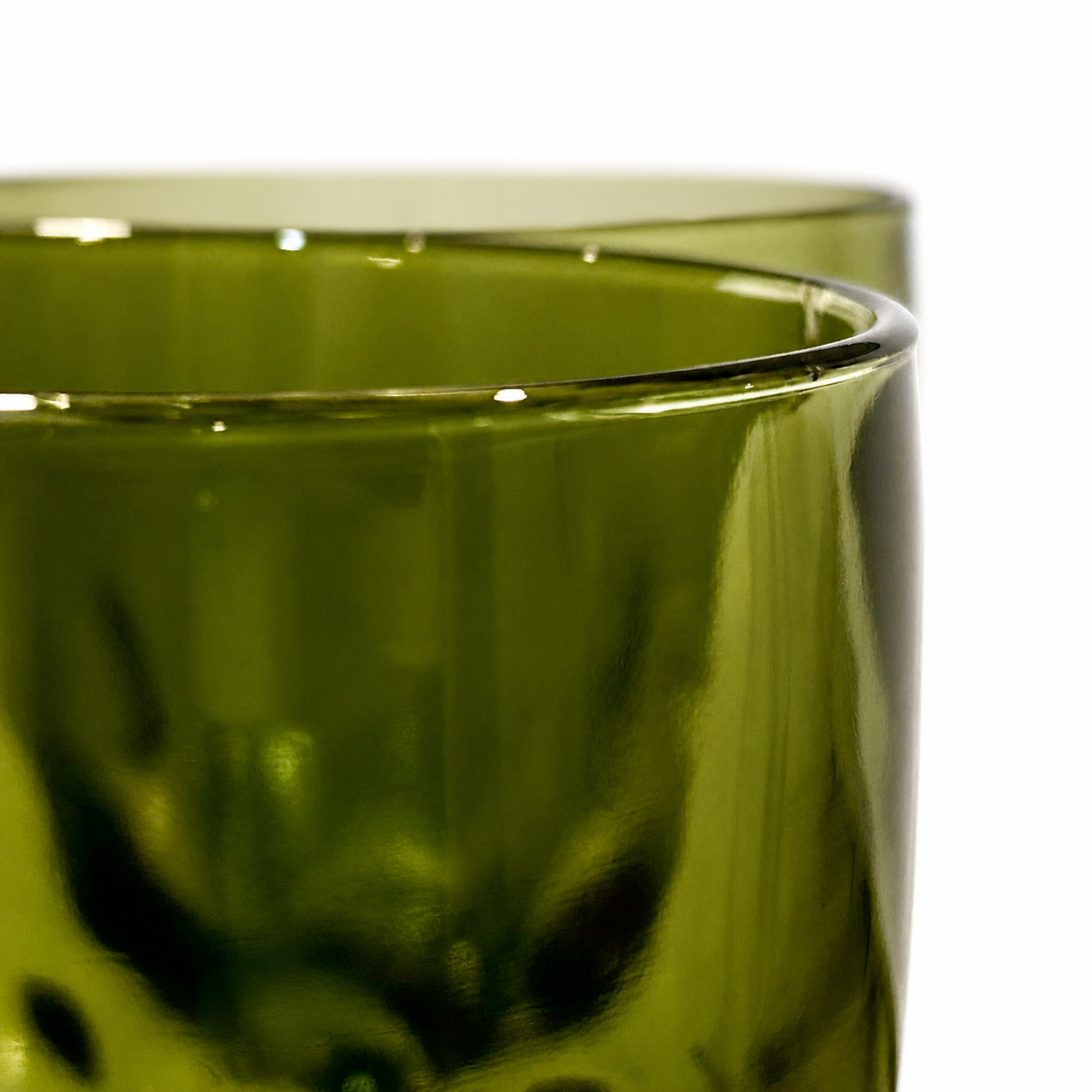
Mold-pressed glass with pronounced optic texture and smooth, finished rim.
Even amber coloration with tonal graduation through stem and foot.
Base unmarked, as typical for export and domestic decorative production of the era.
Placement
An excellent addition to a curated amber glass collection, bar cart styling, or layered shelving display.
Pairs particularly well with cognac, brass, tortoiseshell, and mid-century interiors seeking warmth and dimensional texture.
STANDARD ATTRIBUTION & VALUE DISCLOSURE
This piece is described to the best of current scholarly and market knowledge. Any maker or regional attribution is based on visual analysis, materials, construction techniques, and documented stylistic comparisons. As with many med-century and antique glass objects, definitive attribution may not be possible without original labels or factory records. Pricing reflects condition, quality, decorative appeal, and current collector demand rather than a guaranteed maker identification.
A richly toned amber pressed-glass goblet featuring a sharply defined honeycomb optic bowl, elegant baluster stem, and broad rounded foot. The glass displays a luminous golden-amber body that deepens to cognac at the stem and base, producing strong light refraction and a warm, architectural presence when styled.
The form and weight align with late 20th-century European and North American decorative pressed production, distinct from earlier heavy Depression-era examples. The crisp mold definition and clean rim finish indicate quality later manufacturing typical of the 1970s–1980s export market.
Attribution & Period
Late 20th century, circa 1970s–1980s.
Unmarked, consistent with many decorative pressed-glass tablewares of the period.
Dimensions & Weight
Height: ~6.25 inches (16 cm)
Rim diameter: ~3.75 inches (9.5 cm)
Foot diameter: ~3.5 inches (9 cm)
Weight: Moderate; lighter than early 20th-century heavy pressed wares.
Condition
Very good condition.
No chips, cracks, or repairs observed.
Minor mold lines and occasional small air bubbles consistent with period manufacture.
Rim clean; base sits flat and stable.
Authenticity & Construction
Mold-pressed glass with pronounced optic texture and smooth, finished rim.
Even amber coloration with tonal graduation through stem and foot.
Base unmarked, as typical for export and domestic decorative production of the era.
Placement
An excellent addition to a curated amber glass collection, bar cart styling, or layered shelving display.
Pairs particularly well with cognac, brass, tortoiseshell, and mid-century interiors seeking warmth and dimensional texture.
STANDARD ATTRIBUTION & VALUE DISCLOSURE
This piece is described to the best of current scholarly and market knowledge. Any maker or regional attribution is based on visual analysis, materials, construction techniques, and documented stylistic comparisons. As with many med-century and antique glass objects, definitive attribution may not be possible without original labels or factory records. Pricing reflects condition, quality, decorative appeal, and current collector demand rather than a guaranteed maker identification.

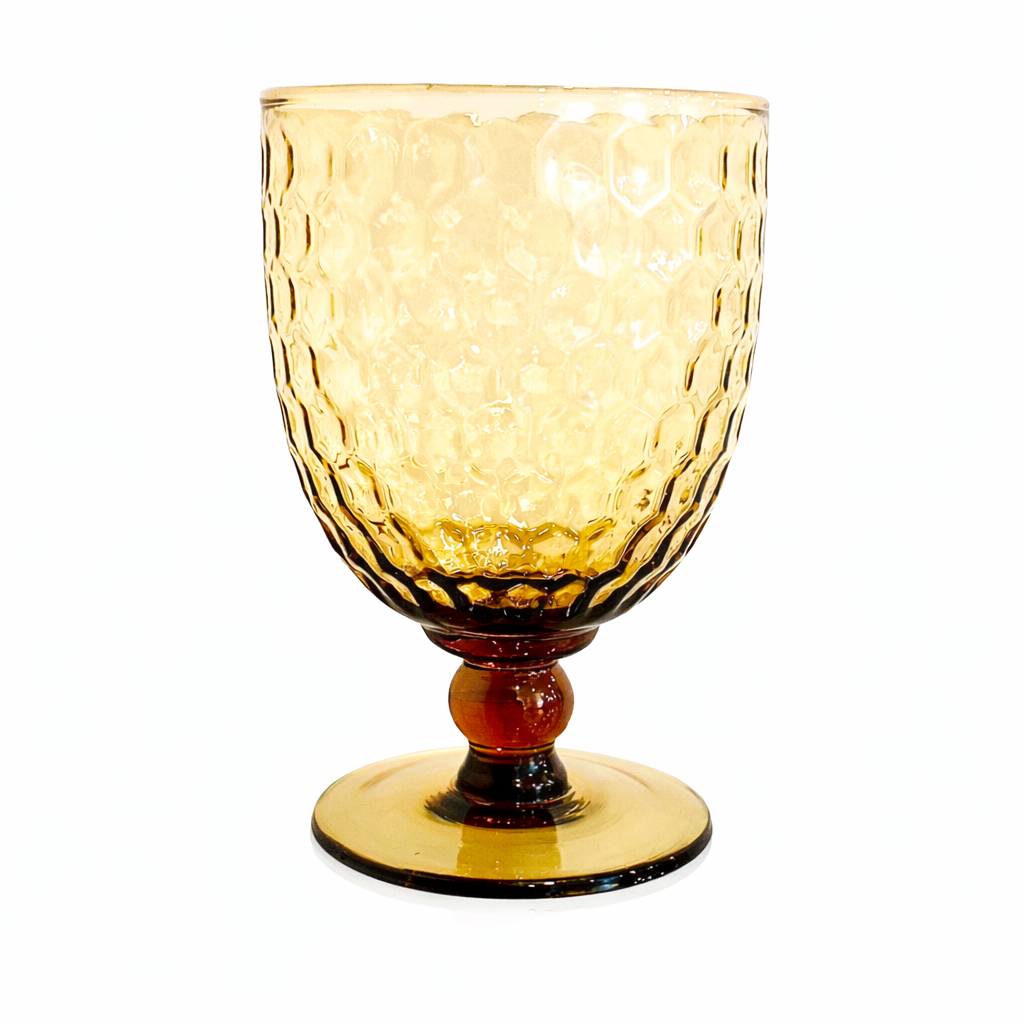 Image 1 of 6
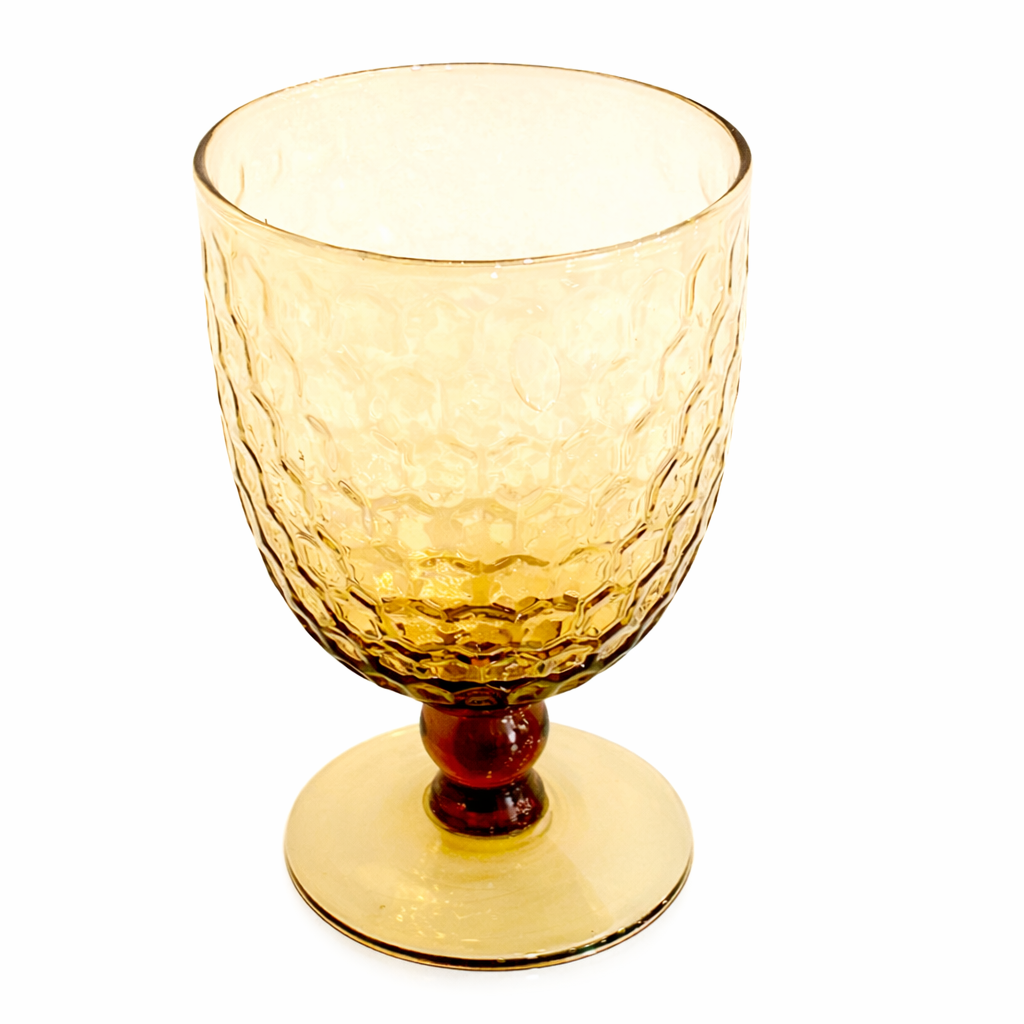 Image 2 of 6
 Image 3 of 6
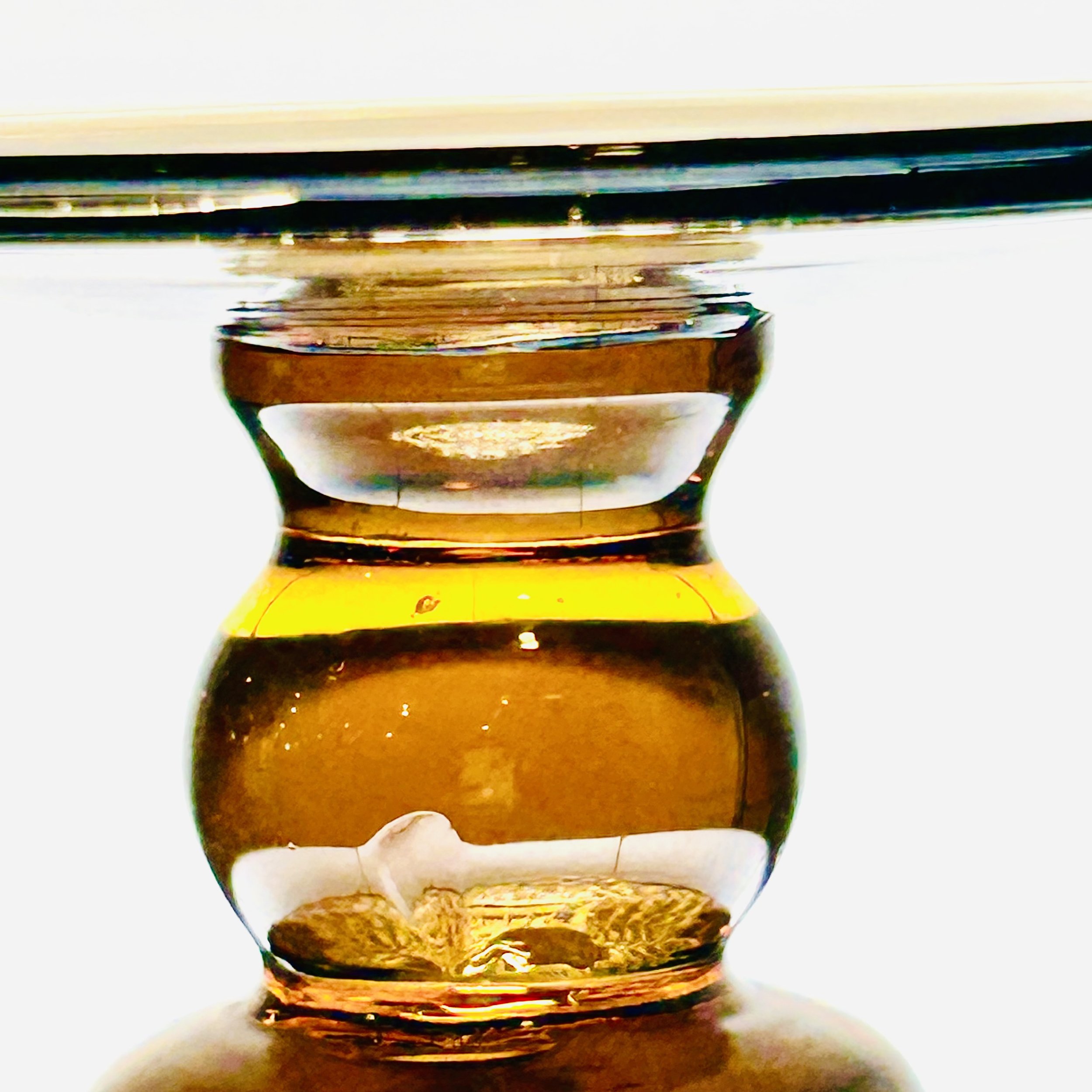 Image 4 of 6
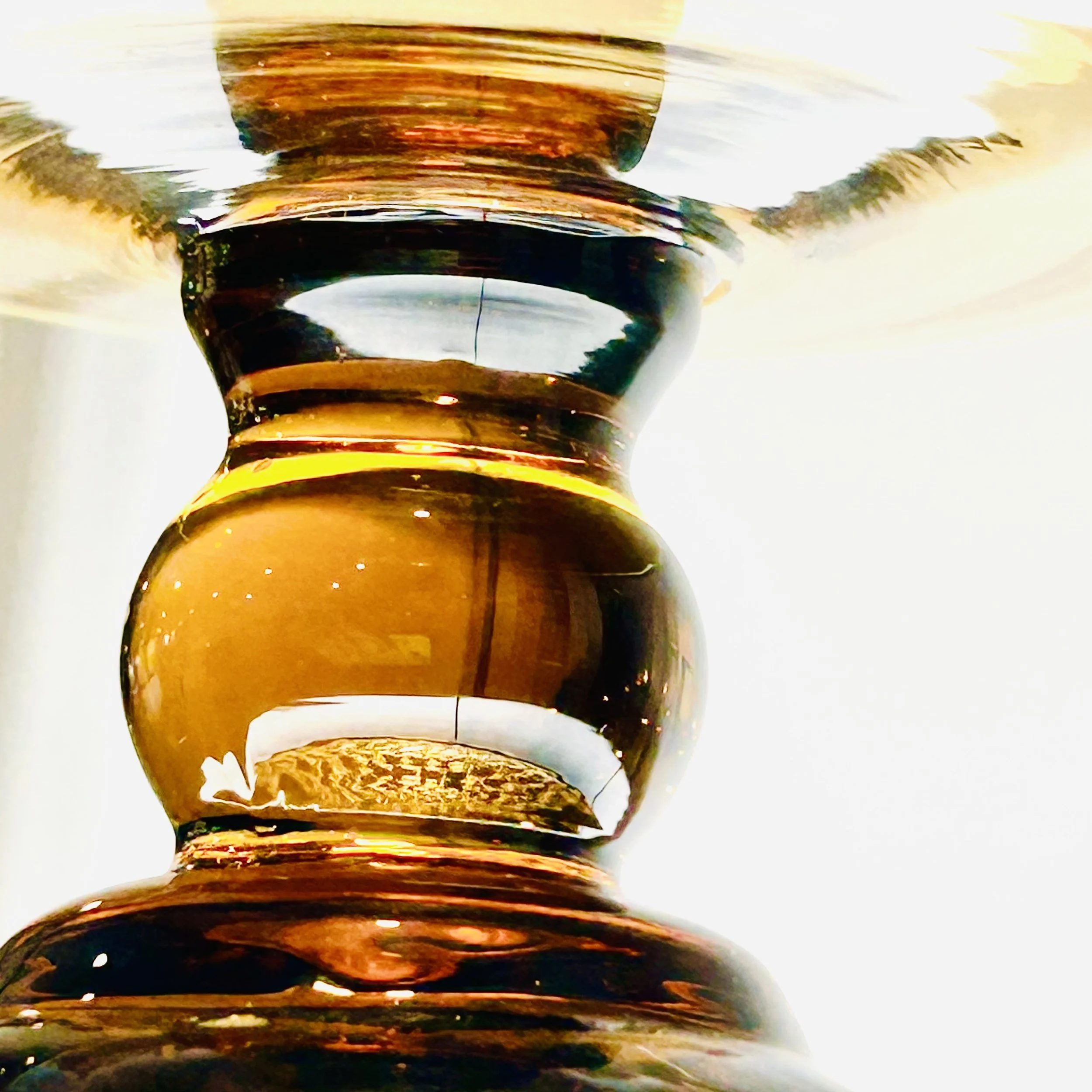 Image 5 of 6
 Image 6 of 6