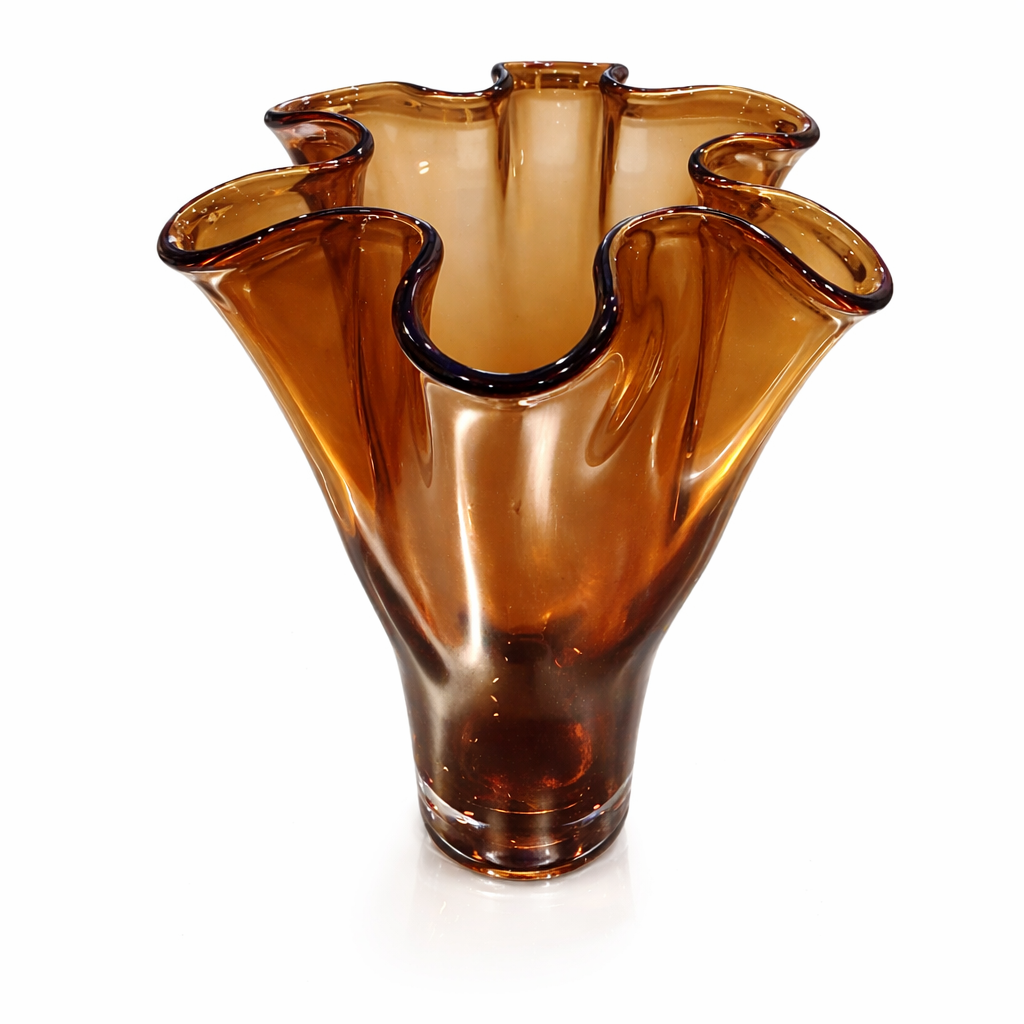
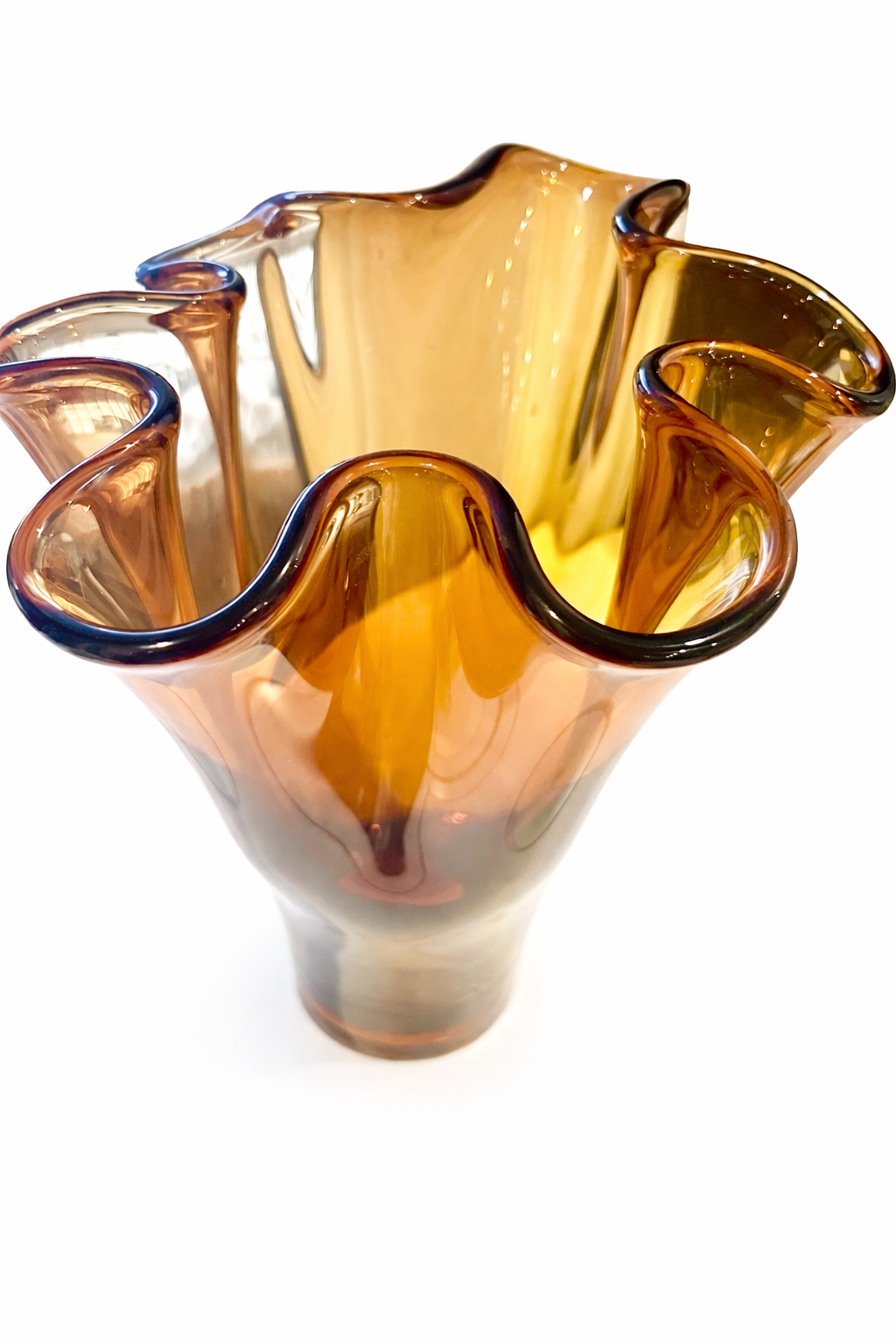
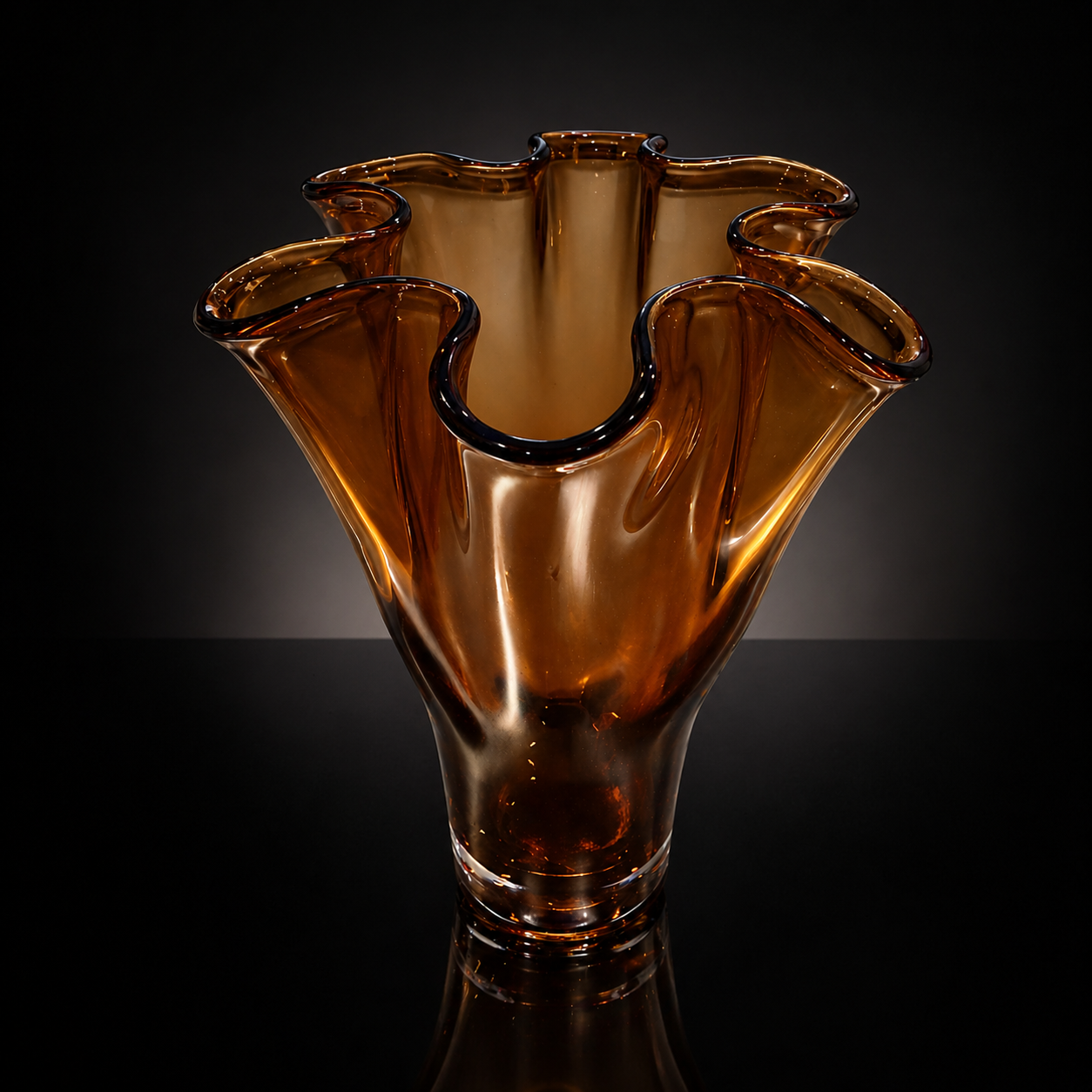
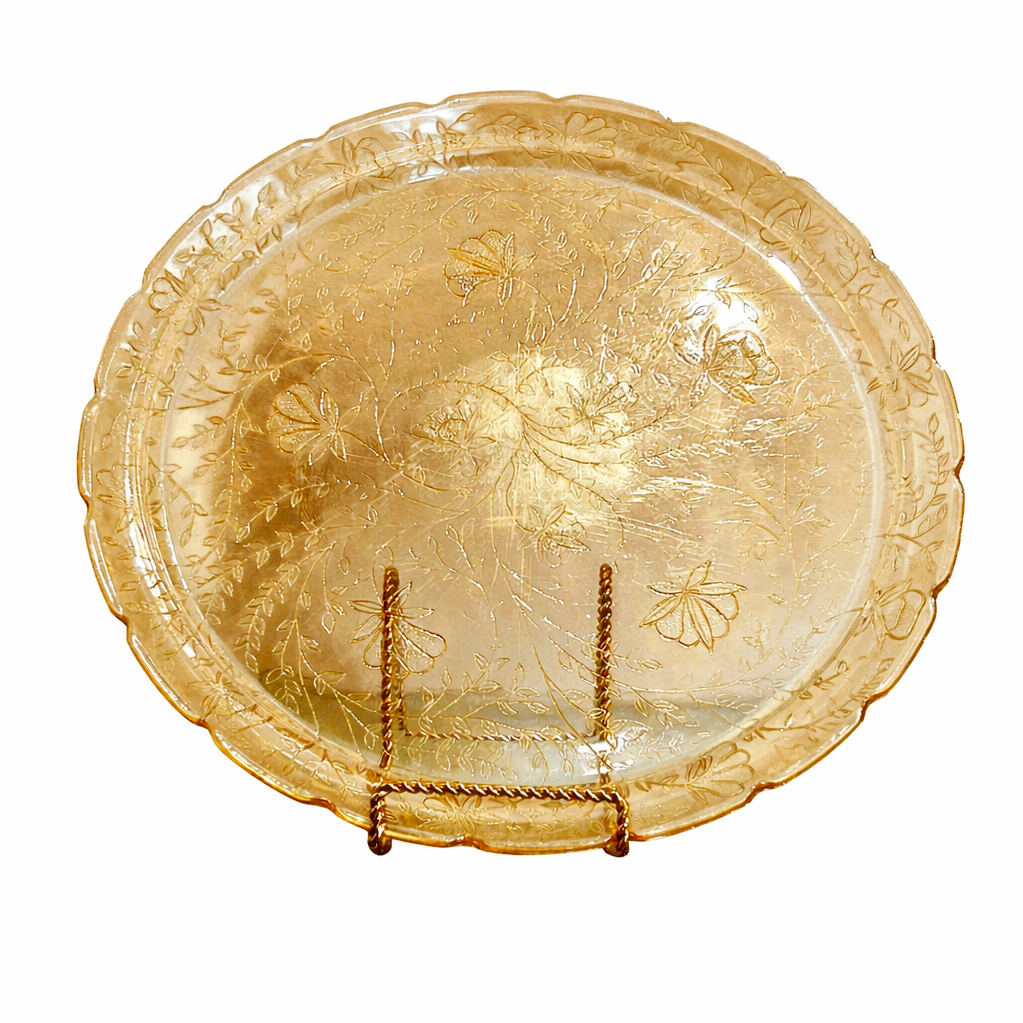
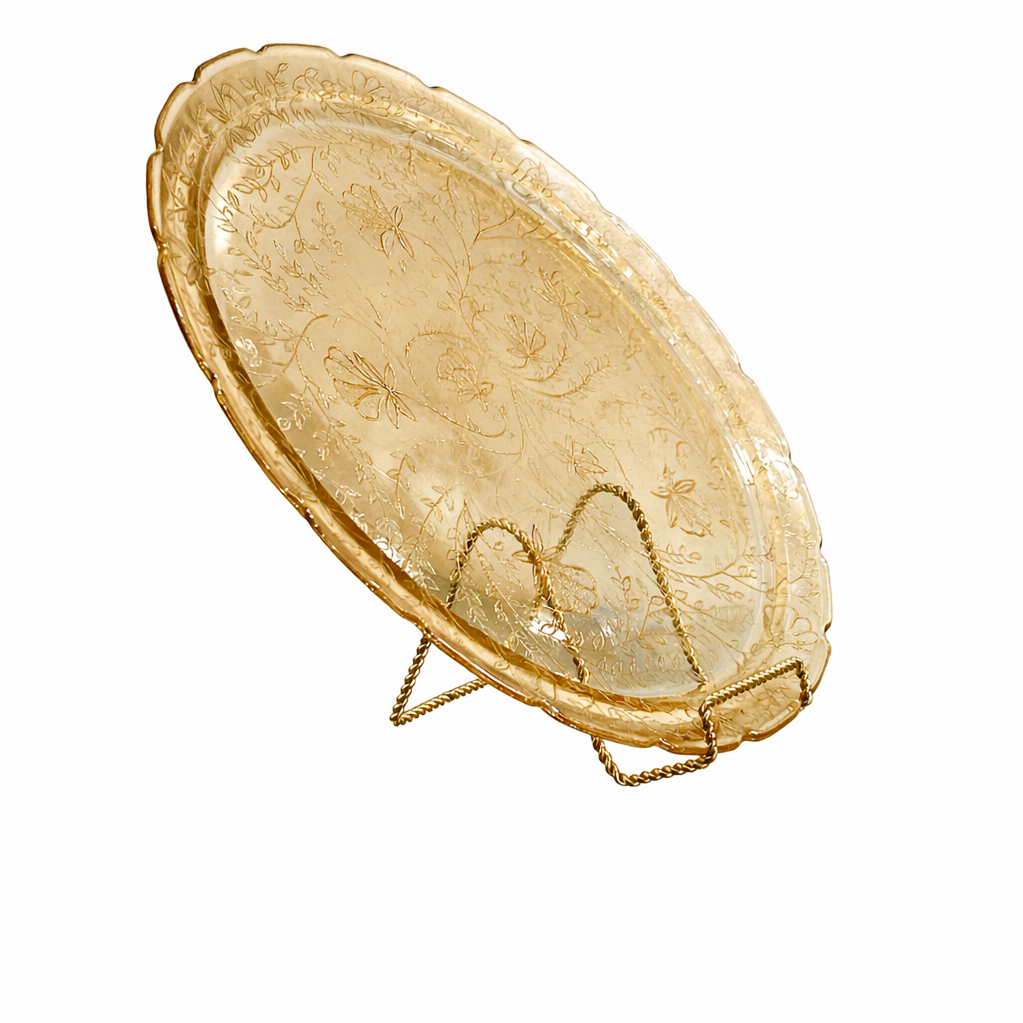
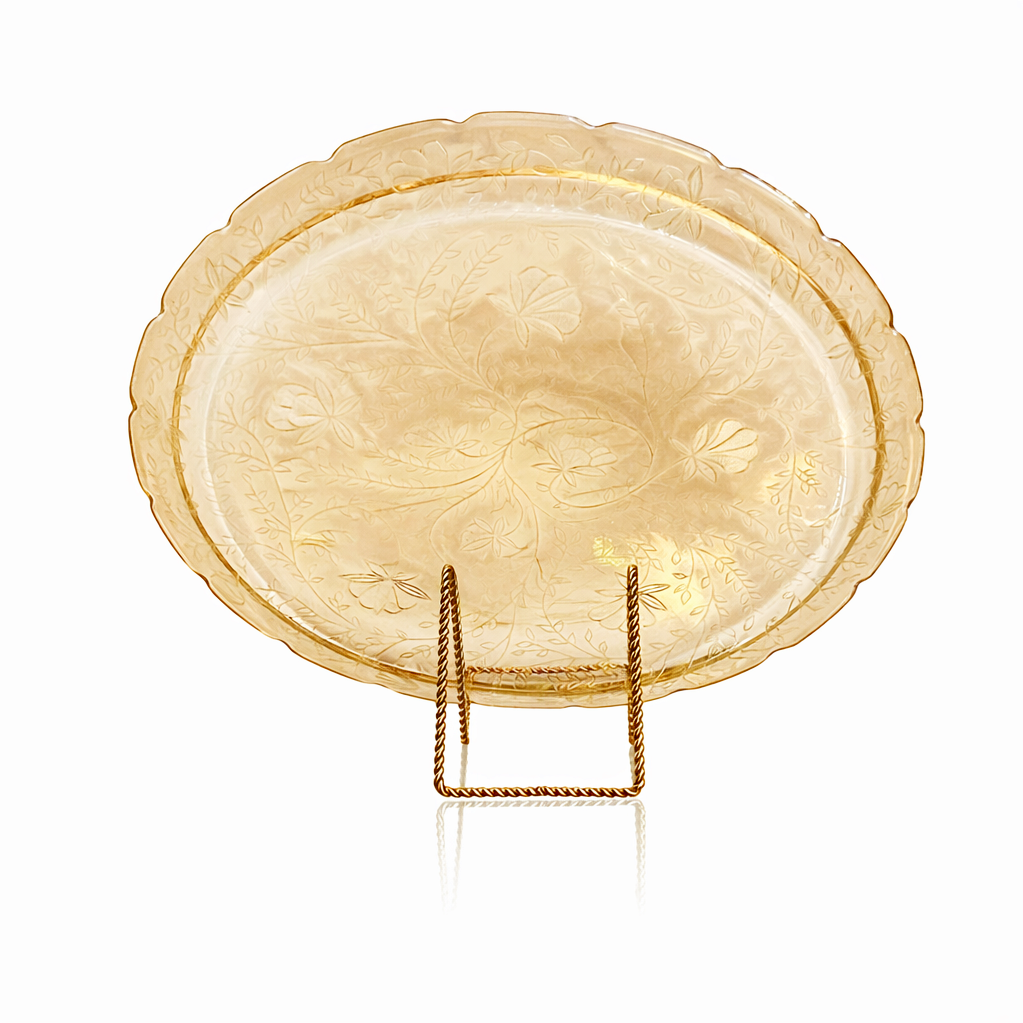
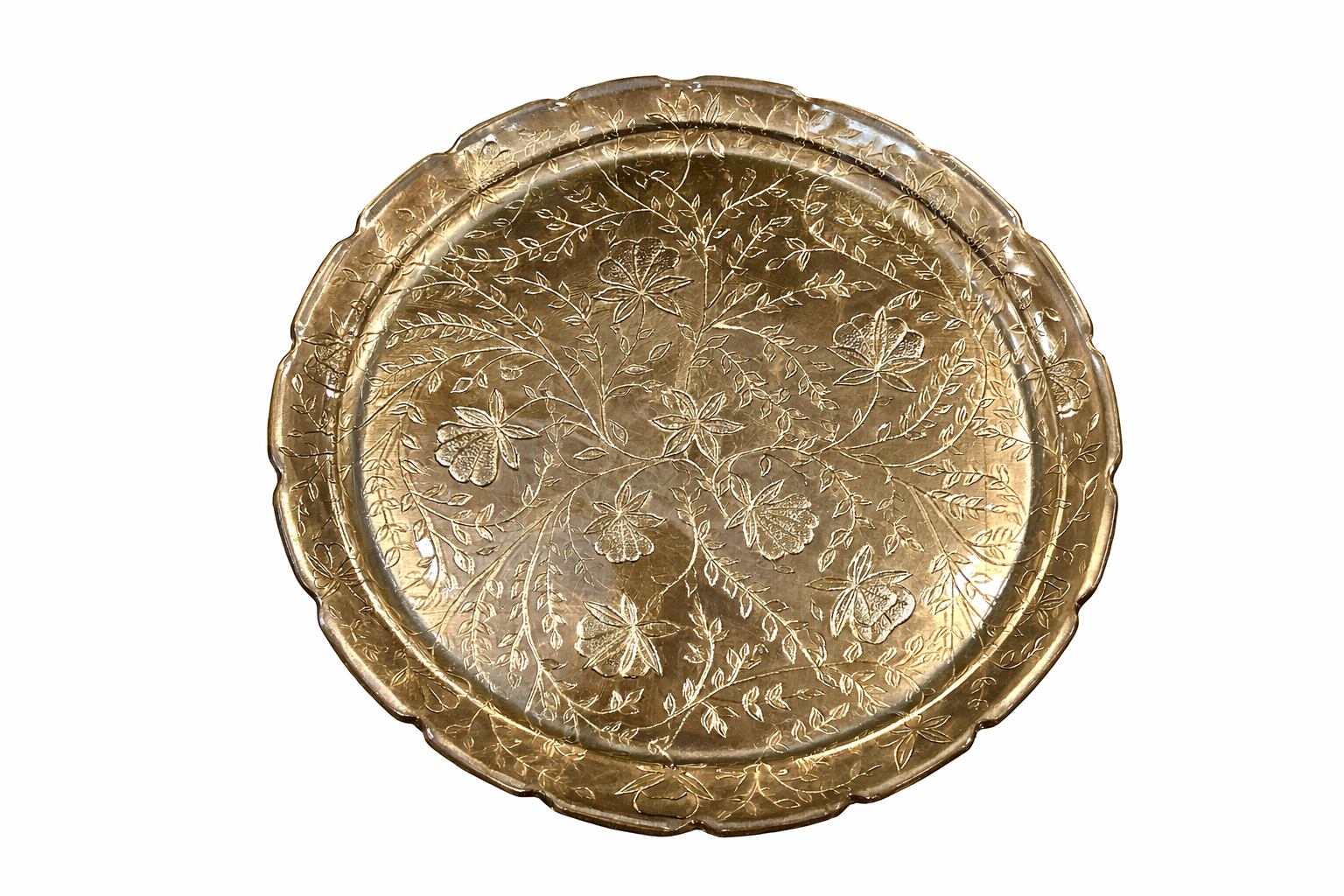
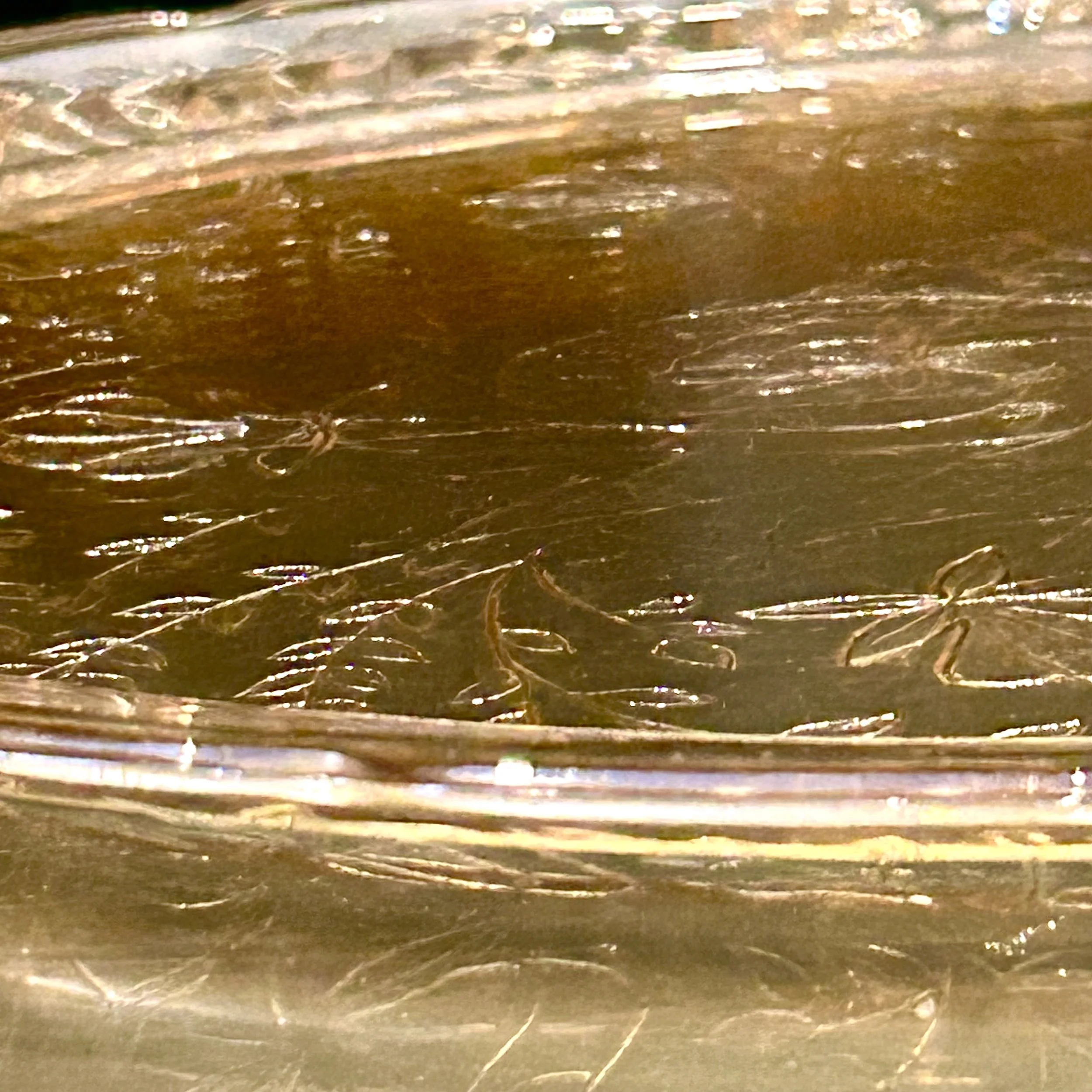
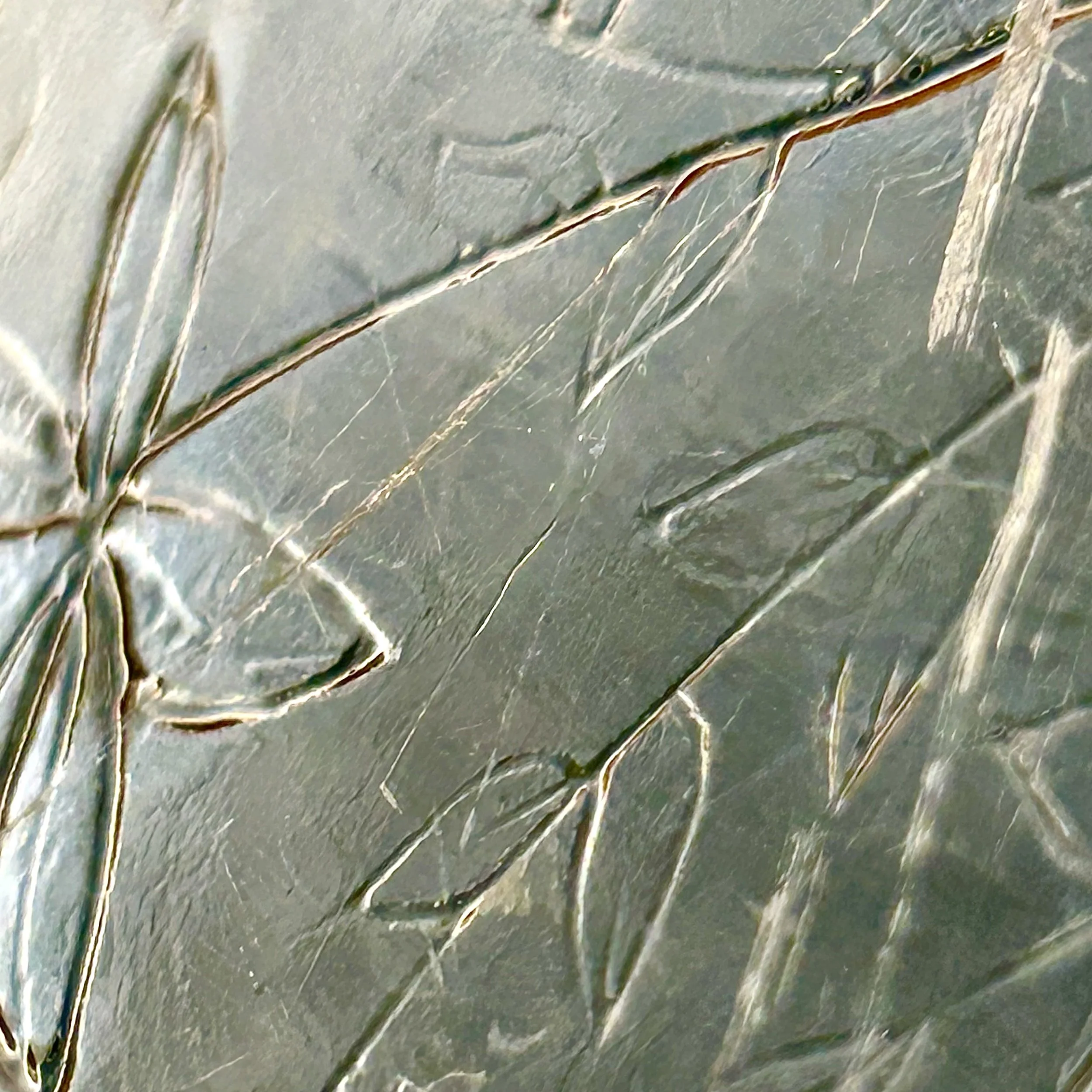
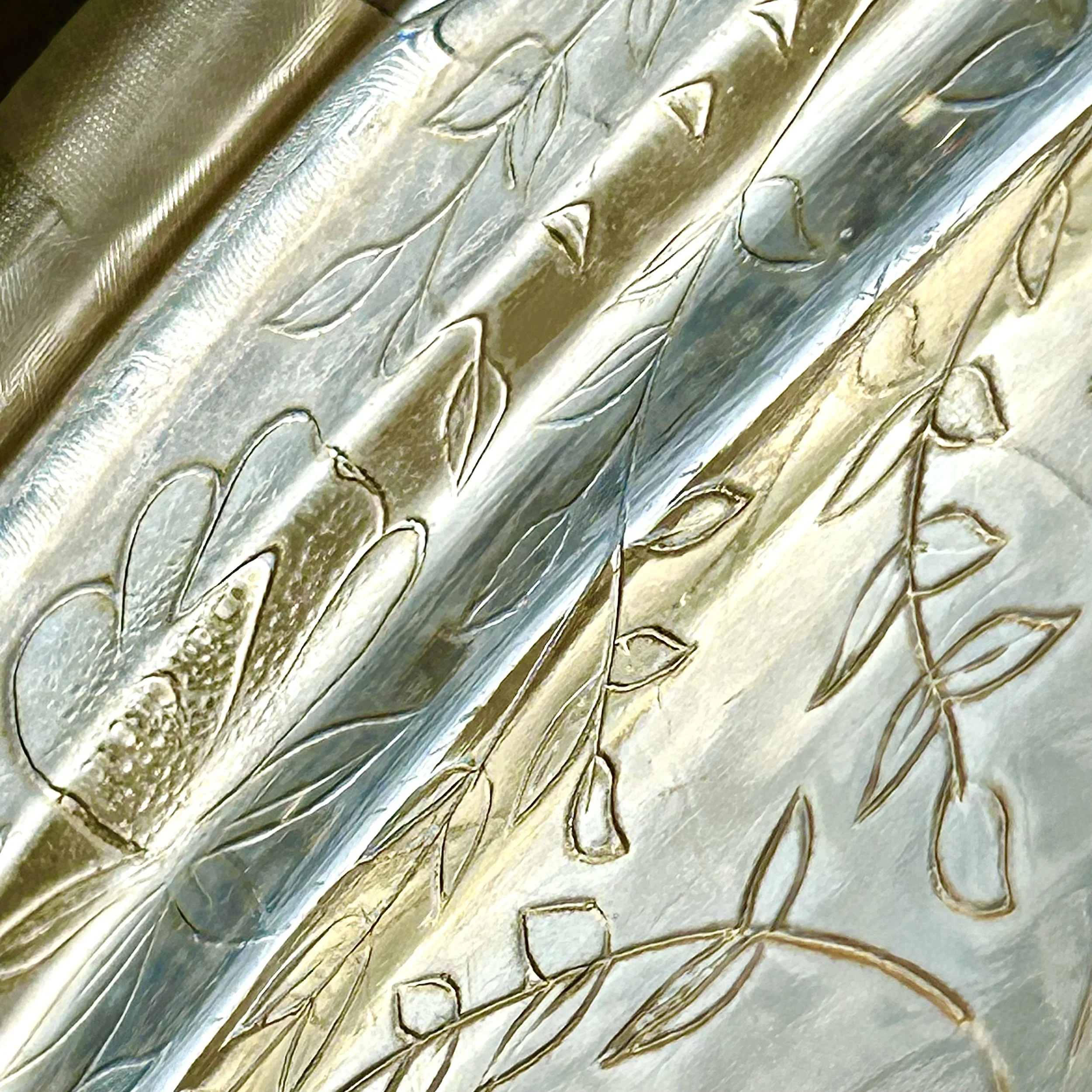
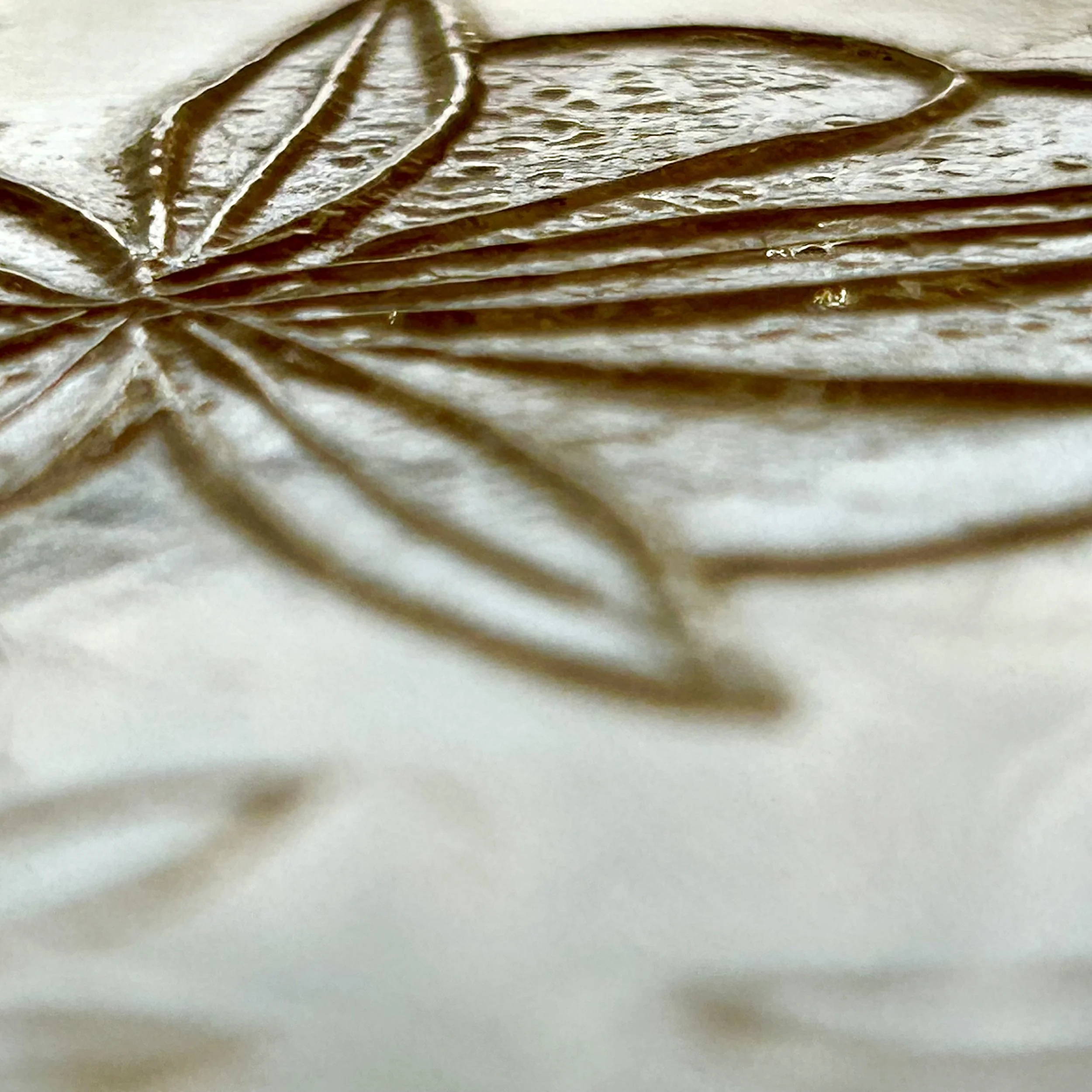
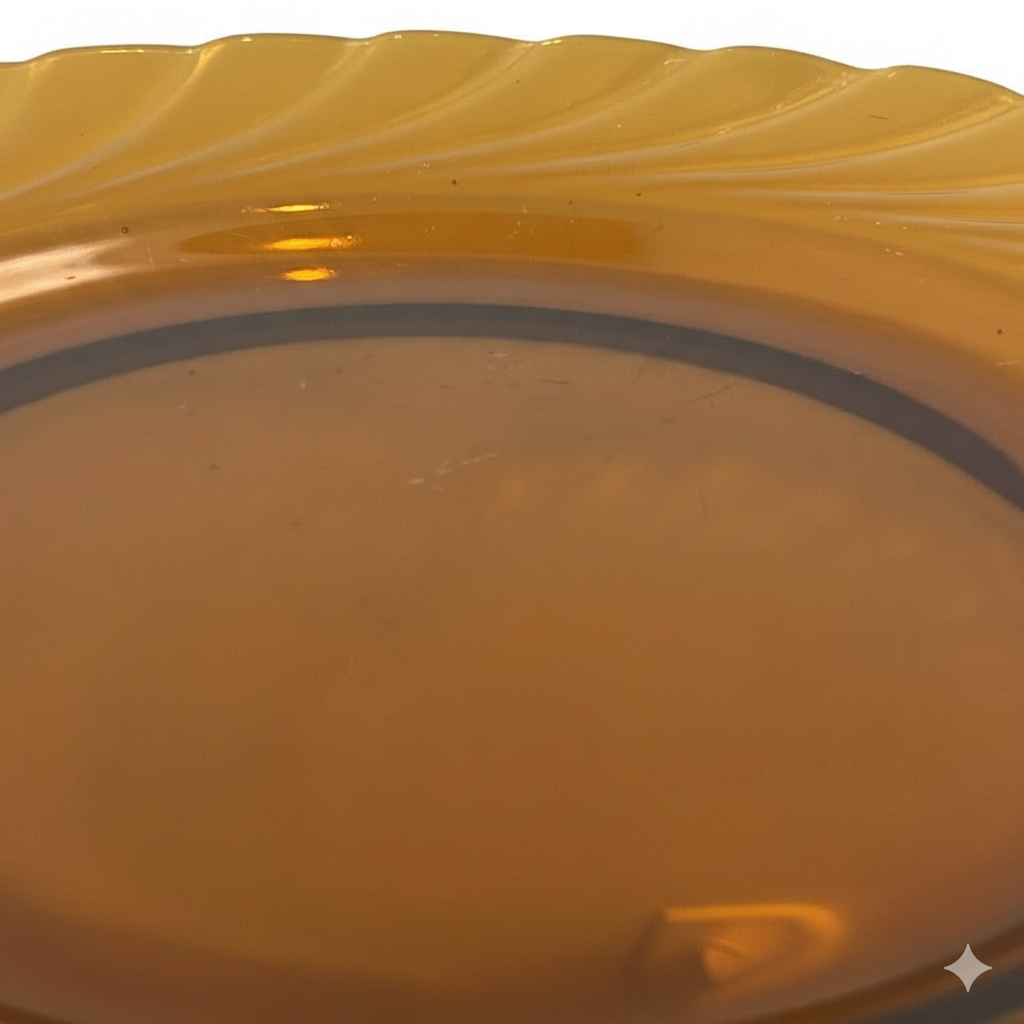
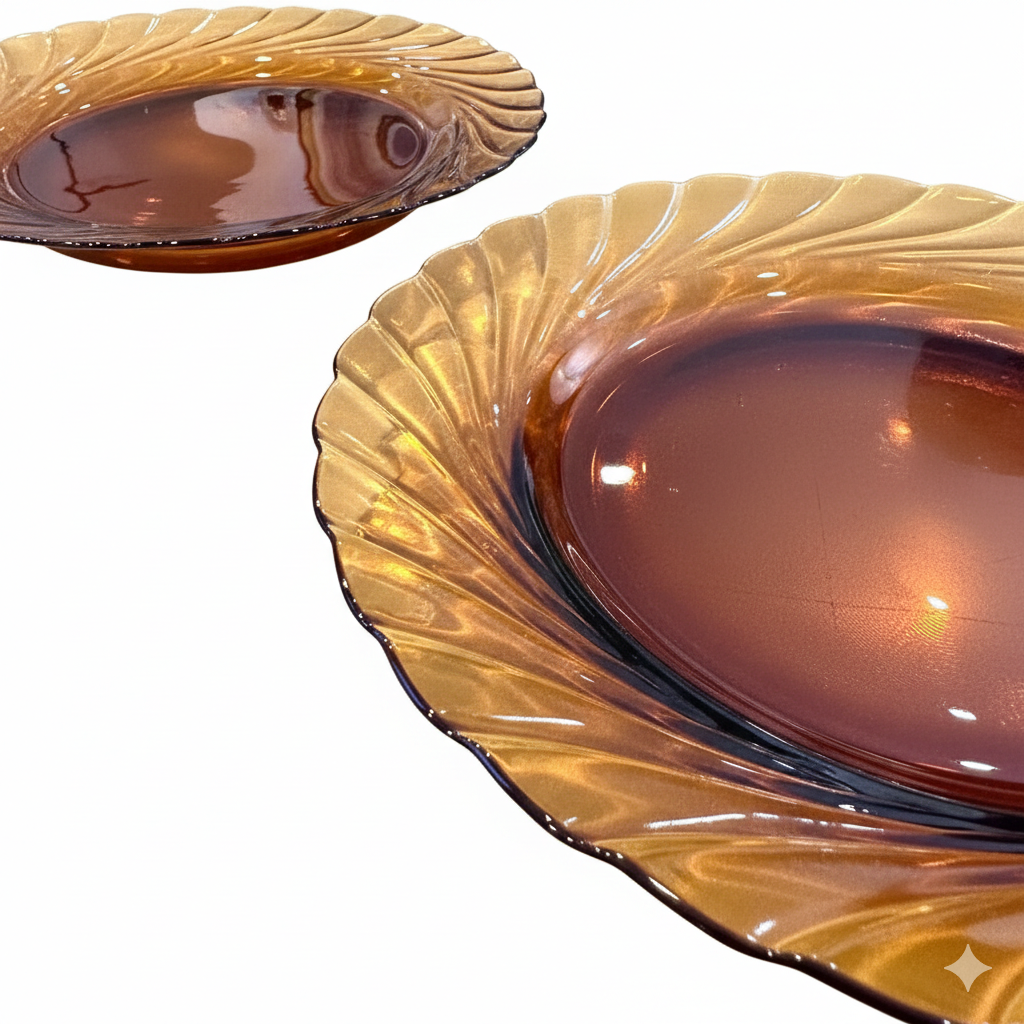
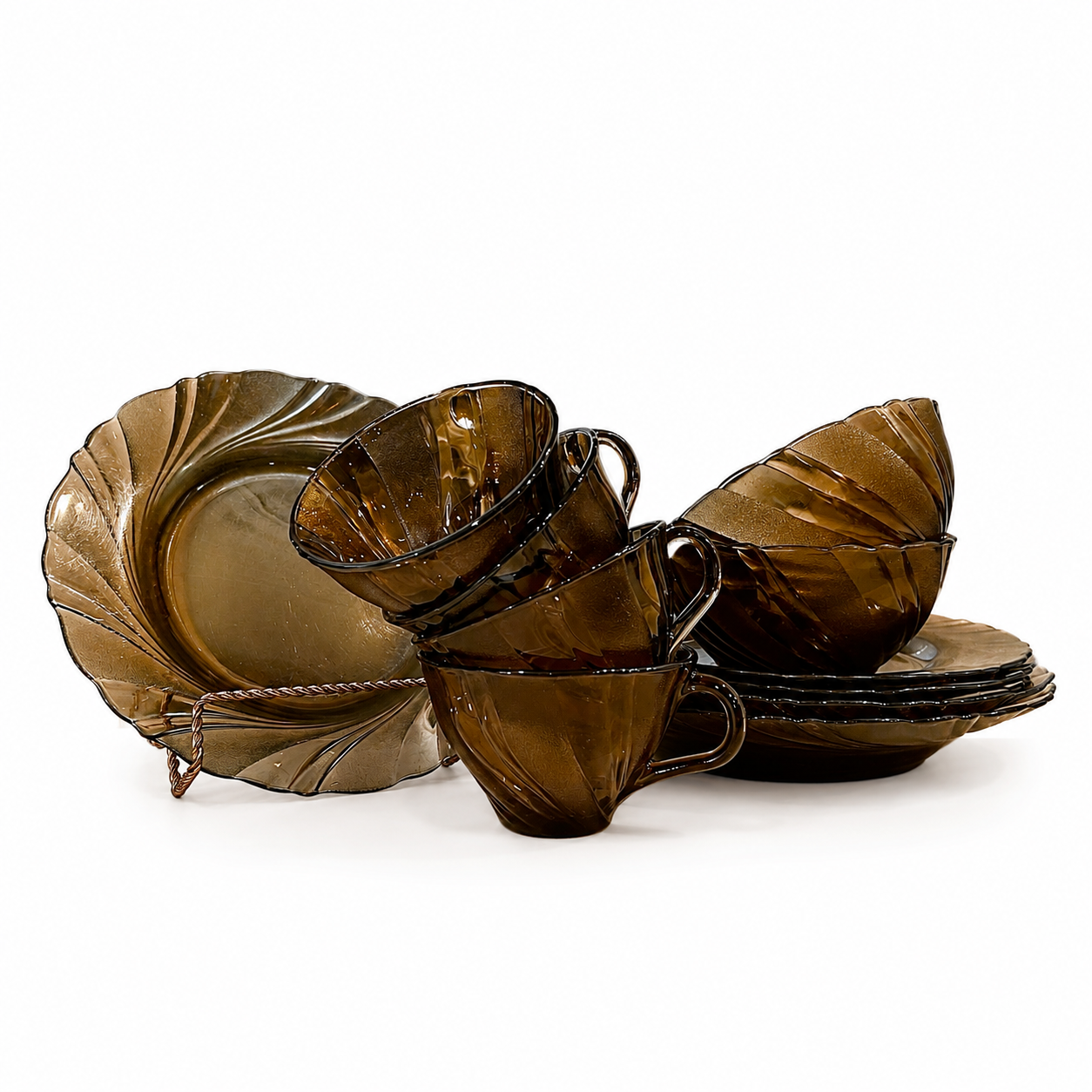
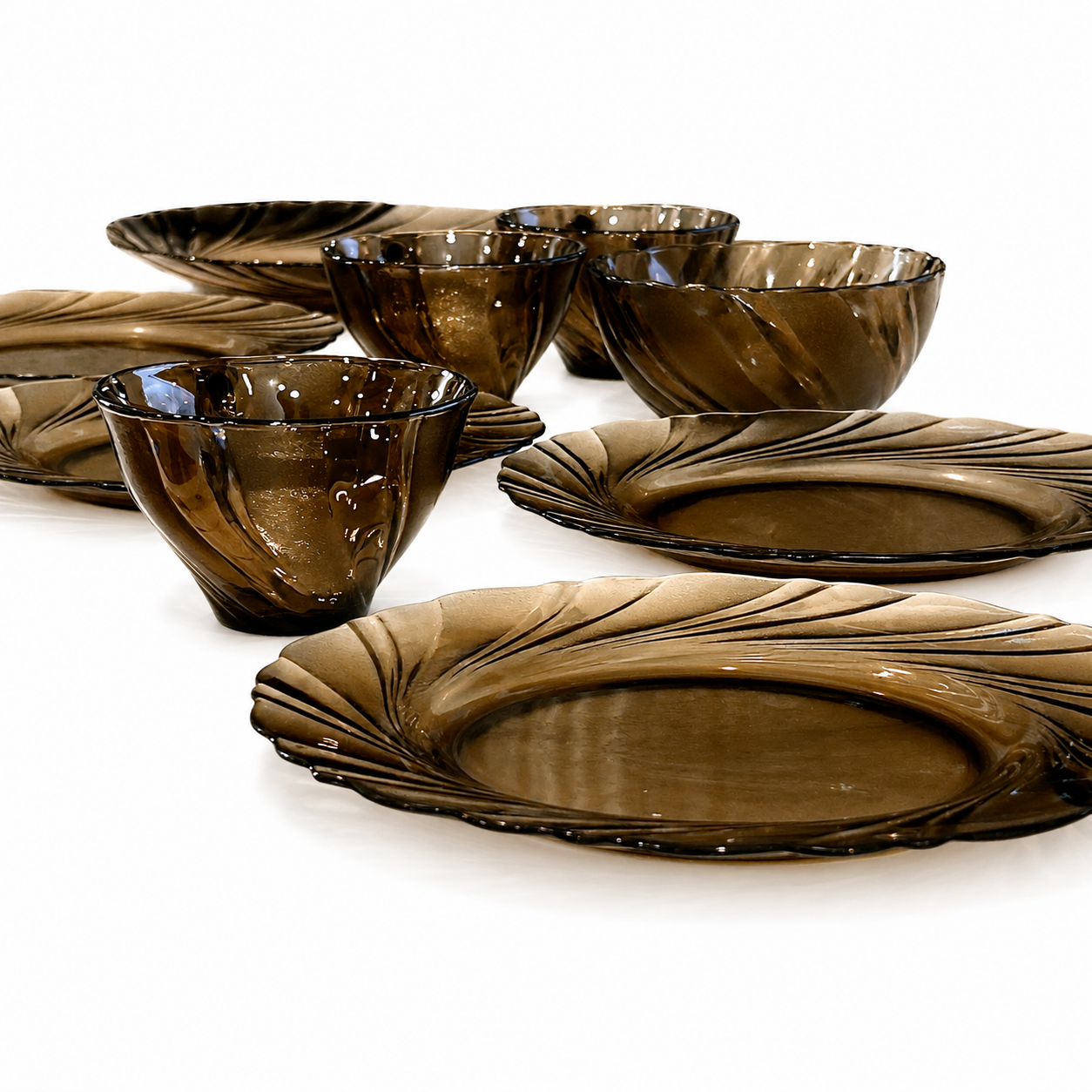
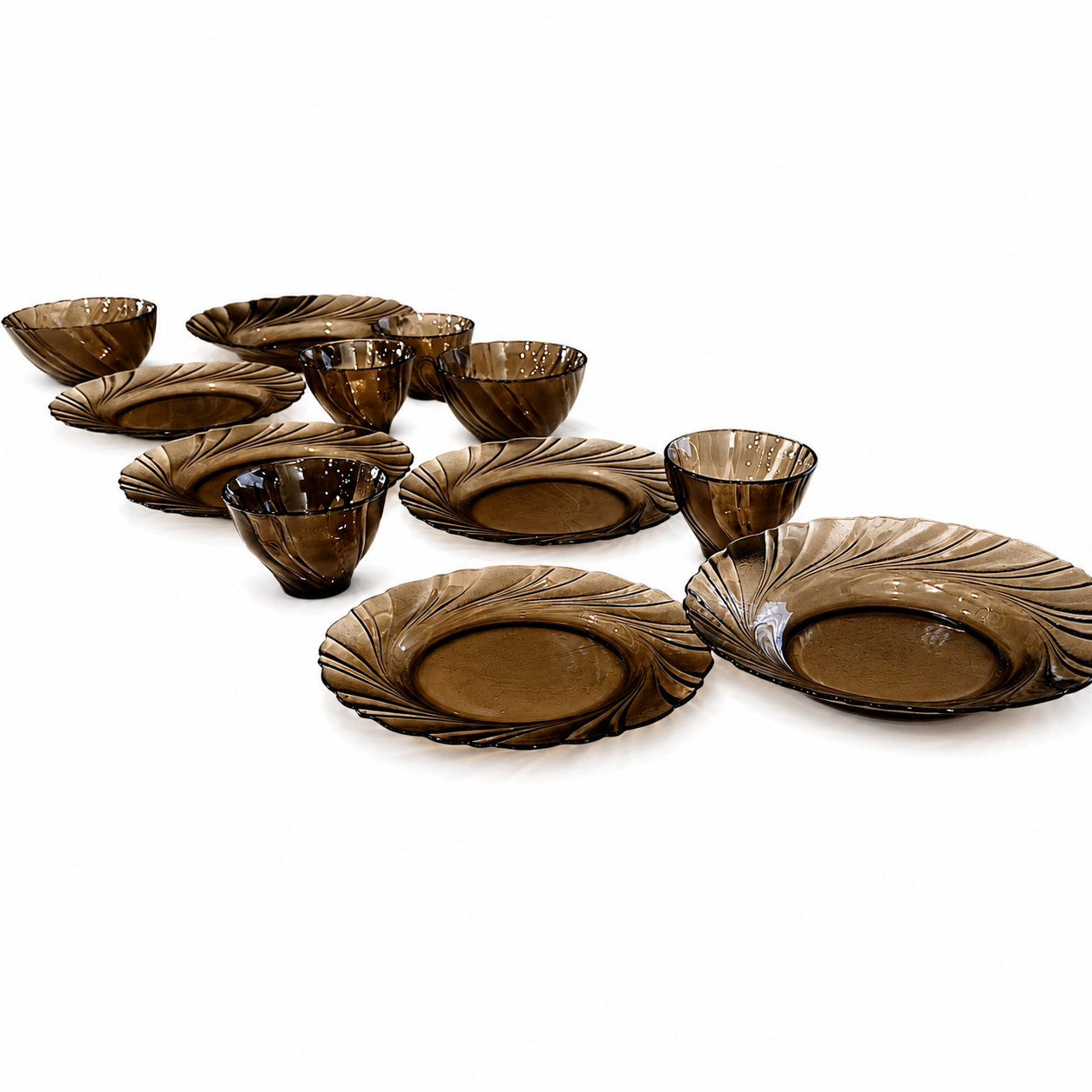
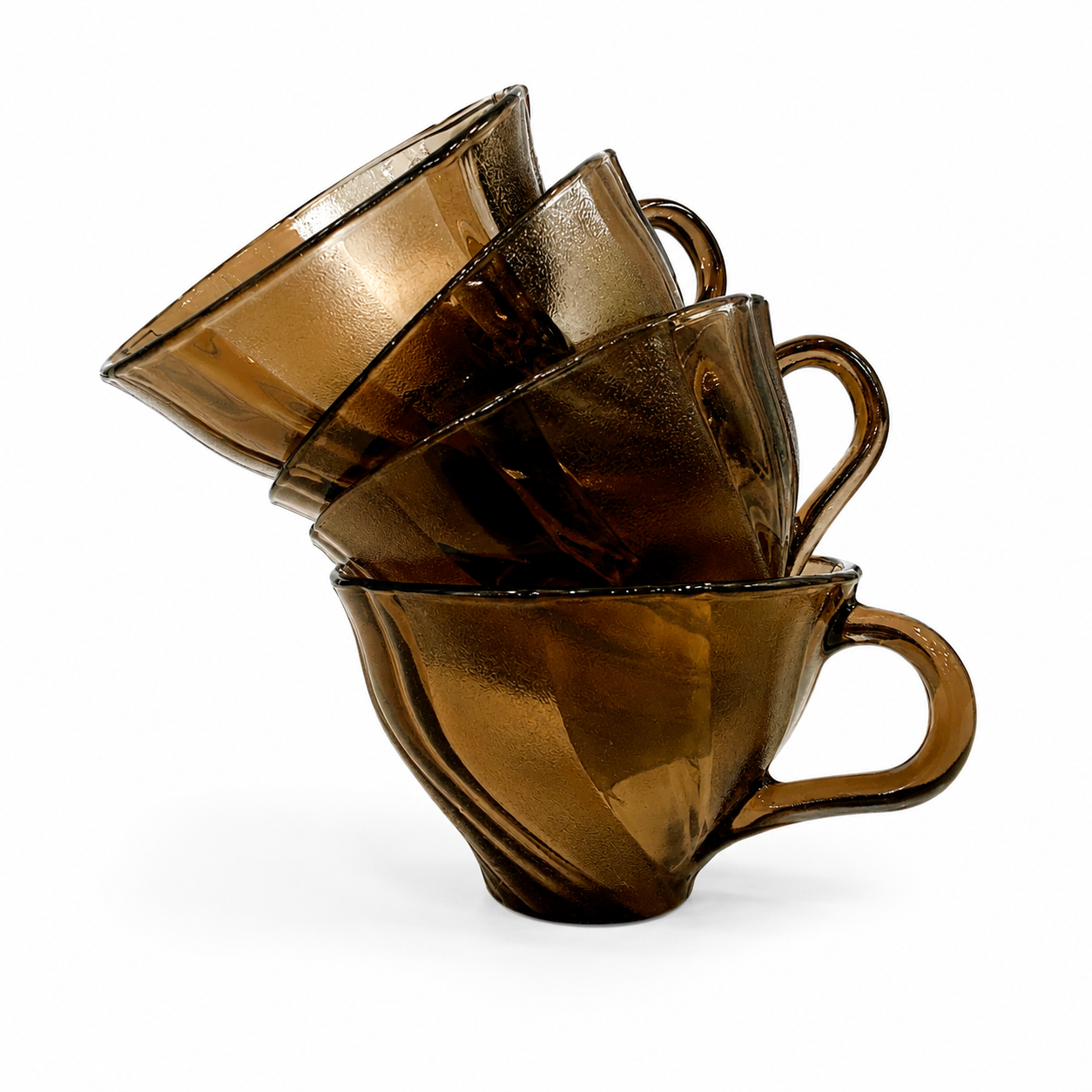
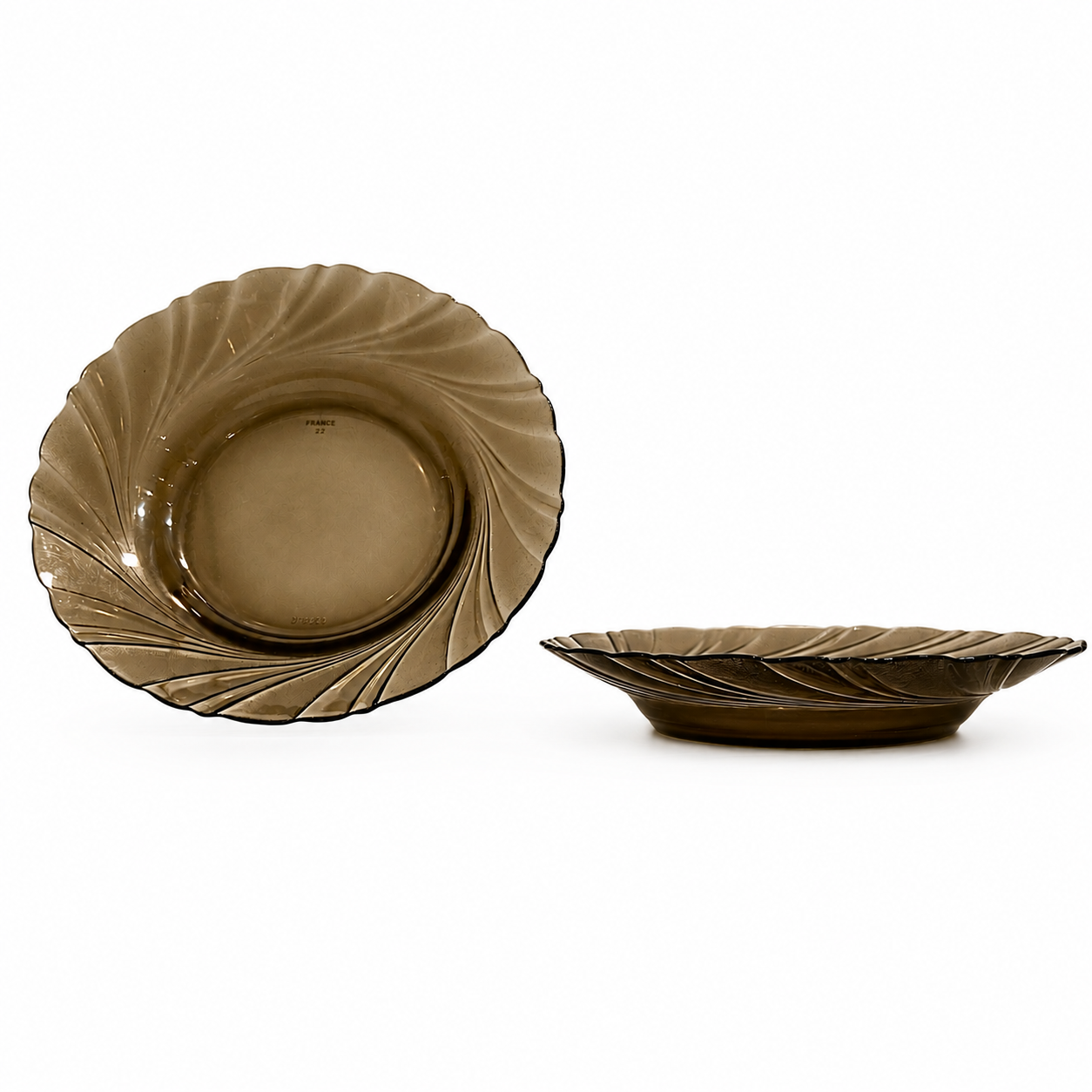
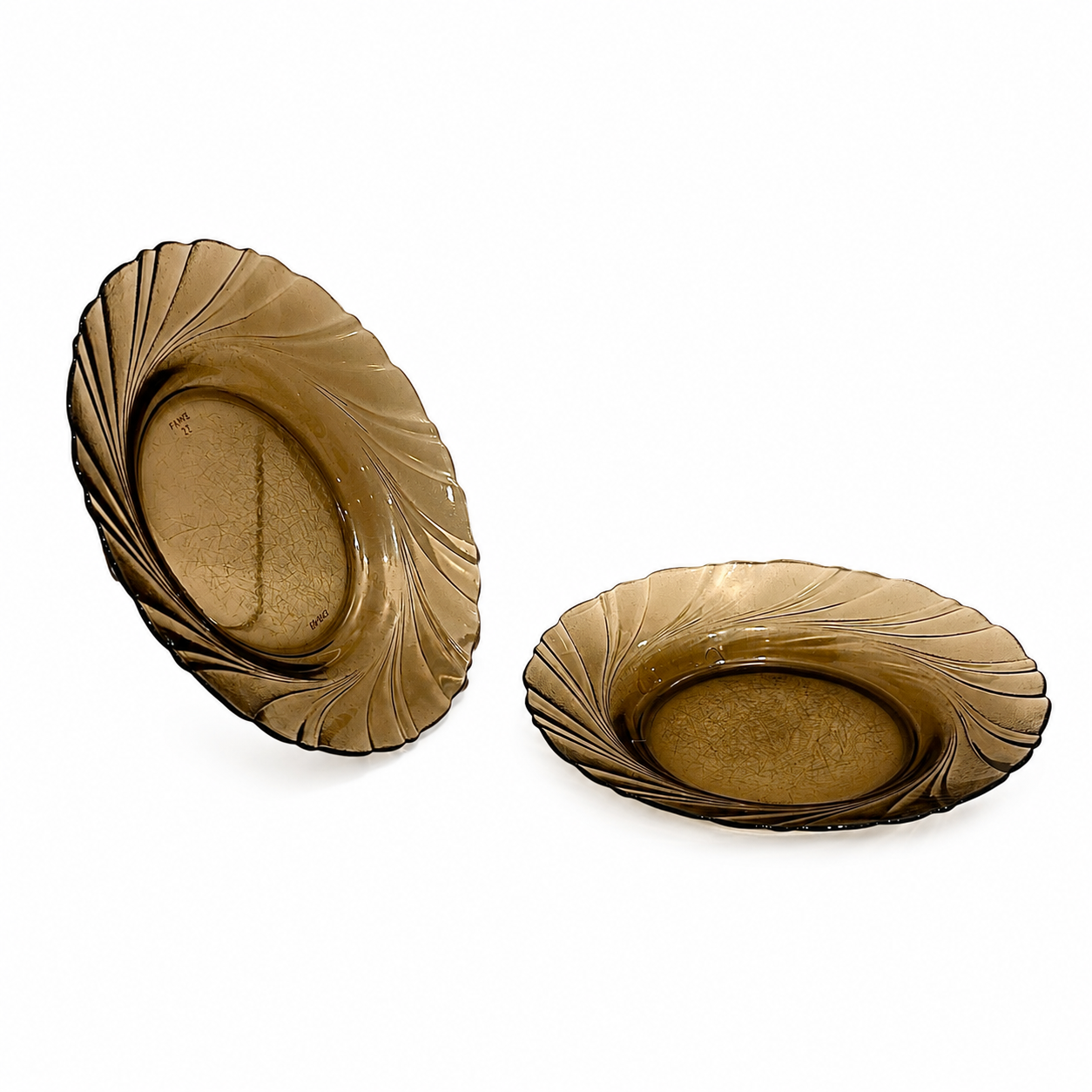
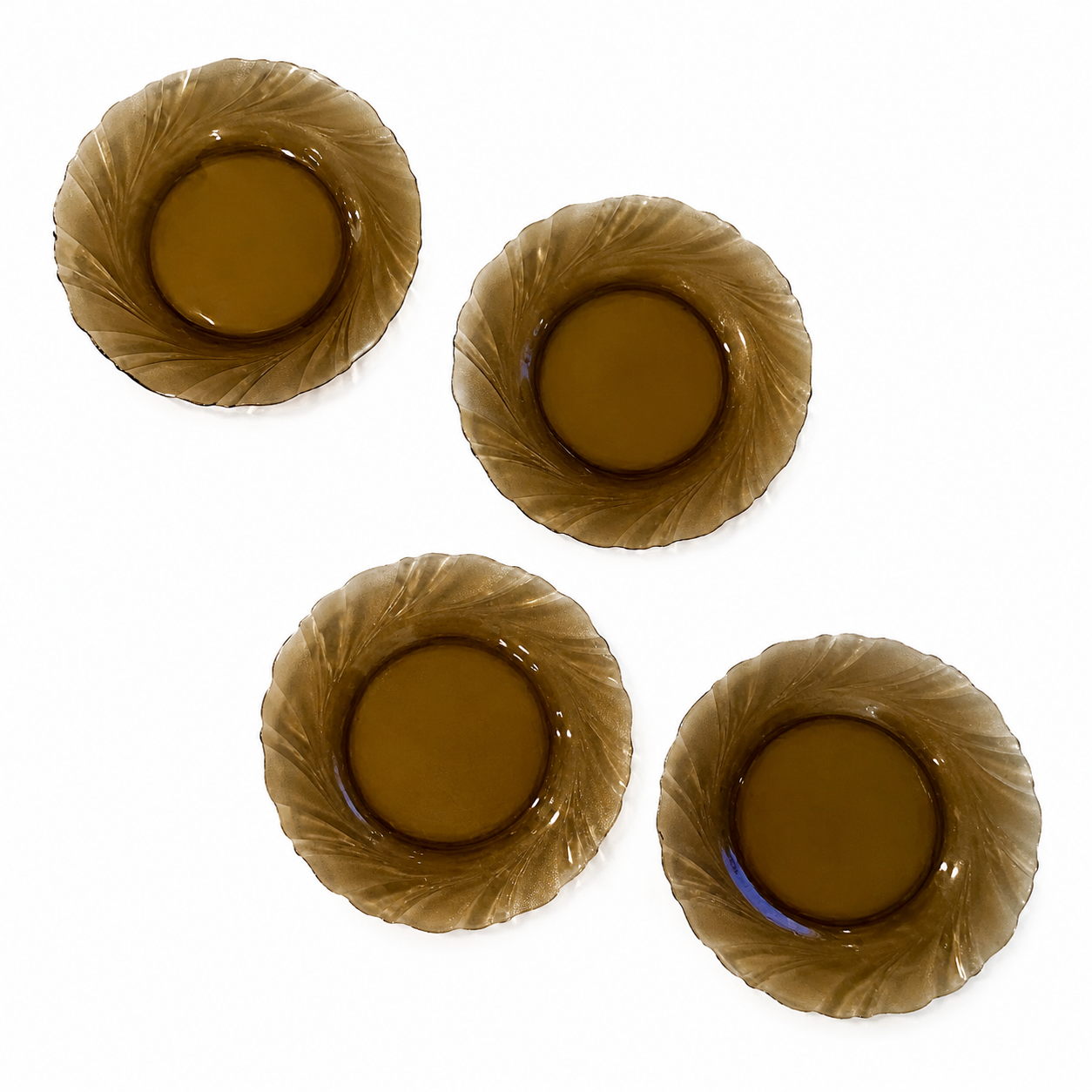
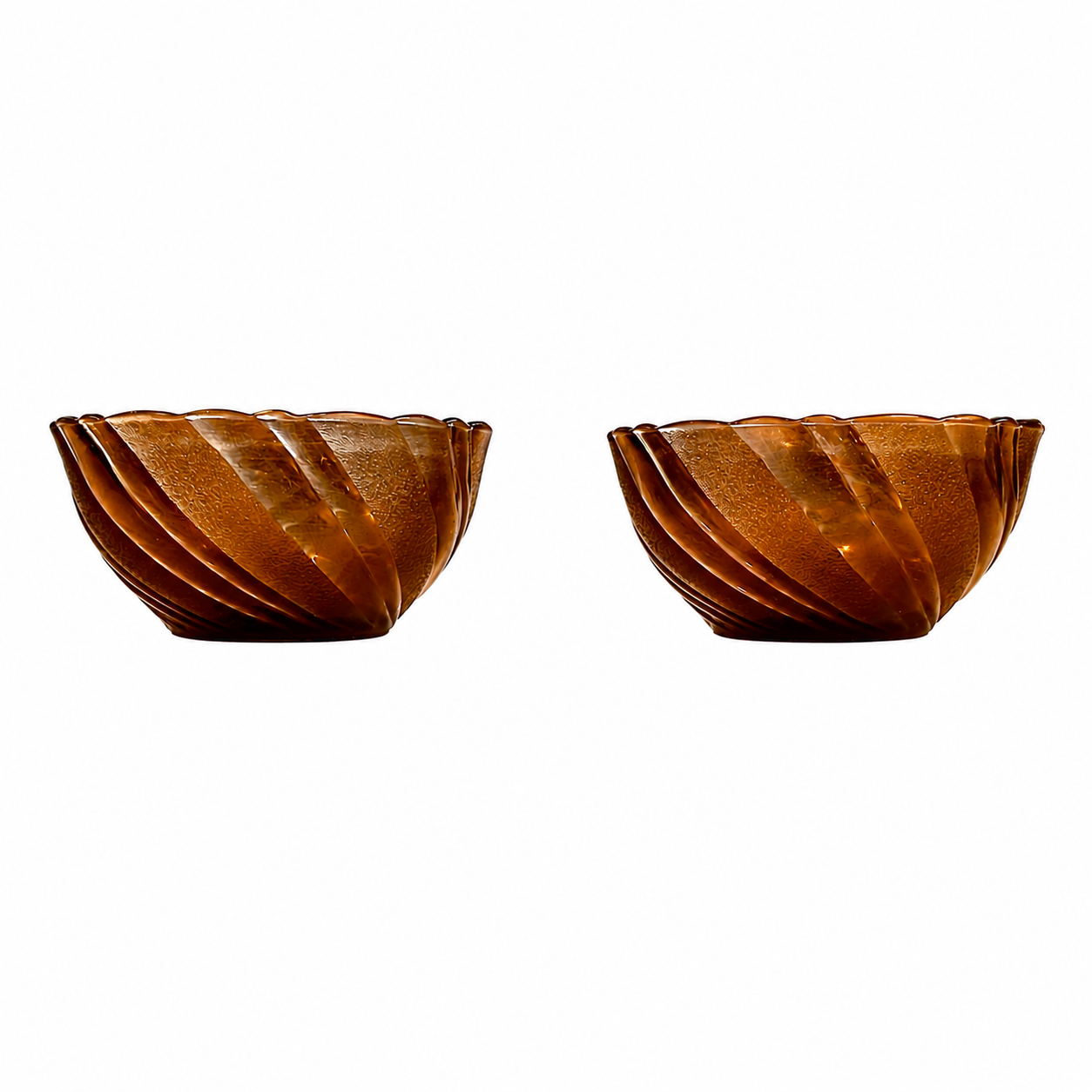
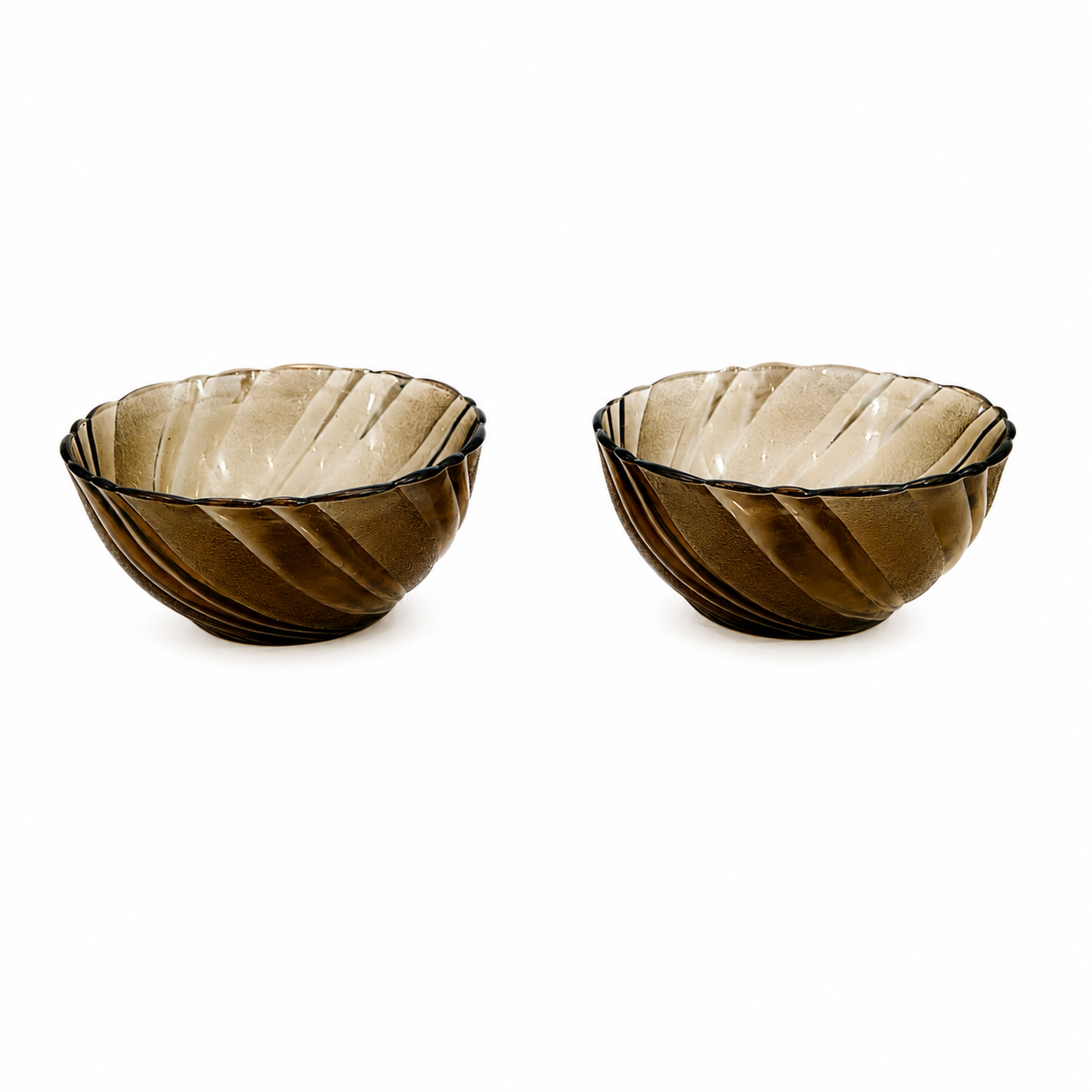
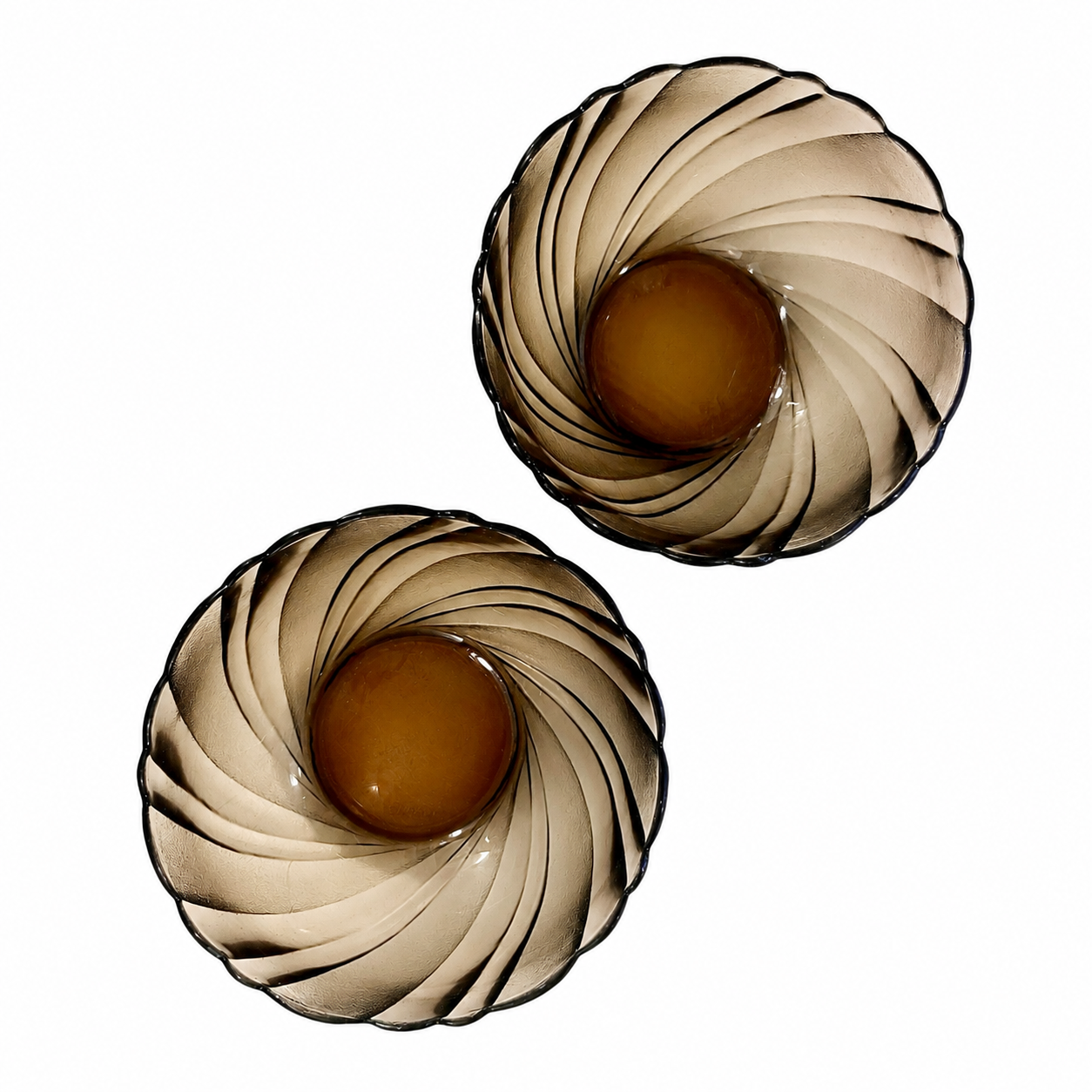
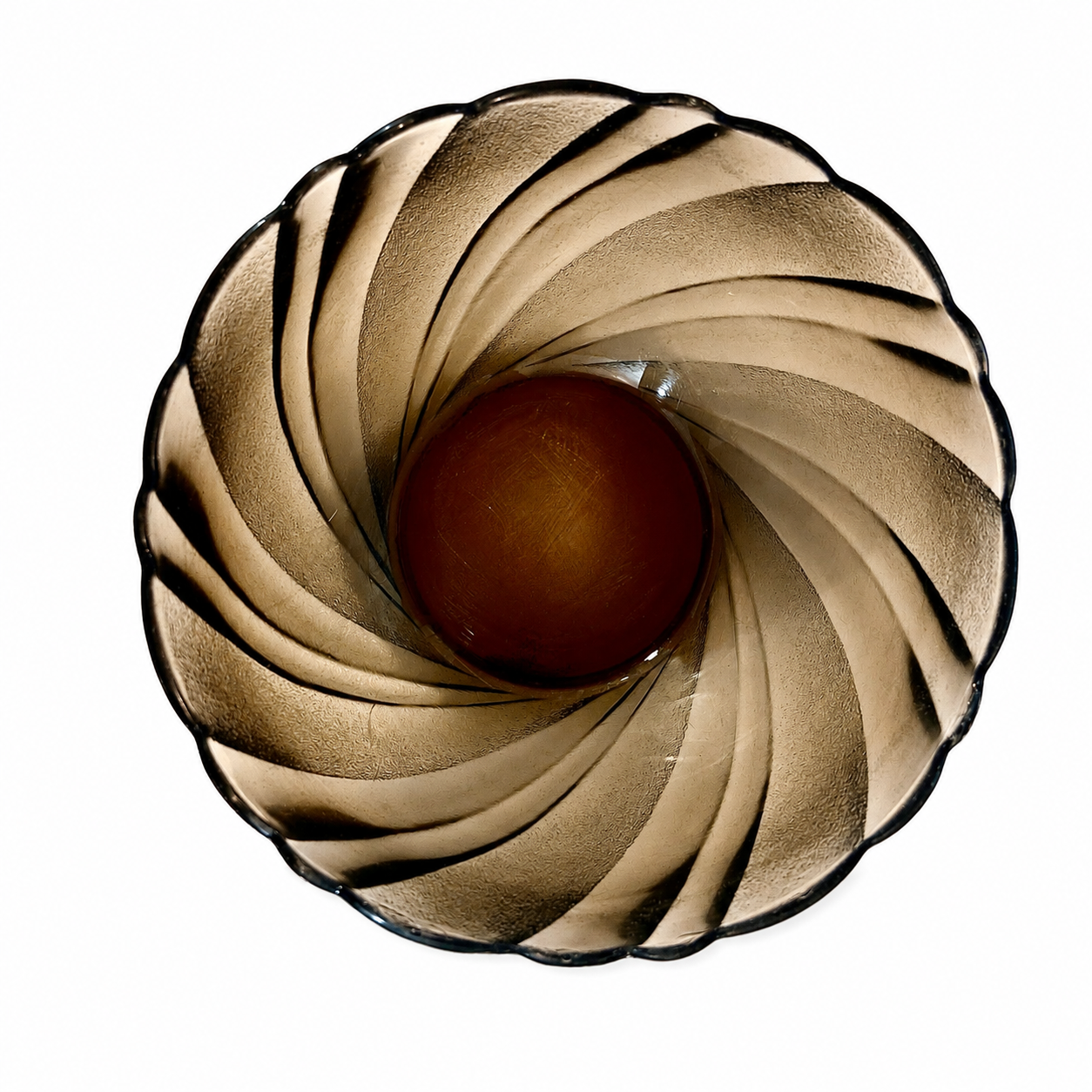
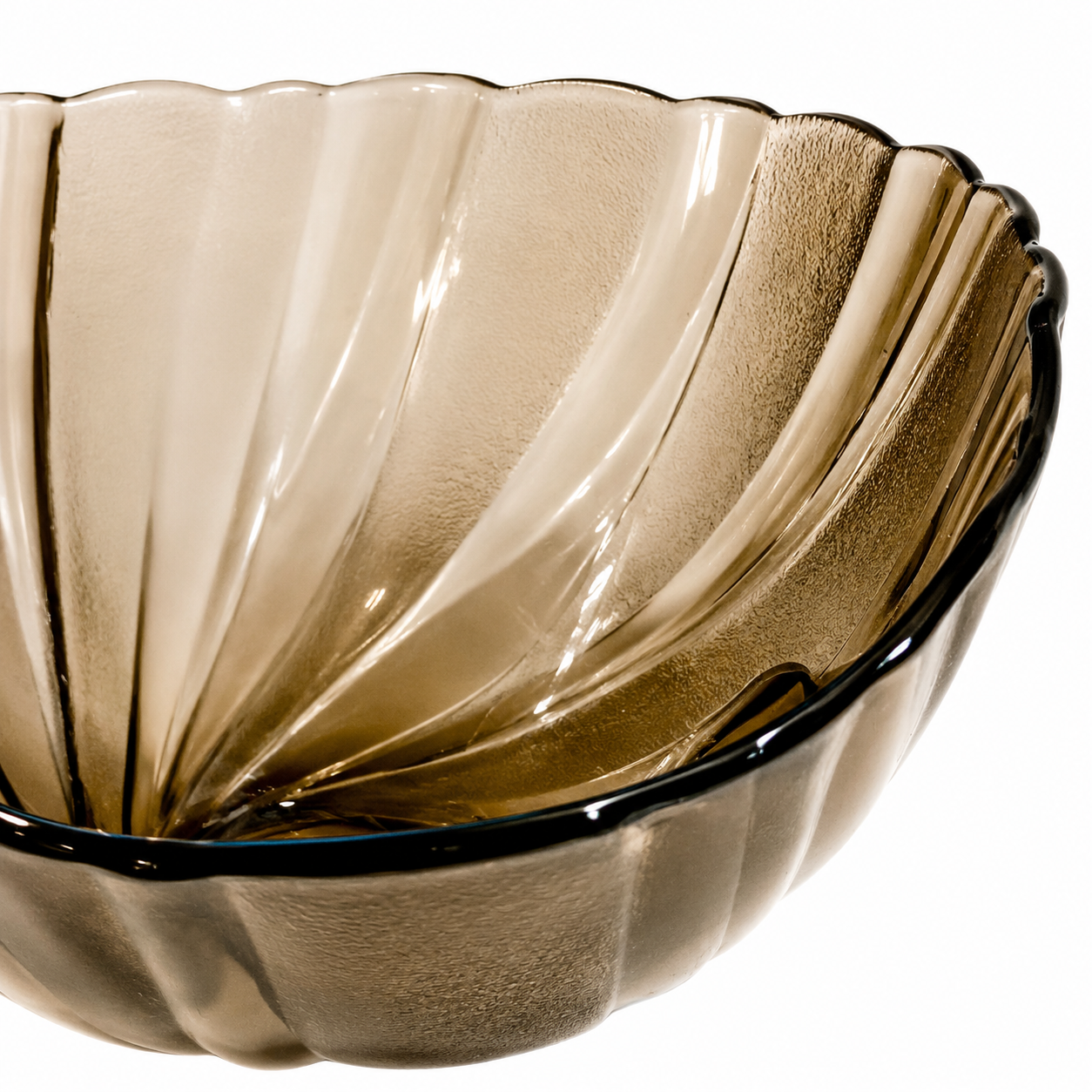
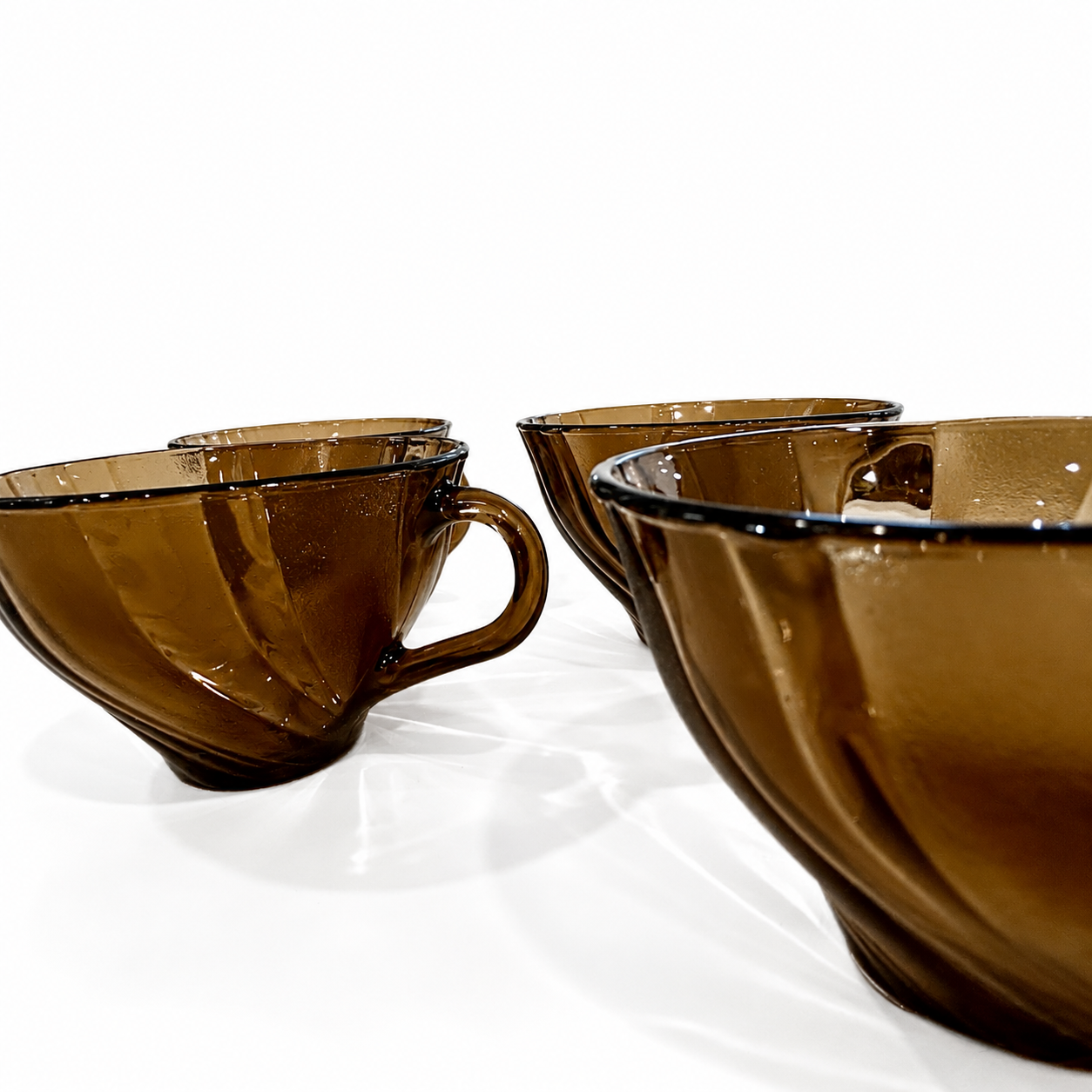
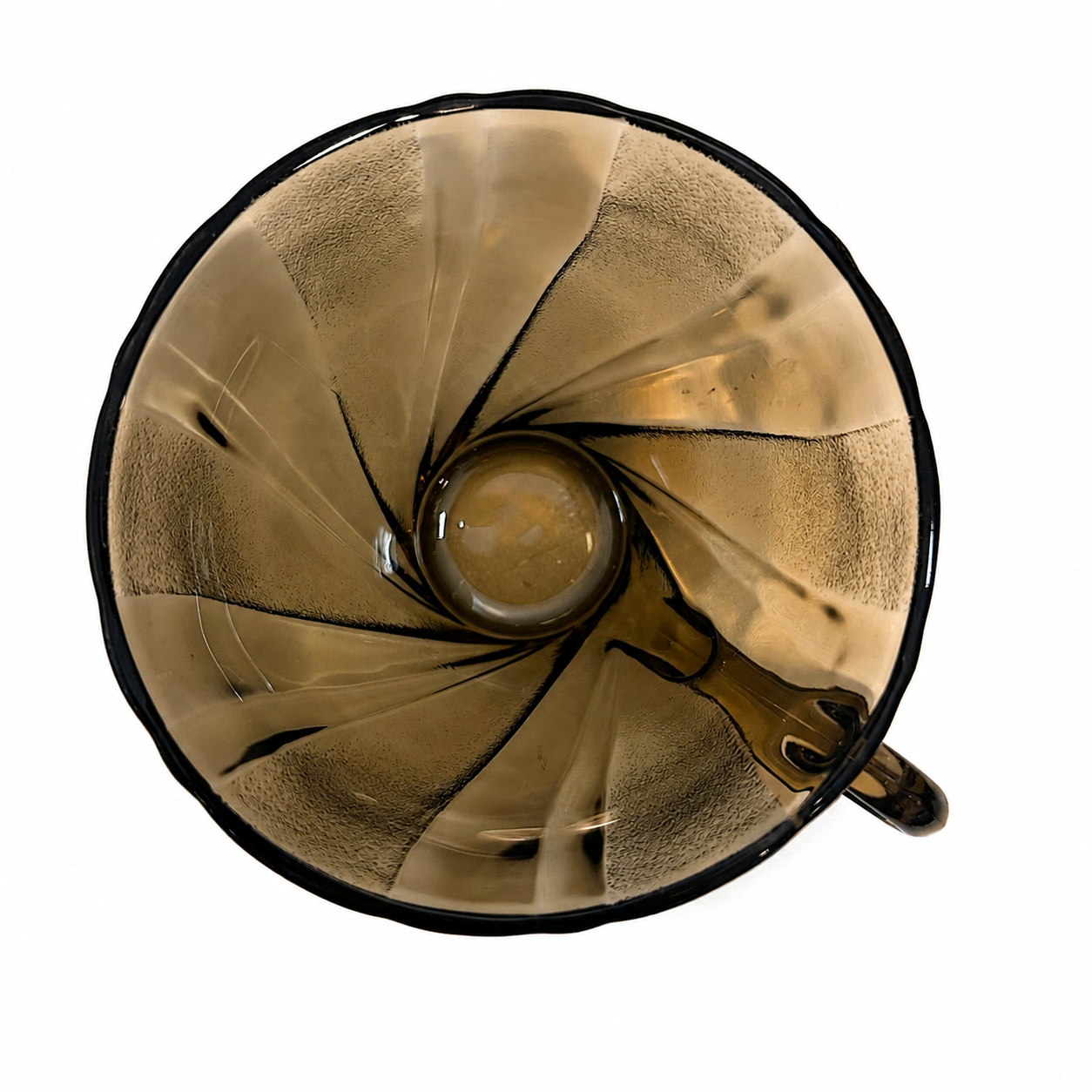
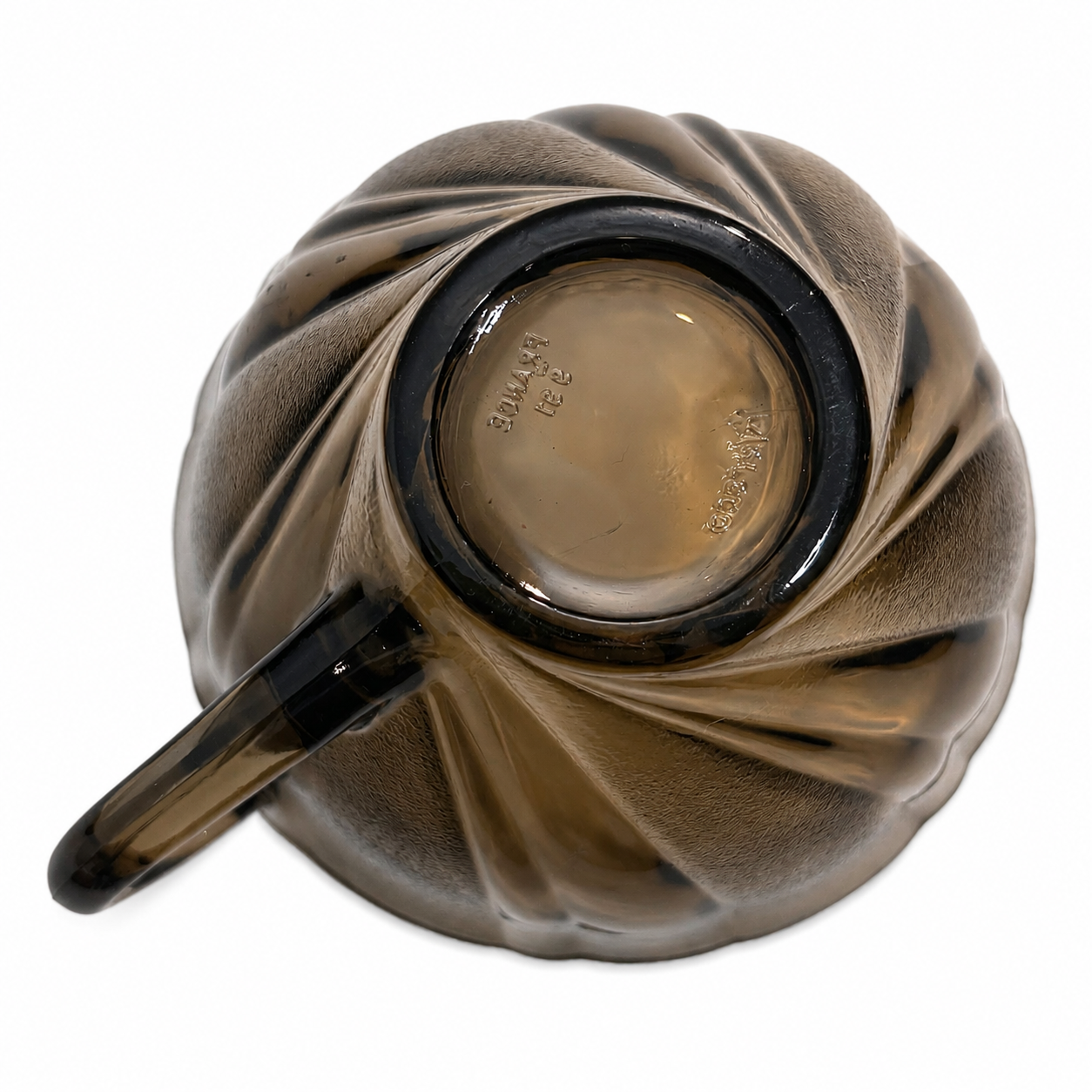
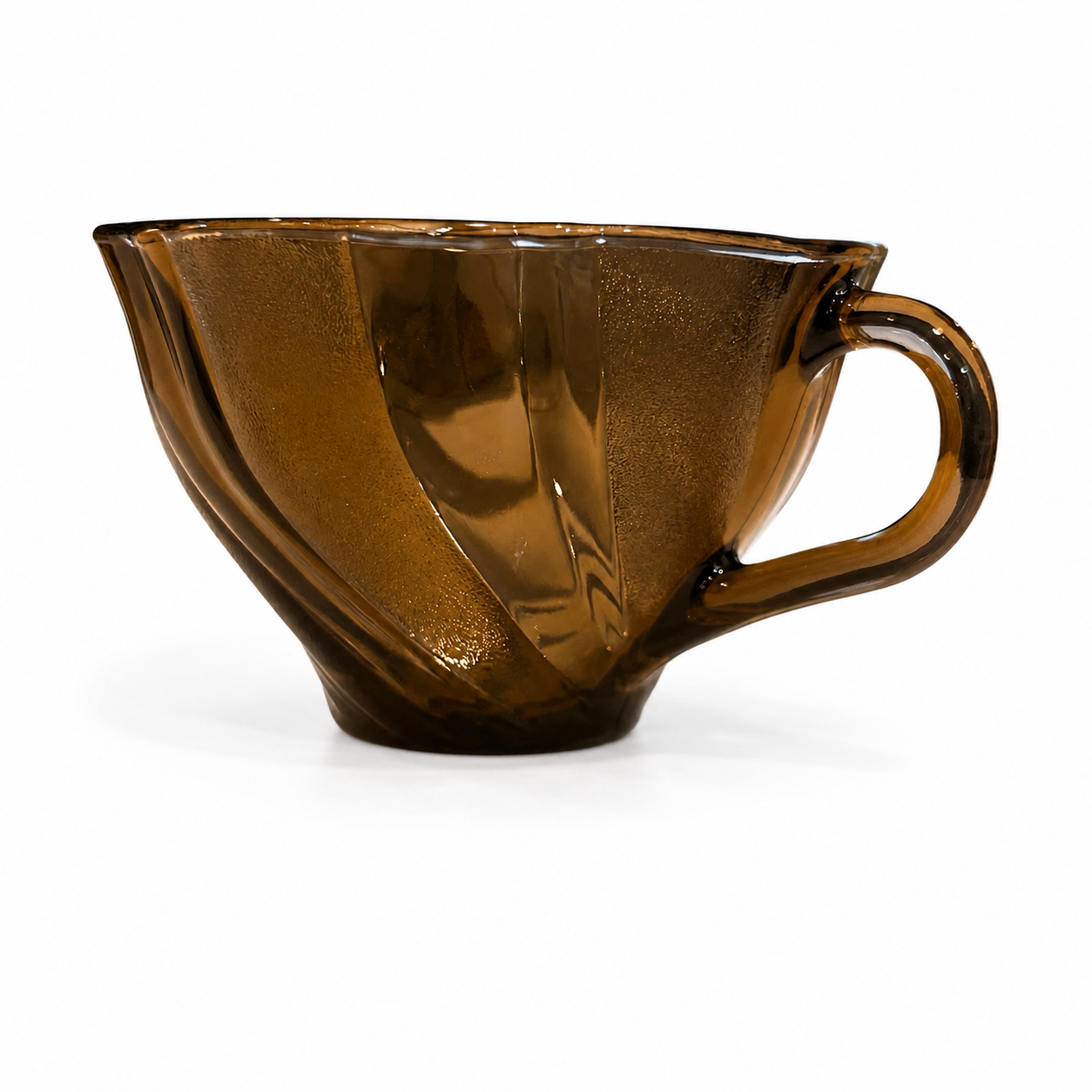
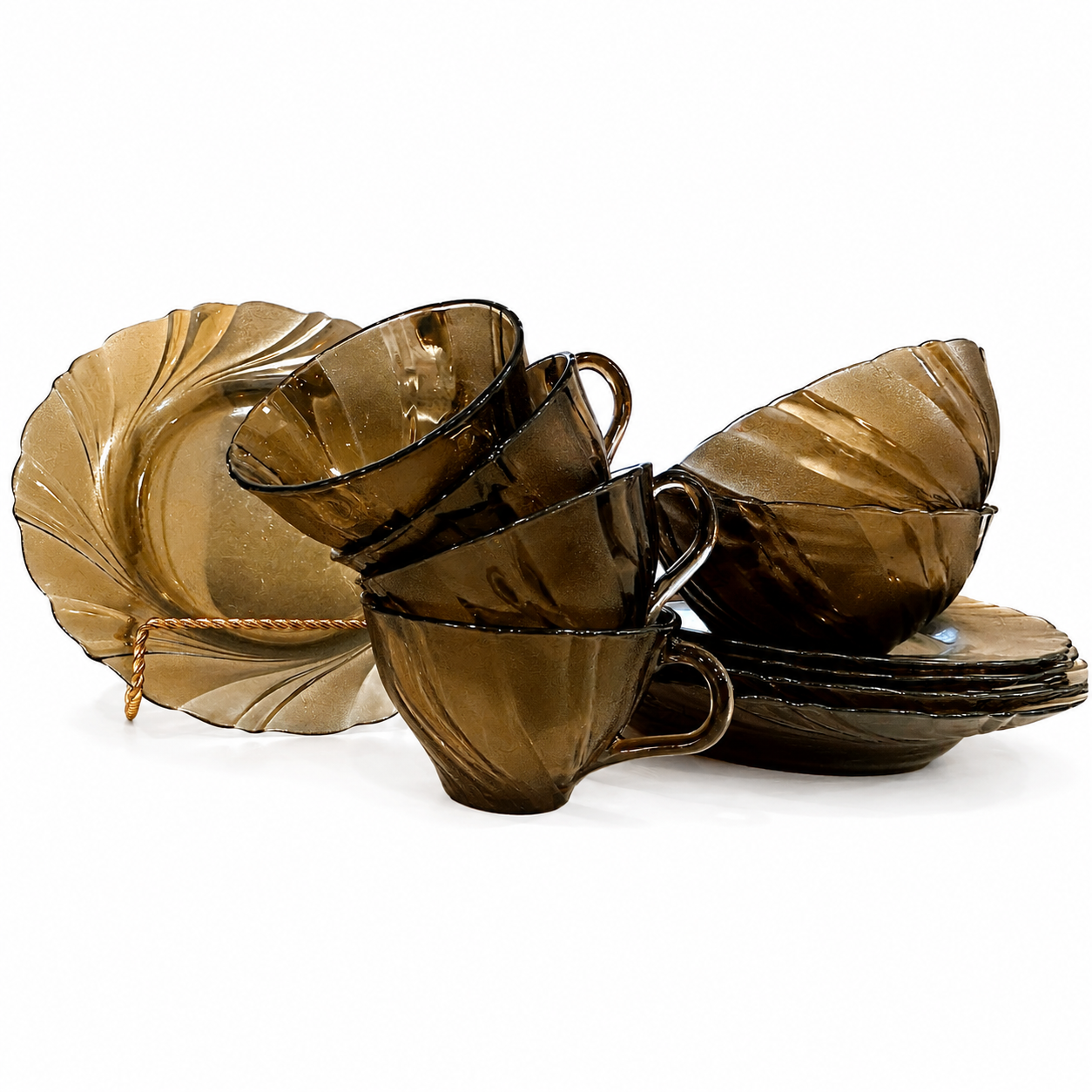
An exceptional mid-20th-century Murano art glass tazza, executed in richly layered amber and honey alabastro glass with dramatic marbled inclusions and a deeply sculptural, free-form rim.
This is a hand-blown Venetian centerpiece, unmistakably rooted in Murano’s postwar art-glass renaissance.
Authenticity & Construction
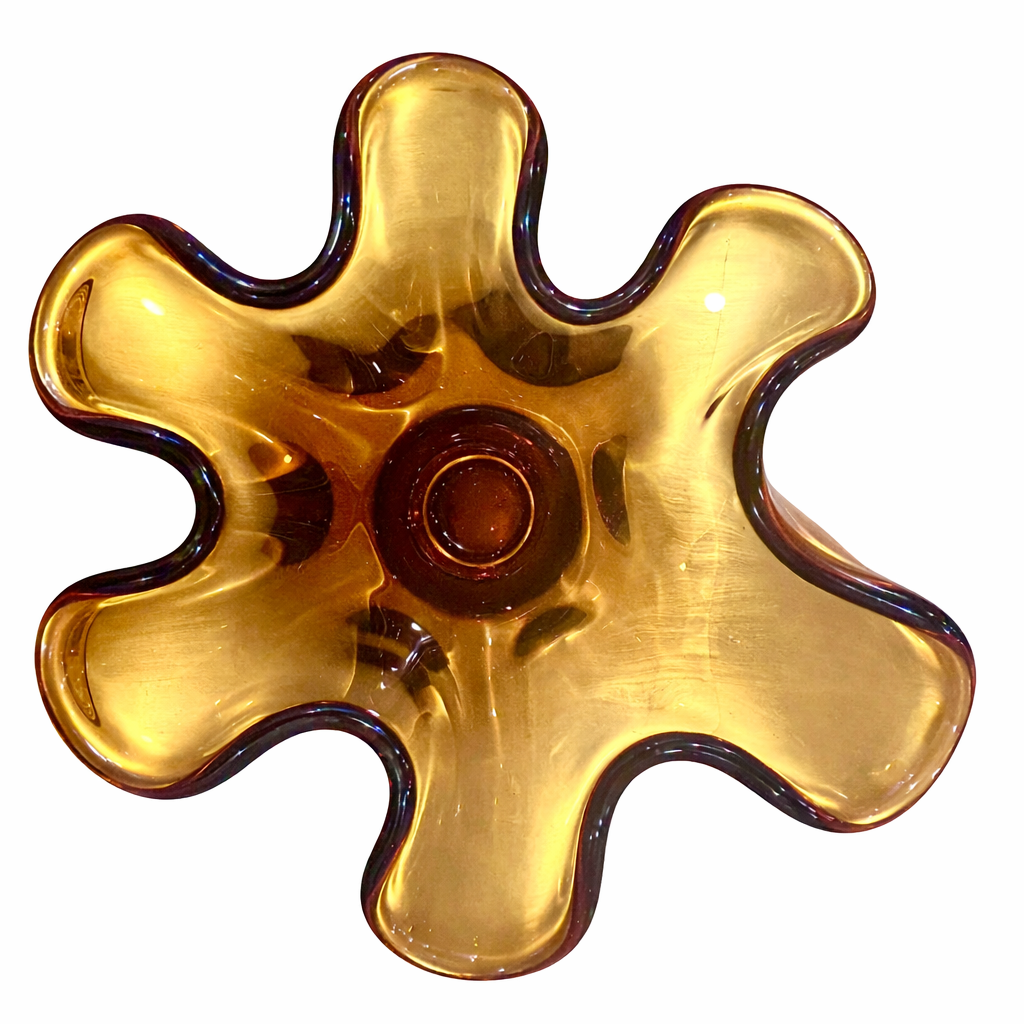
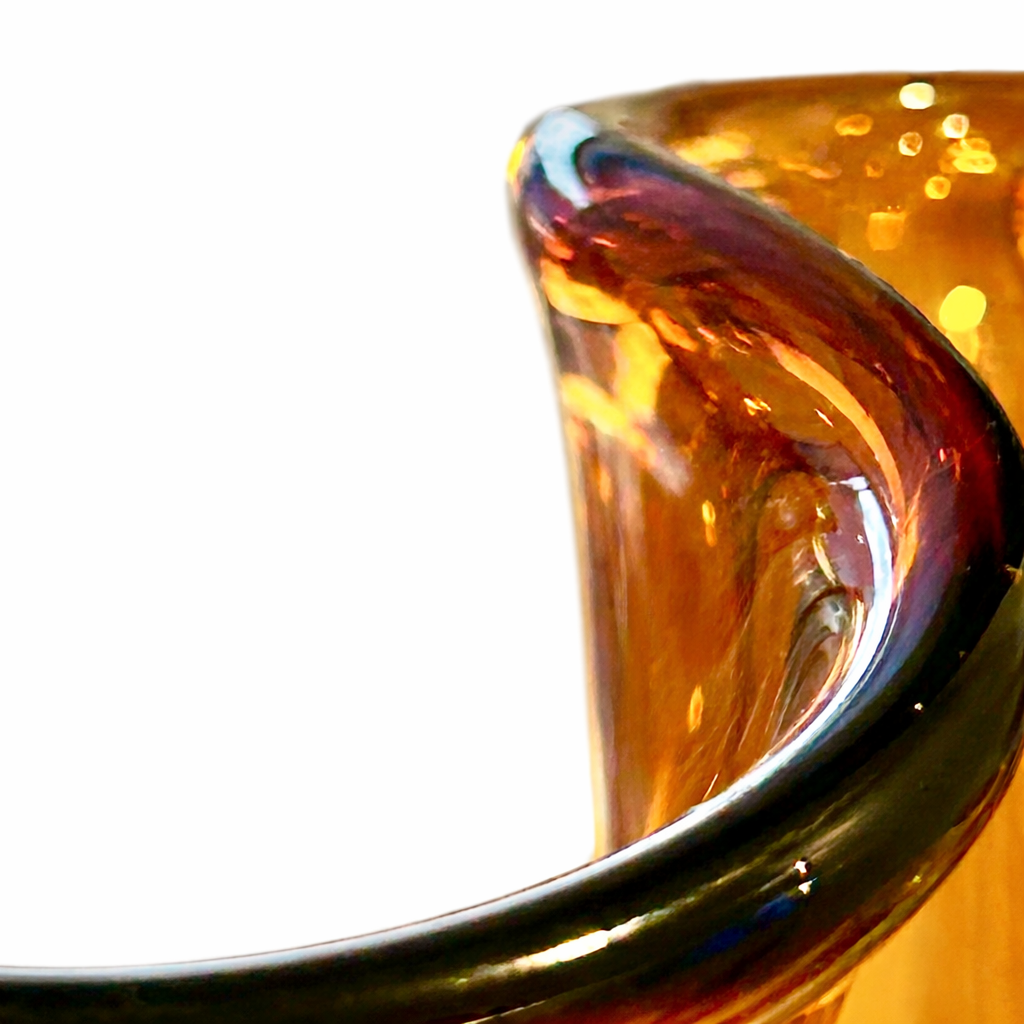
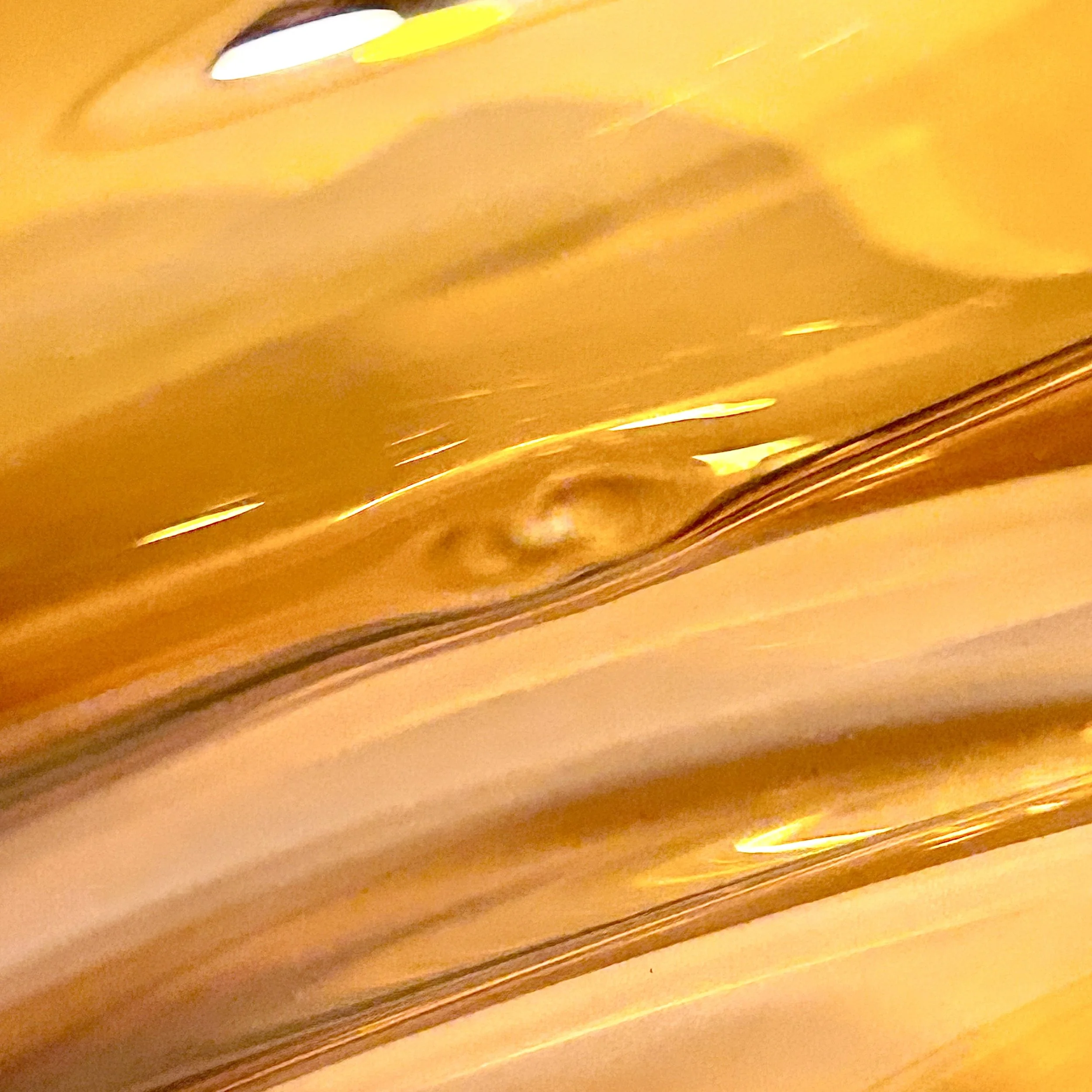
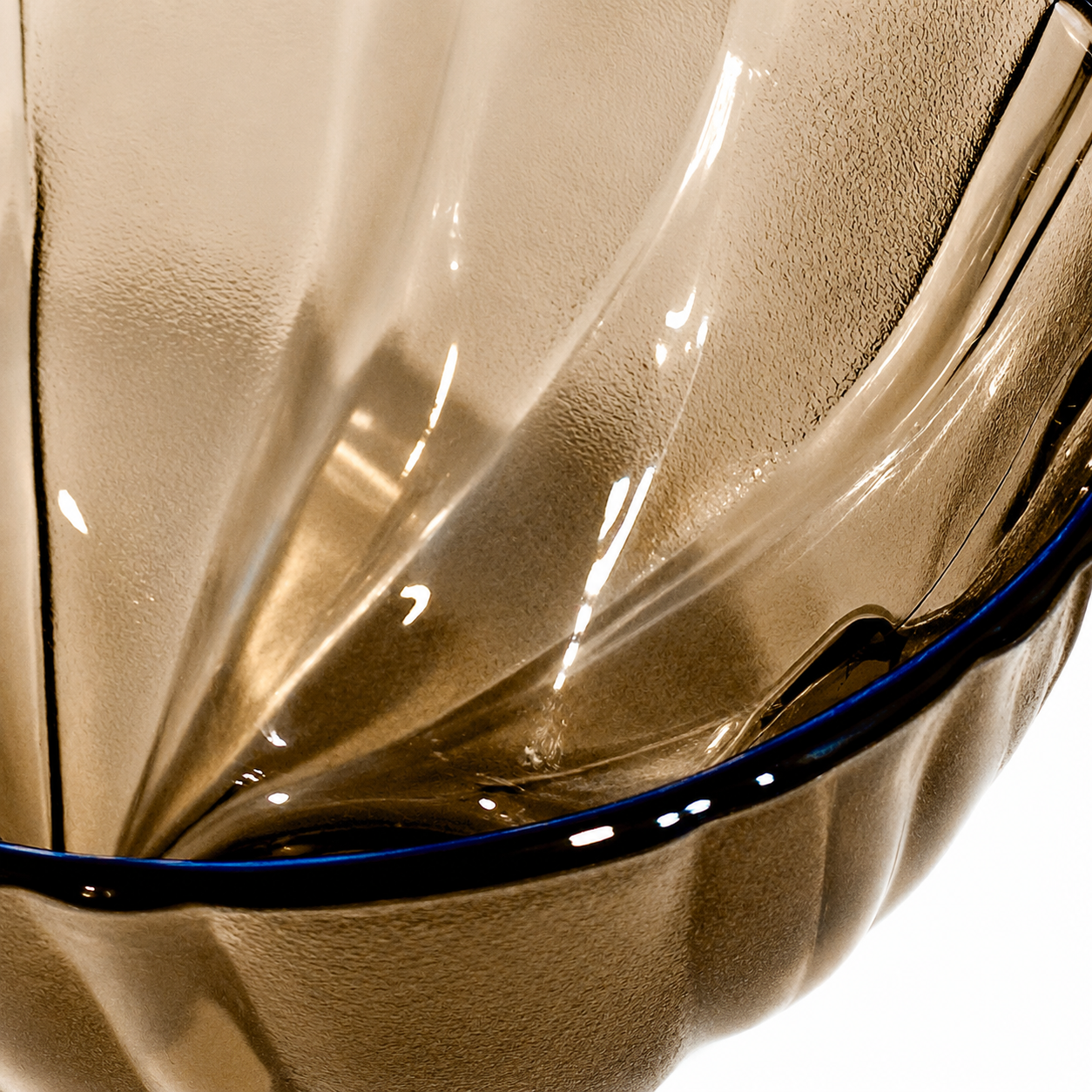
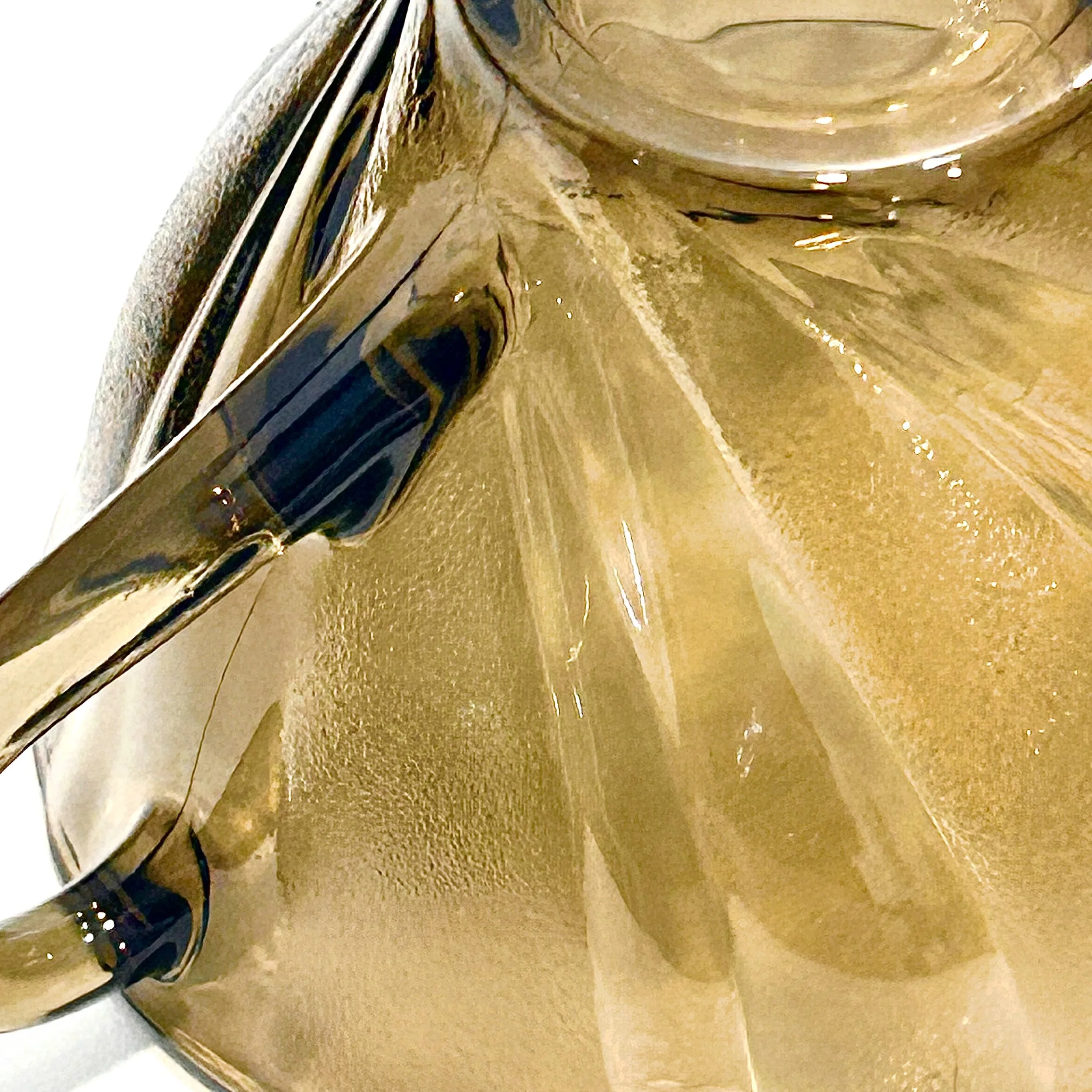
The bowl features a wide, undulating, asymmetric rim with pulled ends, a hallmark of high-quality Murano studio work from the late 1940s through 1960s. The glass body displays dense alabastro veining; milky cream and caramel tones suspended within warm amber; achieved through complex hot-working techniques requiring exceptional furnace control.
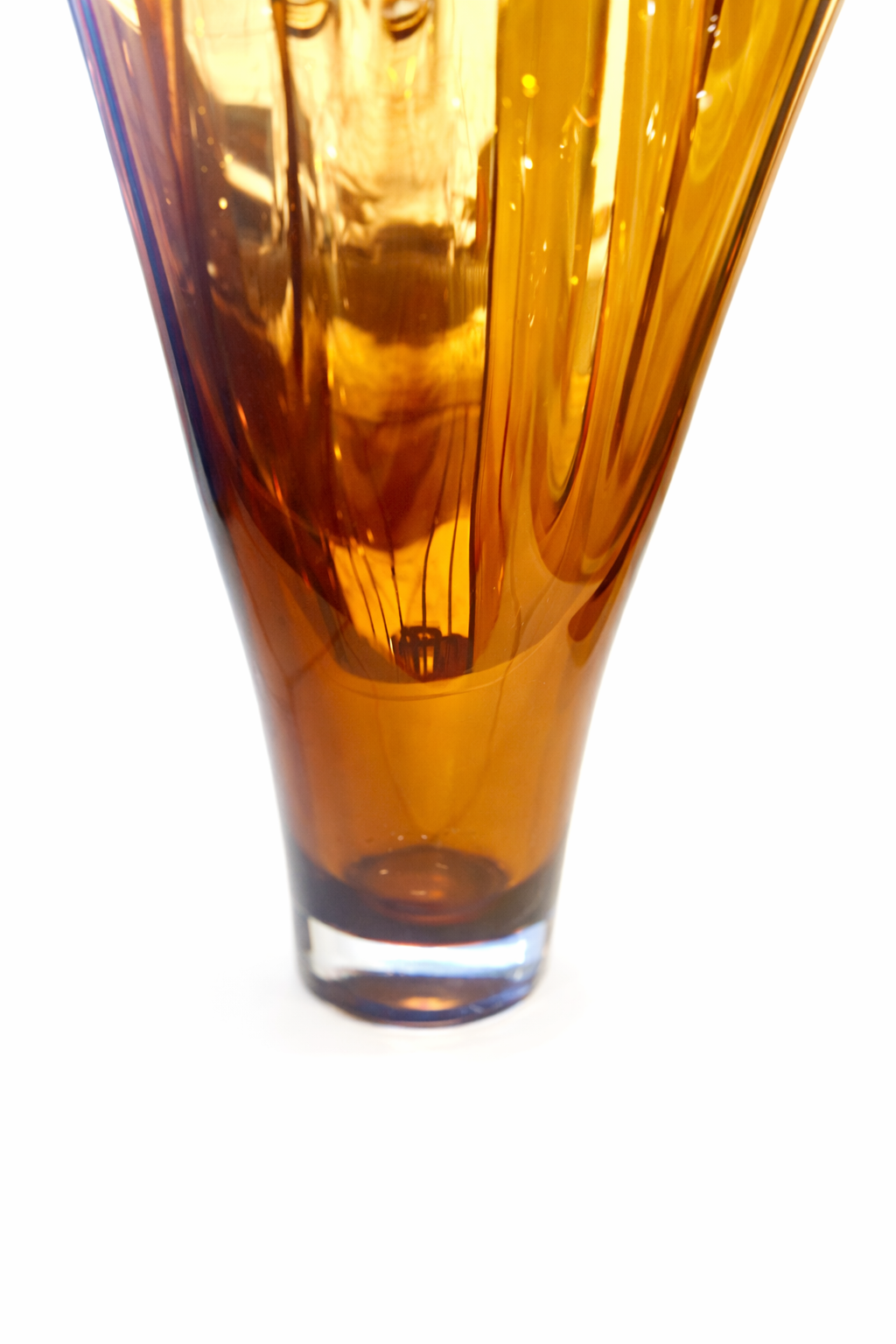
The coloration is integral, not surface-applied. The piece is raised on a clear ribbed baluster stem over a broad amber foot, a construction frequently associated with Murano tazze and compote forms produced for export during the golden age of Italian modernism.
Attribution & Period
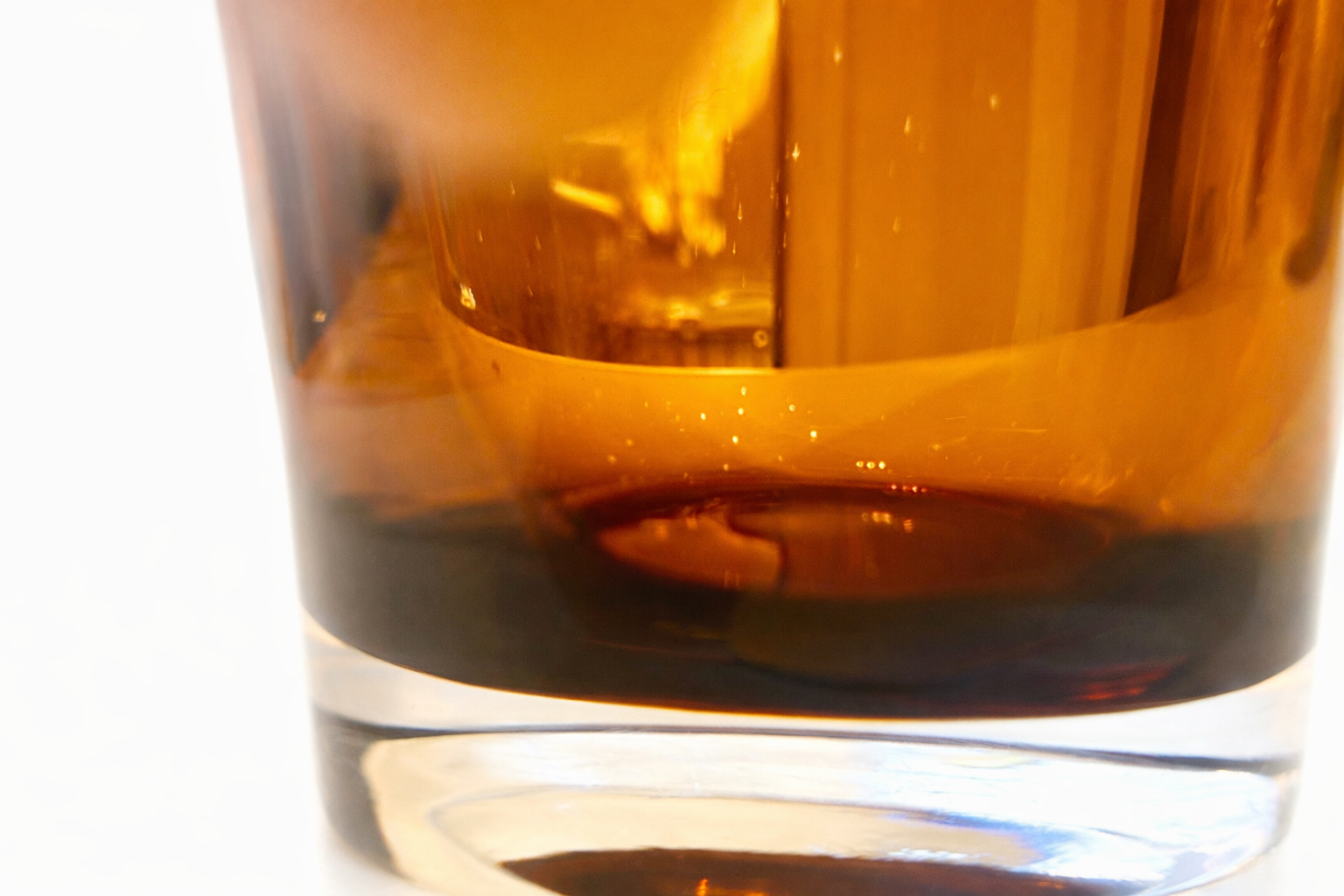
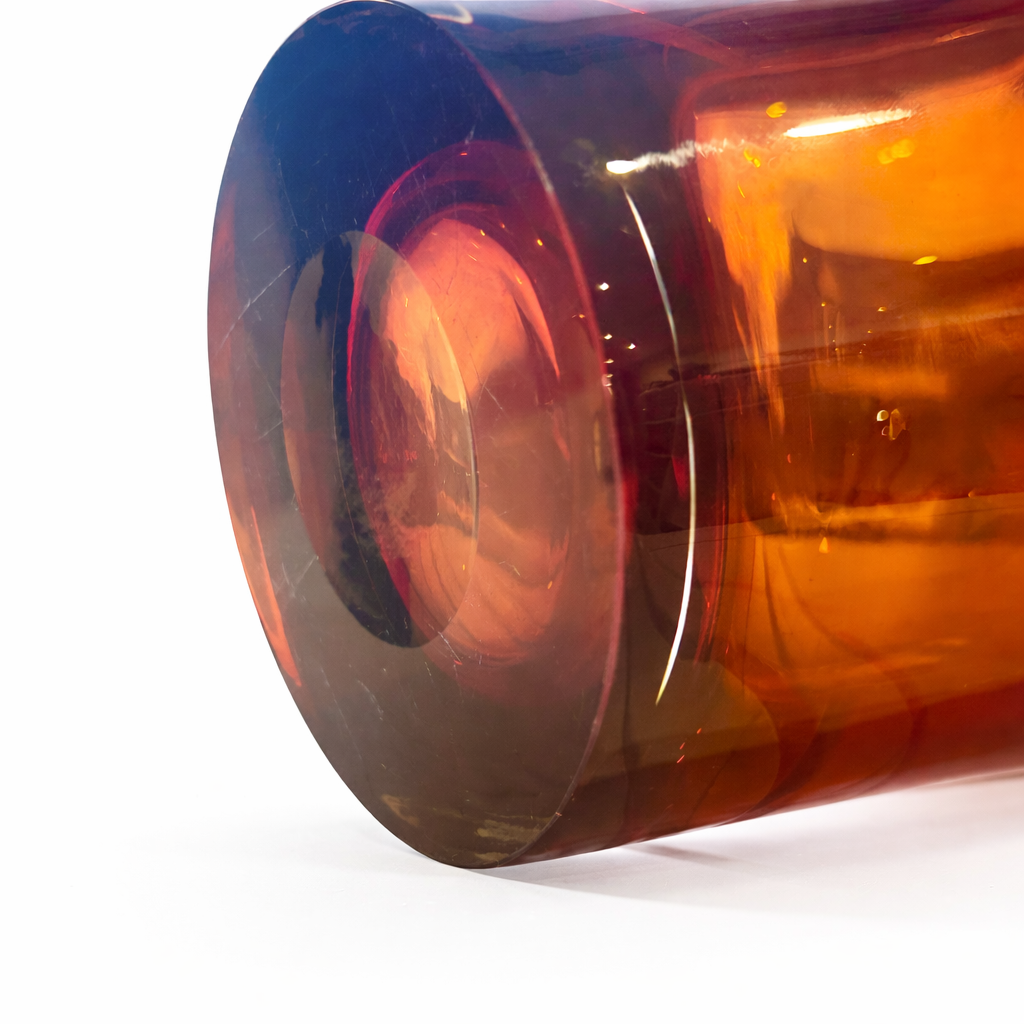
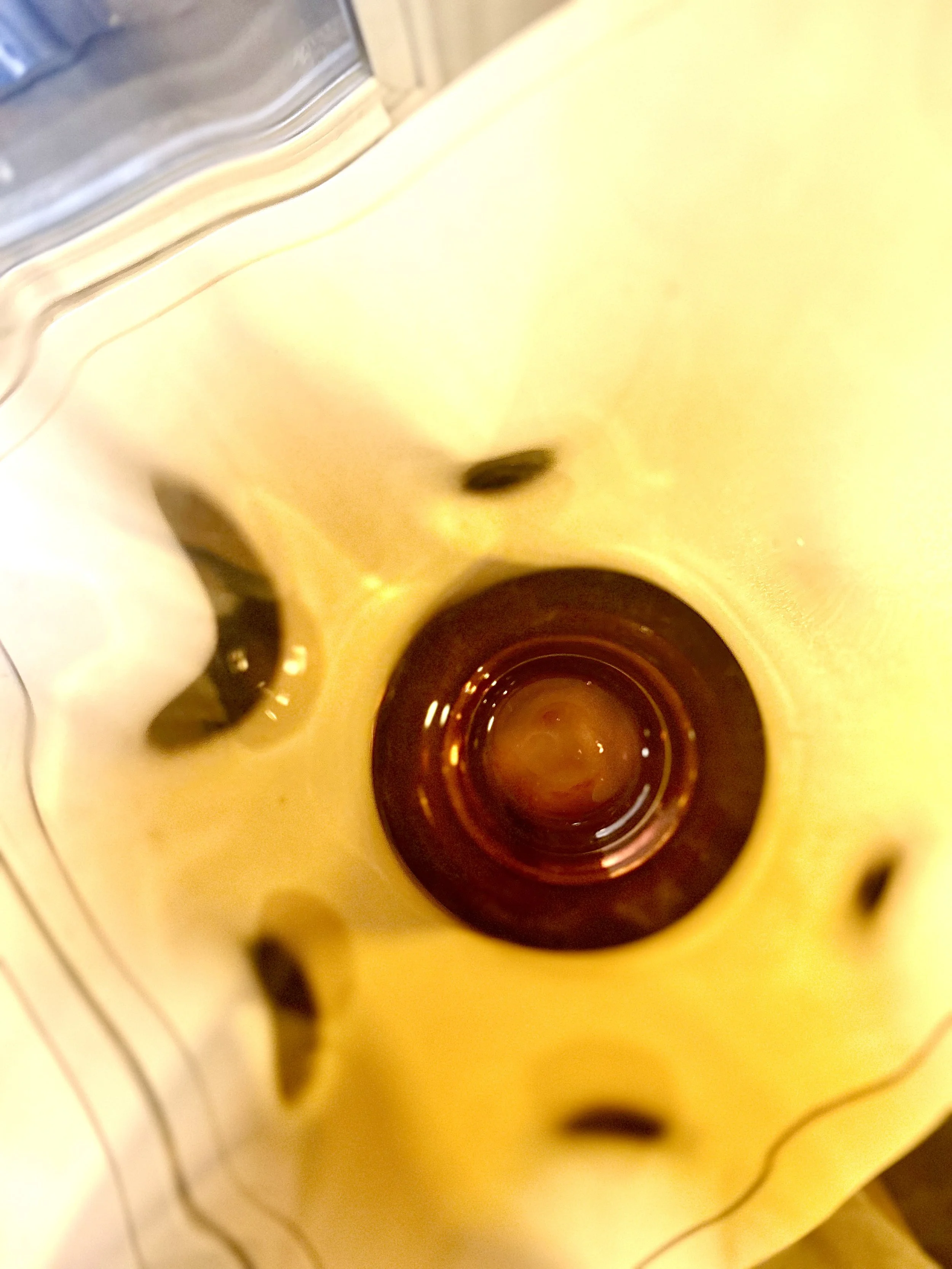
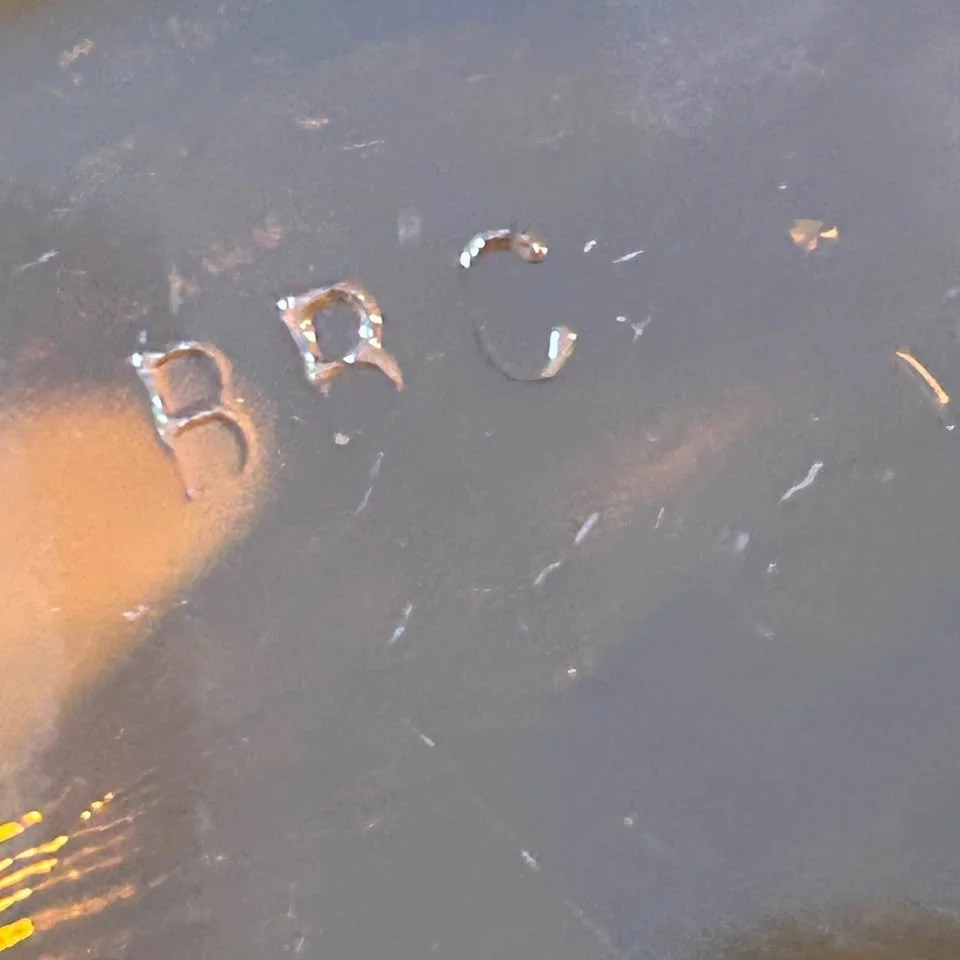
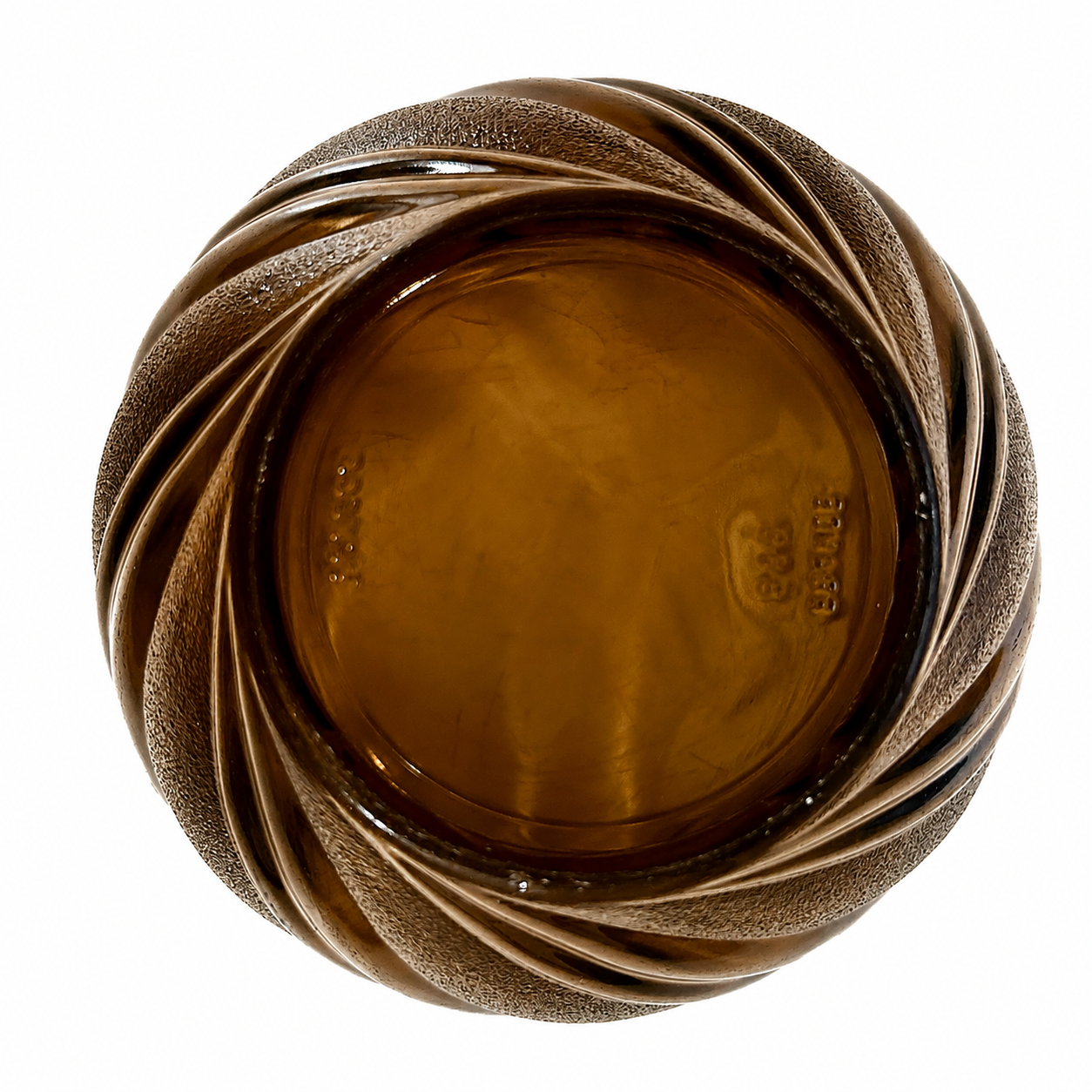
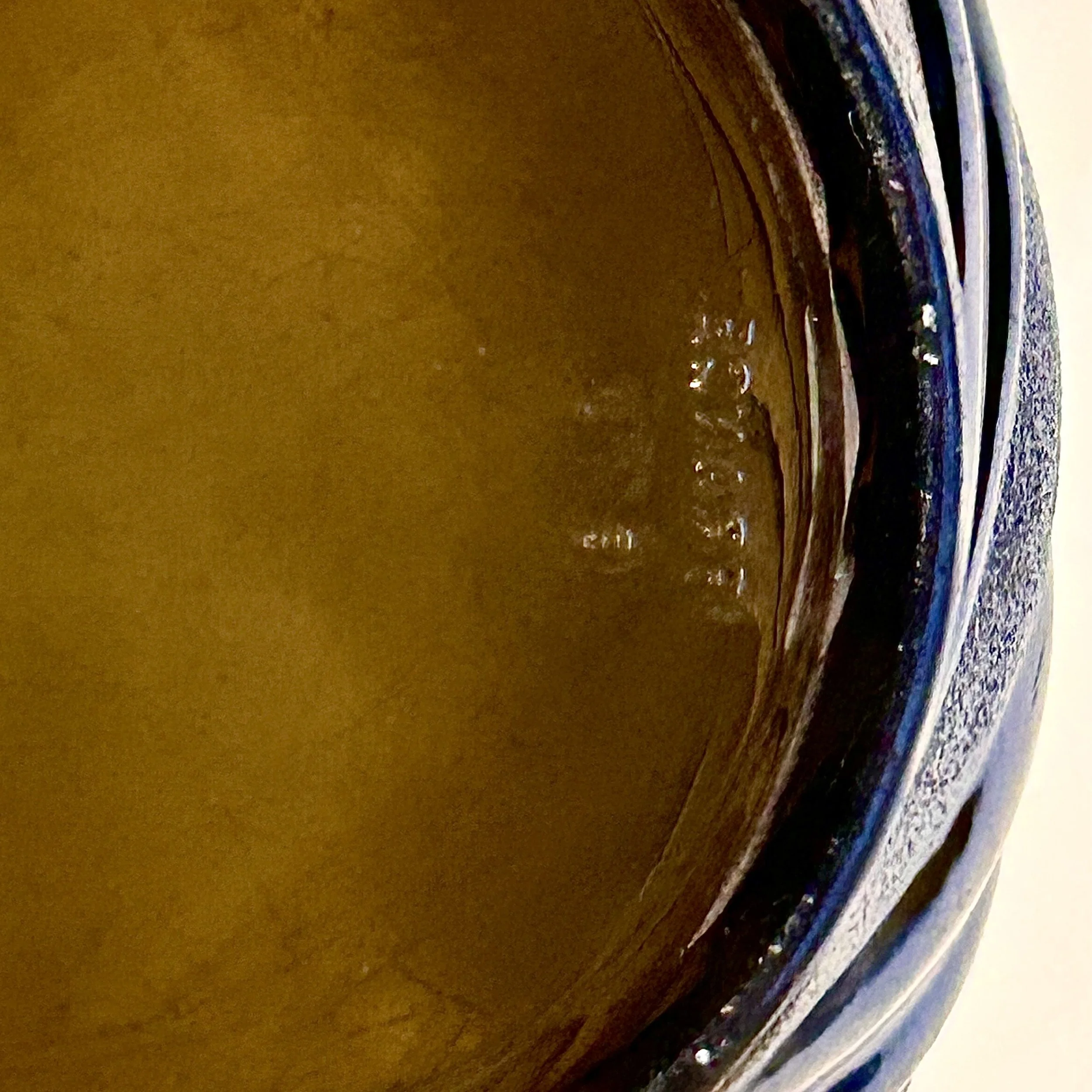
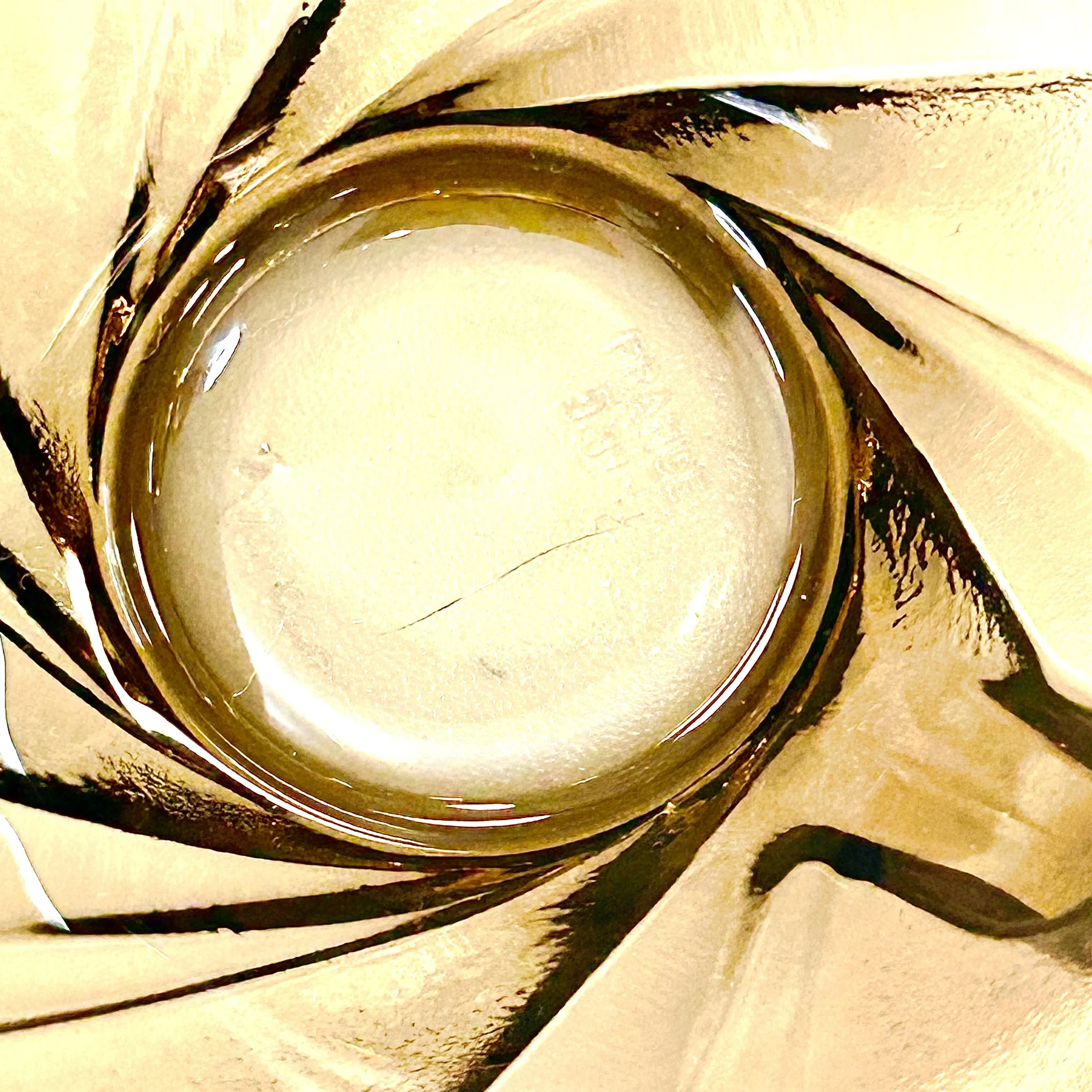
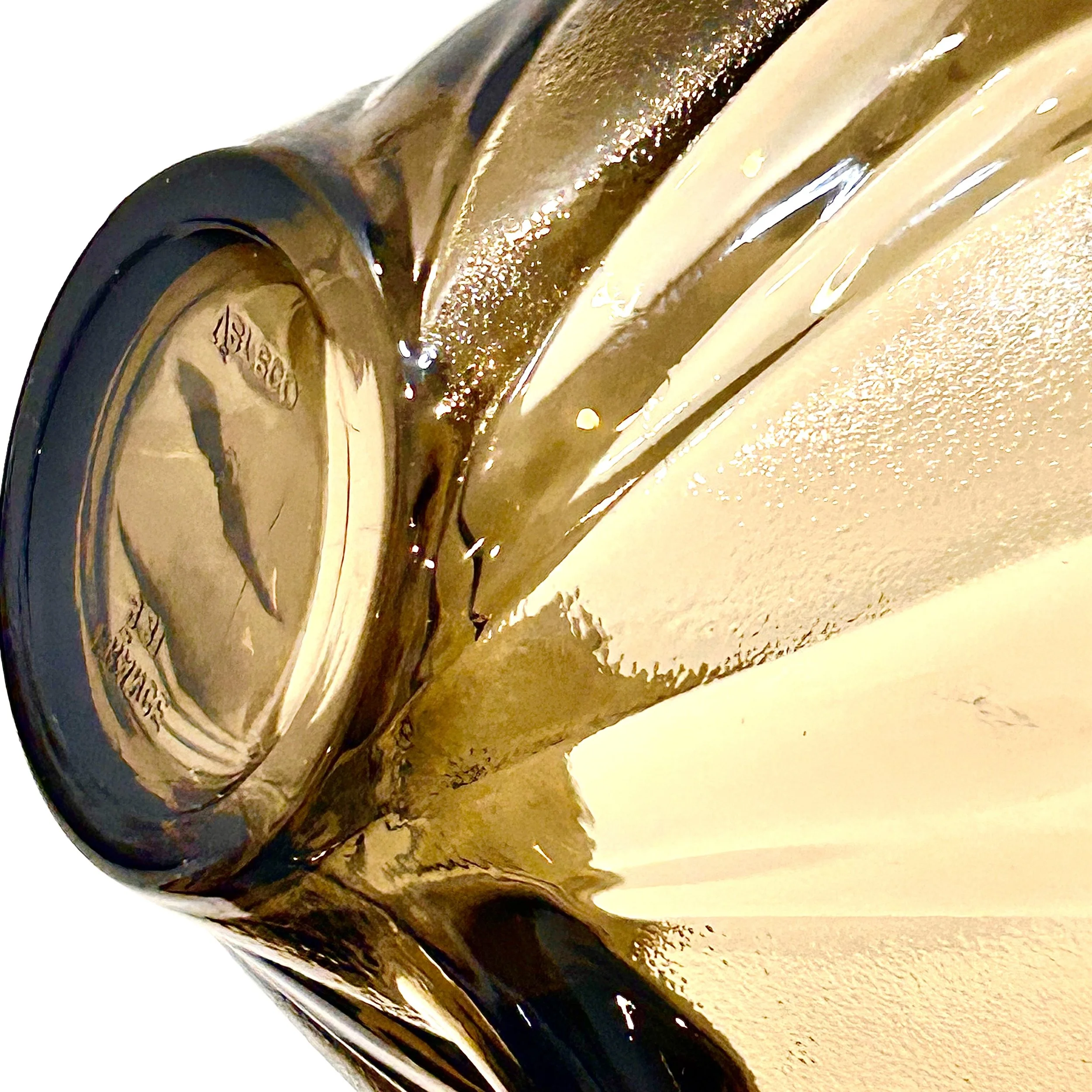
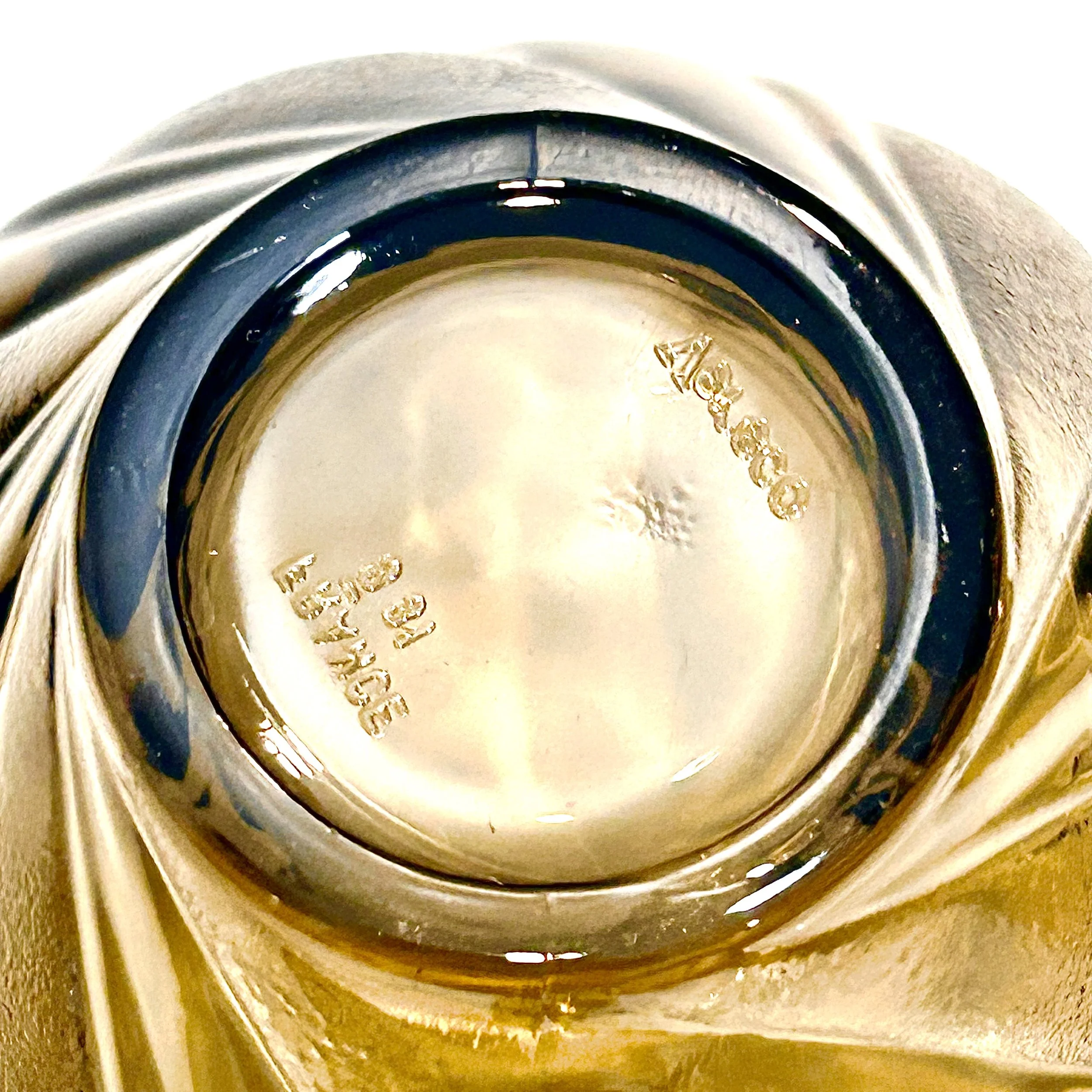
The polished pontil scar on the underside is consistent with hand-finished Venetian production.
Probable Origin & Attribution:
Origin: Murano, Venice, Italy
Date: Circa 1950-1965
Style & Techniques: Alabastro, marbled inclusions, free-form modernist rim
Possible Makers (attribution by style):
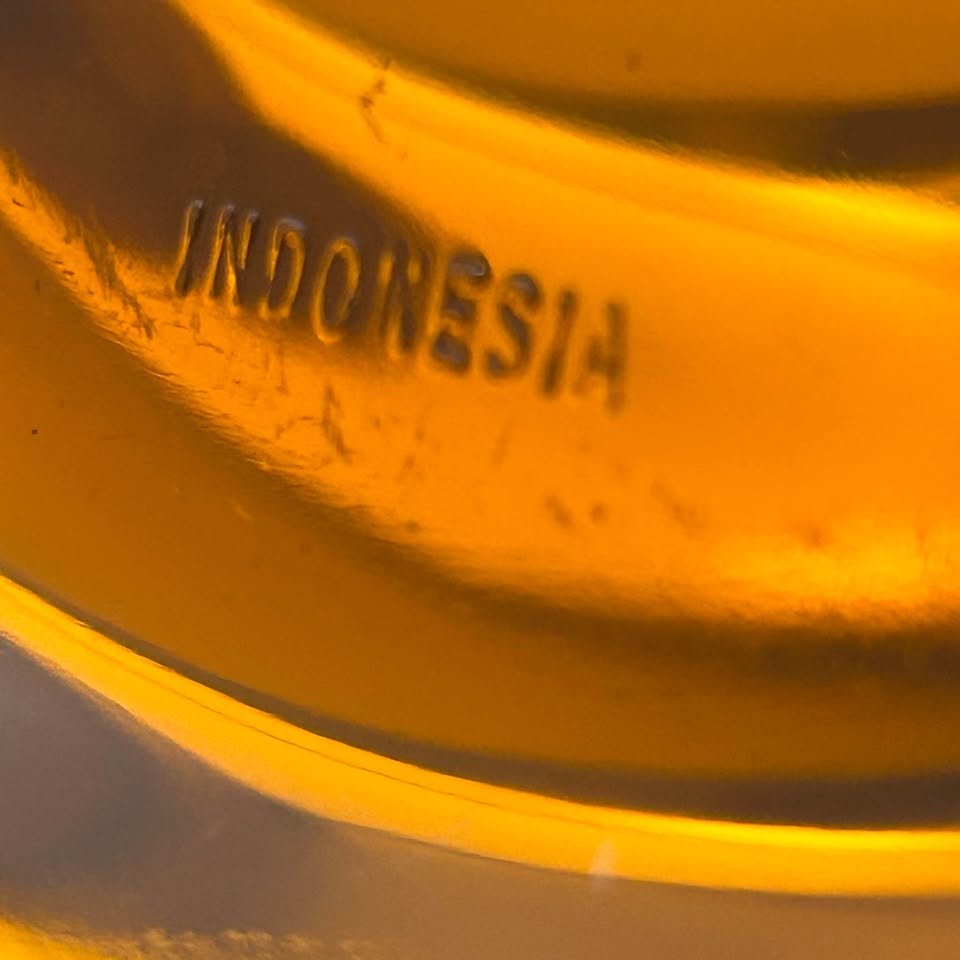
Barovier & Toso (alabastro tradition); Seguso Vetri d’Arte; Archimede Seguso workshop; Murano cooperative studios producing export tazze While unsigned (typical for the period), the glass quality, weight, color saturation, and sculptural confidence firmly place this within authentic Murano production, not later imitations.
Collector’s Note
Under ultraviolet (black) light, this bowl exhibits a pronounced fluorescent response consistent with uranium-infused glass (commonly referred to as Vaseline glass when in amber/yellow tones). The vivid internal glow confirms the presence of uranium oxide in the glass formula—a hallmark of certain early to mid-20th-century art glass production.
This fluorescence is not decorative surface treatment but inherent to the glass matrix itself, reinforcing period authenticity and materially significant composition. For collectors, uranium-bearing glass represents a distinct and highly desirable category within Murano and studio art glass, prized for both its chemistry and its dramatic transformation under UV display.
Condition
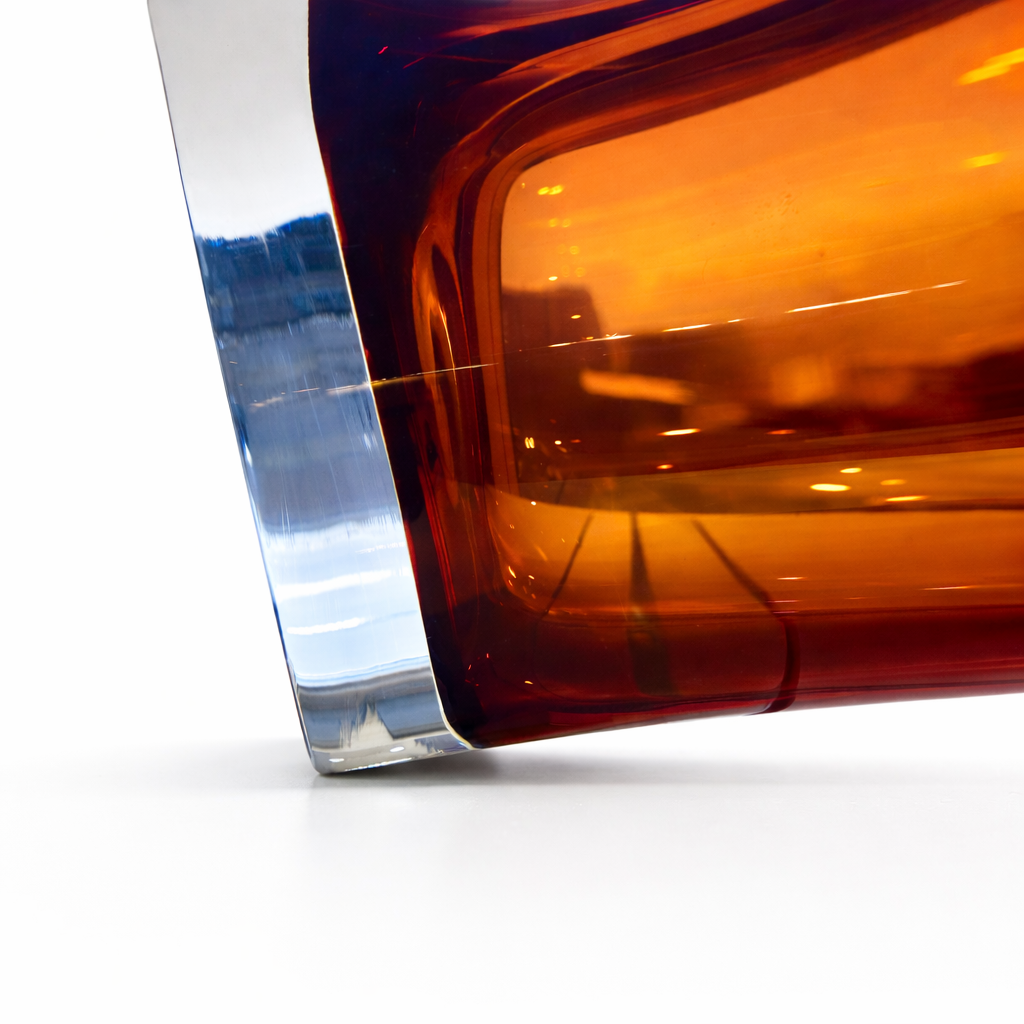
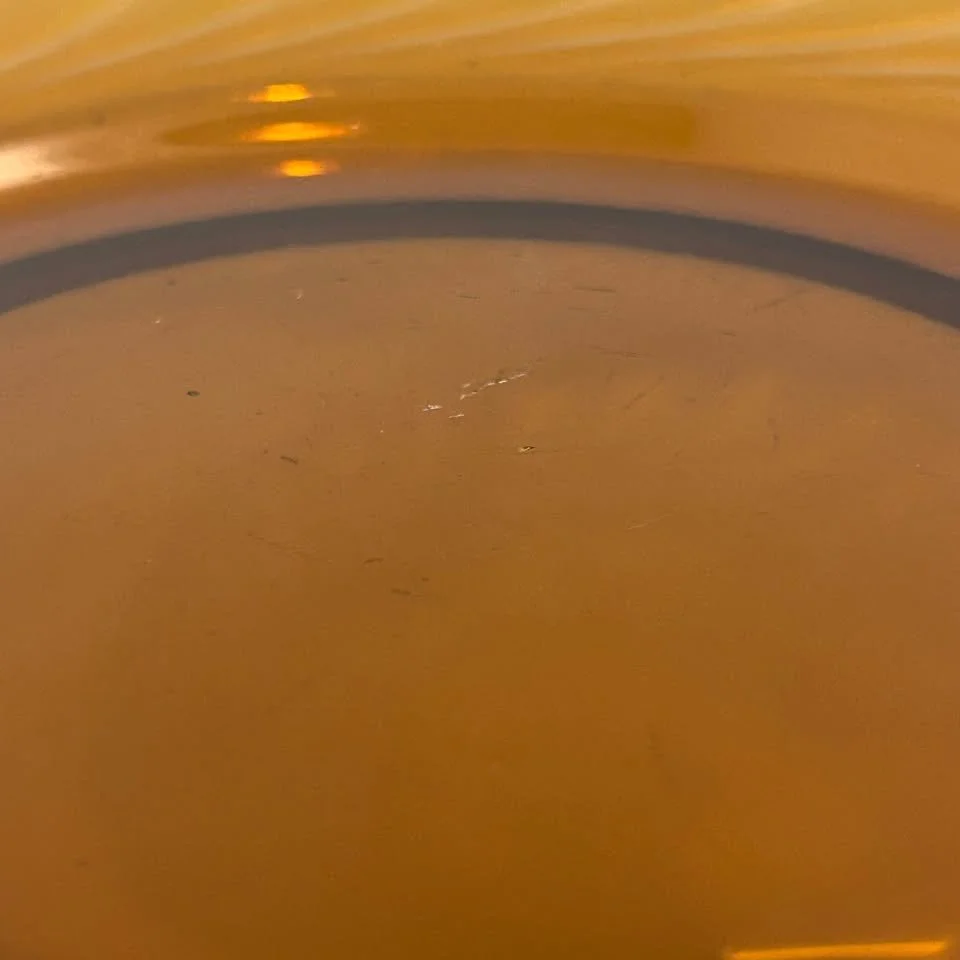
Very good vintage condition. No cracks or repairs. Minor surface wear consistent with age and careful display. Inclusions and internal variations are intentional to the alabastro technique, not flaws.
Placement
Designed as a centerpiece, console statement, or collector display, this form bridges classical Venetian elegance with mid-century modern design. Highly desirable to collectors of Murano, Italian modernism, and studio art glass.
STANDARD ATTRIBUTION & VALUE DISCLOSURE
This piece is described to the best of current scholarly and market knowledge. Any maker or regional attribution is based on visual analysis, materials, construction techniques, and documented stylistic comparisons. As with many vintage and antique glass objects, definitive attribution may not be possible without original labels or factory records. Pricing reflects condition, quality, decorative appeal, and current collector demand rather than a guaranteed maker identification.
An exceptional mid-20th-century Murano art glass tazza, executed in richly layered amber and honey alabastro glass with dramatic marbled inclusions and a deeply sculptural, free-form rim.
This is a hand-blown Venetian centerpiece, unmistakably rooted in Murano’s postwar art-glass renaissance.
Authenticity & Construction
The bowl features a wide, undulating, asymmetric rim with pulled ends, a hallmark of high-quality Murano studio work from the late 1940s through 1960s. The glass body displays dense alabastro veining; milky cream and caramel tones suspended within warm amber; achieved through complex hot-working techniques requiring exceptional furnace control.
The coloration is integral, not surface-applied. The piece is raised on a clear ribbed baluster stem over a broad amber foot, a construction frequently associated with Murano tazze and compote forms produced for export during the golden age of Italian modernism.
Attribution & Period
The polished pontil scar on the underside is consistent with hand-finished Venetian production.
Probable Origin & Attribution:
Origin: Murano, Venice, Italy
Date: Circa 1950-1965
Style & Techniques: Alabastro, marbled inclusions, free-form modernist rim
Possible Makers (attribution by style):
Barovier & Toso (alabastro tradition); Seguso Vetri d’Arte; Archimede Seguso workshop; Murano cooperative studios producing export tazze While unsigned (typical for the period), the glass quality, weight, color saturation, and sculptural confidence firmly place this within authentic Murano production, not later imitations.
Collector’s Note
Under ultraviolet (black) light, this bowl exhibits a pronounced fluorescent response consistent with uranium-infused glass (commonly referred to as Vaseline glass when in amber/yellow tones). The vivid internal glow confirms the presence of uranium oxide in the glass formula—a hallmark of certain early to mid-20th-century art glass production.
This fluorescence is not decorative surface treatment but inherent to the glass matrix itself, reinforcing period authenticity and materially significant composition. For collectors, uranium-bearing glass represents a distinct and highly desirable category within Murano and studio art glass, prized for both its chemistry and its dramatic transformation under UV display.
Condition
Very good vintage condition. No cracks or repairs. Minor surface wear consistent with age and careful display. Inclusions and internal variations are intentional to the alabastro technique, not flaws.
Placement
Designed as a centerpiece, console statement, or collector display, this form bridges classical Venetian elegance with mid-century modern design. Highly desirable to collectors of Murano, Italian modernism, and studio art glass.
STANDARD ATTRIBUTION & VALUE DISCLOSURE
This piece is described to the best of current scholarly and market knowledge. Any maker or regional attribution is based on visual analysis, materials, construction techniques, and documented stylistic comparisons. As with many vintage and antique glass objects, definitive attribution may not be possible without original labels or factory records. Pricing reflects condition, quality, decorative appeal, and current collector demand rather than a guaranteed maker identification.

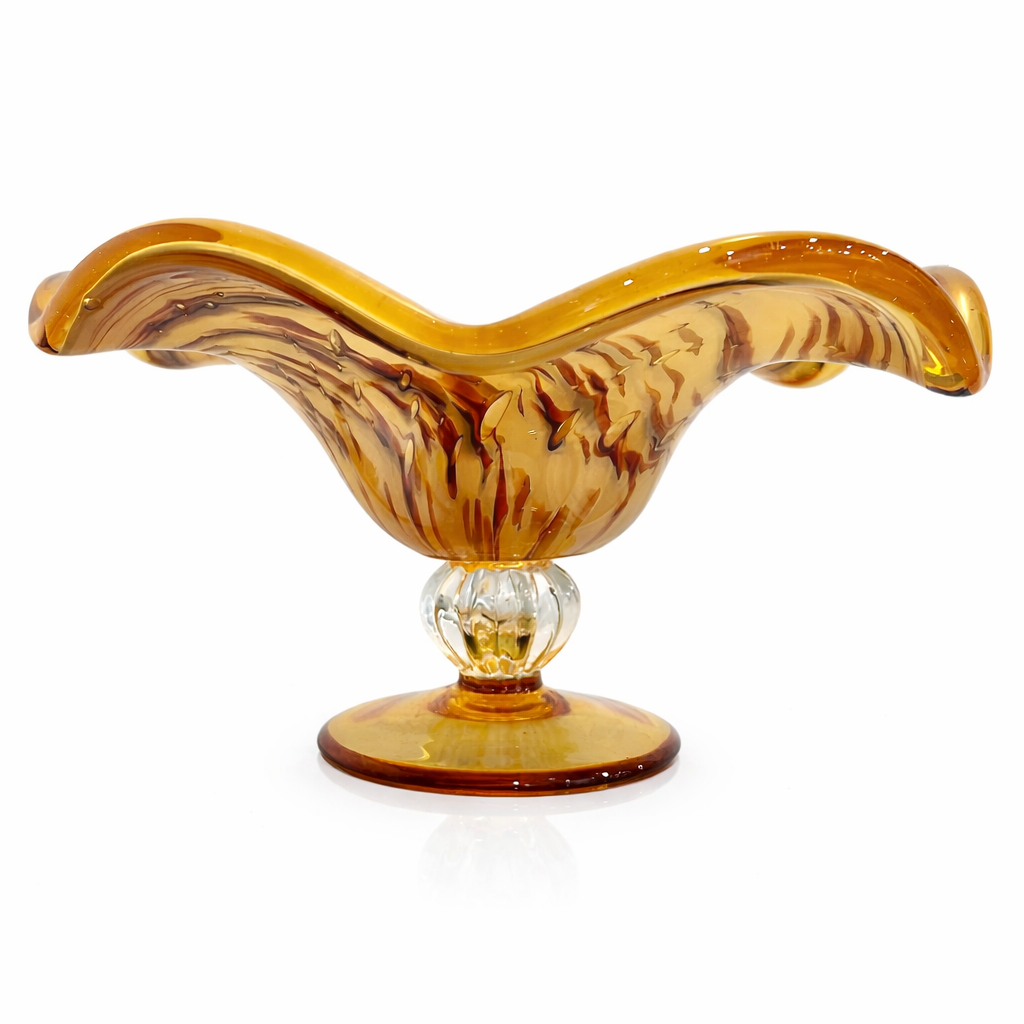 Image 1 of 8
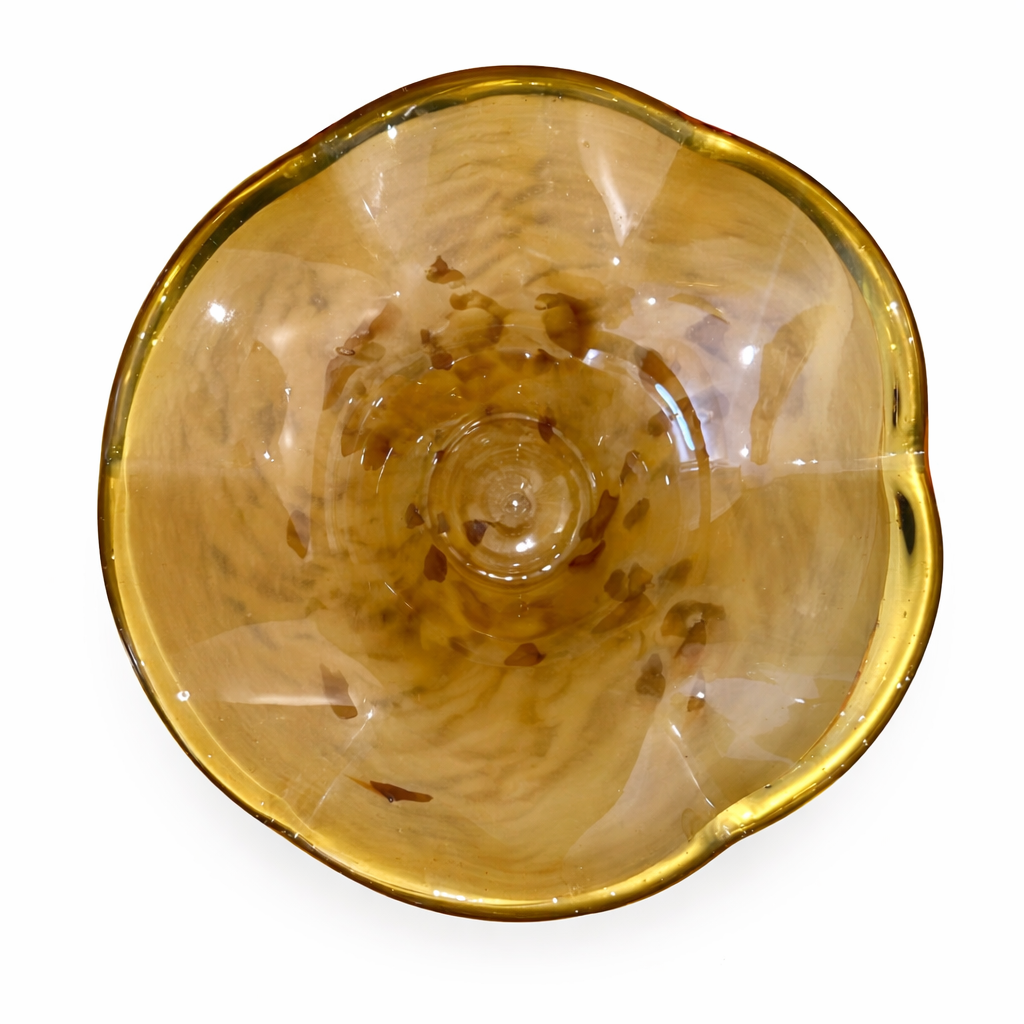 Image 2 of 8
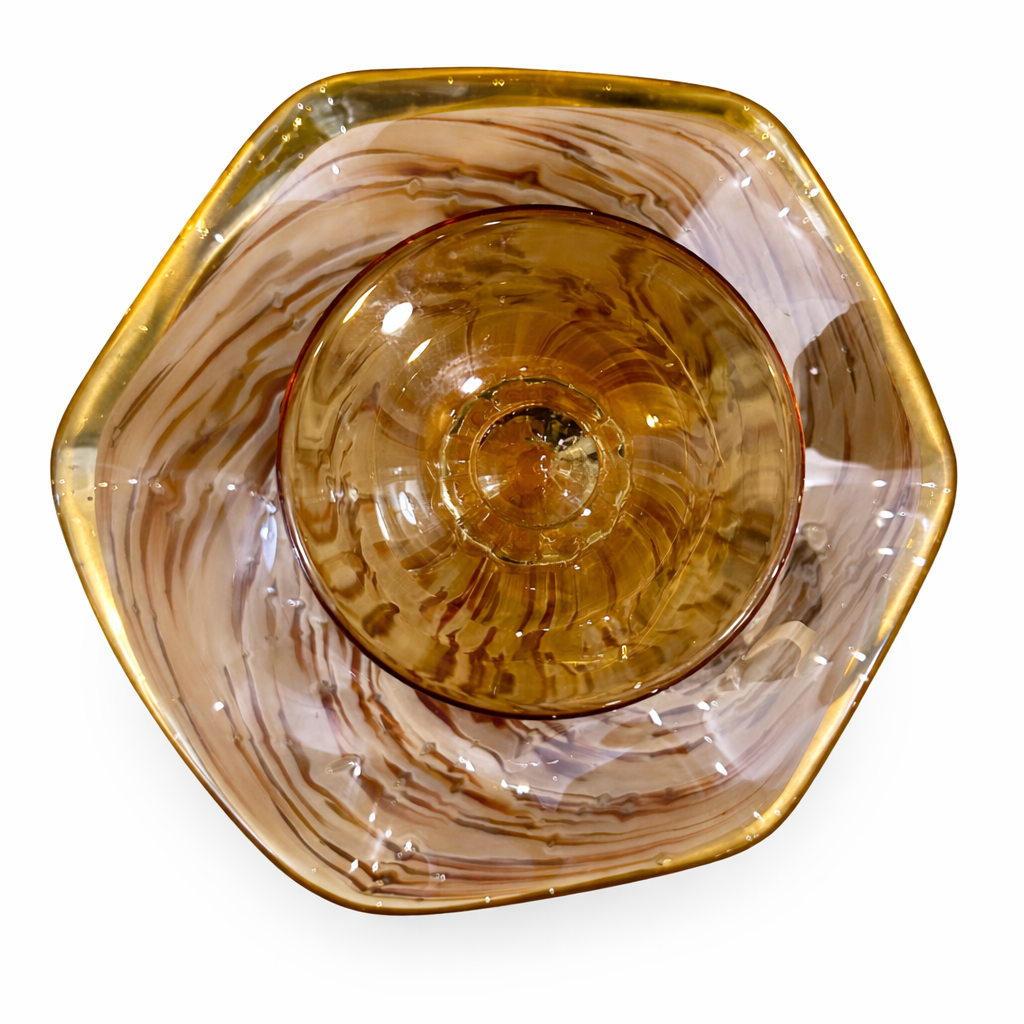 Image 3 of 8
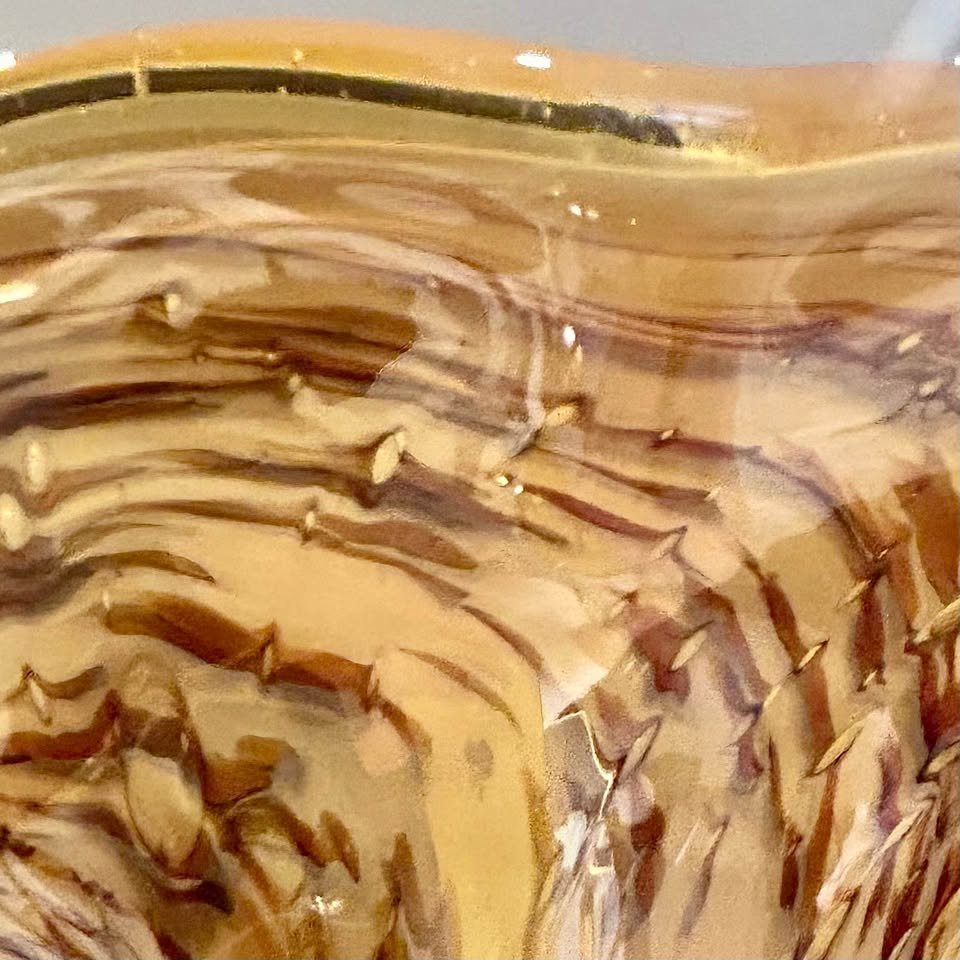 Image 4 of 8
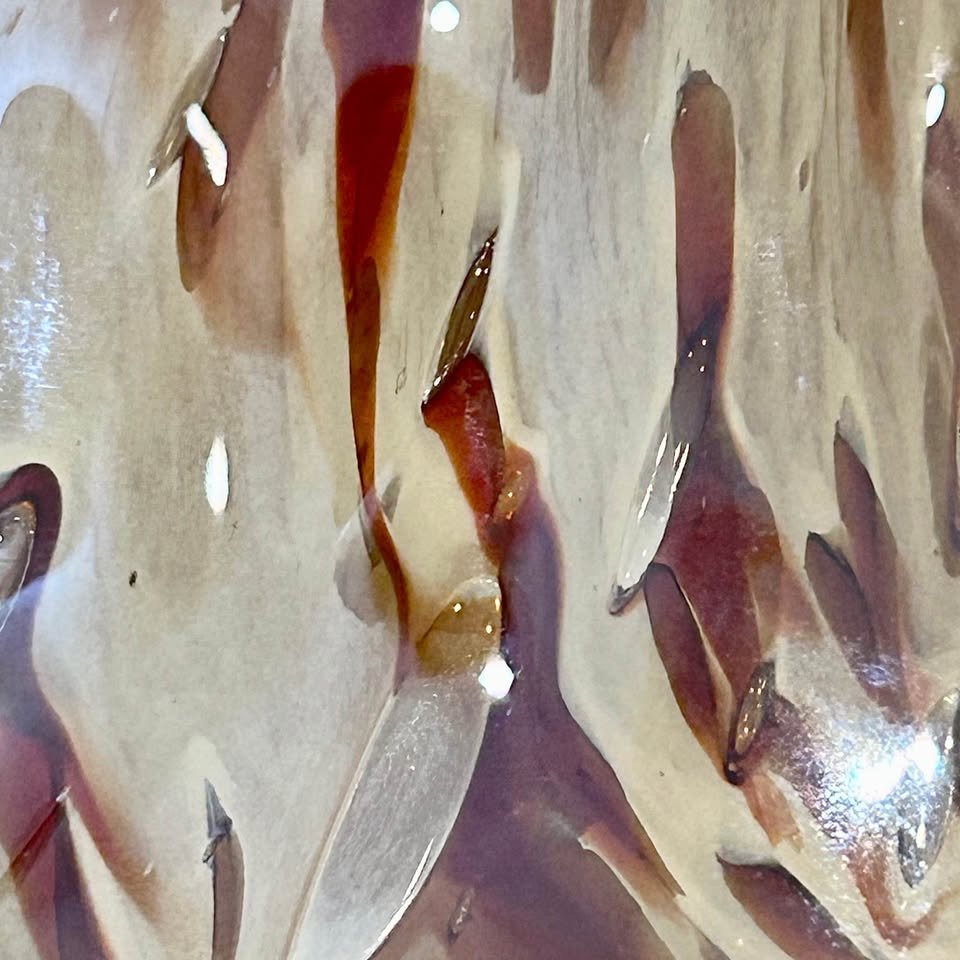 Image 5 of 8
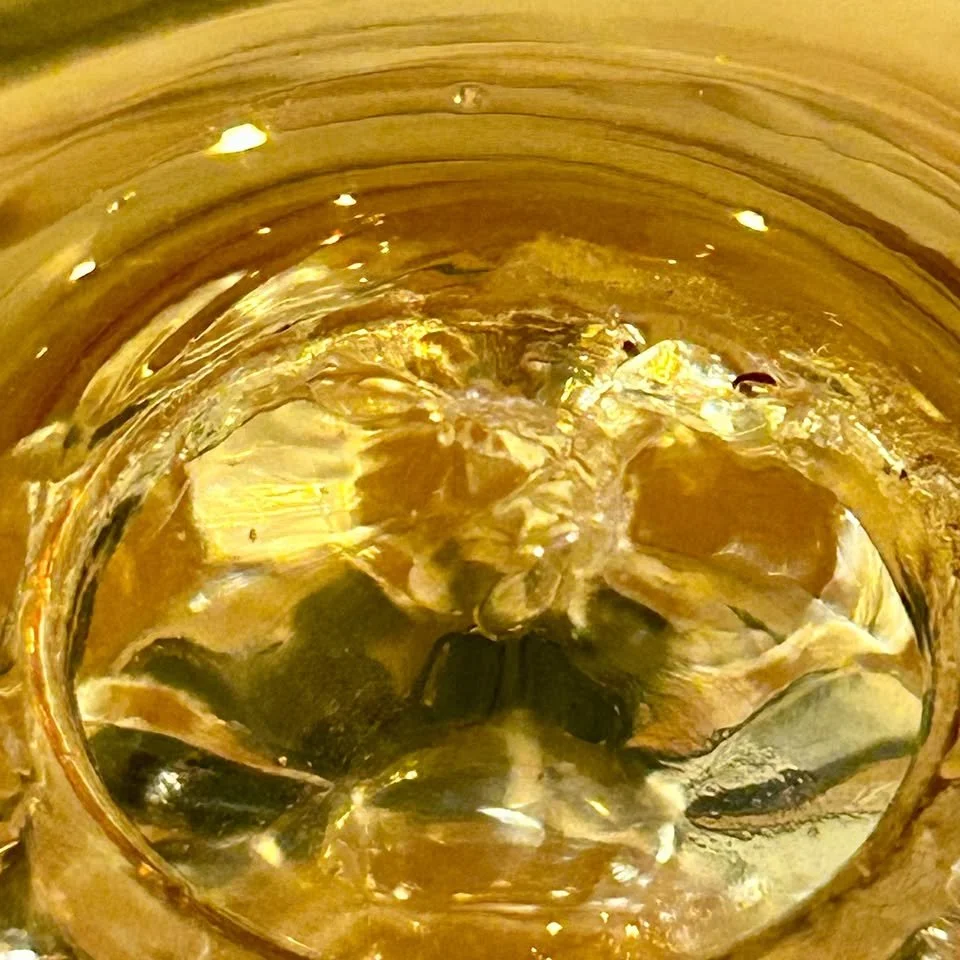 Image 6 of 8
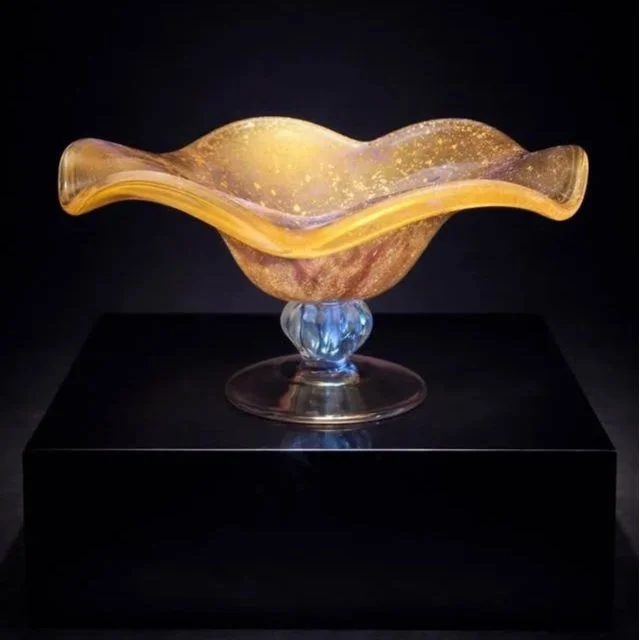 Image 7 of 8
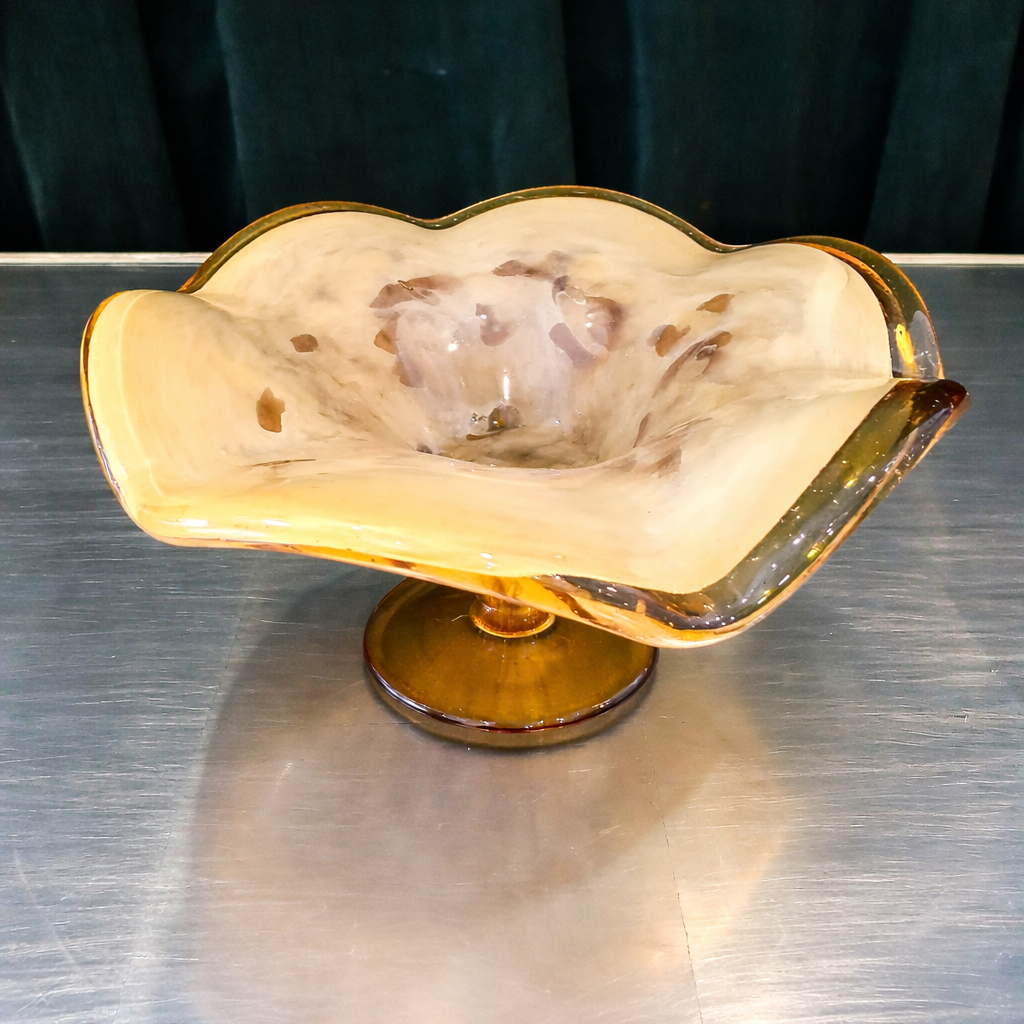 Image 8 of 8