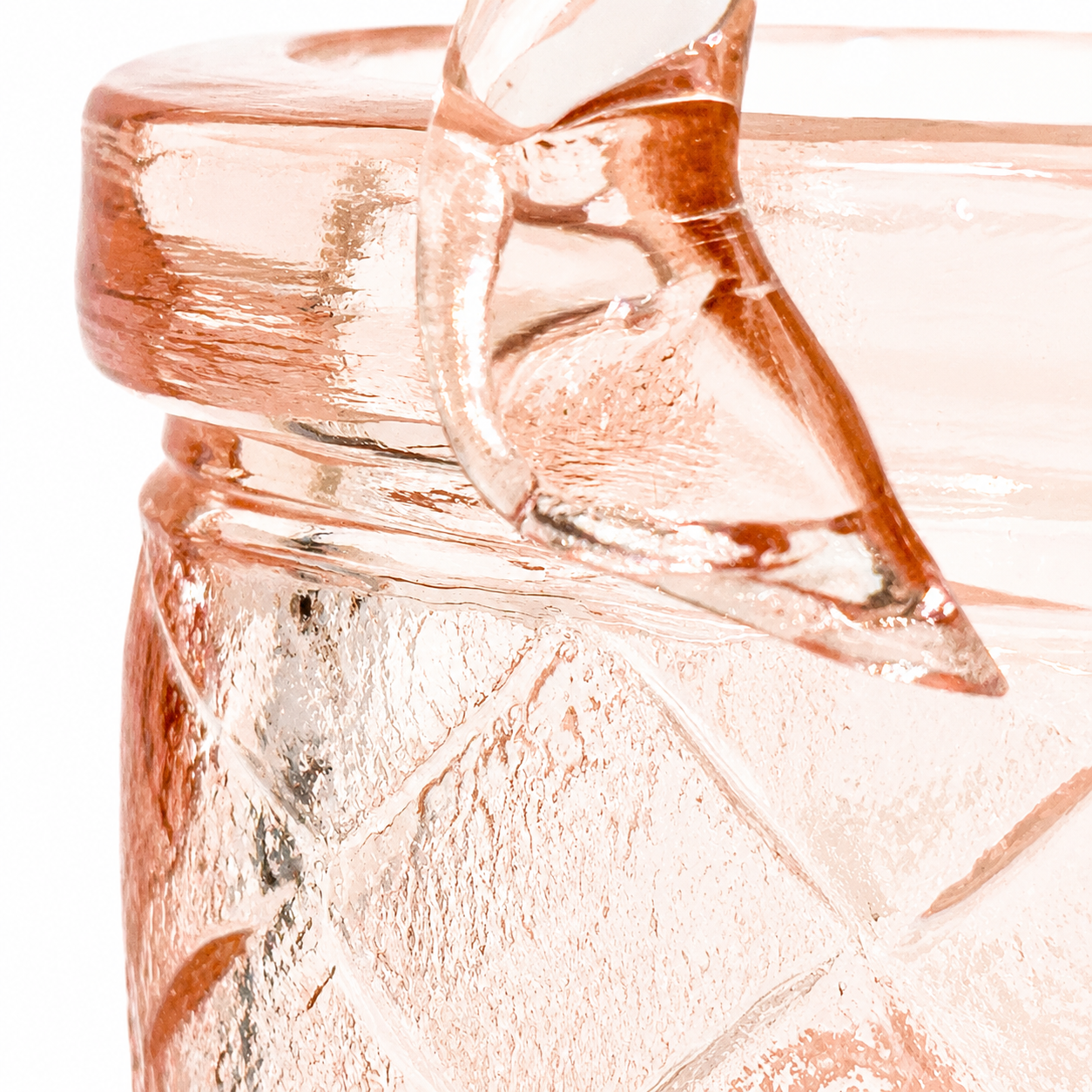
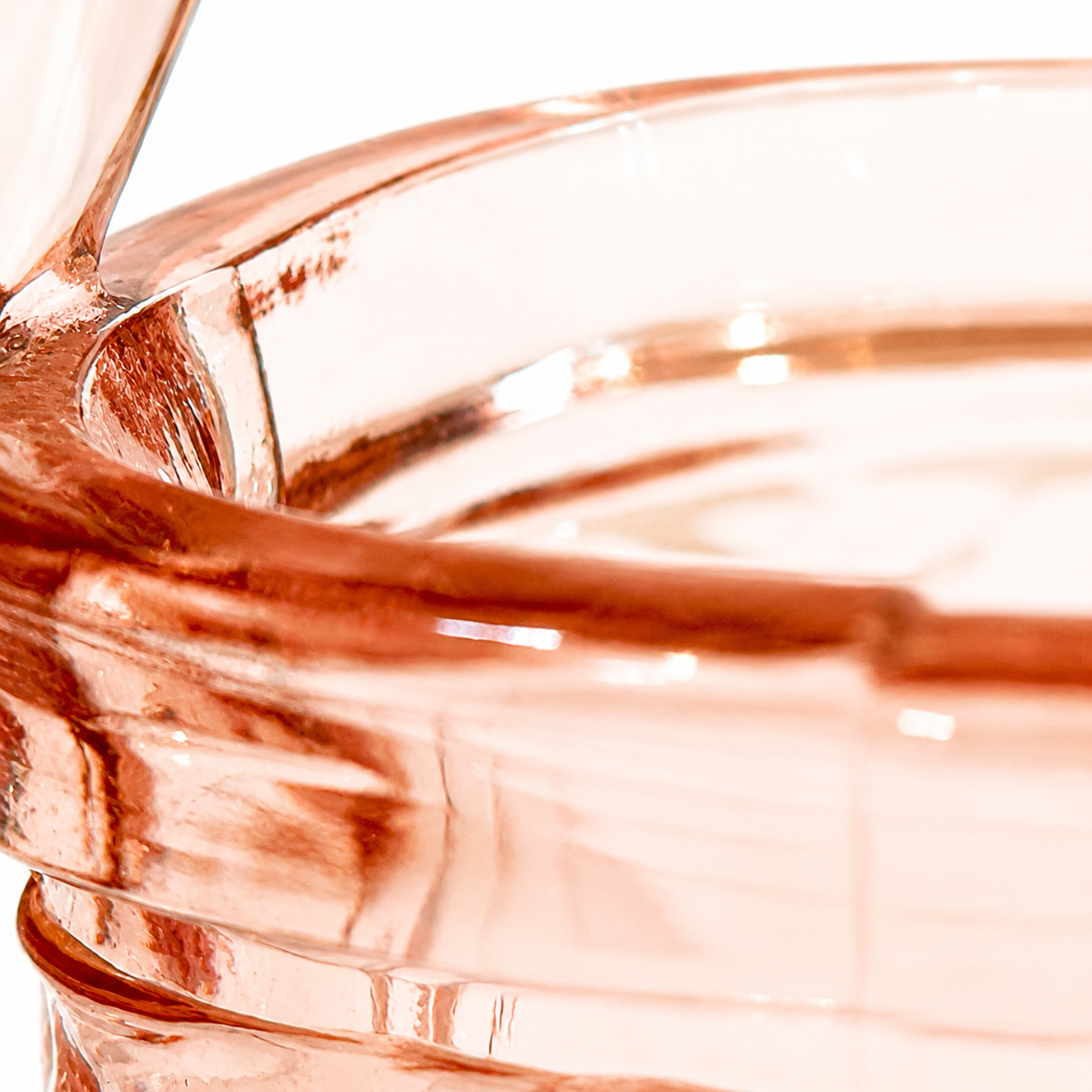
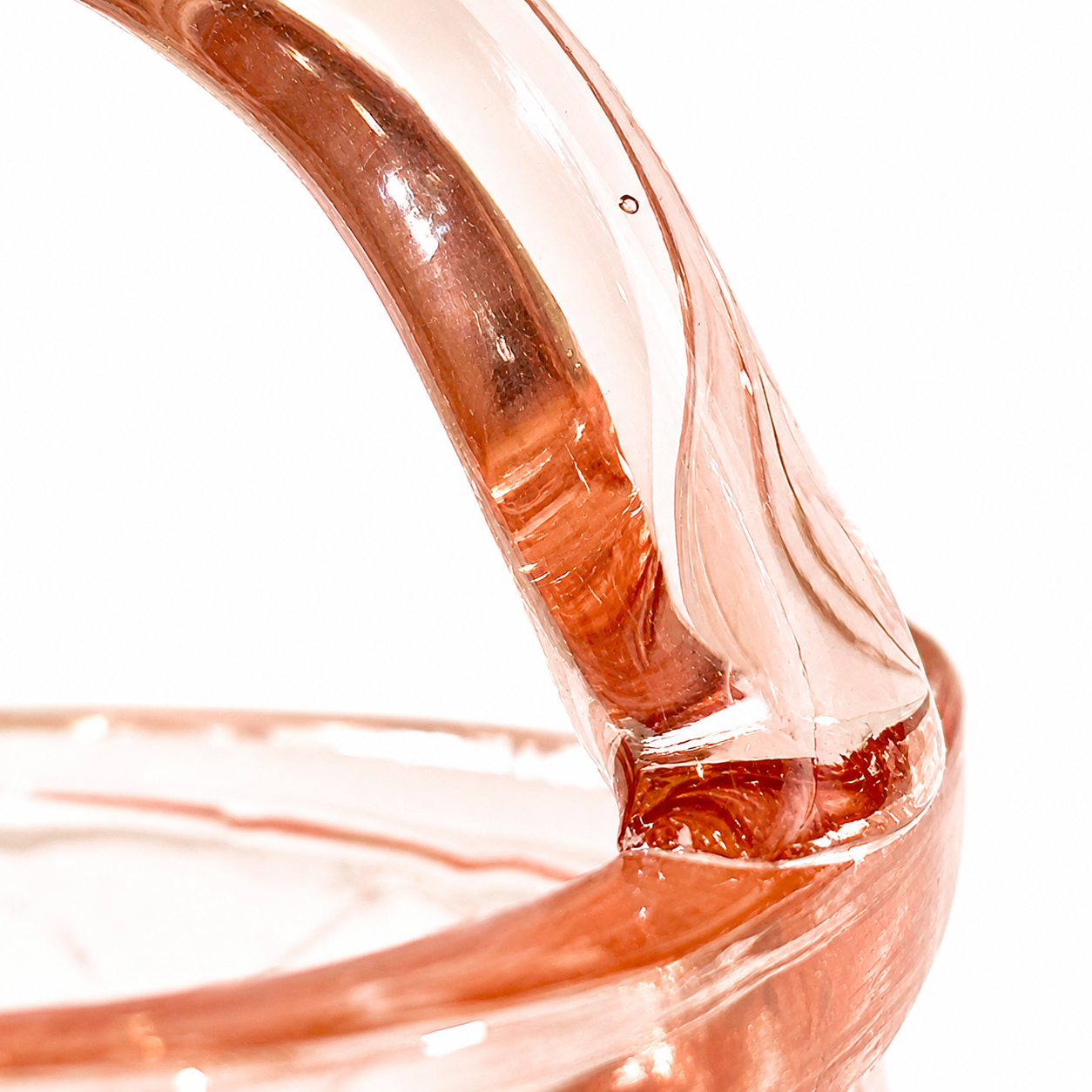
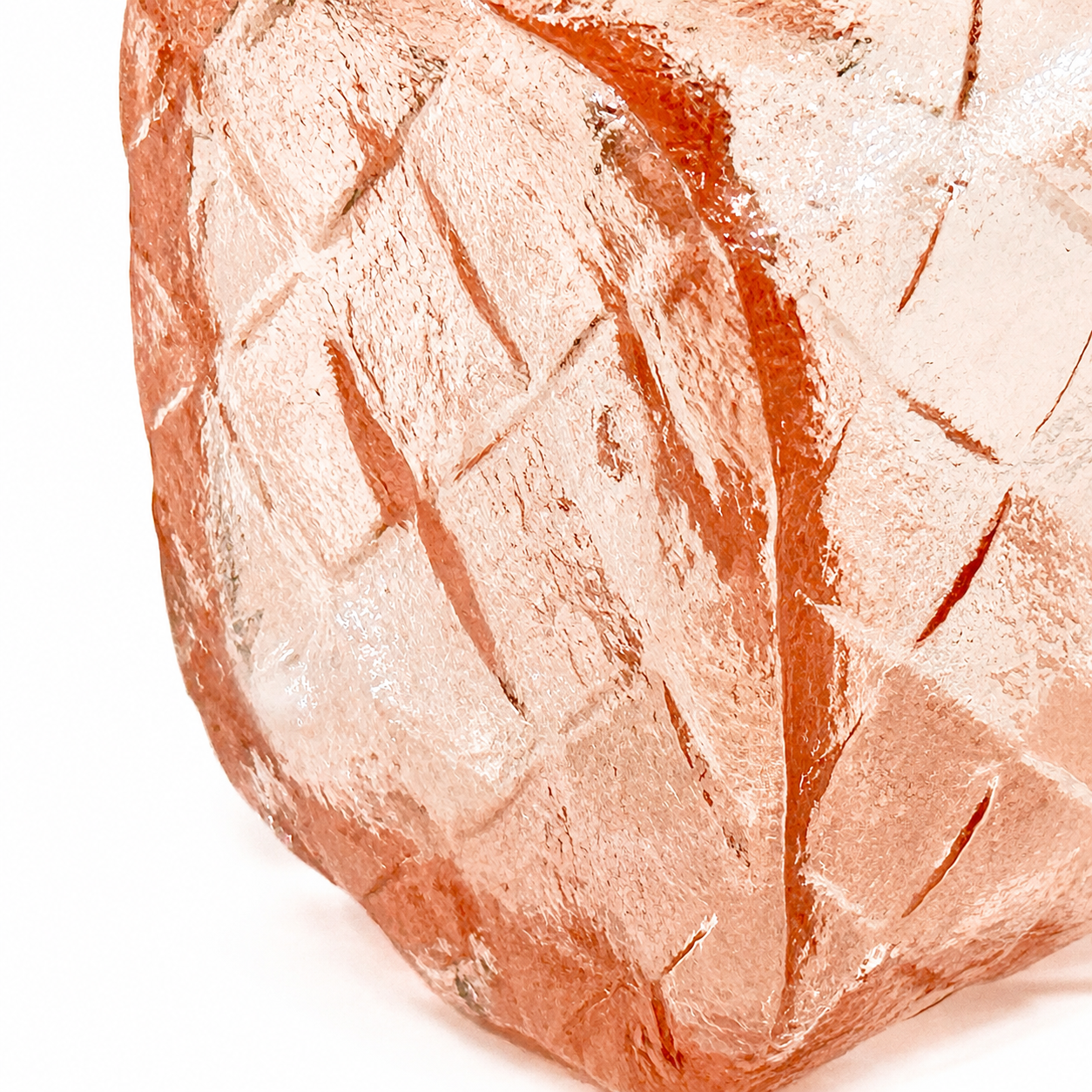
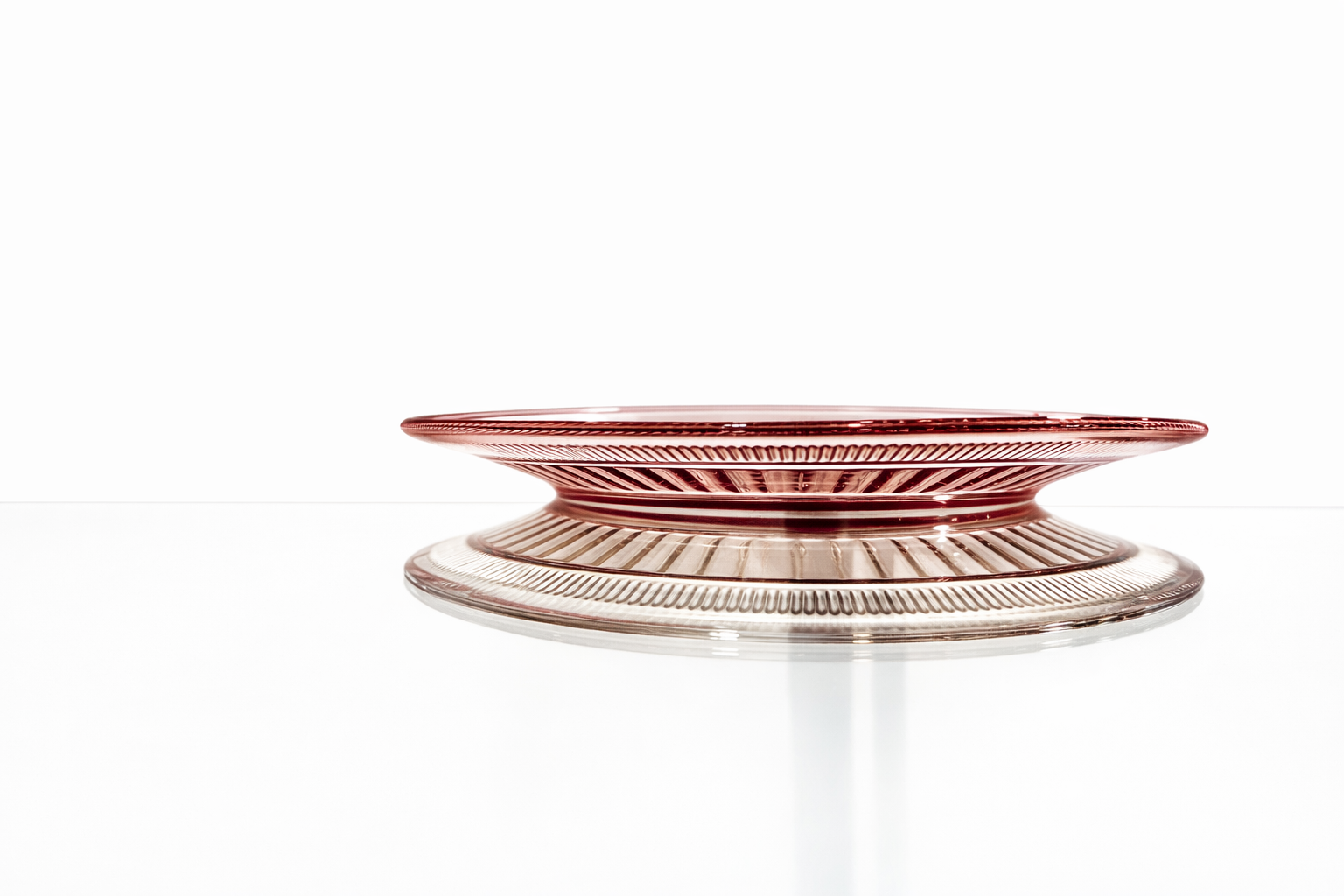
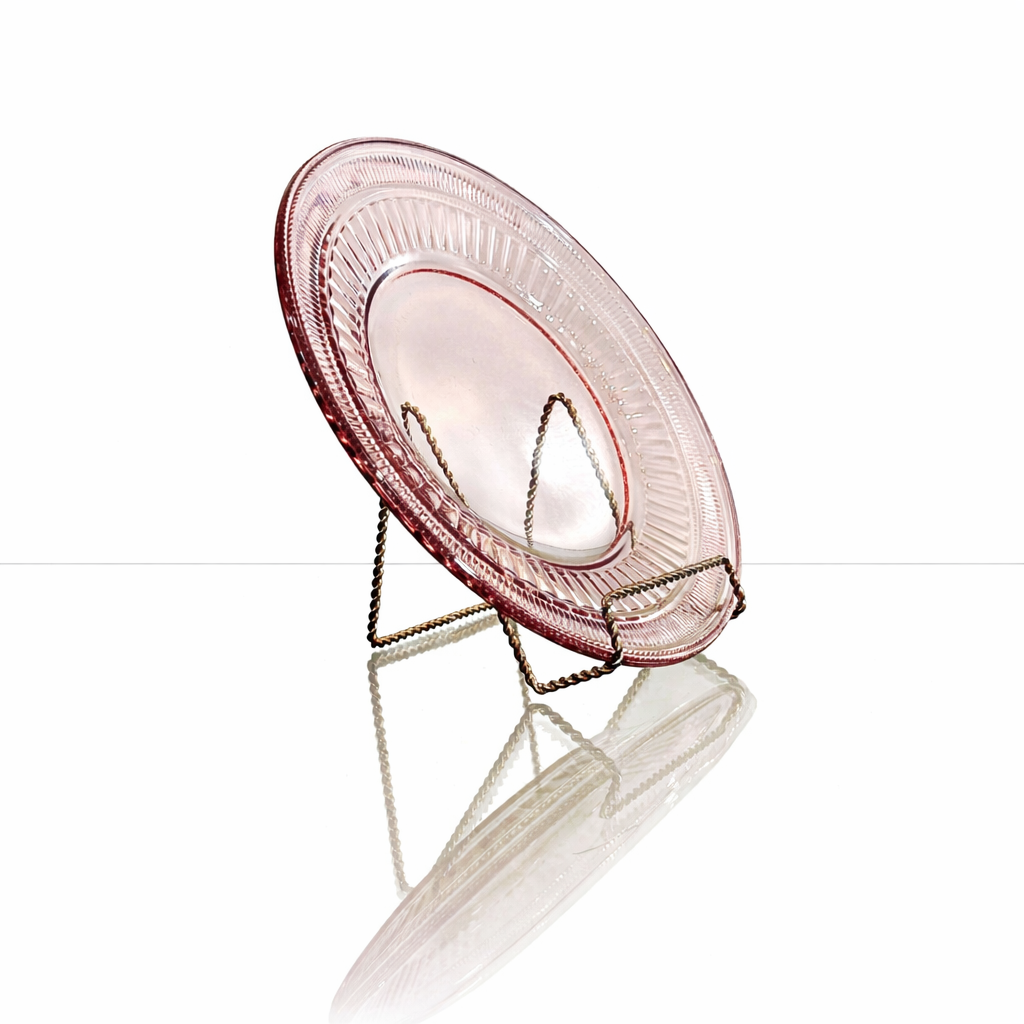
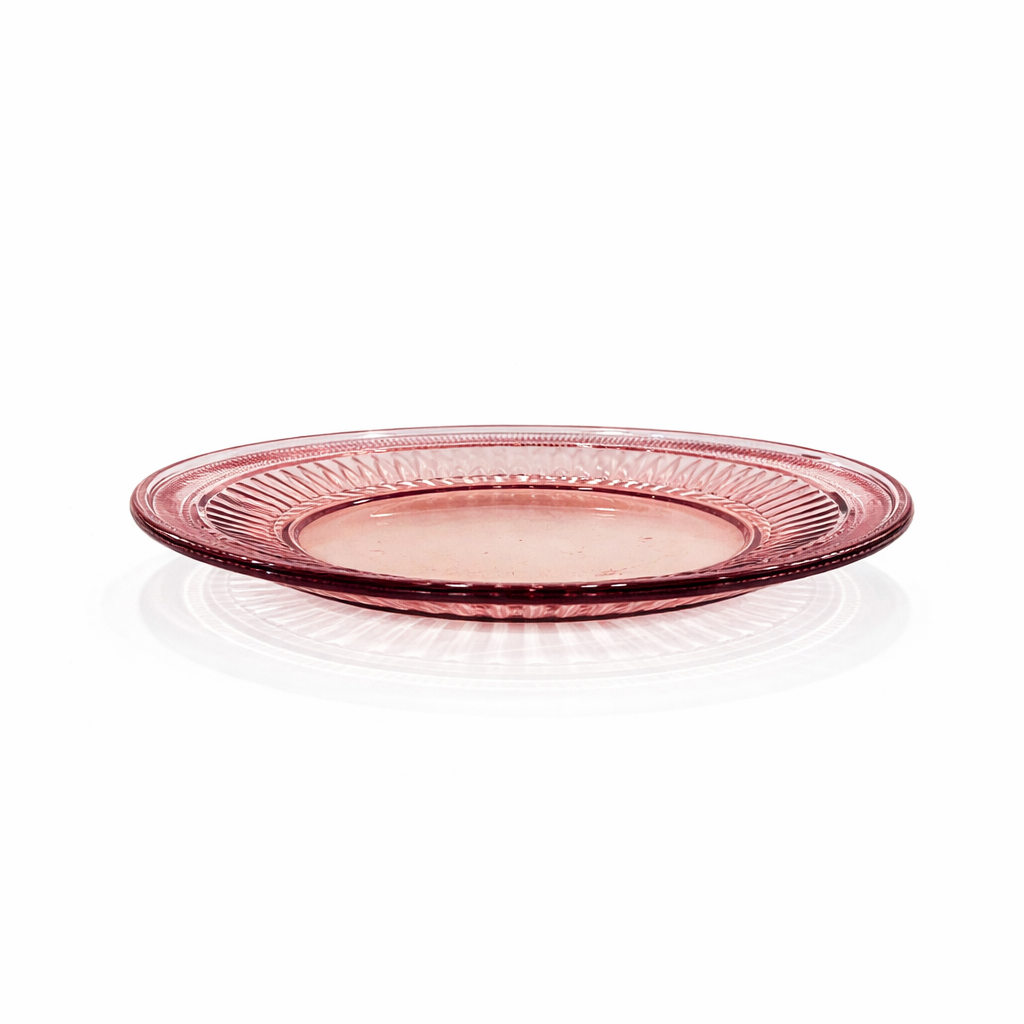
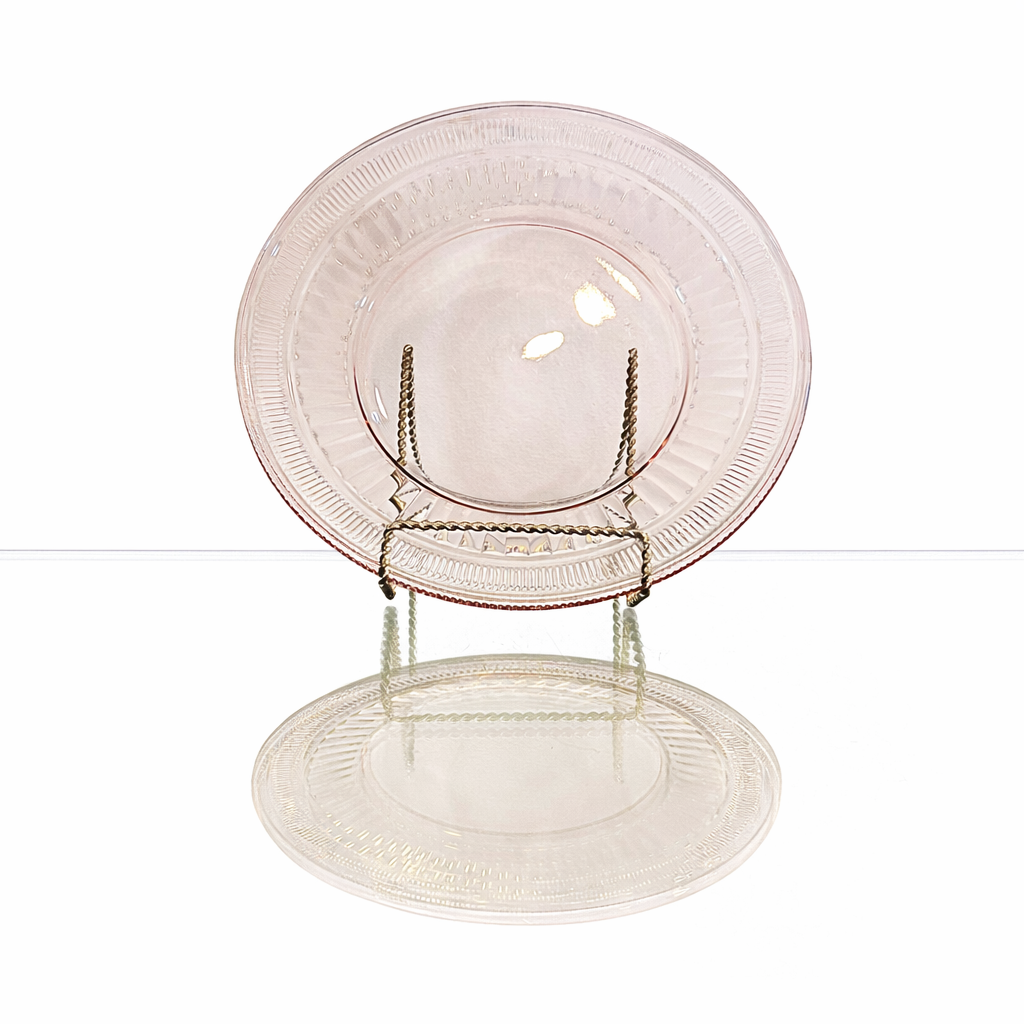
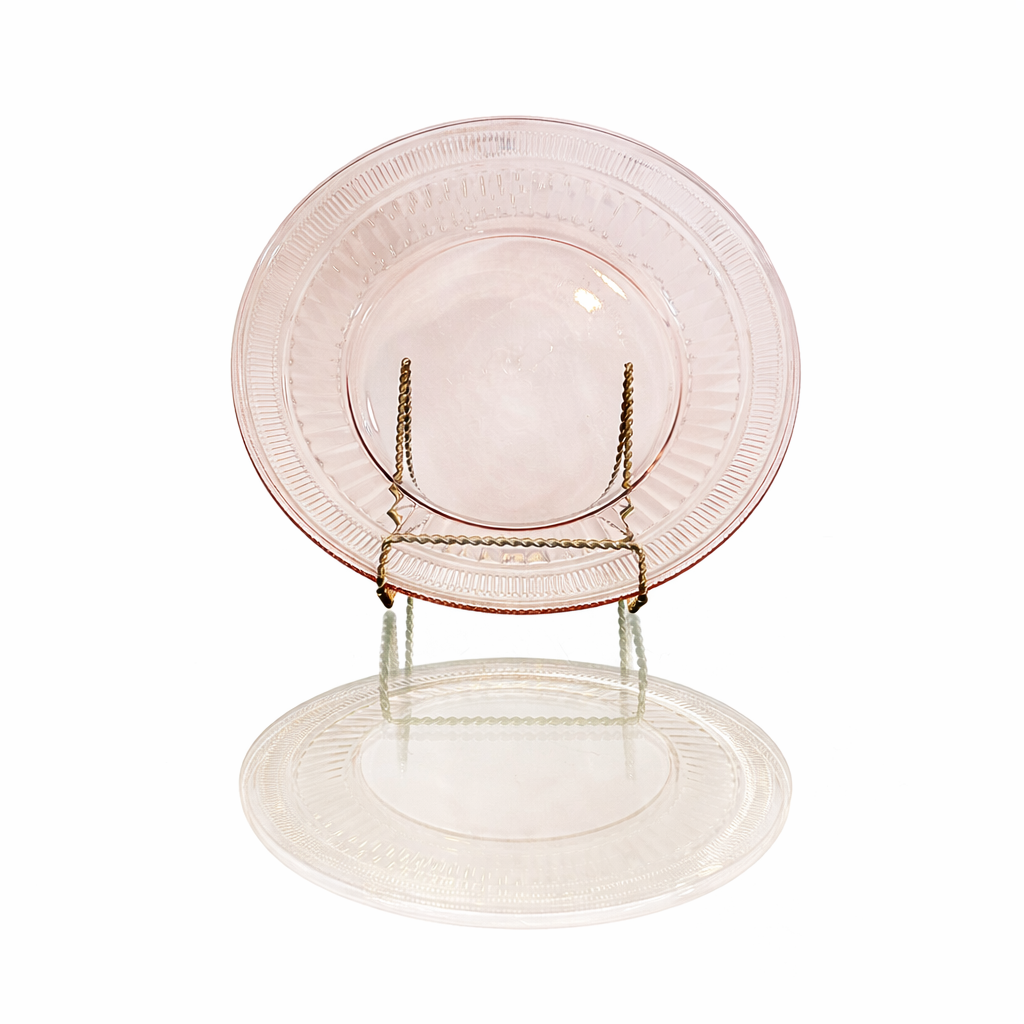
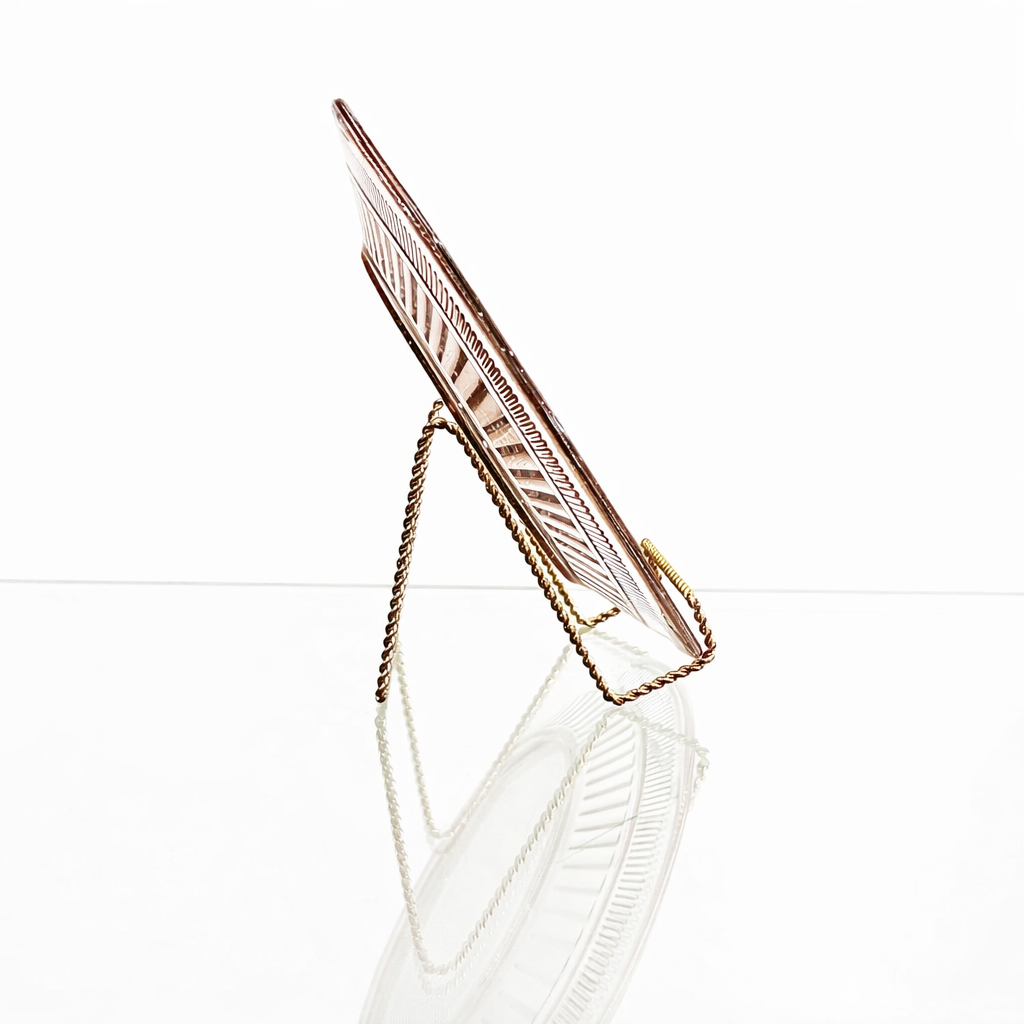
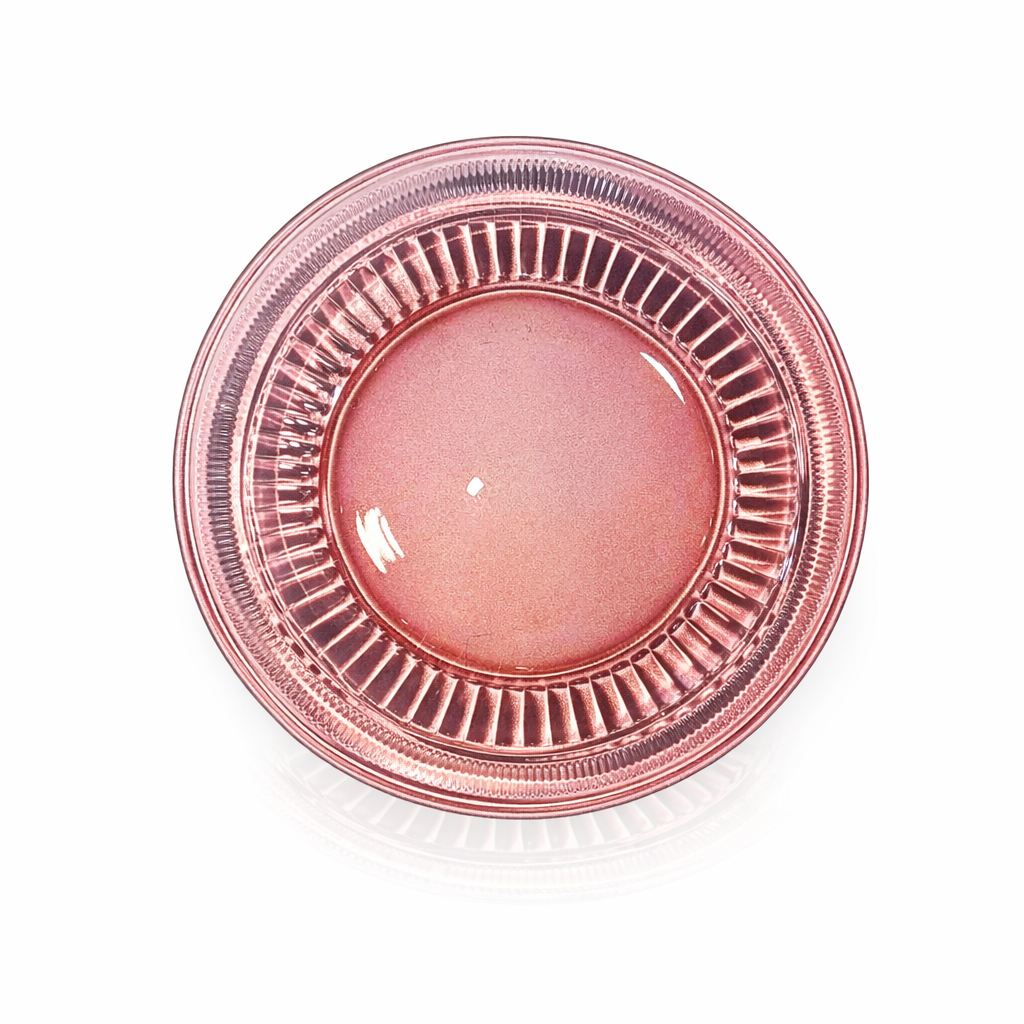
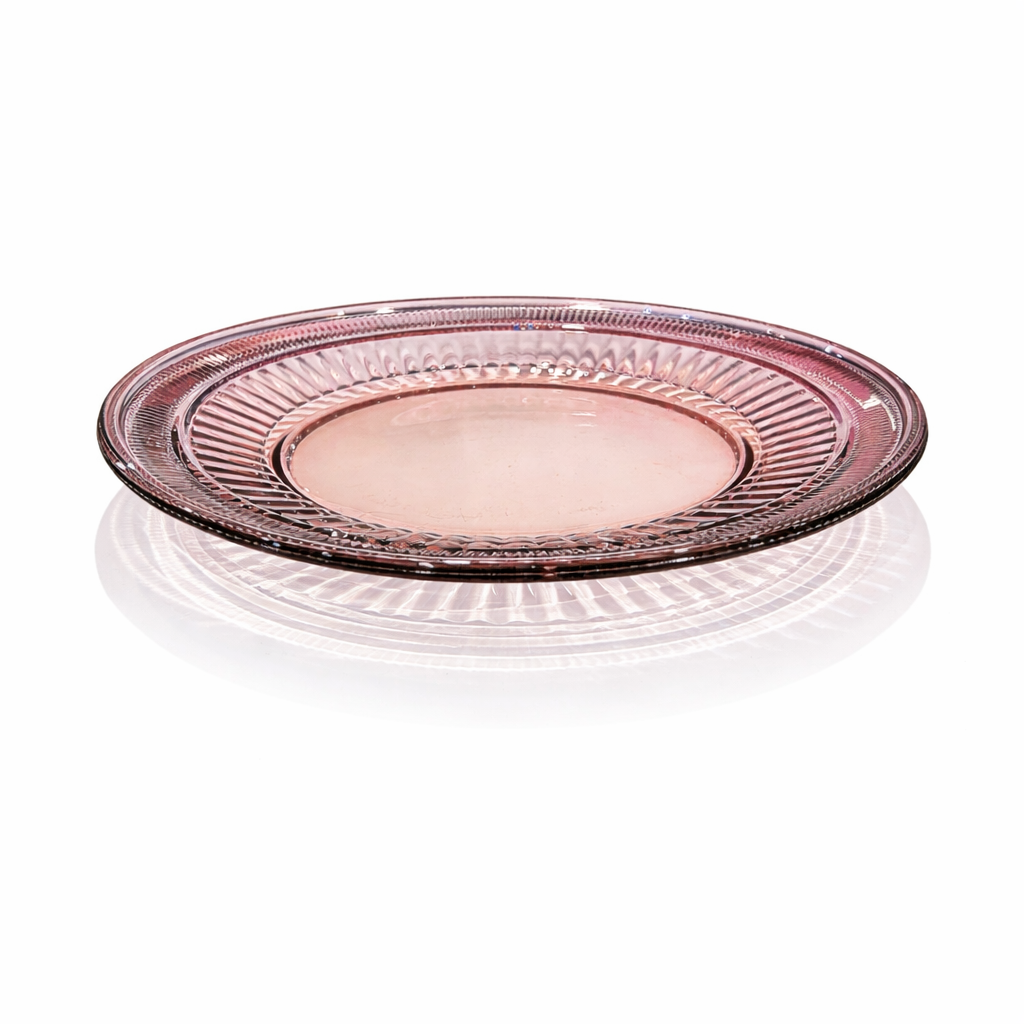
This refined cocktail stem presents as a classic example of American elegant glass, distinguished not only by its delicate peach-tinted bowl and wheel-etched floral motif, but by a previously unnoted optical phenomenon: under UV 365 lighting, the glass emits a pronounced electric blue fluorescence. This transformation elevates the piece beyond decorative tableware into a dual-context object—equally compelling in daylight and under controlled lighting conditions.
The optic-molded bowl creates rhythmic internal refraction, while the hand-cut floral etching softens the surface with a matte contrast. Under standard lighting, the tone reads as a warm peach wash concentrated at the lower bowl; under UV, the entire form activates, producing a saturated cobalt-blue glow that highlights the glass composition and thickness variations.
The silhouette remains disciplined and architectural: a flared rim, a slender, tapering stem, and a wide, balanced foot. The UV response introduces a second layer of visual complexity rarely documented in comparable examples.
Attribution & Period
Consistent with American elegant glass production of the 1930s. The wheel-cut floral motif aligns with patterns such as “Persian Pheasant” and related wildflower variants attributed to firms including Tiffin-Franciscan.
The observed UV reactivity suggests the presence of manganese or related decolorizing agents commonly used in early 20th-century glassmaking, which are now known to fluoresce under 365nm light. This feature is period-consistent and not a later alteration.
Dimensions & Weight
Condition
Excellent condition. No chips, cracks, or structural damage observed.
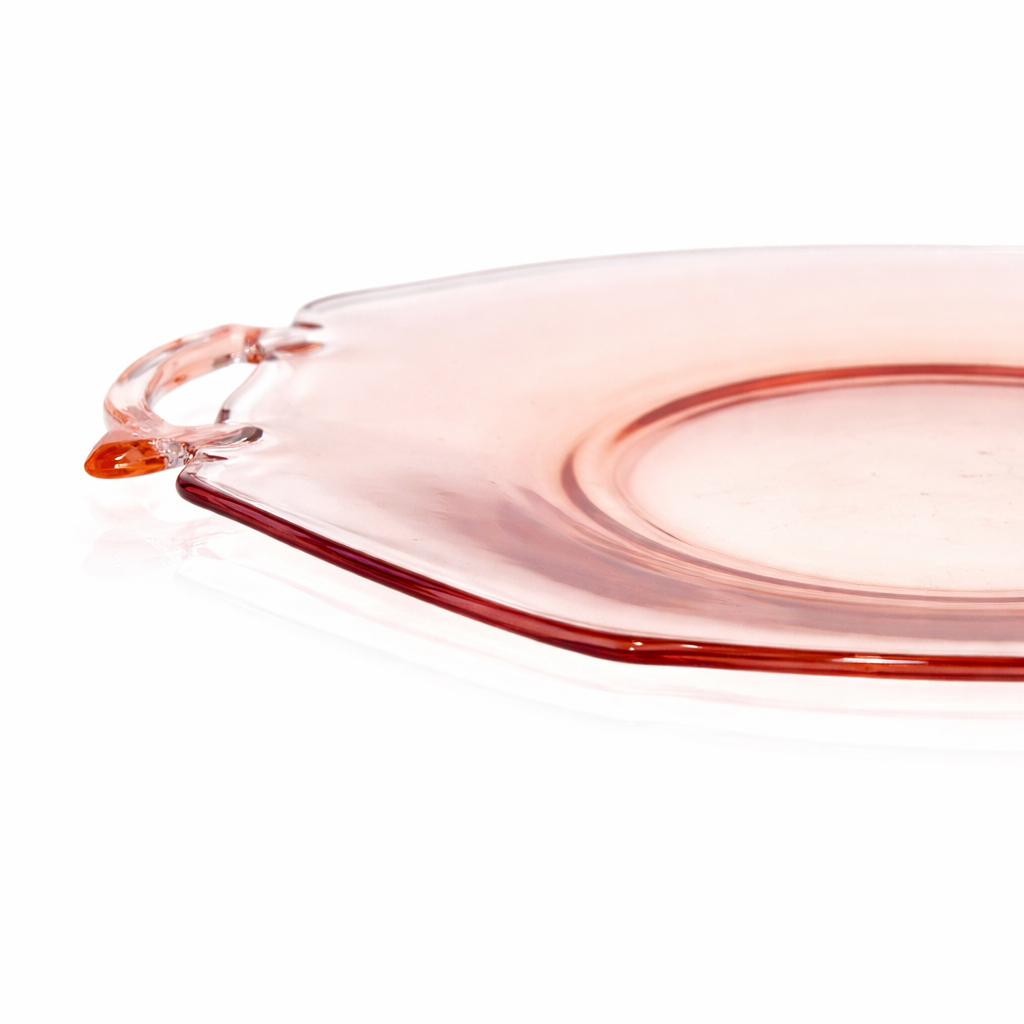
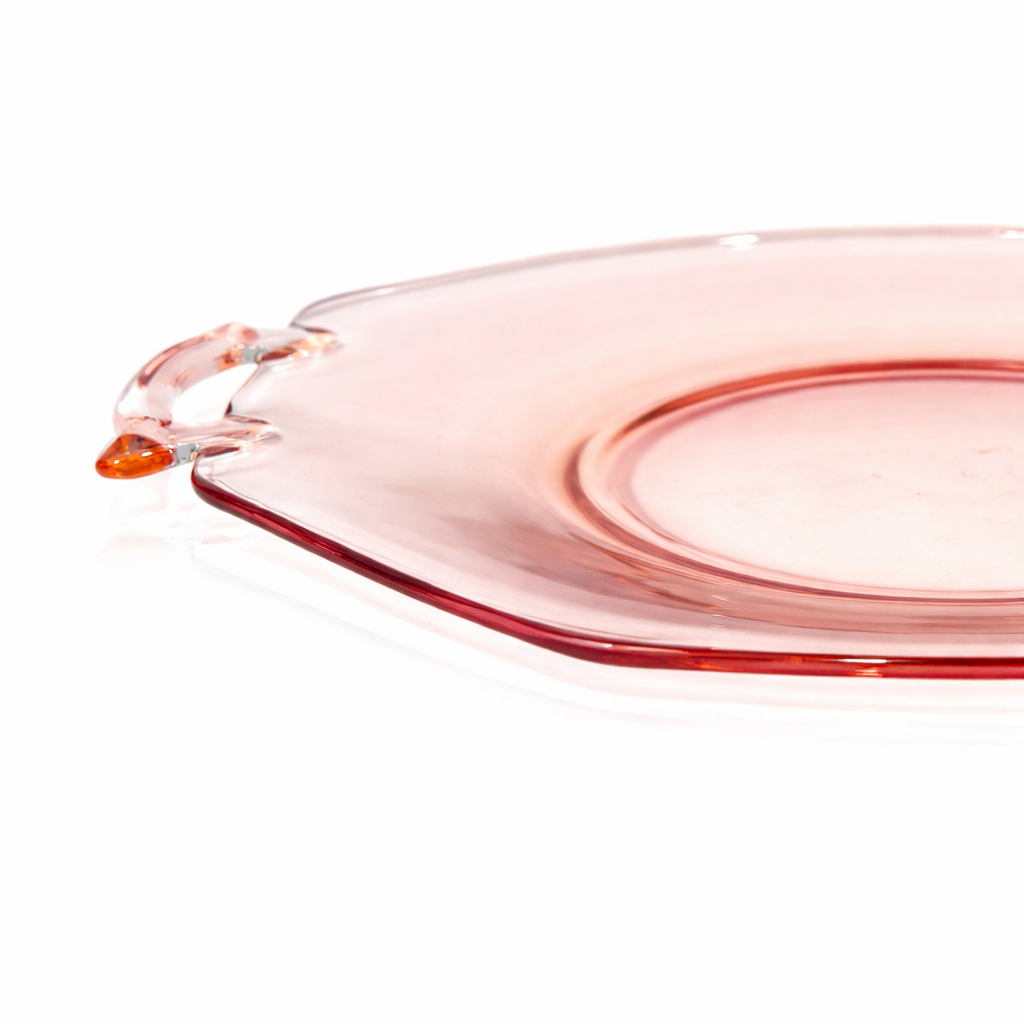
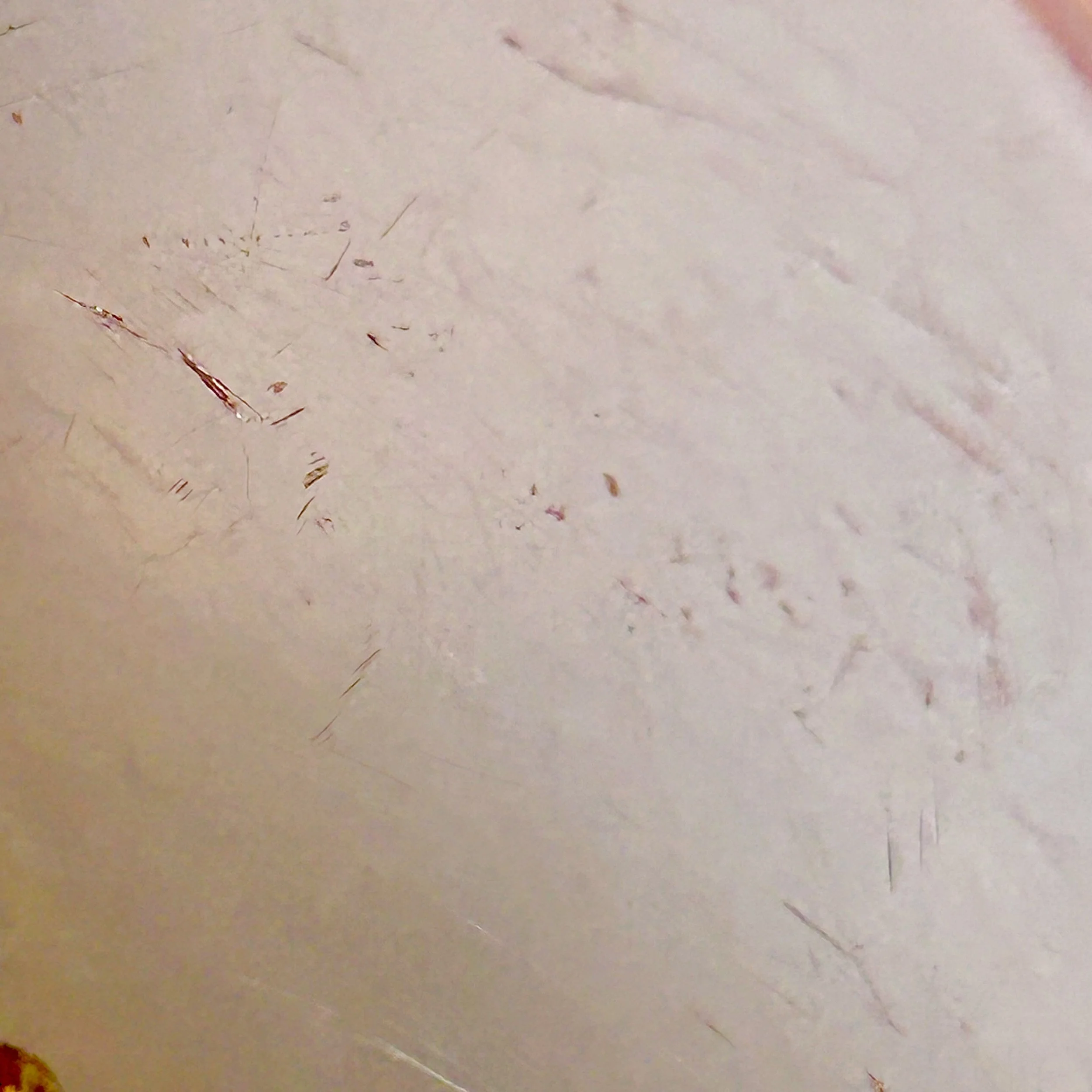
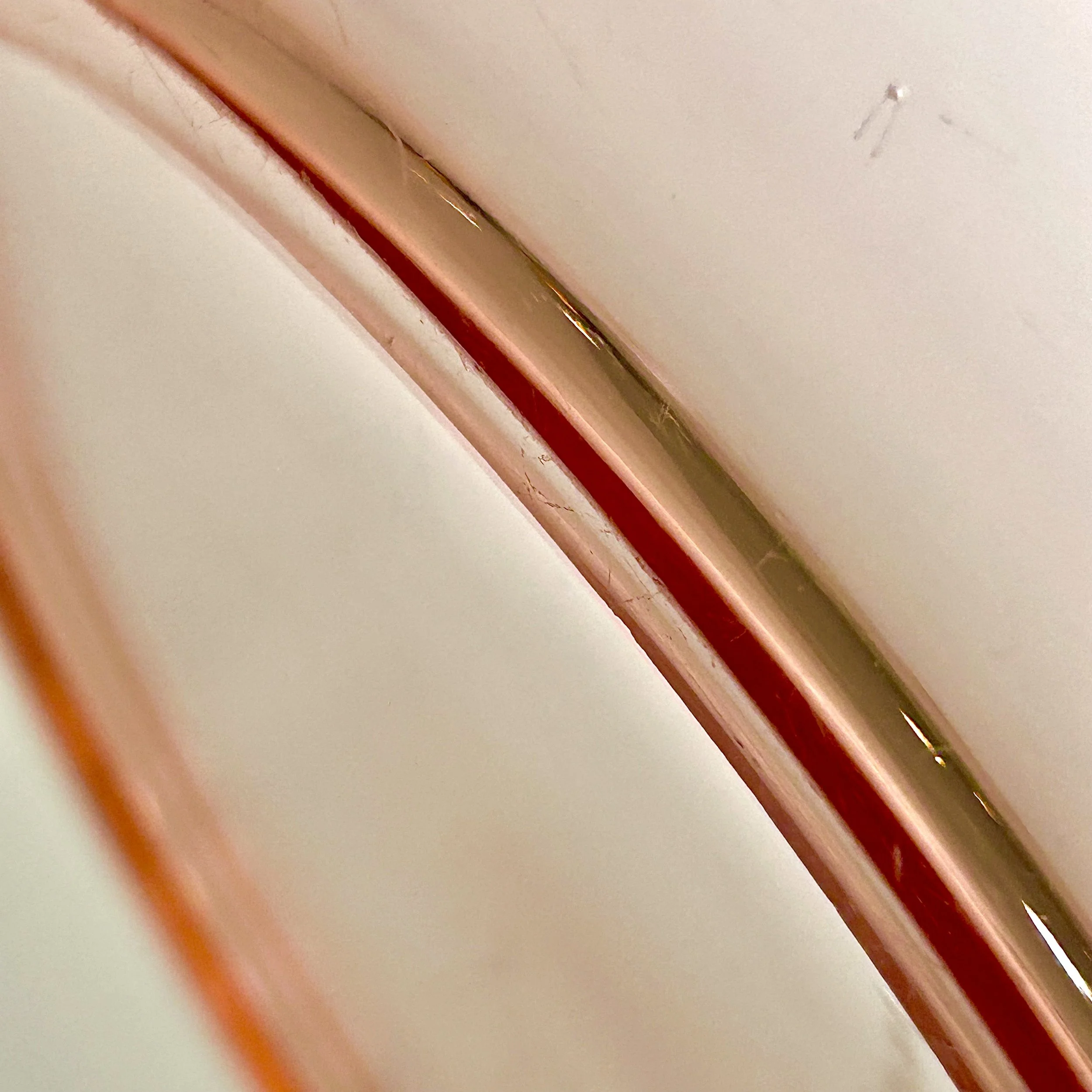
Light shelf wear to the underside of the base.
Minor seed bubbles and inclusions consistent with period manufacture.
UV fluorescence is strong and even, with no degradation.
Authenticity & Construction
Mold-blown optic bowl with subsequent wheel-cut etching. Pulled stem construction. Fire-polished finish typical of higher-grade elegant glass production.
The UV fluorescence is inherent to the glass composition and provides additional confirmation of early 20th-century material practices.
Placement
Highly effective in dual-display environments:
Daylight or neutral lighting for classic elegant glass presentation
UV-lit vitrines, backlit shelving, or curated bar installations where fluorescence can be activated
Functions as both tableware and a reactive display object within a collection.
STANDARD ATTRIBUTION & VALUE DISCLOSURE
This piece is described to the best of current scholarly and market knowledge. Any maker or regional attribution is based on visual analysis, materials, construction techniques, and documented stylistic comparisons. As with many early 20th-century design objects, definitive attribution may not be possible without original labels or factory records. Pricing reflects condition, rarity of UV reactivity, decorative appeal, and current collector demand rather than guaranteed maker identification.
This refined cocktail stem presents as a classic example of American elegant glass, distinguished not only by its delicate peach-tinted bowl and wheel-etched floral motif, but by a previously unnoted optical phenomenon: under UV 365 lighting, the glass emits a pronounced electric blue fluorescence. This transformation elevates the piece beyond decorative tableware into a dual-context object—equally compelling in daylight and under controlled lighting conditions.
The optic-molded bowl creates rhythmic internal refraction, while the hand-cut floral etching softens the surface with a matte contrast. Under standard lighting, the tone reads as a warm peach wash concentrated at the lower bowl; under UV, the entire form activates, producing a saturated cobalt-blue glow that highlights the glass composition and thickness variations.
The silhouette remains disciplined and architectural: a flared rim, a slender, tapering stem, and a wide, balanced foot. The UV response introduces a second layer of visual complexity rarely documented in comparable examples.
Attribution & Period
Consistent with American elegant glass production of the 1930s. The wheel-cut floral motif aligns with patterns such as “Persian Pheasant” and related wildflower variants attributed to firms including Tiffin-Franciscan.
The observed UV reactivity suggests the presence of manganese or related decolorizing agents commonly used in early 20th-century glassmaking, which are now known to fluoresce under 365nm light. This feature is period-consistent and not a later alteration.
Dimensions & Weight
Condition
Excellent condition. No chips, cracks, or structural damage observed.
Light shelf wear to the underside of the base.
Minor seed bubbles and inclusions consistent with period manufacture.
UV fluorescence is strong and even, with no degradation.
Authenticity & Construction
Mold-blown optic bowl with subsequent wheel-cut etching. Pulled stem construction. Fire-polished finish typical of higher-grade elegant glass production.
The UV fluorescence is inherent to the glass composition and provides additional confirmation of early 20th-century material practices.
Placement
Highly effective in dual-display environments:
Daylight or neutral lighting for classic elegant glass presentation
UV-lit vitrines, backlit shelving, or curated bar installations where fluorescence can be activated
Functions as both tableware and a reactive display object within a collection.
STANDARD ATTRIBUTION & VALUE DISCLOSURE
This piece is described to the best of current scholarly and market knowledge. Any maker or regional attribution is based on visual analysis, materials, construction techniques, and documented stylistic comparisons. As with many early 20th-century design objects, definitive attribution may not be possible without original labels or factory records. Pricing reflects condition, rarity of UV reactivity, decorative appeal, and current collector demand rather than guaranteed maker identification.

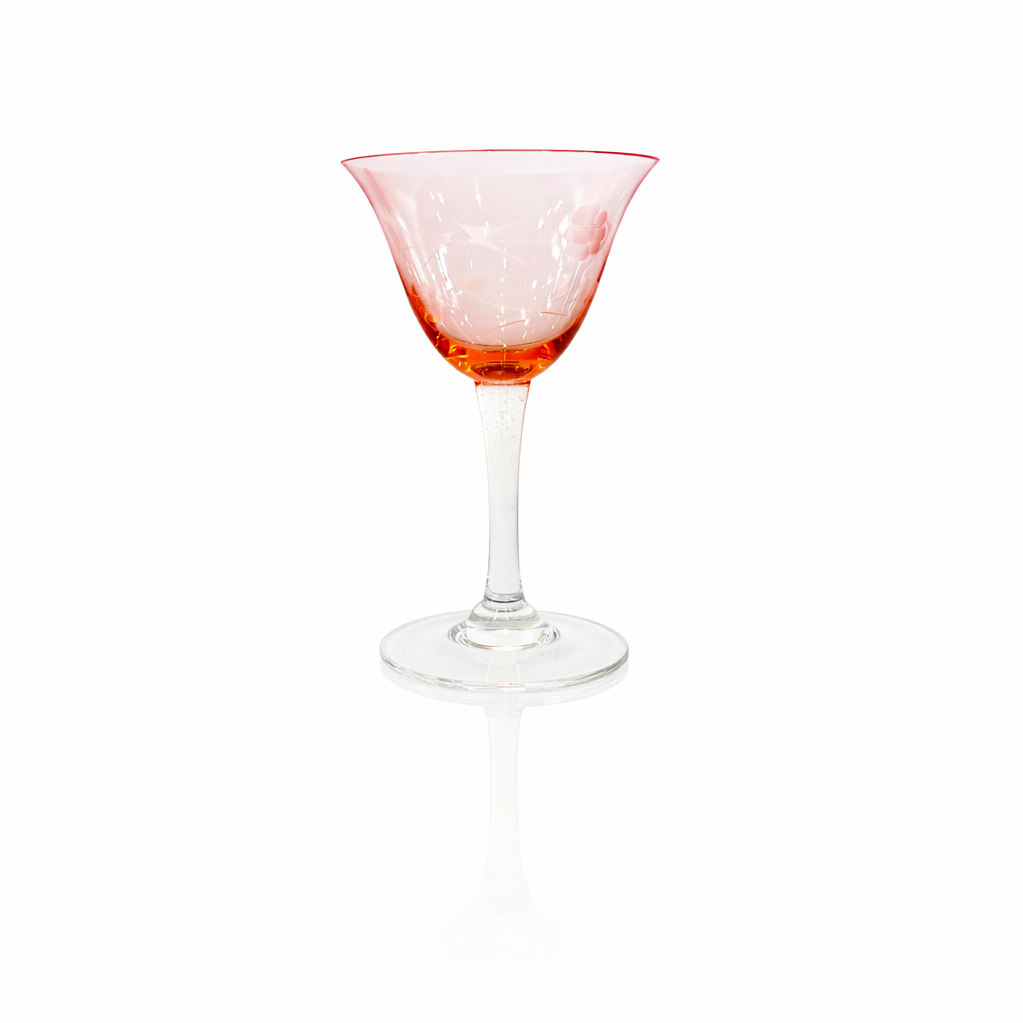 Image 1 of 12
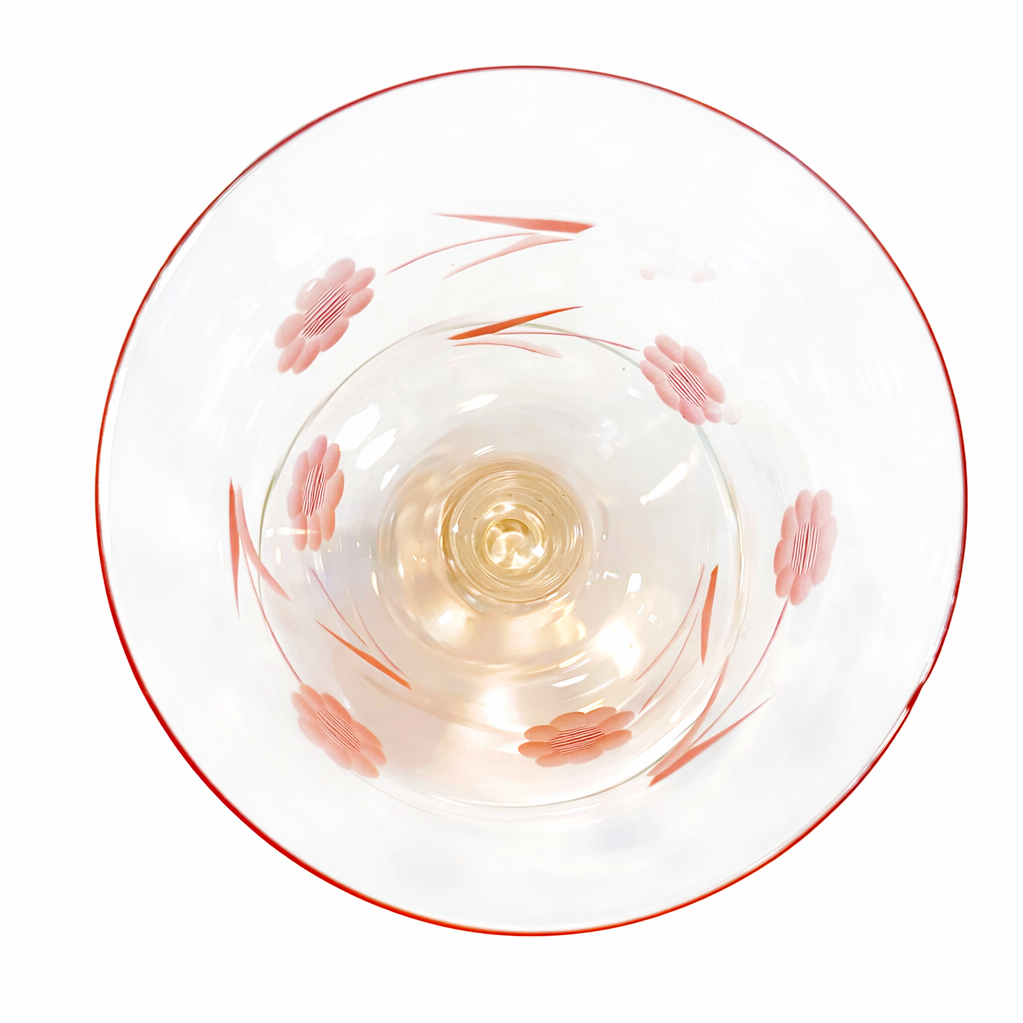 Image 2 of 12
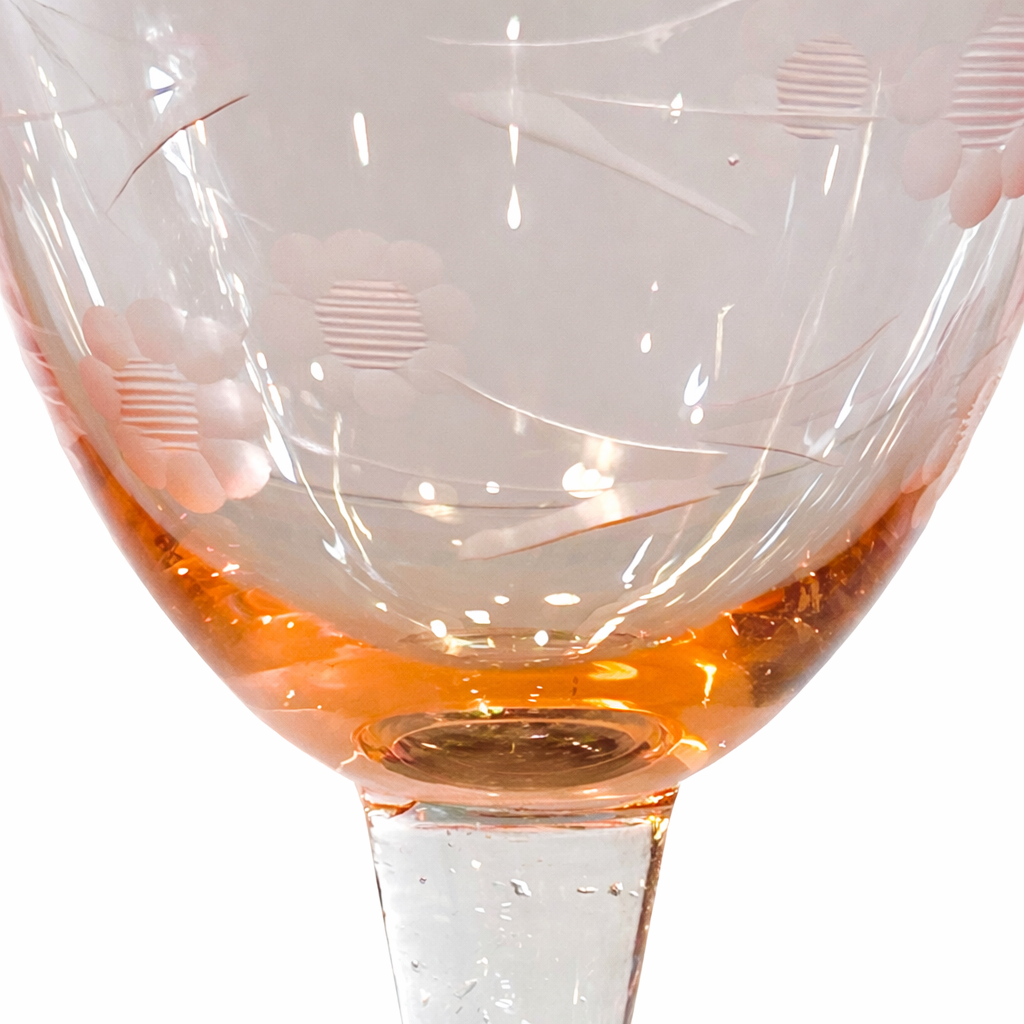 Image 3 of 12
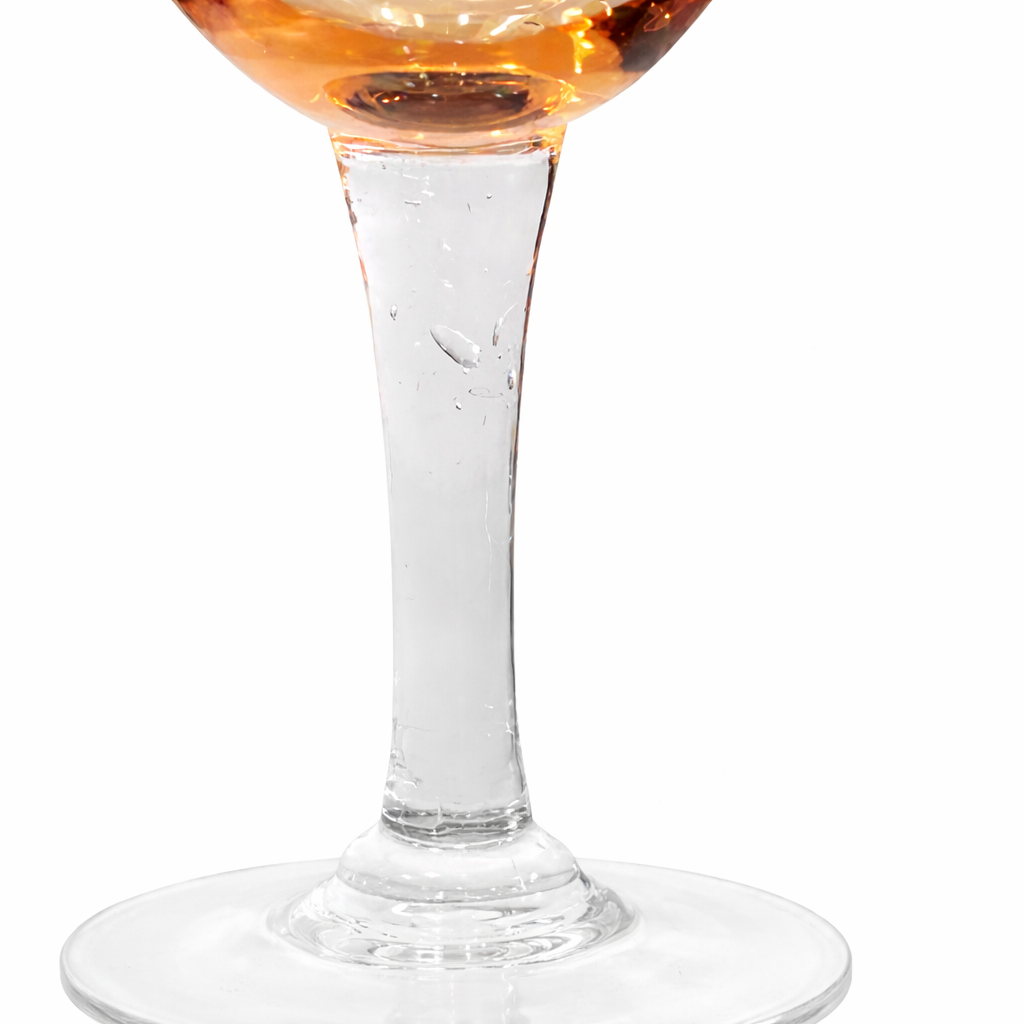 Image 4 of 12
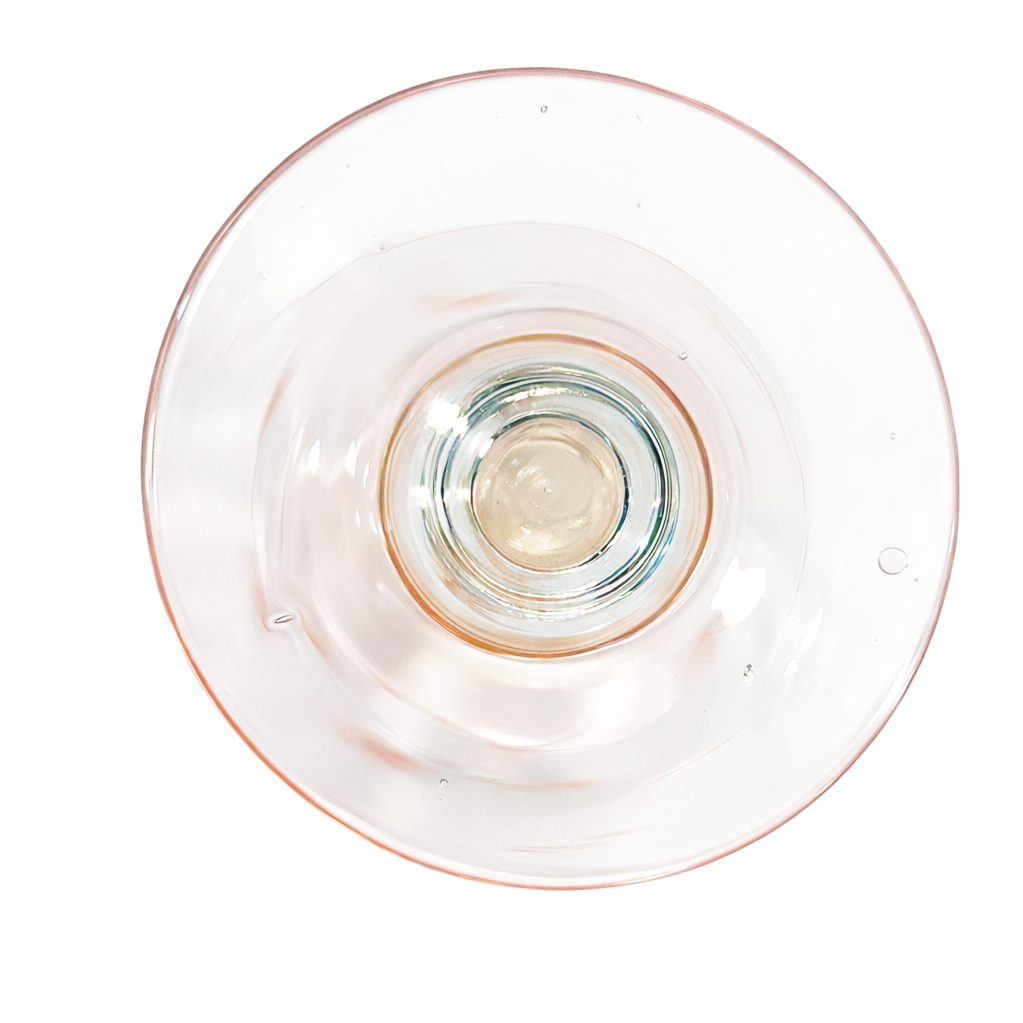 Image 5 of 12
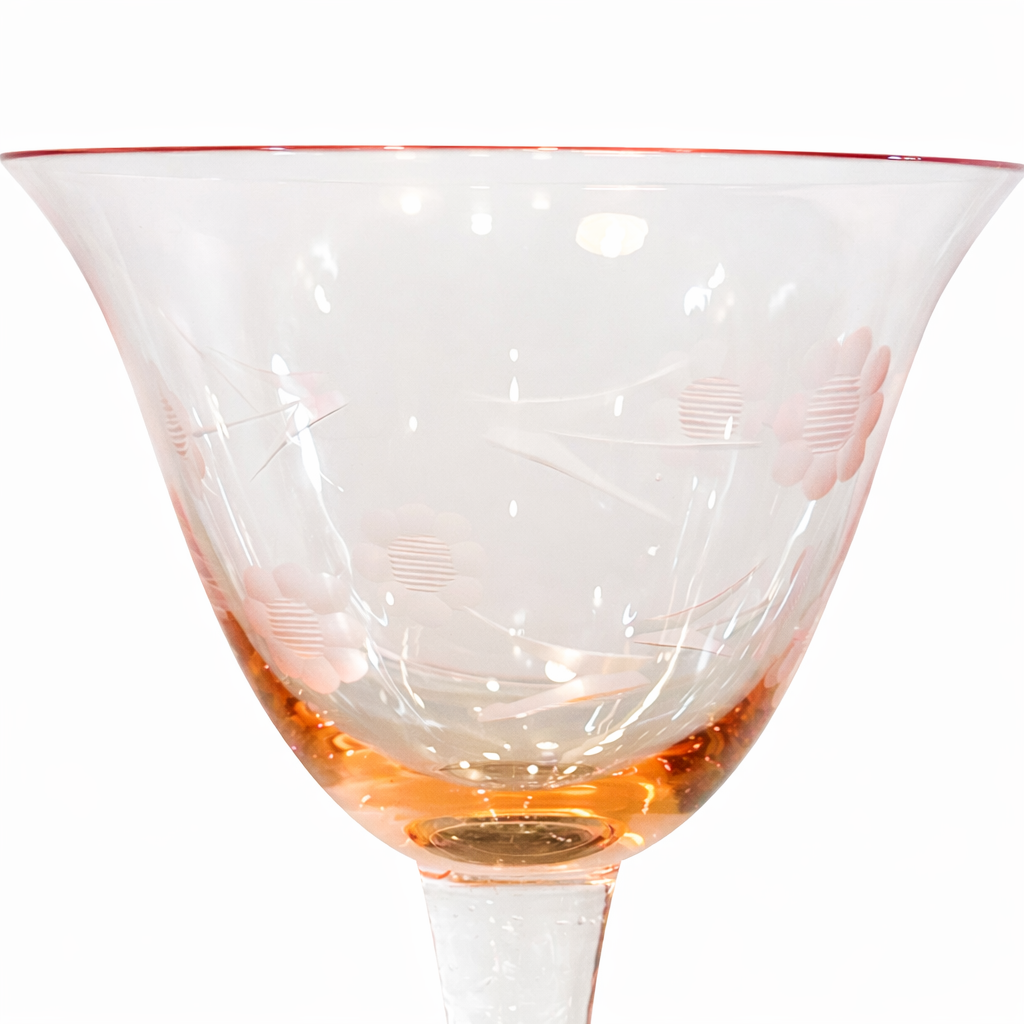 Image 6 of 12
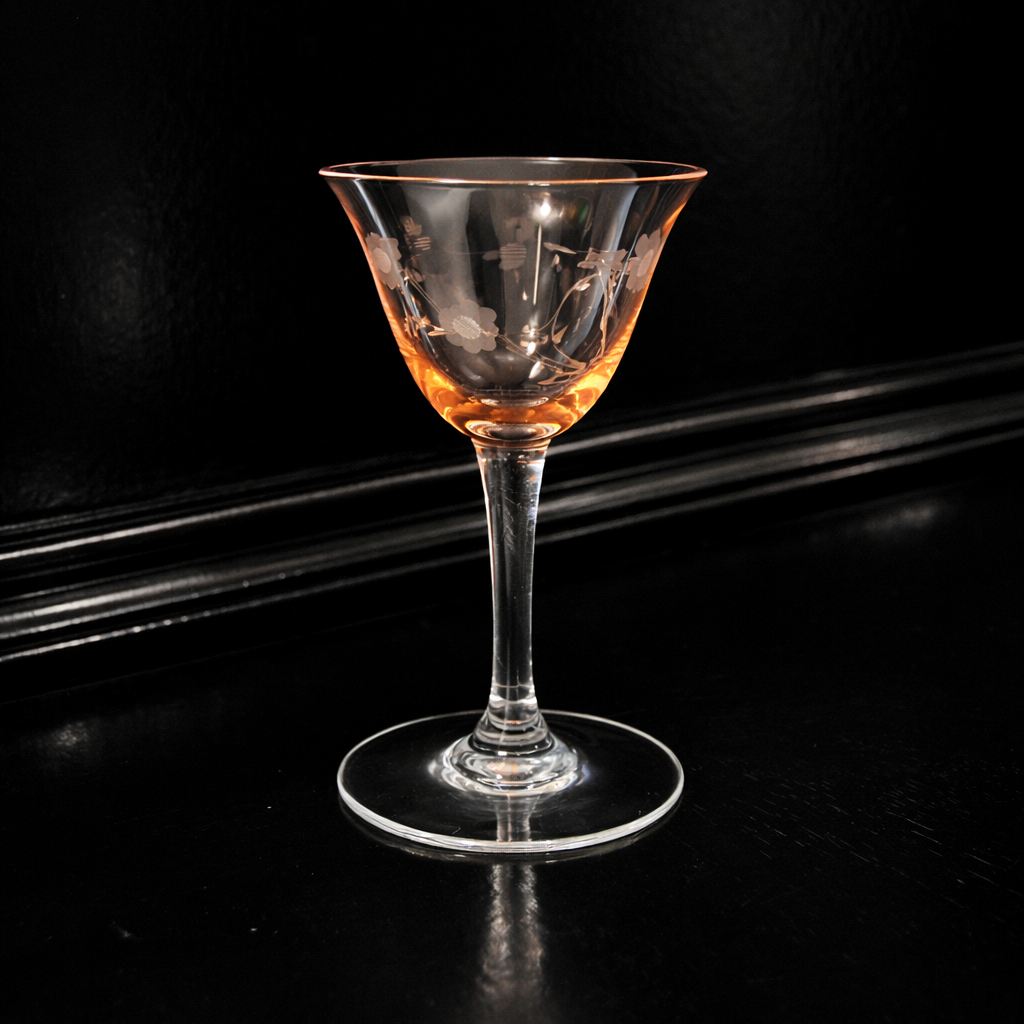 Image 7 of 12
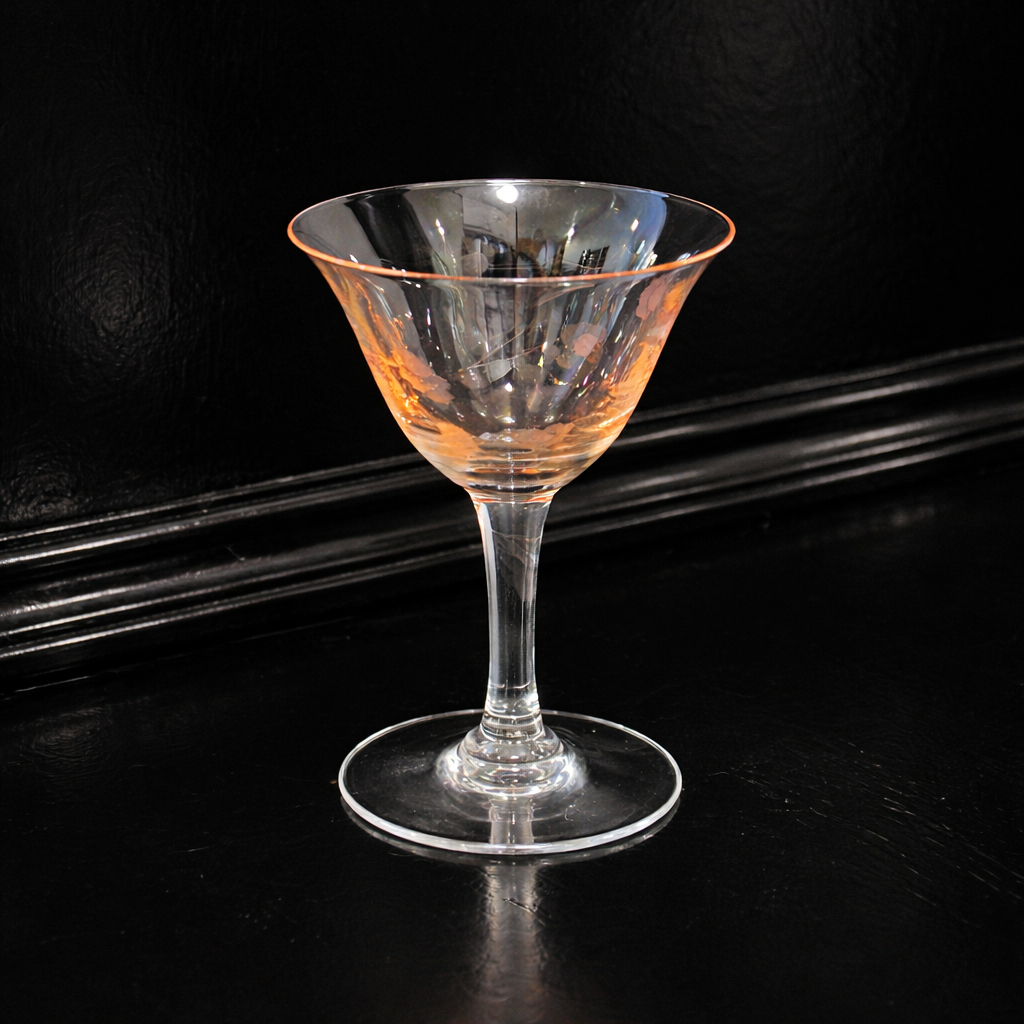 Image 8 of 12
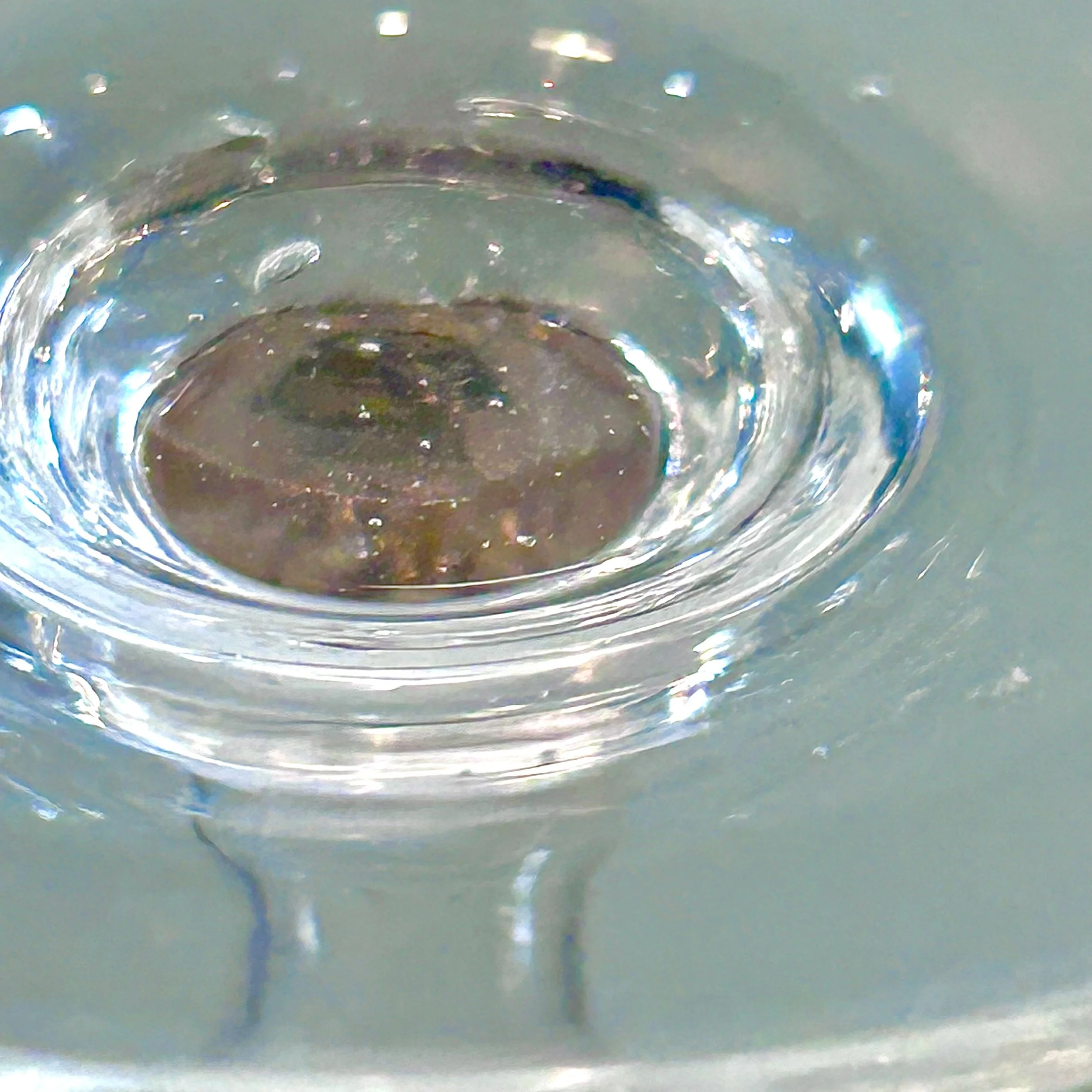 Image 9 of 12
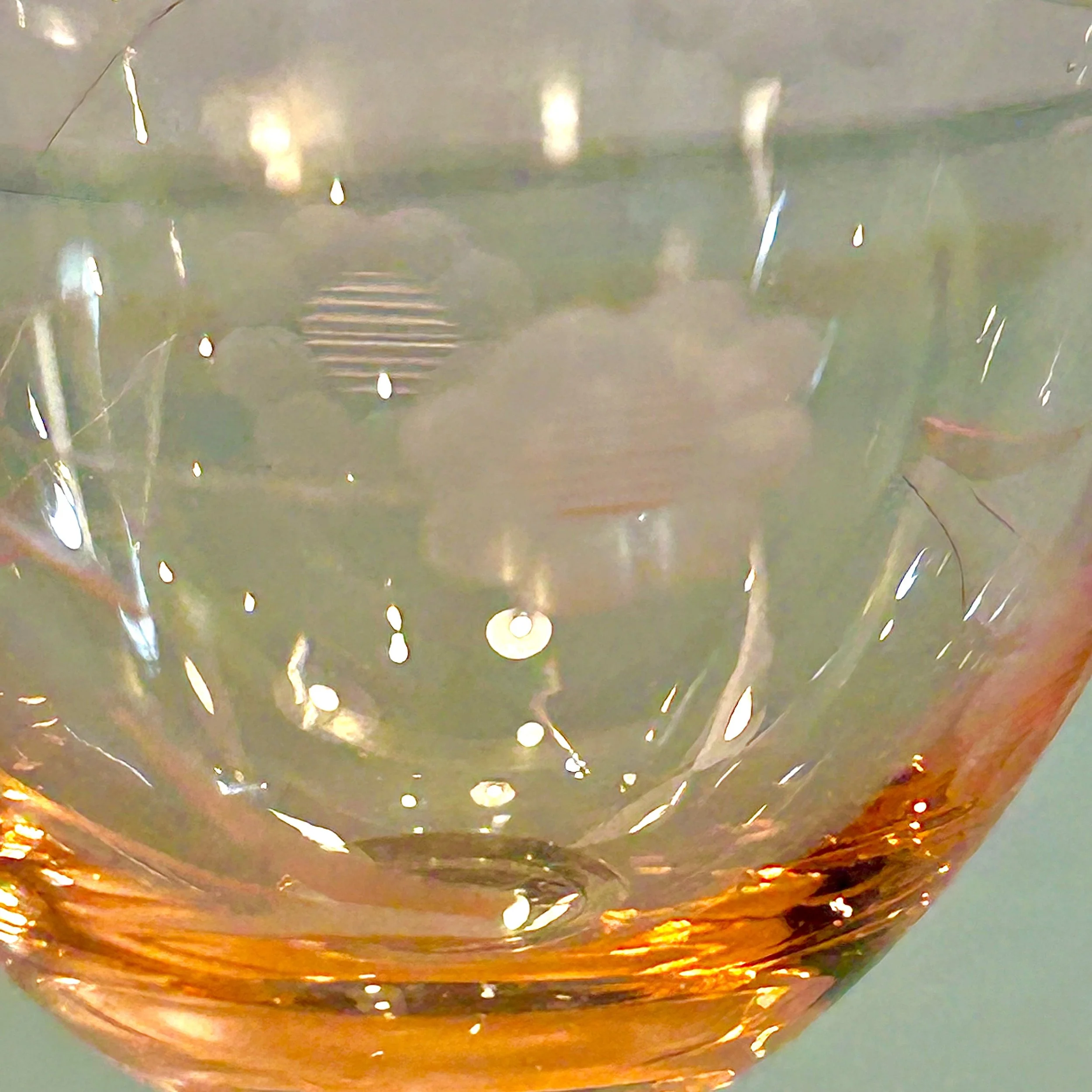 Image 10 of 12
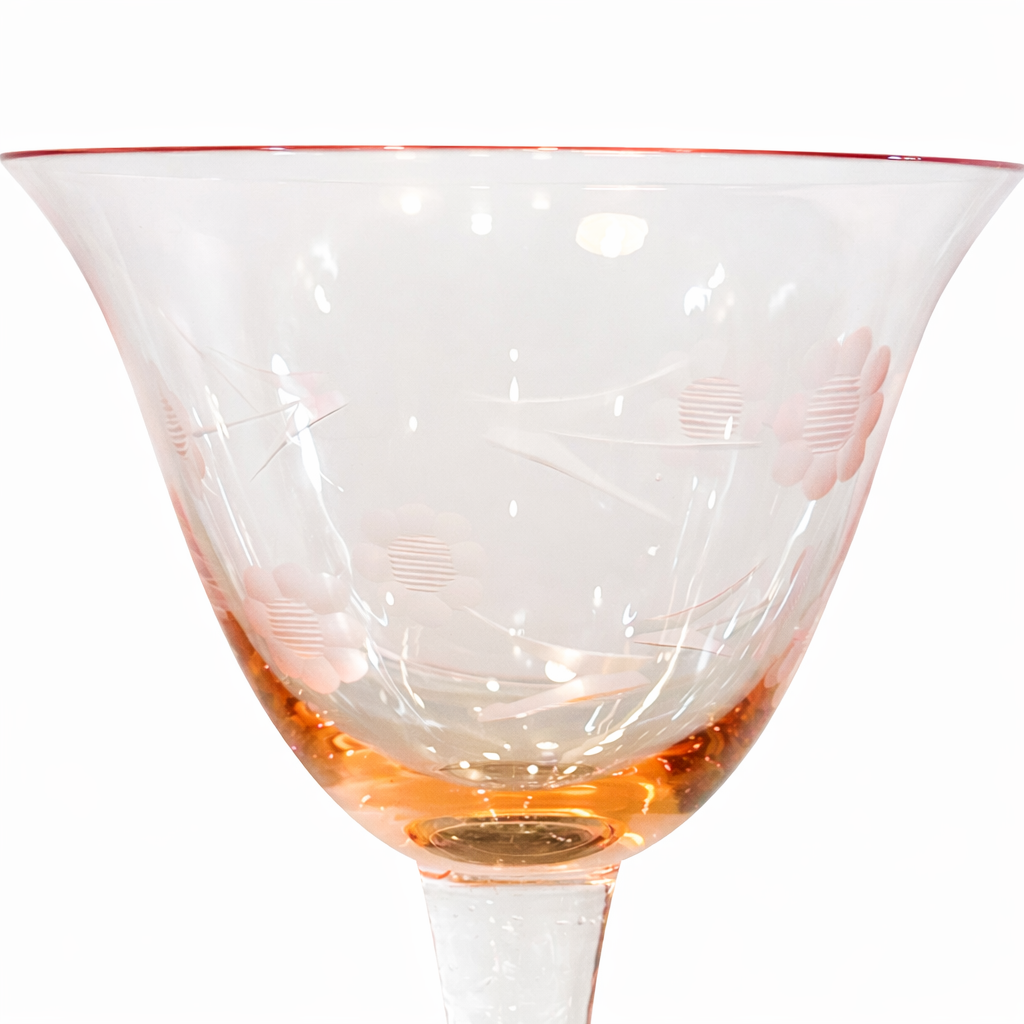 Image 11 of 12
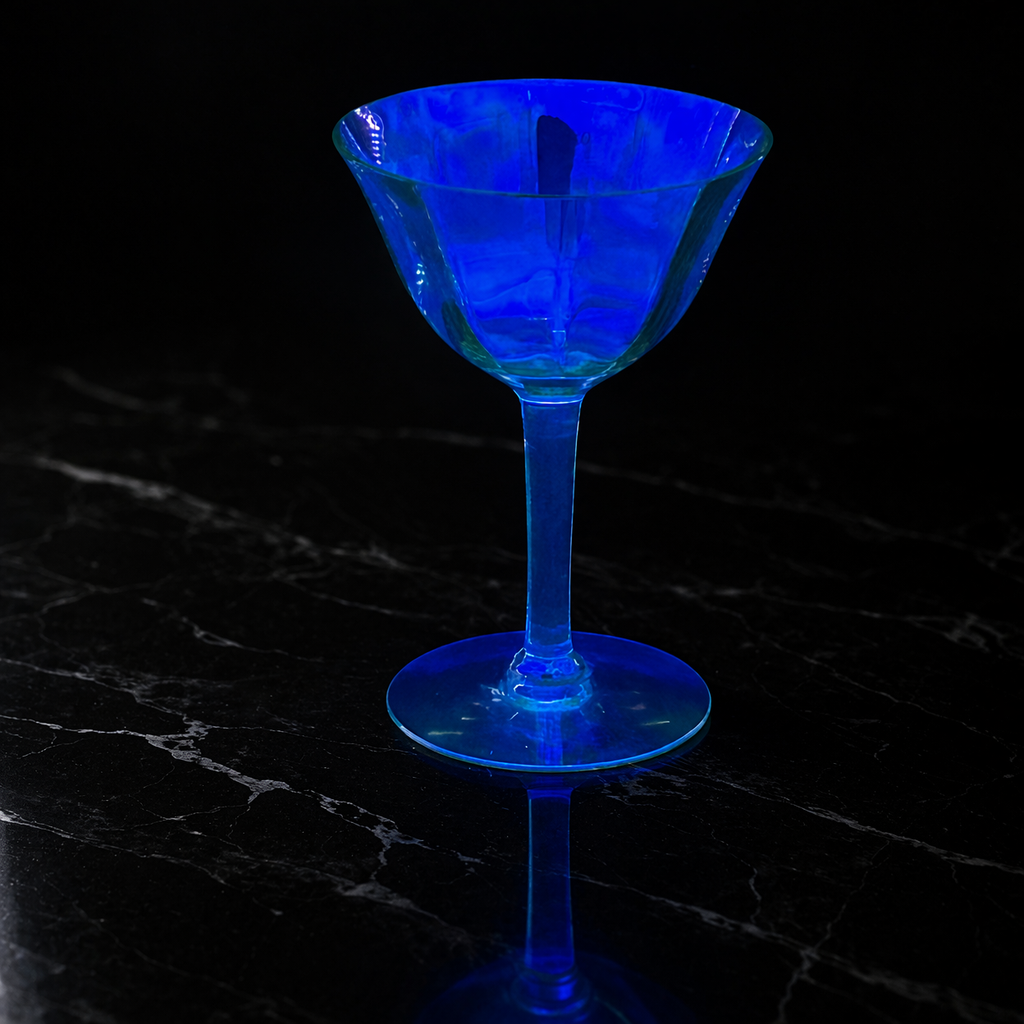 Image 12 of 12