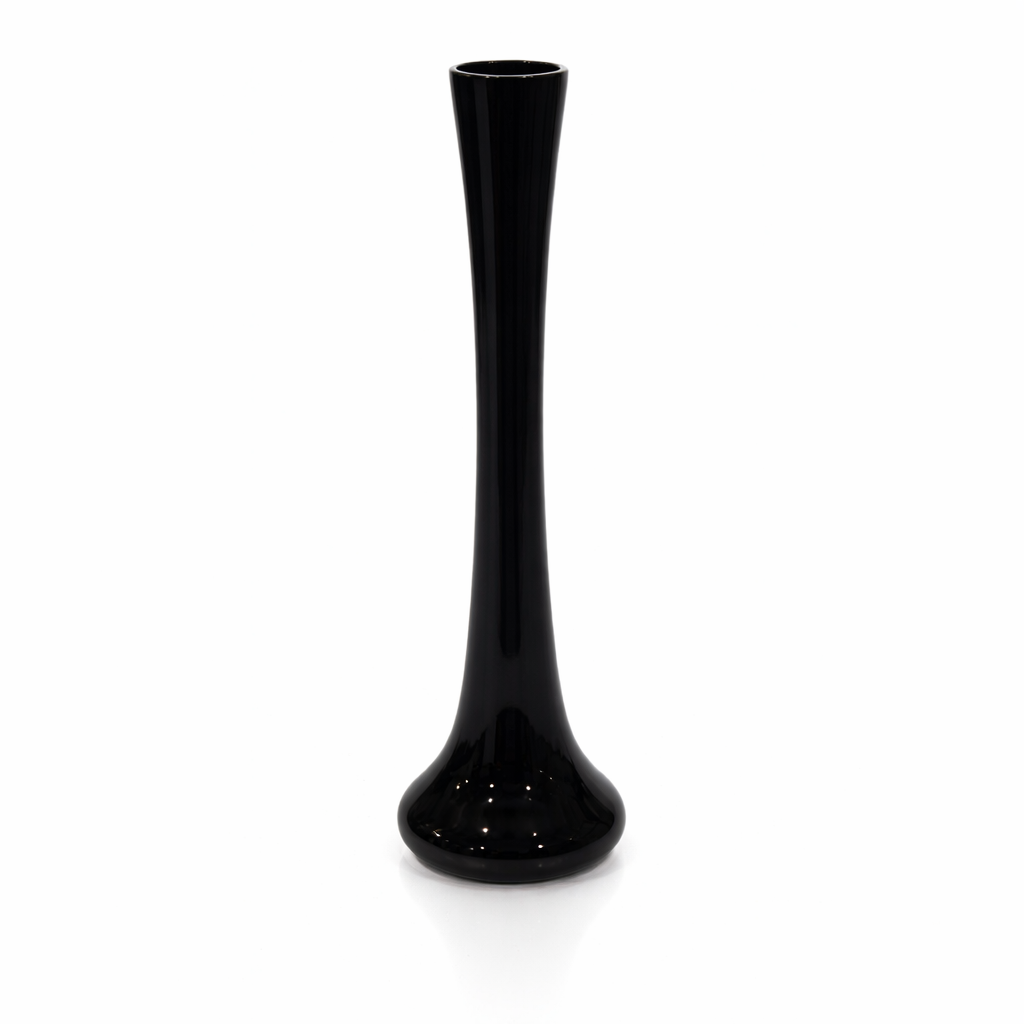
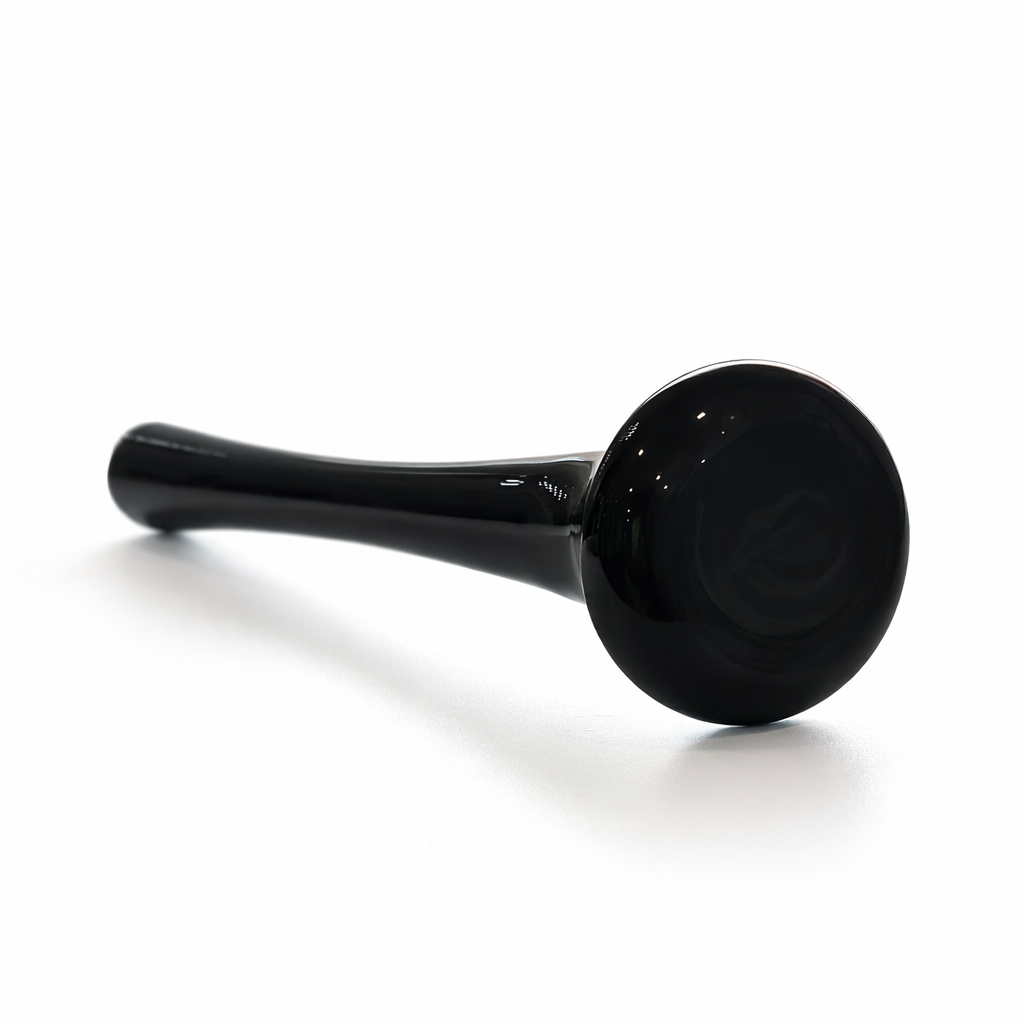
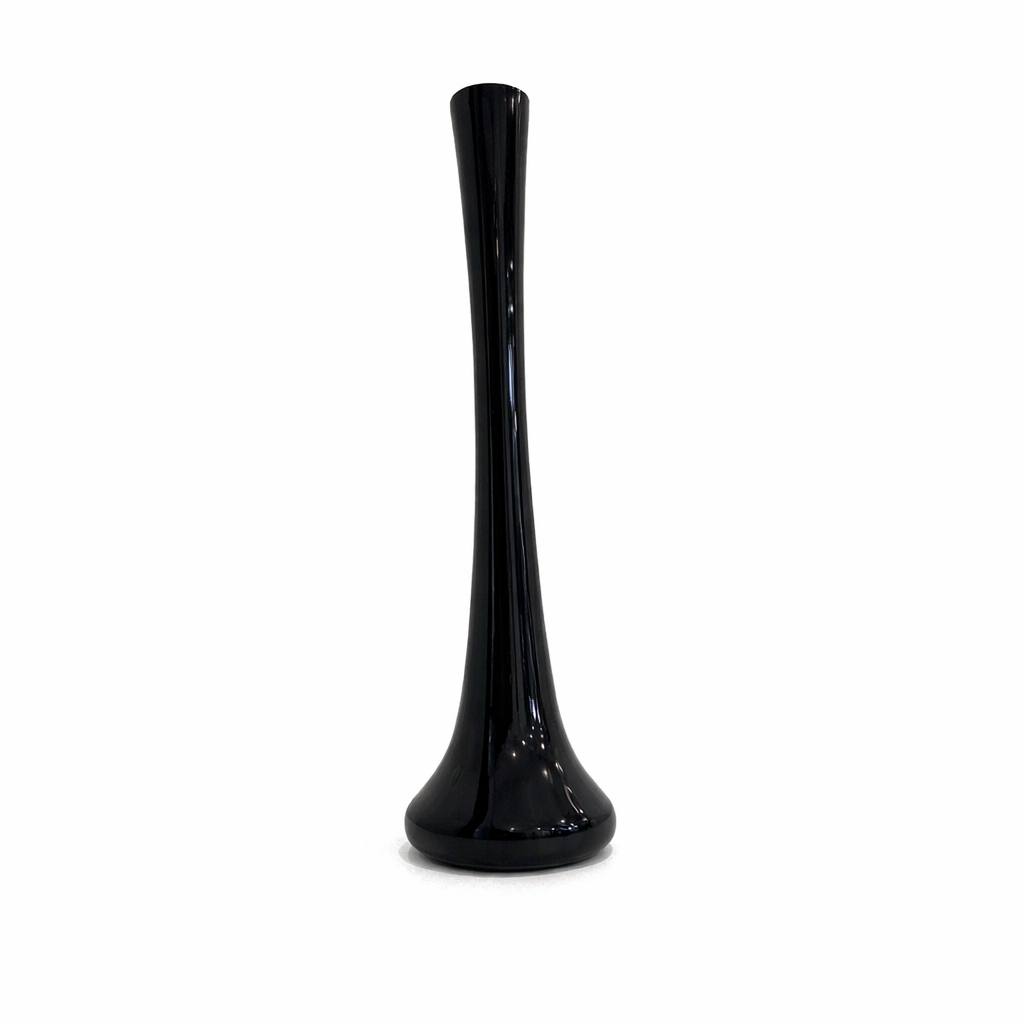
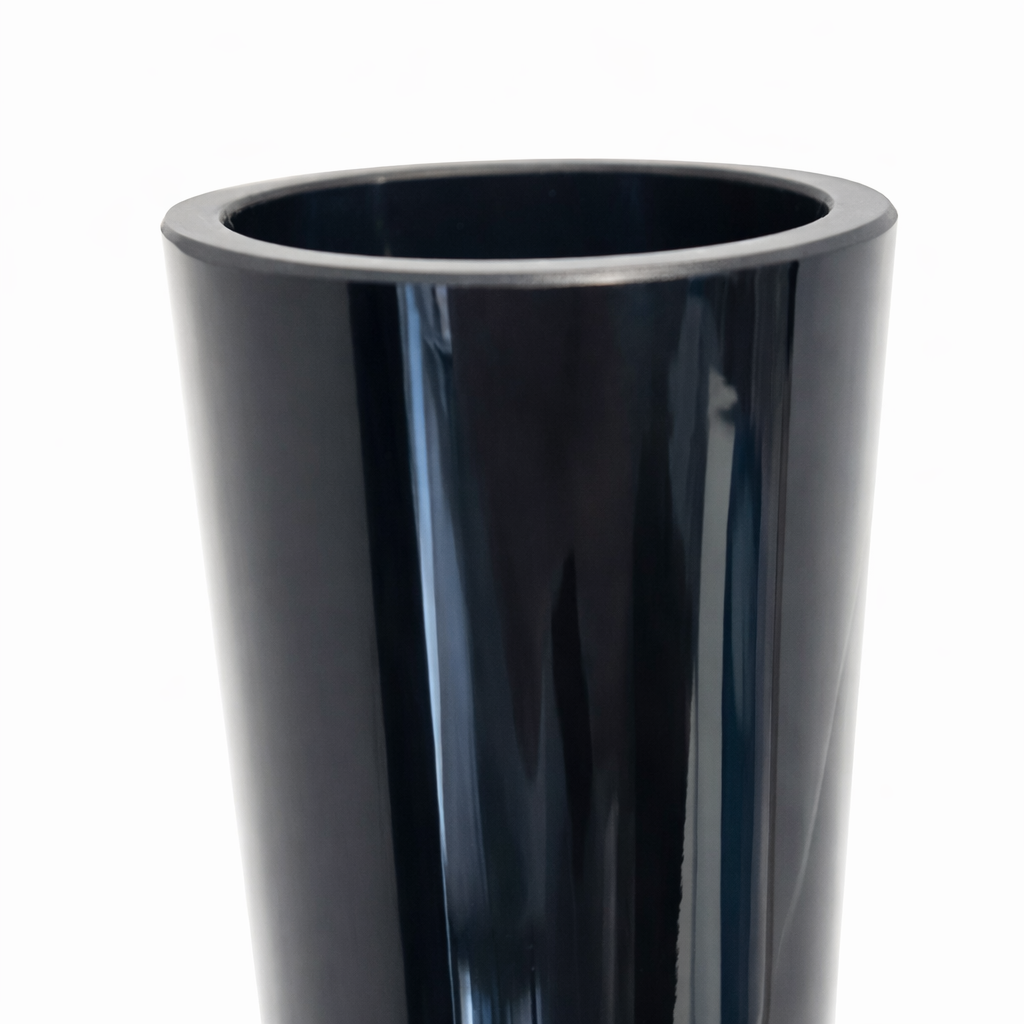
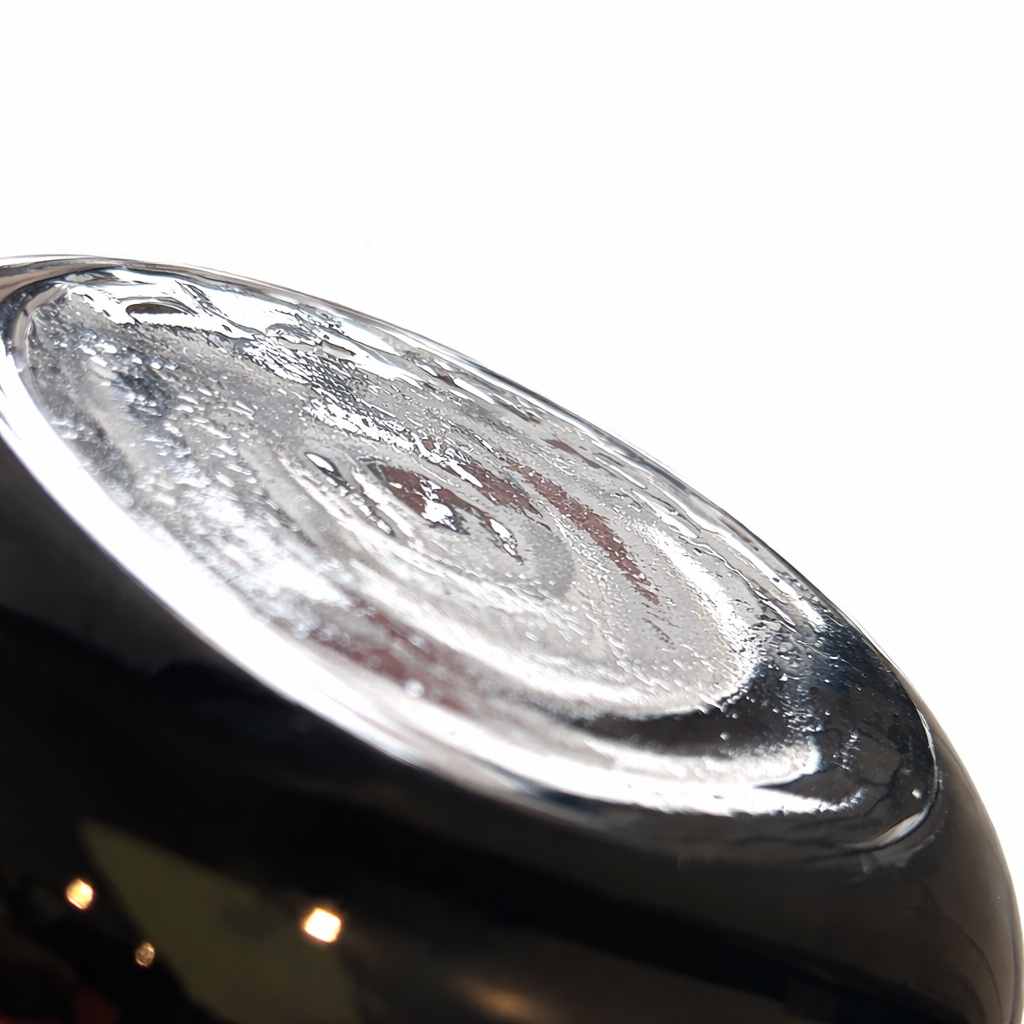
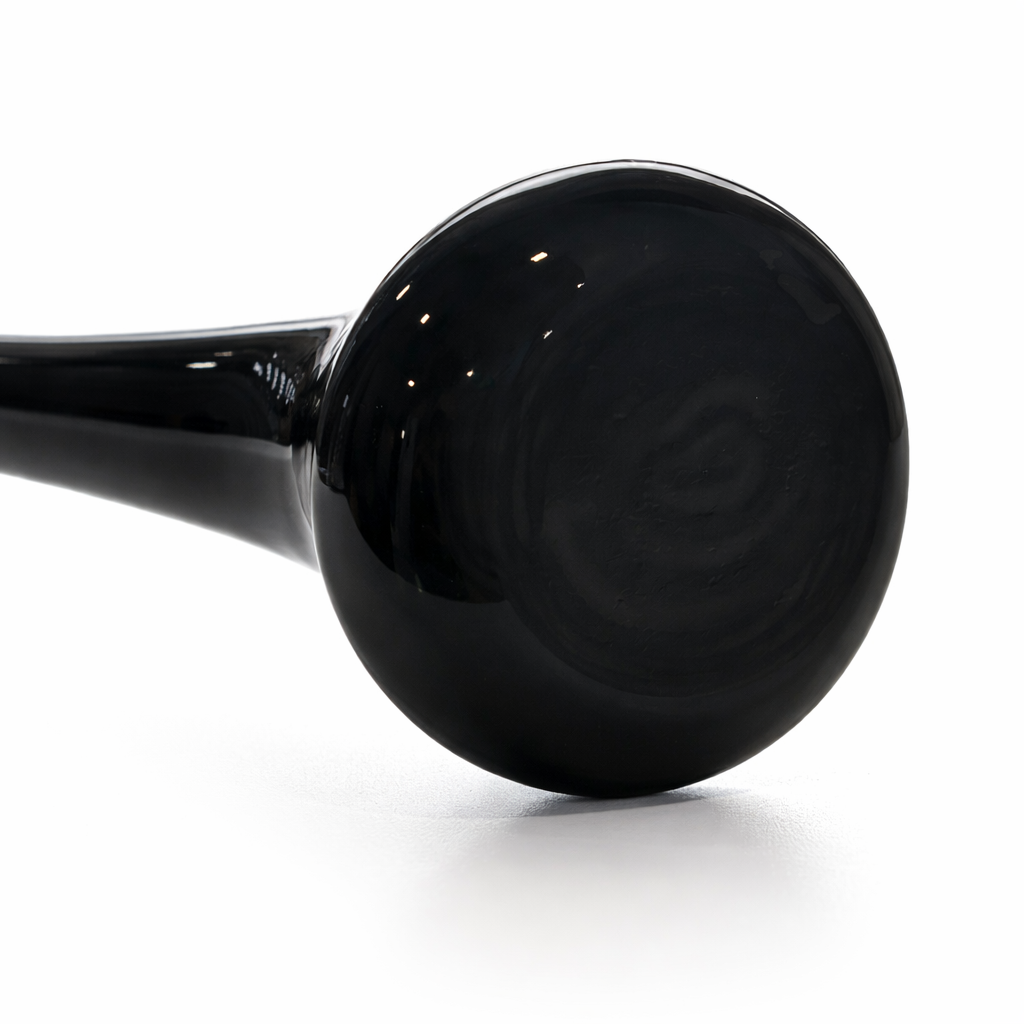
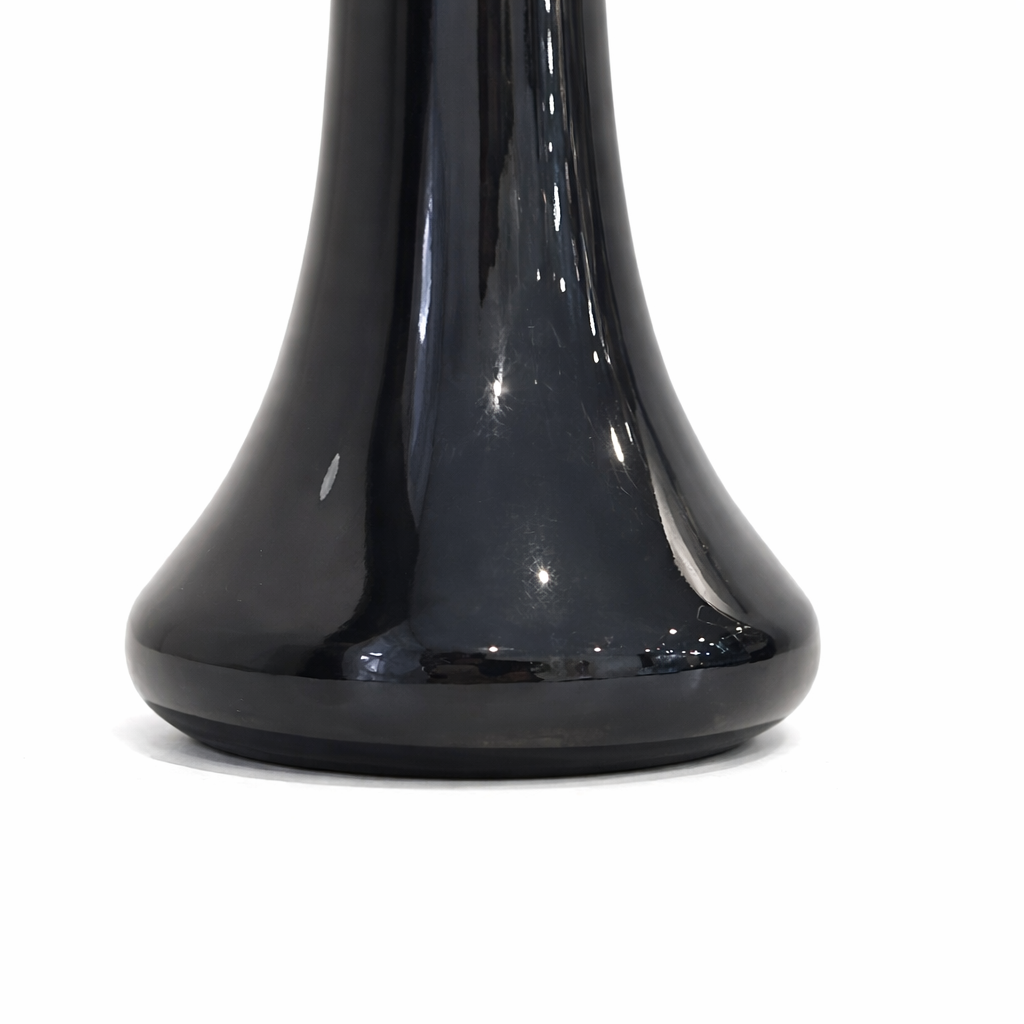
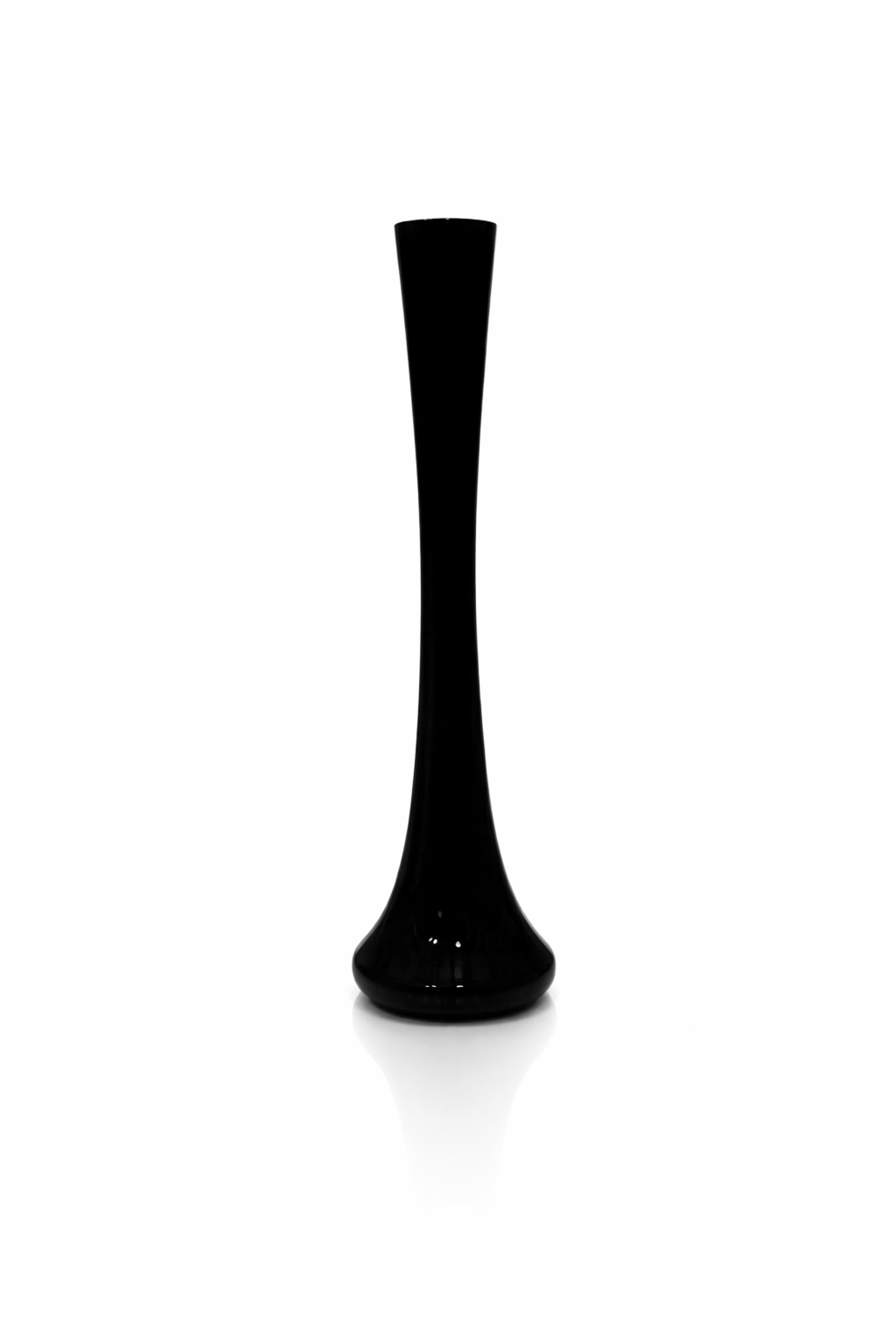
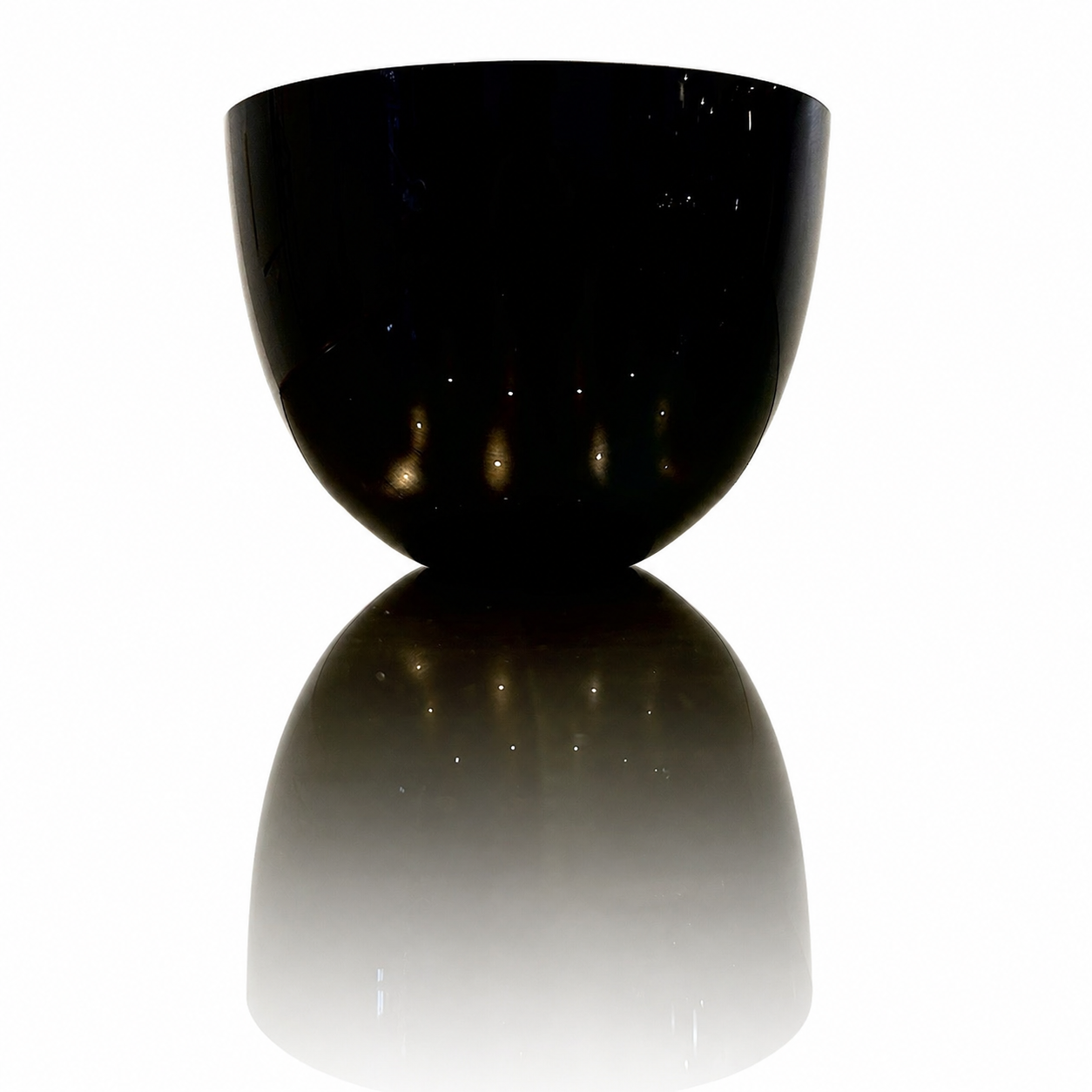
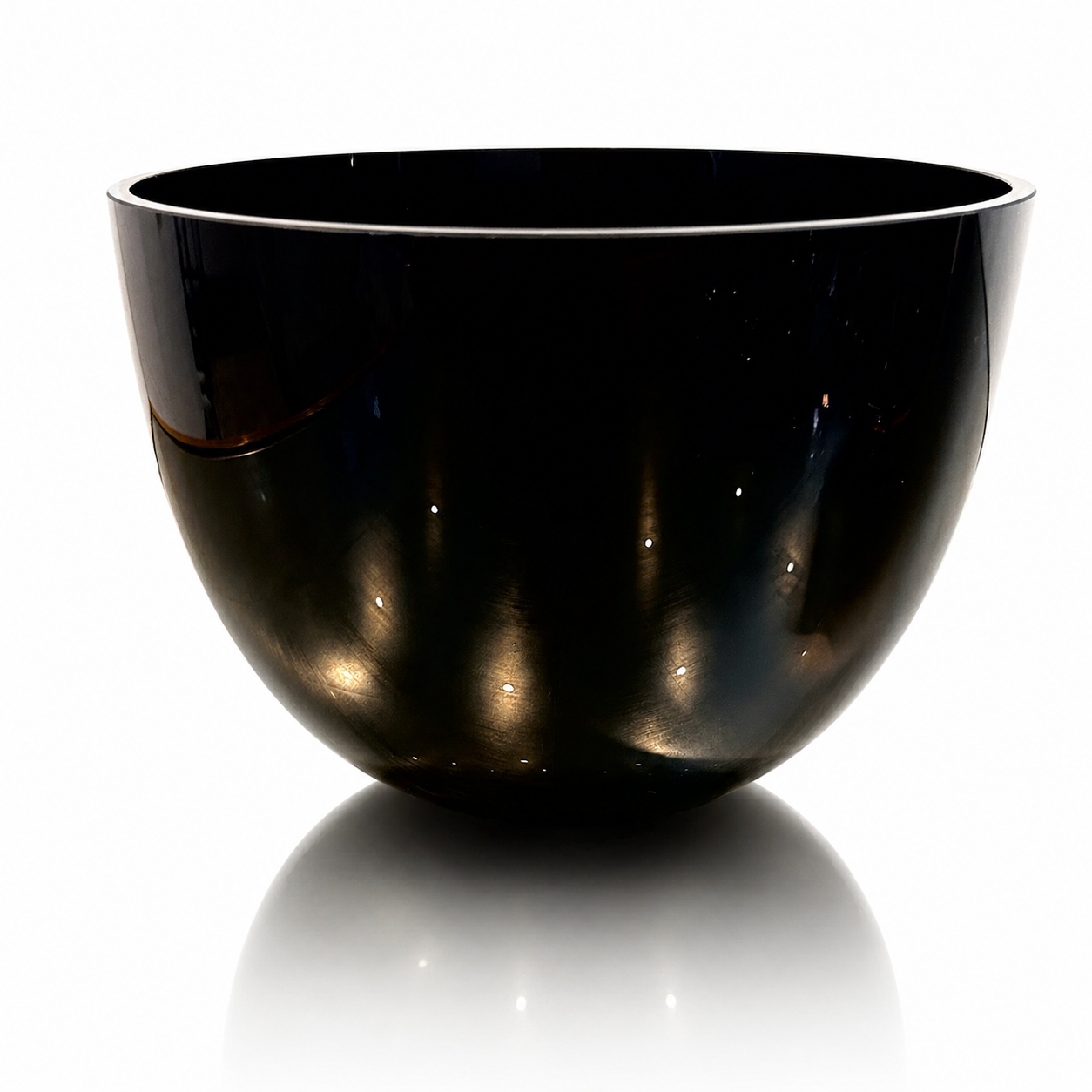
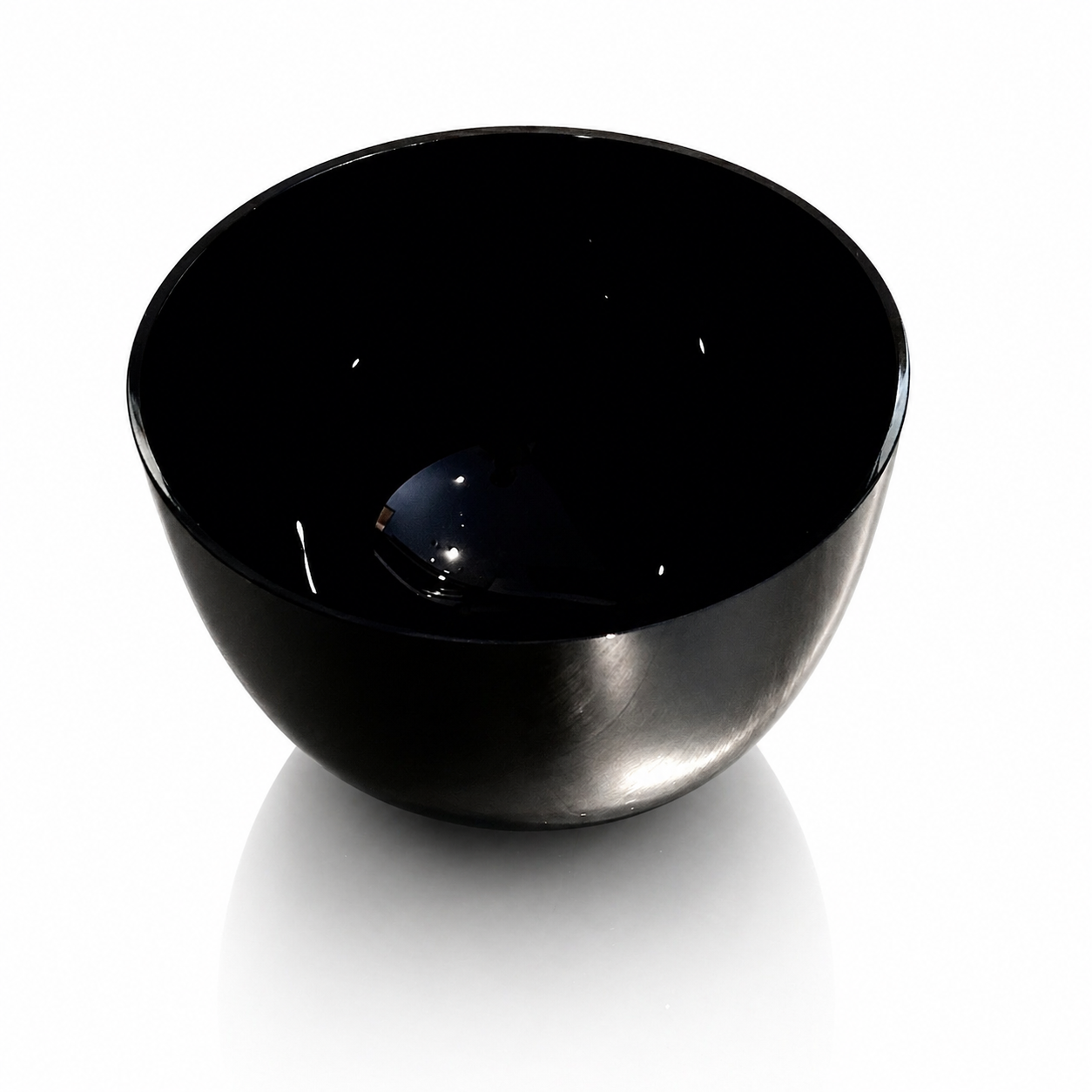
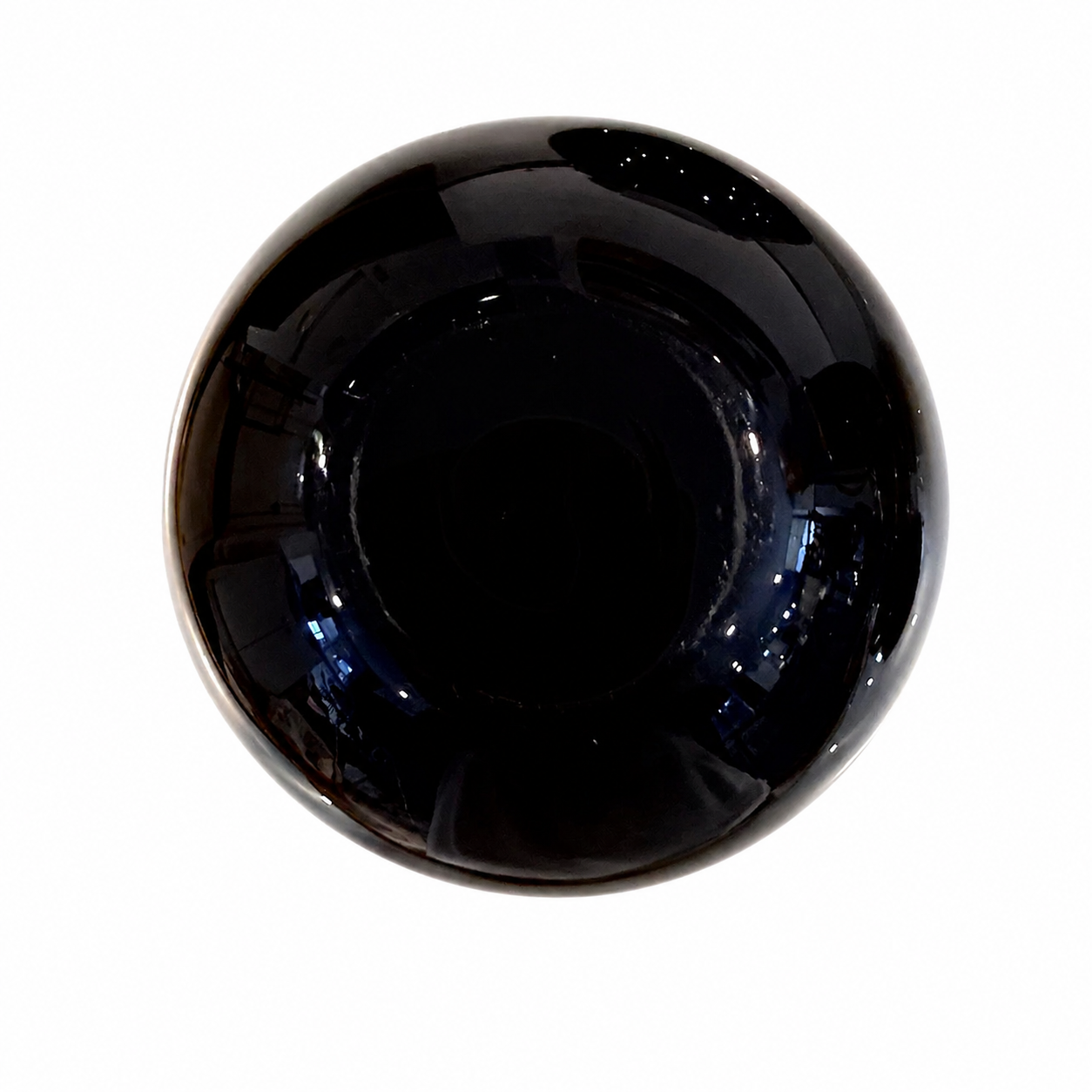
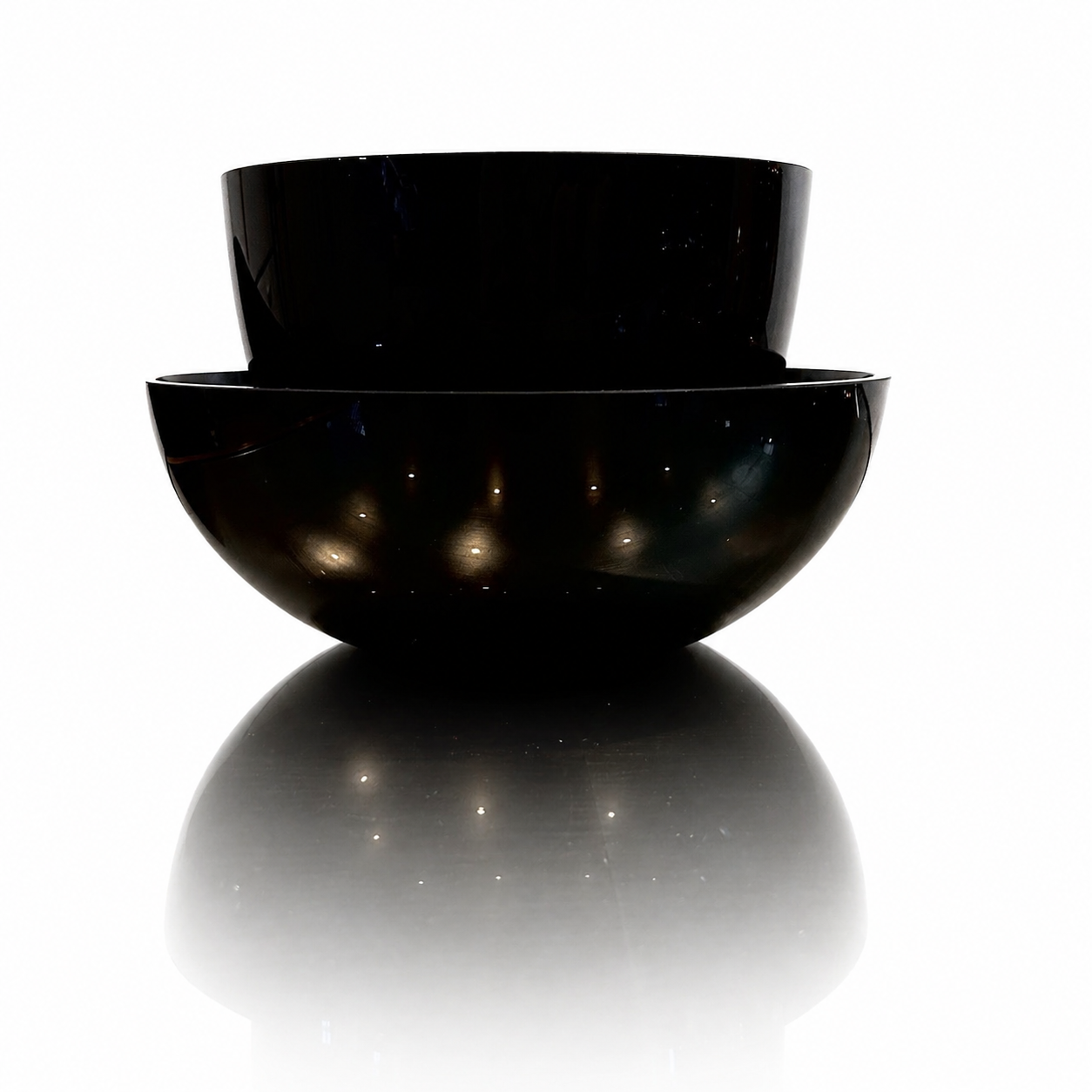
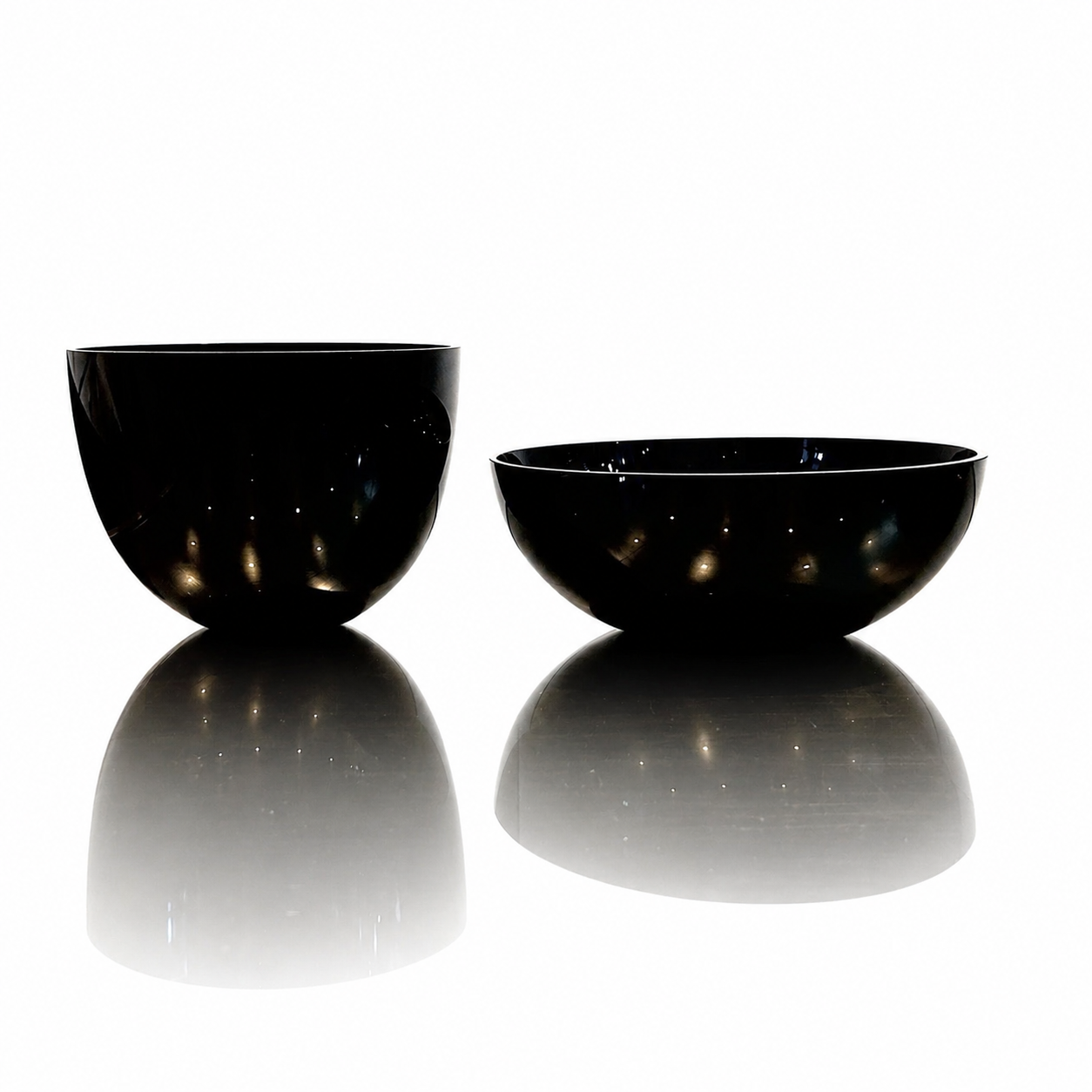
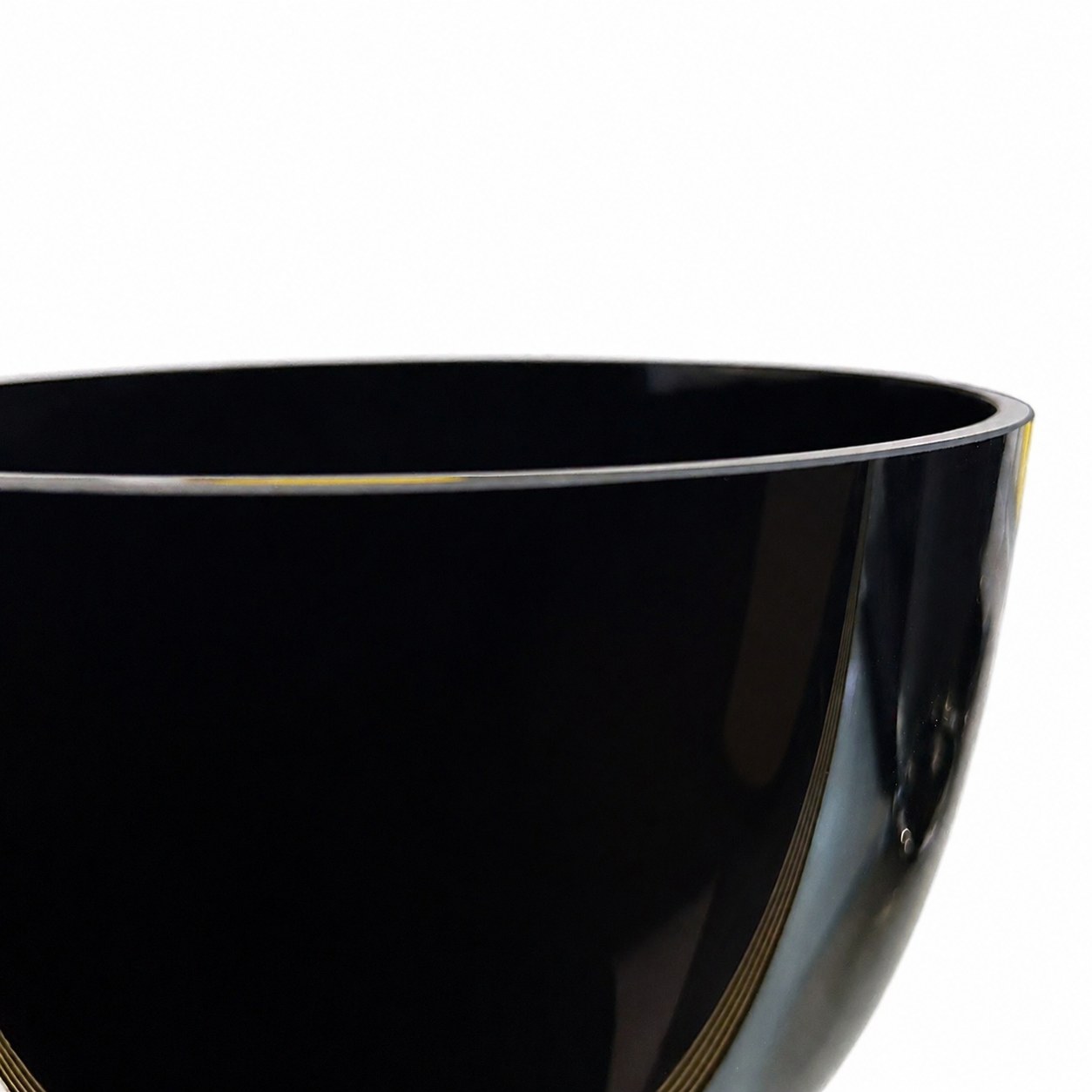
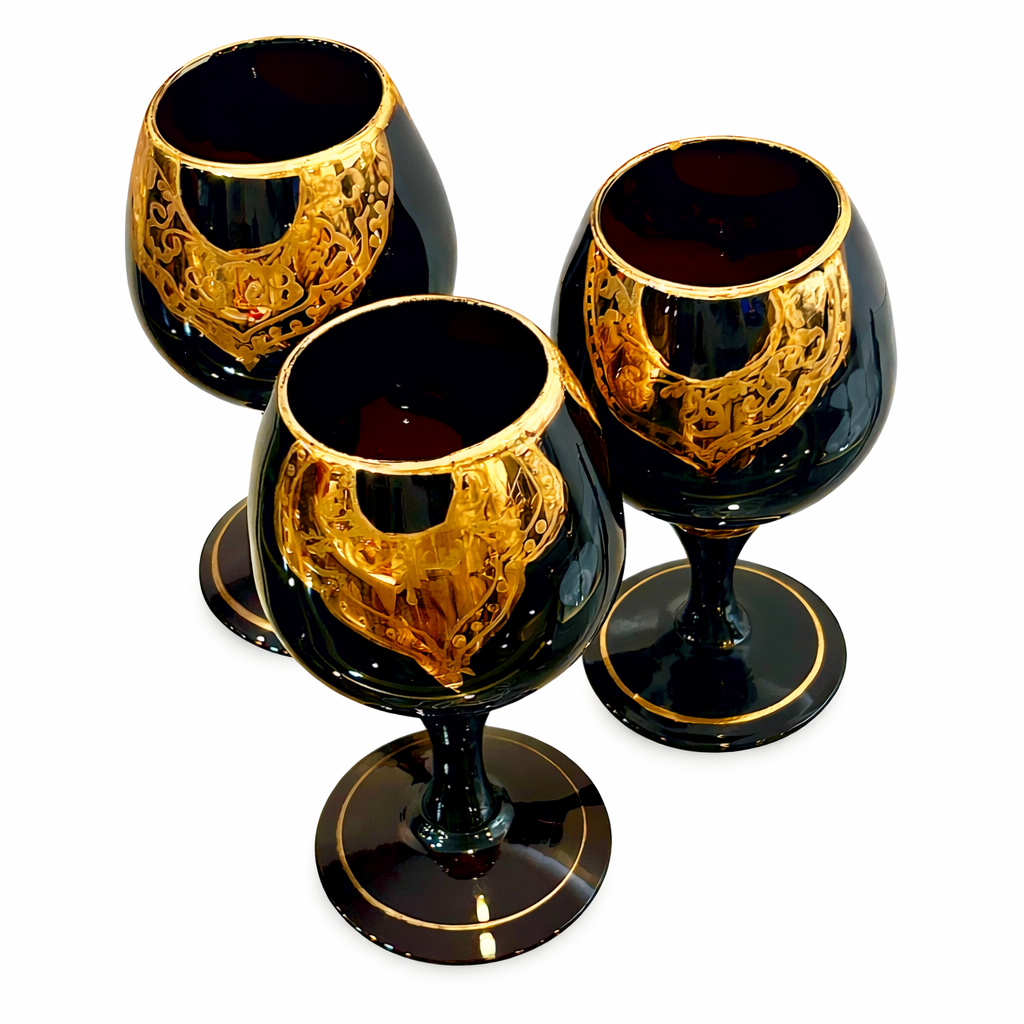
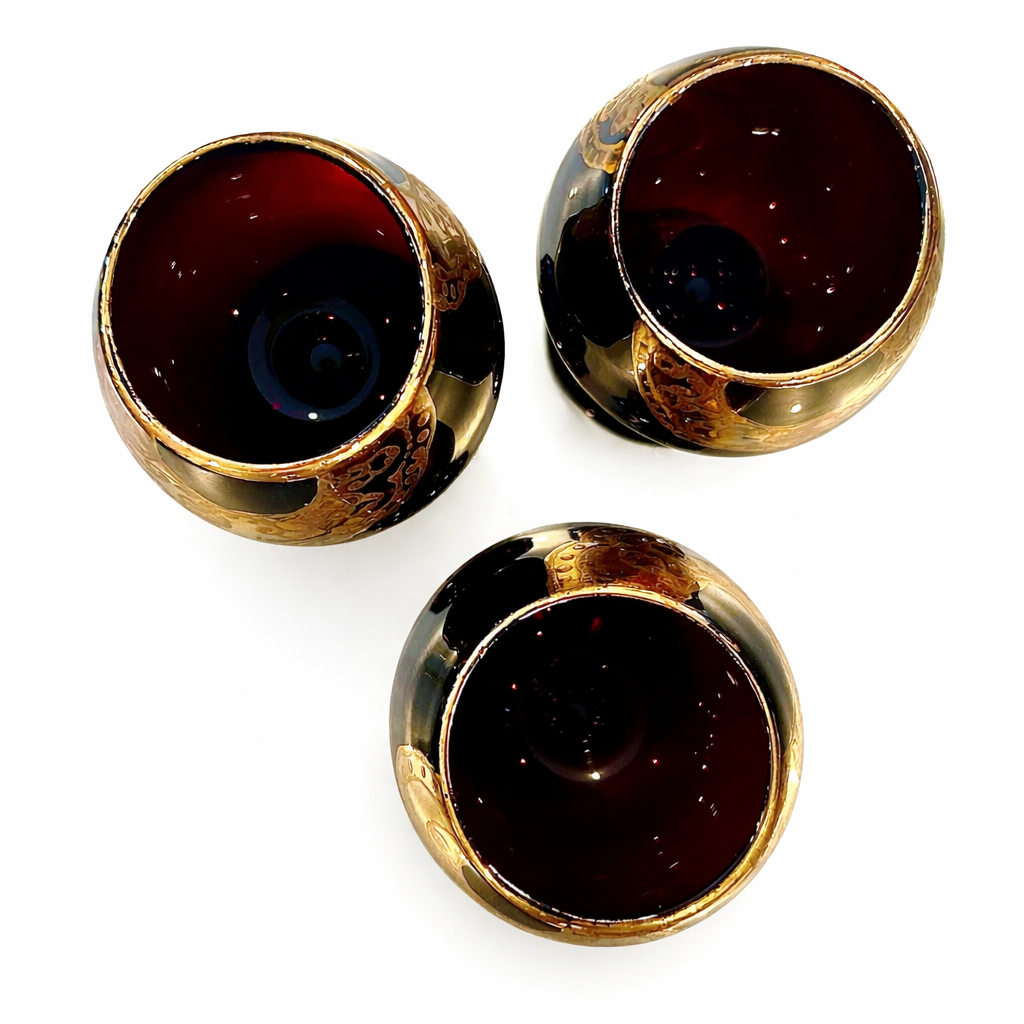
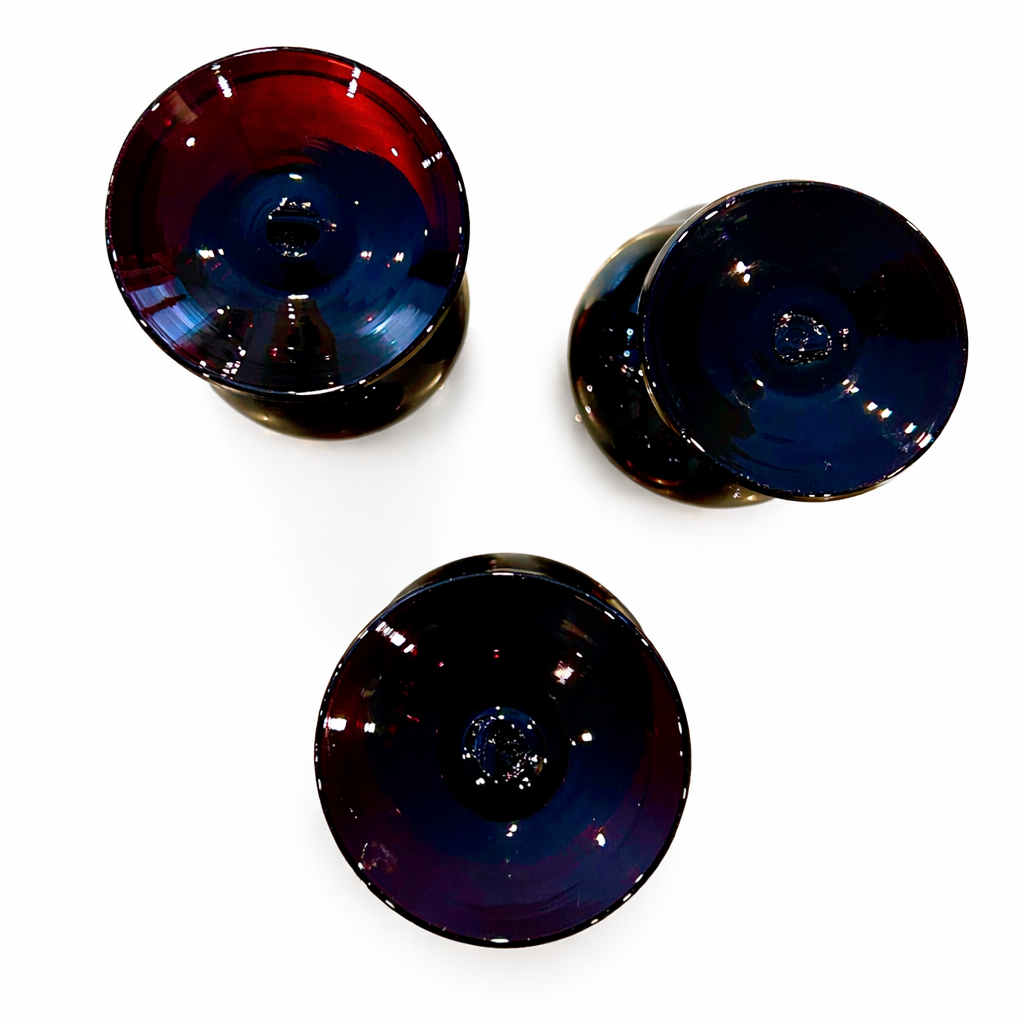
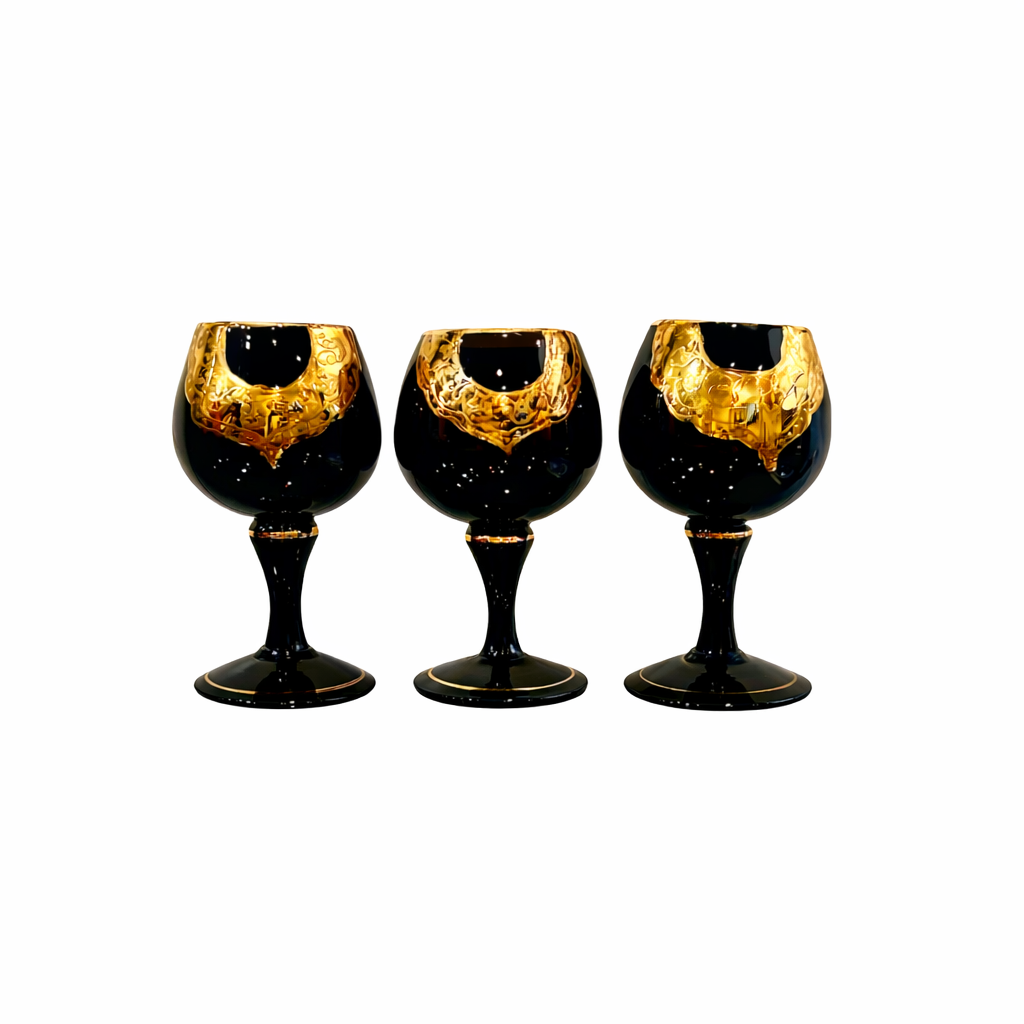
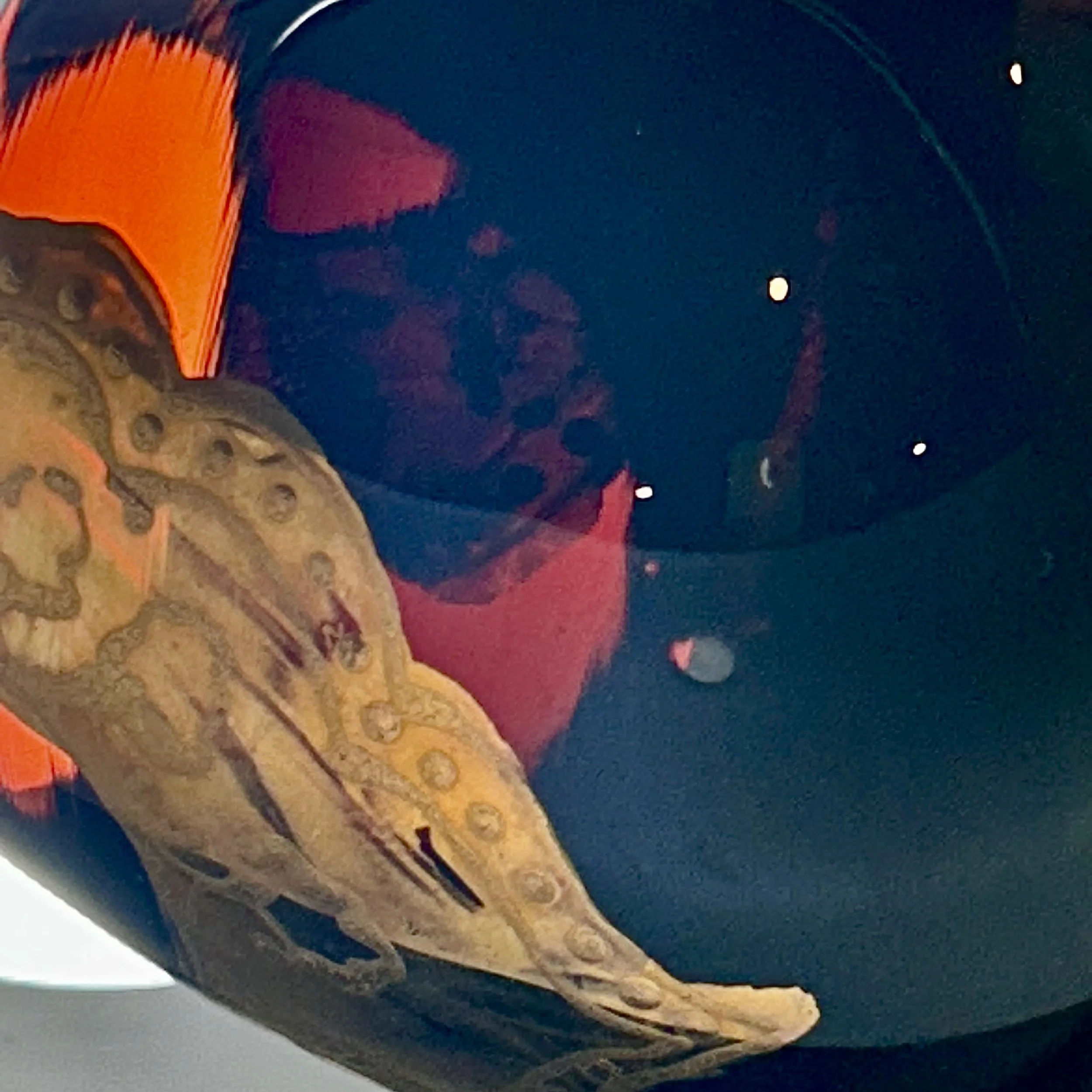
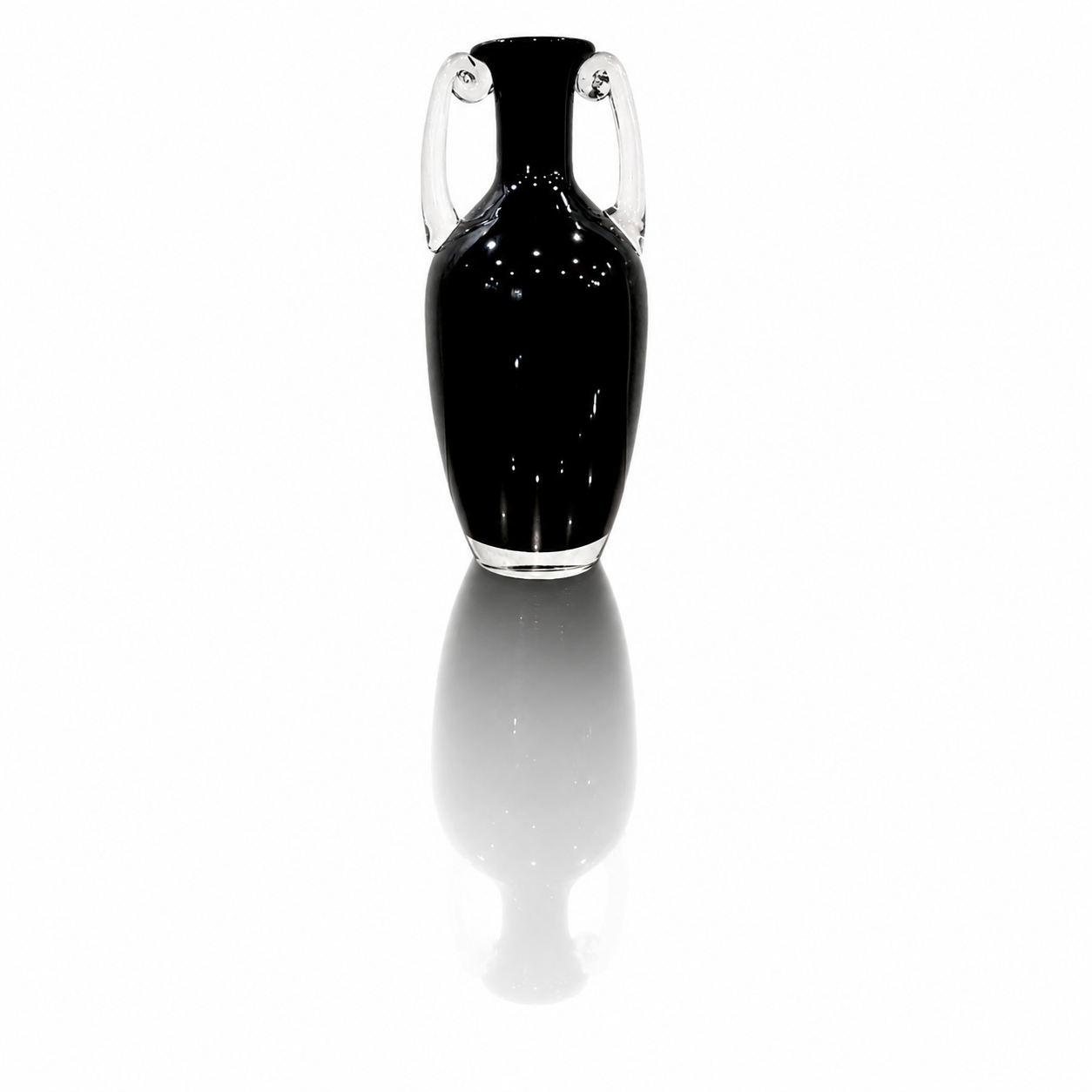
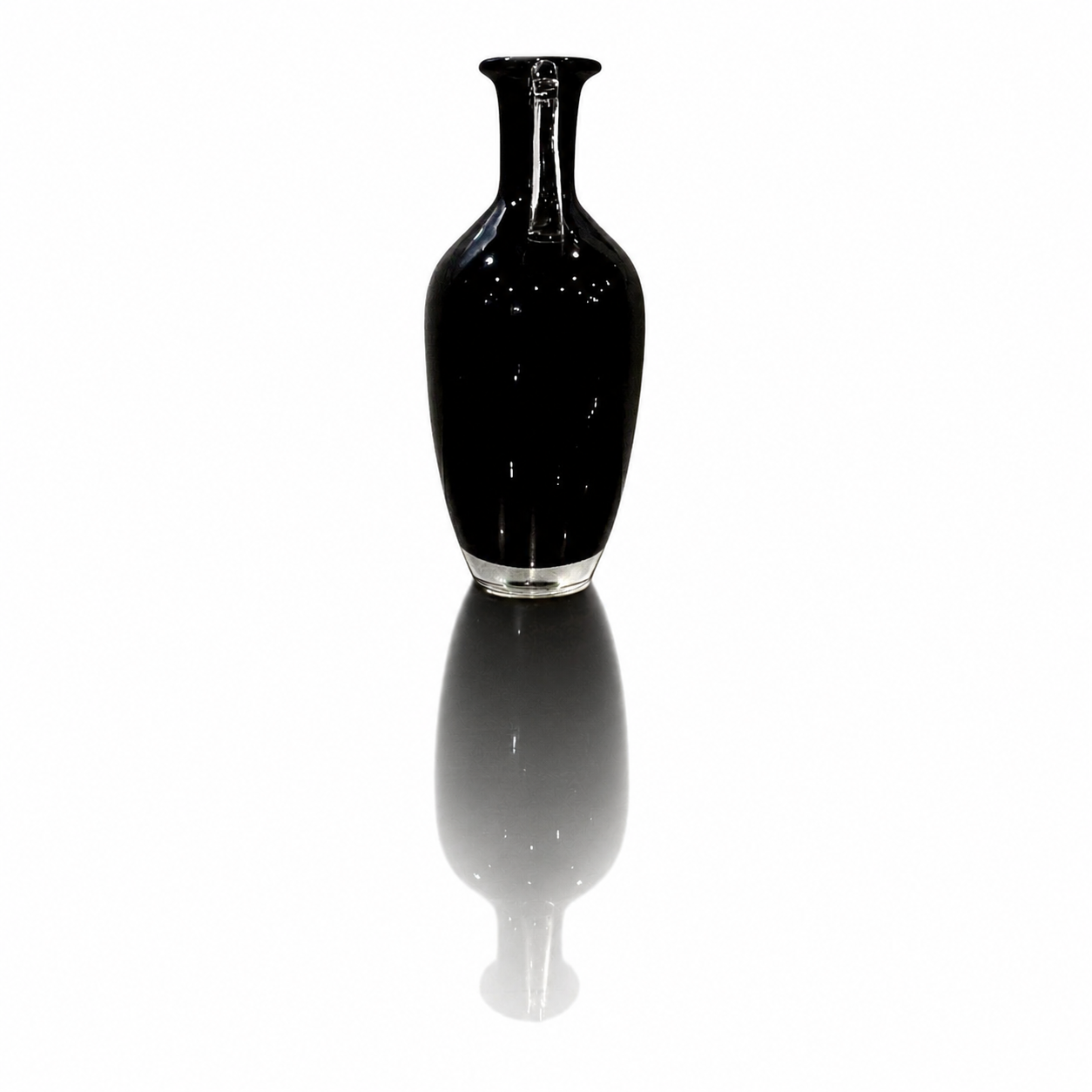
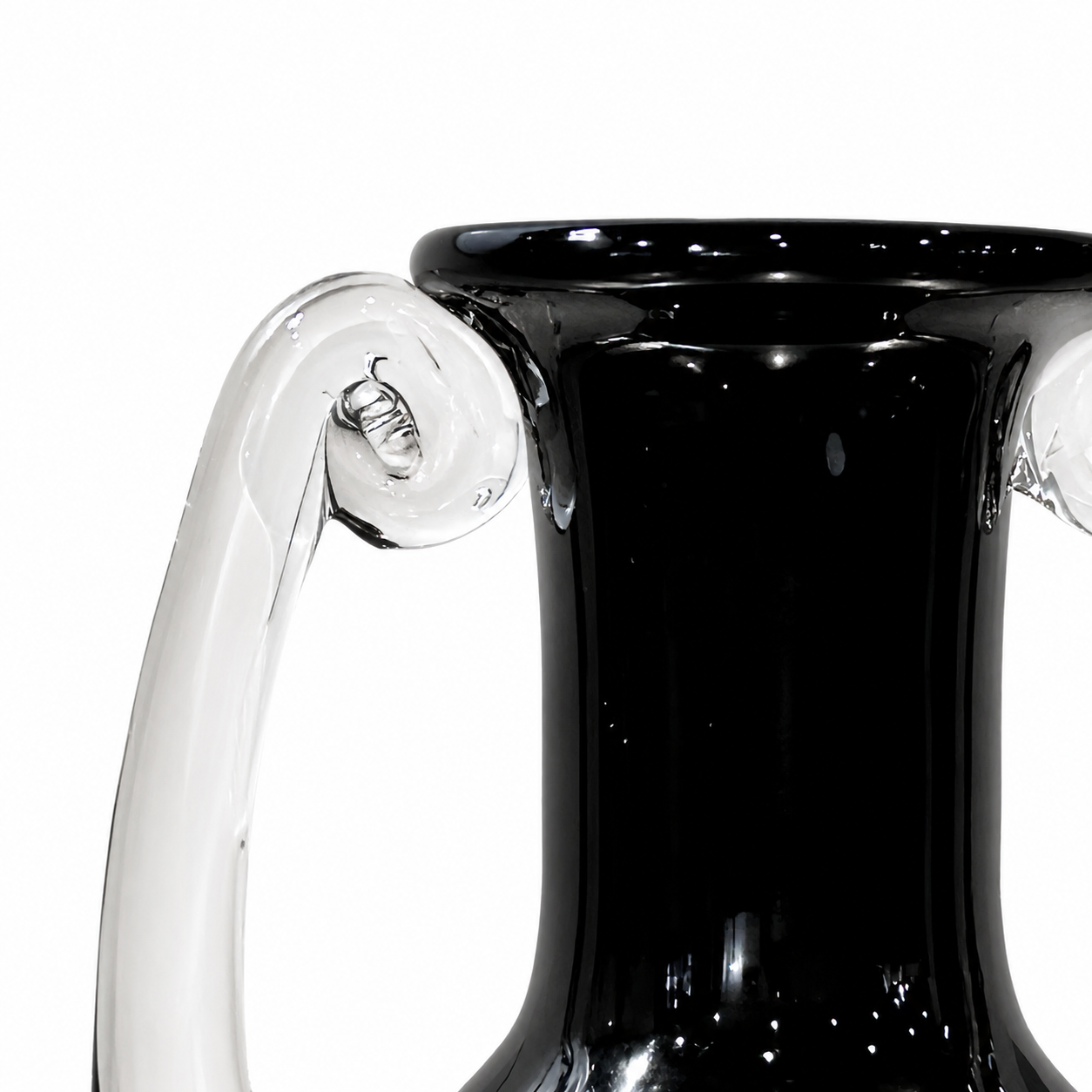
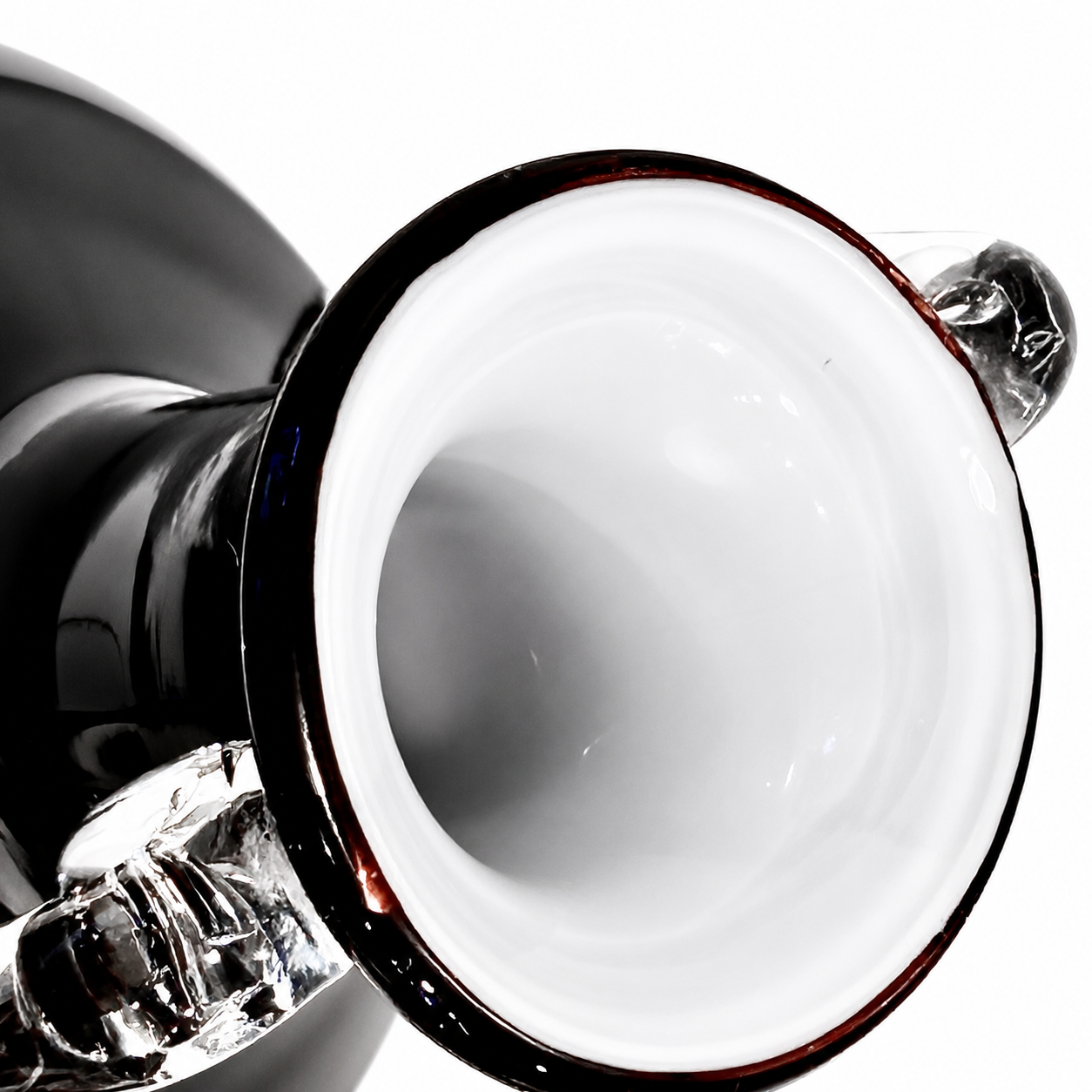
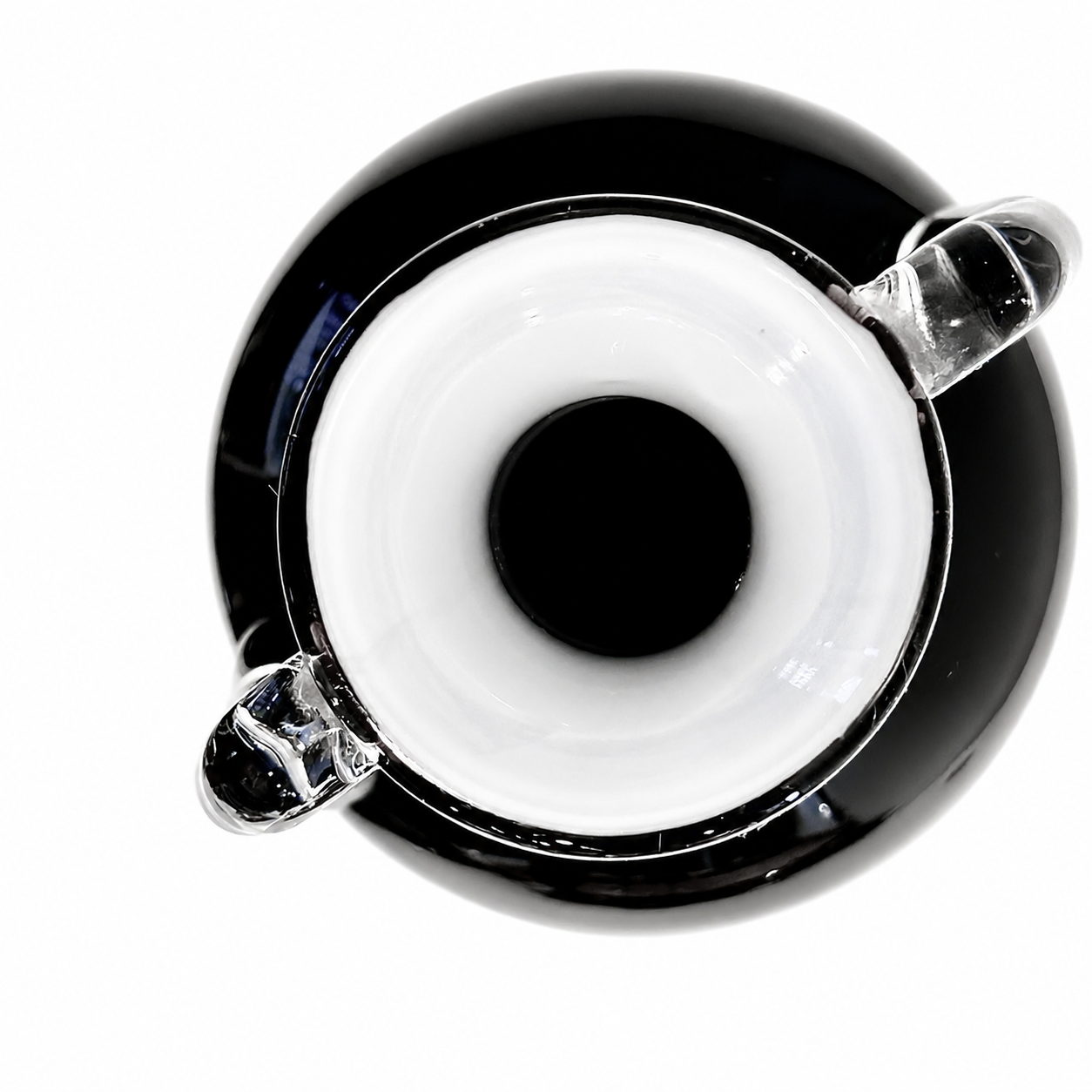
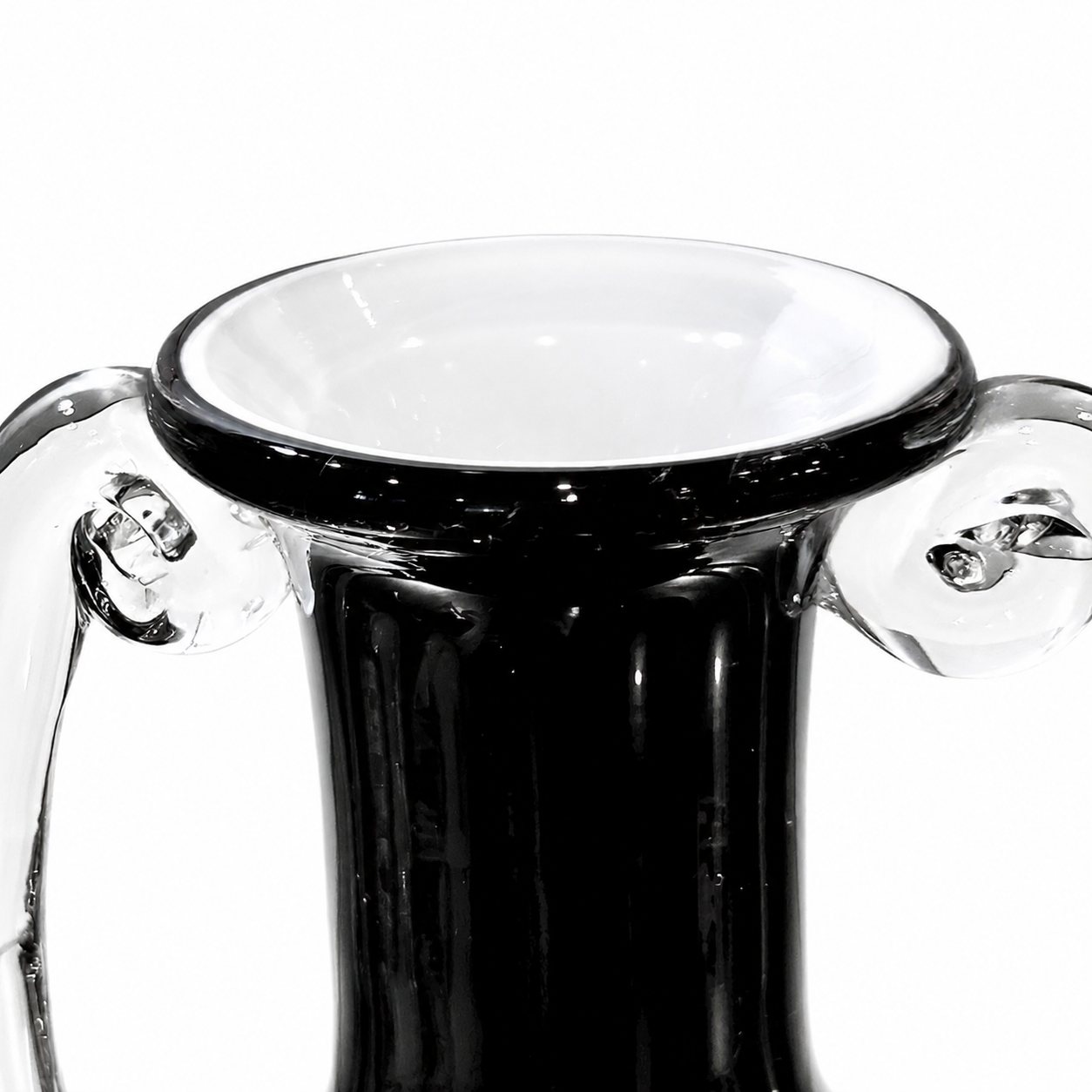
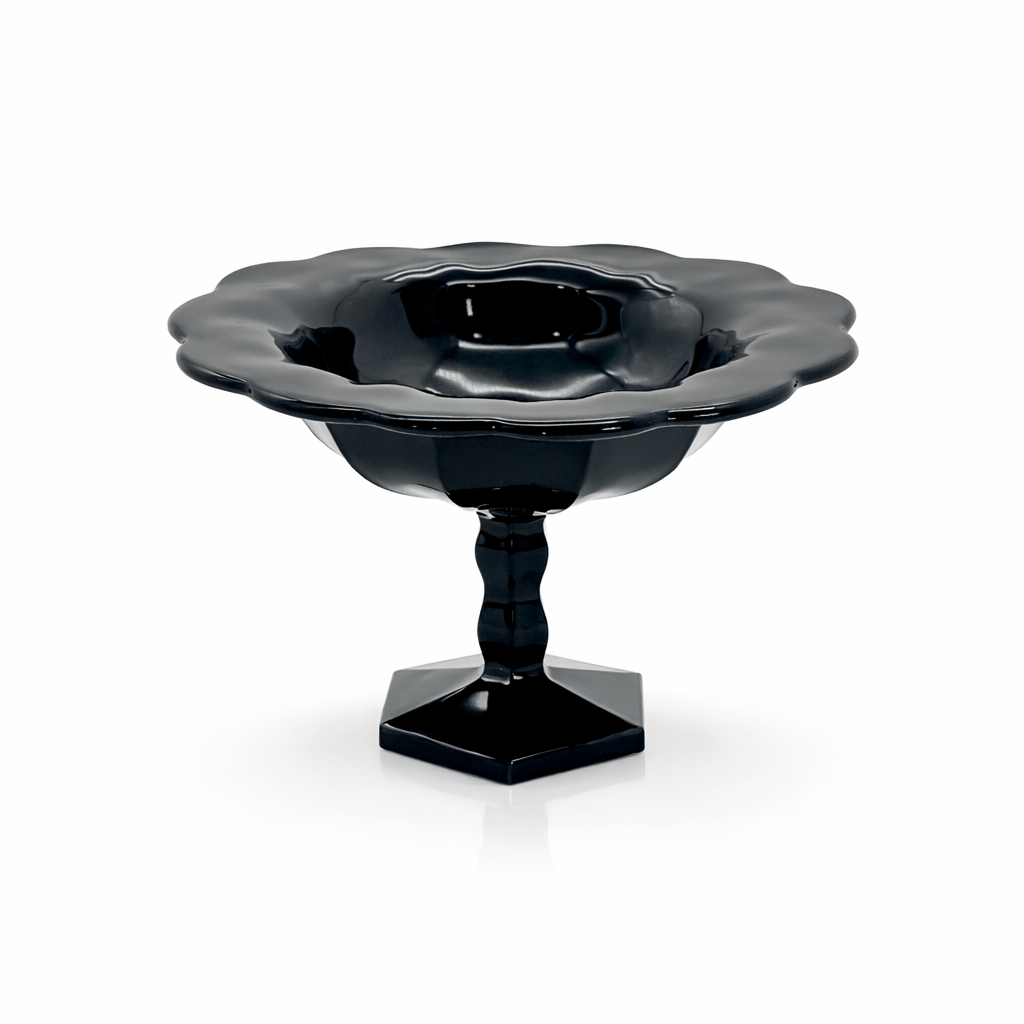
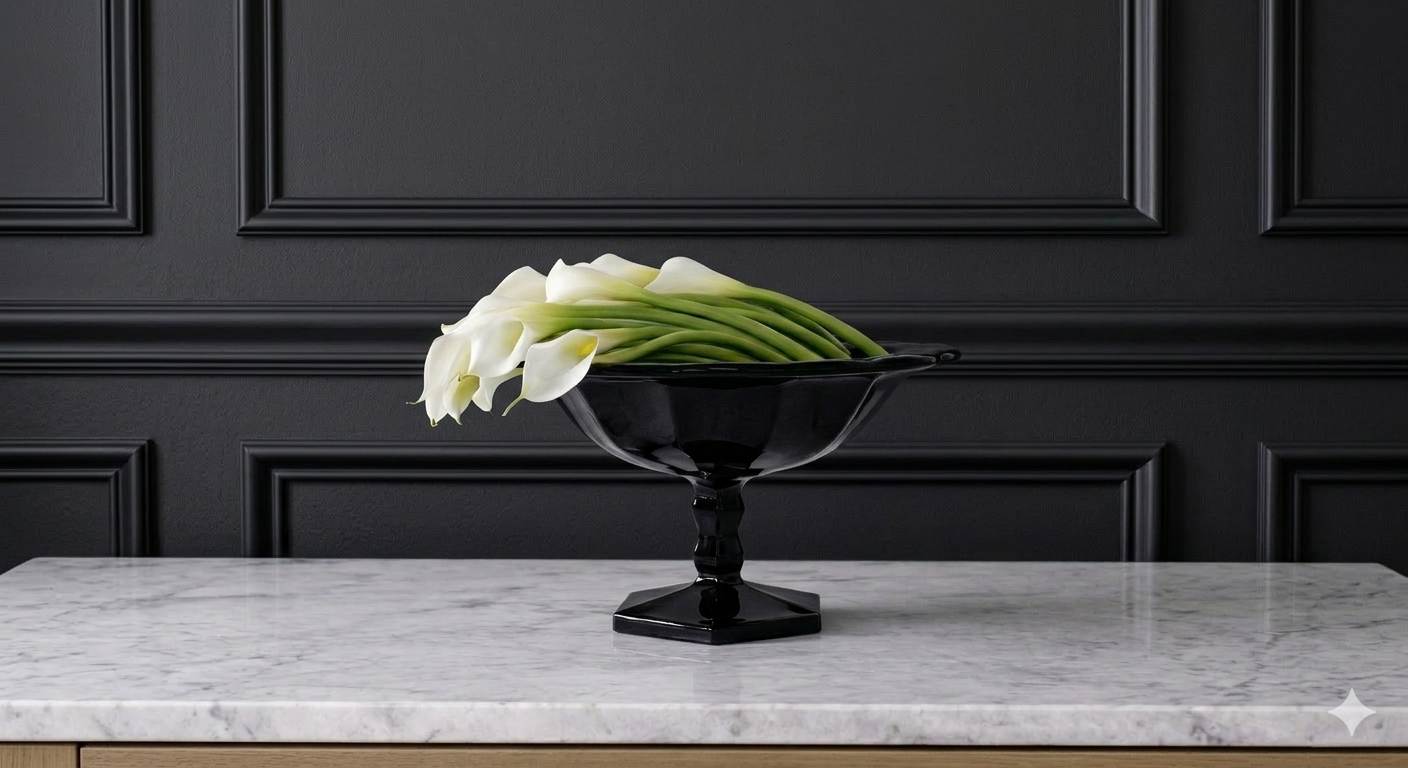
This striking centerpiece bowl exhibits a commanding sculptural presence, characterized by its deep, light-absorbing obsidian hue and substantial glass weight. The form features a bold, undulating scalloped rim that creates a rhythmic play of shadow and reflection across its polished surface. Supported by a faceted hexagonal pedestal, the object balances architectural geometry with organic fluid lines, making it a compelling focal point for a refined interior.
Attribution & Period
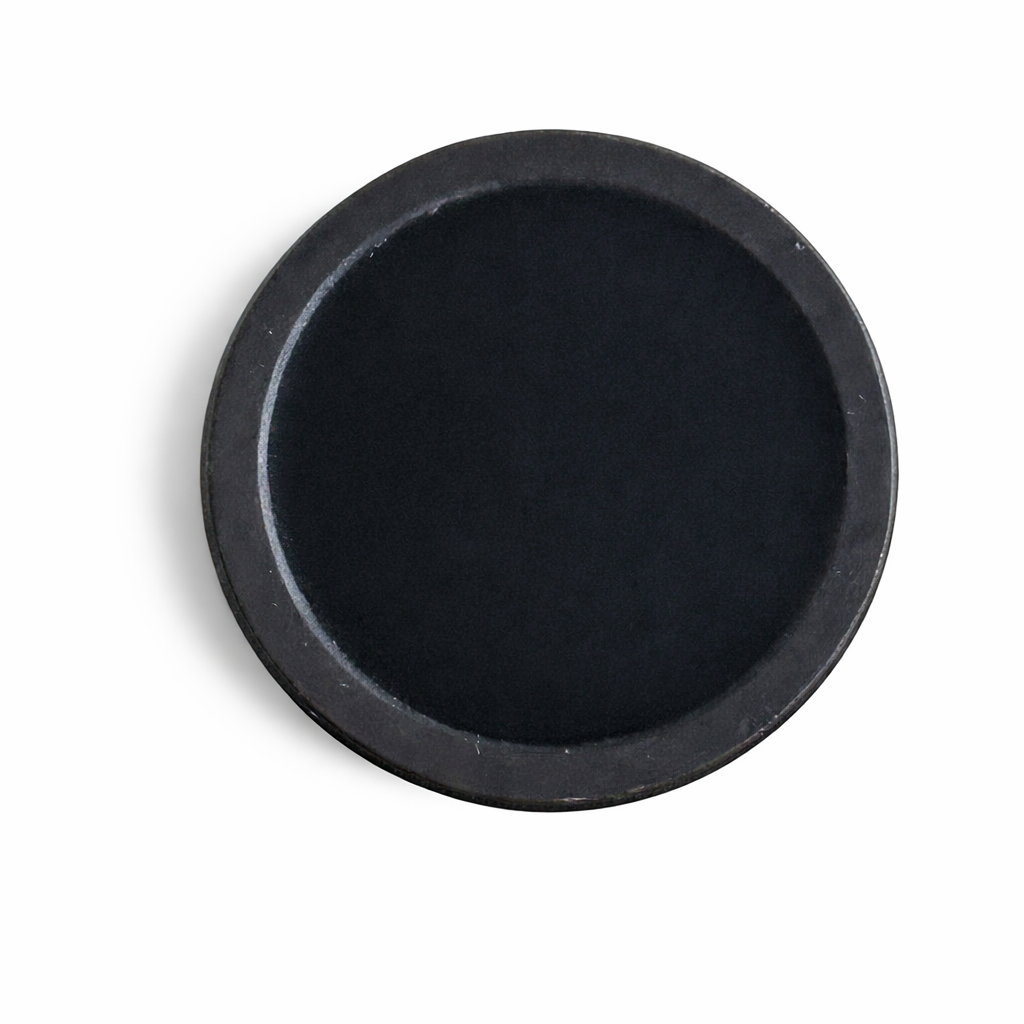
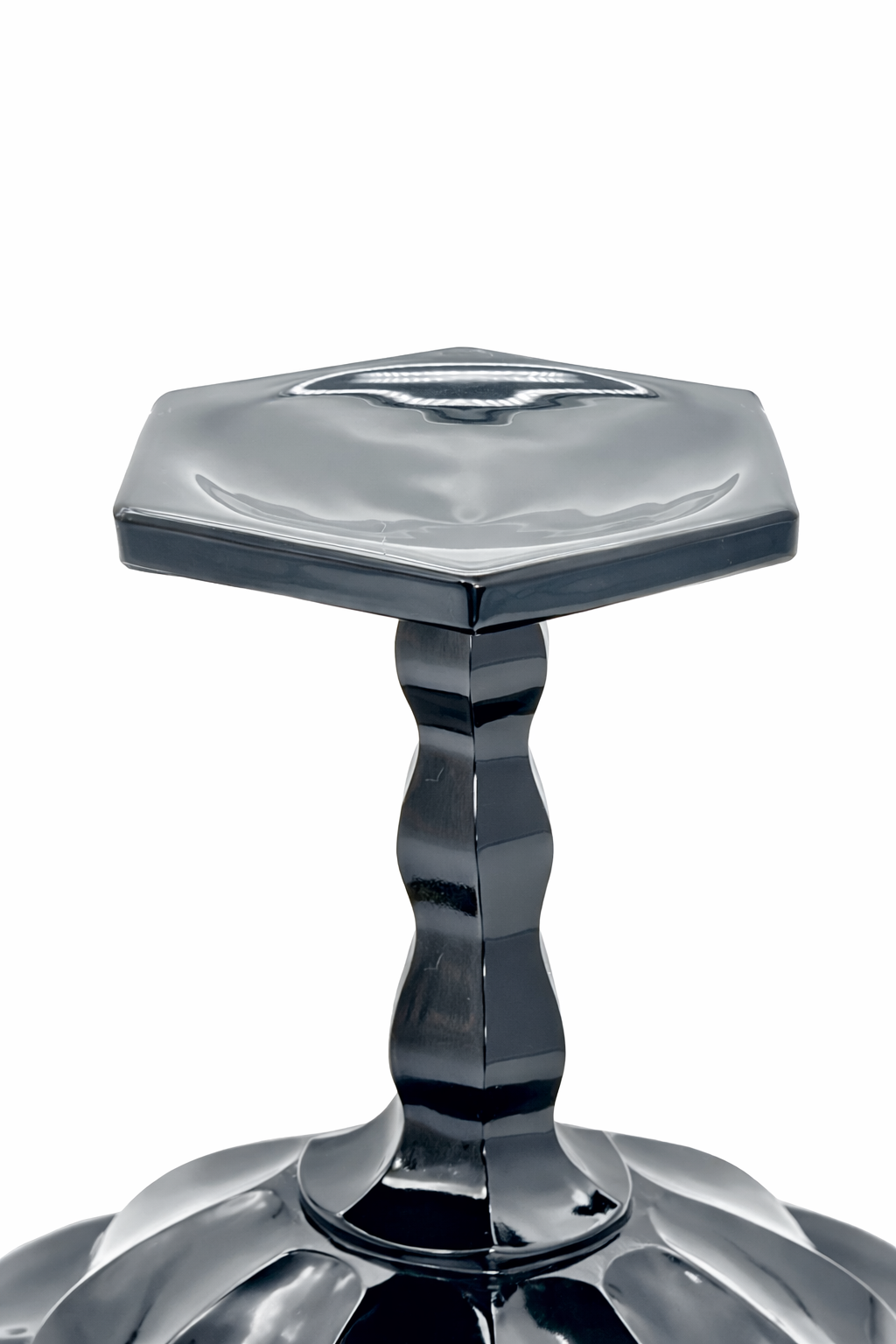
Stylistically aligned with American Mid-Century glass production, this piece is consistent with the high-quality press-molded techniques utilized by firms such as Tiffin or Fostoria during the 1940s. The dense "black" glass—technically a very deep purple known as black amethyst—and the precise faceting of the stem are characteristic of mid-century decorative arts from the Ohio River Valley region. No factory mark is observed, which is typical for glass of this era originally identified by paper labels.
Based on the hexagonal pedestal stem and the specific "scalloped" rim profile combined with the weight of the glass, this piece is most defensibly attributed to the 1940s.
While black glass had a surge in the 1930s (Depression era), the transition toward bolder, more geometric architectural stems like this hexagonal design became a hallmark of "Elegant Glass" manufacturers (like Tiffin and Fostoria) as they moved into the early 1940s. By the late 1950s, styles shifted toward more "free-form" or "organic" ruffles (like Viking Glass), making the structured, rhythmic scallops on your piece a classic representation of early-to-mid 1940s American glass design.
Dimensions & Weight
Condition
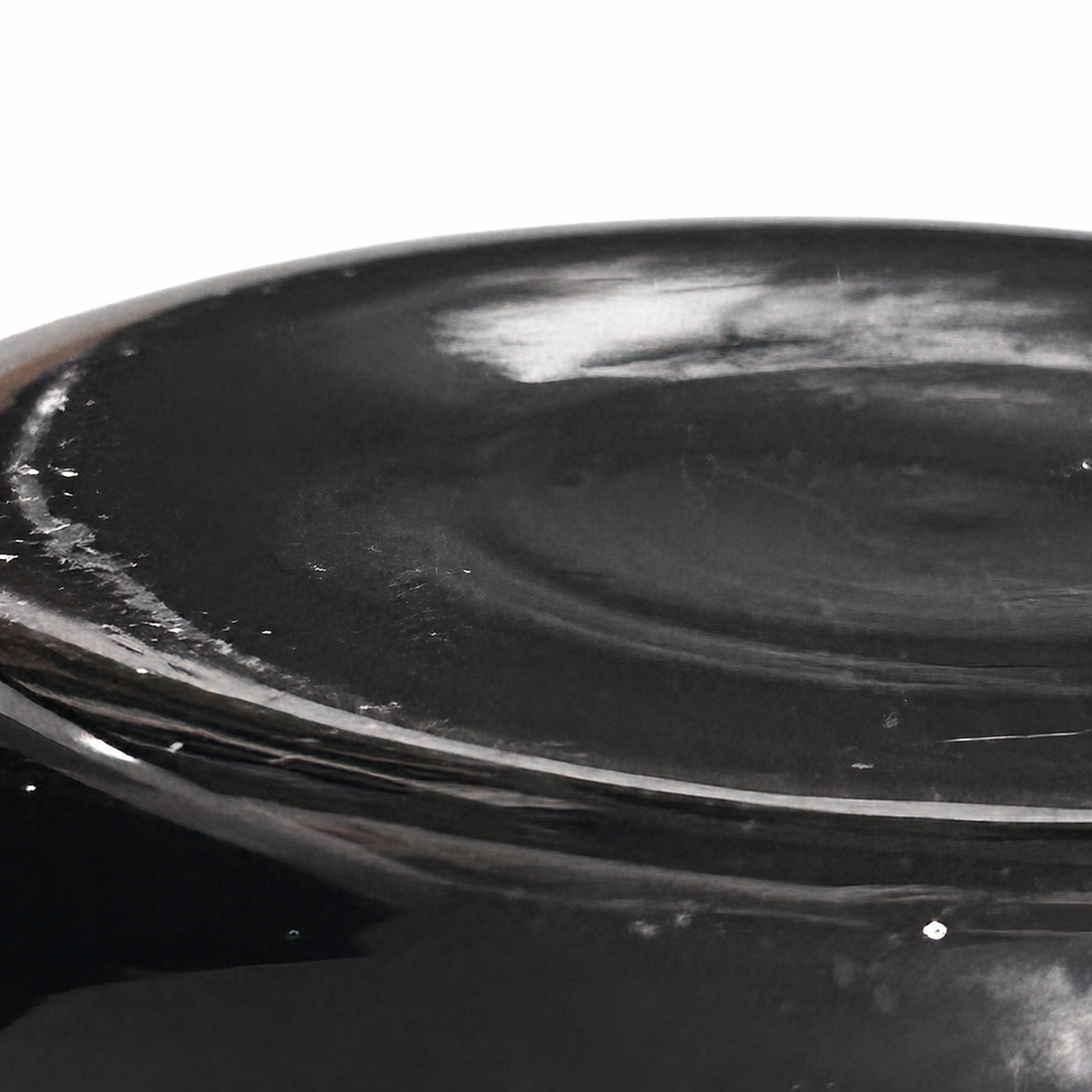
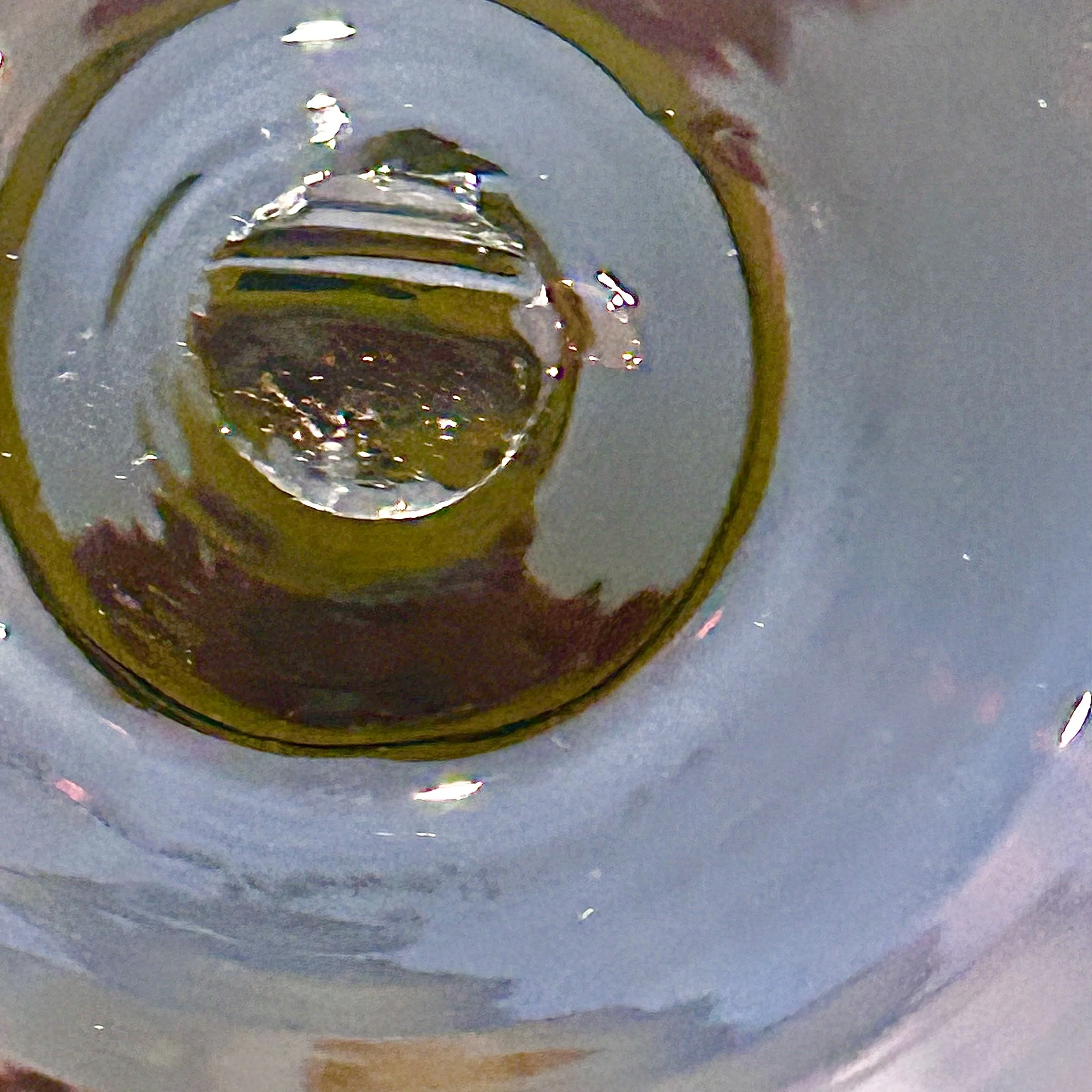
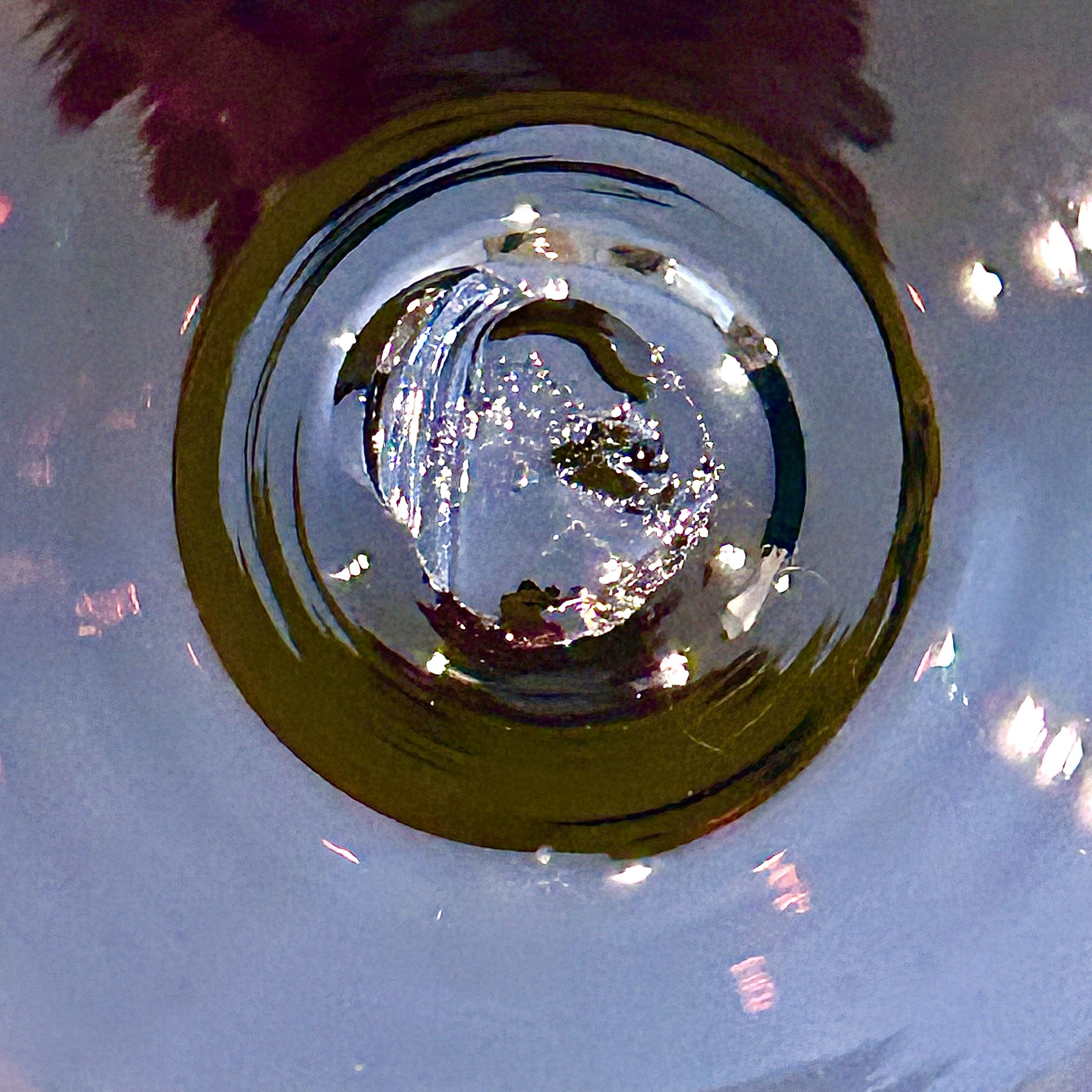
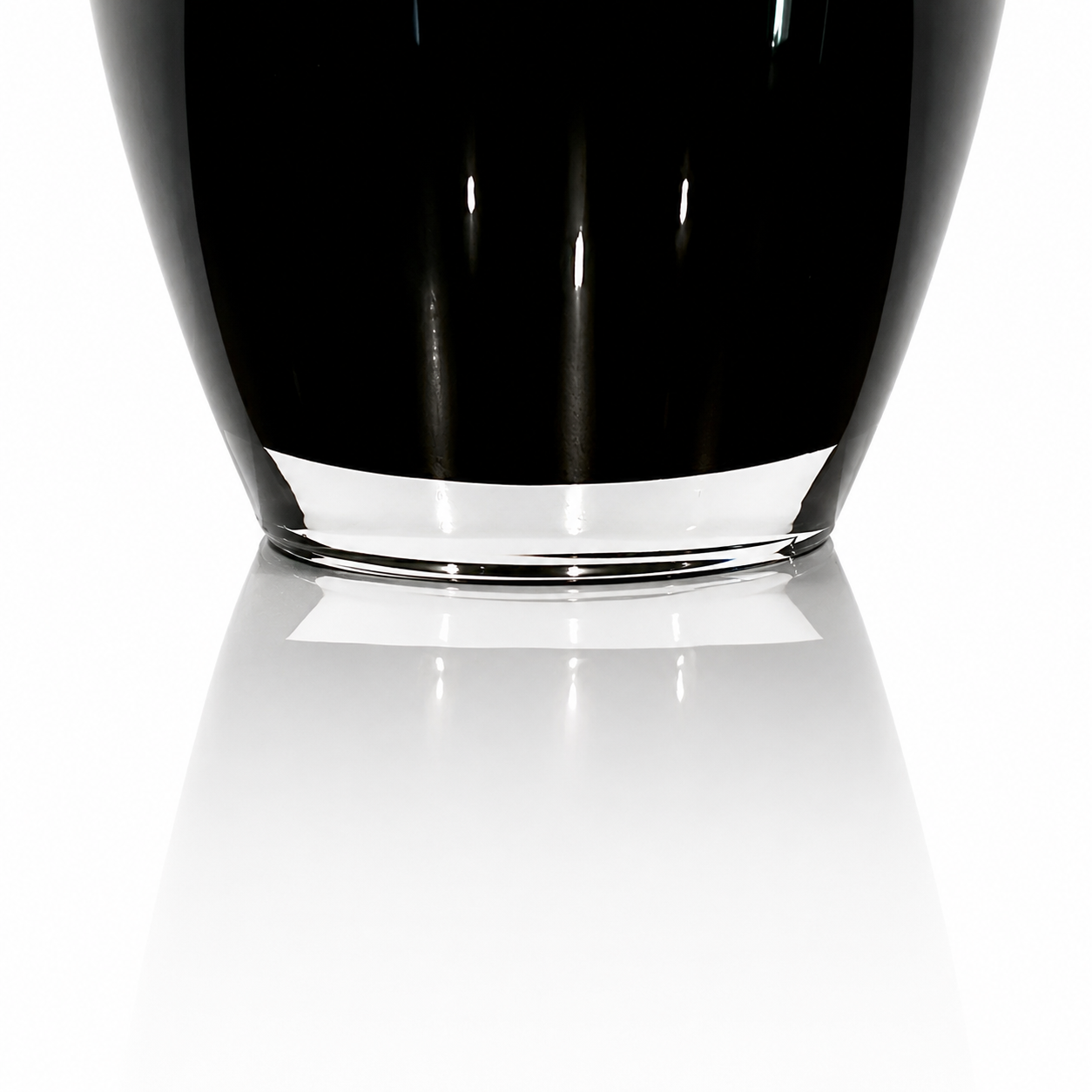
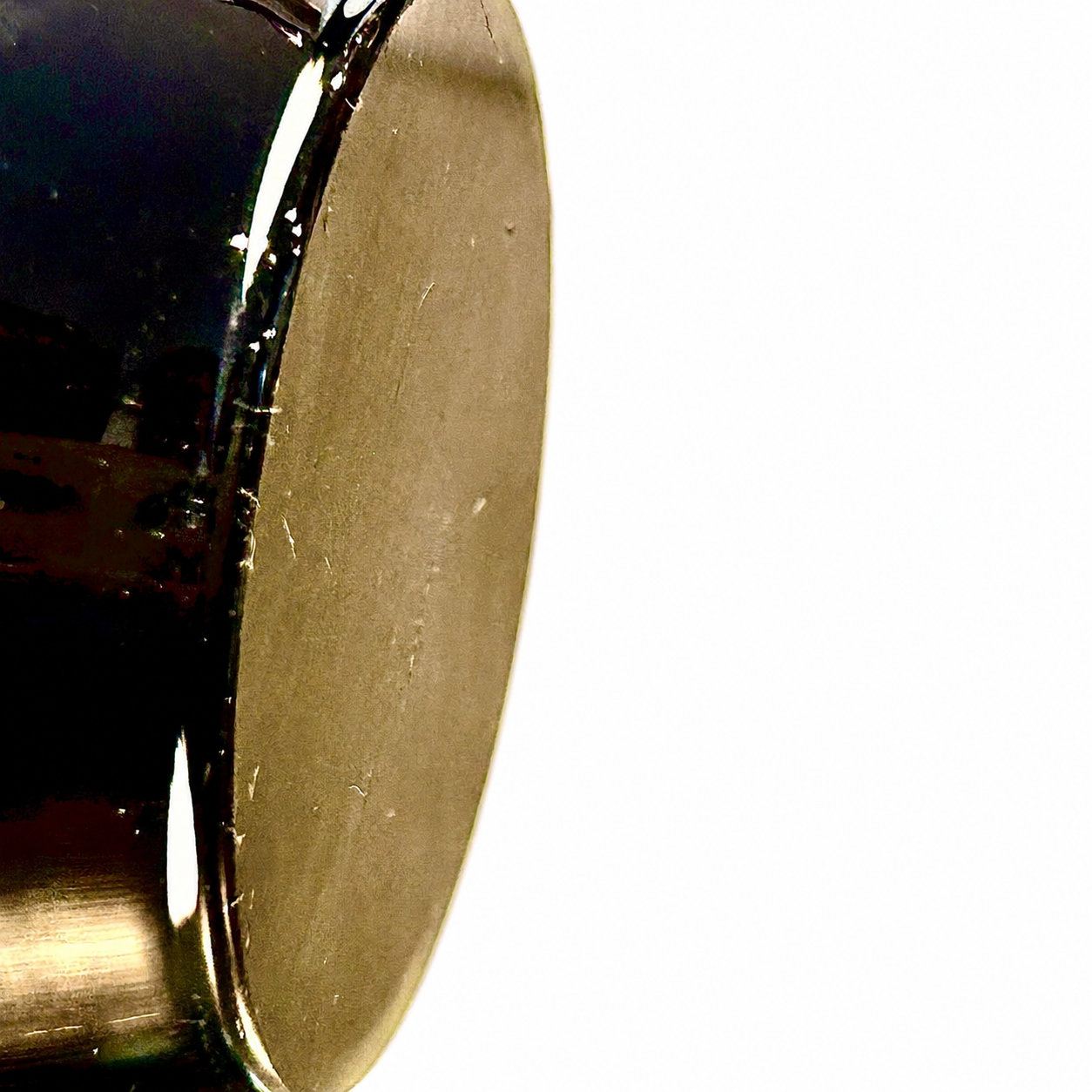
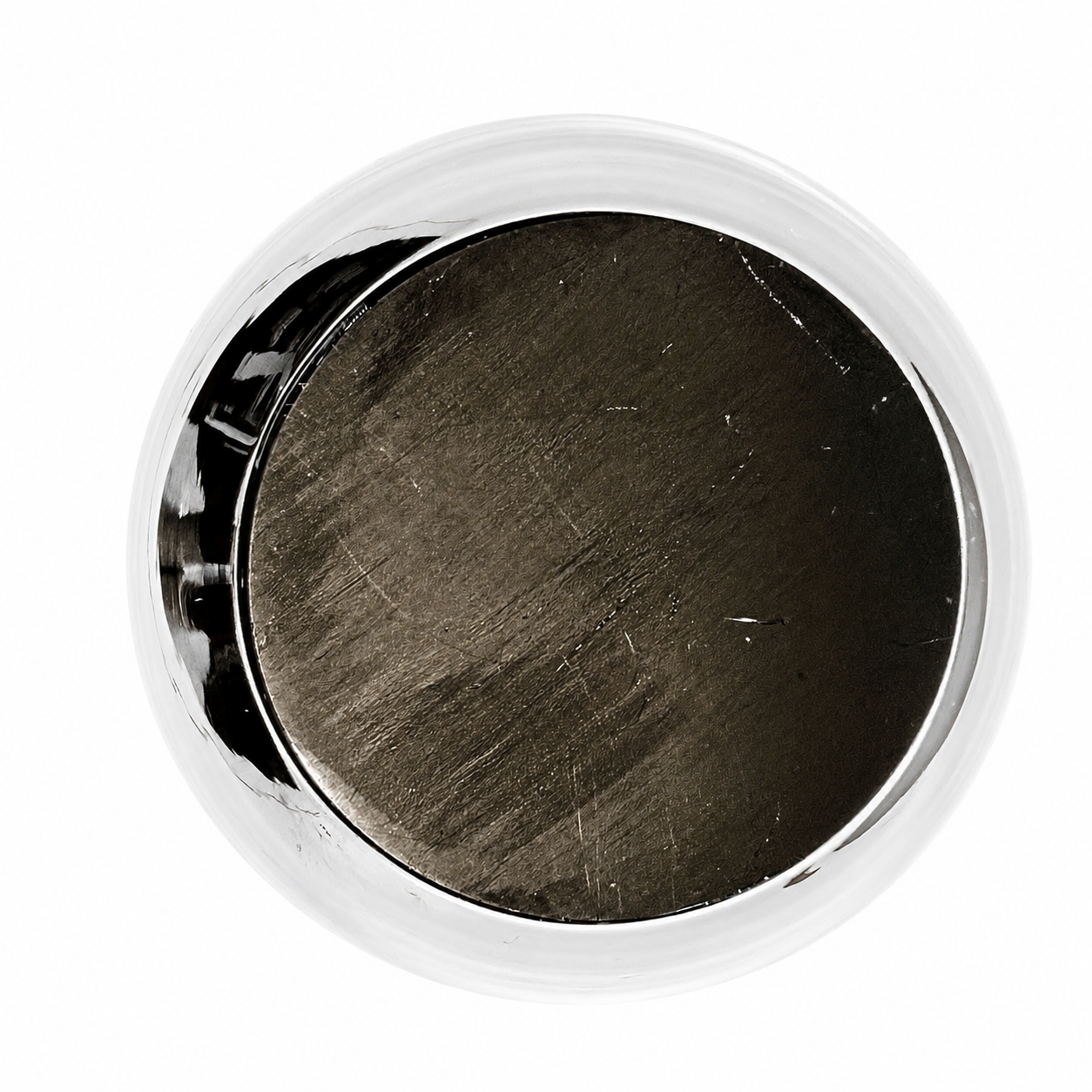
The condition is excellent, presenting in collector-grade quality. Clinical observation reveals no chips, cracks, or professional repairs. The polished surface is remarkably well-preserved with no observed scratches or utensil marks. Base wear is minimal, consistent with age and careful display.
Authenticity & Construction
The object is crafted from solid, pigment-rich glass through a sophisticated molding and finishing process. The substantial weight and clarity of the mold lines signify a high standard of production, ensuring the durability and depth of color that distinguishes artisan glass from mass-market imitations. The transition from the hexagonal base to the fluted bowl demonstrates a mastery of geometric transitions.
Placement
This piece serves as an ideal architectural accent on a minimalist sideboard, a dark-stained executive desk, or as a central vessel on a contemporary dining table. Its monochromatic palette allows it to integrate seamlessly into both Brutalist and Hollywood Regency aesthetics.
STANDARD ATTRIBUTION & VALUE DISCLOSURE;This piece is described to the best of current scholarly and market knowledge. Any maker or regional attribution is based on visual analysis, materials, construction techniques, and documented stylistic comparisons. As with many MCM and antique design objects, definitive attribution may not be possible without original labels or factory records. Pricing reflects condition, quality, decorative appeal, and current collector demand rather than guaranteed maker identification.
This striking centerpiece bowl exhibits a commanding sculptural presence, characterized by its deep, light-absorbing obsidian hue and substantial glass weight. The form features a bold, undulating scalloped rim that creates a rhythmic play of shadow and reflection across its polished surface. Supported by a faceted hexagonal pedestal, the object balances architectural geometry with organic fluid lines, making it a compelling focal point for a refined interior.
Attribution & Period
Stylistically aligned with American Mid-Century glass production, this piece is consistent with the high-quality press-molded techniques utilized by firms such as Tiffin or Fostoria during the 1940s. The dense "black" glass—technically a very deep purple known as black amethyst—and the precise faceting of the stem are characteristic of mid-century decorative arts from the Ohio River Valley region. No factory mark is observed, which is typical for glass of this era originally identified by paper labels.
Based on the hexagonal pedestal stem and the specific "scalloped" rim profile combined with the weight of the glass, this piece is most defensibly attributed to the 1940s.
While black glass had a surge in the 1930s (Depression era), the transition toward bolder, more geometric architectural stems like this hexagonal design became a hallmark of "Elegant Glass" manufacturers (like Tiffin and Fostoria) as they moved into the early 1940s. By the late 1950s, styles shifted toward more "free-form" or "organic" ruffles (like Viking Glass), making the structured, rhythmic scallops on your piece a classic representation of early-to-mid 1940s American glass design.
Dimensions & Weight
Condition
The condition is excellent, presenting in collector-grade quality. Clinical observation reveals no chips, cracks, or professional repairs. The polished surface is remarkably well-preserved with no observed scratches or utensil marks. Base wear is minimal, consistent with age and careful display.
Authenticity & Construction
The object is crafted from solid, pigment-rich glass through a sophisticated molding and finishing process. The substantial weight and clarity of the mold lines signify a high standard of production, ensuring the durability and depth of color that distinguishes artisan glass from mass-market imitations. The transition from the hexagonal base to the fluted bowl demonstrates a mastery of geometric transitions.
Placement
This piece serves as an ideal architectural accent on a minimalist sideboard, a dark-stained executive desk, or as a central vessel on a contemporary dining table. Its monochromatic palette allows it to integrate seamlessly into both Brutalist and Hollywood Regency aesthetics.
STANDARD ATTRIBUTION & VALUE DISCLOSURE;This piece is described to the best of current scholarly and market knowledge. Any maker or regional attribution is based on visual analysis, materials, construction techniques, and documented stylistic comparisons. As with many MCM and antique design objects, definitive attribution may not be possible without original labels or factory records. Pricing reflects condition, quality, decorative appeal, and current collector demand rather than guaranteed maker identification.

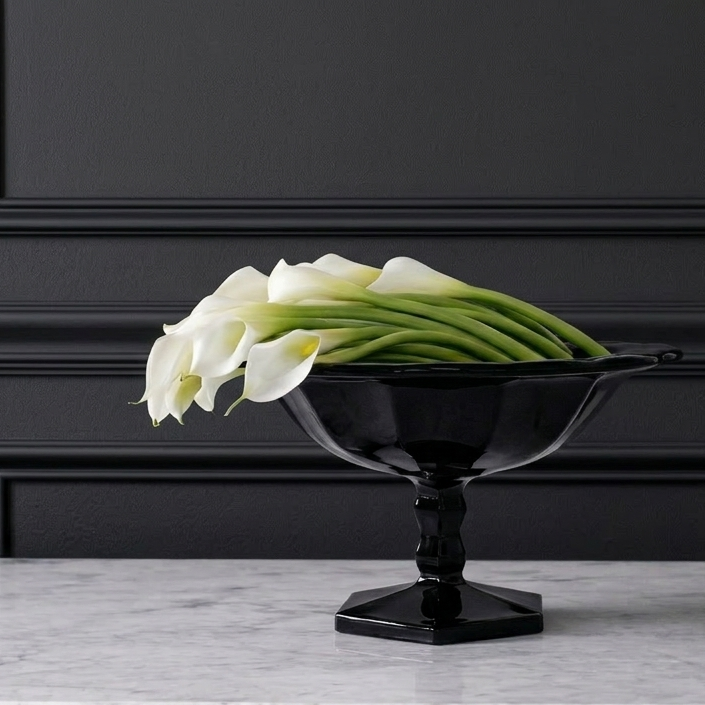 Image 1 of 12
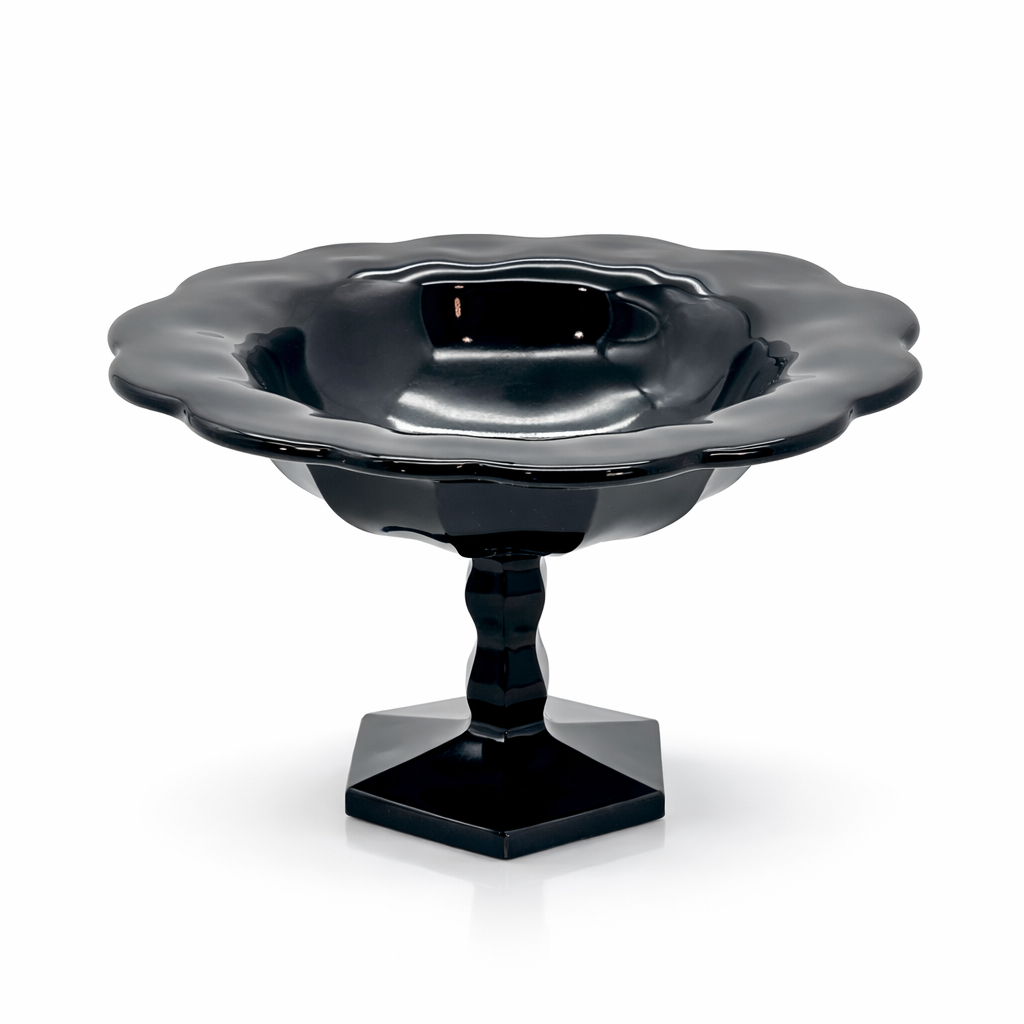 Image 2 of 12
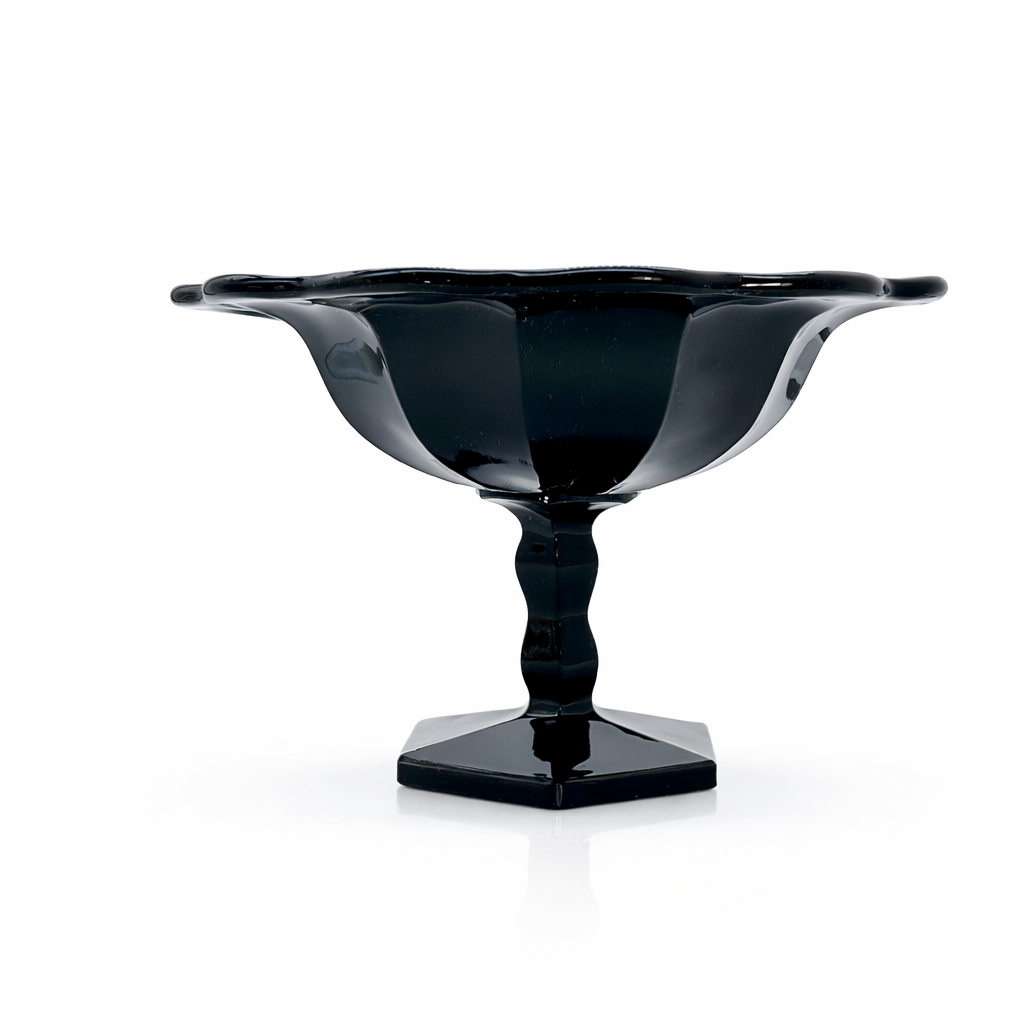 Image 3 of 12
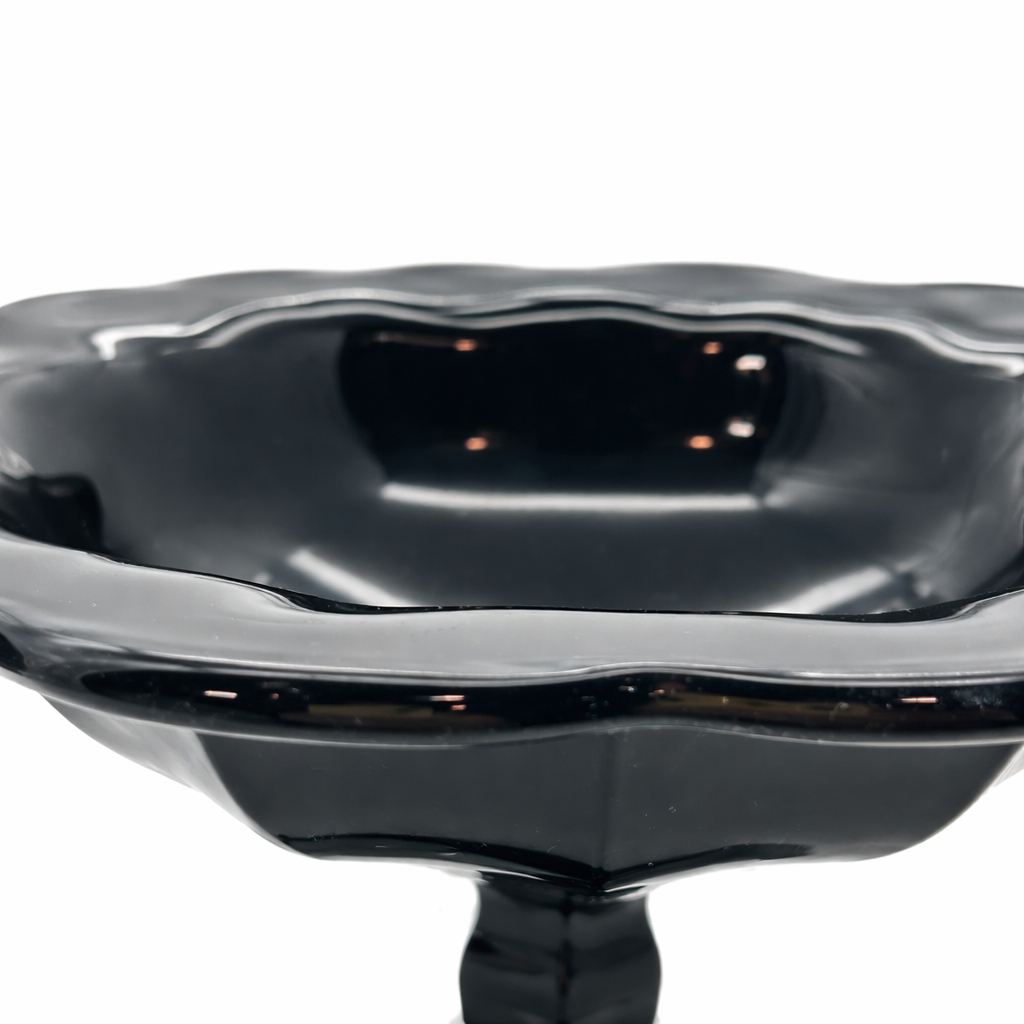 Image 4 of 12
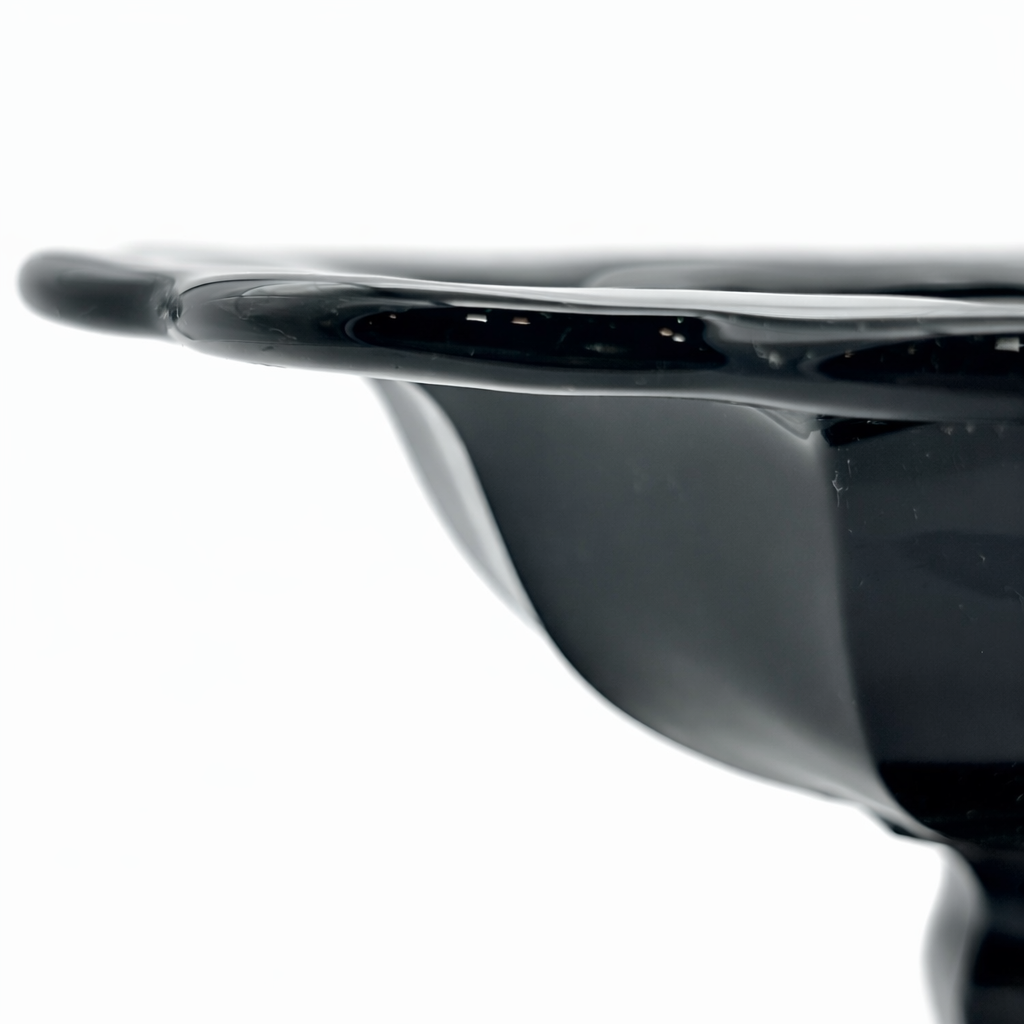 Image 5 of 12
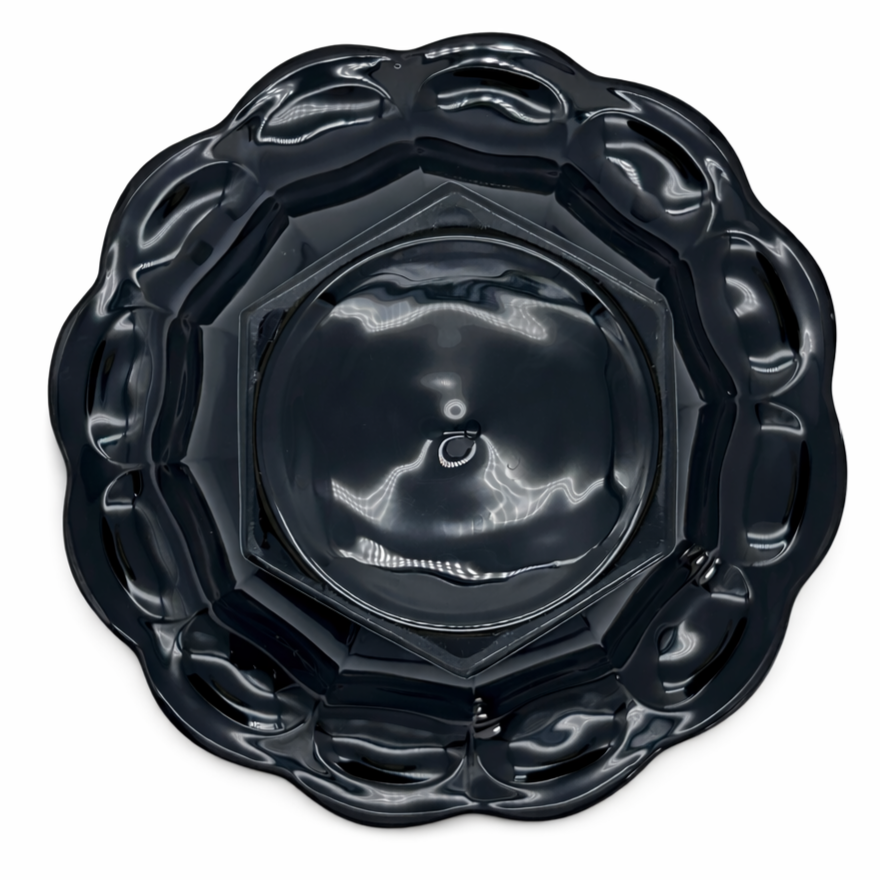 Image 6 of 12
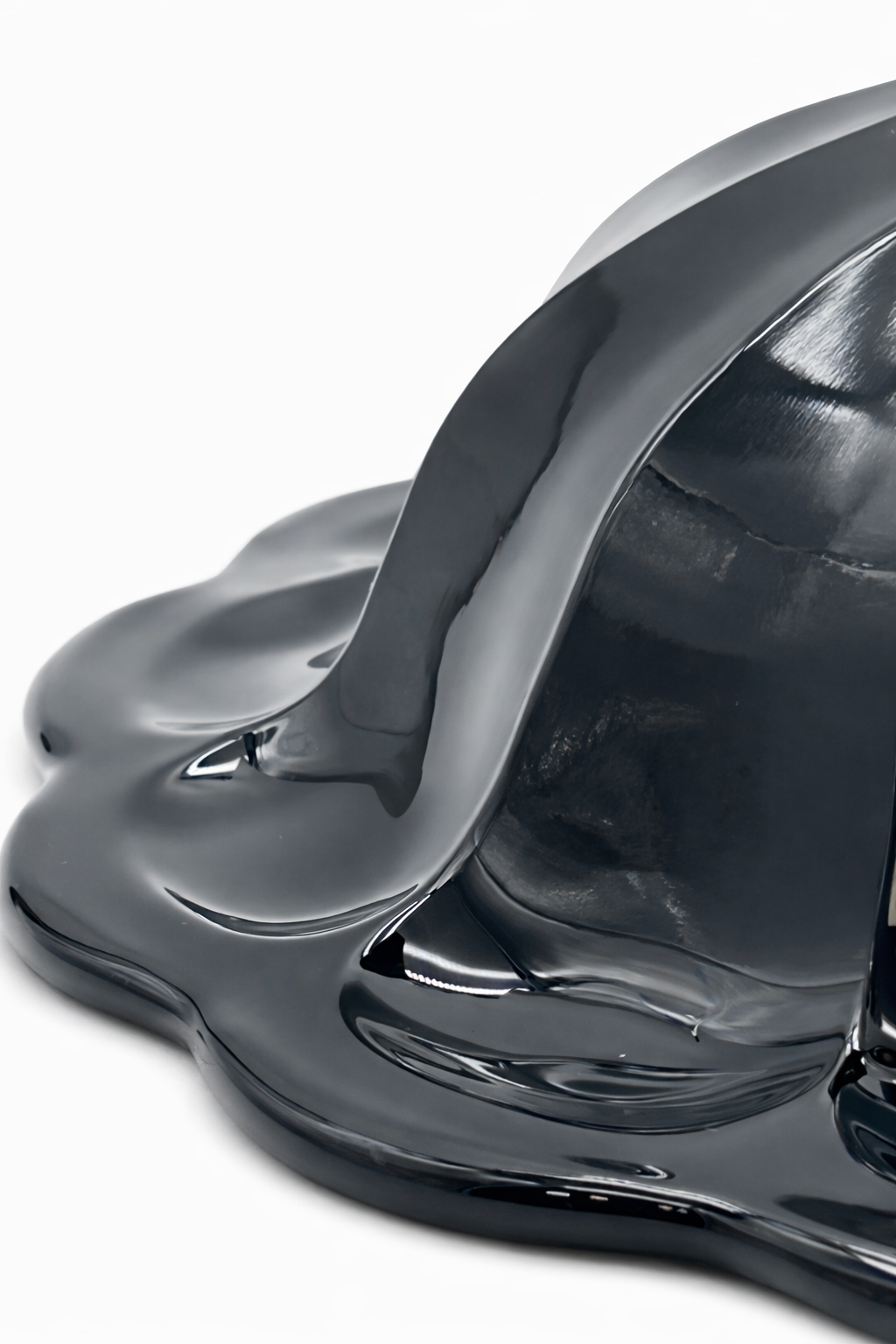 Image 7 of 12
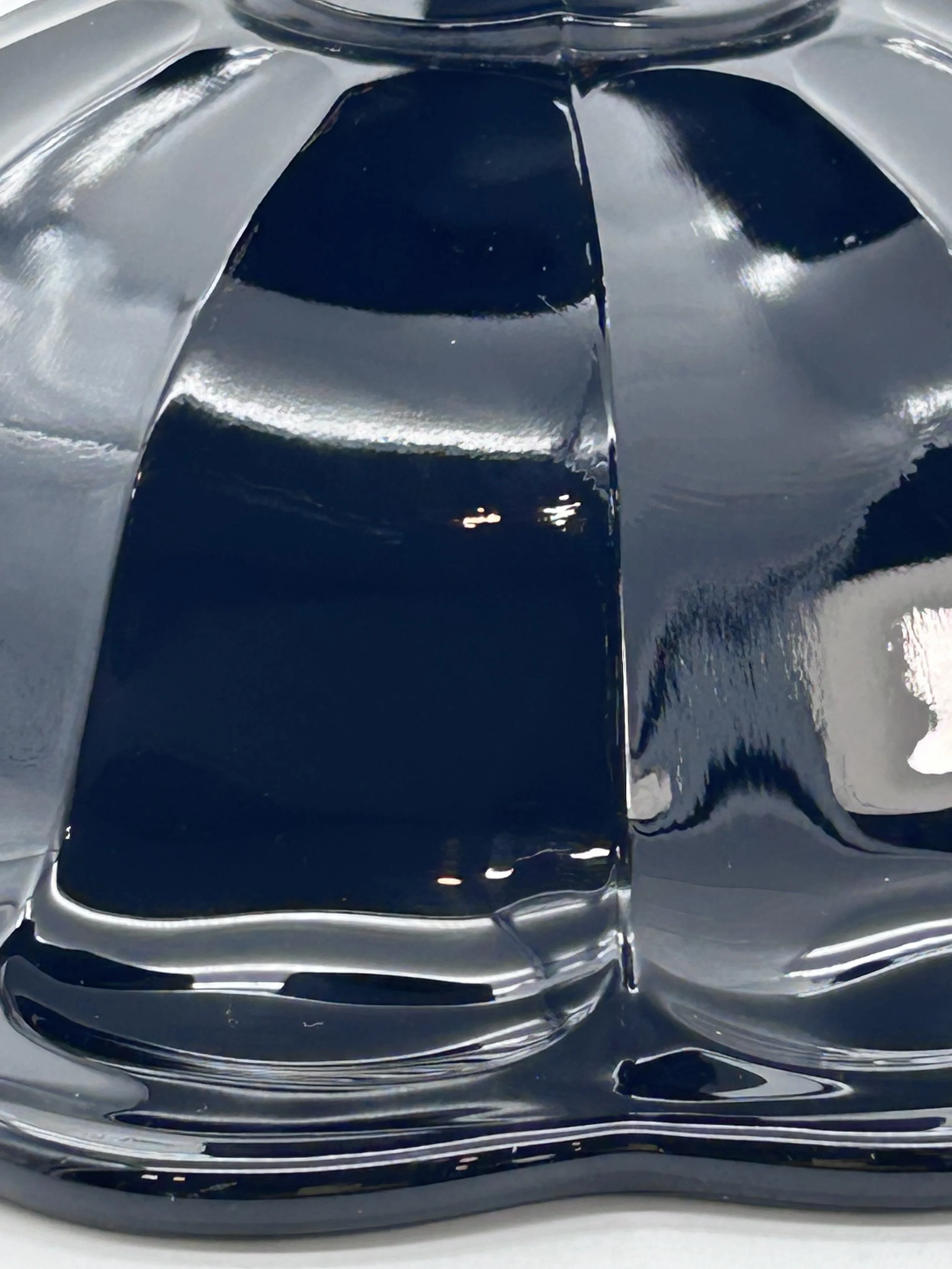 Image 8 of 12
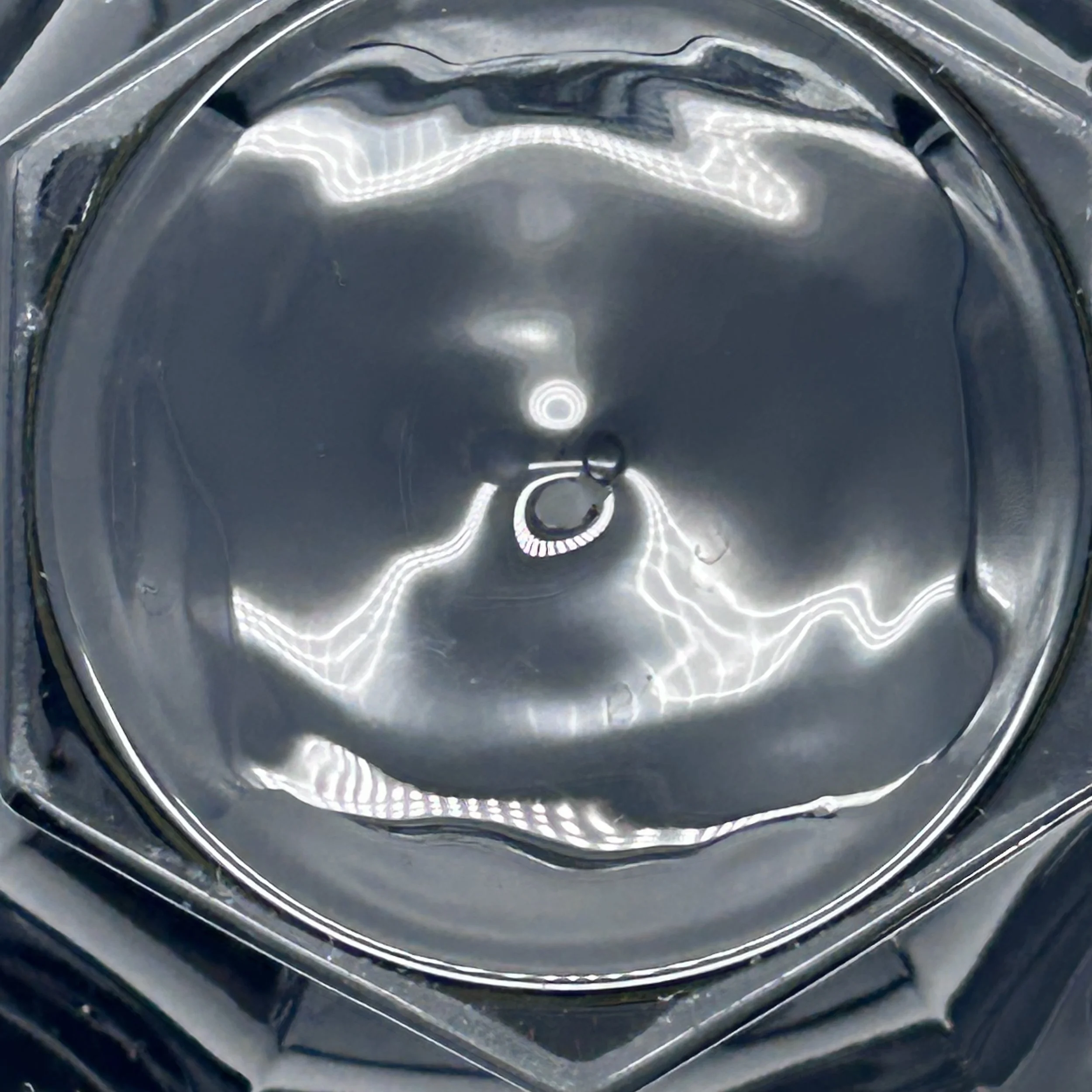 Image 9 of 12
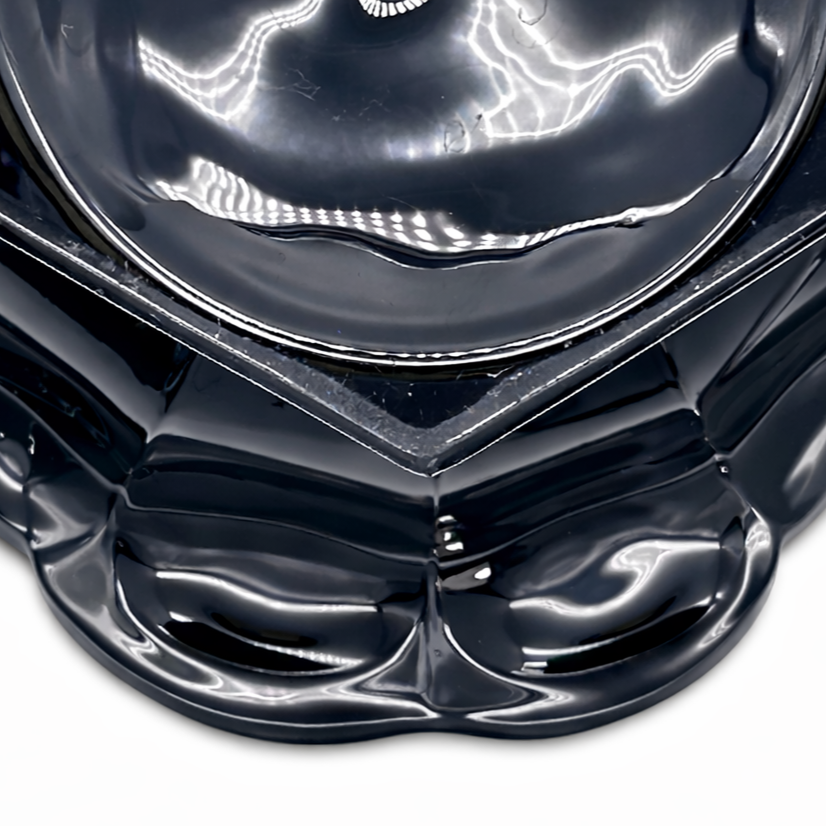 Image 10 of 12
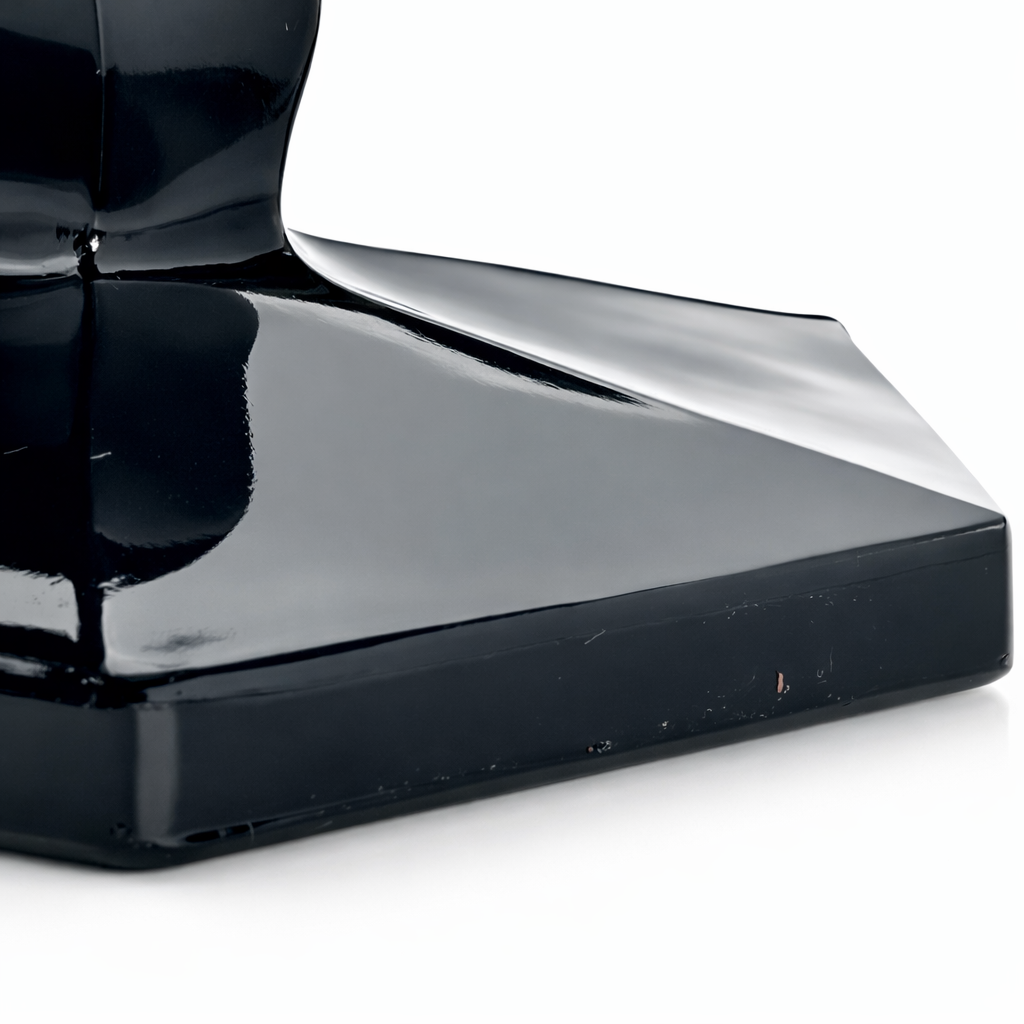 Image 11 of 12
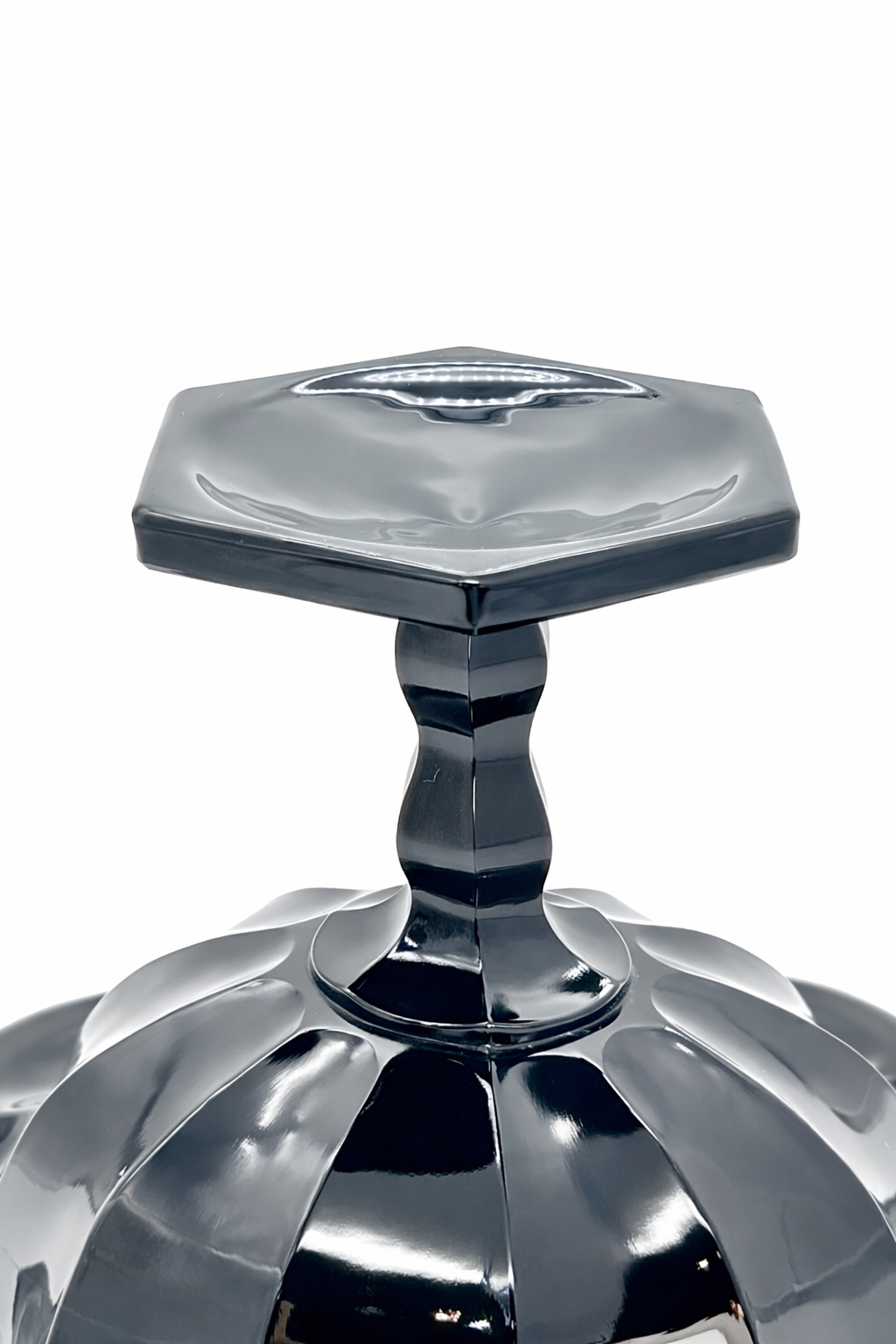 Image 12 of 12