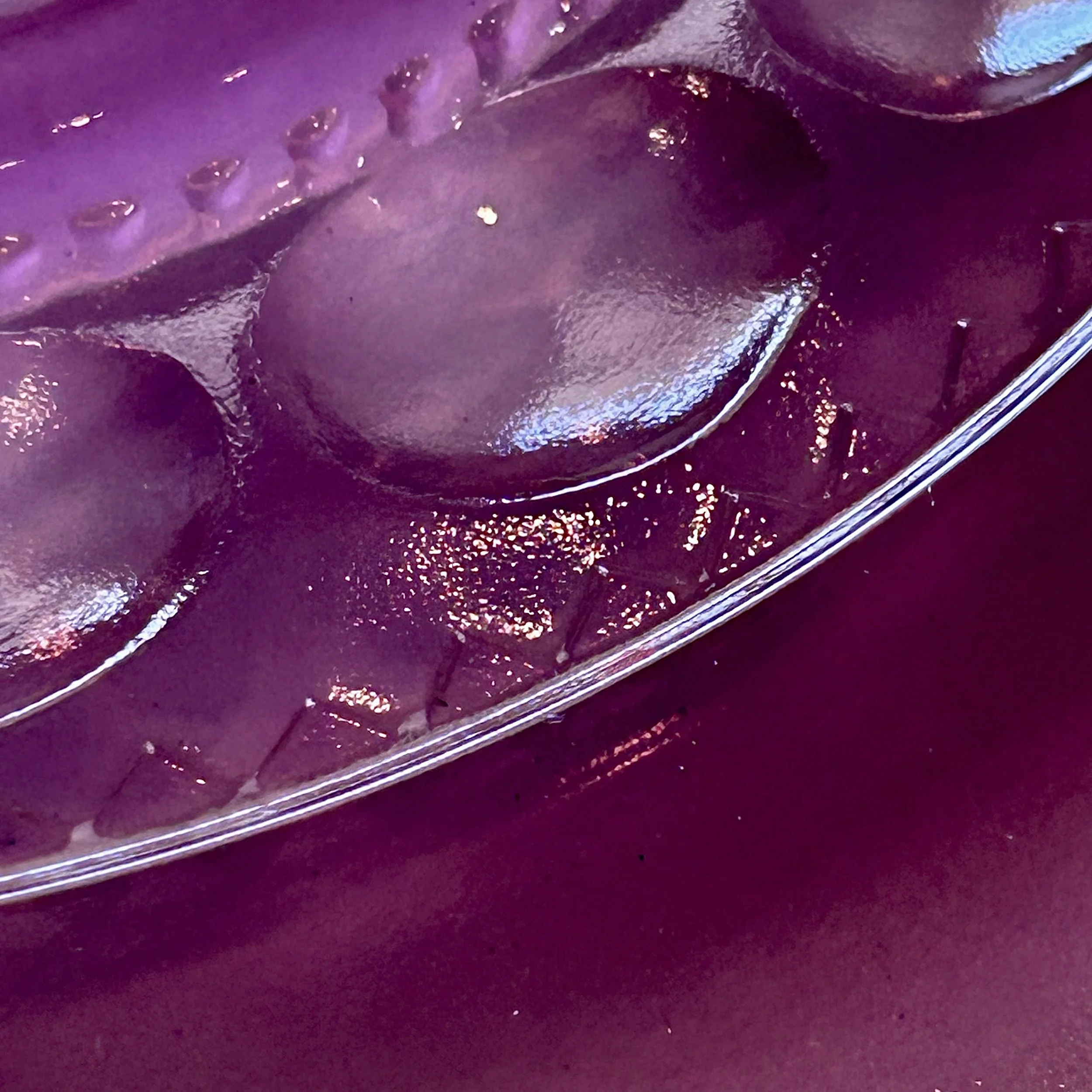
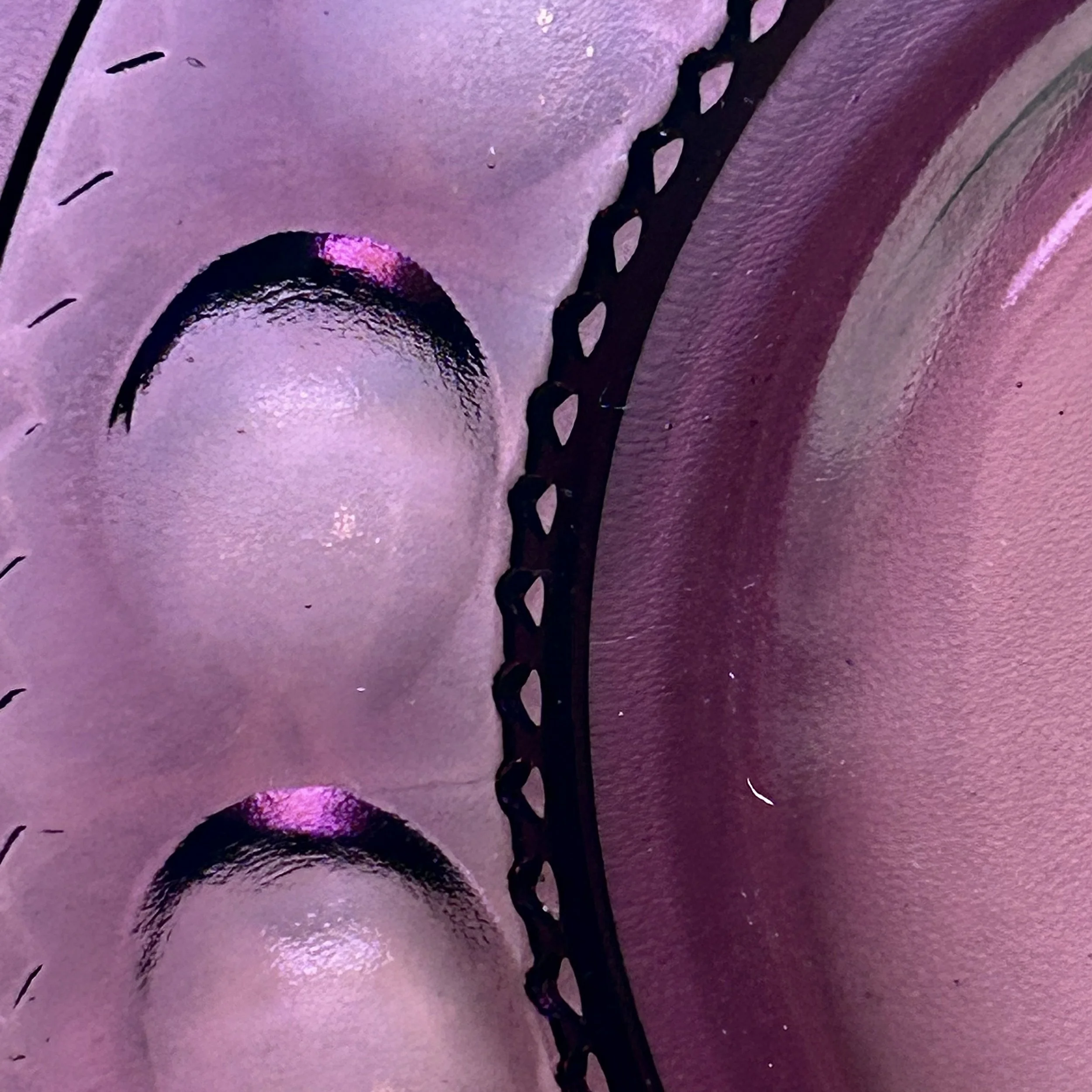
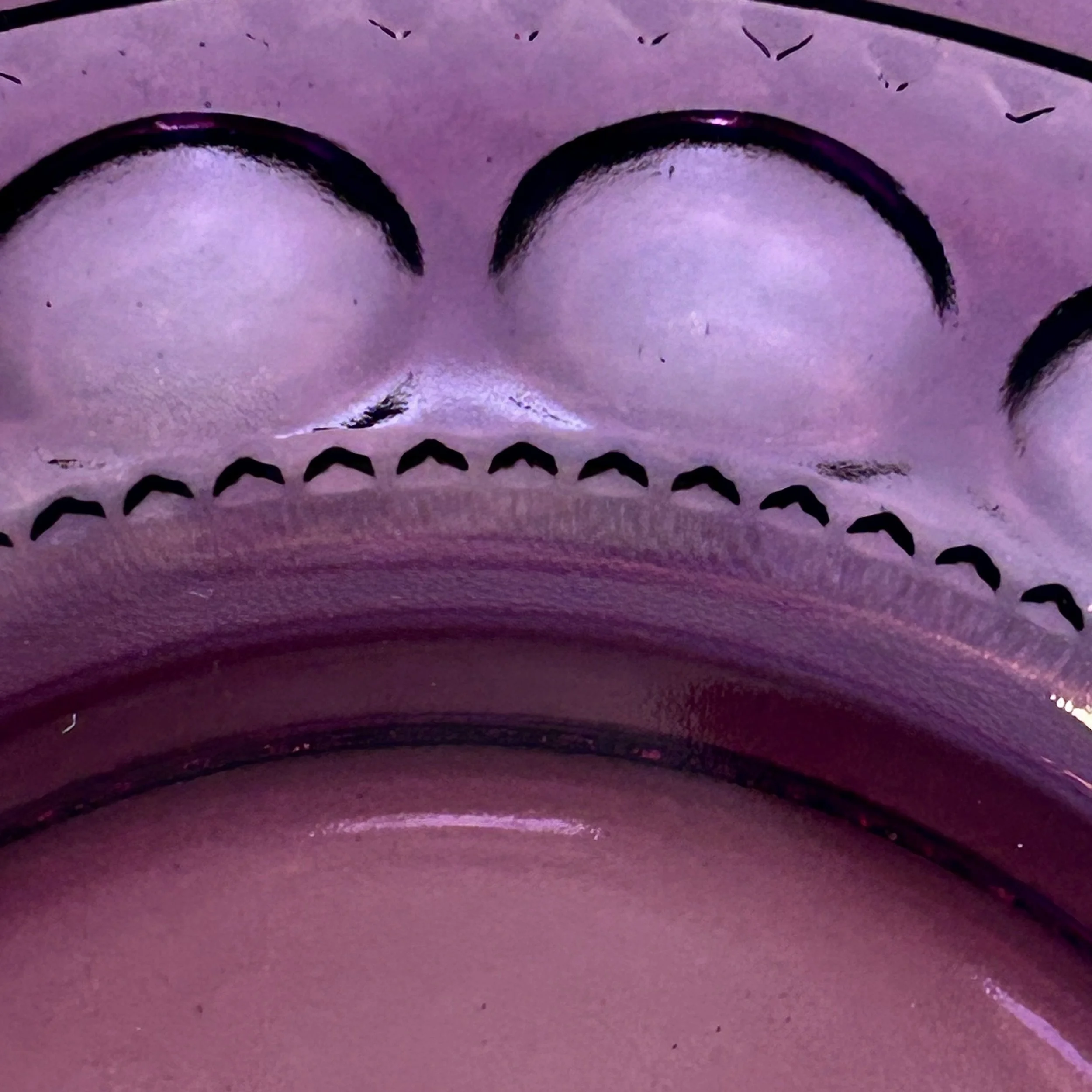
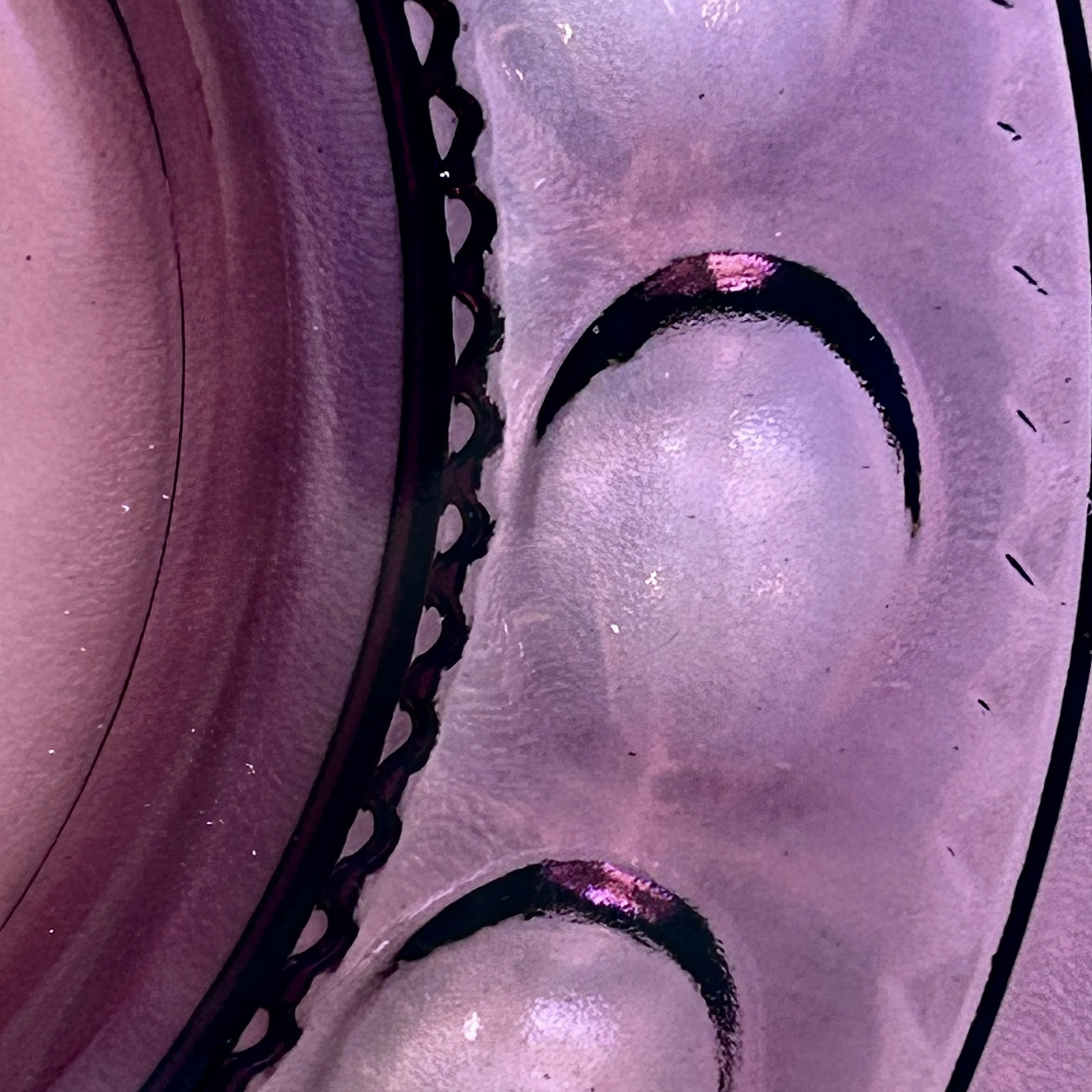
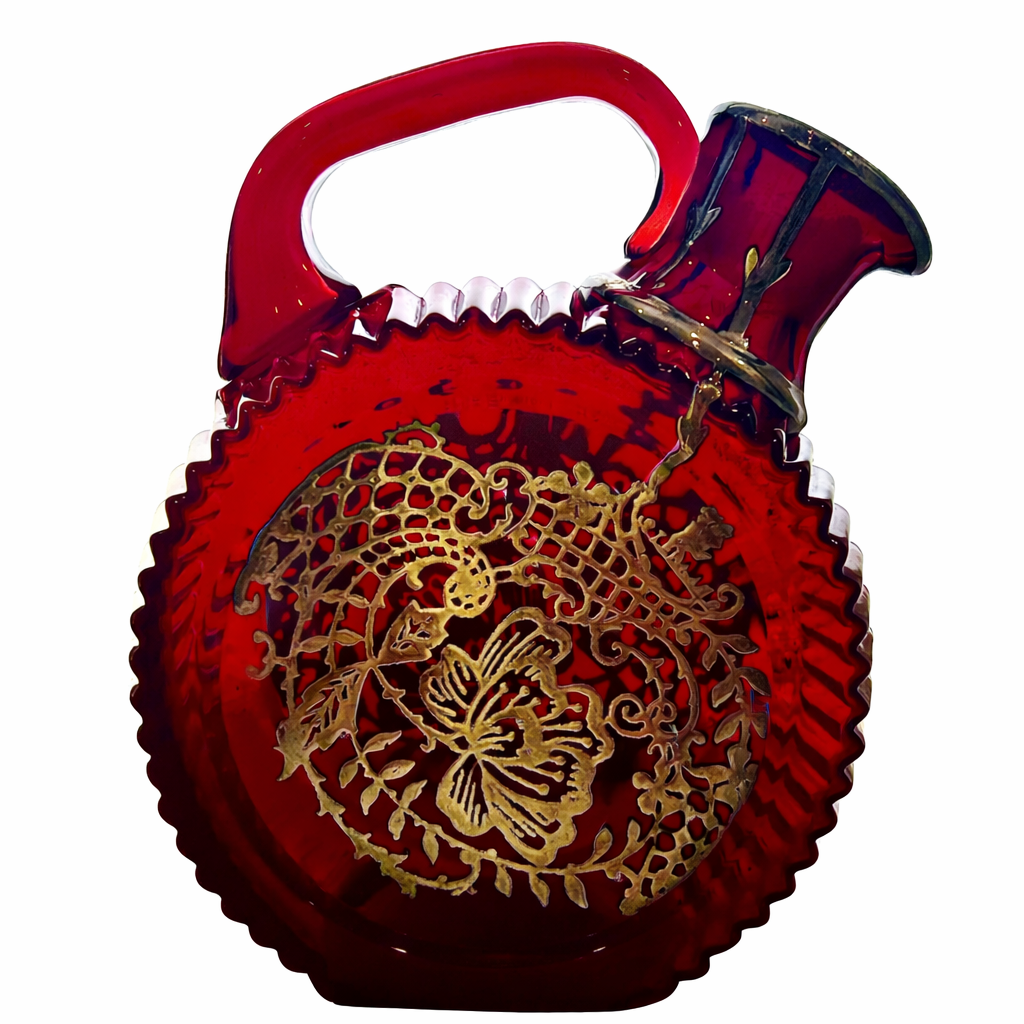
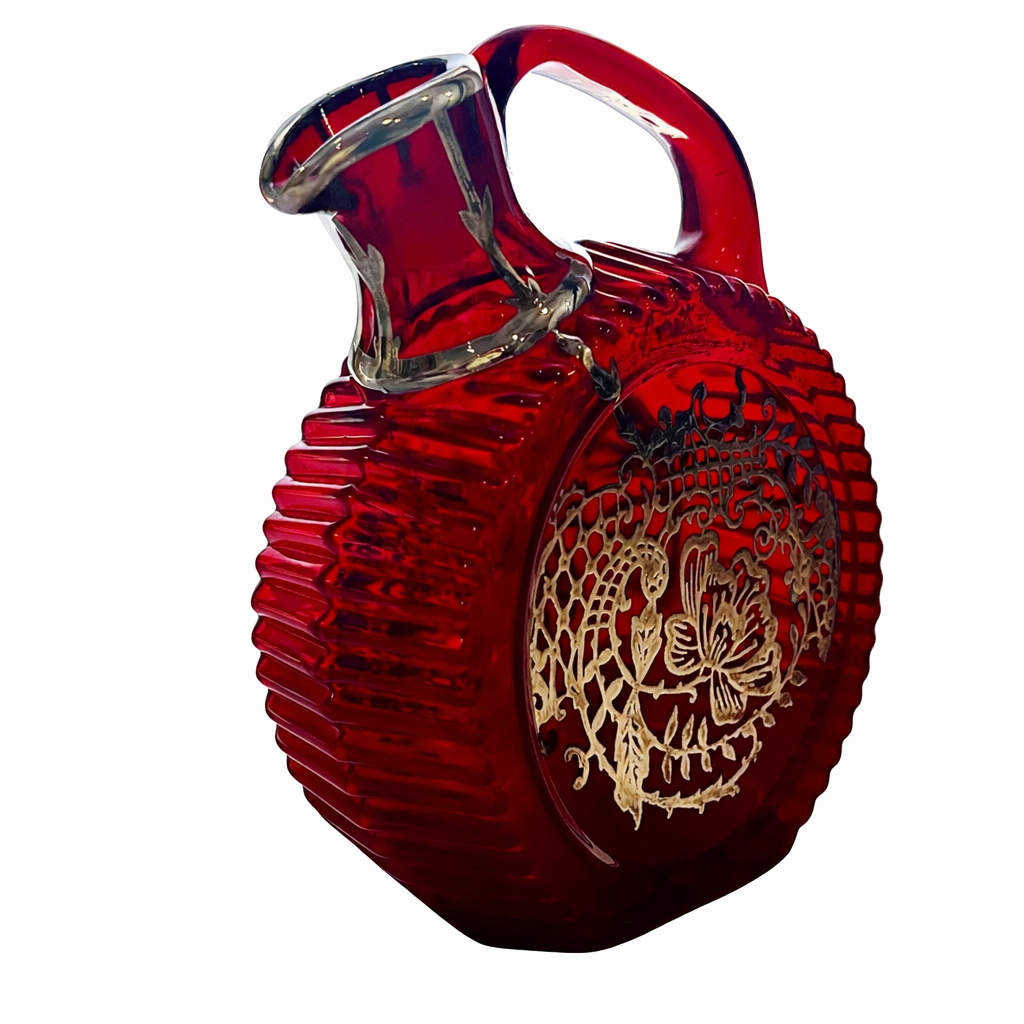
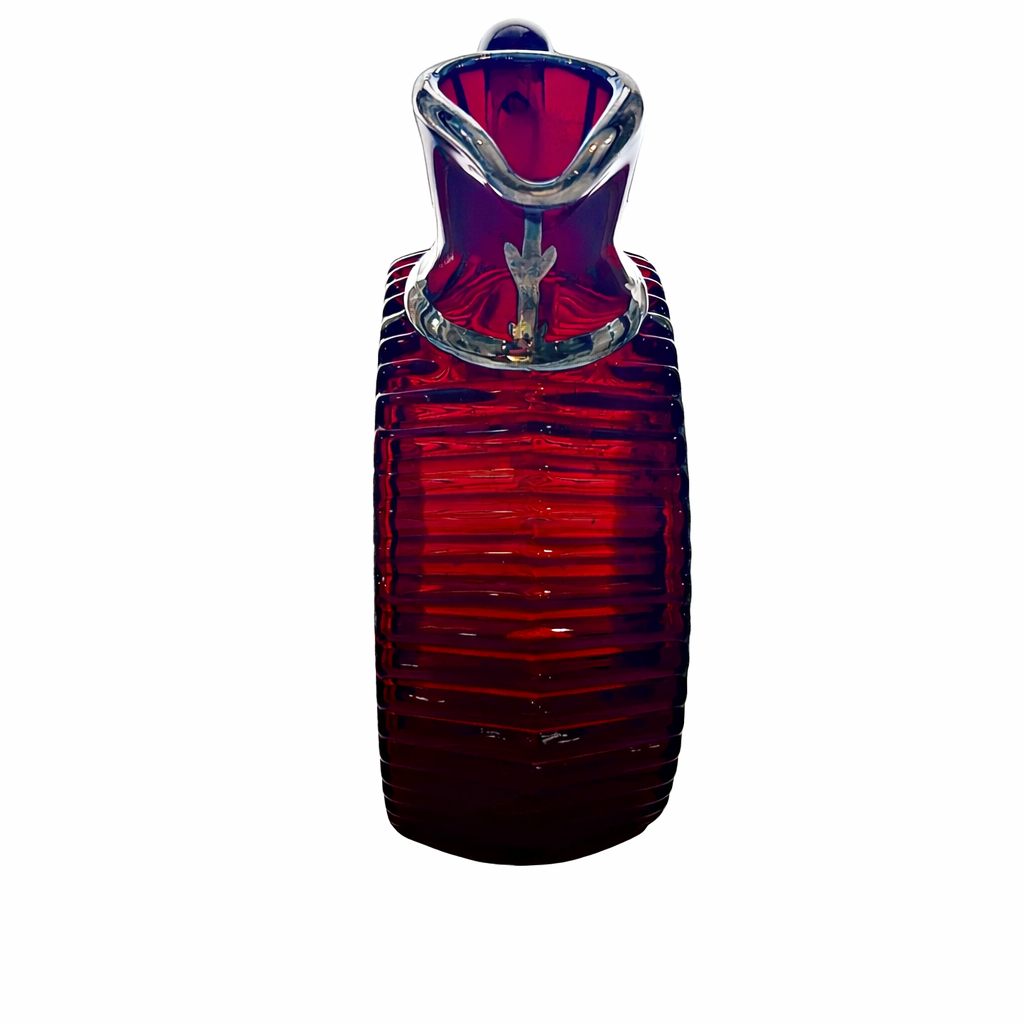
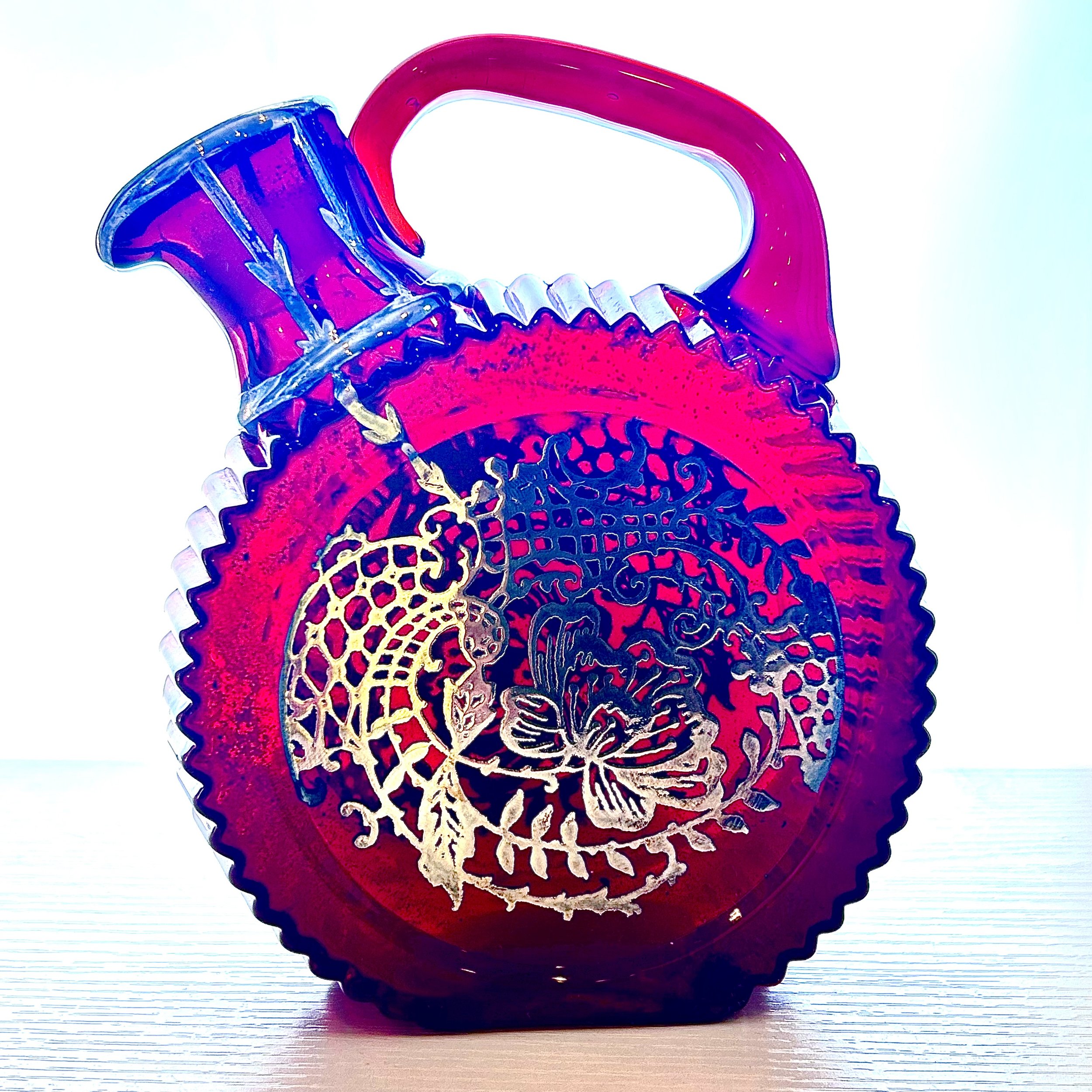
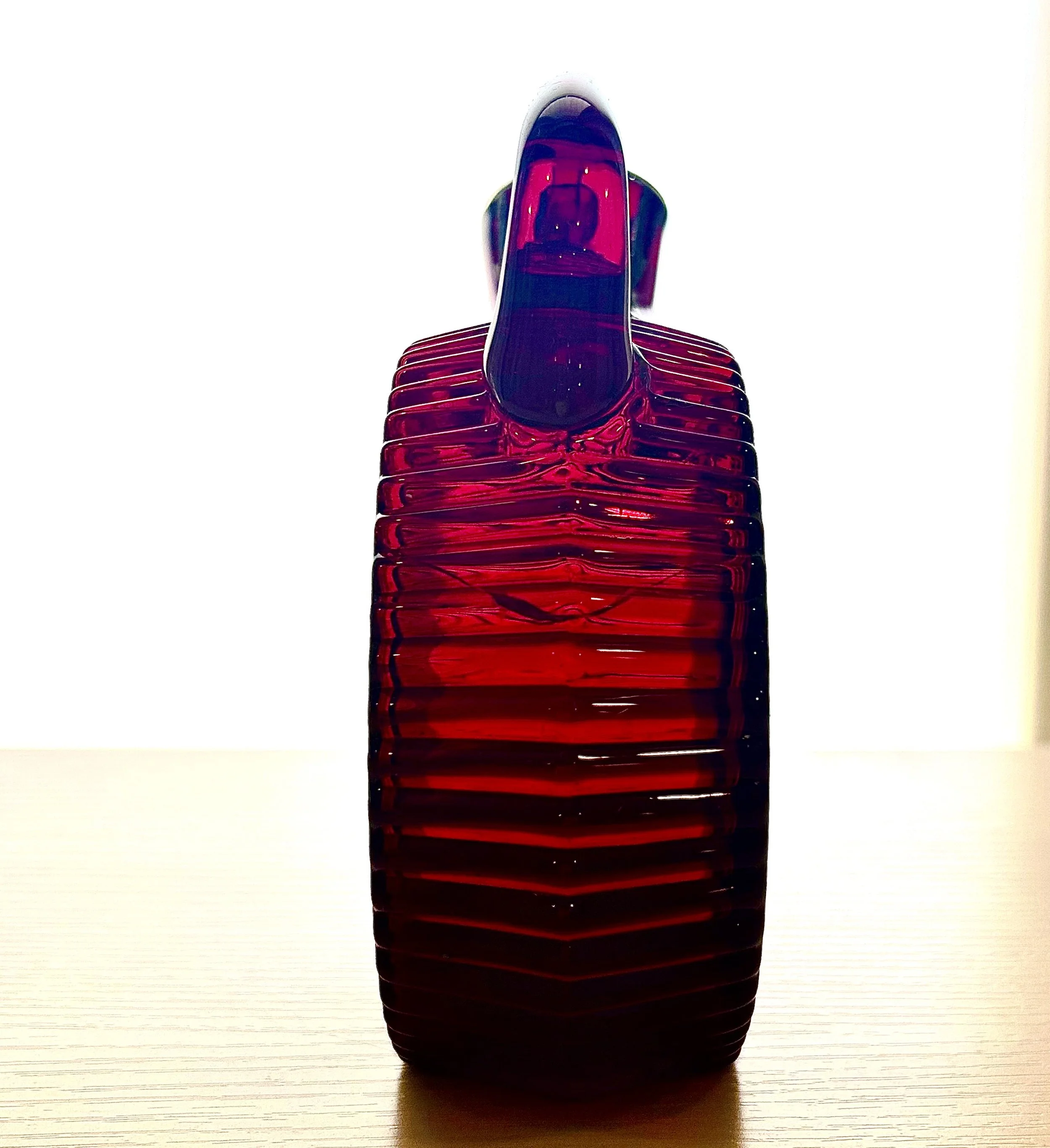
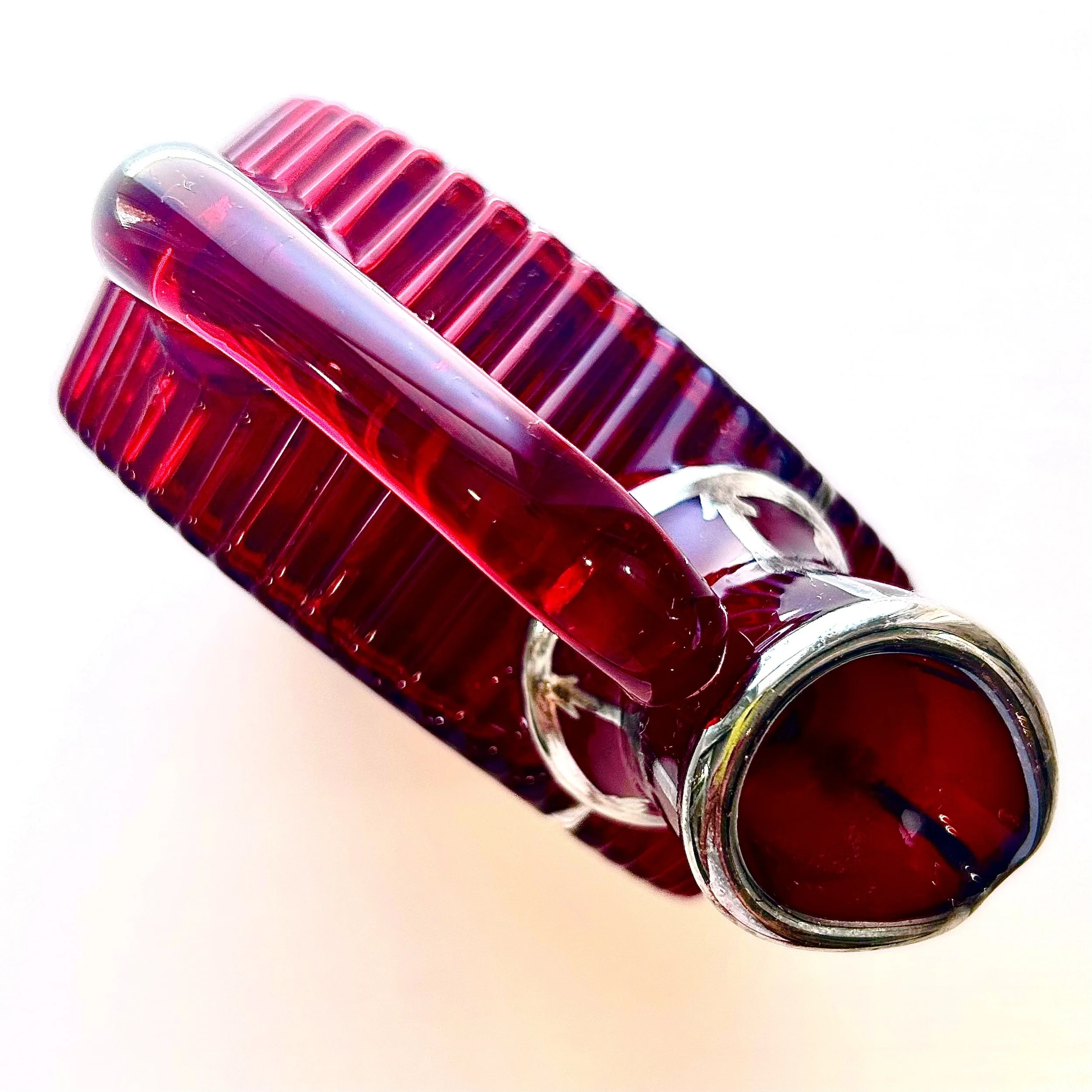
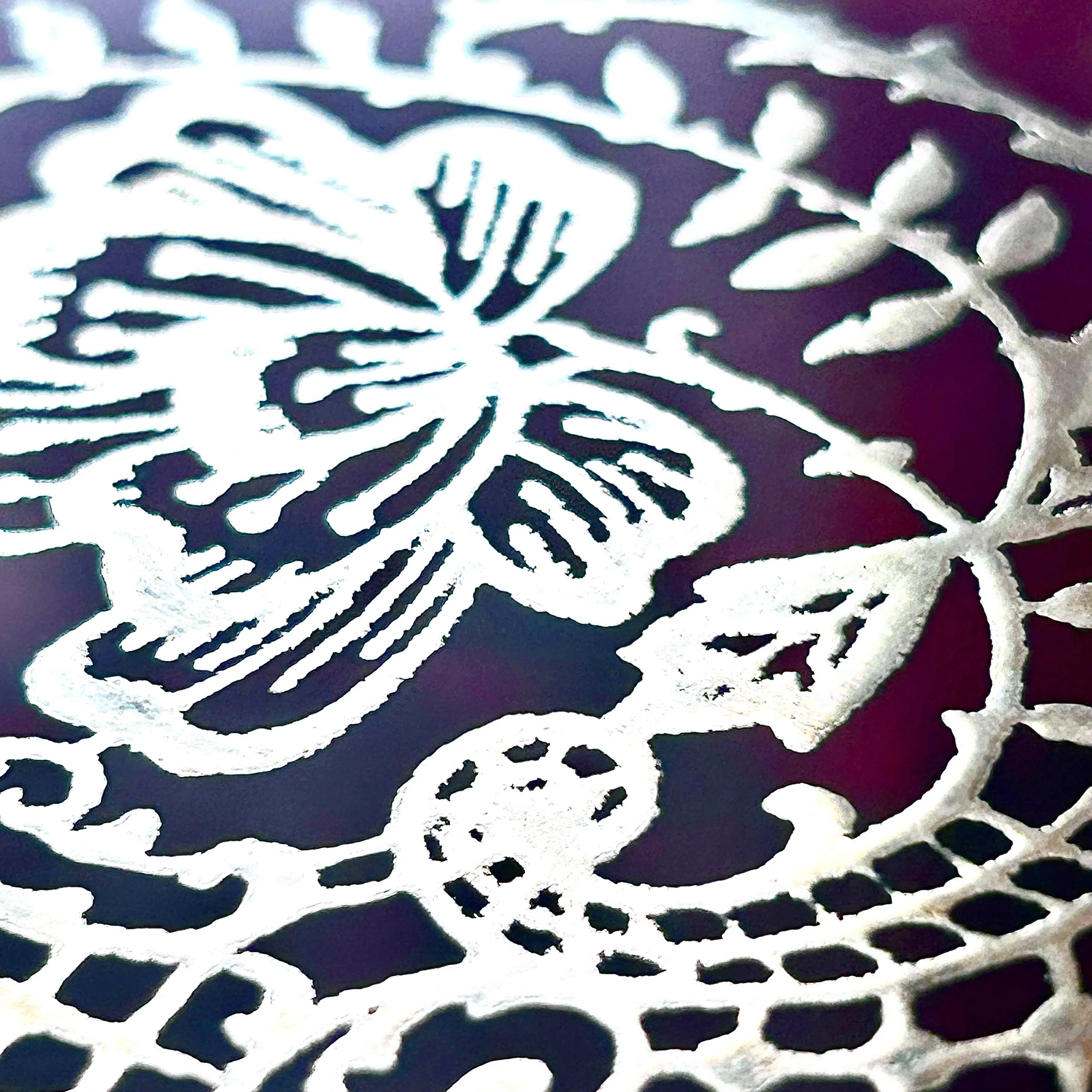
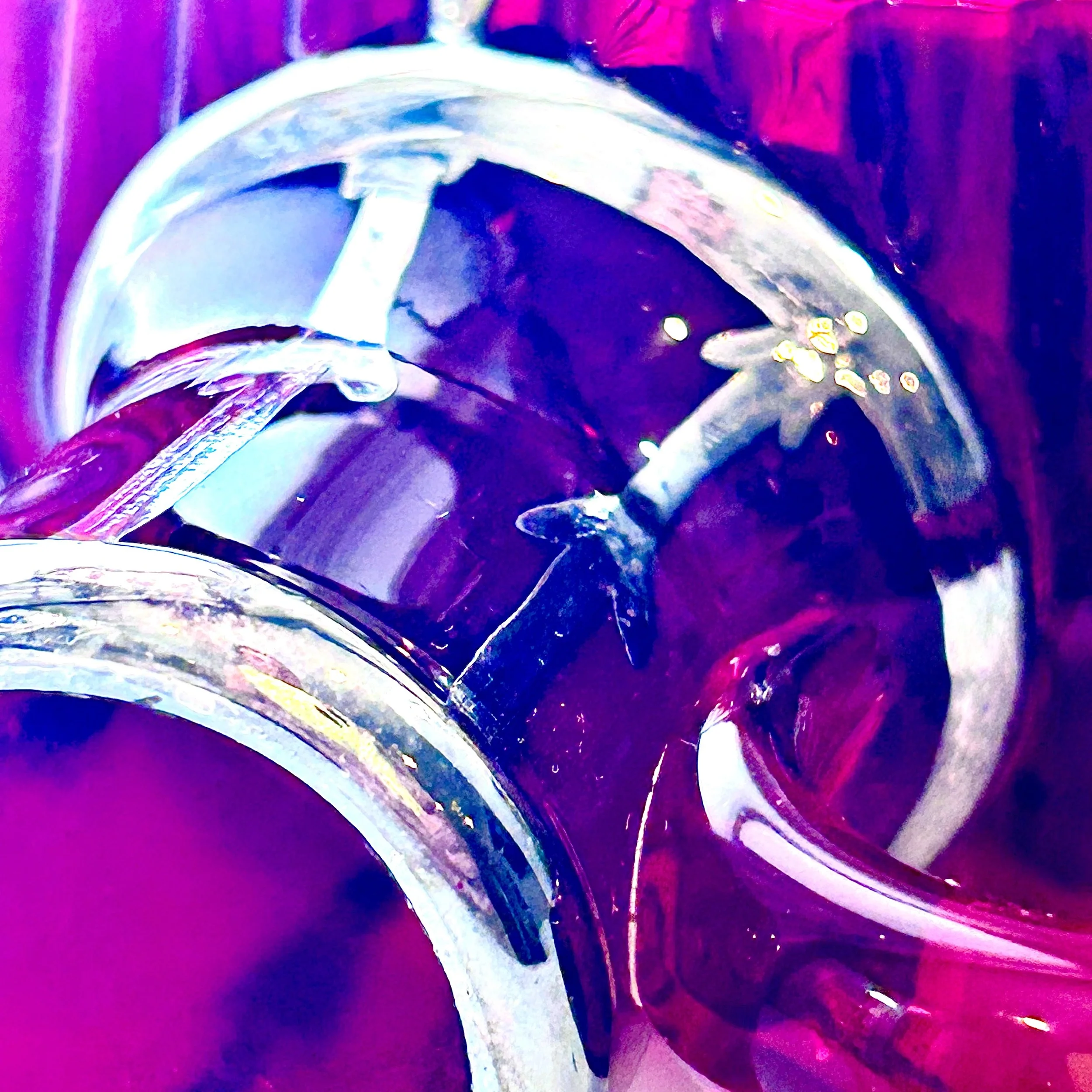
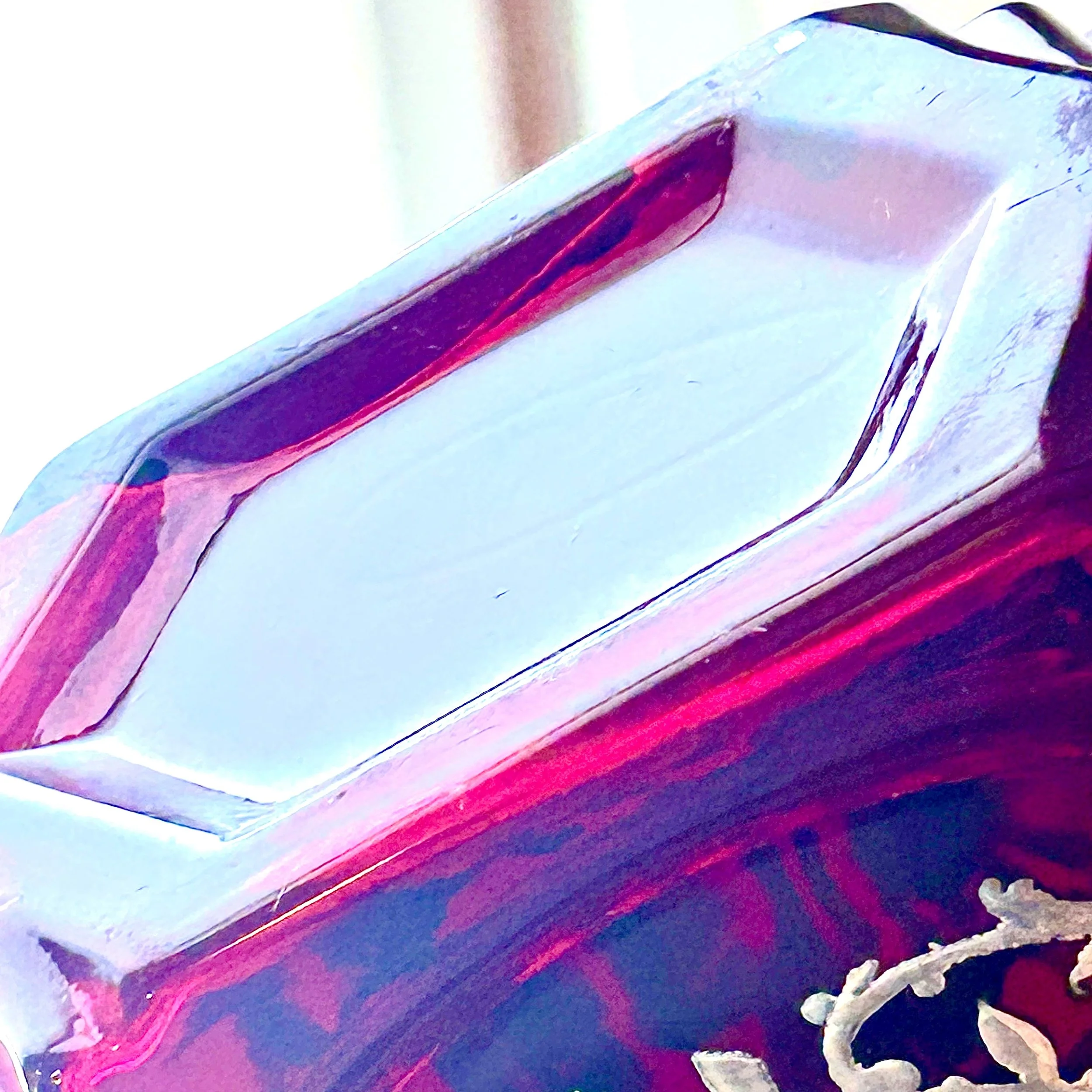
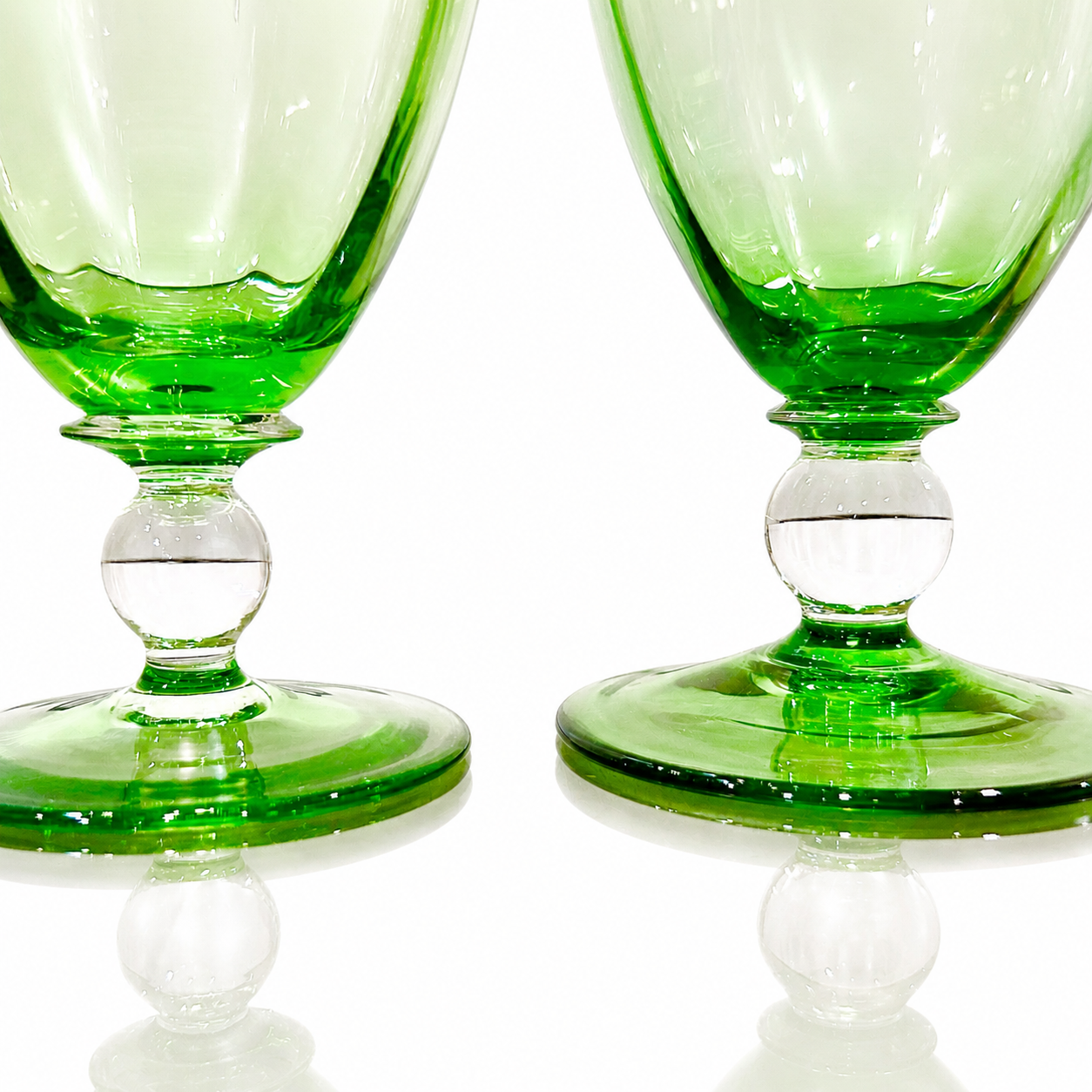
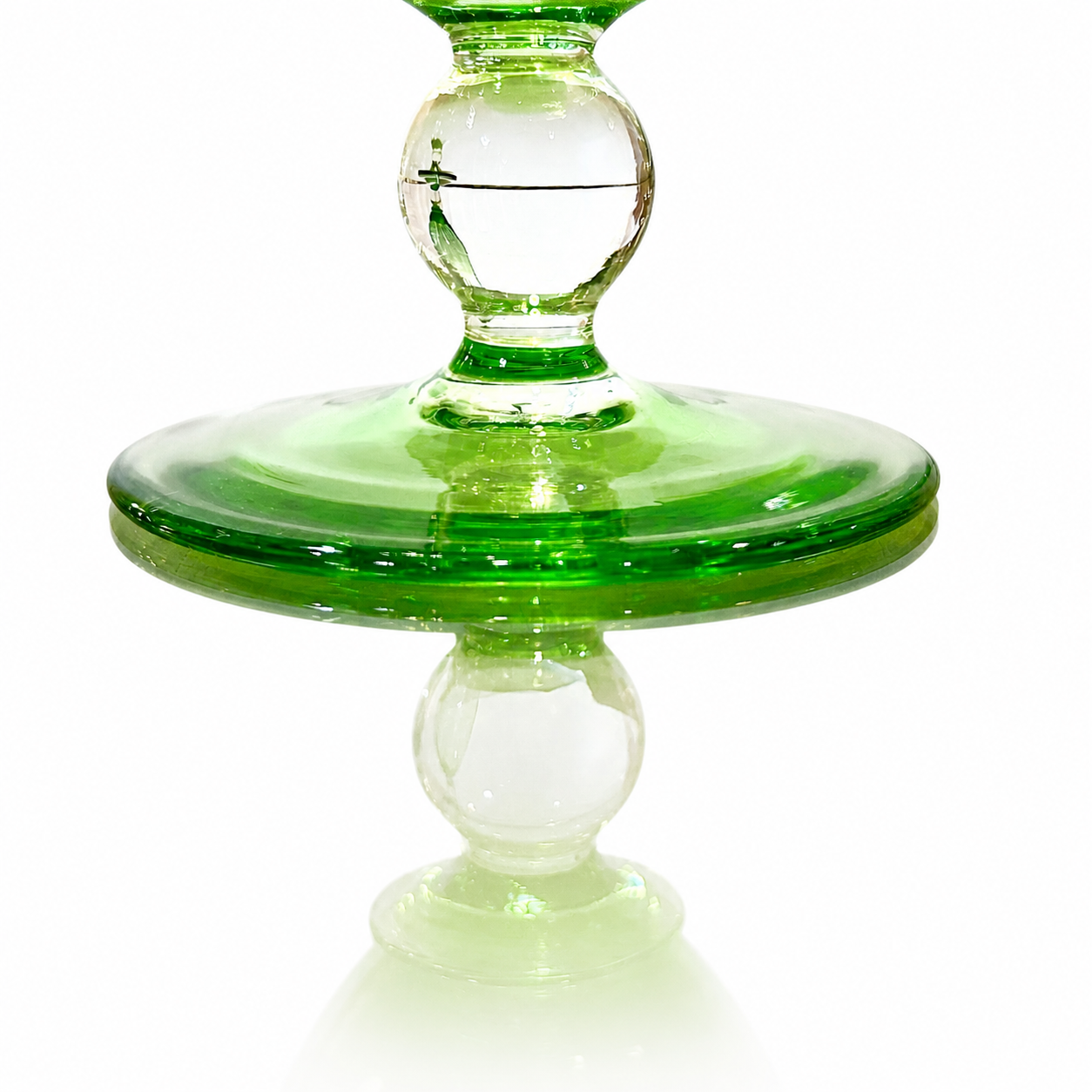
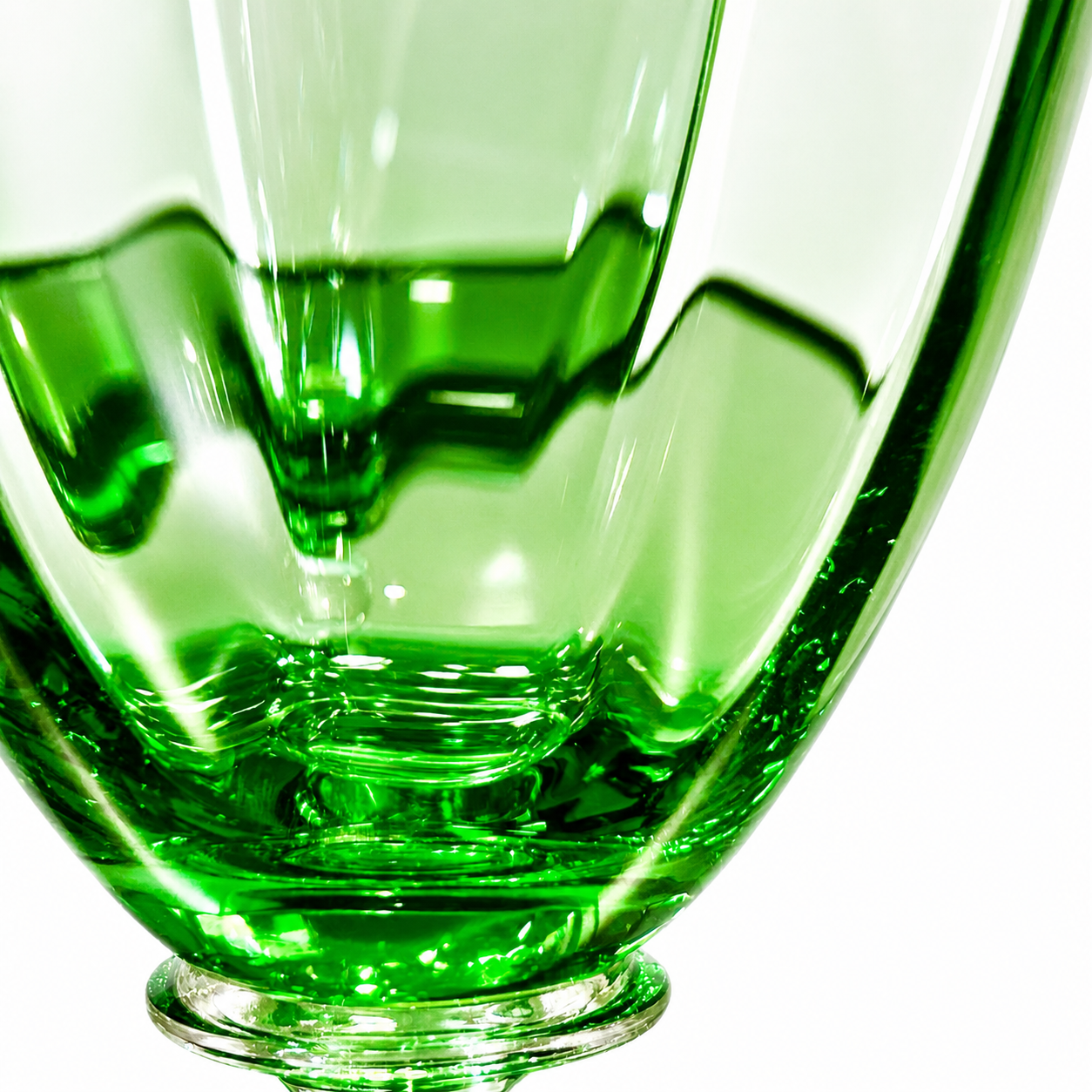
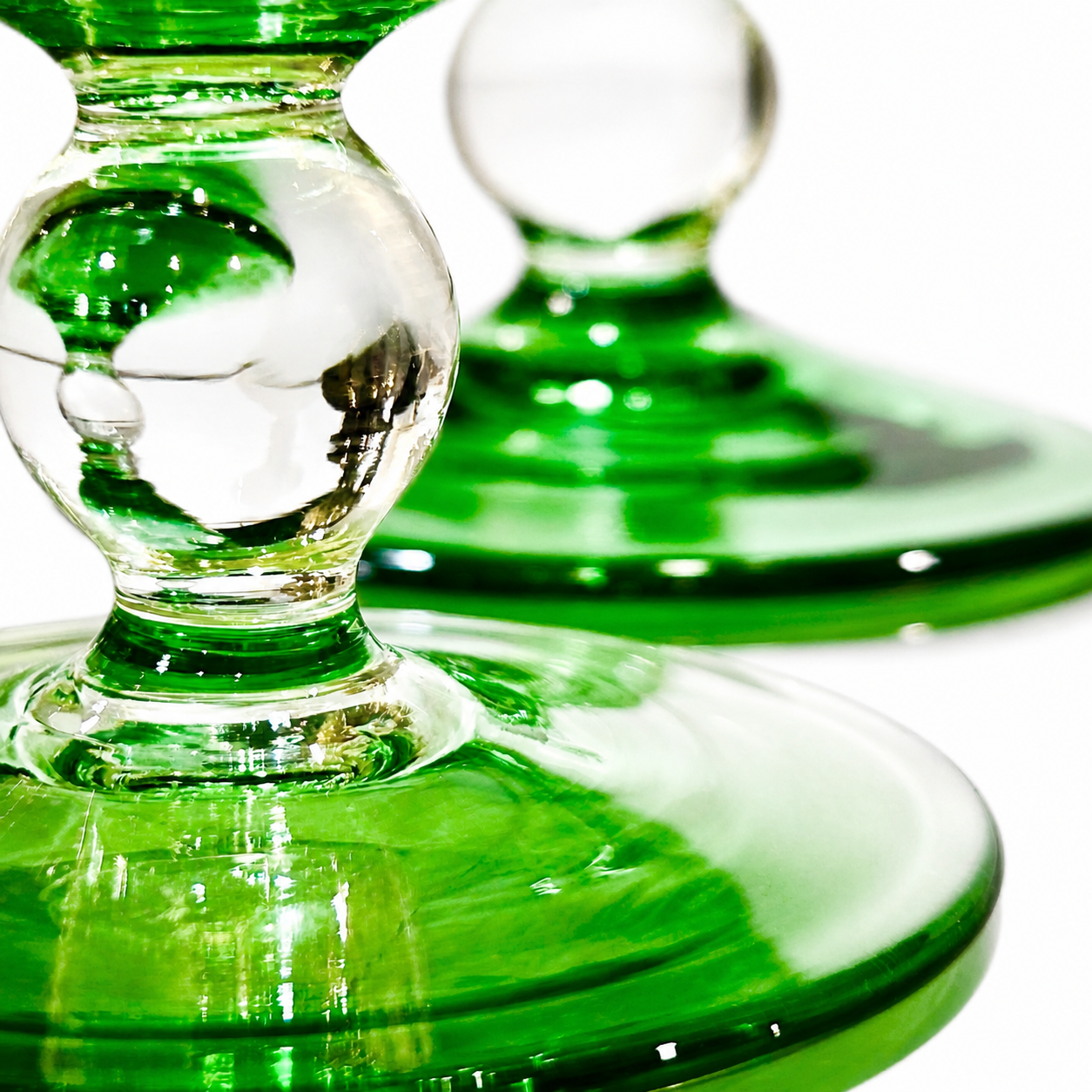
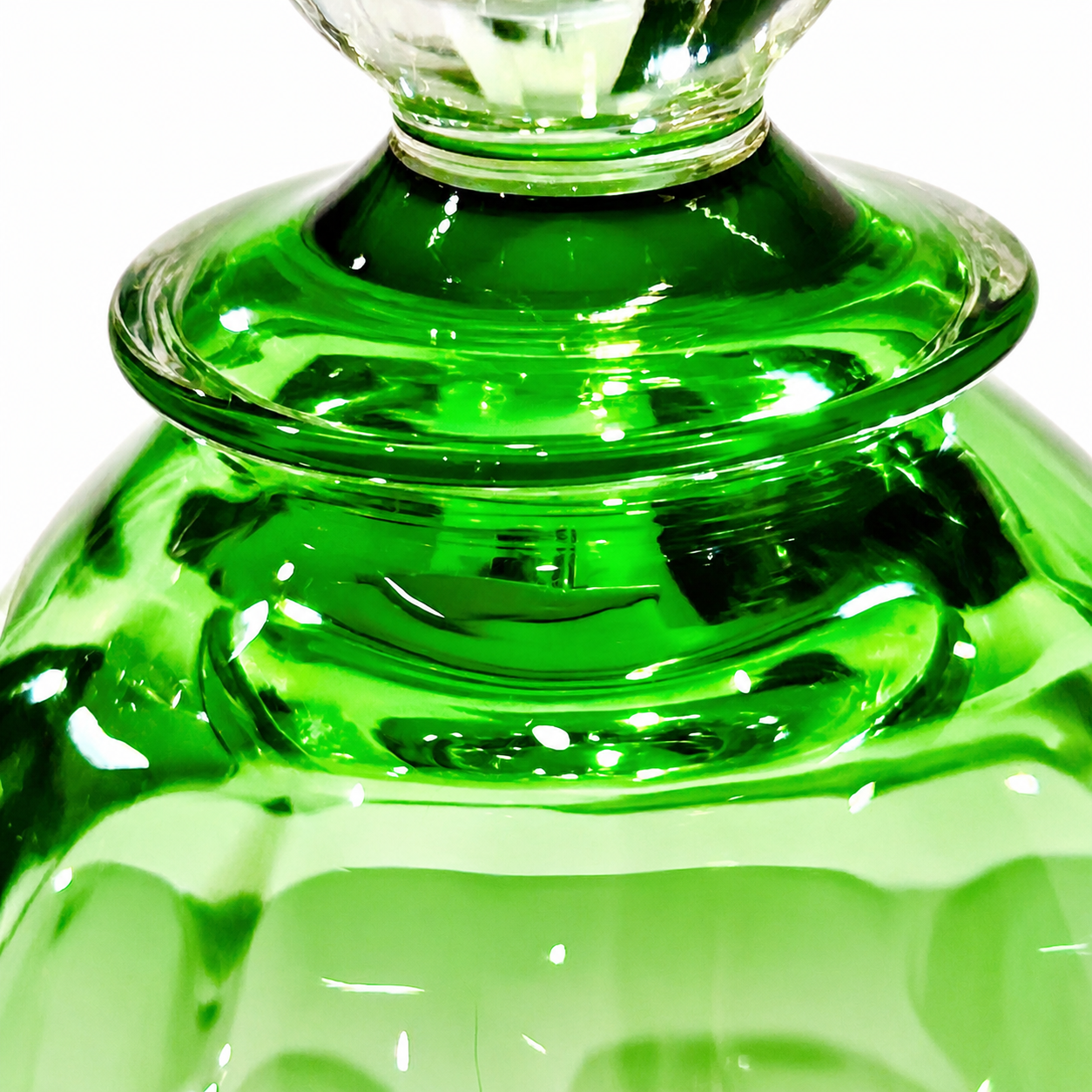
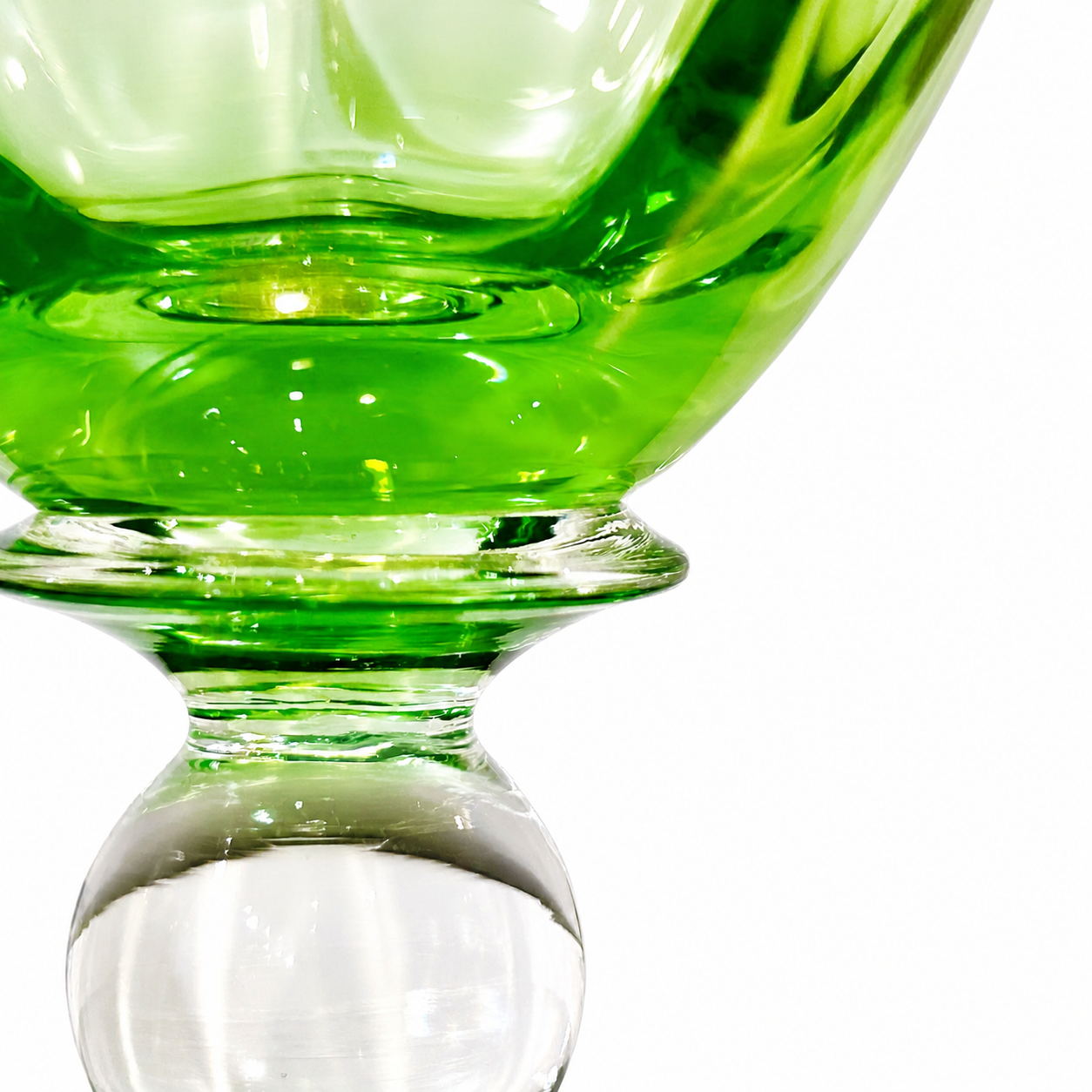
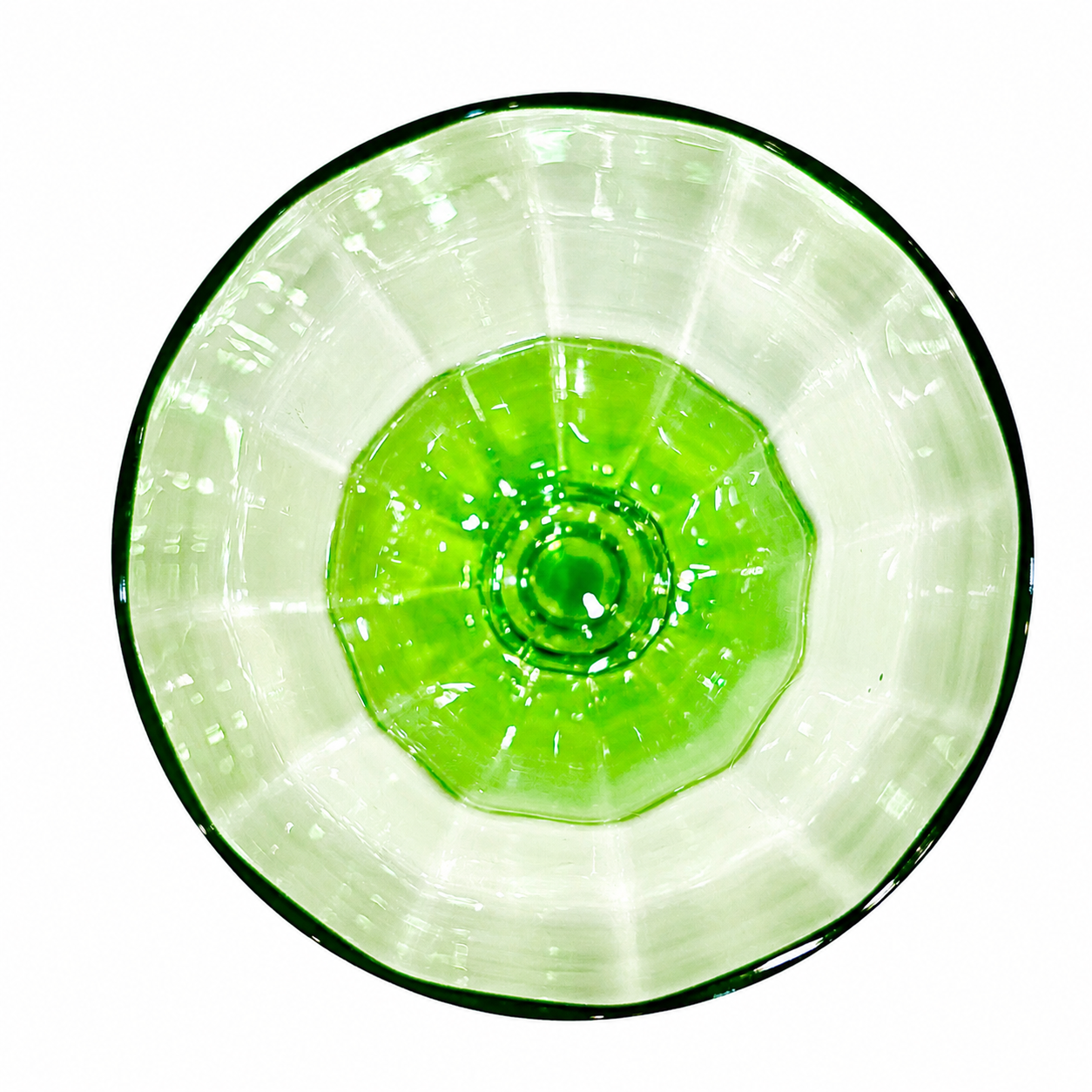
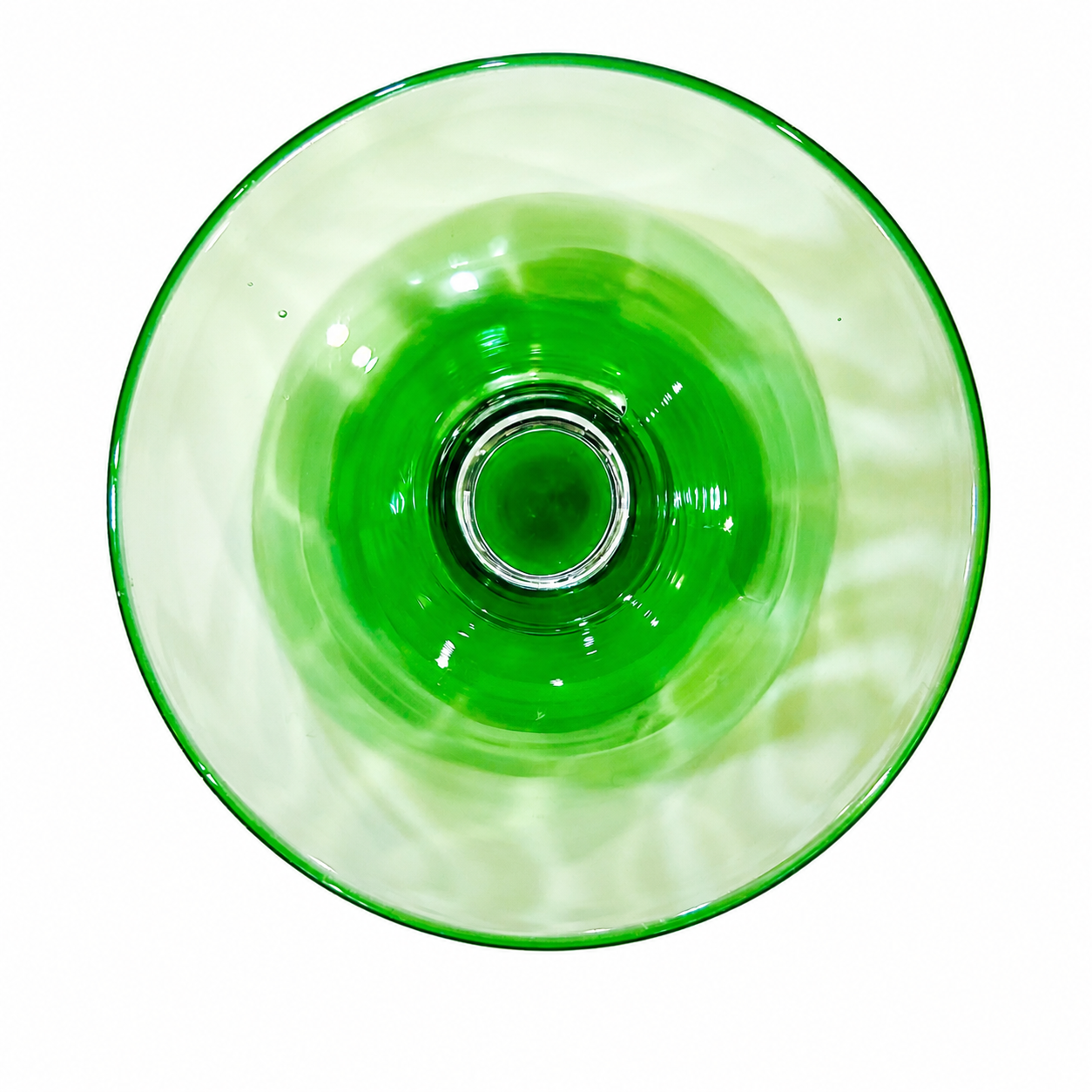
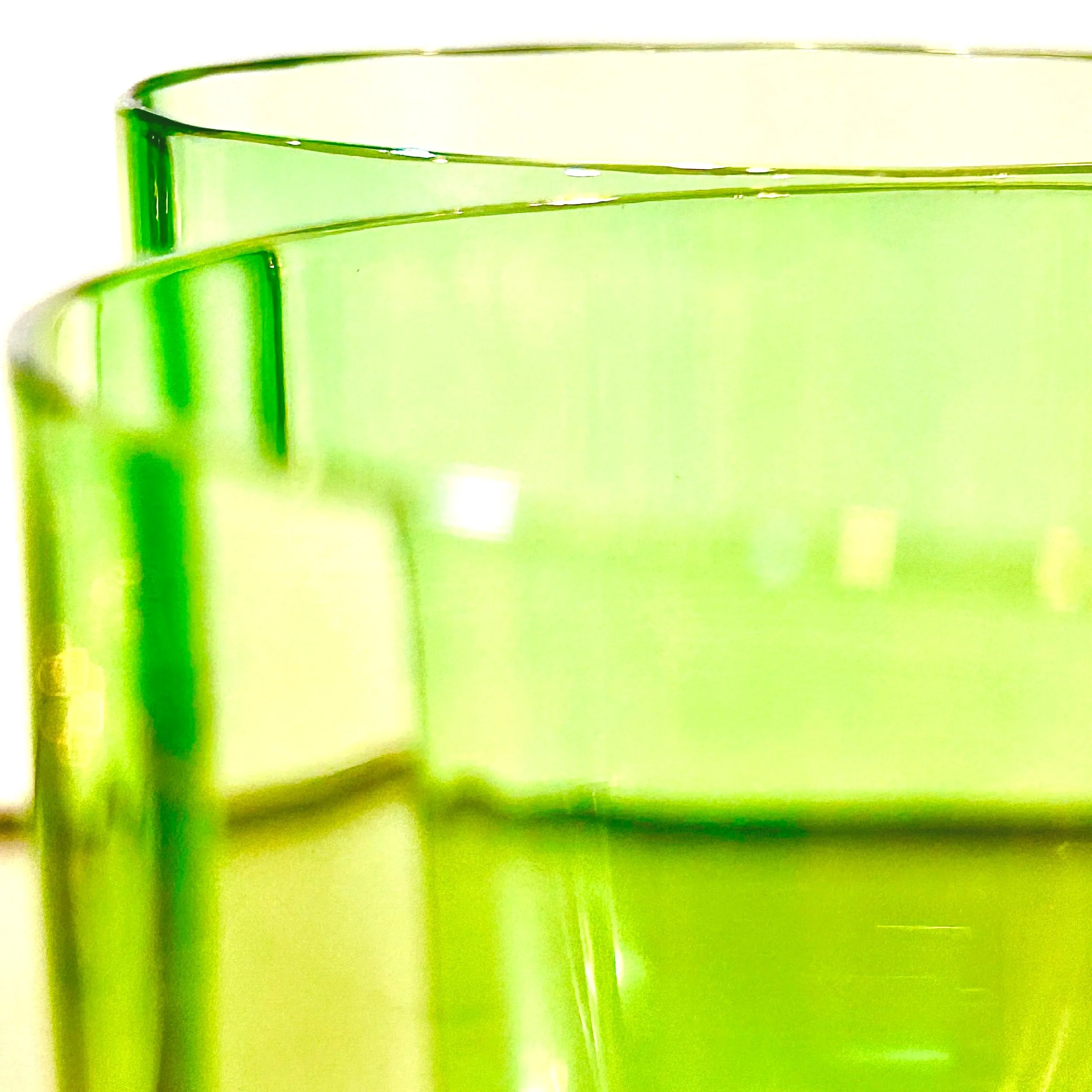
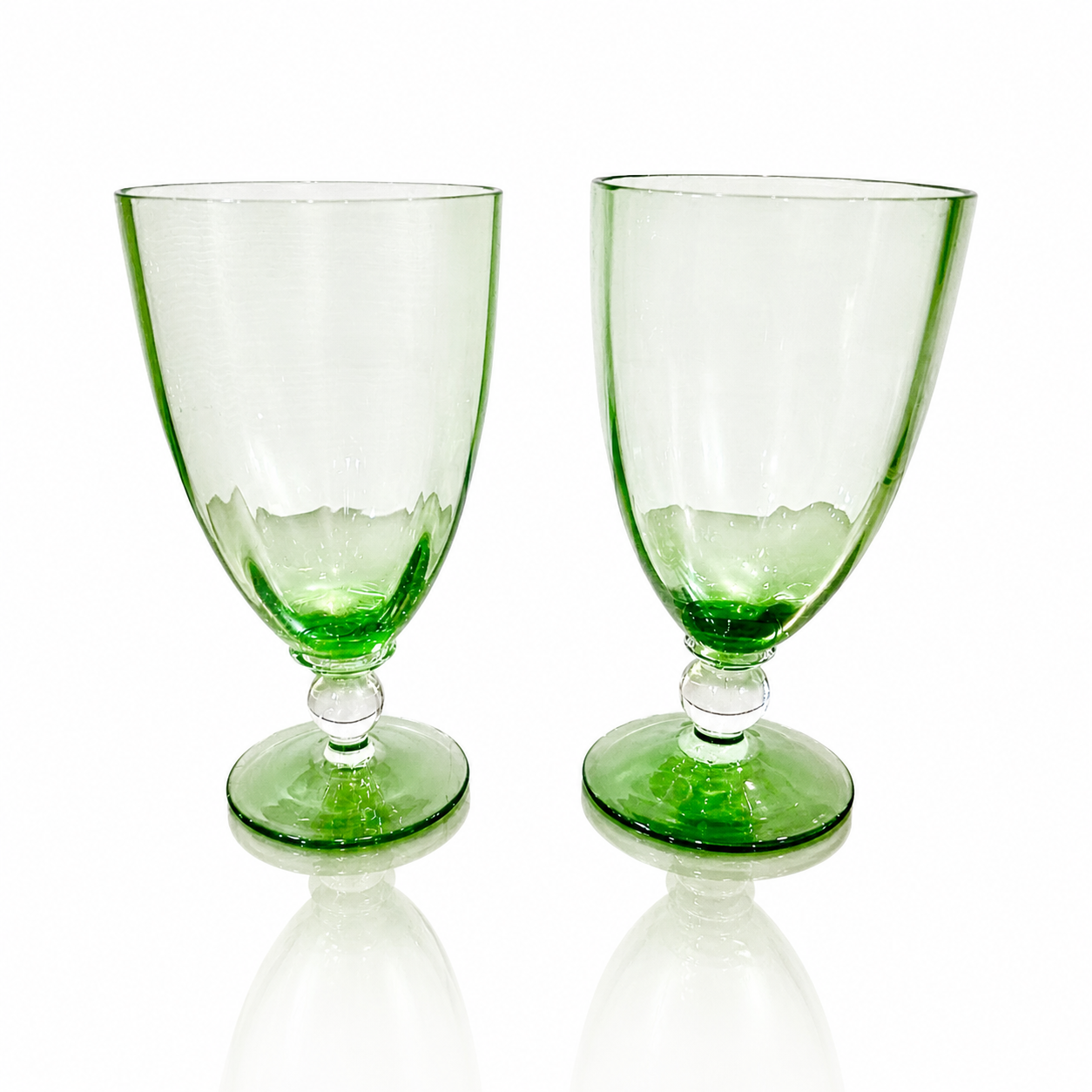
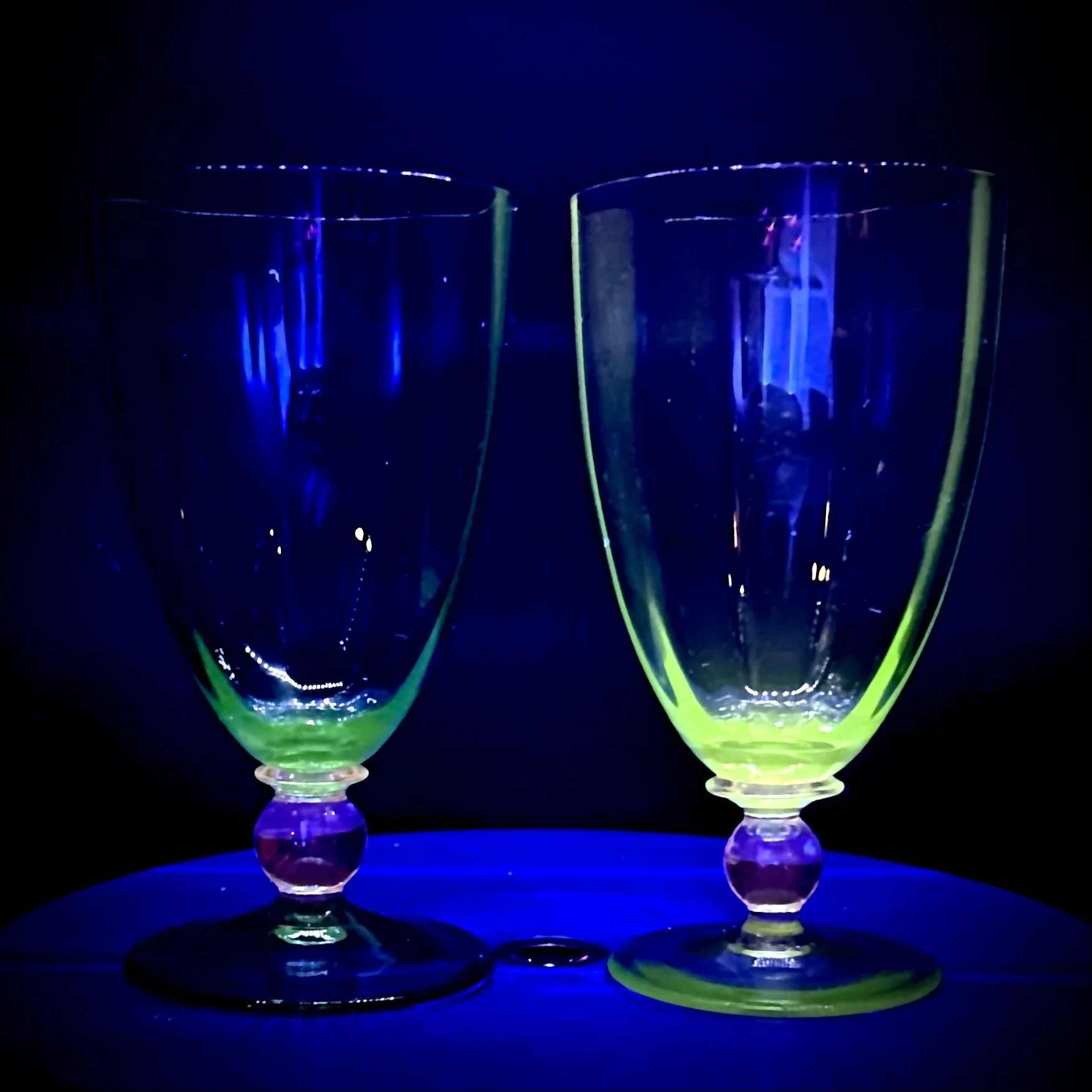
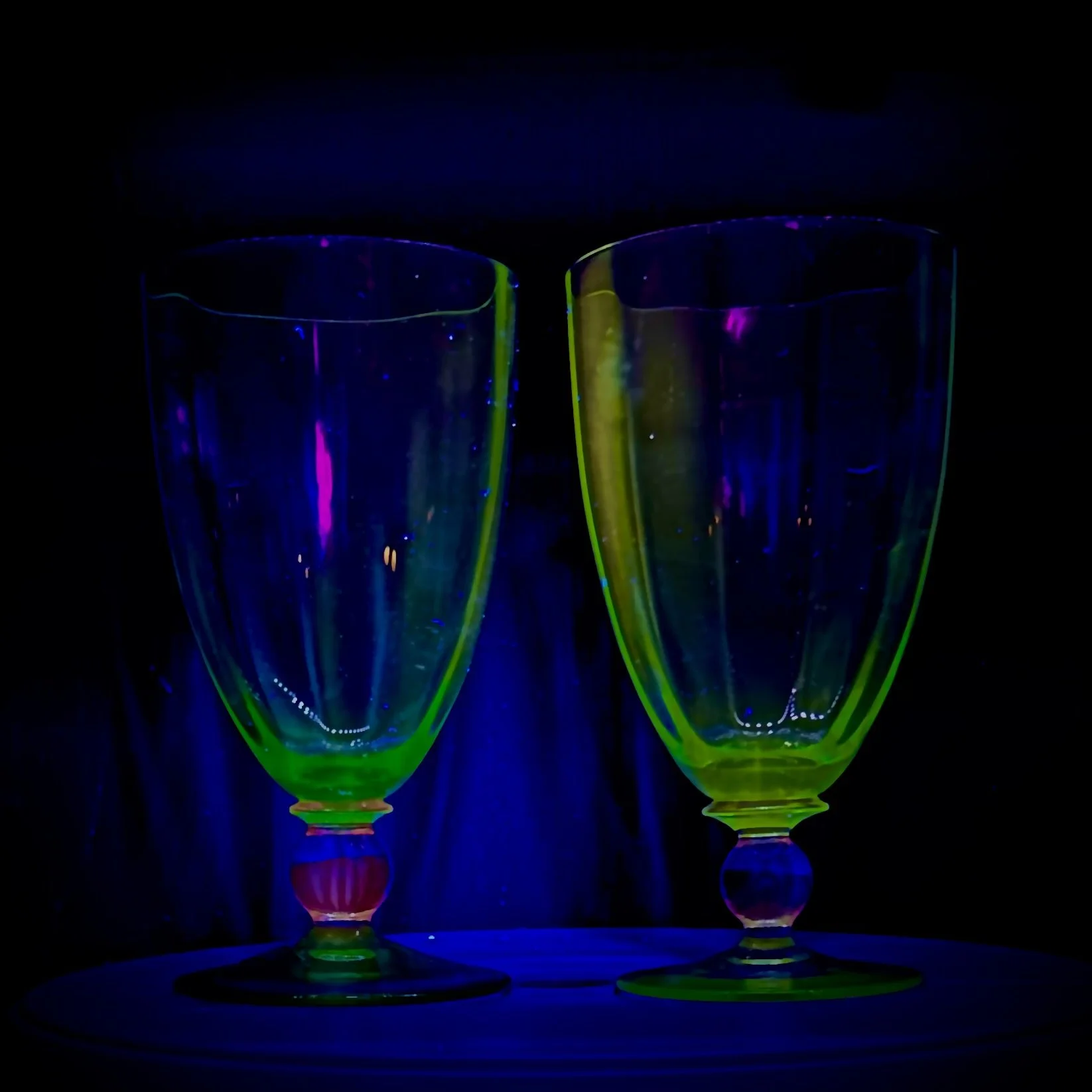
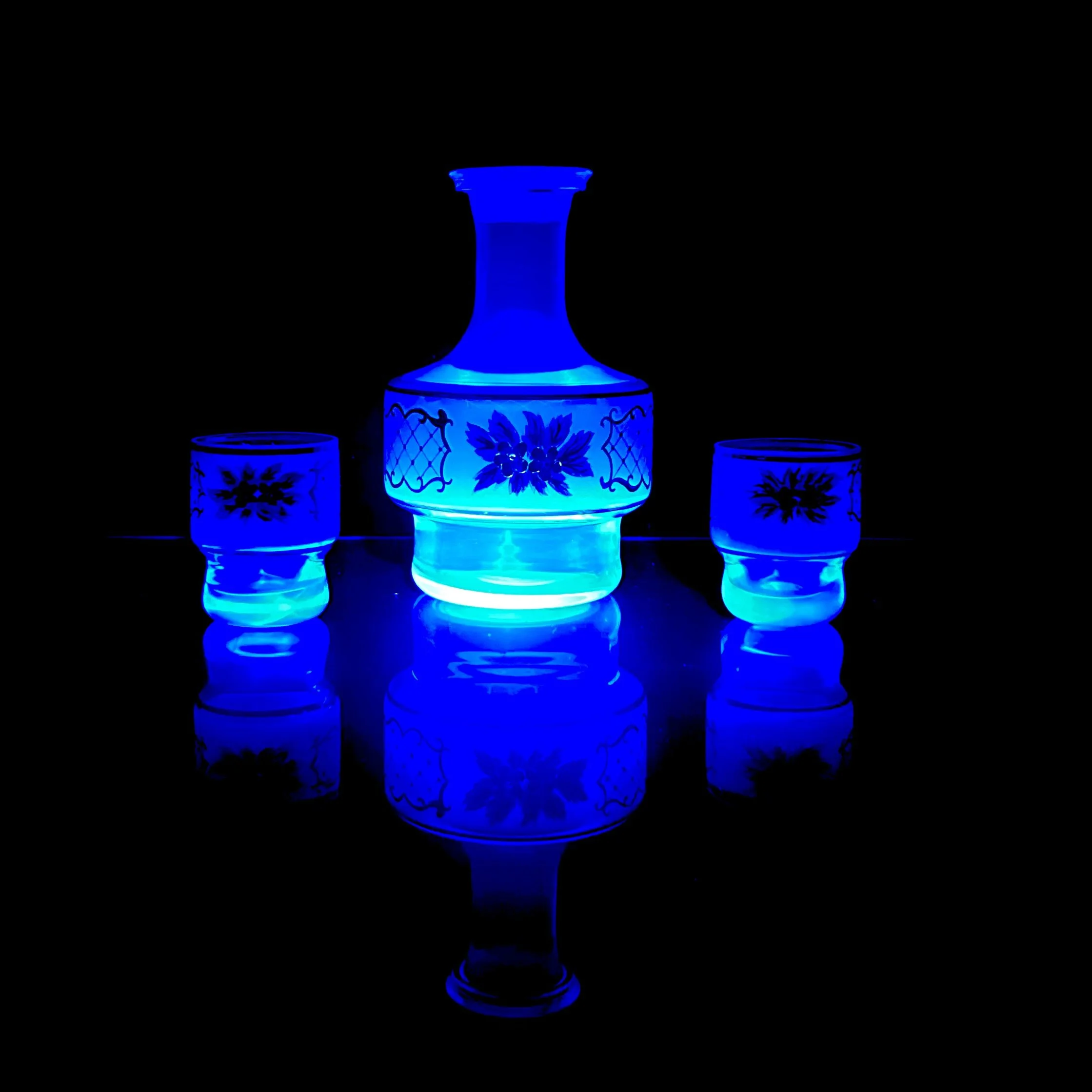
This exceptional mouth-blown vase commands attention through its striking verticality and deep, saturated plum amethyst hue. The vessel transitions from a cinched, ruffled "Jack-in-the-Pulpit" rim into a slender neck that swells into a flattened globular base, all supported by an intricate clear glass pedestal. Under UV illumination (365nm), the clear components exhibit a brilliant orange-yellow fluorescence, revealing a high manganese content traditionally used as a decoloring agent in 19th-century glass chemistry. The contrast between the somber, regal body and the light-refracting, twisted clear foot creates a sophisticated sculptural silhouette suitable for high-concept interior styling.
Attribution & Period
Antique (1880s). This piece is stylistically aligned with British Victorian art glass, specifically those produced by Stourbridge-area glassworks such as Thomas Webb & Sons or Richardson. The "Jack-in-the-Pulpit" form was a hallmark of the Aesthetic Movement’s obsession with botanical motifs. The presence of a strong manganese signature under UV light is highly consistent with glass recipes of the late 19th century, where manganese was employed to neutralize the green tints of iron impurities in the "flint" or clear glass used for the stem.
Dimensions & Weight
Height: 8 inches
Width / Diameter: 3 inches (at widest point of belly)
Mouth Opening: 2 1/8 inches
Depth / Base Diameter: 2 inches
Weight: .268 lbs
Condition
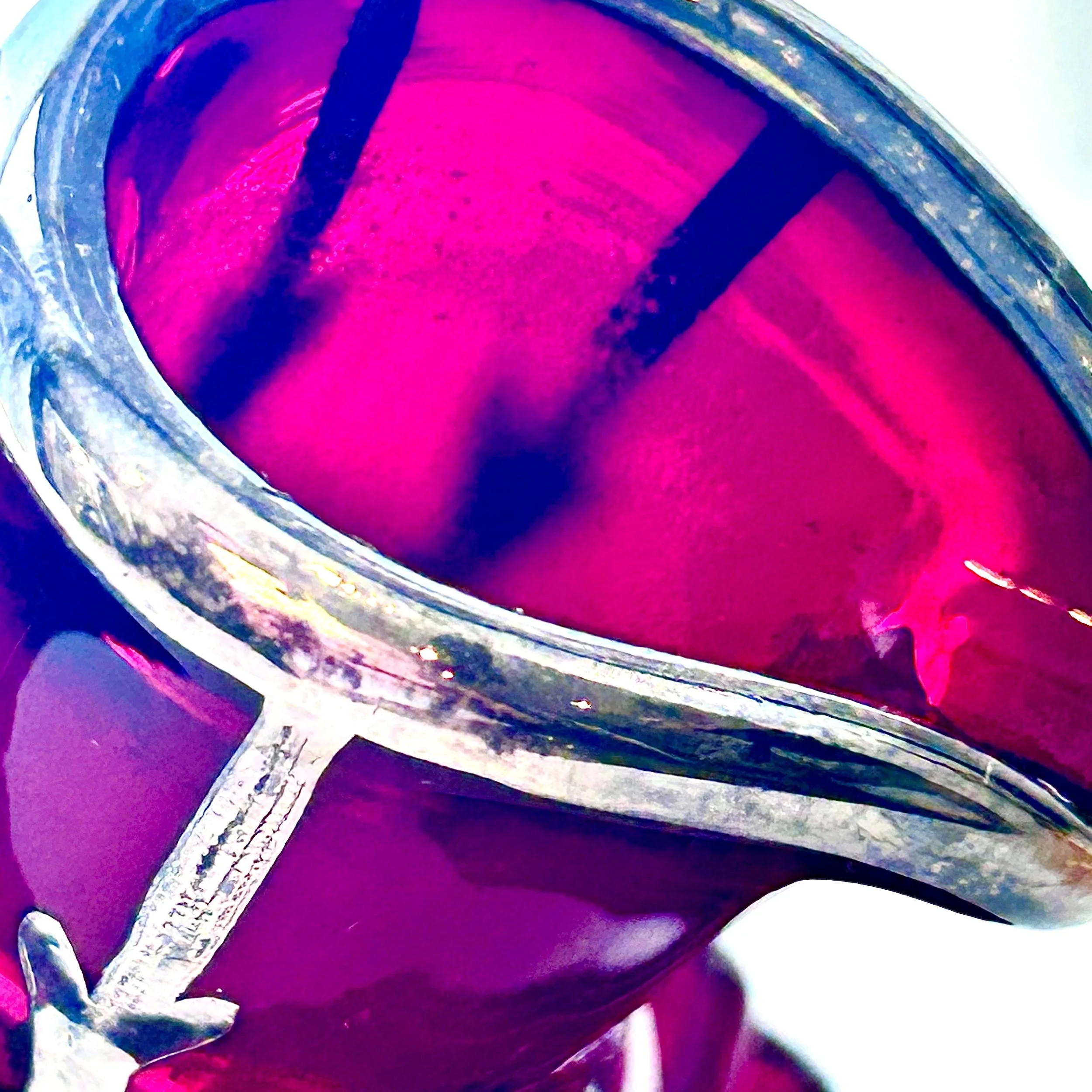
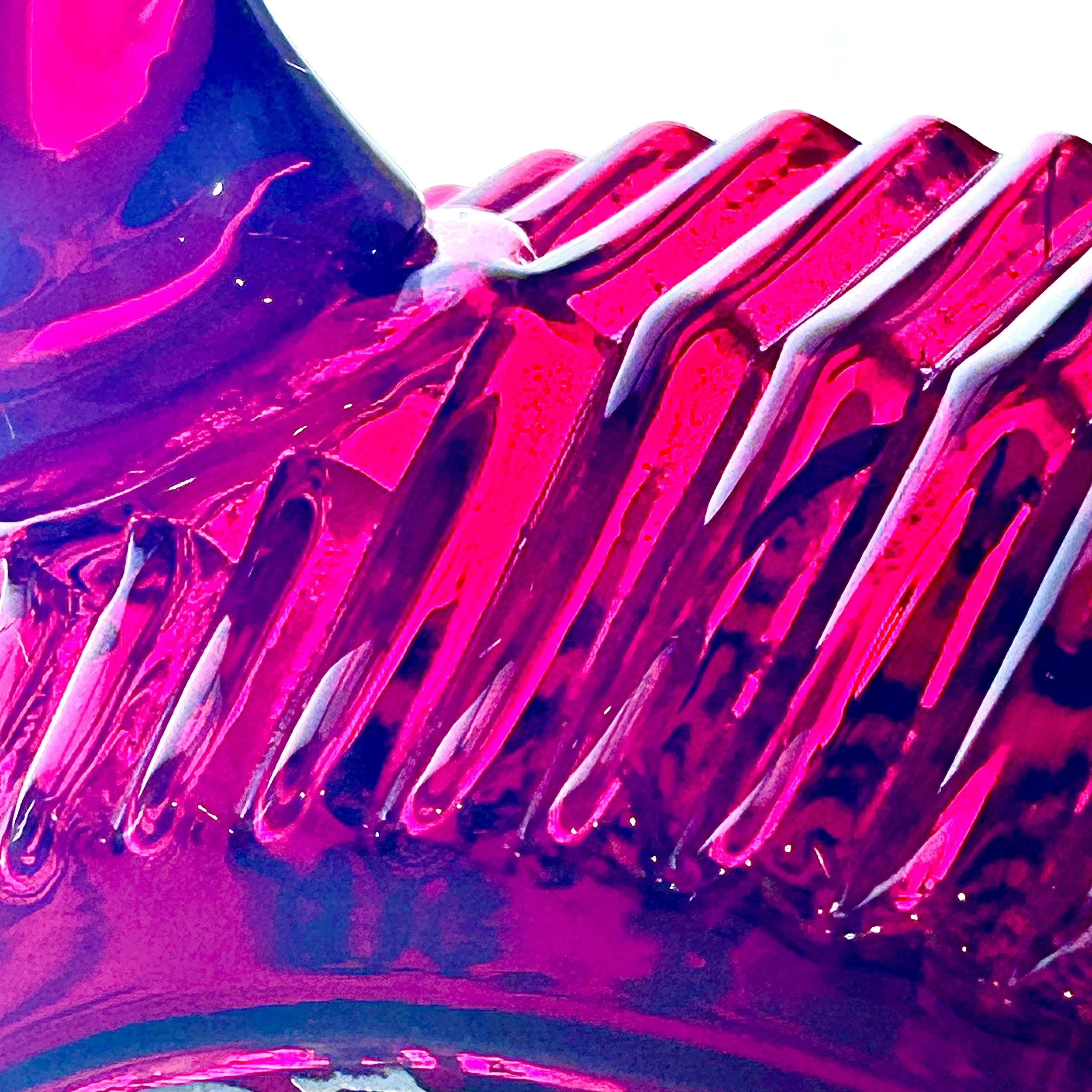
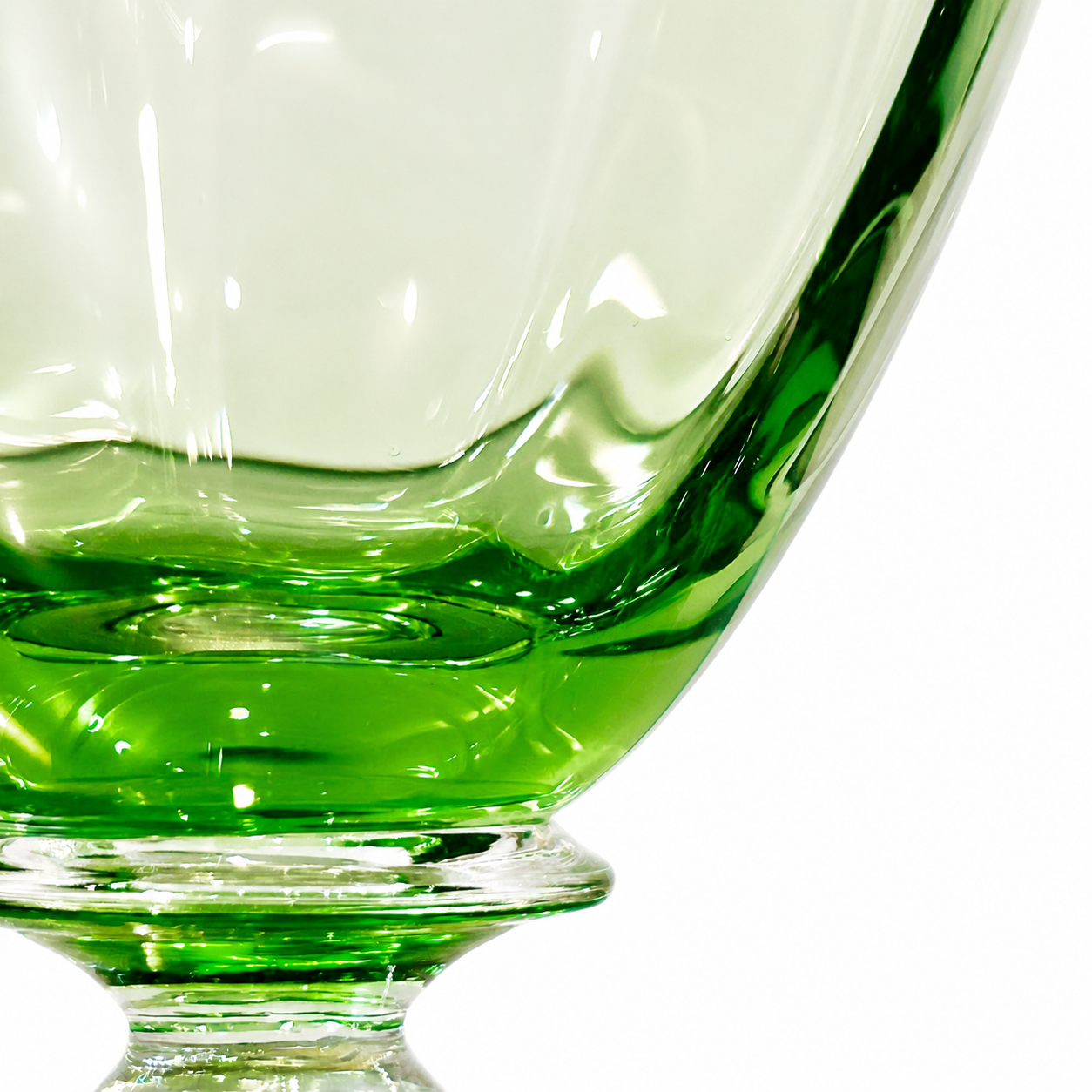
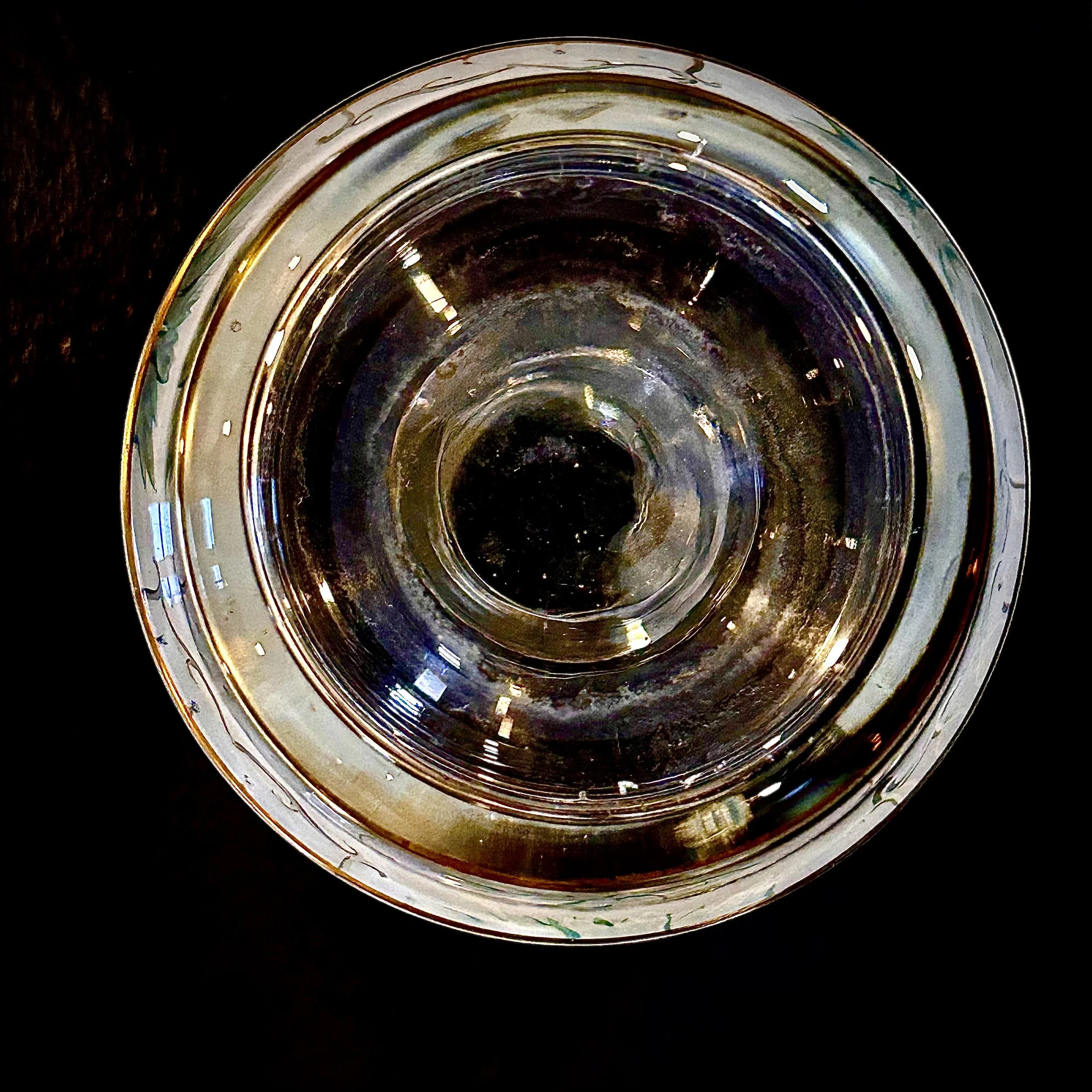
Excellent antique condition. No chips, cracks, or restorations observed. The glass remains clear with a high luster. Minor surface wear consistent with age is present on the underside of the base. Micro-bubbles and slight flow lines are visible within the amethyst glass, characteristic of late 19th-century hand-blown production.
Authenticity & Construction
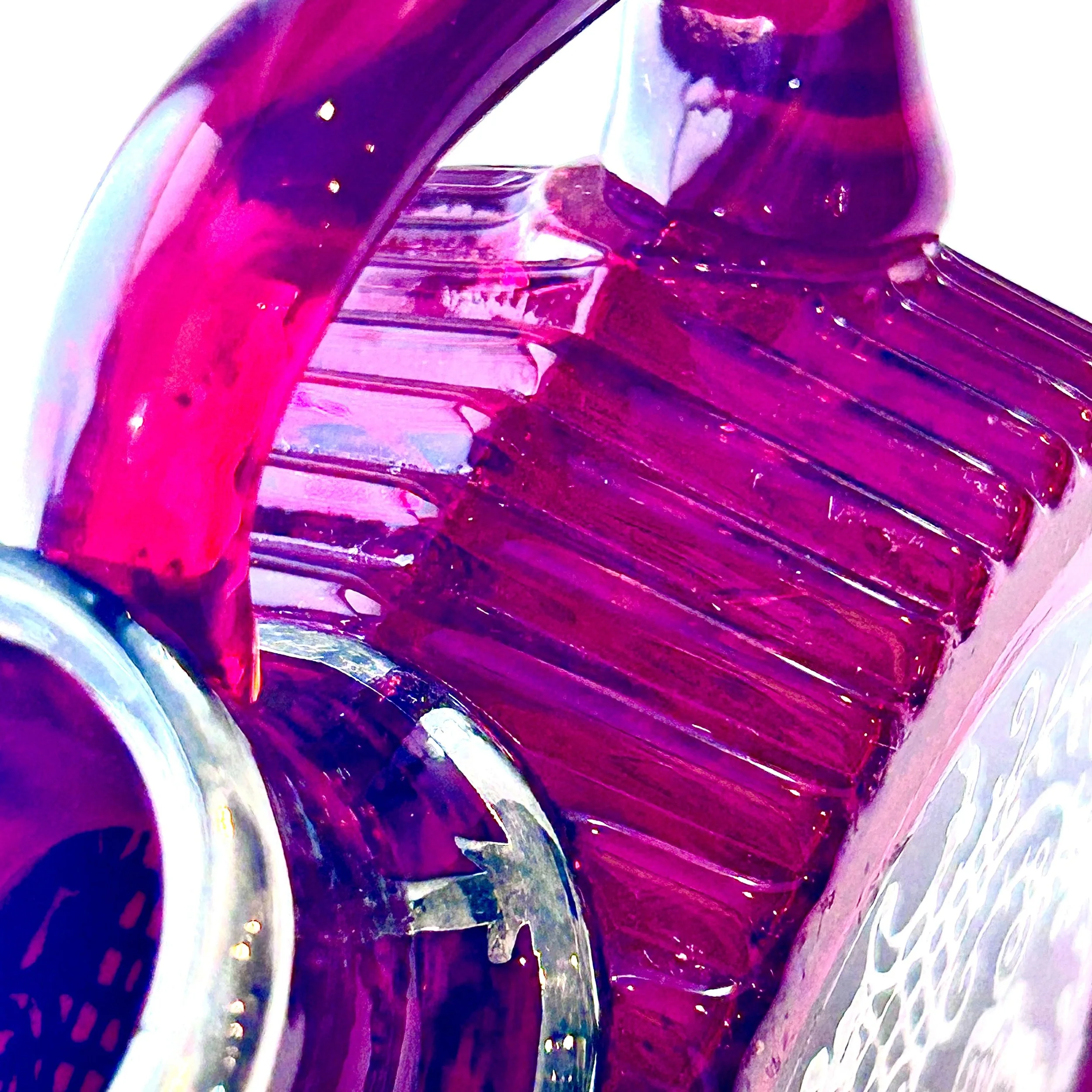
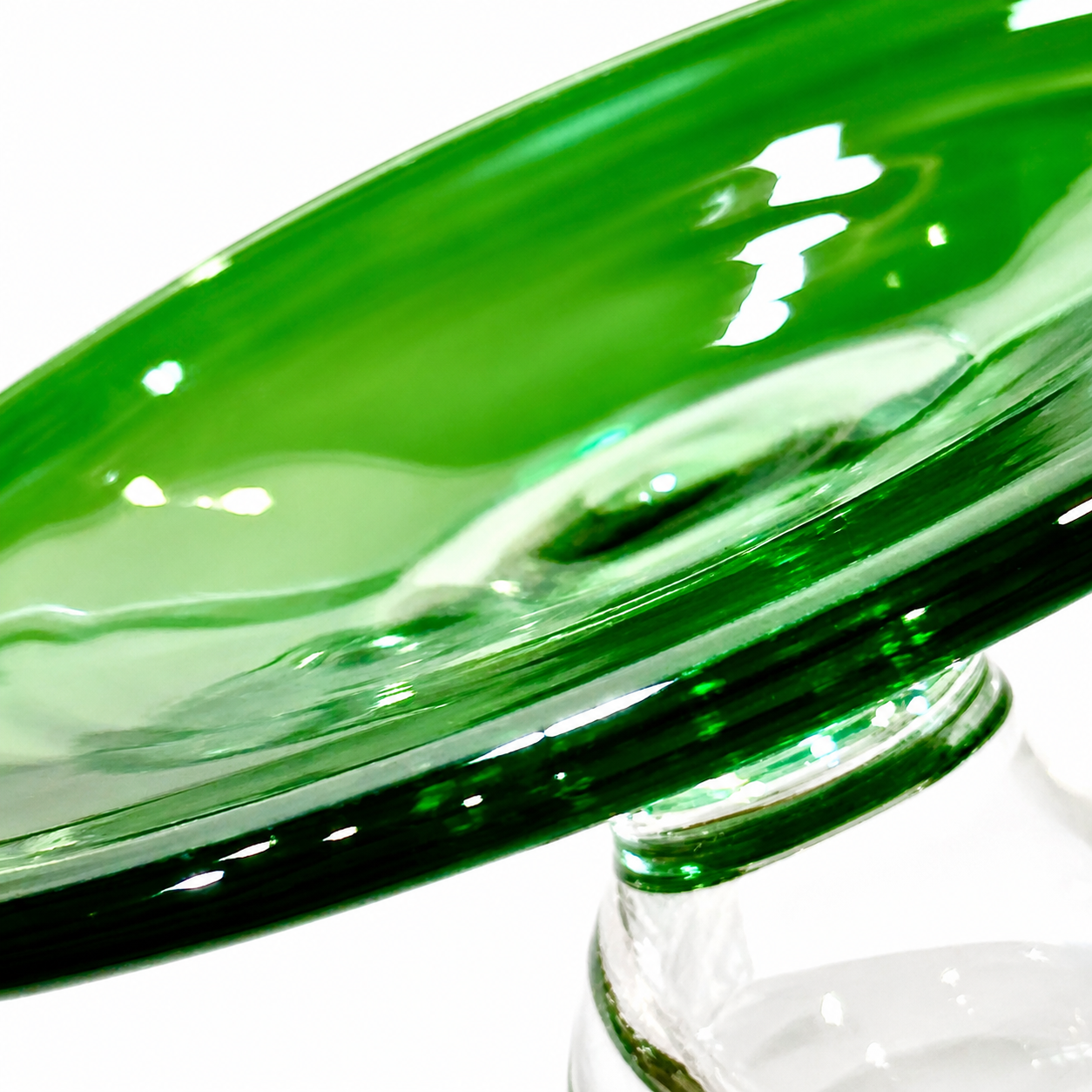
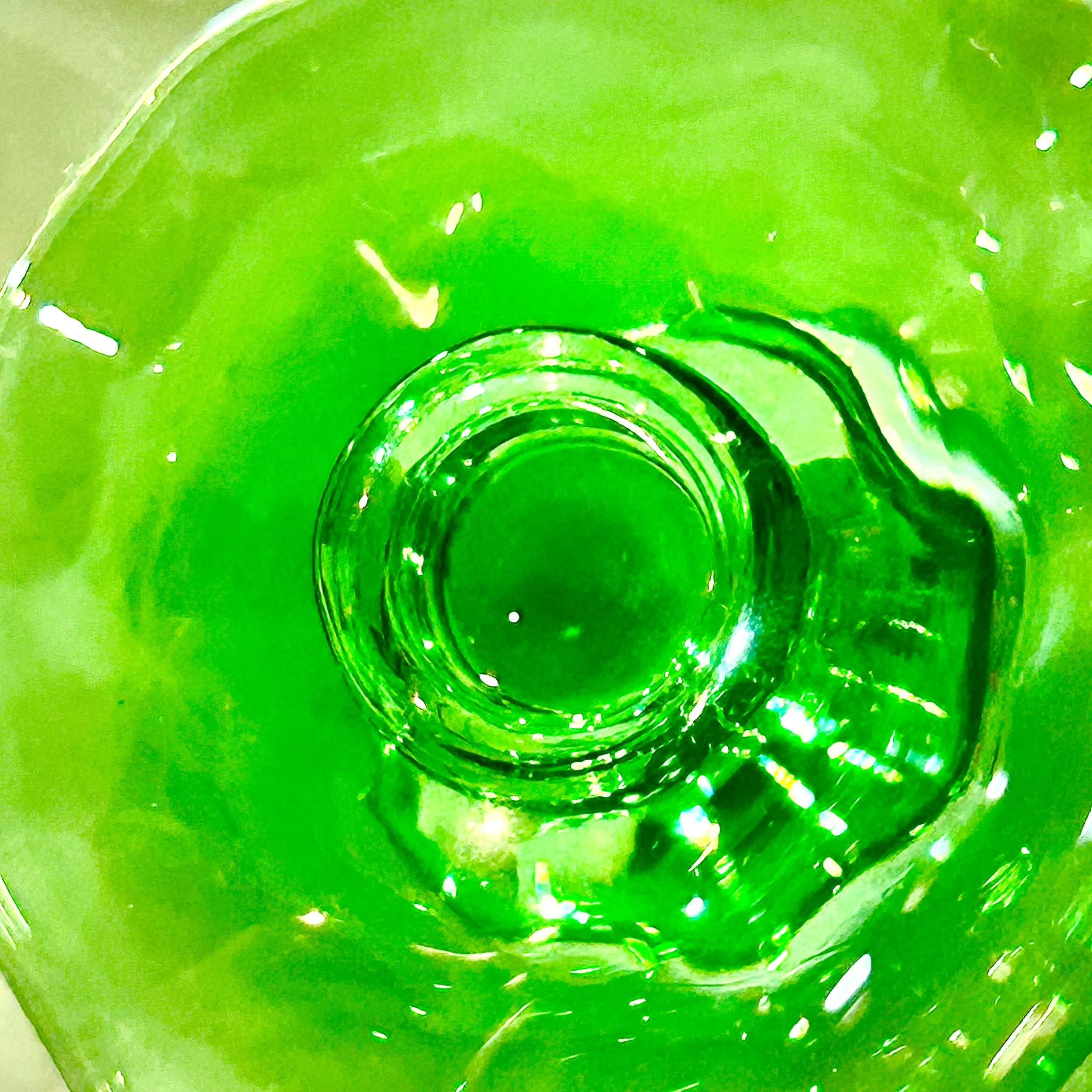
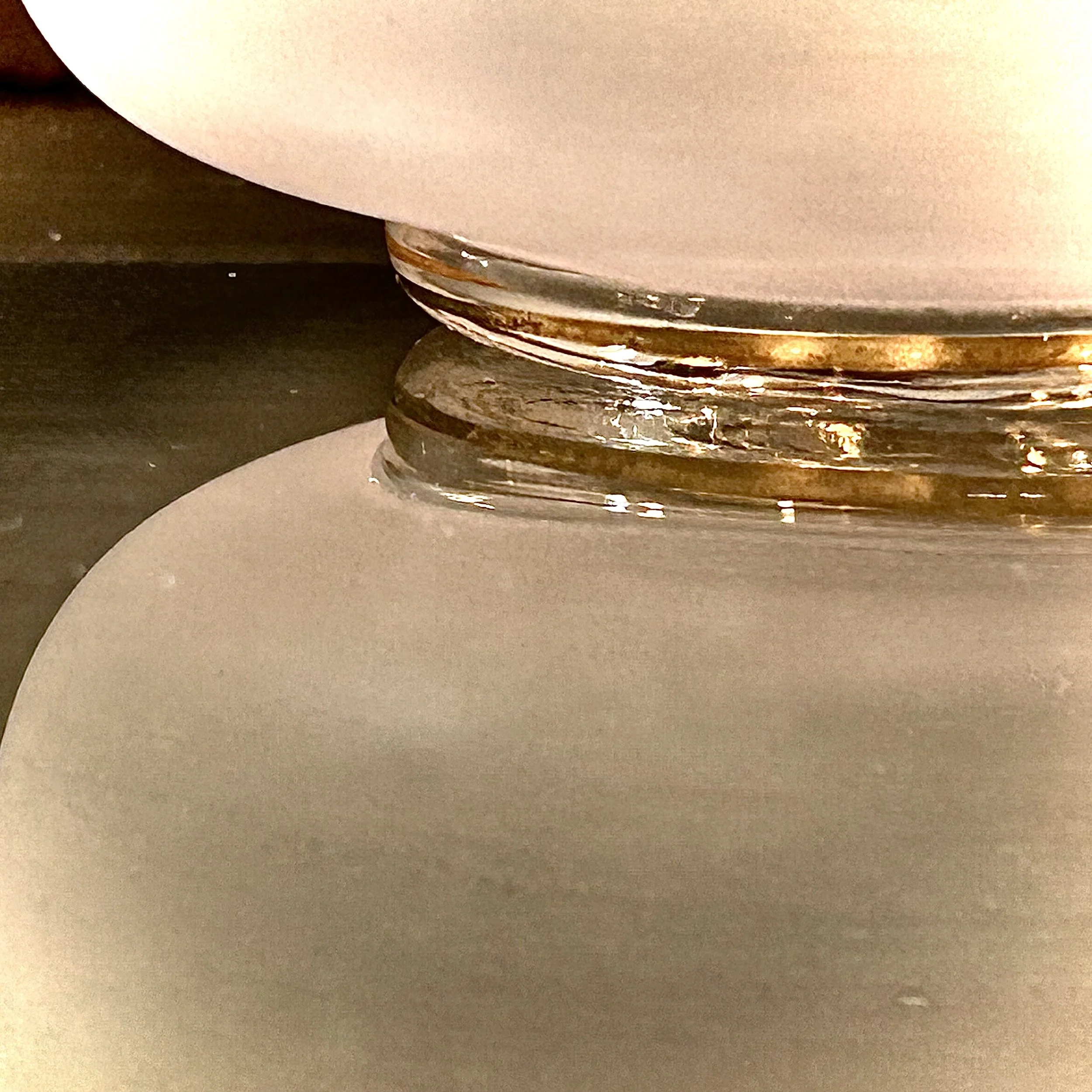
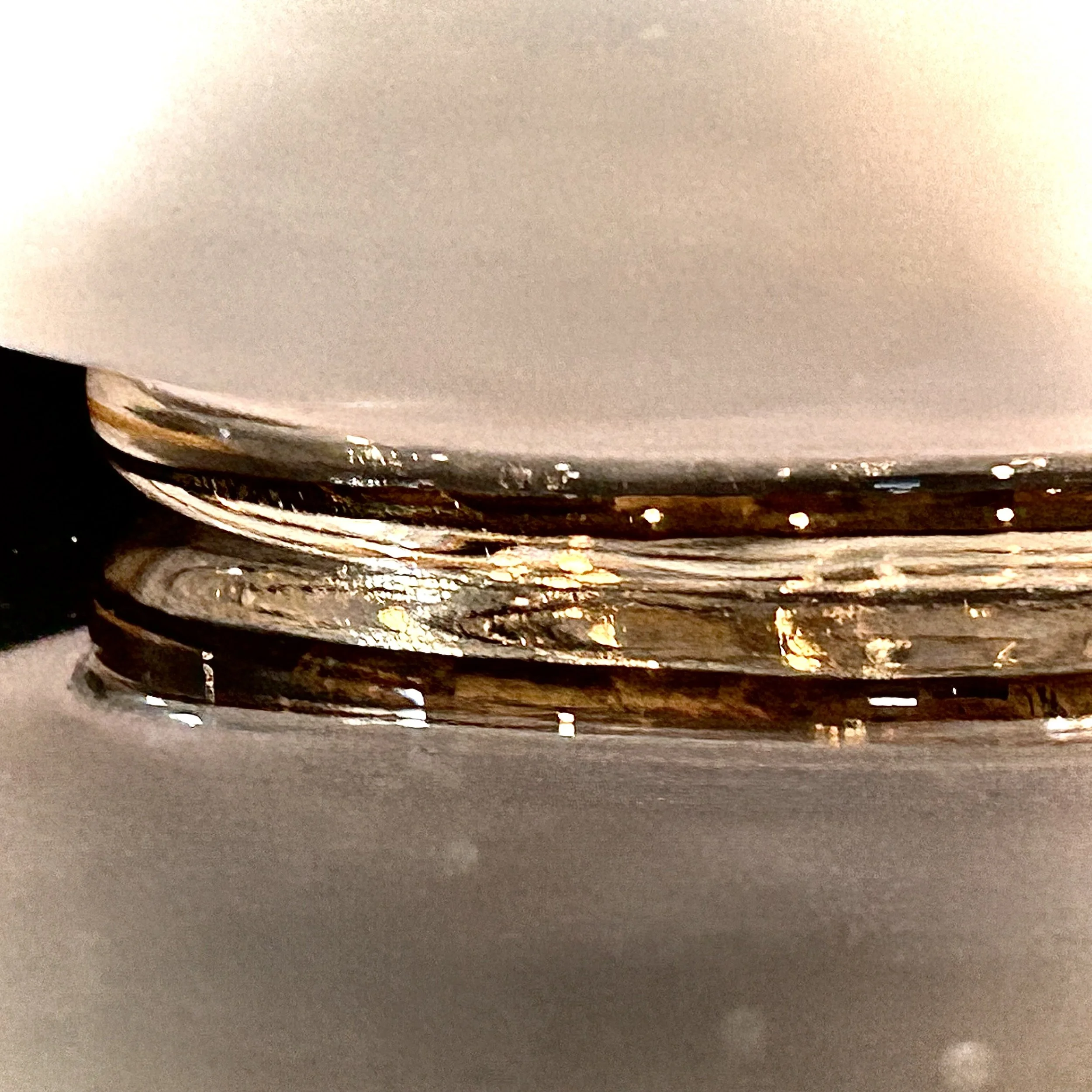
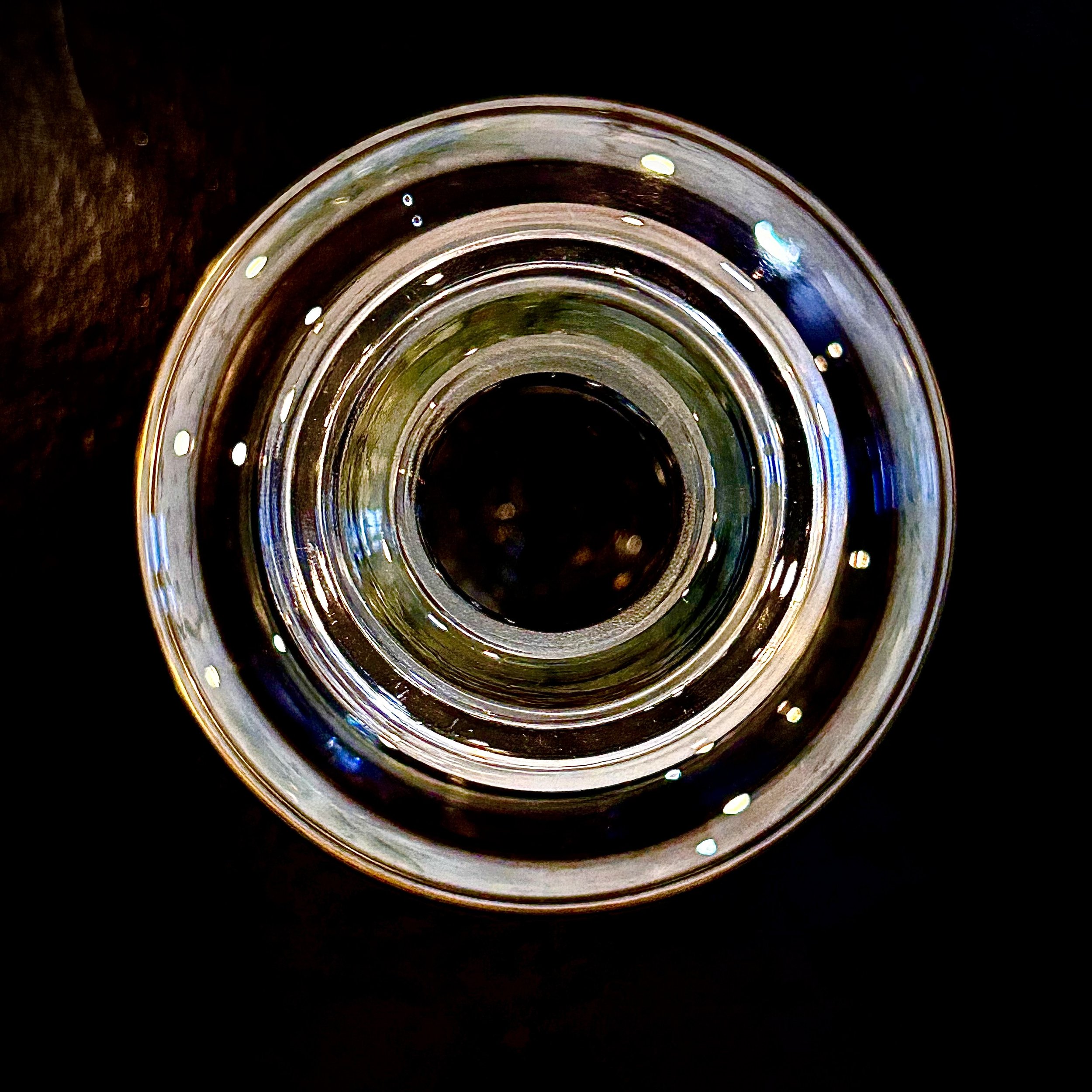
This vase is a testament to complex multi-part glass construction. The amethyst body was mouth-blown and hand-shaped to achieve the ruffled rim, then "joined" to a clear, mold-blown pedestal stem featuring a tight internal rib or "twist" pattern. The attachment point shows a clean, integrated fusion where the hot glass was married by the gaffer. The base is a classic applied disc foot with a polished pontil mark, indicating a high-end finish designed to sit flush on delicate surfaces.
Placement
This vessel functions best as a singular decorative object on a mirrored mantel or within a lighted vitrine where its internal chemistry can be showcased. Its architectural lines and rich color palette make it a perfect companion for dark wood antiques or as a historical counterpoint in a modern minimalist setting.
STANDARD ATTRIBUTION & VALUE DISCLOSURE
This piece is described to the best of current scholarly and market knowledge. Any maker or regional attribution is based on visual analysis, materials, construction techniques, and documented stylistic comparisons. As with many MCM and antique design objects, definitive attribution may not be possible without original labels or factory records. Pricing reflects condition, quality, decorative appeal, and current collector demand rather than guaranteed maker identification.
This exceptional mouth-blown vase commands attention through its striking verticality and deep, saturated plum amethyst hue. The vessel transitions from a cinched, ruffled "Jack-in-the-Pulpit" rim into a slender neck that swells into a flattened globular base, all supported by an intricate clear glass pedestal. Under UV illumination (365nm), the clear components exhibit a brilliant orange-yellow fluorescence, revealing a high manganese content traditionally used as a decoloring agent in 19th-century glass chemistry. The contrast between the somber, regal body and the light-refracting, twisted clear foot creates a sophisticated sculptural silhouette suitable for high-concept interior styling.
Attribution & Period
Antique (1880s). This piece is stylistically aligned with British Victorian art glass, specifically those produced by Stourbridge-area glassworks such as Thomas Webb & Sons or Richardson. The "Jack-in-the-Pulpit" form was a hallmark of the Aesthetic Movement’s obsession with botanical motifs. The presence of a strong manganese signature under UV light is highly consistent with glass recipes of the late 19th century, where manganese was employed to neutralize the green tints of iron impurities in the "flint" or clear glass used for the stem.
Dimensions & Weight
Height: 8 inches
Width / Diameter: 3 inches (at widest point of belly)
Mouth Opening: 2 1/8 inches
Depth / Base Diameter: 2 inches
Weight: .268 lbs
Condition
Excellent antique condition. No chips, cracks, or restorations observed. The glass remains clear with a high luster. Minor surface wear consistent with age is present on the underside of the base. Micro-bubbles and slight flow lines are visible within the amethyst glass, characteristic of late 19th-century hand-blown production.
Authenticity & Construction
This vase is a testament to complex multi-part glass construction. The amethyst body was mouth-blown and hand-shaped to achieve the ruffled rim, then "joined" to a clear, mold-blown pedestal stem featuring a tight internal rib or "twist" pattern. The attachment point shows a clean, integrated fusion where the hot glass was married by the gaffer. The base is a classic applied disc foot with a polished pontil mark, indicating a high-end finish designed to sit flush on delicate surfaces.
Placement
This vessel functions best as a singular decorative object on a mirrored mantel or within a lighted vitrine where its internal chemistry can be showcased. Its architectural lines and rich color palette make it a perfect companion for dark wood antiques or as a historical counterpoint in a modern minimalist setting.
STANDARD ATTRIBUTION & VALUE DISCLOSURE
This piece is described to the best of current scholarly and market knowledge. Any maker or regional attribution is based on visual analysis, materials, construction techniques, and documented stylistic comparisons. As with many MCM and antique design objects, definitive attribution may not be possible without original labels or factory records. Pricing reflects condition, quality, decorative appeal, and current collector demand rather than guaranteed maker identification.

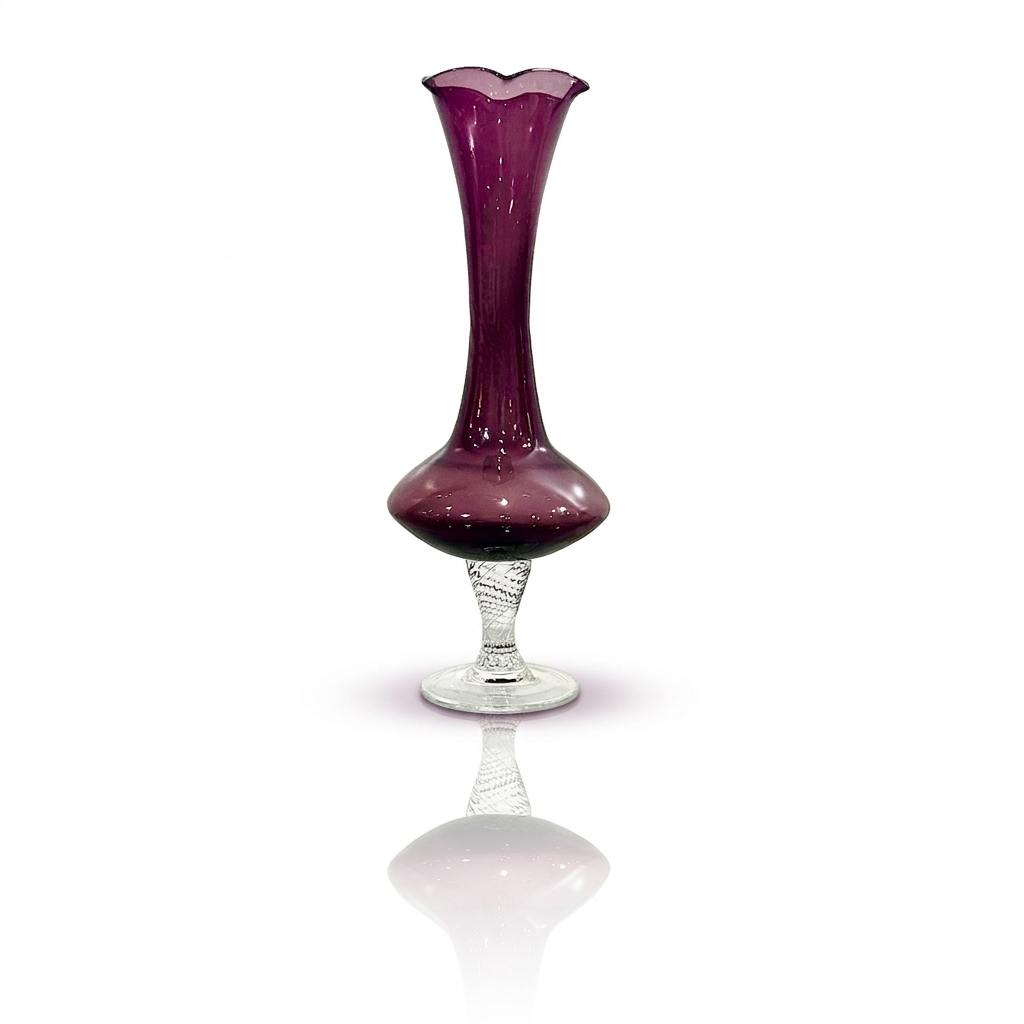 Image 1 of 17
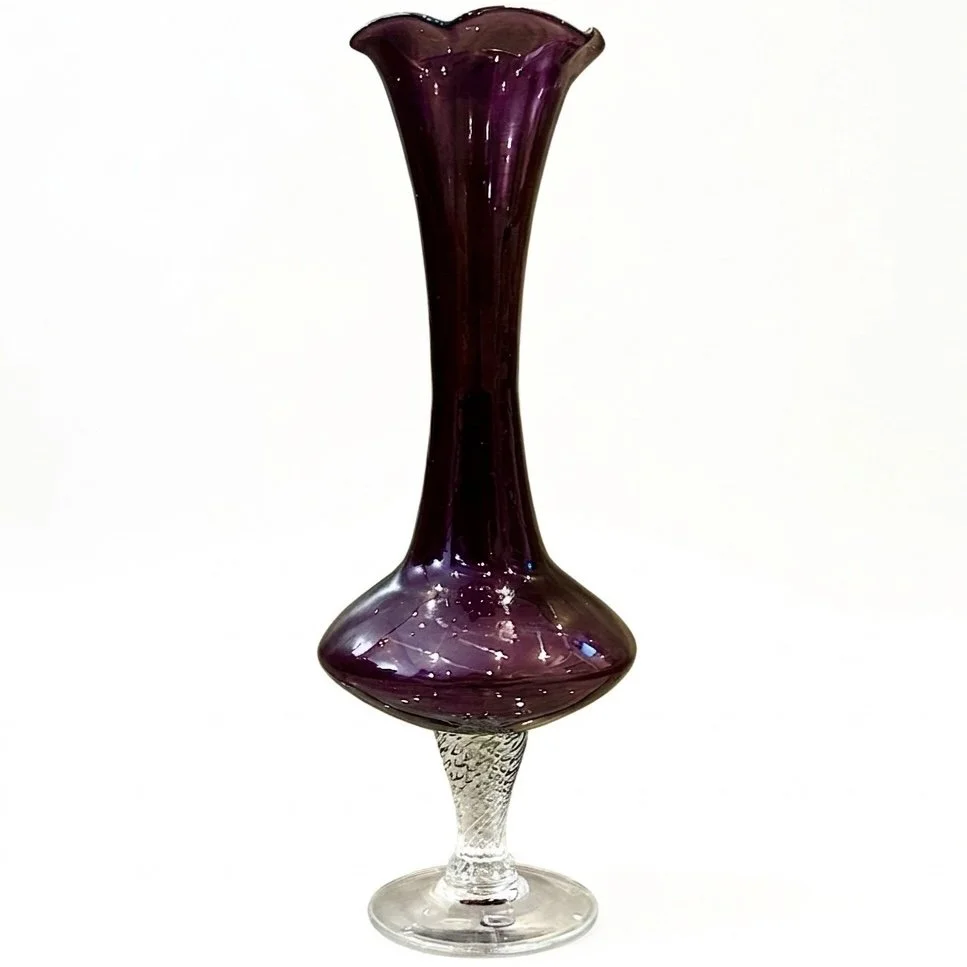 Image 2 of 17
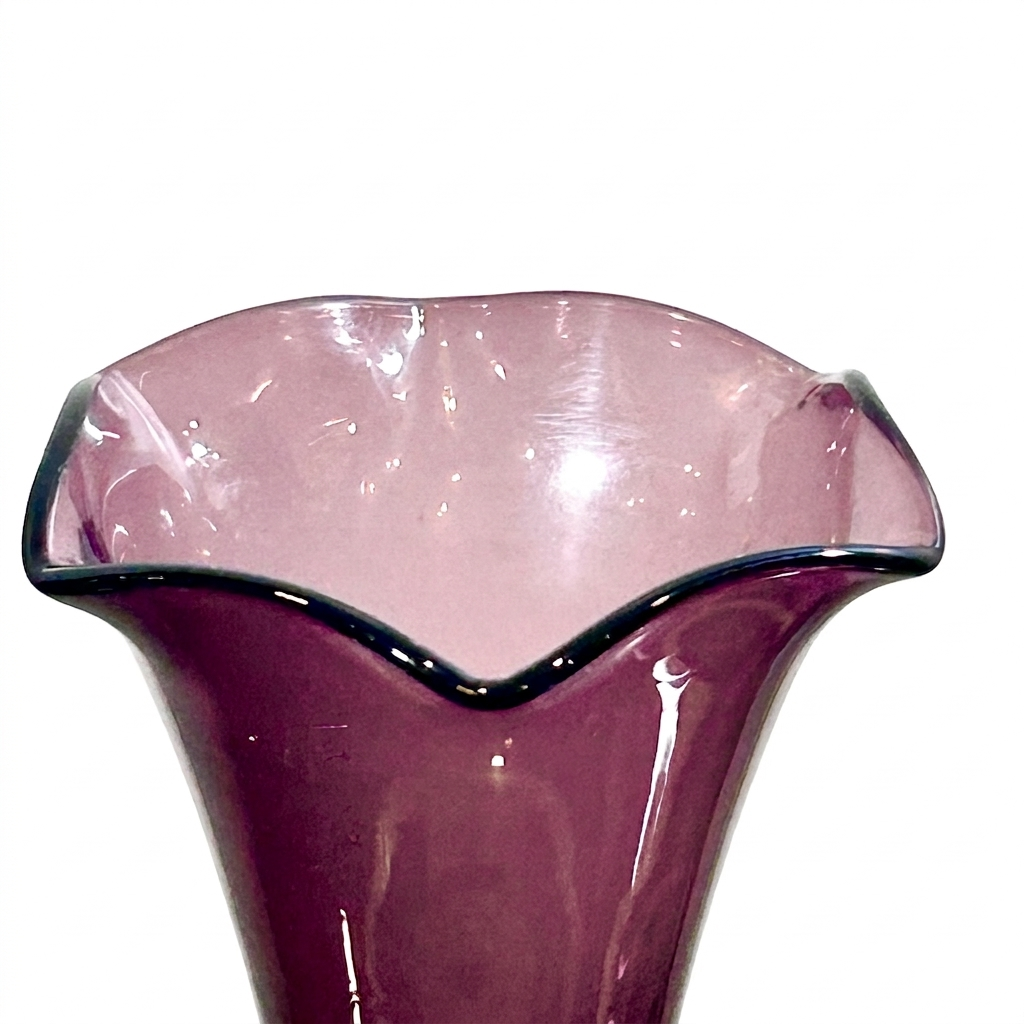 Image 3 of 17
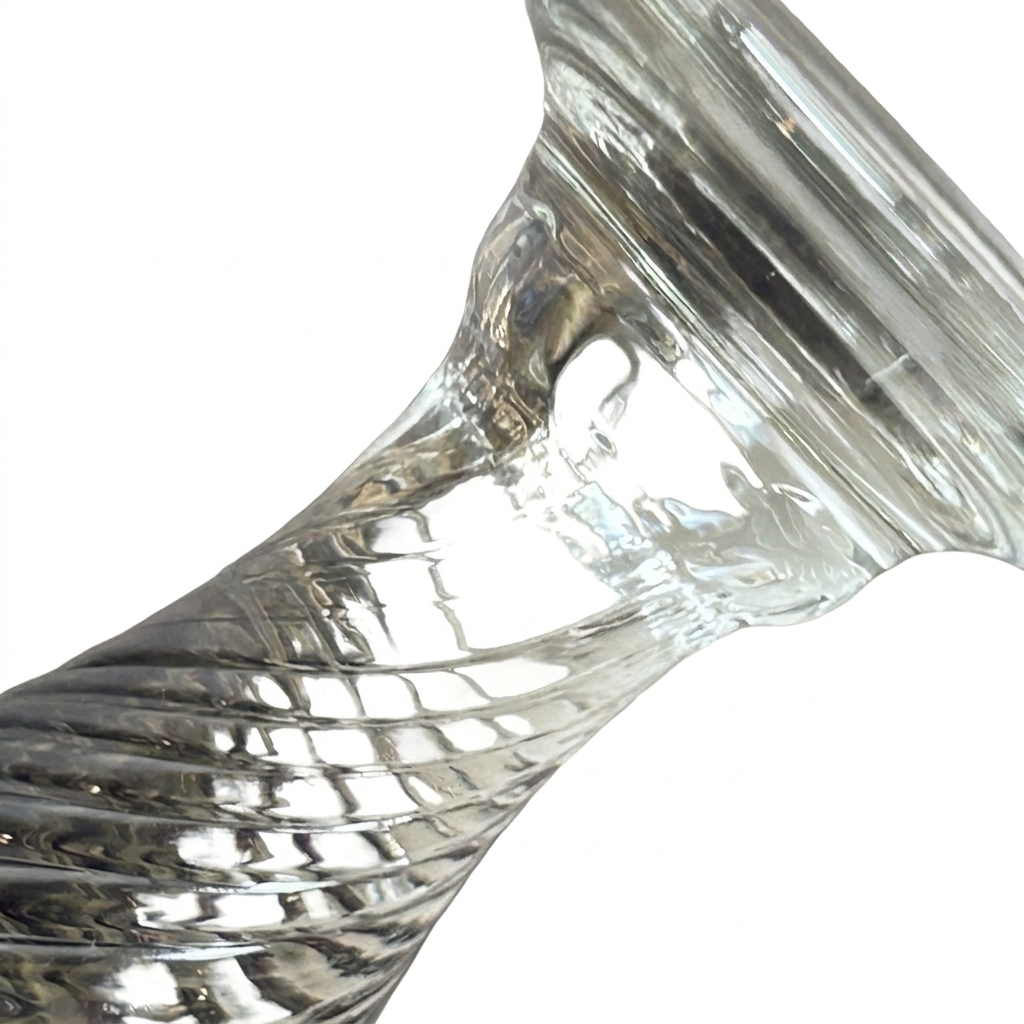 Image 4 of 17
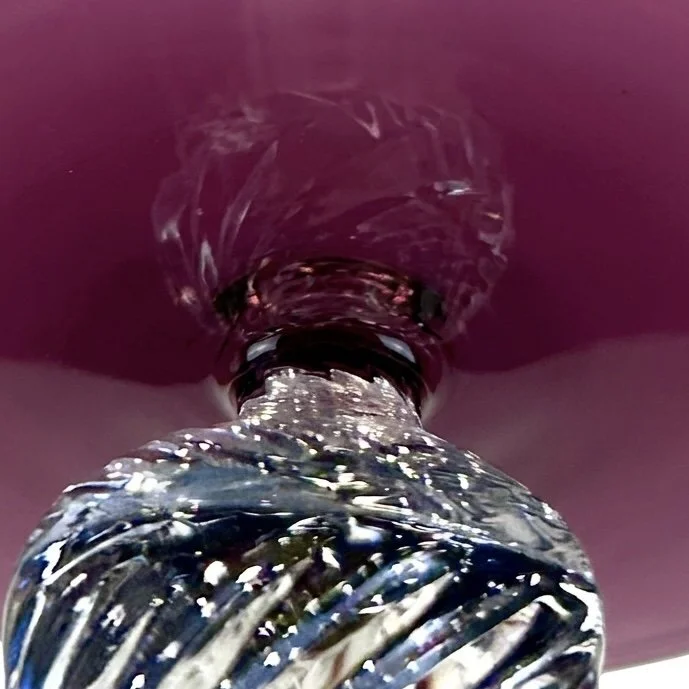 Image 5 of 17
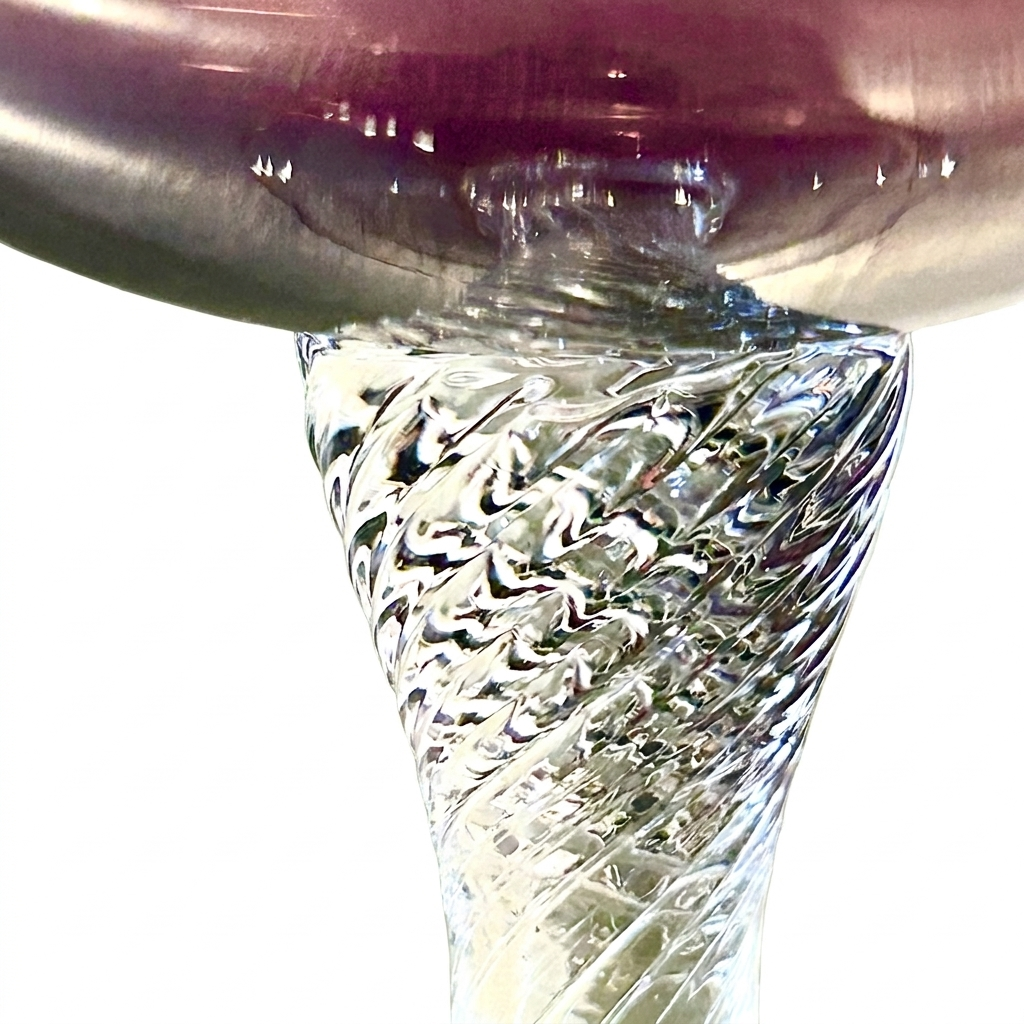 Image 6 of 17
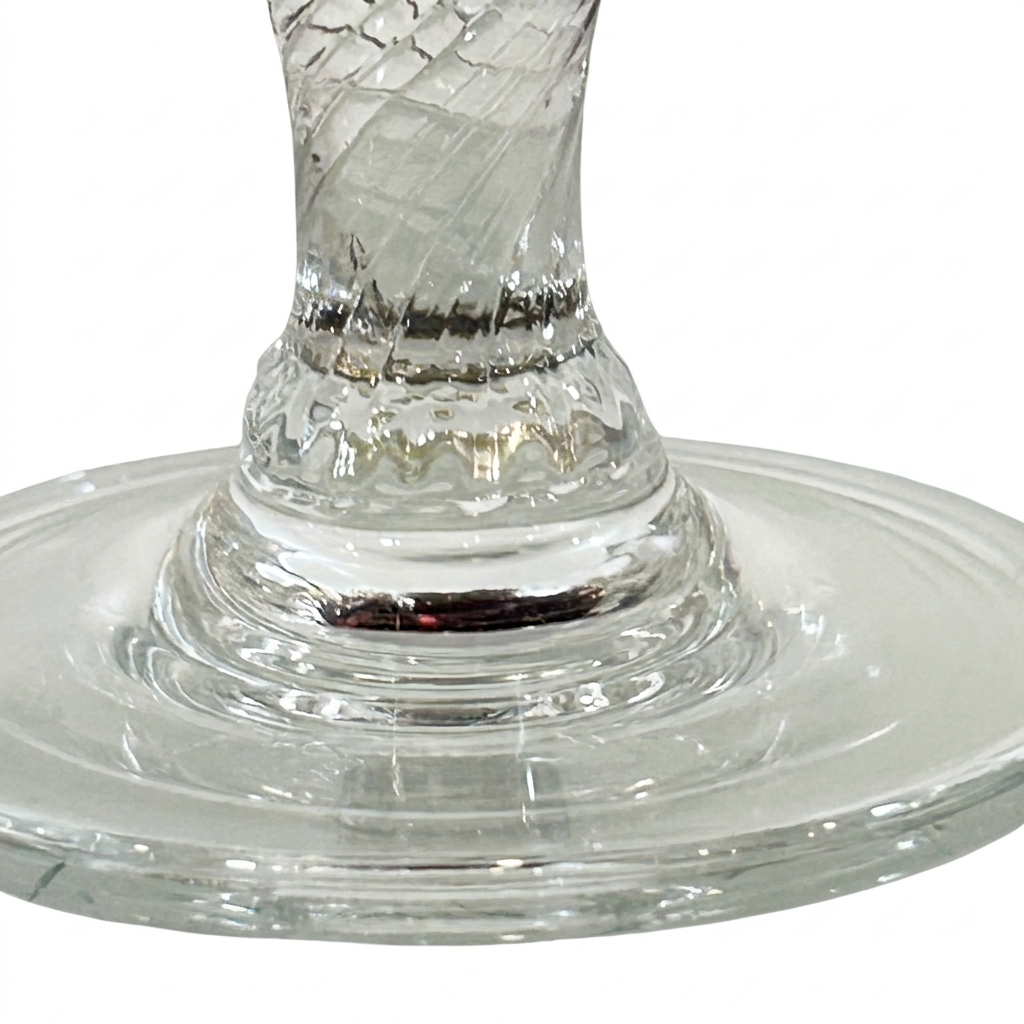 Image 7 of 17
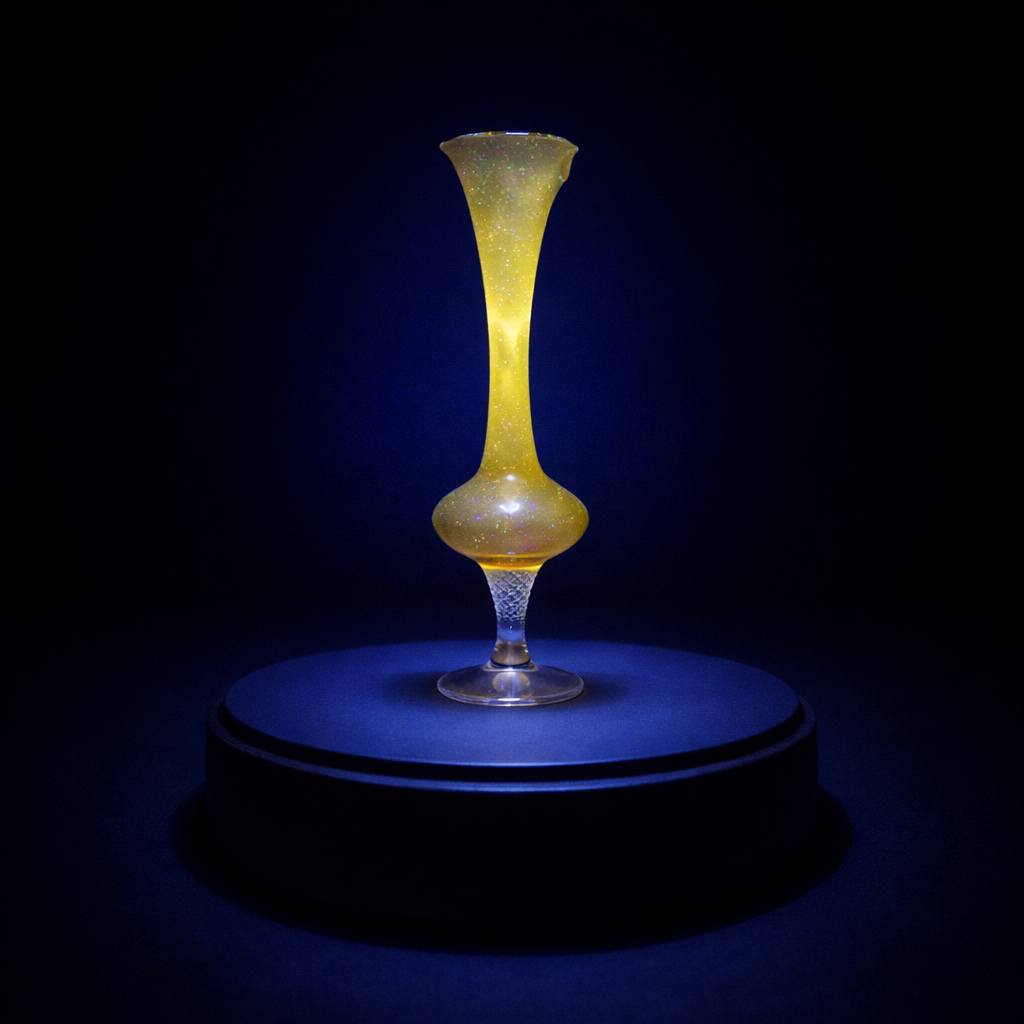 Image 8 of 17
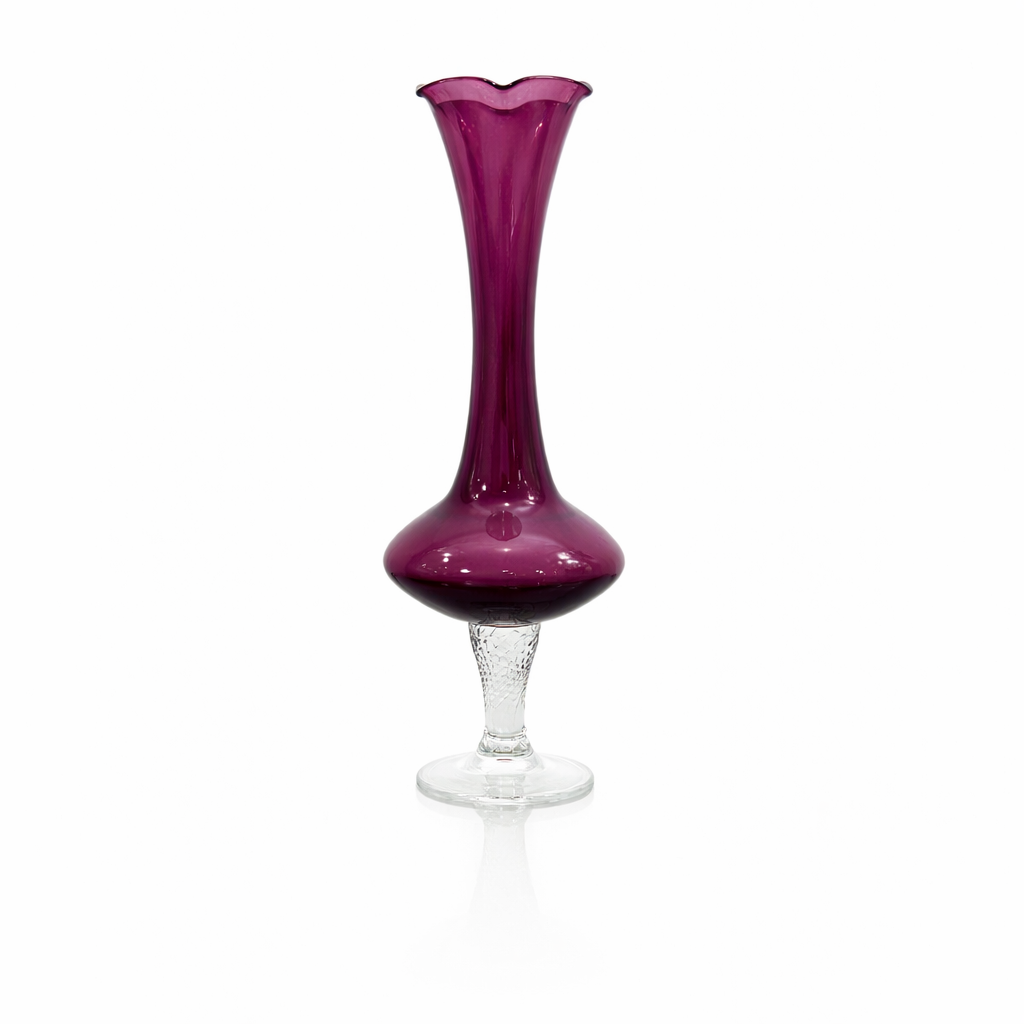 Image 9 of 17
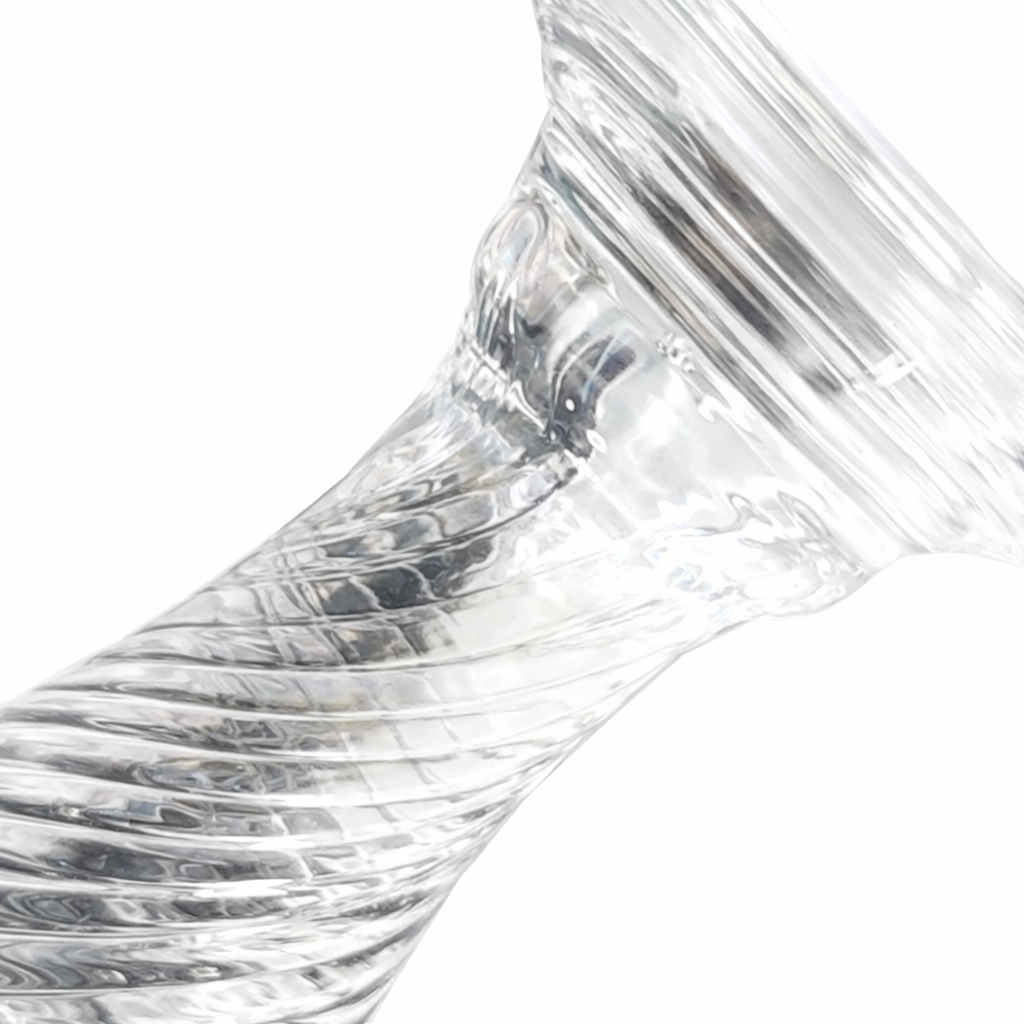 Image 10 of 17
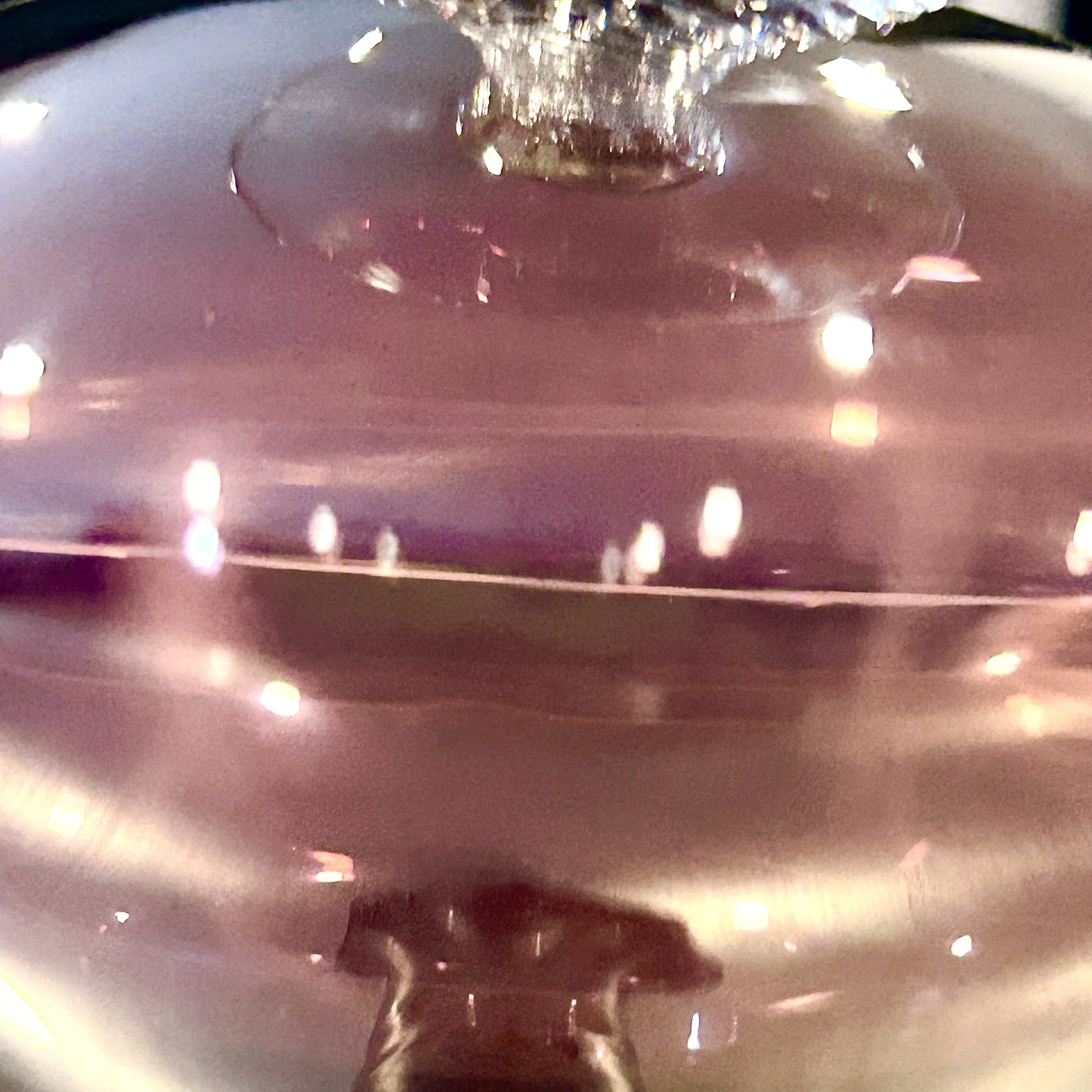 Image 11 of 17
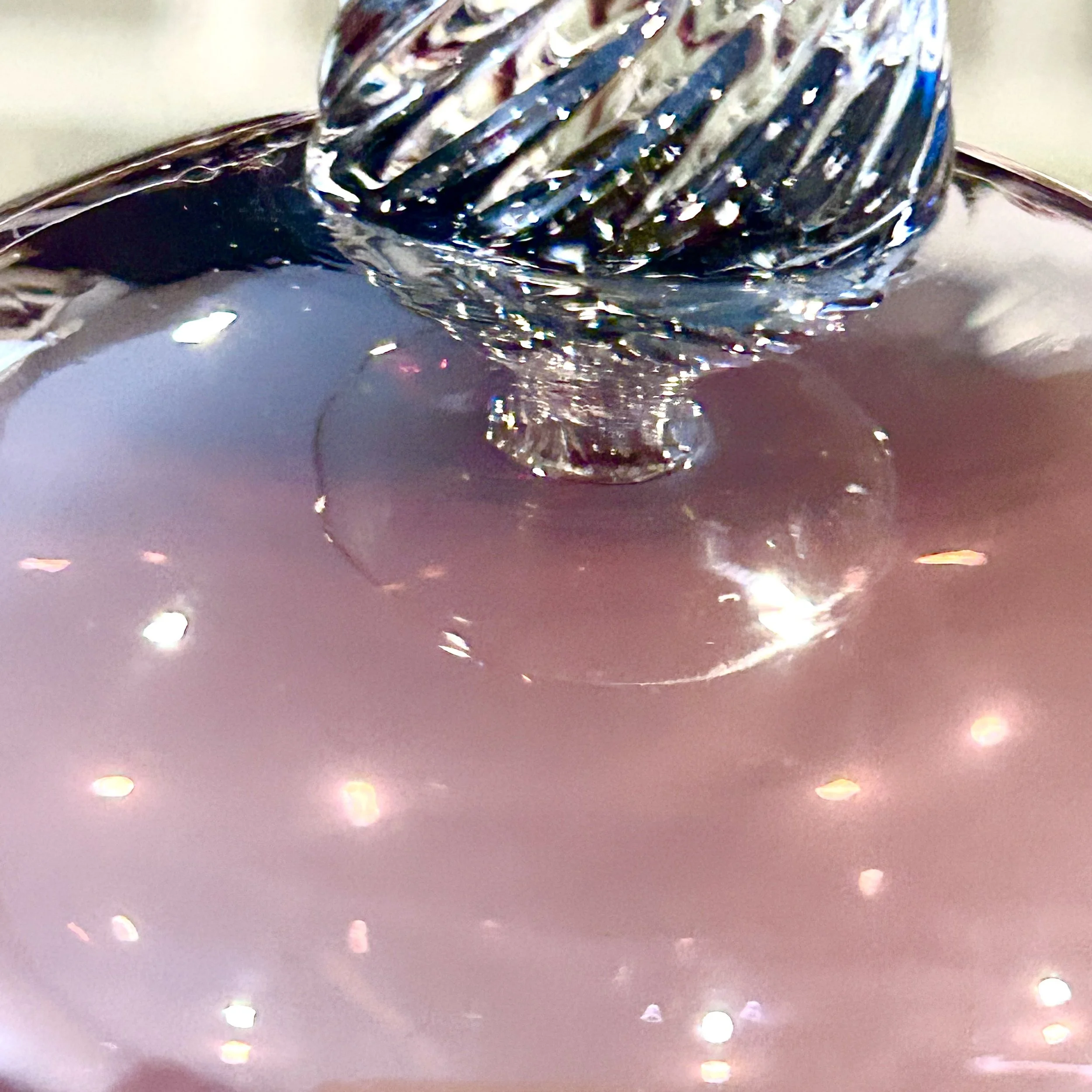 Image 12 of 17
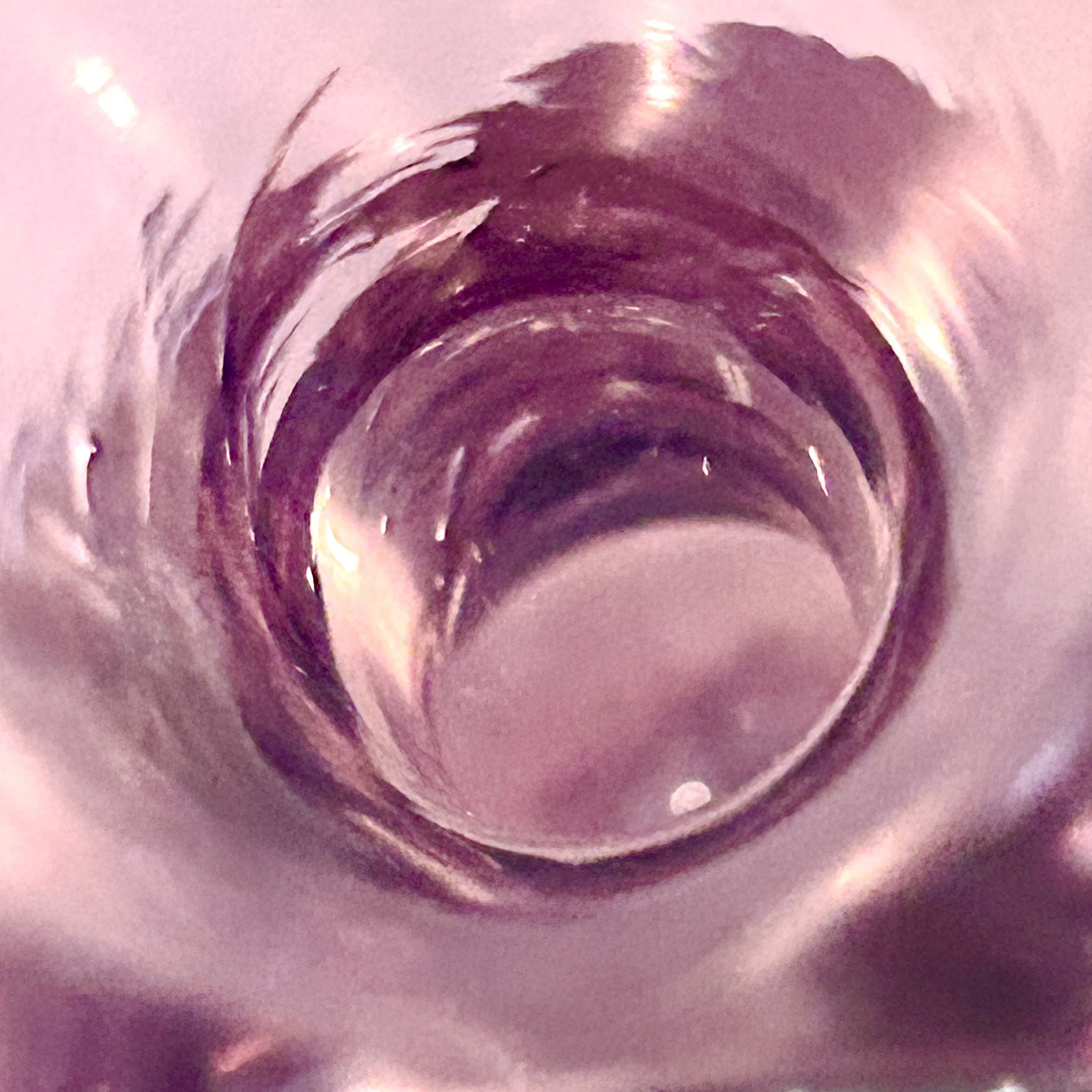 Image 13 of 17
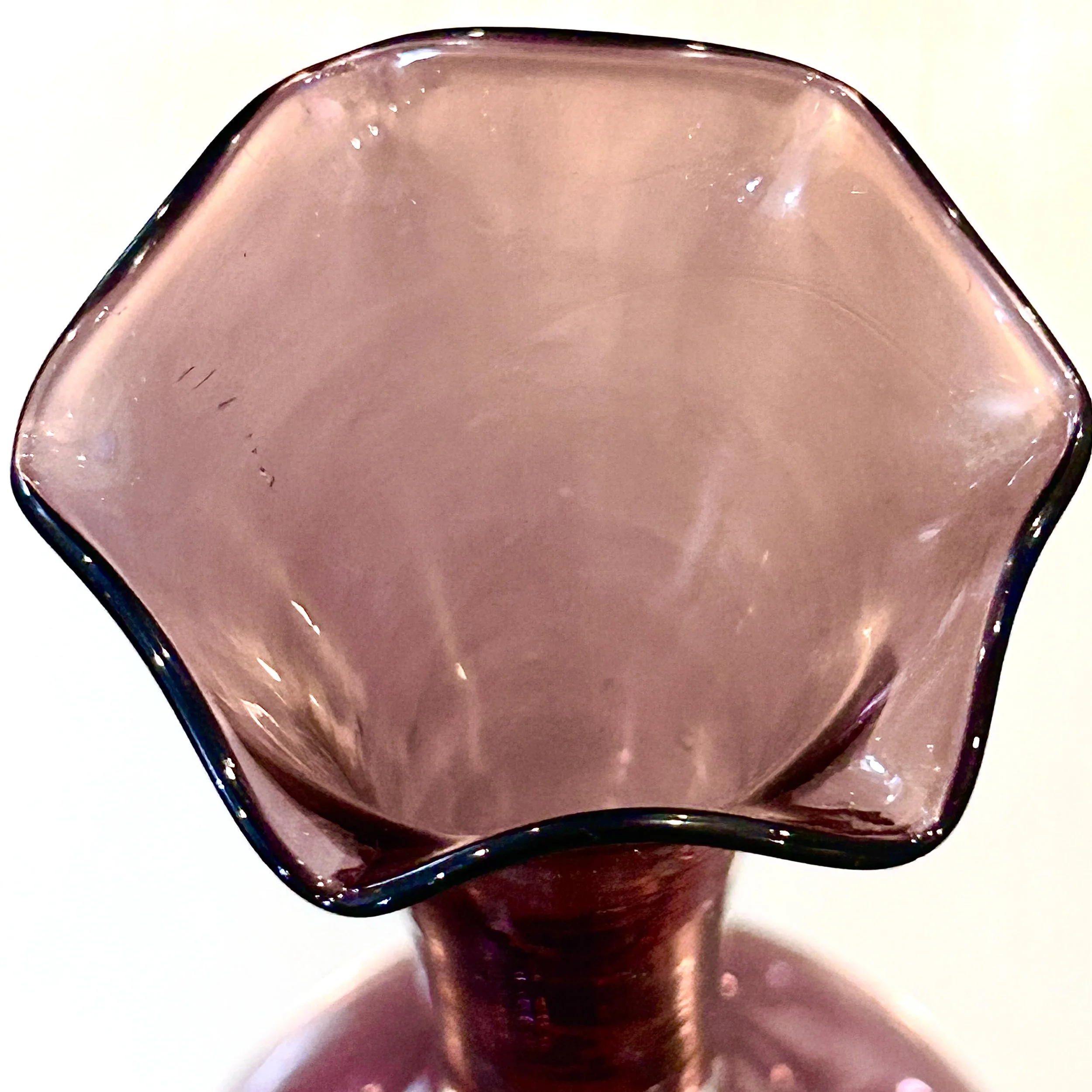 Image 14 of 17
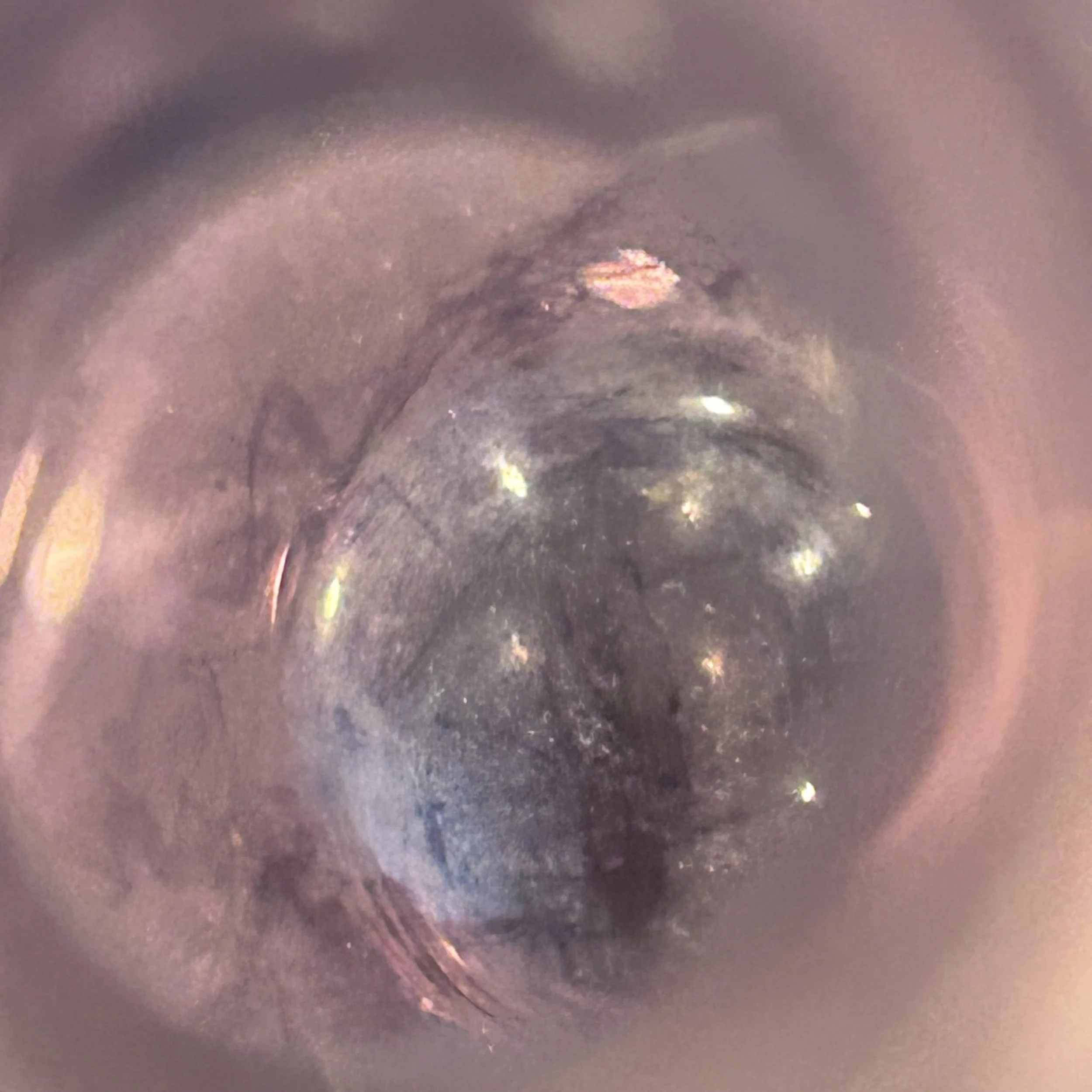 Image 15 of 17
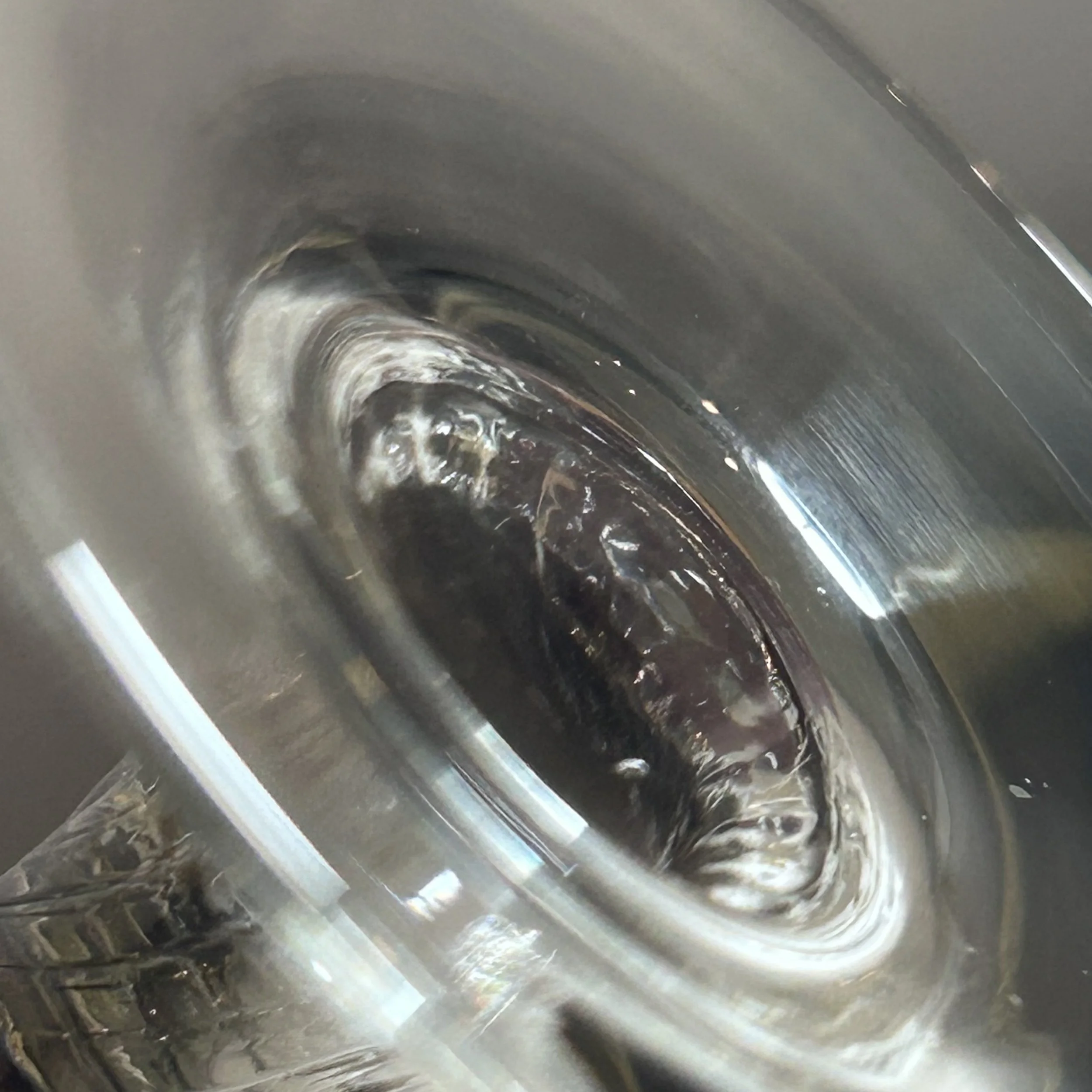 Image 16 of 17
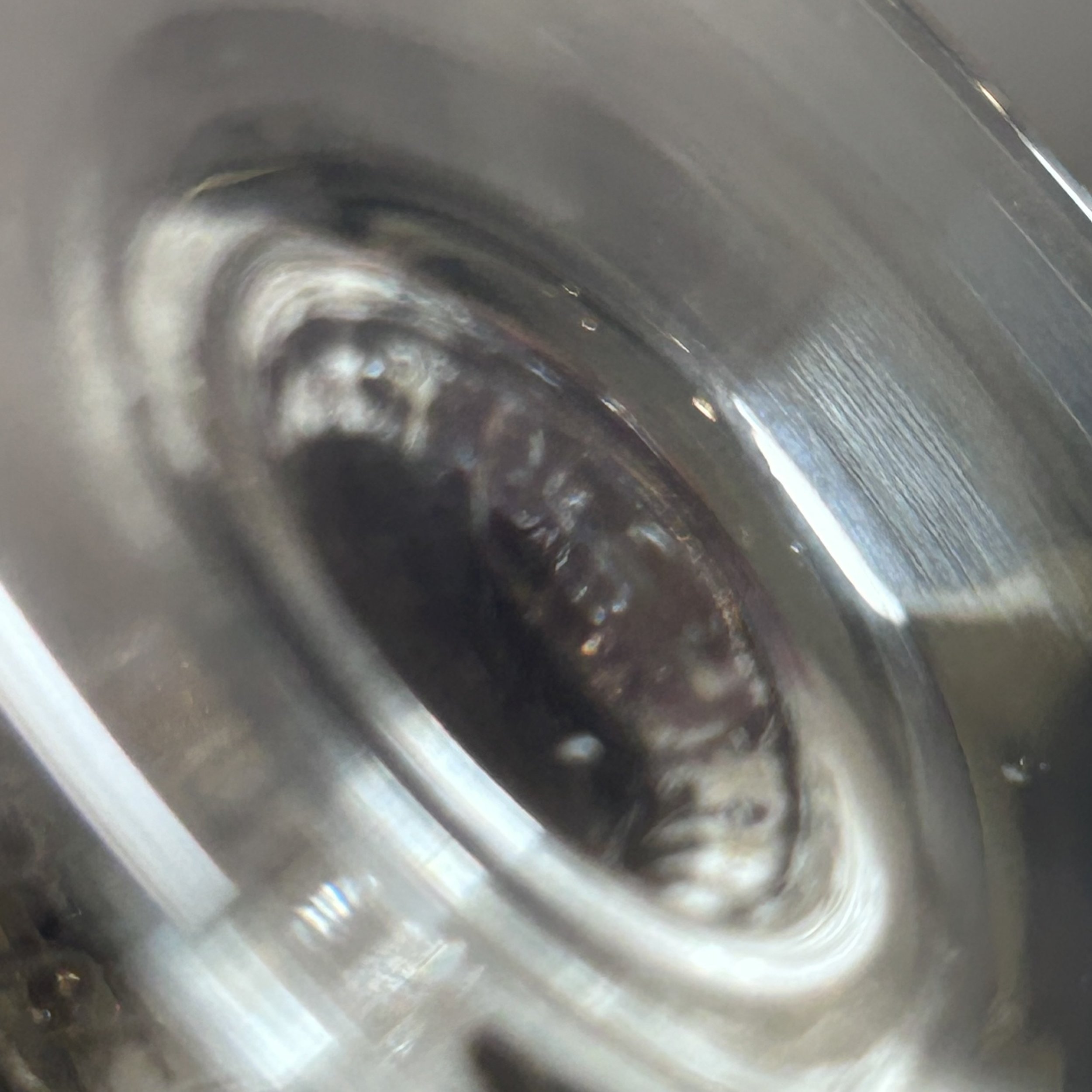 Image 17 of 17