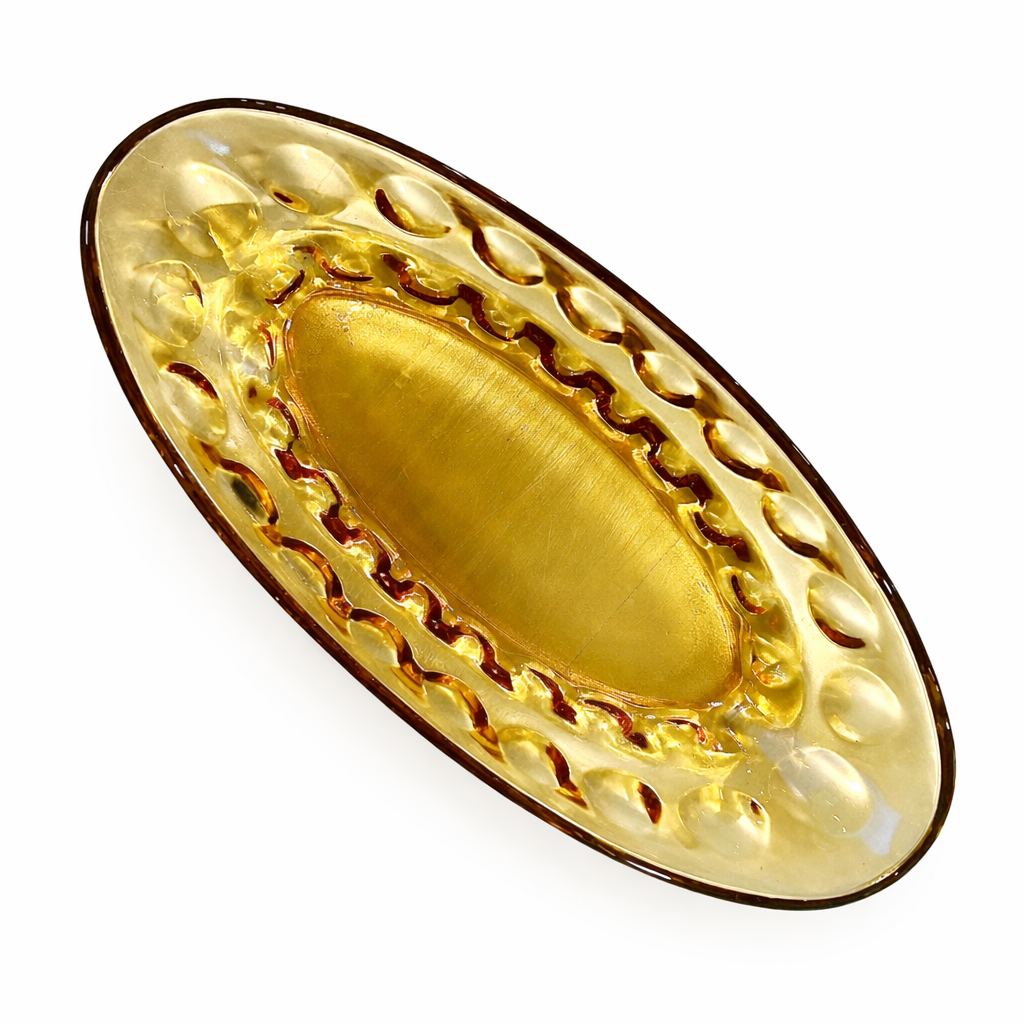
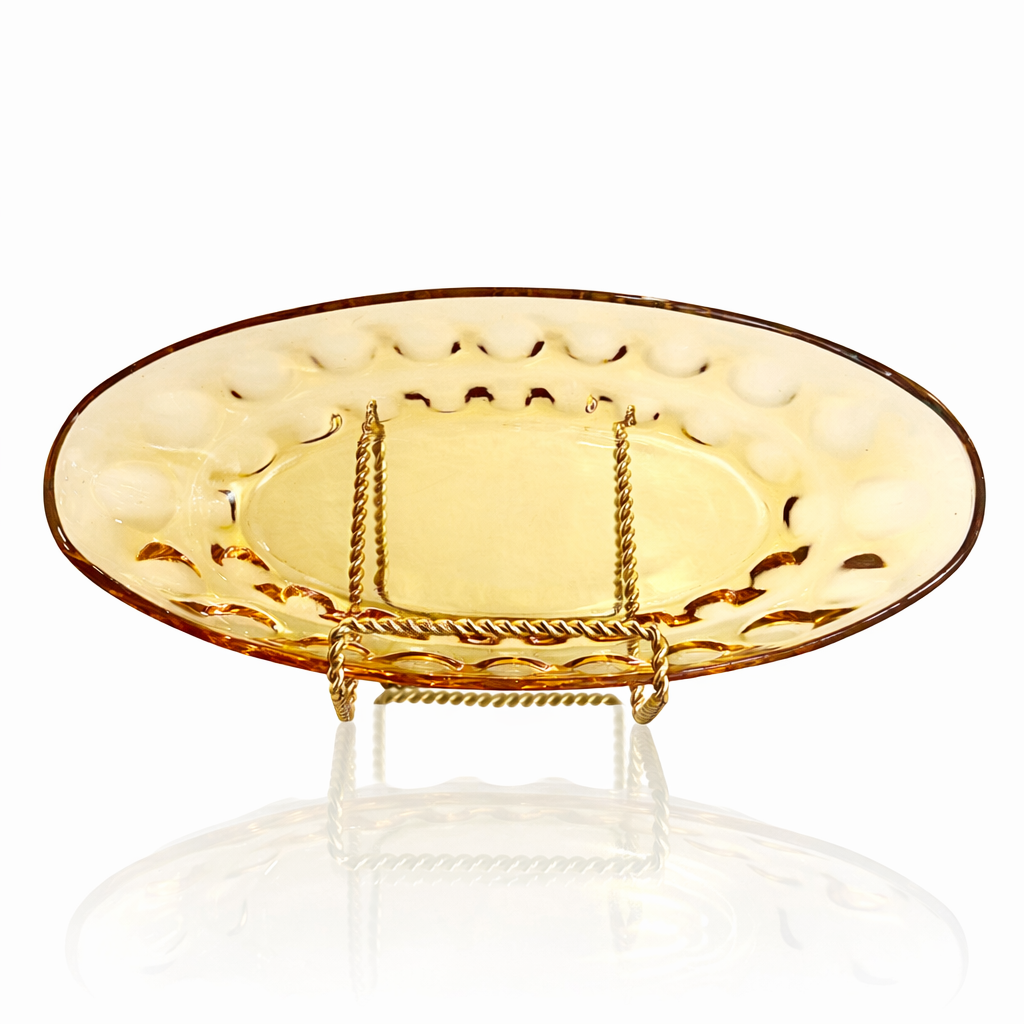
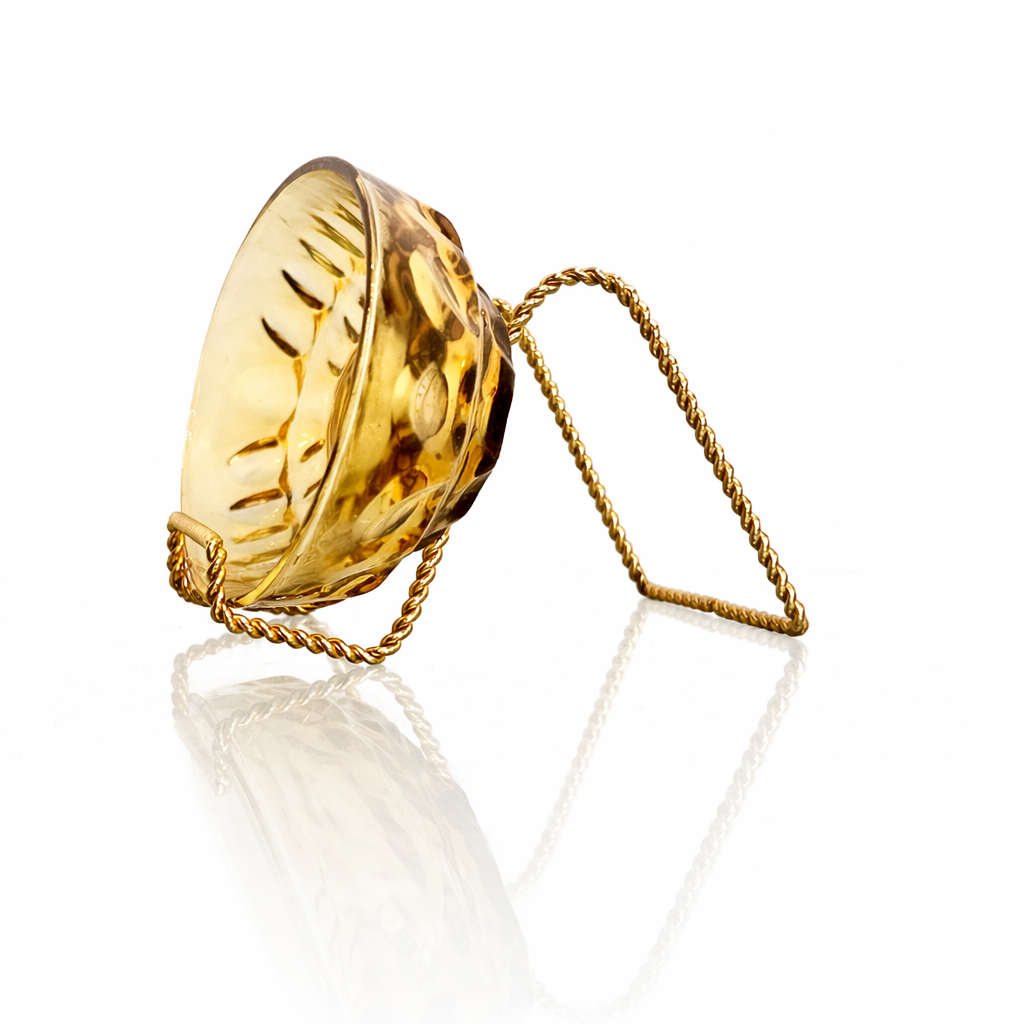
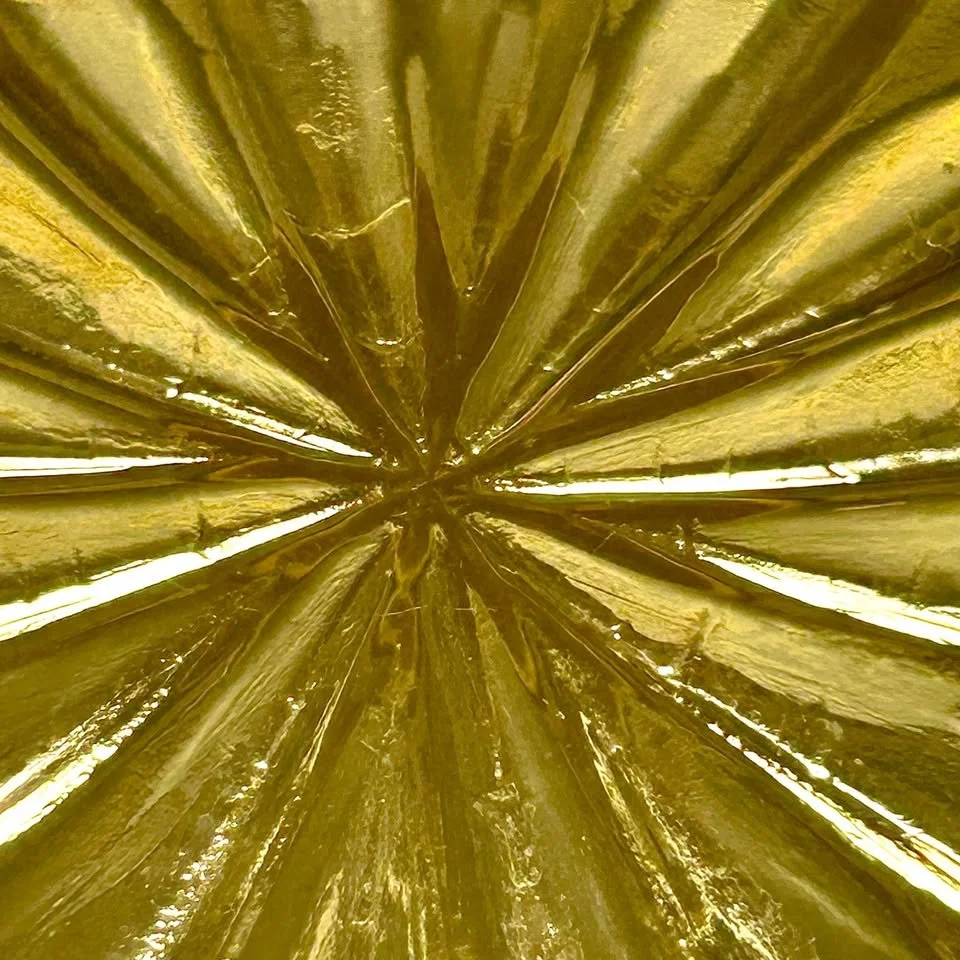
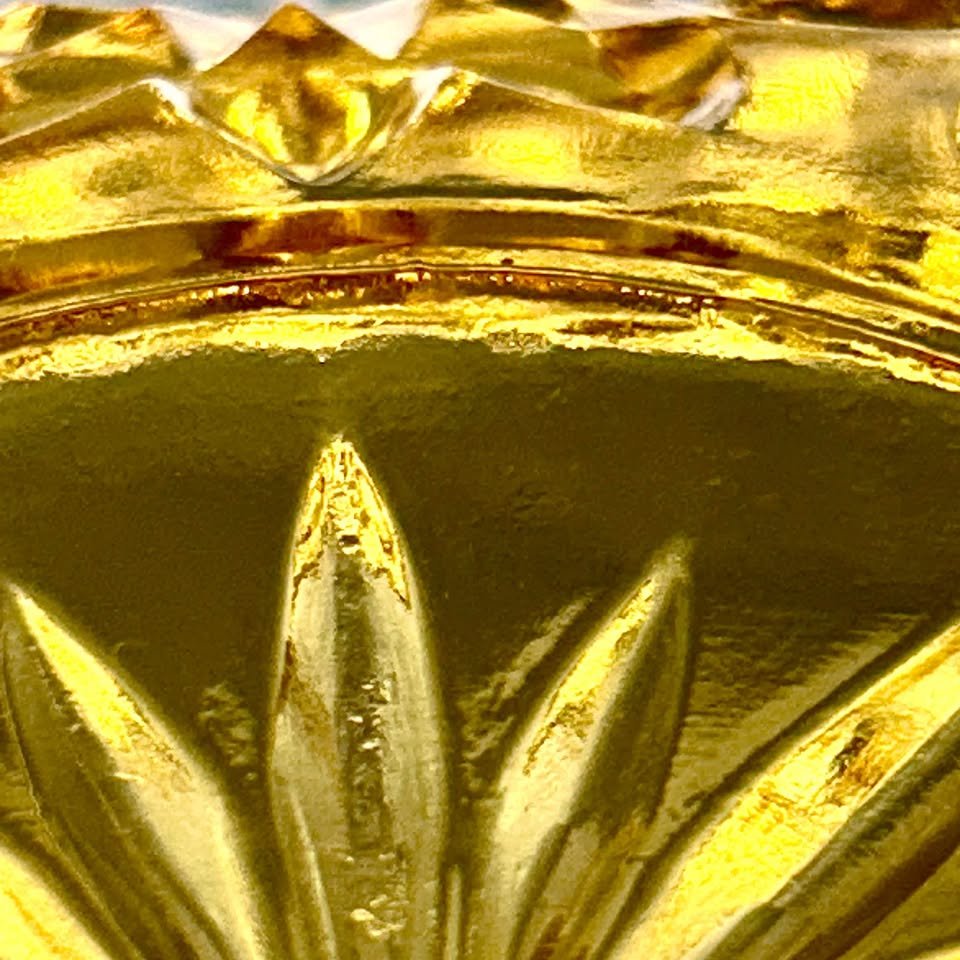
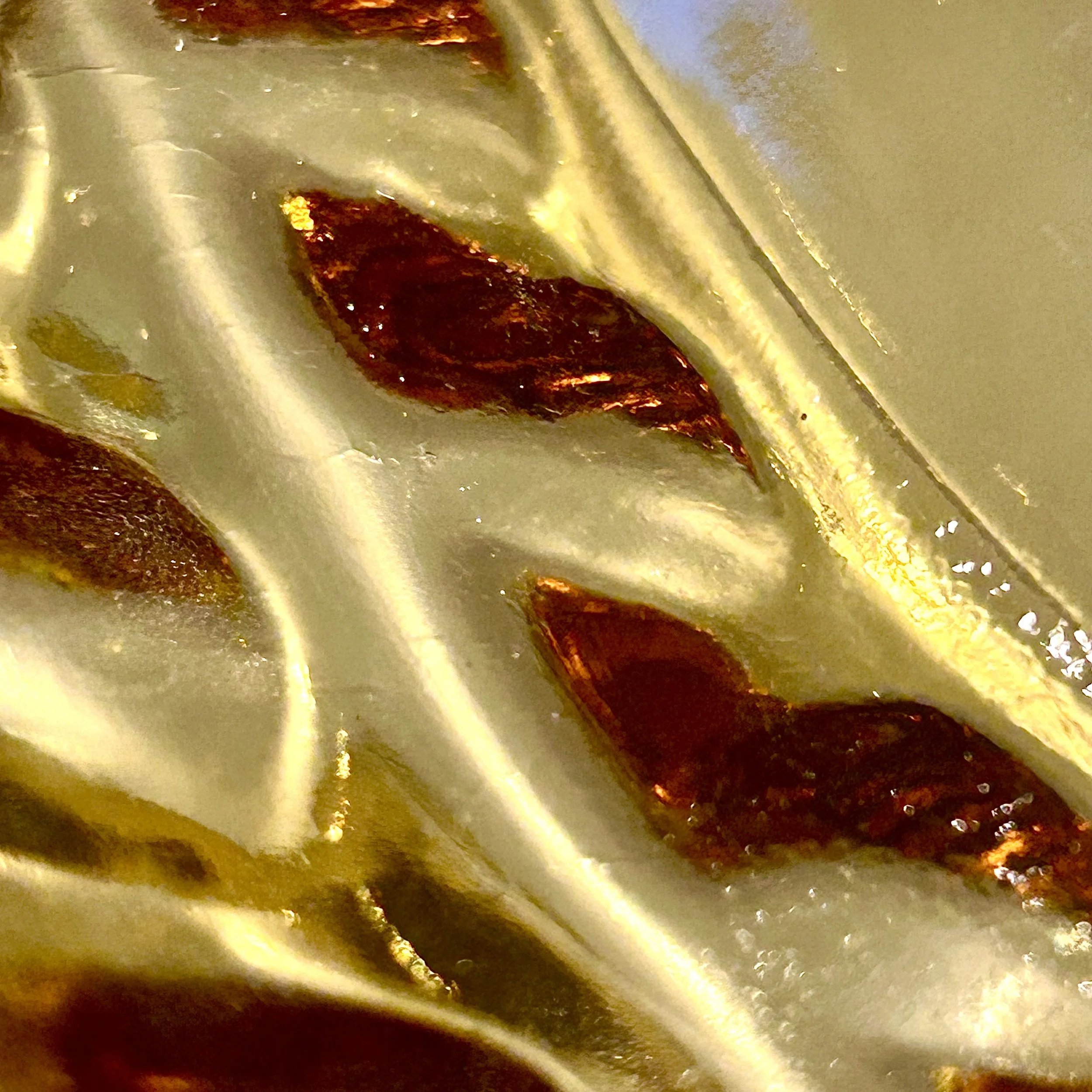
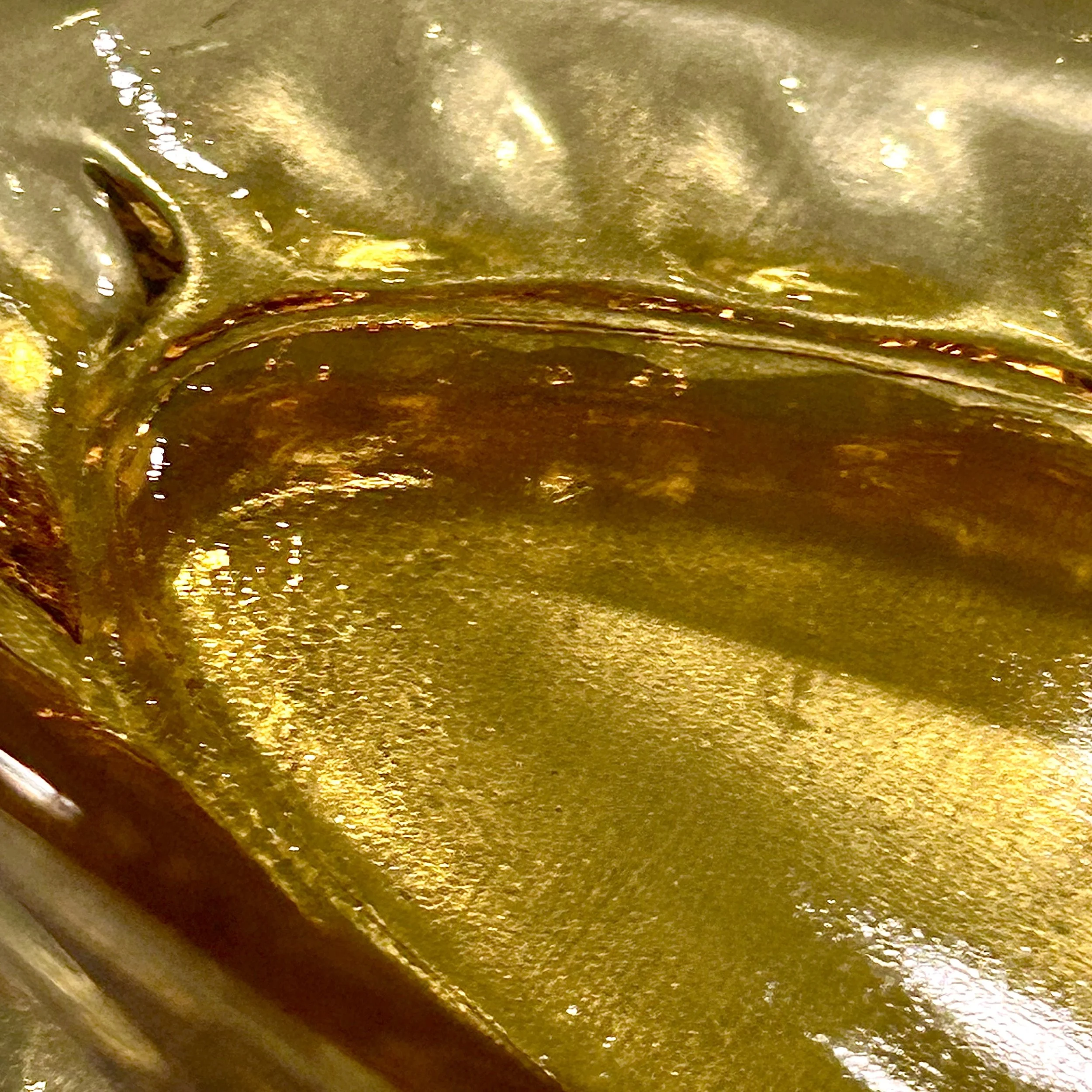
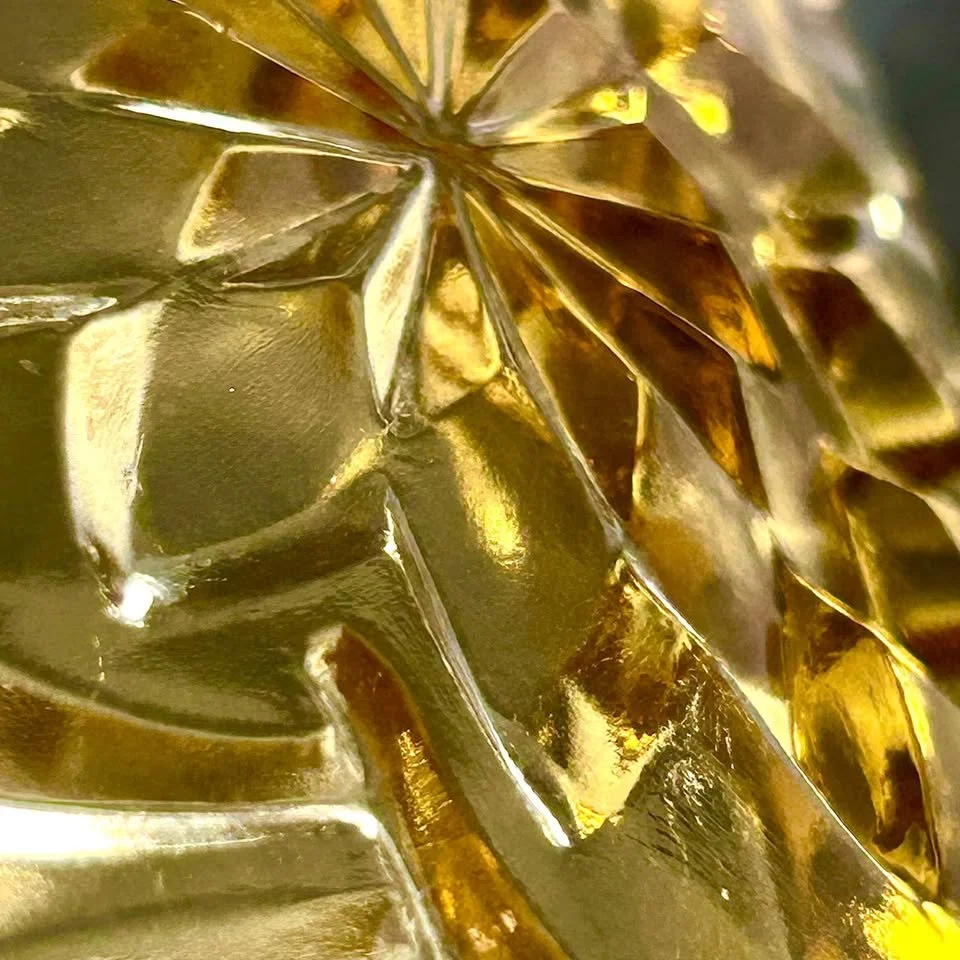
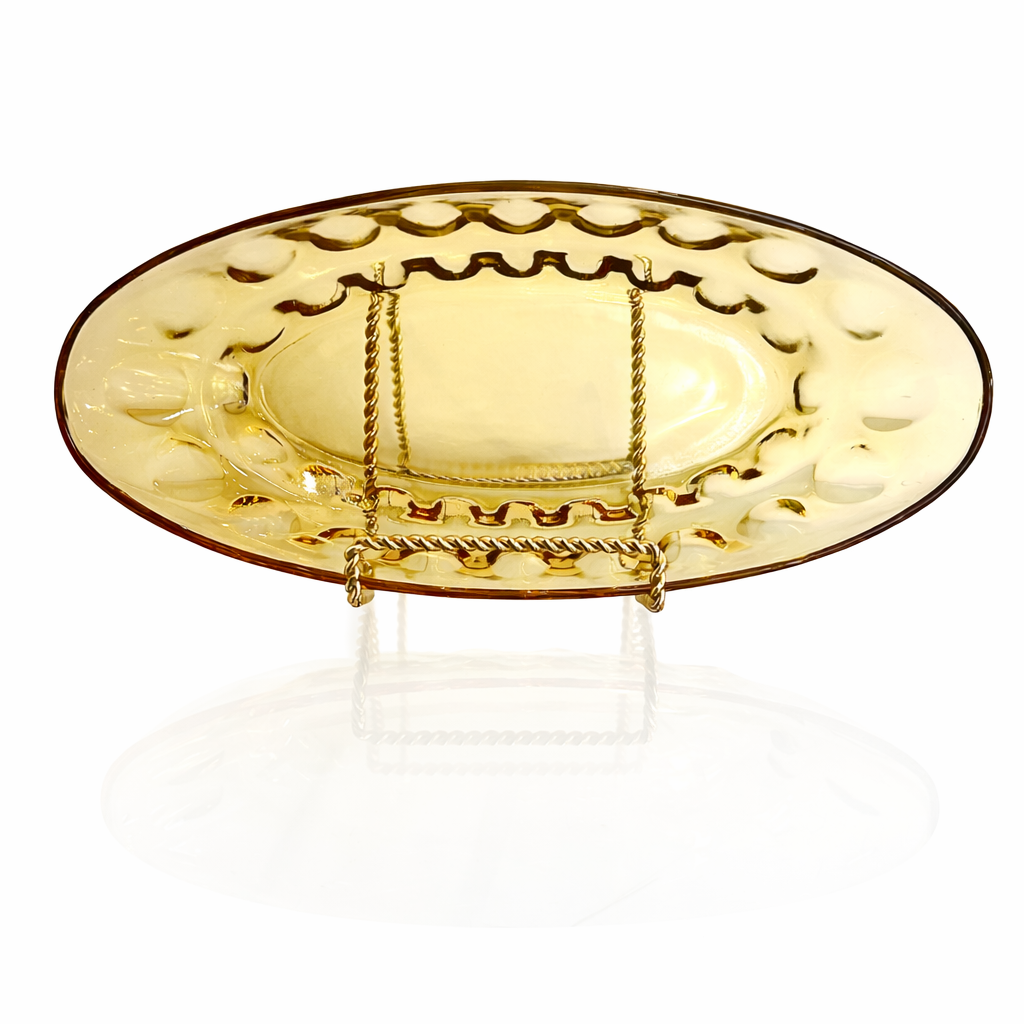
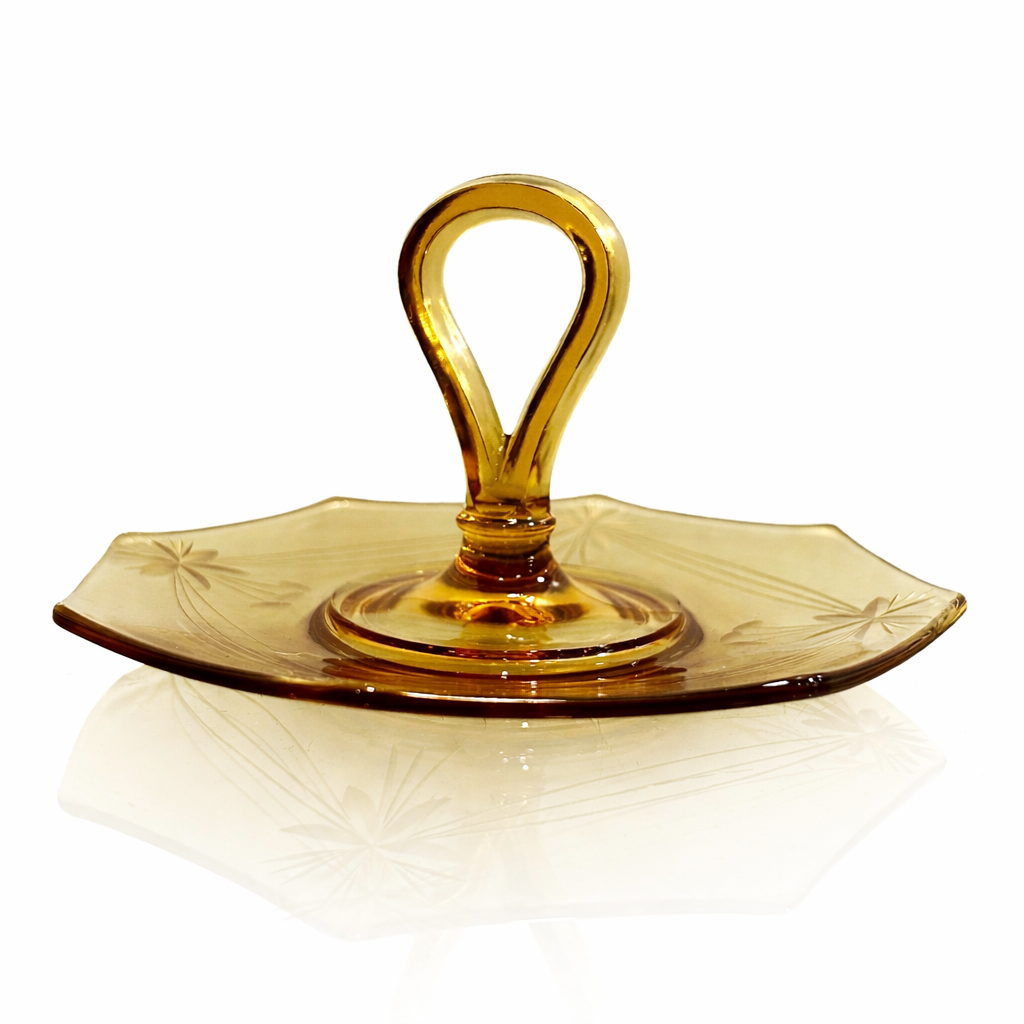
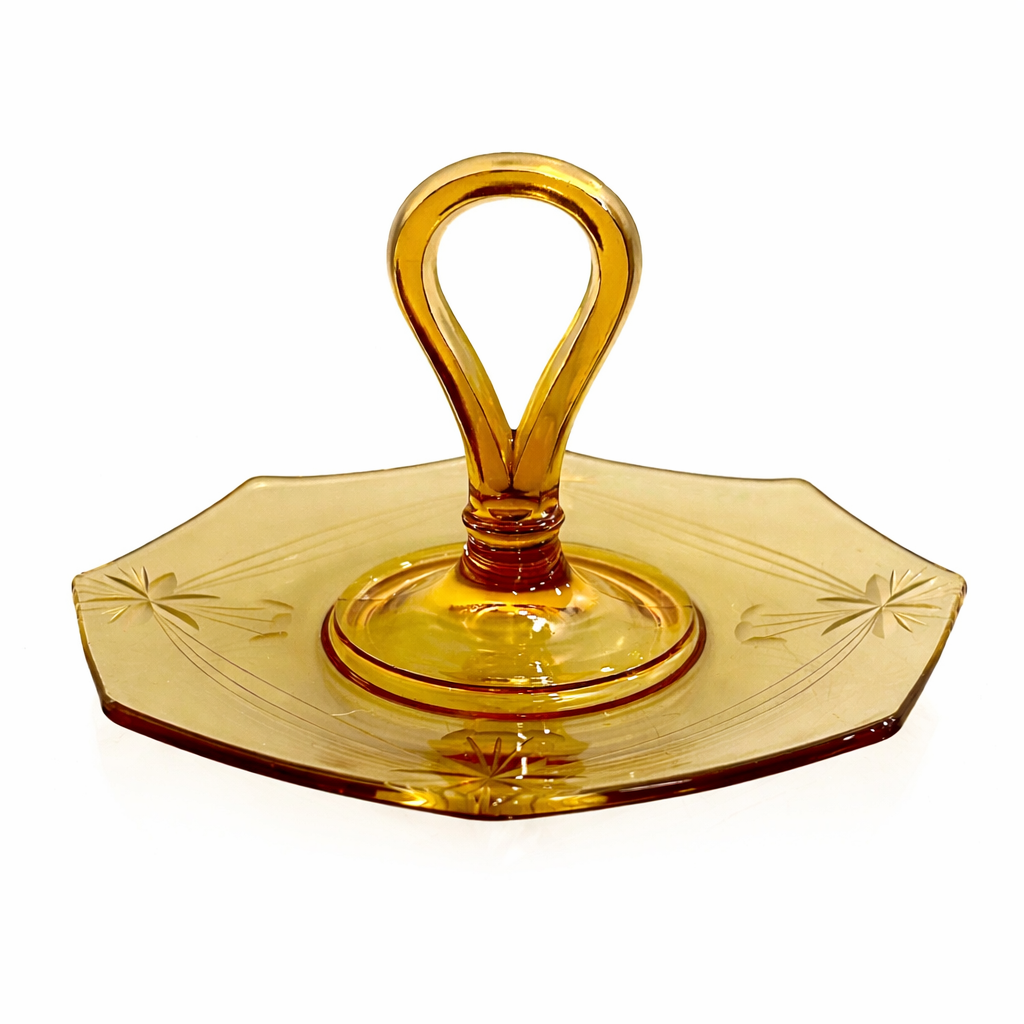
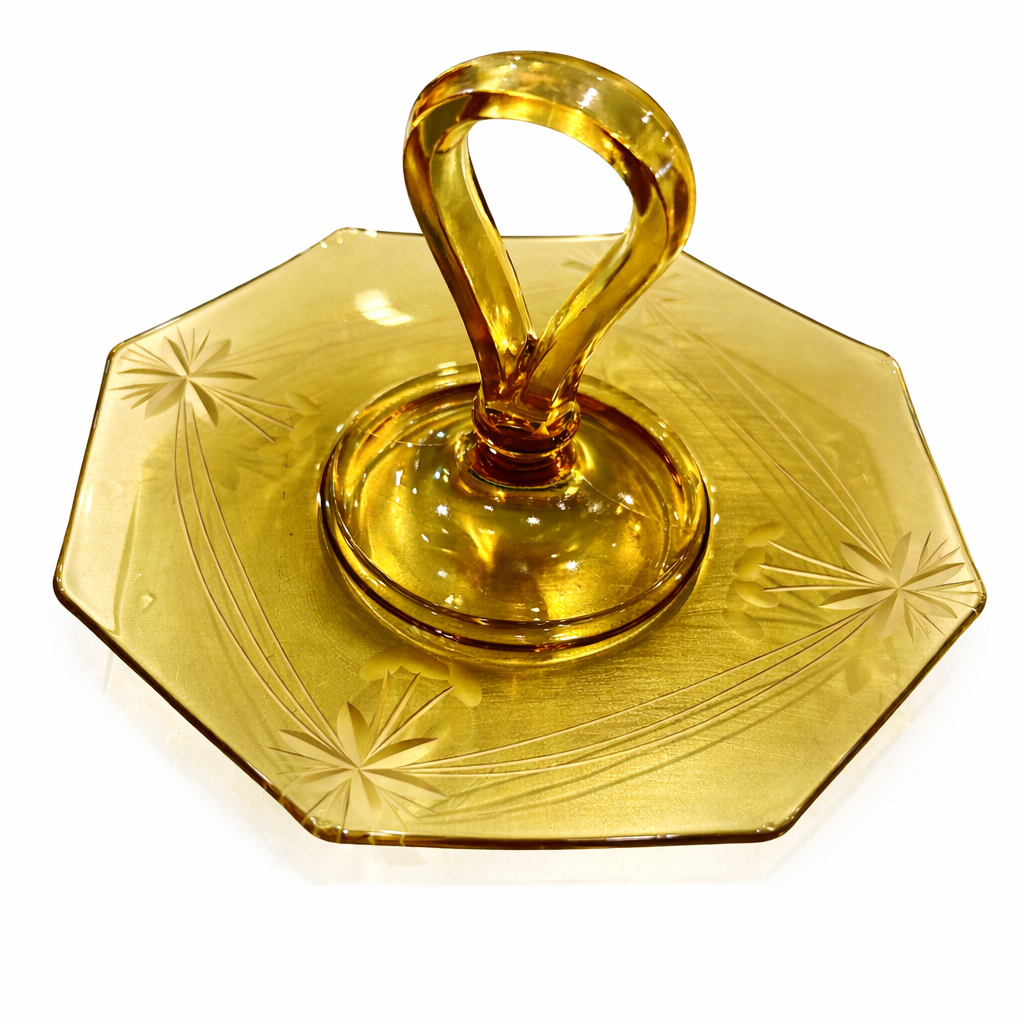
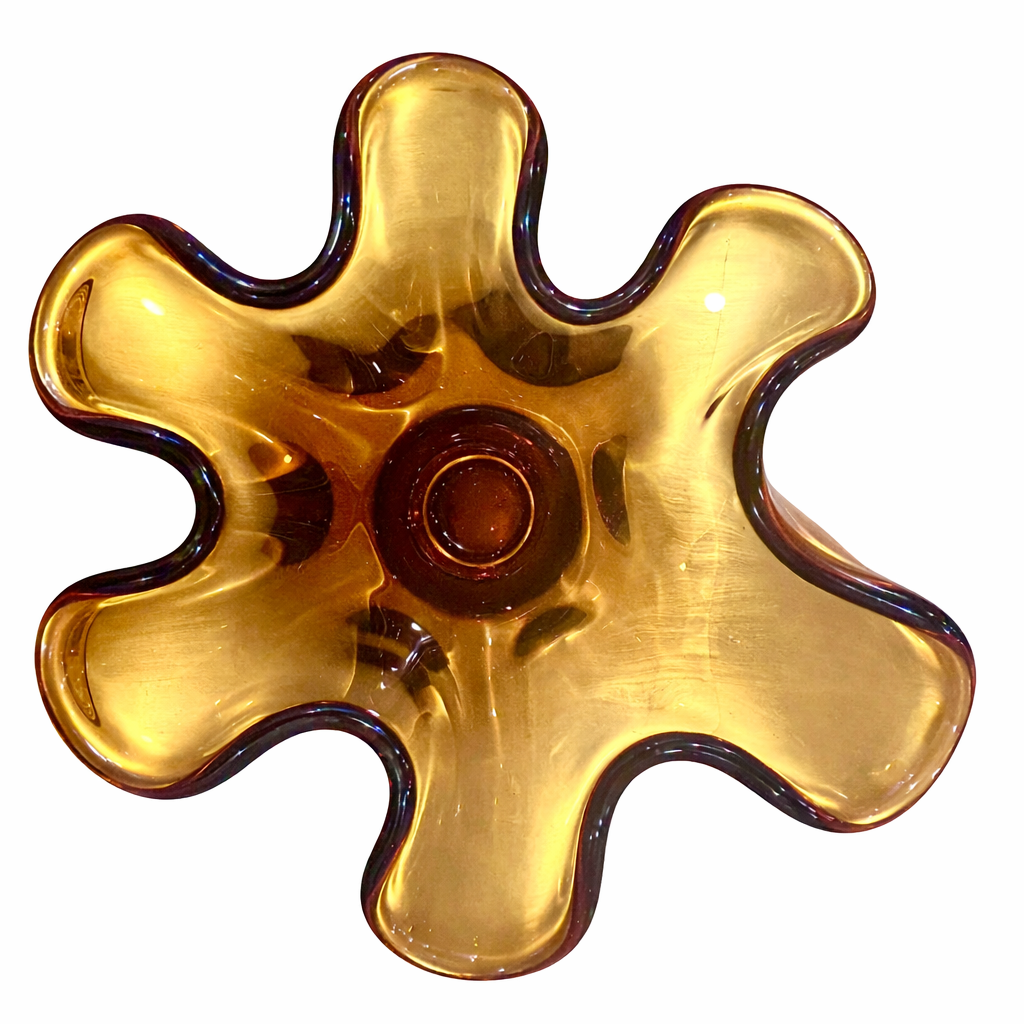
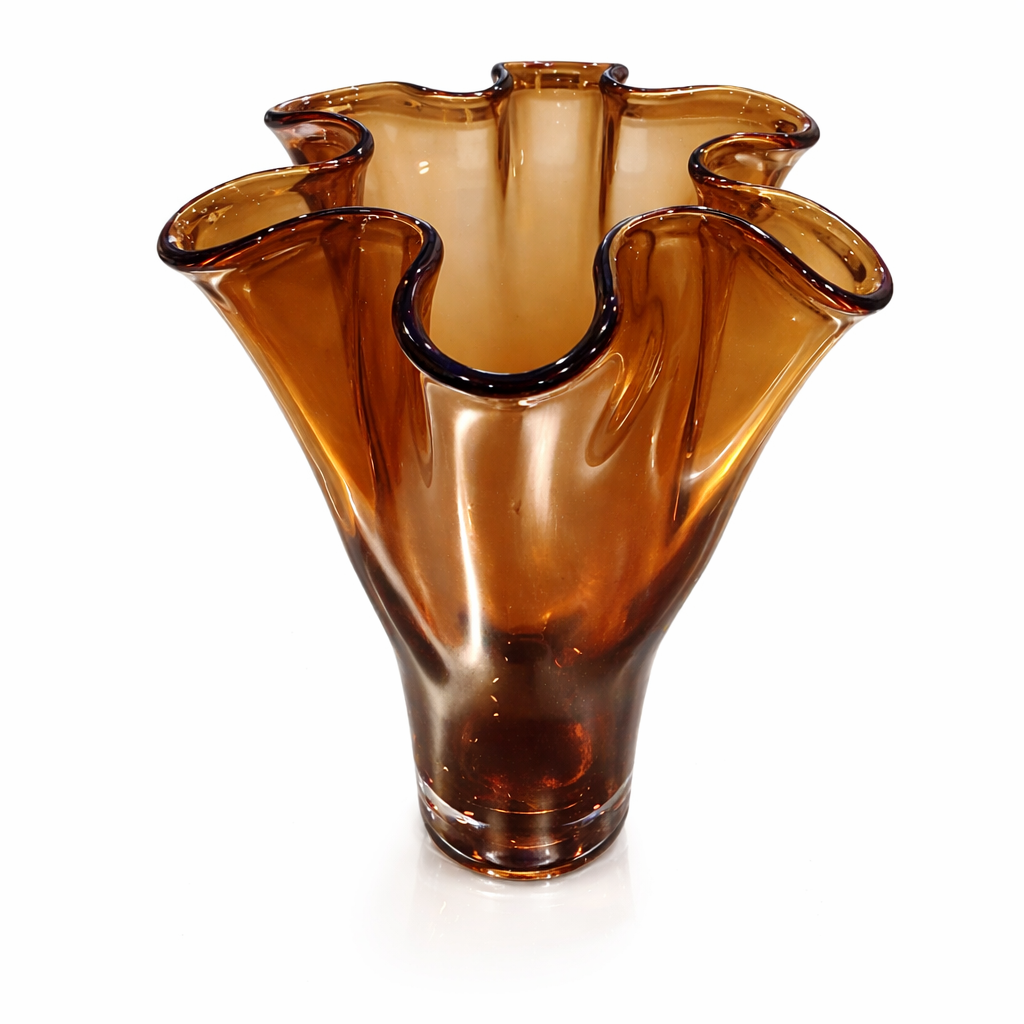
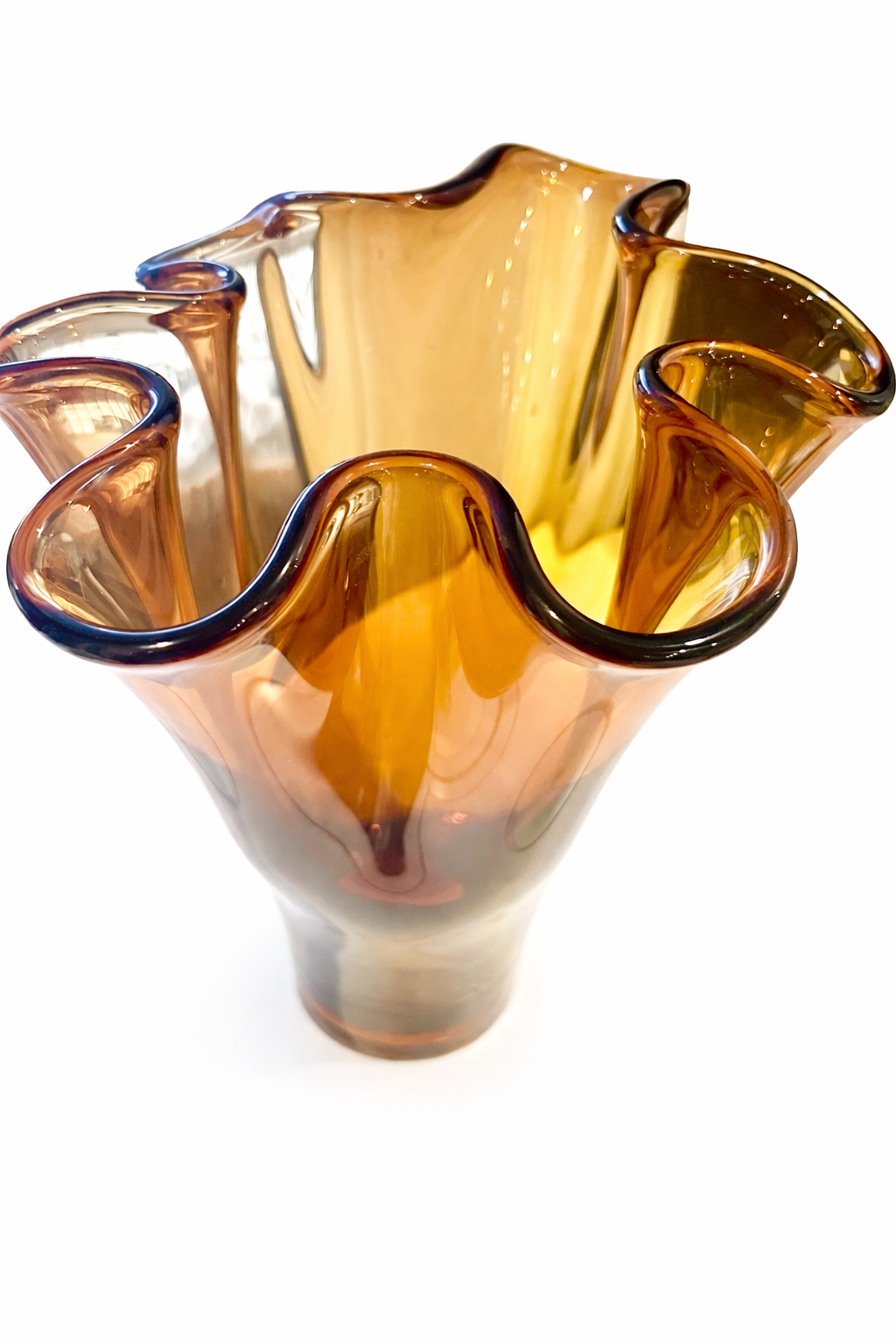
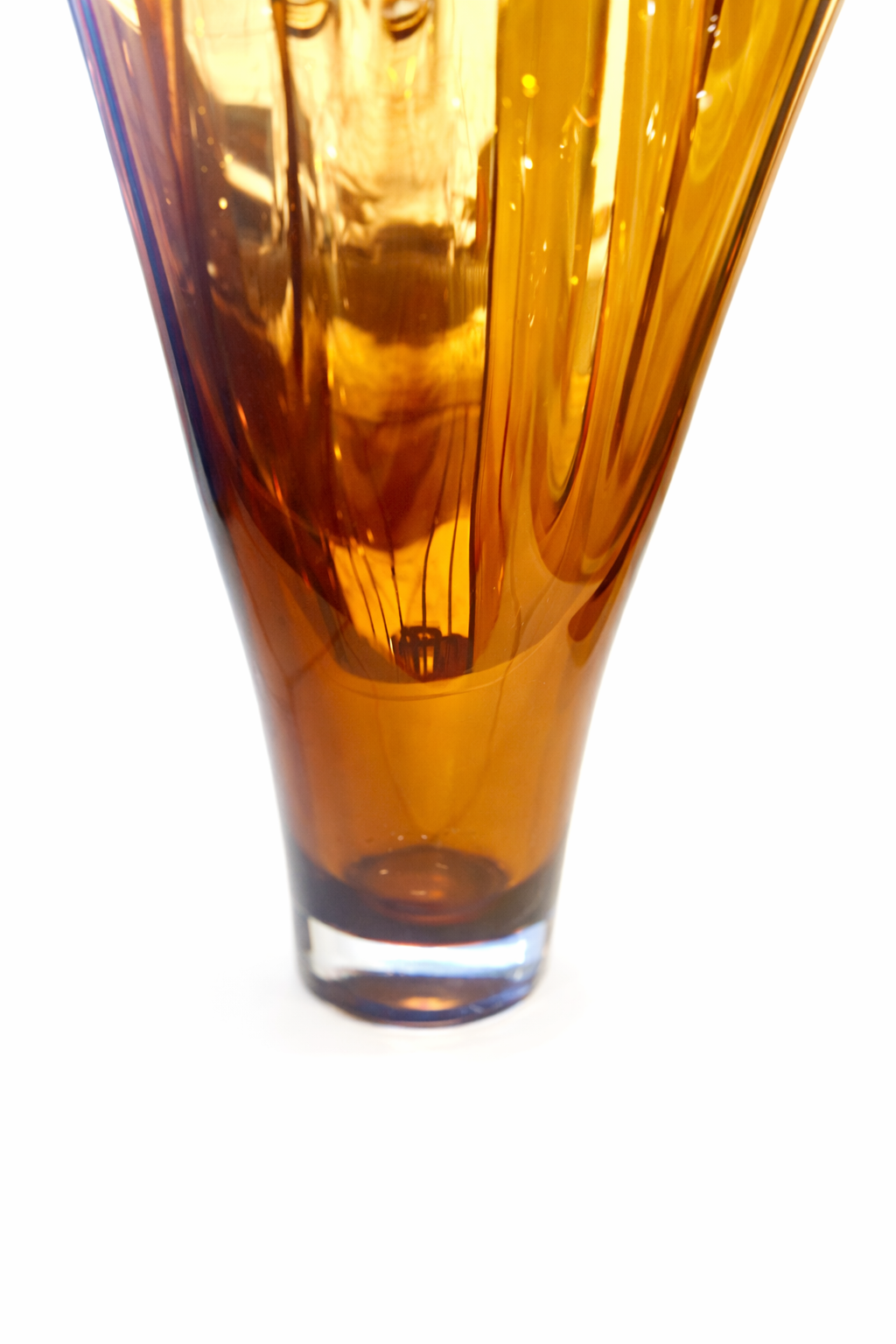
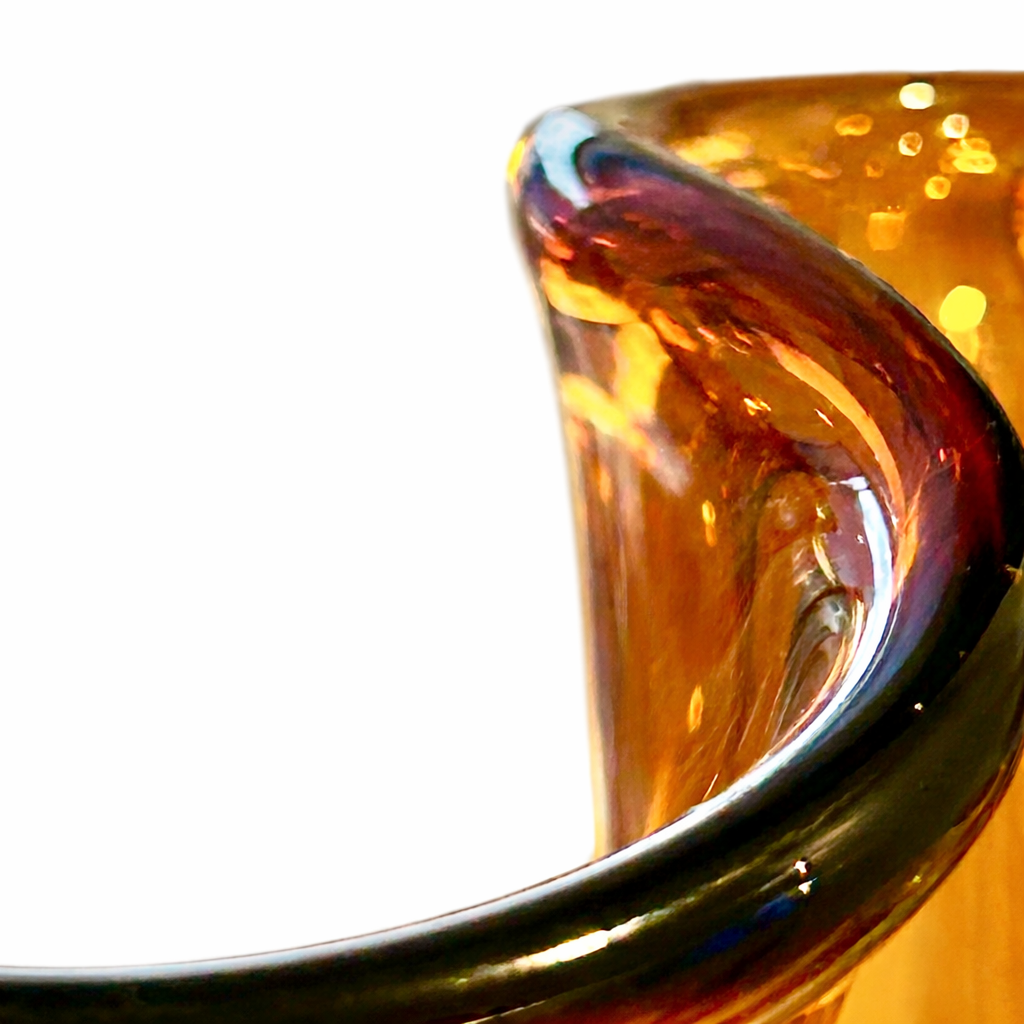
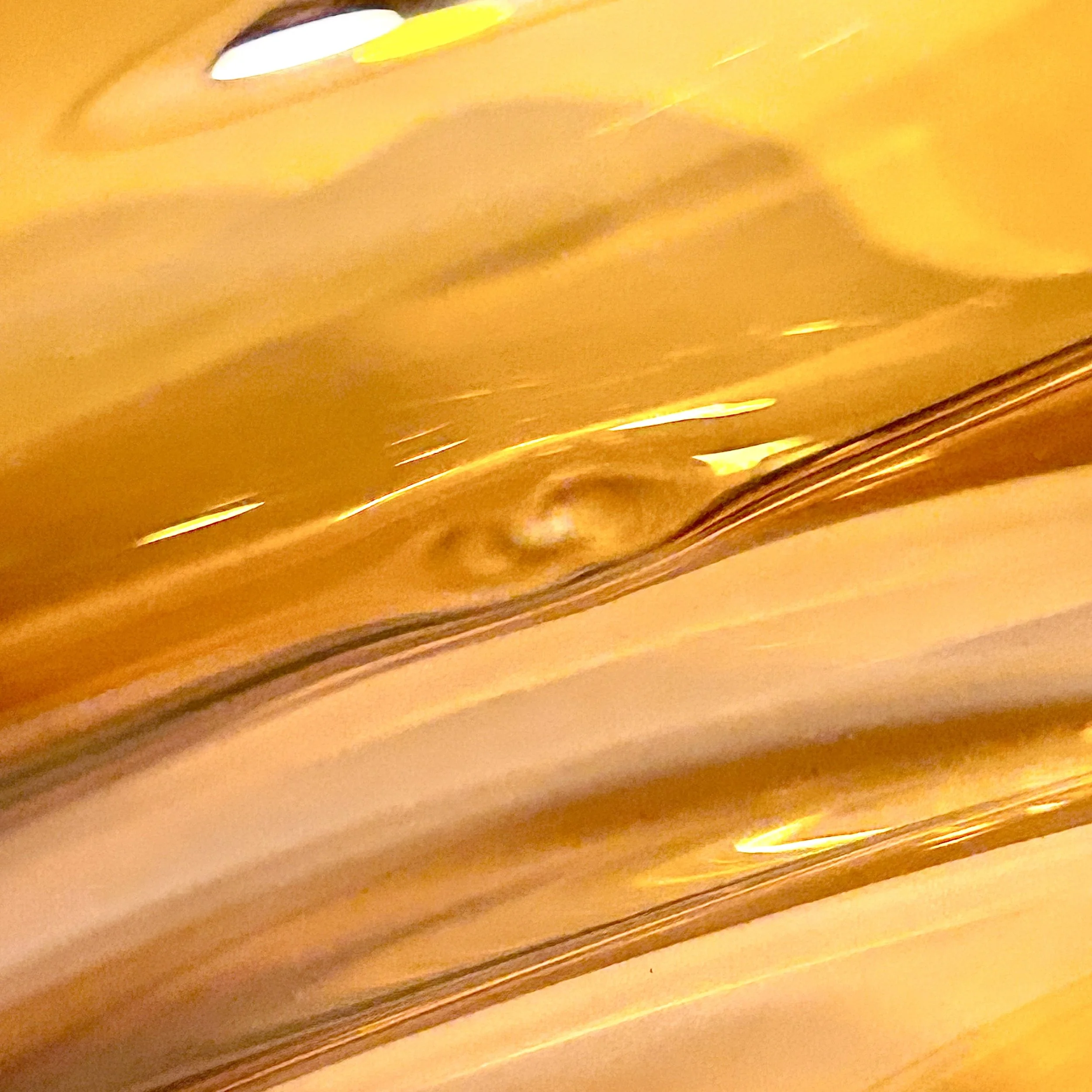
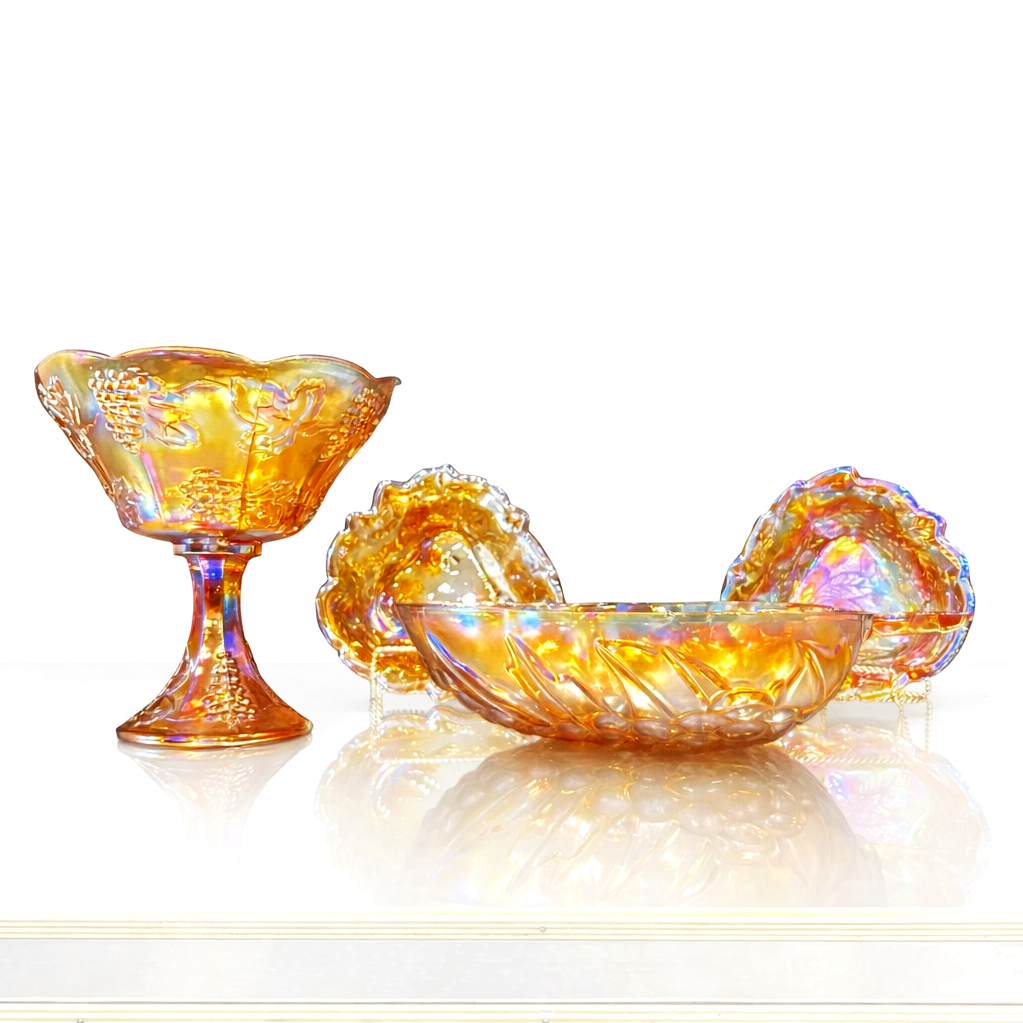
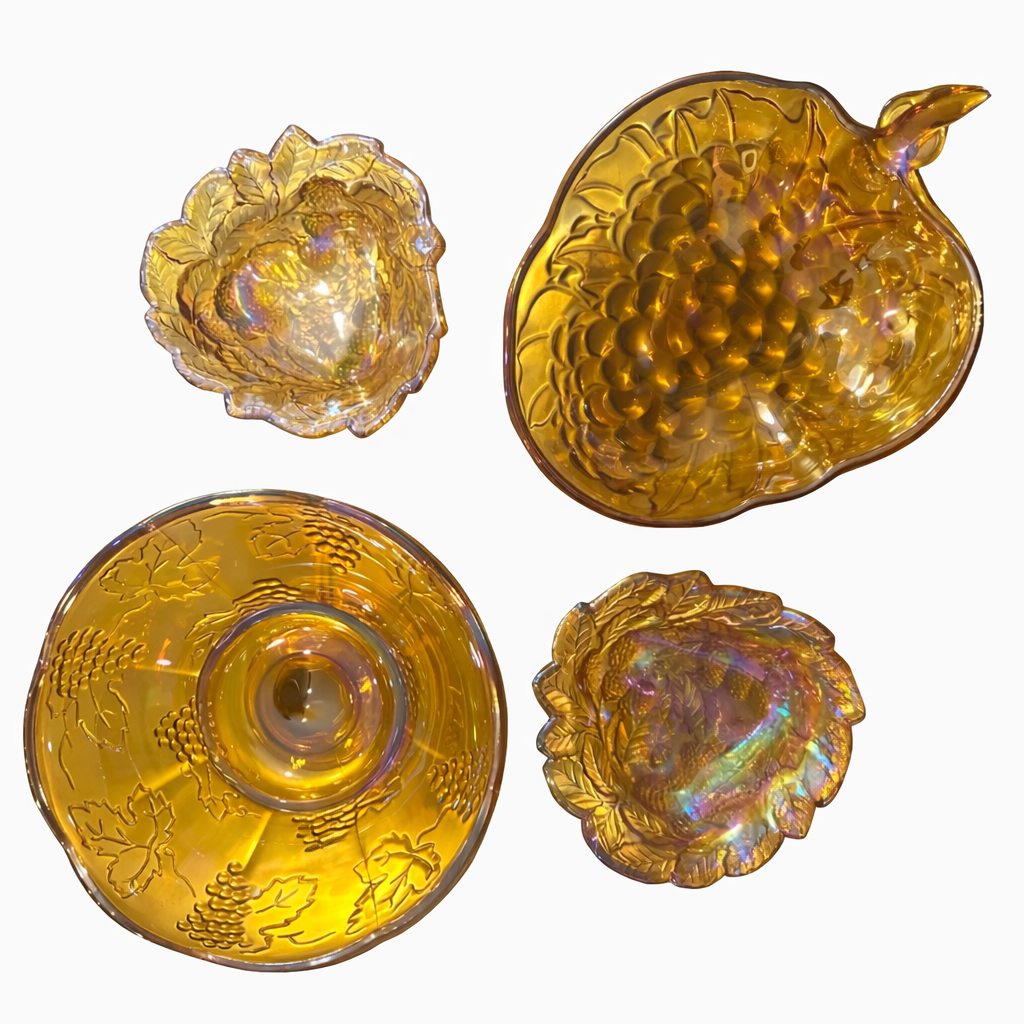
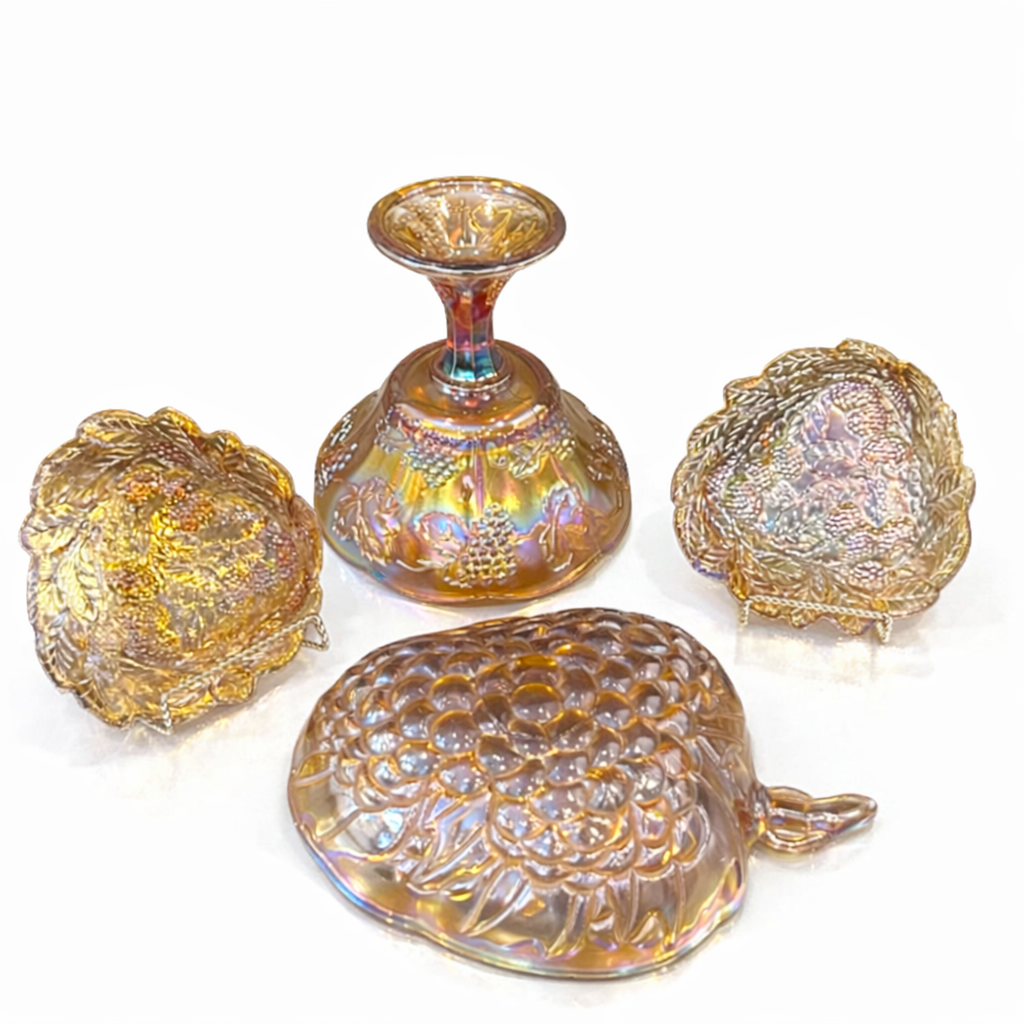
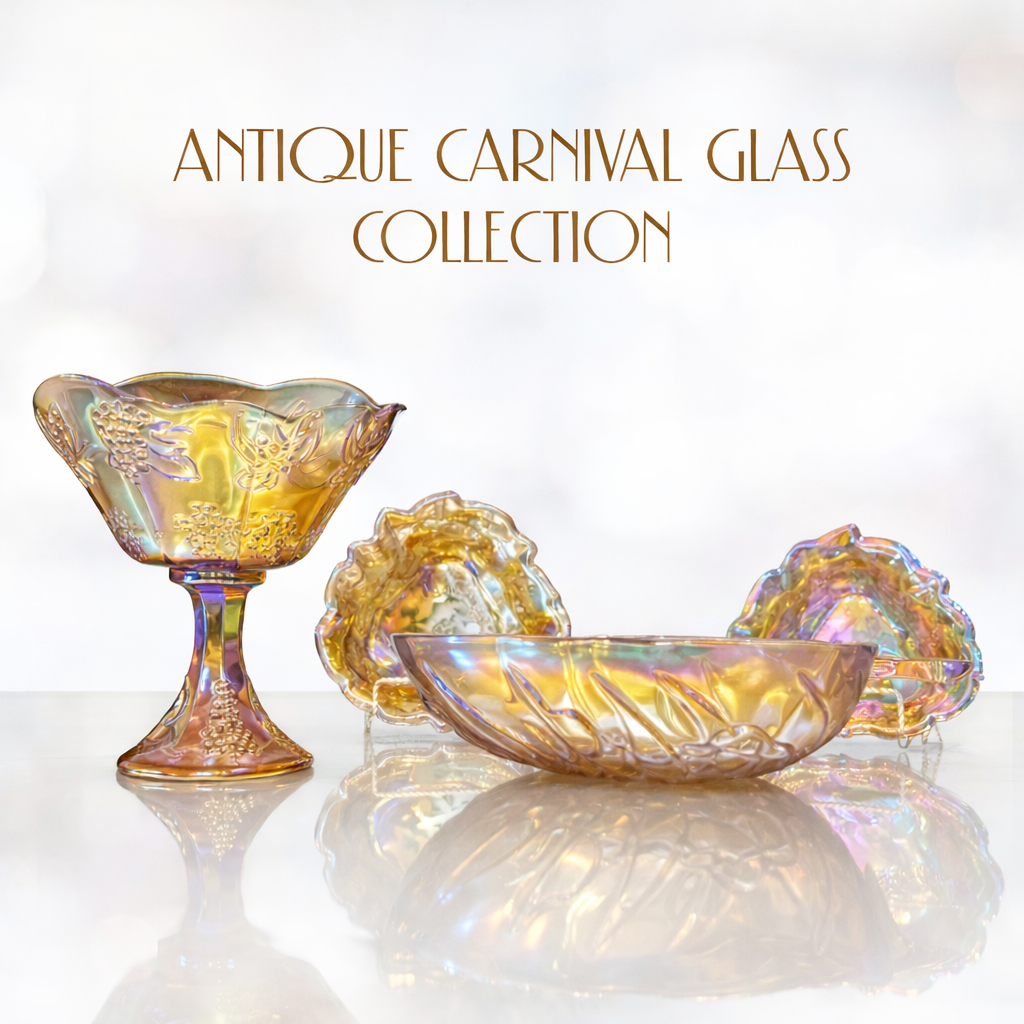
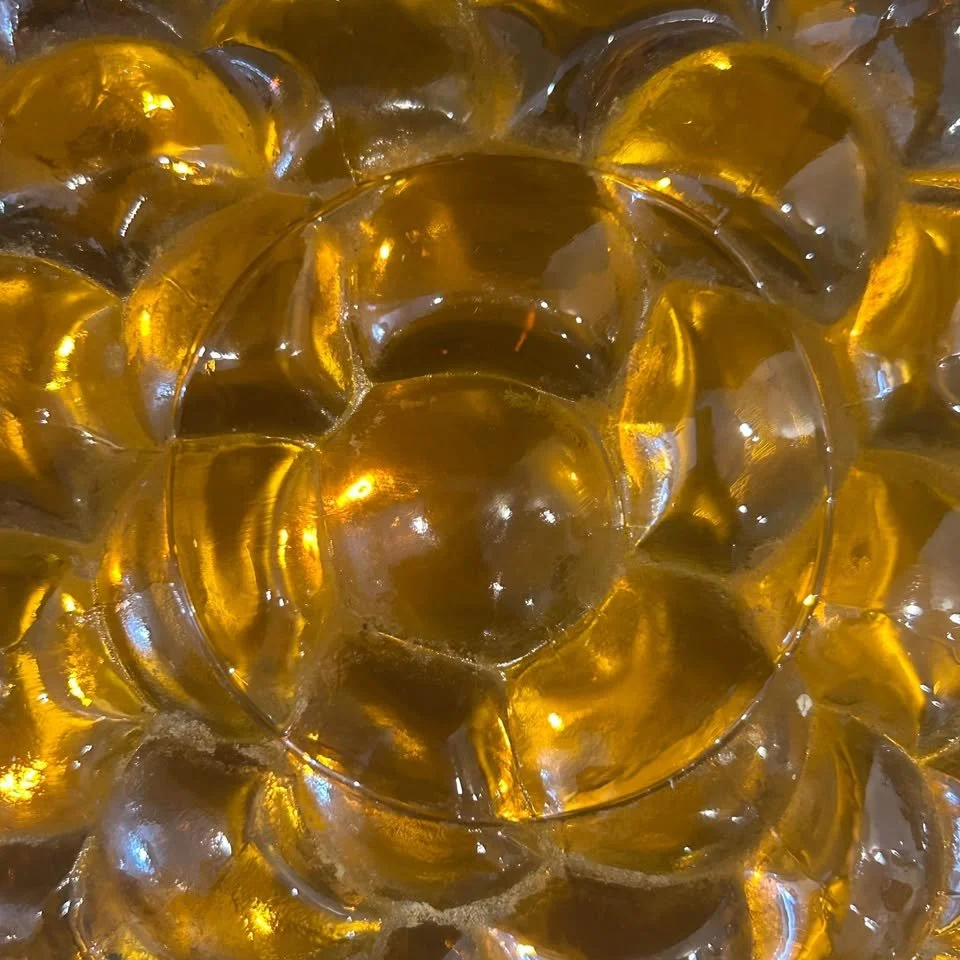
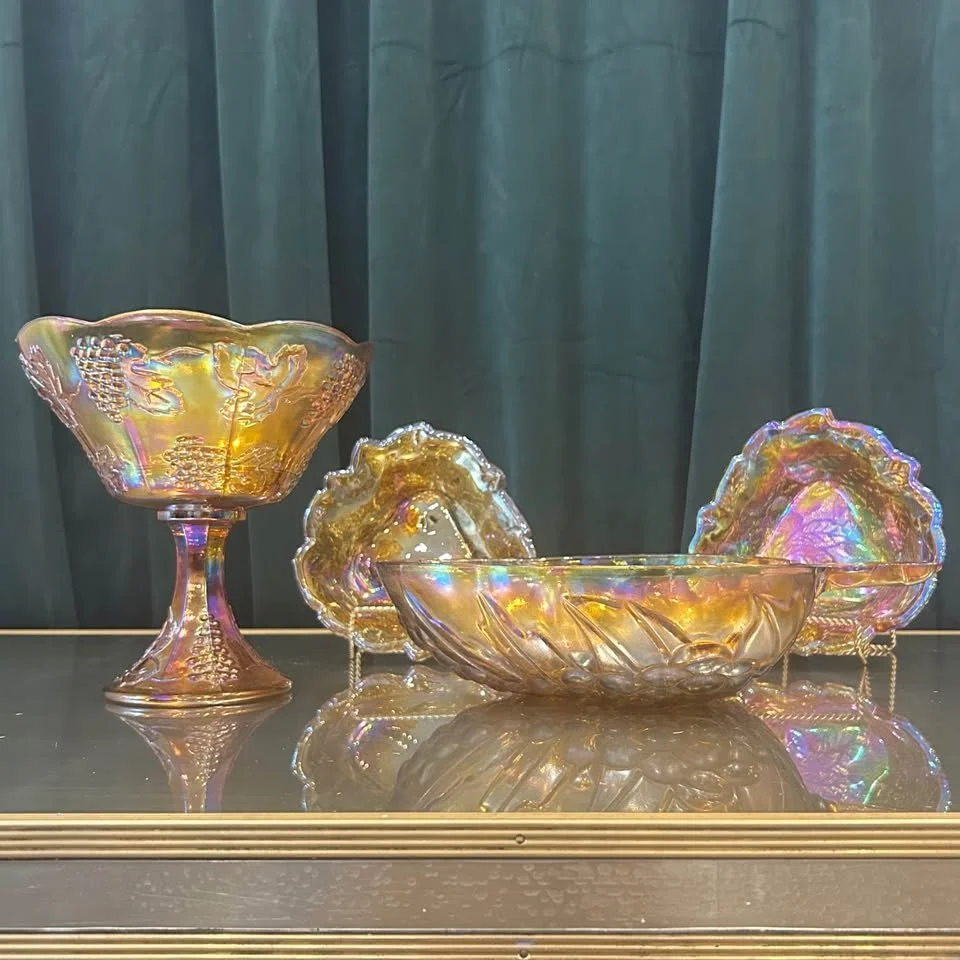
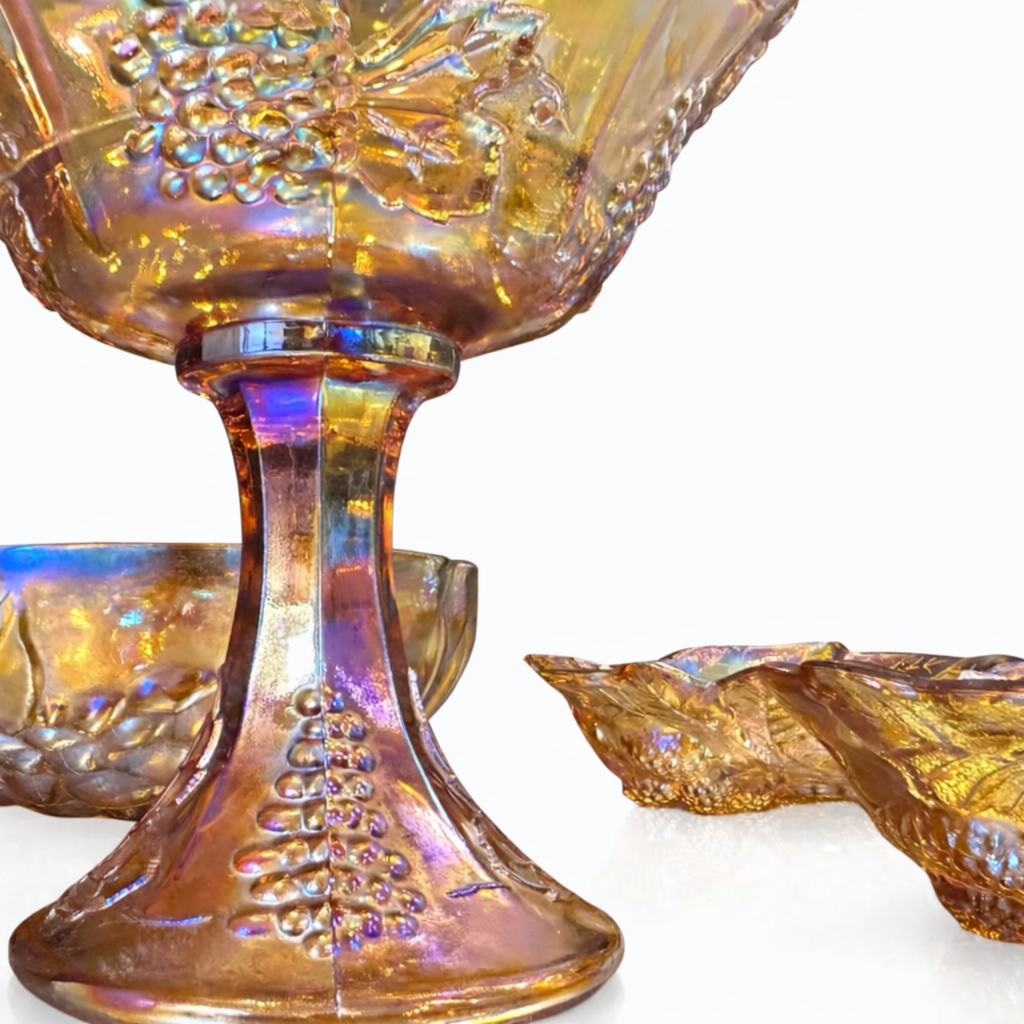
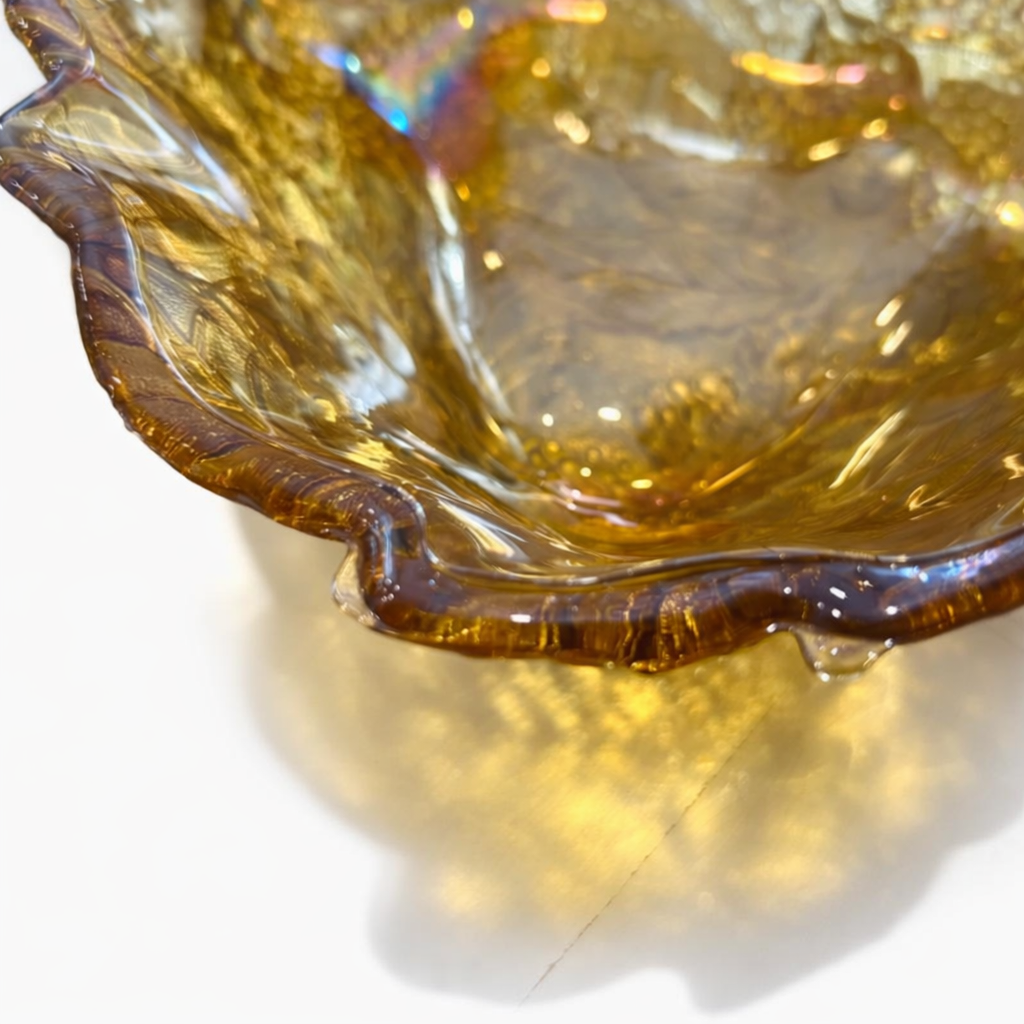
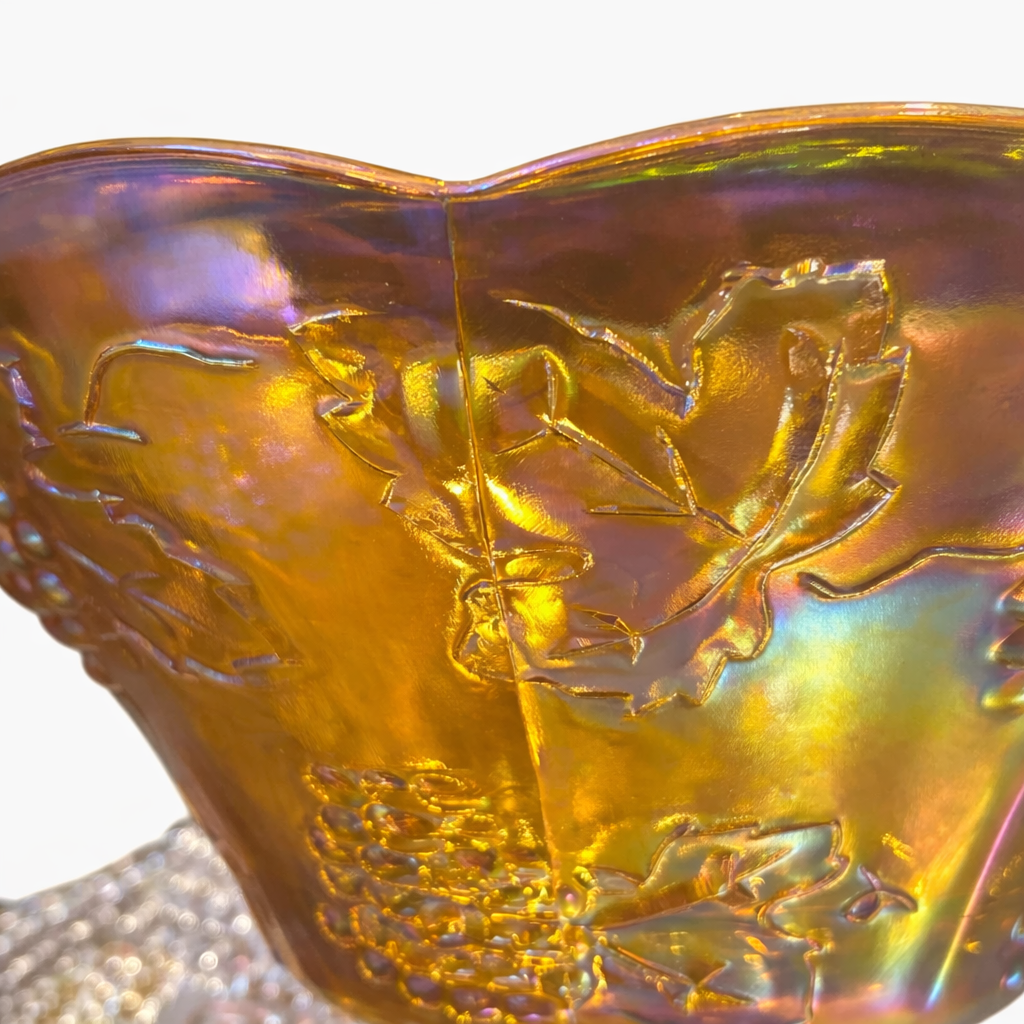
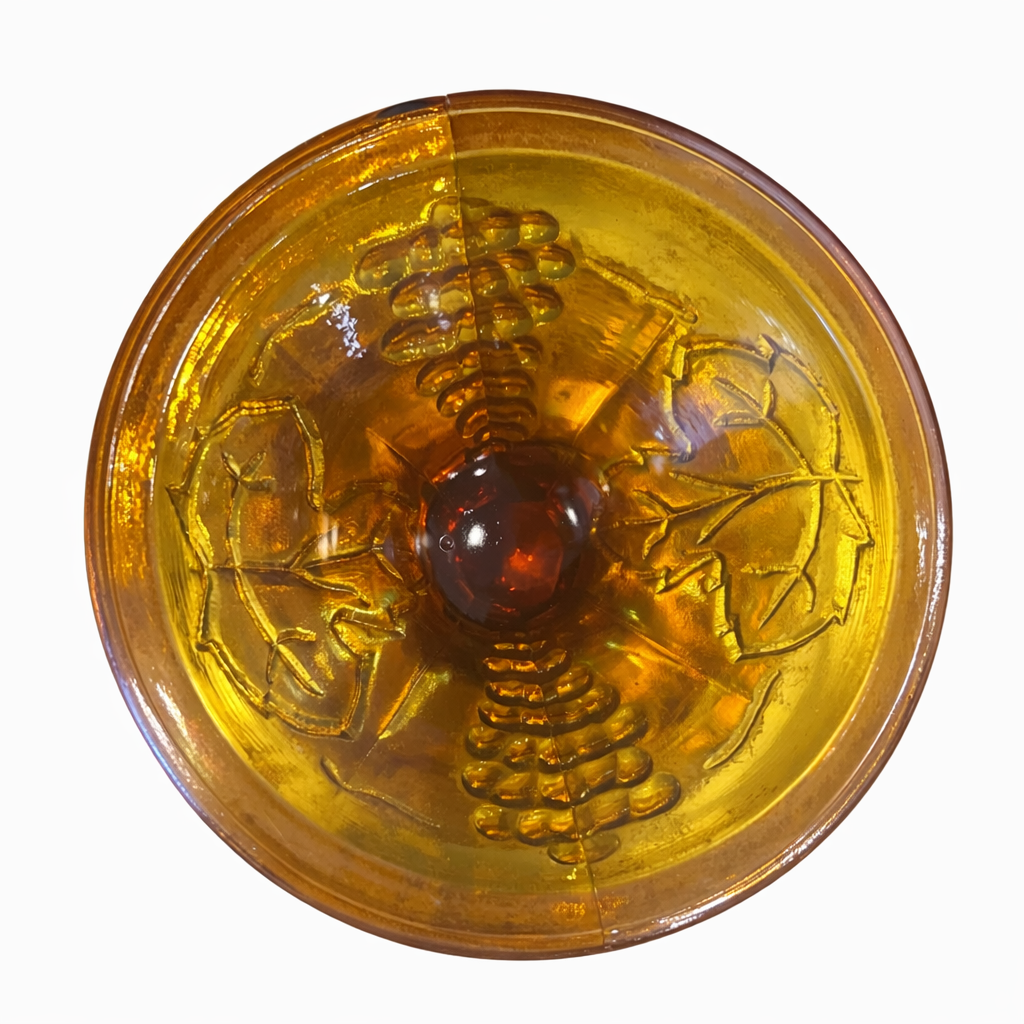
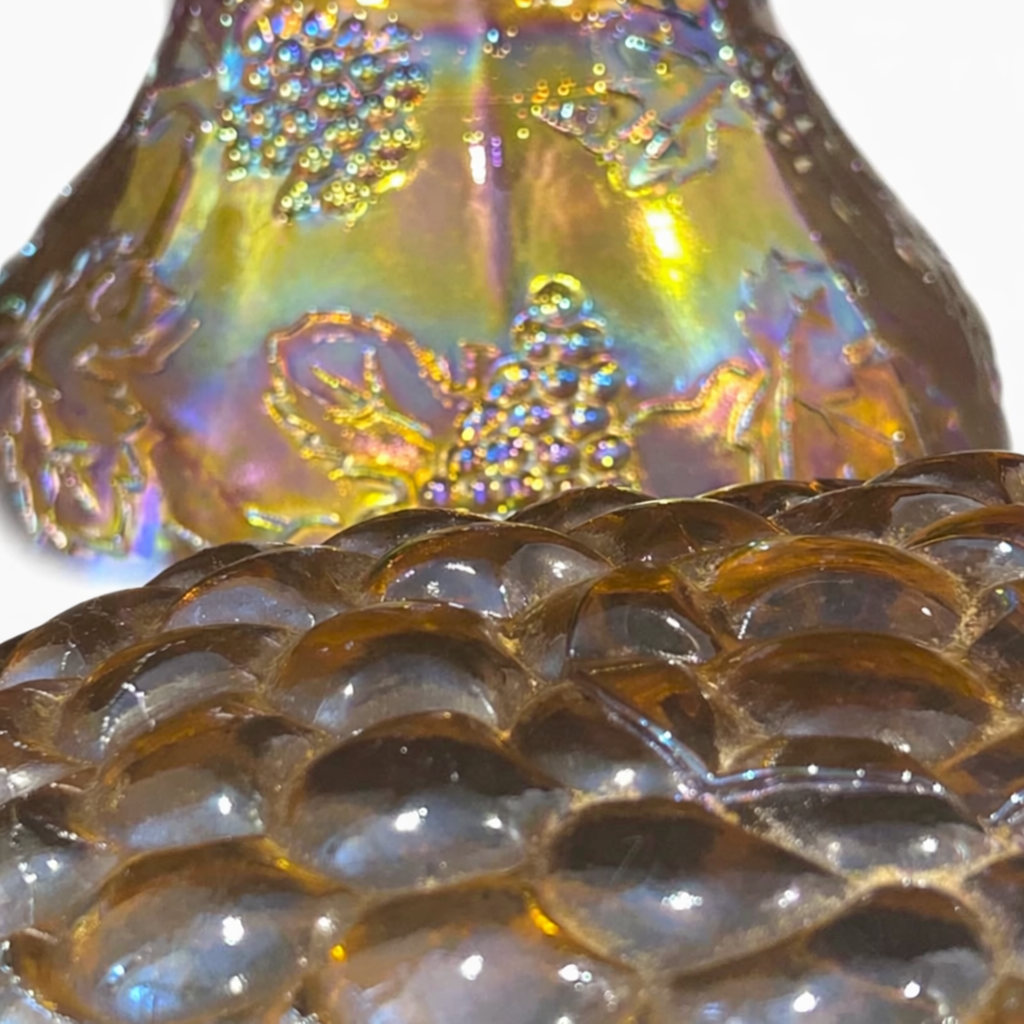
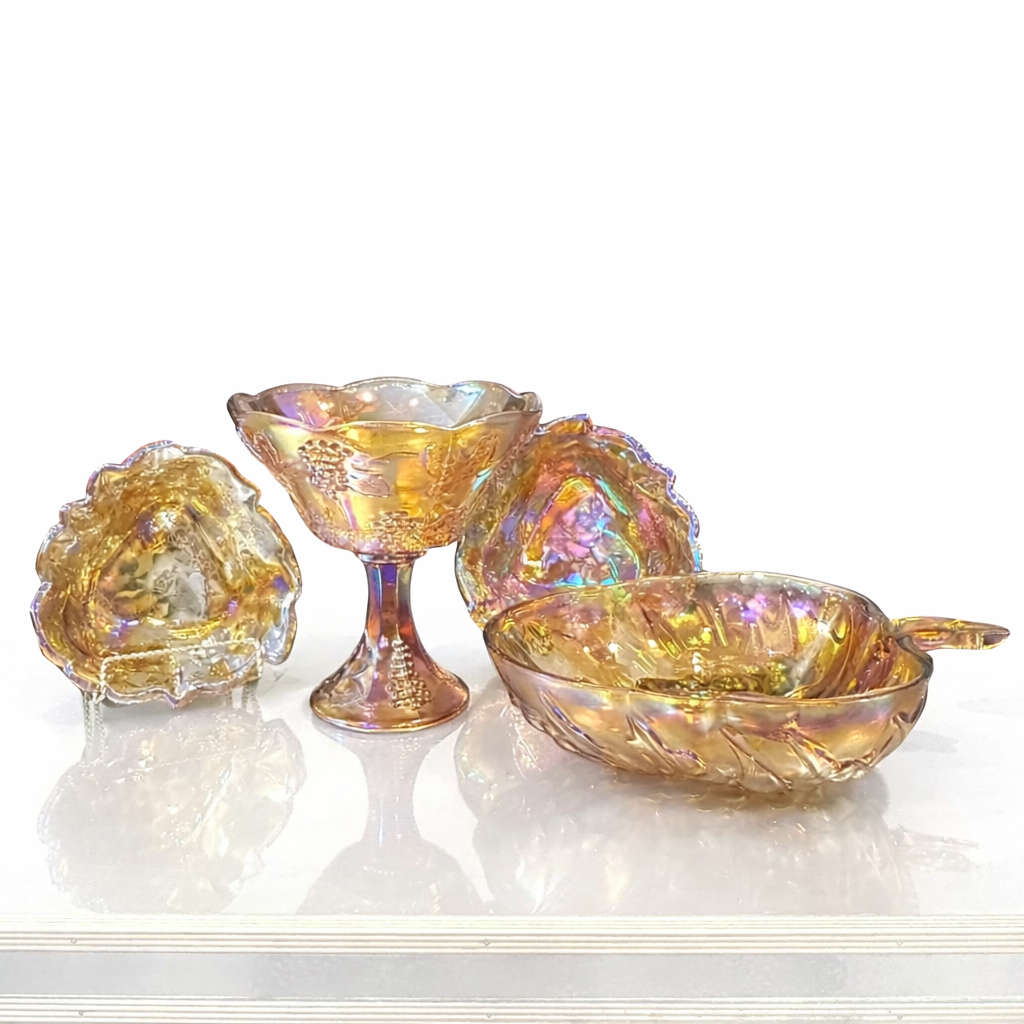
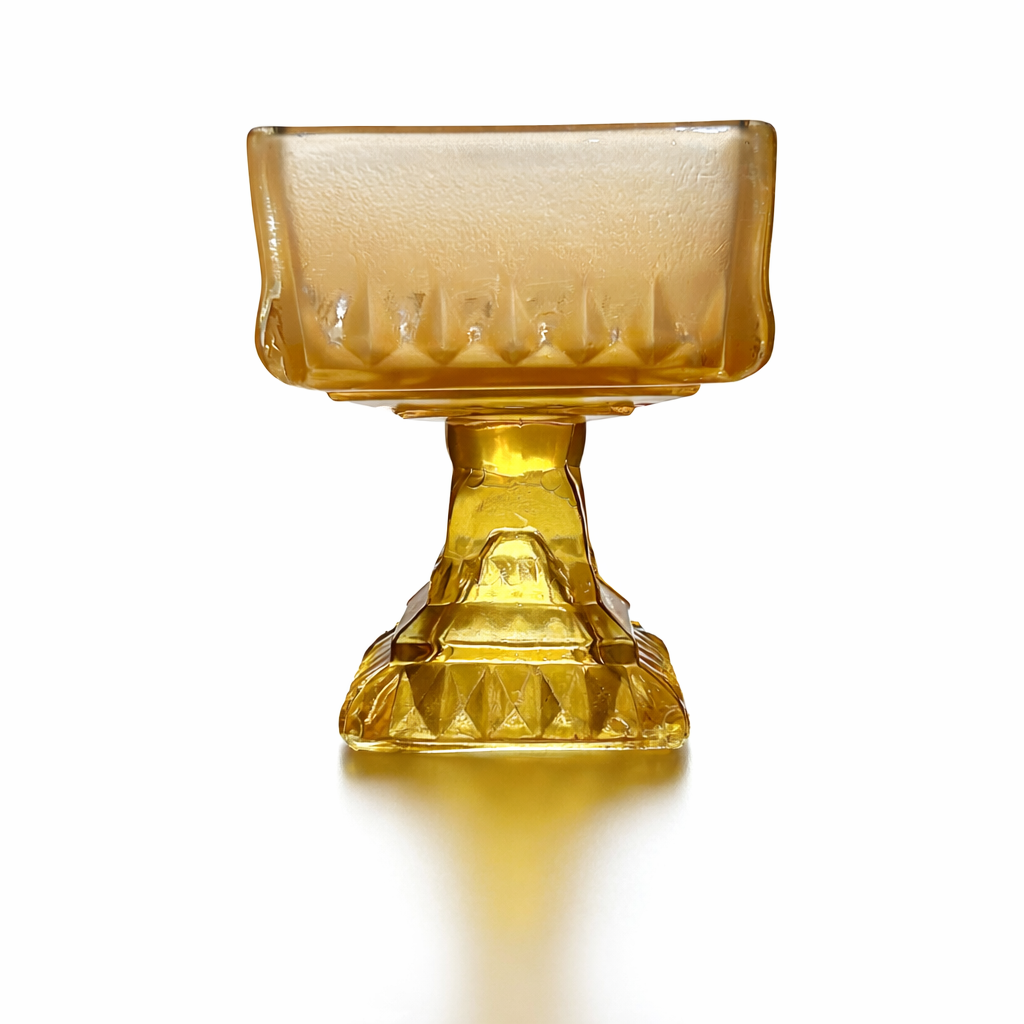
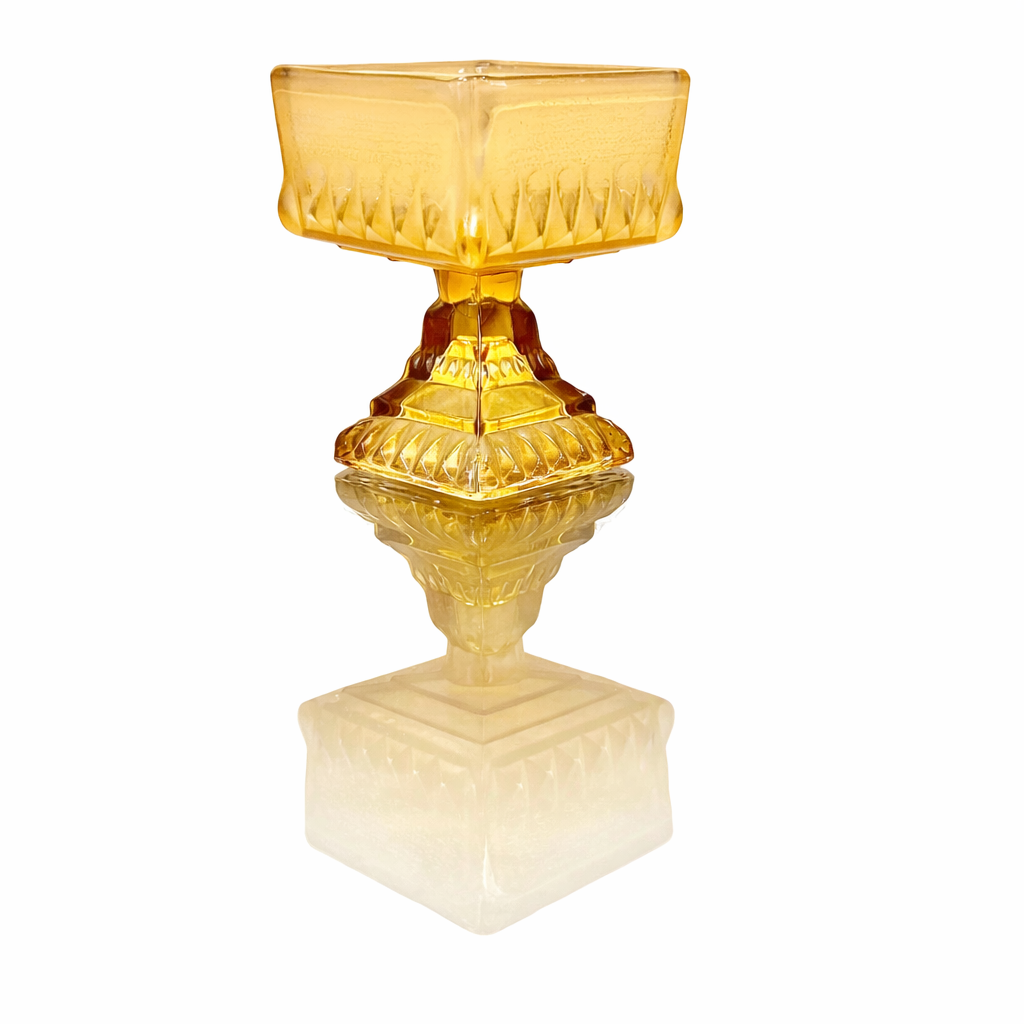
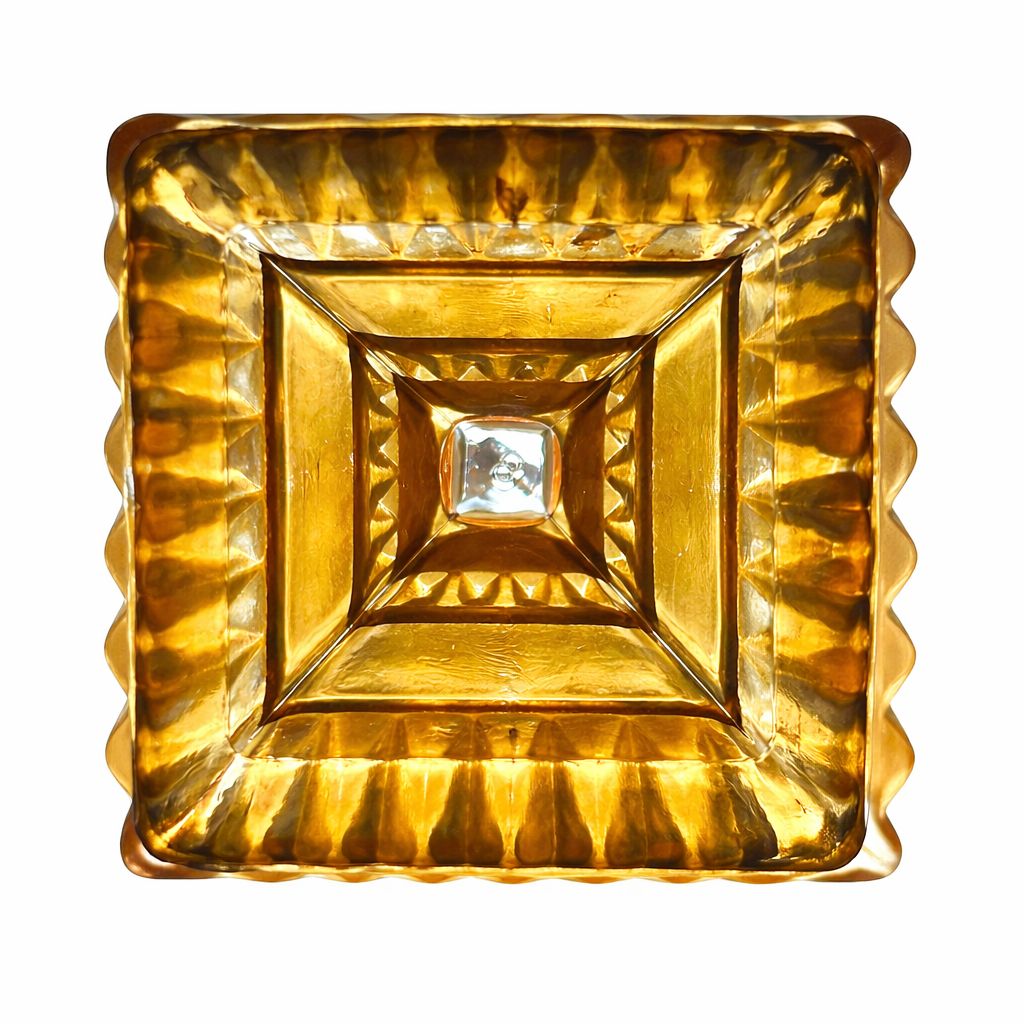
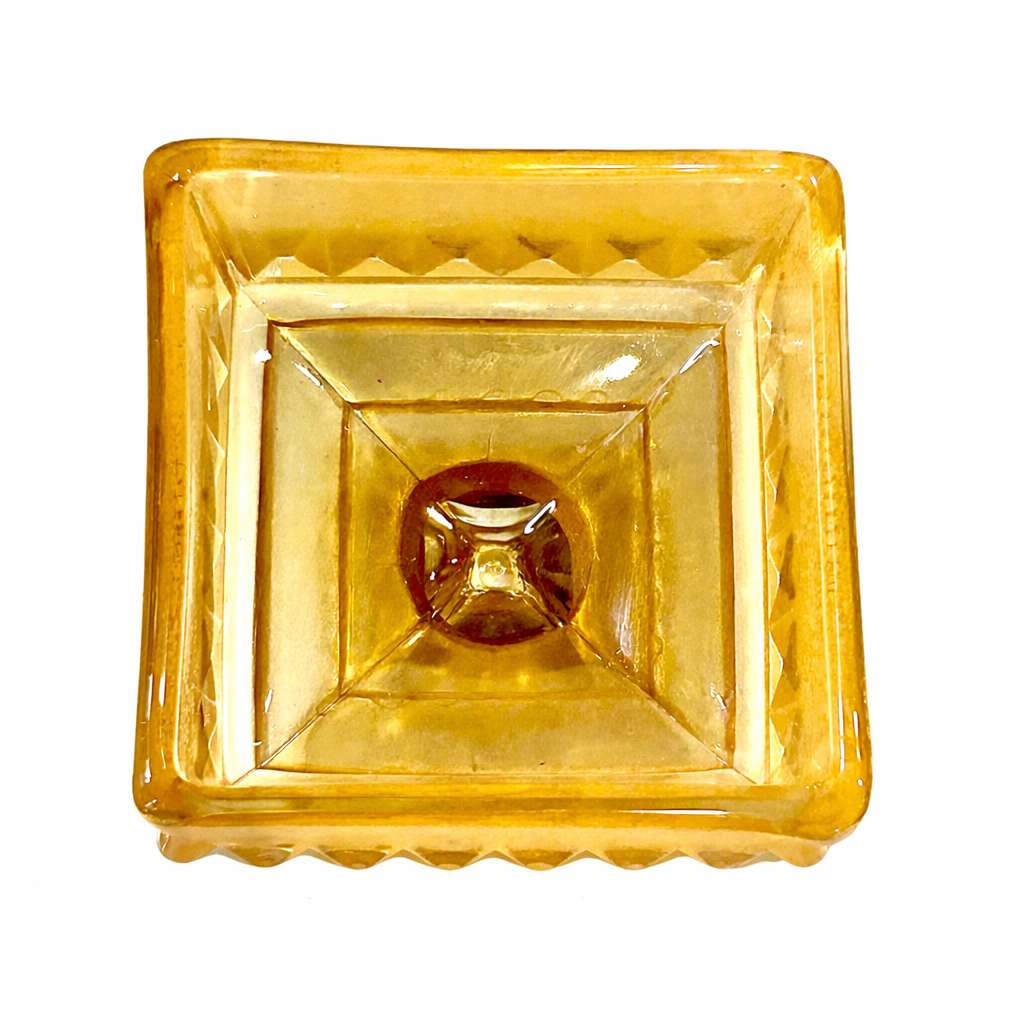
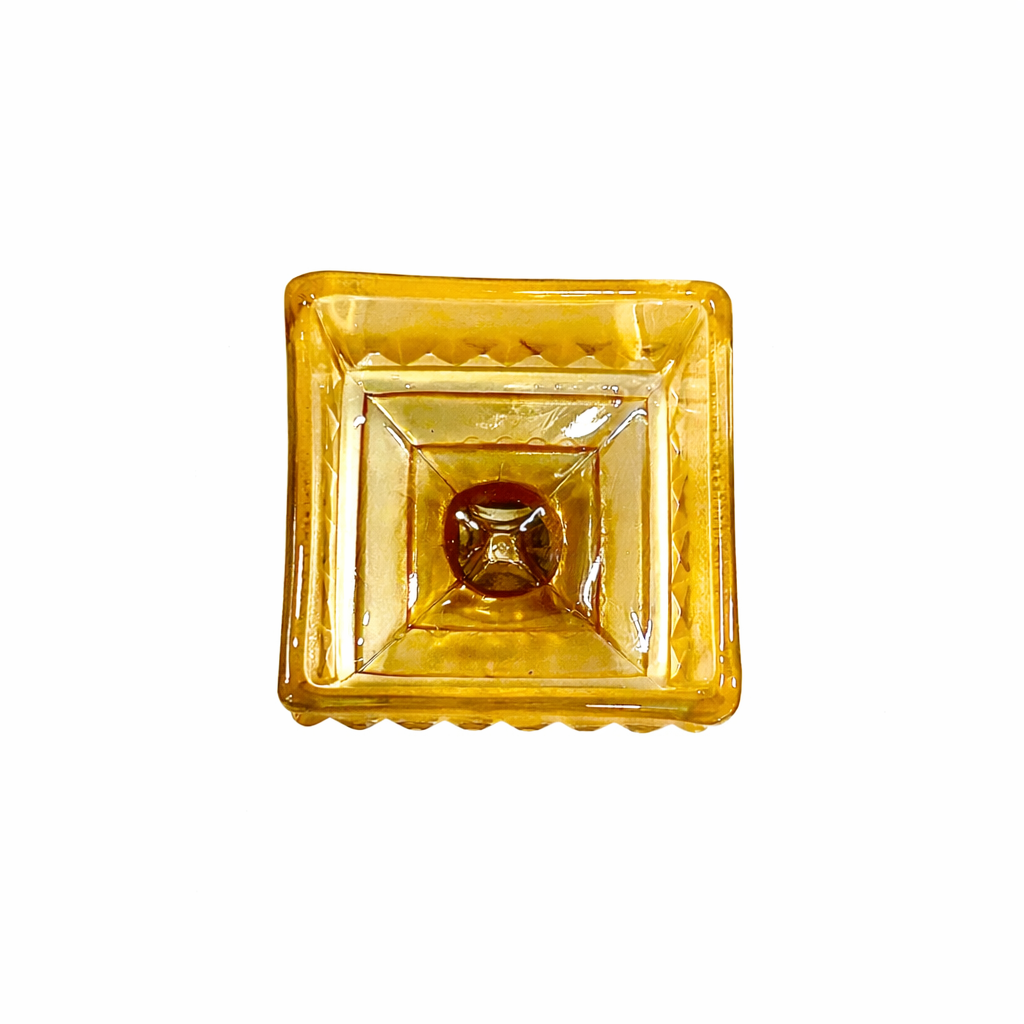
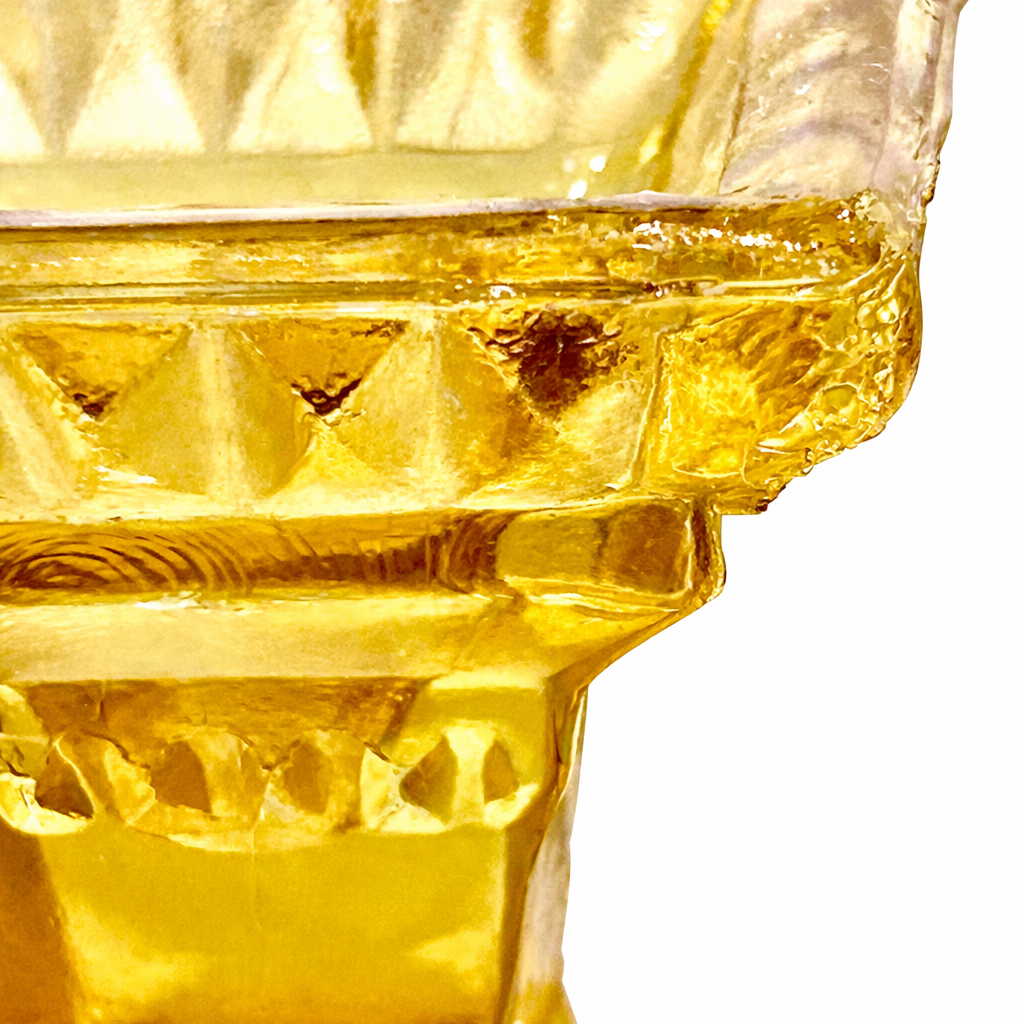
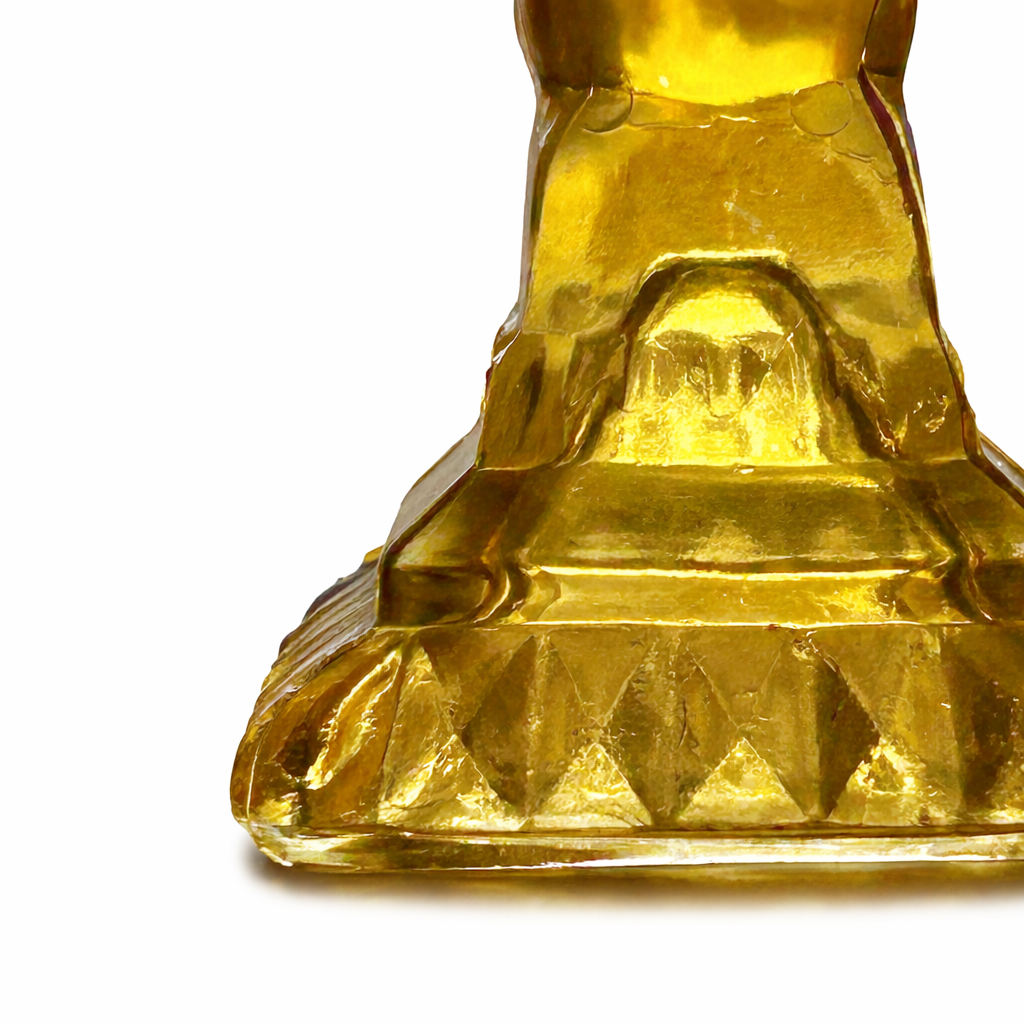
A richly toned amber pressed-glass bonbon / nut dish featuring a scalloped rim, bold geometric paneled molding, and a sharply defined starburst base. The warm honey-to-golden topaz coloration is enhanced with hand-applied gilt enamel floral and foliate accents, giving the piece strong mid-century hostess ware presence and luminous cabinet appeal.
The form, mold clarity, and decorative gilding align with mid-20th-century pressed giftware production, when amber glass and gold embellishment were especially popular for entertaining and display.
Attribution & Period
Mid-20th century, circa 1950s–1960s.
Unmarked, consistent with decorative pressed-glass giftware of the period.
Dimensions & Weight
Diameter: 4”
Height: 3”
Weight: Moderate; typical of mid-century pressed glass of this scale.
Condition
Displays very well overall.
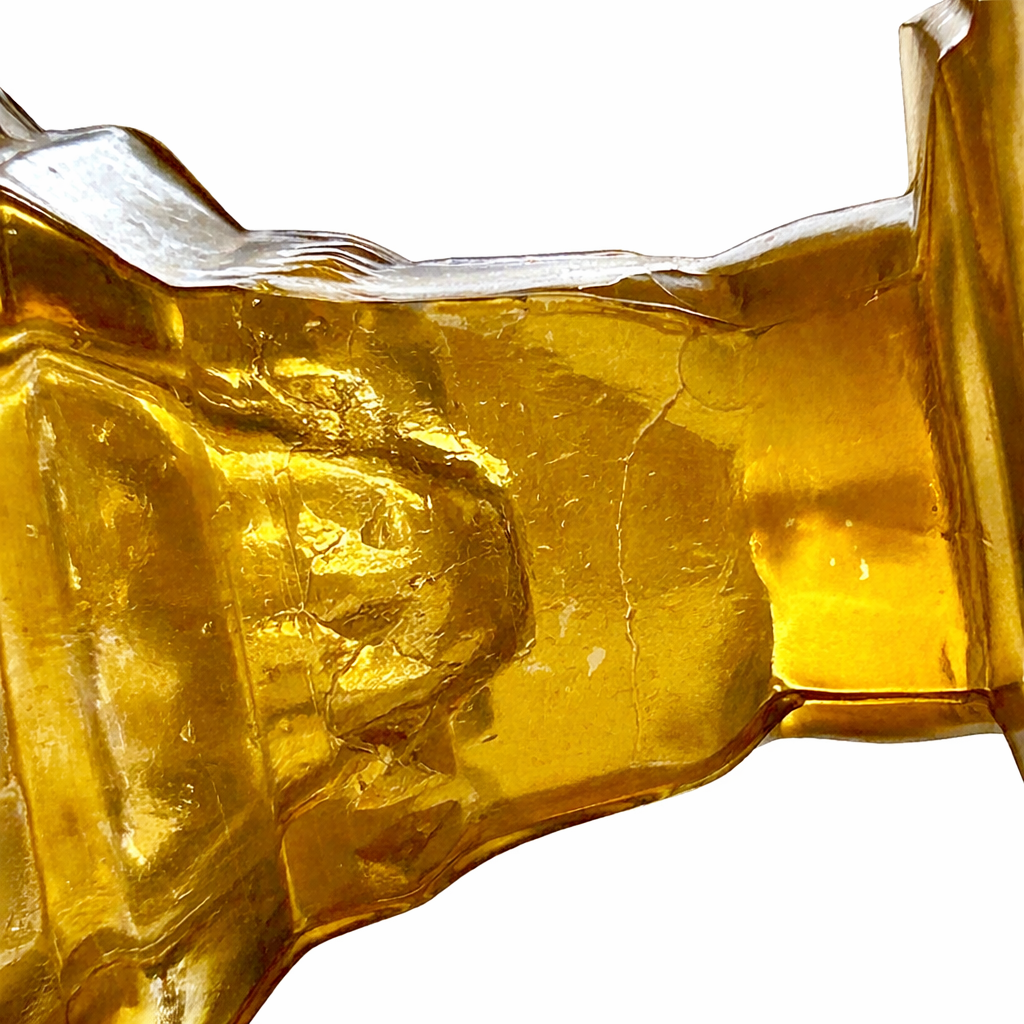
No visible chips or cracks observed.
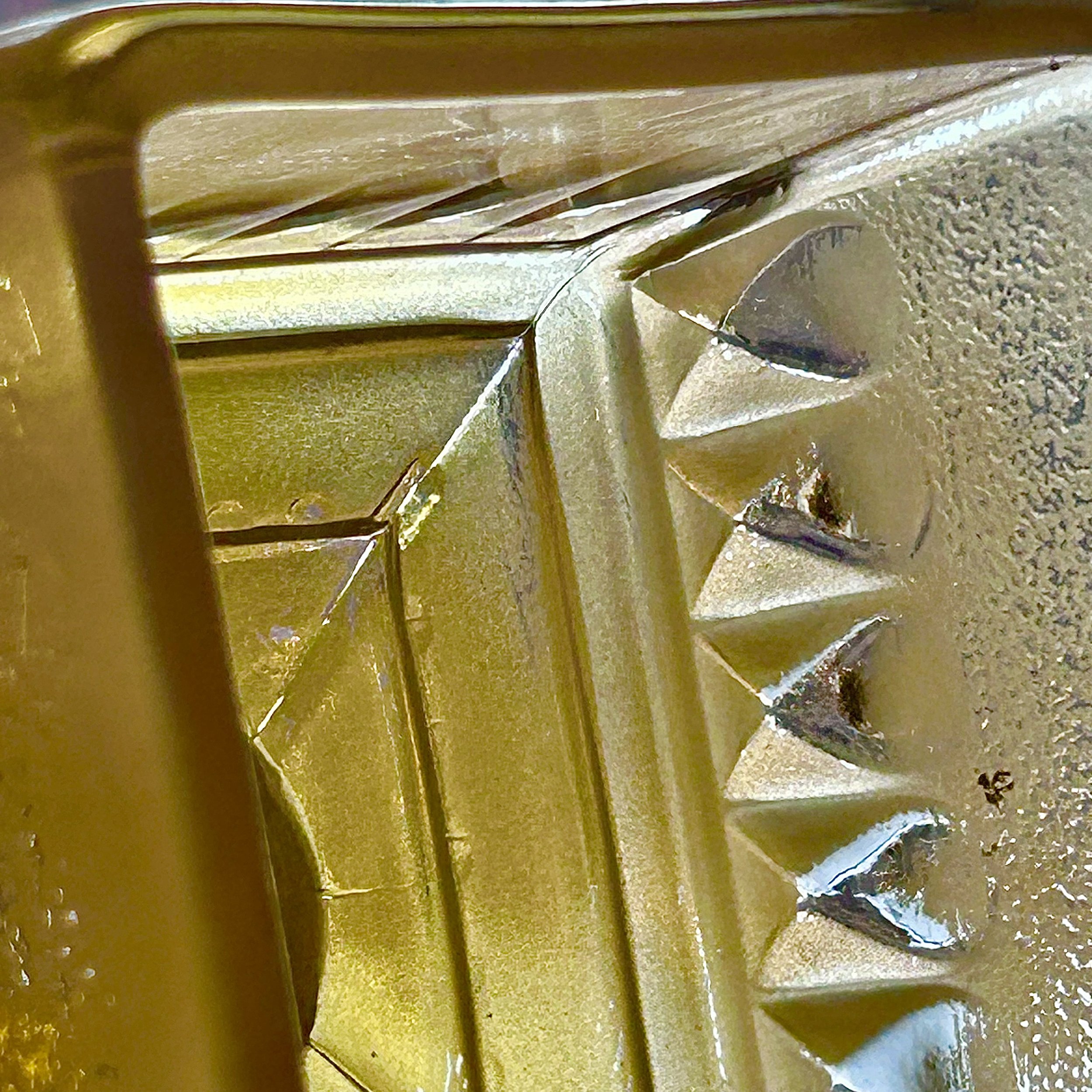
Light surface wear consistent with age and handling.
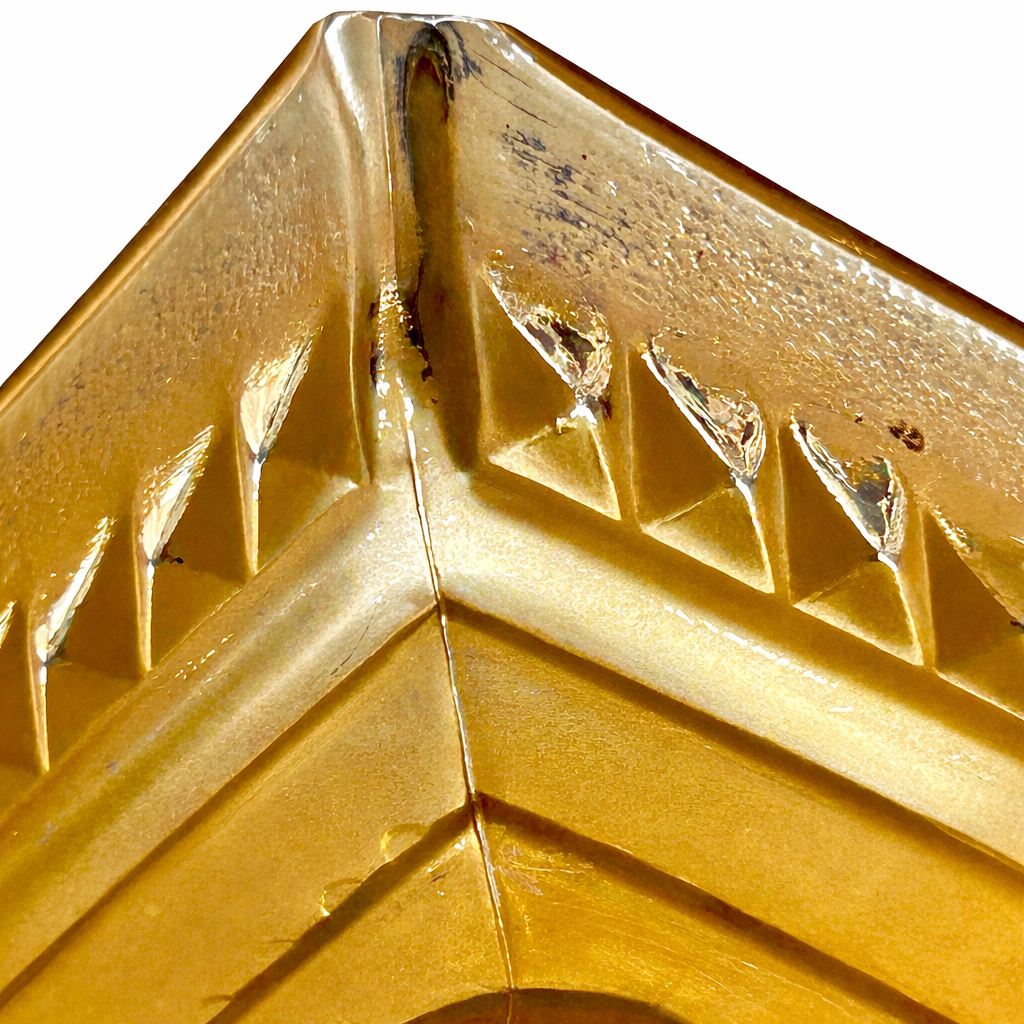
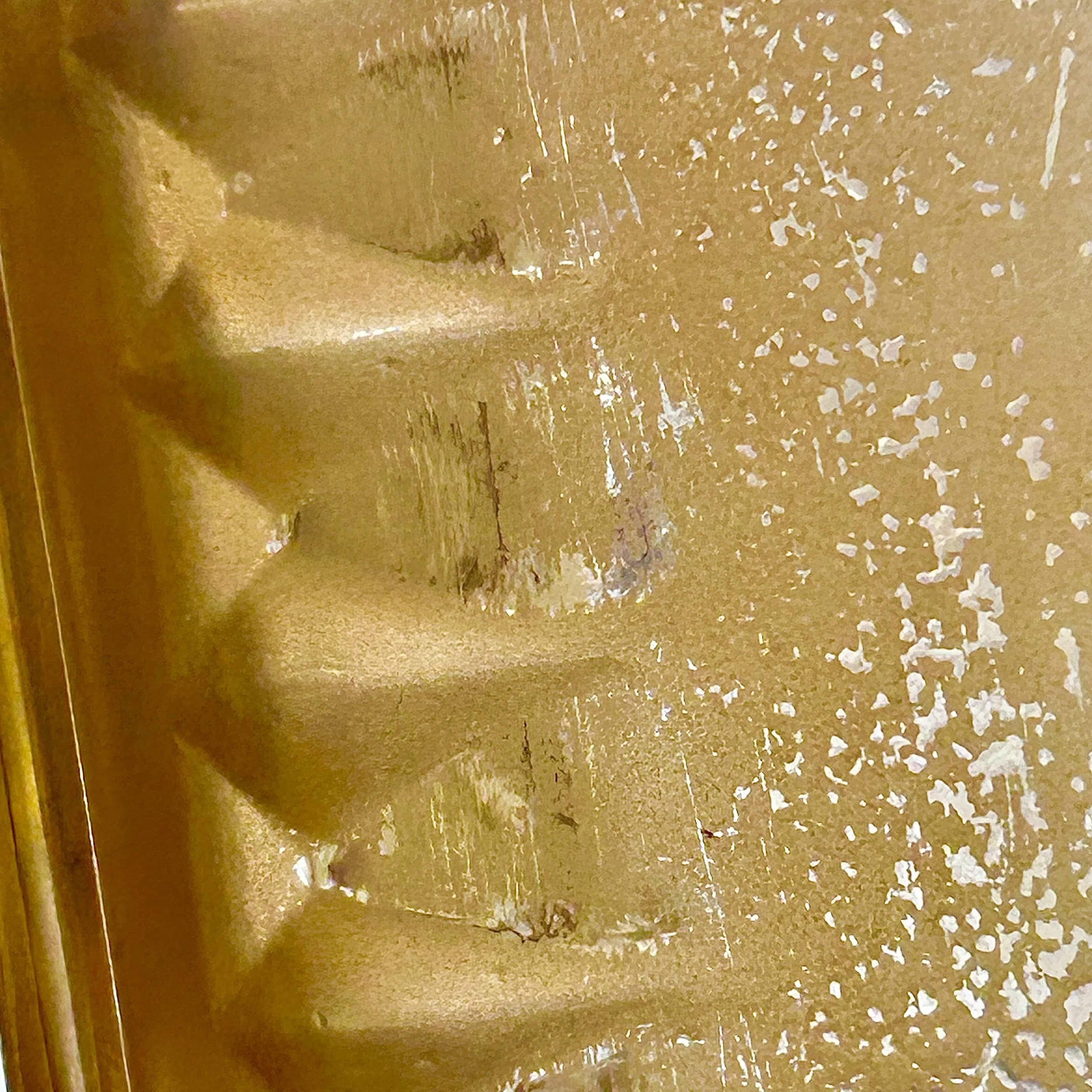
Gold enamel shows minor age-appropriate variation and gentle wear, typical of vintage gilt decoration.
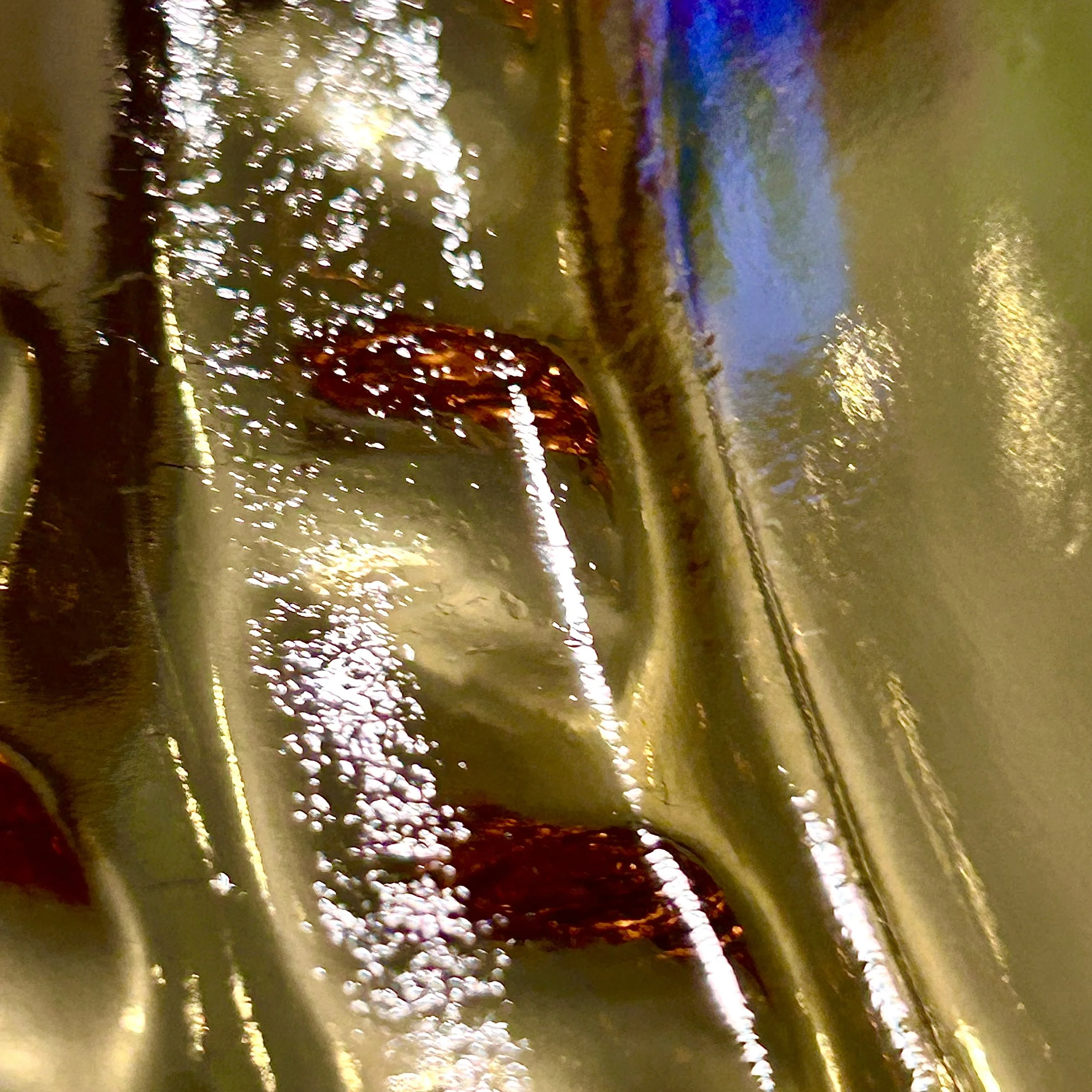
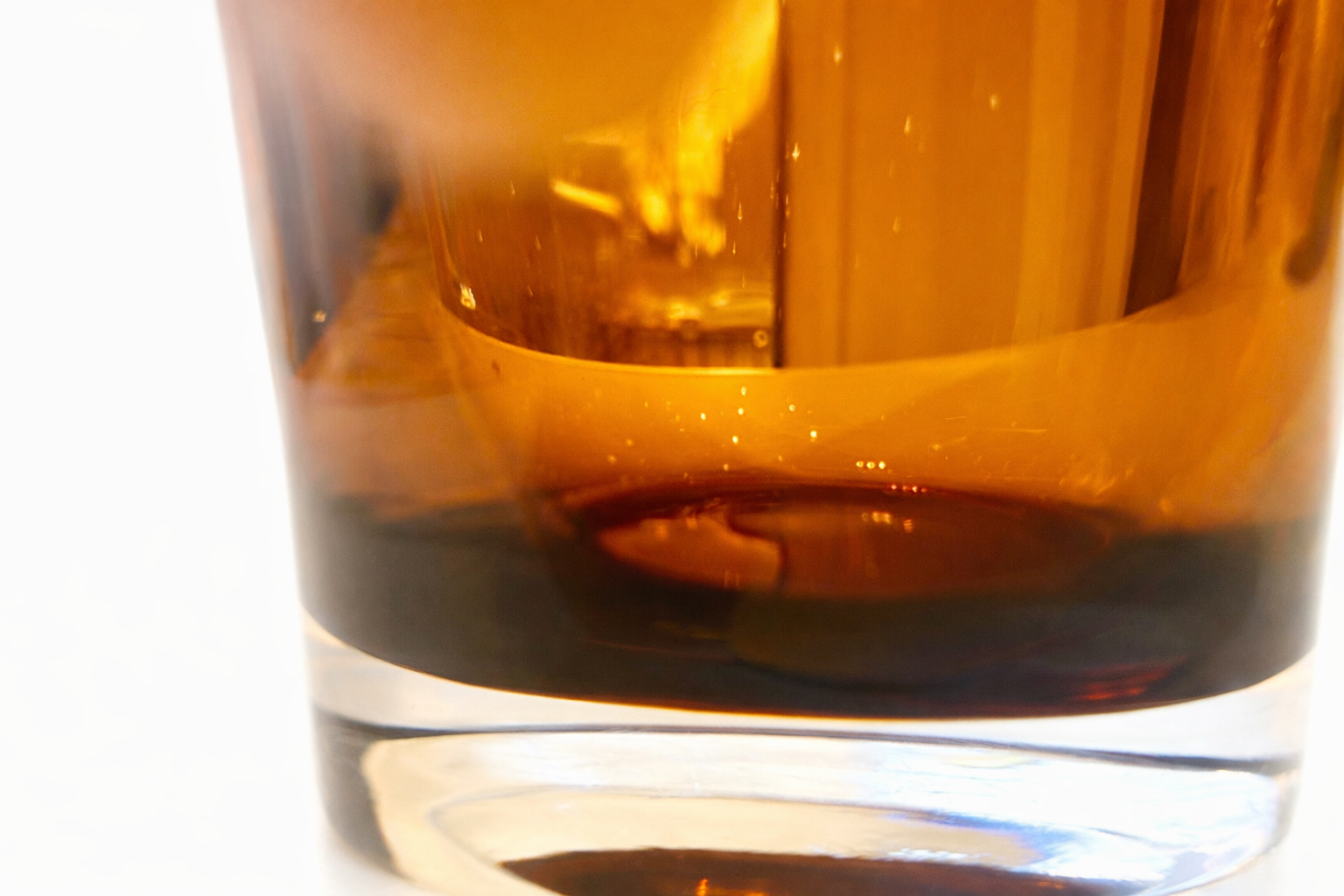
(Please review close-up photographs for exact condition detail.)
Authenticity & Construction
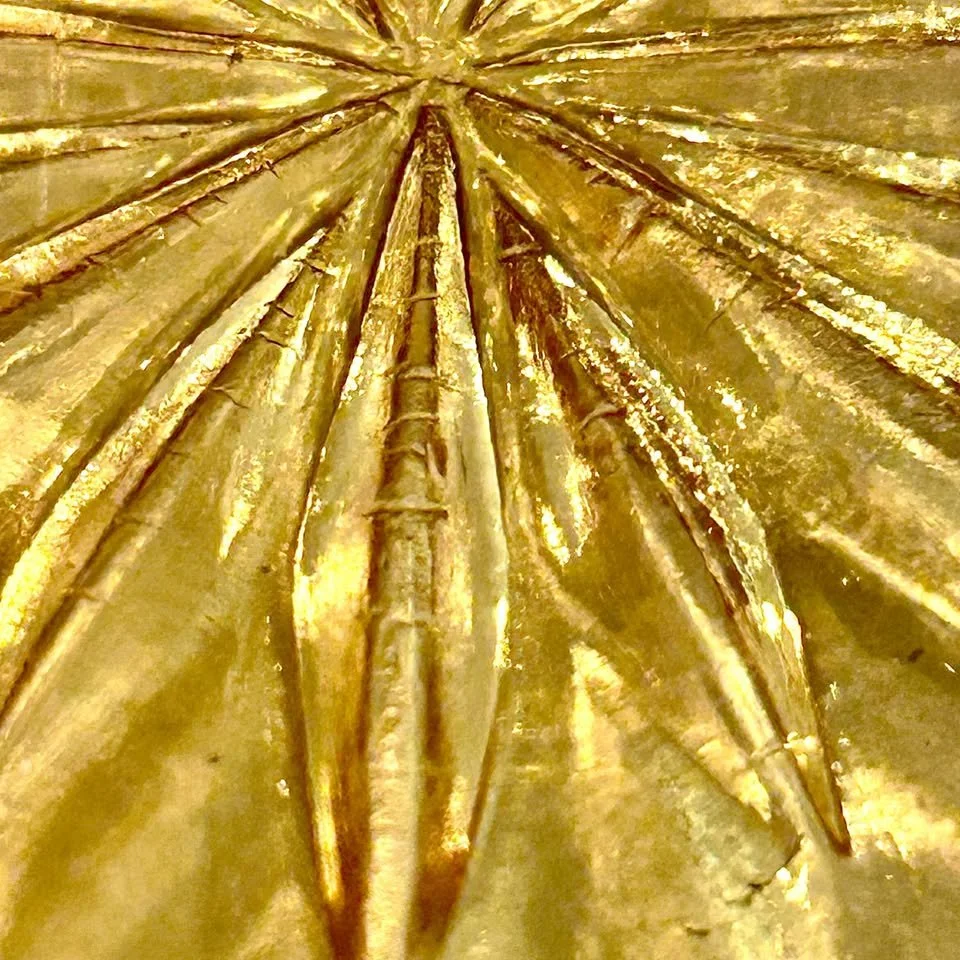
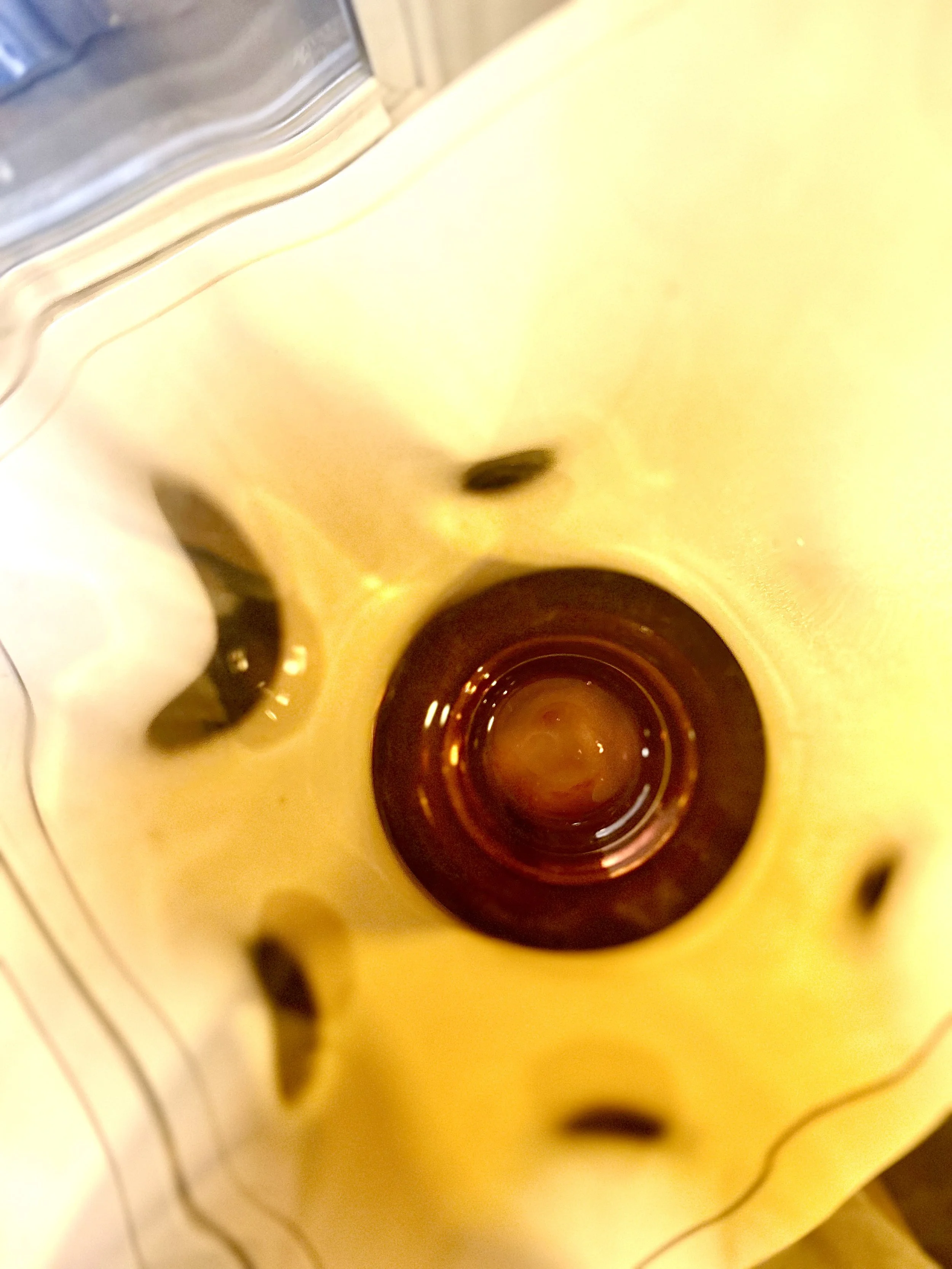
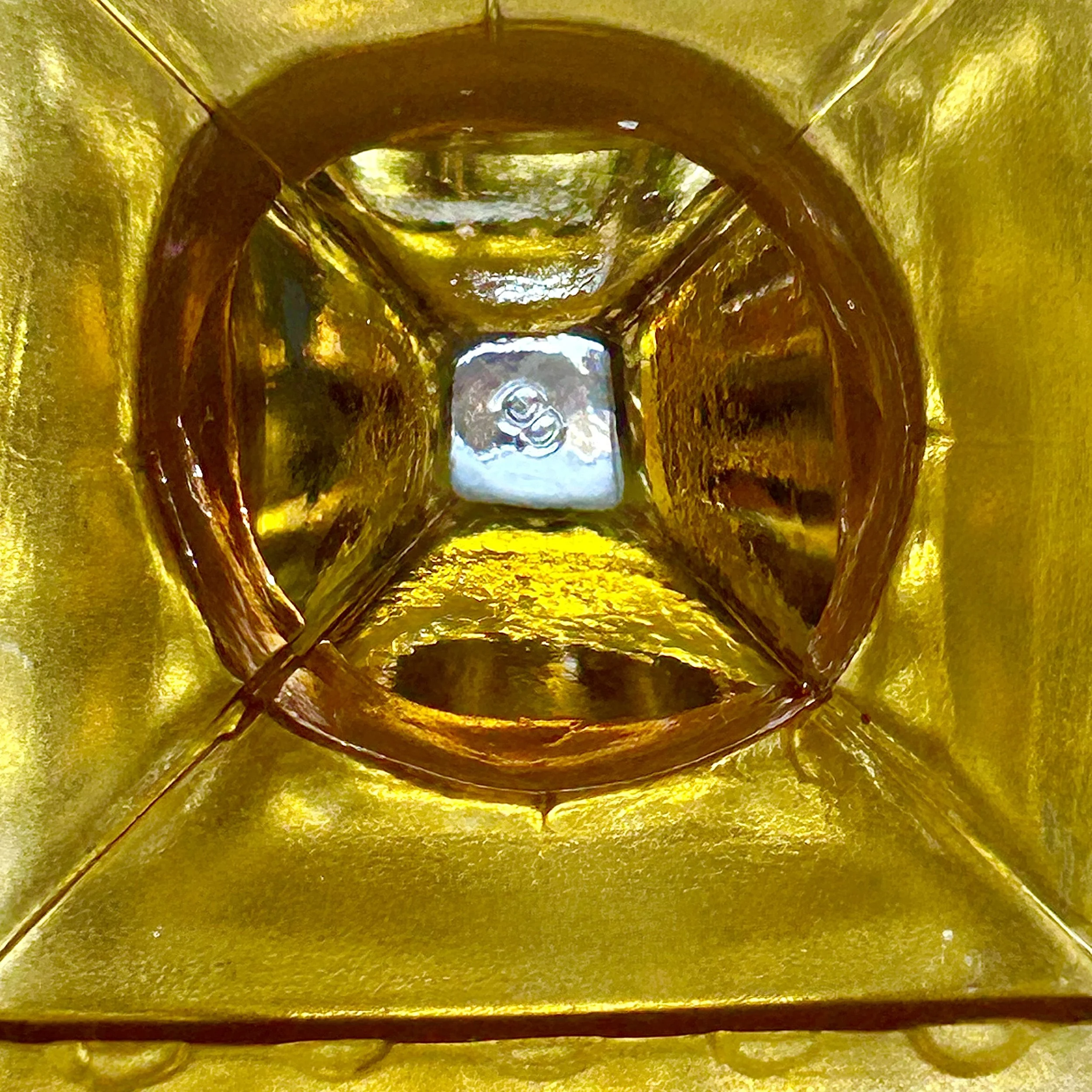
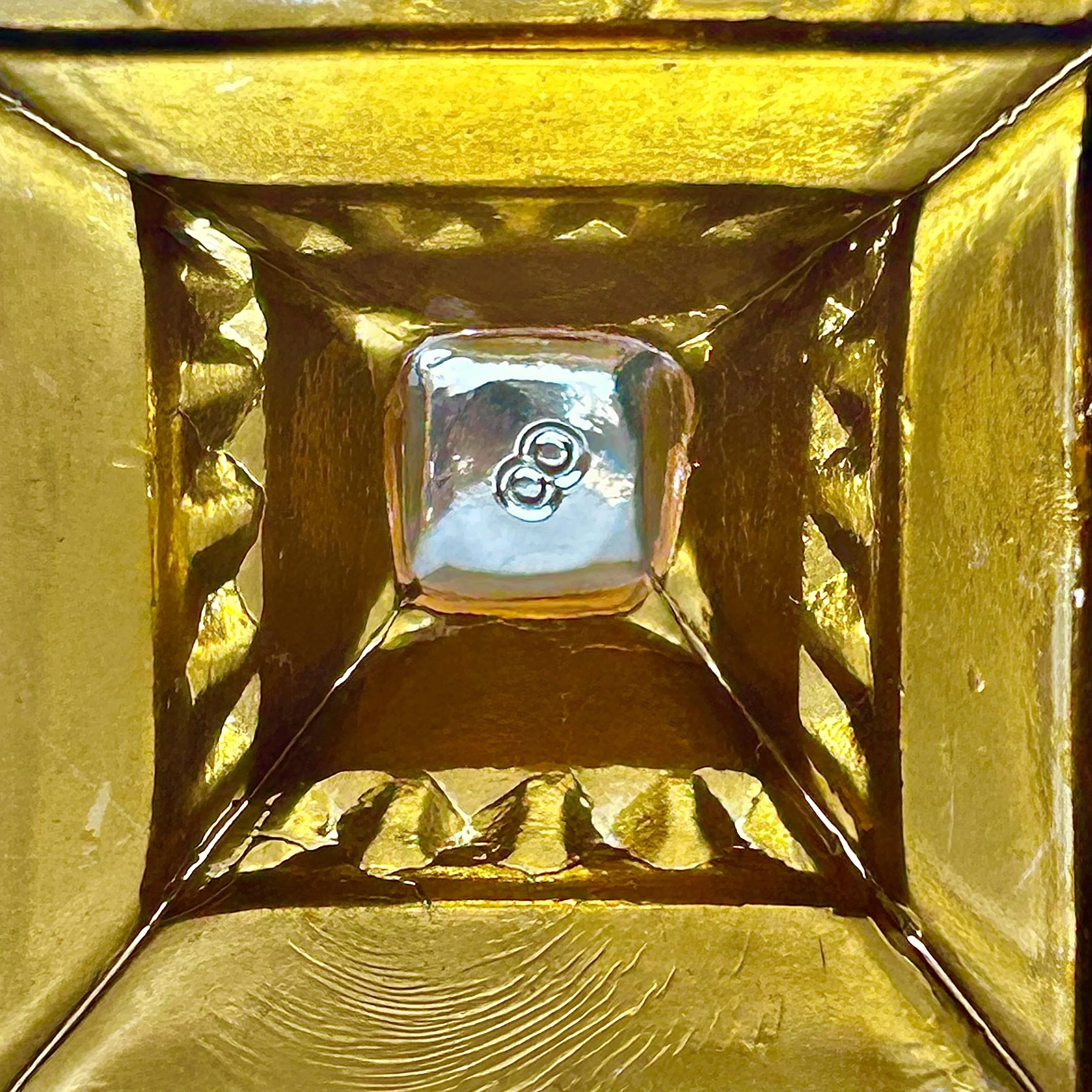
Mold-pressed glass with crisp paneled relief and defined starburst base.
Scalloped rim with smooth finish.
Gold enamel decoration appears hand-applied over molded surface.
Unmarked base, as typical for mid-century hostess and giftware production.
Placement
Ideal as a candy or nut dish, vanity or trinket bowl, or as part of a curated amber glass grouping.
Pairs beautifully with brass, tortoiseshell, warm woods, and layered mid-century interiors.
STANDARD ATTRIBUTION & VALUE DISCLOSURE
This piece is described to the best of current scholarly and market knowledge. Any maker or regional attribution is based on visual analysis, materials, construction techniques, and documented stylistic comparisons. As with many vintage and antique glass objects, definitive attribution may not be possible without original labels or factory records. Pricing reflects condition, quality, decorative appeal, and current collector demand rather than a guaranteed maker identification.
A richly toned amber pressed-glass bonbon / nut dish featuring a scalloped rim, bold geometric paneled molding, and a sharply defined starburst base. The warm honey-to-golden topaz coloration is enhanced with hand-applied gilt enamel floral and foliate accents, giving the piece strong mid-century hostess ware presence and luminous cabinet appeal.
The form, mold clarity, and decorative gilding align with mid-20th-century pressed giftware production, when amber glass and gold embellishment were especially popular for entertaining and display.
Attribution & Period
Mid-20th century, circa 1950s–1960s.
Unmarked, consistent with decorative pressed-glass giftware of the period.
Dimensions & Weight
Diameter: 4”
Height: 3”
Weight: Moderate; typical of mid-century pressed glass of this scale.
Condition
Displays very well overall.
No visible chips or cracks observed.
Light surface wear consistent with age and handling.
Gold enamel shows minor age-appropriate variation and gentle wear, typical of vintage gilt decoration.
(Please review close-up photographs for exact condition detail.)
Authenticity & Construction
Mold-pressed glass with crisp paneled relief and defined starburst base.
Scalloped rim with smooth finish.
Gold enamel decoration appears hand-applied over molded surface.
Unmarked base, as typical for mid-century hostess and giftware production.
Placement
Ideal as a candy or nut dish, vanity or trinket bowl, or as part of a curated amber glass grouping.
Pairs beautifully with brass, tortoiseshell, warm woods, and layered mid-century interiors.
STANDARD ATTRIBUTION & VALUE DISCLOSURE
This piece is described to the best of current scholarly and market knowledge. Any maker or regional attribution is based on visual analysis, materials, construction techniques, and documented stylistic comparisons. As with many vintage and antique glass objects, definitive attribution may not be possible without original labels or factory records. Pricing reflects condition, quality, decorative appeal, and current collector demand rather than a guaranteed maker identification.

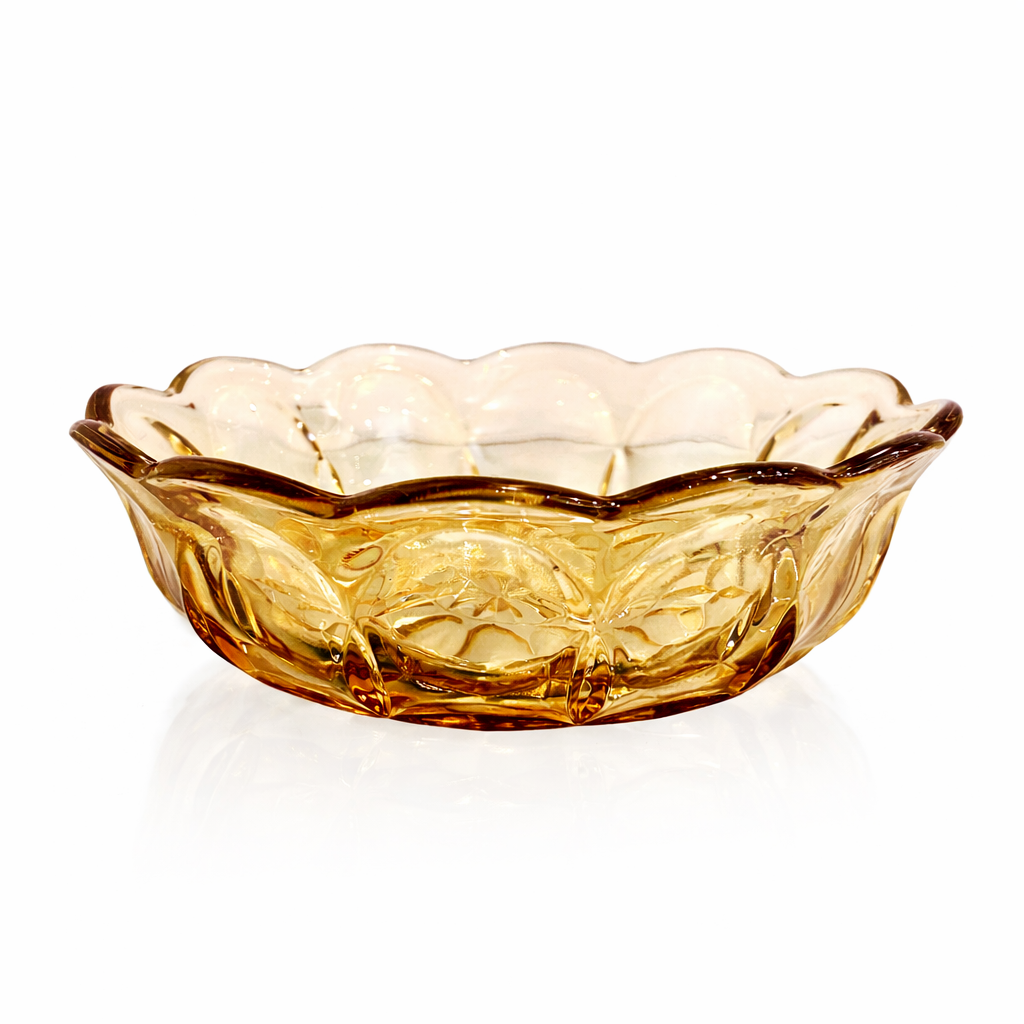 Image 1 of 13
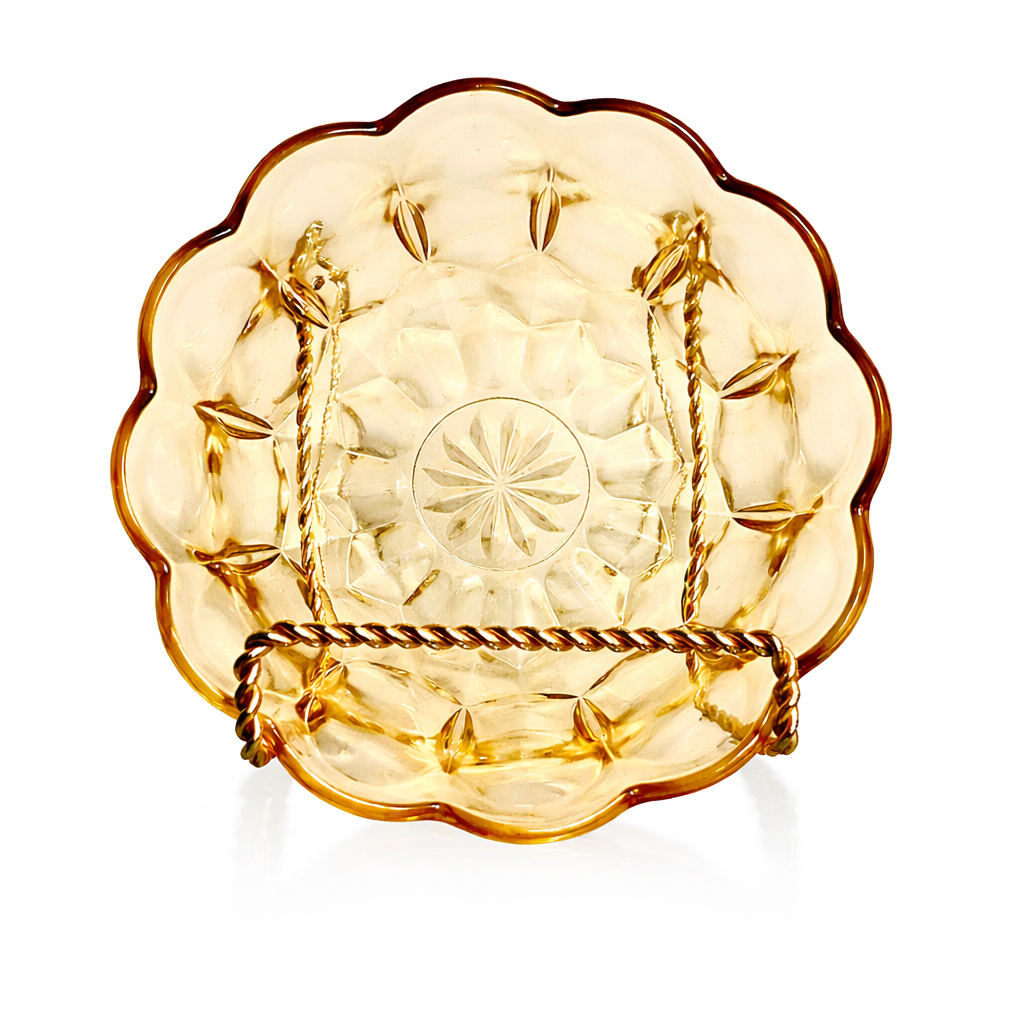 Image 2 of 13
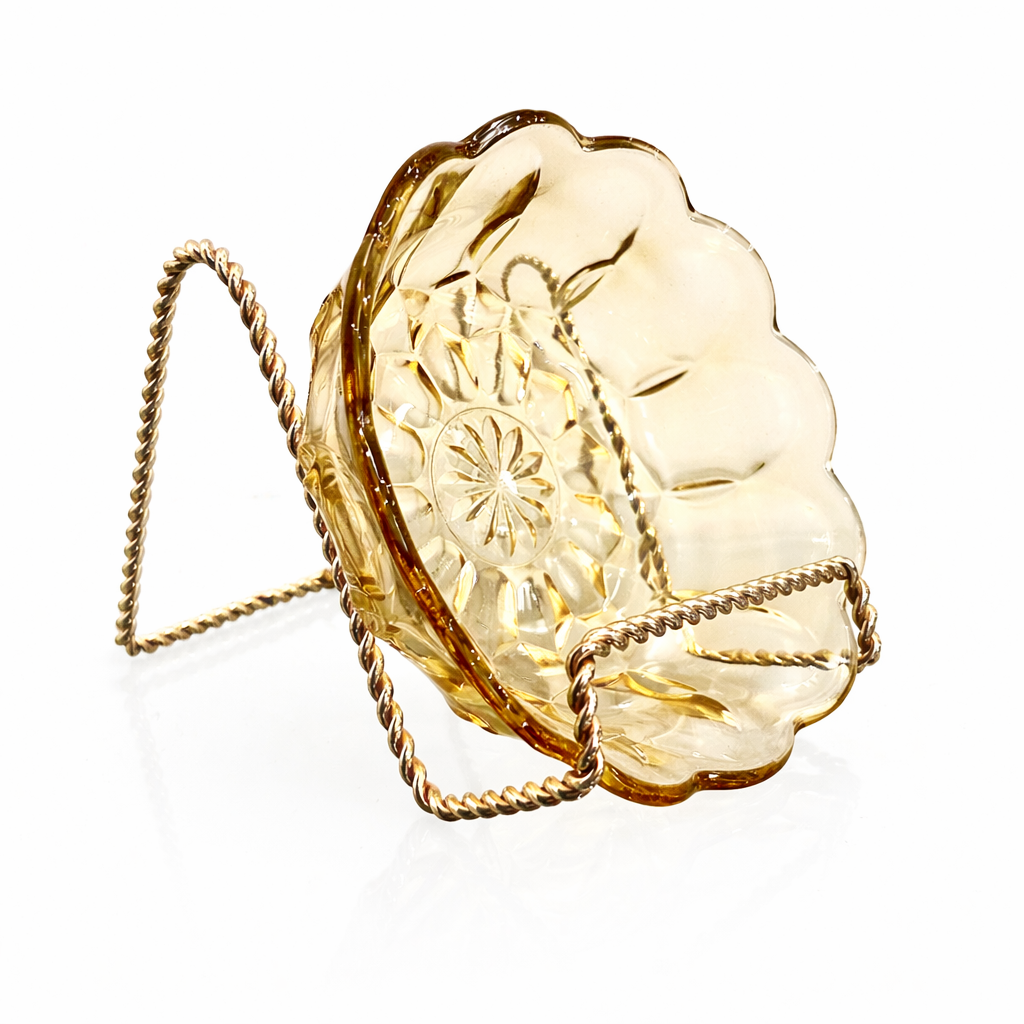 Image 3 of 13
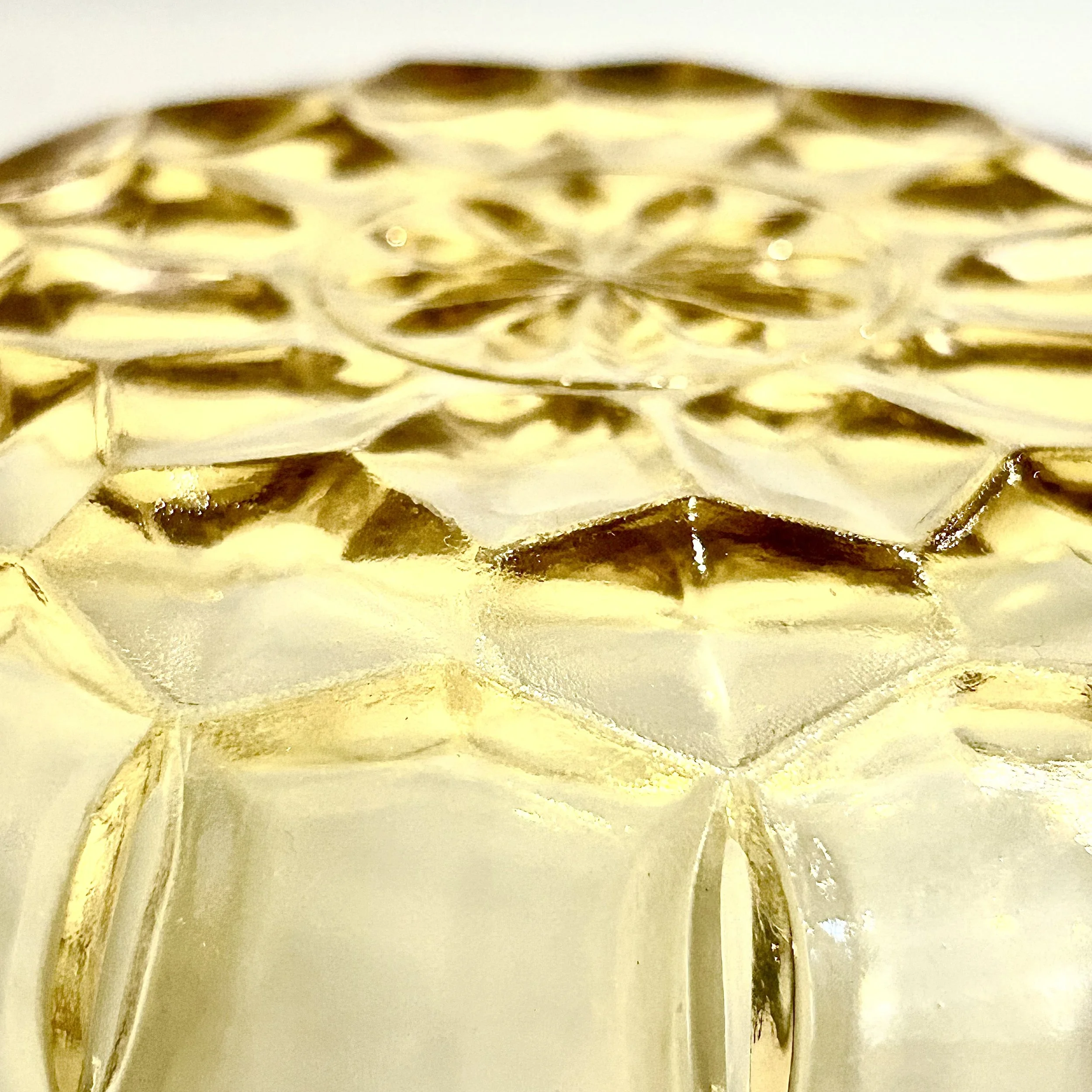 Image 4 of 13
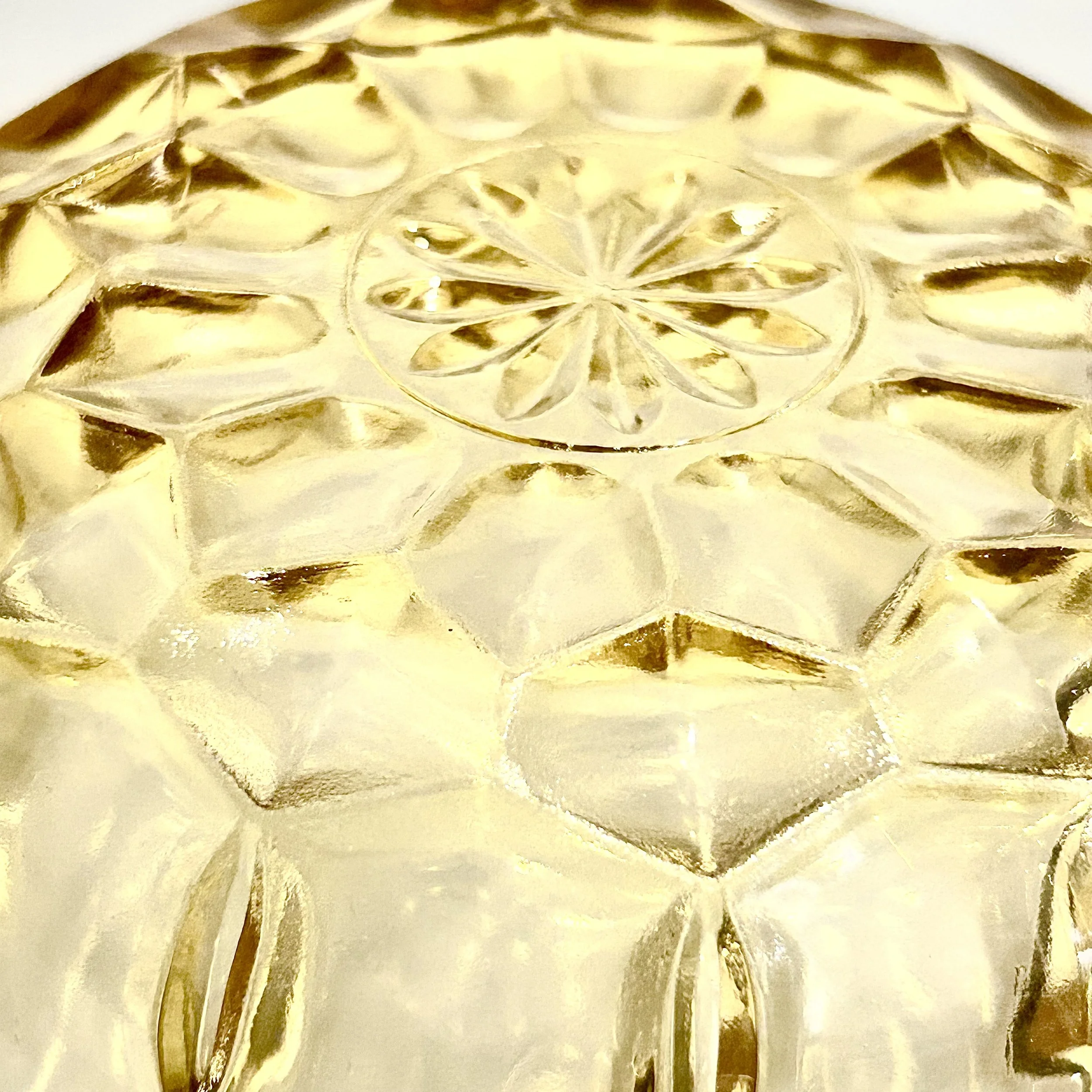 Image 5 of 13
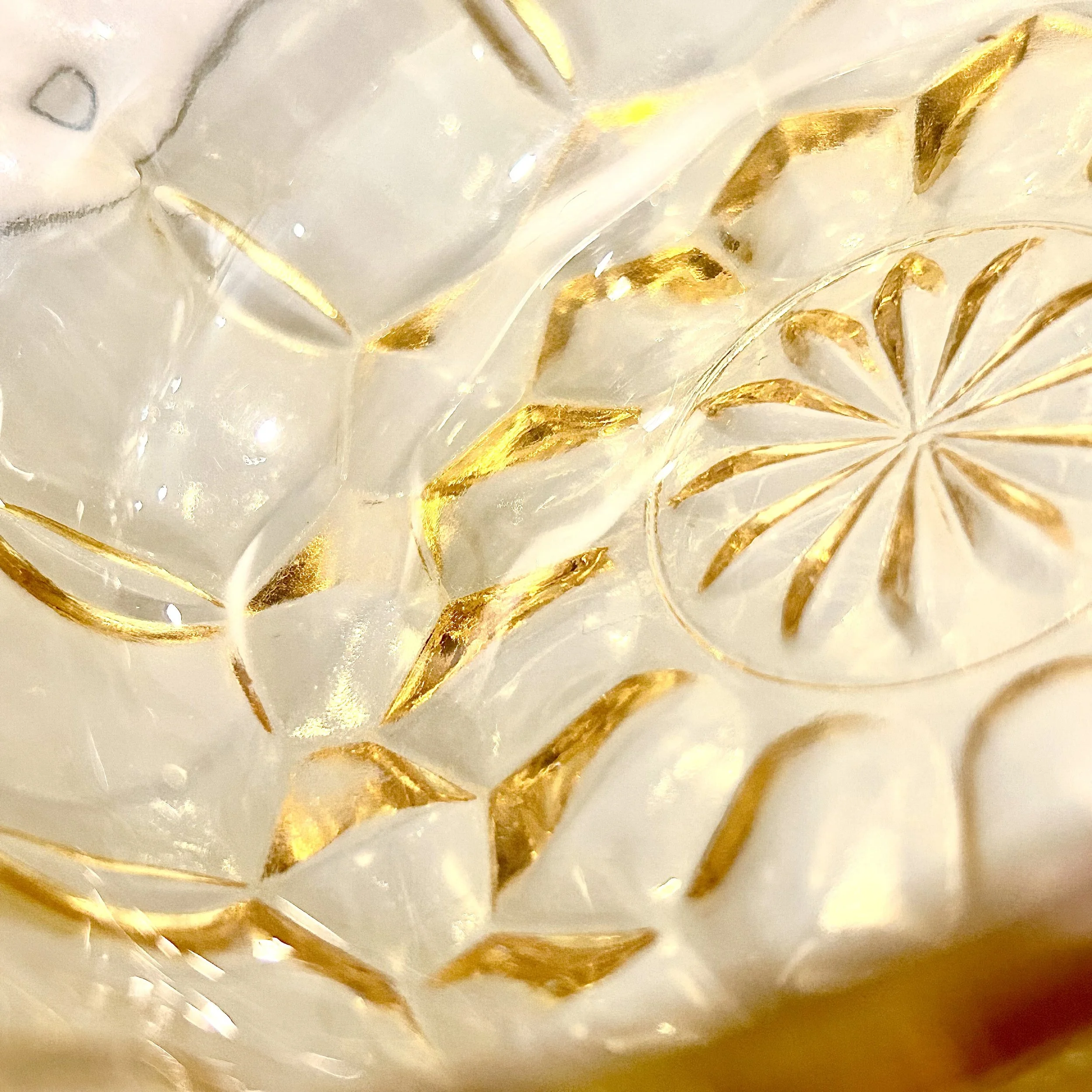 Image 6 of 13
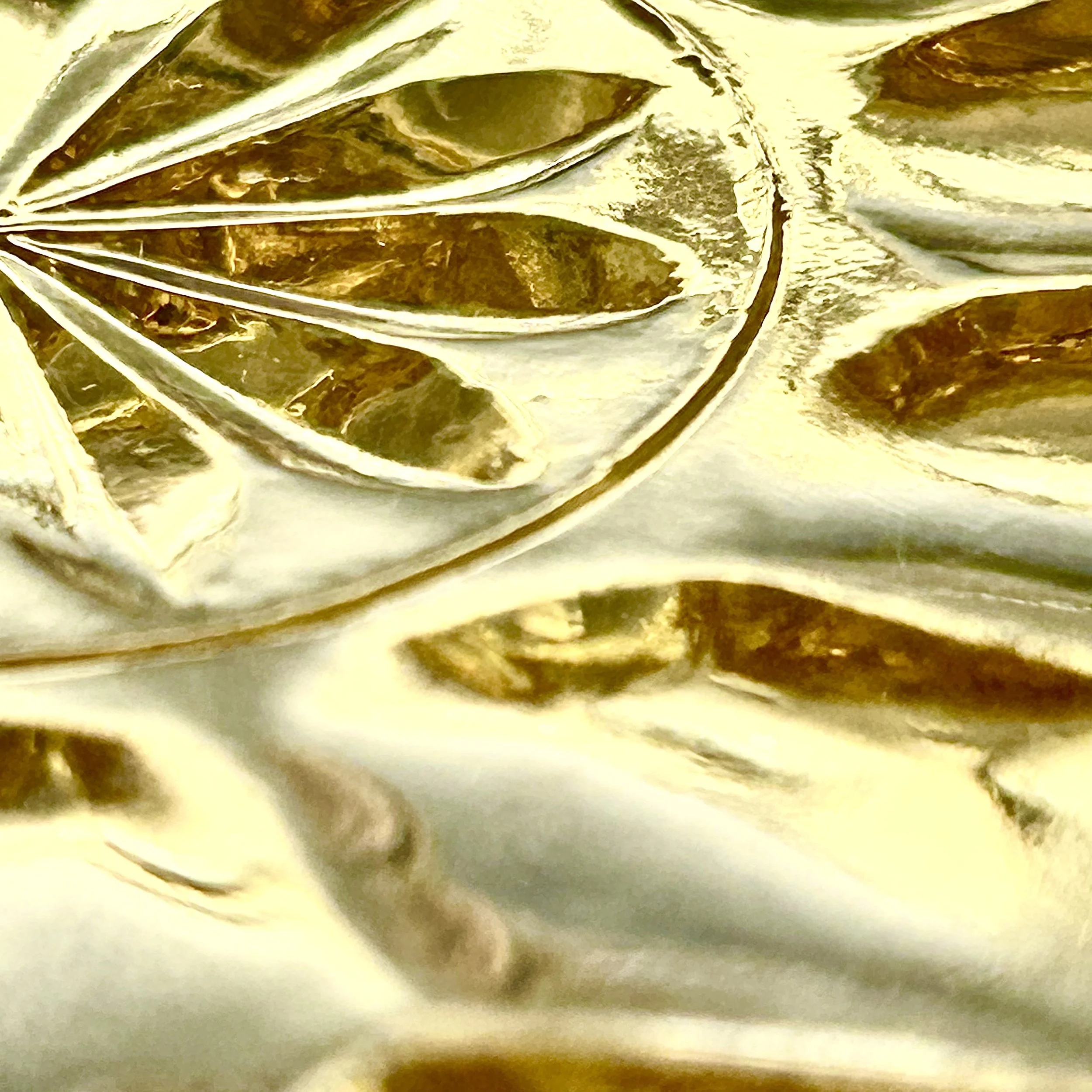 Image 7 of 13
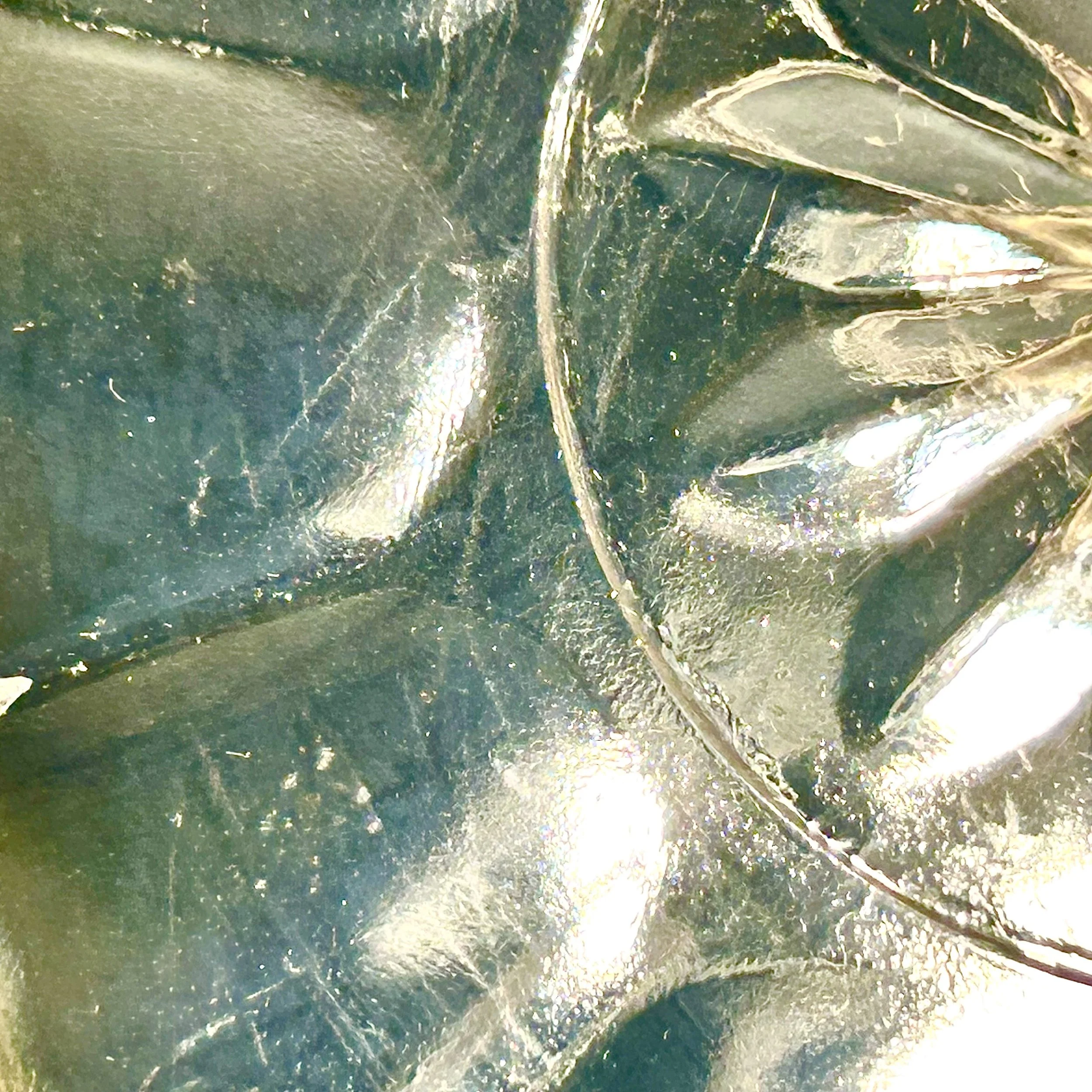 Image 8 of 13
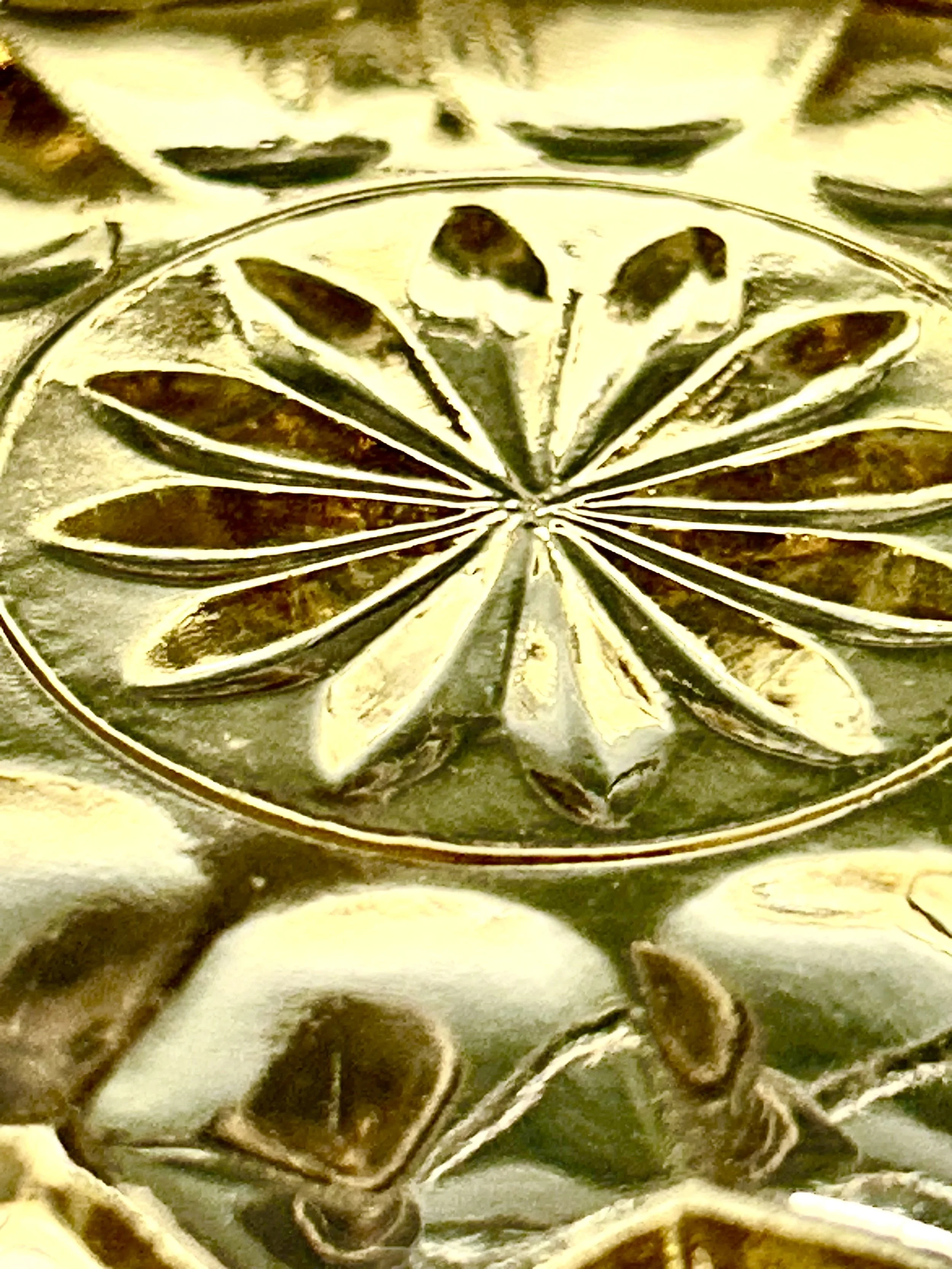 Image 9 of 13
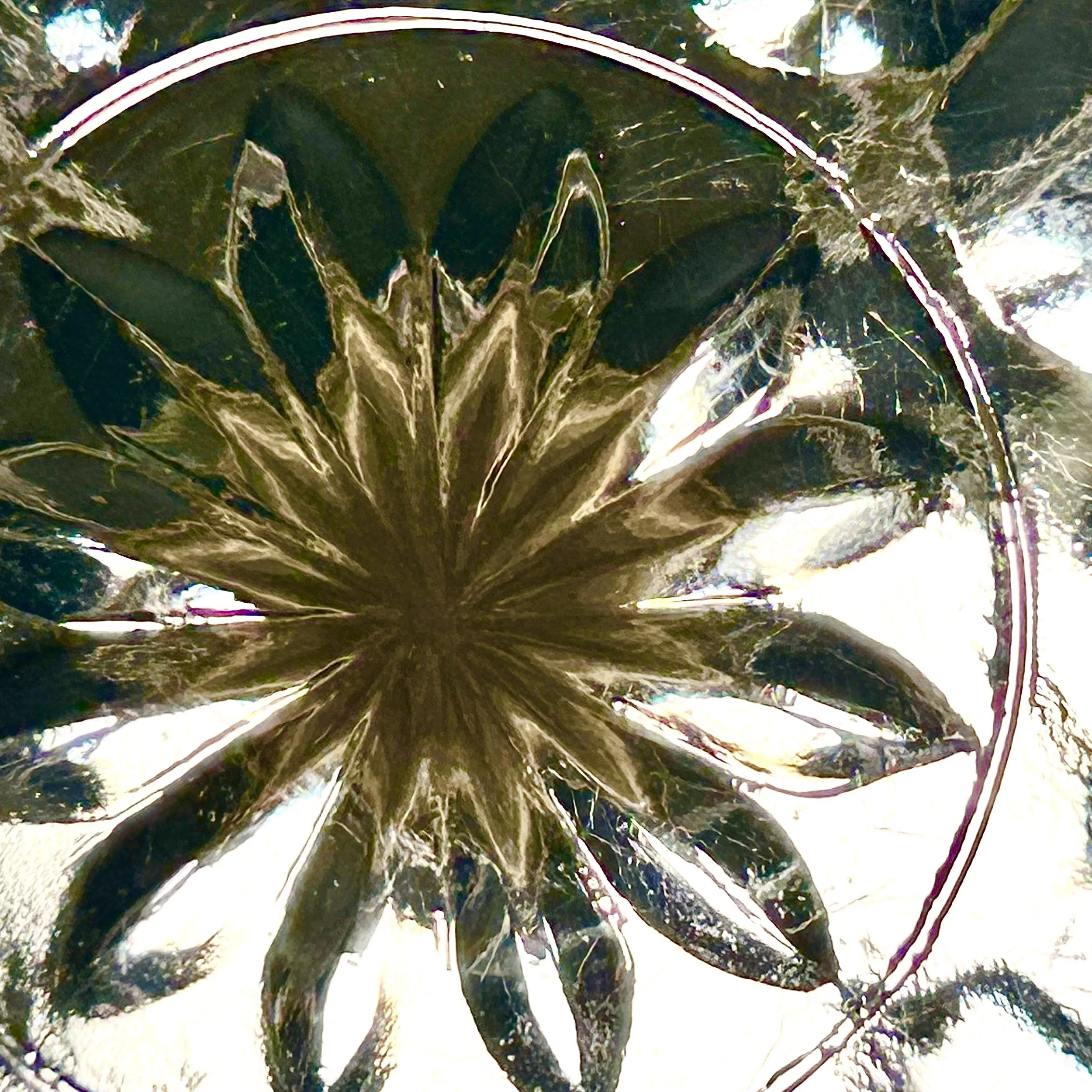 Image 10 of 13
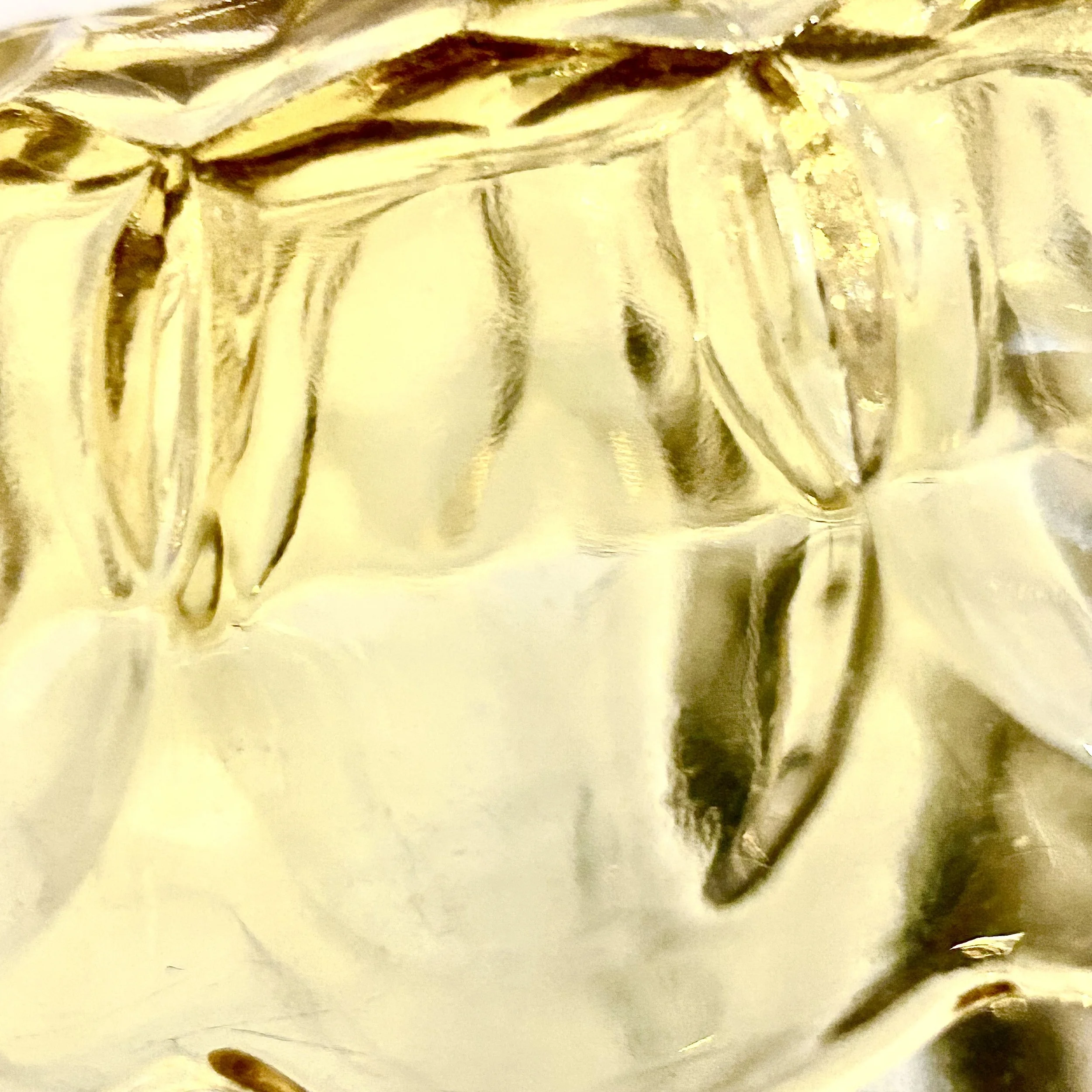 Image 11 of 13
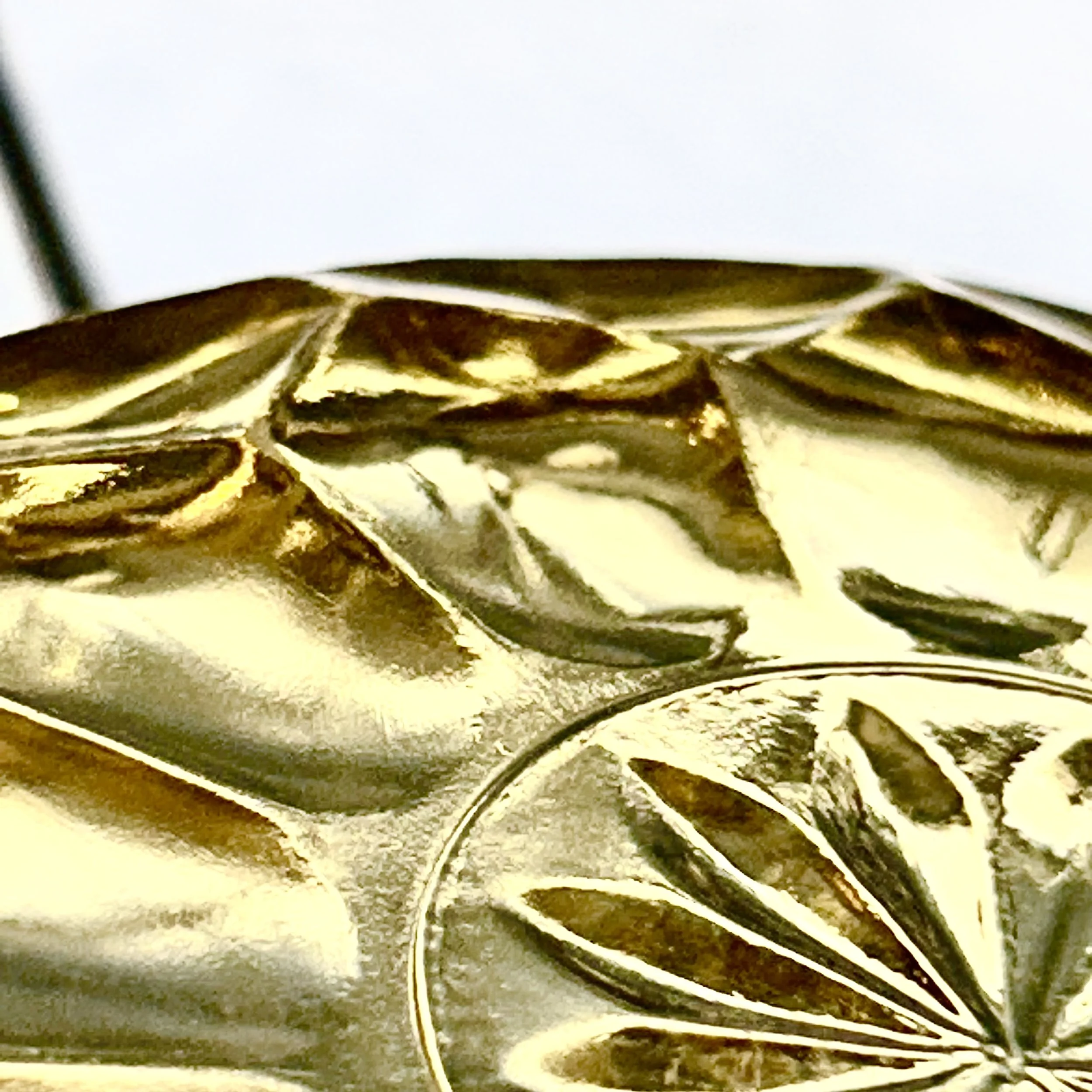 Image 12 of 13
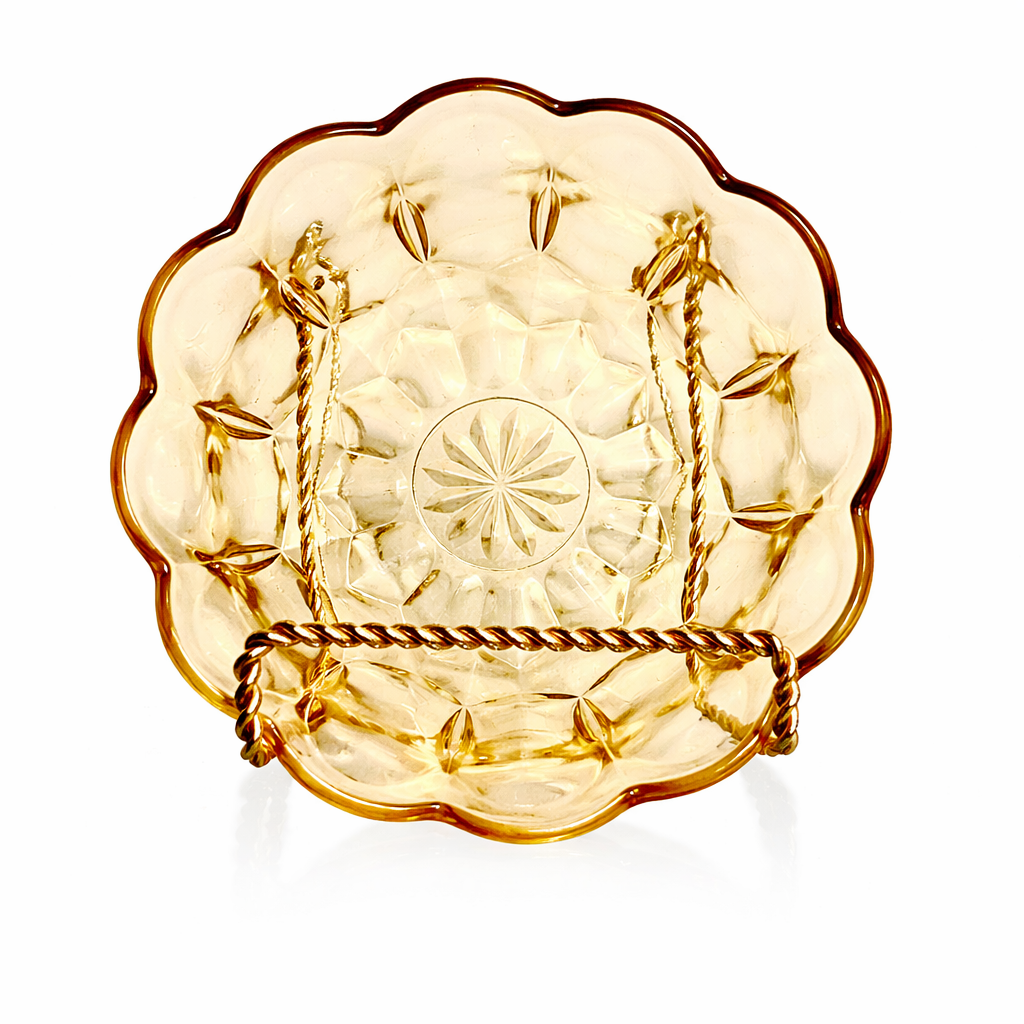 Image 13 of 13