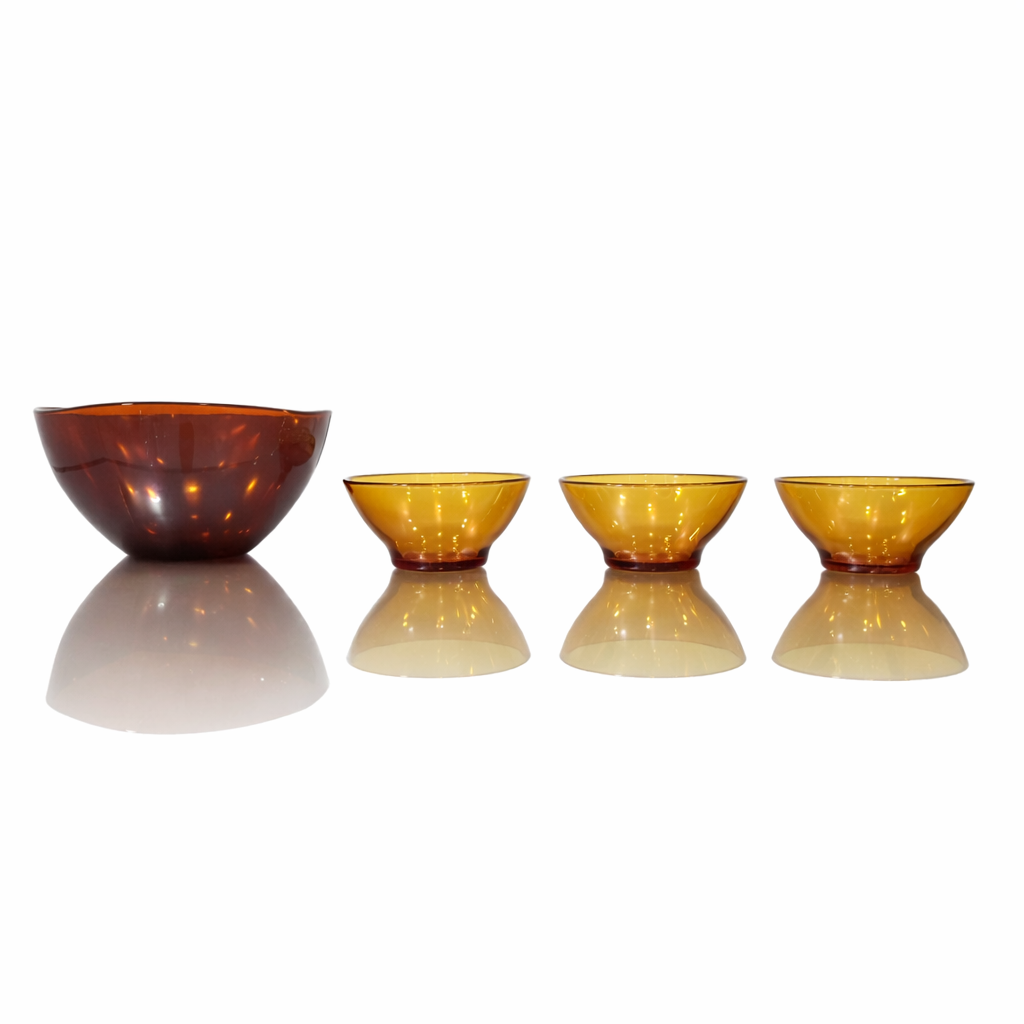
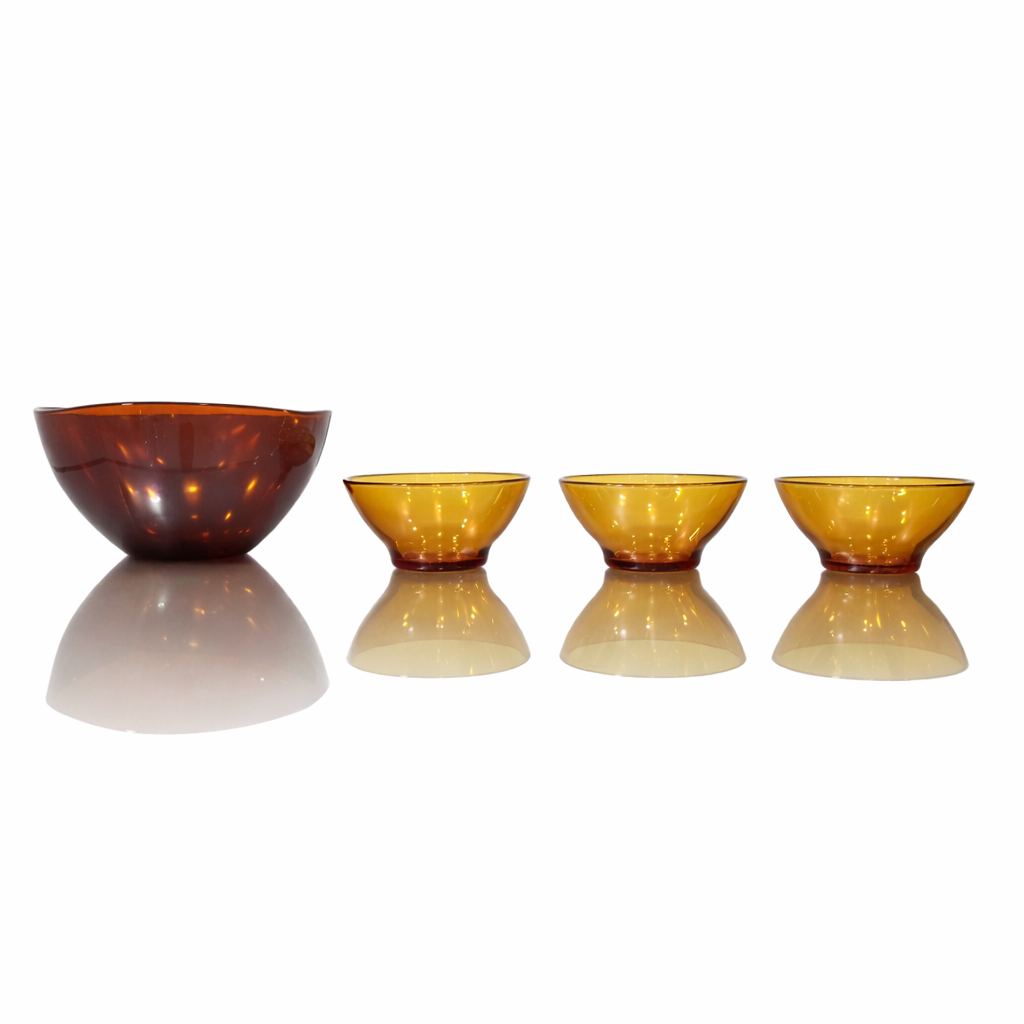
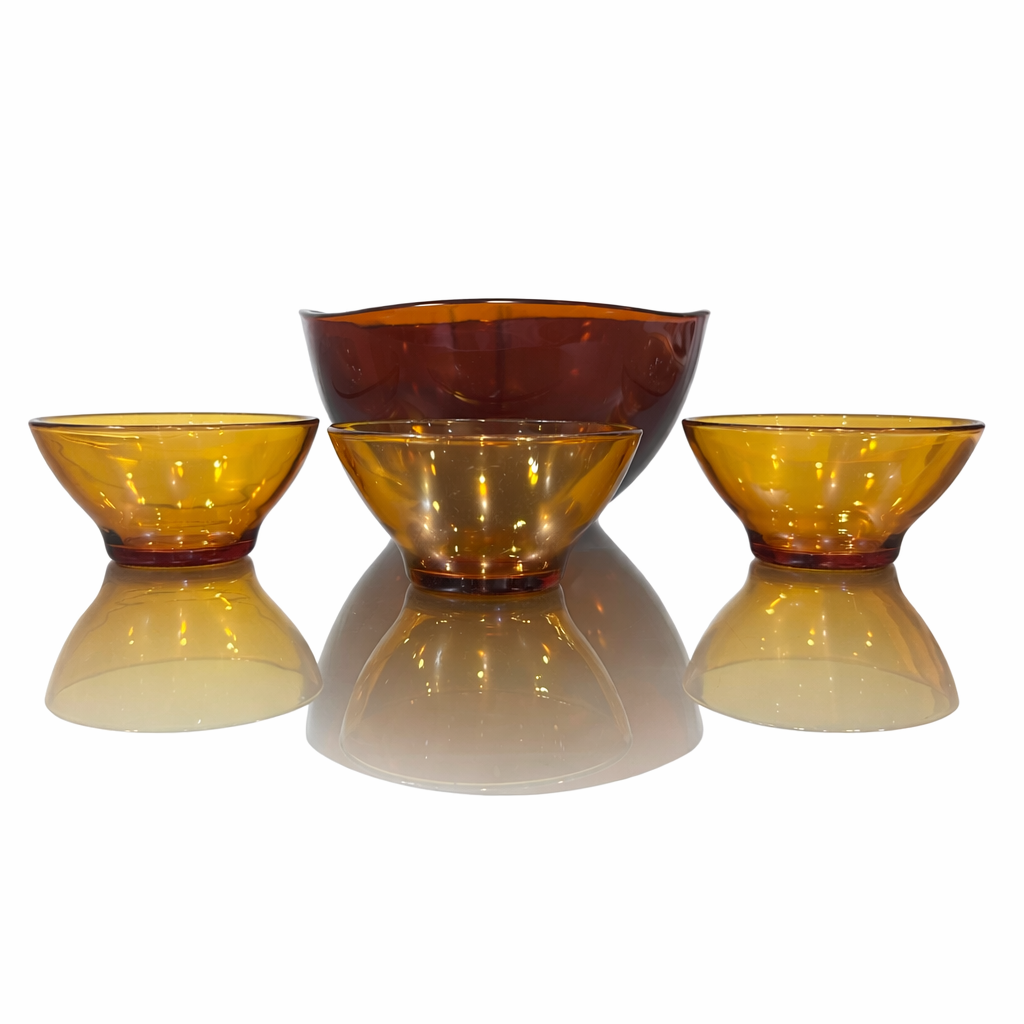
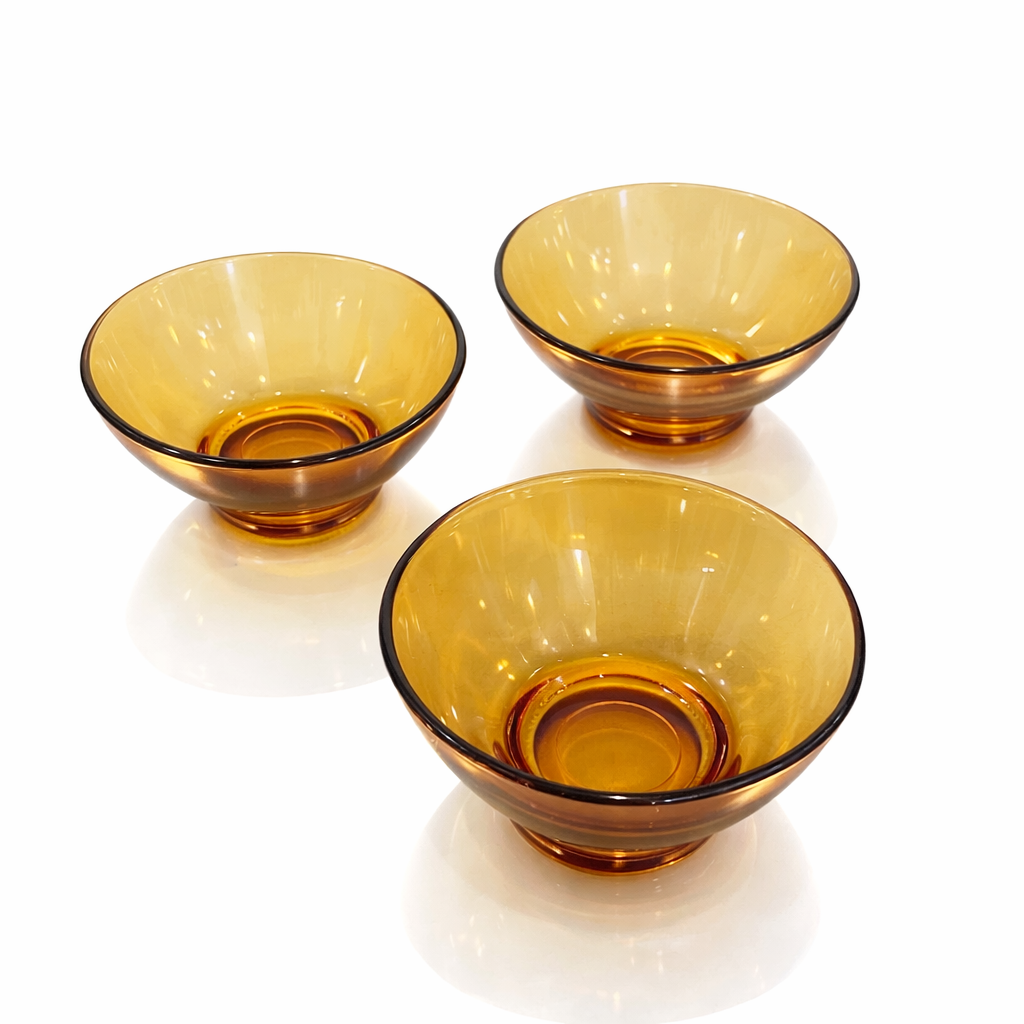
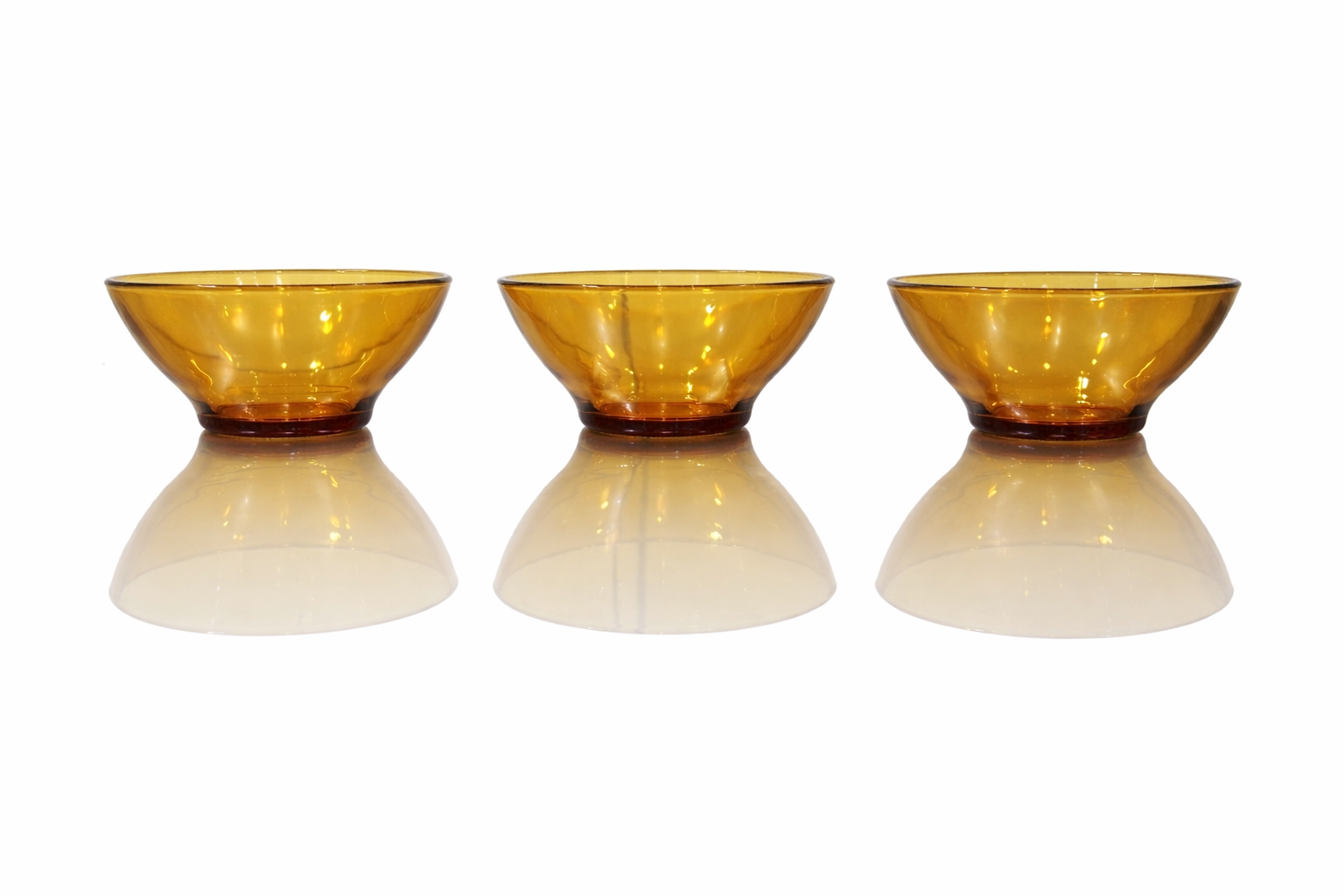
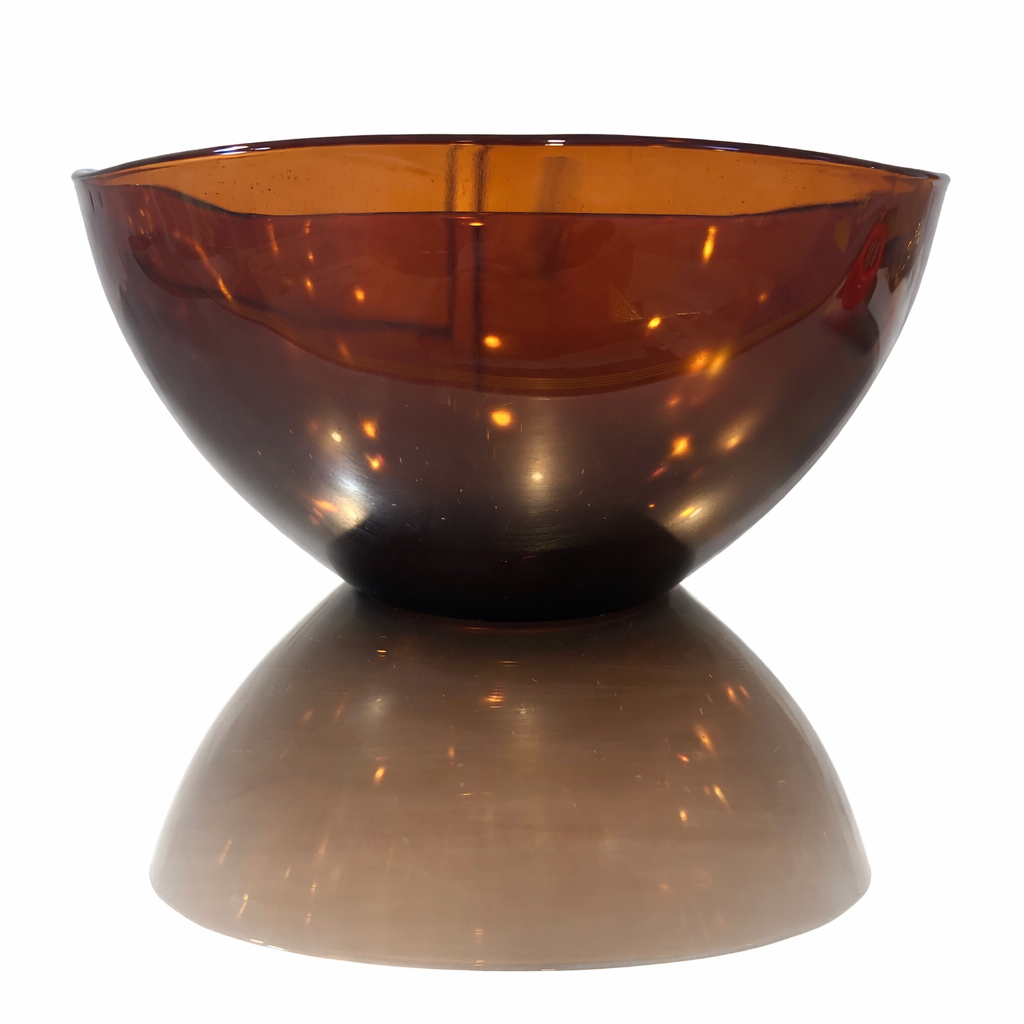
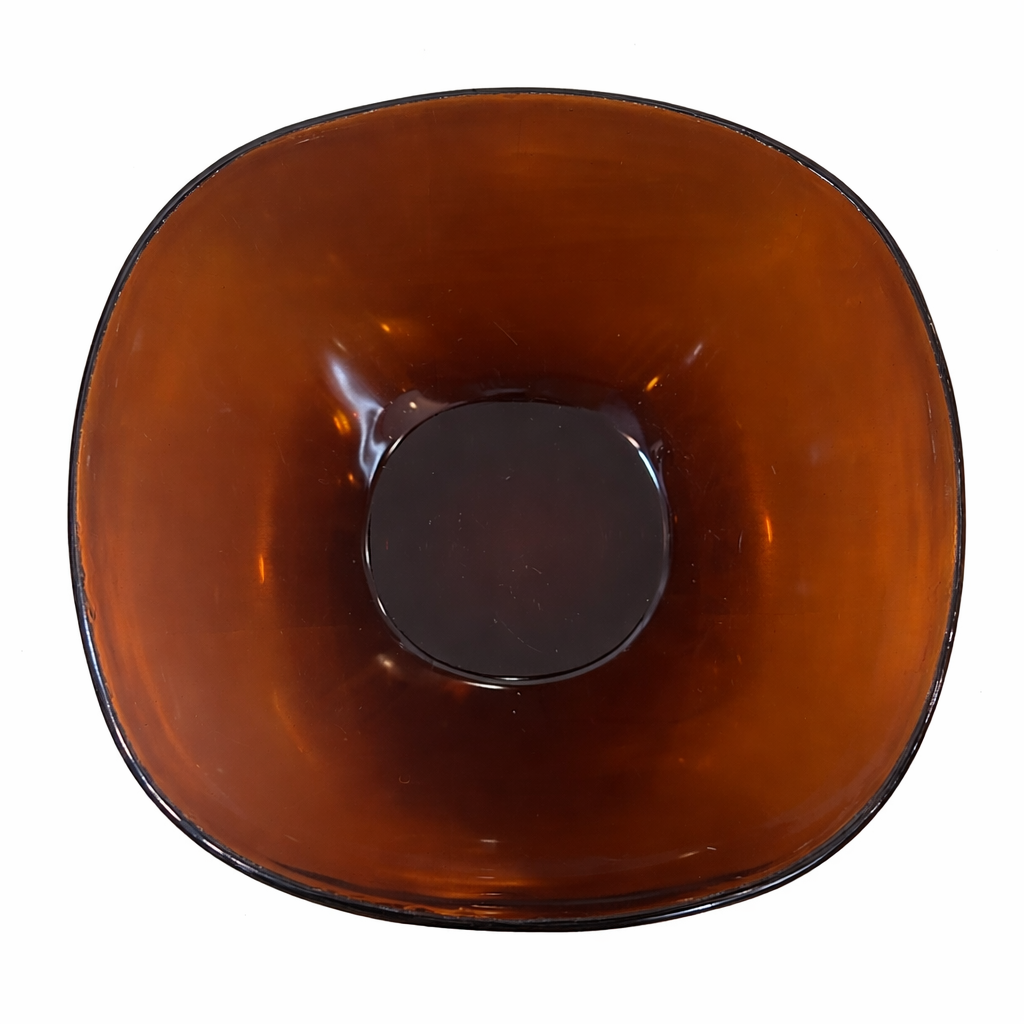
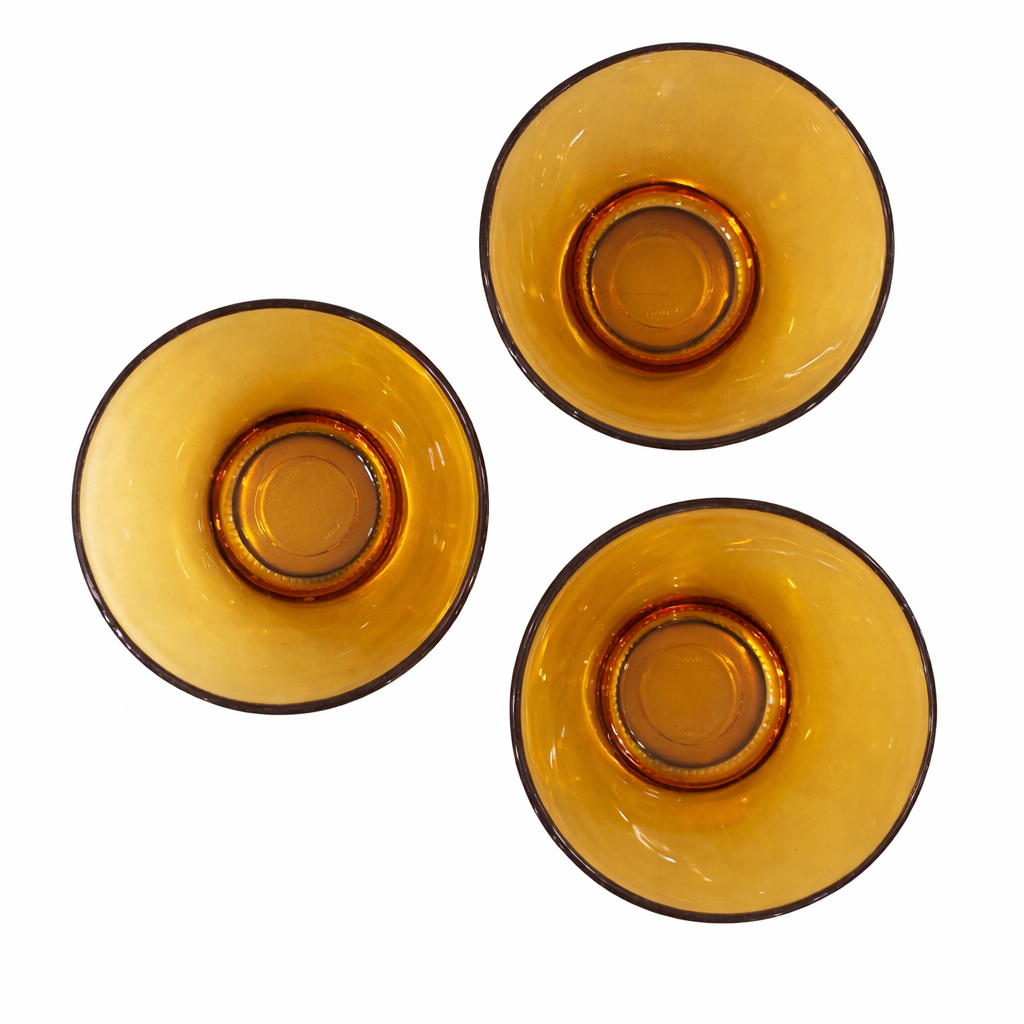
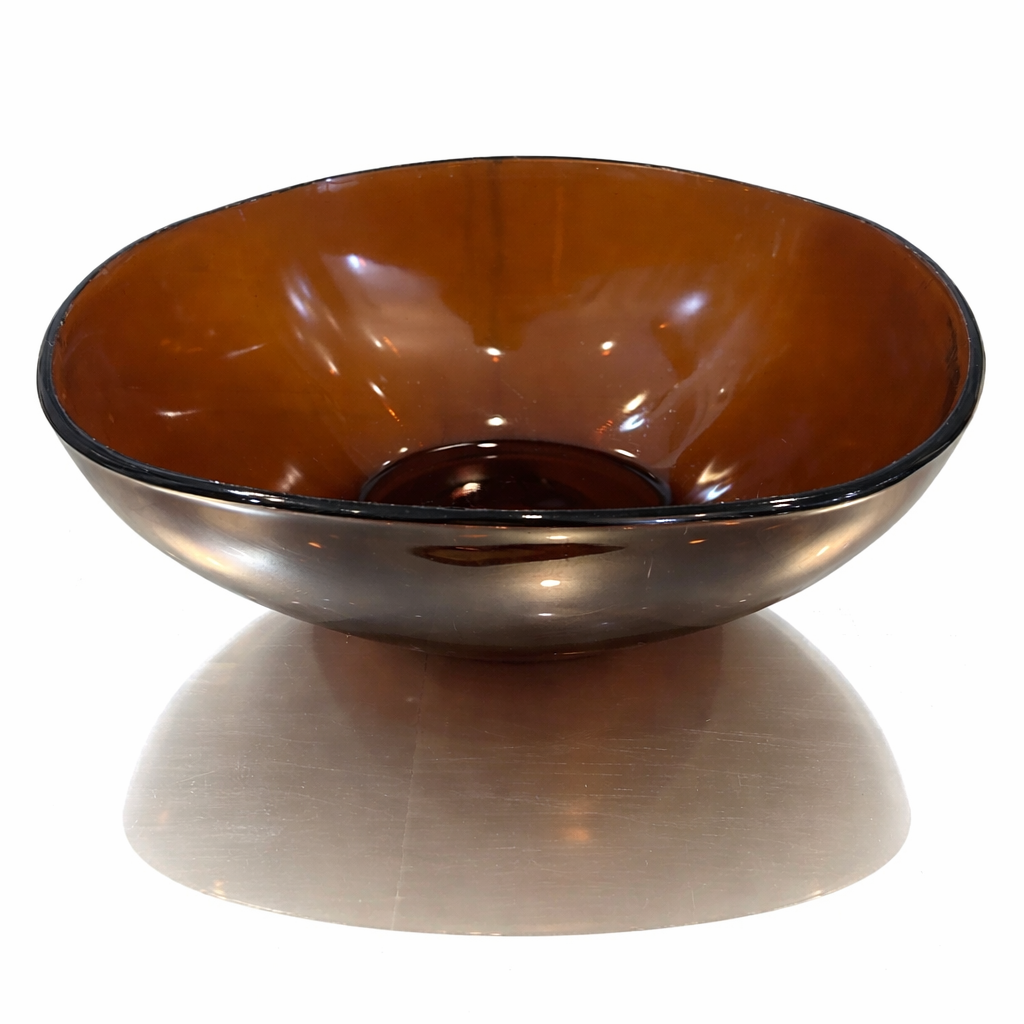
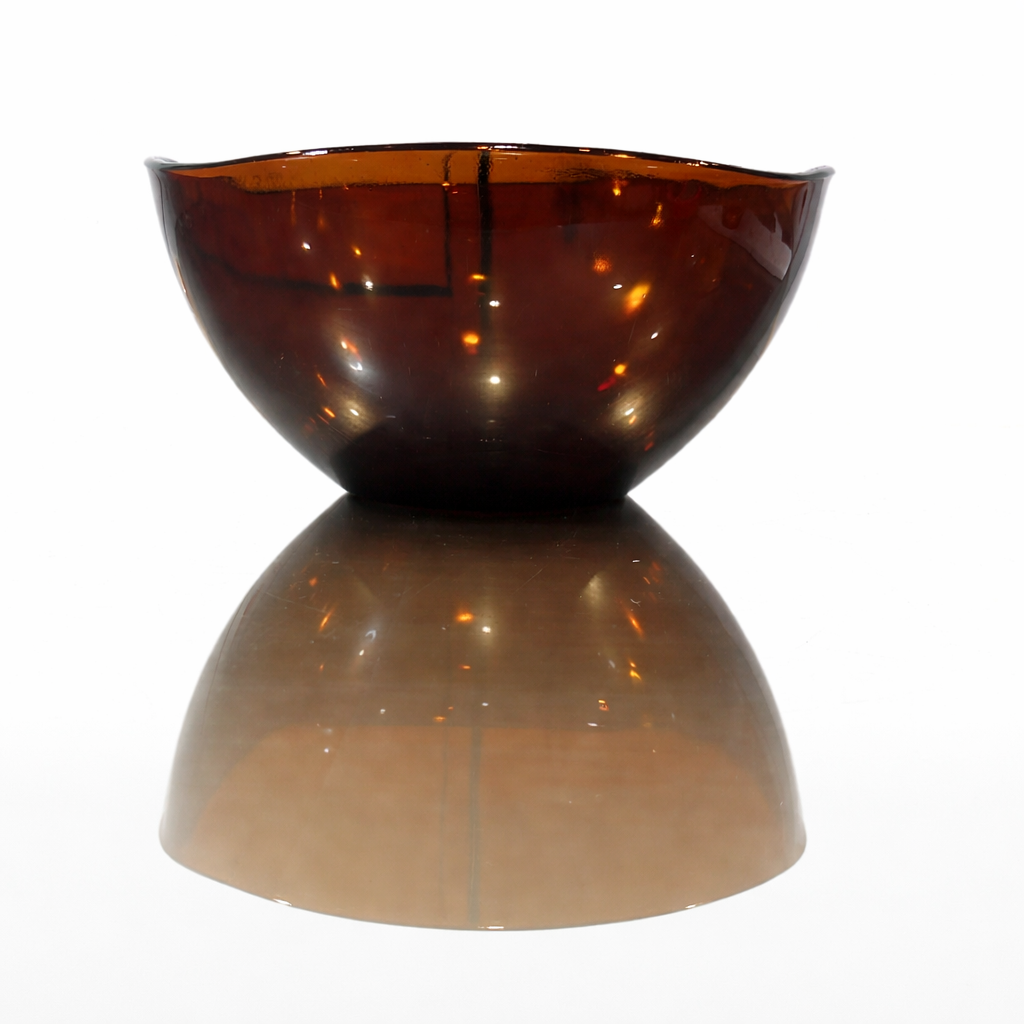
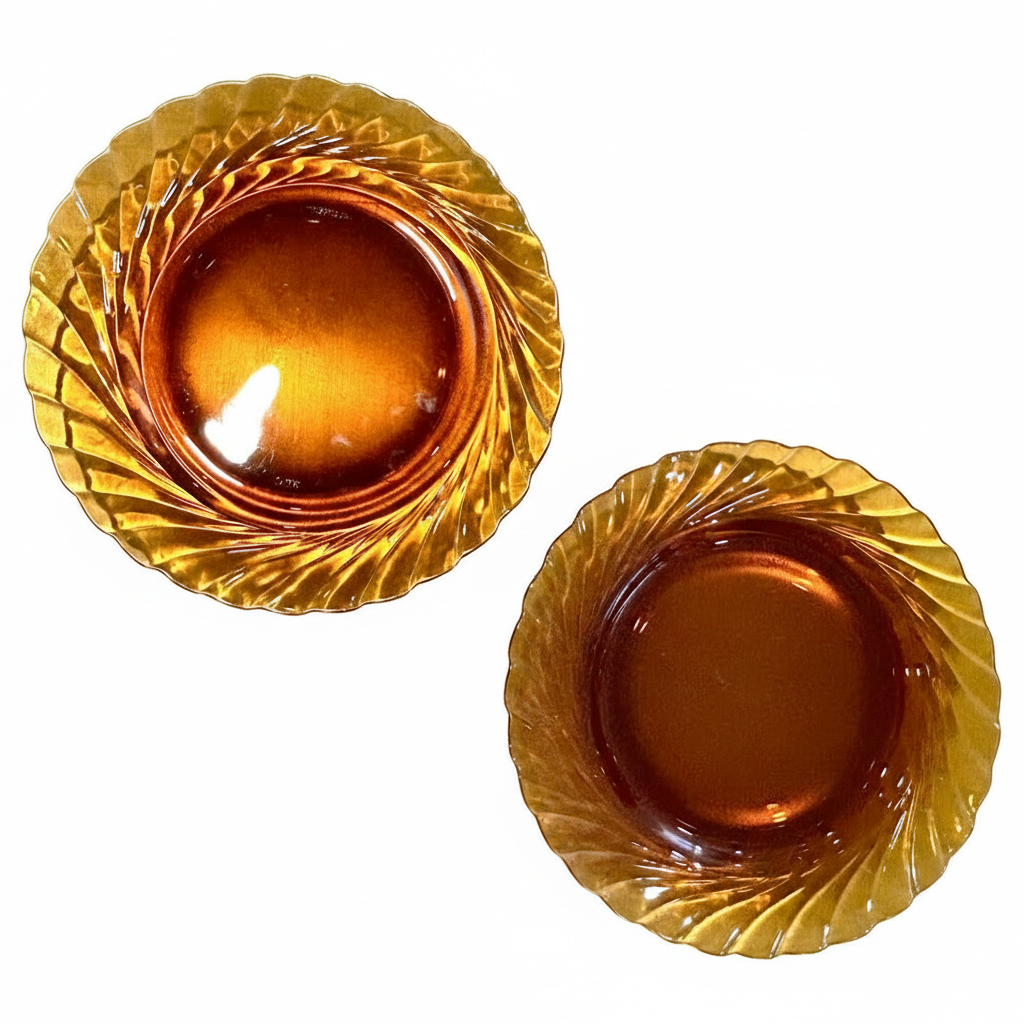
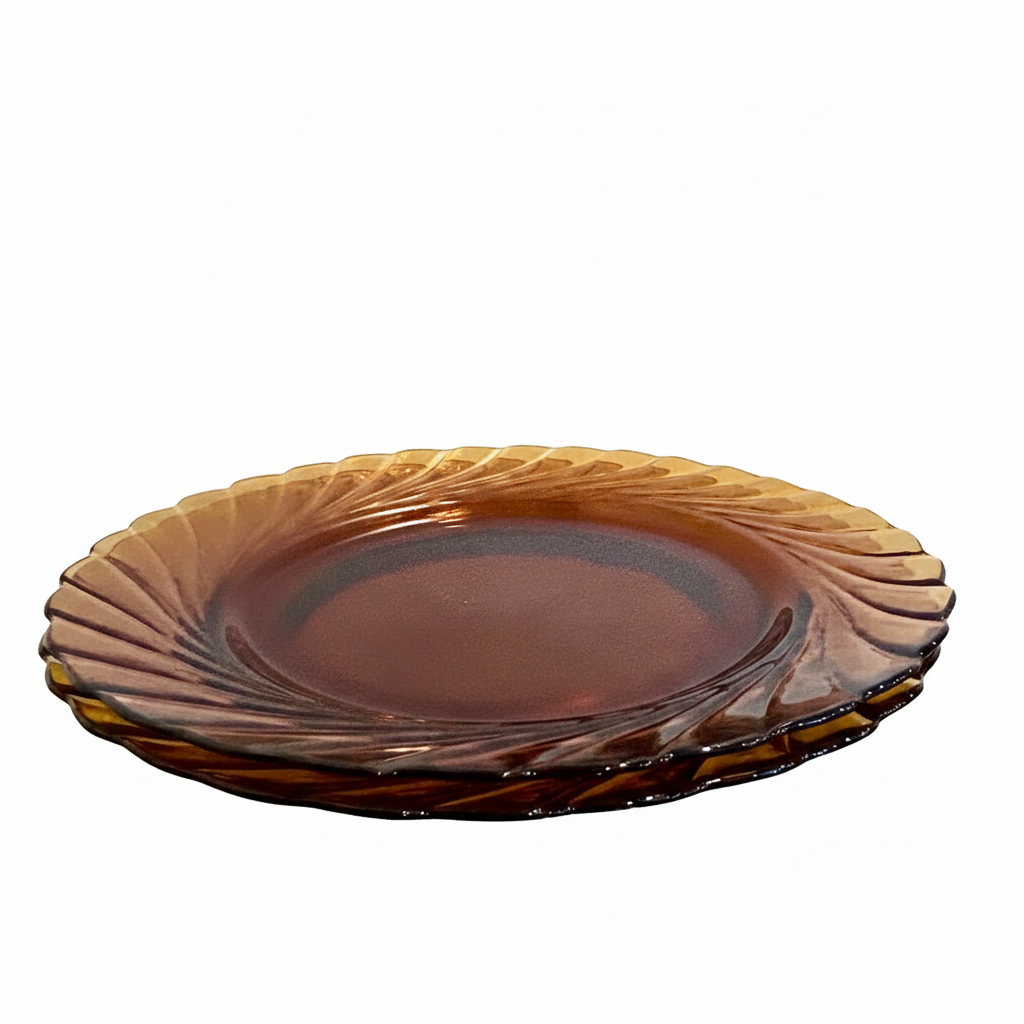
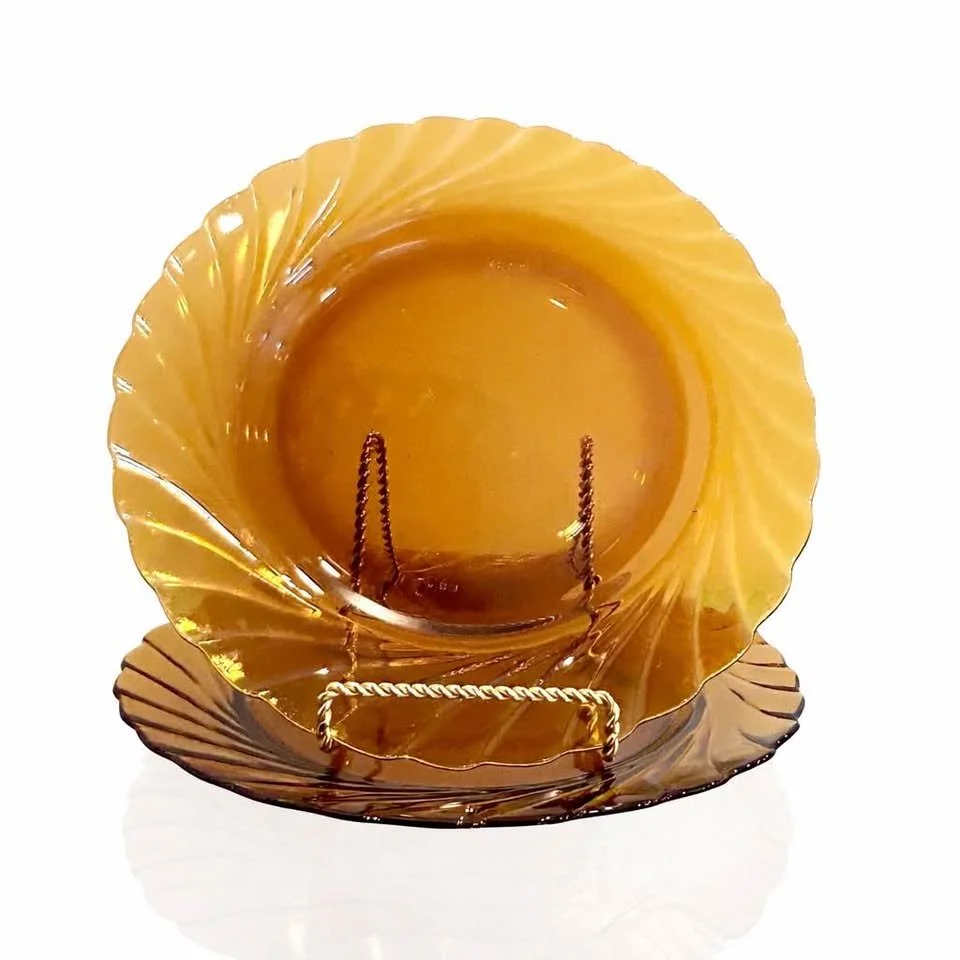
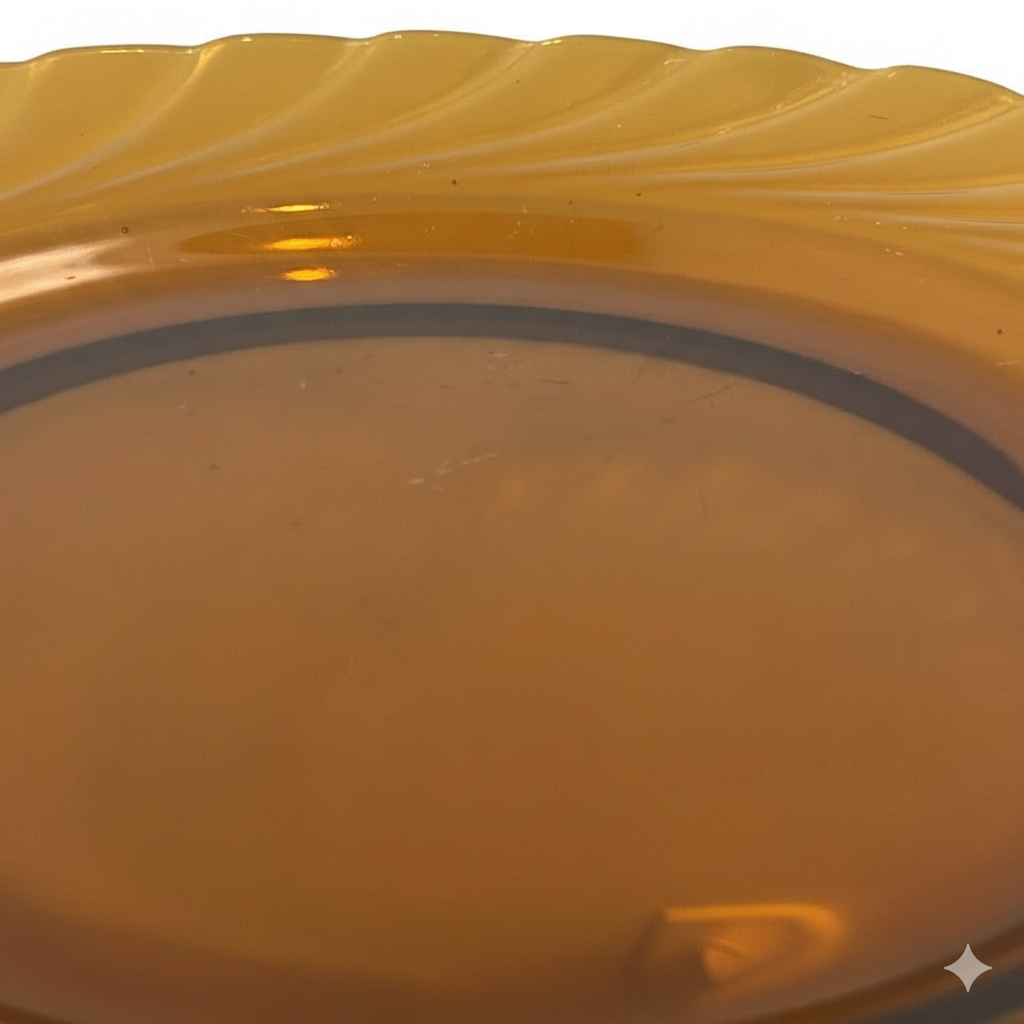
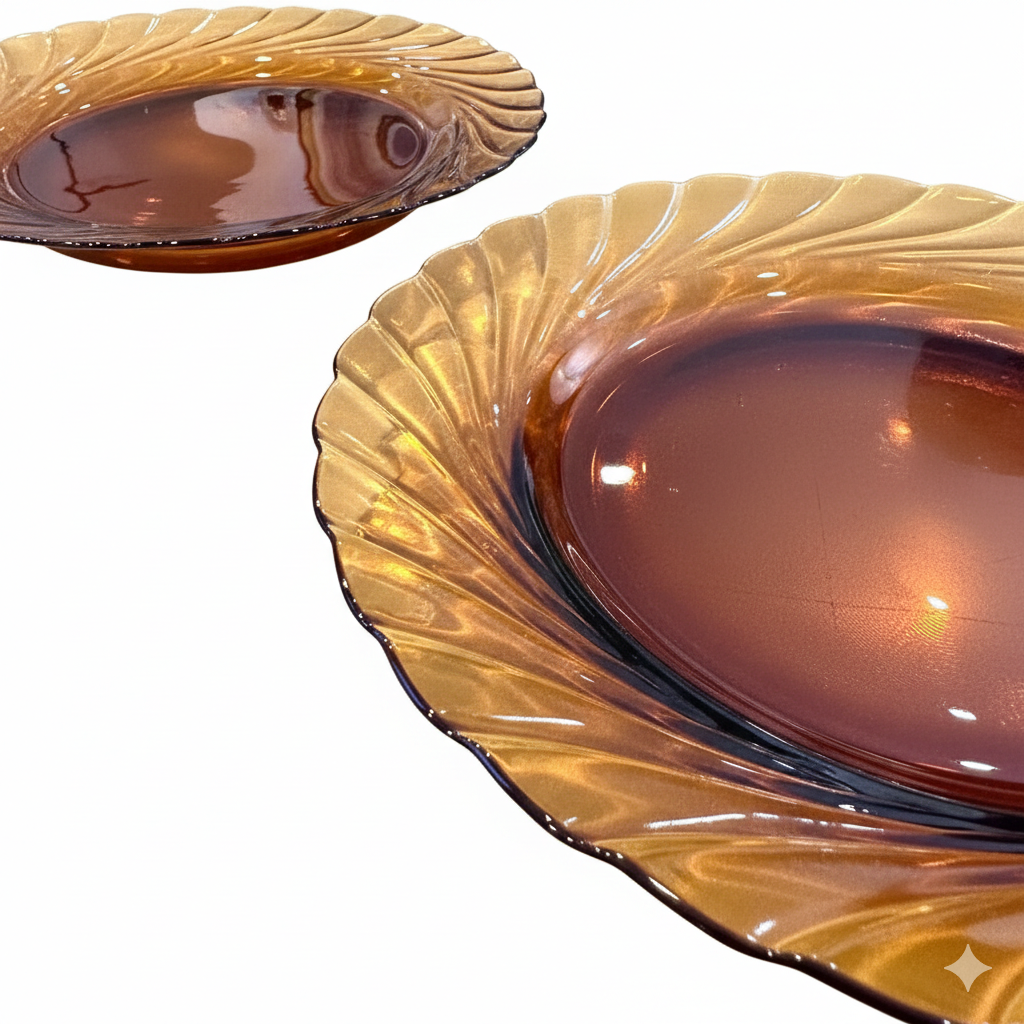
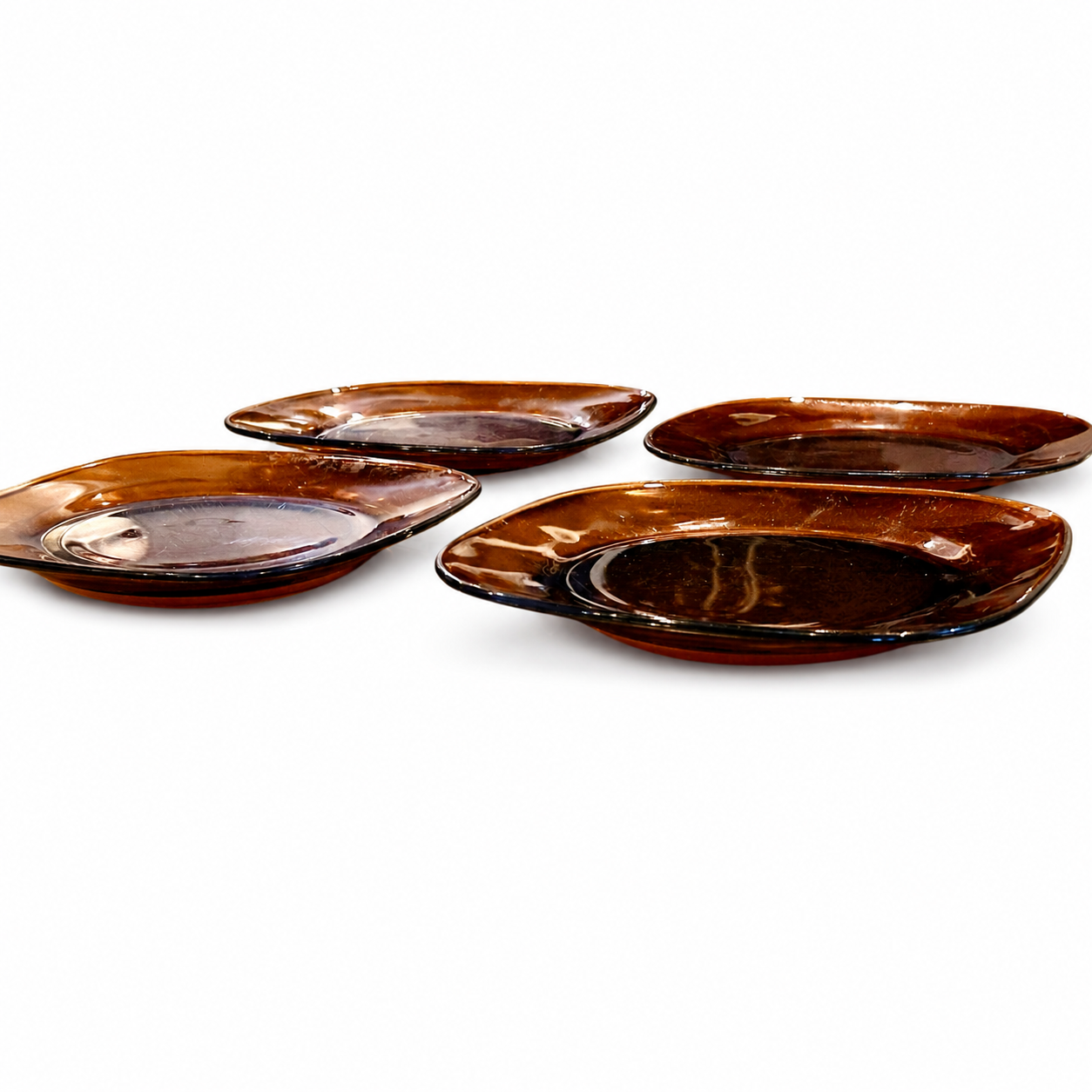
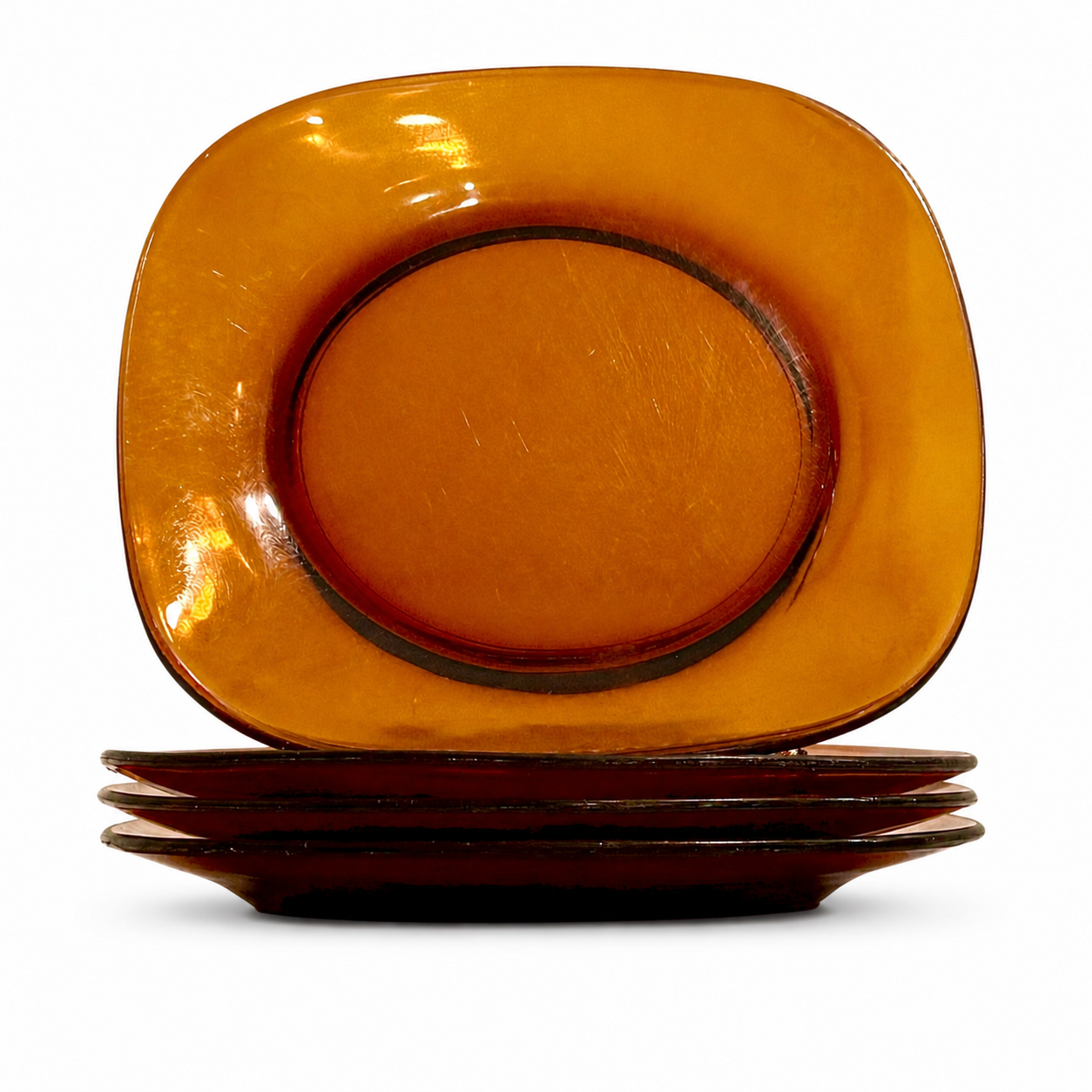
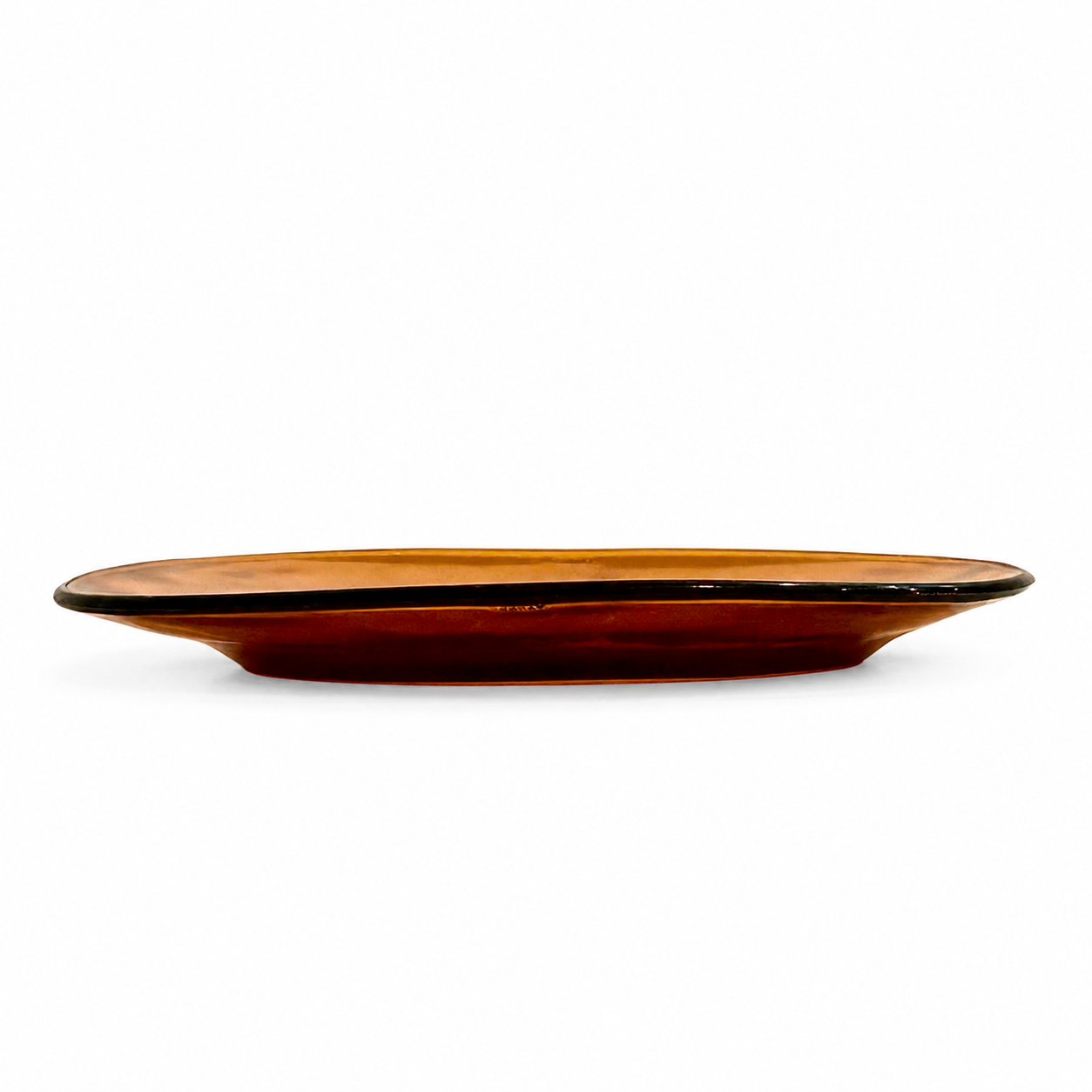
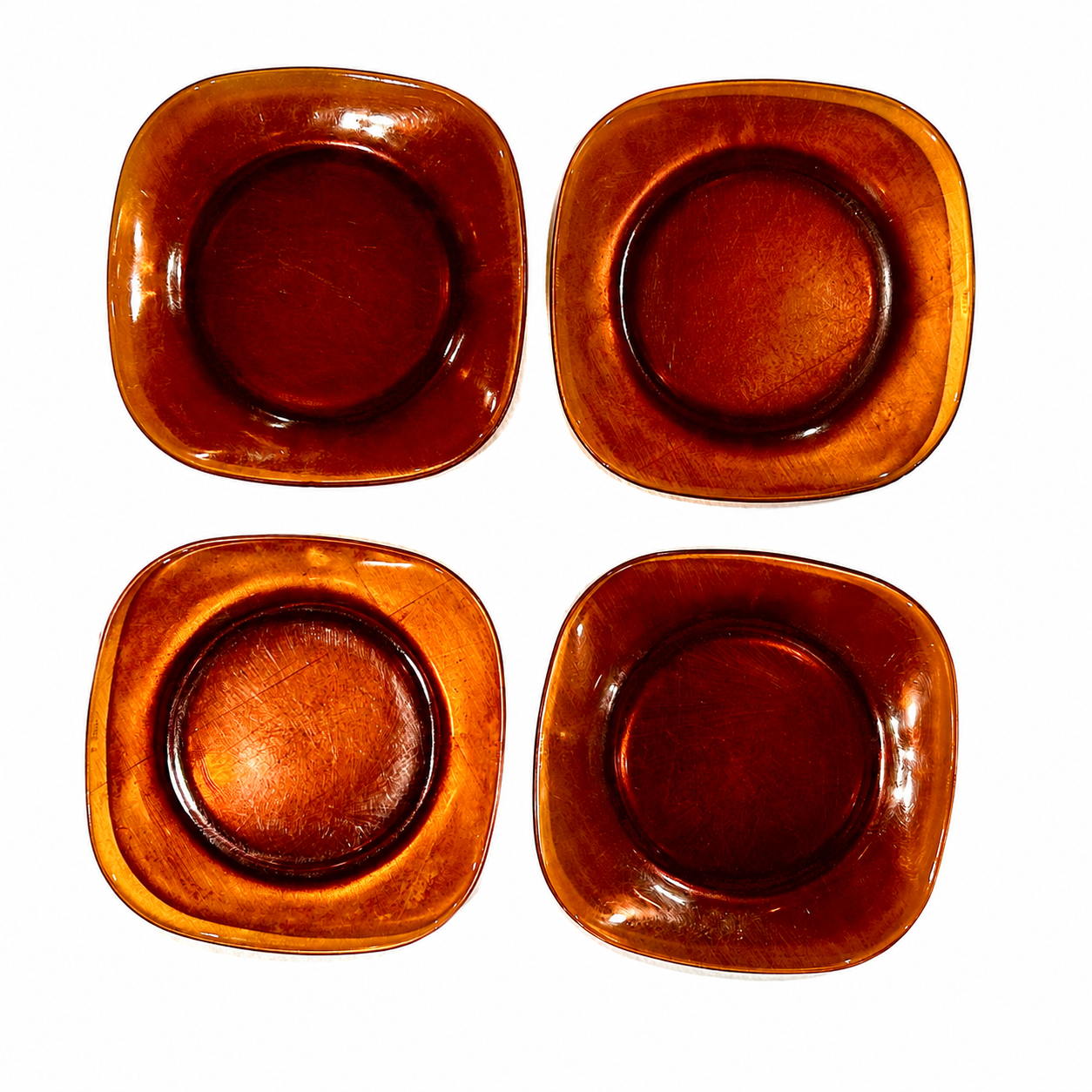
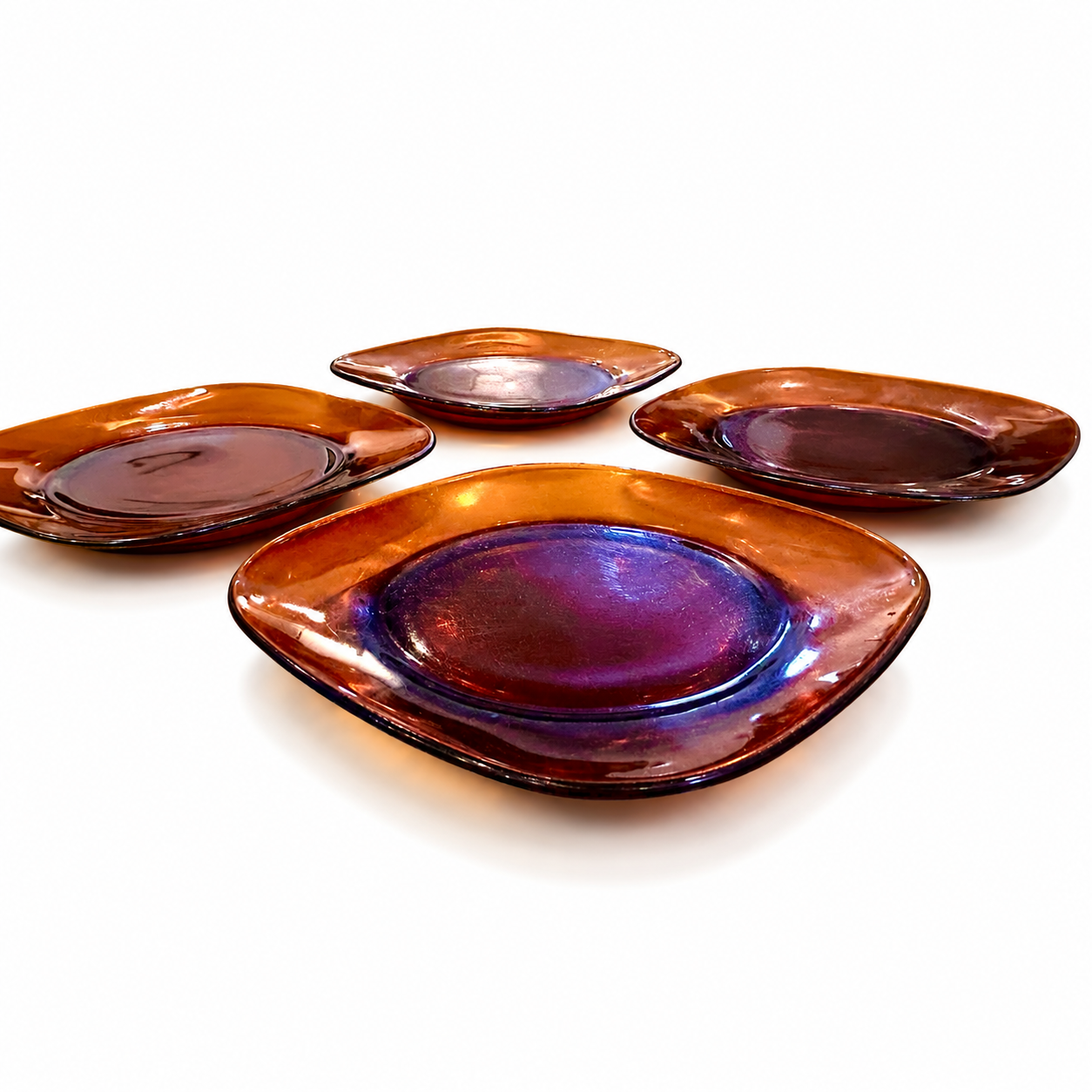
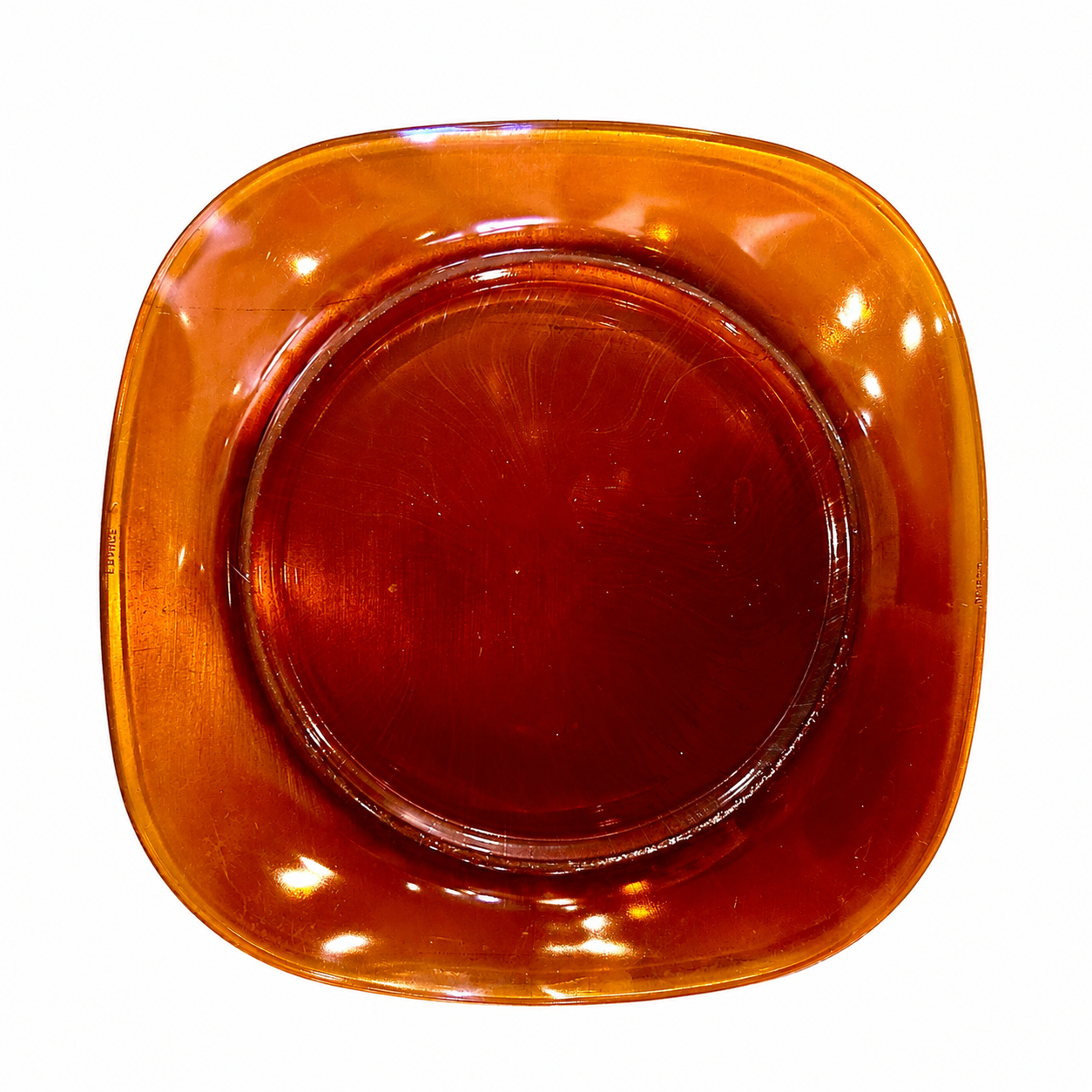
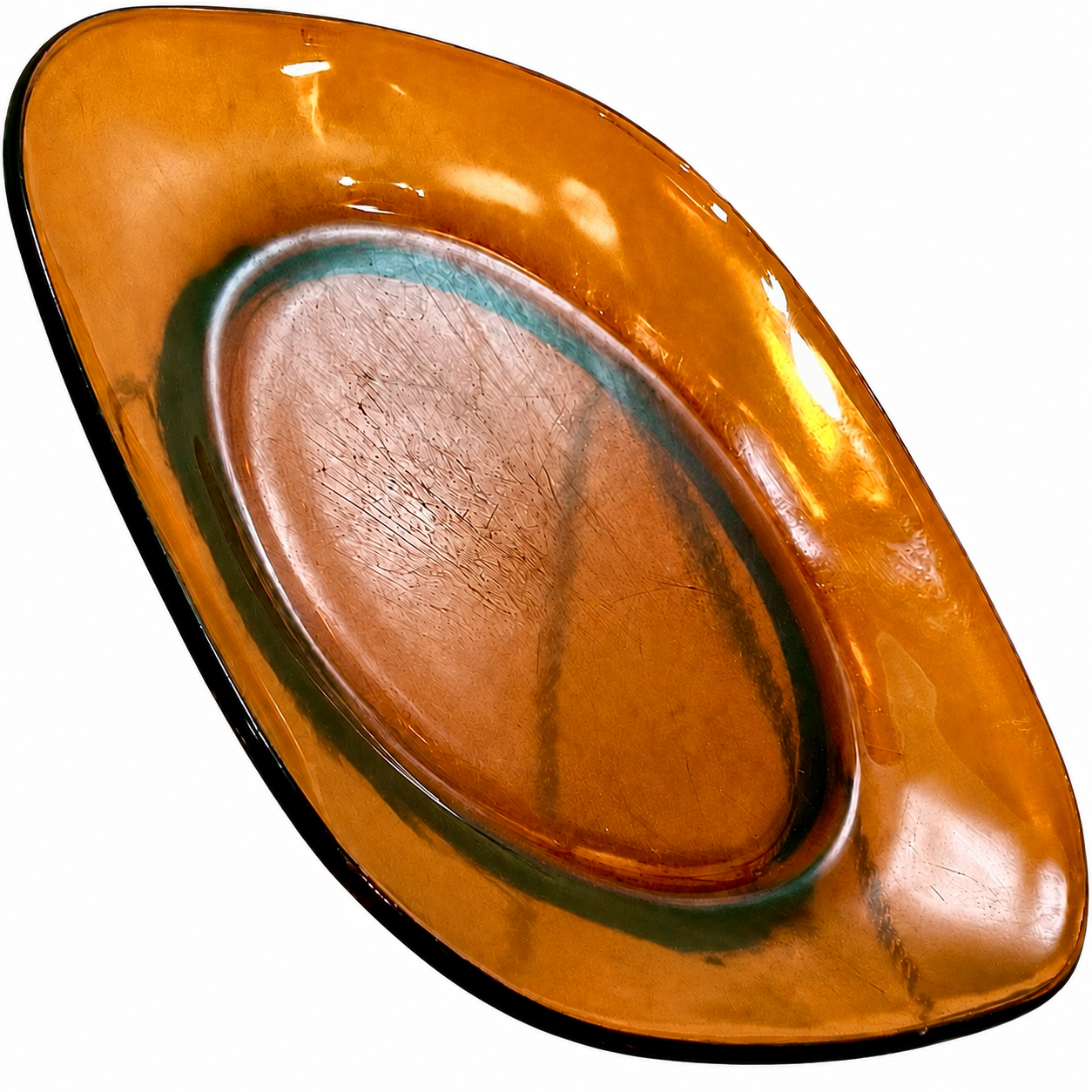
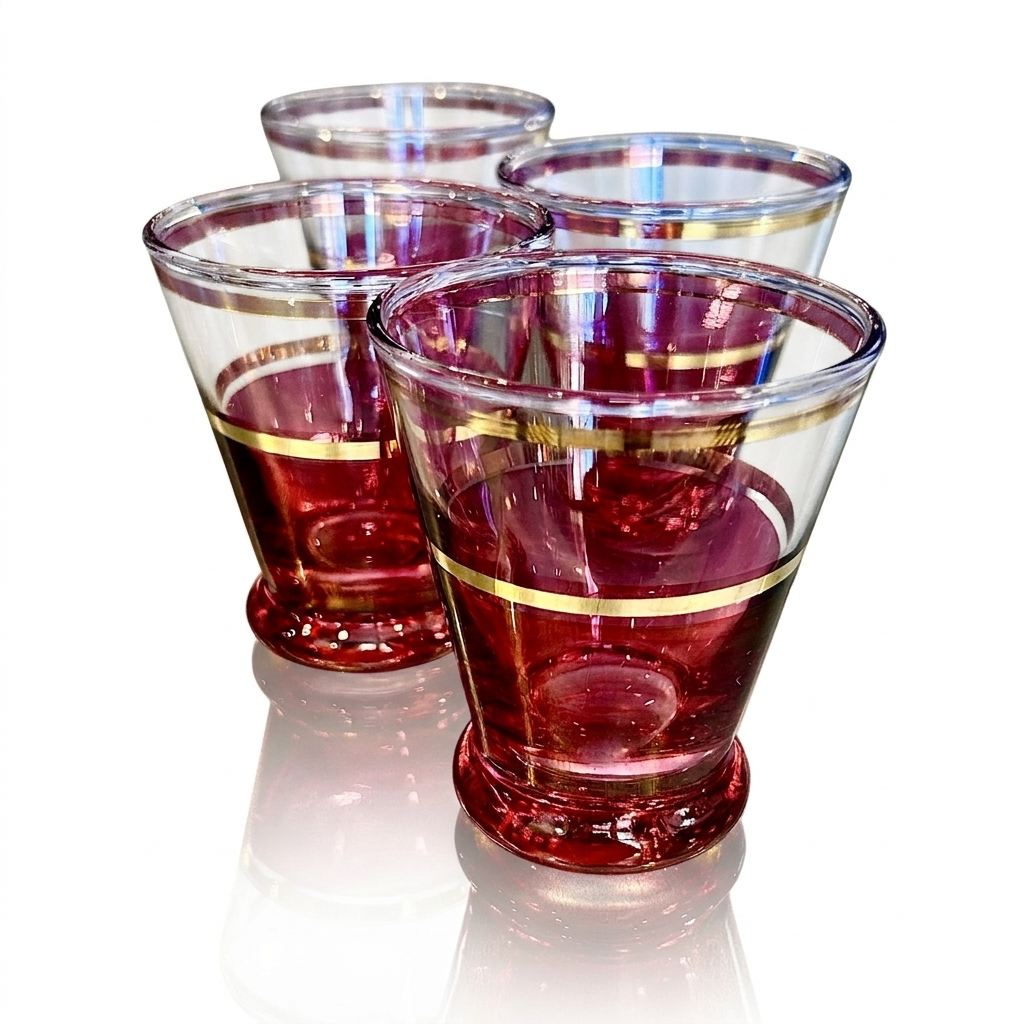
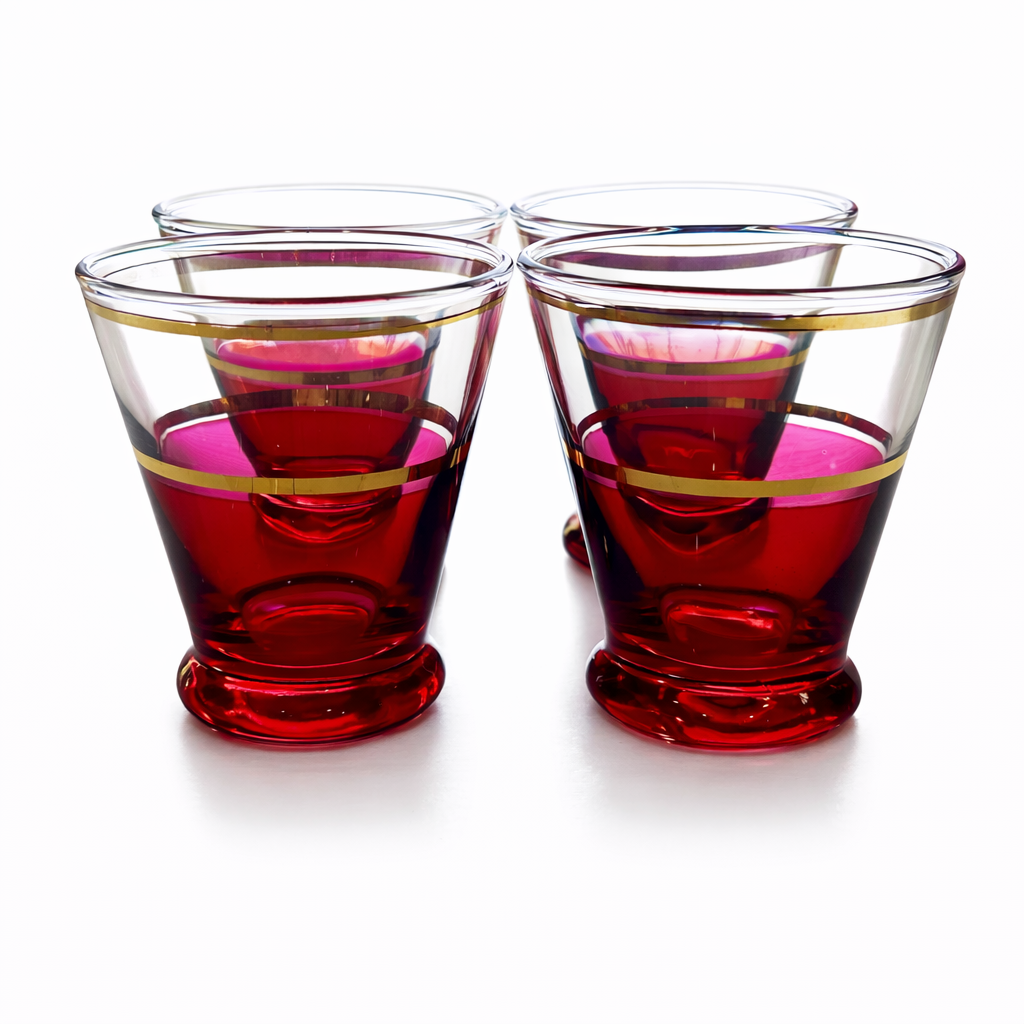
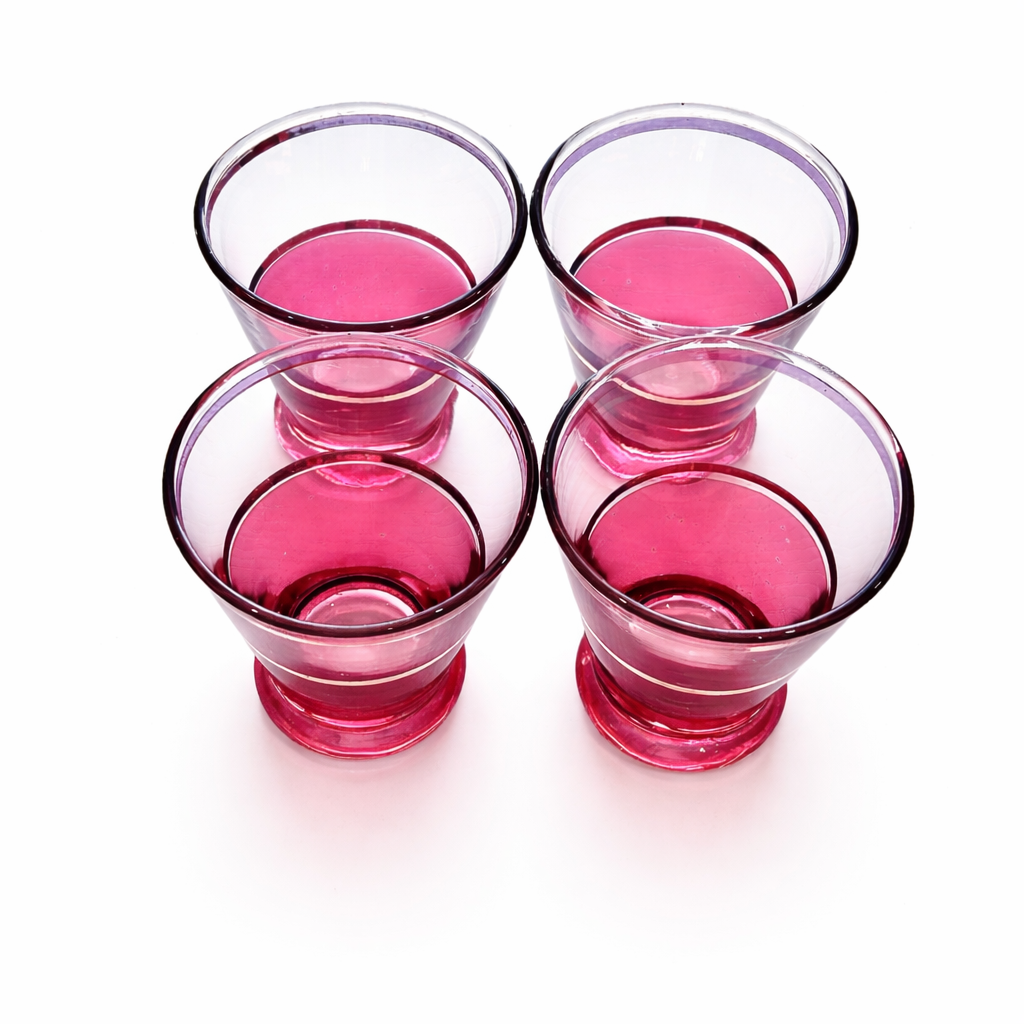
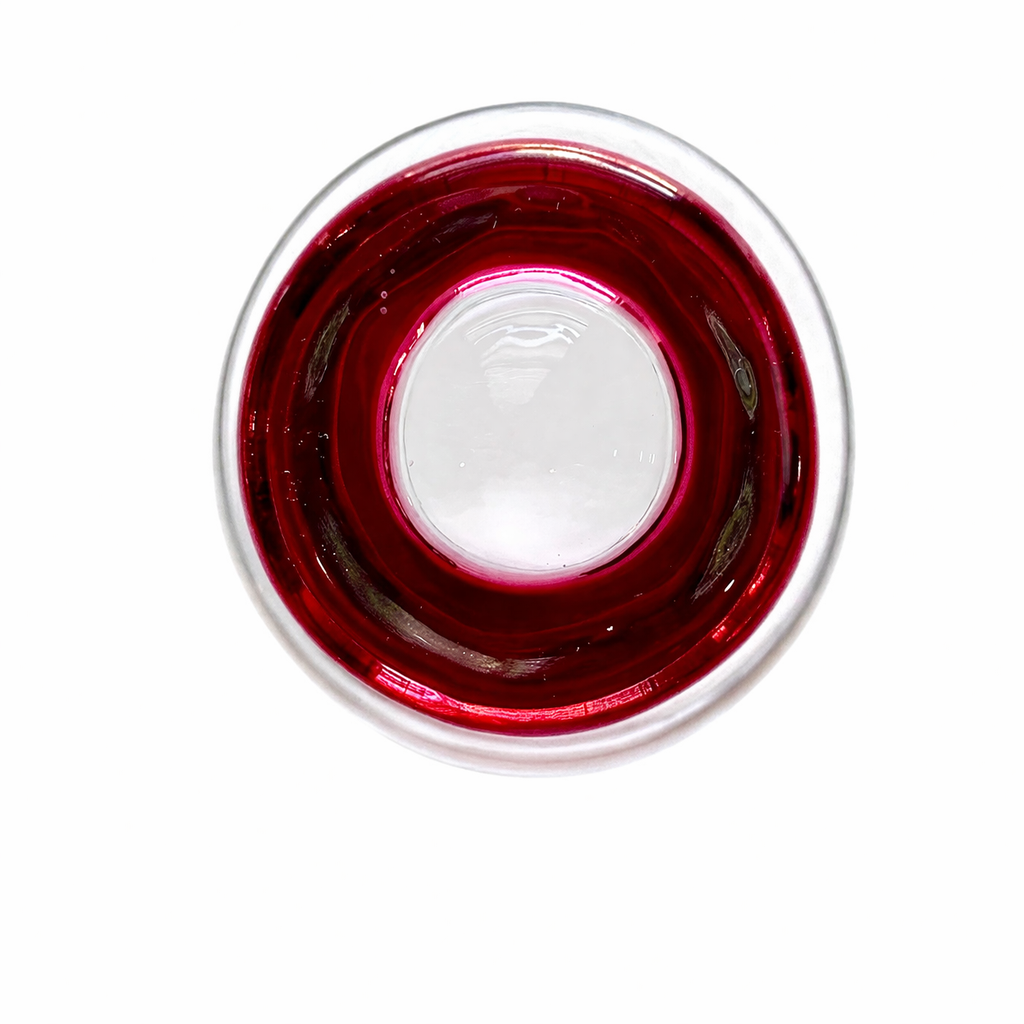
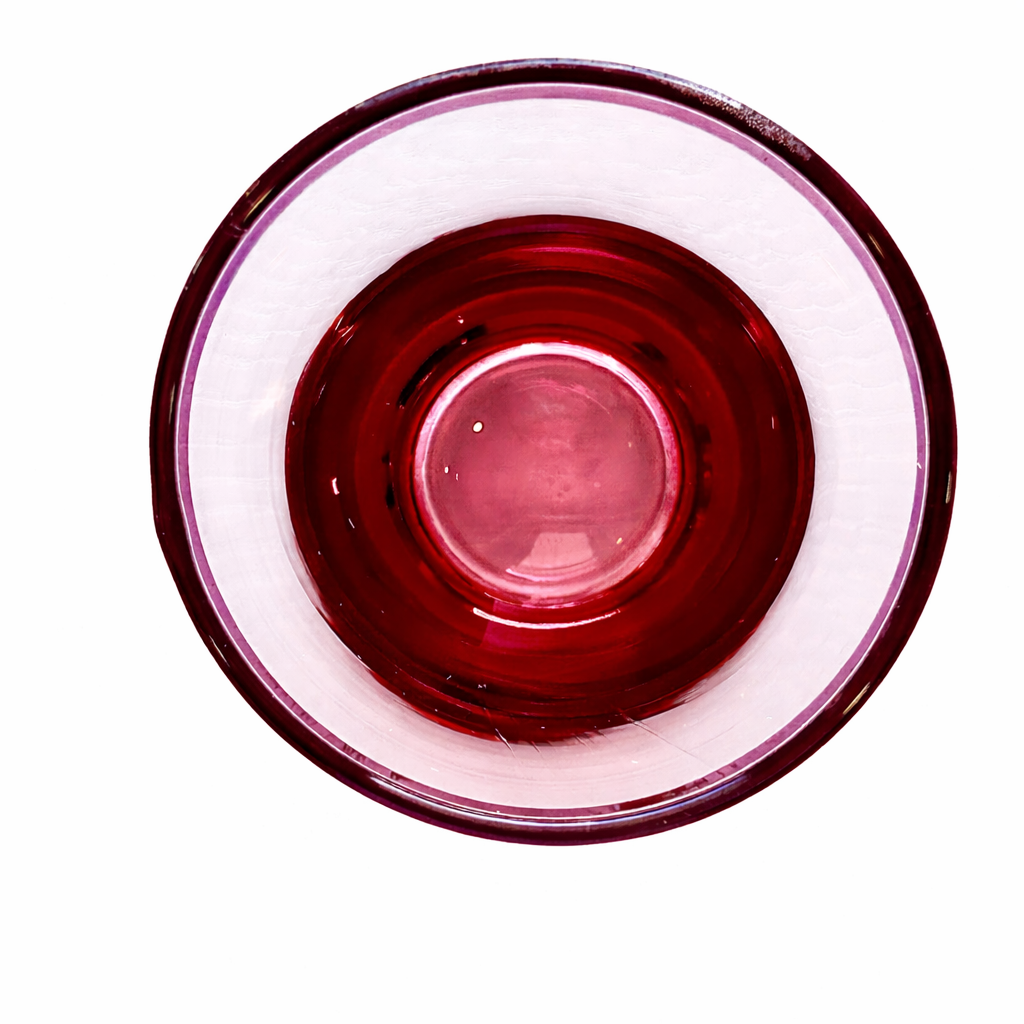
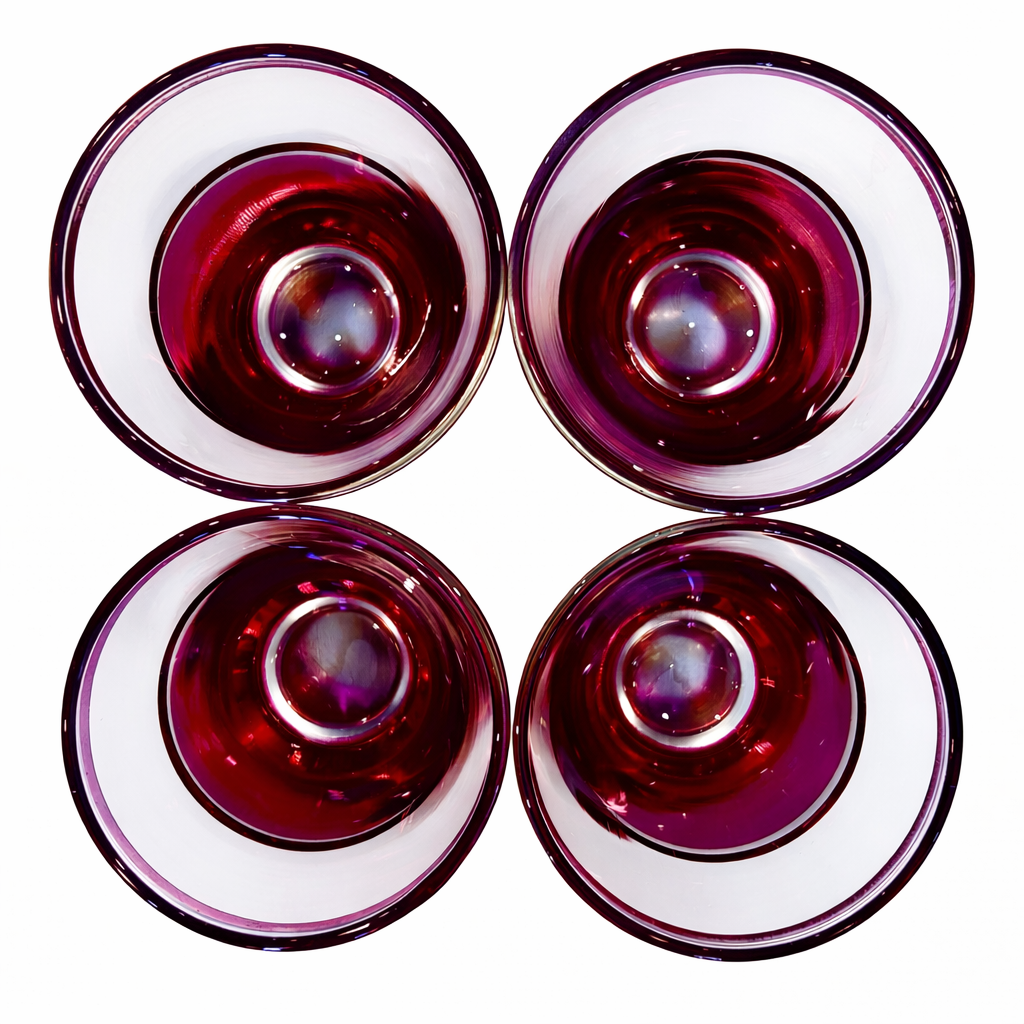
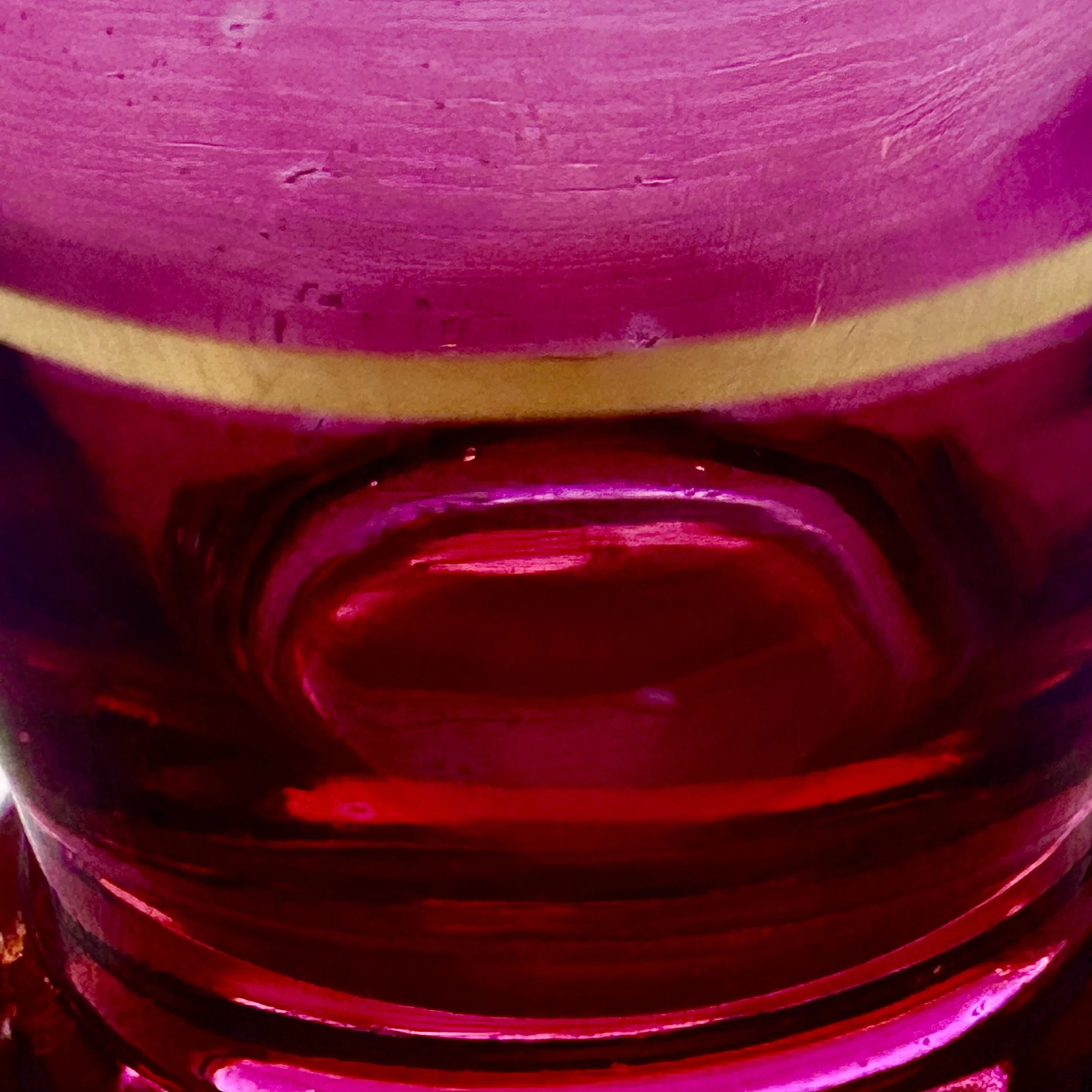
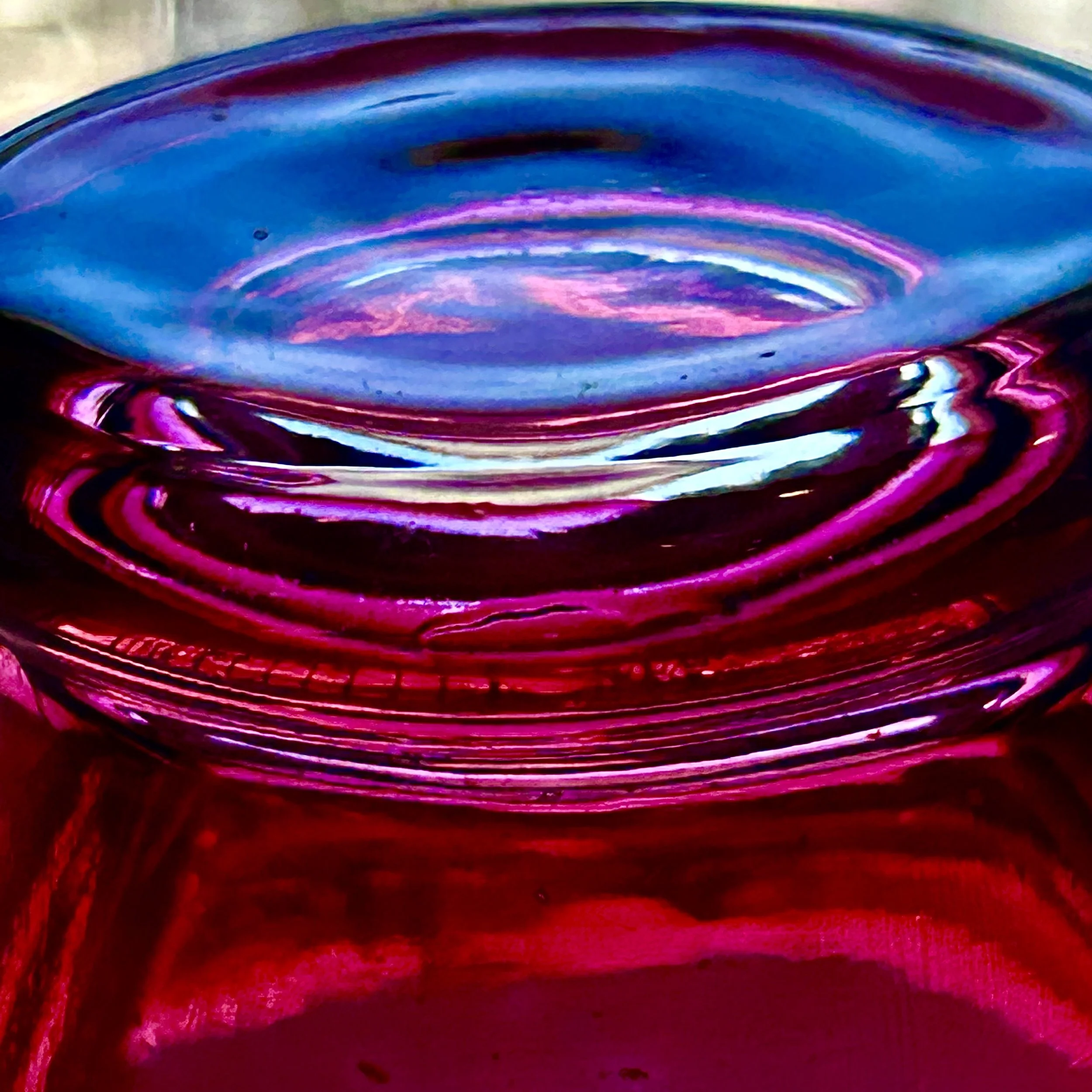
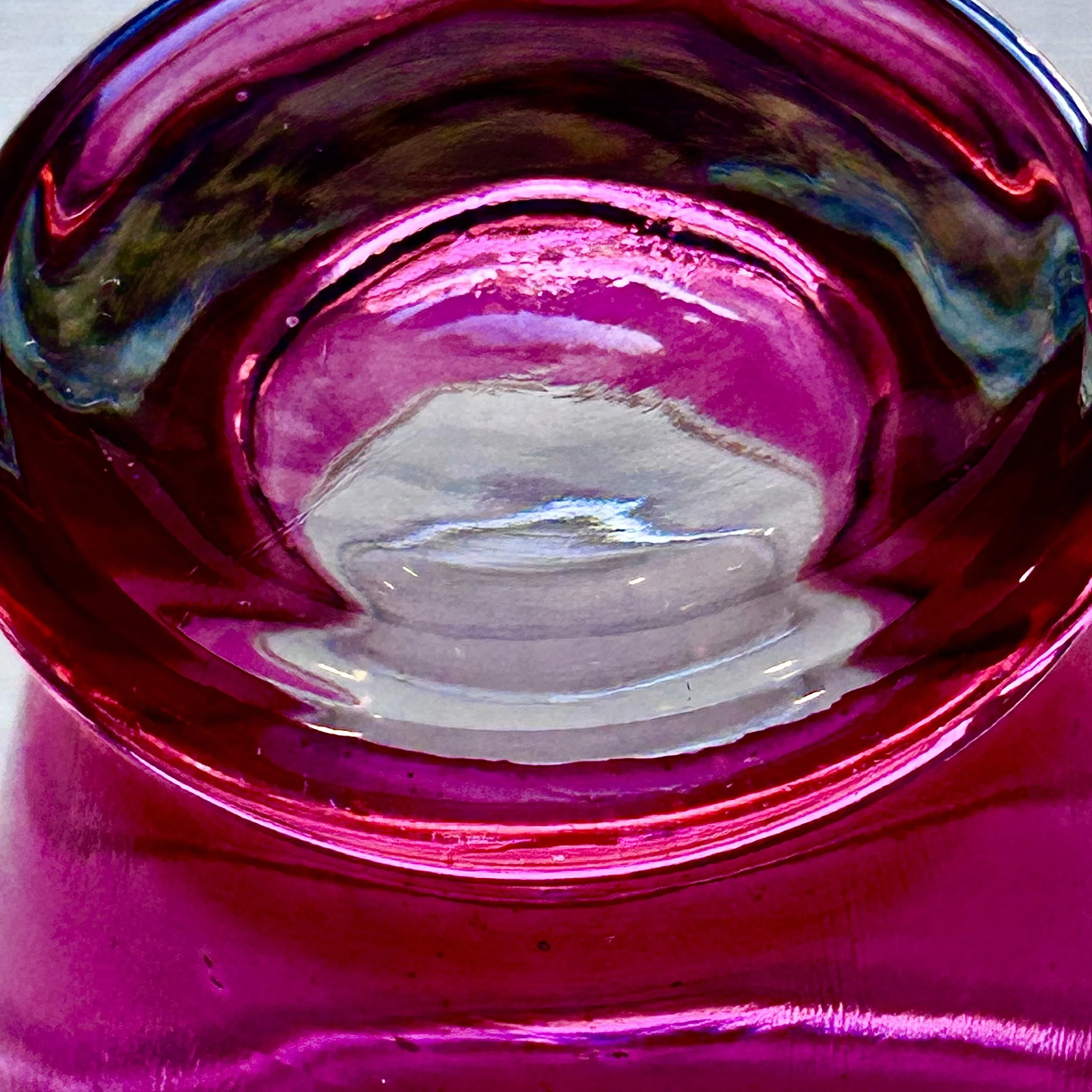
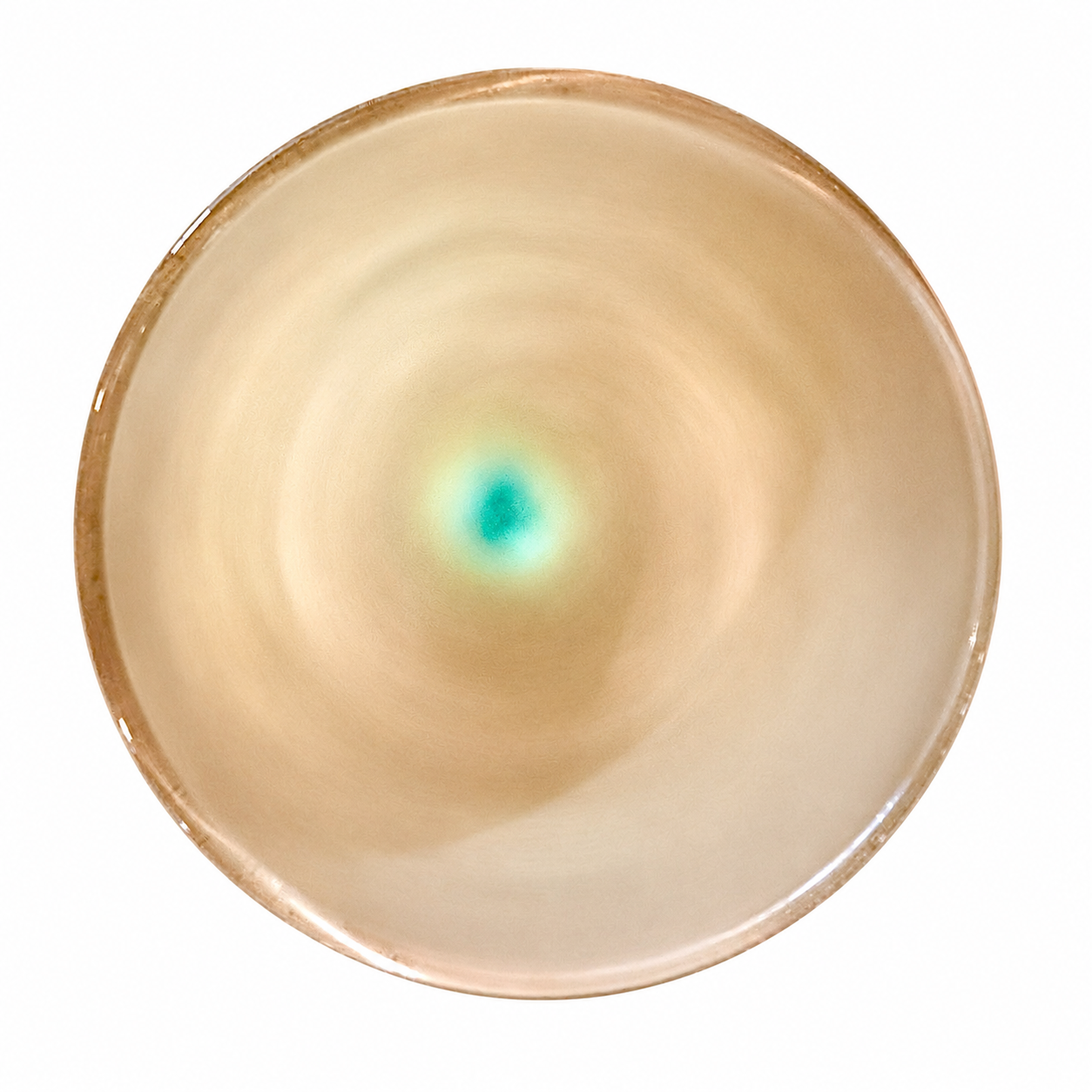
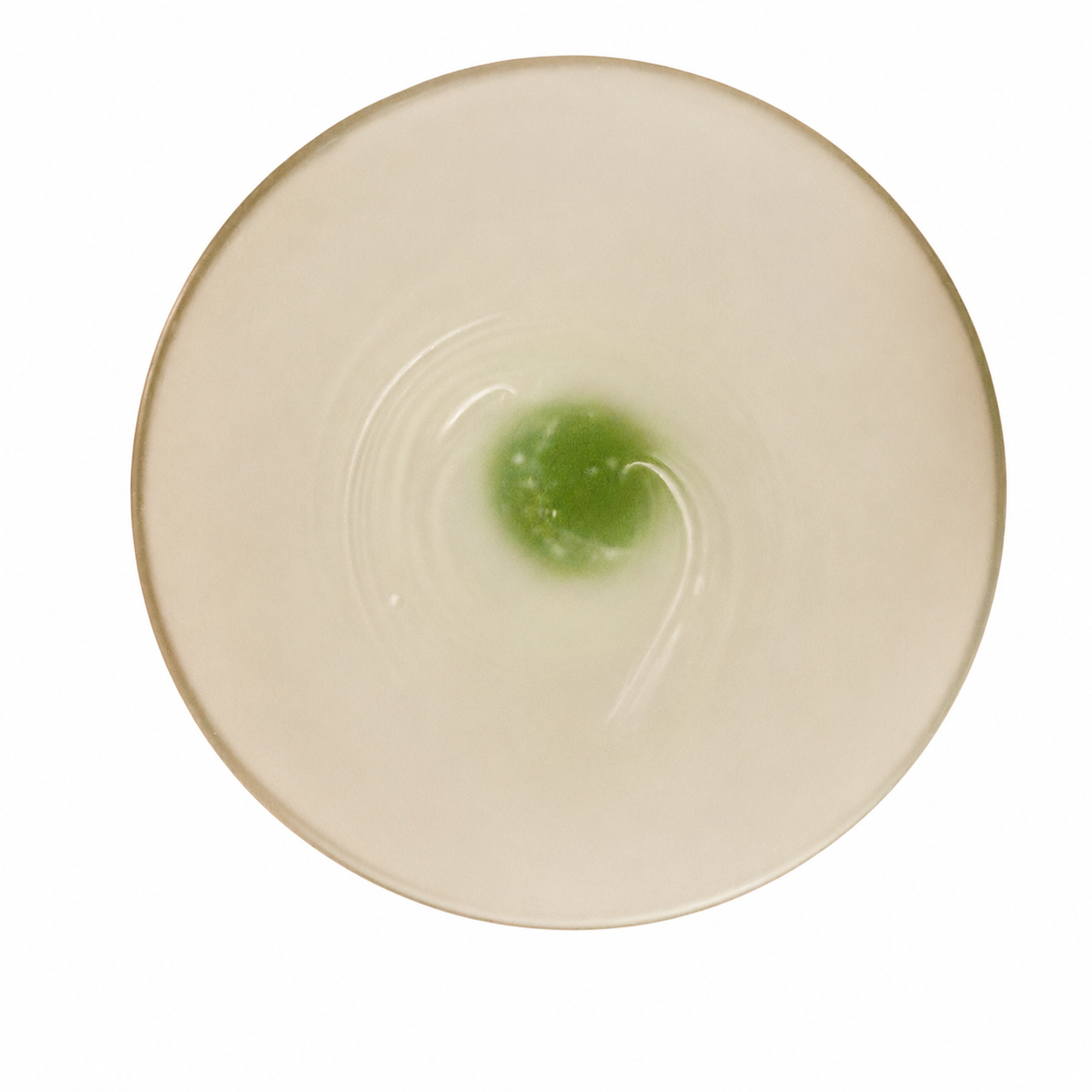
A collector-grade suite of seven period French amber glass nesting bowls, each marked “MADE IN FRANCE,” executed in a saturated honey-to-topaz tone with a disciplined modernist profile. This is a true multi-size nesting group with desirable duplicate key forms—far more compelling than isolated singles and increasingly difficult to assemble intact.
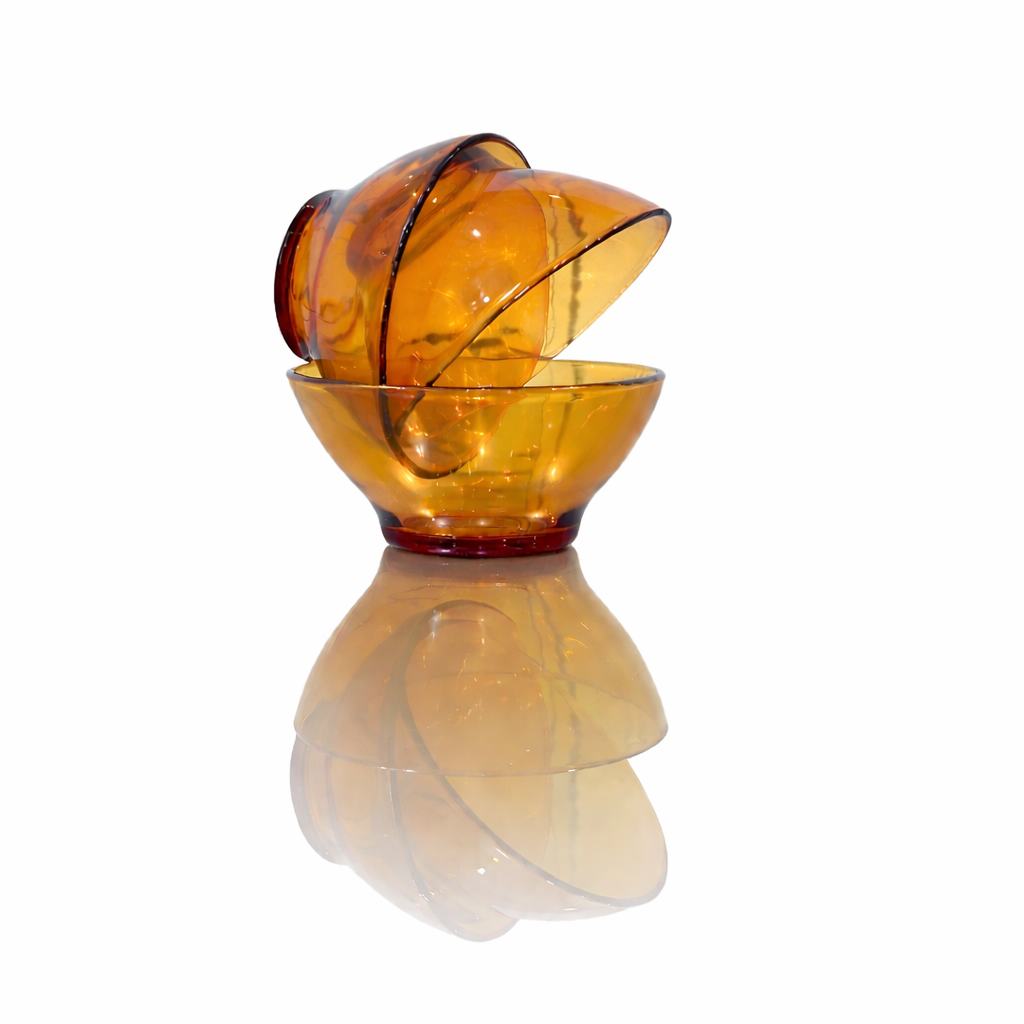
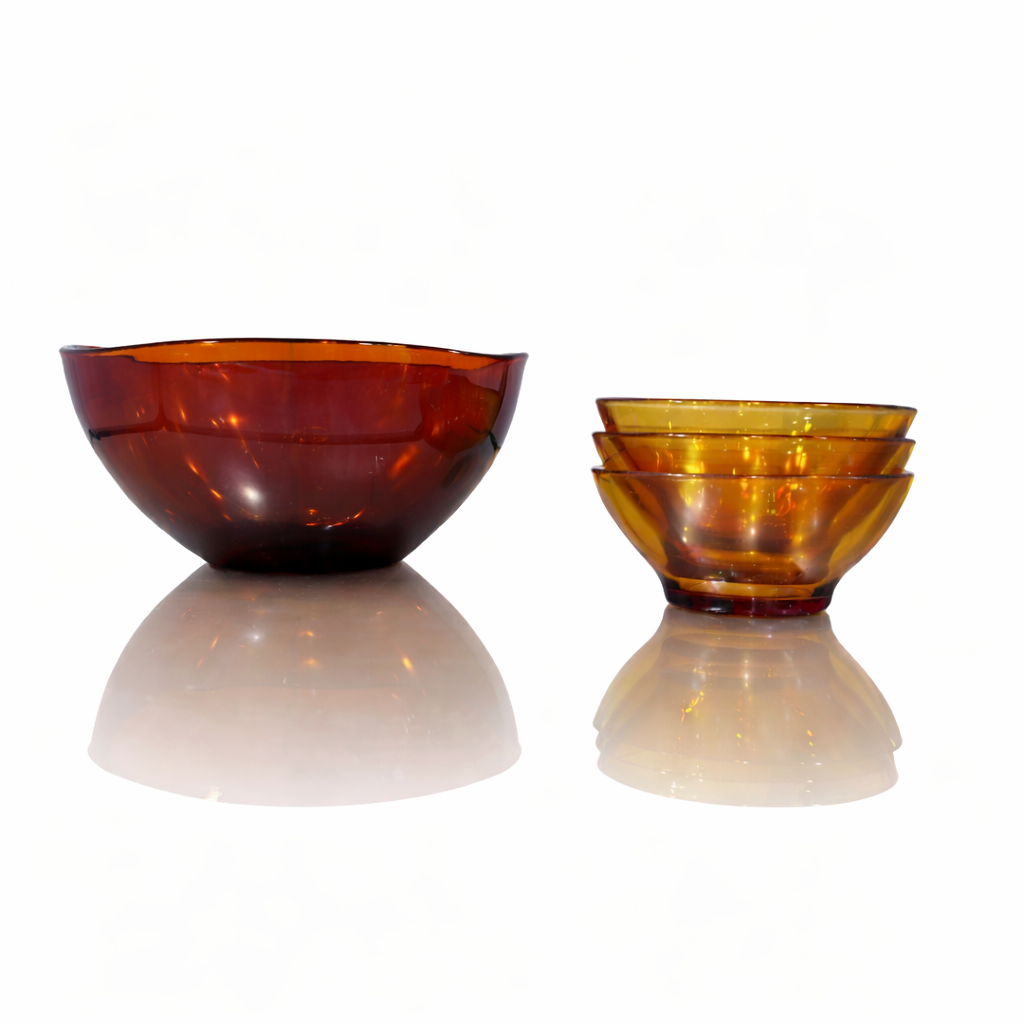
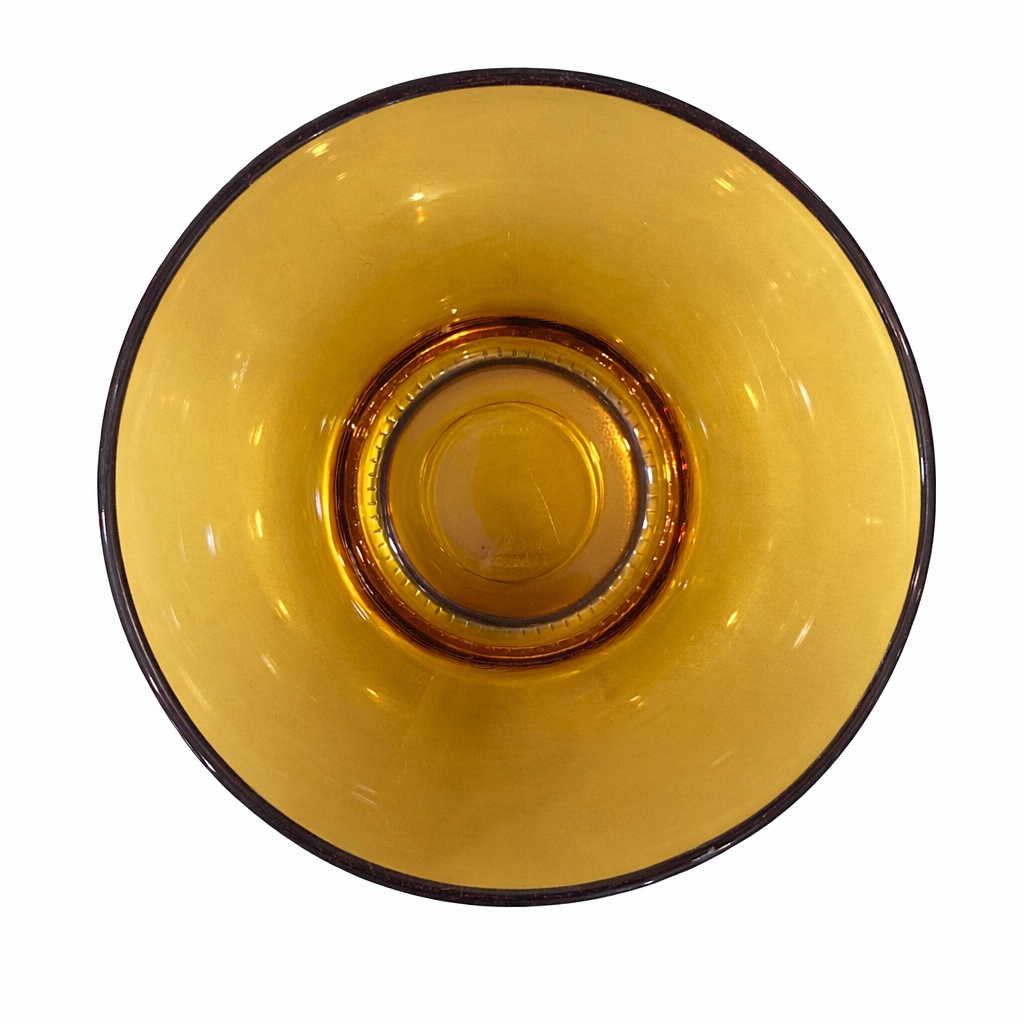
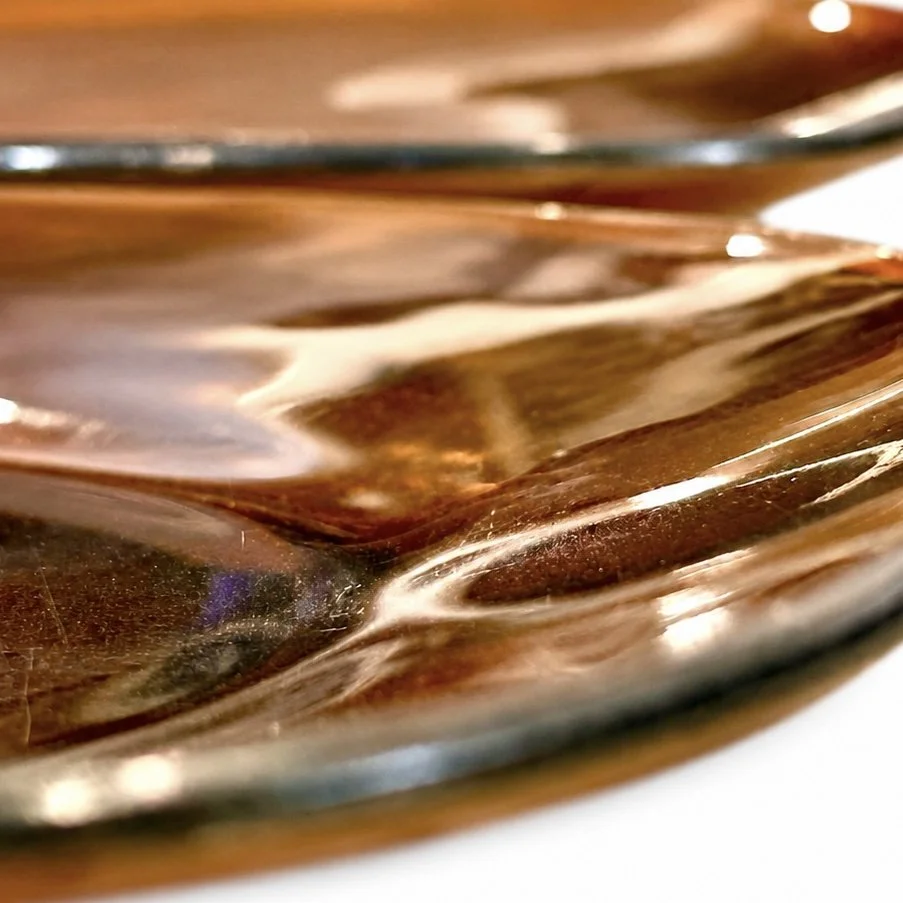
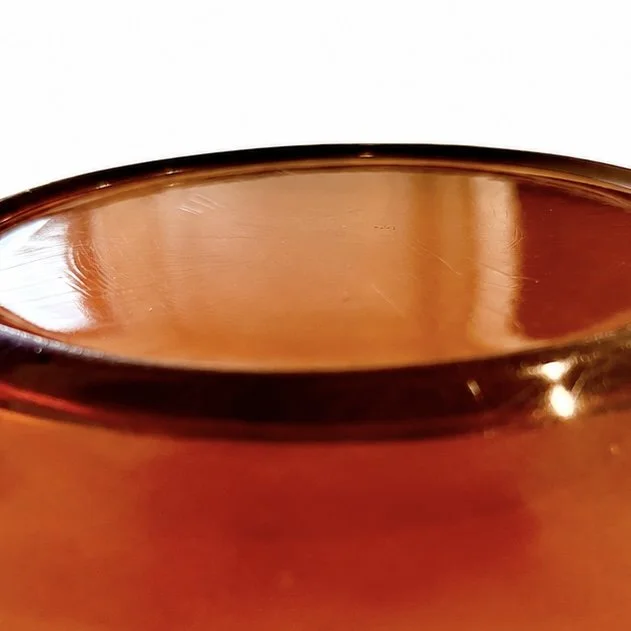
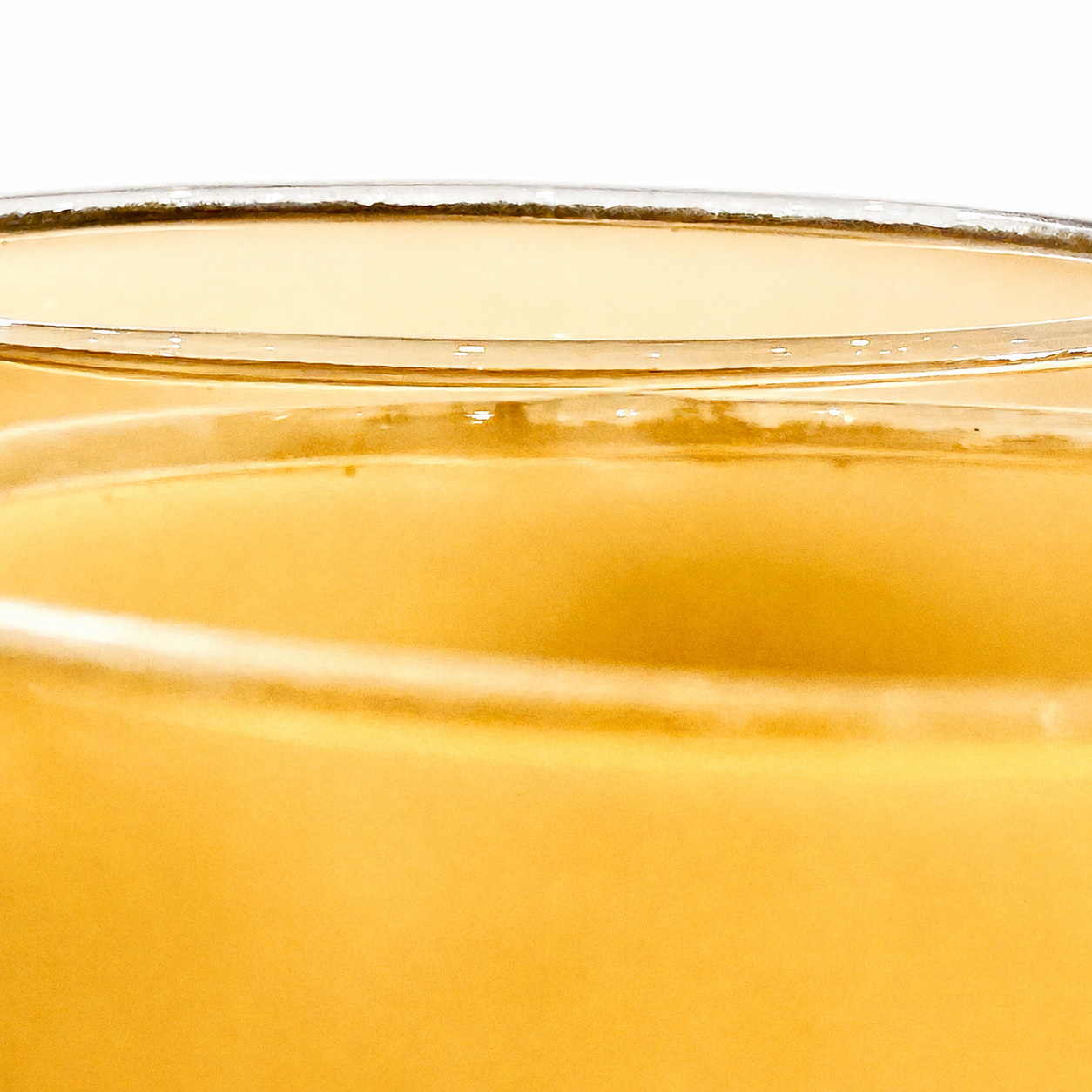
The silhouettes are clean and architectural: gently flared rims, balanced circular bases, and restrained wall thickness consistent with mid-century French utilitarian table glass. The amber batch color is warm and even, pooling richly at the base and glowing under natural light. When nested, the graduated forms create a sculptural tonal stack—precisely the type of cohesive presentation collectors seek for both display and functional service.
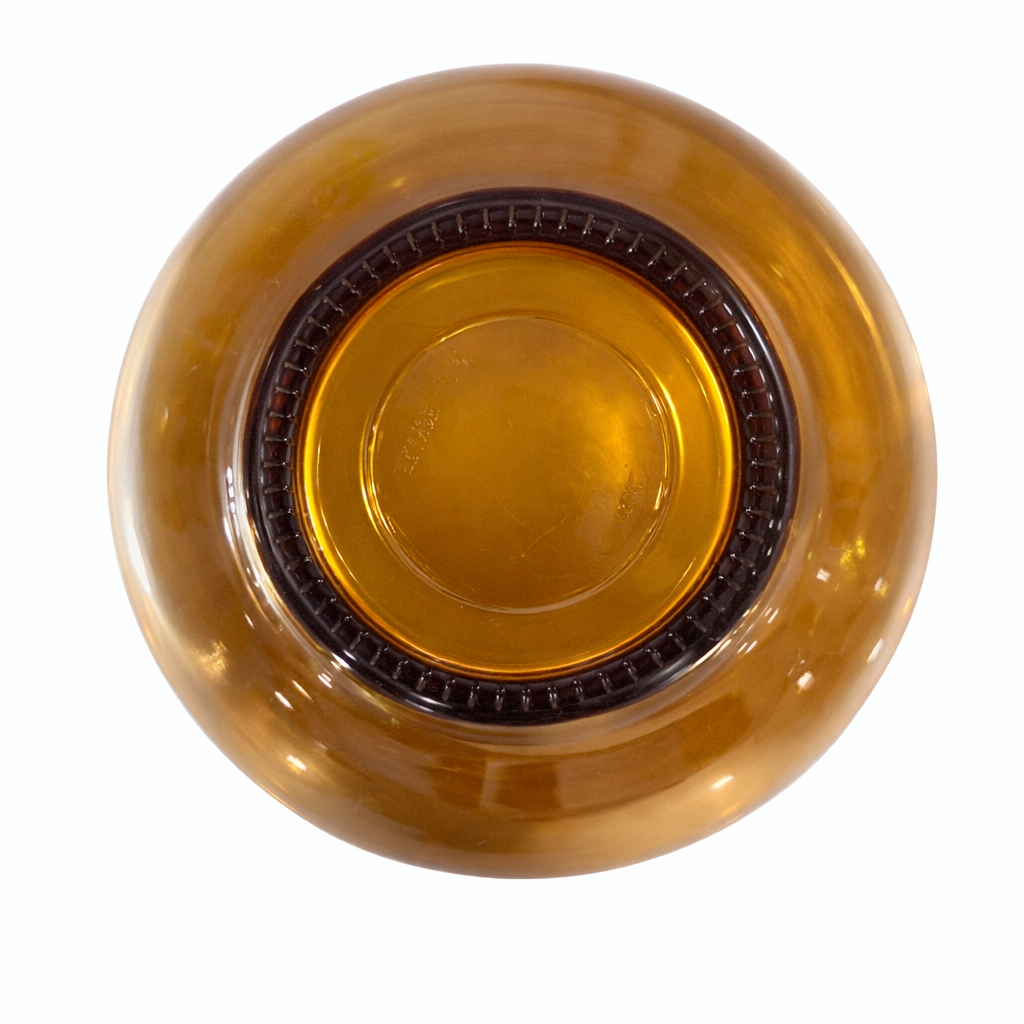
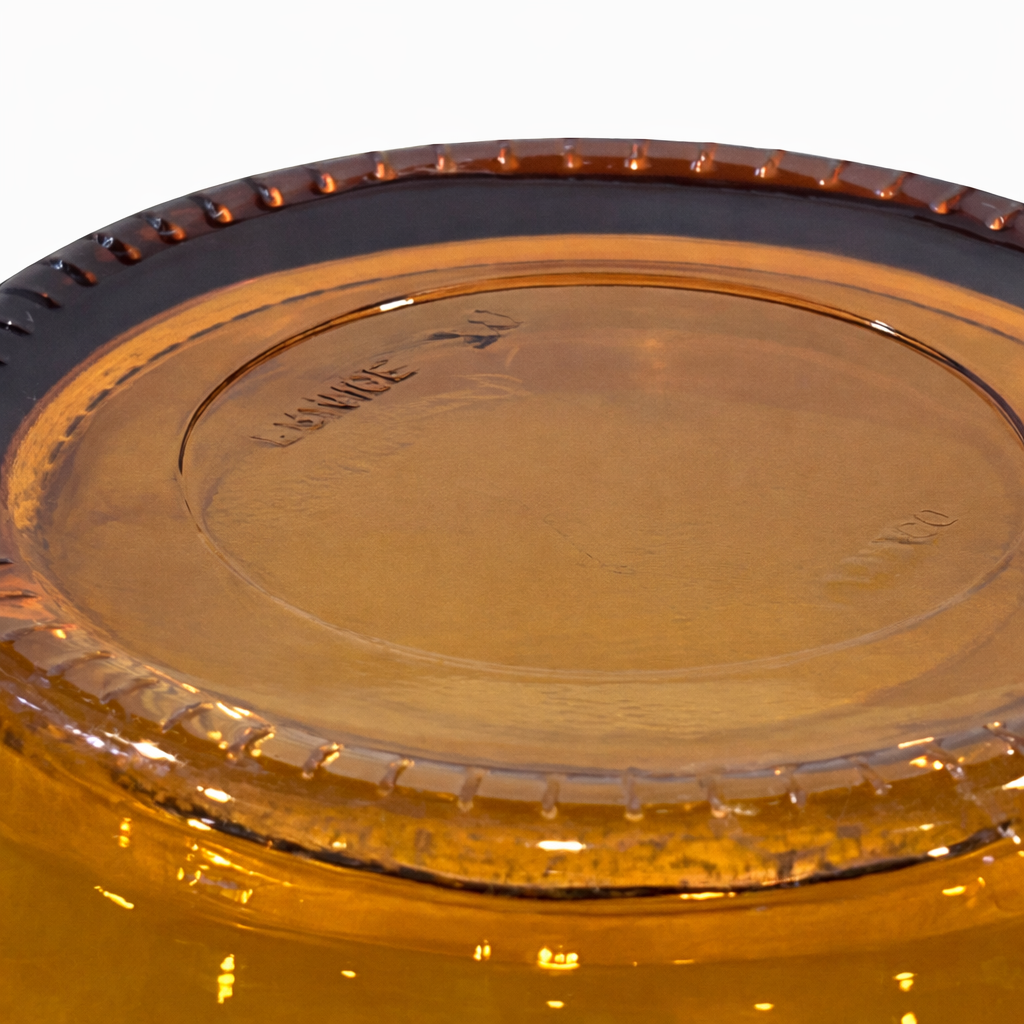
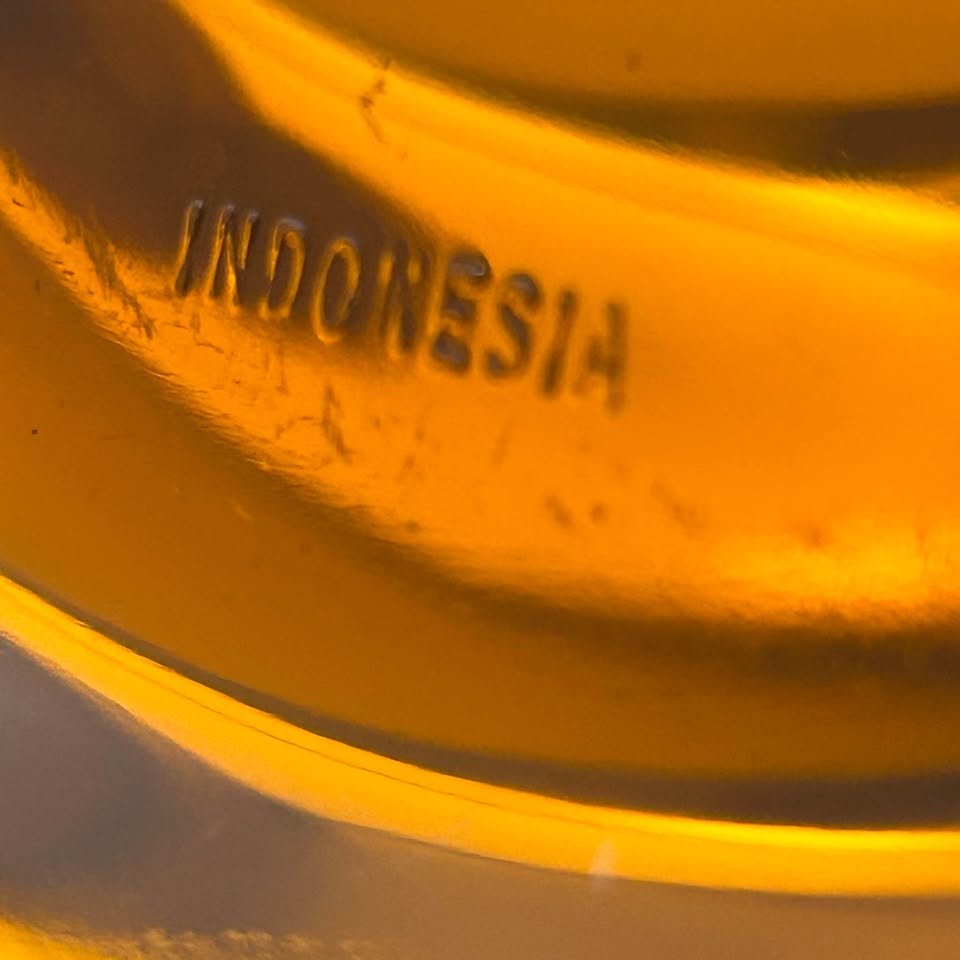
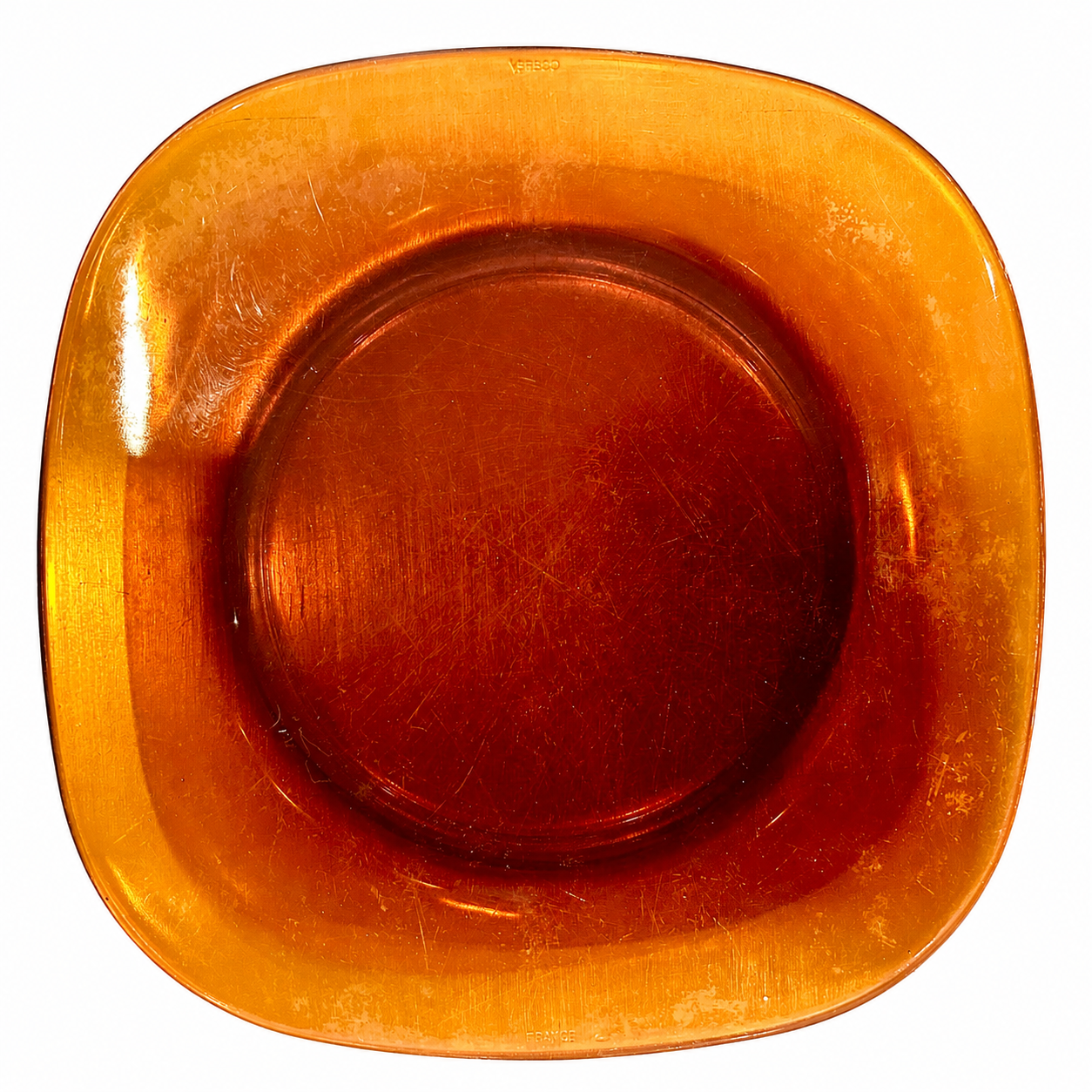
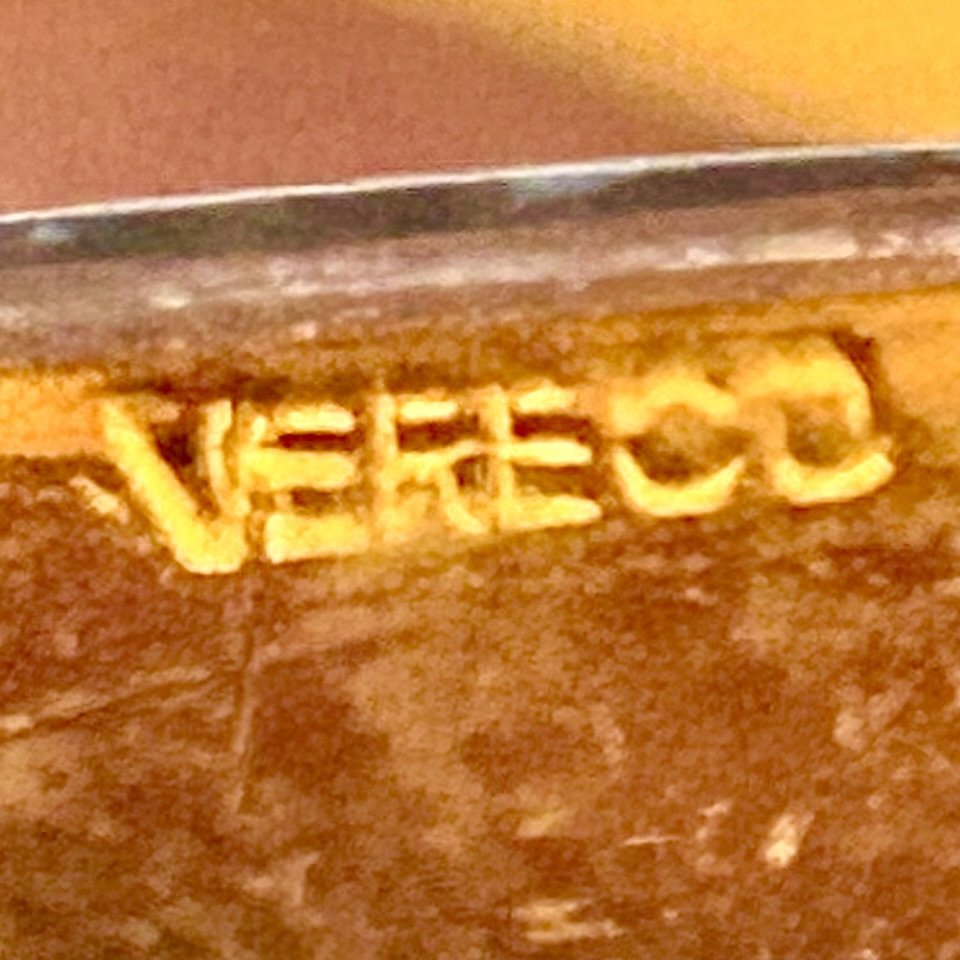
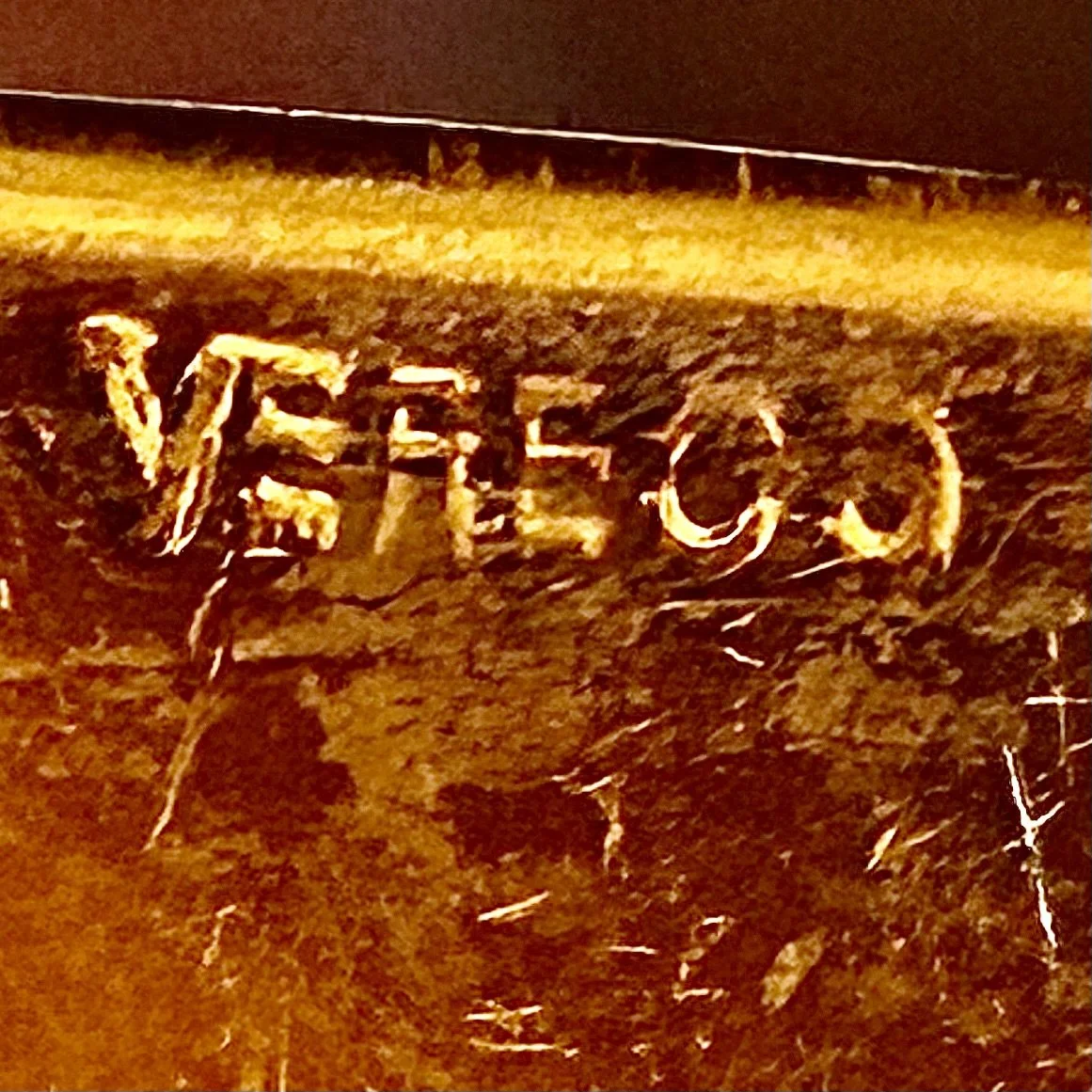
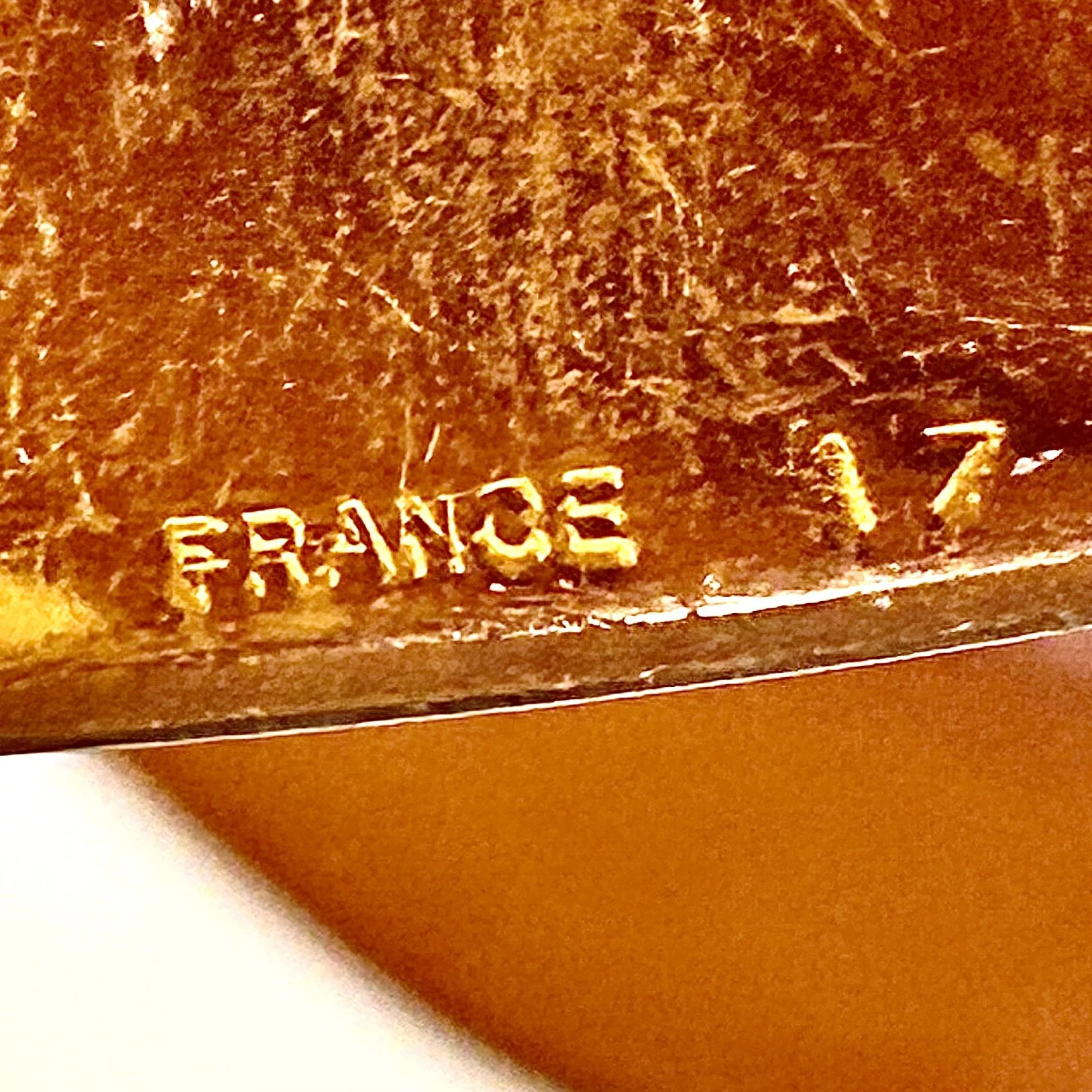
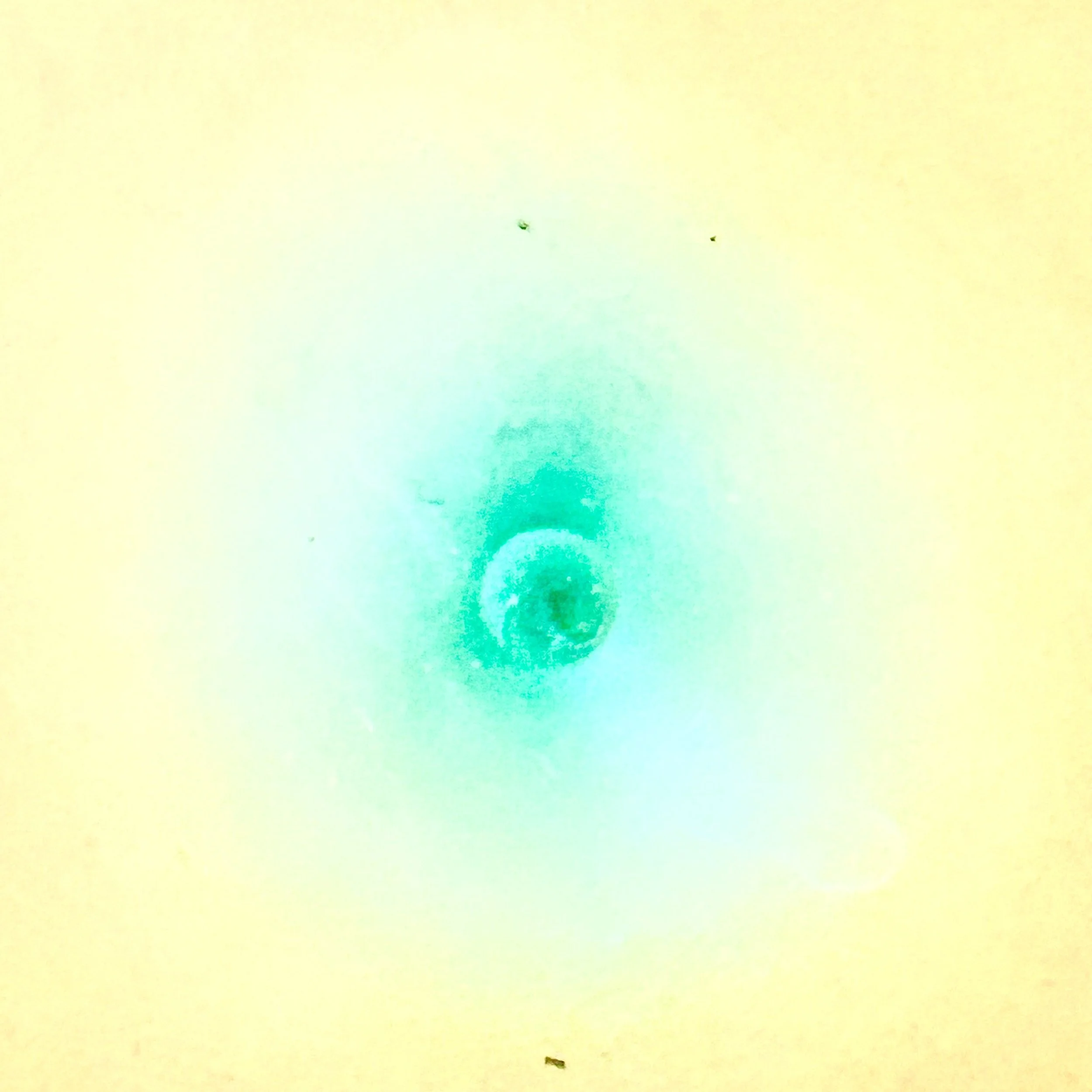
French mid-century domestic glass of this type was designed for versatility—serving, mixing, prep, and table presentation—while maintaining visual clarity aligned with postwar European modernism. The impressed country-of-origin mark supports period authenticity and enhances collector desirability.
Attribution & Period
France, mid-20th century (circa 1955–1975).
Each example marked “MADE IN FRANCE.”
Production consistent with French pressed utility glass of the postwar modernist period.
Dimensions (7 Pieces Total)
2 × Deep Bowls — 9 in. lip / 5.5 in. base / 3 3/4 in. height
1 × Wide Shallow Bowl — 9 in. lip / 5.5 in. base / 1.5 in. height
1 × Shallow Bowl — 7.5 in. lip / 5 in. base / 1 in. height
2 × Small Bowls — 5 3/4 in. lip / 3 1/2 in. base / 1 in. height
1 × Petite Bowl — 4 in. lip / 3 in. base / 2 in. height
A well-balanced range spanning prep to presentation scale.
Condition
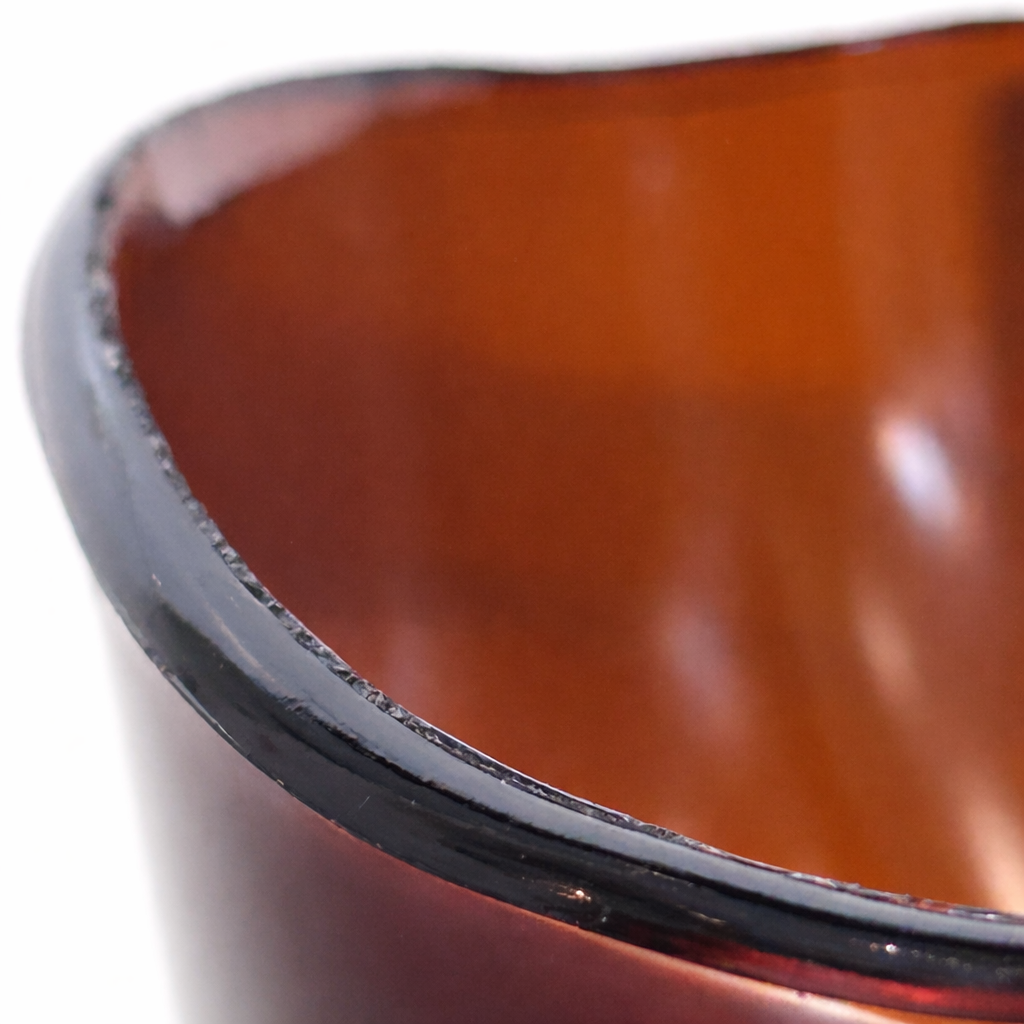
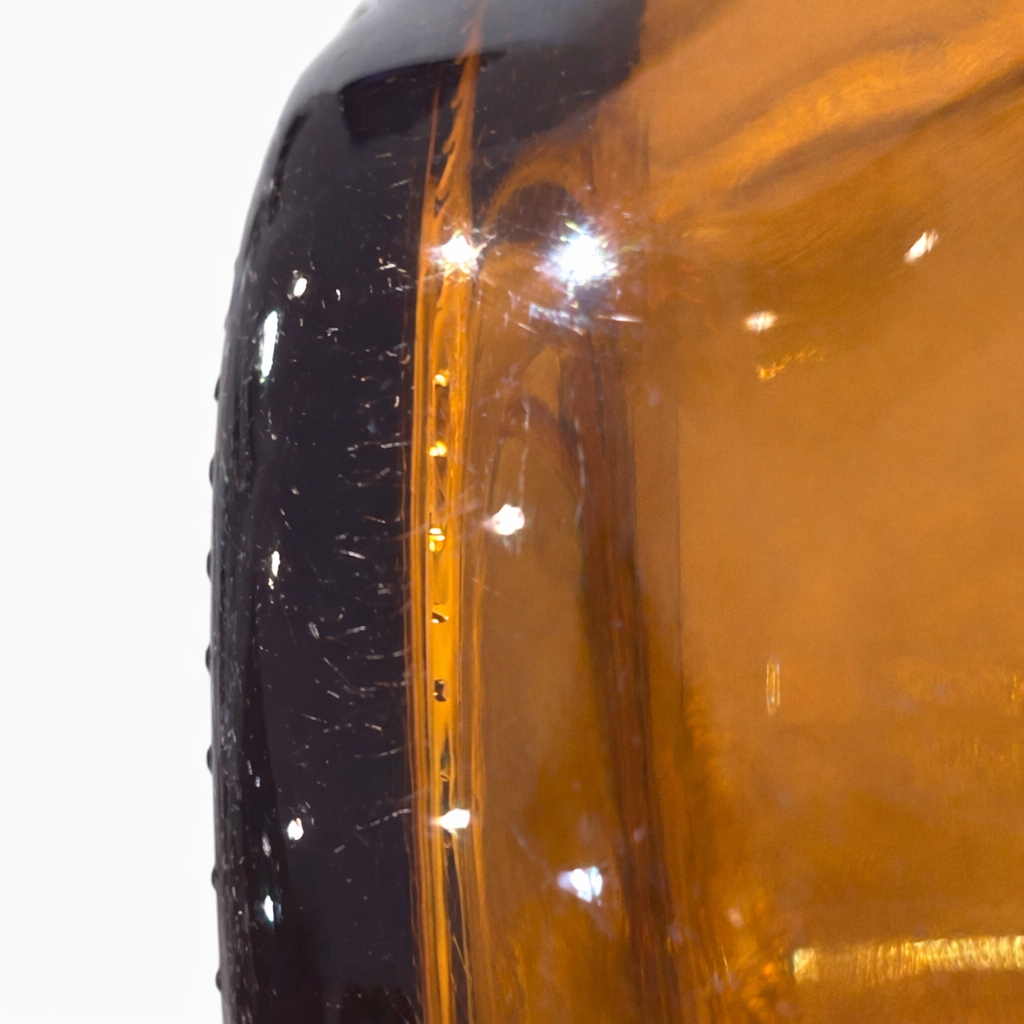
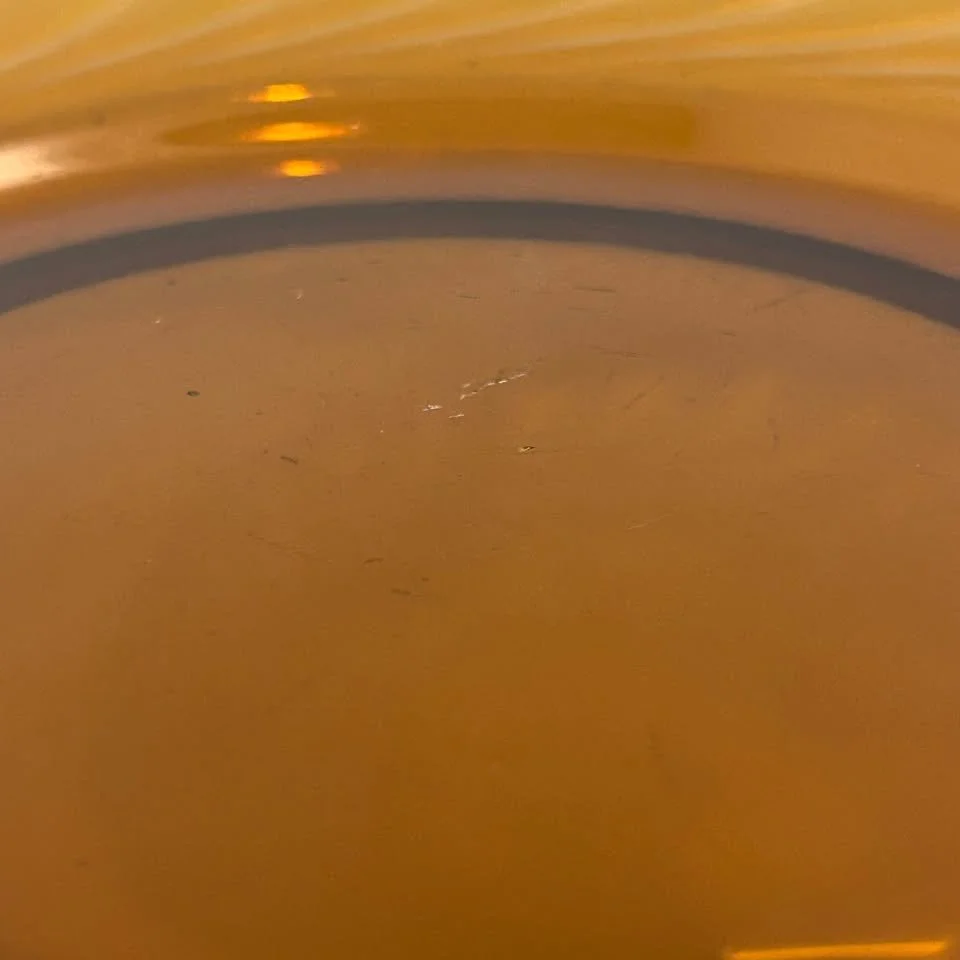
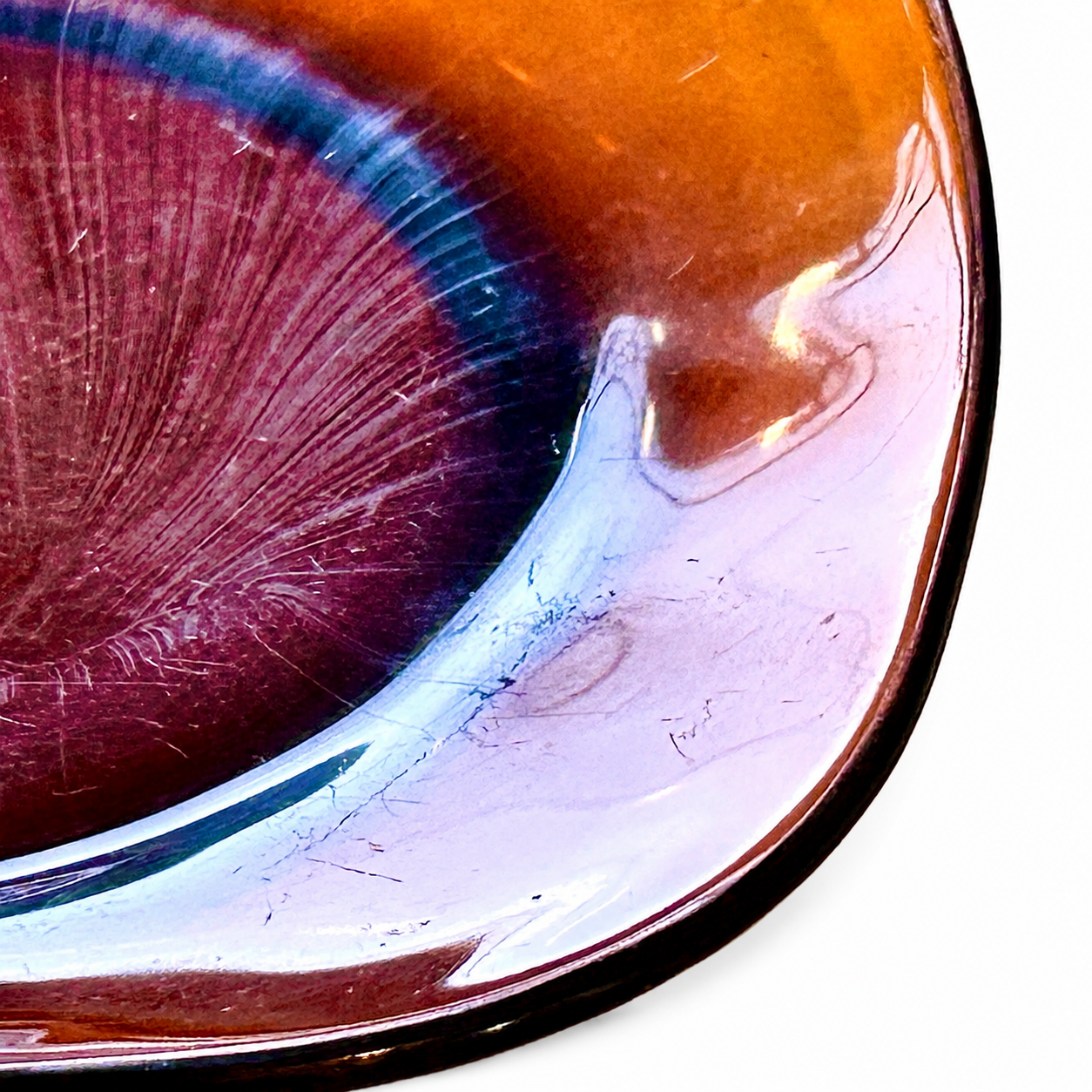
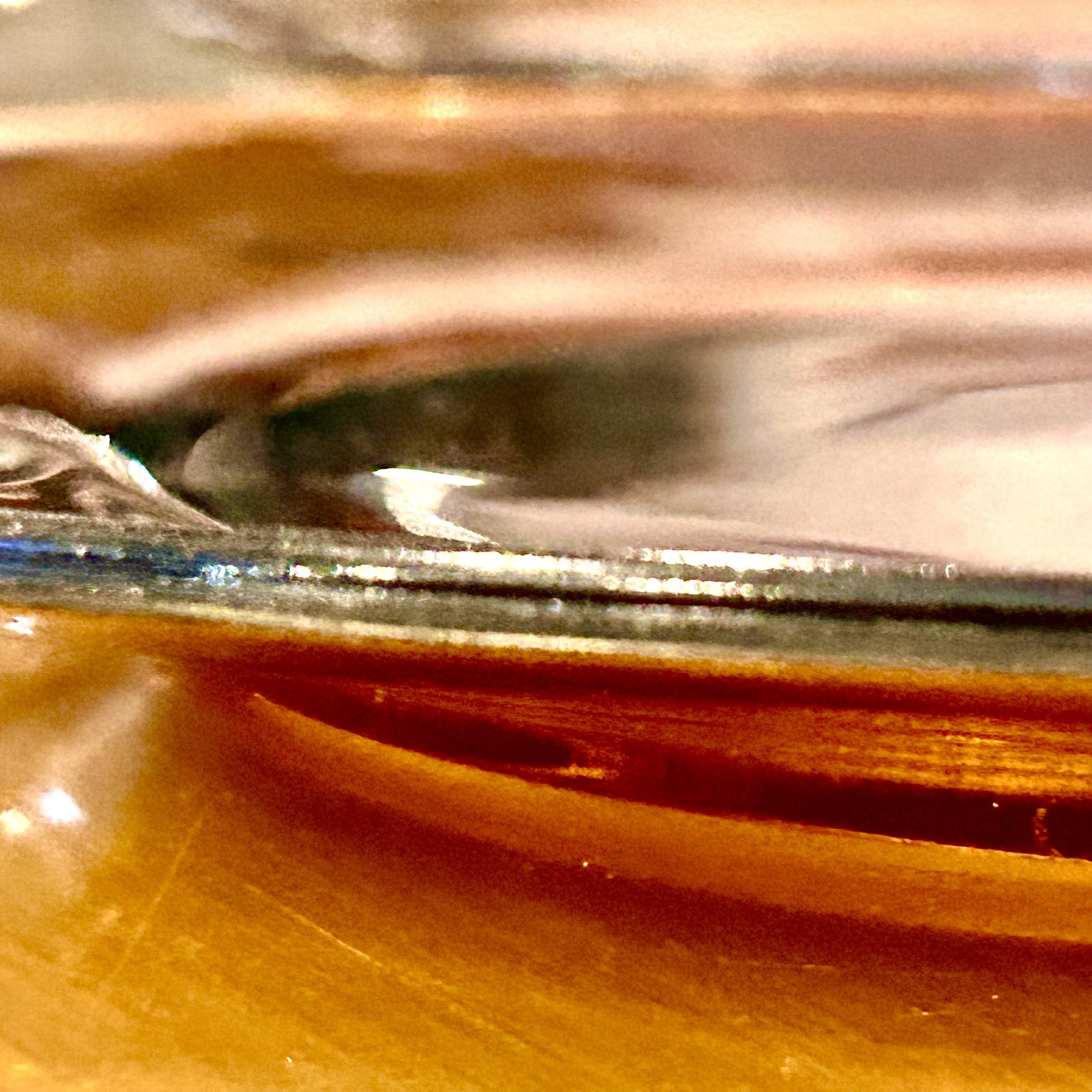
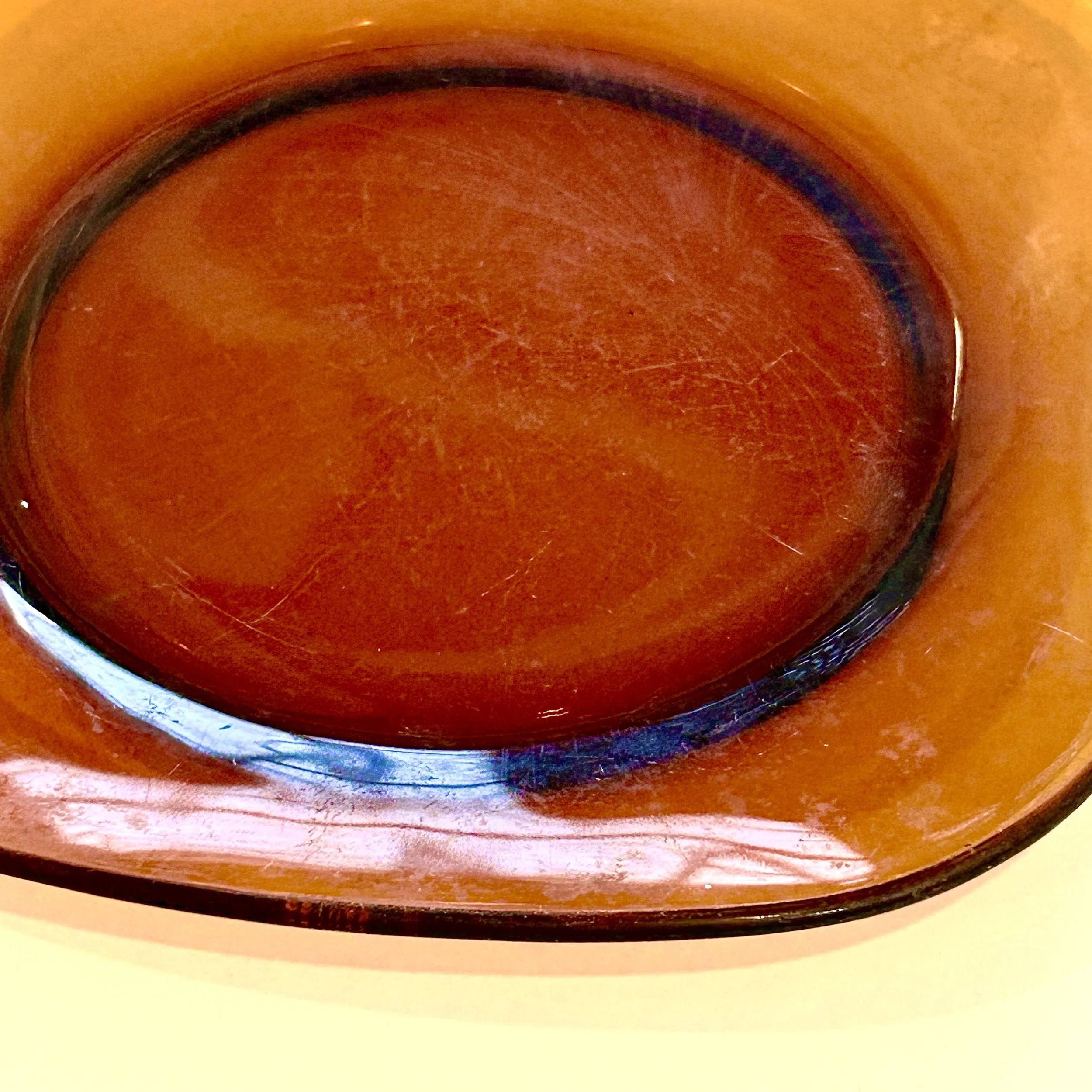
Light surface wear and fine utensil scratches consistent with age and functional use. No visible cracks observed. Structural integrity intact across all pieces, All wear is consistent with authentic vintage kitchen glass and does not detract from display presence.
Authenticity & Construction
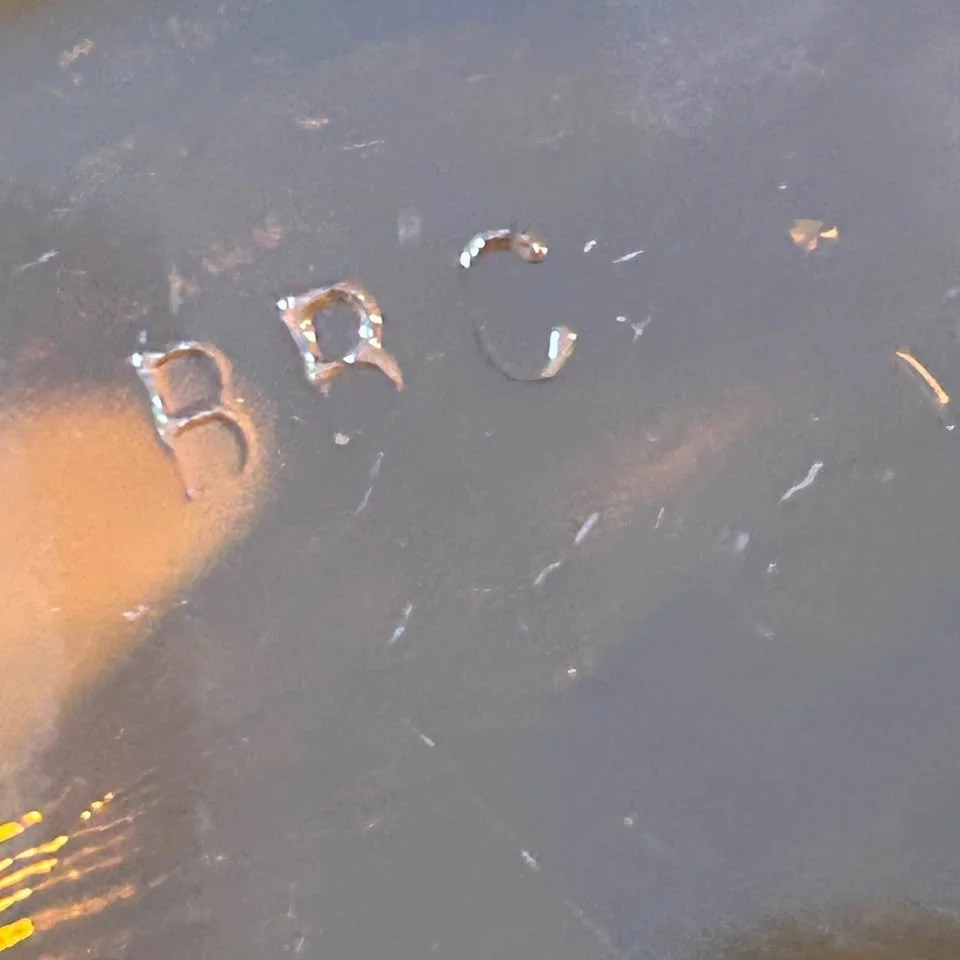
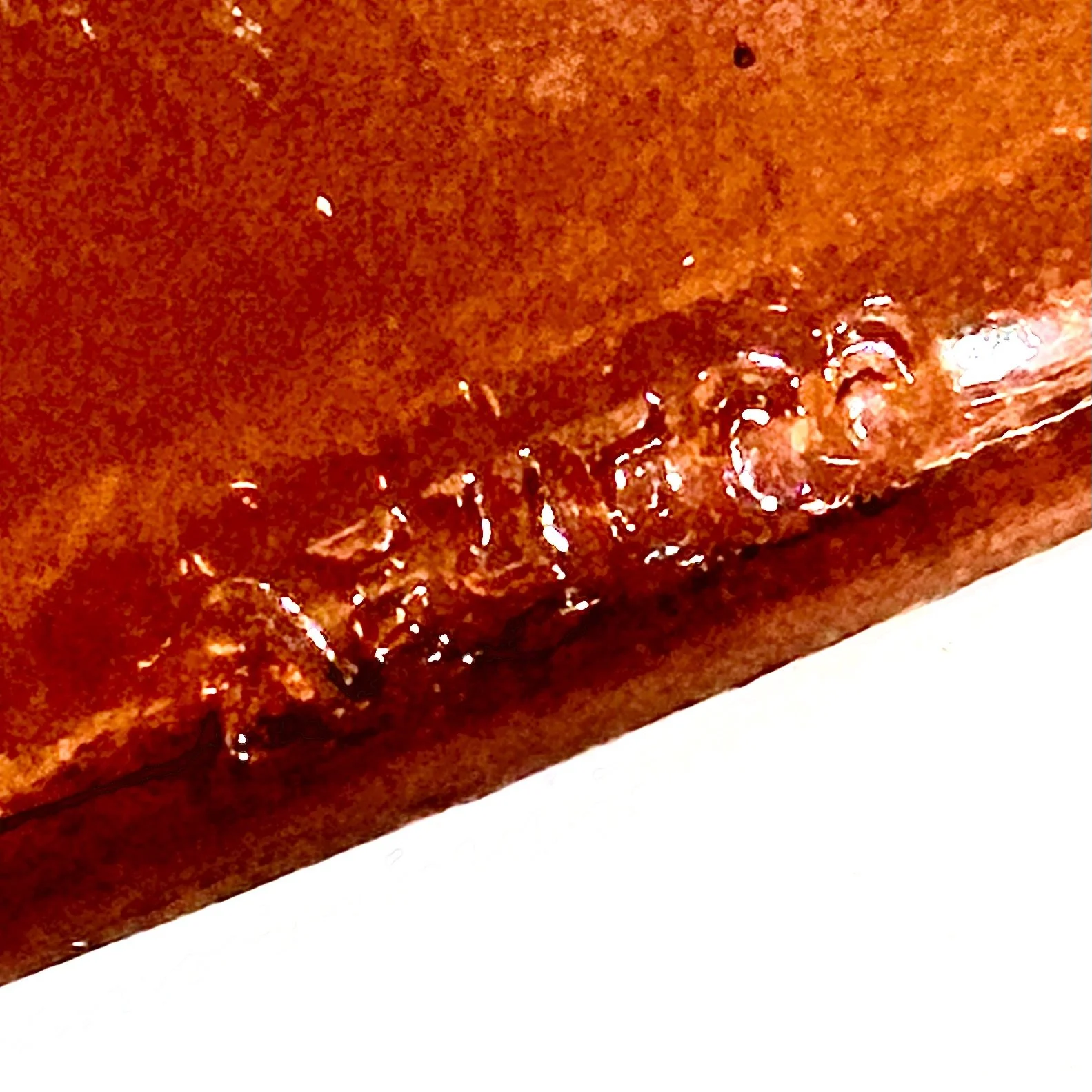
Pressed amber batch glass with molded forms and finished rims. Even color saturation confirms integral amber glass rather than applied staining. The marked bases substantiate French origin and mid-century production standards.
Placement
Ideal for:
Mid-century modern kitchens
French modernist table settings
Tonal amber glass collections
Curated open shelving displays
Elevated bar and entertaining service
When nested, the set reads as a unified sculptural object; when separated, it offers full functional versatility.
STANDARD ATTRIBUTION & VALUE DISCLOSURE
This piece is described to the best of current scholarly and market knowledge. Any maker or regional attribution is based on visual analysis, materials, construction techniques, and documented stylistic comparisons. As with many vintage and antique glass objects, definitive attribution may not be possible without original labels or factory records. Pricing reflects condition, quality, decorative appeal, and current collector demand rather than a guaranteed maker identification.
A collector-grade suite of seven period French amber glass nesting bowls, each marked “MADE IN FRANCE,” executed in a saturated honey-to-topaz tone with a disciplined modernist profile. This is a true multi-size nesting group with desirable duplicate key forms—far more compelling than isolated singles and increasingly difficult to assemble intact.
The silhouettes are clean and architectural: gently flared rims, balanced circular bases, and restrained wall thickness consistent with mid-century French utilitarian table glass. The amber batch color is warm and even, pooling richly at the base and glowing under natural light. When nested, the graduated forms create a sculptural tonal stack—precisely the type of cohesive presentation collectors seek for both display and functional service.
French mid-century domestic glass of this type was designed for versatility—serving, mixing, prep, and table presentation—while maintaining visual clarity aligned with postwar European modernism. The impressed country-of-origin mark supports period authenticity and enhances collector desirability.
Attribution & Period
France, mid-20th century (circa 1955–1975).
Each example marked “MADE IN FRANCE.”
Production consistent with French pressed utility glass of the postwar modernist period.
Dimensions (7 Pieces Total)
2 × Deep Bowls — 9 in. lip / 5.5 in. base / 3 3/4 in. height
1 × Wide Shallow Bowl — 9 in. lip / 5.5 in. base / 1.5 in. height
1 × Shallow Bowl — 7.5 in. lip / 5 in. base / 1 in. height
2 × Small Bowls — 5 3/4 in. lip / 3 1/2 in. base / 1 in. height
1 × Petite Bowl — 4 in. lip / 3 in. base / 2 in. height
A well-balanced range spanning prep to presentation scale.
Condition
Light surface wear and fine utensil scratches consistent with age and functional use. No visible cracks observed. Structural integrity intact across all pieces, All wear is consistent with authentic vintage kitchen glass and does not detract from display presence.
Authenticity & Construction
Pressed amber batch glass with molded forms and finished rims. Even color saturation confirms integral amber glass rather than applied staining. The marked bases substantiate French origin and mid-century production standards.
Placement
Ideal for:
Mid-century modern kitchens
French modernist table settings
Tonal amber glass collections
Curated open shelving displays
Elevated bar and entertaining service
When nested, the set reads as a unified sculptural object; when separated, it offers full functional versatility.
STANDARD ATTRIBUTION & VALUE DISCLOSURE
This piece is described to the best of current scholarly and market knowledge. Any maker or regional attribution is based on visual analysis, materials, construction techniques, and documented stylistic comparisons. As with many vintage and antique glass objects, definitive attribution may not be possible without original labels or factory records. Pricing reflects condition, quality, decorative appeal, and current collector demand rather than a guaranteed maker identification.

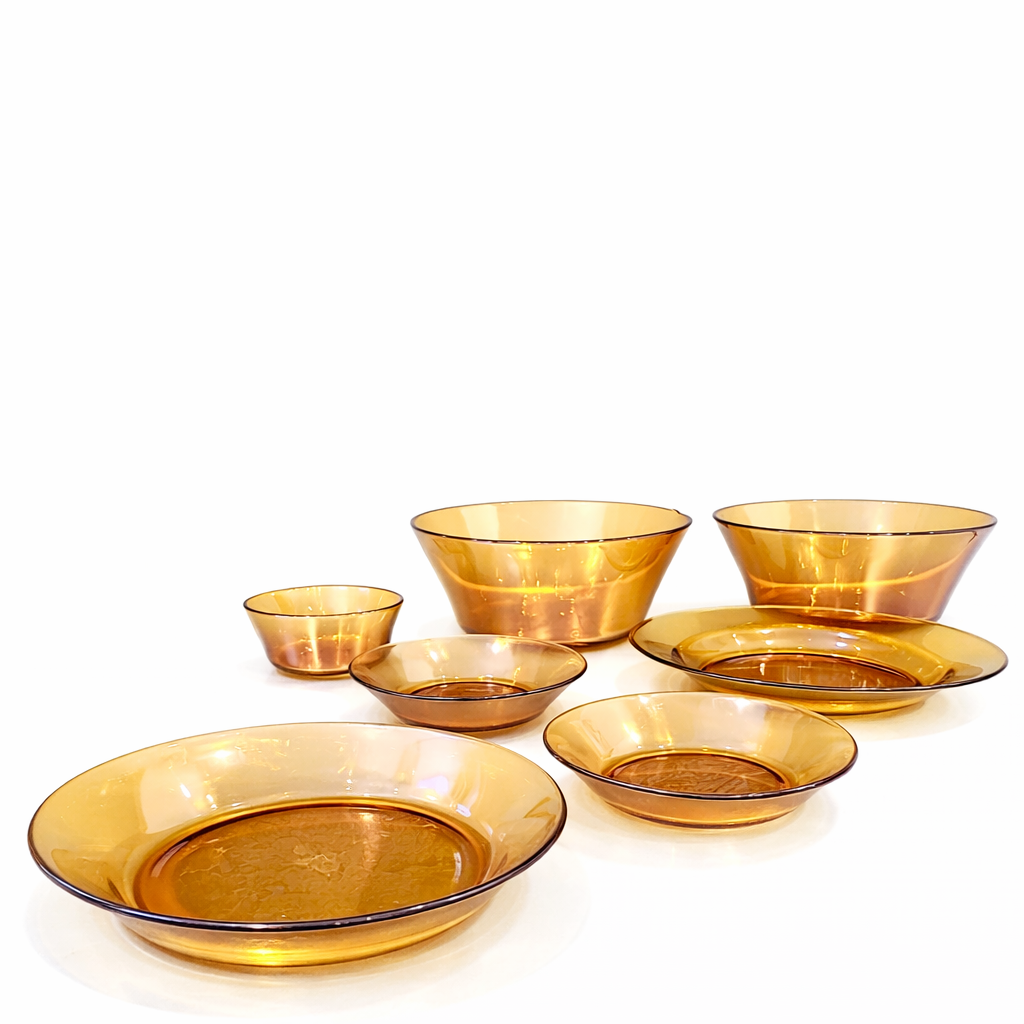 Image 1 of 10
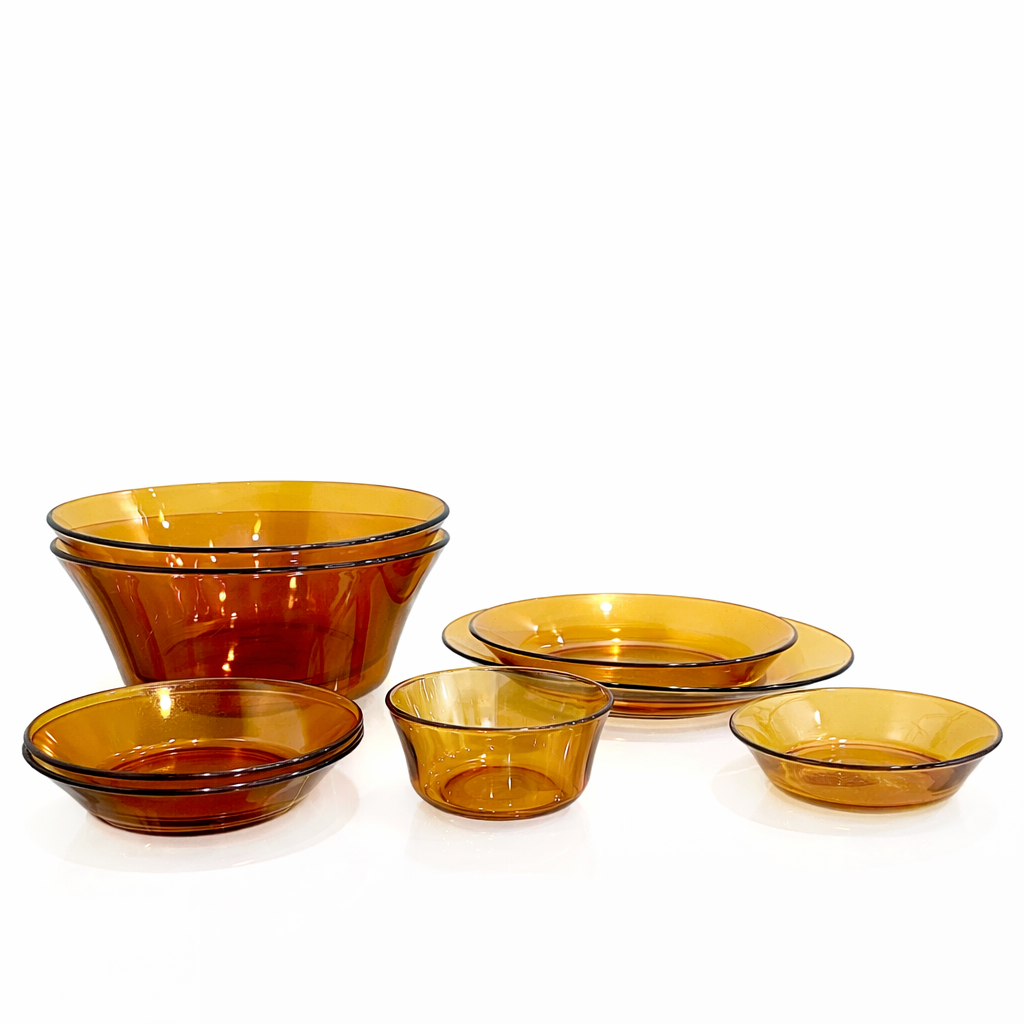 Image 2 of 10
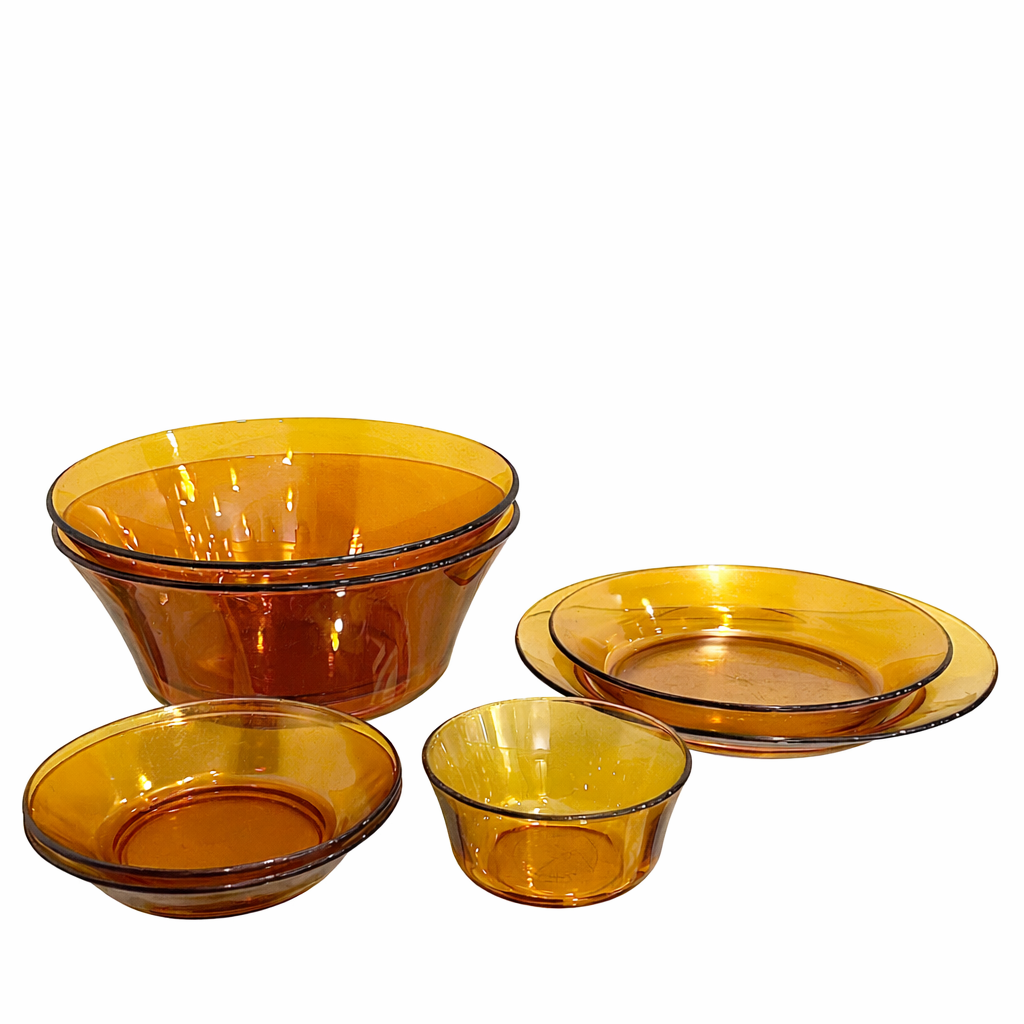 Image 3 of 10
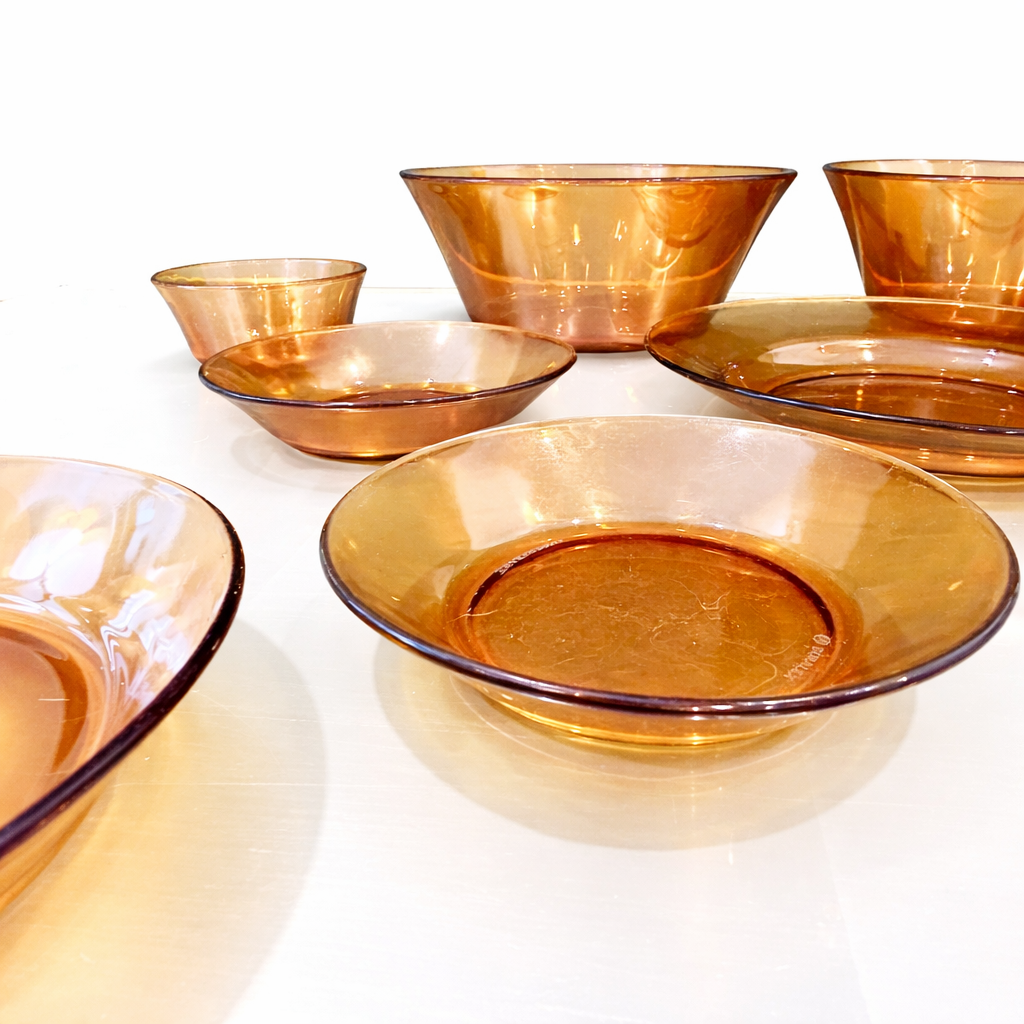 Image 4 of 10
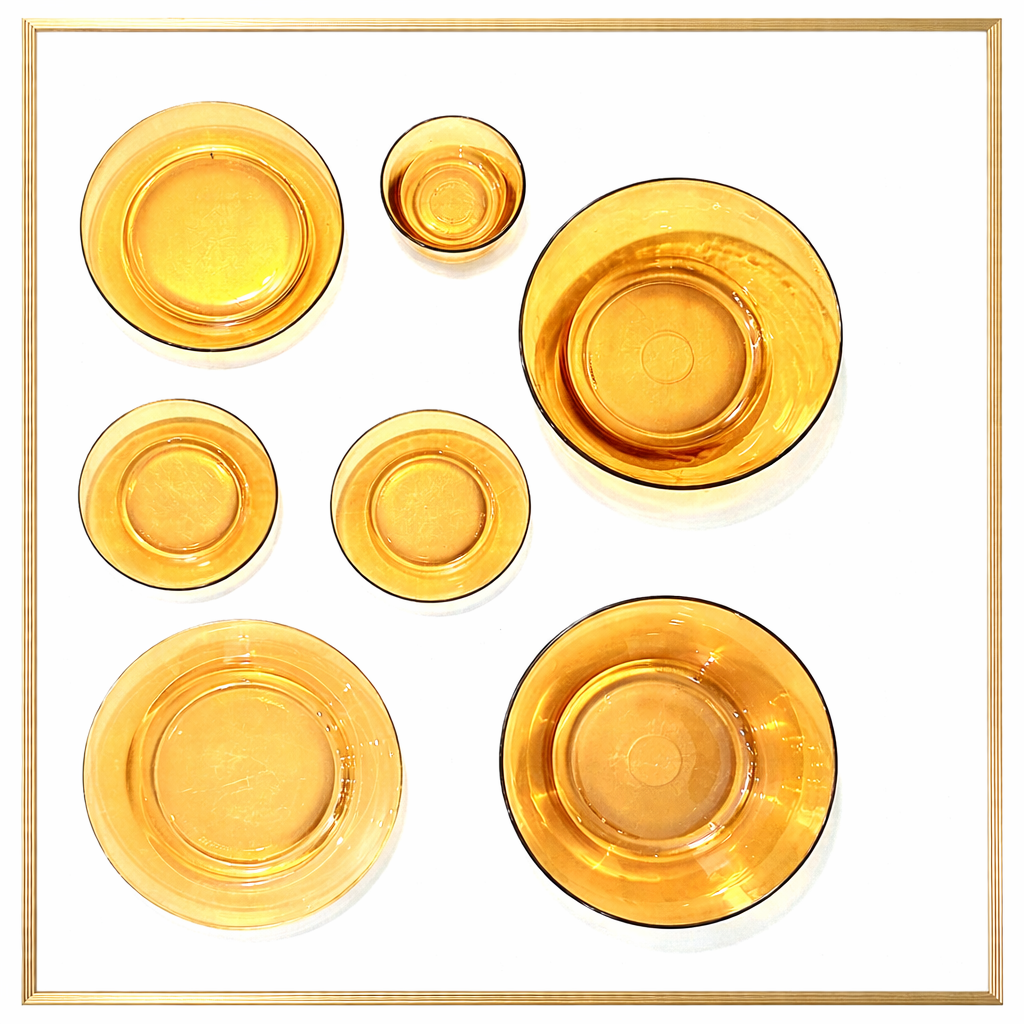 Image 5 of 10
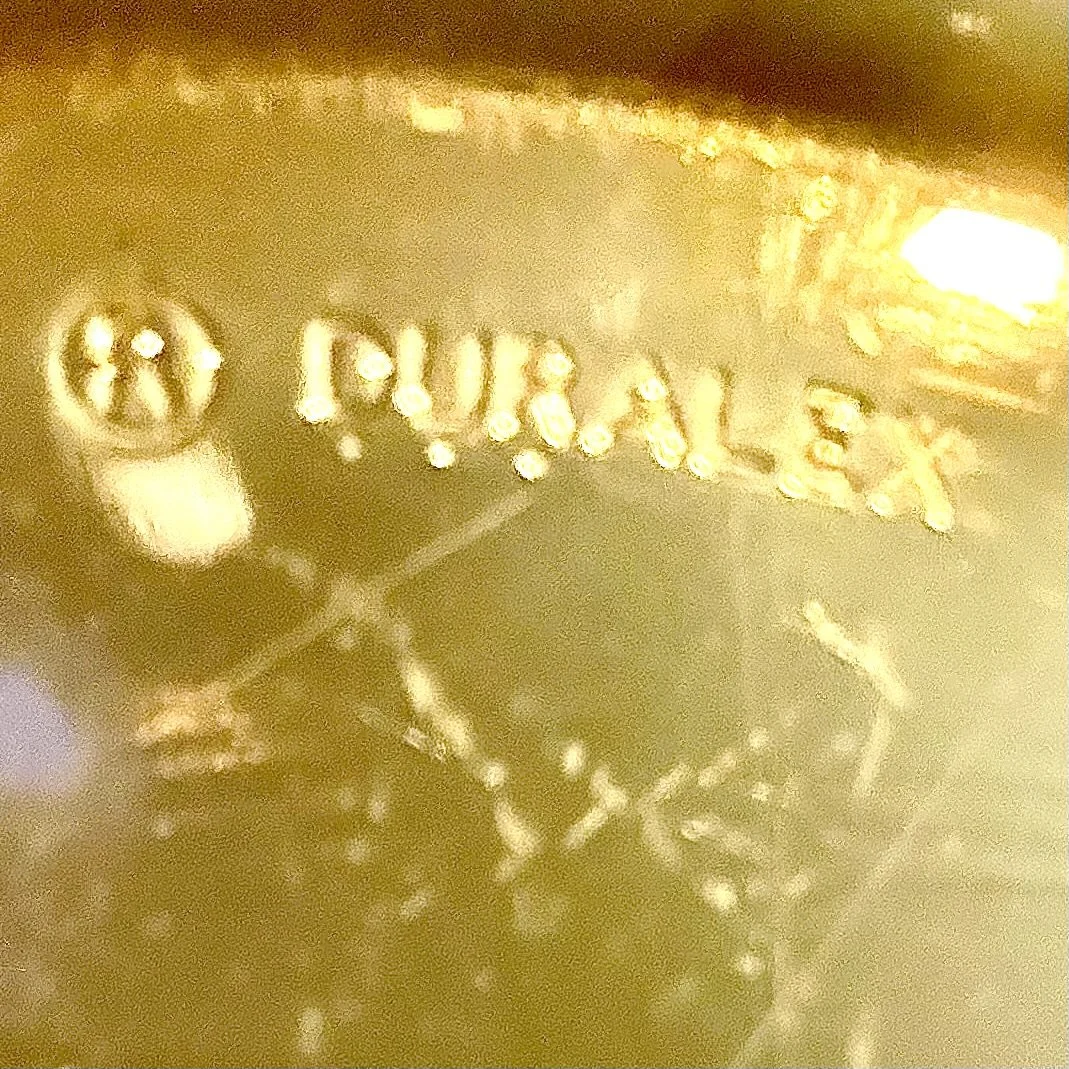 Image 6 of 10
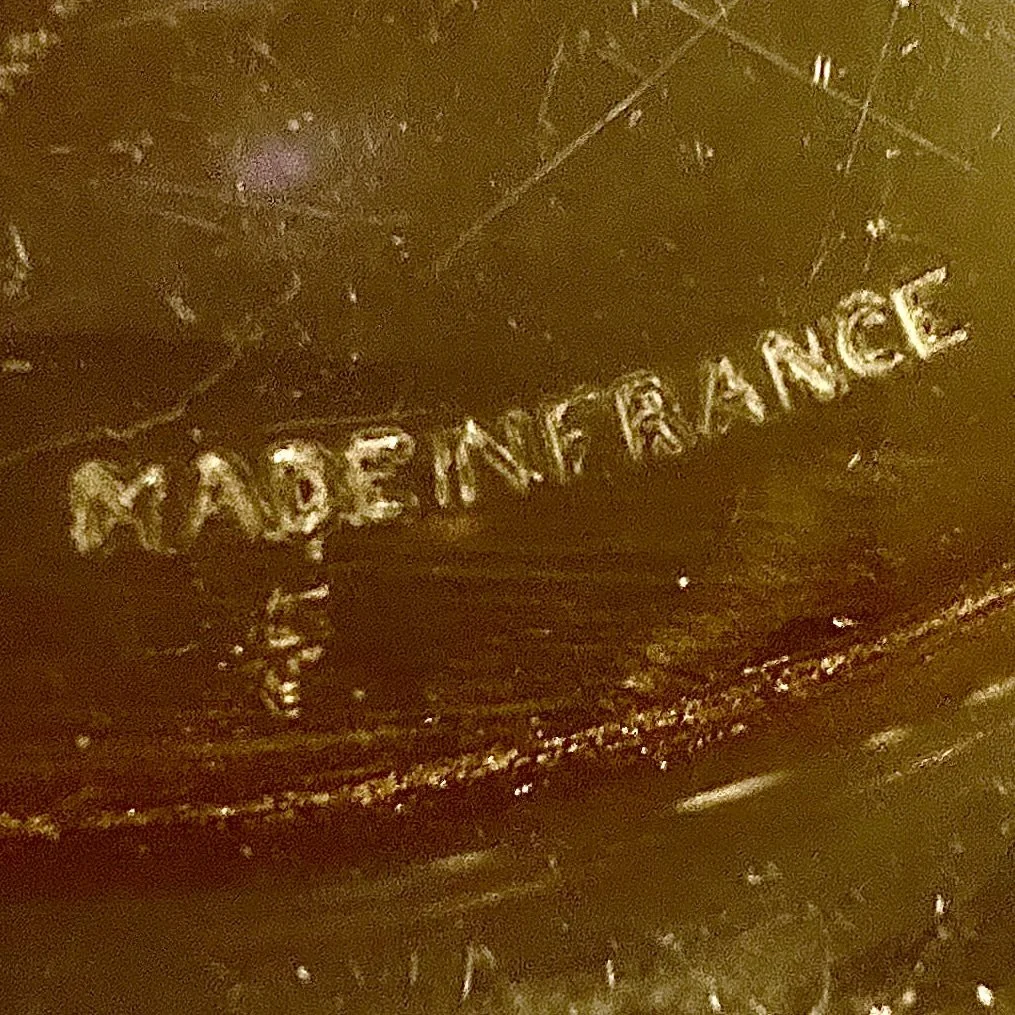 Image 7 of 10
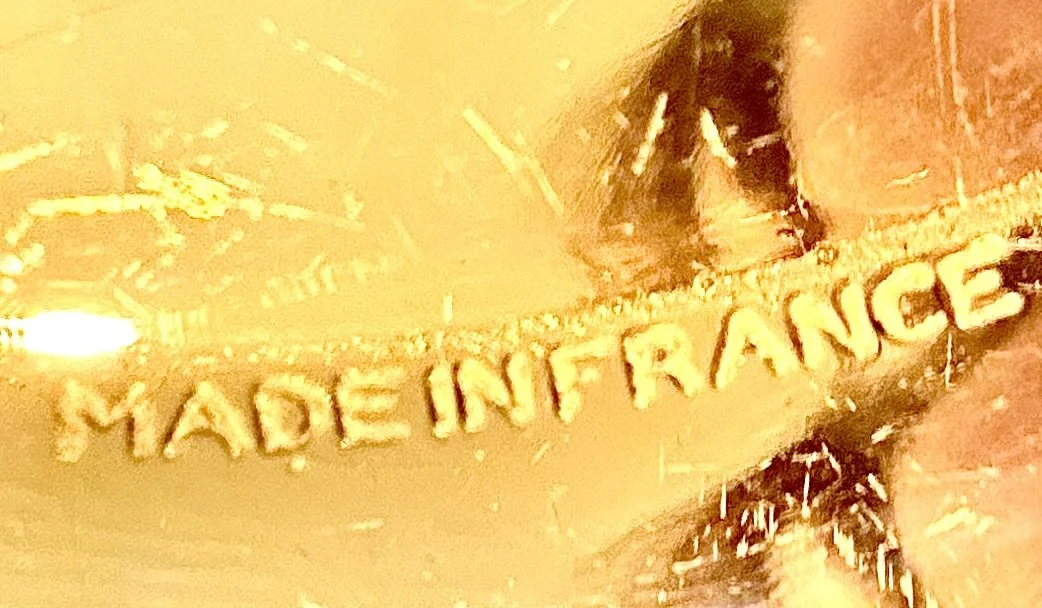 Image 8 of 10
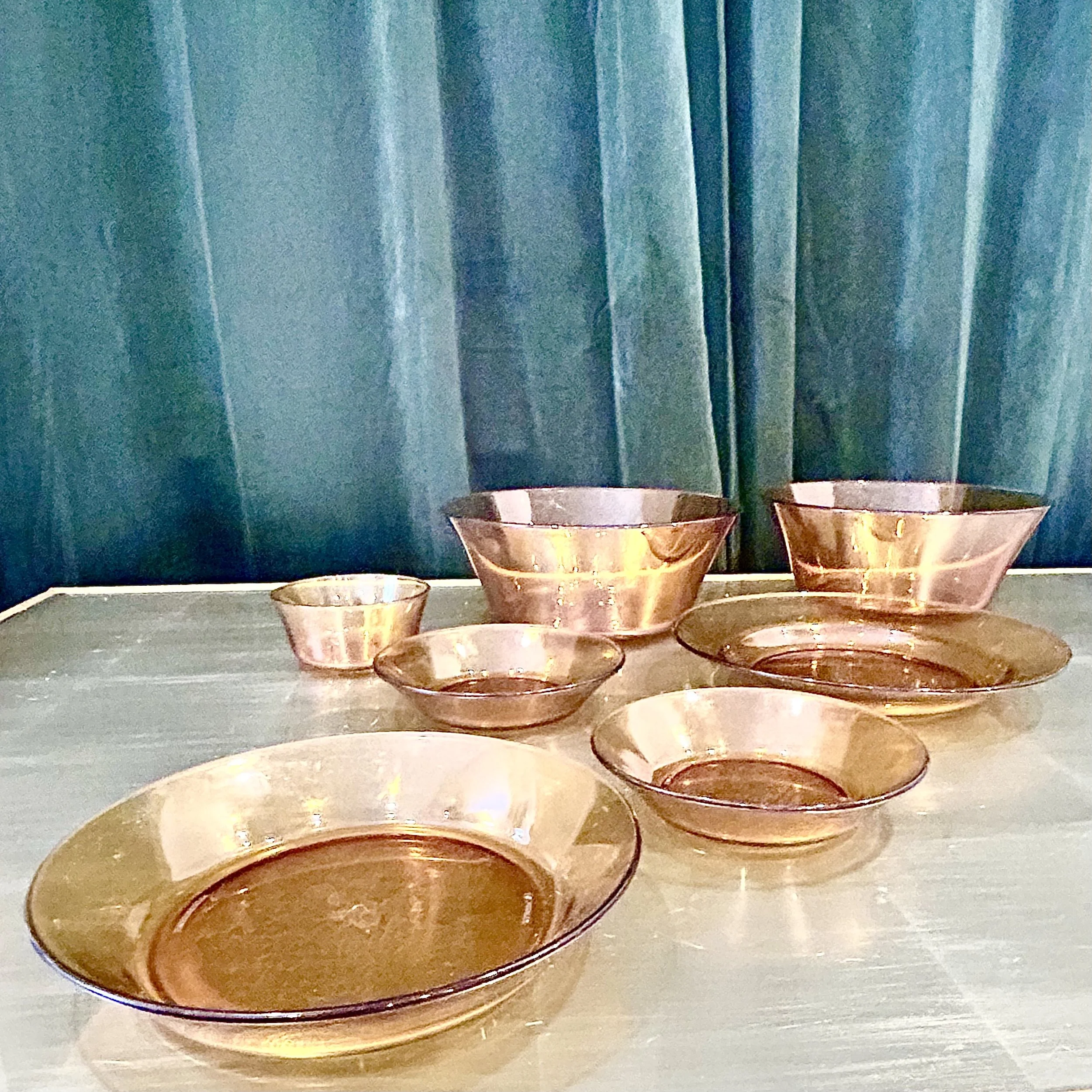 Image 9 of 10
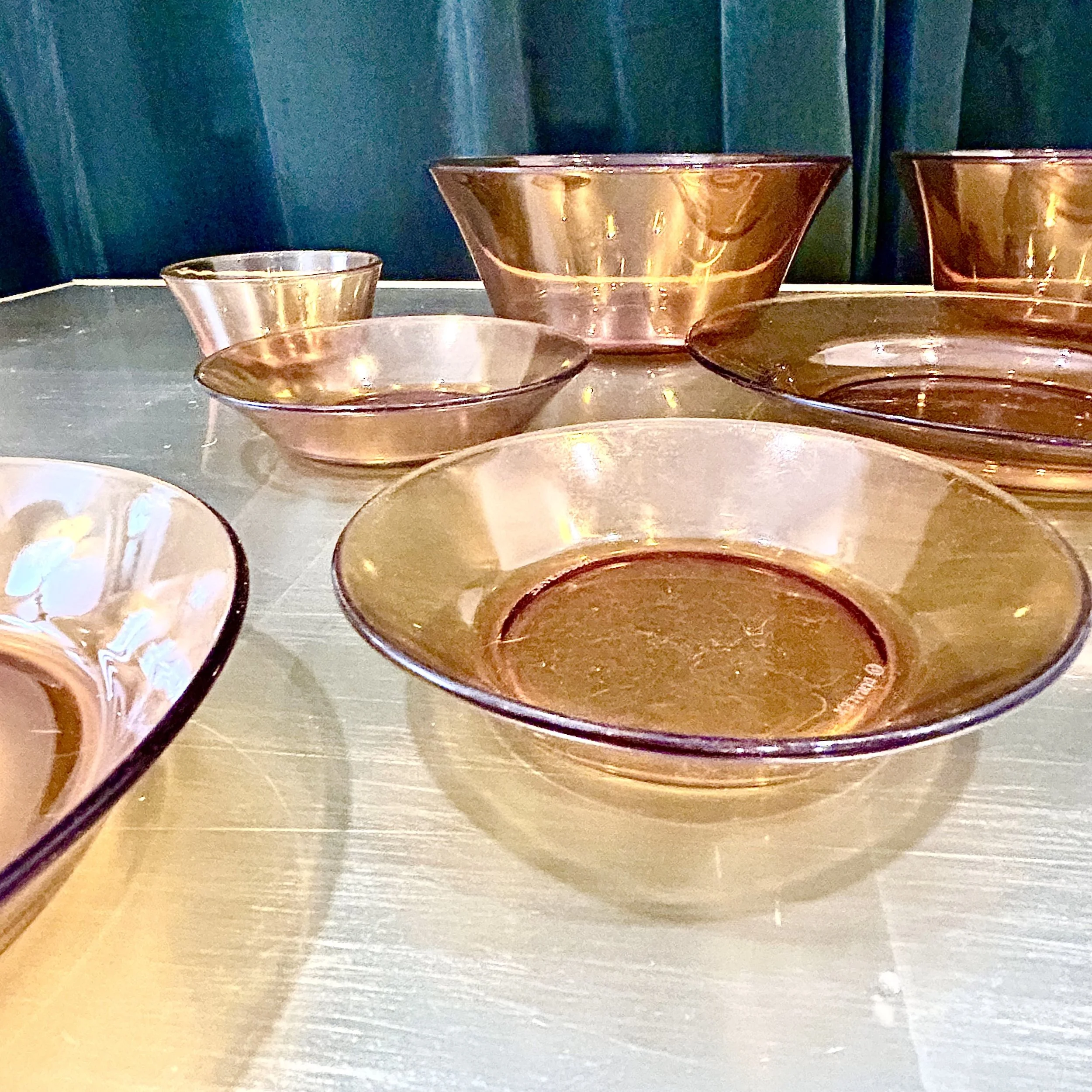 Image 10 of 10