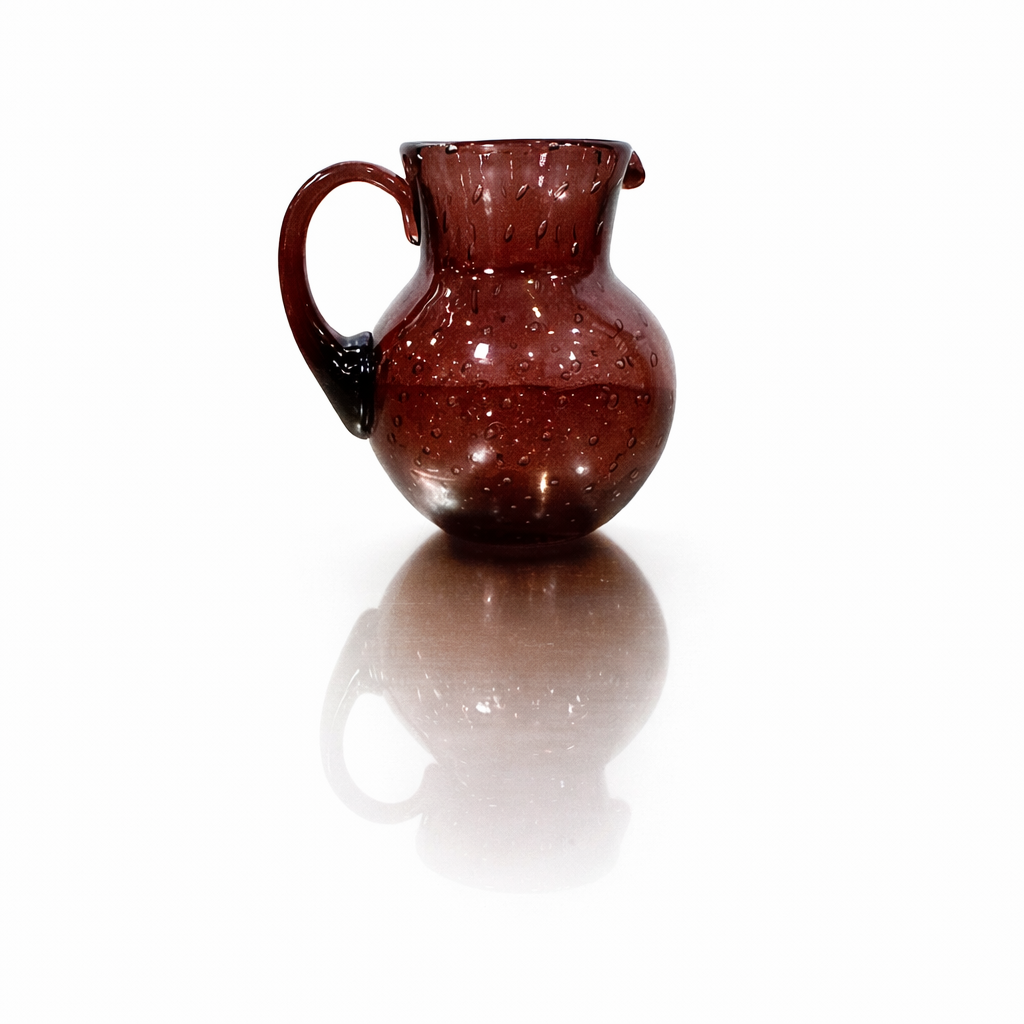
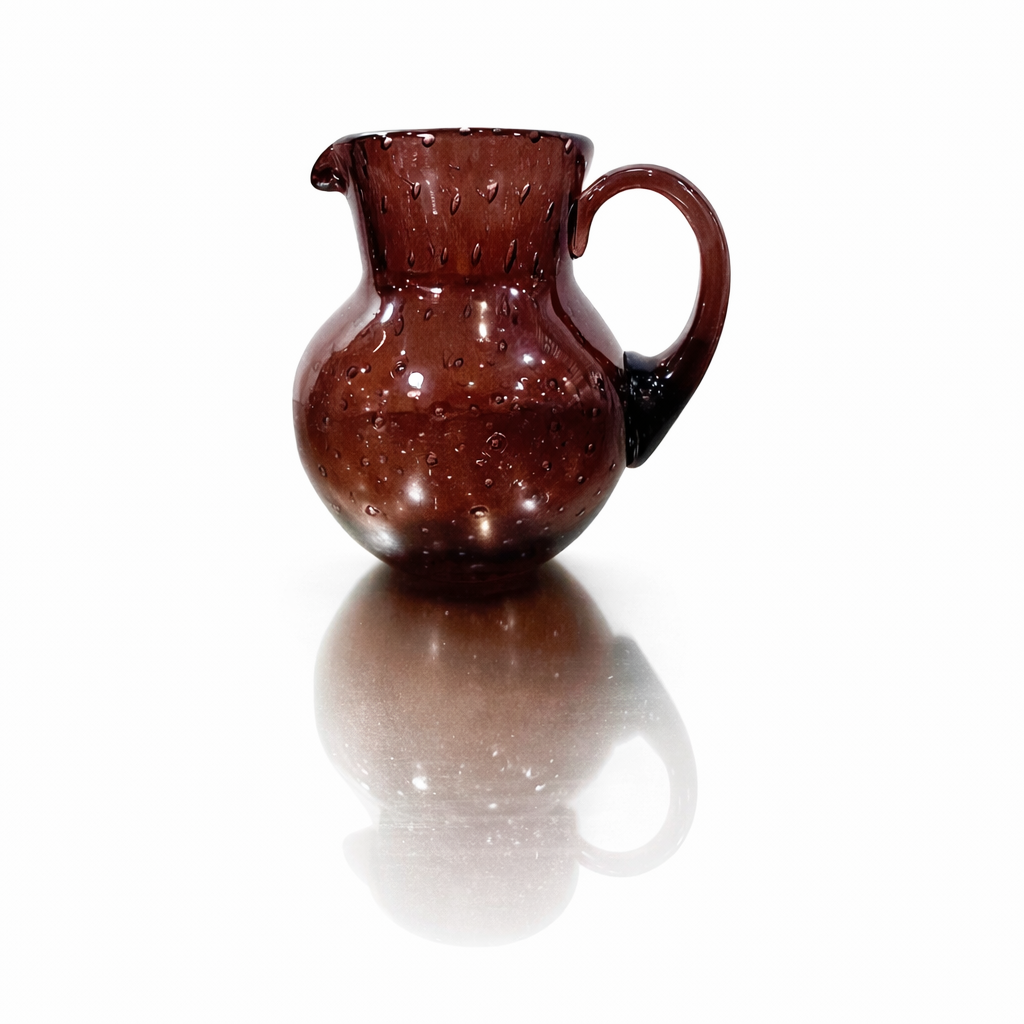
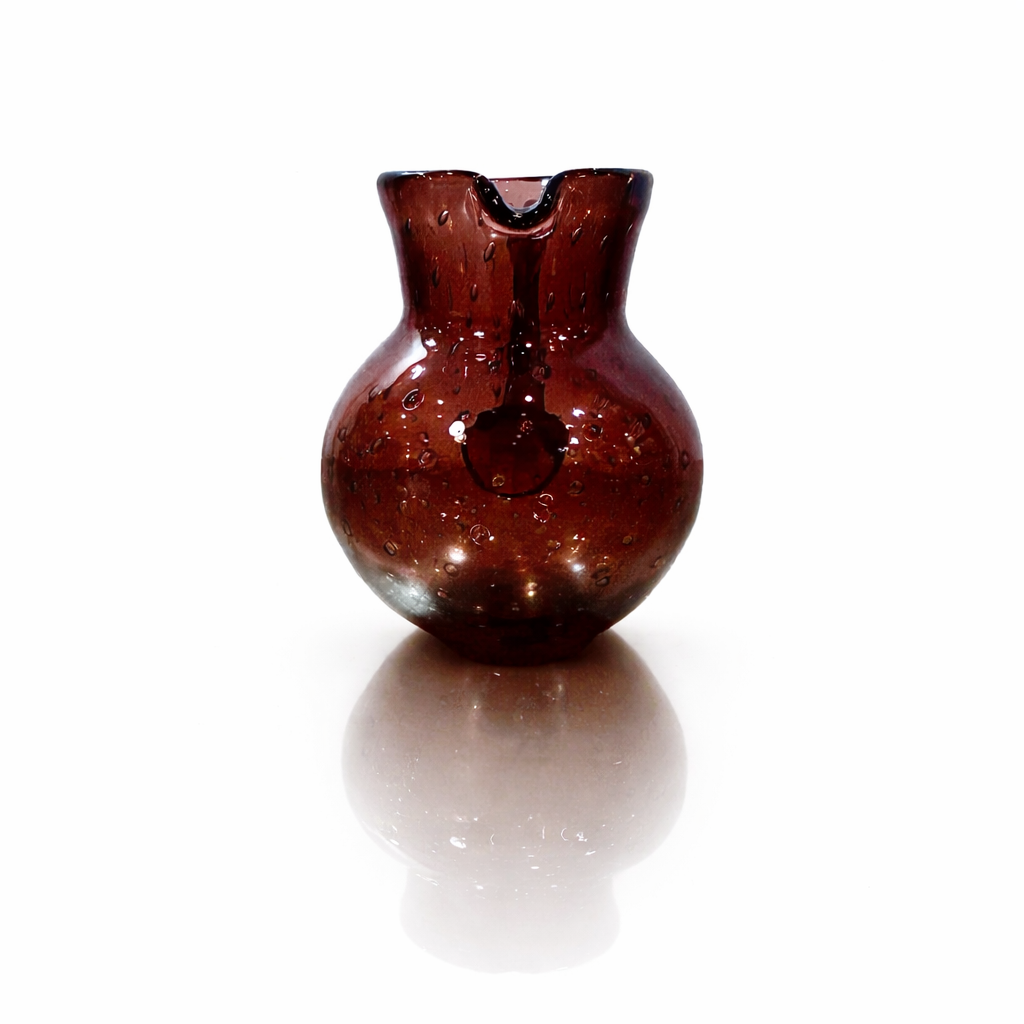
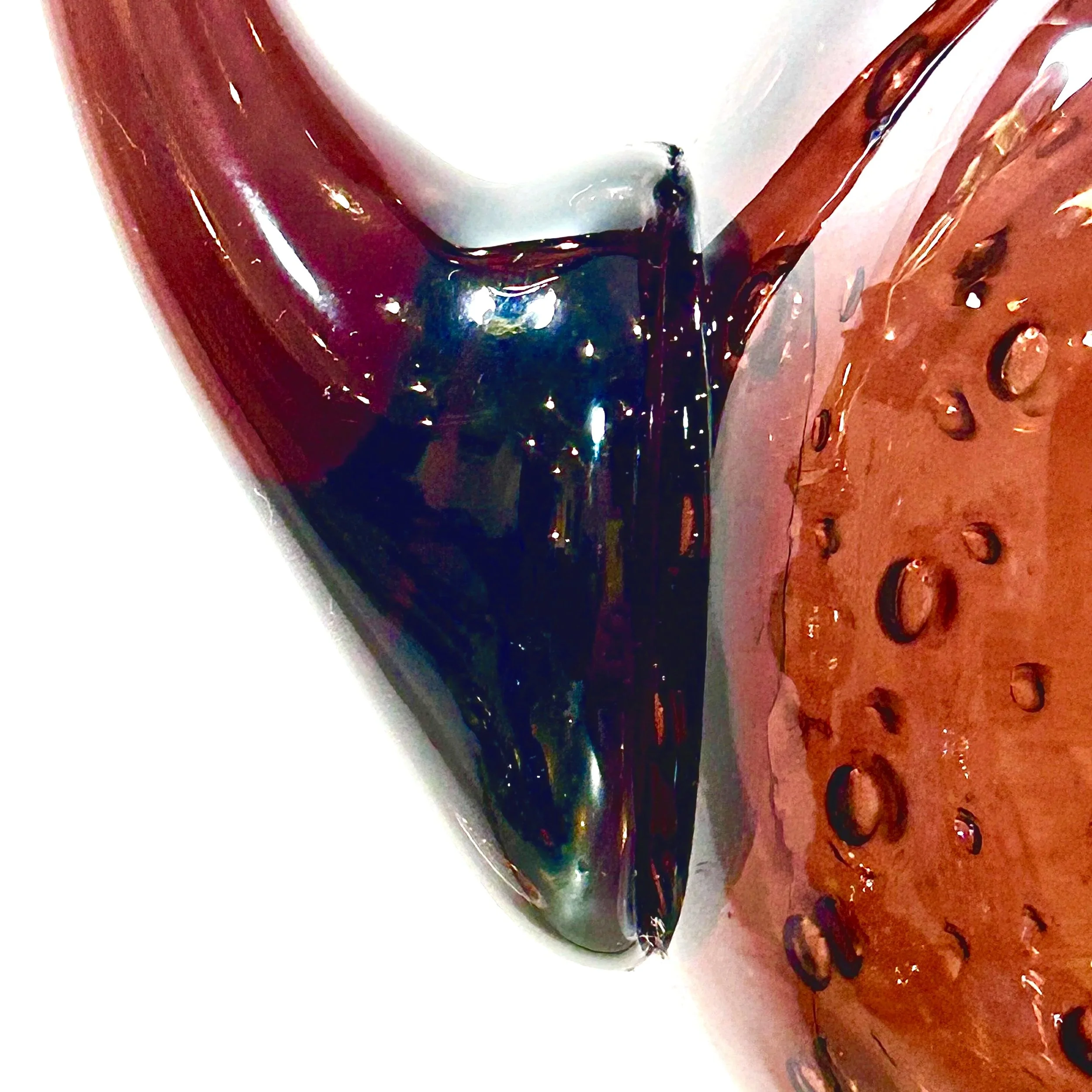
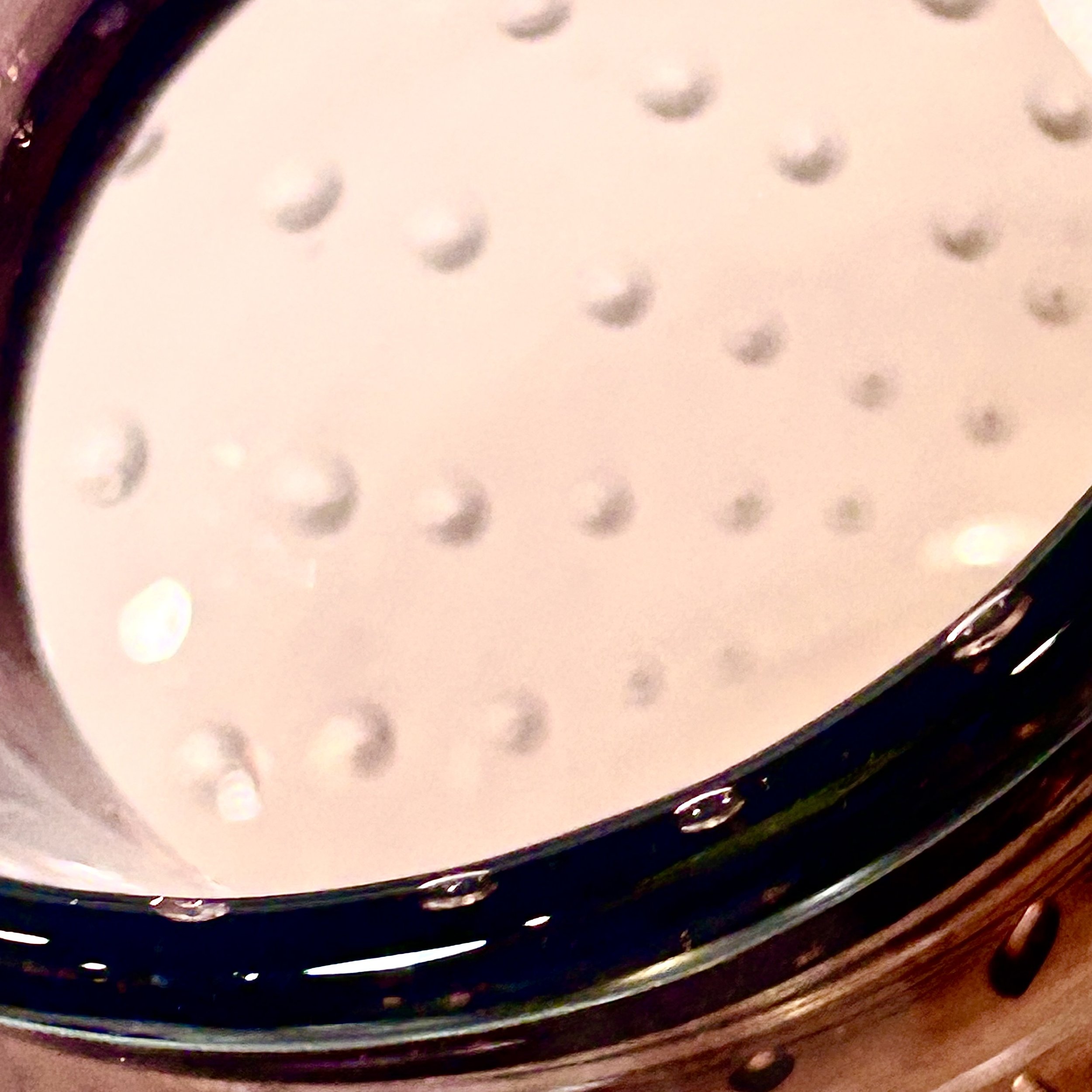
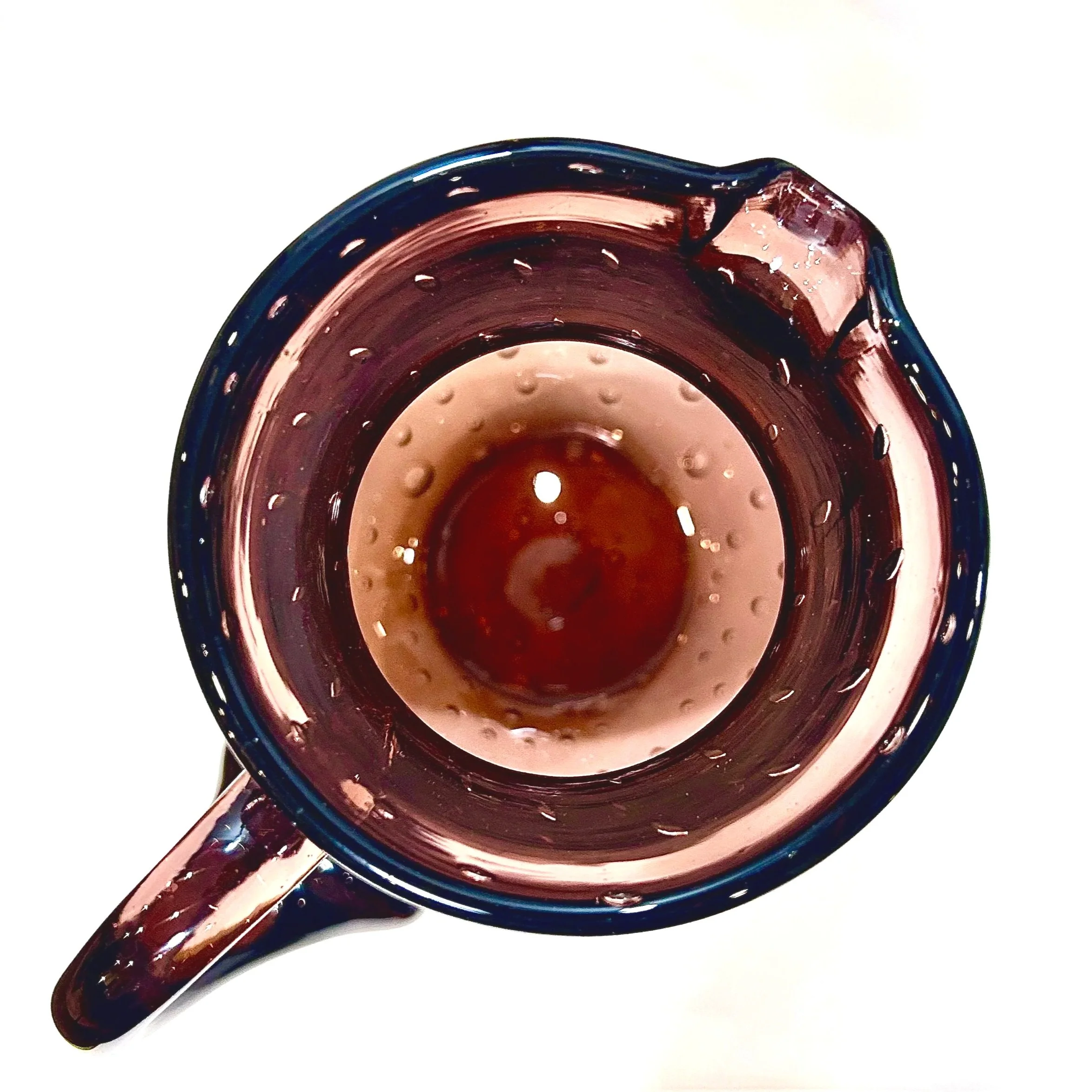
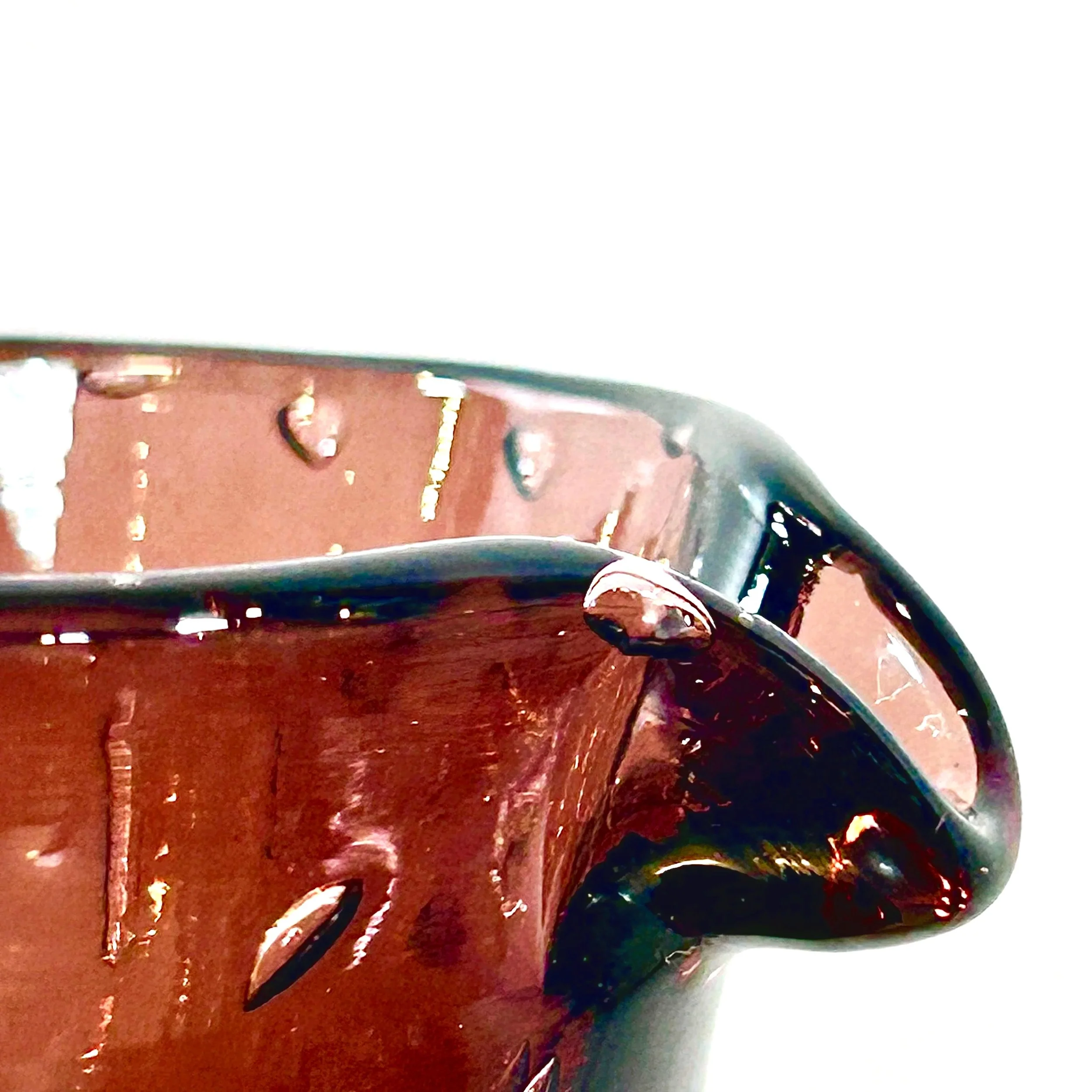
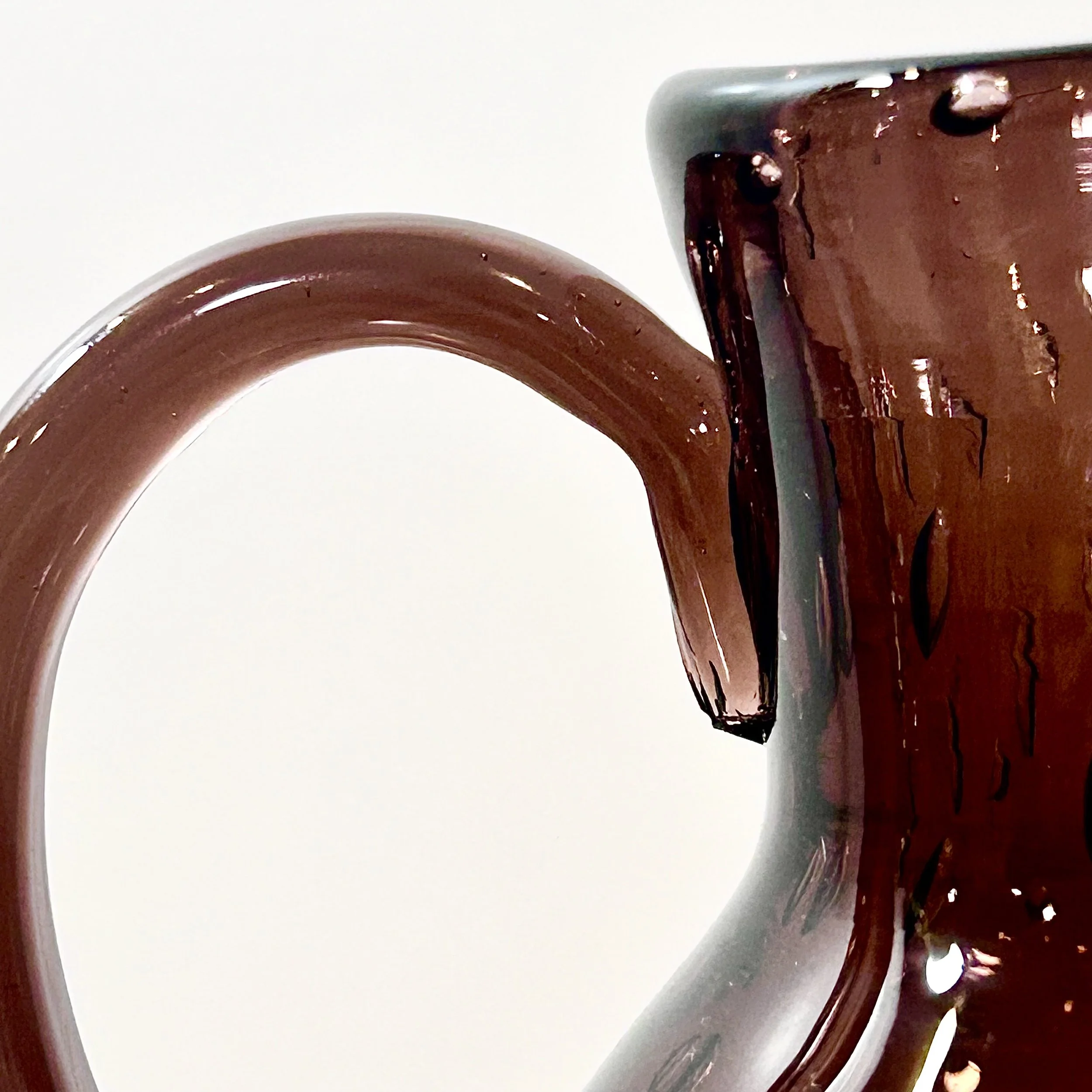
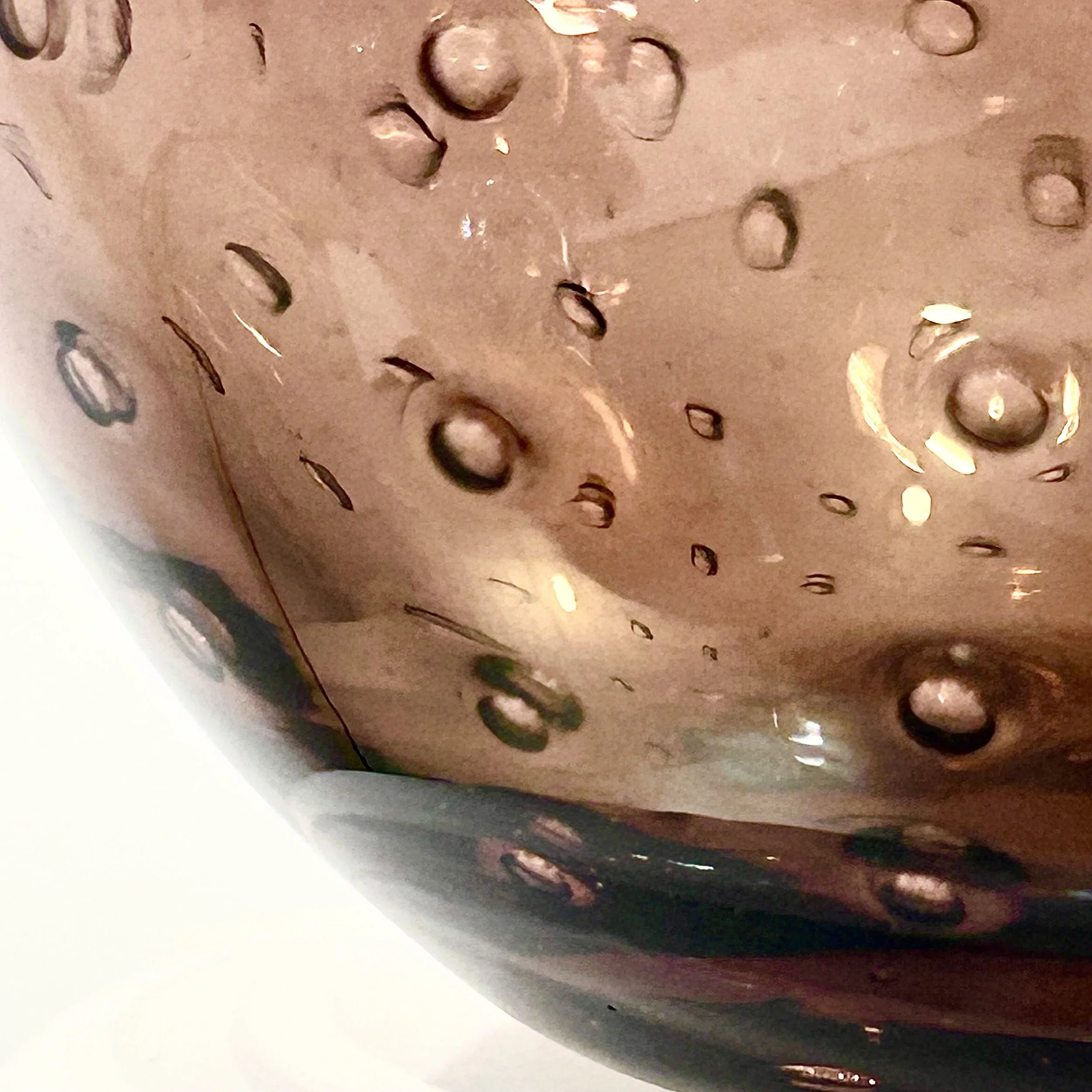
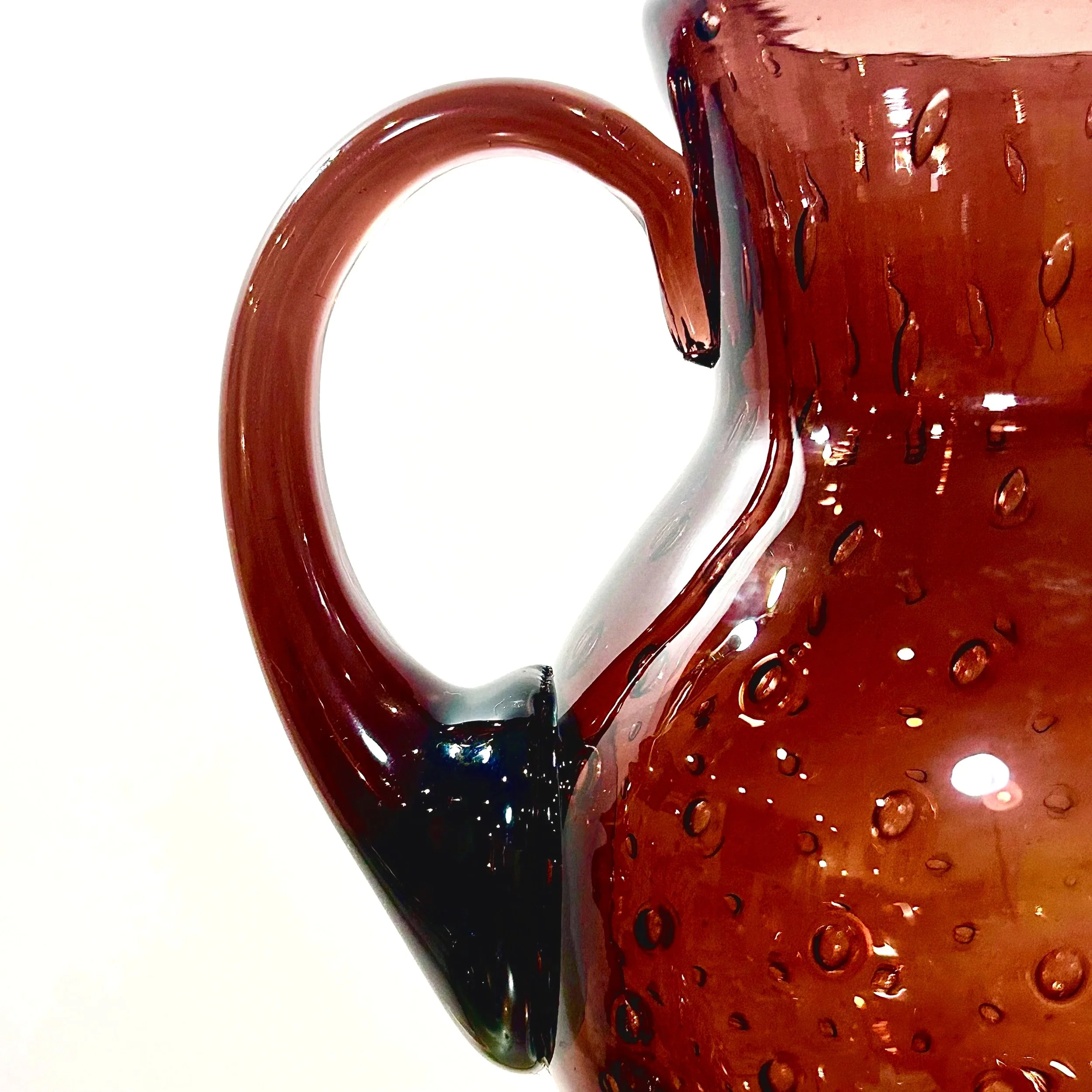
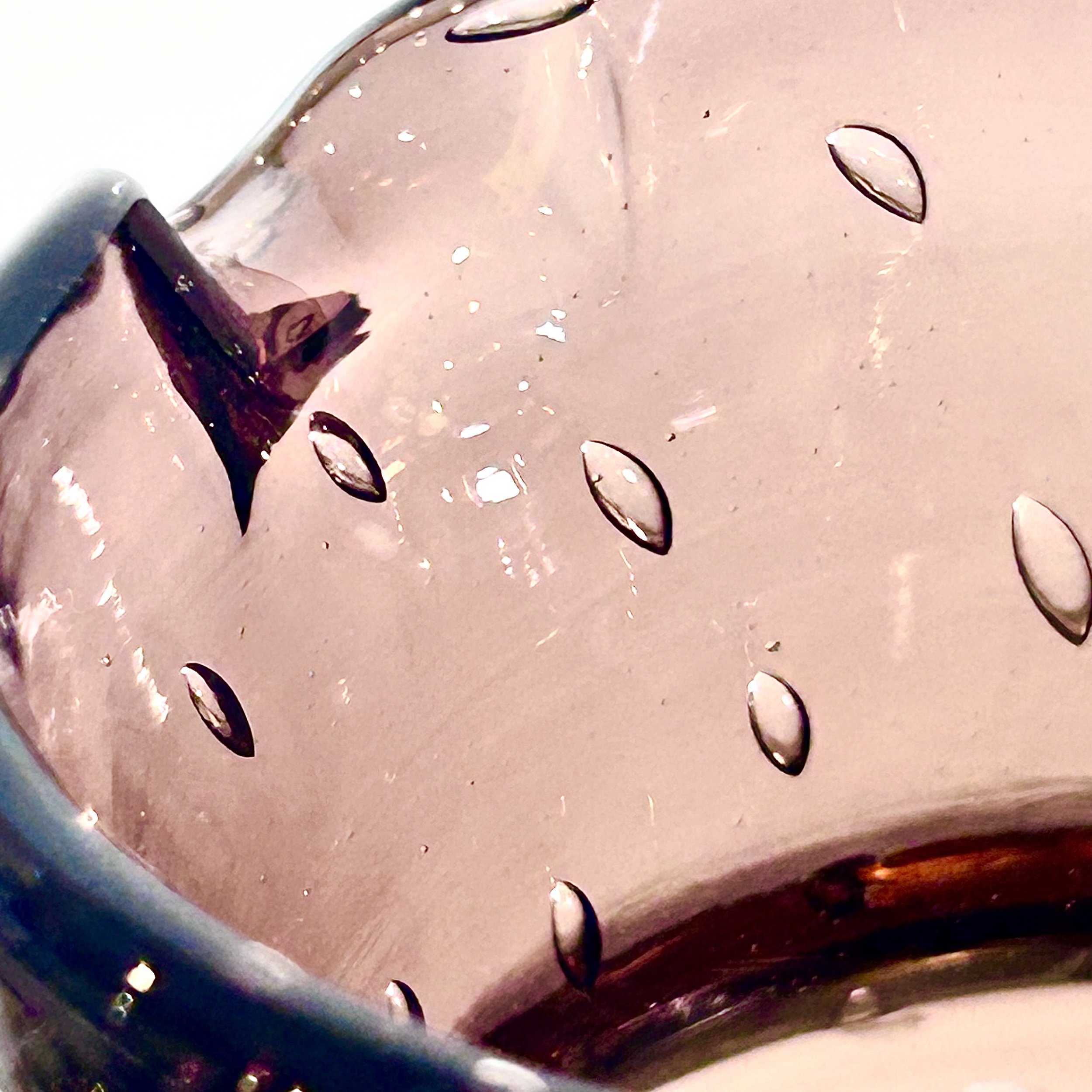
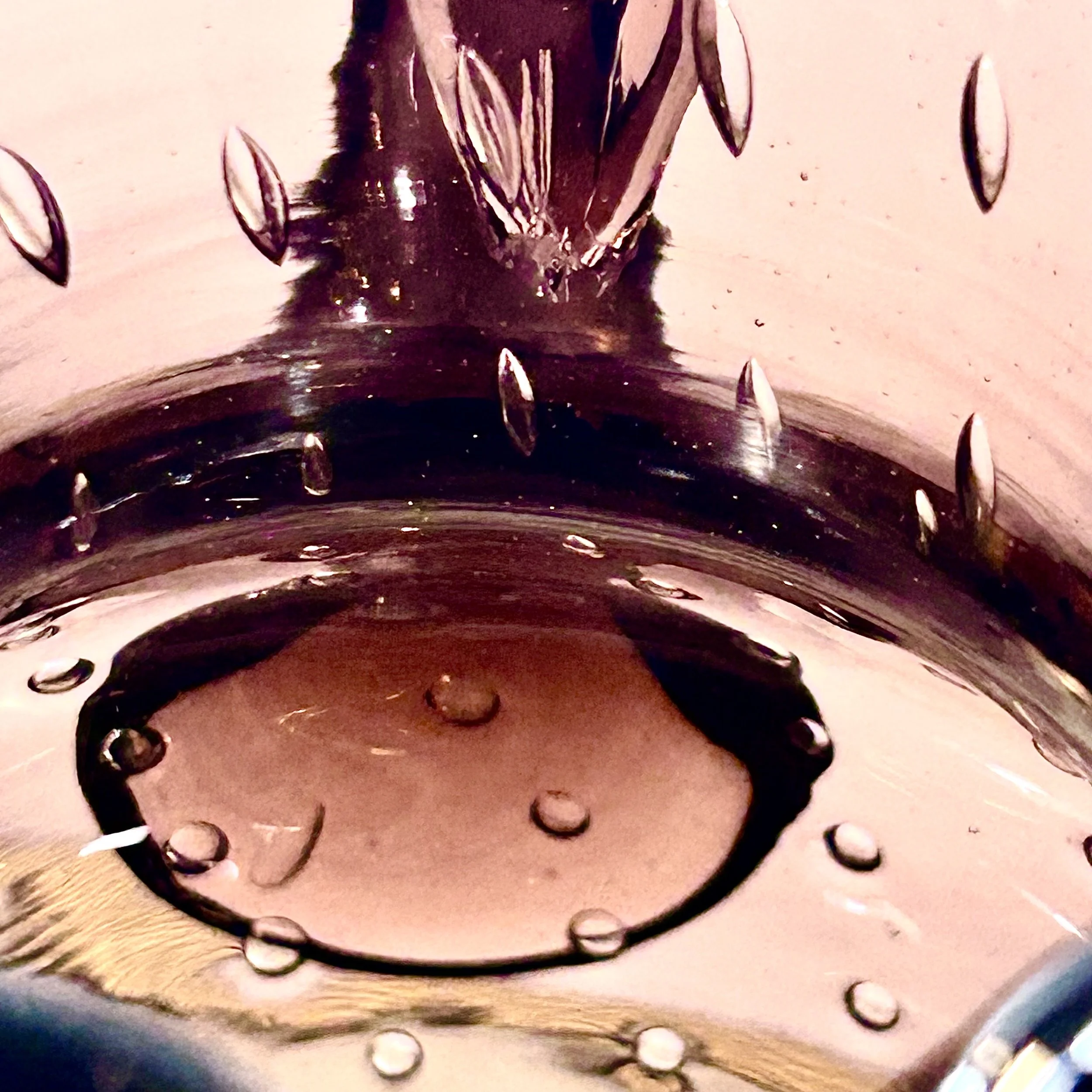
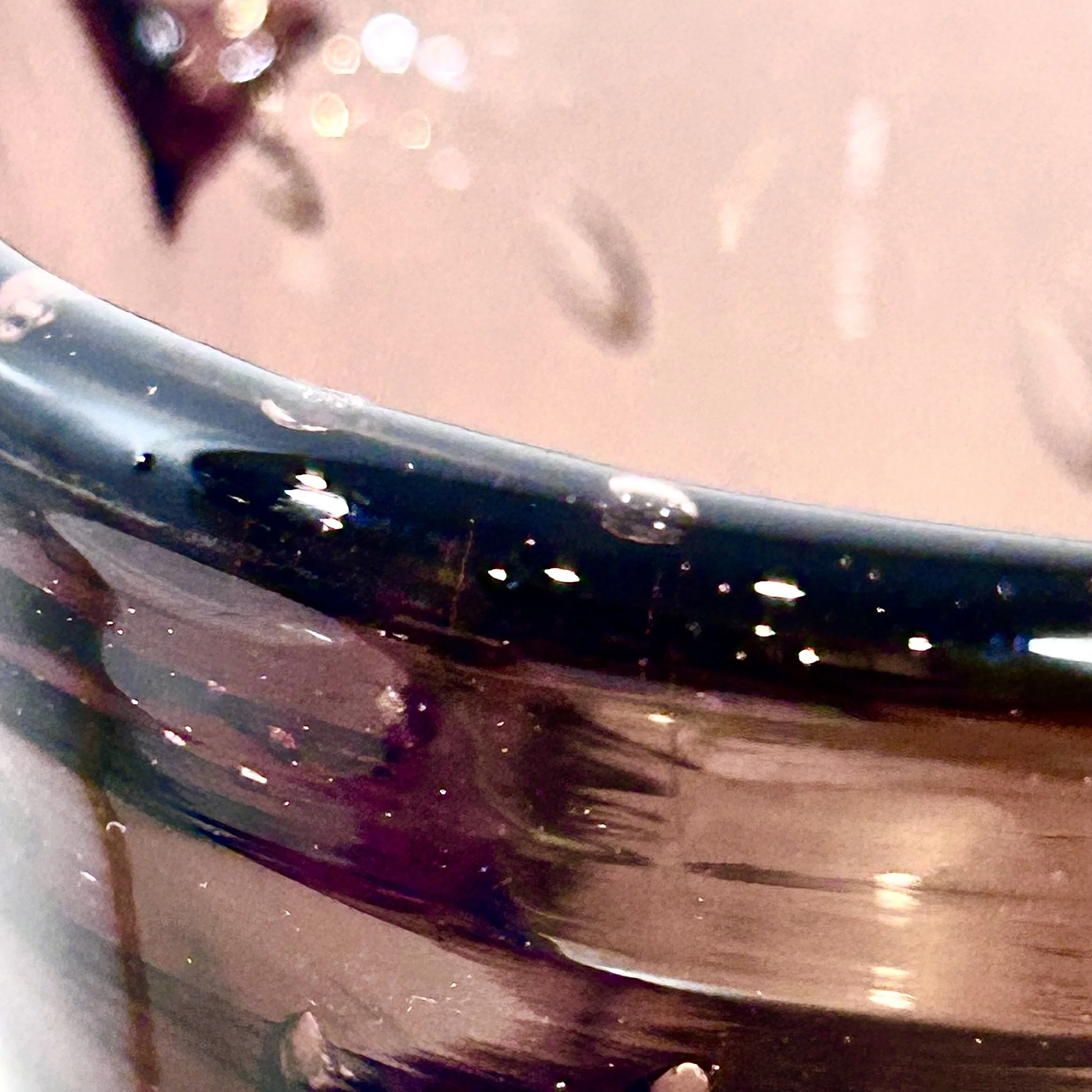
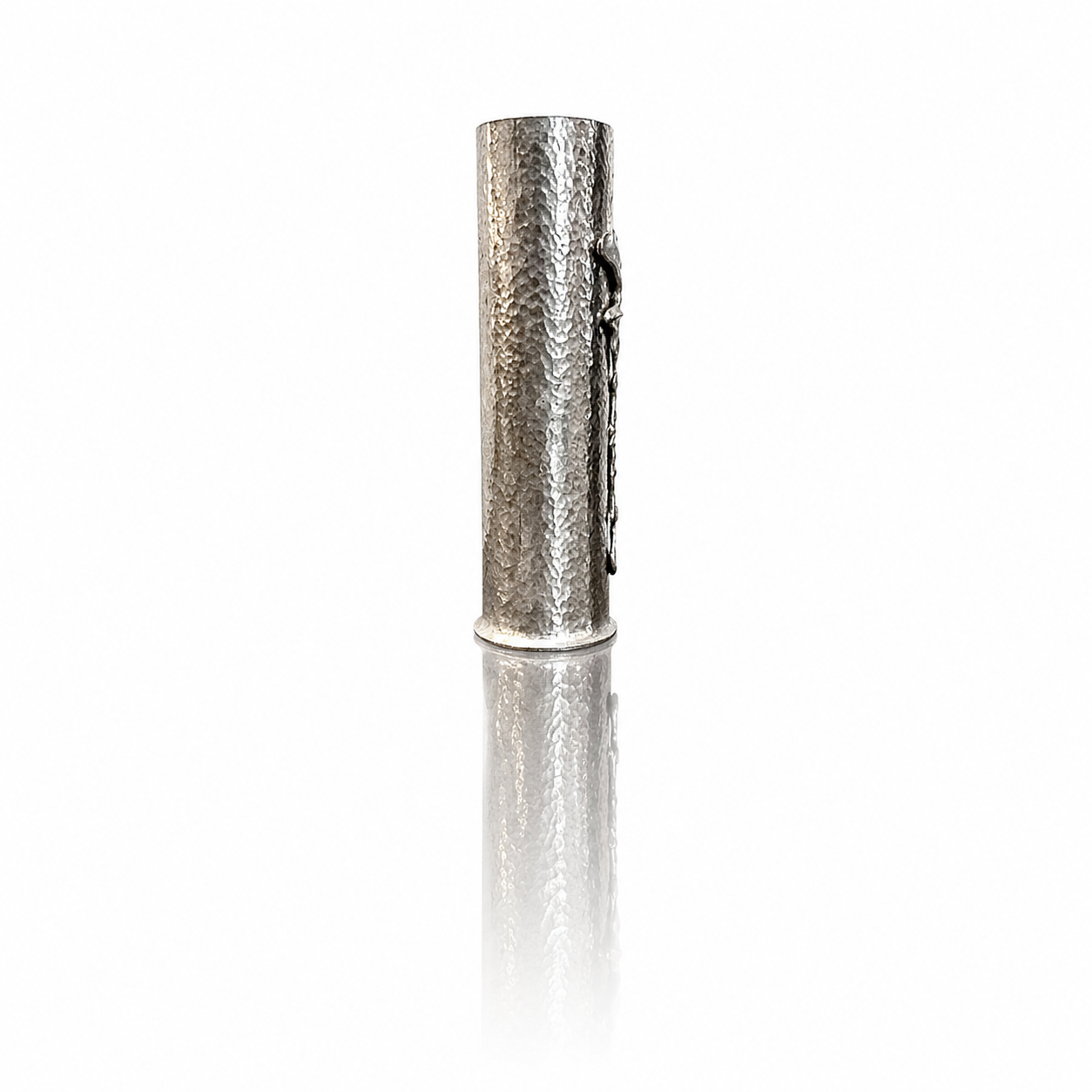
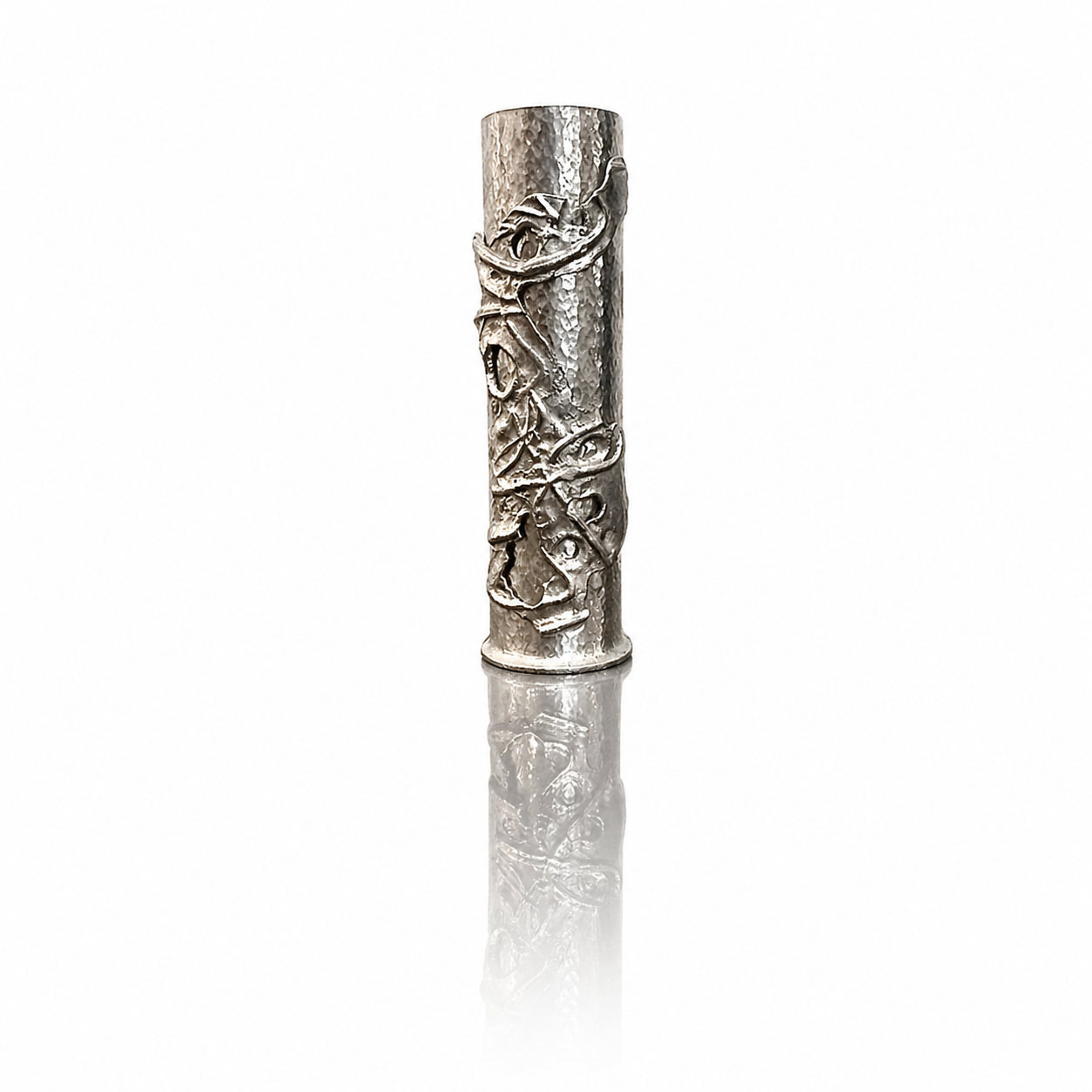
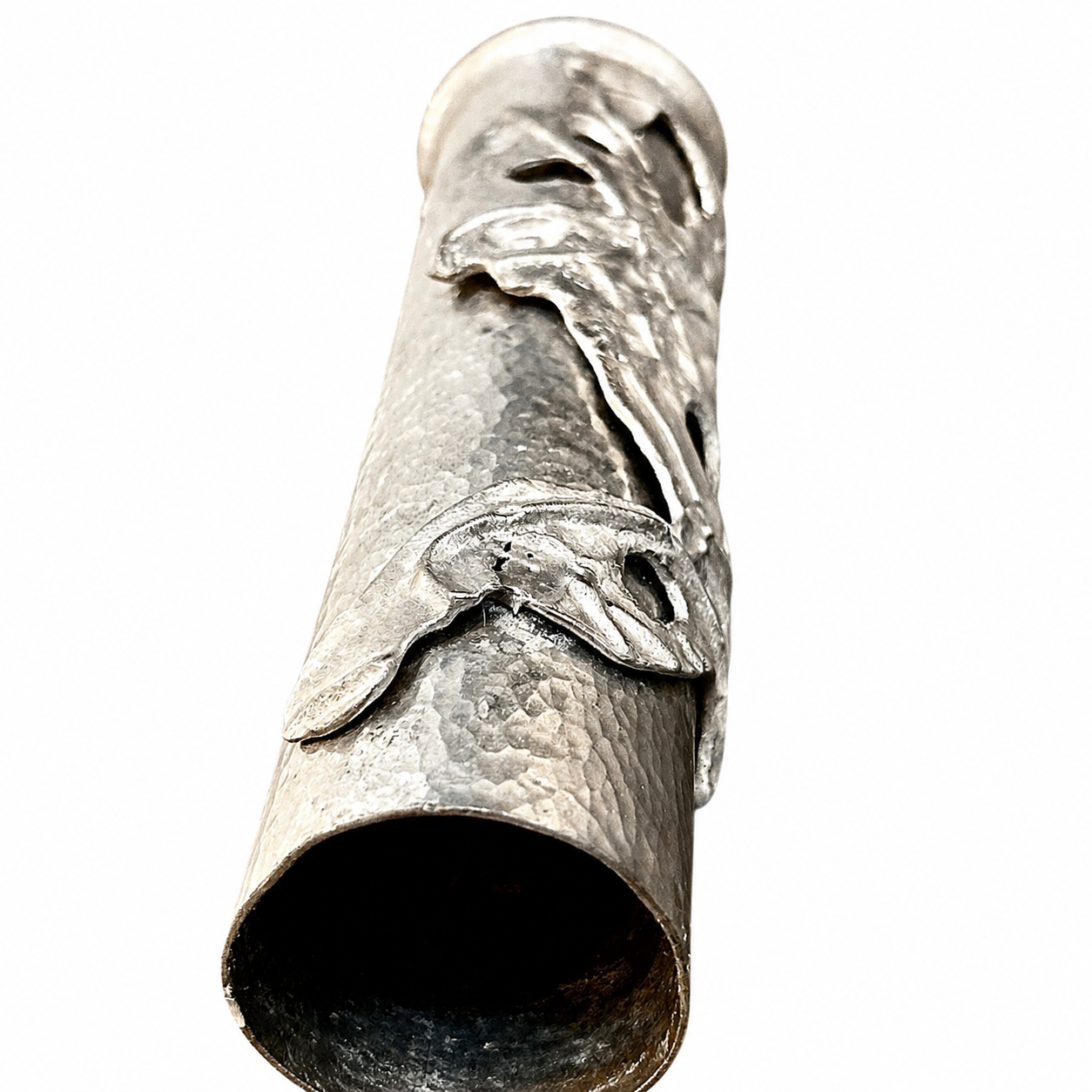
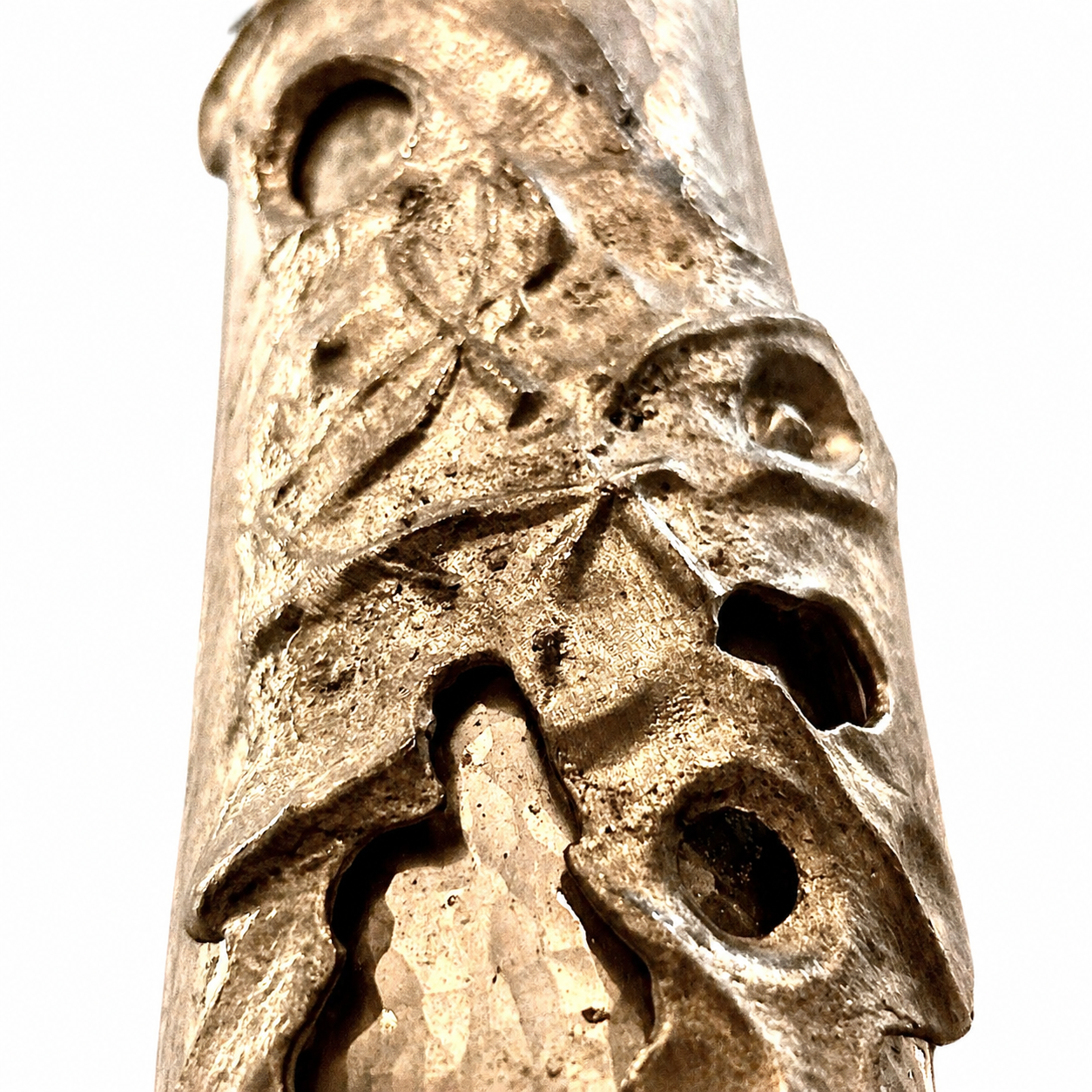
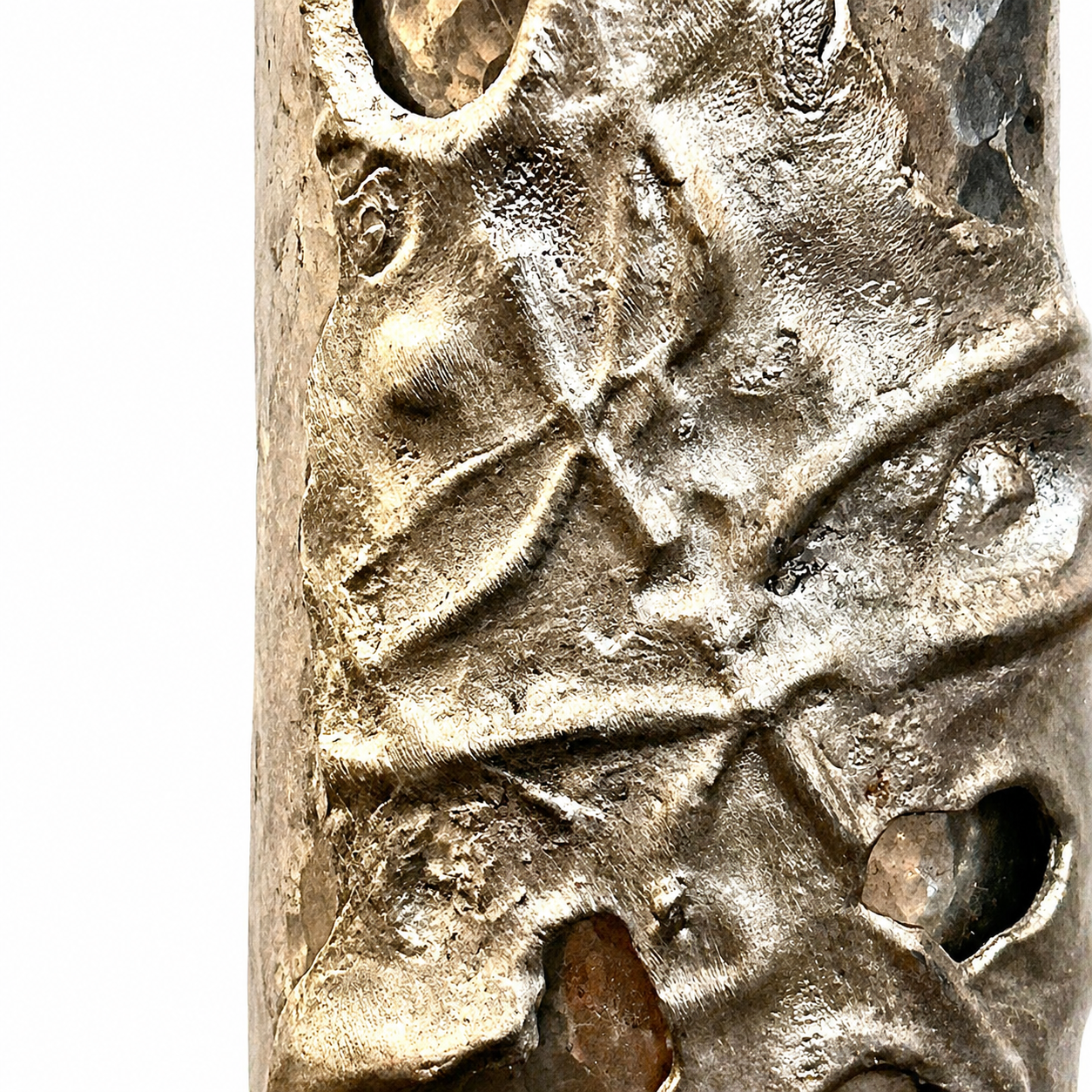
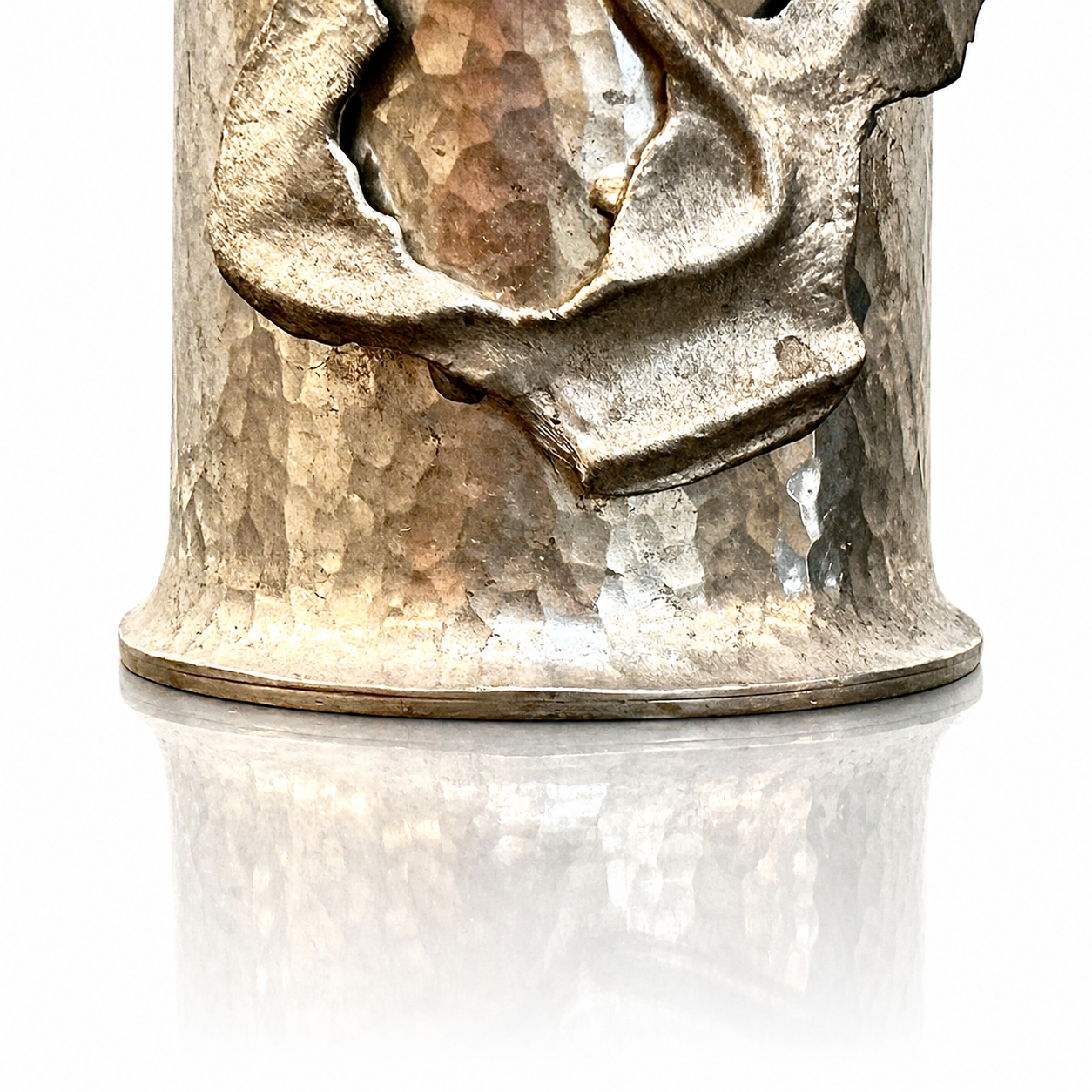
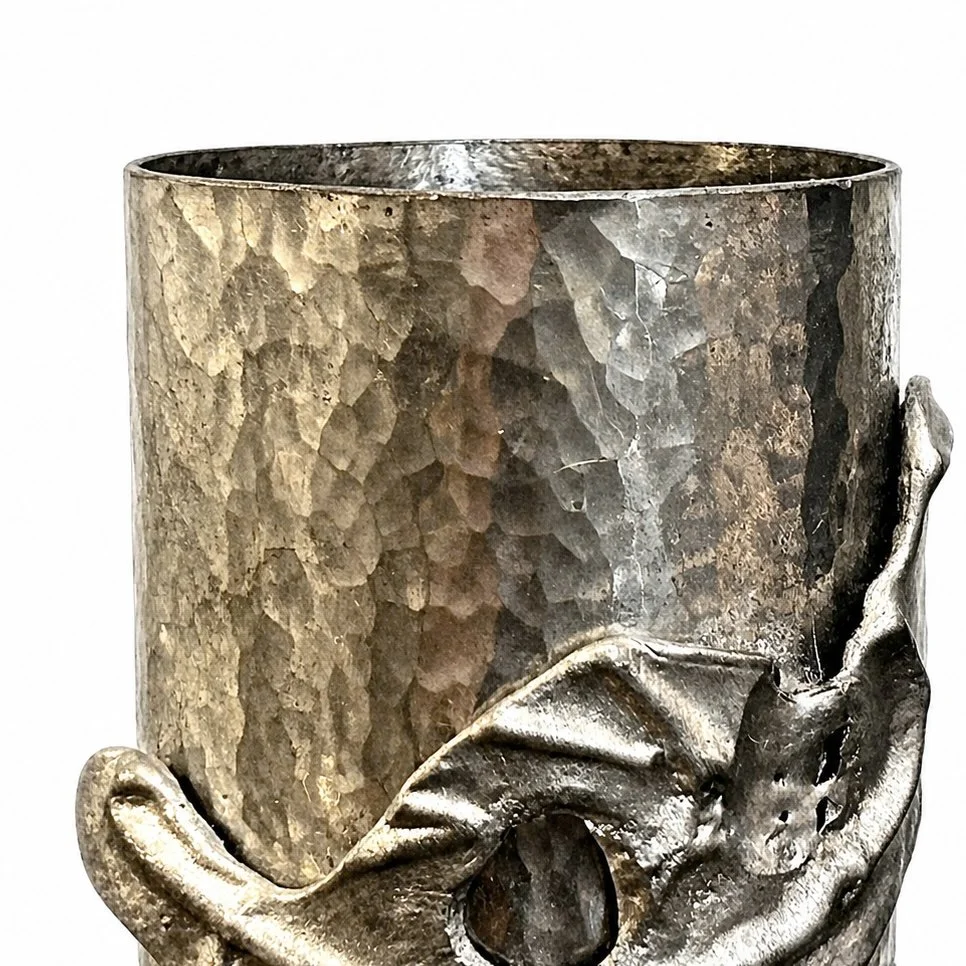
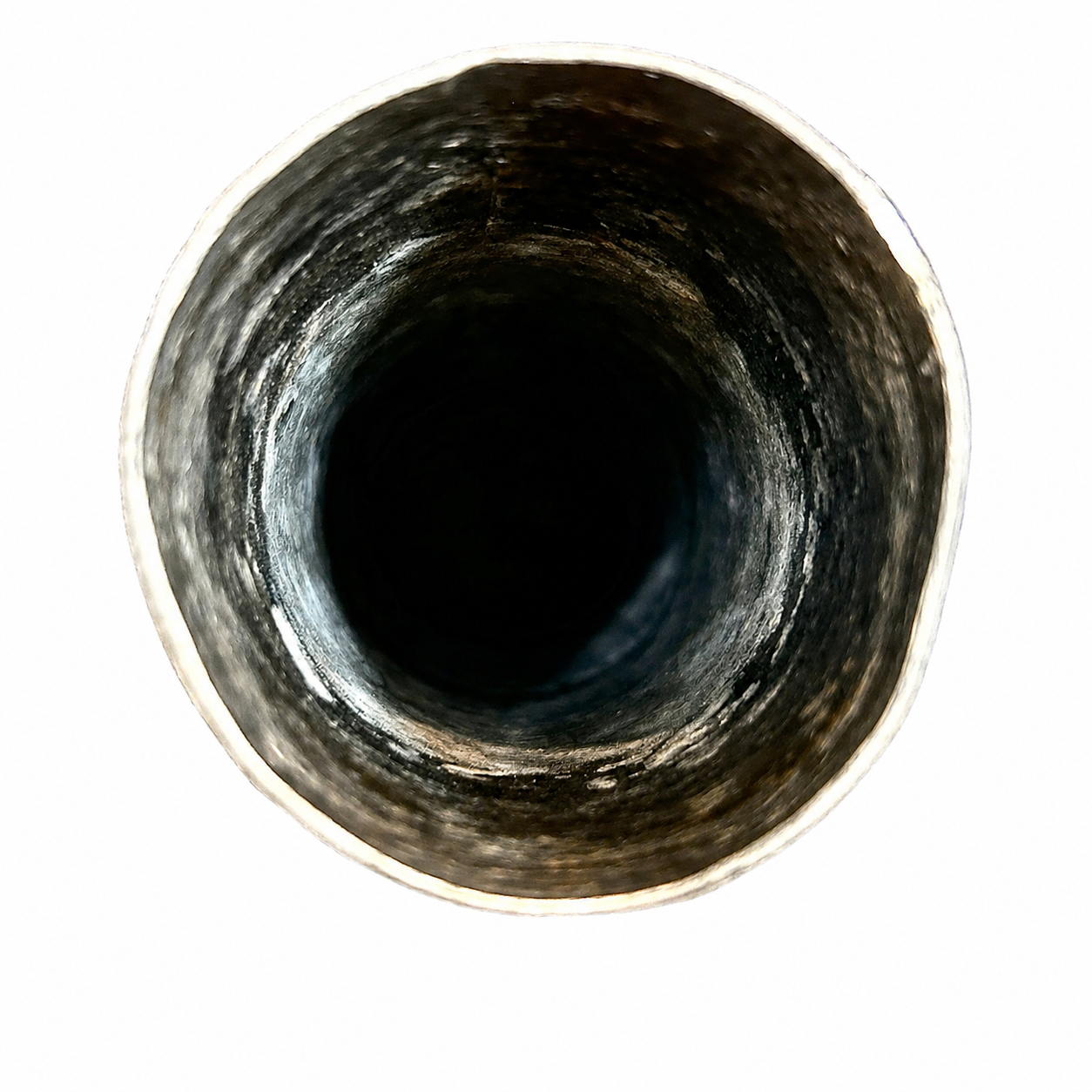
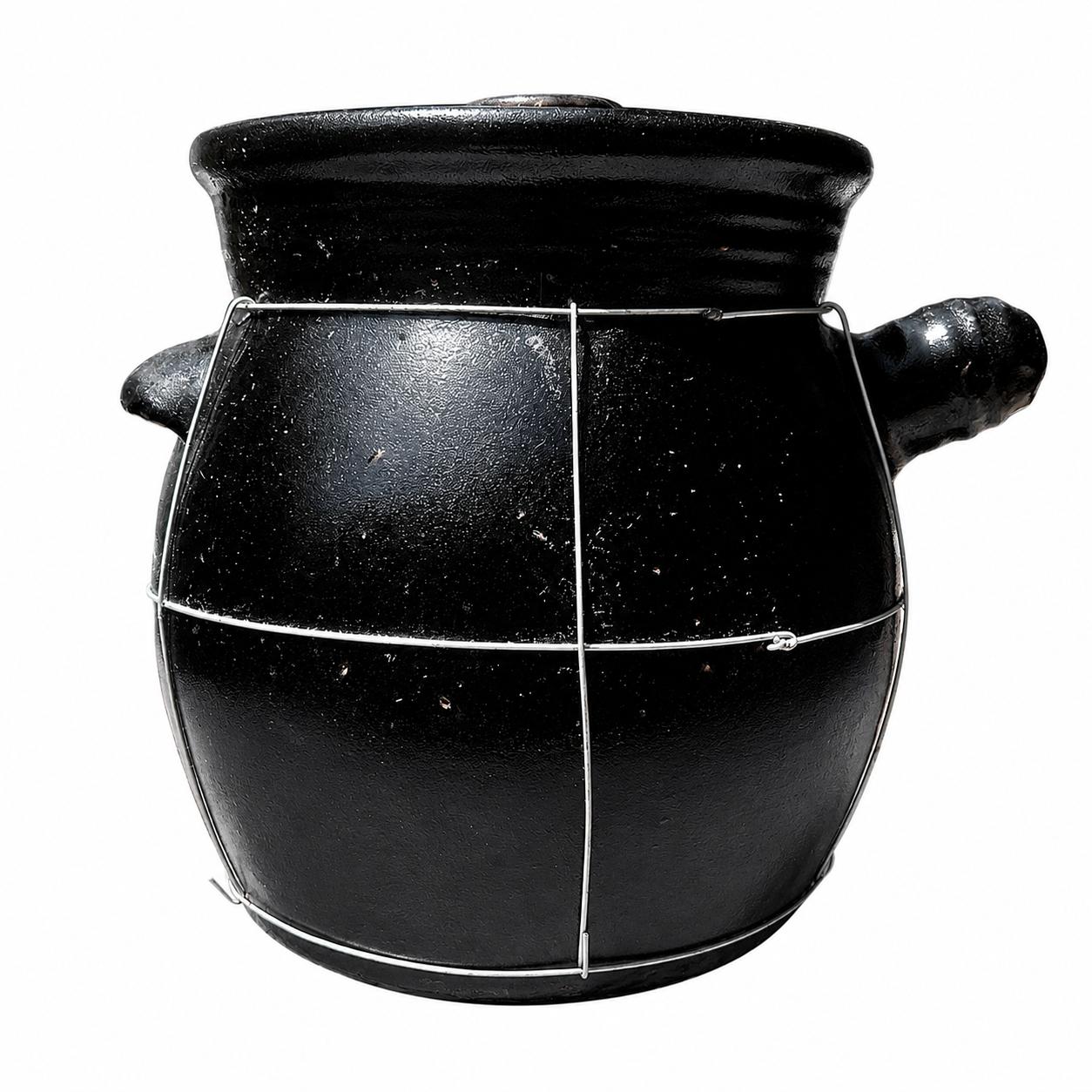
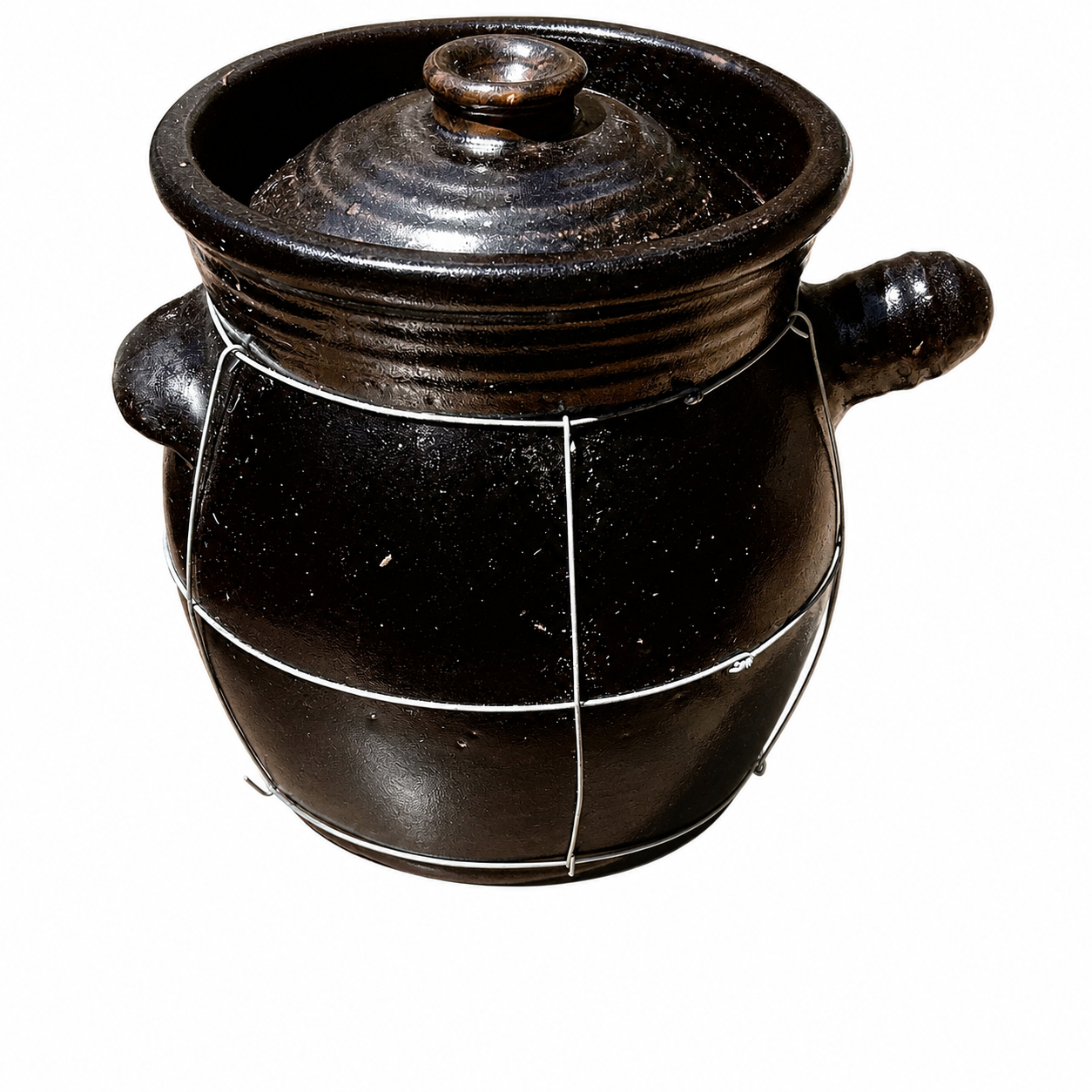
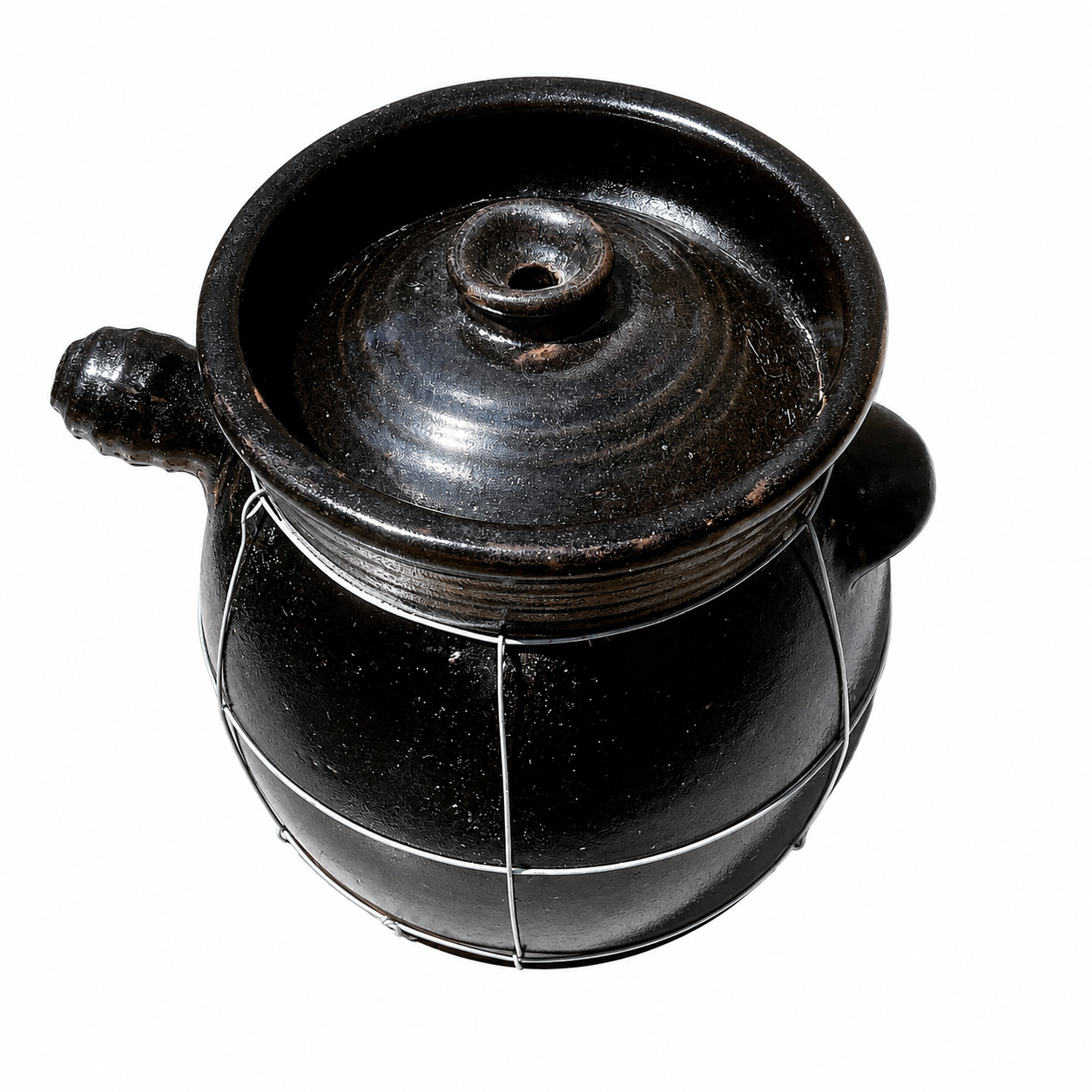
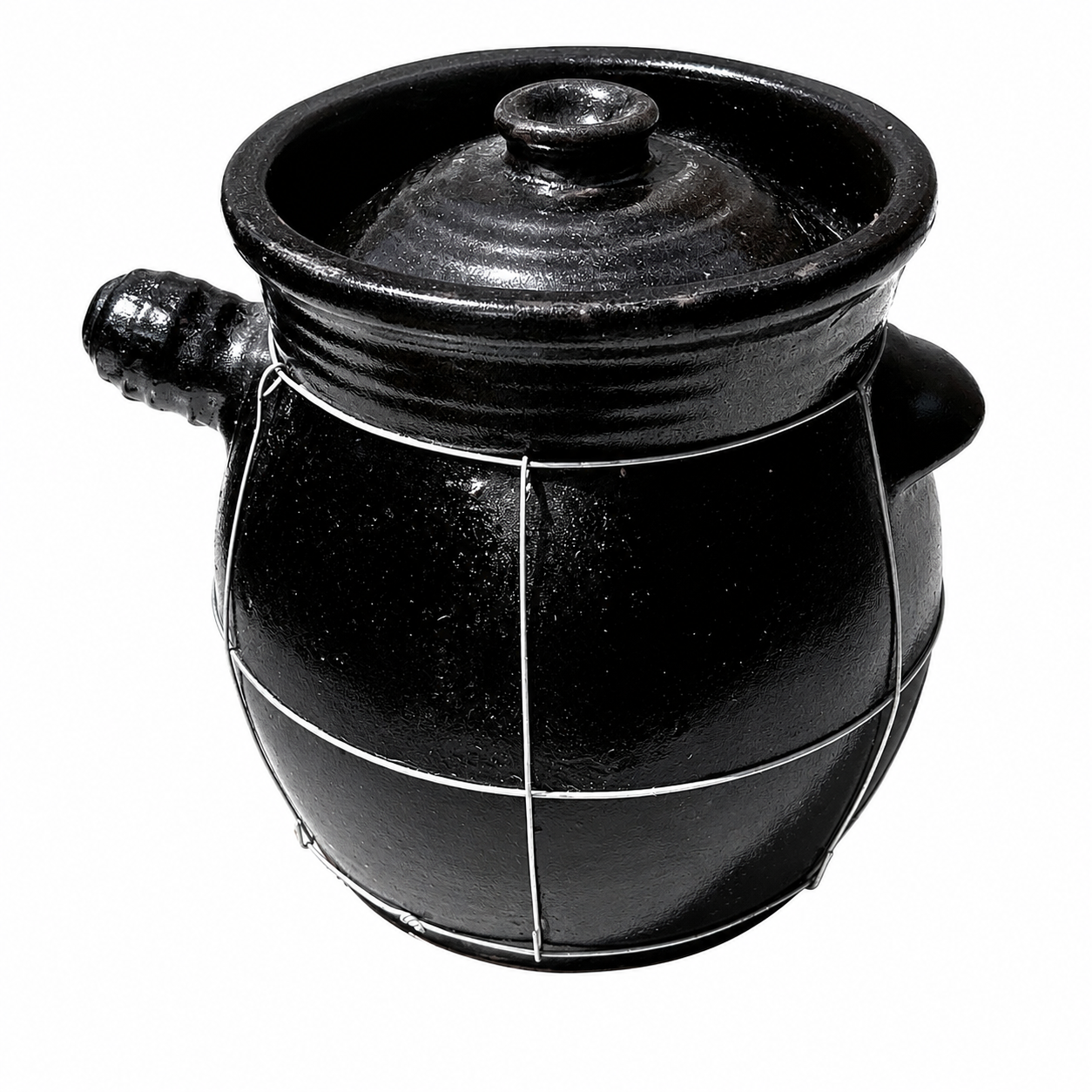
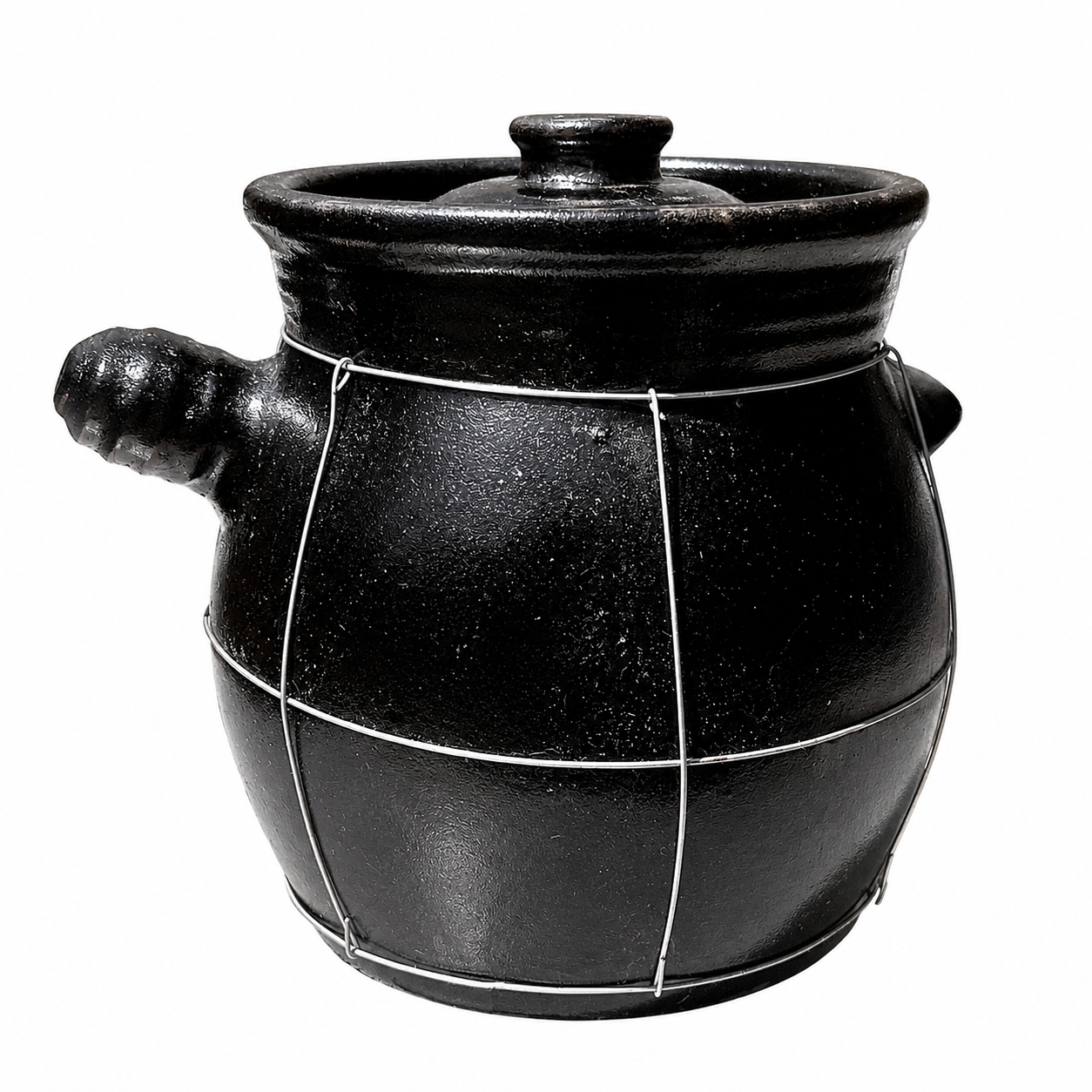
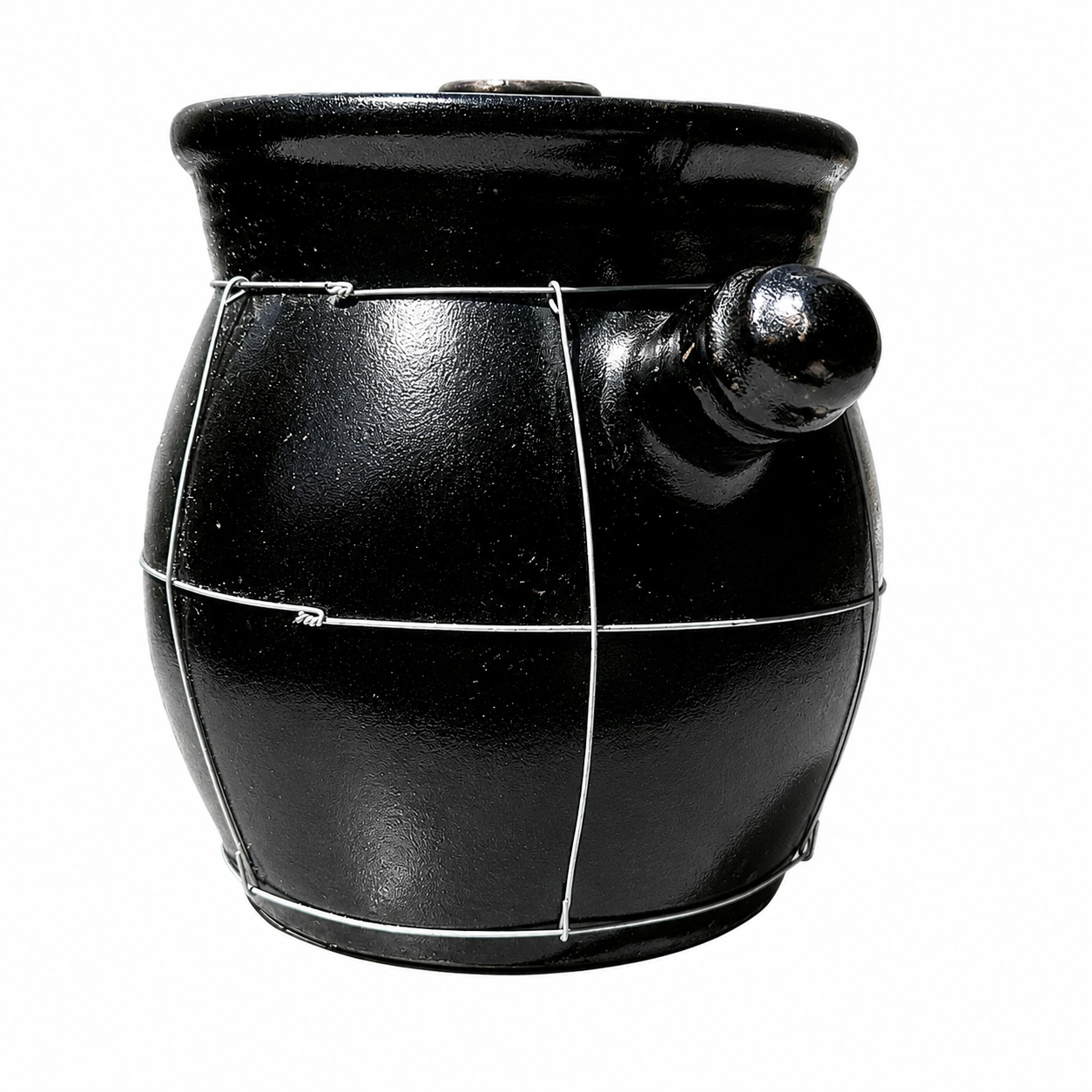
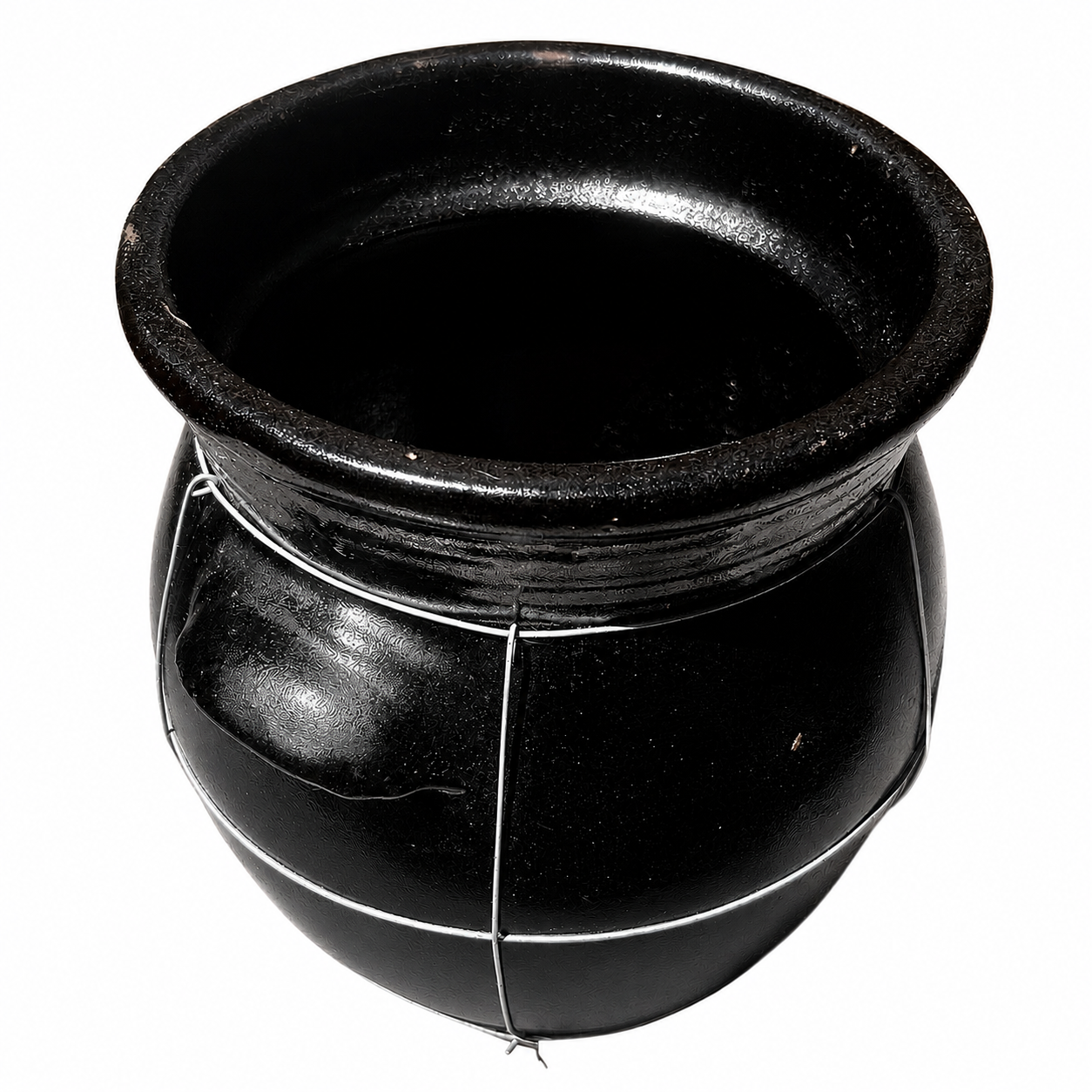
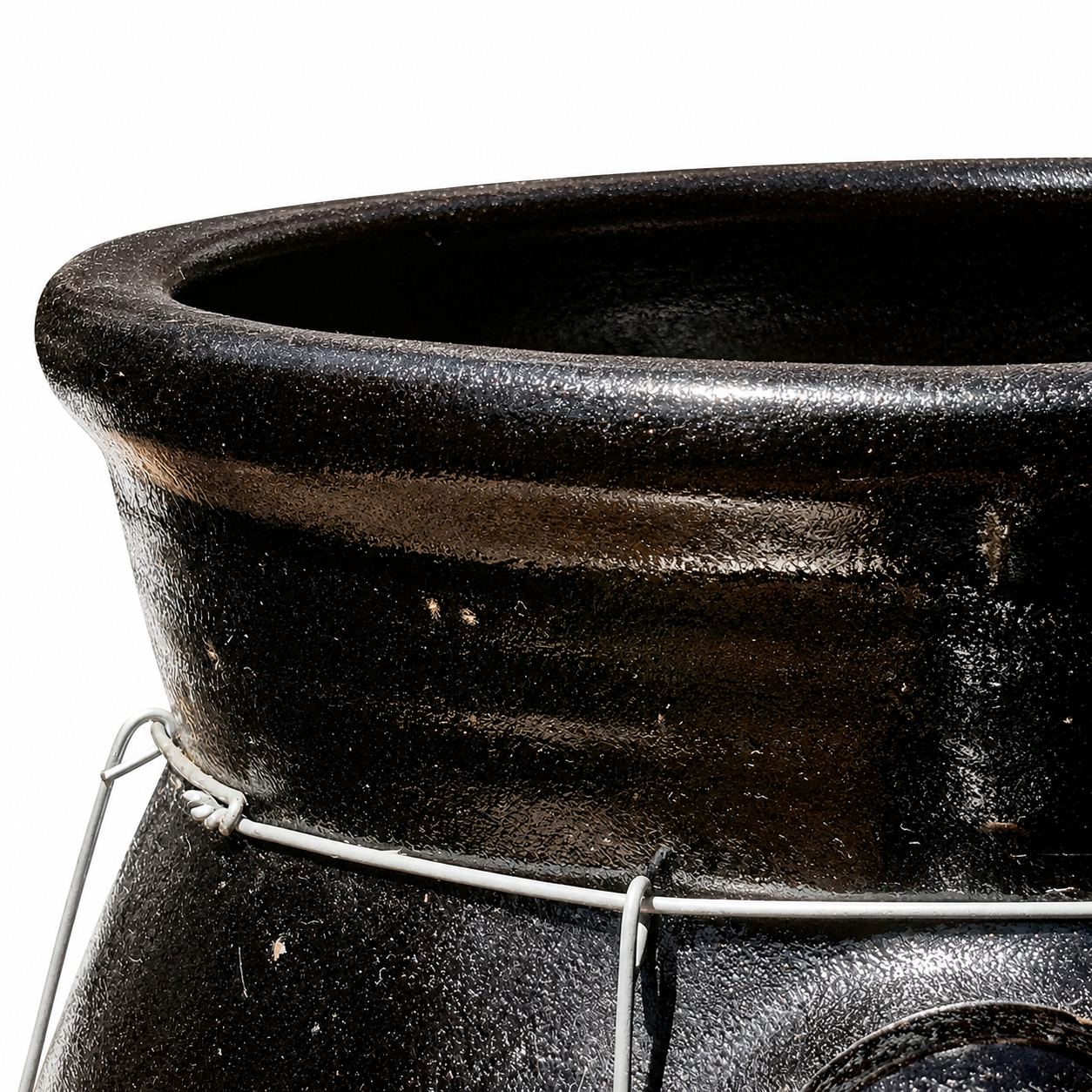
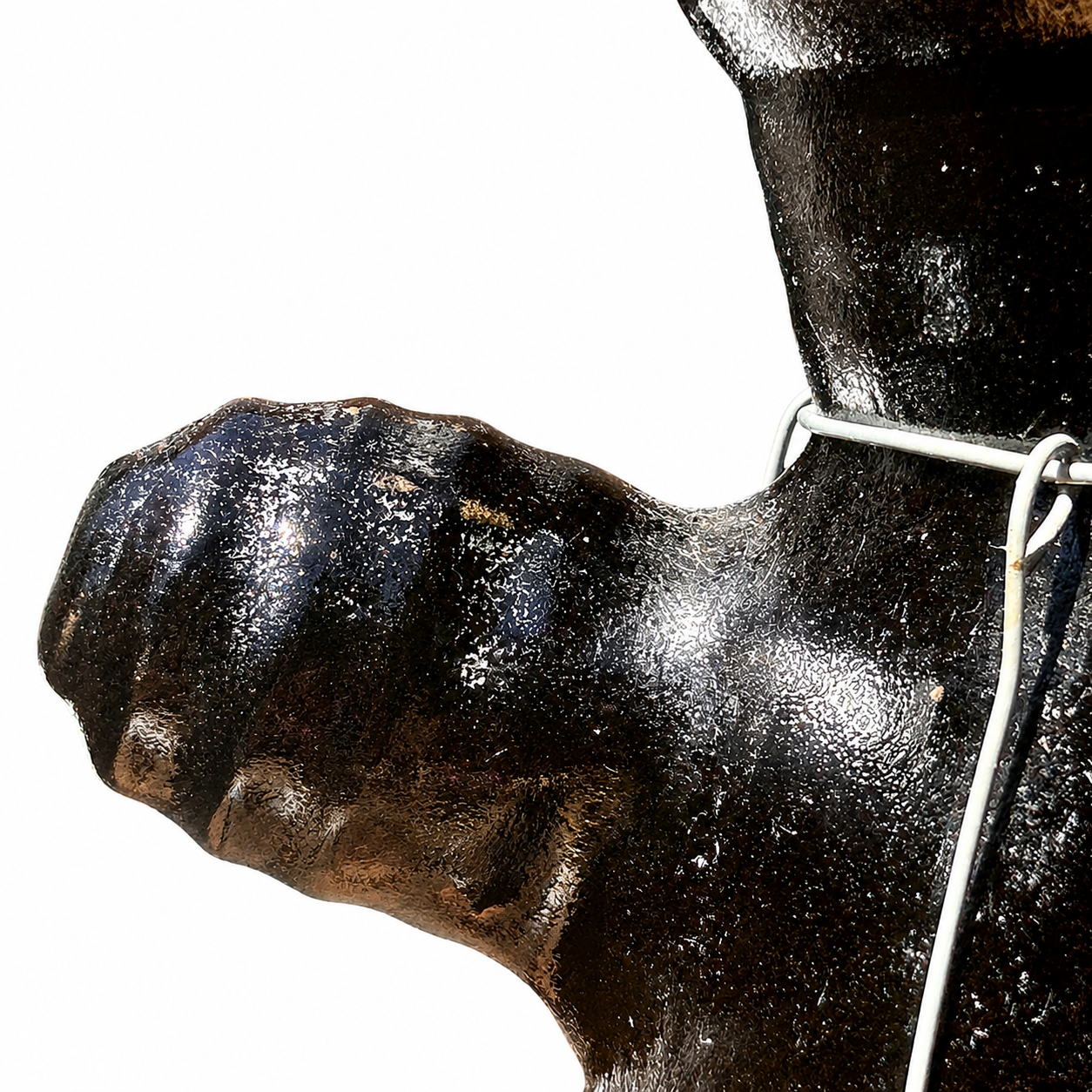
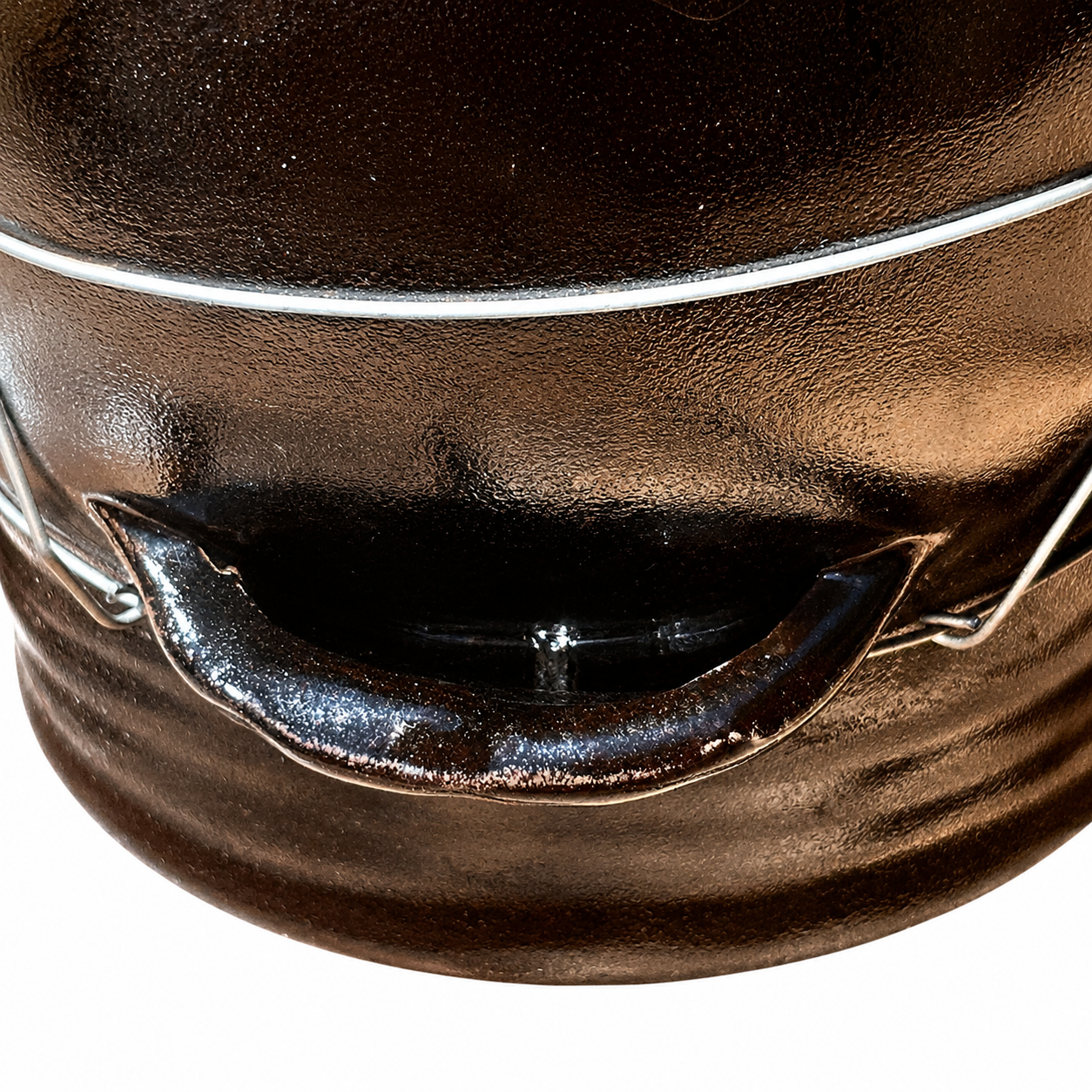
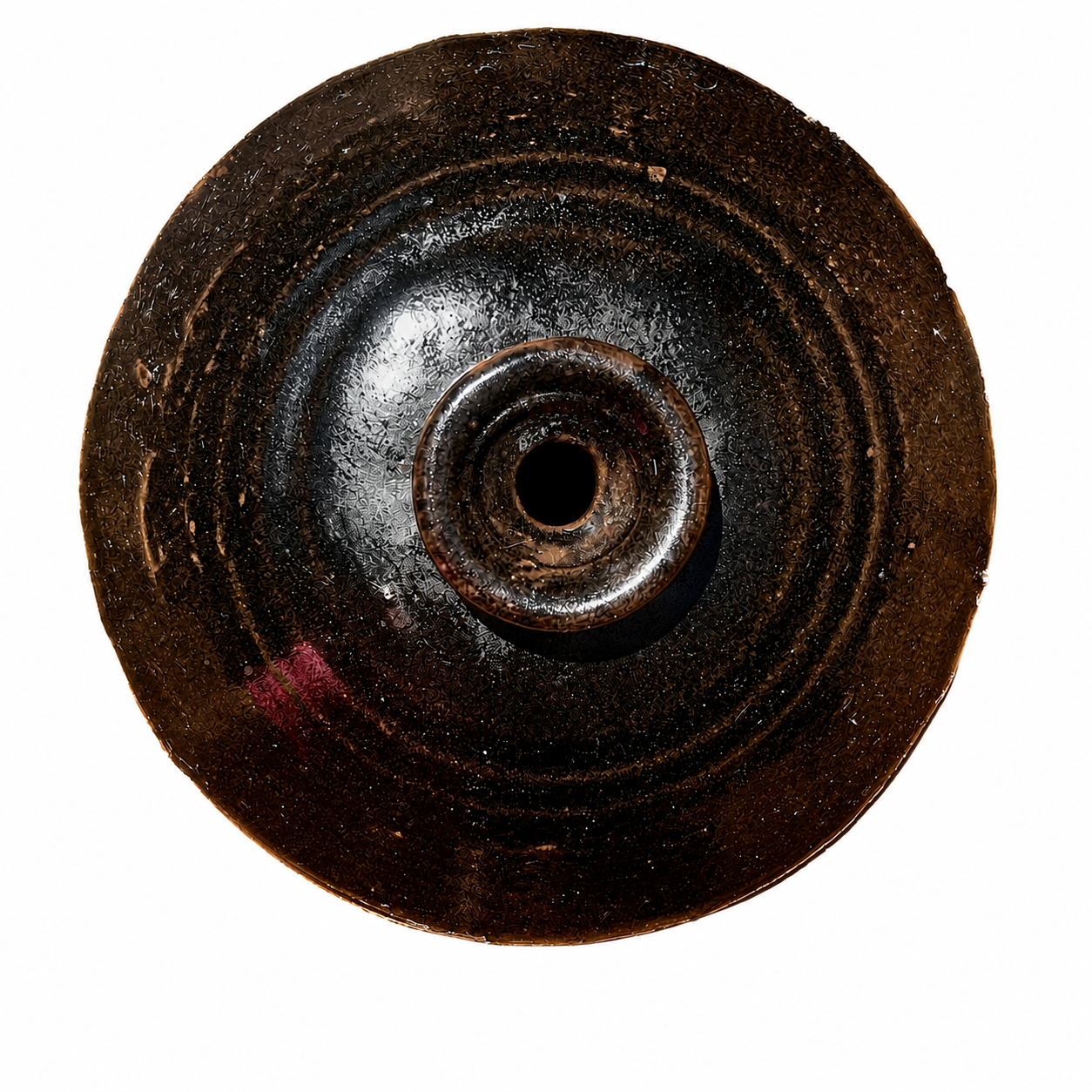
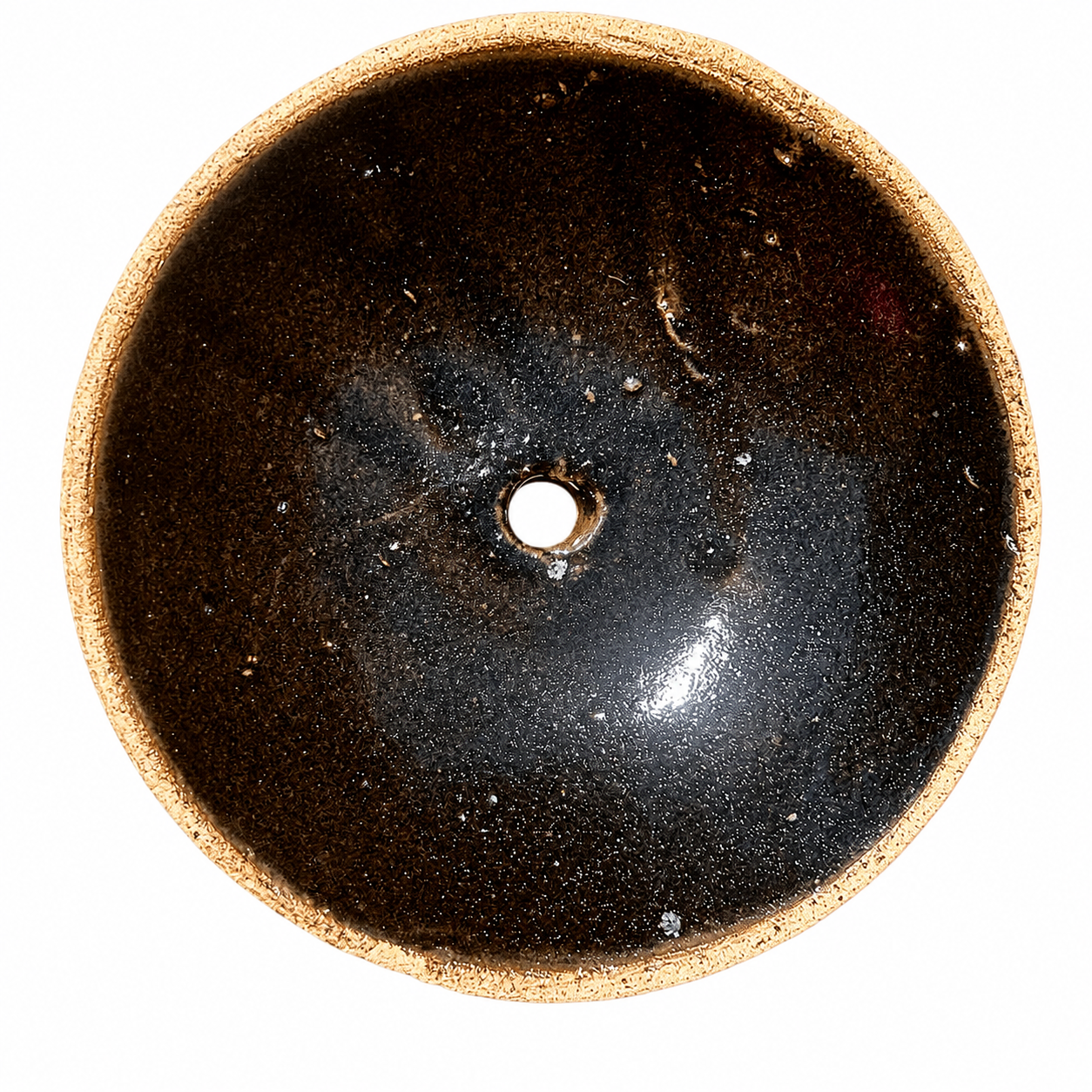
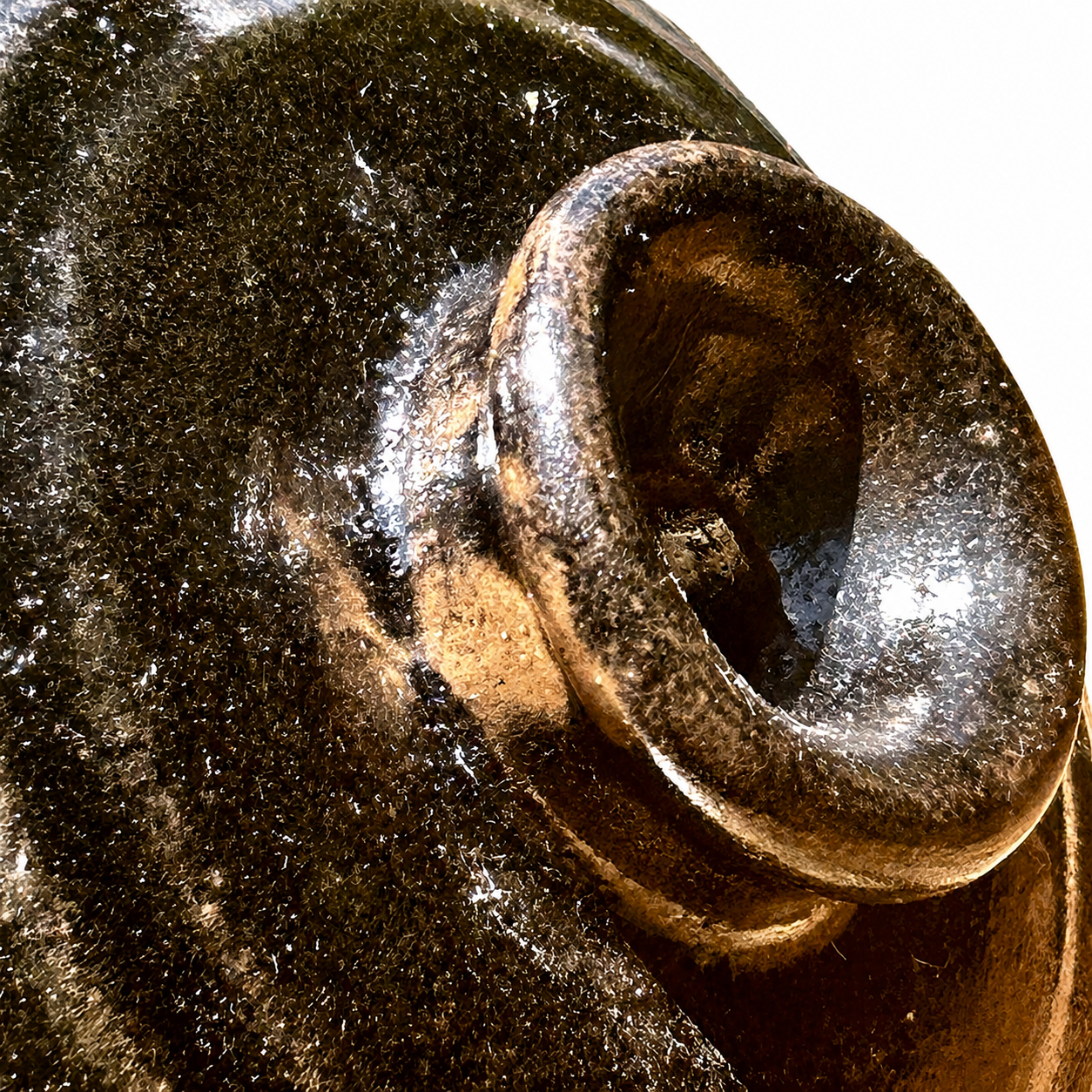
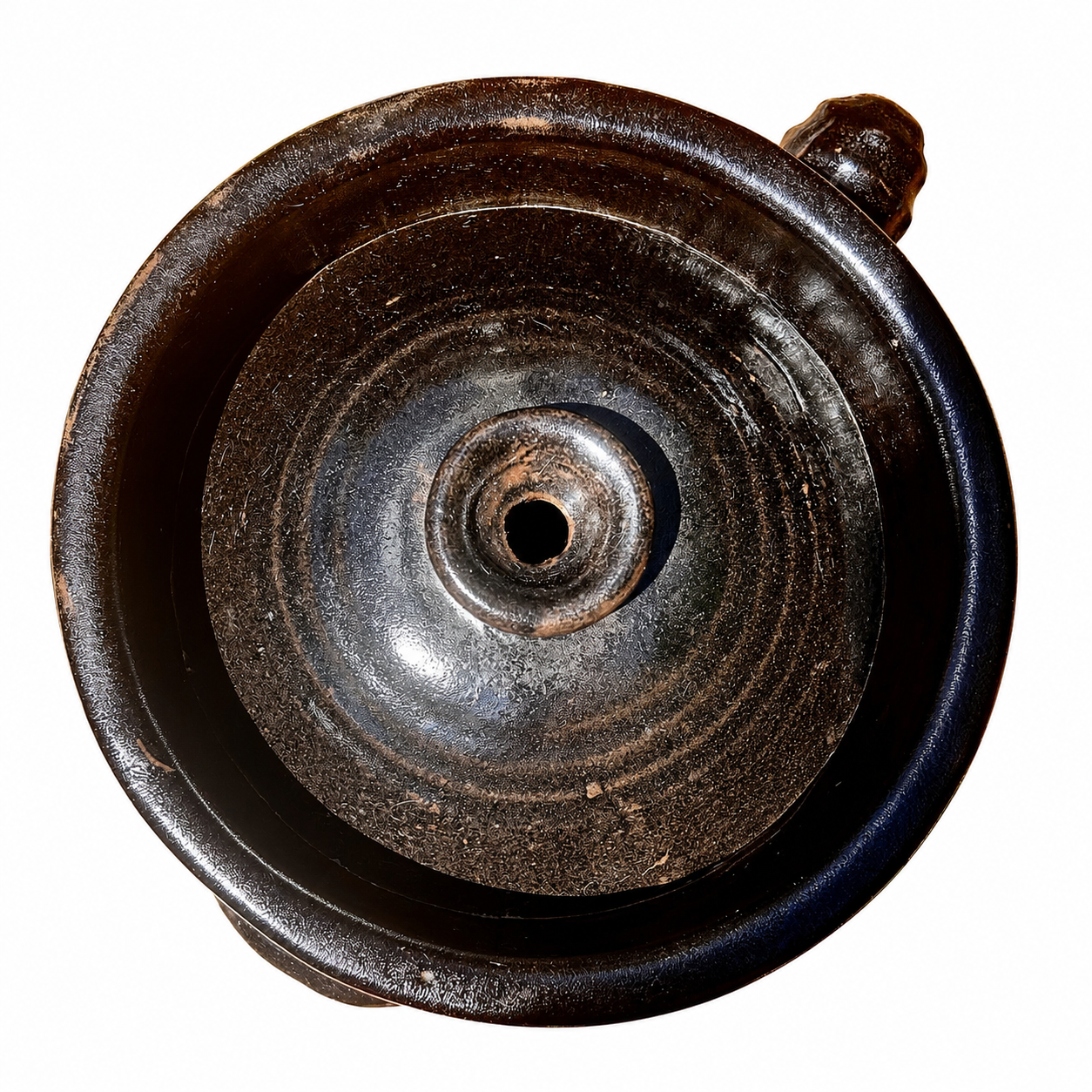
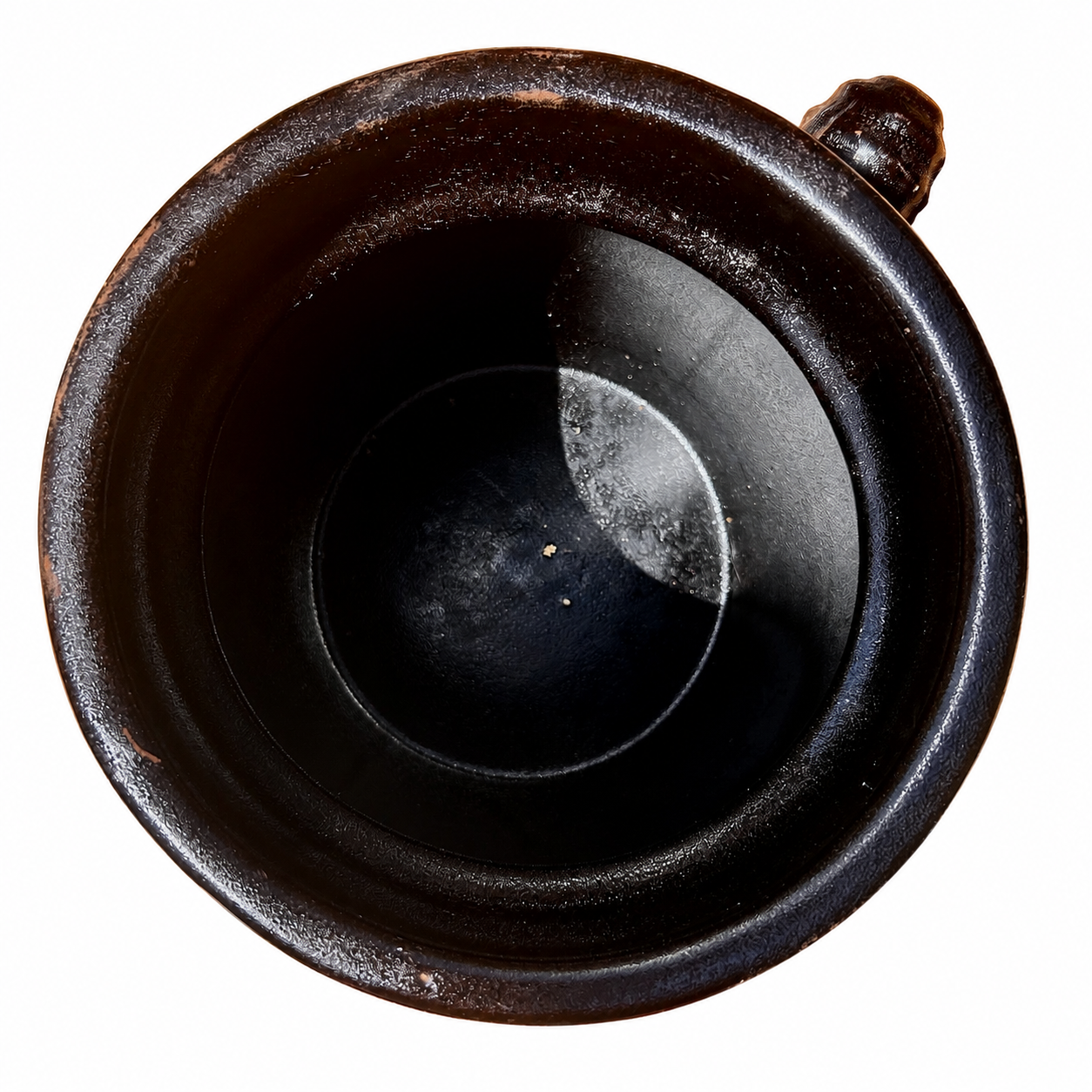
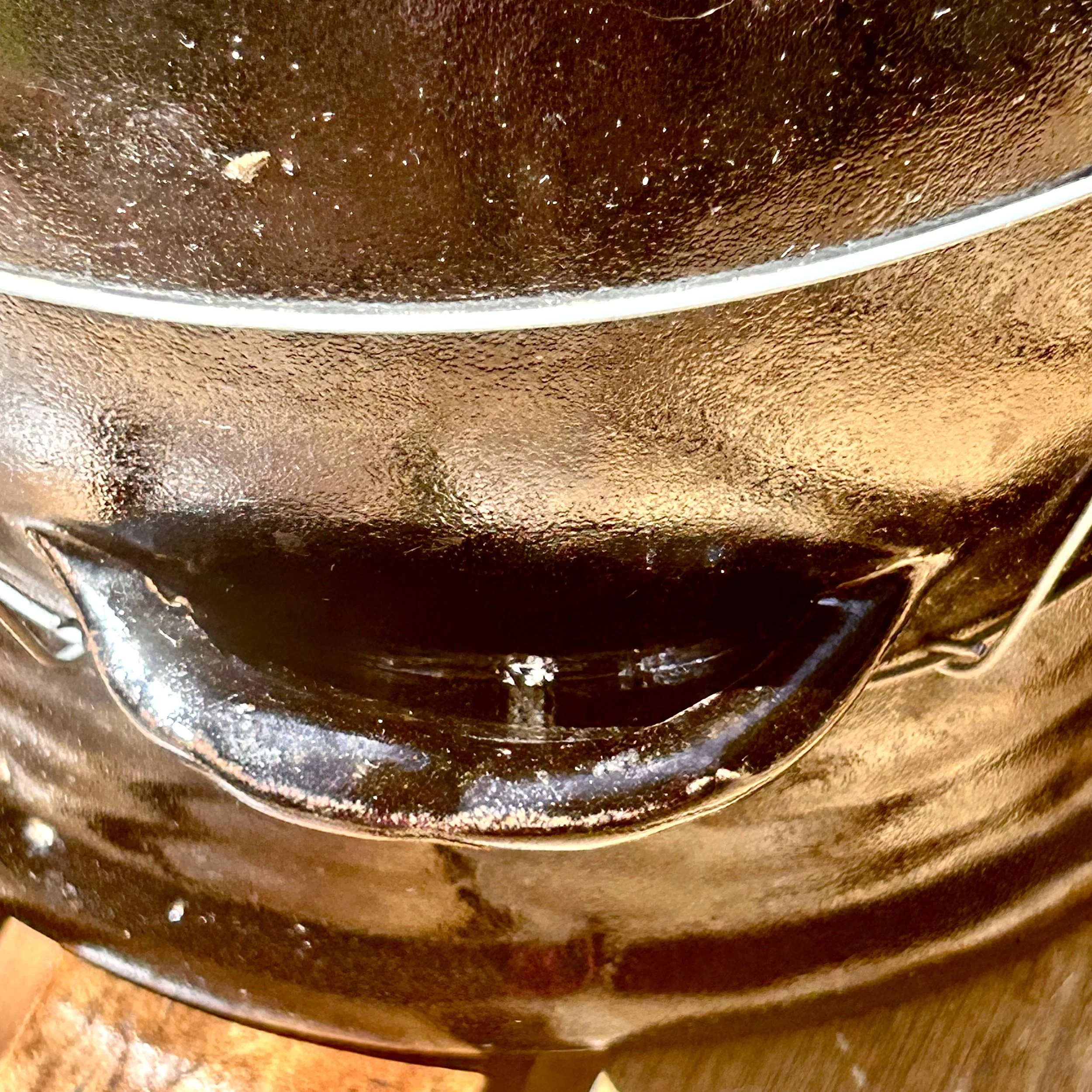
This hand-blown studio pitcher is a compelling transition piece, bridging the structural restraint of late Art Deco with the organic fluidity of Mid-Century Modernism. Executed in a deeply saturated amethyst-to-wine palette with cranberry undertones, the vessel is defined by a dense internal crackle—an intentional "iced" technique where the molten gather is plunged into water to create a light-refractive network of internal fissures. The form is anchored by a faintly green-tinted base and finished with a robust applied handle and a dramatic, flared pouring lip.
Technical Analysis & Fluorescence
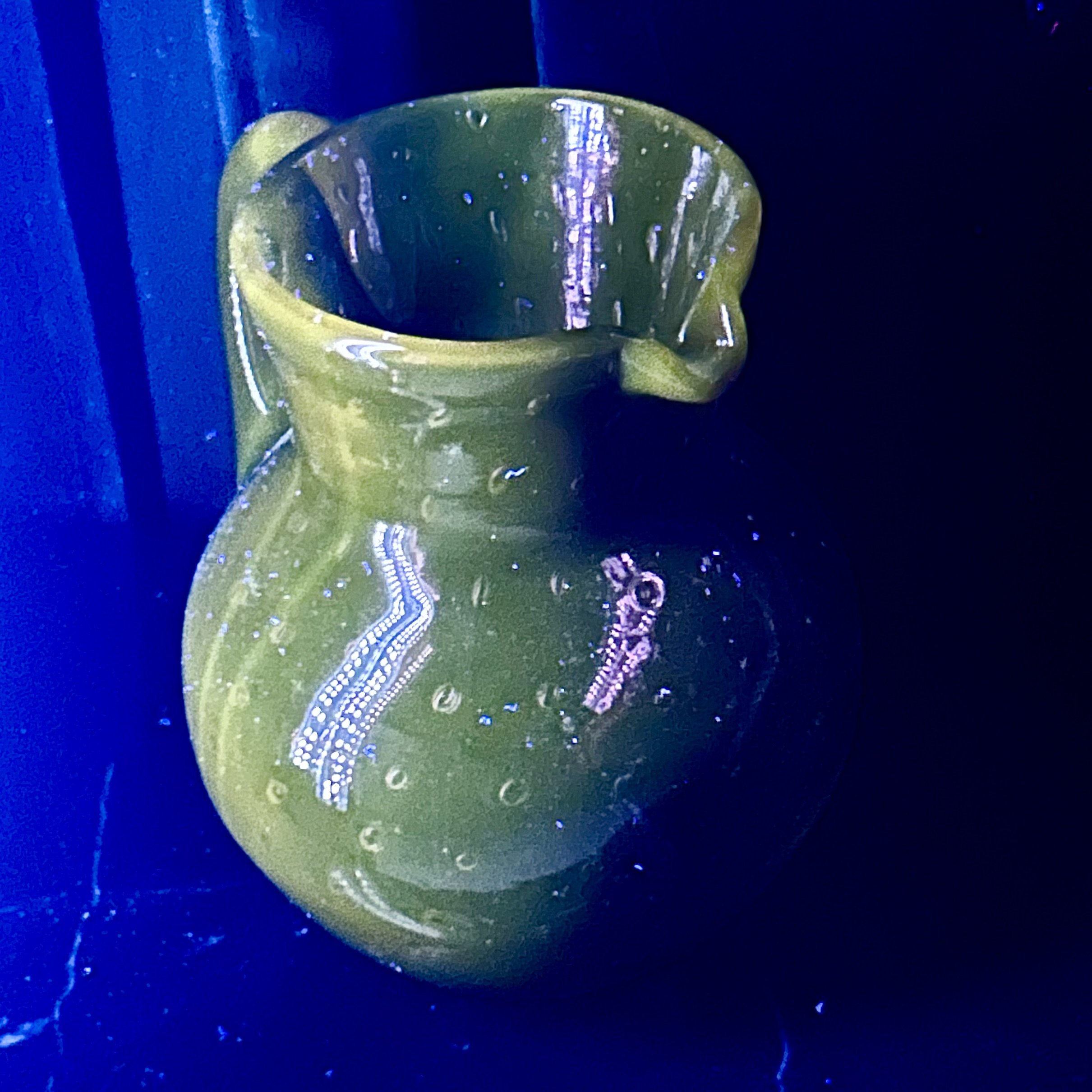
Substantial in hand (exceeding 3 lbs), the pitcher exhibits the material density prized in mid-century American and European art glass. Under 365nm UV illumination, the glass reveals a subtle yellow-green fluorescence within the amethyst matrix. This reaction is a definitive marker of historic glass batch chemistry, typically indicating the presence of manganese used as a clarifying agent to achieve the purity of the violet-wine tones.
Attribution & Period
Central European / Bohemian-style decorative art glass, Circa 1935–1955
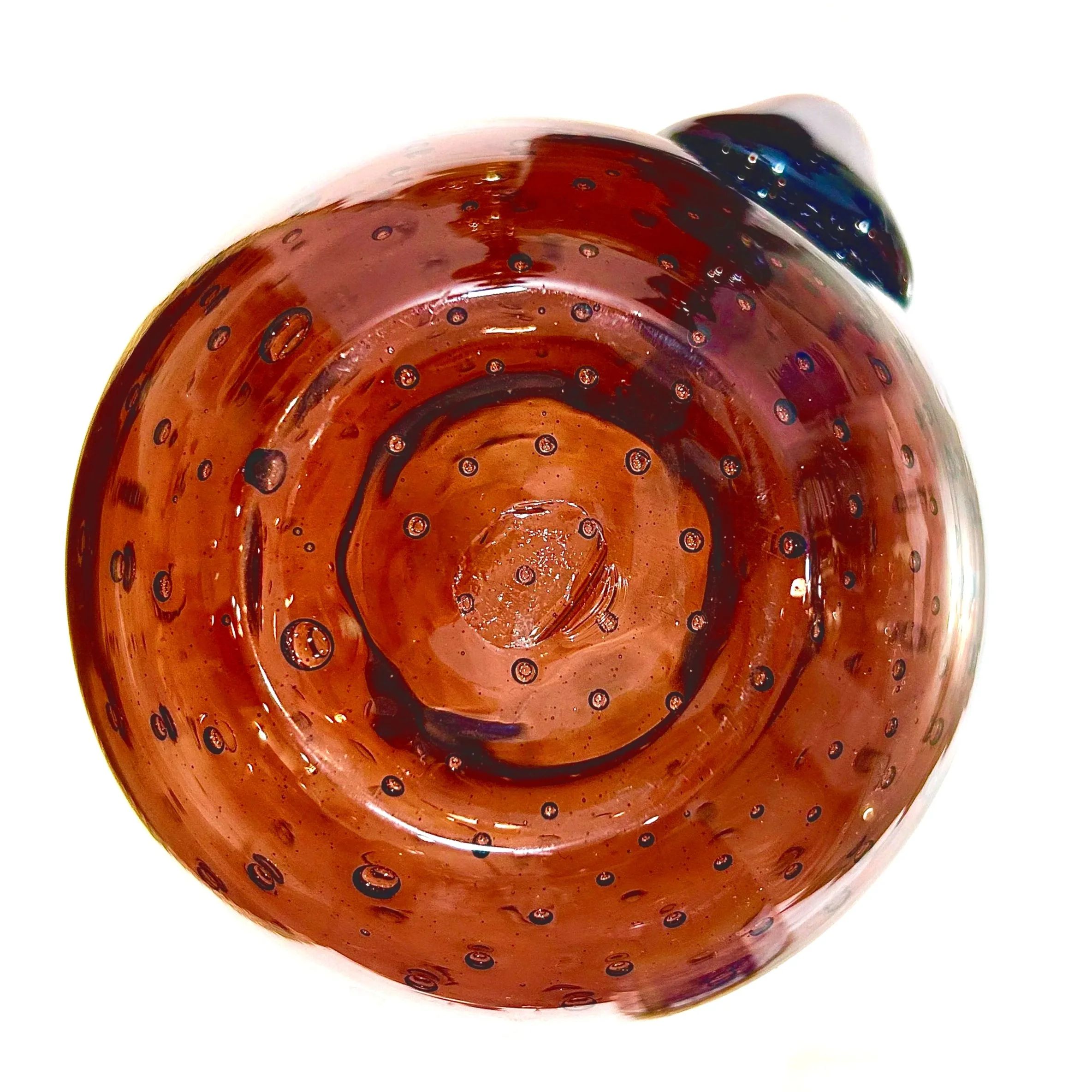
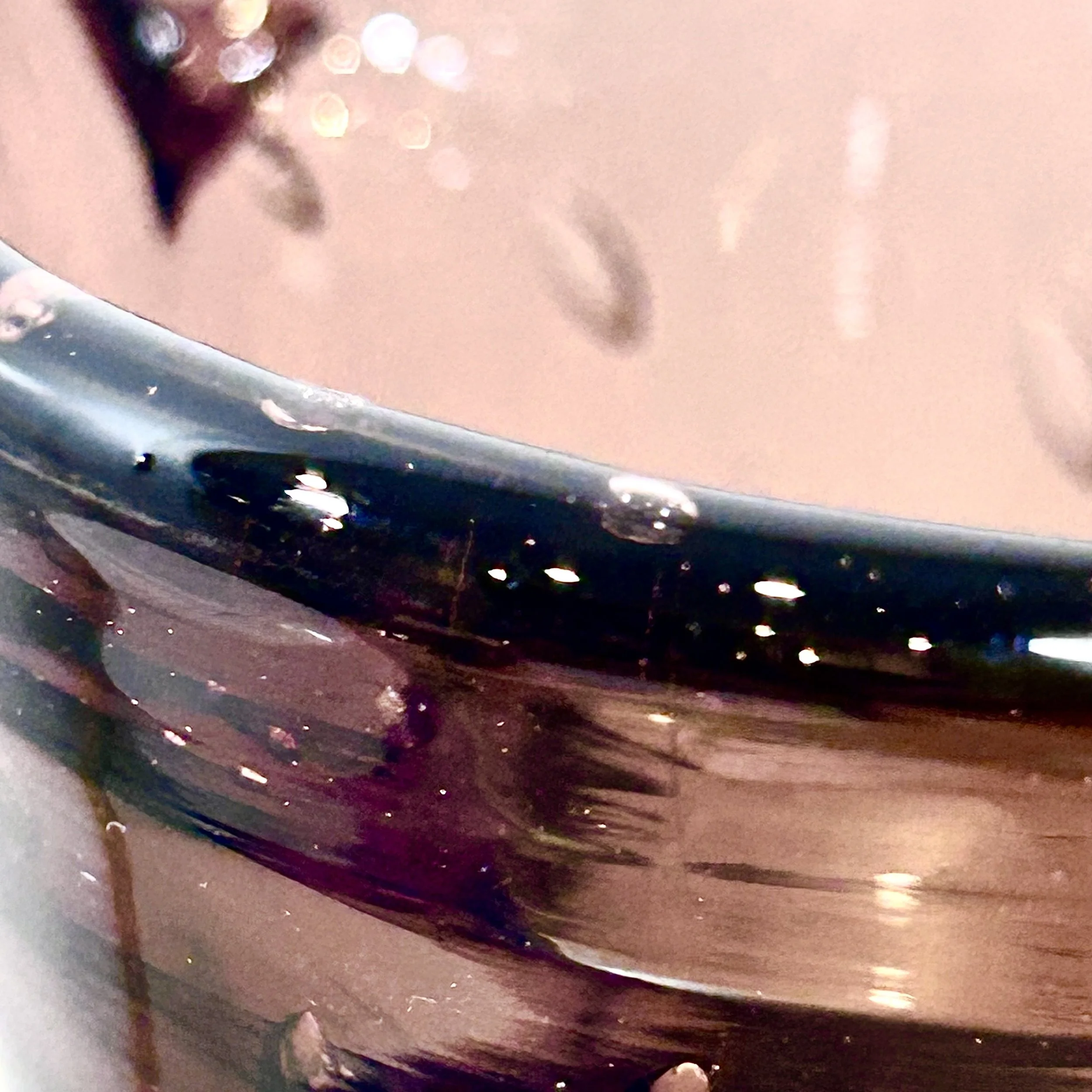
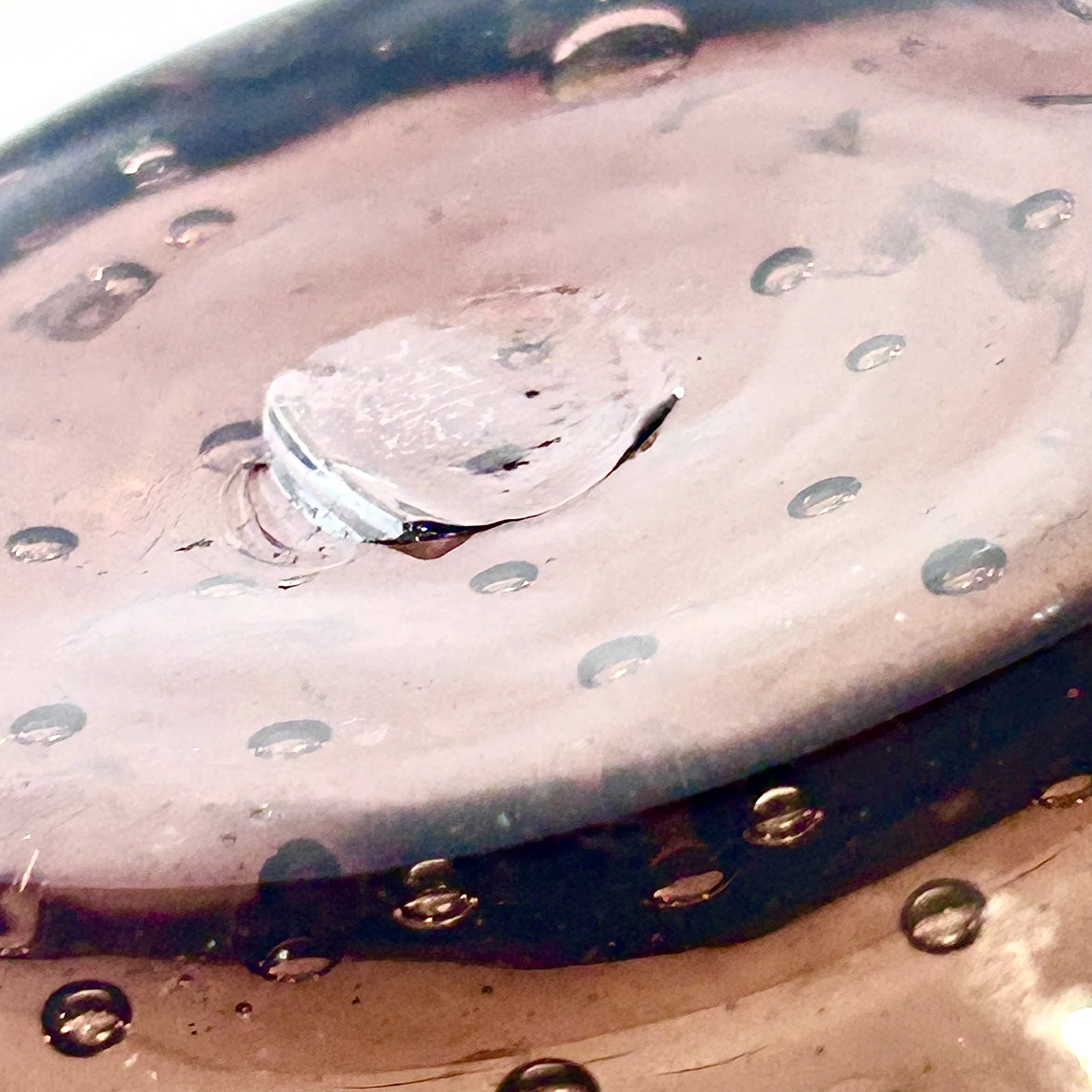
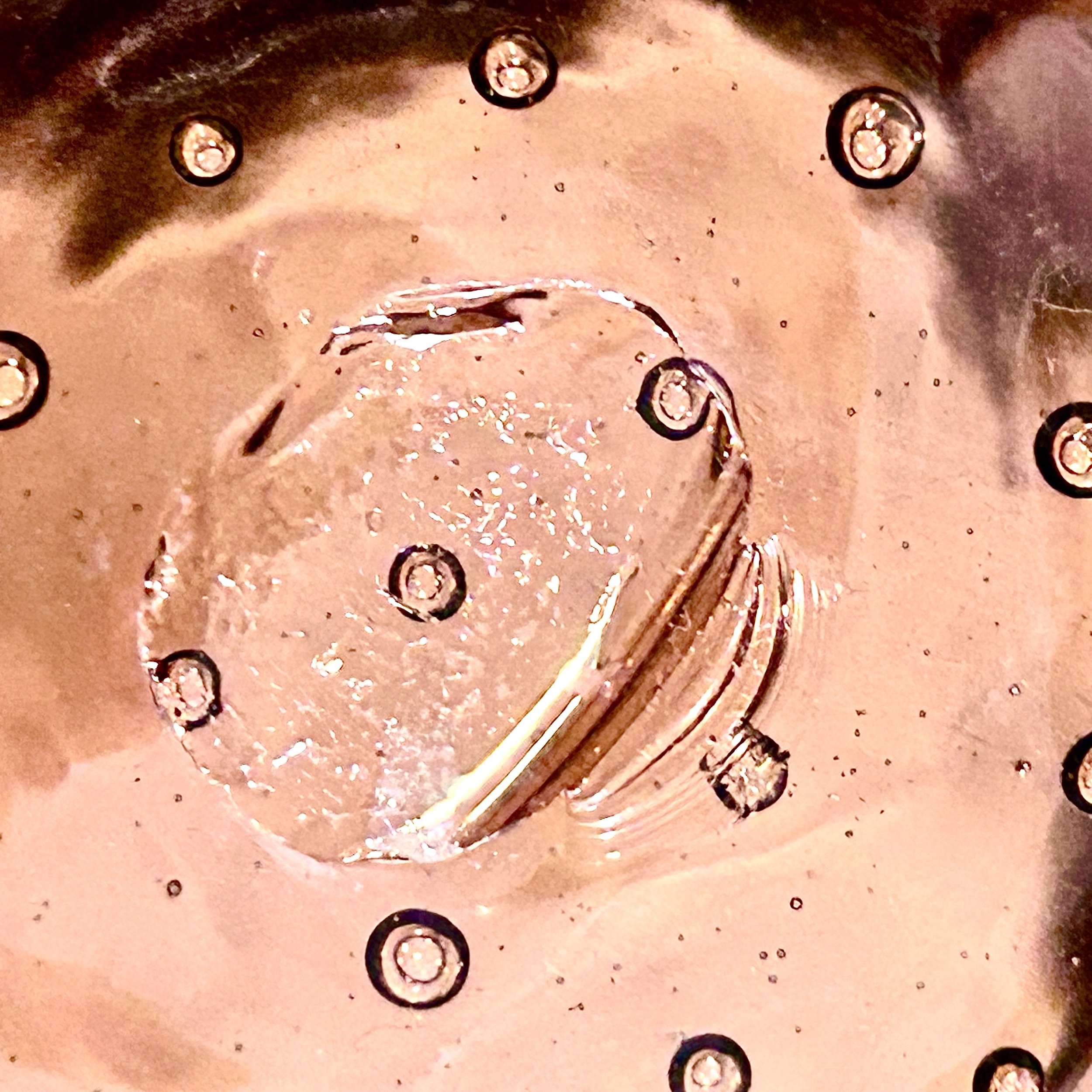
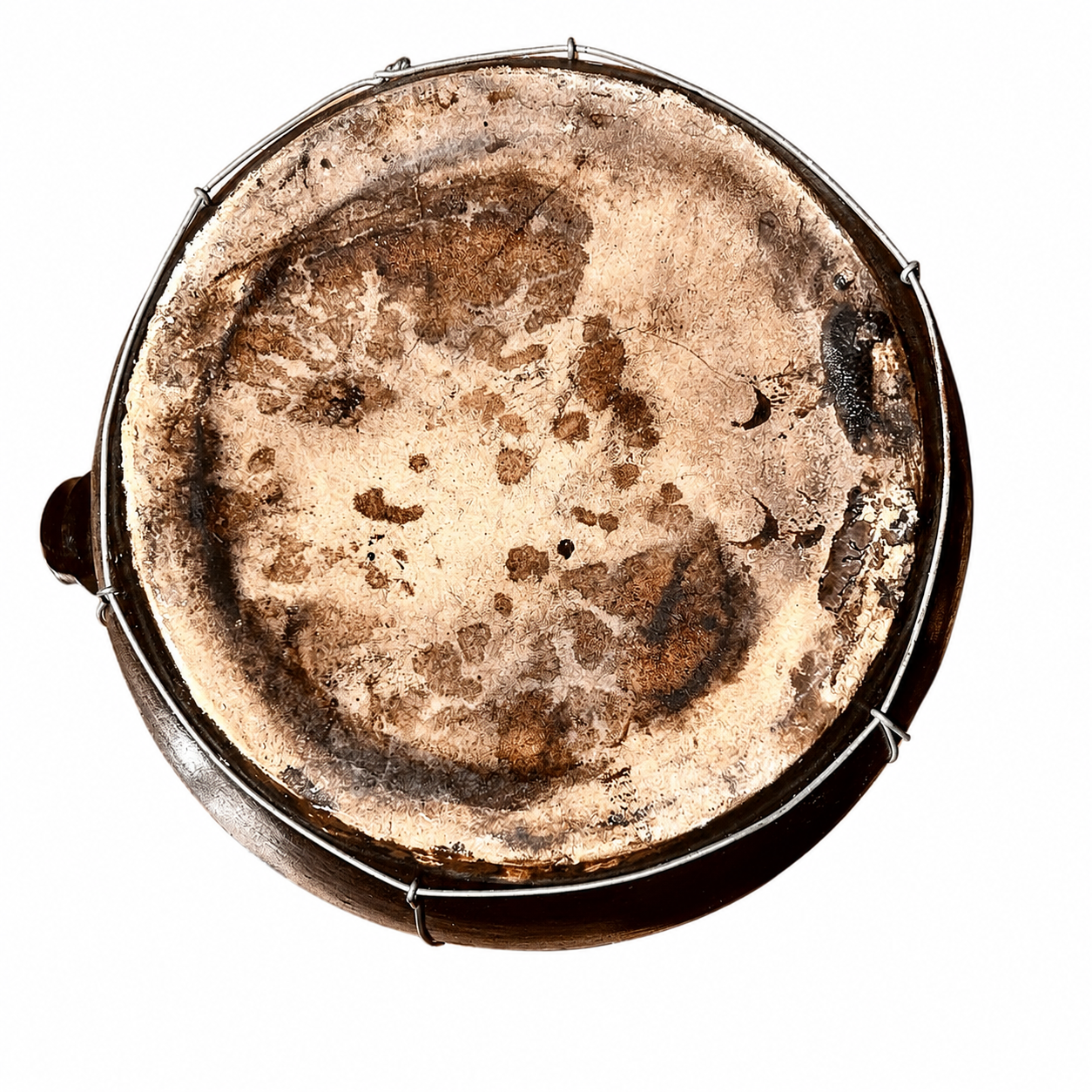
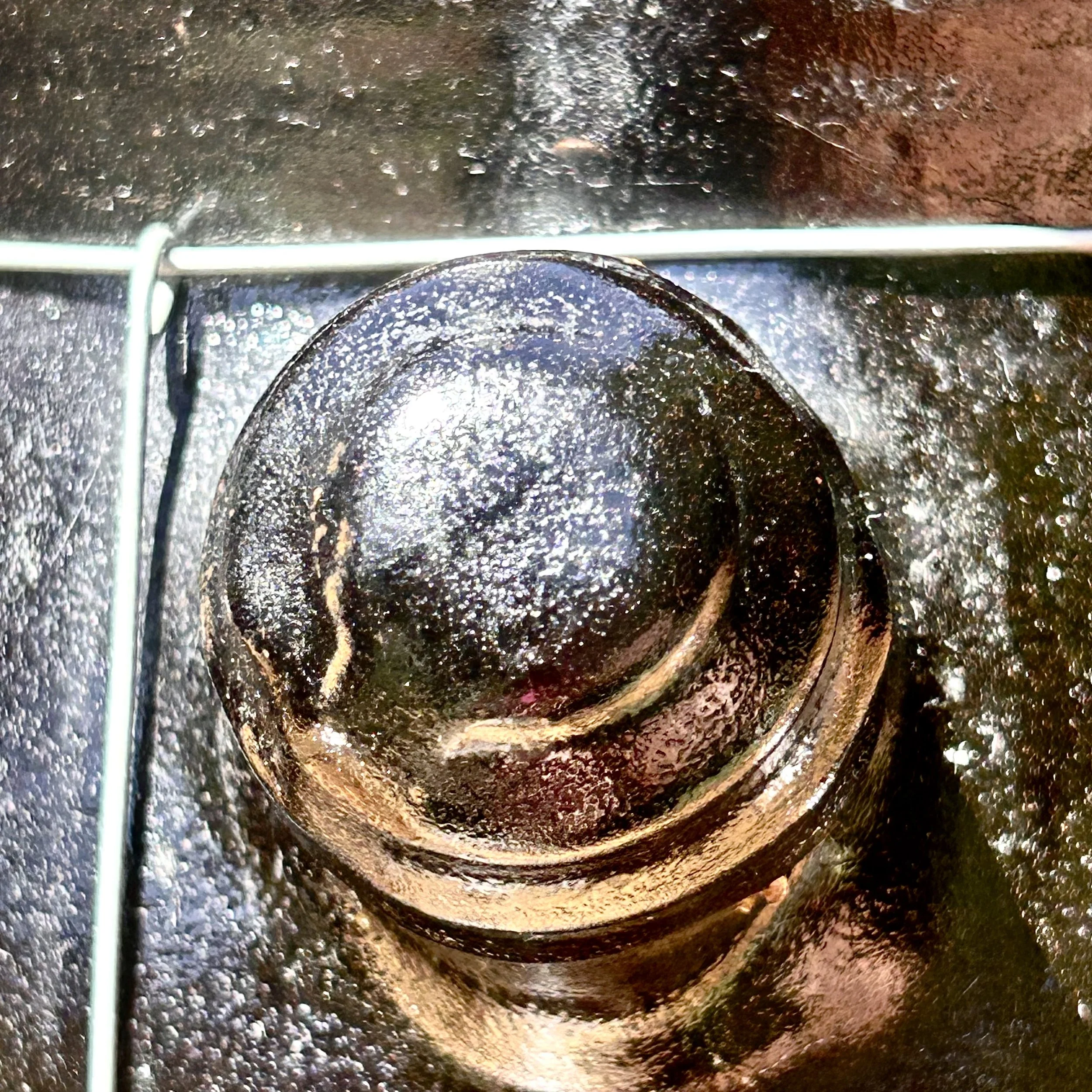
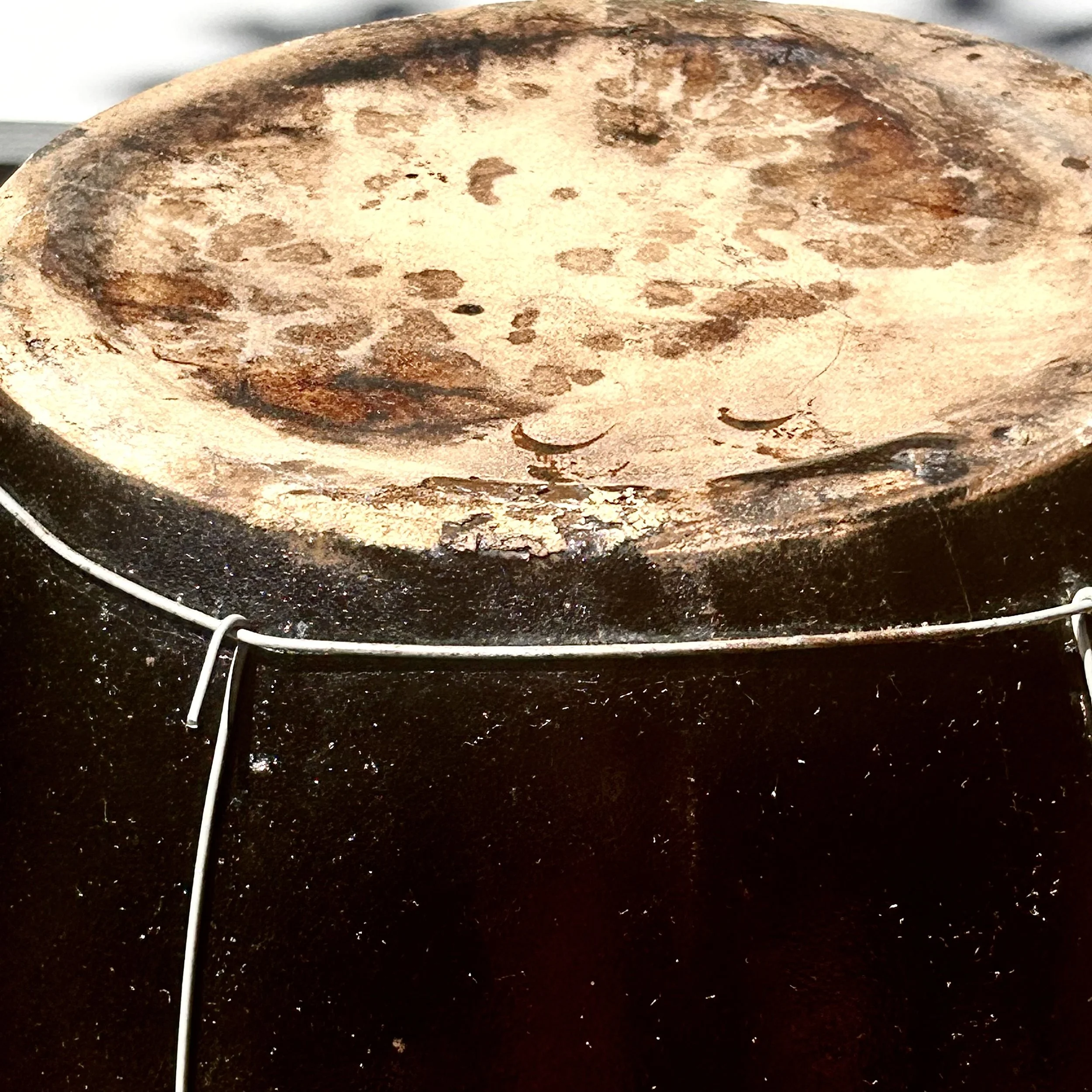
Attribution is based on construction and finishing: raw/sheared pontil, blocky applied handle join, rolled fire-polished rim, and heavy export-style decorative form. No maker mark observed.
Dimensions & Weight
Height: 7 1/8 in.
Max width (spout to handle): 6 in.
Opening diameter: 4 3/4 in.
Base diameter: 5 in.
Base thickness: 1 in.
Pontil (underside) diameter: approx. 1 in.
Weight: 3.212 lbs
Condition & Curation
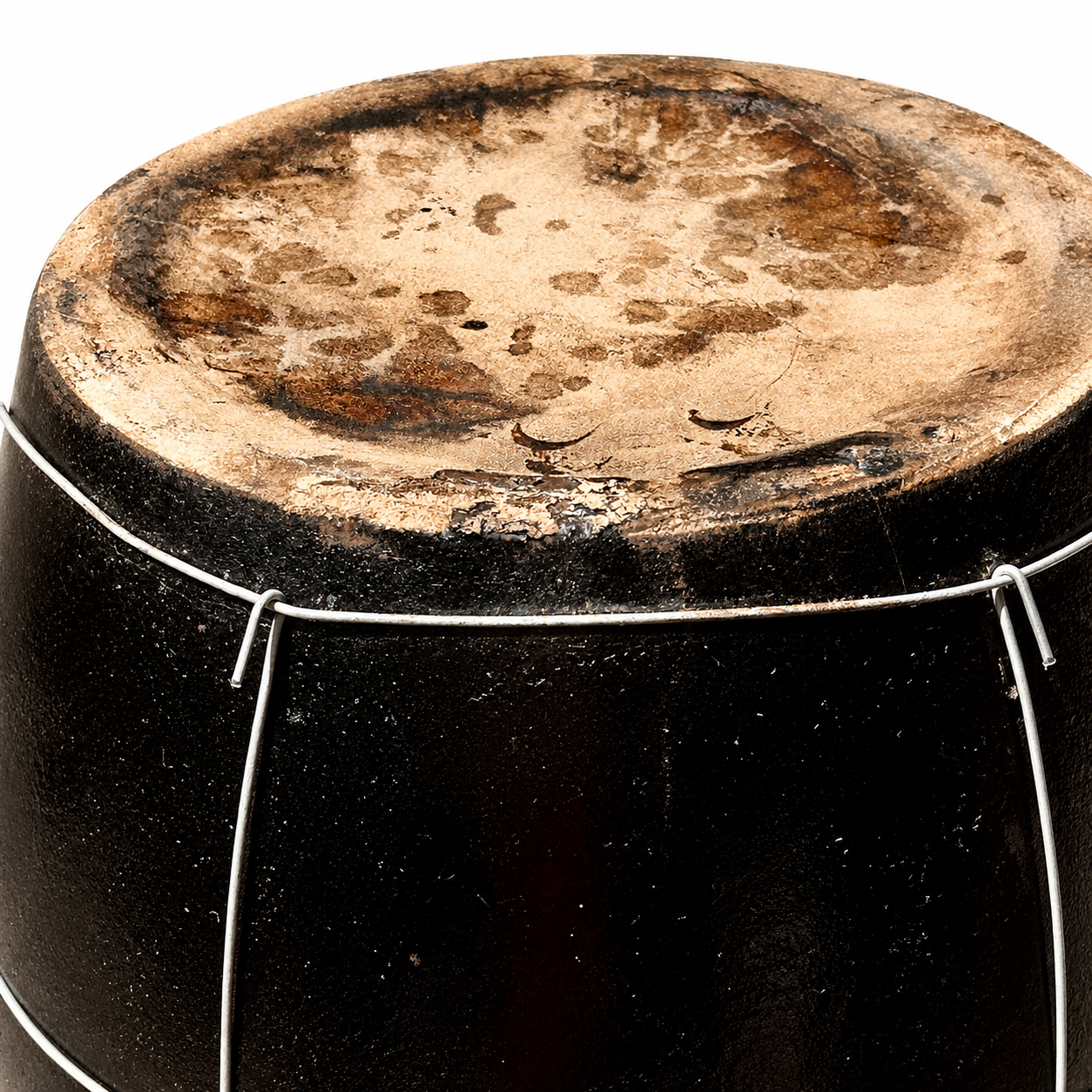
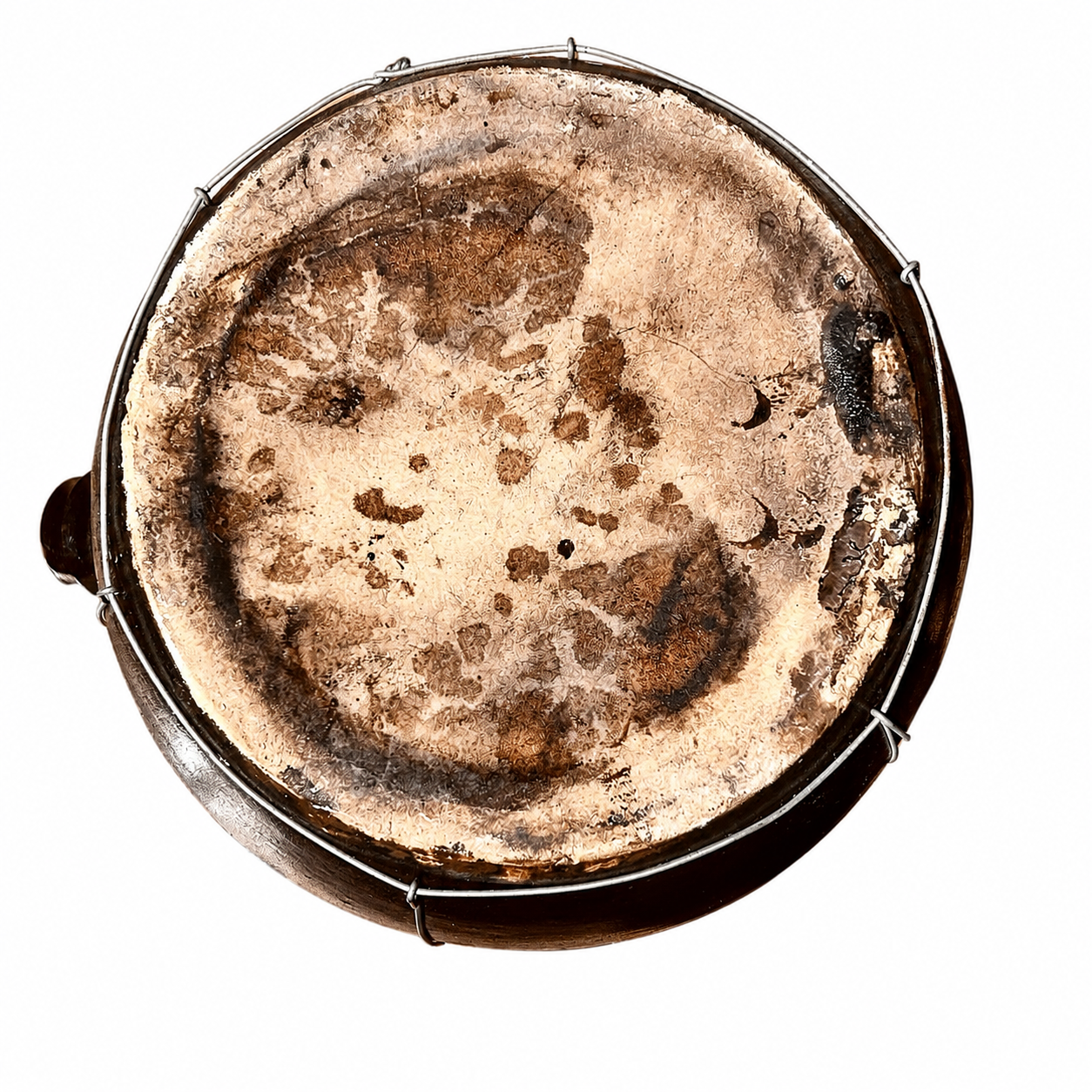
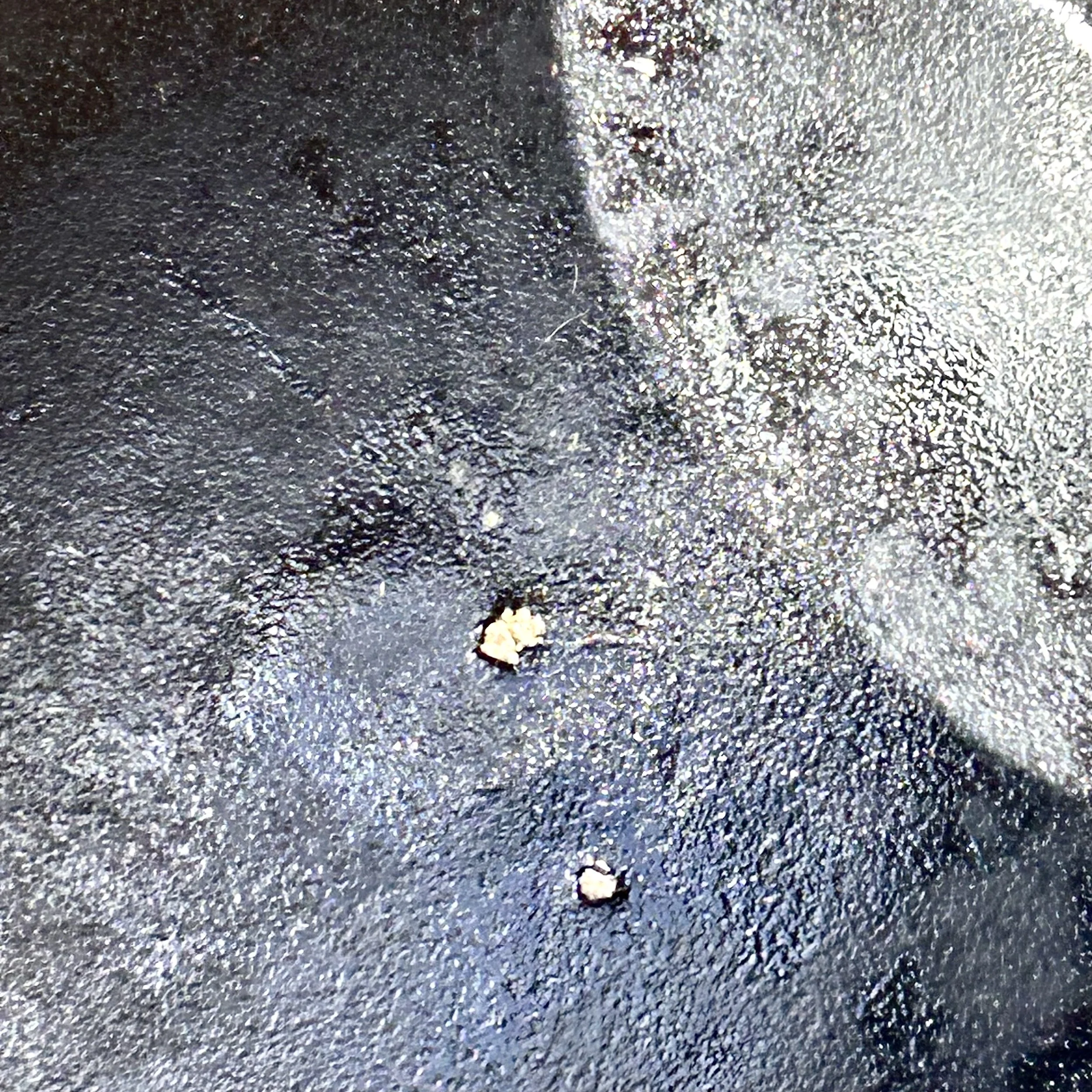
The piece remains in very good decorative condition, though it features a stable hairline crack through the lower quadrant that seamlessly integrates with the intentional crackle pattern, alongside a raw pontil scar and light surface wear consistent with its hand-blown studio origins; consequently, it is best curated as a sculptural display object rather than a functional pouring vessel. Particularly effective under directional light where the crackle network becomes luminous. Pairs well with lacquer, chrome, burl, and stone—clean-lined interiors that benefit from one saturated, jewel-toned focal object.
Authenticity & Construction
Hand-blown crackle art glass with applied handle and rolled, fire-polished rim. The crackle pattern is created through thermal shock (rapid cooling followed by reheating), producing the internal crackle network that magnifies light and color depth. The observed subtle yellow-green UV fluorescence at 365nm is consistent with certain historic glassmaking additives (often manganese).
STANDARD ATTRIBUTION & VALUE DISCLOSURE; This piece is described to the best of current scholarly and market knowledge. Any maker or regional attribution is based on visual analysis, materials, construction techniques, and documented stylistic comparisons. As with many vintage and antique glass objects, definitive attribution may not be possible without original labels or factory records. Pricing reflects condition, quality, decorative appeal, and current collector demand rather than a guaranteed maker identification.
This hand-blown studio pitcher is a compelling transition piece, bridging the structural restraint of late Art Deco with the organic fluidity of Mid-Century Modernism. Executed in a deeply saturated amethyst-to-wine palette with cranberry undertones, the vessel is defined by a dense internal crackle—an intentional "iced" technique where the molten gather is plunged into water to create a light-refractive network of internal fissures. The form is anchored by a faintly green-tinted base and finished with a robust applied handle and a dramatic, flared pouring lip.
Technical Analysis & Fluorescence
Substantial in hand (exceeding 3 lbs), the pitcher exhibits the material density prized in mid-century American and European art glass. Under 365nm UV illumination, the glass reveals a subtle yellow-green fluorescence within the amethyst matrix. This reaction is a definitive marker of historic glass batch chemistry, typically indicating the presence of manganese used as a clarifying agent to achieve the purity of the violet-wine tones.
Attribution & Period
Central European / Bohemian-style decorative art glass, Circa 1935–1955
Attribution is based on construction and finishing: raw/sheared pontil, blocky applied handle join, rolled fire-polished rim, and heavy export-style decorative form. No maker mark observed.
Dimensions & Weight
Height: 7 1/8 in.
Max width (spout to handle): 6 in.
Opening diameter: 4 3/4 in.
Base diameter: 5 in.
Base thickness: 1 in.
Pontil (underside) diameter: approx. 1 in.
Weight: 3.212 lbs
Condition & Curation
The piece remains in very good decorative condition, though it features a stable hairline crack through the lower quadrant that seamlessly integrates with the intentional crackle pattern, alongside a raw pontil scar and light surface wear consistent with its hand-blown studio origins; consequently, it is best curated as a sculptural display object rather than a functional pouring vessel. Particularly effective under directional light where the crackle network becomes luminous. Pairs well with lacquer, chrome, burl, and stone—clean-lined interiors that benefit from one saturated, jewel-toned focal object.
Authenticity & Construction
Hand-blown crackle art glass with applied handle and rolled, fire-polished rim. The crackle pattern is created through thermal shock (rapid cooling followed by reheating), producing the internal crackle network that magnifies light and color depth. The observed subtle yellow-green UV fluorescence at 365nm is consistent with certain historic glassmaking additives (often manganese).
STANDARD ATTRIBUTION & VALUE DISCLOSURE; This piece is described to the best of current scholarly and market knowledge. Any maker or regional attribution is based on visual analysis, materials, construction techniques, and documented stylistic comparisons. As with many vintage and antique glass objects, definitive attribution may not be possible without original labels or factory records. Pricing reflects condition, quality, decorative appeal, and current collector demand rather than a guaranteed maker identification.

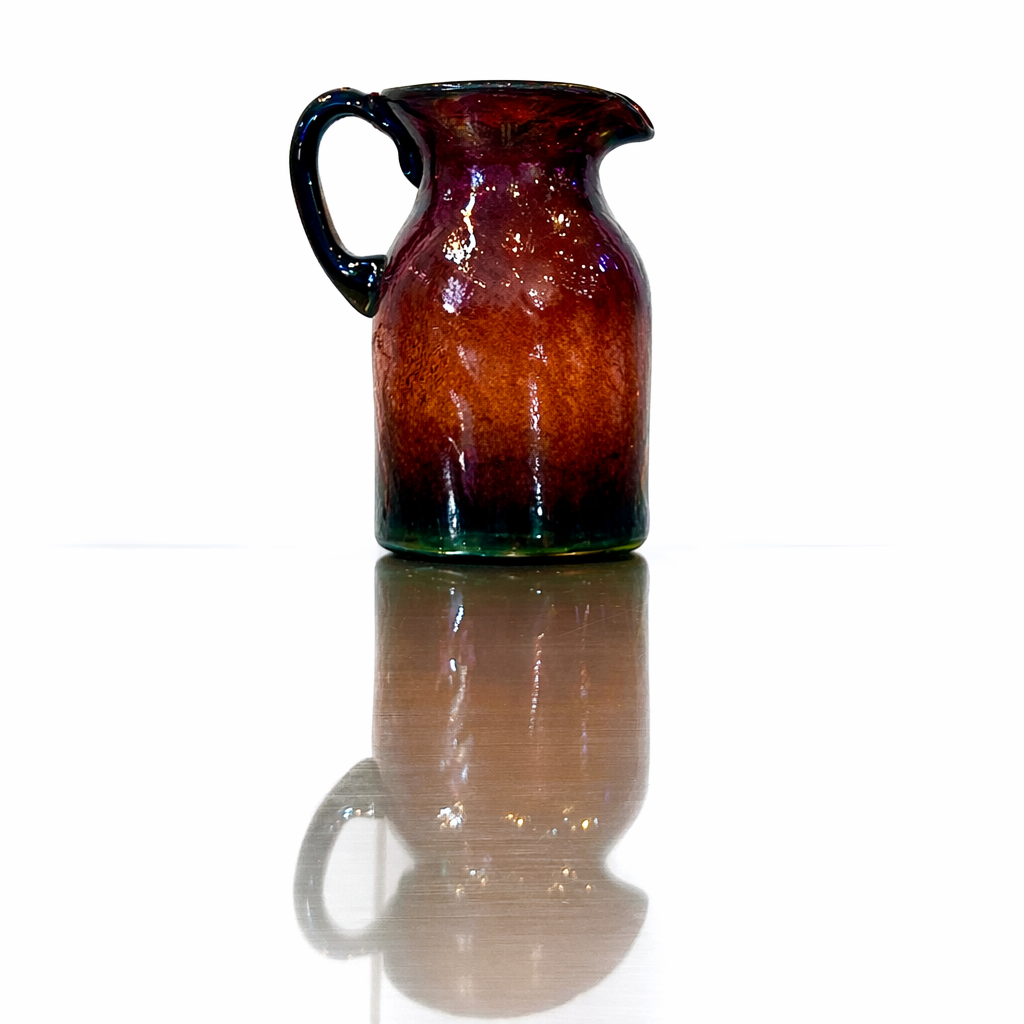 Image 1 of 9
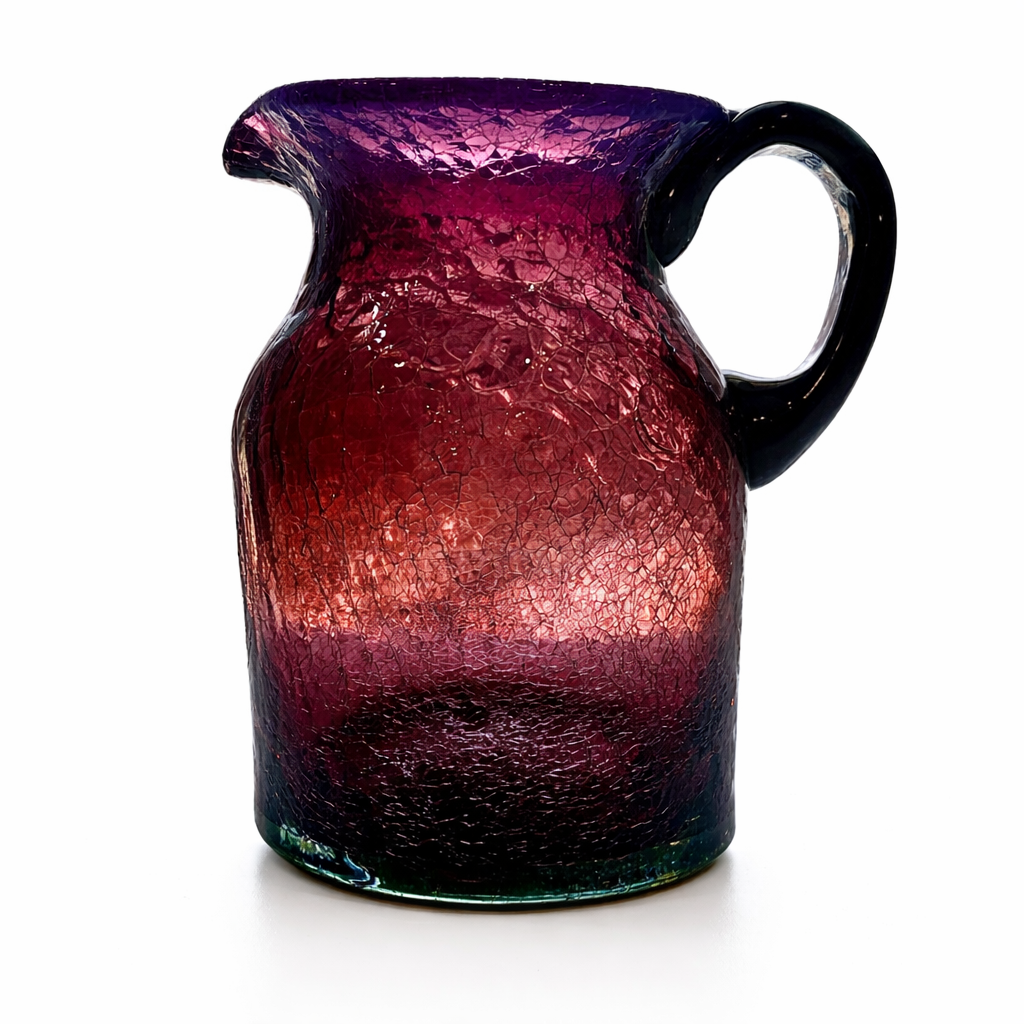 Image 2 of 9
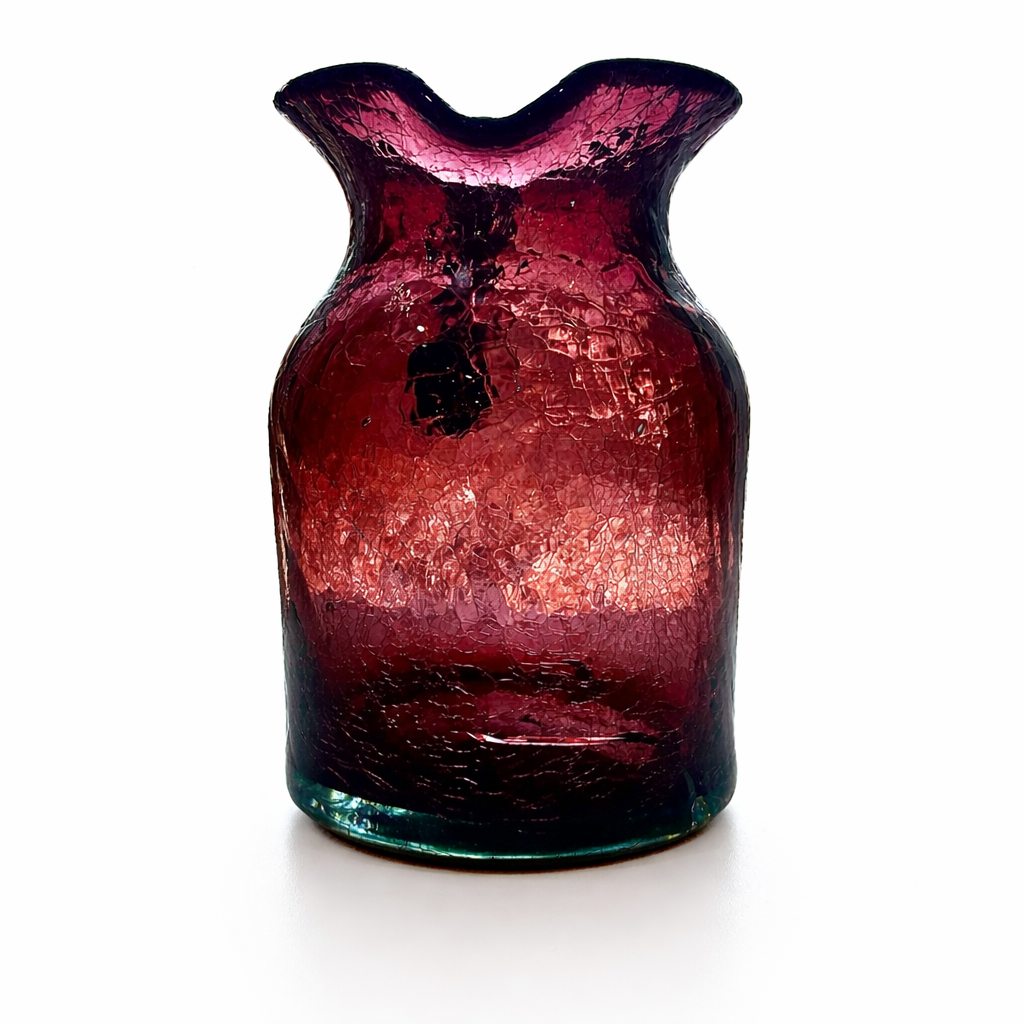 Image 3 of 9
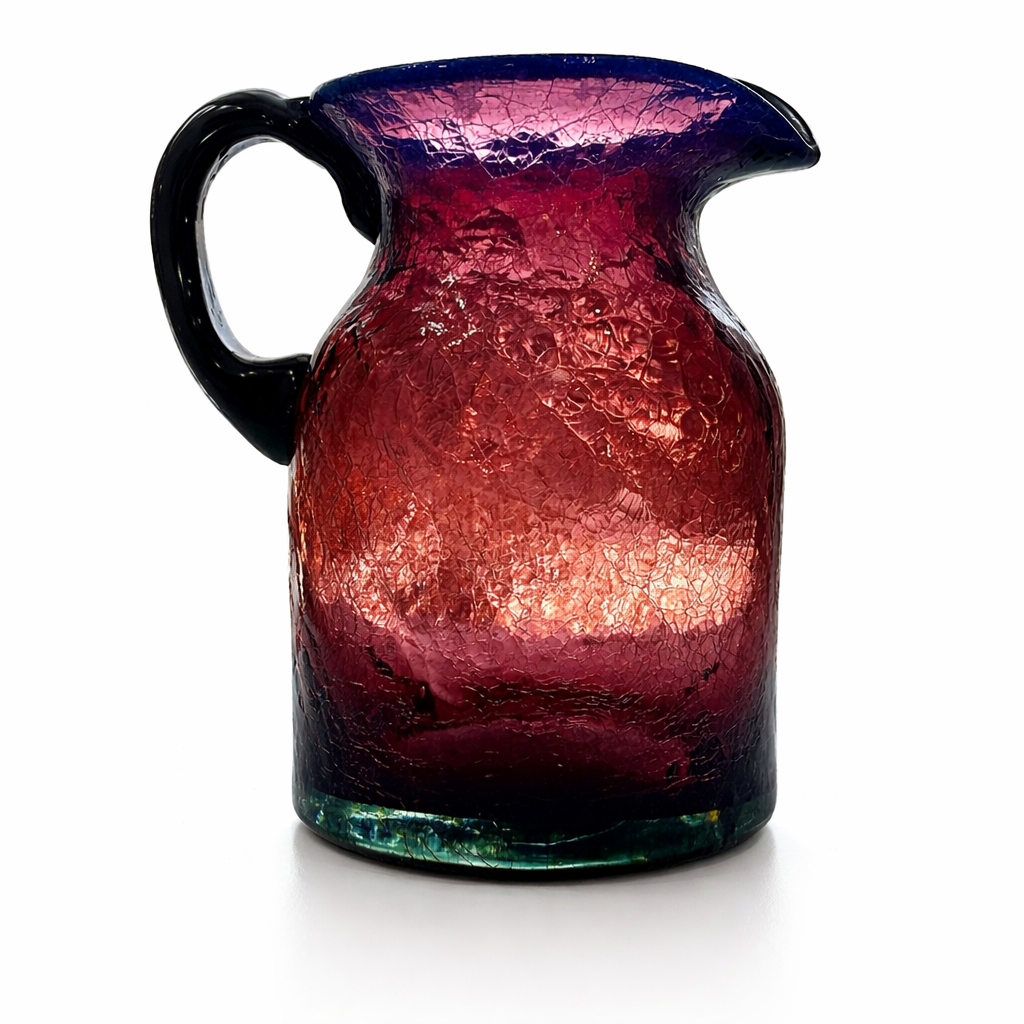 Image 4 of 9
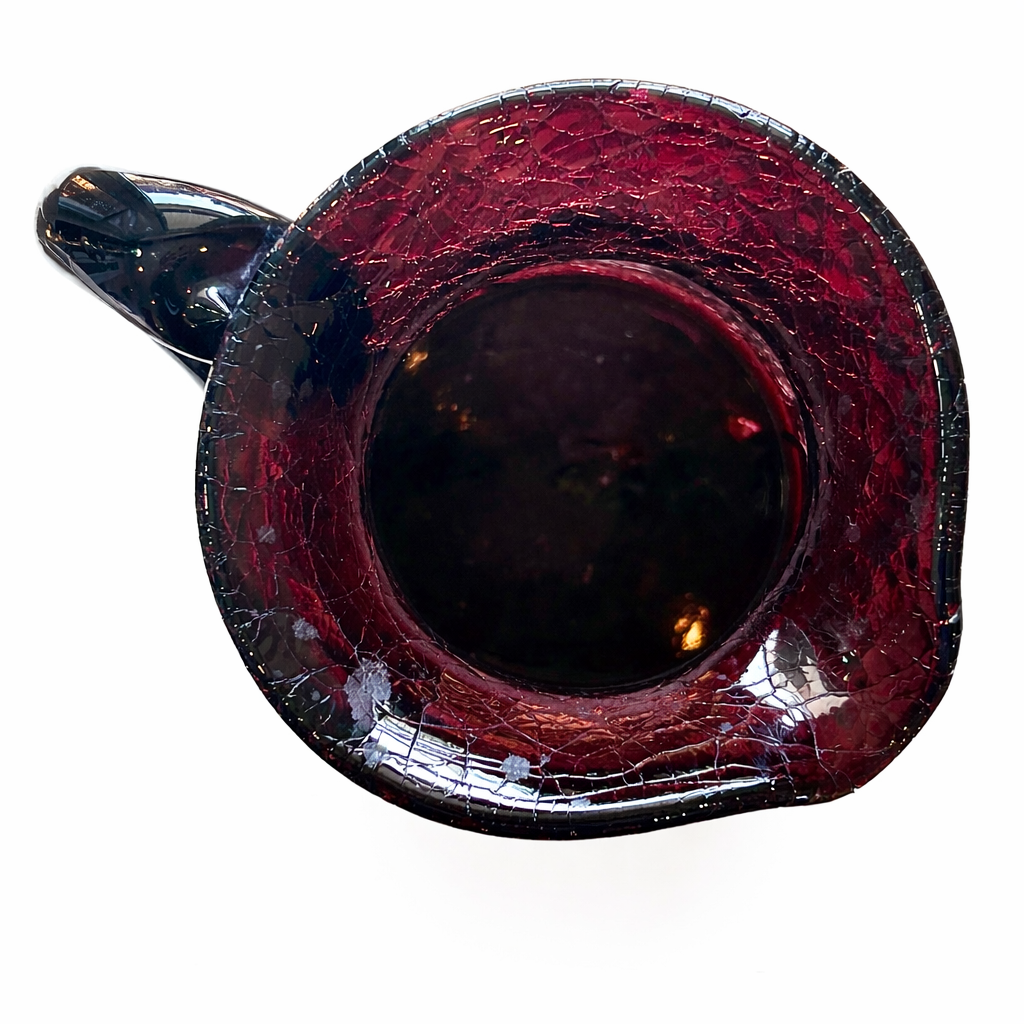 Image 5 of 9
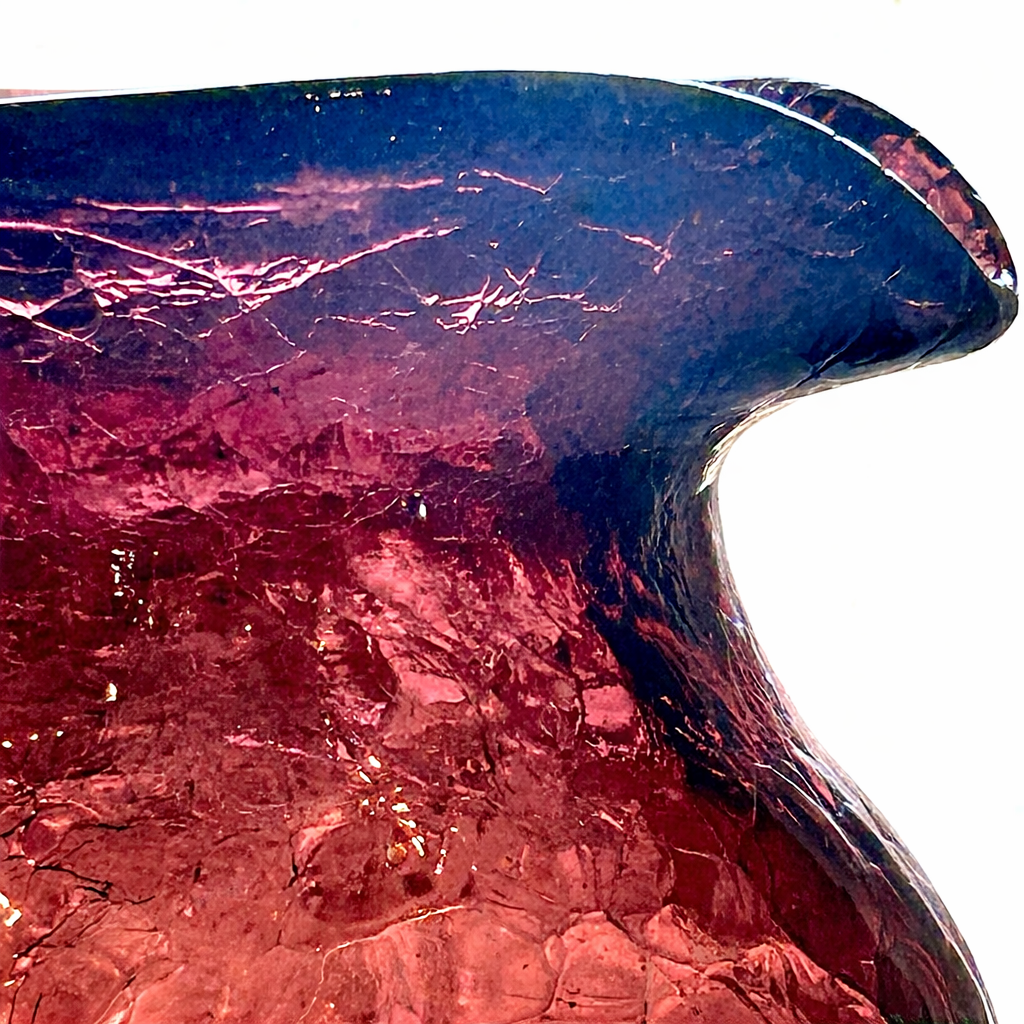 Image 6 of 9
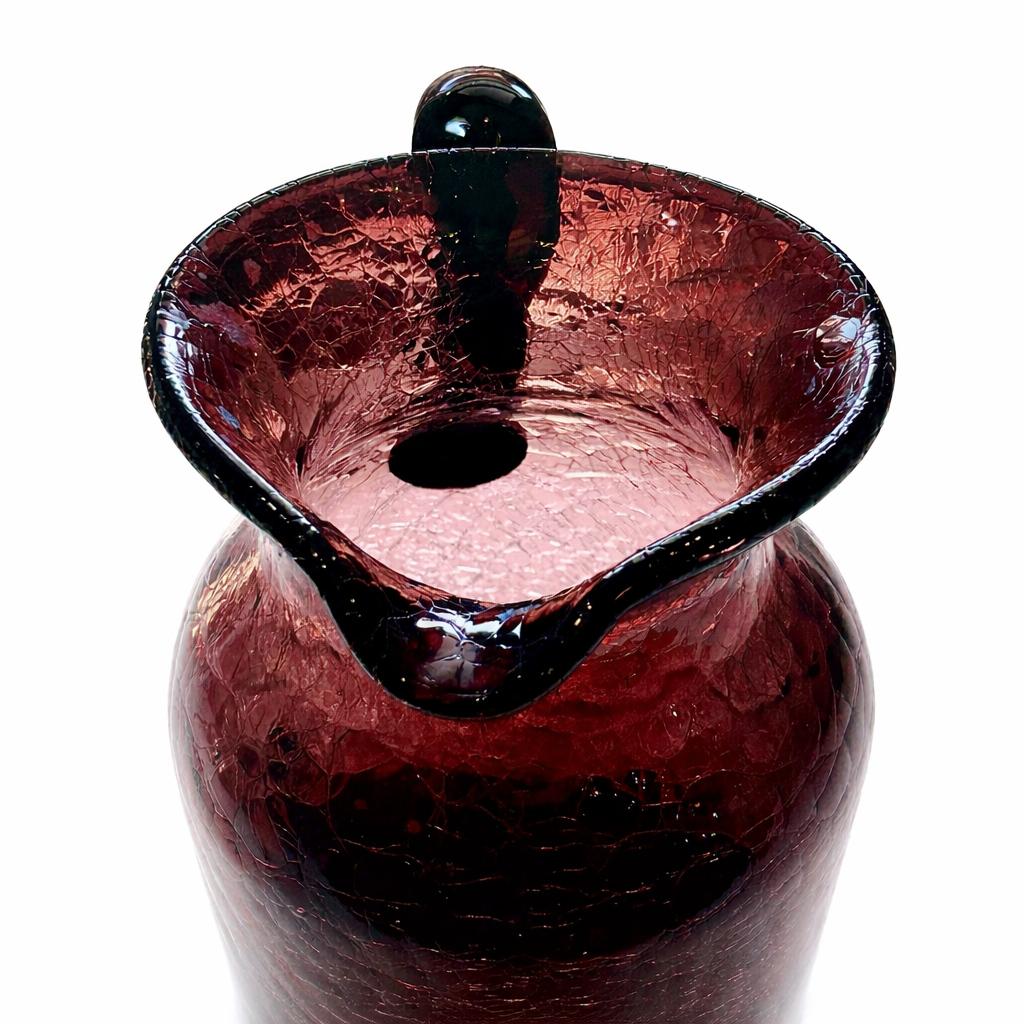 Image 7 of 9
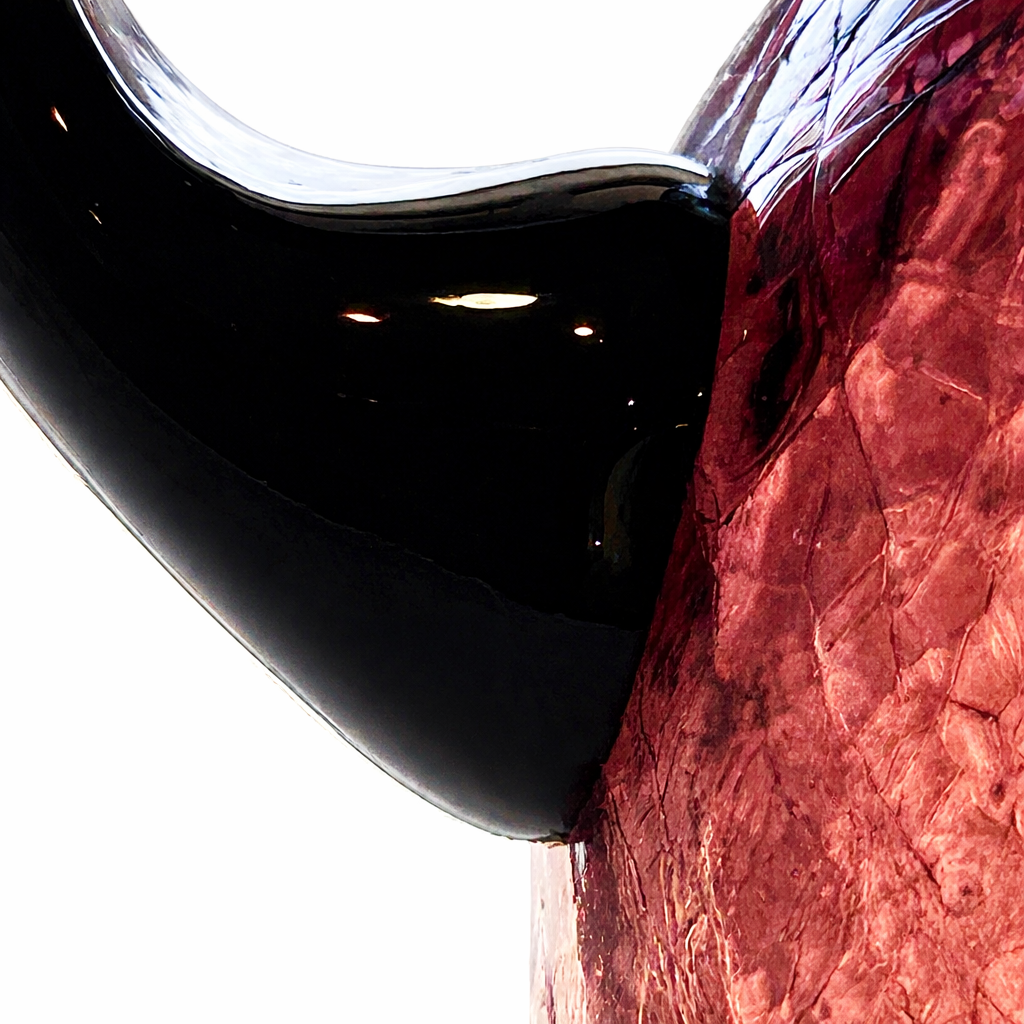 Image 8 of 9
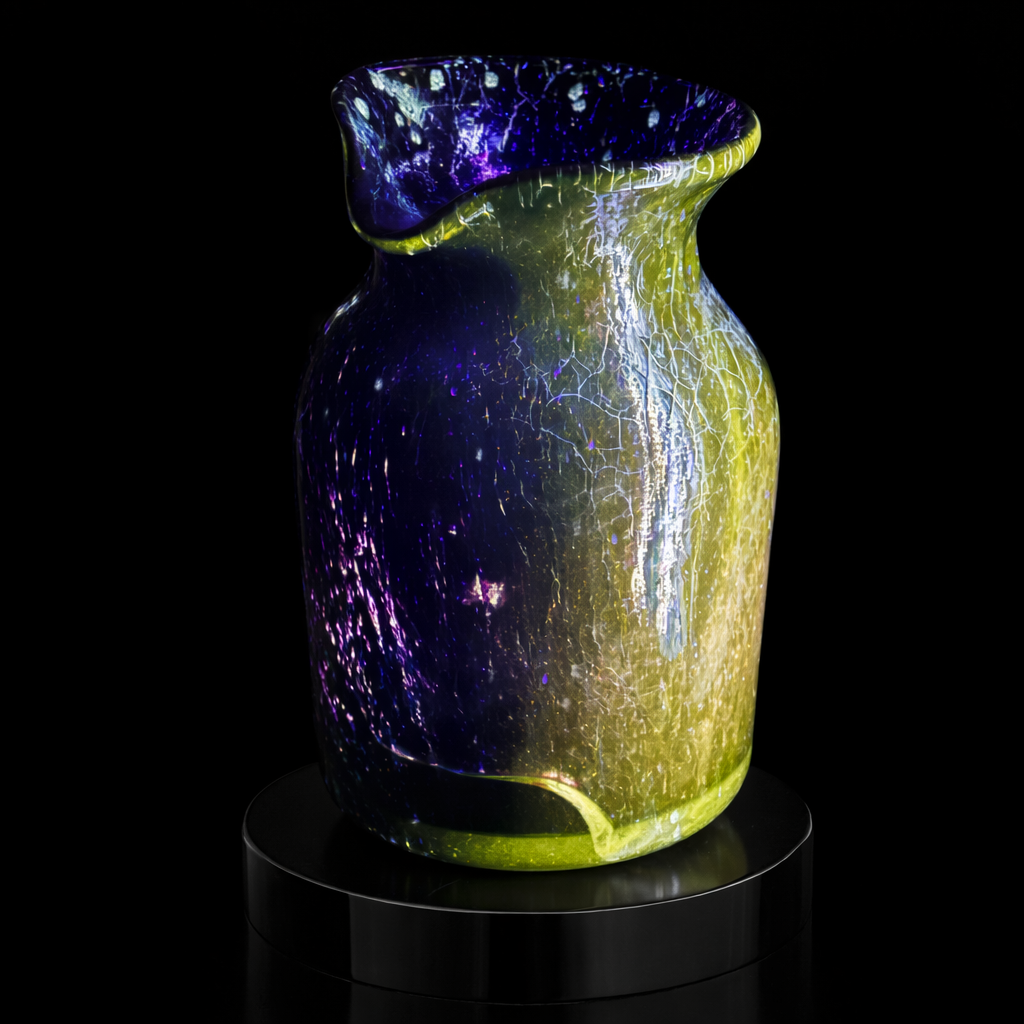 Image 9 of 9