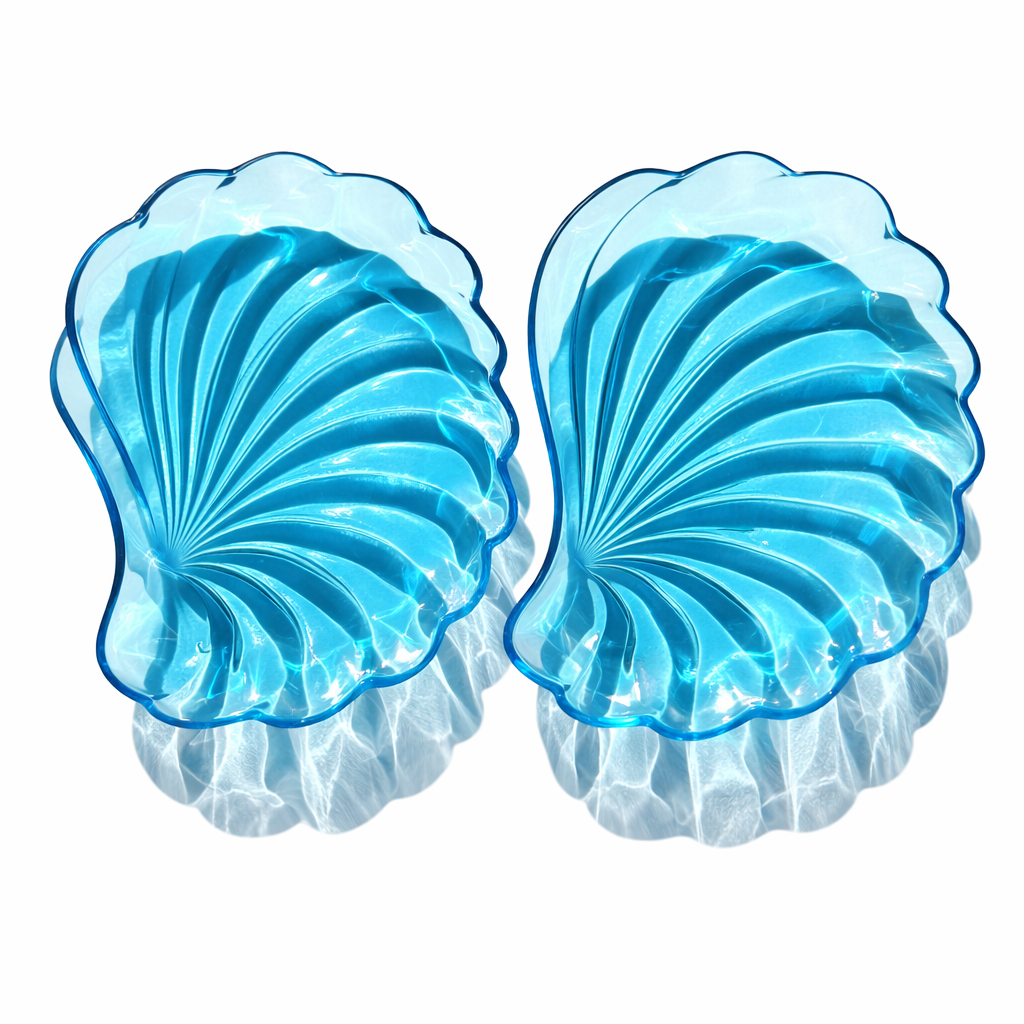
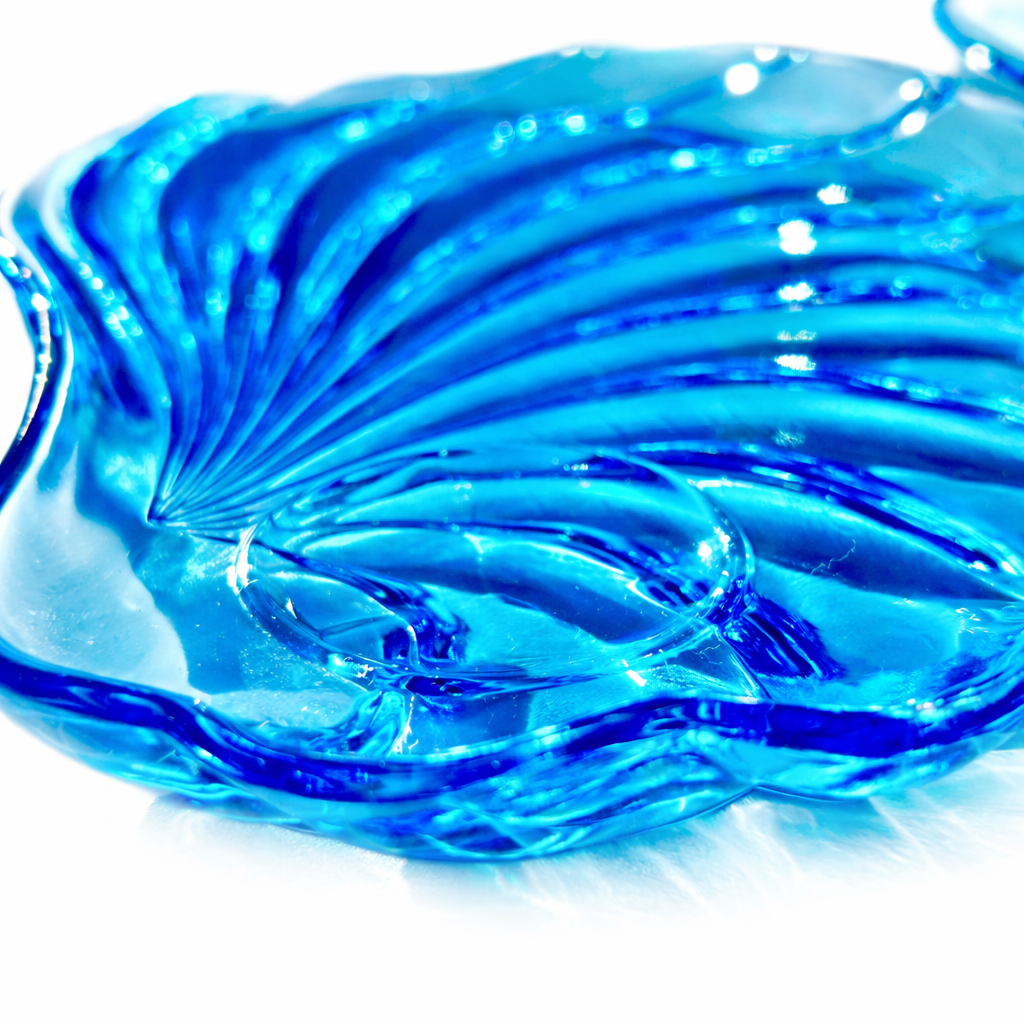
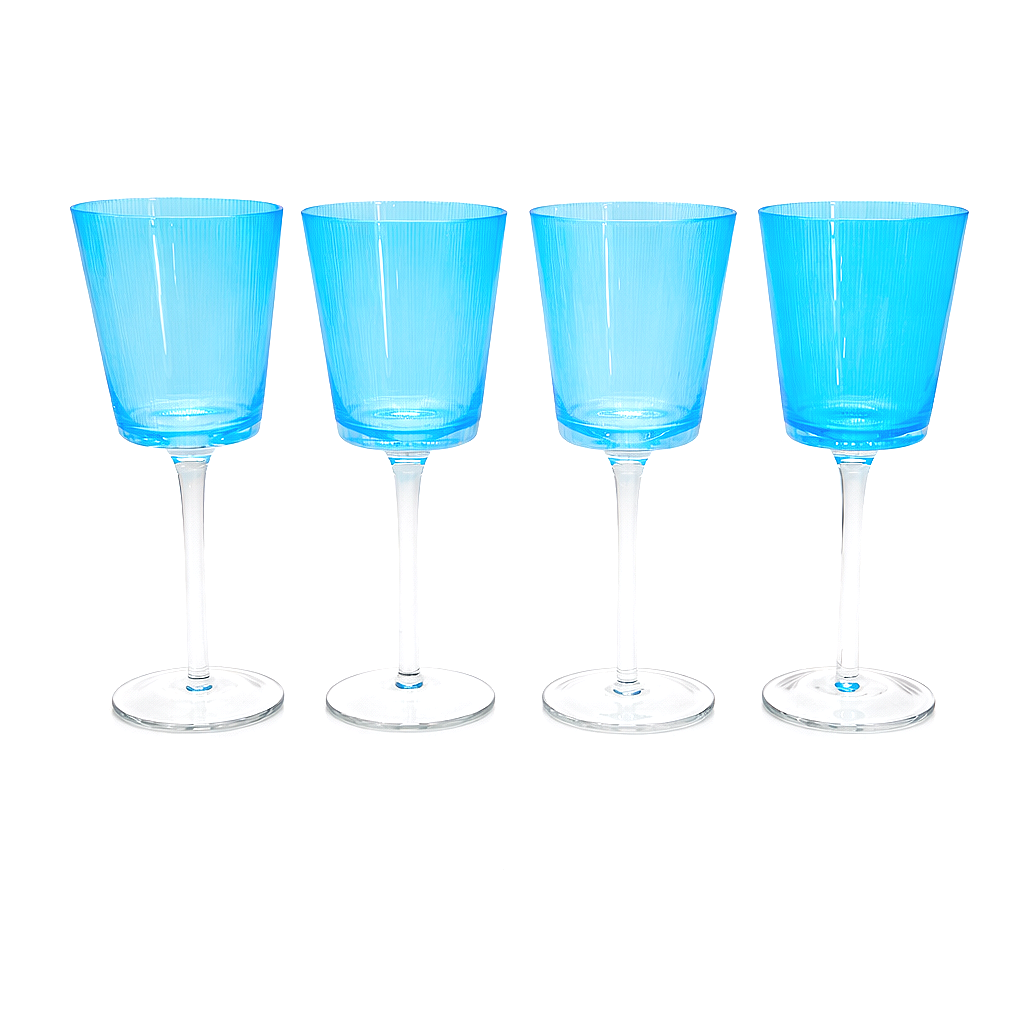
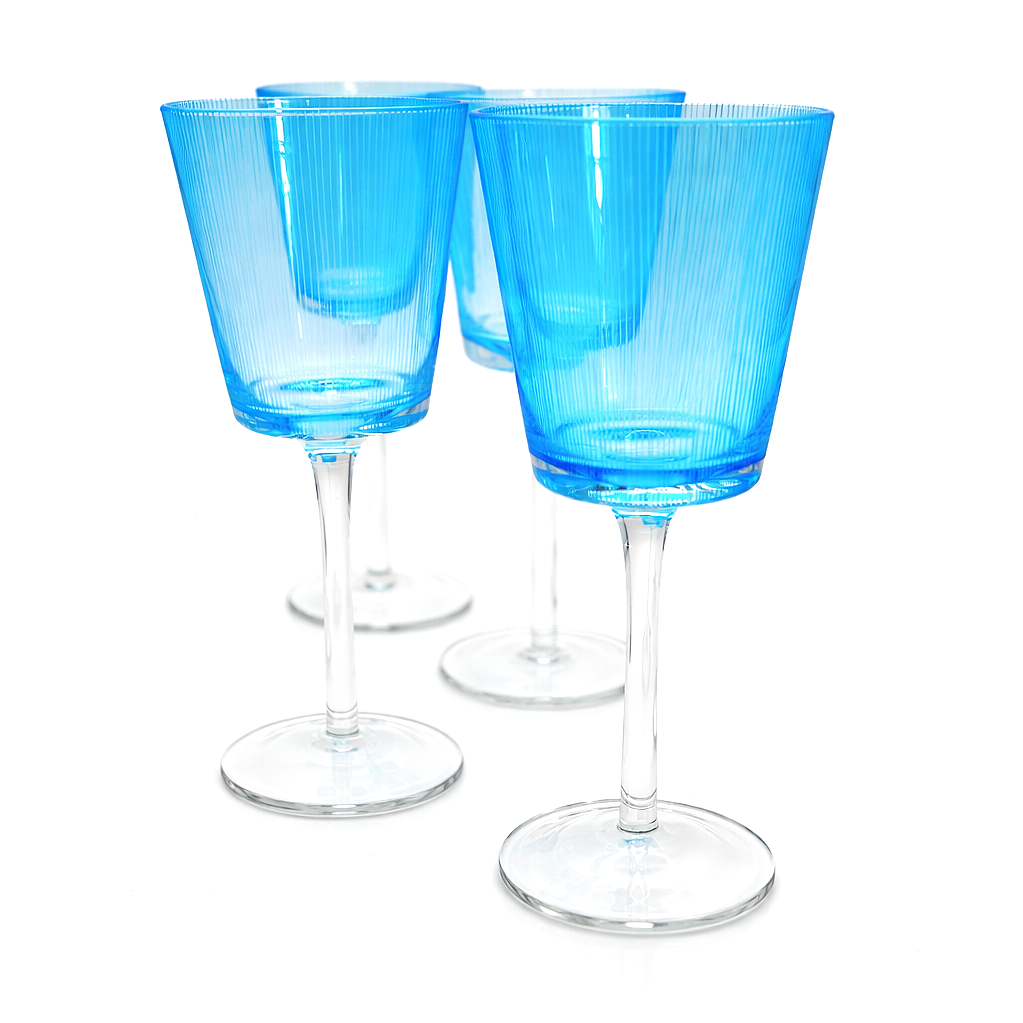
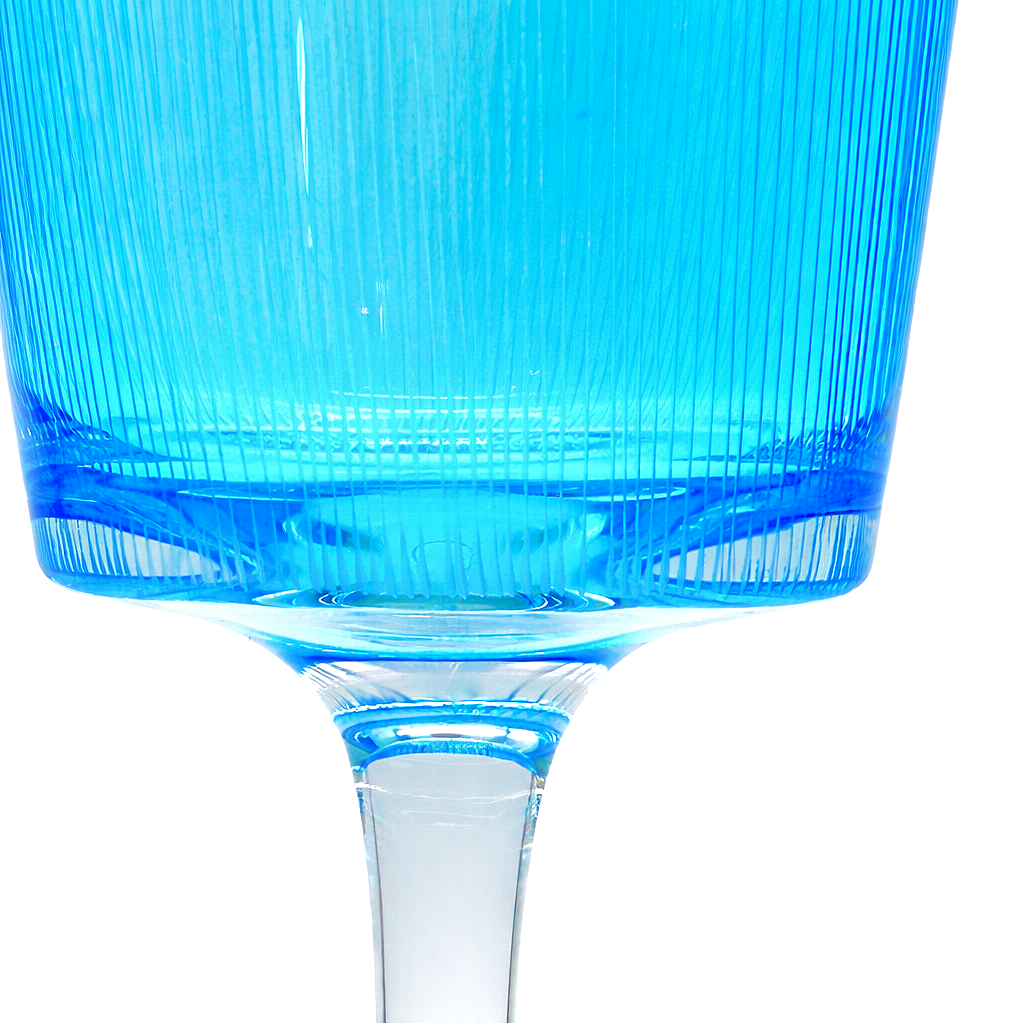
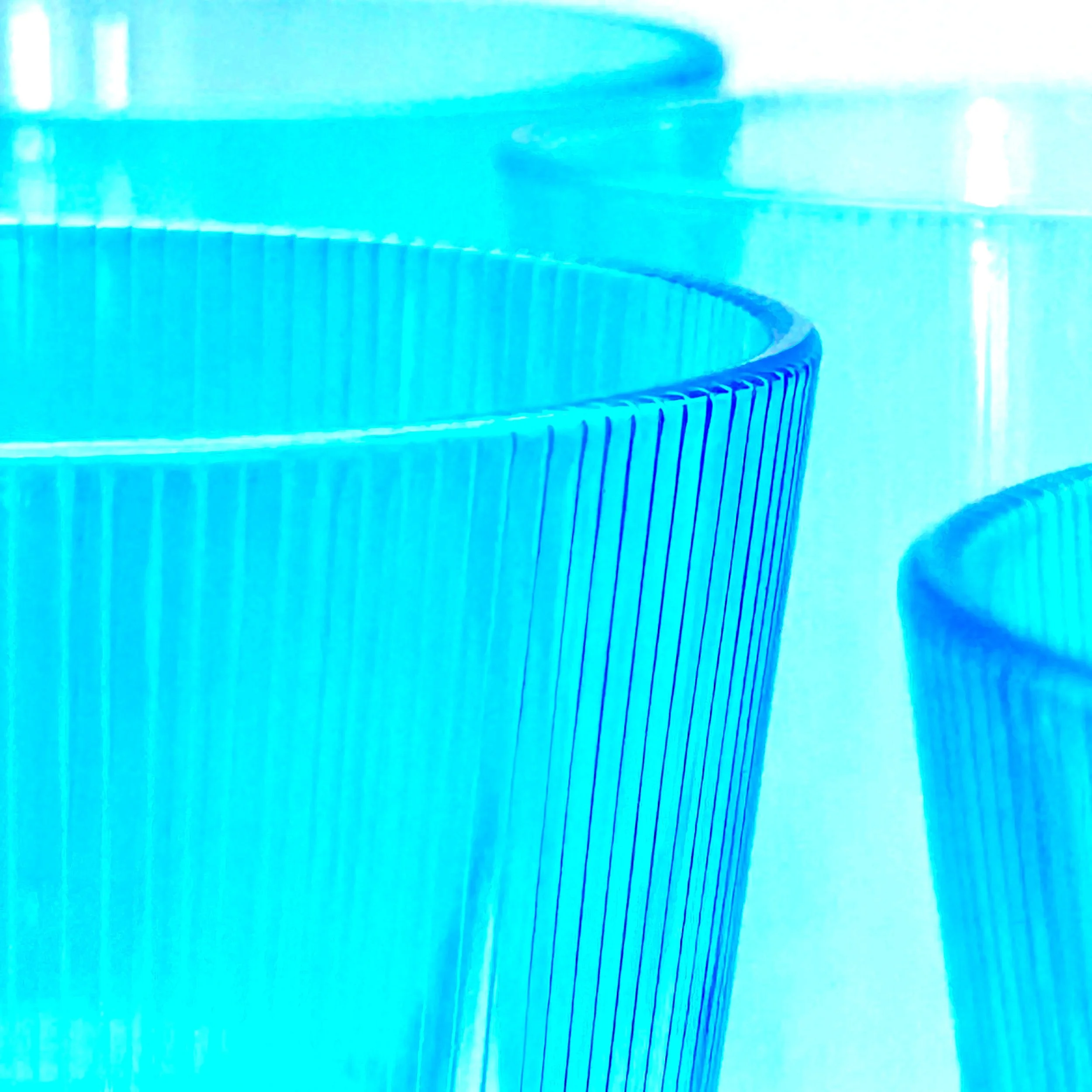
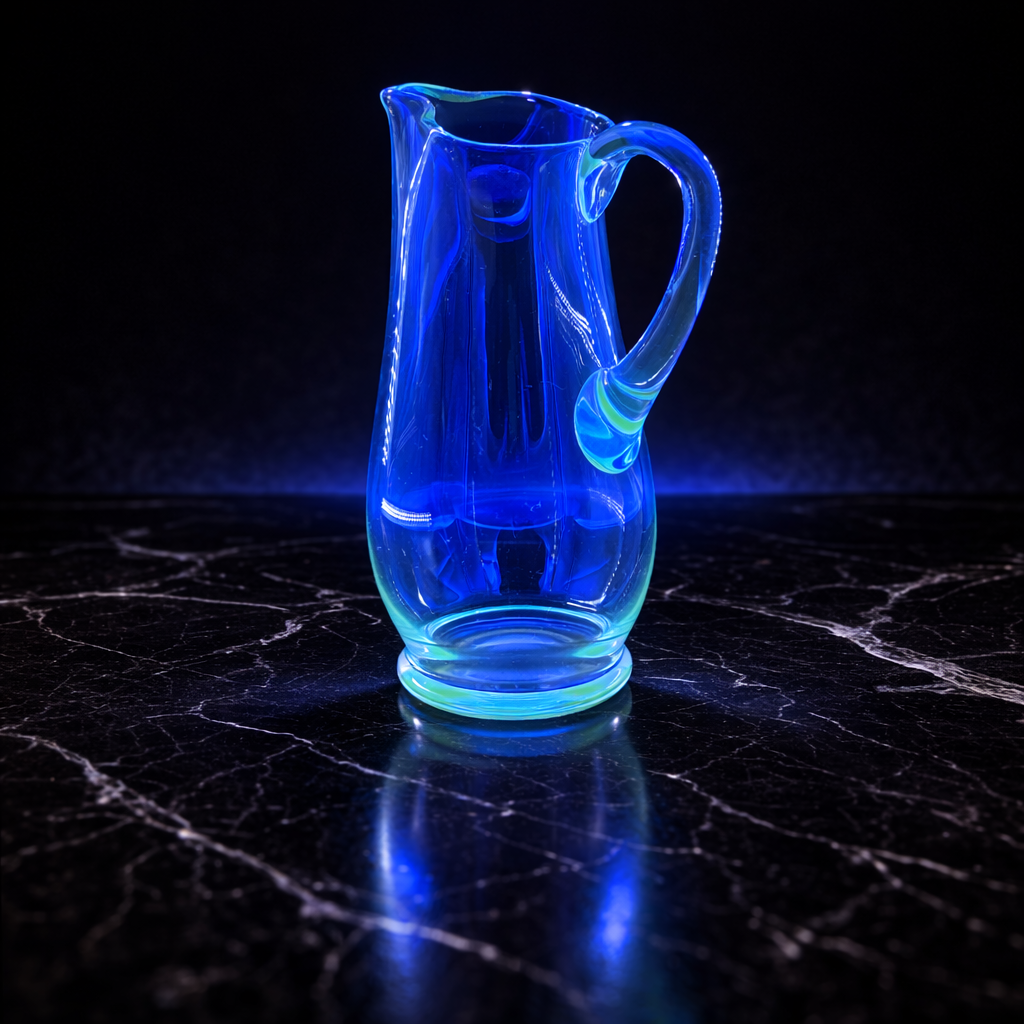
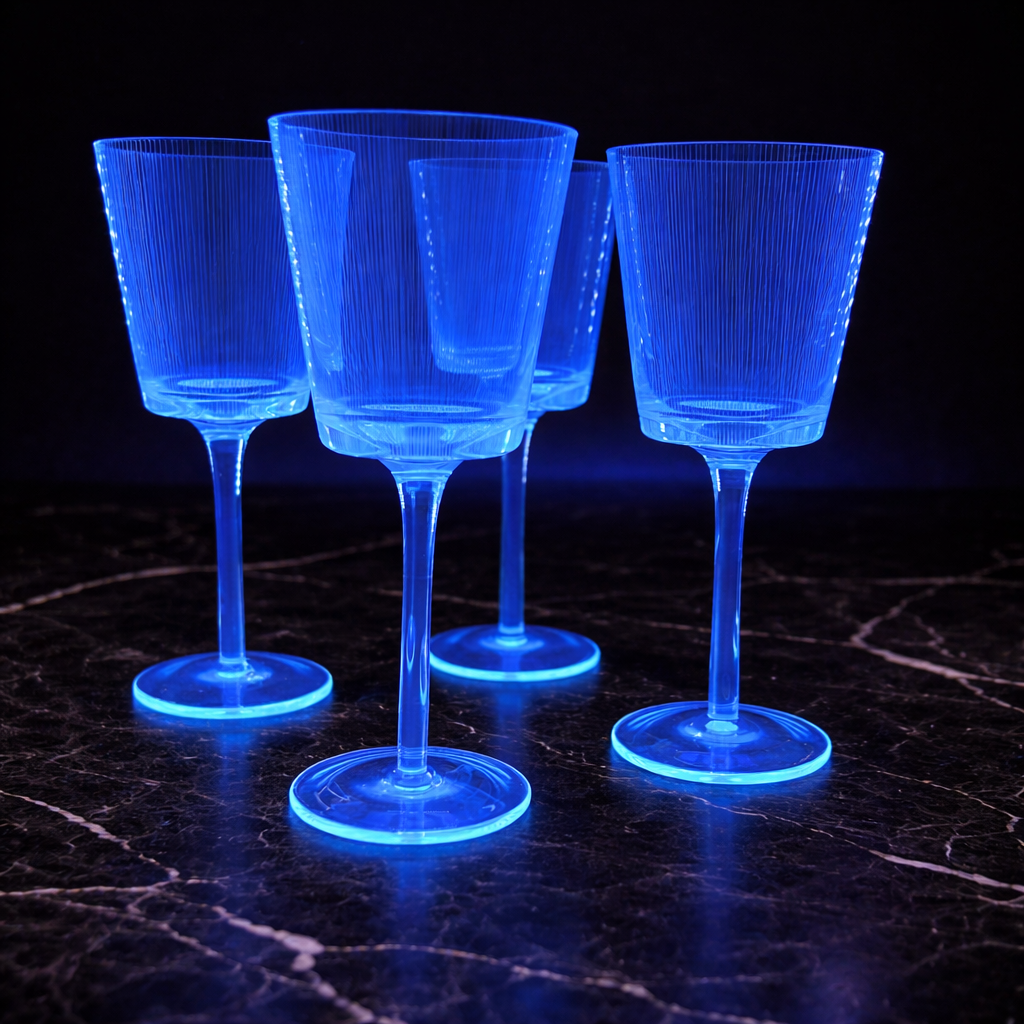
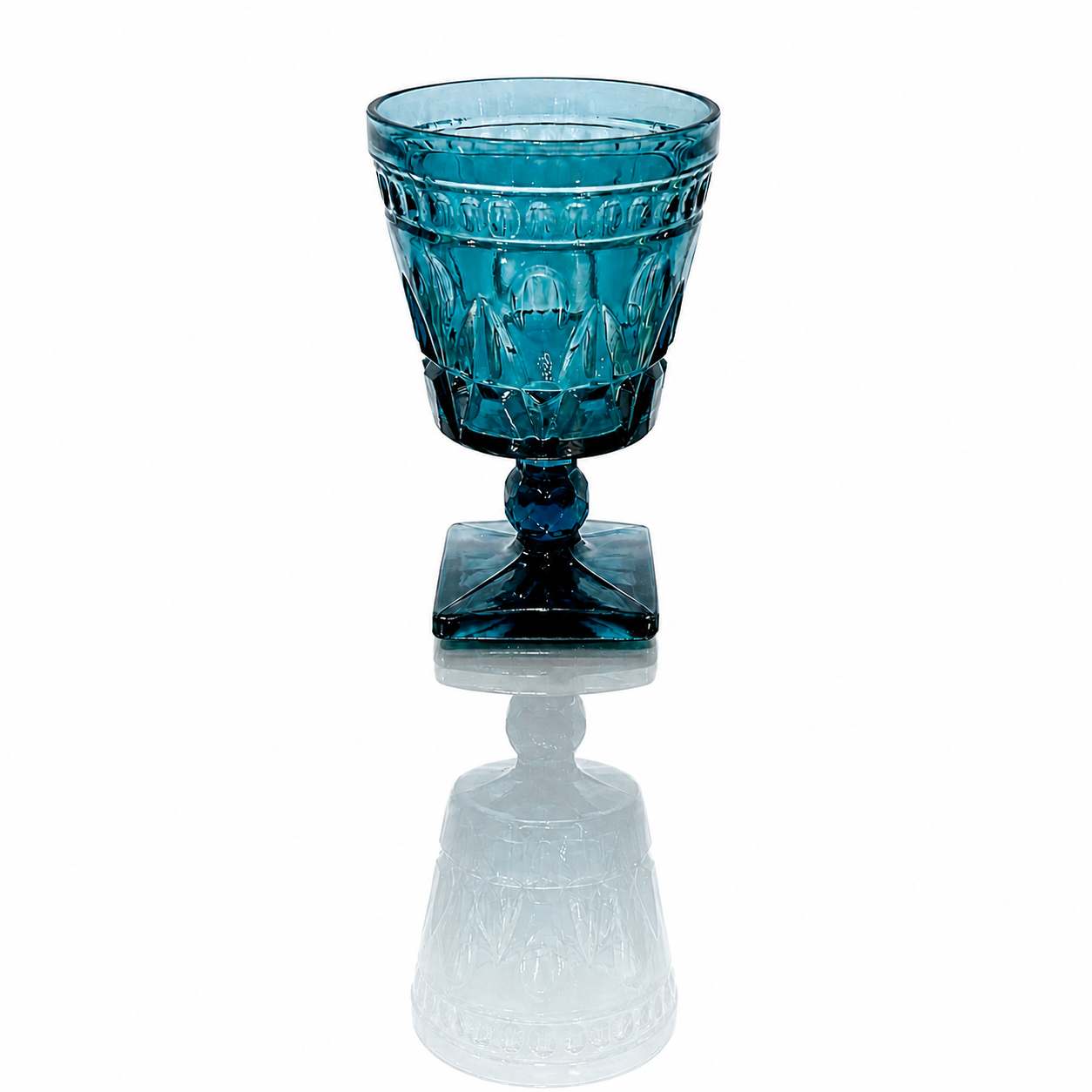
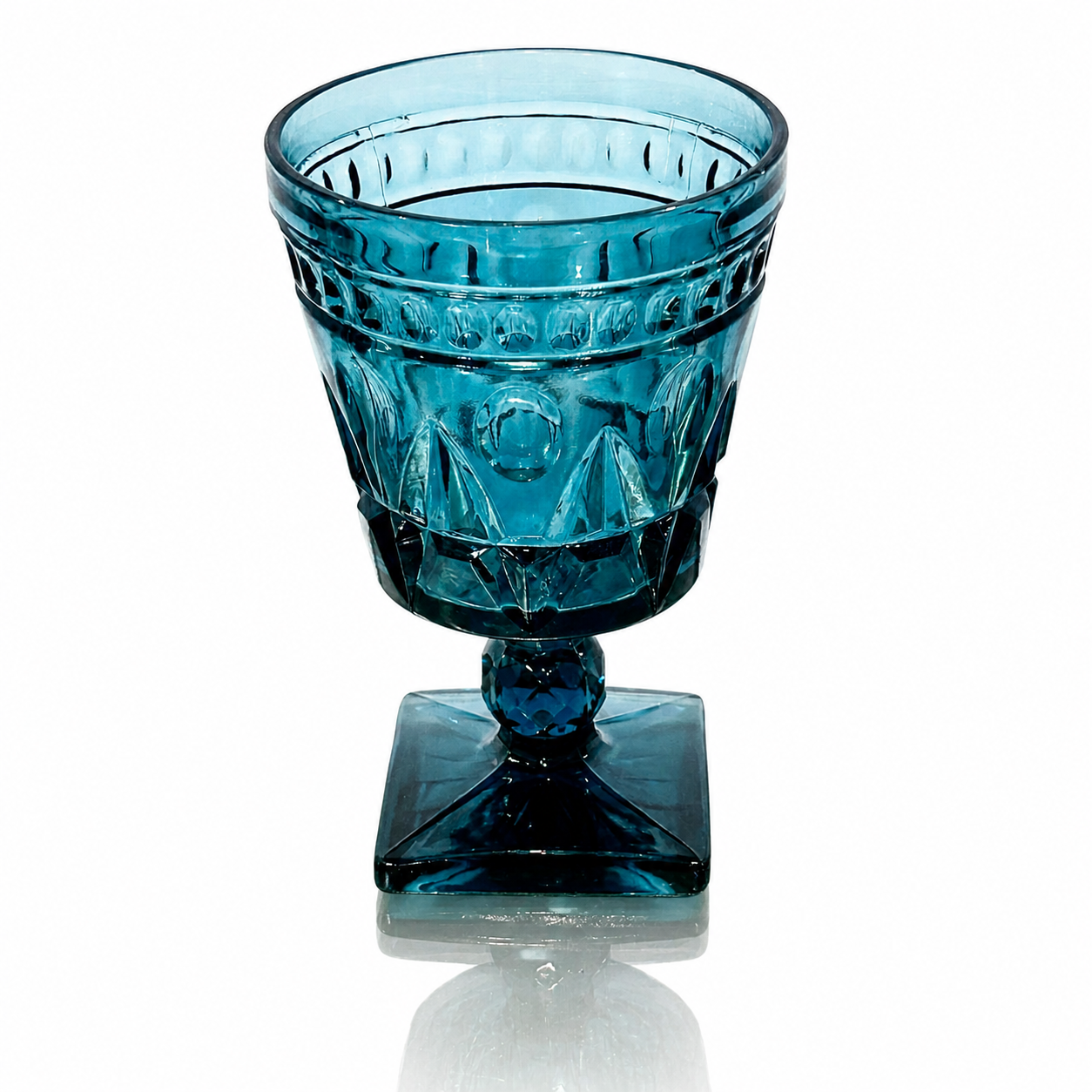
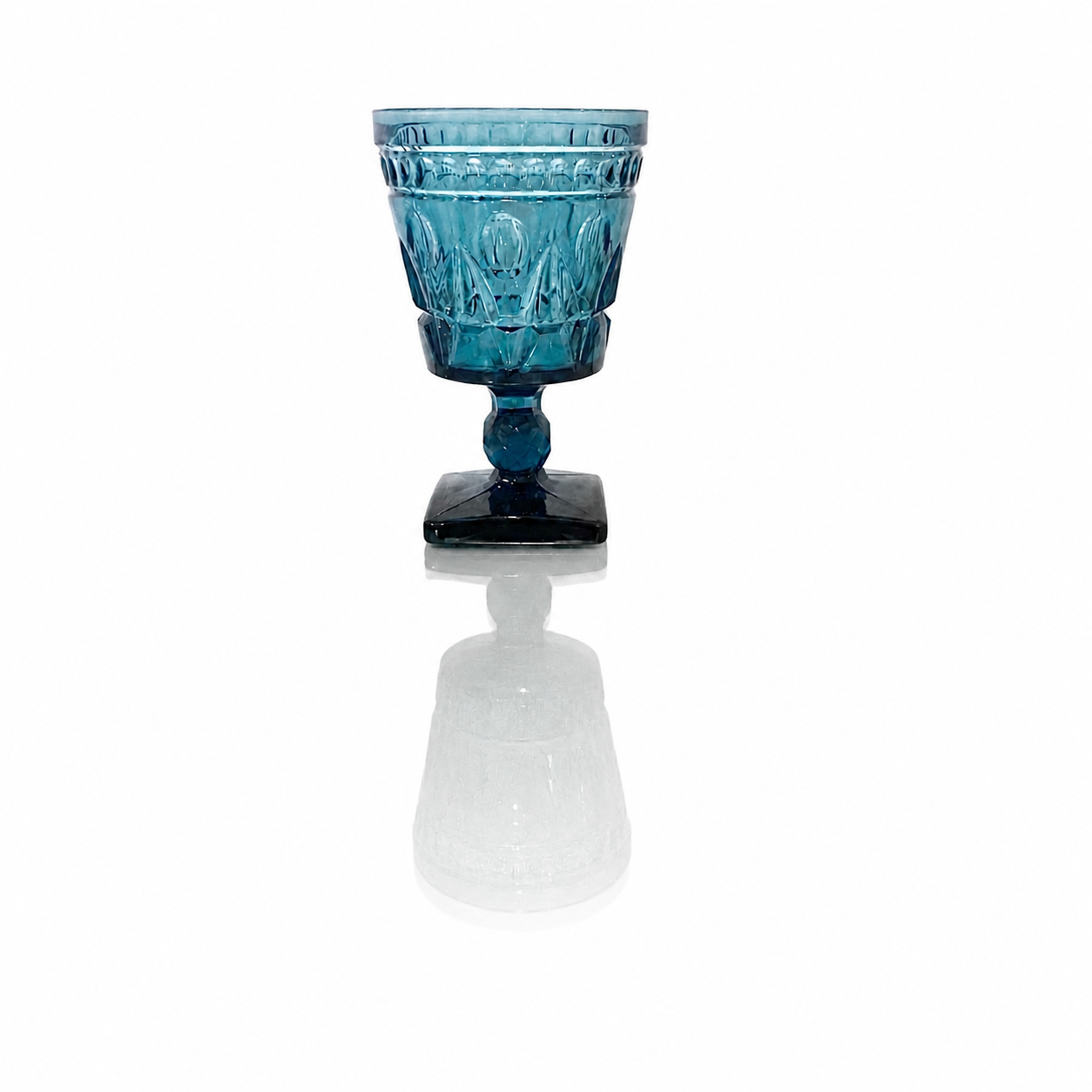
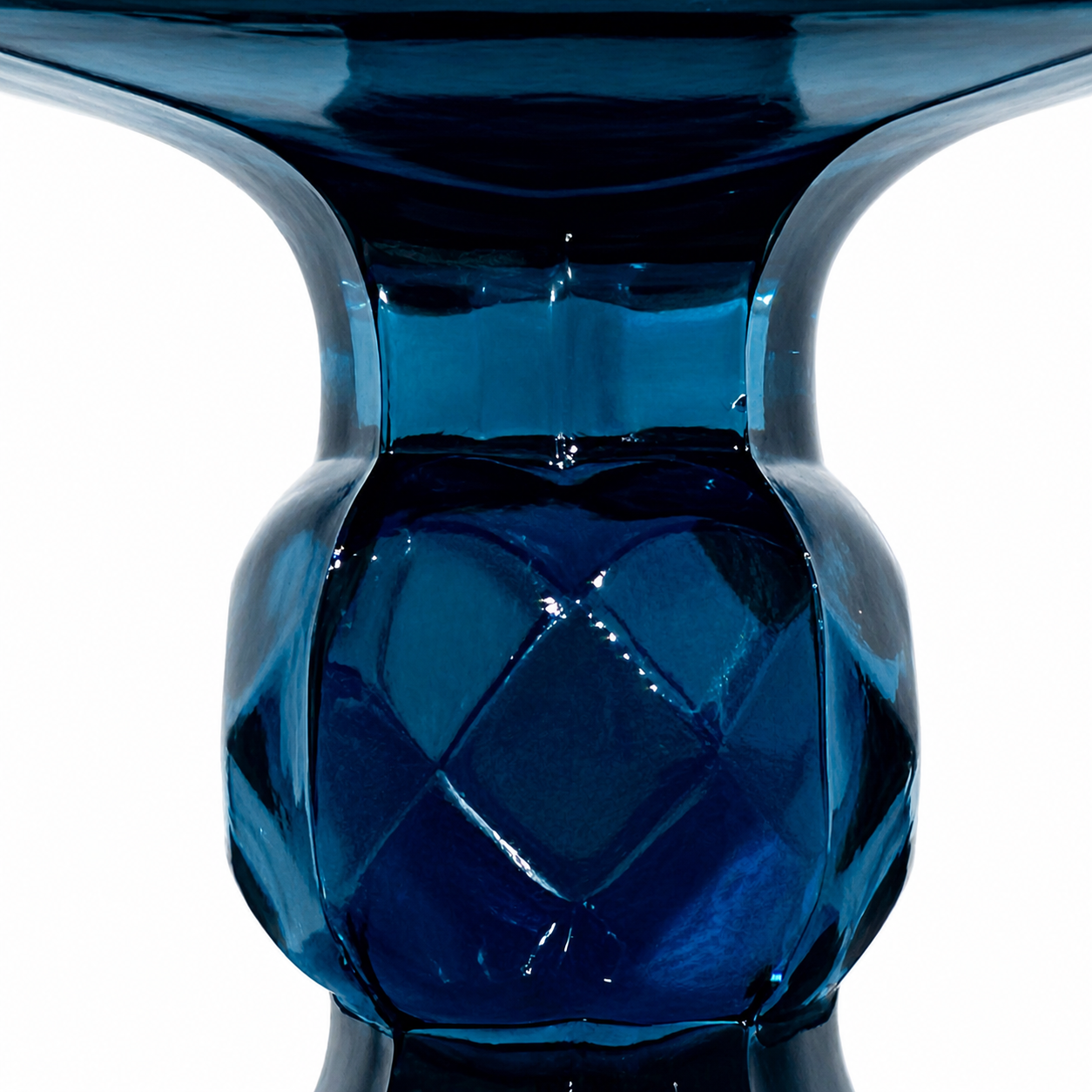
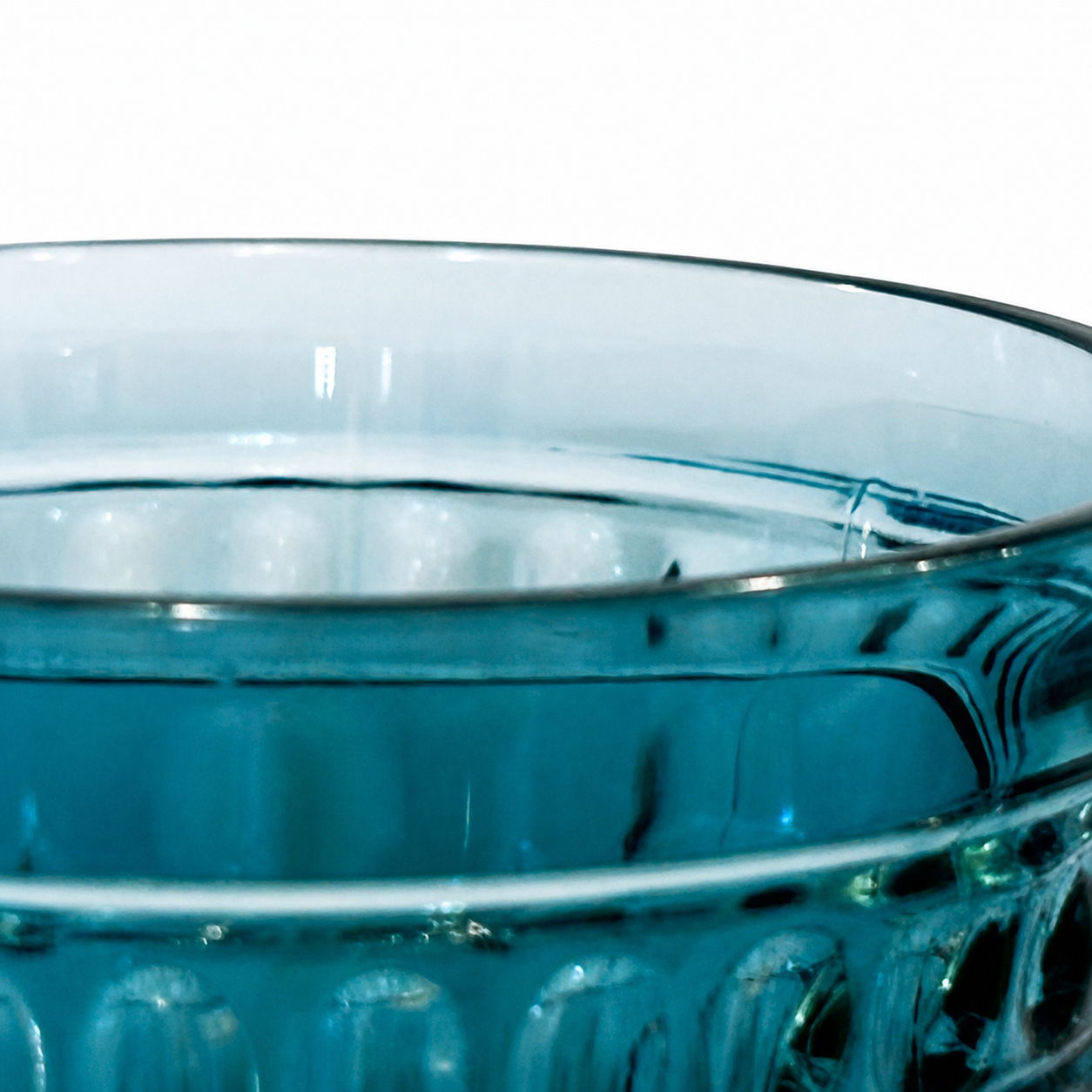
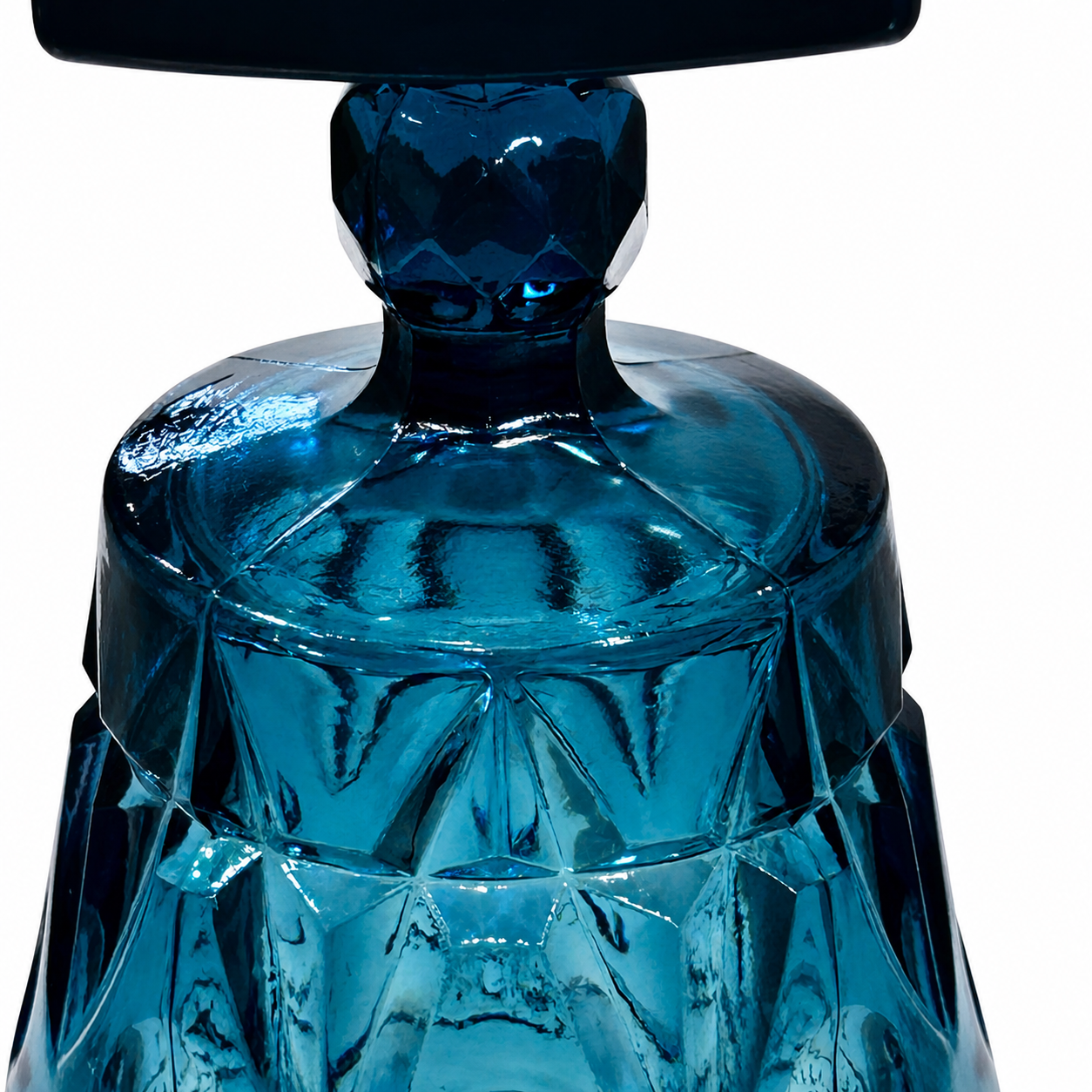
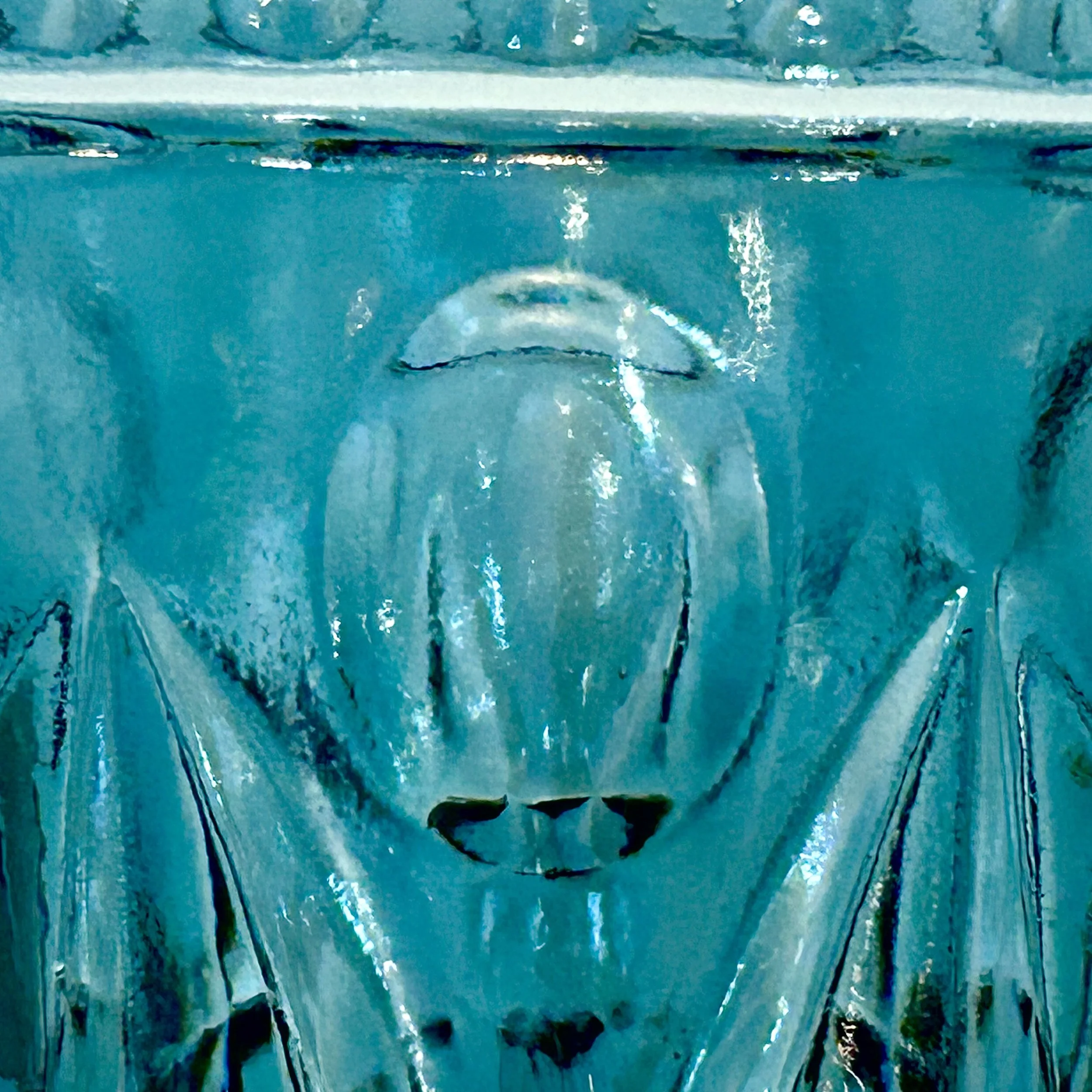
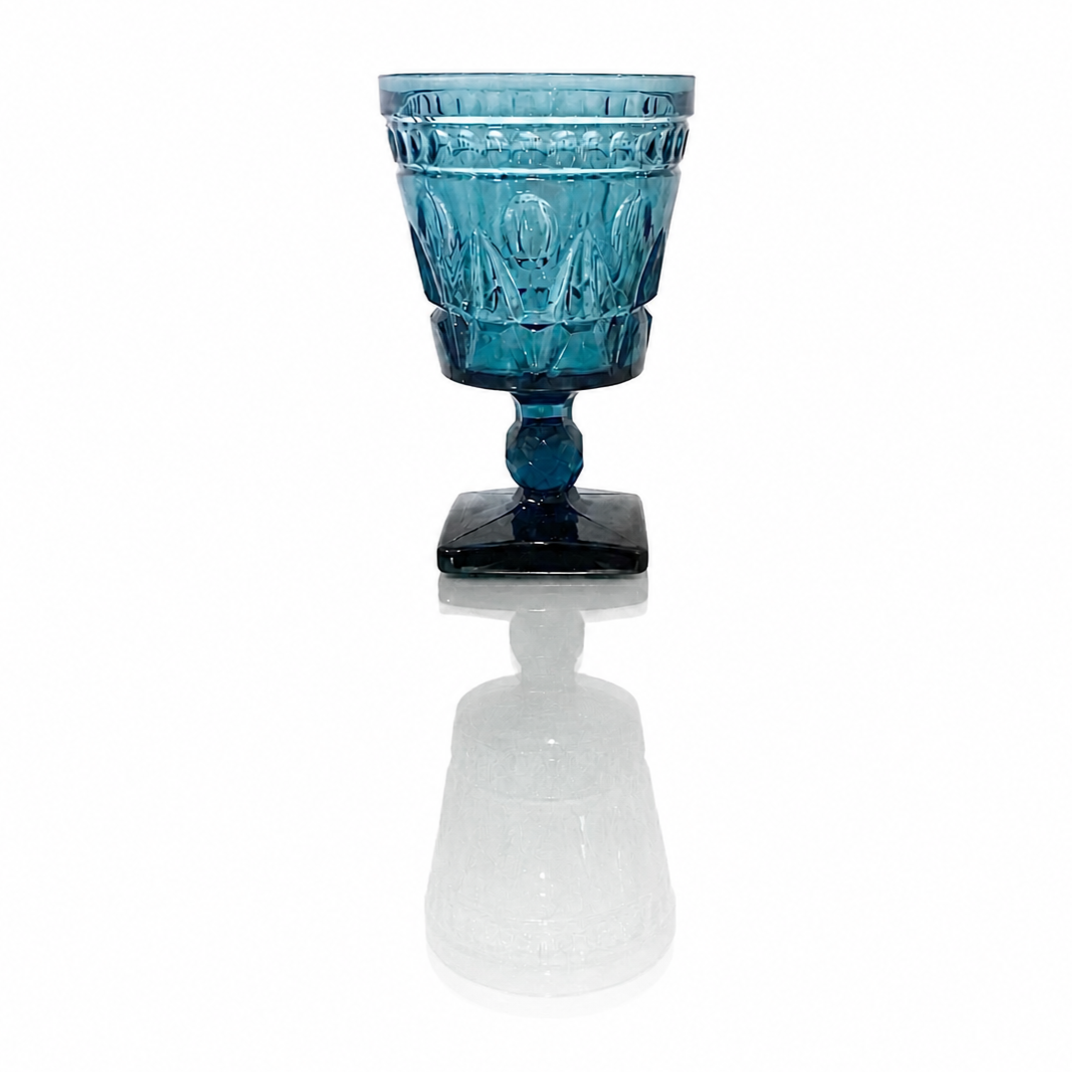
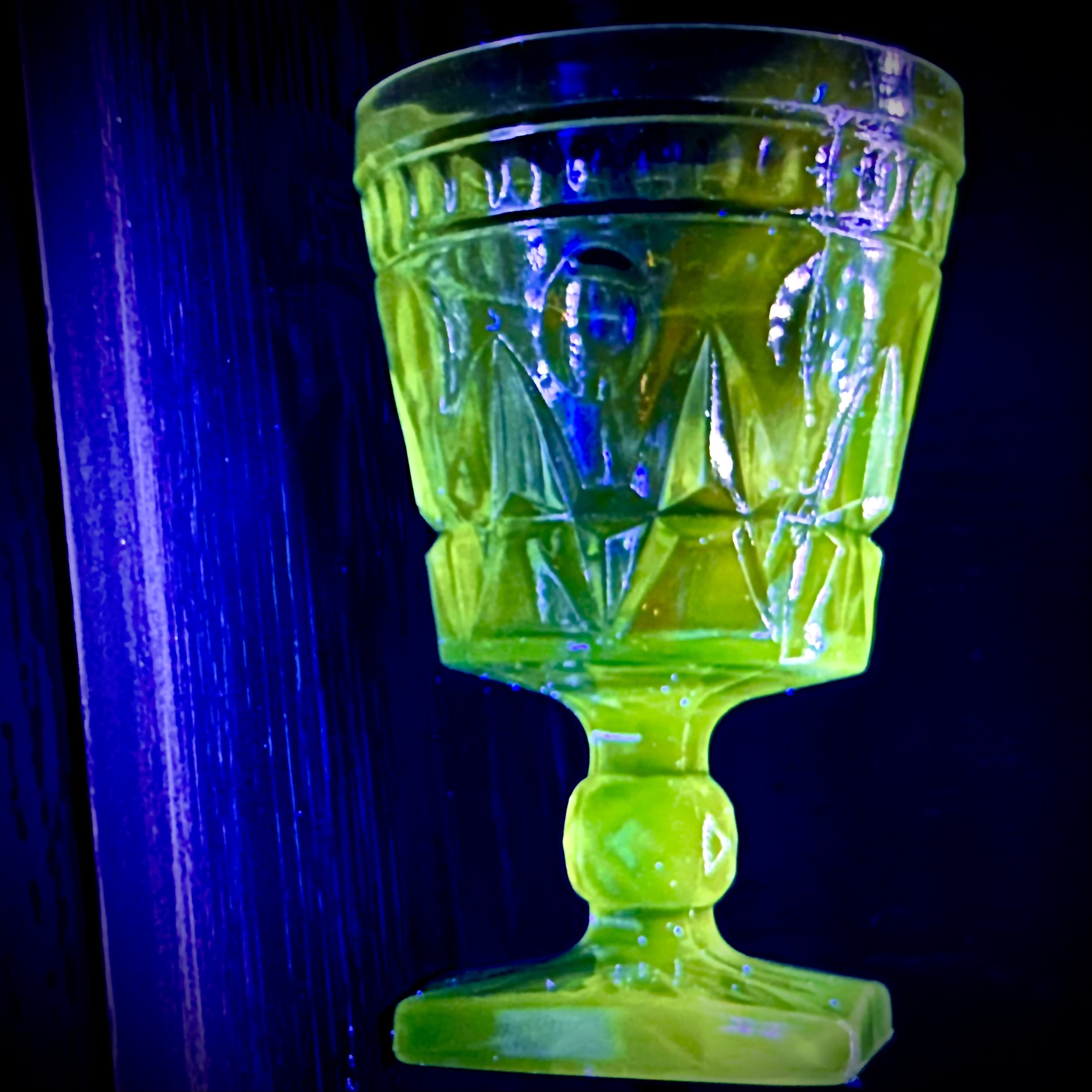
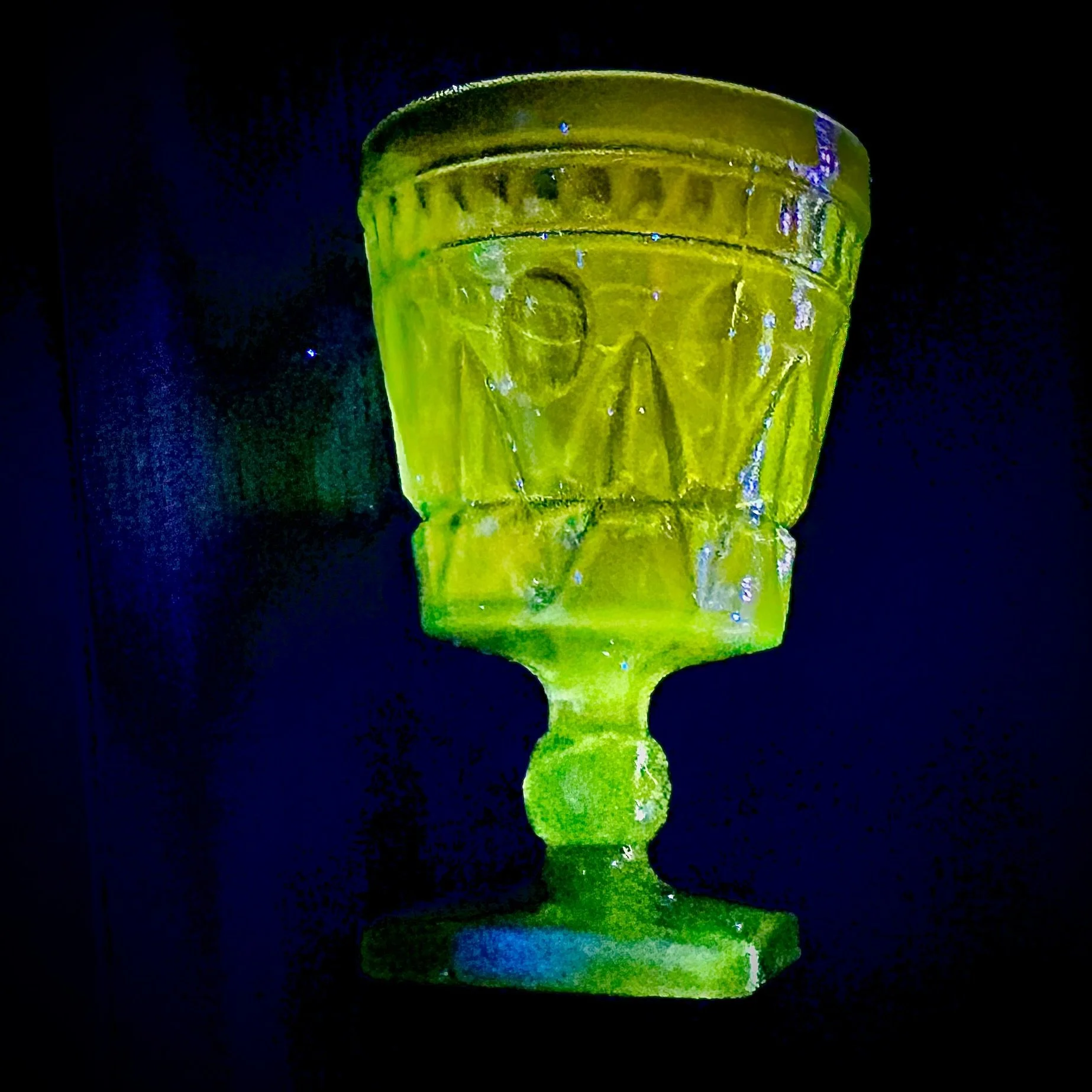
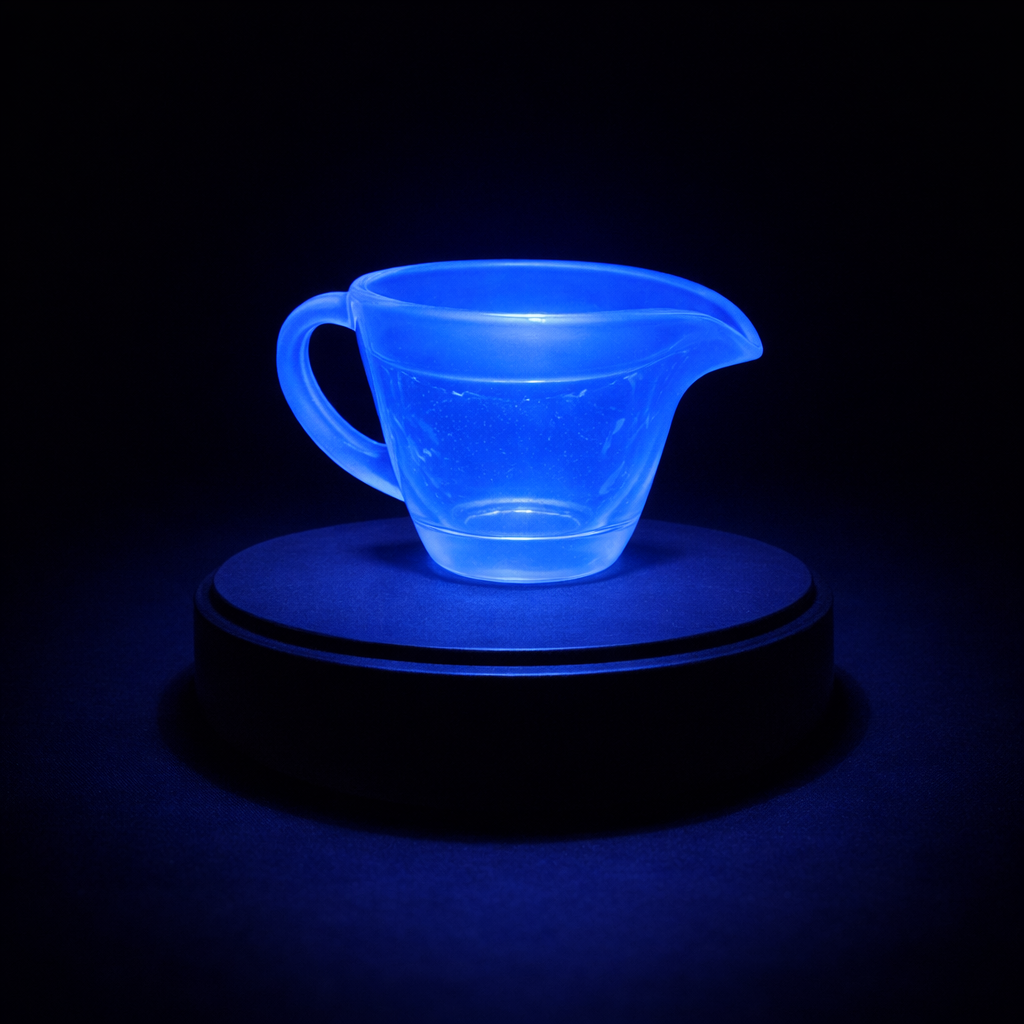
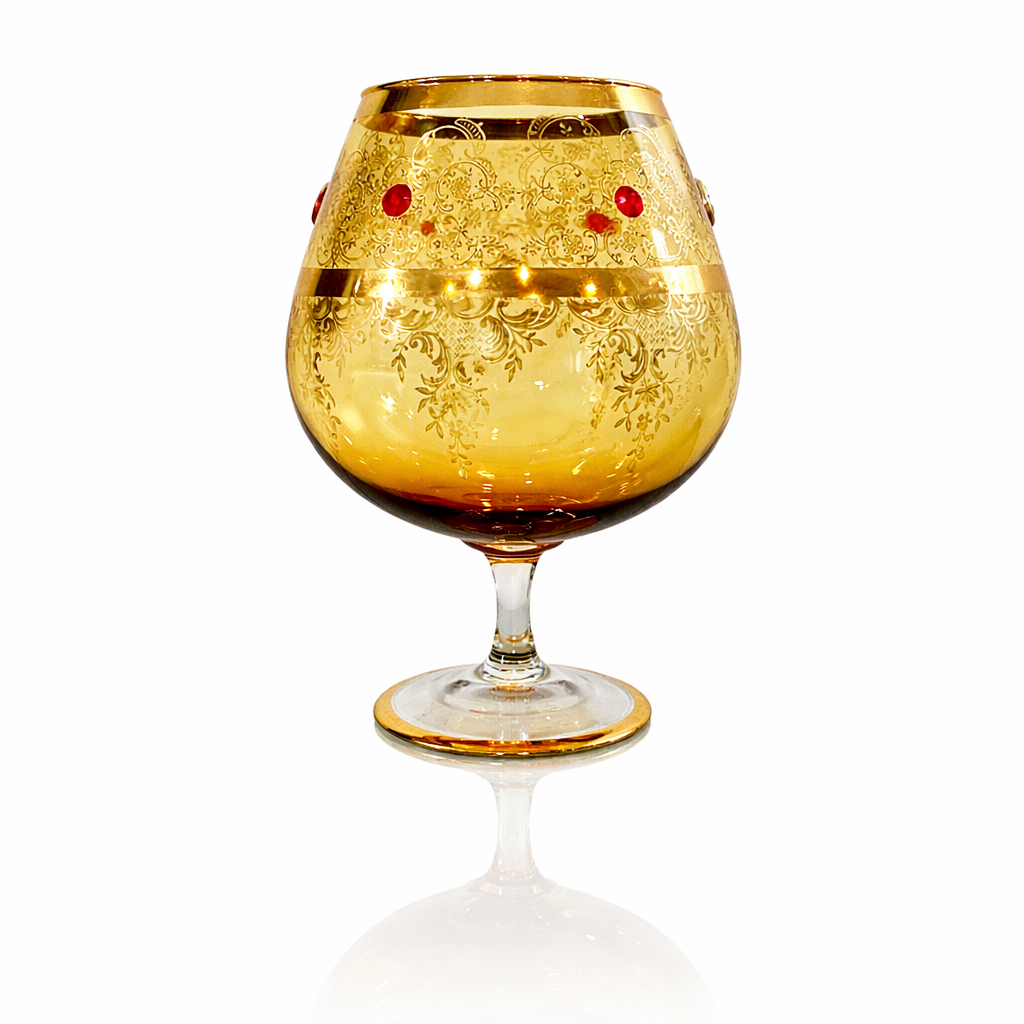
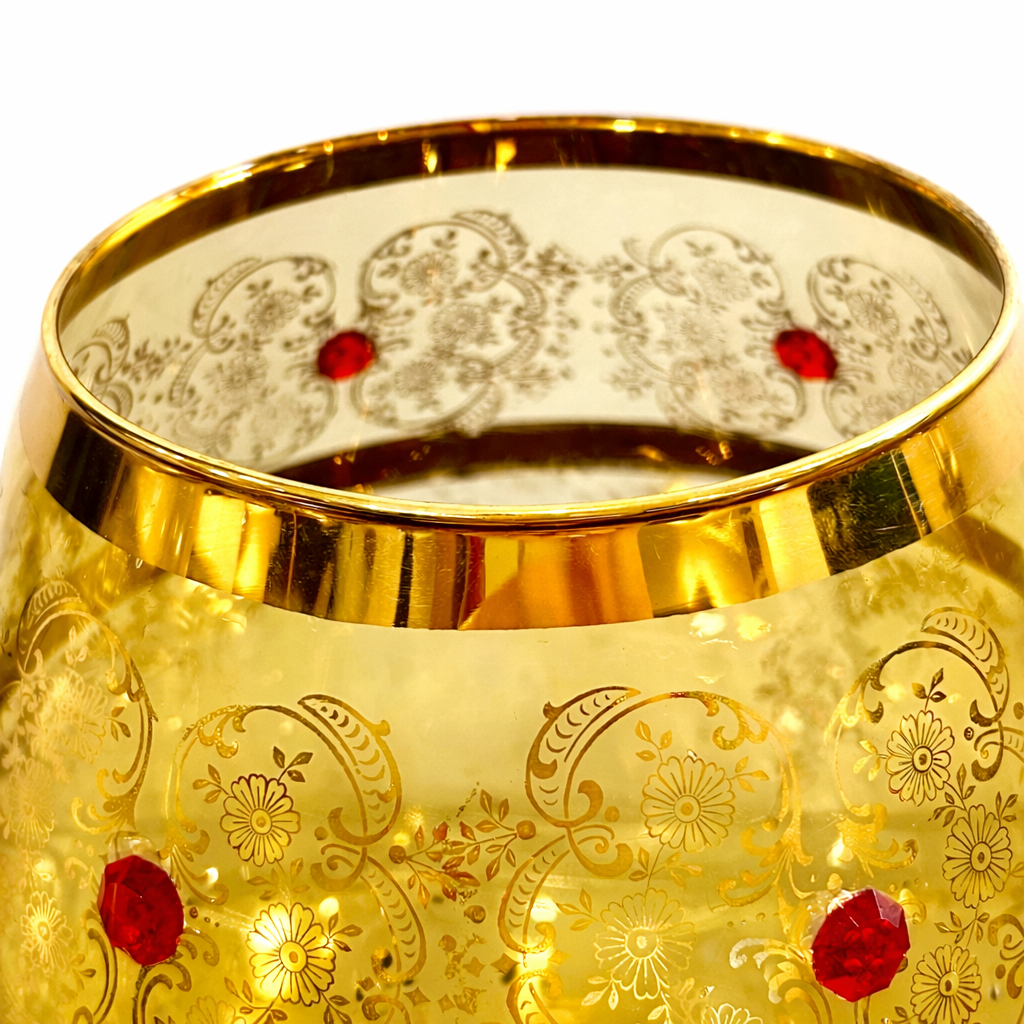
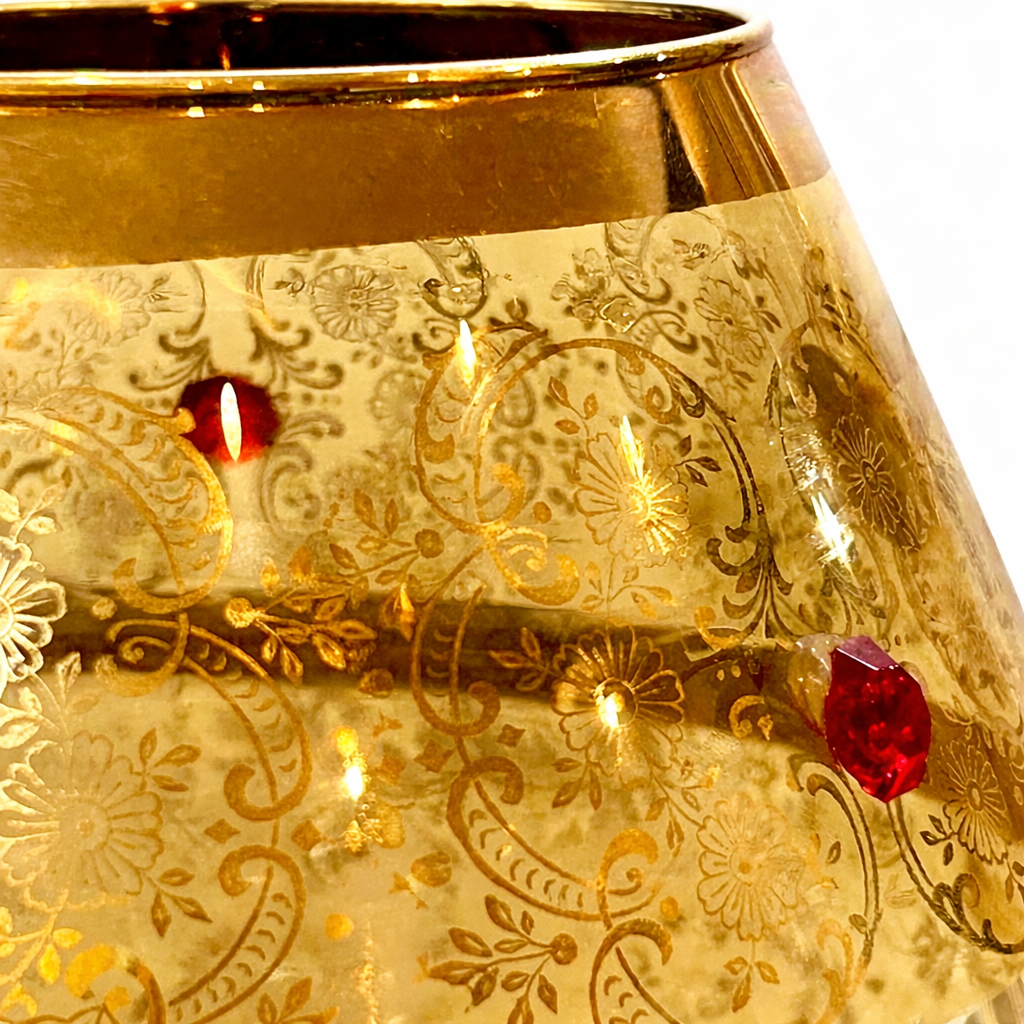
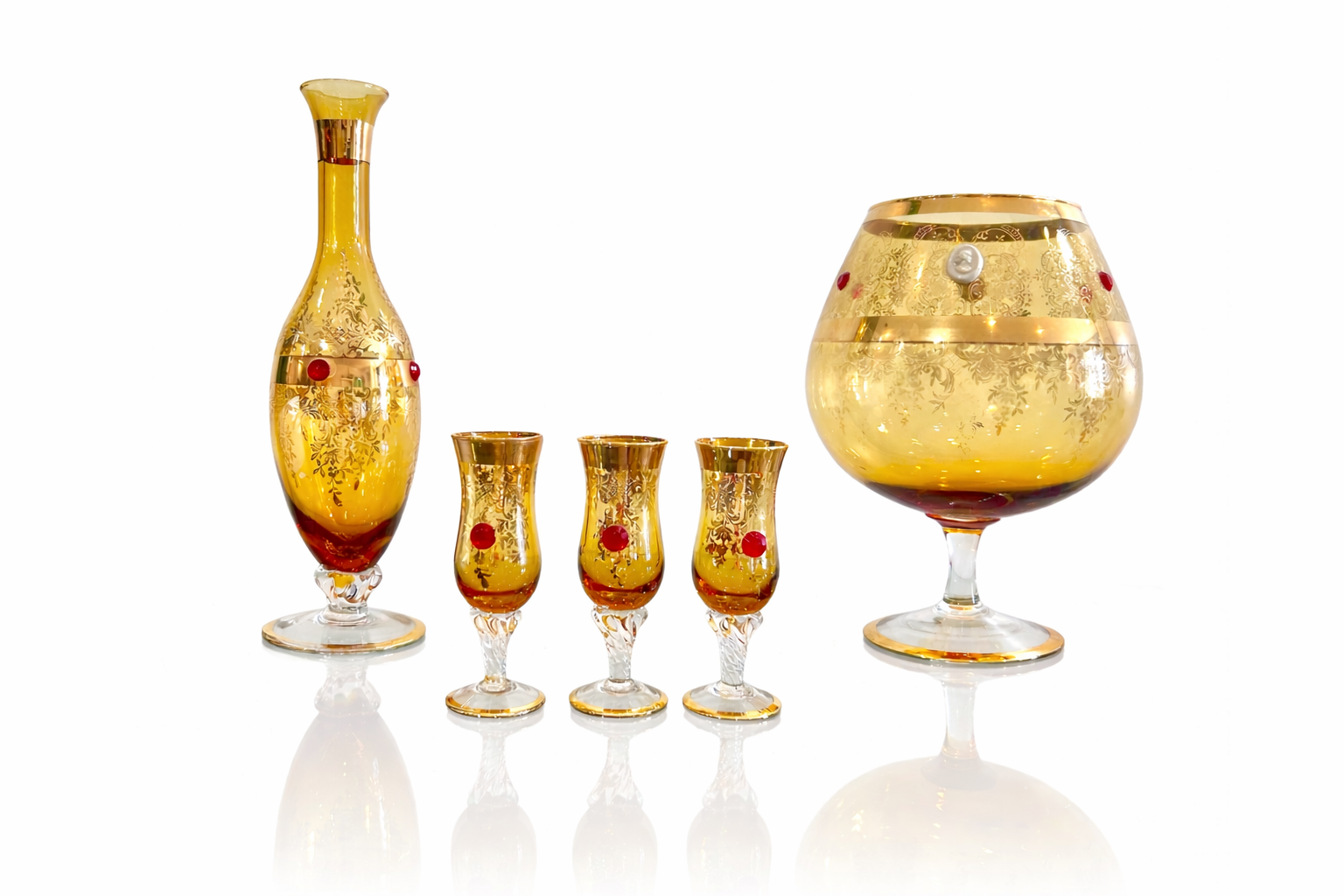
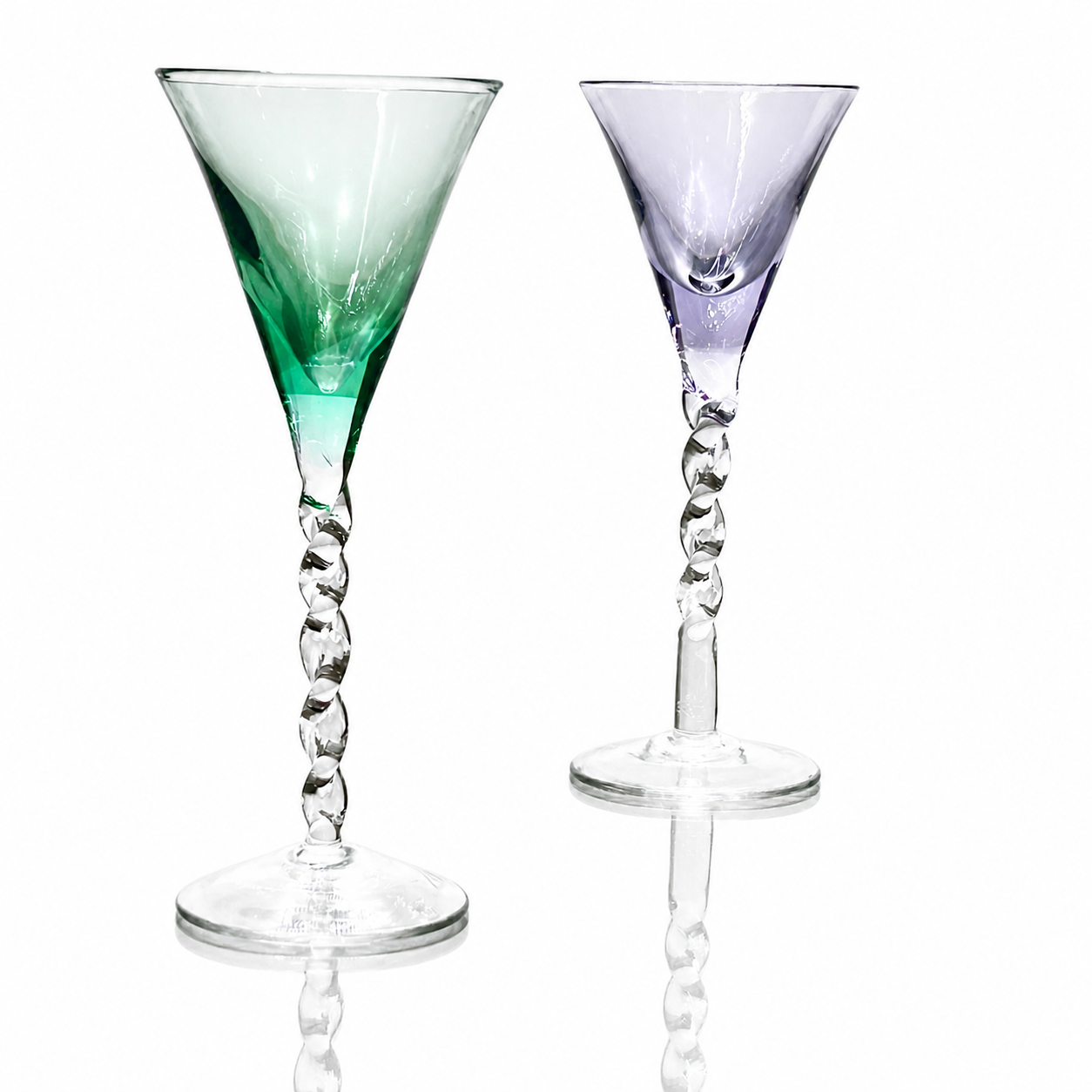
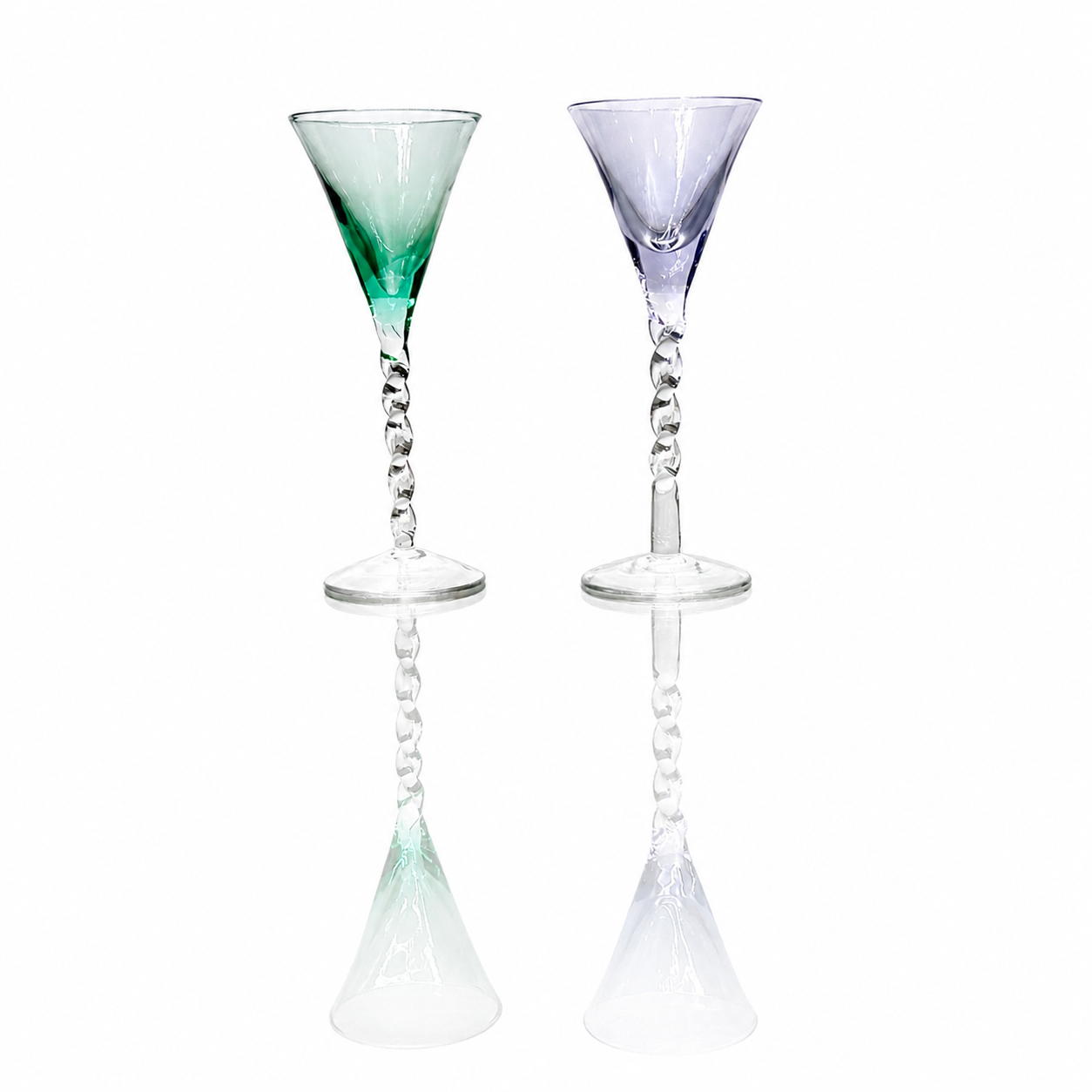
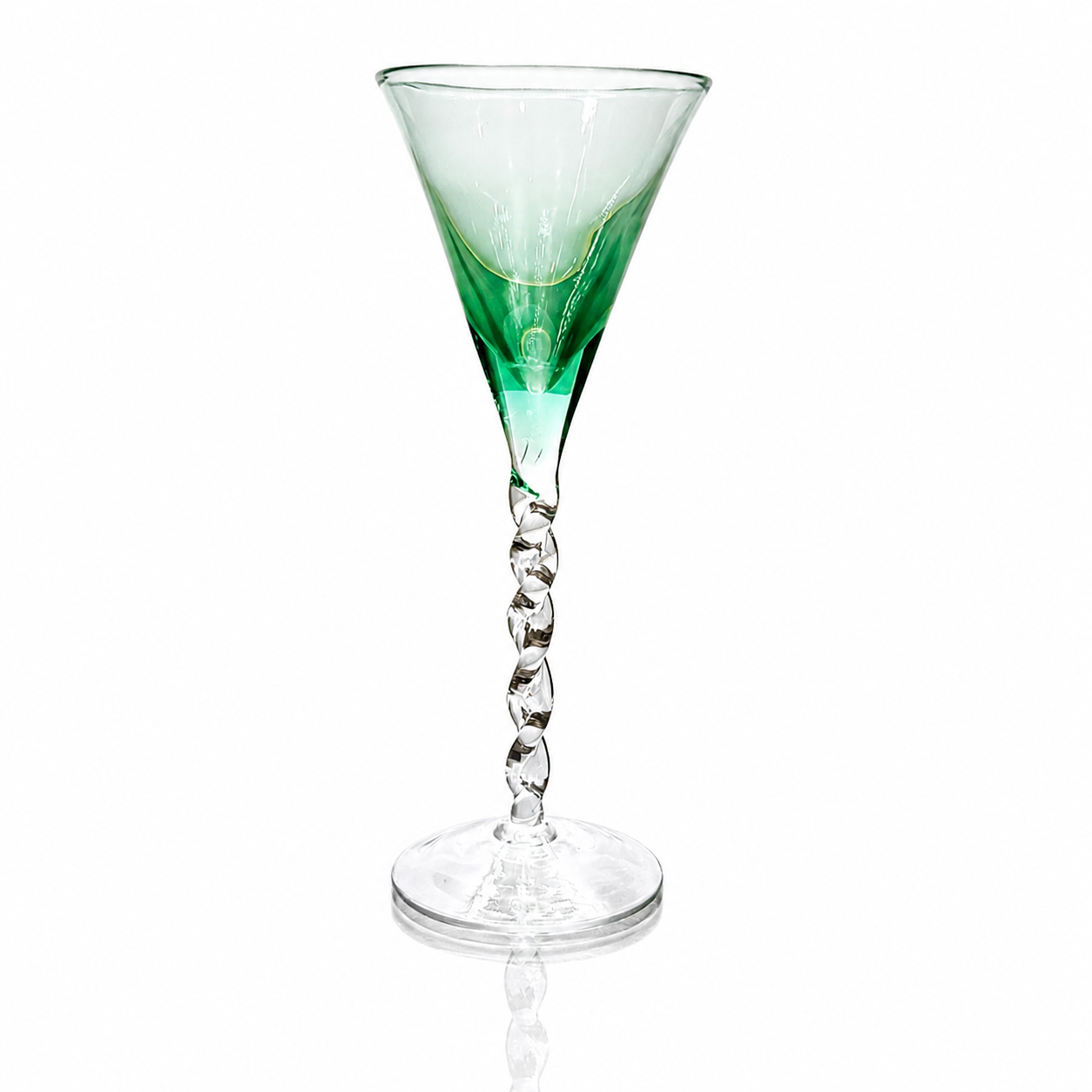
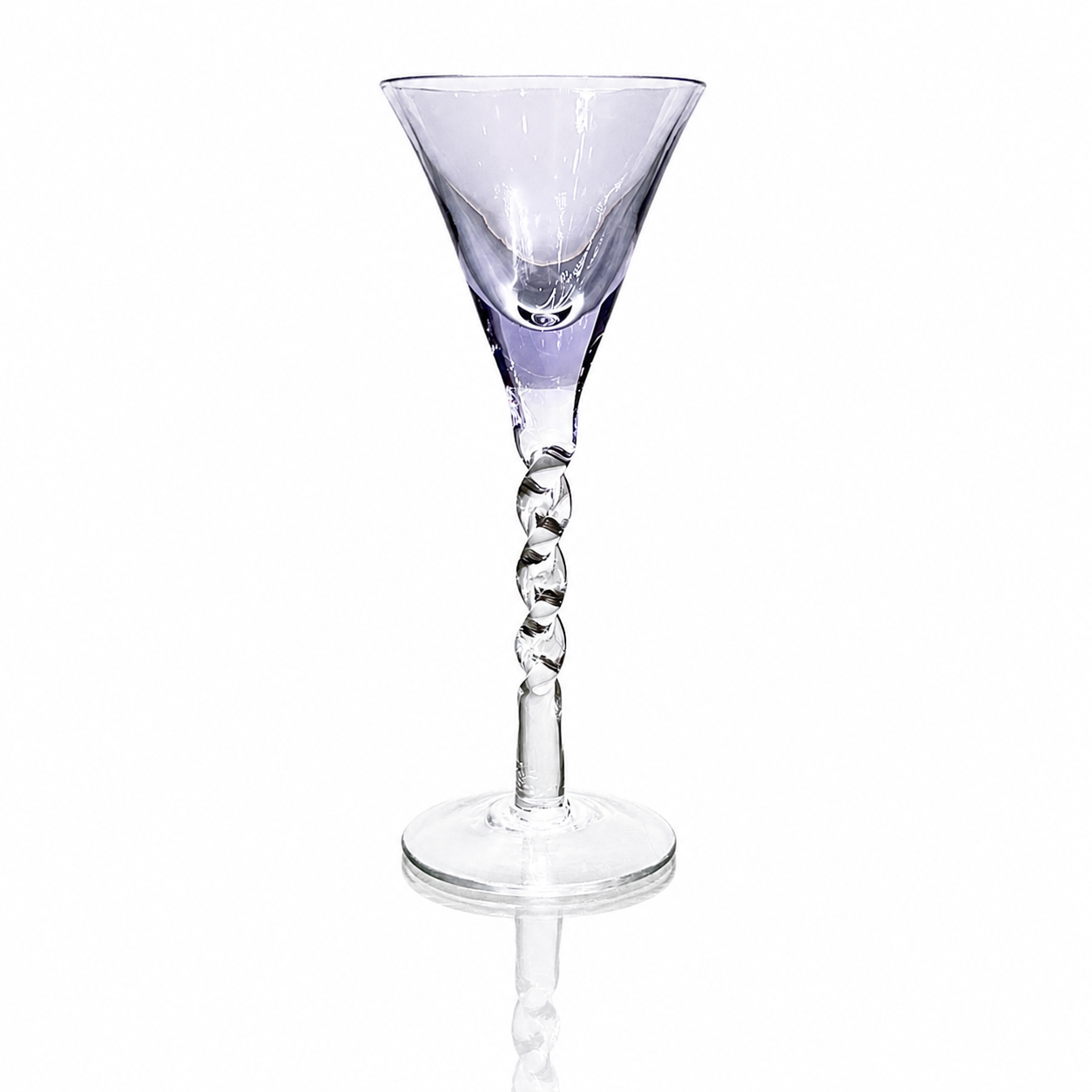
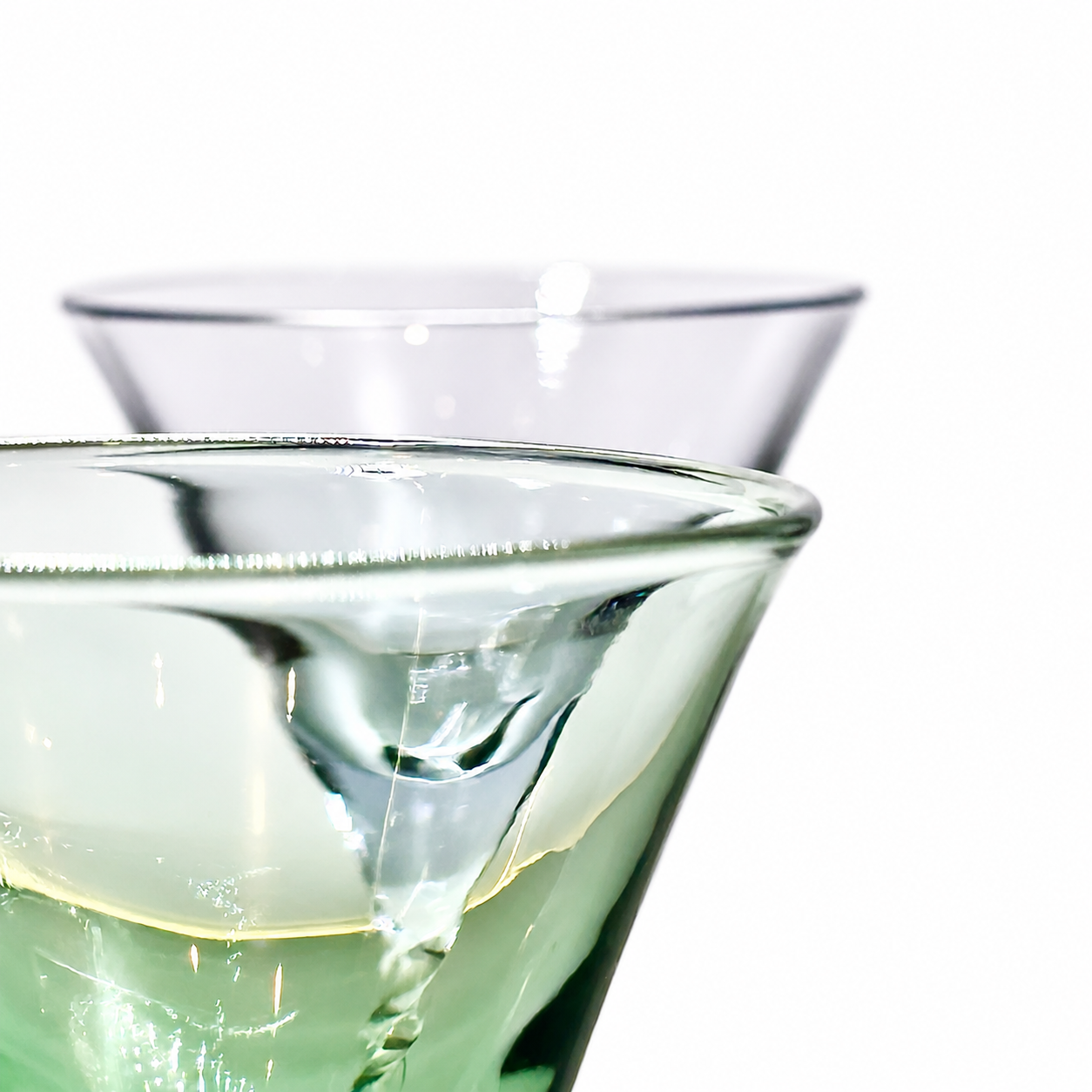
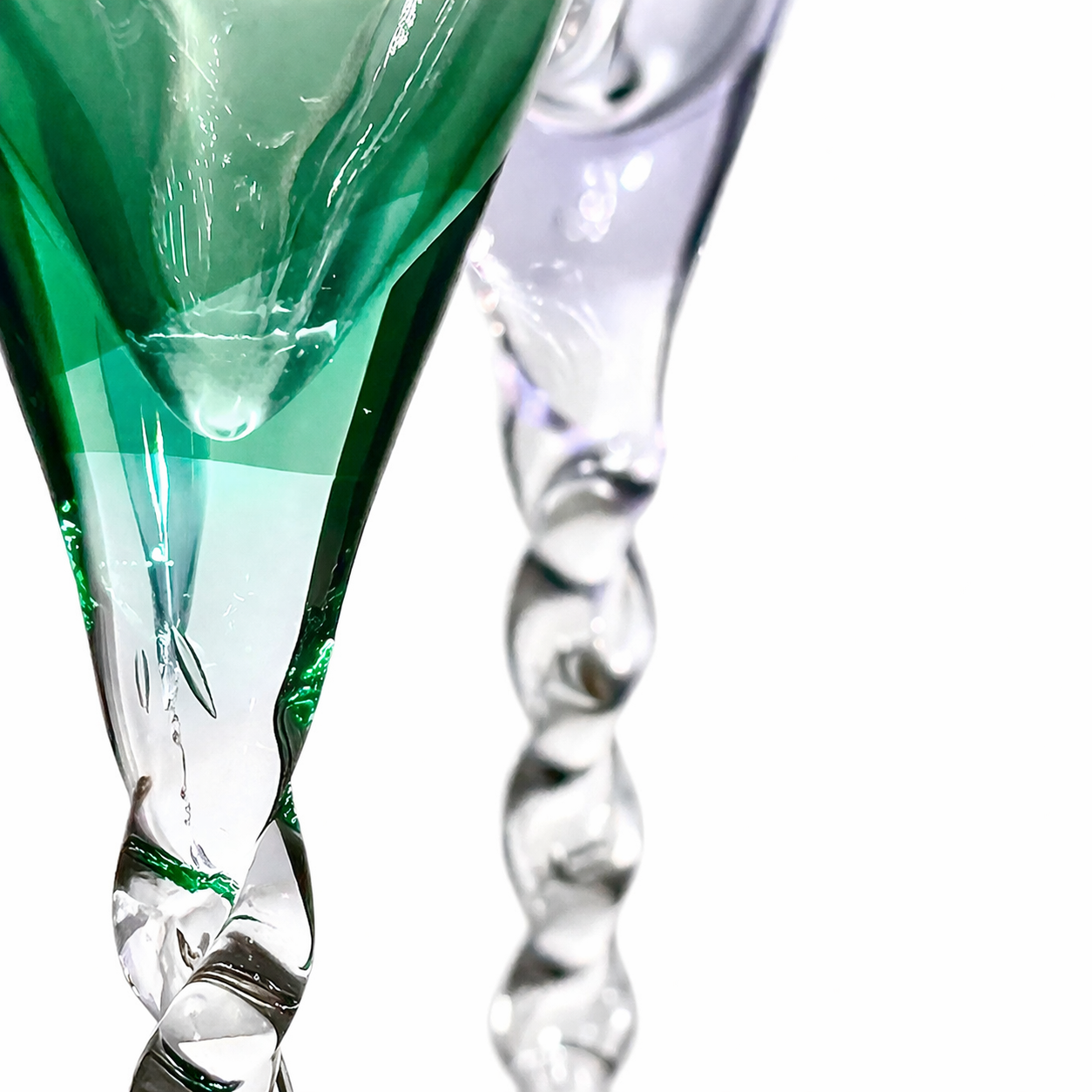
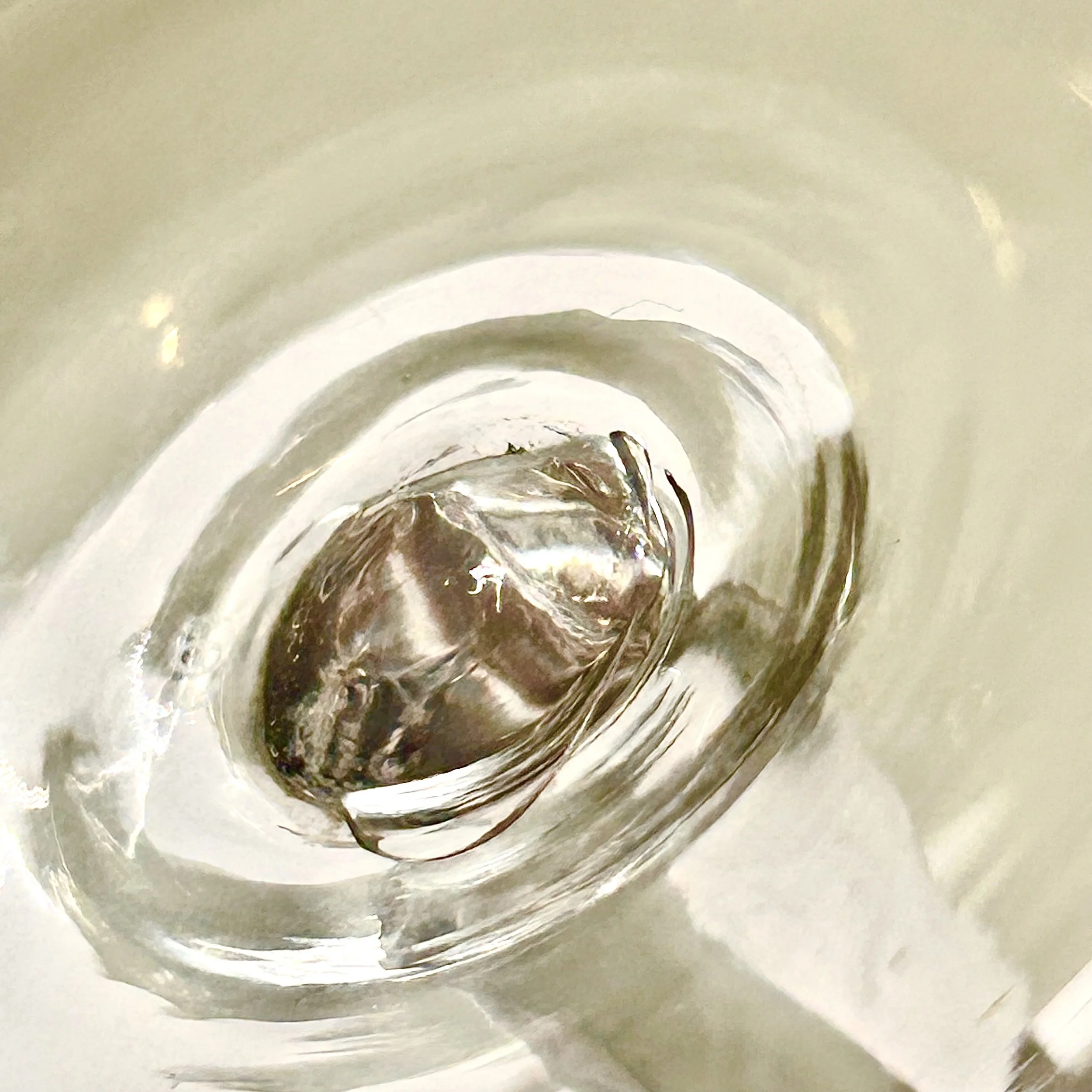
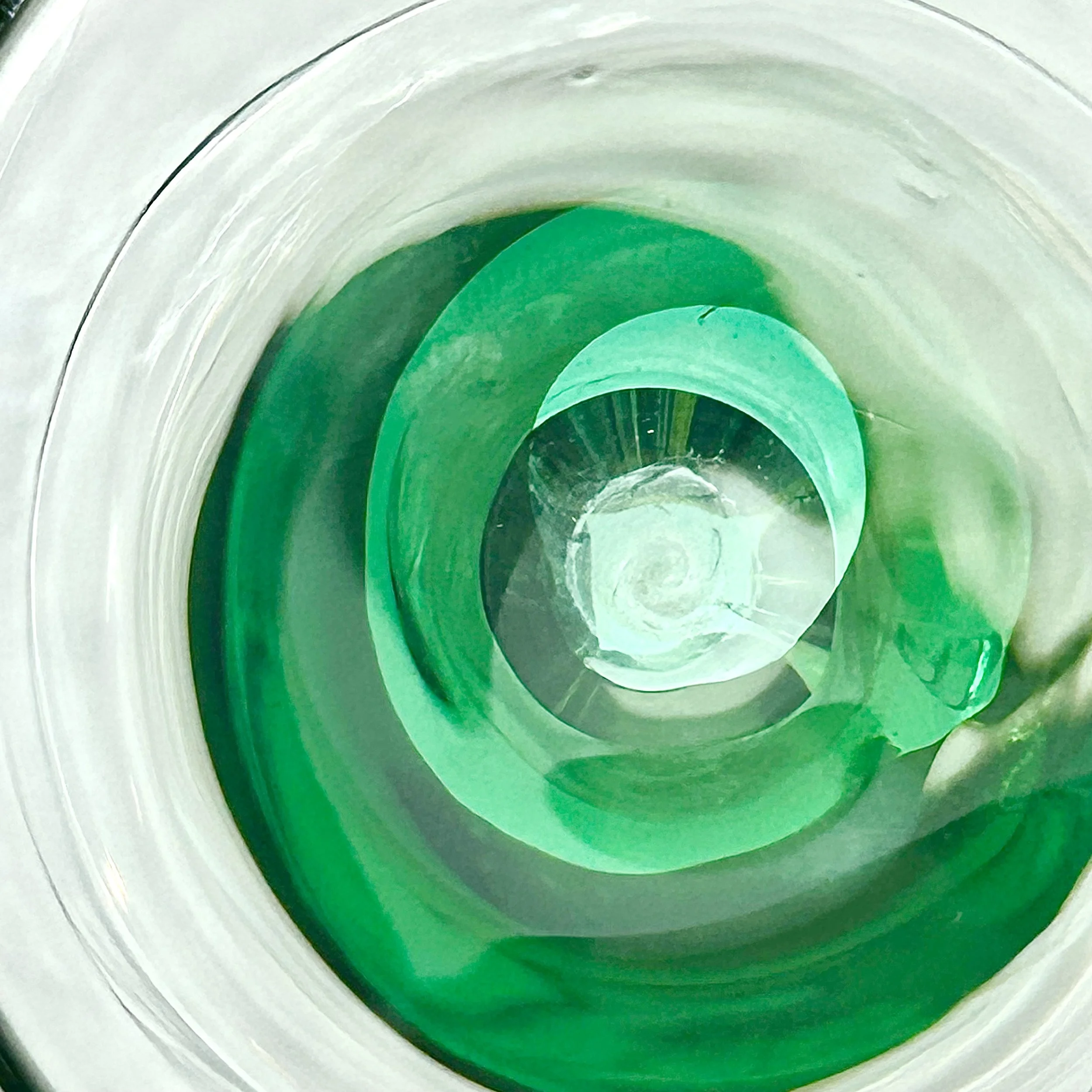
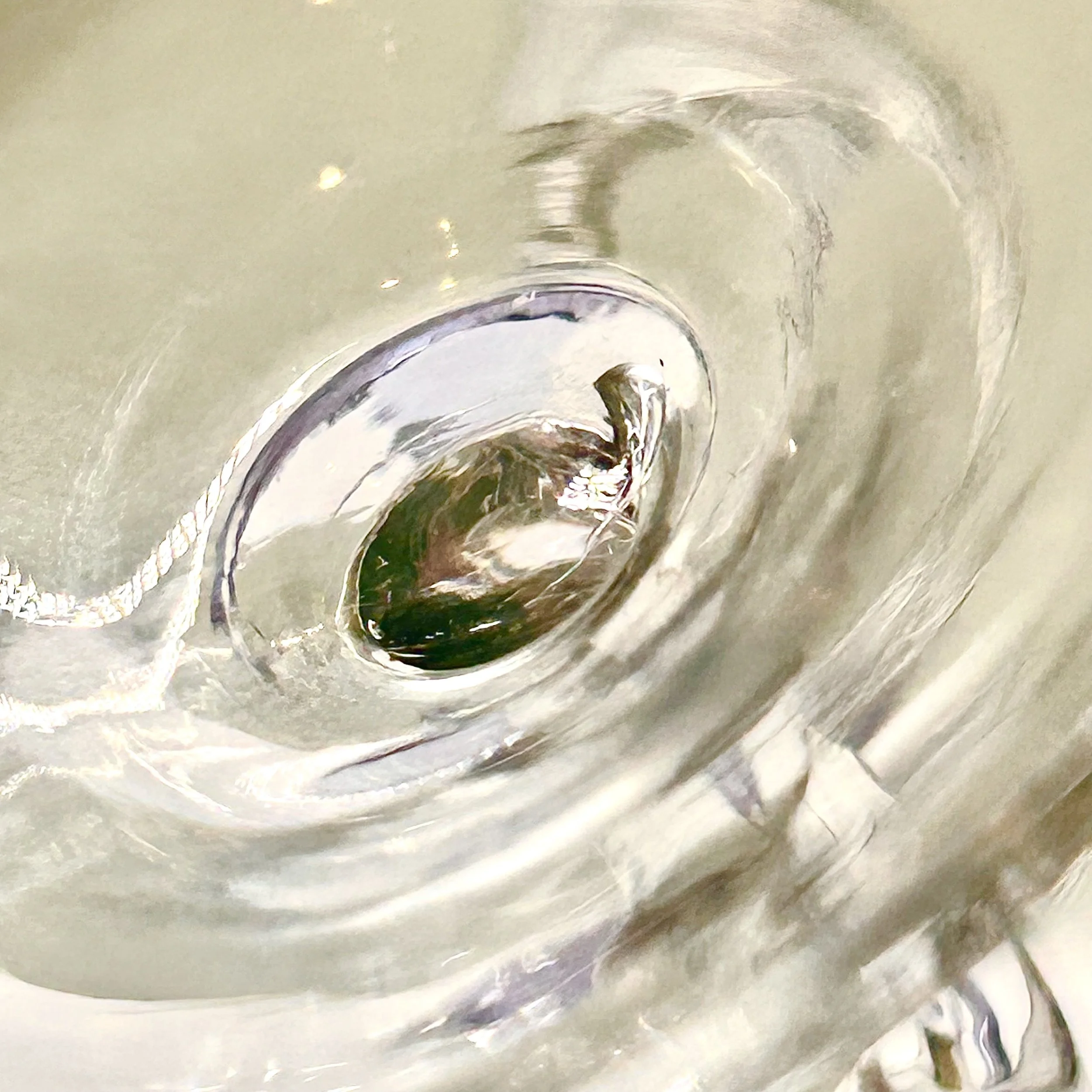
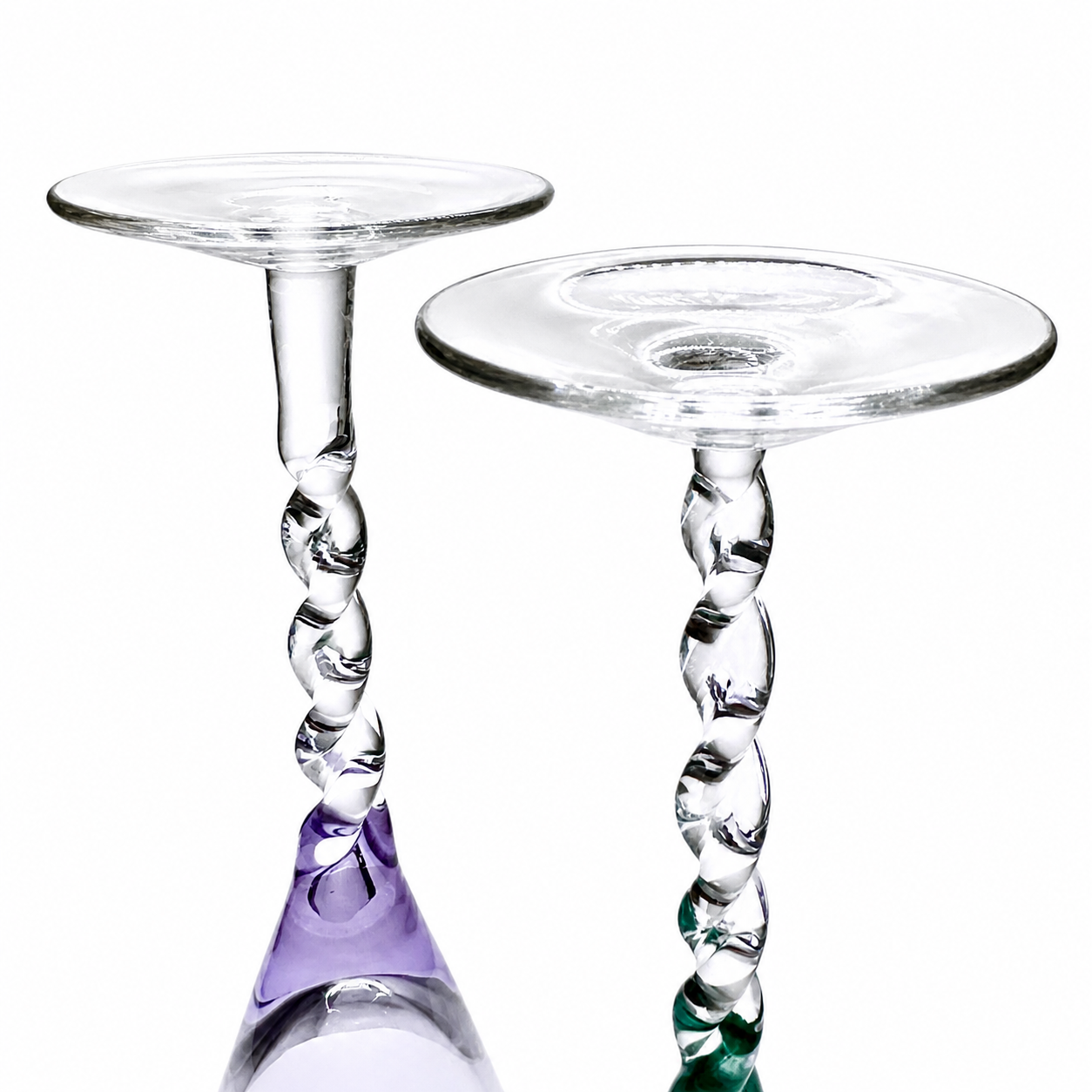
This set of four stemmed goblets possesses a striking sculptural presence, defined by a deep amethyst hue and sharp, optic-ribbed faceting that catches and refracts light with exceptional clarity. When exposed to 365nm UV light, the glass exhibits a vibrant lime-green fluorescence, a definitive characteristic of early manganese-purified glass compositions. The iridescent surface quality and elegant, classic silhouette provide a sophisticated decorative impact that bridges the gap between historical craftsmanship and modern tablescape design.
Attribution & Period:
Consistent with American Early American Pattern Glass (EAPG), late 19th Century (1880–1895). Amethyst Goblets
The dating of these vessels is definitively supported by the intense lime-green fluorescence under 365nm UV light, a chemical signature of high-content manganese. Manganese was the primary decoloring agent used in high-end flint glass batches prior to the 1915 transition to selenium; over the course of a century, this manganese reacts to natural UV exposure through a process called "solarization," deepening the glass into this specific, sought-after amethyst saturation. The substantial physical mass of the lead-glass body (1.574 lbs for the set) and the precision-pressed optic ribbing are hallmarks of Victorian-era production, predating the lighter, soda-lime glass compositions common in 20th-century reproductions.
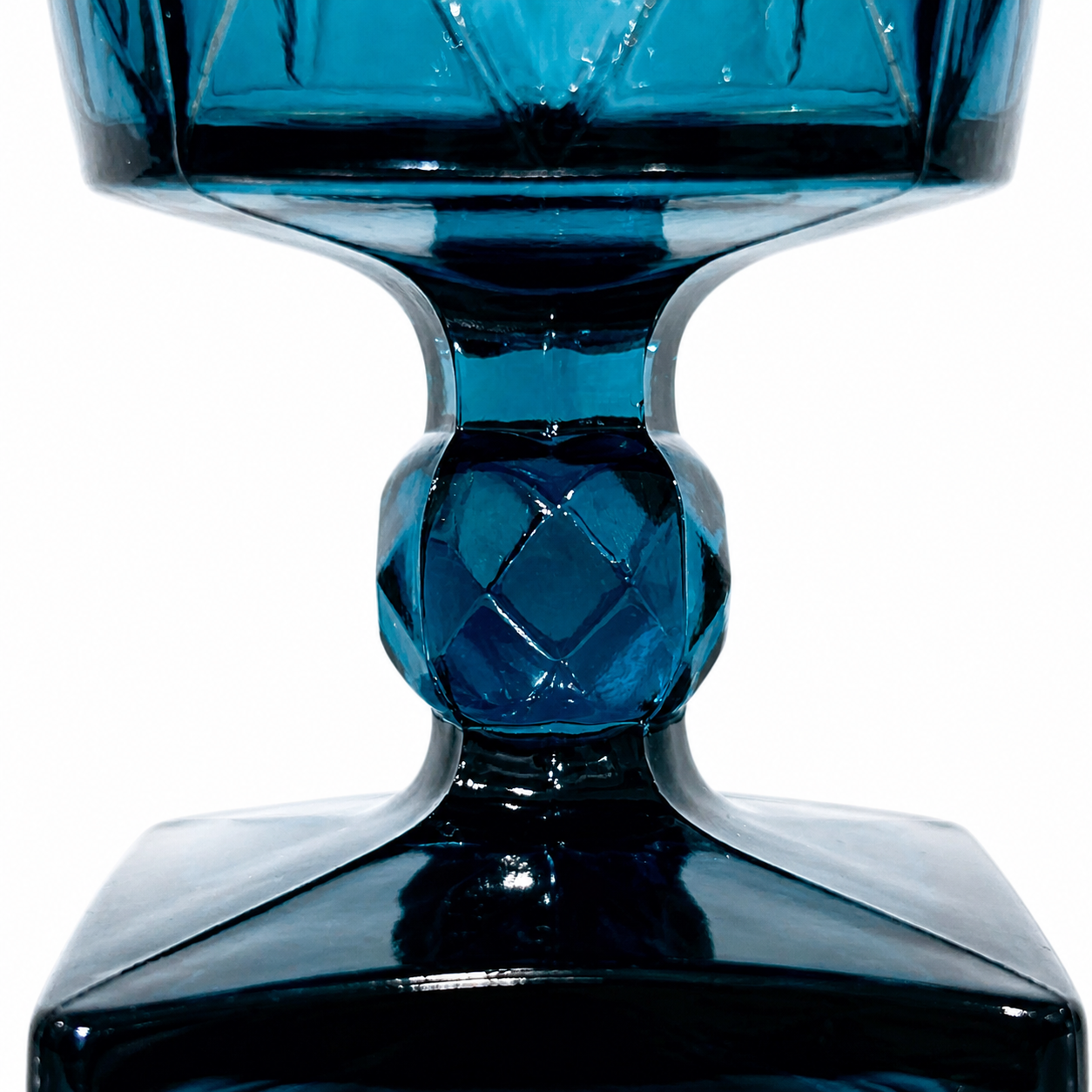
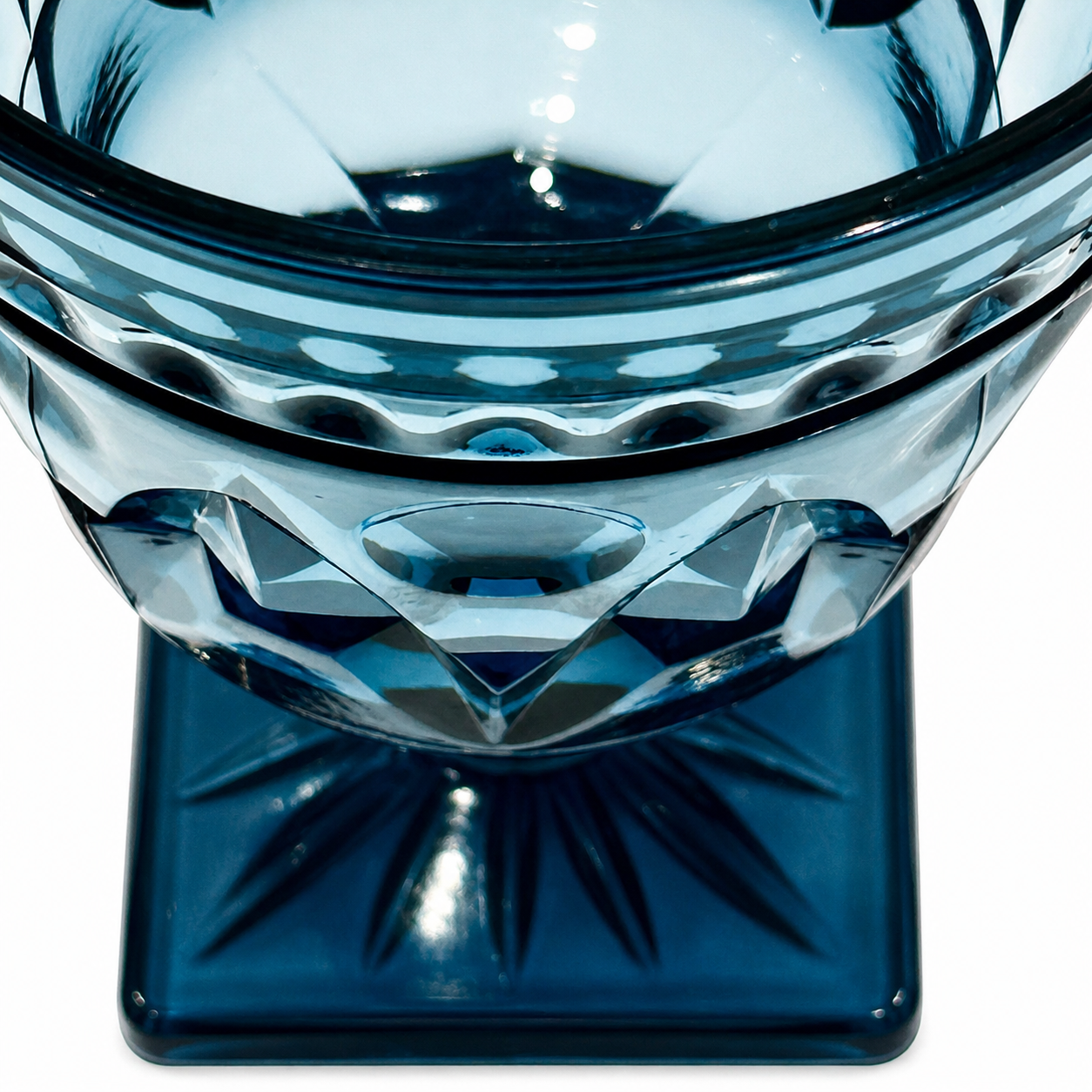
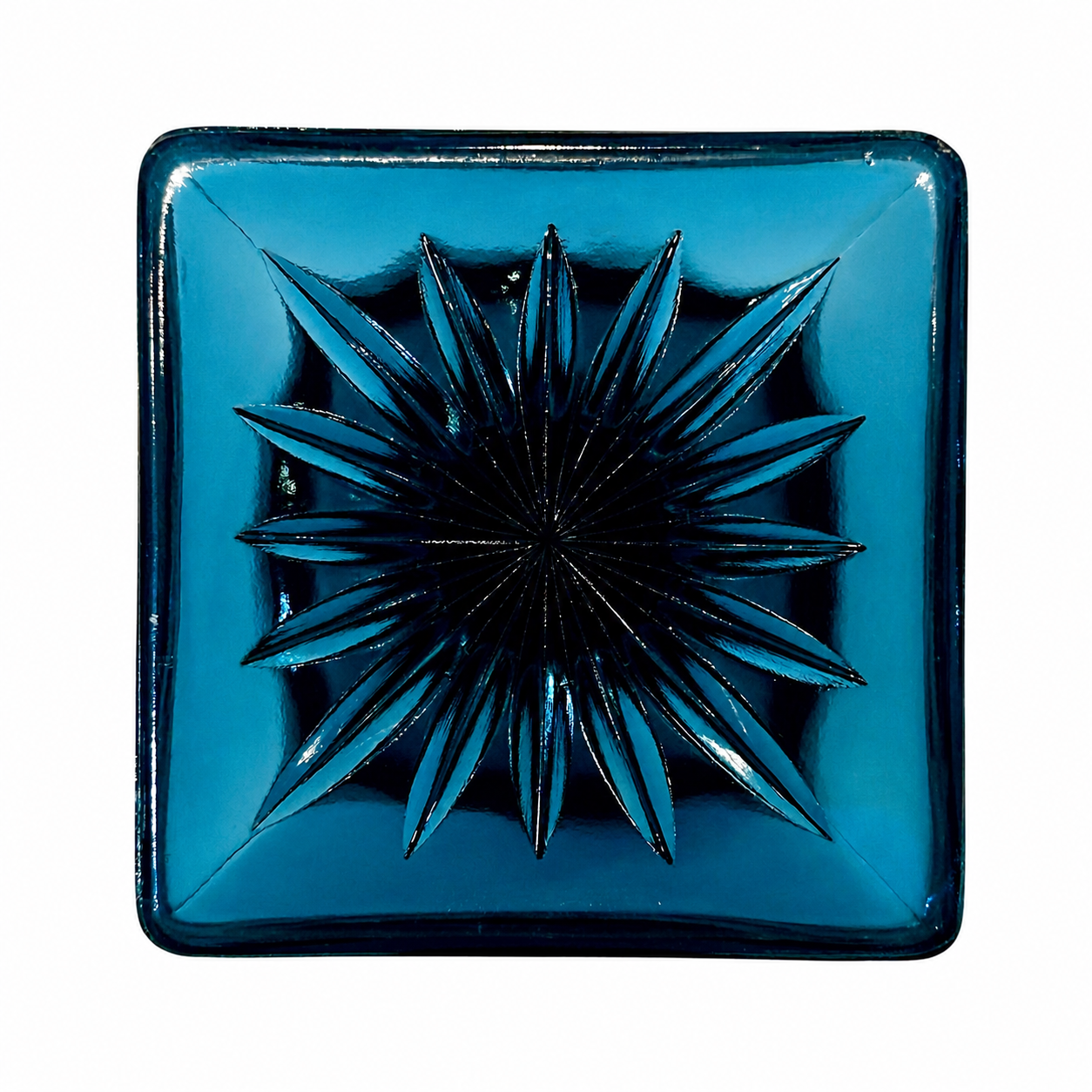
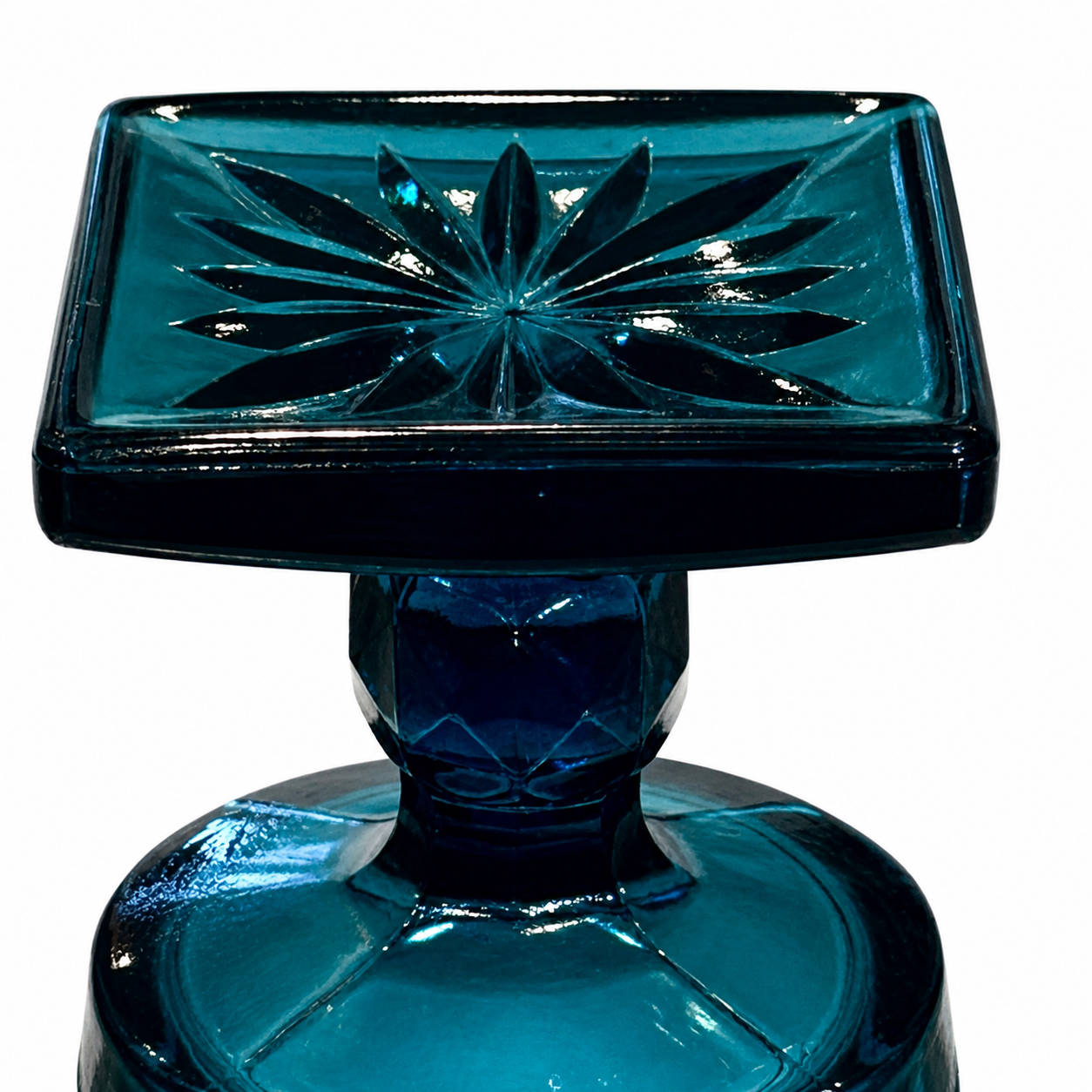
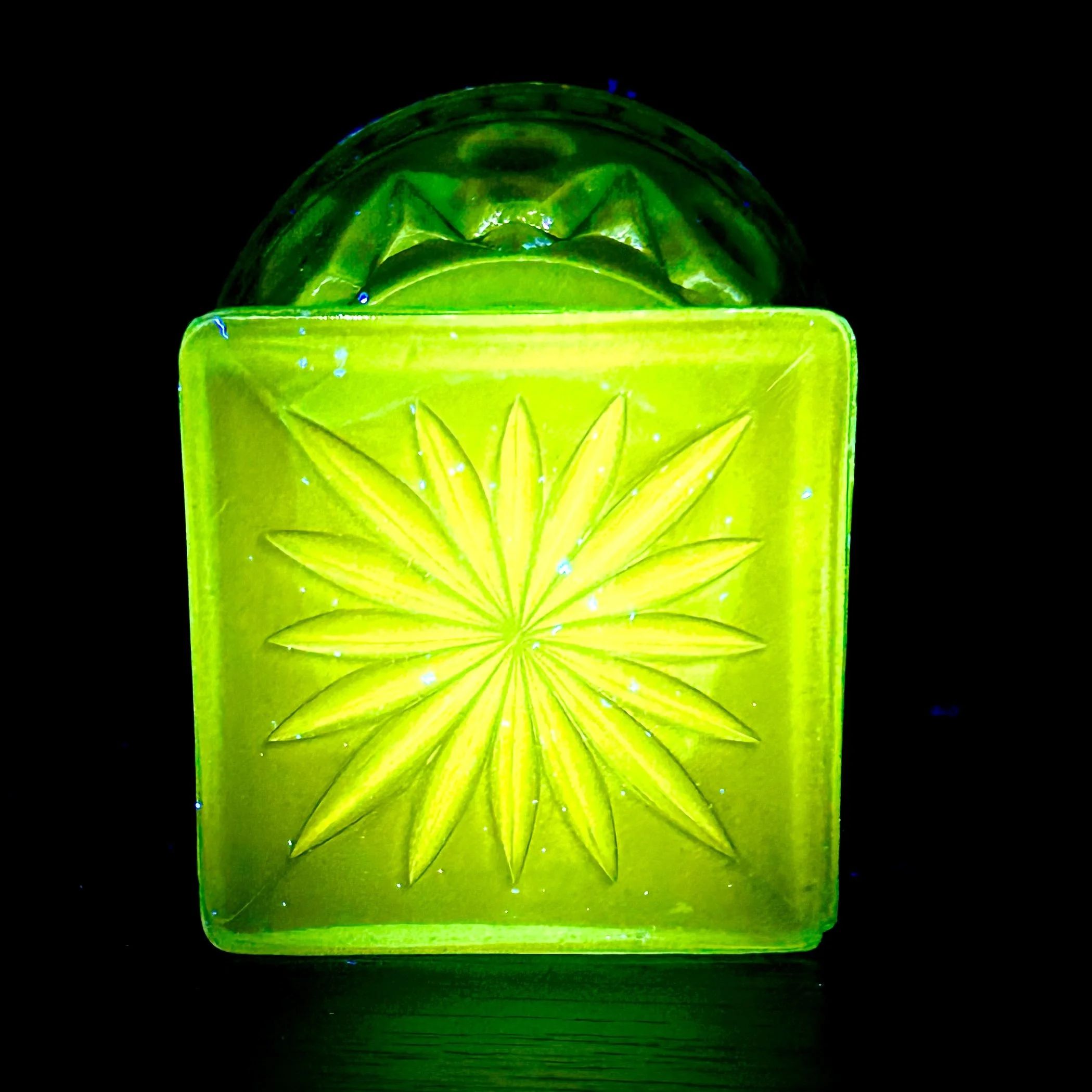
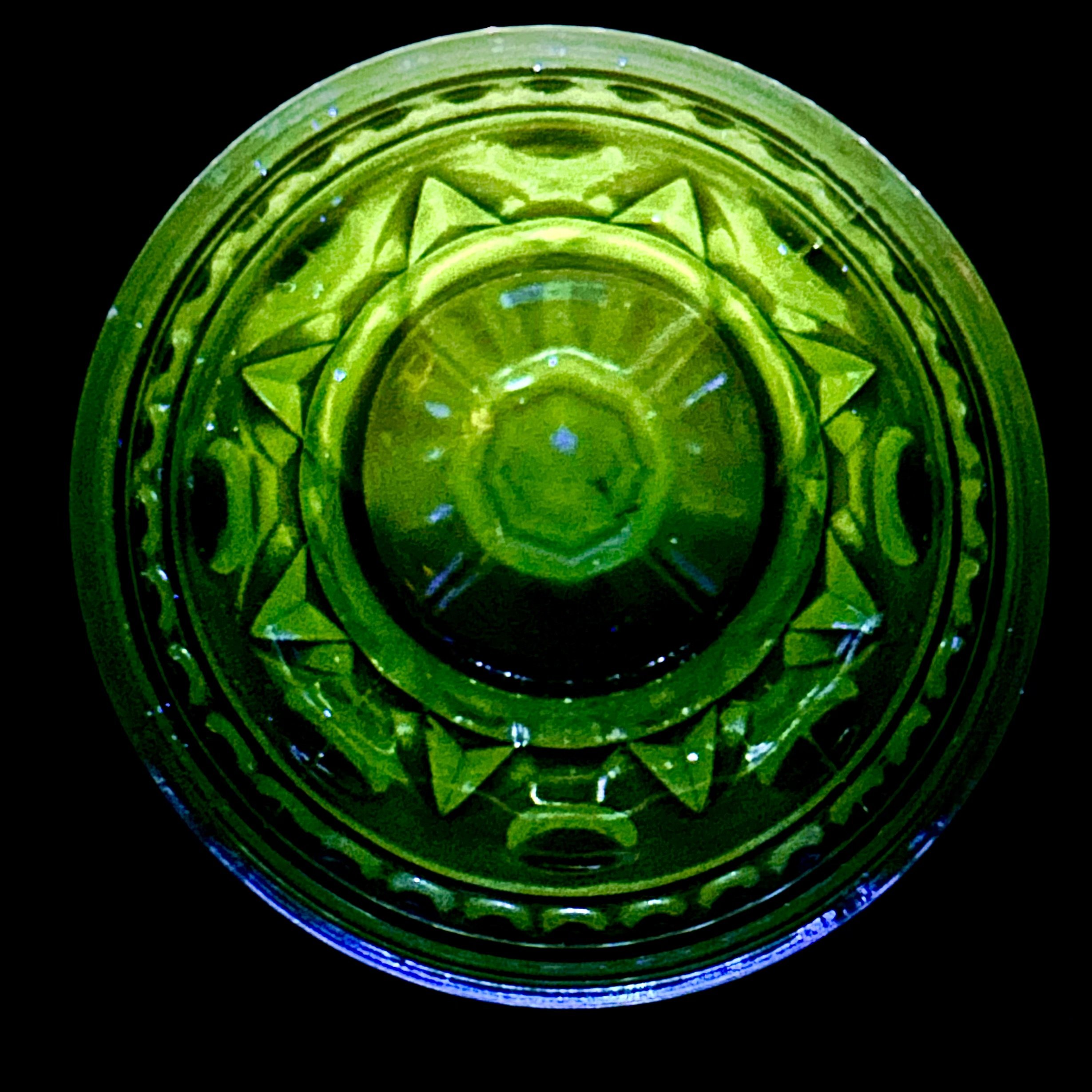
The intense green reaction under 365nm ultraviolet light indicates a high manganese content, used as a decoloring agent prior to the widespread adoption of selenium in the early 20th century. The pressed glass construction, featuring a multi-sided stem and a rayed/starburst base, is stylistically aligned with late Victorian-era production (1880s–1890s). While similar to forms produced by firms like Bryce Brothers or Adams & Co., no factory mark is observed, placing these as exemplary unmarked decorative arts from the height of the American pressed glass movement.
Dimensions & Weight
Height: 4 inches
Mouth Diameter: 2.75 inches
Base Diameter: 2.25 inches
Combined Weight: 1.574 lbs
Condition
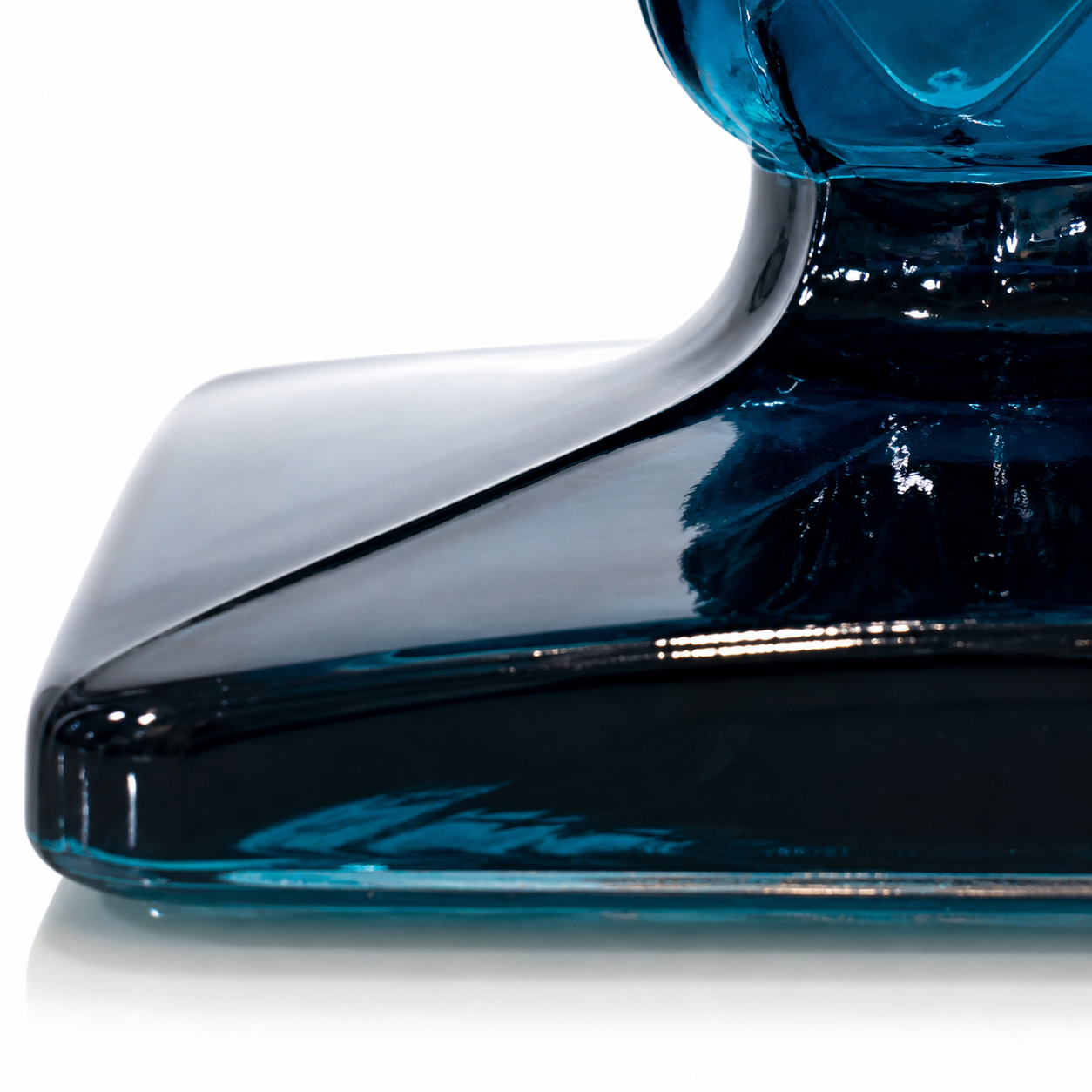
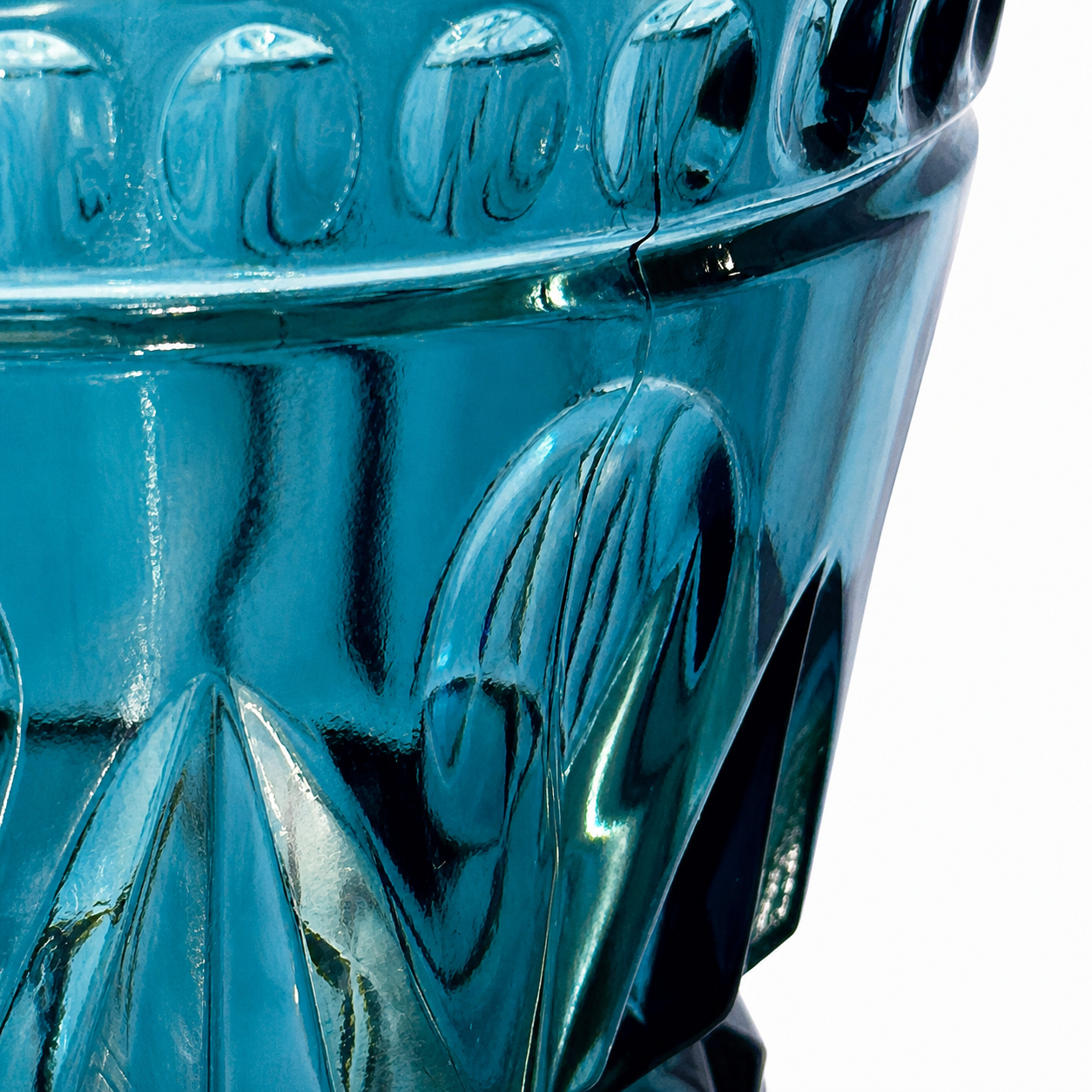
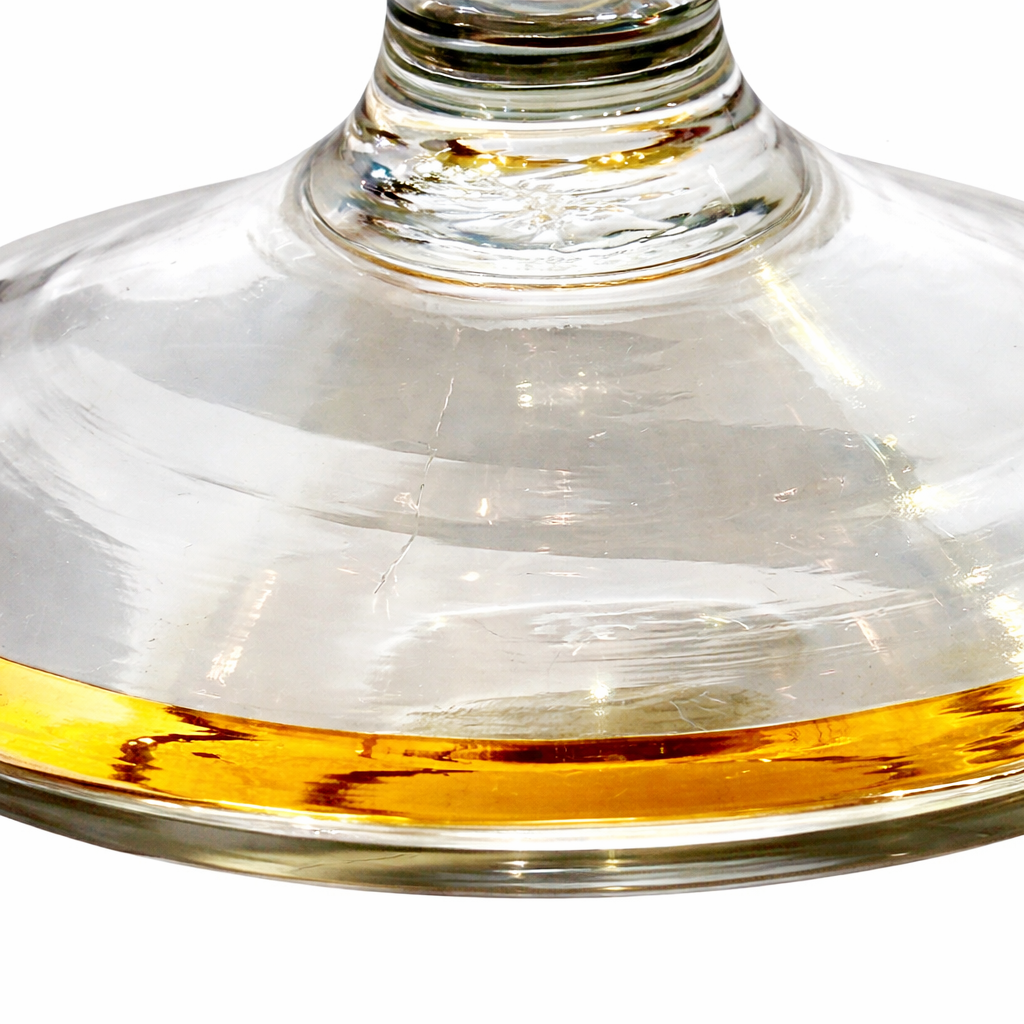
Excellent Collector Grade; These vessels are in remarkable condition with no observed chips, cracks, or structural repairs. The glass remains clear with no "sick" glass clouding or significant surface scratching. Minor shelf wear to the underside of the bases is consistent with age and authenticates their antique origin.
Authenticity & Construction
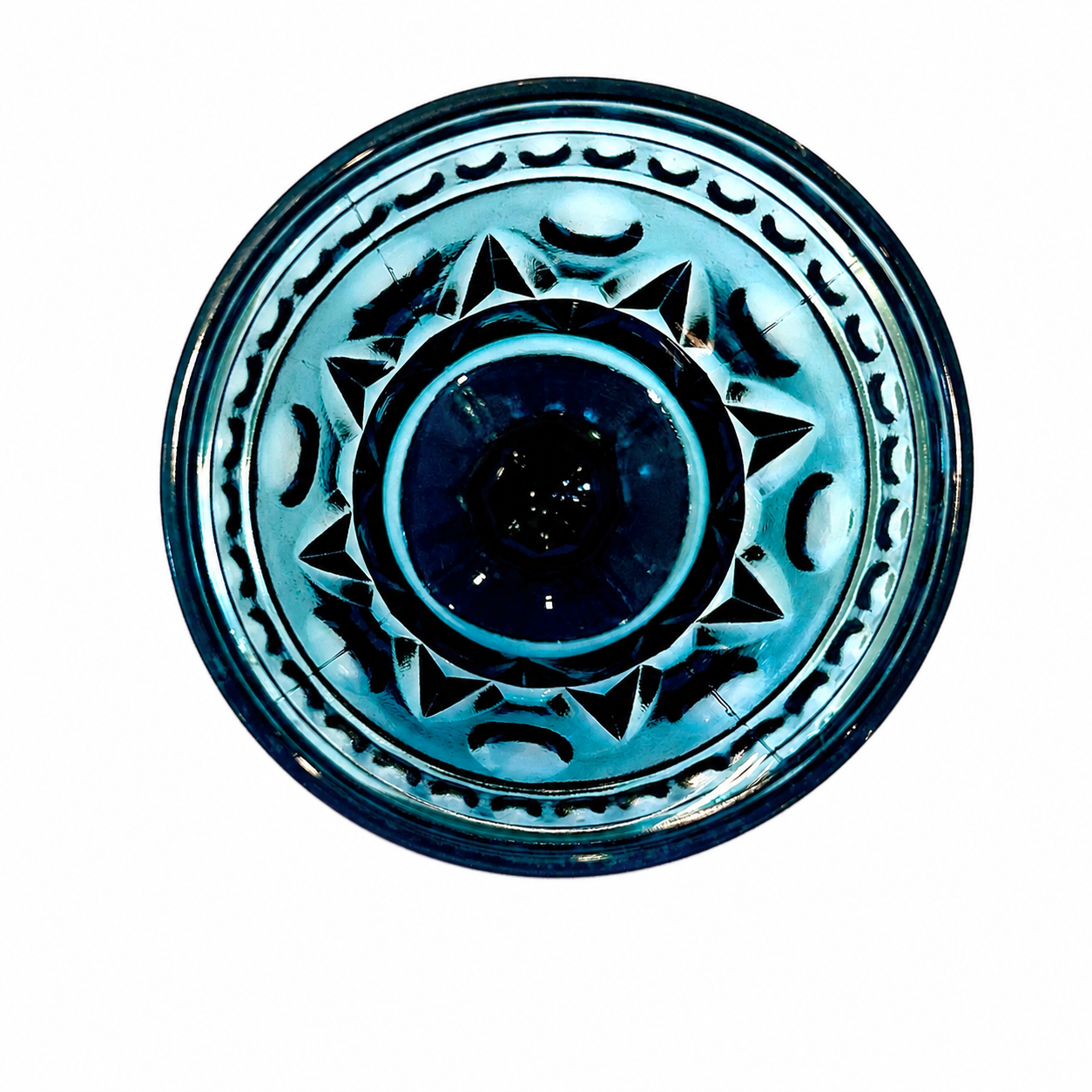
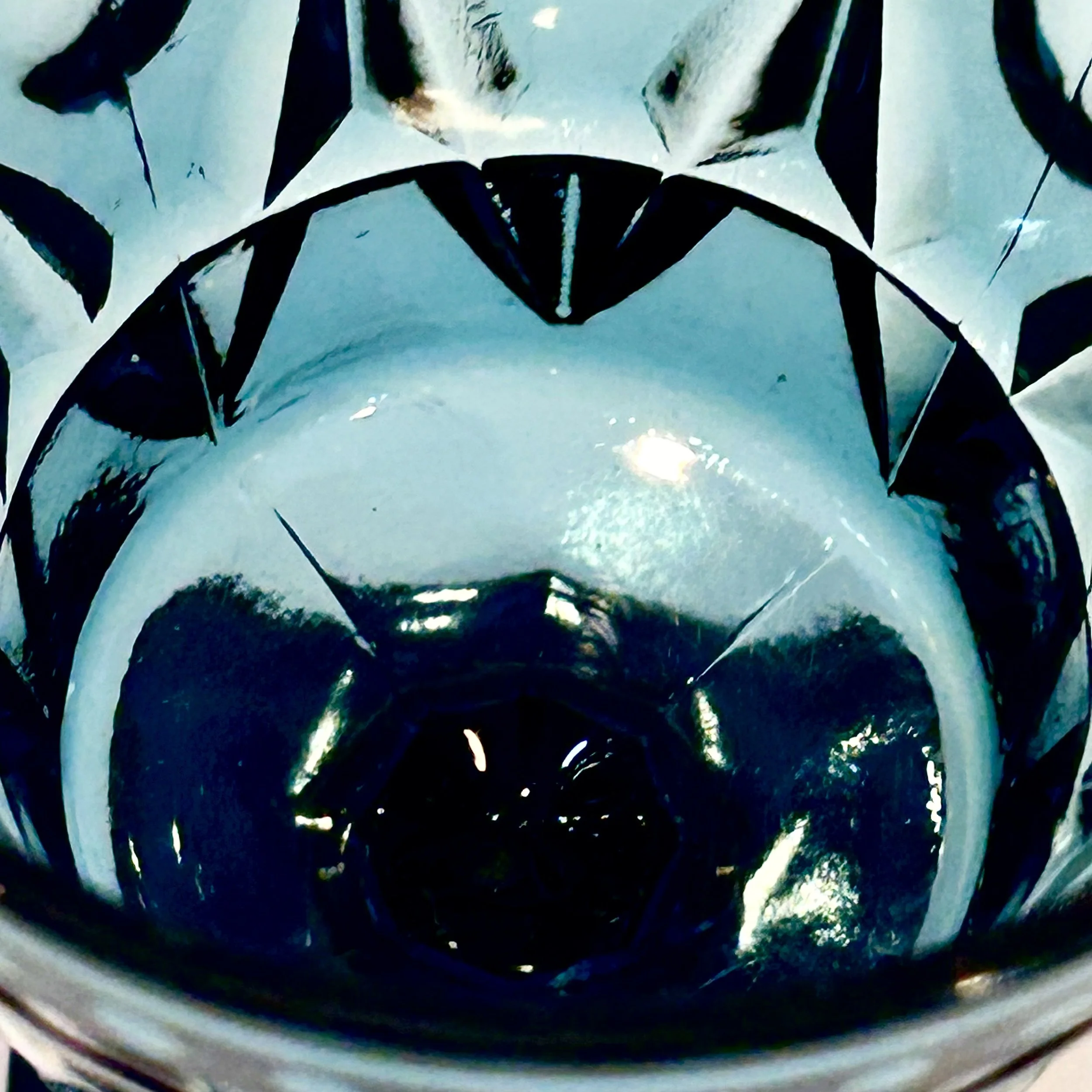
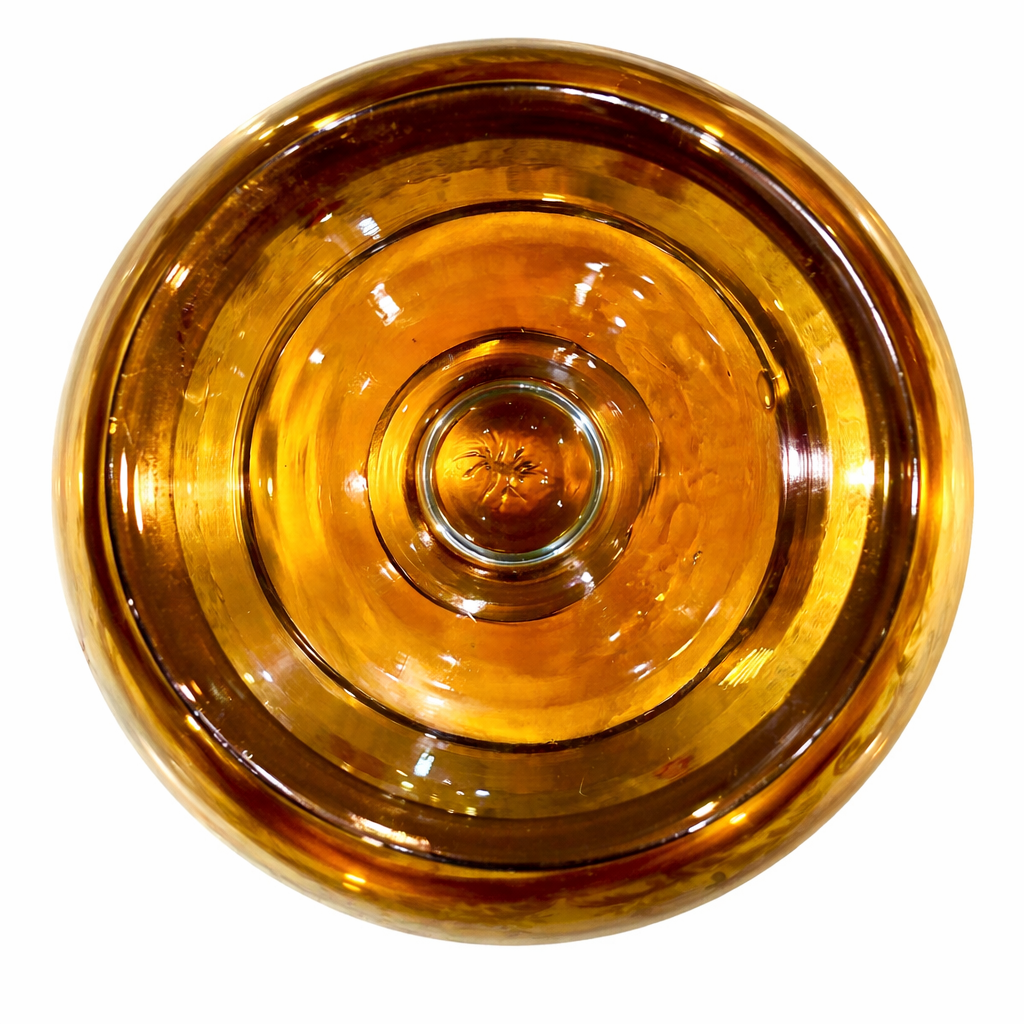
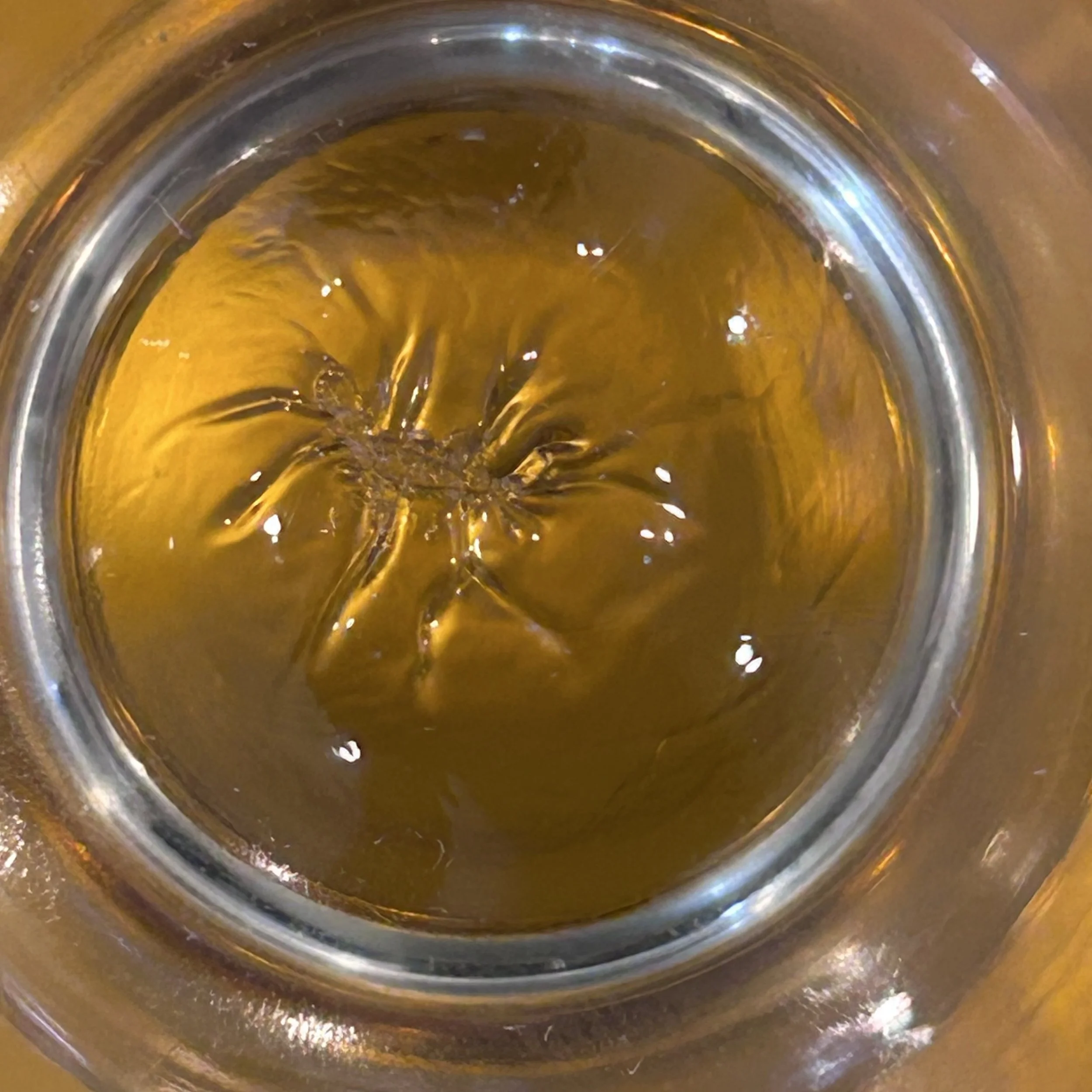
These goblets were manufactured using a complex pressing mold, evidenced by the crispness of the optic ribs and the intricate starburst pattern on the foot. The deep purple color was achieved through the addition of manganese oxide to the glass melt; over decades of exposure to natural light, such glass often "solarizes" or deepens in violet intensity, making this specific saturation highly desirable to collectors of antique glassware.
Placement
The diminutive scale and rich color palette make these ideal for a curated back-bar display or as sophisticated cordial glasses in a contemporary dining setting. They pair seamlessly with larger "Black Amethyst" or "Hyacinth" glass chargers and bowls, providing a necessary vertical element to a monochromatic glass collection.
STANDARD ATTRIBUTION & VALUE DISCLOSURE; This piece is described to the best of current scholarly and market knowledge. Any maker or regional attribution is based on visual analysis, materials, construction techniques, and documented stylistic comparisons. As with many MCM and antique design objects, definitive attribution may not be possible without original labels or factory records. Pricing reflects condition, quality, decorative appeal, and current collector demand rather than guaranteed maker identification
This set of four stemmed goblets possesses a striking sculptural presence, defined by a deep amethyst hue and sharp, optic-ribbed faceting that catches and refracts light with exceptional clarity. When exposed to 365nm UV light, the glass exhibits a vibrant lime-green fluorescence, a definitive characteristic of early manganese-purified glass compositions. The iridescent surface quality and elegant, classic silhouette provide a sophisticated decorative impact that bridges the gap between historical craftsmanship and modern tablescape design.
Attribution & Period:
Consistent with American Early American Pattern Glass (EAPG), late 19th Century (1880–1895). Amethyst Goblets
The dating of these vessels is definitively supported by the intense lime-green fluorescence under 365nm UV light, a chemical signature of high-content manganese. Manganese was the primary decoloring agent used in high-end flint glass batches prior to the 1915 transition to selenium; over the course of a century, this manganese reacts to natural UV exposure through a process called "solarization," deepening the glass into this specific, sought-after amethyst saturation. The substantial physical mass of the lead-glass body (1.574 lbs for the set) and the precision-pressed optic ribbing are hallmarks of Victorian-era production, predating the lighter, soda-lime glass compositions common in 20th-century reproductions.
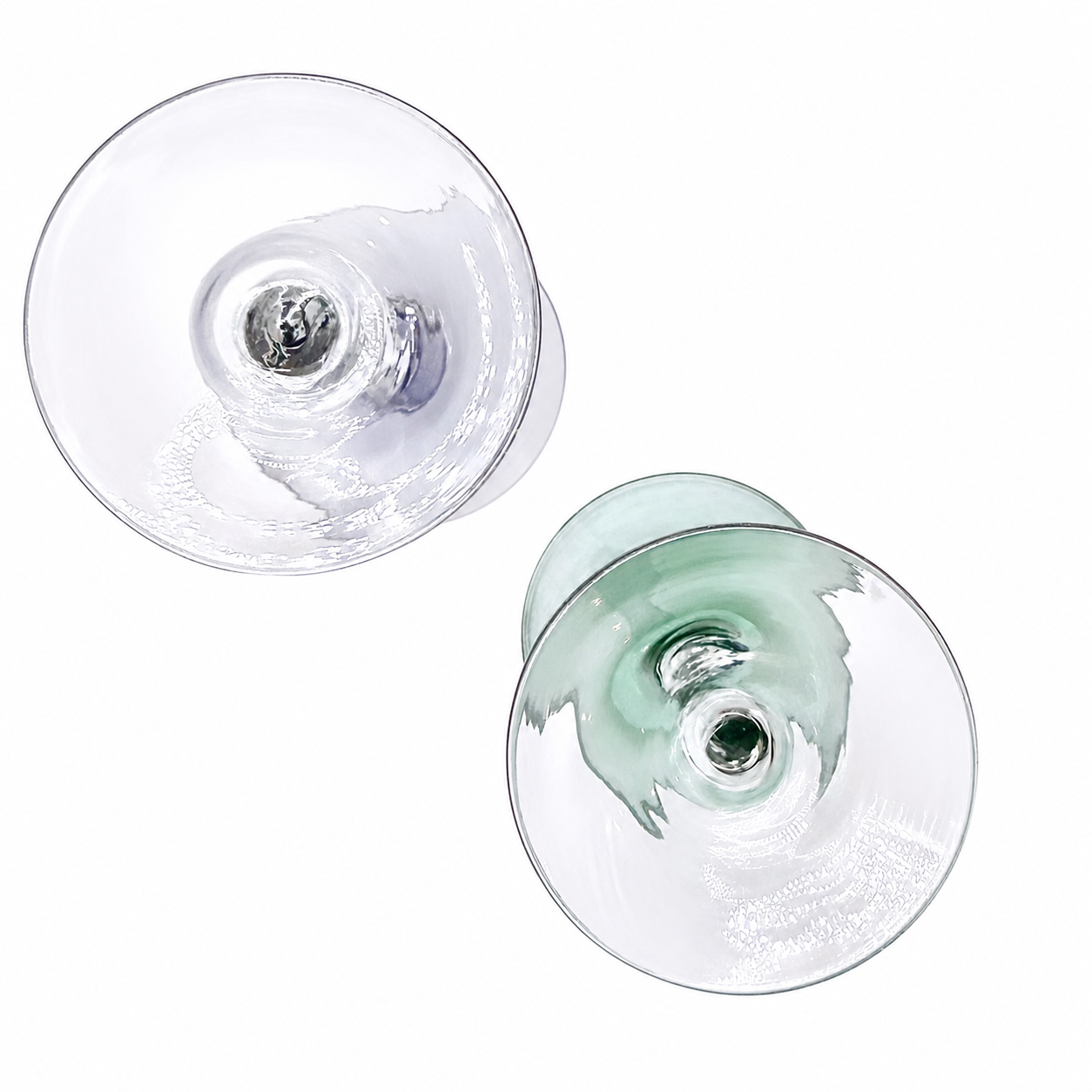
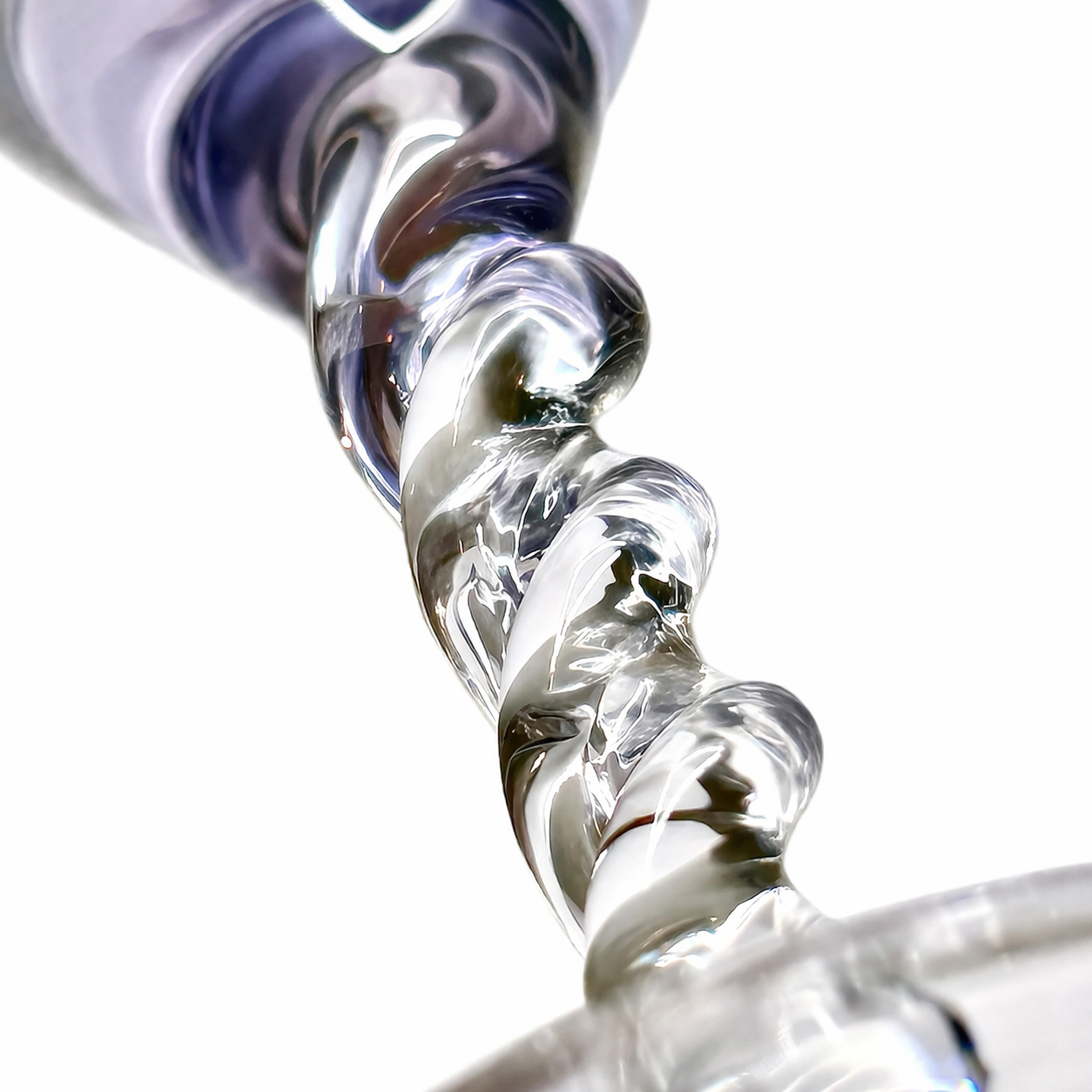
The intense green reaction under 365nm ultraviolet light indicates a high manganese content, used as a decoloring agent prior to the widespread adoption of selenium in the early 20th century. The pressed glass construction, featuring a multi-sided stem and a rayed/starburst base, is stylistically aligned with late Victorian-era production (1880s–1890s). While similar to forms produced by firms like Bryce Brothers or Adams & Co., no factory mark is observed, placing these as exemplary unmarked decorative arts from the height of the American pressed glass movement.
Dimensions & Weight
Height: 4 inches
Mouth Diameter: 2.75 inches
Base Diameter: 2.25 inches
Combined Weight: 1.574 lbs
Condition
Excellent Collector Grade; These vessels are in remarkable condition with no observed chips, cracks, or structural repairs. The glass remains clear with no "sick" glass clouding or significant surface scratching. Minor shelf wear to the underside of the bases is consistent with age and authenticates their antique origin.
Authenticity & Construction
These goblets were manufactured using a complex pressing mold, evidenced by the crispness of the optic ribs and the intricate starburst pattern on the foot. The deep purple color was achieved through the addition of manganese oxide to the glass melt; over decades of exposure to natural light, such glass often "solarizes" or deepens in violet intensity, making this specific saturation highly desirable to collectors of antique glassware.
Placement
The diminutive scale and rich color palette make these ideal for a curated back-bar display or as sophisticated cordial glasses in a contemporary dining setting. They pair seamlessly with larger "Black Amethyst" or "Hyacinth" glass chargers and bowls, providing a necessary vertical element to a monochromatic glass collection.
STANDARD ATTRIBUTION & VALUE DISCLOSURE; This piece is described to the best of current scholarly and market knowledge. Any maker or regional attribution is based on visual analysis, materials, construction techniques, and documented stylistic comparisons. As with many MCM and antique design objects, definitive attribution may not be possible without original labels or factory records. Pricing reflects condition, quality, decorative appeal, and current collector demand rather than guaranteed maker identification

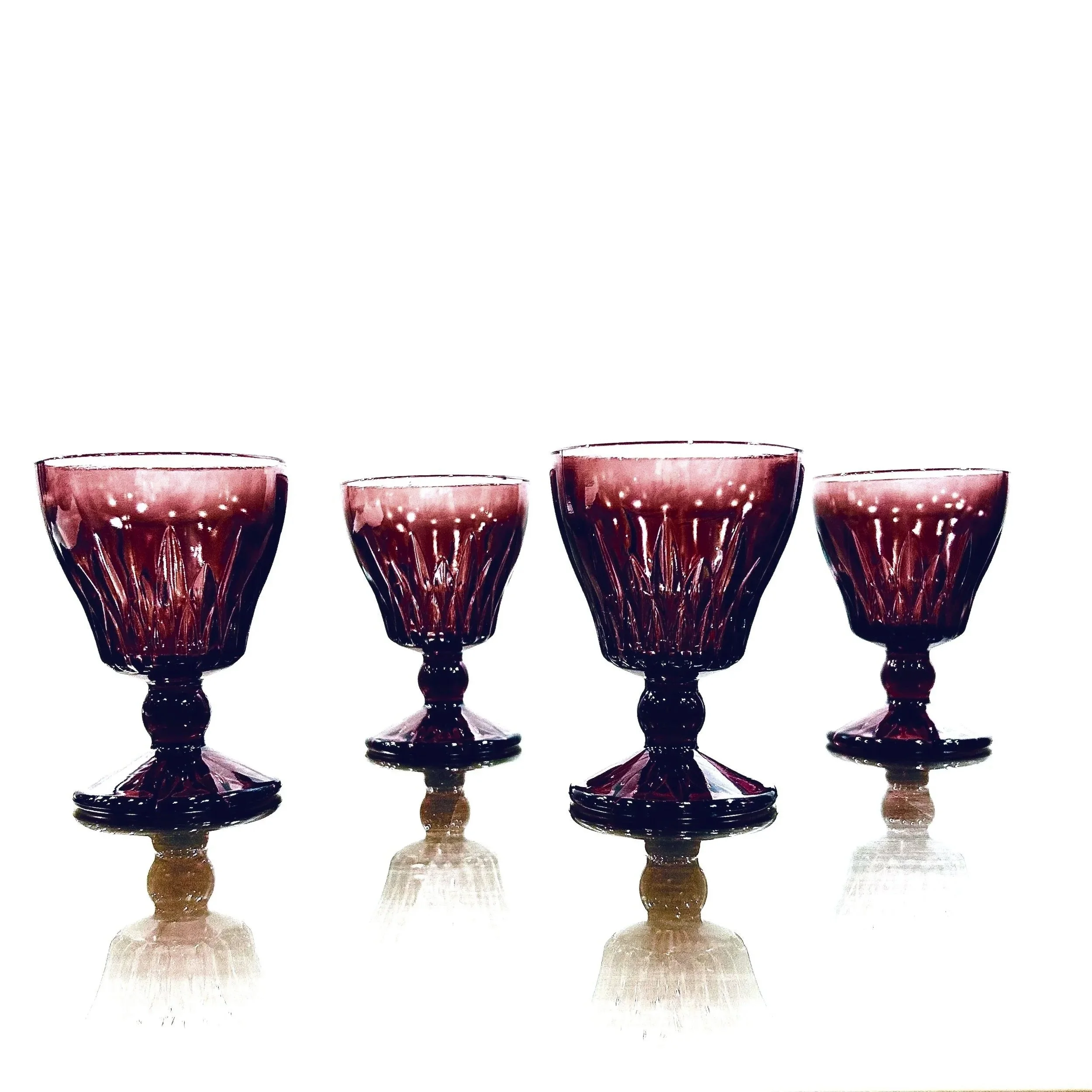 Image 1 of 28
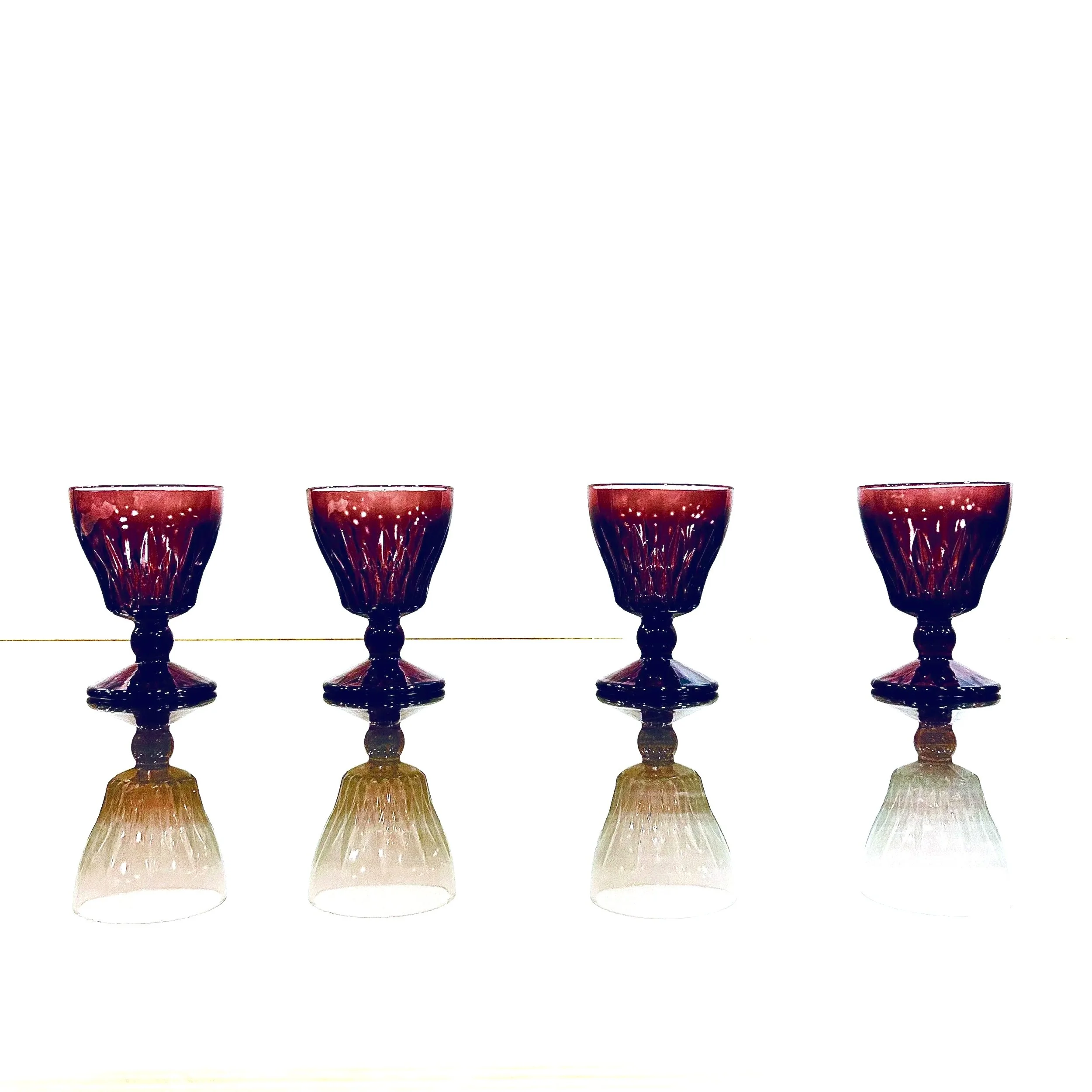 Image 2 of 28
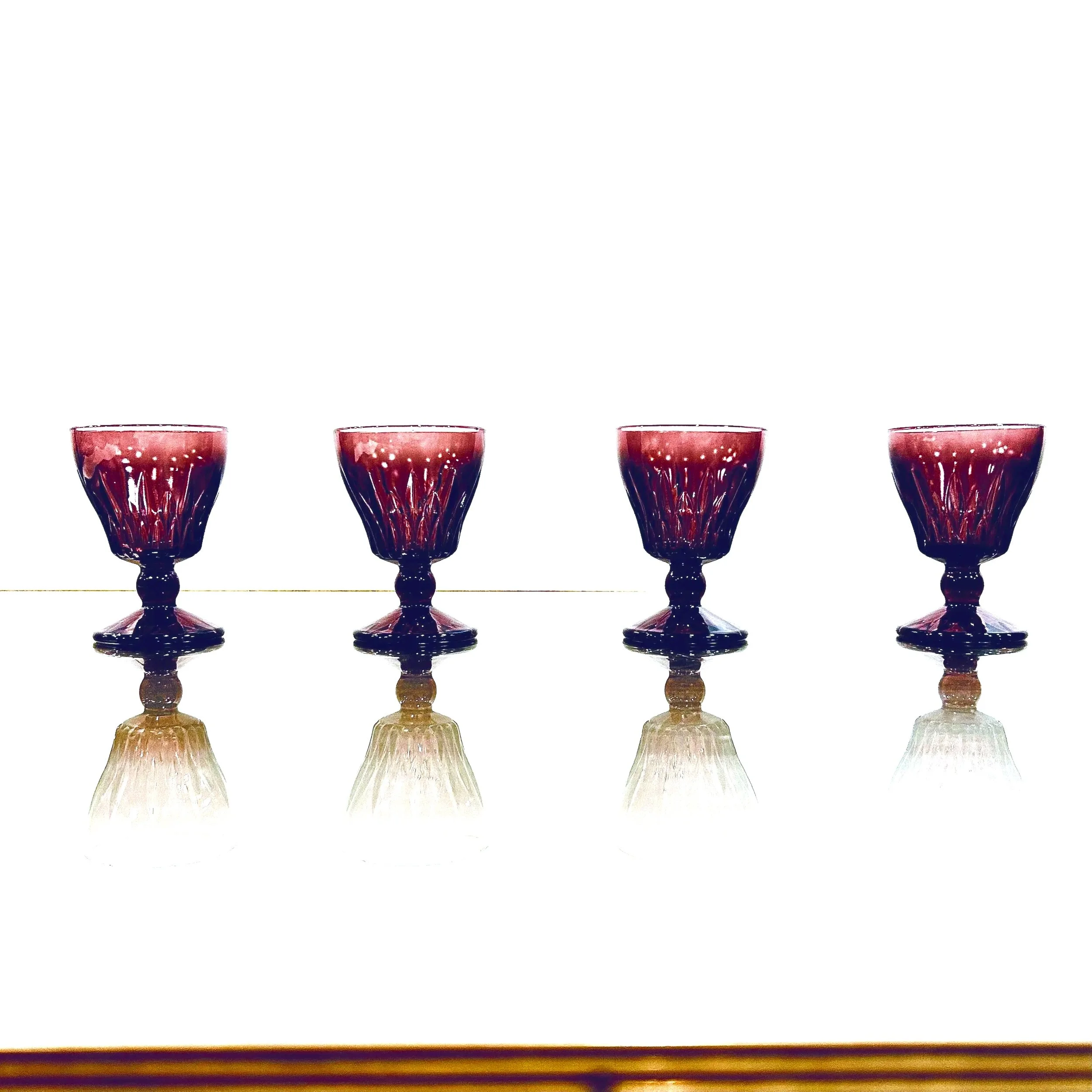 Image 3 of 28
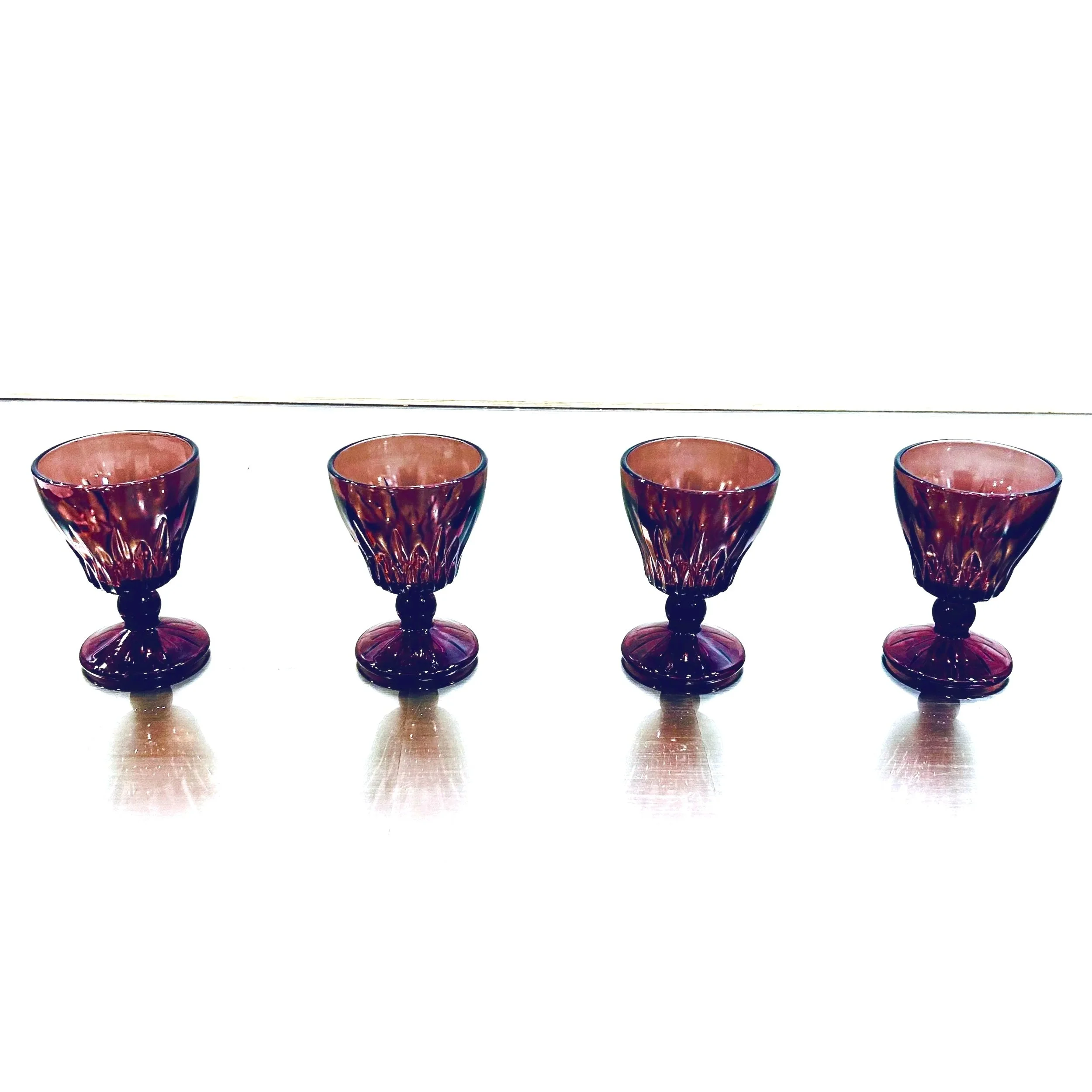 Image 4 of 28
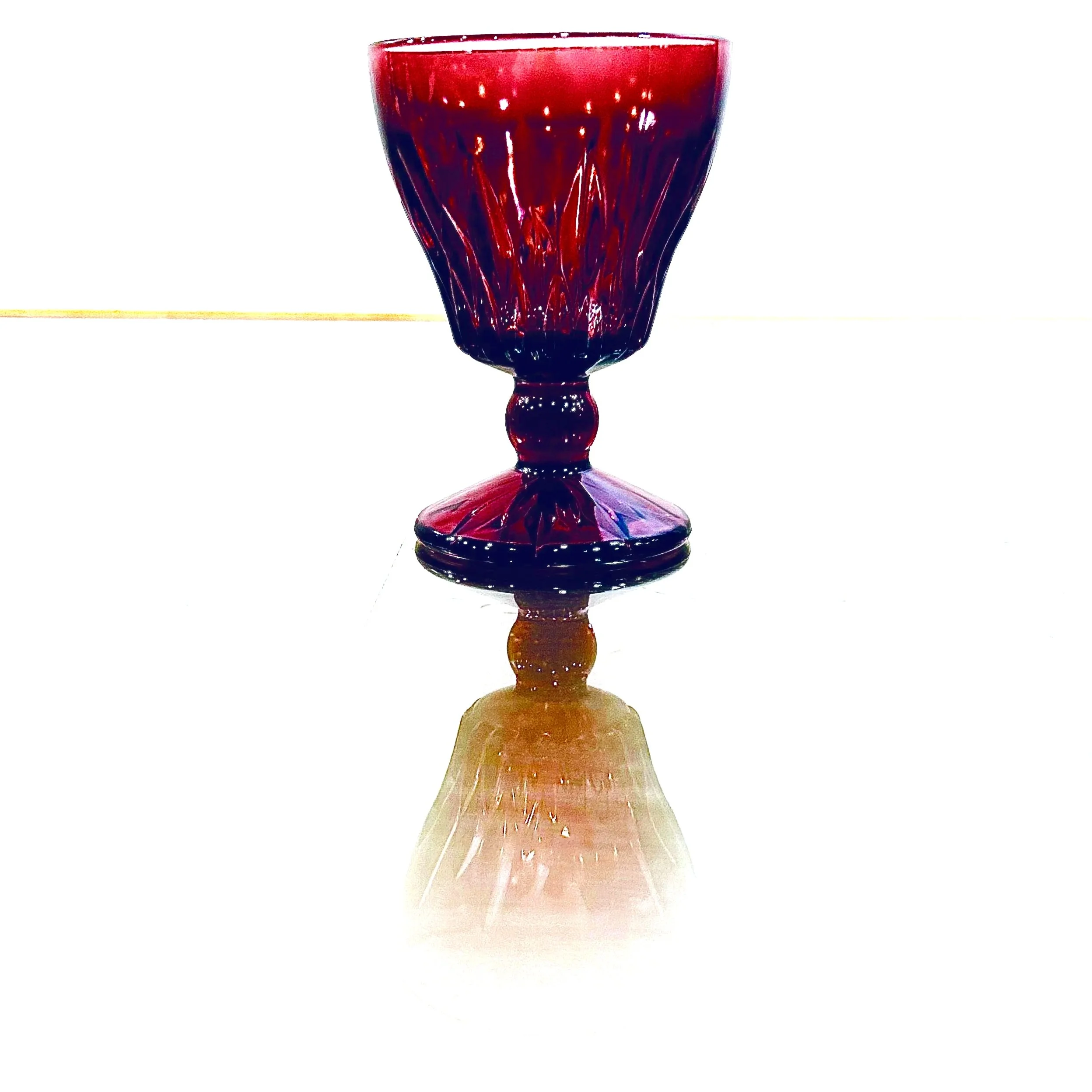 Image 5 of 28
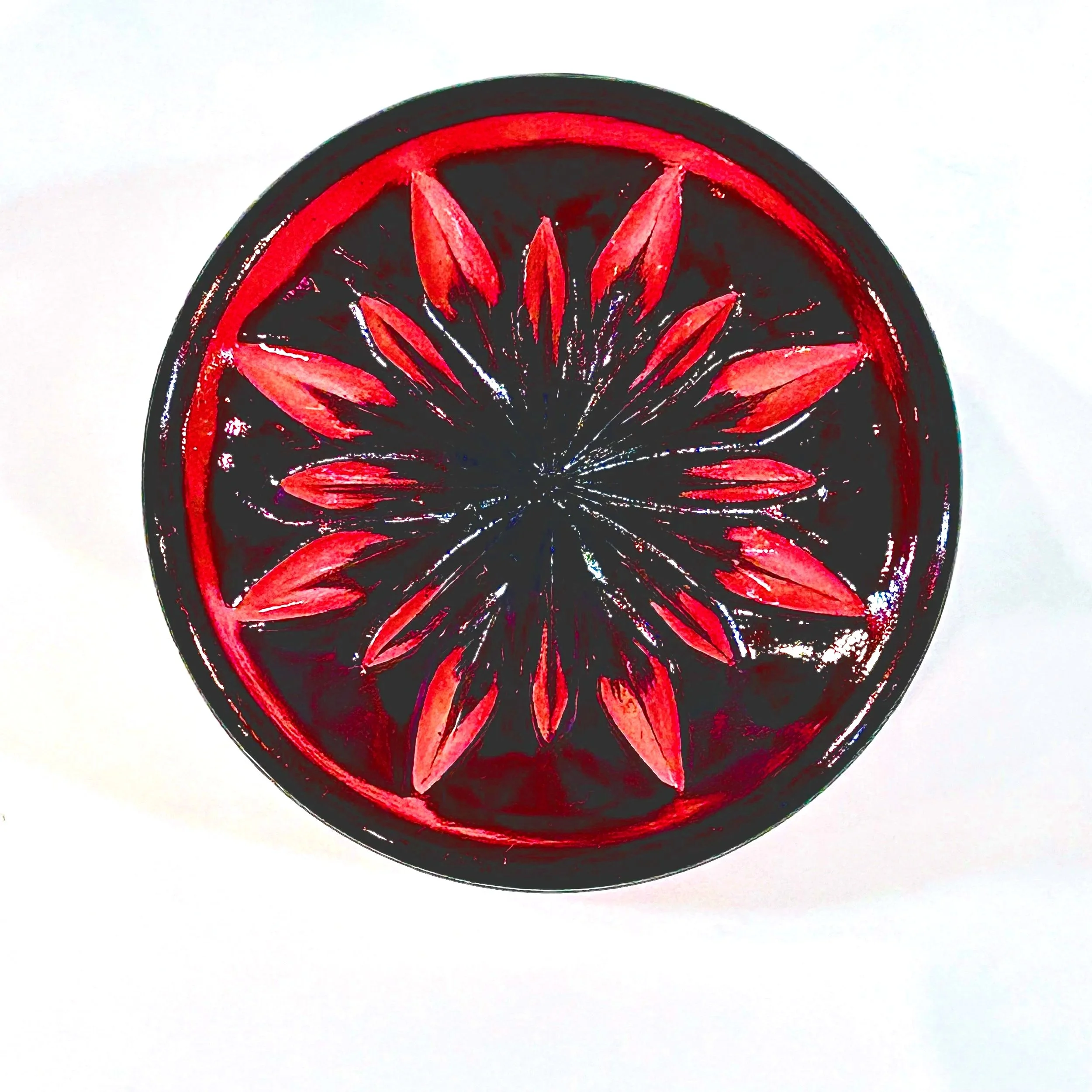 Image 6 of 28
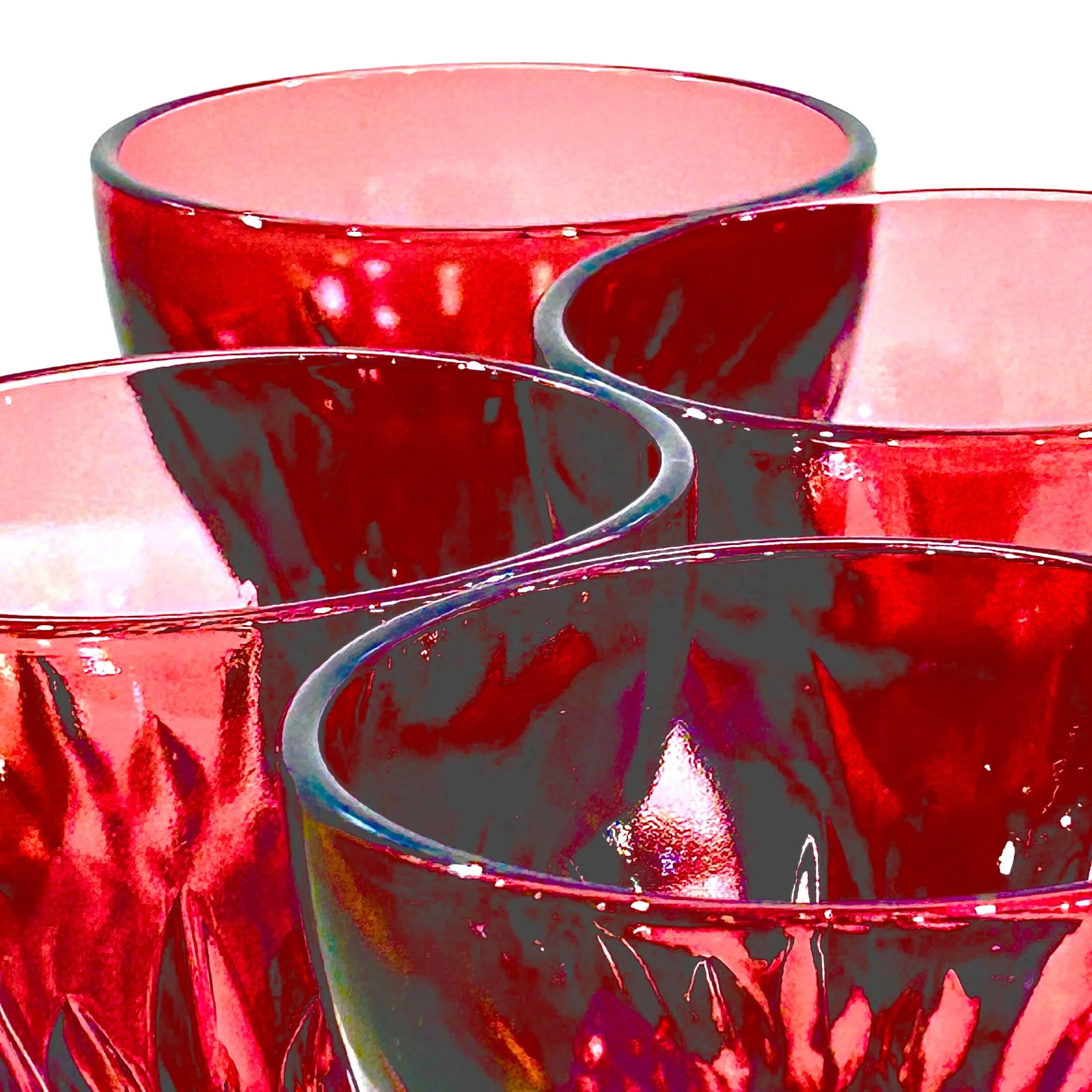 Image 7 of 28
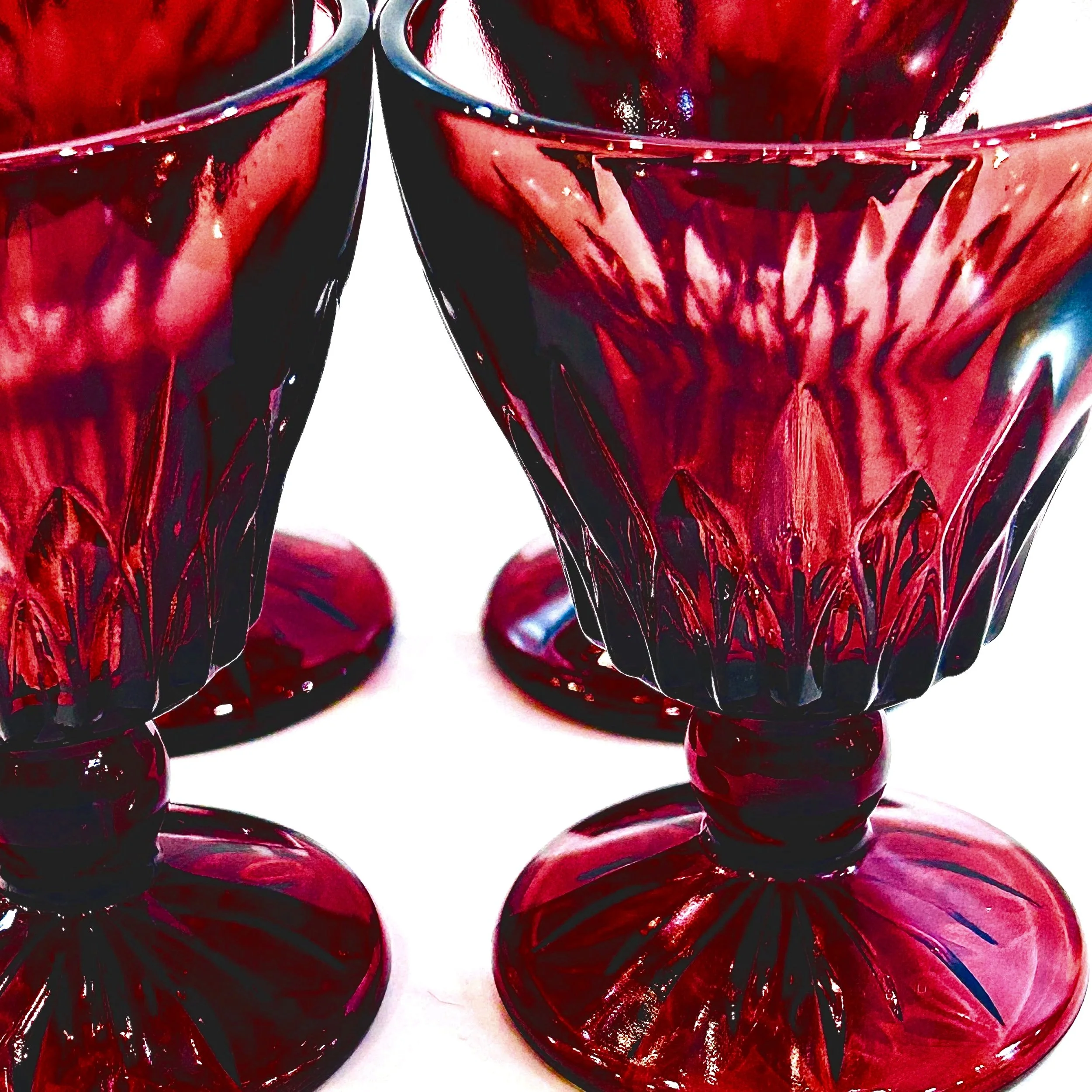 Image 8 of 28
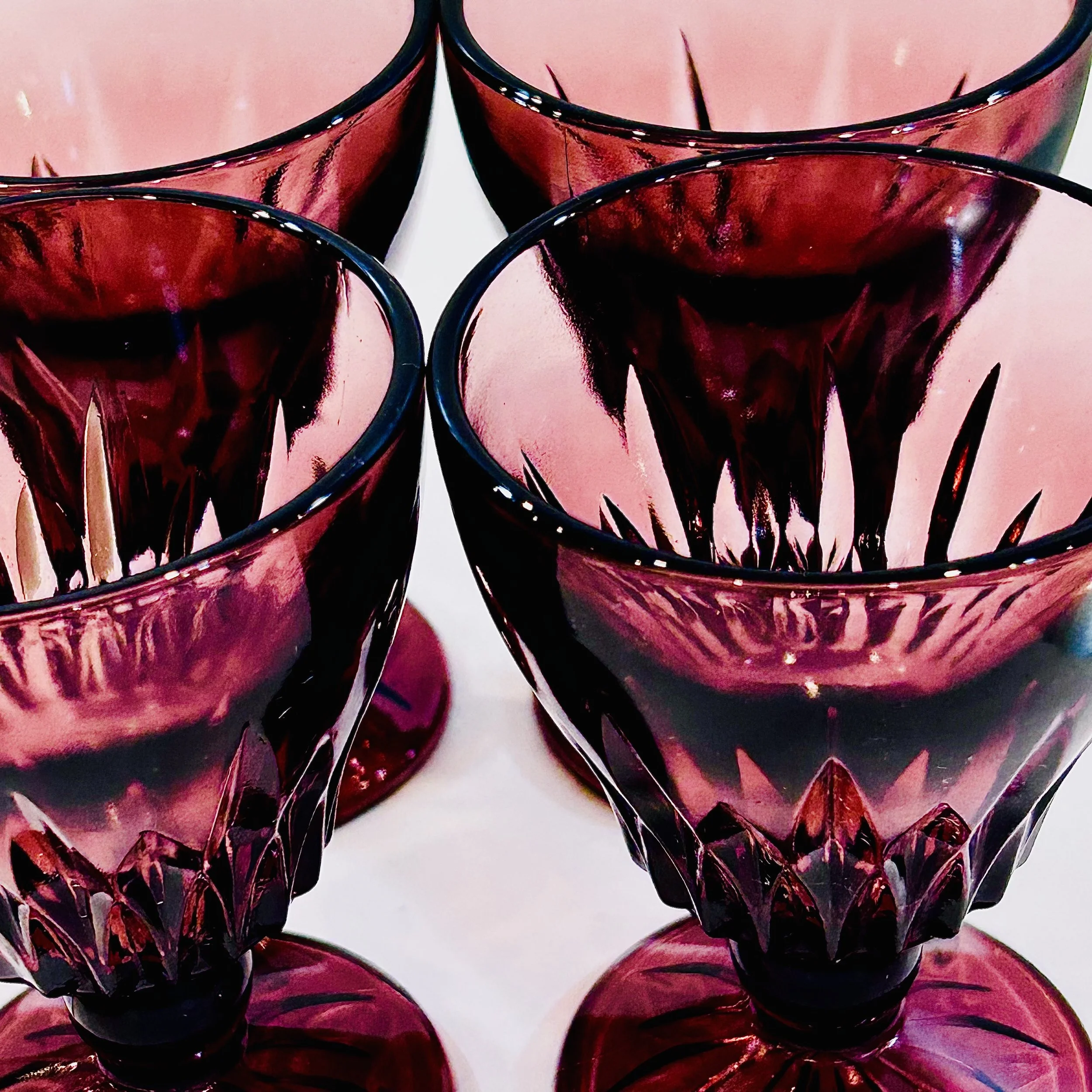 Image 9 of 28
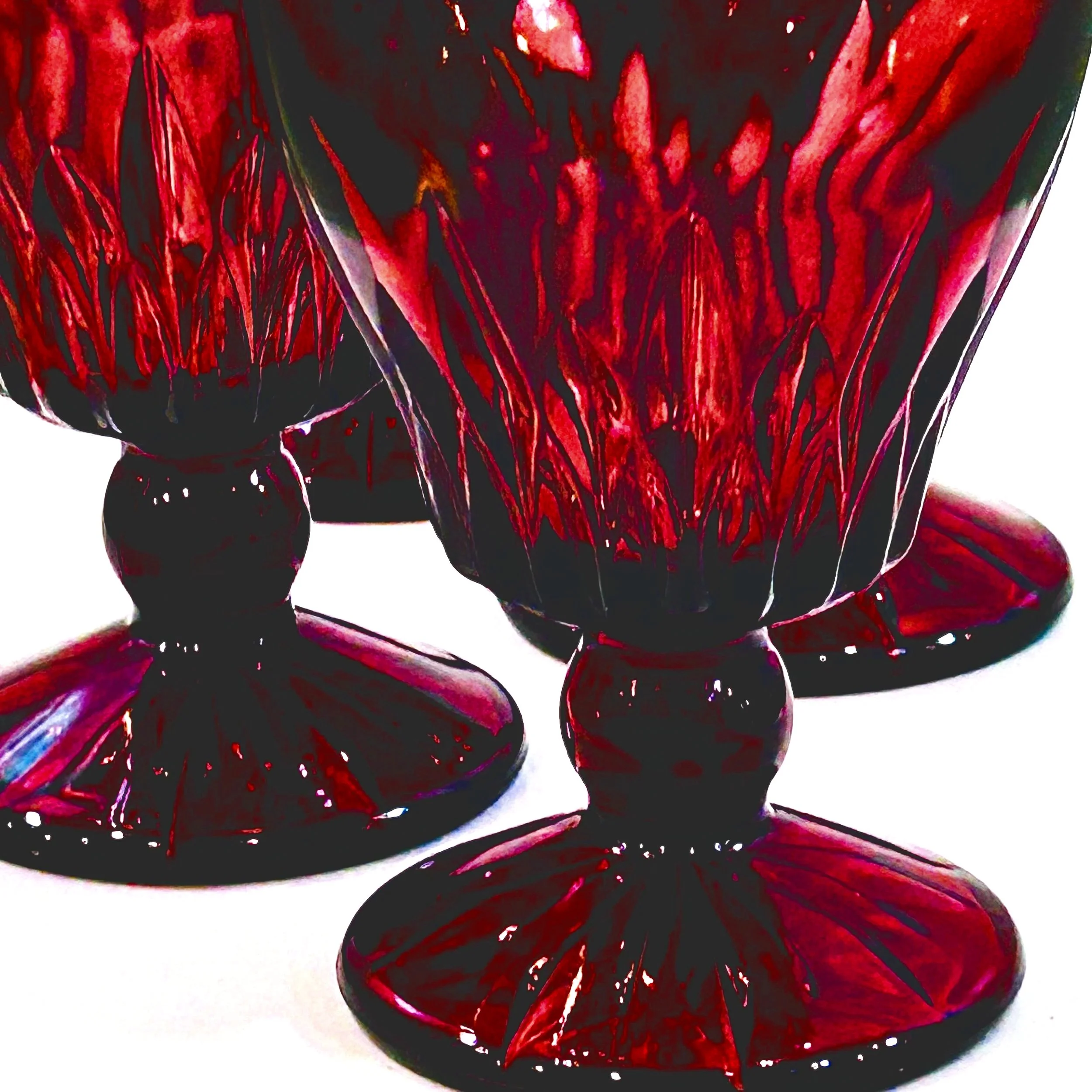 Image 10 of 28
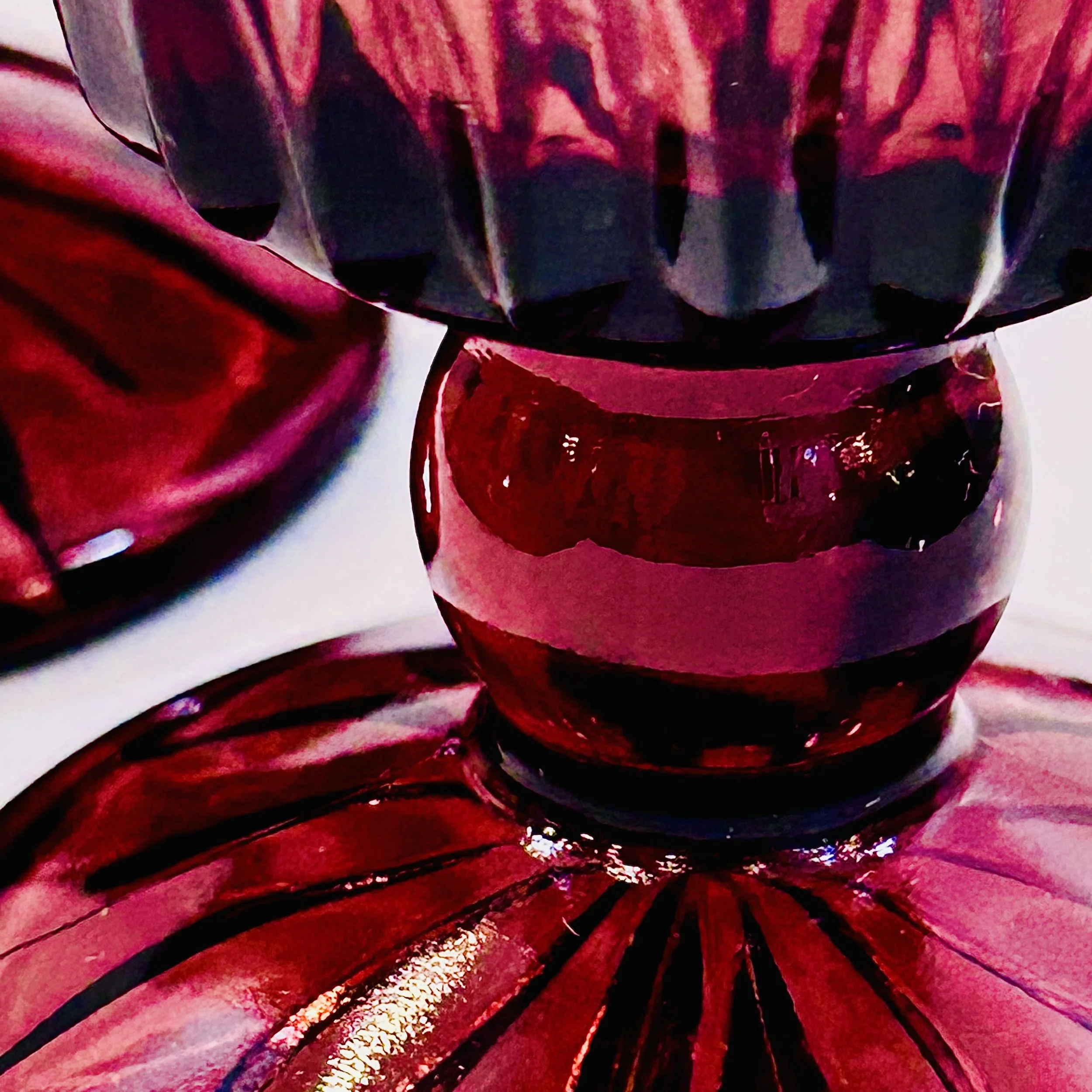 Image 11 of 28
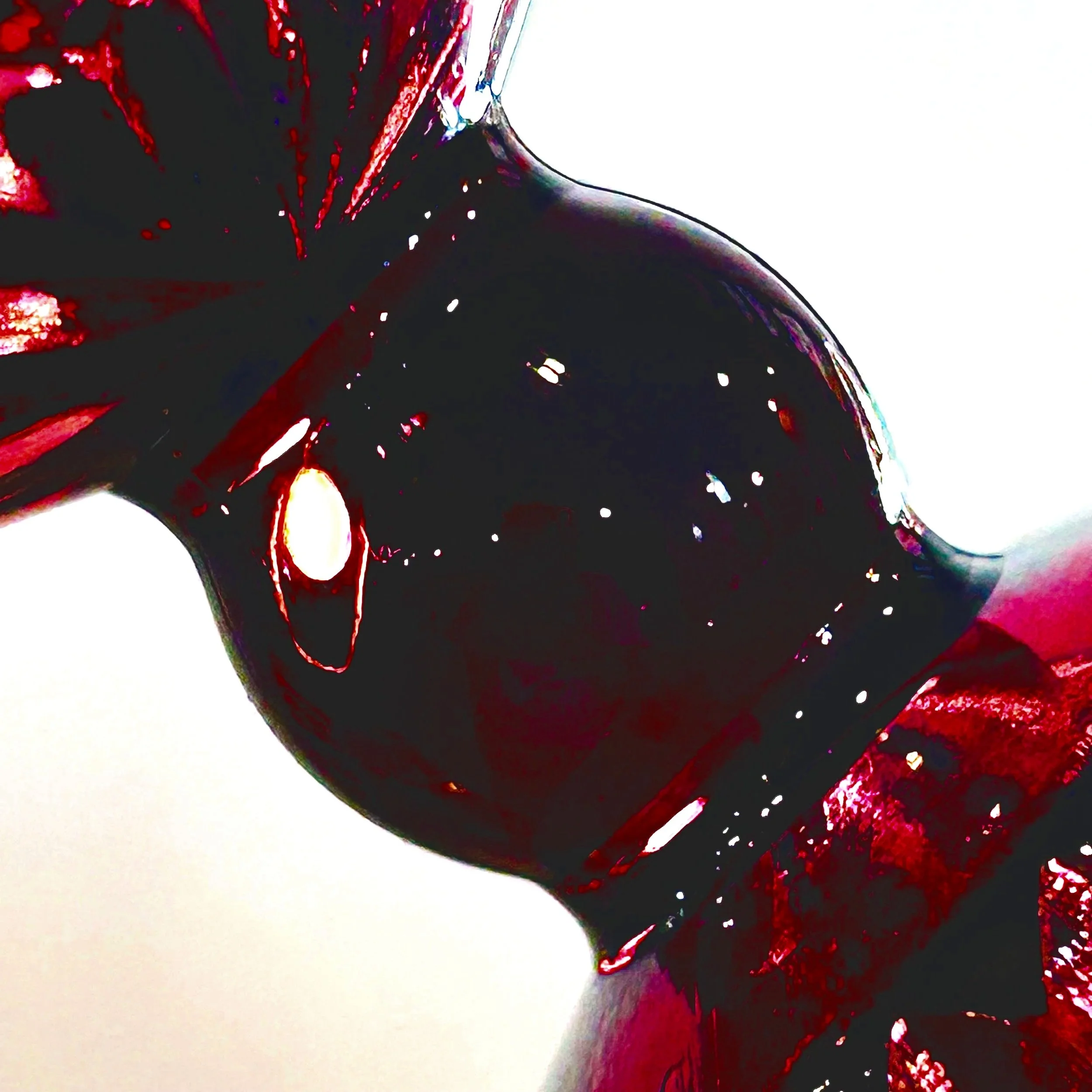 Image 12 of 28
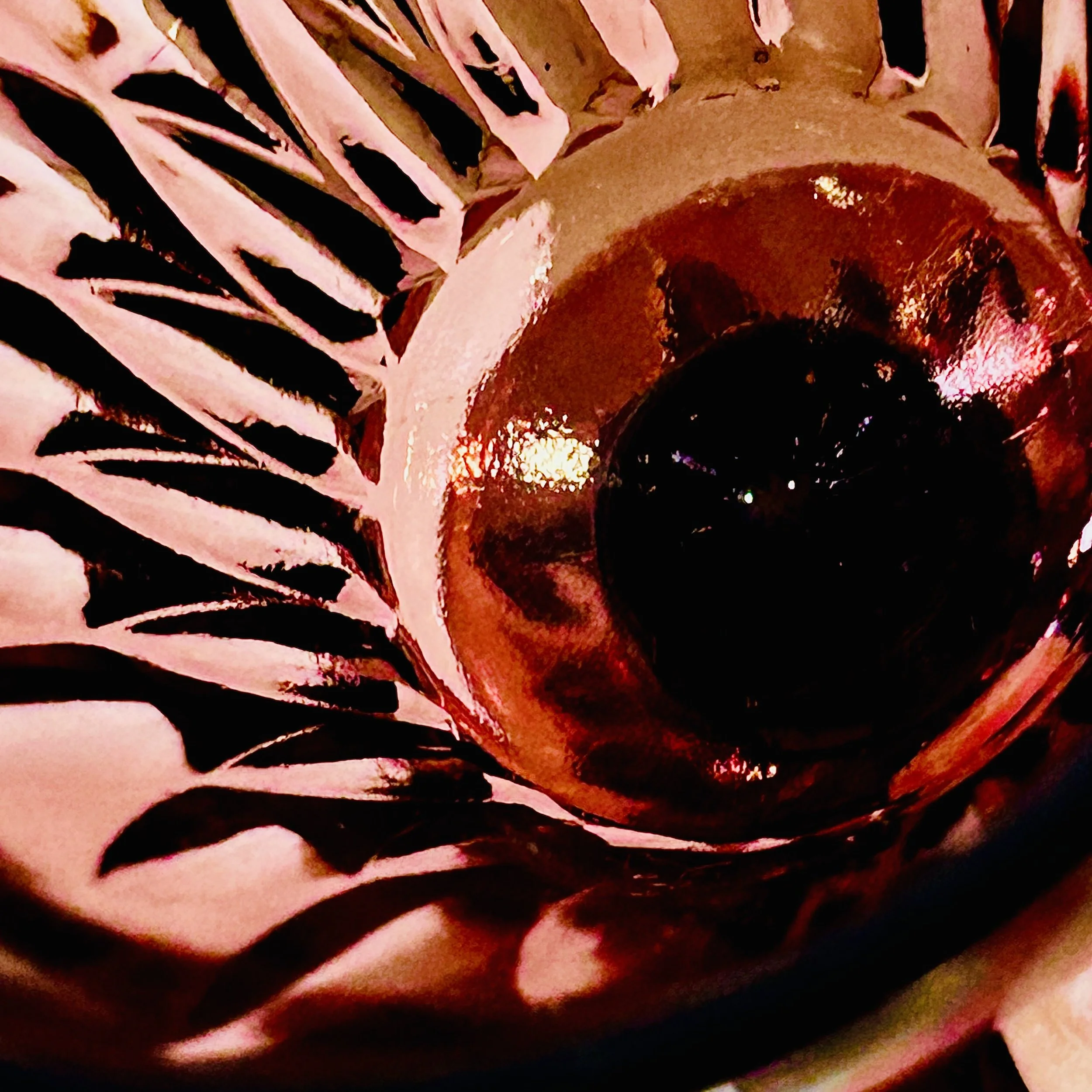 Image 13 of 28
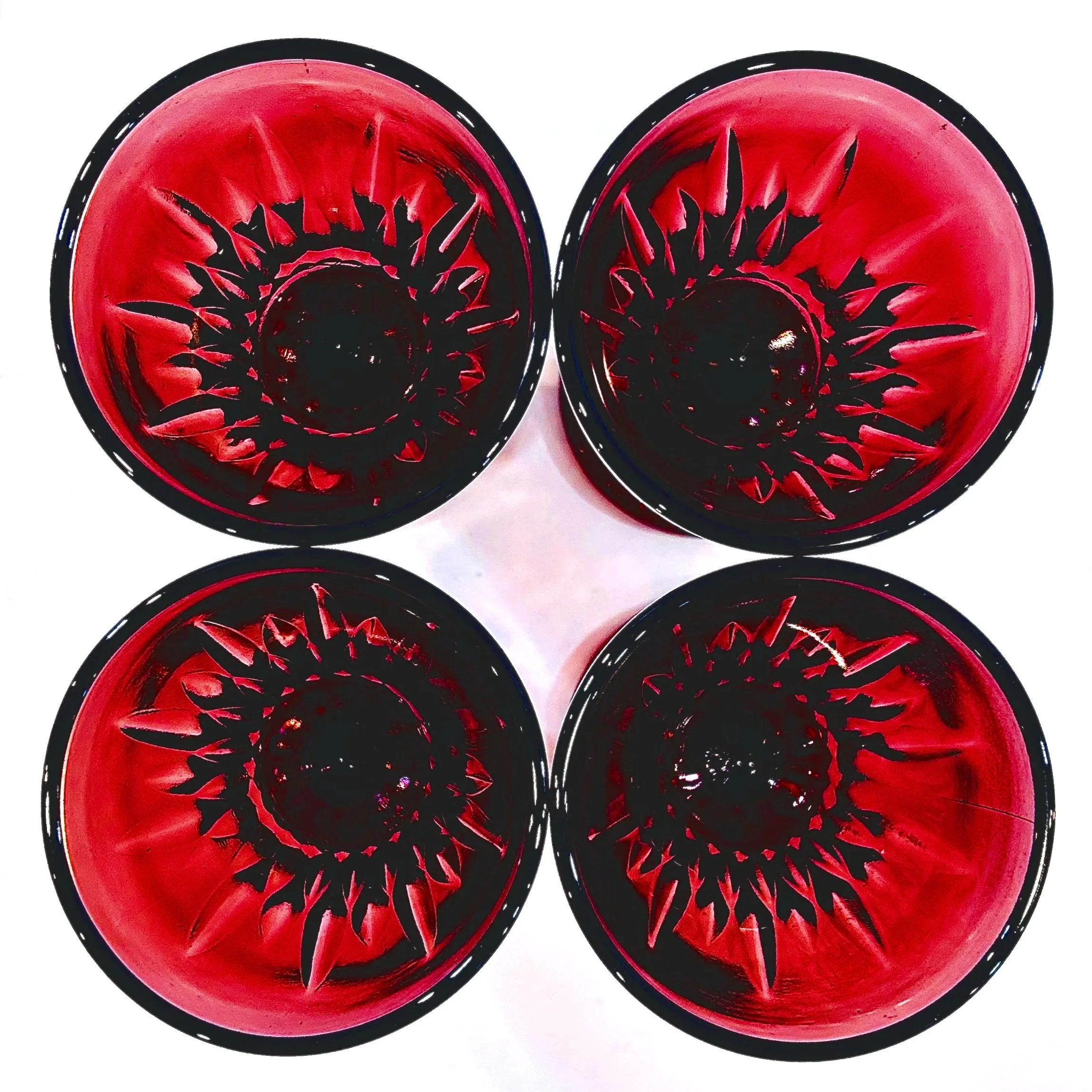 Image 14 of 28
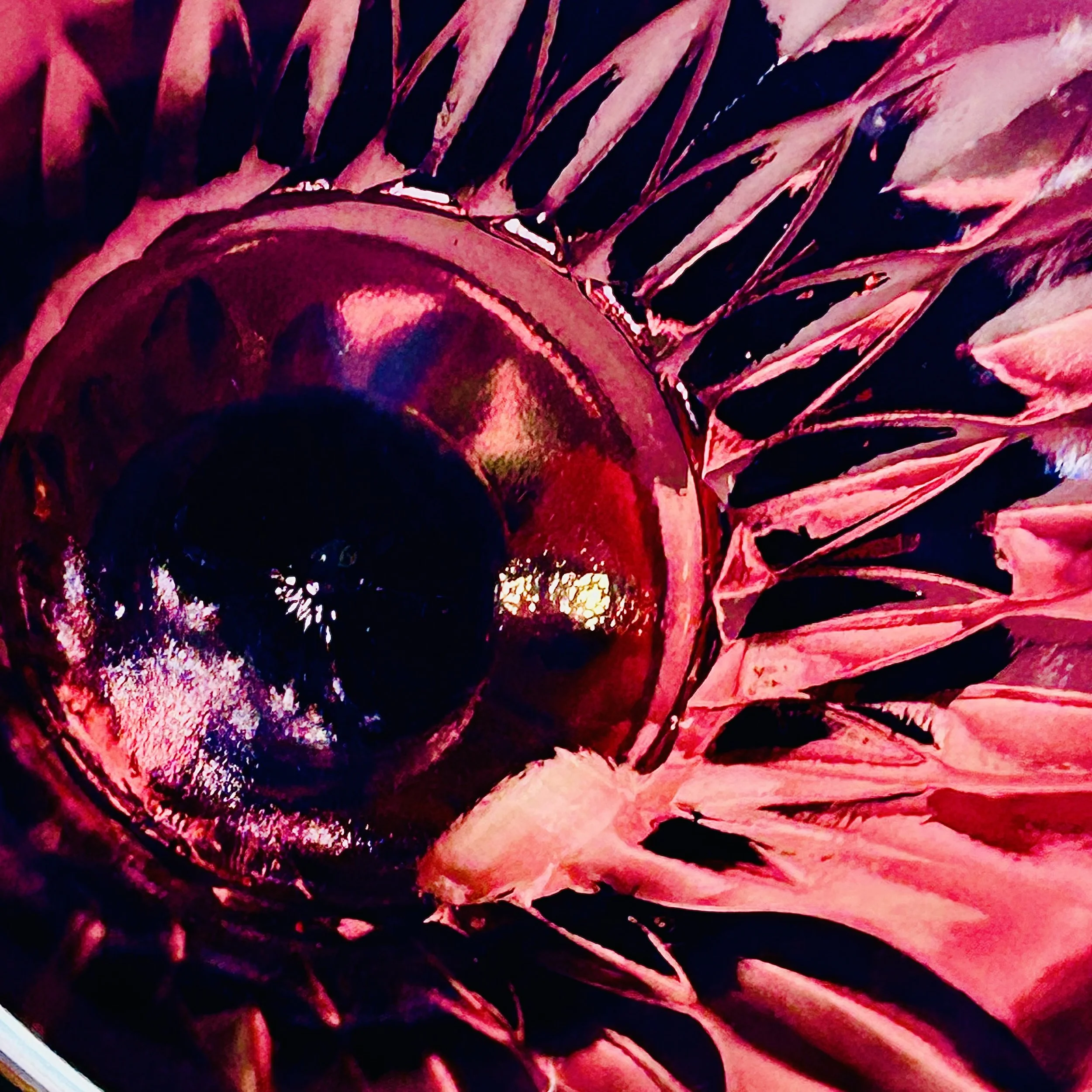 Image 15 of 28
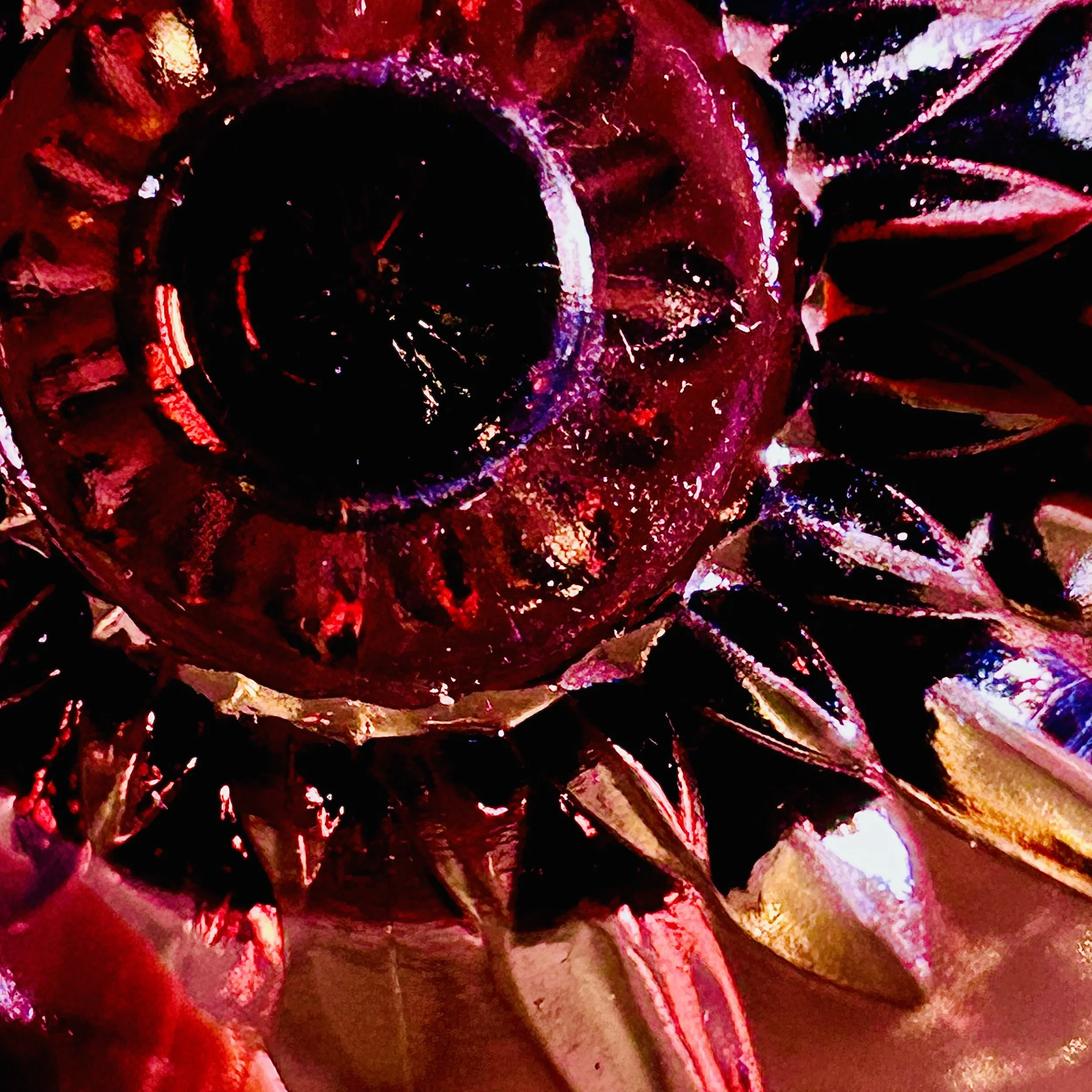 Image 16 of 28
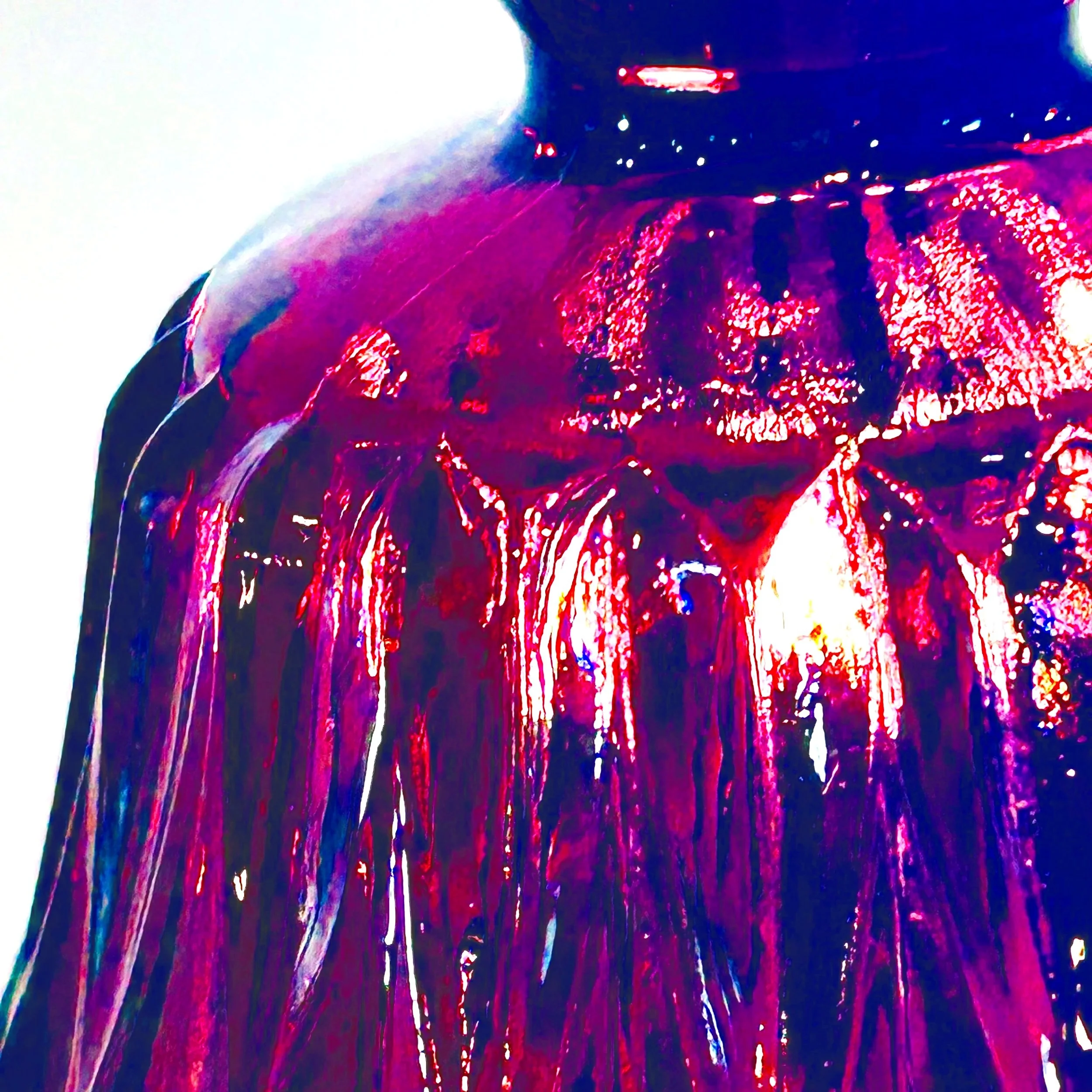 Image 17 of 28
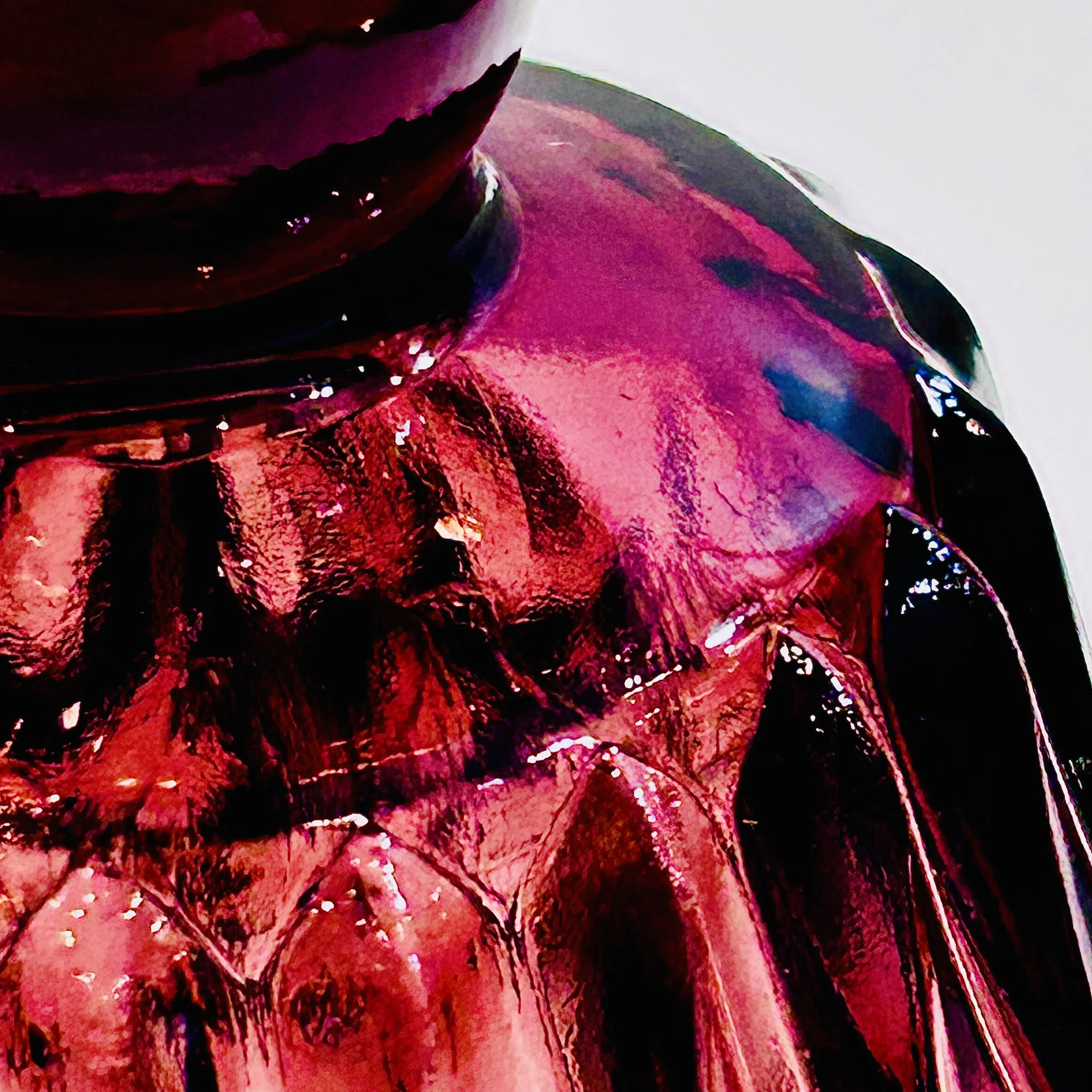 Image 18 of 28
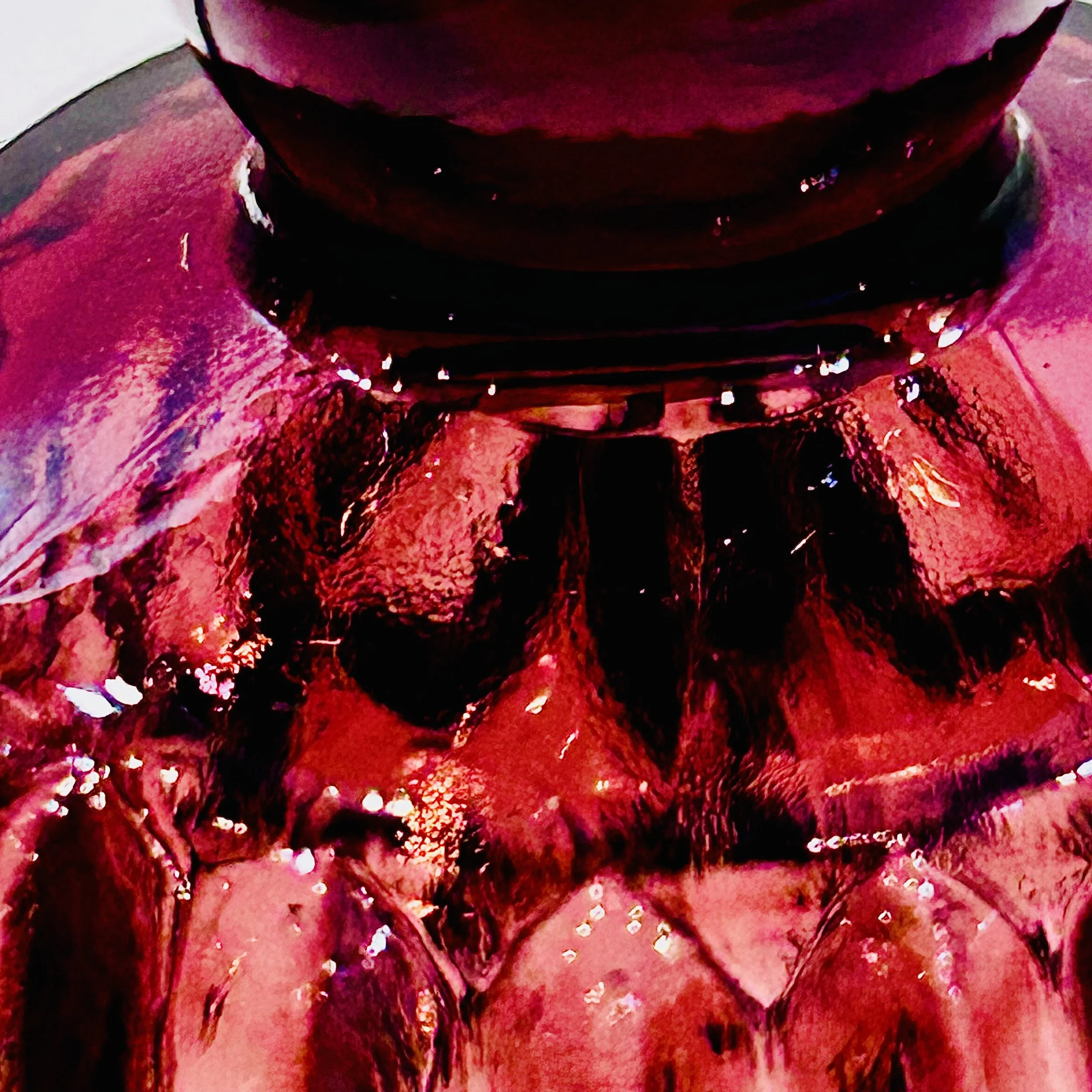 Image 19 of 28
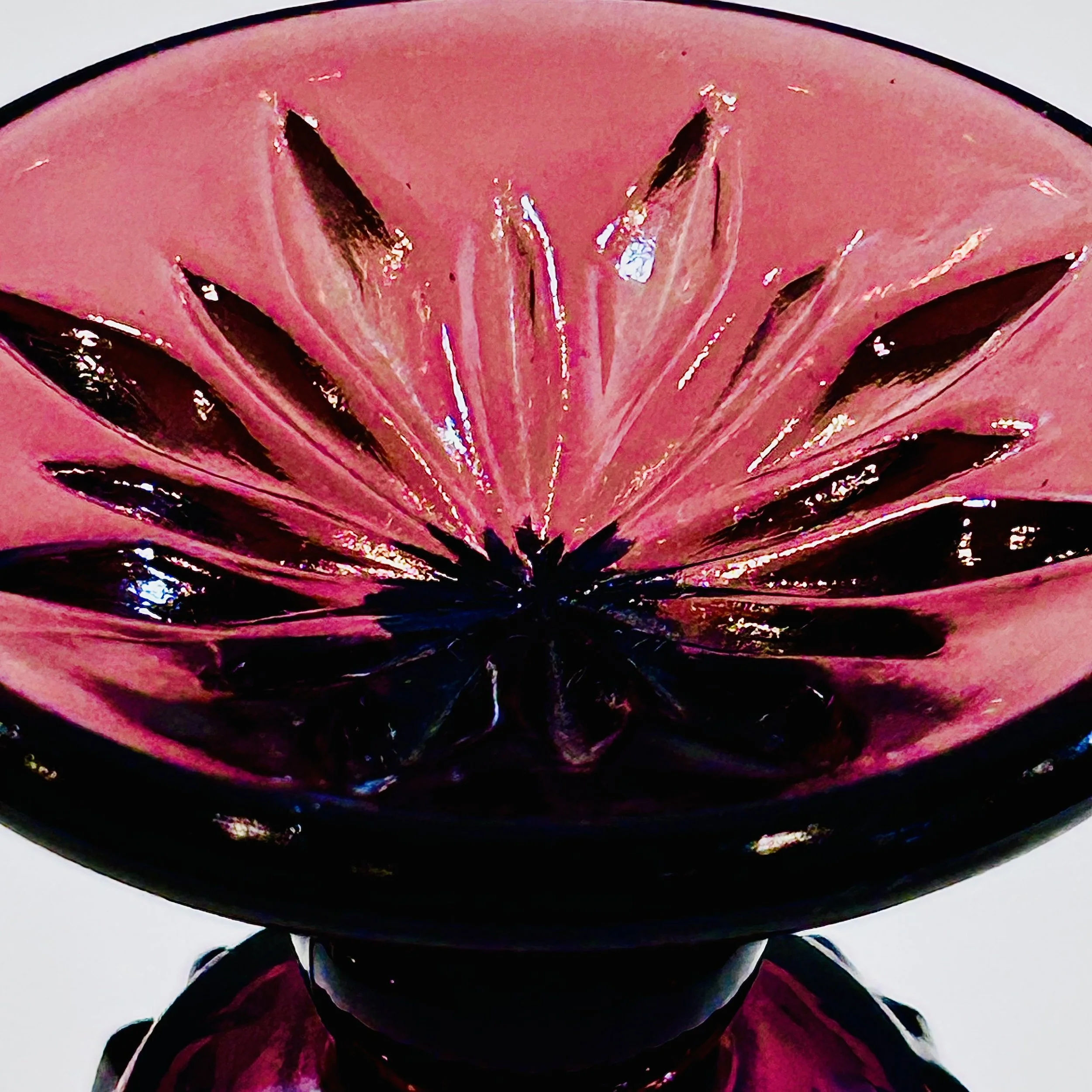 Image 20 of 28
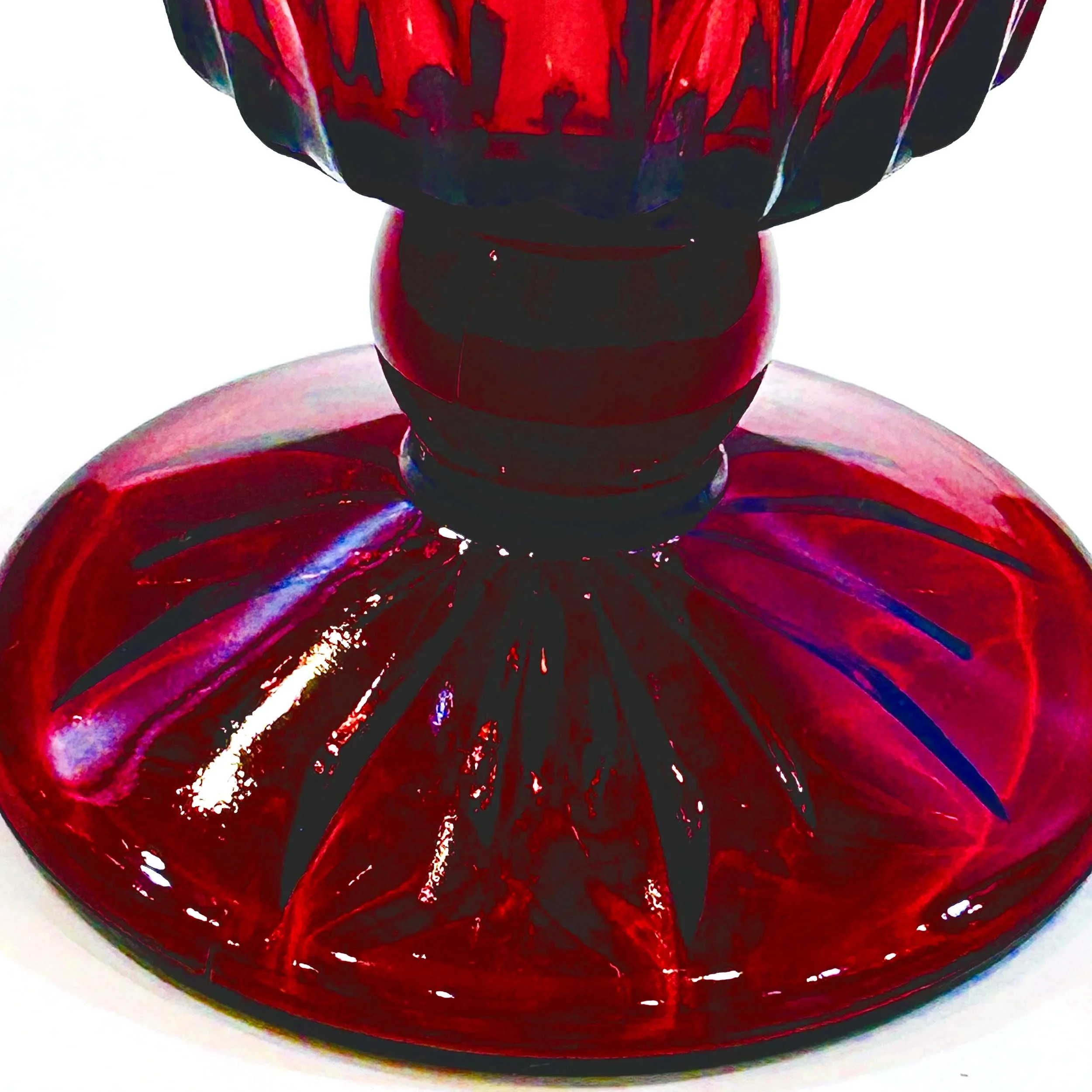 Image 21 of 28
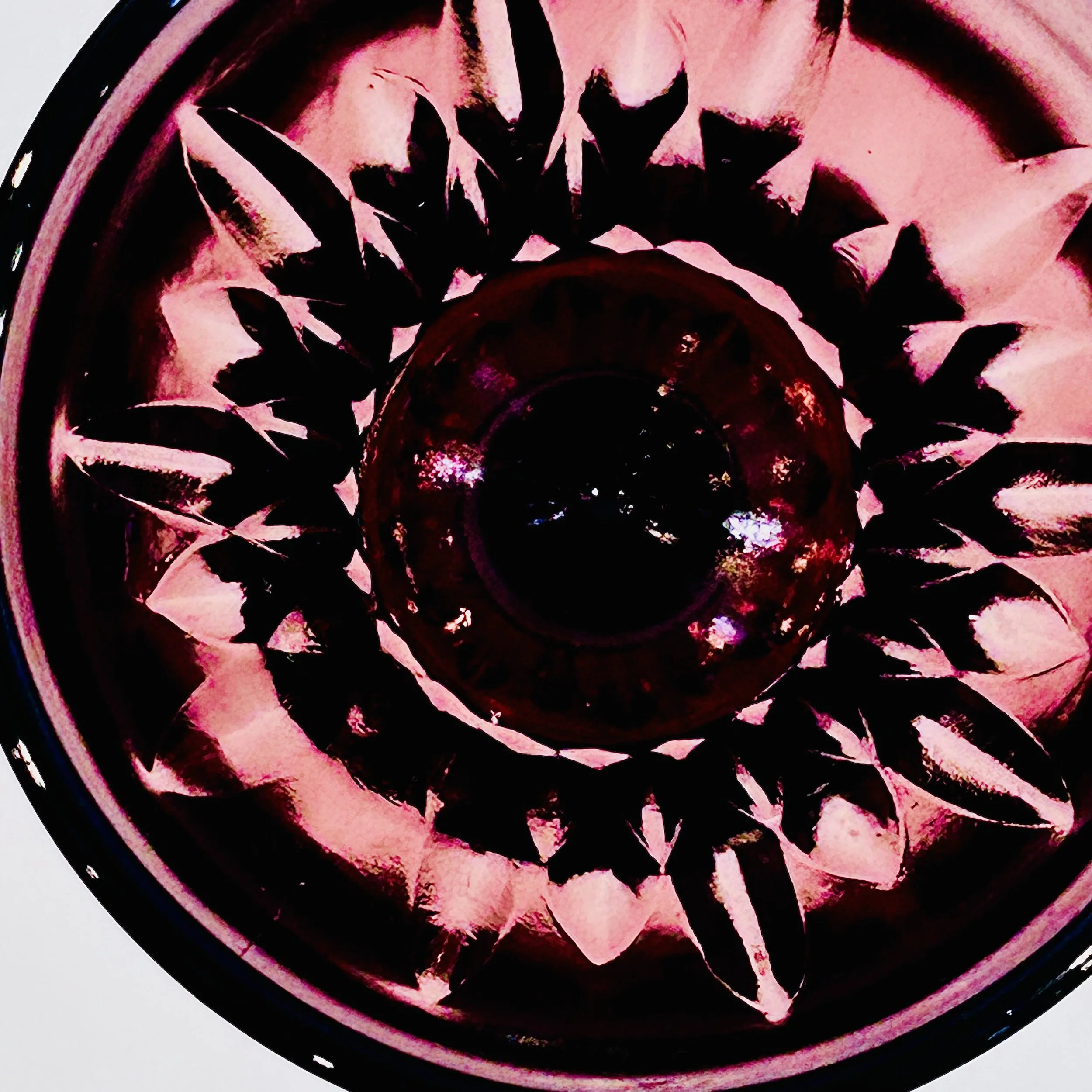 Image 22 of 28
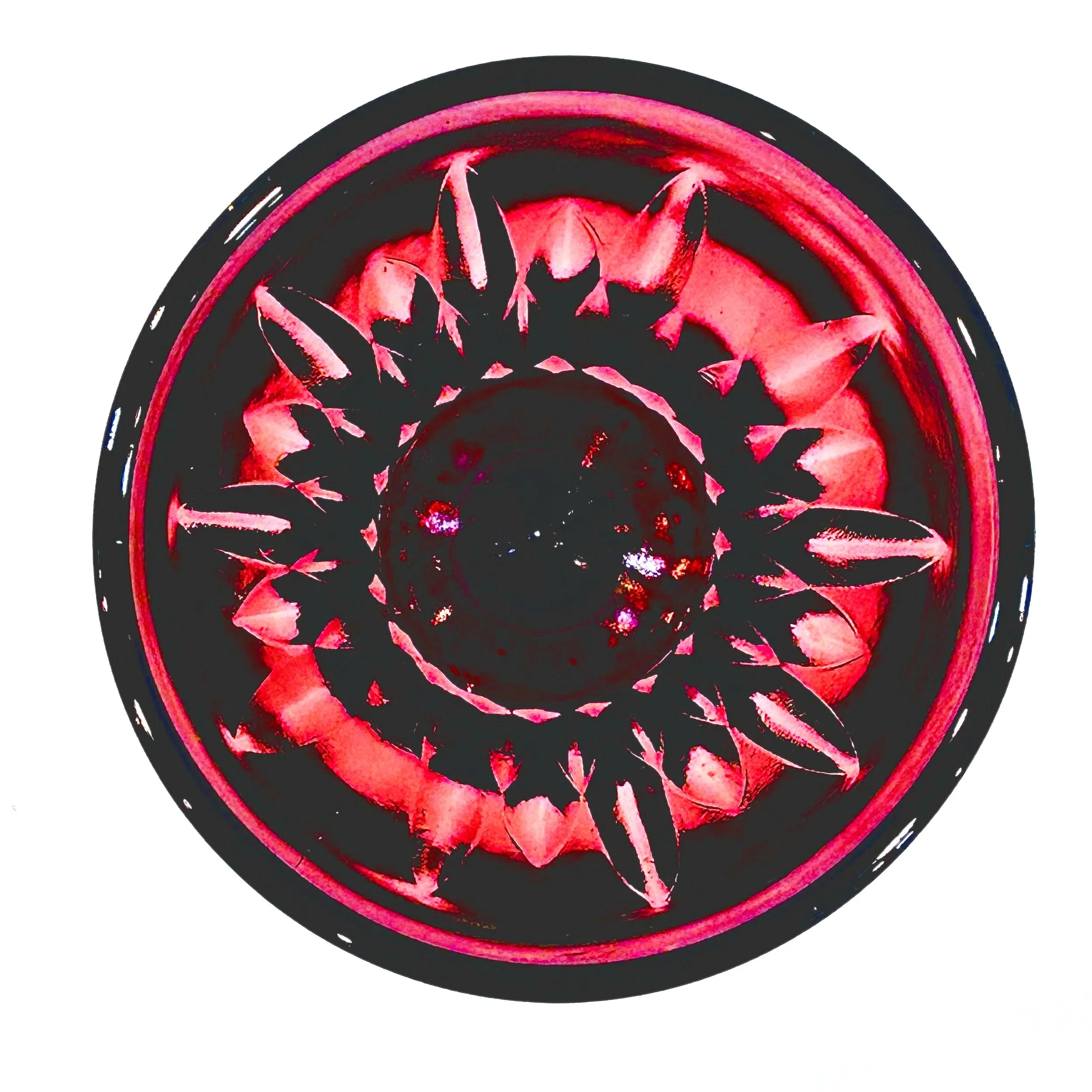 Image 23 of 28
 Image 24 of 28
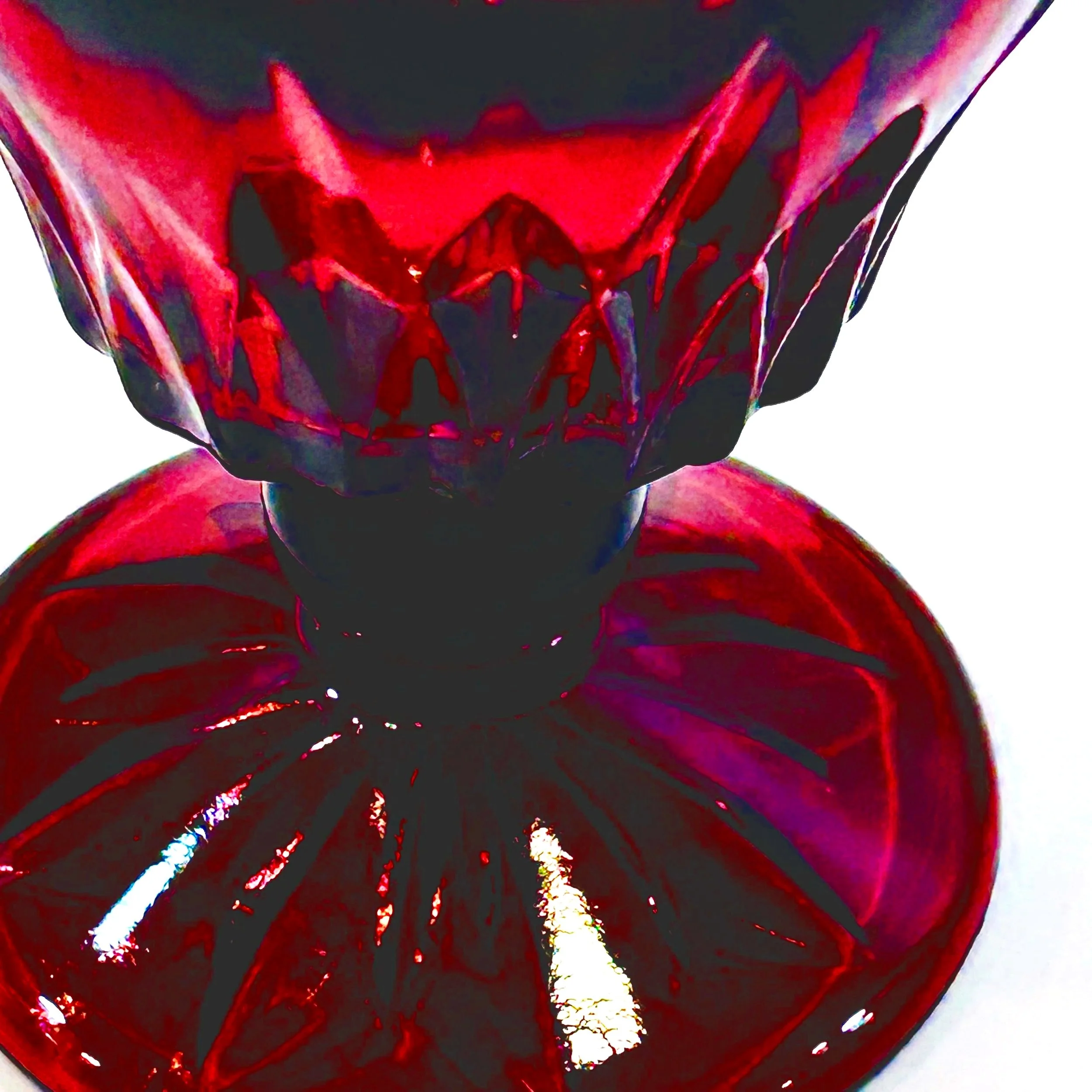 Image 25 of 28
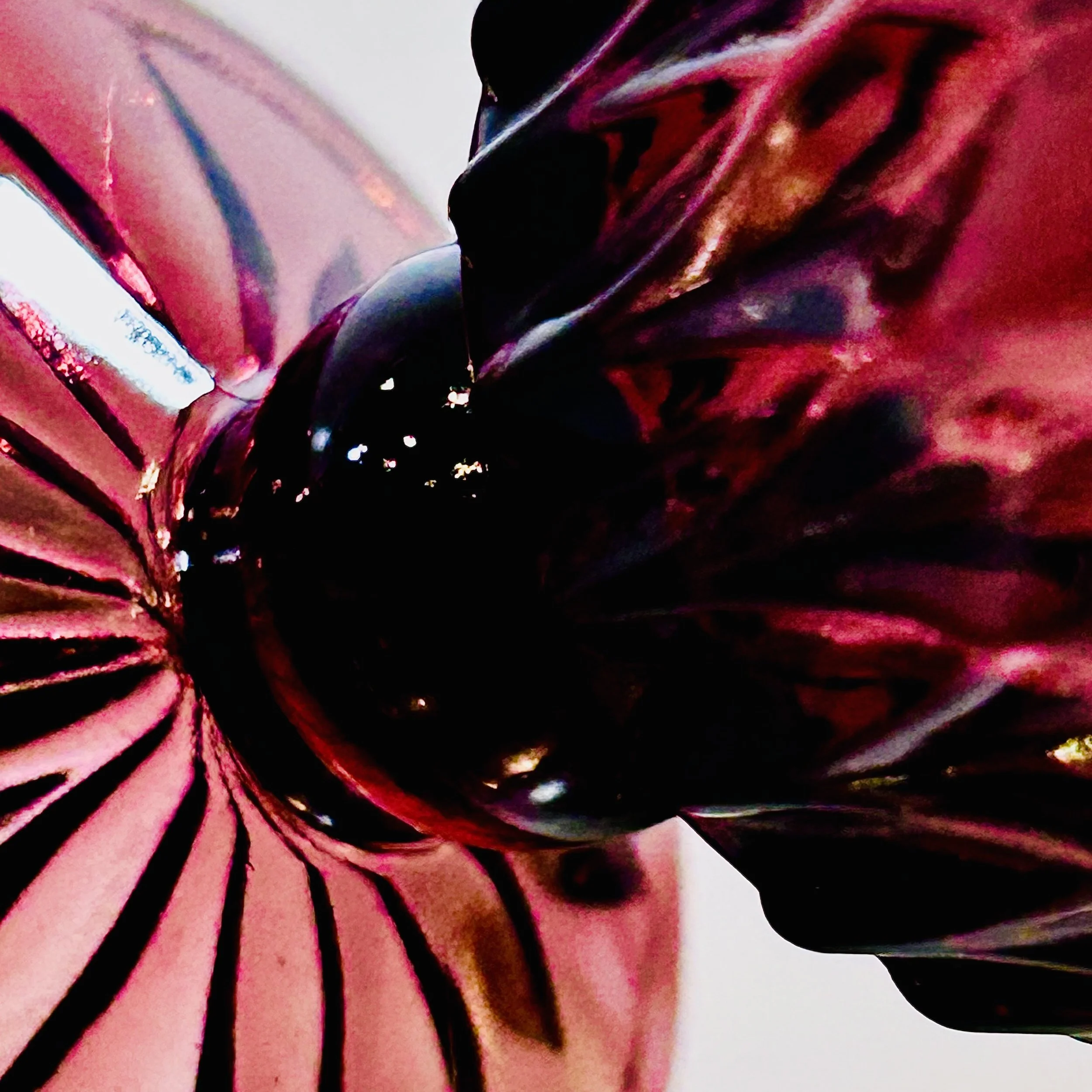 Image 26 of 28
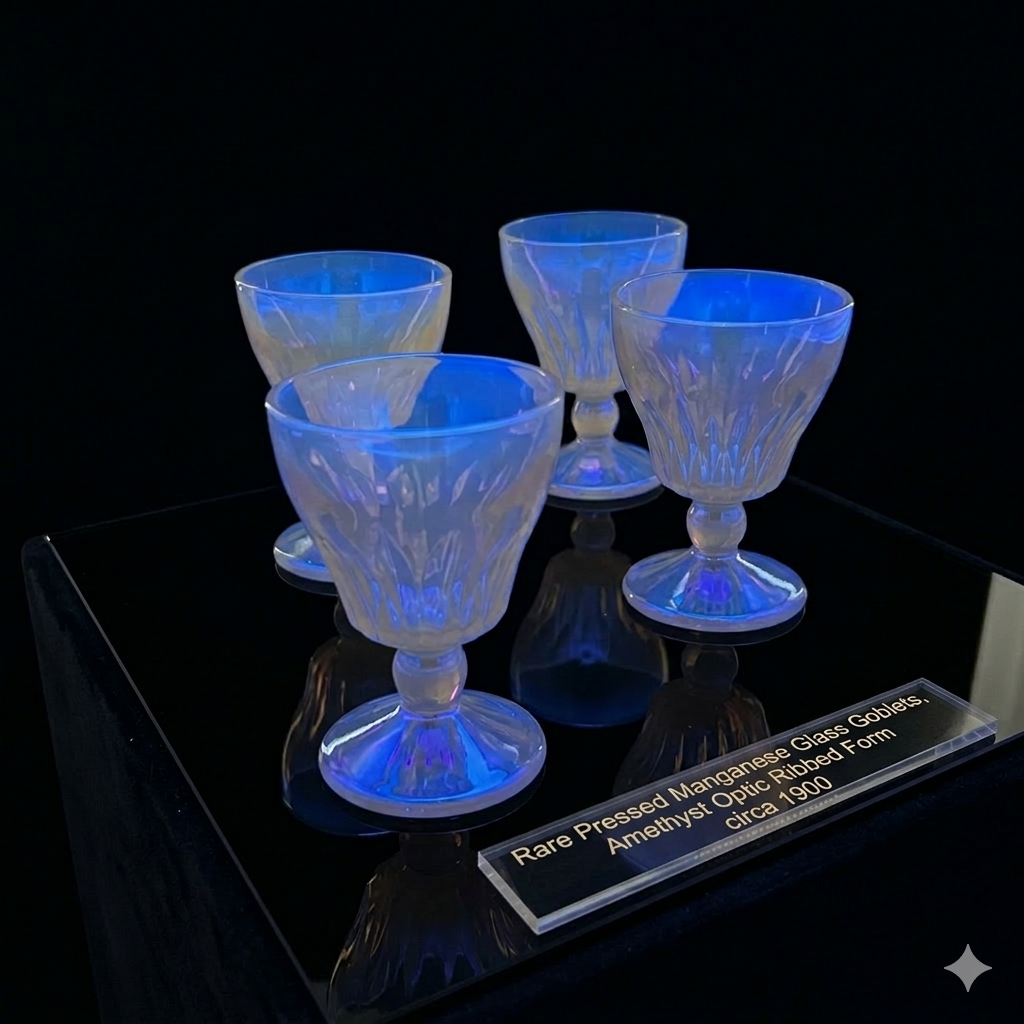 Image 27 of 28
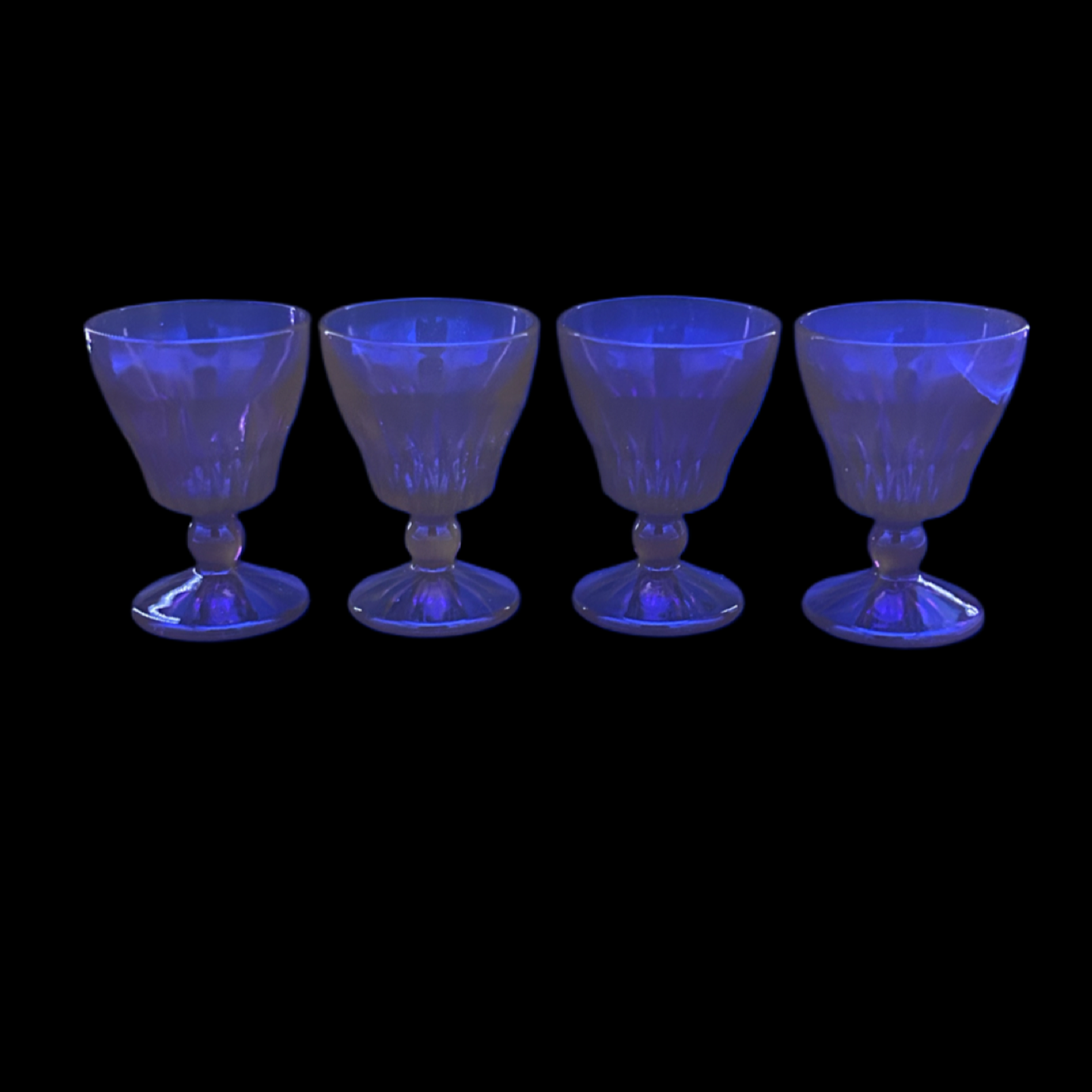 Image 28 of 28