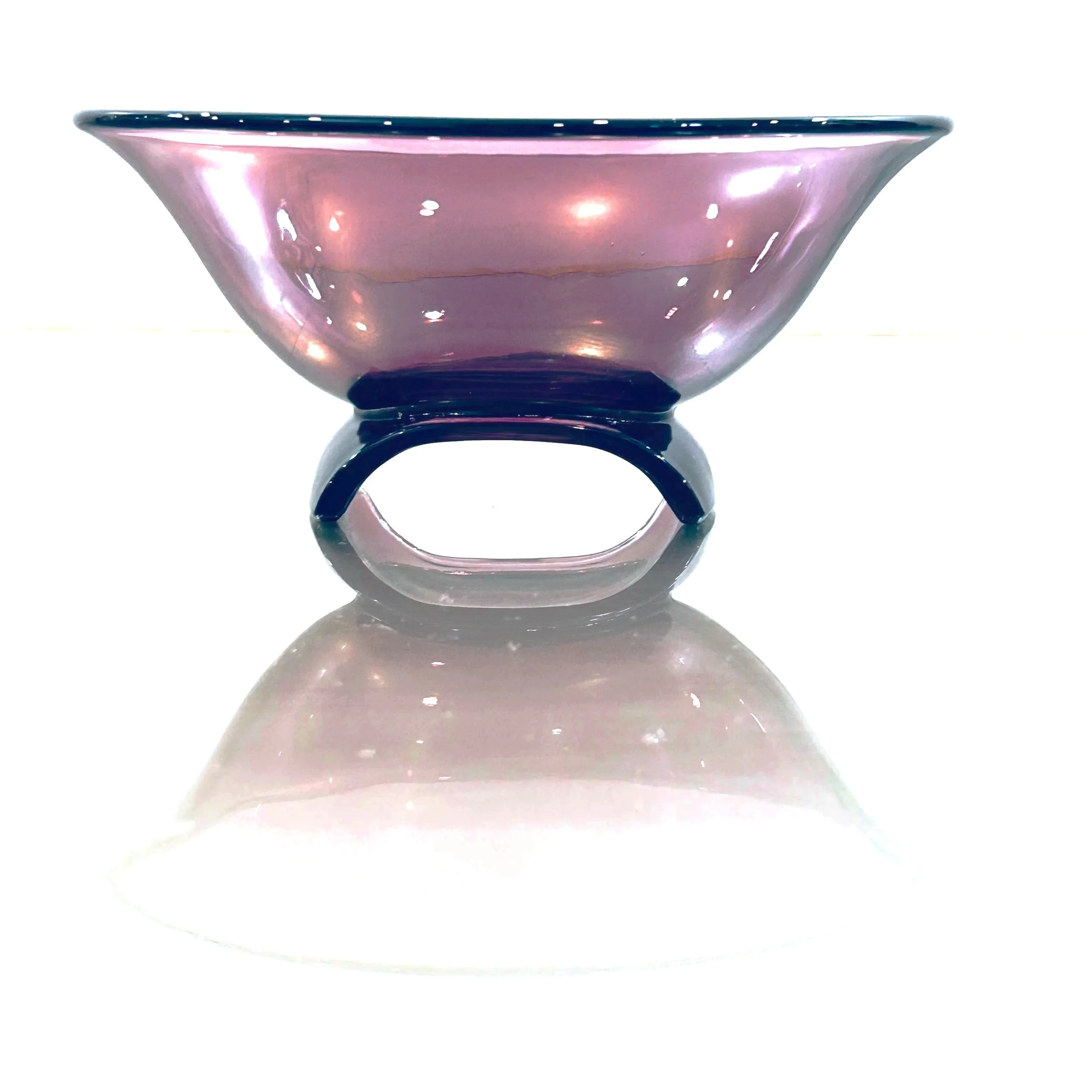
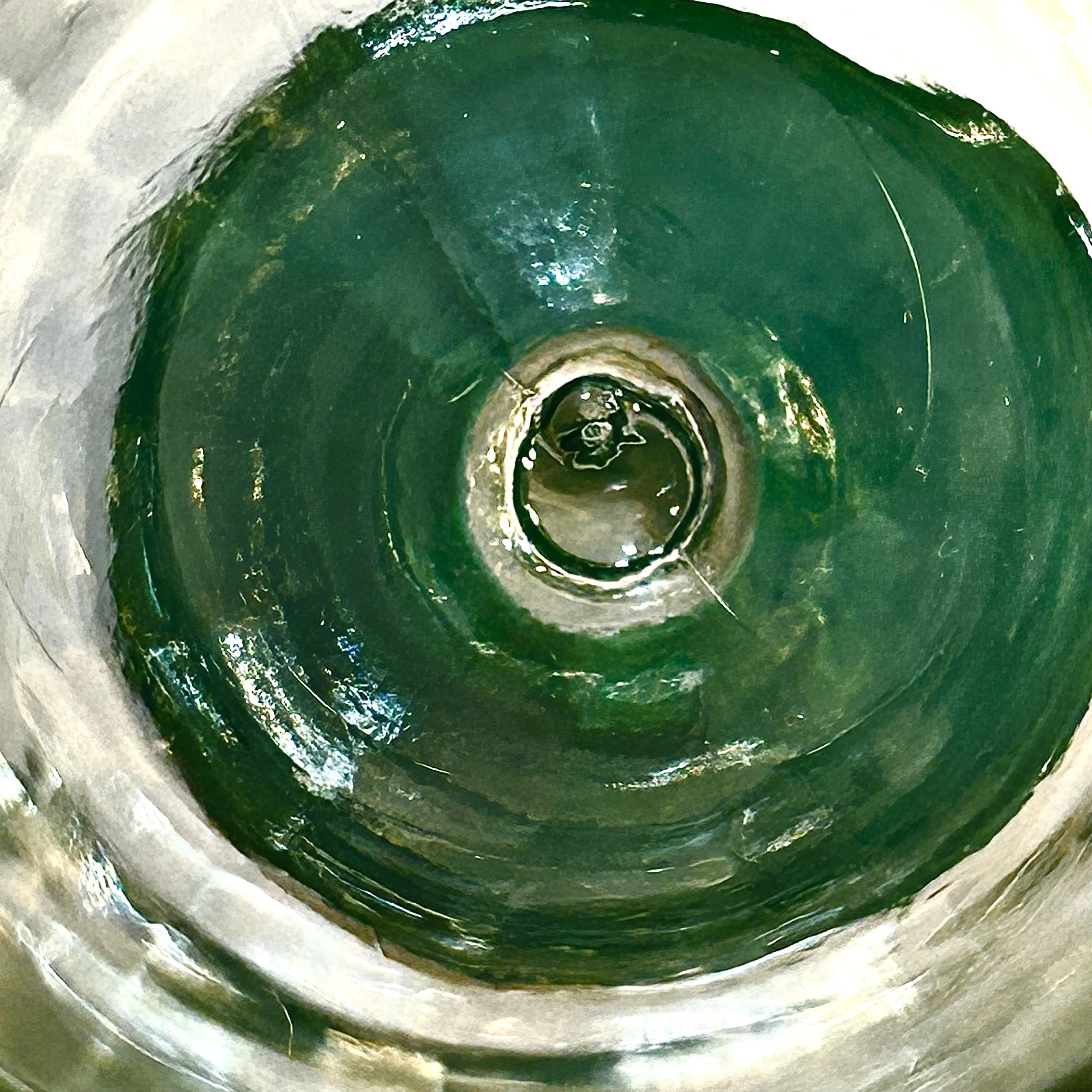
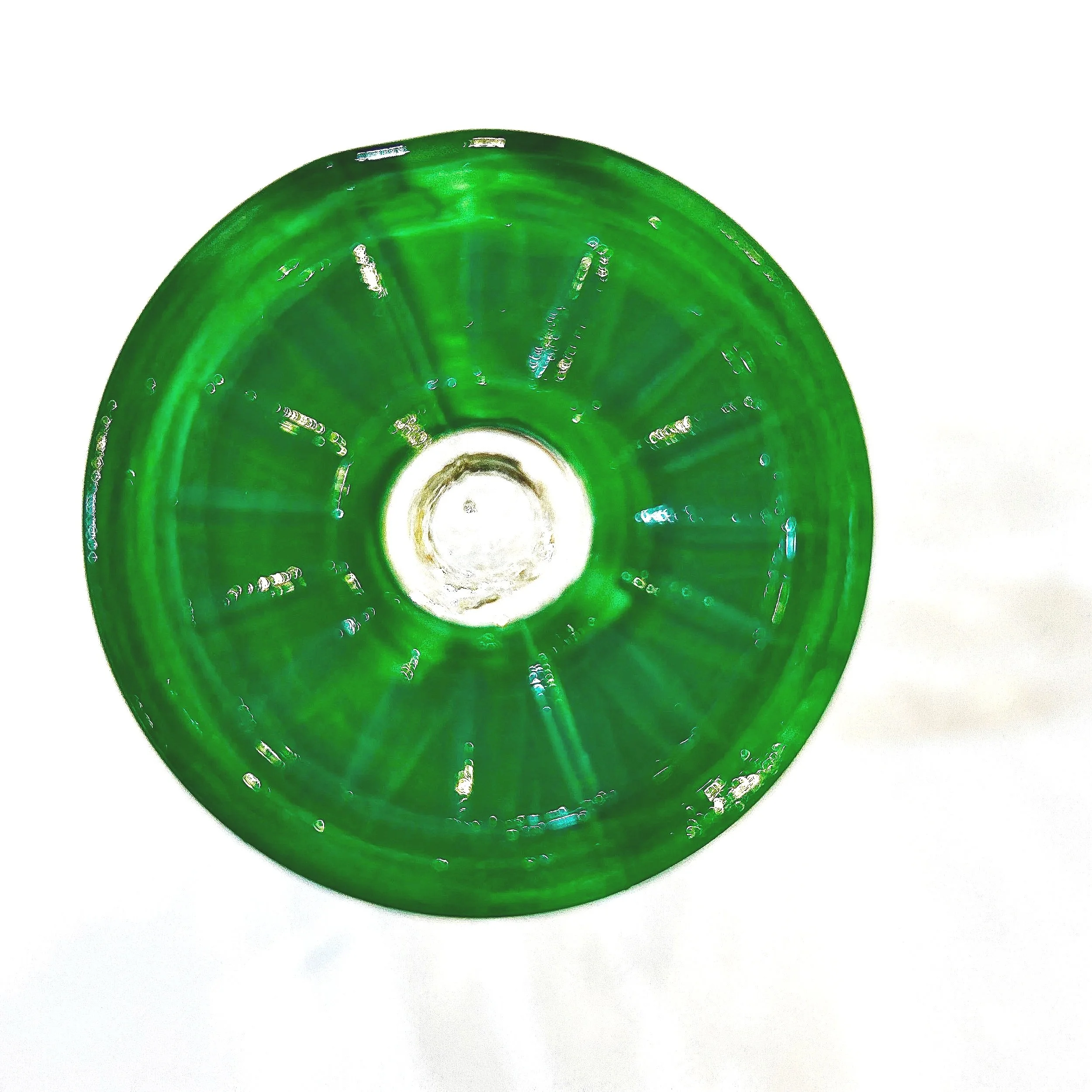
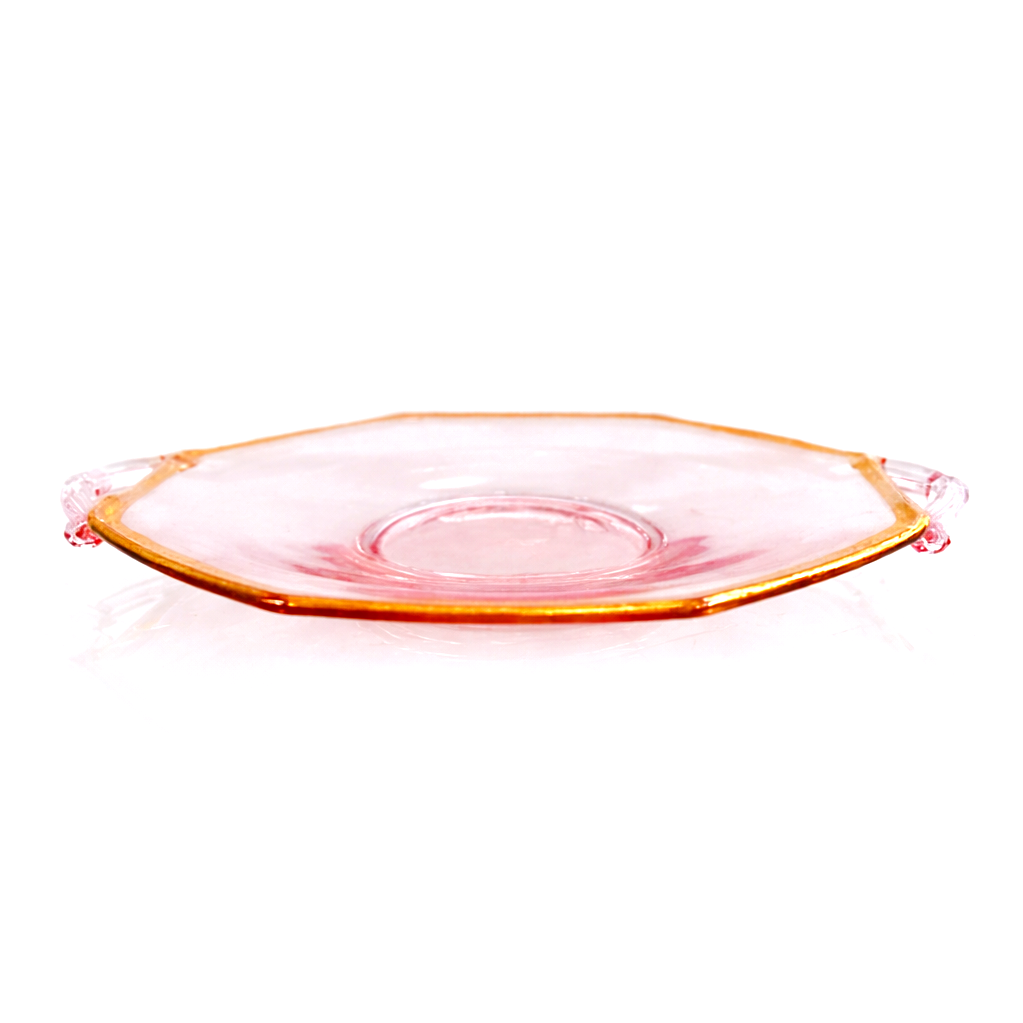
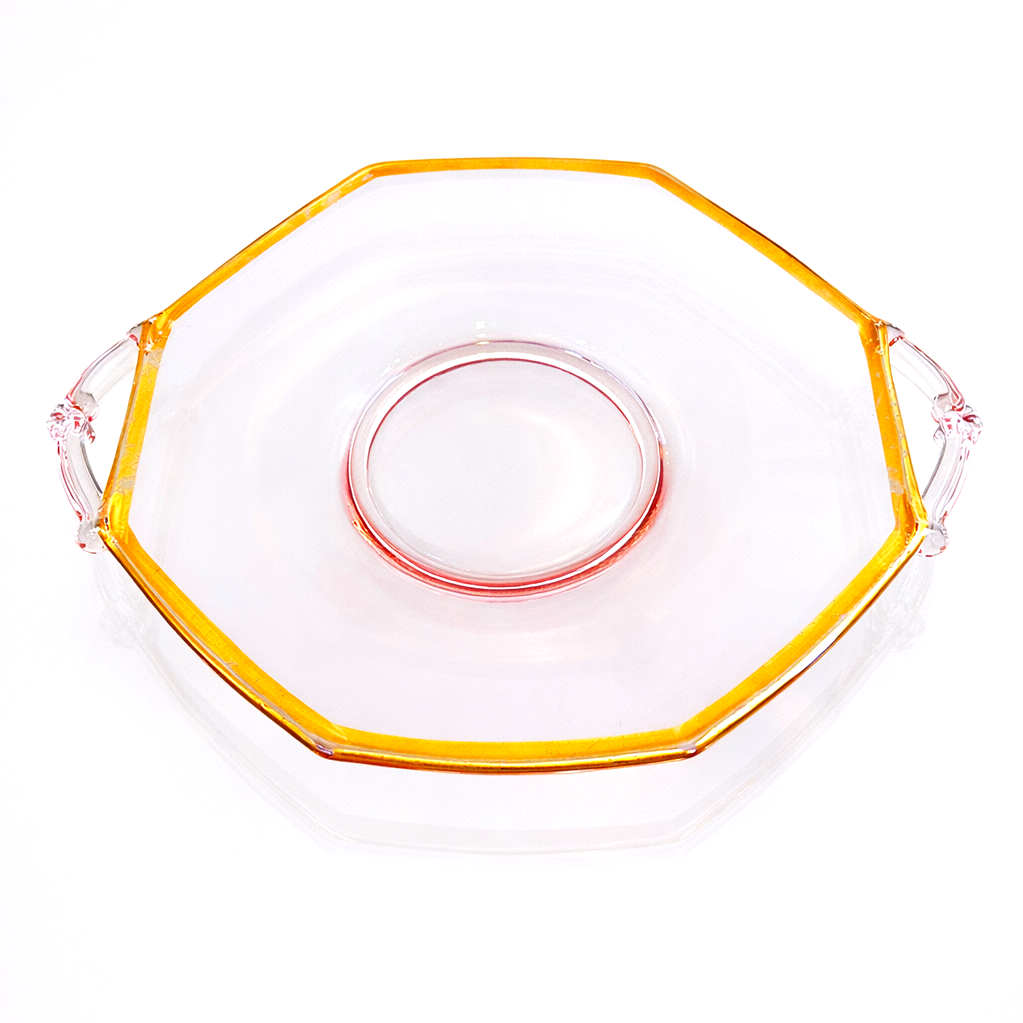
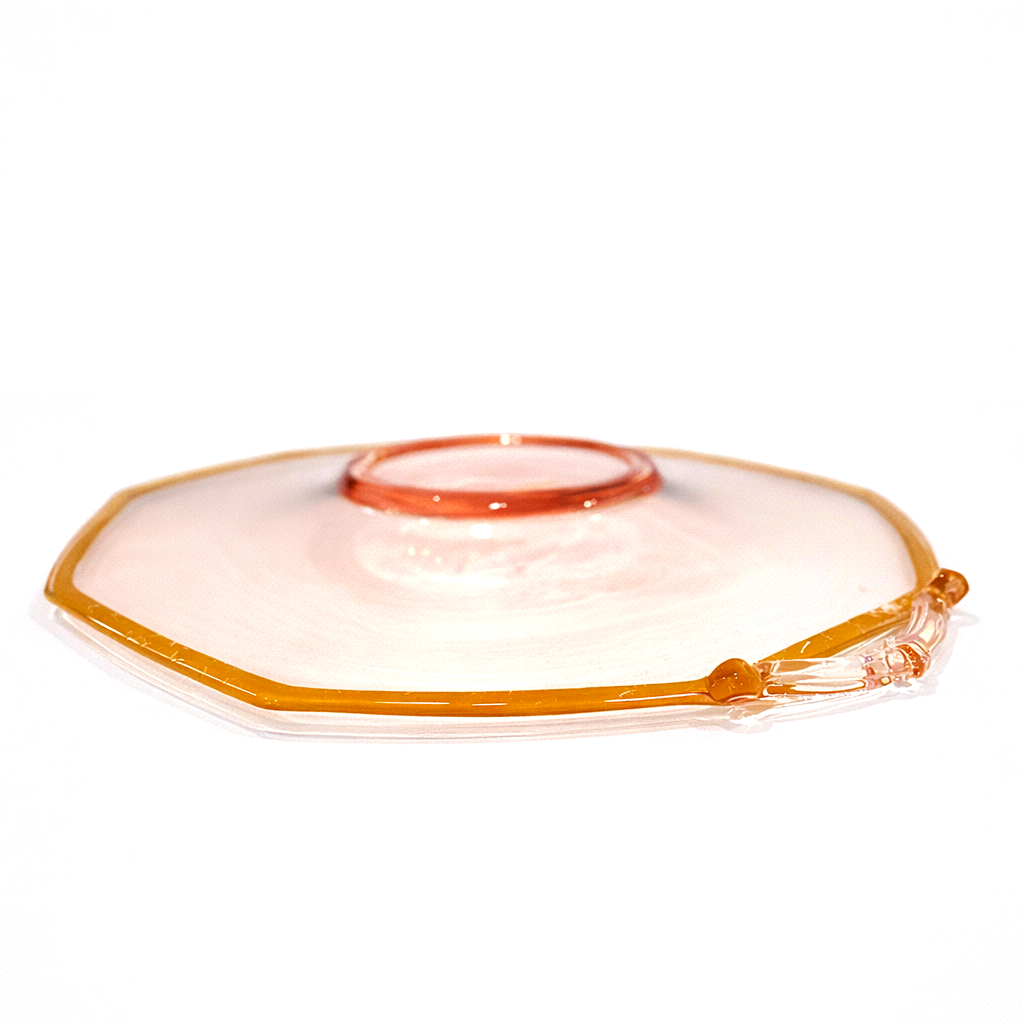
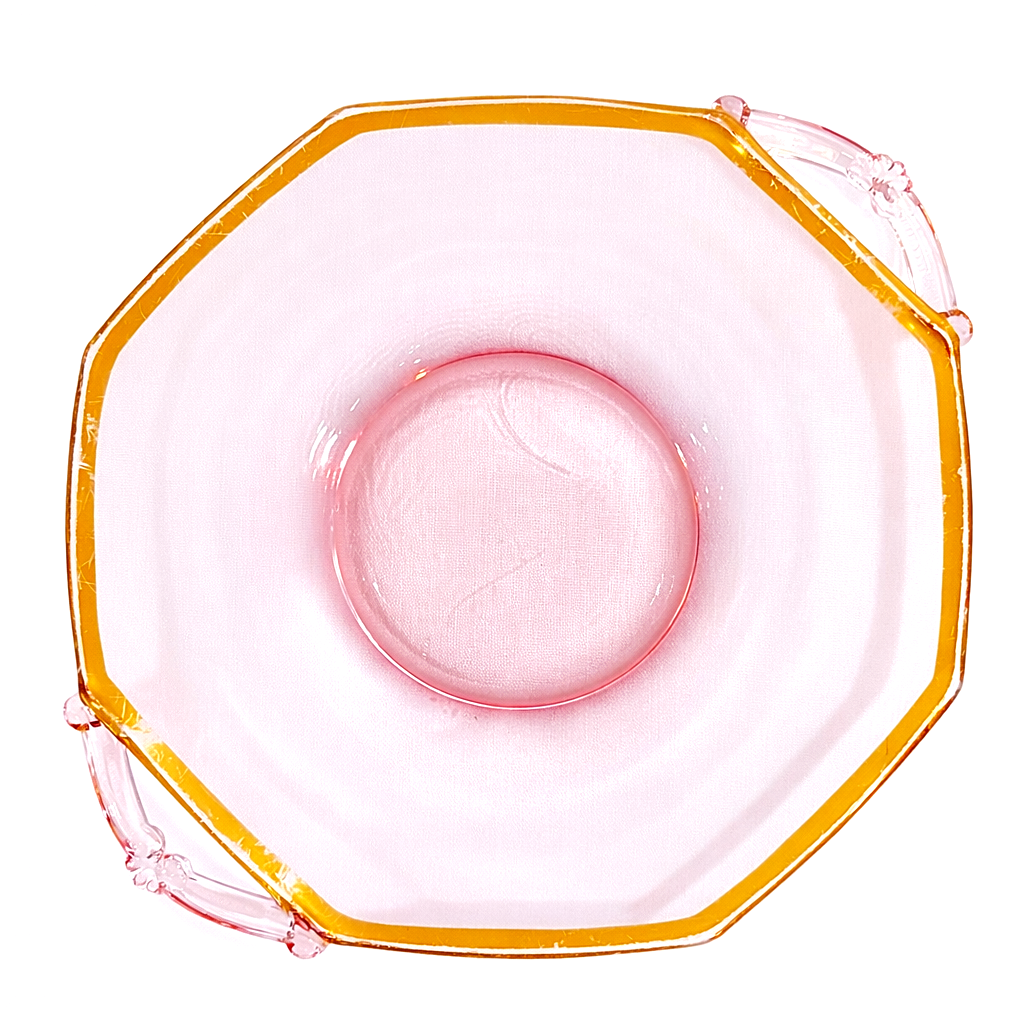
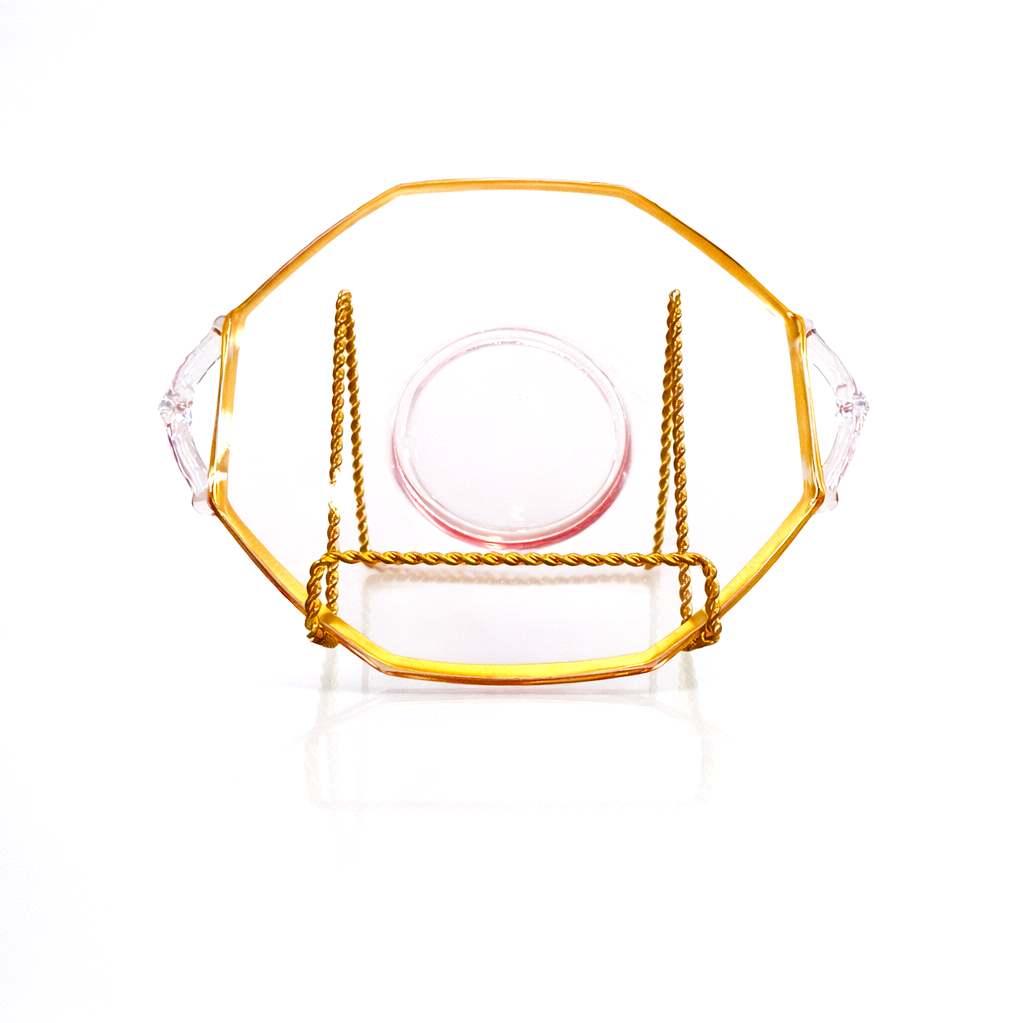
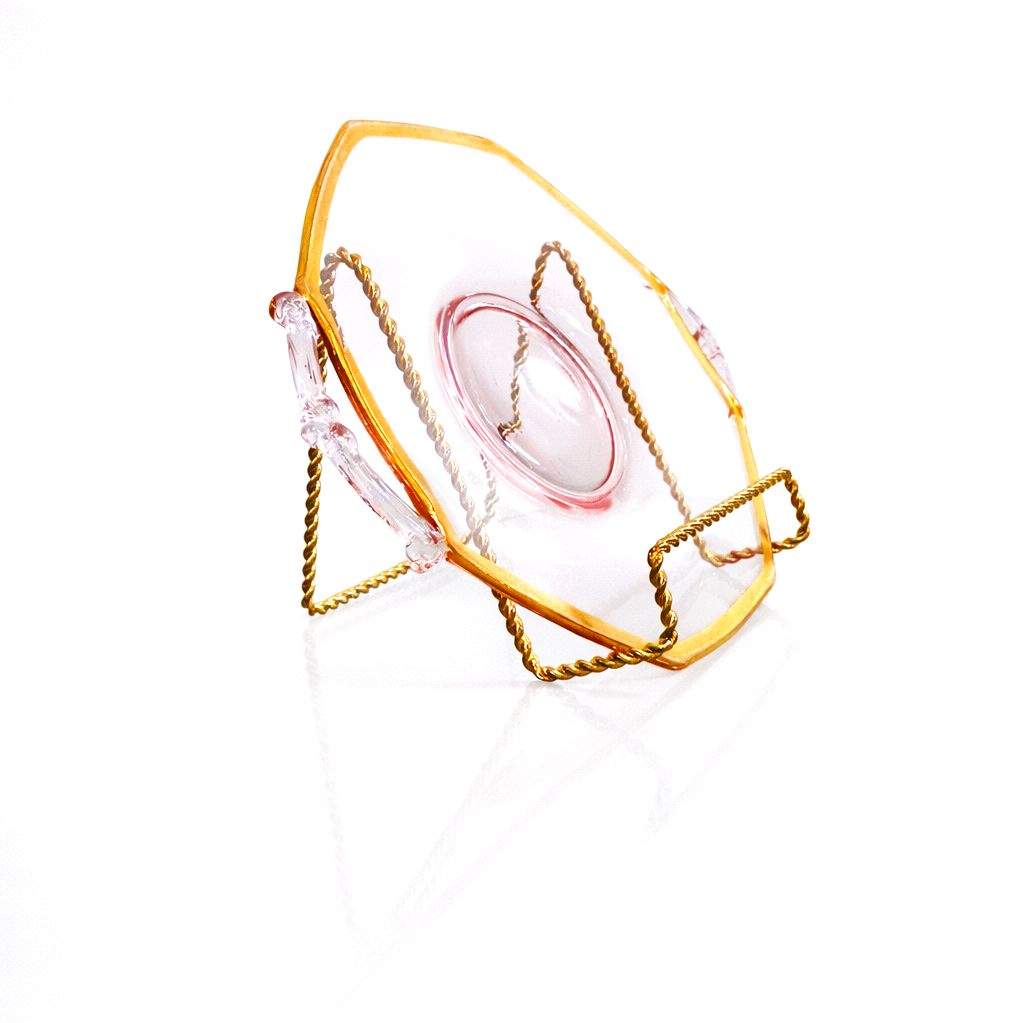
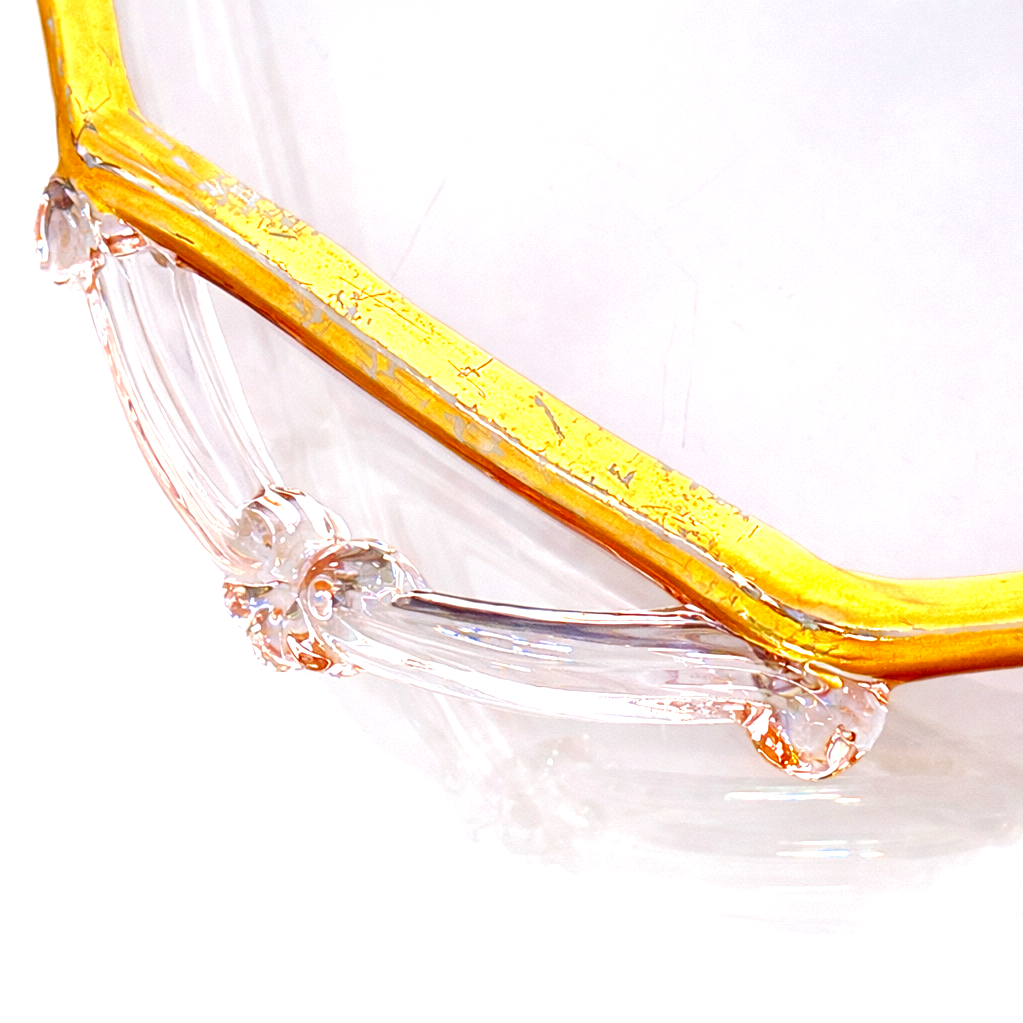
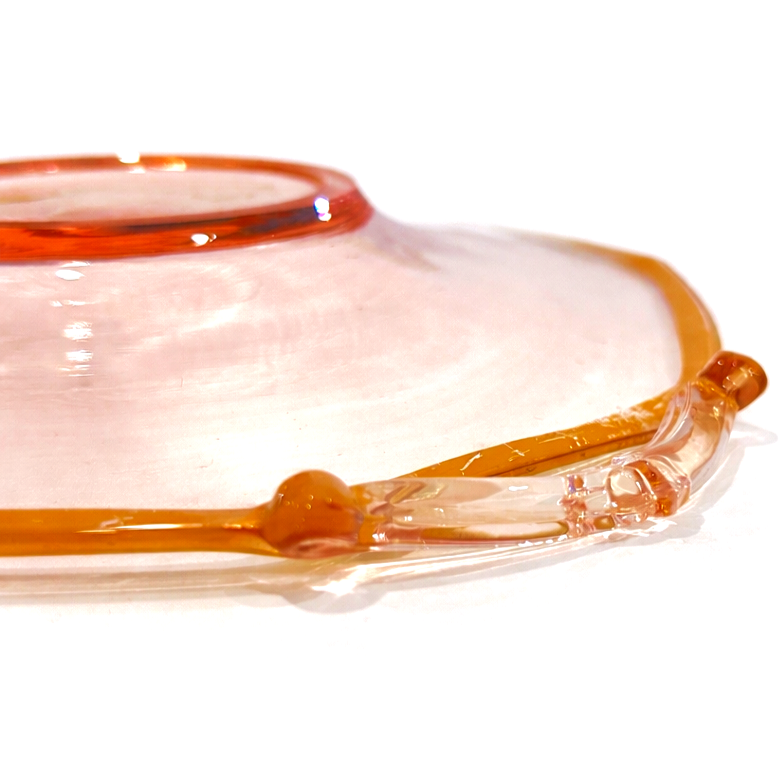
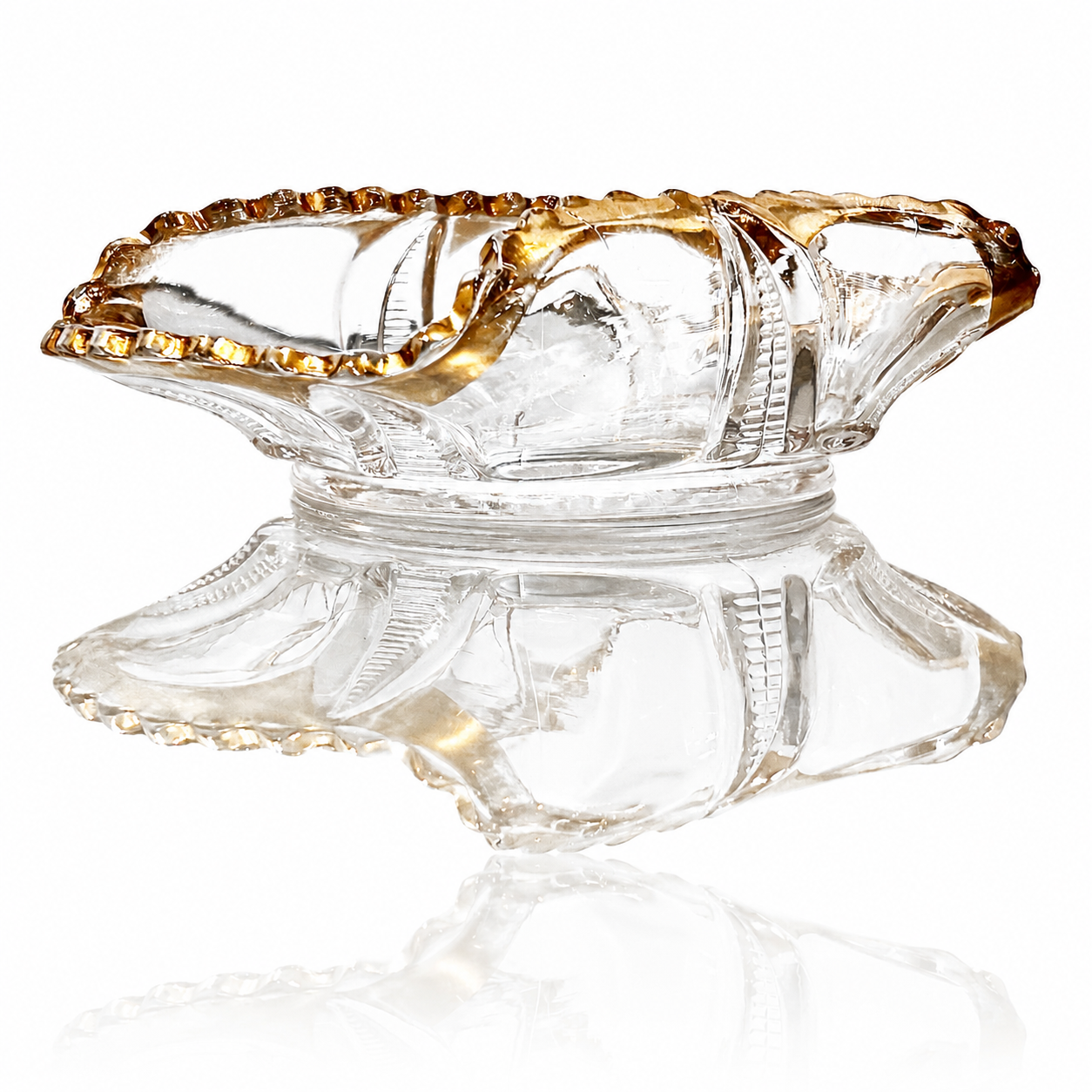
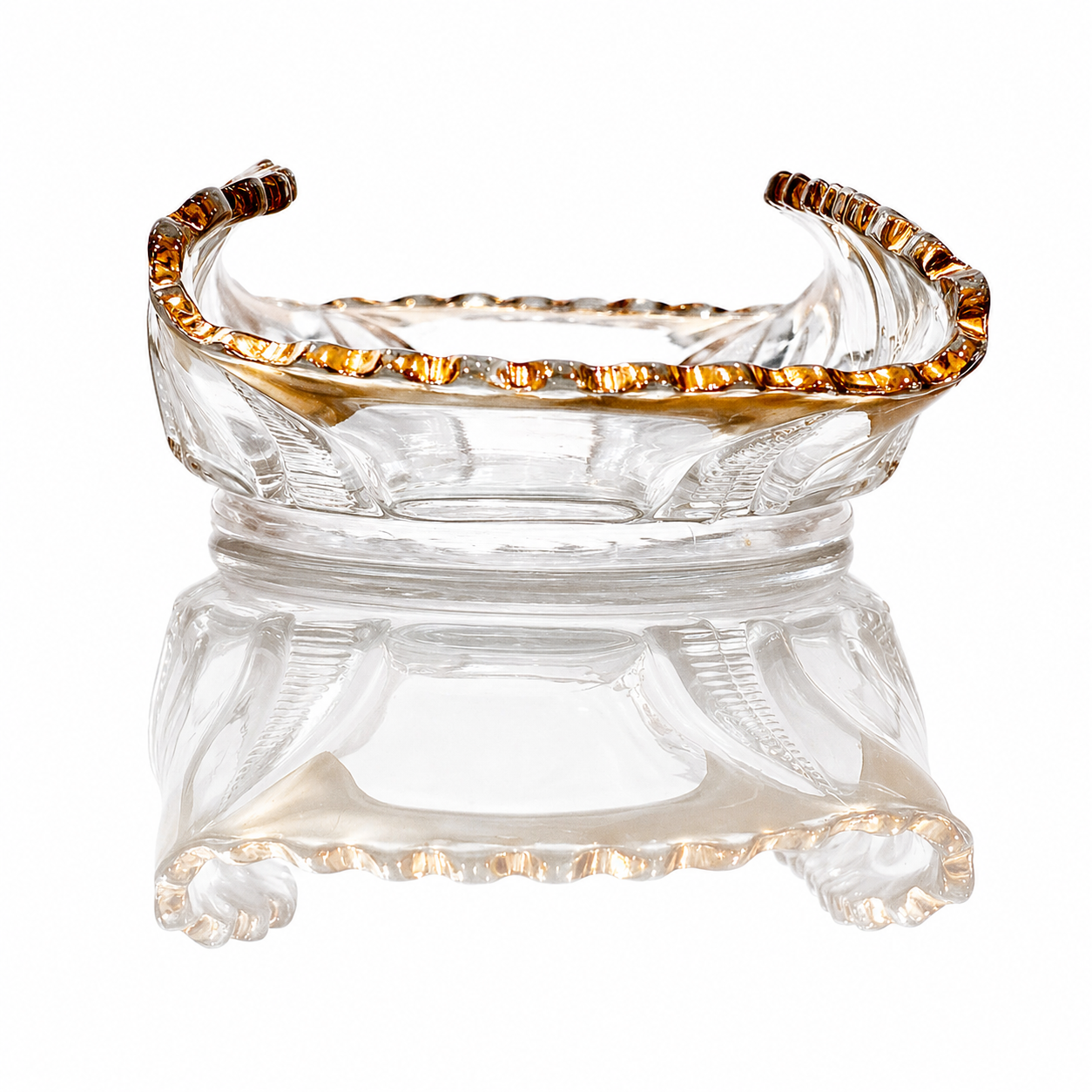
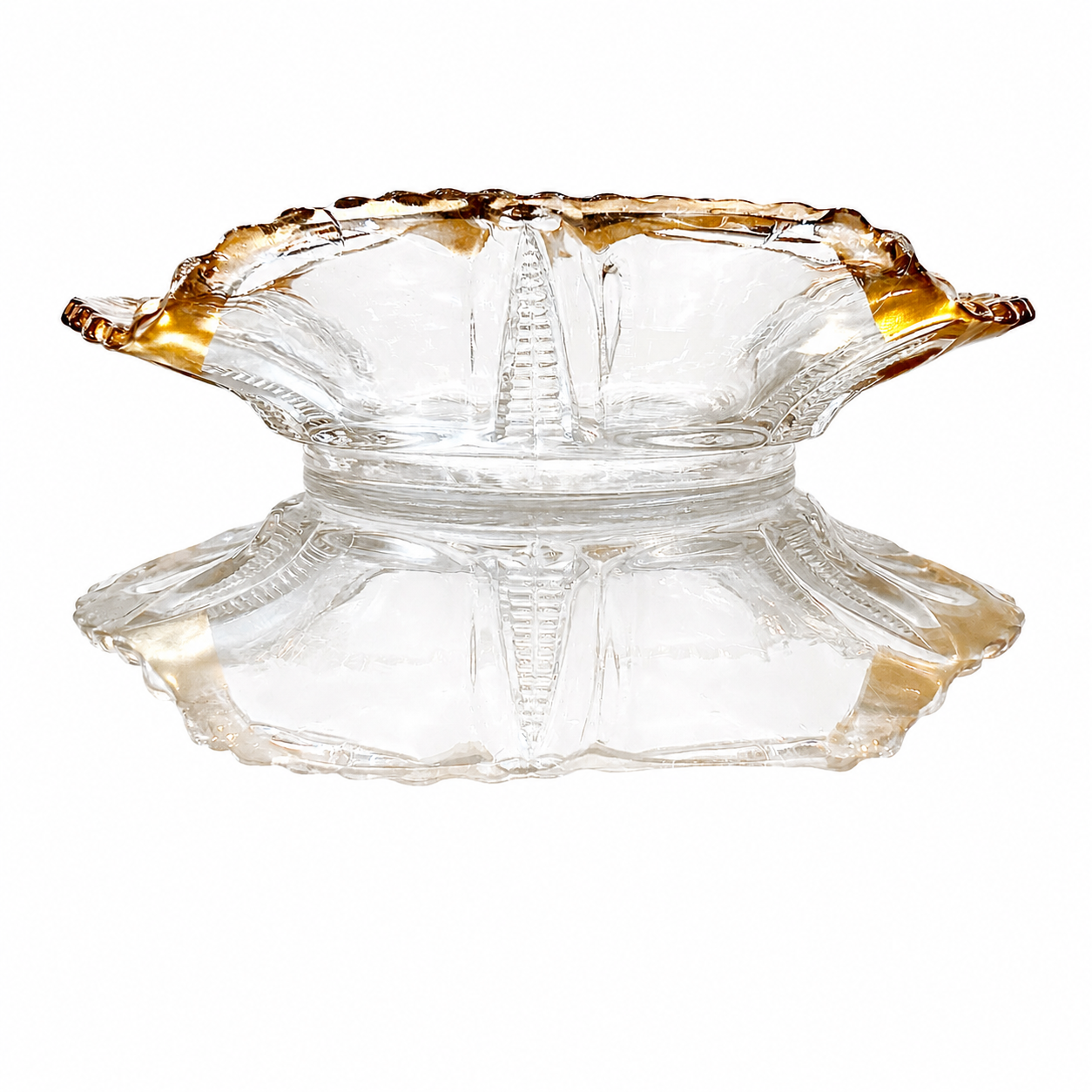
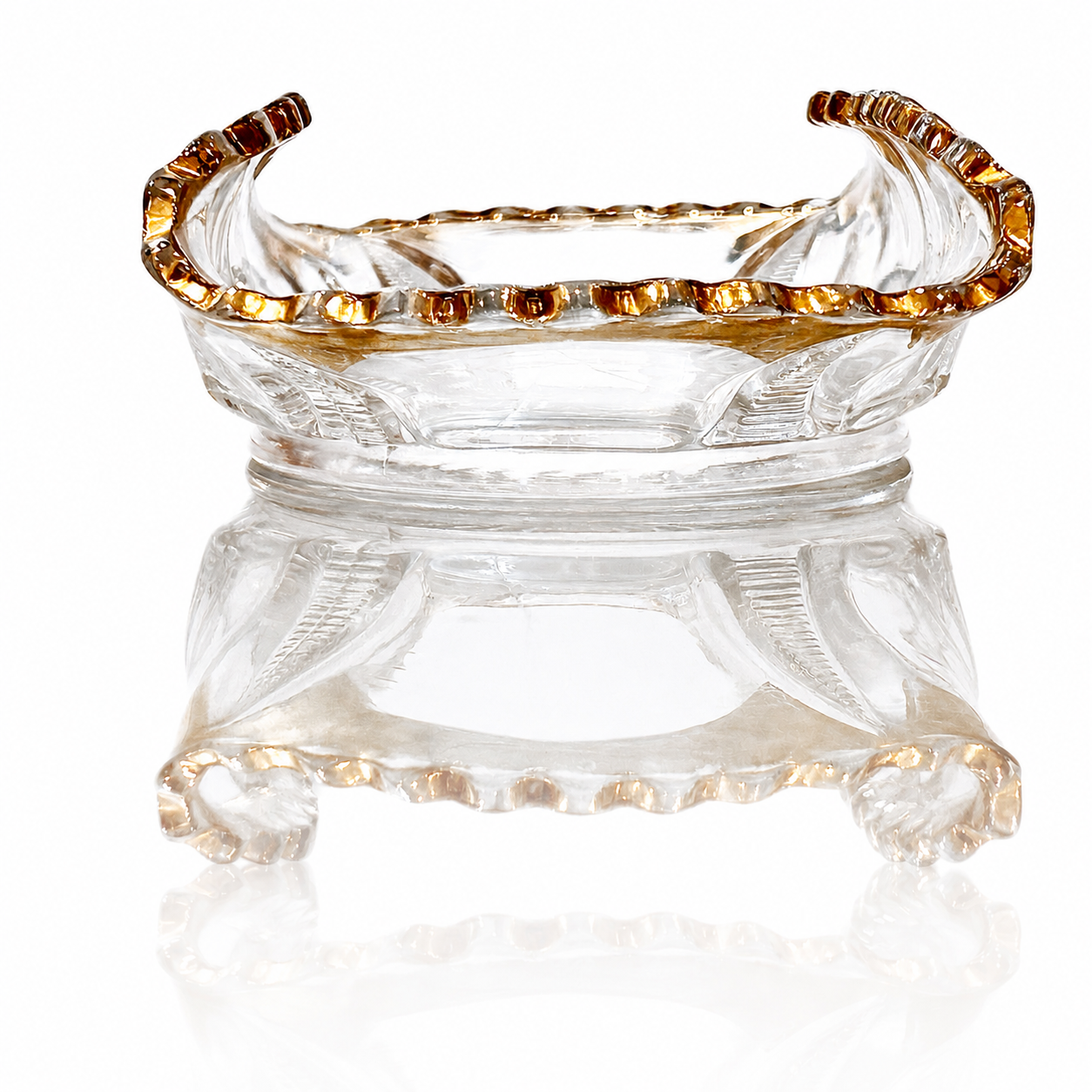
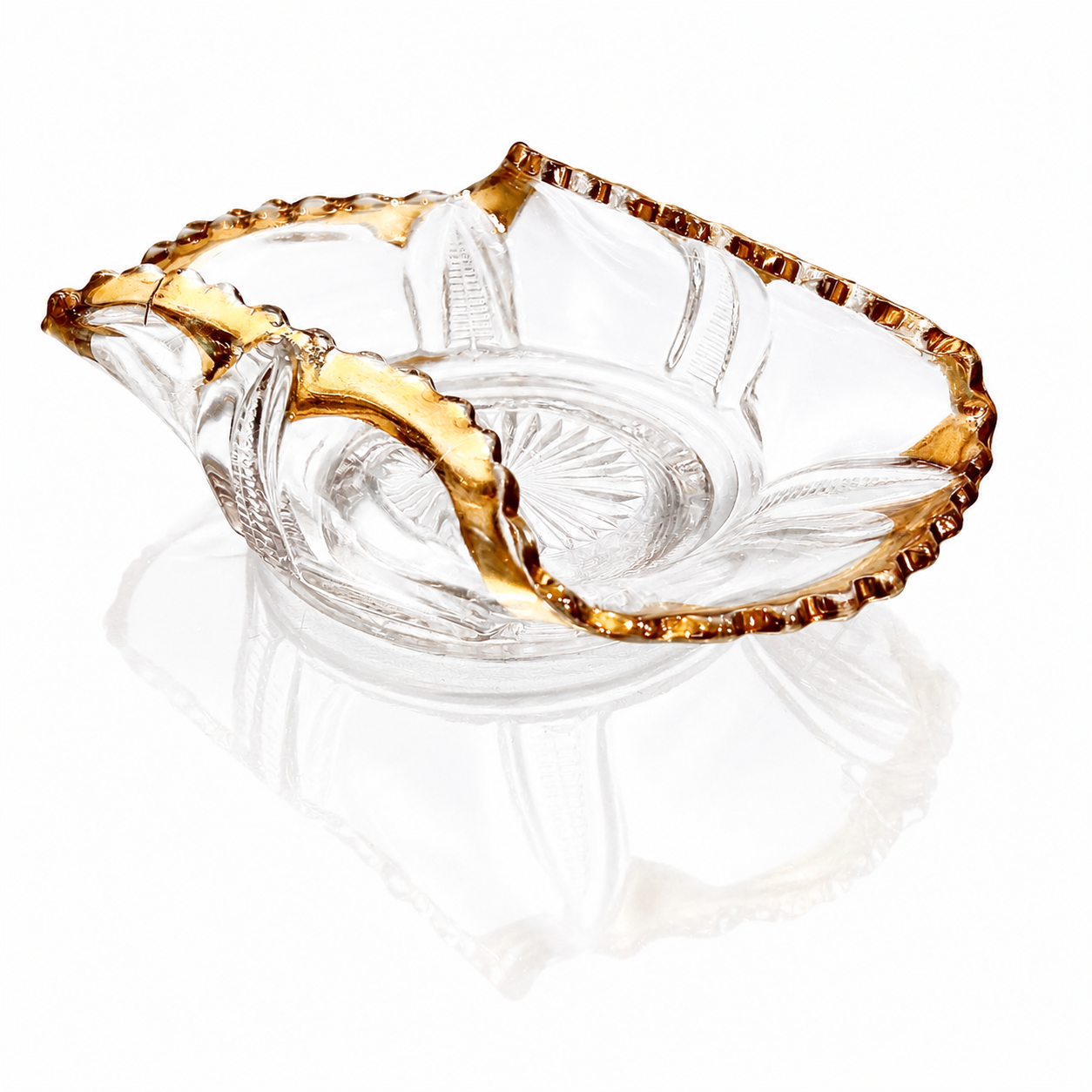
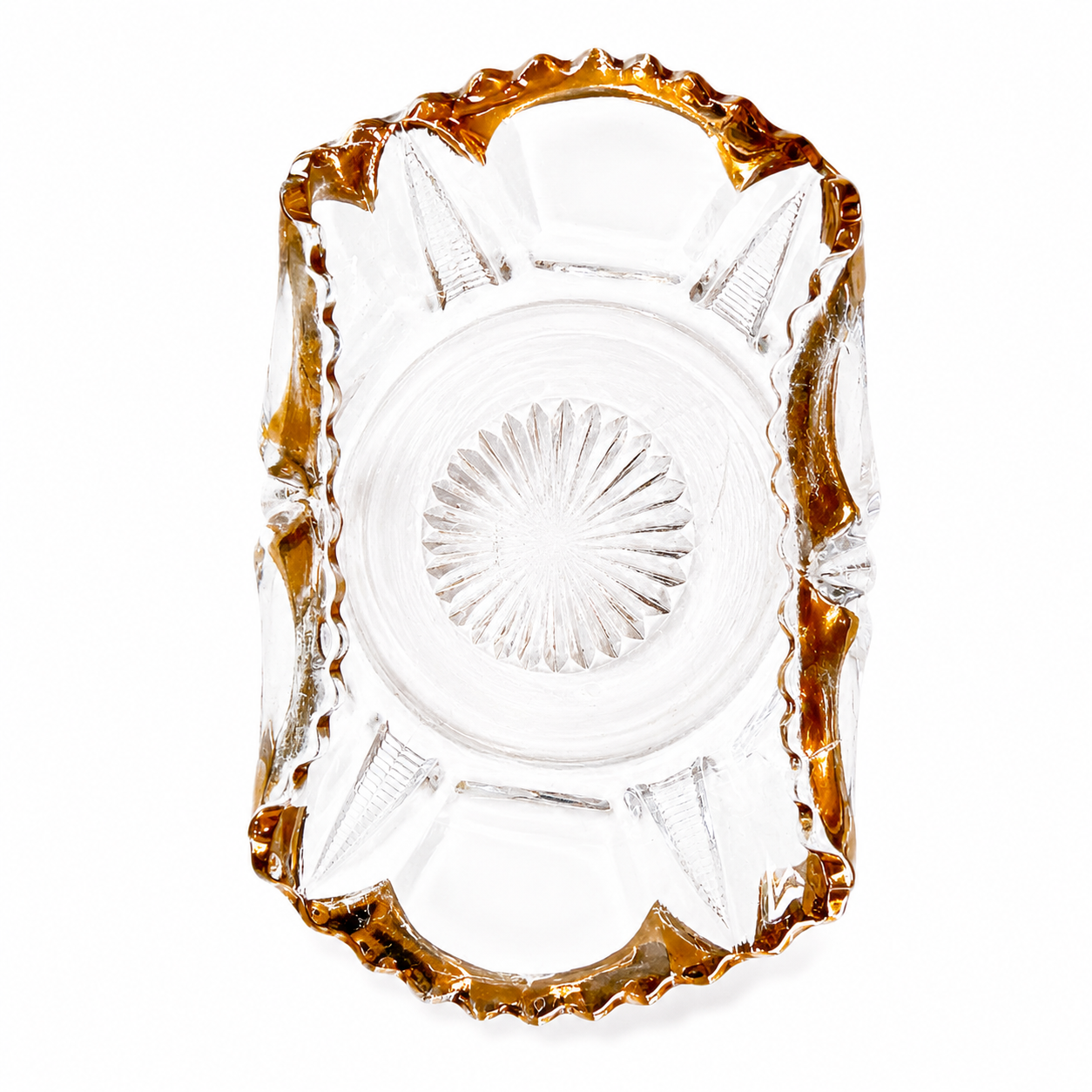
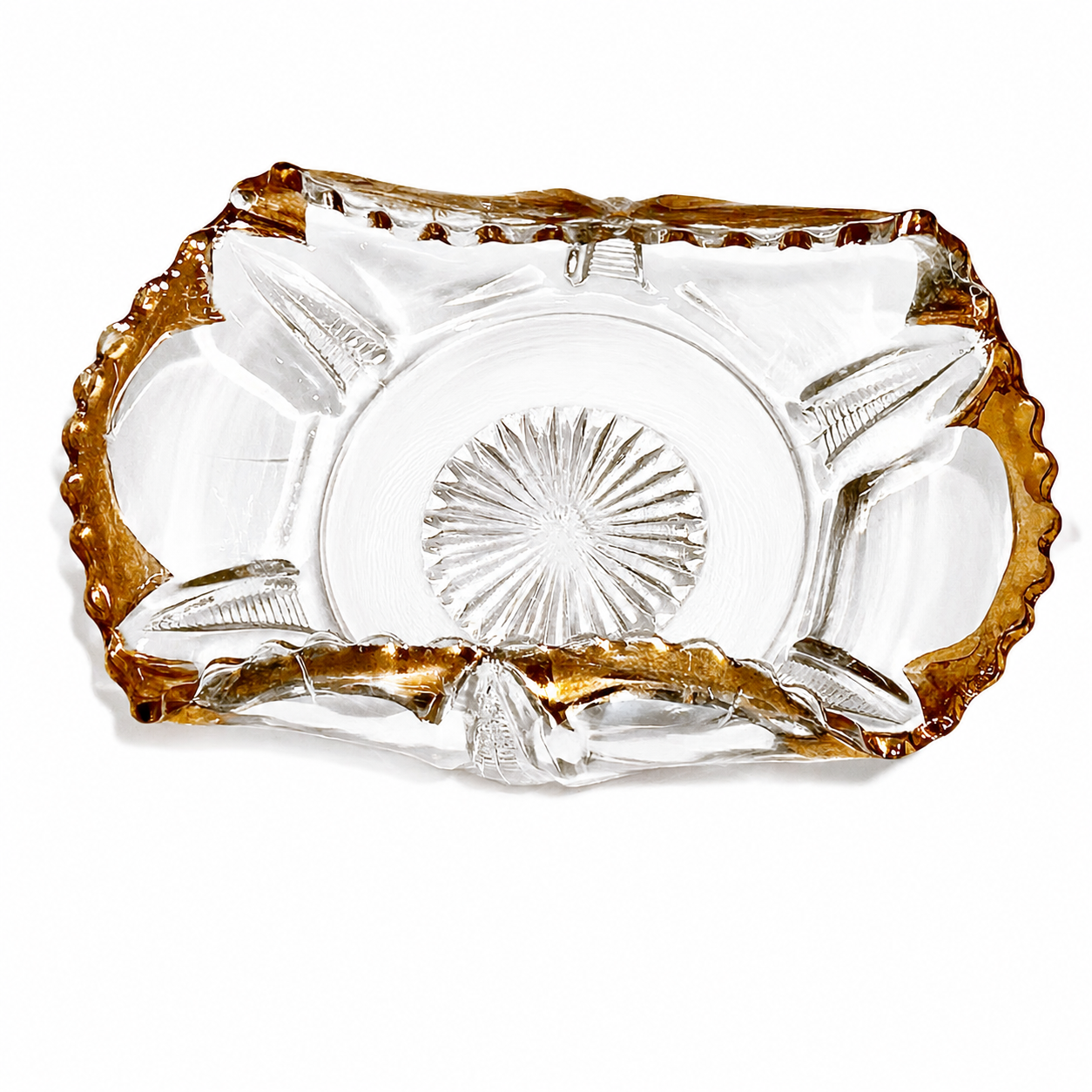
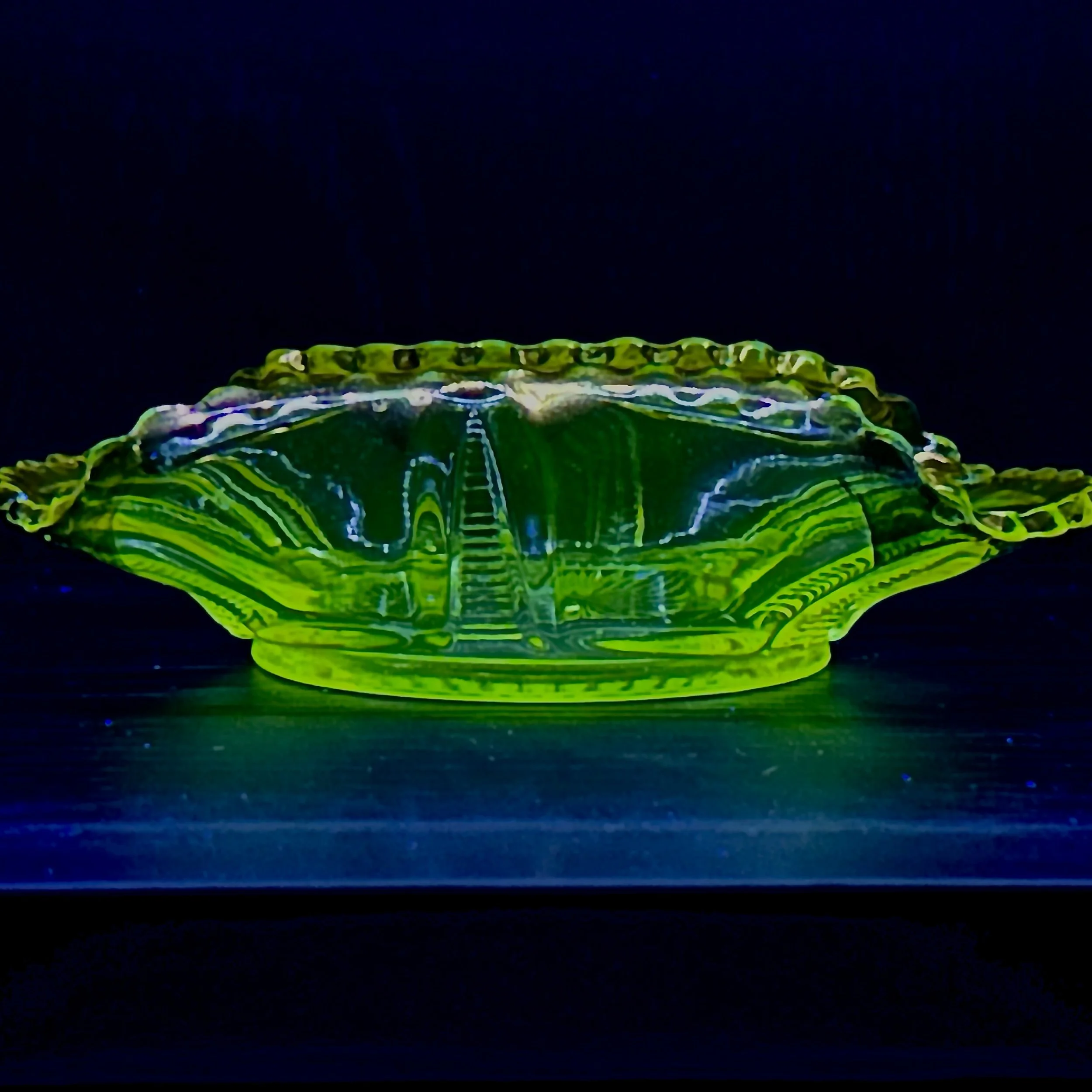
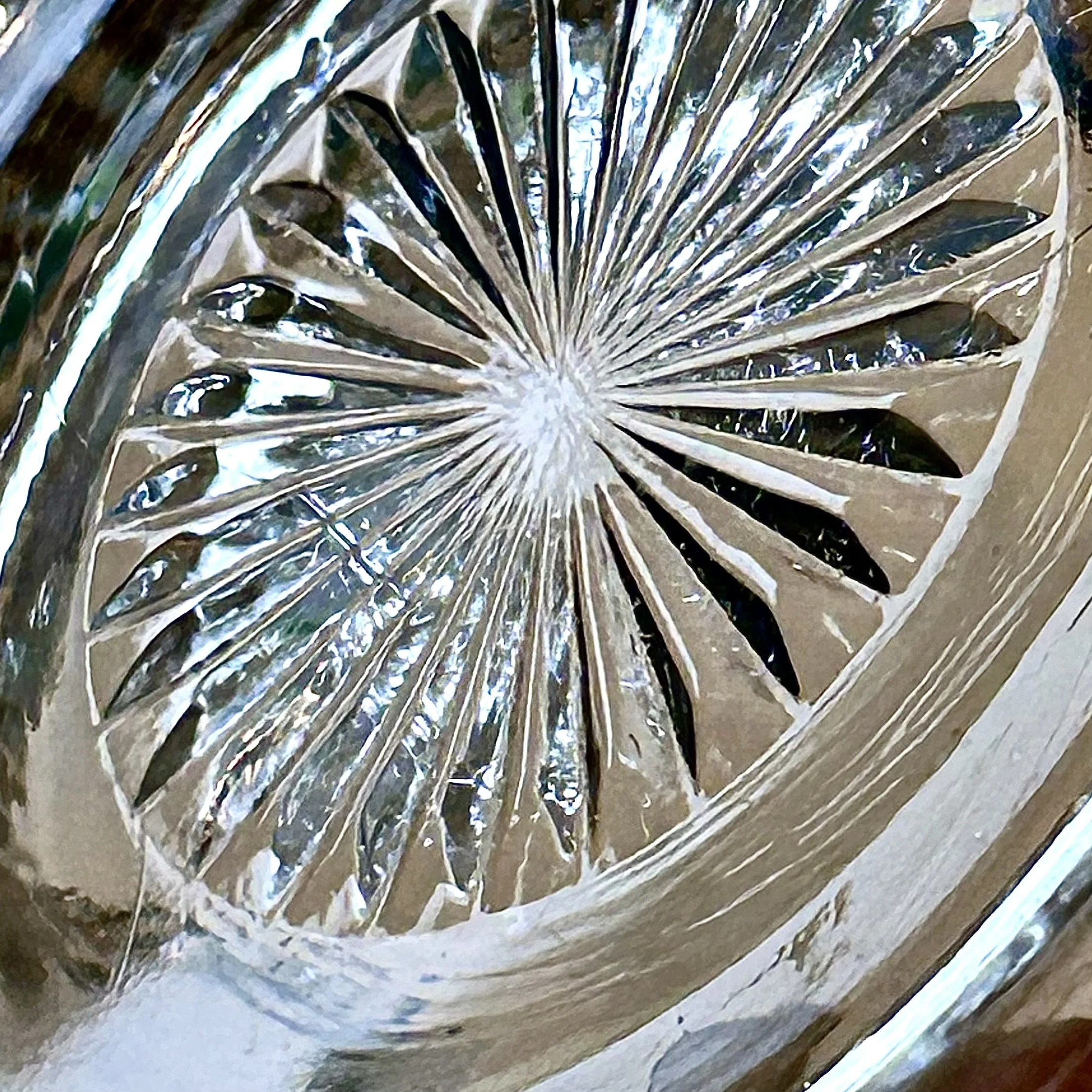
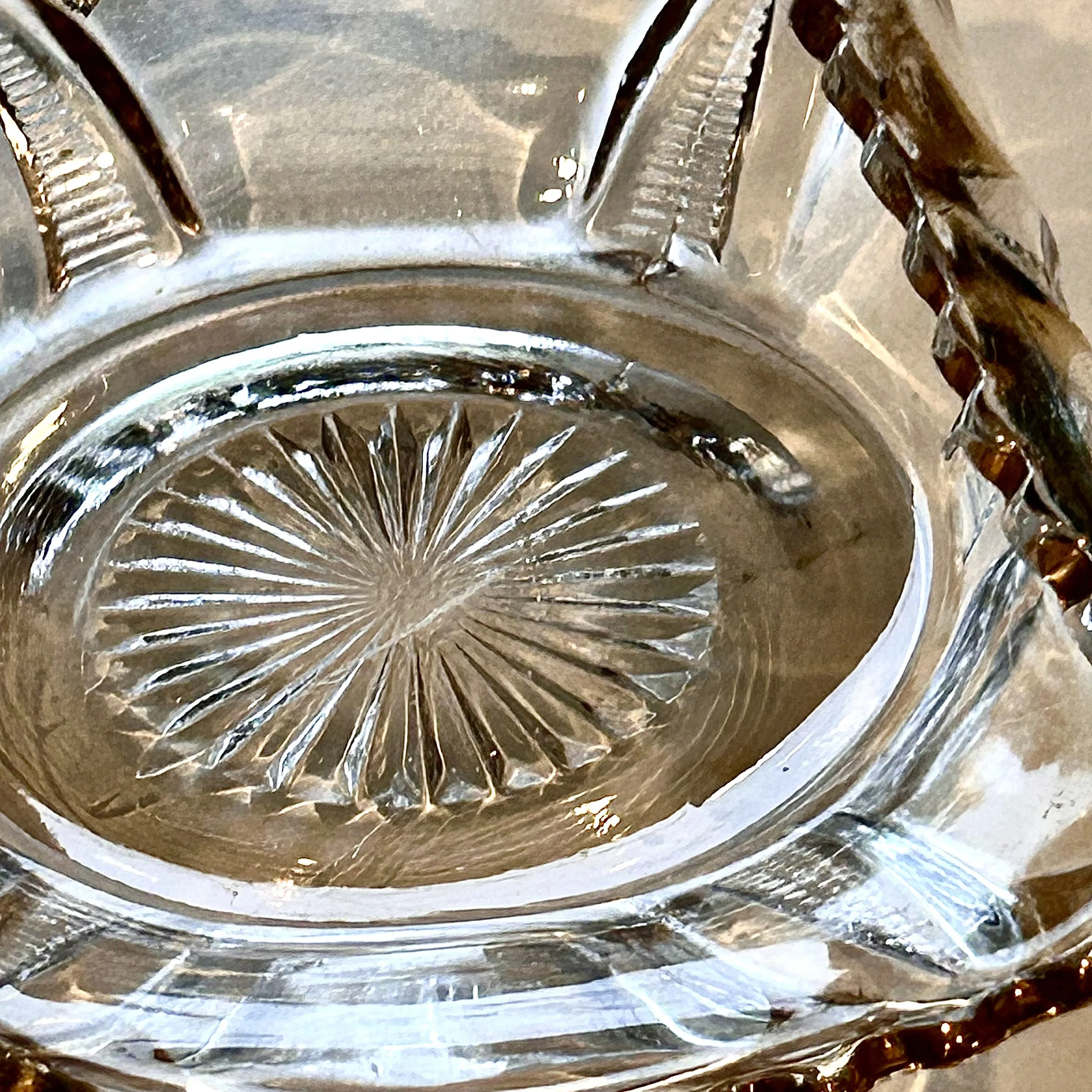
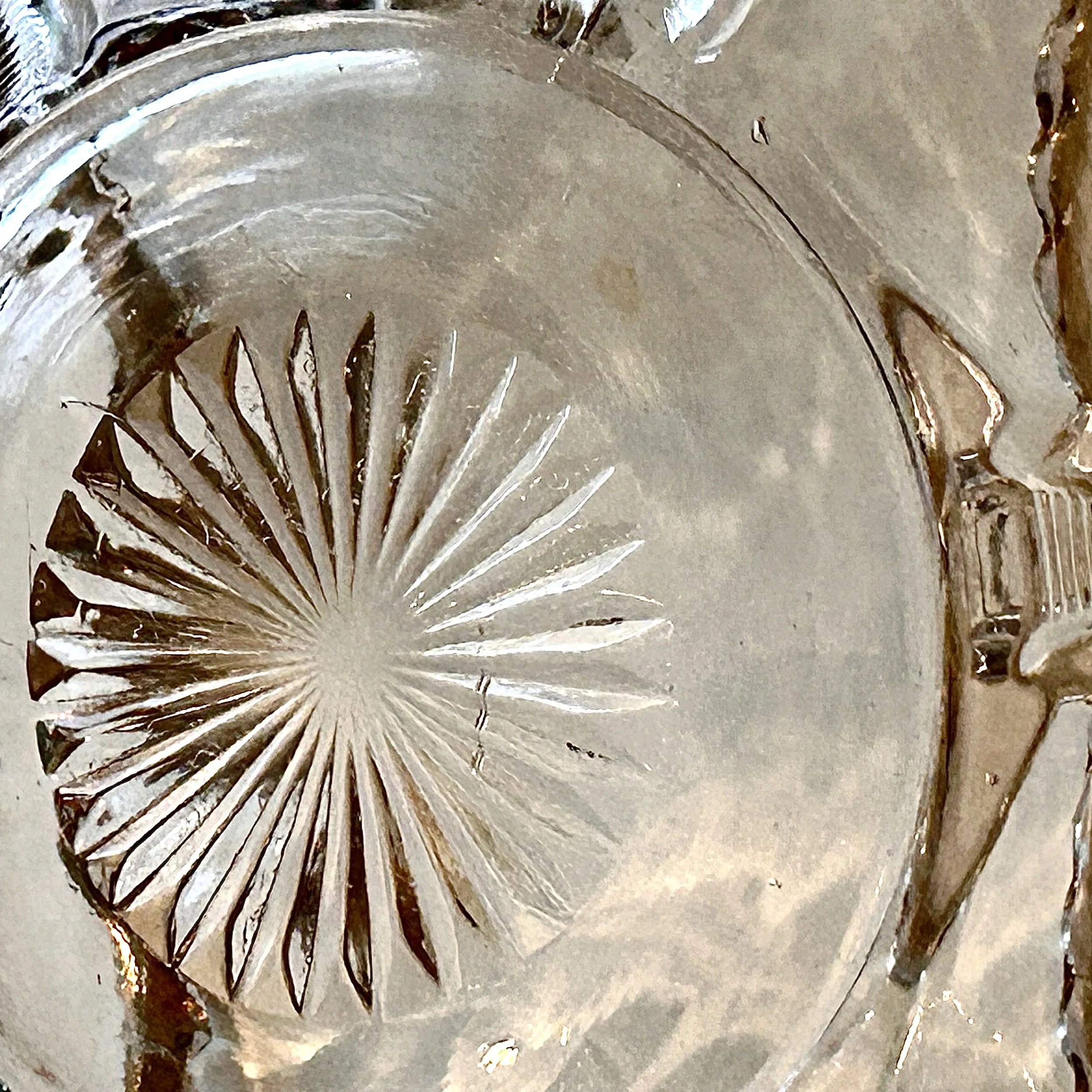
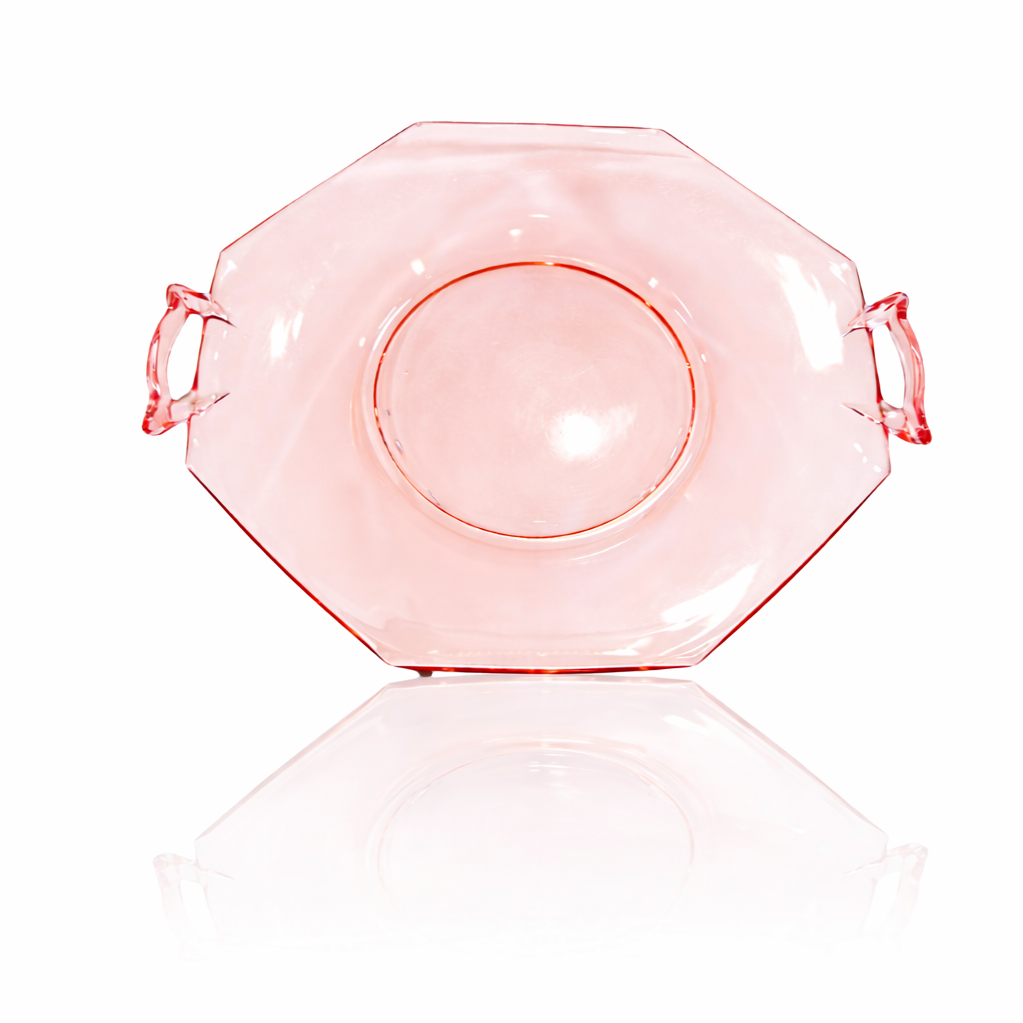
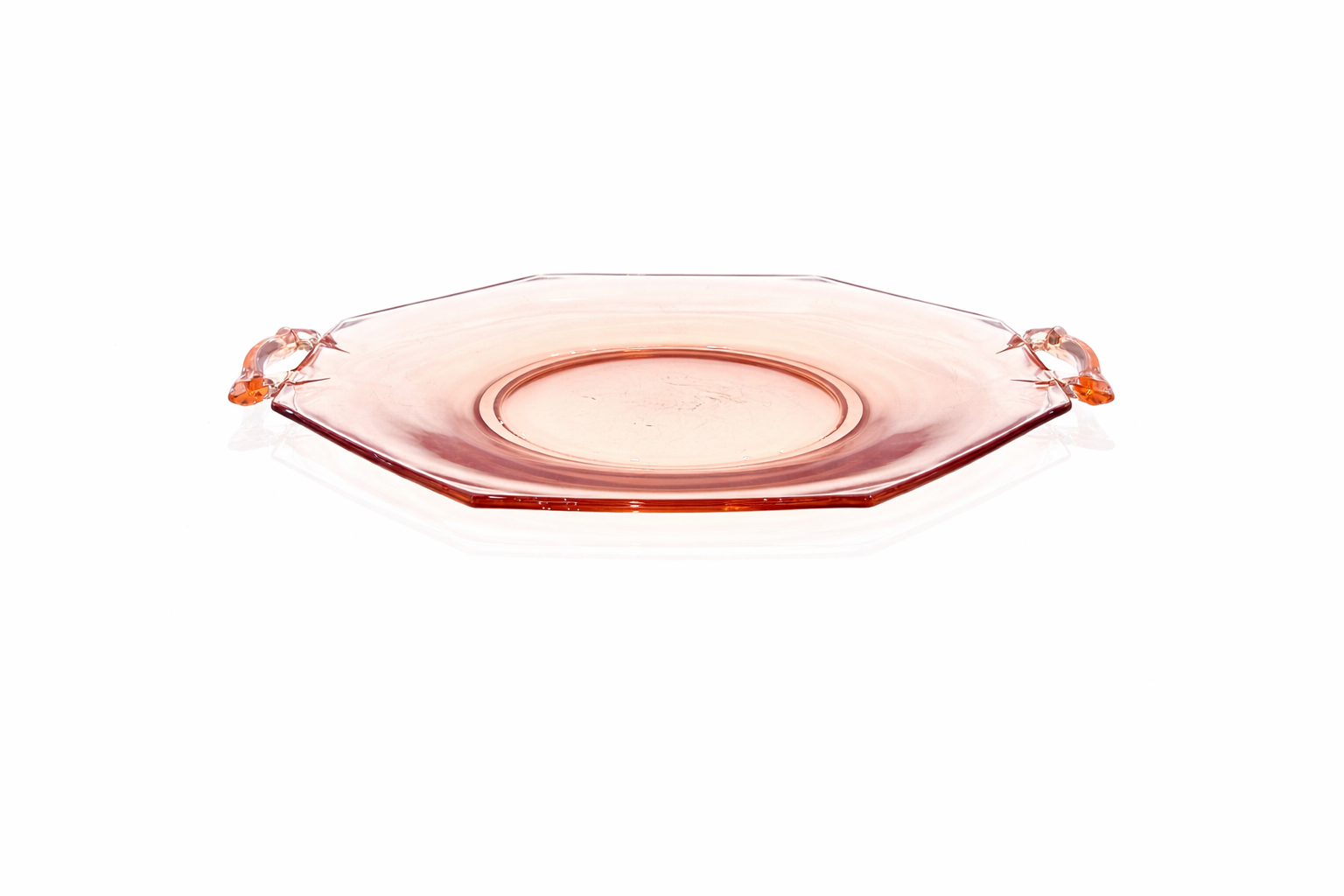
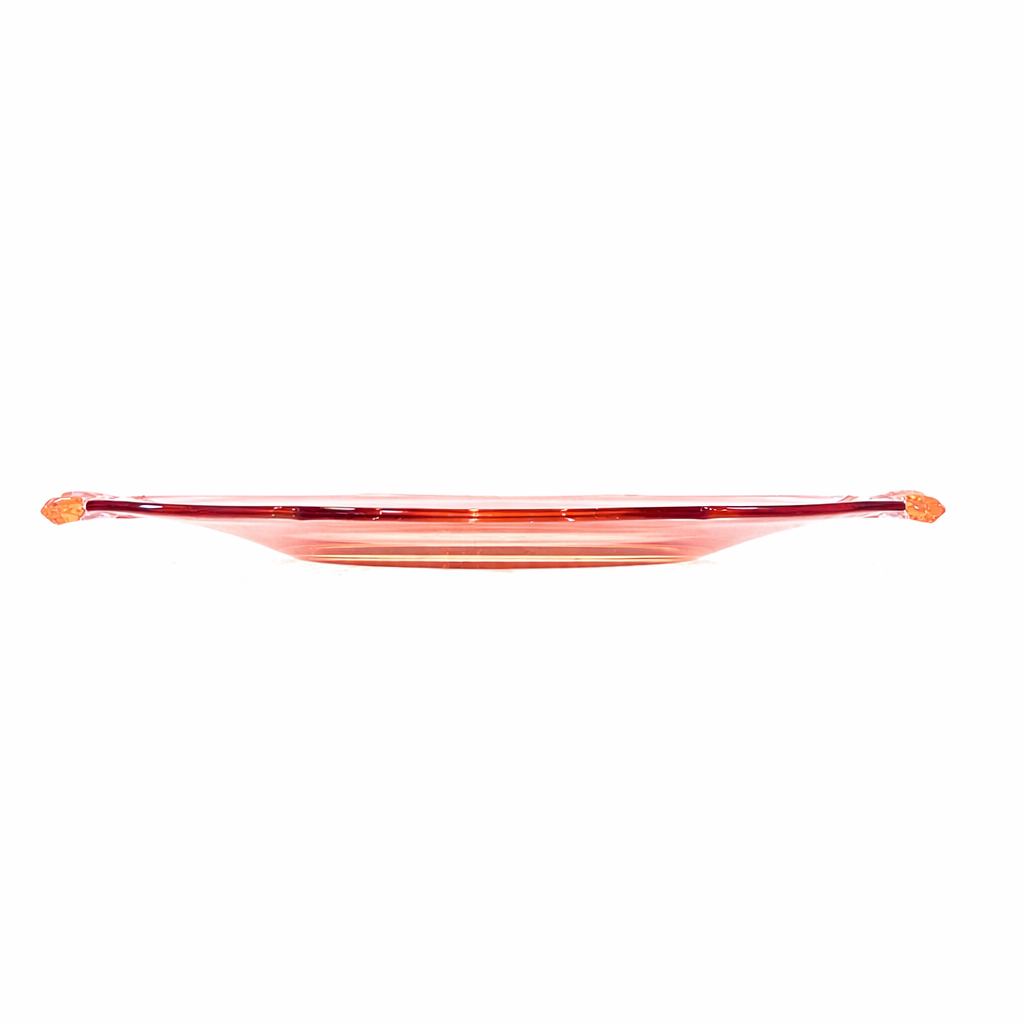
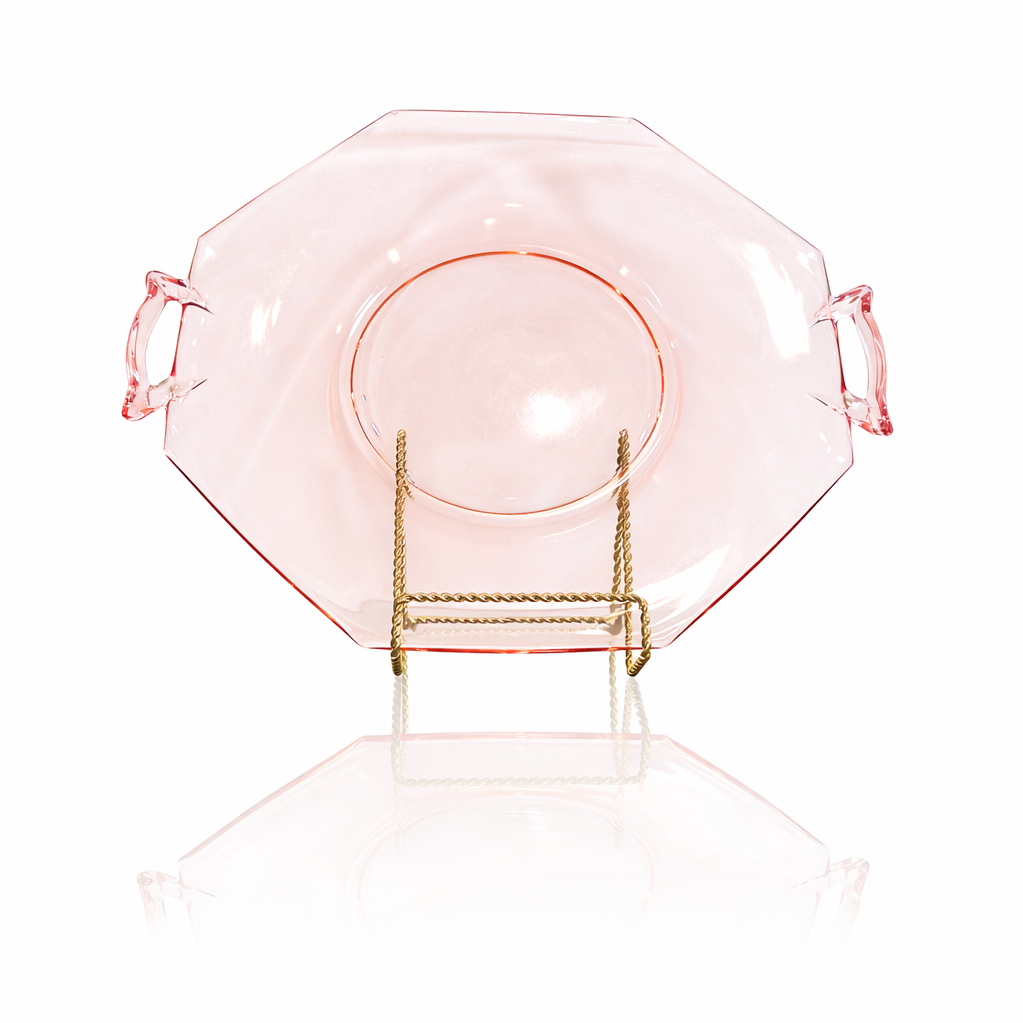
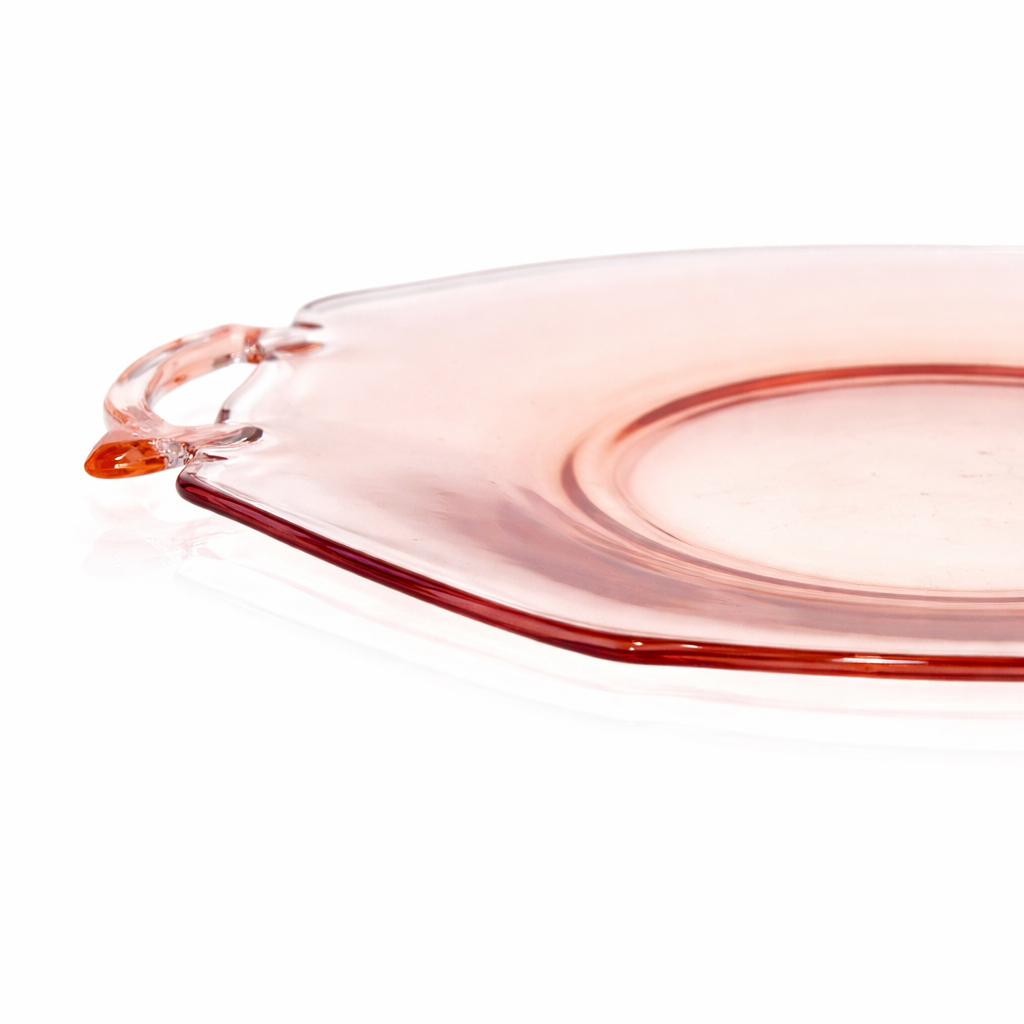
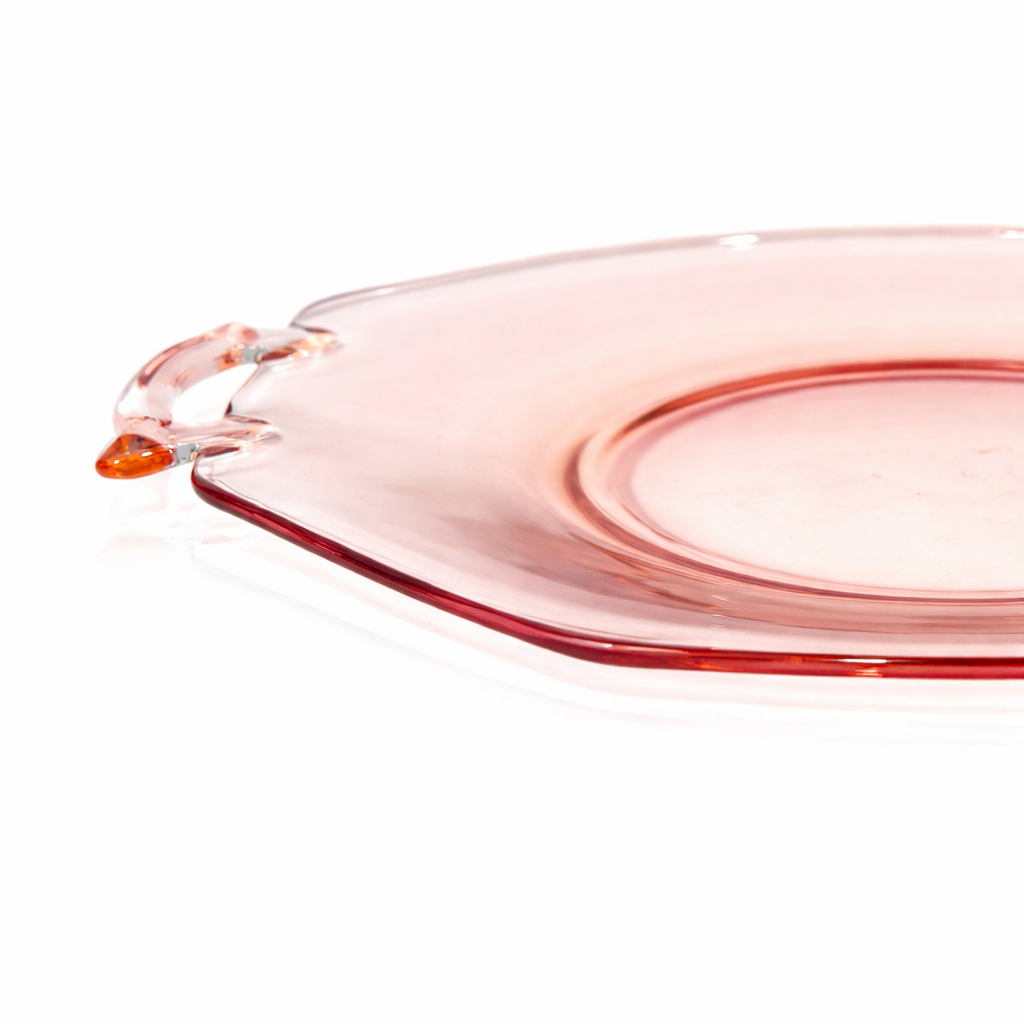
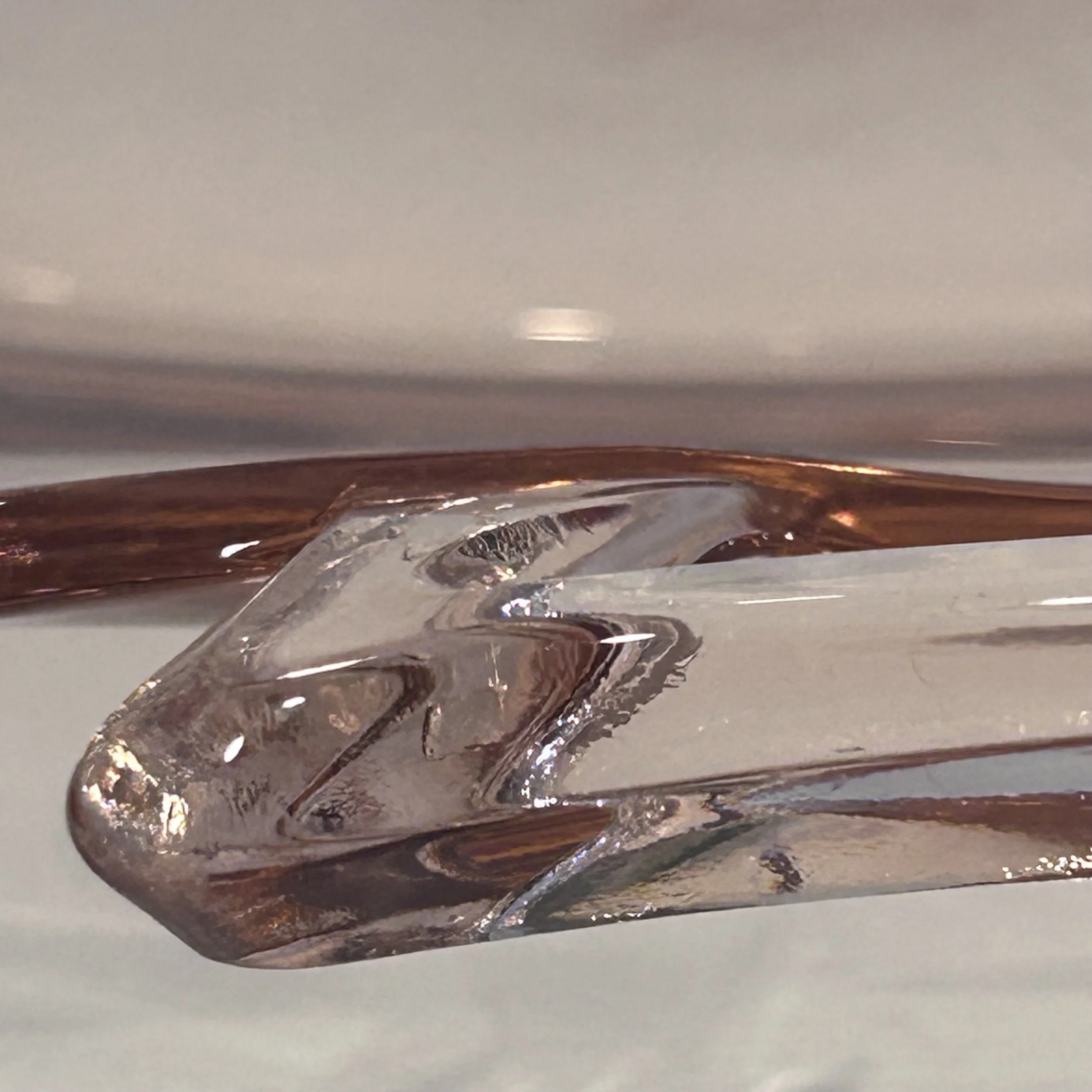
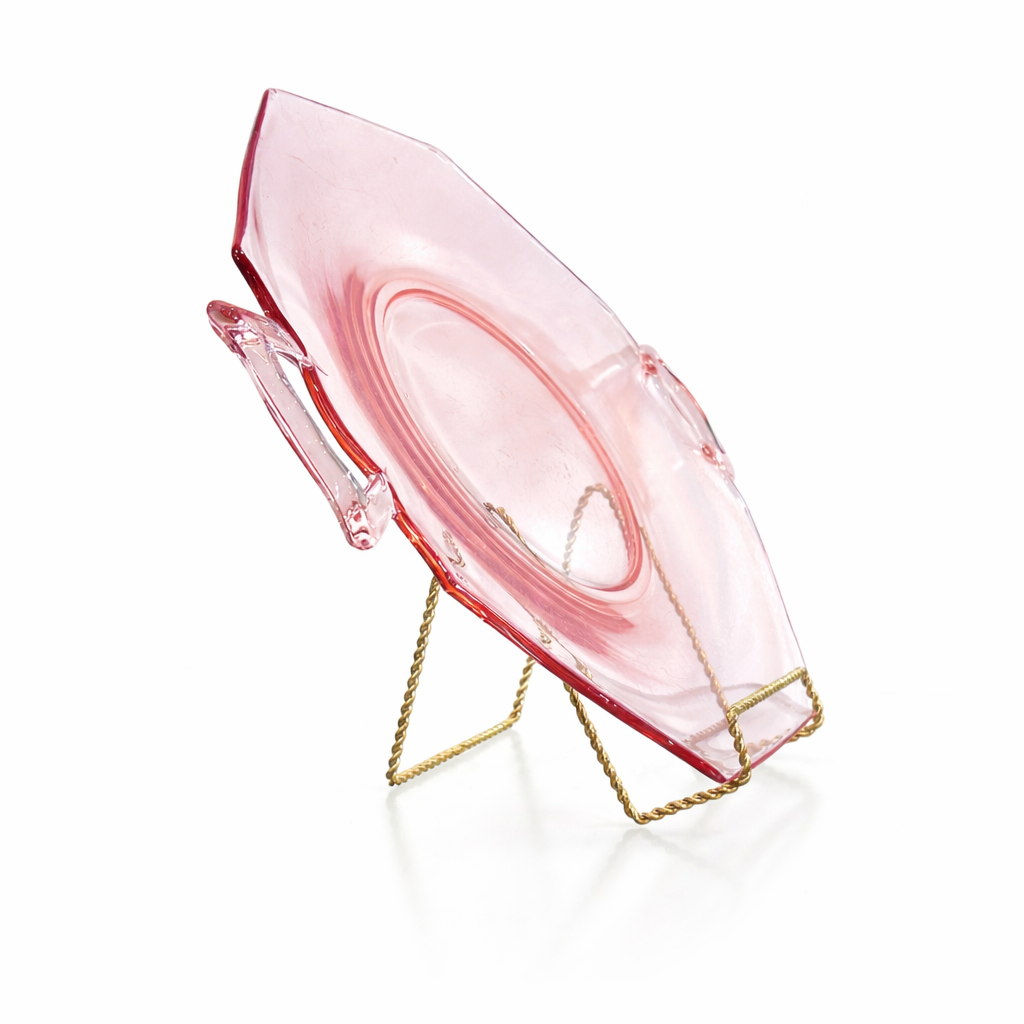
This architectural three-section serving dish is a sophisticated expression of American interwar design, characterized by the bold geometry and refined symmetry of the Art Deco movement. Executed in a luminous amethyst-lavender glass, the vessel features a radiating central medallion and three integral sculptural dividers that create a balanced, tripartite composition. The rim is finished with a repeating rhythmic oval relief, a distinctive design vocabulary that emphasizes the dish's structural form and light-refractive qualities.
Attribution & Research
The production techniques and decorative motifs align with the premier American glasshouses of the 1930s, including Hocking, Federal, and Indiana Glass. During this period, these manufacturers utilized sophisticated industrial steel molds to produce high-clarity amethyst wares that captured the transition from traditional ornament to streamlined modernism. This specific tri-section form was engineered for the formal entertaining rituals of the era, serving as both a functional object for refined table service and a decorative centerpiece.
Dimensions & Weight
Height: 1.5 inches (3.8 cm)
Diameter: 8.25 inches (21 cm)
Weight: 1.73 lbs (0.78 kg)
Condition
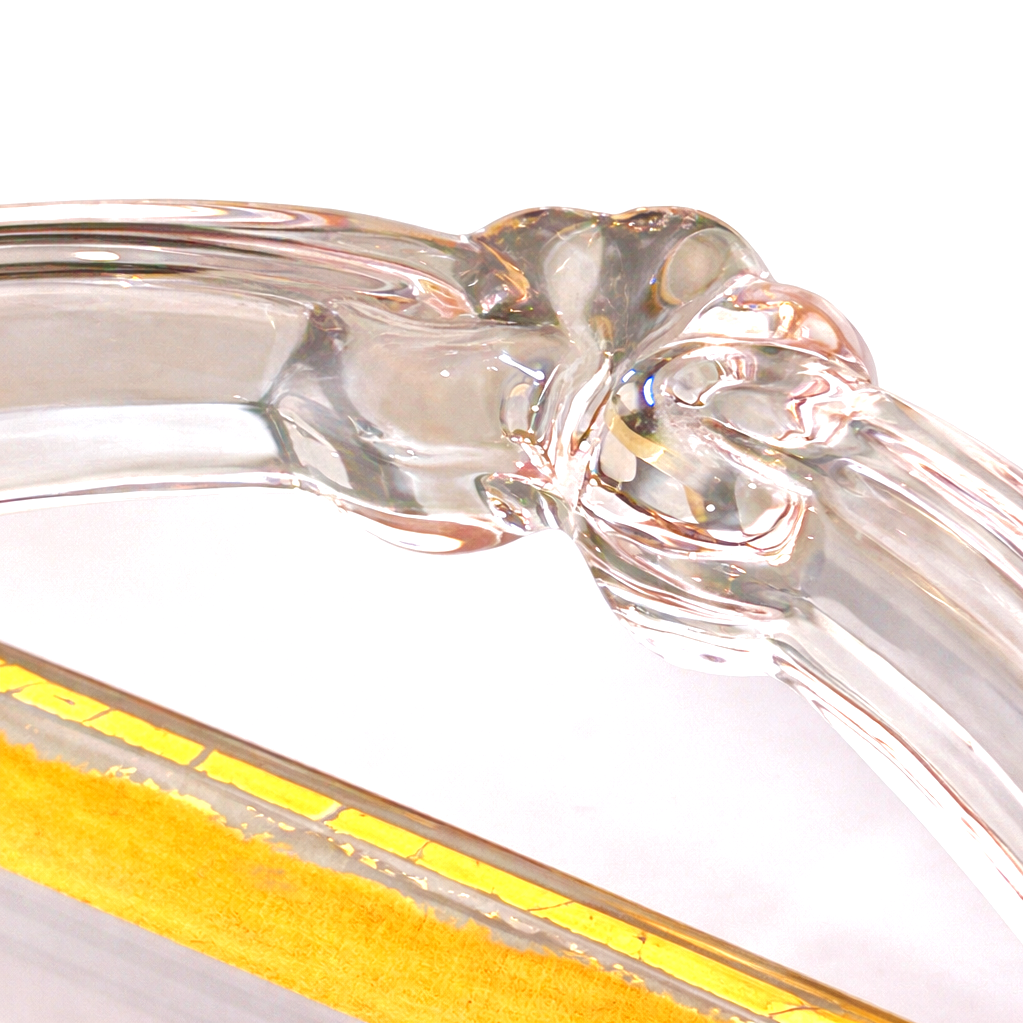
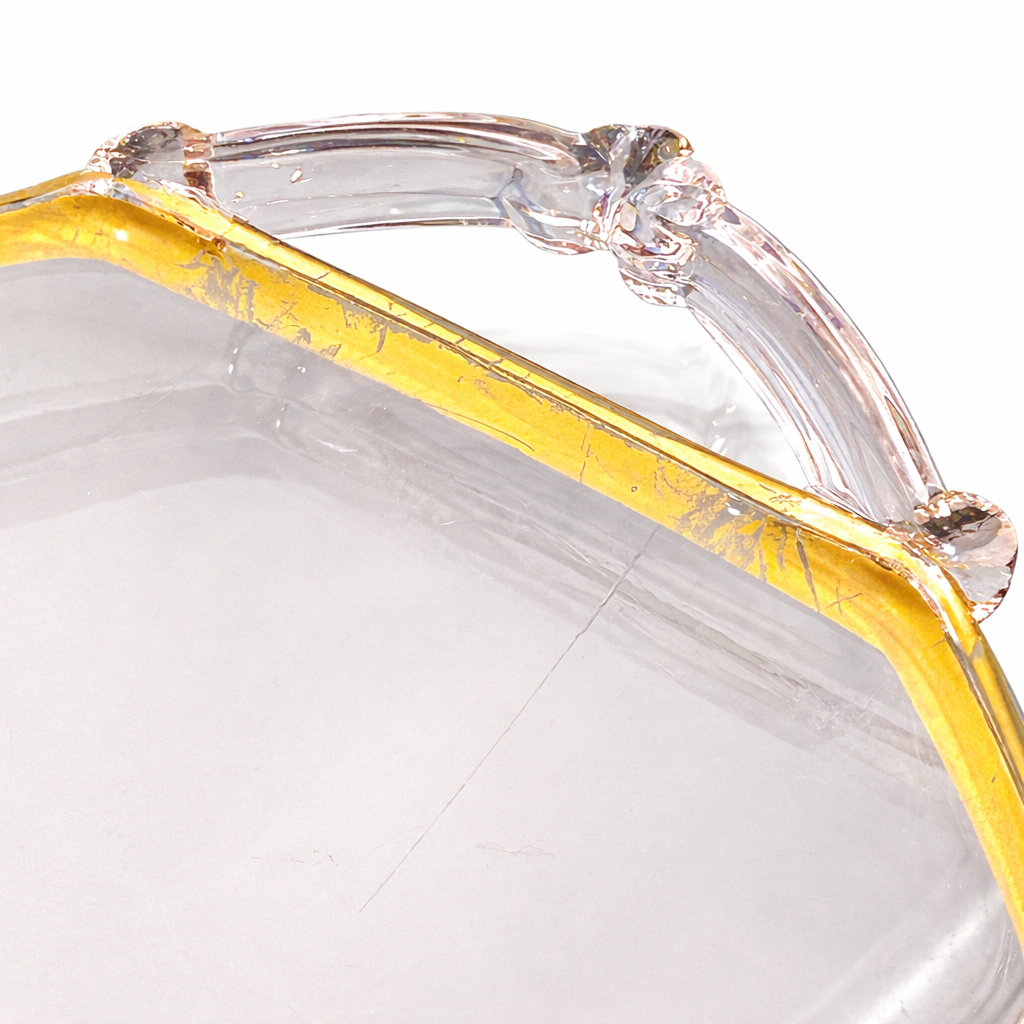
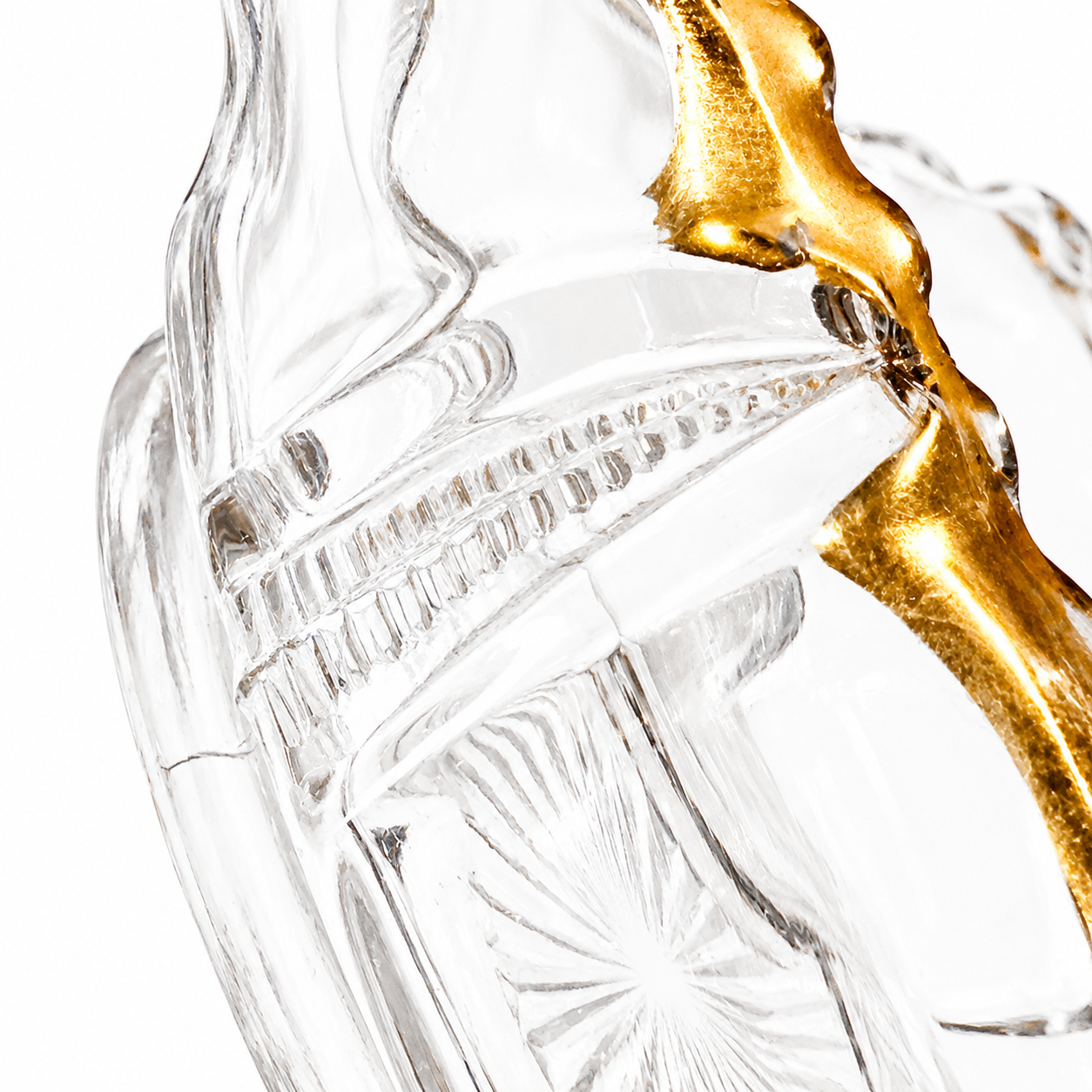
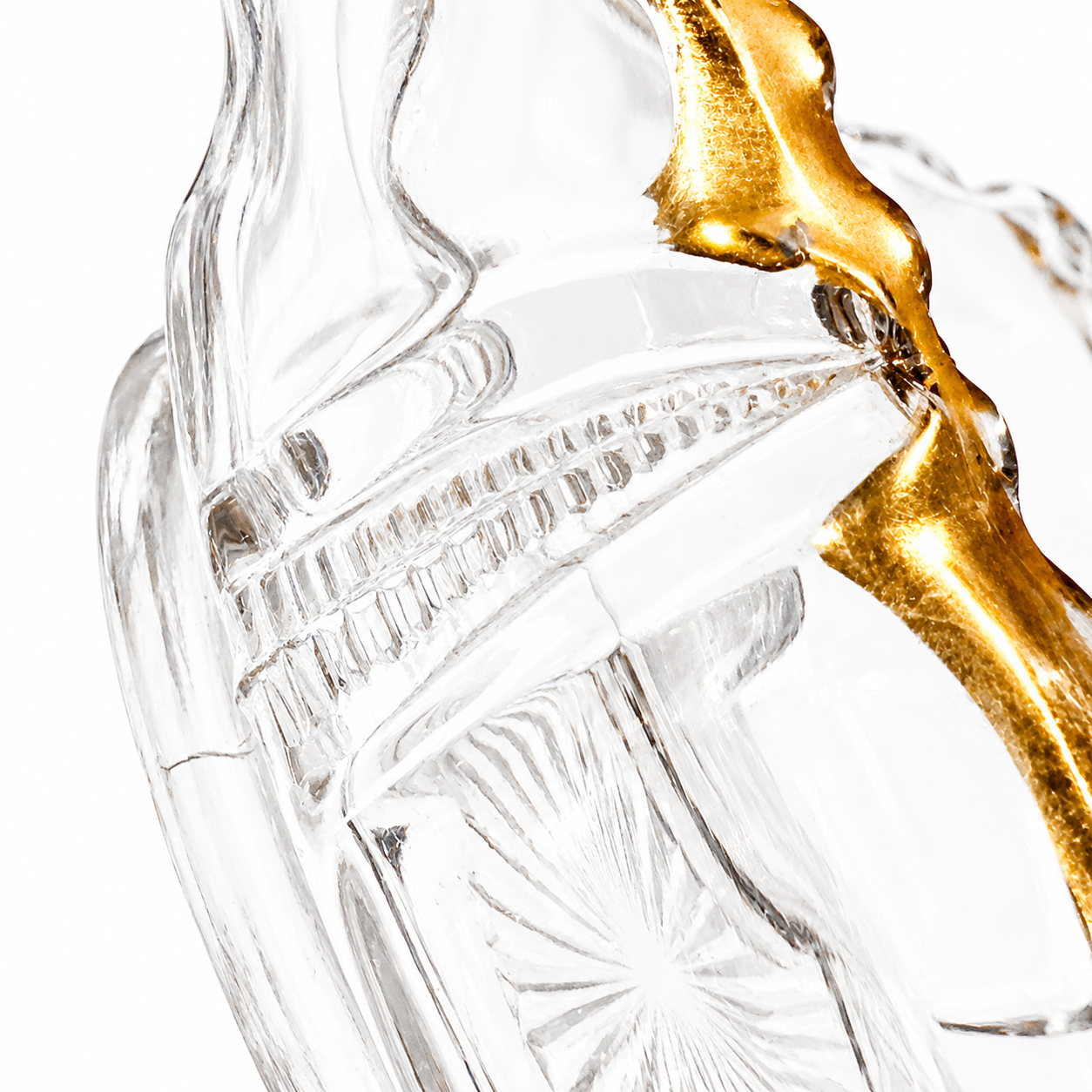
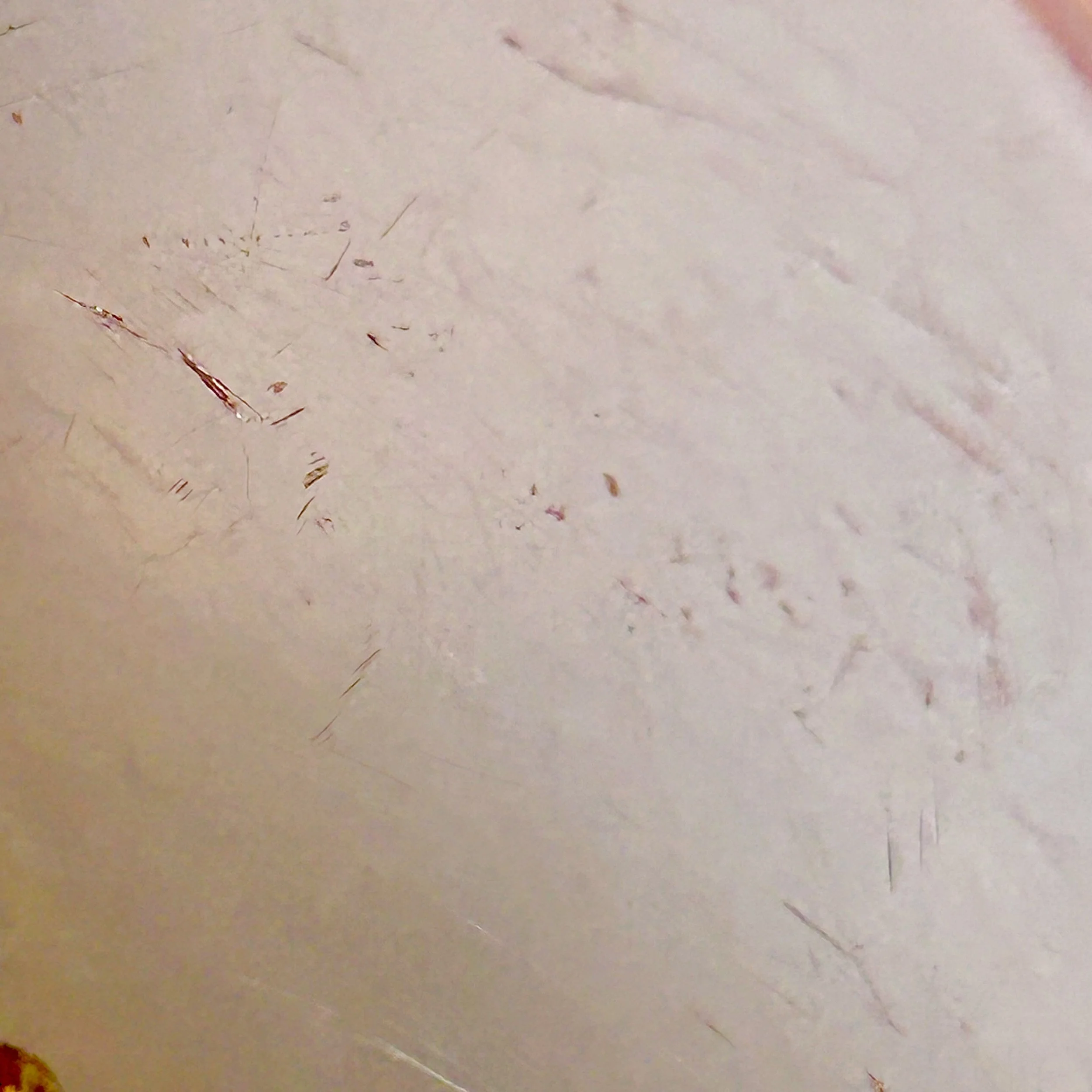
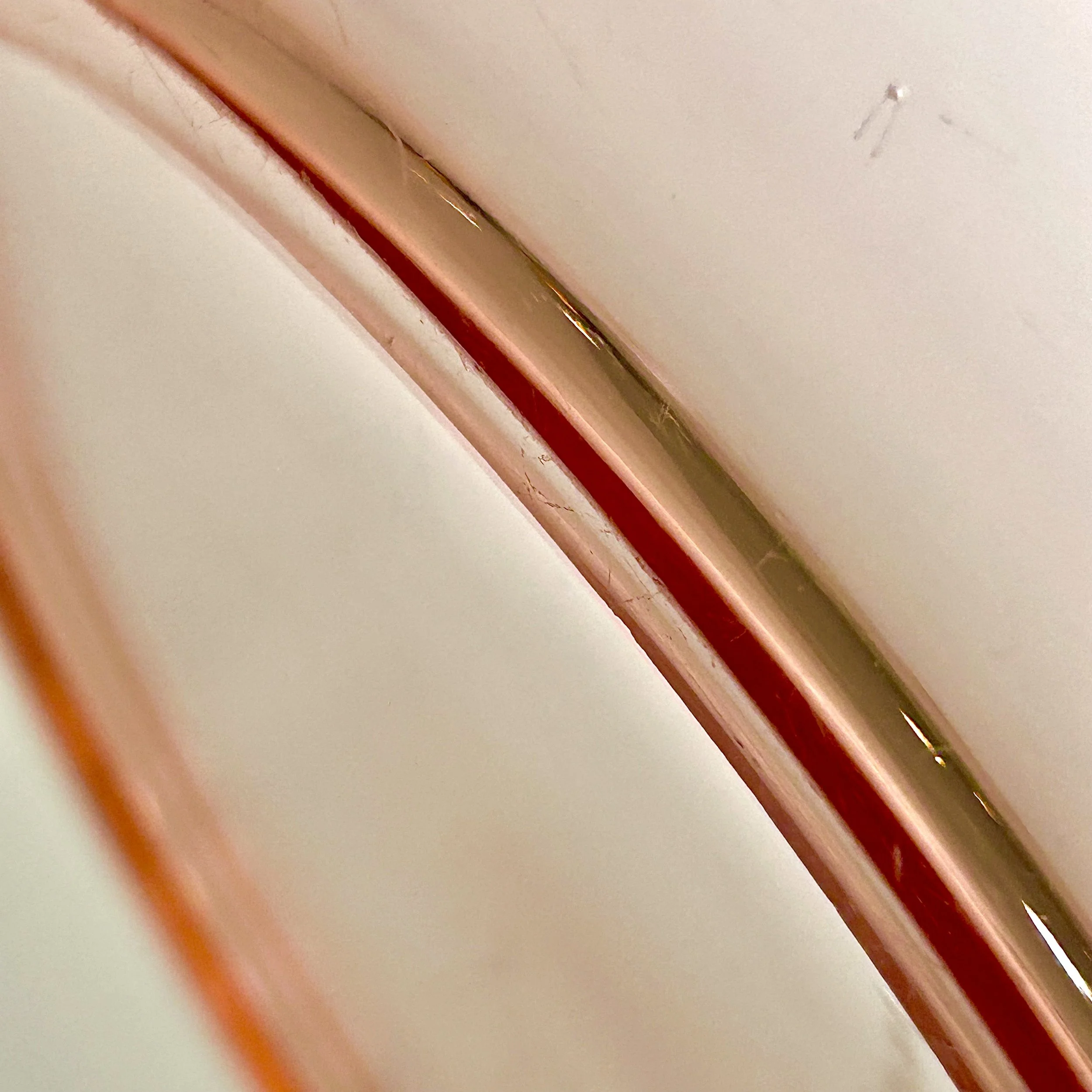
The dish is presented in excellent condition, retaining exceptional clarity, deep color saturation, and crisp mold definition. The glass remains structurally superior with no observed chips, cracks, or abrasions. The internal dividers and exterior relief edges remain remarkably sharp, indicating a piece that has been meticulously preserved within a private collection.
Authenticity & Construction
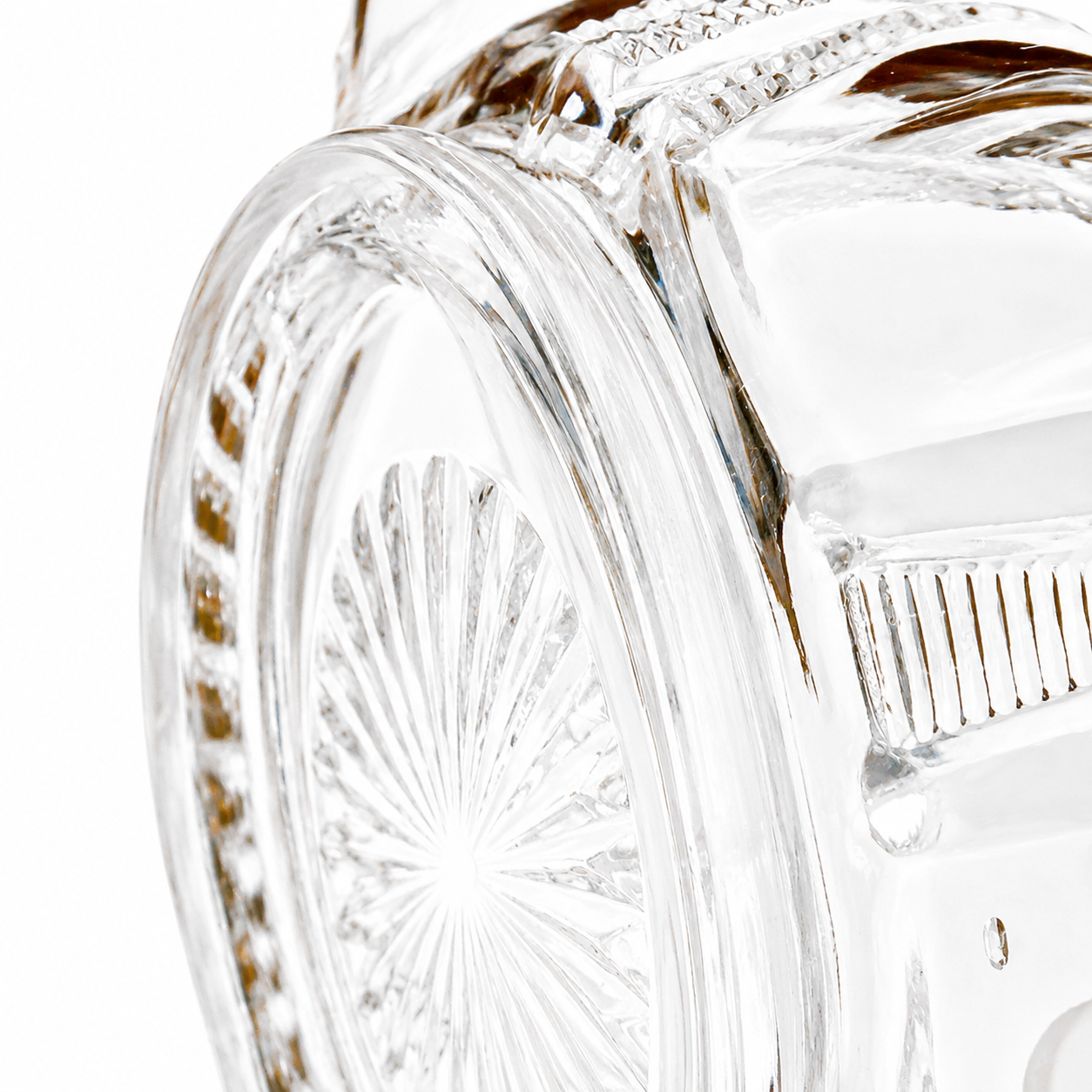
This vessel is a quintessential example of American pressed glass, achieved through controlled mineral additives to produce the signature 1930s amethyst hue. The complex three-way divider system is molded integrally into the basin, a testament to the advanced mold engineering of the Depression era. The surface is further elevated by concentric etched rings and subtle relief detailing that demonstrate a high level of artisan finishing.
Placement
Designed for the discerning collector of American Modernism, this dish commands a presence within Art Deco table settings or curated dining room vitrines. Its architectural silhouette and ethereal color depth make it a striking choice for display on mirrored bar trays, marble surfaces, or as a focal point within a collection of period-correct glass and silver service.
Provenance
Private Collection, North America.
STANDARD ATTRIBUTION & VALUE DISCLOSURE; This piece is described to the best of current scholarly and market knowledge. Any maker or regional attribution is based on visual analysis, materials, construction techniques, and documented stylistic comparisons. As with many vintage and antique glass objects, definitive attribution may not be possible without original labels or factory records. Pricing reflects condition, quality, decorative appeal, and current collector demand rather than a guaranteed maker identification.
This architectural three-section serving dish is a sophisticated expression of American interwar design, characterized by the bold geometry and refined symmetry of the Art Deco movement. Executed in a luminous amethyst-lavender glass, the vessel features a radiating central medallion and three integral sculptural dividers that create a balanced, tripartite composition. The rim is finished with a repeating rhythmic oval relief, a distinctive design vocabulary that emphasizes the dish's structural form and light-refractive qualities.
Attribution & Research
The production techniques and decorative motifs align with the premier American glasshouses of the 1930s, including Hocking, Federal, and Indiana Glass. During this period, these manufacturers utilized sophisticated industrial steel molds to produce high-clarity amethyst wares that captured the transition from traditional ornament to streamlined modernism. This specific tri-section form was engineered for the formal entertaining rituals of the era, serving as both a functional object for refined table service and a decorative centerpiece.
Dimensions & Weight
Height: 1.5 inches (3.8 cm)
Diameter: 8.25 inches (21 cm)
Weight: 1.73 lbs (0.78 kg)
Condition
The dish is presented in excellent condition, retaining exceptional clarity, deep color saturation, and crisp mold definition. The glass remains structurally superior with no observed chips, cracks, or abrasions. The internal dividers and exterior relief edges remain remarkably sharp, indicating a piece that has been meticulously preserved within a private collection.
Authenticity & Construction
This vessel is a quintessential example of American pressed glass, achieved through controlled mineral additives to produce the signature 1930s amethyst hue. The complex three-way divider system is molded integrally into the basin, a testament to the advanced mold engineering of the Depression era. The surface is further elevated by concentric etched rings and subtle relief detailing that demonstrate a high level of artisan finishing.
Placement
Designed for the discerning collector of American Modernism, this dish commands a presence within Art Deco table settings or curated dining room vitrines. Its architectural silhouette and ethereal color depth make it a striking choice for display on mirrored bar trays, marble surfaces, or as a focal point within a collection of period-correct glass and silver service.
Provenance
Private Collection, North America.
STANDARD ATTRIBUTION & VALUE DISCLOSURE; This piece is described to the best of current scholarly and market knowledge. Any maker or regional attribution is based on visual analysis, materials, construction techniques, and documented stylistic comparisons. As with many vintage and antique glass objects, definitive attribution may not be possible without original labels or factory records. Pricing reflects condition, quality, decorative appeal, and current collector demand rather than a guaranteed maker identification.

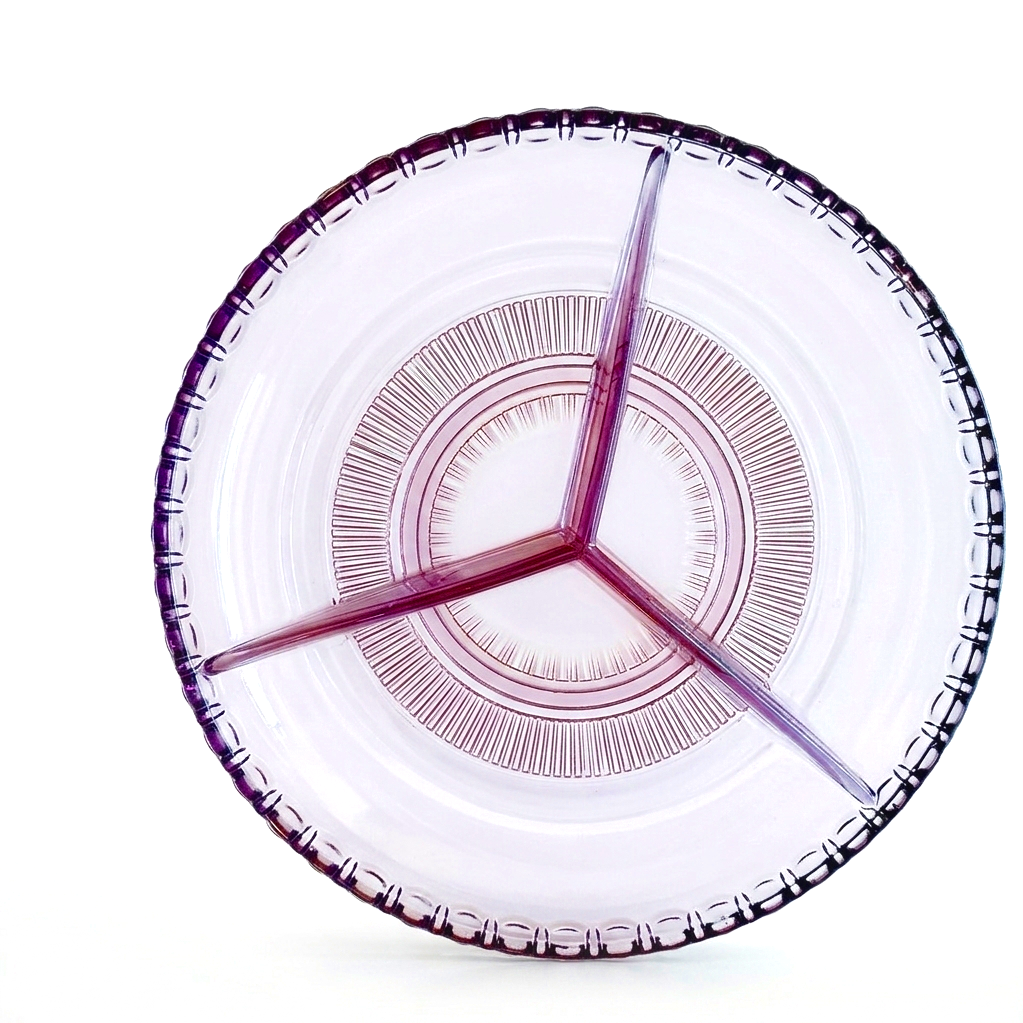 Image 1 of 12
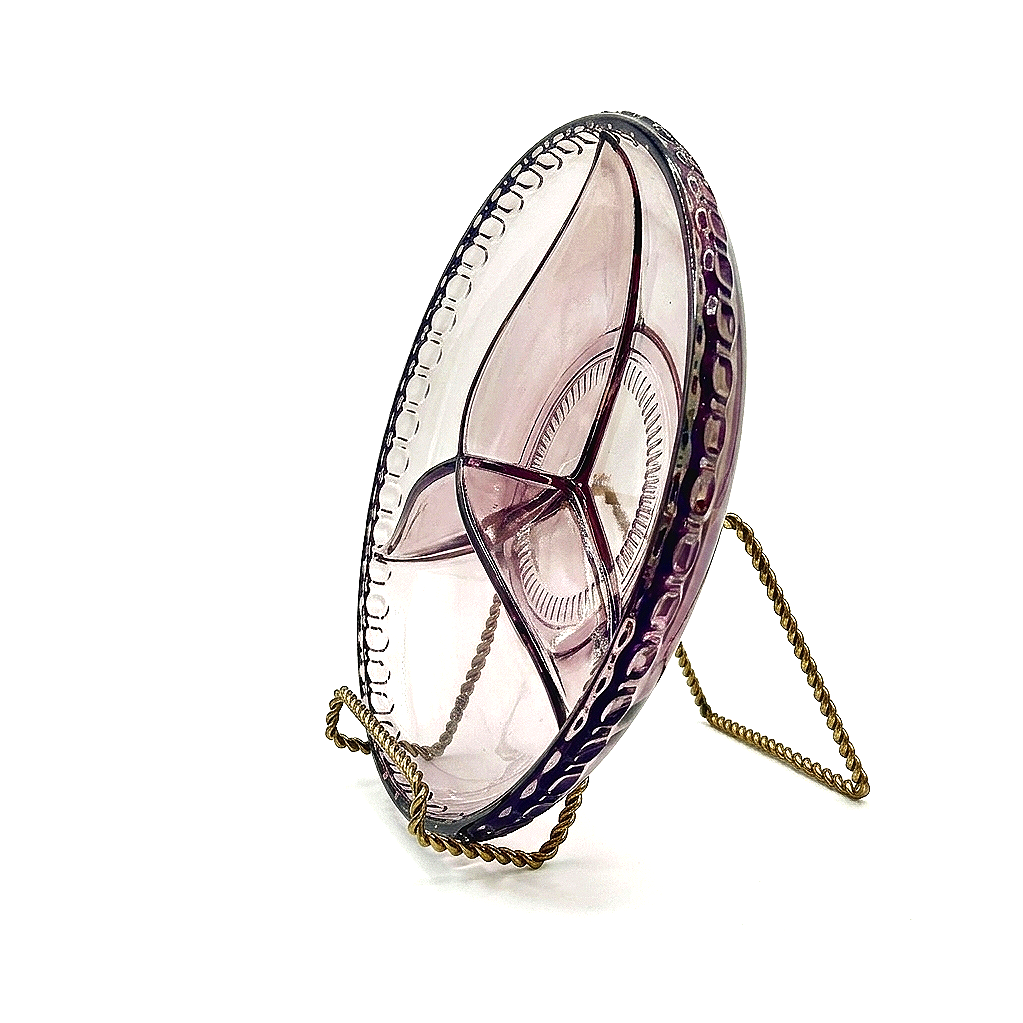 Image 2 of 12
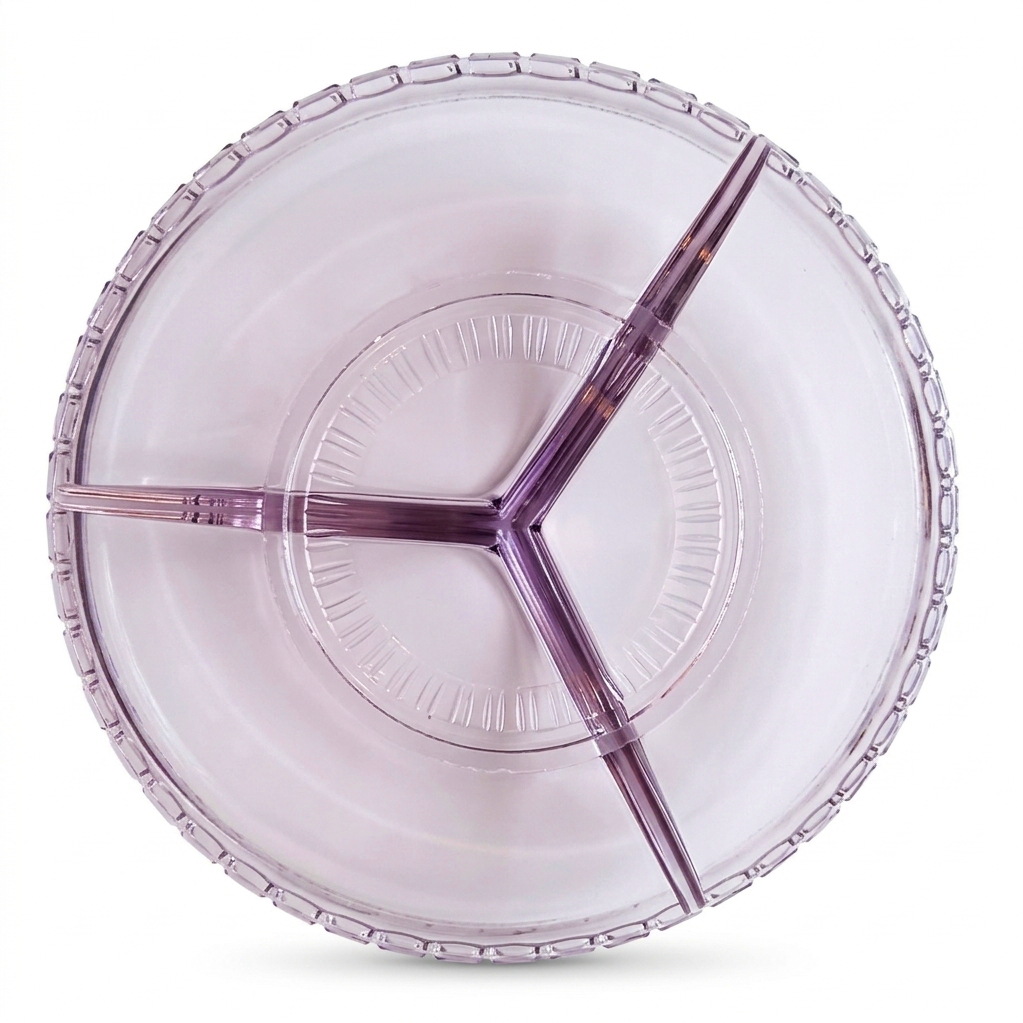 Image 3 of 12
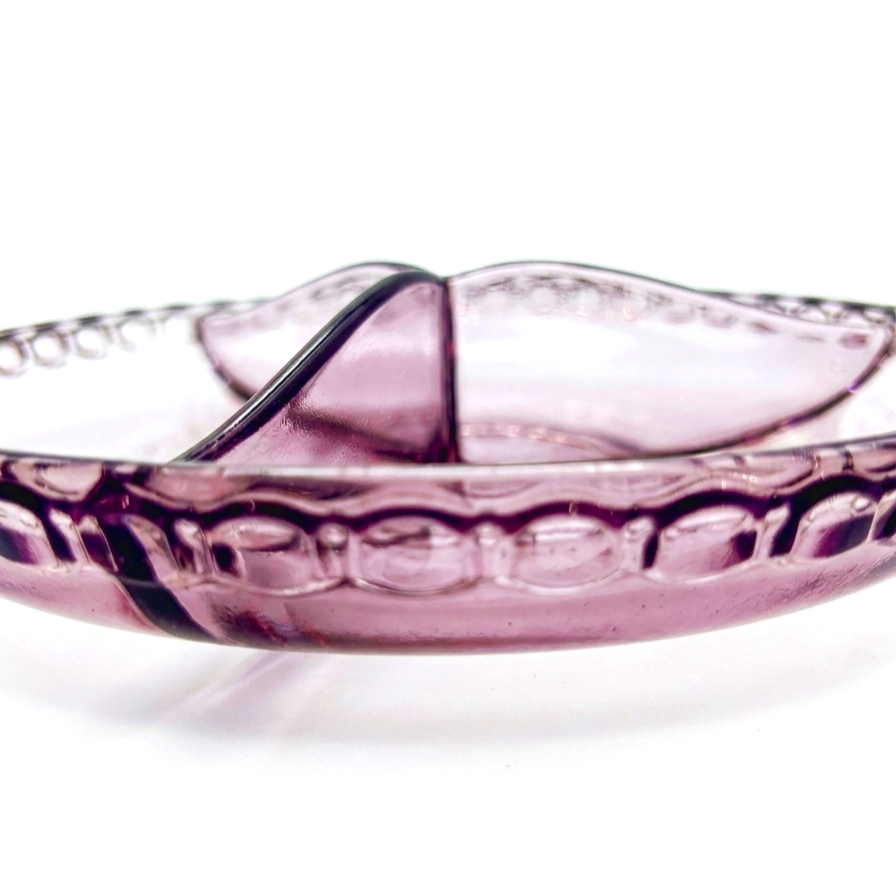 Image 4 of 12
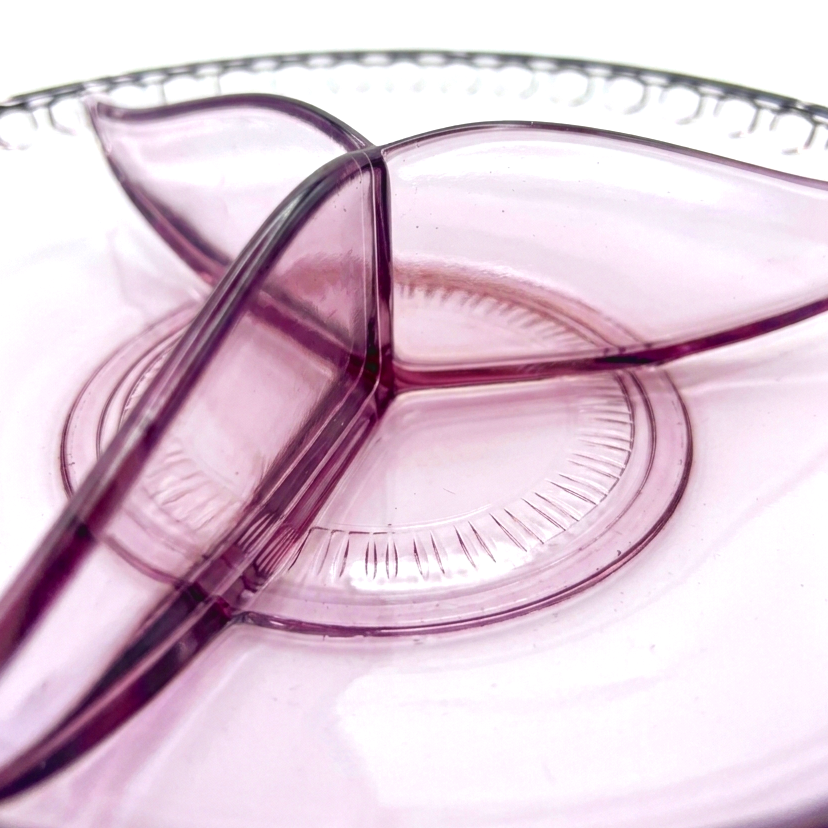 Image 5 of 12
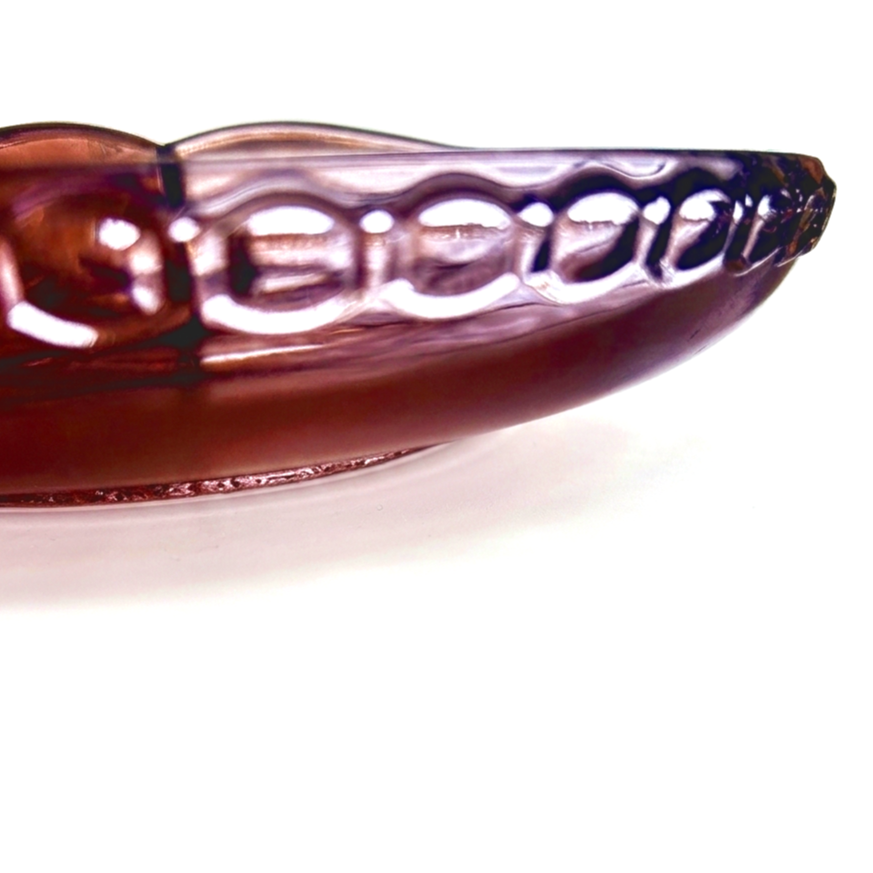 Image 6 of 12
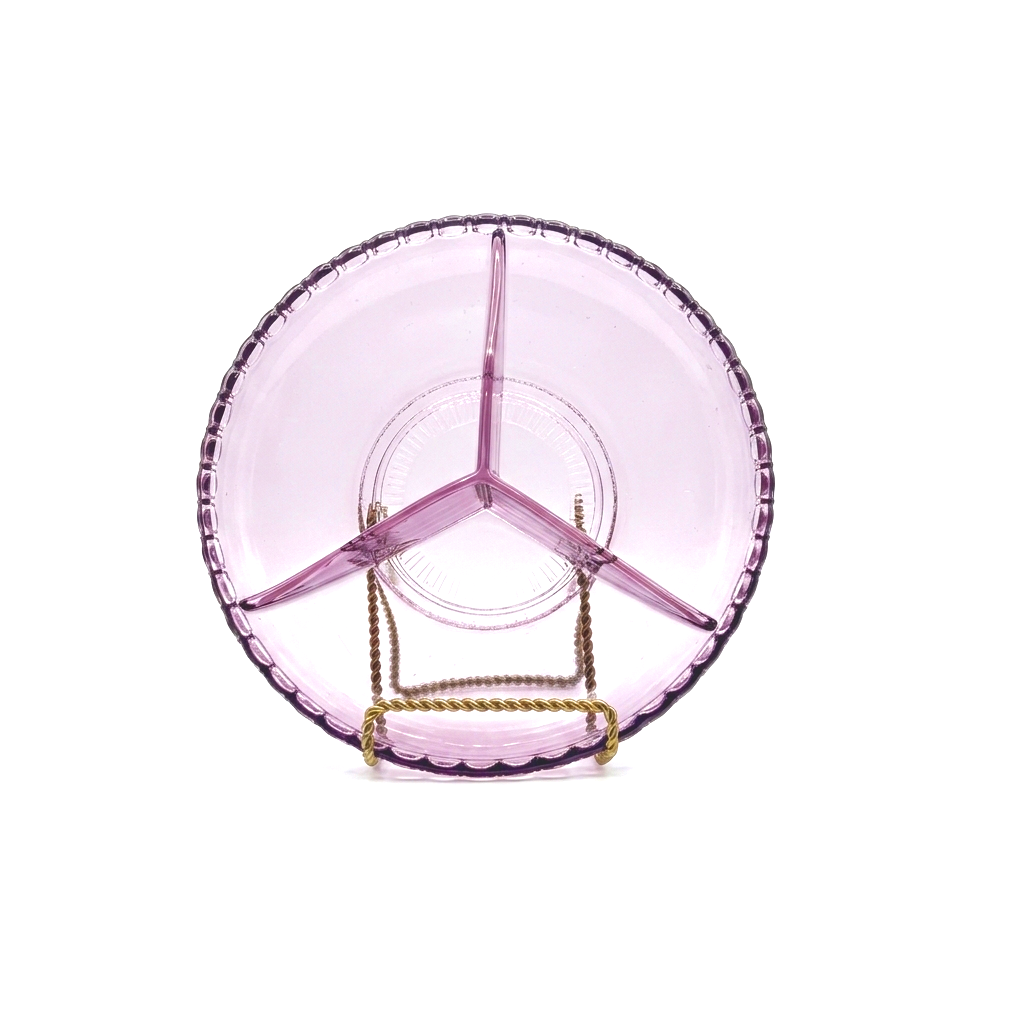 Image 7 of 12
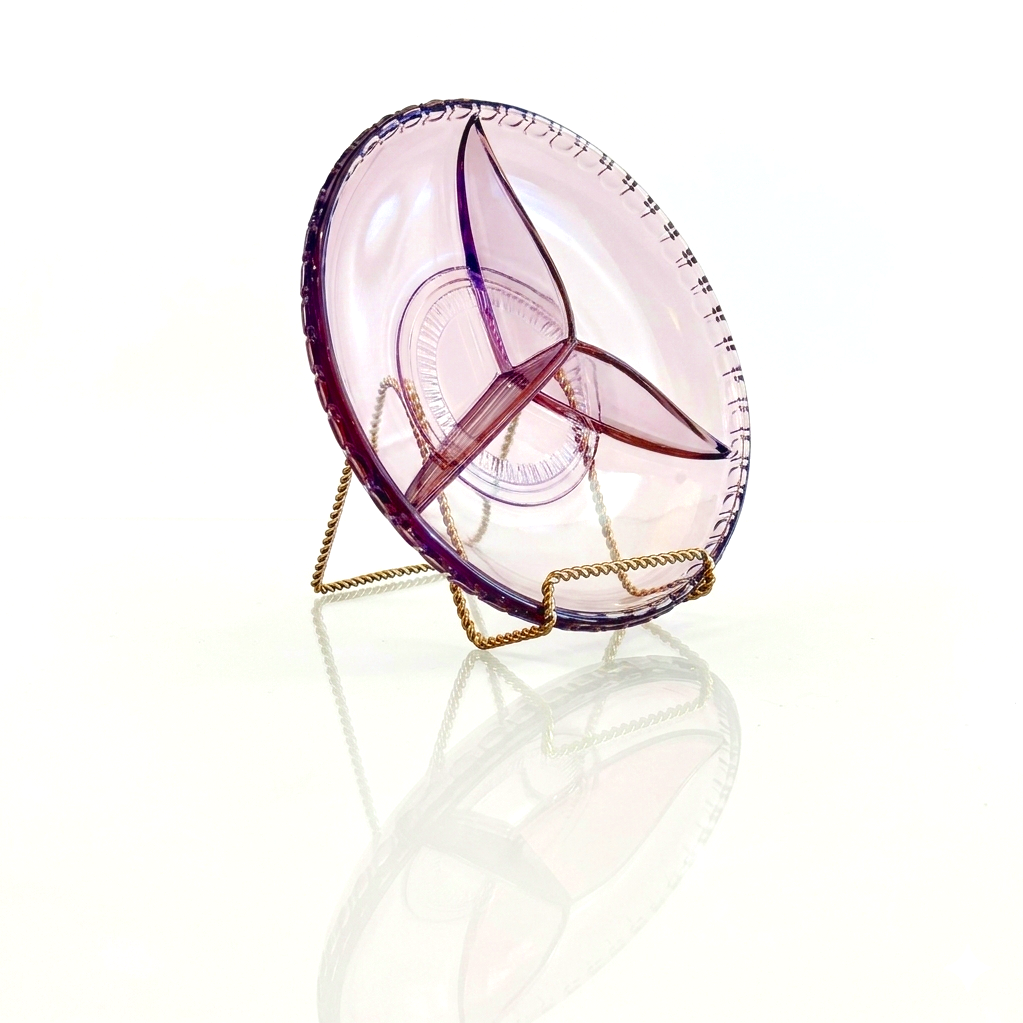 Image 8 of 12
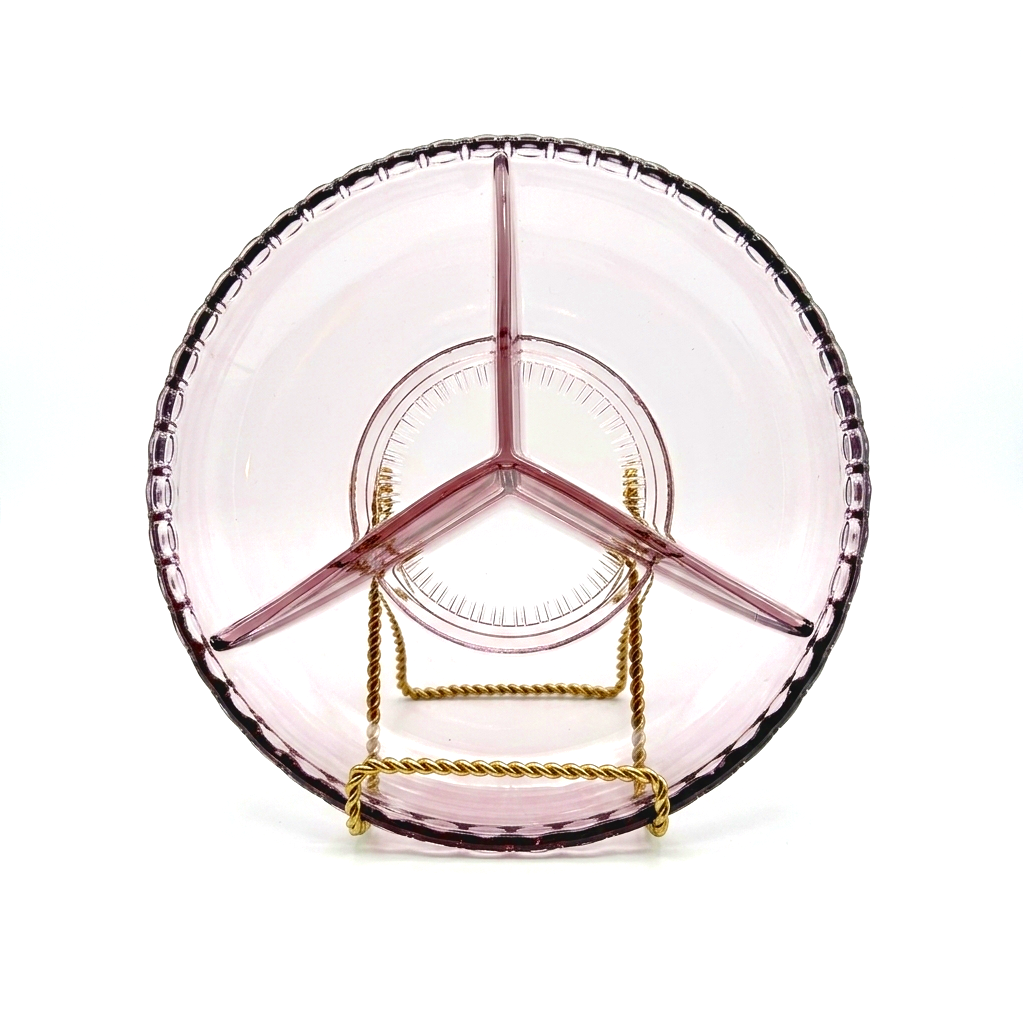 Image 9 of 12
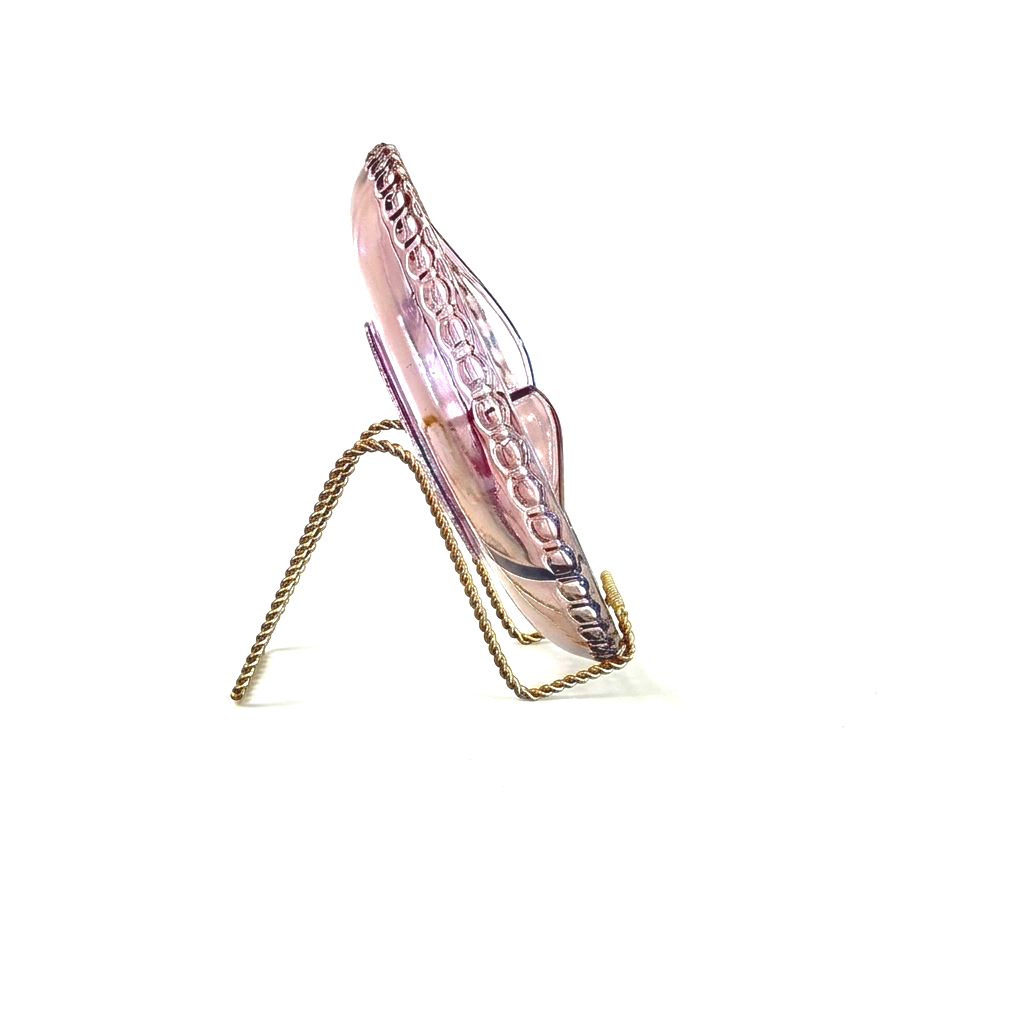 Image 10 of 12
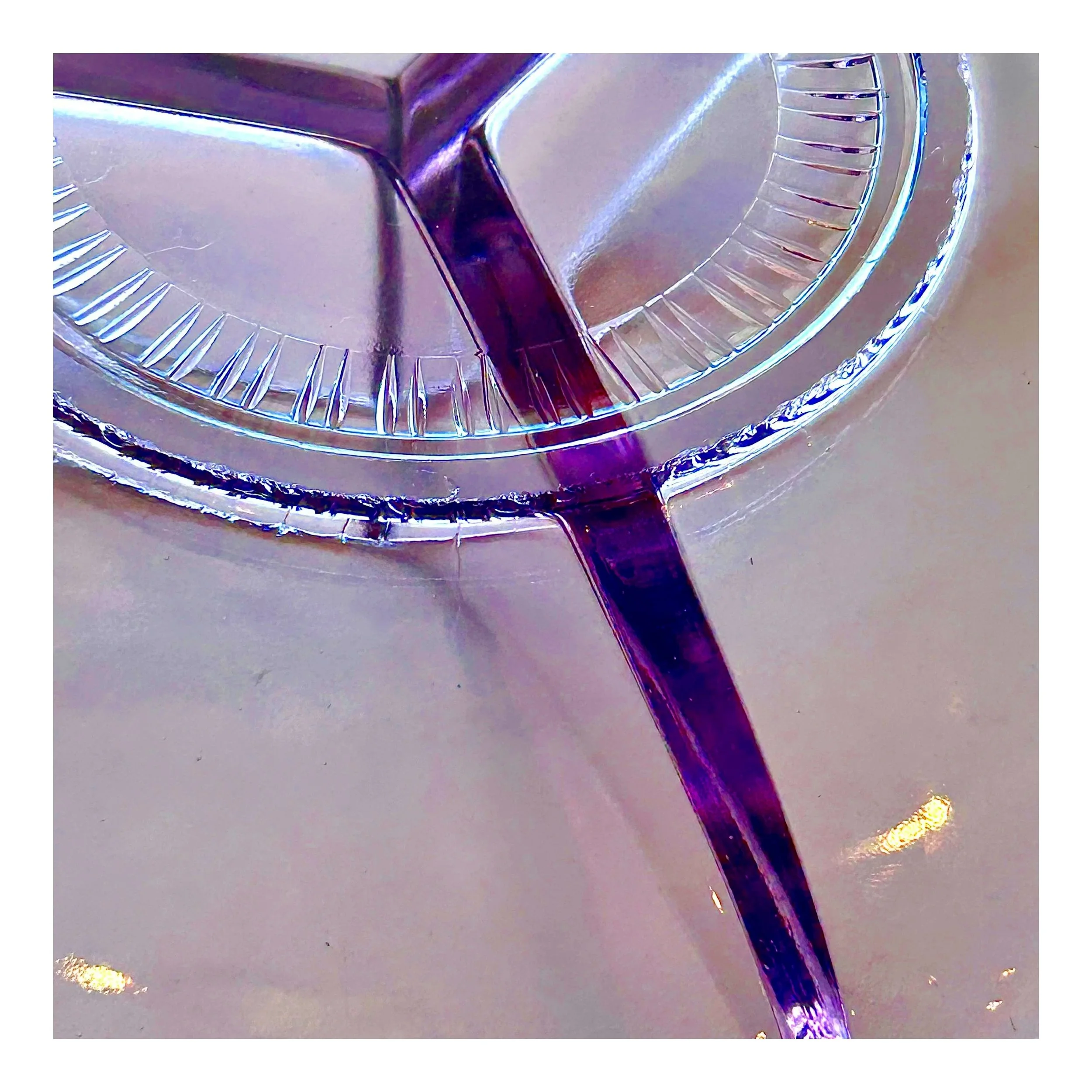 Image 11 of 12
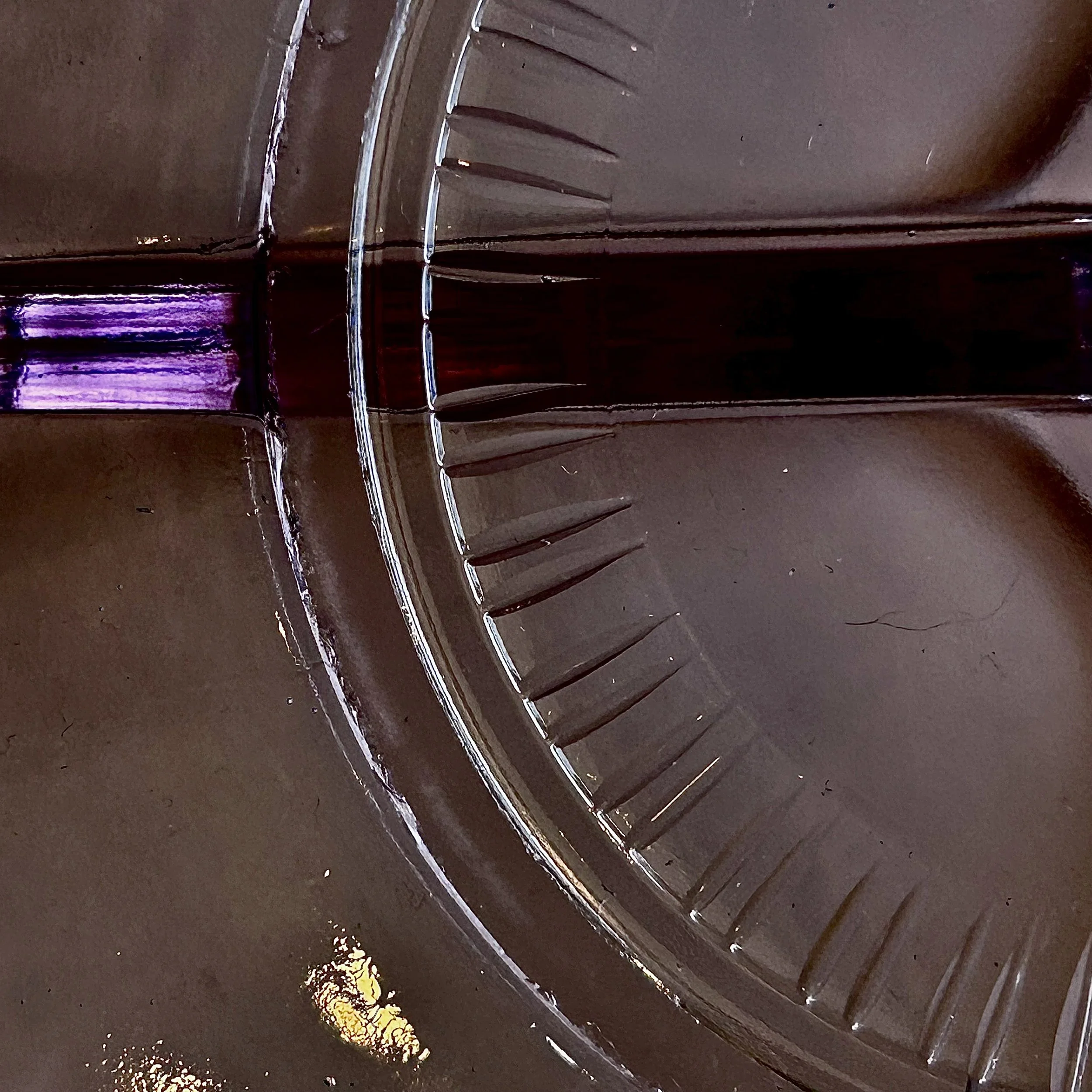 Image 12 of 12