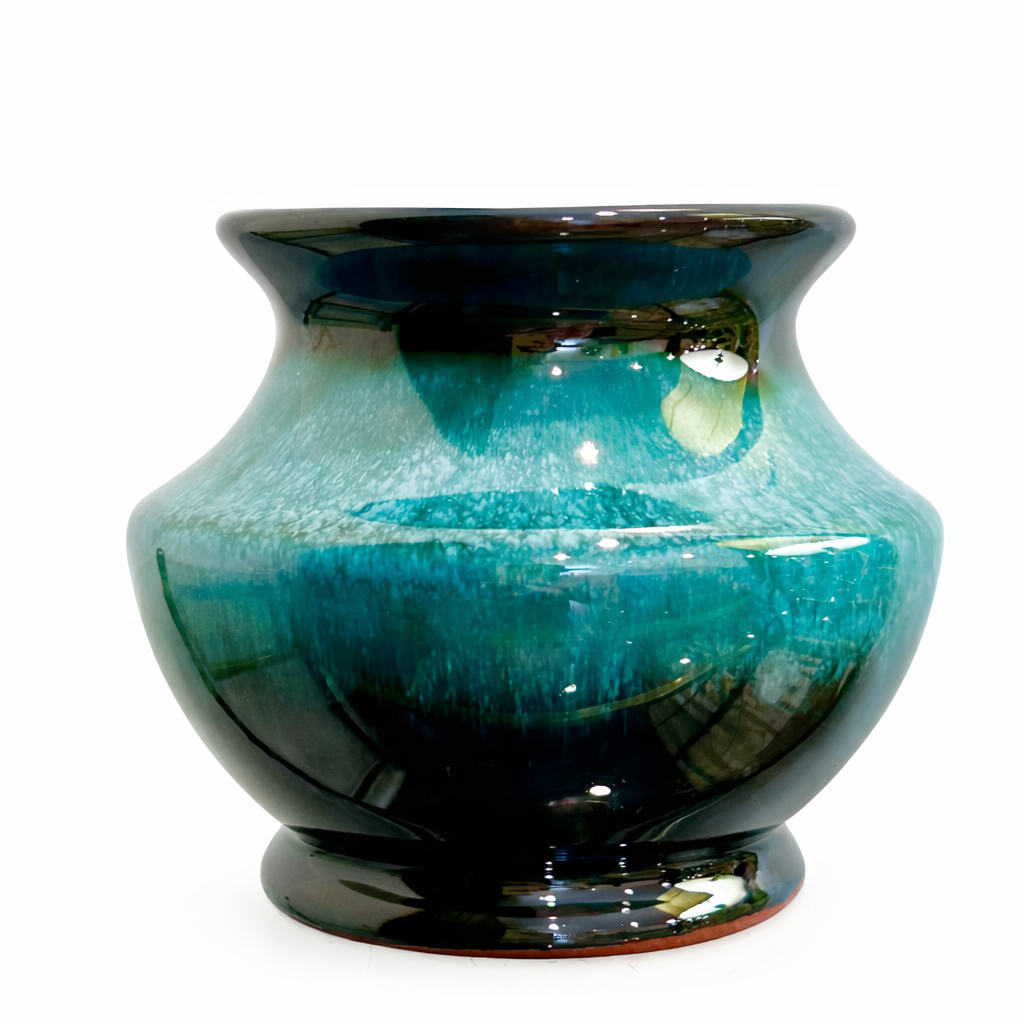
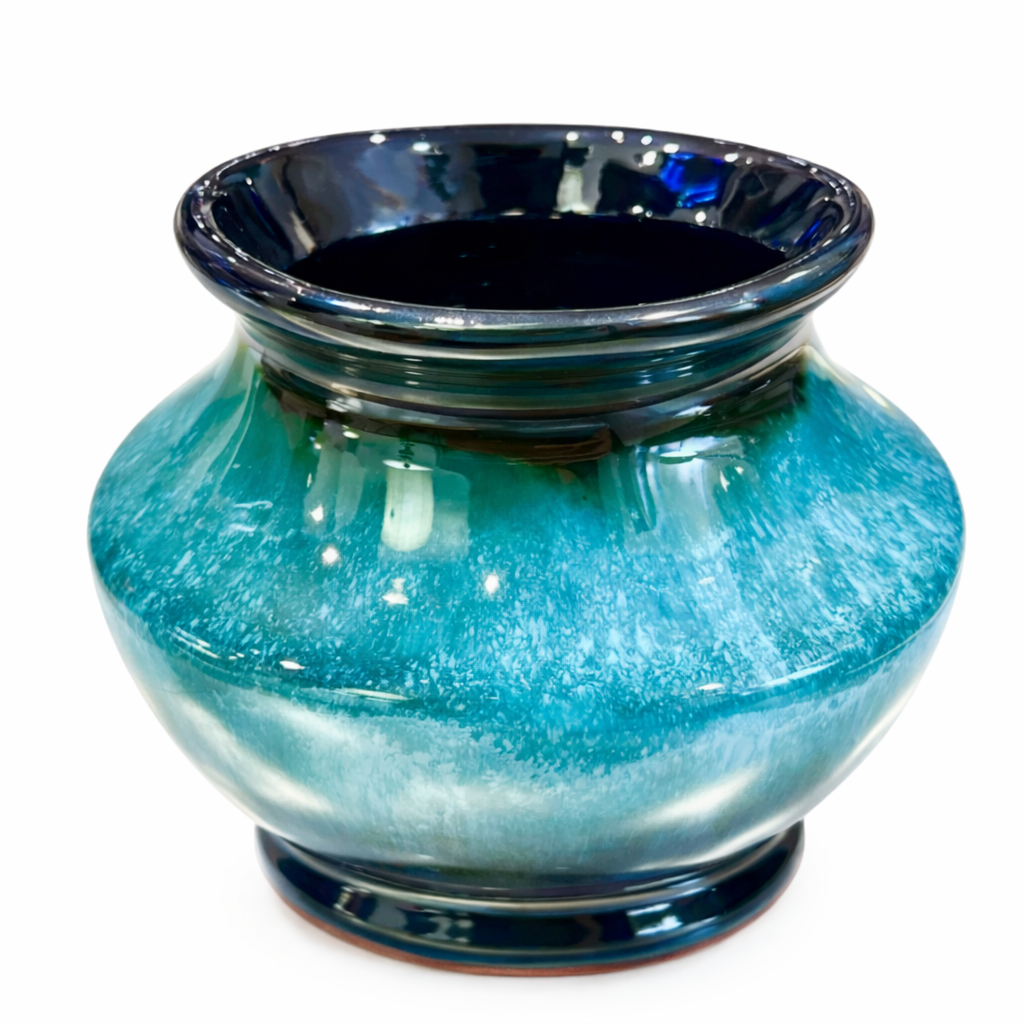
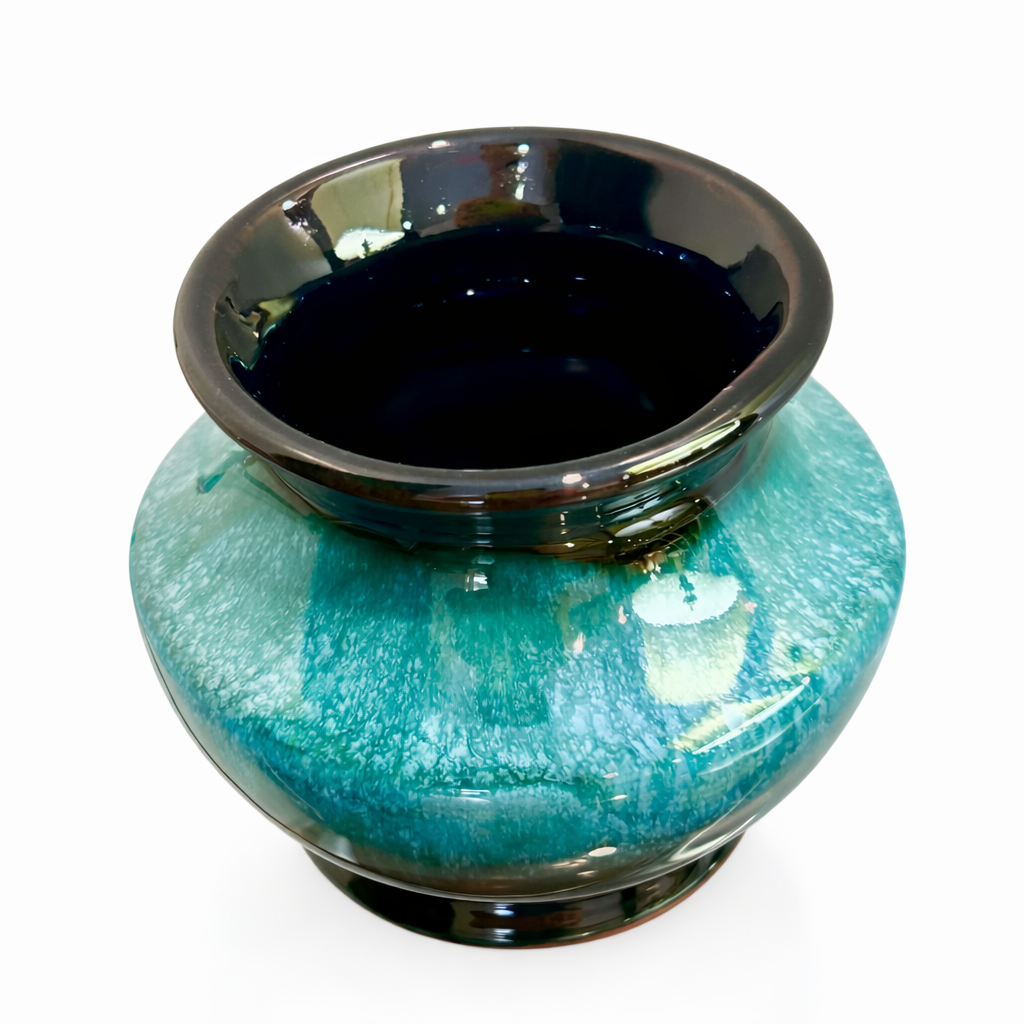
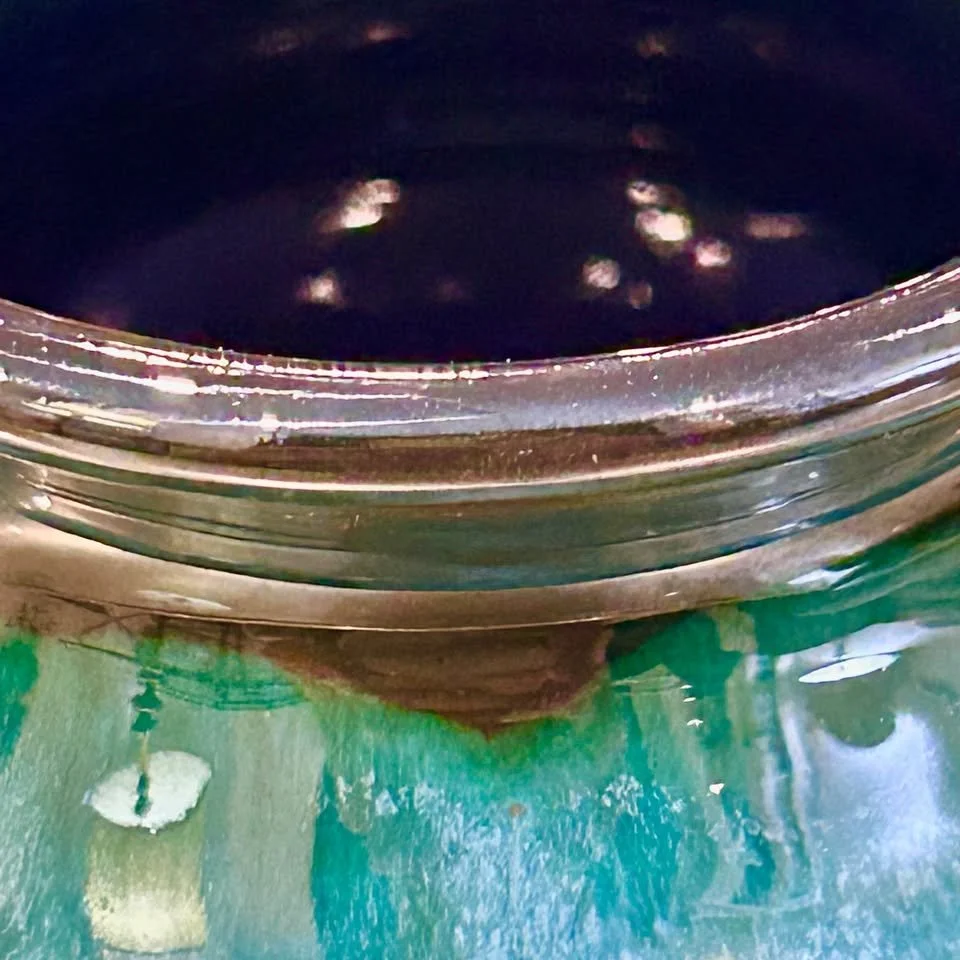
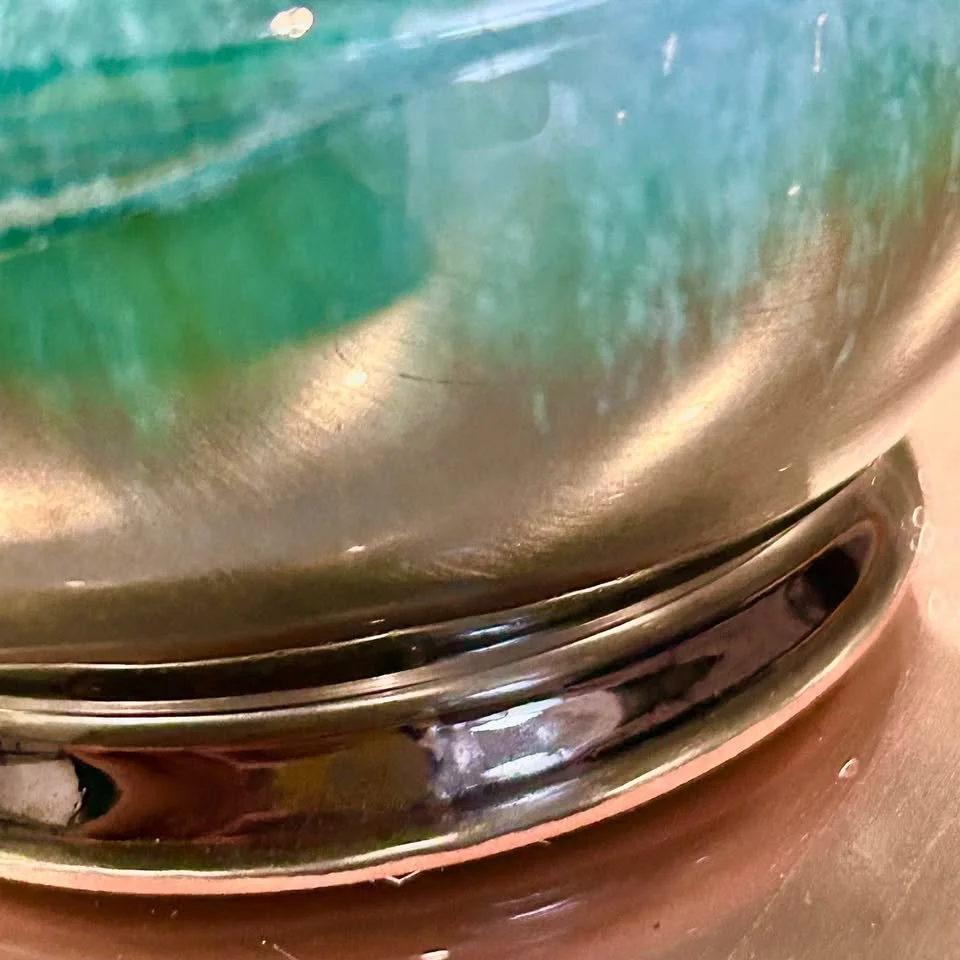
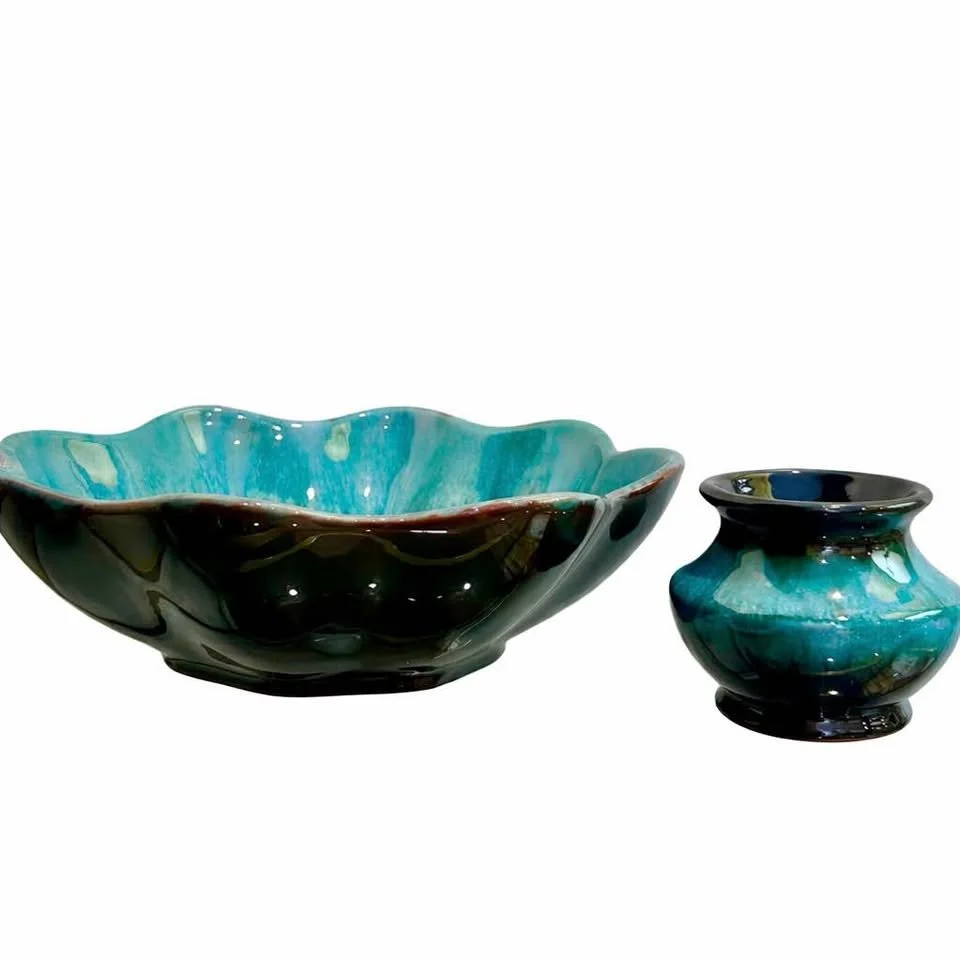
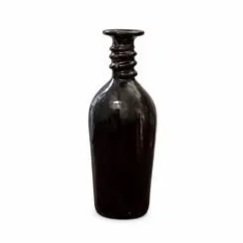
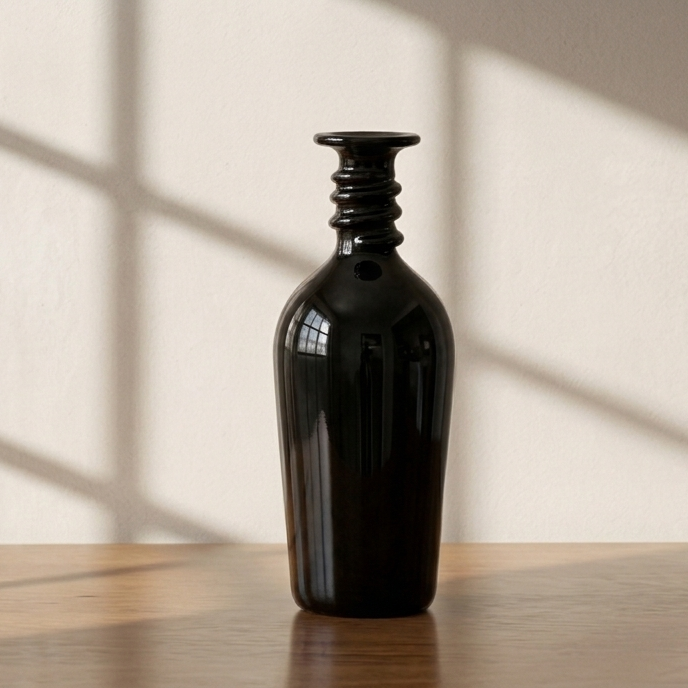
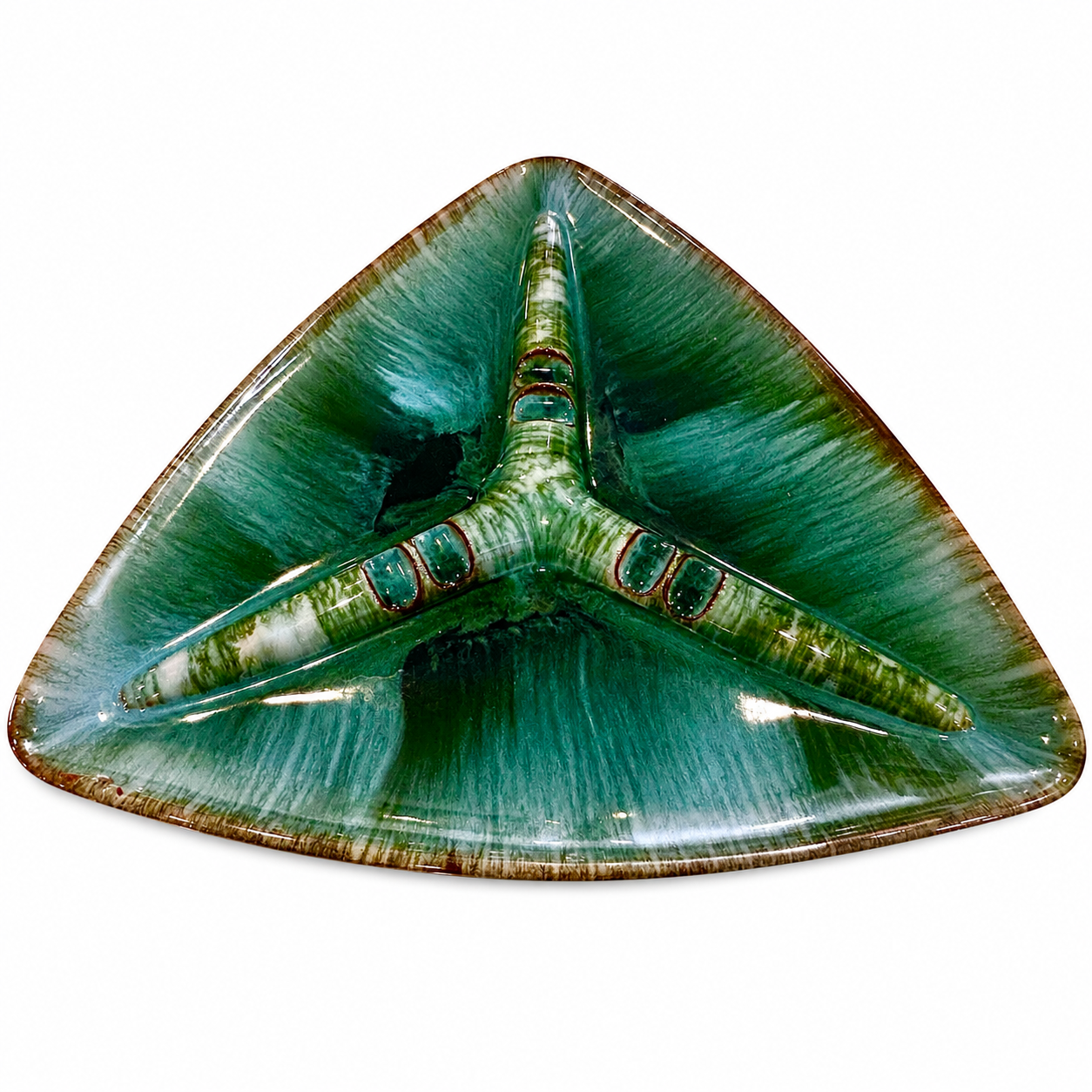
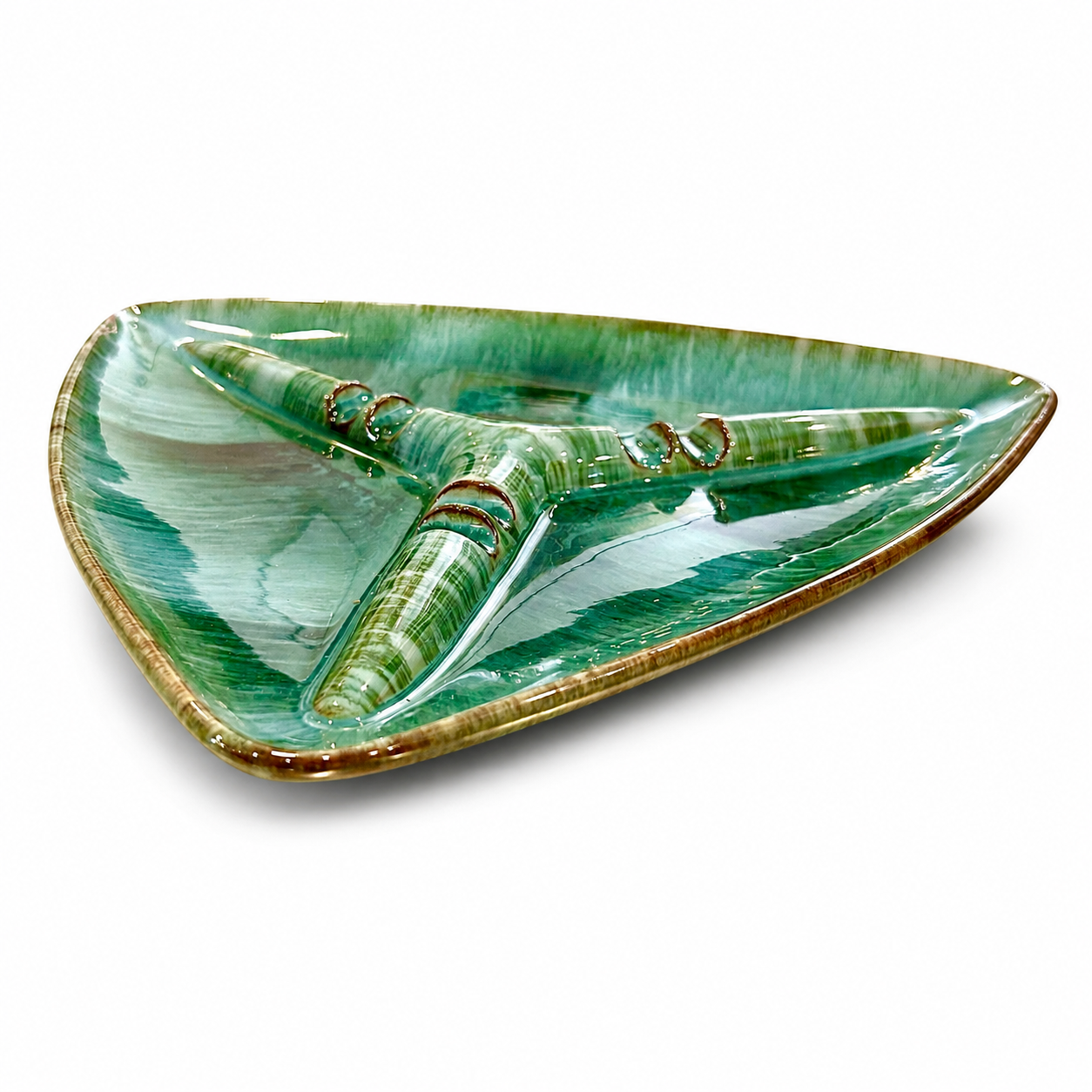
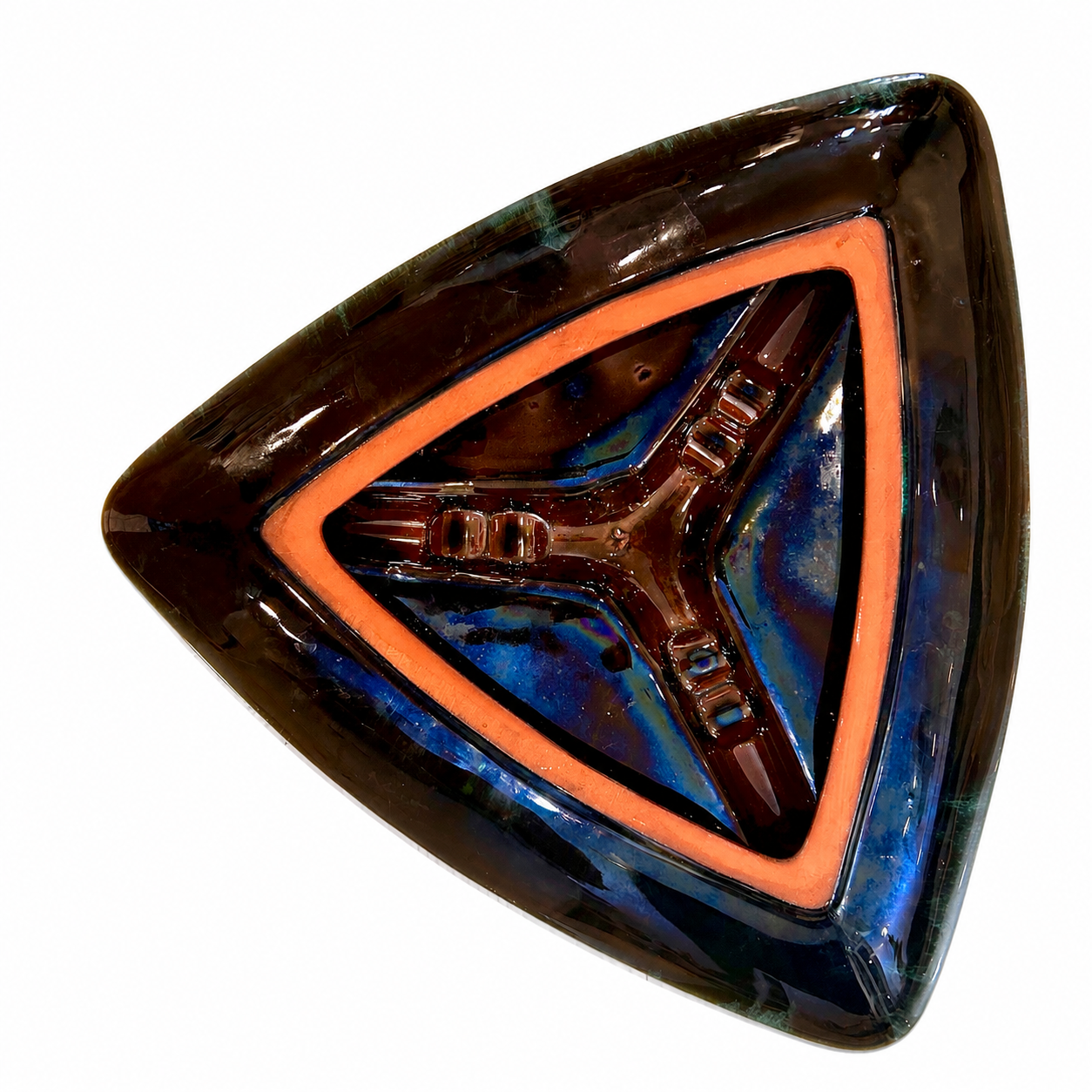
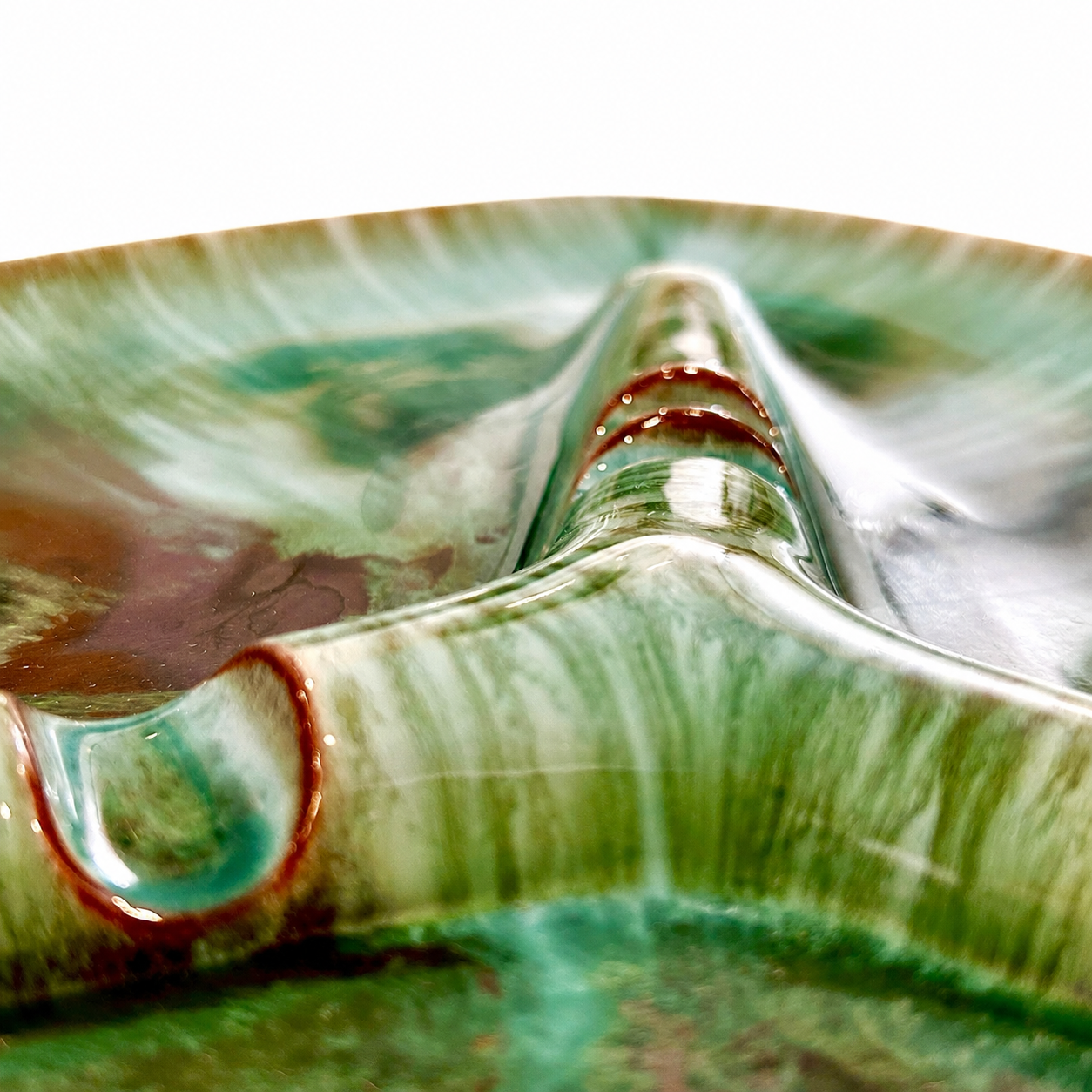
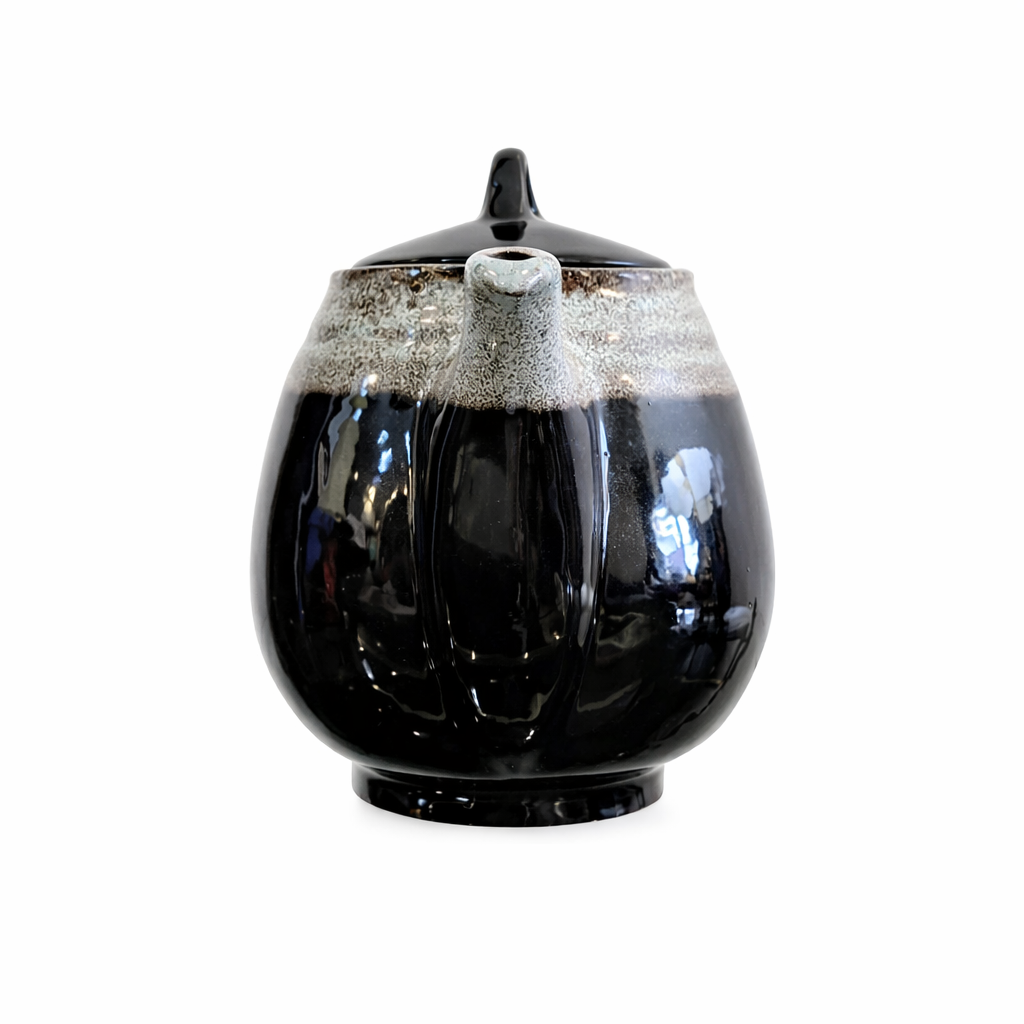
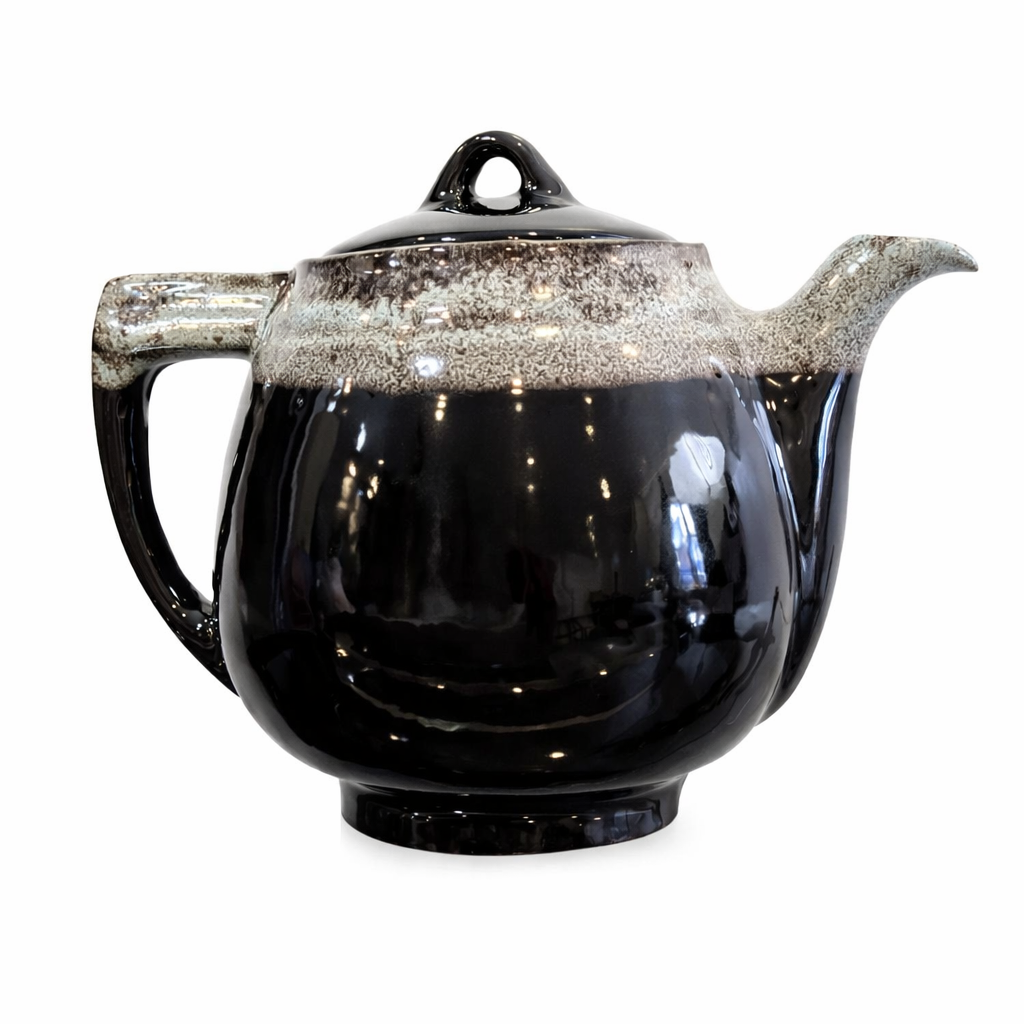
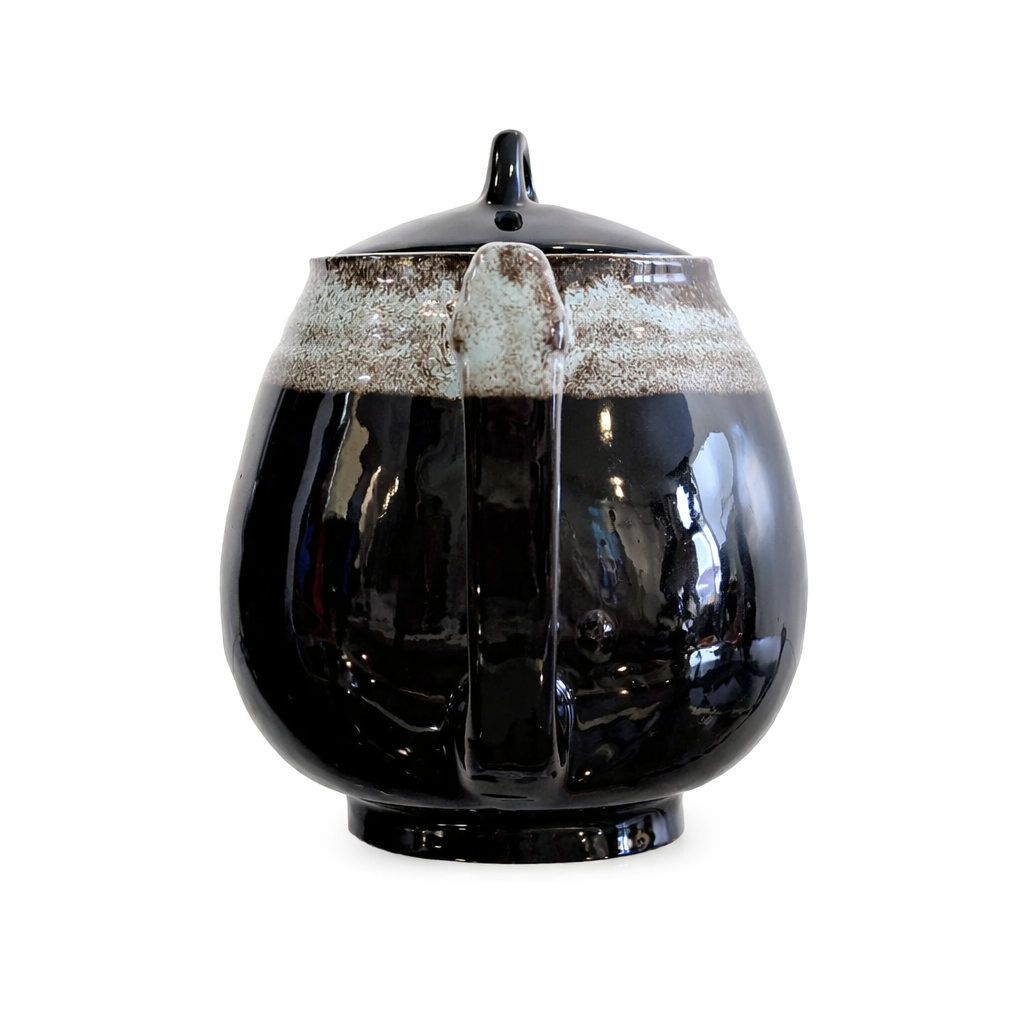
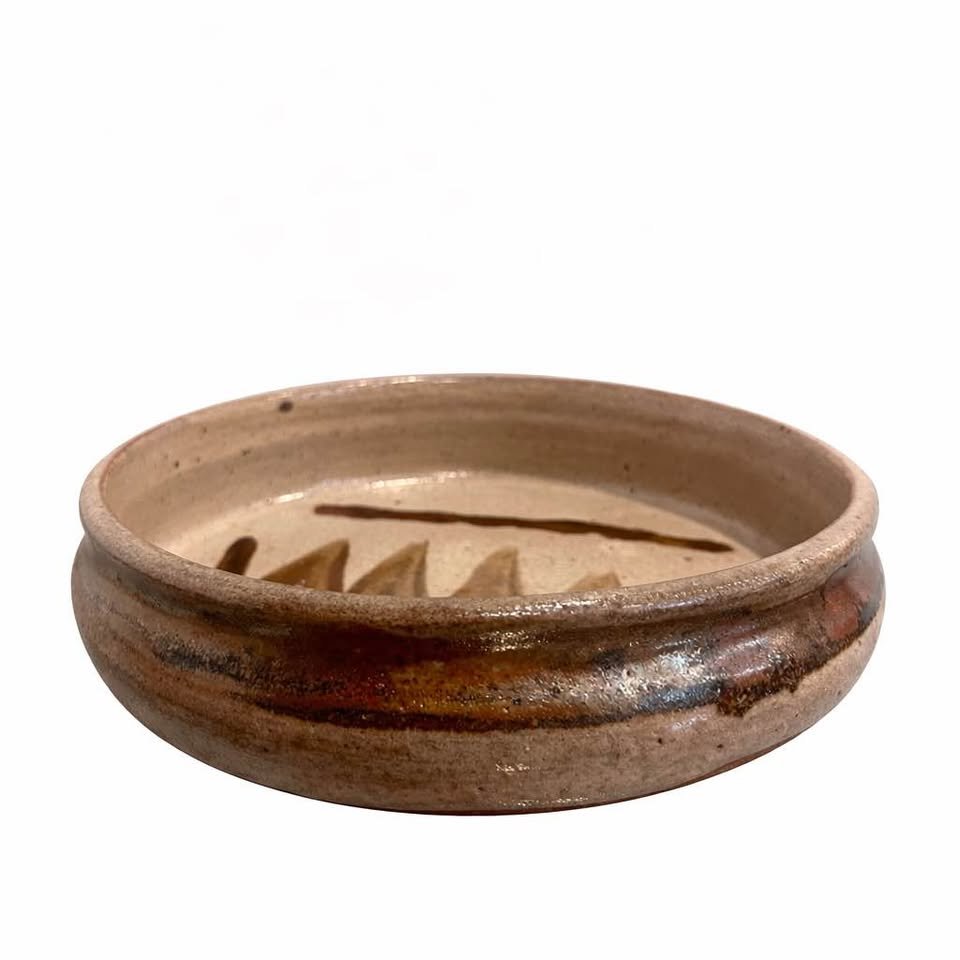
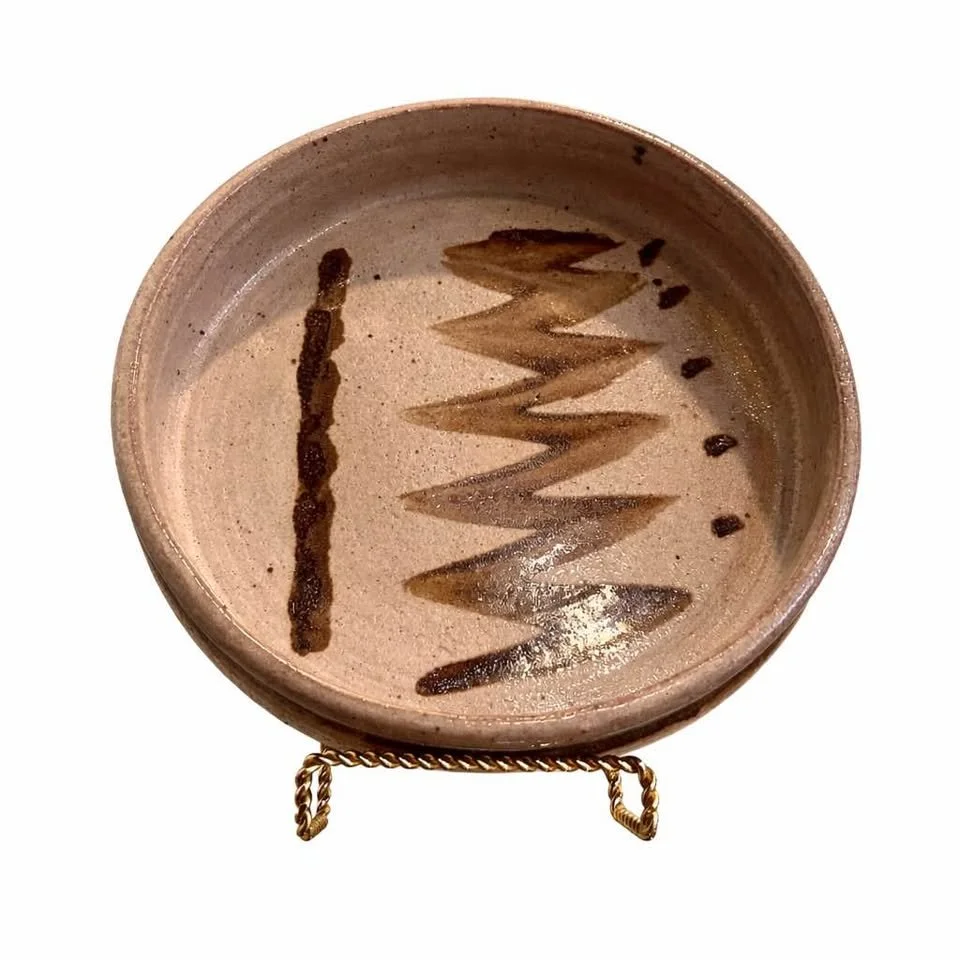
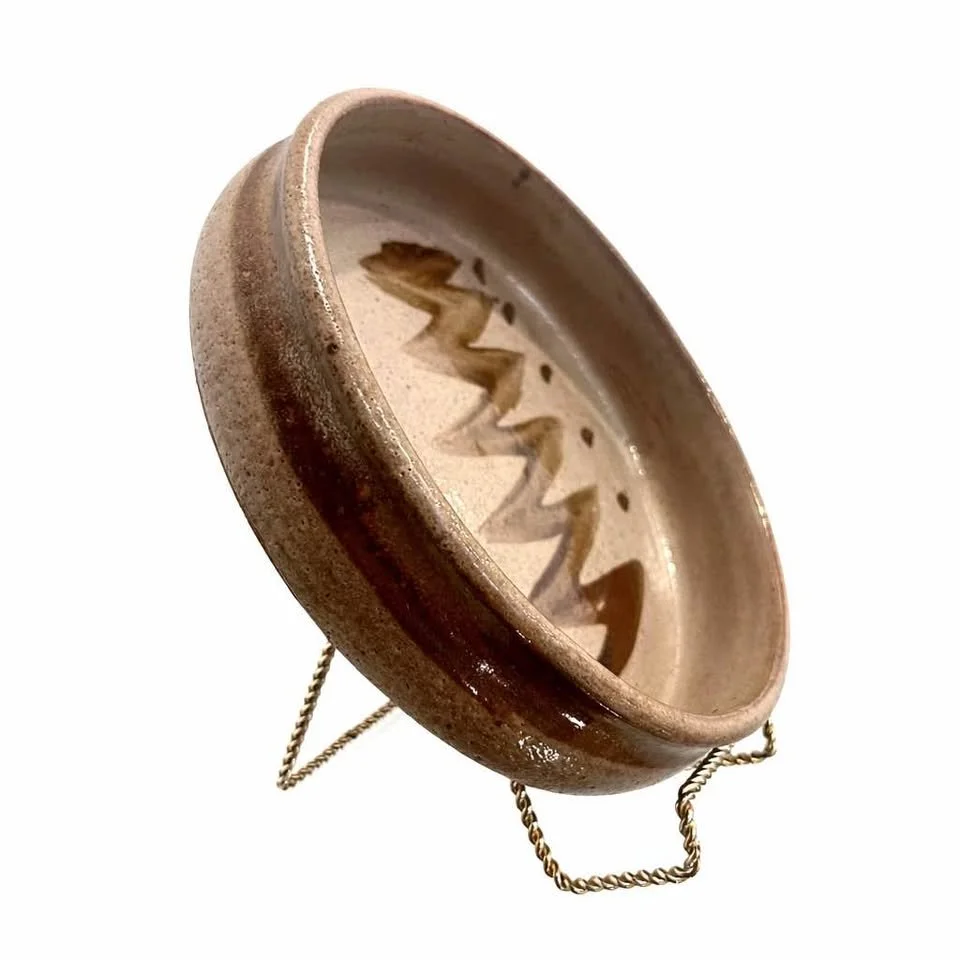
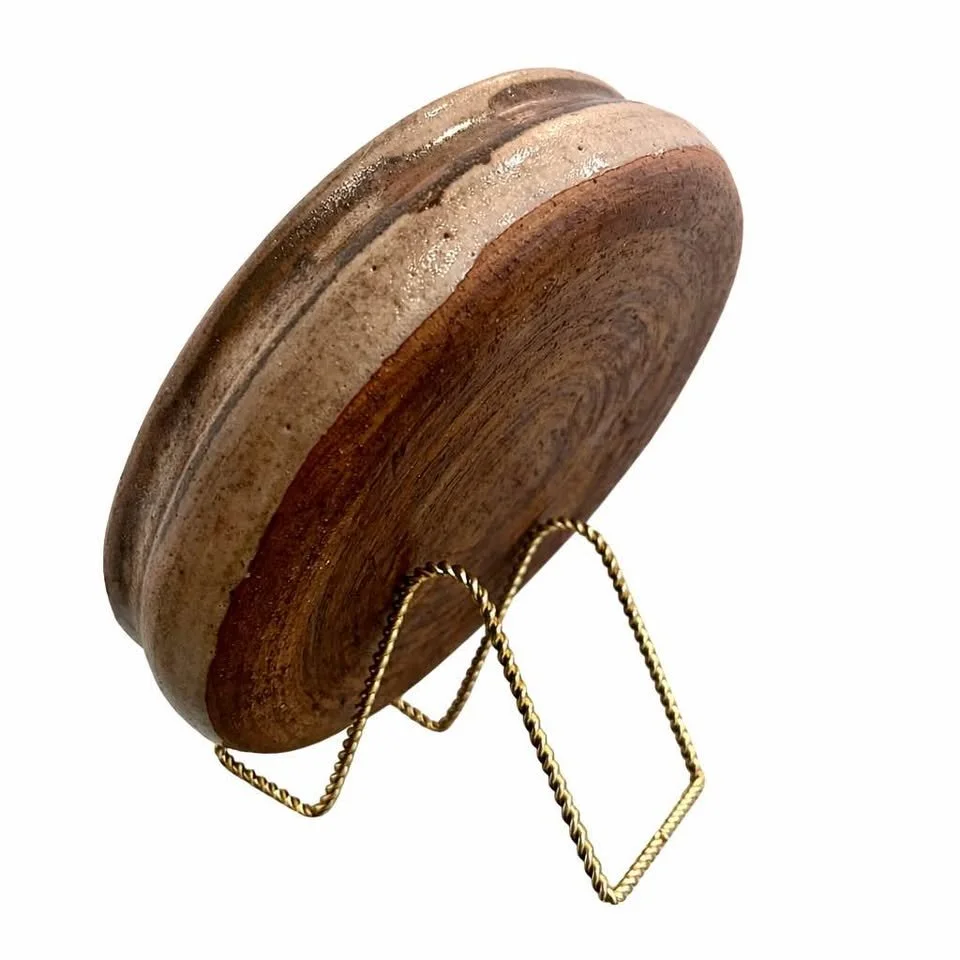
This exceptional sculptural vase serves as a premier example of mid-century Canadian art pottery, featuring the highly sought-after "Cobalt" flow glaze. Standing at an impressive 13.5 inches, the piece is defined by its substantial ovoid body and elegantly tapered neck, creating a silhouette that is both grounded and ethereal. The proprietary glazing technique results in a dramatic liquid-like finish, where deep midnight tones transition into vibrant sapphire streaks, offering a dynamic interaction with ambient light that enhances its architectural presence.
Attribution & Period
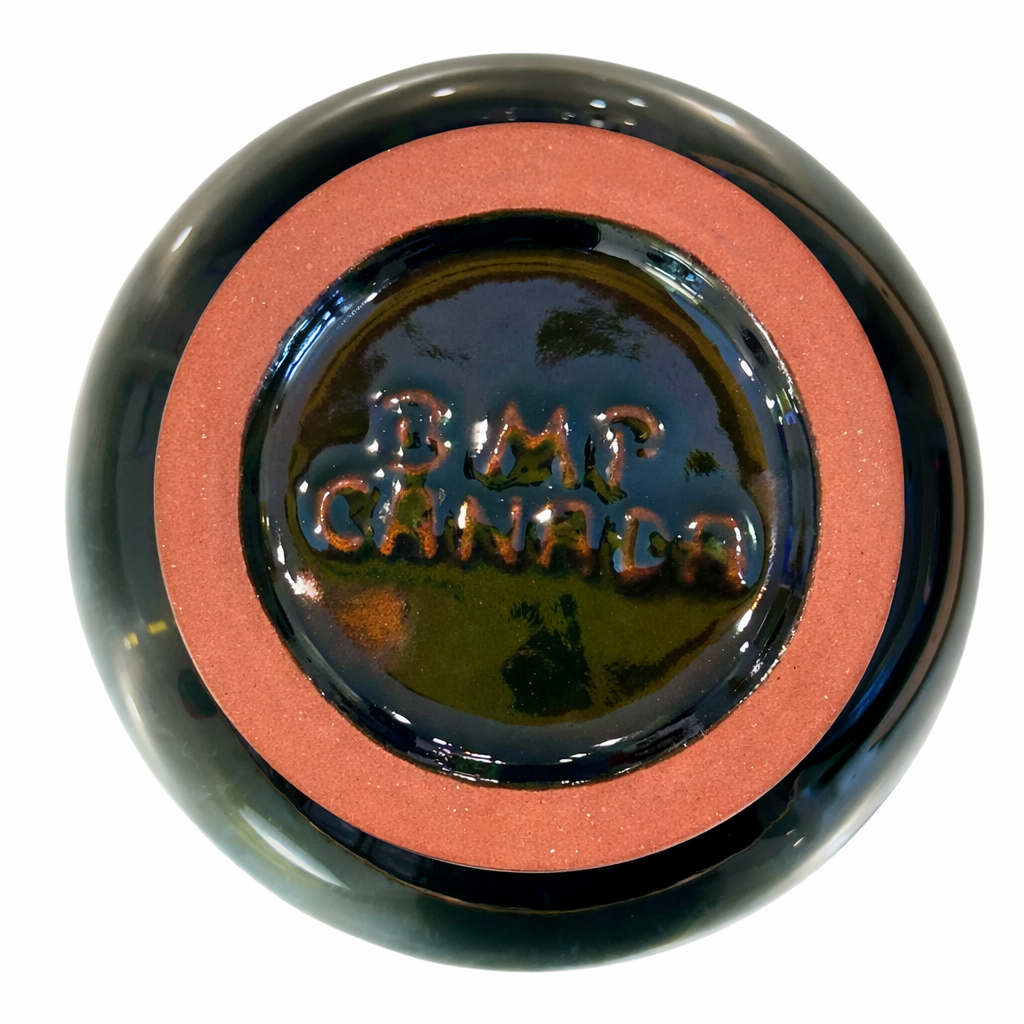
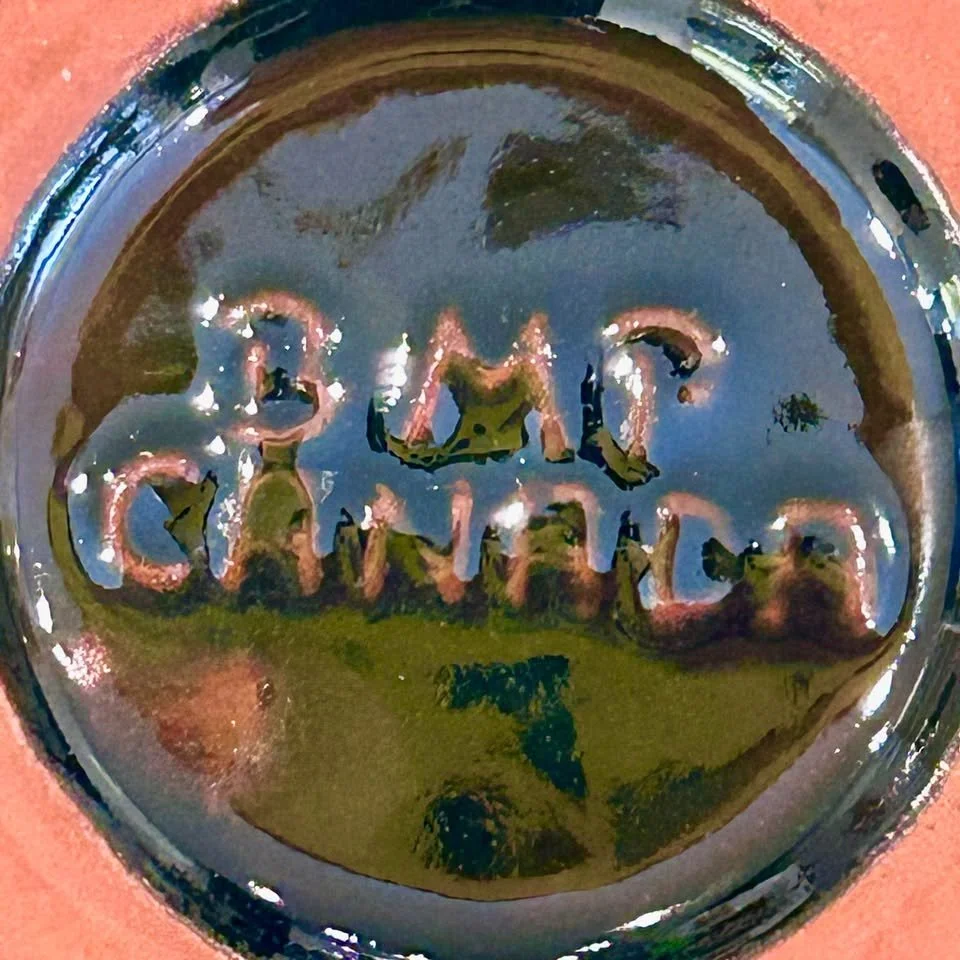
Attributed to Blue Mountain Pottery (Collingwood, Ontario), circa 1960s. This specific form and "Cobalt" colorway represent the more exclusive production runs of the mid-20th century, distinguished from the factory’s more common green-glaze iterations. The scale and weight are consistent with the studio’s professional-grade castings produced prior to the rationalization of their mold inventory in later decades.
Dimensions & Weight
Condition
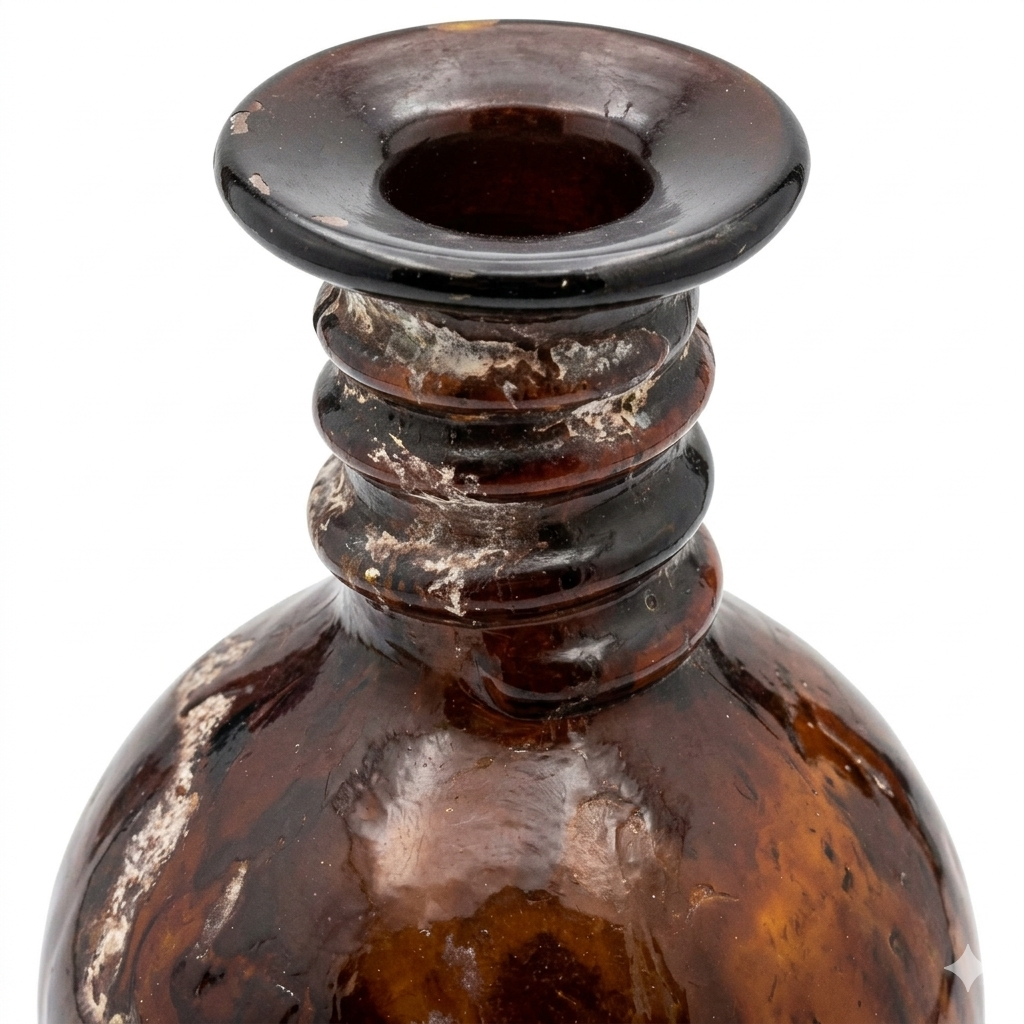
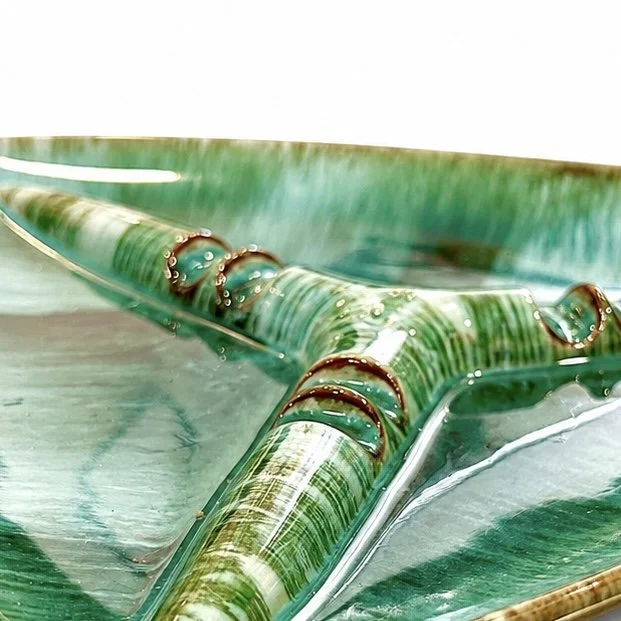
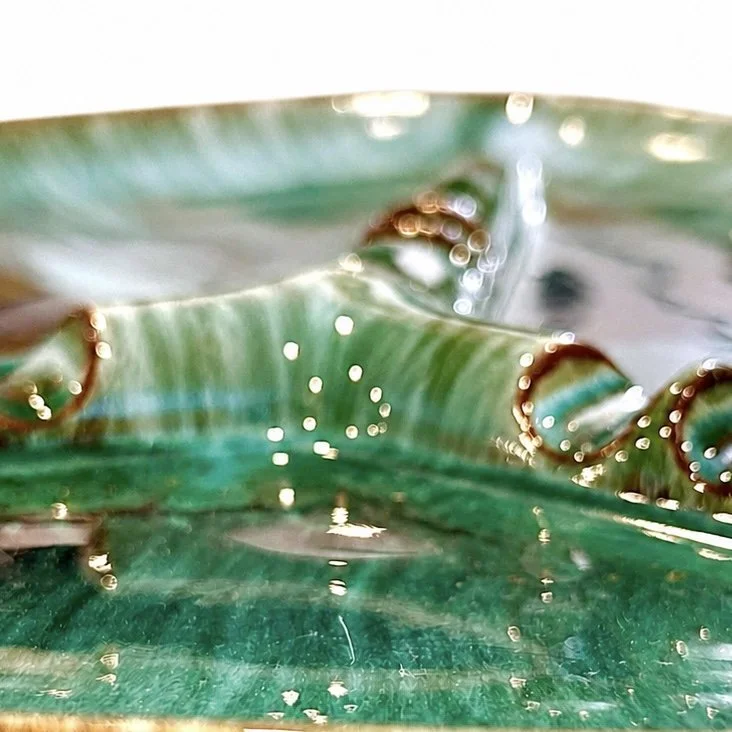
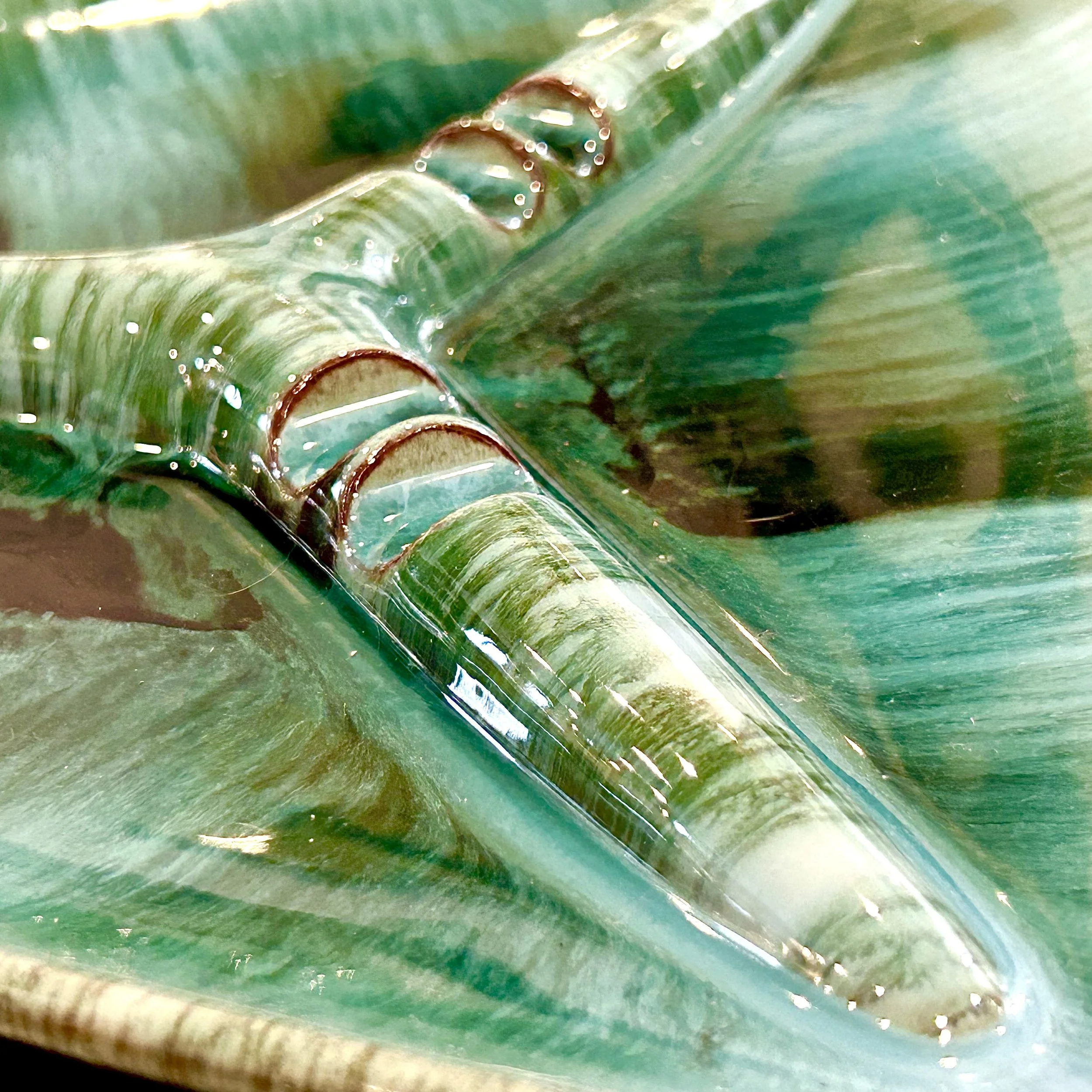
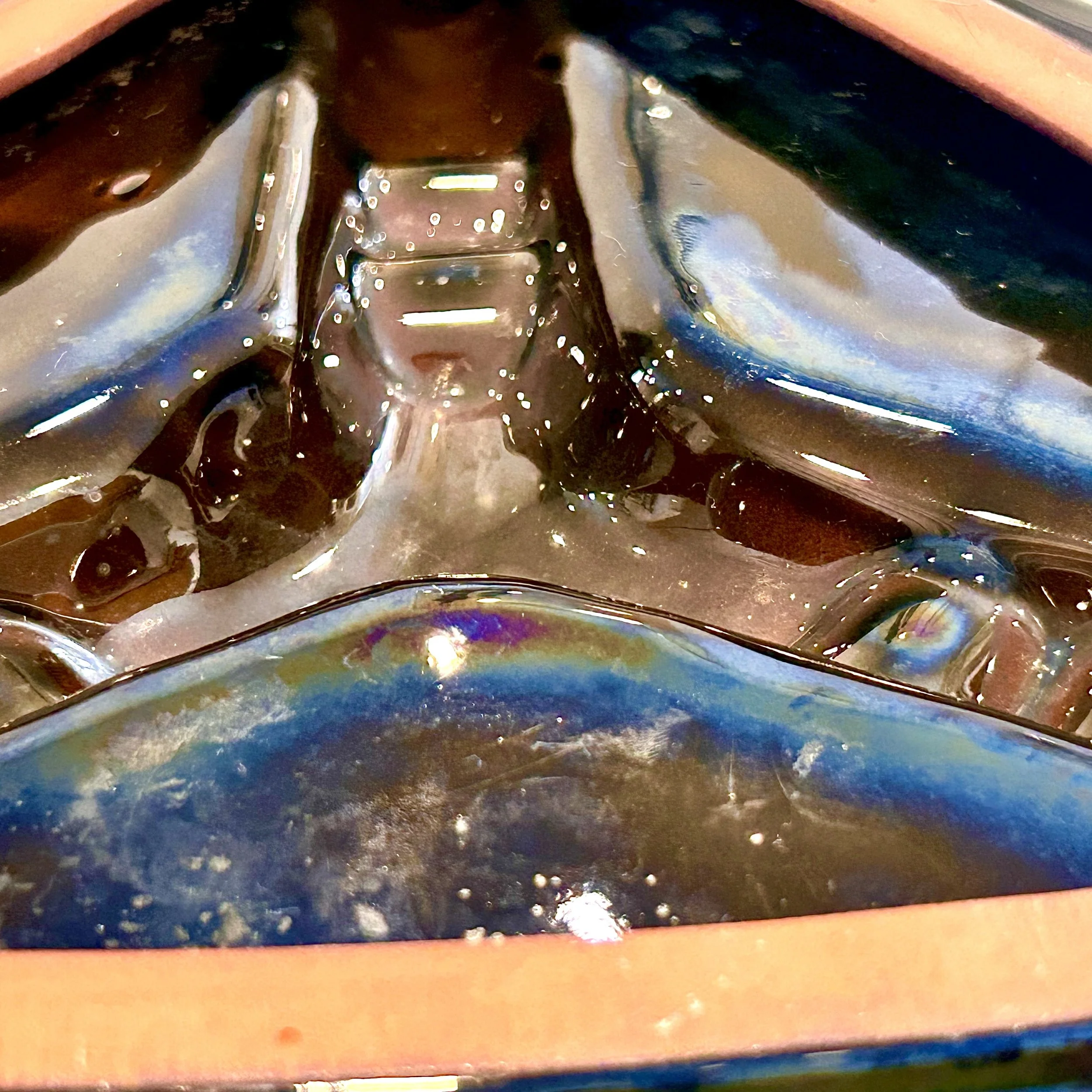
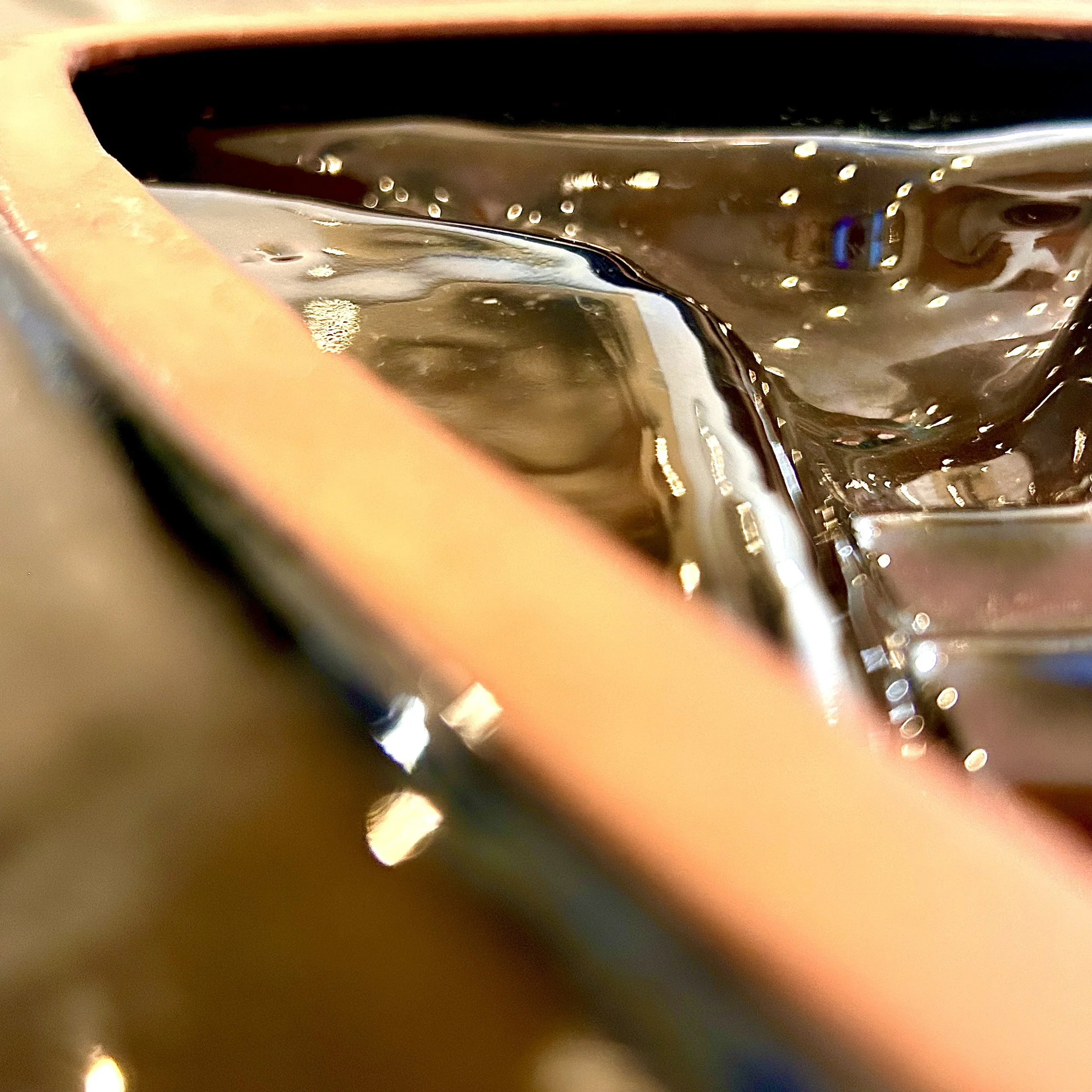
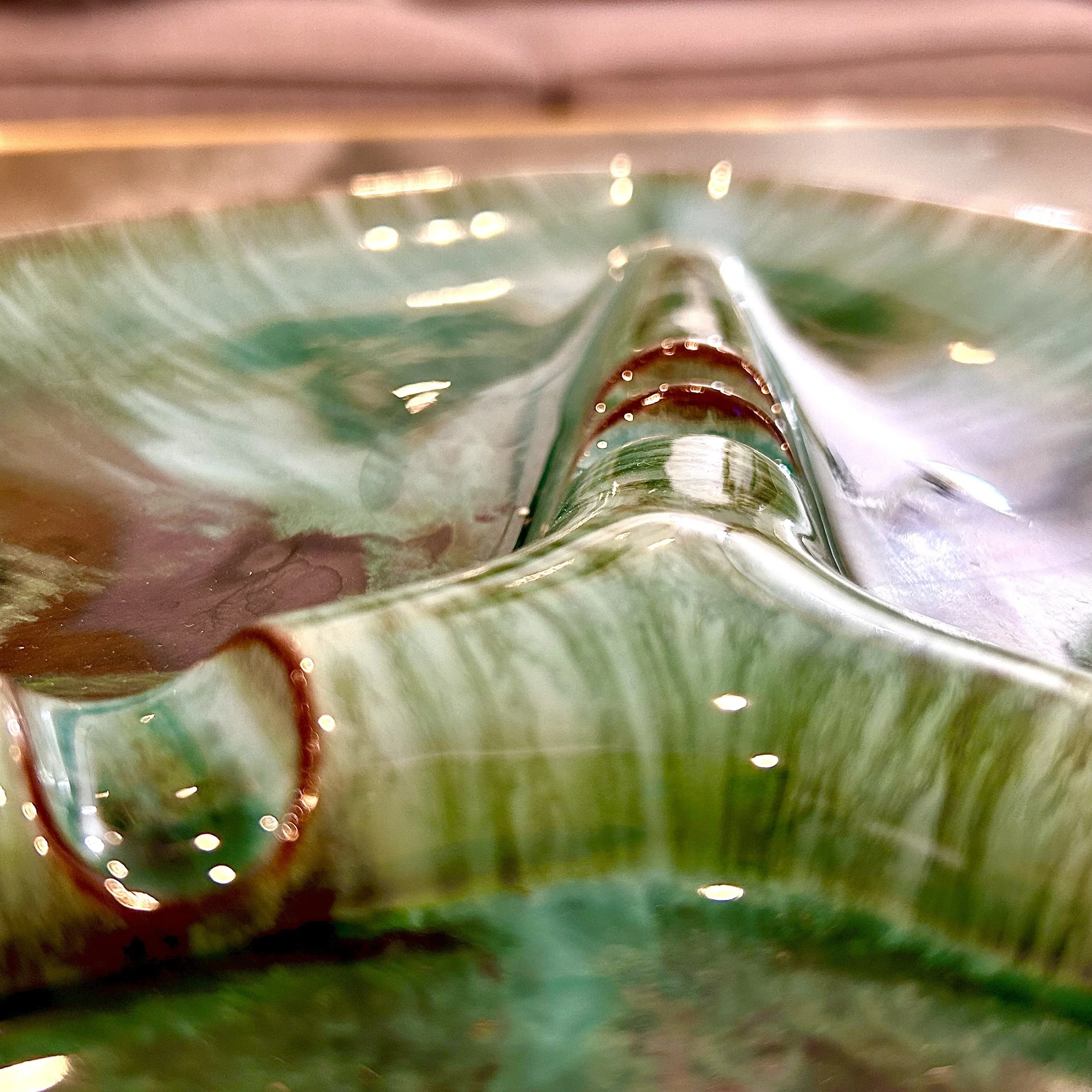
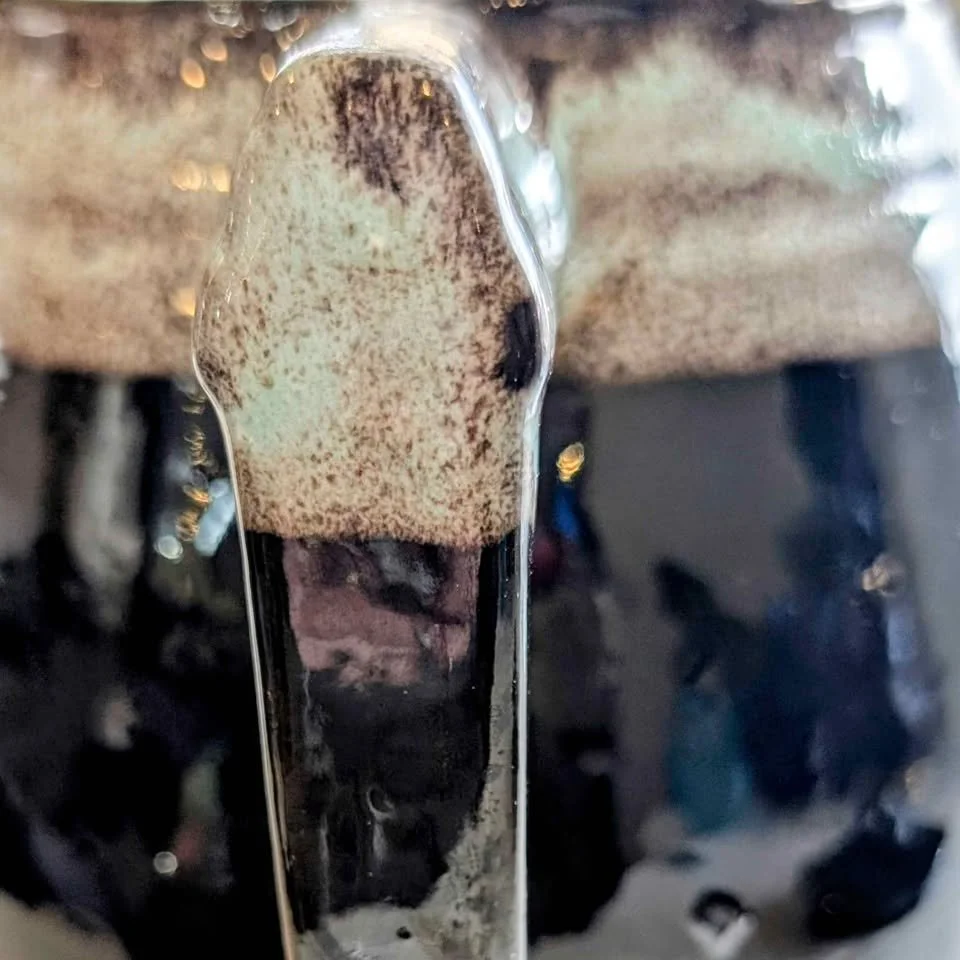
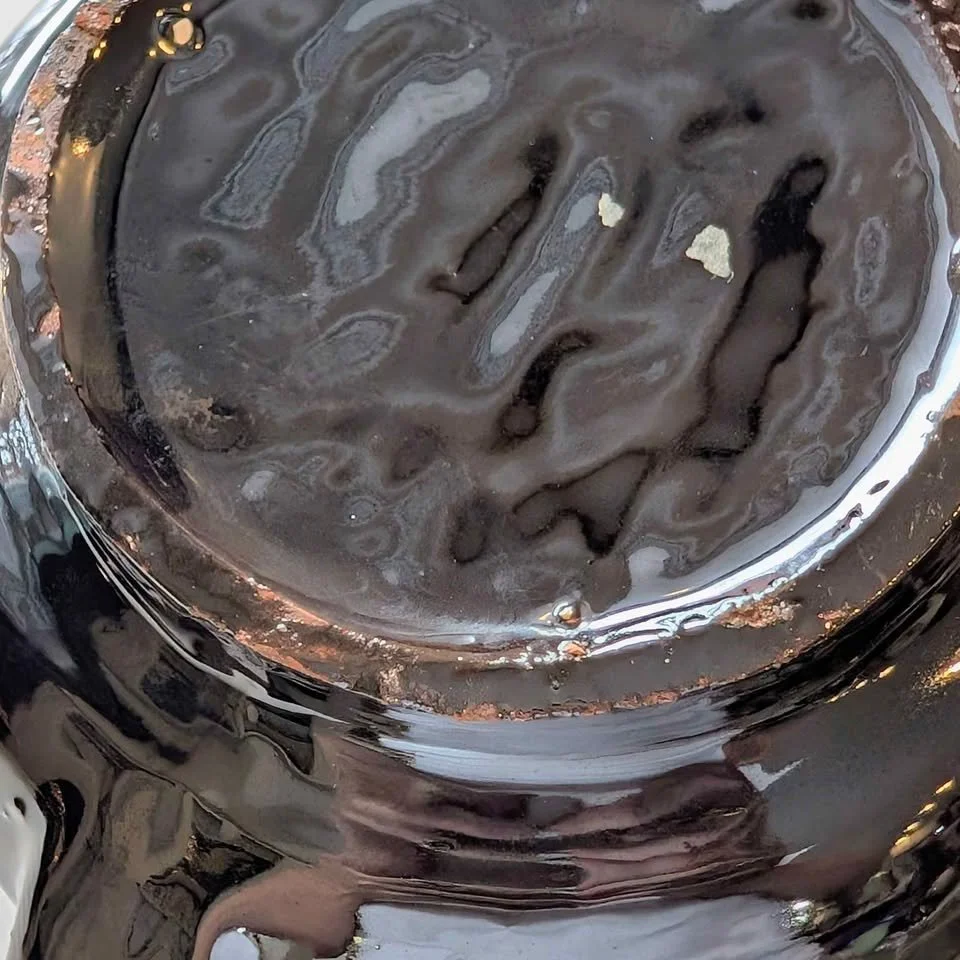
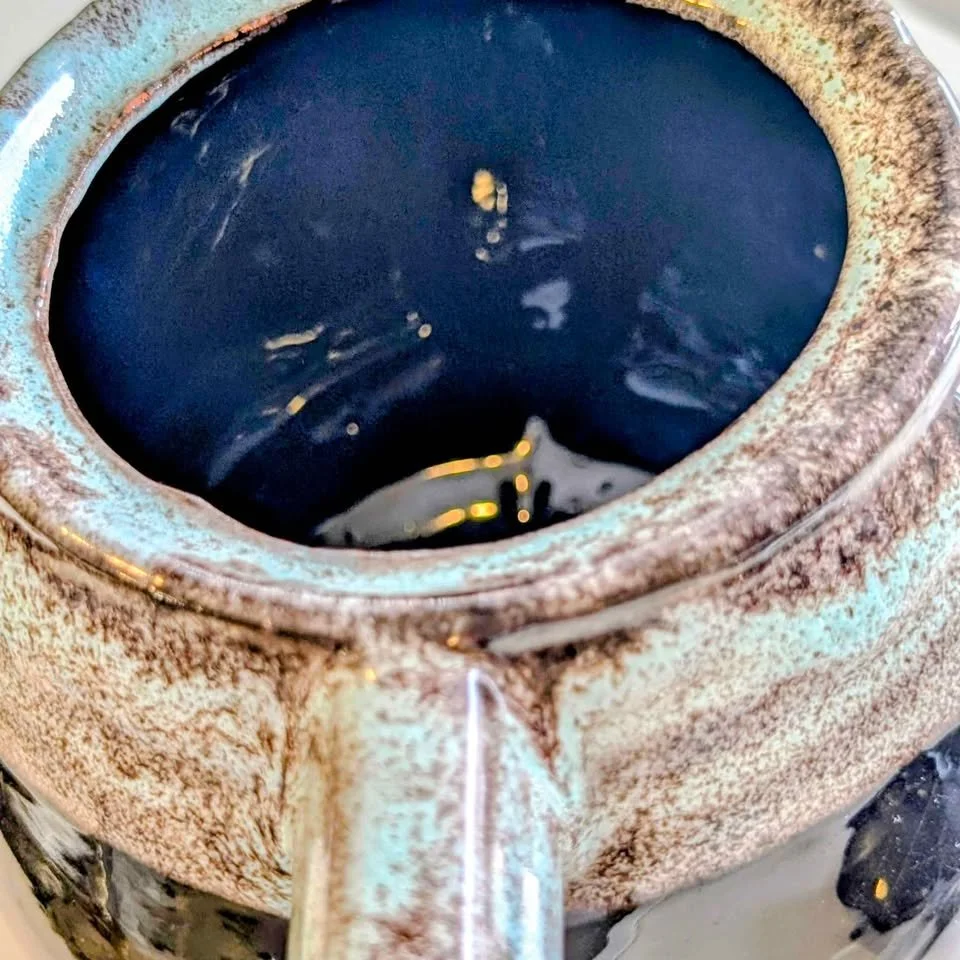
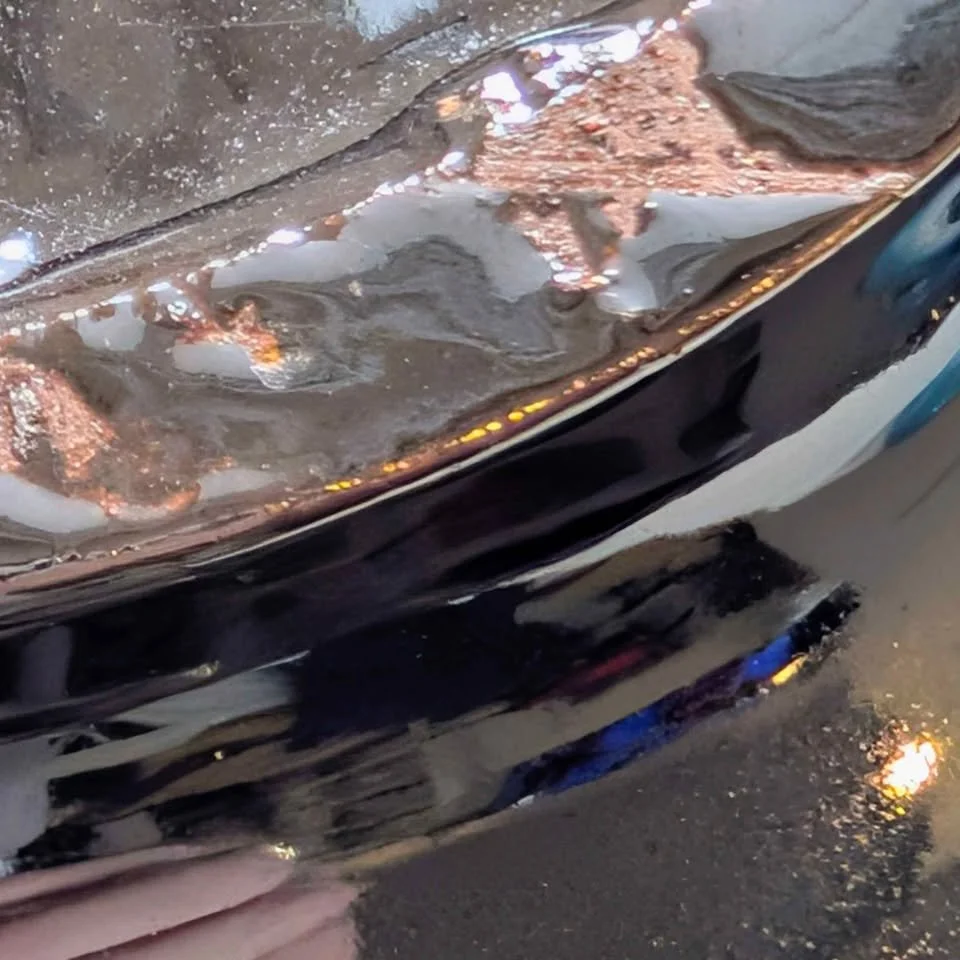
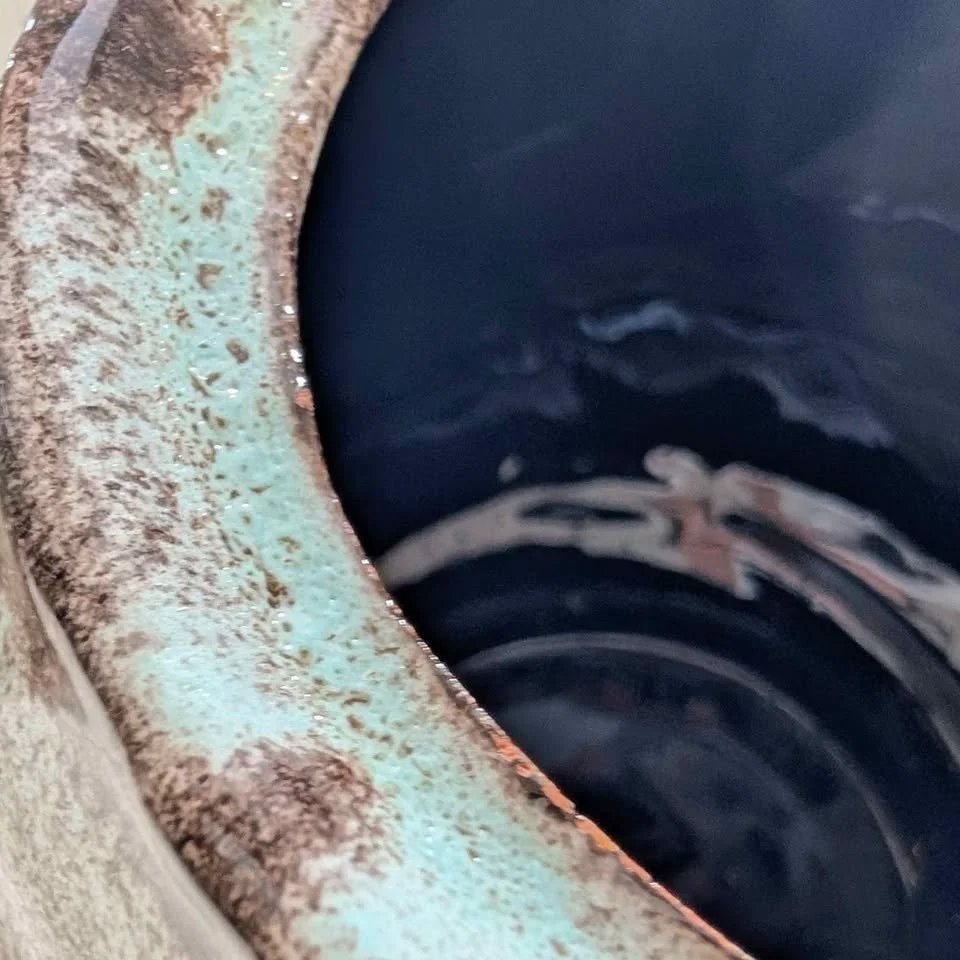
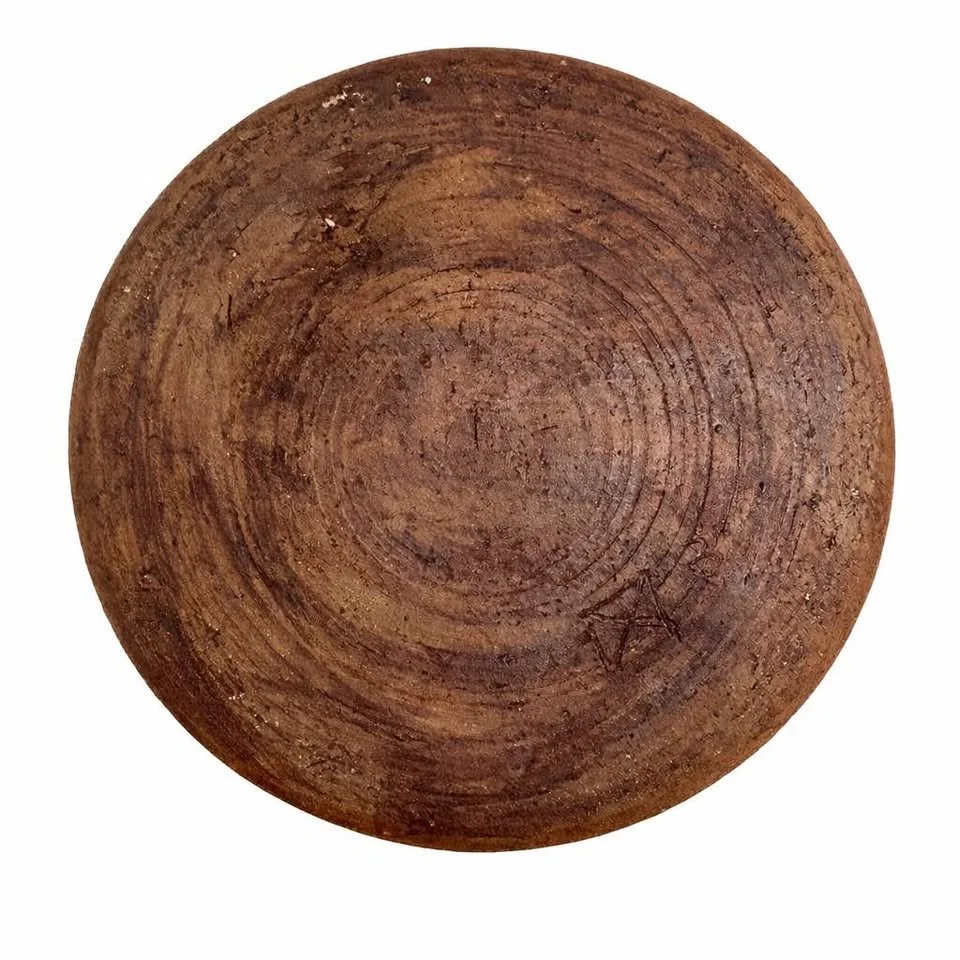
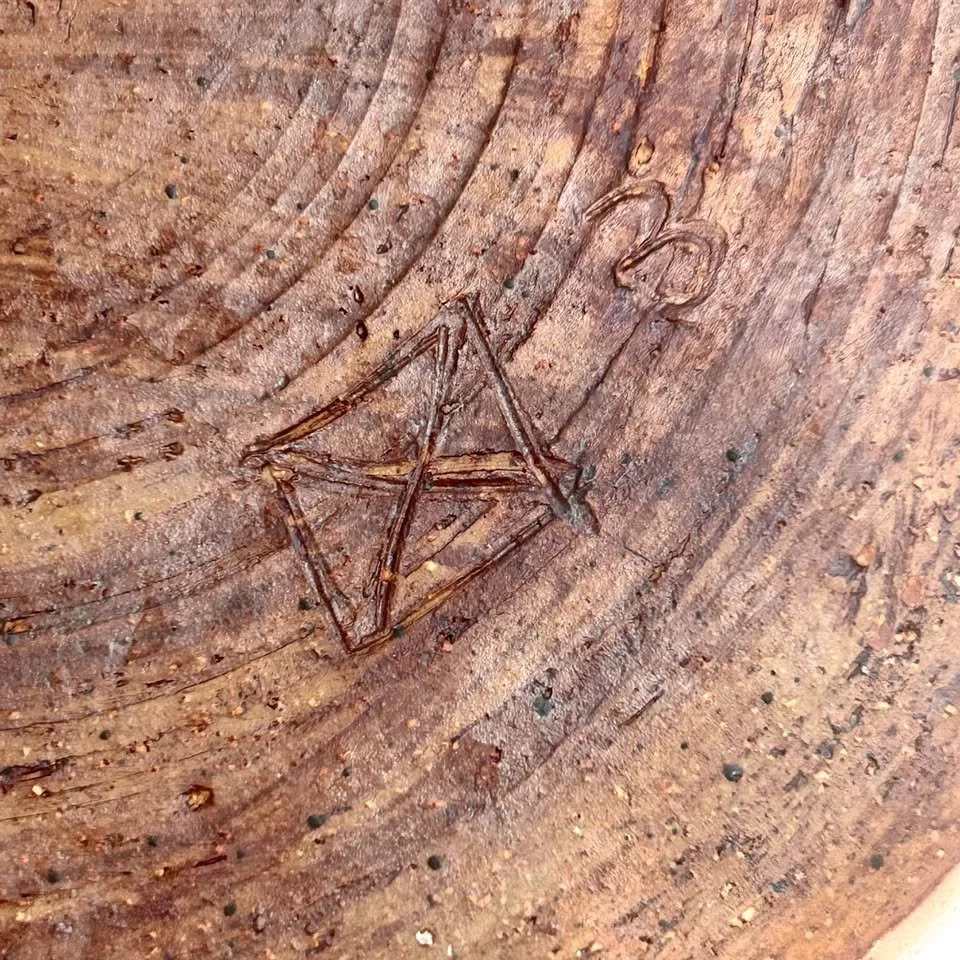
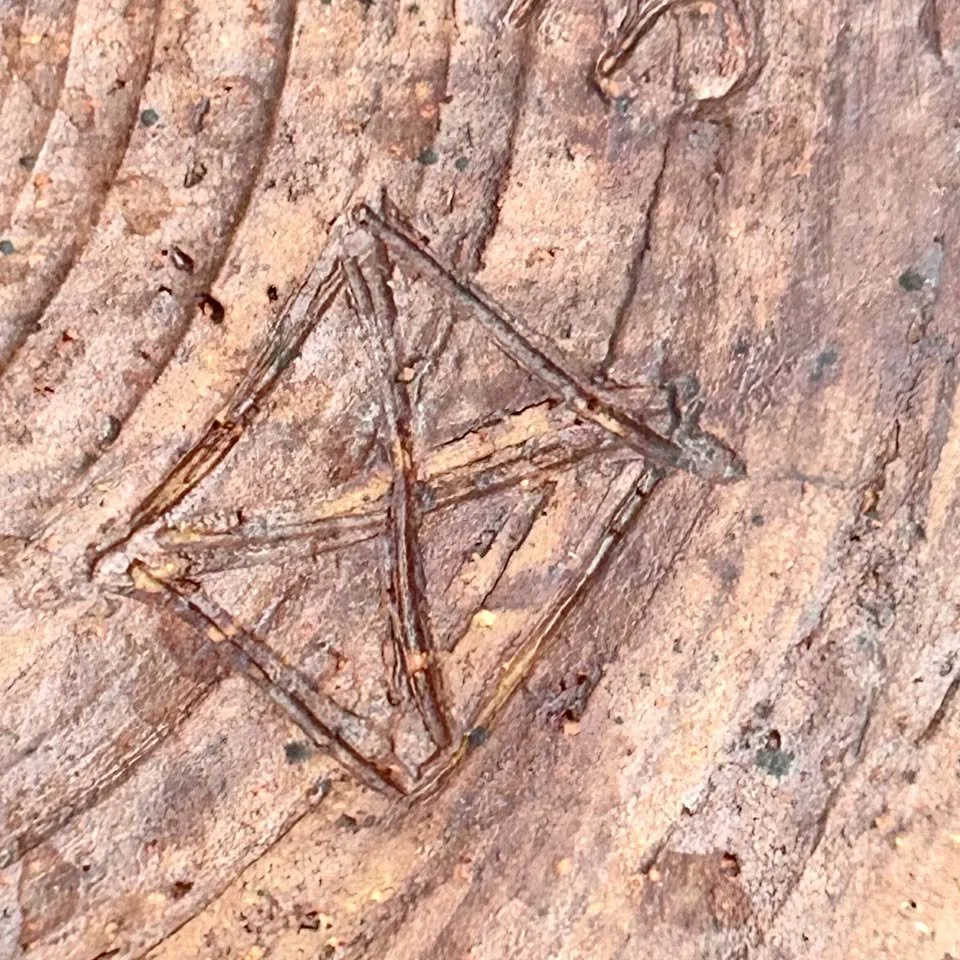
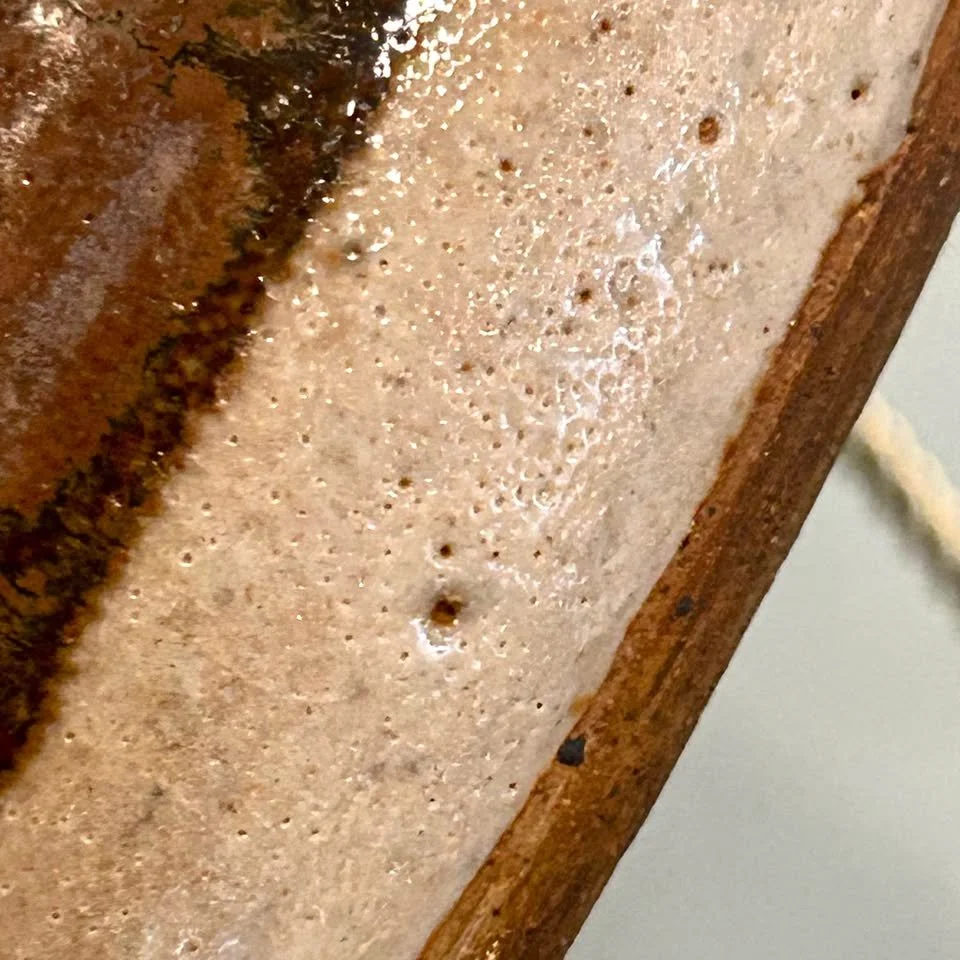
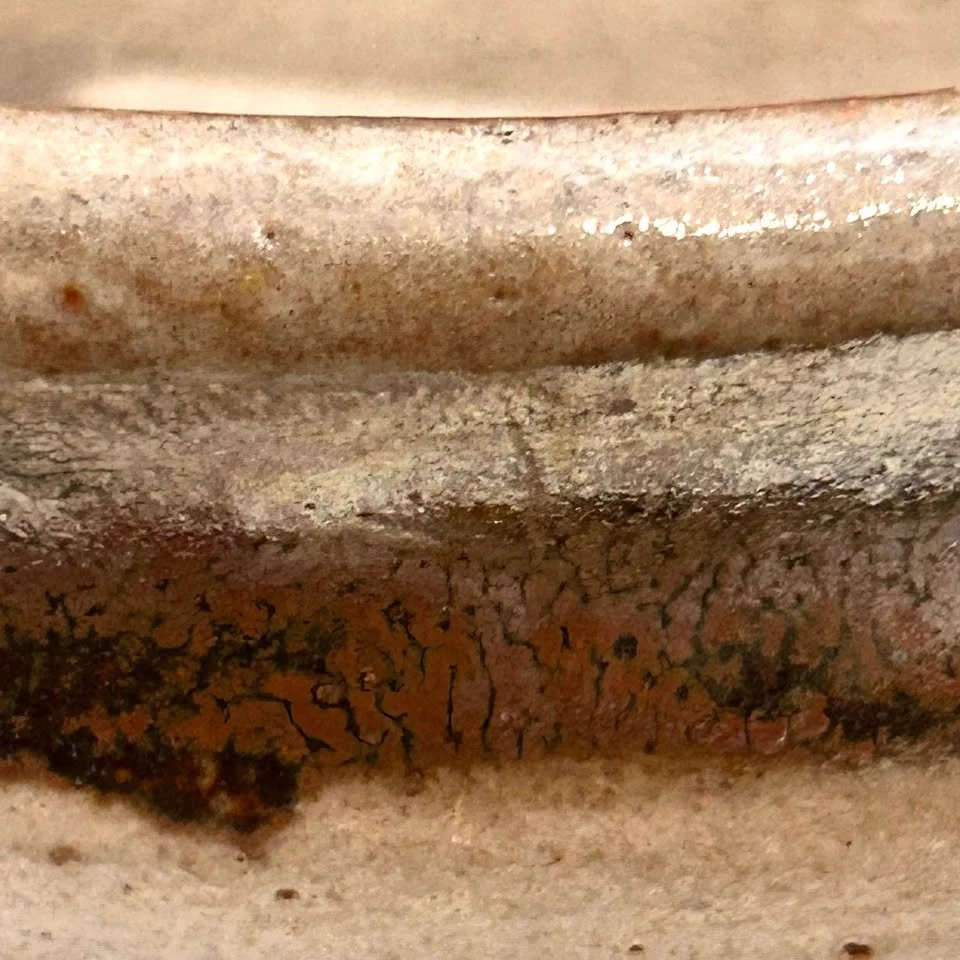
Great condition. The vase exhibits a brilliant, high-gloss surface with no chips or structural cracks. A minor surface characteristic is noted, which is consistent with the original mold and firing process—a testament to the authentic, hand-finished nature of mid-century ceramic production. The glaze remains exceptionally vibrant across the entire form.
Authenticity & Construction
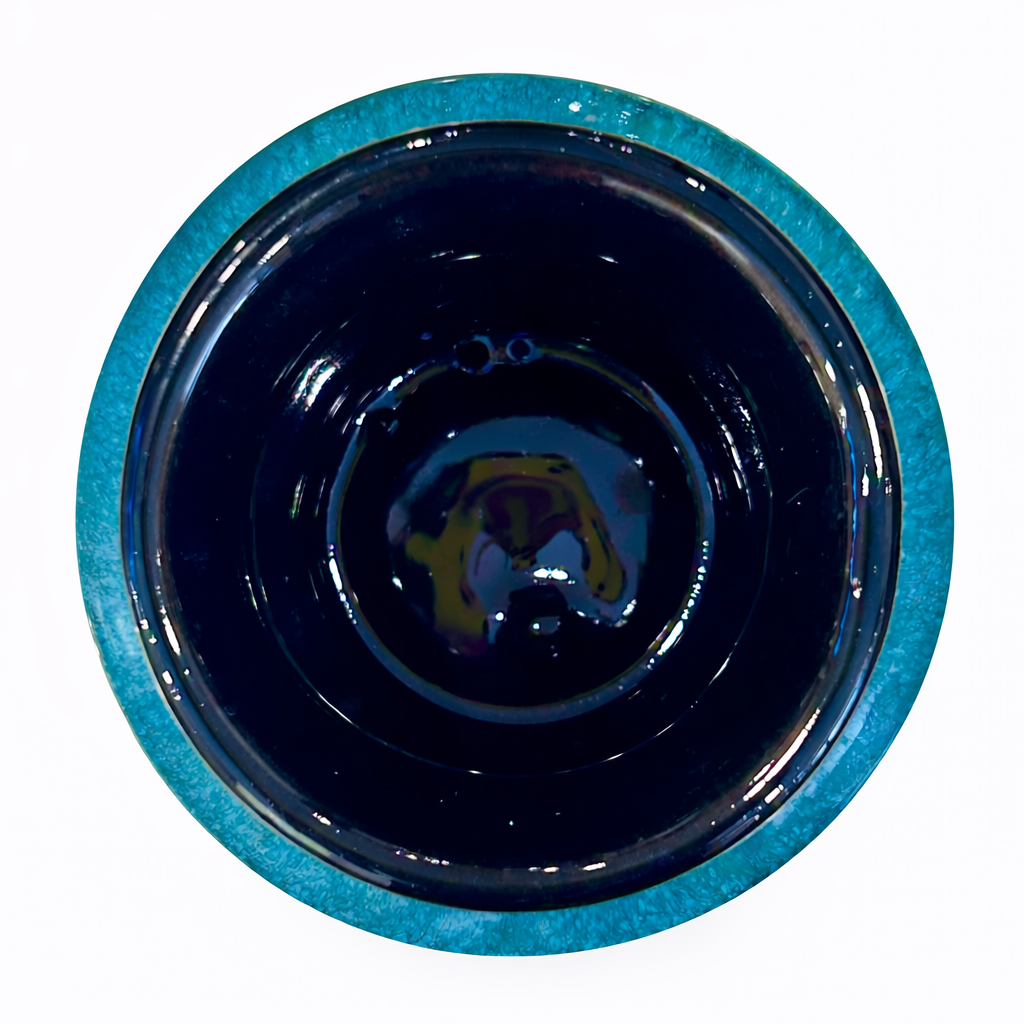
Hand-cast using the iconic red clay of the Georgian Bay region, this piece features the signature "drip" or "flow" glaze that made Blue Mountain Pottery a global representative of Canadian design. The interior weight and construction quality suggest a high-end decorative casting, intended for luxury retail rather than mass-market utility. Such large-scale, pristine examples of the Cobalt line are increasingly rare due to the cessation of factory operations and the historical decommissioning of original molds.
Placement
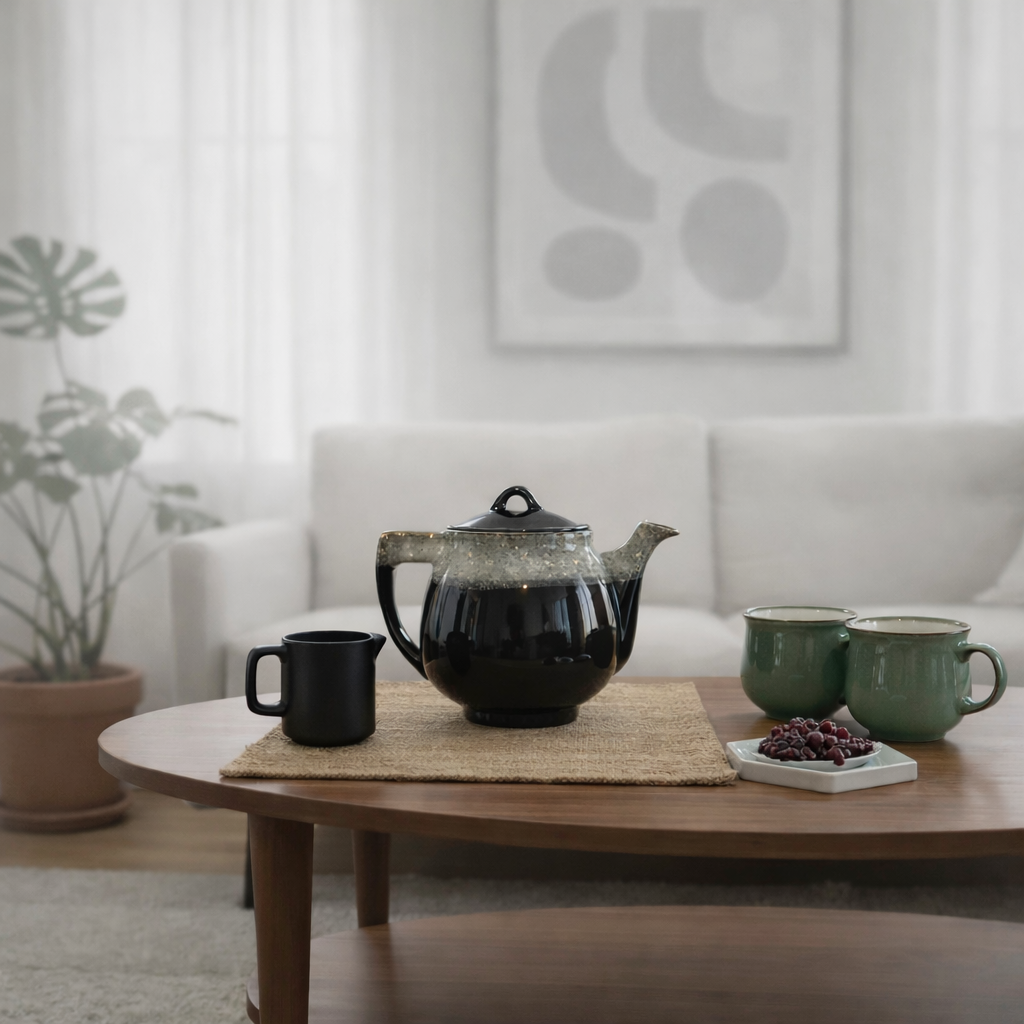
With its bold scale and saturated hue, this vase is designed for high-impact placement, such as an entryway pedestal, a deep fireplace mantel, or a mid-century sideboard. It functions as a singular sculptural object that anchors a room with its rich color and sophisticated form.
Collector’s Note: The “Cobalt” Line
In the history of Blue Mountain Pottery, the term “Cobalt” (often appearing in quotations in scholarly catalogs) refers specifically to the rare blue-hued flow glaze developed to contrast their traditional green glaze. These pieces were produced in smaller quantities and often utilized specialty molds. Following the factory's closure and the documented decommissioning of original molds, large-scale examples in this specific glaze have become significant artifacts of Canadian industrial design.
• Proper Identification: Blue Mountain Pottery (BMP) famously used a green glaze as their standard. Their blue glaze was officially marketed and known by collectors as the "Cobalt" line. Putting it in quotes signals an indication to the buyer of the specific historical nomenclature of the company.
• Signaling Rarity: For BMP collectors, "Cobalt" is a distinct category that is significantly more valuable than the common green. The quotes act as a "tag" for serious collectors searching for that specific, discontinued run.
• Differentiating from the Mineral: Technically, cobalt is a chemical element used to make blue pigment. By using quotes, this clarifies a reference to the glaze style name rather than simply describing the chemical composition of the ceramic.
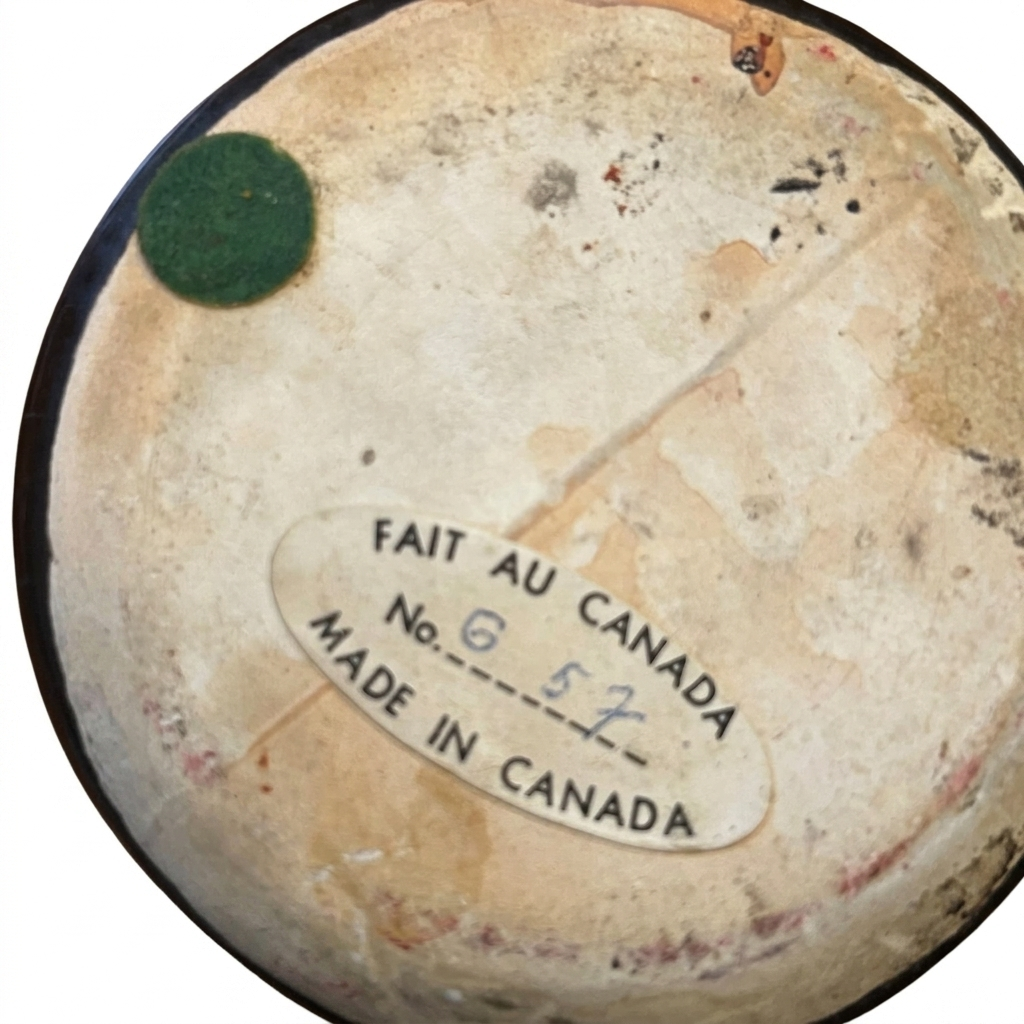
STANDARD ATTRIBUTION & VALUE DISCLOSURE; This piece is described to the best of current scholarly and market knowledge. Any maker or regional attribution is based on visual analysis, materials, construction techniques, and documented stylistic comparisons. As with many MCM and antique design objects, definitive attribution may not be possible without original labels or factory records. Pricing reflects condition, quality, decorative appeal, and current collector demand rather than guaranteed maker identification.
This exceptional sculptural vase serves as a premier example of mid-century Canadian art pottery, featuring the highly sought-after "Cobalt" flow glaze. Standing at an impressive 13.5 inches, the piece is defined by its substantial ovoid body and elegantly tapered neck, creating a silhouette that is both grounded and ethereal. The proprietary glazing technique results in a dramatic liquid-like finish, where deep midnight tones transition into vibrant sapphire streaks, offering a dynamic interaction with ambient light that enhances its architectural presence.
Attribution & Period
Attributed to Blue Mountain Pottery (Collingwood, Ontario), circa 1960s. This specific form and "Cobalt" colorway represent the more exclusive production runs of the mid-20th century, distinguished from the factory’s more common green-glaze iterations. The scale and weight are consistent with the studio’s professional-grade castings produced prior to the rationalization of their mold inventory in later decades.
Dimensions & Weight
Condition
Great condition. The vase exhibits a brilliant, high-gloss surface with no chips or structural cracks. A minor surface characteristic is noted, which is consistent with the original mold and firing process—a testament to the authentic, hand-finished nature of mid-century ceramic production. The glaze remains exceptionally vibrant across the entire form.
Authenticity & Construction
Hand-cast using the iconic red clay of the Georgian Bay region, this piece features the signature "drip" or "flow" glaze that made Blue Mountain Pottery a global representative of Canadian design. The interior weight and construction quality suggest a high-end decorative casting, intended for luxury retail rather than mass-market utility. Such large-scale, pristine examples of the Cobalt line are increasingly rare due to the cessation of factory operations and the historical decommissioning of original molds.
Placement
With its bold scale and saturated hue, this vase is designed for high-impact placement, such as an entryway pedestal, a deep fireplace mantel, or a mid-century sideboard. It functions as a singular sculptural object that anchors a room with its rich color and sophisticated form.
Collector’s Note: The “Cobalt” Line
In the history of Blue Mountain Pottery, the term “Cobalt” (often appearing in quotations in scholarly catalogs) refers specifically to the rare blue-hued flow glaze developed to contrast their traditional green glaze. These pieces were produced in smaller quantities and often utilized specialty molds. Following the factory's closure and the documented decommissioning of original molds, large-scale examples in this specific glaze have become significant artifacts of Canadian industrial design.
• Proper Identification: Blue Mountain Pottery (BMP) famously used a green glaze as their standard. Their blue glaze was officially marketed and known by collectors as the "Cobalt" line. Putting it in quotes signals an indication to the buyer of the specific historical nomenclature of the company.
• Signaling Rarity: For BMP collectors, "Cobalt" is a distinct category that is significantly more valuable than the common green. The quotes act as a "tag" for serious collectors searching for that specific, discontinued run.
• Differentiating from the Mineral: Technically, cobalt is a chemical element used to make blue pigment. By using quotes, this clarifies a reference to the glaze style name rather than simply describing the chemical composition of the ceramic.
STANDARD ATTRIBUTION & VALUE DISCLOSURE; This piece is described to the best of current scholarly and market knowledge. Any maker or regional attribution is based on visual analysis, materials, construction techniques, and documented stylistic comparisons. As with many MCM and antique design objects, definitive attribution may not be possible without original labels or factory records. Pricing reflects condition, quality, decorative appeal, and current collector demand rather than guaranteed maker identification.

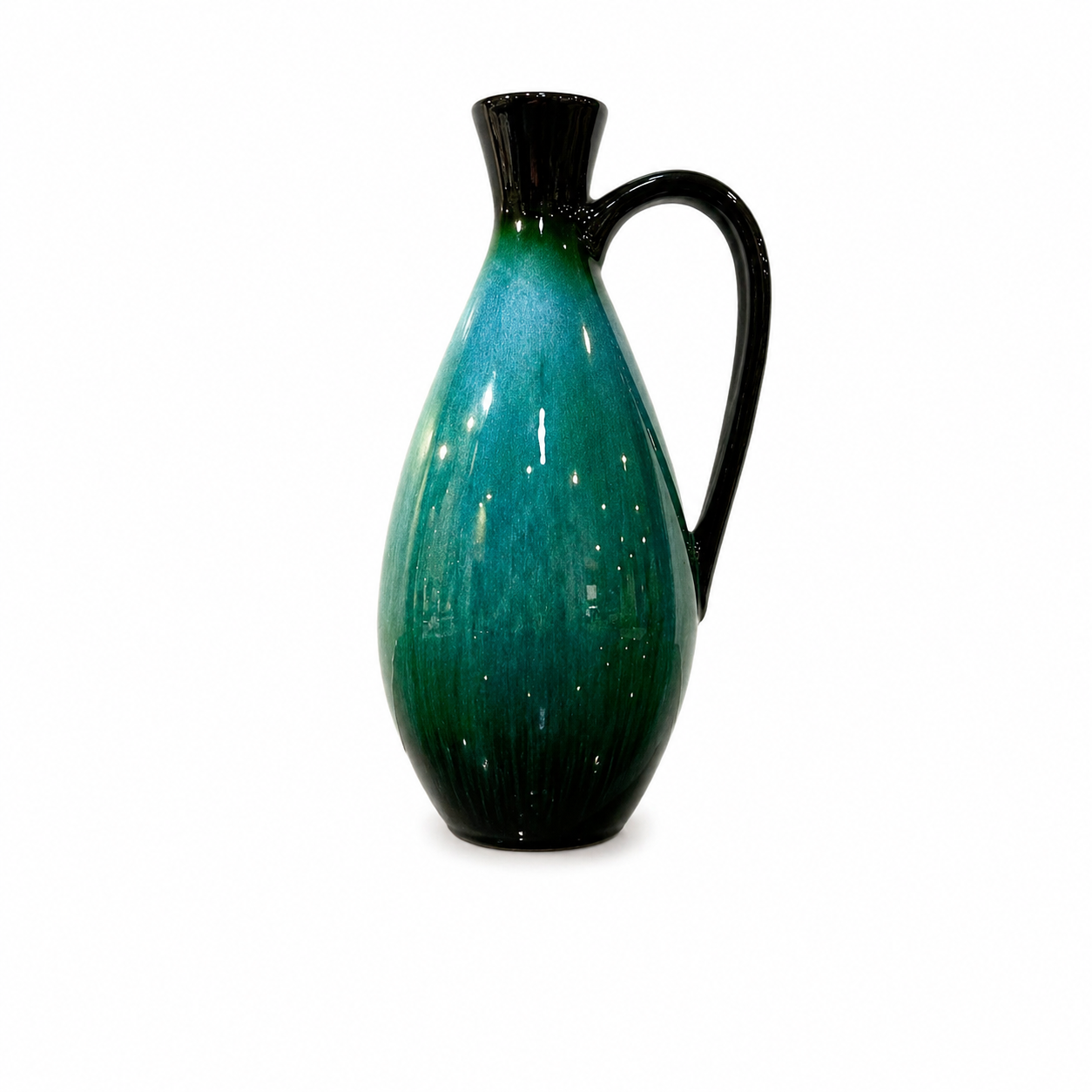 Image 1 of 12
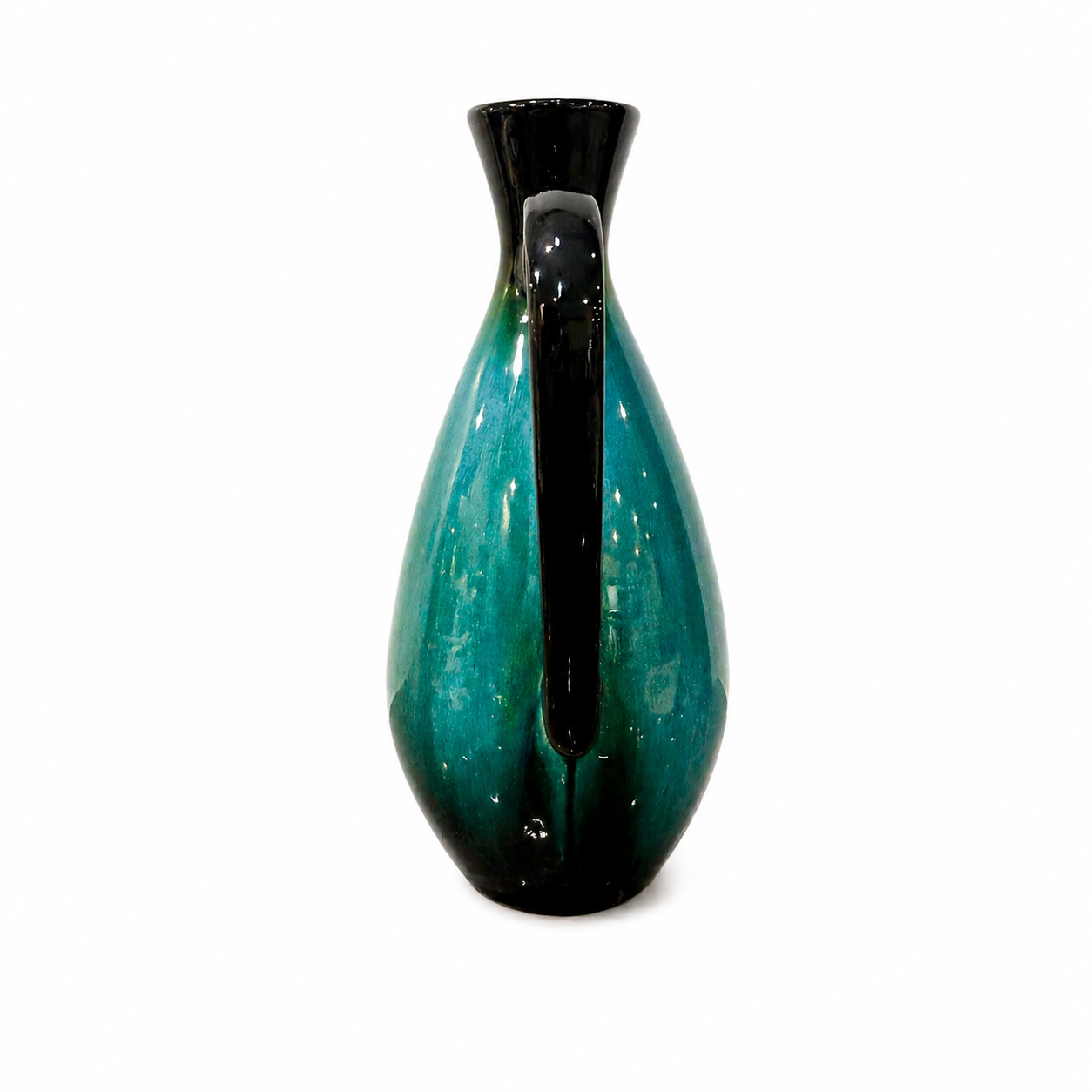 Image 2 of 12
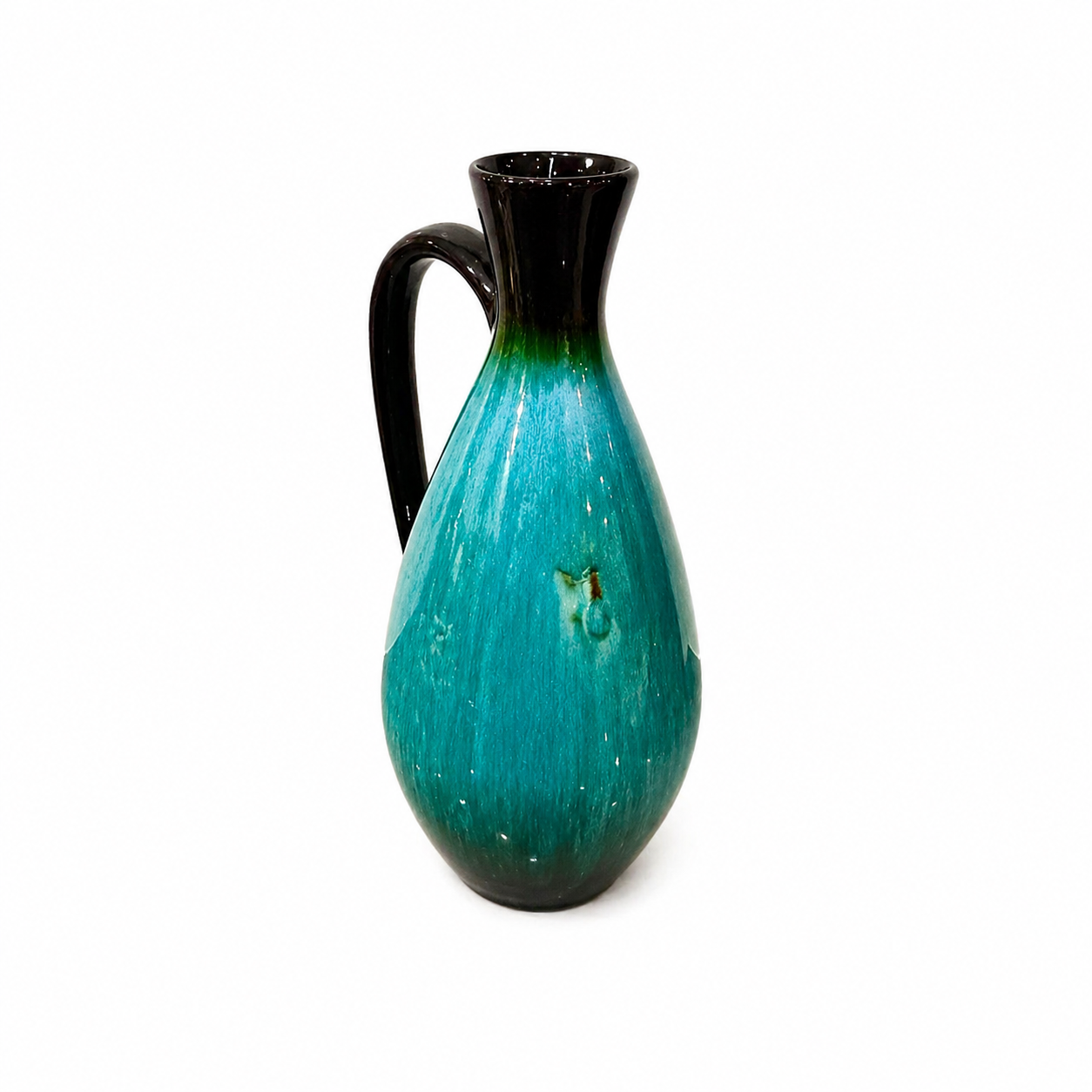 Image 3 of 12
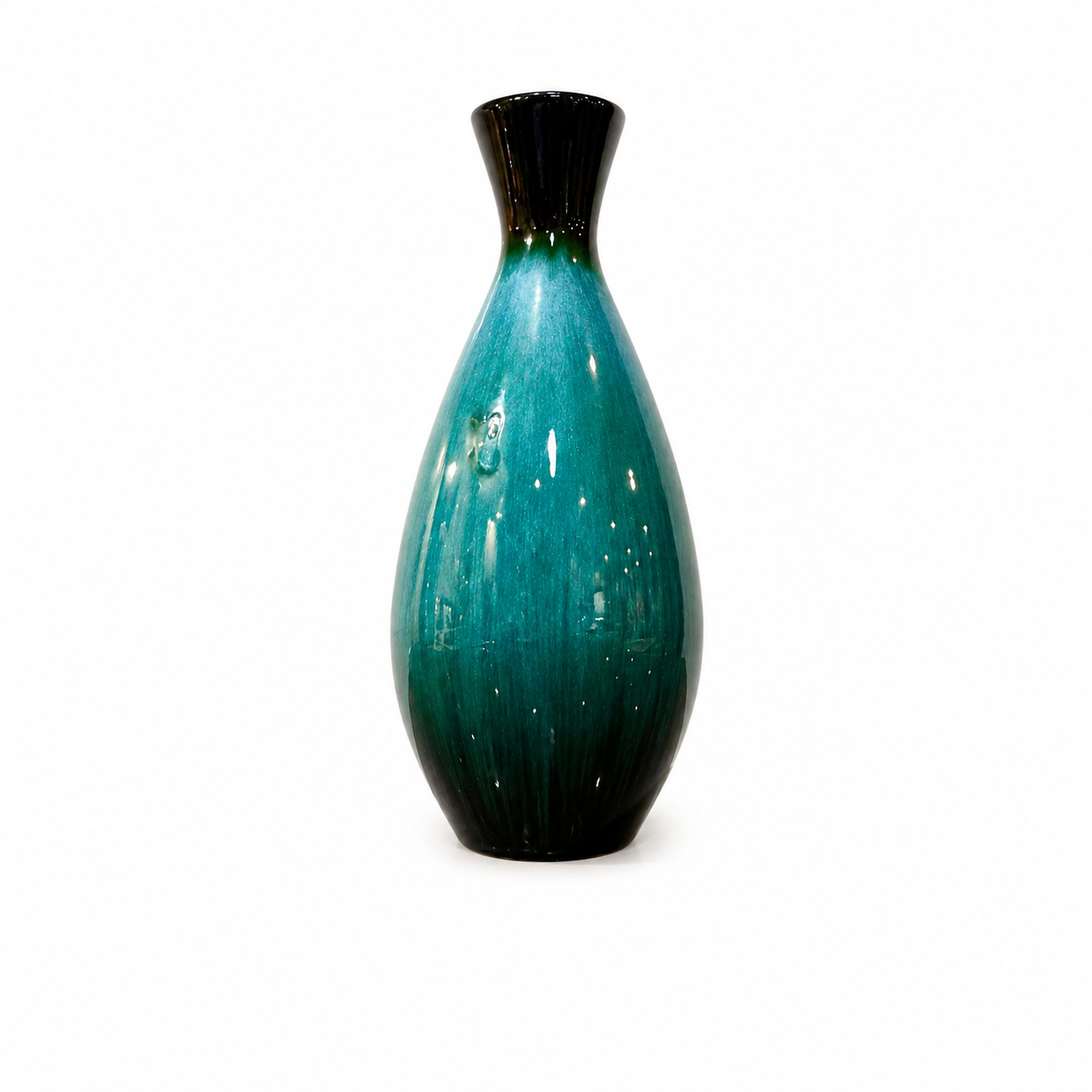 Image 4 of 12
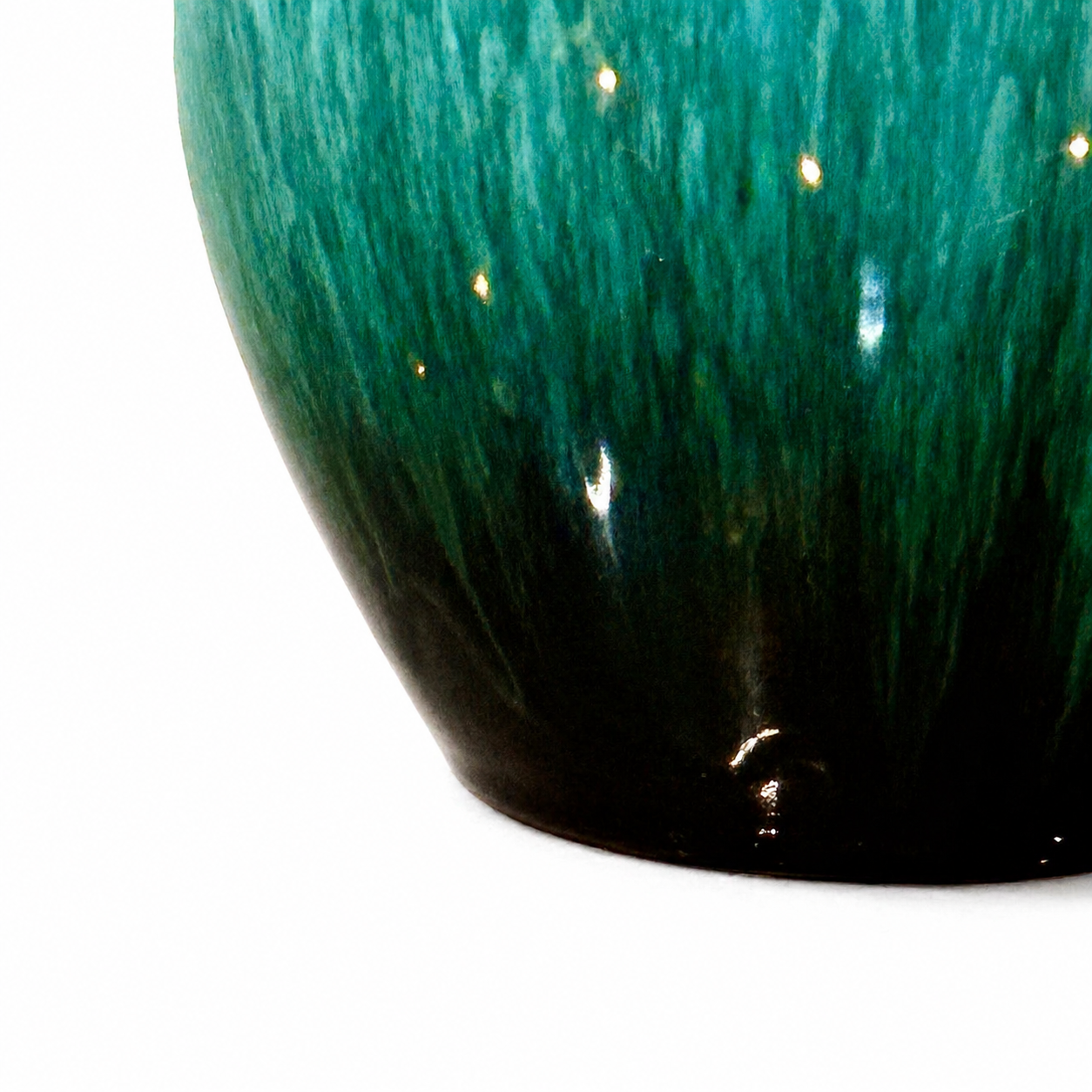 Image 5 of 12
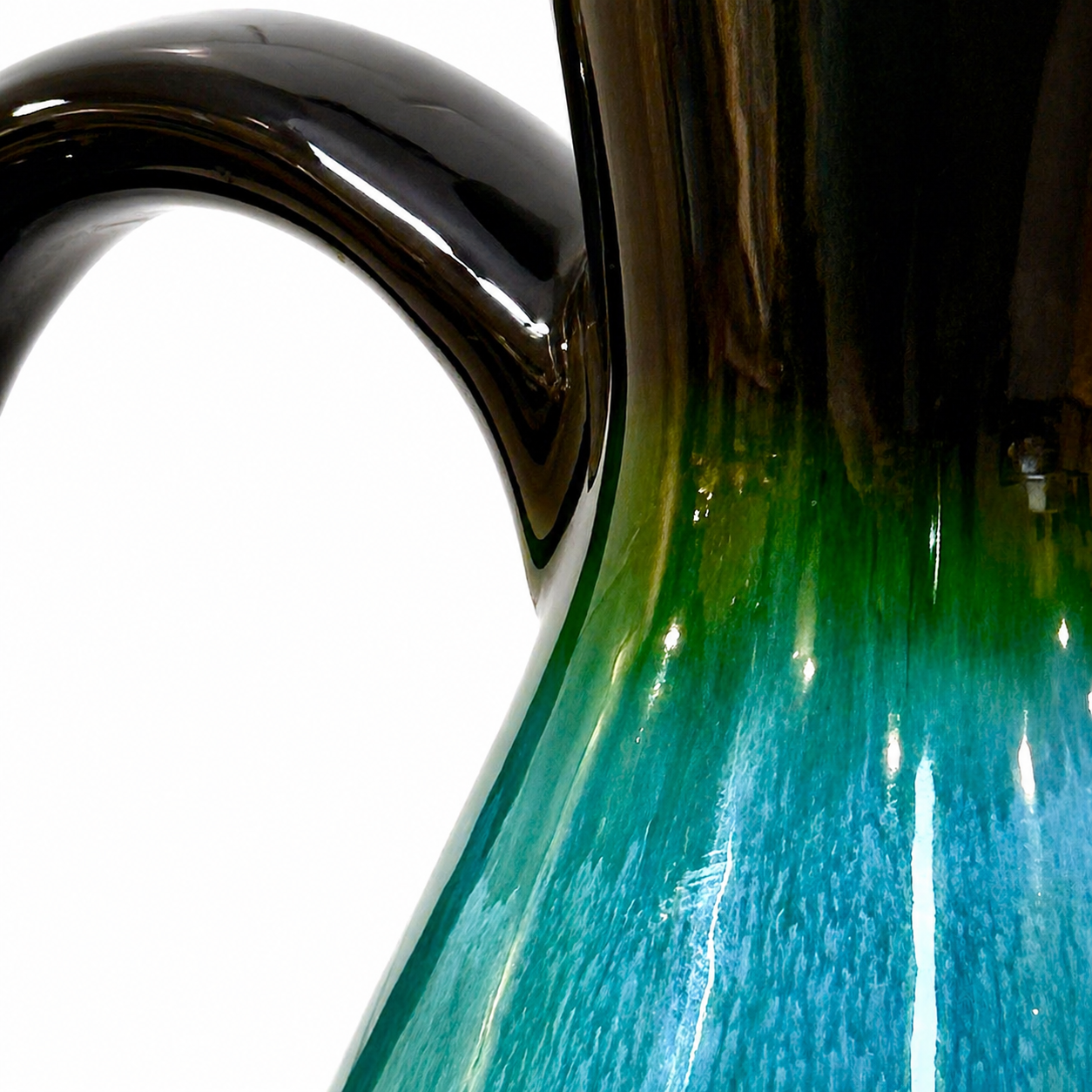 Image 6 of 12
 Image 7 of 12
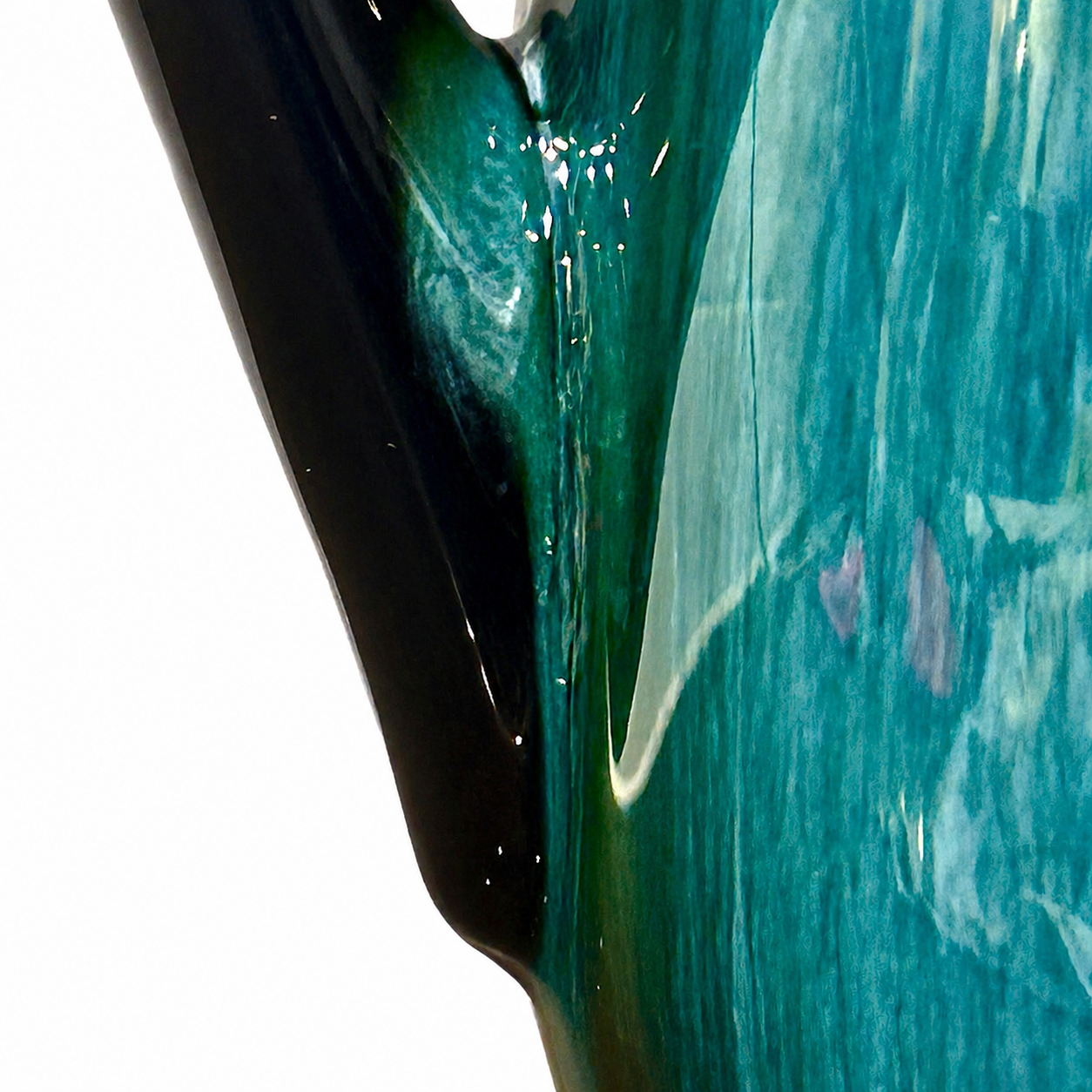 Image 8 of 12
 Image 9 of 12
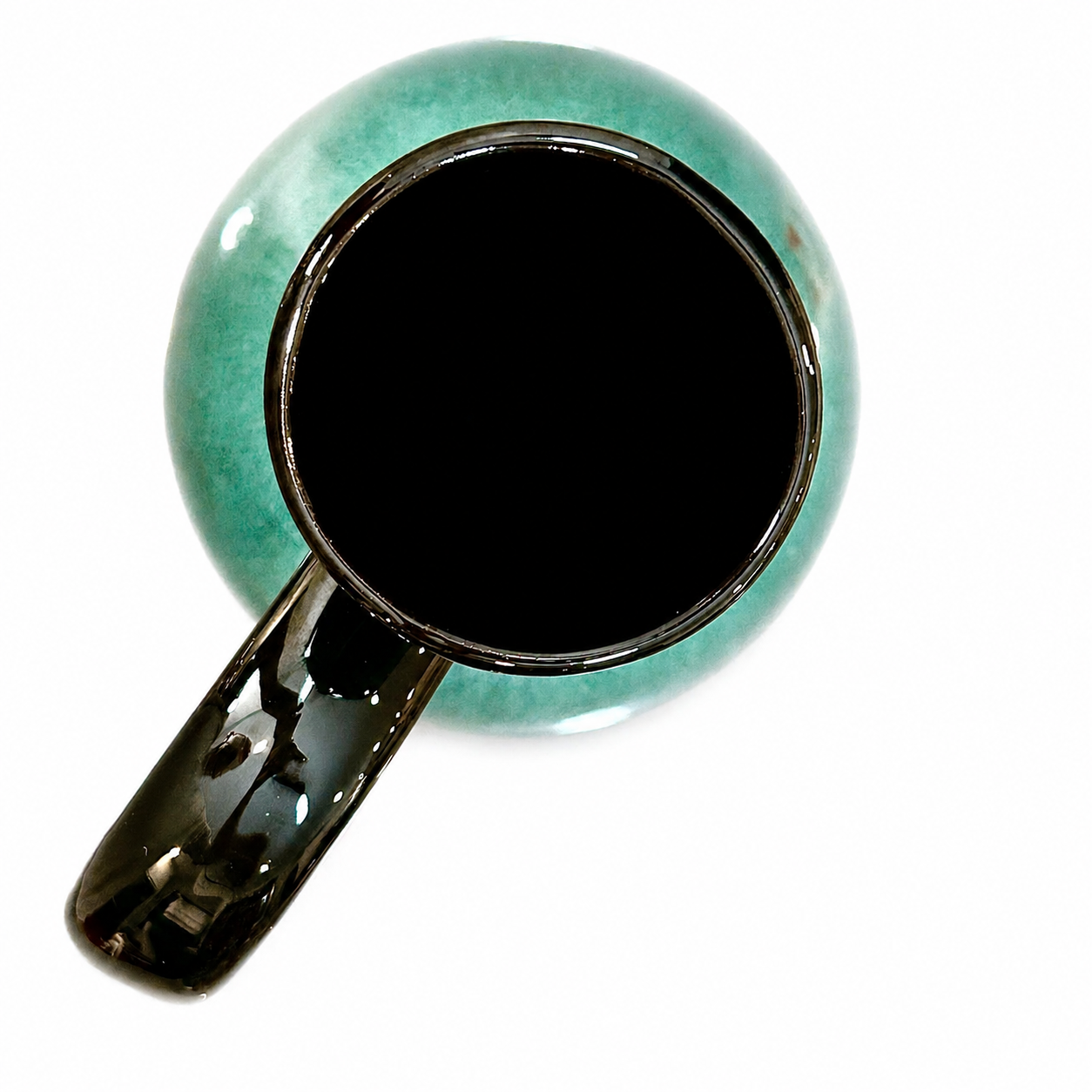 Image 10 of 12
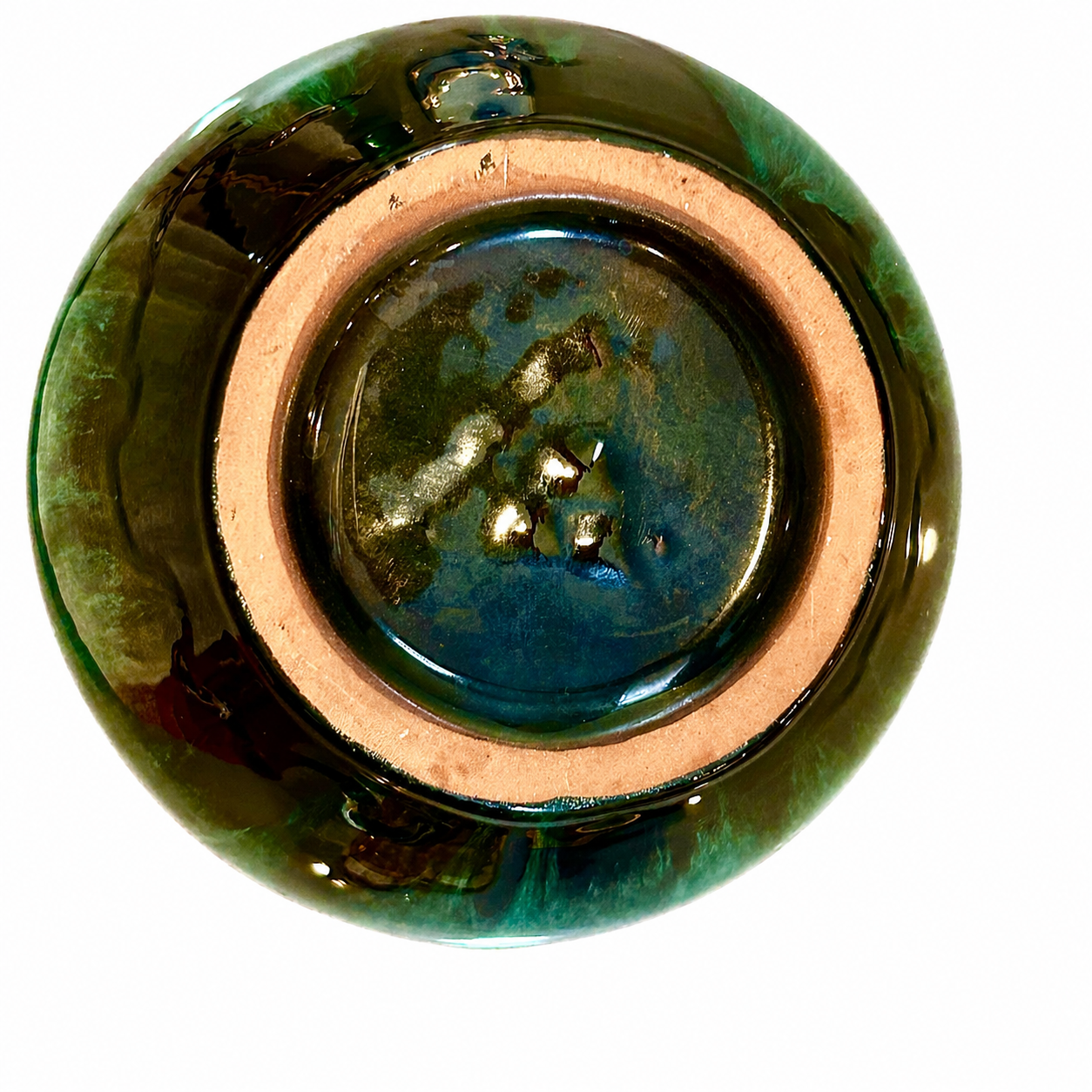 Image 11 of 12
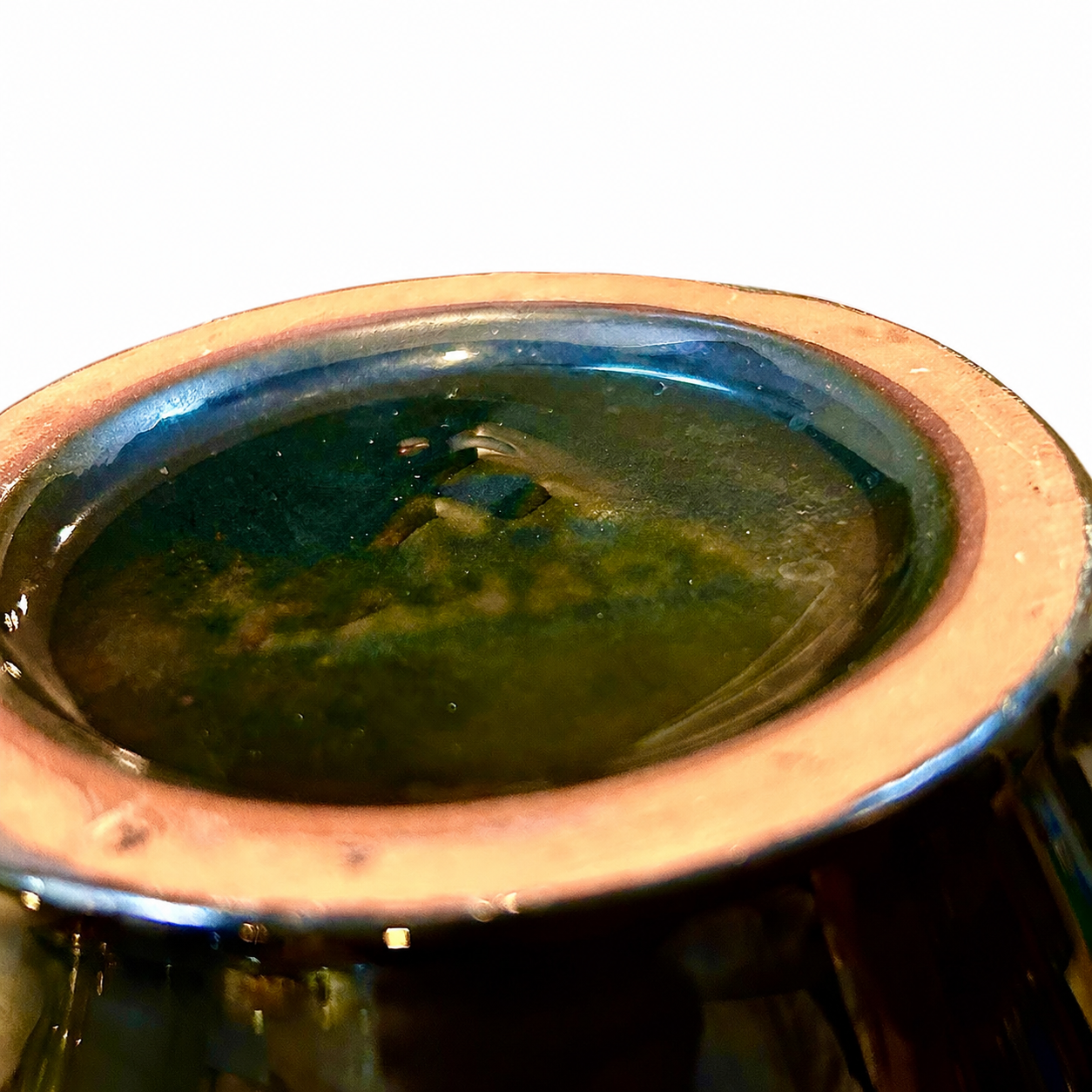 Image 12 of 12