Image 1 of 40
Image 2 of 40
Image 3 of 40
Image 4 of 40
Image 5 of 40
Image 6 of 40
Image 7 of 40
Image 8 of 40
Image 9 of 40
Image 10 of 40
Image 11 of 40
Image 12 of 40
Image 13 of 40
Image 14 of 40
Image 15 of 40
Image 16 of 40
Image 17 of 40
Image 18 of 40
Image 19 of 40
Image 20 of 40
Image 21 of 40
Image 22 of 40
Image 23 of 40
Image 24 of 40
Image 25 of 40
Image 26 of 40
Image 27 of 40
Image 28 of 40
Image 29 of 40
Image 30 of 40
Image 31 of 40
Image 32 of 40
Image 33 of 40
Image 34 of 40
Image 35 of 40
Image 36 of 40
Image 37 of 40
Image 38 of 40
Image 39 of 40
Image 40 of 40
Czech Bohemian Cut Glass Ruby-Stained Champagne Coupes, Diamond Pattern Pair
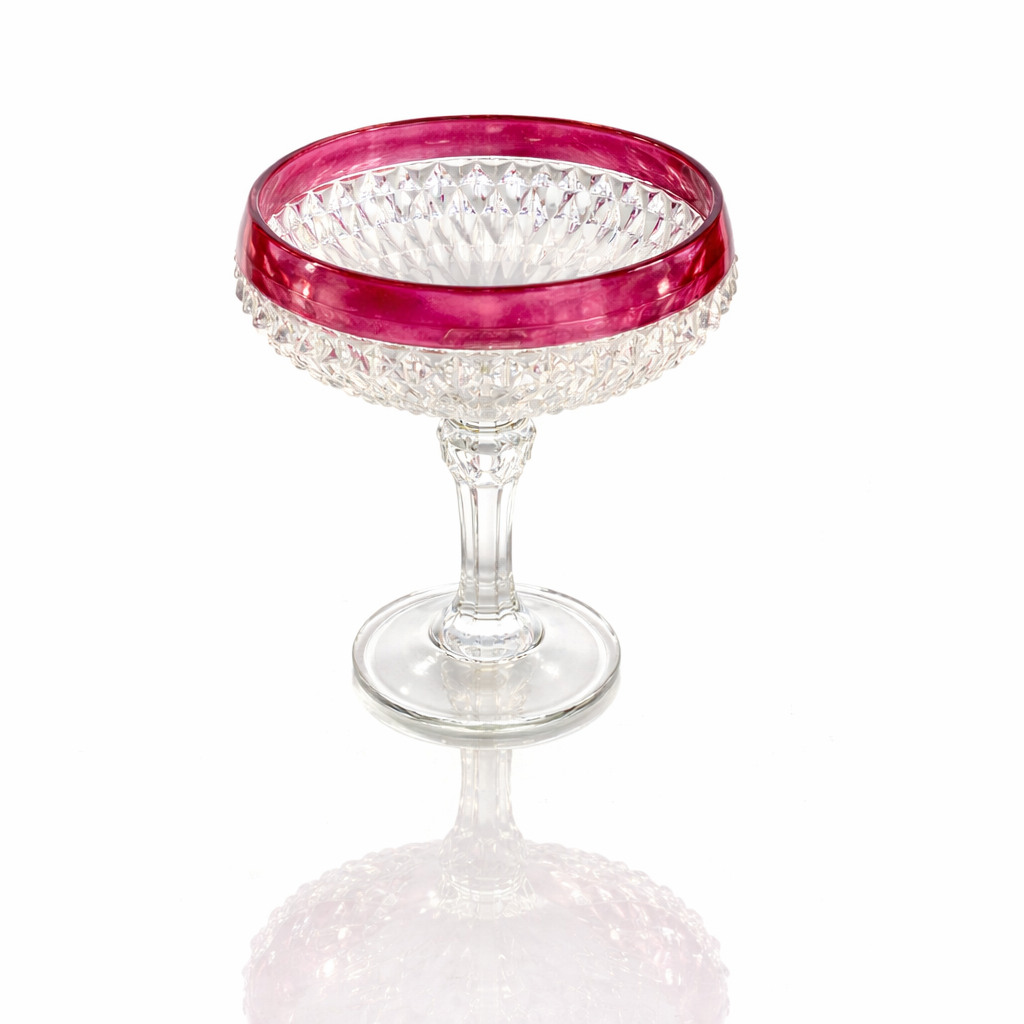
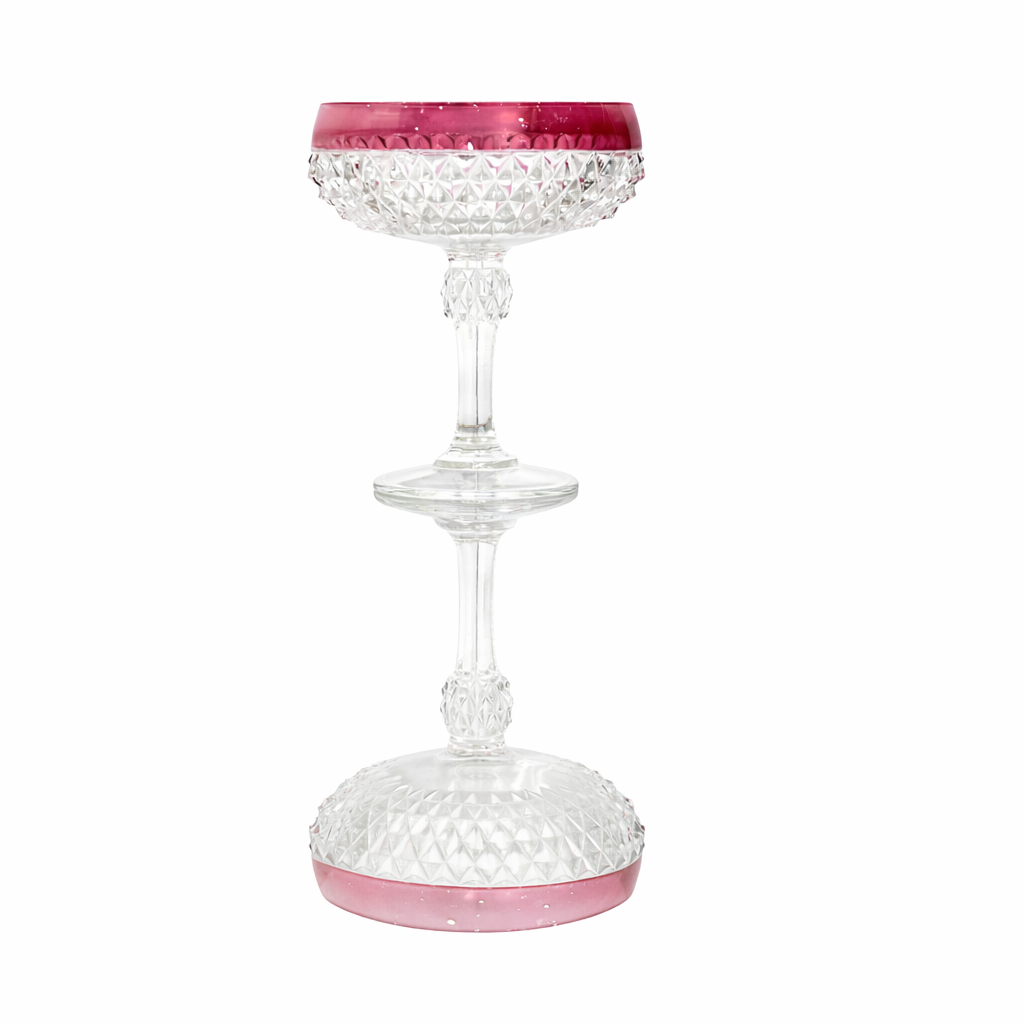
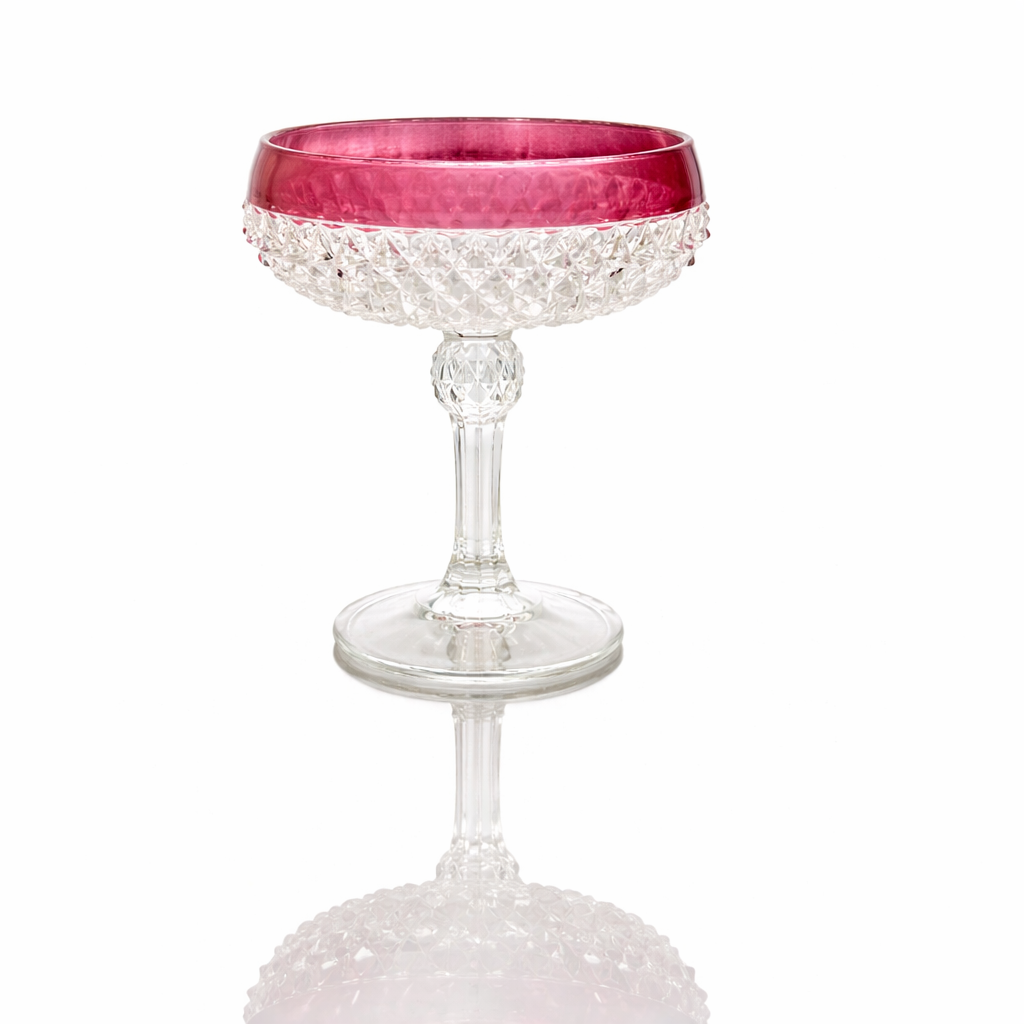
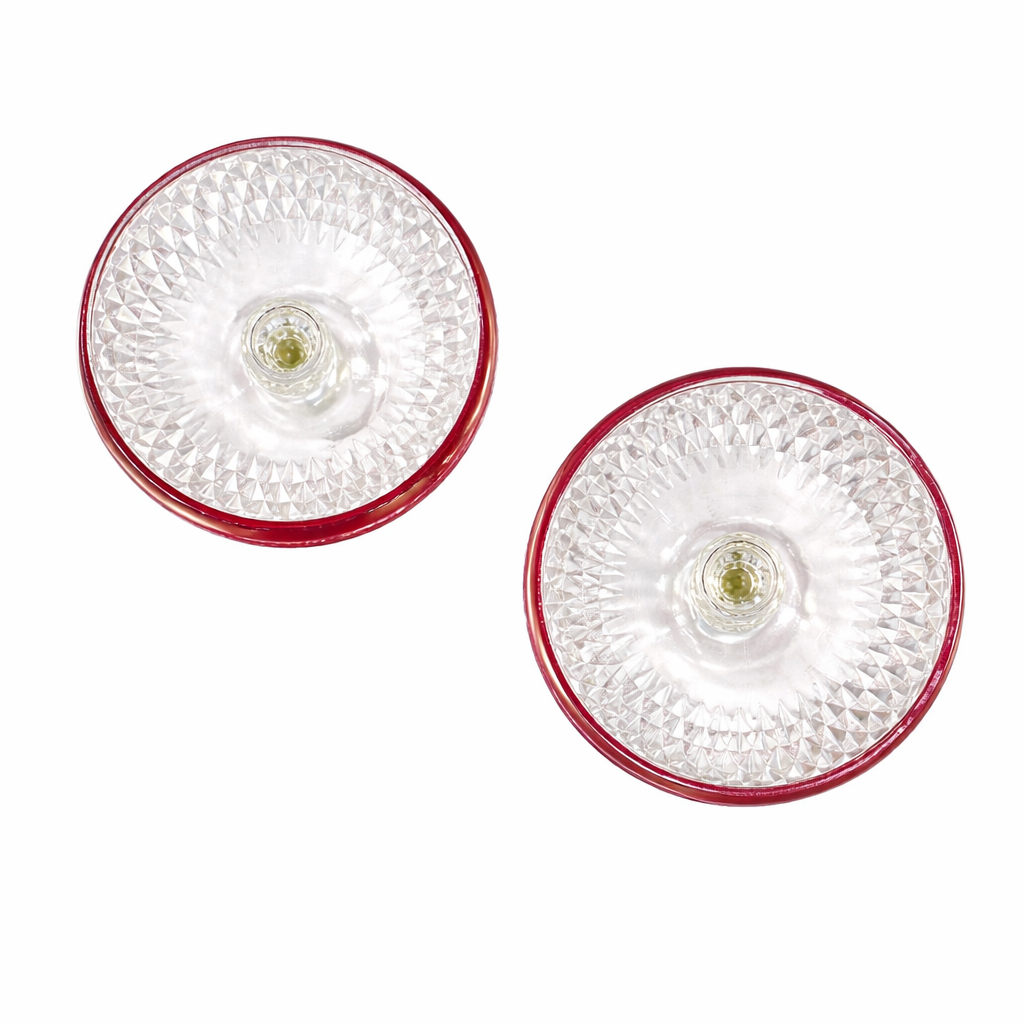
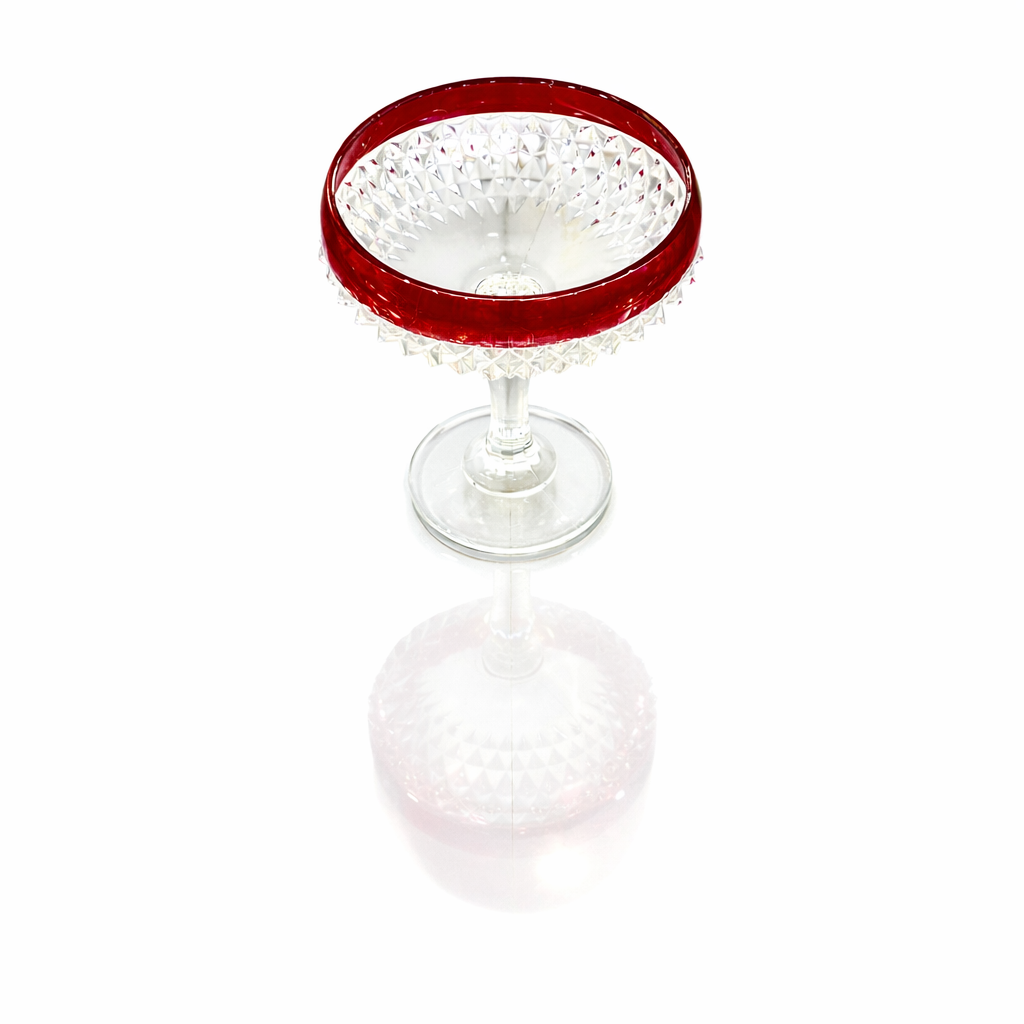
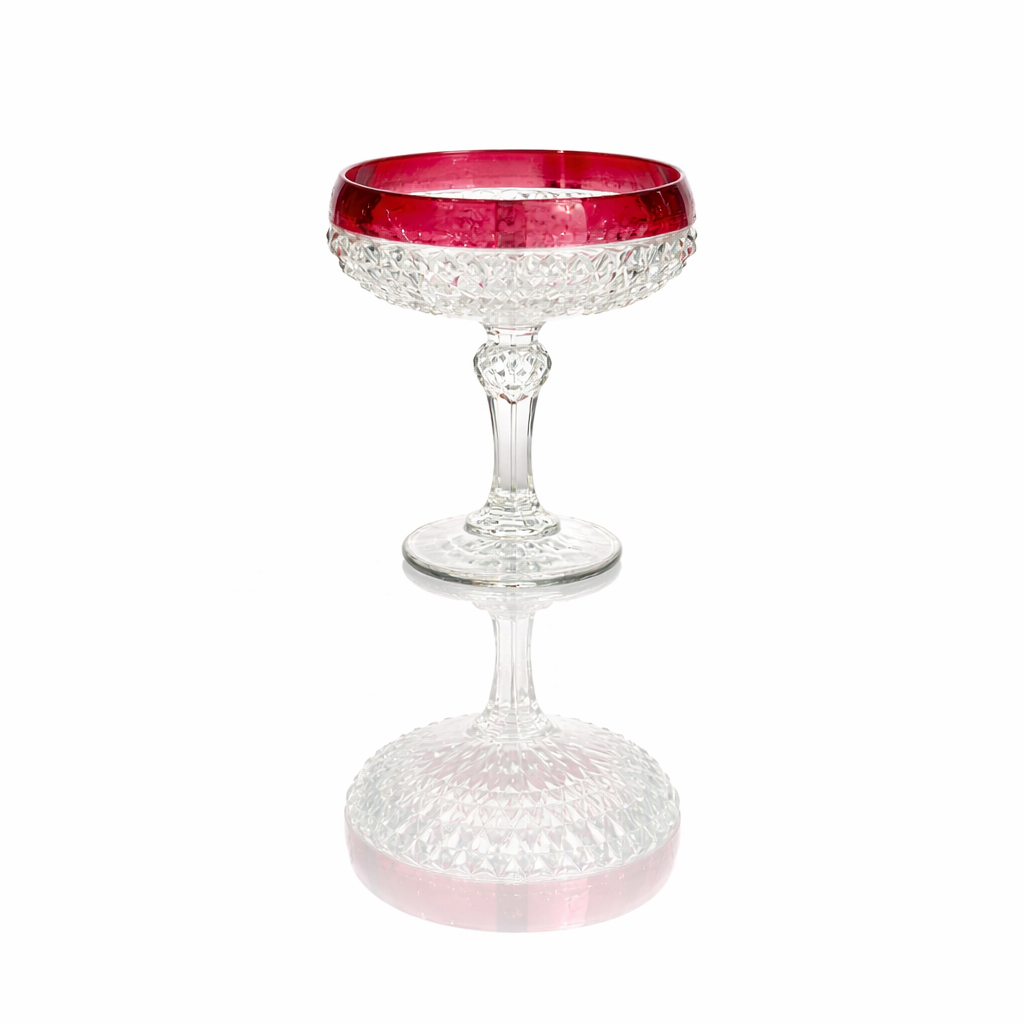
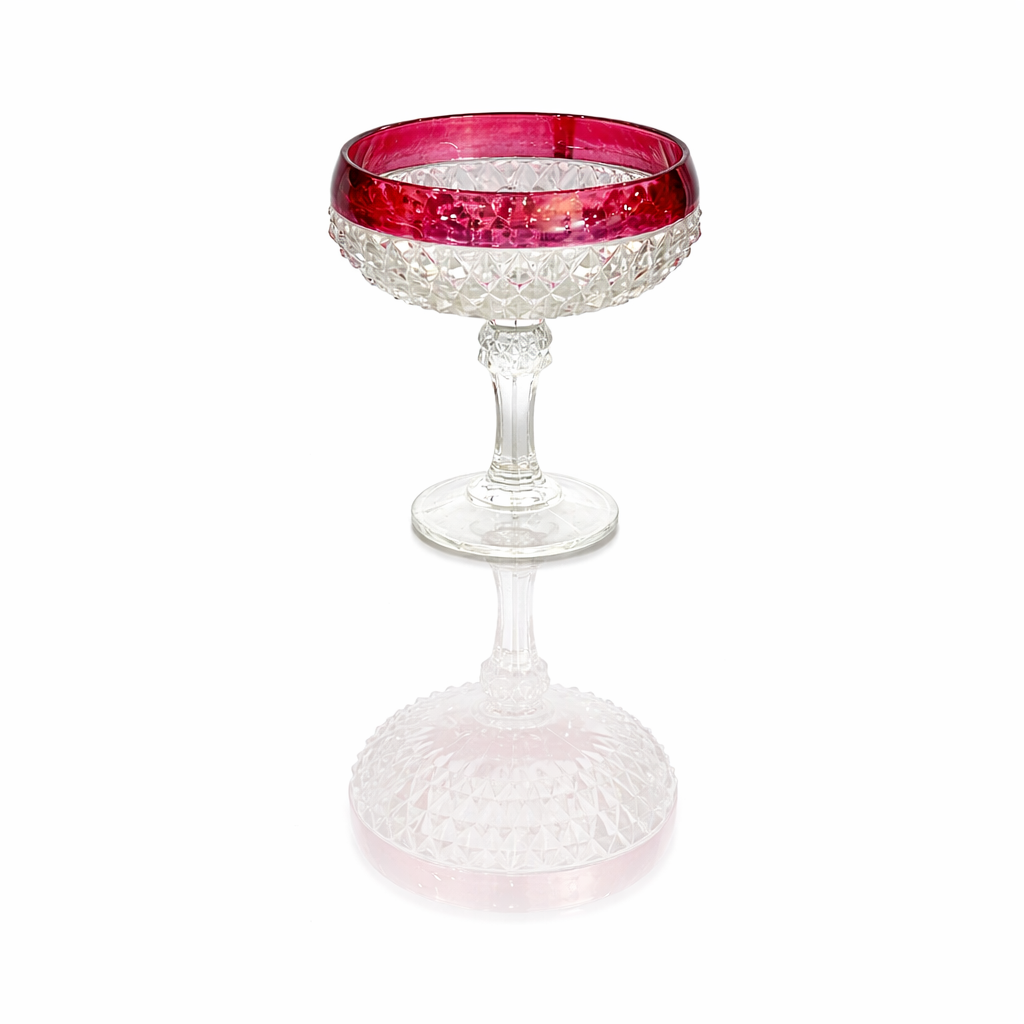
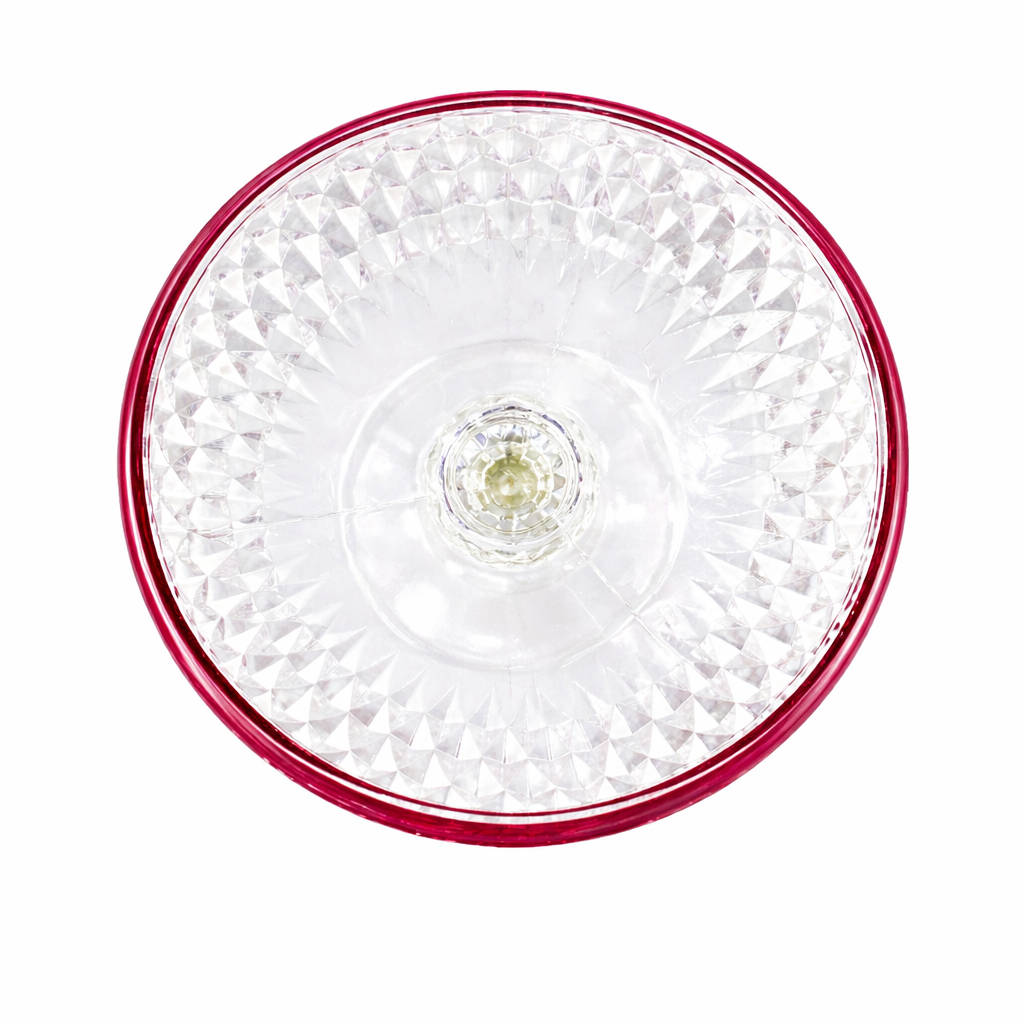
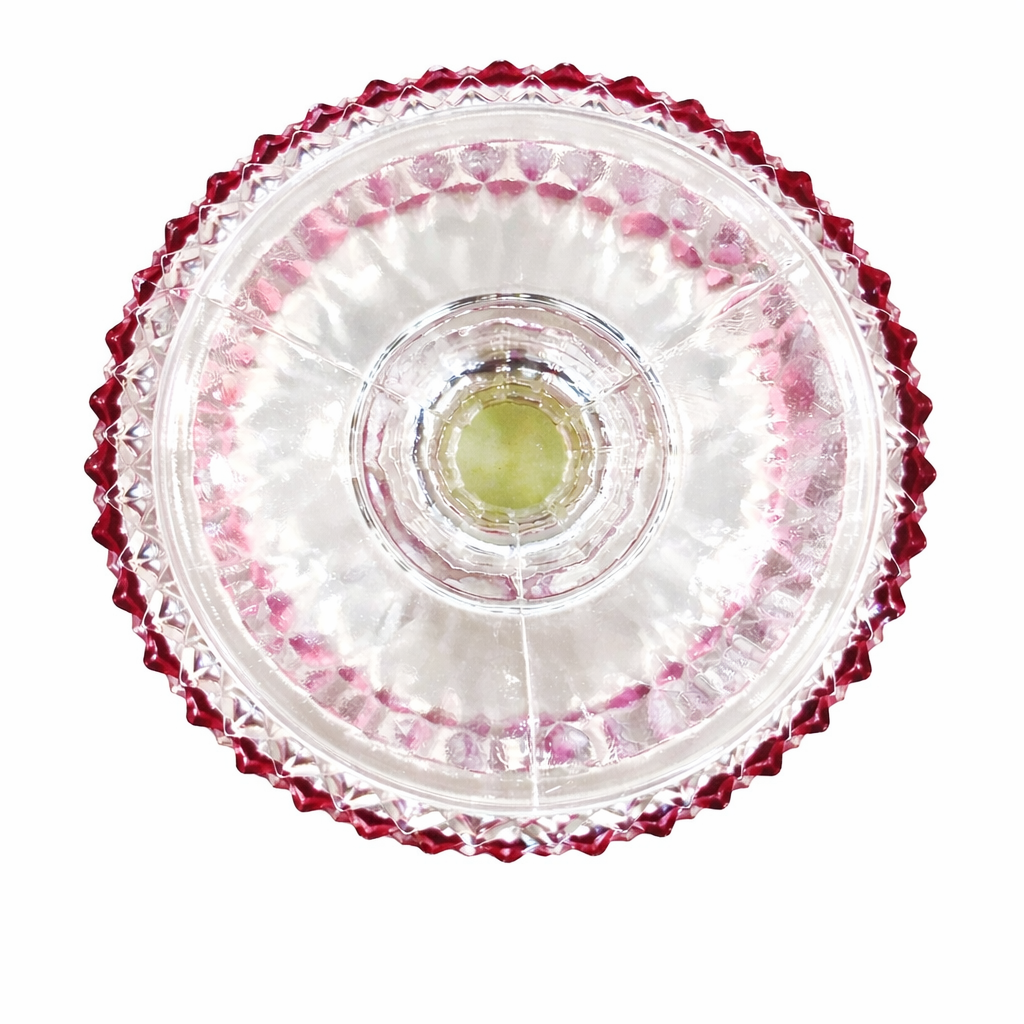
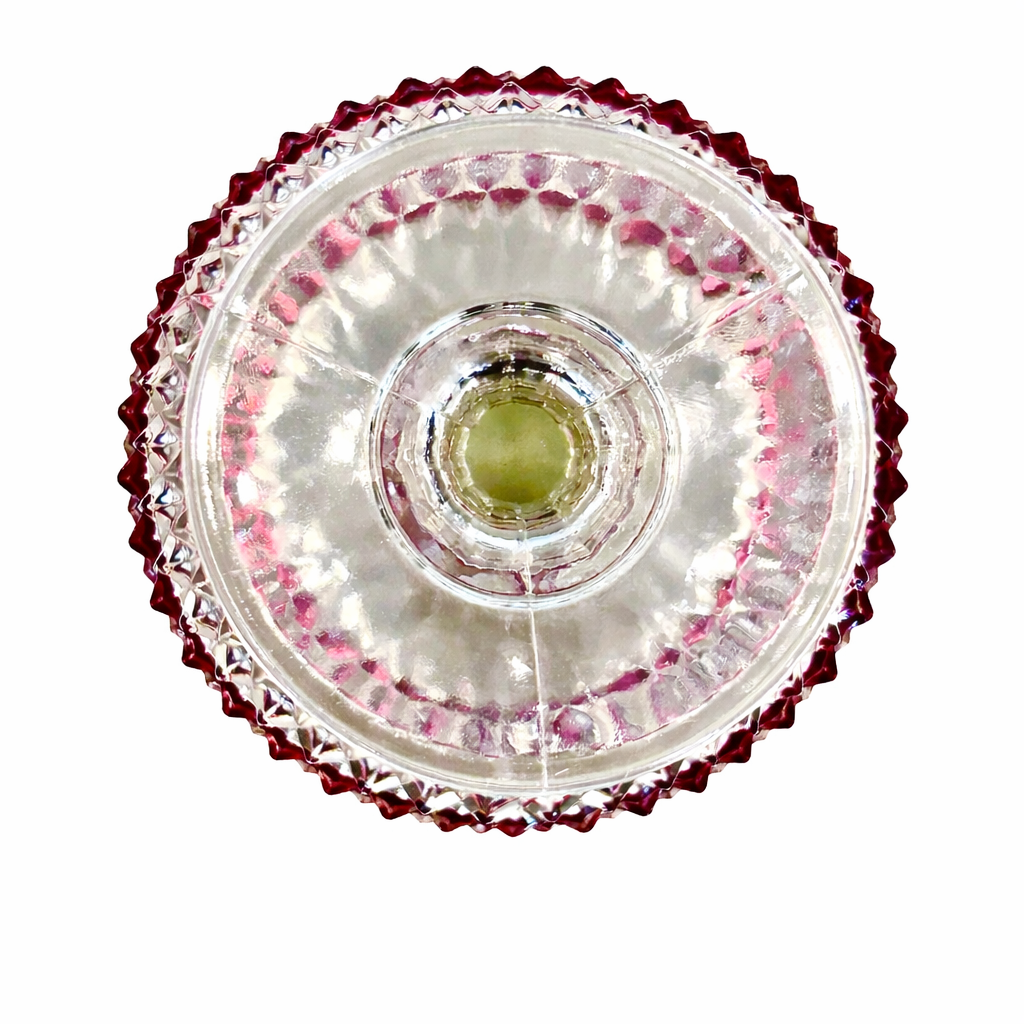
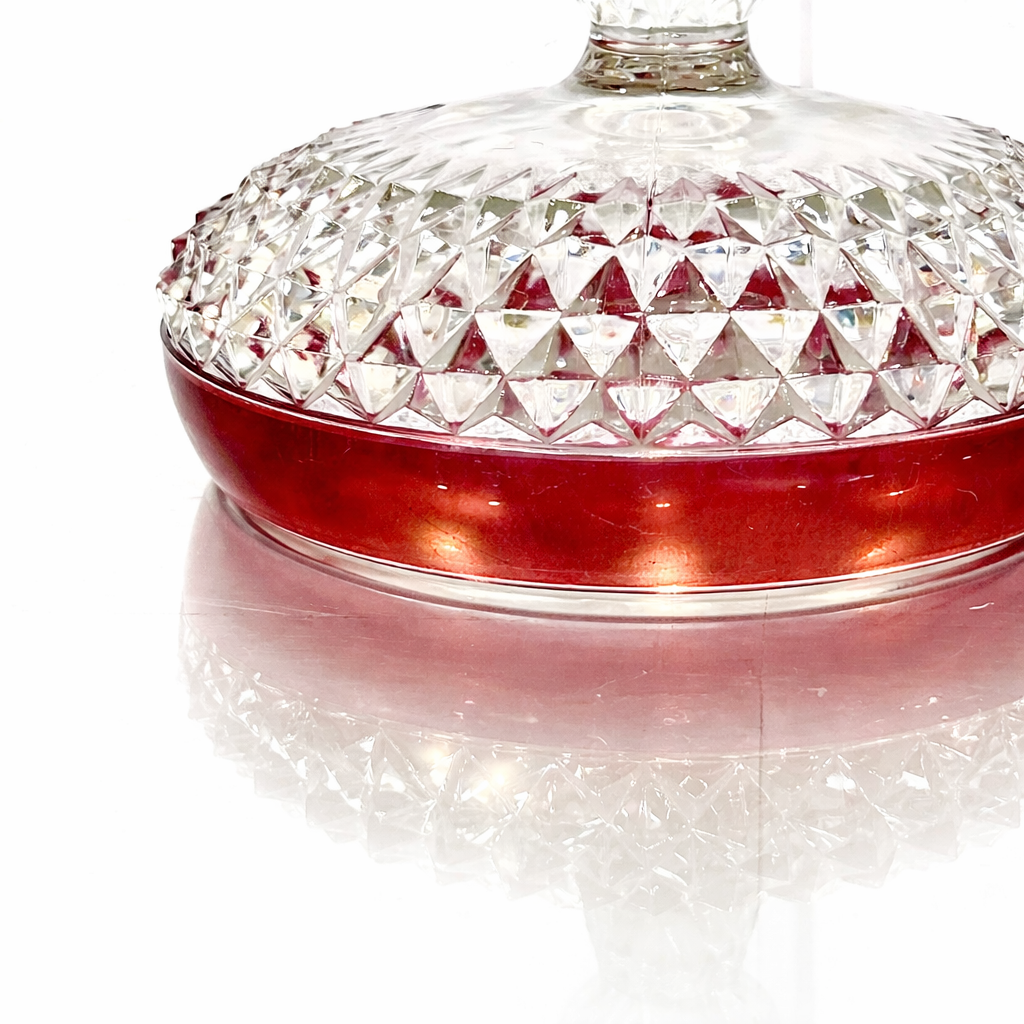
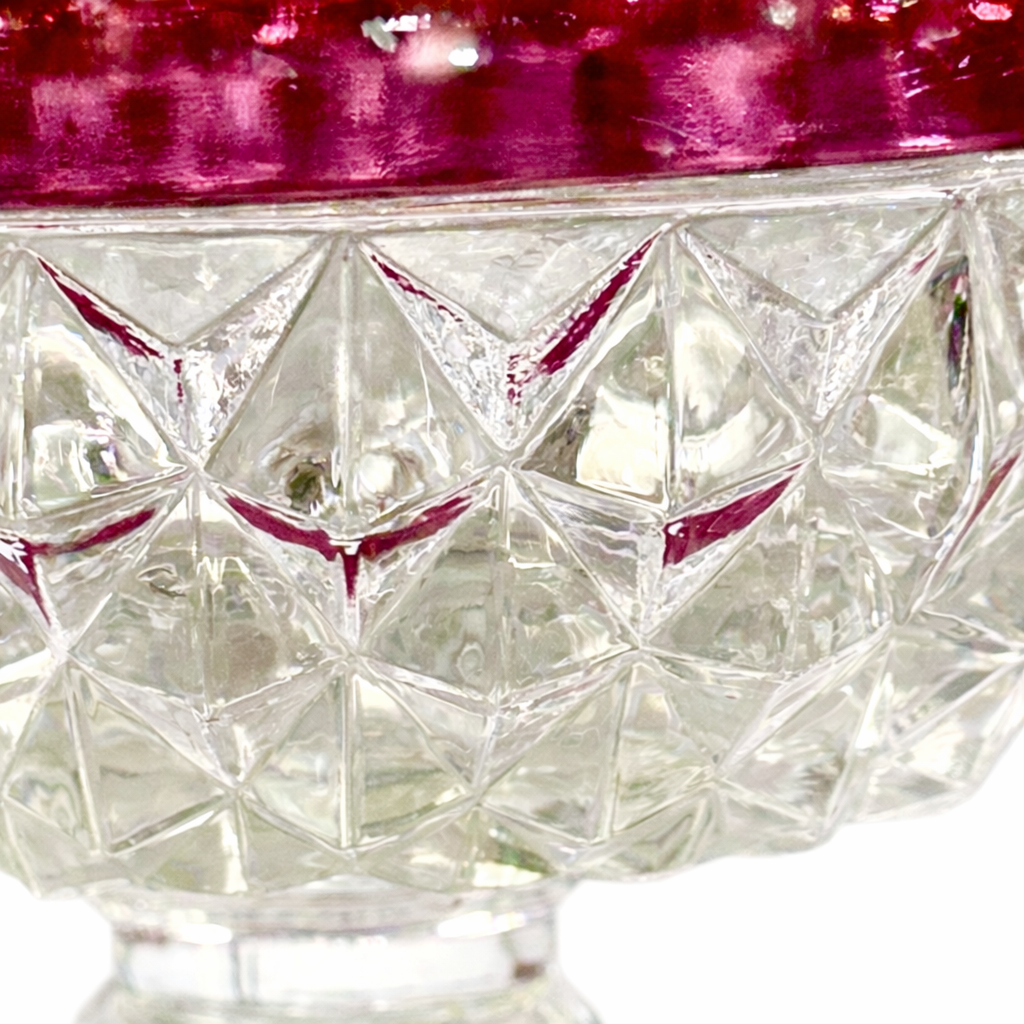
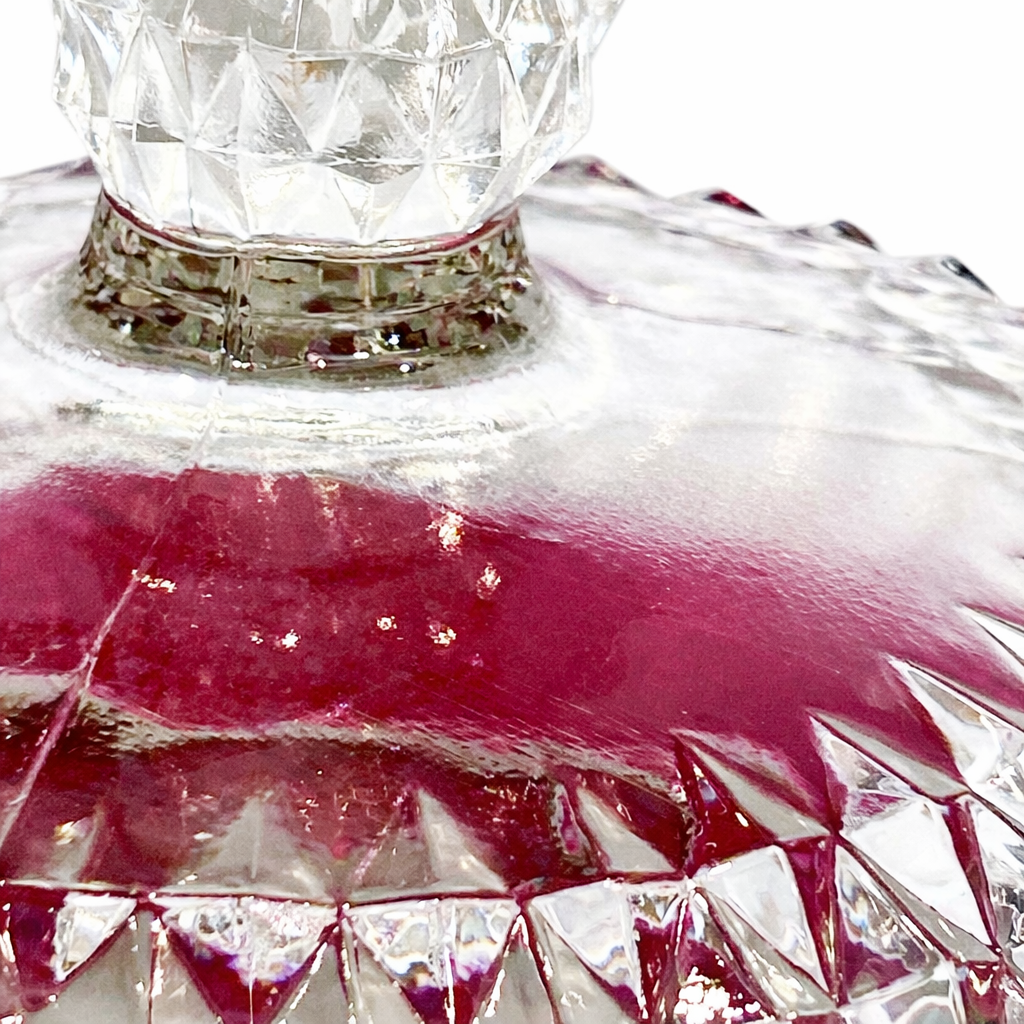
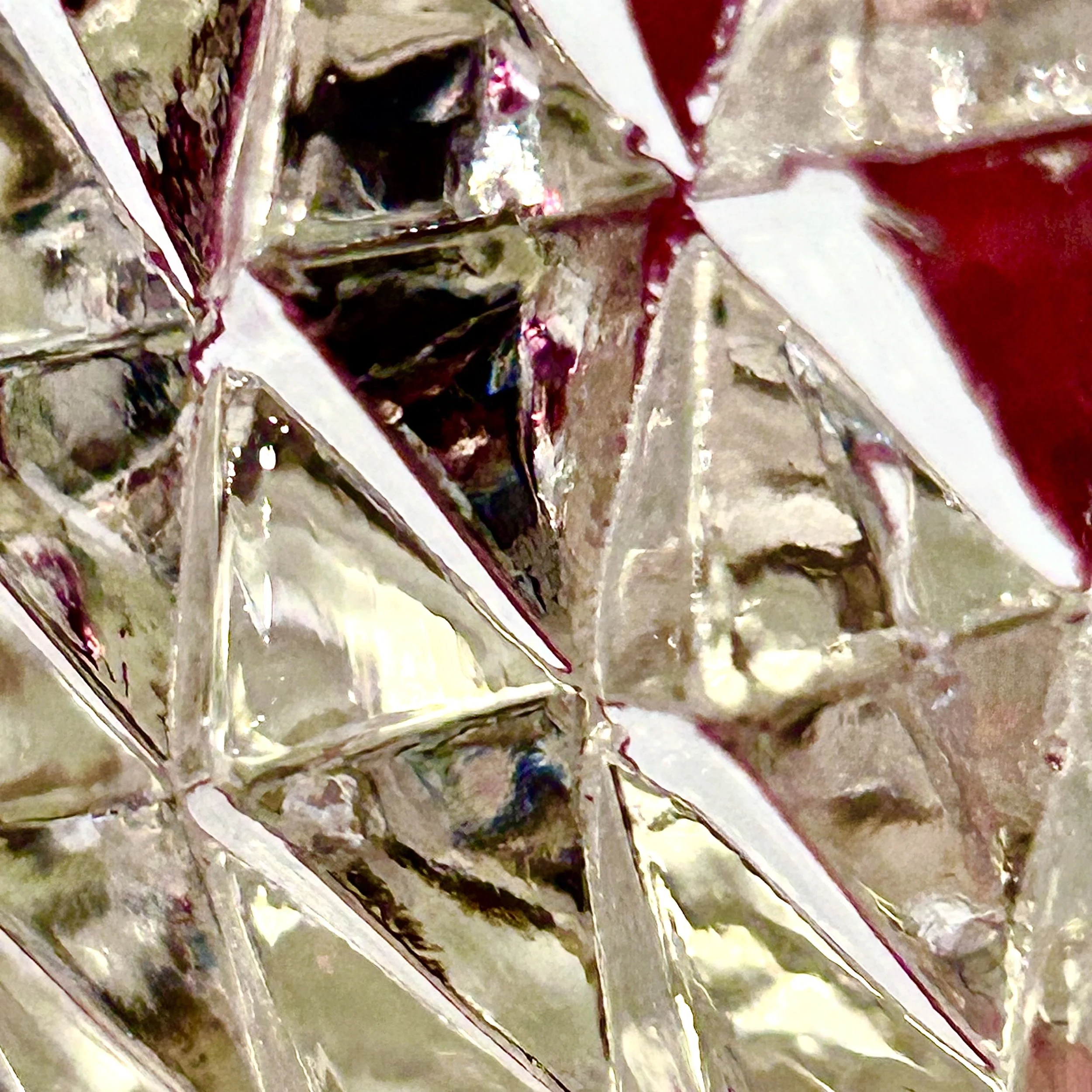
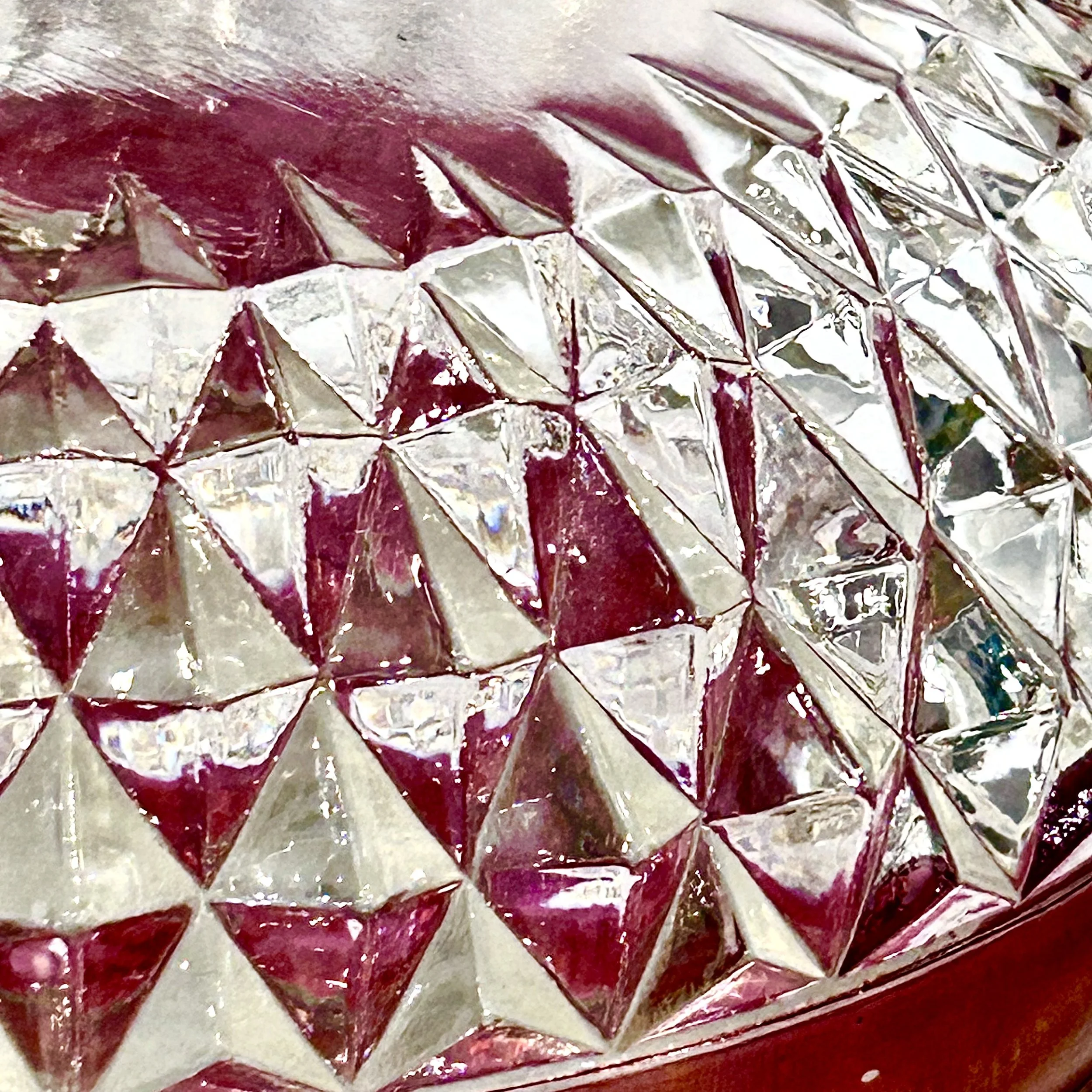
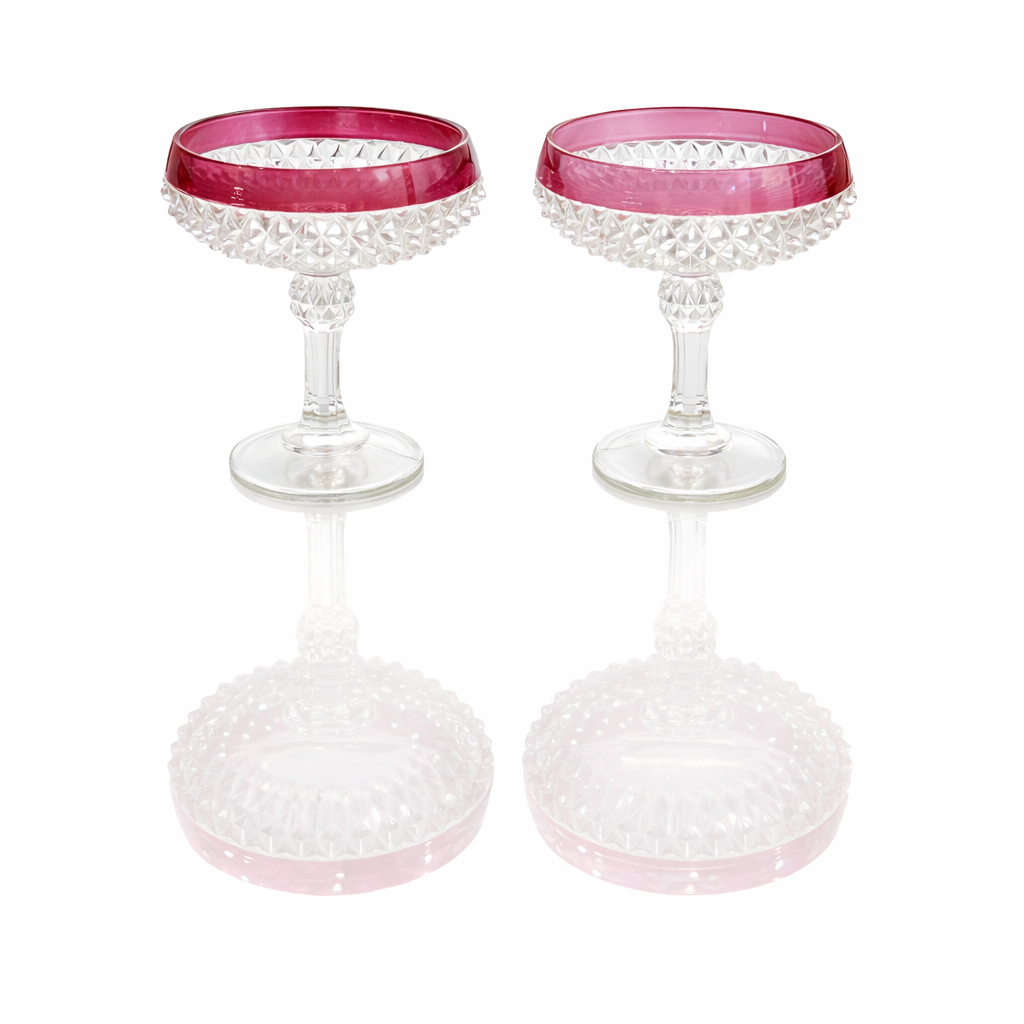
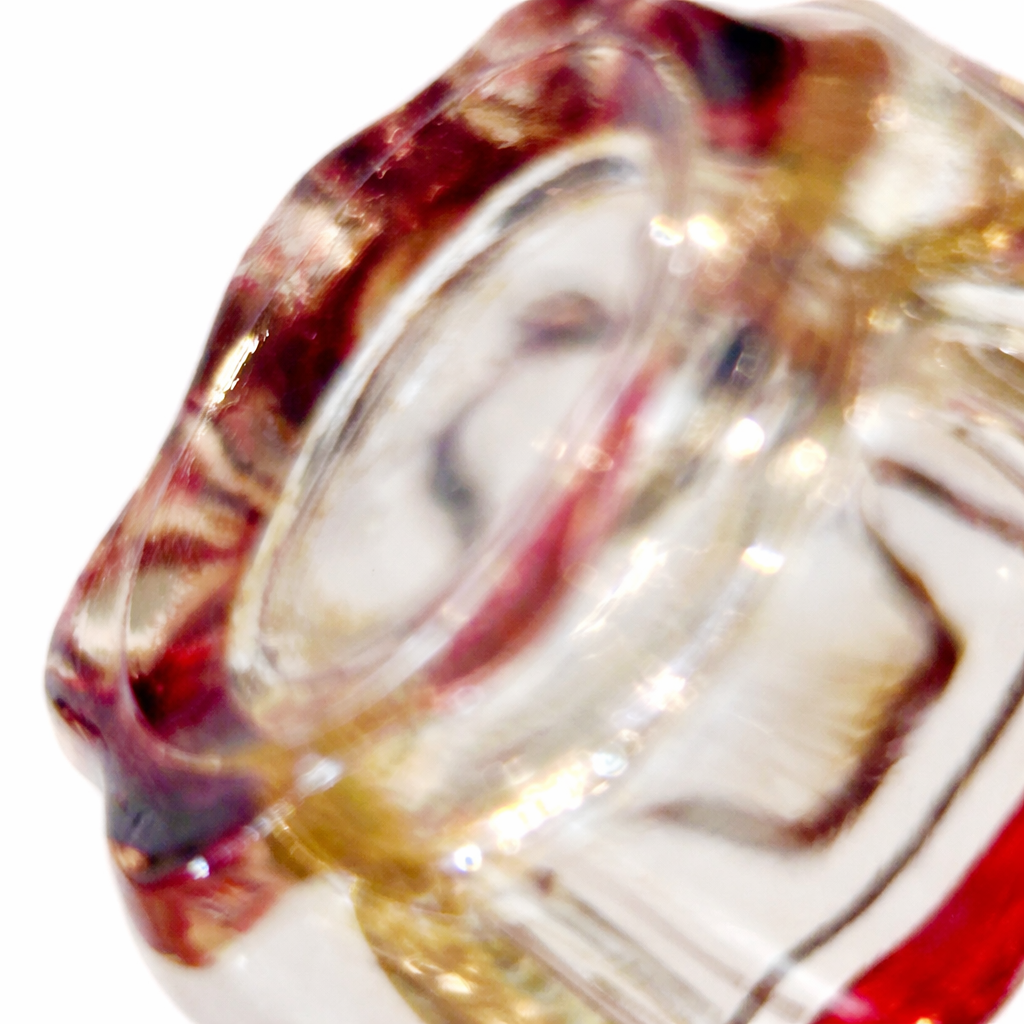
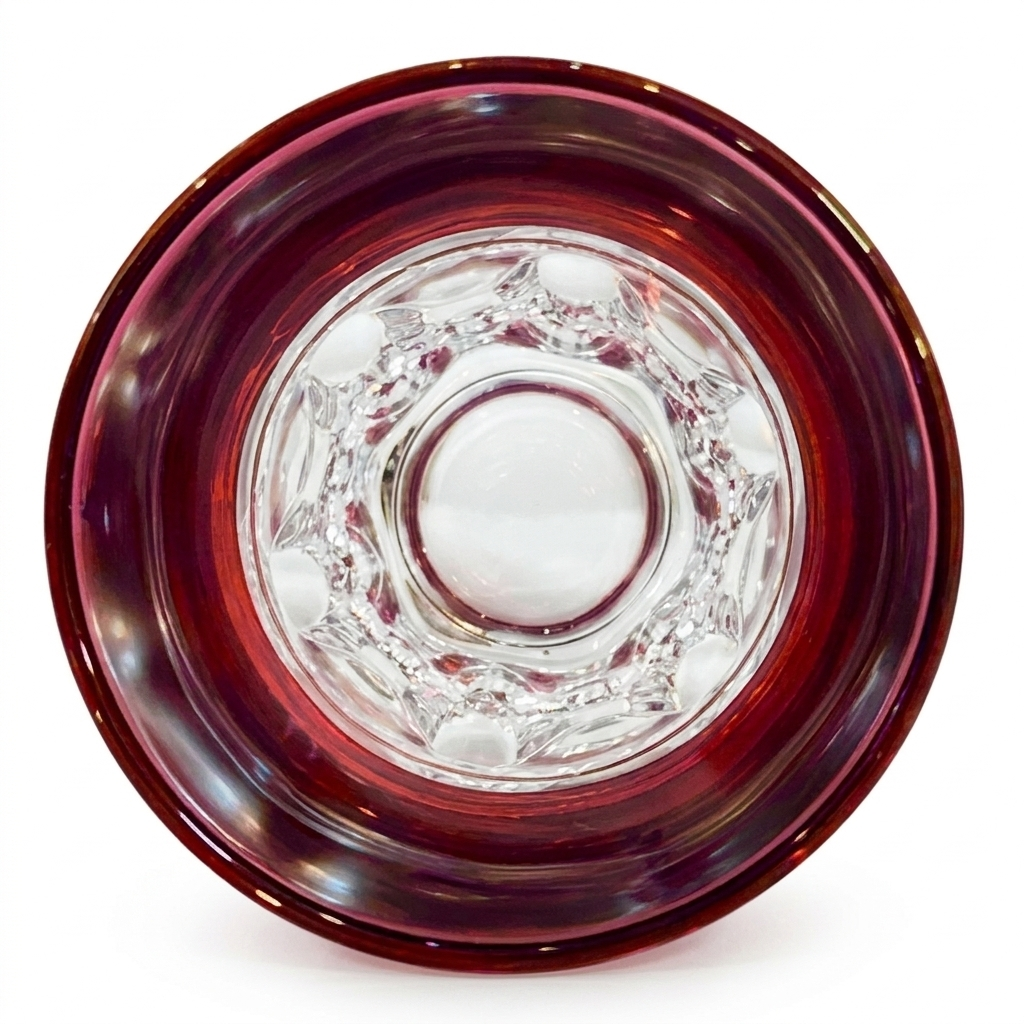
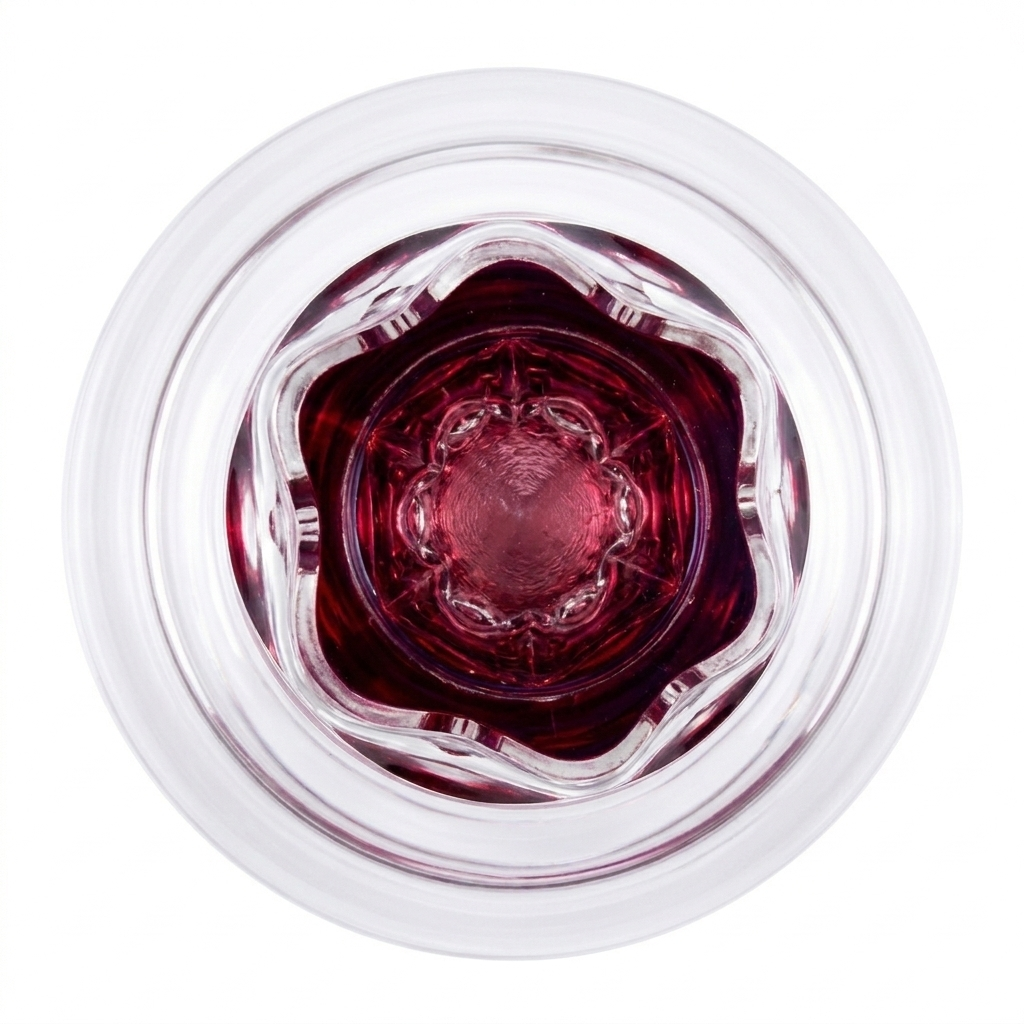
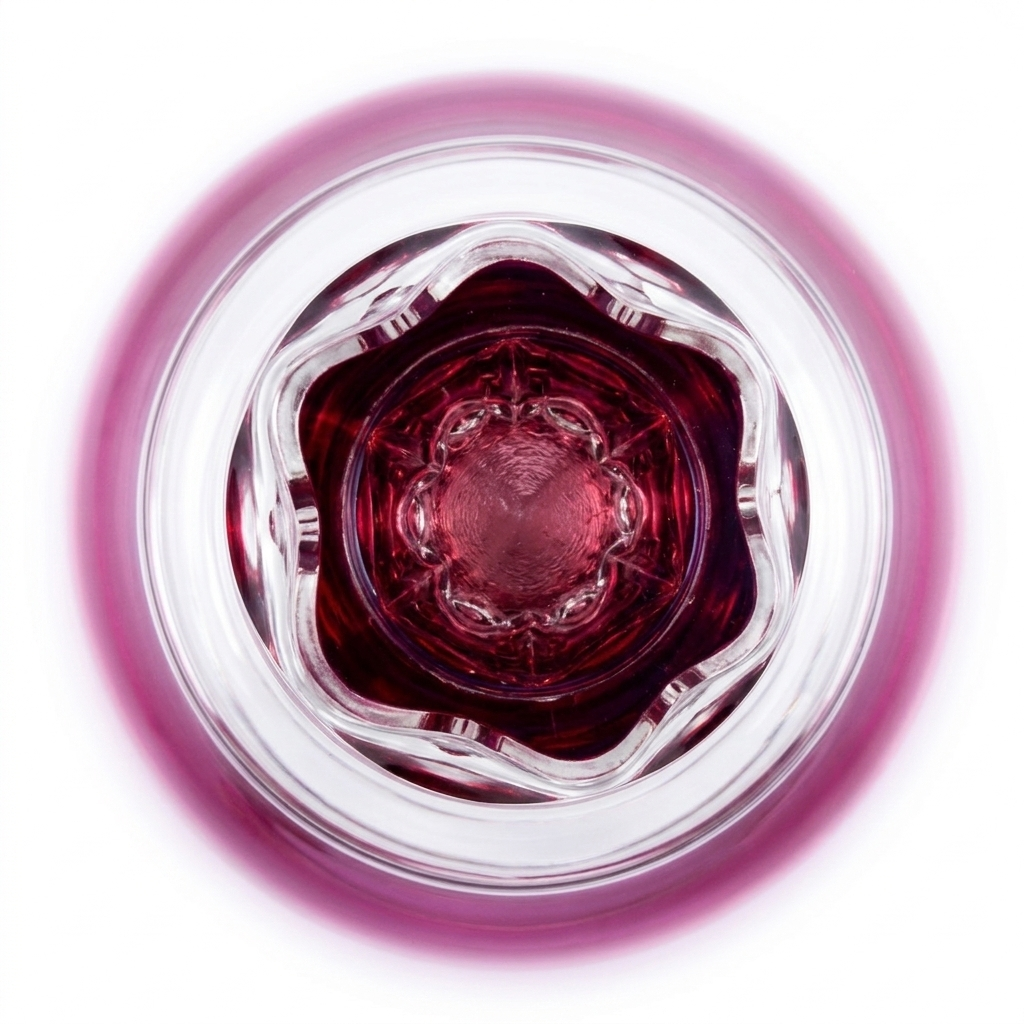
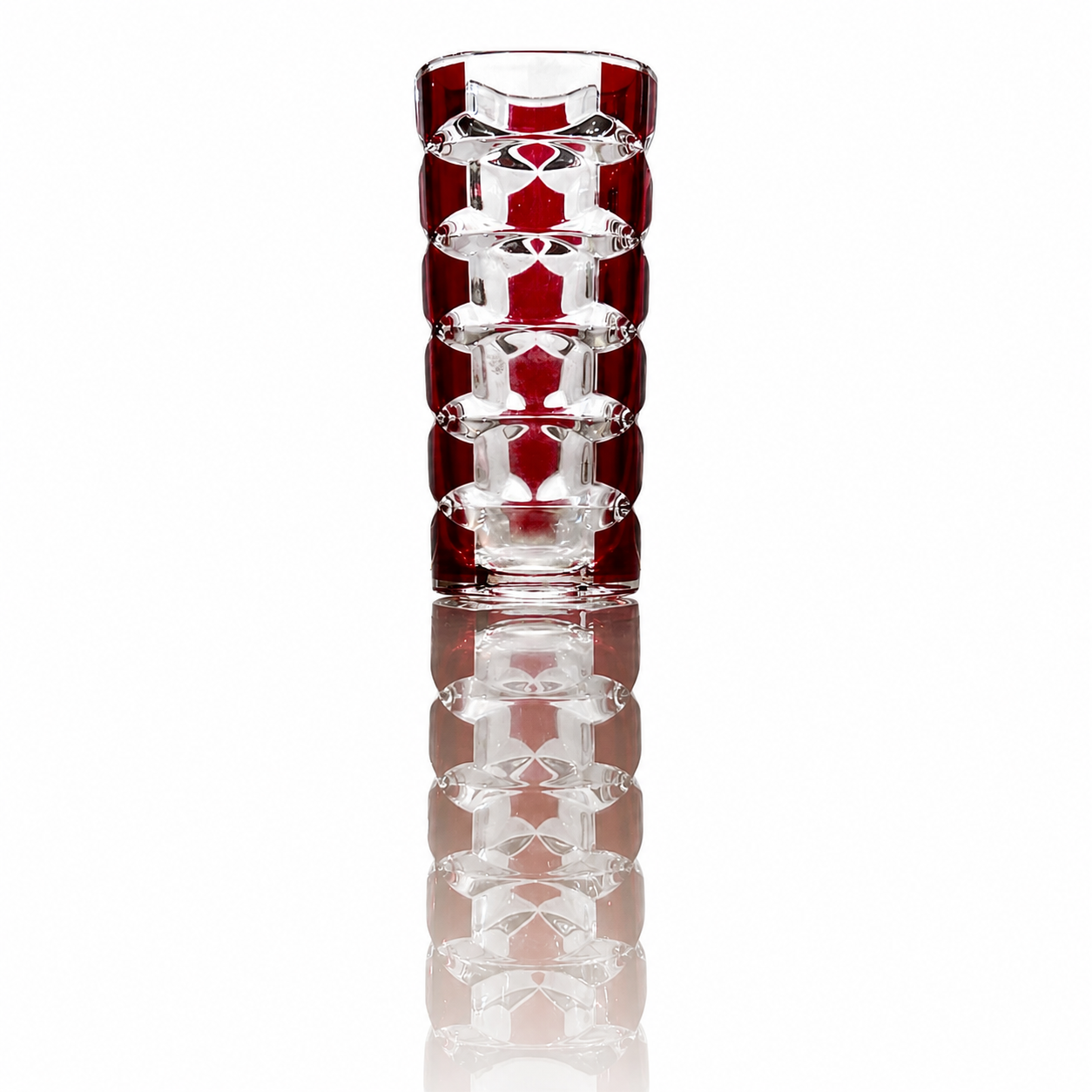
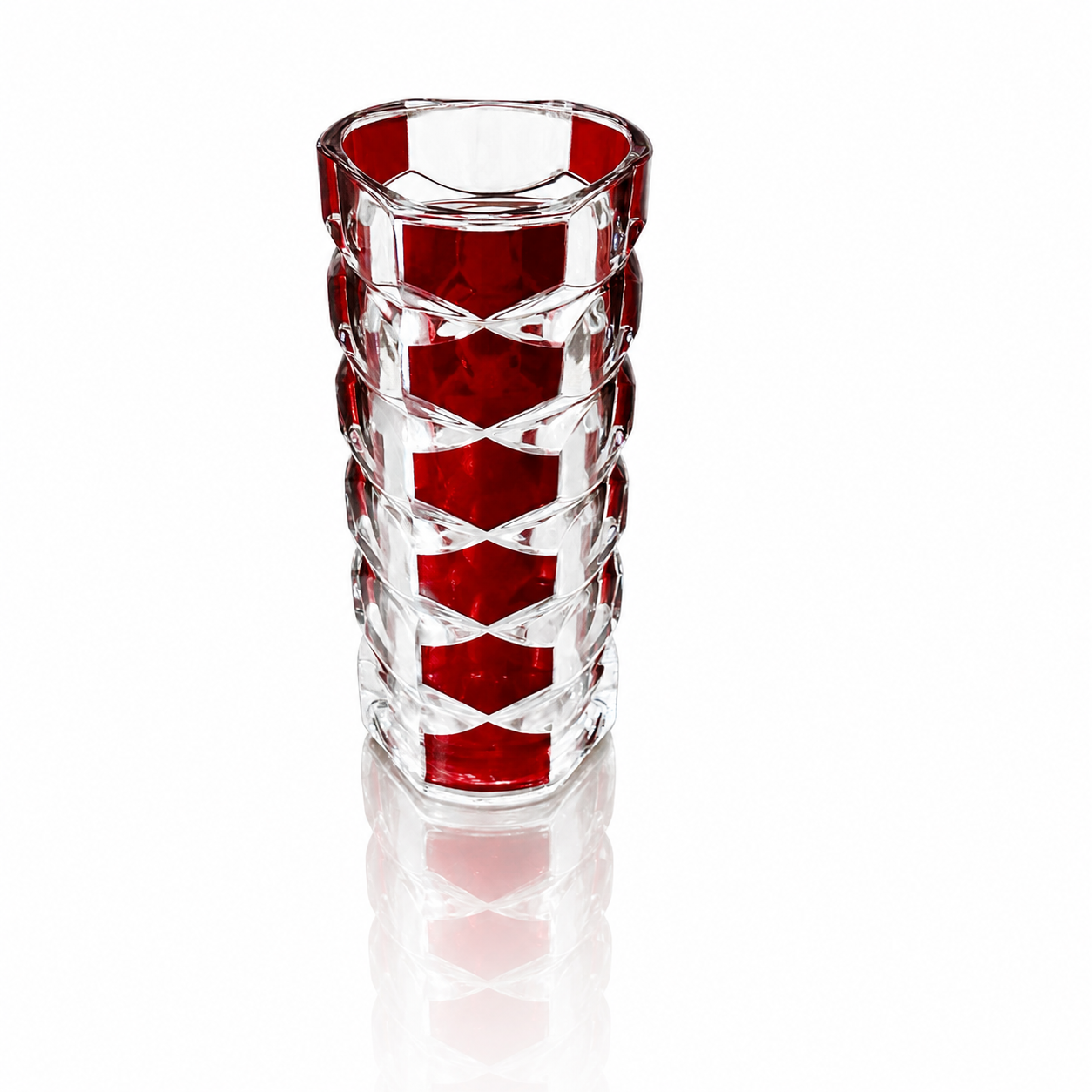
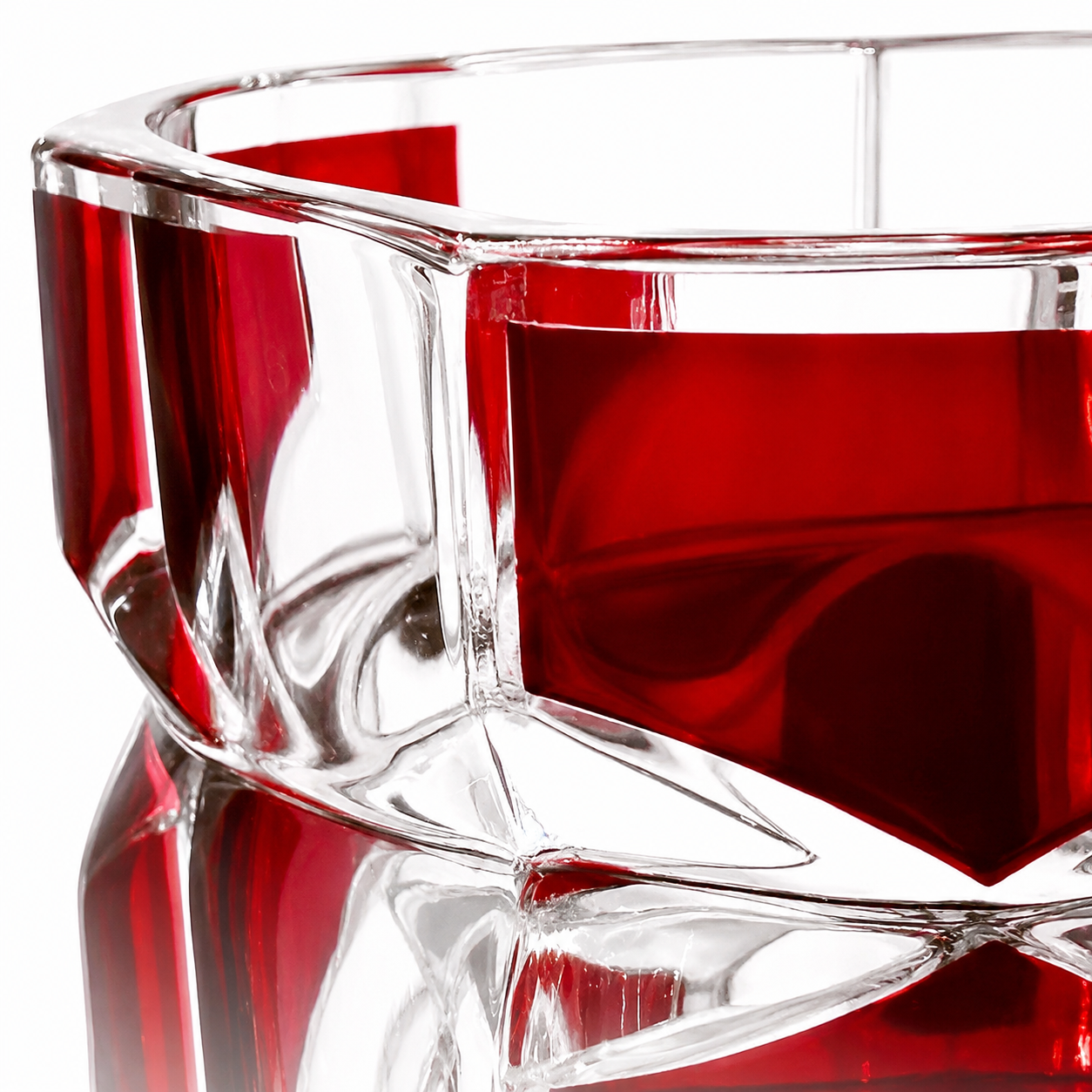
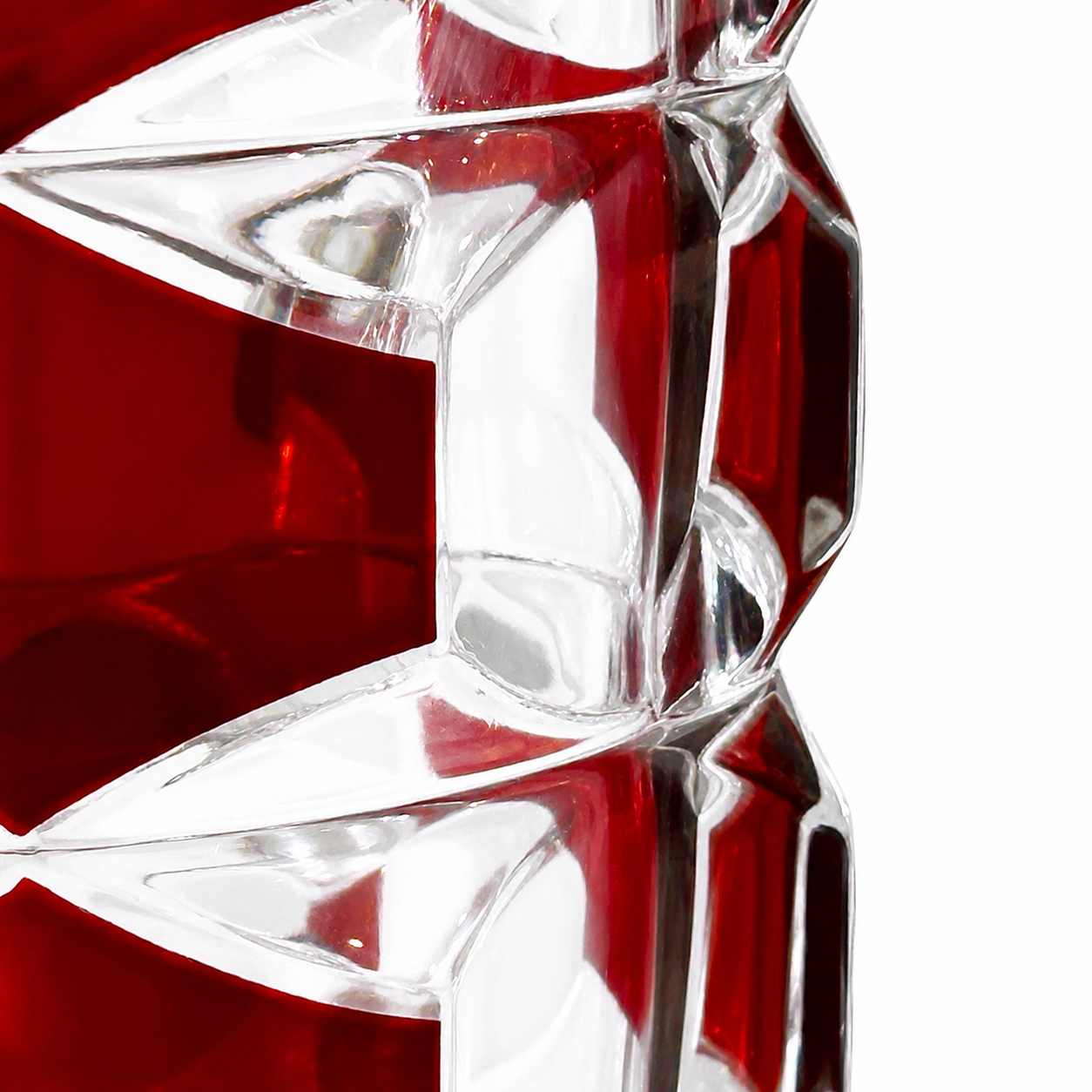
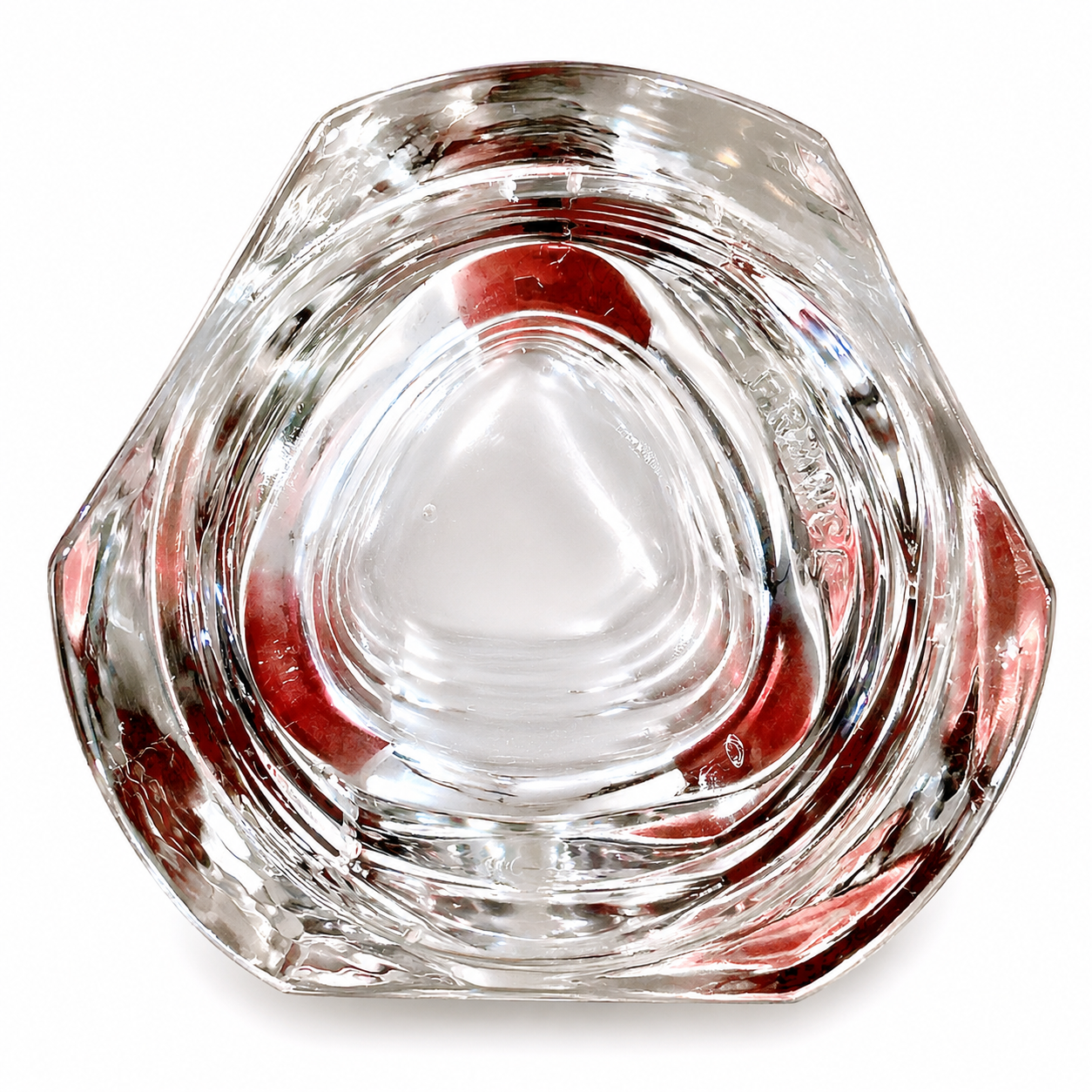
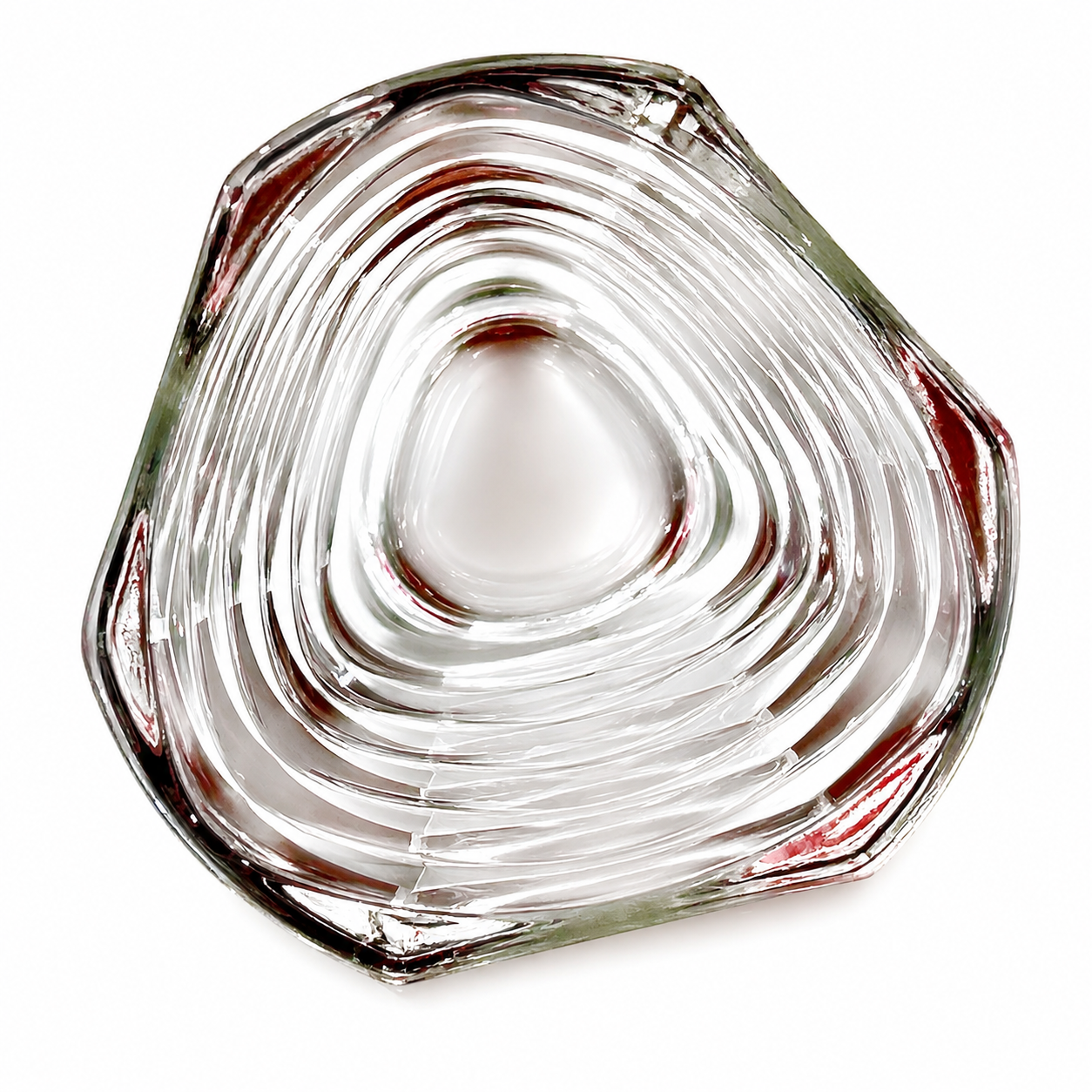
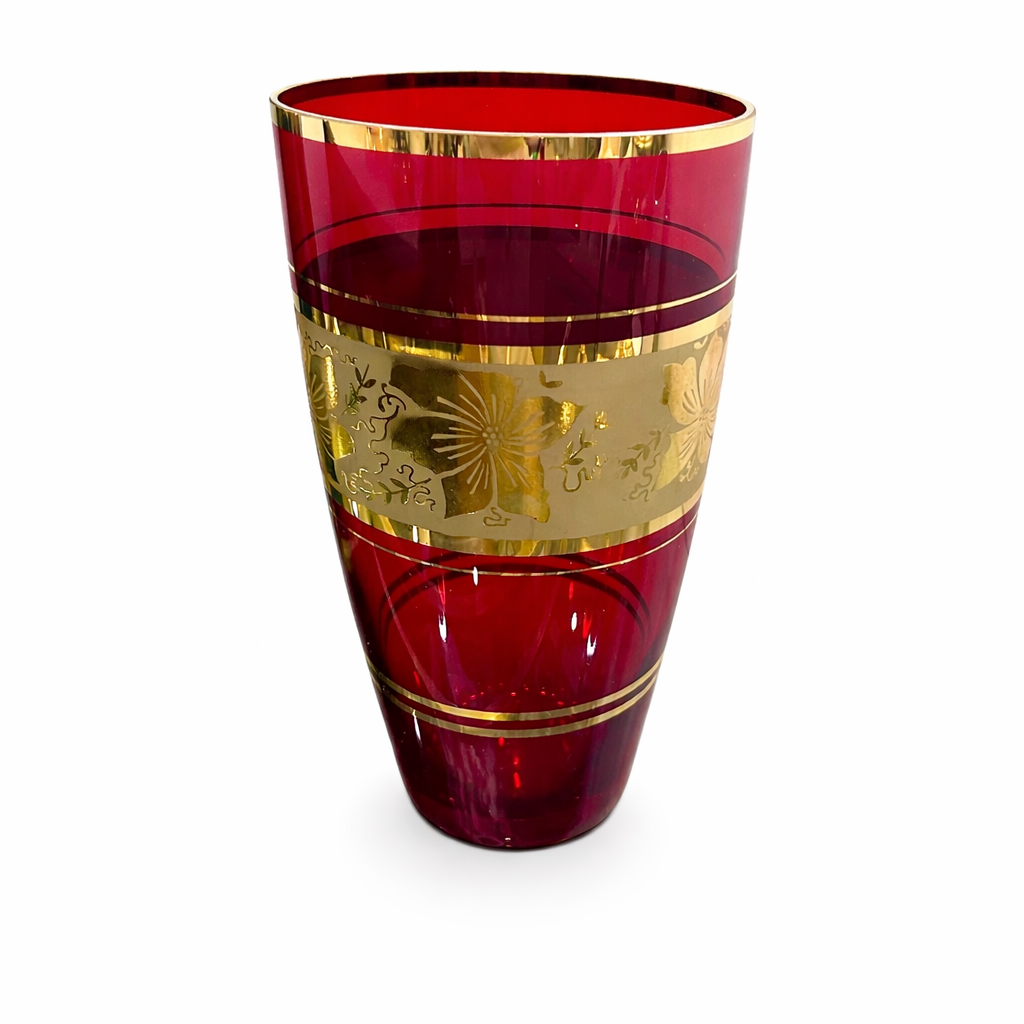
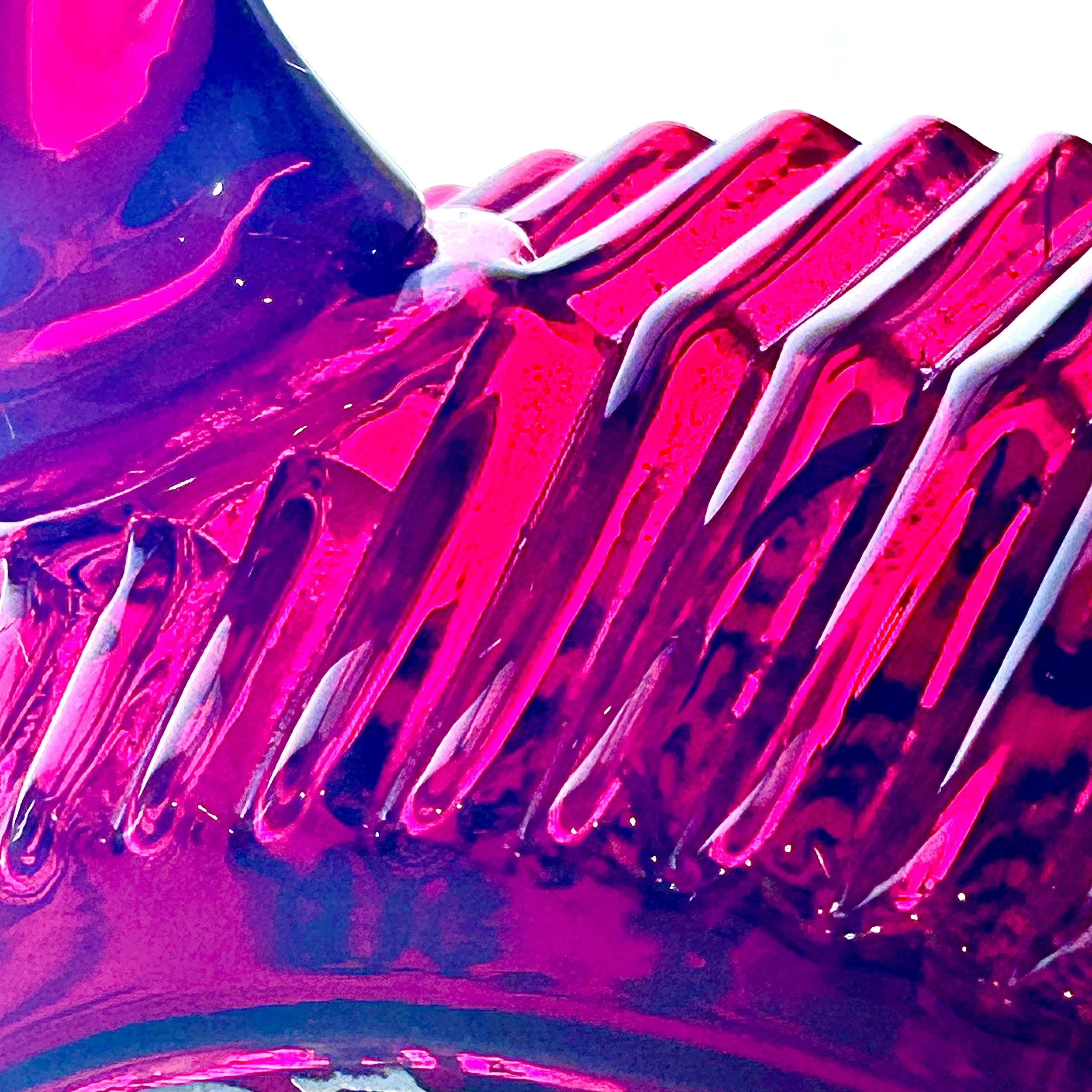
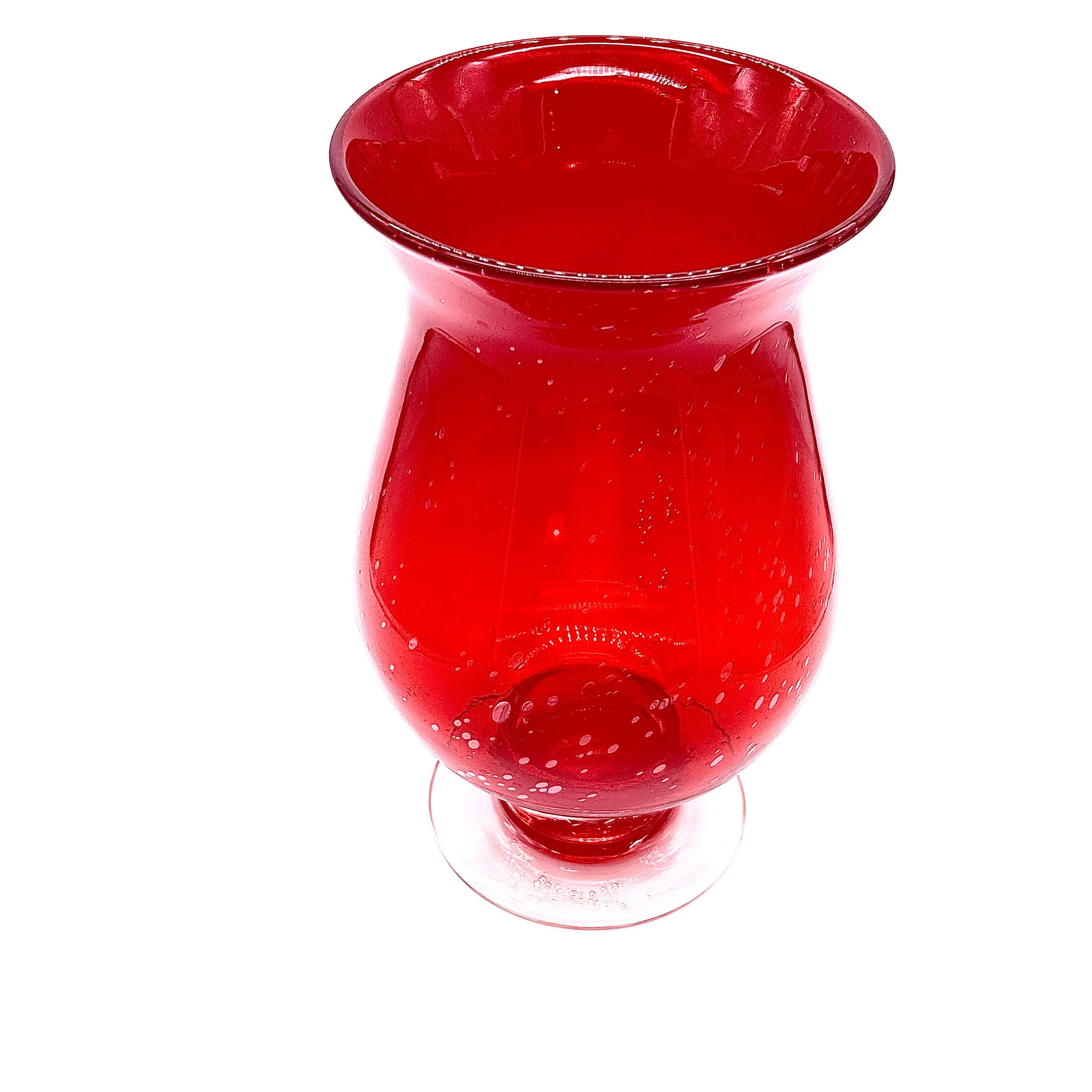
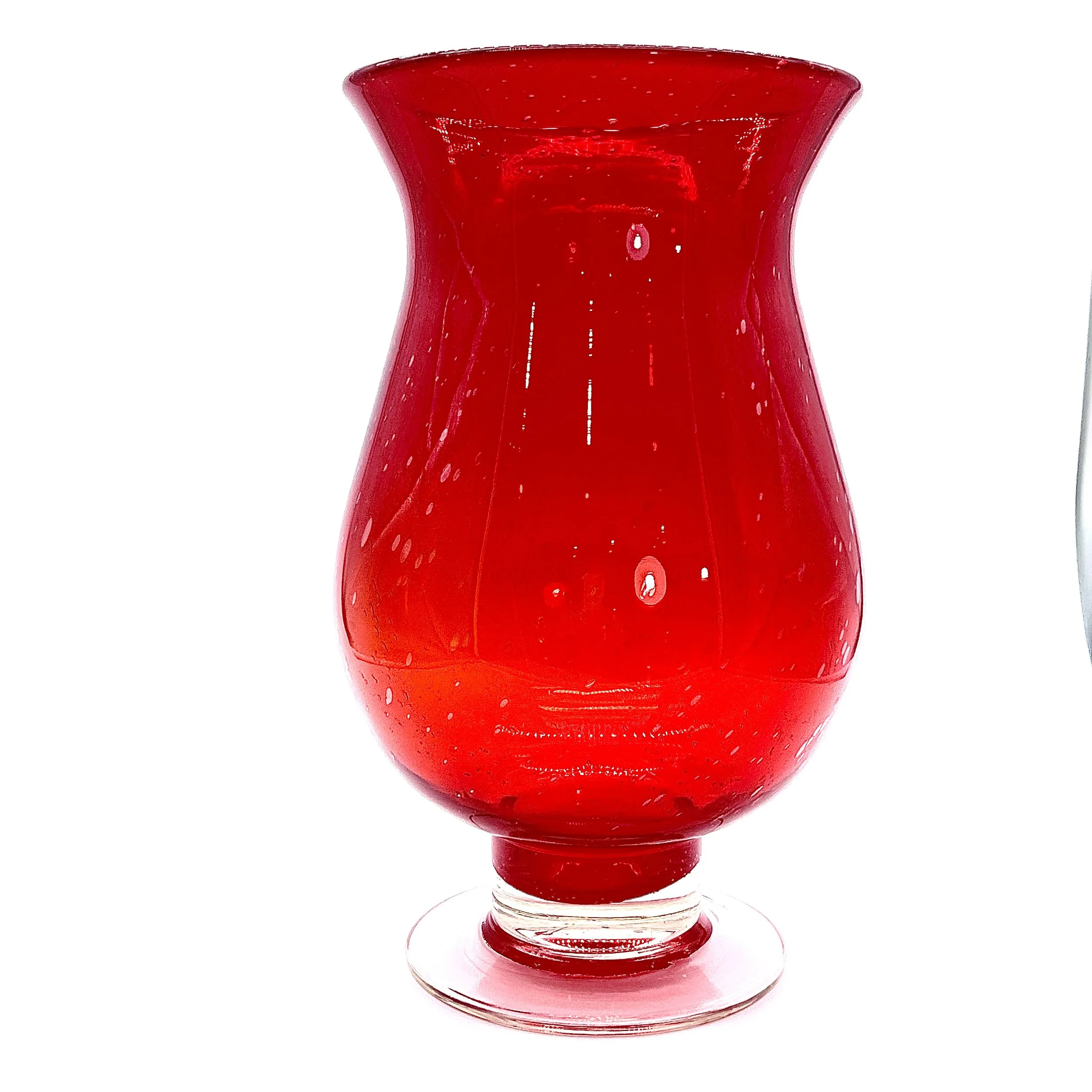
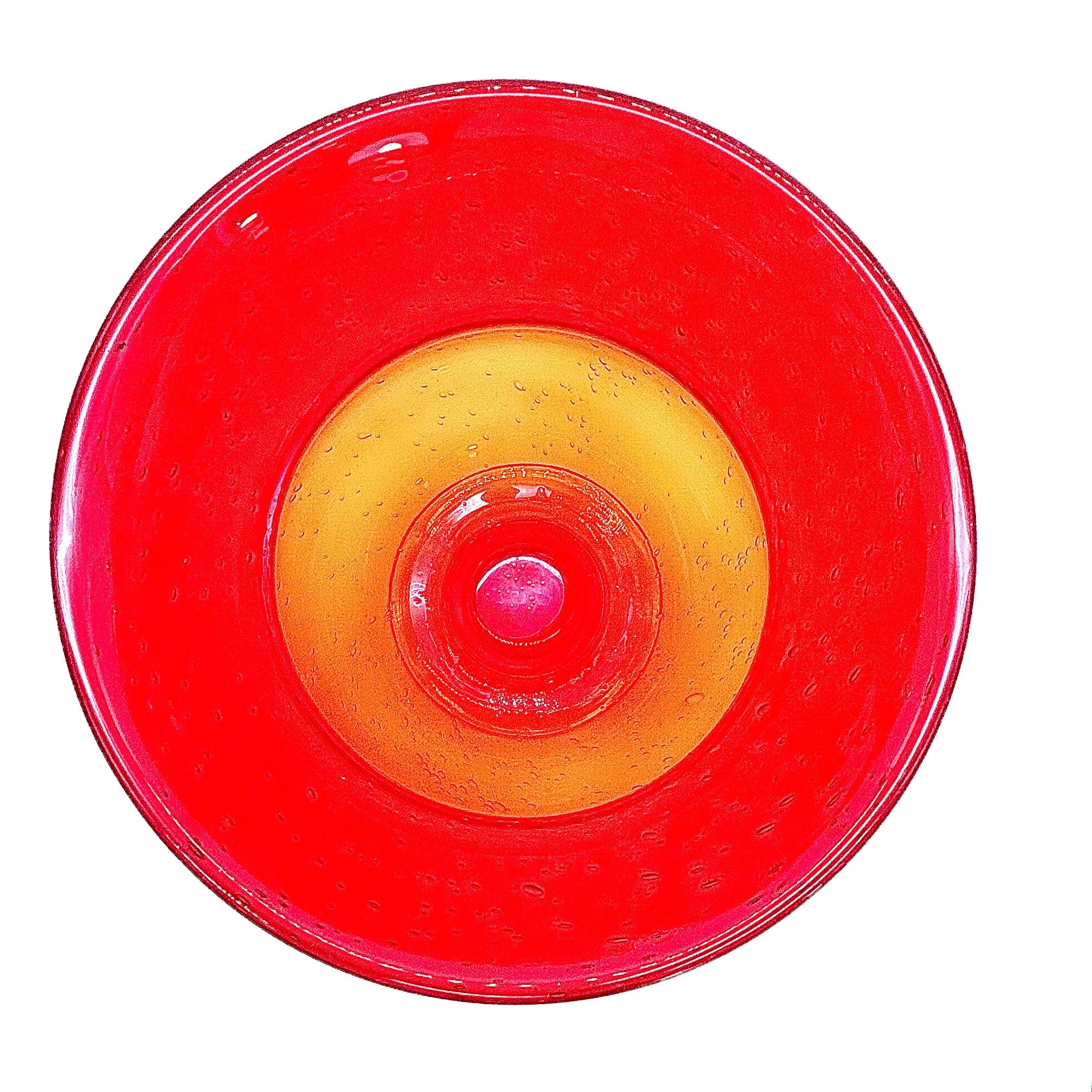
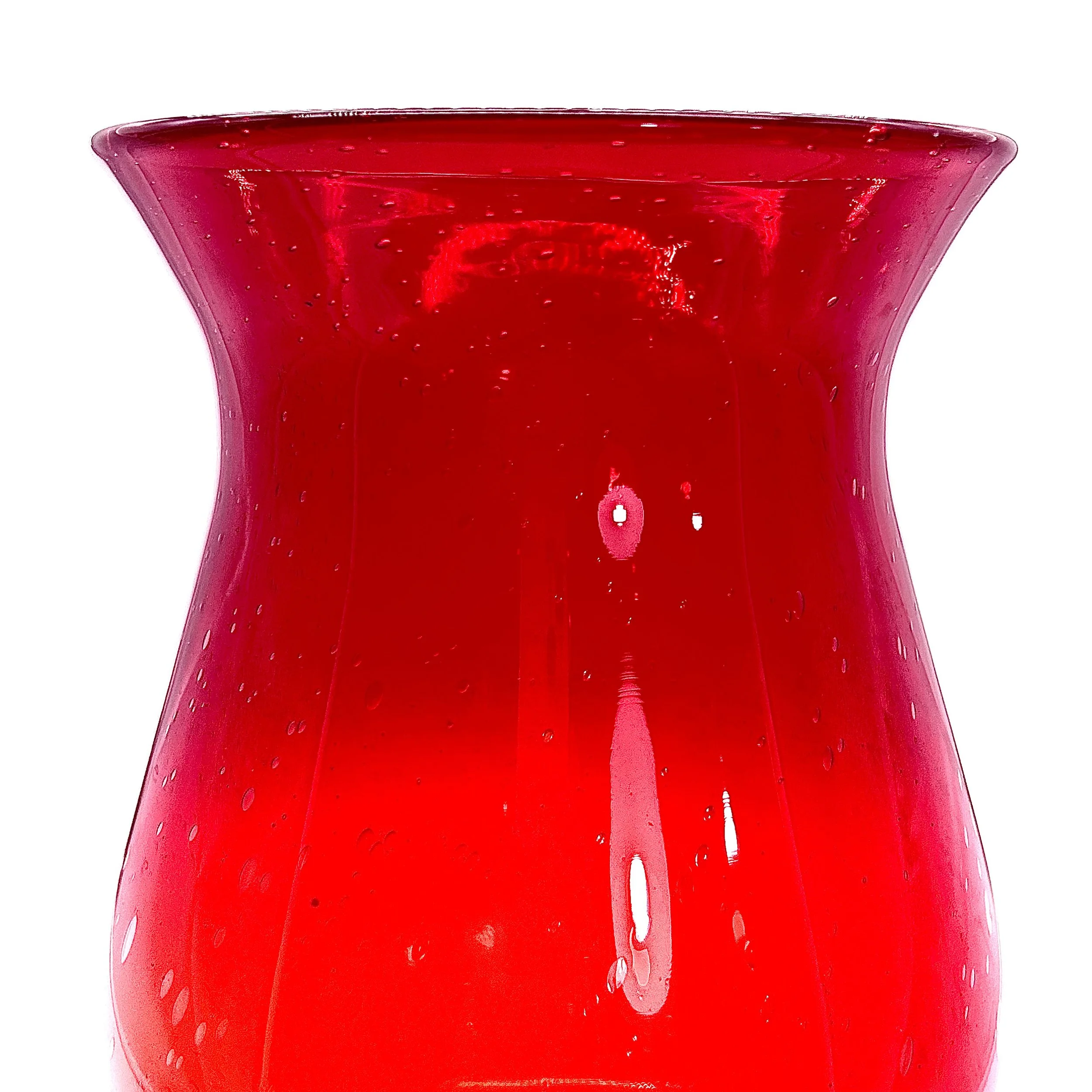
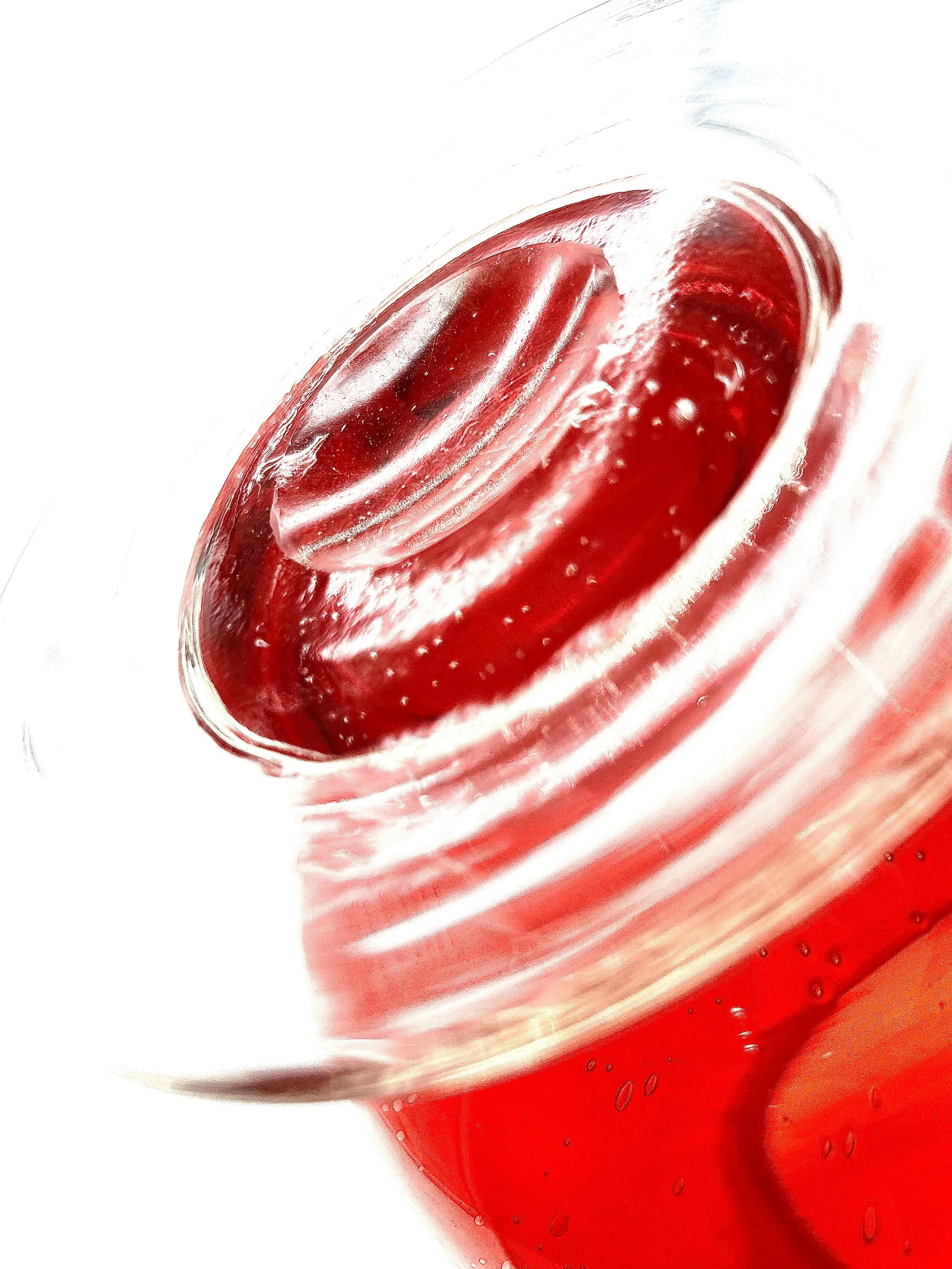
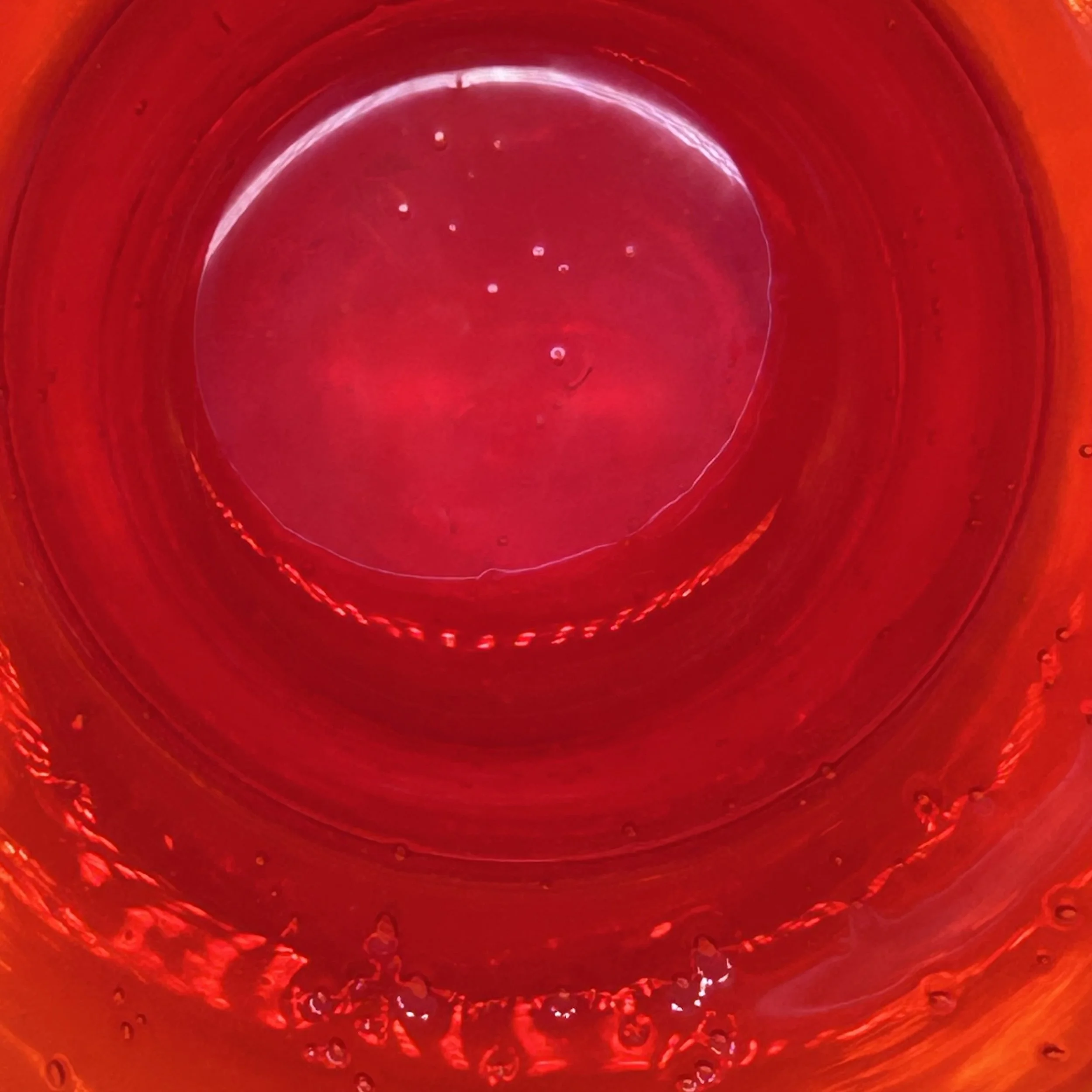
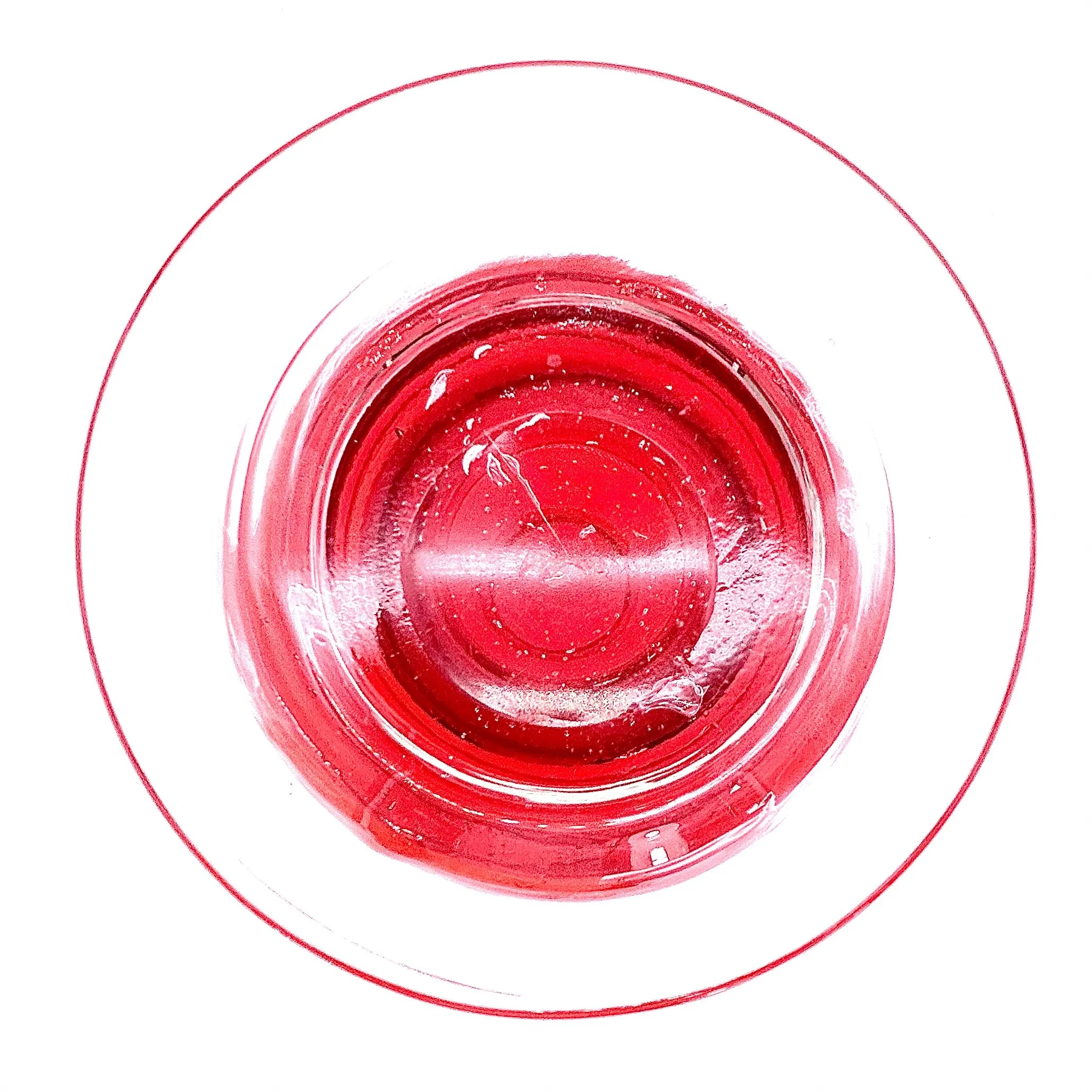
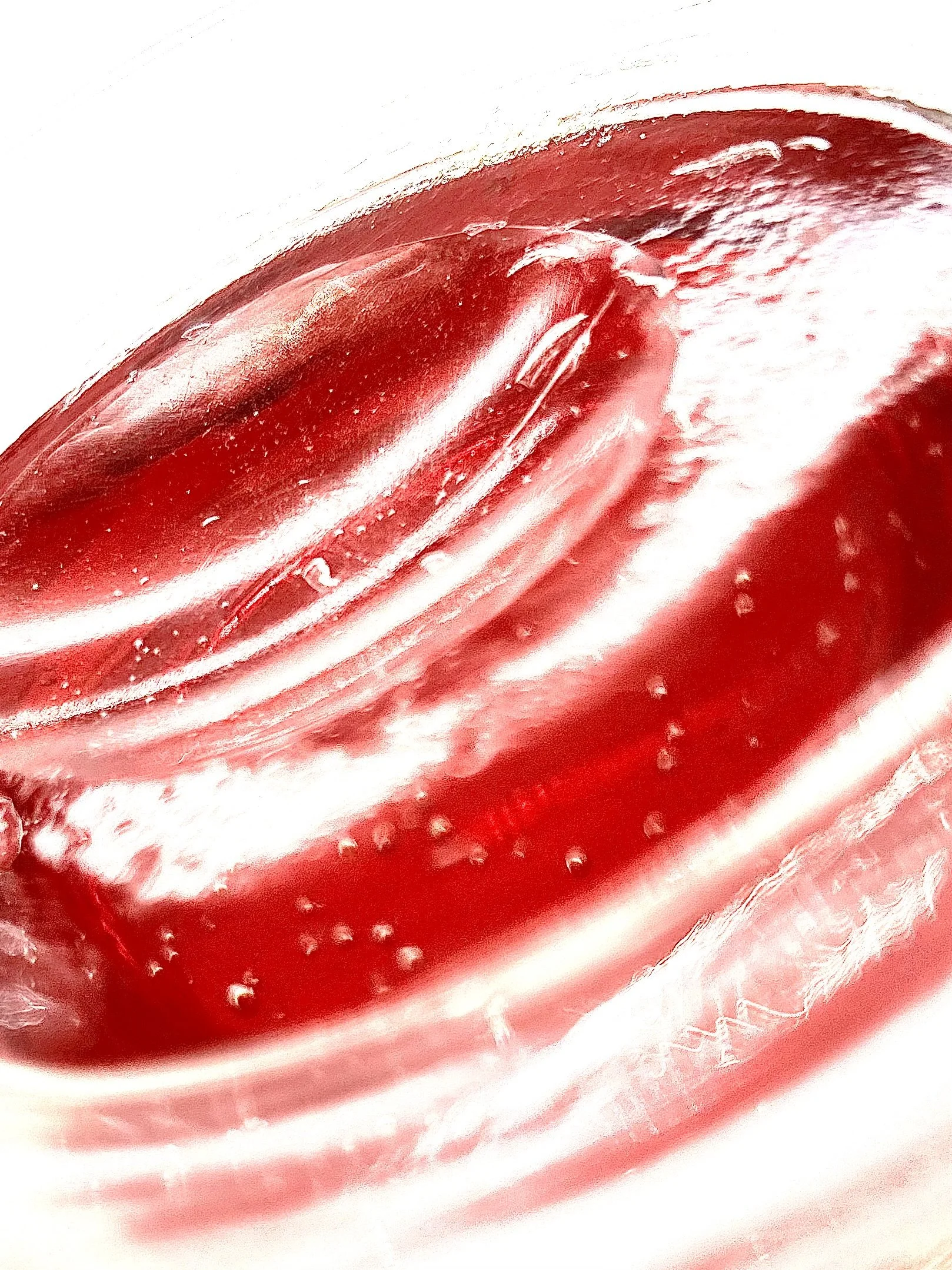
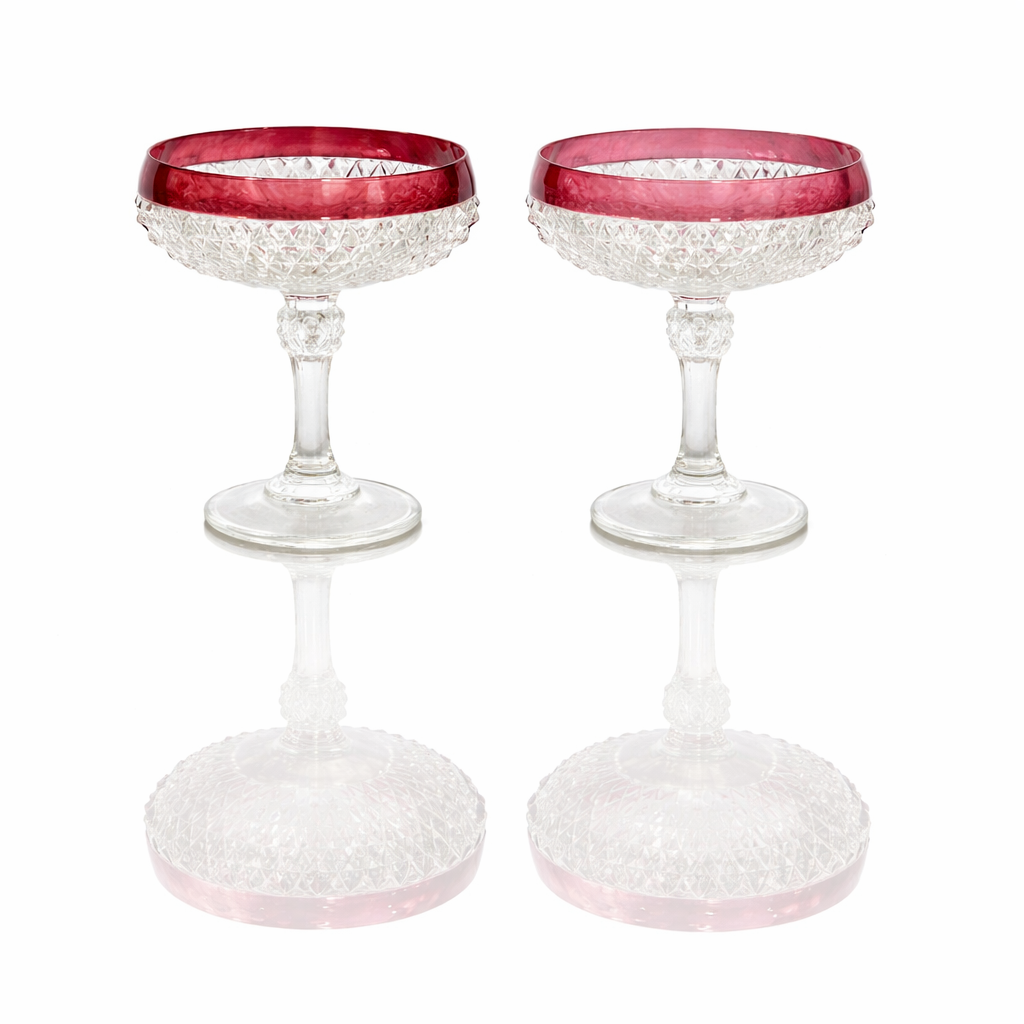
This pair of monumental champagne coupes possesses a commanding sculptural presence, defined by a deep ruby stain and a dense, light-refracting diamond cut. The broad, six-inch diameter of the bowls creates a dramatic silhouette, while the iridescent quality of the glass ensures a dynamic interaction with ambient light. Their scale and textural complexity elevate them from functional stemware to significant decorative objects of the late 19th-century glassmaking tradition.
Attribution & Period
Regional Example: Bohemia (Czech Republic), 1880s.
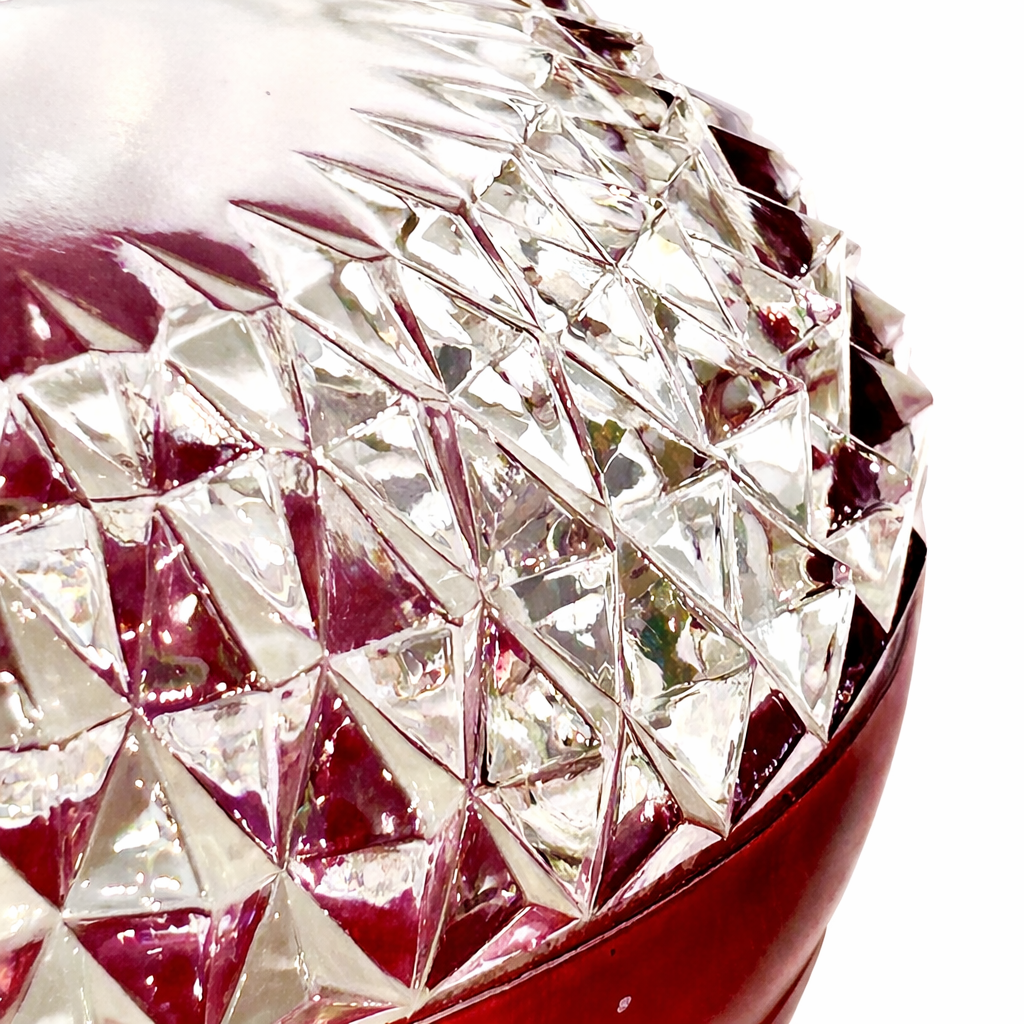
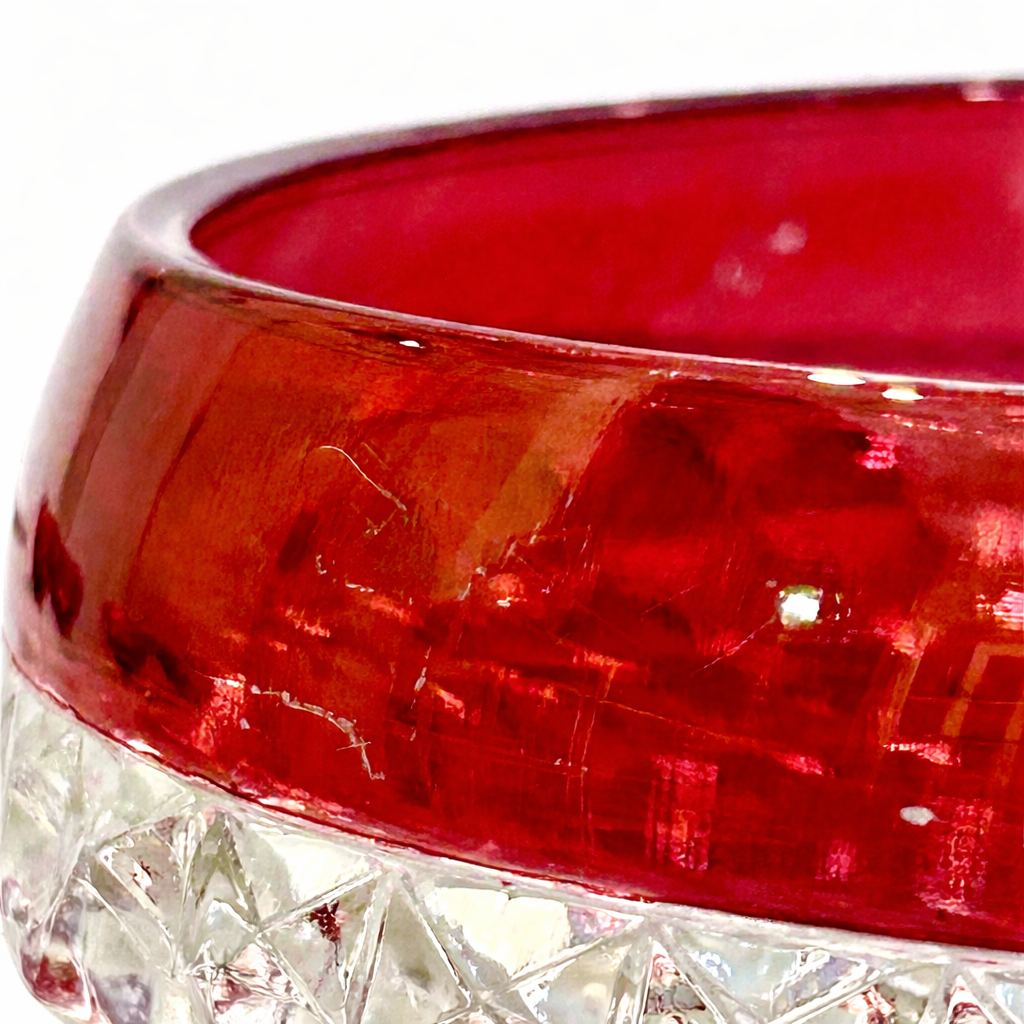
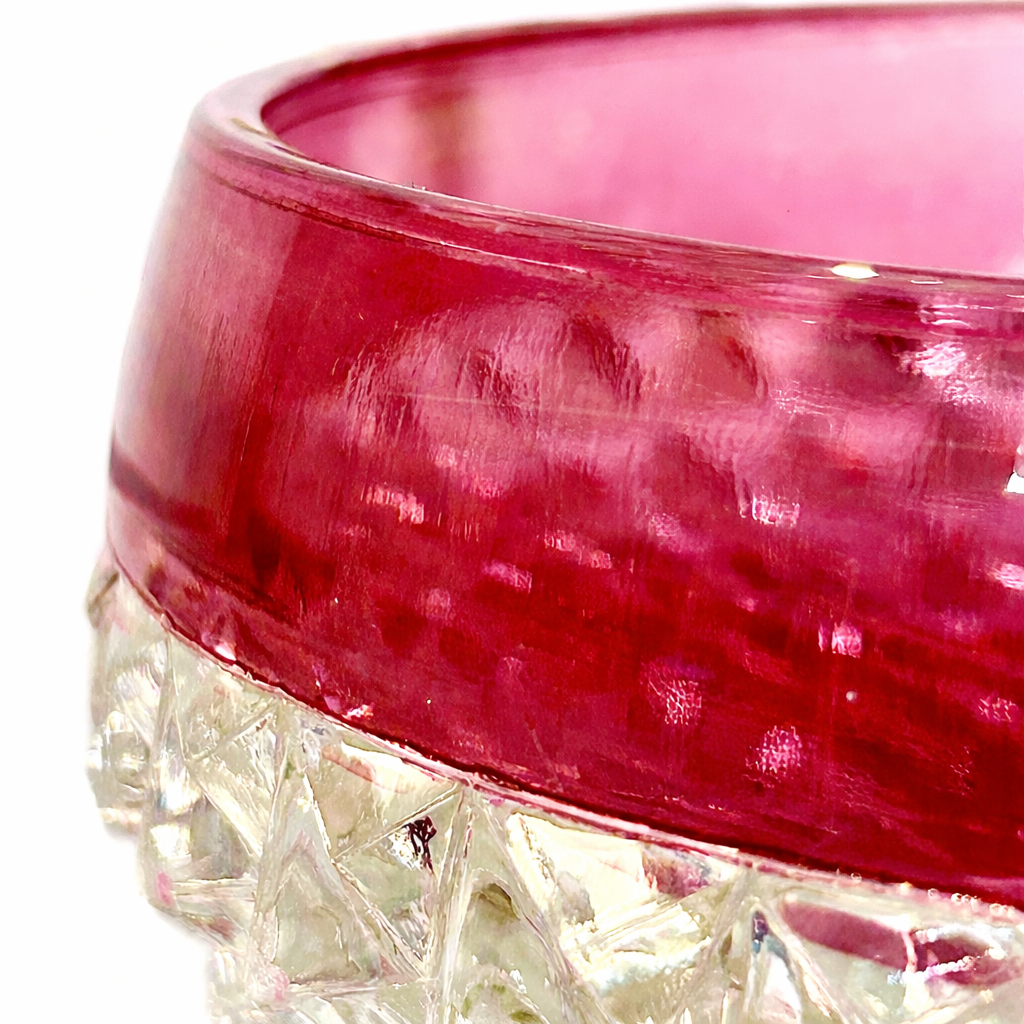
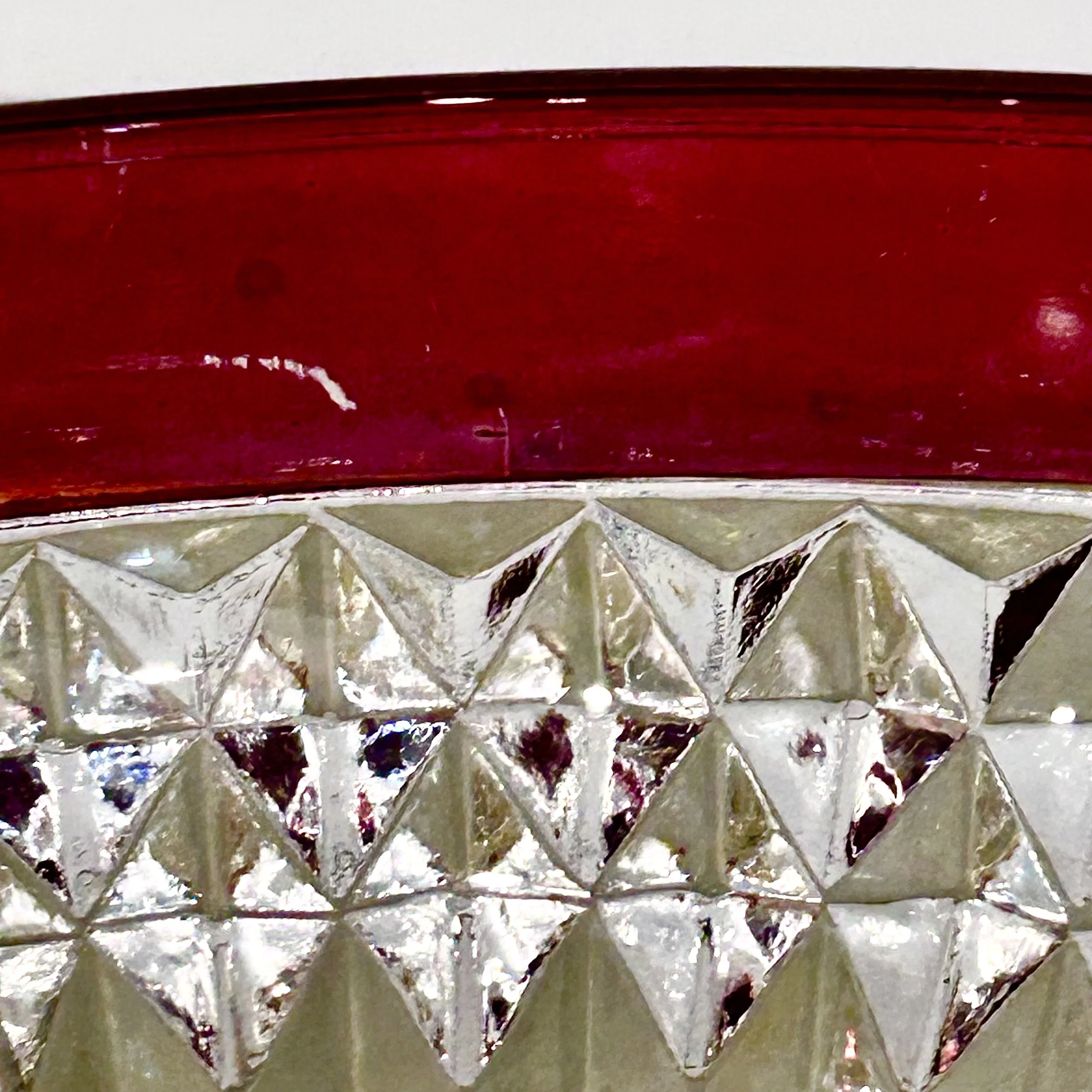
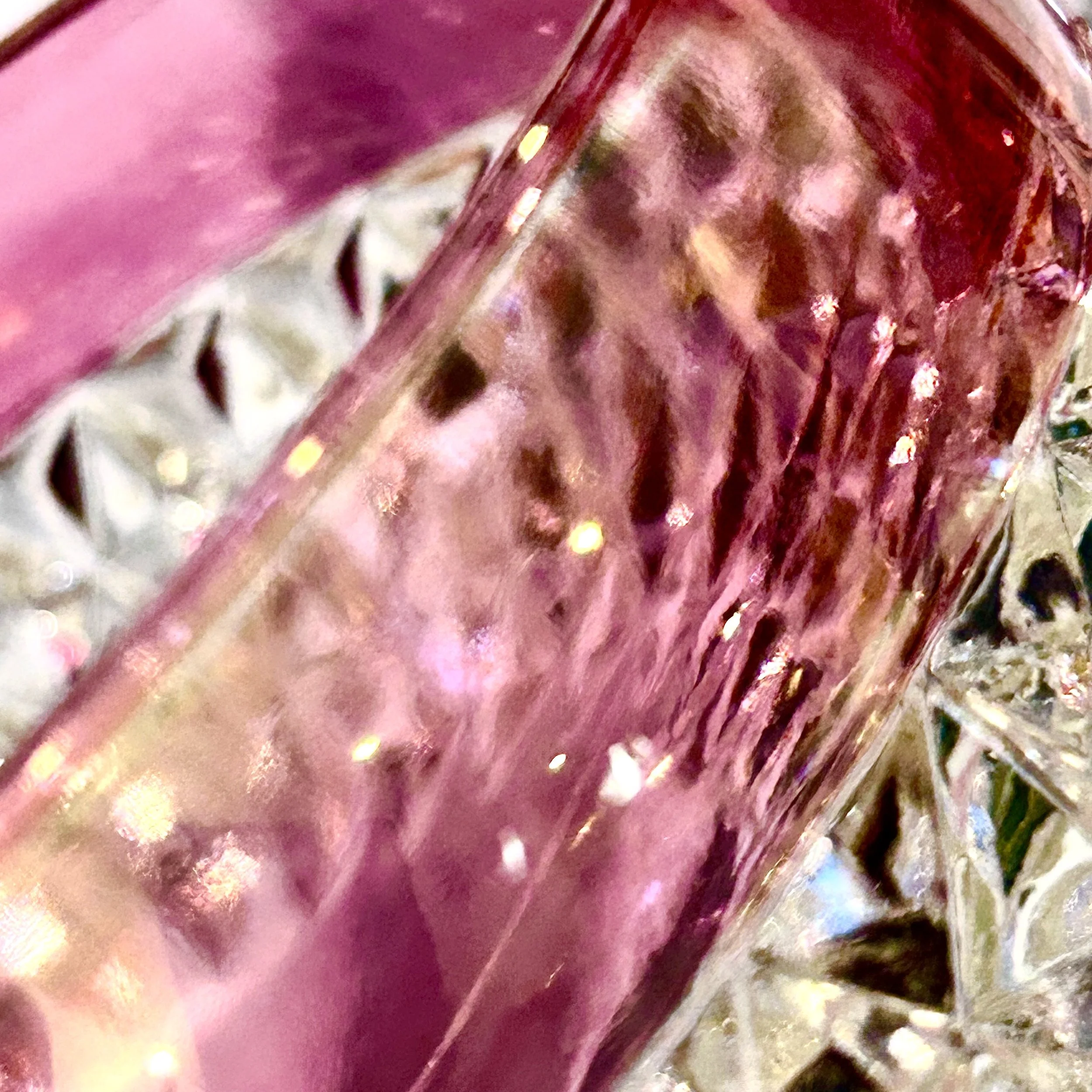
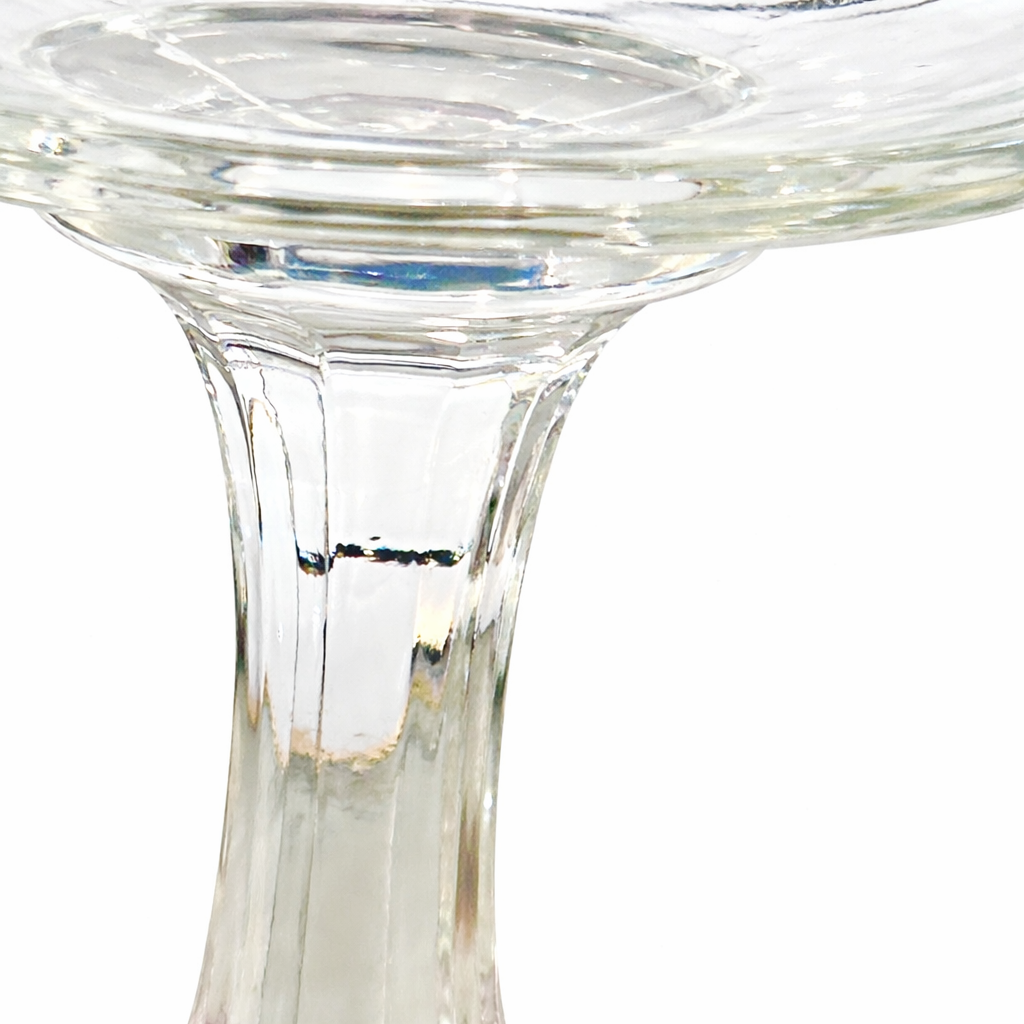
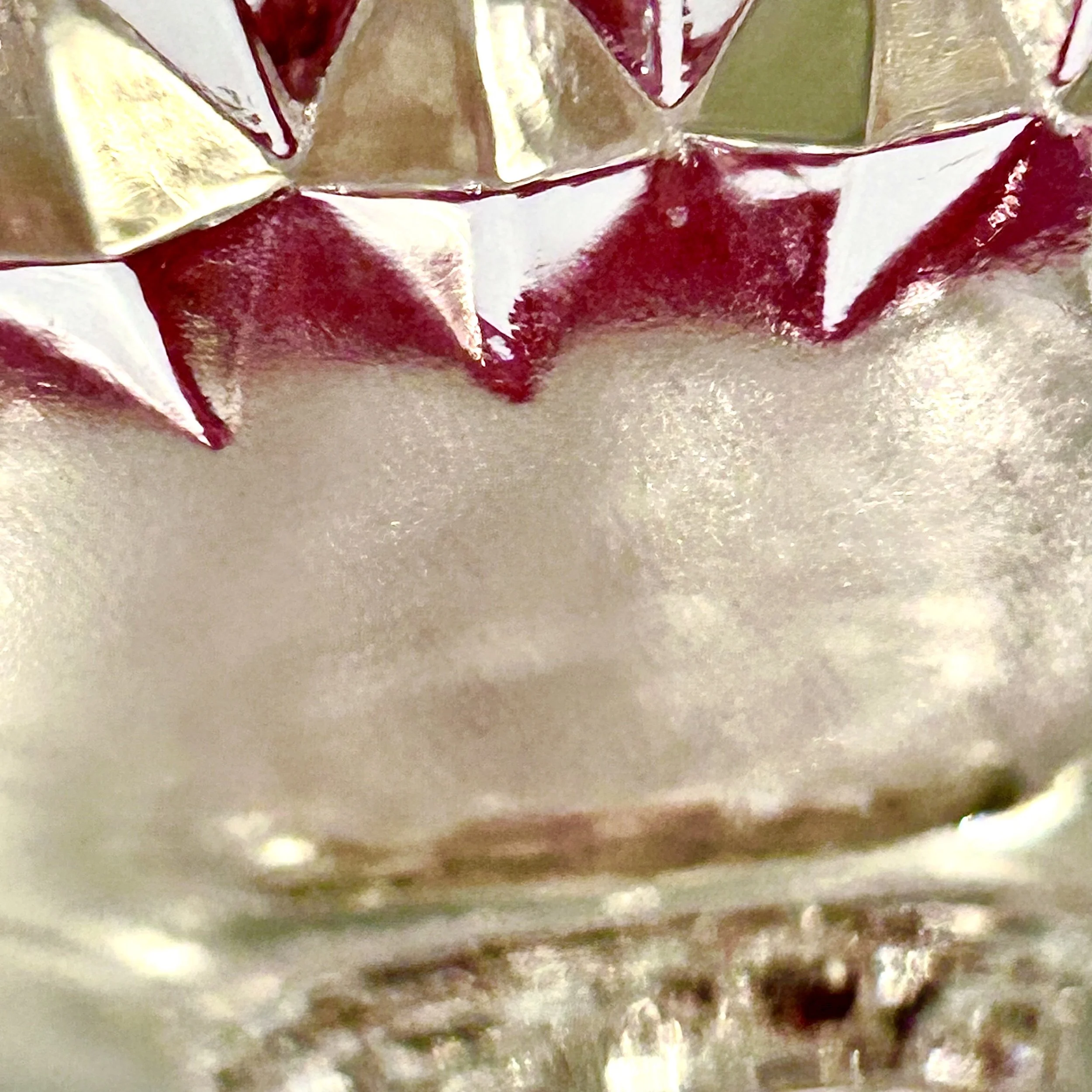
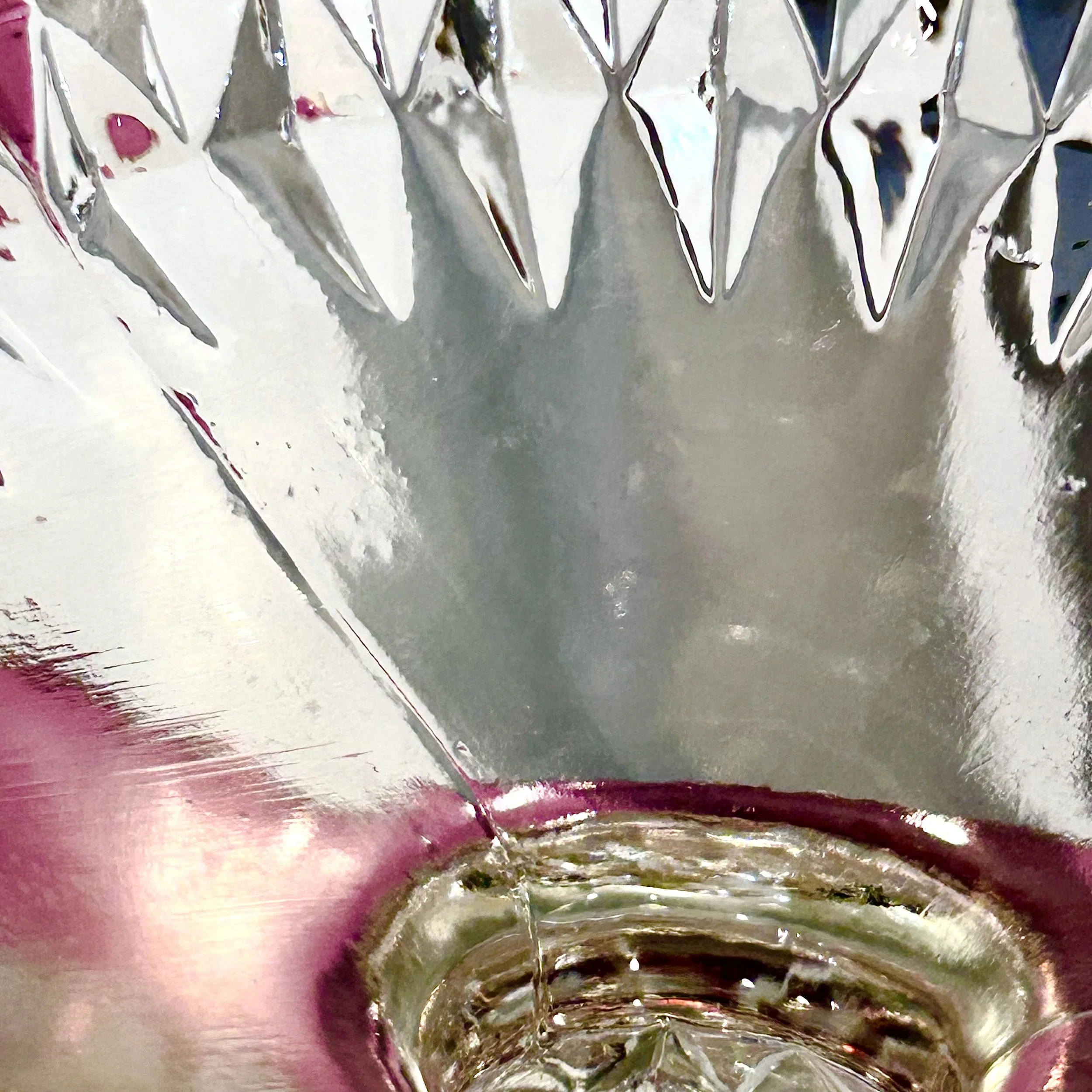
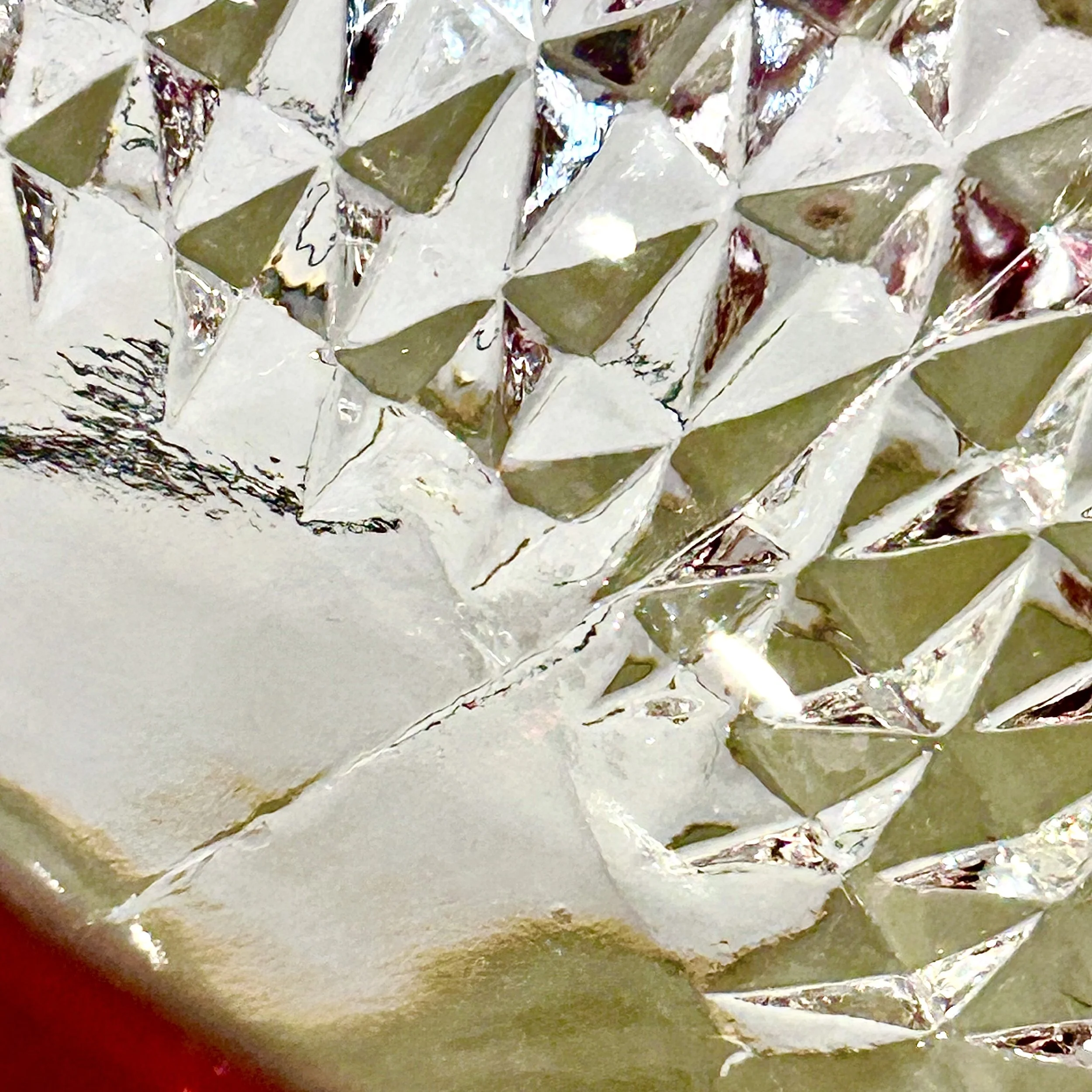
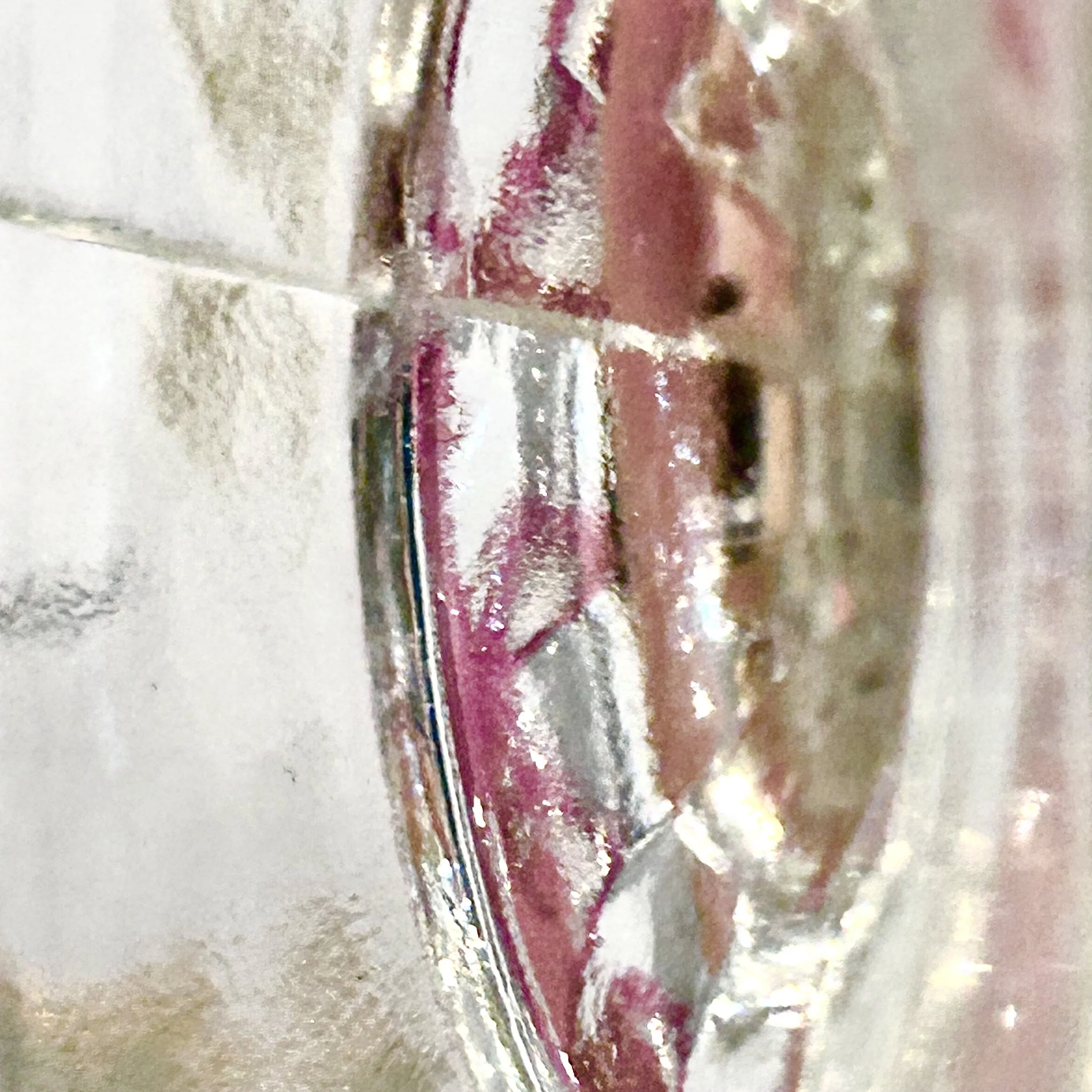
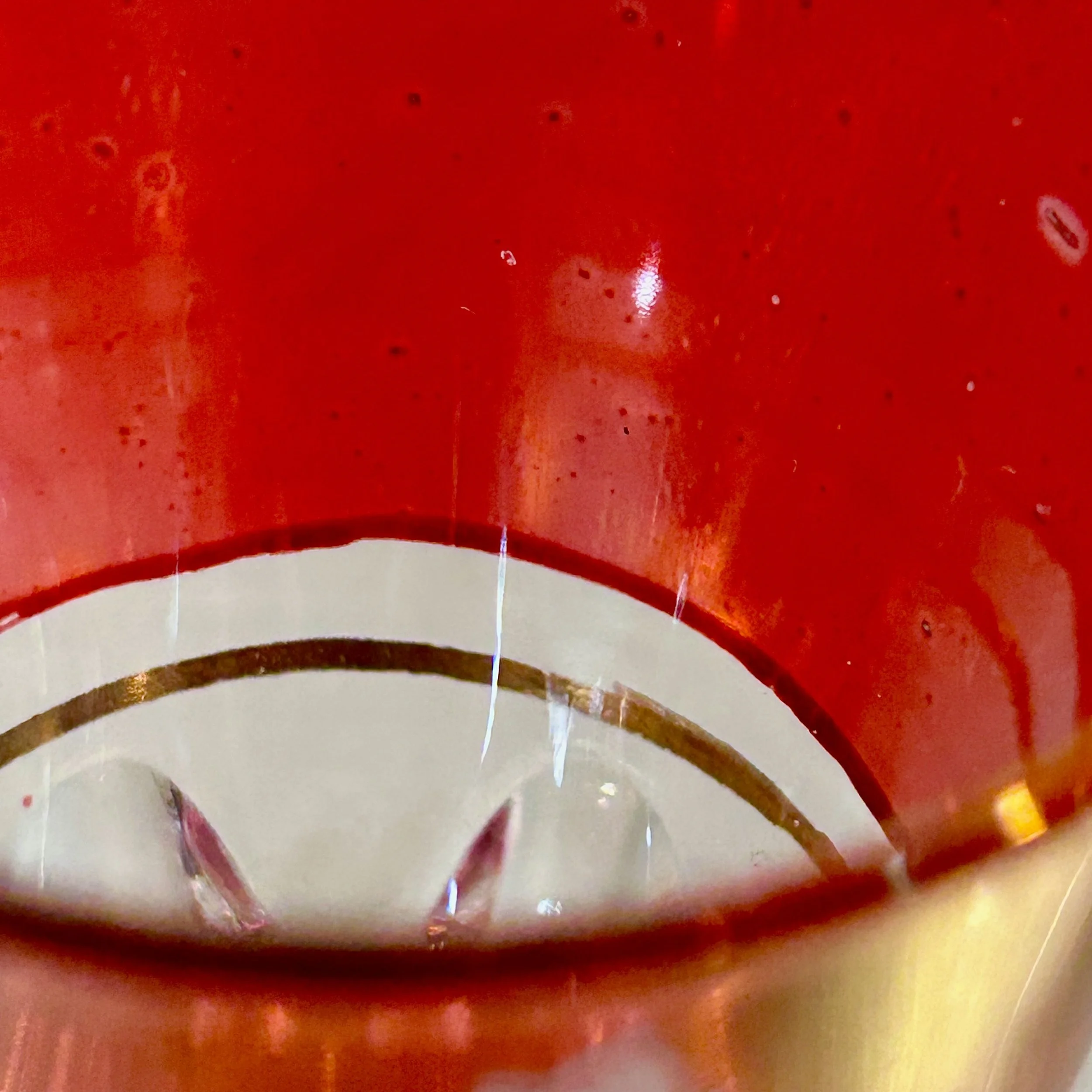
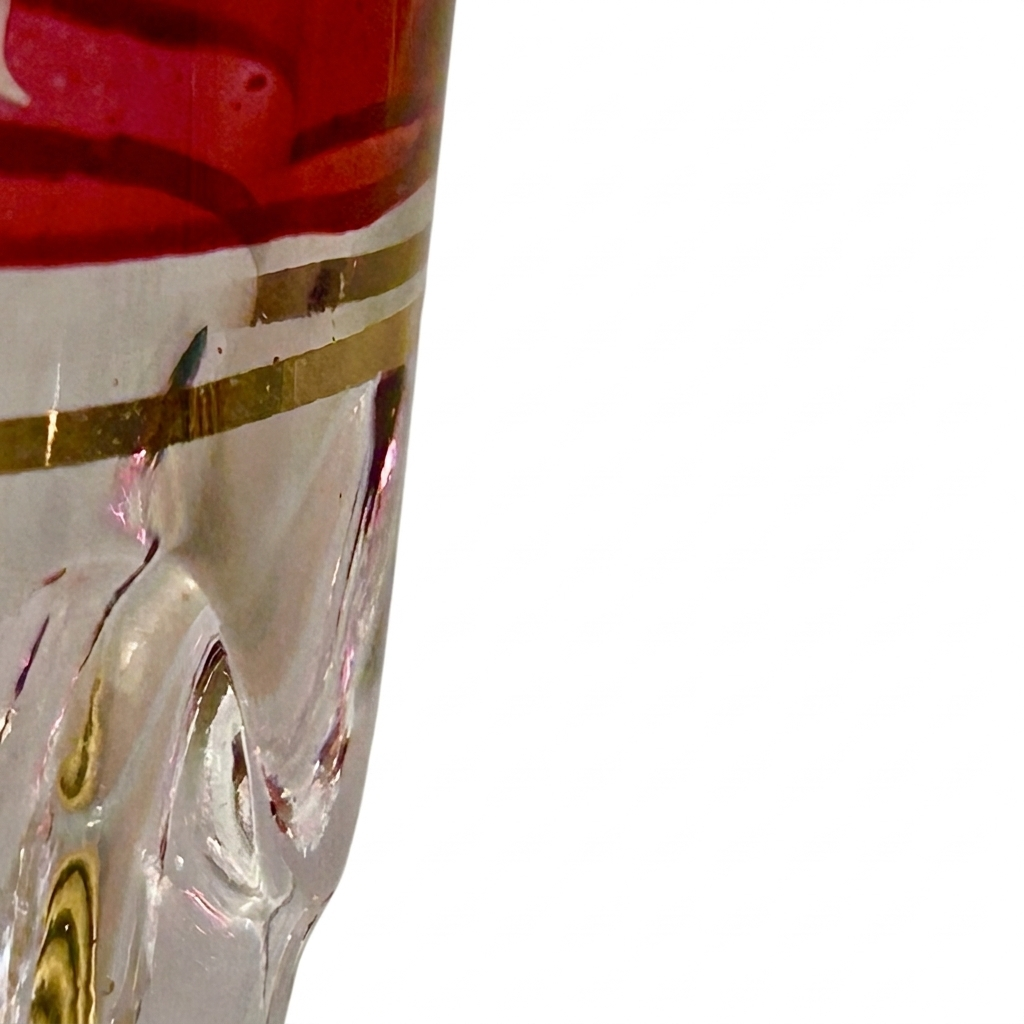
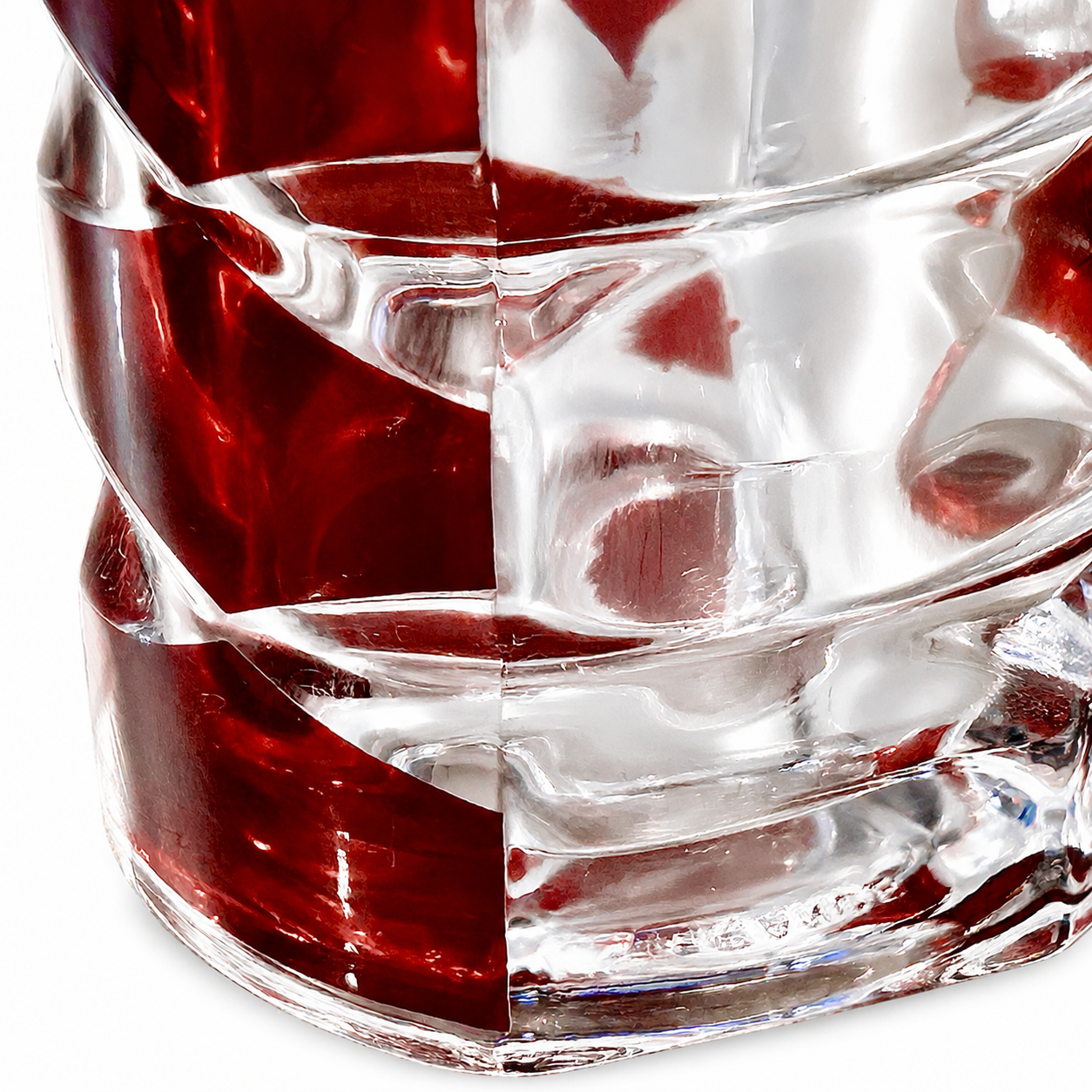
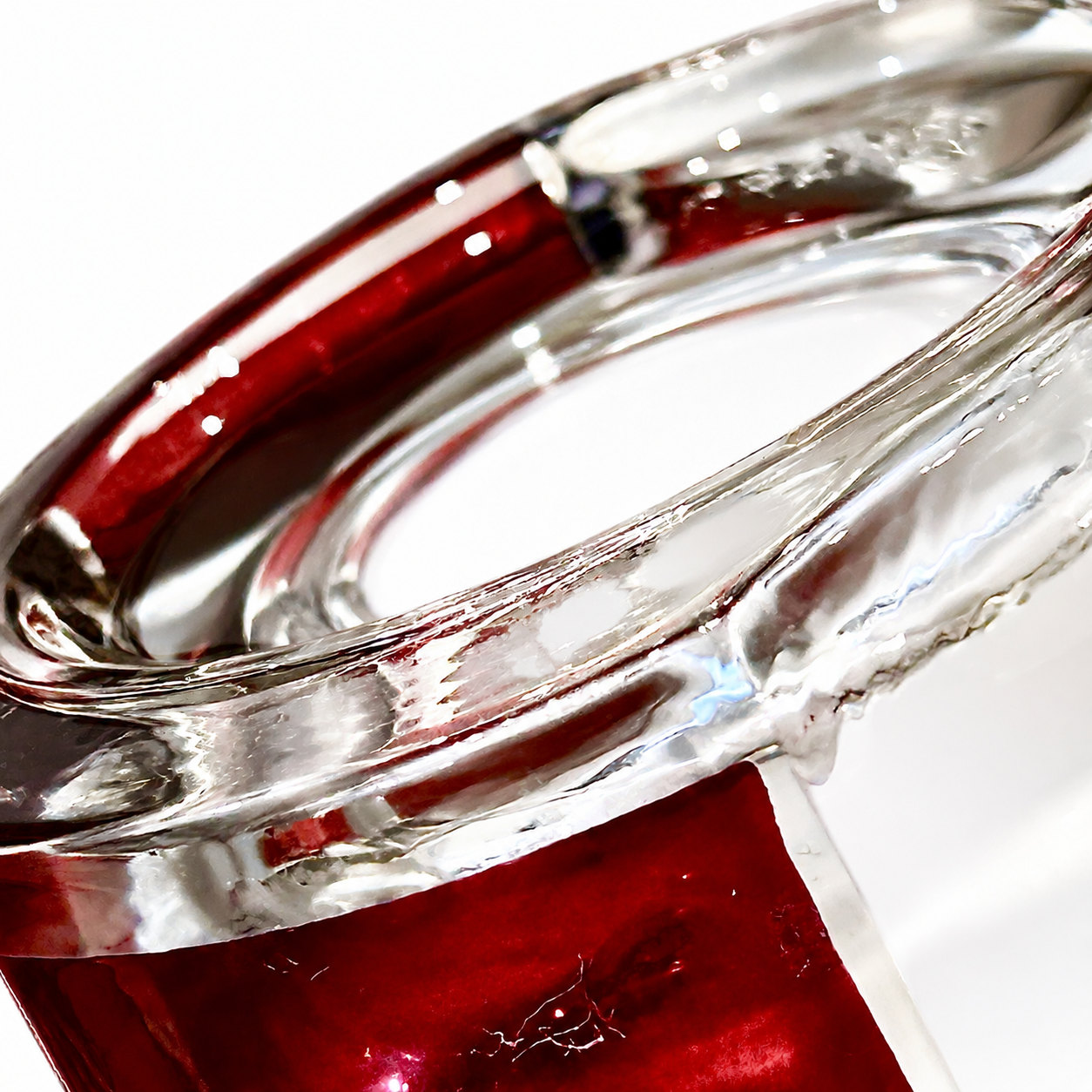
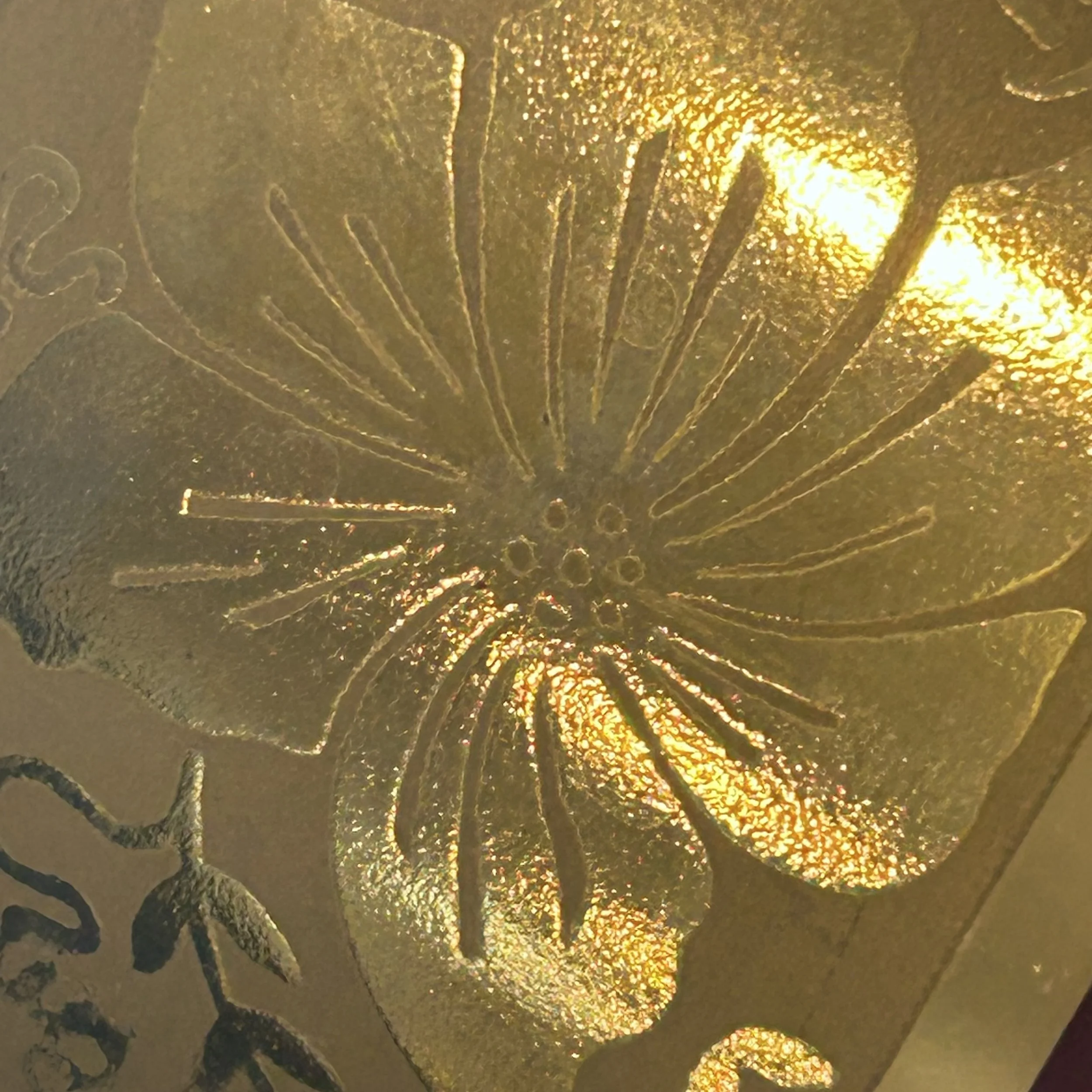
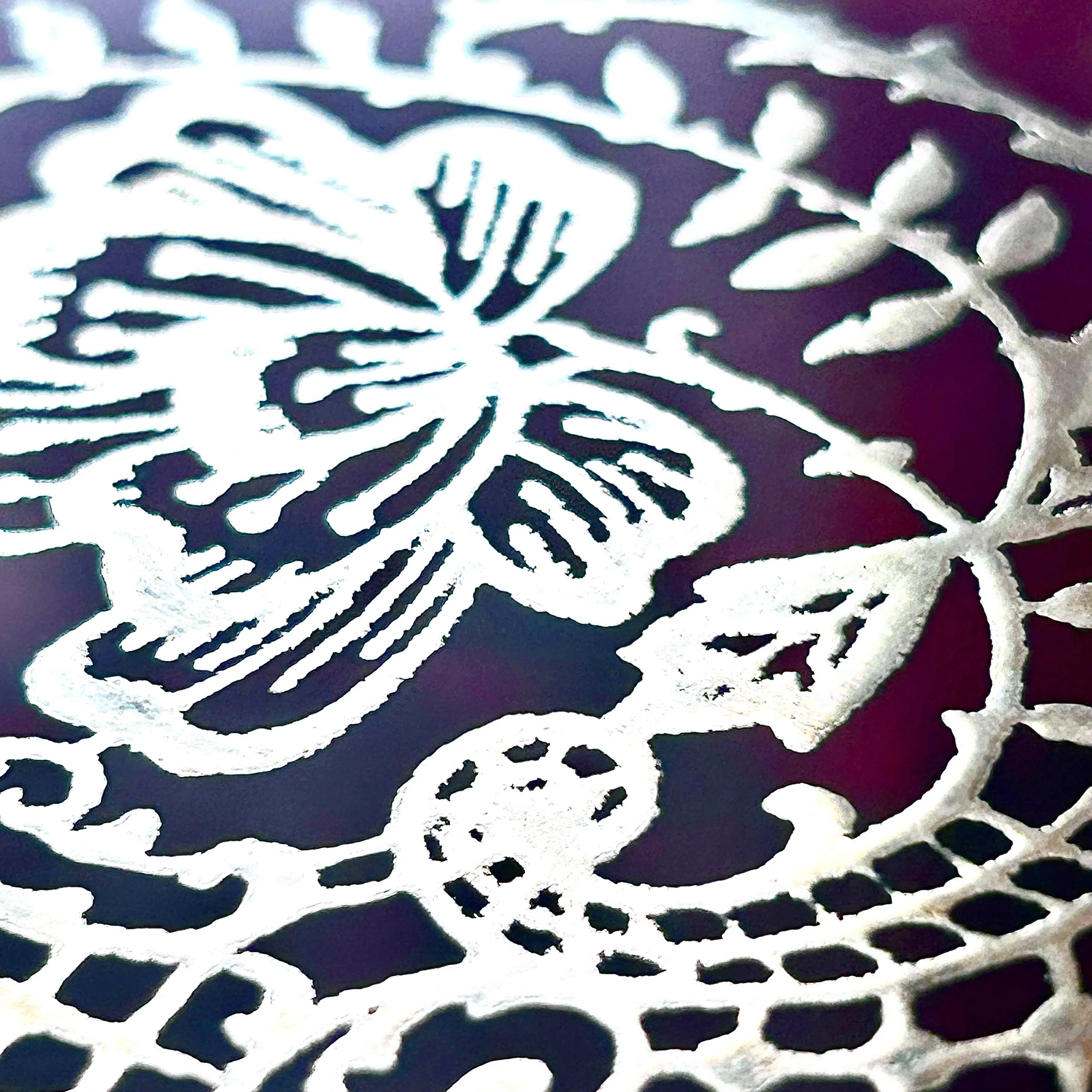
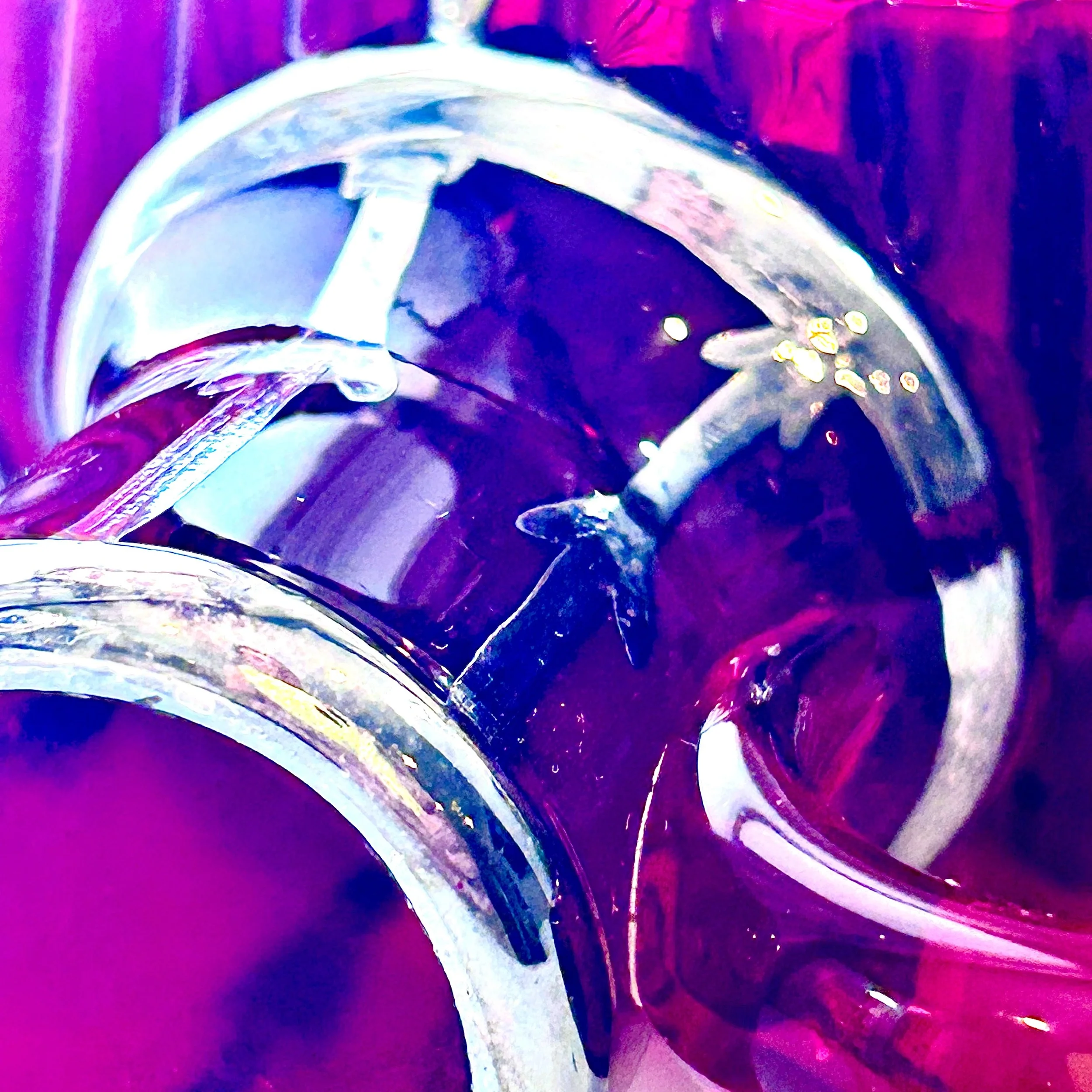
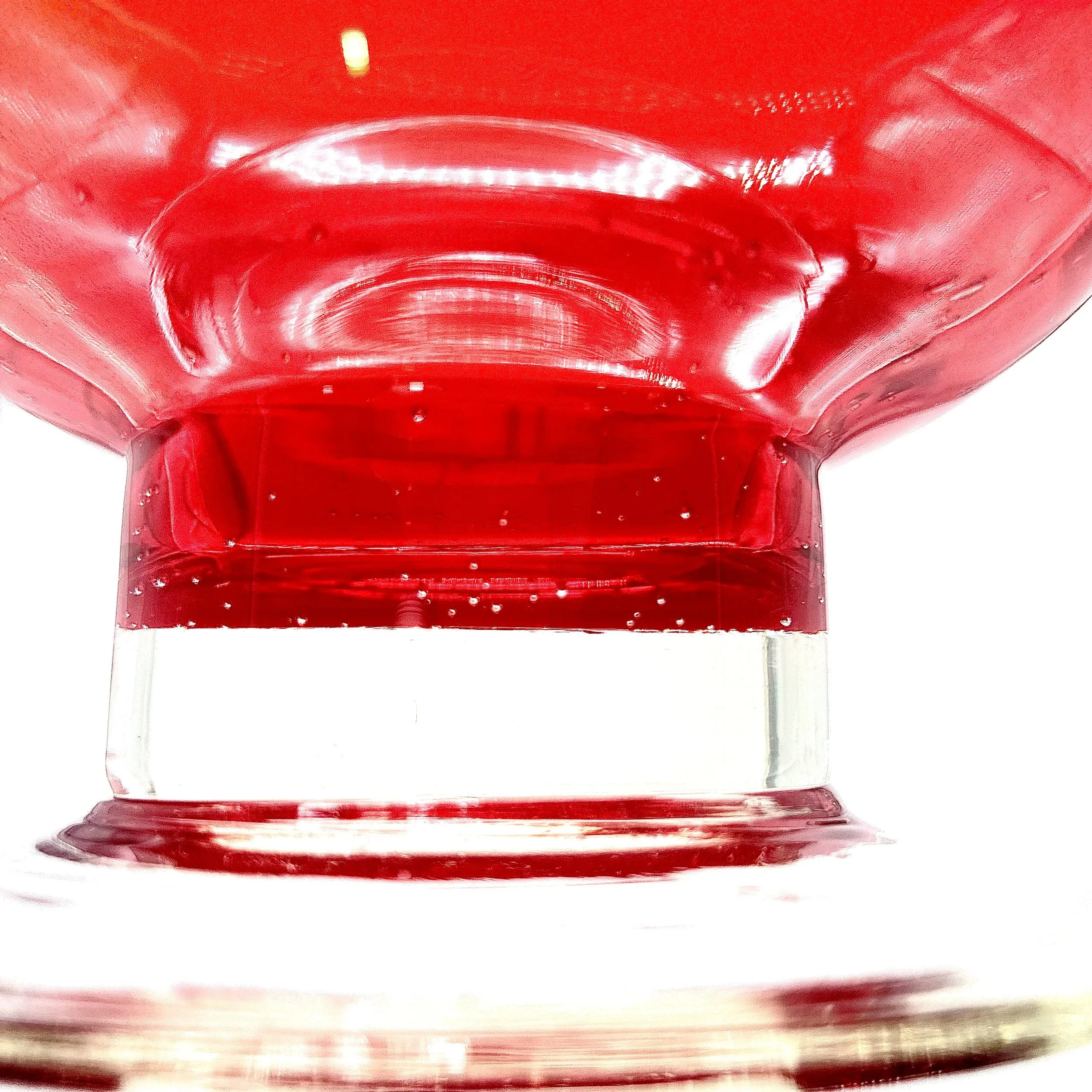
The construction, featuring a "ruby-stained" or "flashed" rim over a clear molded and cut body, is stylistically aligned with late Victorian Bohemian glass production. The presence of mold seams combined with hand-finished cutting on the "diamond" points and faceted stems is characteristic of high-quality mass-market luxury goods from the Josephinenhütte or Val Saint Lambert era. The slight variation in color density between the two pieces is consistent with 19th-century hand-dipping staining techniques.
Dimensions & Weight
Height: 7 1/4 inches
Diameter (Mouth): 6 inches
Base Diameter: 3 1/2 inches
Weight: 2.024 lbs (per glass)
Condition
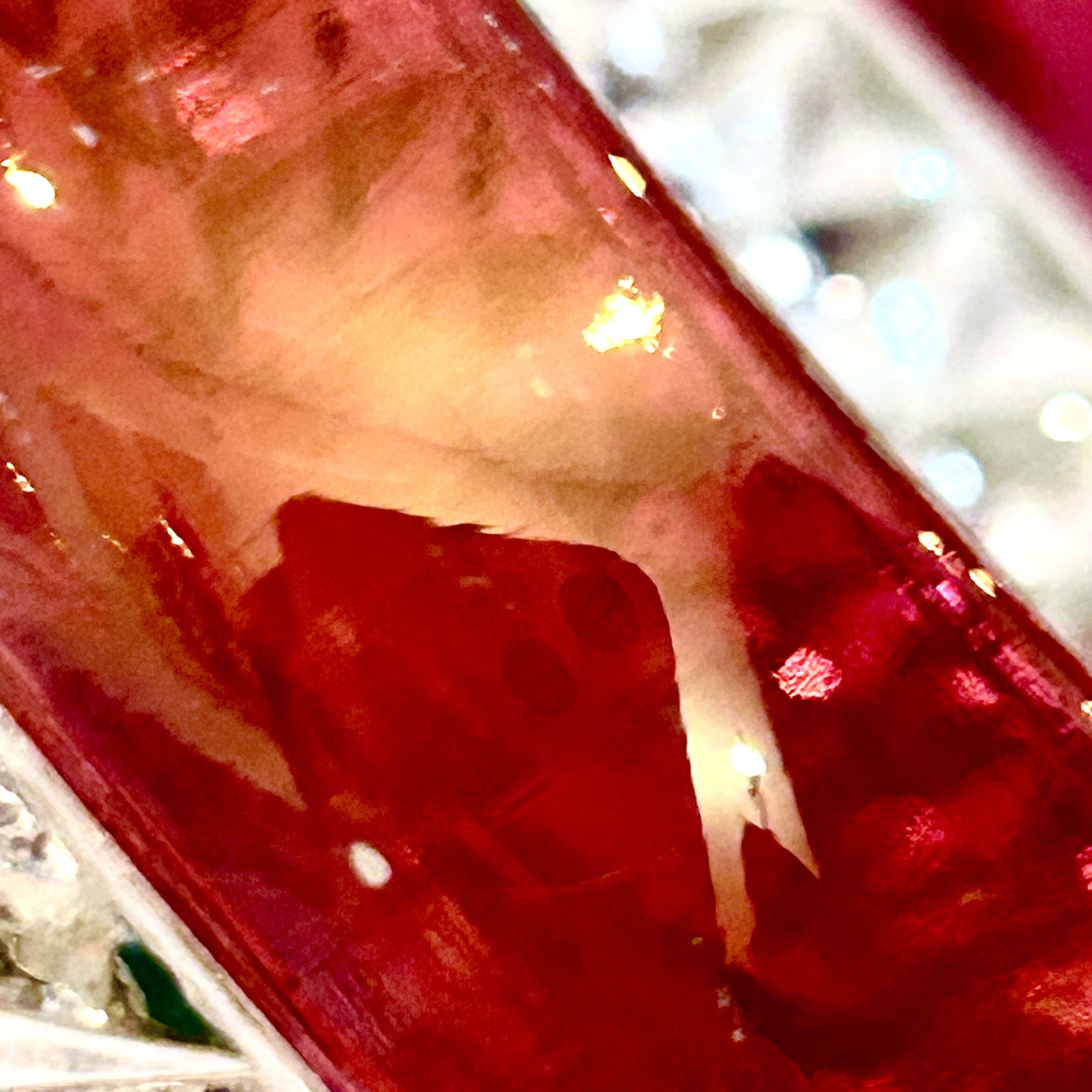
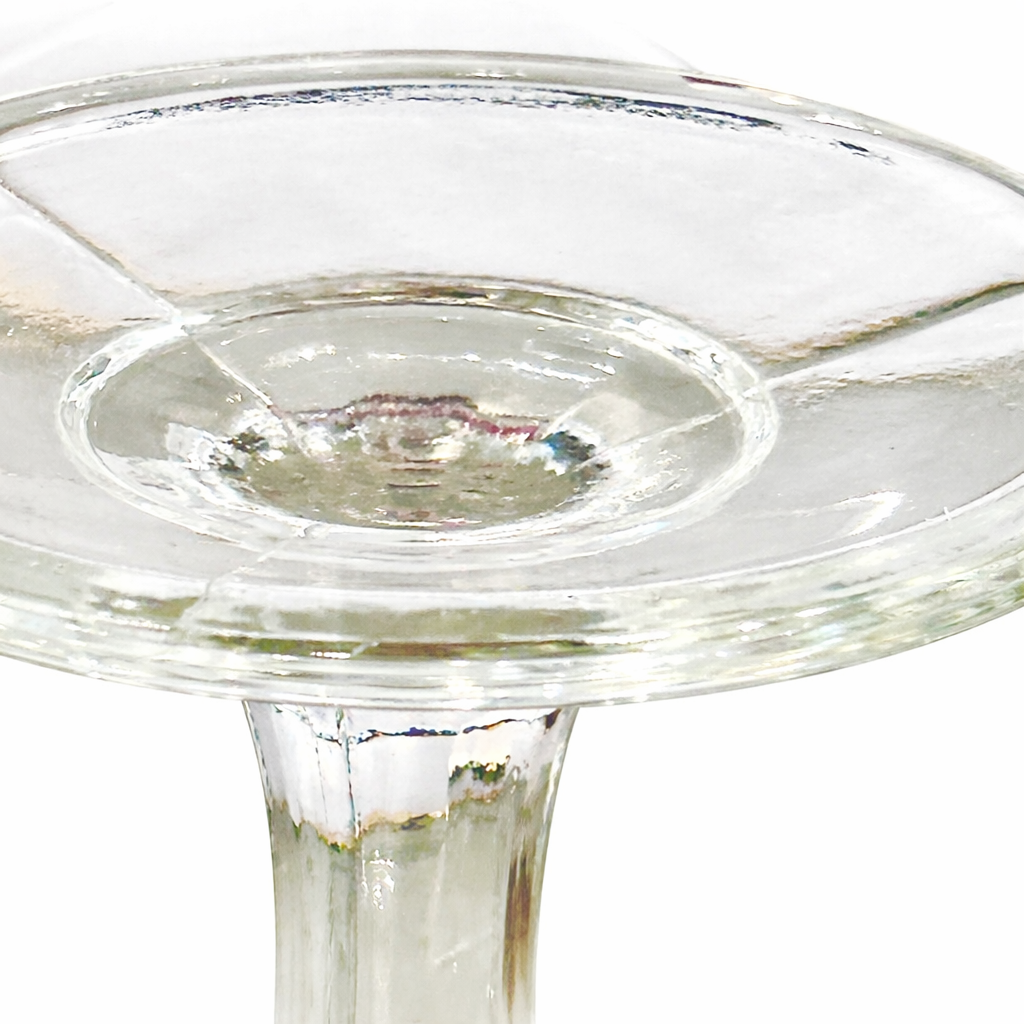
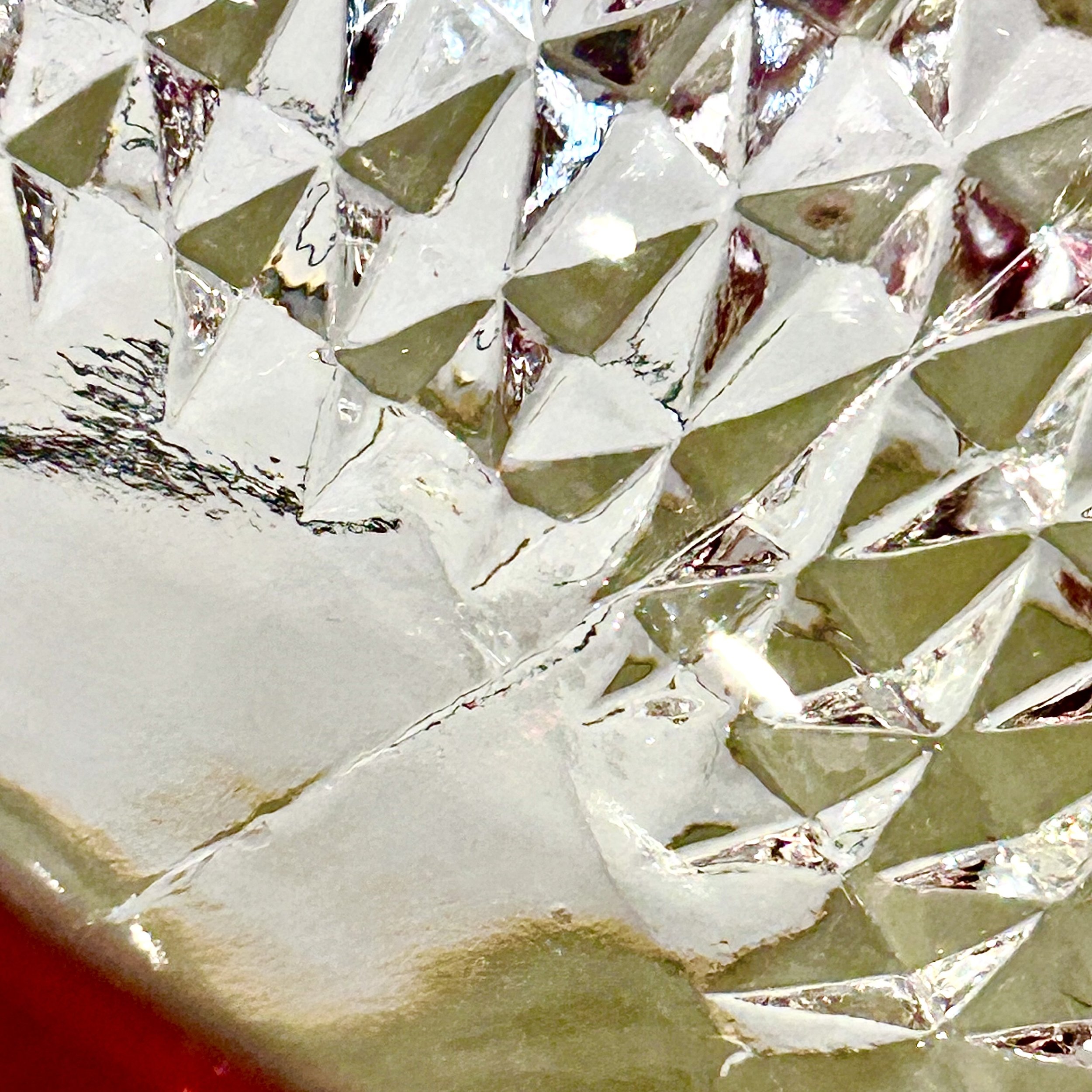
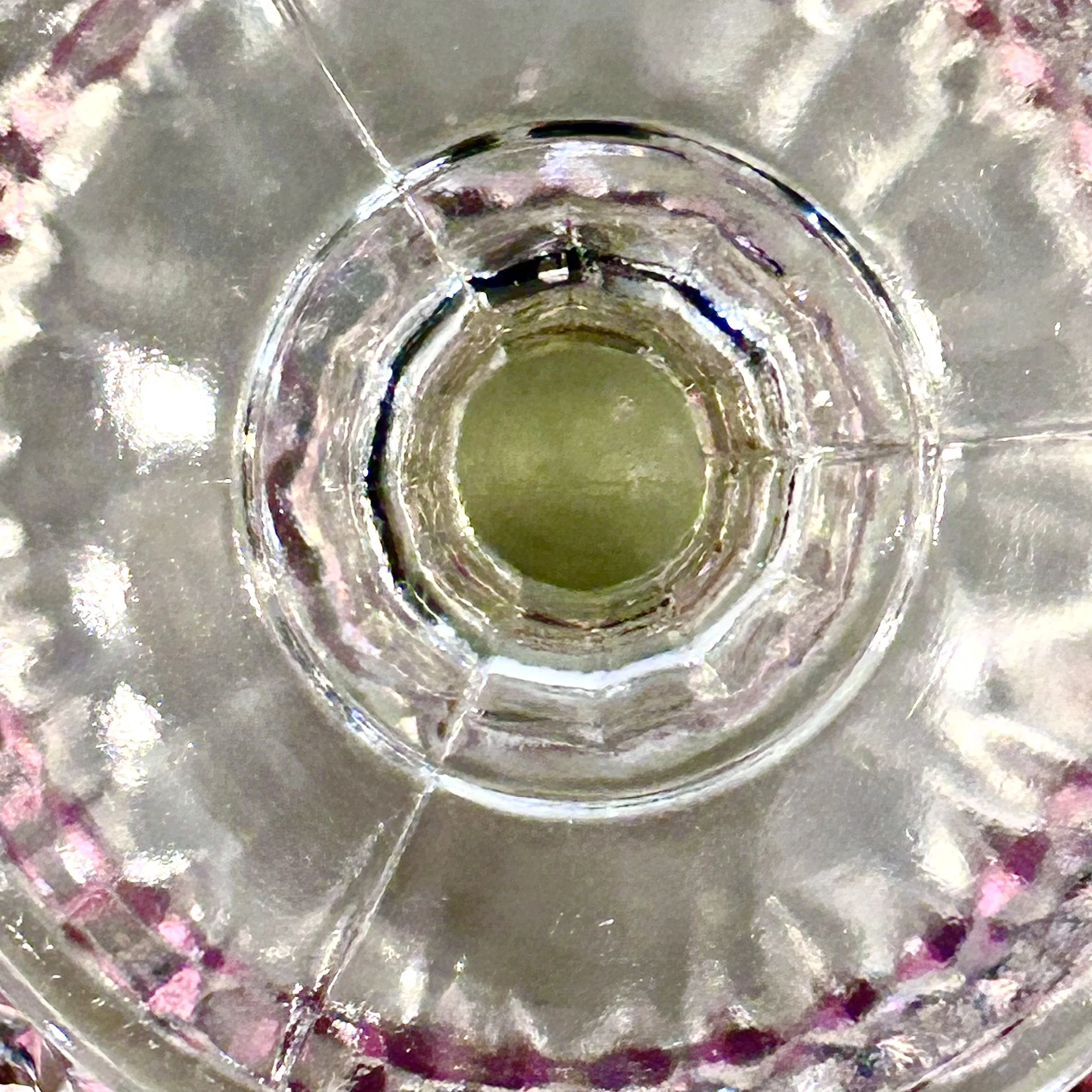
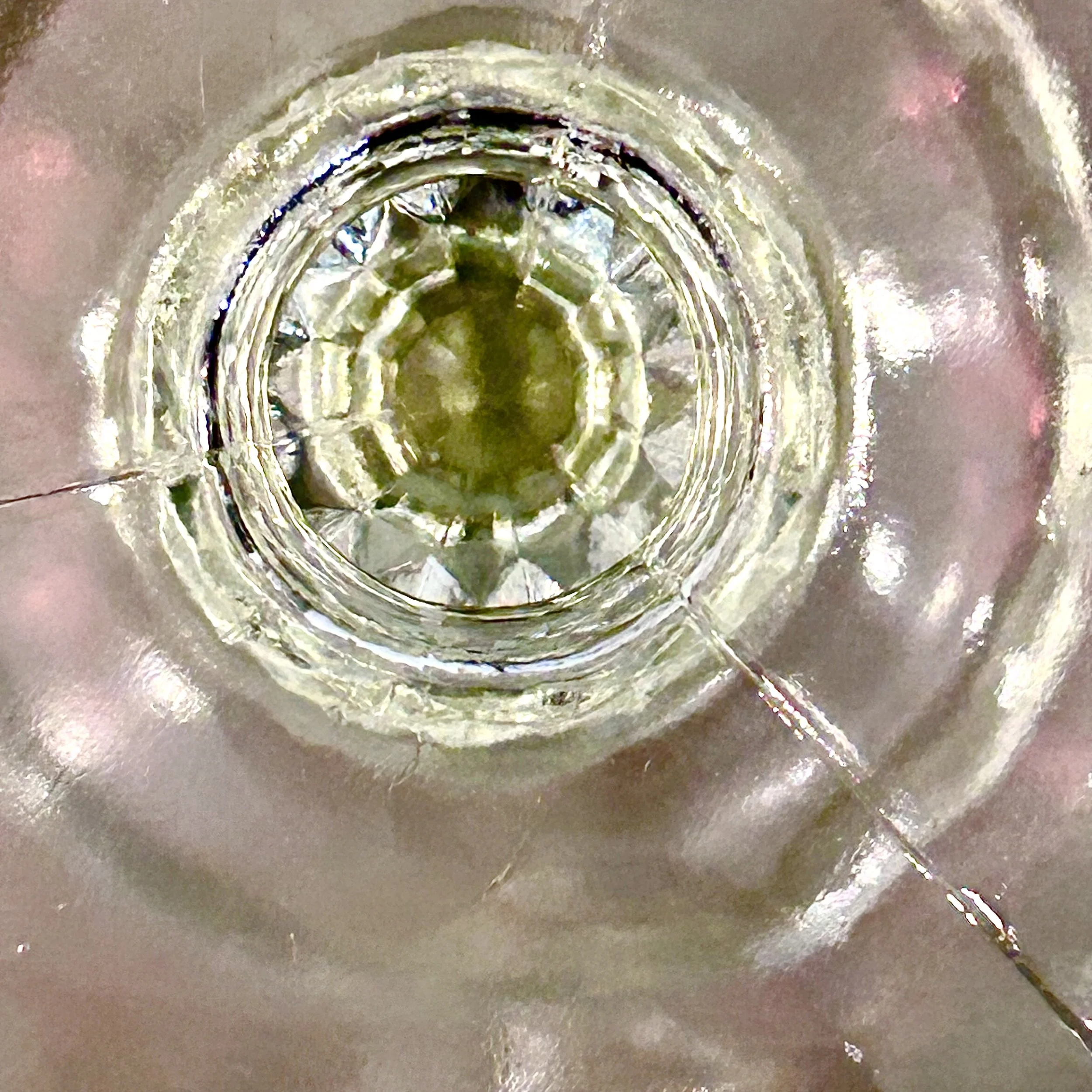
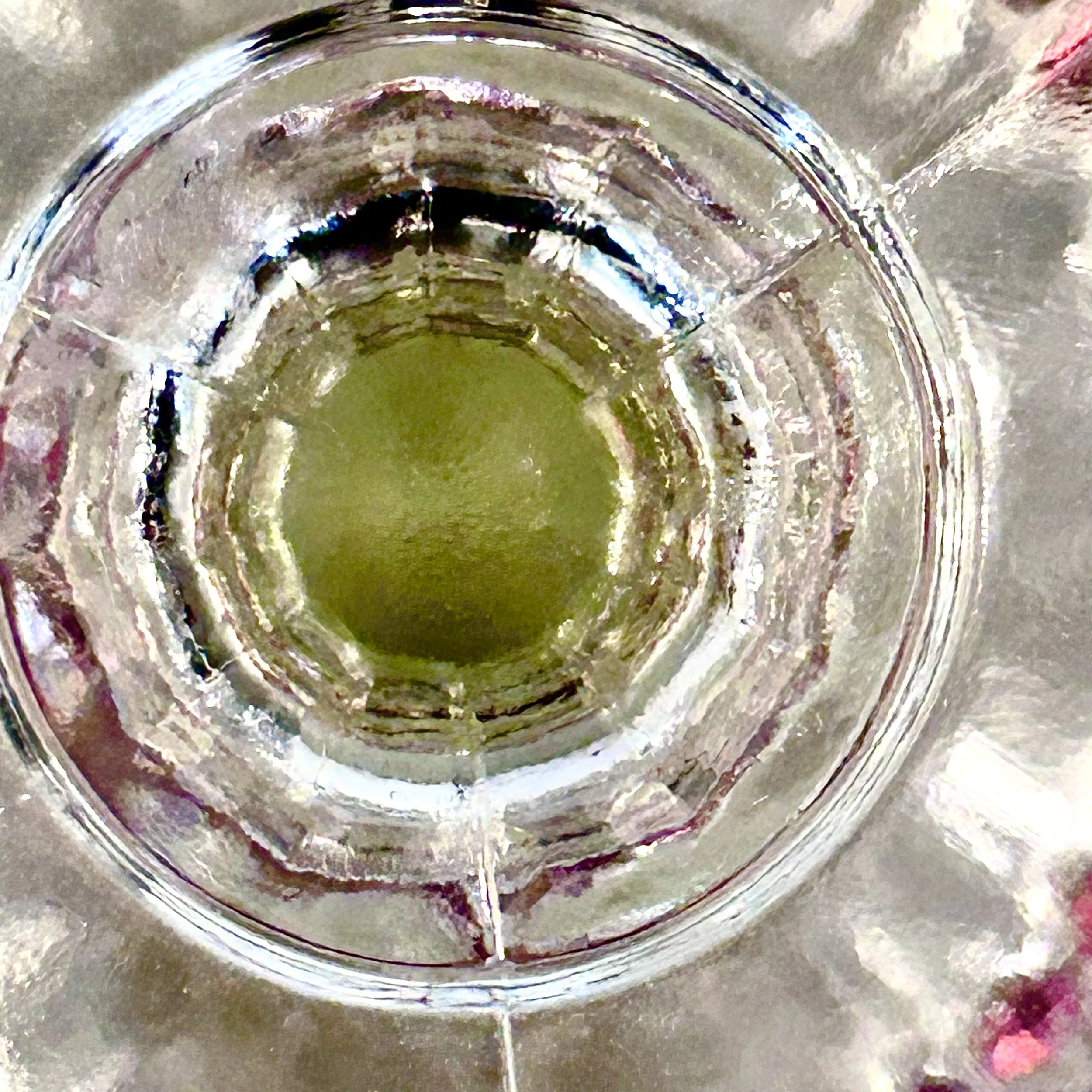
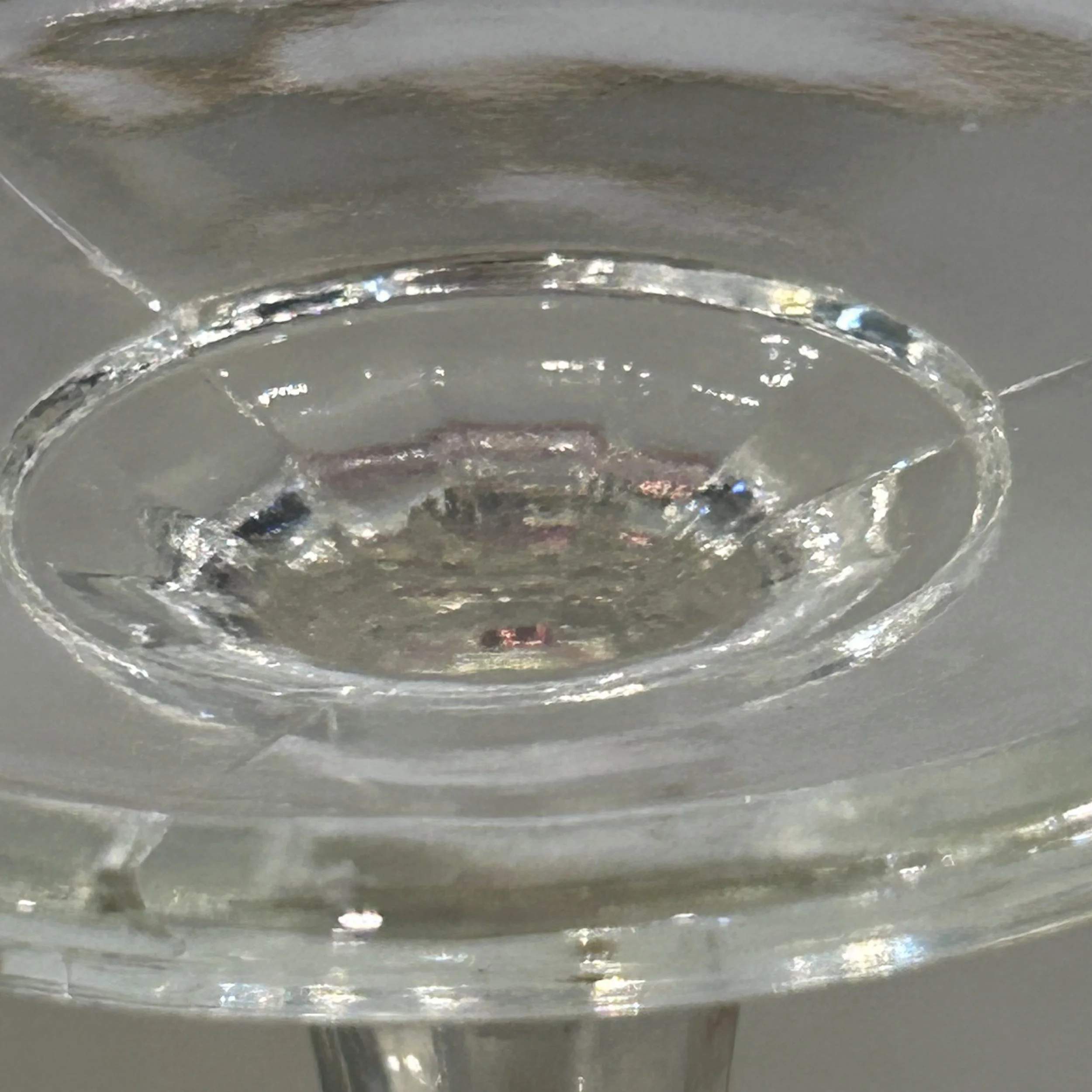
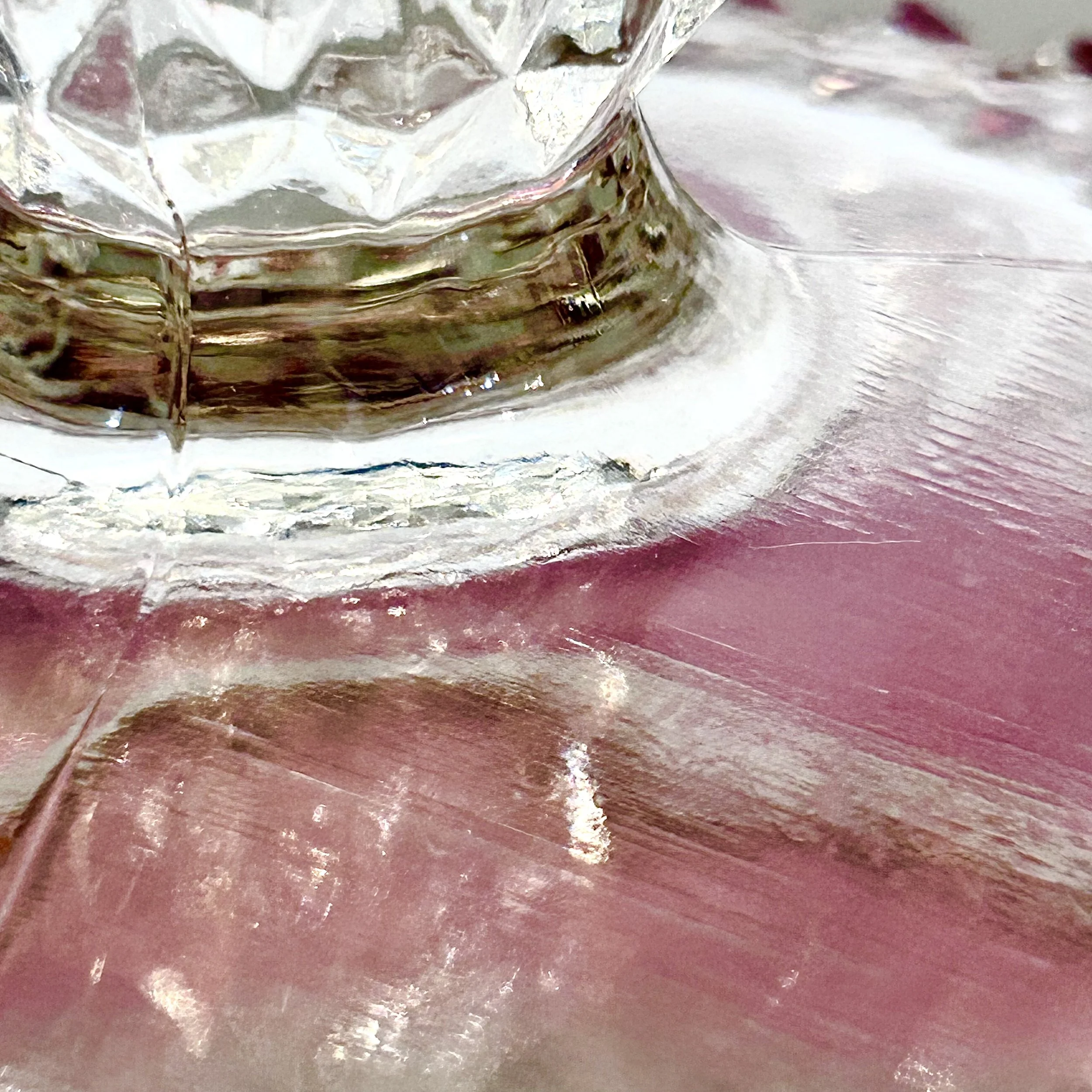
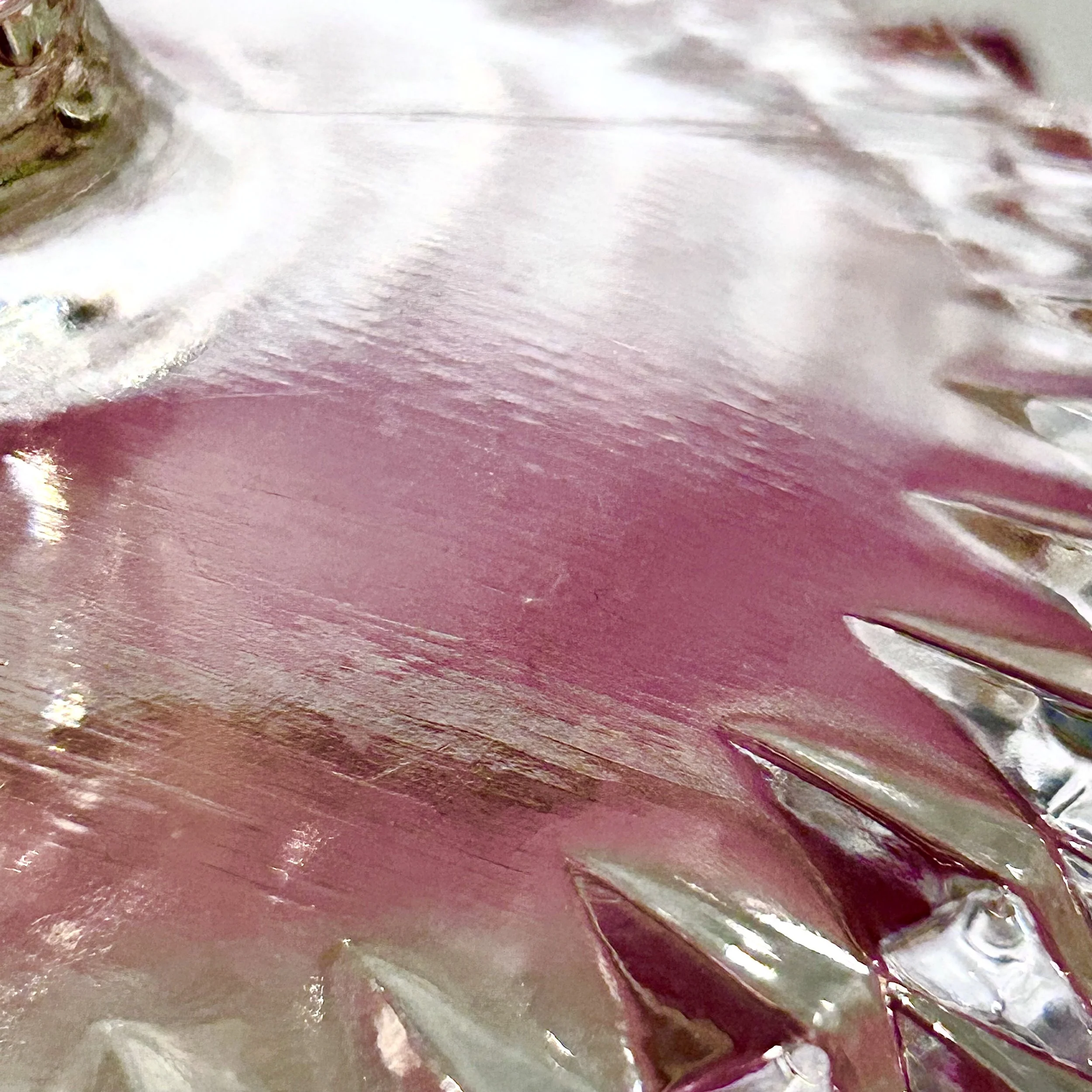
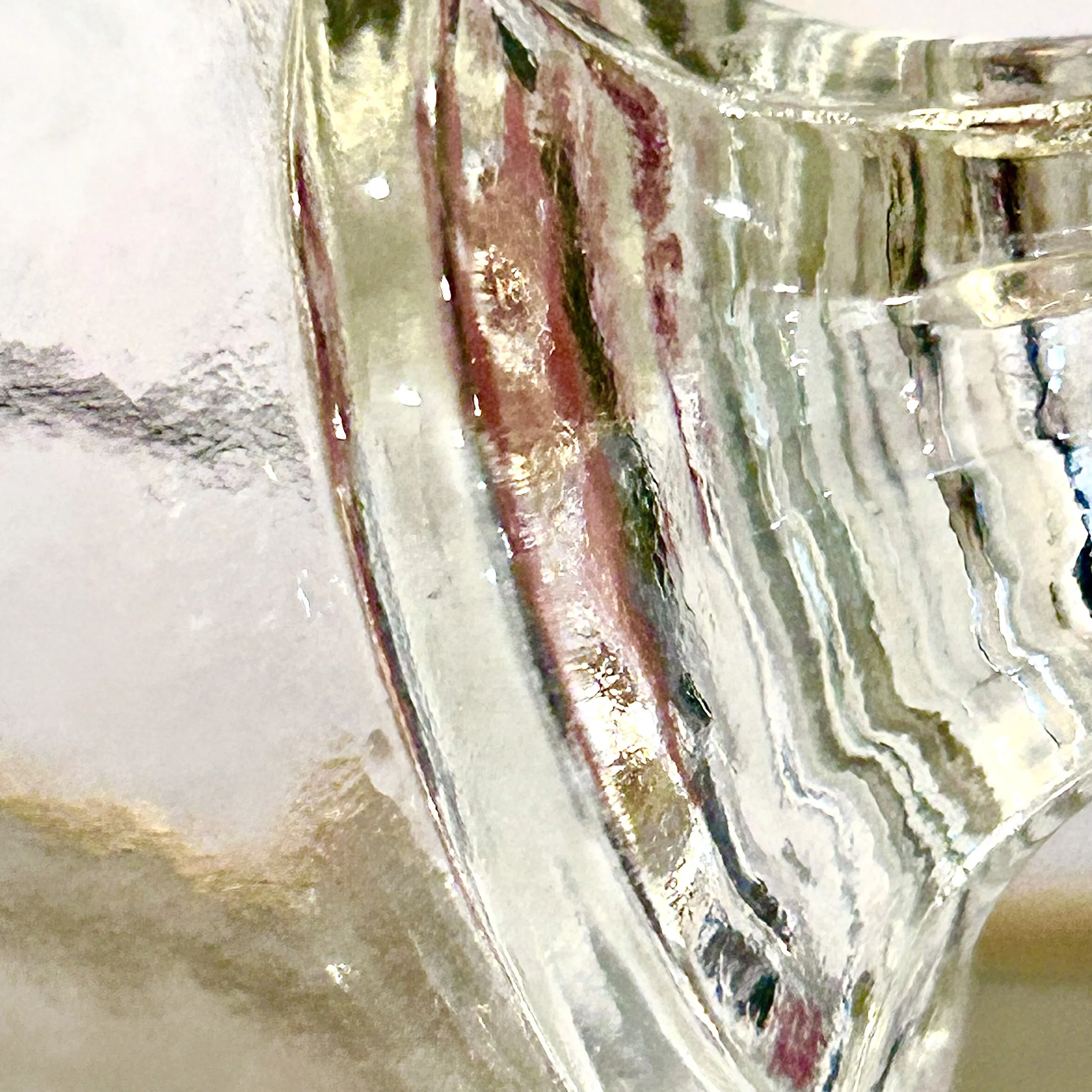
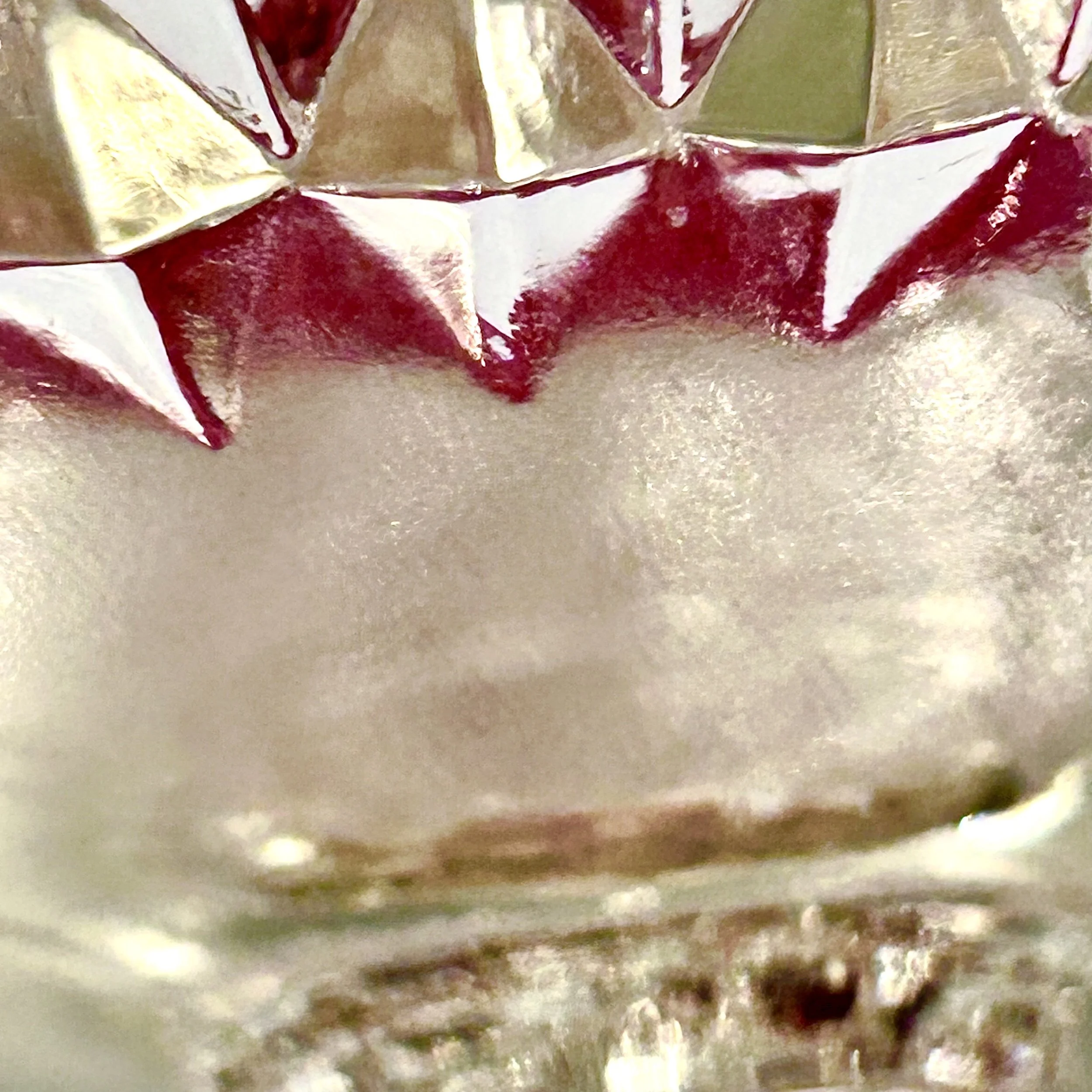
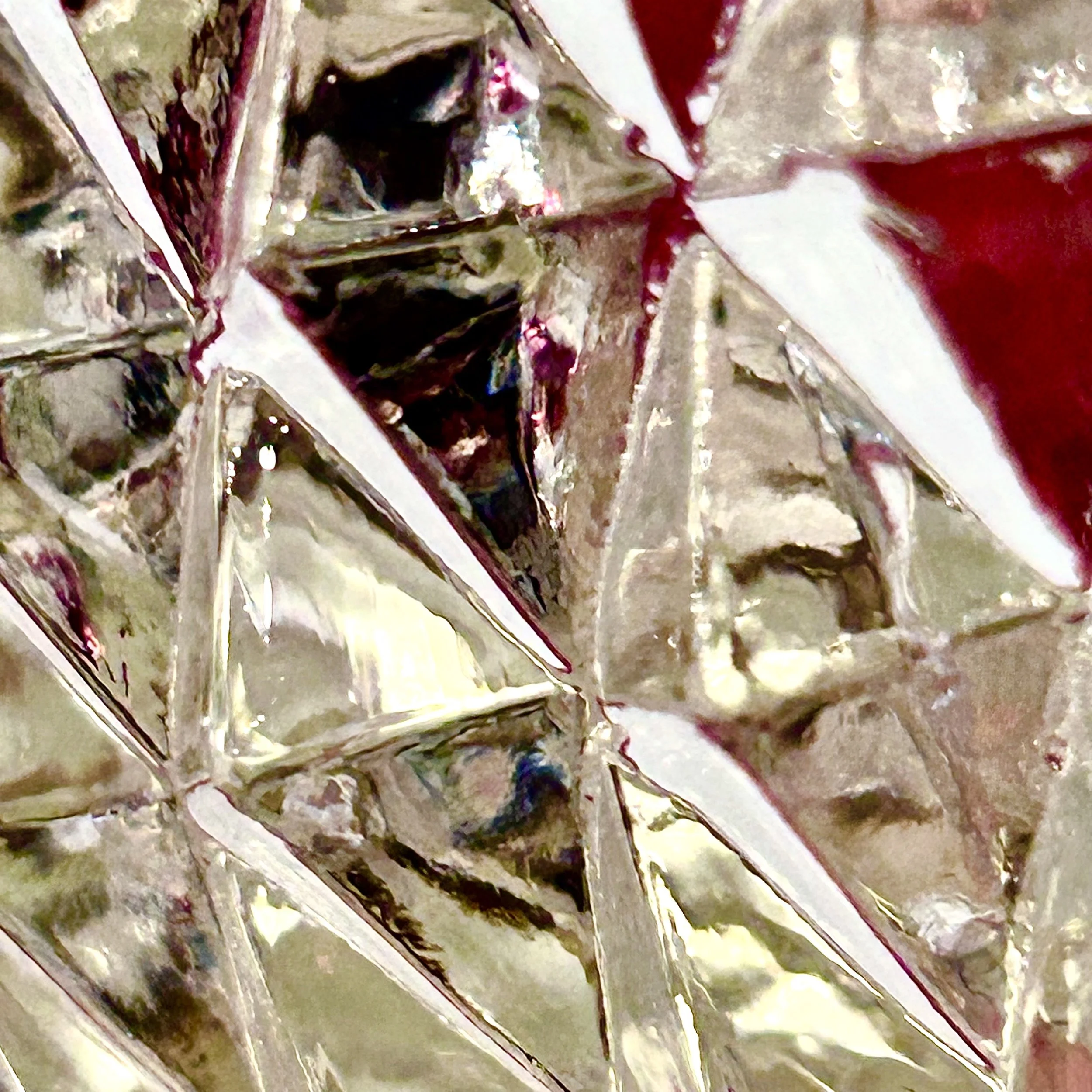
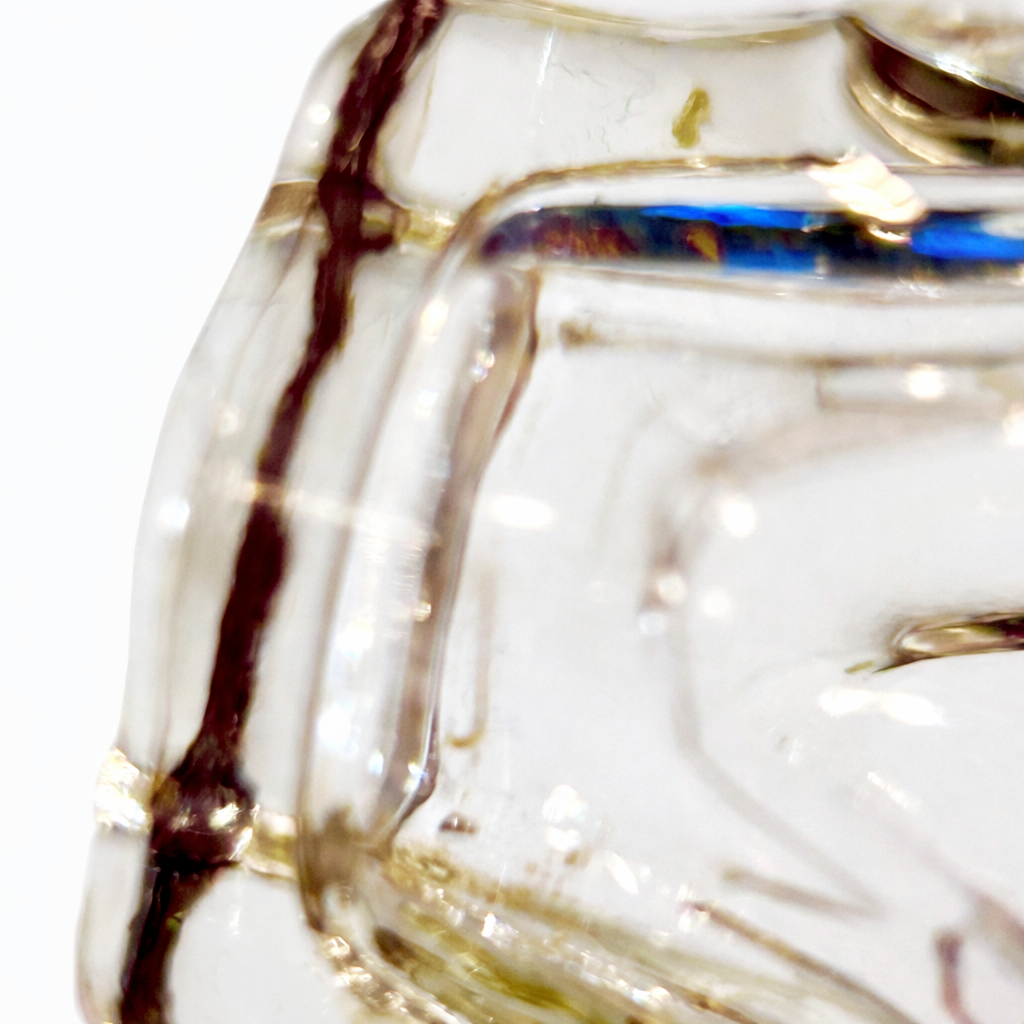
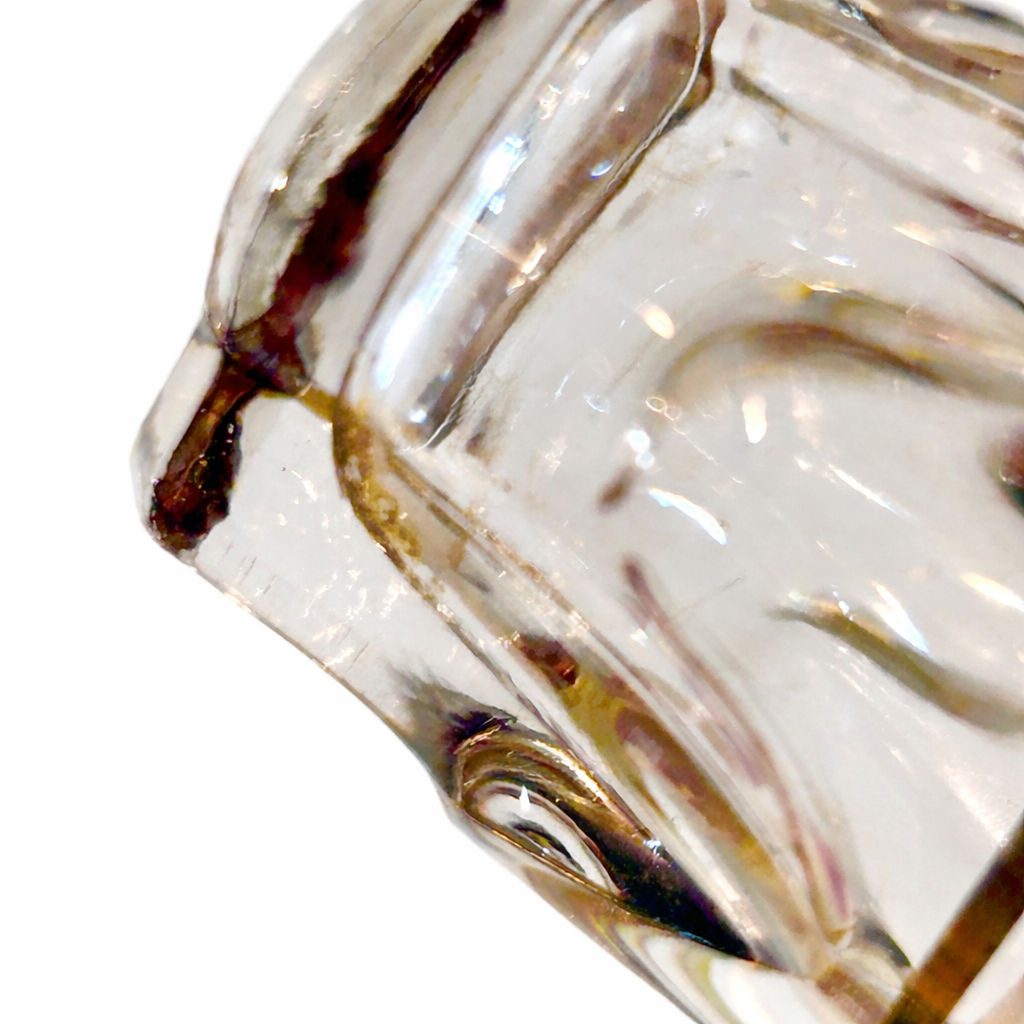
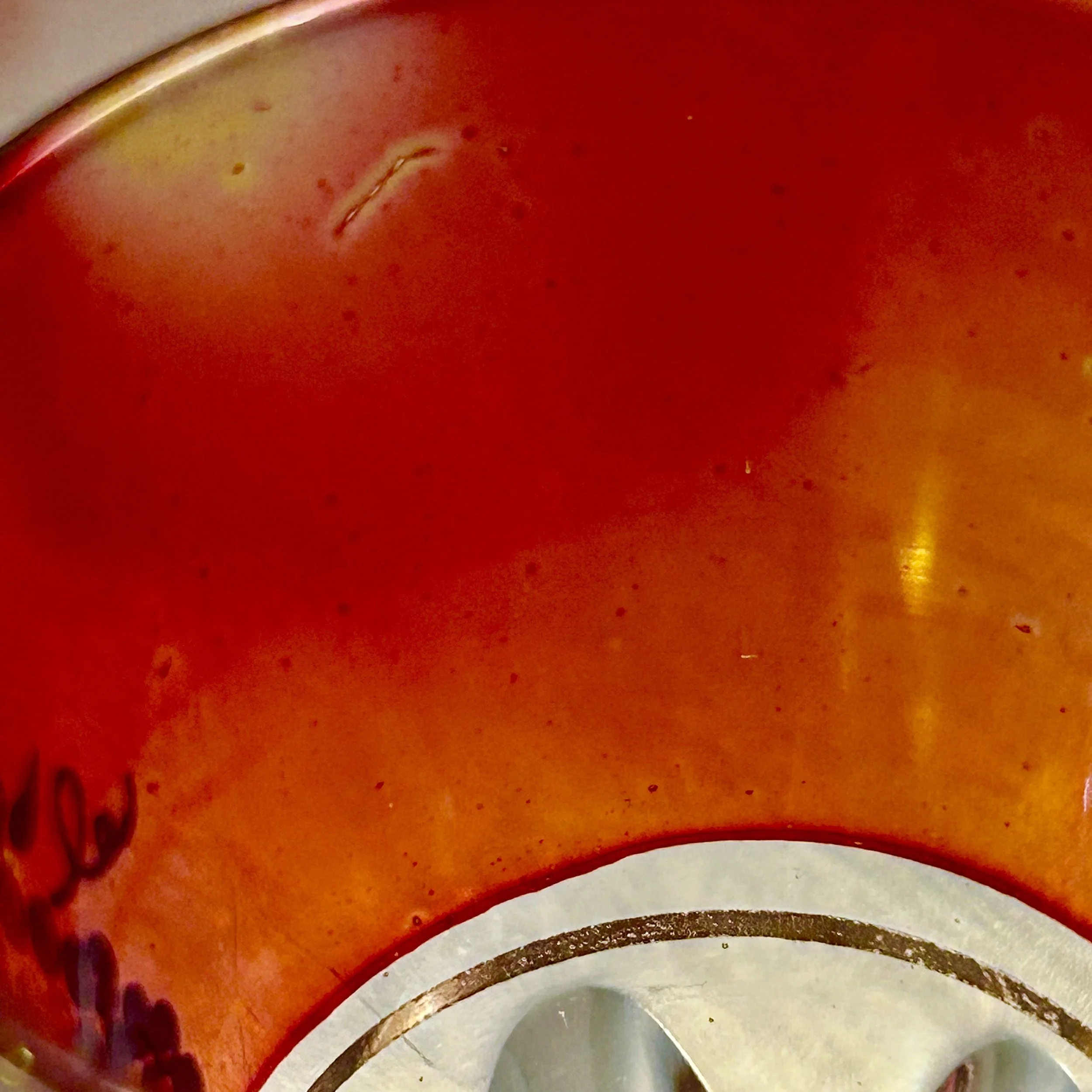
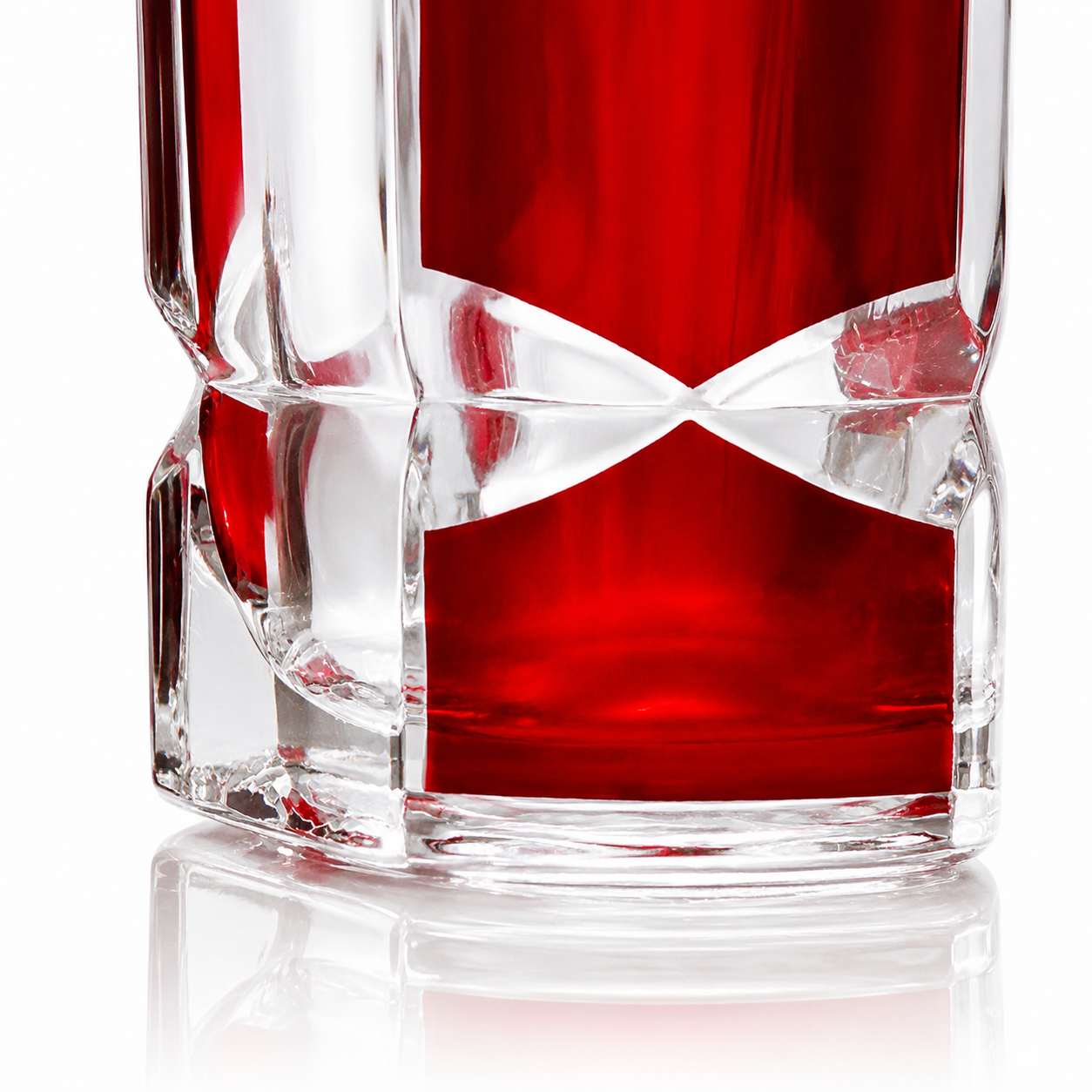
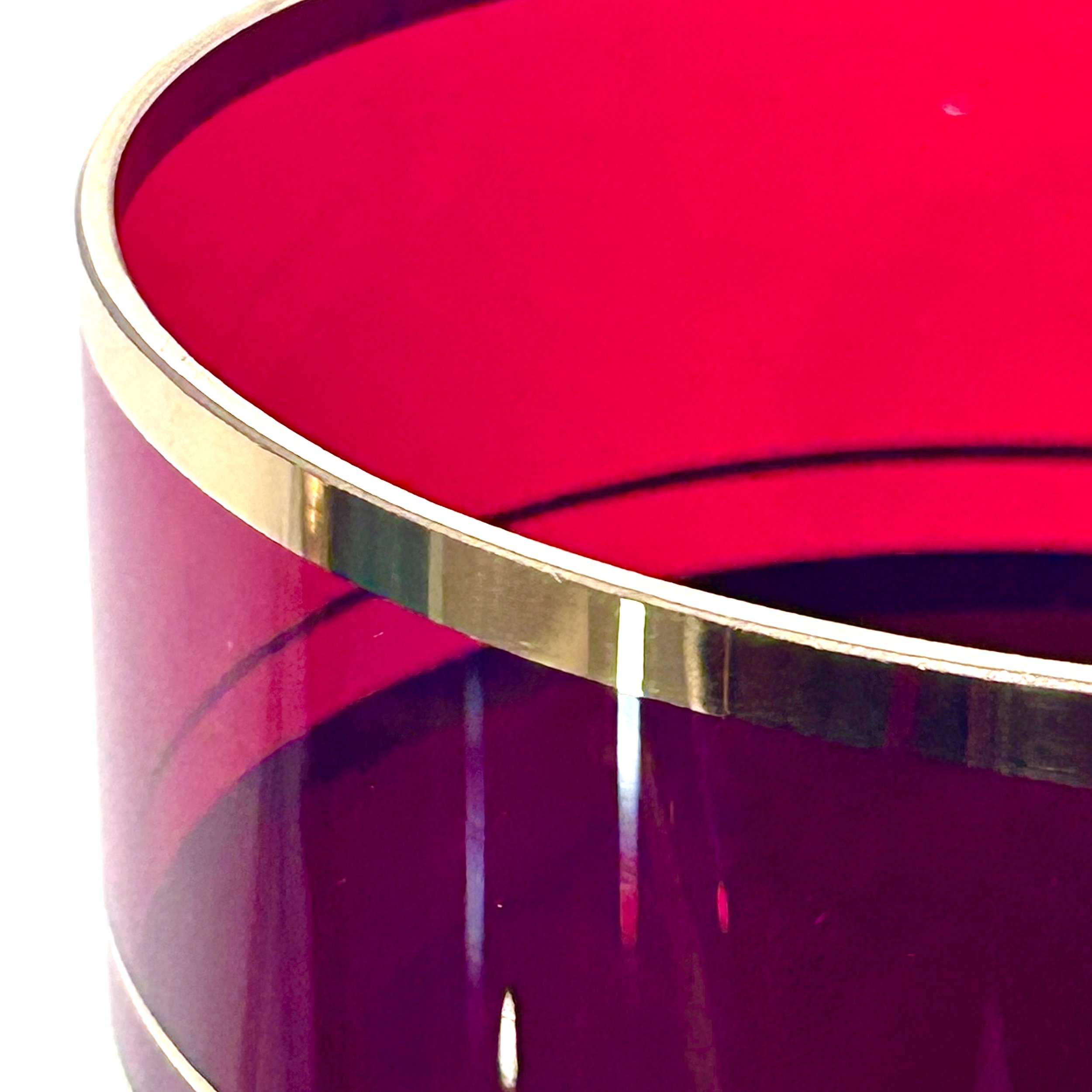
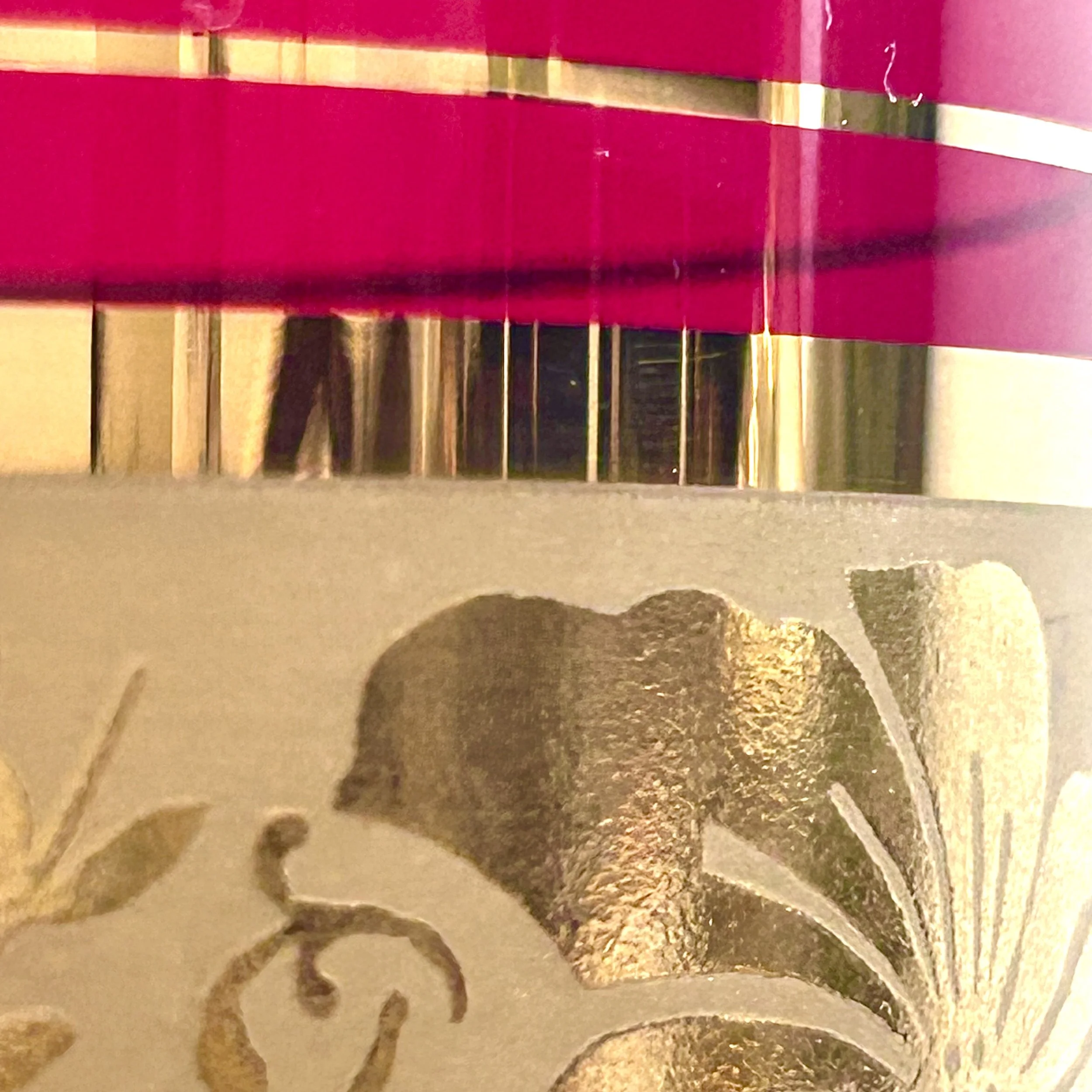
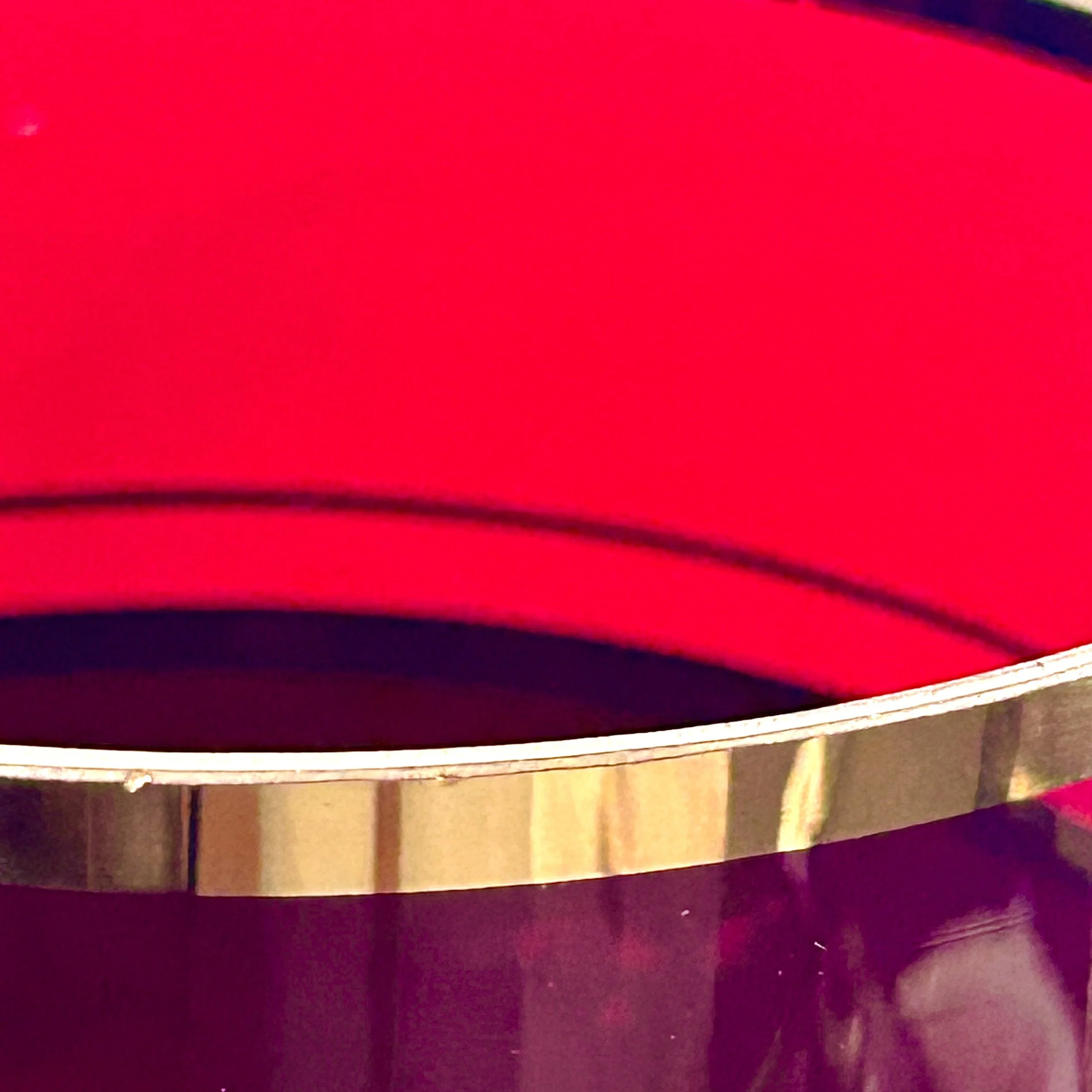
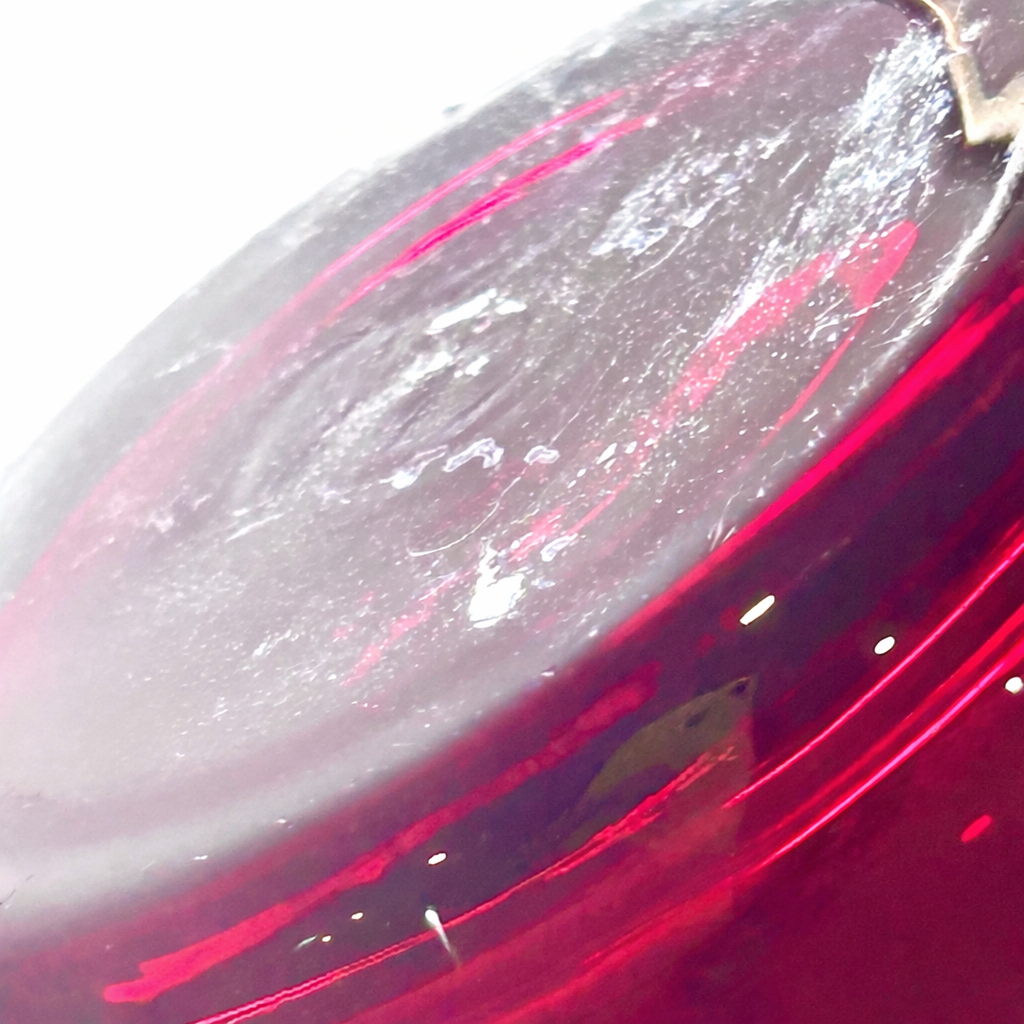
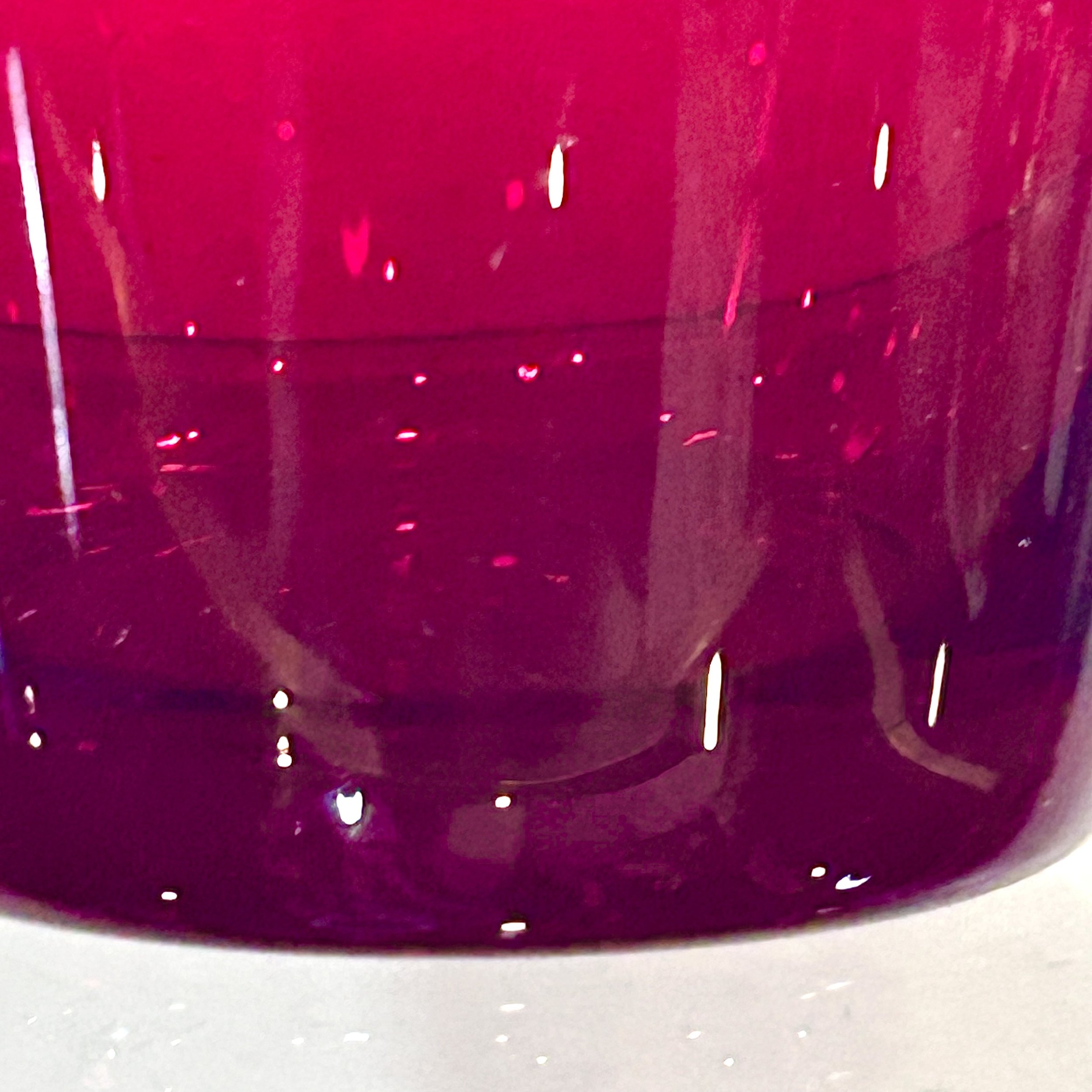
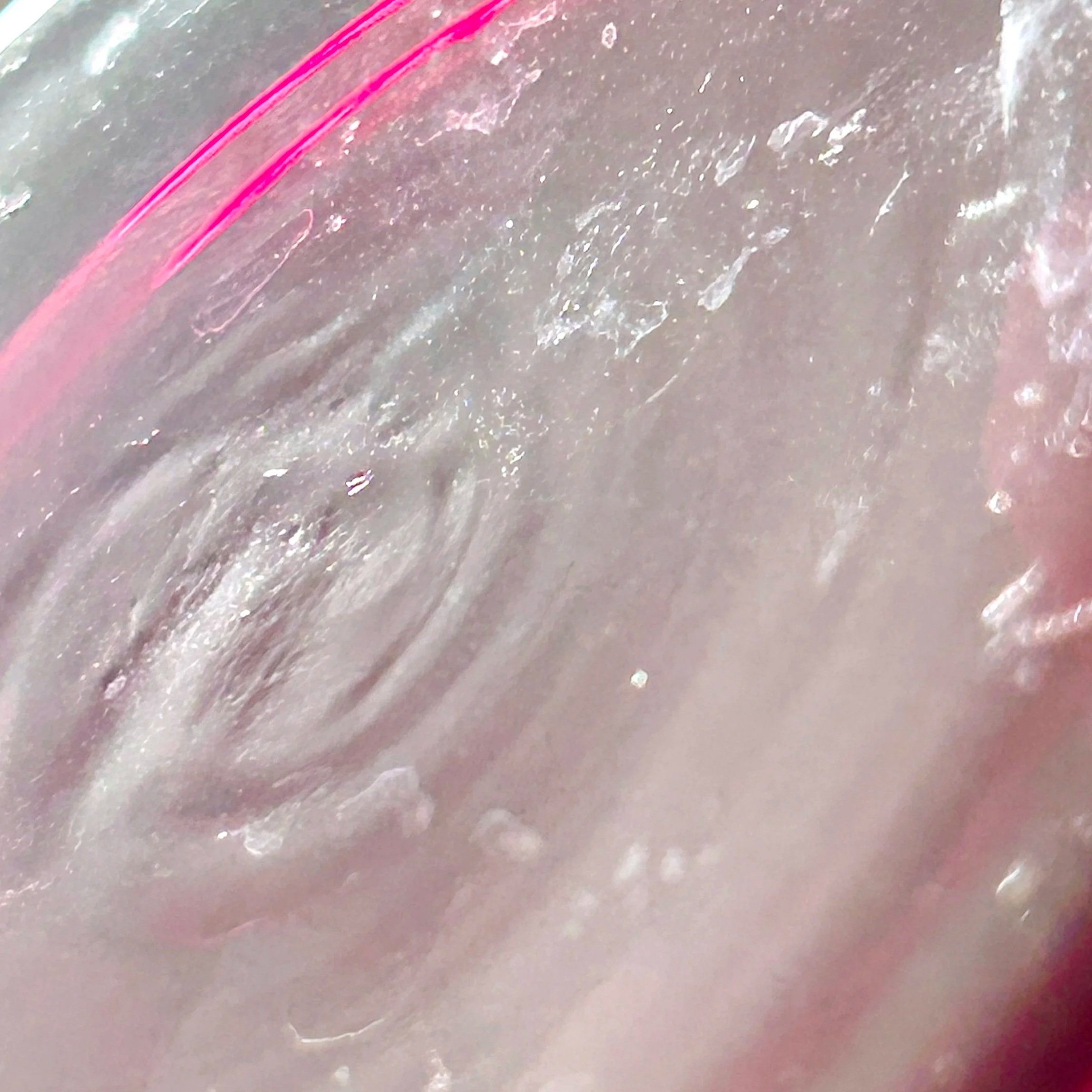
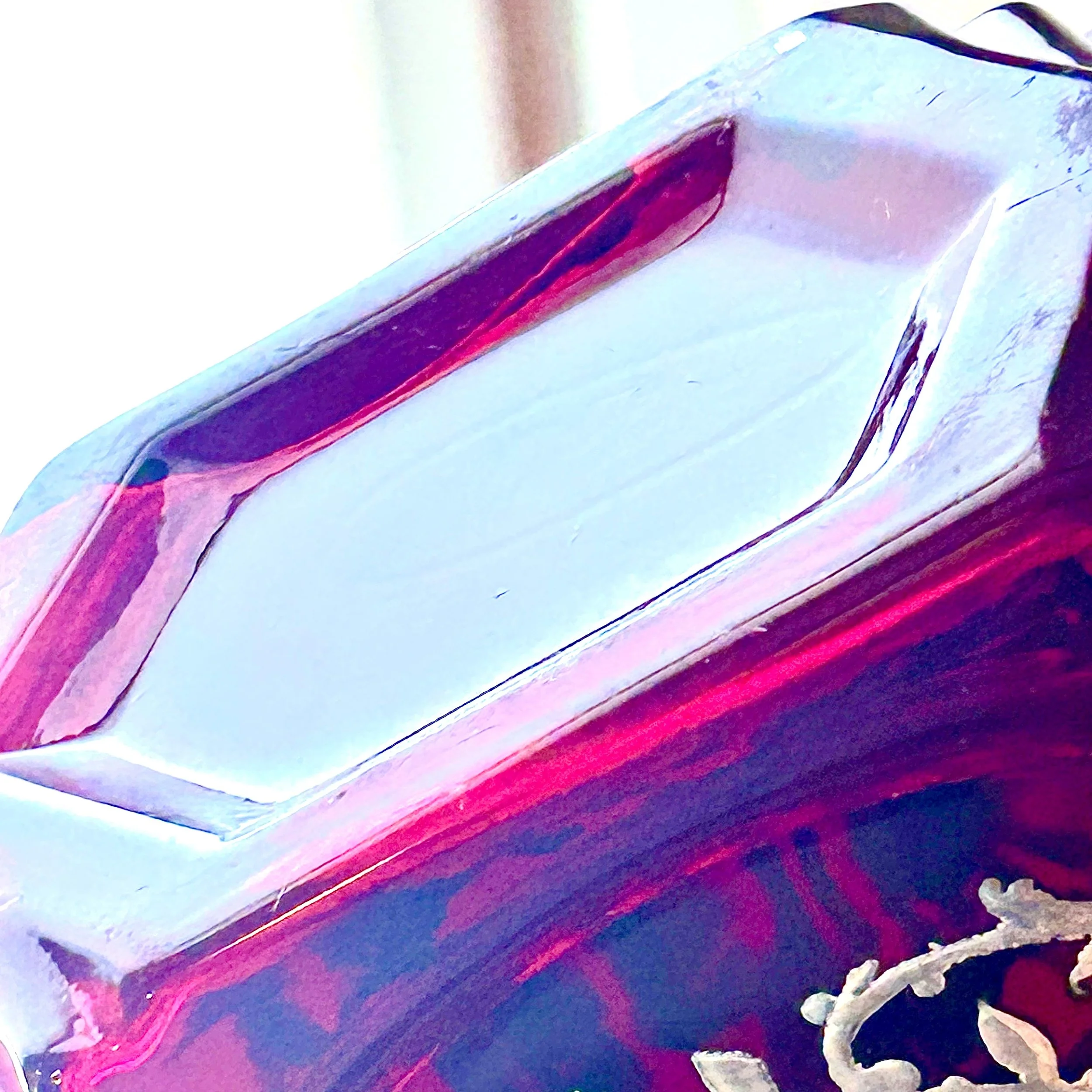
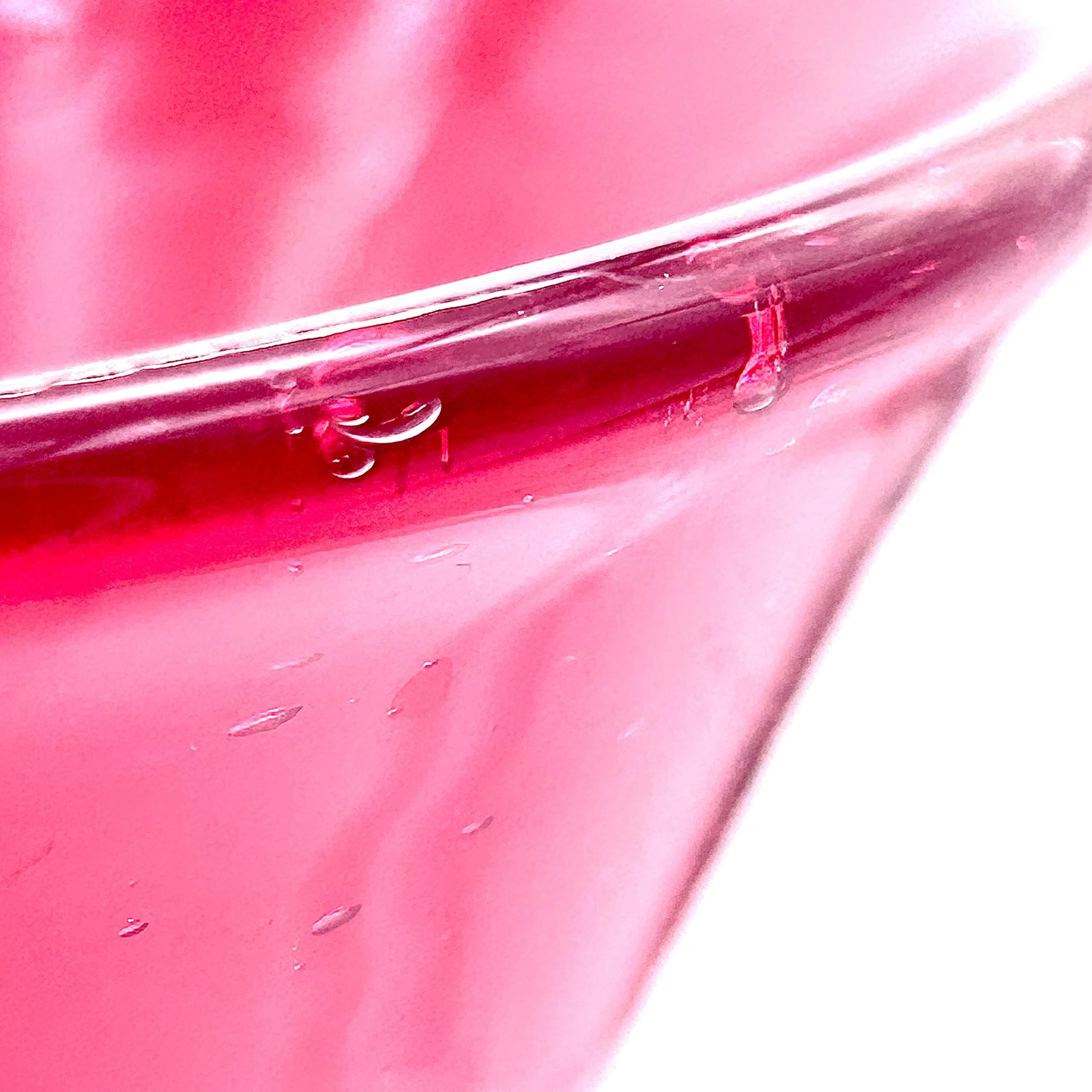
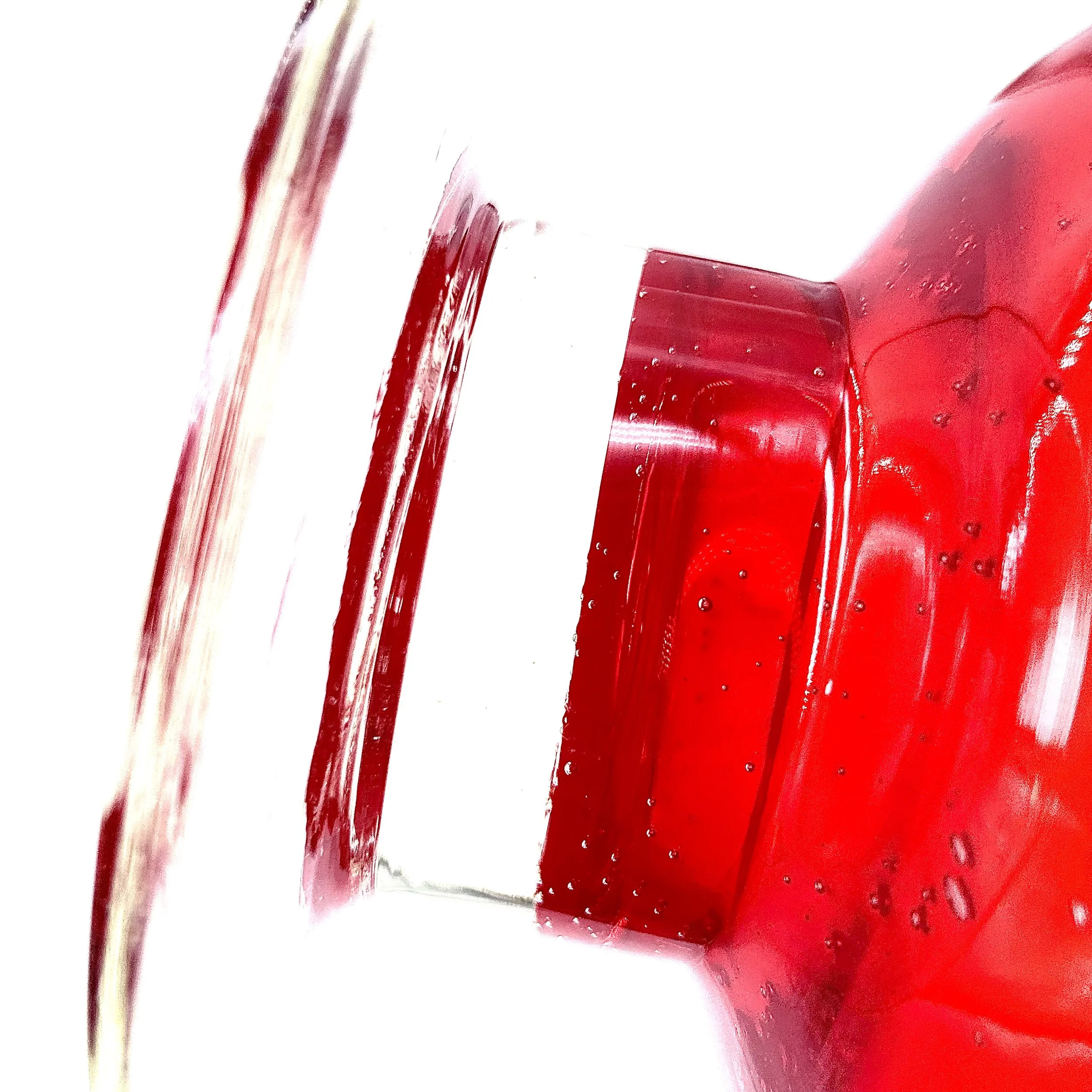
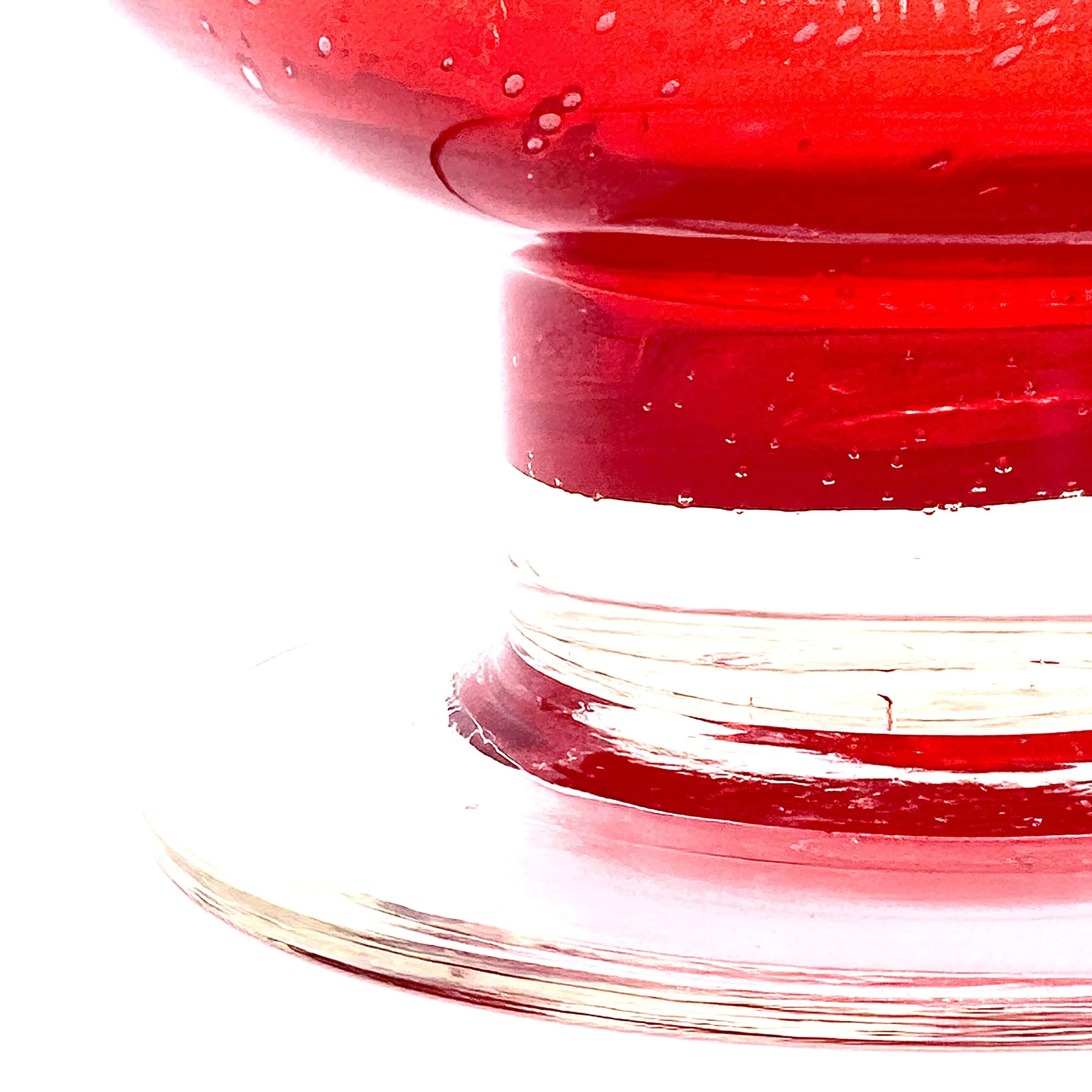
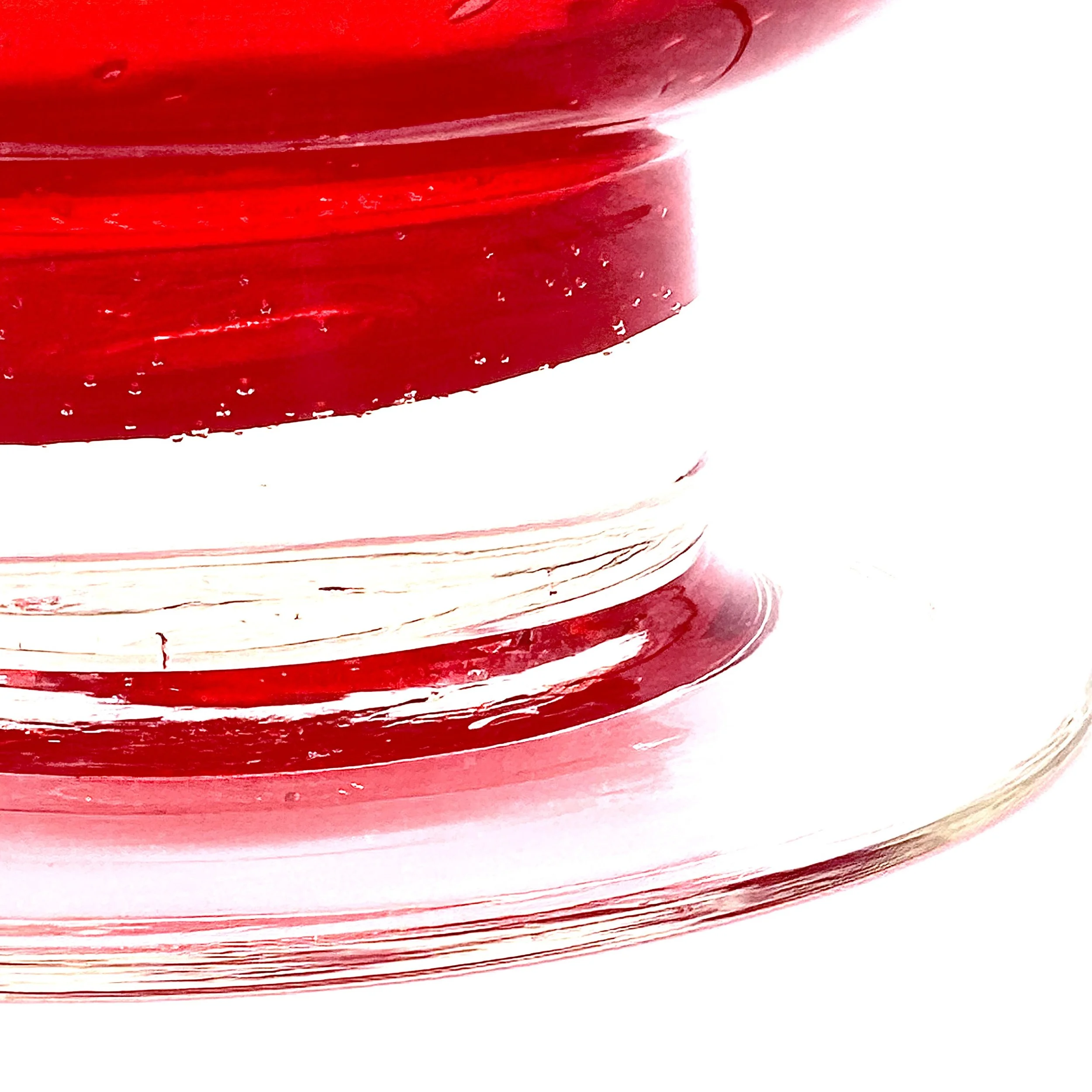
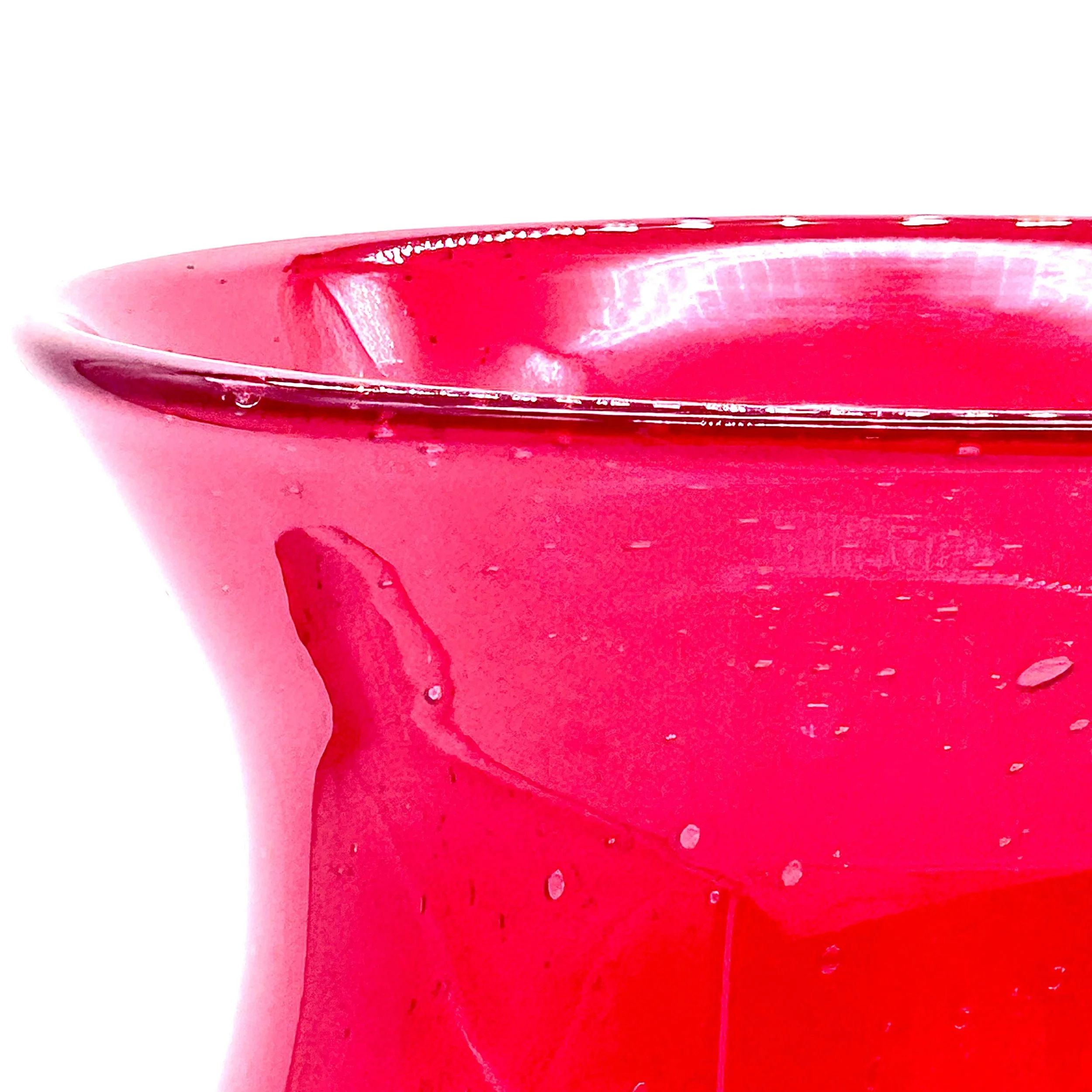
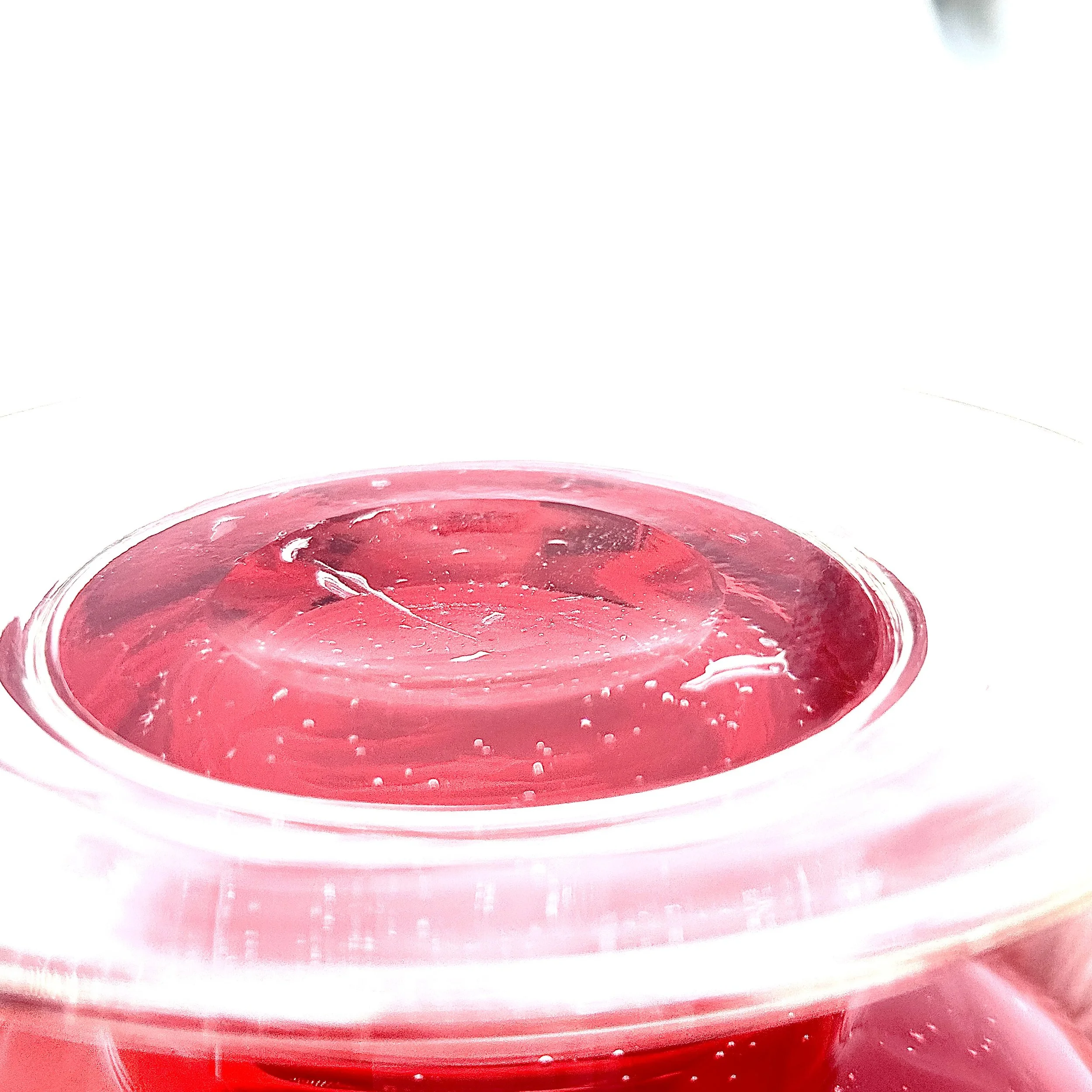
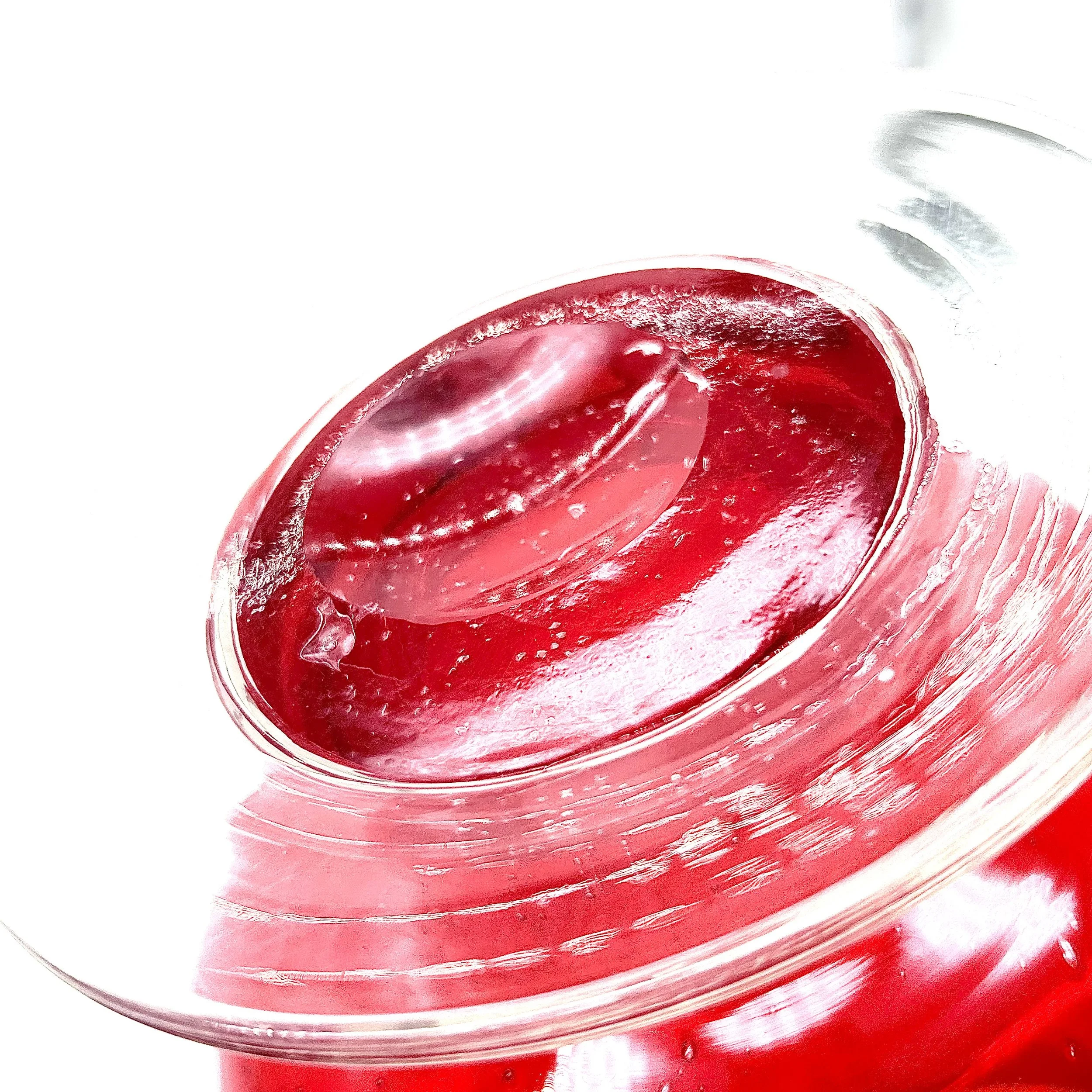
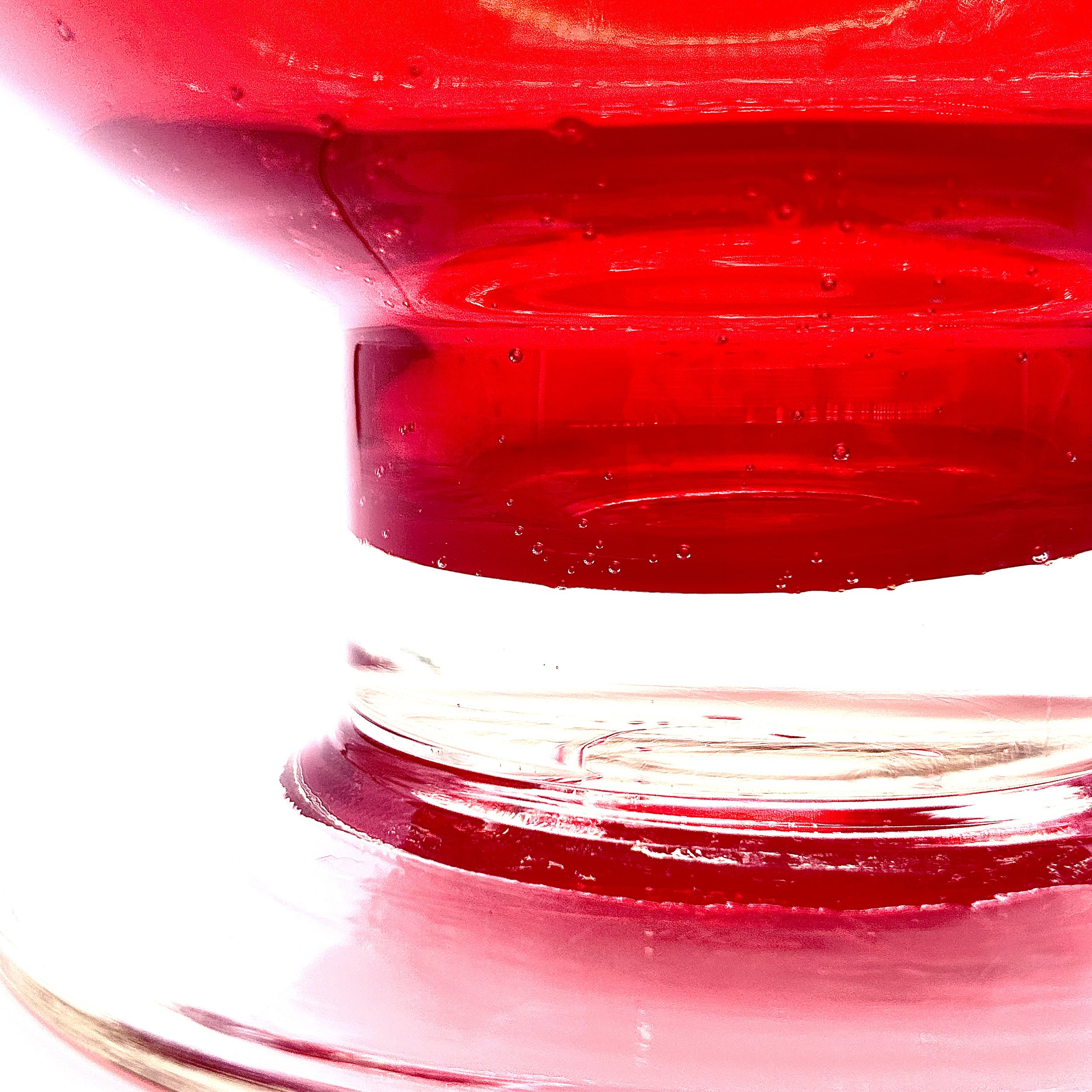
Excellent Antique Condition. The glass displays a brilliant clarity with no observed chips, cracks, or significant surface scratching. One vessel exhibits a slightly lighter saturation in the ruby stain, consistent with age and original manufacturing variances. Visible mold seams and internal cooling ripples (straw marks) are present, which are characteristic of the melting and forming process of this period rather than defects.
Authenticity & Construction
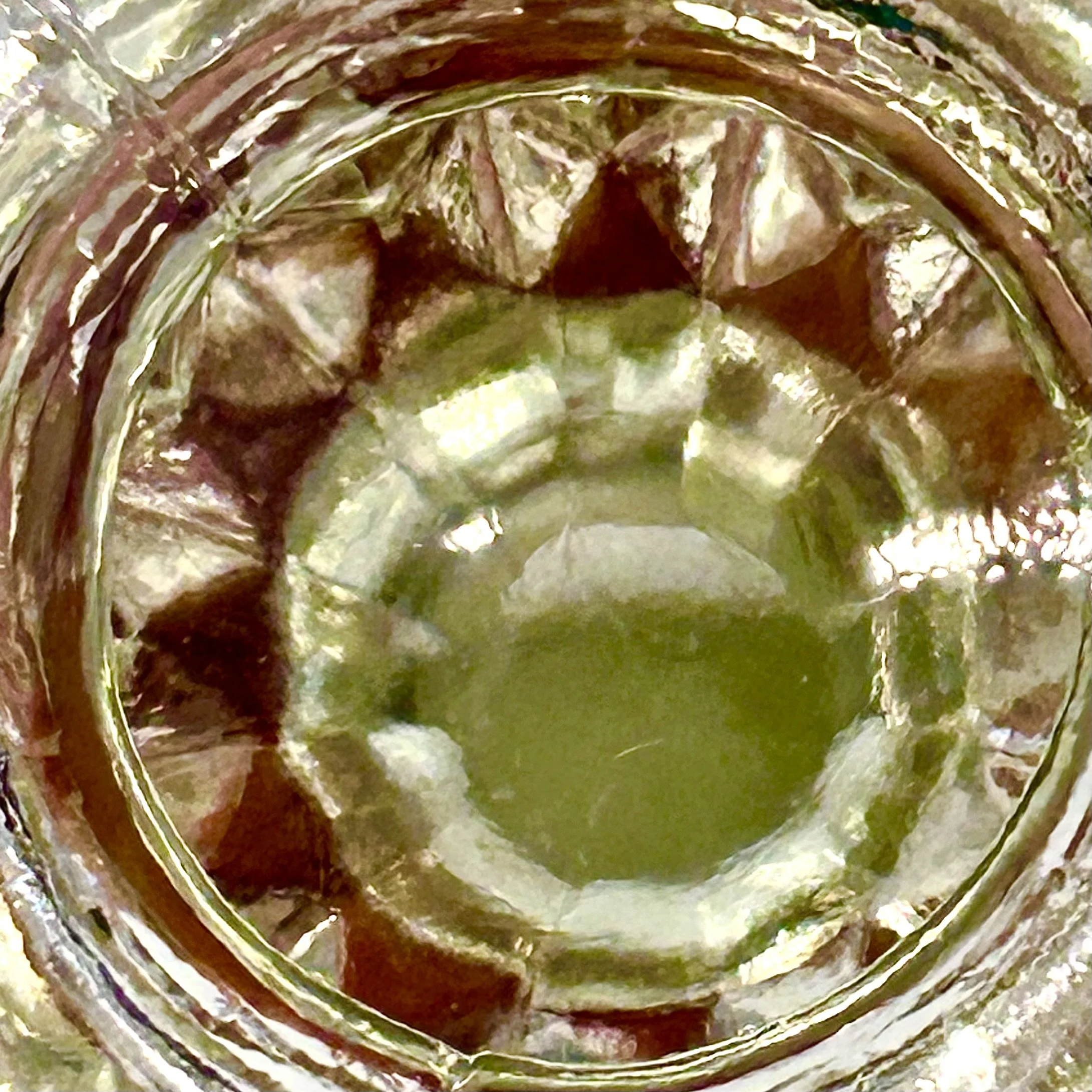
These coupes are crafted from heavy-gauge soda glass, featuring a molded "diamond point" texture that has been further defined by cutting to enhance brilliance. The ruby color is an applied stain, a hallmark of Bohemian artistry, which has been fired onto the clear substrate. The weight and visible flow lines (ripples) in the glass confirm a period-correct manufacturing process, predating modern automated precision.
Placement
These oversized coupes serve as exceptional focal points on a contemporary bar cart or as symmetrical accents within a lit breakfront. Their architectural scale and rich color palette allow them to anchor a maximalist tablescape or stand alone as vibrant sculptural vessels in a refined study.
STANDARD ATTRIBUTION & VALUE DISCLOSURE; This piece is described to the best of current scholarly and market knowledge. Any maker or regional attribution is based on visual analysis, materials, construction techniques, and documented stylistic comparisons. As with many MCM and antique design objects, definitive attribution may not be possible without original labels or factory records. Pricing reflects condition, quality, decorative appeal, and current collector demand rather than guaranteed maker identification.
This pair of monumental champagne coupes possesses a commanding sculptural presence, defined by a deep ruby stain and a dense, light-refracting diamond cut. The broad, six-inch diameter of the bowls creates a dramatic silhouette, while the iridescent quality of the glass ensures a dynamic interaction with ambient light. Their scale and textural complexity elevate them from functional stemware to significant decorative objects of the late 19th-century glassmaking tradition.
Attribution & Period
Regional Example: Bohemia (Czech Republic), 1880s.
The construction, featuring a "ruby-stained" or "flashed" rim over a clear molded and cut body, is stylistically aligned with late Victorian Bohemian glass production. The presence of mold seams combined with hand-finished cutting on the "diamond" points and faceted stems is characteristic of high-quality mass-market luxury goods from the Josephinenhütte or Val Saint Lambert era. The slight variation in color density between the two pieces is consistent with 19th-century hand-dipping staining techniques.
Dimensions & Weight
Height: 7 1/4 inches
Diameter (Mouth): 6 inches
Base Diameter: 3 1/2 inches
Weight: 2.024 lbs (per glass)
Condition
Excellent Antique Condition. The glass displays a brilliant clarity with no observed chips, cracks, or significant surface scratching. One vessel exhibits a slightly lighter saturation in the ruby stain, consistent with age and original manufacturing variances. Visible mold seams and internal cooling ripples (straw marks) are present, which are characteristic of the melting and forming process of this period rather than defects.
Authenticity & Construction
These coupes are crafted from heavy-gauge soda glass, featuring a molded "diamond point" texture that has been further defined by cutting to enhance brilliance. The ruby color is an applied stain, a hallmark of Bohemian artistry, which has been fired onto the clear substrate. The weight and visible flow lines (ripples) in the glass confirm a period-correct manufacturing process, predating modern automated precision.
Placement
These oversized coupes serve as exceptional focal points on a contemporary bar cart or as symmetrical accents within a lit breakfront. Their architectural scale and rich color palette allow them to anchor a maximalist tablescape or stand alone as vibrant sculptural vessels in a refined study.
STANDARD ATTRIBUTION & VALUE DISCLOSURE; This piece is described to the best of current scholarly and market knowledge. Any maker or regional attribution is based on visual analysis, materials, construction techniques, and documented stylistic comparisons. As with many MCM and antique design objects, definitive attribution may not be possible without original labels or factory records. Pricing reflects condition, quality, decorative appeal, and current collector demand rather than guaranteed maker identification.