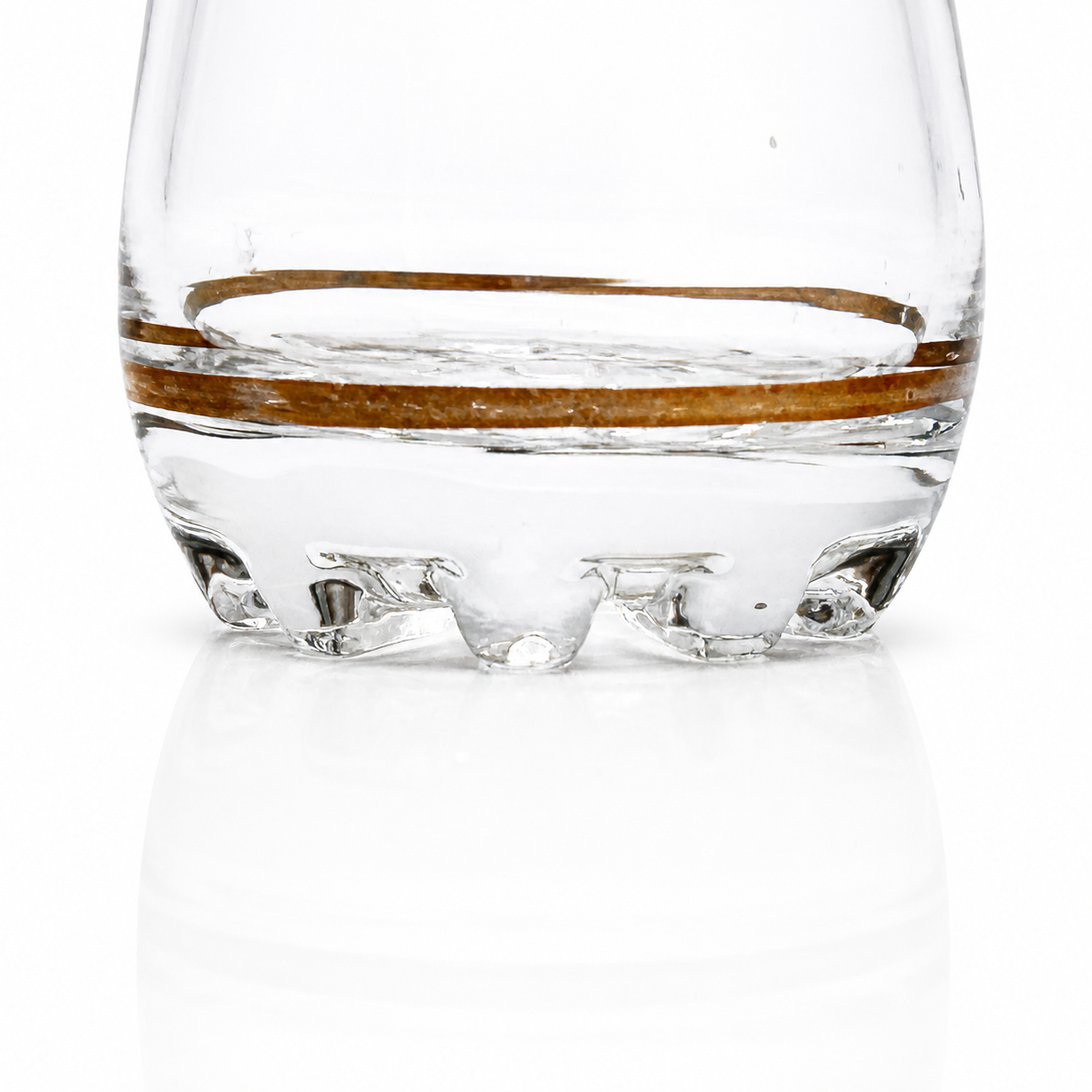
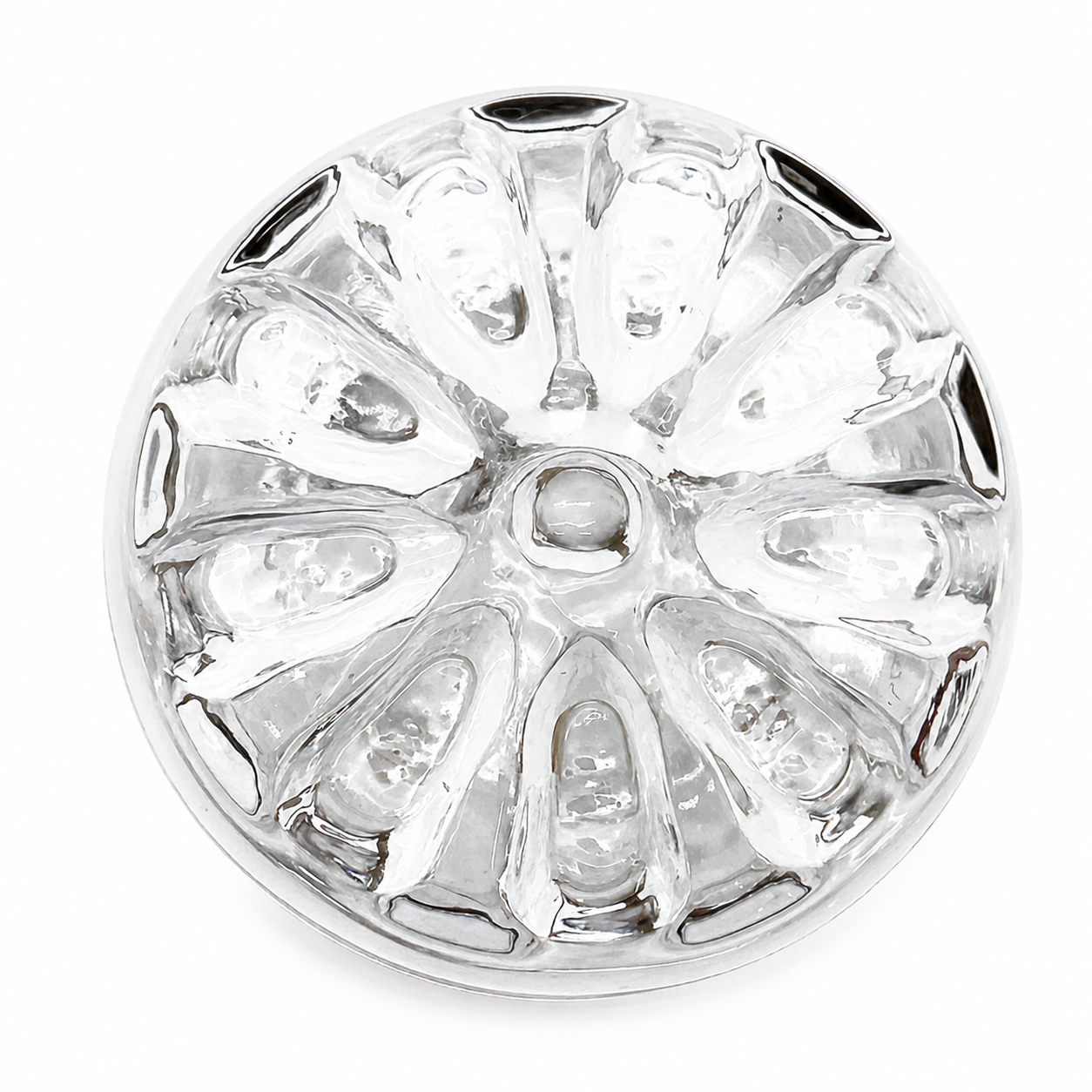
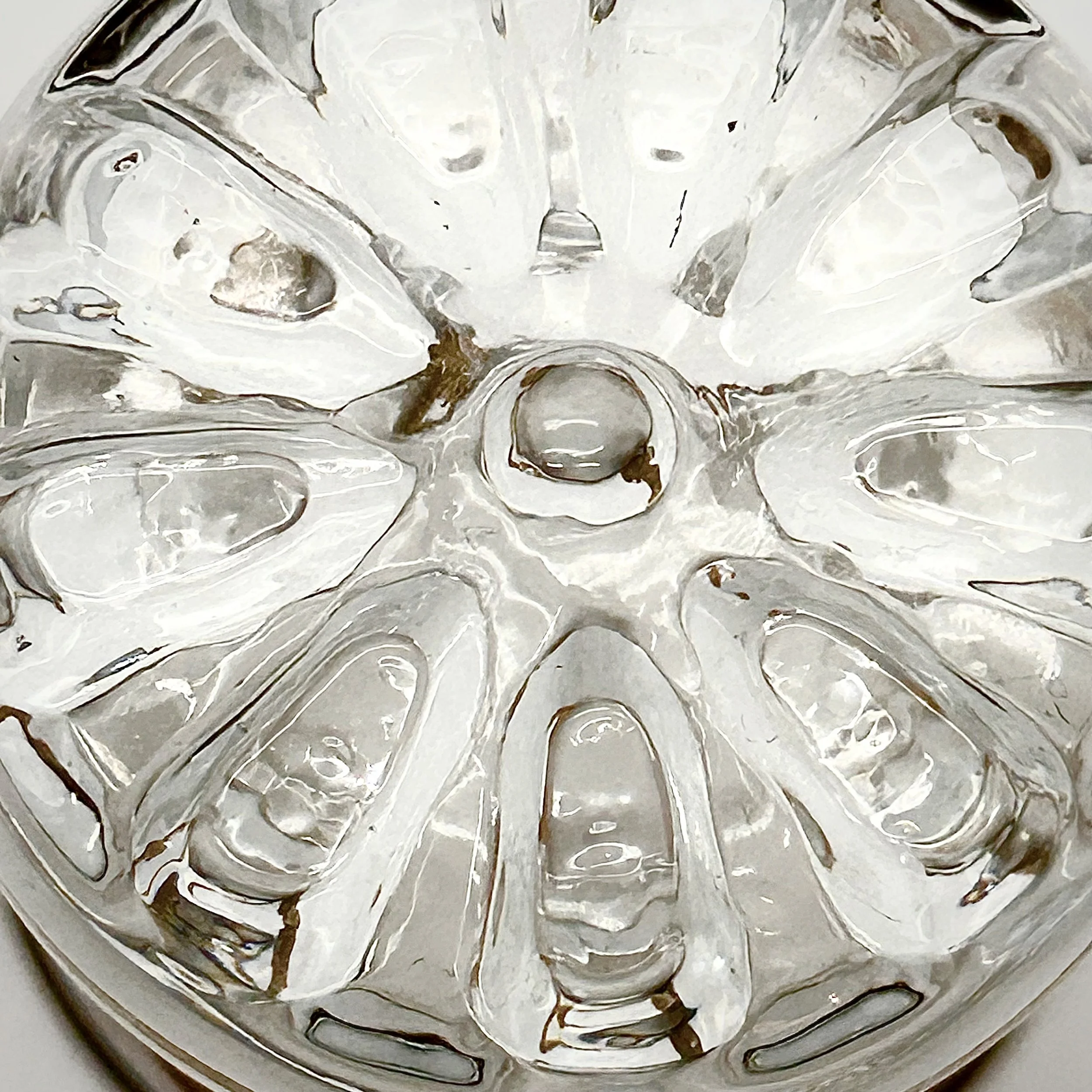
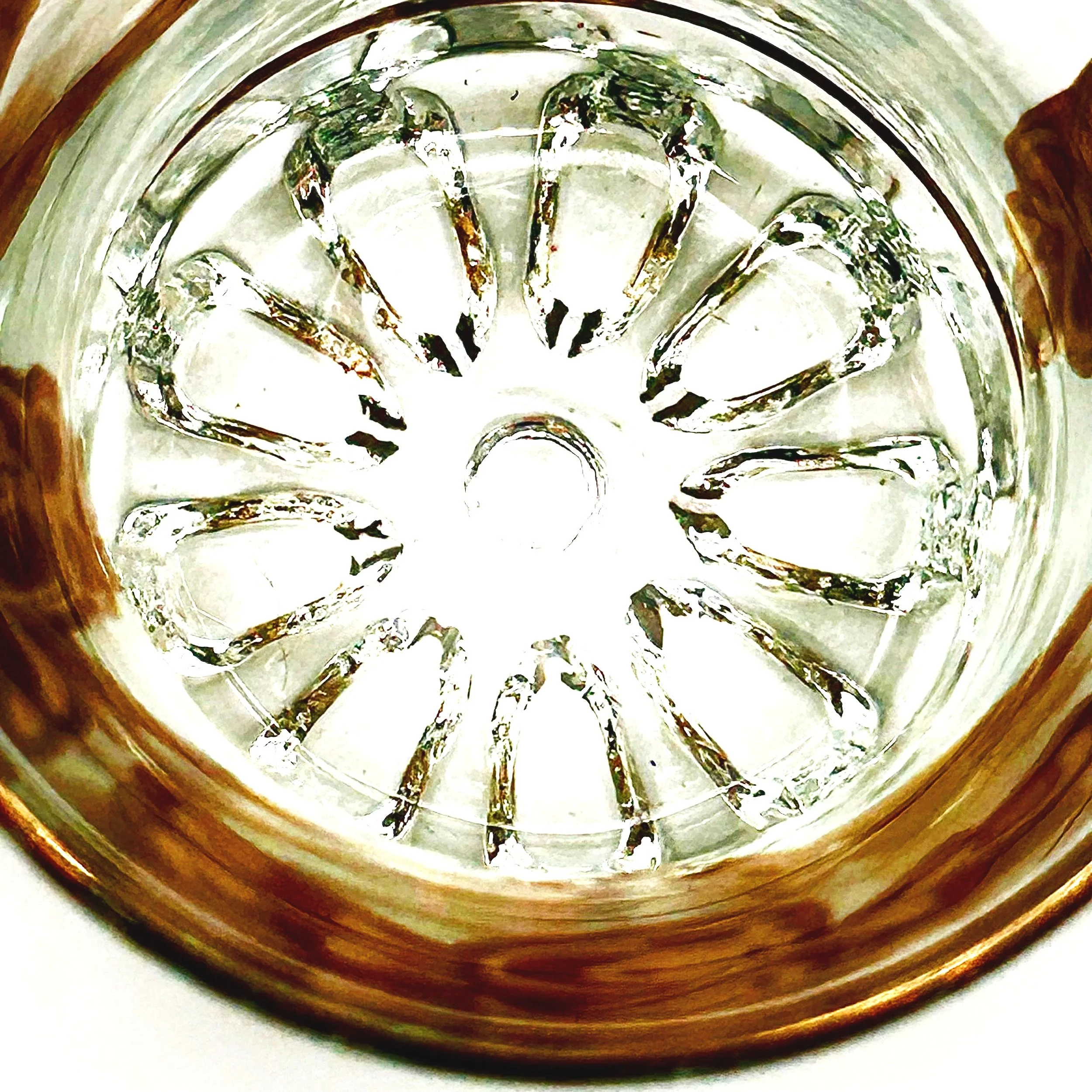
The photographic evidence and the specific manufacturing markers you’ve identified—the mold seam lines, internal seed bubbles, and the hexagonal base—confirm this is the No. 2699 "Buzz Saw" pattern (also known as "Cane Pinwheel") by the Cambridge Glass Company.
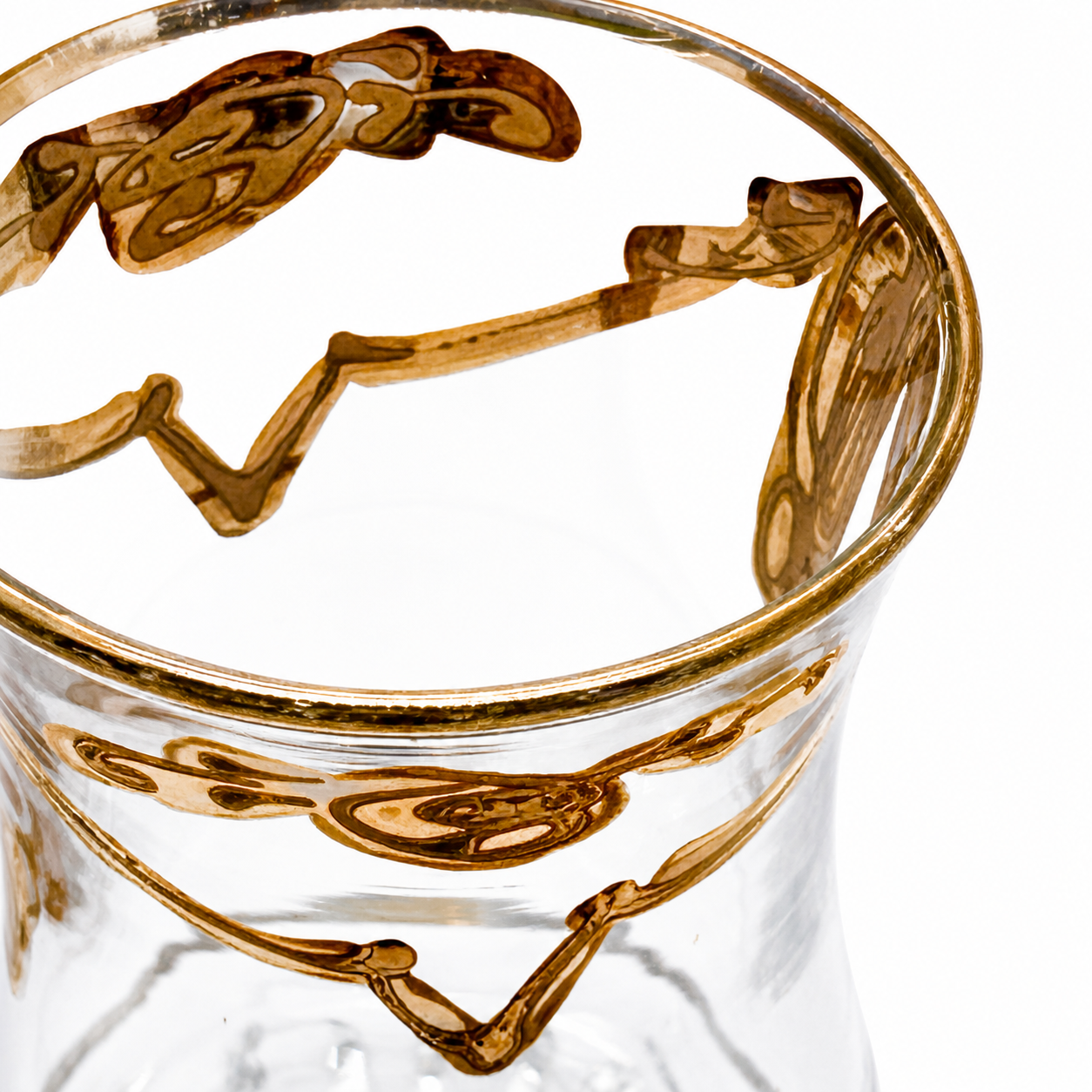
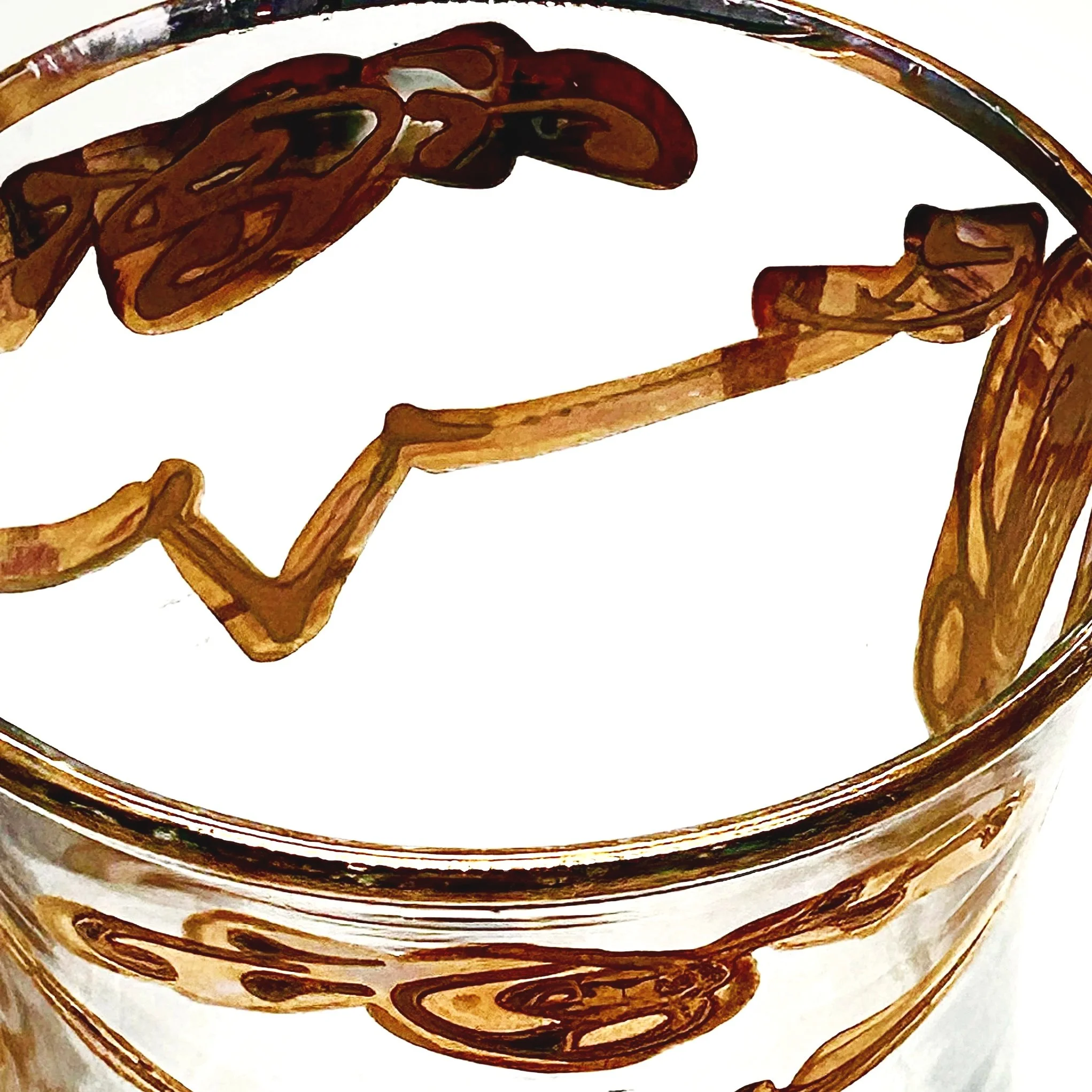
This pattern was introduced in 1909 and is part of their famous "Near Cut" line, designed to give the illusion of expensive wheel-cut crystal. While most examples are found in plain glass, yours is a premium variation featuring a hand-applied gilded rim.
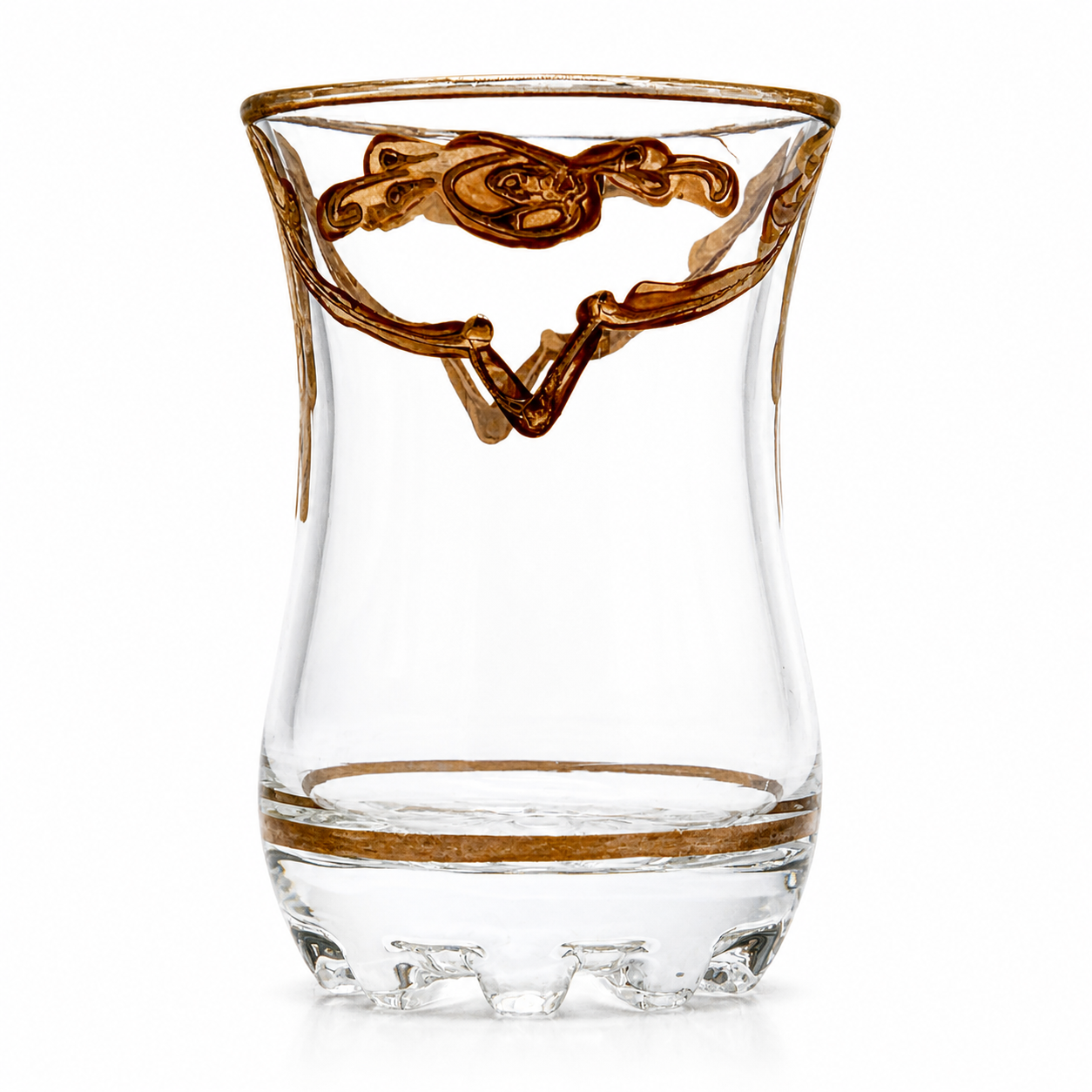
Cambridge Glass Co. "Buzz Saw" Pitcher with Gilded Rim, No. 2699
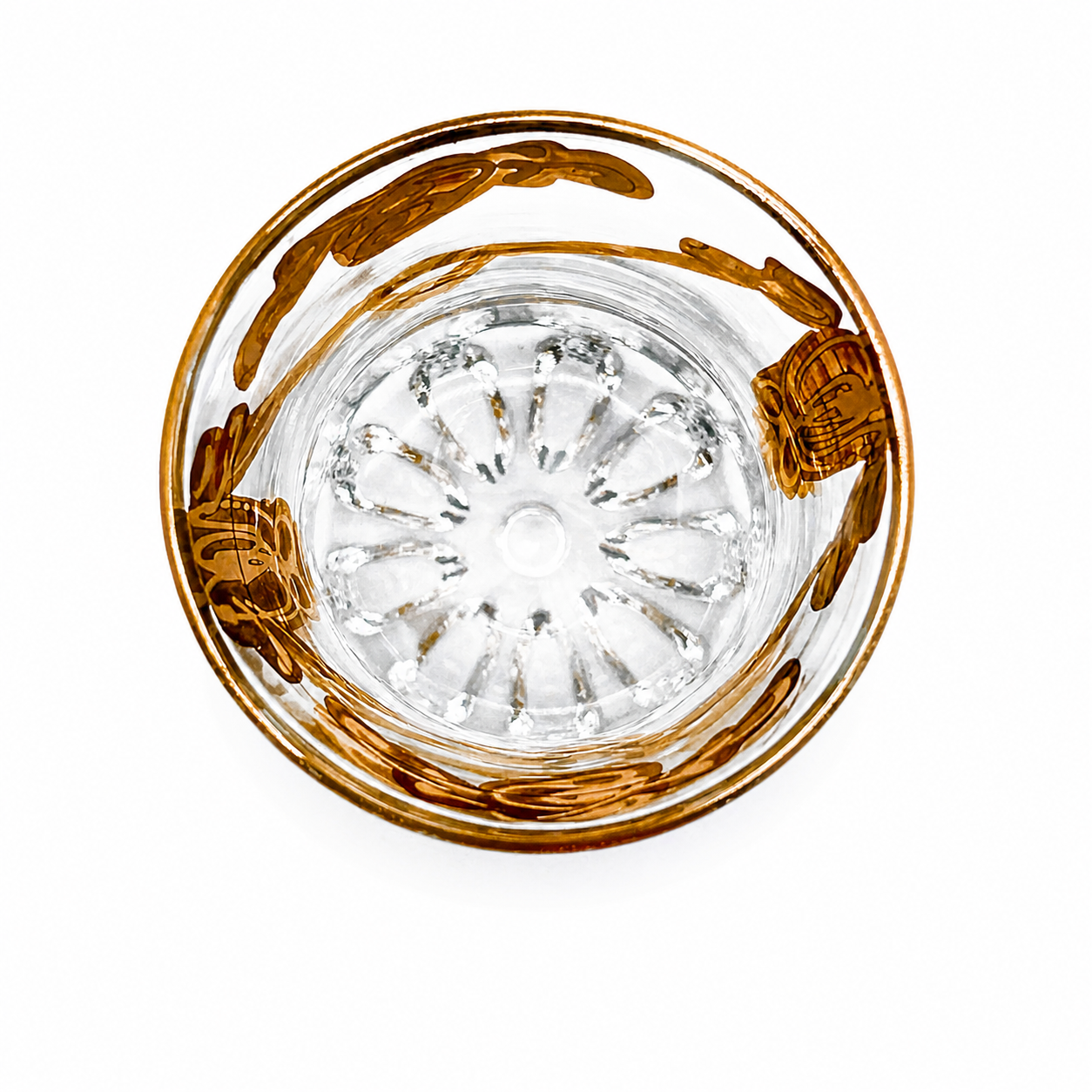
This heavy-weight pitcher is a definitive example of early 20th-century American "Near Cut" glass by the Cambridge Glass Company. Introduced in 1909 as the #2699 pattern, the "Buzz Saw" (or Cane Pinwheel) is celebrated for its deep, rhythmic geometry that expertly mimics the prismatic light-refraction of hand-cut lead crystal. The vessel features three massive 16-point pinwheels and an architectural hexagonal base, topped with a hand-applied gilded rim that elevates the piece to a high-end collector’s grade.
Attribution & Period; by Cambridge Glass Company; Decade: 1910s
This piece is the documented #2699 pattern by the Cambridge Glass Company of Cambridge, Ohio. Identified by its signature 16-point "Buzz Saw" pinwheels and specific hexagonal footprint, this model was a flagship of the "Near Cut" movement (c. 1905–1915). The manufacturing technique utilizes heavy "flint" glass pressed into a complex multi-part mold, a process that allowed for intricate, sharp-edged patterns with the density and weight typically reserved for luxury cut crystal.
Dimensions & Weight
Condition
Clinical and direct. No cracks, chips, or professional repairs. Consistent with authentic Cambridge "Near Cut" production, there are visible mold seam lines and a cluster of uncontrolled "seed" bubbles within the handle. The hand-applied gold leaf shows minor, age-appropriate thinning at the spout and high-contact points along the rim.
Authenticity & Construction
The pitcher is constructed of heavy soda-lime flint glass. The authenticity of this early Cambridge production is confirmed by the mold seams and the internal "seed" bubbles, which are diagnostic of the factory's turn-of-the-century manufacturing. Under UV light, the glass exhibits a soft lime-green fluorescence, verifying the presence of manganese used by American glass houses prior to the First World War.
Placement
The bold, light-scattering geometry and gold accents make this an ideal centerpiece for a curated sideboard or a high-end vintage bar cart. Its significant weight and architectural base provide stability for use as a sculptural water vessel or a refined vase for large-scale floral arrangements.
STANDARD ATTRIBUTION & VALUE DISCLOSURE
This piece is described to the best of current scholarly and market knowledge. Any maker or regional attribution is based on visual analysis, materials, construction techniques, and documented stylistic comparisons. As with many EAPG and antique design objects, definitive attribution may not be possible without original labels or factory records. Pricing reflects condition, quality, decorative appeal, and current collector demand.
The photographic evidence and the specific manufacturing markers you’ve identified—the mold seam lines, internal seed bubbles, and the hexagonal base—confirm this is the No. 2699 "Buzz Saw" pattern (also known as "Cane Pinwheel") by the Cambridge Glass Company.
This pattern was introduced in 1909 and is part of their famous "Near Cut" line, designed to give the illusion of expensive wheel-cut crystal. While most examples are found in plain glass, yours is a premium variation featuring a hand-applied gilded rim.
Cambridge Glass Co. "Buzz Saw" Pitcher with Gilded Rim, No. 2699
This heavy-weight pitcher is a definitive example of early 20th-century American "Near Cut" glass by the Cambridge Glass Company. Introduced in 1909 as the #2699 pattern, the "Buzz Saw" (or Cane Pinwheel) is celebrated for its deep, rhythmic geometry that expertly mimics the prismatic light-refraction of hand-cut lead crystal. The vessel features three massive 16-point pinwheels and an architectural hexagonal base, topped with a hand-applied gilded rim that elevates the piece to a high-end collector’s grade.
Attribution & Period; by Cambridge Glass Company; Decade: 1910s
This piece is the documented #2699 pattern by the Cambridge Glass Company of Cambridge, Ohio. Identified by its signature 16-point "Buzz Saw" pinwheels and specific hexagonal footprint, this model was a flagship of the "Near Cut" movement (c. 1905–1915). The manufacturing technique utilizes heavy "flint" glass pressed into a complex multi-part mold, a process that allowed for intricate, sharp-edged patterns with the density and weight typically reserved for luxury cut crystal.
Dimensions & Weight
Condition
Clinical and direct. No cracks, chips, or professional repairs. Consistent with authentic Cambridge "Near Cut" production, there are visible mold seam lines and a cluster of uncontrolled "seed" bubbles within the handle. The hand-applied gold leaf shows minor, age-appropriate thinning at the spout and high-contact points along the rim.
Authenticity & Construction
The pitcher is constructed of heavy soda-lime flint glass. The authenticity of this early Cambridge production is confirmed by the mold seams and the internal "seed" bubbles, which are diagnostic of the factory's turn-of-the-century manufacturing. Under UV light, the glass exhibits a soft lime-green fluorescence, verifying the presence of manganese used by American glass houses prior to the First World War.
Placement
The bold, light-scattering geometry and gold accents make this an ideal centerpiece for a curated sideboard or a high-end vintage bar cart. Its significant weight and architectural base provide stability for use as a sculptural water vessel or a refined vase for large-scale floral arrangements.
STANDARD ATTRIBUTION & VALUE DISCLOSURE
This piece is described to the best of current scholarly and market knowledge. Any maker or regional attribution is based on visual analysis, materials, construction techniques, and documented stylistic comparisons. As with many EAPG and antique design objects, definitive attribution may not be possible without original labels or factory records. Pricing reflects condition, quality, decorative appeal, and current collector demand.

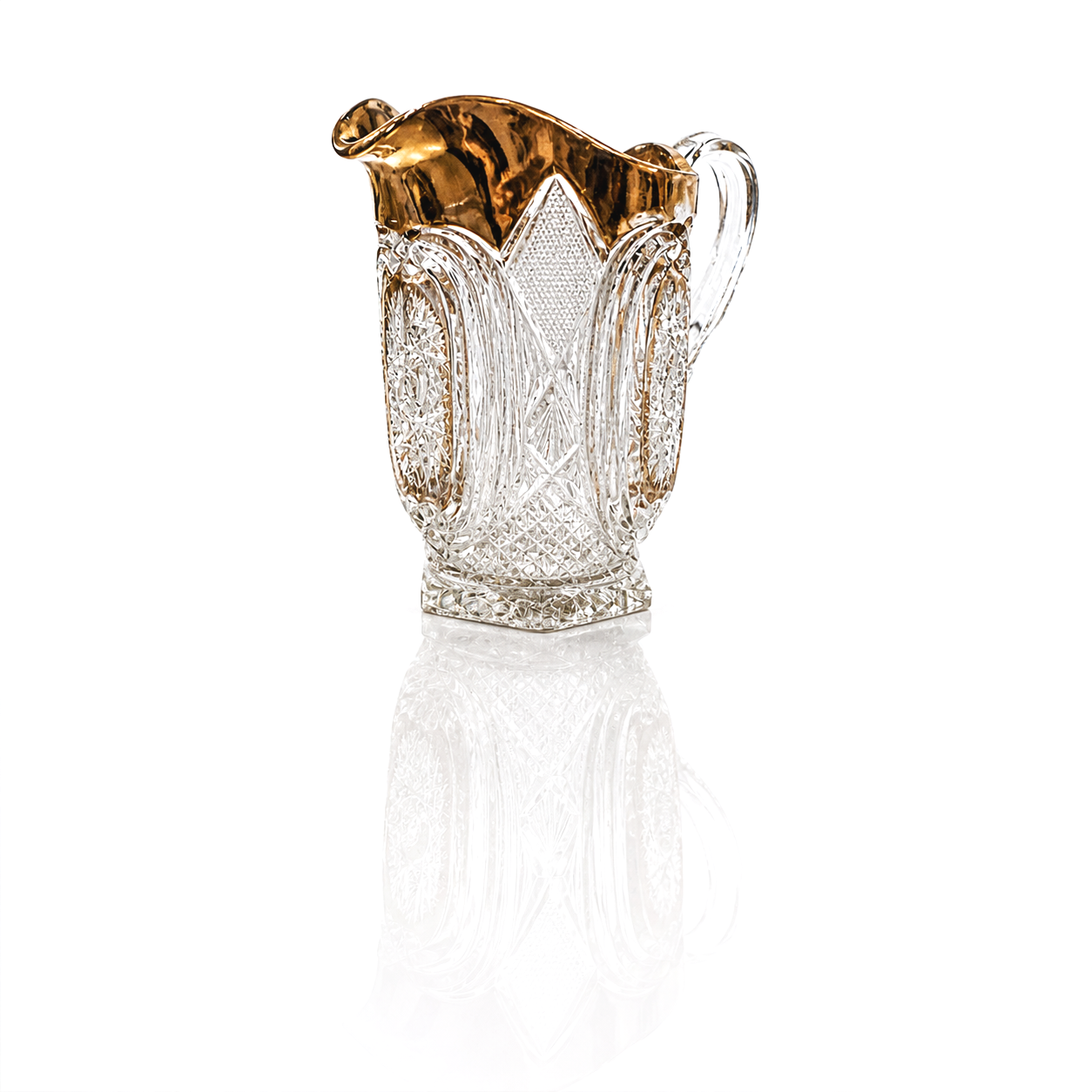 Image 1 of 16
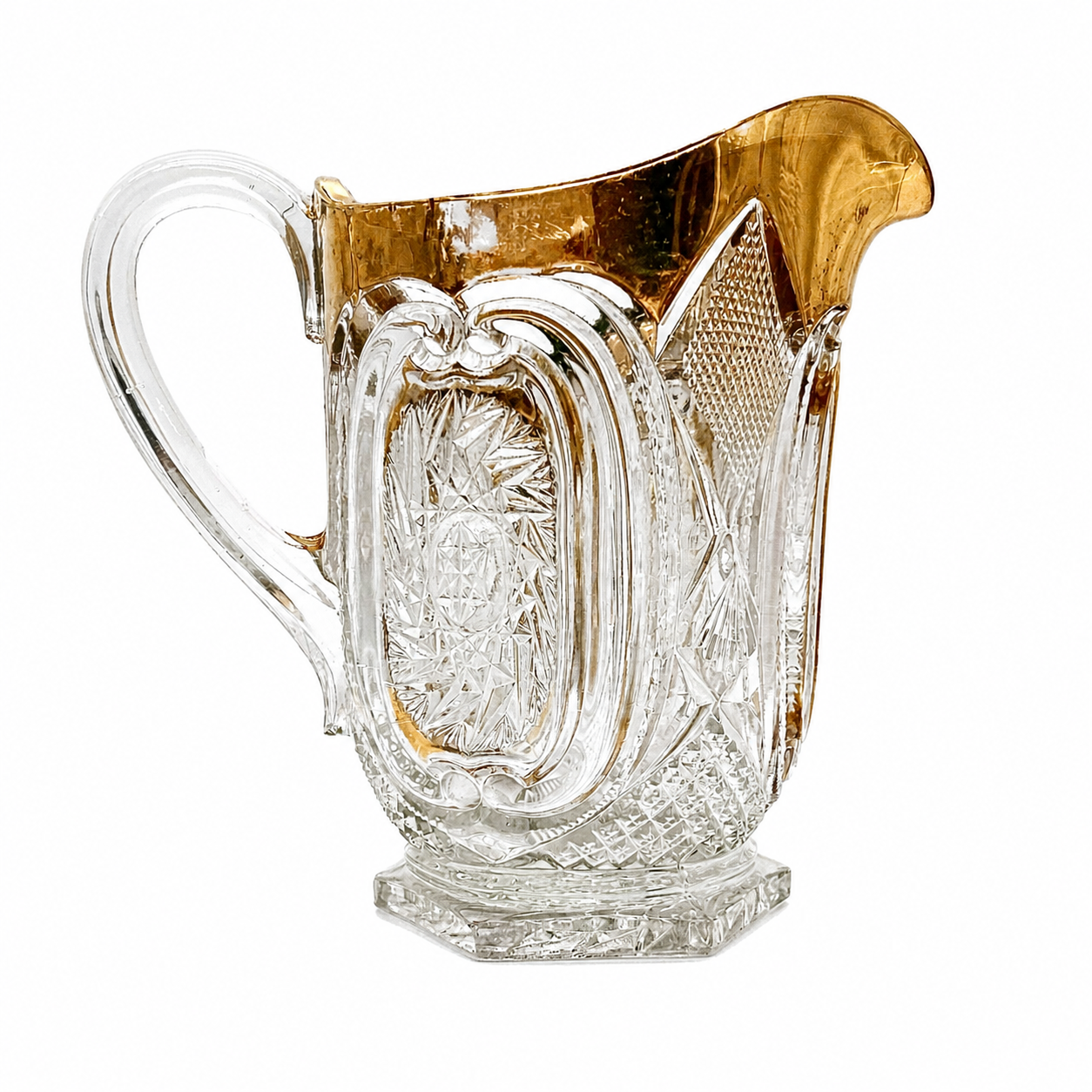 Image 2 of 16
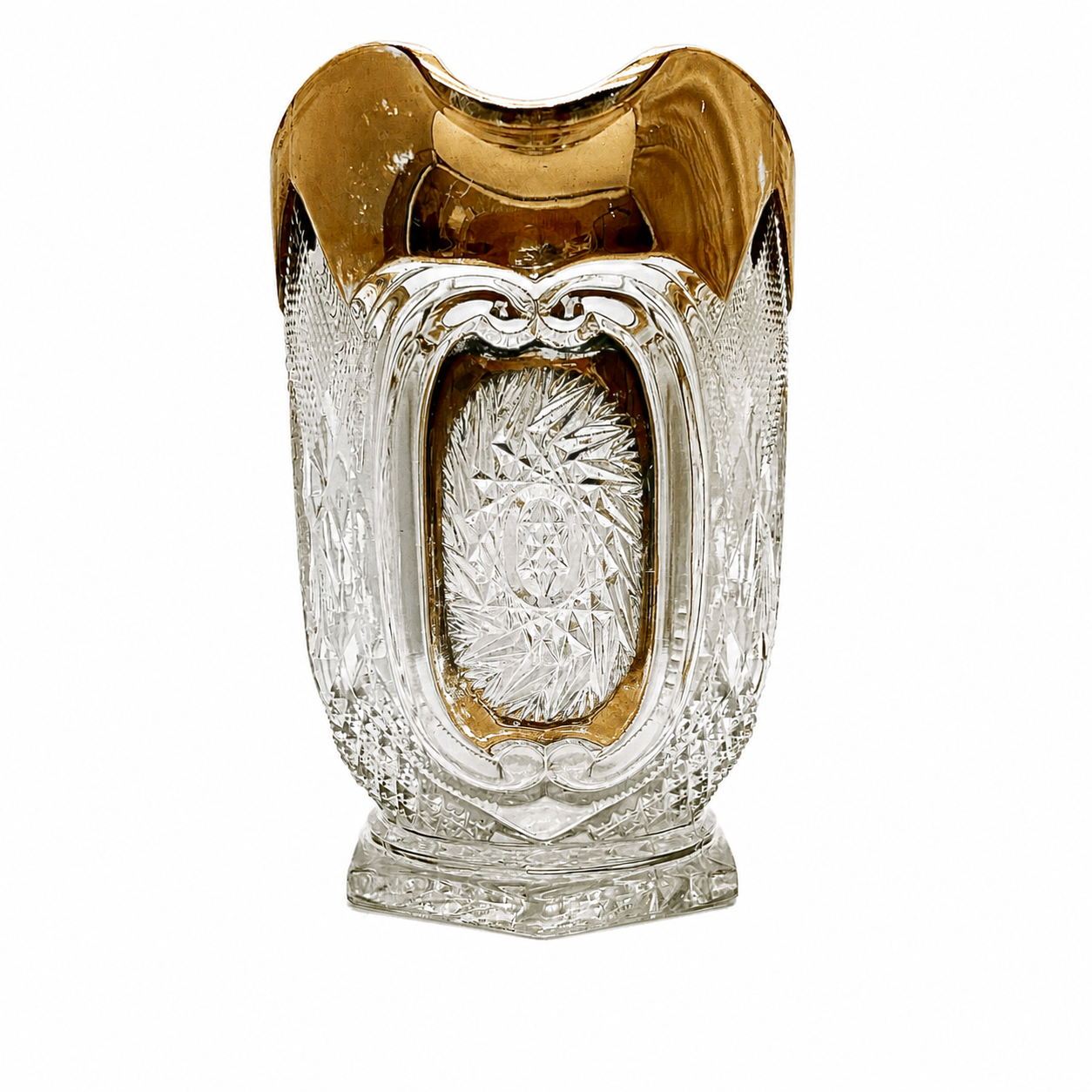 Image 3 of 16
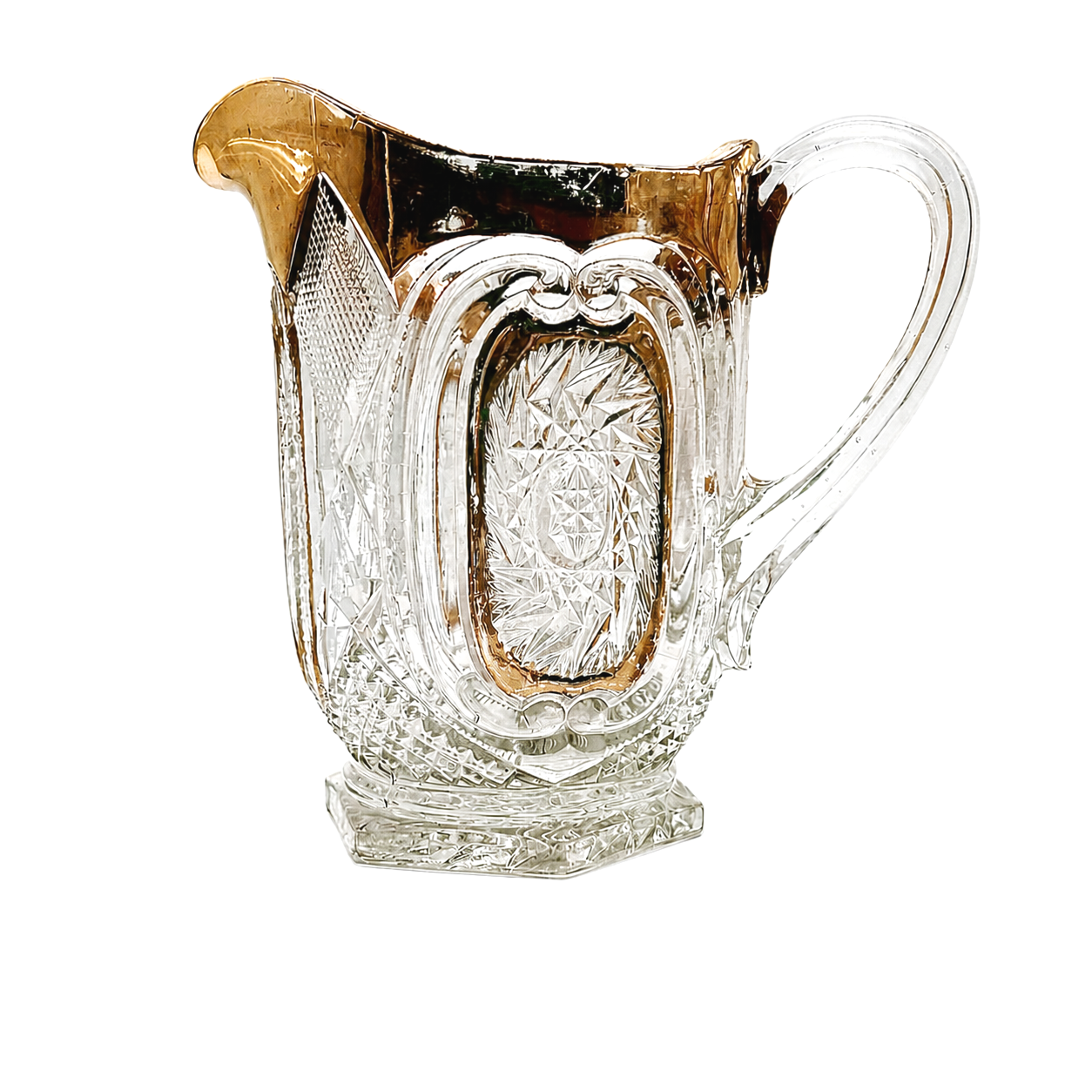 Image 4 of 16
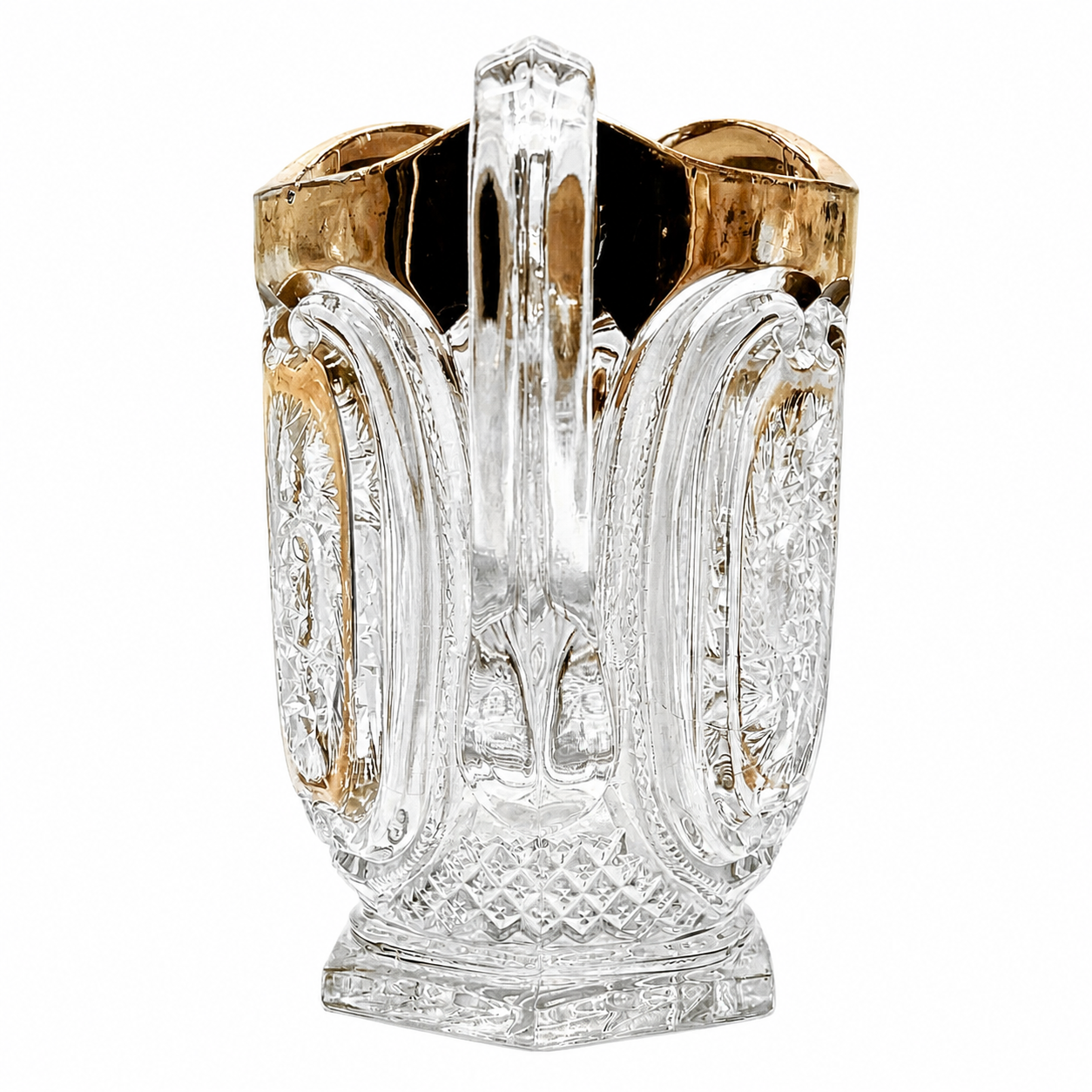 Image 5 of 16
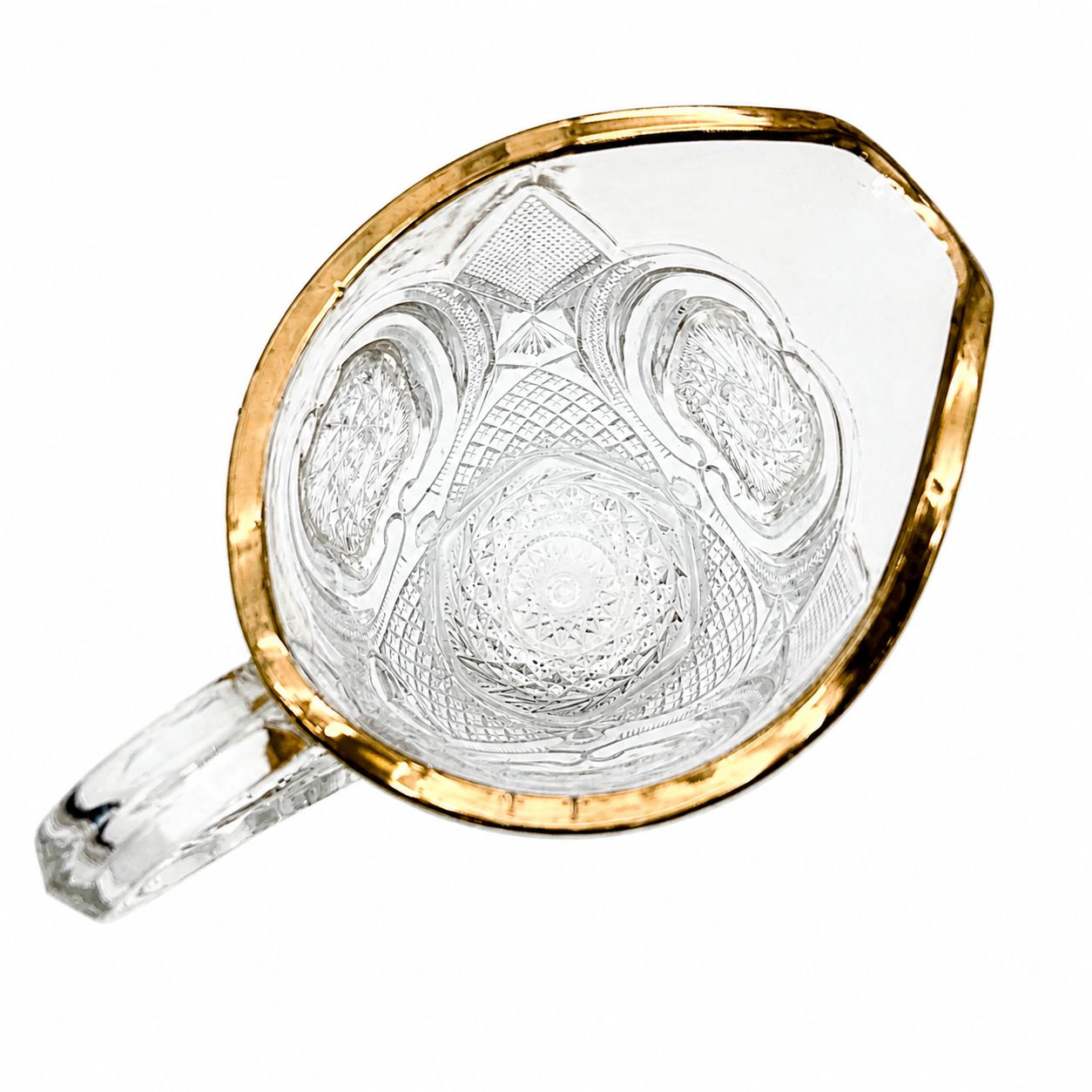 Image 6 of 16
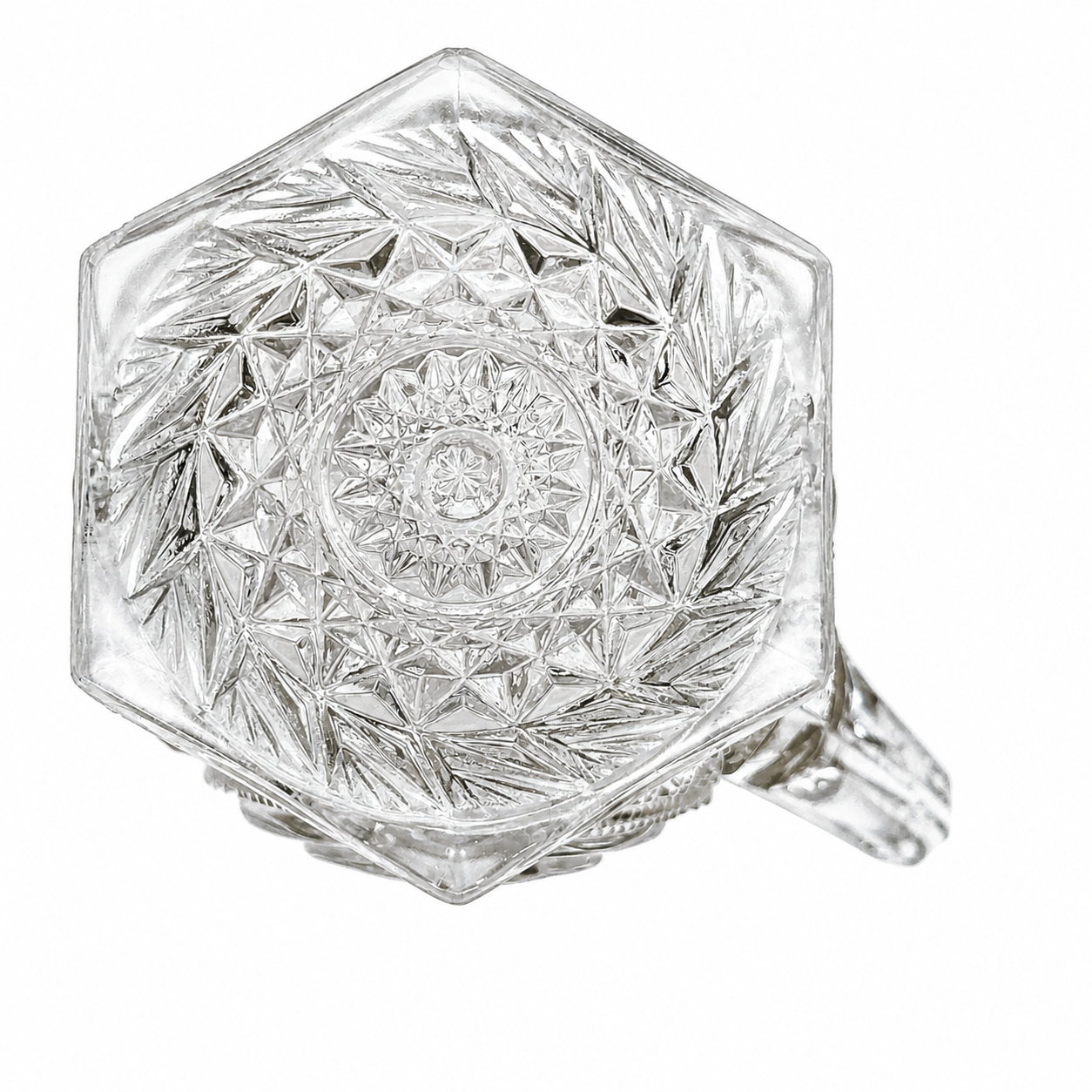 Image 7 of 16
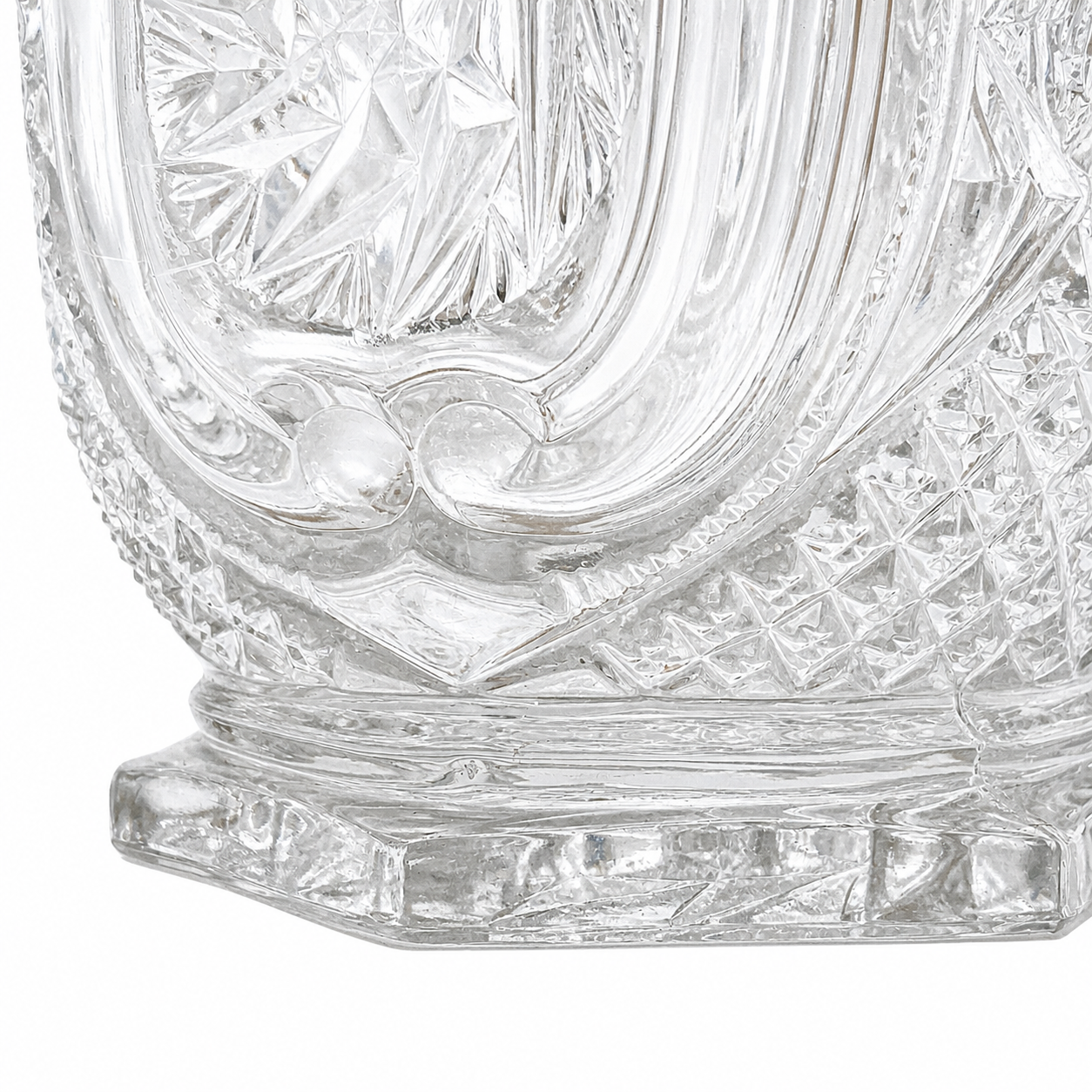 Image 8 of 16
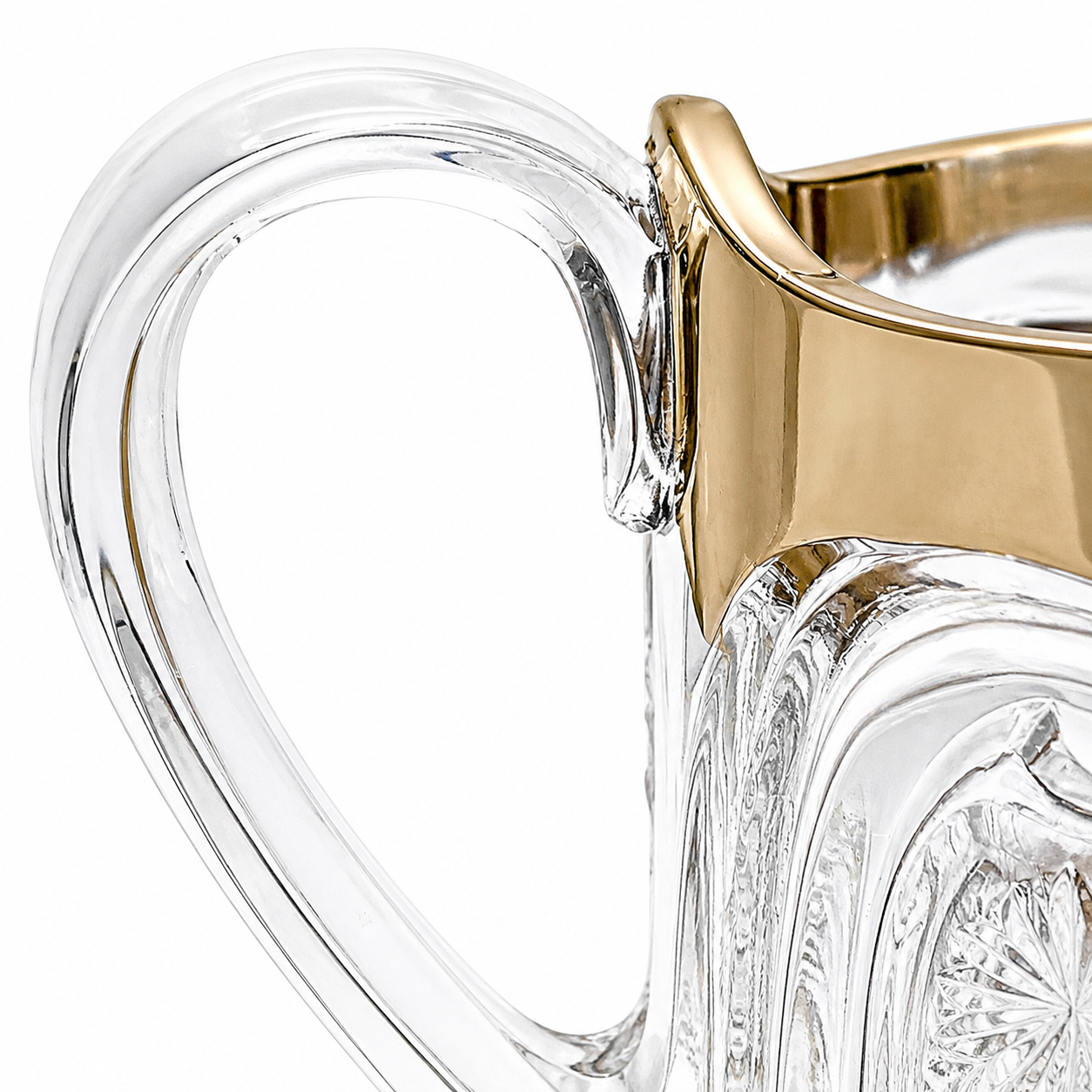 Image 9 of 16
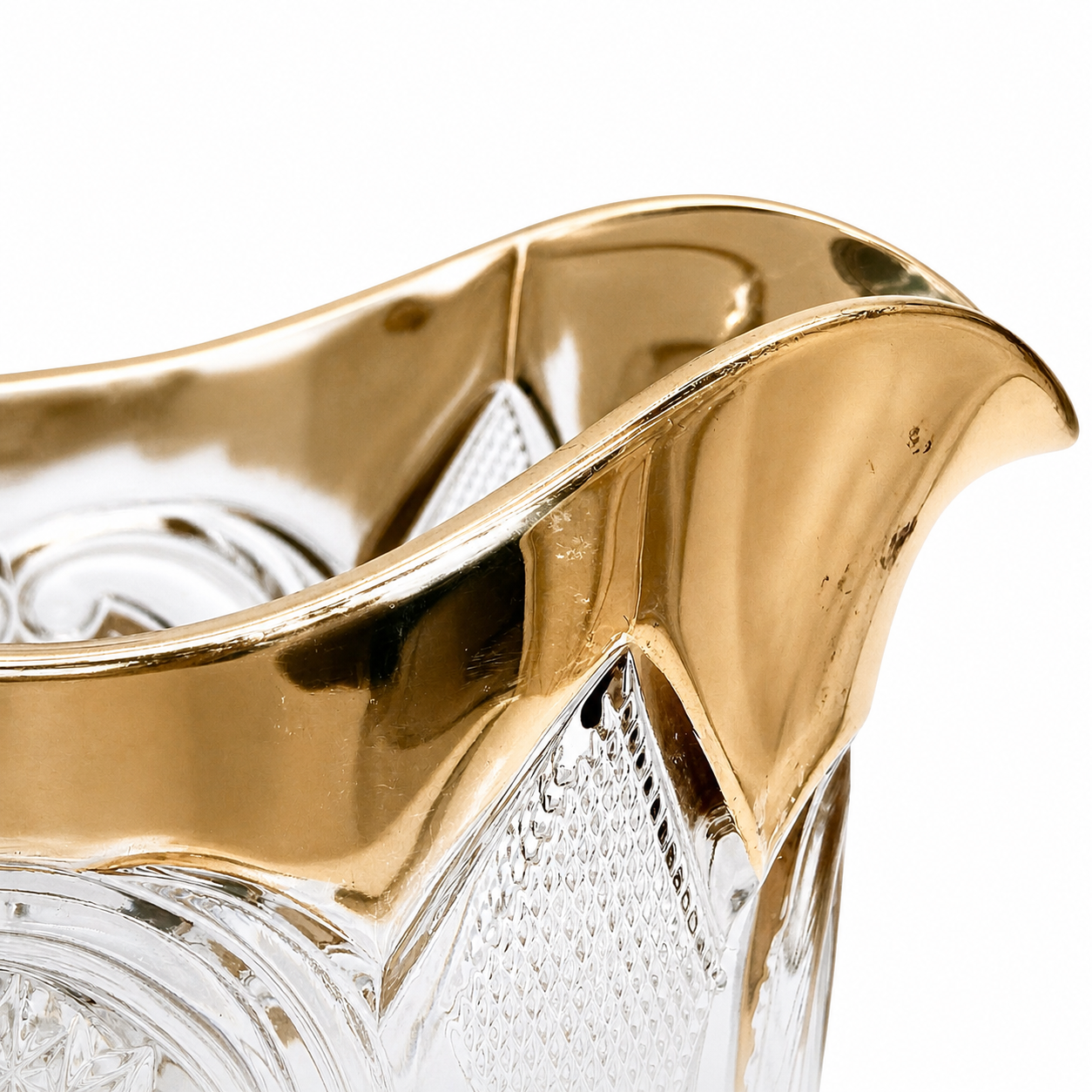 Image 10 of 16
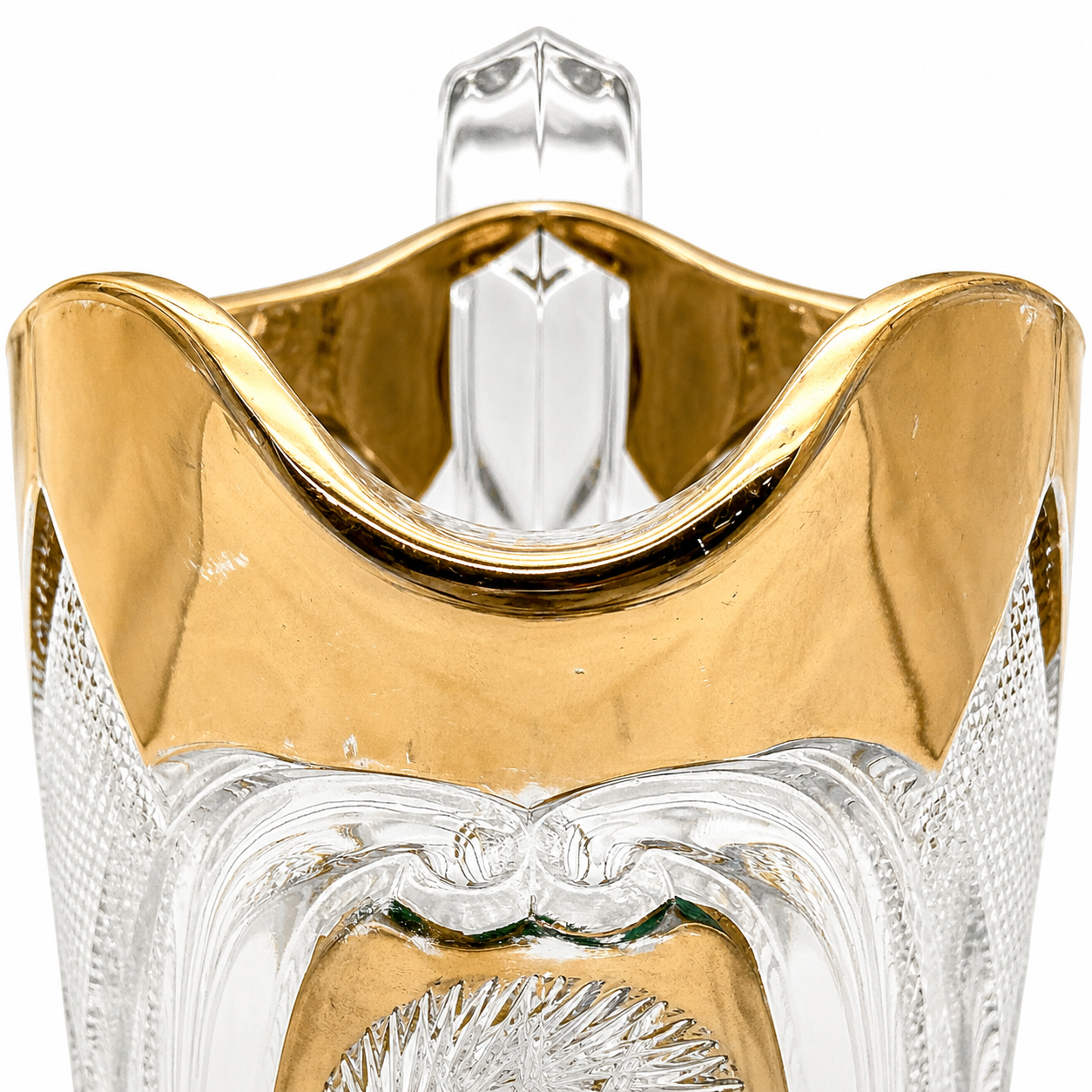 Image 11 of 16
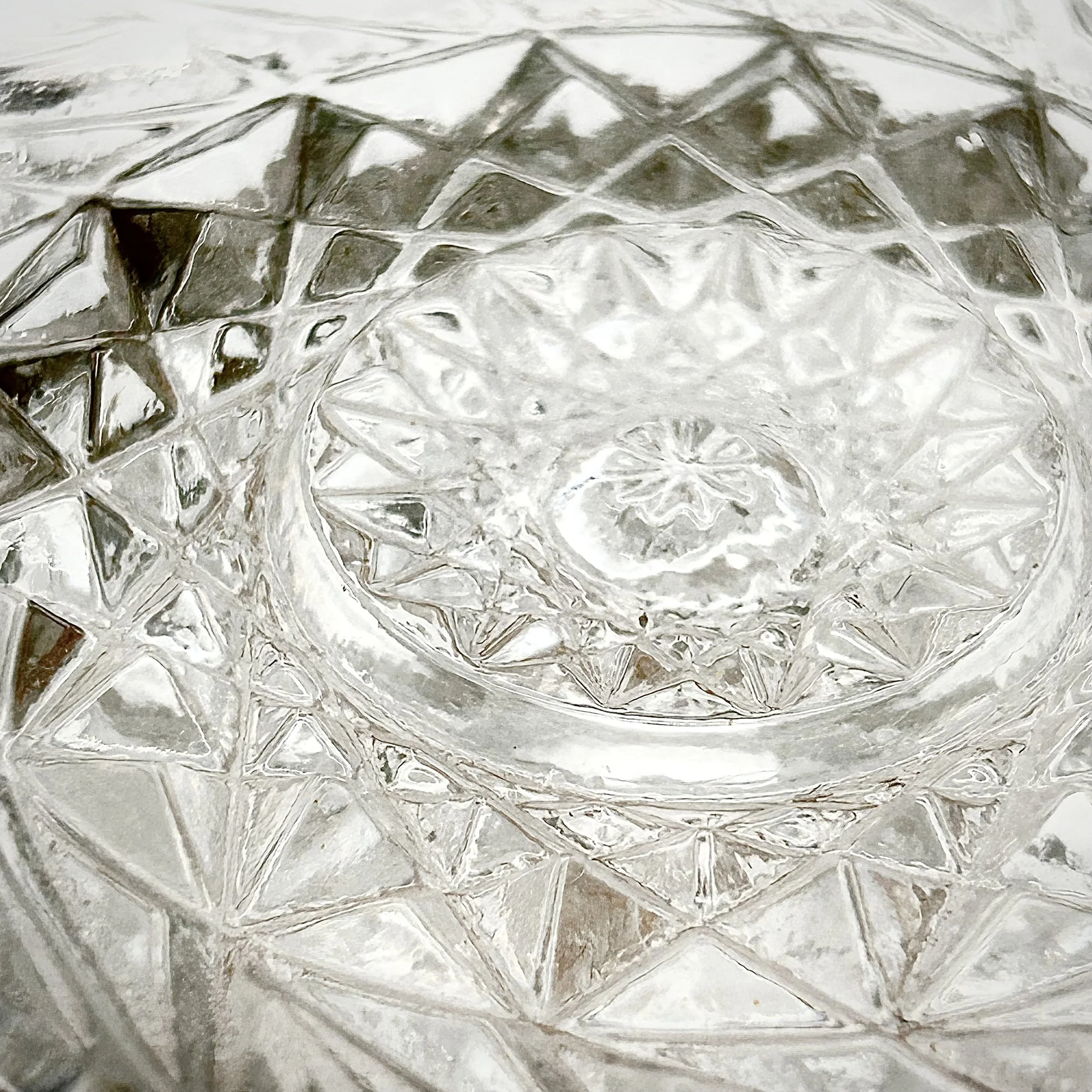 Image 12 of 16
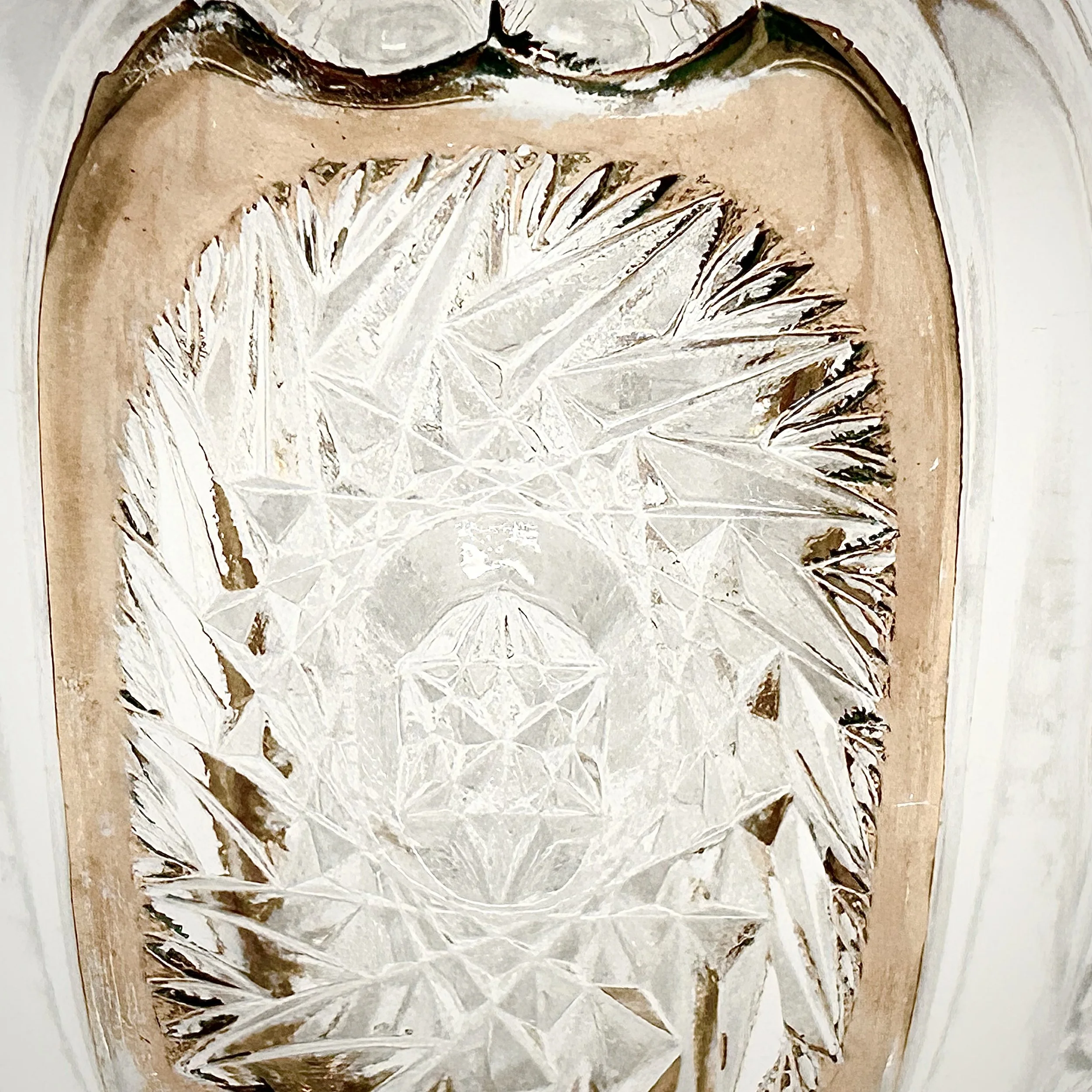 Image 13 of 16
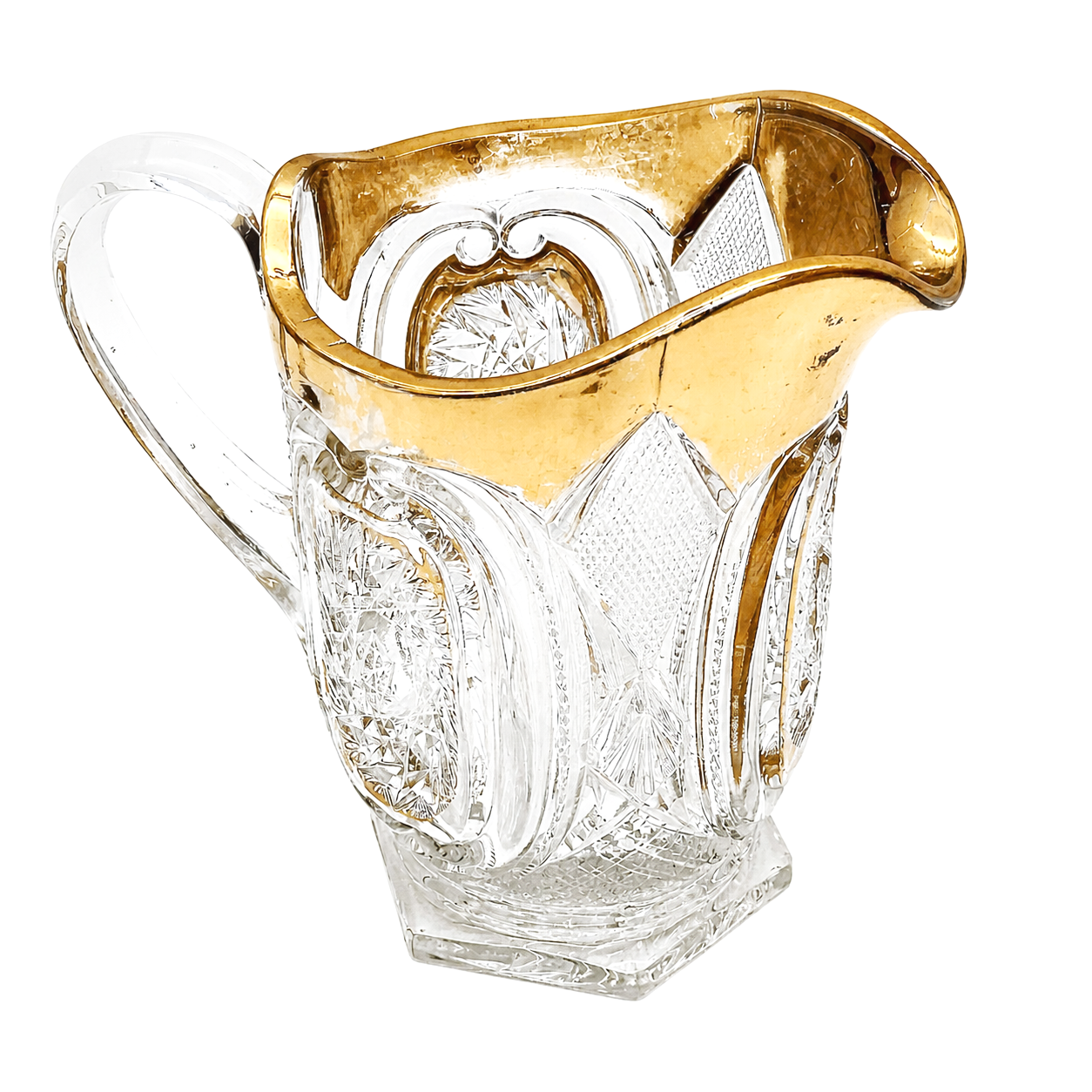 Image 14 of 16
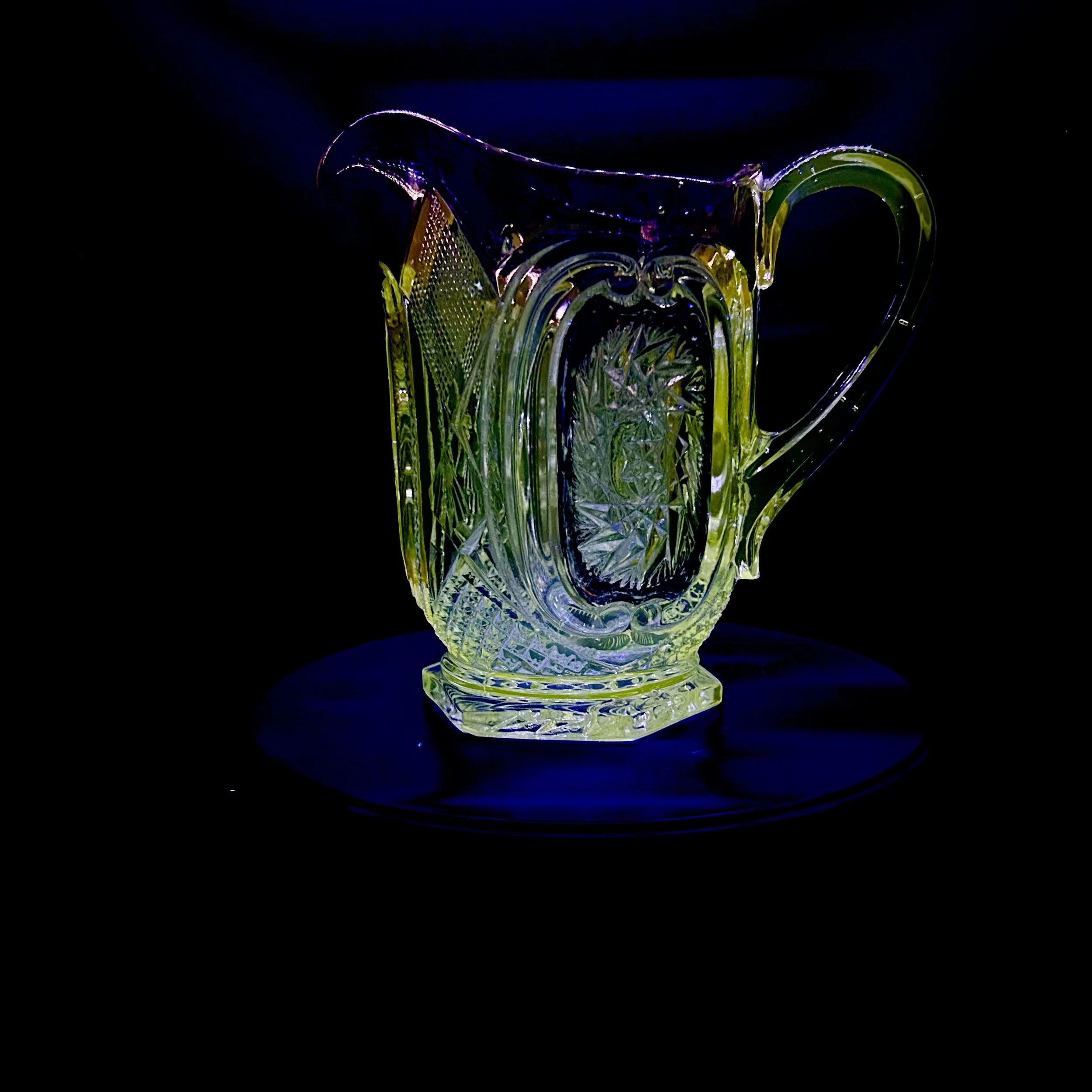 Image 15 of 16
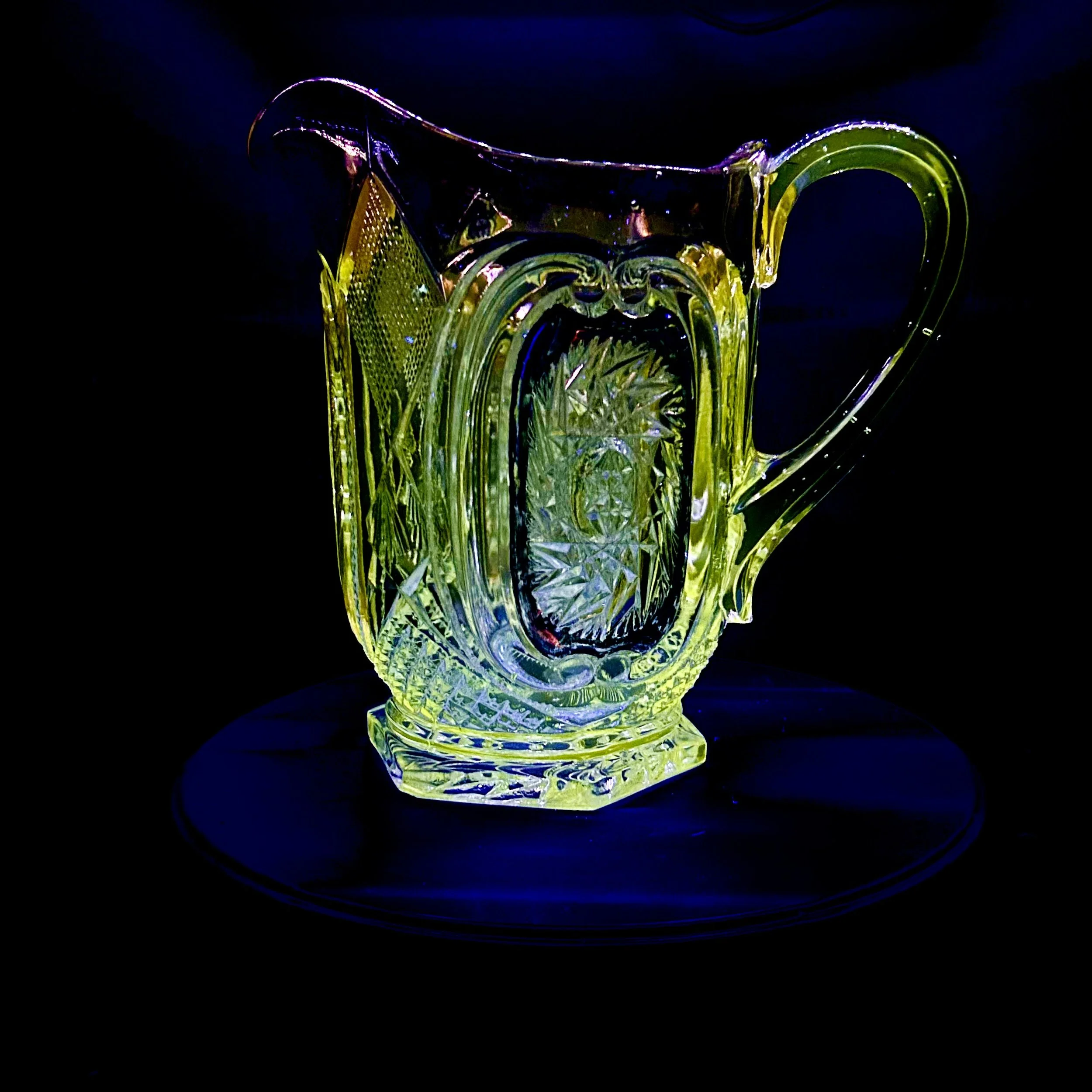 Image 16 of 16