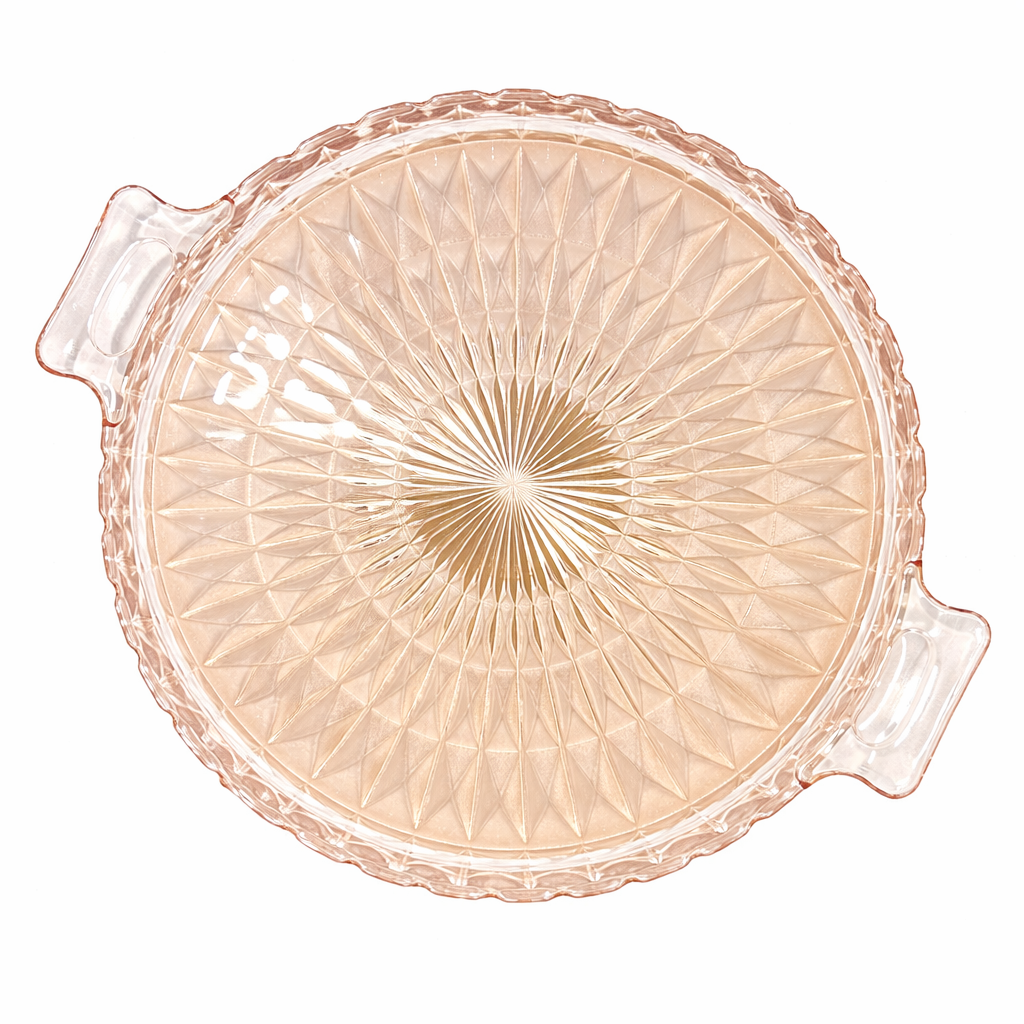
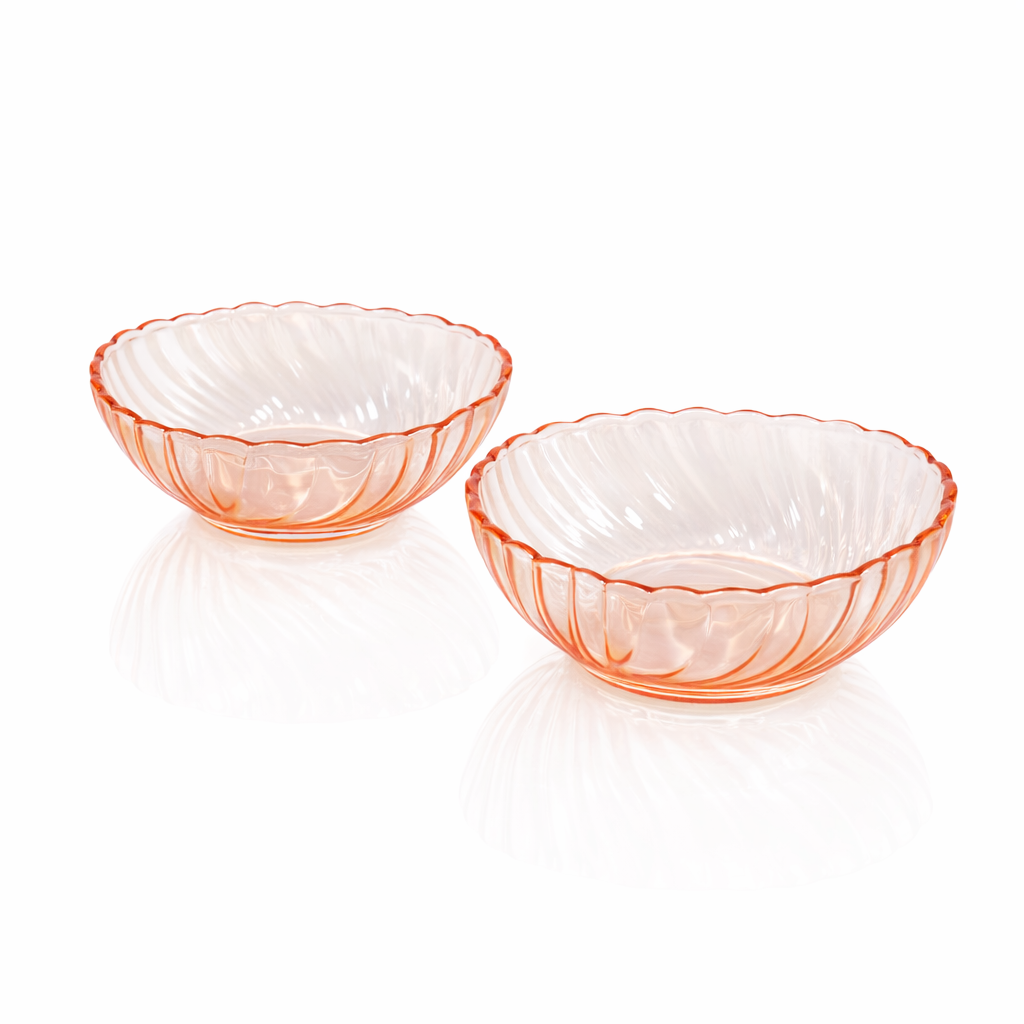
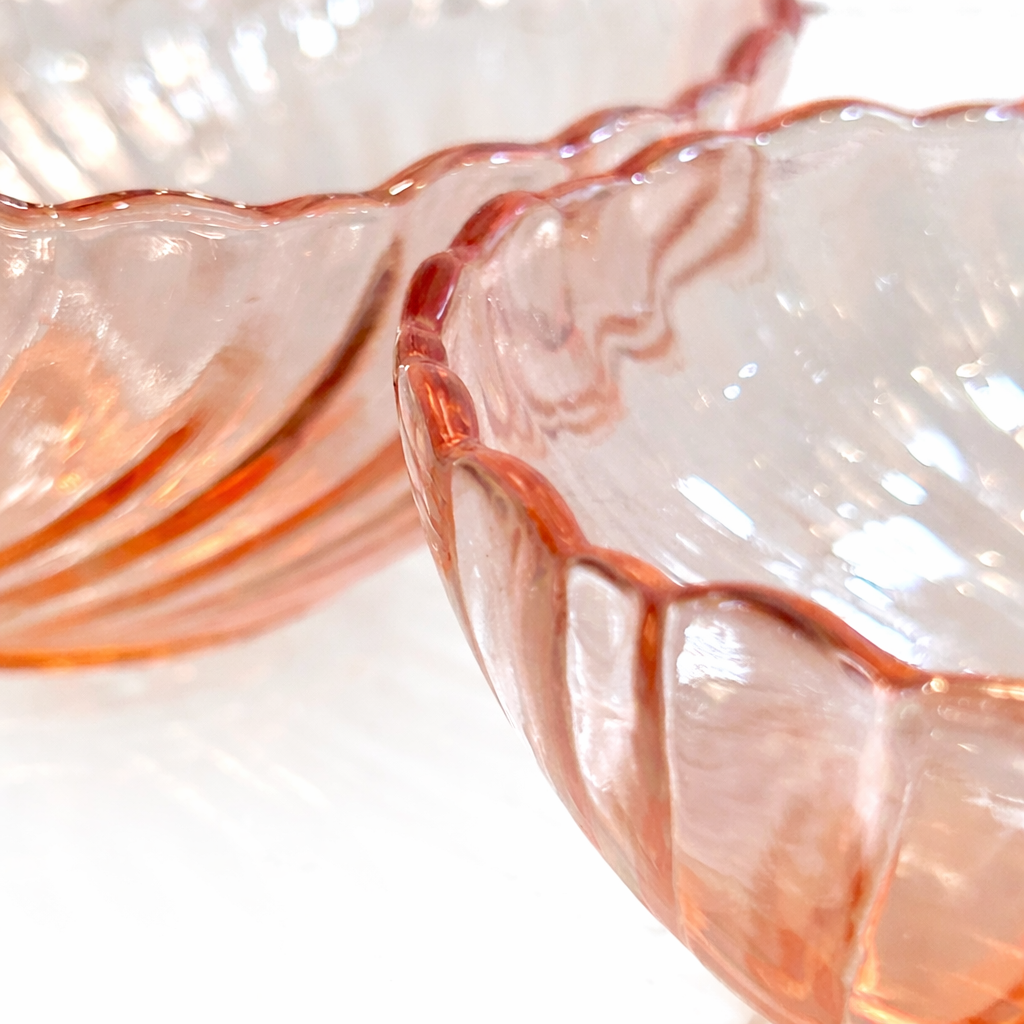
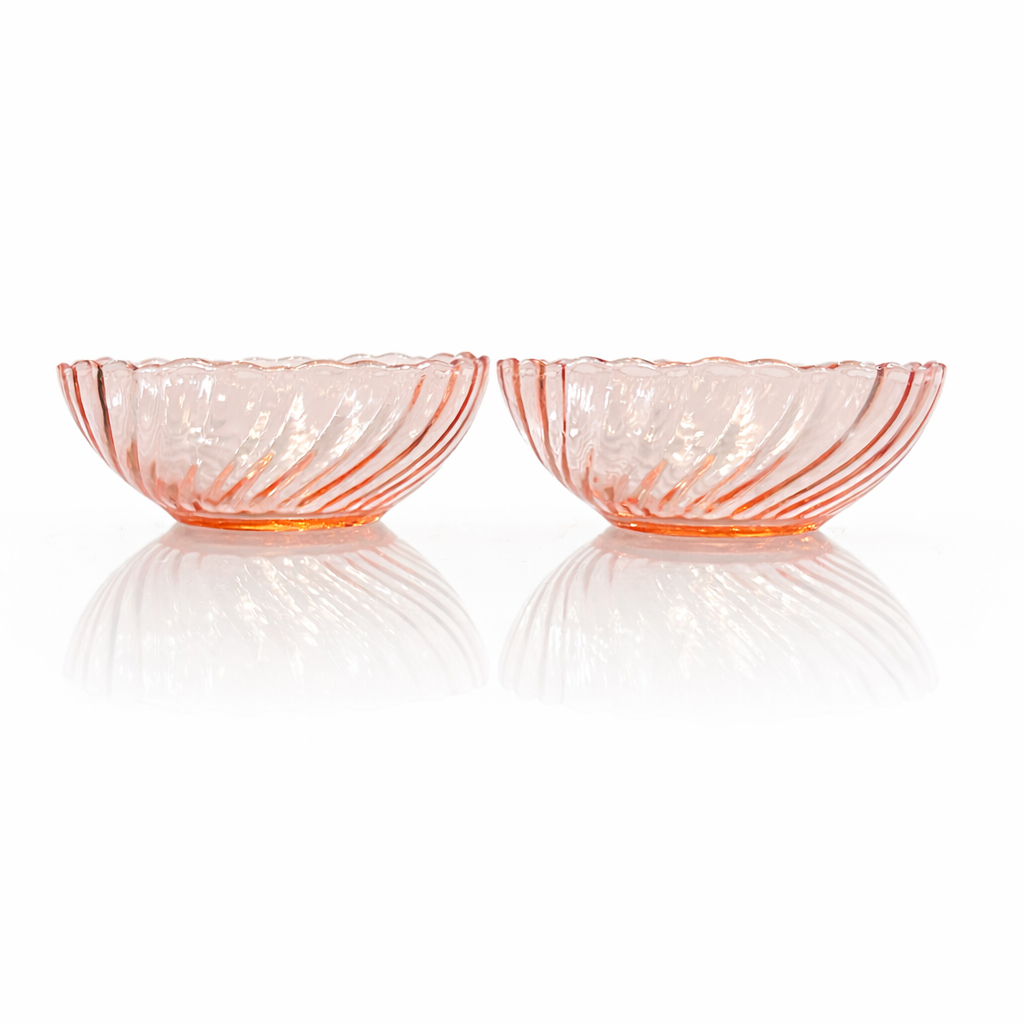
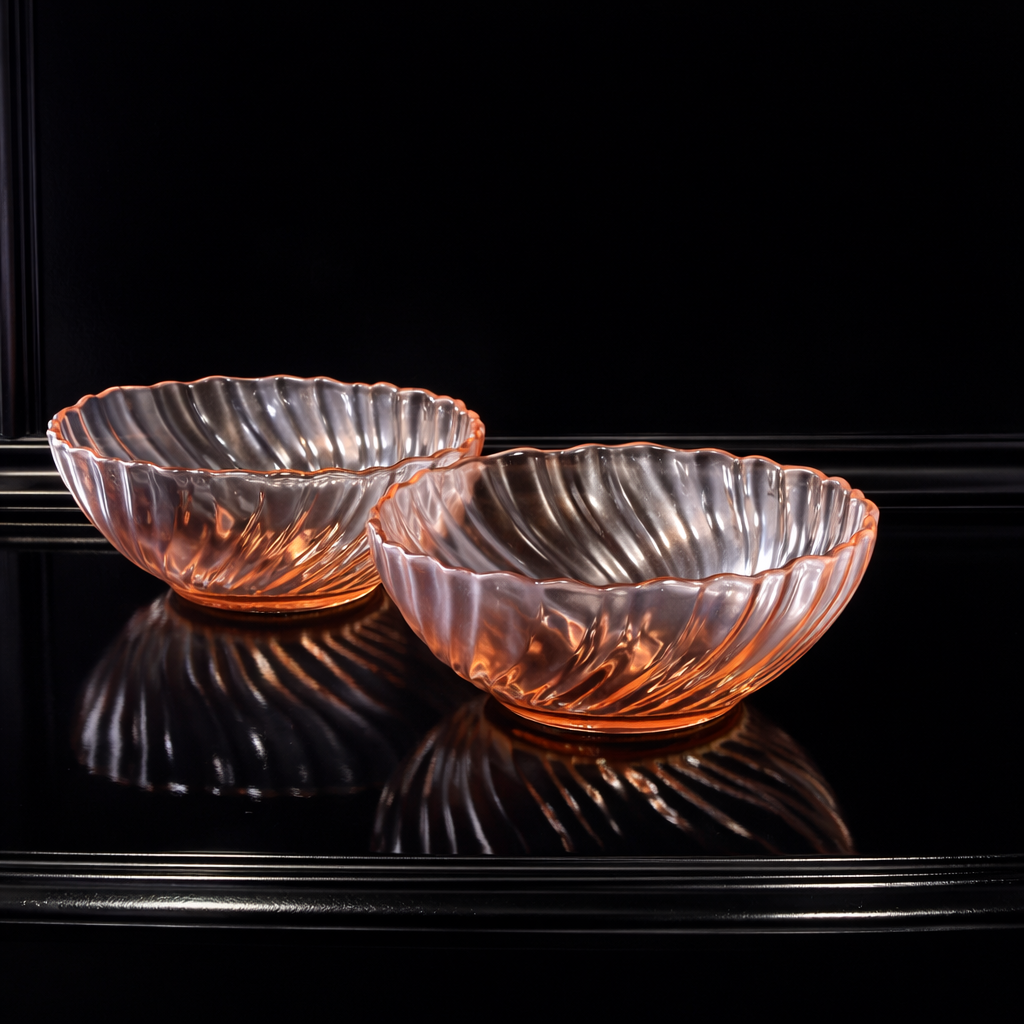
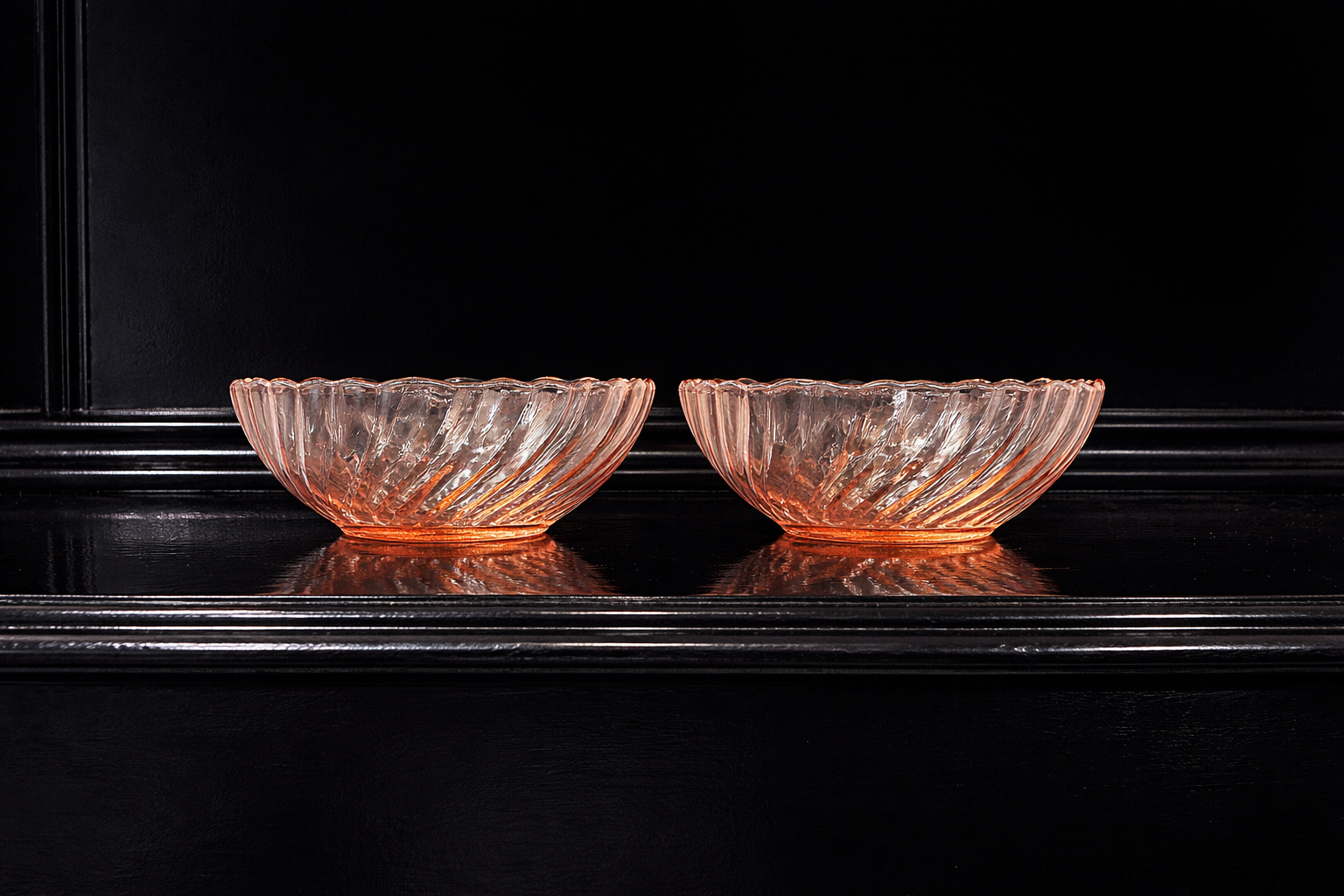
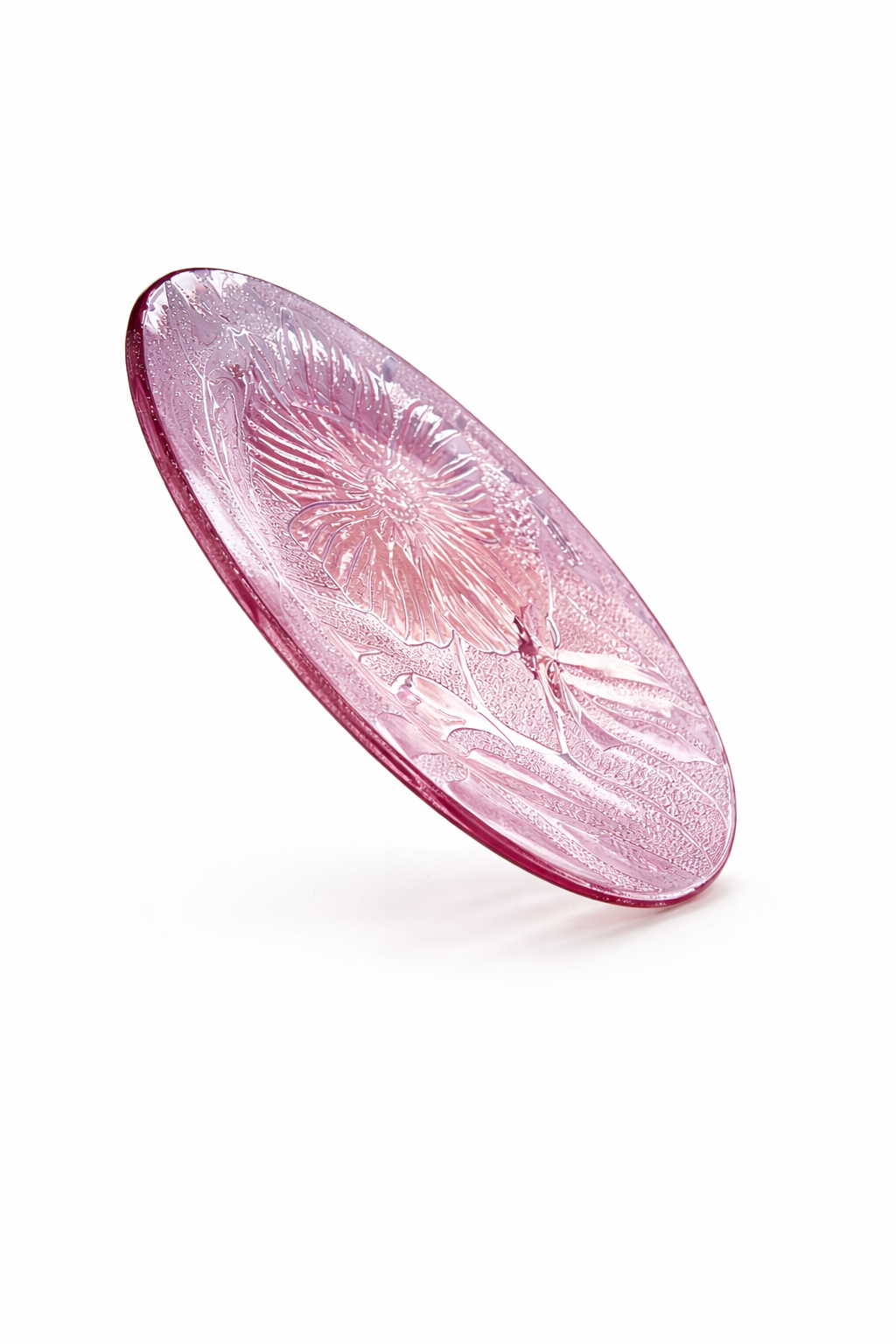
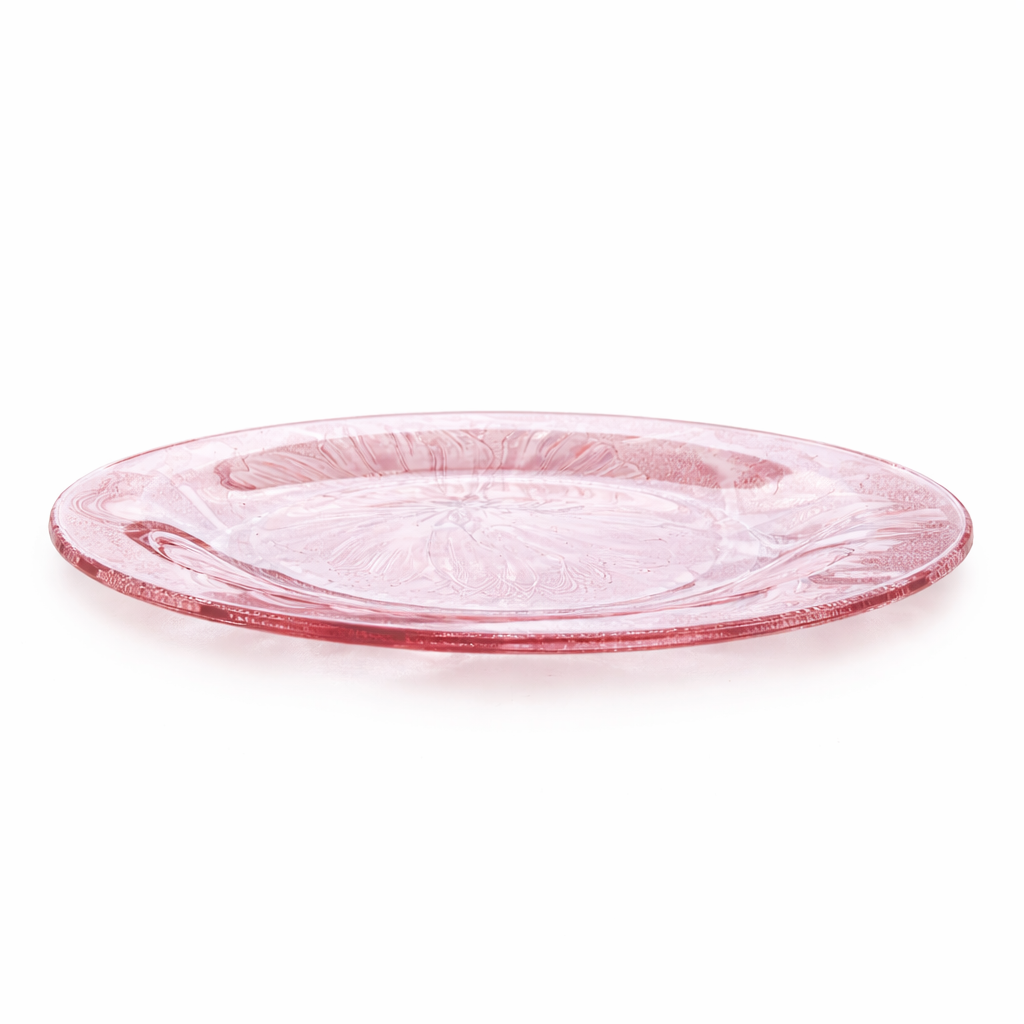
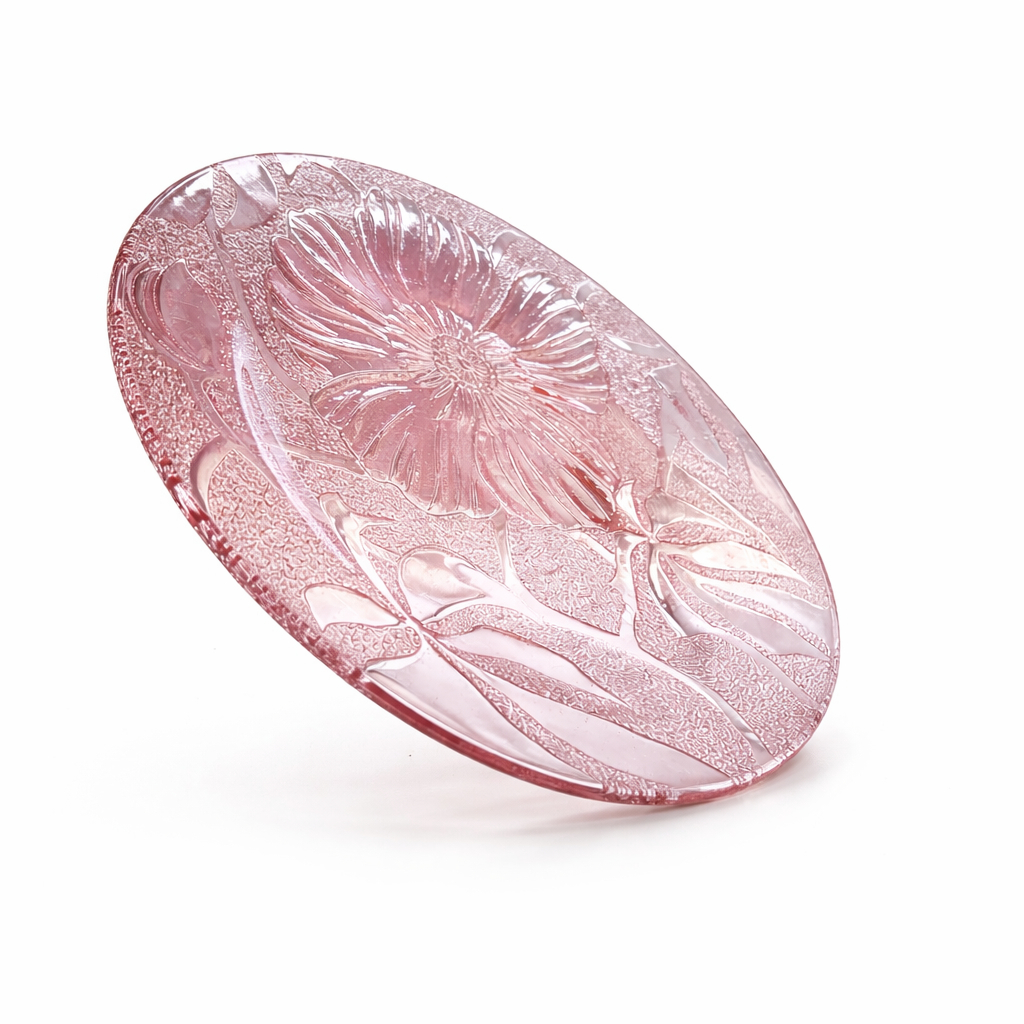
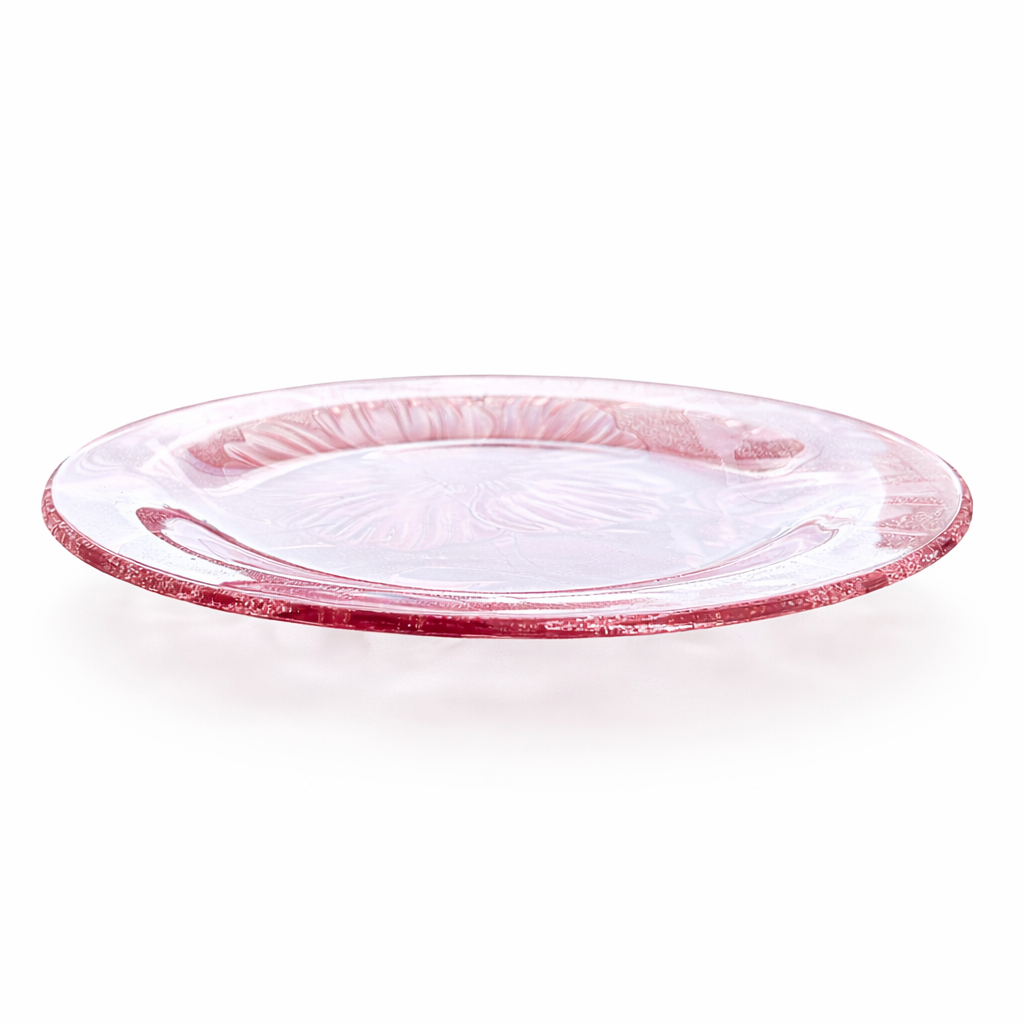
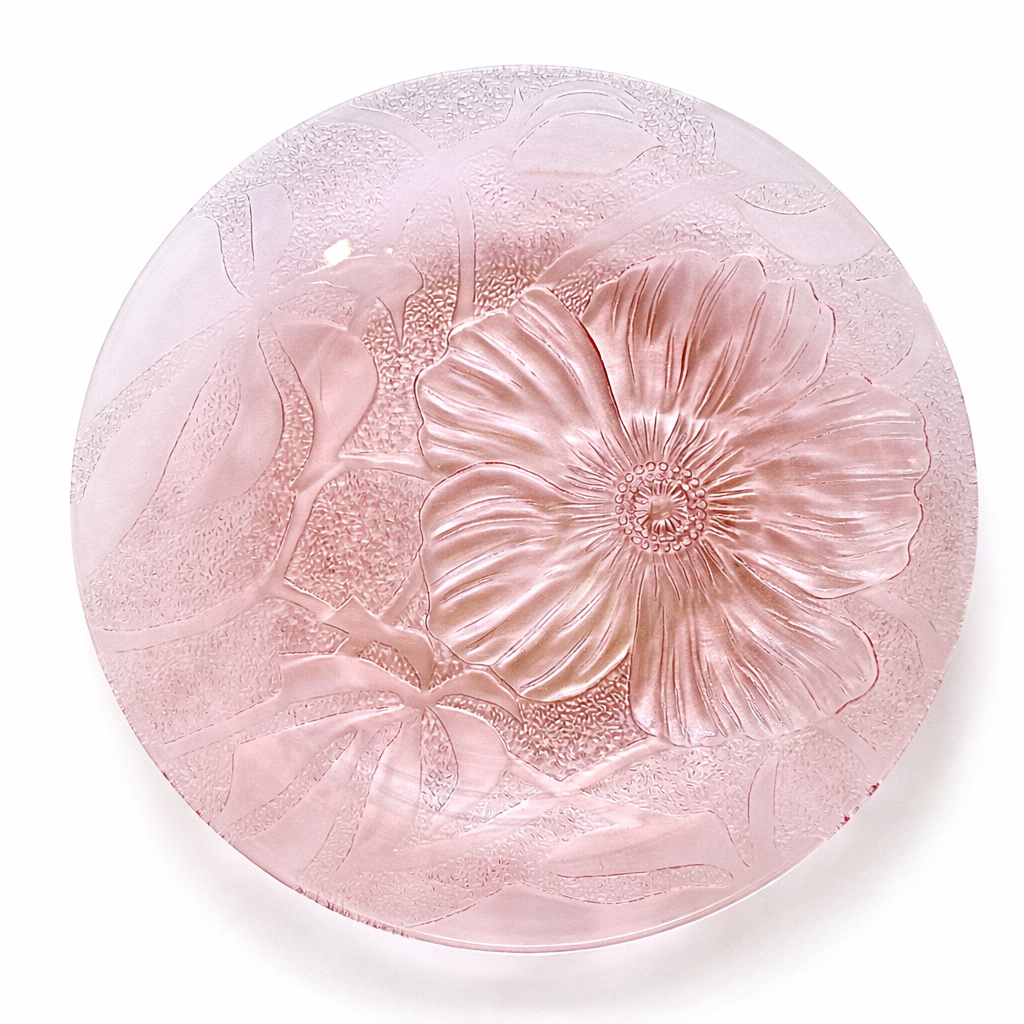
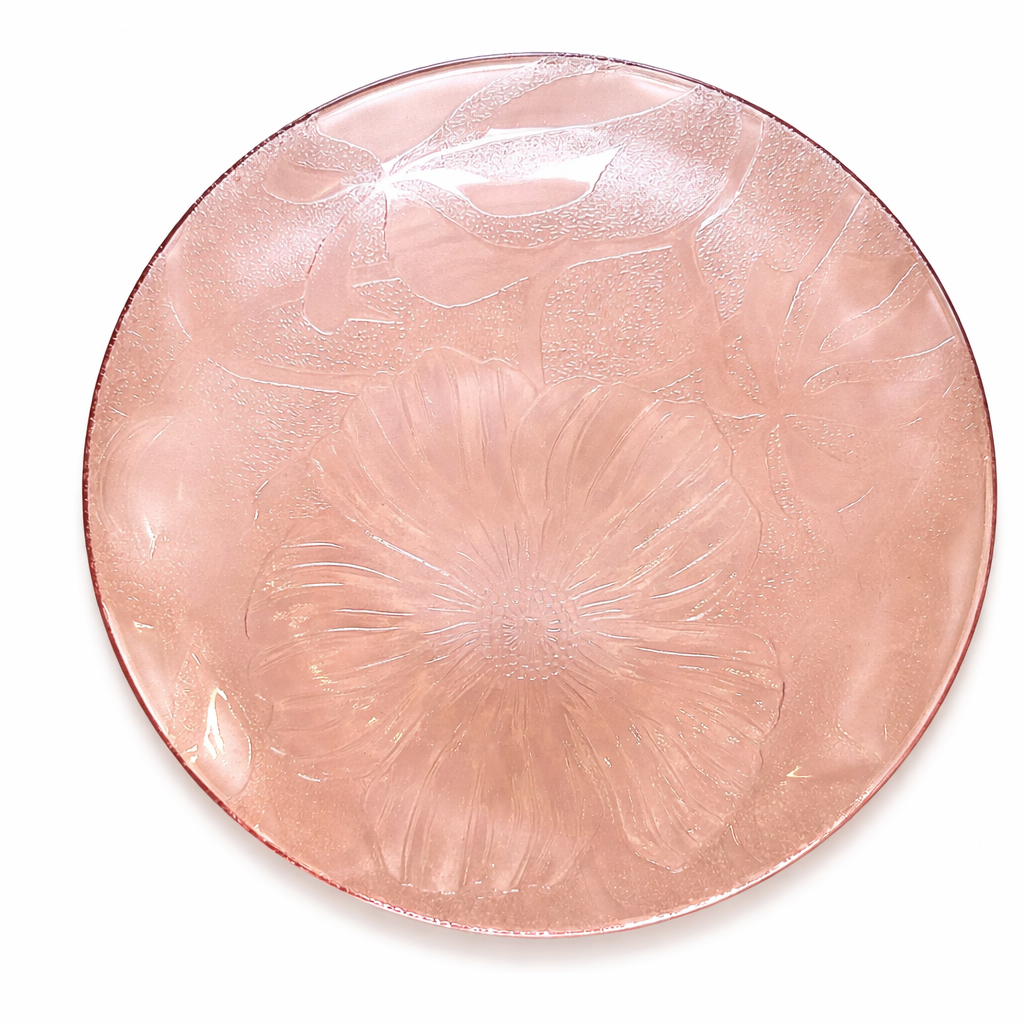
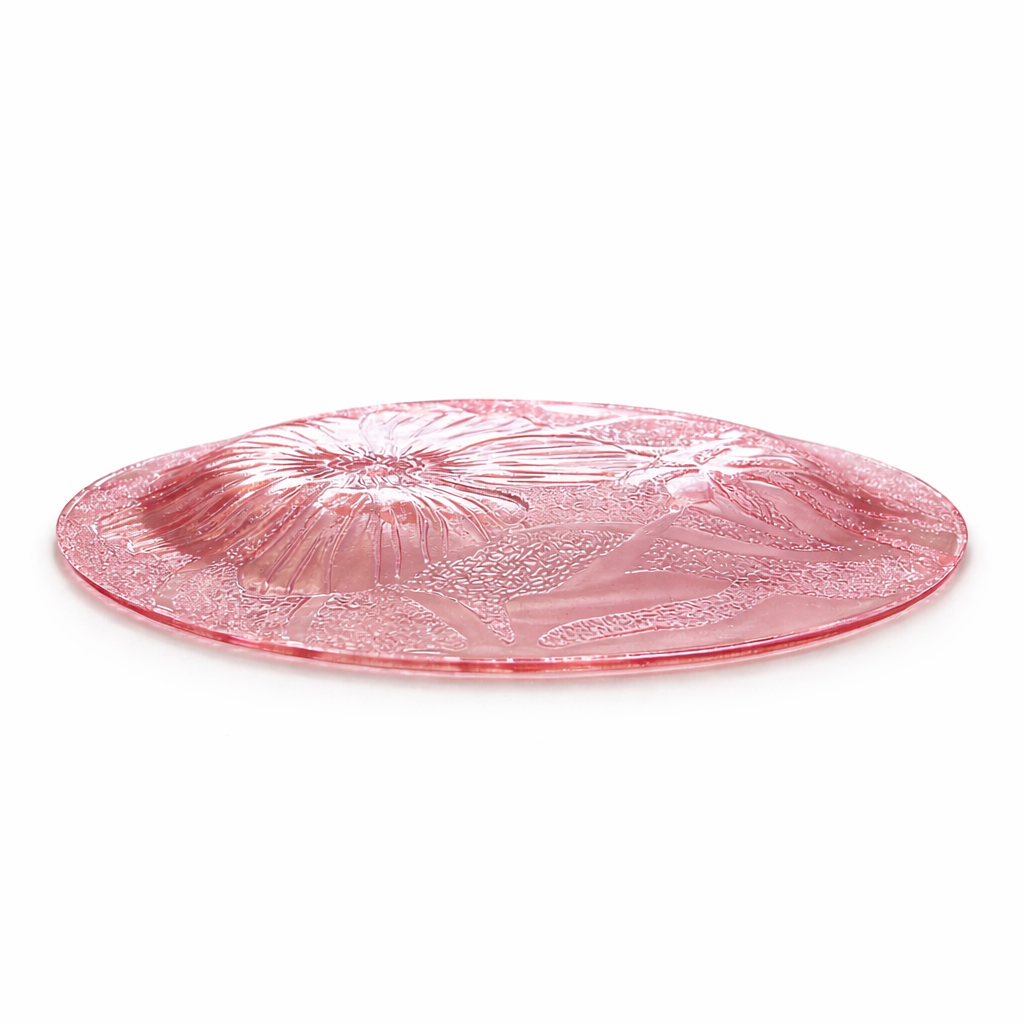
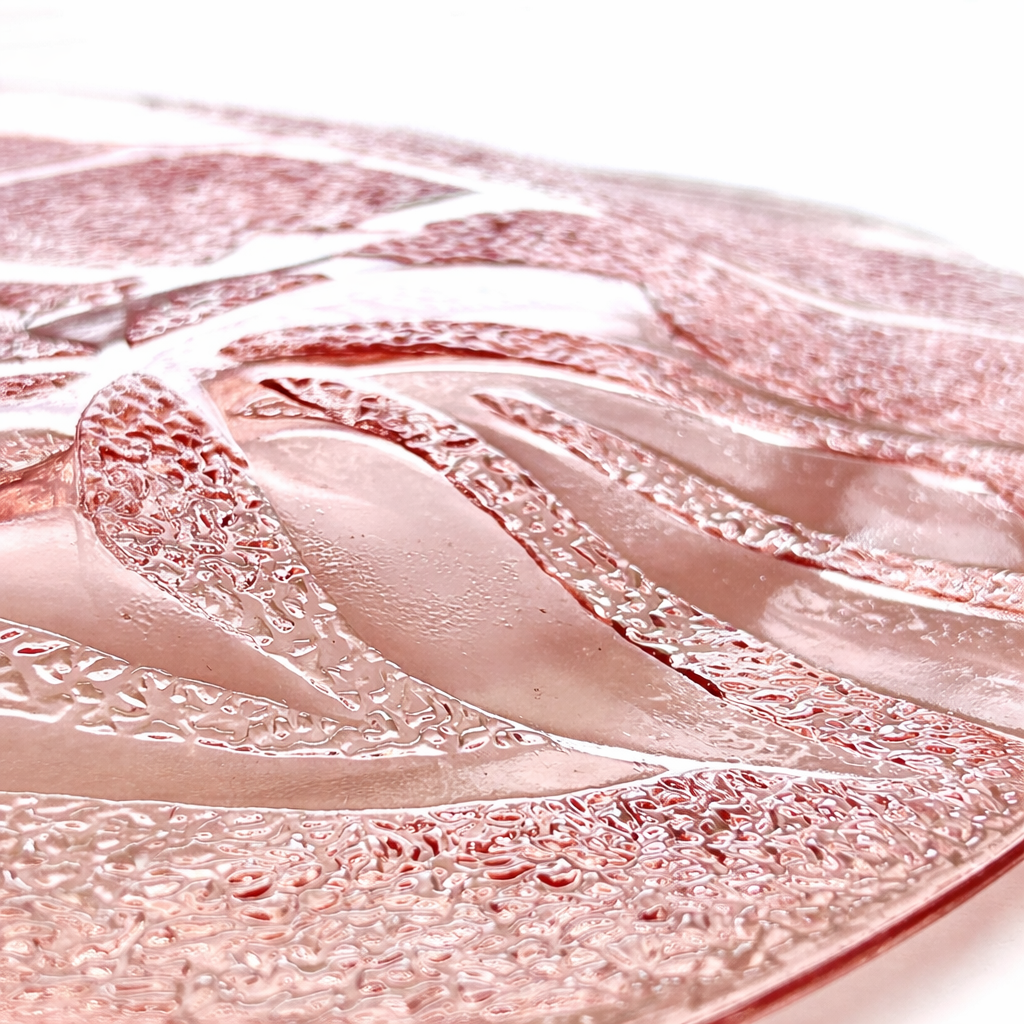
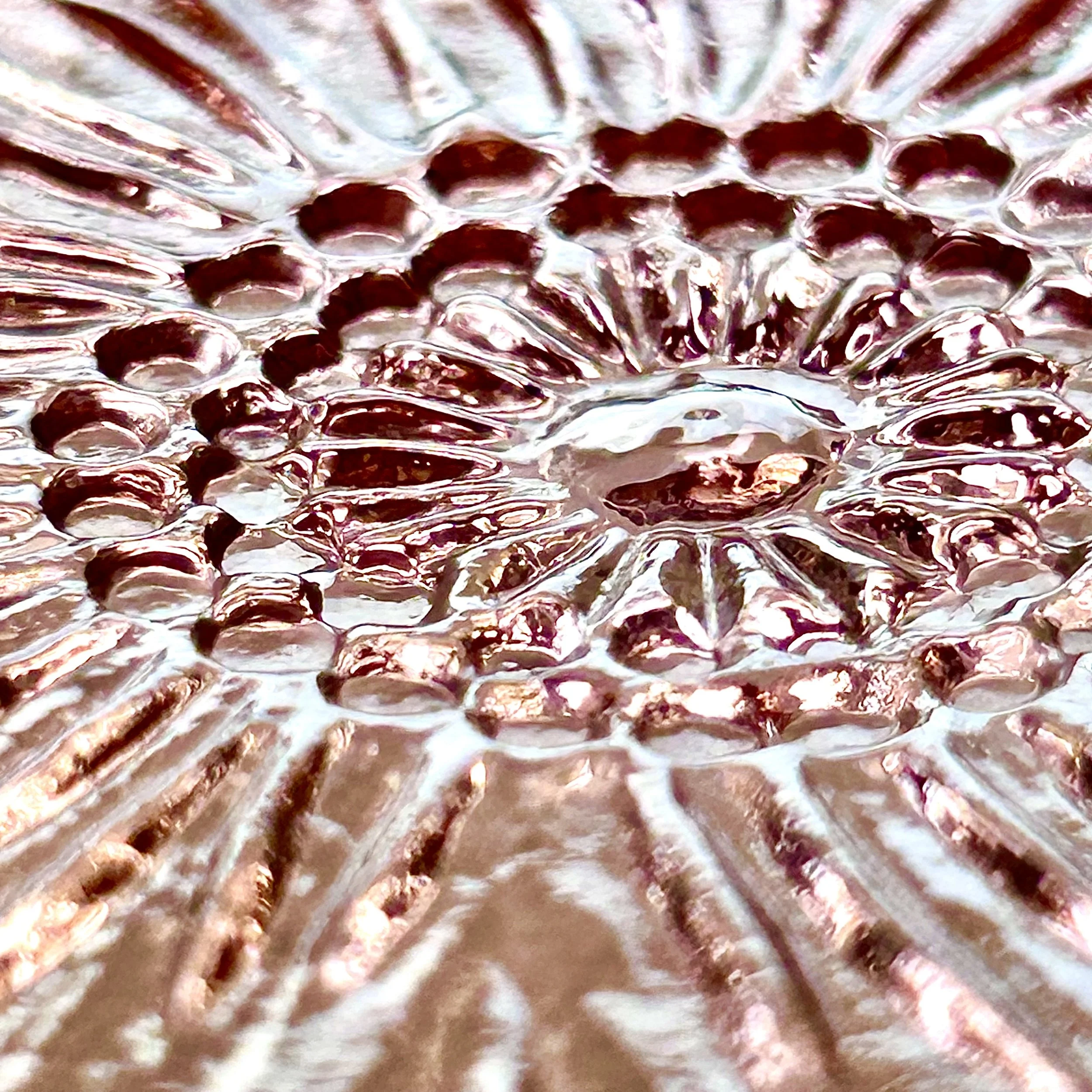
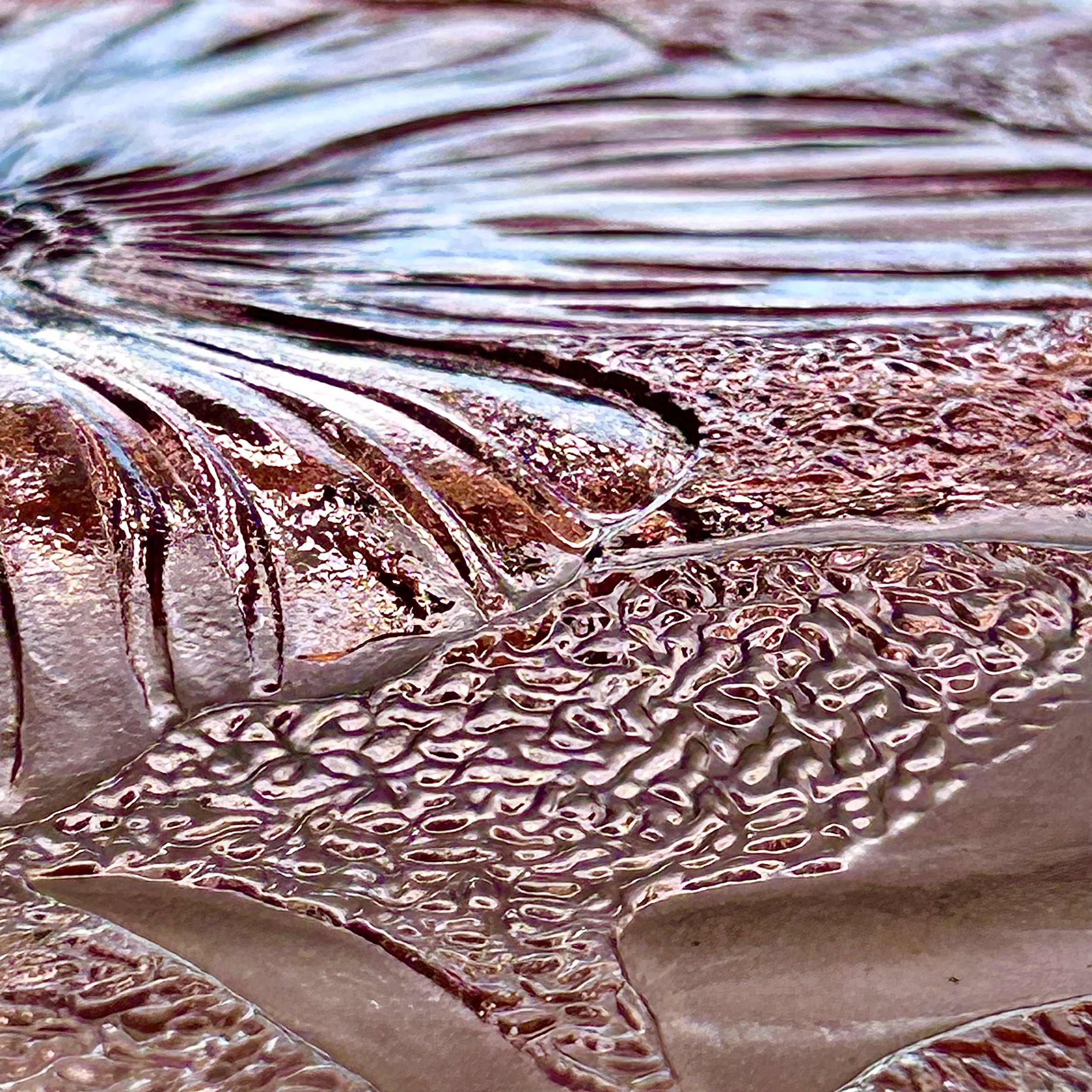
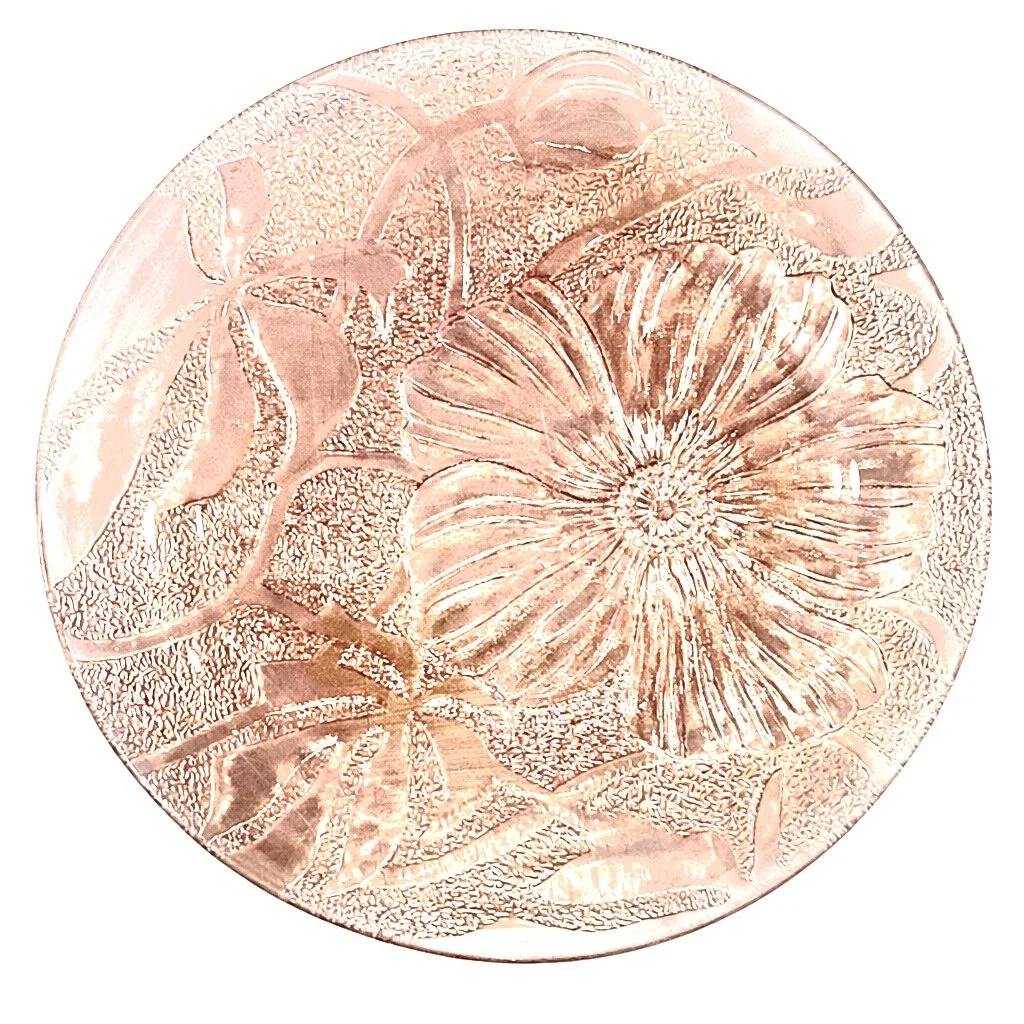
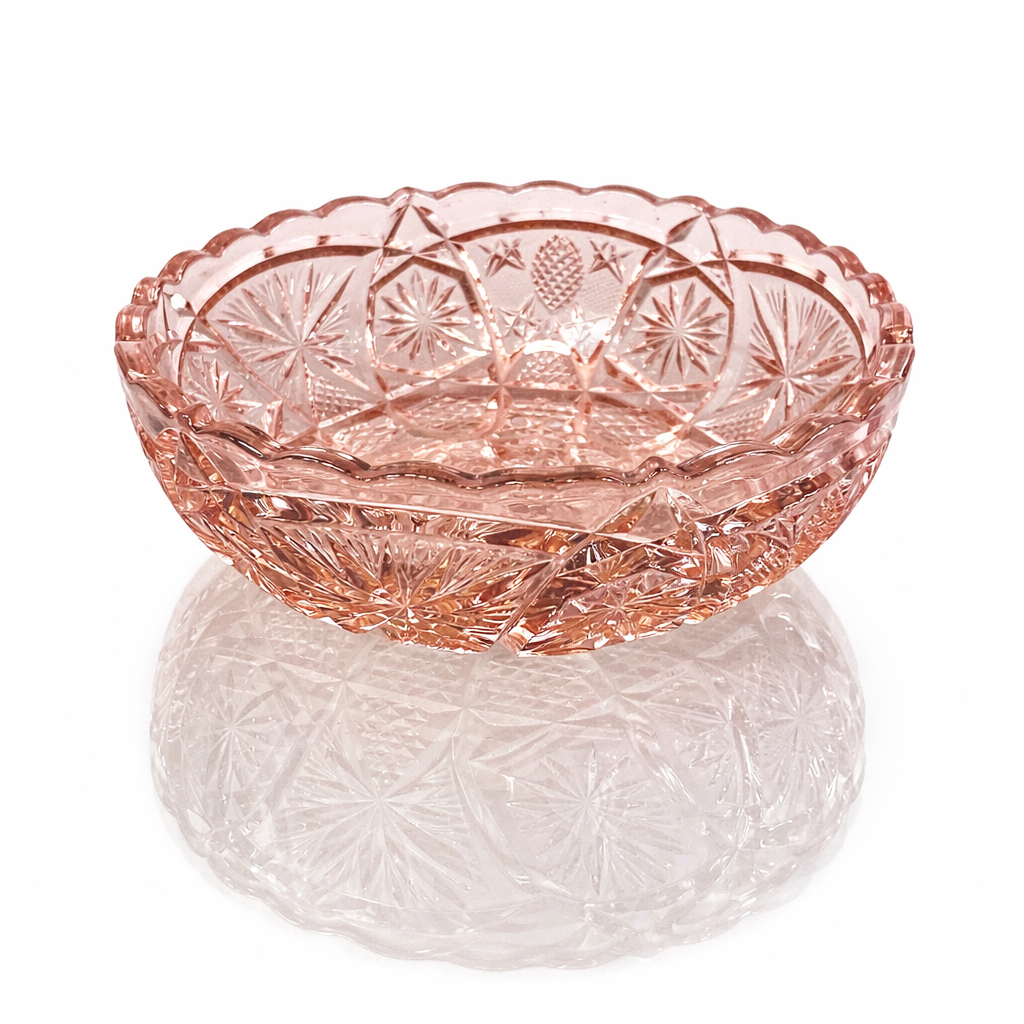
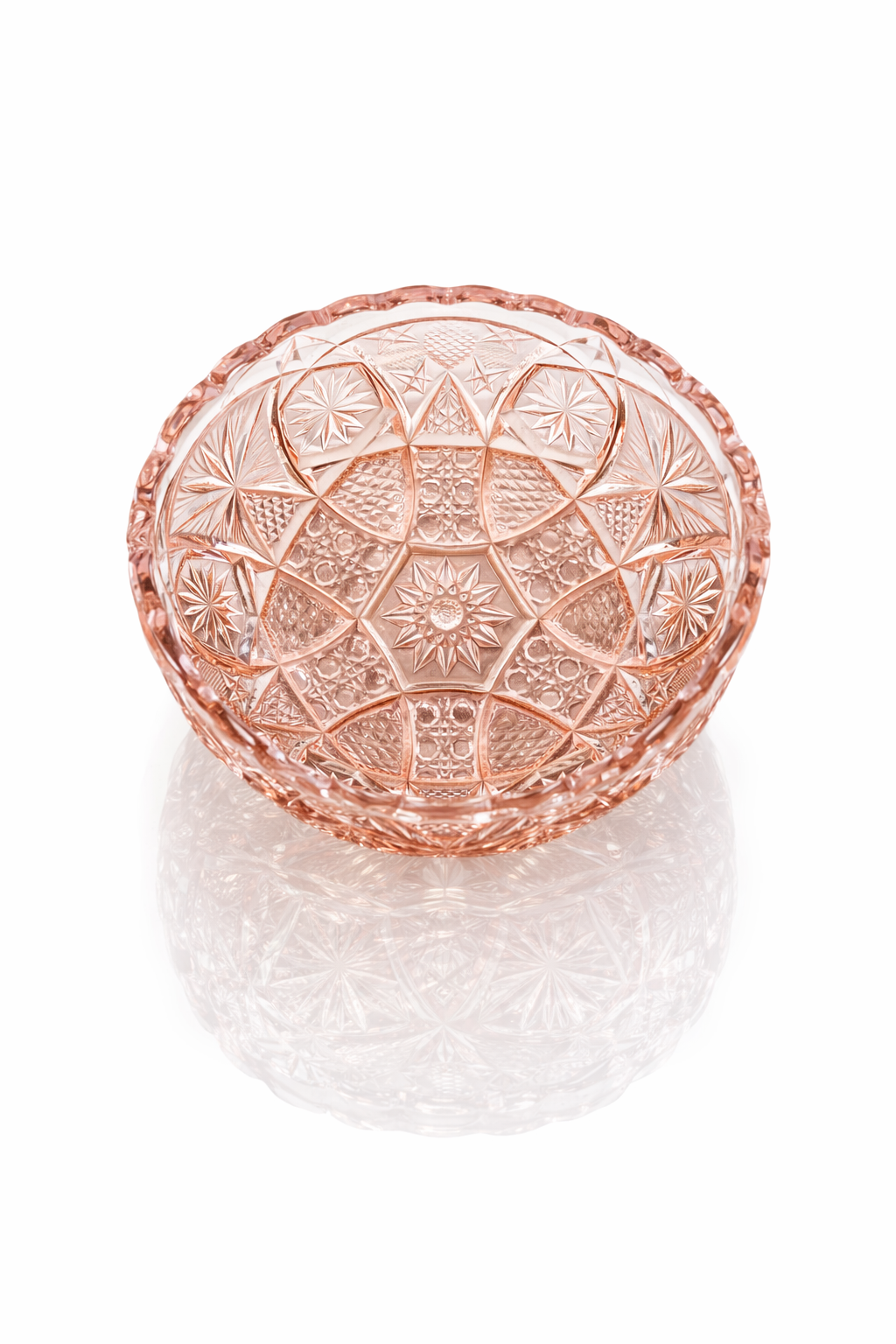
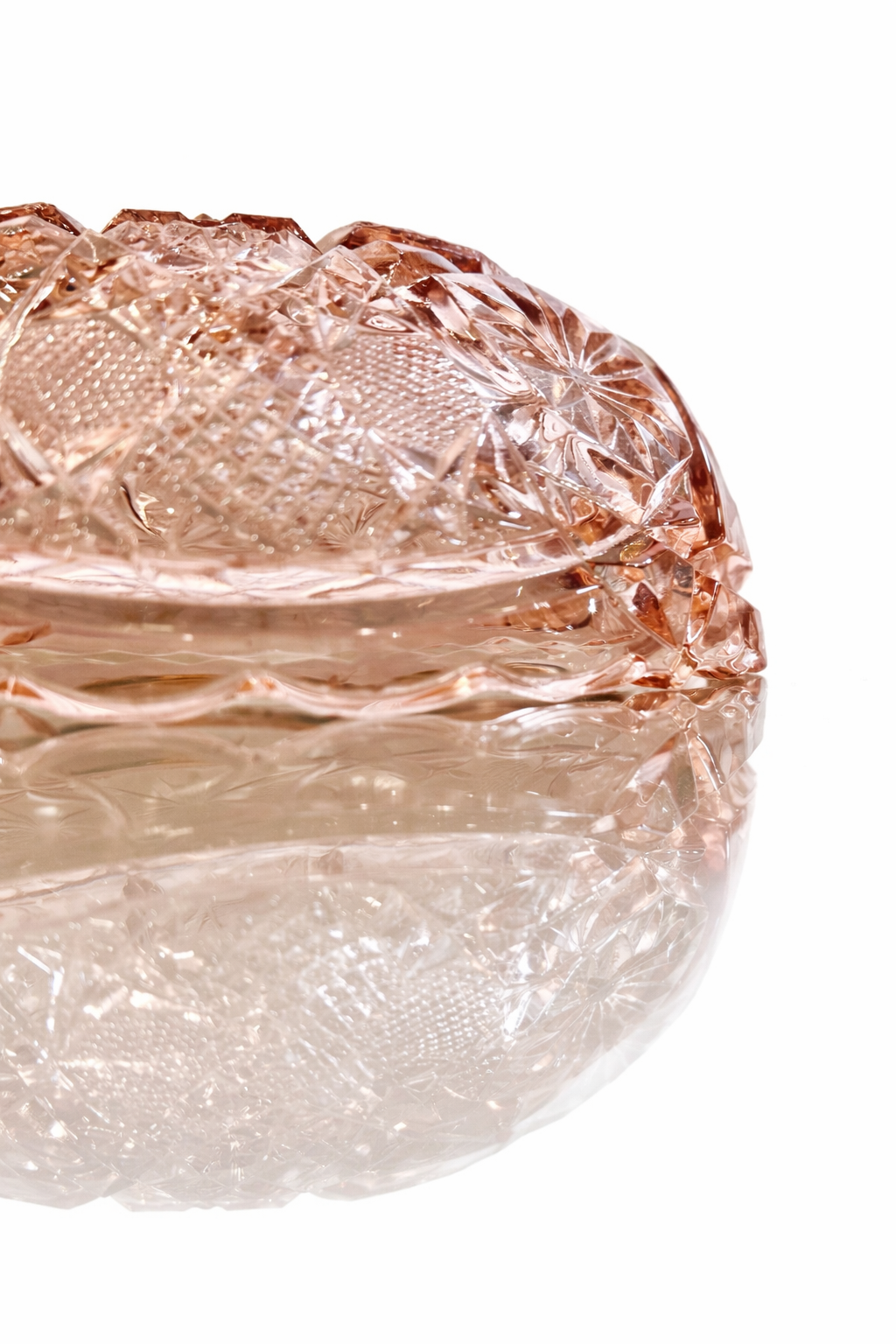
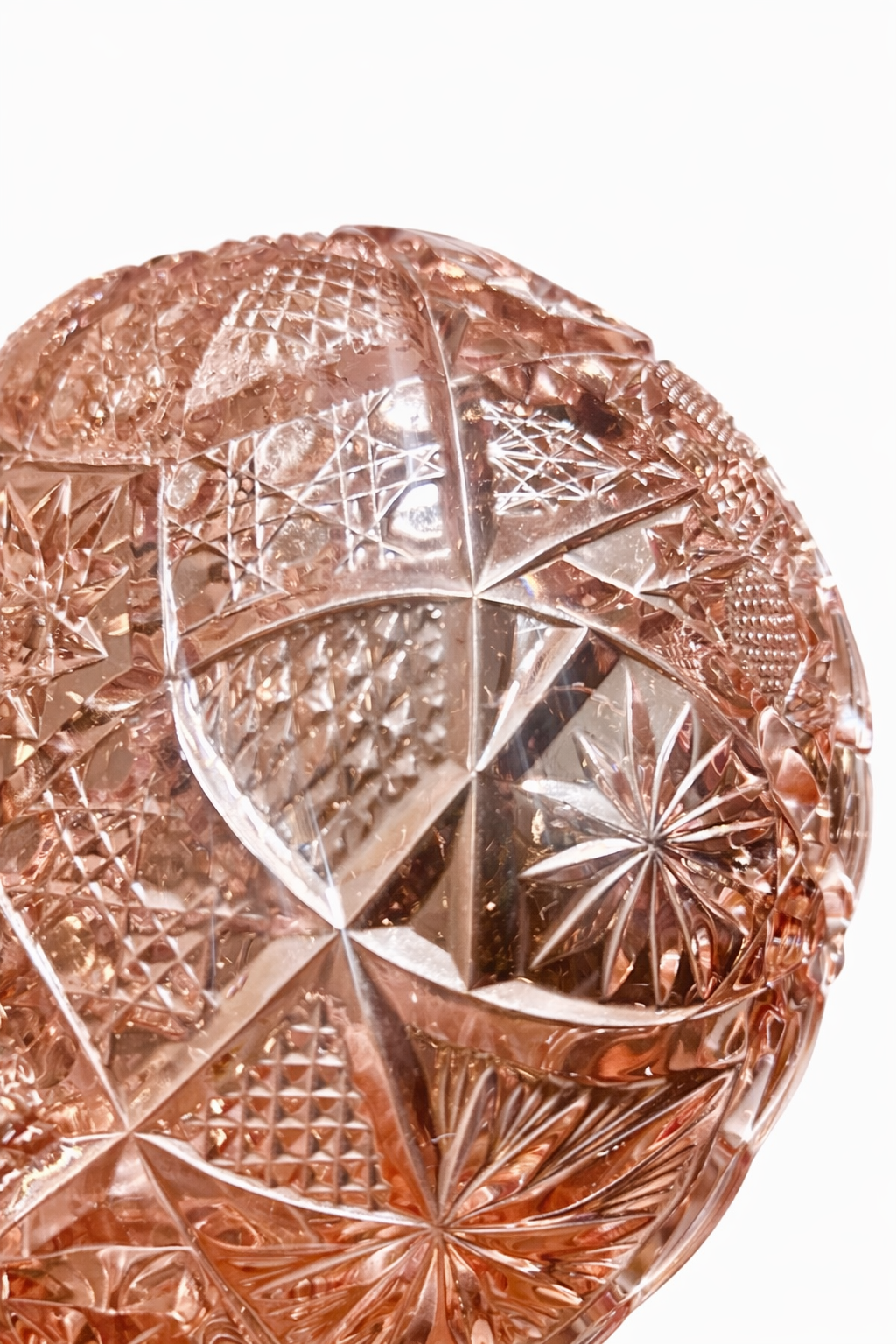
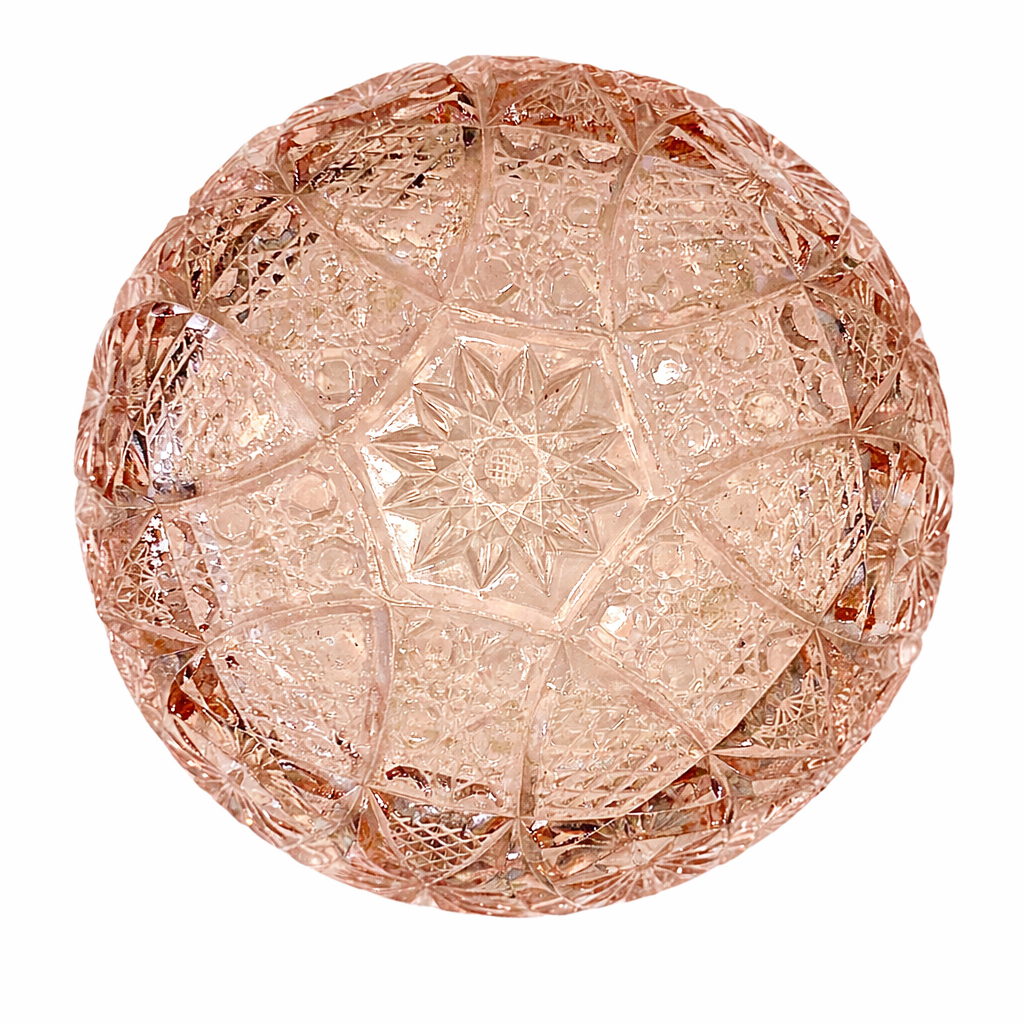
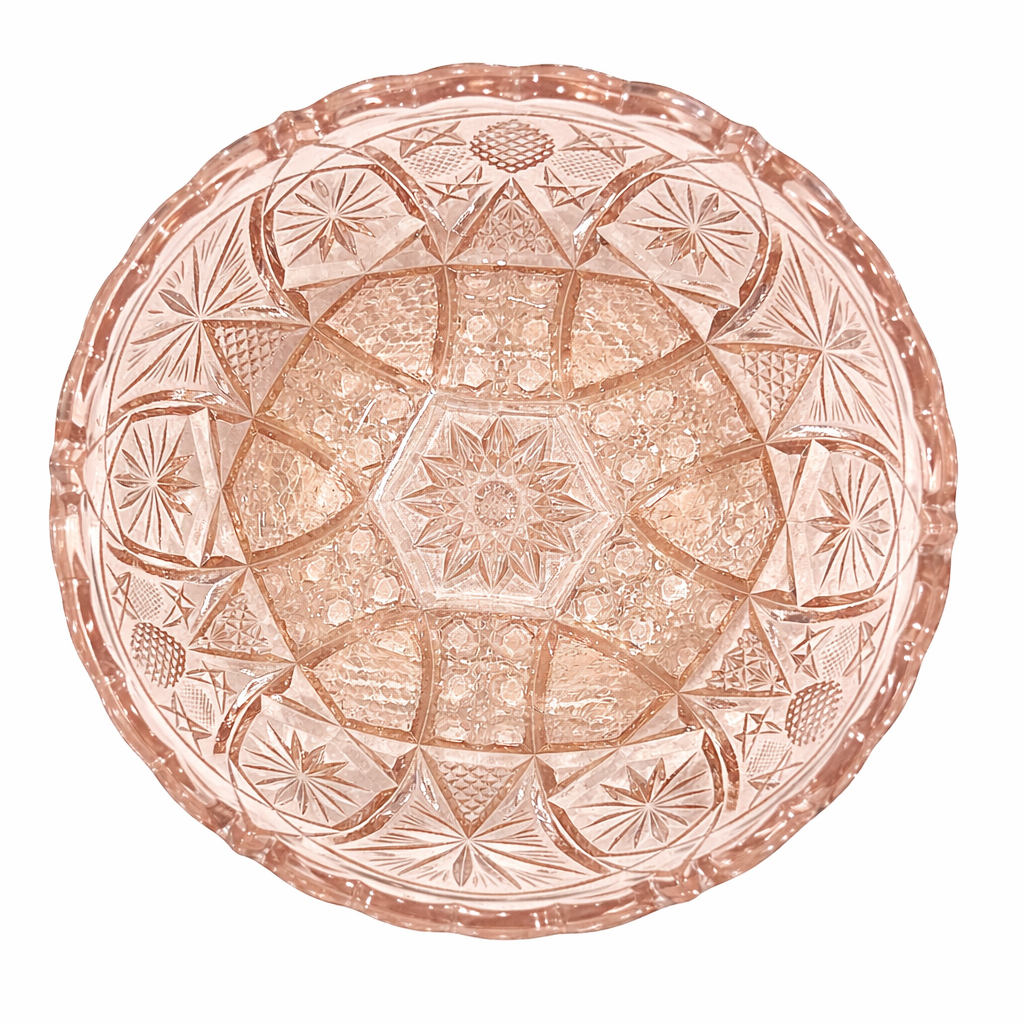
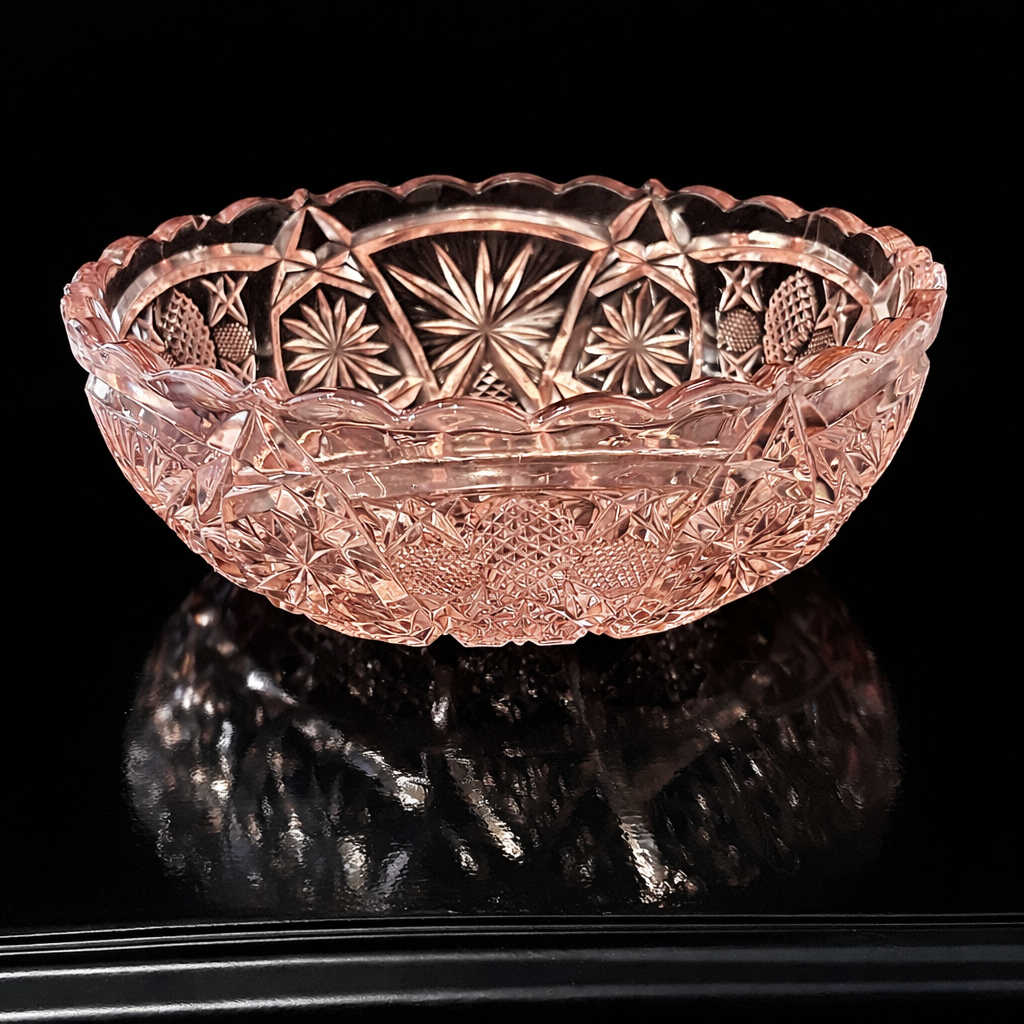
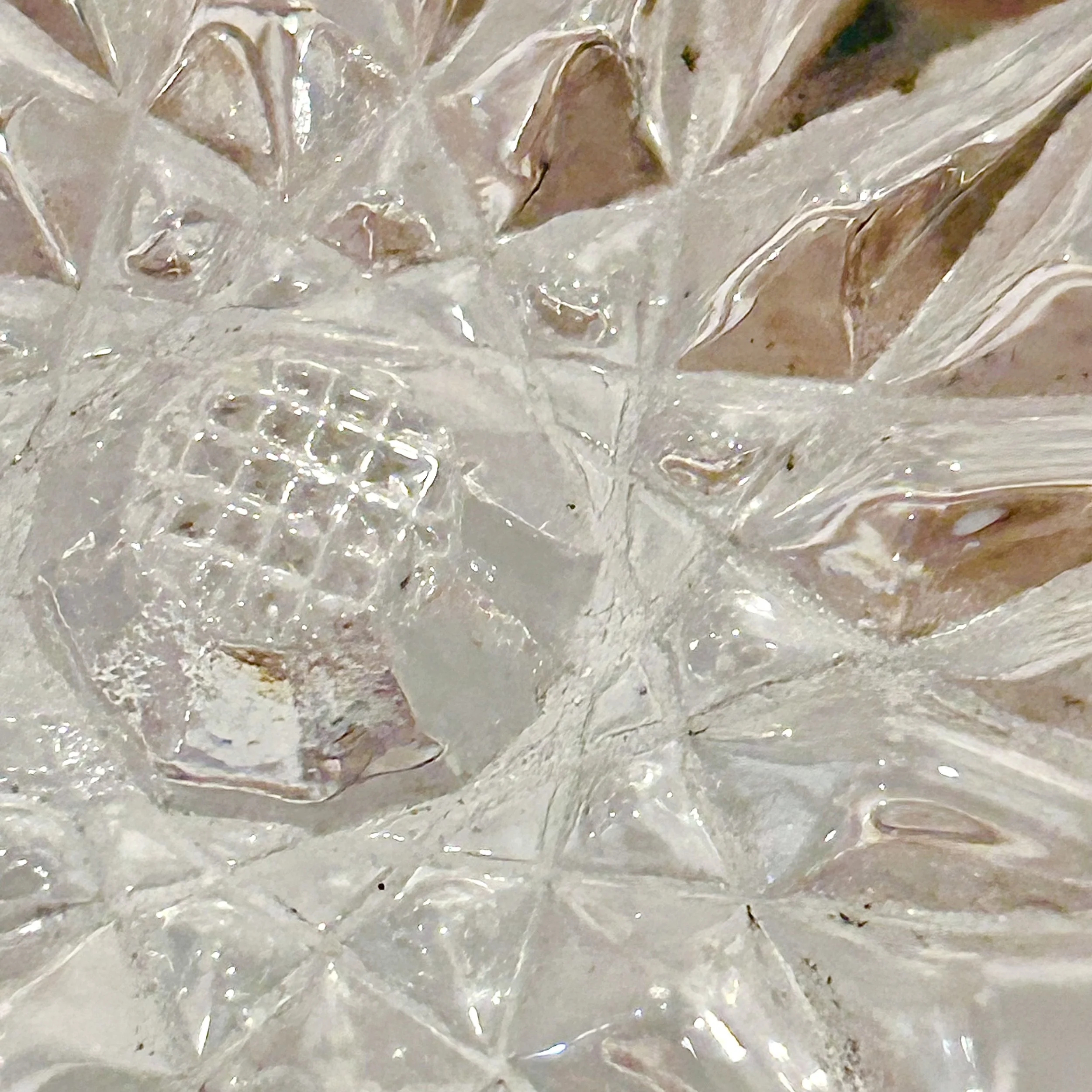
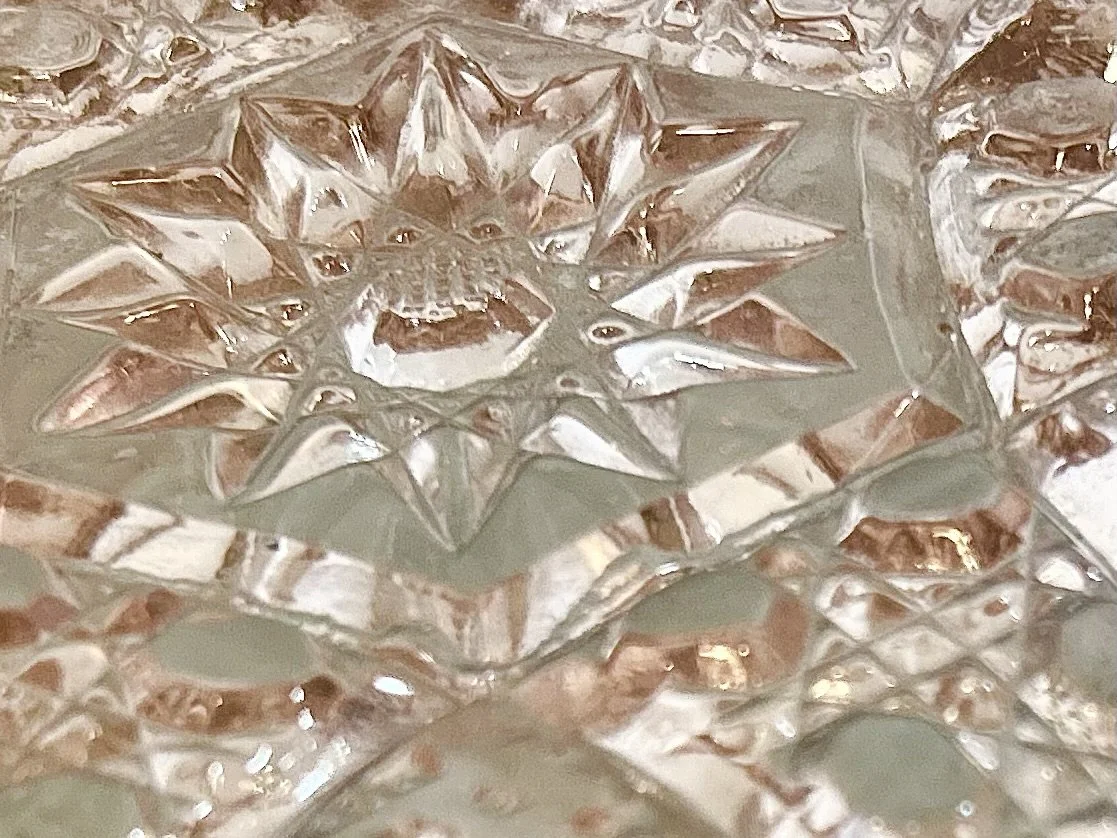
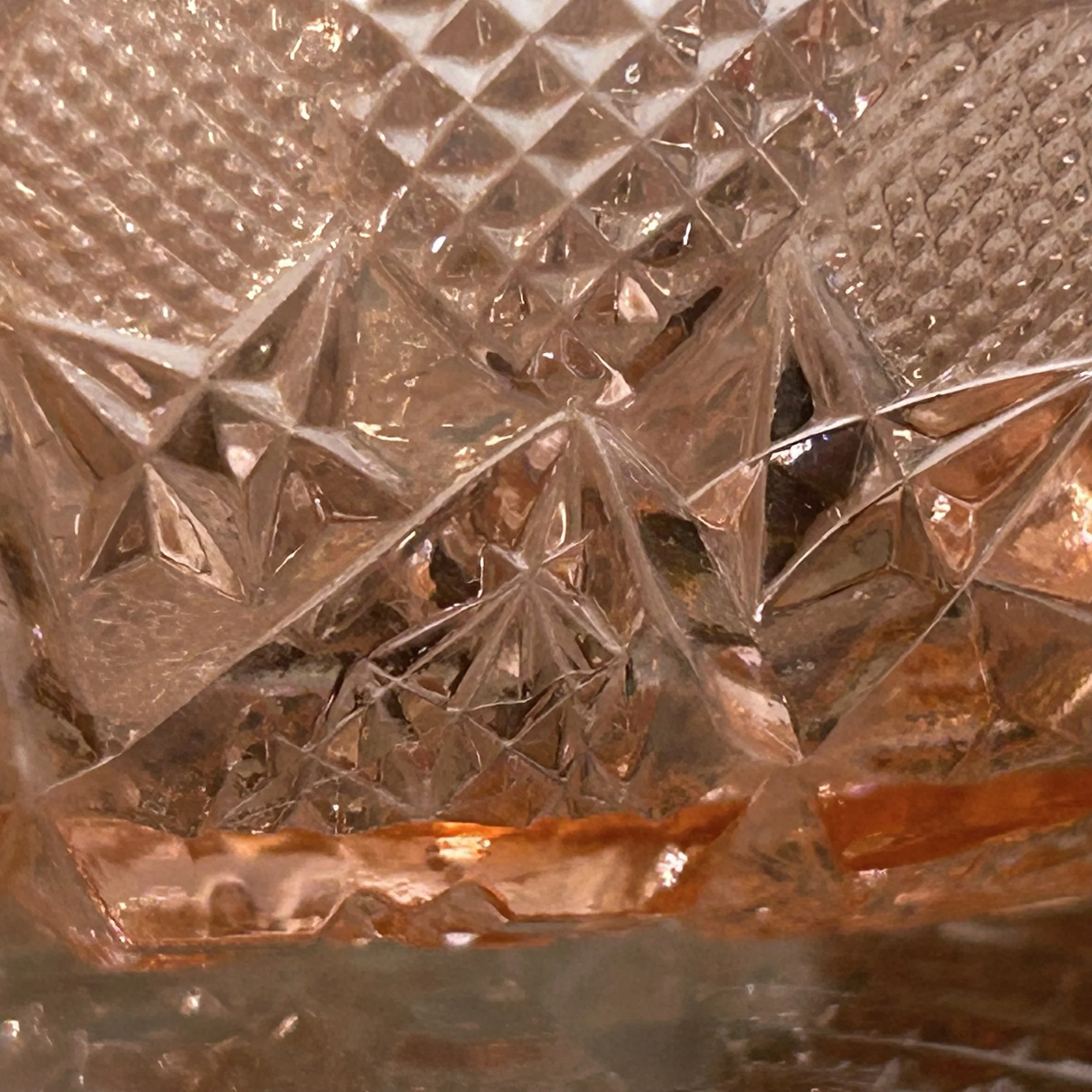
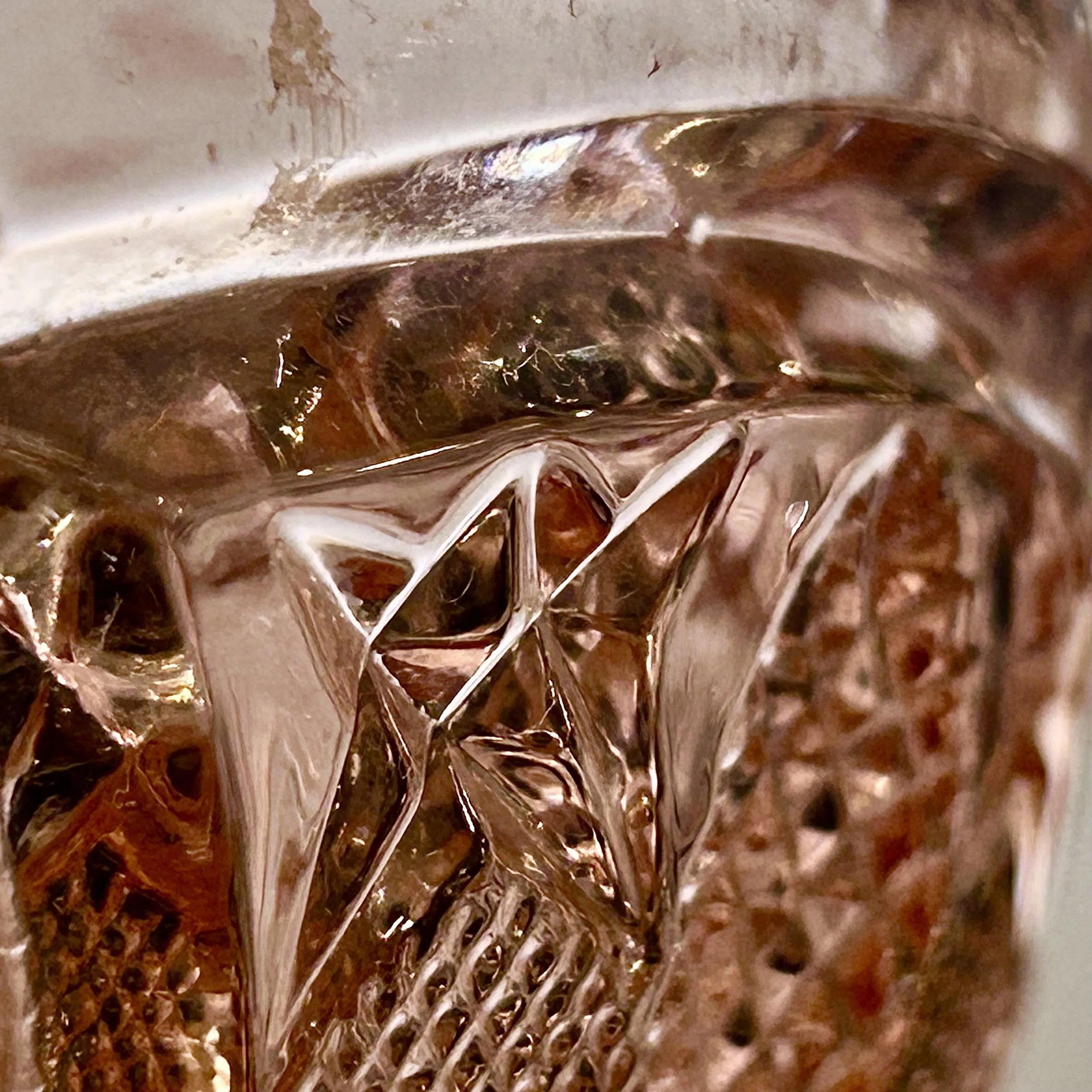
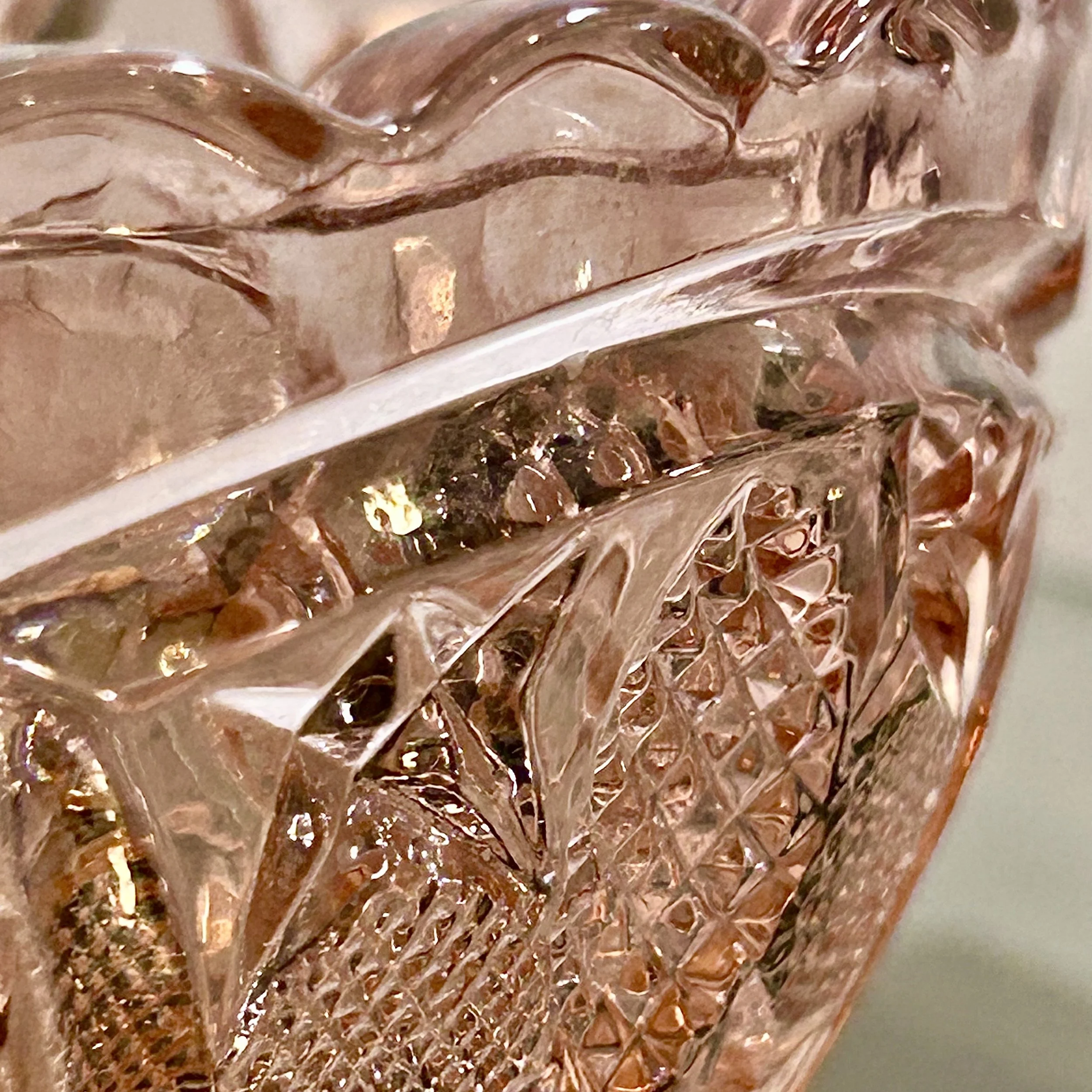
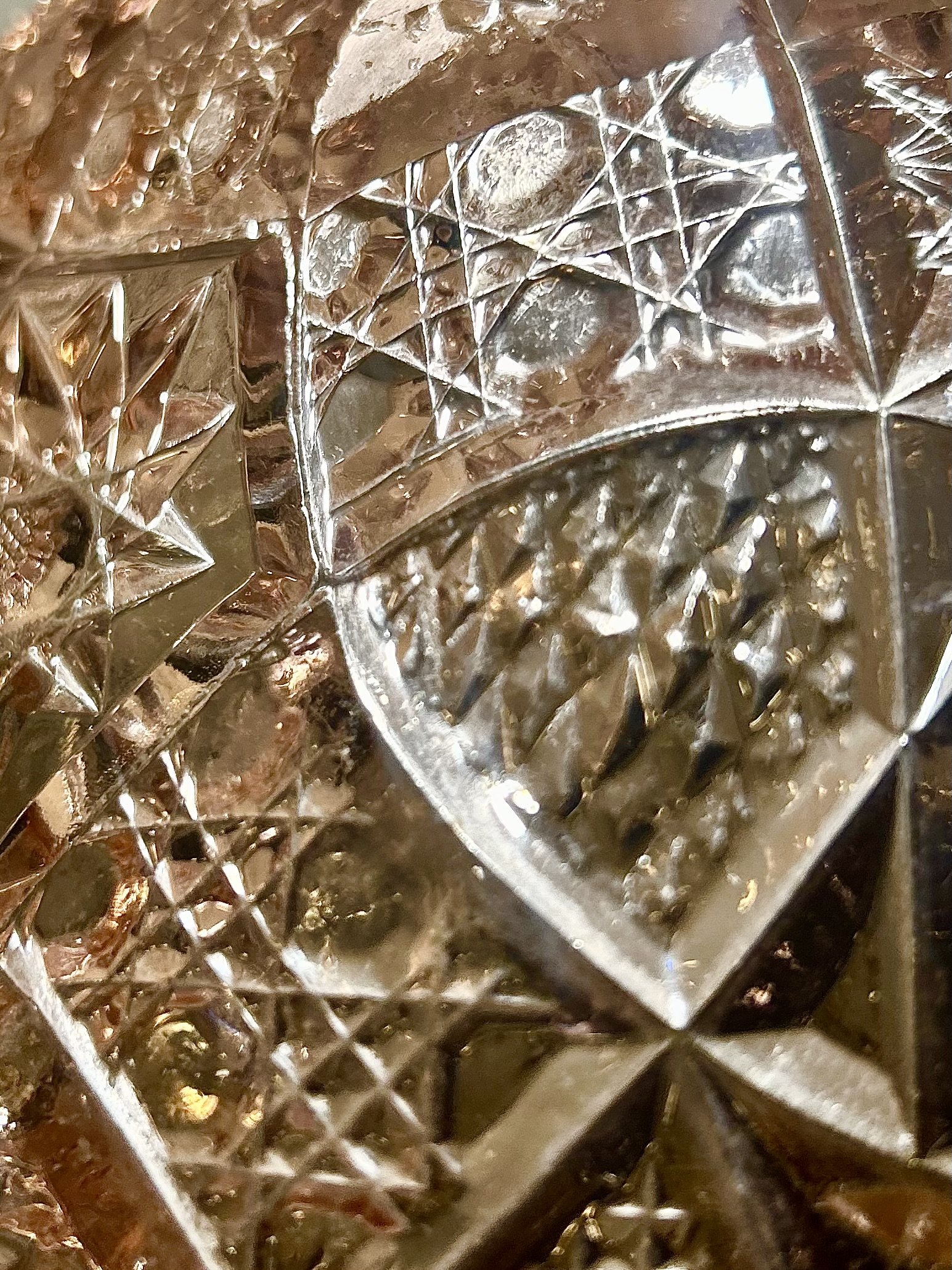
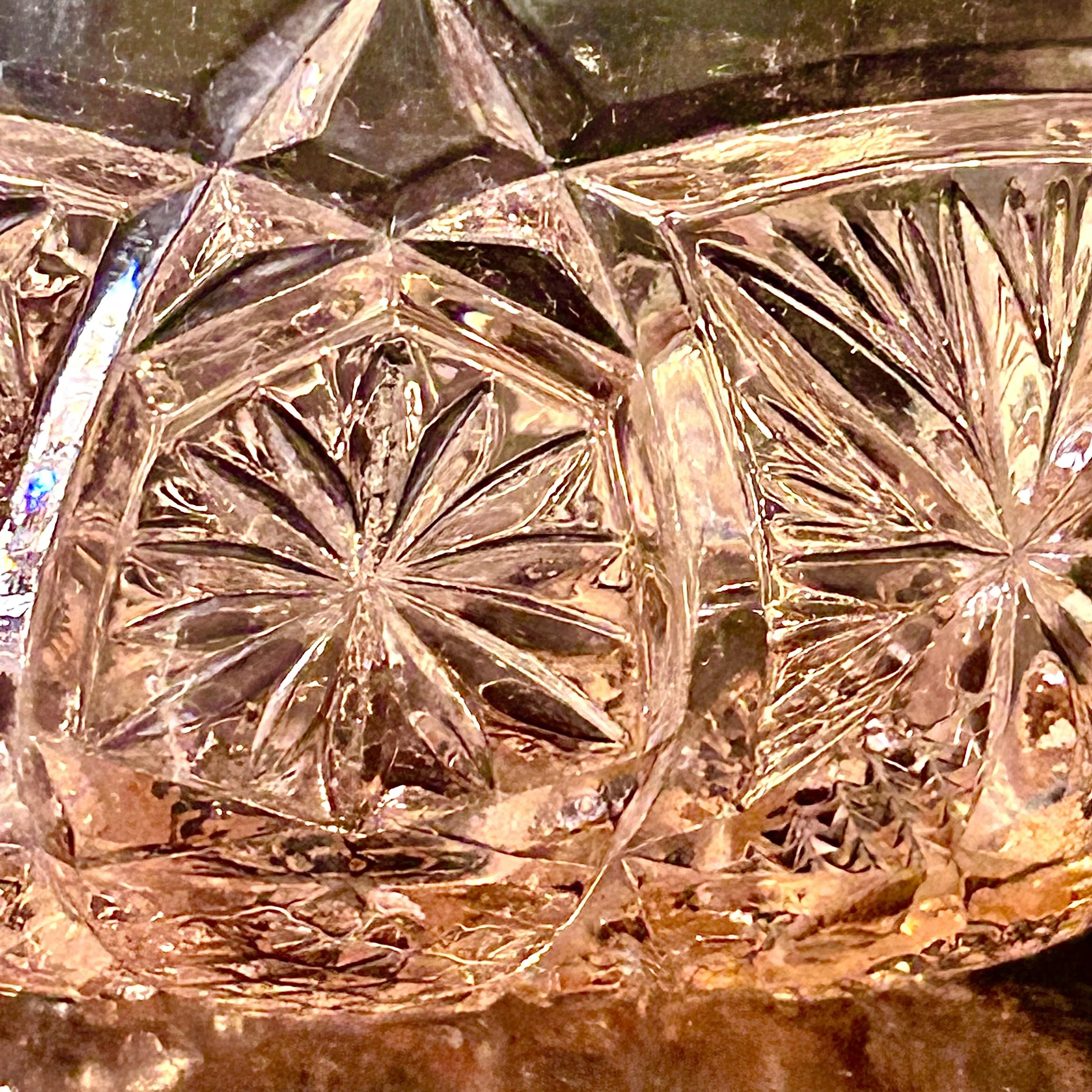
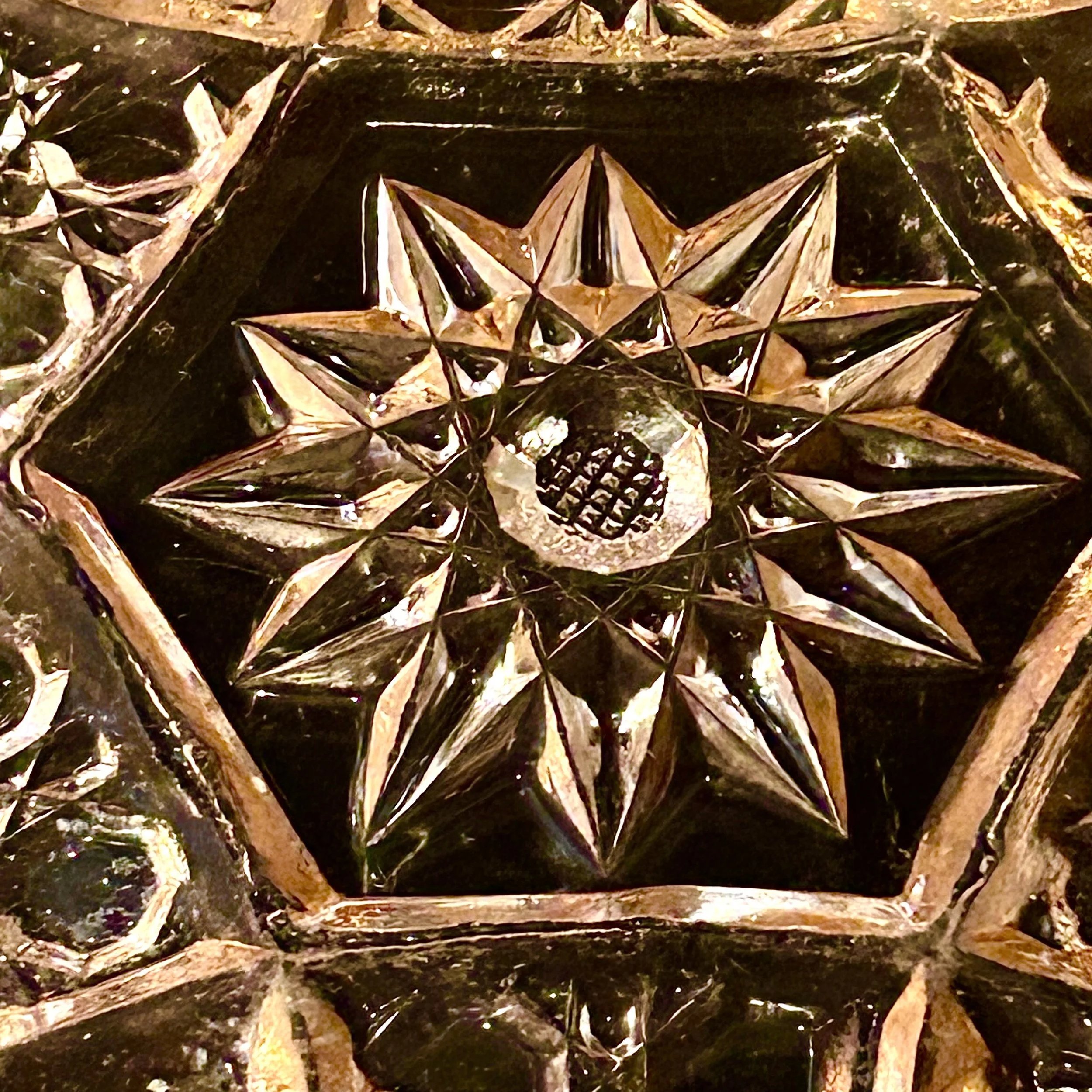
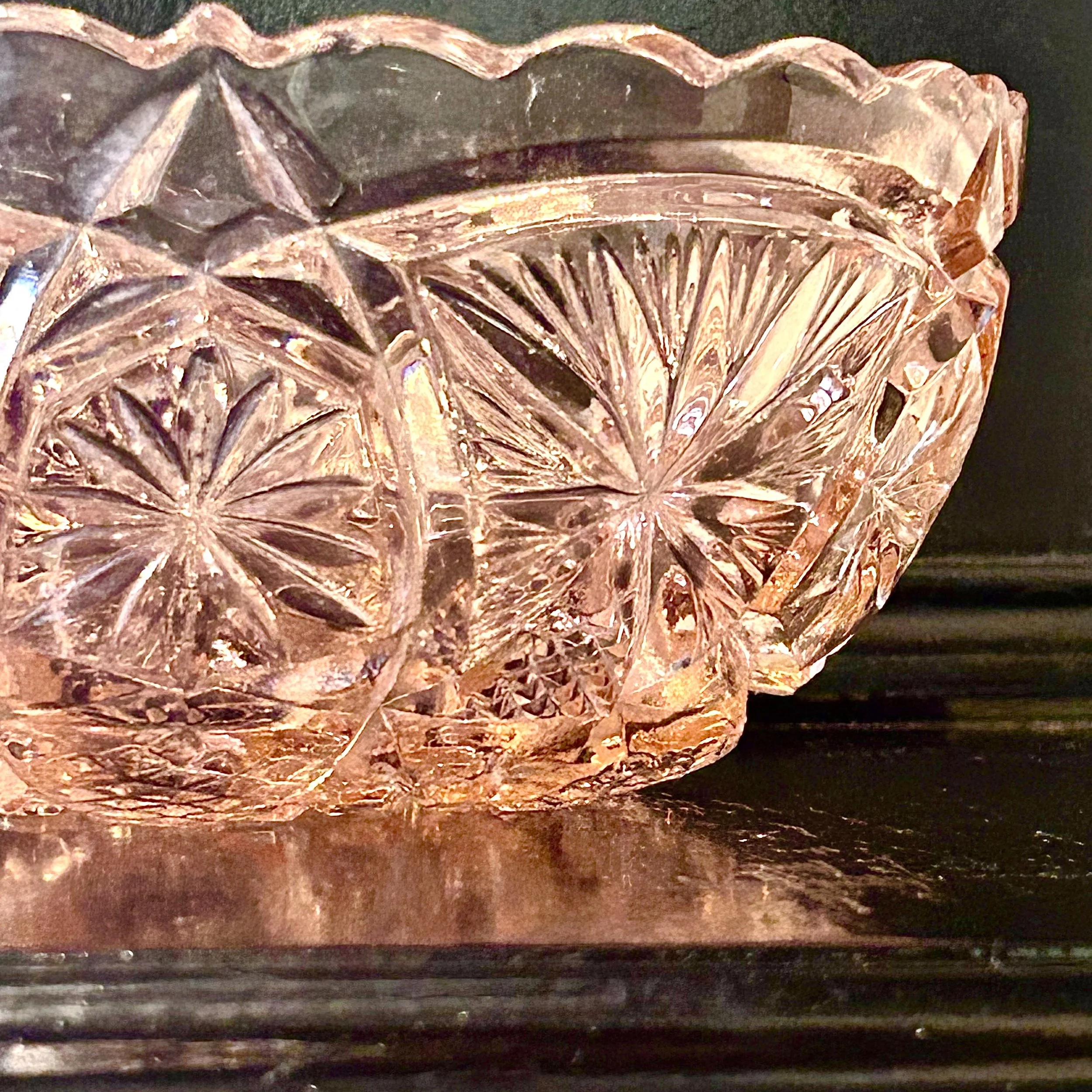
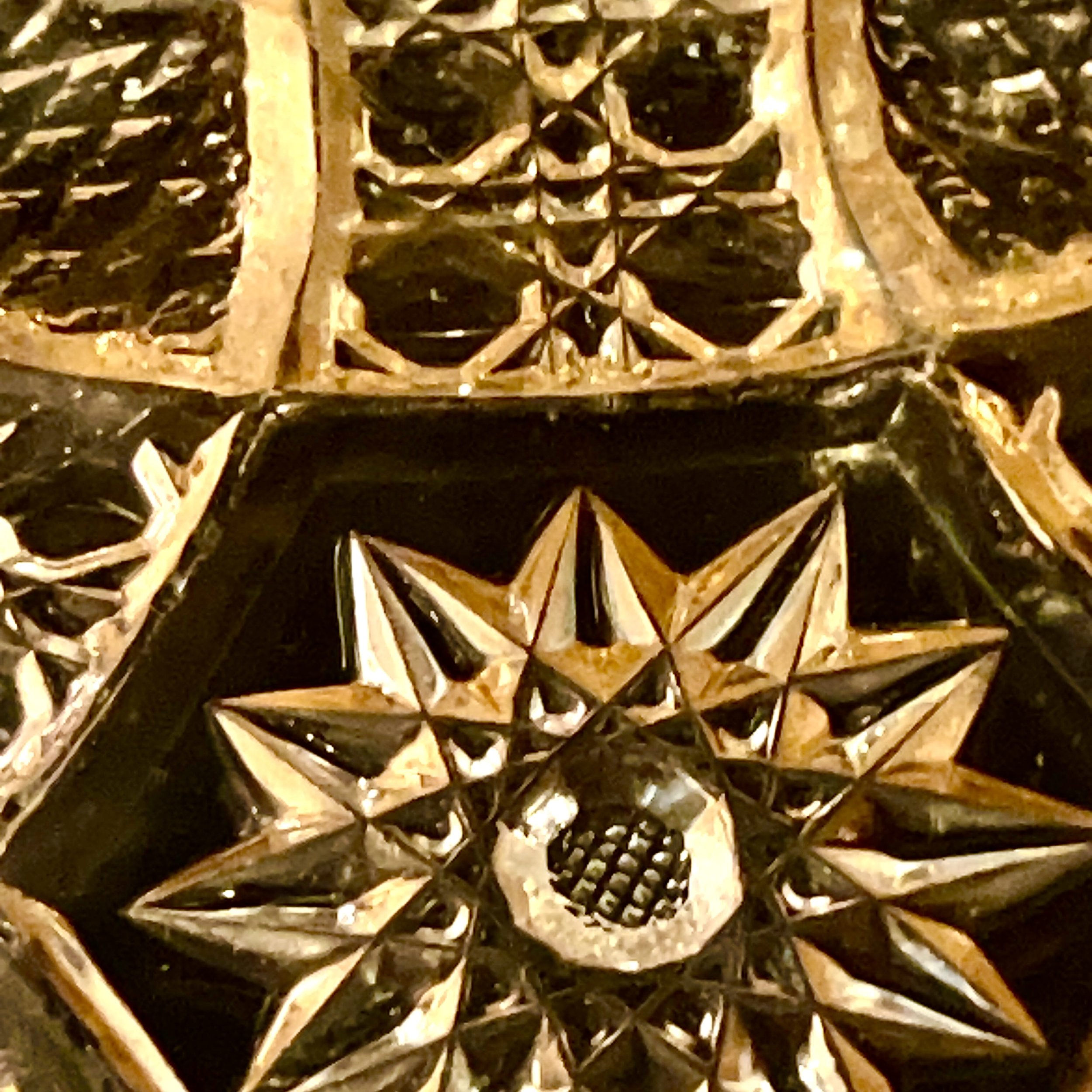
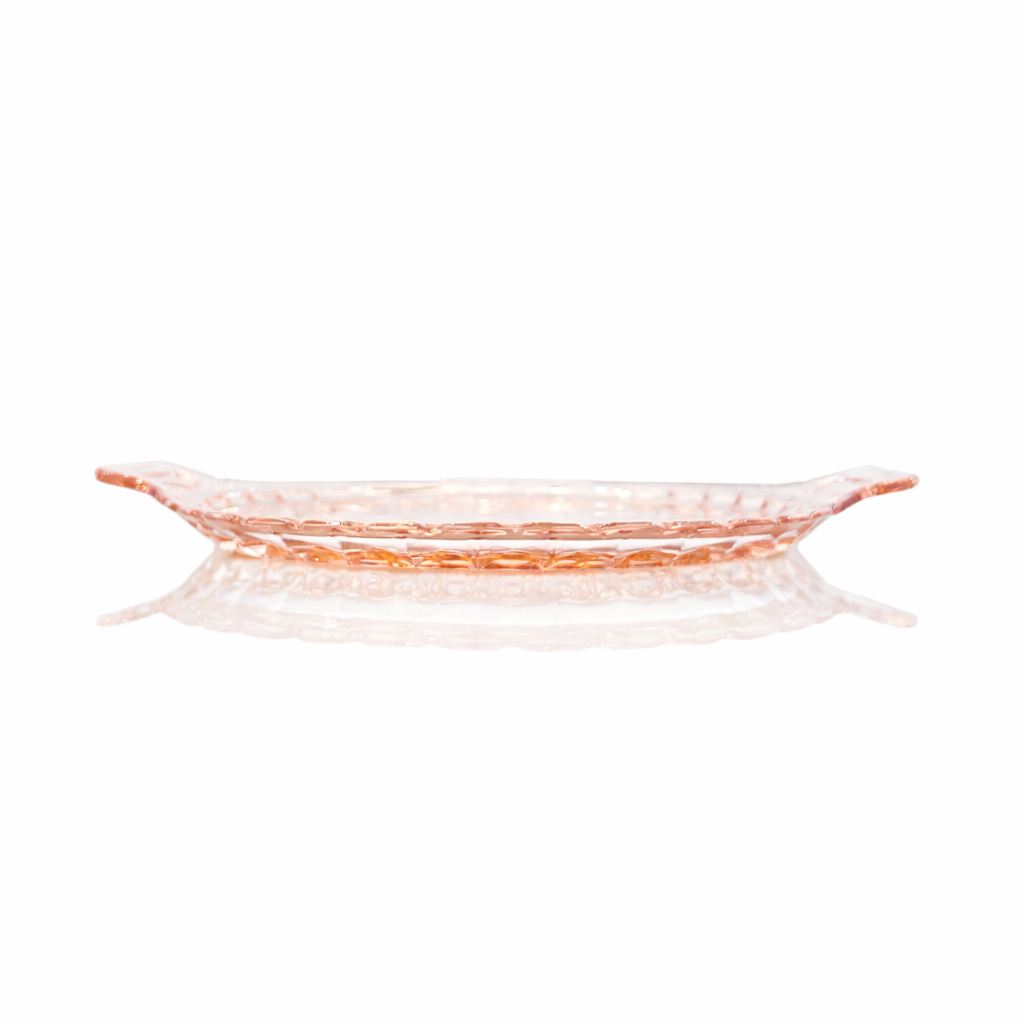
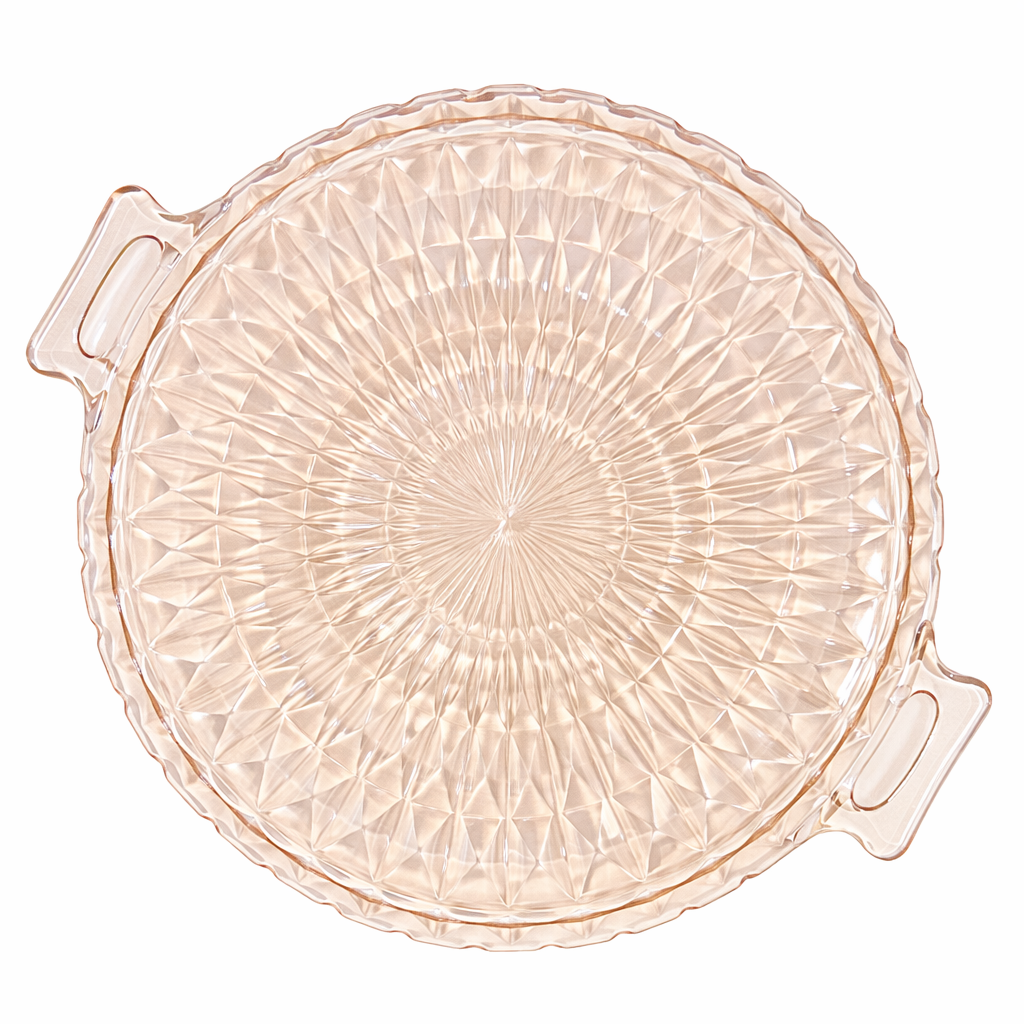
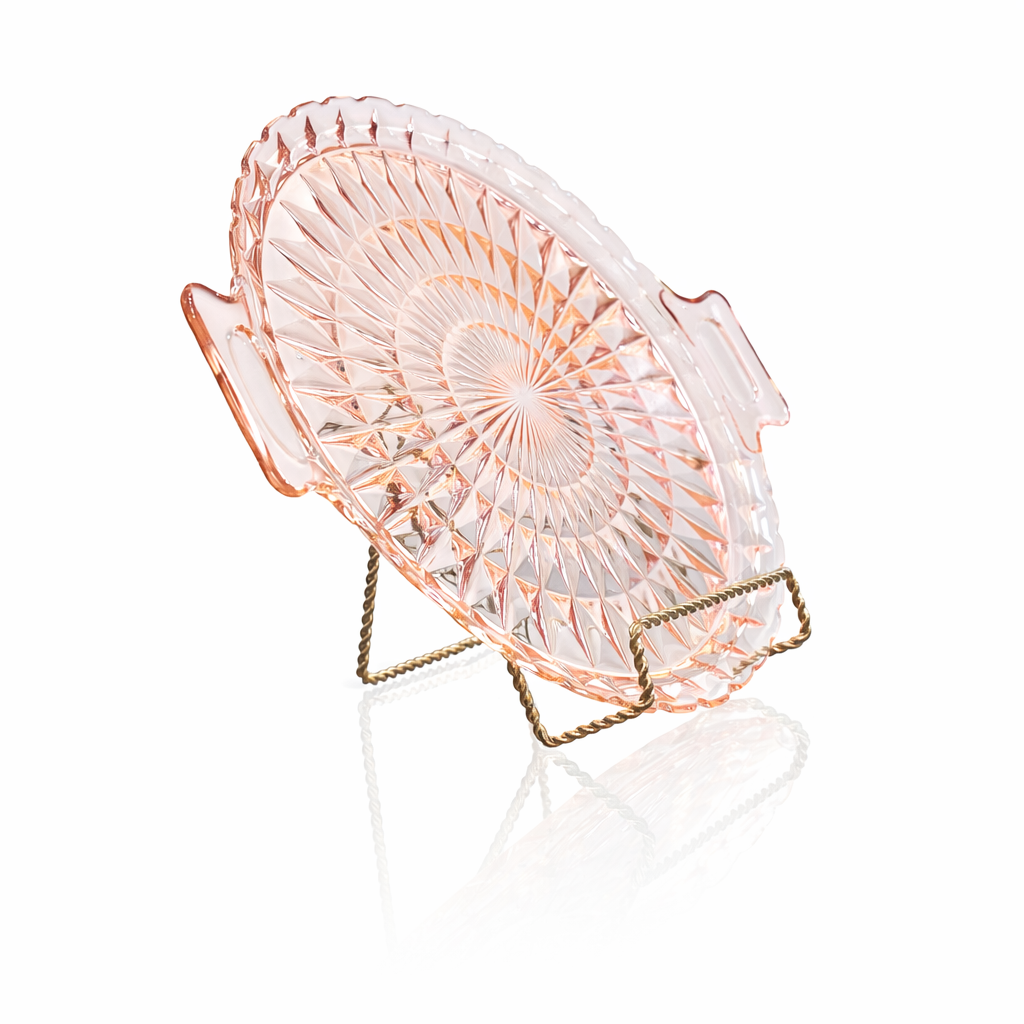
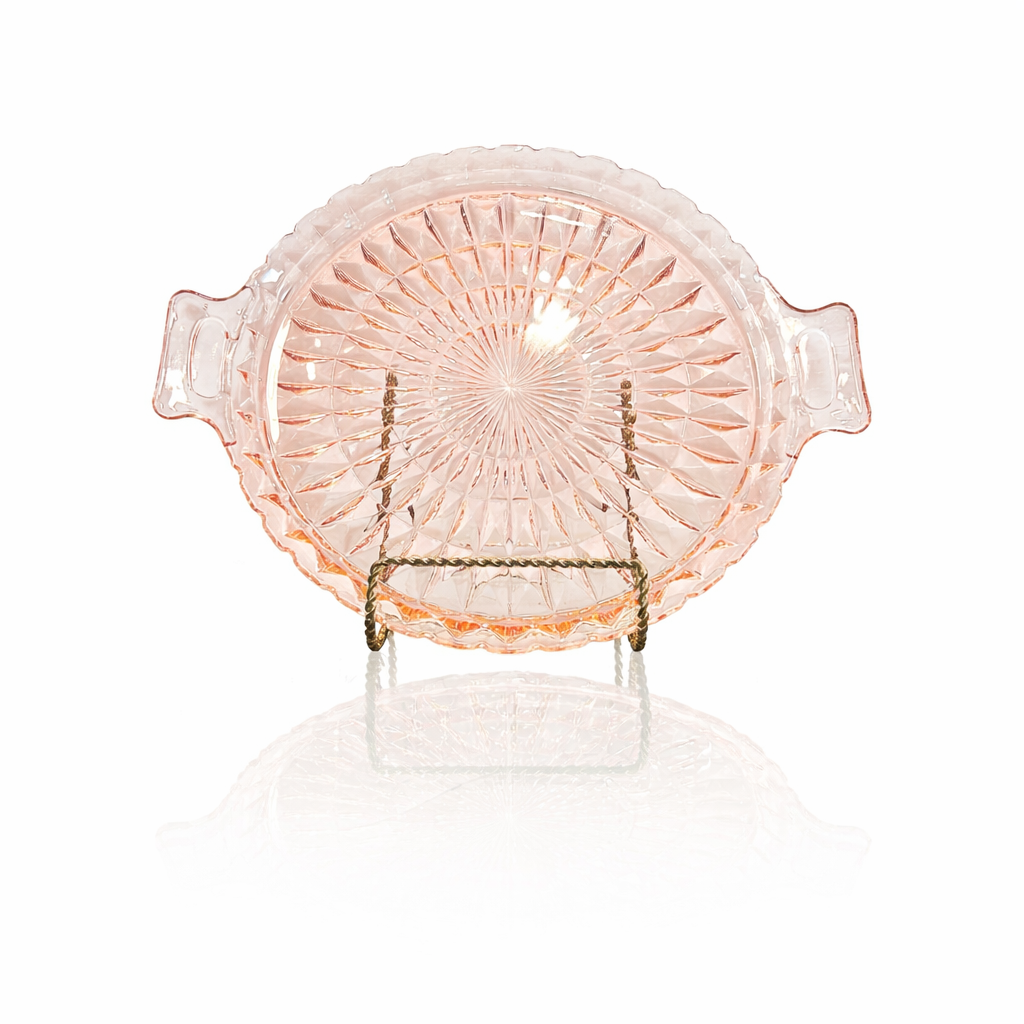
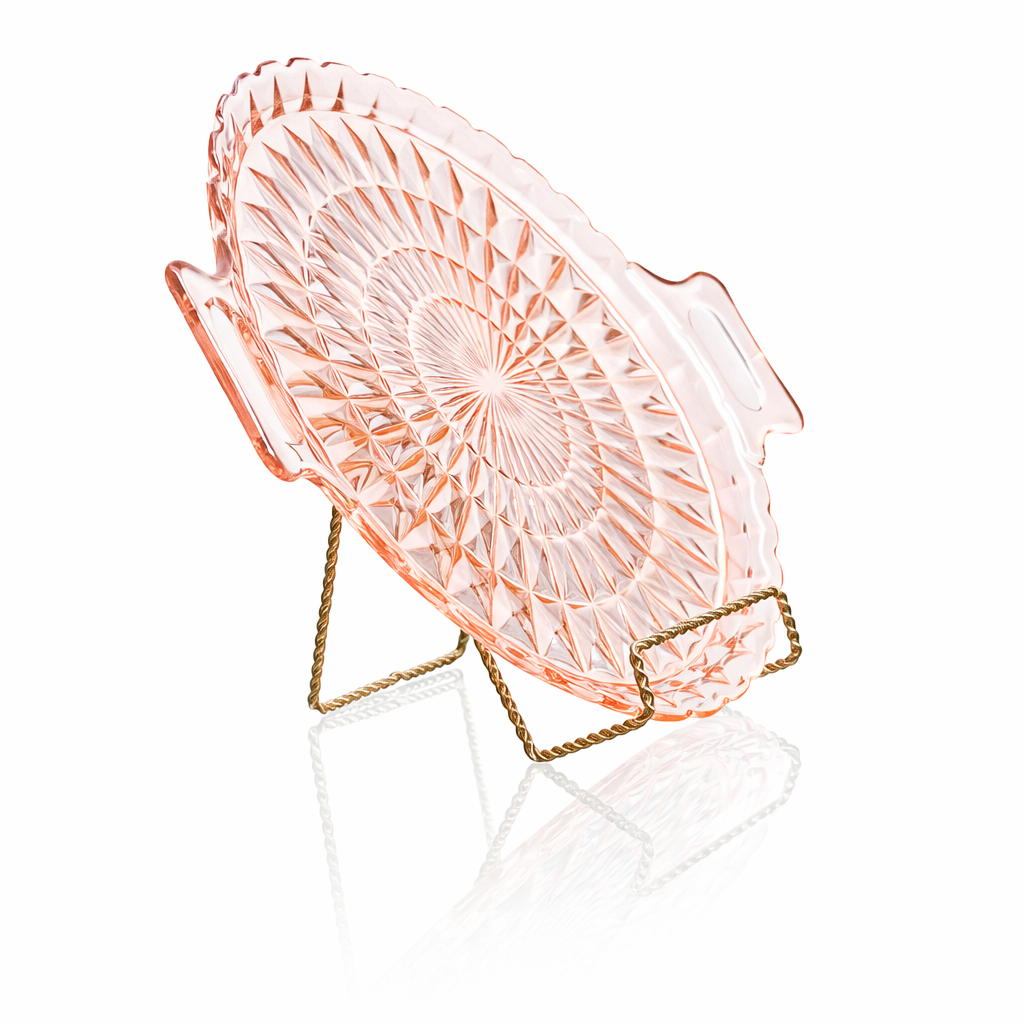
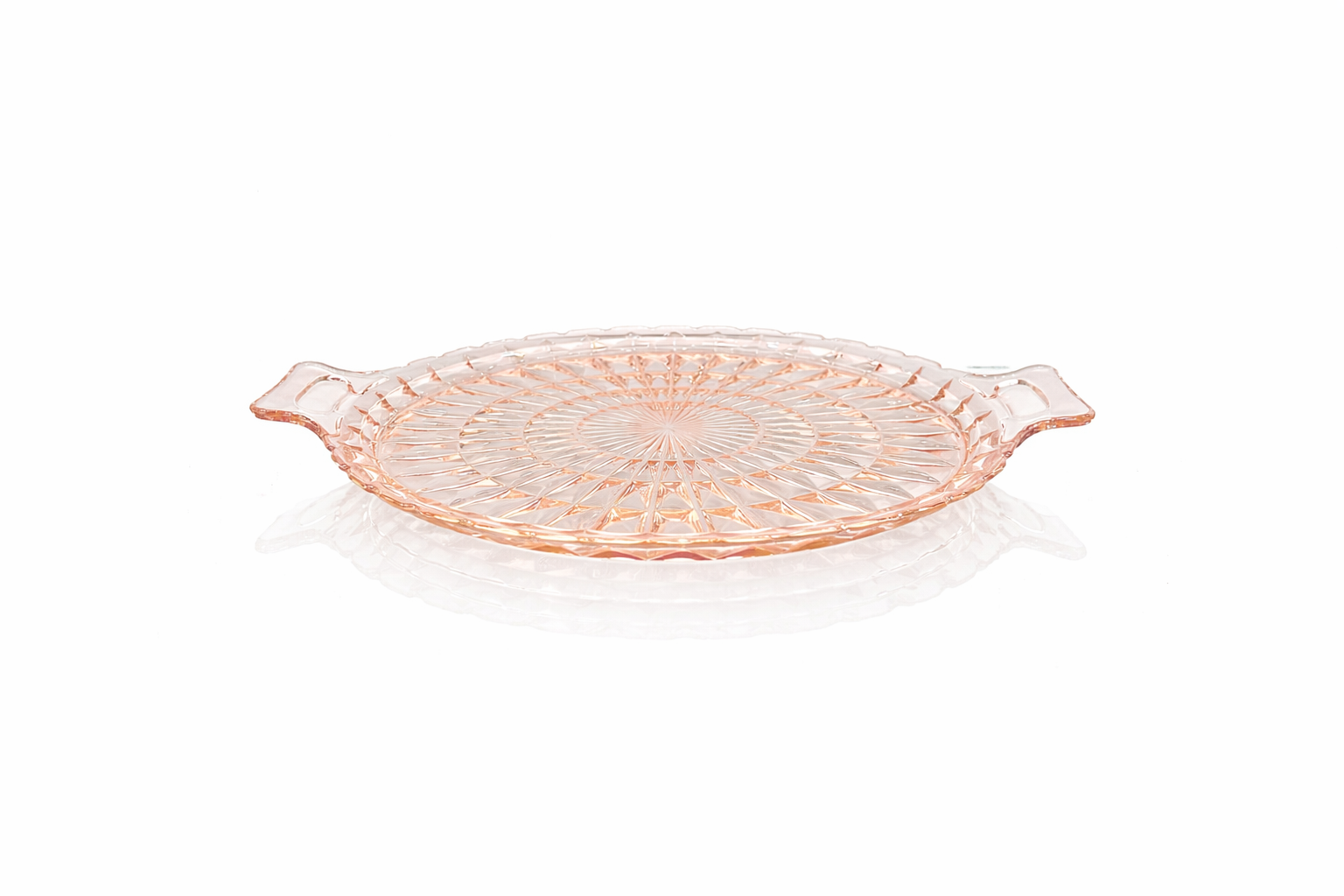
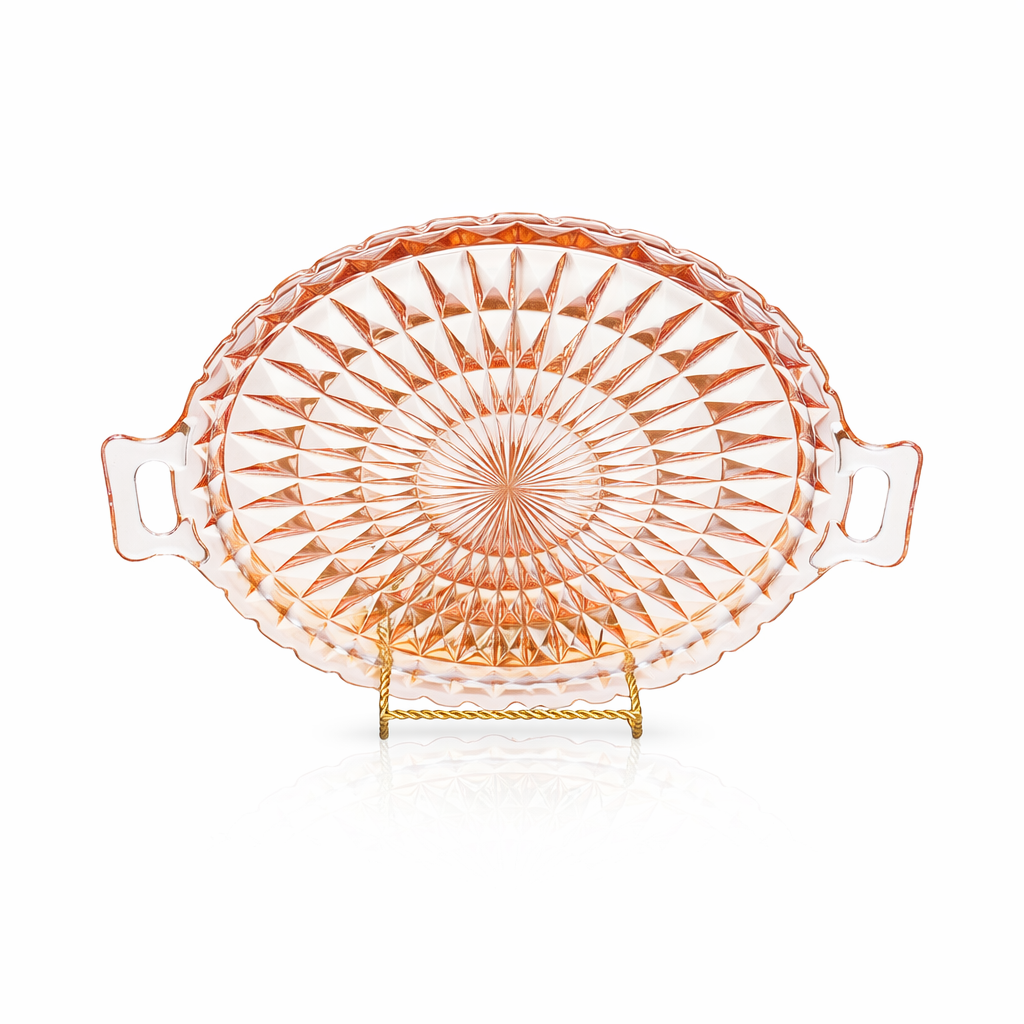
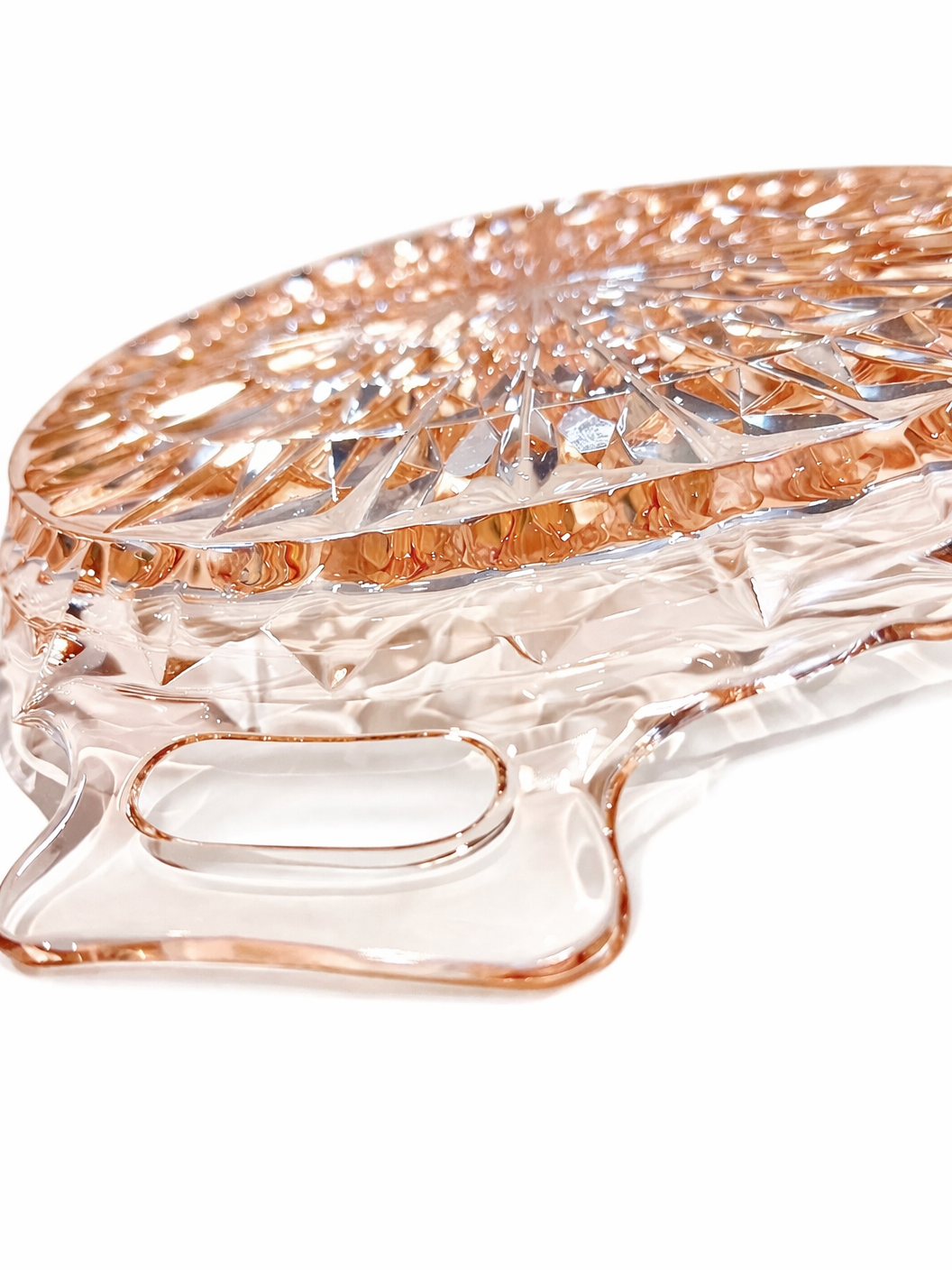
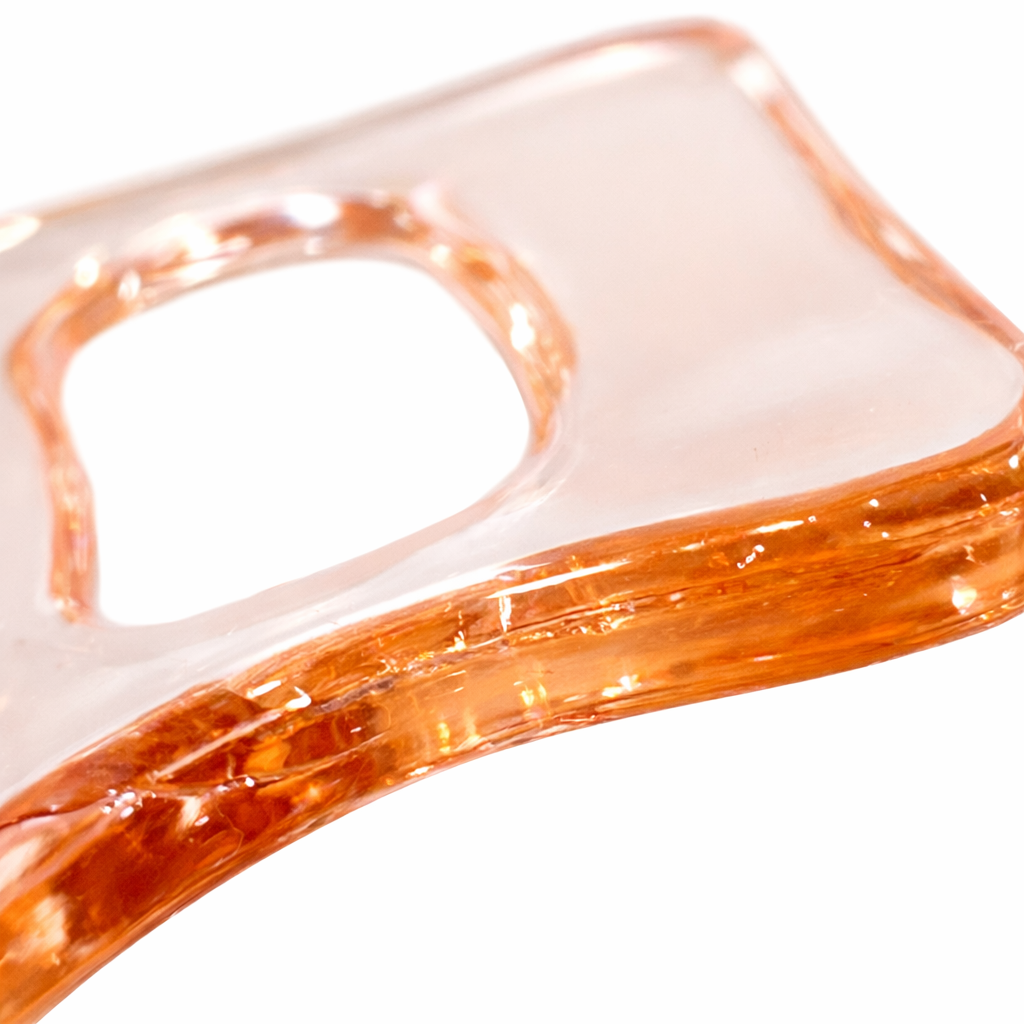
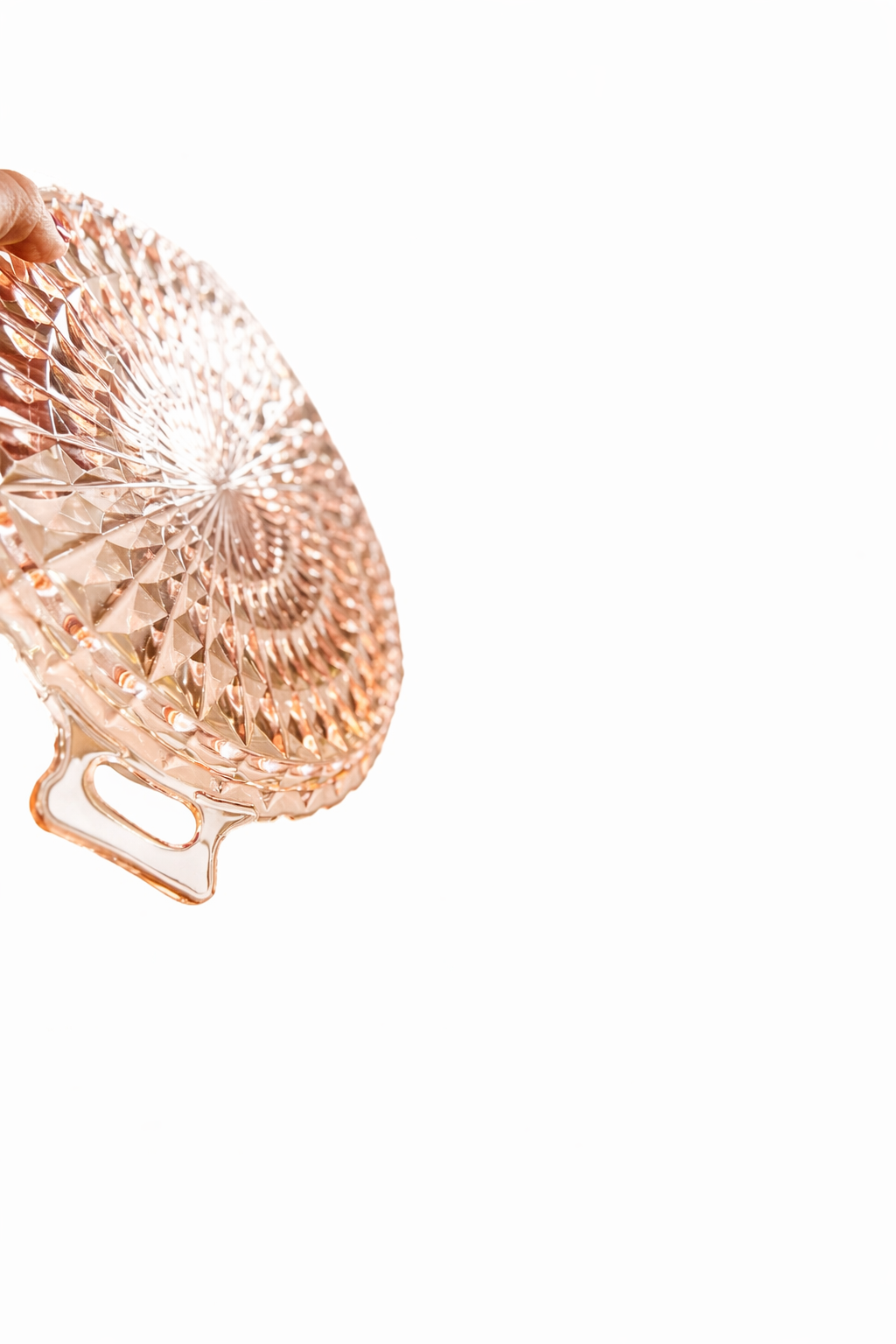
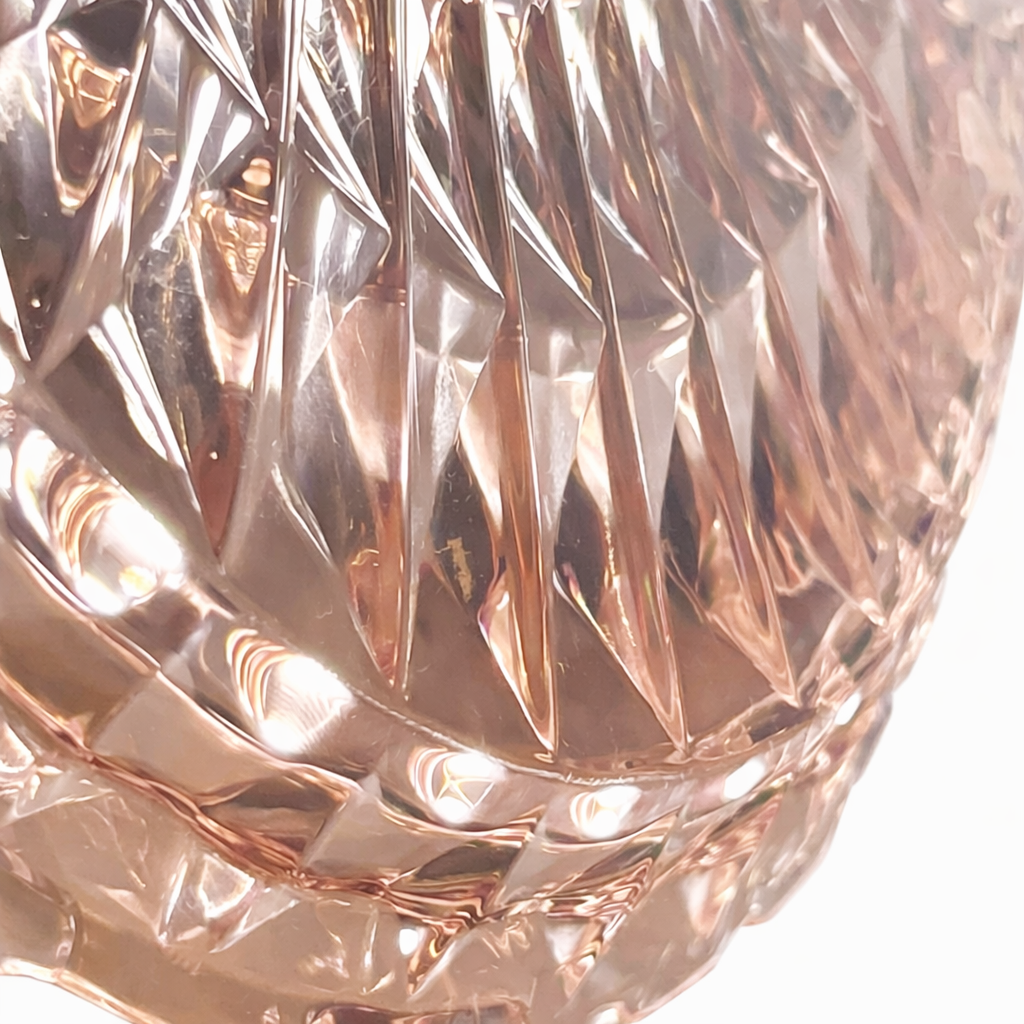
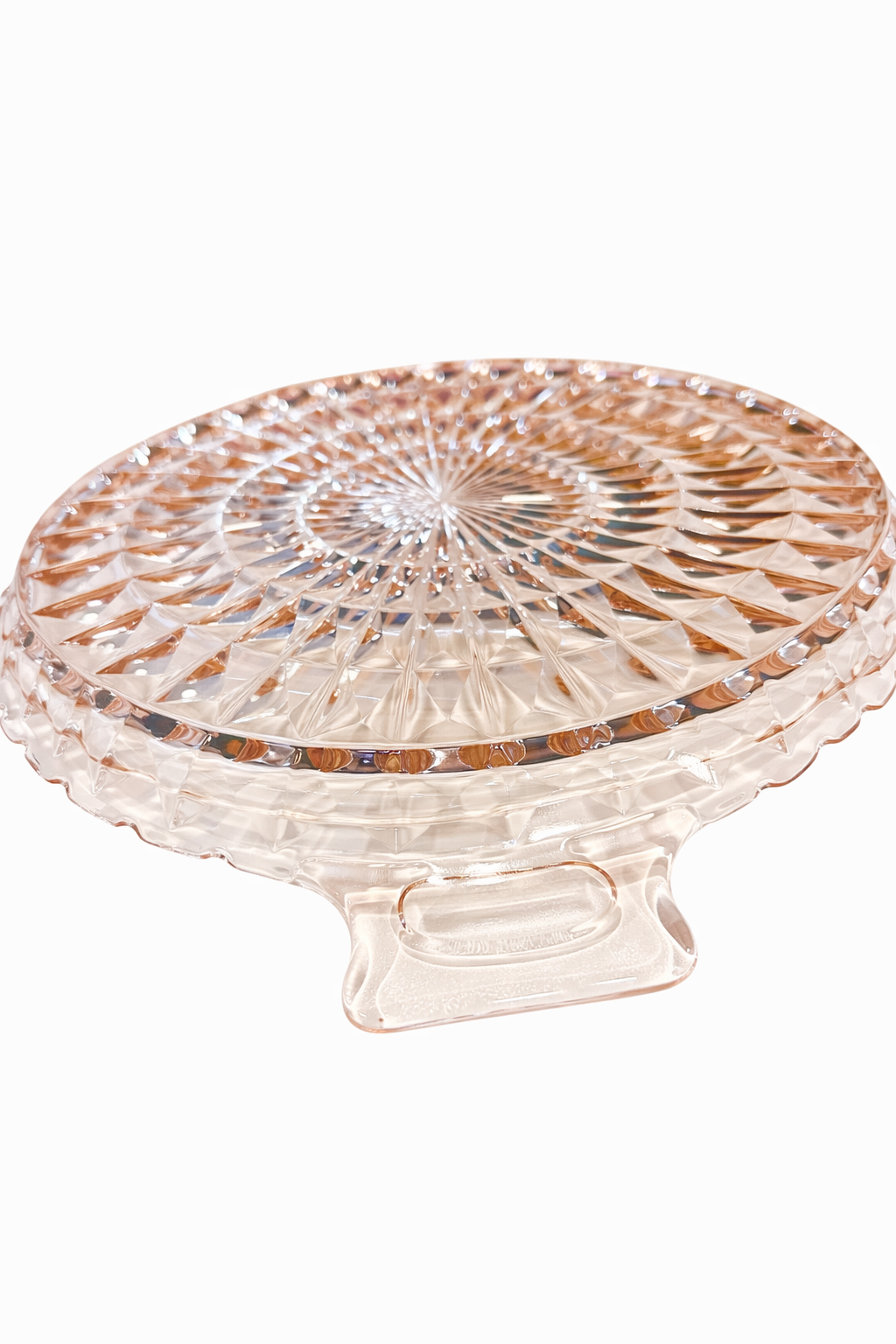
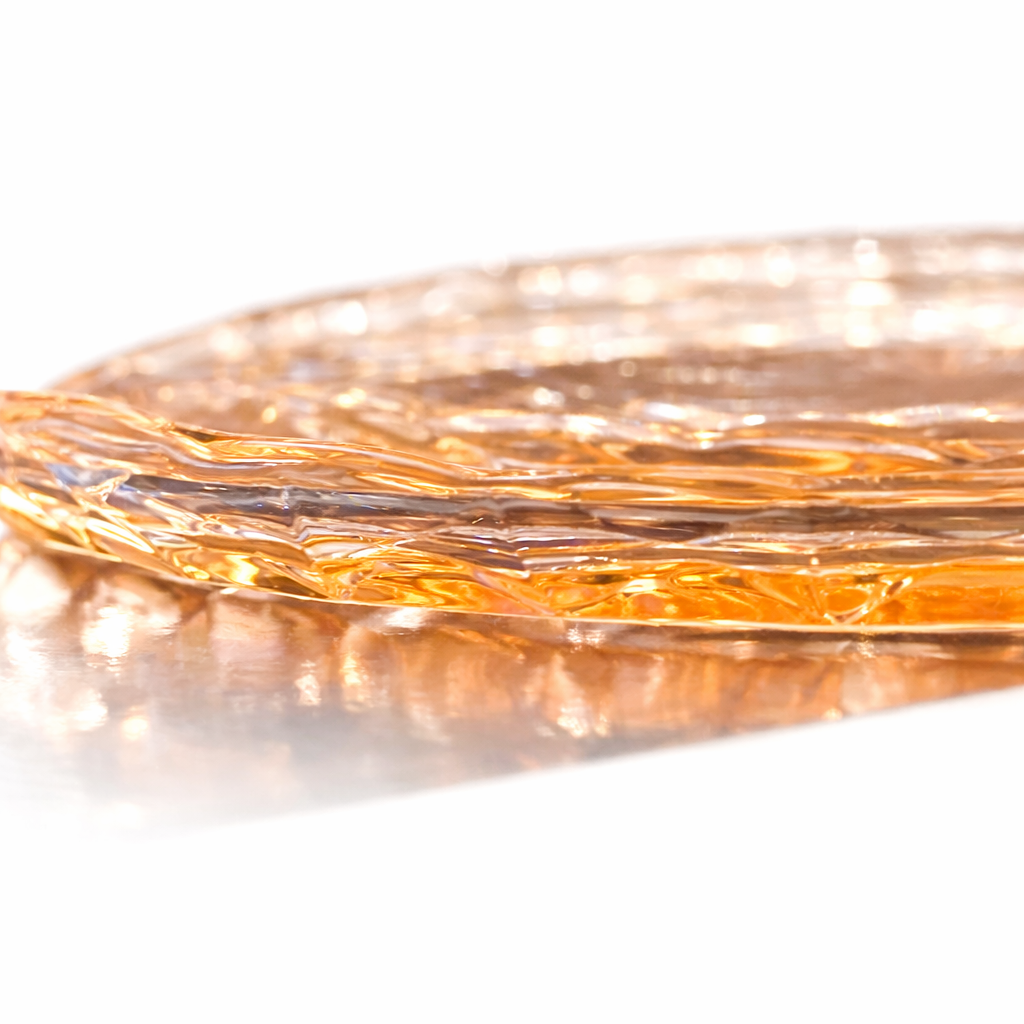
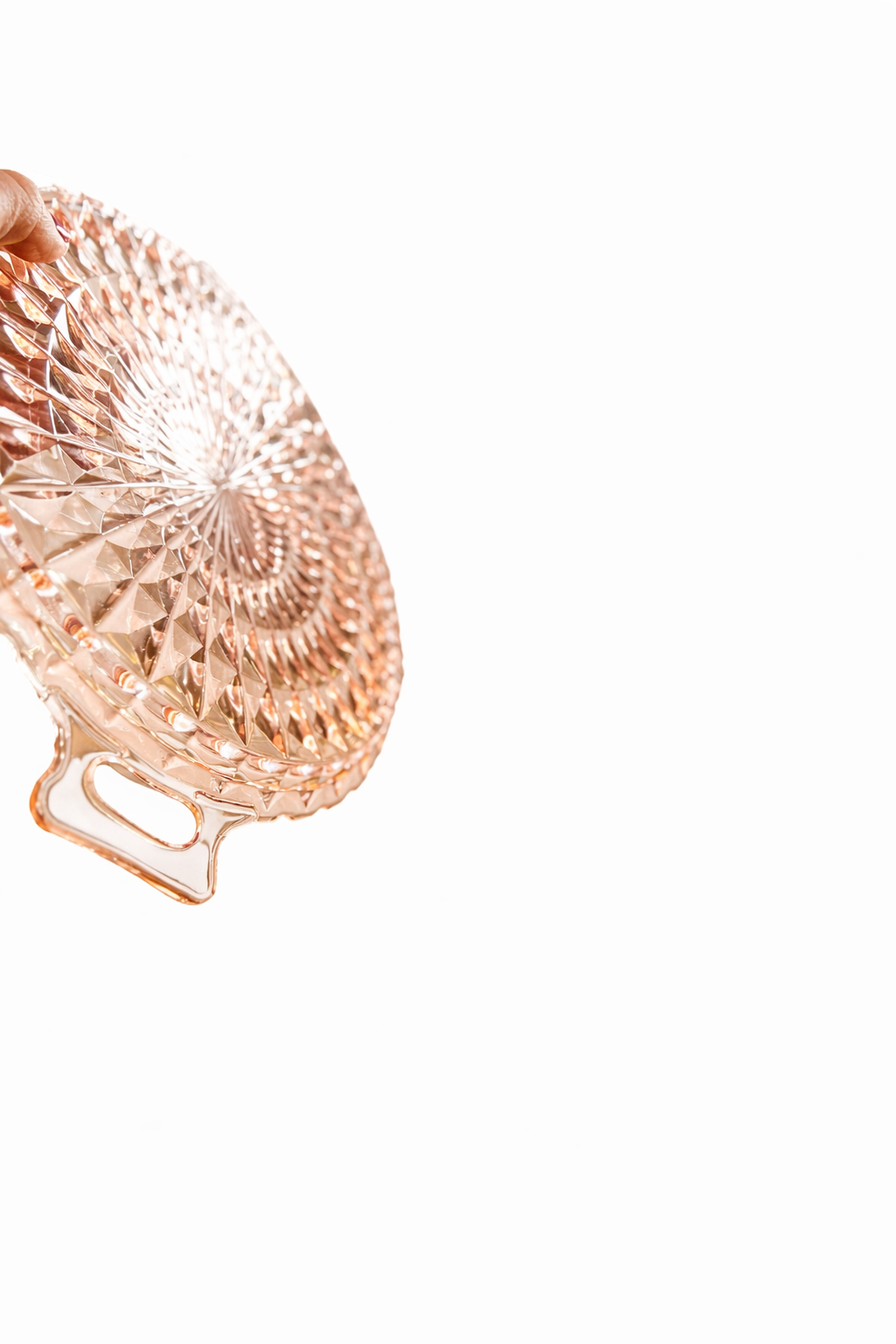
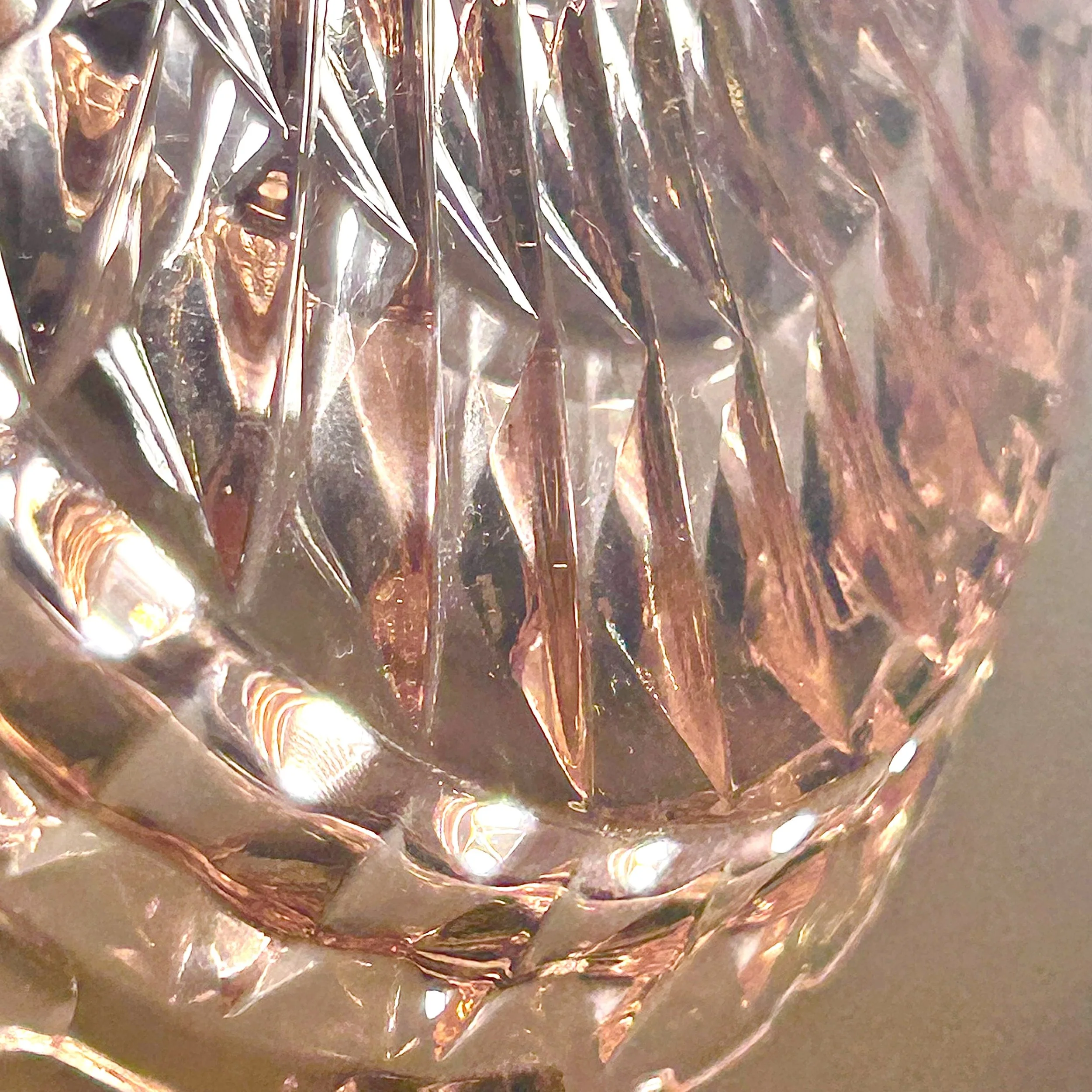
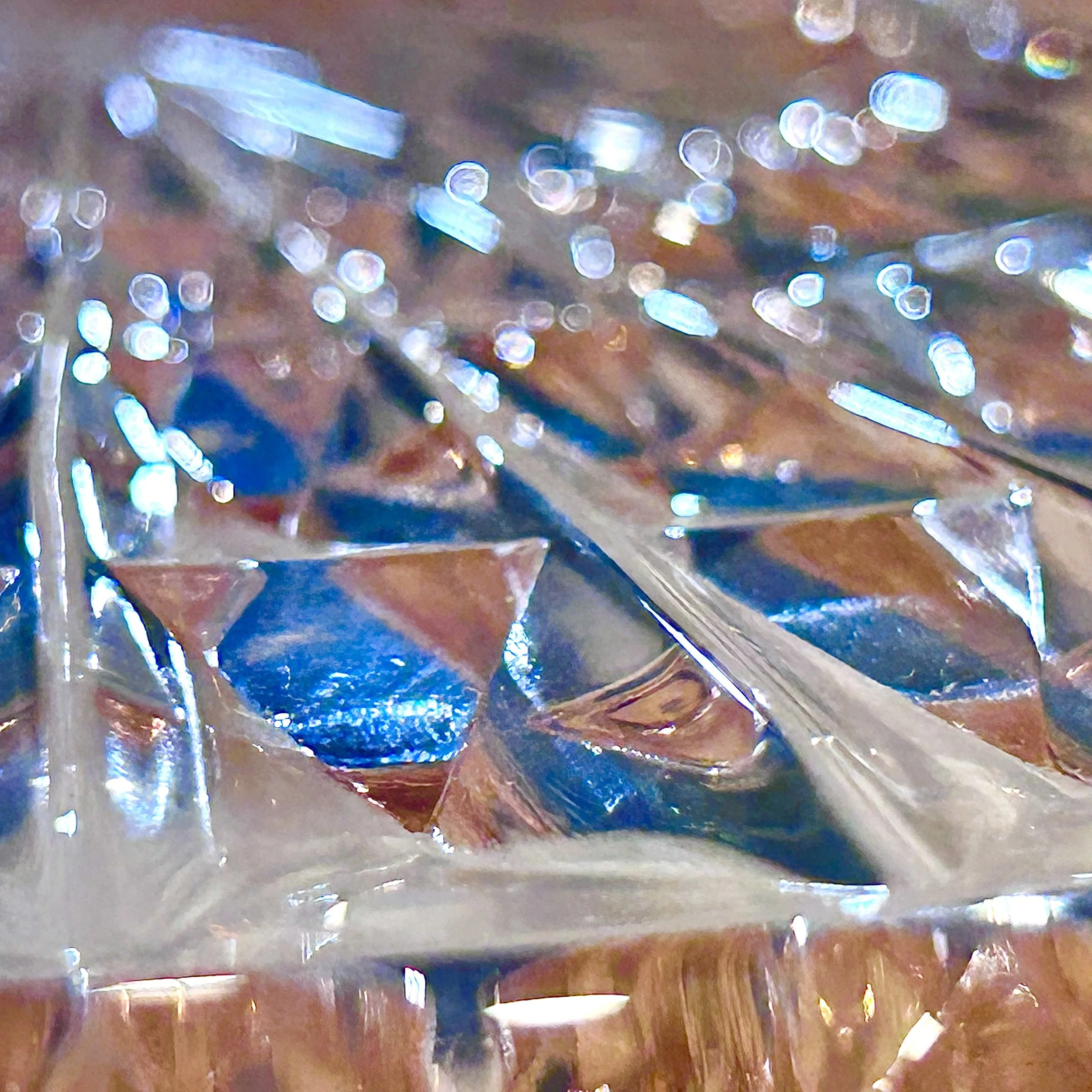
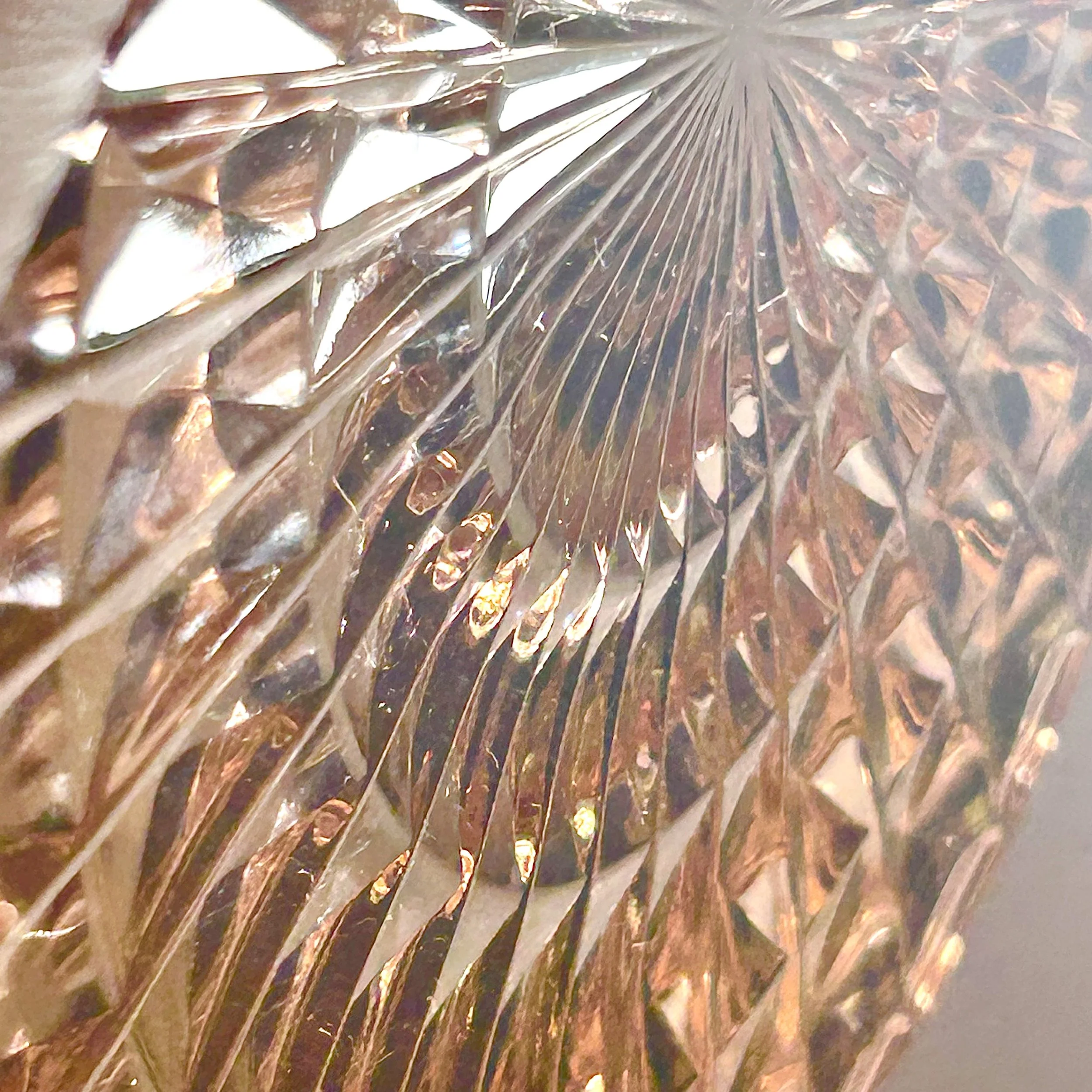
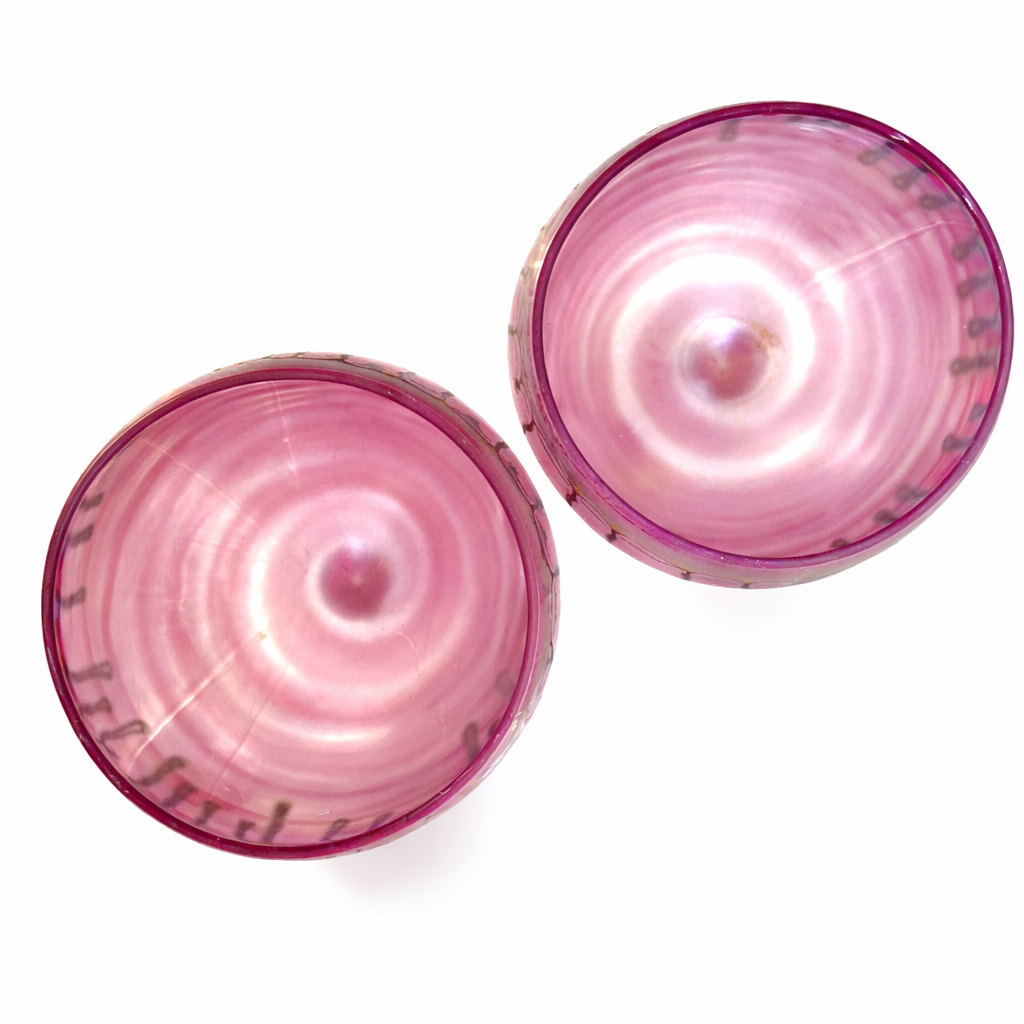
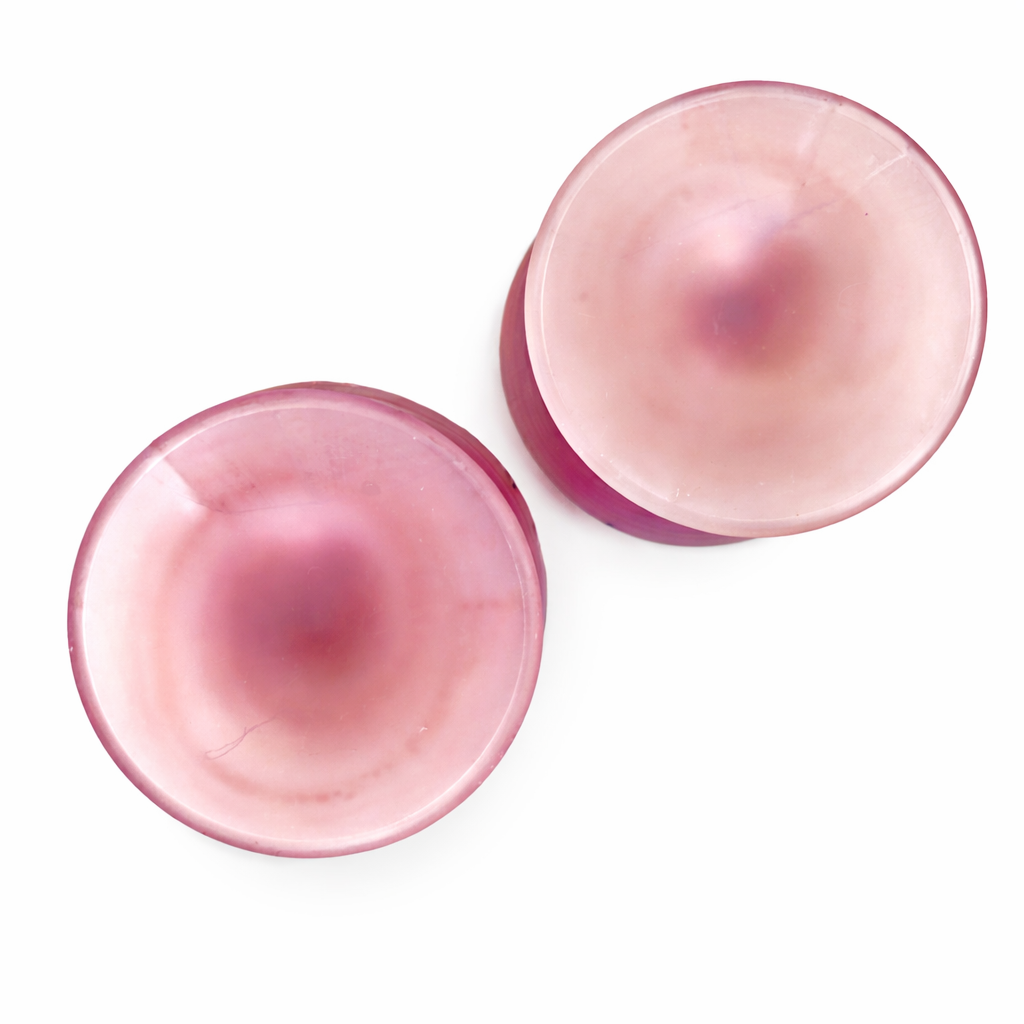
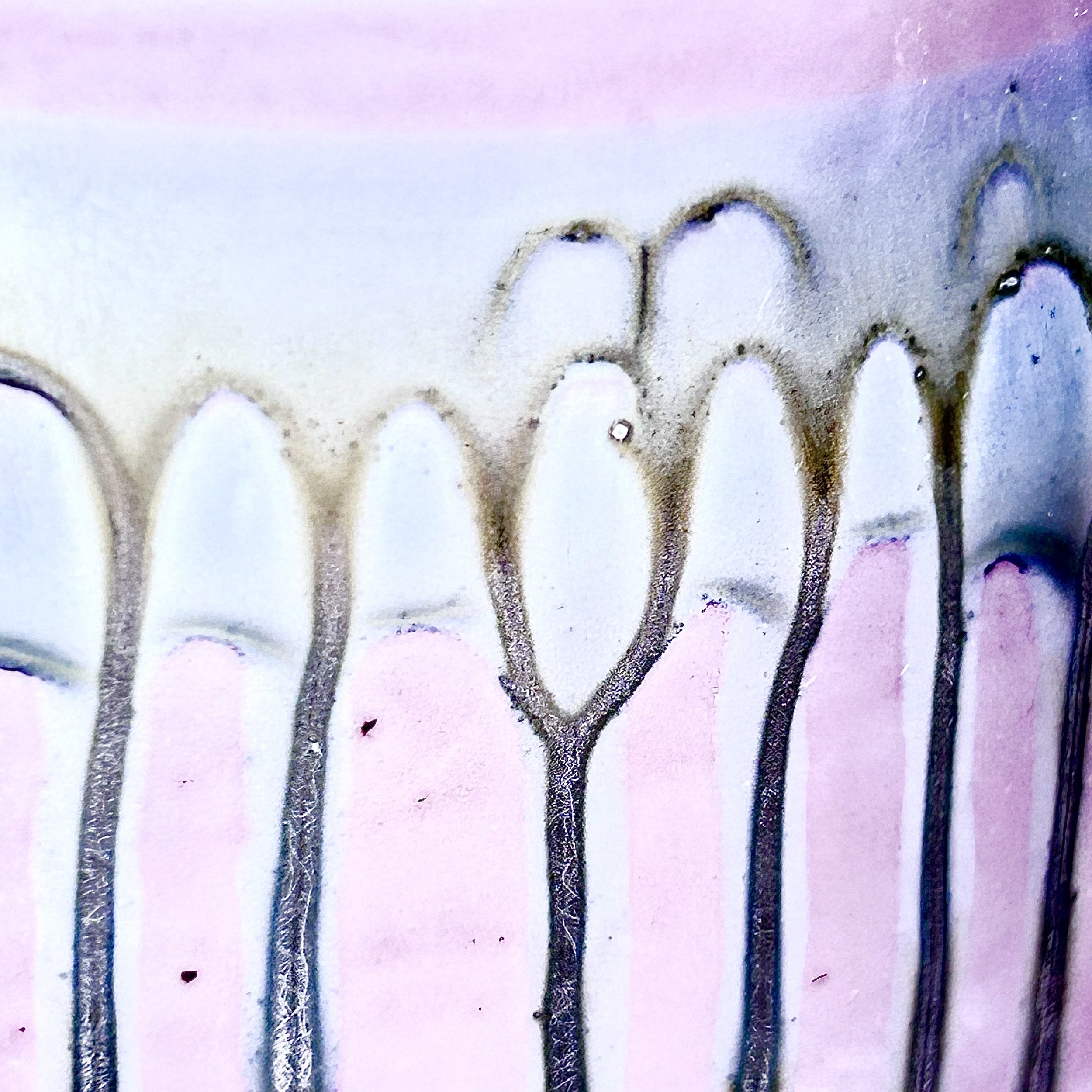
This elegant French pink glass plate presents a refined sculptural presence defined by its rhythmic scalloped rim and softly radiating petal geometry. The translucent blush tone shifts beautifully under light, creating a subtle gradient from pale rose to deeper cranberry along the edges. Its molded floral silhouette gives the piece both decorative charm and architectural symmetry. The plate functions equally well as a serving piece or as a decorative tabletop object, offering a delicate balance between utility and visual refinement.
Attribution & Period
Primary decade: 1930s
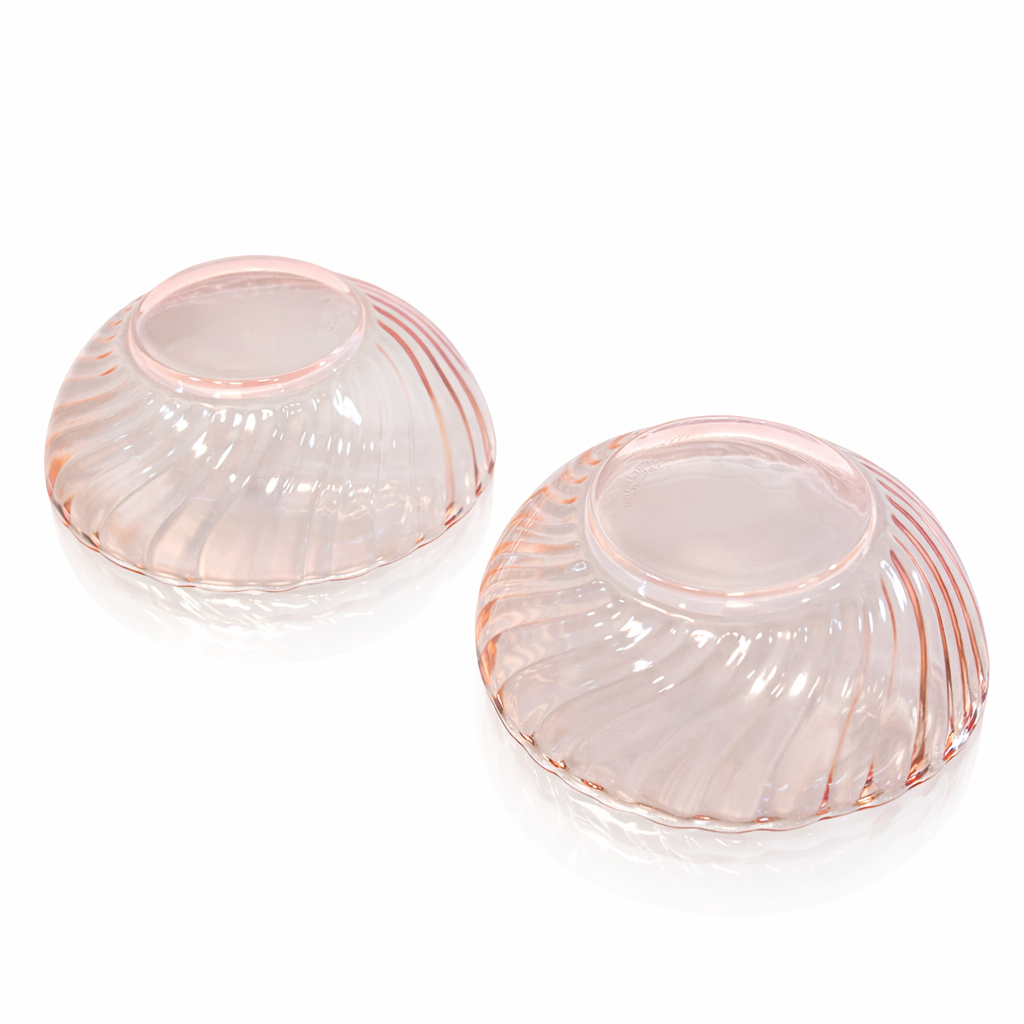
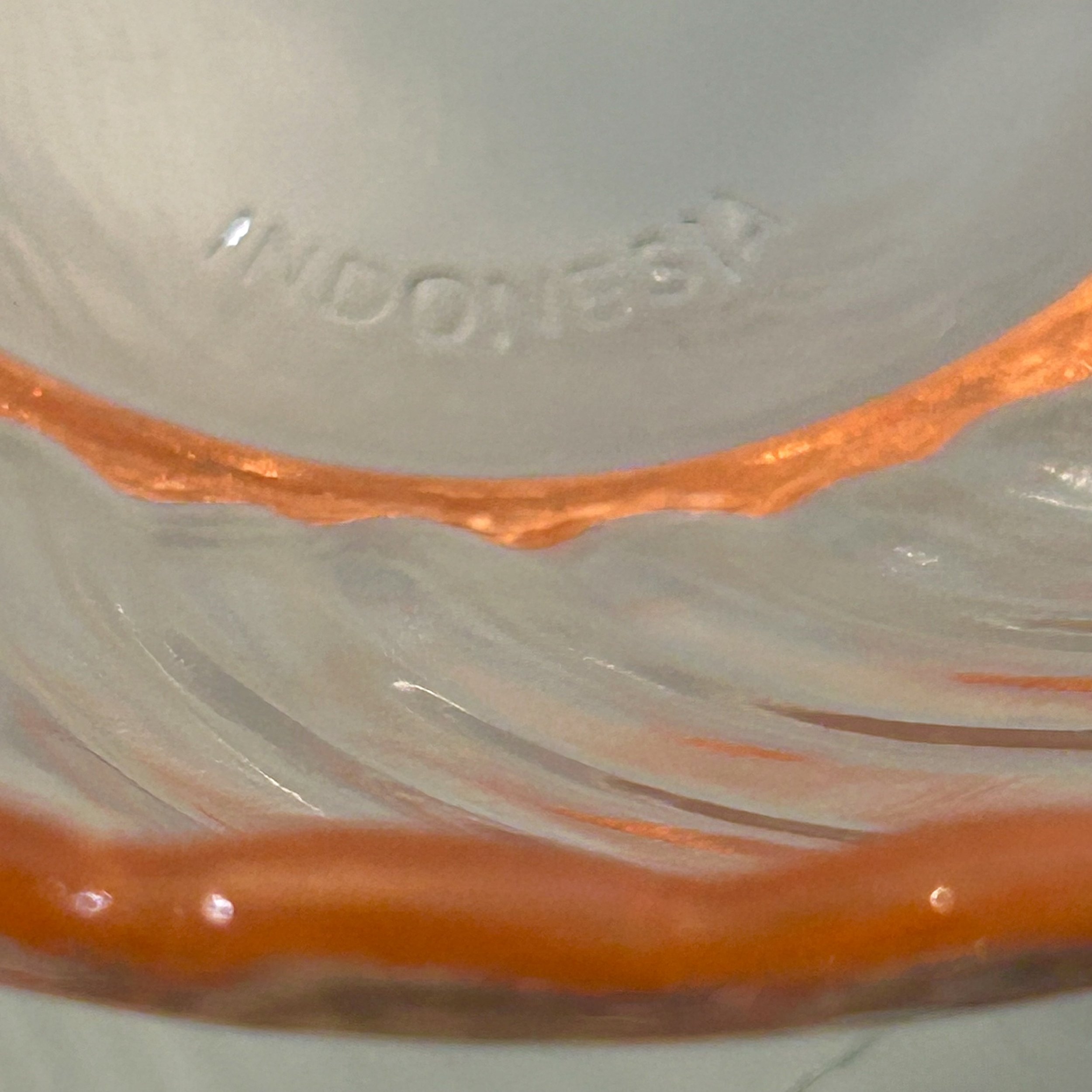
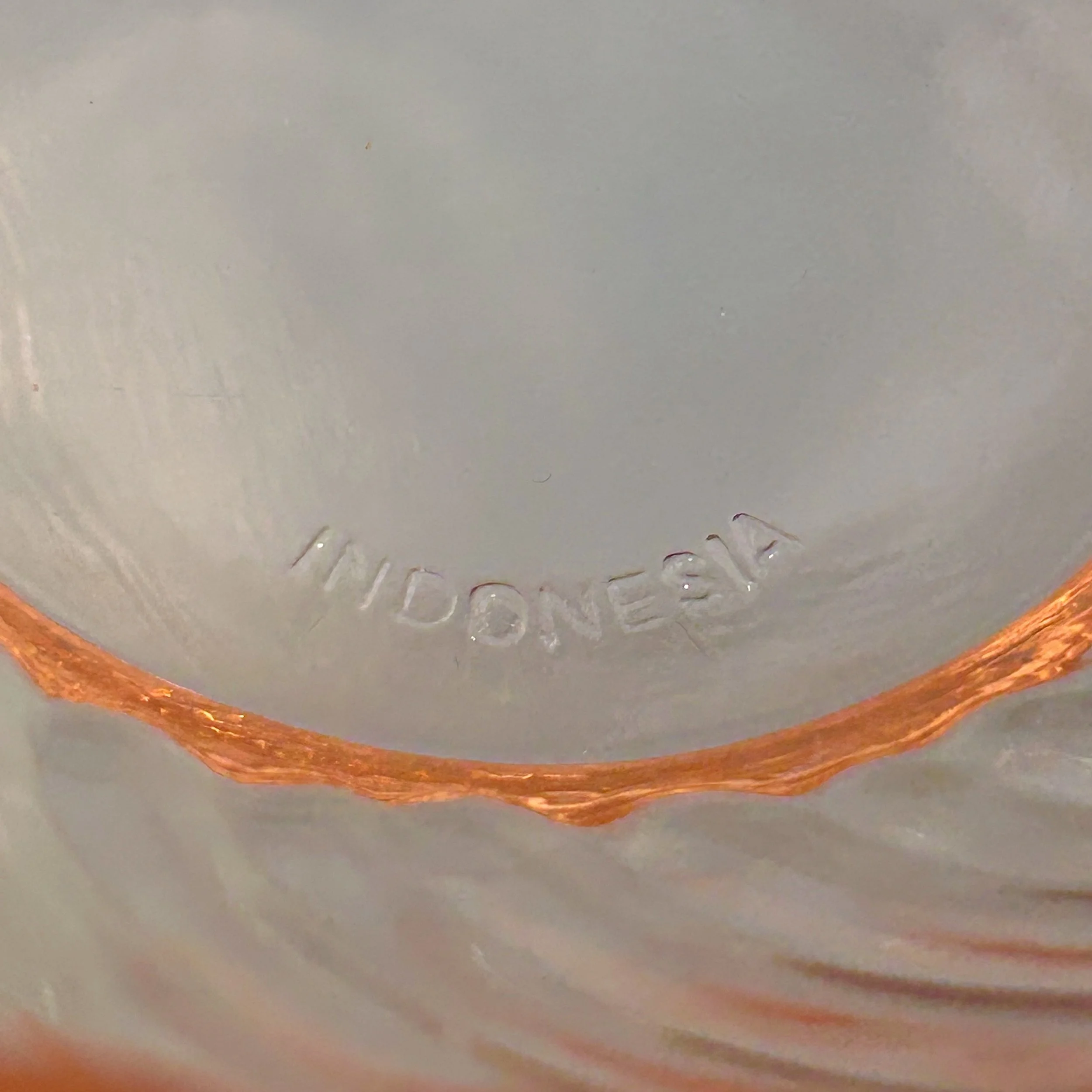
Unmarked decorative arts example made in France, as indicated by the molded “FRANCE” mark present on the underside. The molded scalloped rim, radial petal pattern, and softly tinted pressed glass body are consistent with French pressed glass production widely produced during the early to mid-20th century. Similar decorative tablewares were manufactured by several French glass houses producing colored pressed glass for both domestic and export markets. No specific maker mark is present, so attribution remains regional rather than factory-specific.
Dimensions & Weight
Condition
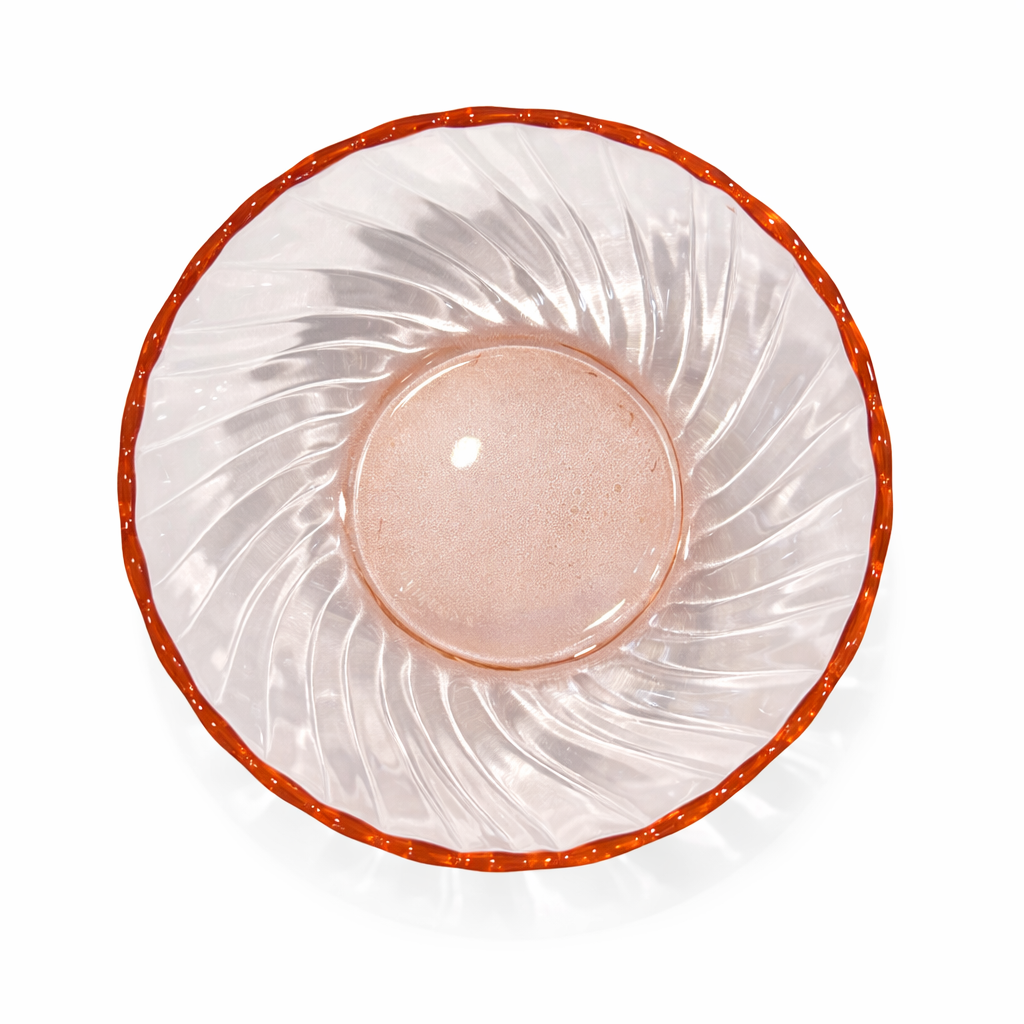
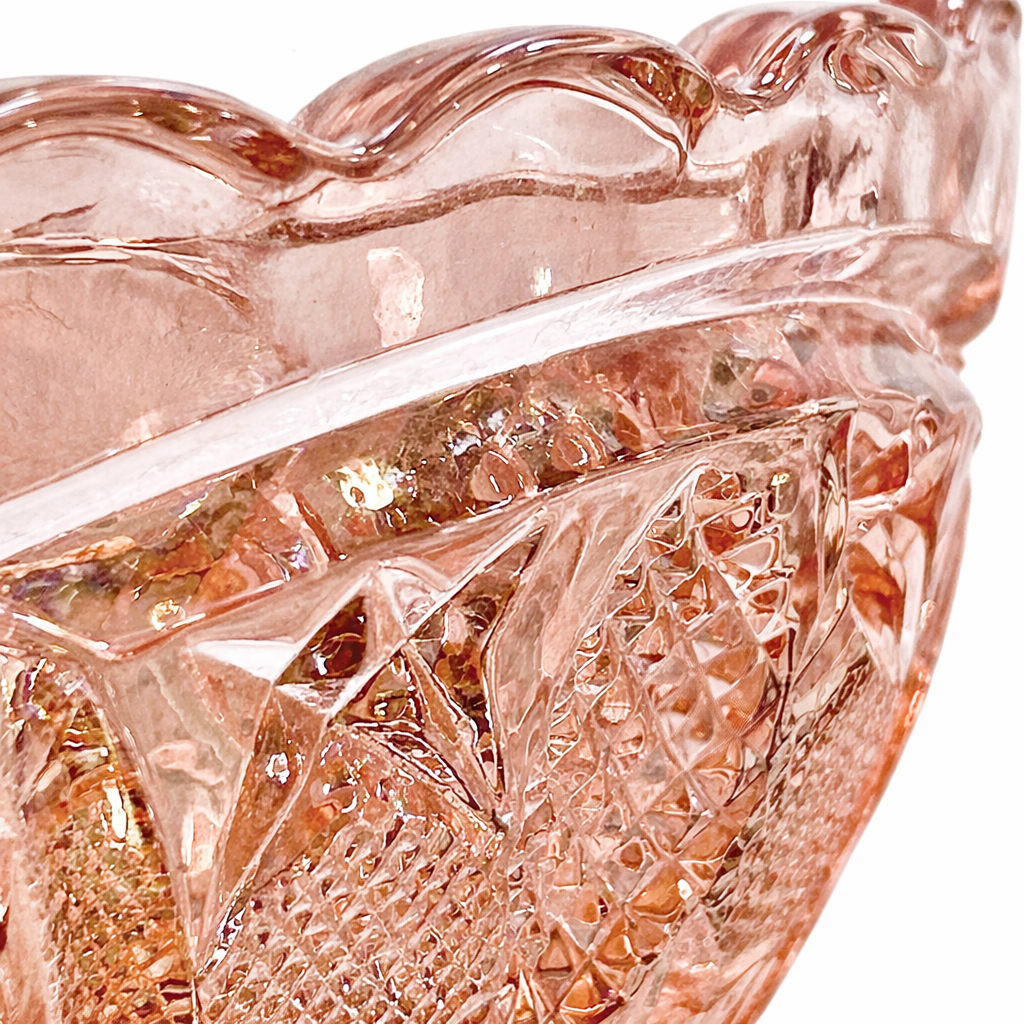
Very good vintage condition. Light utensil scratches visible on the interior surface consistent with prior use. No chips, fleabites, hairline cracks, or repairs observed. The rim remains clean and intact with no structural issues. Minor surface wear consistent with age and typical use.
Authenticity & Construction
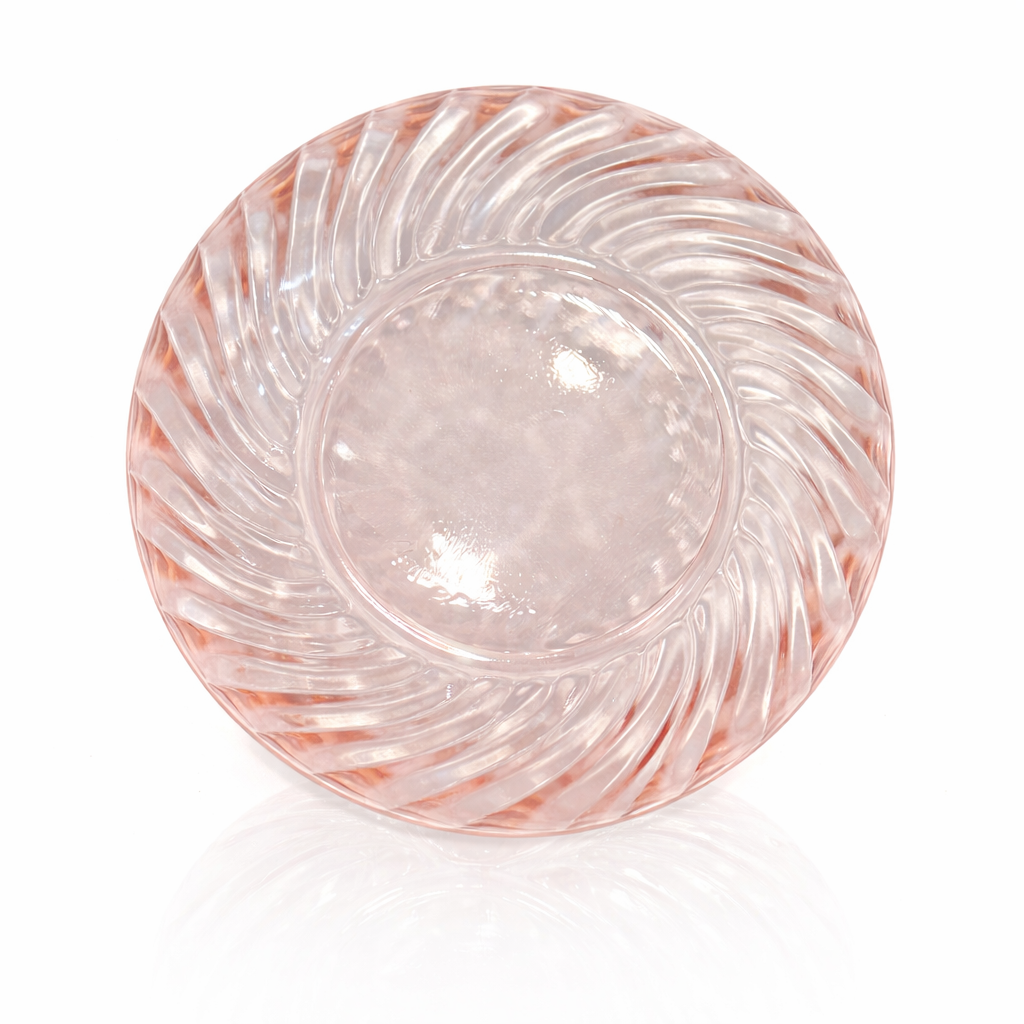
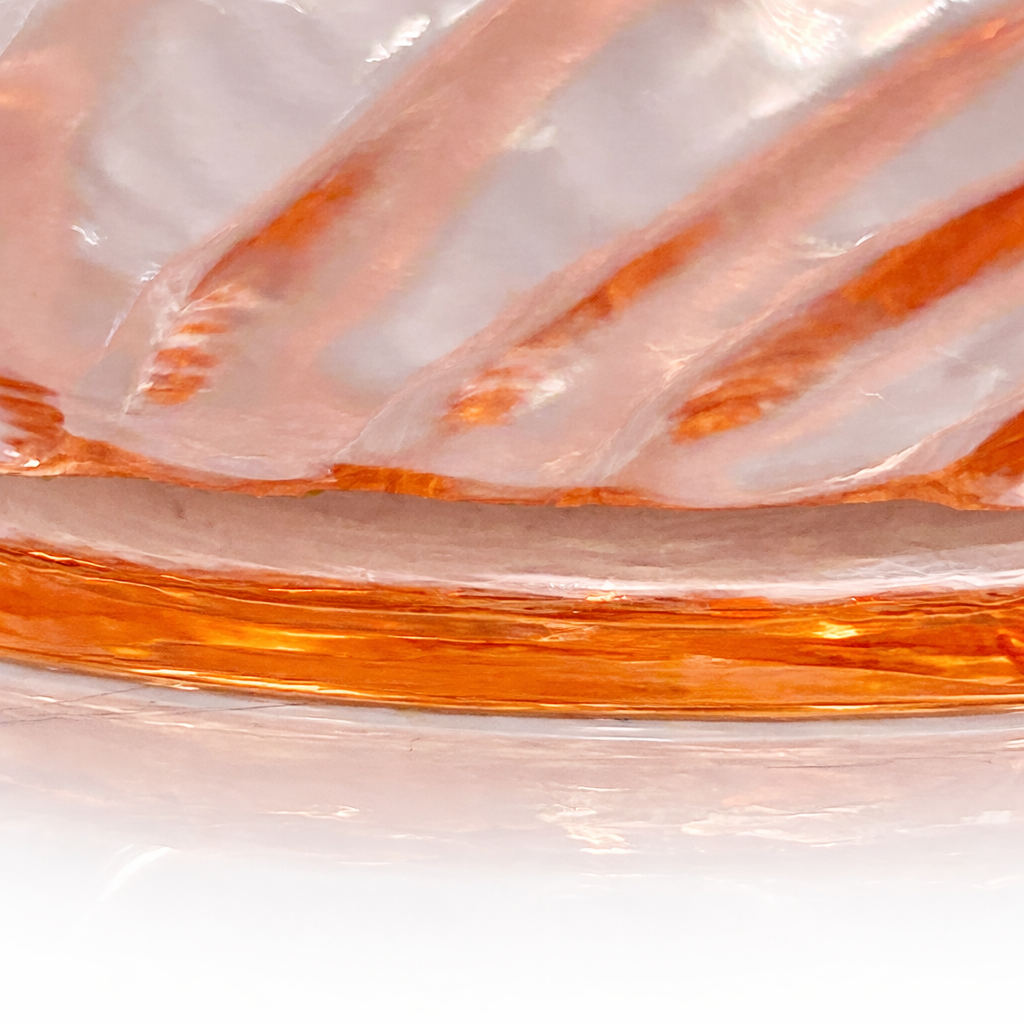
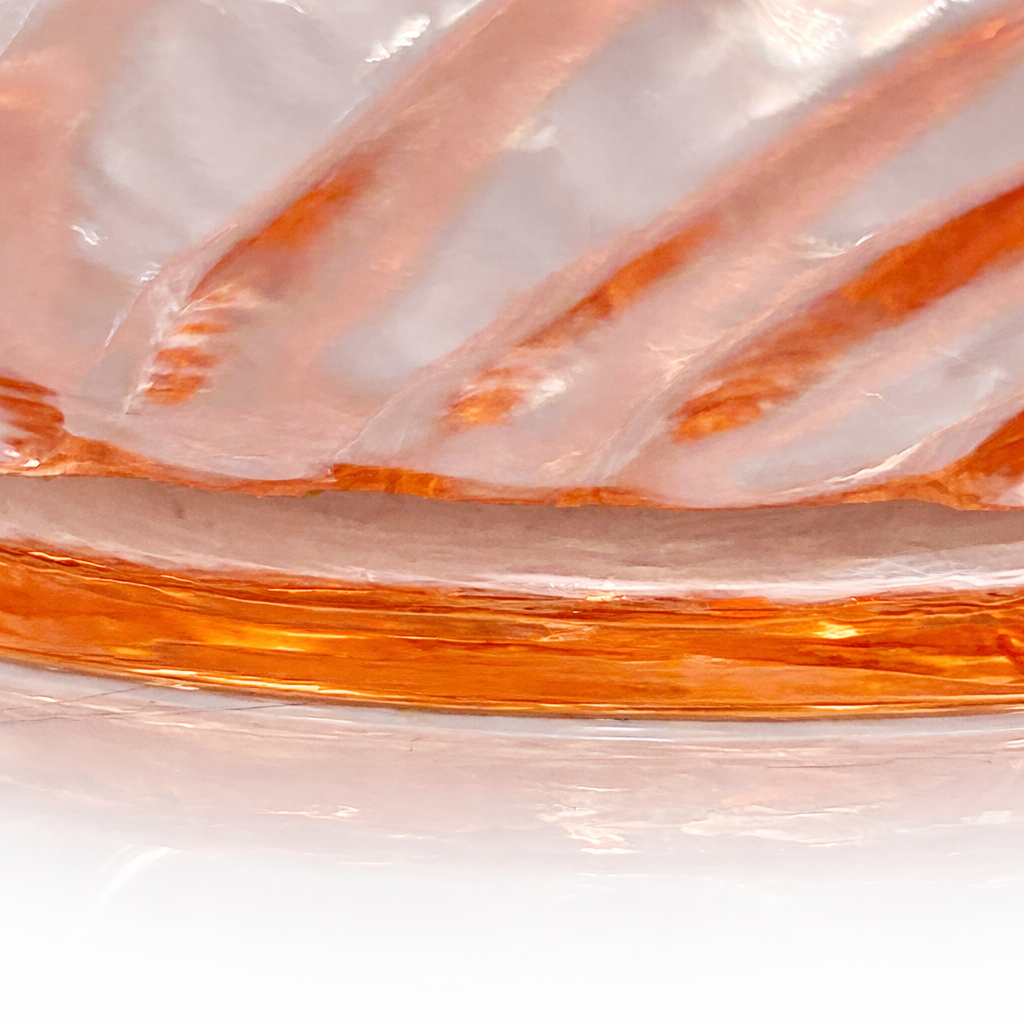
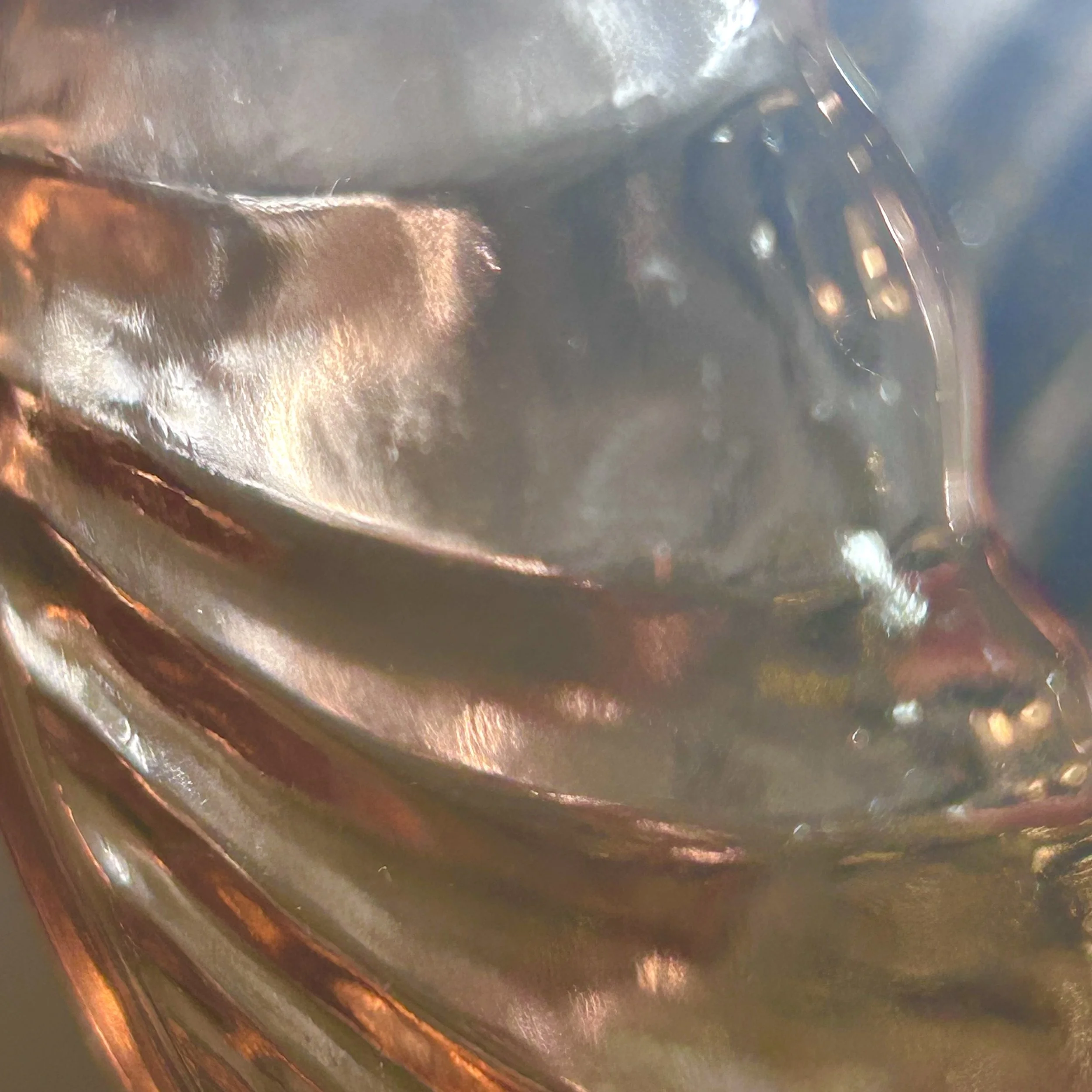
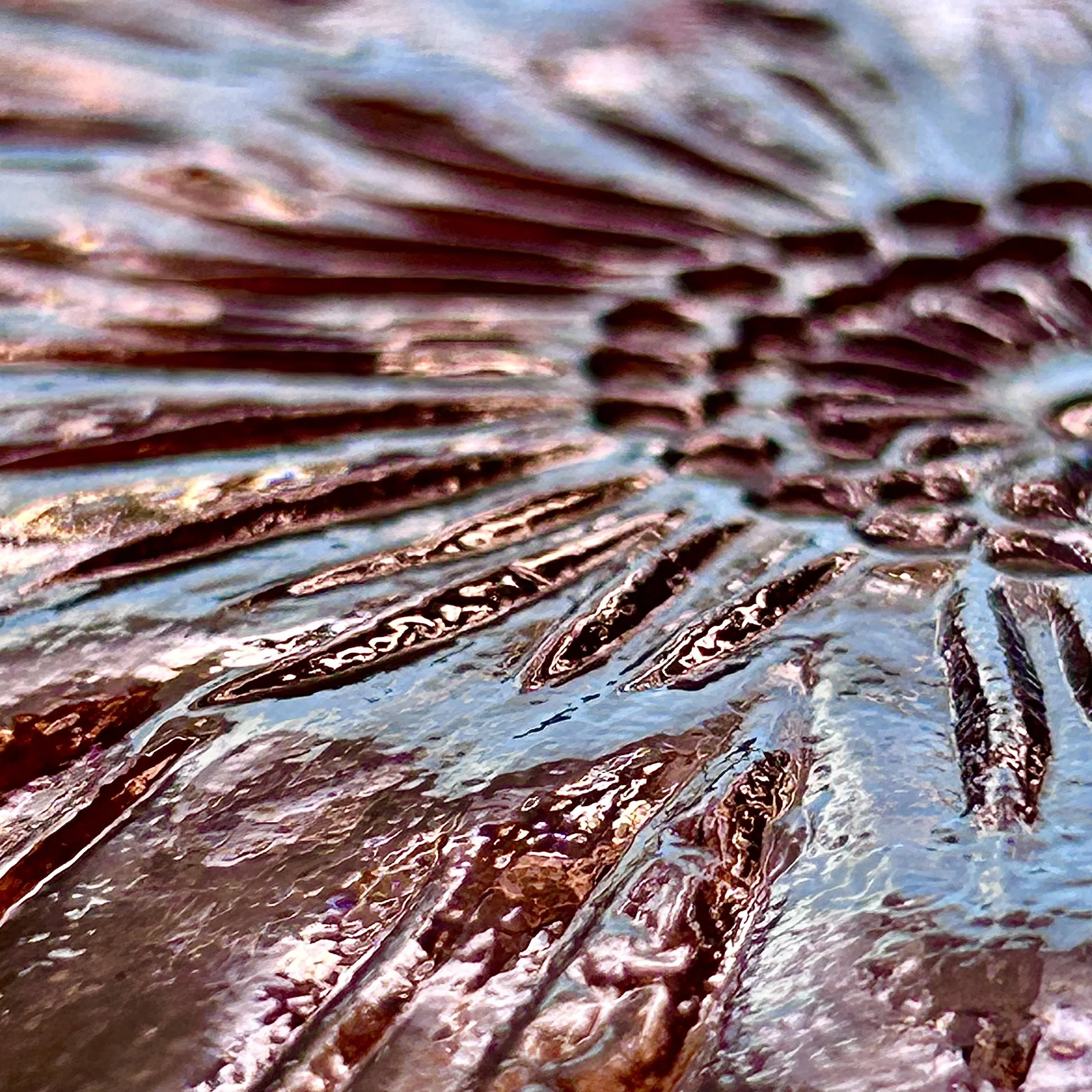
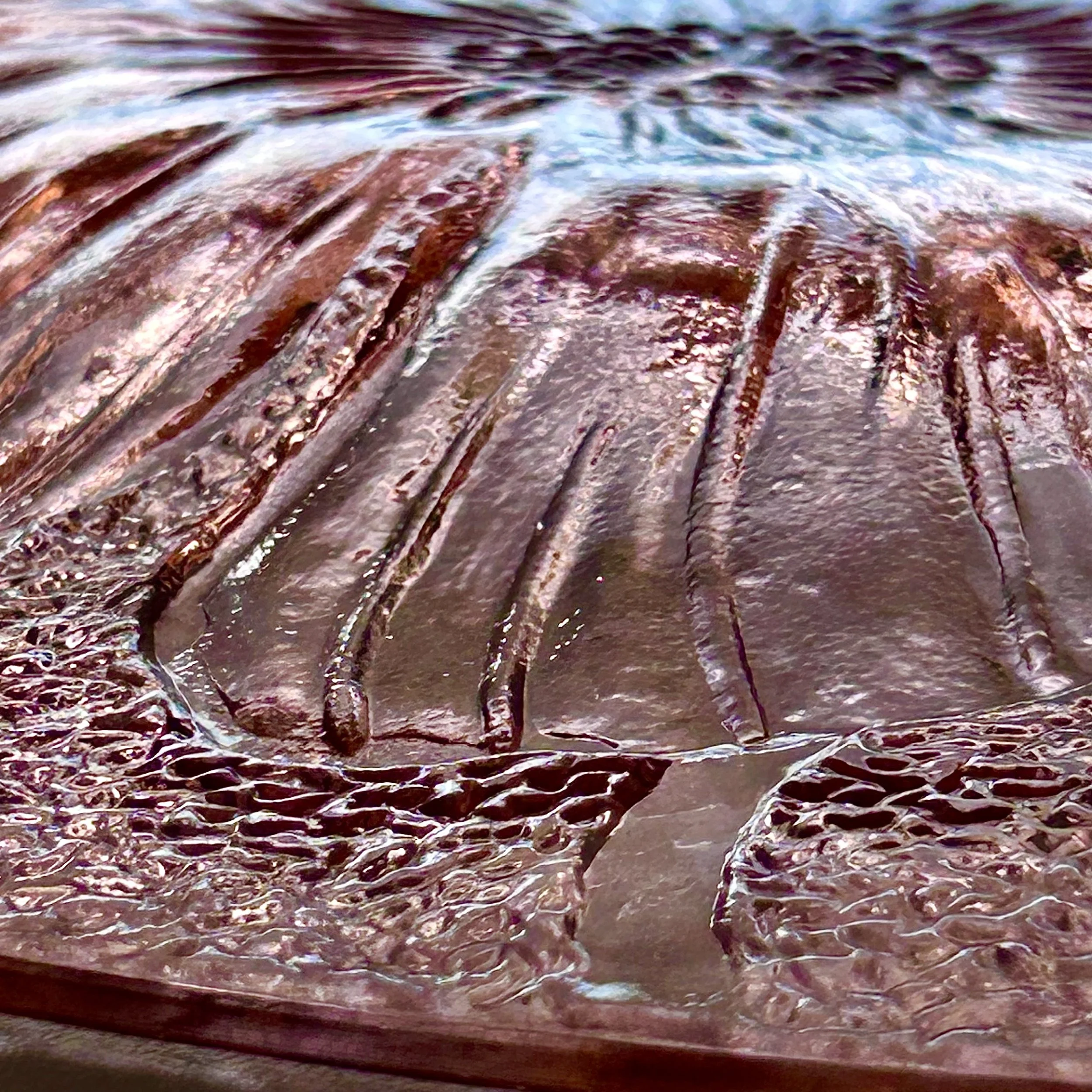
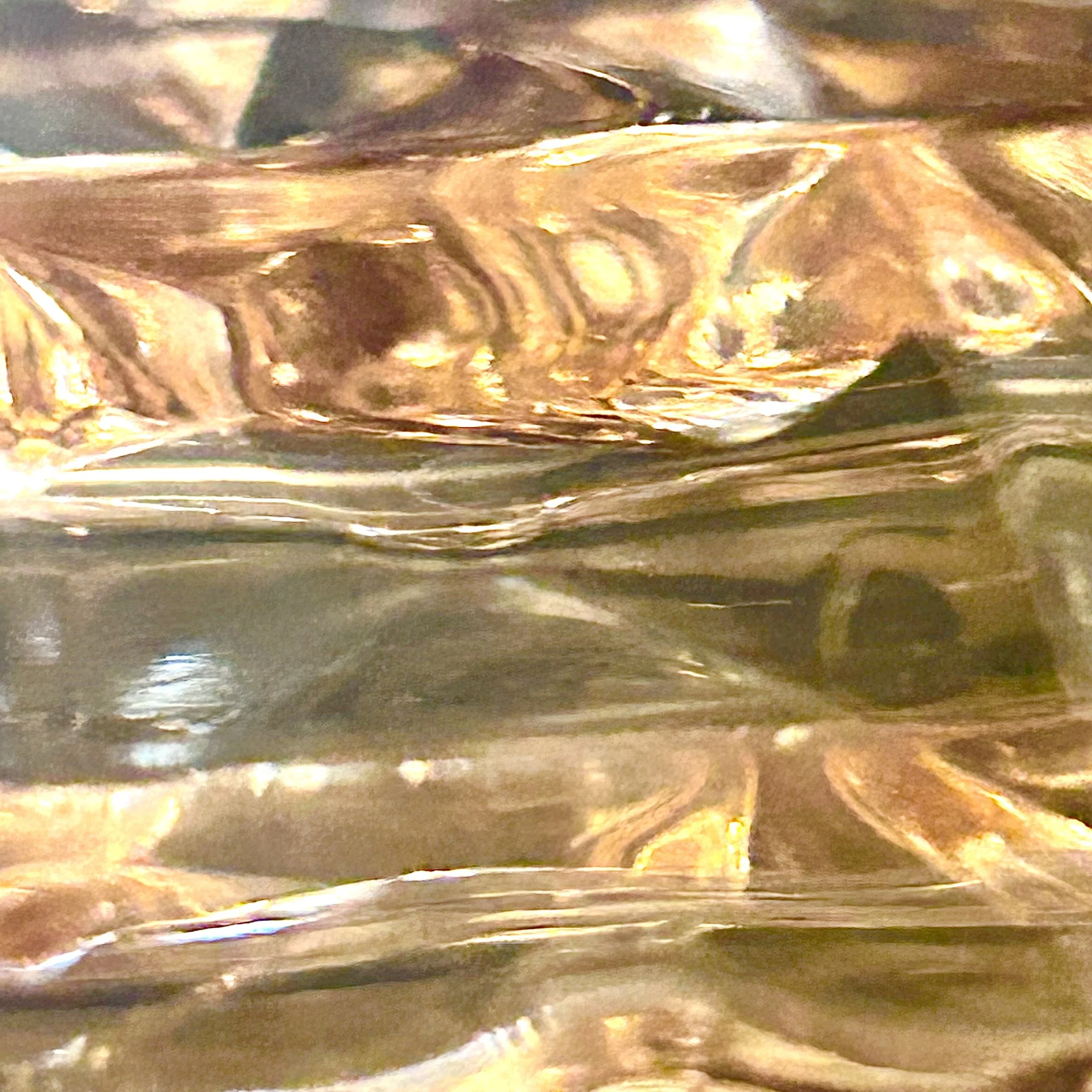
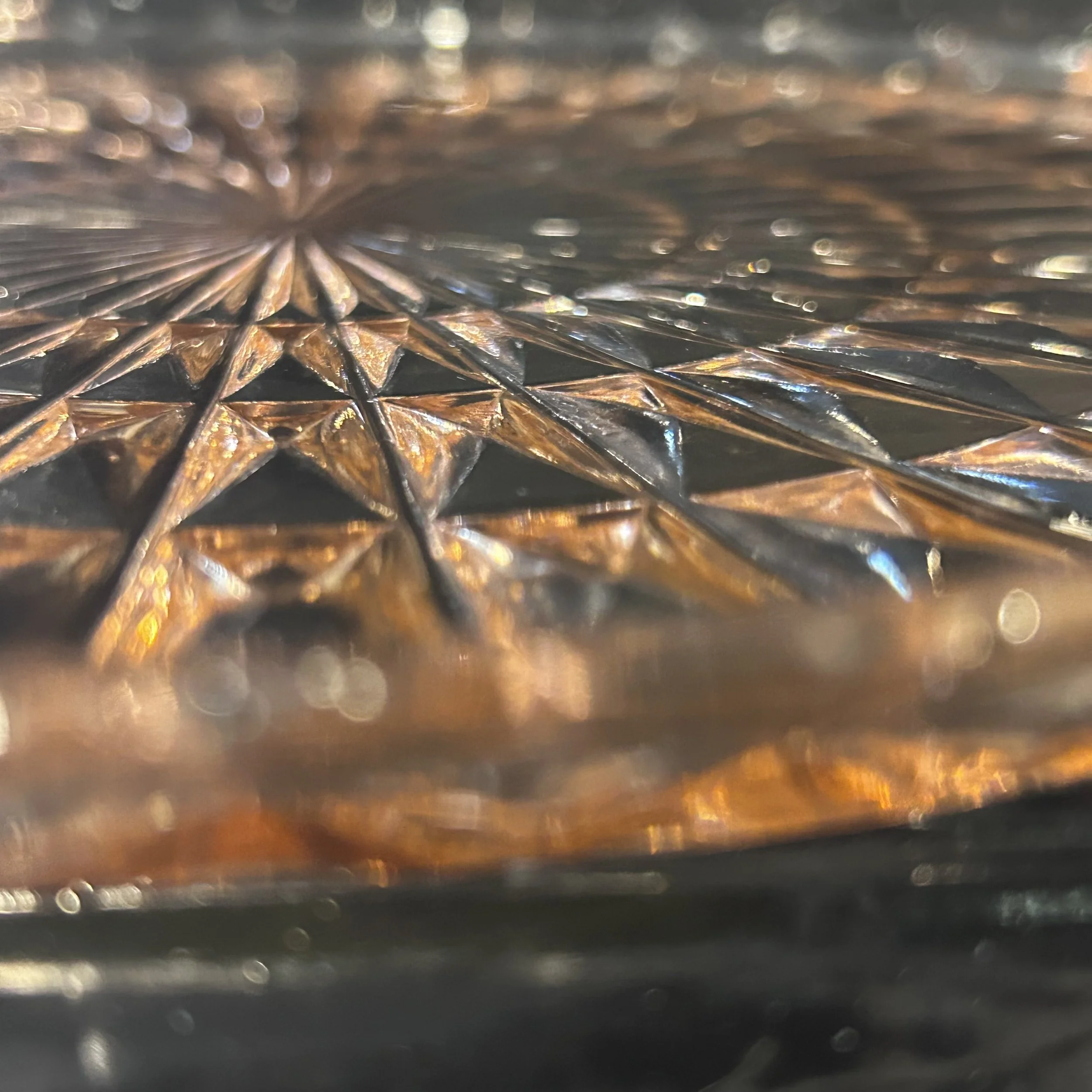
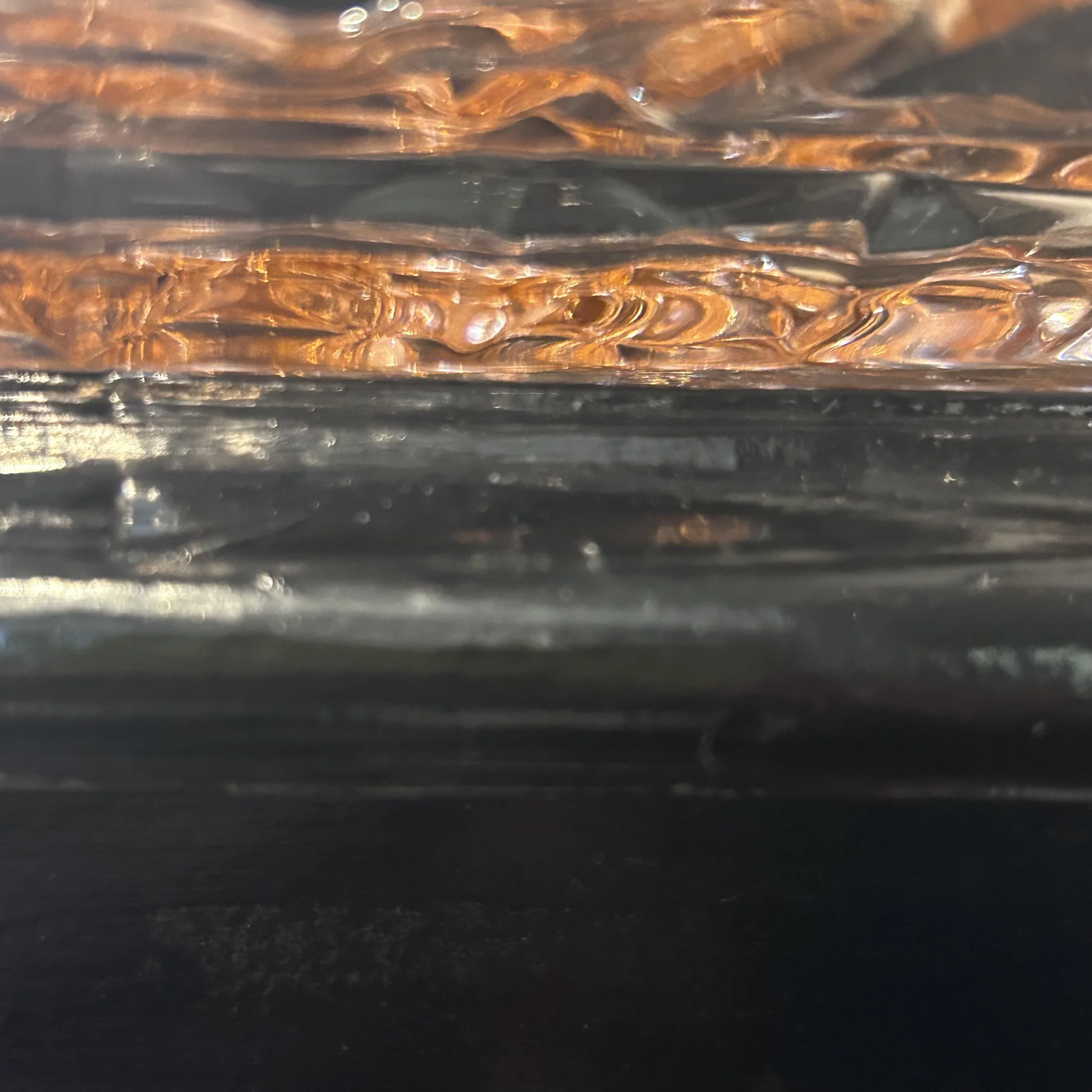
The plate was produced using a pressed glass mold which created the repeating scalloped rim and petal-like radial pattern. Pressed glass production allowed French manufacturers to achieve highly detailed forms with consistent geometry while maintaining strong structural durability. The pink coloration is integrated into the glass body rather than applied, producing a uniform translucent tone that intensifies toward thicker edges.
The molded “FRANCE” mark on the underside confirms production for export markets, a common practice among French glass manufacturers during the early twentieth century.
Placement
This plate displays beautifully on a dining table, sideboard, or open shelving where light can interact with the translucent pink glass. It also functions well as a decorative catchall on a console table or vanity. When displayed vertically in a plate stand, the scalloped rim and petal geometry become especially sculptural.
STANDARD ATTRIBUTION & VALUE DISCLOSURE; This piece is described to the best of current scholarly and market knowledge. Any maker or regional attribution is based on visual analysis, materials, construction techniques, and documented stylistic comparisons. As with many MCM and antique design objects, definitive attribution may not be possible without original labels or factory records. Pricing reflects condition, quality, decorative appeal, and current collector demand rather than guaranteed maker identification.
This elegant French pink glass plate presents a refined sculptural presence defined by its rhythmic scalloped rim and softly radiating petal geometry. The translucent blush tone shifts beautifully under light, creating a subtle gradient from pale rose to deeper cranberry along the edges. Its molded floral silhouette gives the piece both decorative charm and architectural symmetry. The plate functions equally well as a serving piece or as a decorative tabletop object, offering a delicate balance between utility and visual refinement.
Attribution & Period
Primary decade: 1930s
Unmarked decorative arts example made in France, as indicated by the molded “FRANCE” mark present on the underside. The molded scalloped rim, radial petal pattern, and softly tinted pressed glass body are consistent with French pressed glass production widely produced during the early to mid-20th century. Similar decorative tablewares were manufactured by several French glass houses producing colored pressed glass for both domestic and export markets. No specific maker mark is present, so attribution remains regional rather than factory-specific.
Dimensions & Weight
Condition
Very good vintage condition. Light utensil scratches visible on the interior surface consistent with prior use. No chips, fleabites, hairline cracks, or repairs observed. The rim remains clean and intact with no structural issues. Minor surface wear consistent with age and typical use.
Authenticity & Construction
The plate was produced using a pressed glass mold which created the repeating scalloped rim and petal-like radial pattern. Pressed glass production allowed French manufacturers to achieve highly detailed forms with consistent geometry while maintaining strong structural durability. The pink coloration is integrated into the glass body rather than applied, producing a uniform translucent tone that intensifies toward thicker edges.
The molded “FRANCE” mark on the underside confirms production for export markets, a common practice among French glass manufacturers during the early twentieth century.
Placement
This plate displays beautifully on a dining table, sideboard, or open shelving where light can interact with the translucent pink glass. It also functions well as a decorative catchall on a console table or vanity. When displayed vertically in a plate stand, the scalloped rim and petal geometry become especially sculptural.
STANDARD ATTRIBUTION & VALUE DISCLOSURE; This piece is described to the best of current scholarly and market knowledge. Any maker or regional attribution is based on visual analysis, materials, construction techniques, and documented stylistic comparisons. As with many MCM and antique design objects, definitive attribution may not be possible without original labels or factory records. Pricing reflects condition, quality, decorative appeal, and current collector demand rather than guaranteed maker identification.

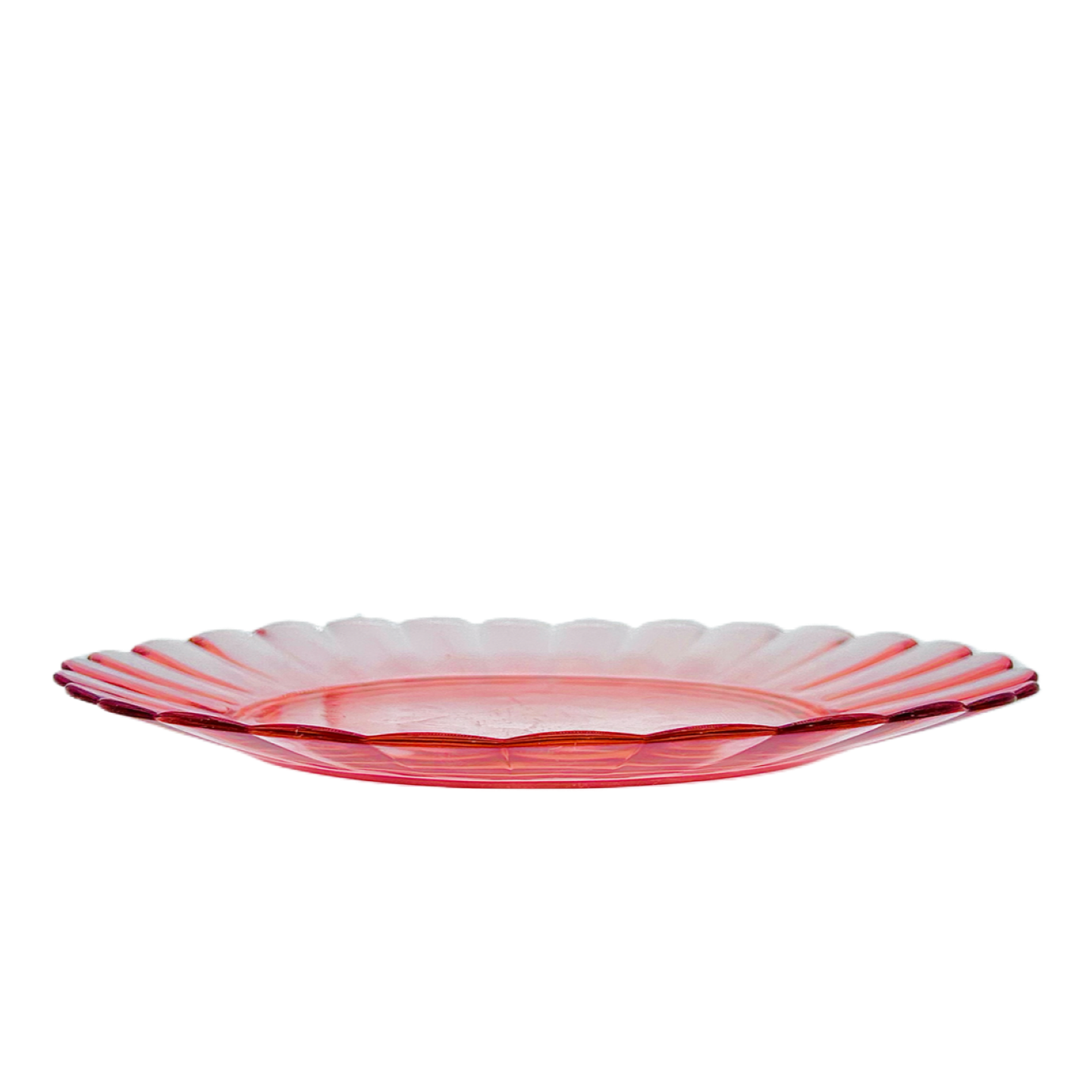 Image 1 of 19
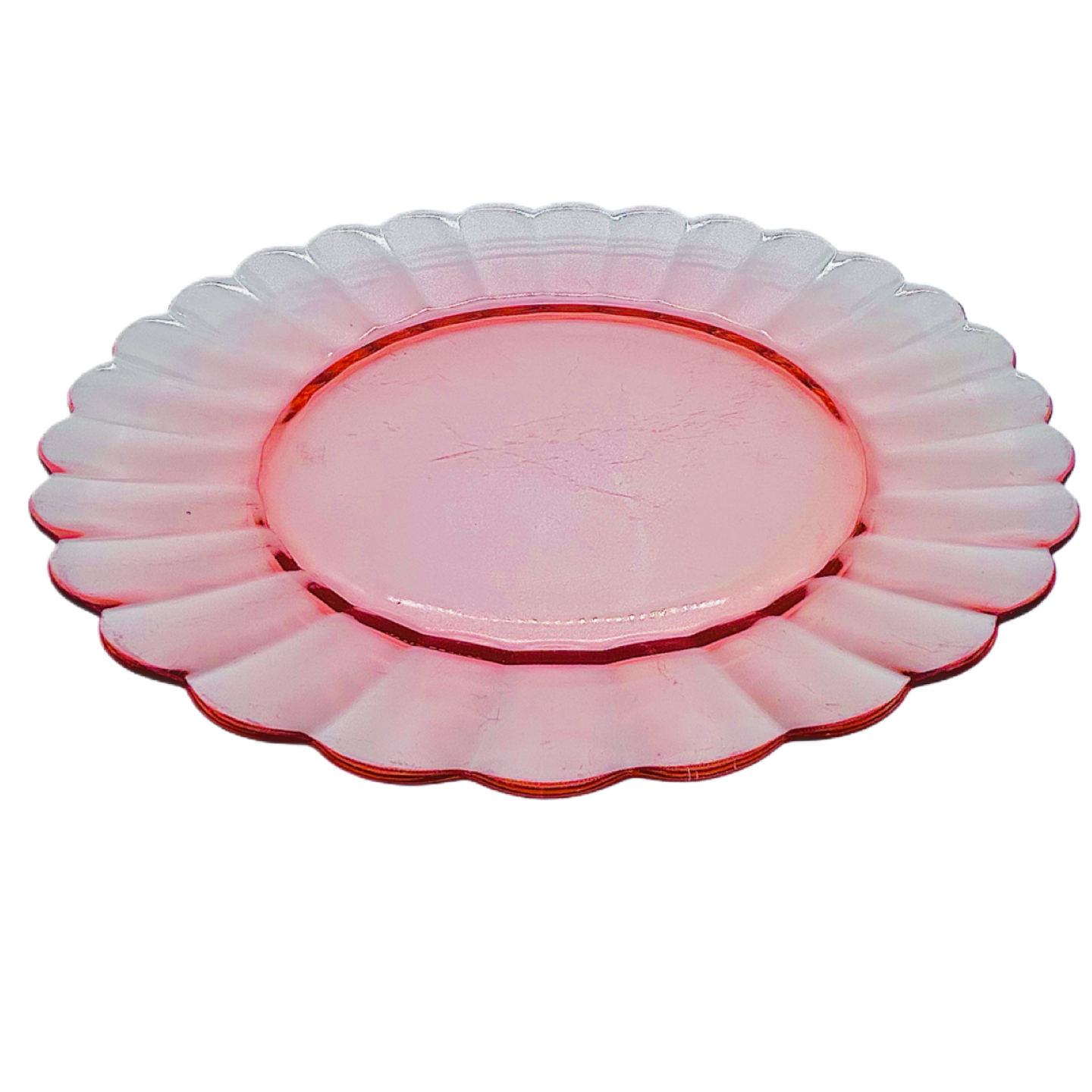 Image 2 of 19
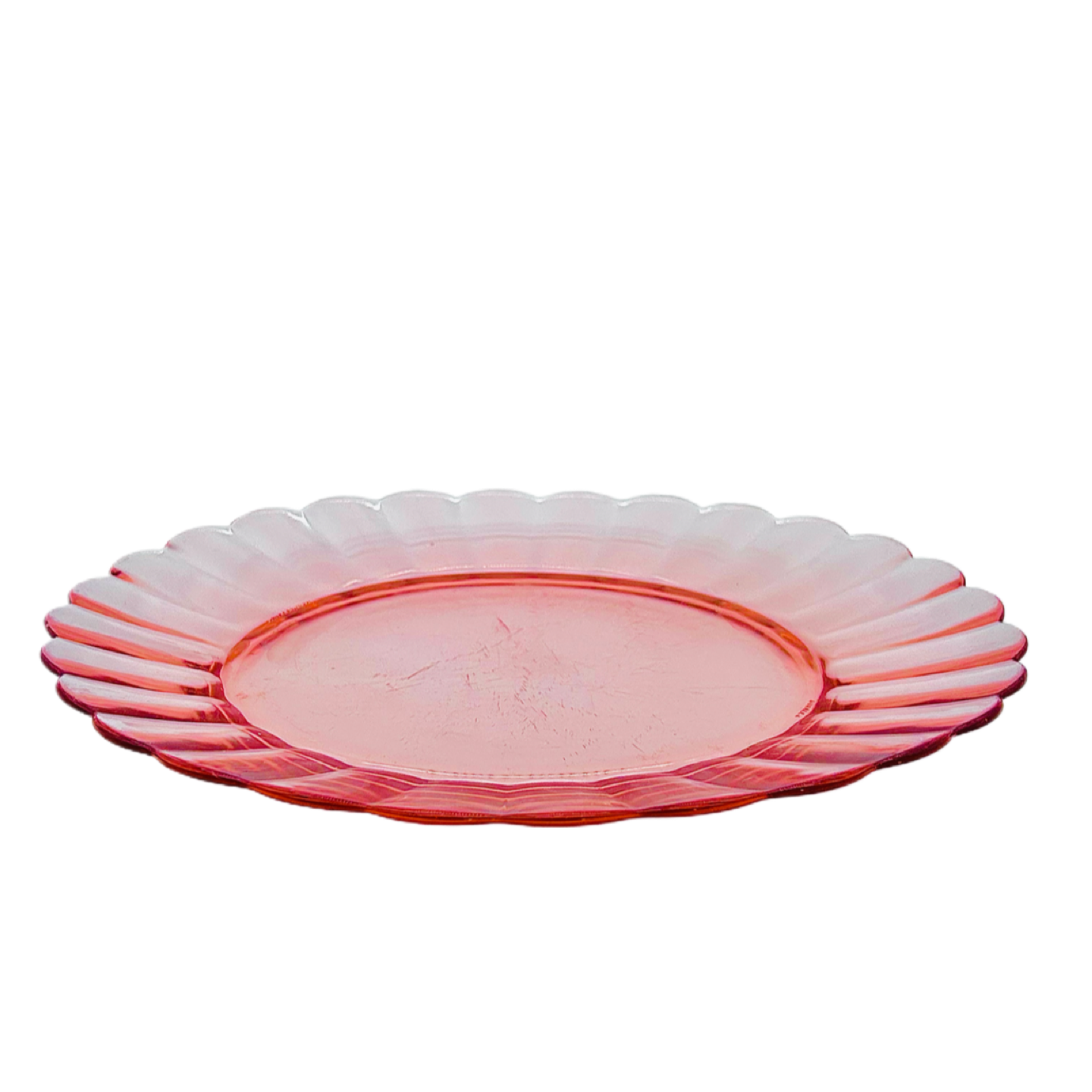 Image 3 of 19
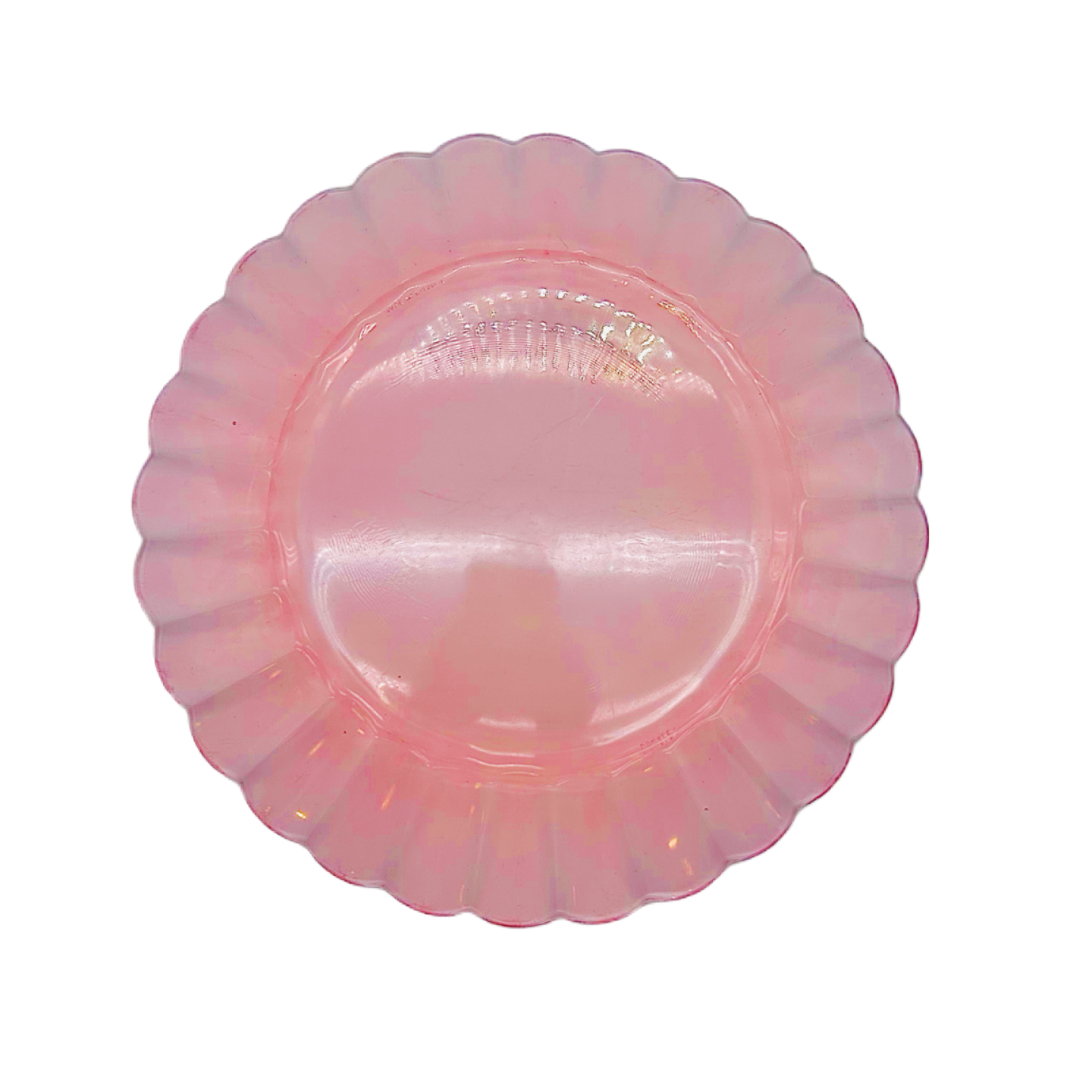 Image 4 of 19
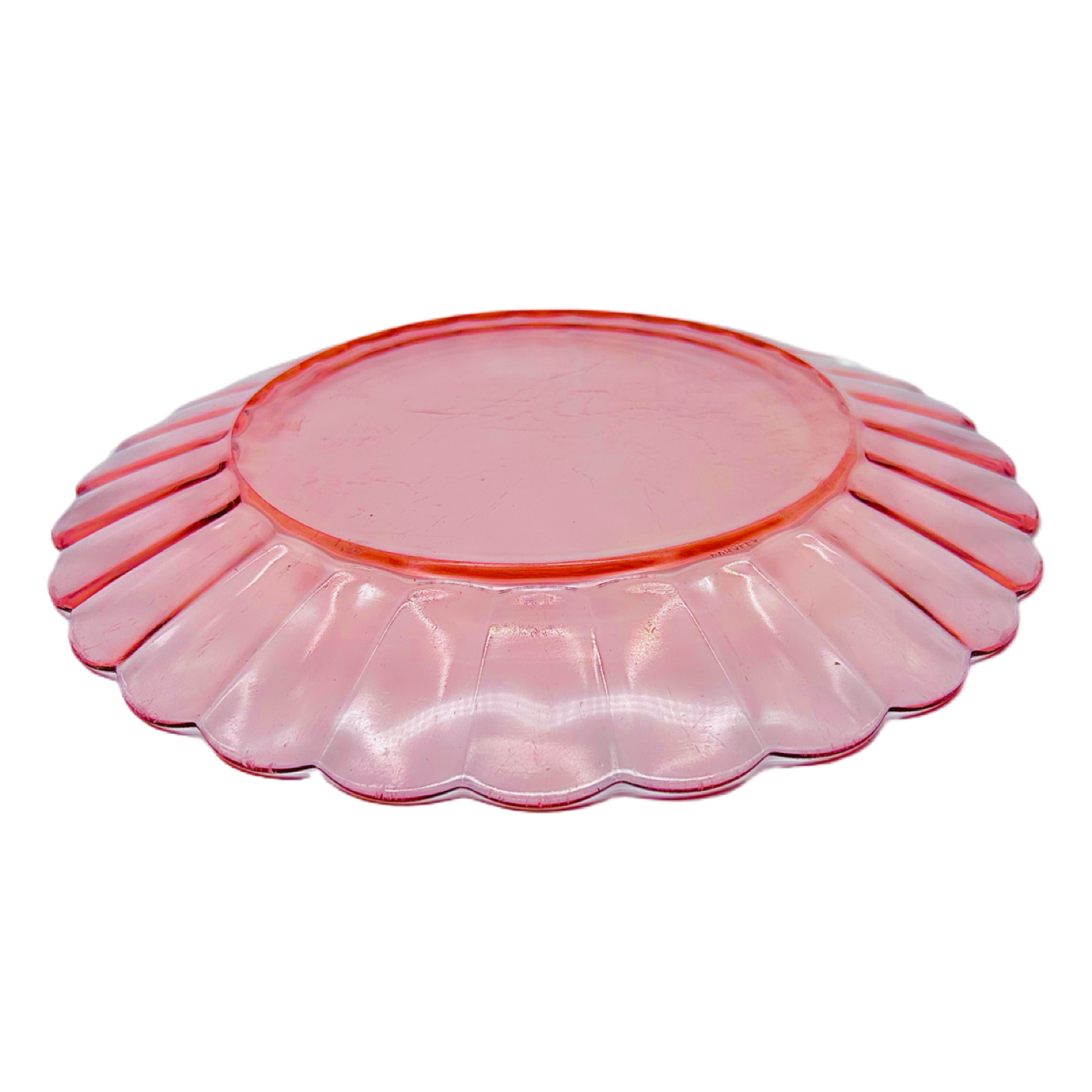 Image 5 of 19
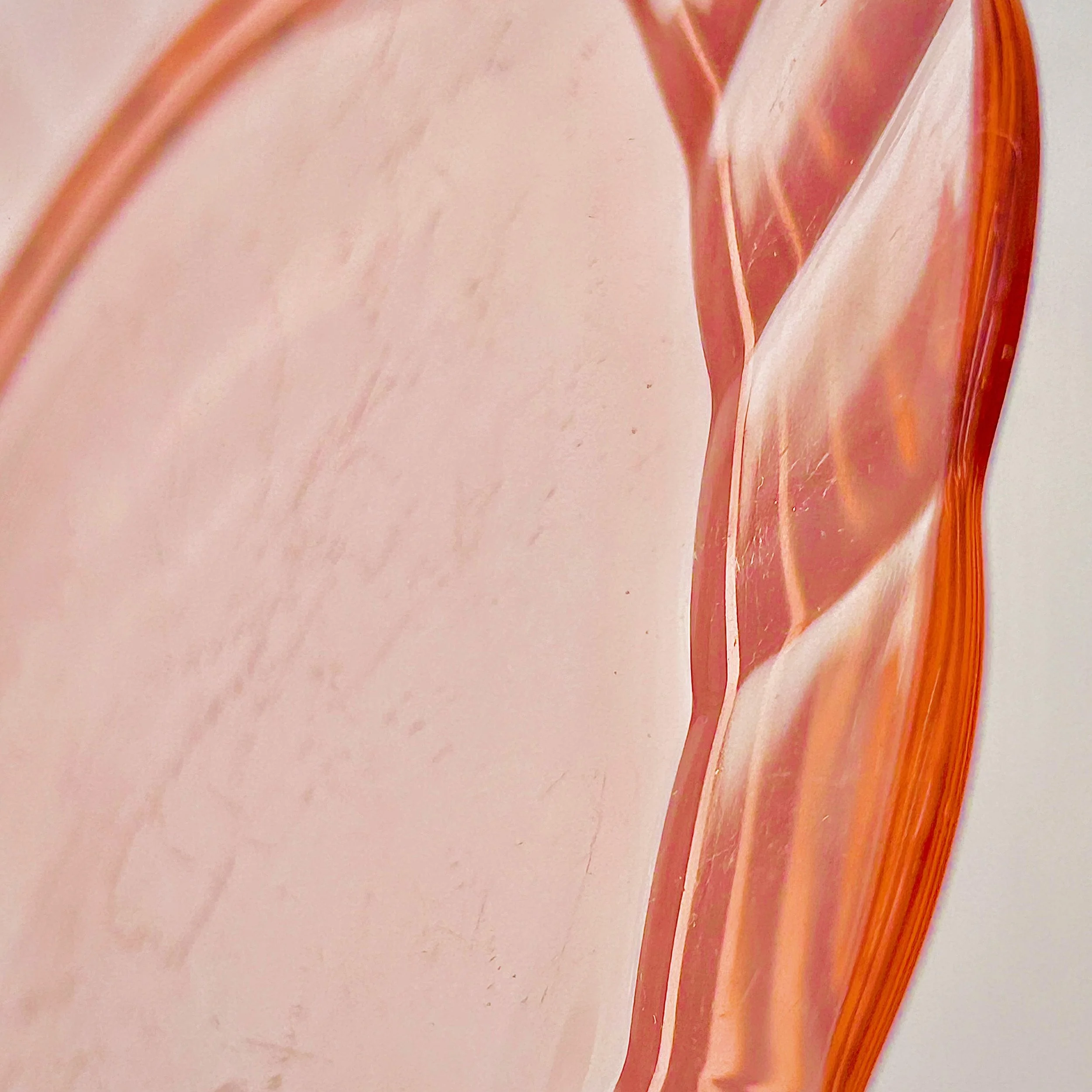 Image 6 of 19
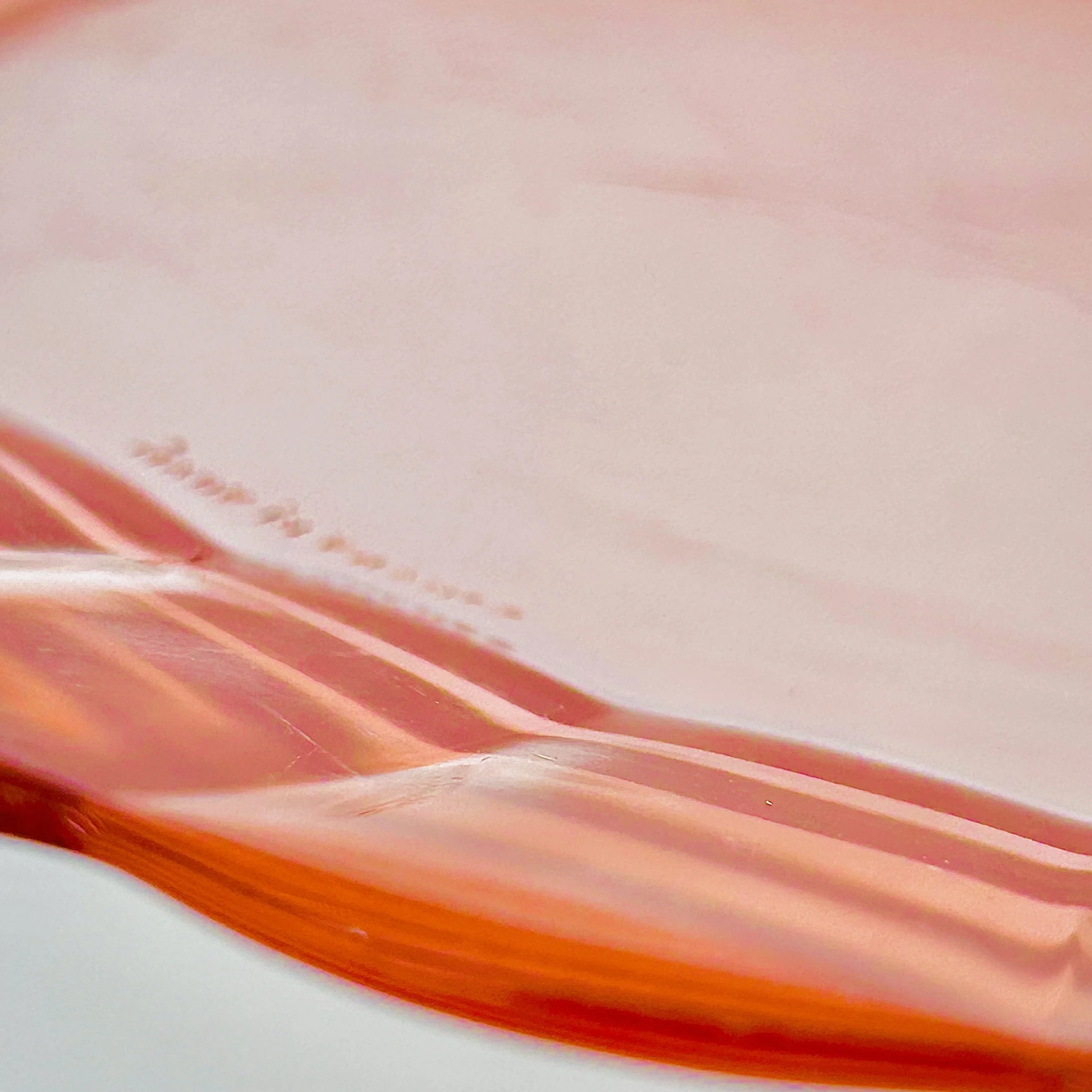 Image 7 of 19
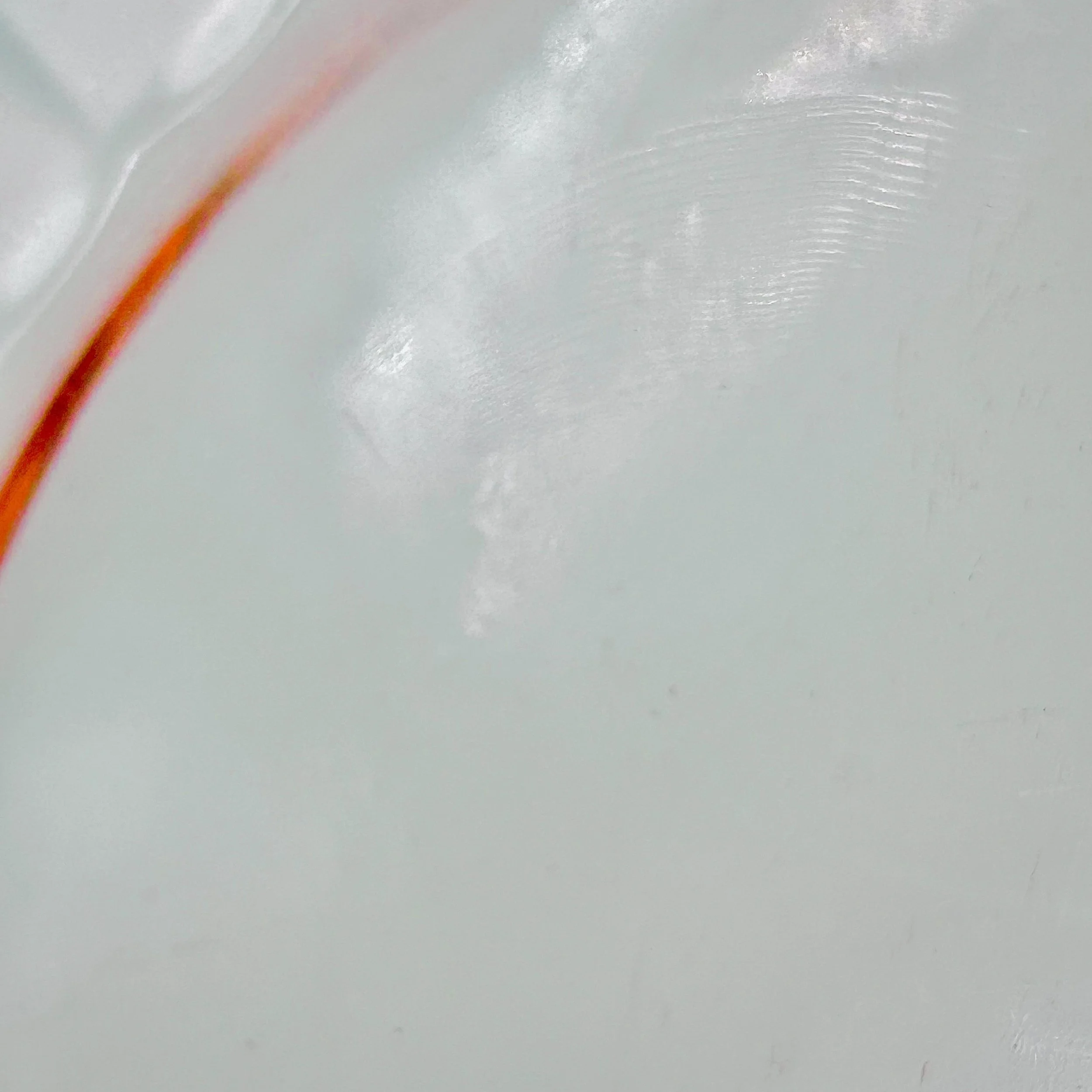 Image 8 of 19
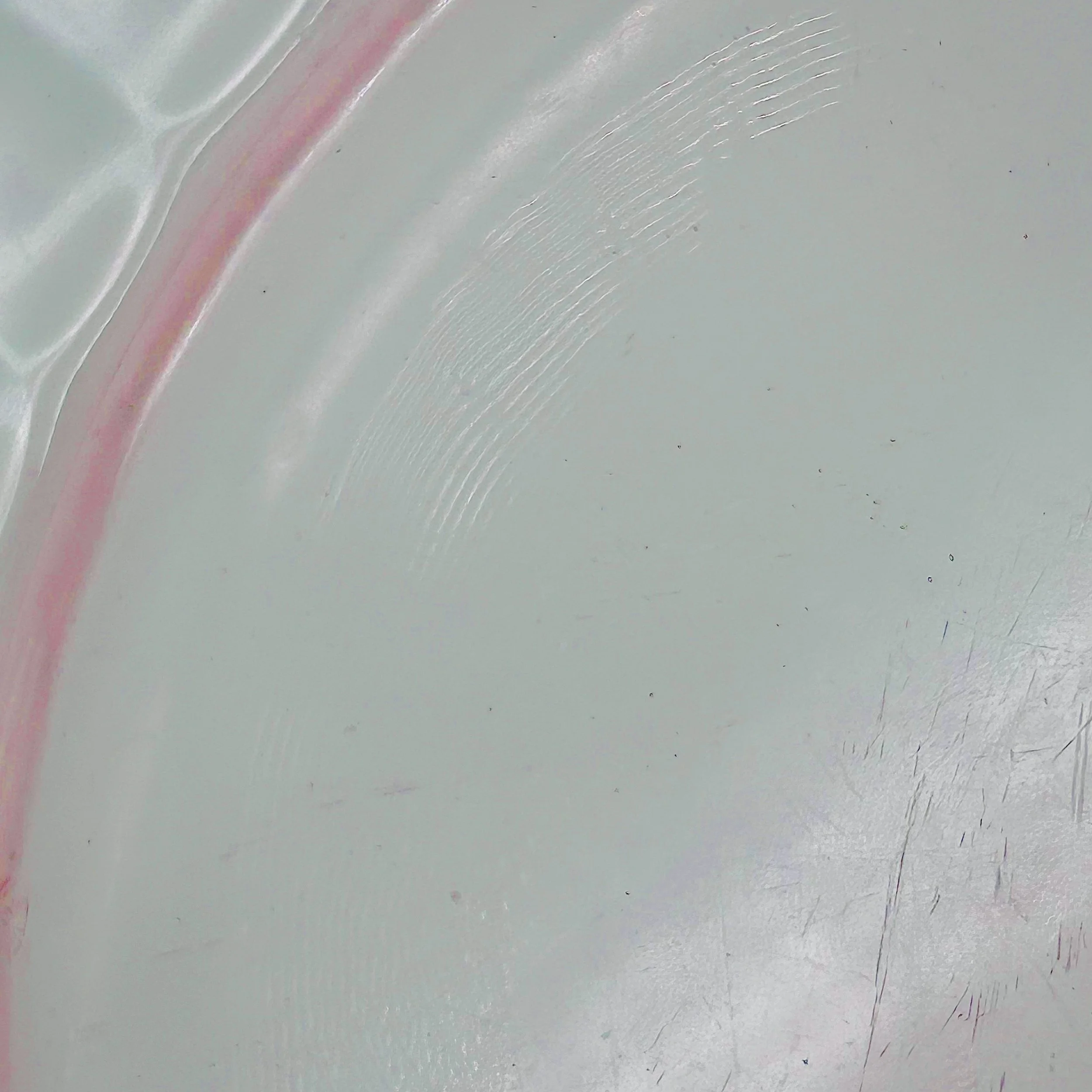 Image 9 of 19
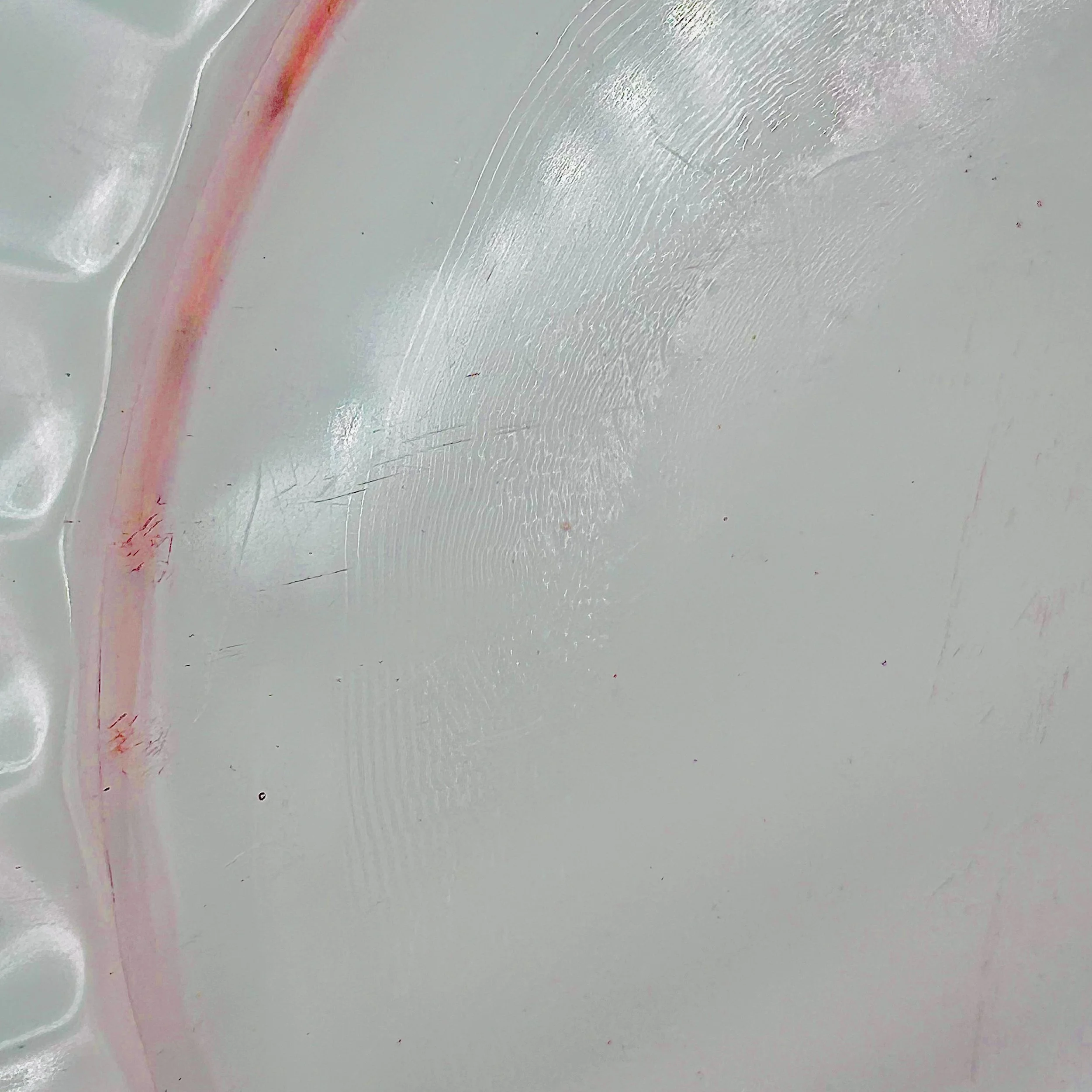 Image 10 of 19
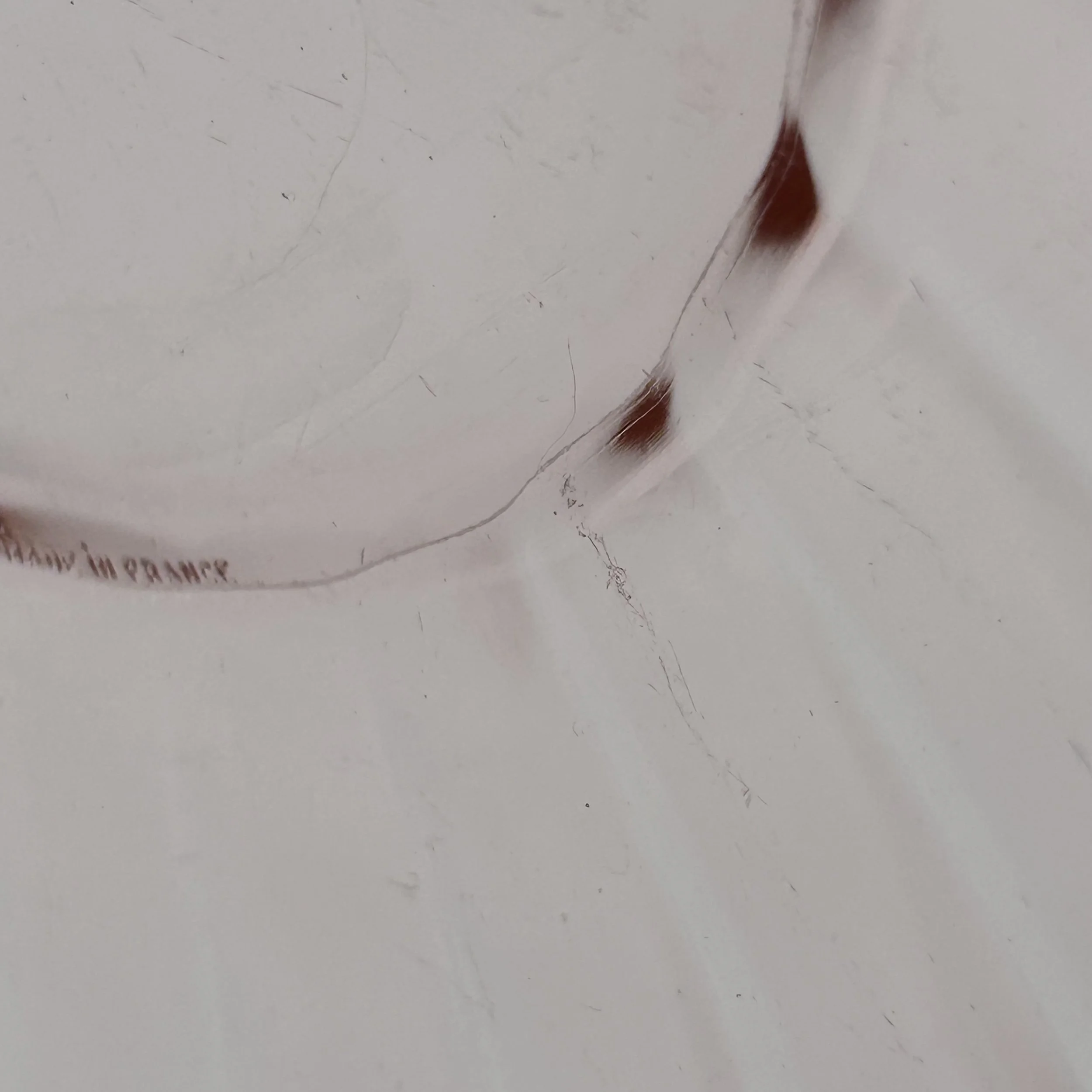 Image 11 of 19
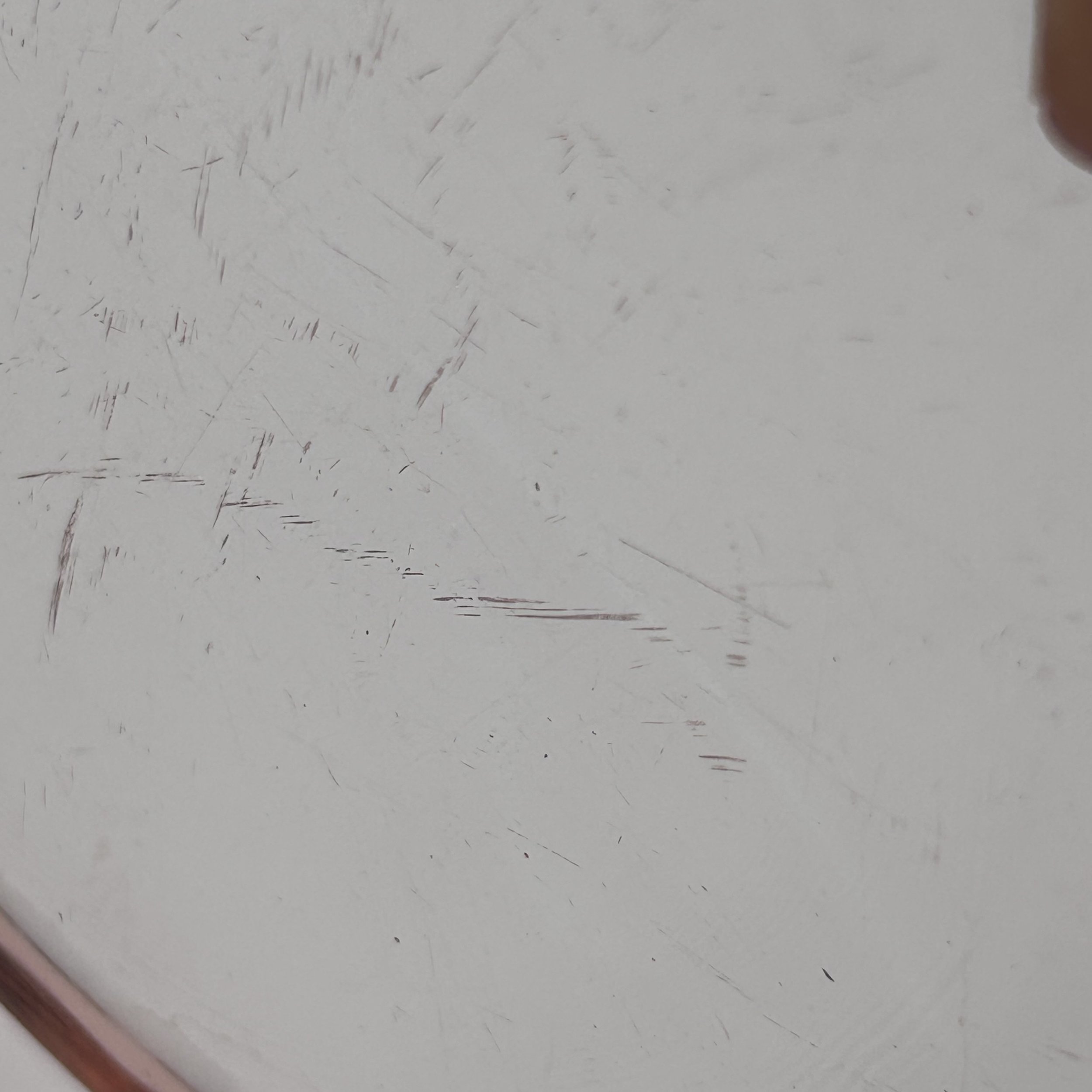 Image 12 of 19
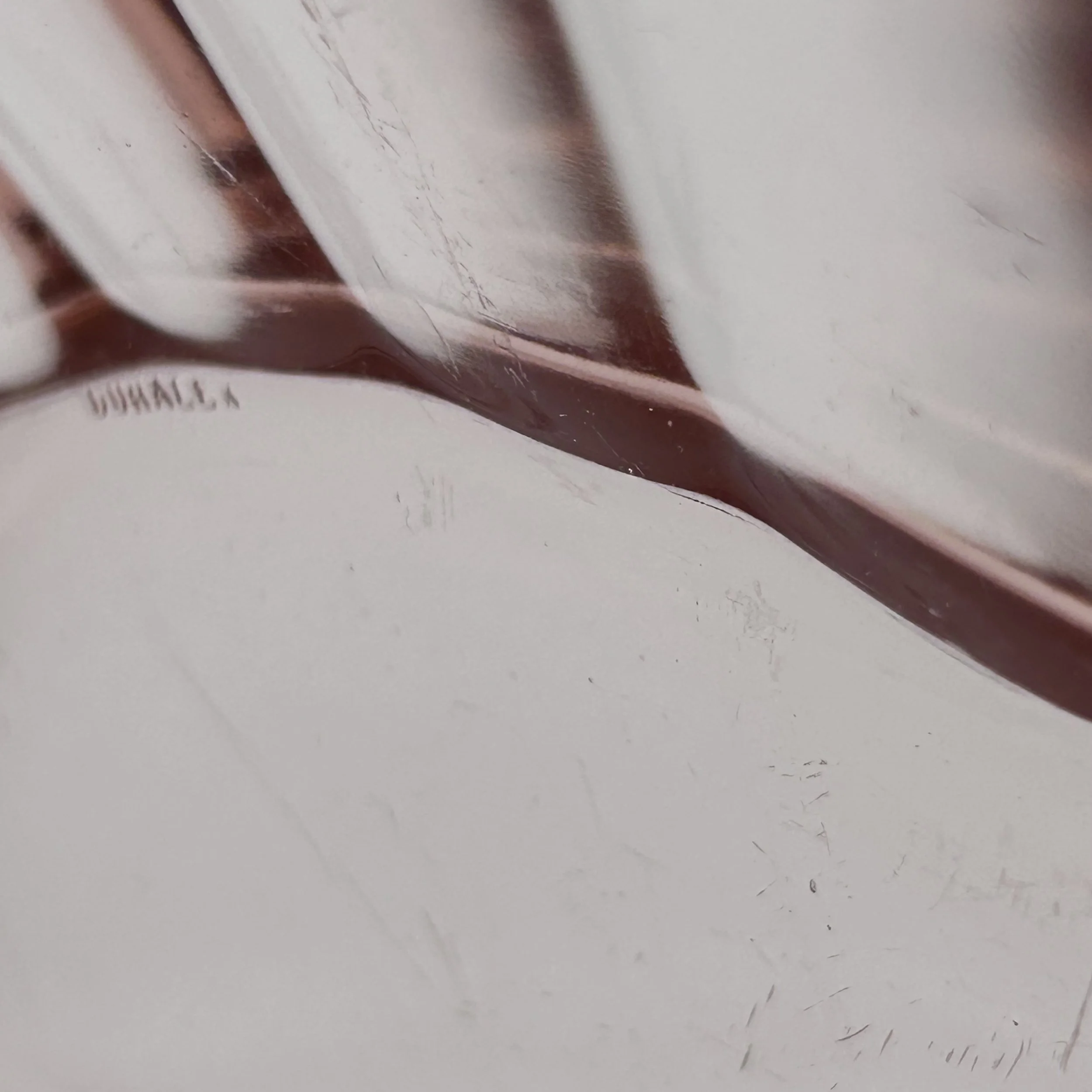 Image 13 of 19
 Image 14 of 19
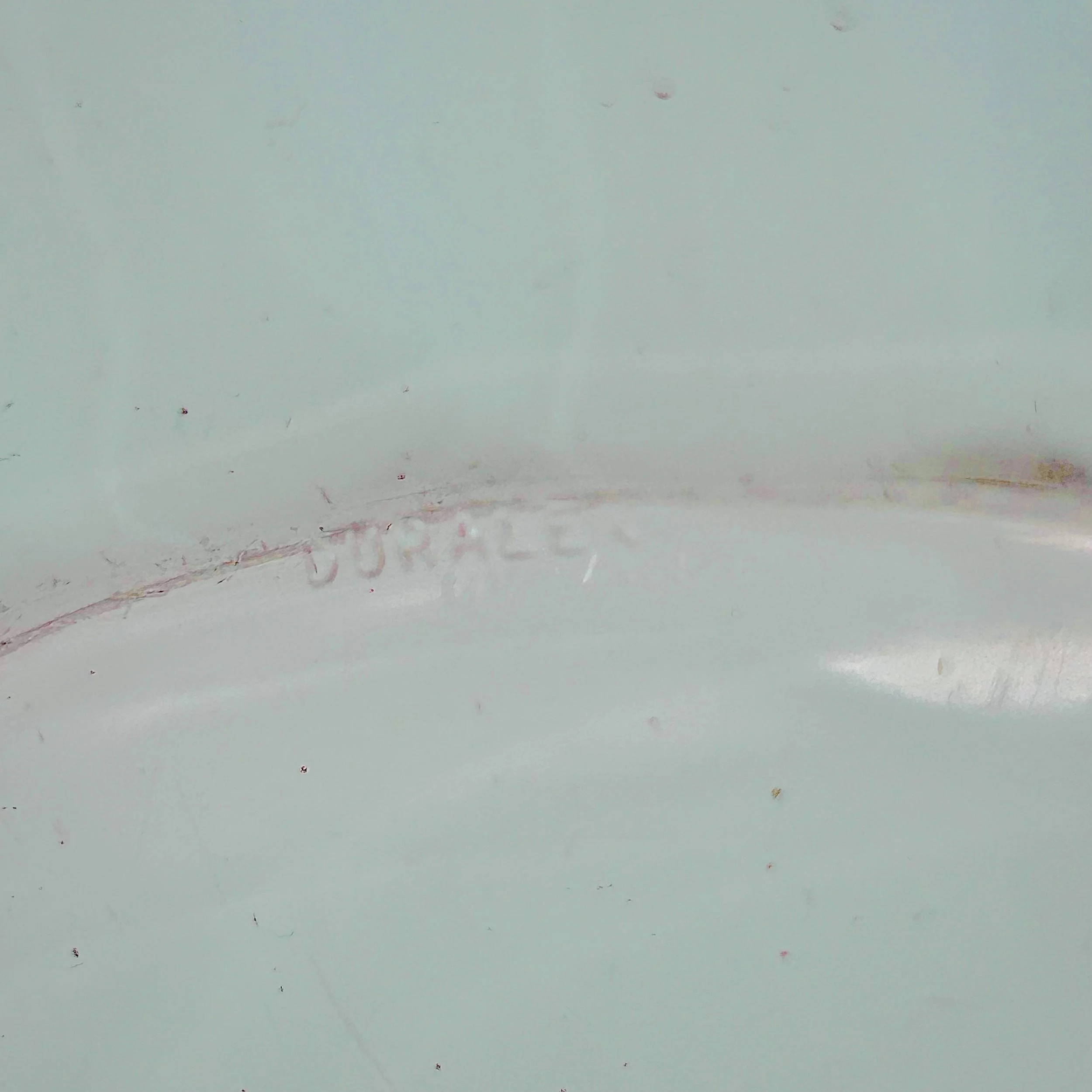 Image 15 of 19
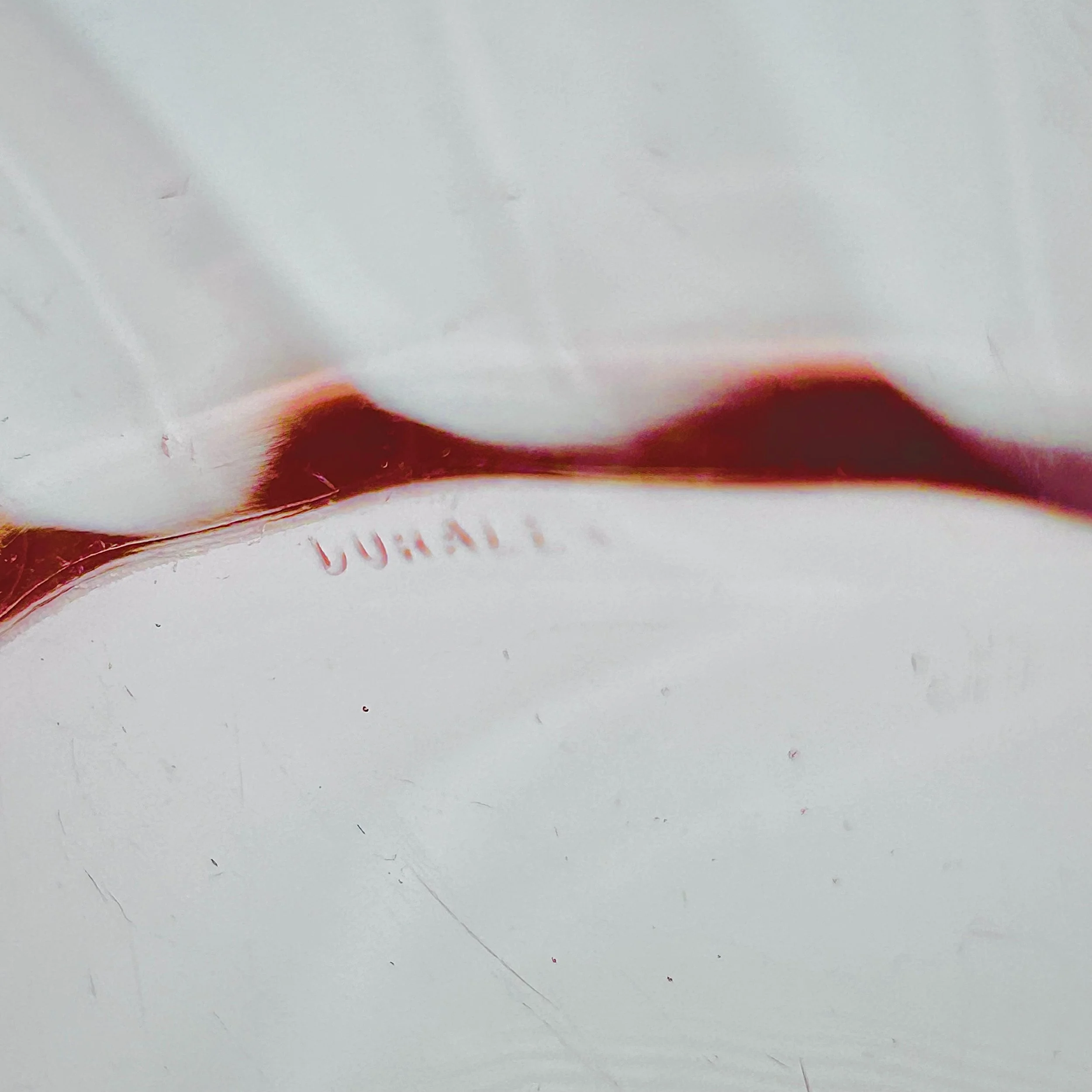 Image 16 of 19
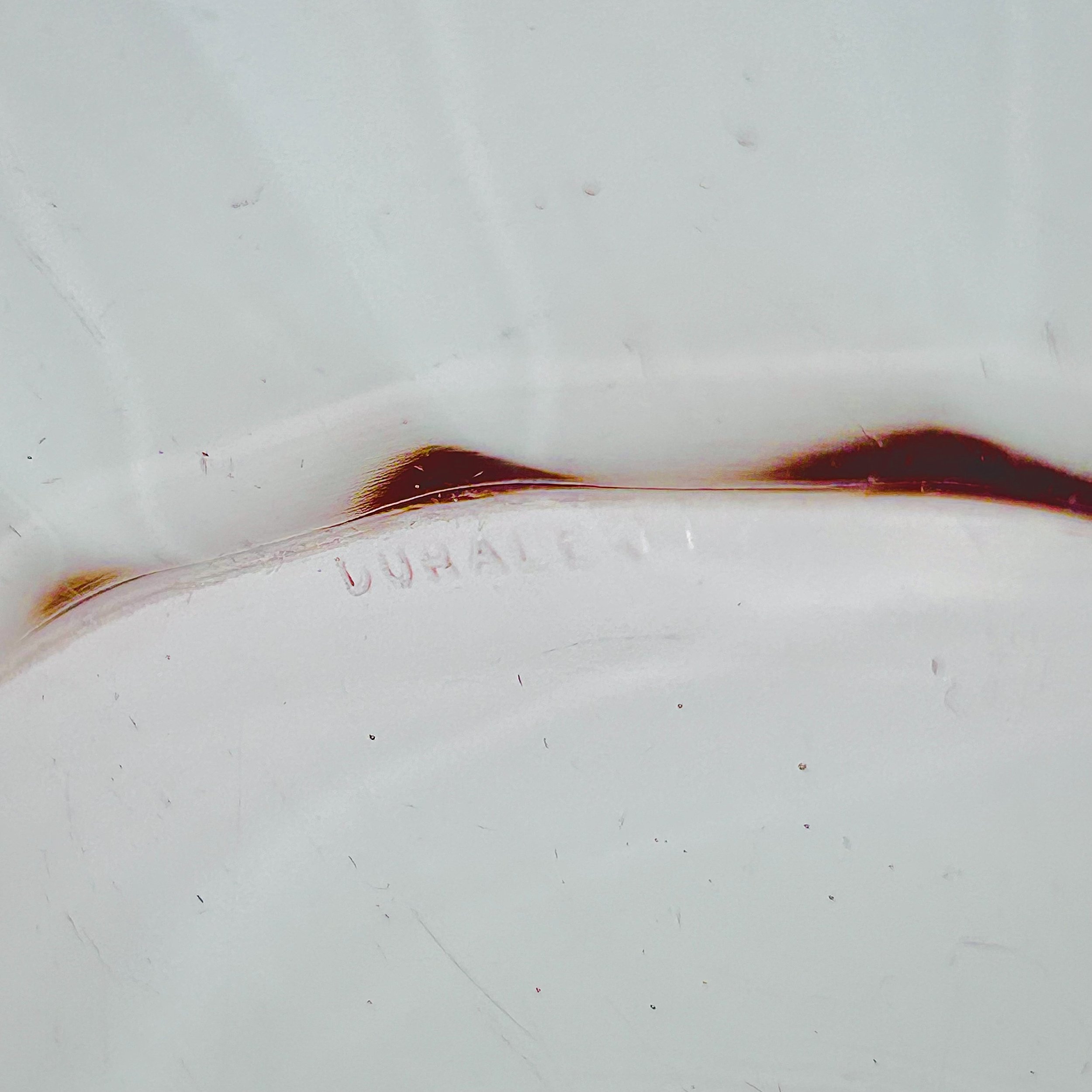 Image 17 of 19
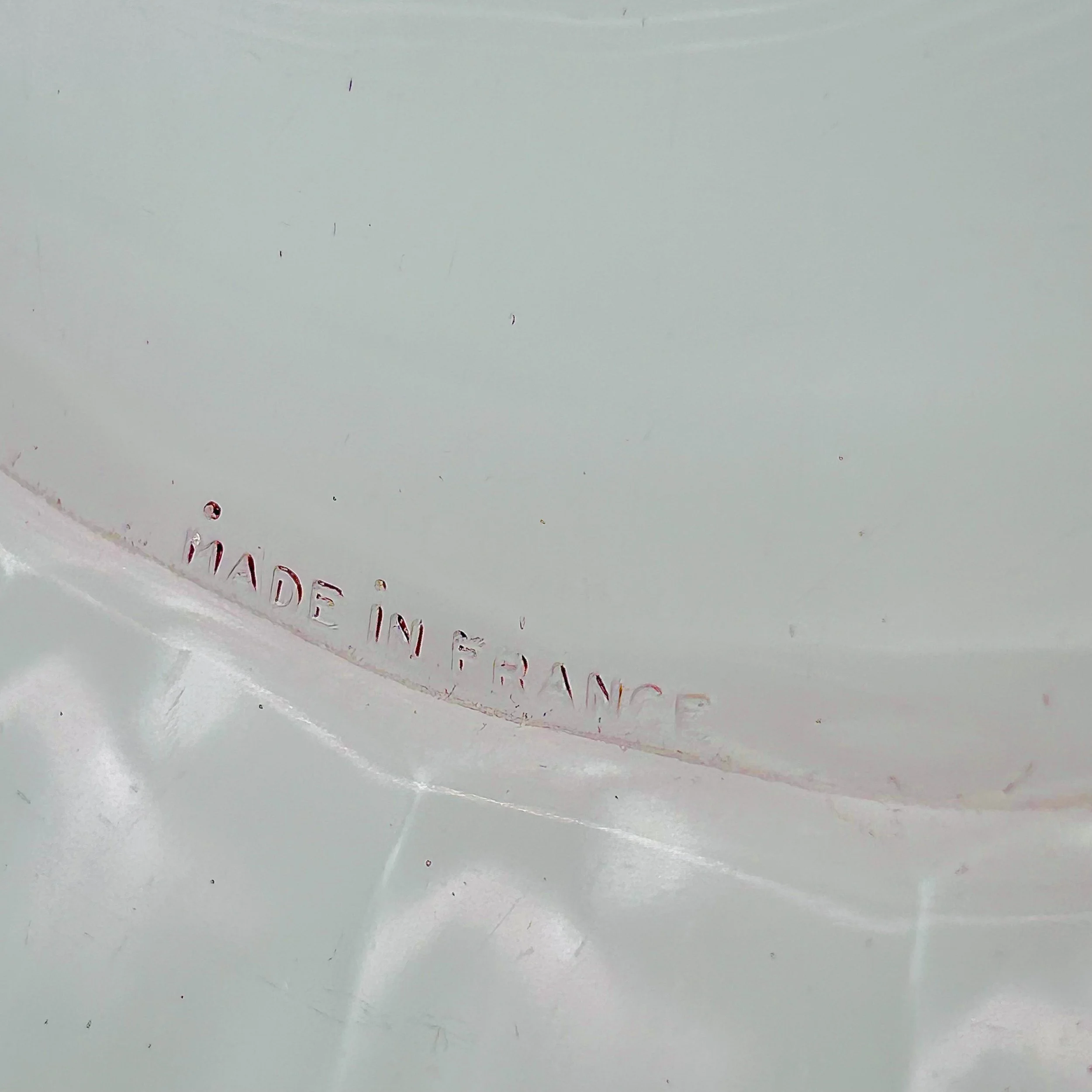 Image 18 of 19
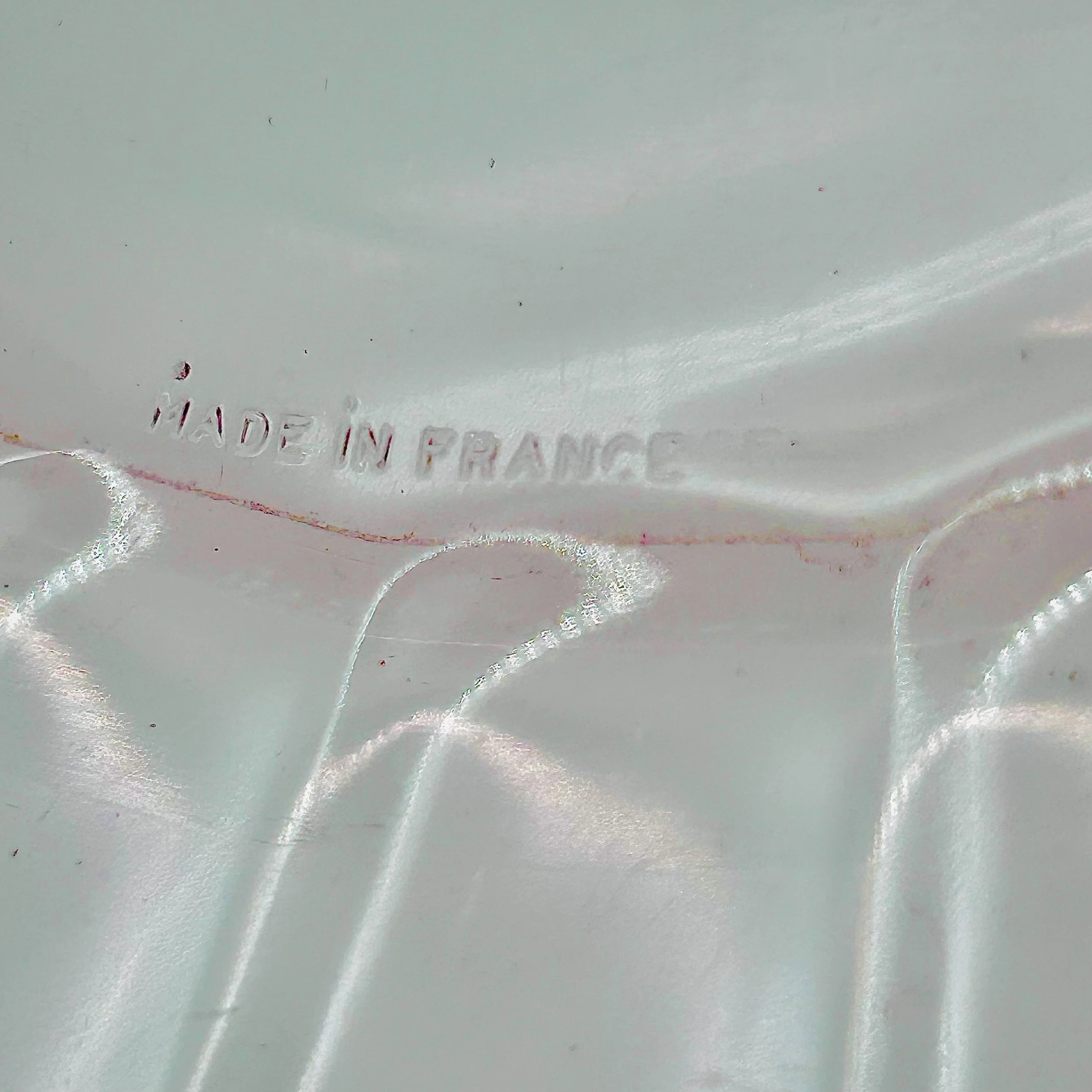 Image 19 of 19