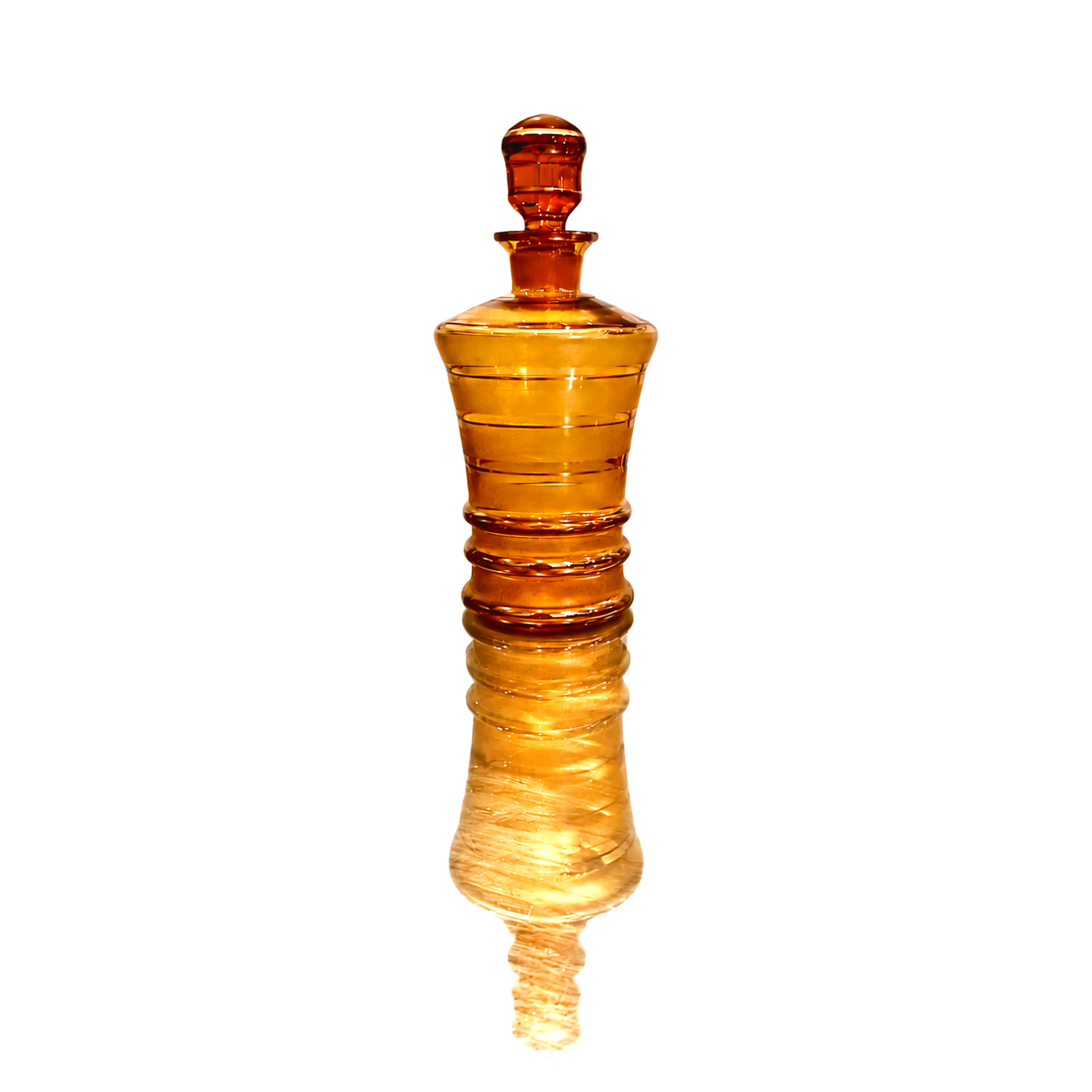
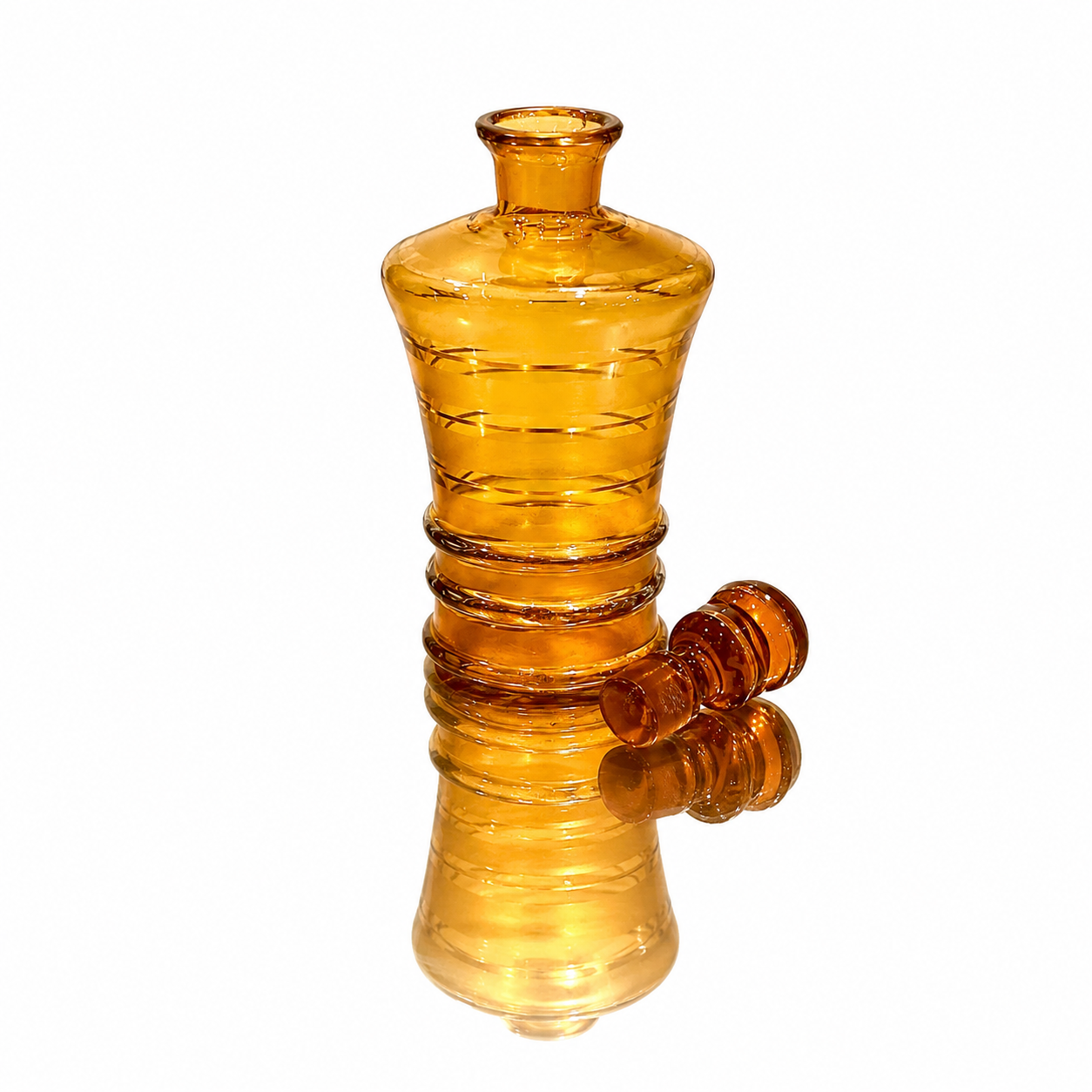
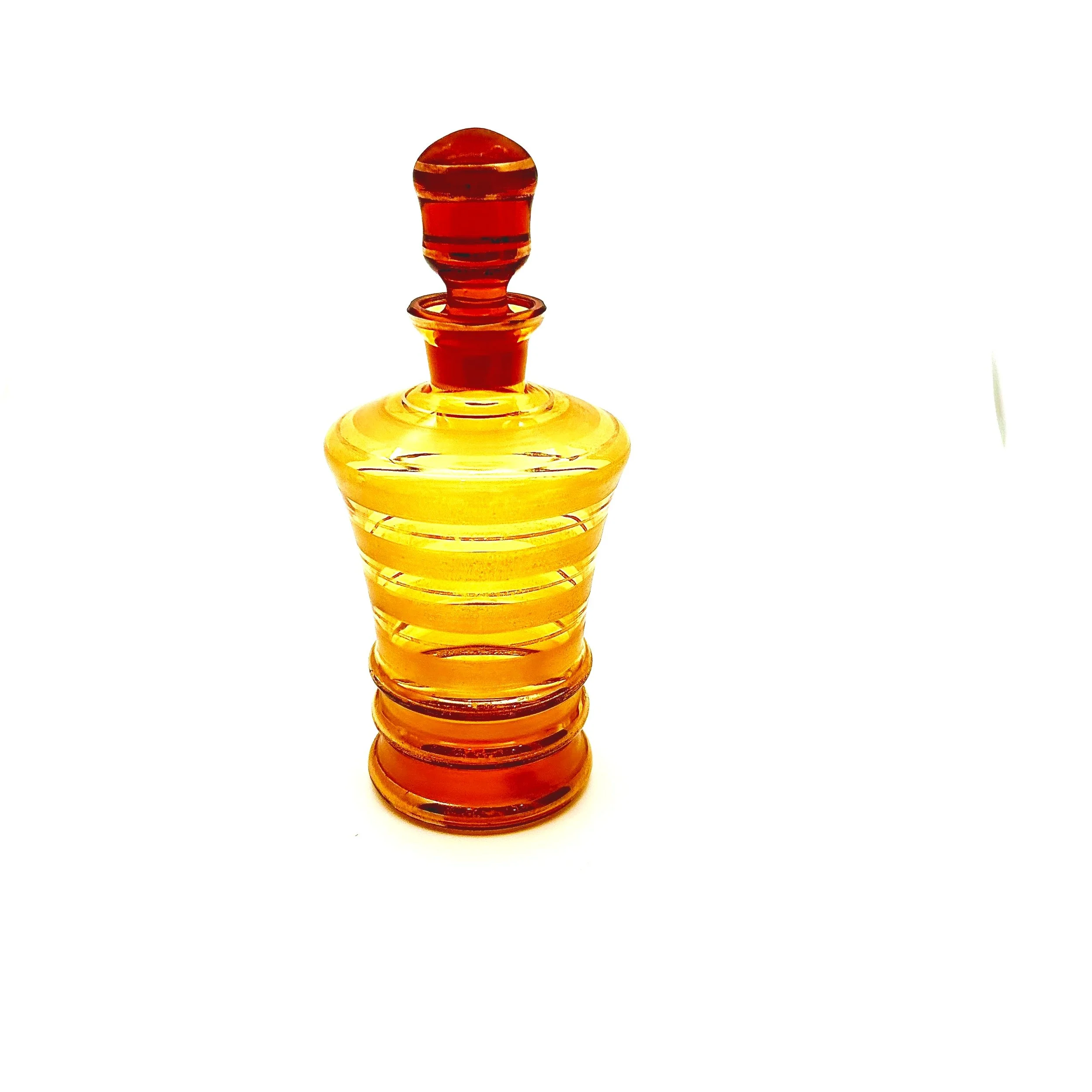
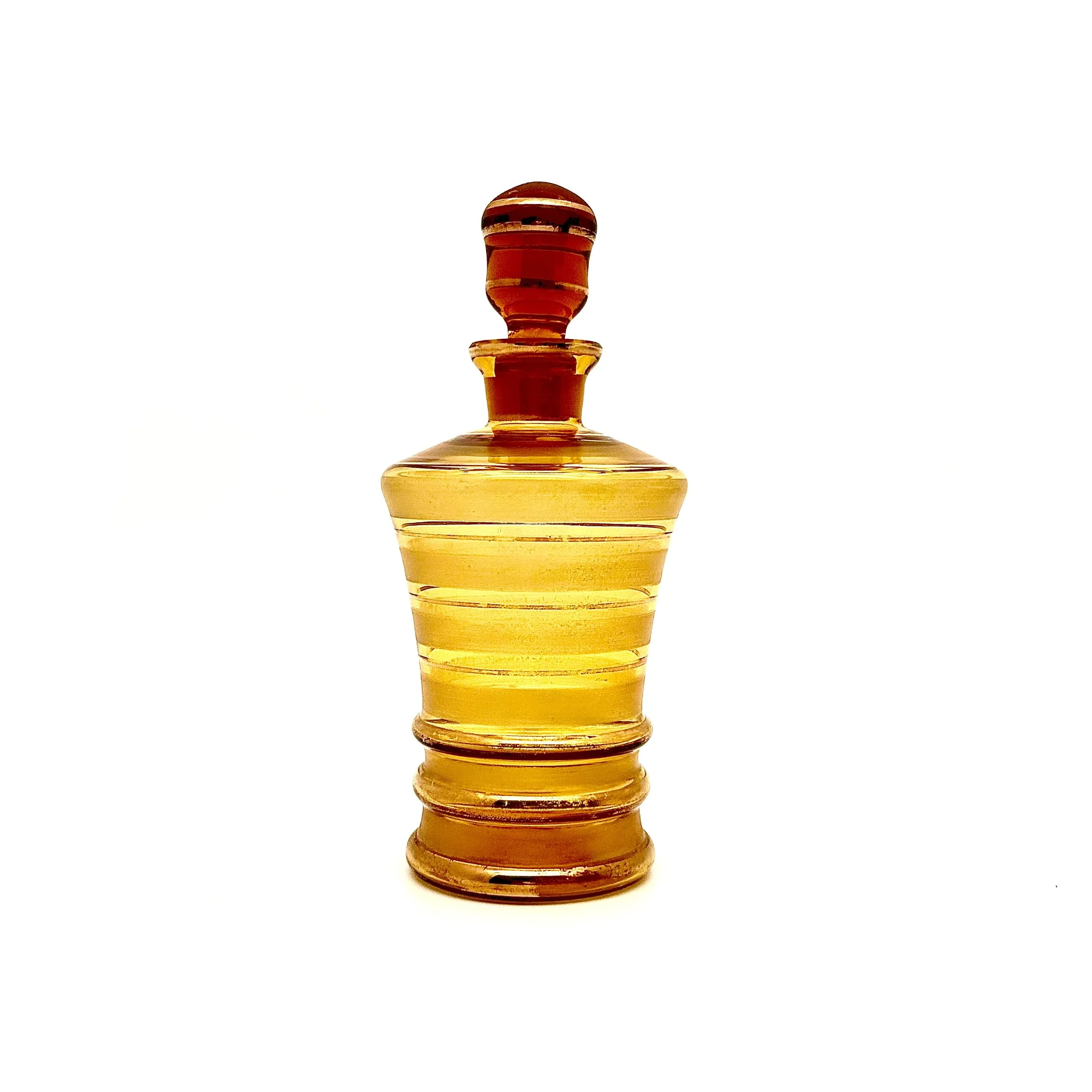
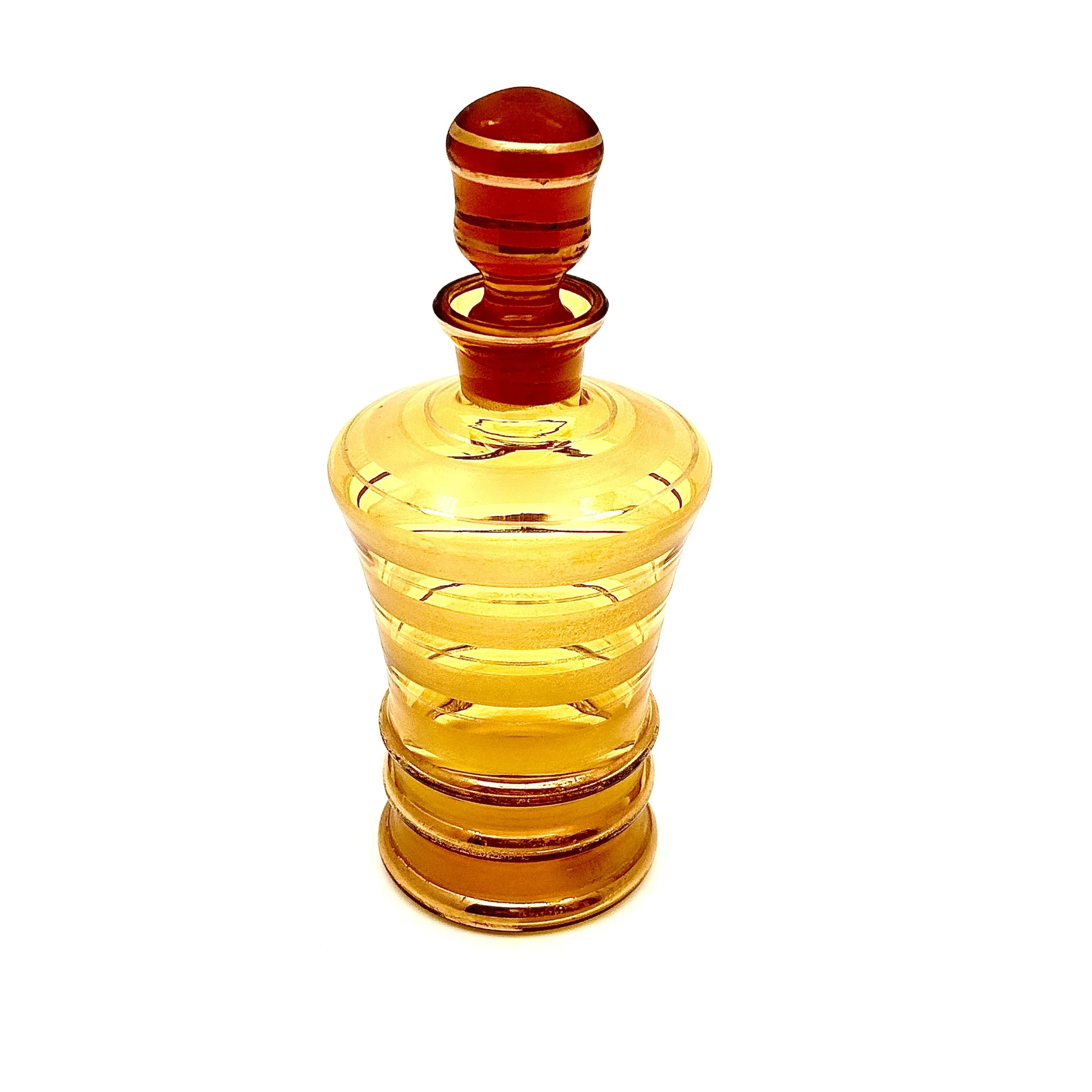
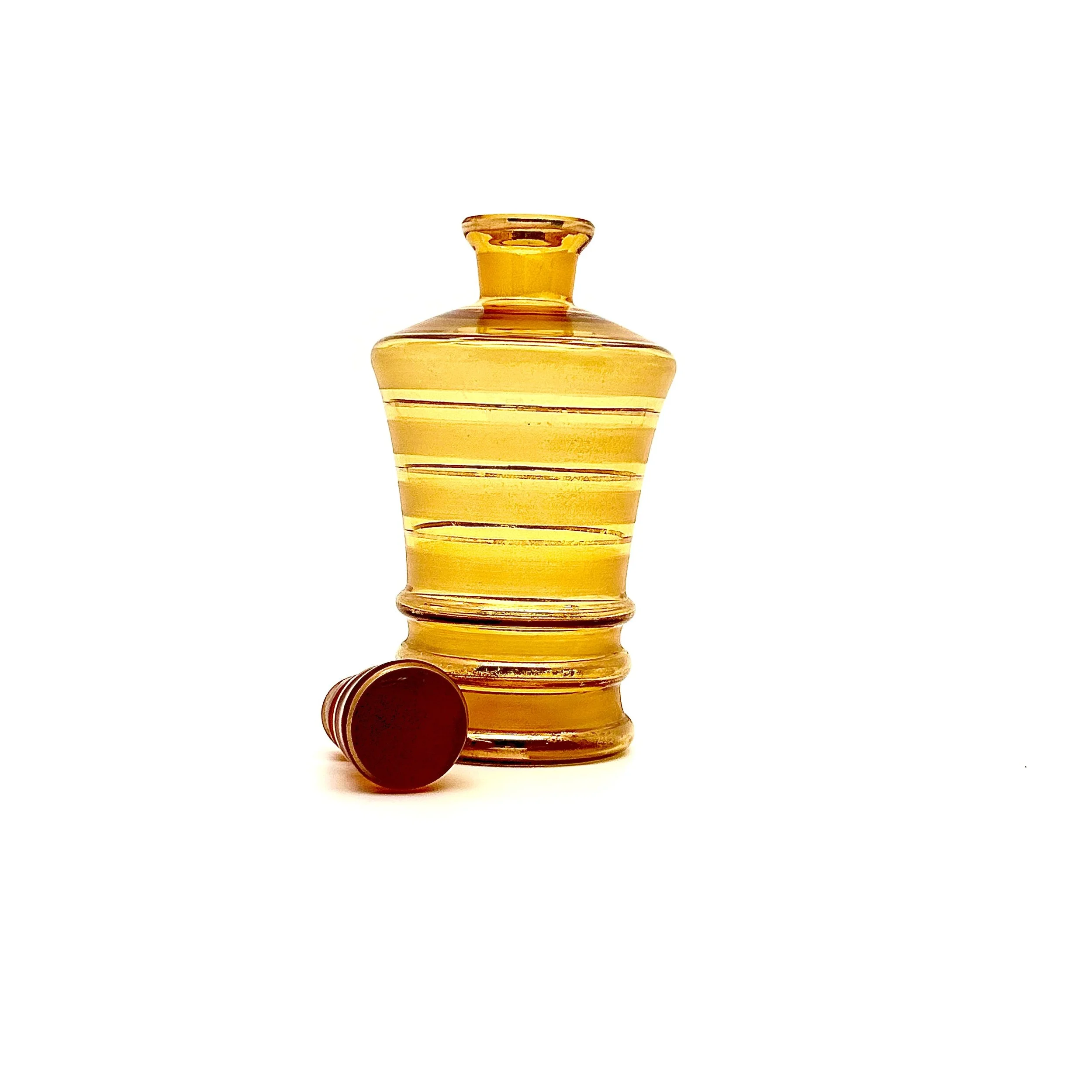
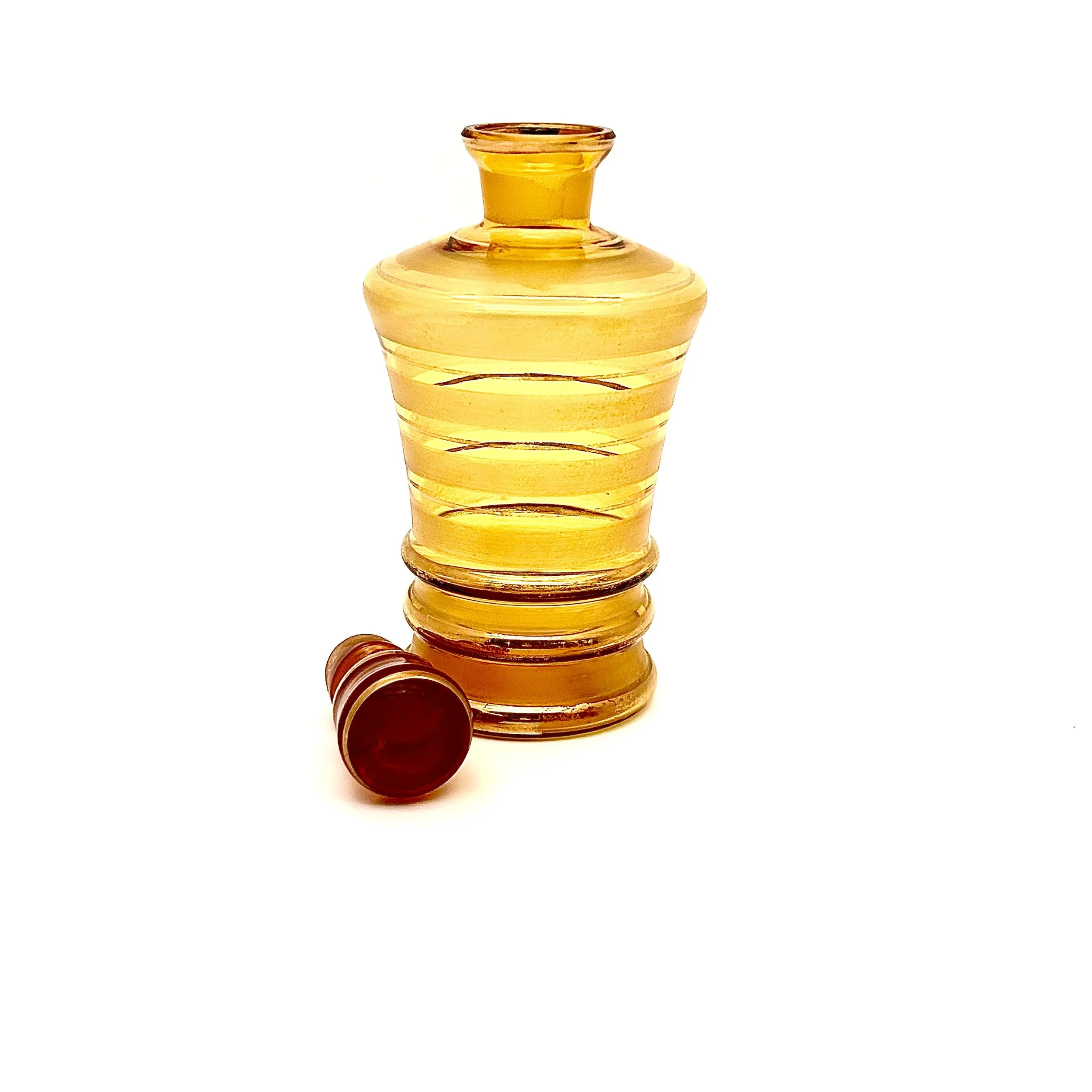
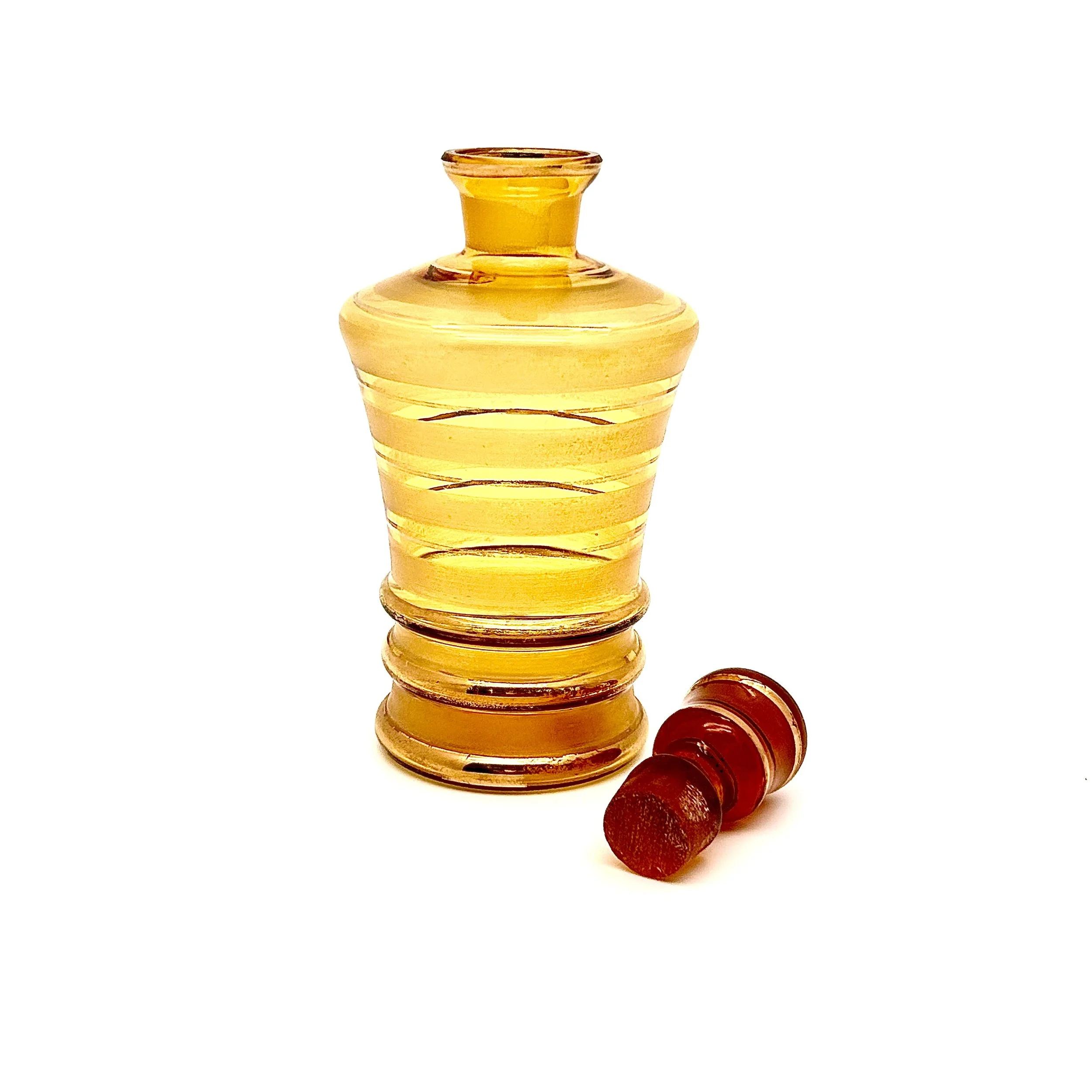
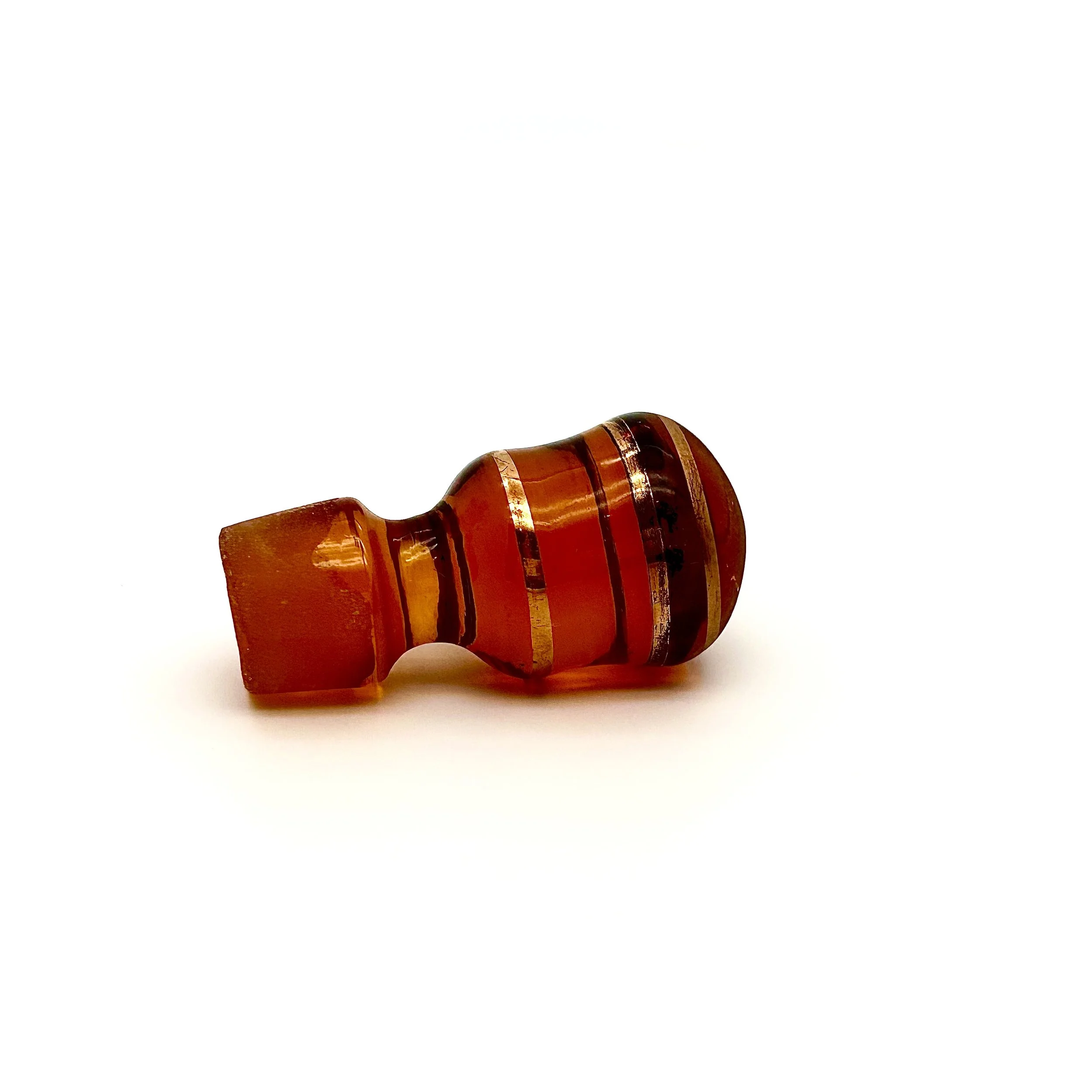
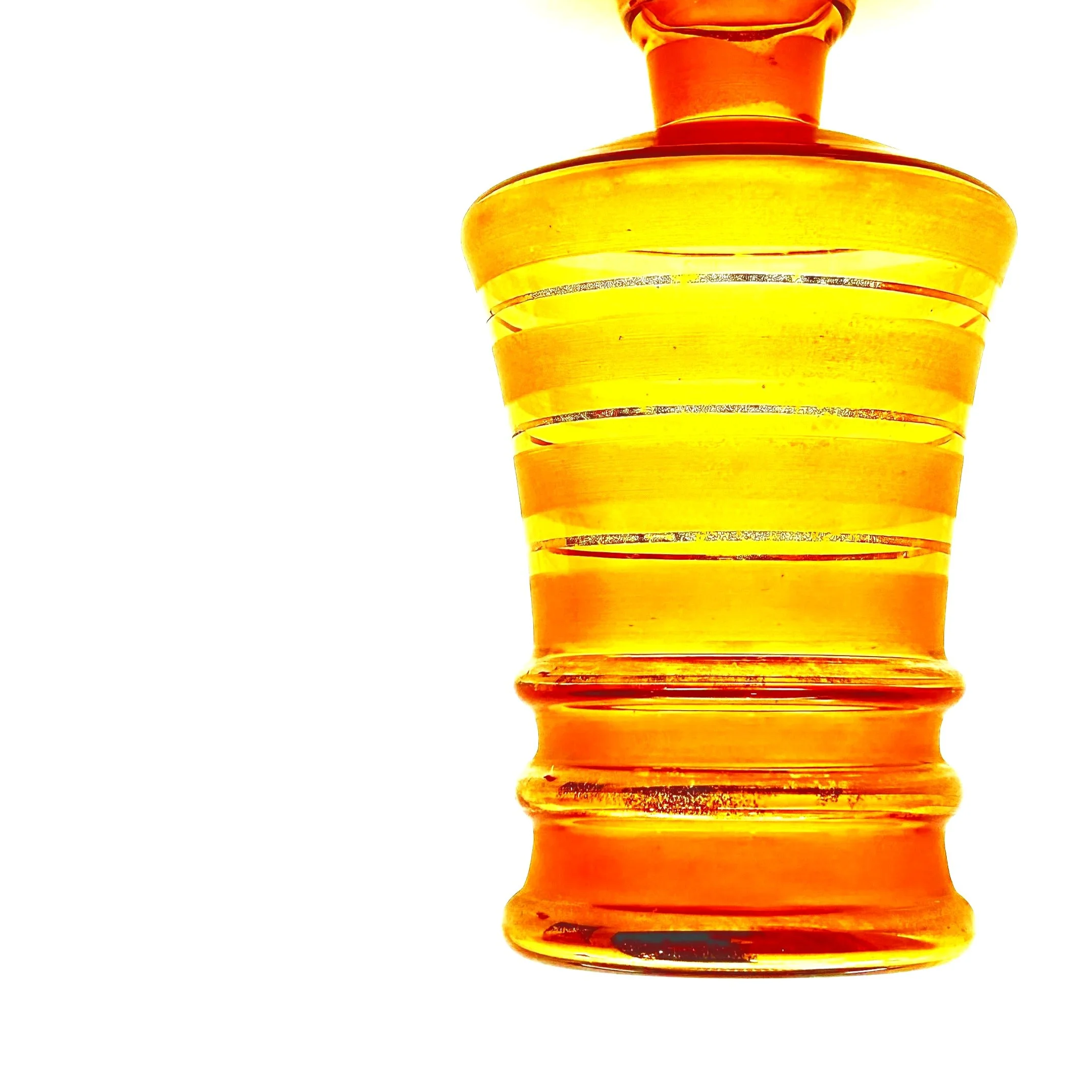
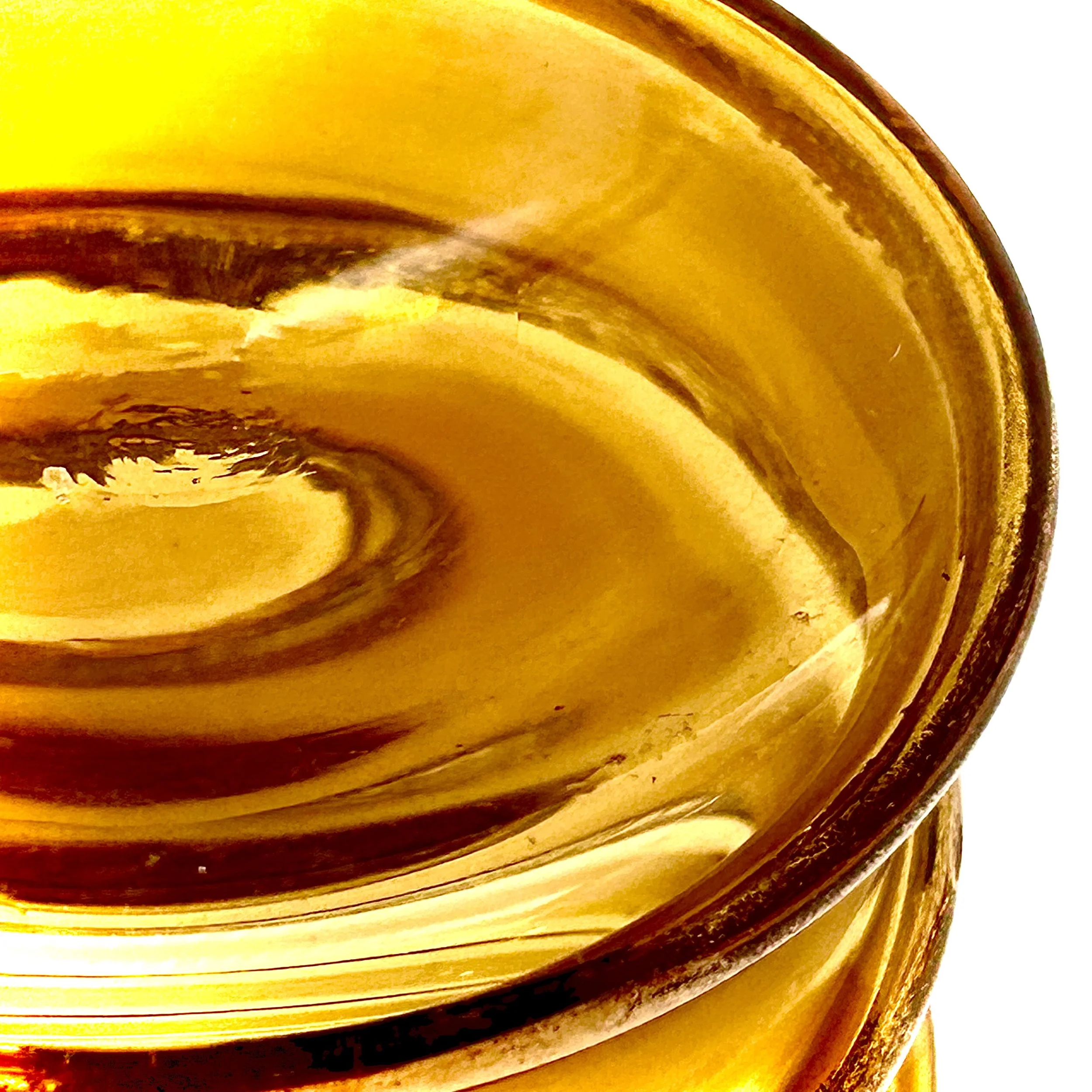
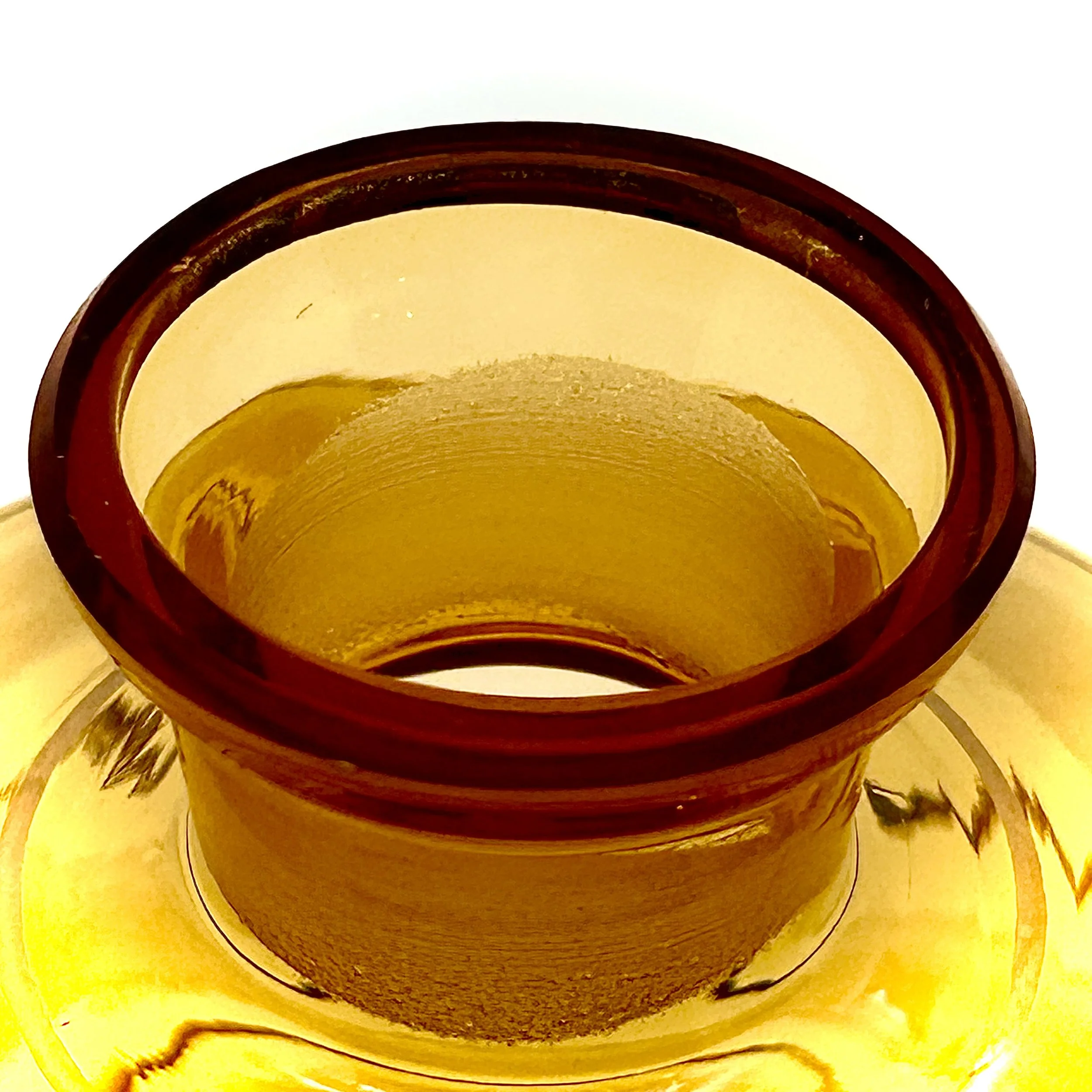
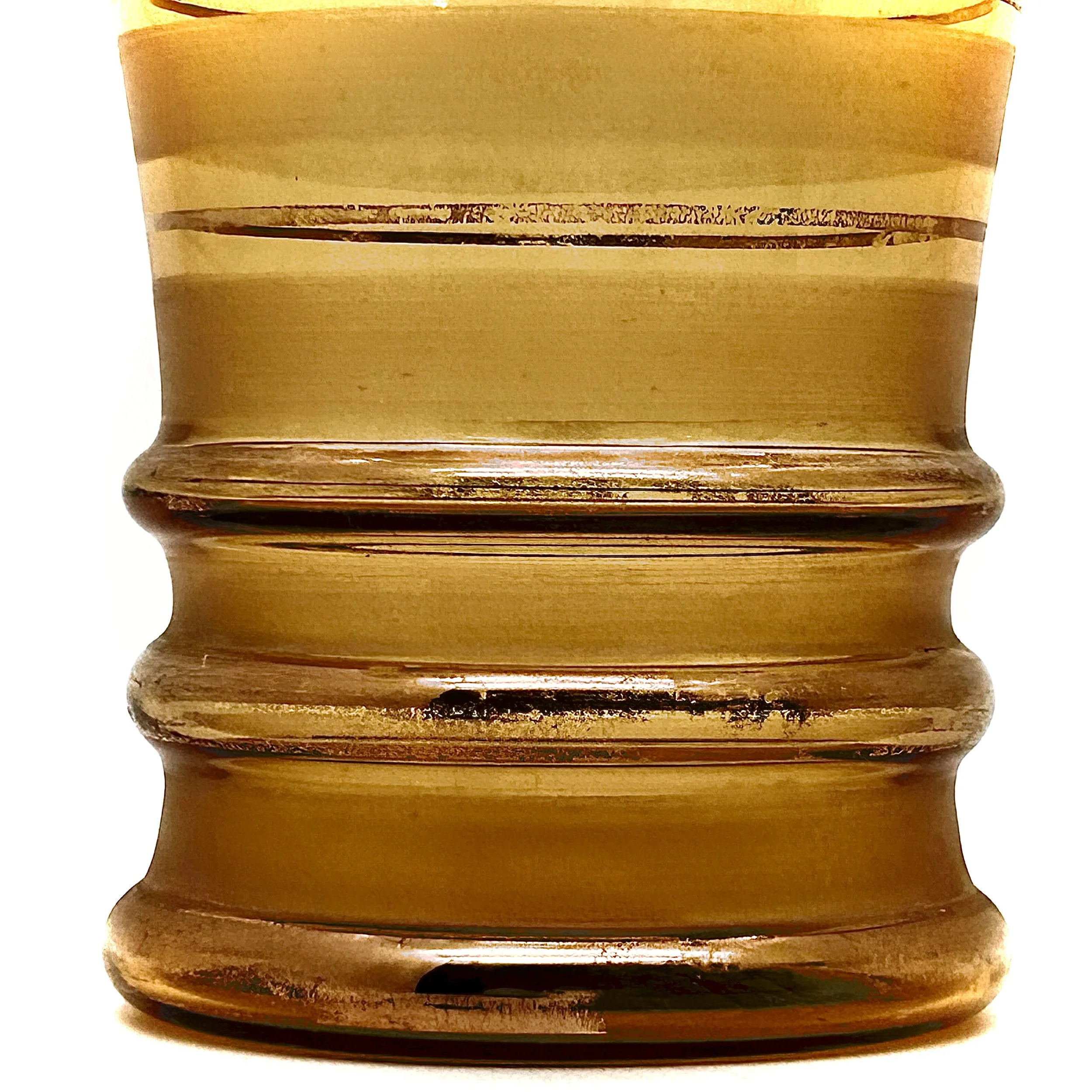
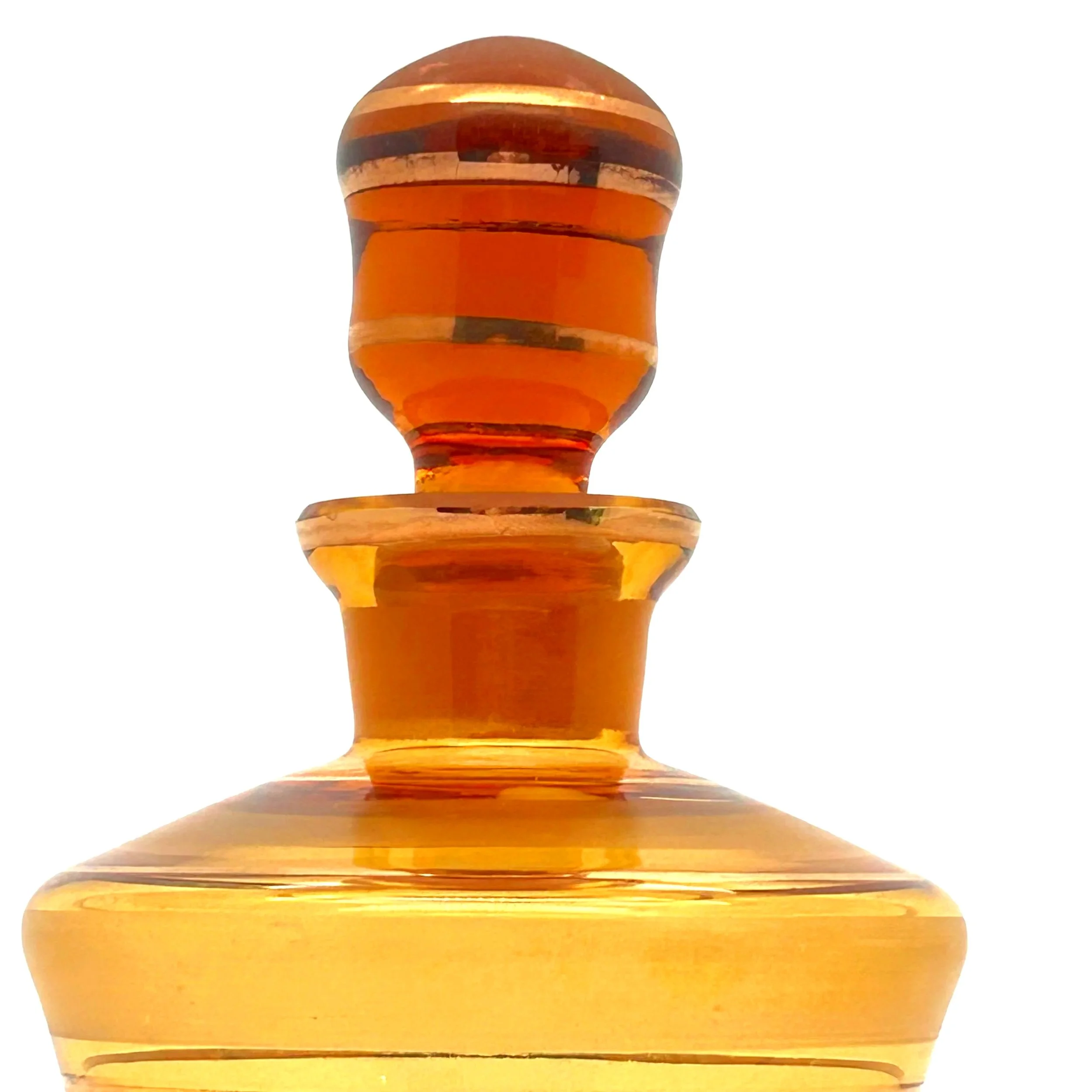
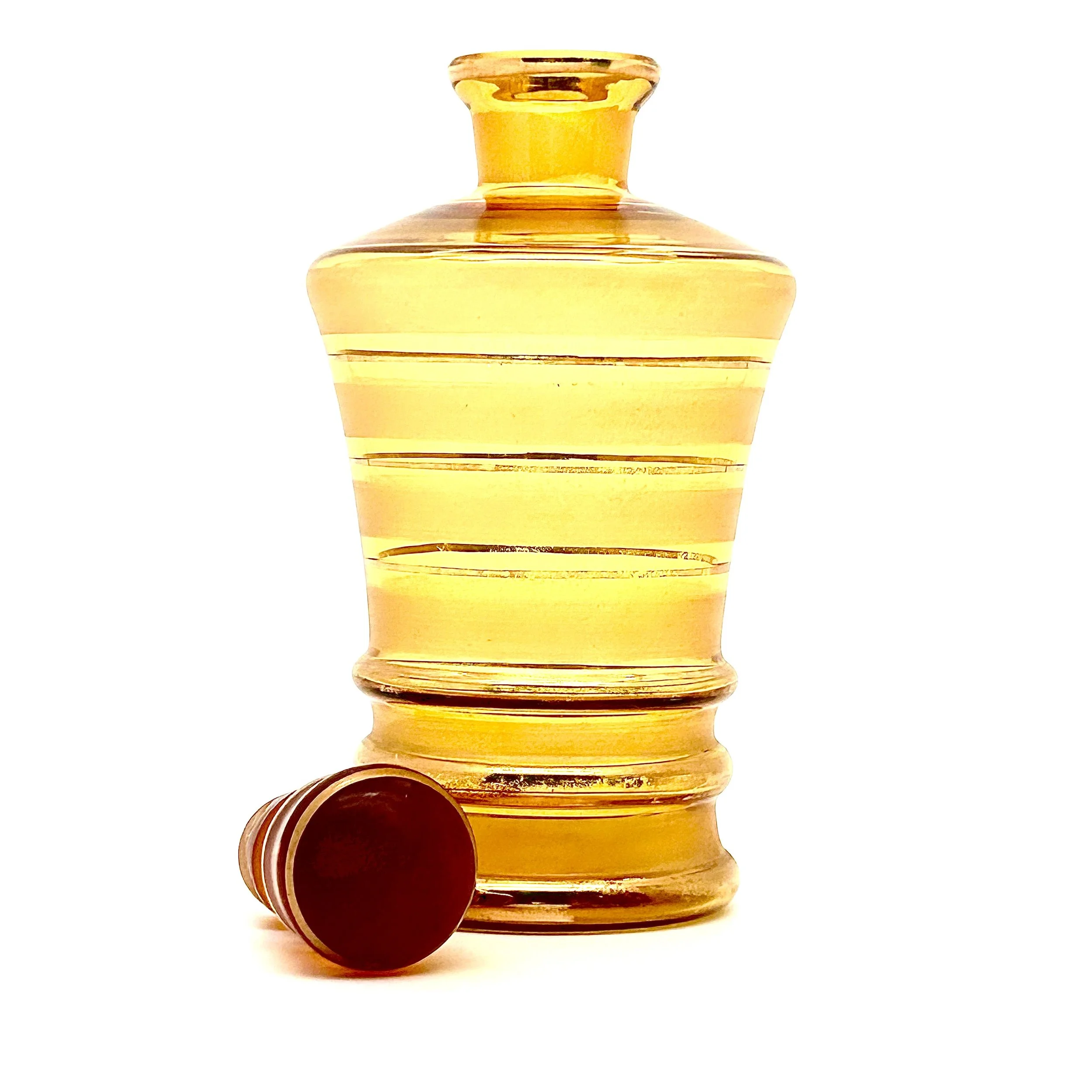
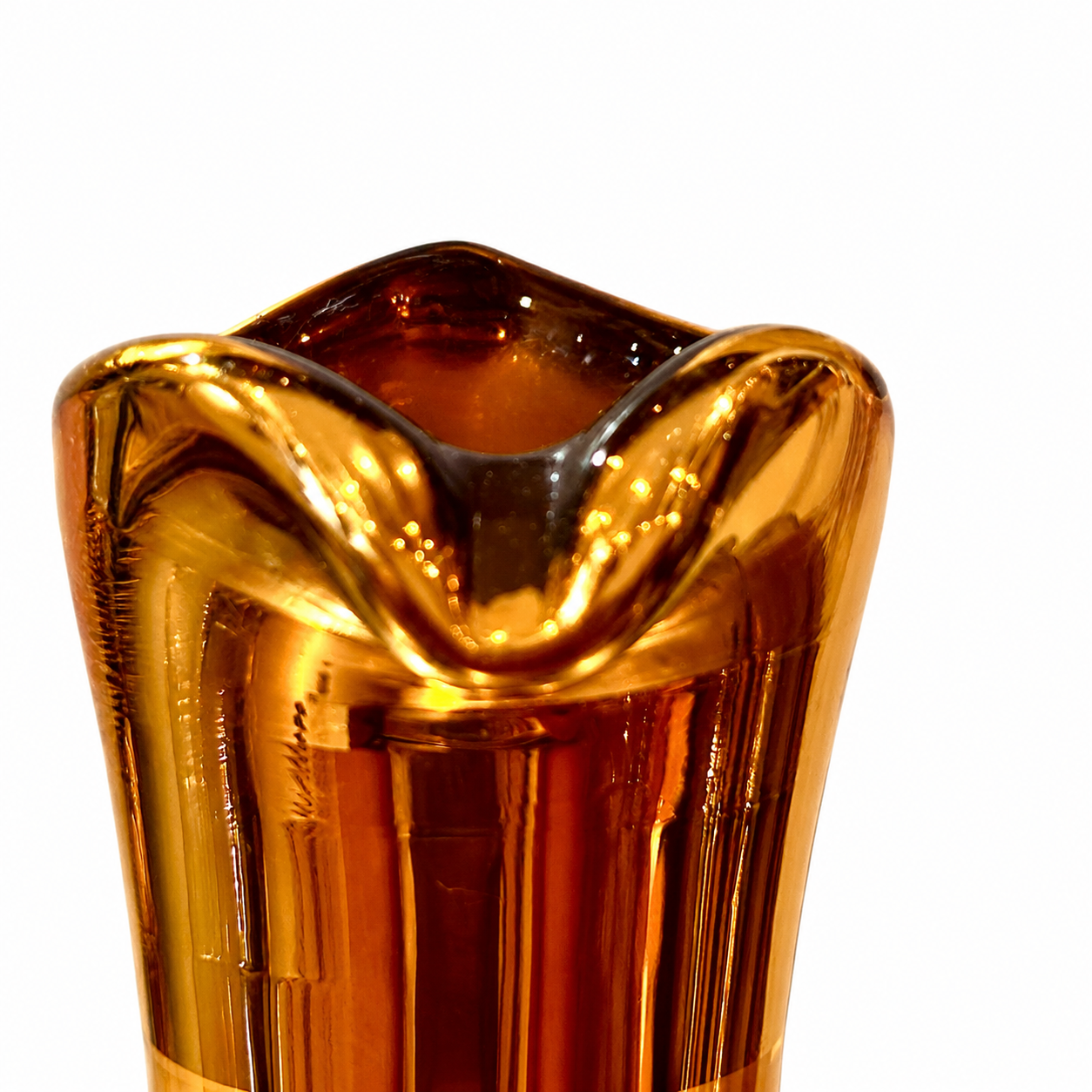
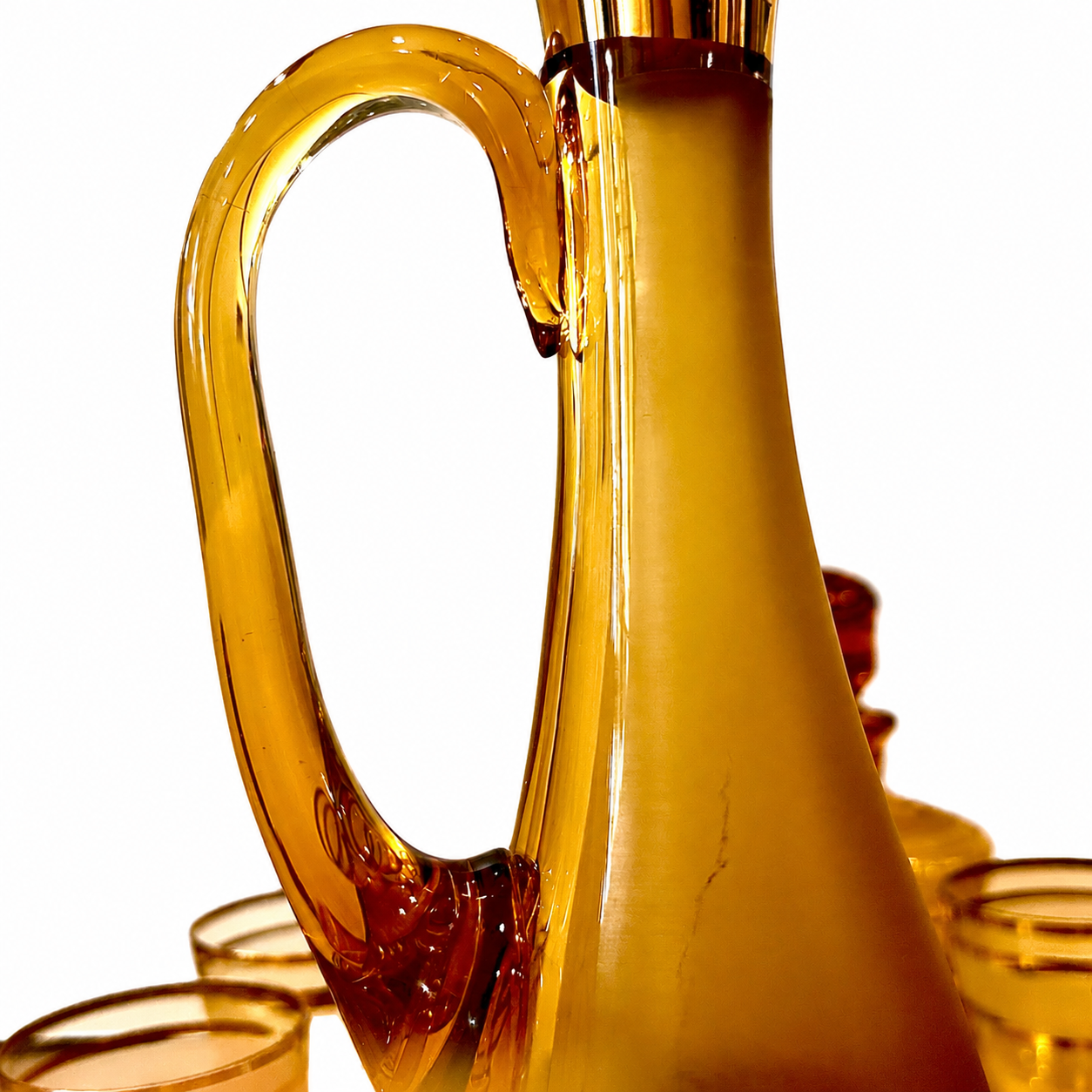
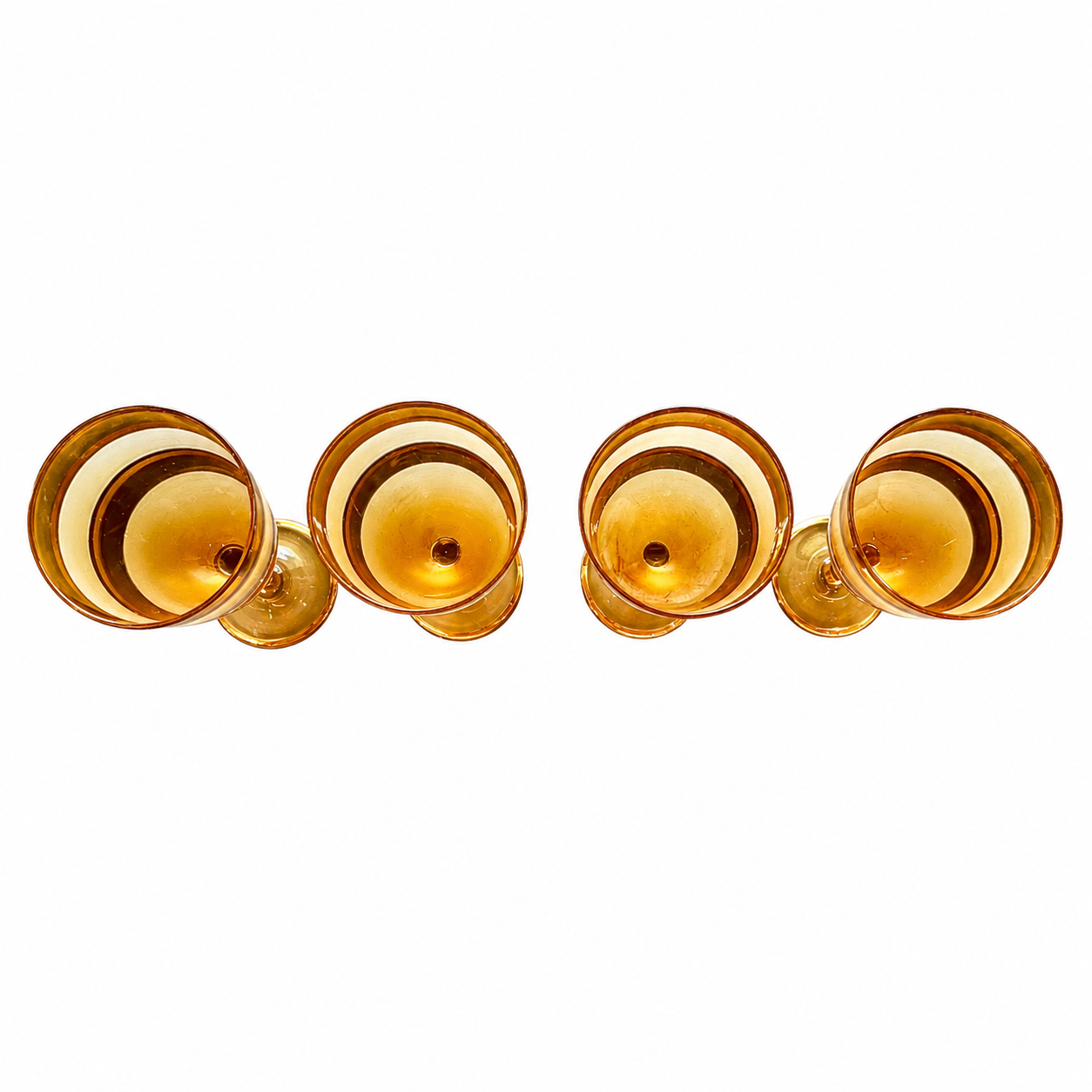
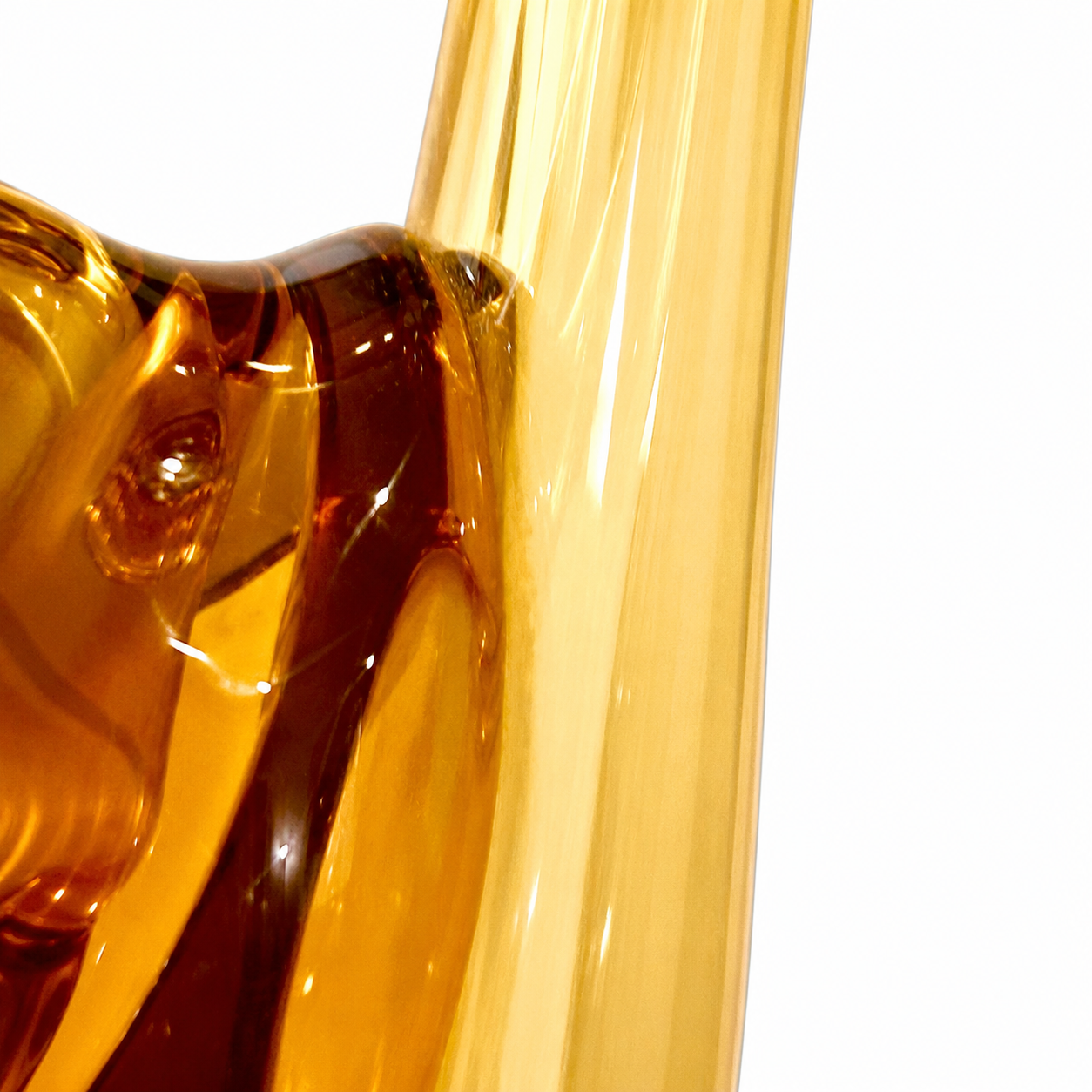
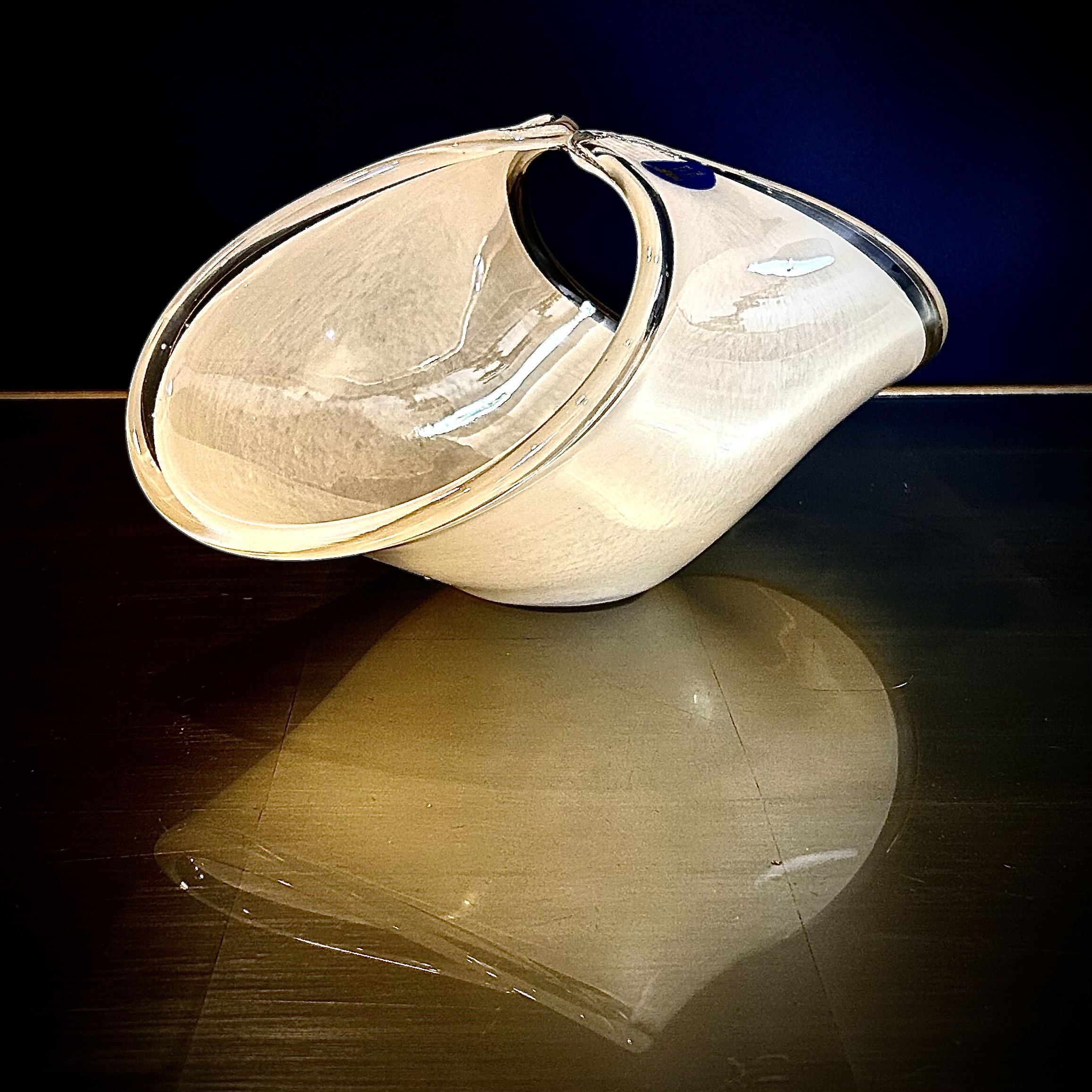
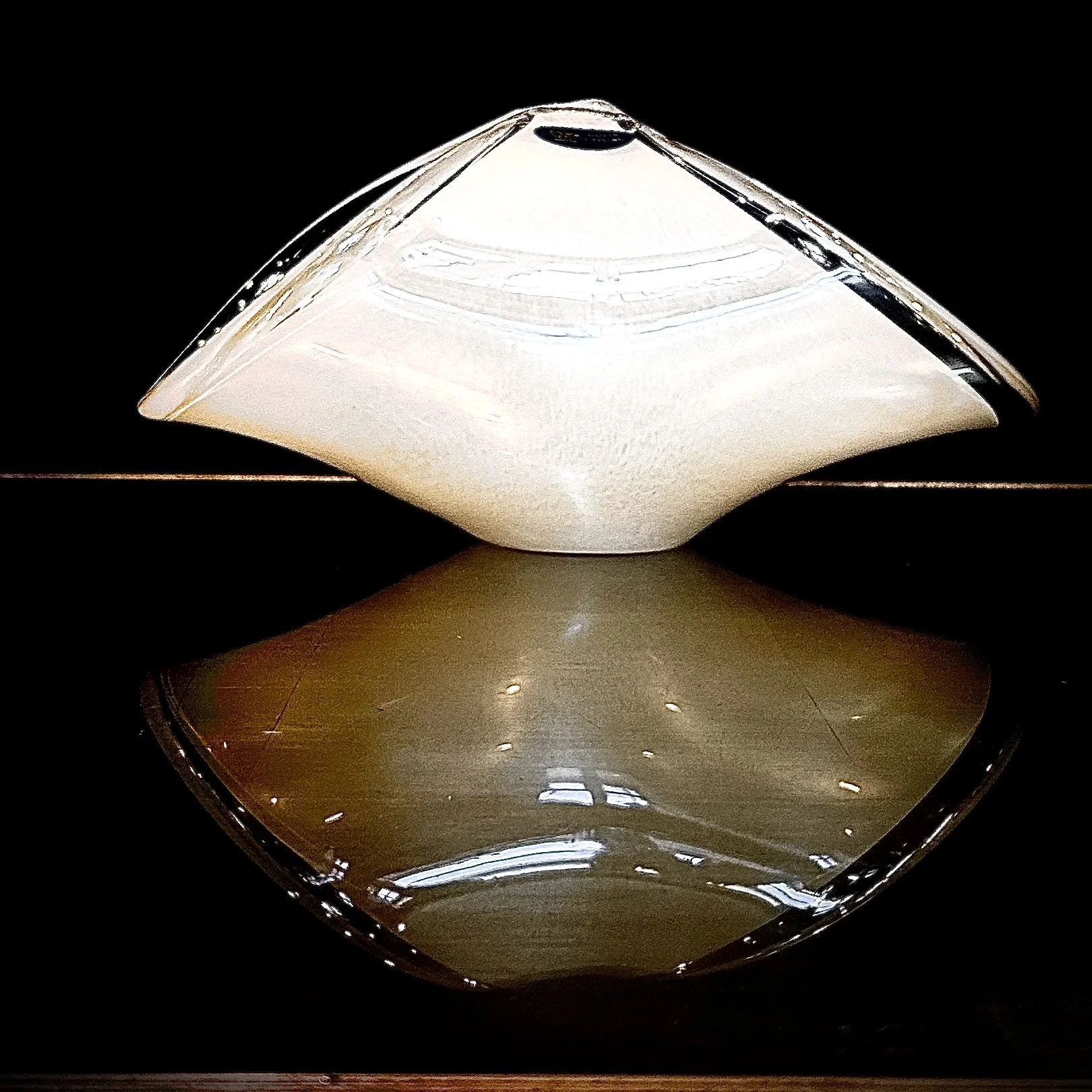
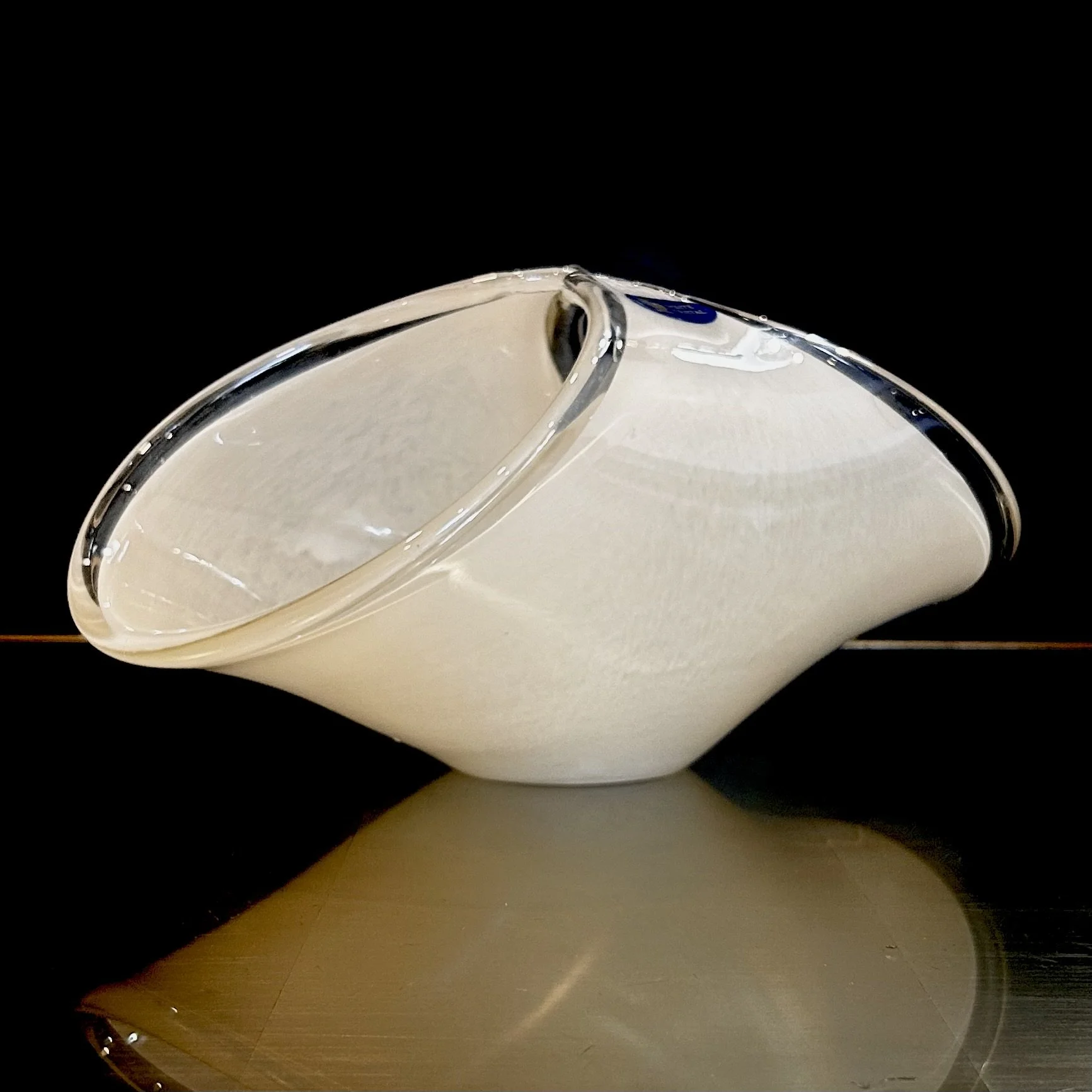
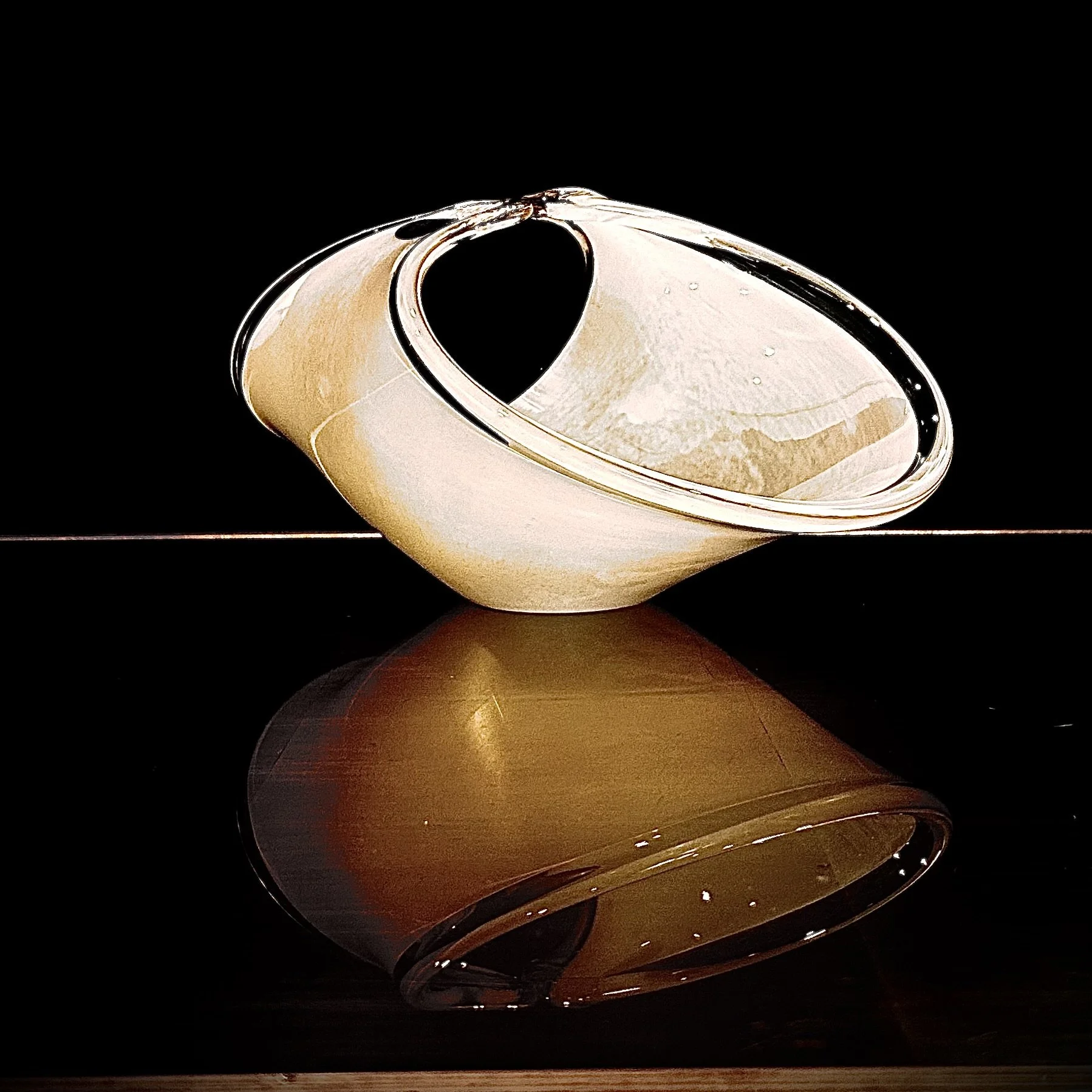
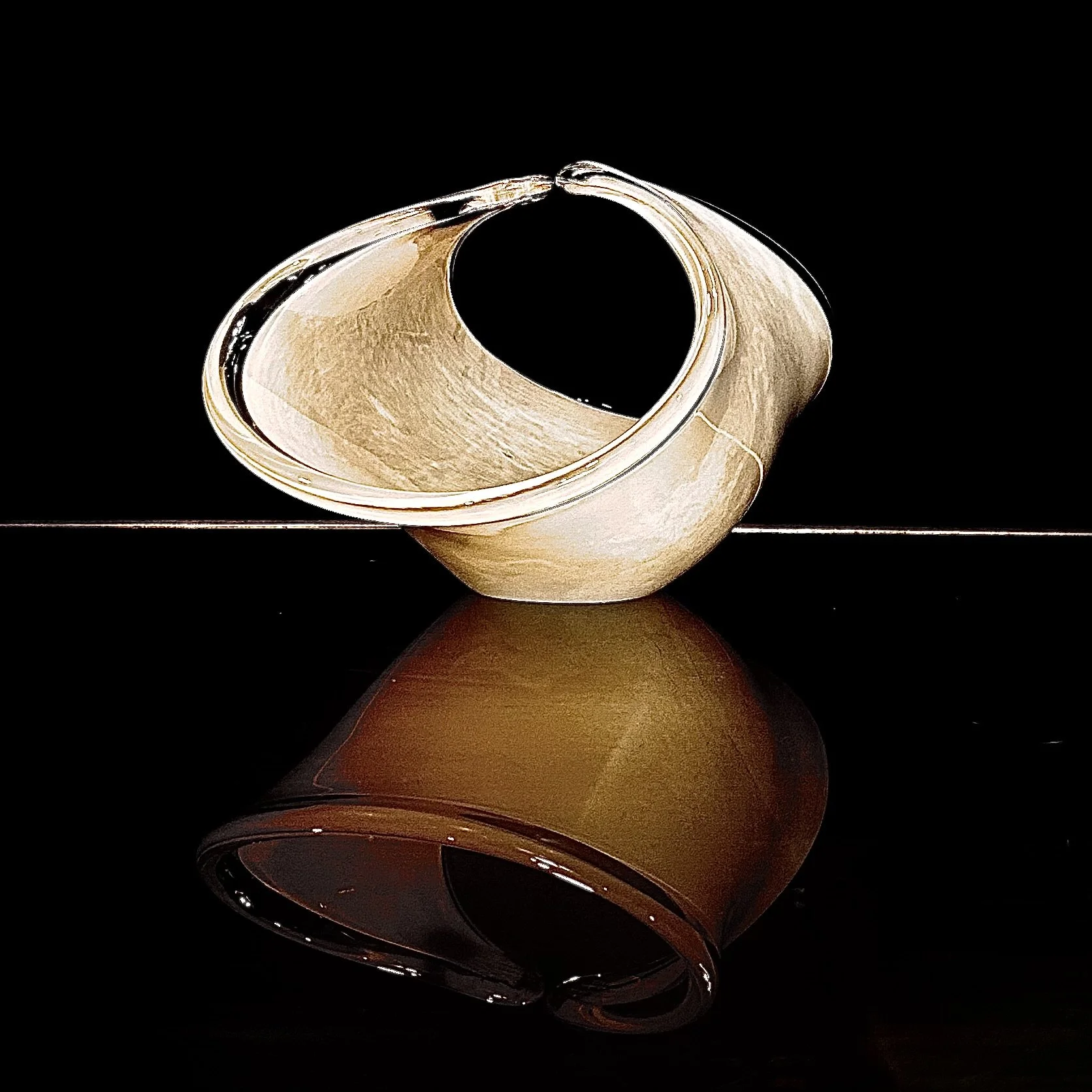
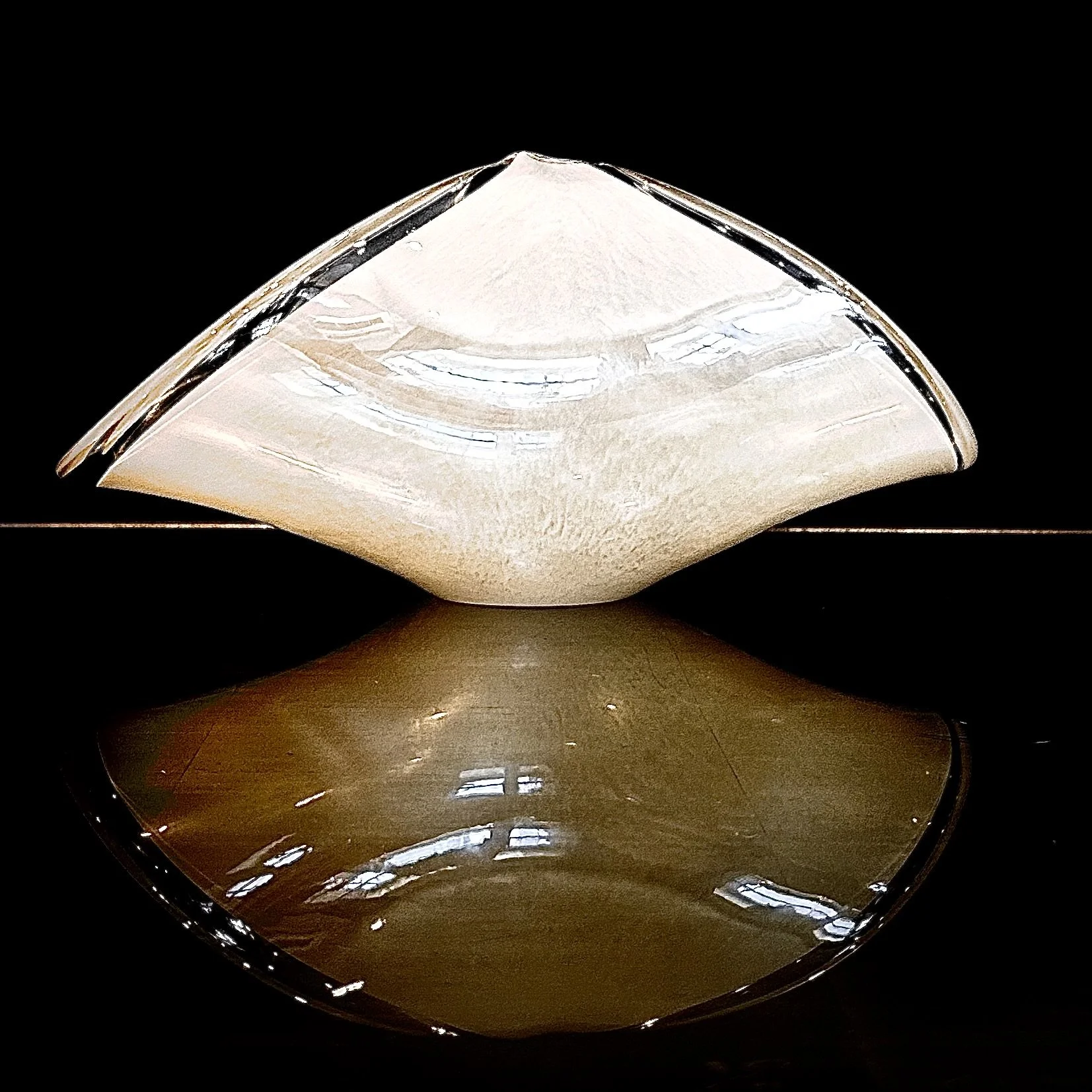
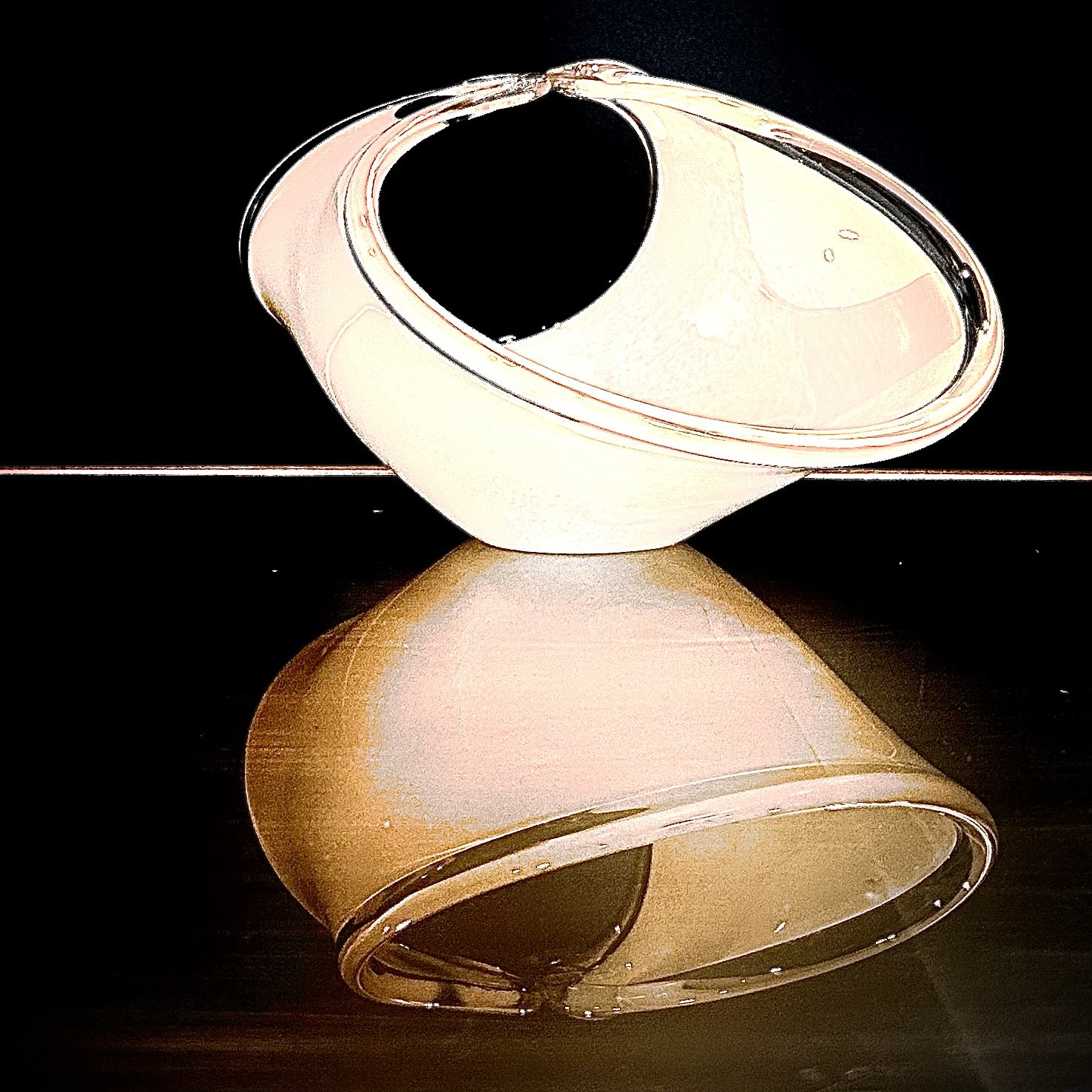
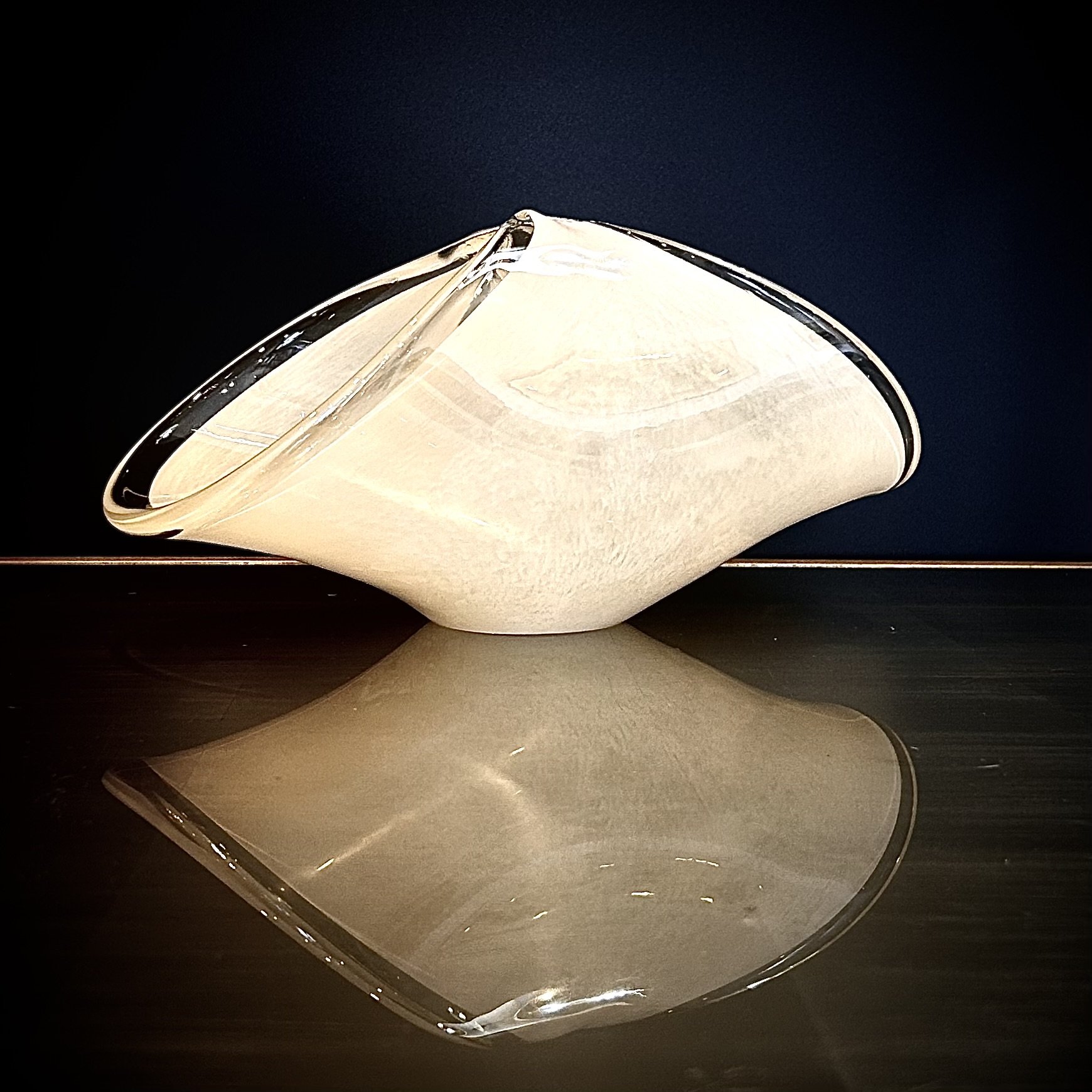
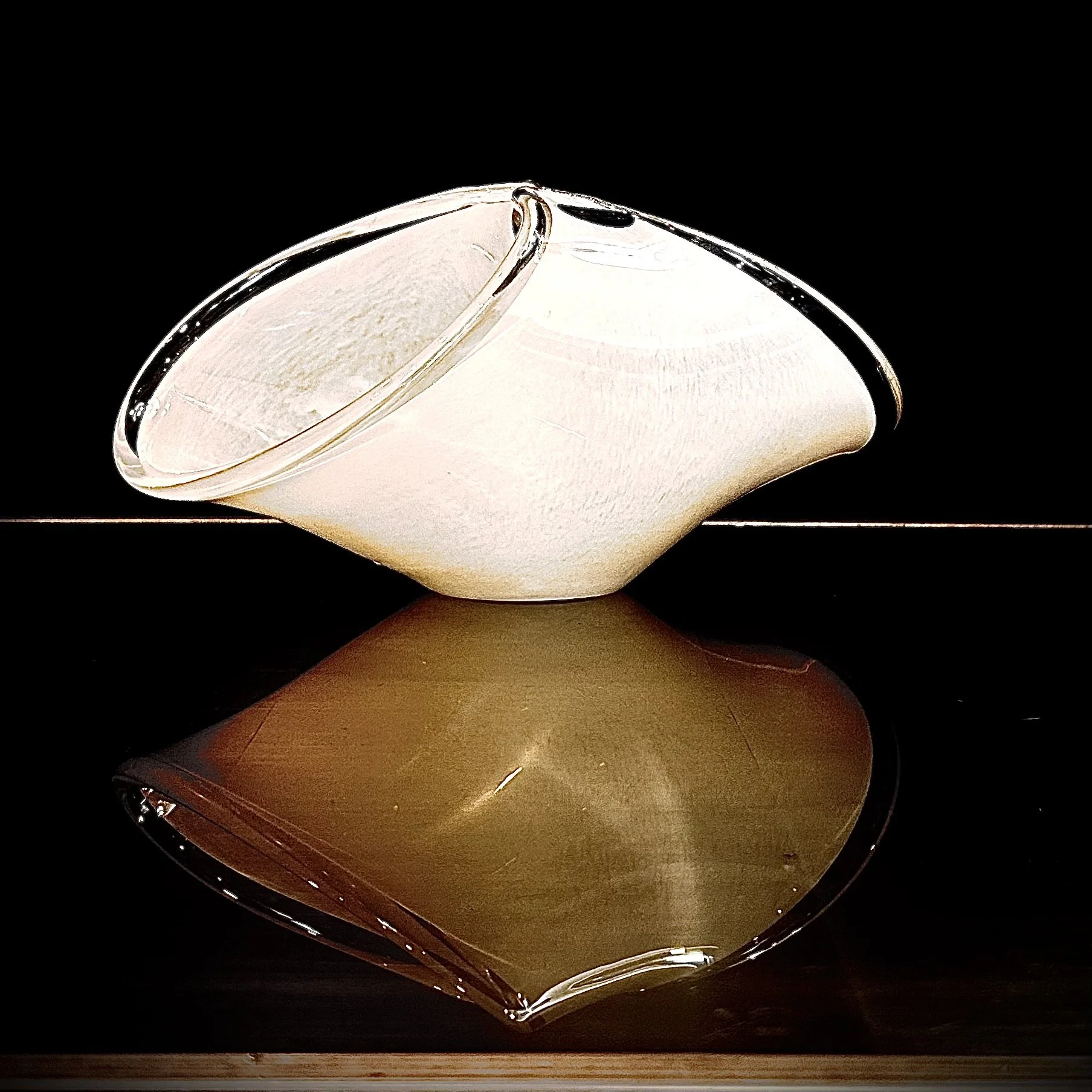
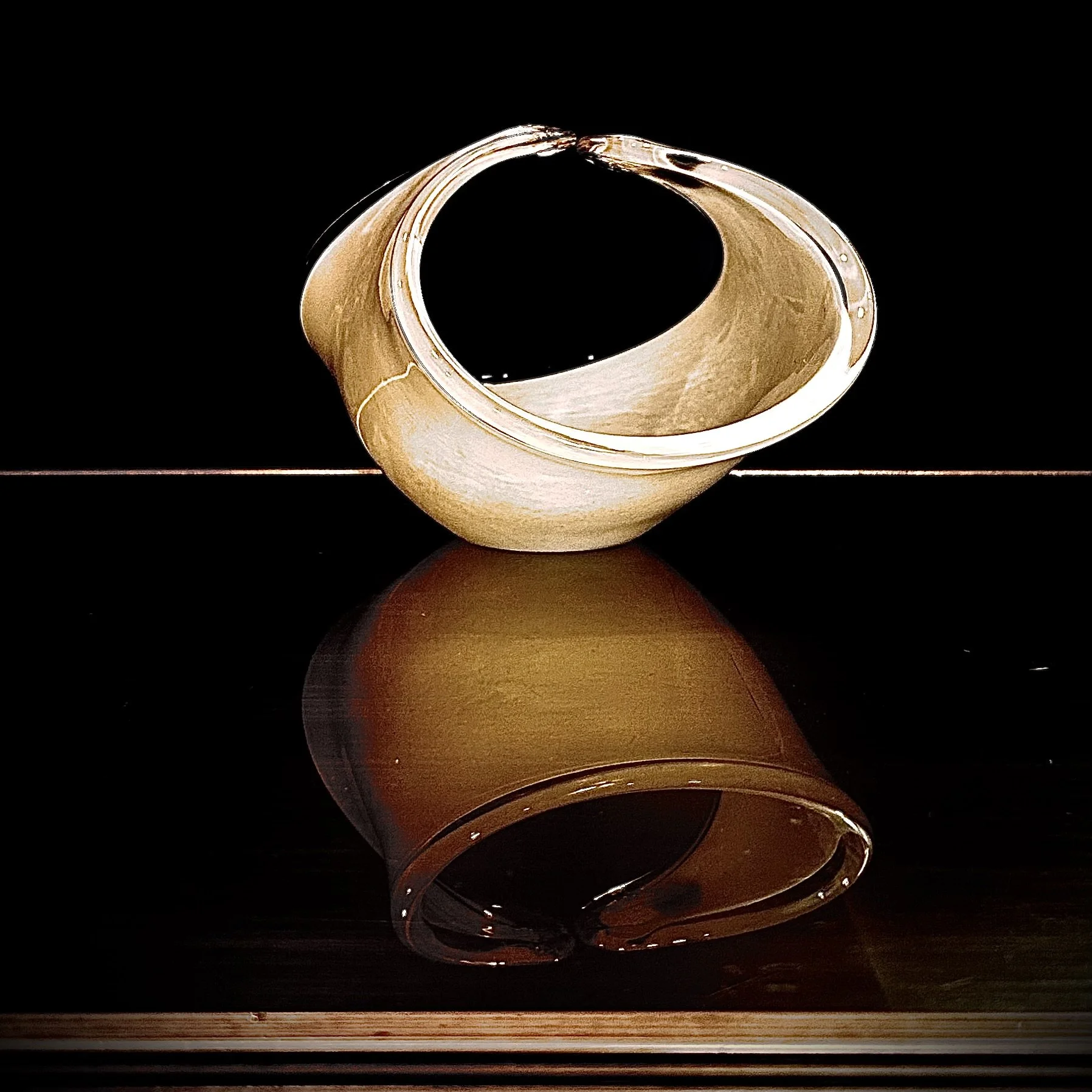
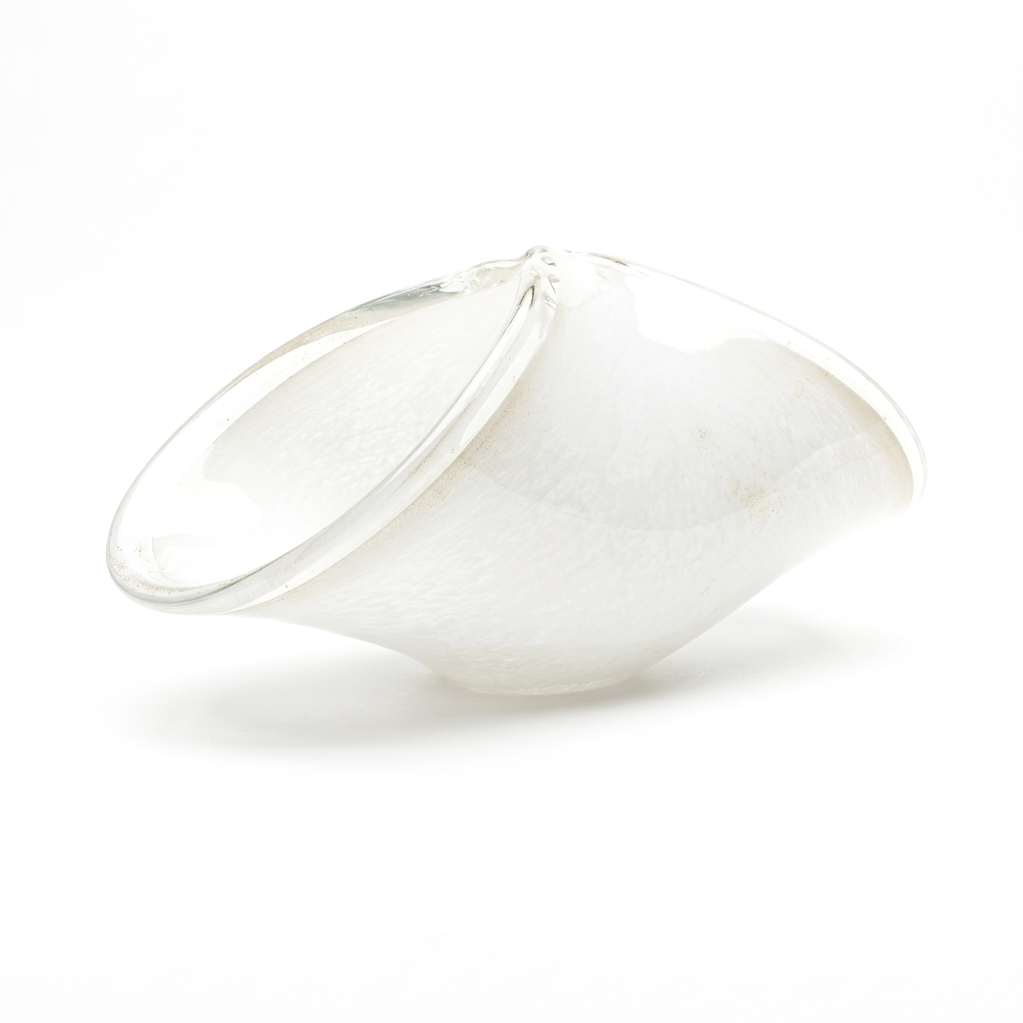
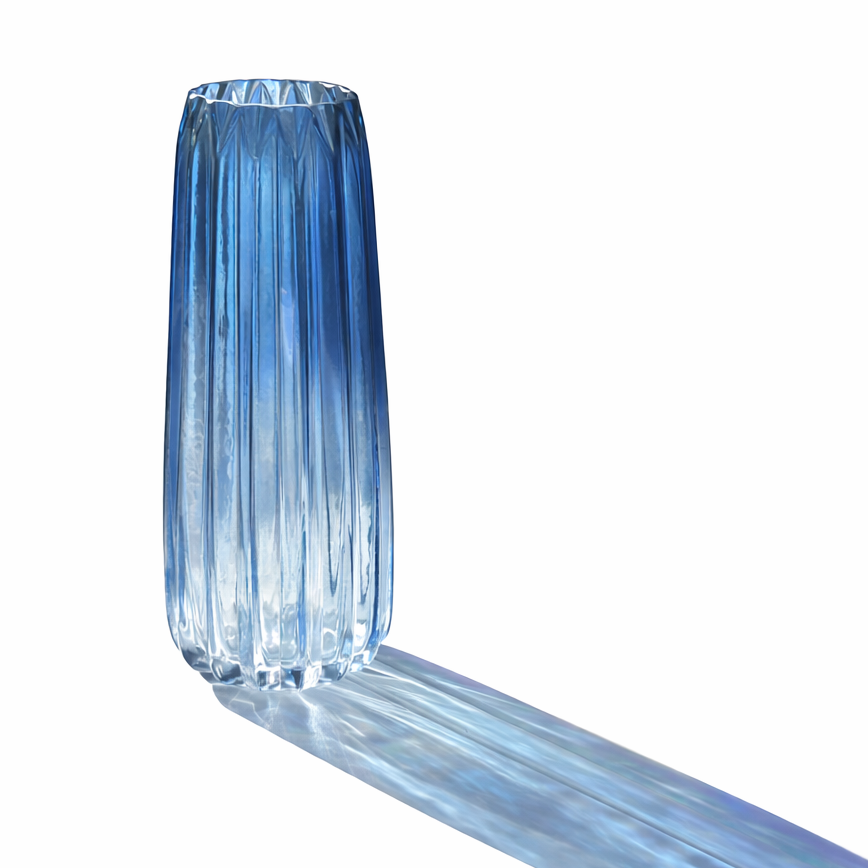
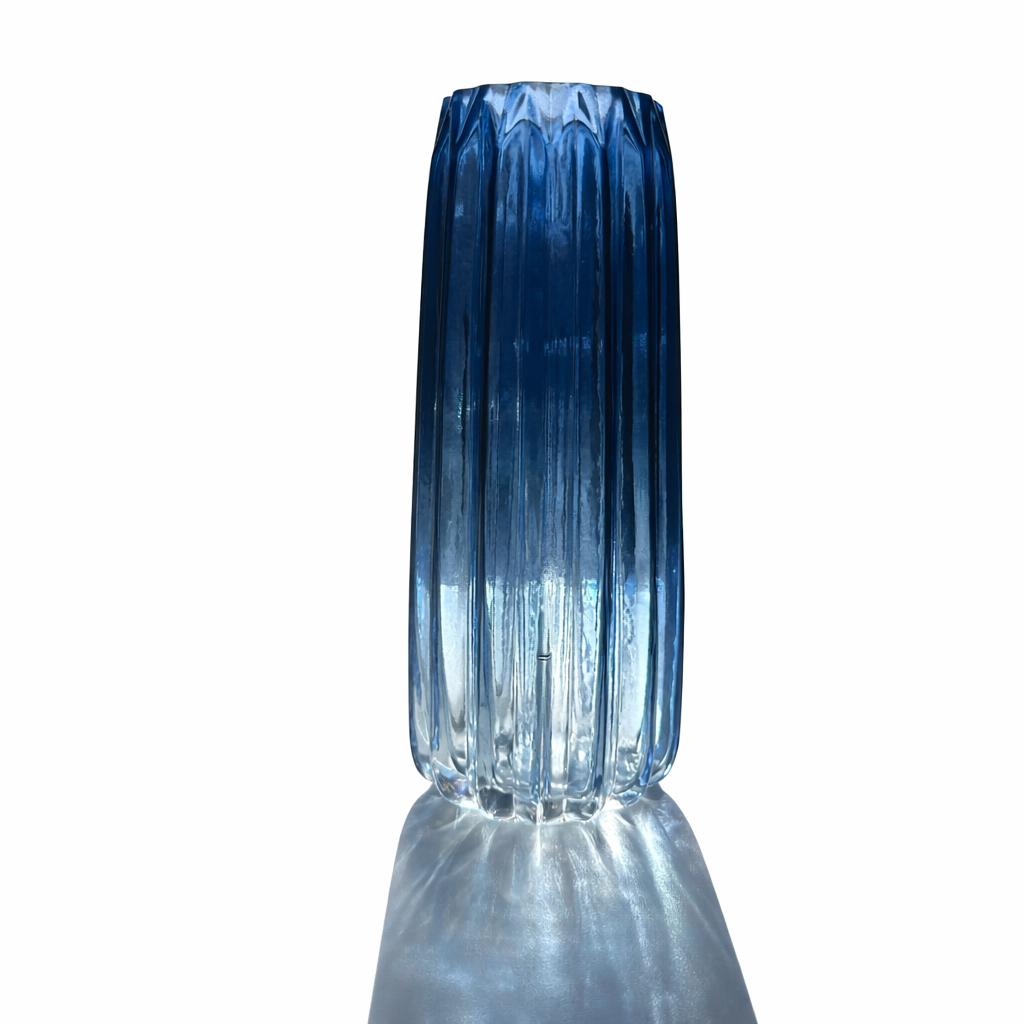
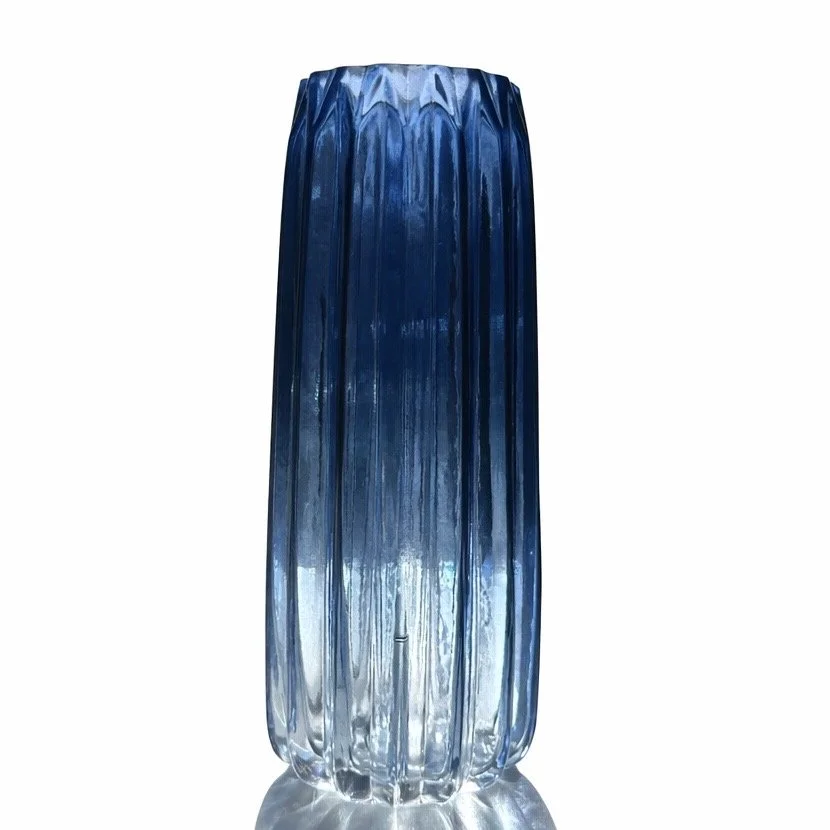
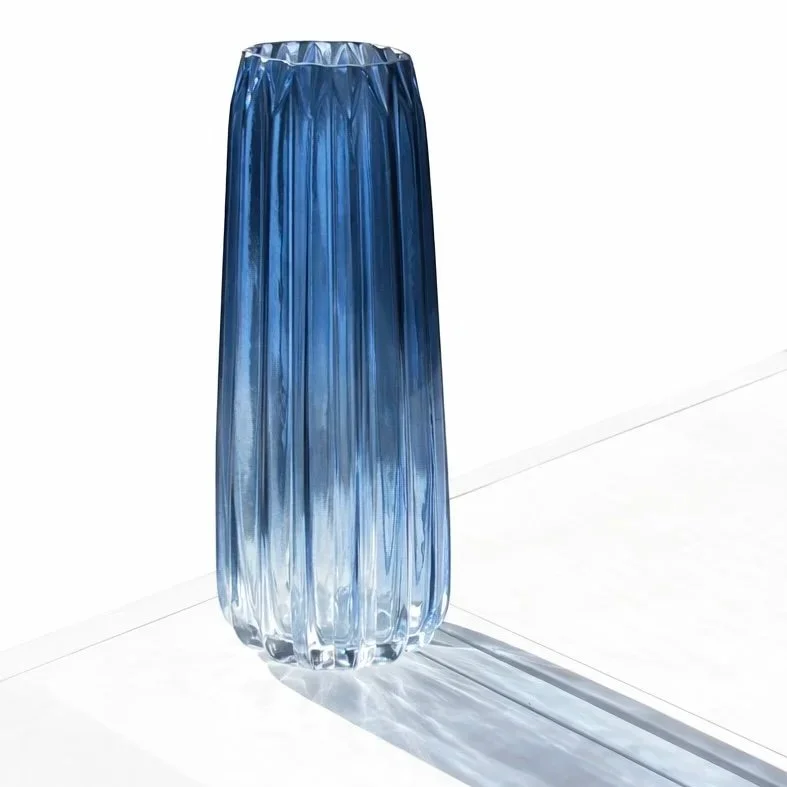
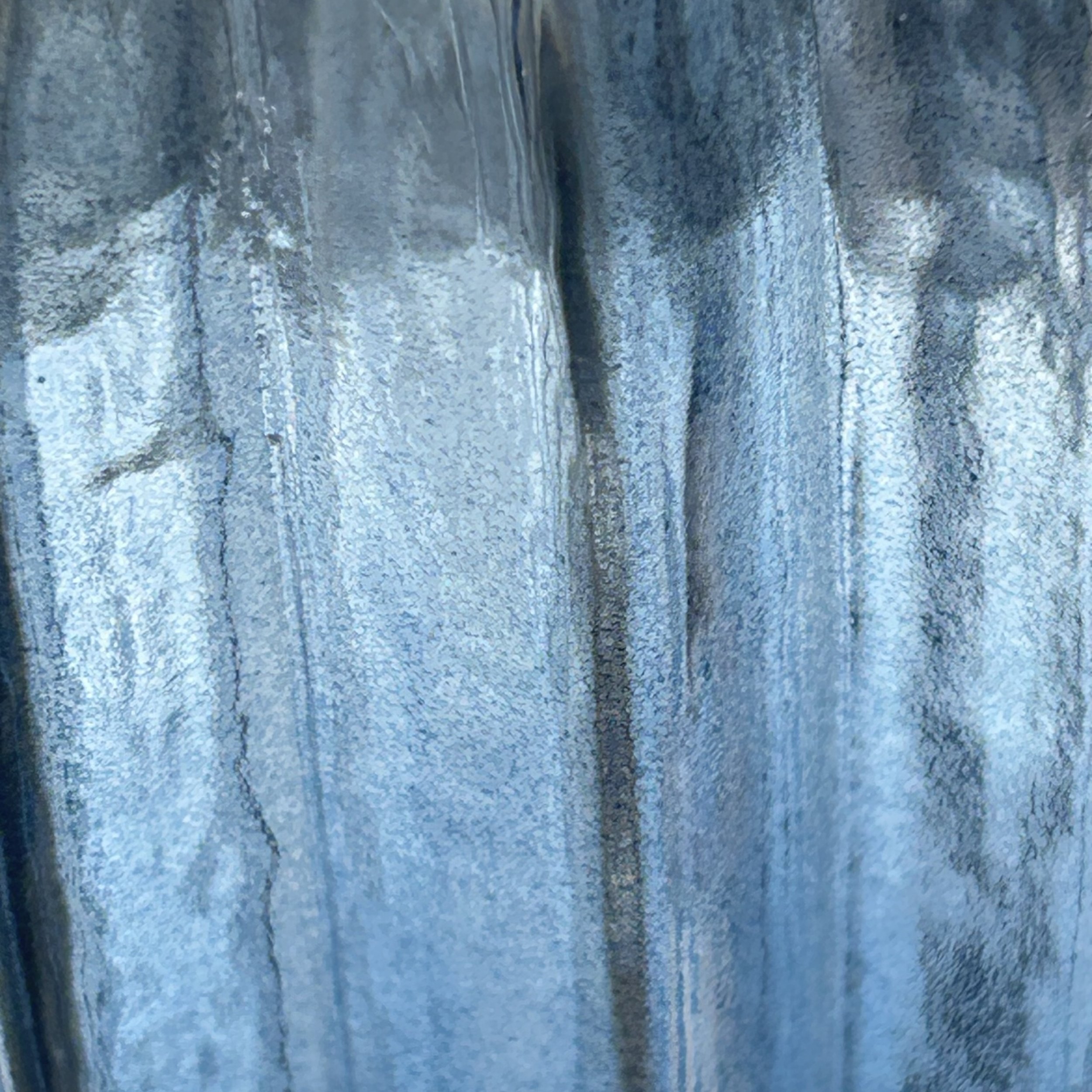
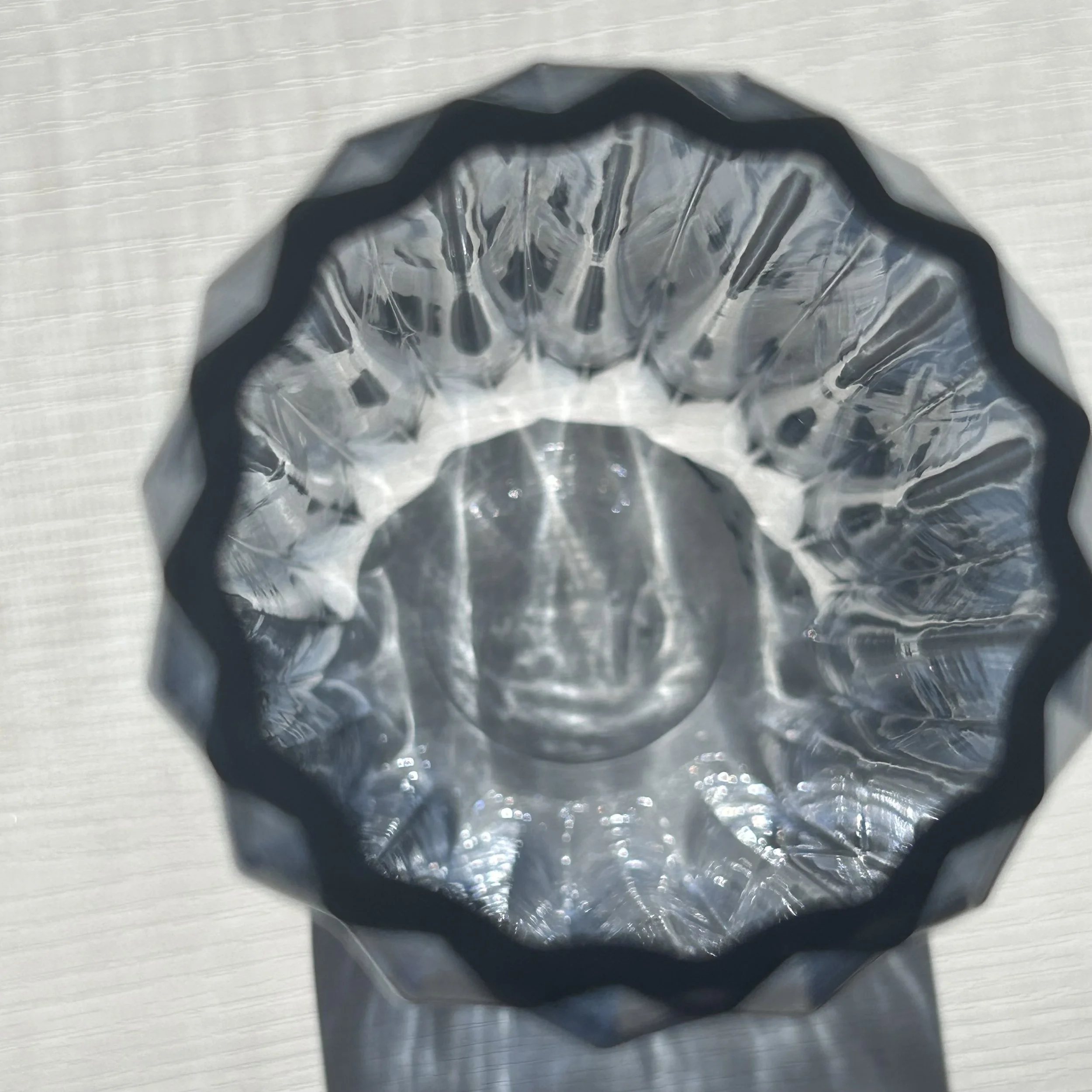
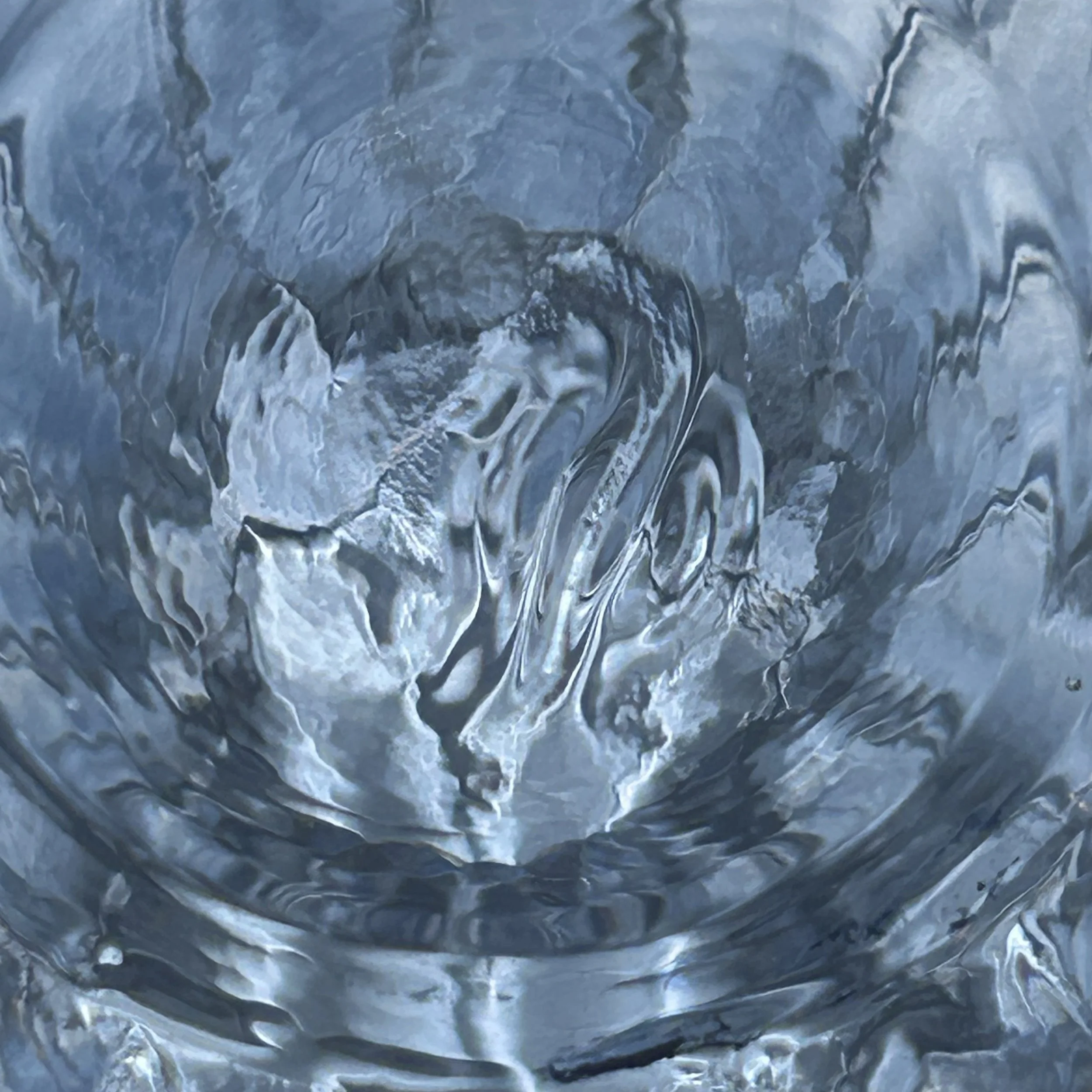
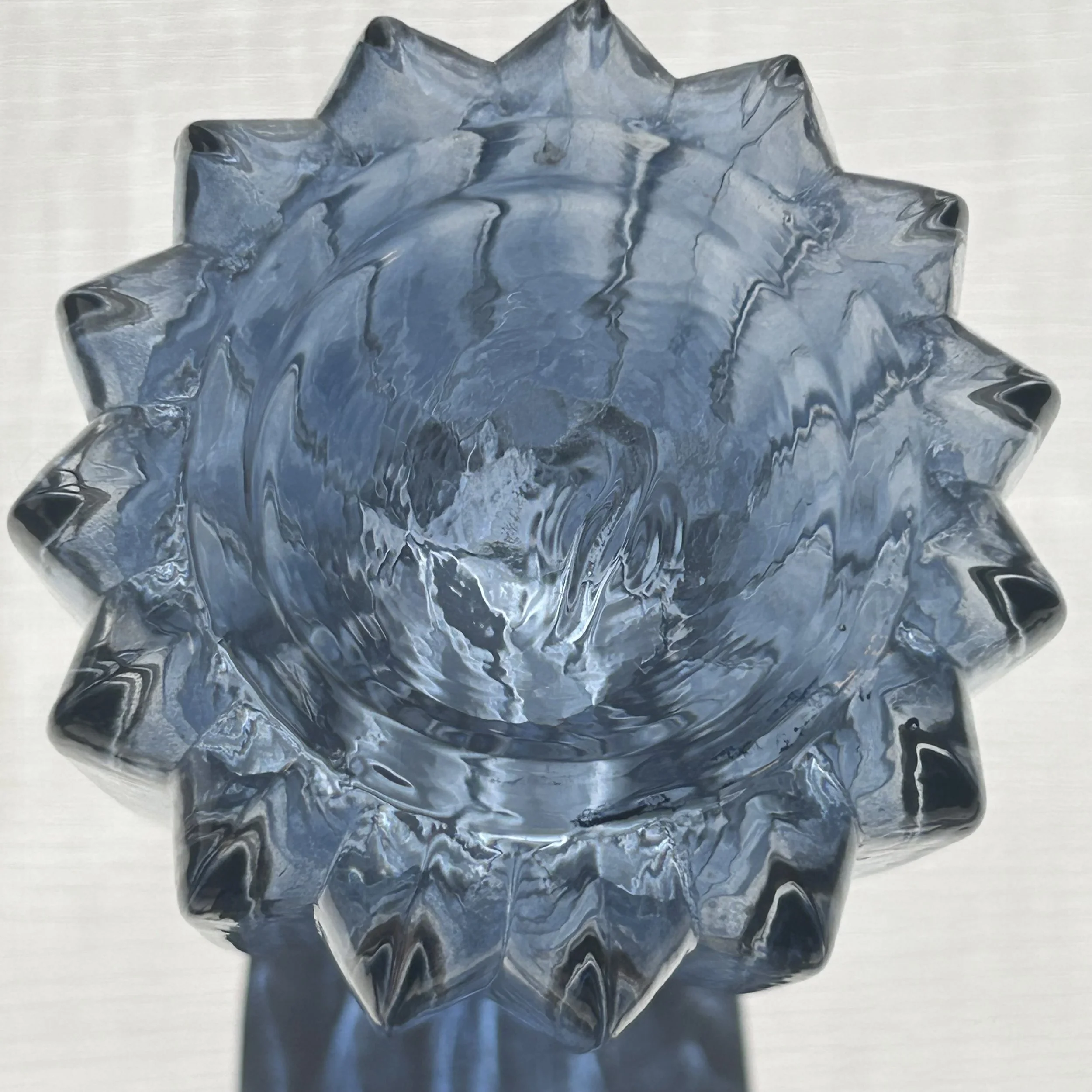
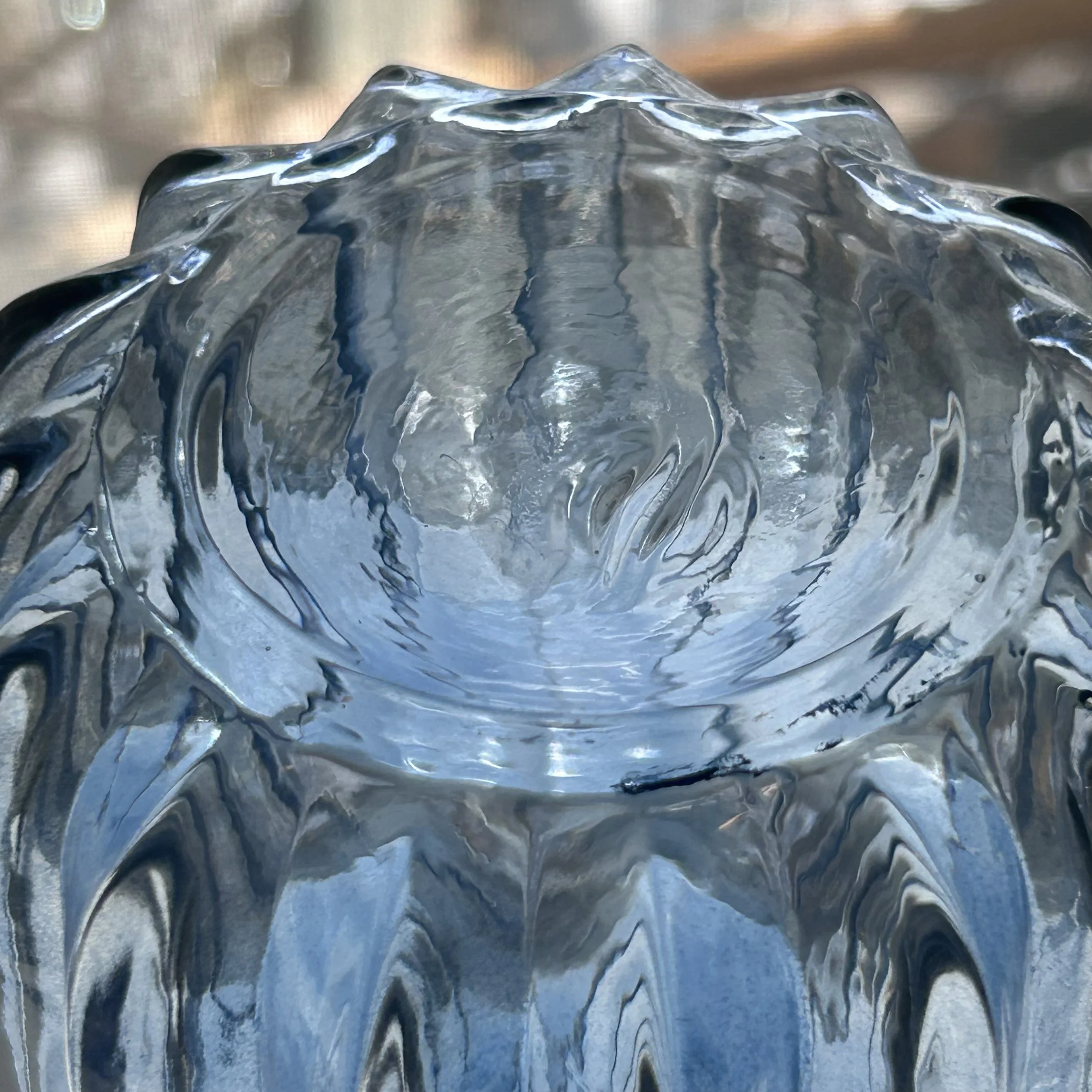
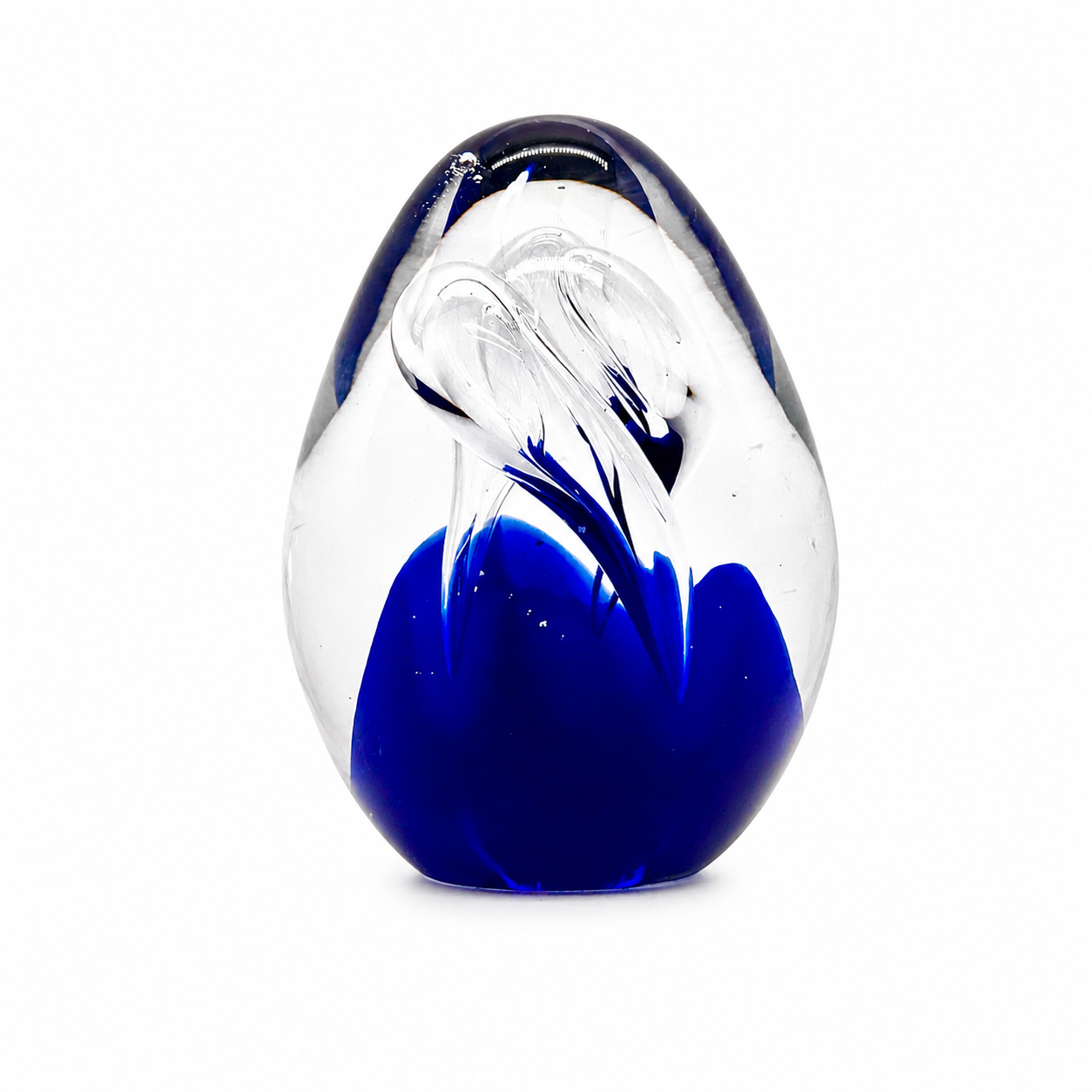
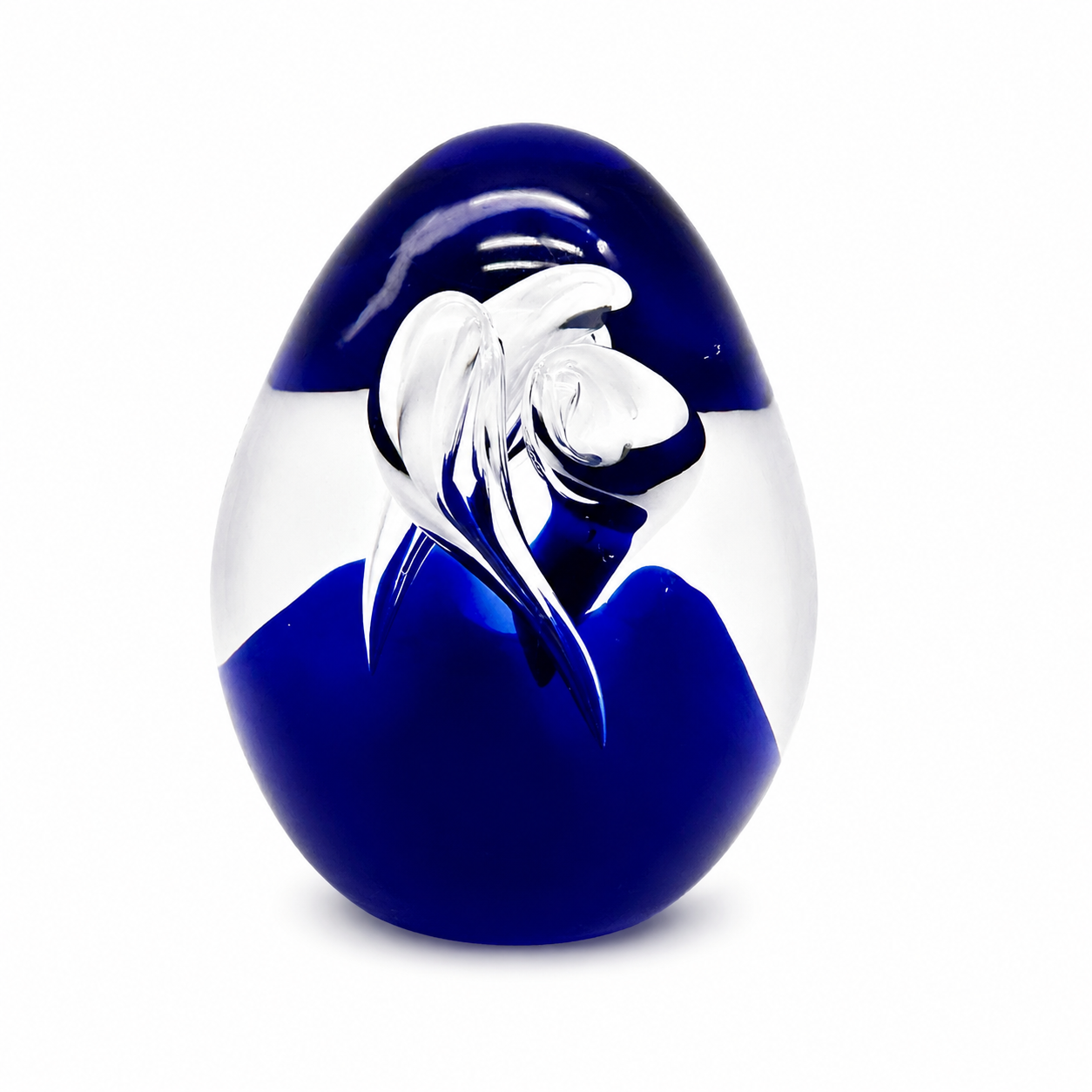
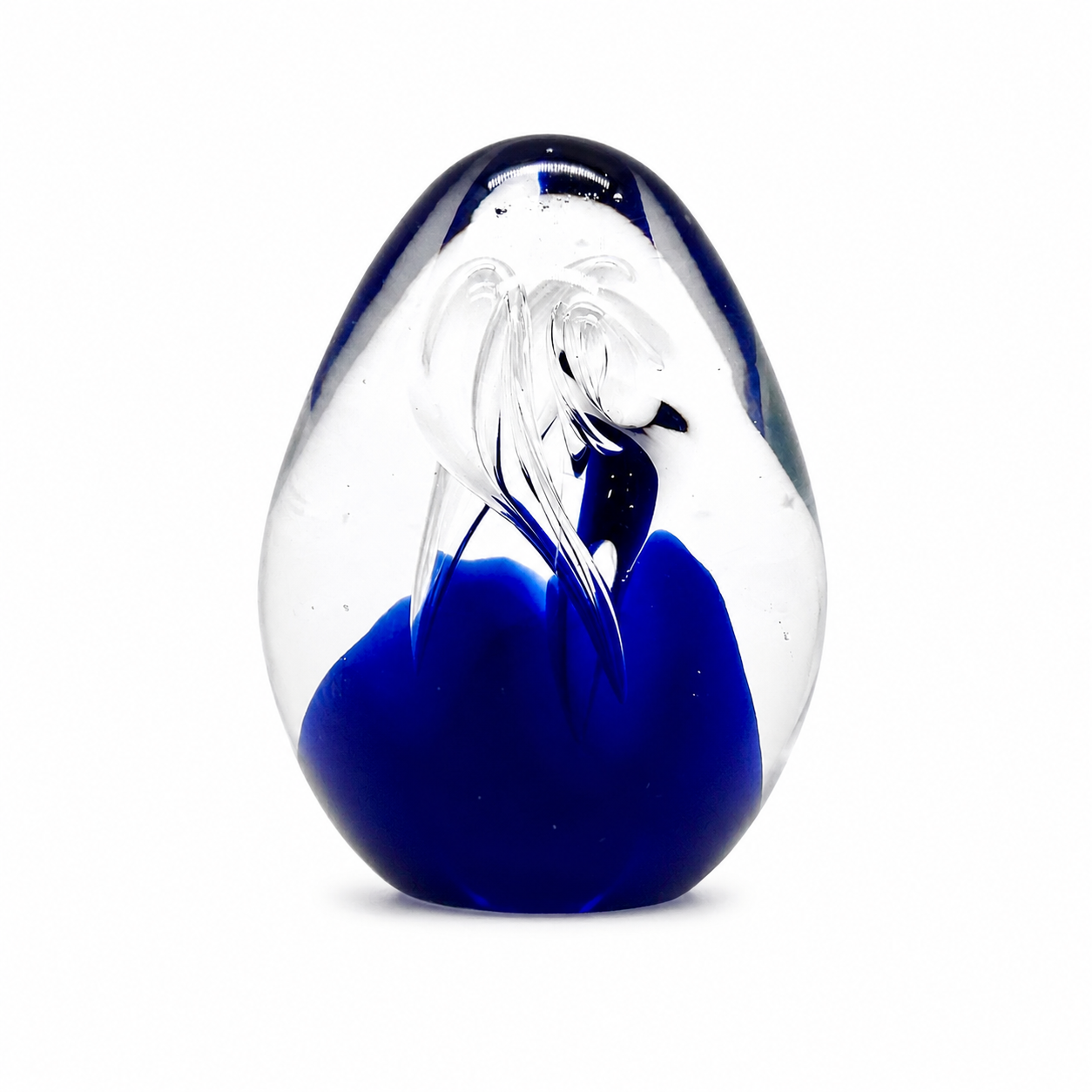
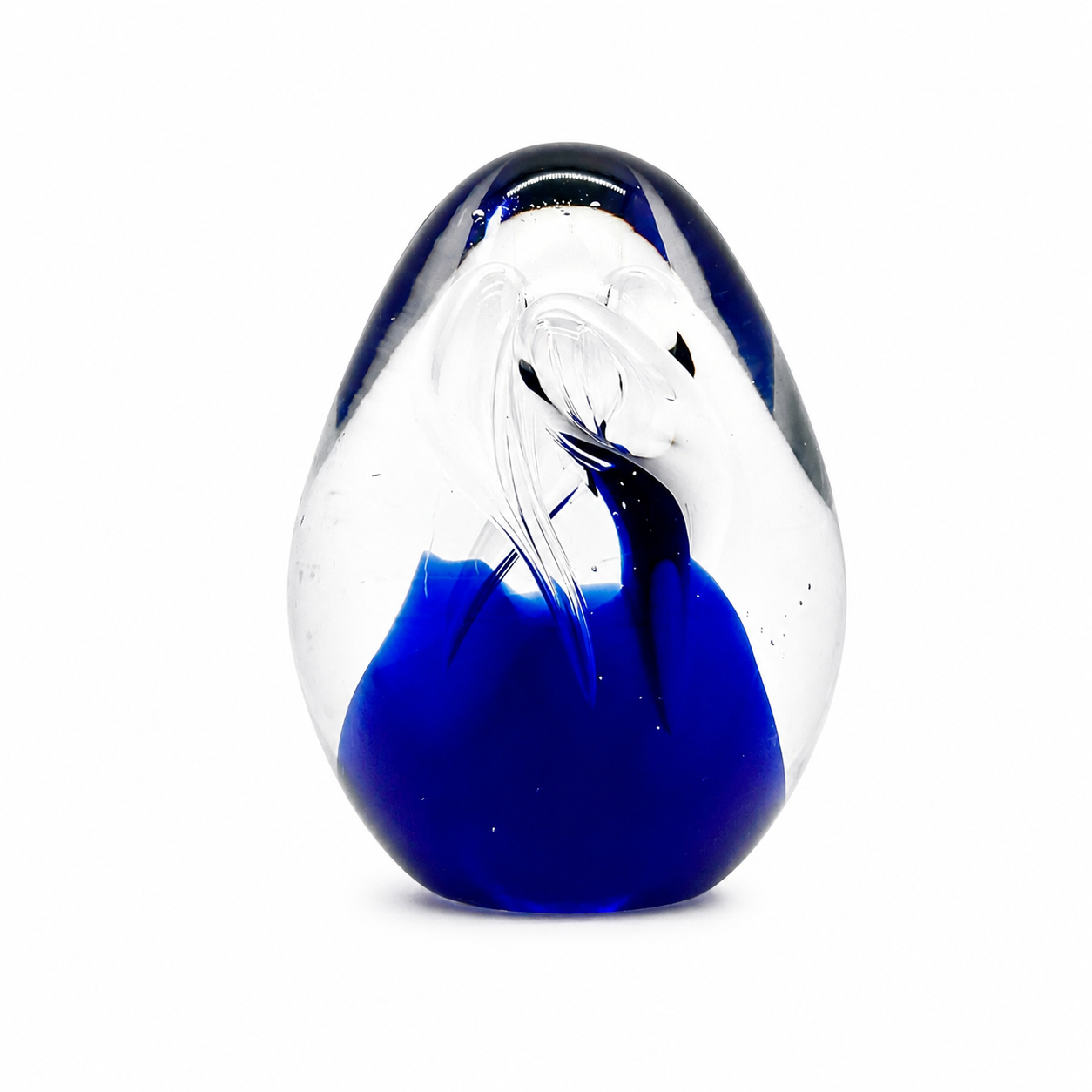
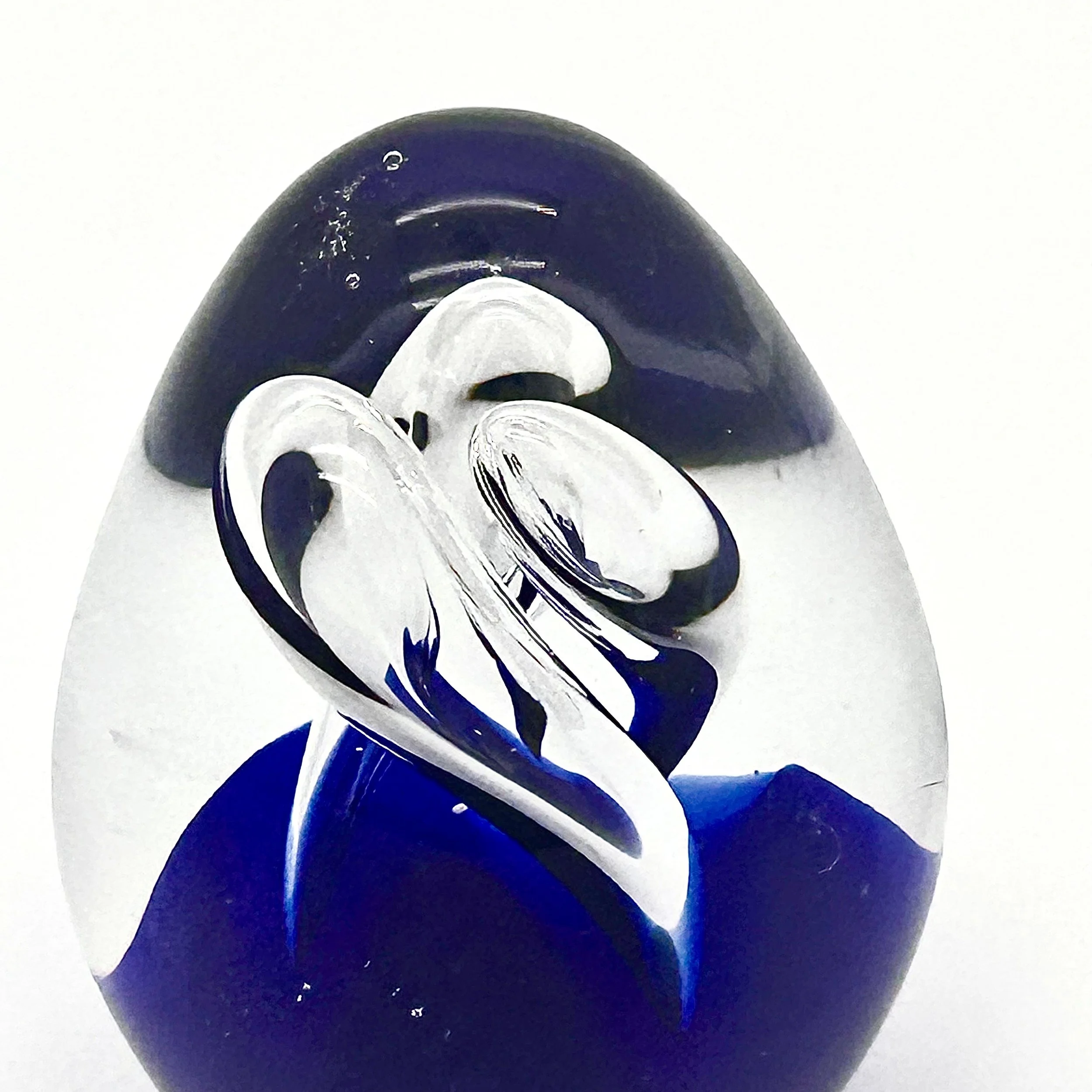
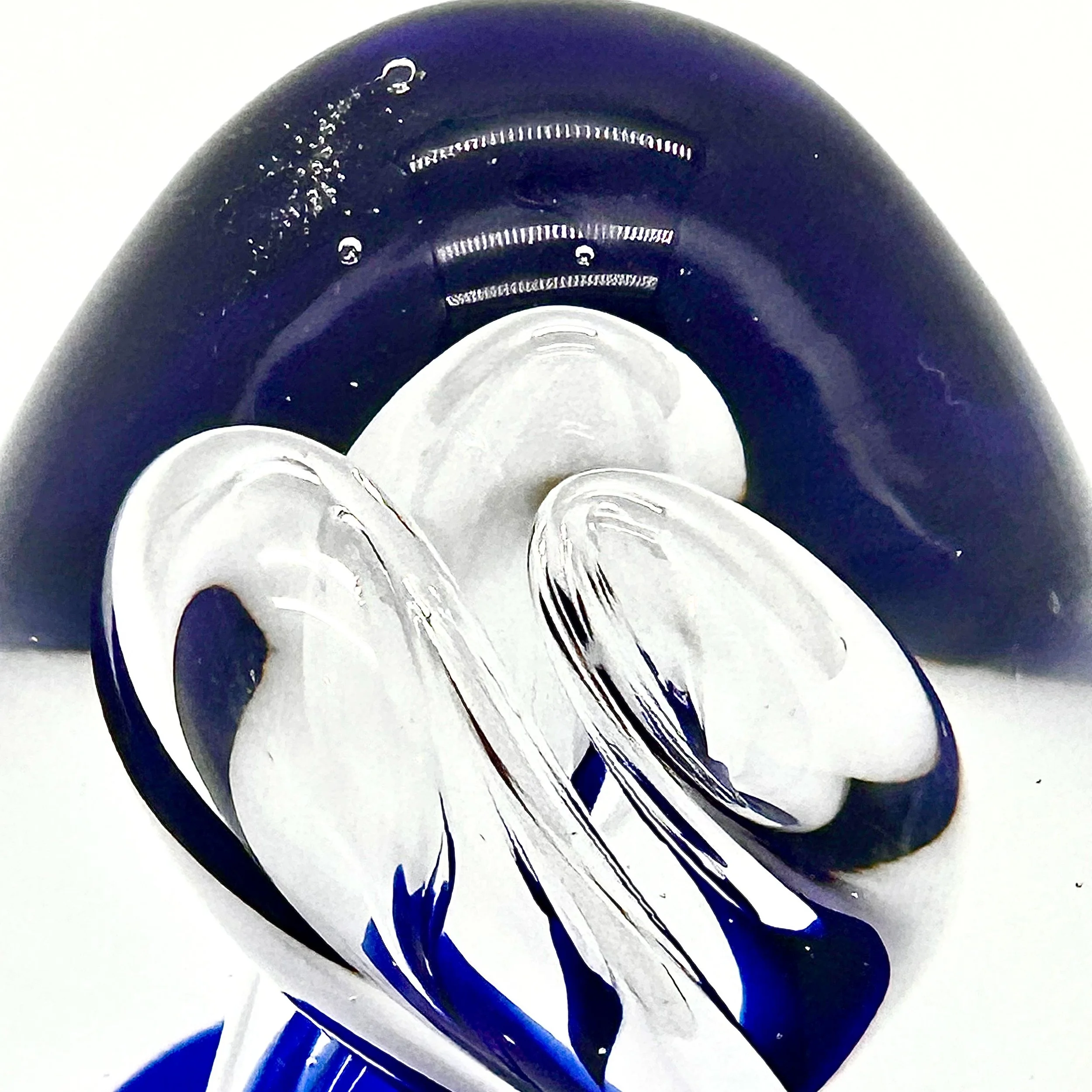
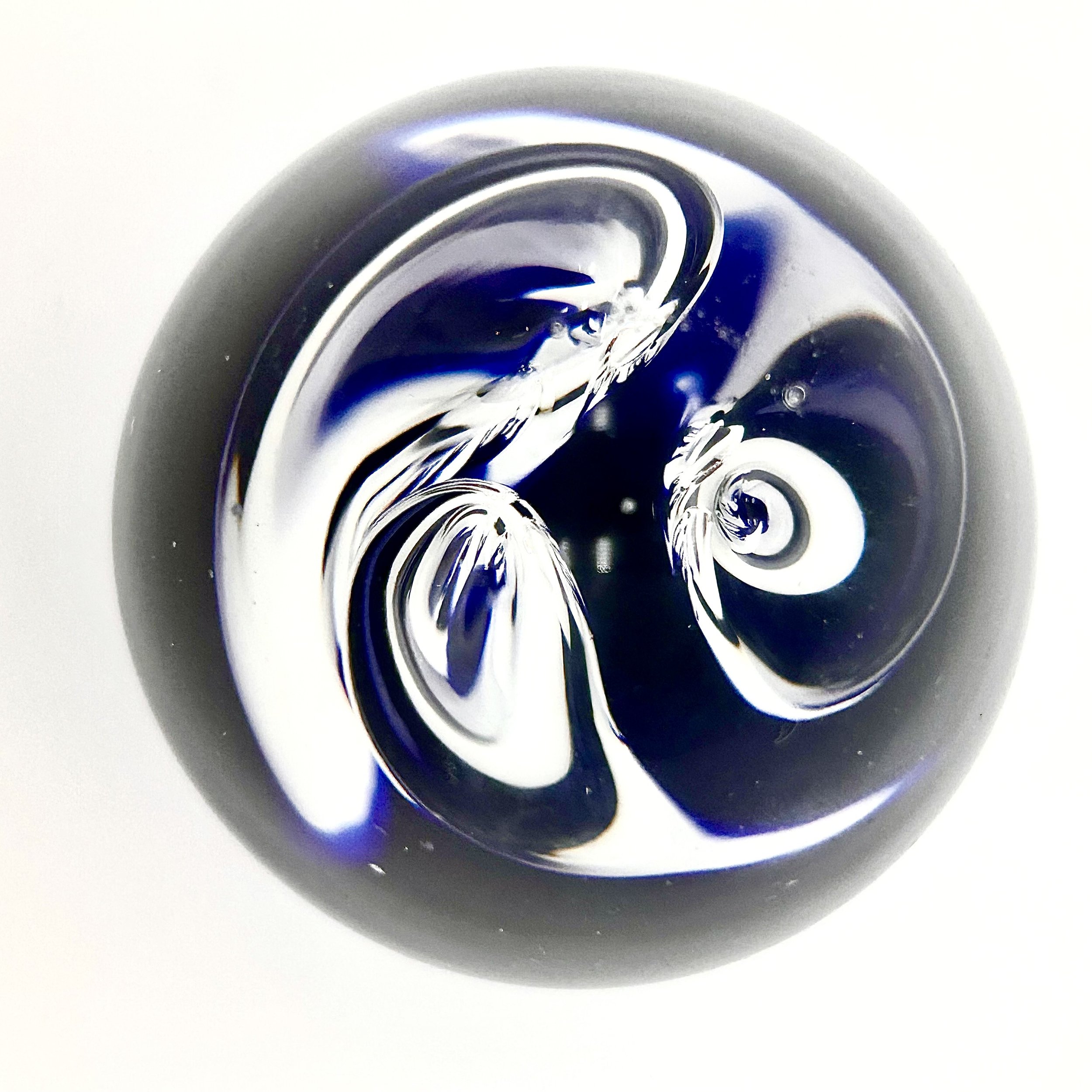
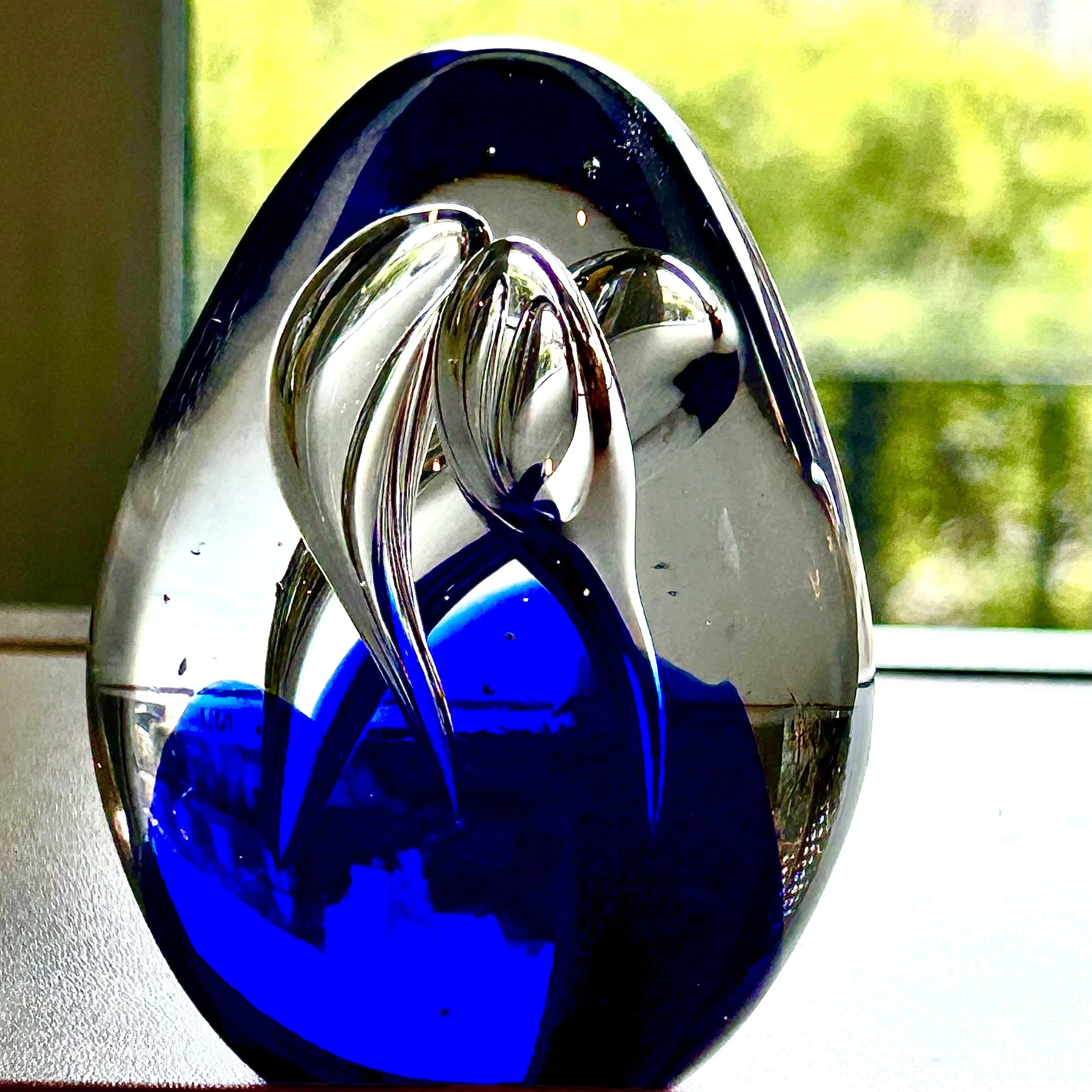
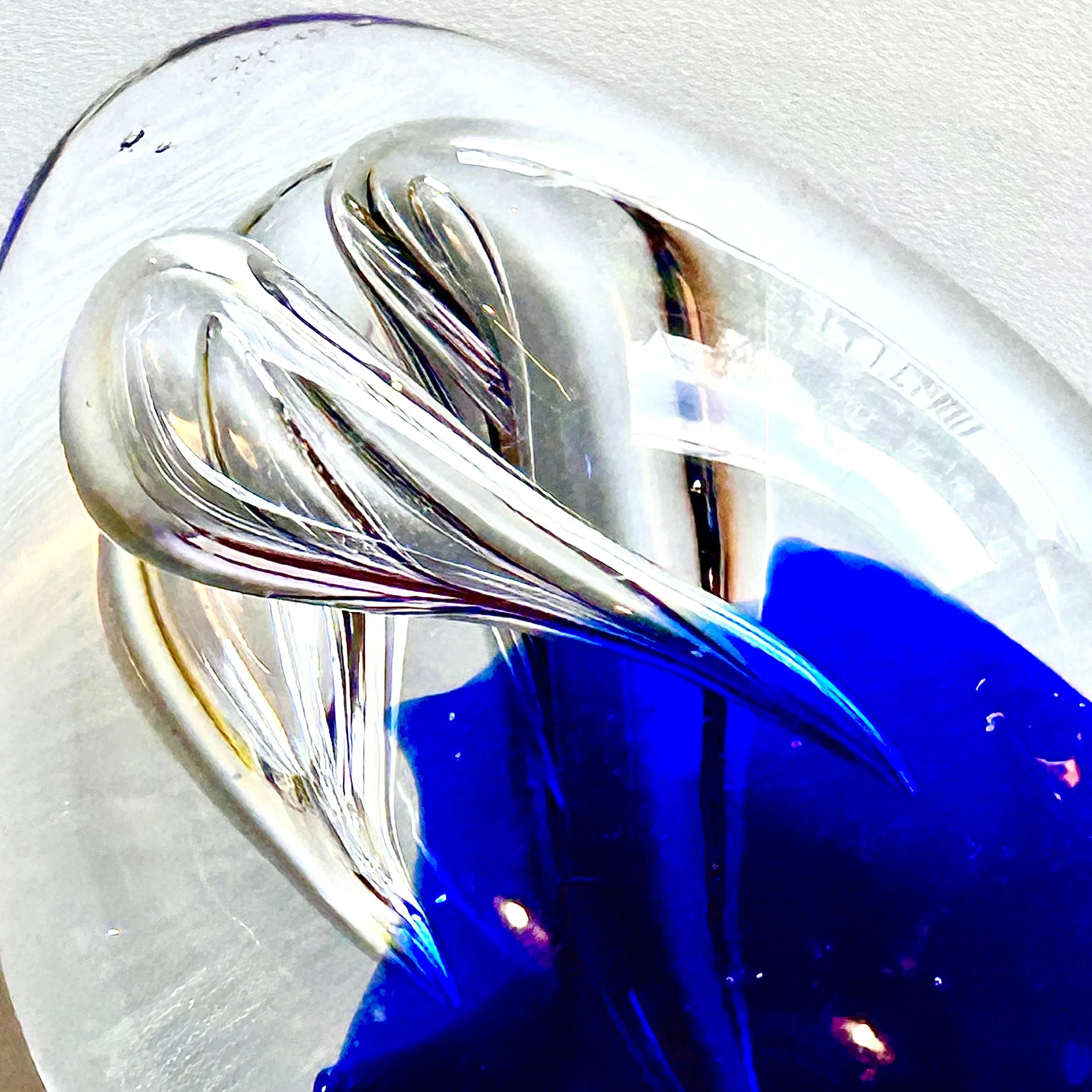
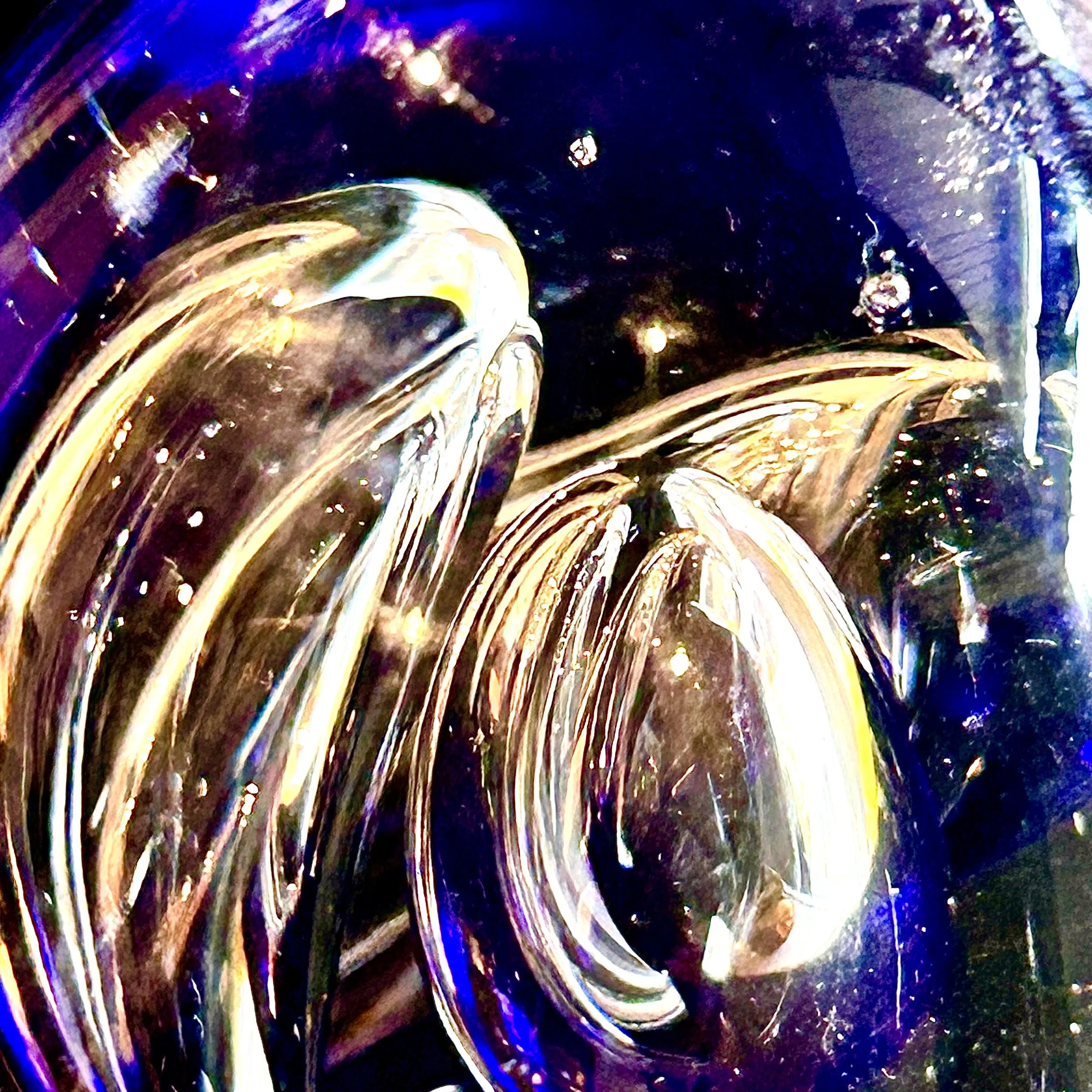
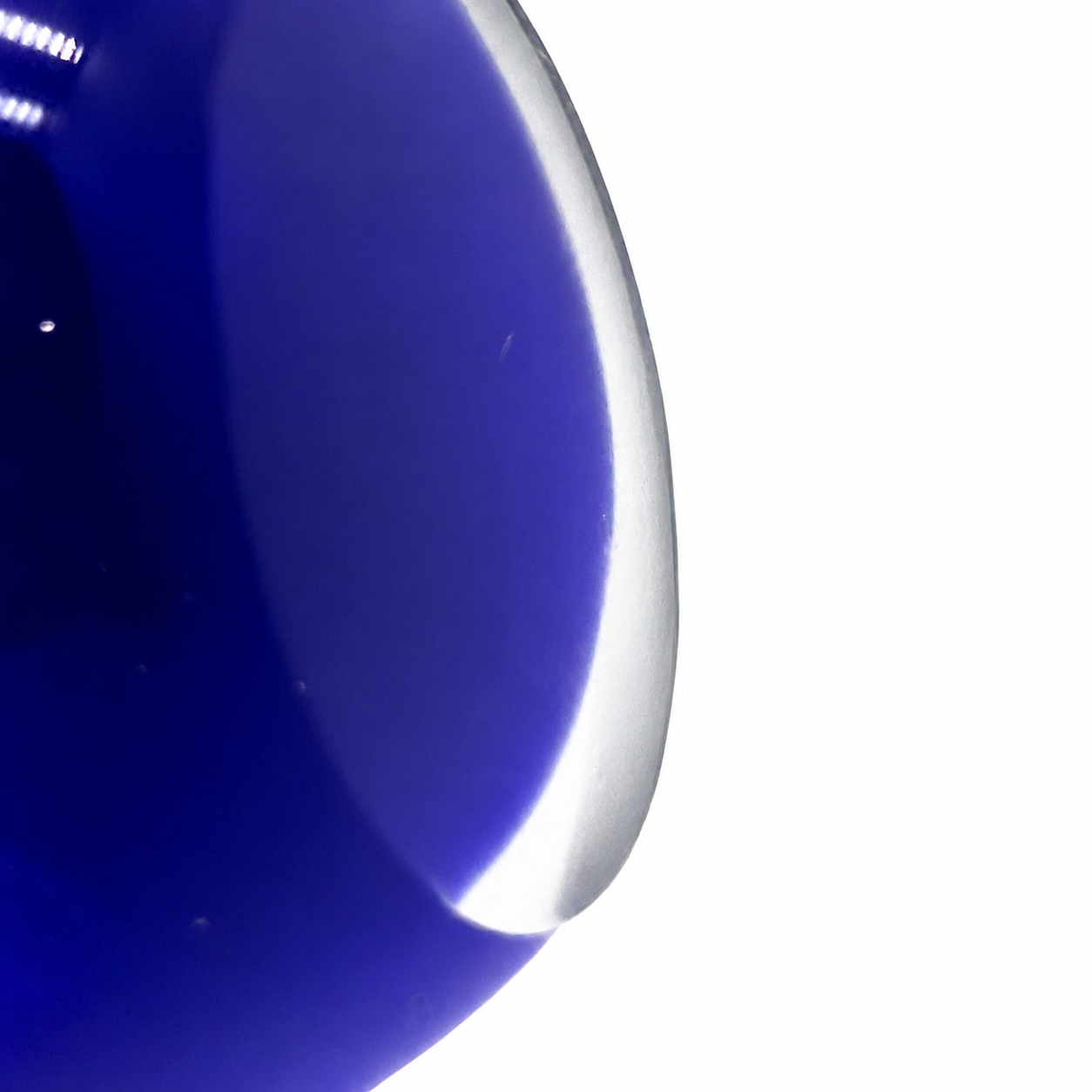
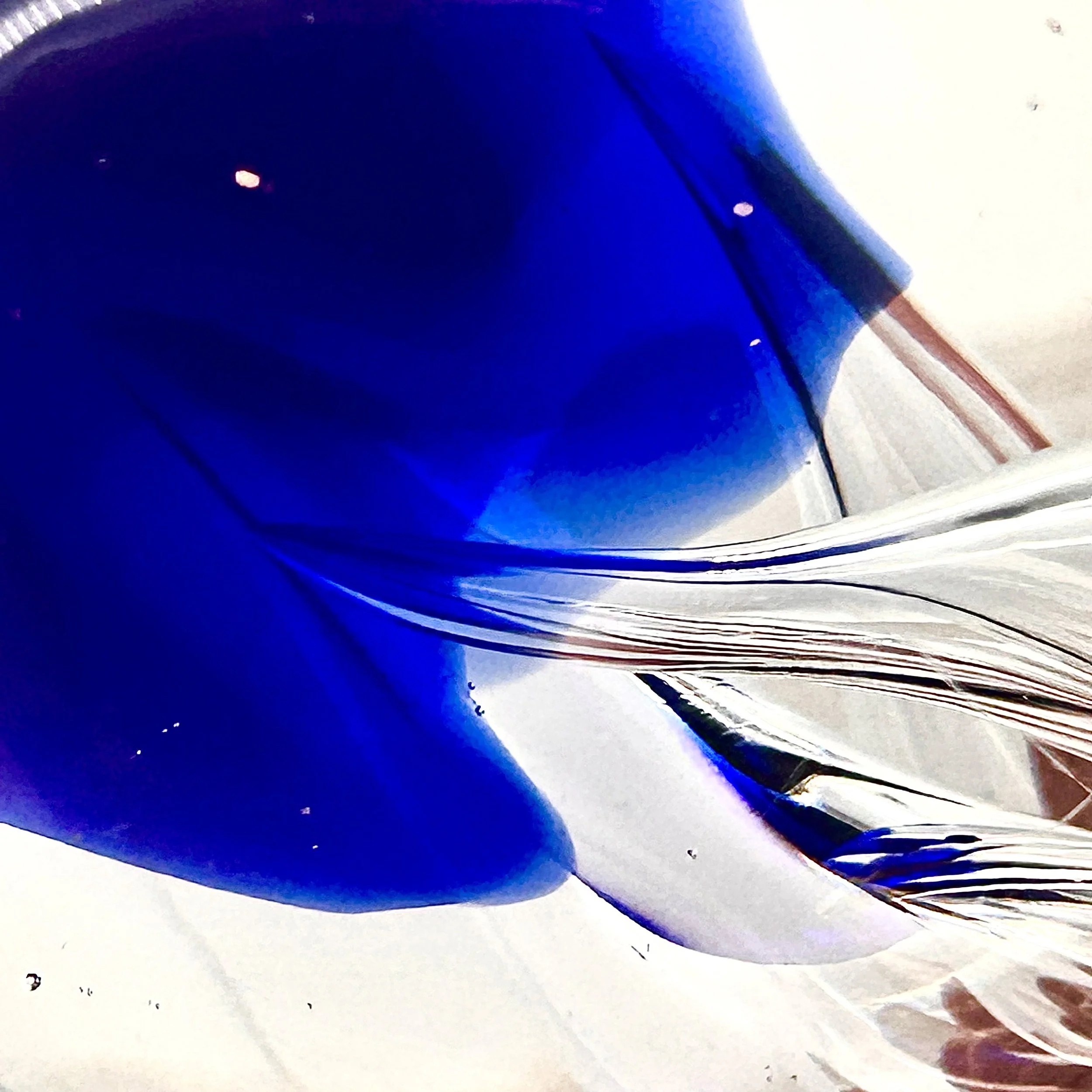
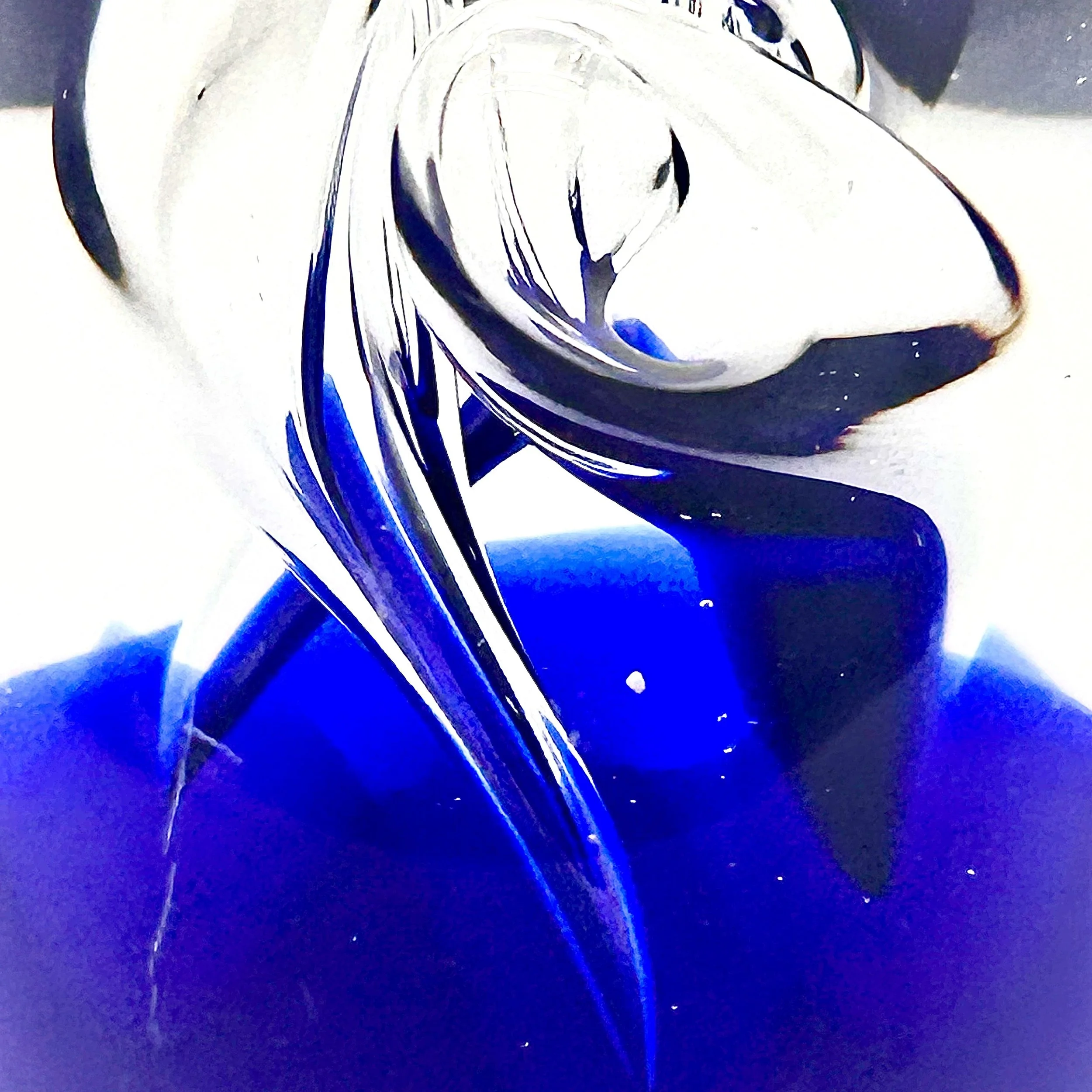
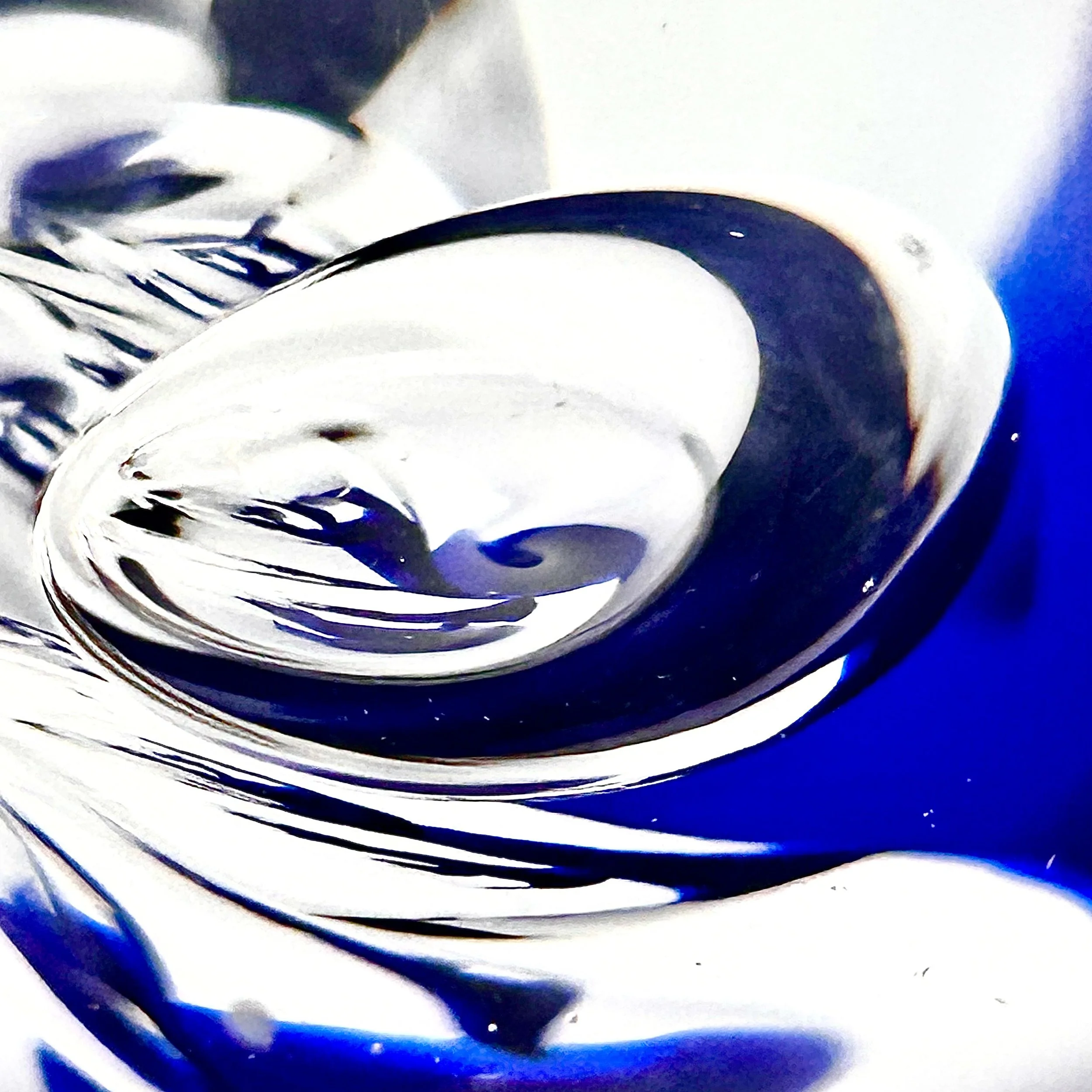
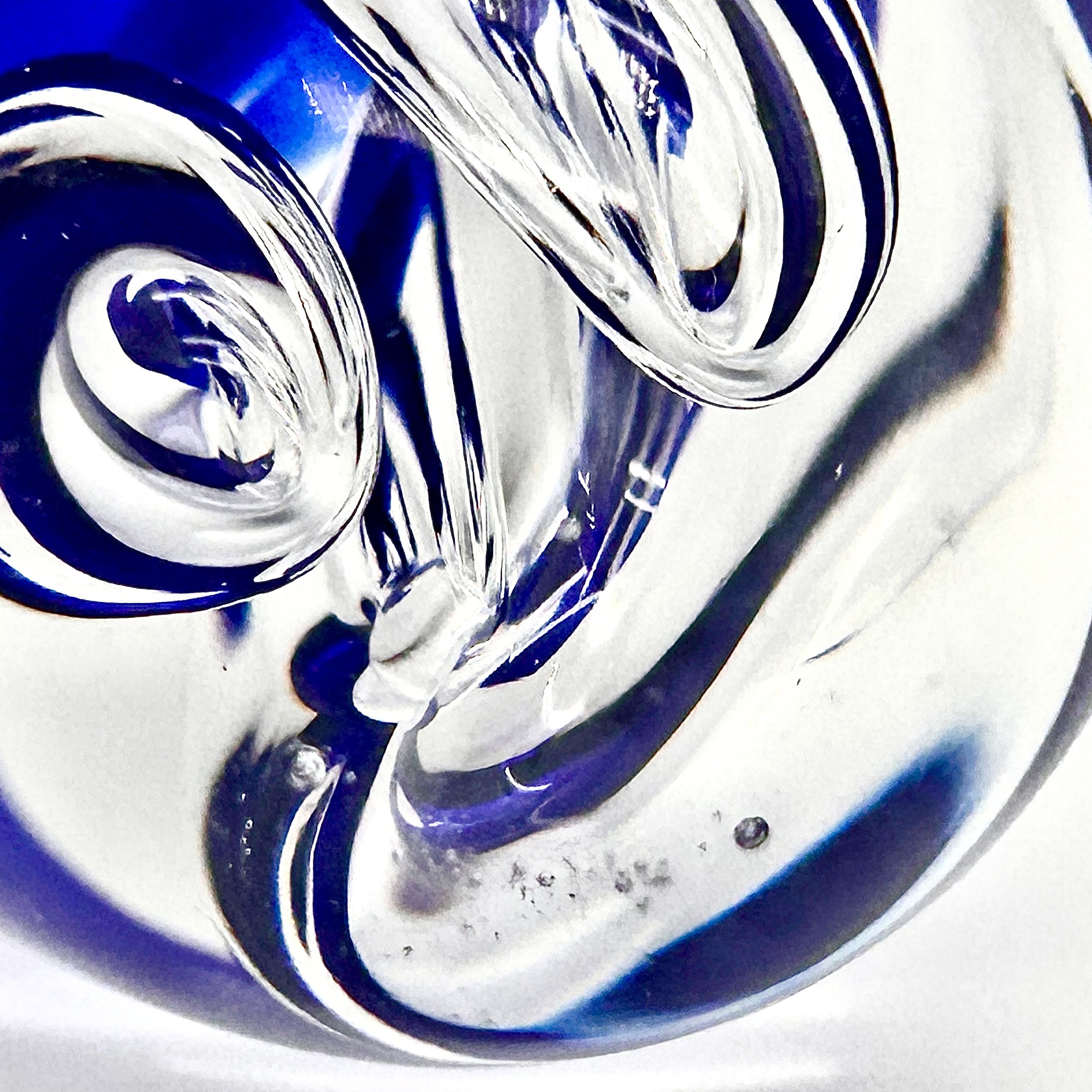
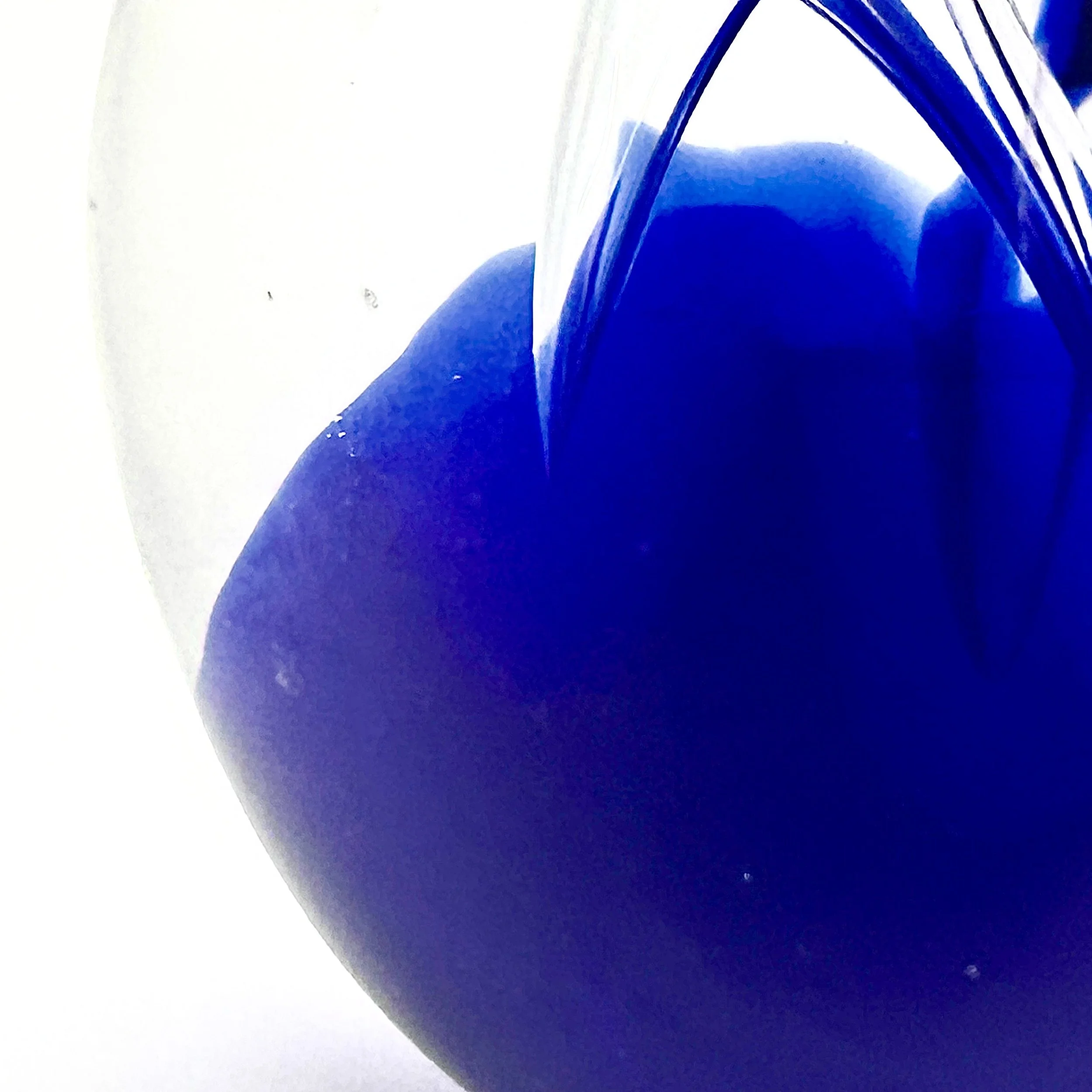
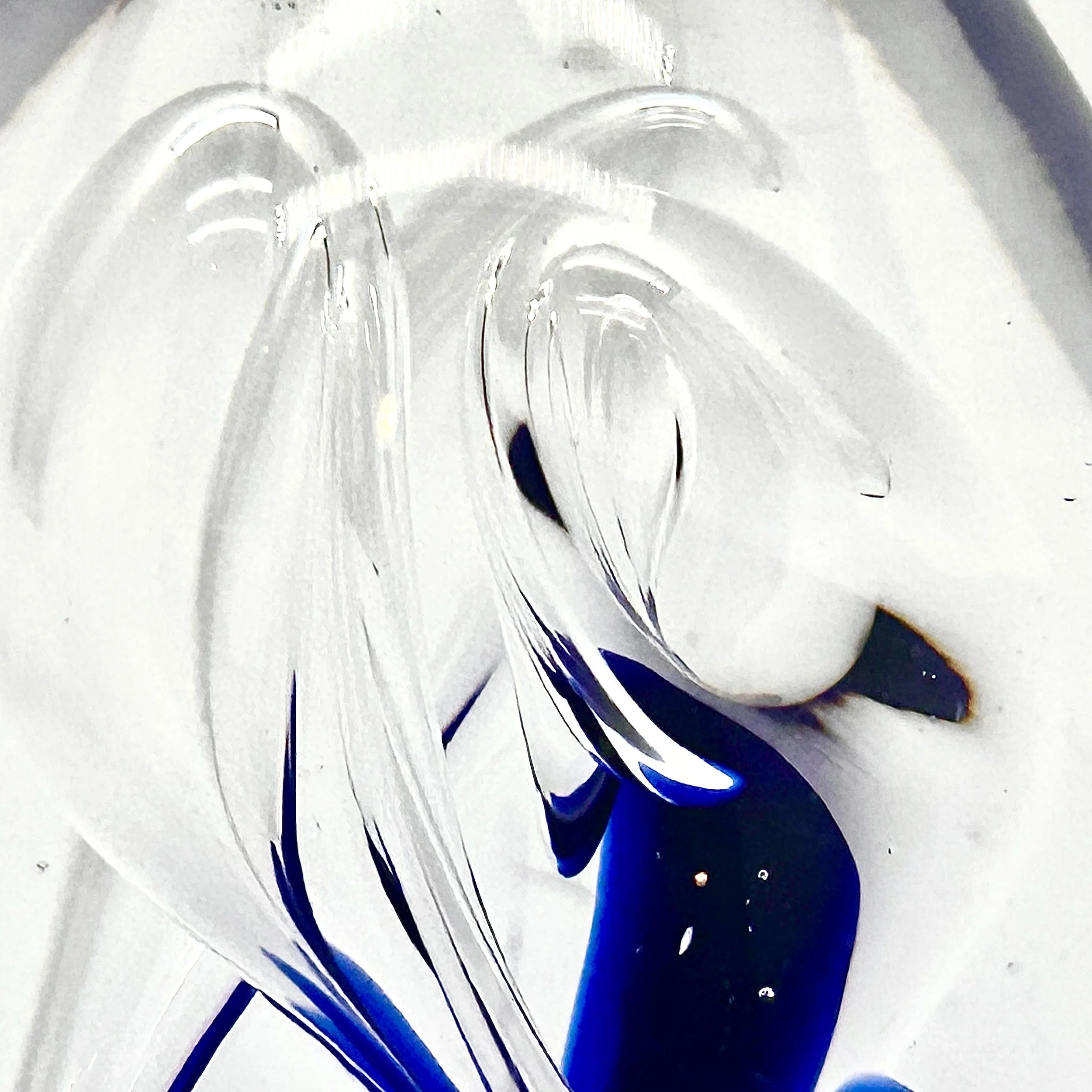
A luminous mid-century studio art glass vase featuring dramatic honey-amber coloration and a striking twisted optic pattern that animates the entire form. The body transitions from deep ruby amber at the base to radiant golden honey tones toward the rim, producing a glowing effect when illuminated. The swirling internal pattern was created using an optic mold technique, where the molten glass is blown into a patterned mold and gently twisted during formation. This process produces the fluid, flame-like movement visible throughout the vessel and gives the glass exceptional visual depth.
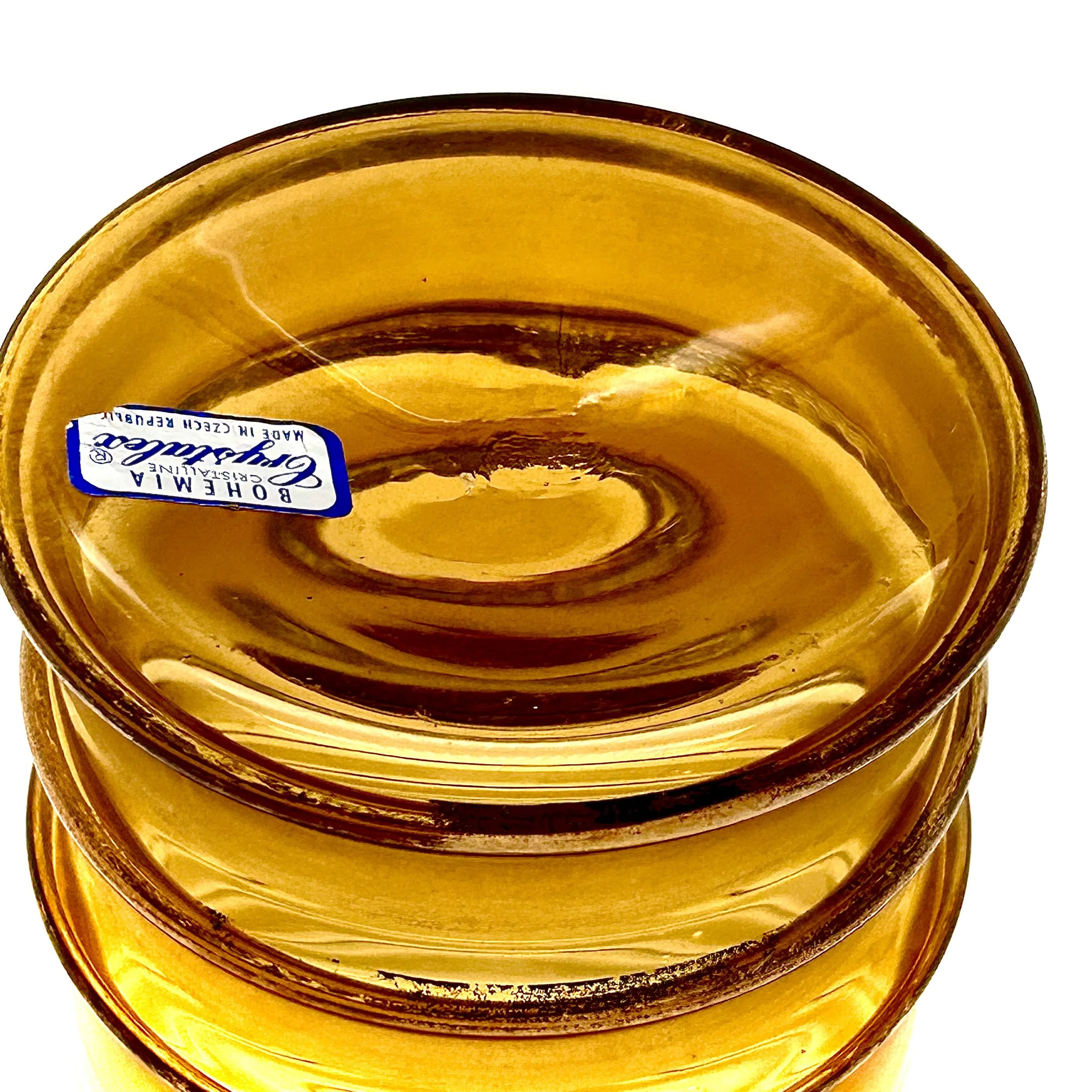
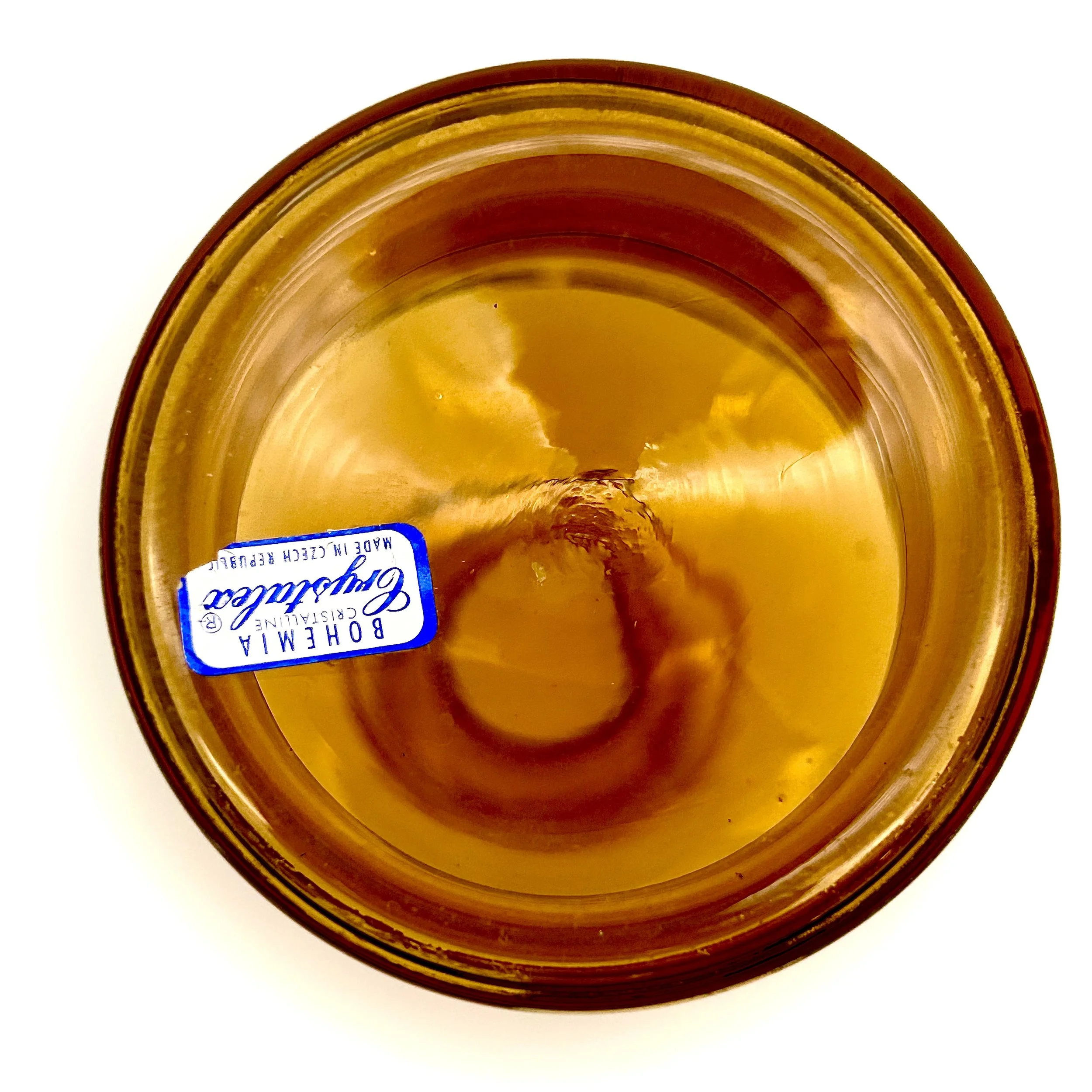
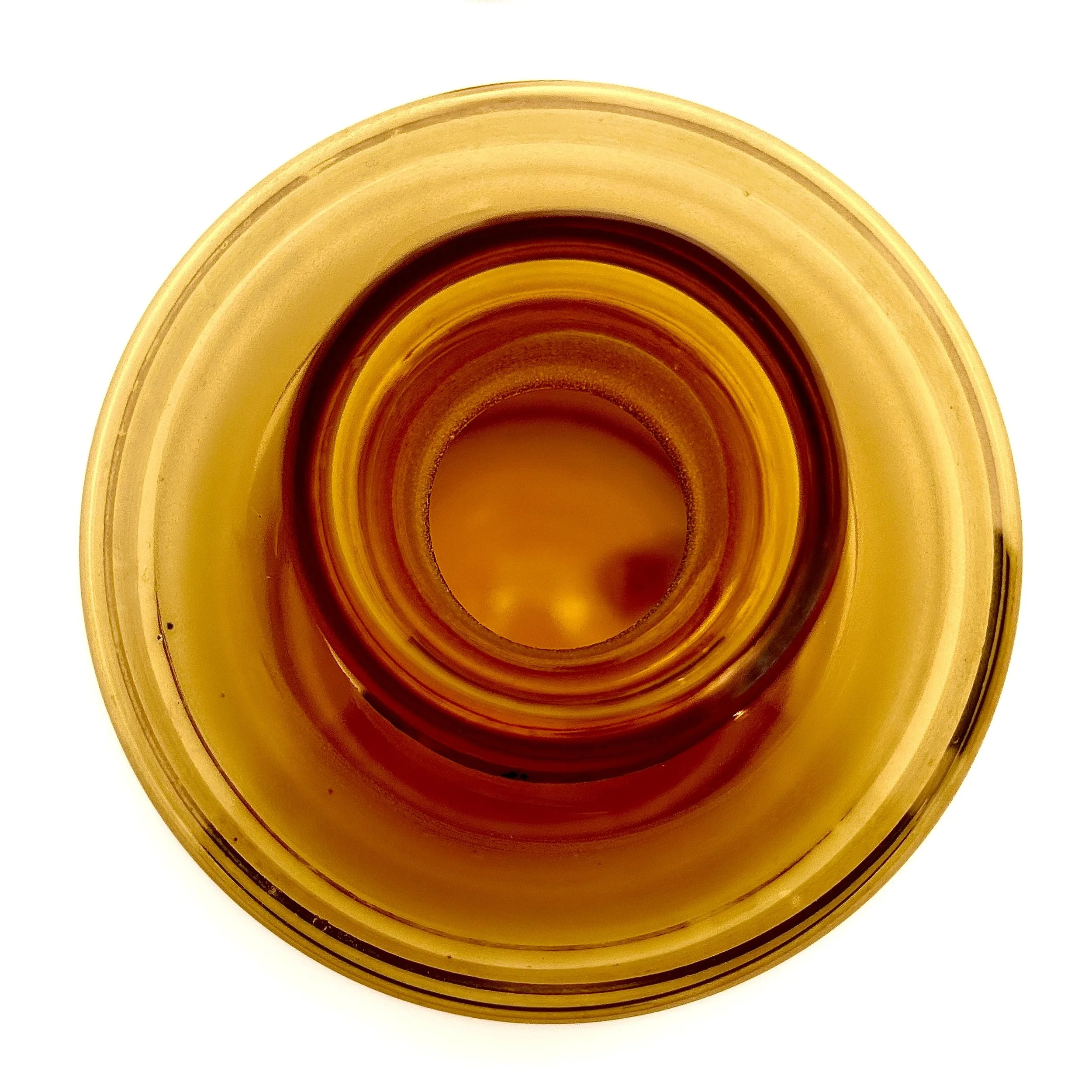
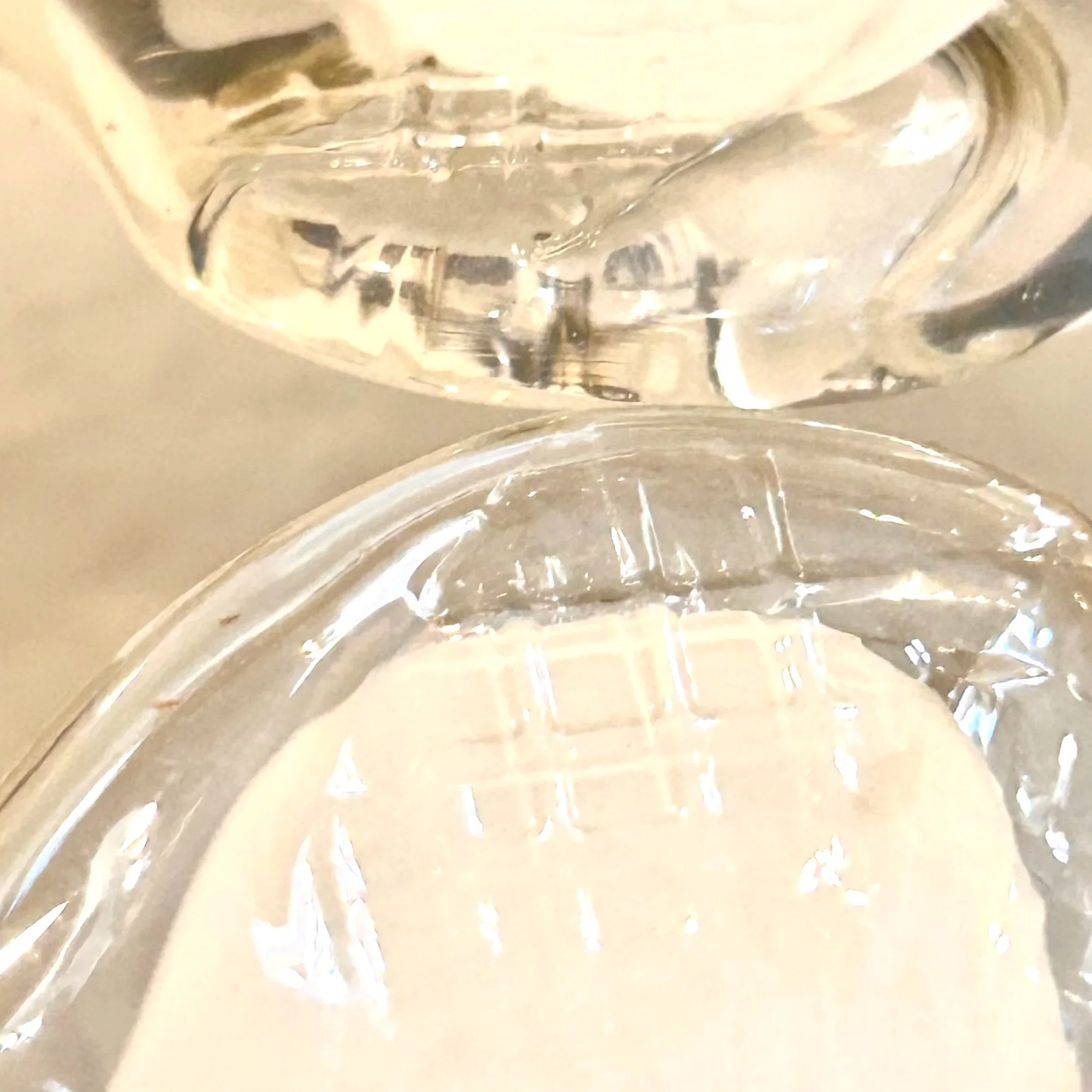
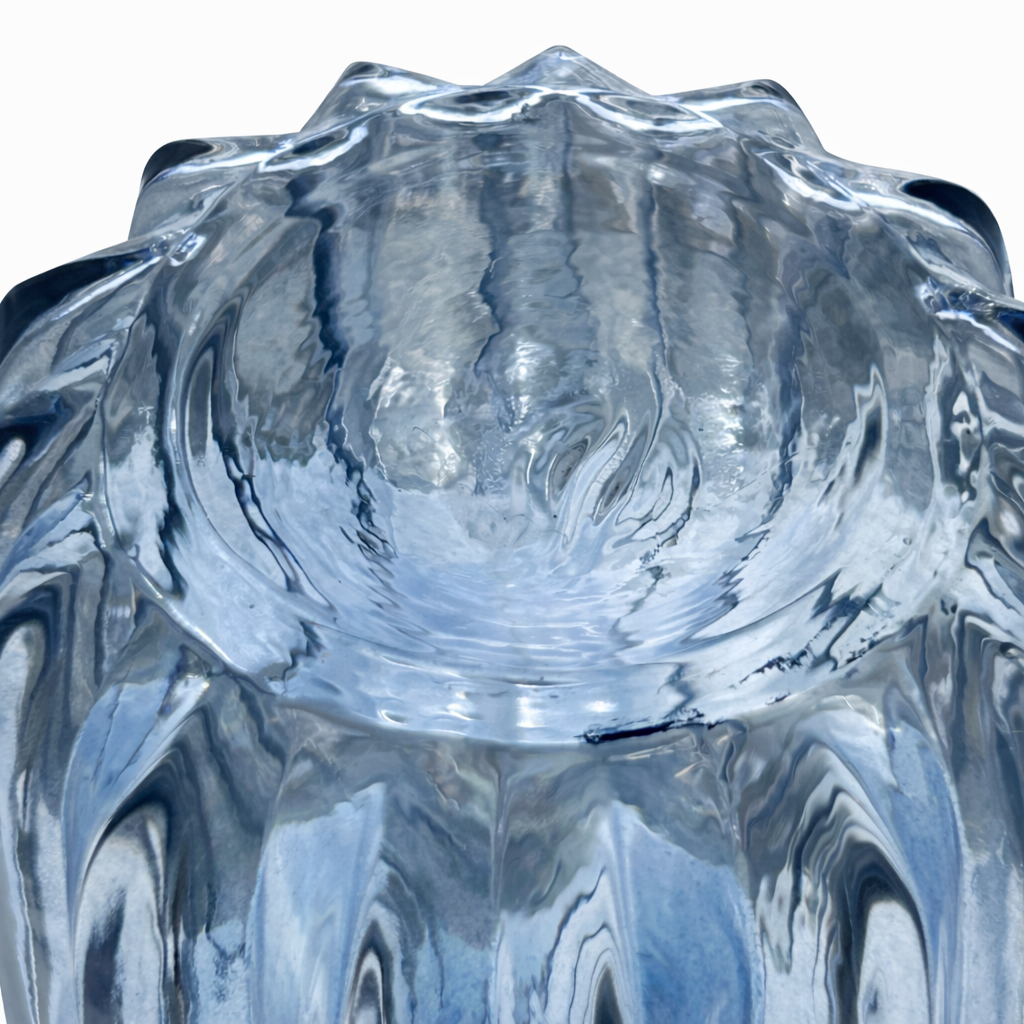
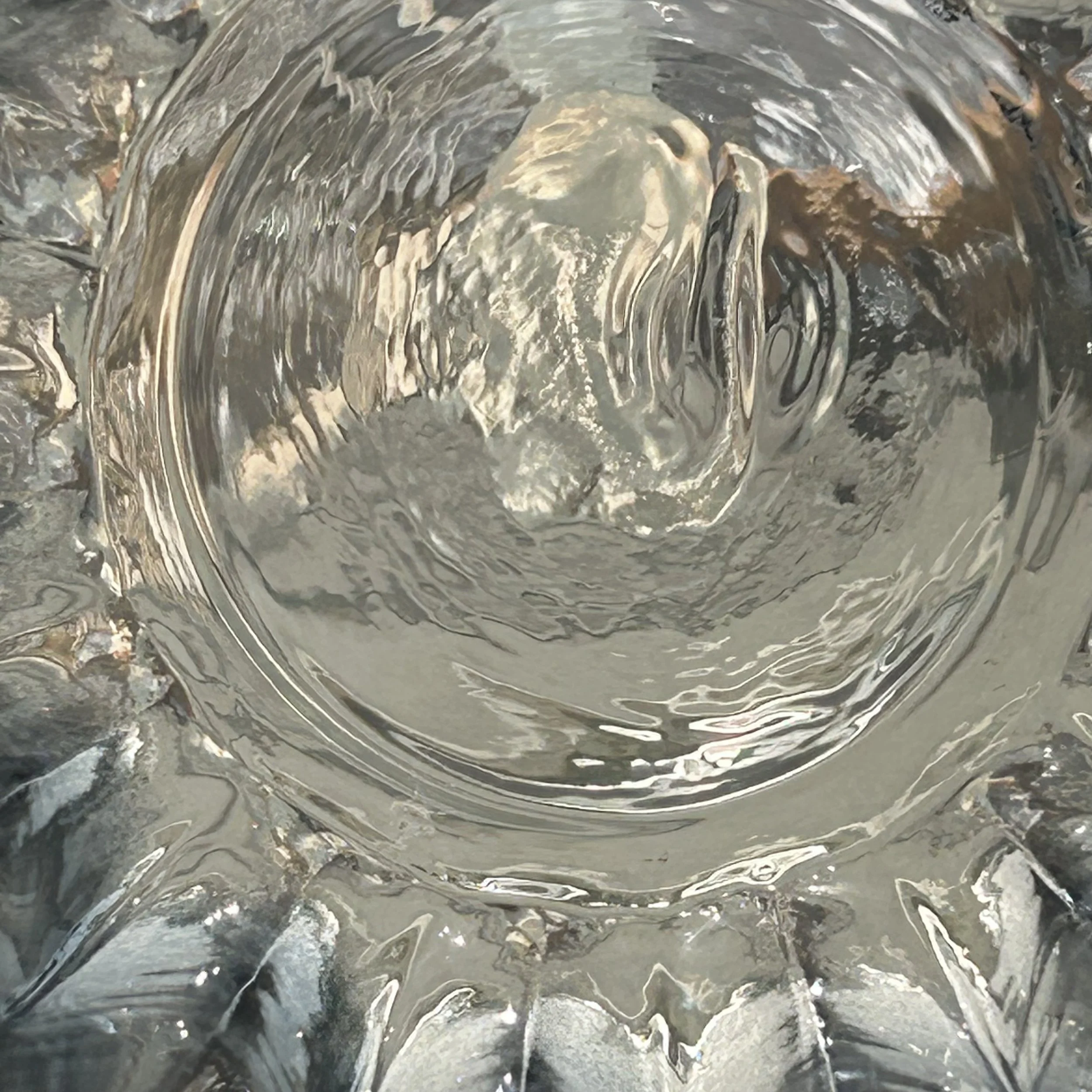
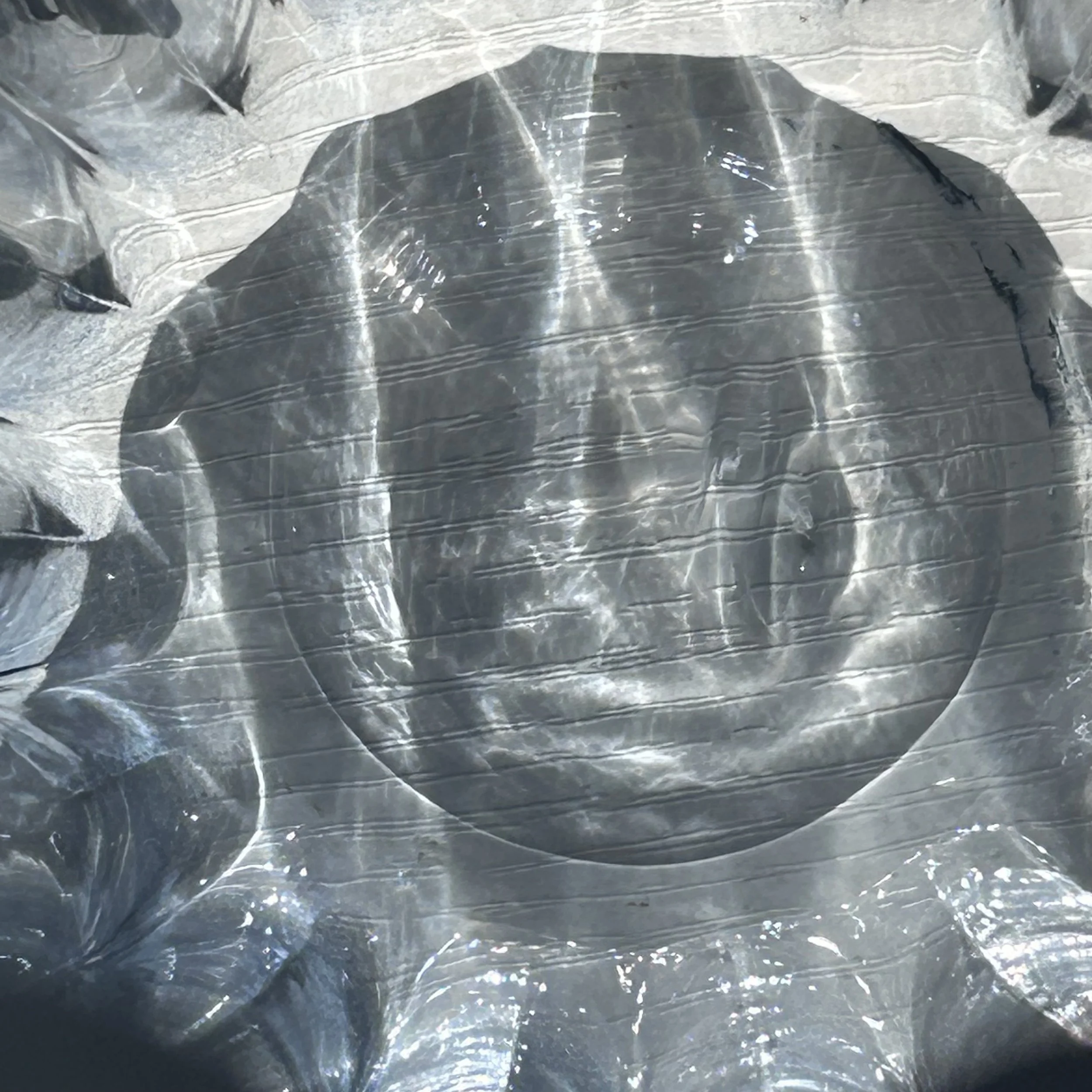
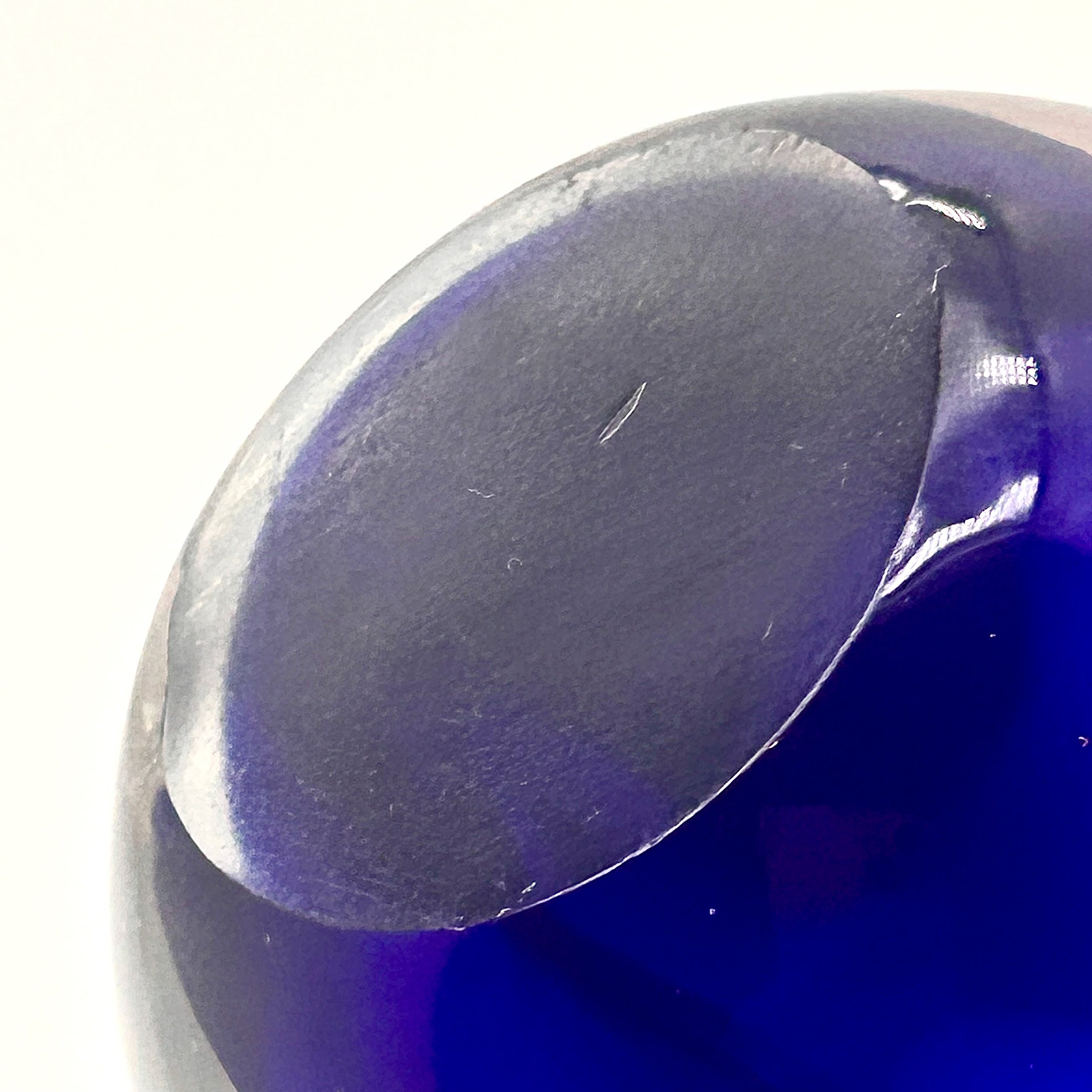
The vase’s cylindrical silhouette is balanced by the dynamic spiral pattern, making it both architectural and sculptural. When displayed with light behind or above it, the glass reveals rich tonal shifts from burnt amber to brilliant topaz. This style of optic swirl glass became highly popular during the mid-century studio glass movement of the late 1960s and early 1970s, particularly among Scandinavian and Italian glass studios exploring bold color and dynamic form inspired by Venetian techniques. The underside shows evidence of traditional hand-finished blown glass production, reinforcing its studio art glass character.
Attribution & Period
Studio Art Glass, Scandinavian-influenced production, Circa 1970, Unsigned
Dimensions
Height: 8.5 in
Mouth Diameter: 4 5/8 in
Condition
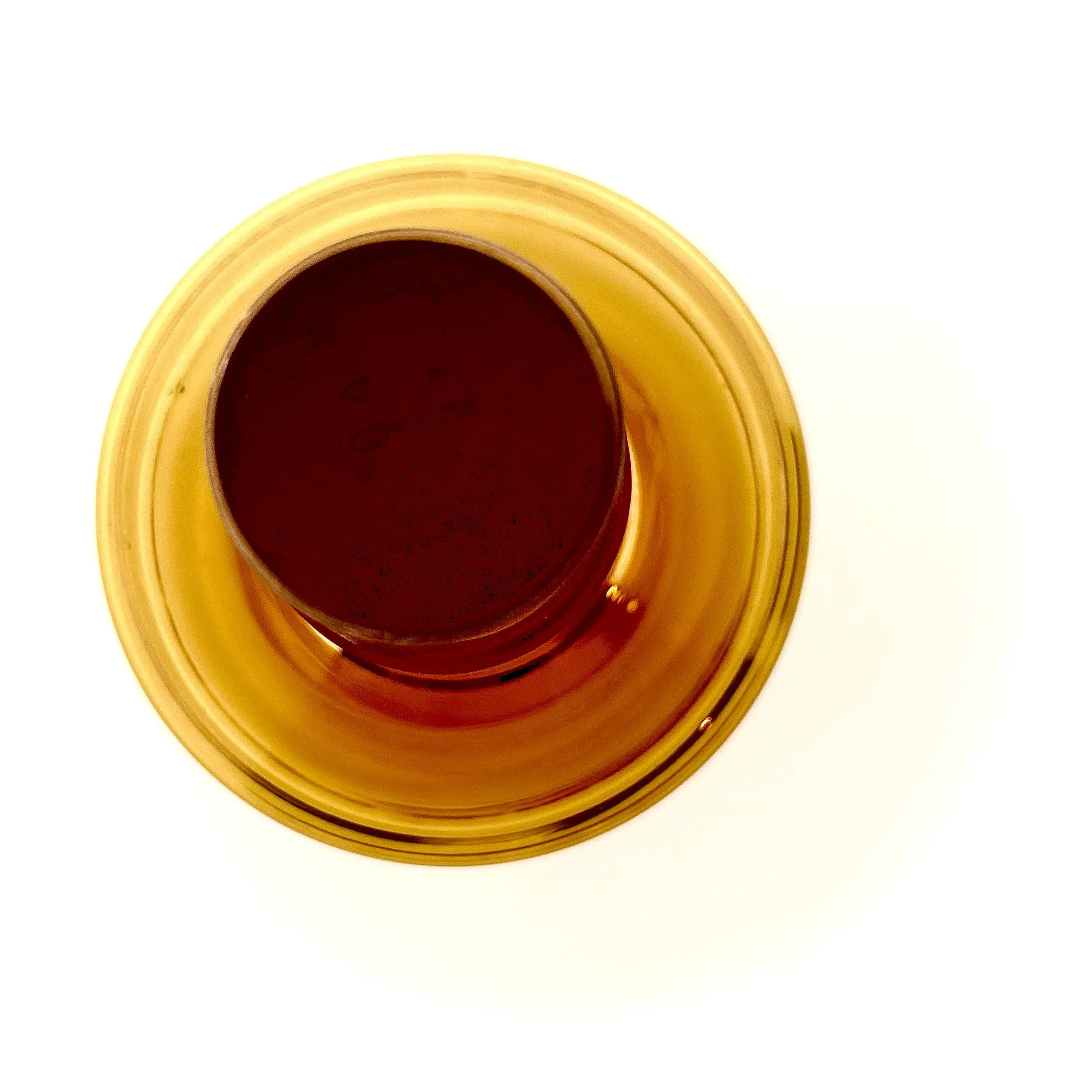
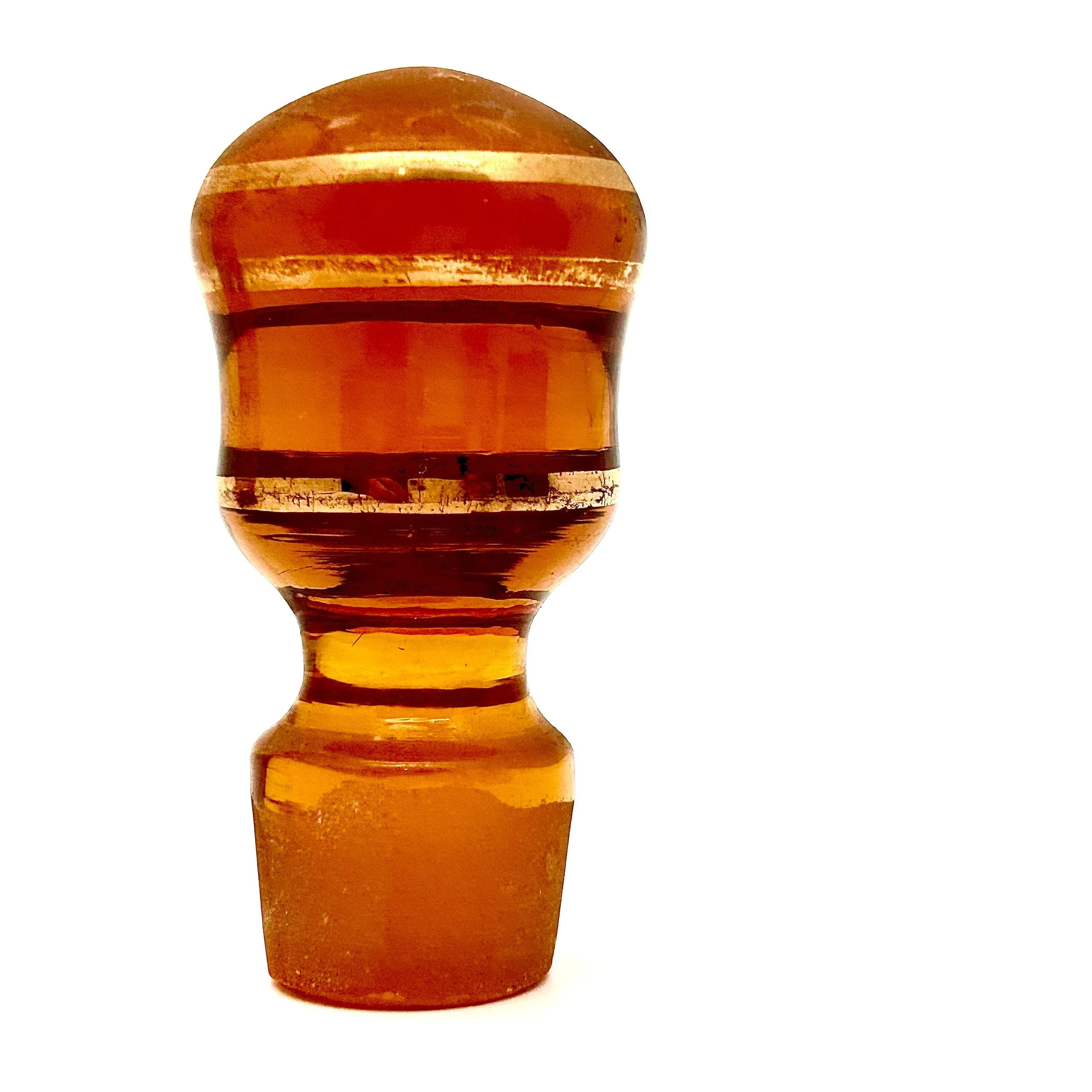
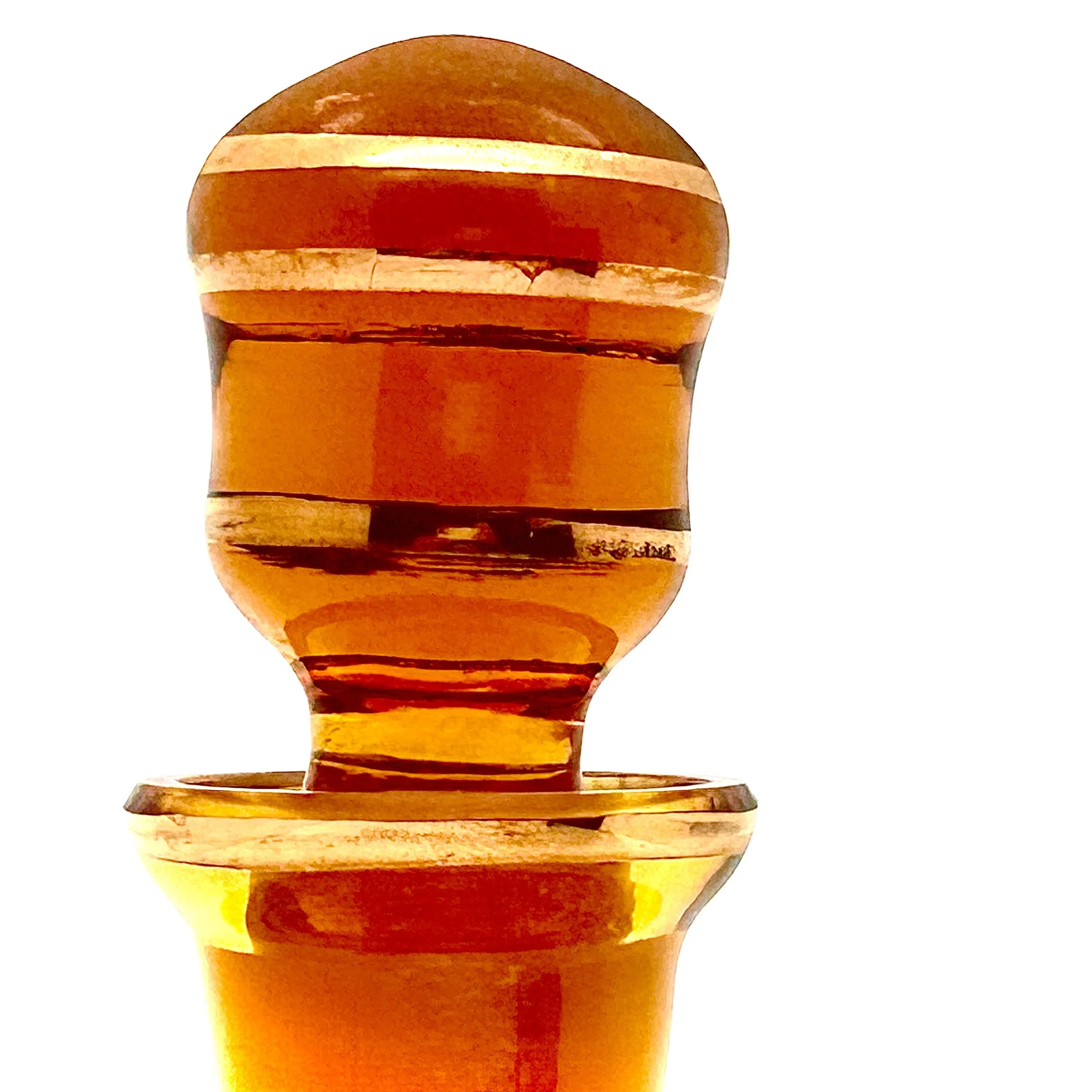
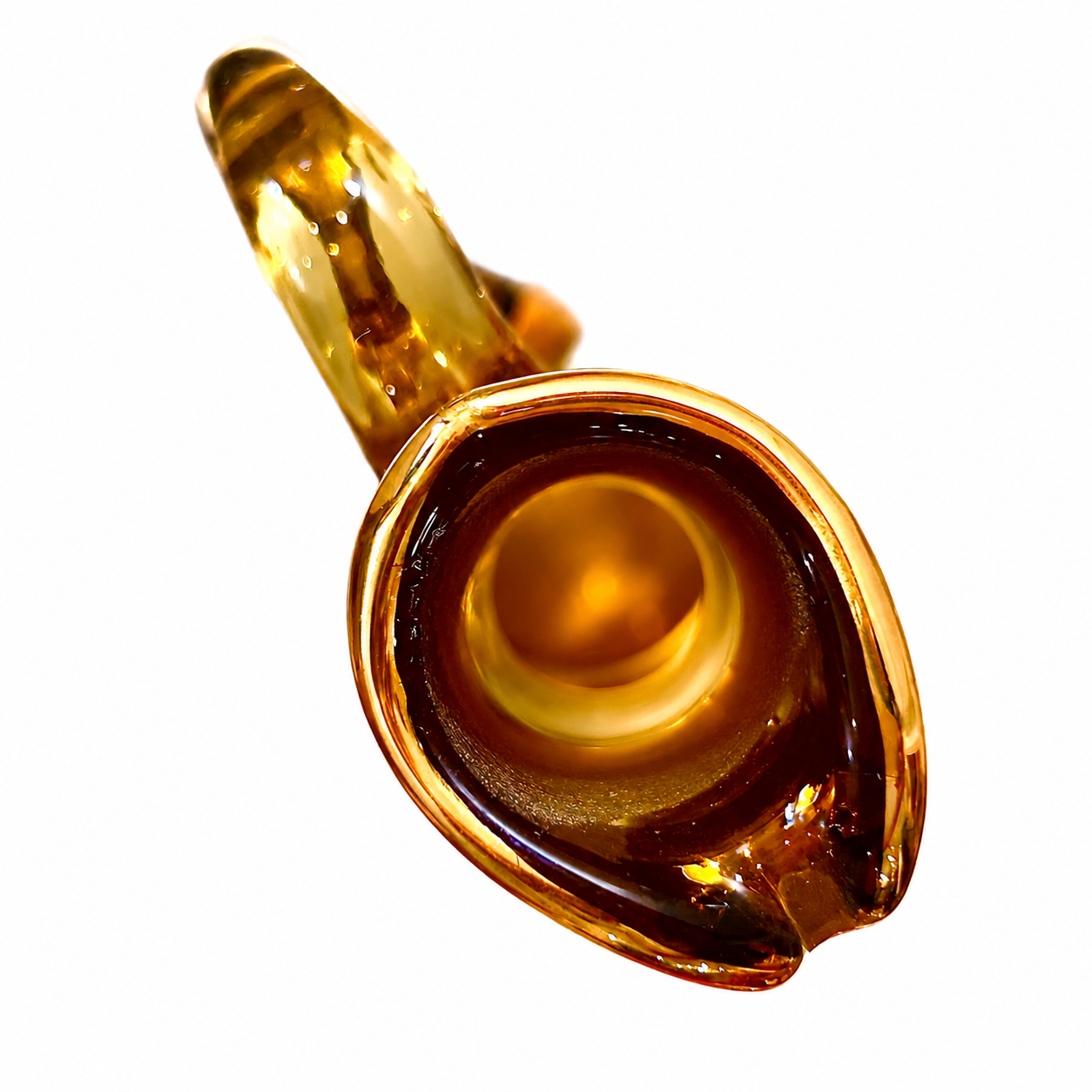
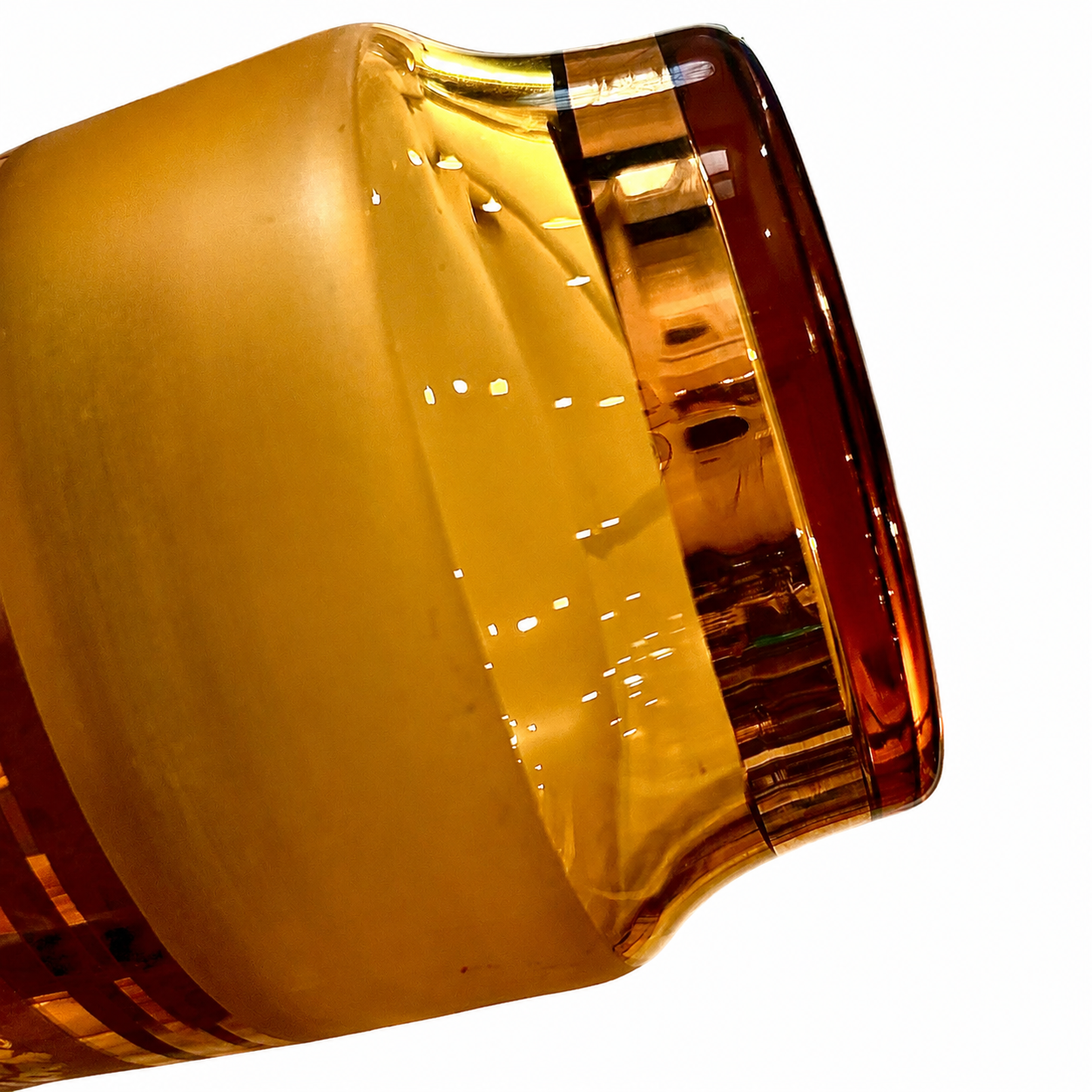
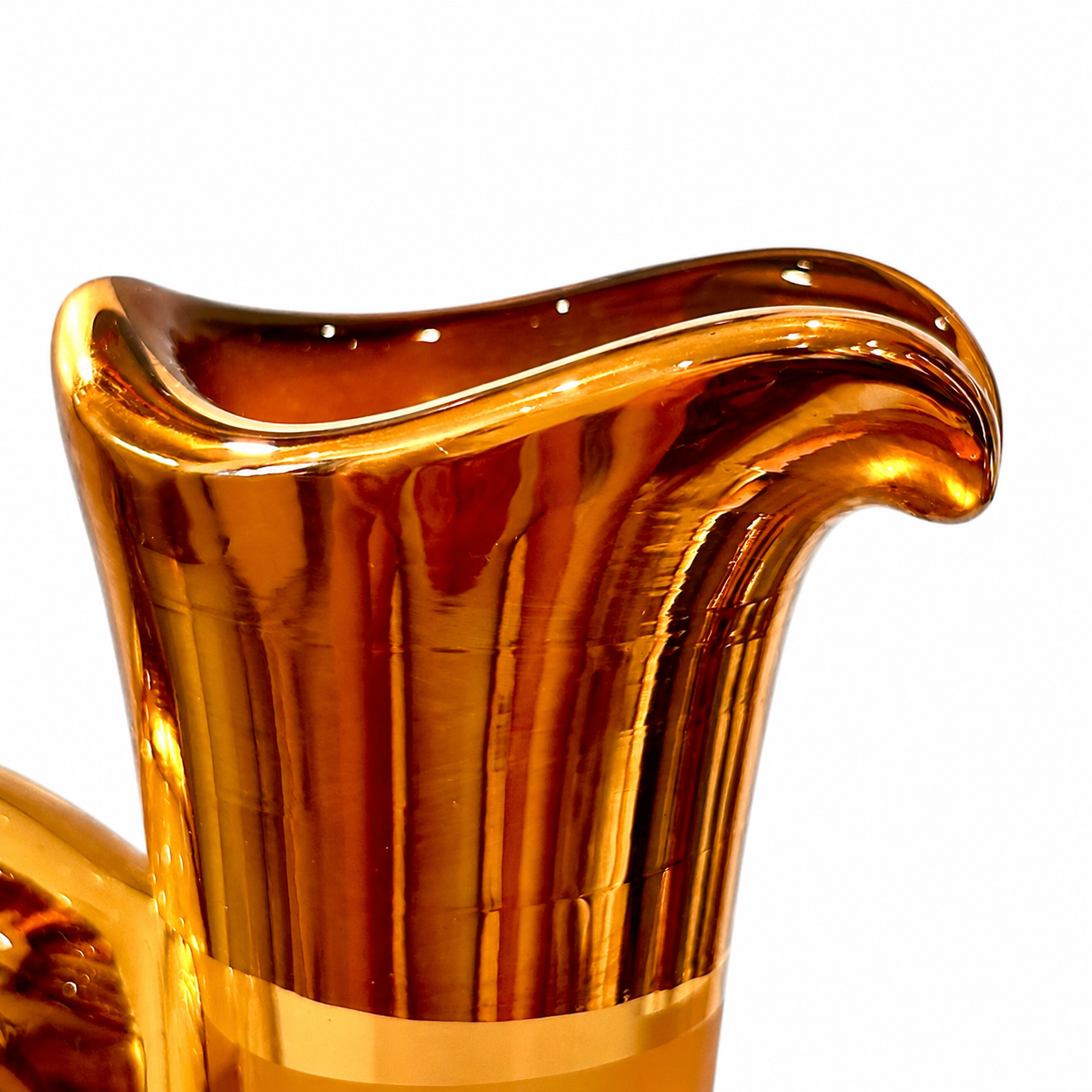
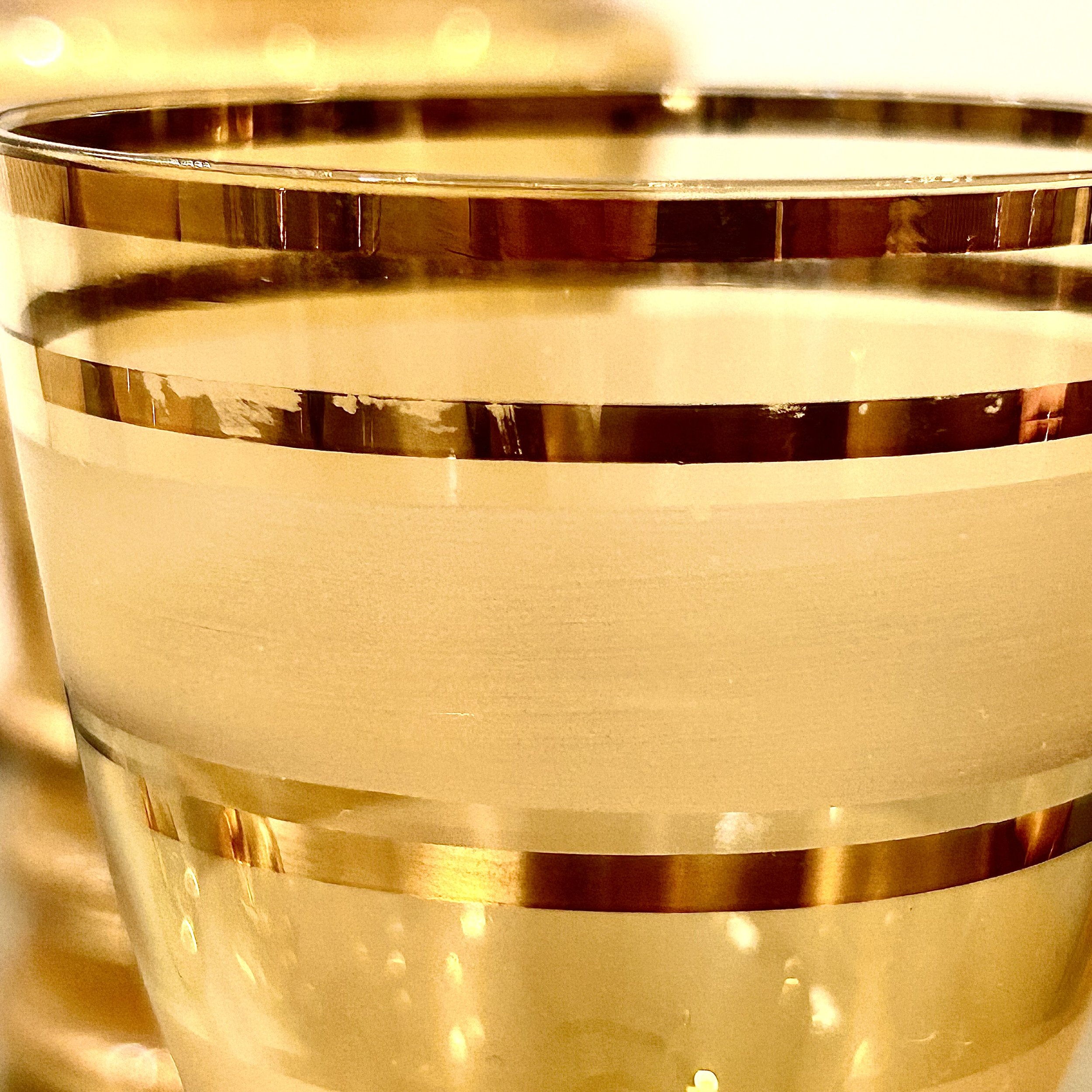
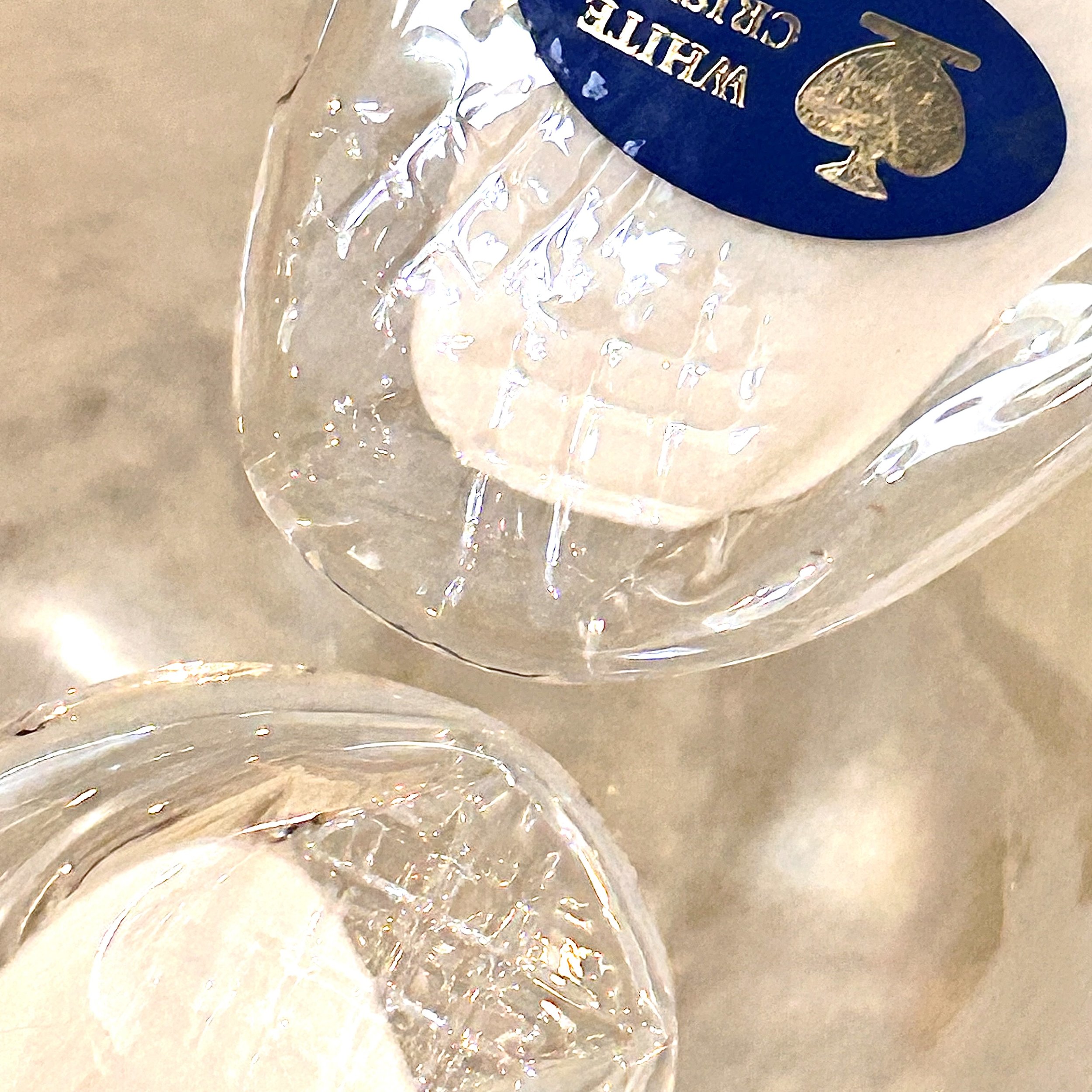
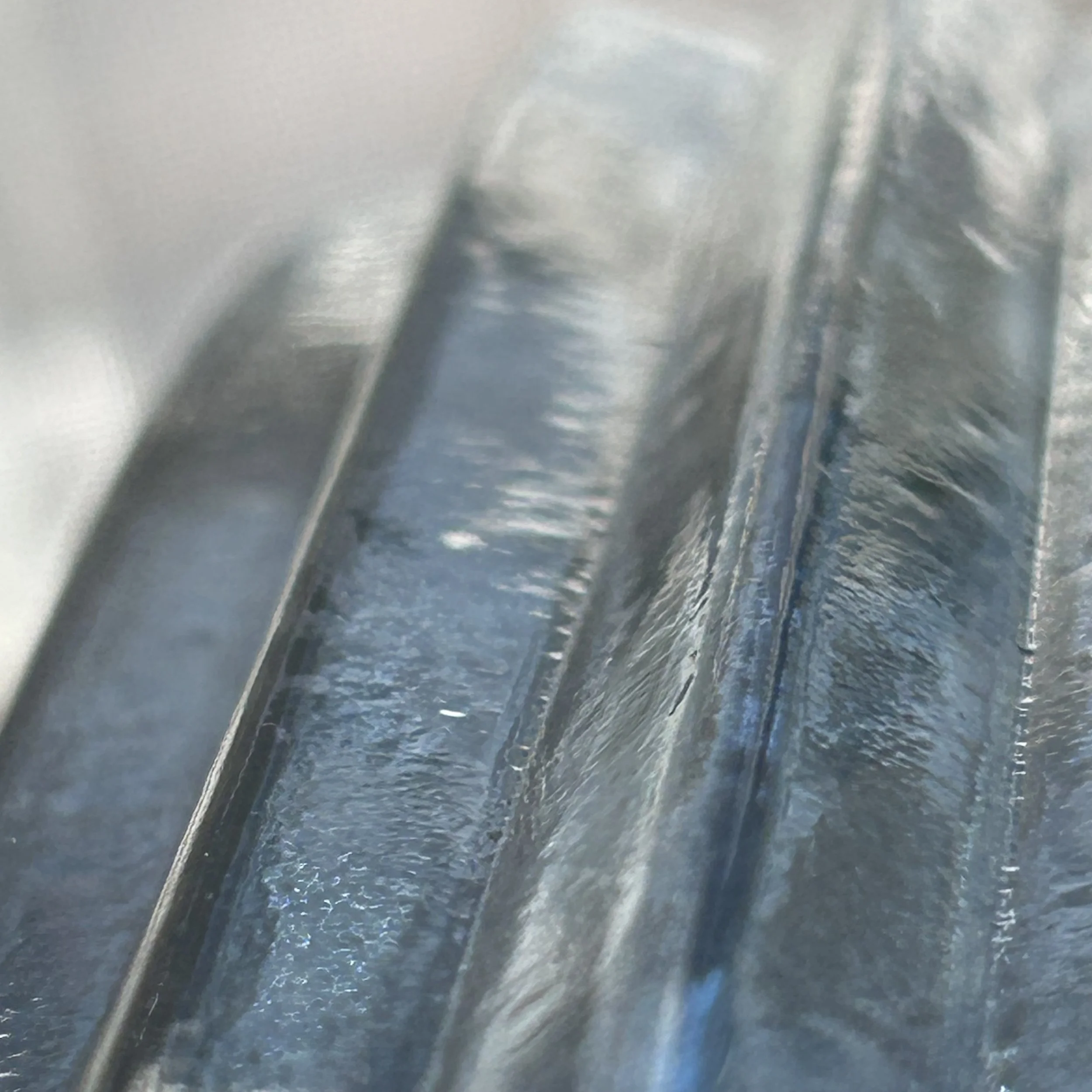
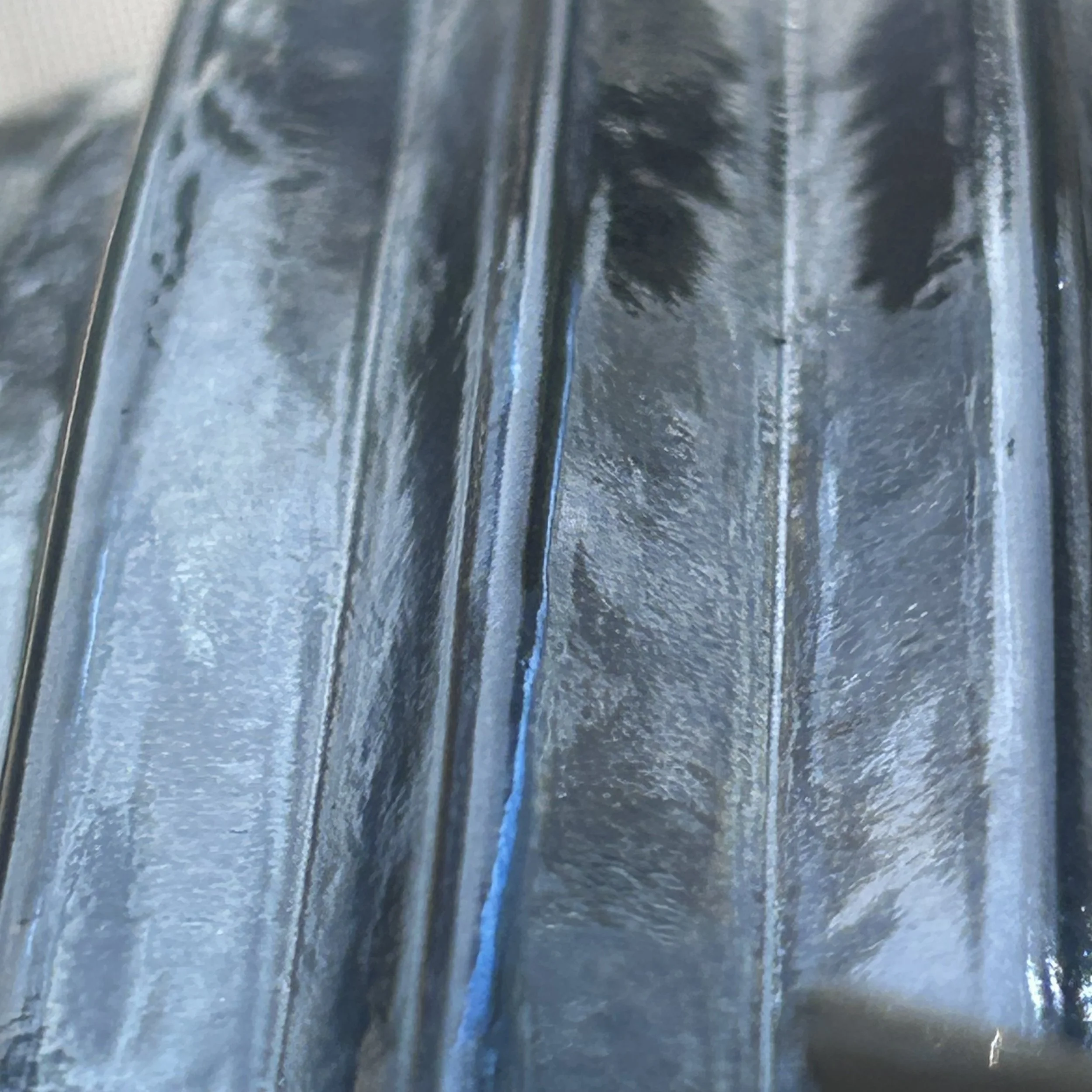
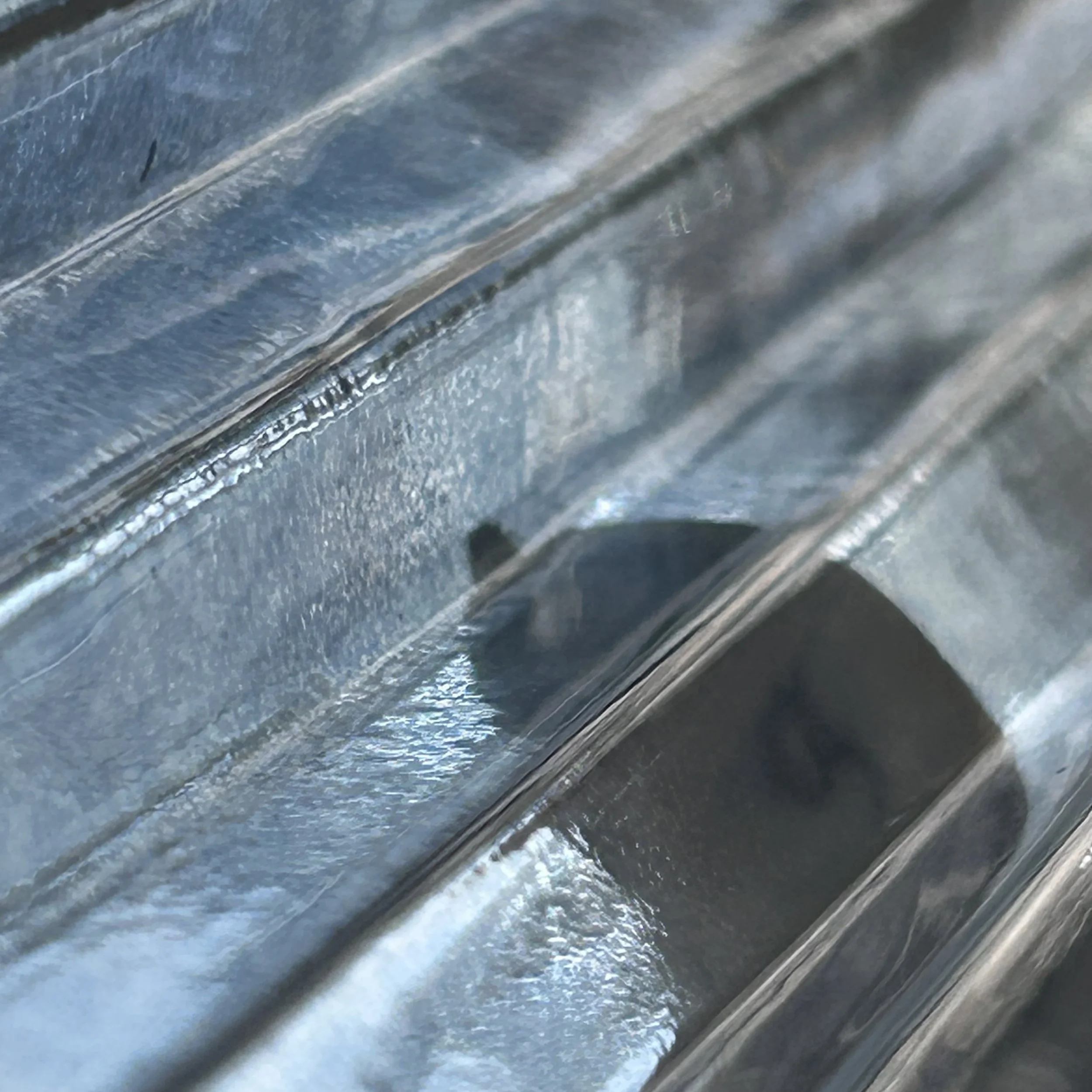
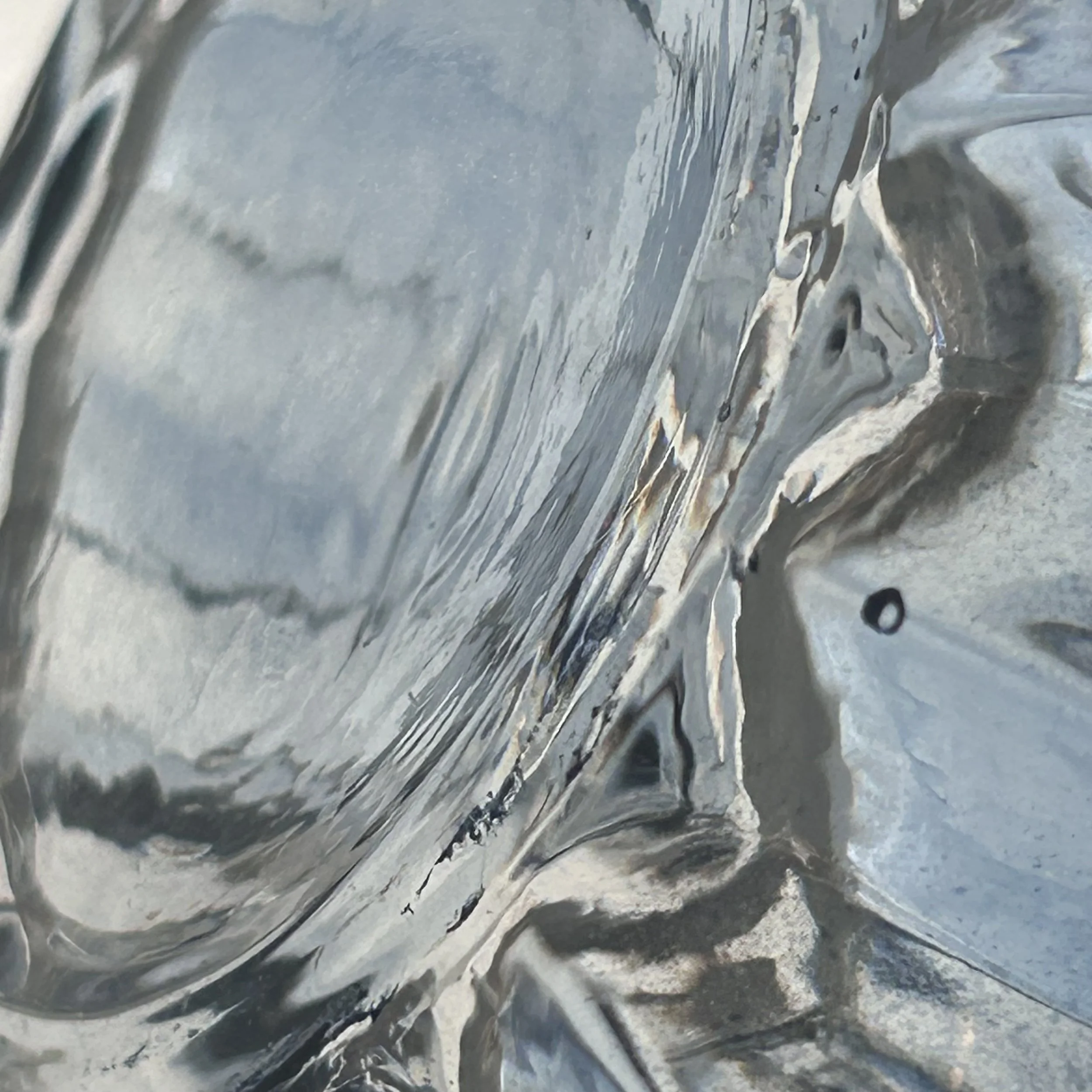
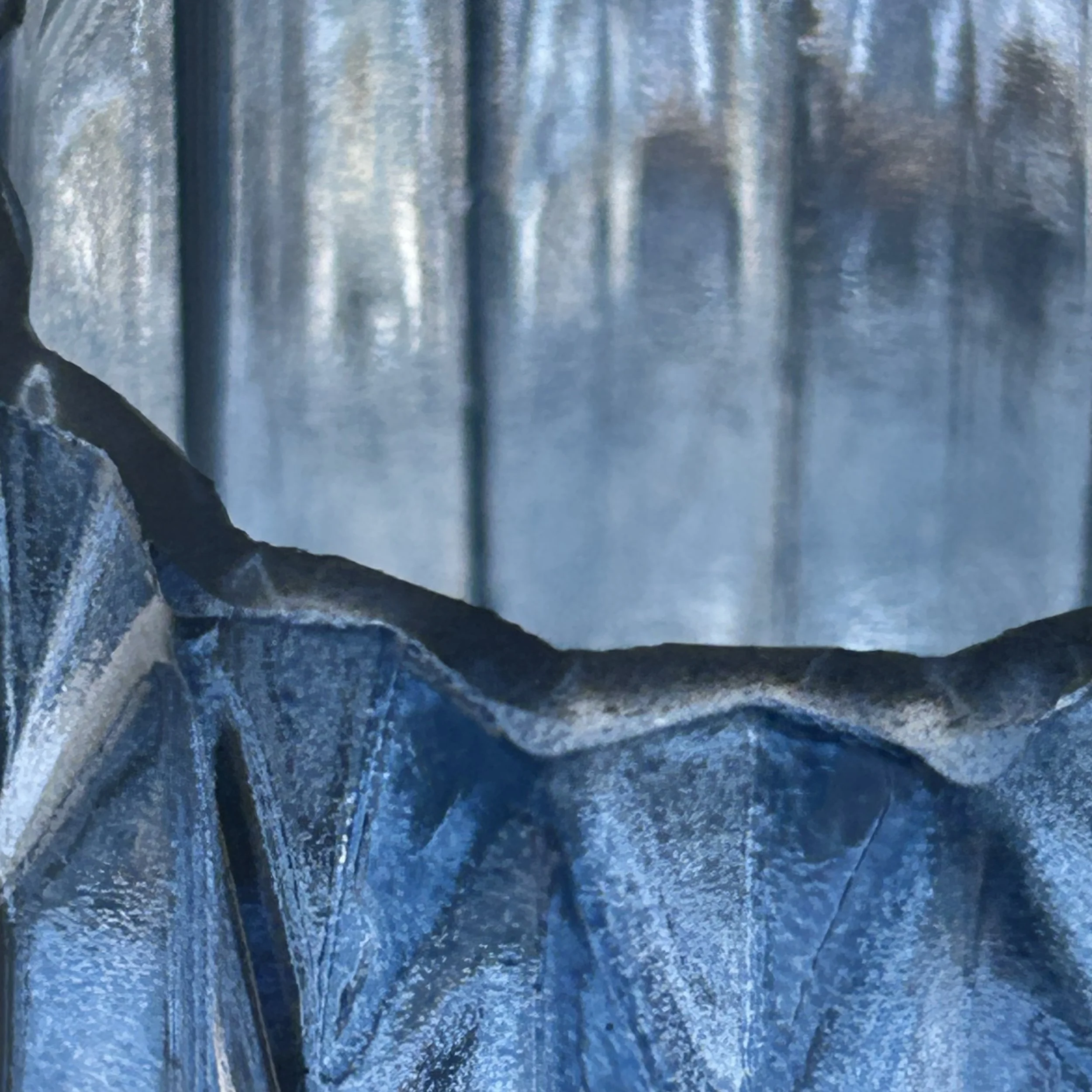
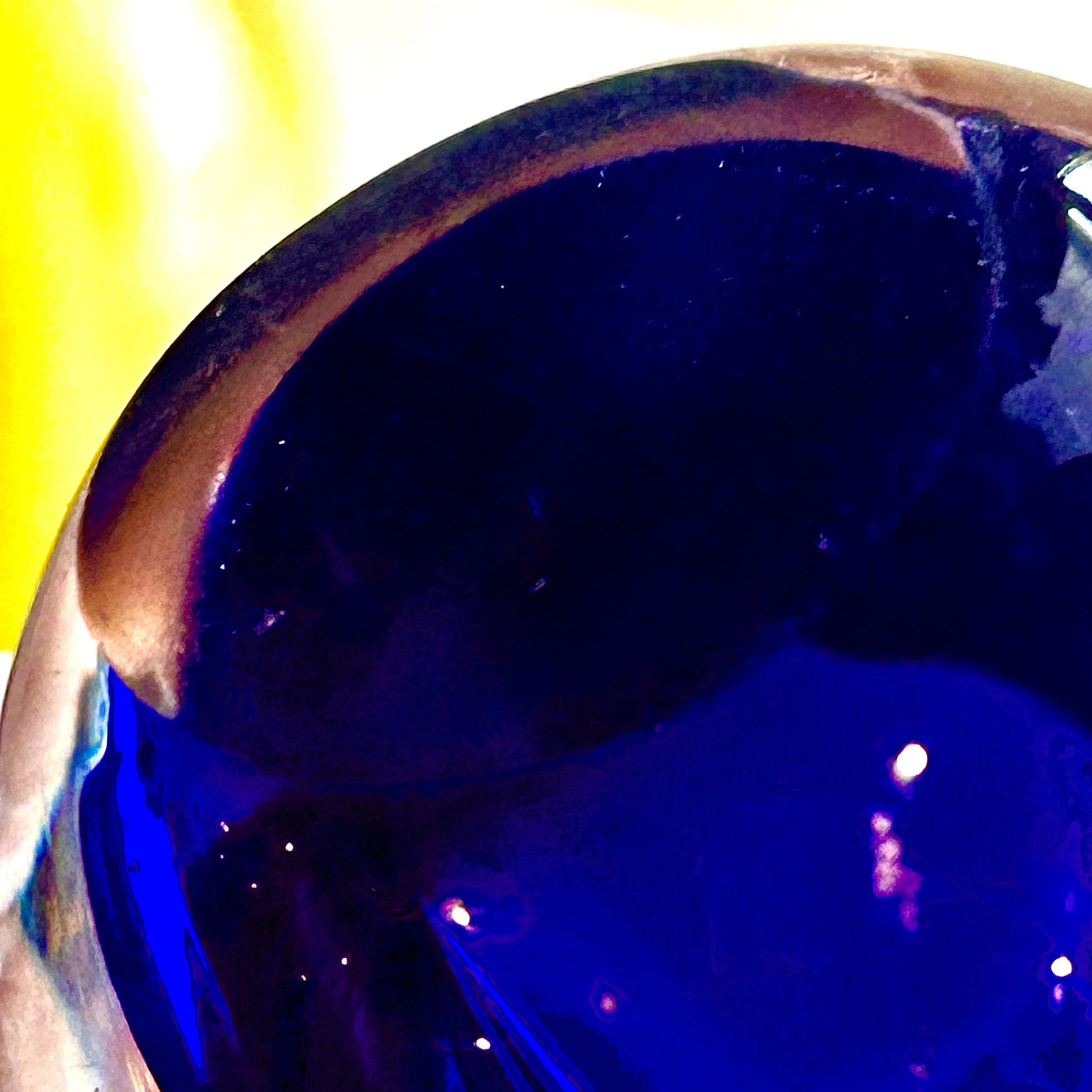
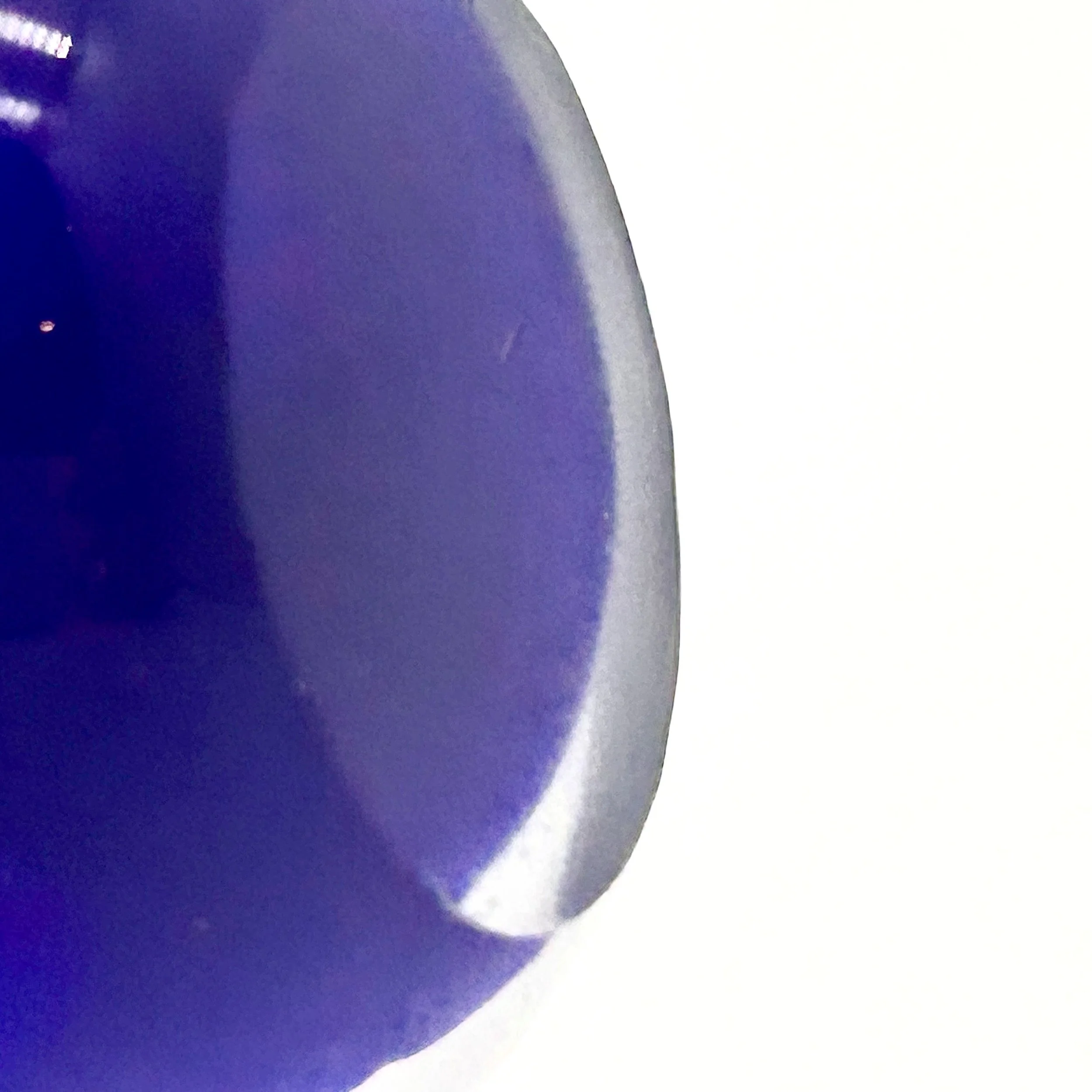
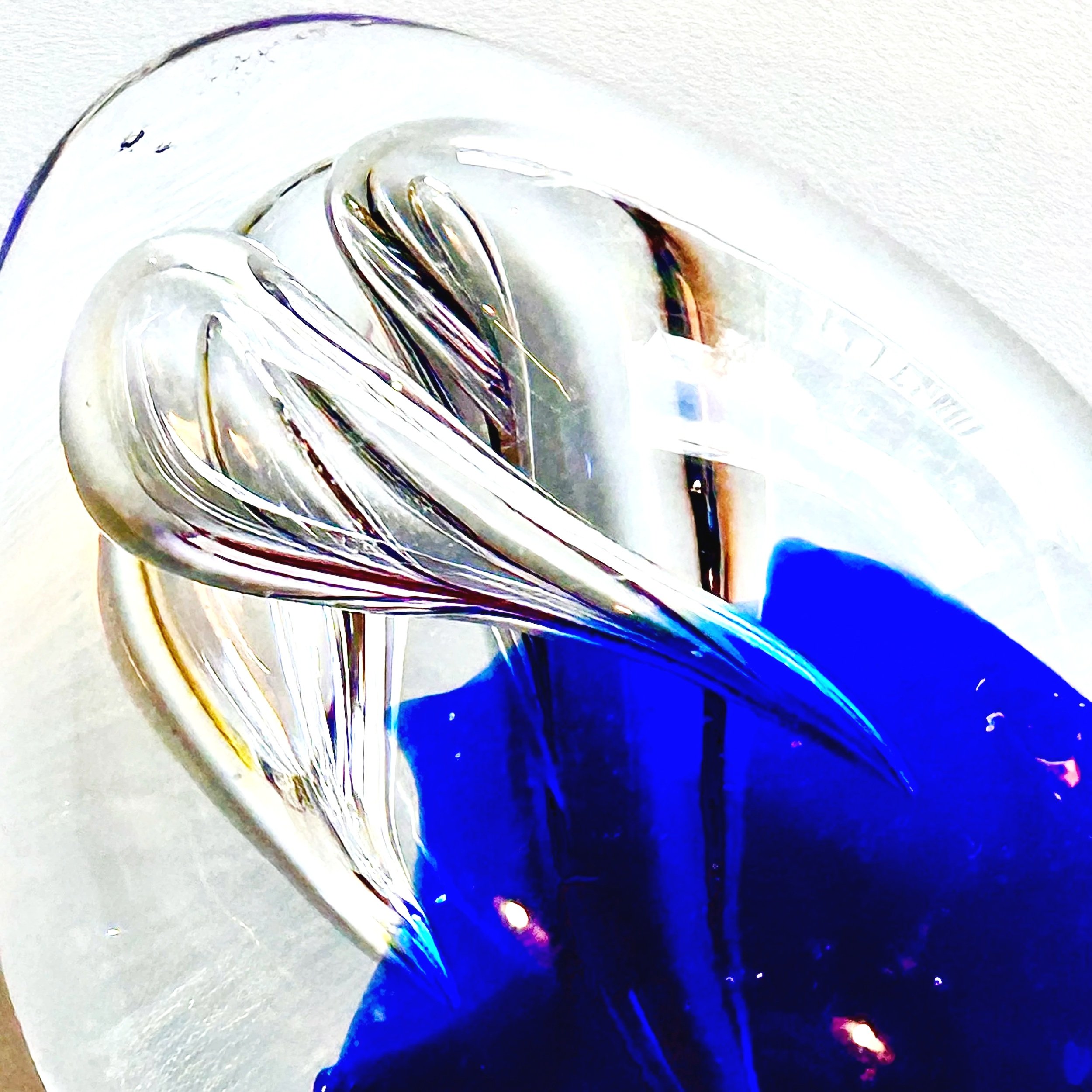
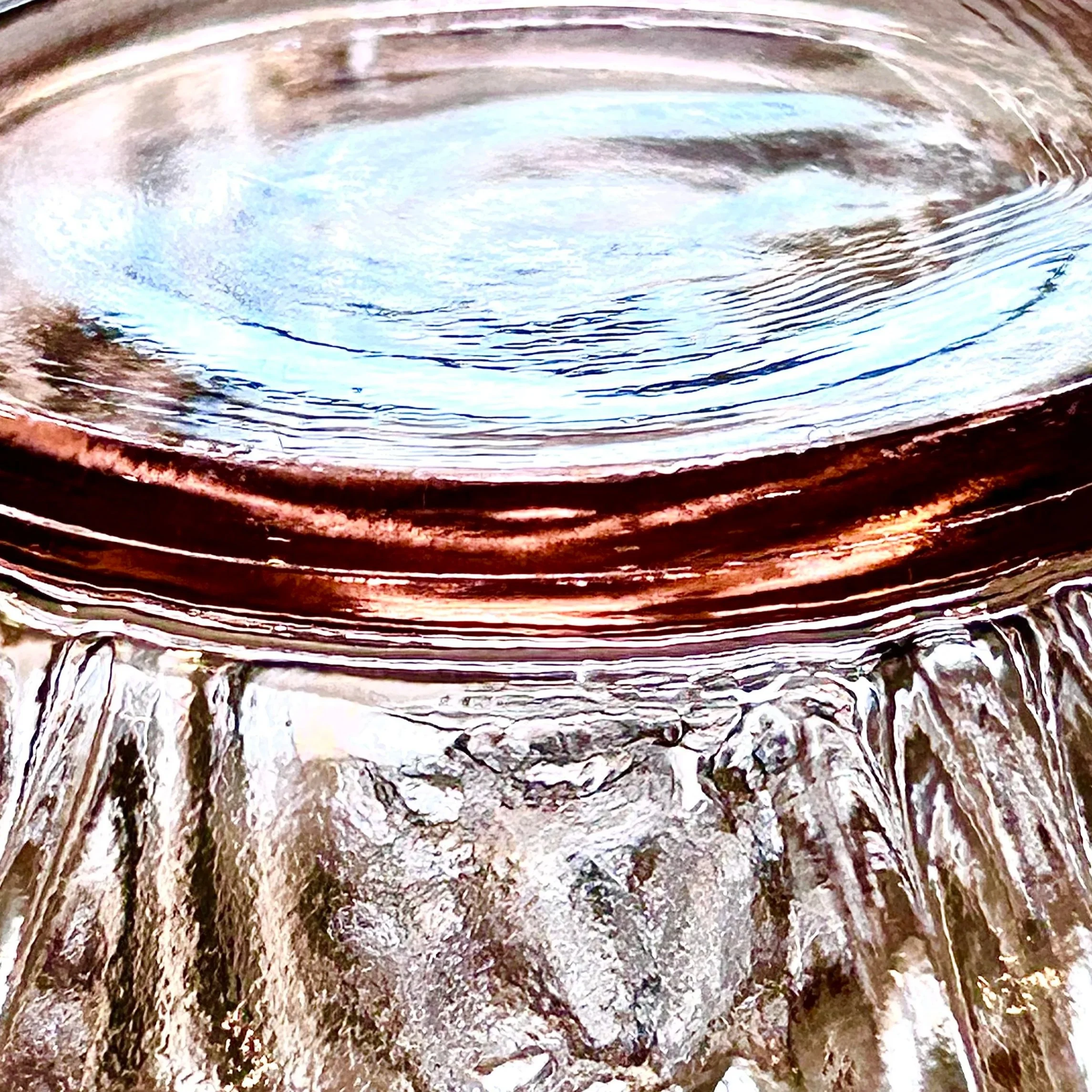
Very good condition overall.; A few very small flea-bite size nicks along the rim edge consistent with age and handling. No cracks or repairs. The glass remains bright with strong colour saturation. There are minor rim marks illustrated in the close up photograph which are visible only upon close inspection and do not detract from display.
Authenticity & Construction
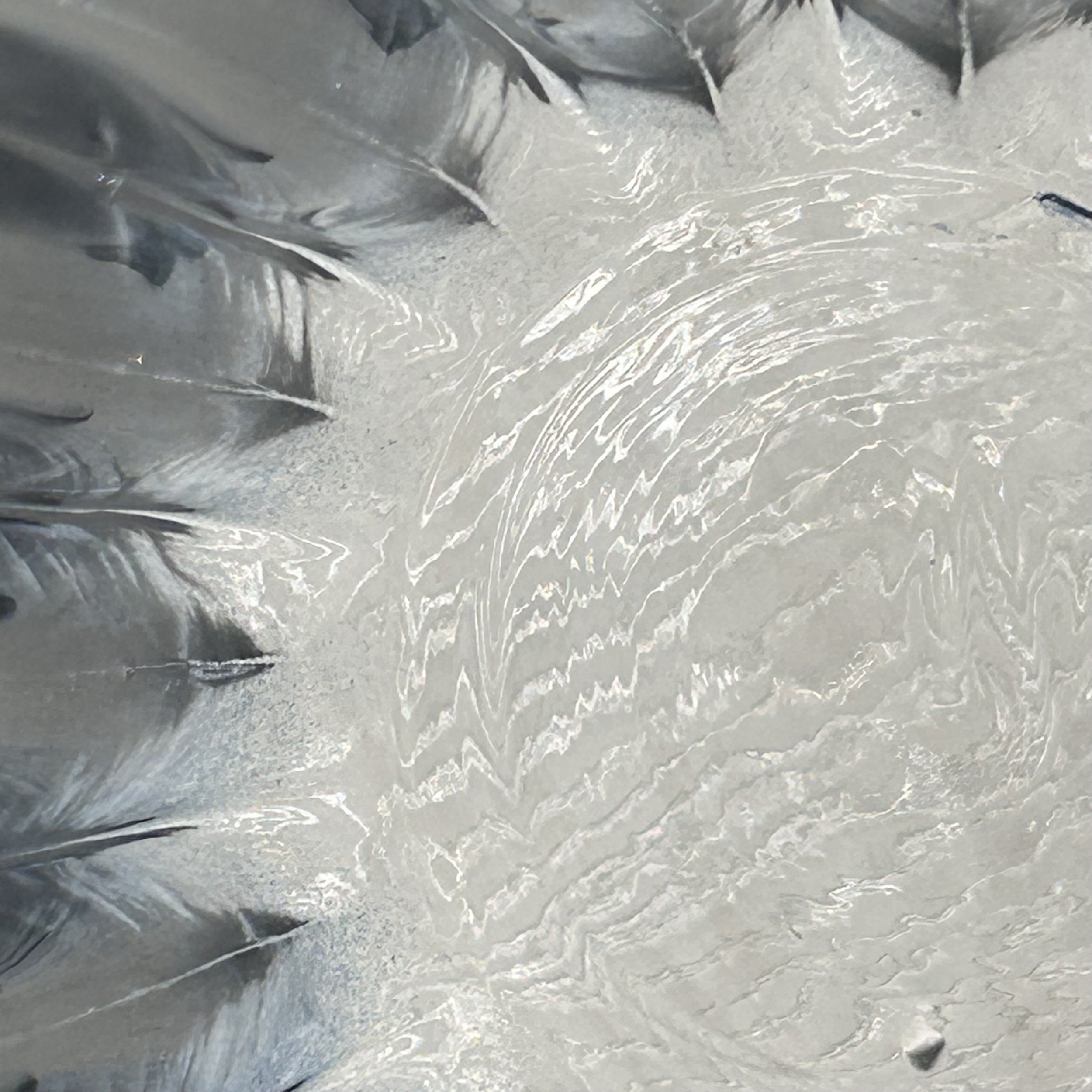
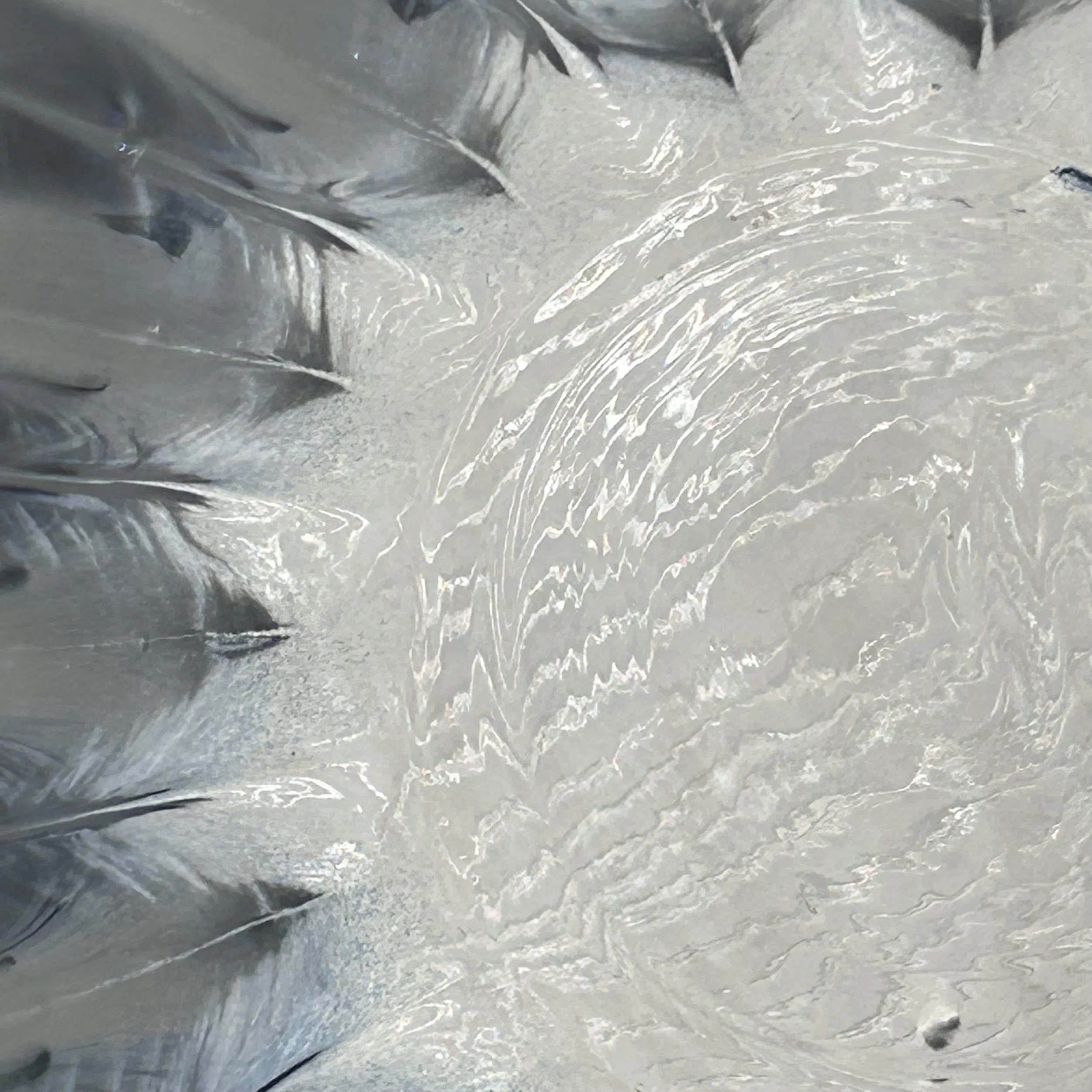
Hand-blown art glass using an optic twist mold technique. The honey-amber colouration appears achieved through layered glass gathers where deeper ruby tones settle toward the base while lighter golden glass rises toward the rim during the blowing process. The base shows a hand-finished pontil area, typical of studio glass production.
Curation
Ideal for placement on a console, entry table, or within a curated studio glass collection, this piece achieves its full sculptural potential when positioned in mid-century or modern interior settings with directional backlighting to activate the vibrant honey-amber rim and internal spiral movement.
Provenance
Private decorative arts collection; acquired through the secondary art market
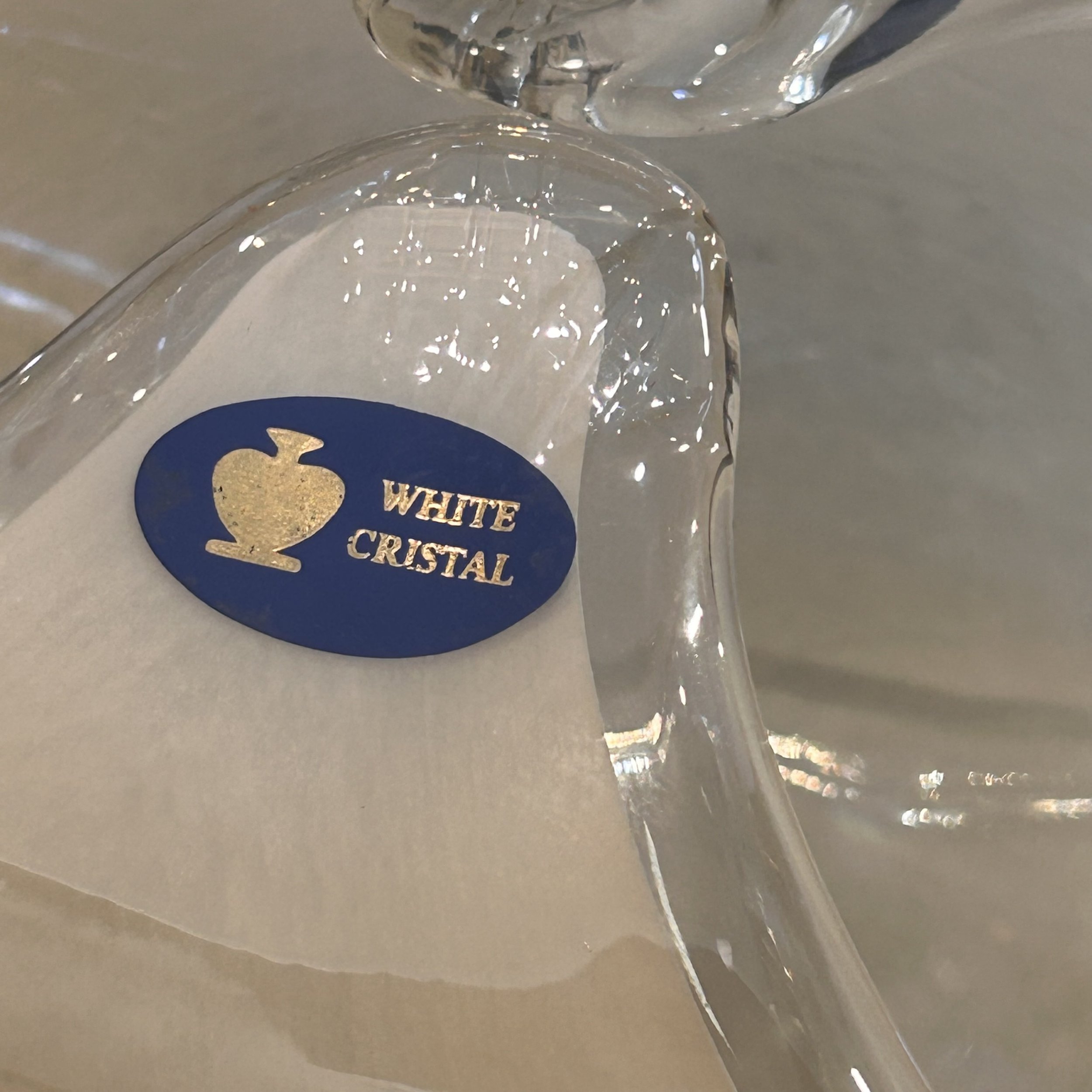
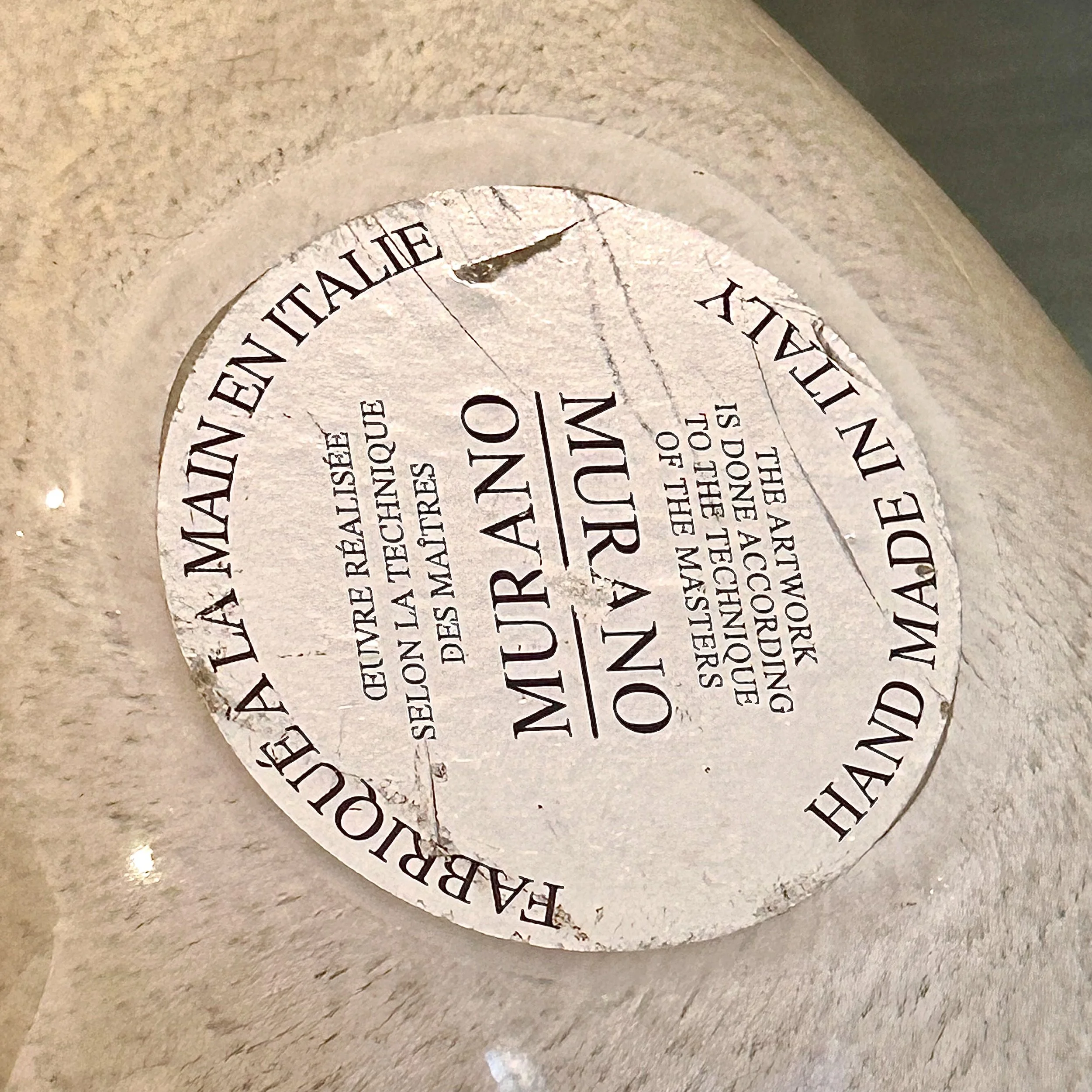
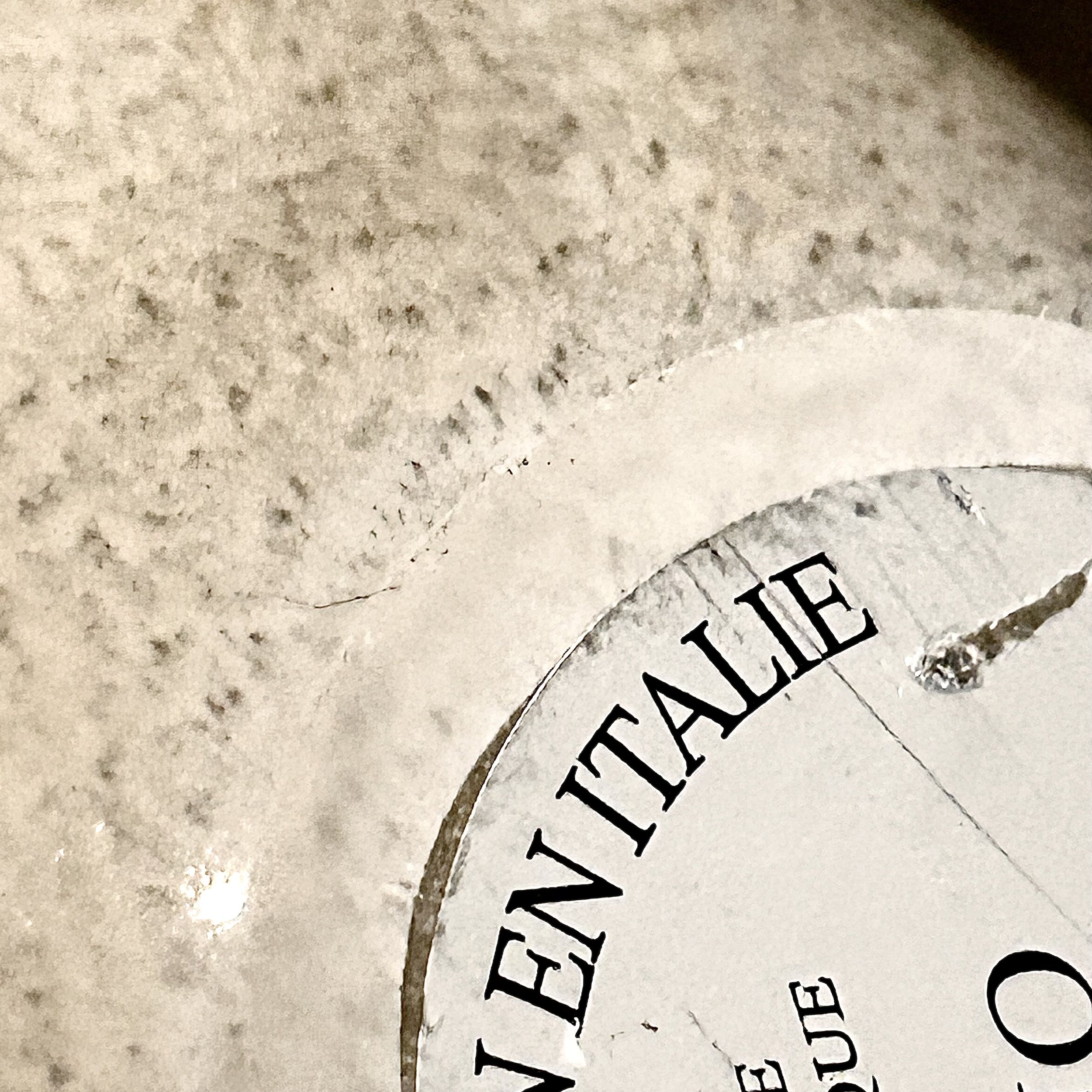
STANDARD ATTRIBUTION & VALUE DISCLOSURE; This piece is described to the best of current scholarly and market knowledge. Any maker or regional attribution is based on visual analysis, materials, construction techniques, and documented stylistic comparisons. As with many vintage and antique glass objects, definitive attribution may not be possible without original labels or factory records. Pricing reflects condition, quality, decorative appeal, and current collector demand rather than a guaranteed maker identification.
A luminous mid-century studio art glass vase featuring dramatic honey-amber coloration and a striking twisted optic pattern that animates the entire form. The body transitions from deep ruby amber at the base to radiant golden honey tones toward the rim, producing a glowing effect when illuminated. The swirling internal pattern was created using an optic mold technique, where the molten glass is blown into a patterned mold and gently twisted during formation. This process produces the fluid, flame-like movement visible throughout the vessel and gives the glass exceptional visual depth.
The vase’s cylindrical silhouette is balanced by the dynamic spiral pattern, making it both architectural and sculptural. When displayed with light behind or above it, the glass reveals rich tonal shifts from burnt amber to brilliant topaz. This style of optic swirl glass became highly popular during the mid-century studio glass movement of the late 1960s and early 1970s, particularly among Scandinavian and Italian glass studios exploring bold color and dynamic form inspired by Venetian techniques. The underside shows evidence of traditional hand-finished blown glass production, reinforcing its studio art glass character.
Attribution & Period
Studio Art Glass, Scandinavian-influenced production, Circa 1970, Unsigned
Dimensions
Height: 8.5 in
Mouth Diameter: 4 5/8 in
Condition
Very good condition overall.; A few very small flea-bite size nicks along the rim edge consistent with age and handling. No cracks or repairs. The glass remains bright with strong colour saturation. There are minor rim marks illustrated in the close up photograph which are visible only upon close inspection and do not detract from display.
Authenticity & Construction
Hand-blown art glass using an optic twist mold technique. The honey-amber colouration appears achieved through layered glass gathers where deeper ruby tones settle toward the base while lighter golden glass rises toward the rim during the blowing process. The base shows a hand-finished pontil area, typical of studio glass production.
Curation
Ideal for placement on a console, entry table, or within a curated studio glass collection, this piece achieves its full sculptural potential when positioned in mid-century or modern interior settings with directional backlighting to activate the vibrant honey-amber rim and internal spiral movement.
Provenance
Private decorative arts collection; acquired through the secondary art market
STANDARD ATTRIBUTION & VALUE DISCLOSURE; This piece is described to the best of current scholarly and market knowledge. Any maker or regional attribution is based on visual analysis, materials, construction techniques, and documented stylistic comparisons. As with many vintage and antique glass objects, definitive attribution may not be possible without original labels or factory records. Pricing reflects condition, quality, decorative appeal, and current collector demand rather than a guaranteed maker identification.

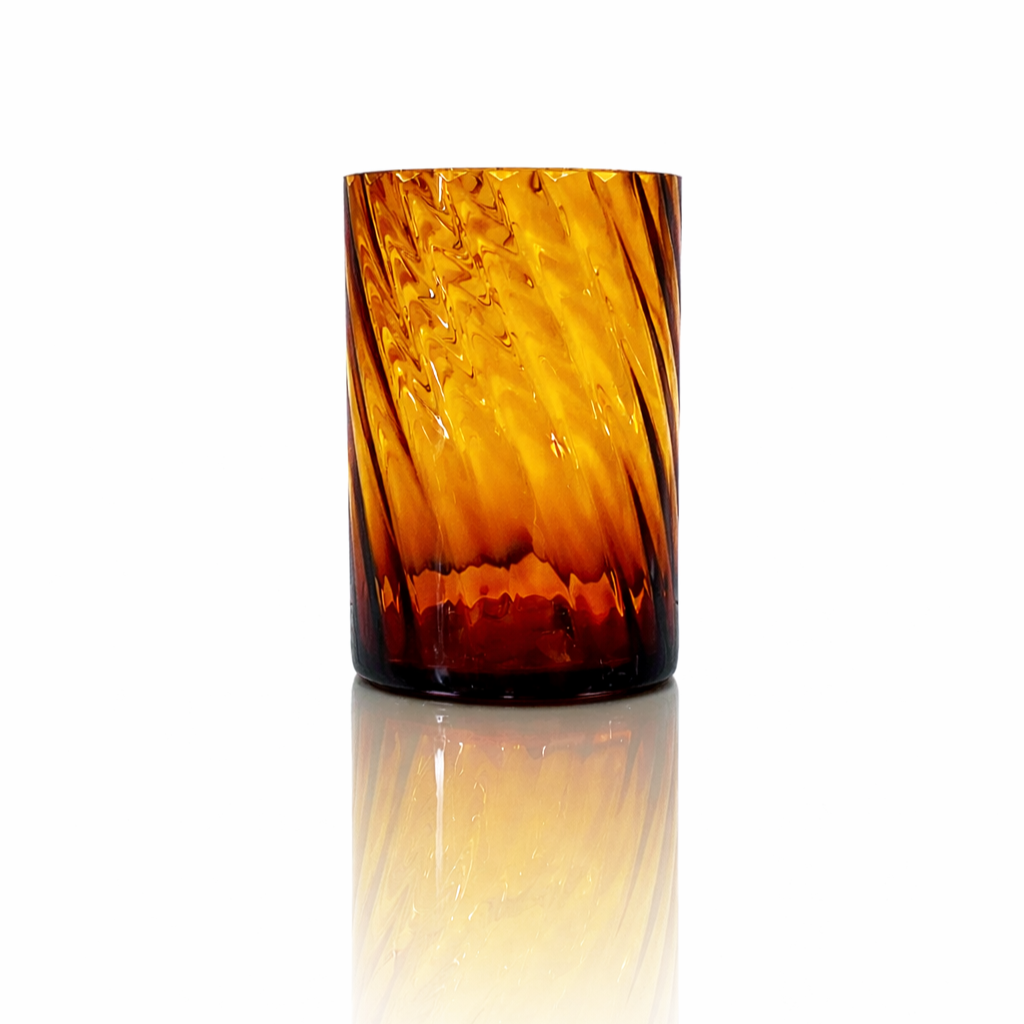 Image 1 of 19
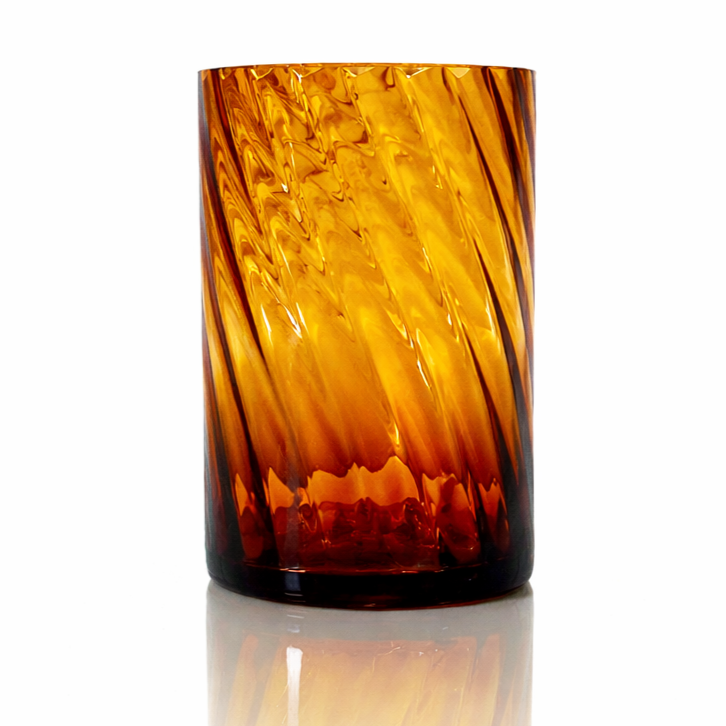 Image 2 of 19
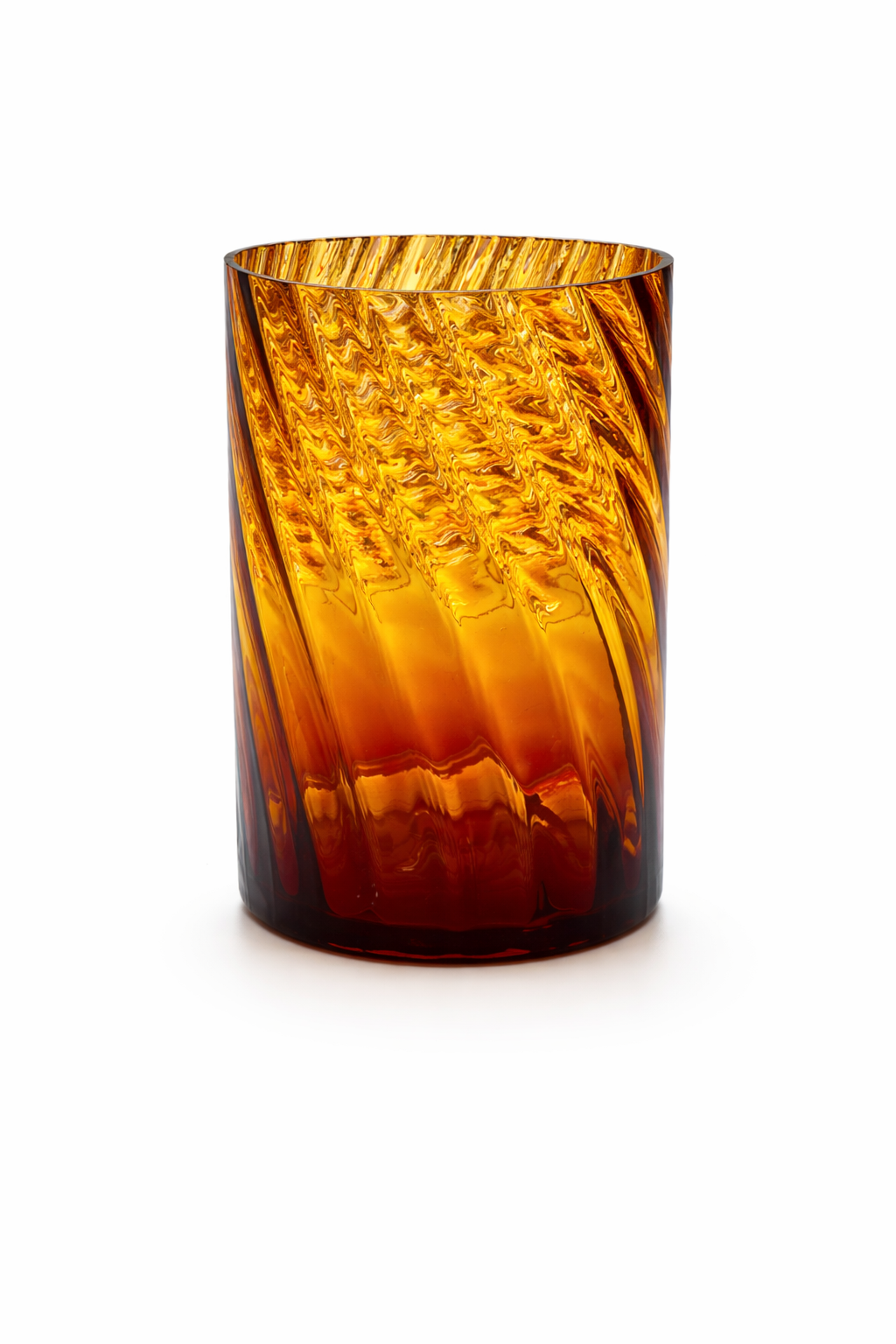 Image 3 of 19
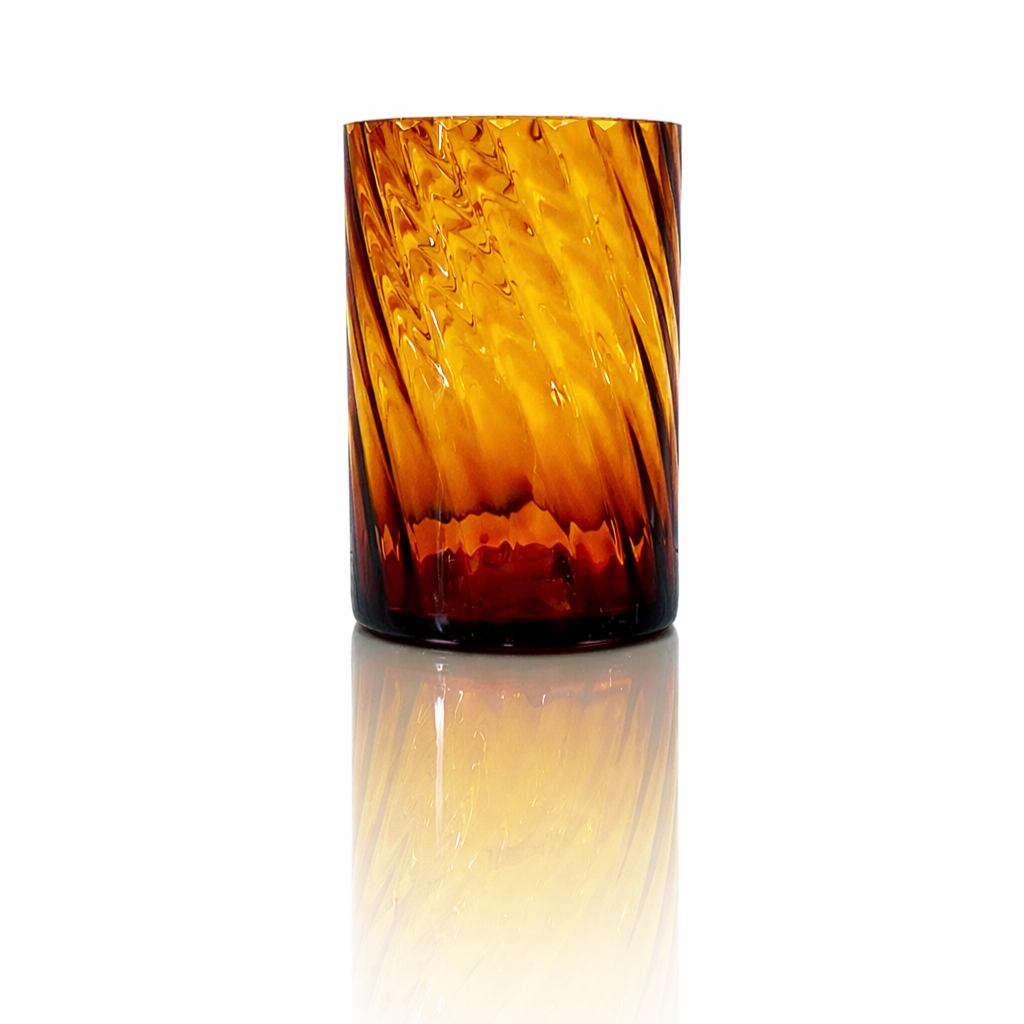 Image 4 of 19
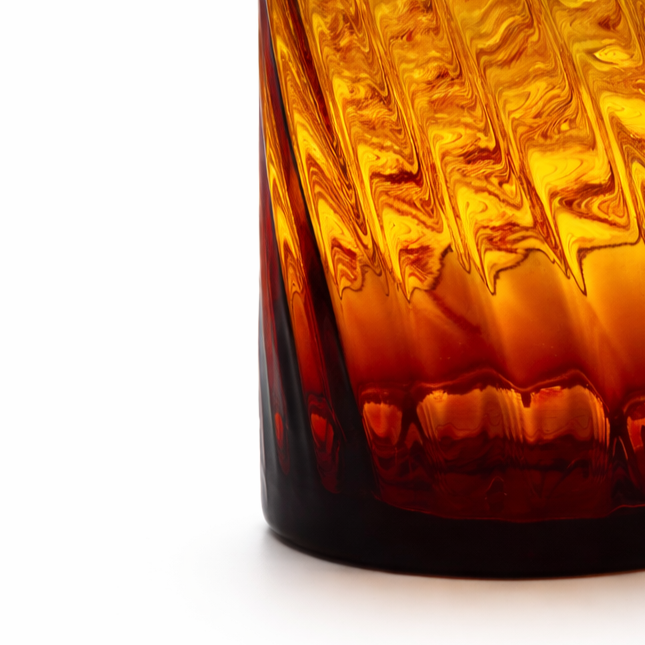 Image 5 of 19
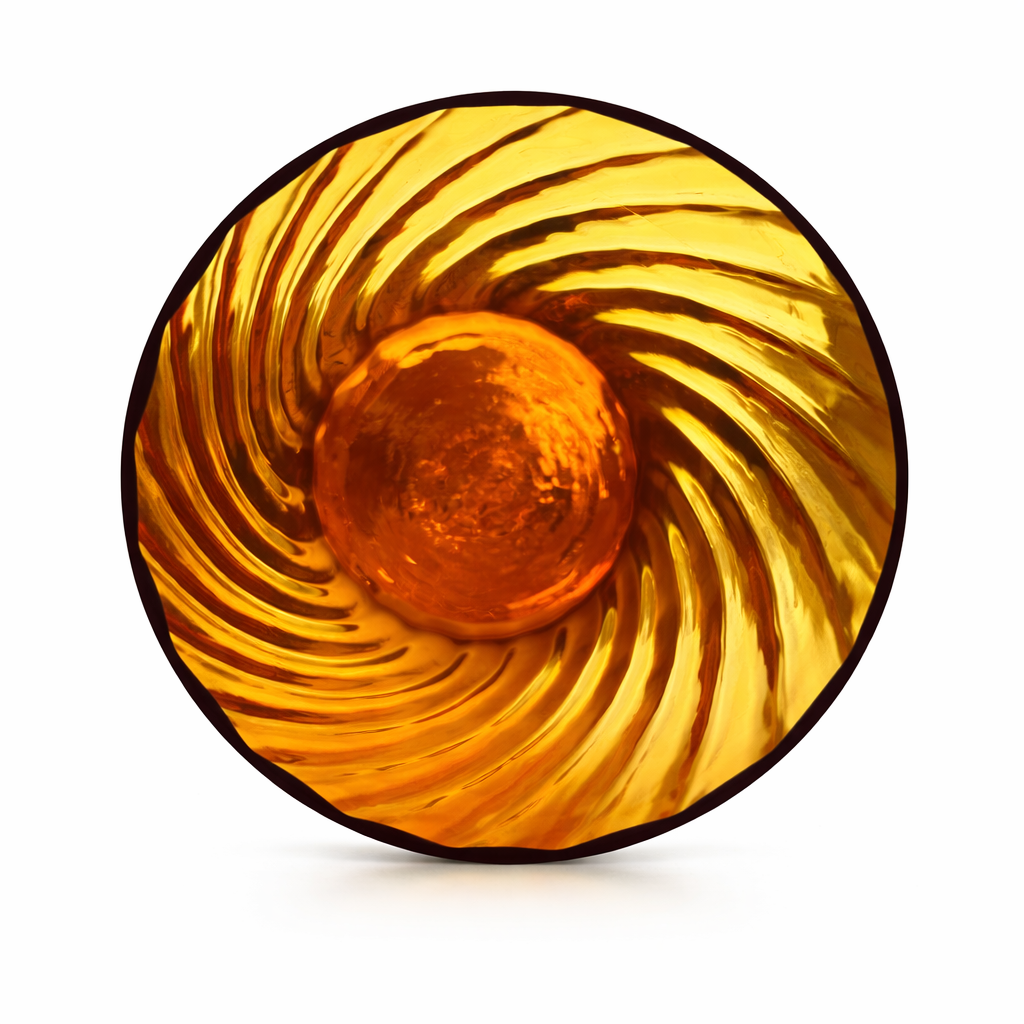 Image 6 of 19
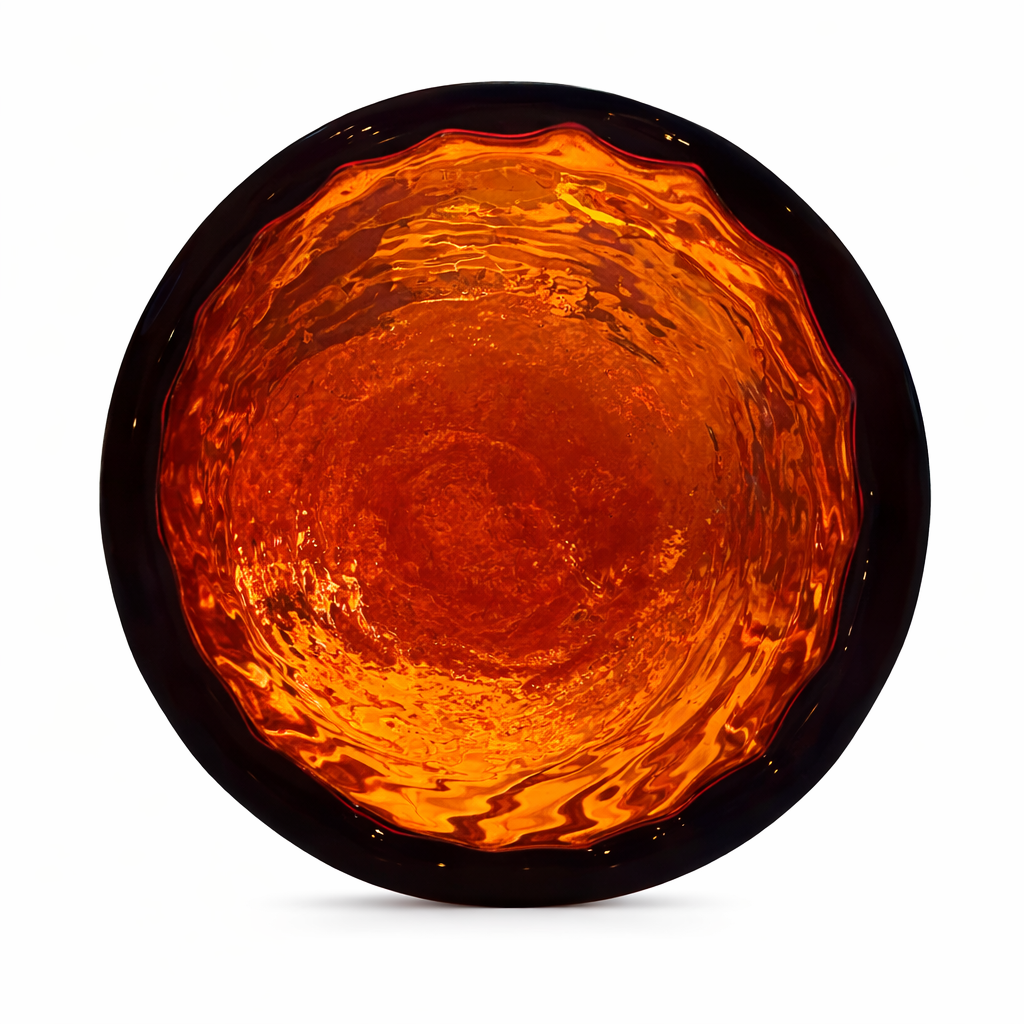 Image 7 of 19
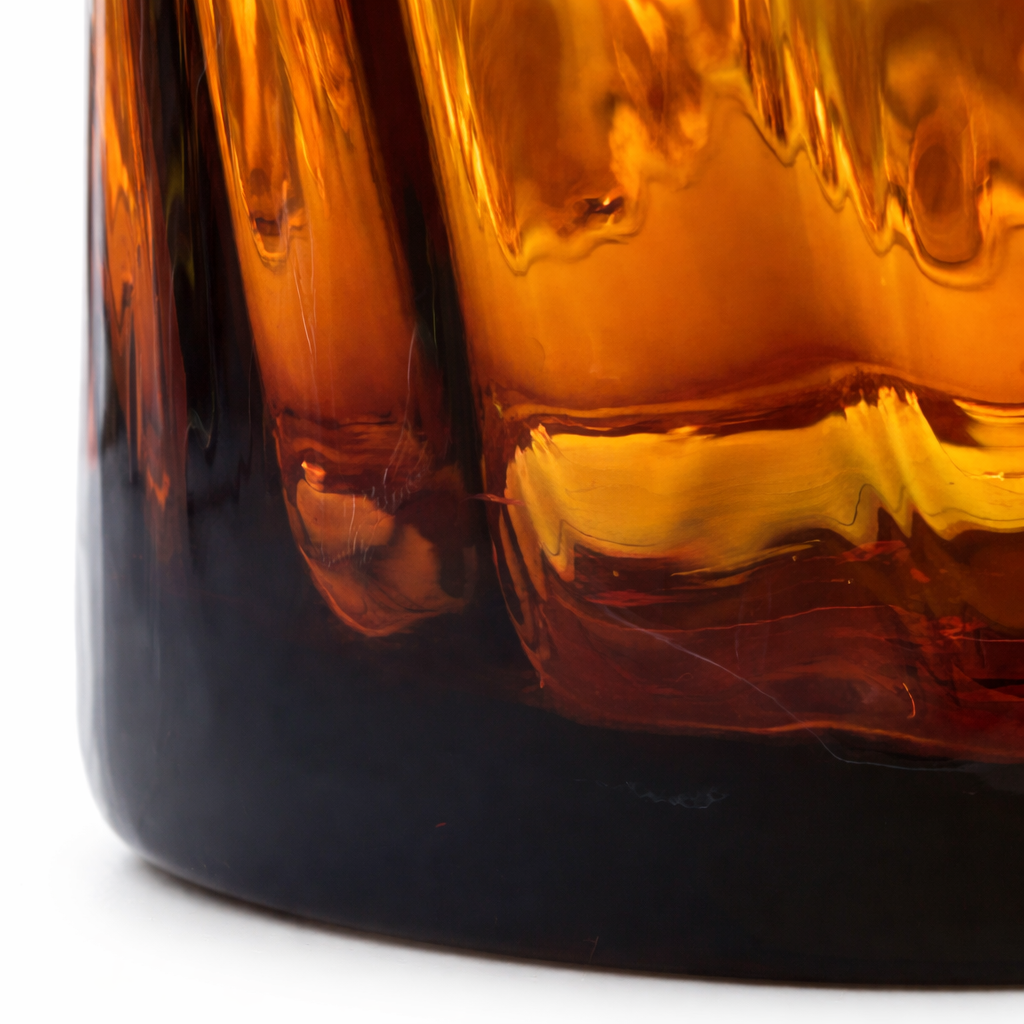 Image 8 of 19
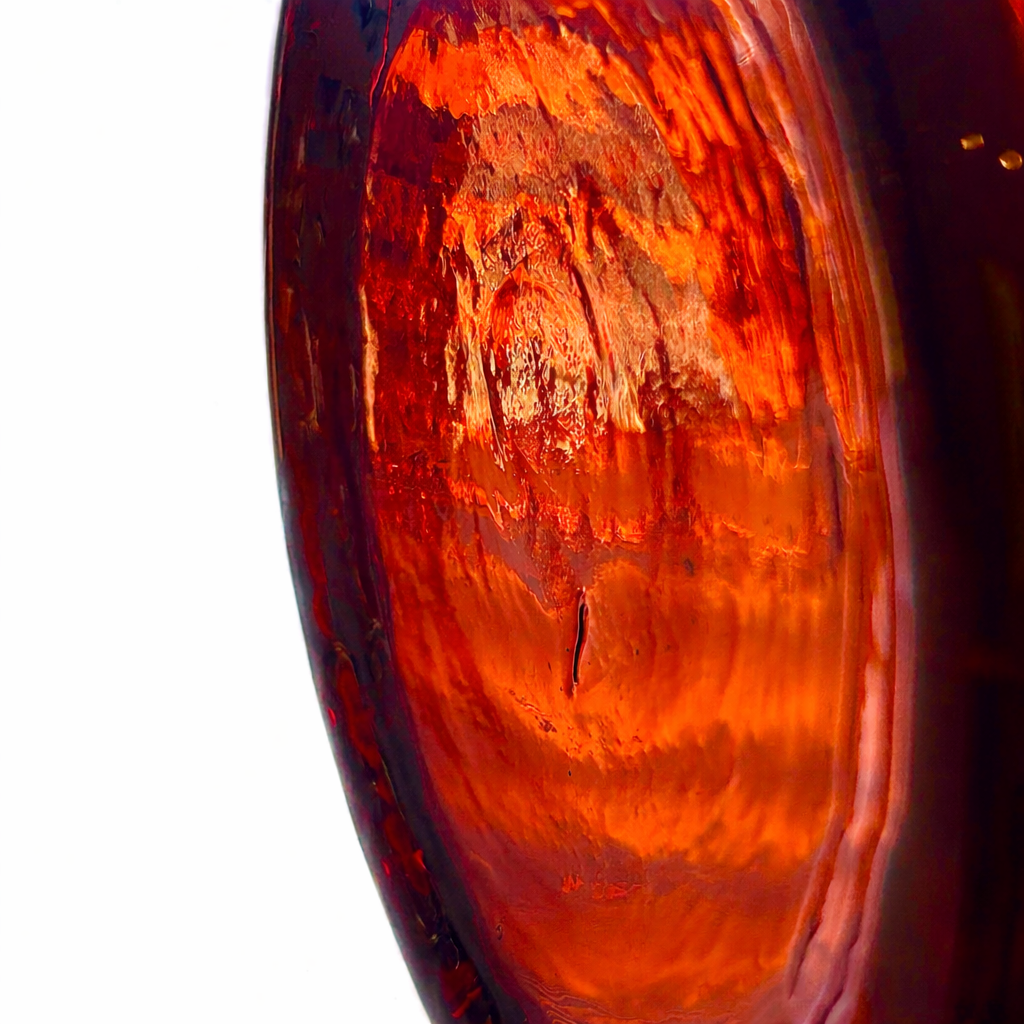 Image 9 of 19
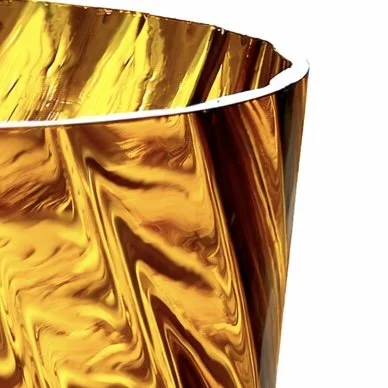 Image 10 of 19
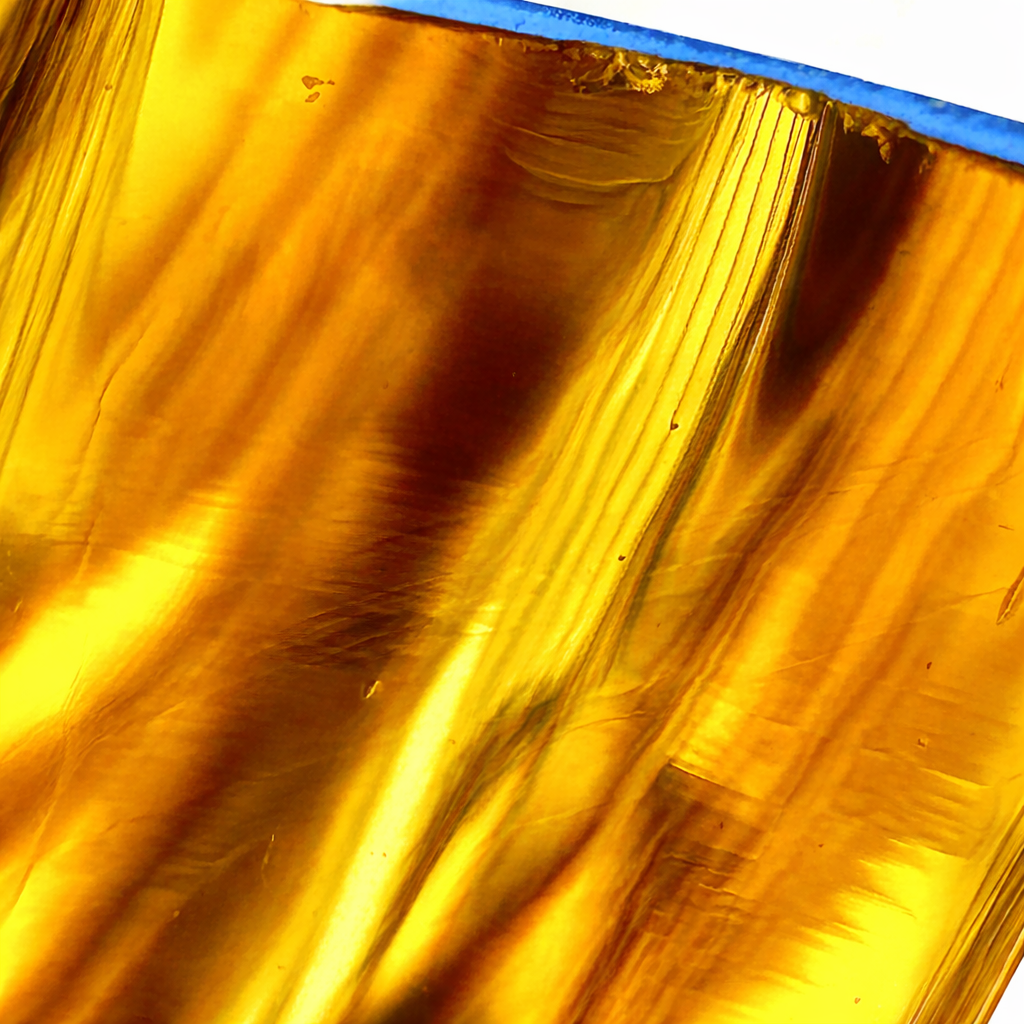 Image 11 of 19
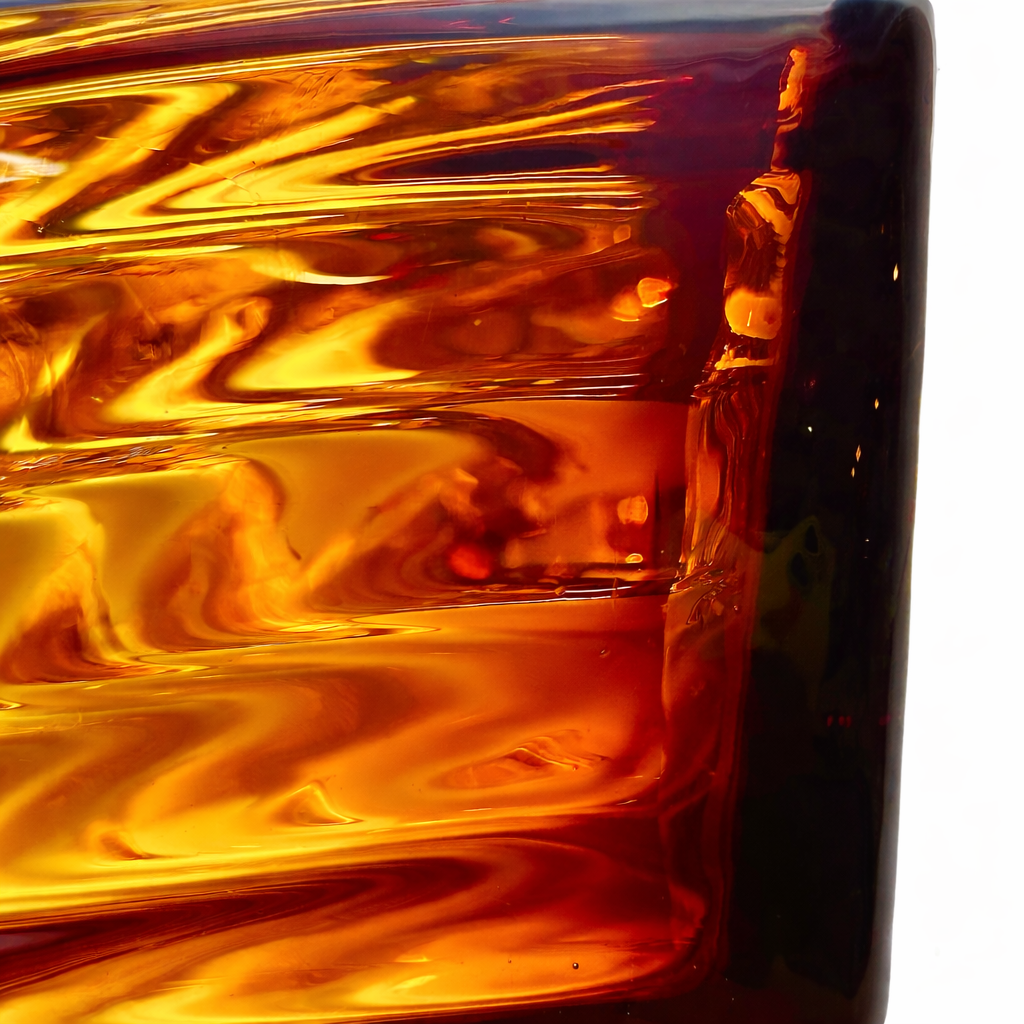 Image 12 of 19
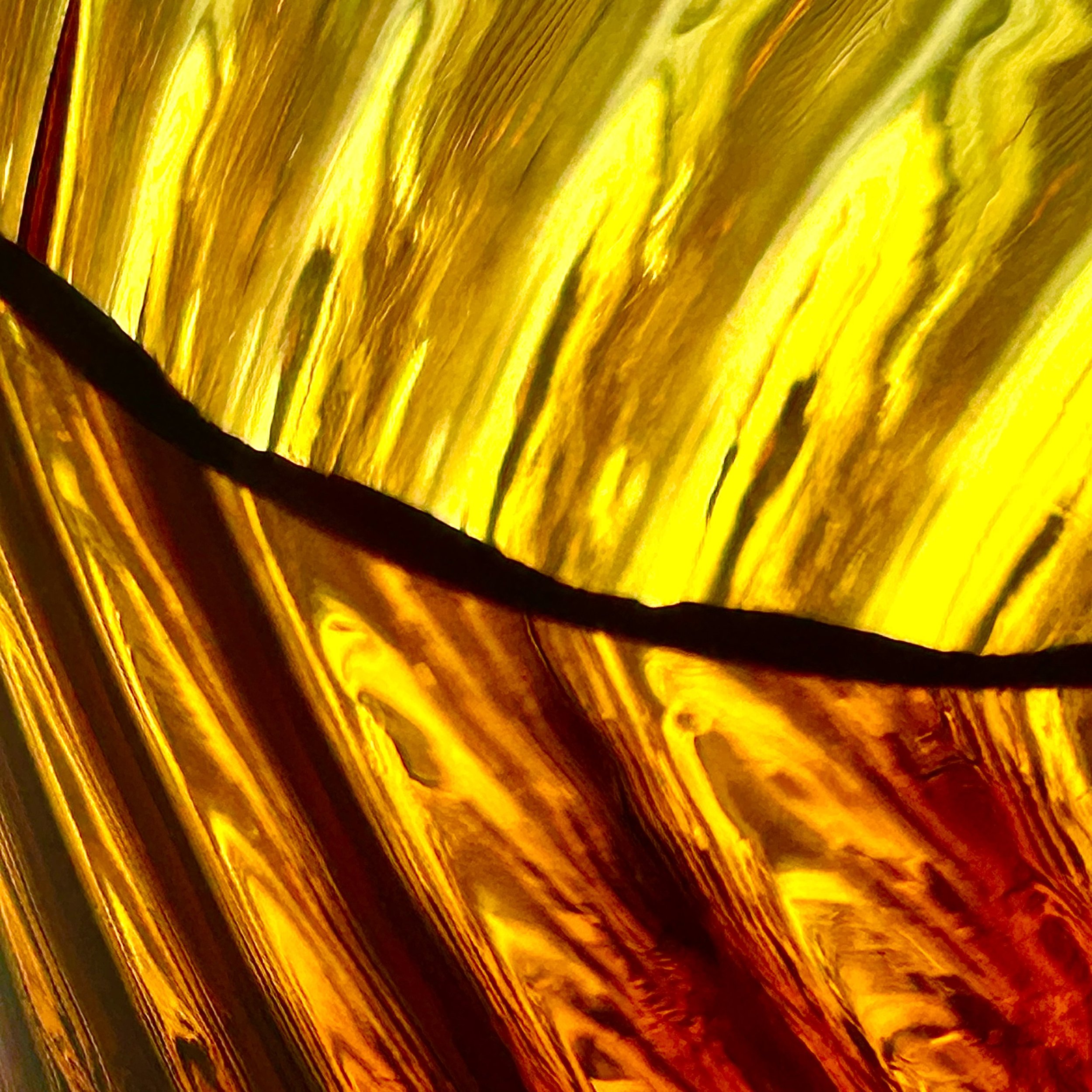 Image 13 of 19
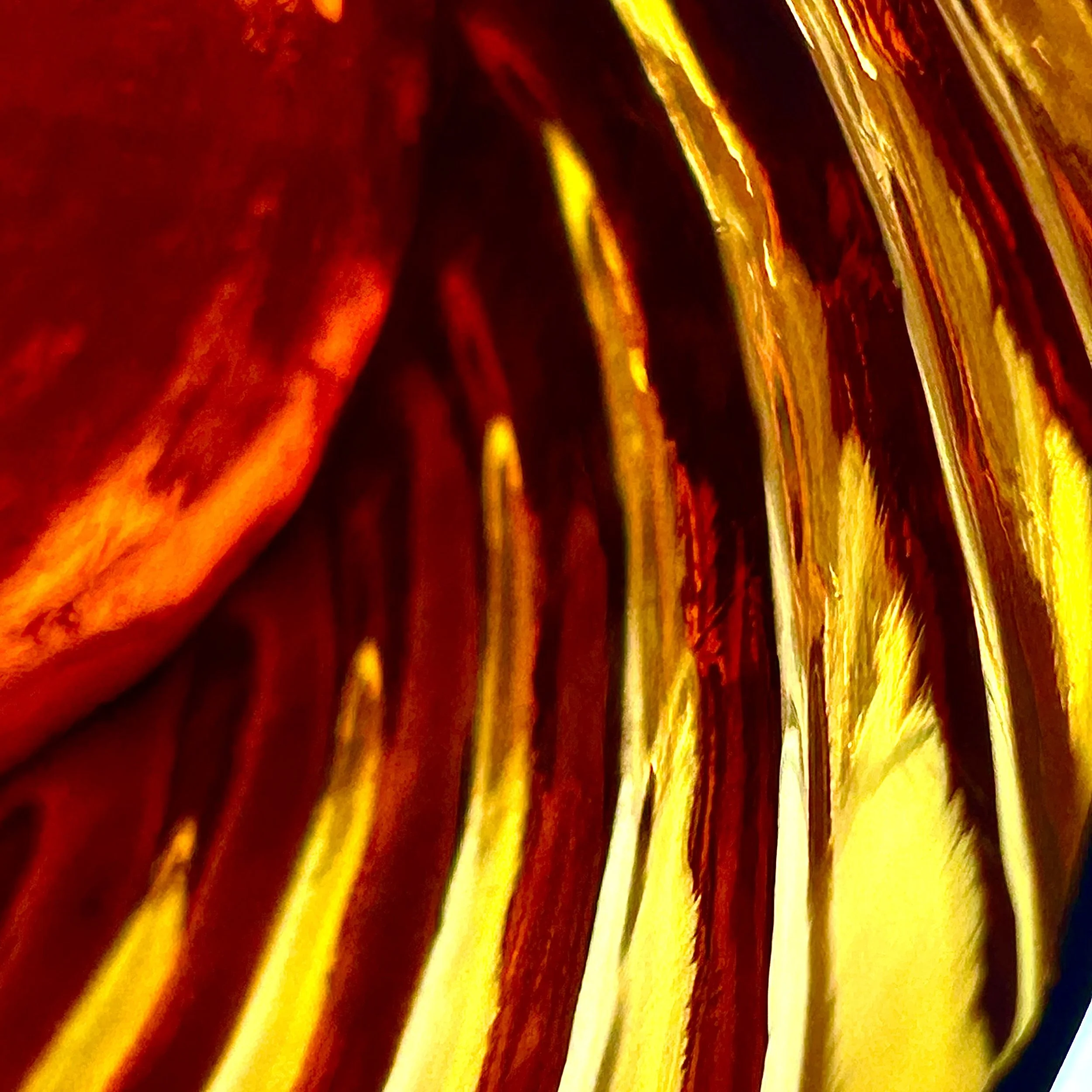 Image 14 of 19
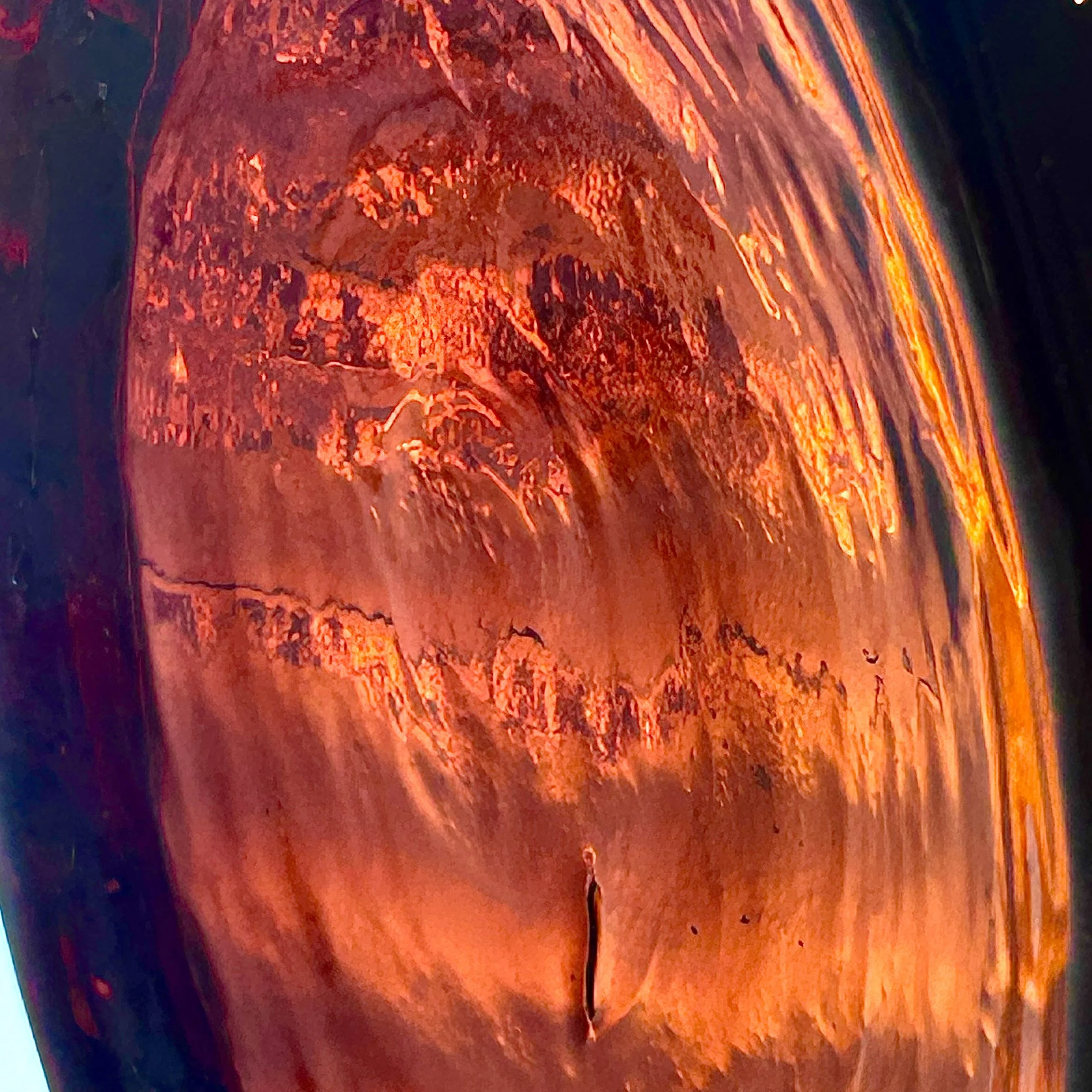 Image 15 of 19
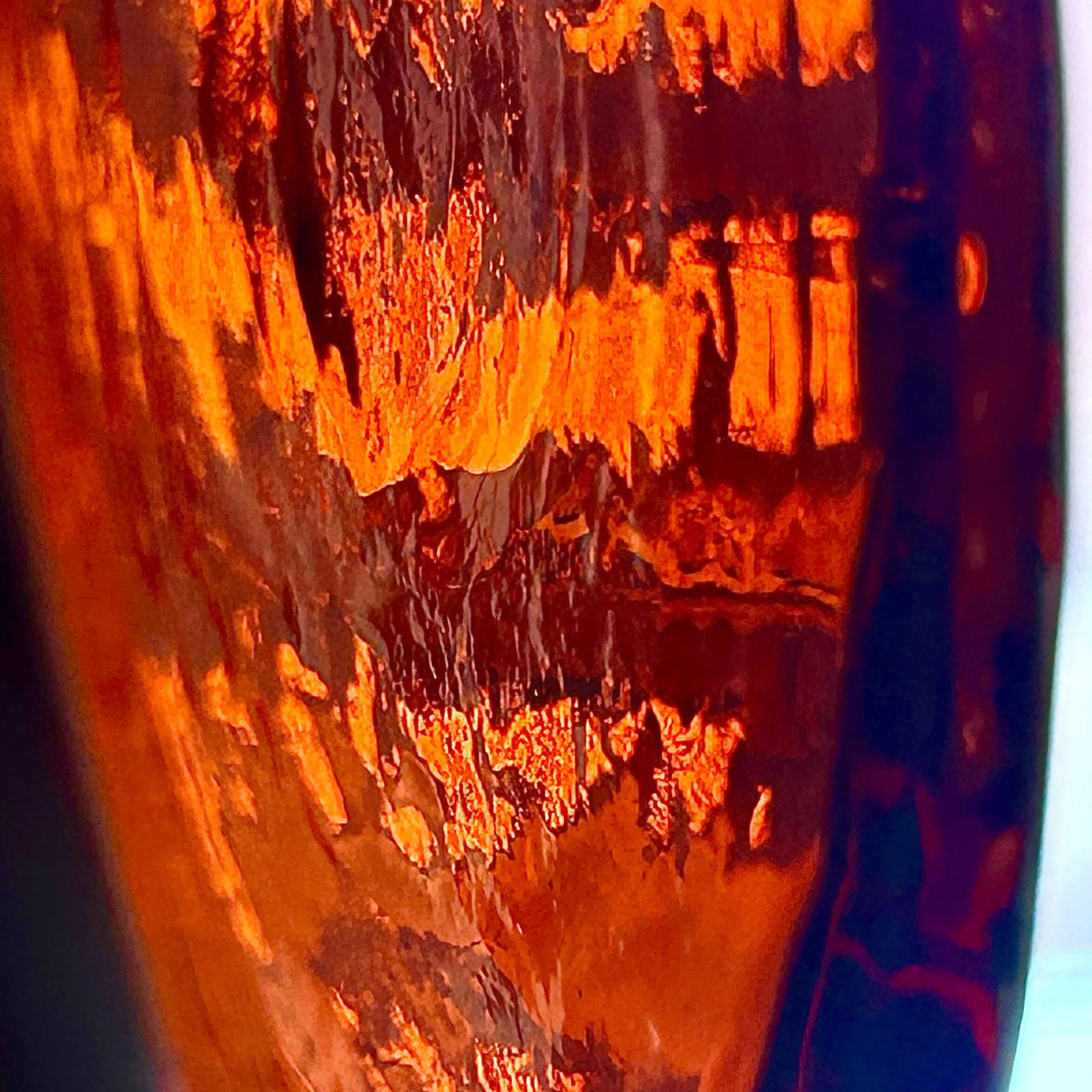 Image 16 of 19
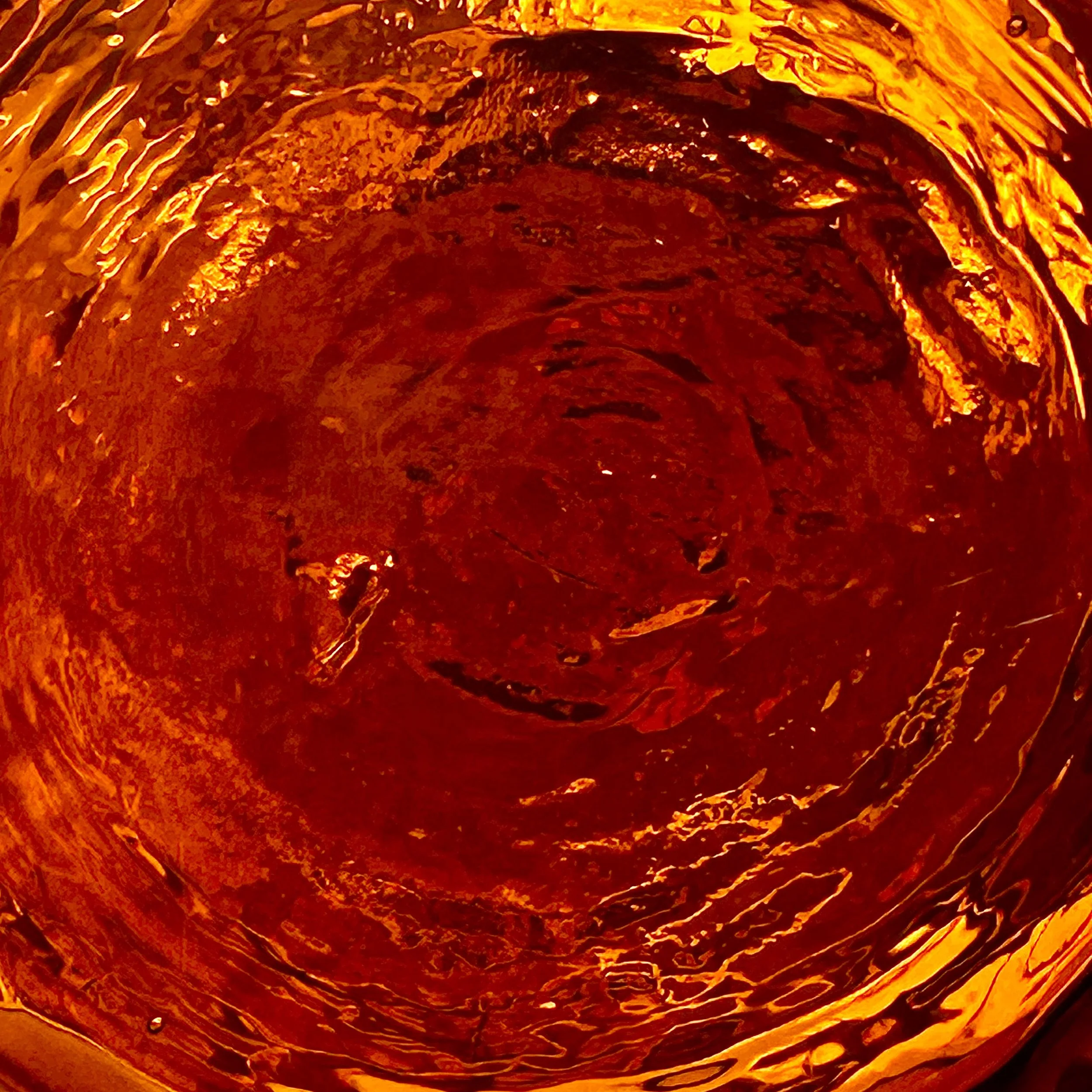 Image 17 of 19
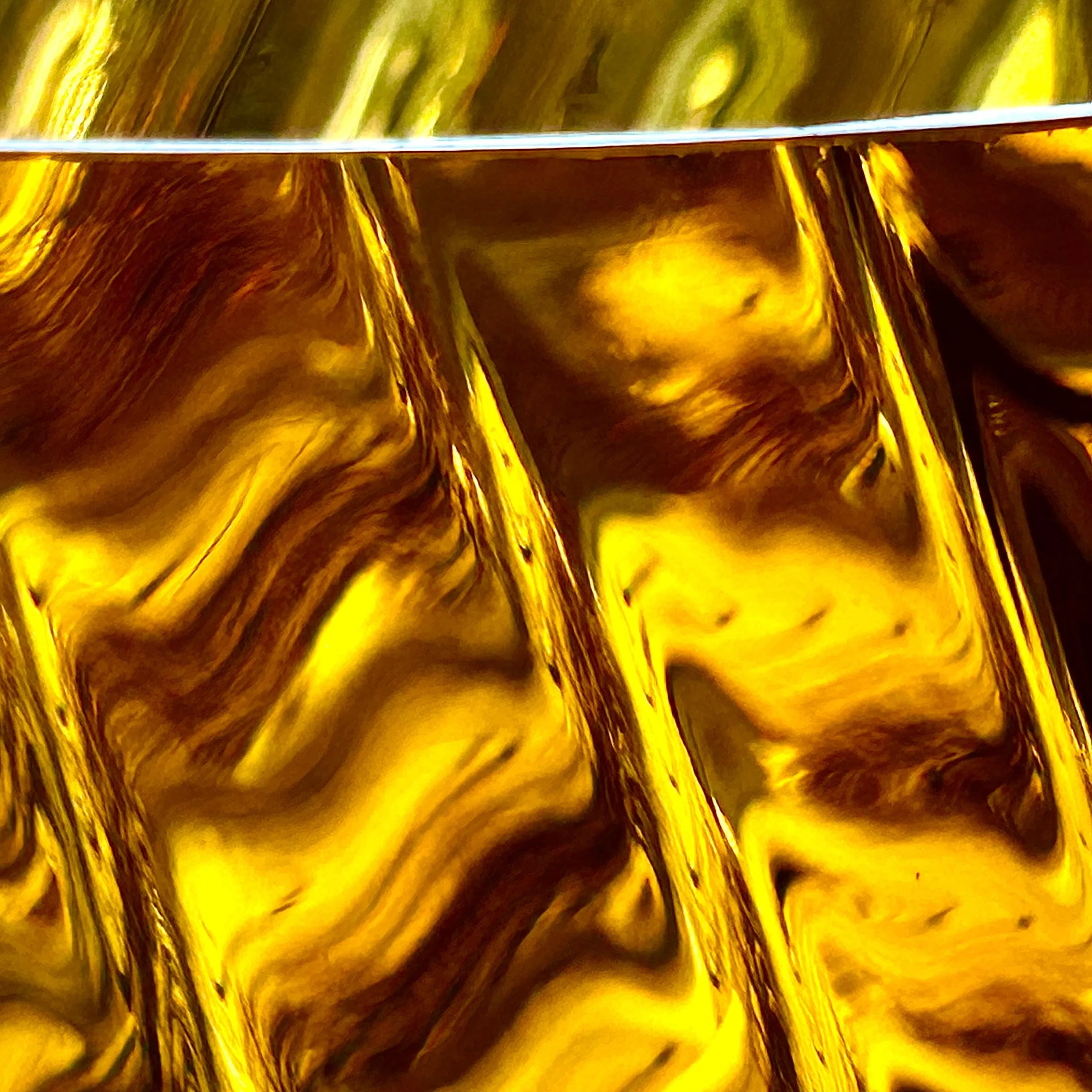 Image 18 of 19
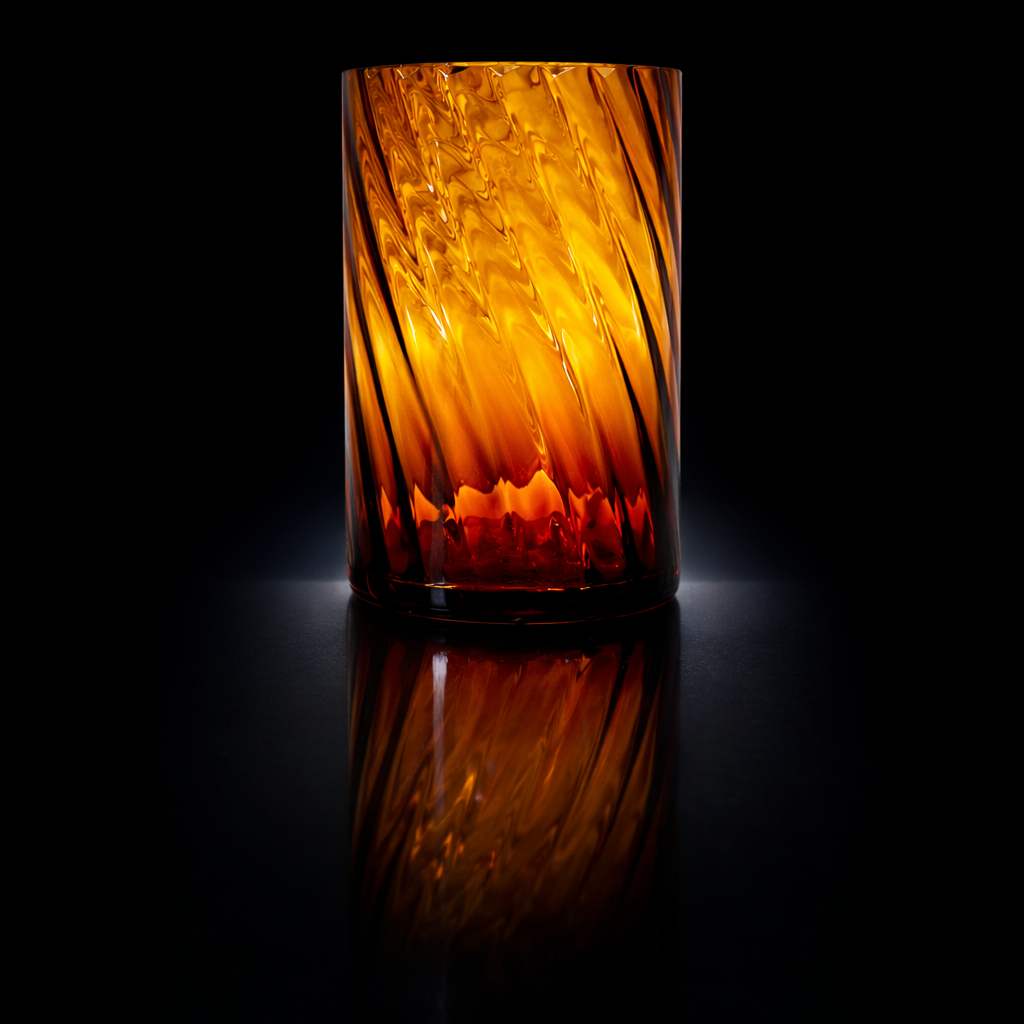 Image 19 of 19