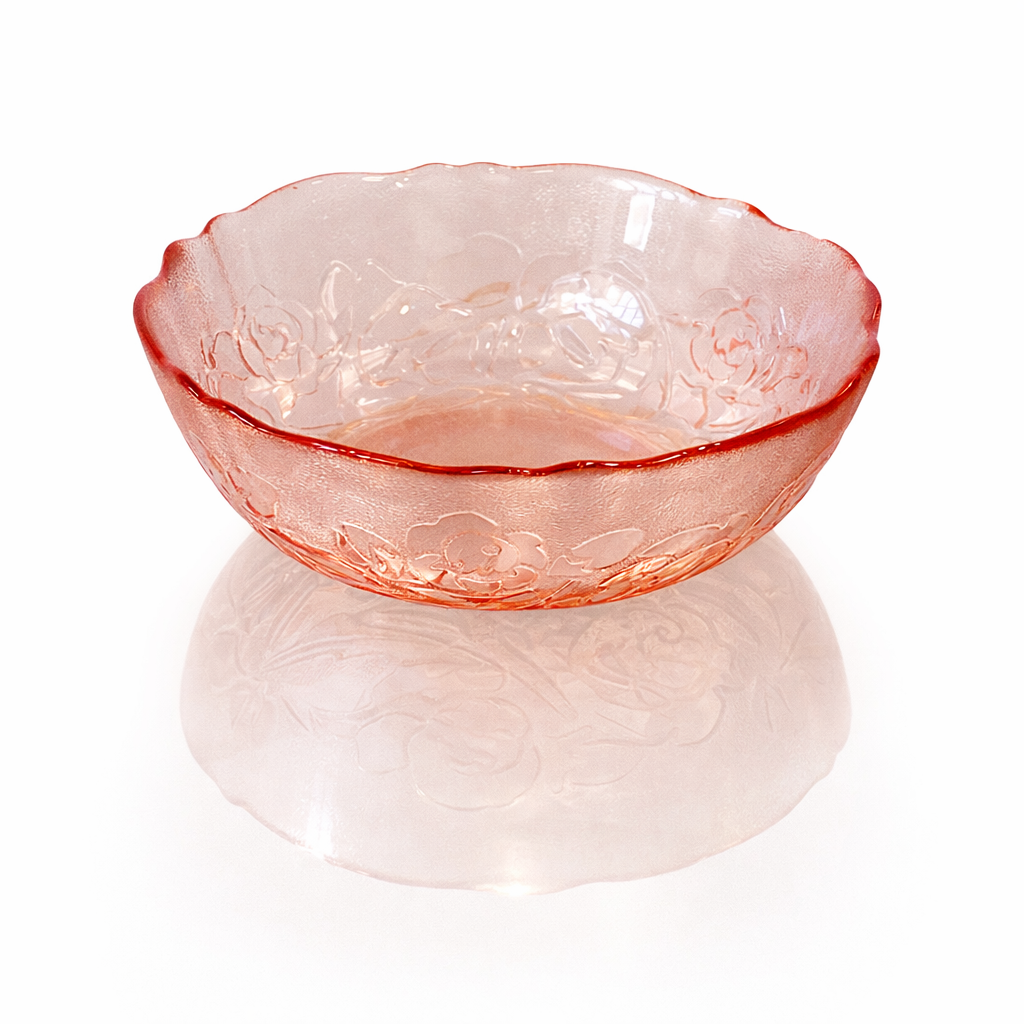
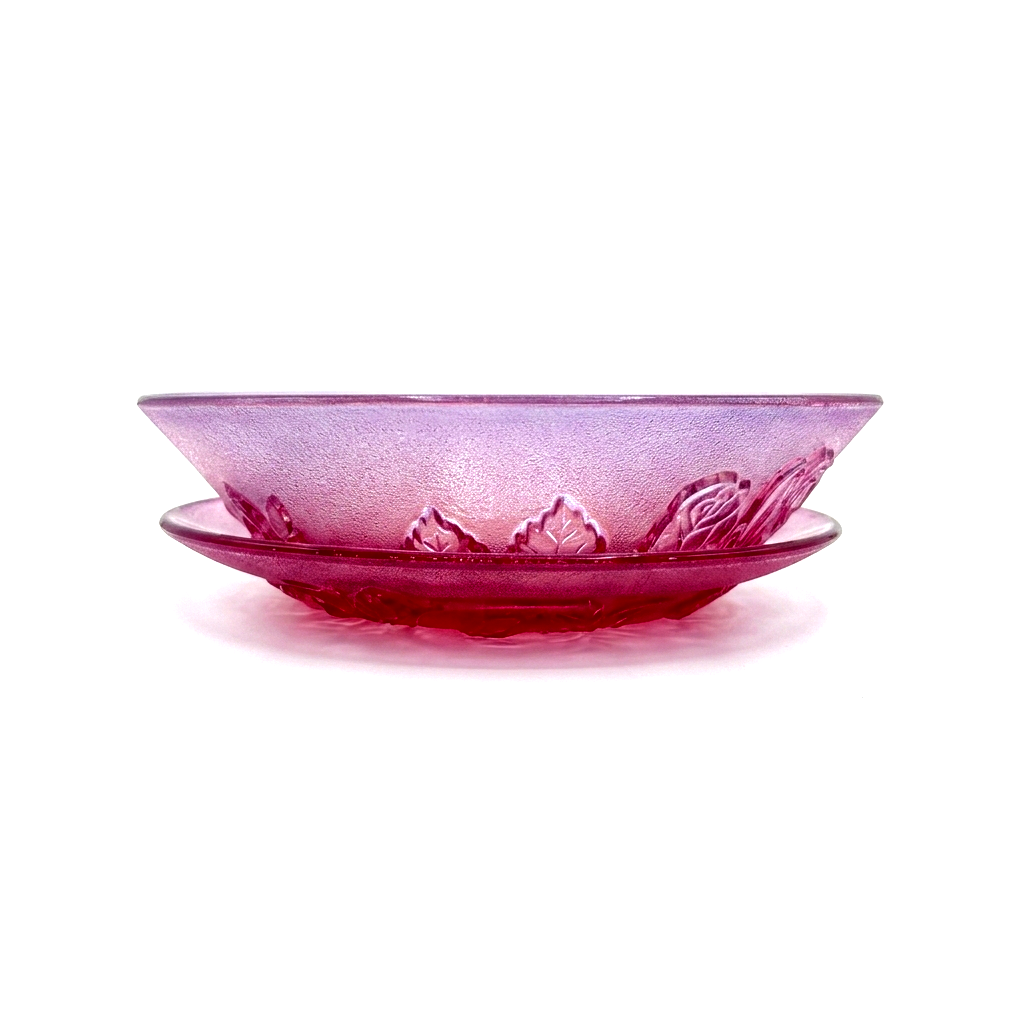
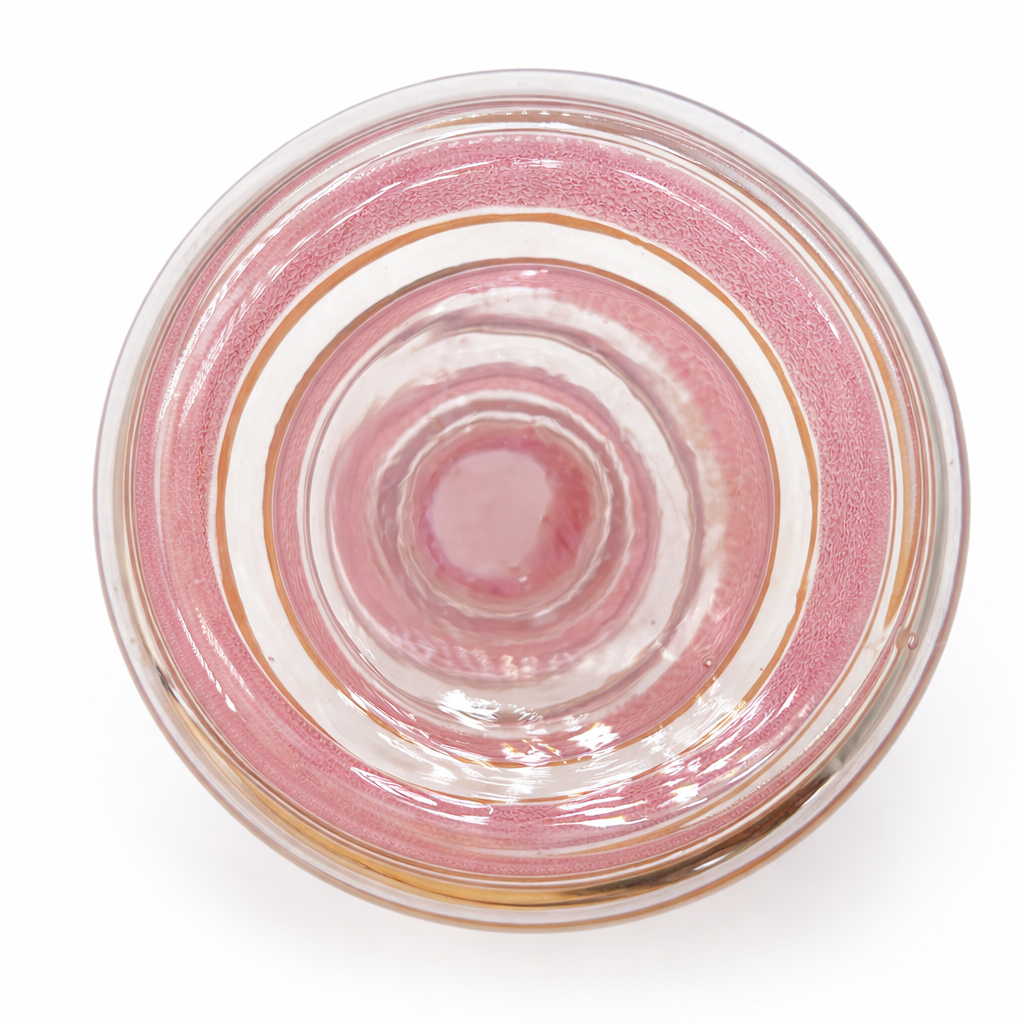
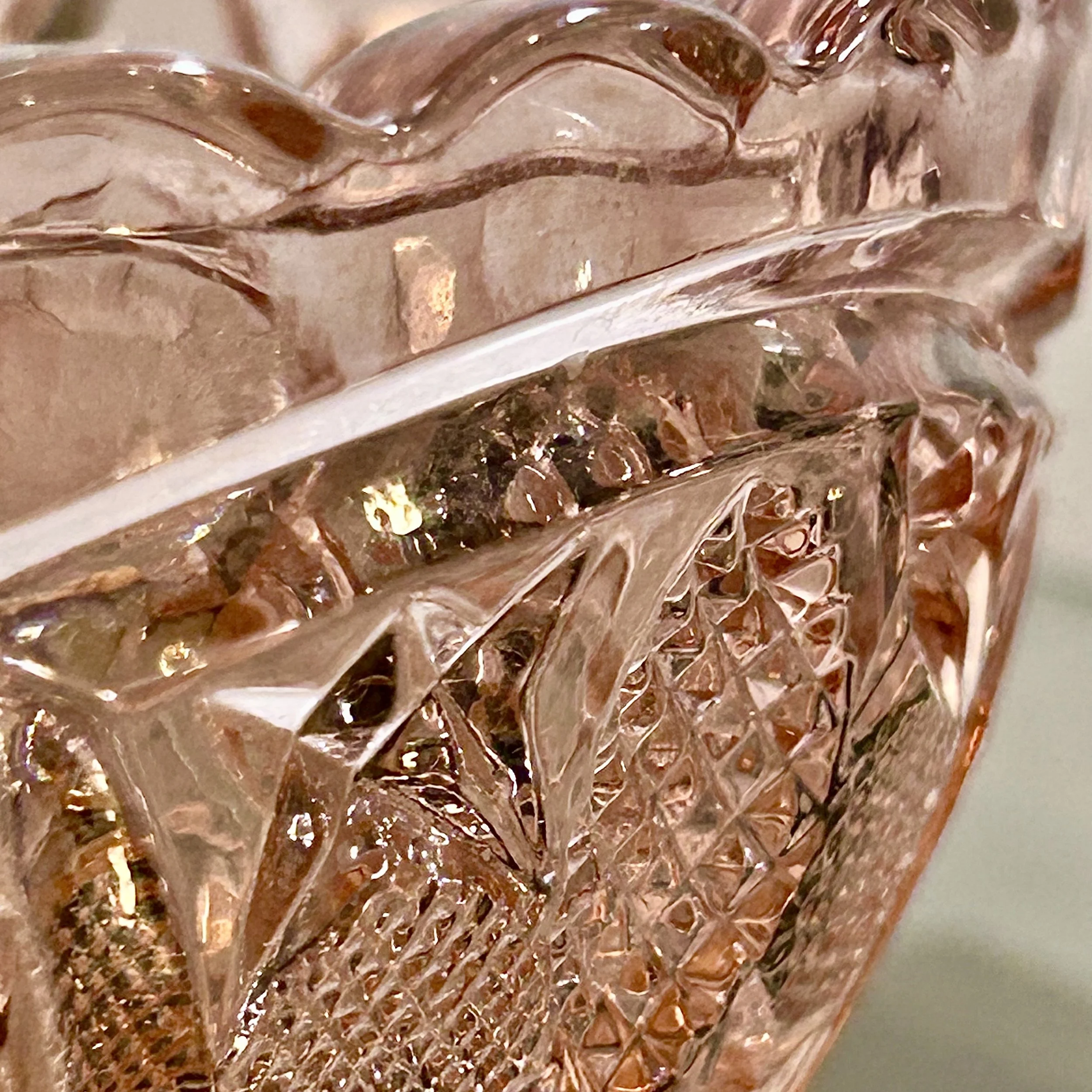
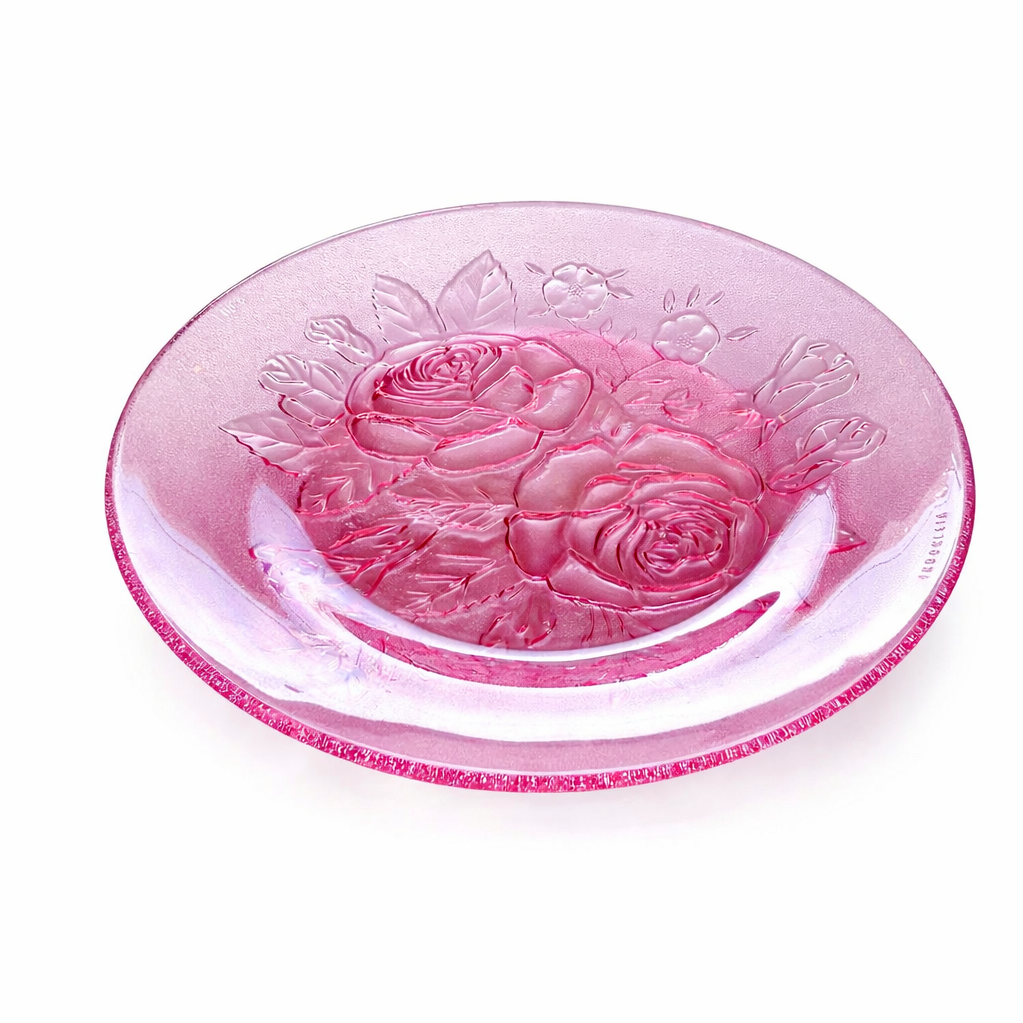
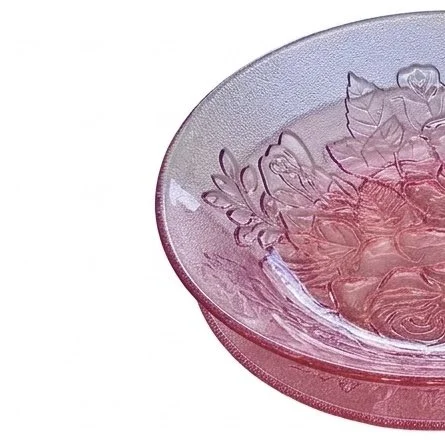
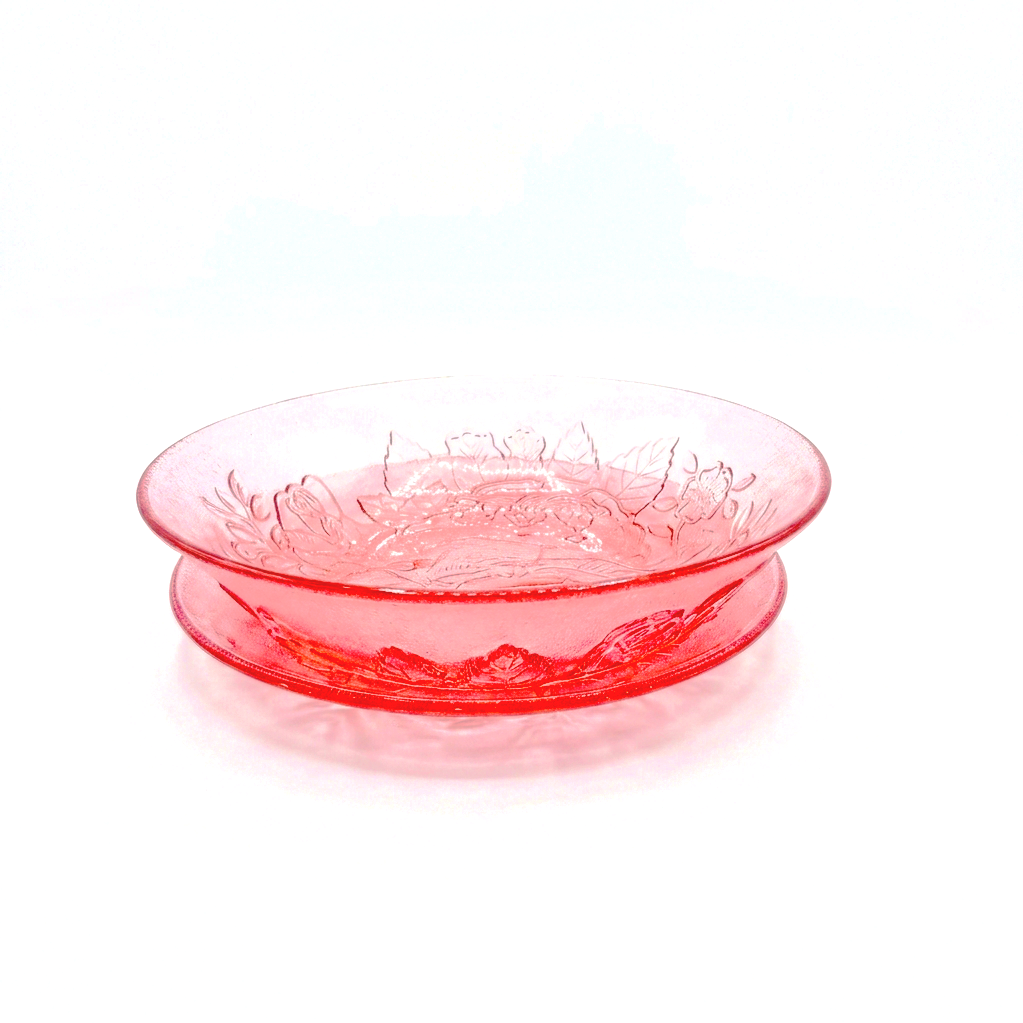
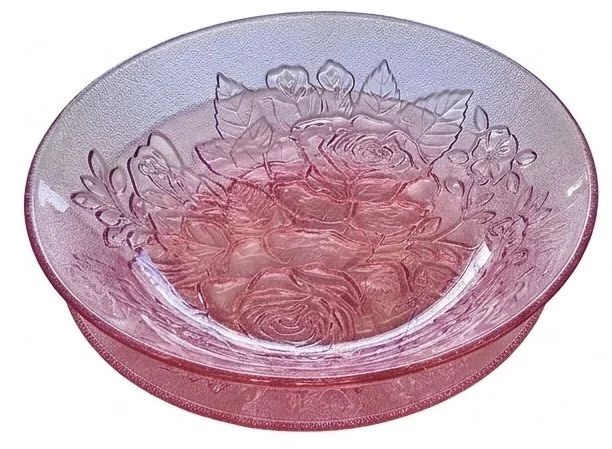
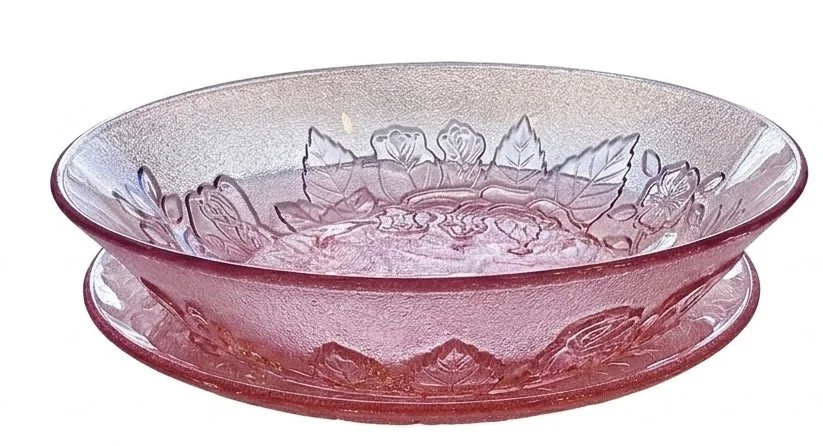
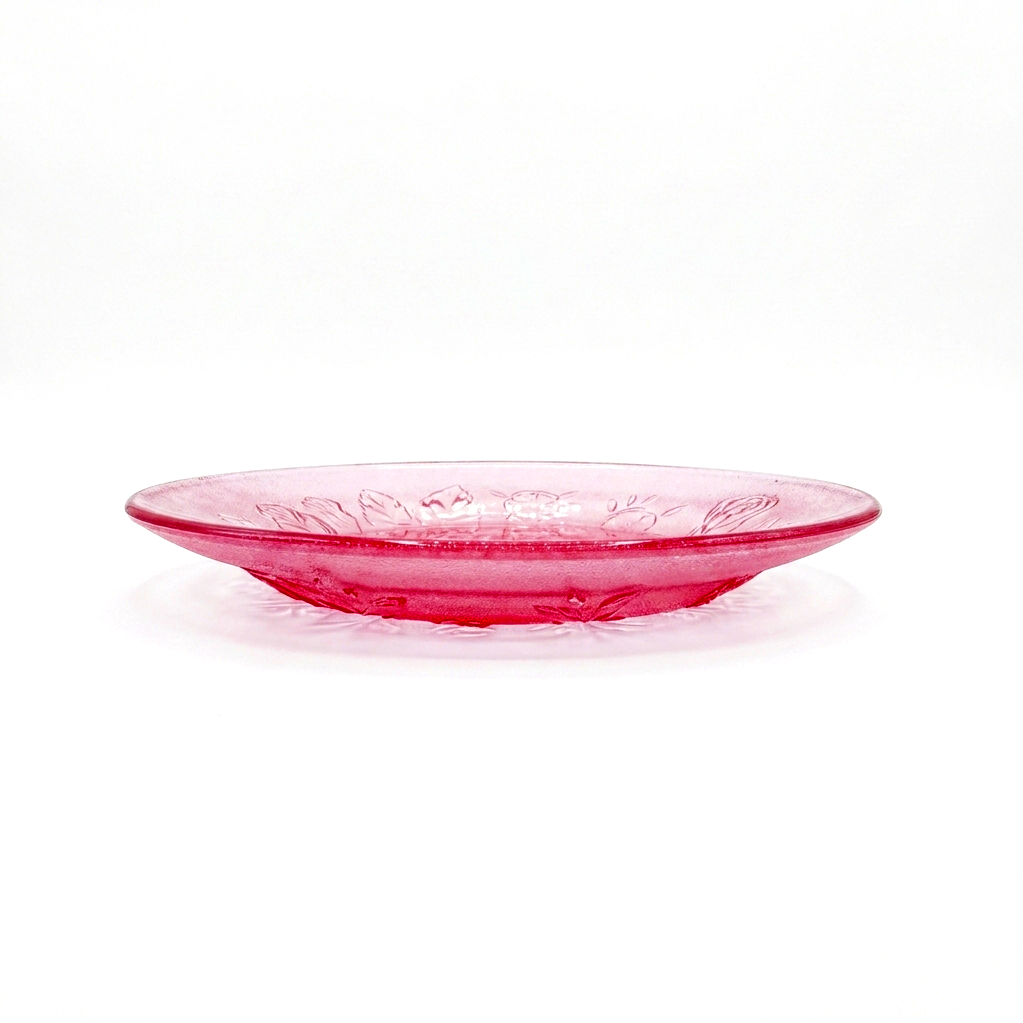
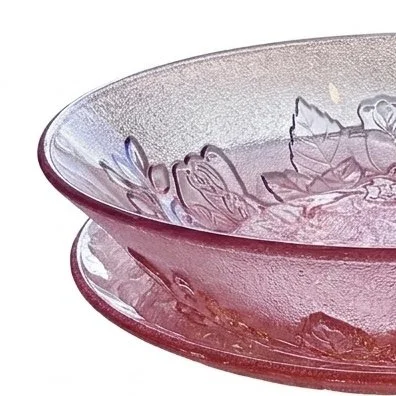
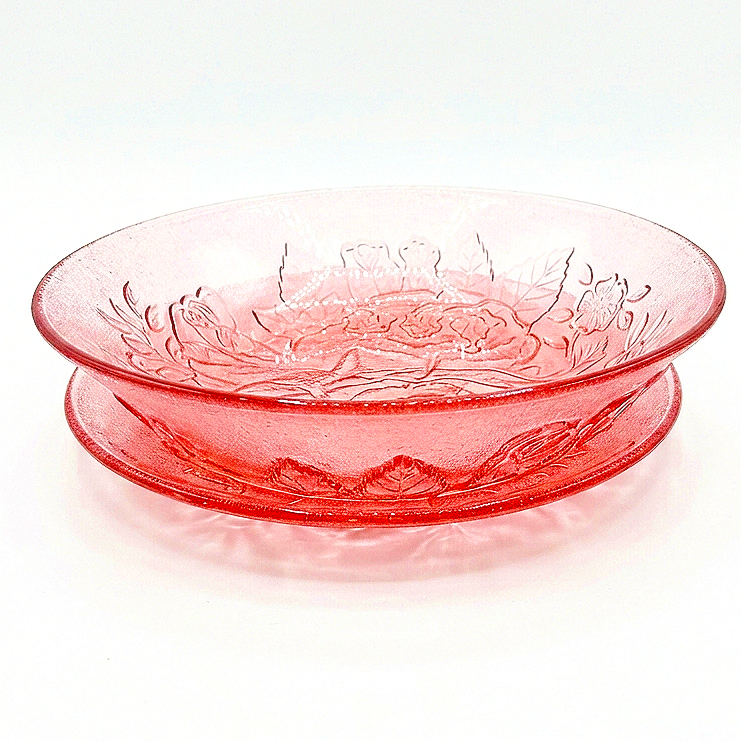
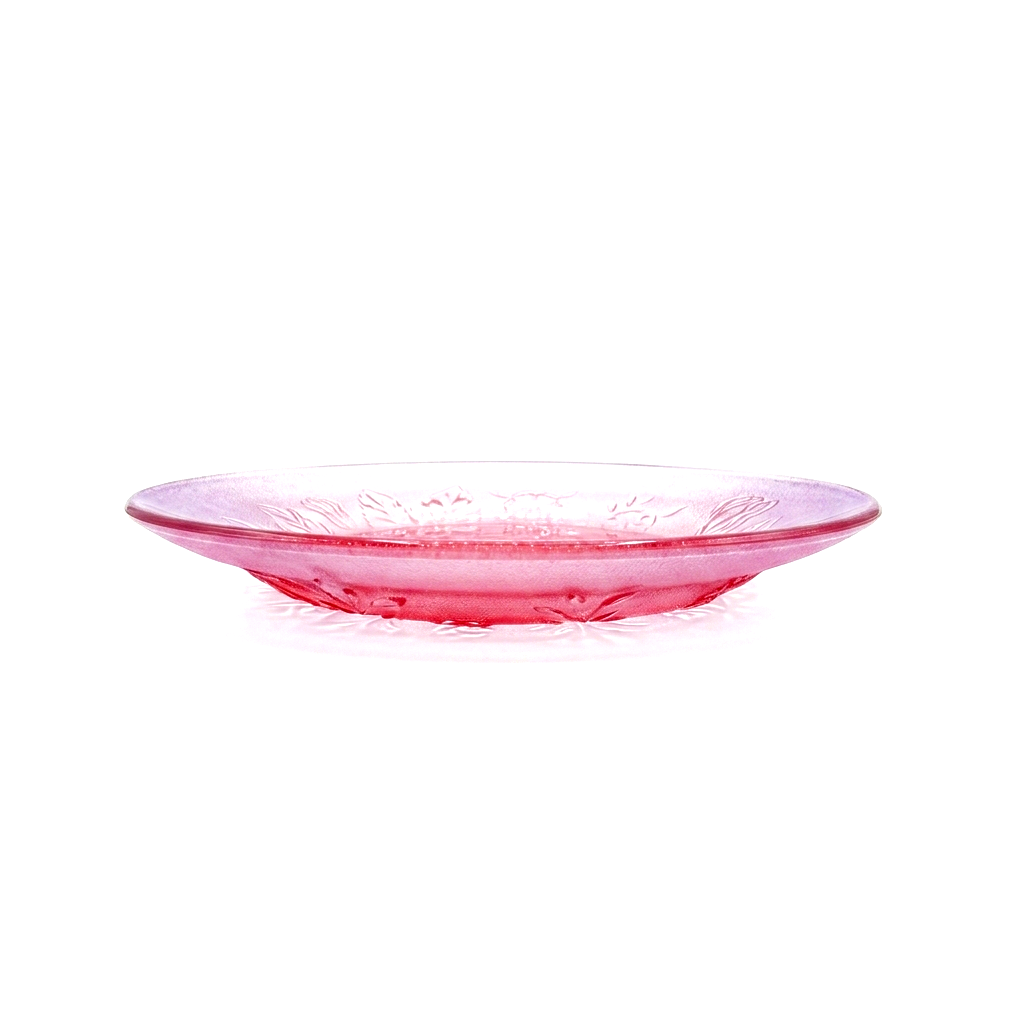
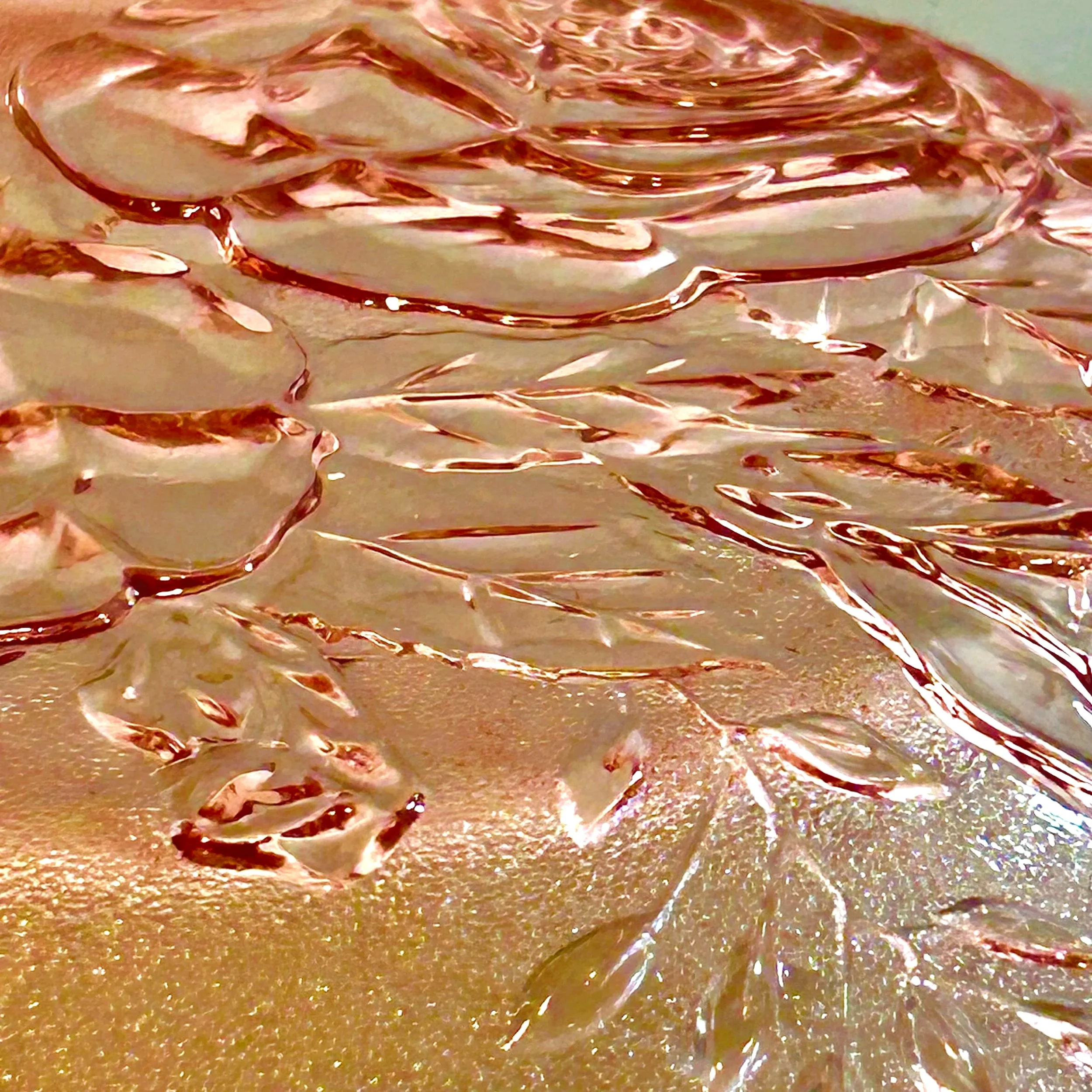
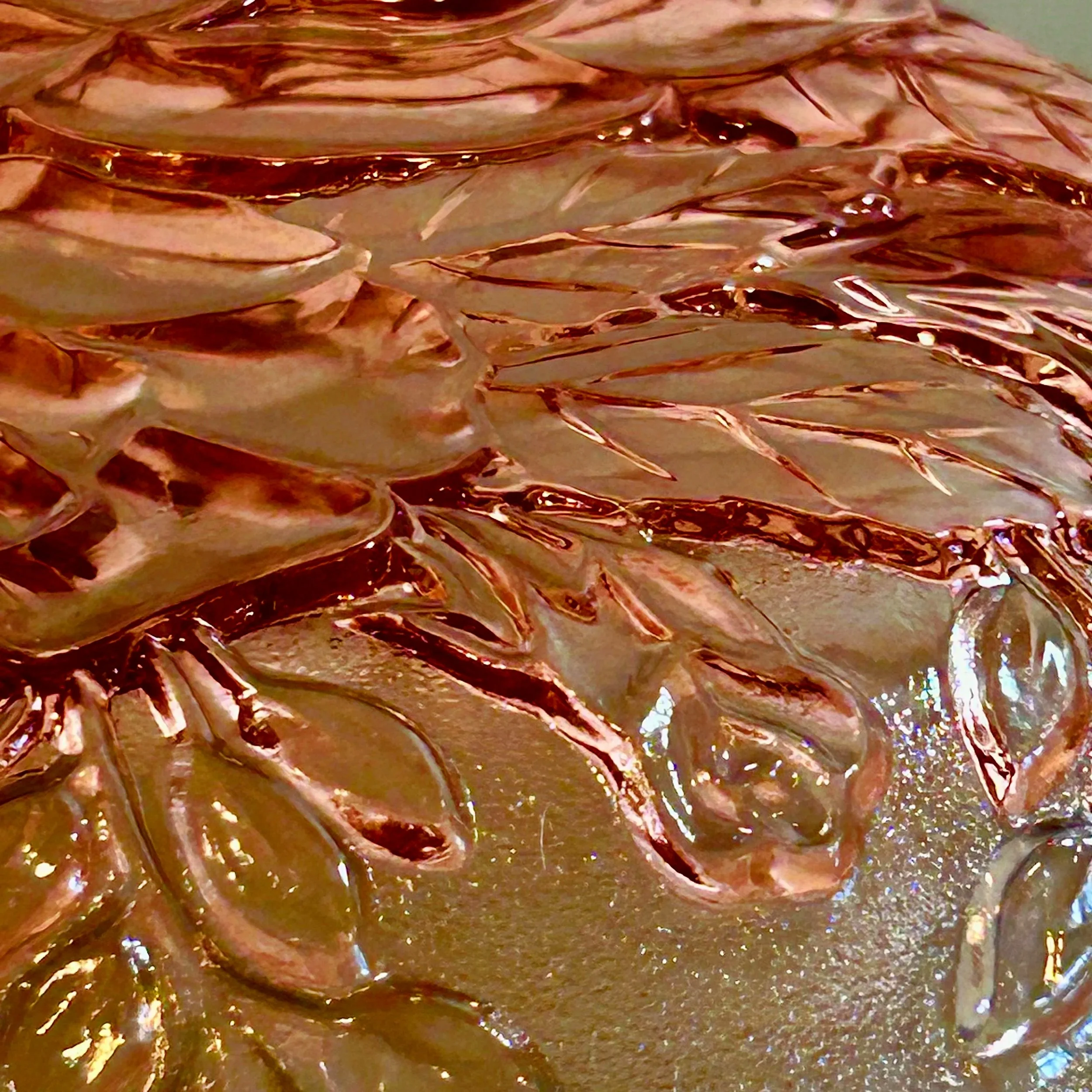
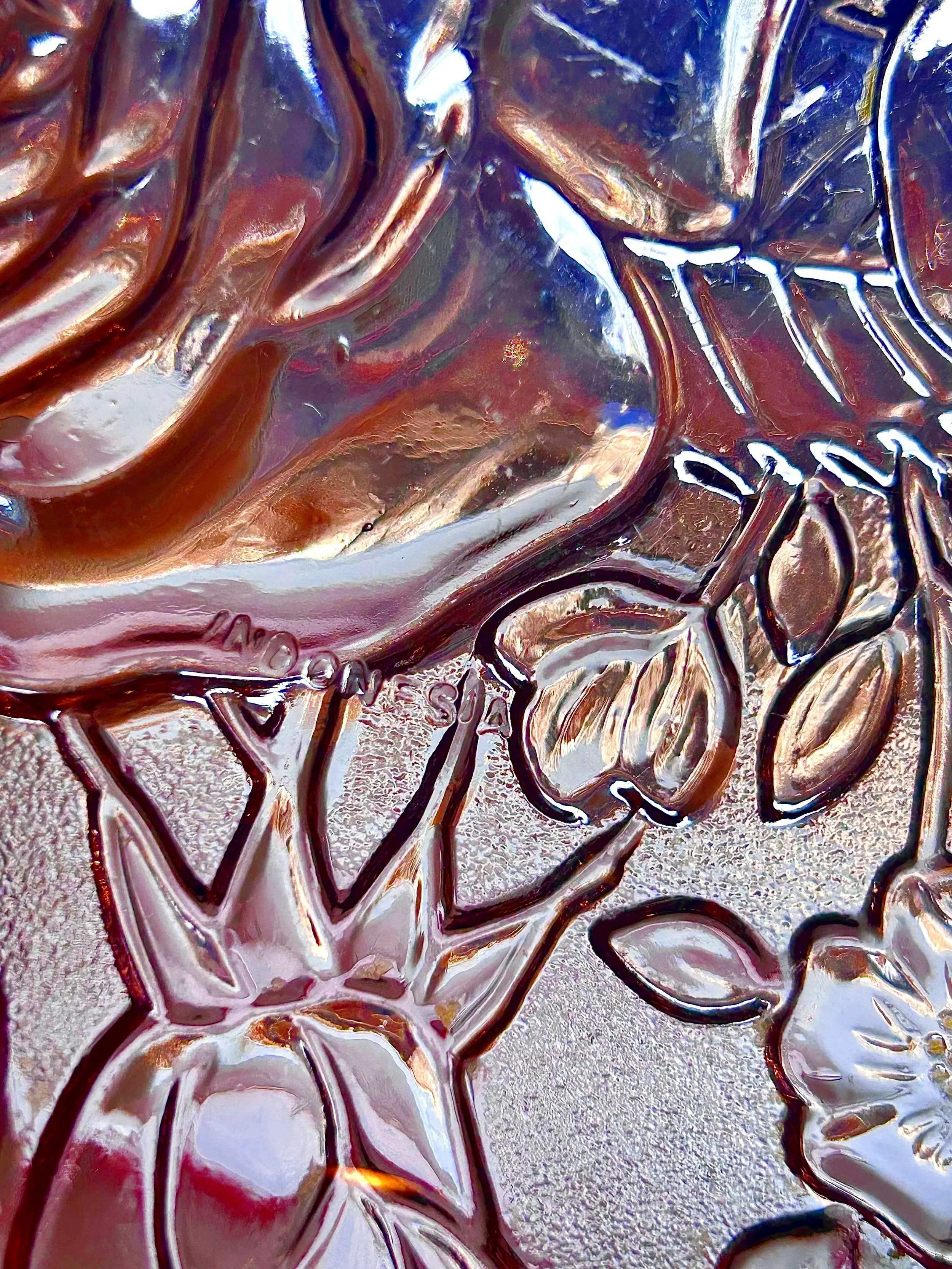
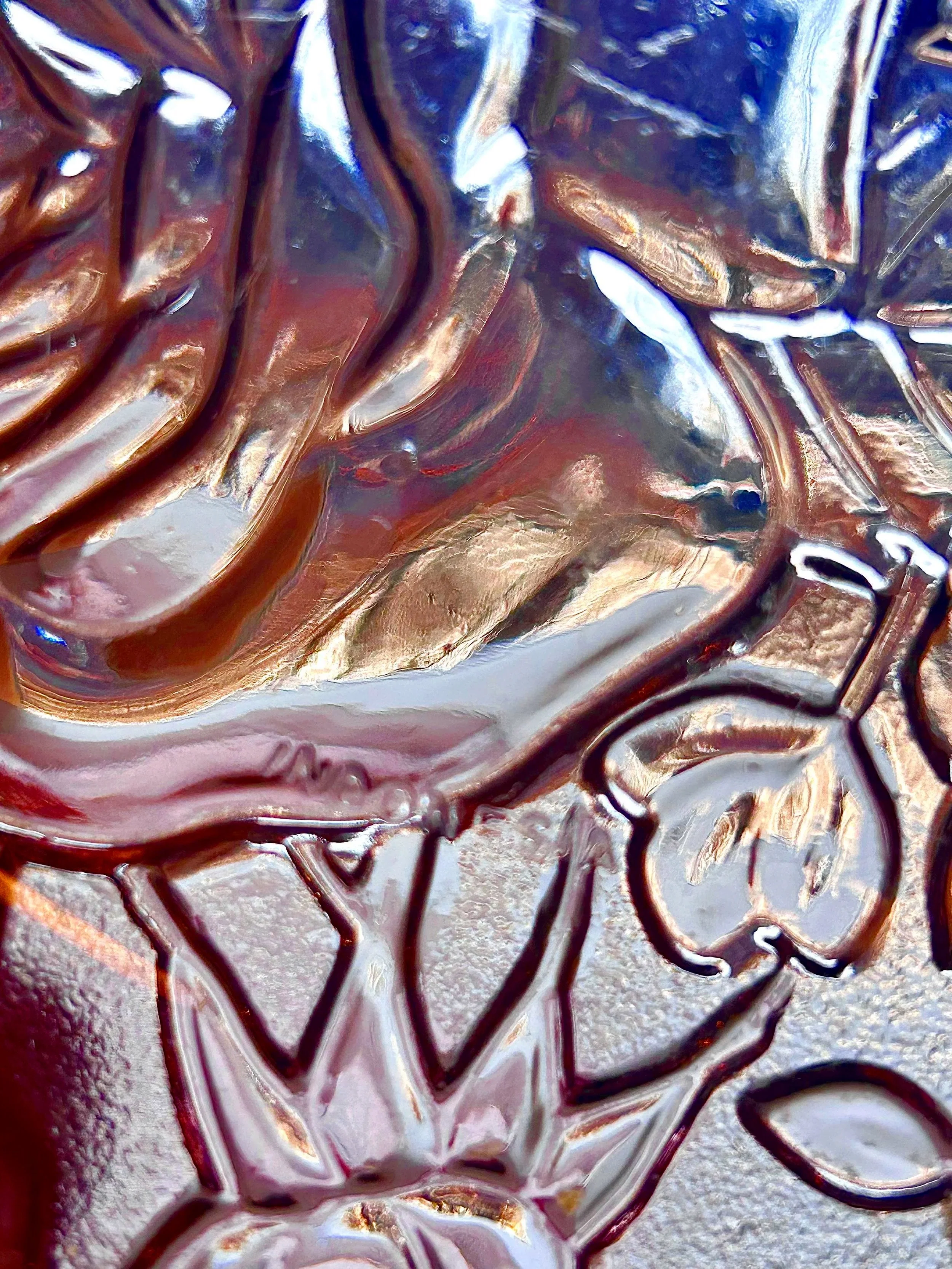
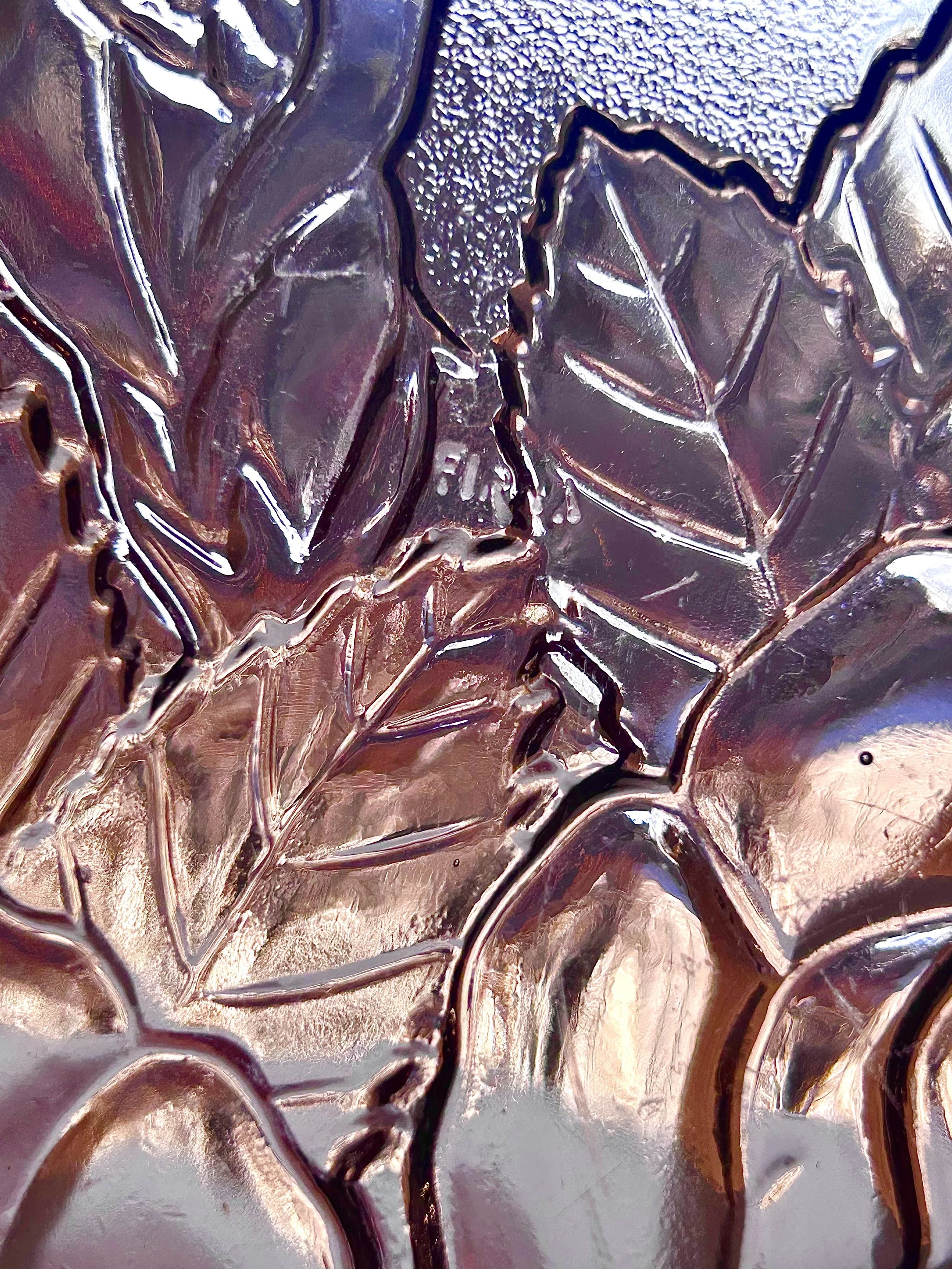
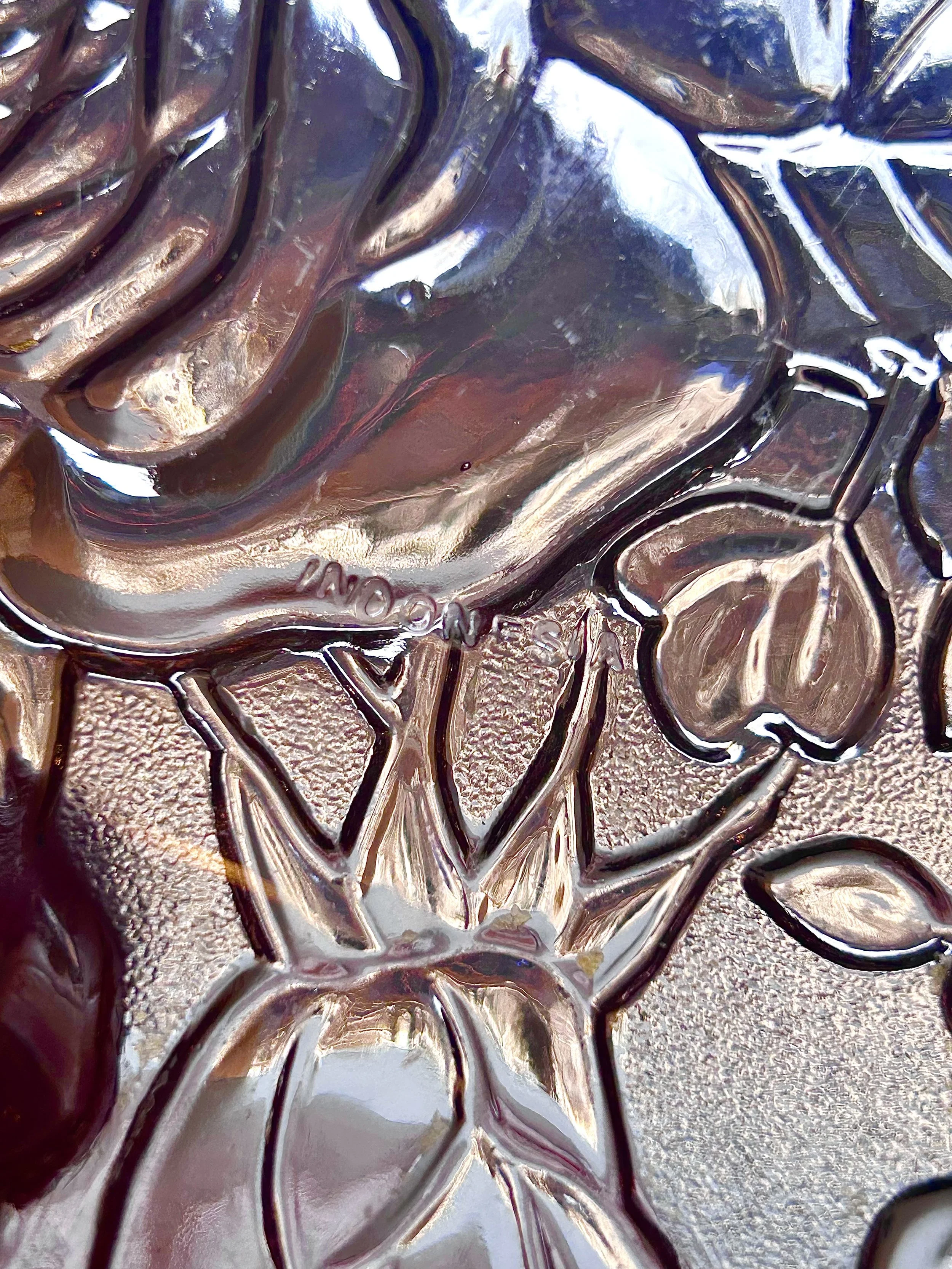
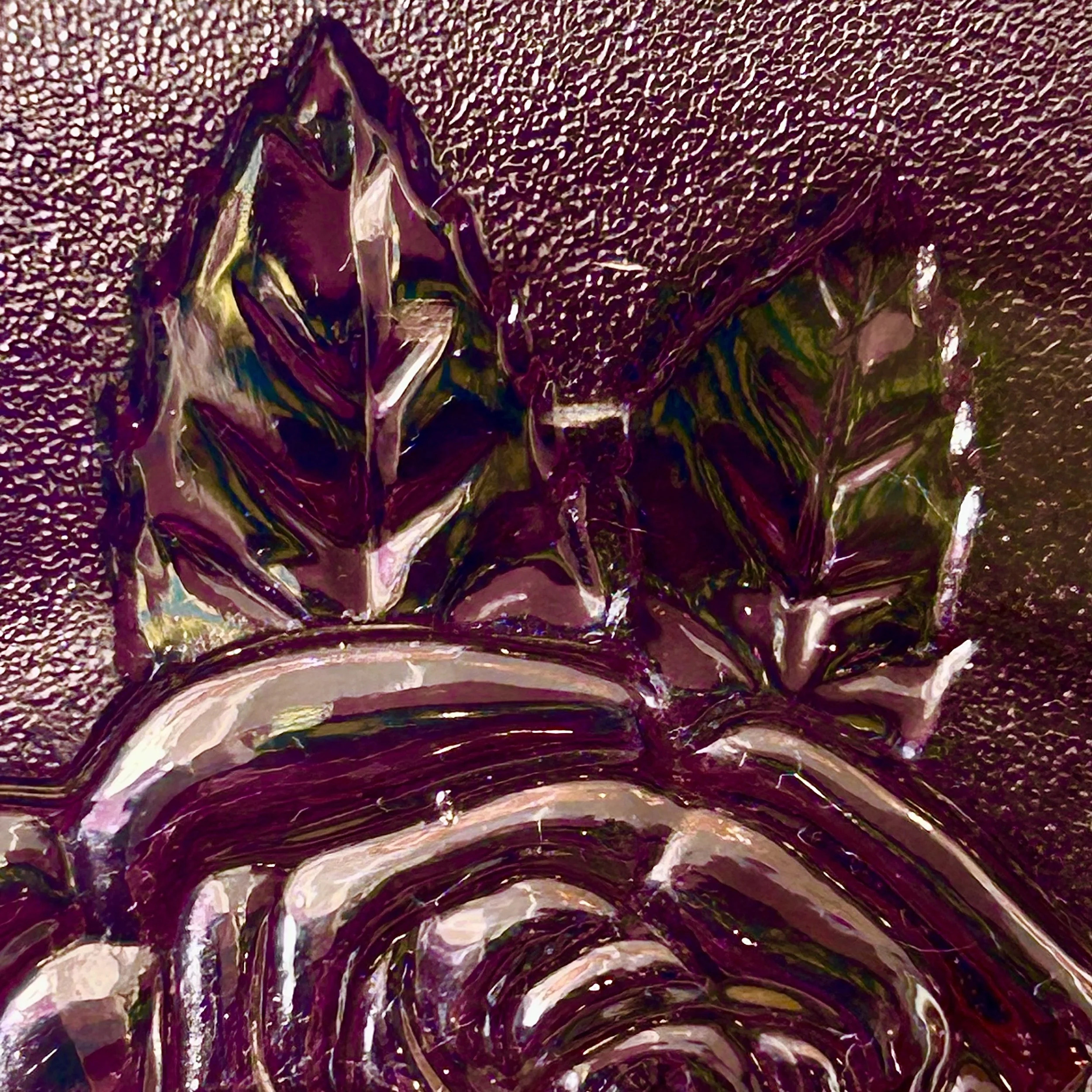
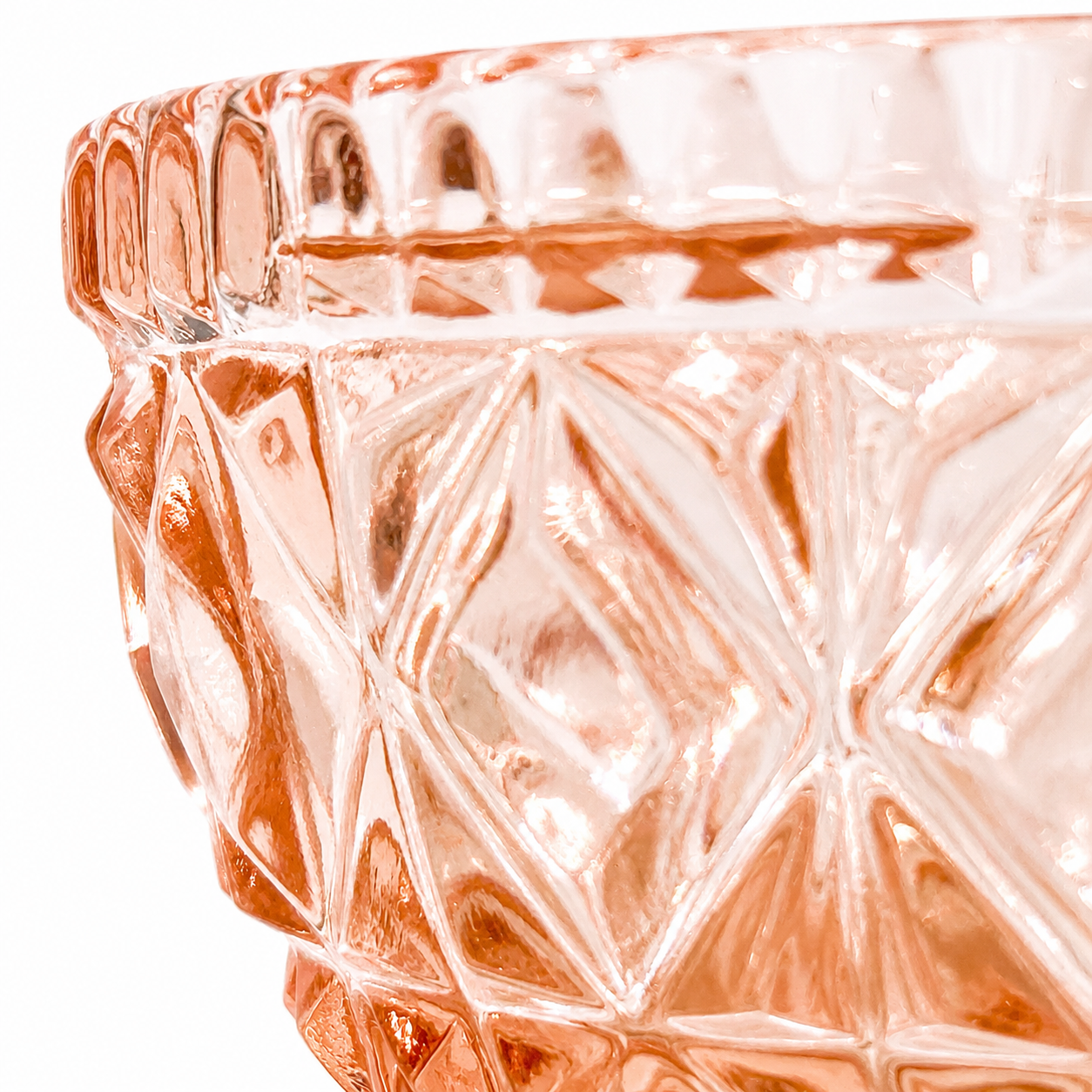
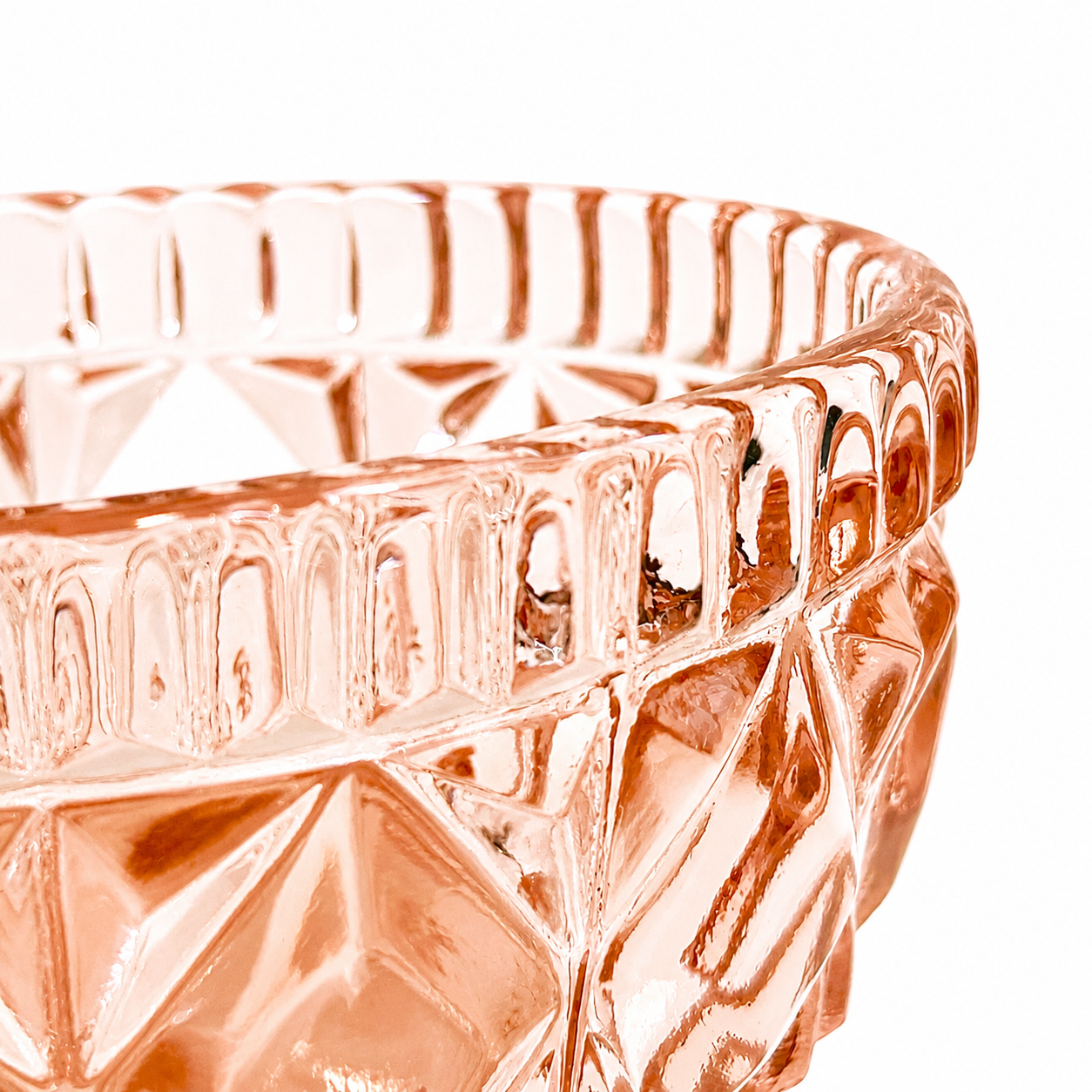
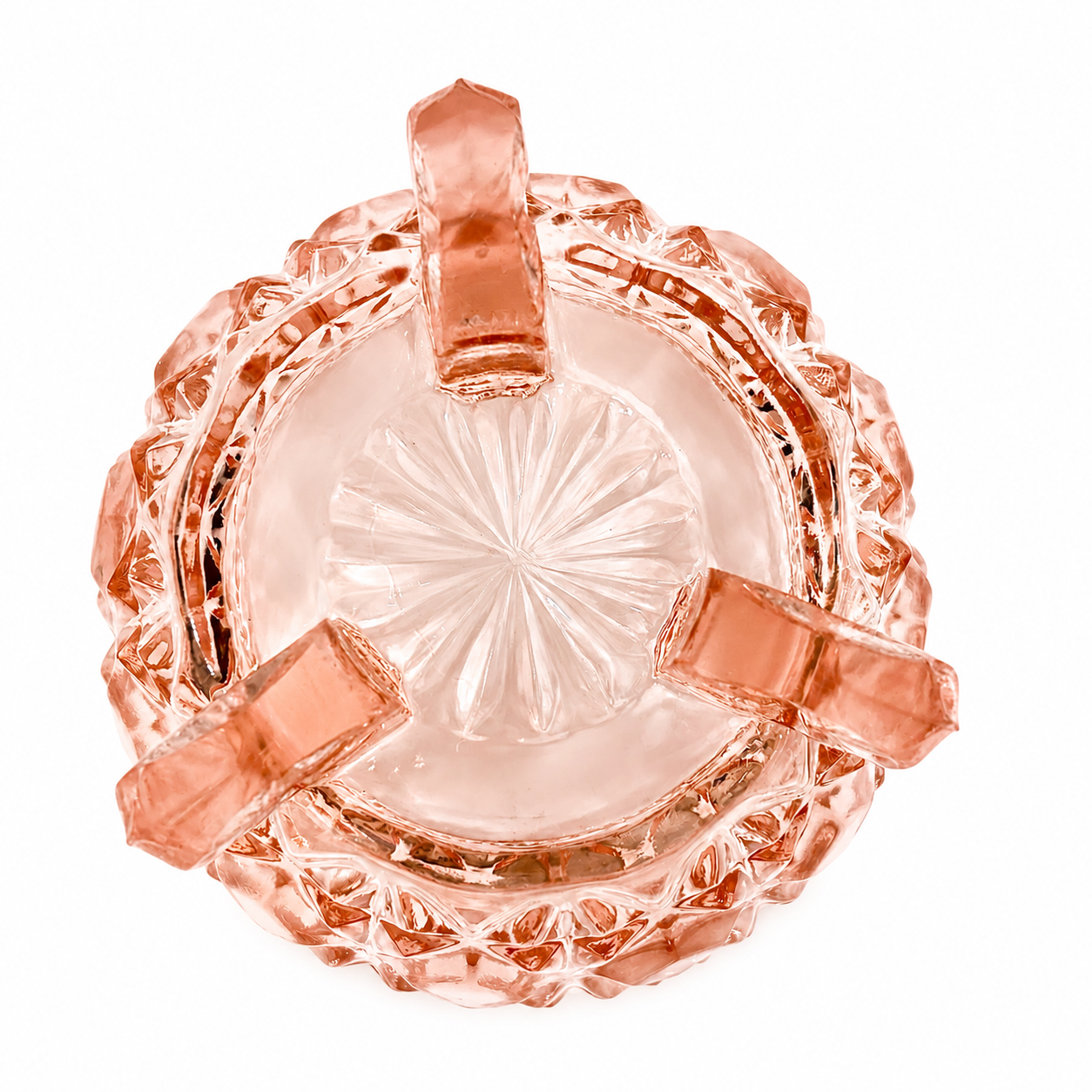
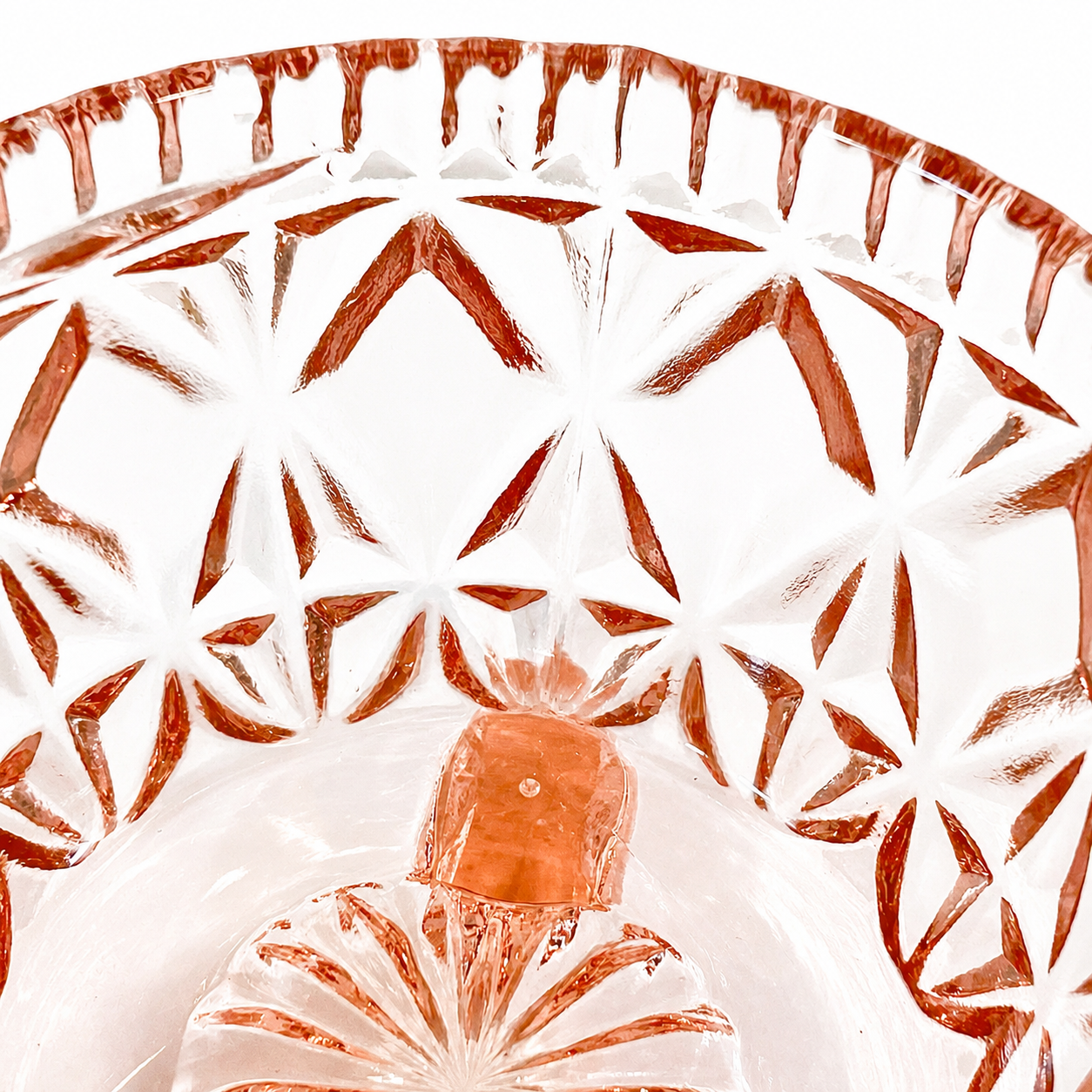
A complete and exceptionally preserved service of six pink Depression glass teacups with matching saucers, executed in a warm blush tone with molded rose garlands framed by vertical fluting.
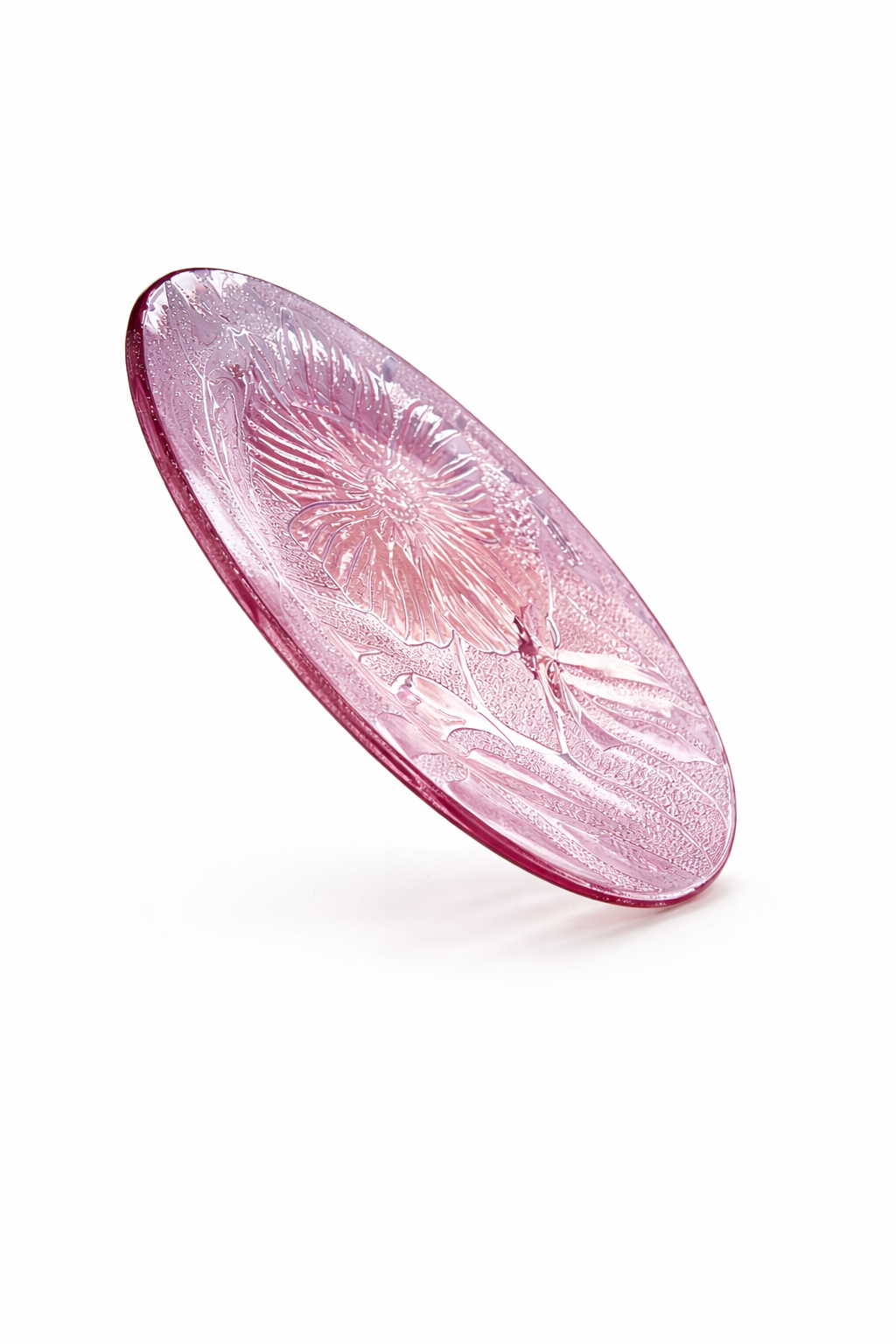
Each cup presents a gently tapered bowl with crisp floral relief panels alternating with elongated vertical ribs. The handles are elegantly proportioned and seamlessly integrated. The matching saucers echo the same rose motif around the perimeter, anchored by a circular well and structured radial segmentation.
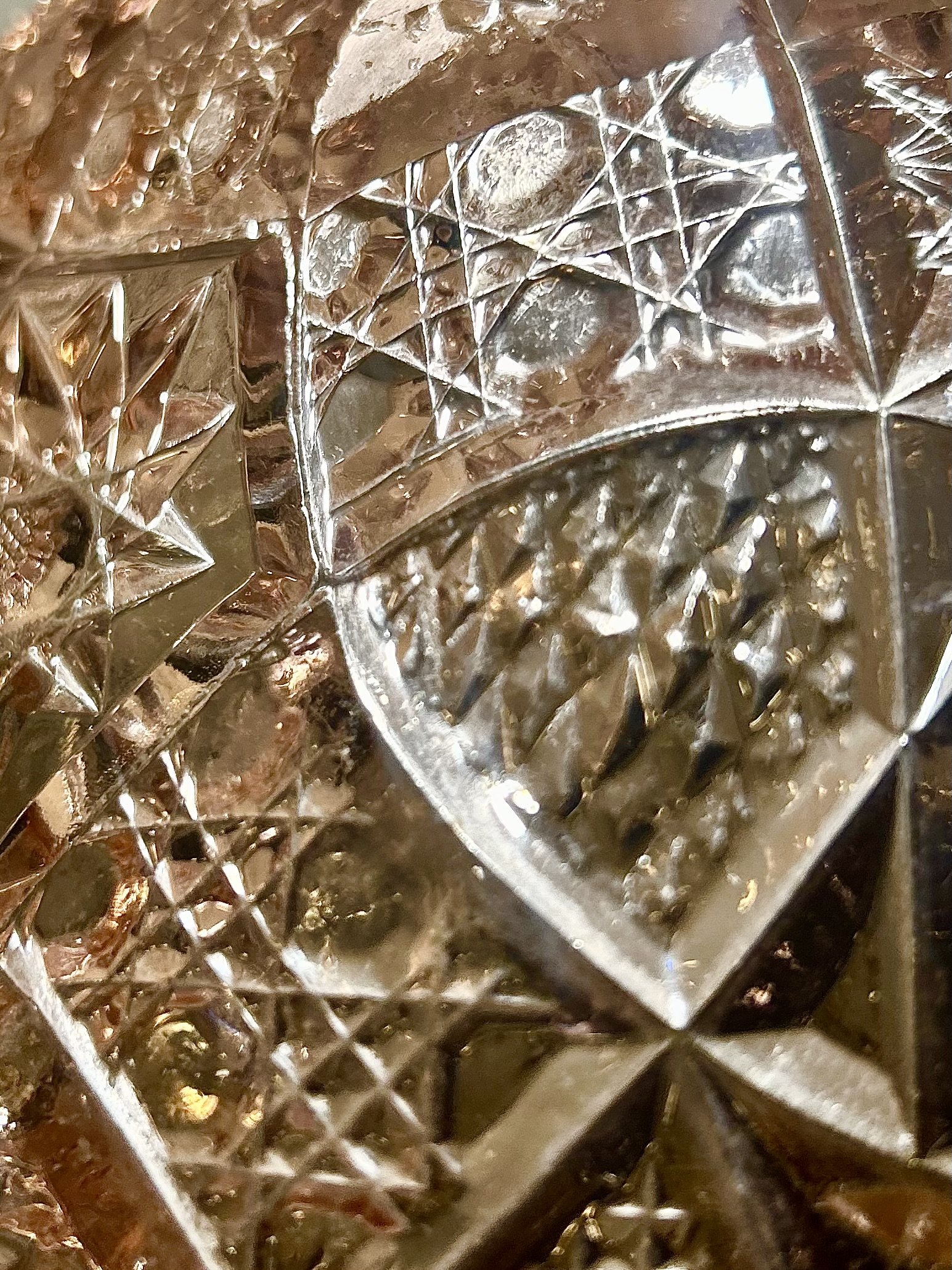
The glass displays luminous transparency with even color saturation and excellent mold clarity — a strong indicator of quality American pressed glass production of the 1930s–1940s. The rose relief pattern and panel structure are consistent with classic Depression-era elegant glass patterns produced by major American houses such as Federal Glass, Hocking Glass Company, or similar manufacturers.
Attribution & Period
Height of the American Depression-era "Elegant Glass" movement, this service features a rhythmic, panel-fluted structure and a delicately molded rose garland motif characteristic of the 1930s. The blush-pink coloration, integrated loop handles, and radial segmented saucers reflect the sophisticated aesthetic of the period's principal domestic manufacturers, blending period charm with architectural precision.
Dimensions & Weight
Each Cup:
Height: 2 1/2 inches
Base Diameter: 2 inches
Each Saucer:
Diameter: 5 3/4 inches
Footed Base Diameter: 2 3/4 inches
Balanced scale appropriate for tea service or refined display.
Condition
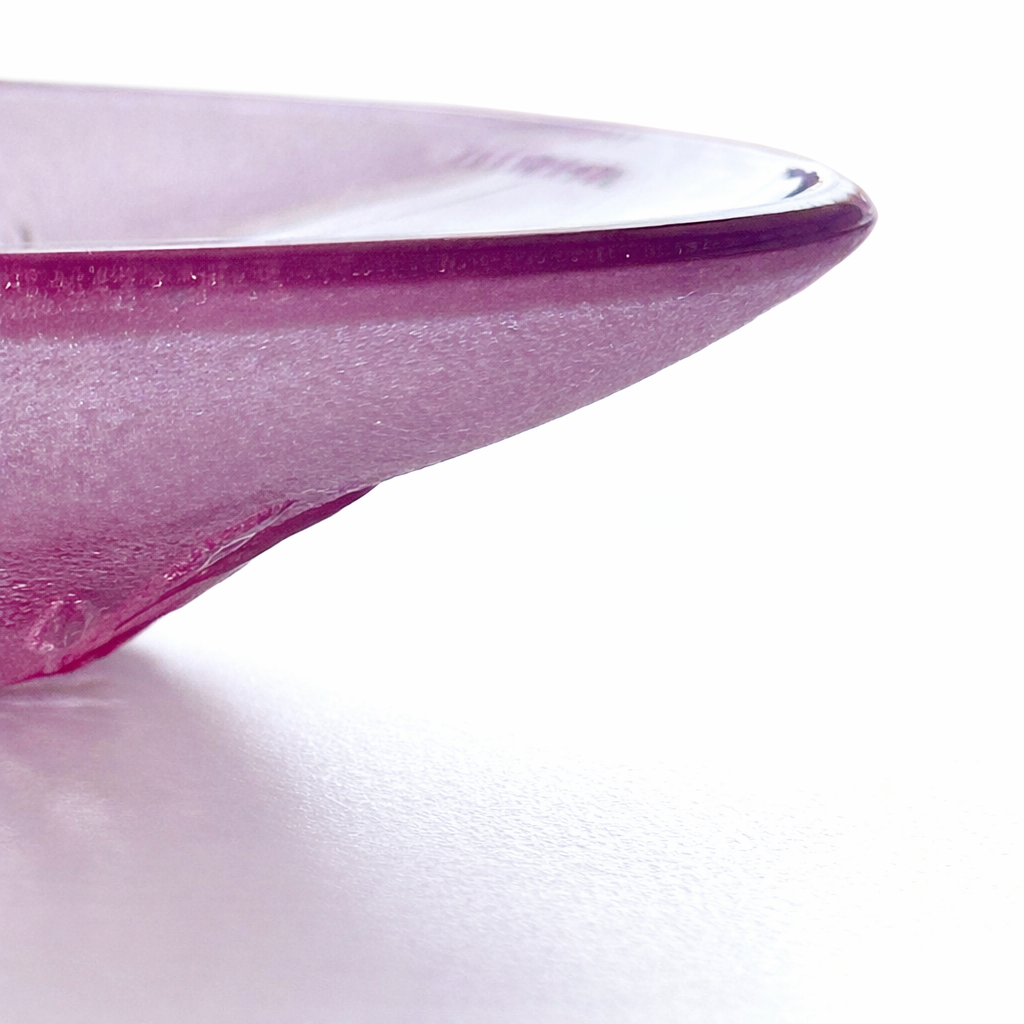
Excellent condition. No chips, cracks, or scratches observed on any of the six cups or saucers. Mold definition remains crisp. Surfaces retain strong clarity and even coloration throughout. A rare opportunity to acquire a fully intact service of this type in such preserved condition.
Authenticity & Construction
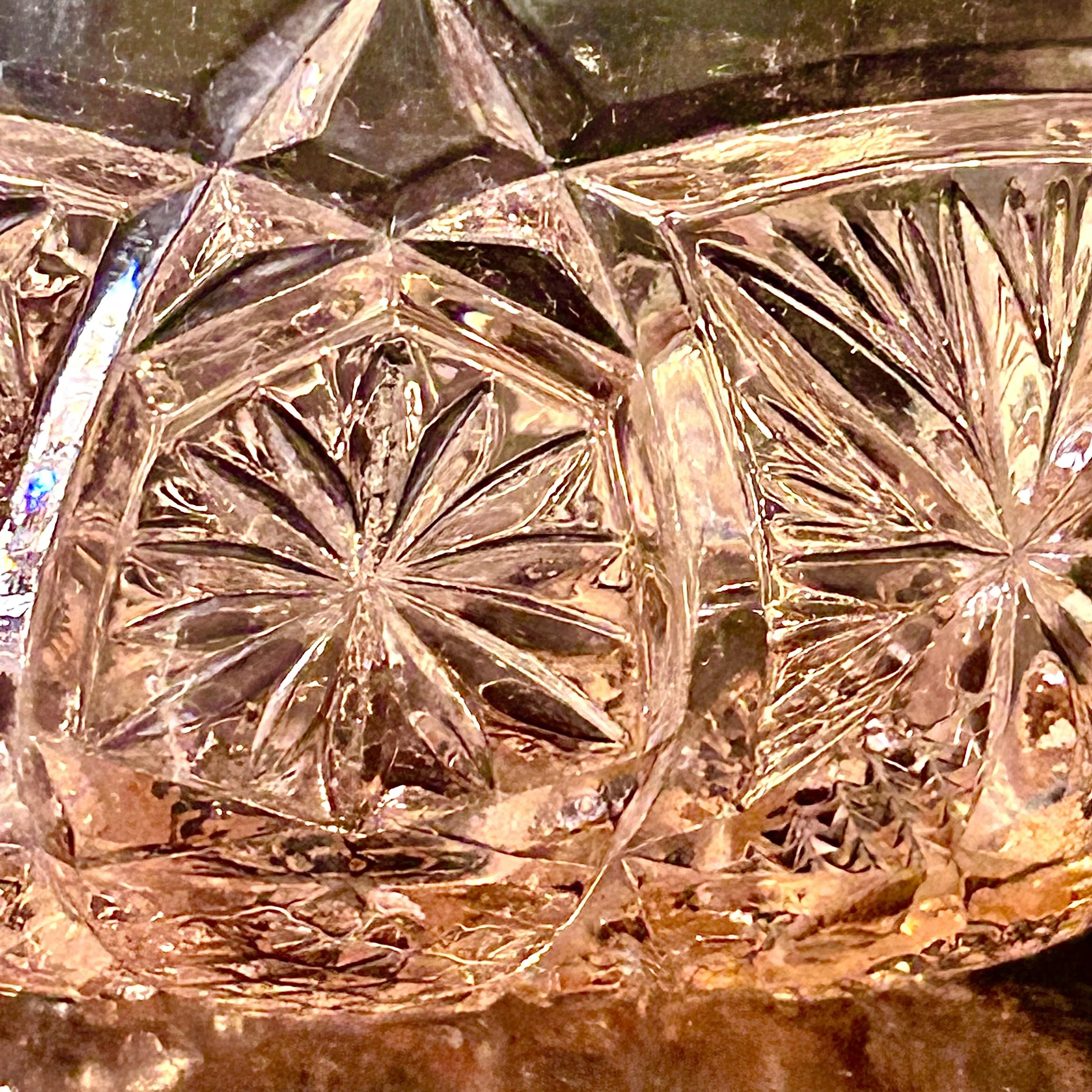
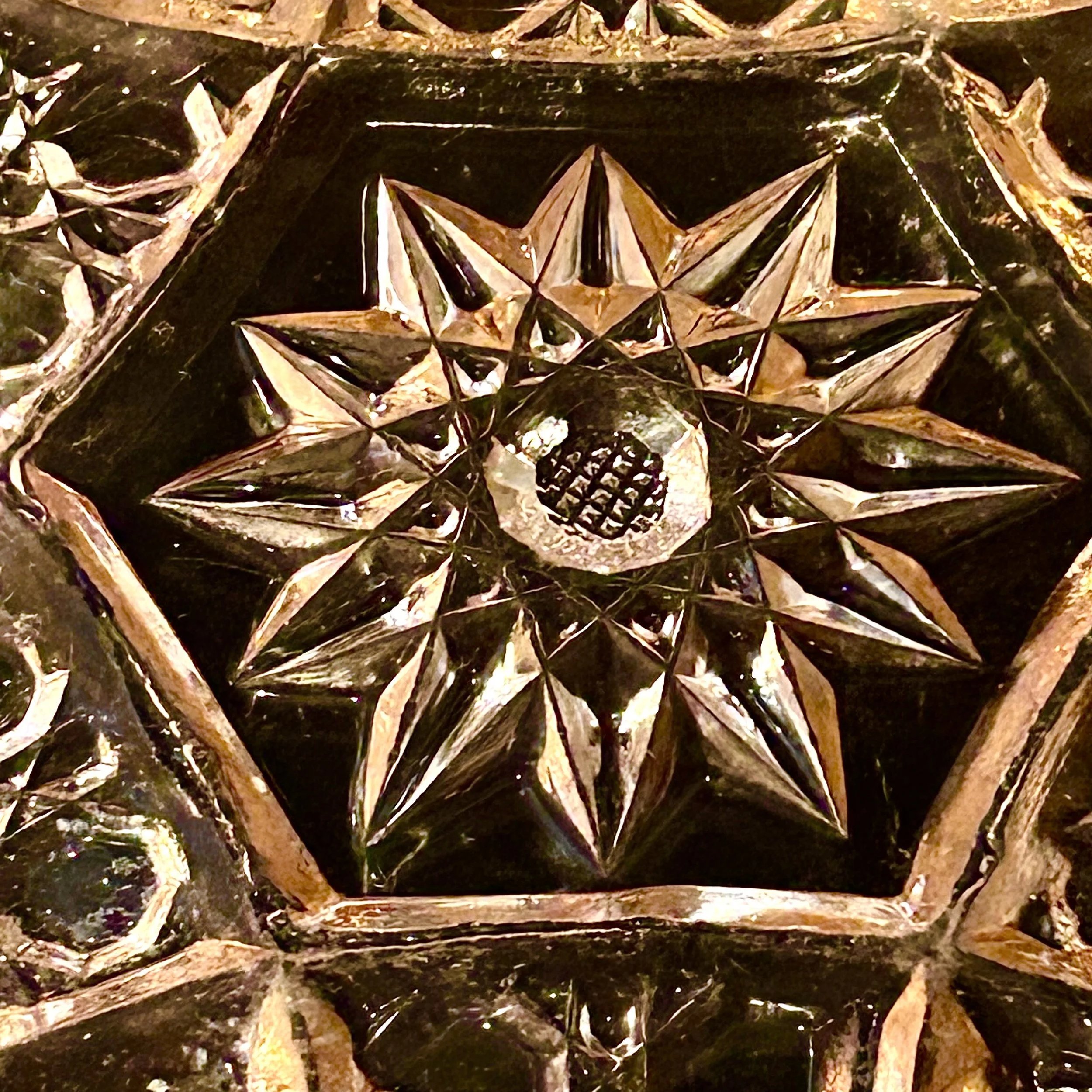
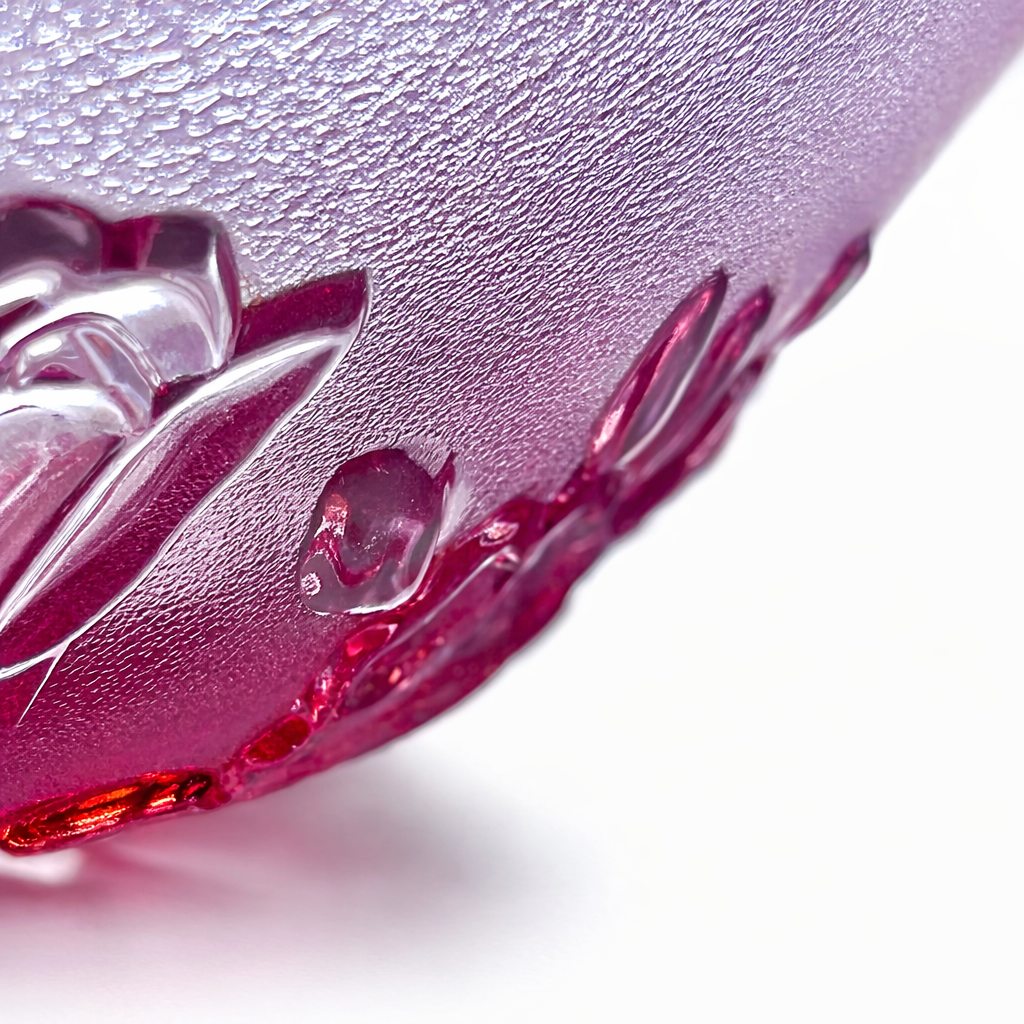
Pressed glass construction; the relief roses and vertical fluting are mold-pressed with clean definition and consistent repetition across all six examples, indicating original matched production rather than assembled replacements. The blush tone is characteristic of Depression-era pink glass, achieved through controlled mineral coloration within the molten batch. Subtle internal light refraction confirms period pressed glass technique.
Placement
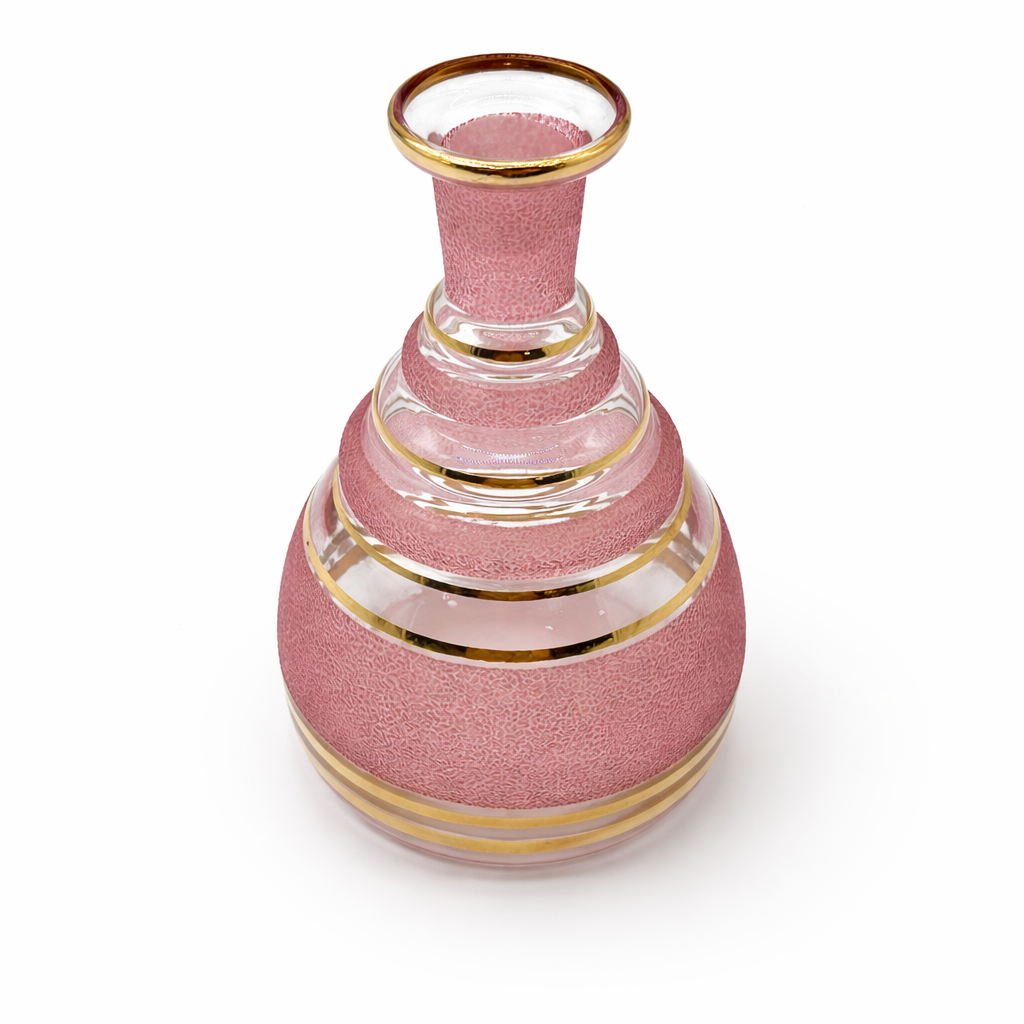
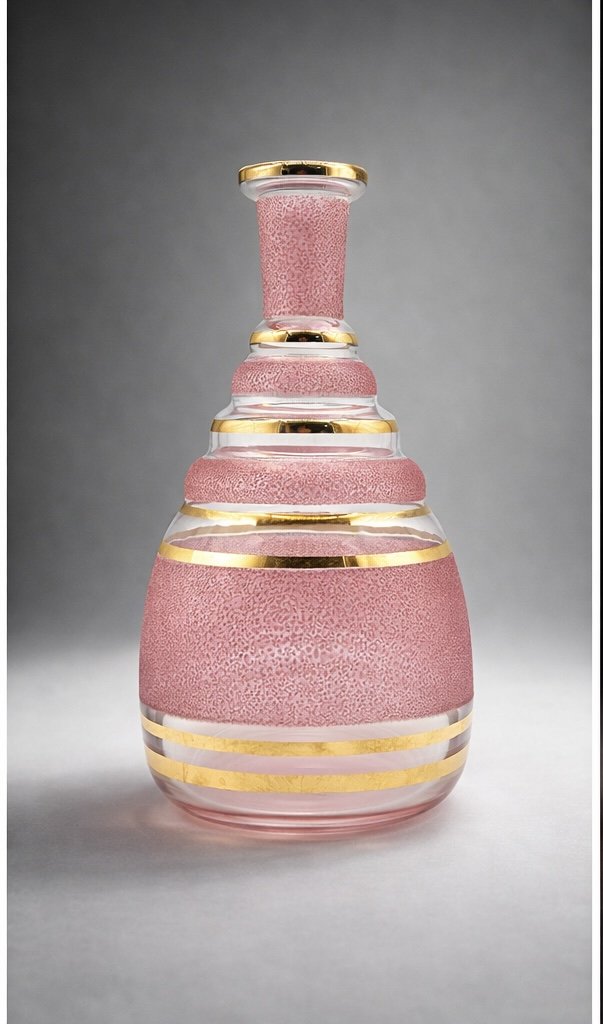
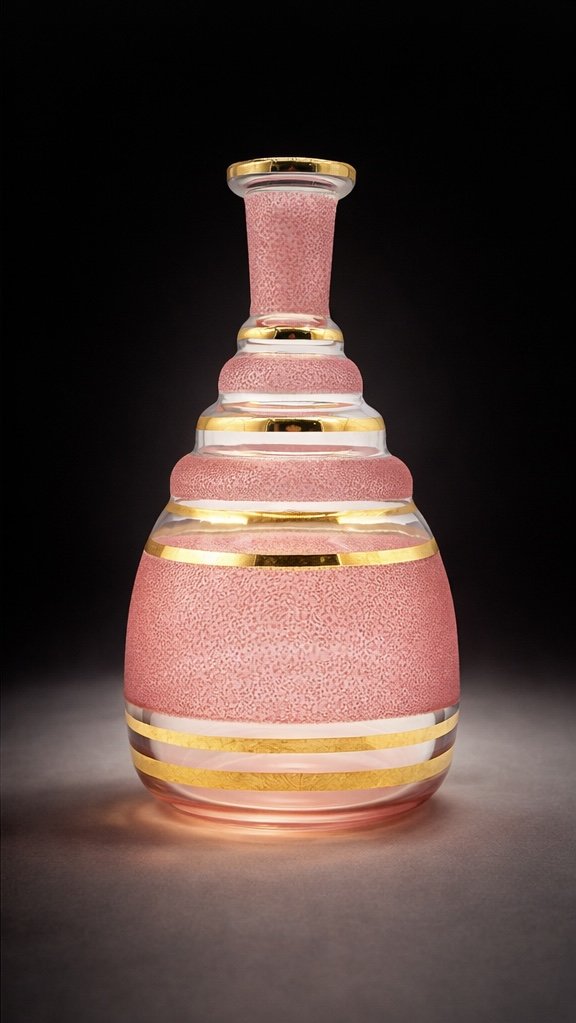
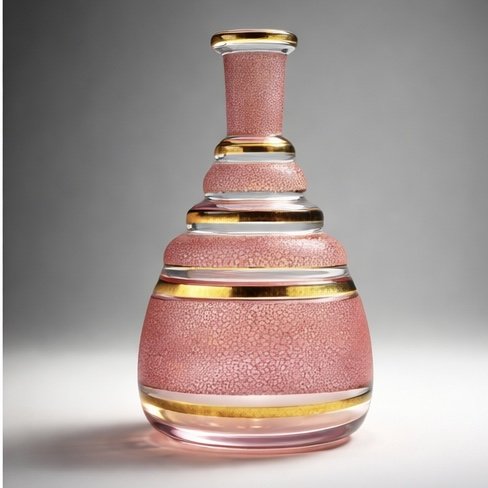
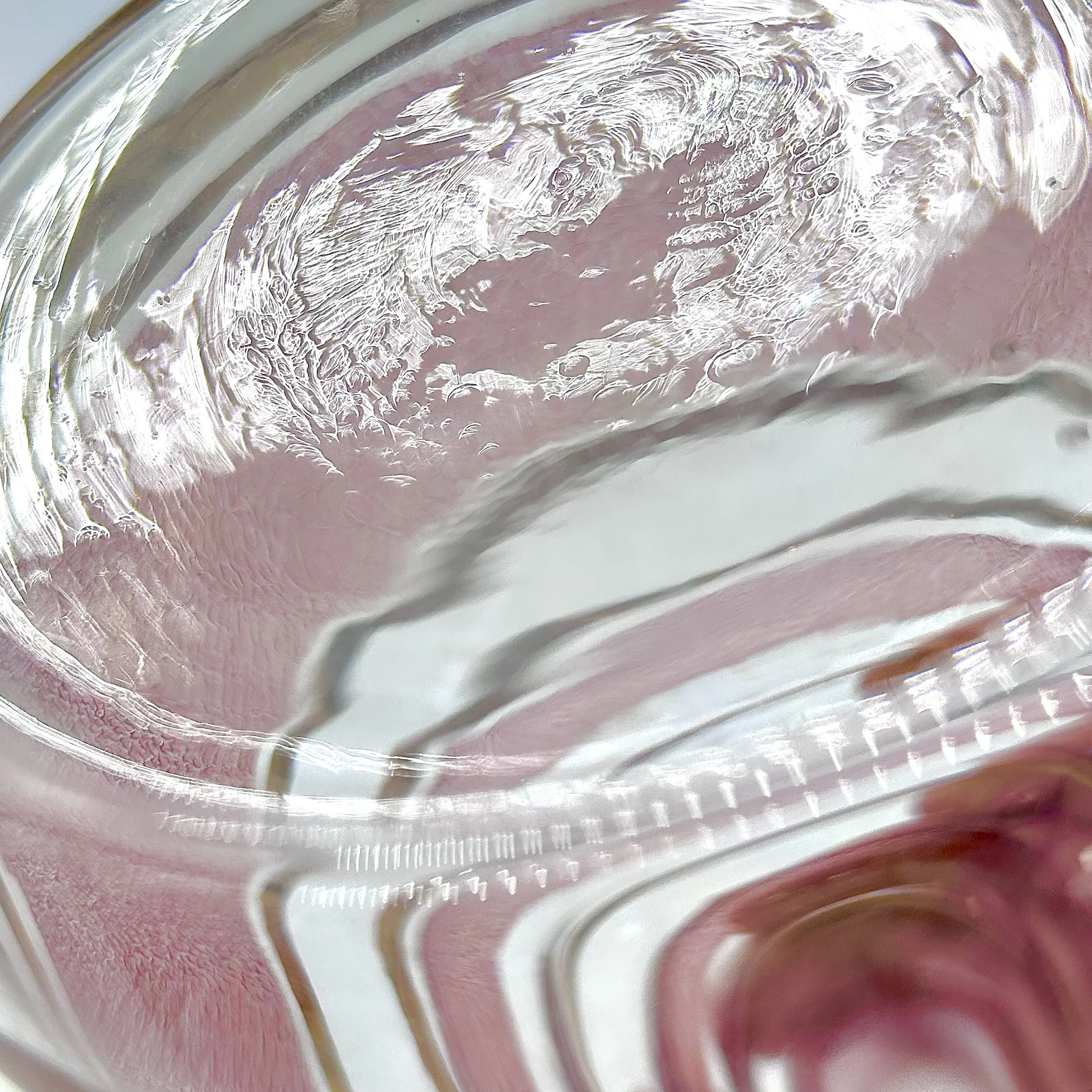
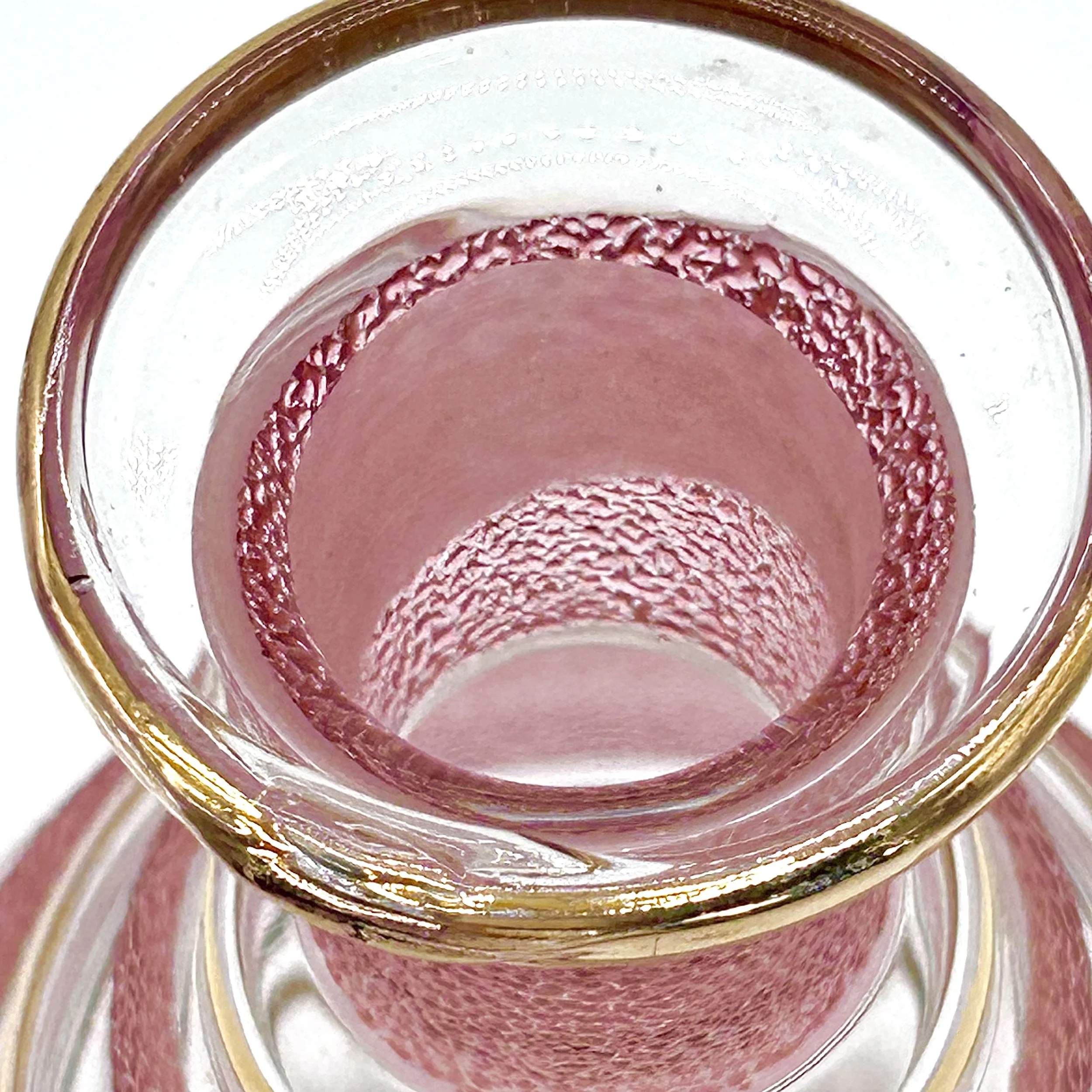
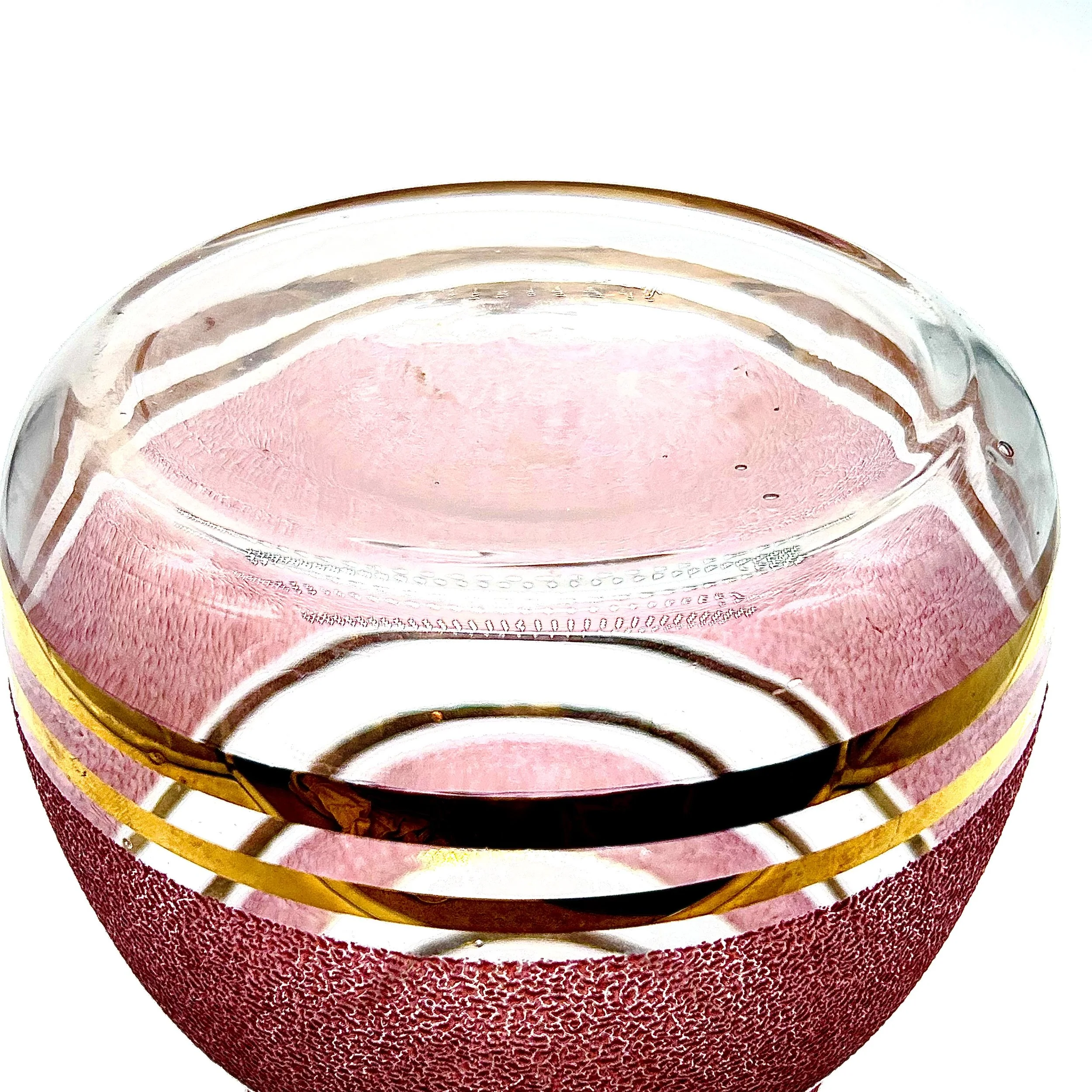
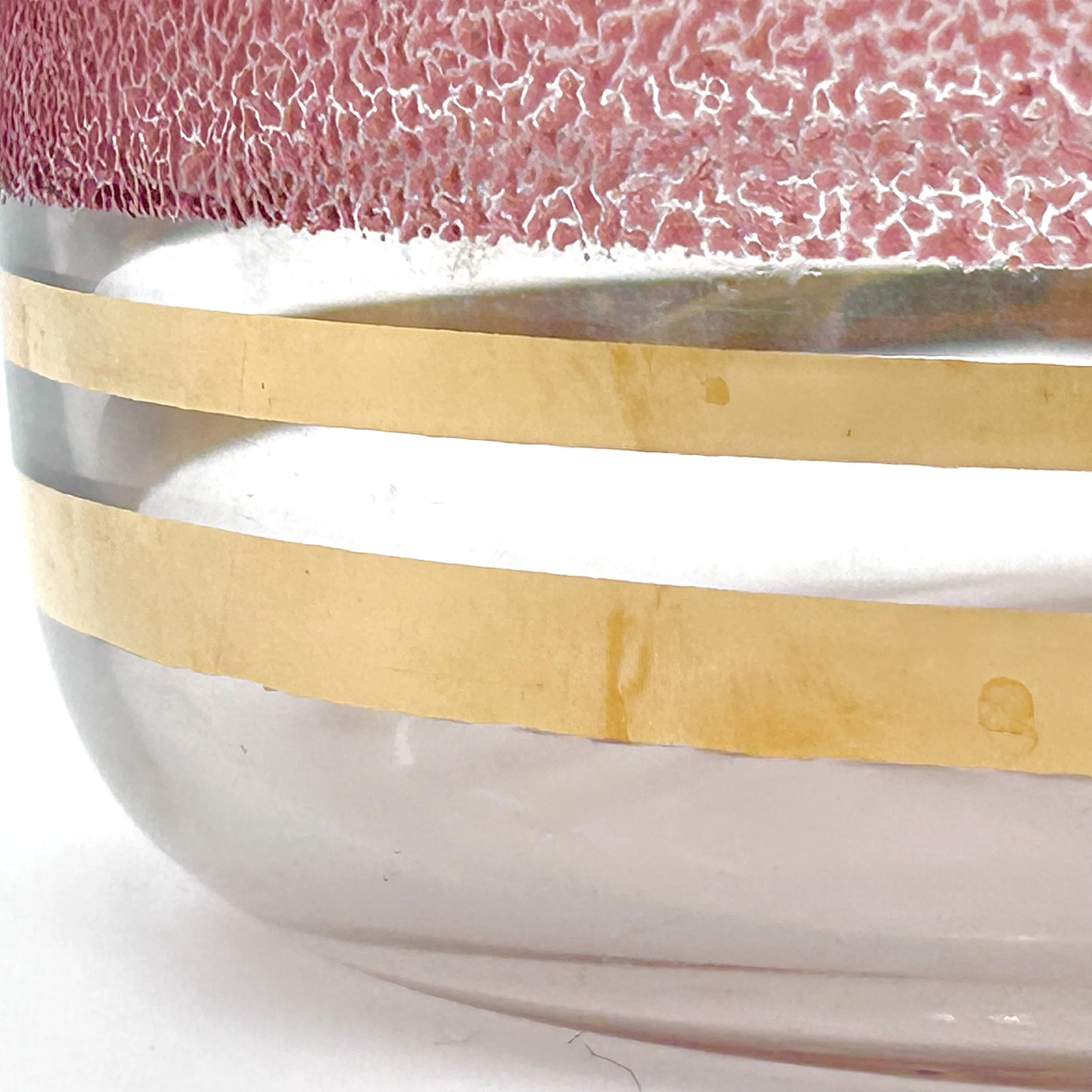
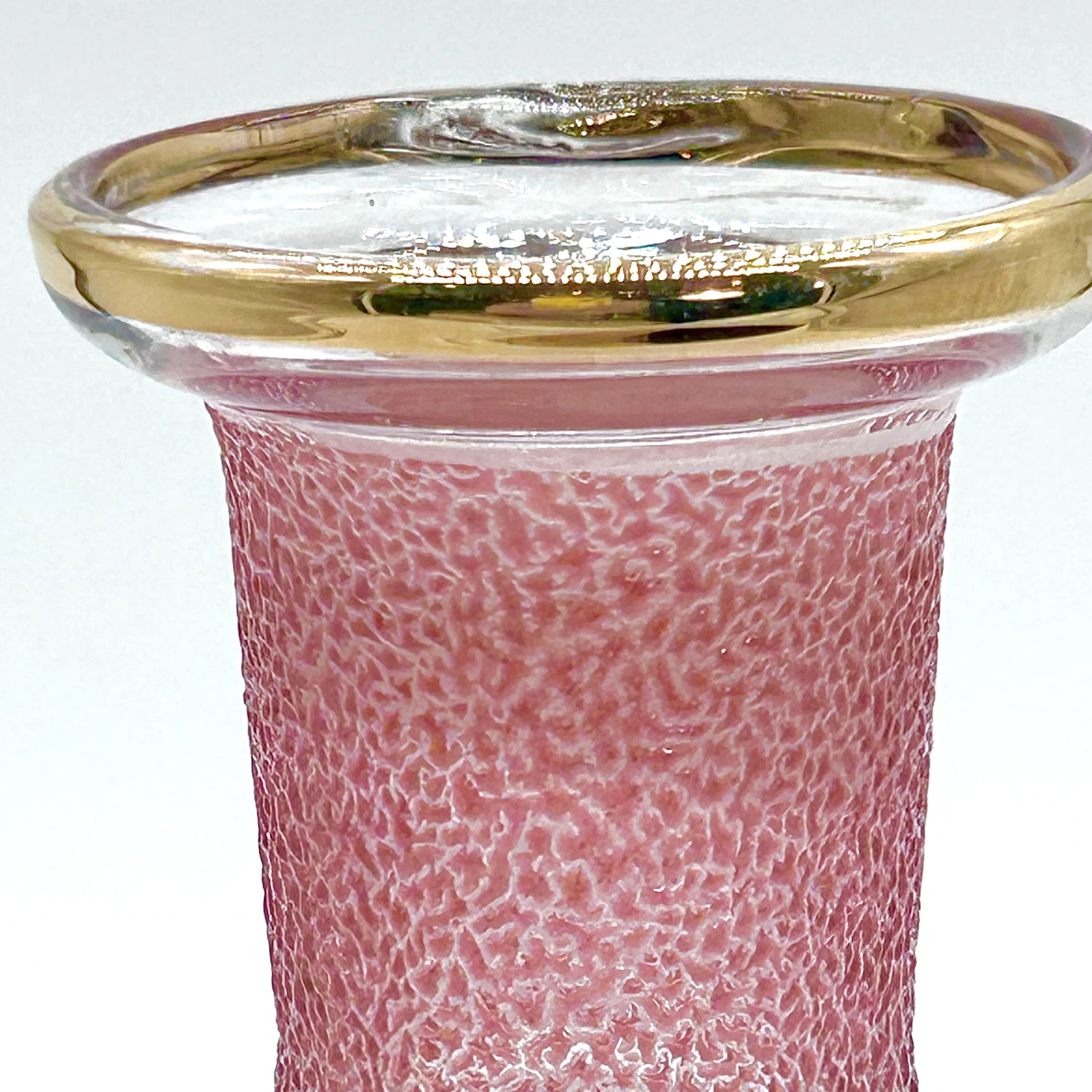
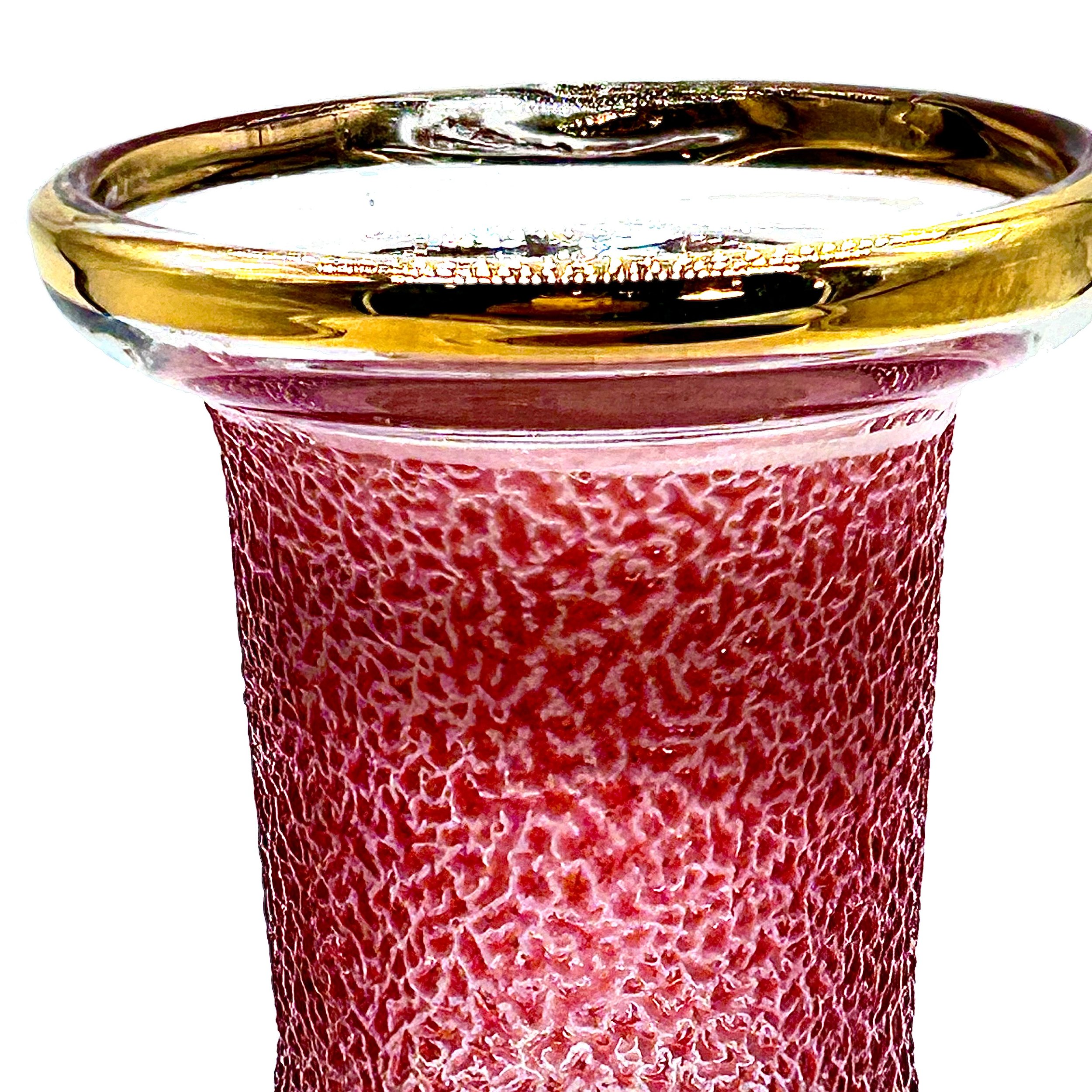
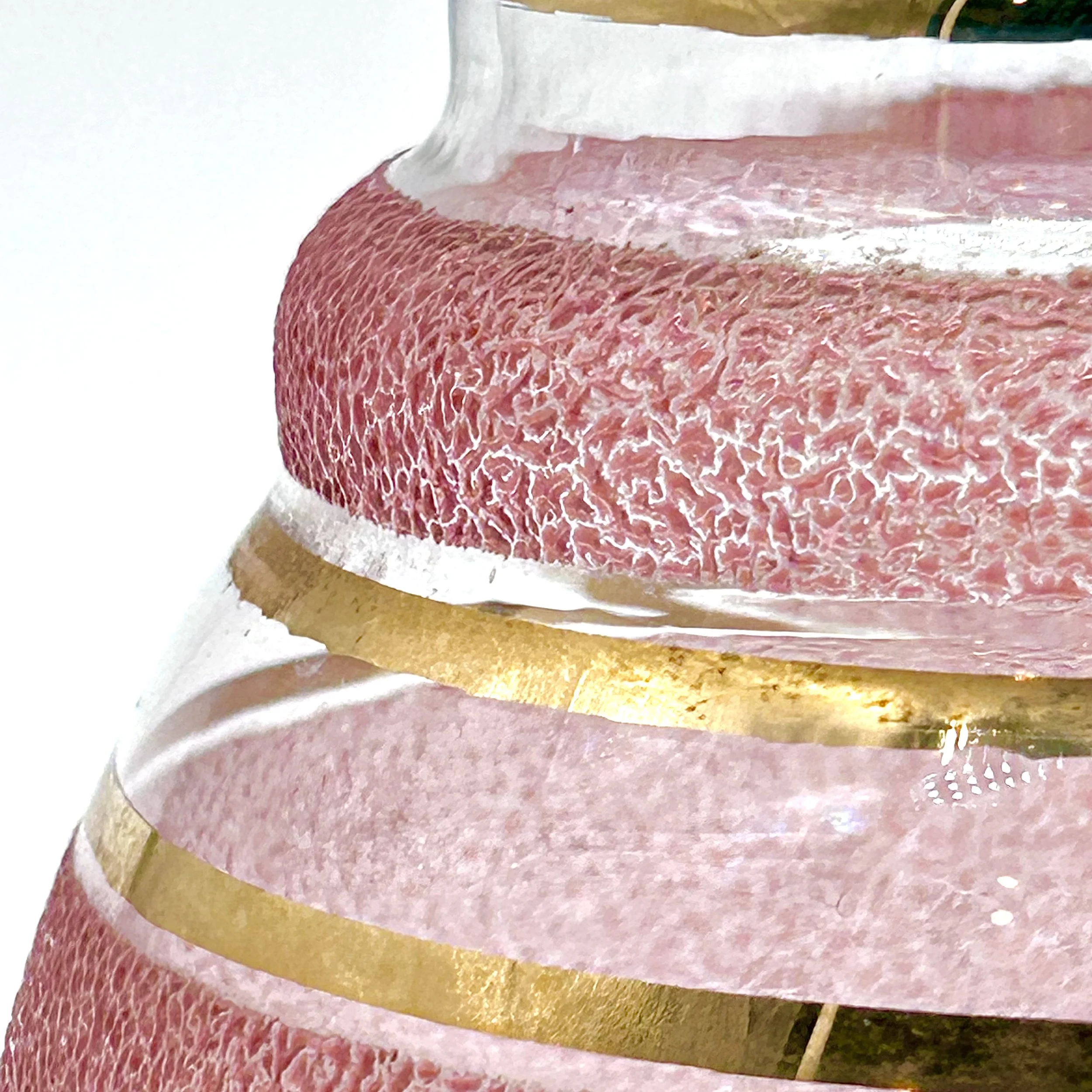
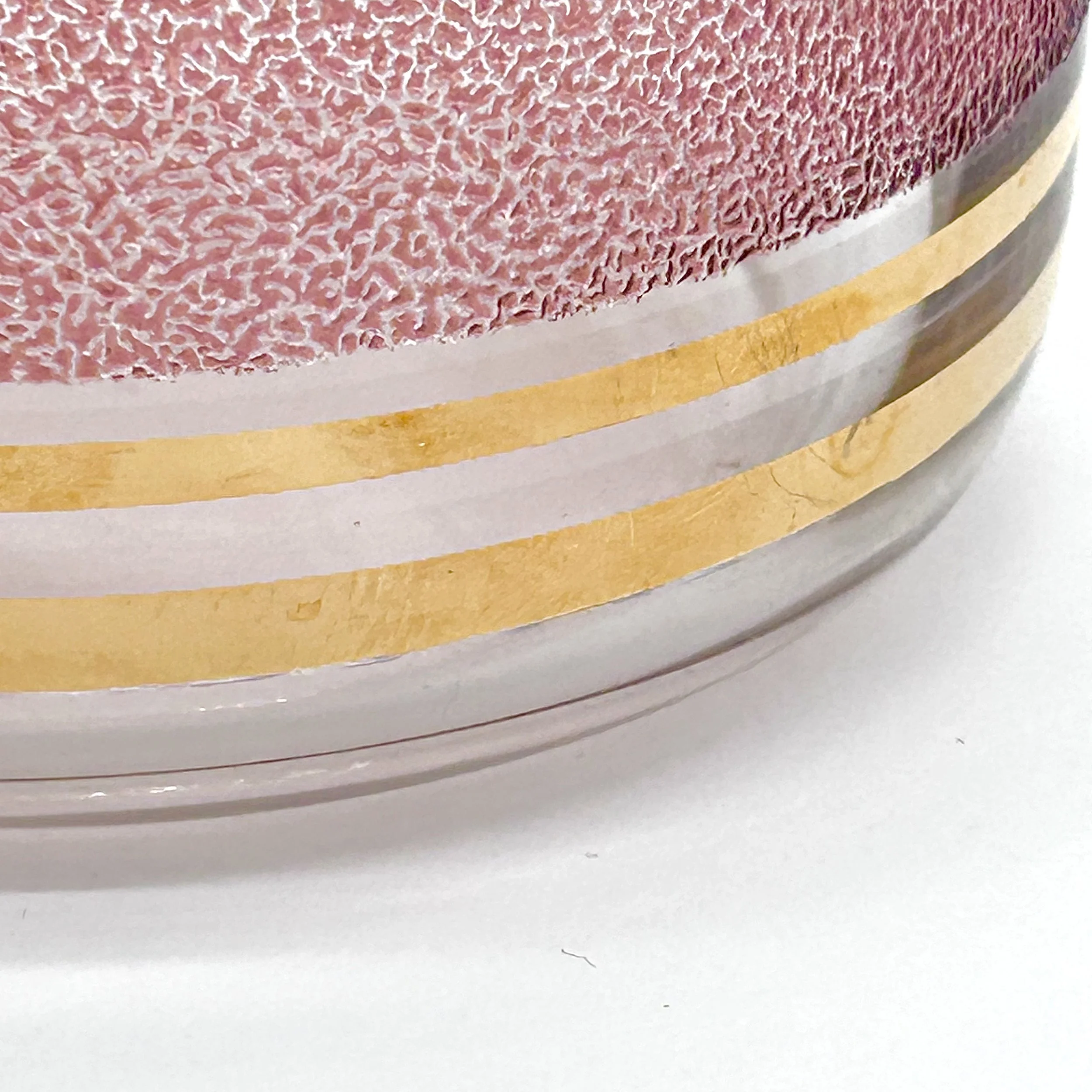
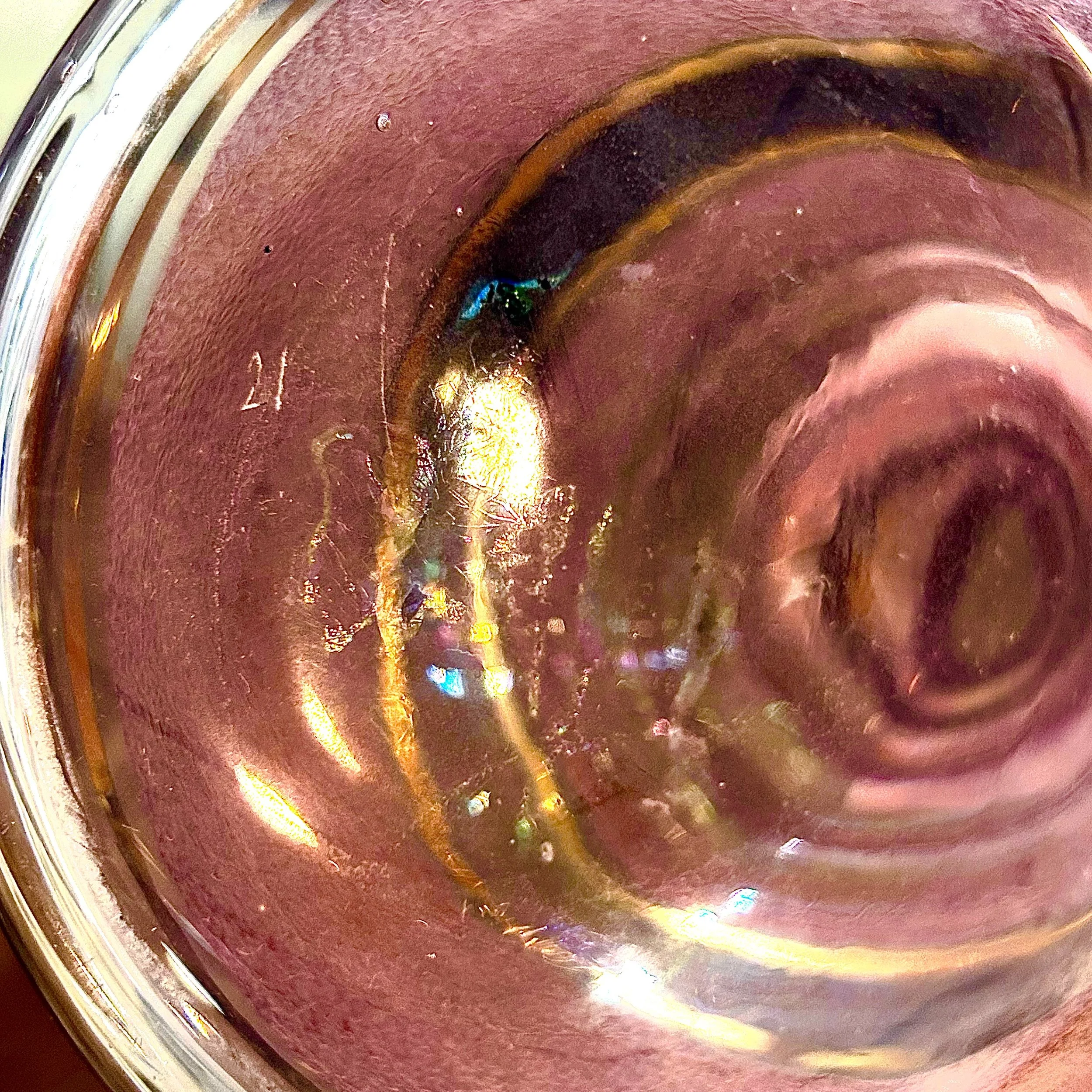
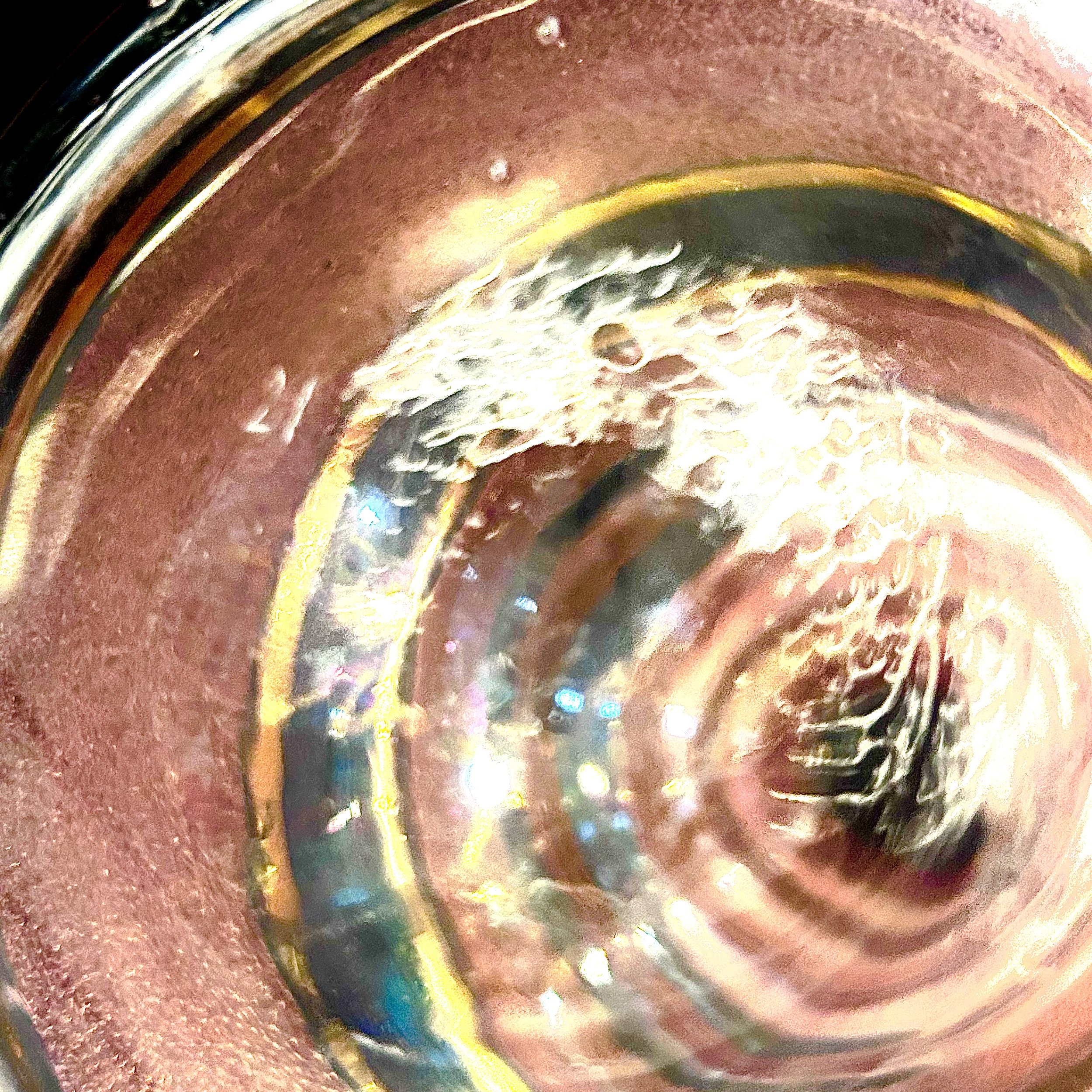
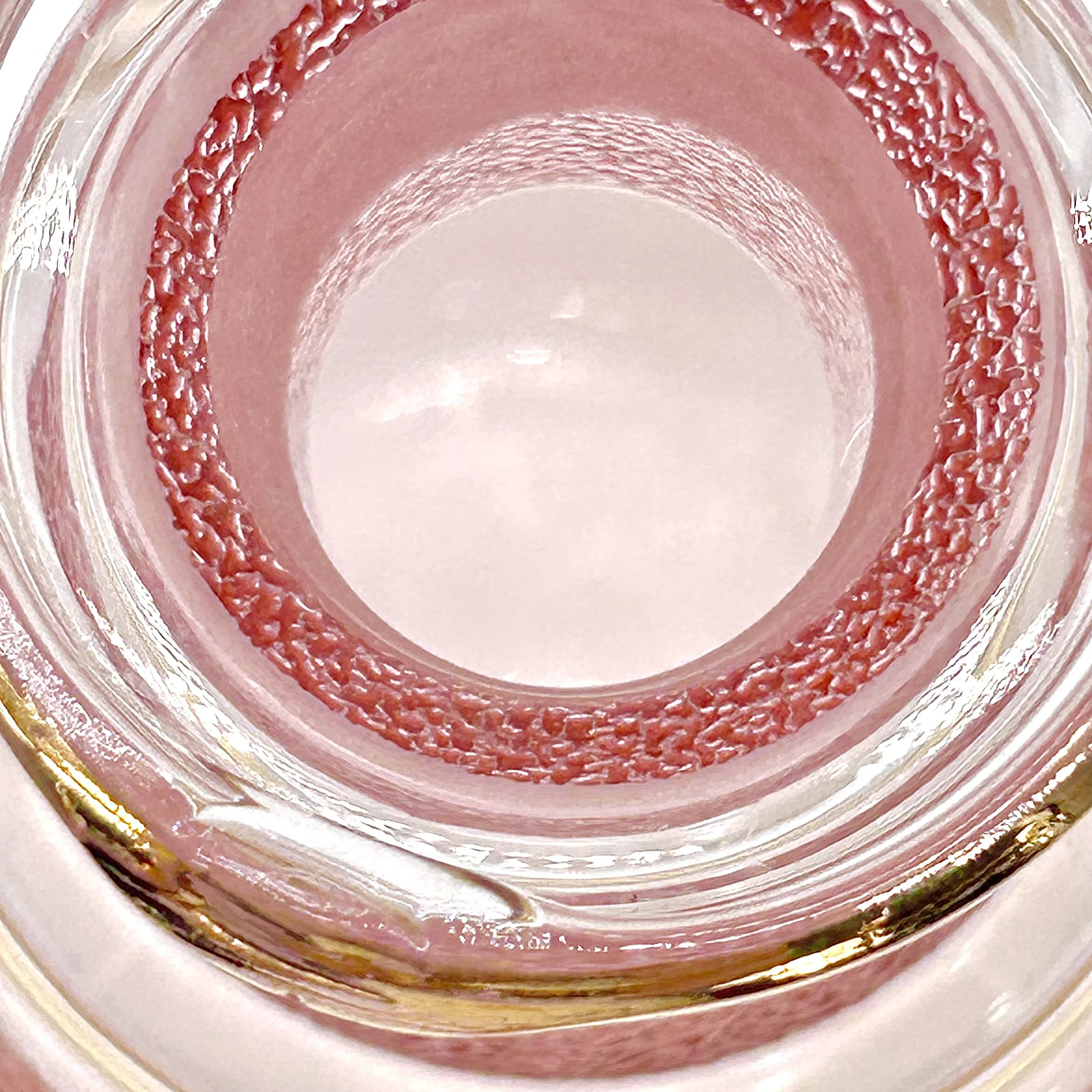
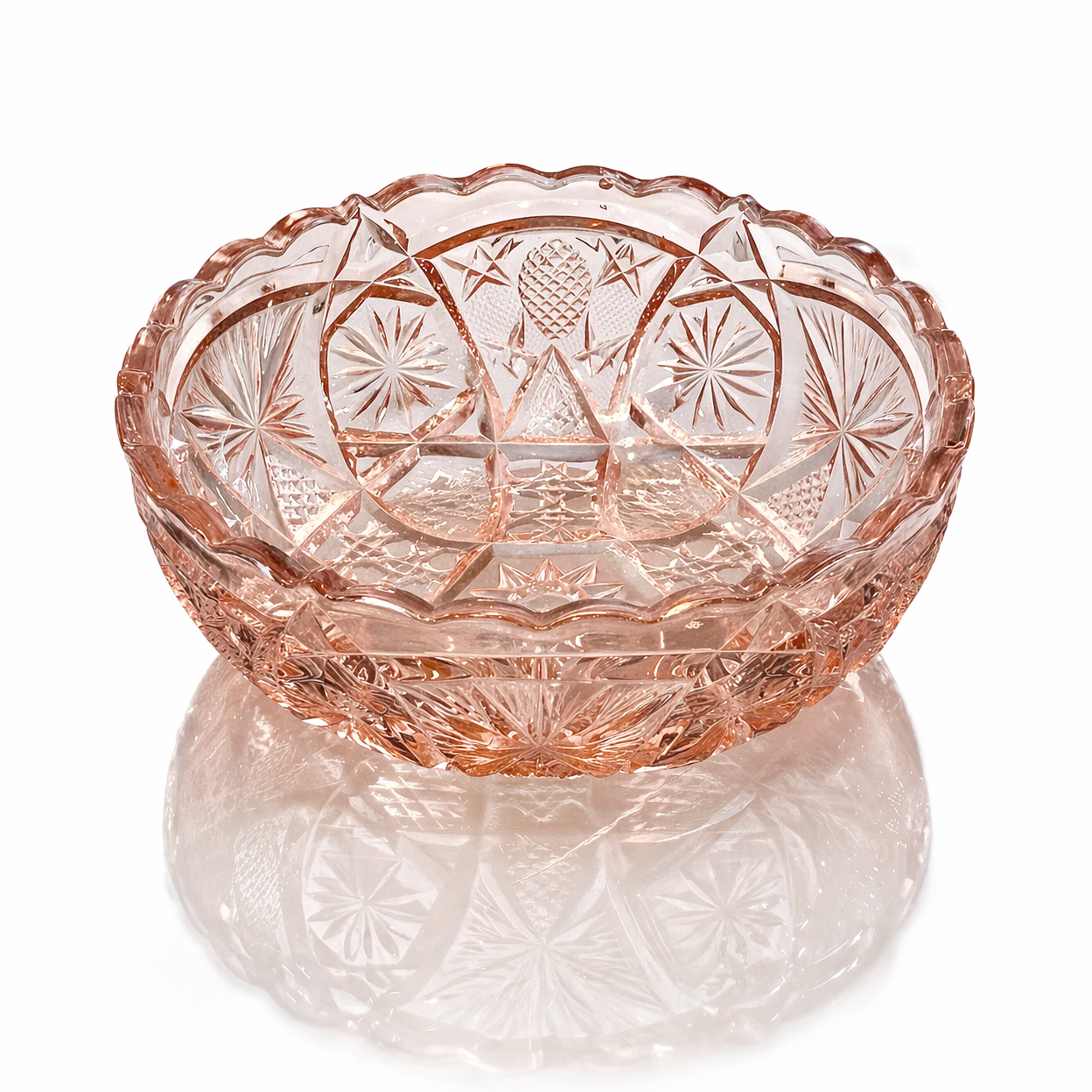
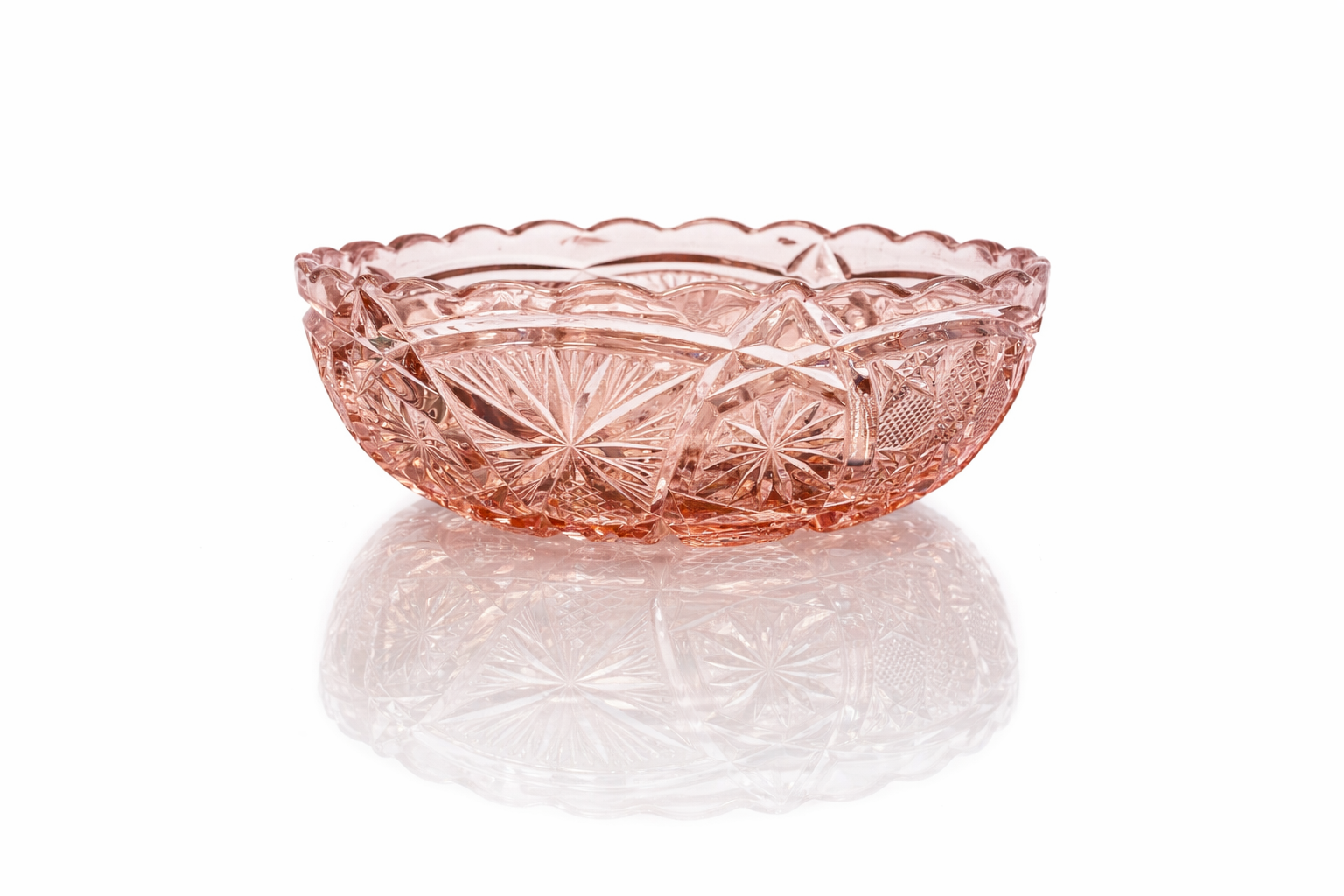
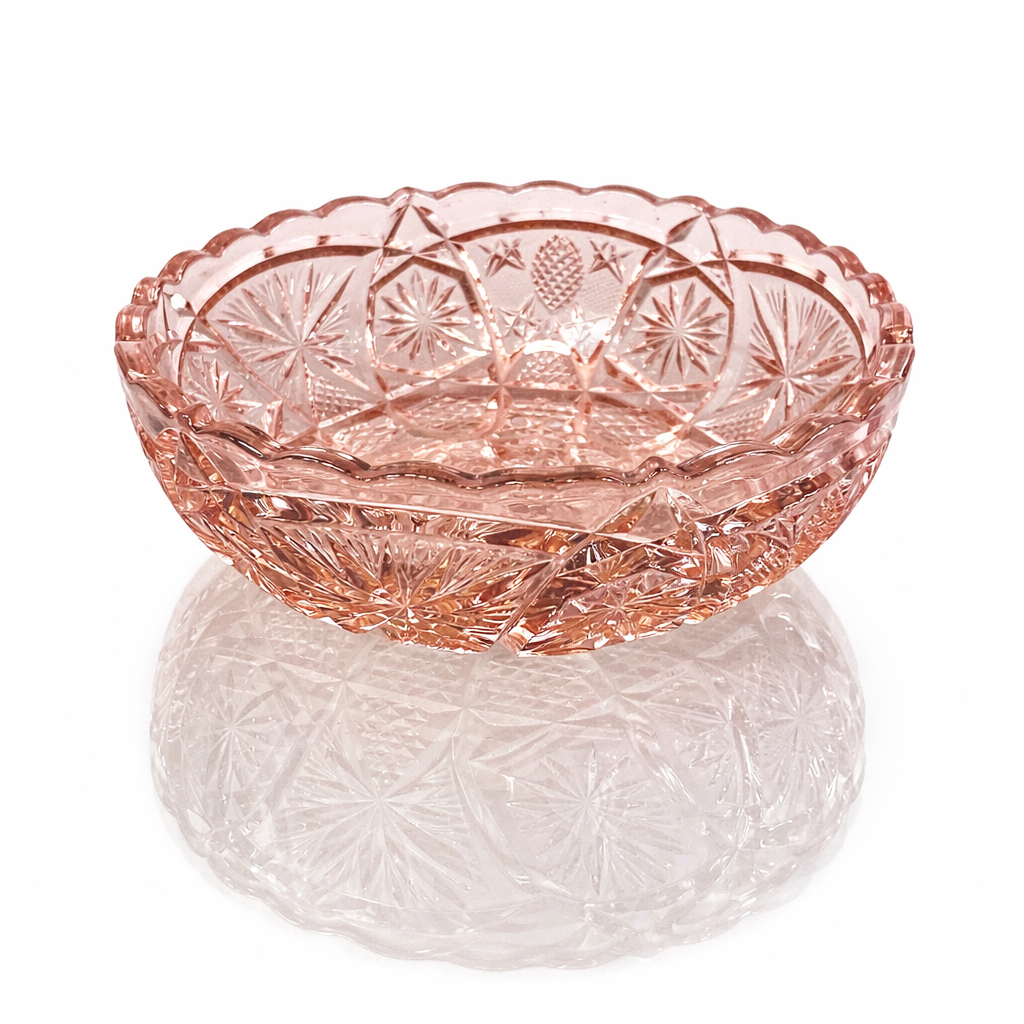
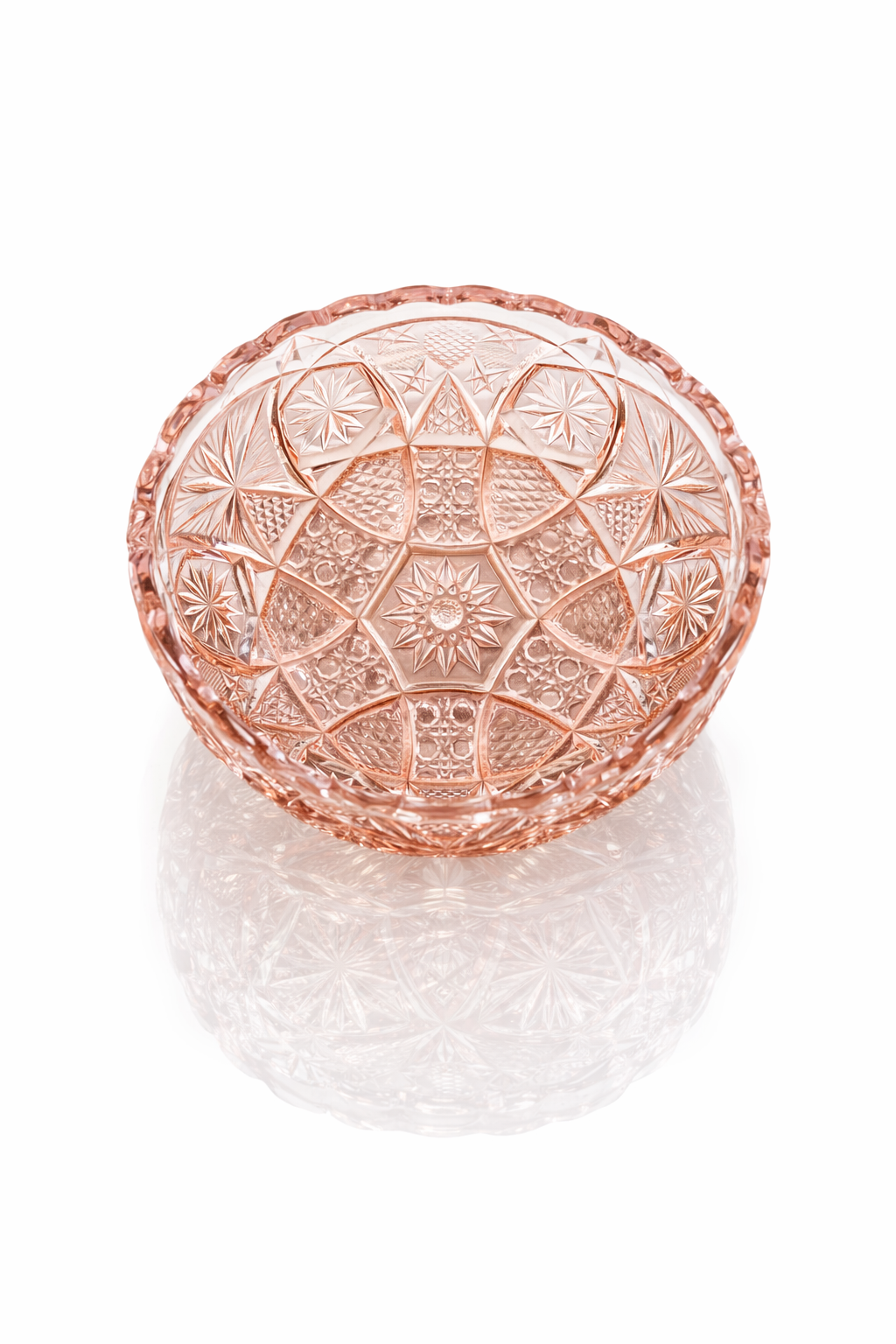
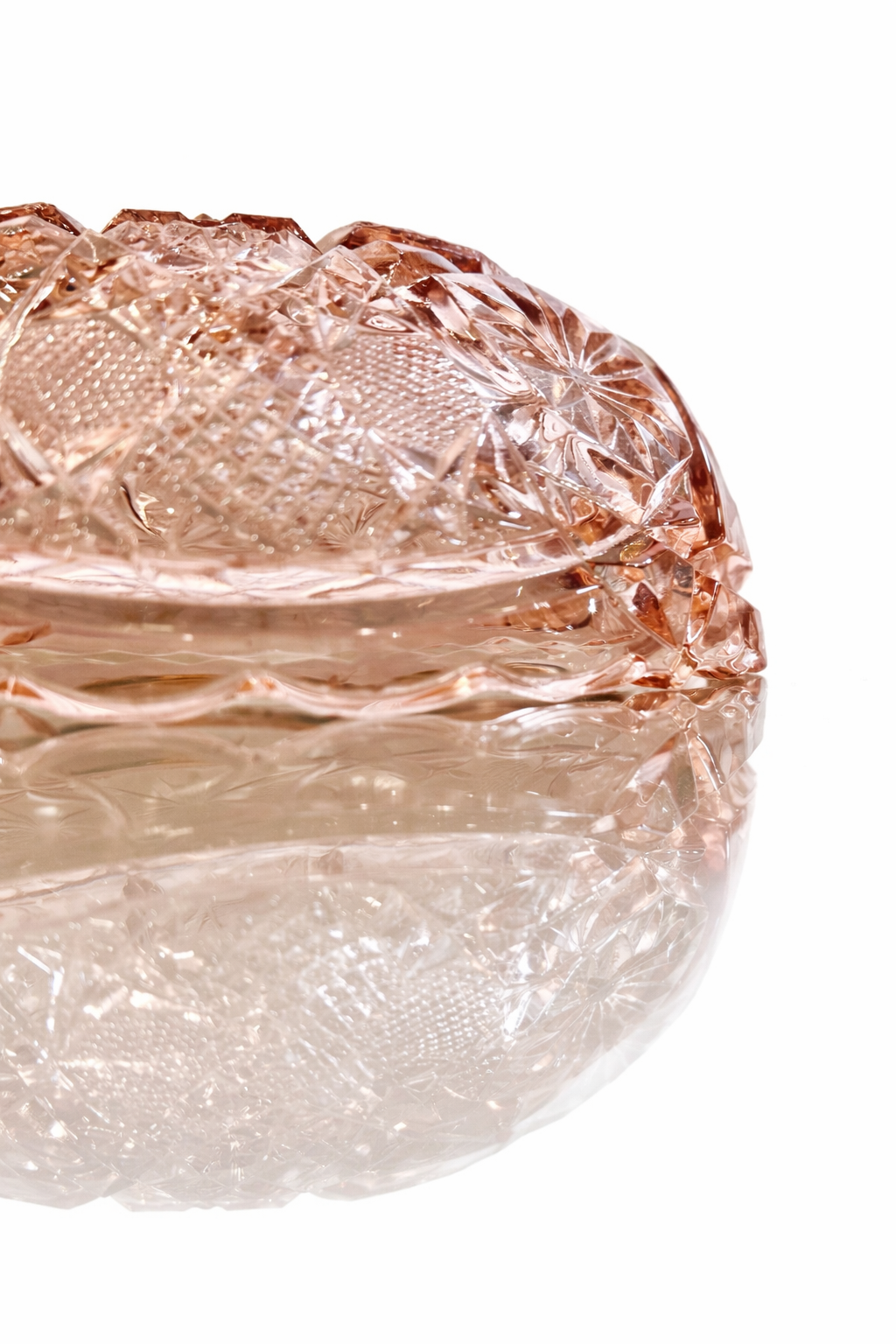
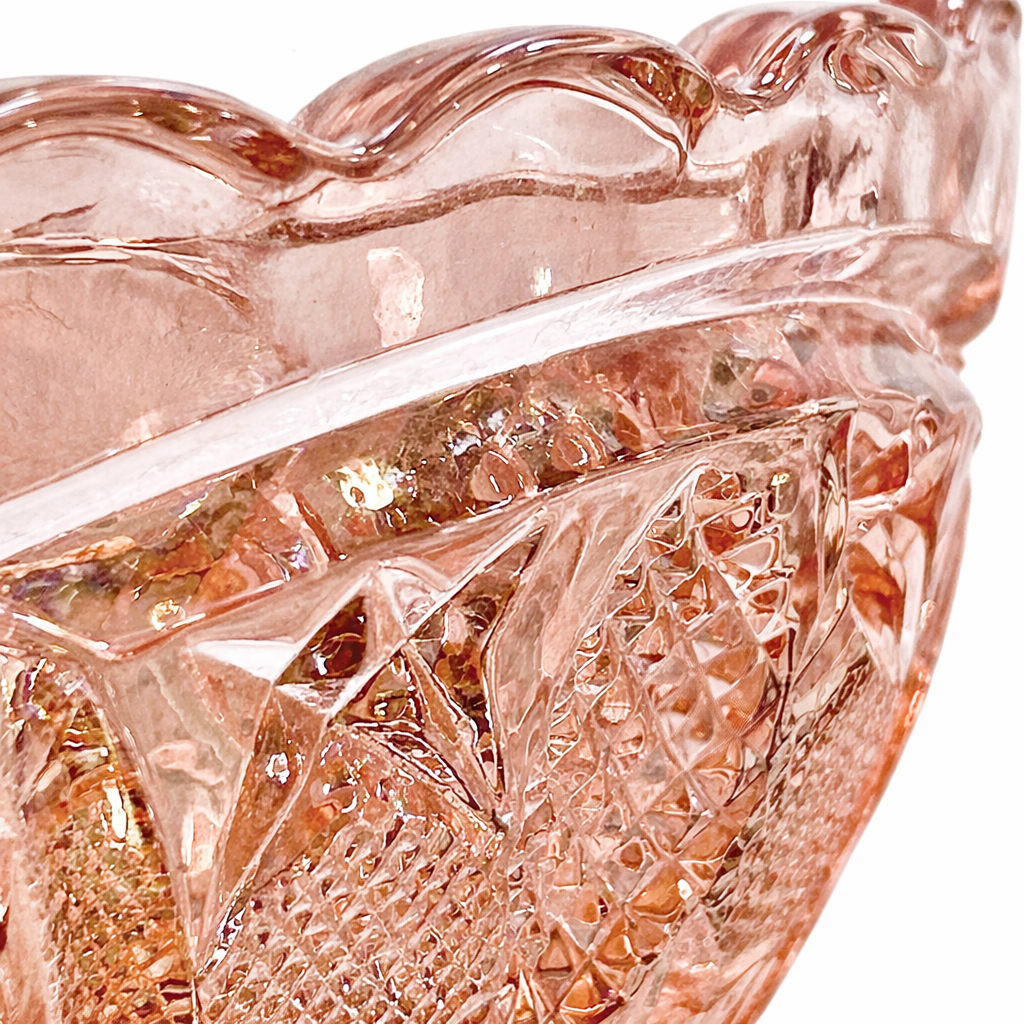
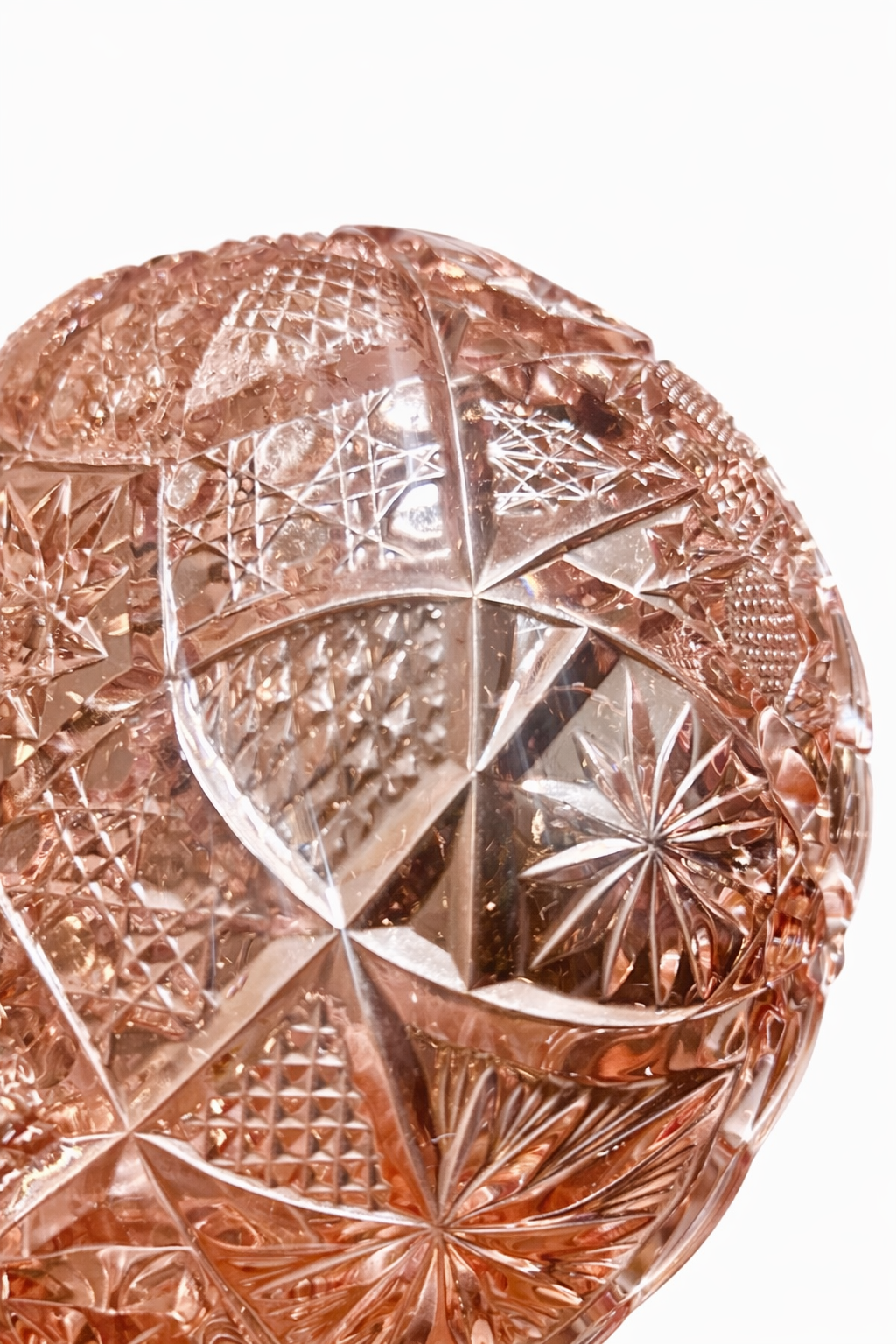
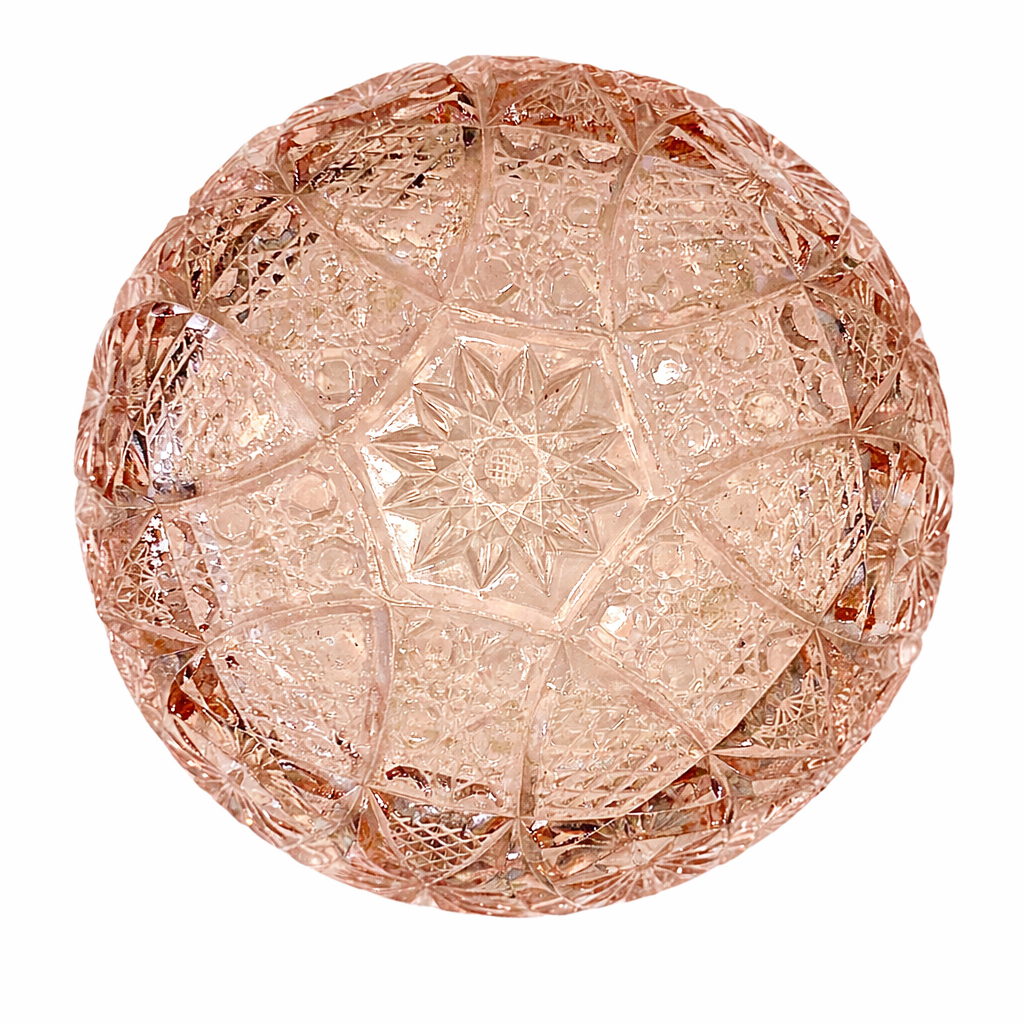
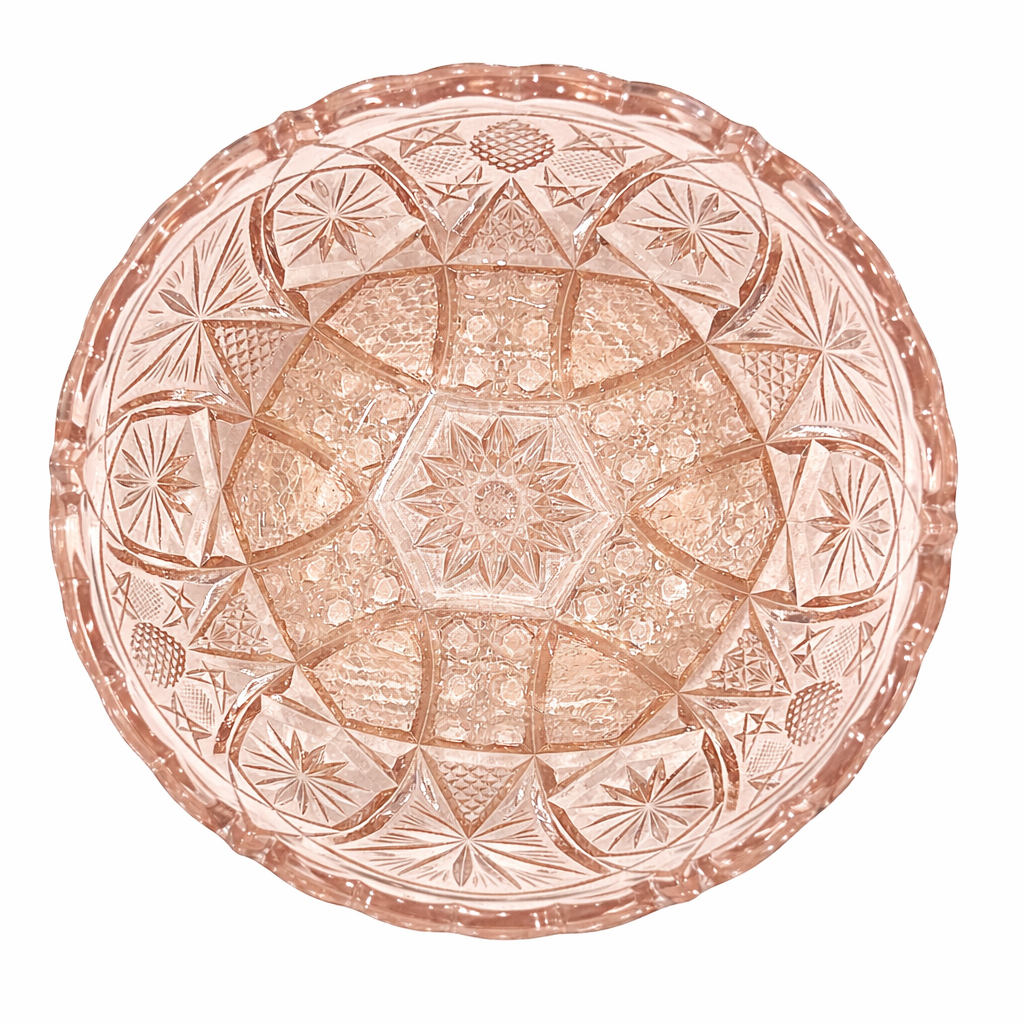
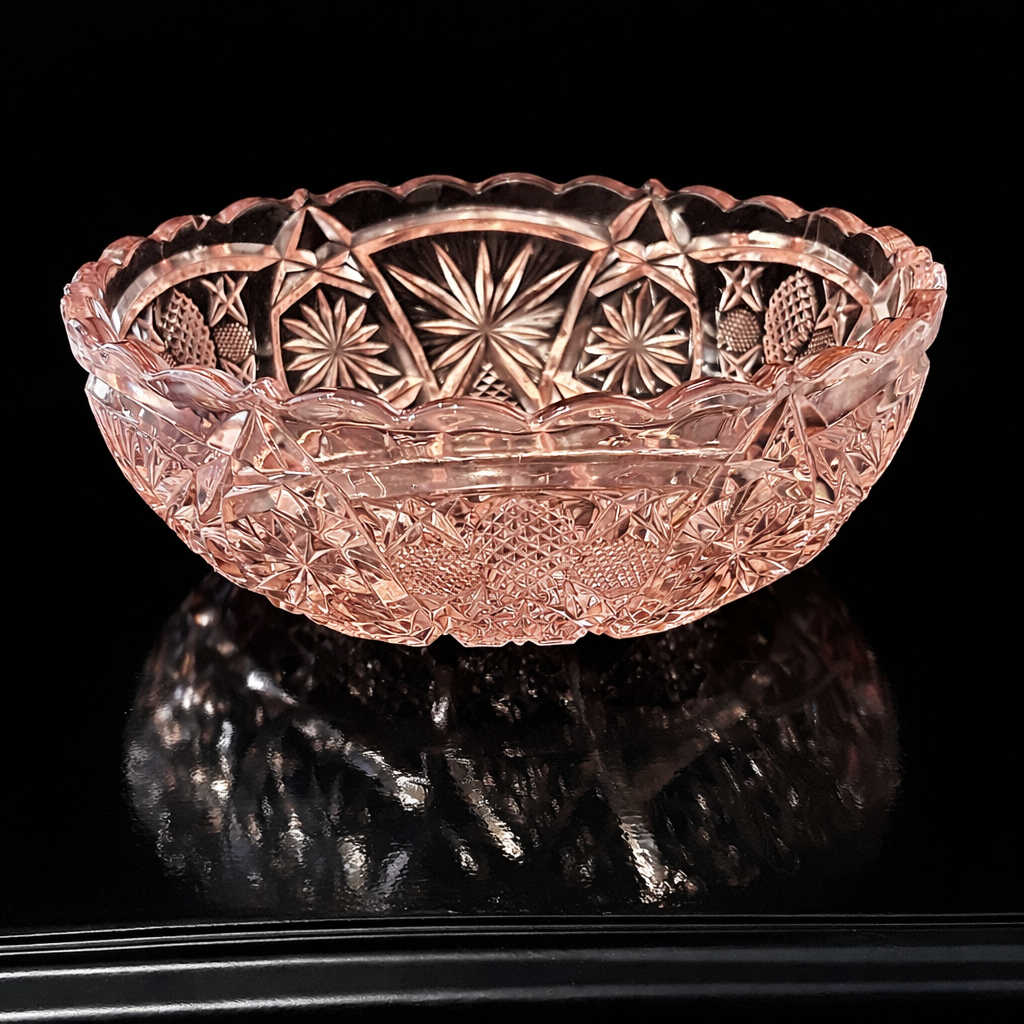
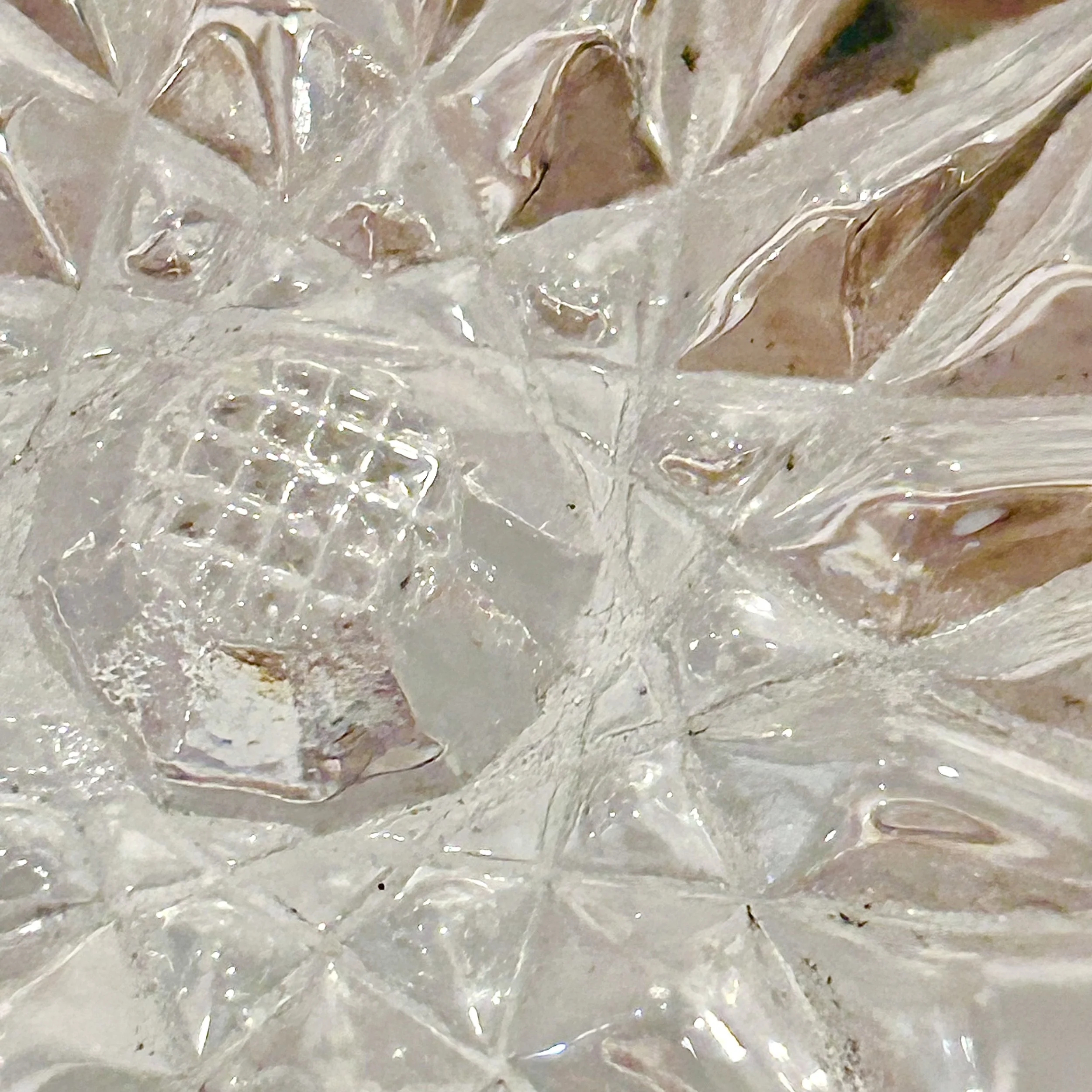
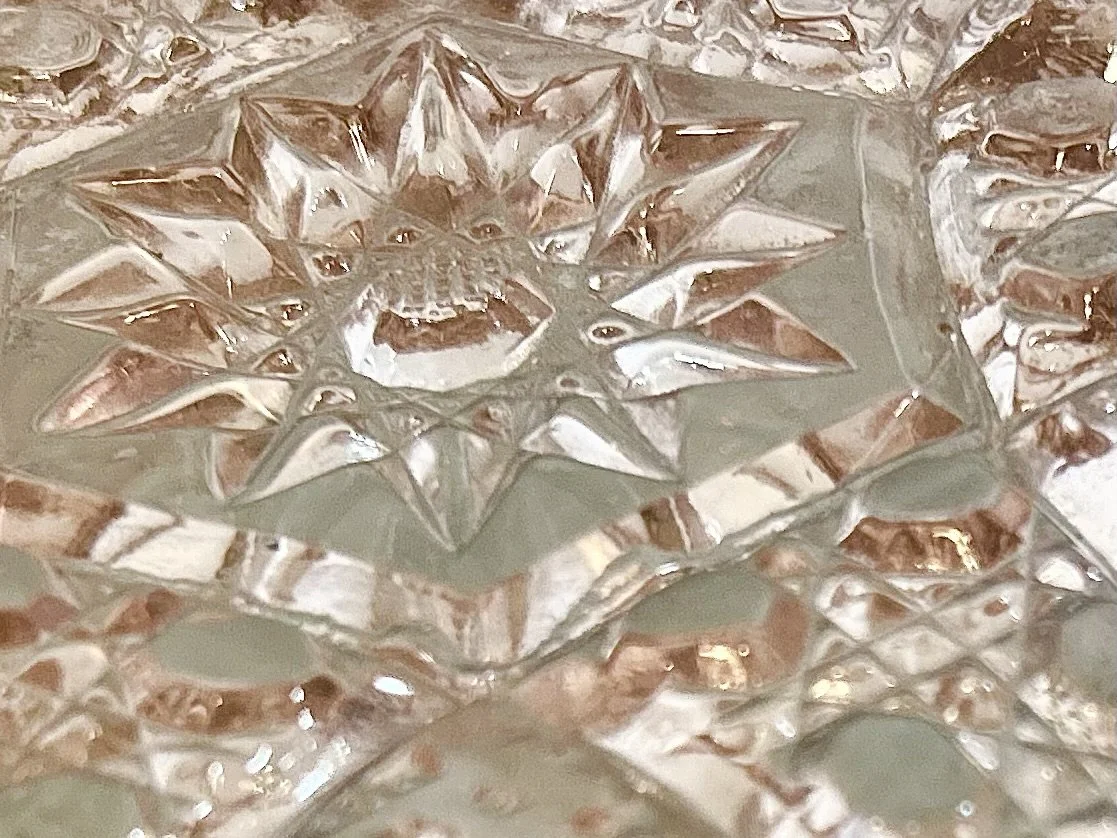
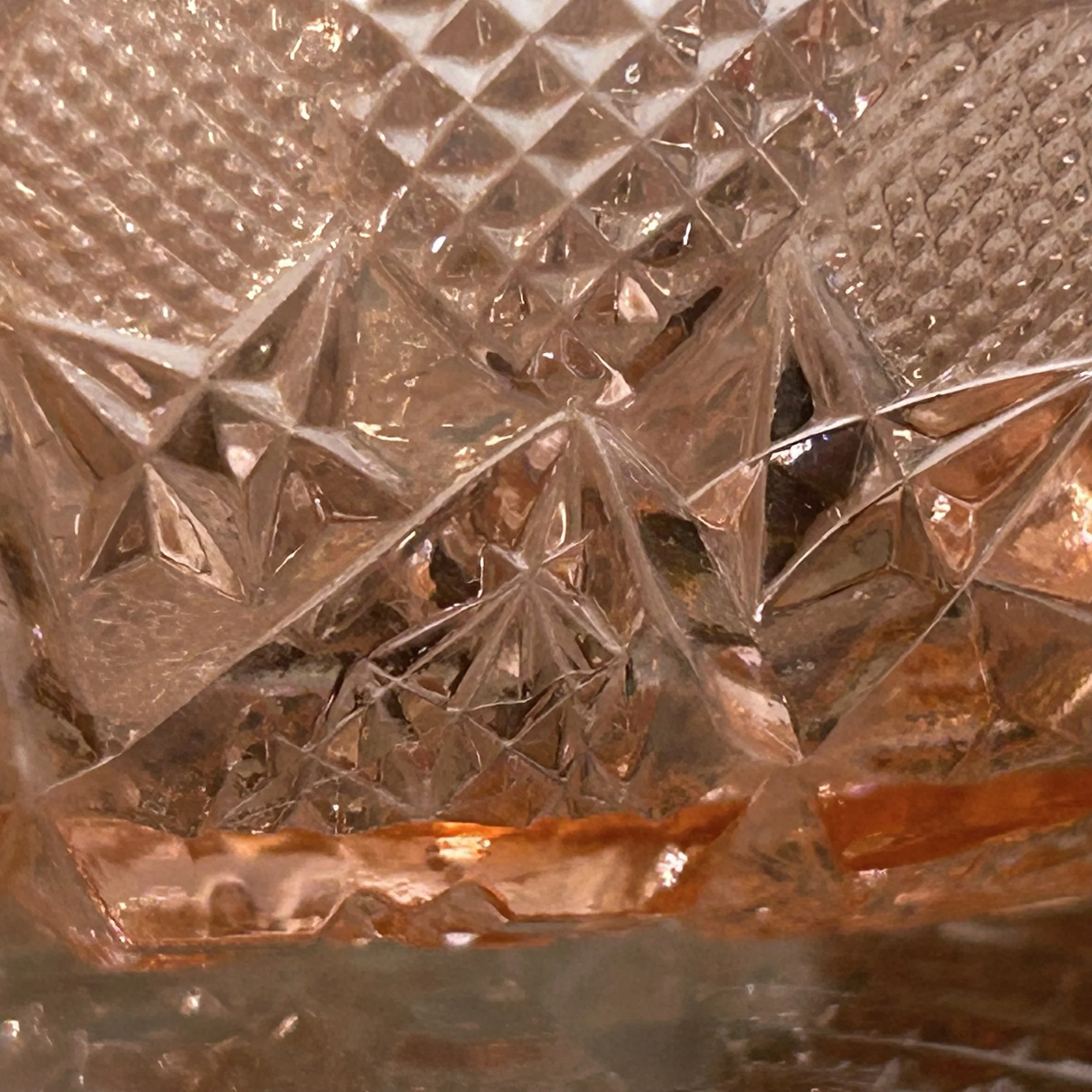
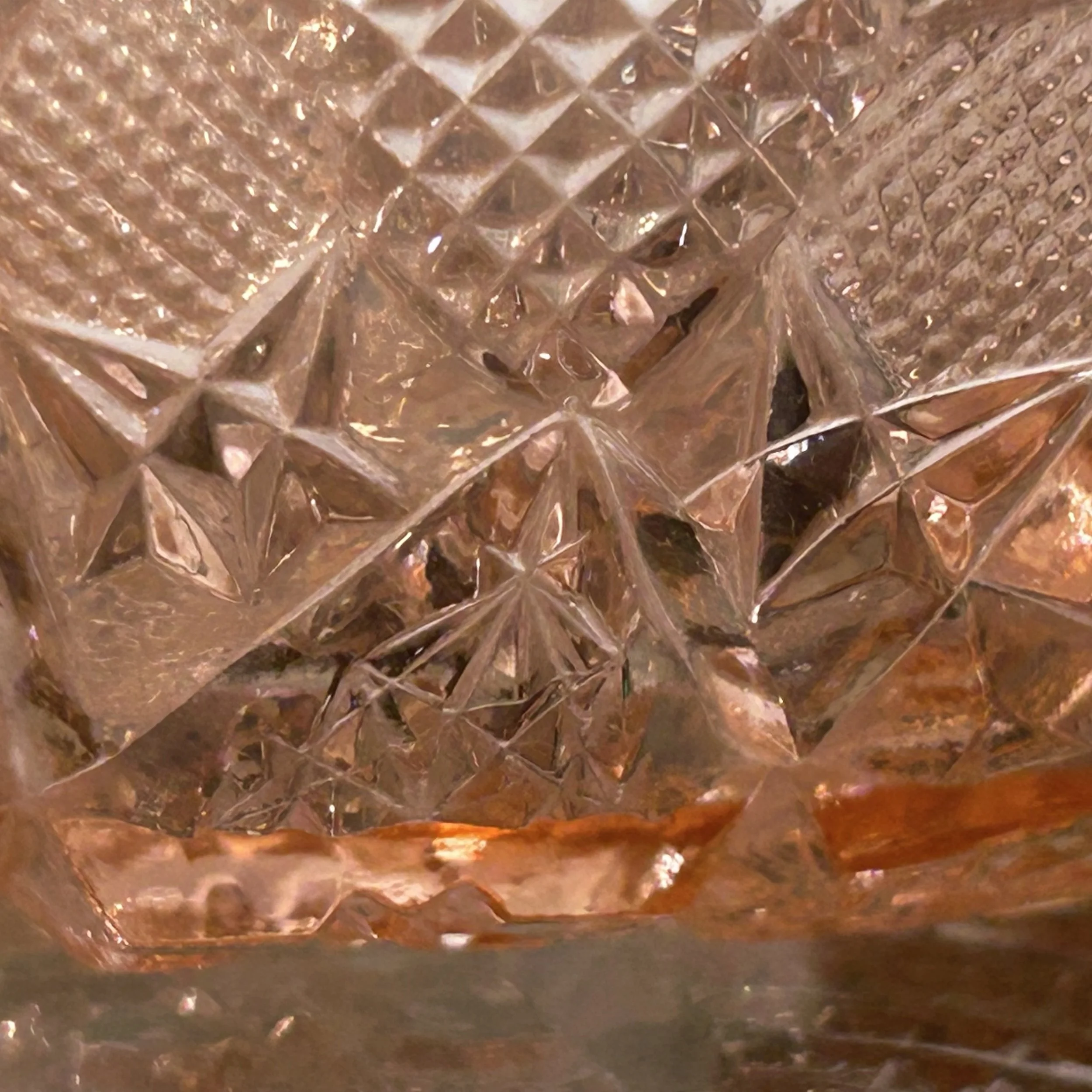
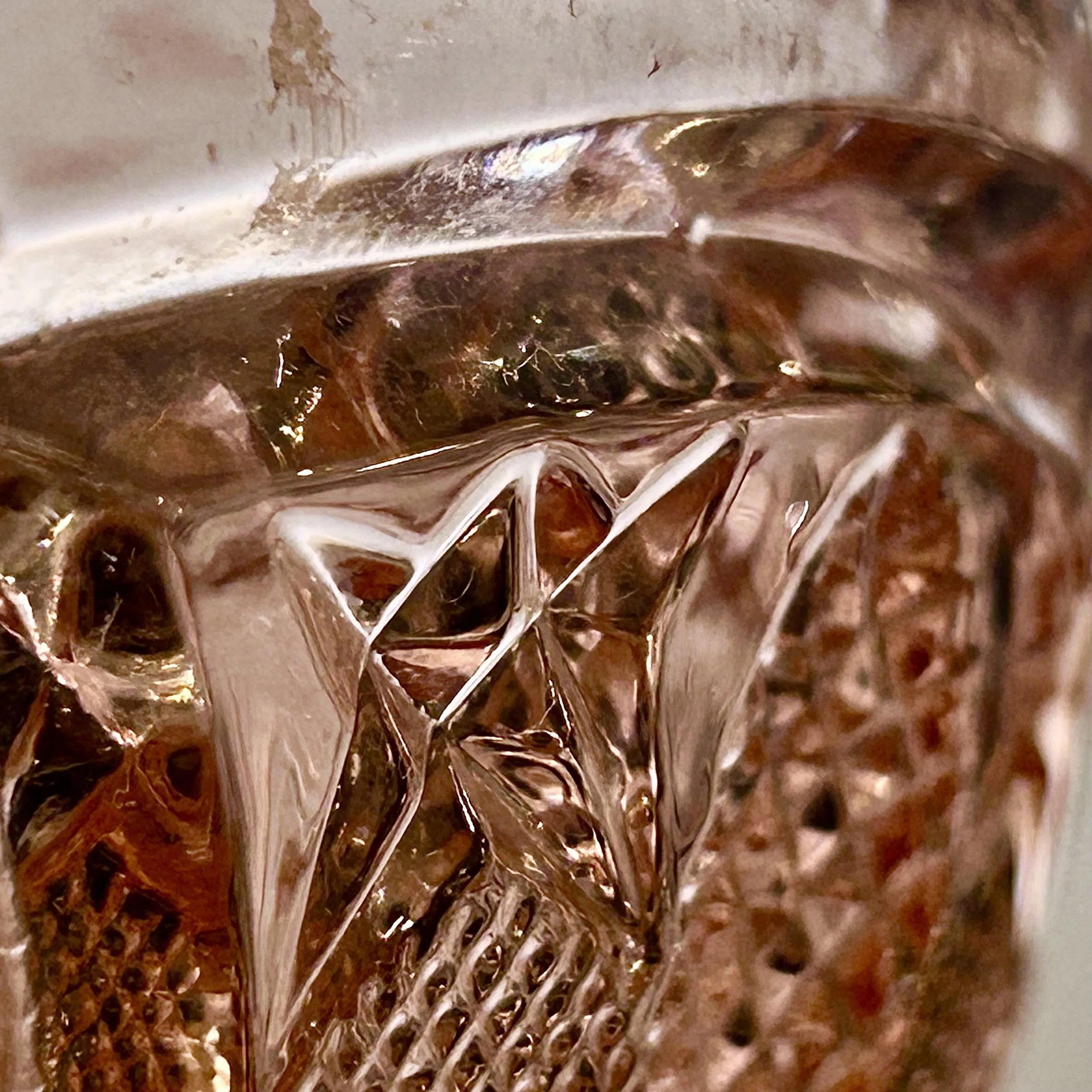
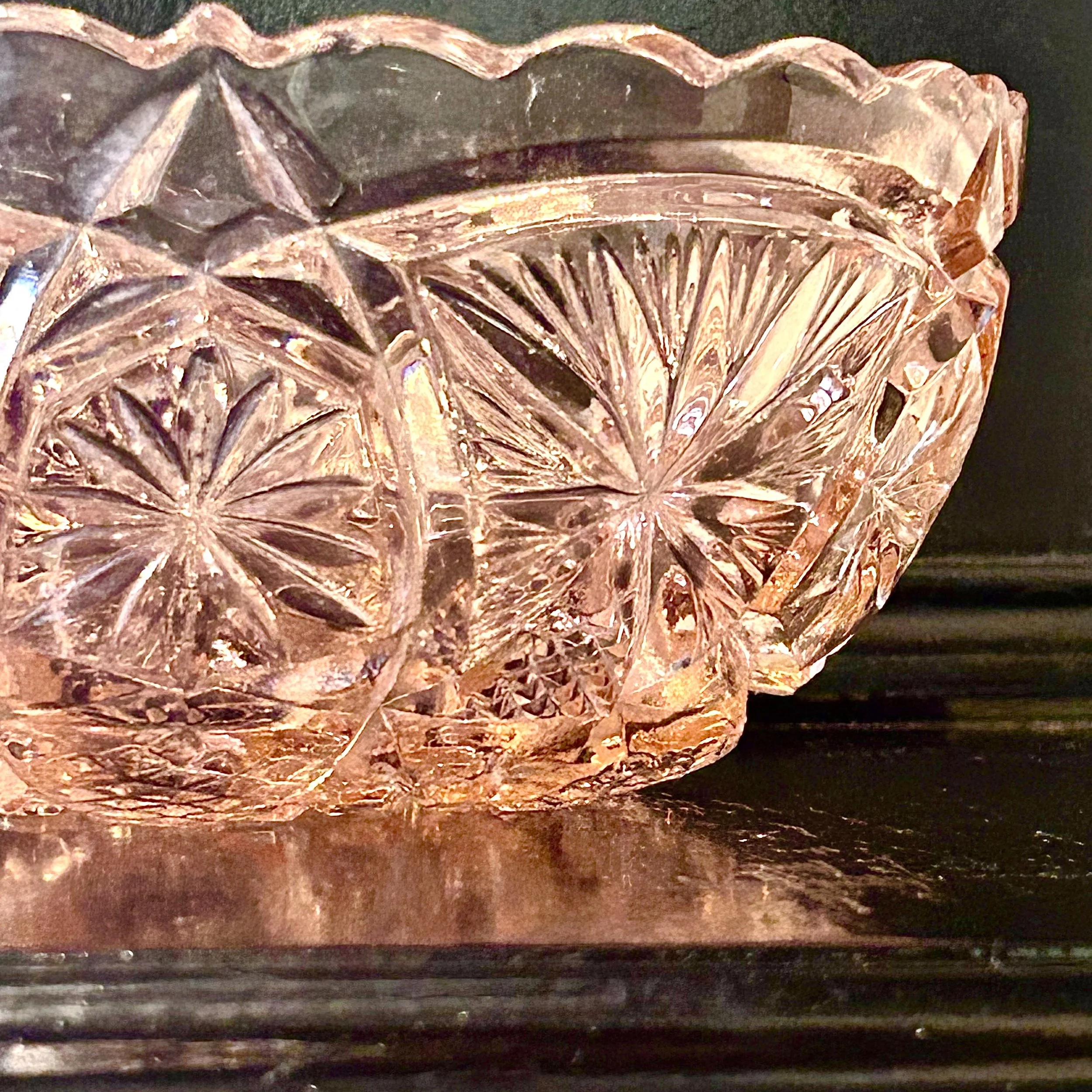
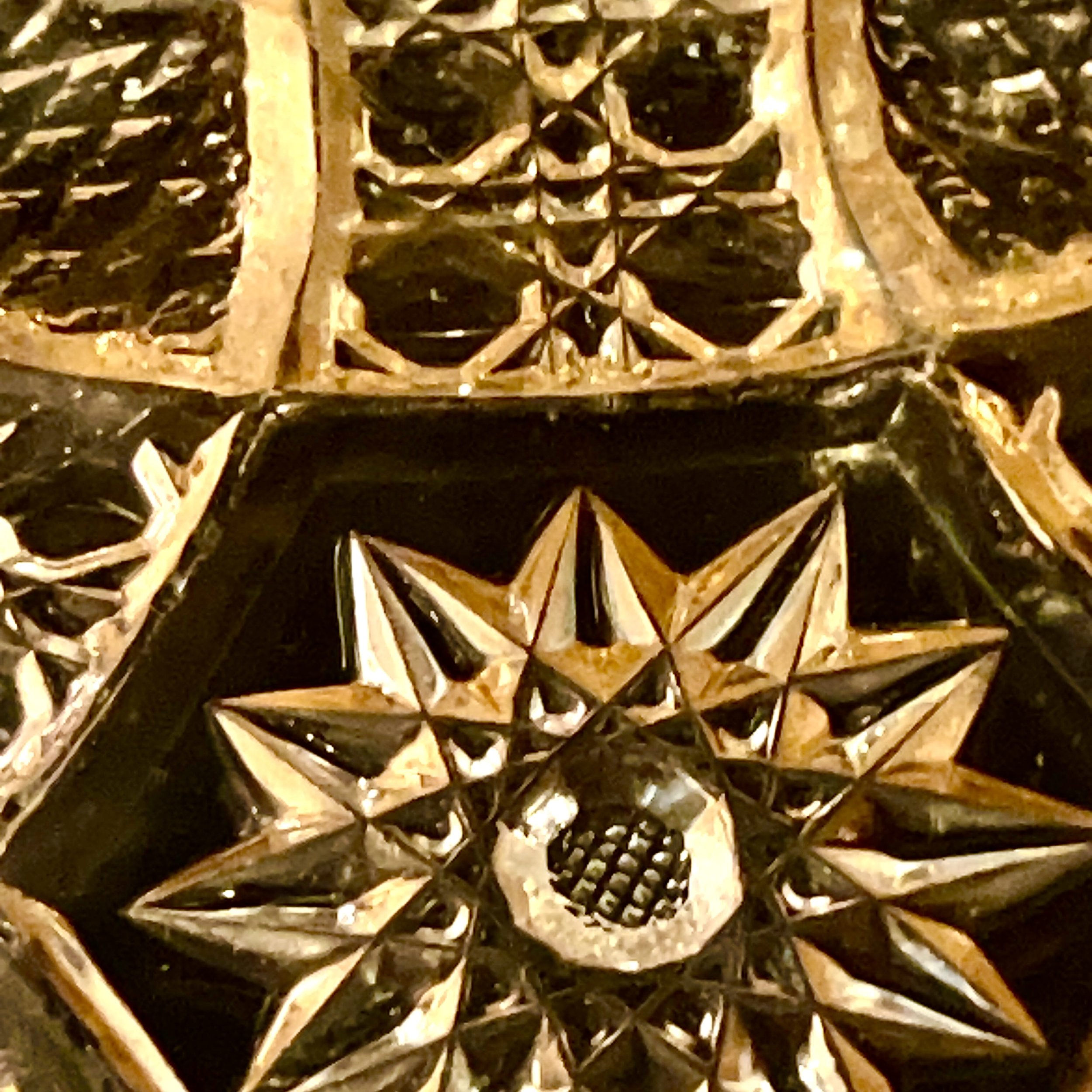
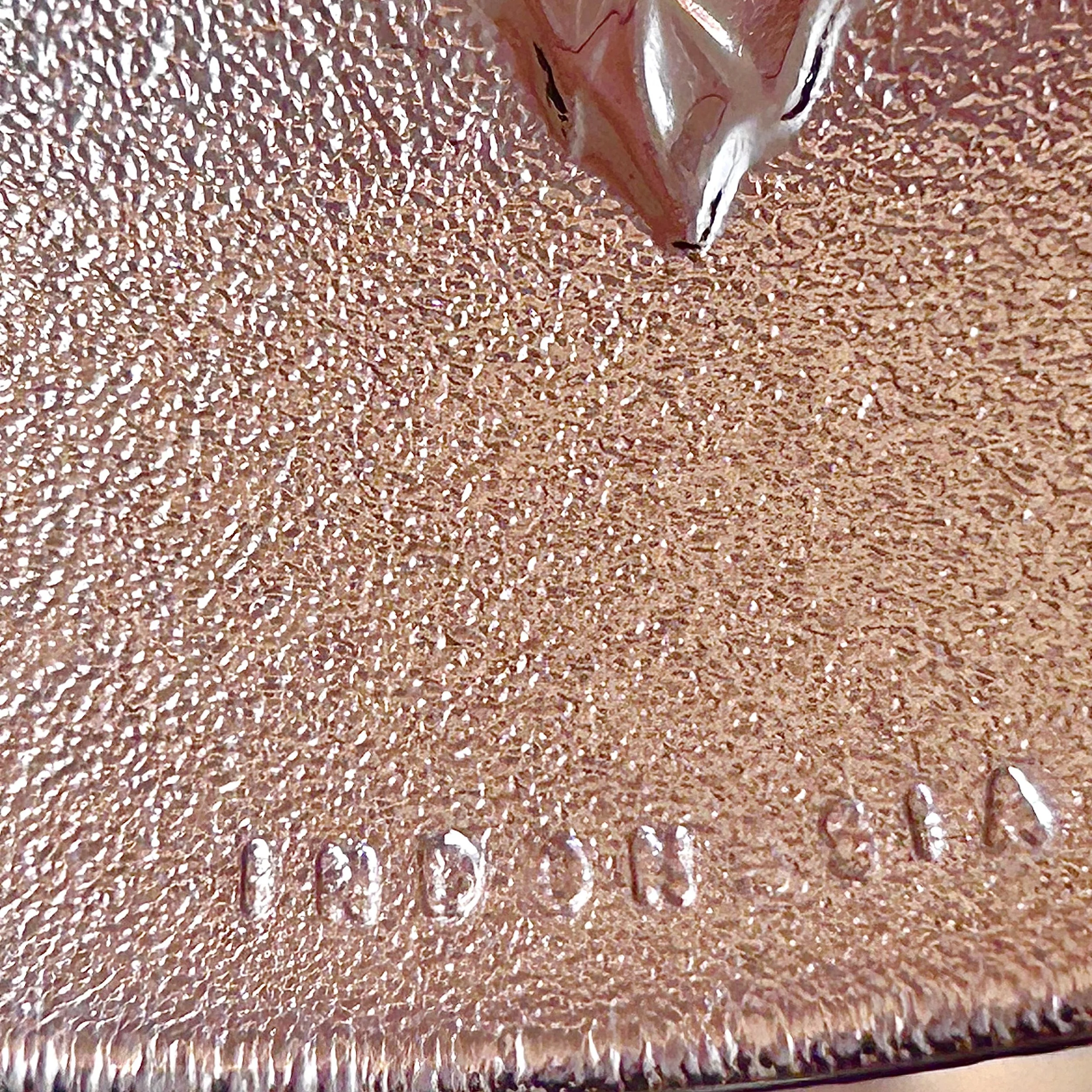
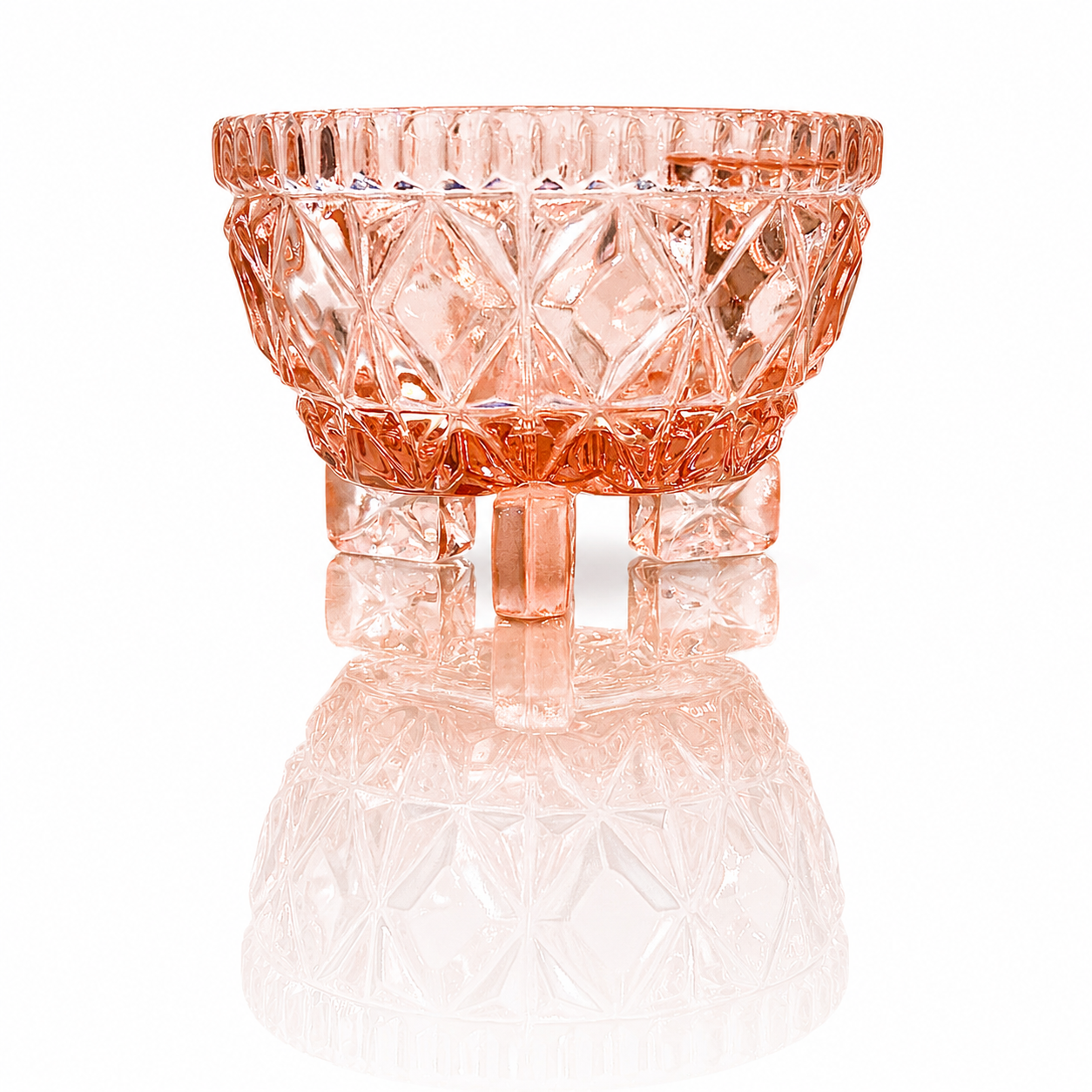
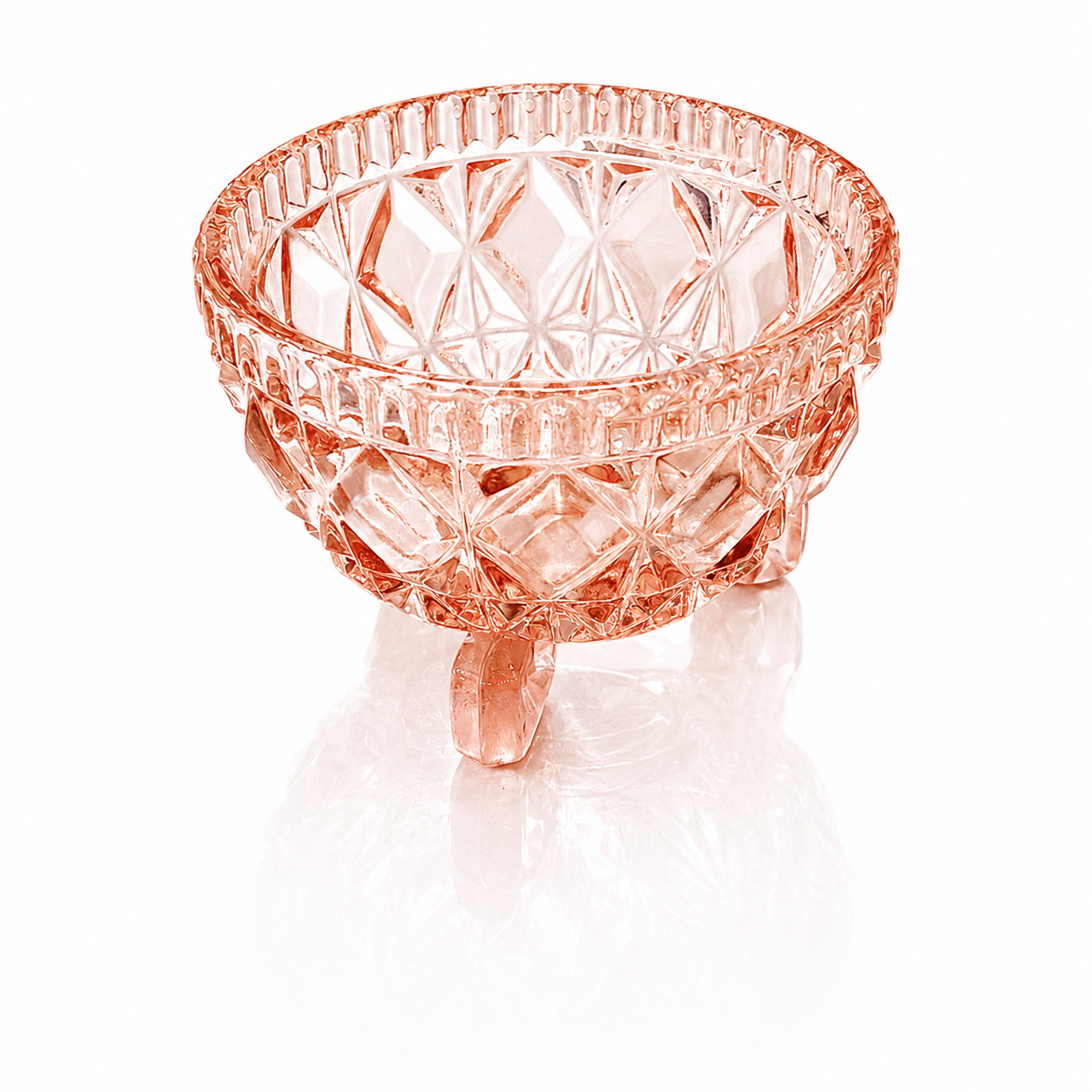
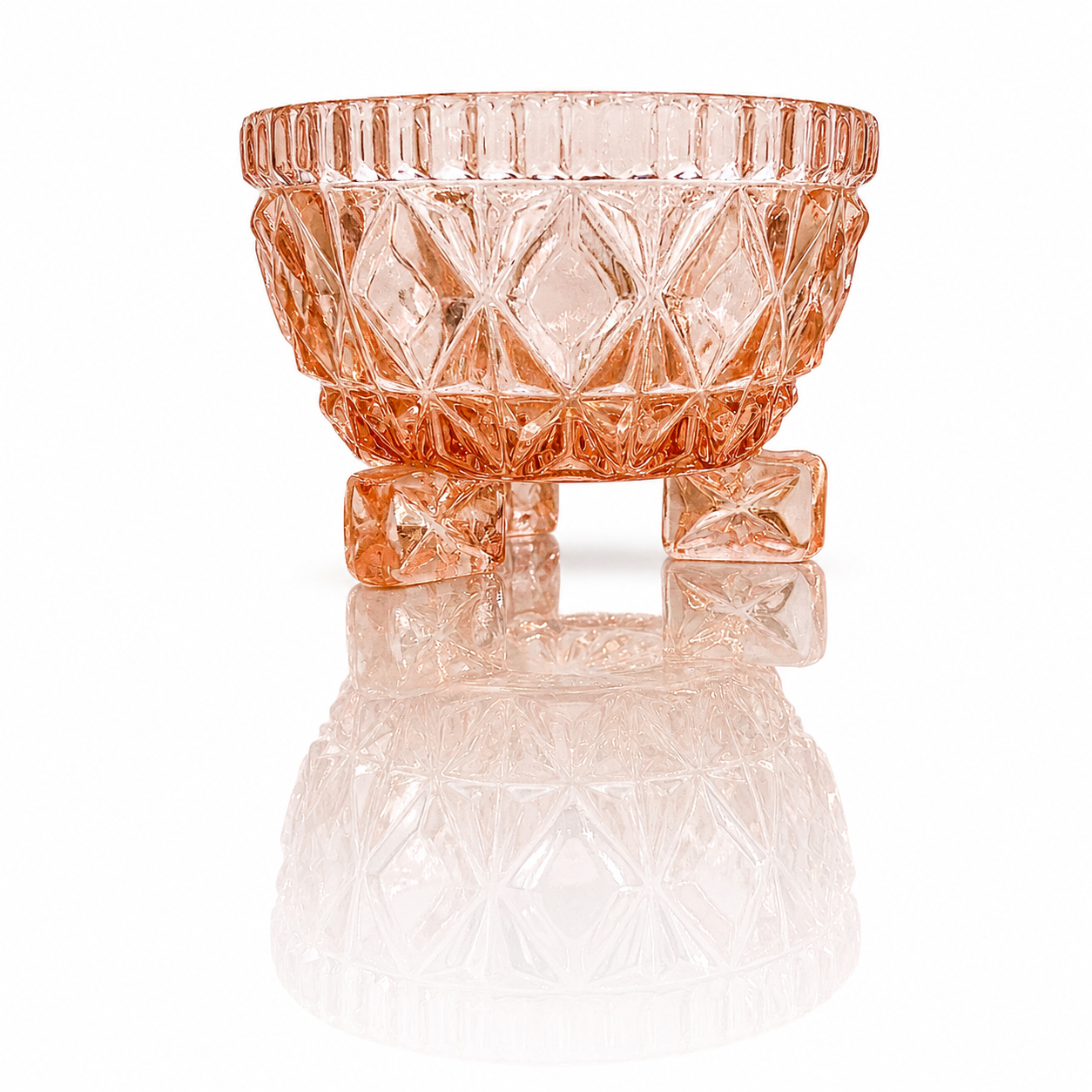
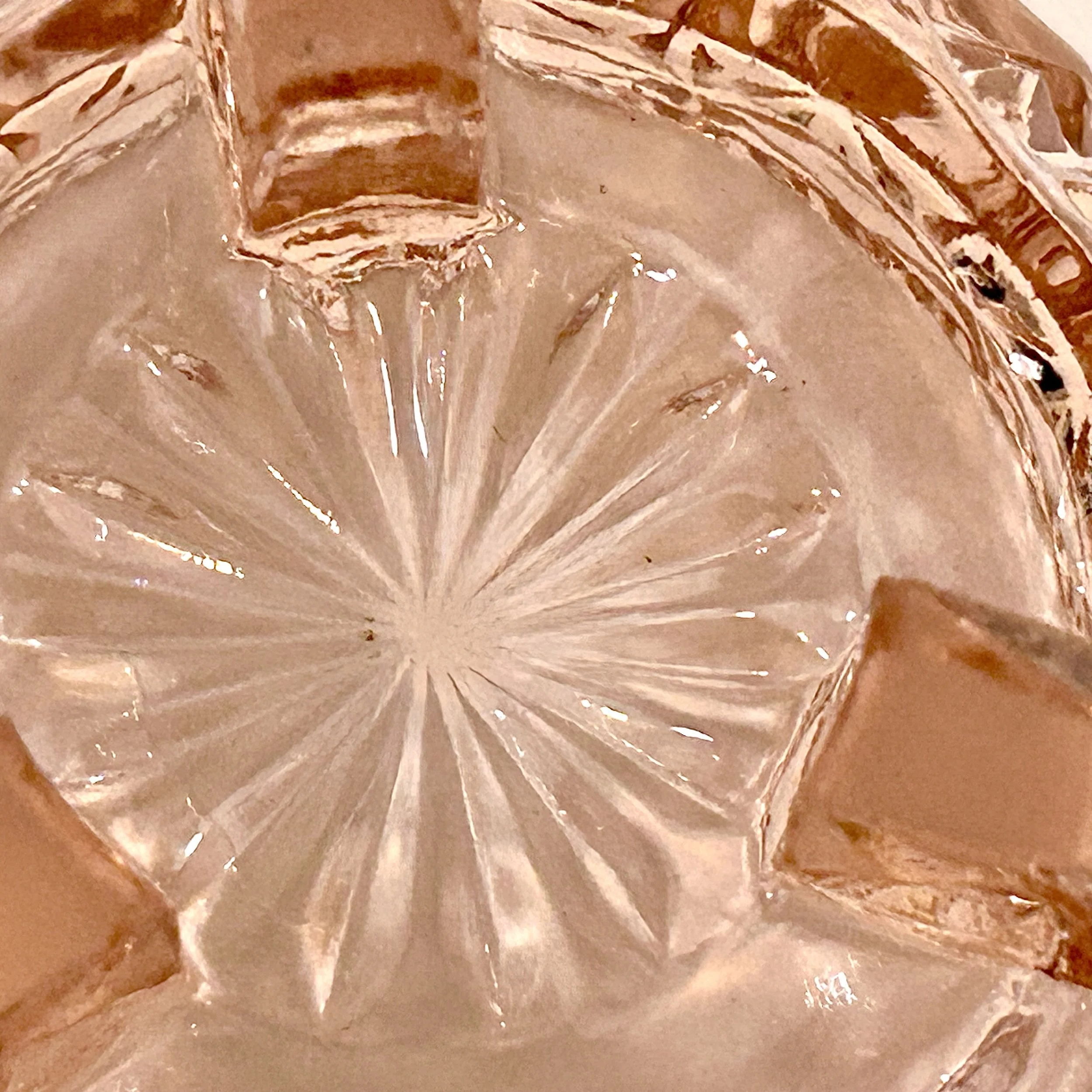
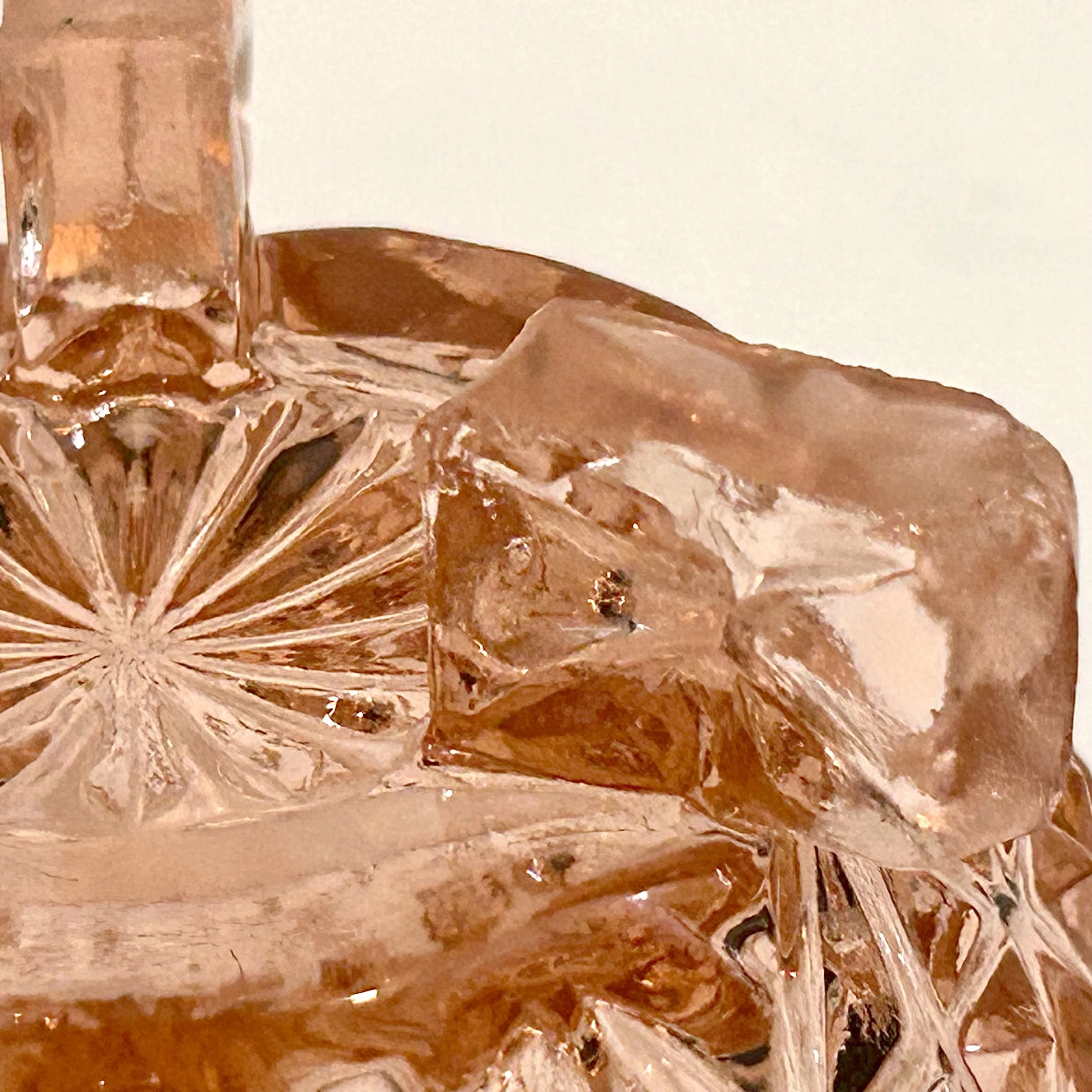
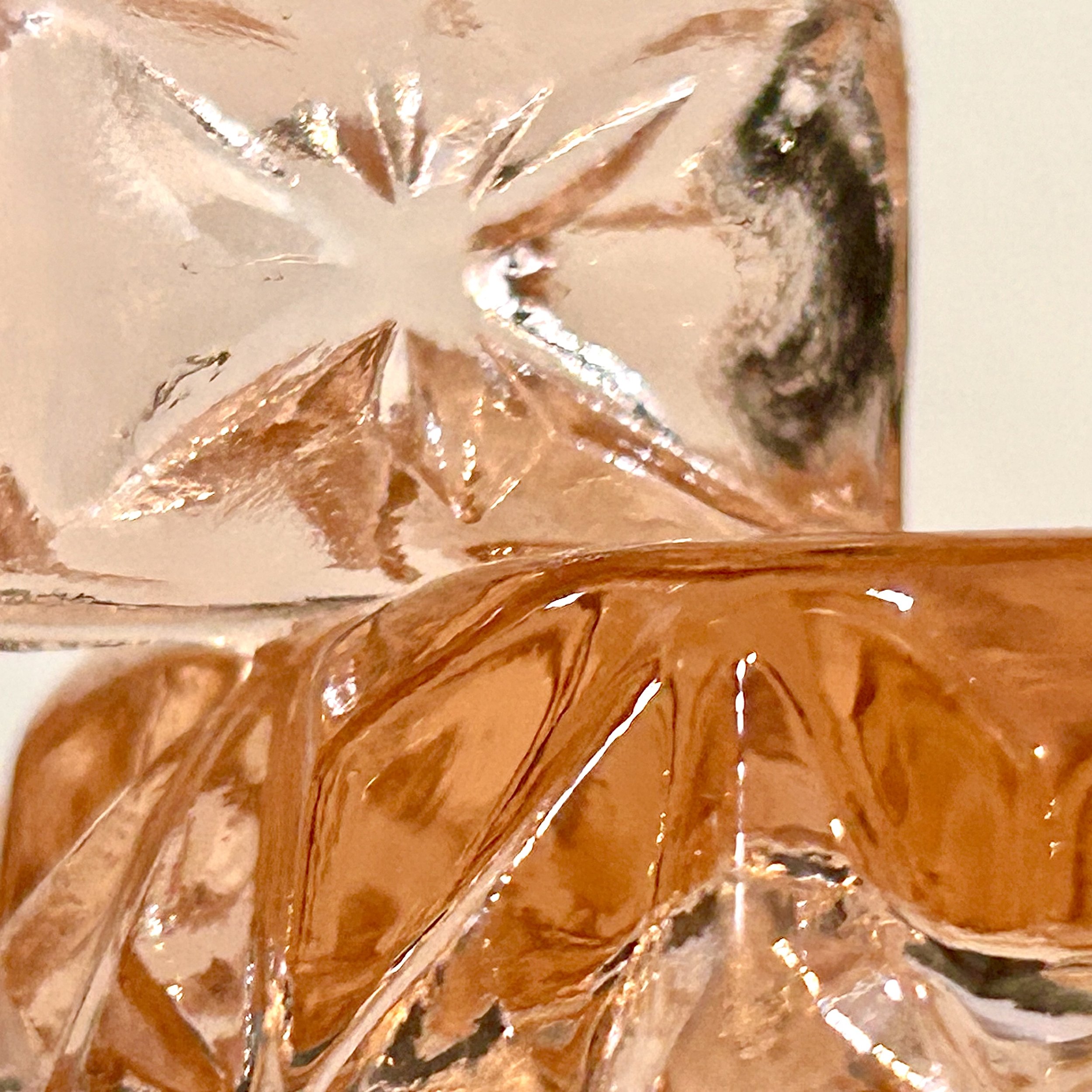
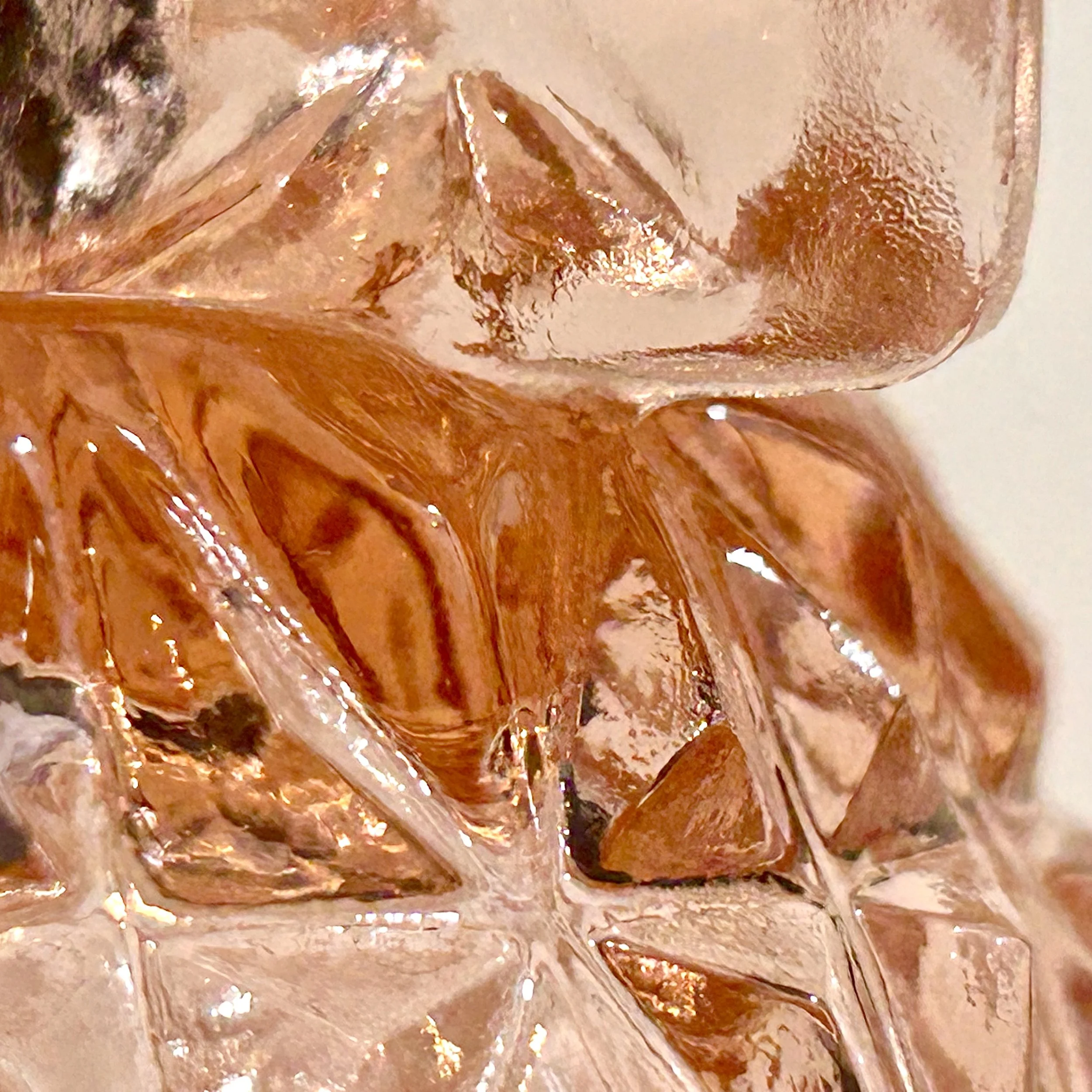
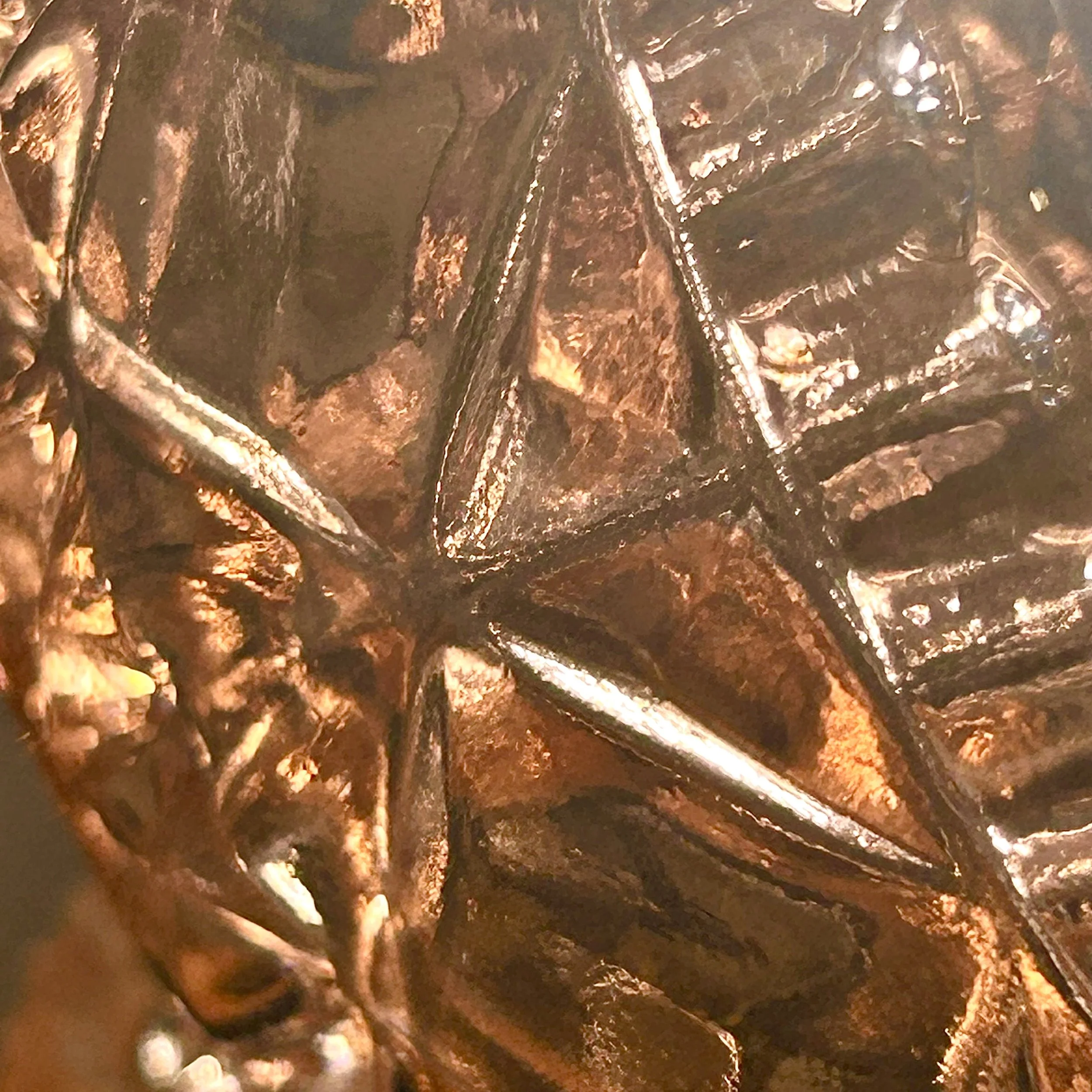
Thick cased crystal, precision-cut with starburst and lens motifs and finished with machine-assisted decorative cutting and a ground, polished base; the clarity, refraction, and cutting depth confirm crystal construction, with a rich pink casing over clear crystal producing pronounced depth and tonal intensity.
STANDARD ATTRIBUTION & VALUE DISCLOSURE; This piece is described to the best of current scholarly and market knowledge. Any maker or regional attribution is based on visual analysis, materials, construction techniques, and documented stylistic comparisons. As with many vintage and antique glass objects, definitive attribution may not be possible without original labels or factory records. Pricing reflects condition, quality, decorative appeal, and current collector demand rather than a guaranteed maker identification.
A complete and exceptionally preserved service of six pink Depression glass teacups with matching saucers, executed in a warm blush tone with molded rose garlands framed by vertical fluting.
Each cup presents a gently tapered bowl with crisp floral relief panels alternating with elongated vertical ribs. The handles are elegantly proportioned and seamlessly integrated. The matching saucers echo the same rose motif around the perimeter, anchored by a circular well and structured radial segmentation.
The glass displays luminous transparency with even color saturation and excellent mold clarity — a strong indicator of quality American pressed glass production of the 1930s–1940s. The rose relief pattern and panel structure are consistent with classic Depression-era elegant glass patterns produced by major American houses such as Federal Glass, Hocking Glass Company, or similar manufacturers.
Attribution & Period
Height of the American Depression-era "Elegant Glass" movement, this service features a rhythmic, panel-fluted structure and a delicately molded rose garland motif characteristic of the 1930s. The blush-pink coloration, integrated loop handles, and radial segmented saucers reflect the sophisticated aesthetic of the period's principal domestic manufacturers, blending period charm with architectural precision.
Dimensions & Weight
Each Cup:
Height: 2 1/2 inches
Base Diameter: 2 inches
Each Saucer:
Diameter: 5 3/4 inches
Footed Base Diameter: 2 3/4 inches
Balanced scale appropriate for tea service or refined display.
Condition
Excellent condition. No chips, cracks, or scratches observed on any of the six cups or saucers. Mold definition remains crisp. Surfaces retain strong clarity and even coloration throughout. A rare opportunity to acquire a fully intact service of this type in such preserved condition.
Authenticity & Construction
Pressed glass construction; the relief roses and vertical fluting are mold-pressed with clean definition and consistent repetition across all six examples, indicating original matched production rather than assembled replacements. The blush tone is characteristic of Depression-era pink glass, achieved through controlled mineral coloration within the molten batch. Subtle internal light refraction confirms period pressed glass technique.
Placement
Thick cased crystal, precision-cut with starburst and lens motifs and finished with machine-assisted decorative cutting and a ground, polished base; the clarity, refraction, and cutting depth confirm crystal construction, with a rich pink casing over clear crystal producing pronounced depth and tonal intensity.
STANDARD ATTRIBUTION & VALUE DISCLOSURE; This piece is described to the best of current scholarly and market knowledge. Any maker or regional attribution is based on visual analysis, materials, construction techniques, and documented stylistic comparisons. As with many vintage and antique glass objects, definitive attribution may not be possible without original labels or factory records. Pricing reflects condition, quality, decorative appeal, and current collector demand rather than a guaranteed maker identification.

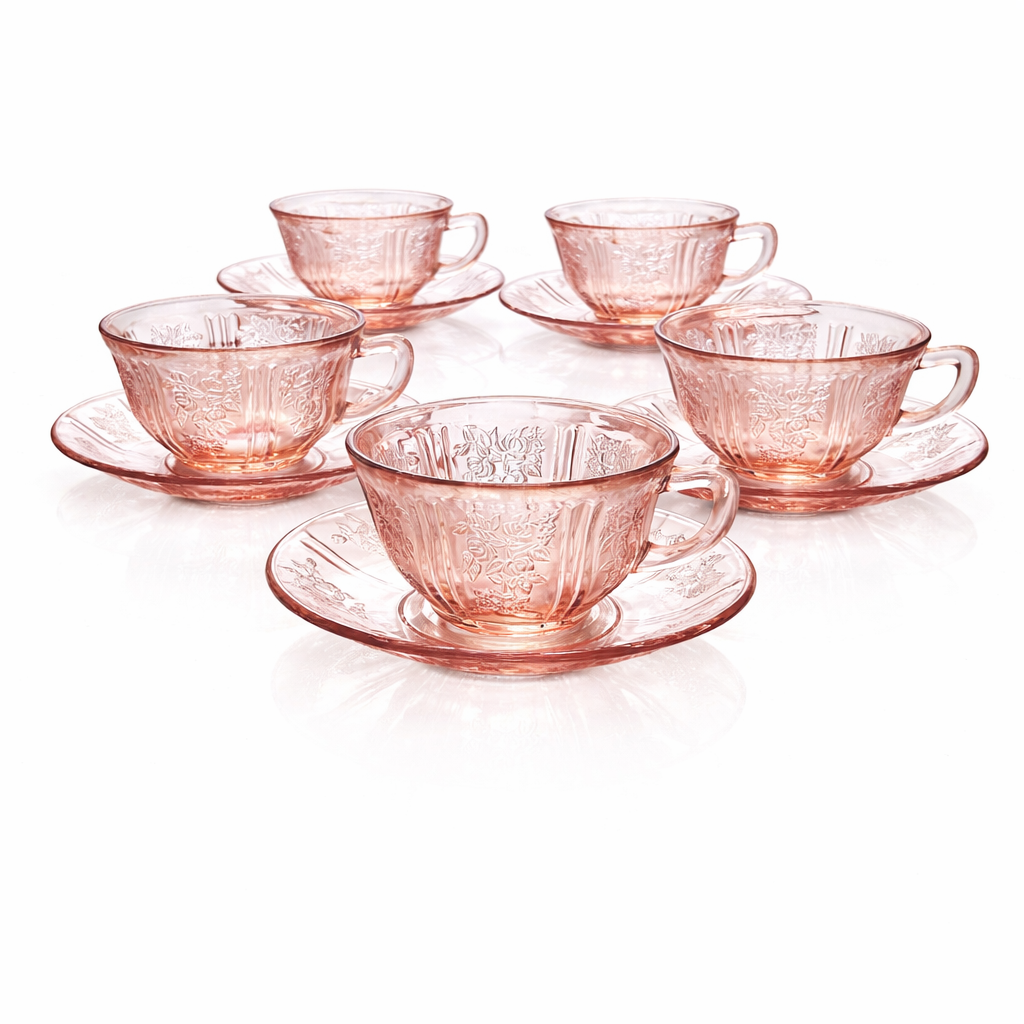 Image 1 of 13
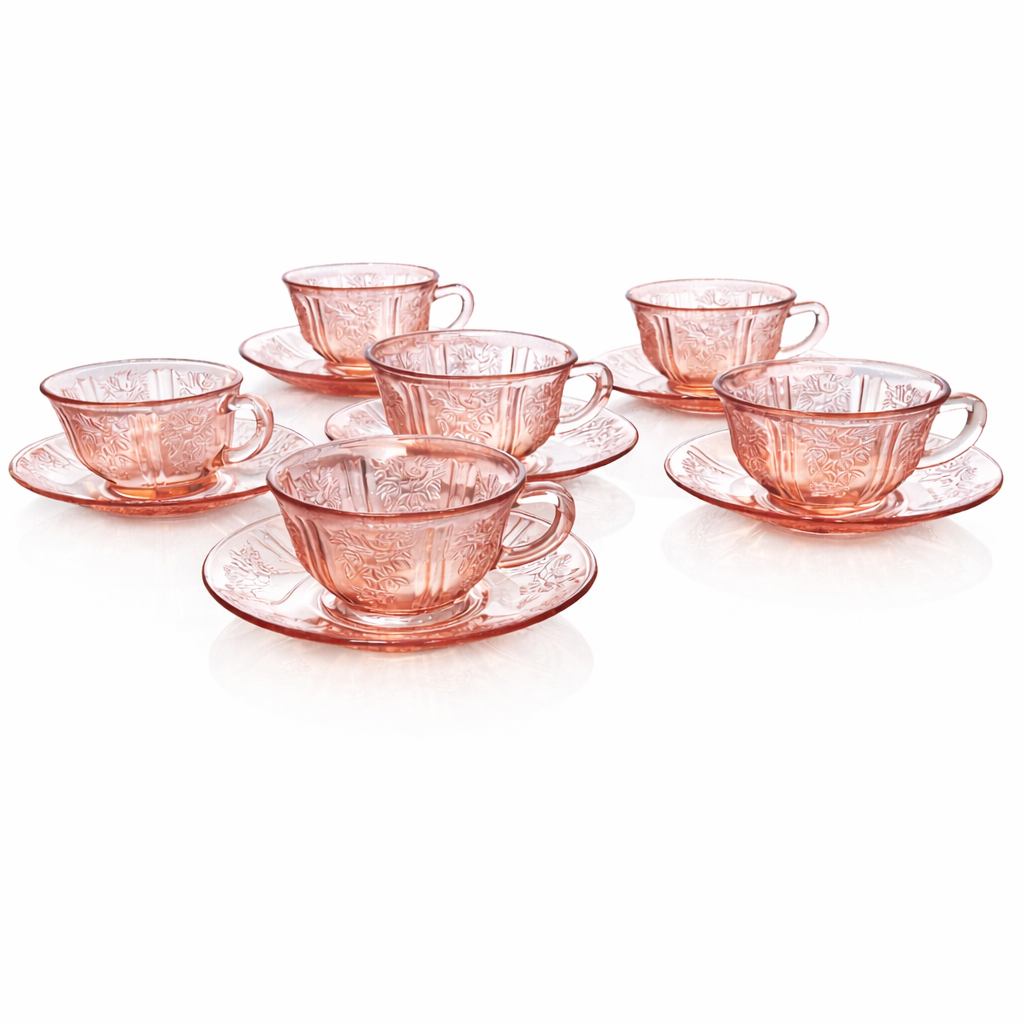 Image 2 of 13
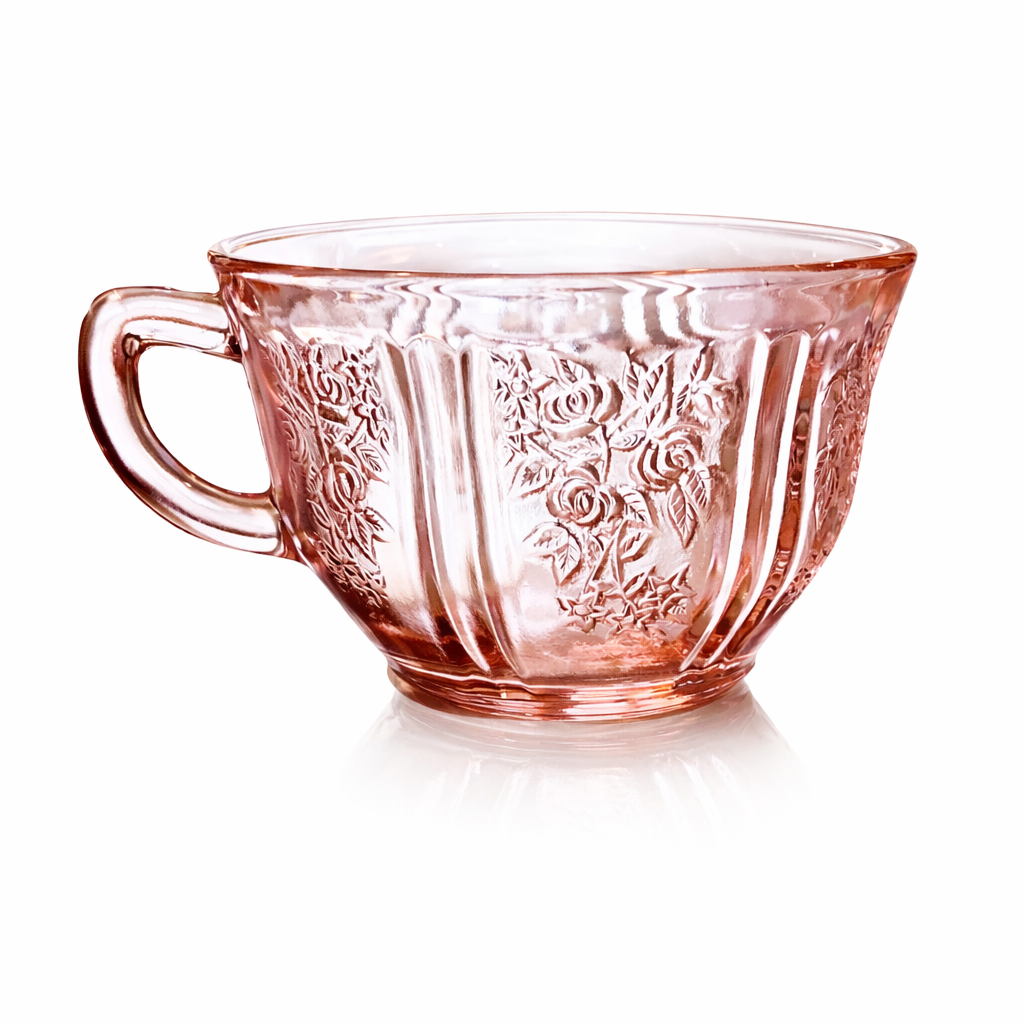 Image 3 of 13
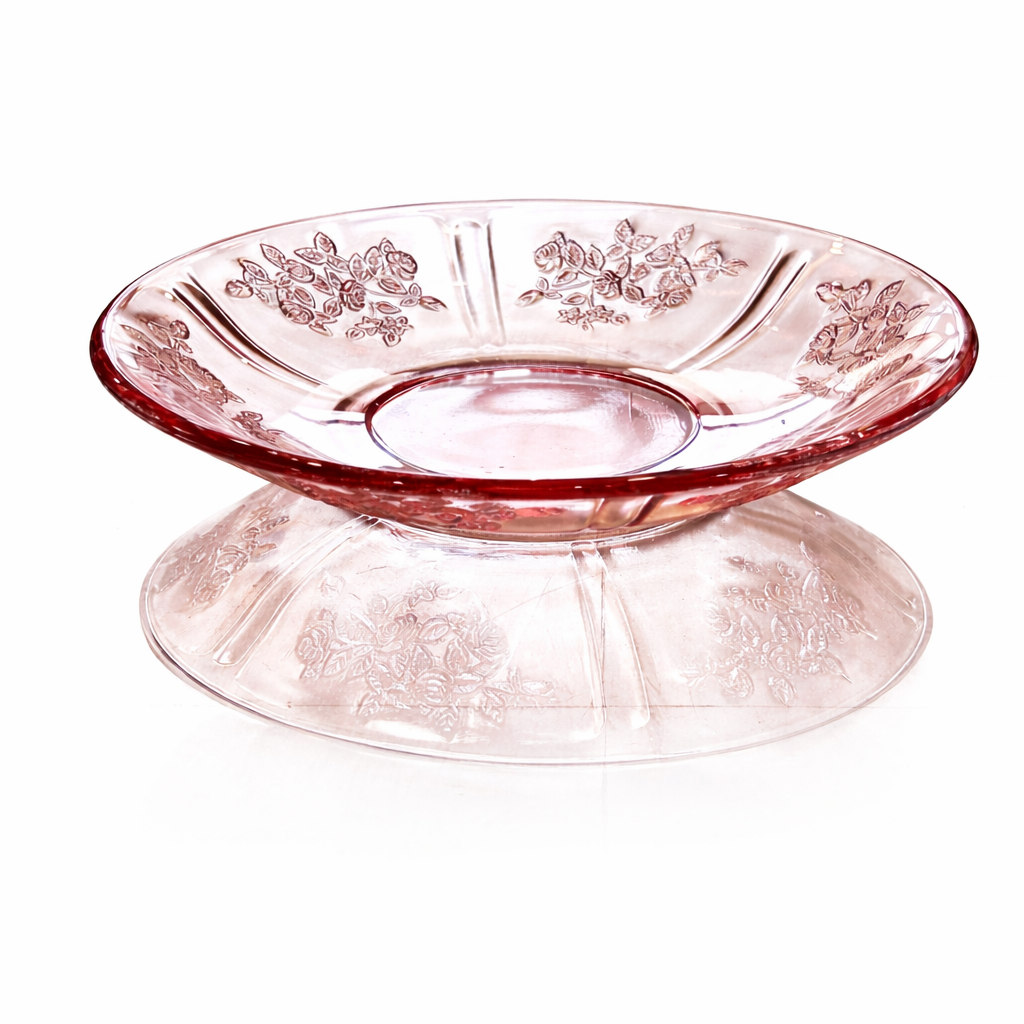 Image 4 of 13
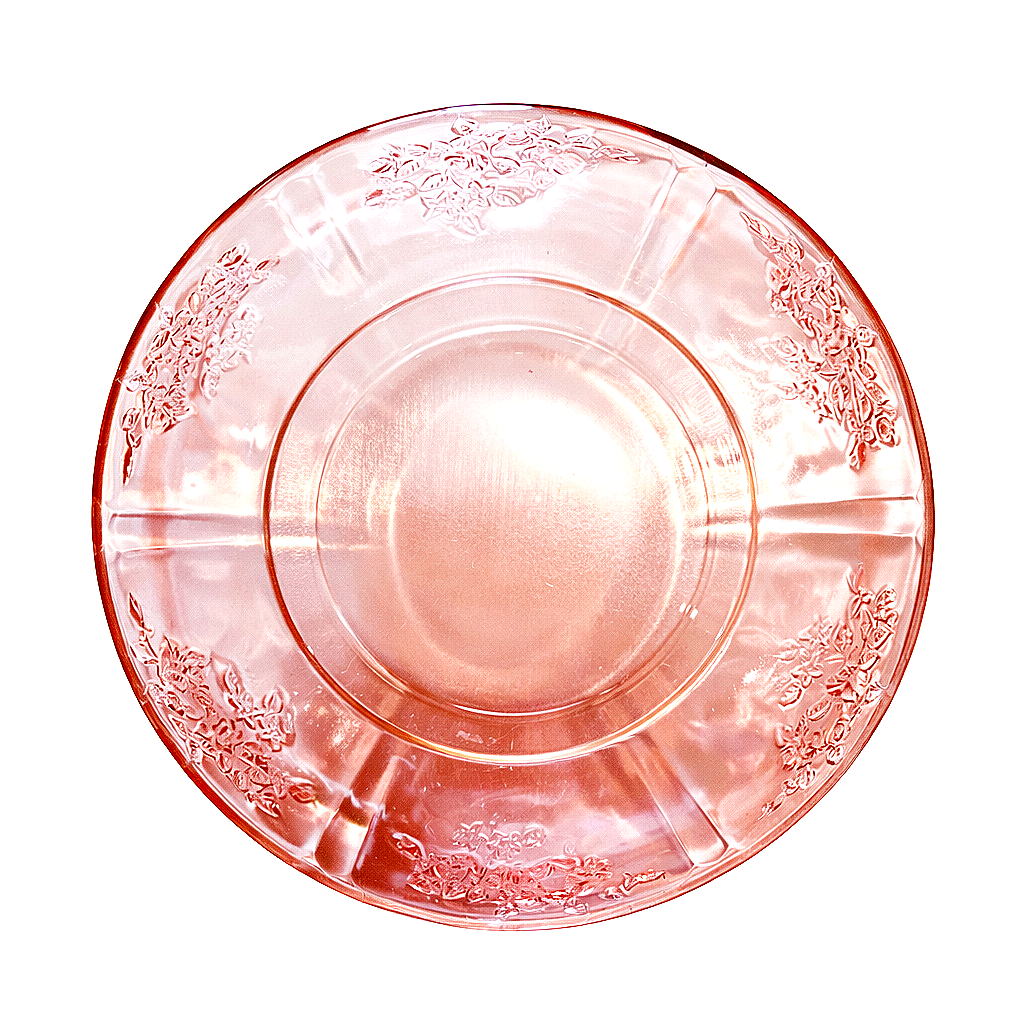 Image 5 of 13
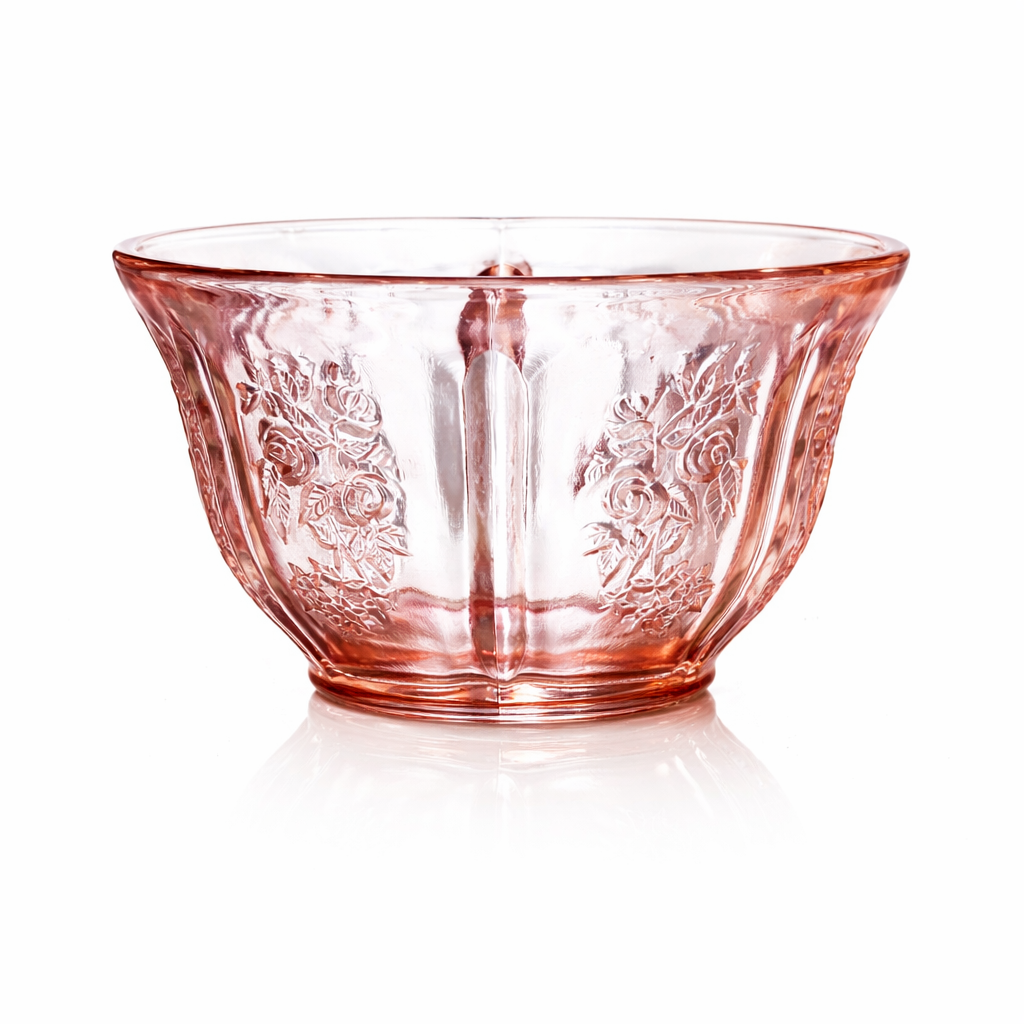 Image 6 of 13
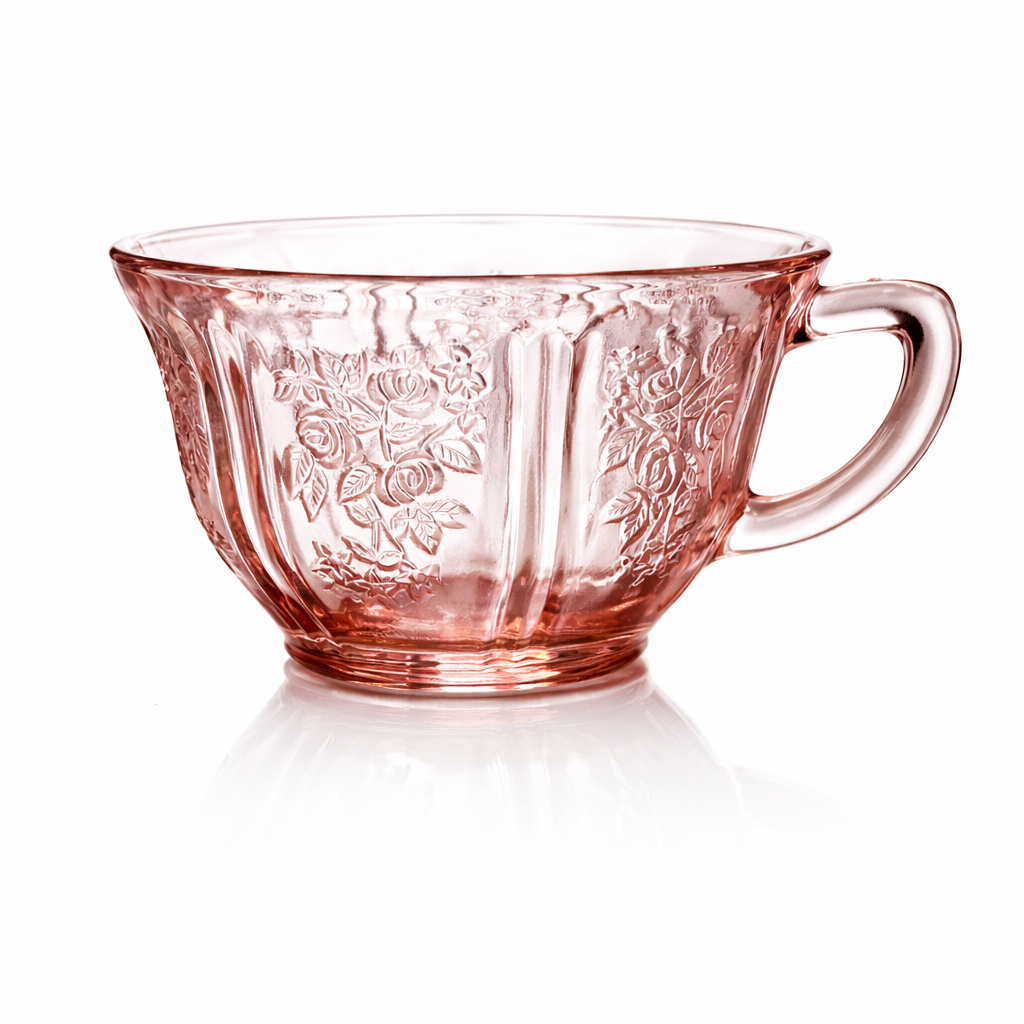 Image 7 of 13
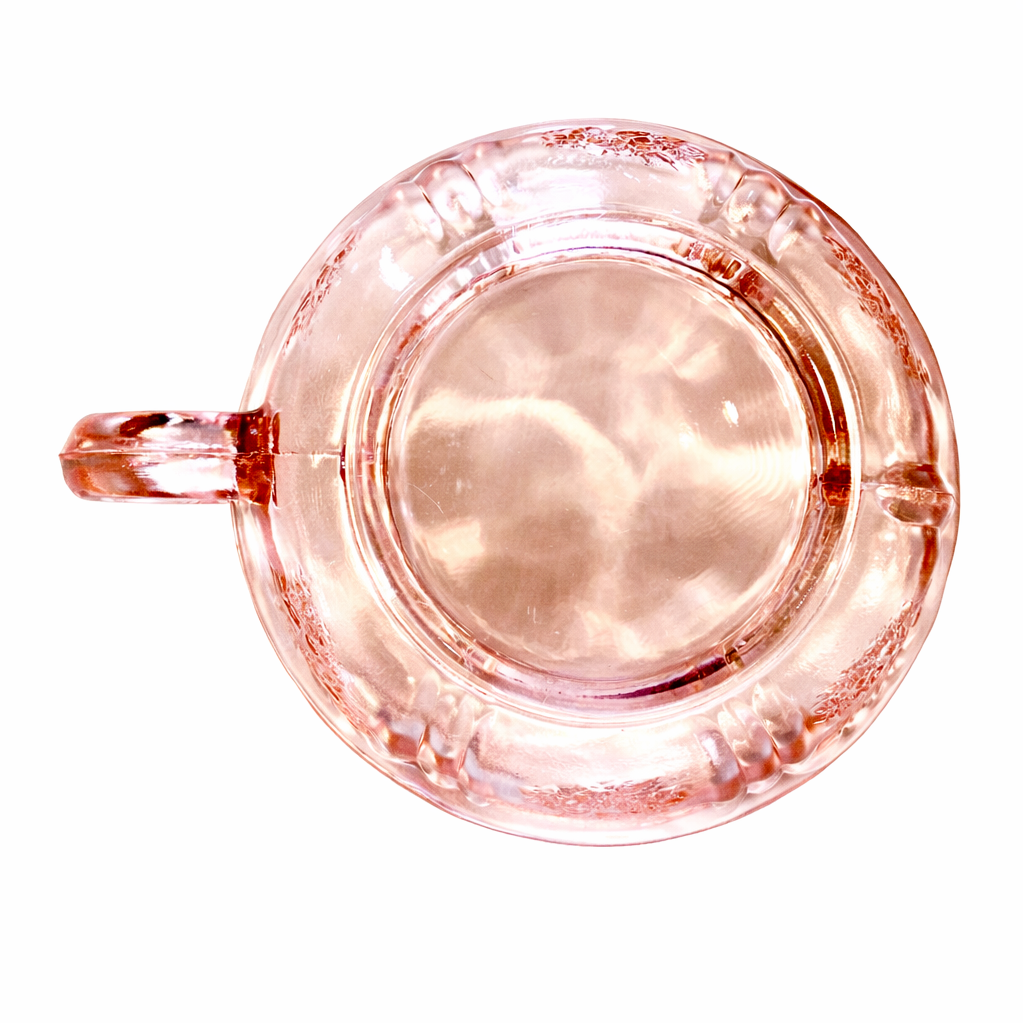 Image 8 of 13
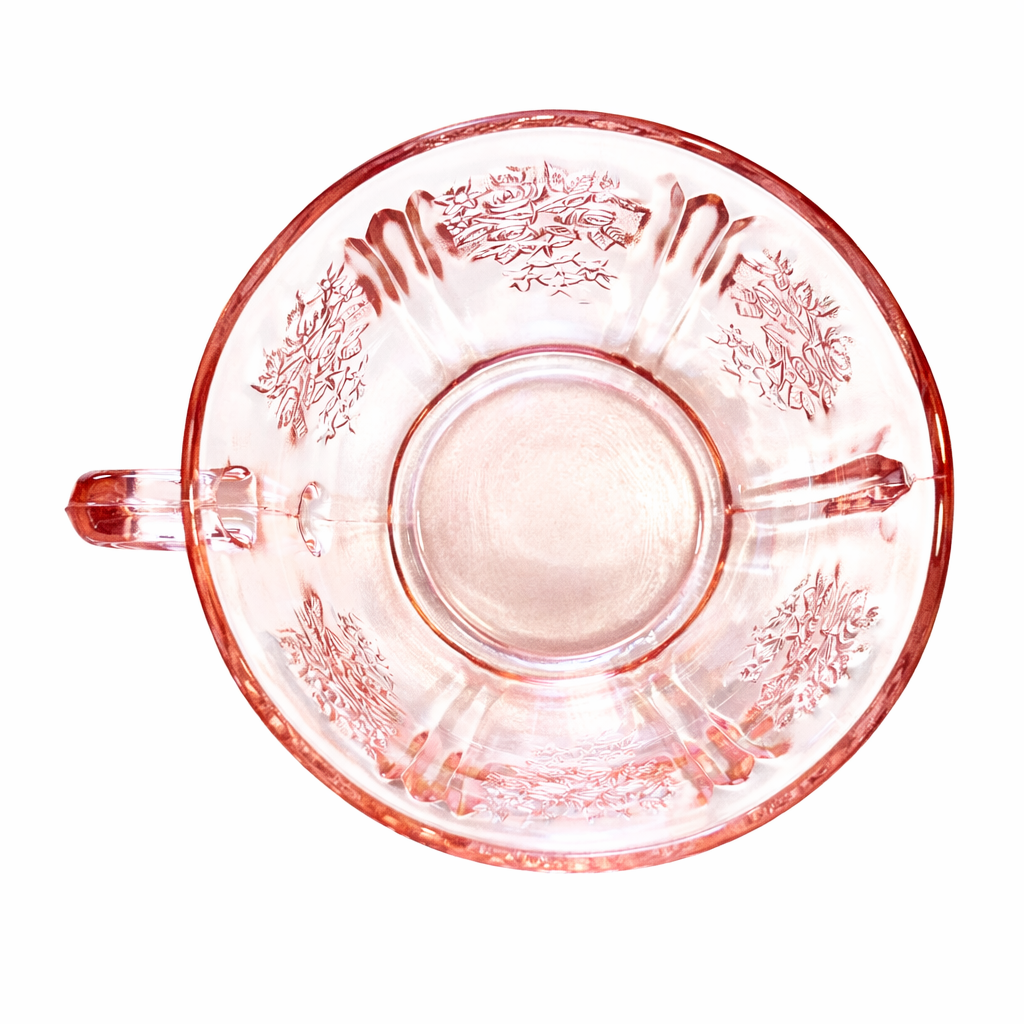 Image 9 of 13
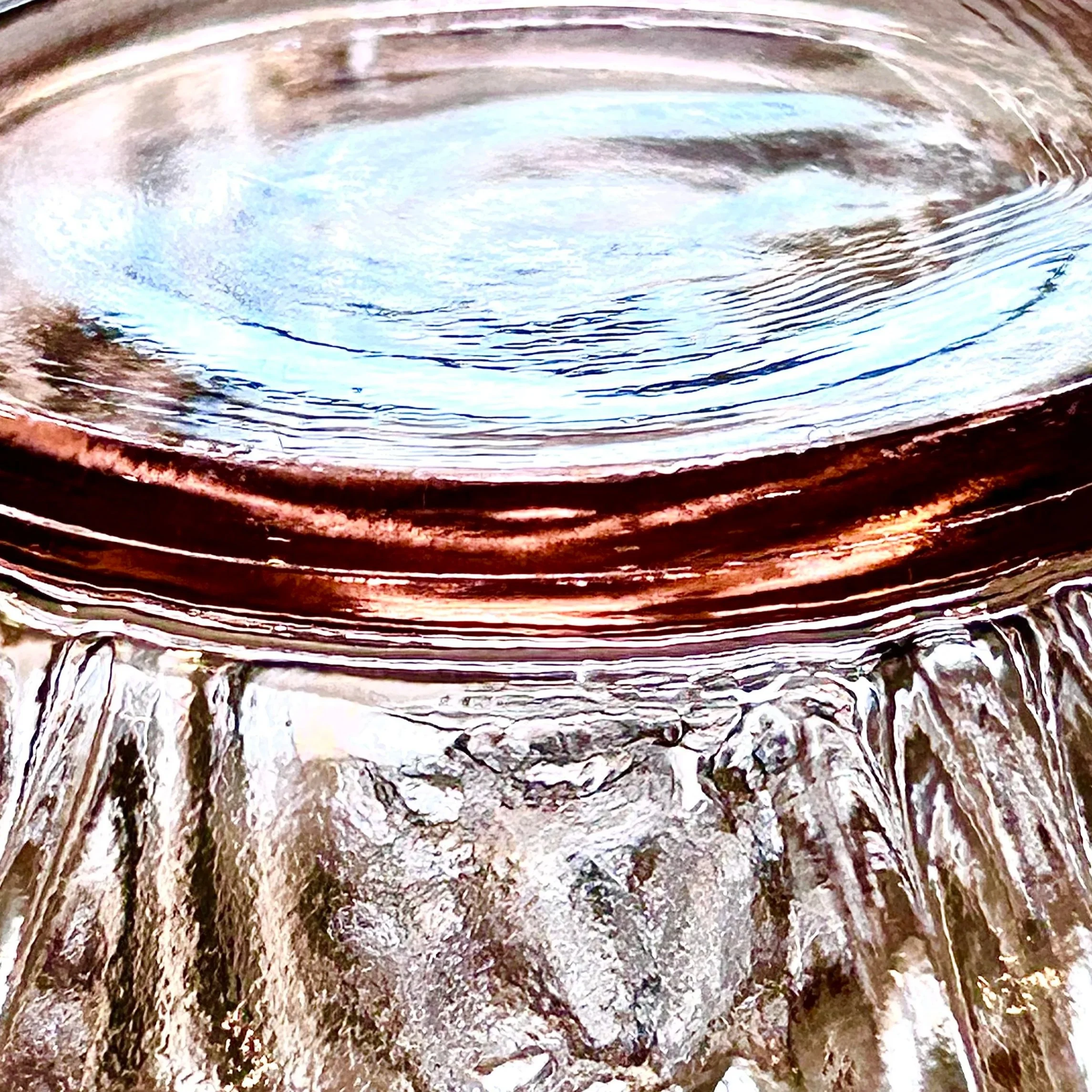 Image 10 of 13
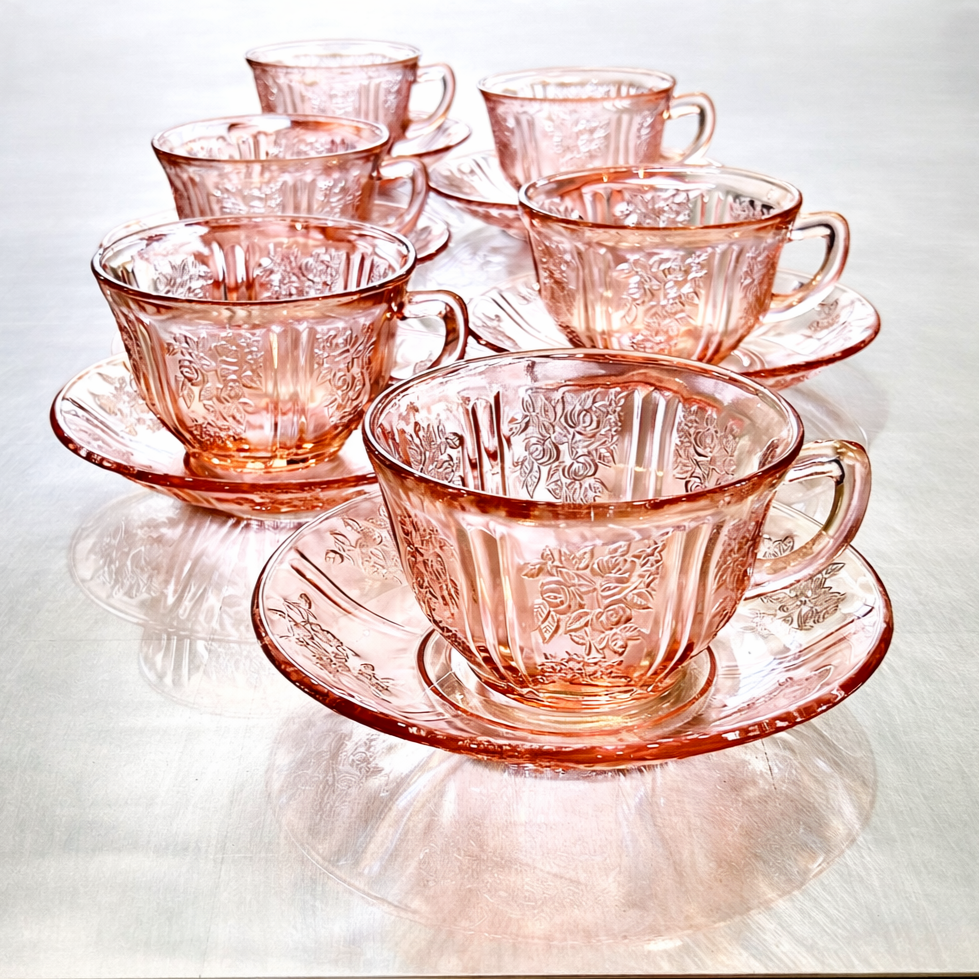 Image 11 of 13
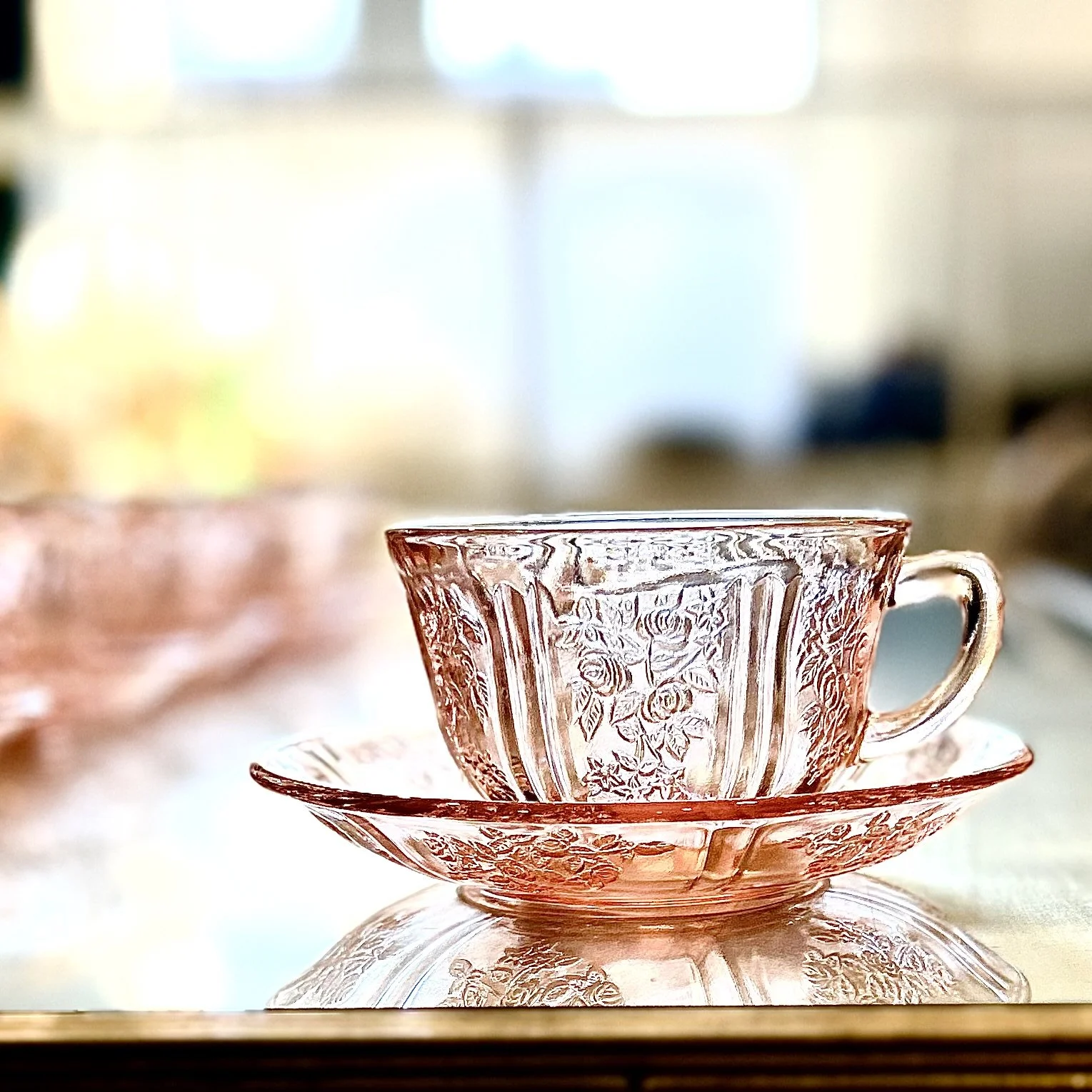 Image 12 of 13
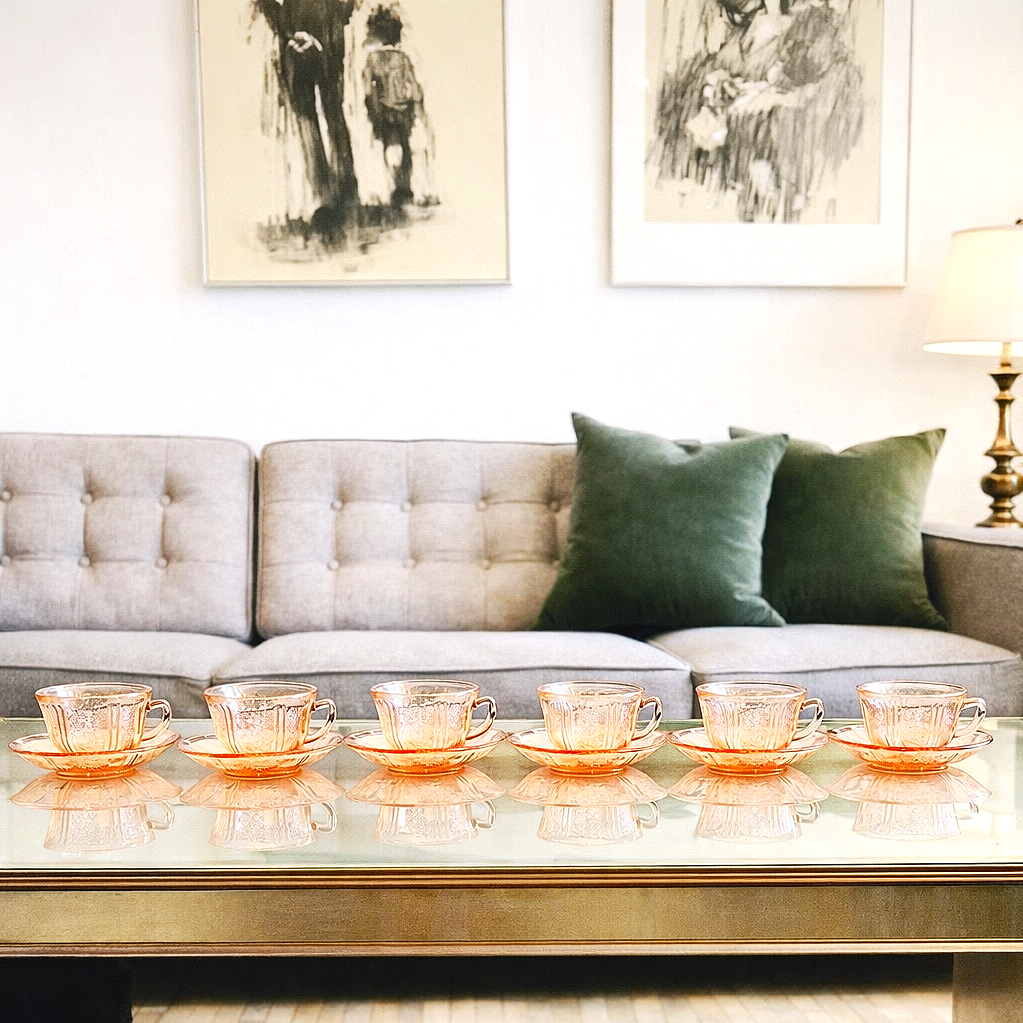 Image 13 of 13