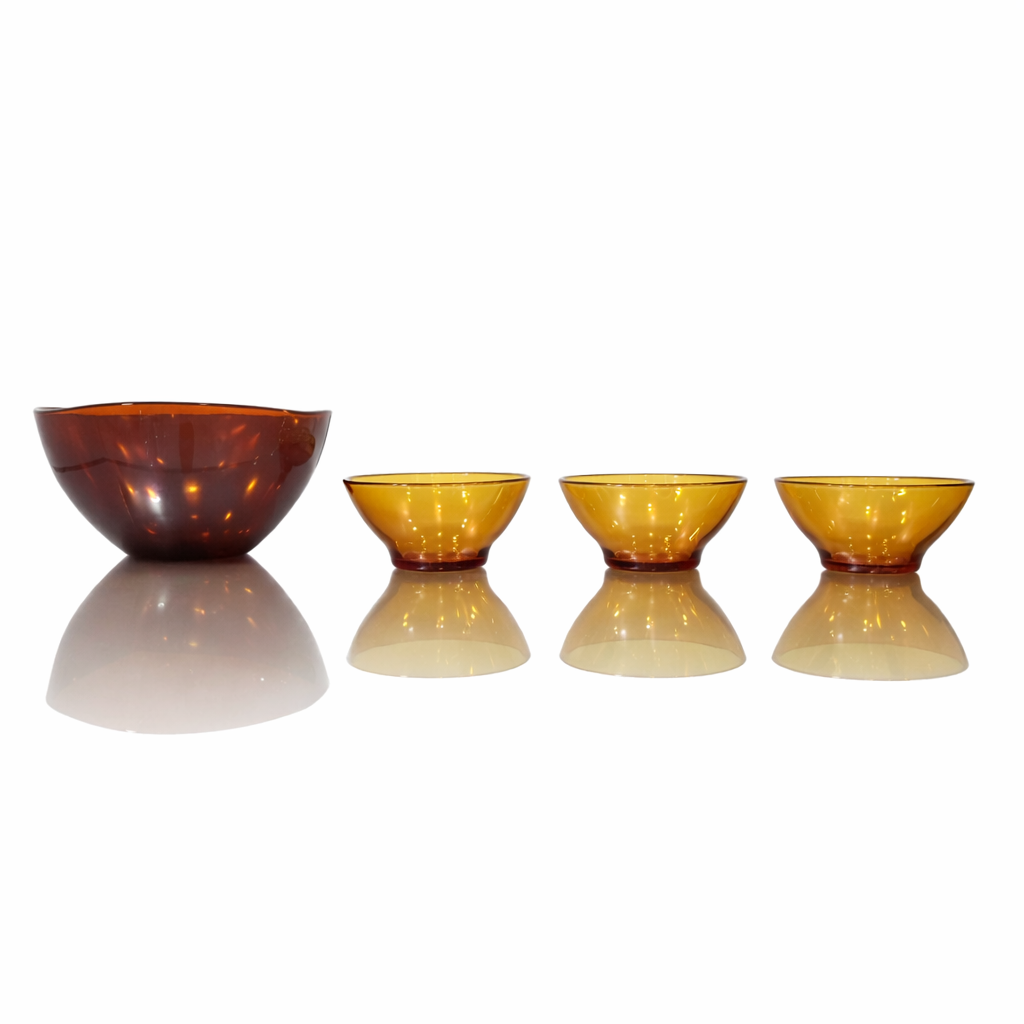
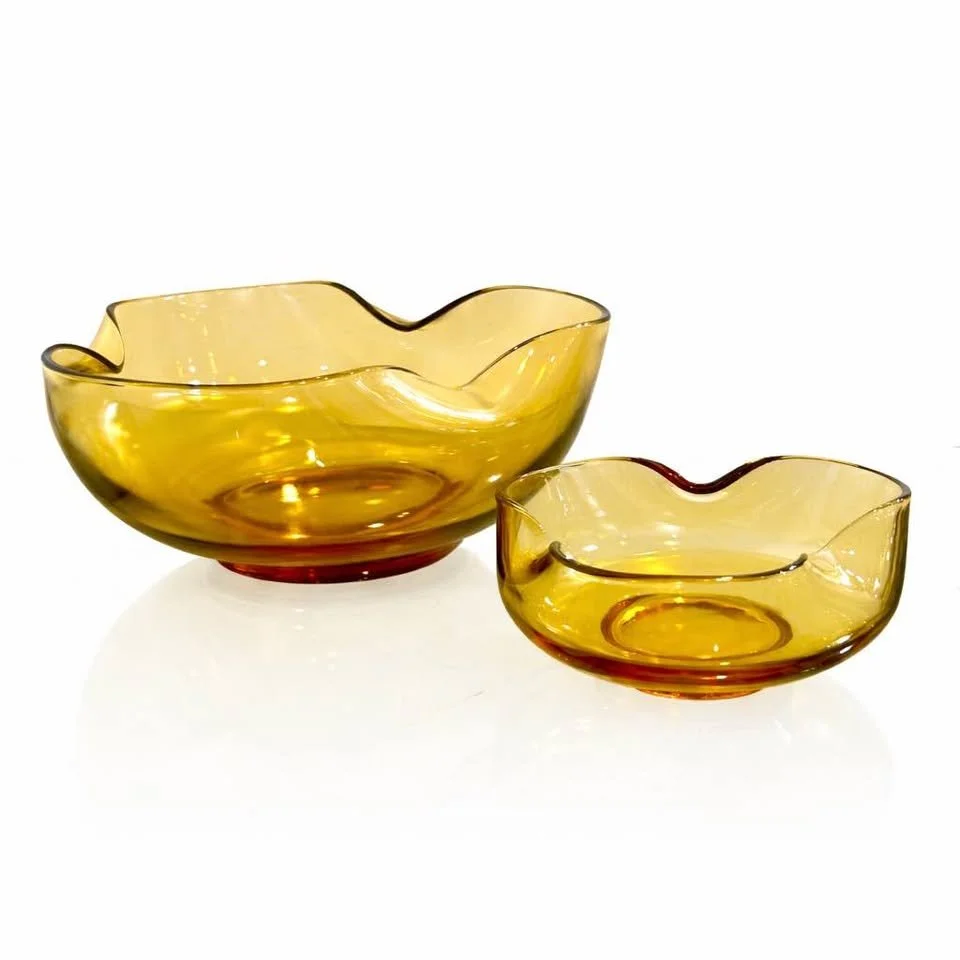
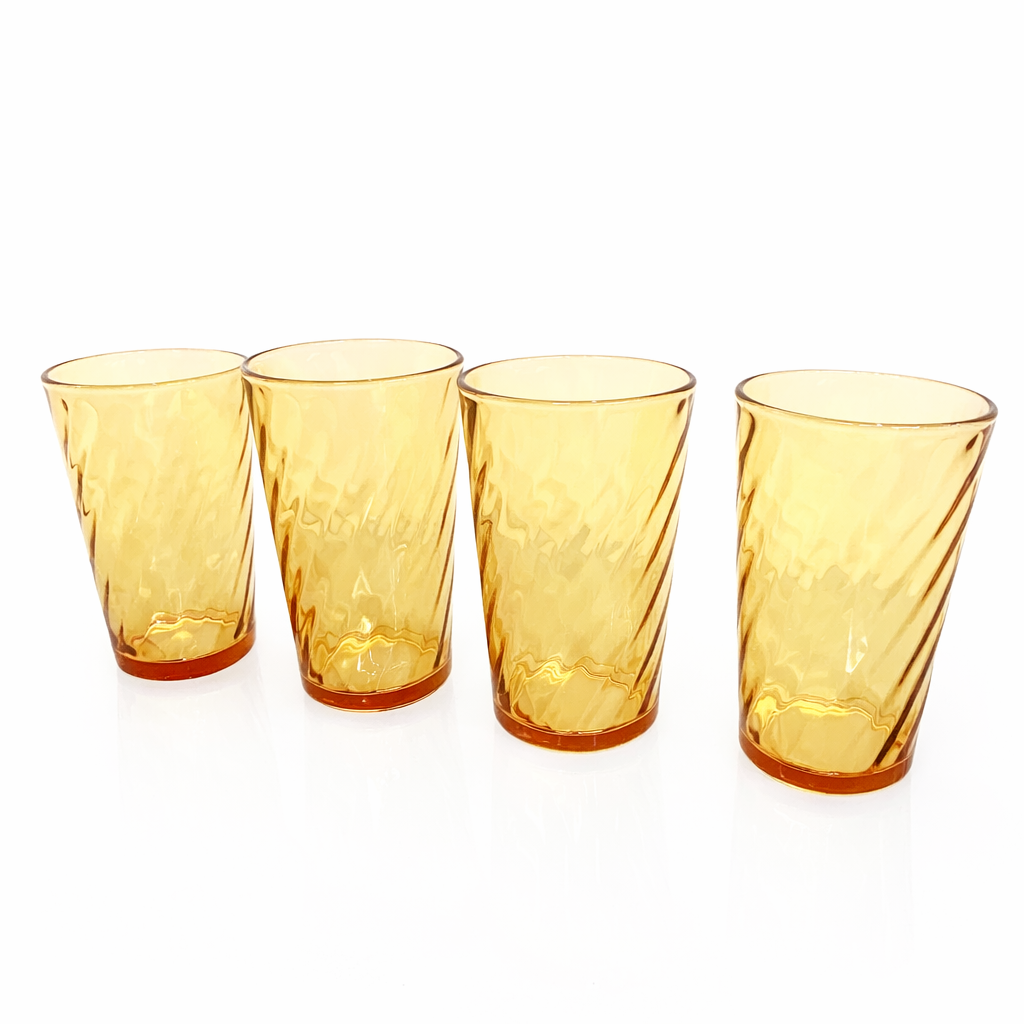
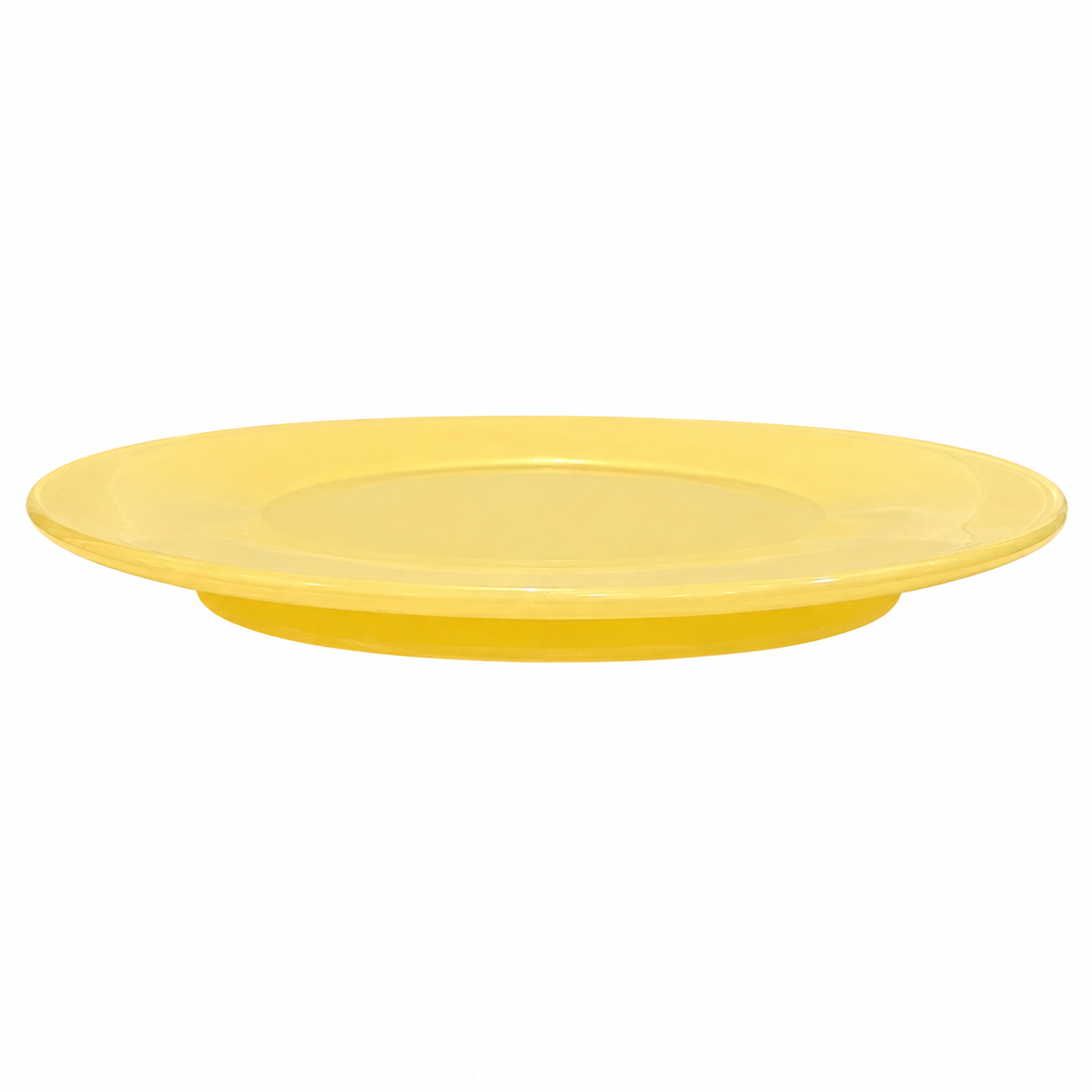
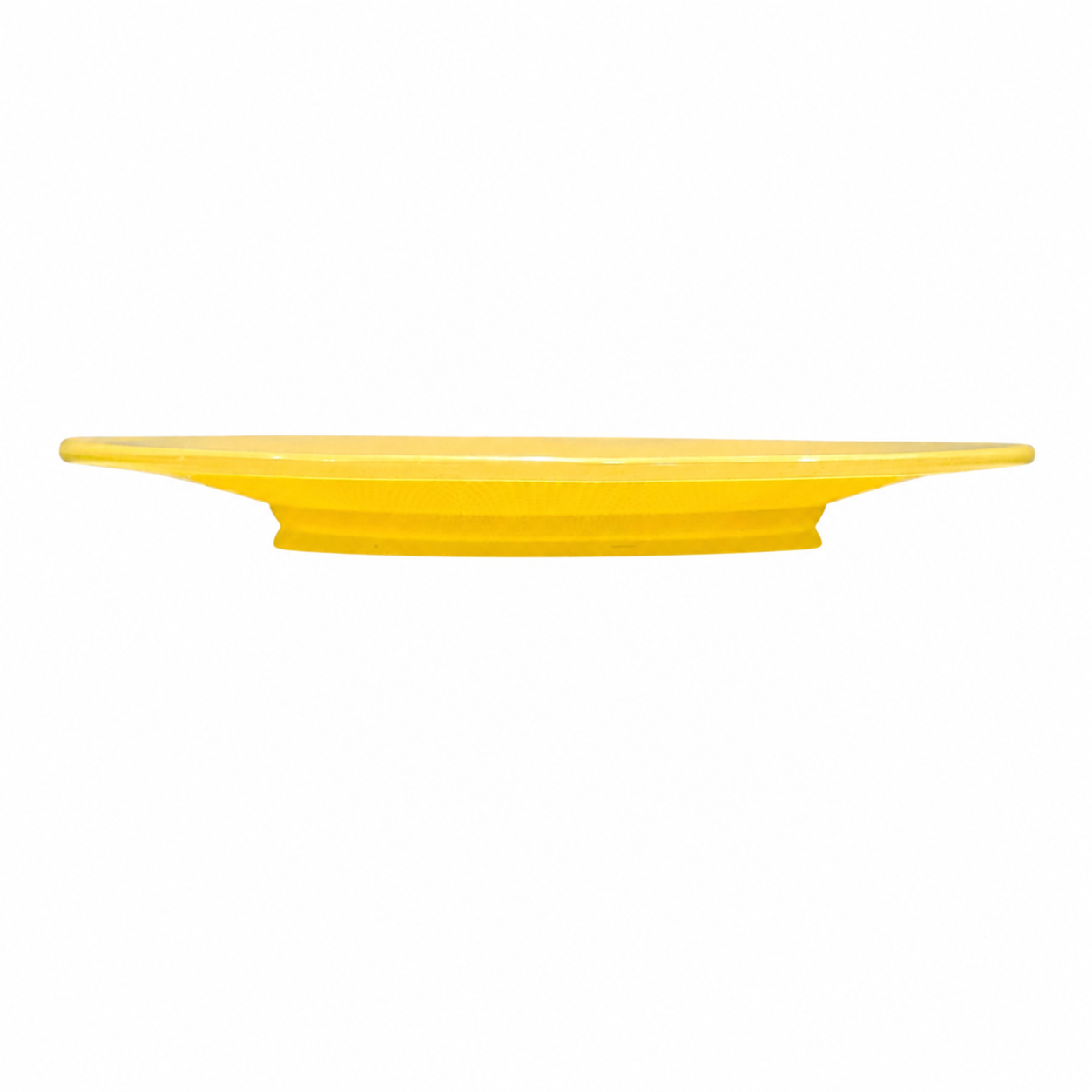
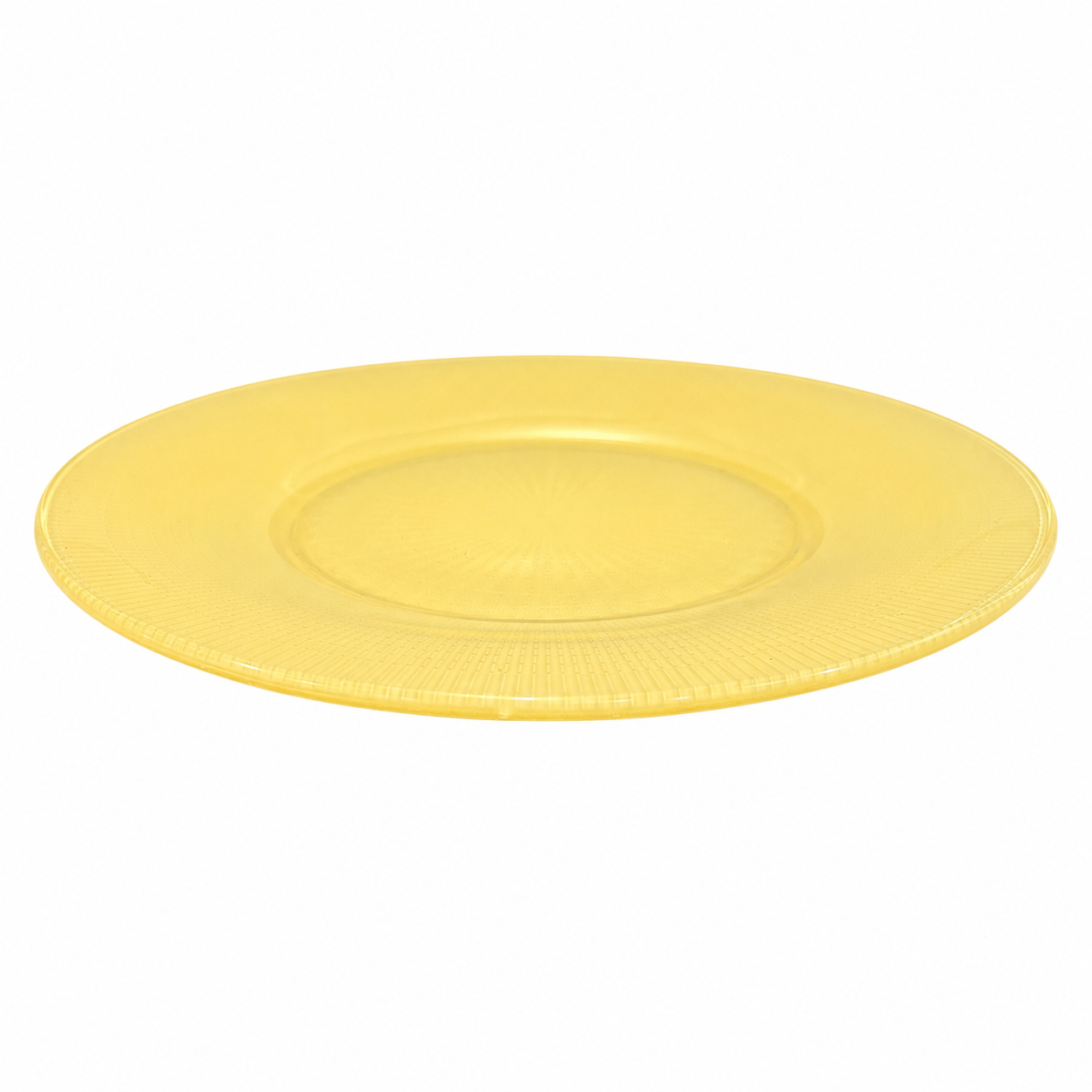
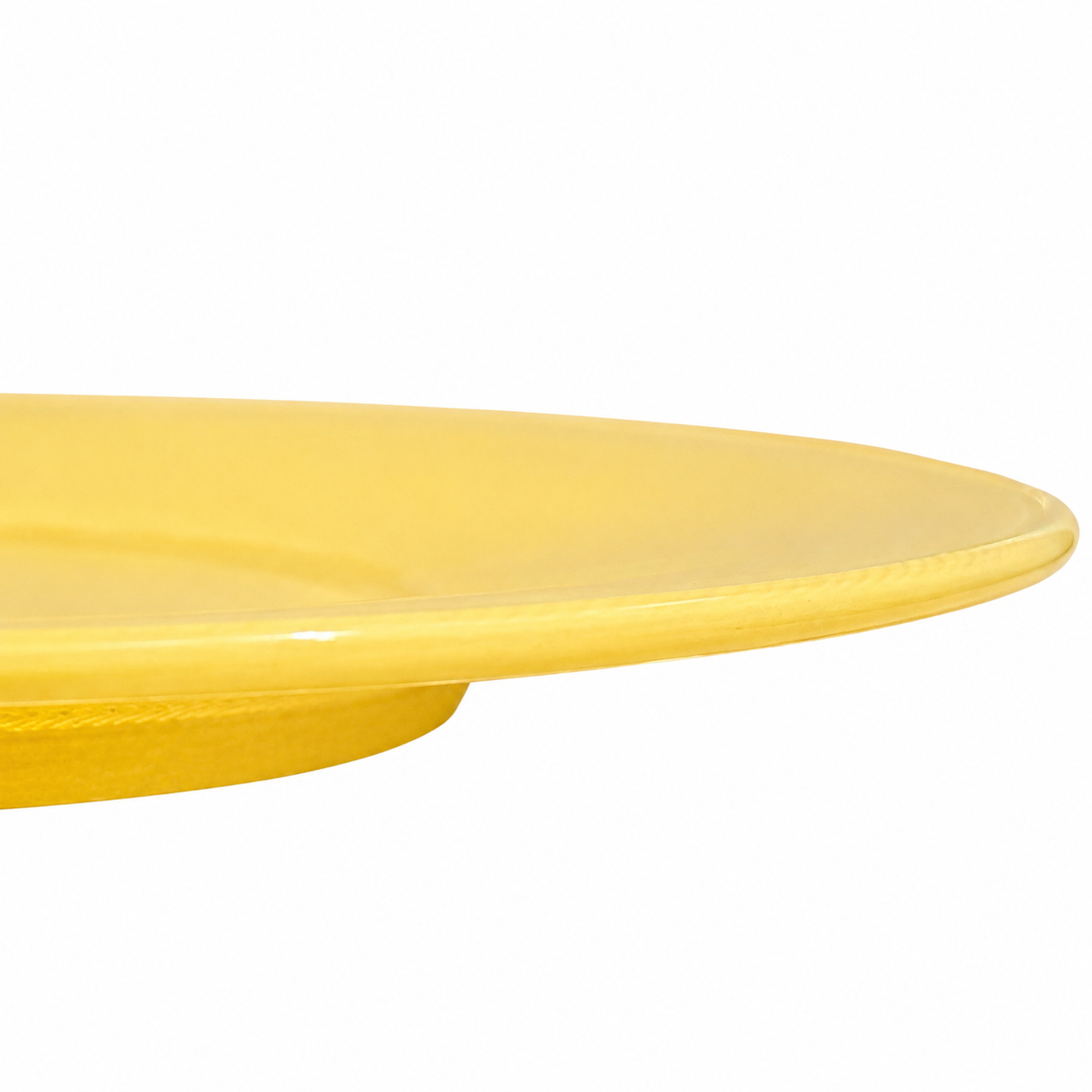
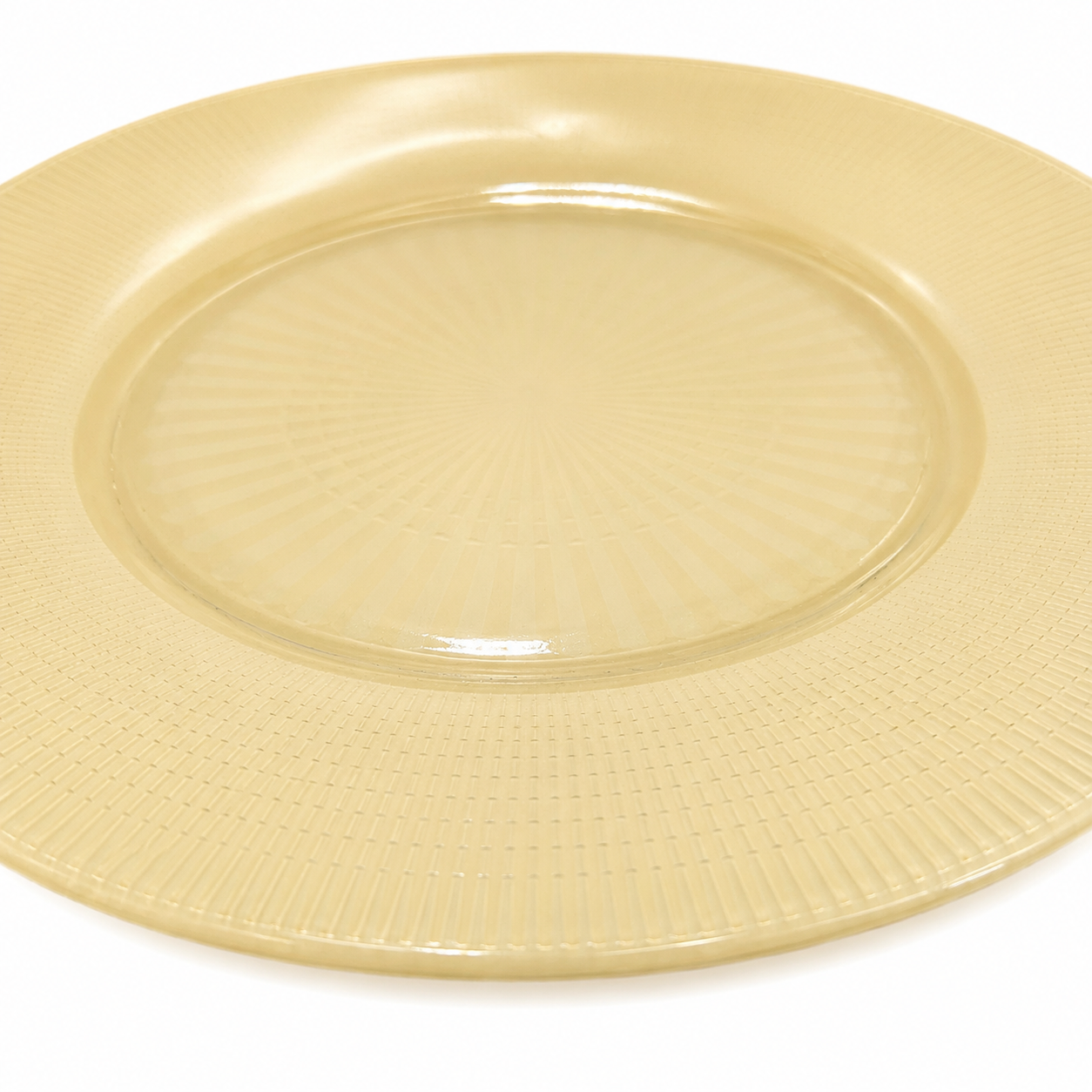
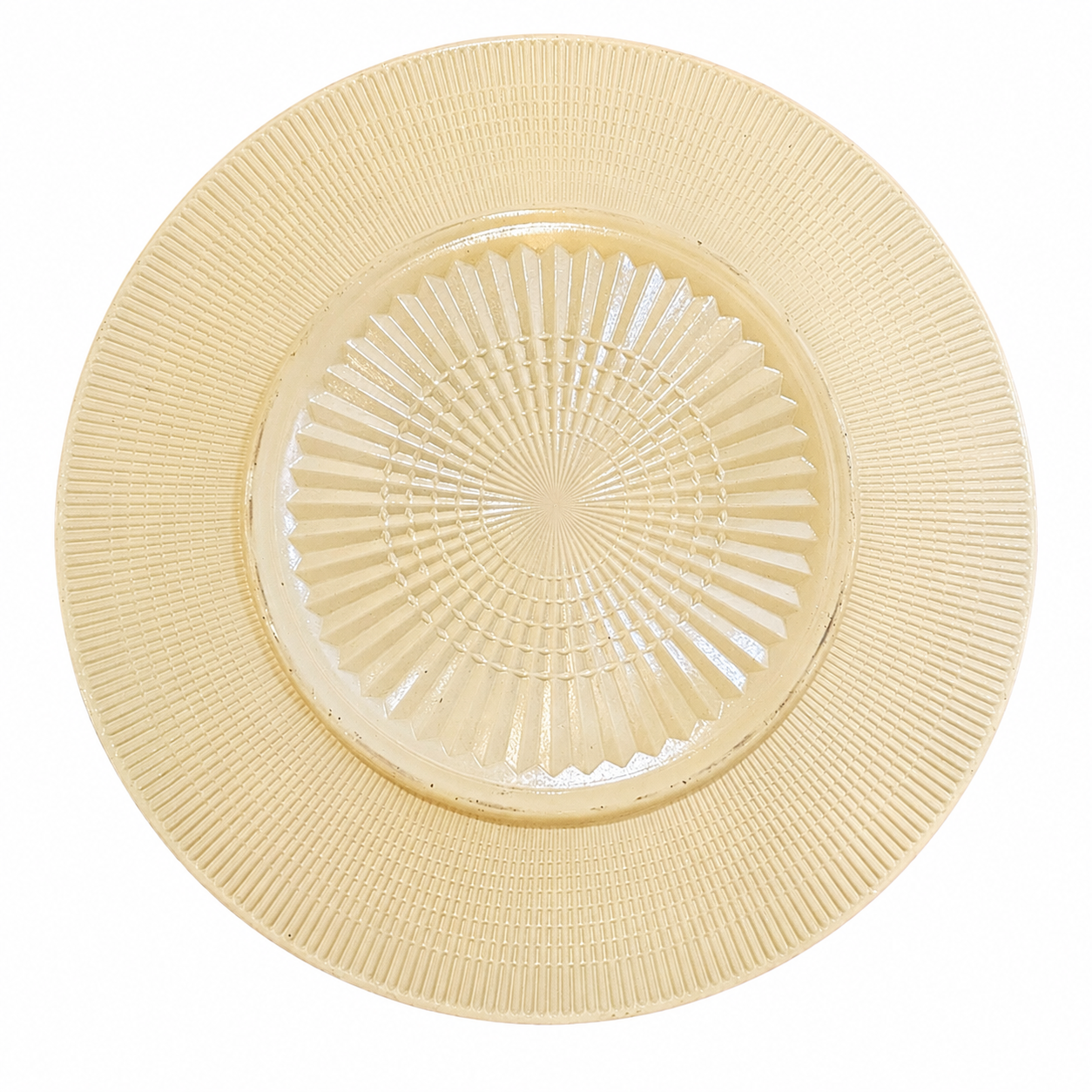
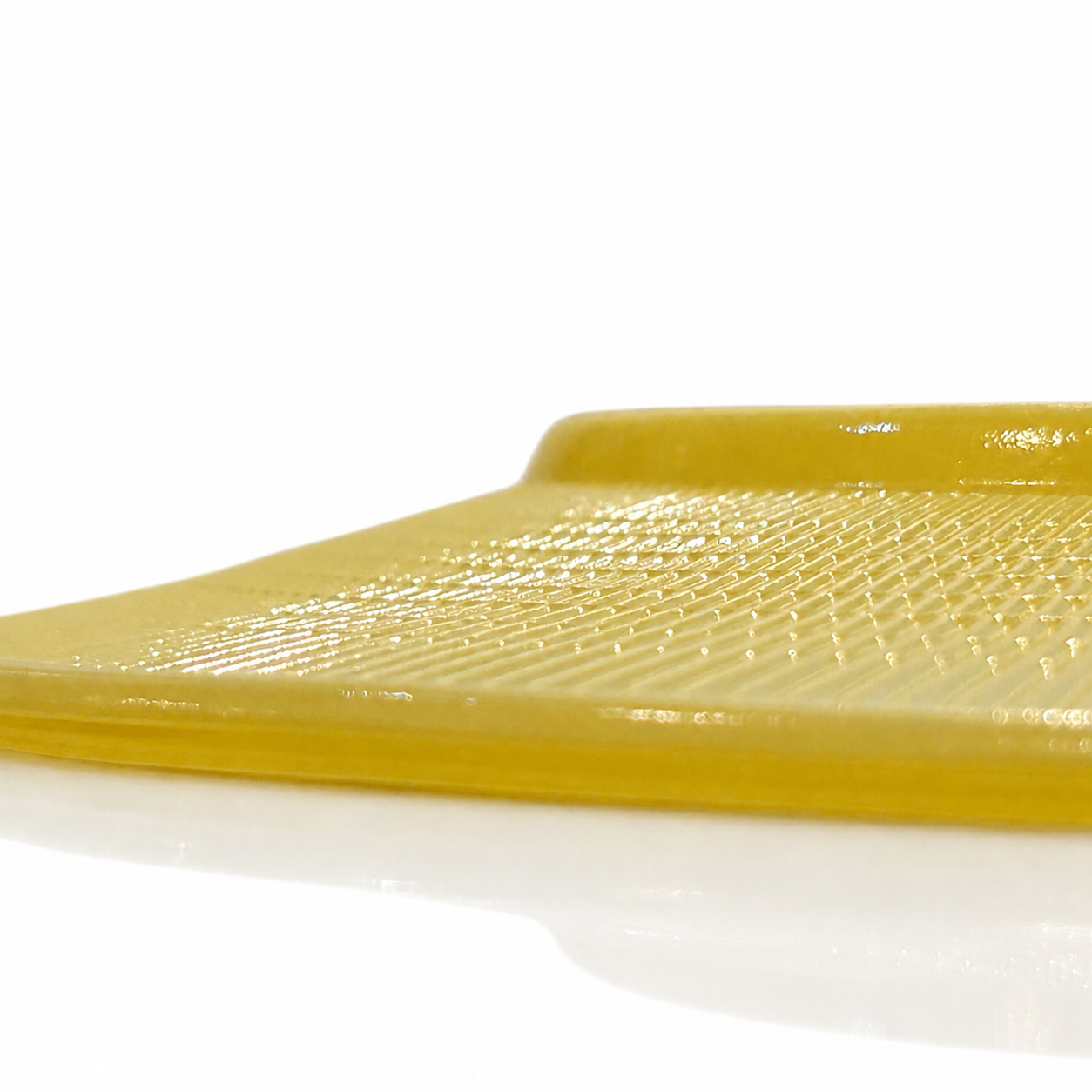
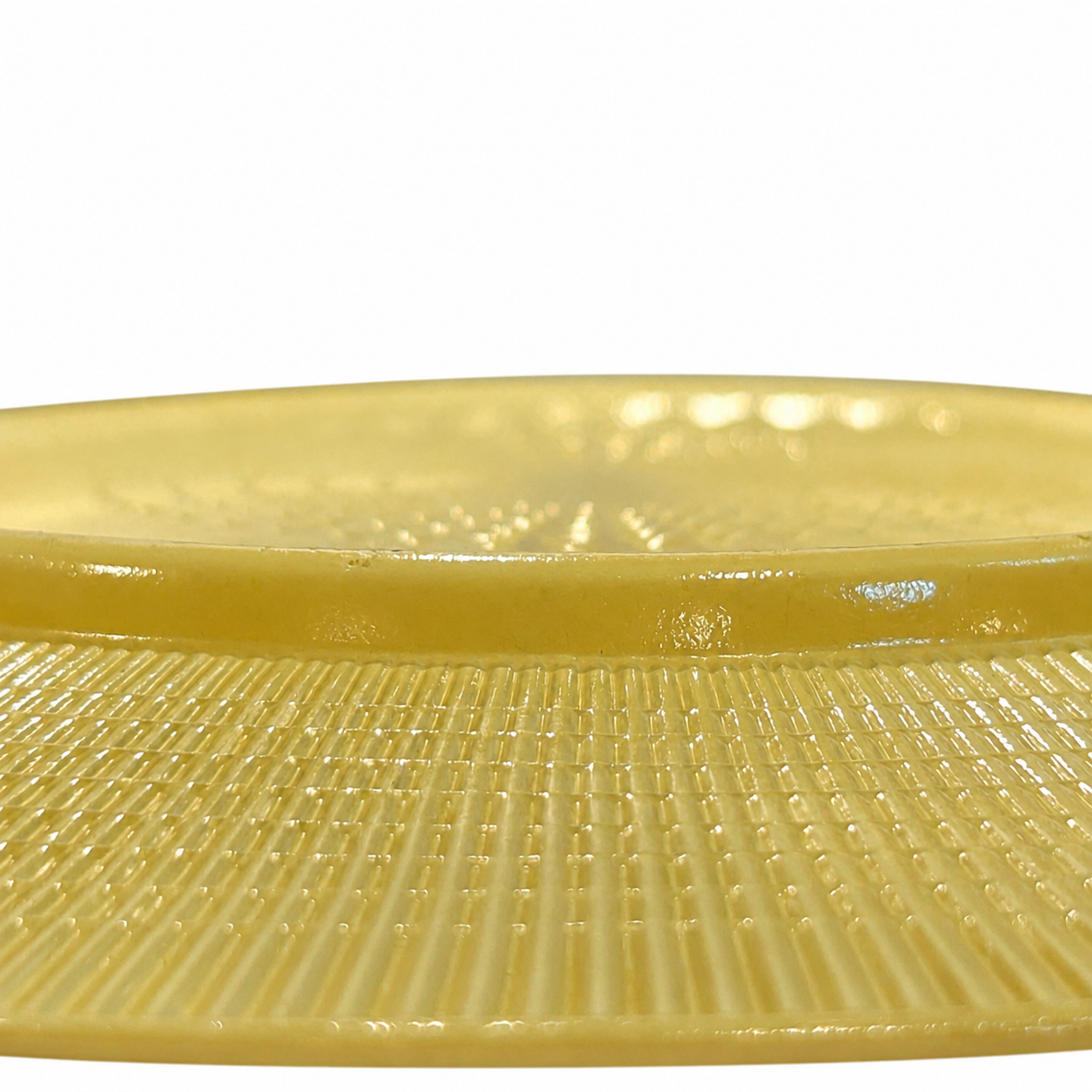
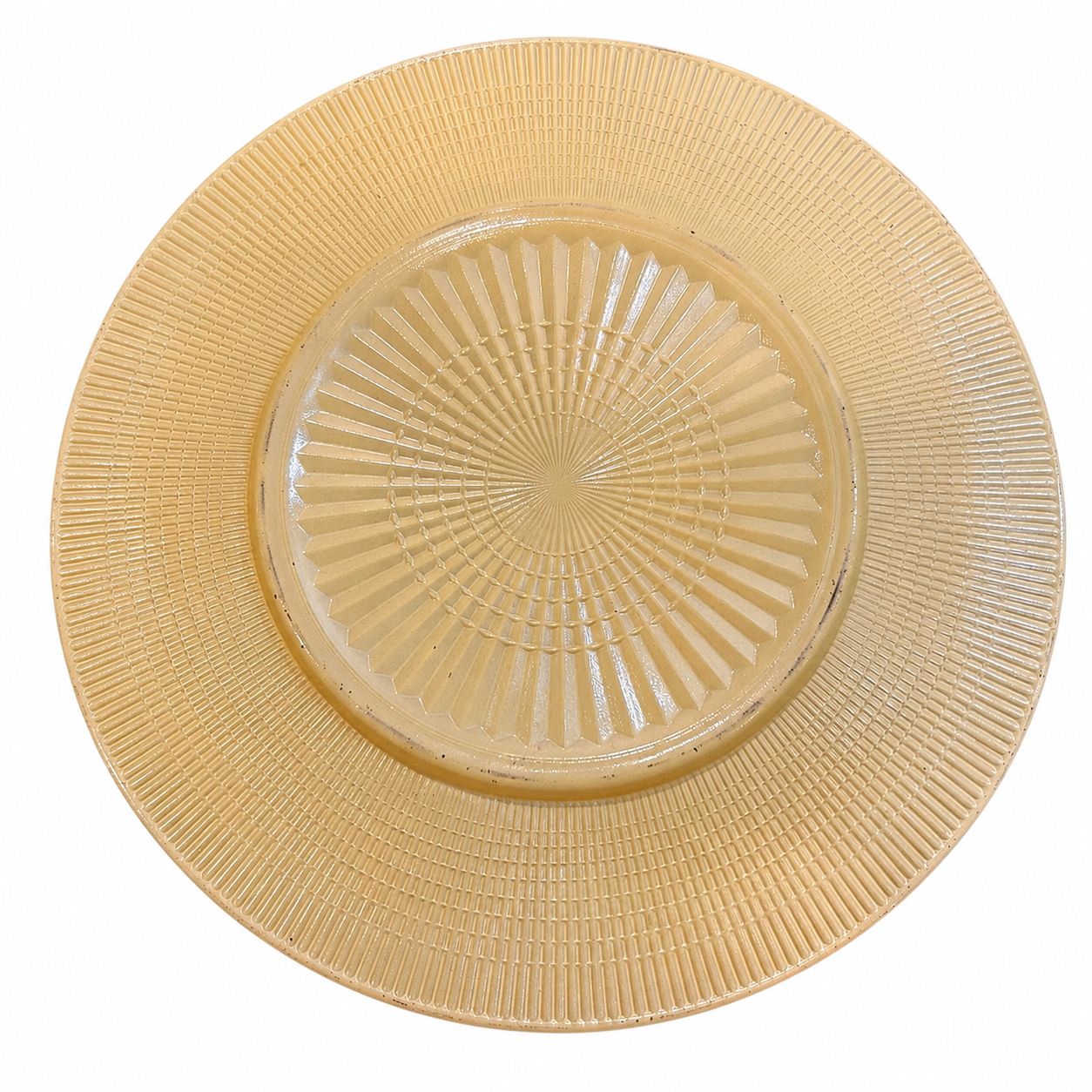
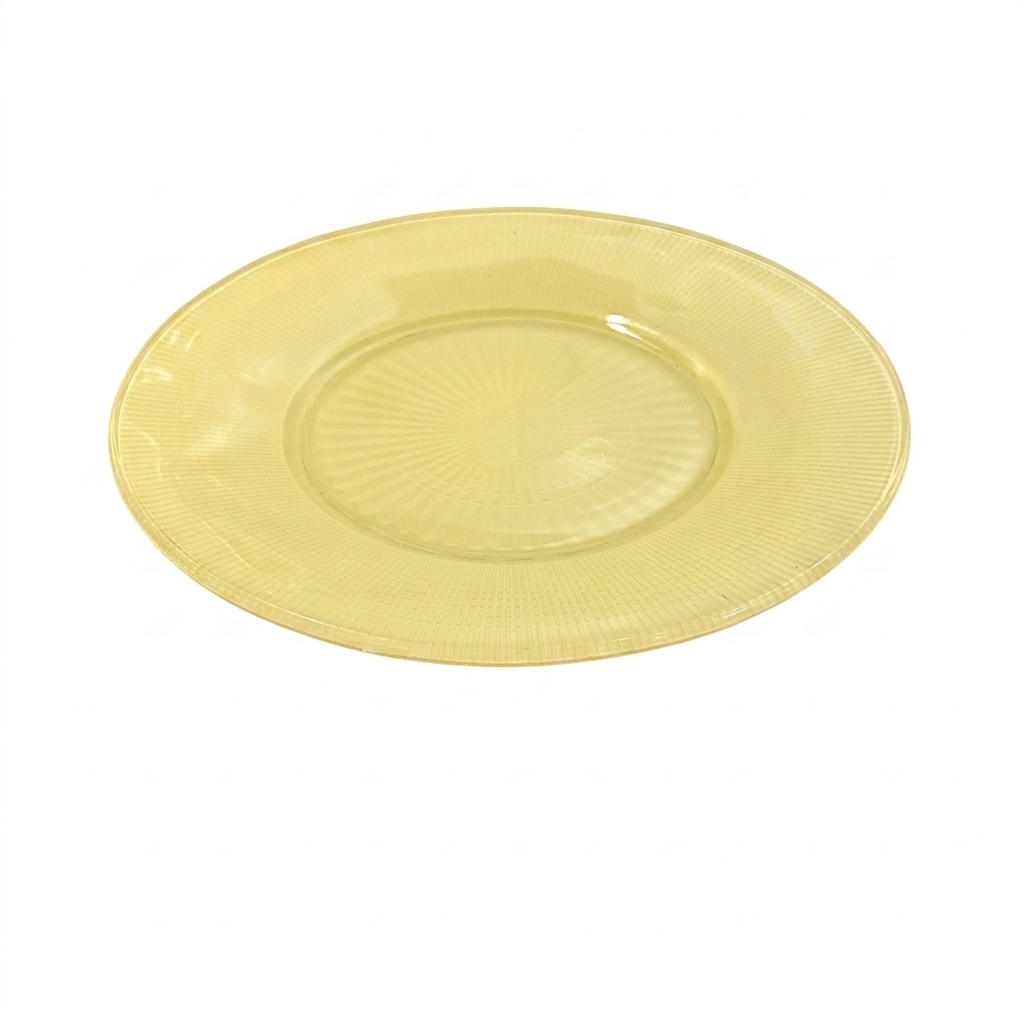
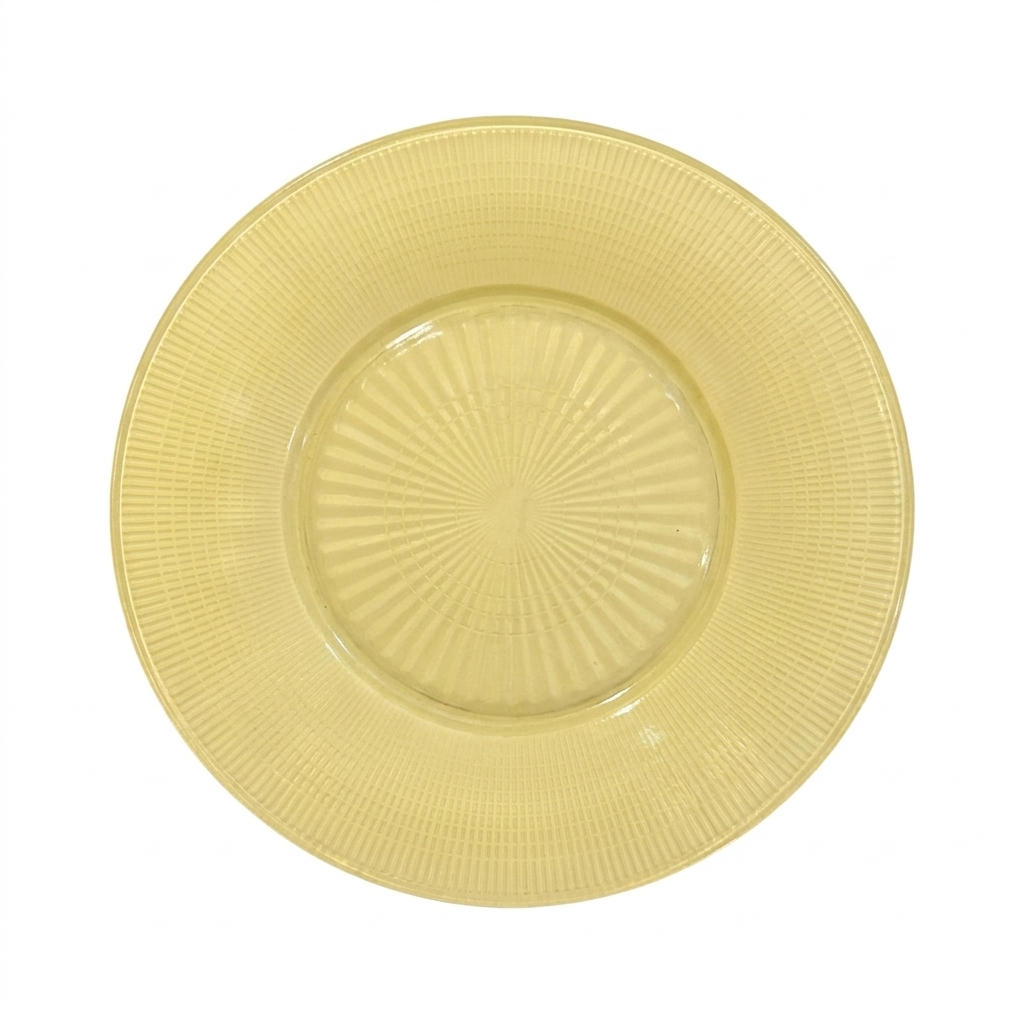
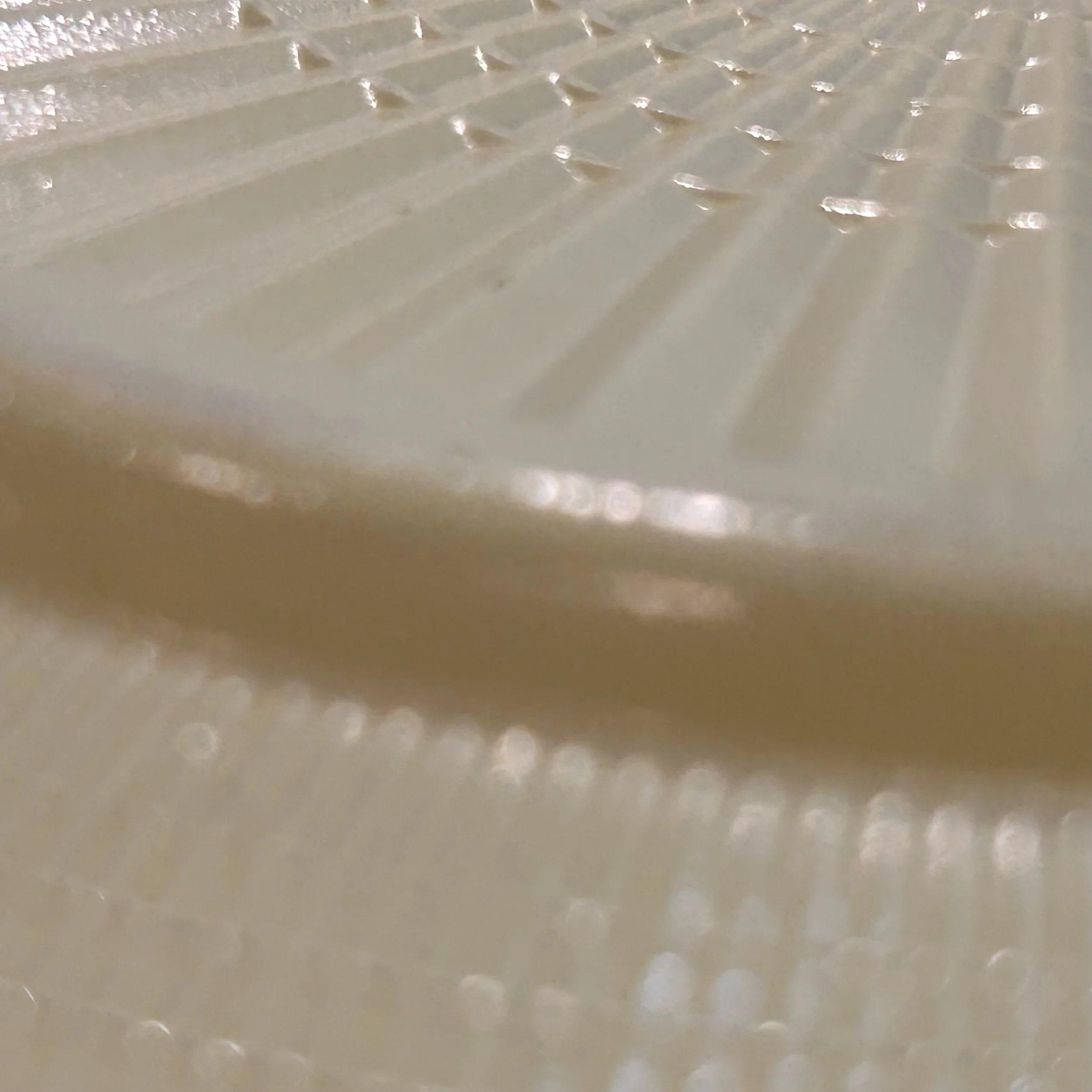
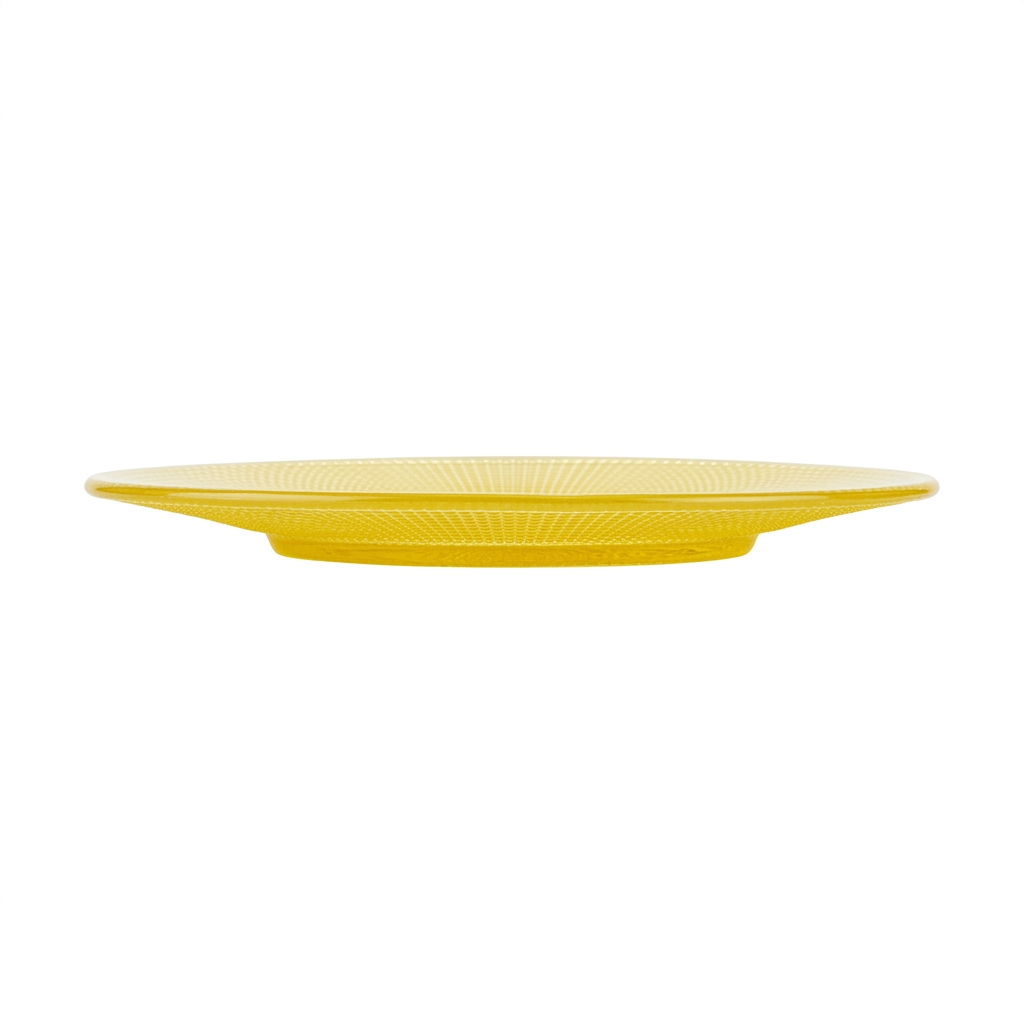
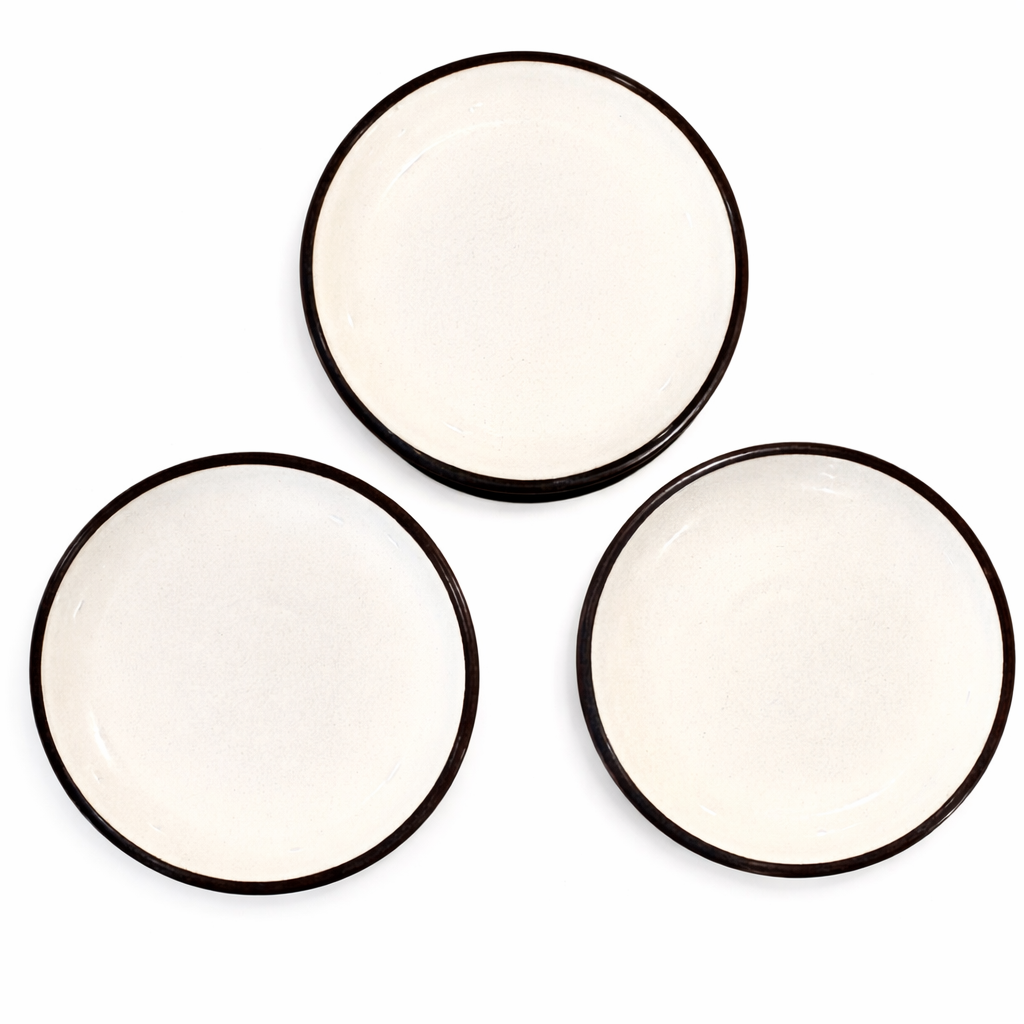
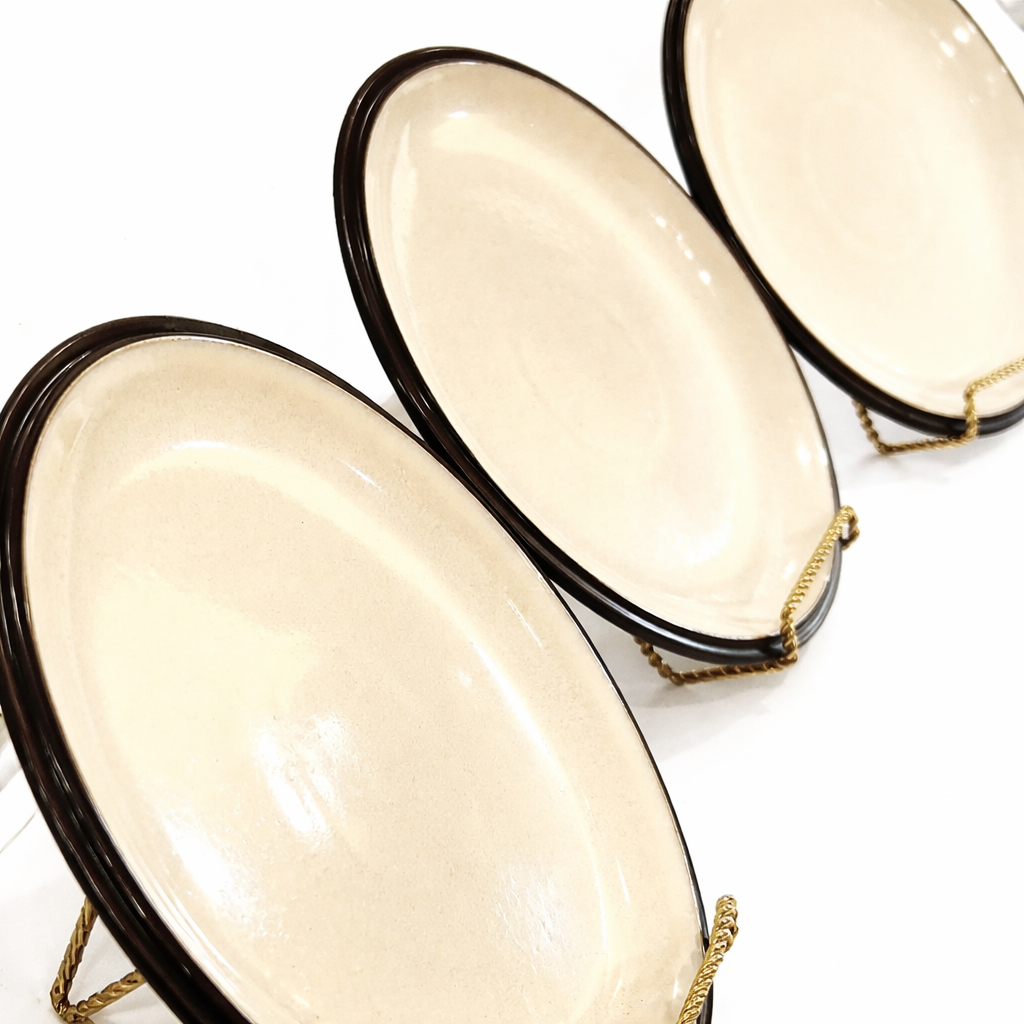
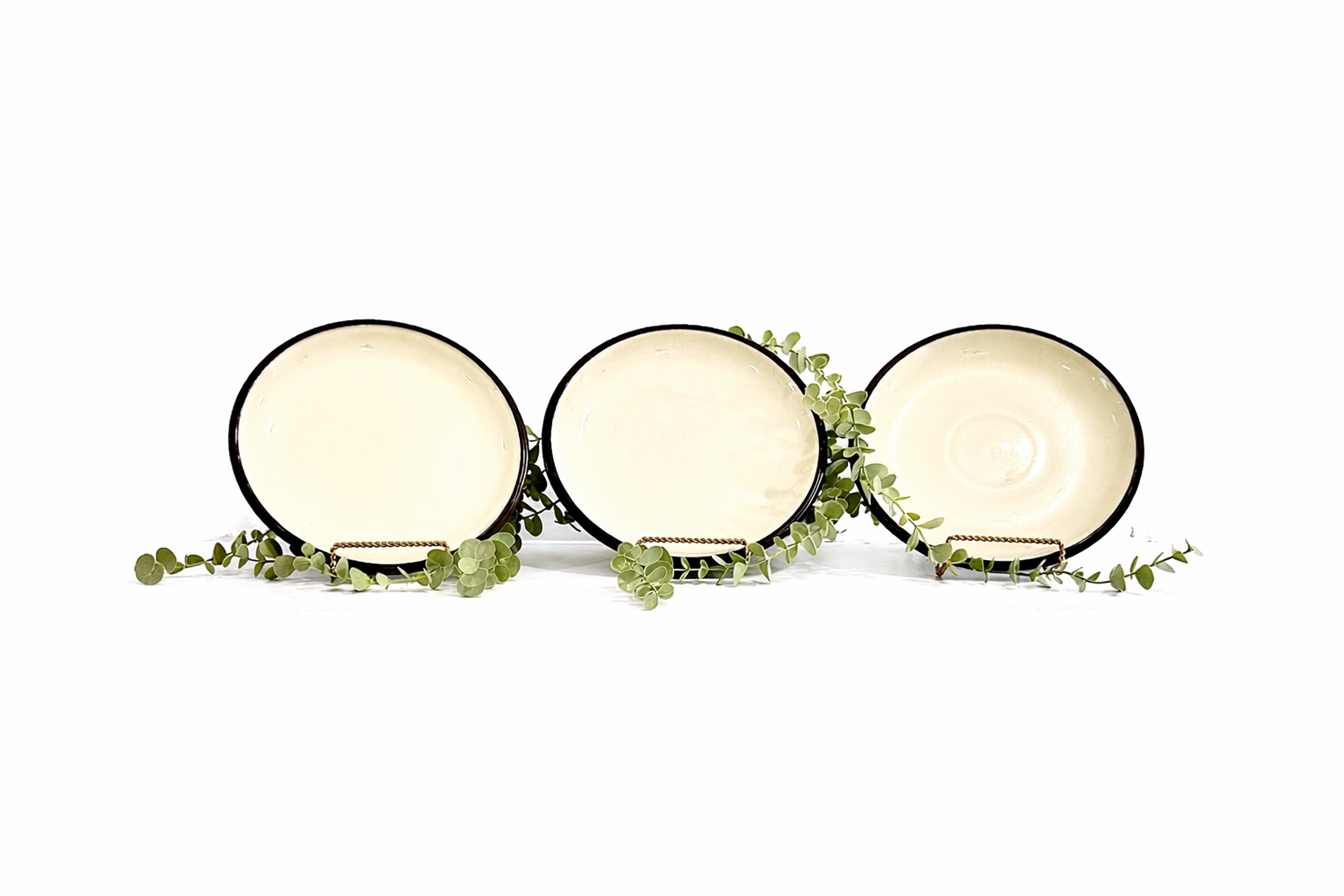
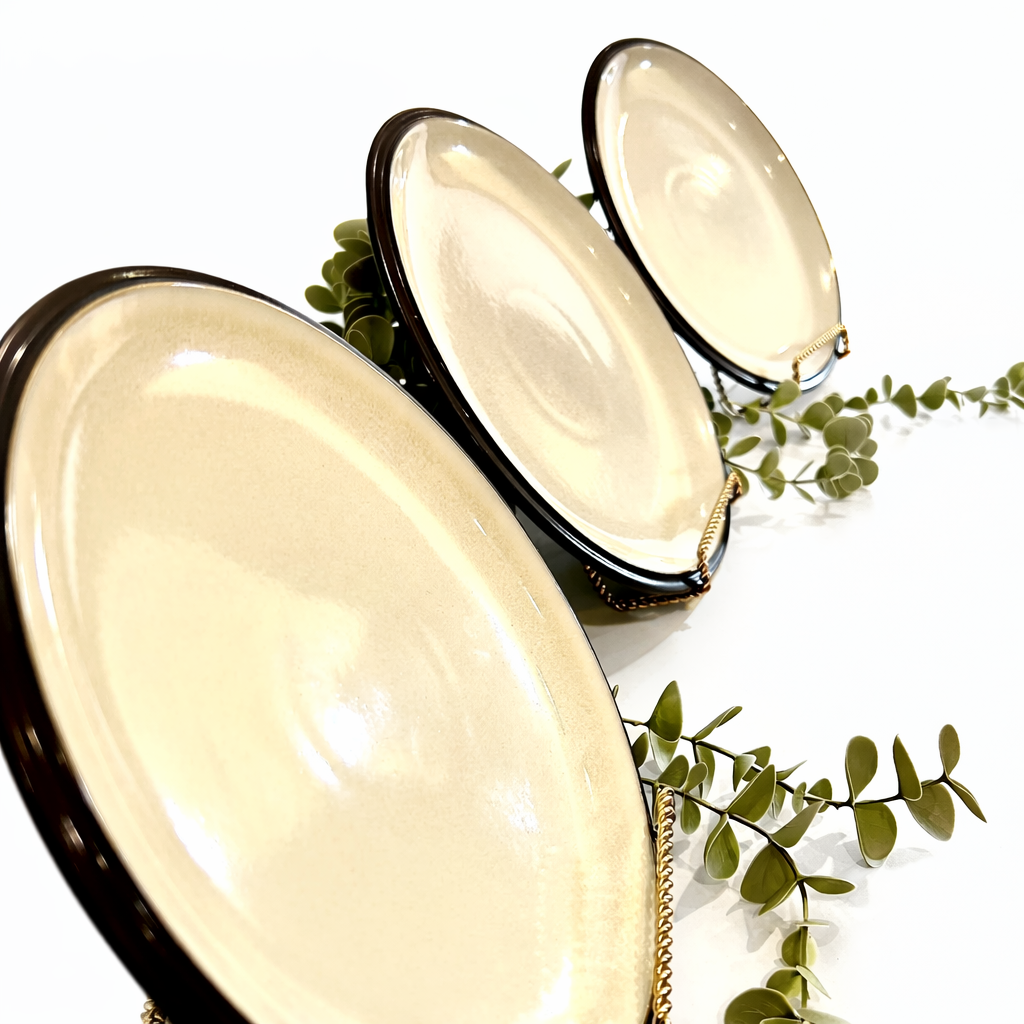
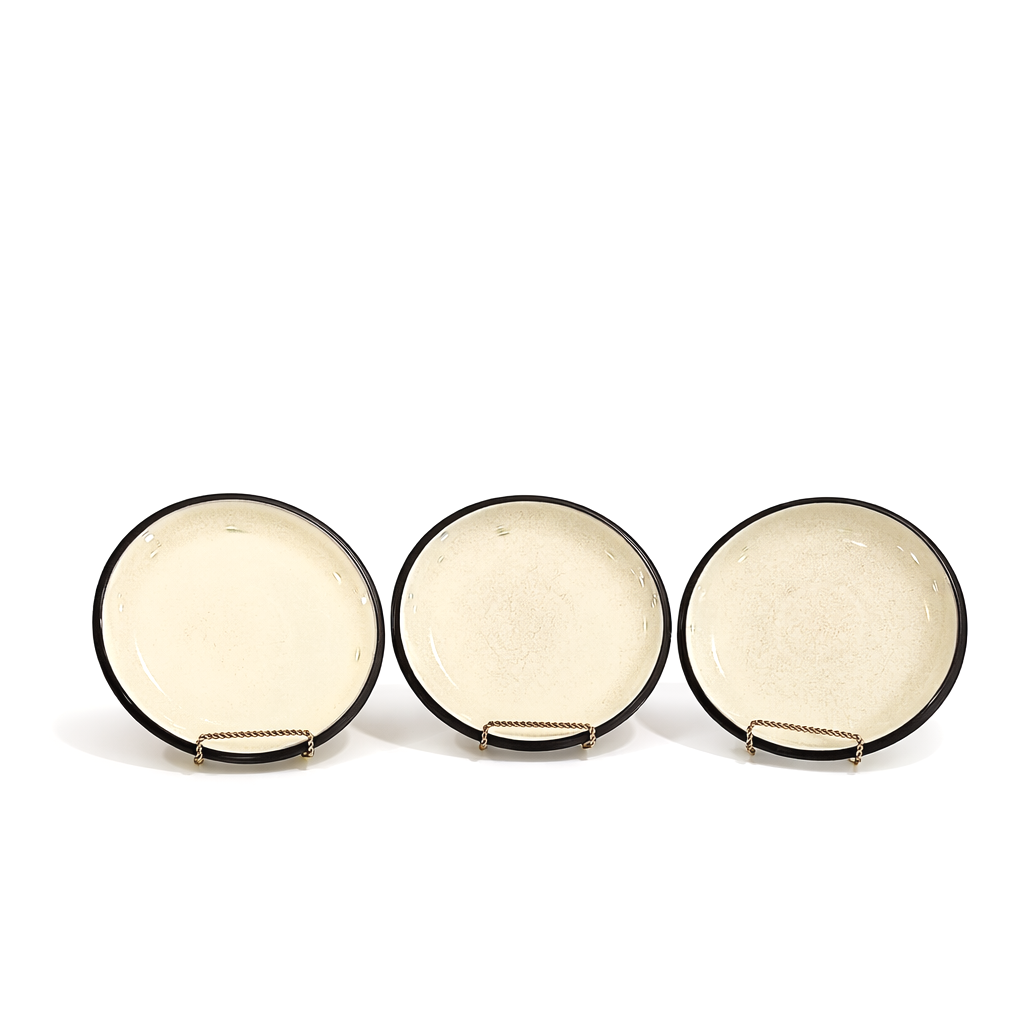
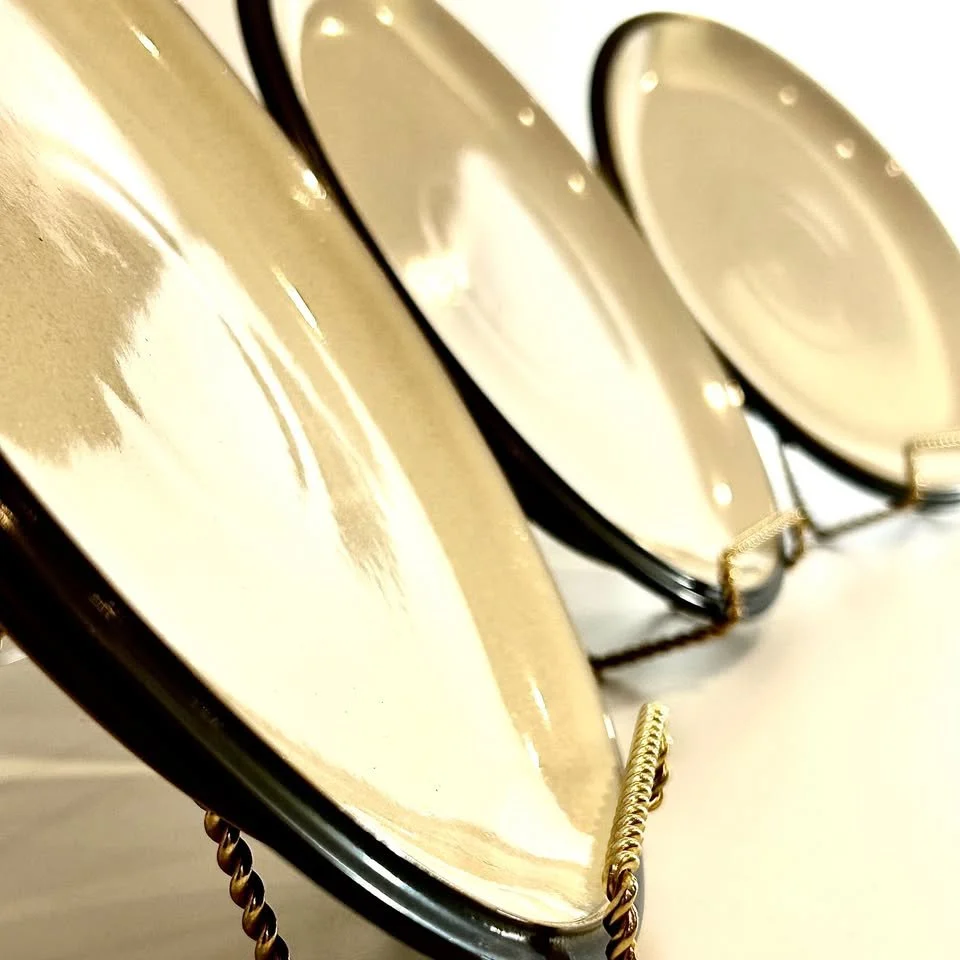
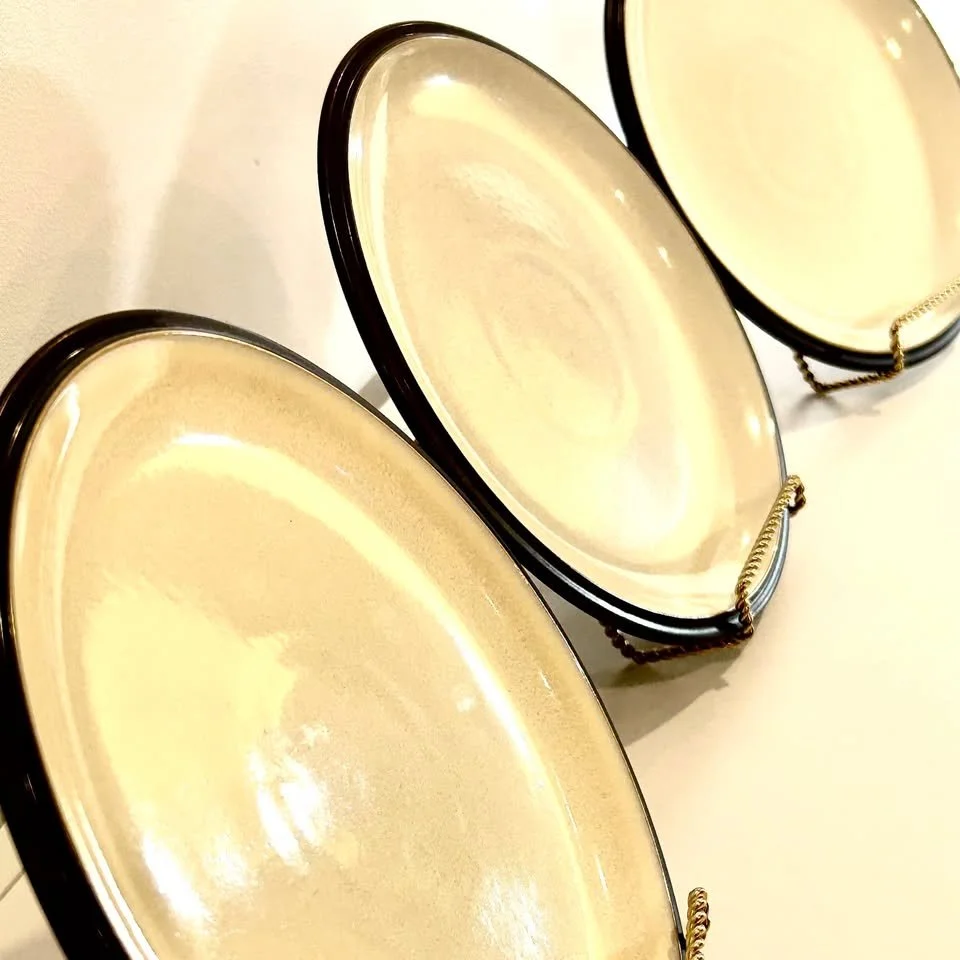
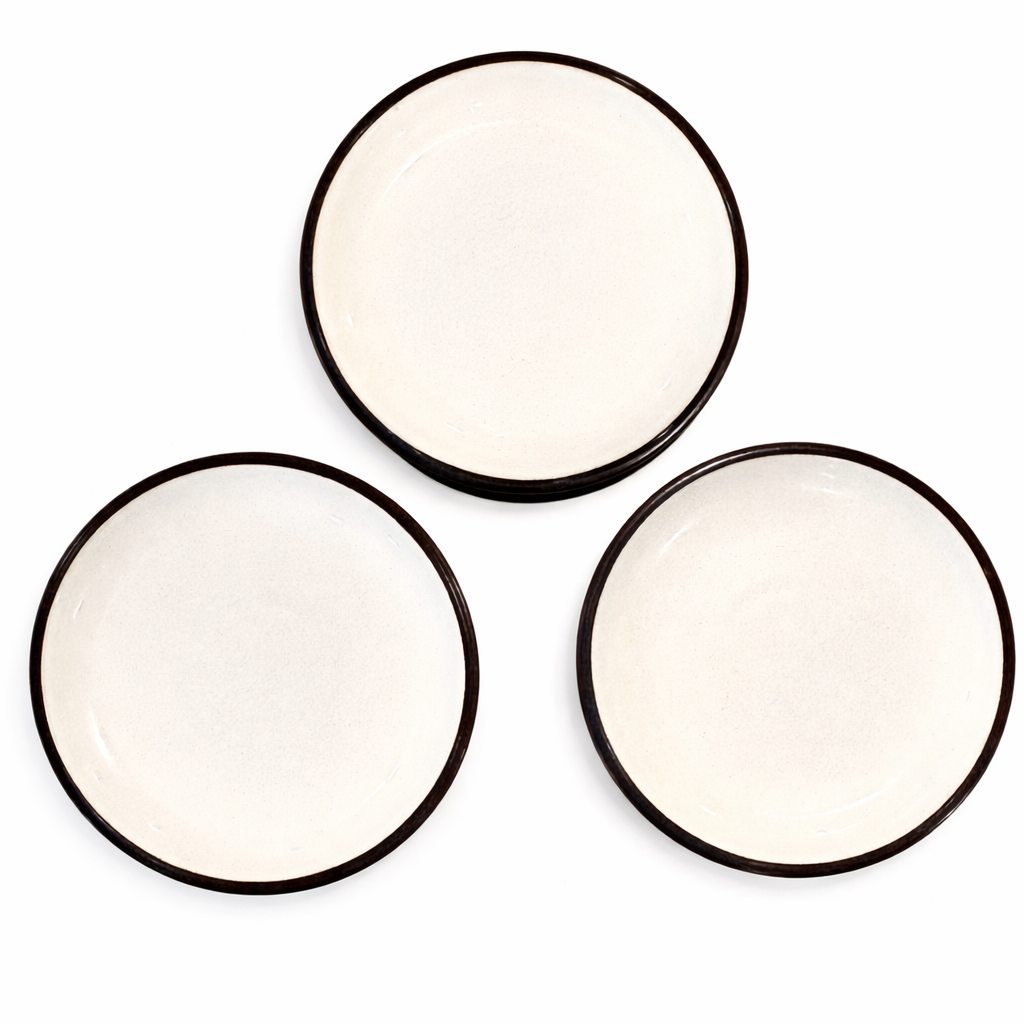
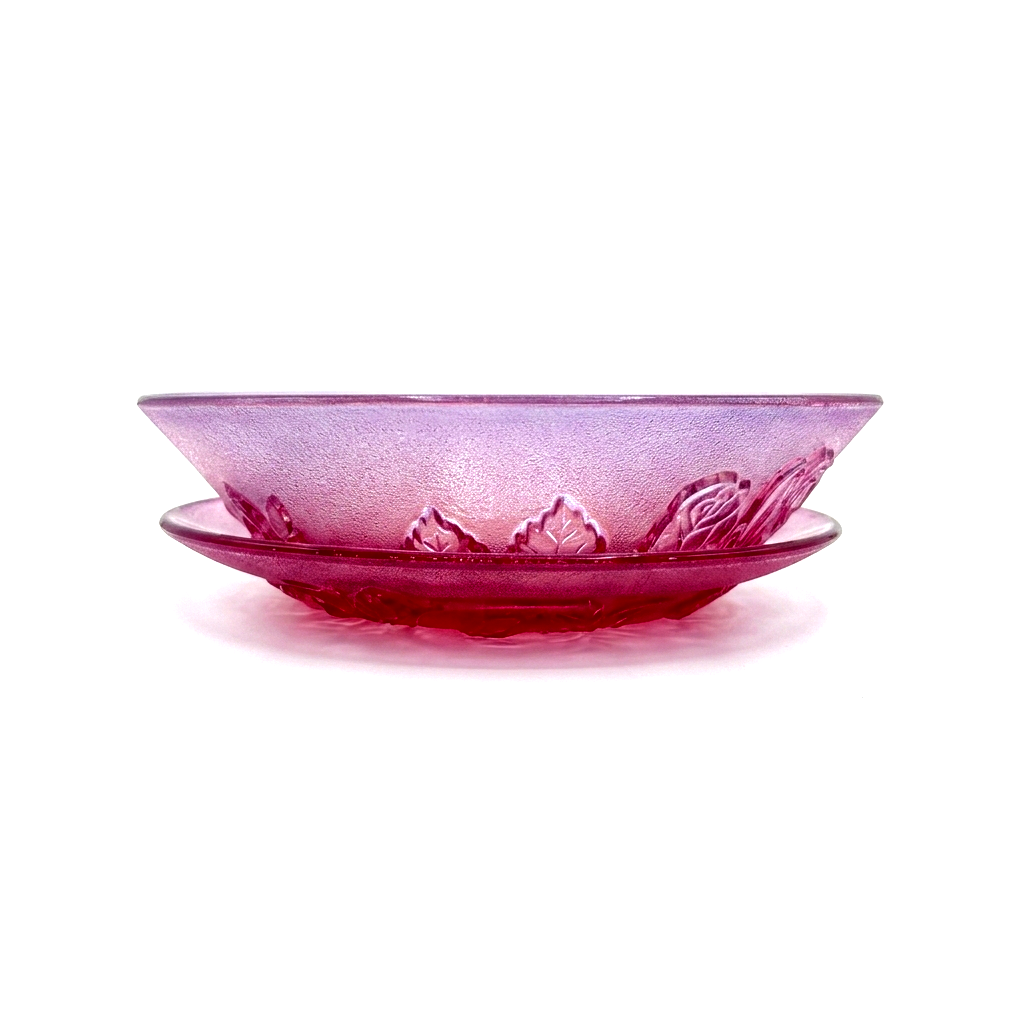
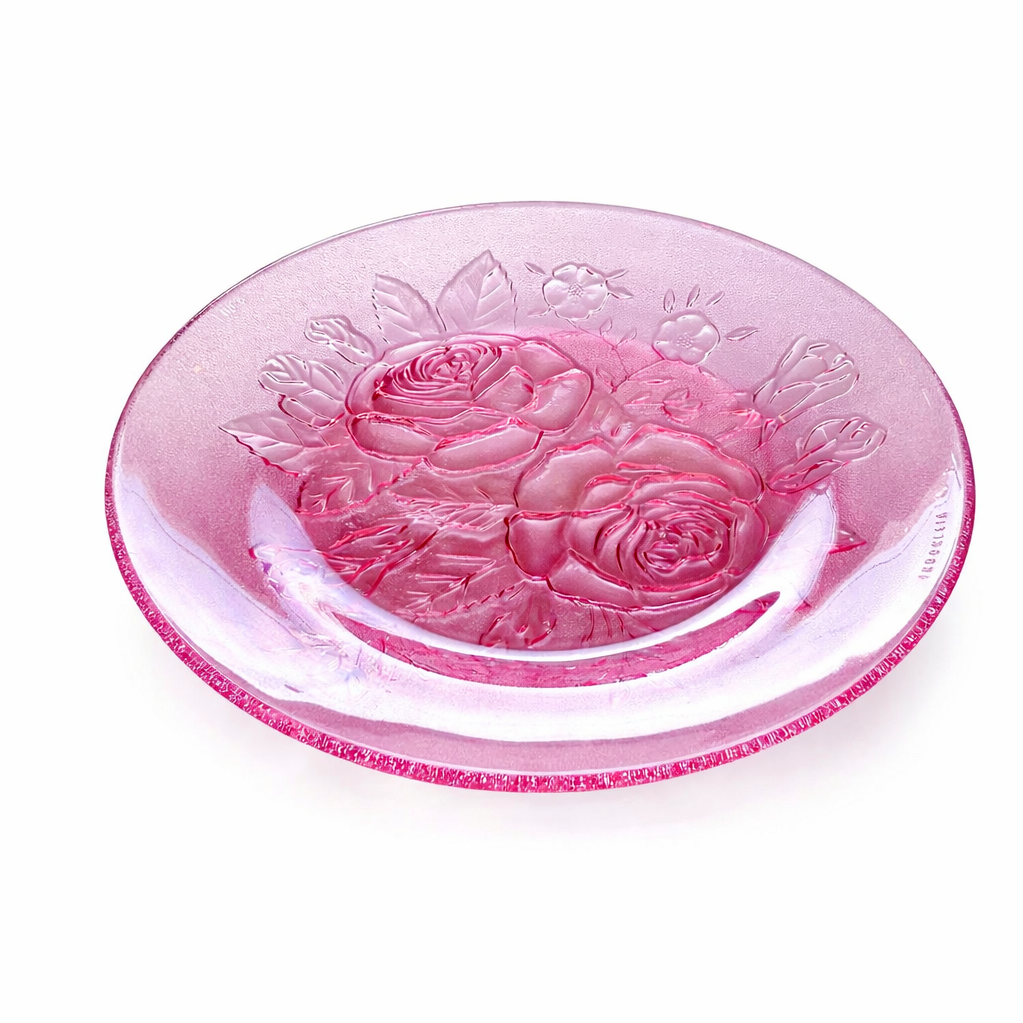
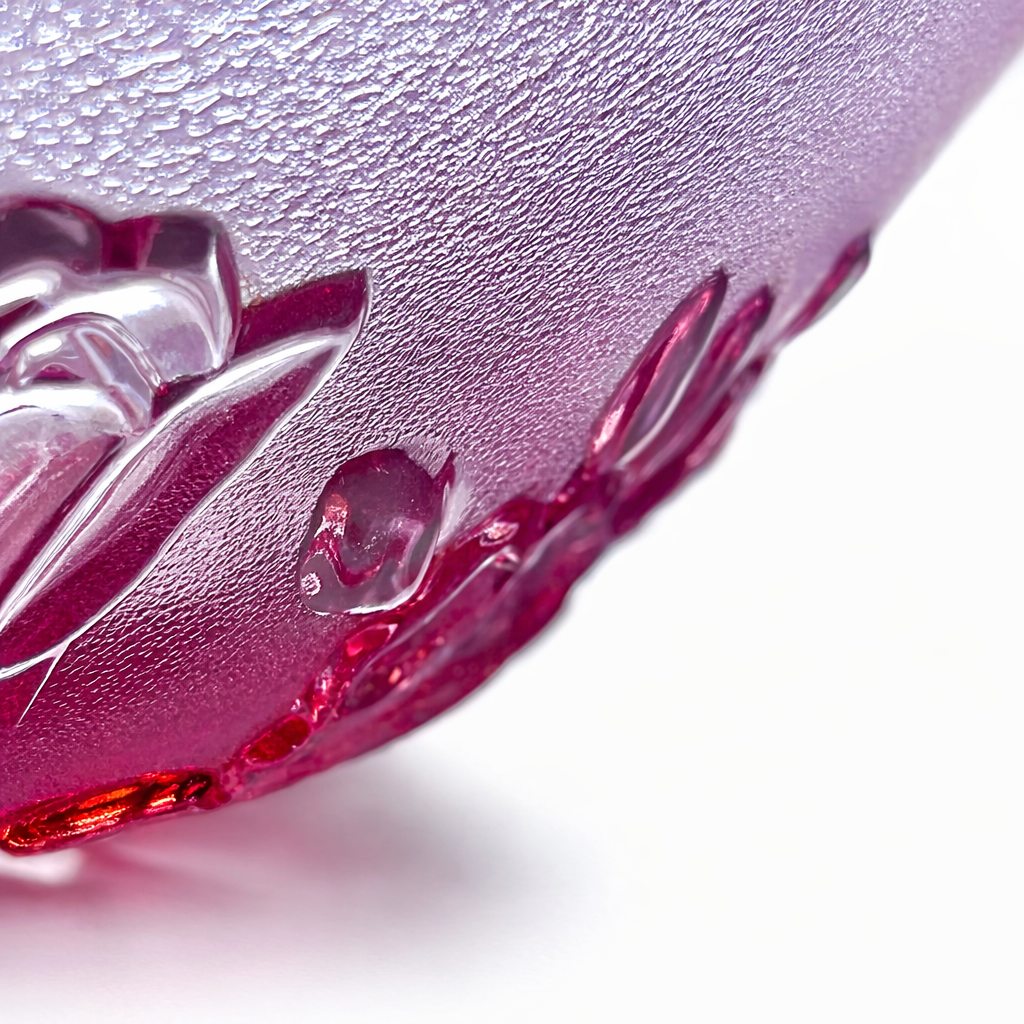
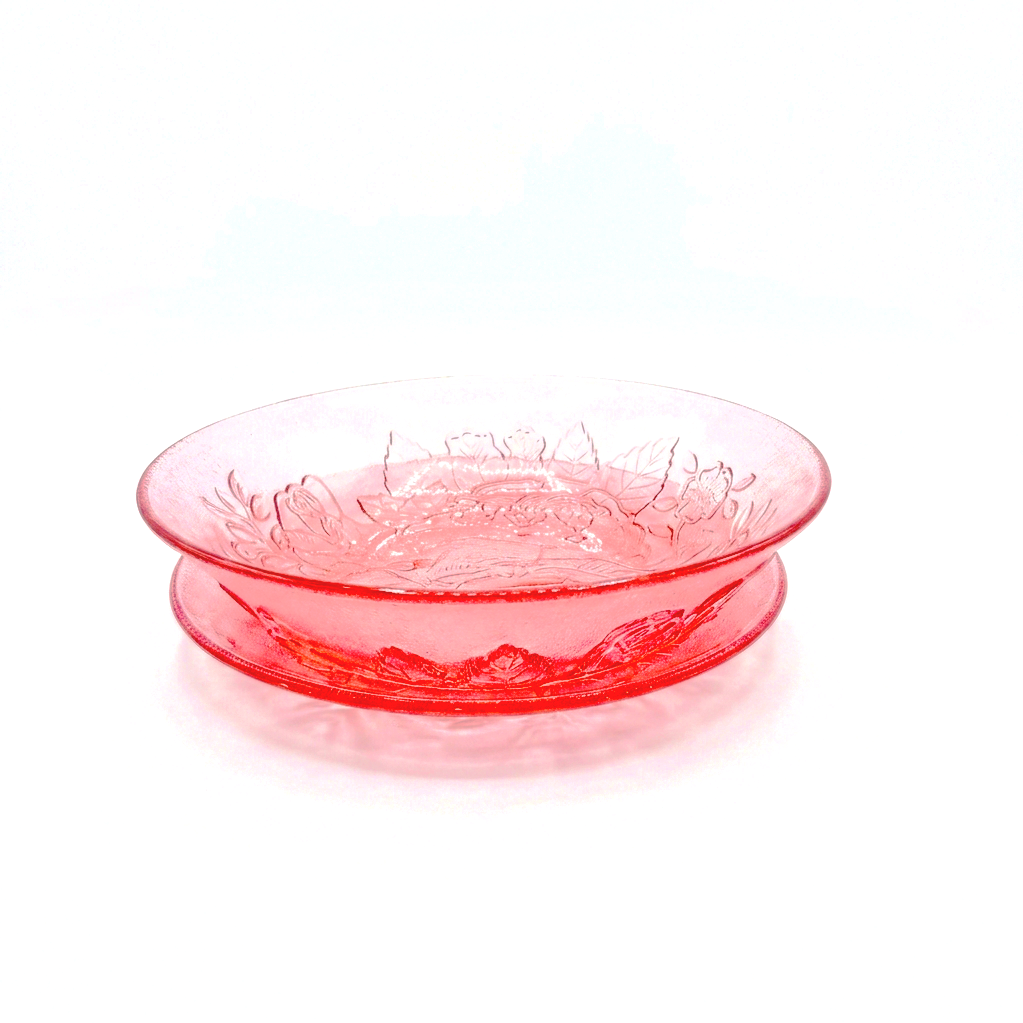
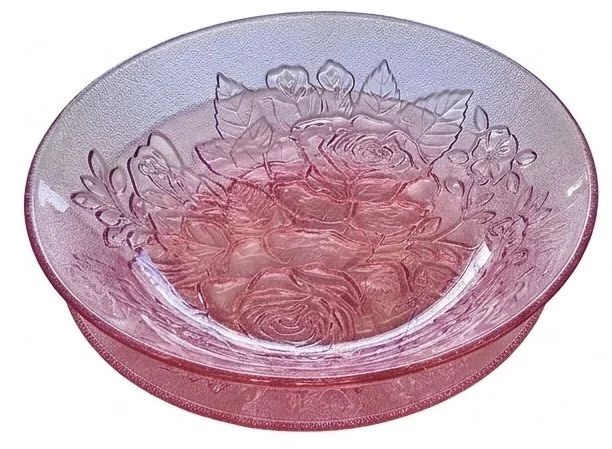
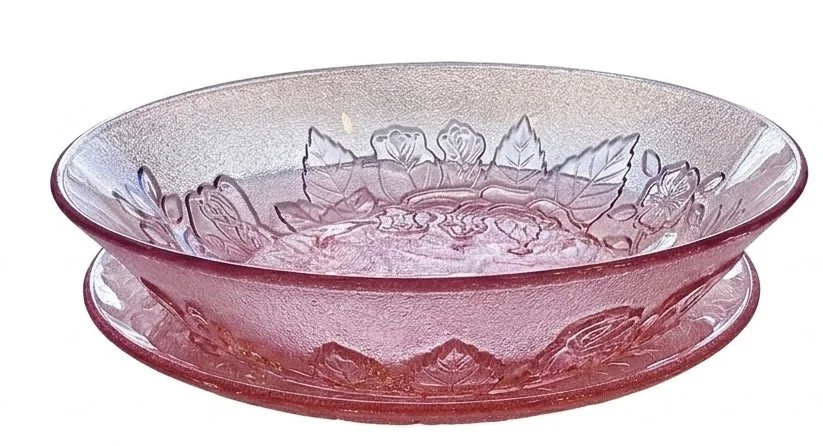
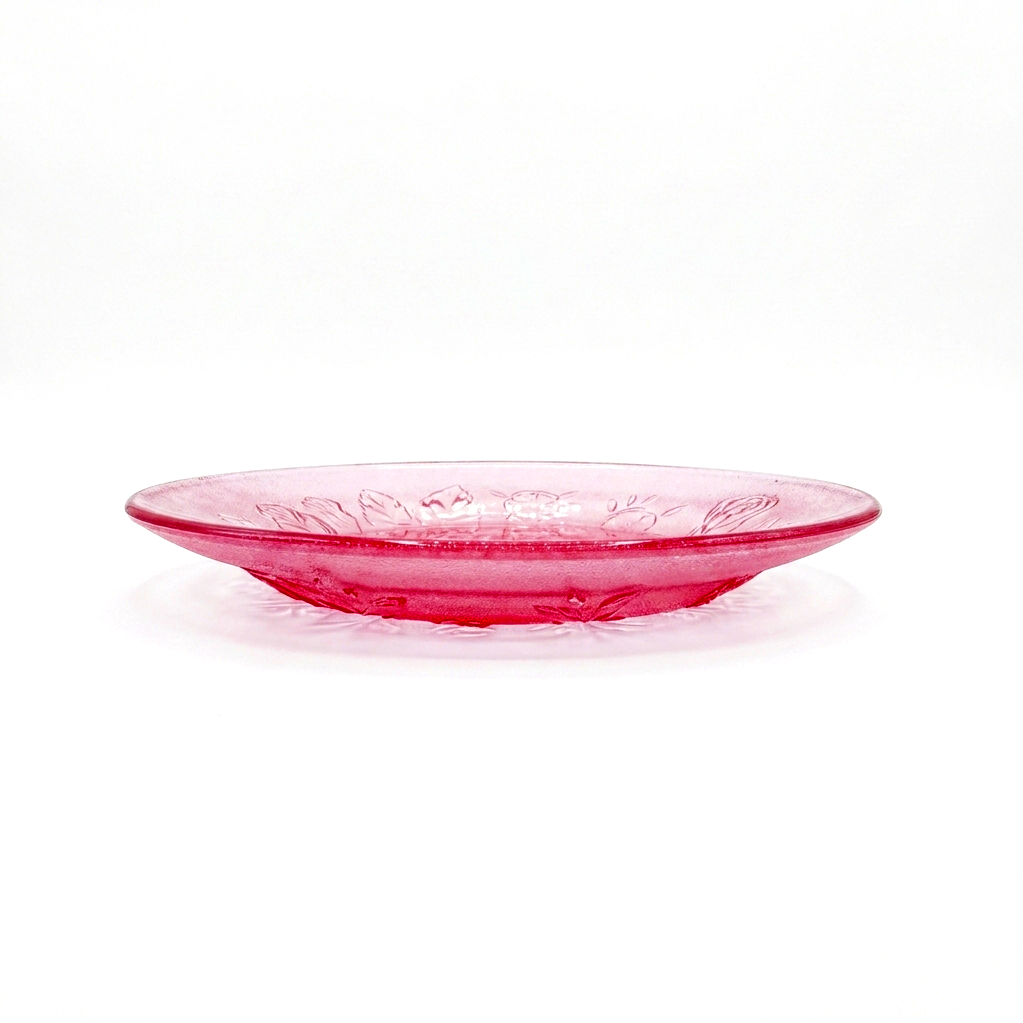
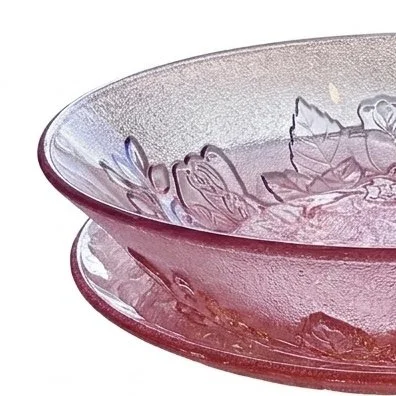
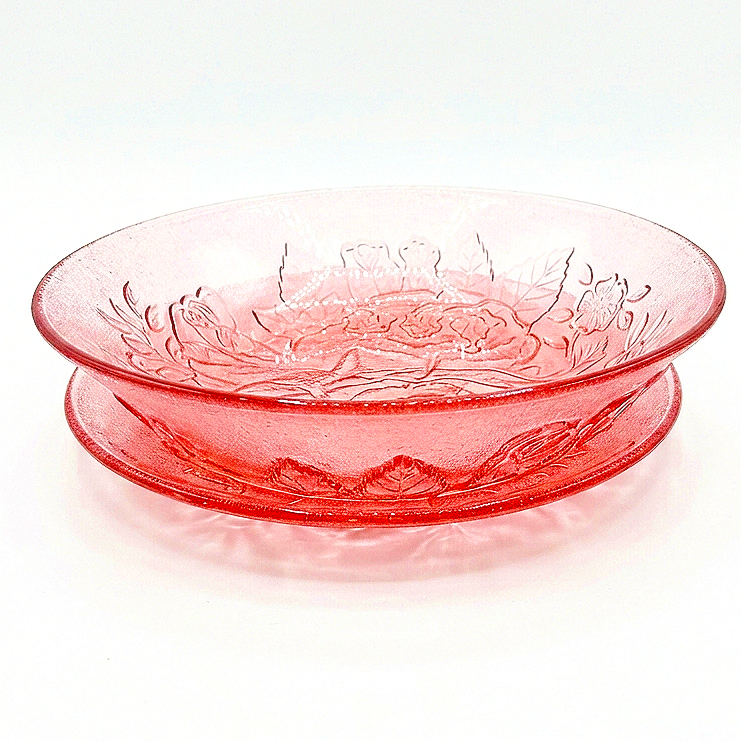
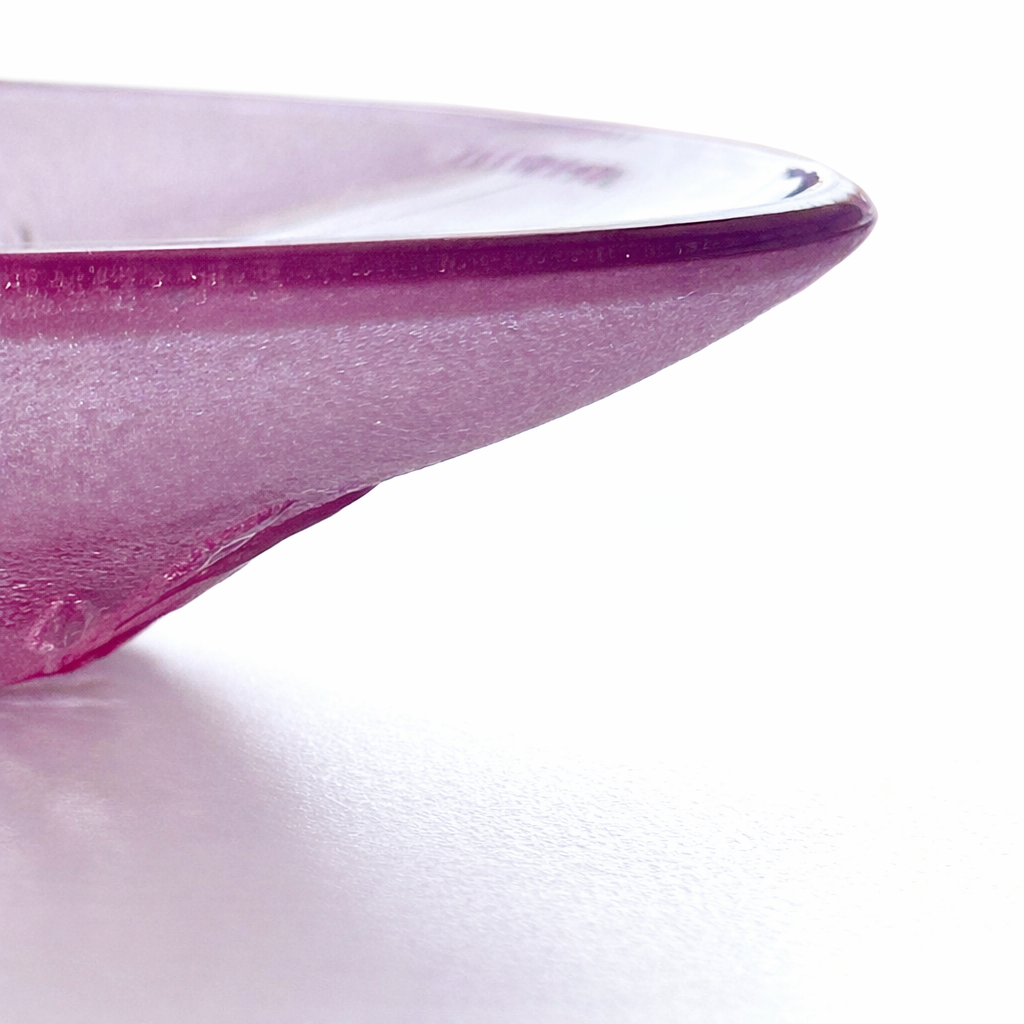
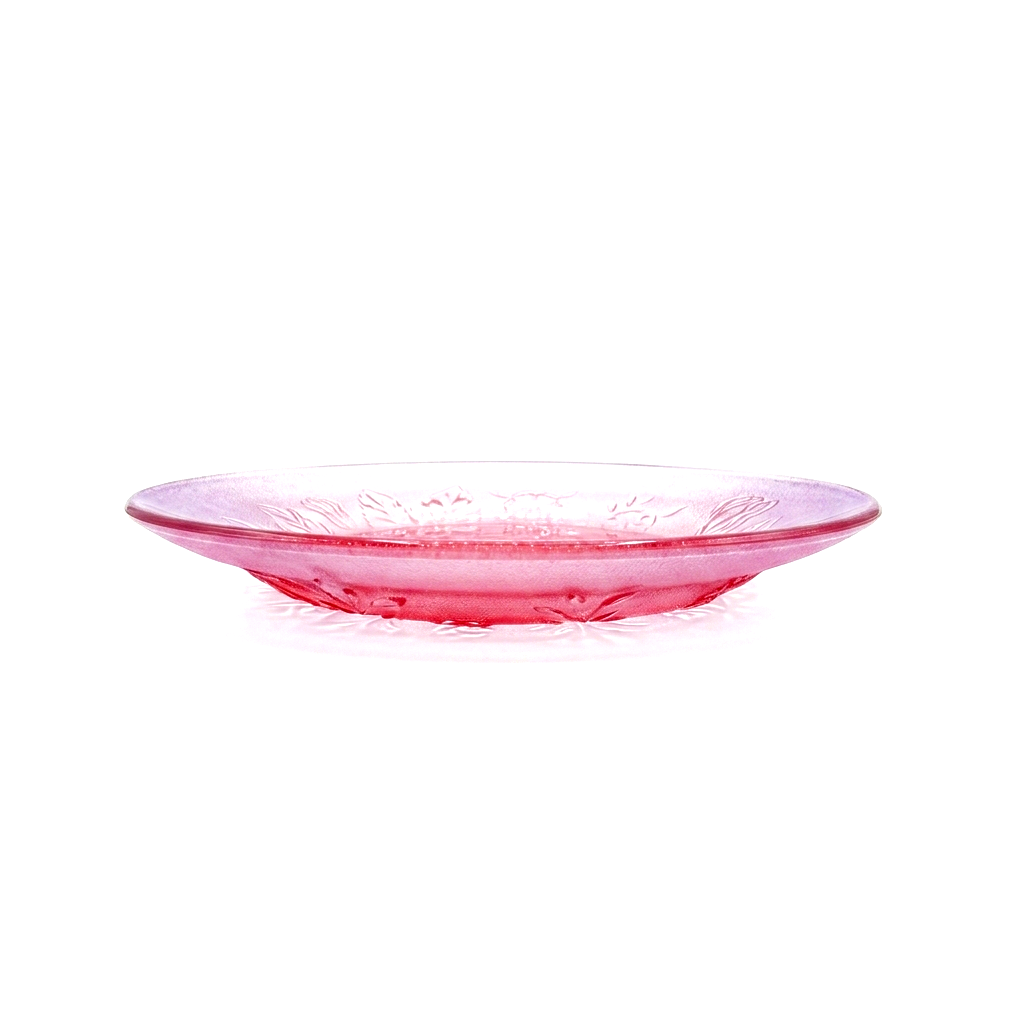
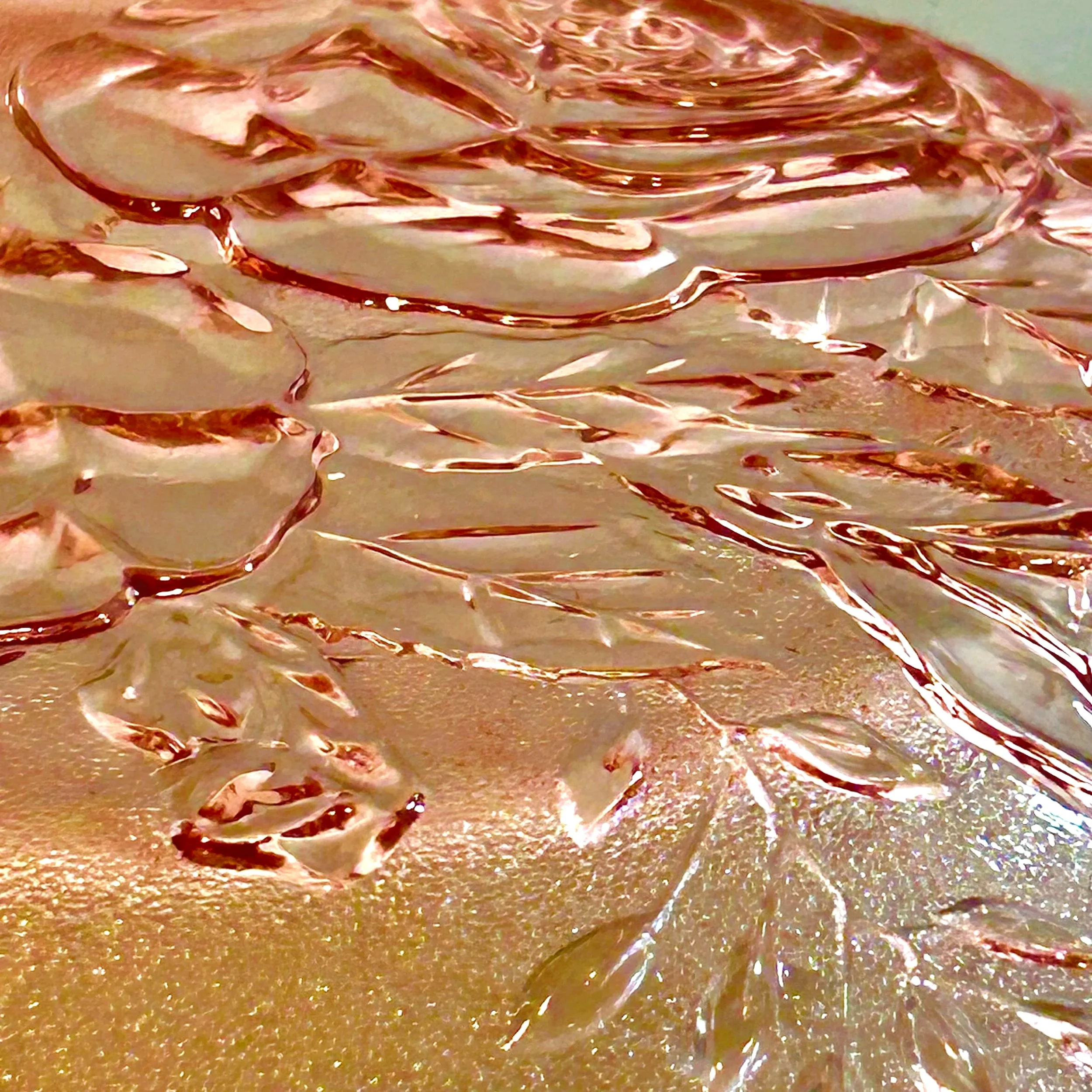
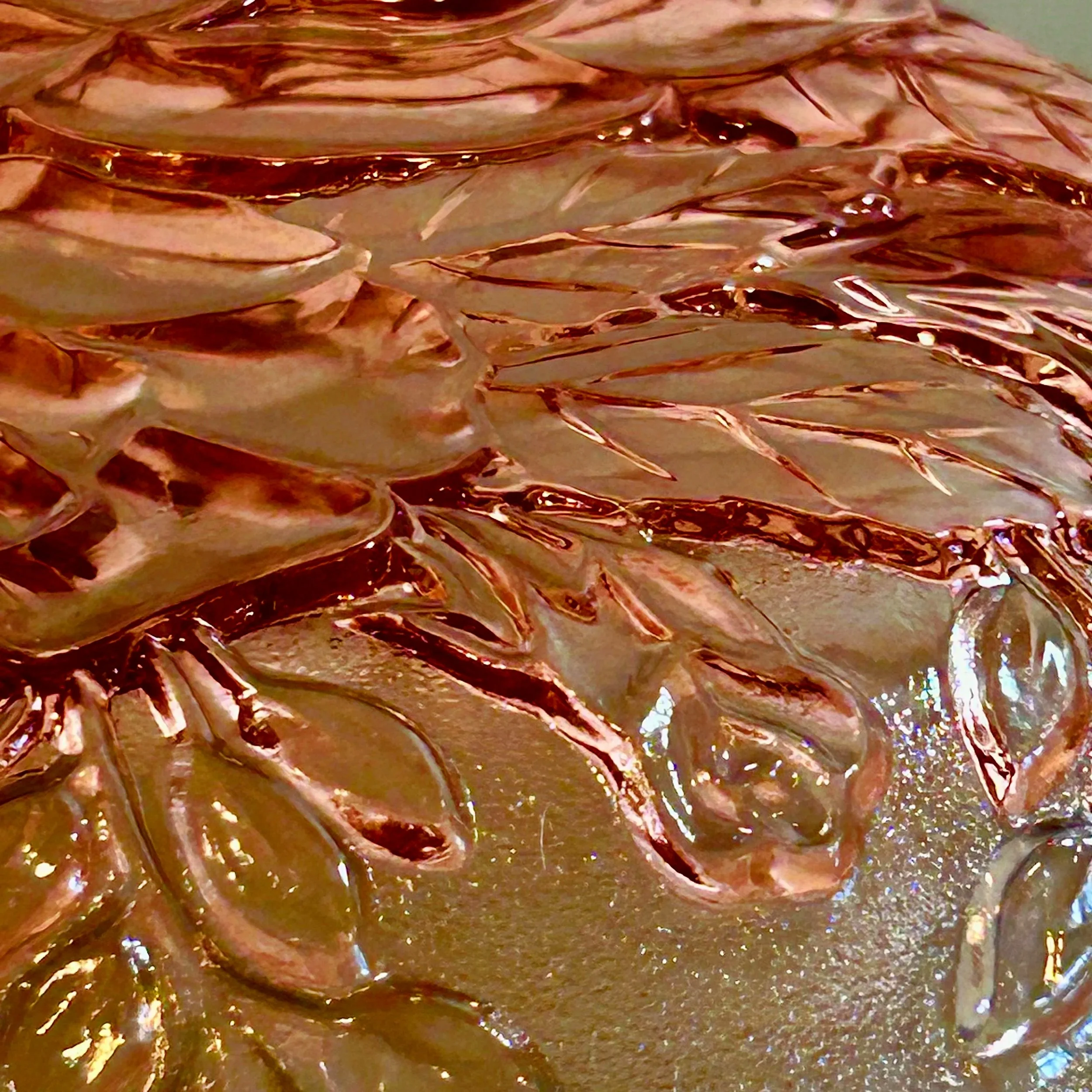
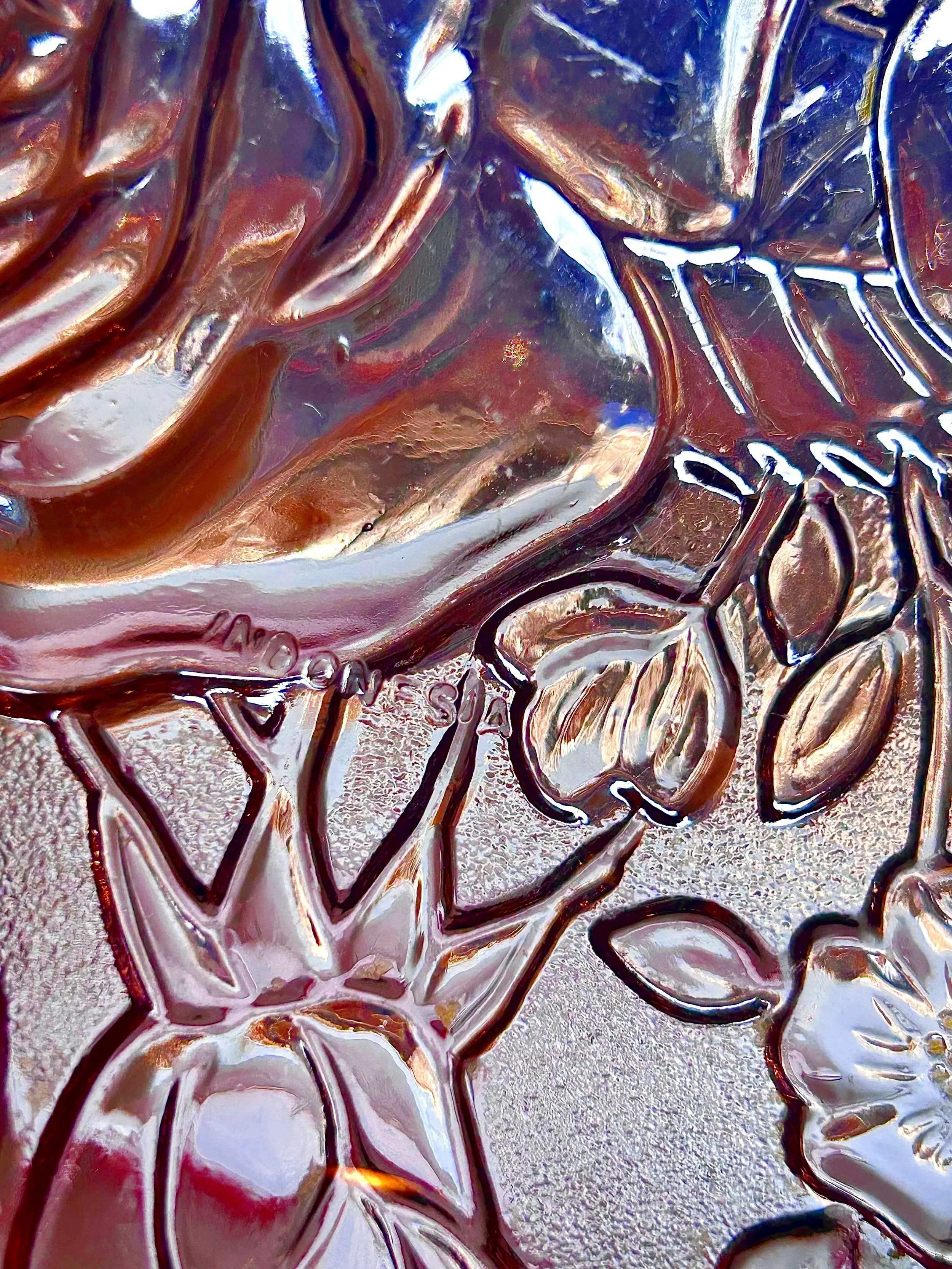
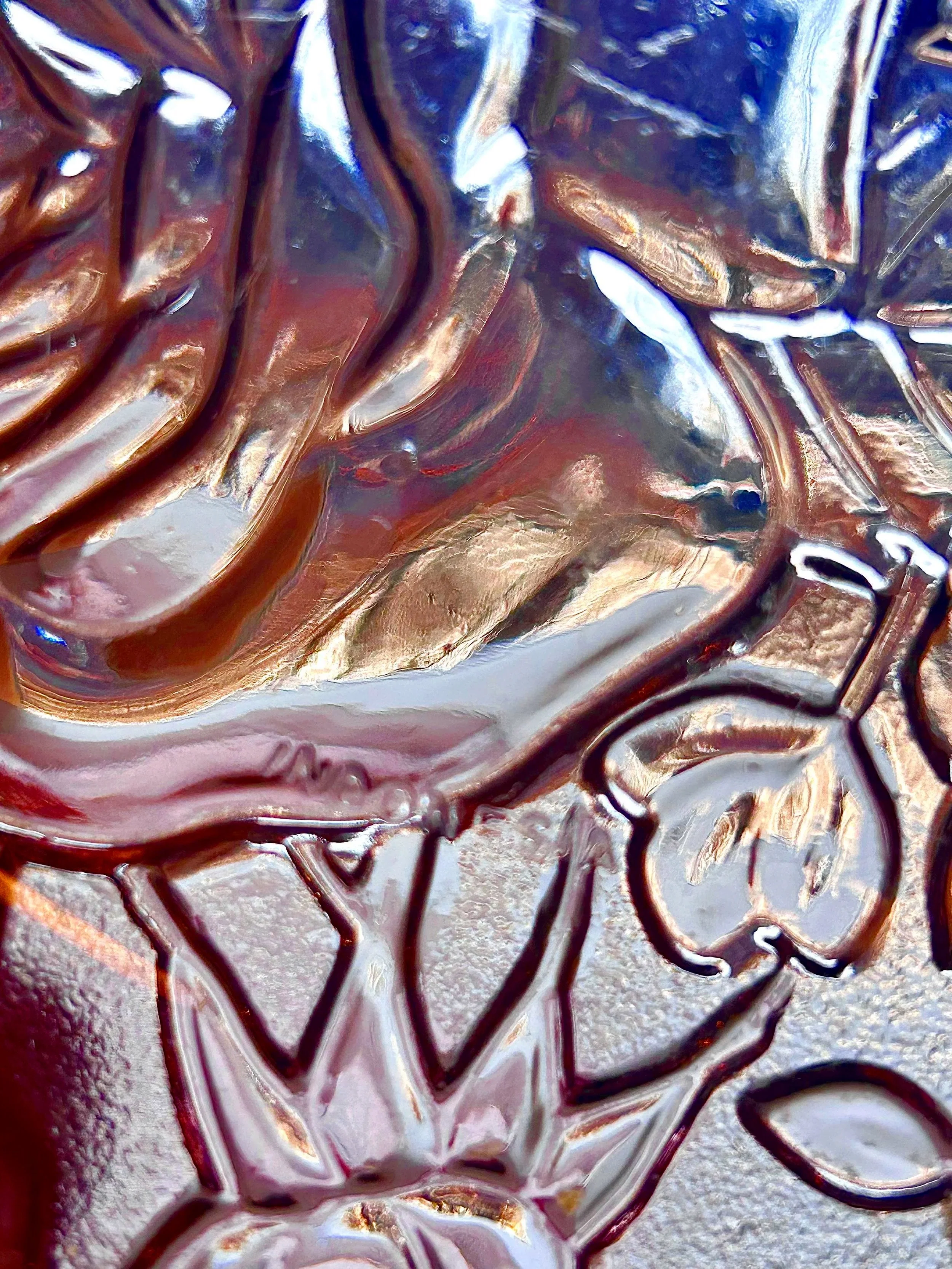
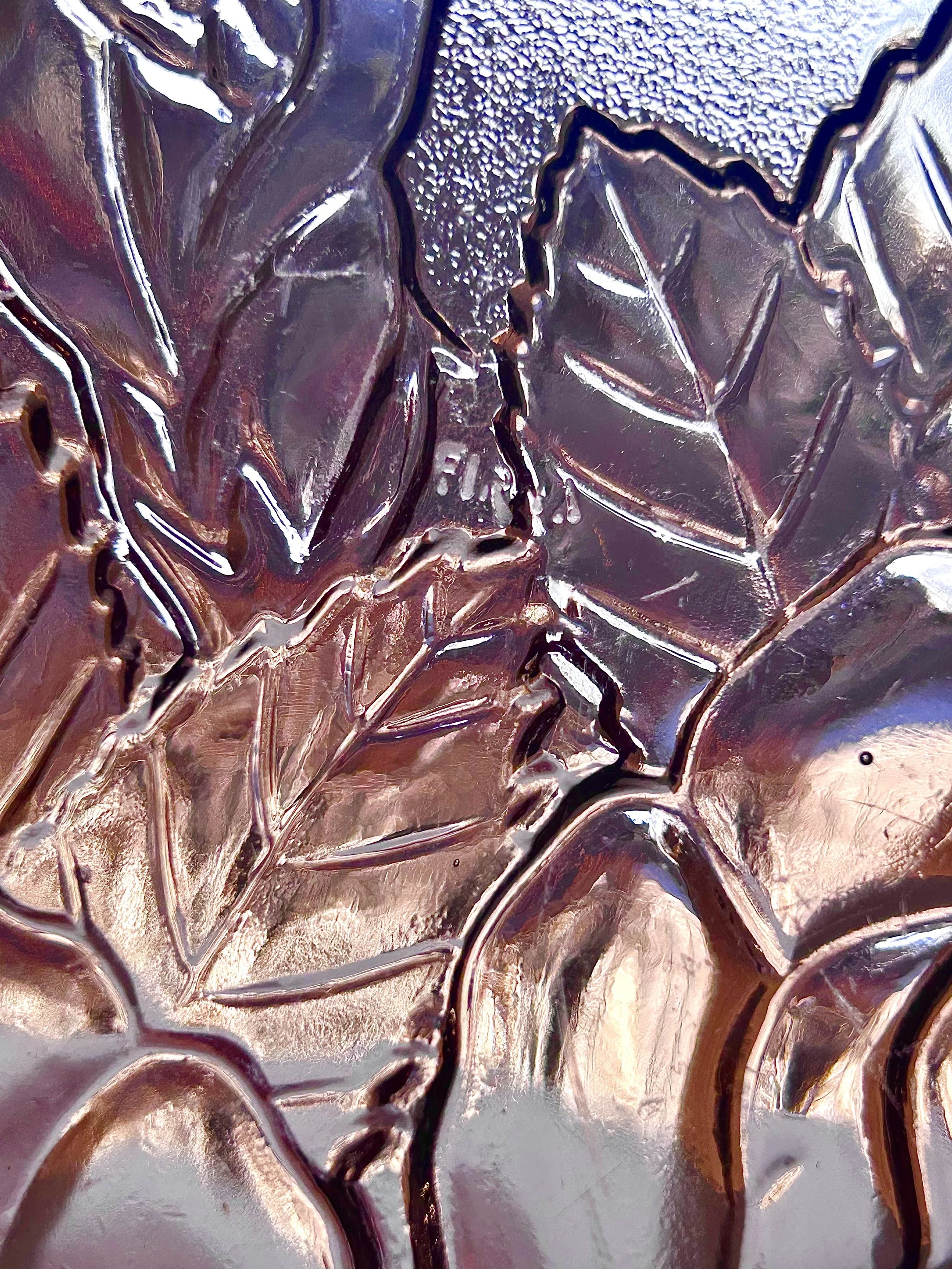
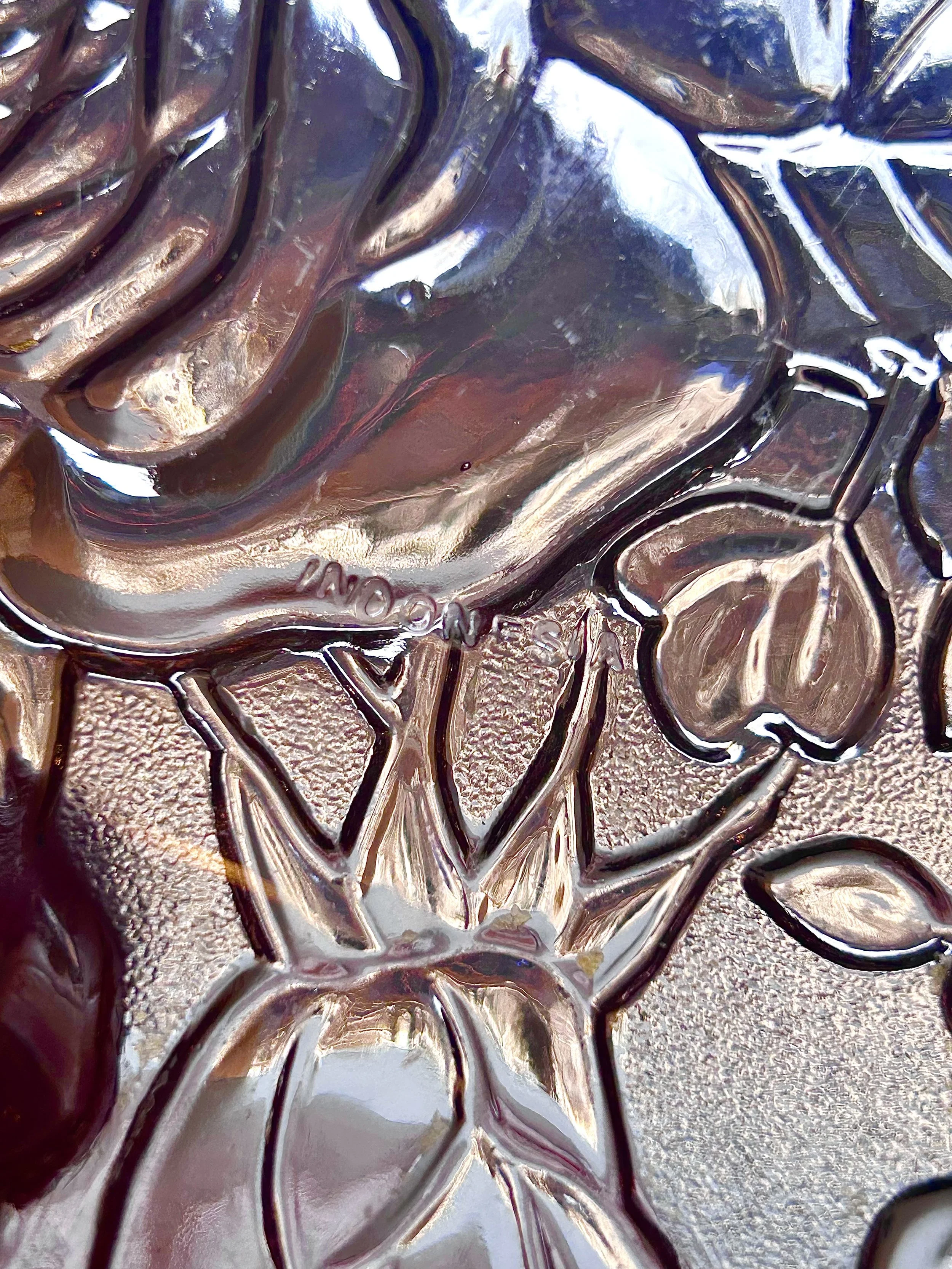
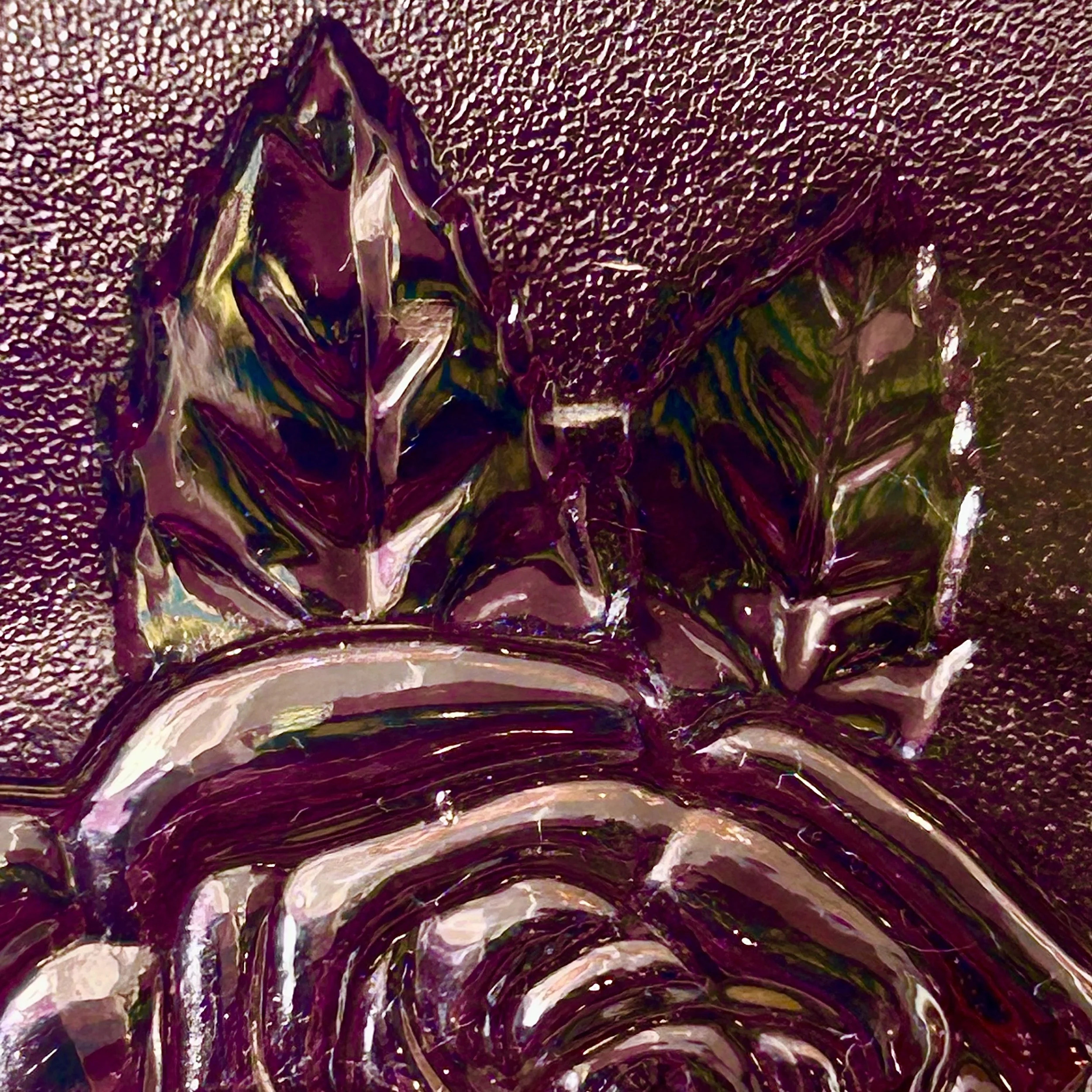
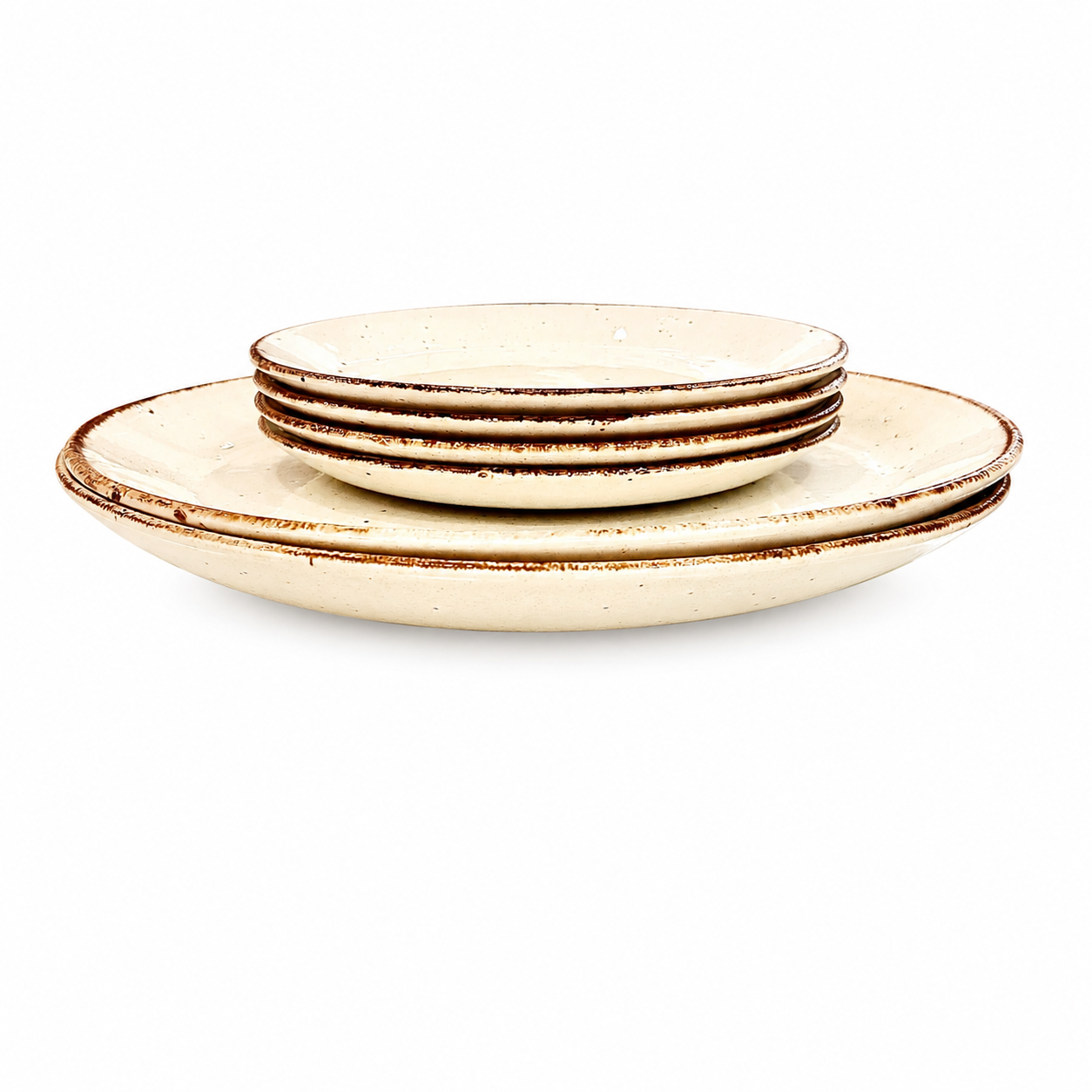
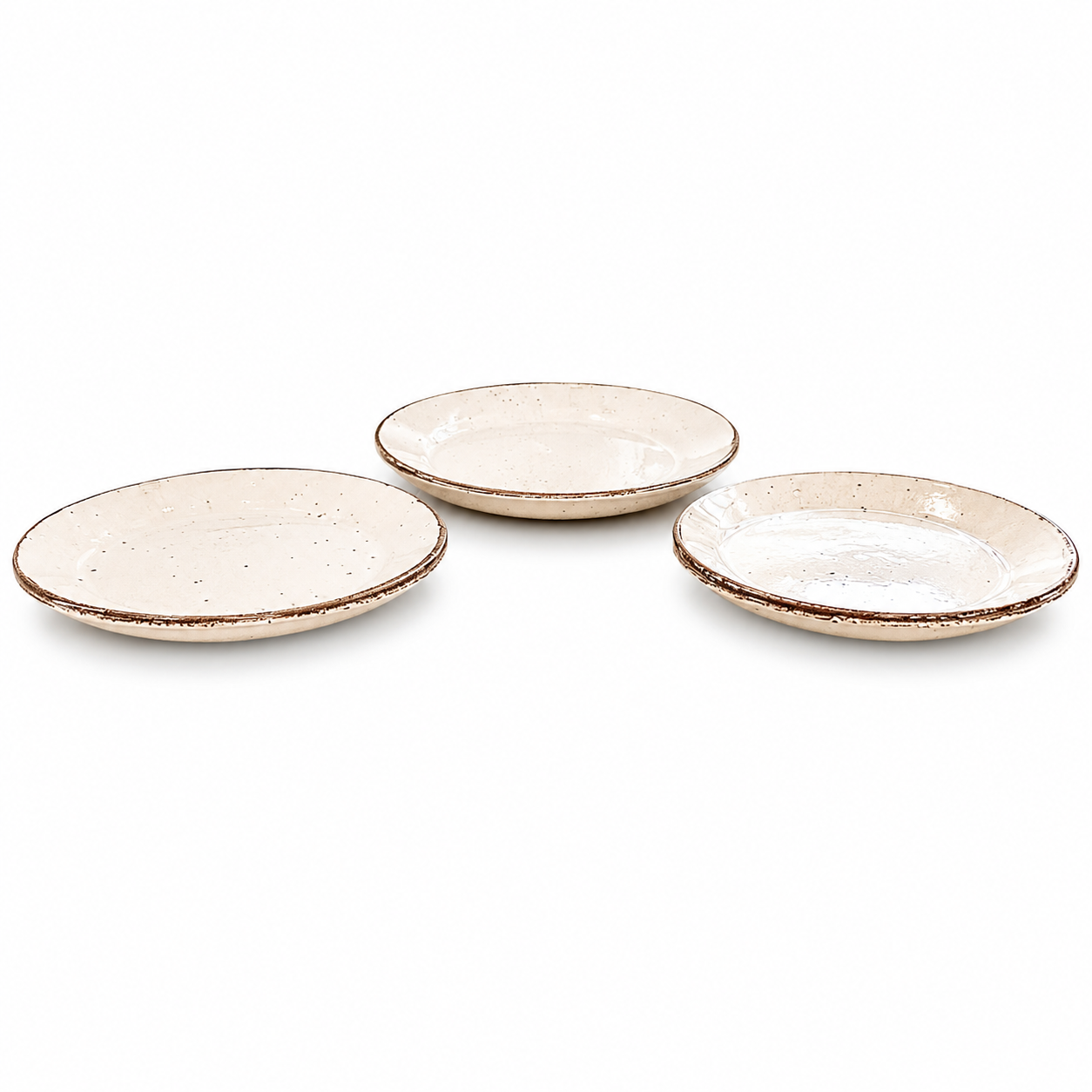
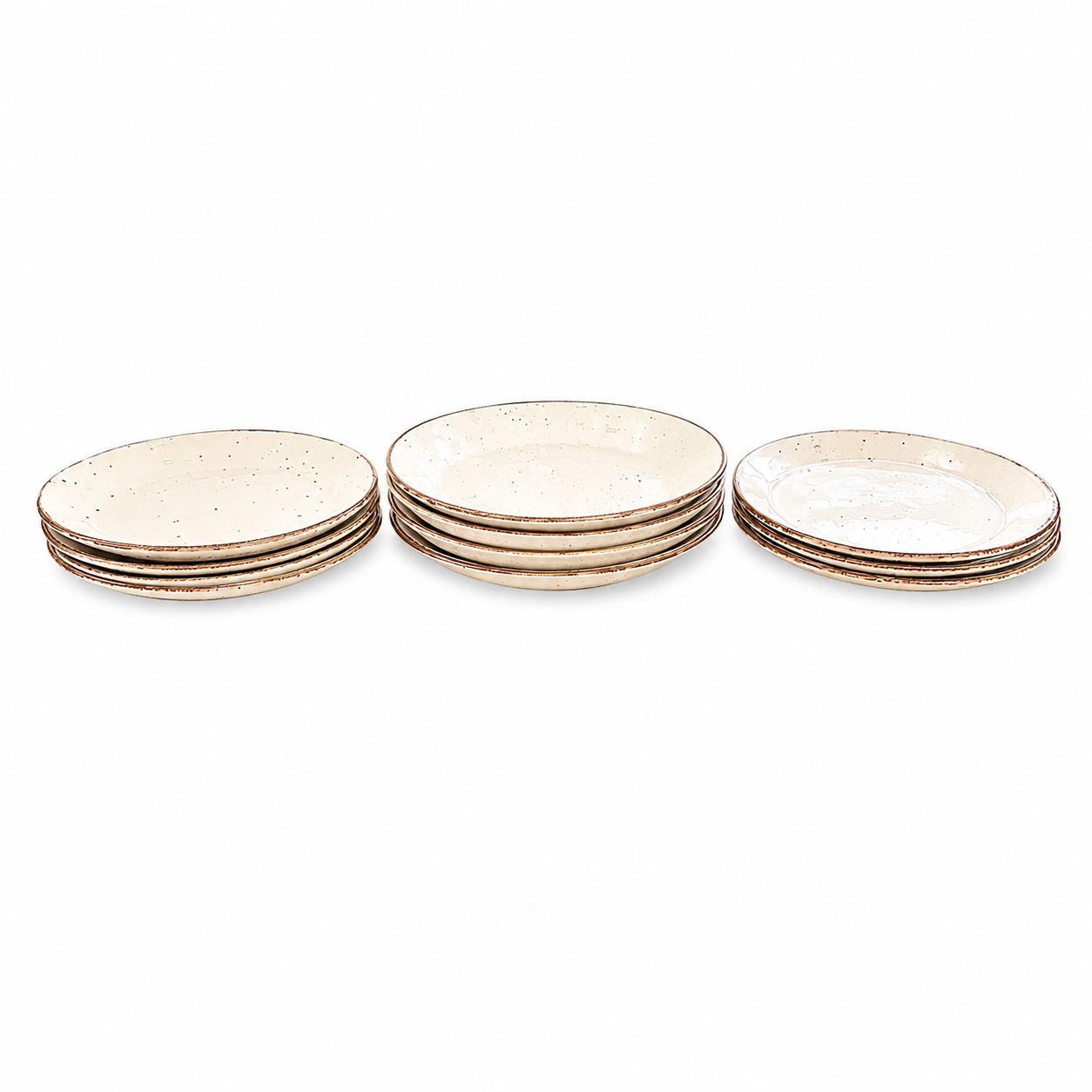
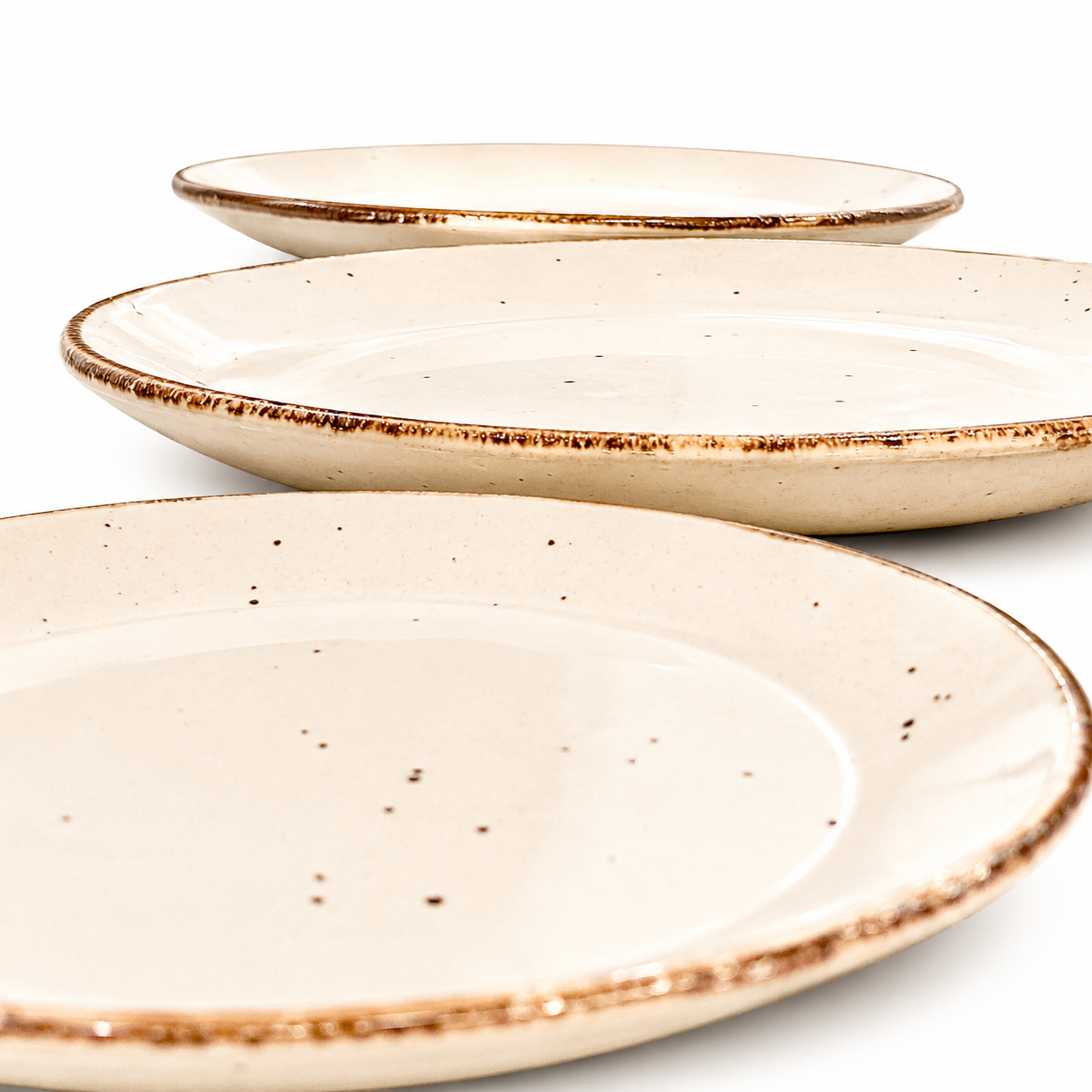
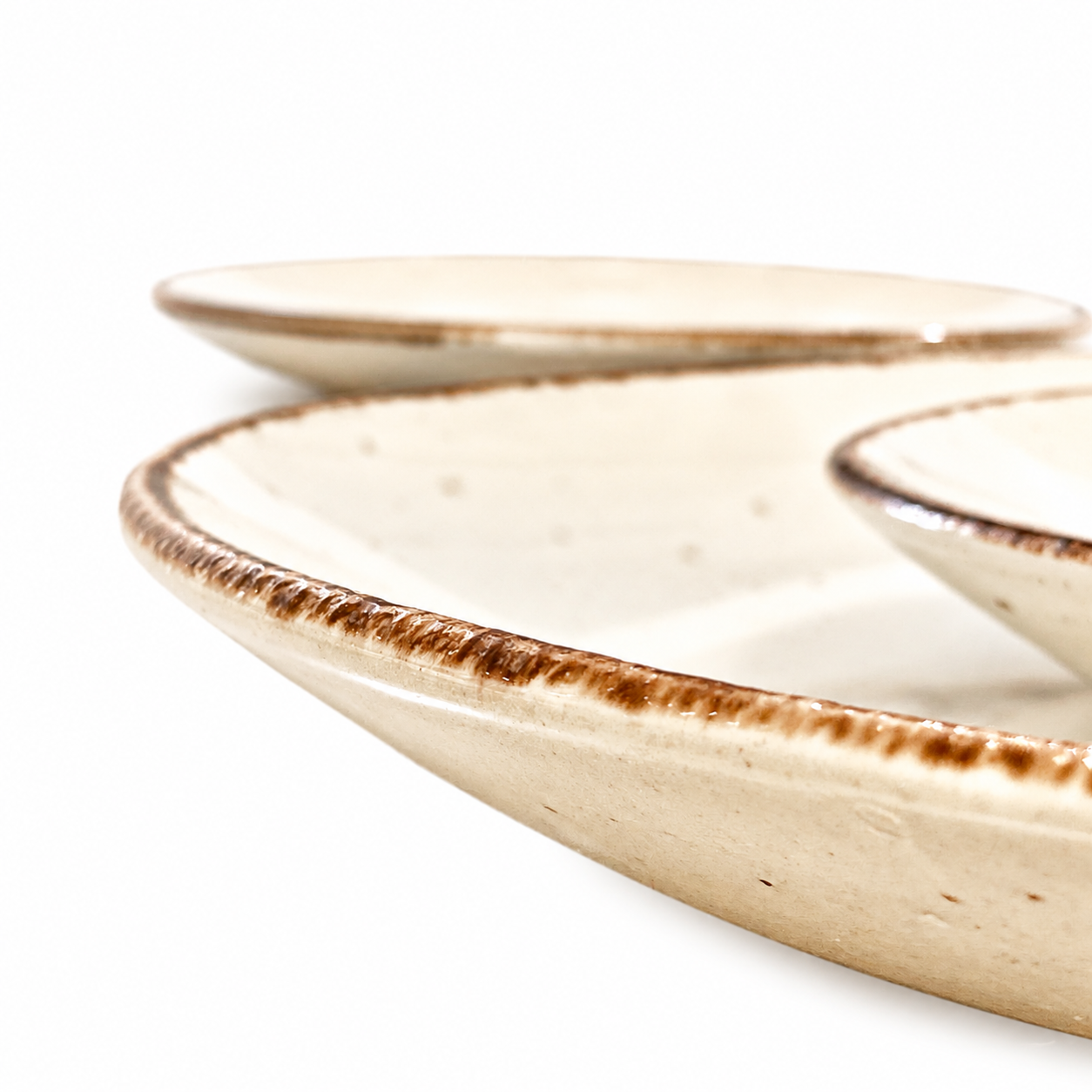
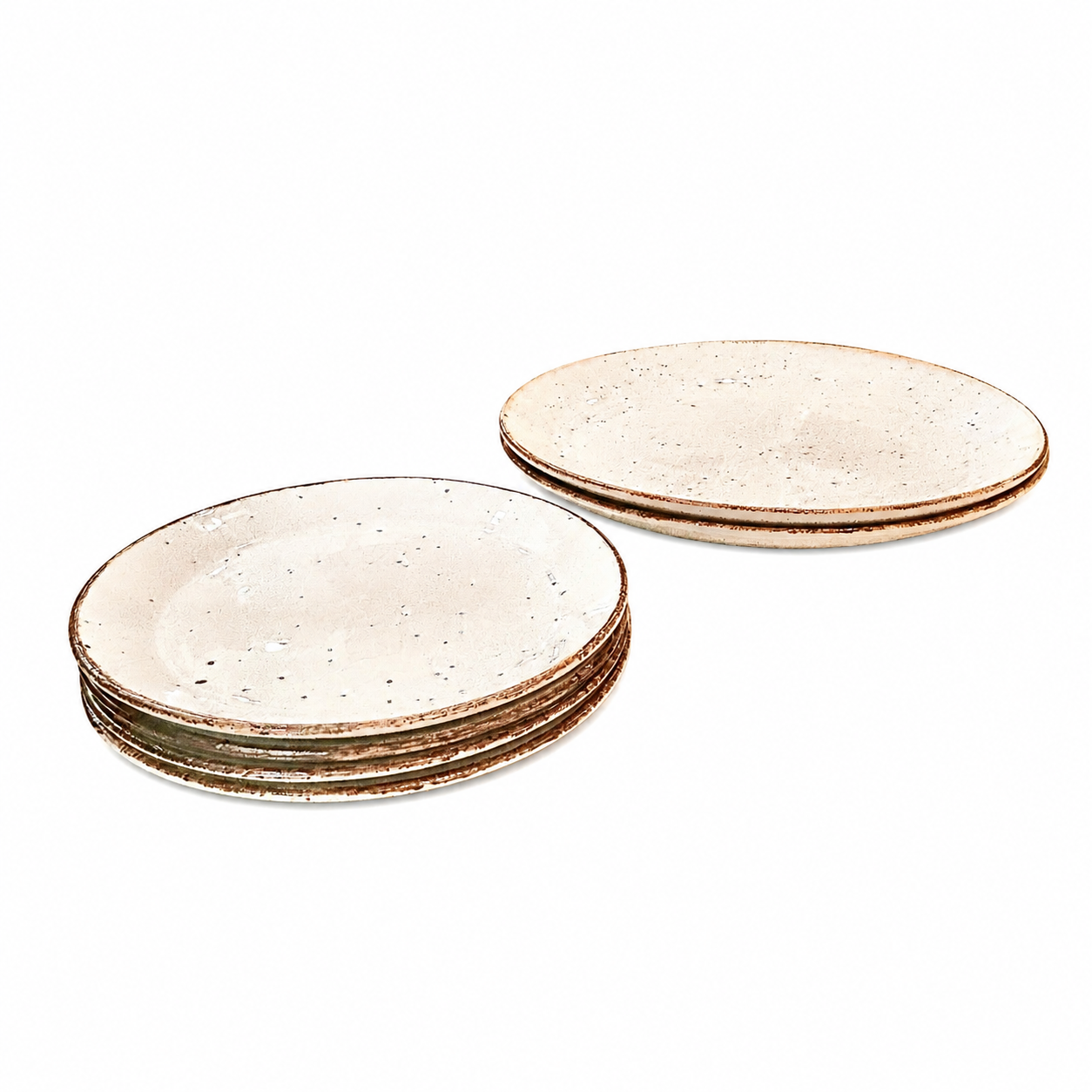
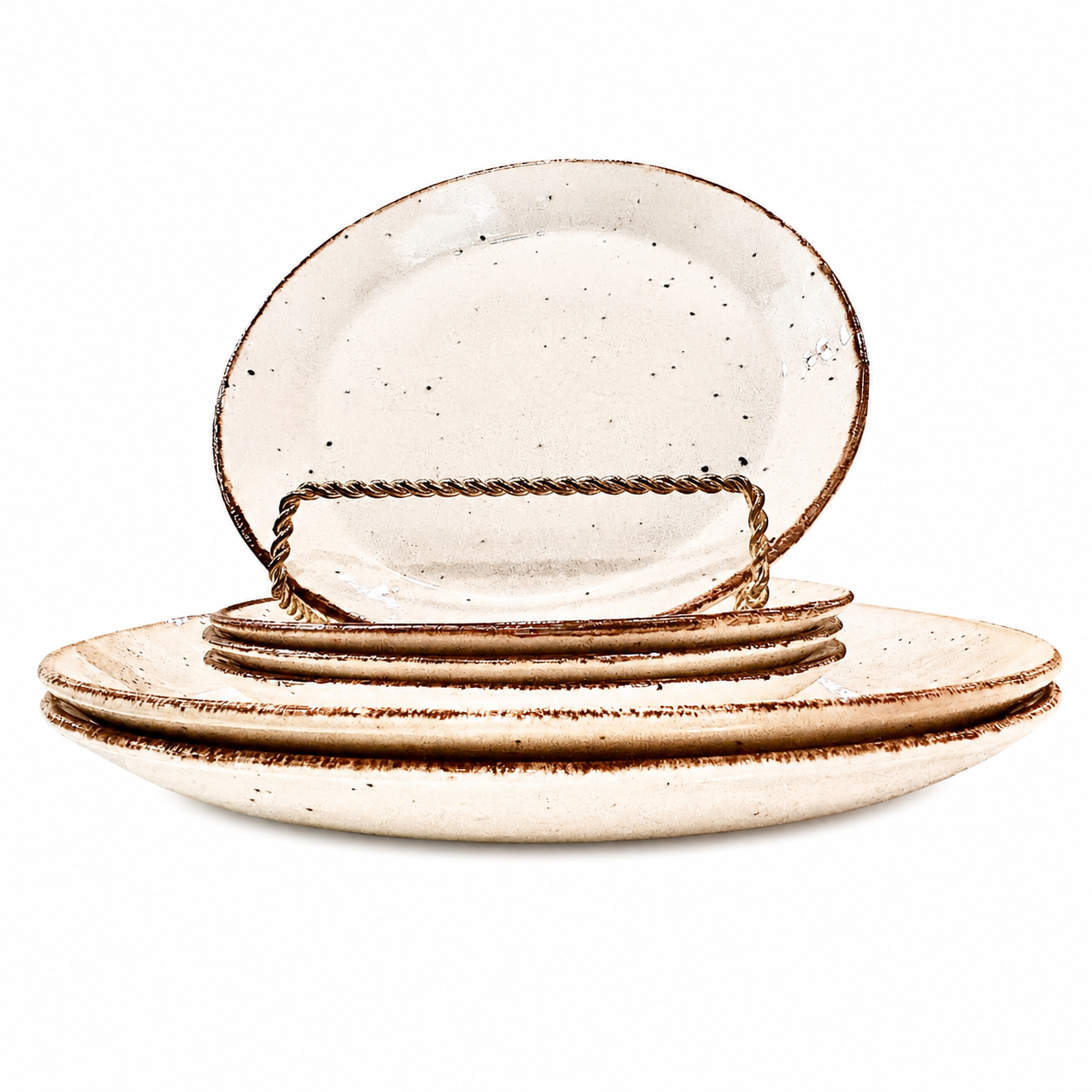
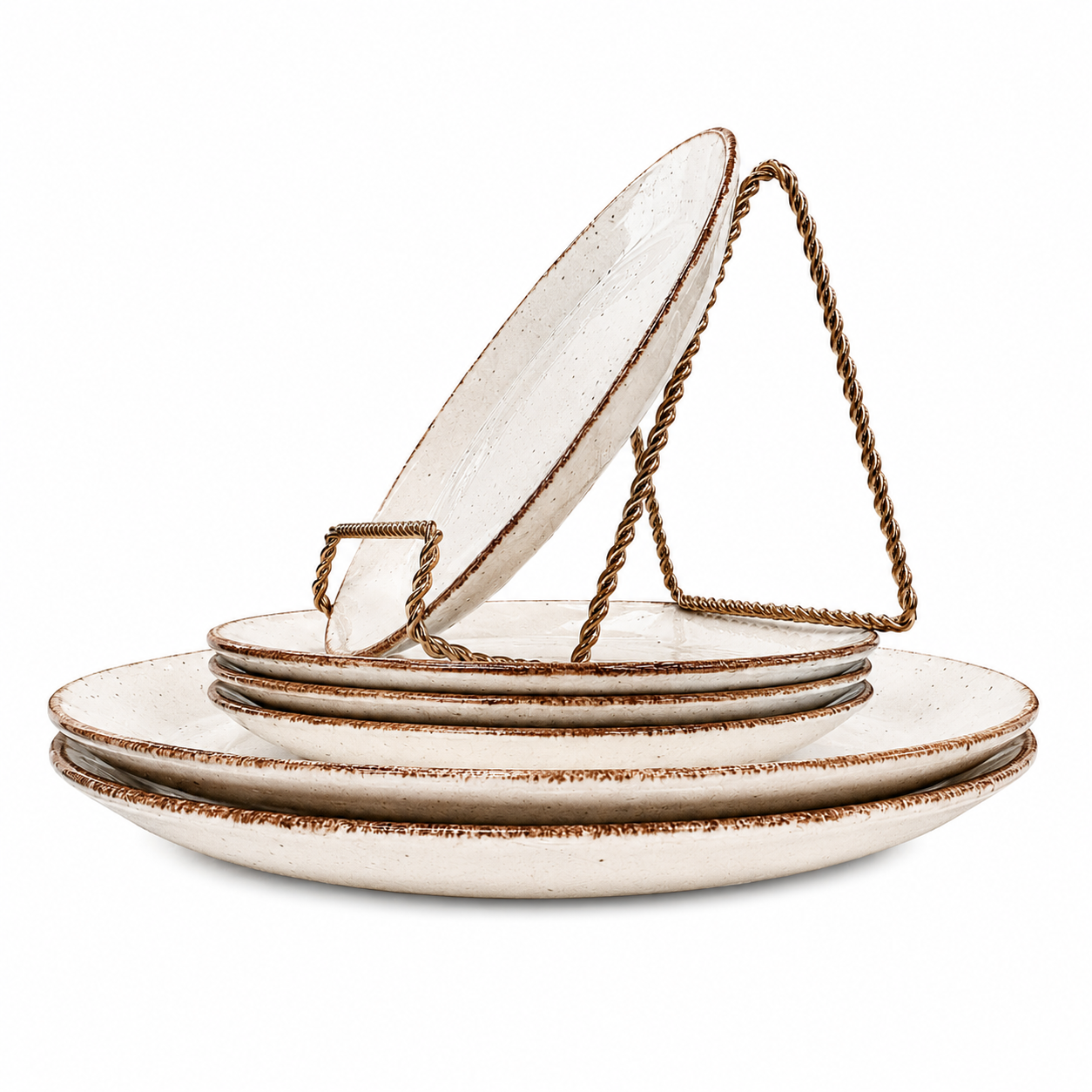
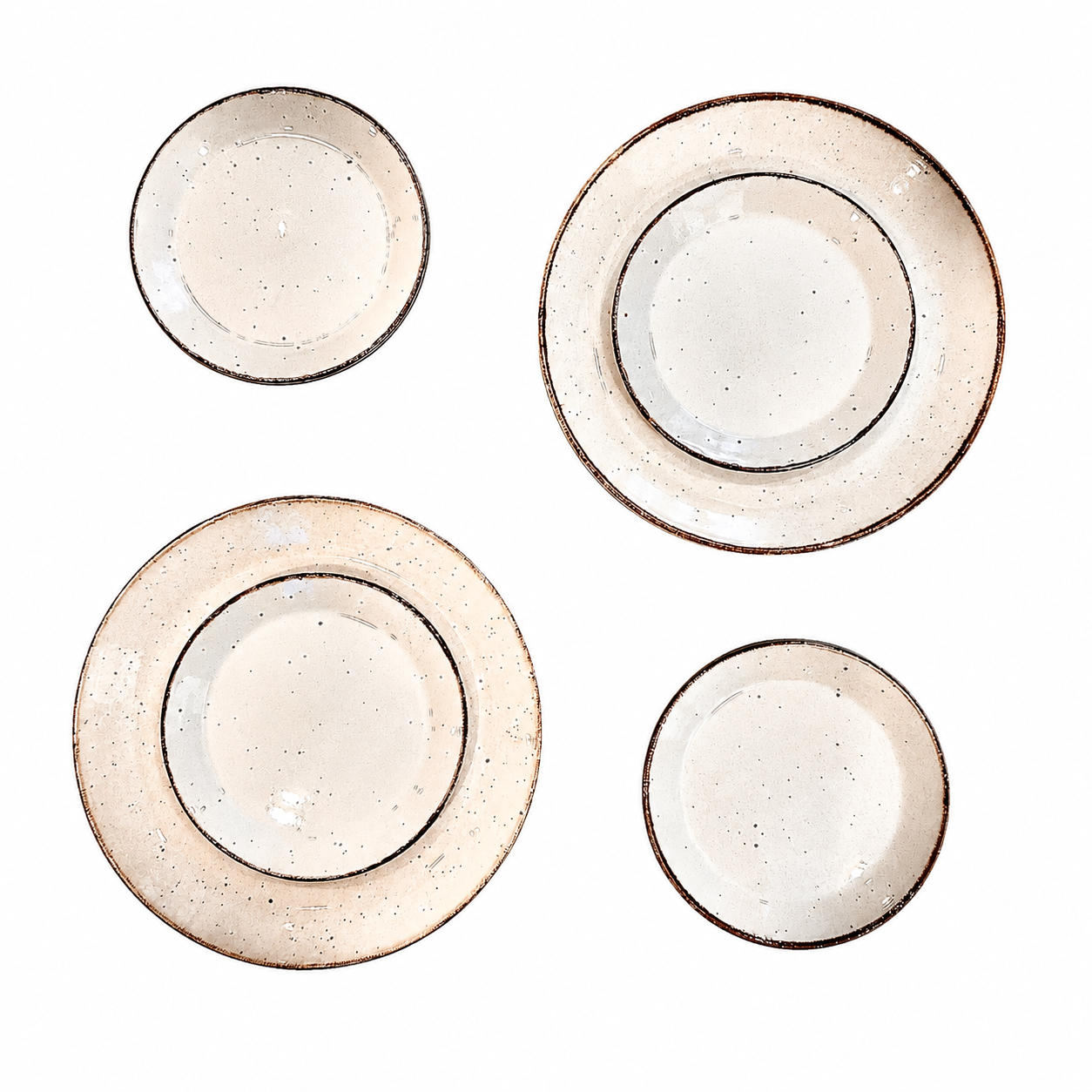
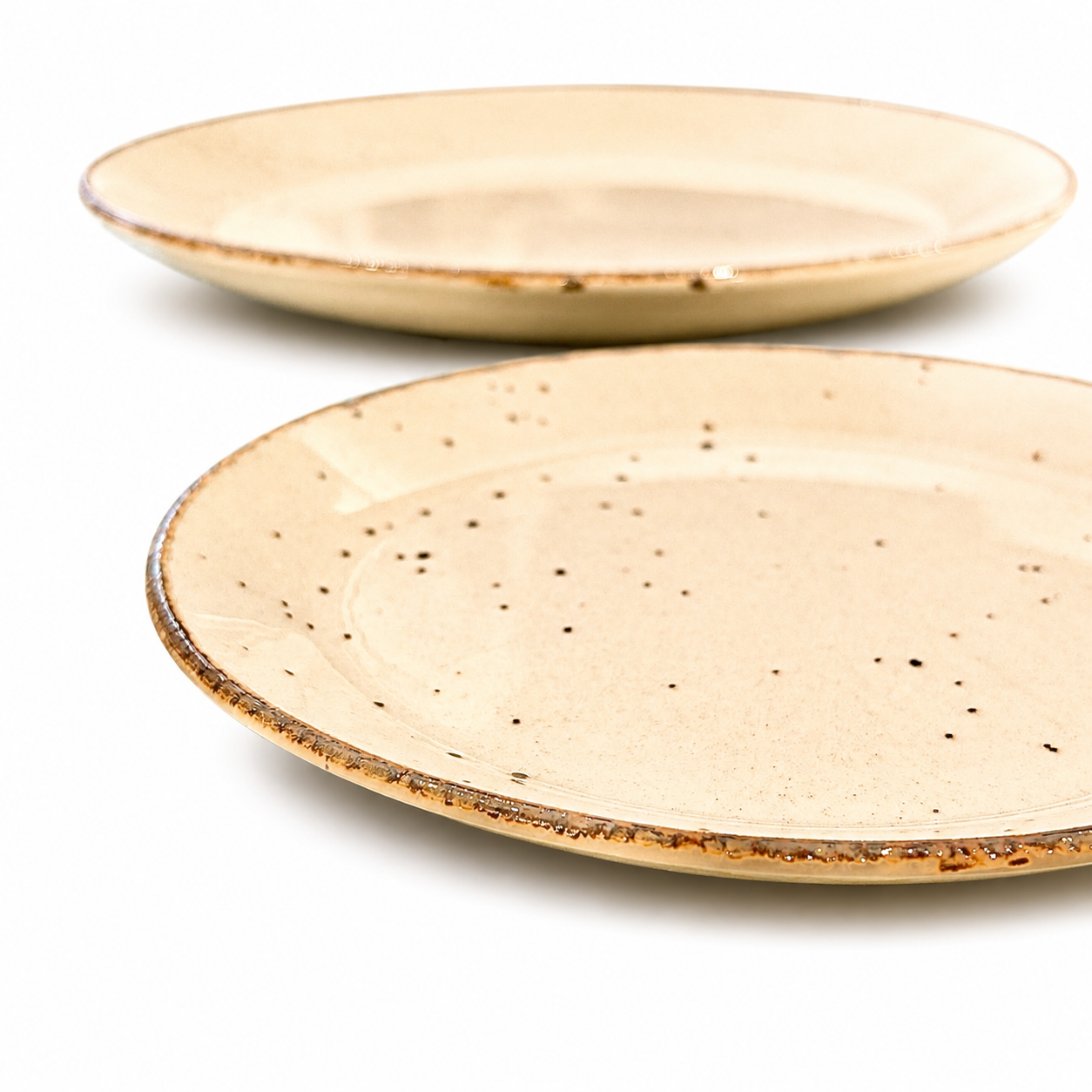
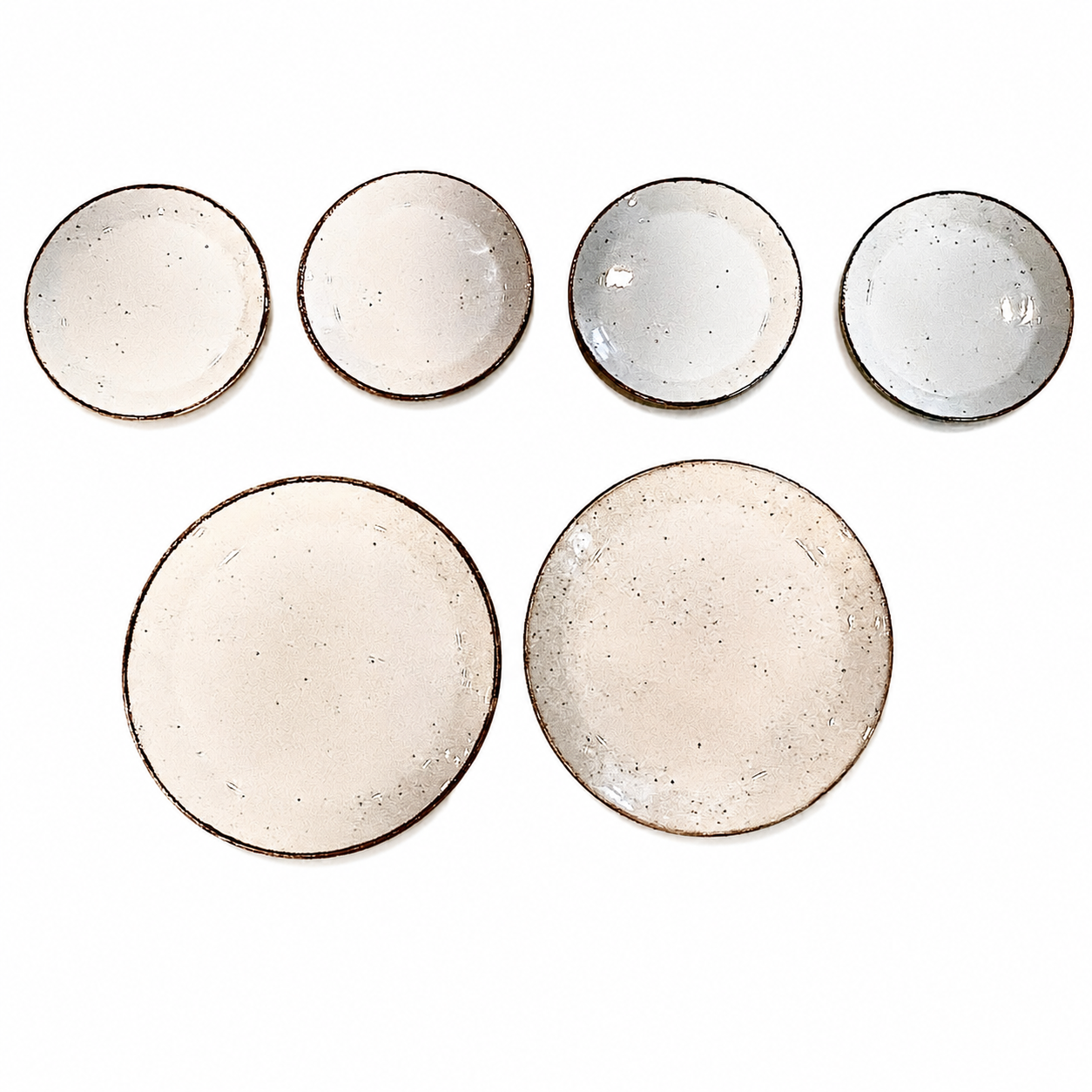
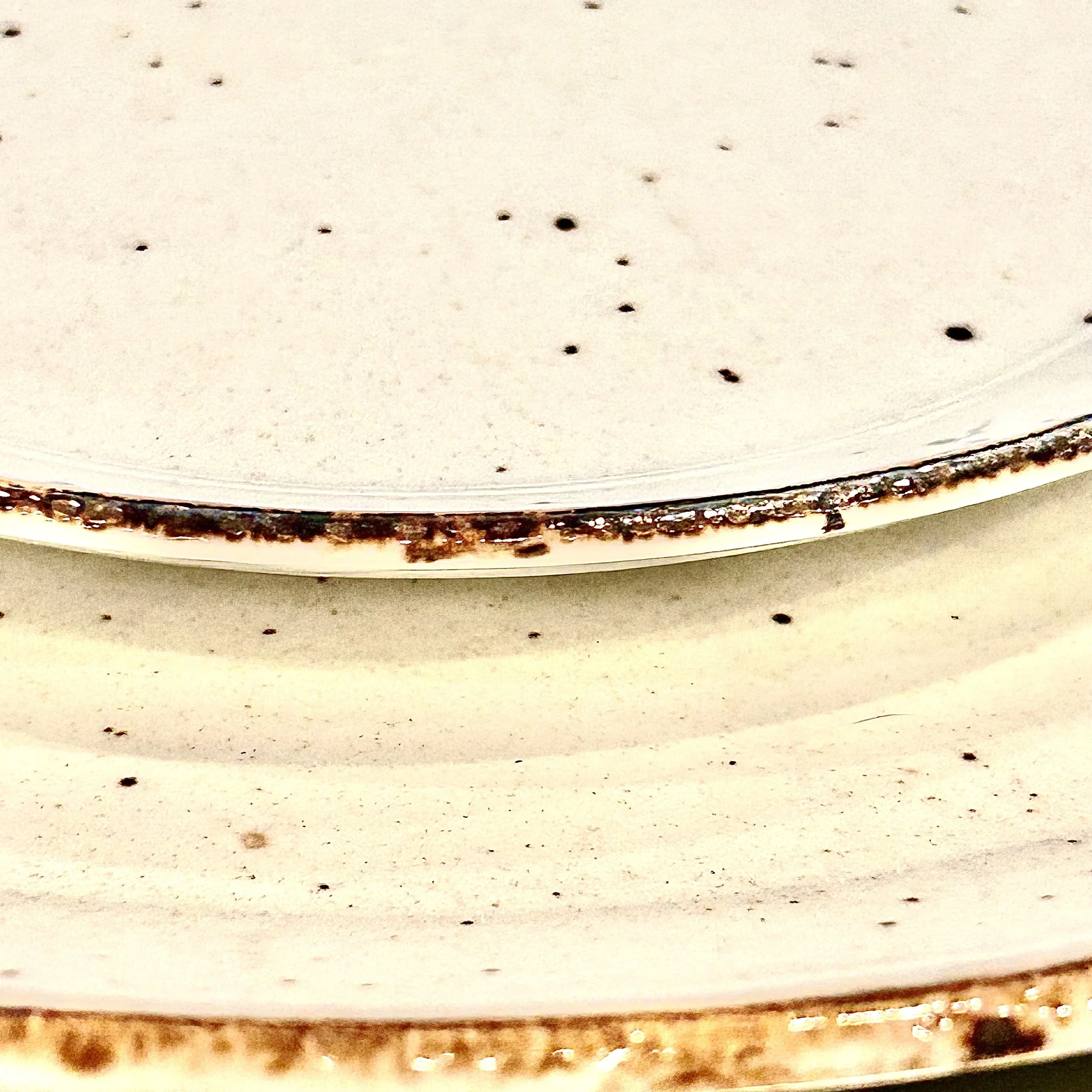
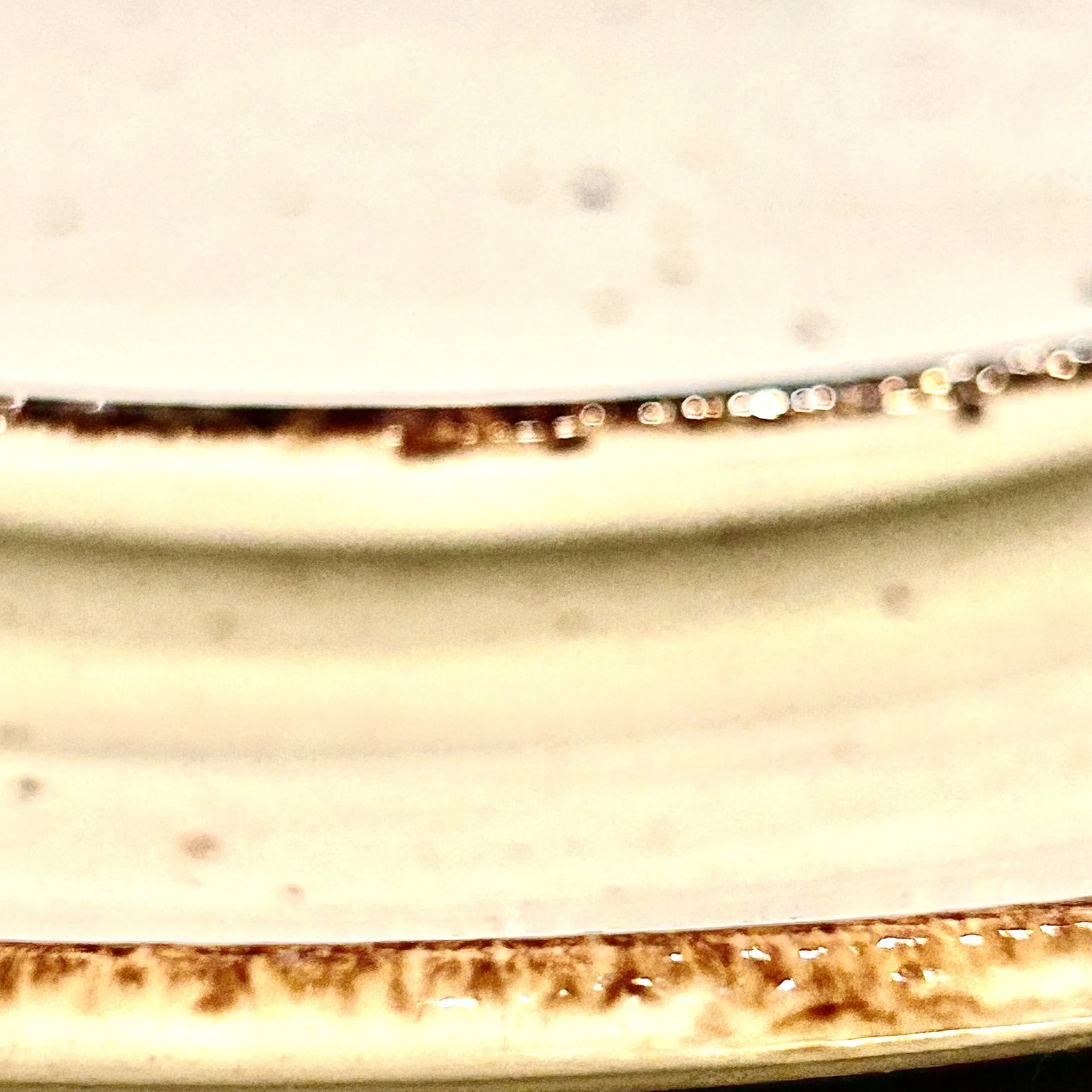
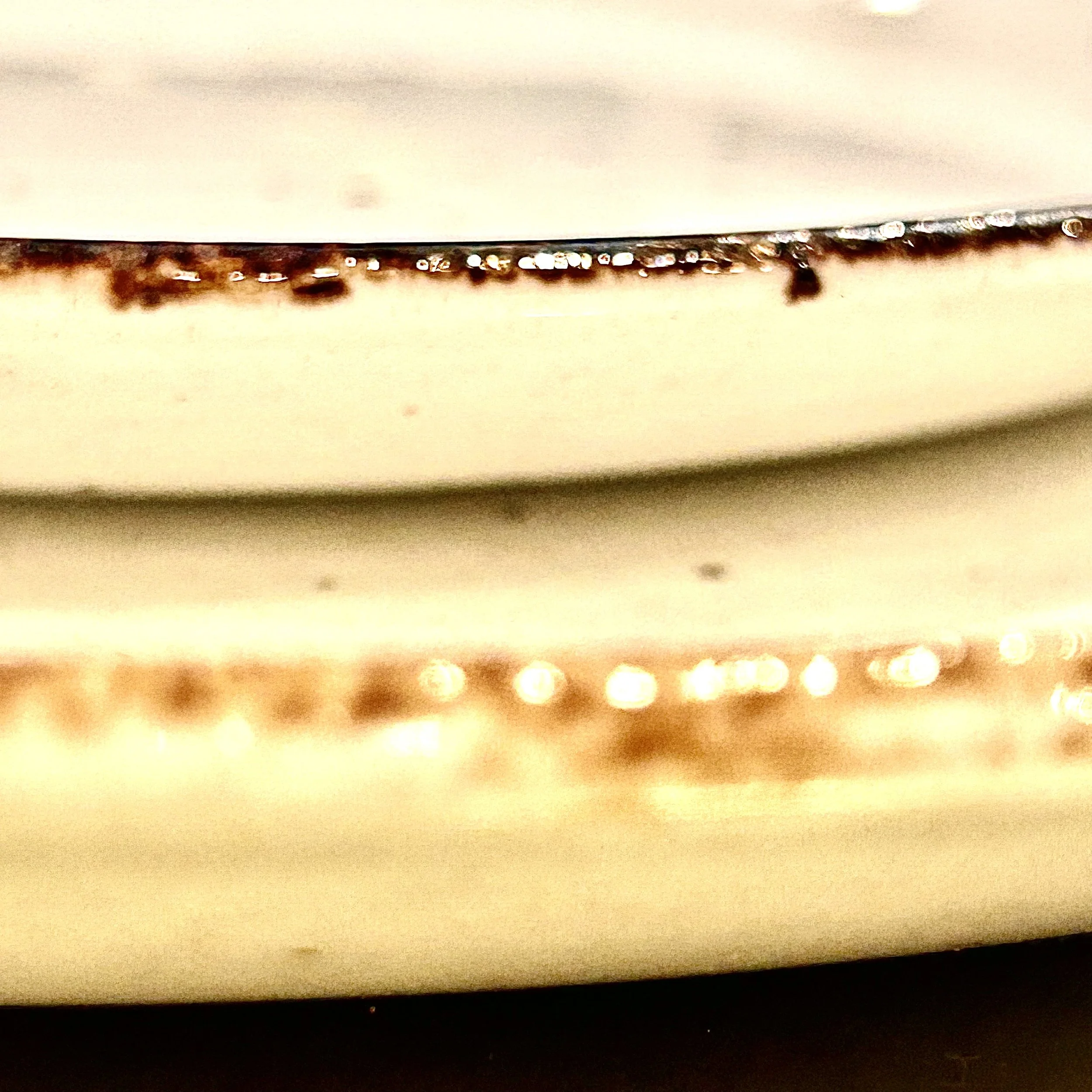
This set of art glass salad plates captures an exceptional sculptural presence, showcasing a rich interplay of light and dense organic patterning. The heavily textured, undulating undersides mimic natural mineral or tortoiseshell formations, creating a striking multi-dimensional canvas that beautifully diffuses light. Designed with a timeless low profile, their fluid borders and materially compelling amber tones present an architecturally interesting asset to contemporary curation. These plates effortlessly elevate from serving functional culinary needs to acting as captivating visual layers within highly refined, interior-designer spaces.
Attribution & Period
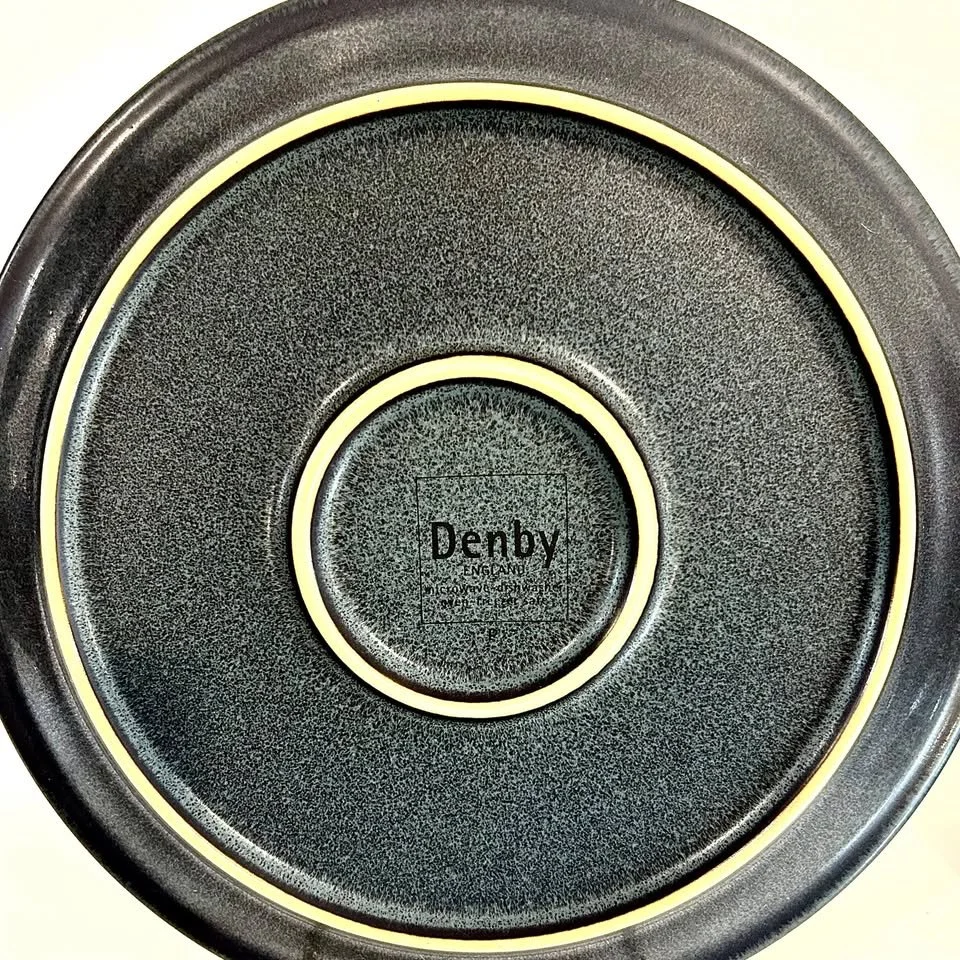
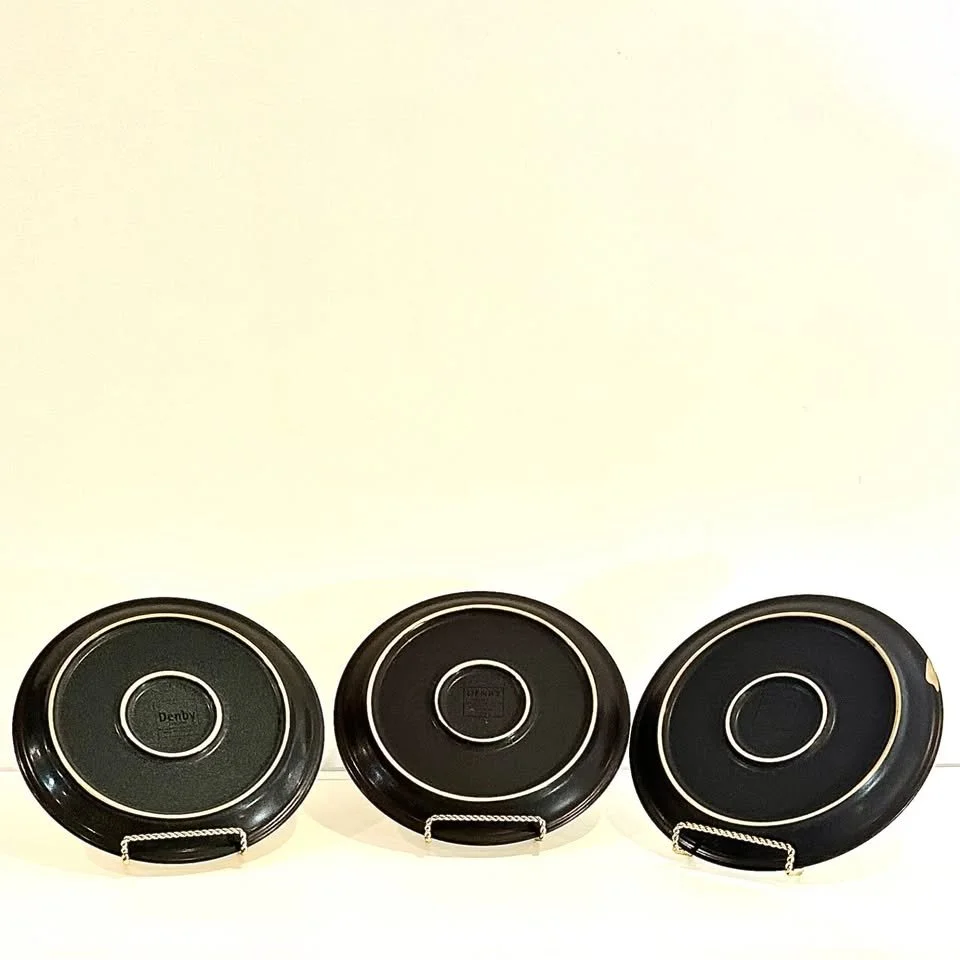
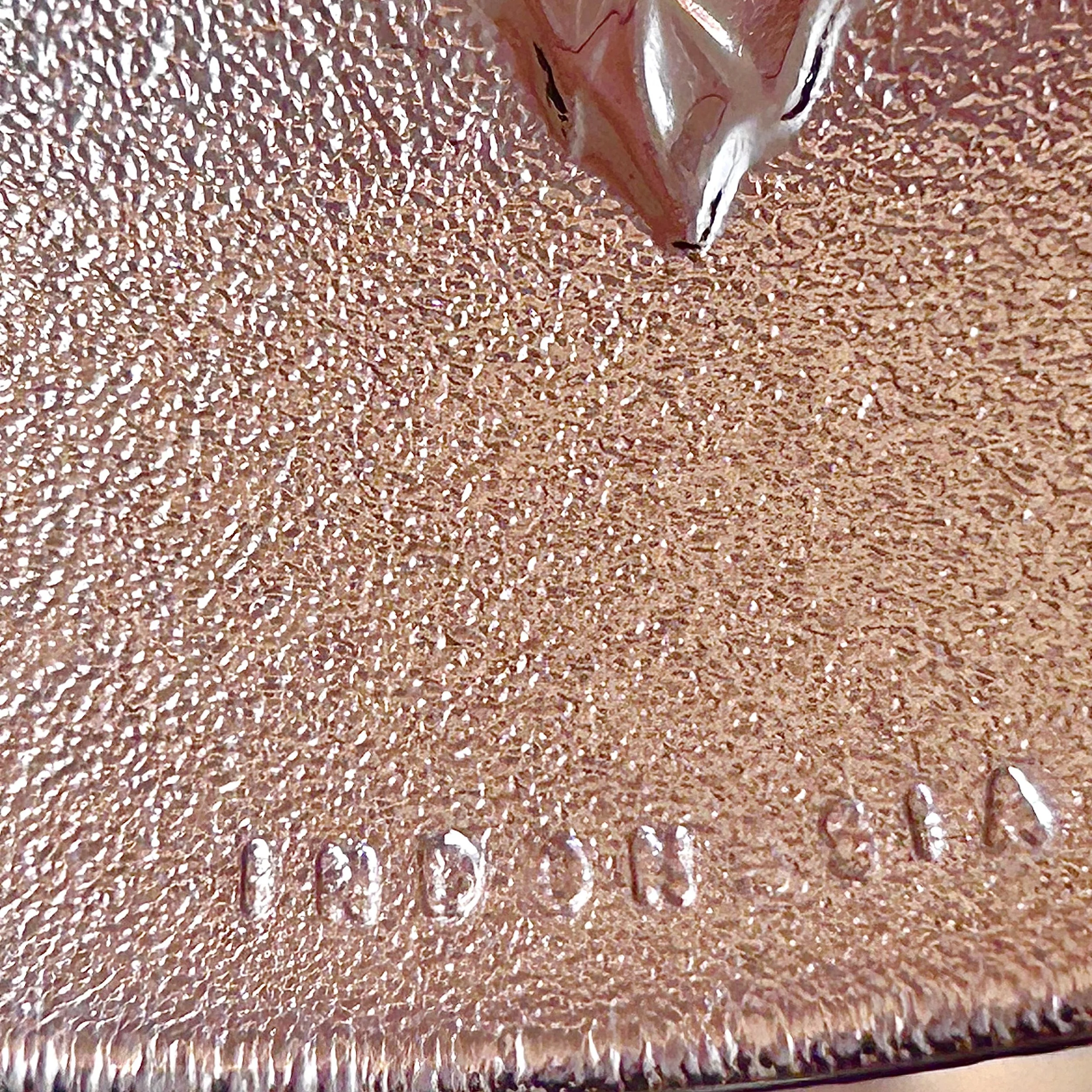
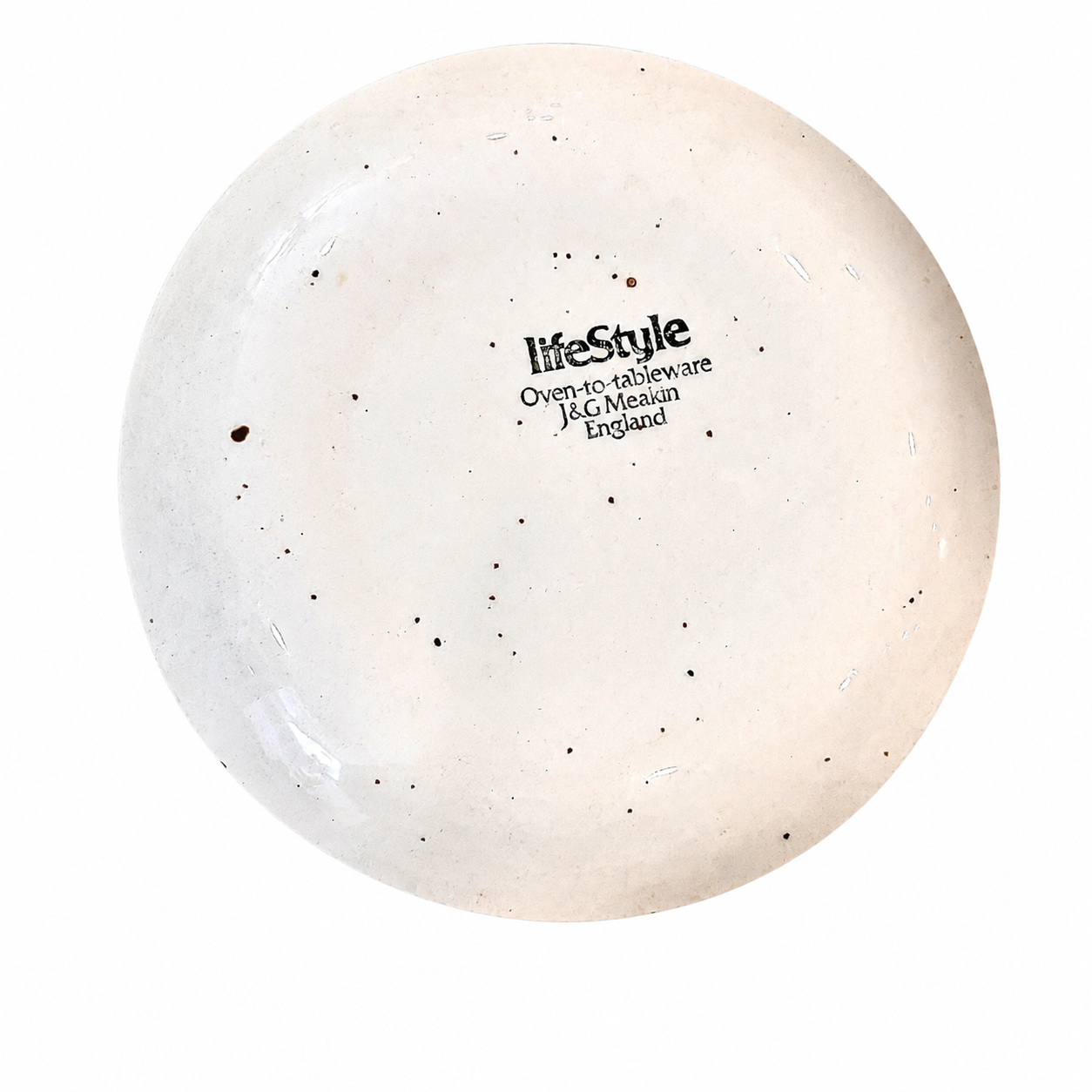
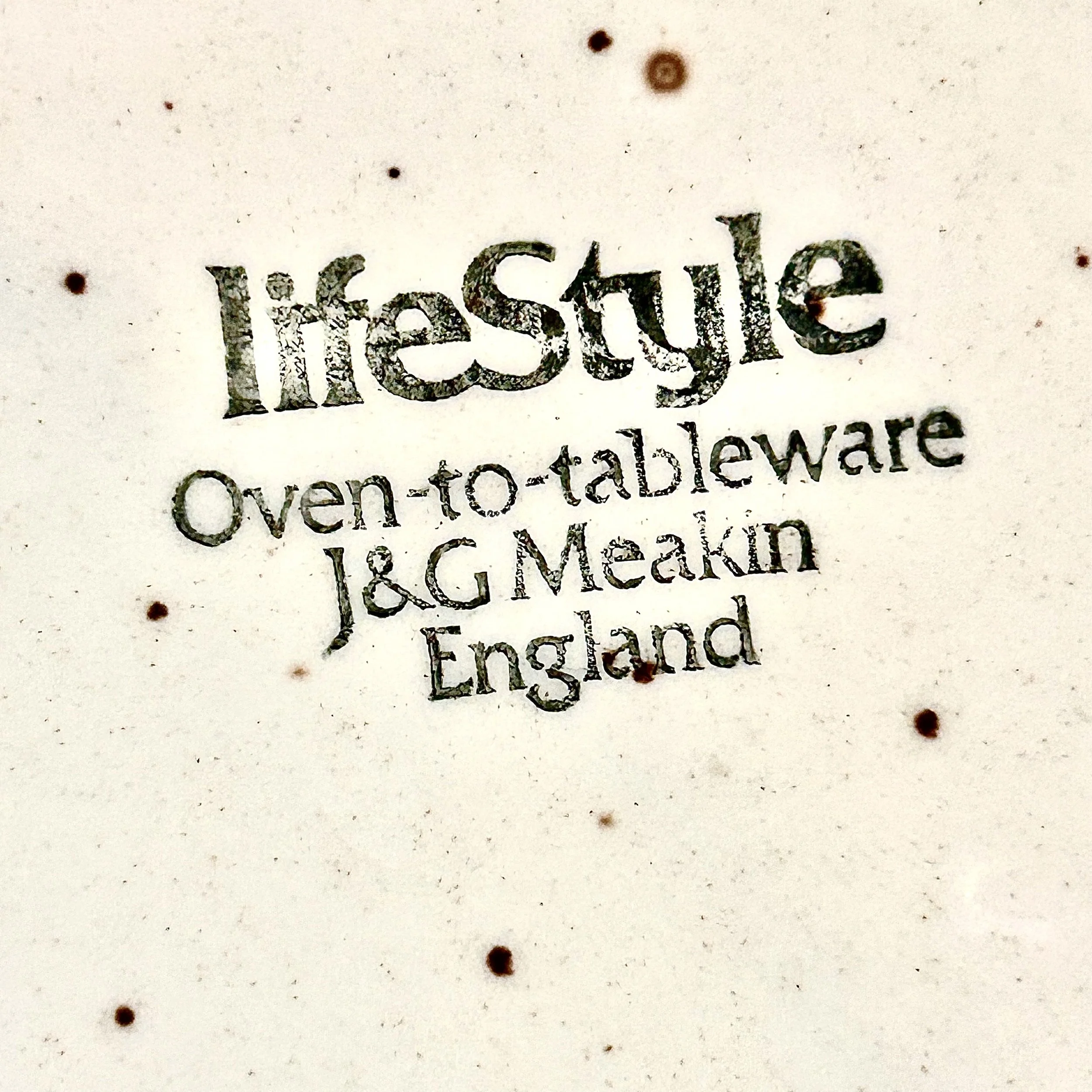
Consistent with French glassmaking houses during the 1970s. The distinctive swirling texturing, high-iron amber coloration, and specific hot-molded manufacturing techniques align closely with classic patterns produced by noted mid-century European factories such as Arcoroc or Durand. While no direct maker mark or label is observed on these examples, their weight, material composition, and stylized organic modernism remain visually aligned with French tabletop glass of this decade.
Dimensions & Weight (ea)
Condition
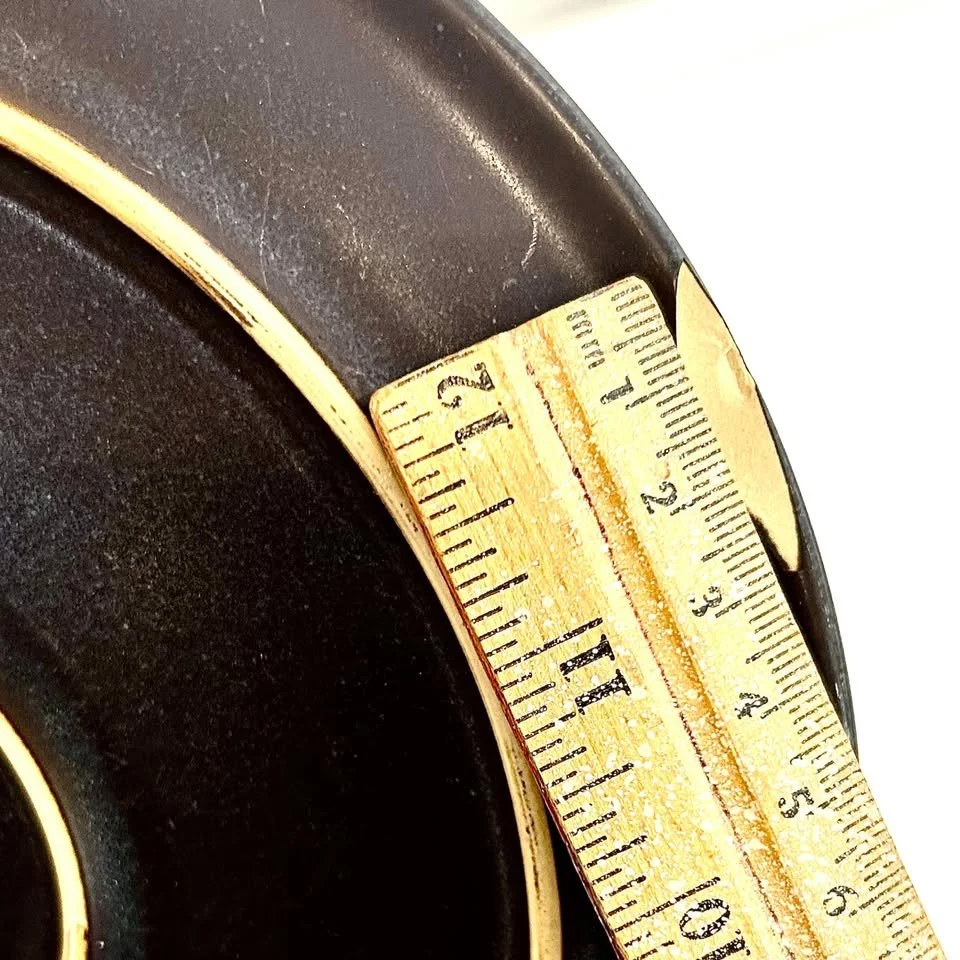
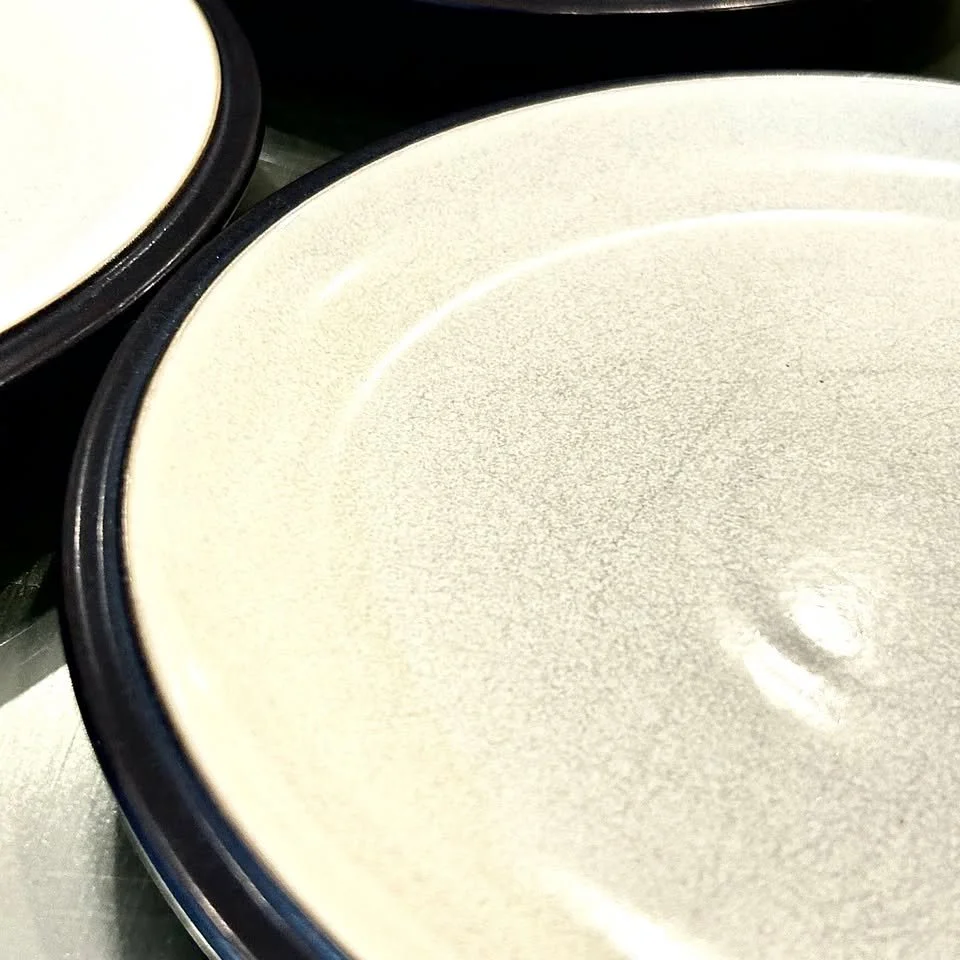
Presented in good vintage condition with an honest, authentic history of light use. Clinical inspection notes a series of faint to moderate surface scratches and utensil markings distributed primarily across the smooth interior dining surfaces. No structural cracks, deep chips, or perimeter fleabites are present, preserving the smooth rim edges and leaving the heavy, underlying molded texture entirely intact.
Authenticity & Construction
These plates are engineered using a dynamic press-molding process where molten glass is stamped into a deeply textured die. This technique produces a smooth, hygienic upper surface contrasting perfectly with an expressively dimpled, variegated underside that provides superb structural thickness. The resulting variation in glass thickness gives the amber color its rich tonal range, catching light much like hand-blown art glass while maintaining exceptional durability.
Placement
An excellent material statement for open kitchen shelving, custom china cabinets, or layered atop neutral stoneware on an editorial dining table. Their rich amber hue and complex texture coordinate elegantly into warm minimalist, organic modern, or high-end coastal interior spaces.
STANDARD ATTRIBUTION & VALUE DISCLOSURE; This piece is described to the best of current scholarly and market knowledge. Any maker or regional attribution is based on visual analysis, materials, construction techniques, and documented stylistic comparisons. As with many MCM and antique design objects, definitive attribution may not be possible without original labels or factory records. Pricing reflects condition, quality, decorative appeal, and current collector demand rather than guaranteed maker identification.
This set of art glass salad plates captures an exceptional sculptural presence, showcasing a rich interplay of light and dense organic patterning. The heavily textured, undulating undersides mimic natural mineral or tortoiseshell formations, creating a striking multi-dimensional canvas that beautifully diffuses light. Designed with a timeless low profile, their fluid borders and materially compelling amber tones present an architecturally interesting asset to contemporary curation. These plates effortlessly elevate from serving functional culinary needs to acting as captivating visual layers within highly refined, interior-designer spaces.
Attribution & Period
Consistent with French glassmaking houses during the 1970s. The distinctive swirling texturing, high-iron amber coloration, and specific hot-molded manufacturing techniques align closely with classic patterns produced by noted mid-century European factories such as Arcoroc or Durand. While no direct maker mark or label is observed on these examples, their weight, material composition, and stylized organic modernism remain visually aligned with French tabletop glass of this decade.
Dimensions & Weight (ea)
Condition
Presented in good vintage condition with an honest, authentic history of light use. Clinical inspection notes a series of faint to moderate surface scratches and utensil markings distributed primarily across the smooth interior dining surfaces. No structural cracks, deep chips, or perimeter fleabites are present, preserving the smooth rim edges and leaving the heavy, underlying molded texture entirely intact.
Authenticity & Construction
These plates are engineered using a dynamic press-molding process where molten glass is stamped into a deeply textured die. This technique produces a smooth, hygienic upper surface contrasting perfectly with an expressively dimpled, variegated underside that provides superb structural thickness. The resulting variation in glass thickness gives the amber color its rich tonal range, catching light much like hand-blown art glass while maintaining exceptional durability.
Placement
An excellent material statement for open kitchen shelving, custom china cabinets, or layered atop neutral stoneware on an editorial dining table. Their rich amber hue and complex texture coordinate elegantly into warm minimalist, organic modern, or high-end coastal interior spaces.
STANDARD ATTRIBUTION & VALUE DISCLOSURE; This piece is described to the best of current scholarly and market knowledge. Any maker or regional attribution is based on visual analysis, materials, construction techniques, and documented stylistic comparisons. As with many MCM and antique design objects, definitive attribution may not be possible without original labels or factory records. Pricing reflects condition, quality, decorative appeal, and current collector demand rather than guaranteed maker identification.

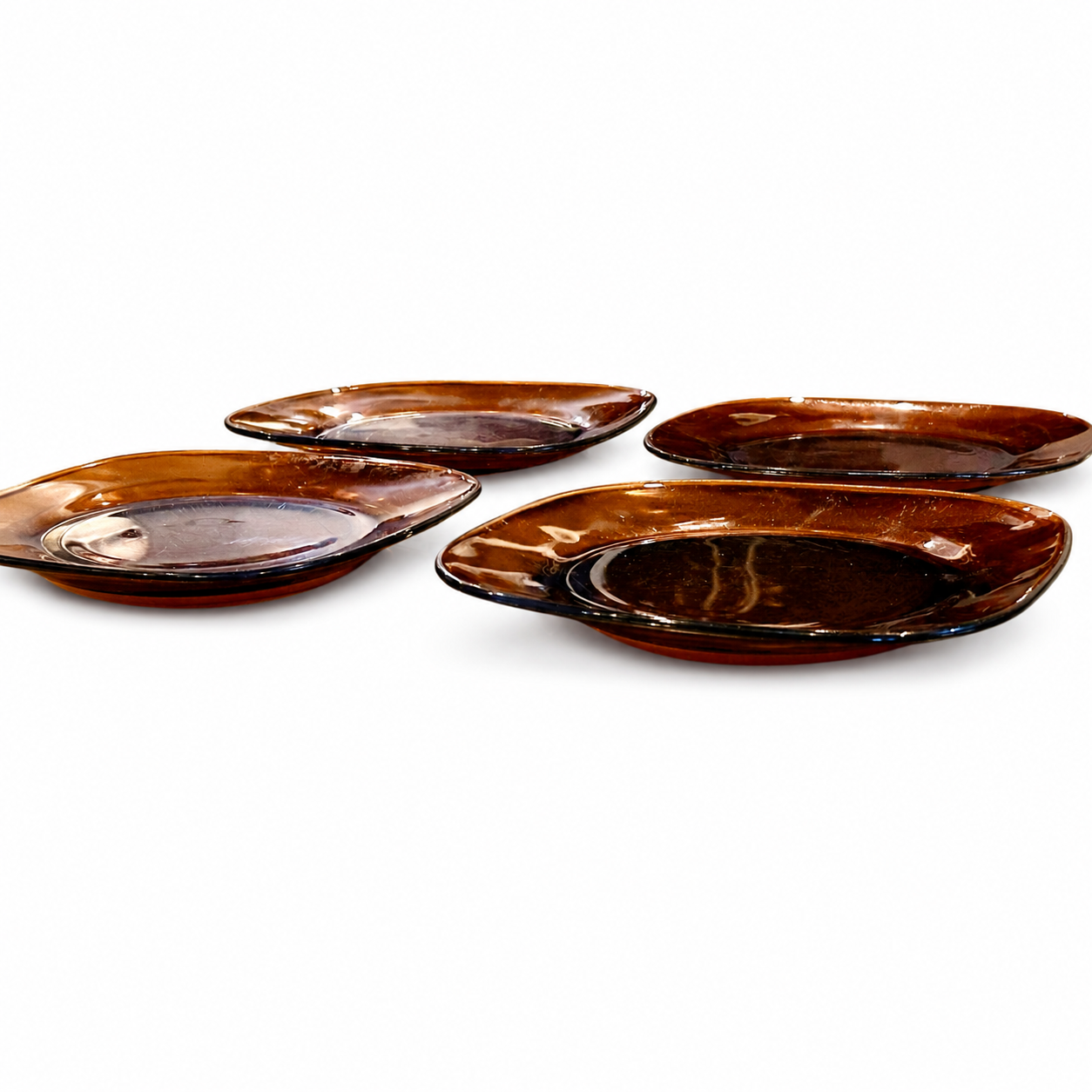 Image 1 of 17
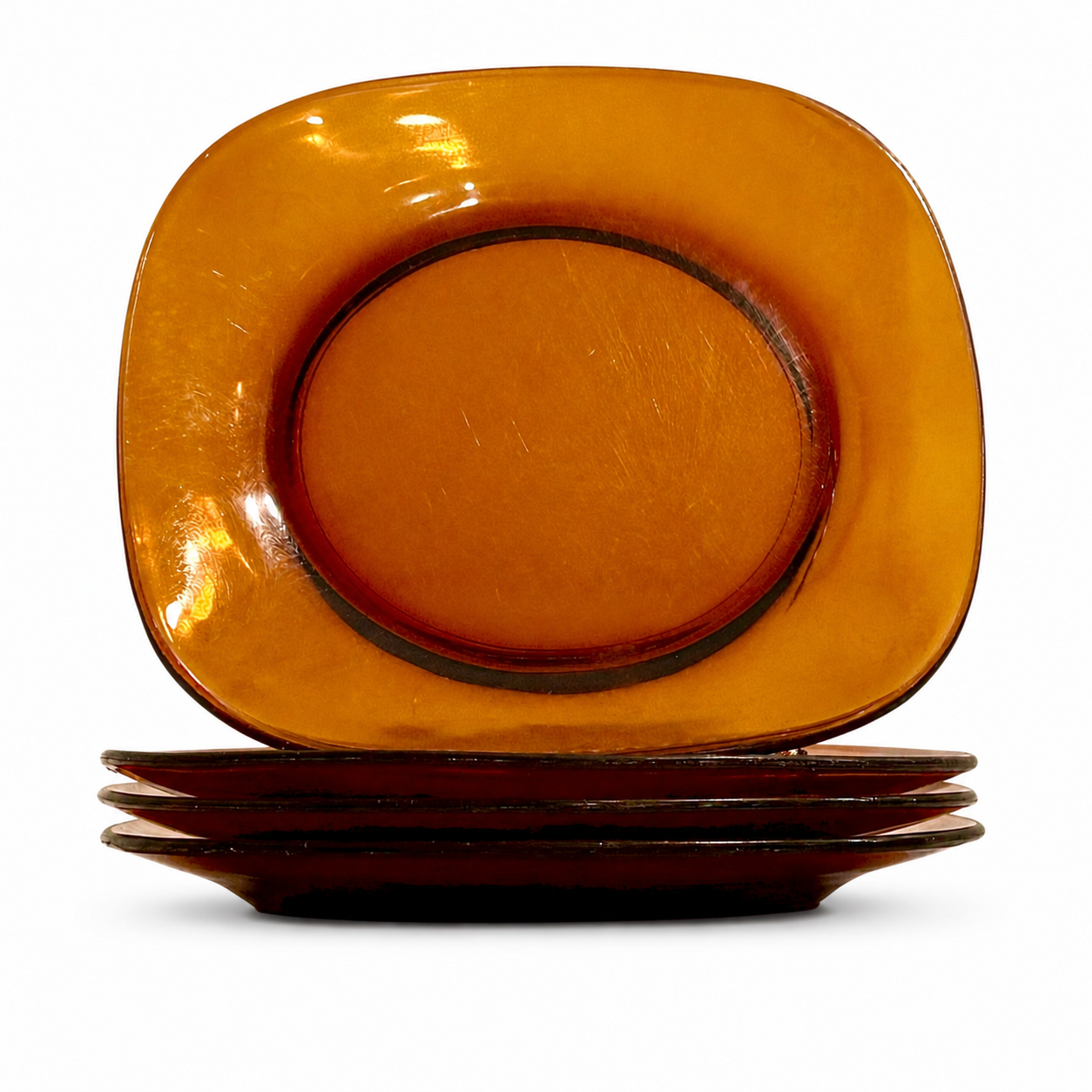 Image 2 of 17
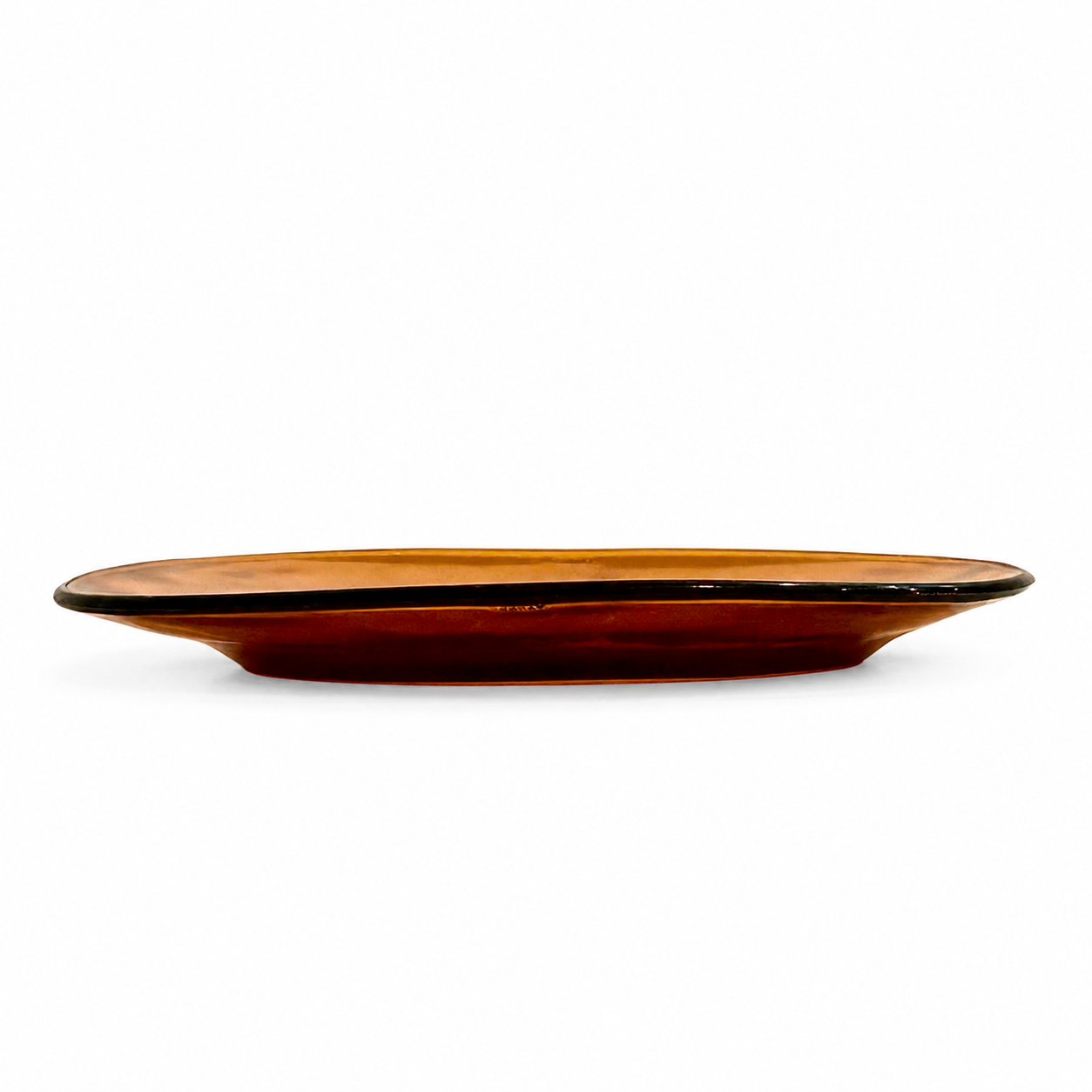 Image 3 of 17
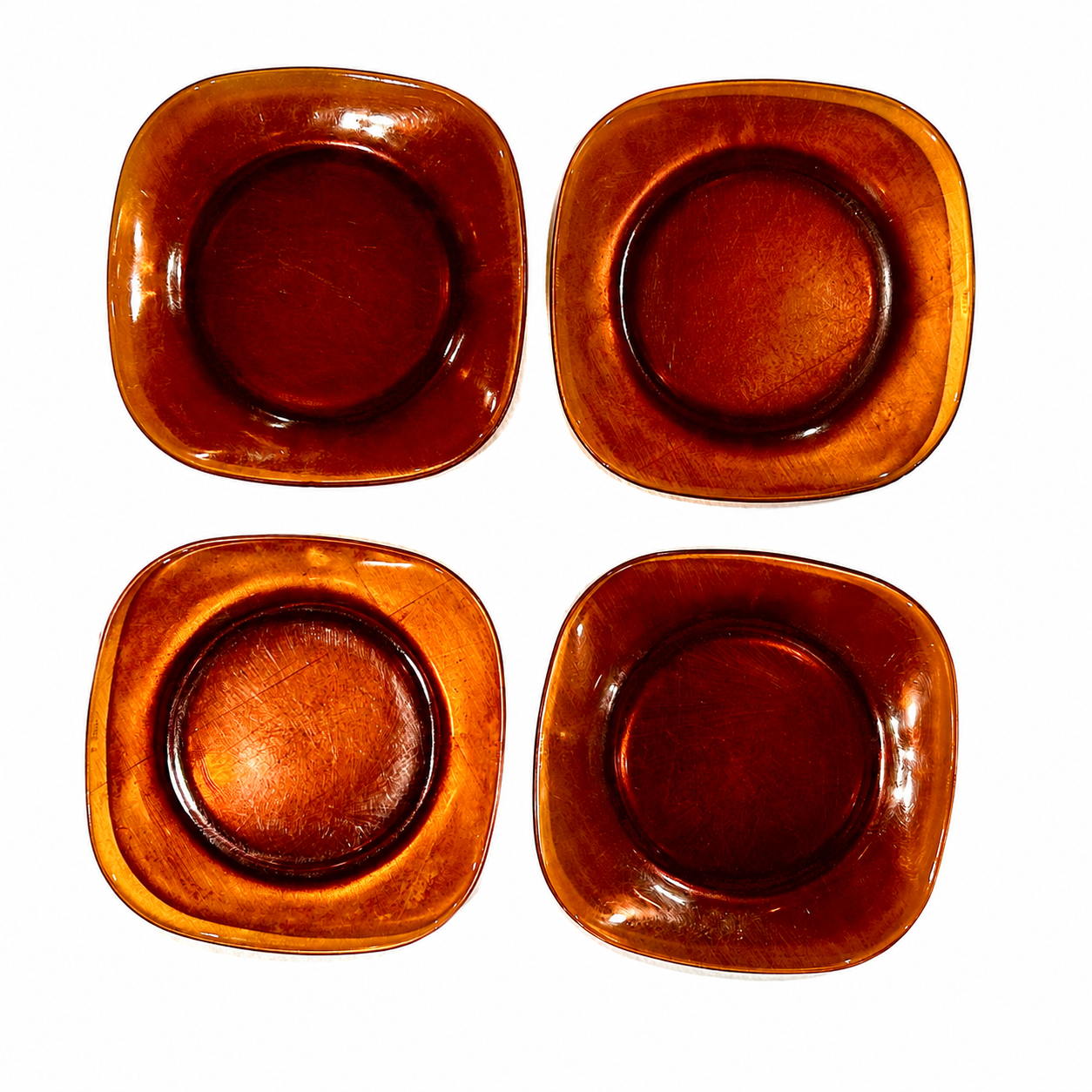 Image 4 of 17
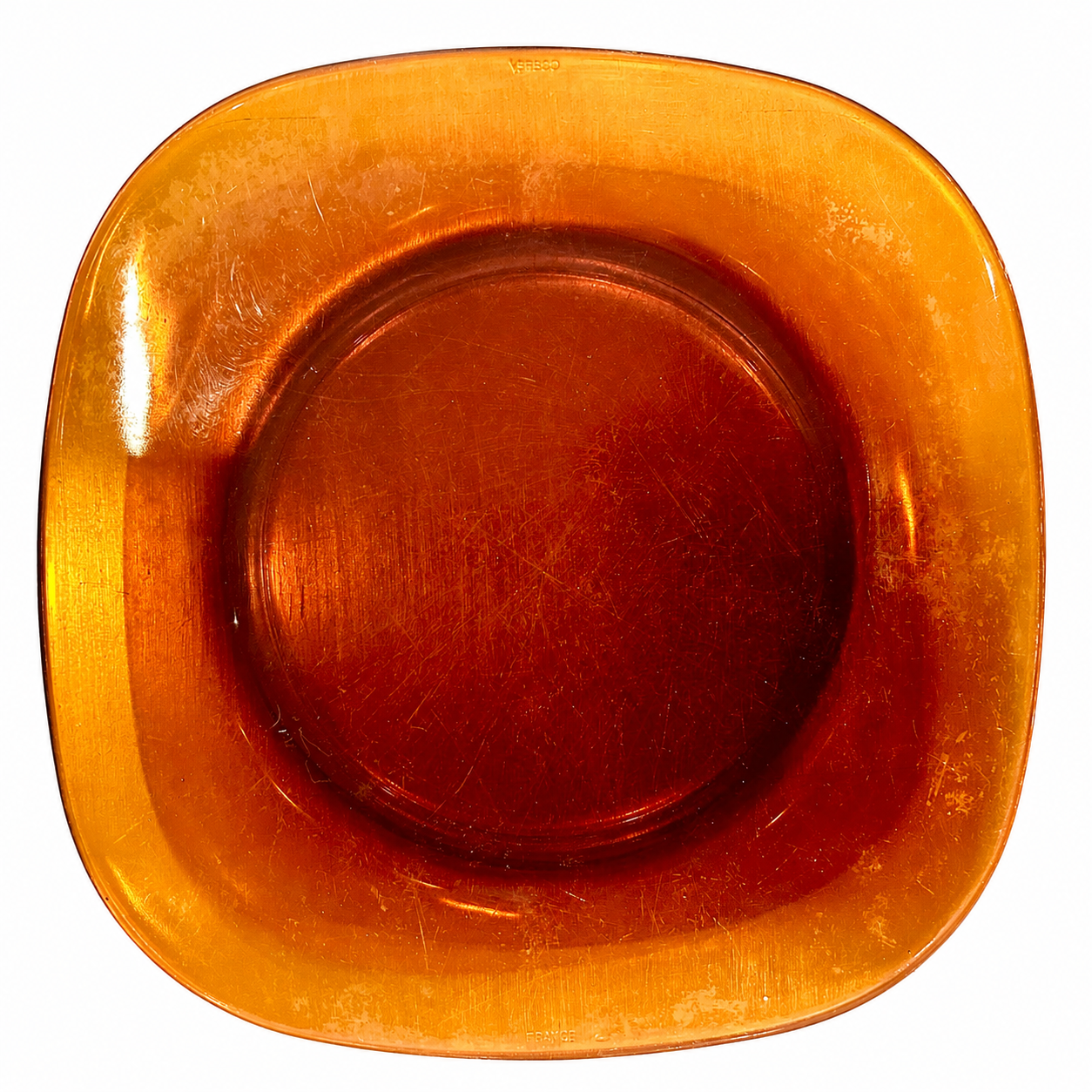 Image 5 of 17
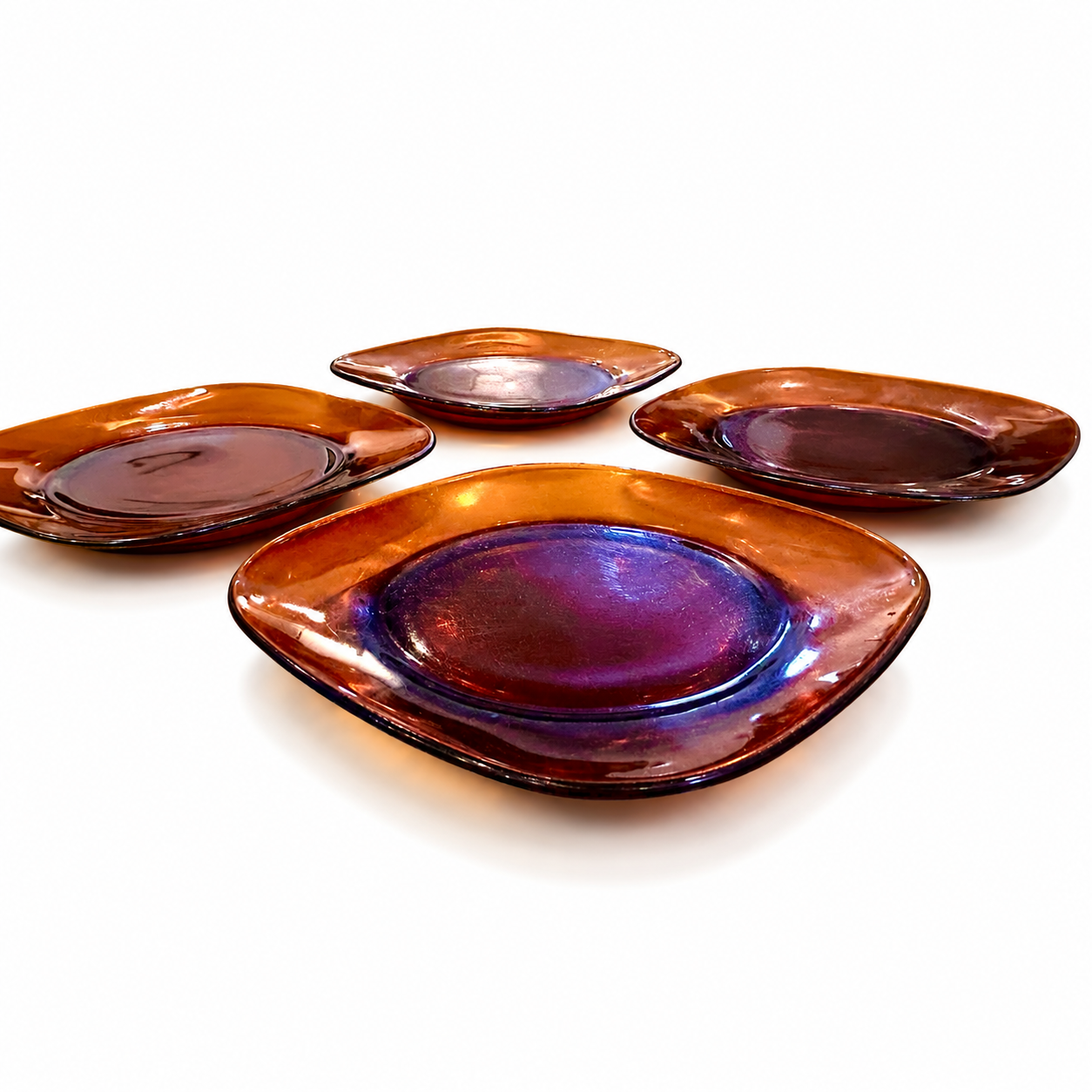 Image 6 of 17
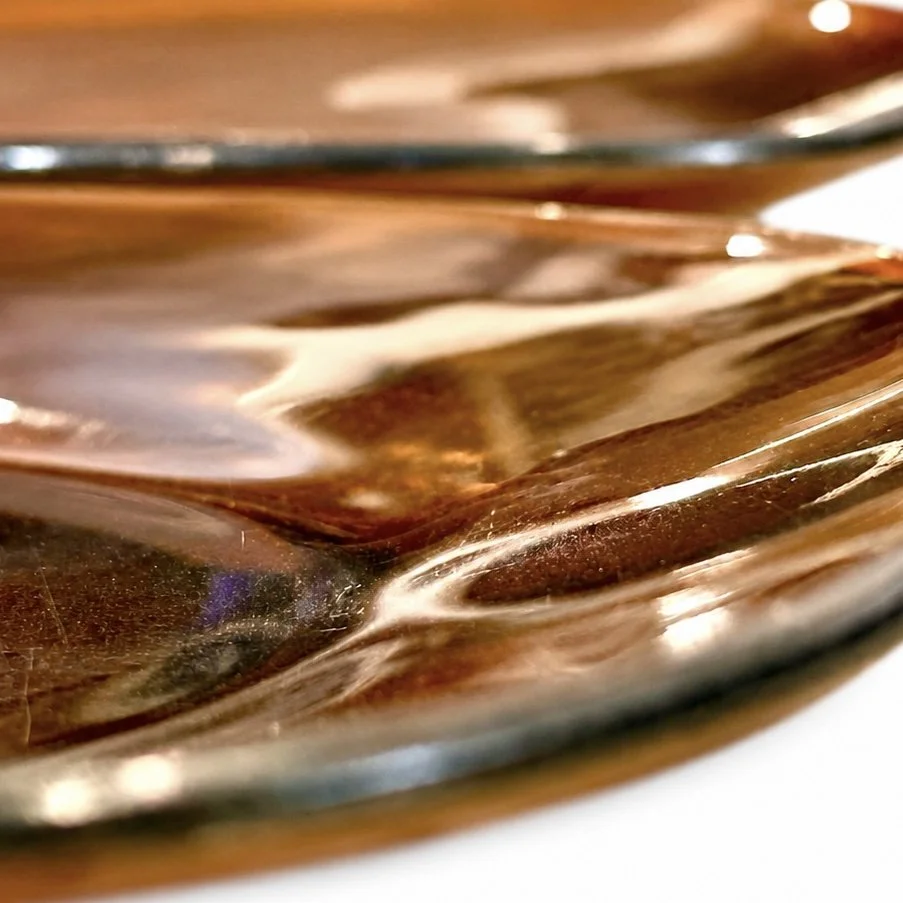 Image 7 of 17
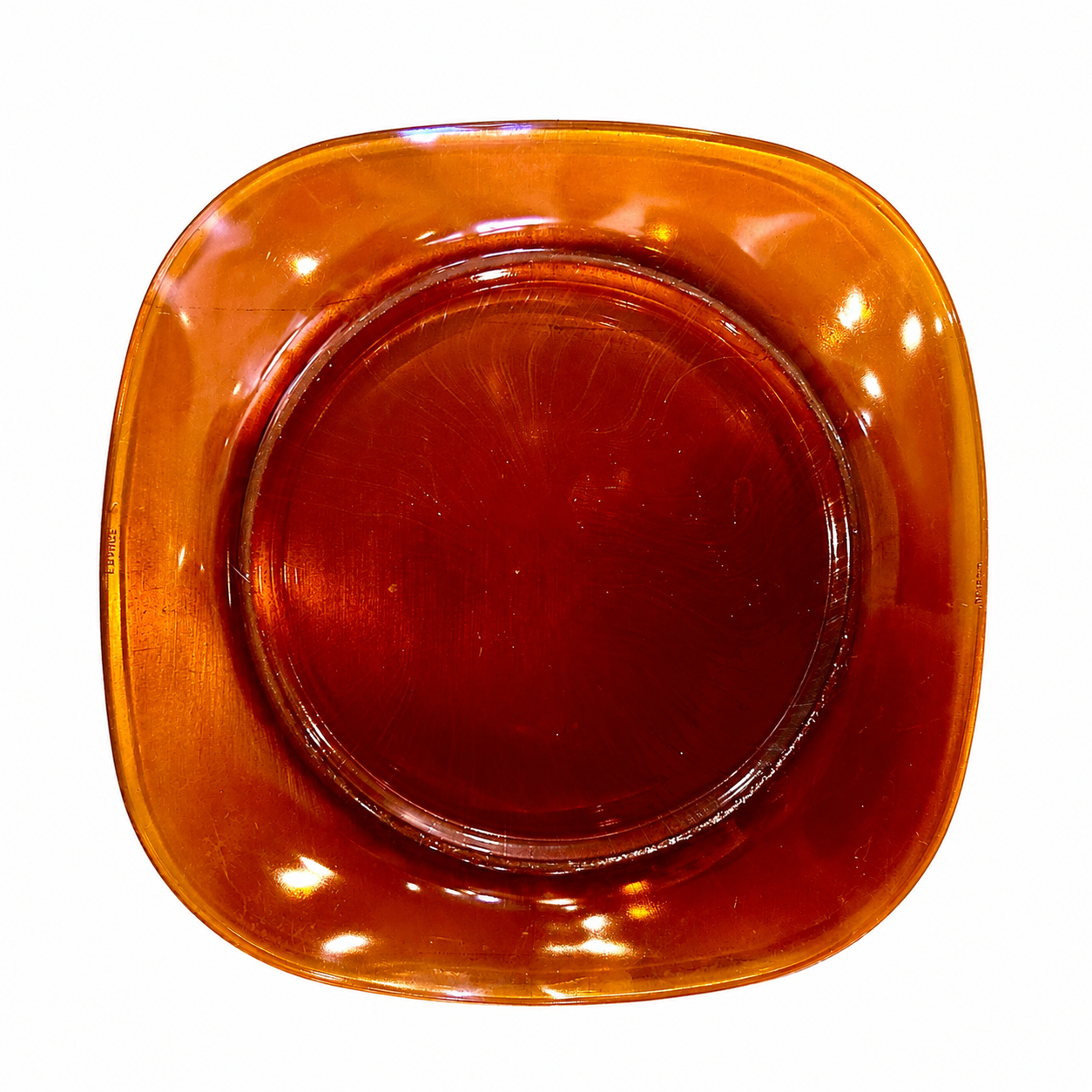 Image 8 of 17
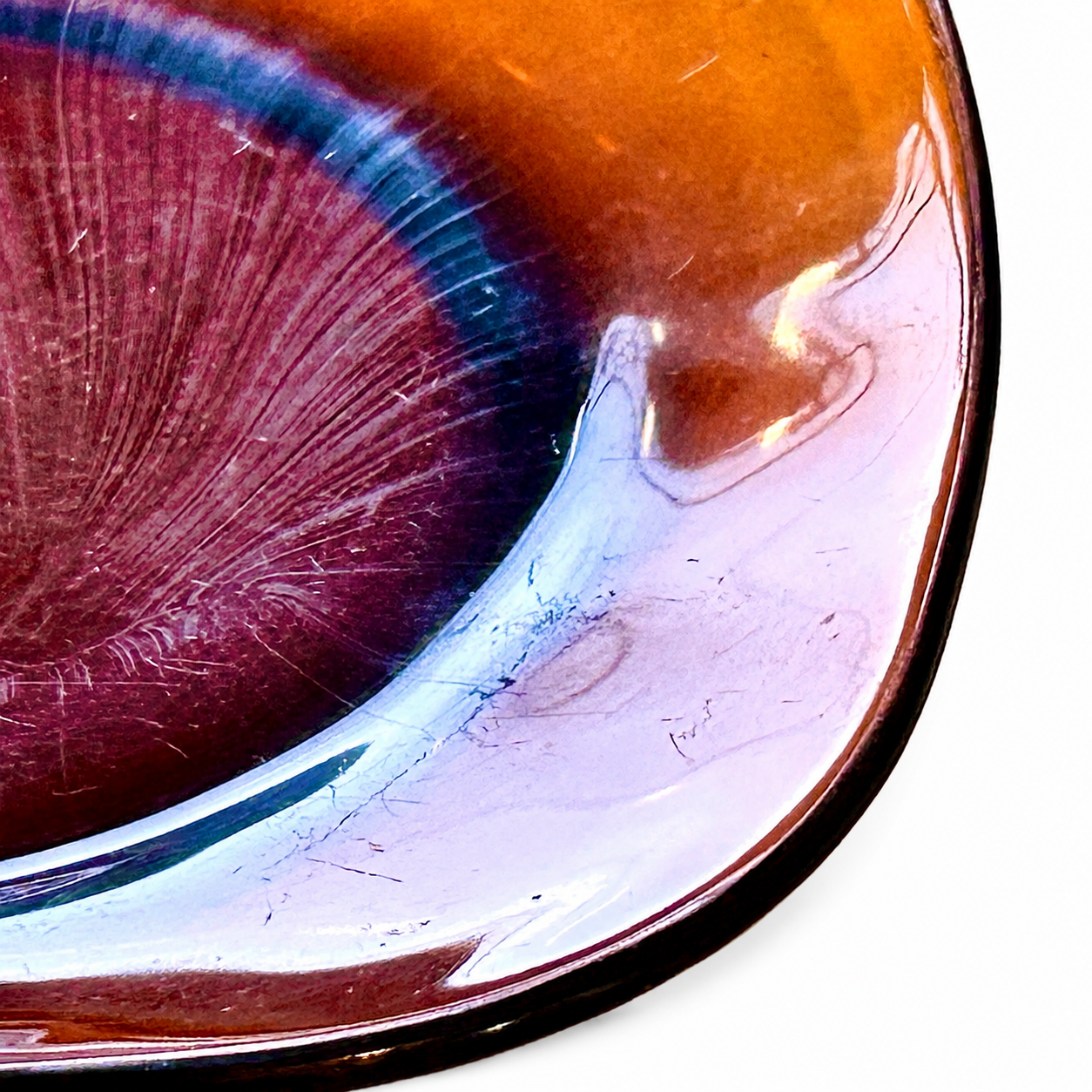 Image 9 of 17
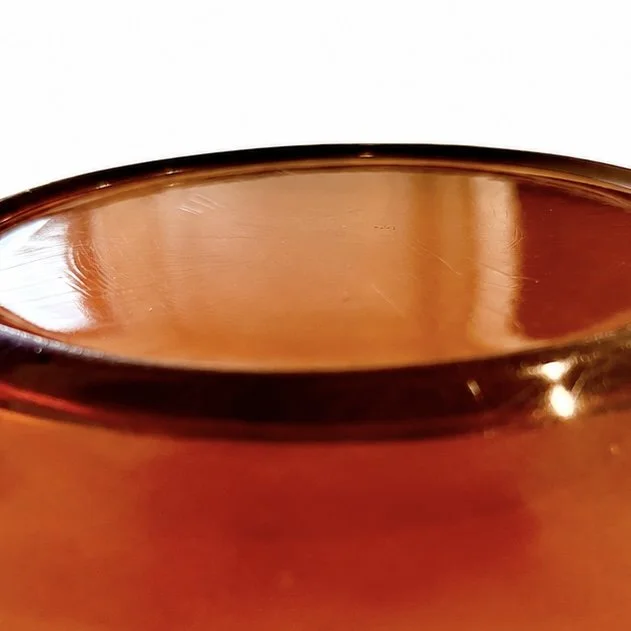 Image 10 of 17
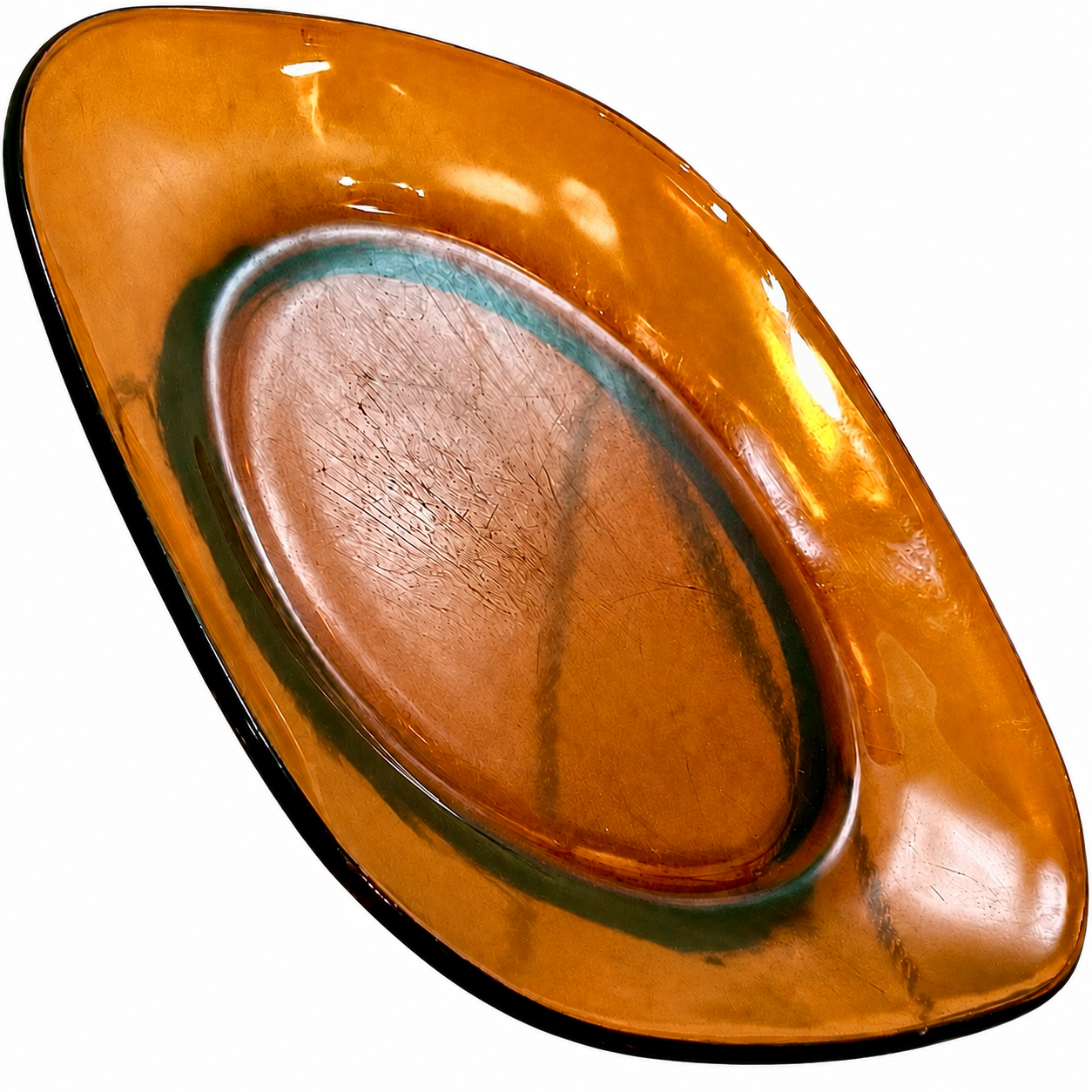 Image 11 of 17
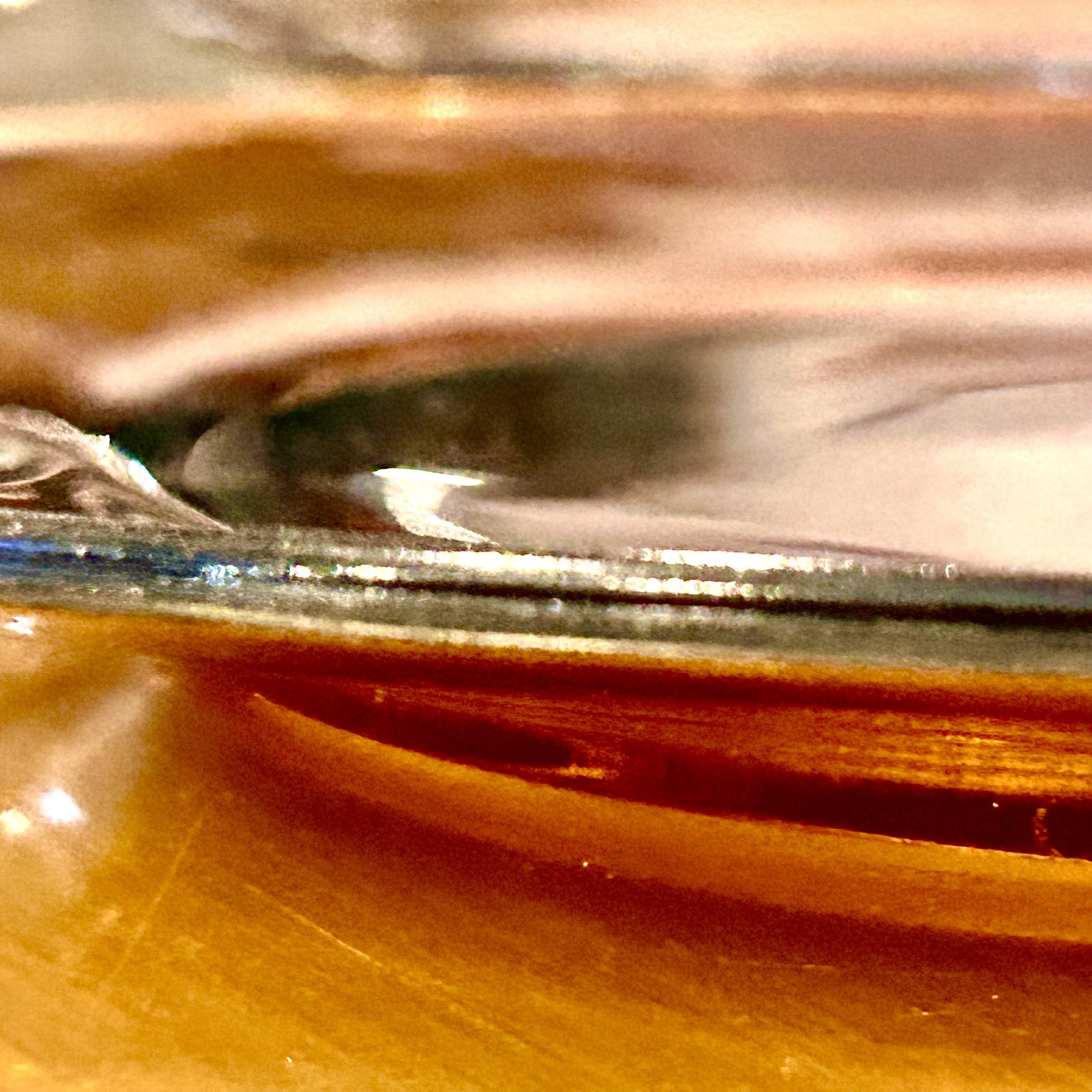 Image 12 of 17
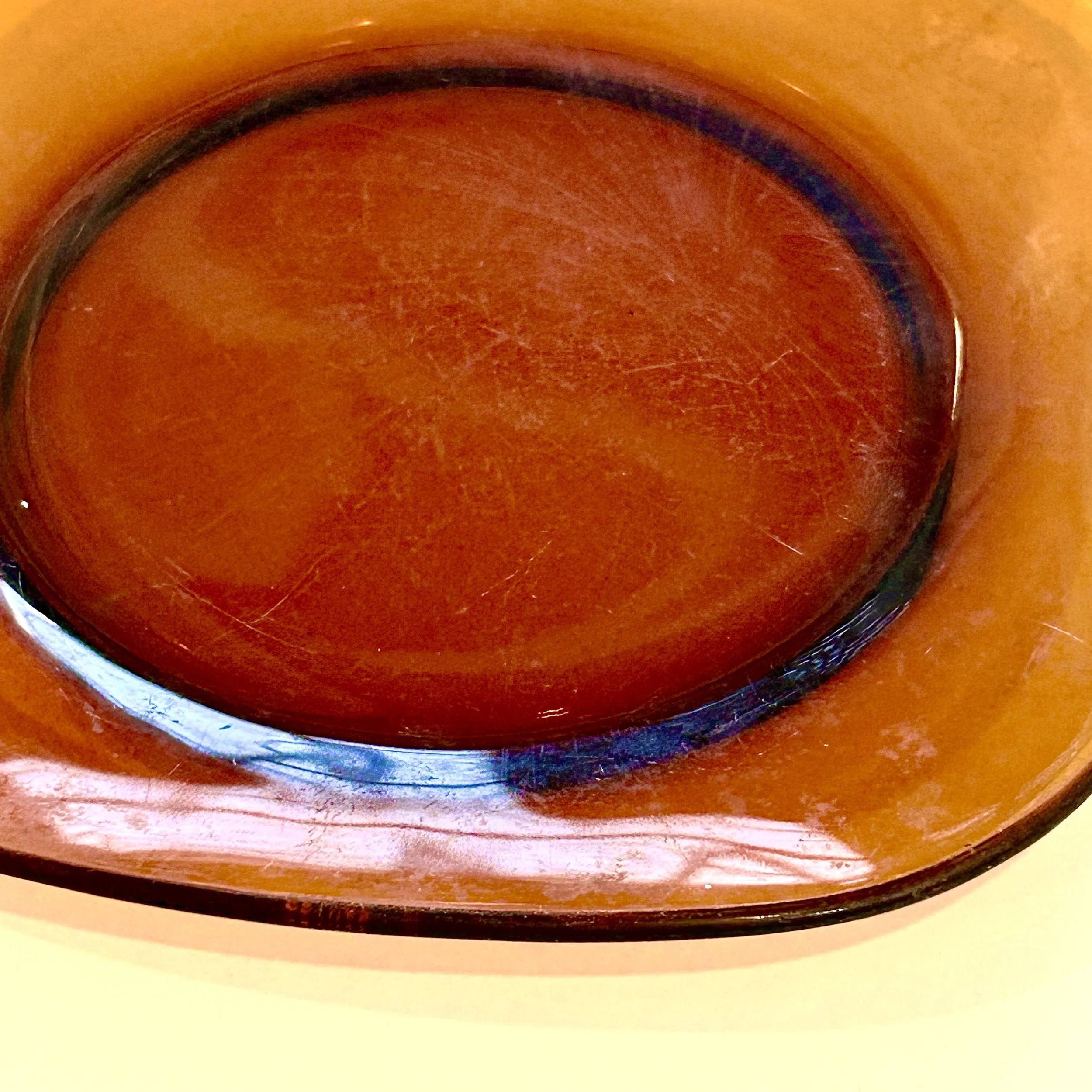 Image 13 of 17
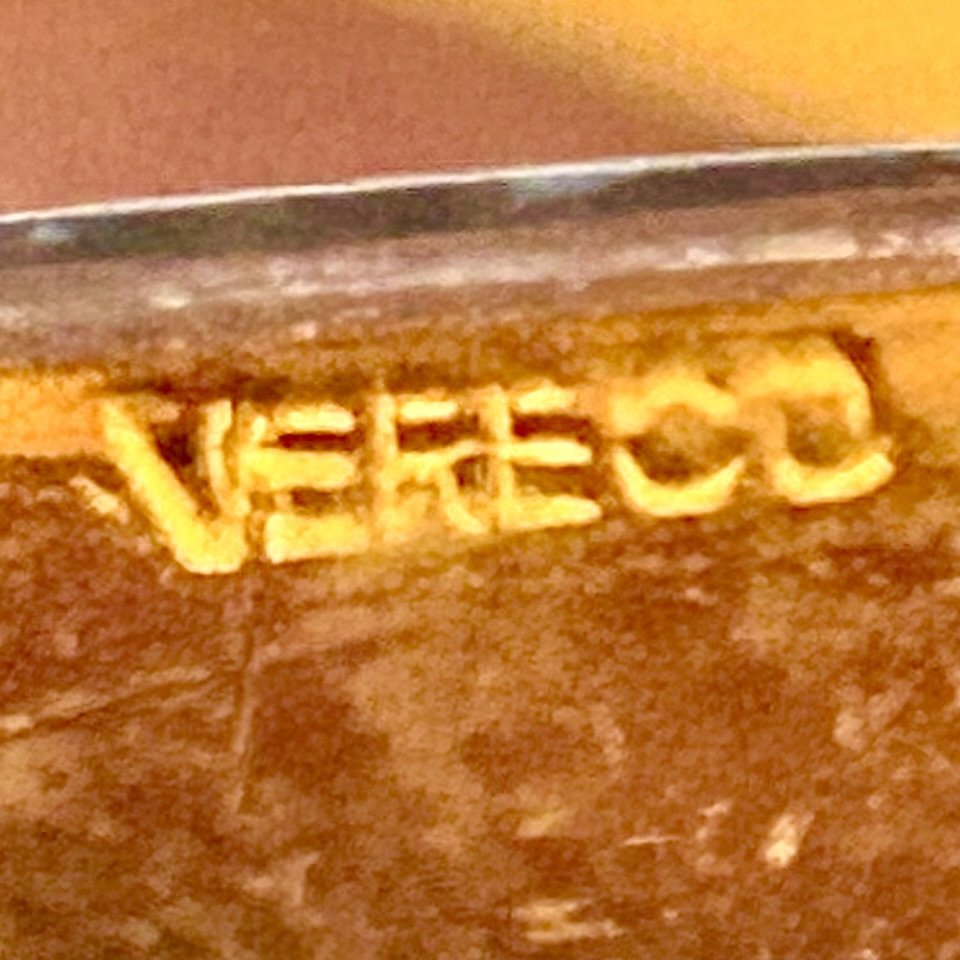 Image 14 of 17
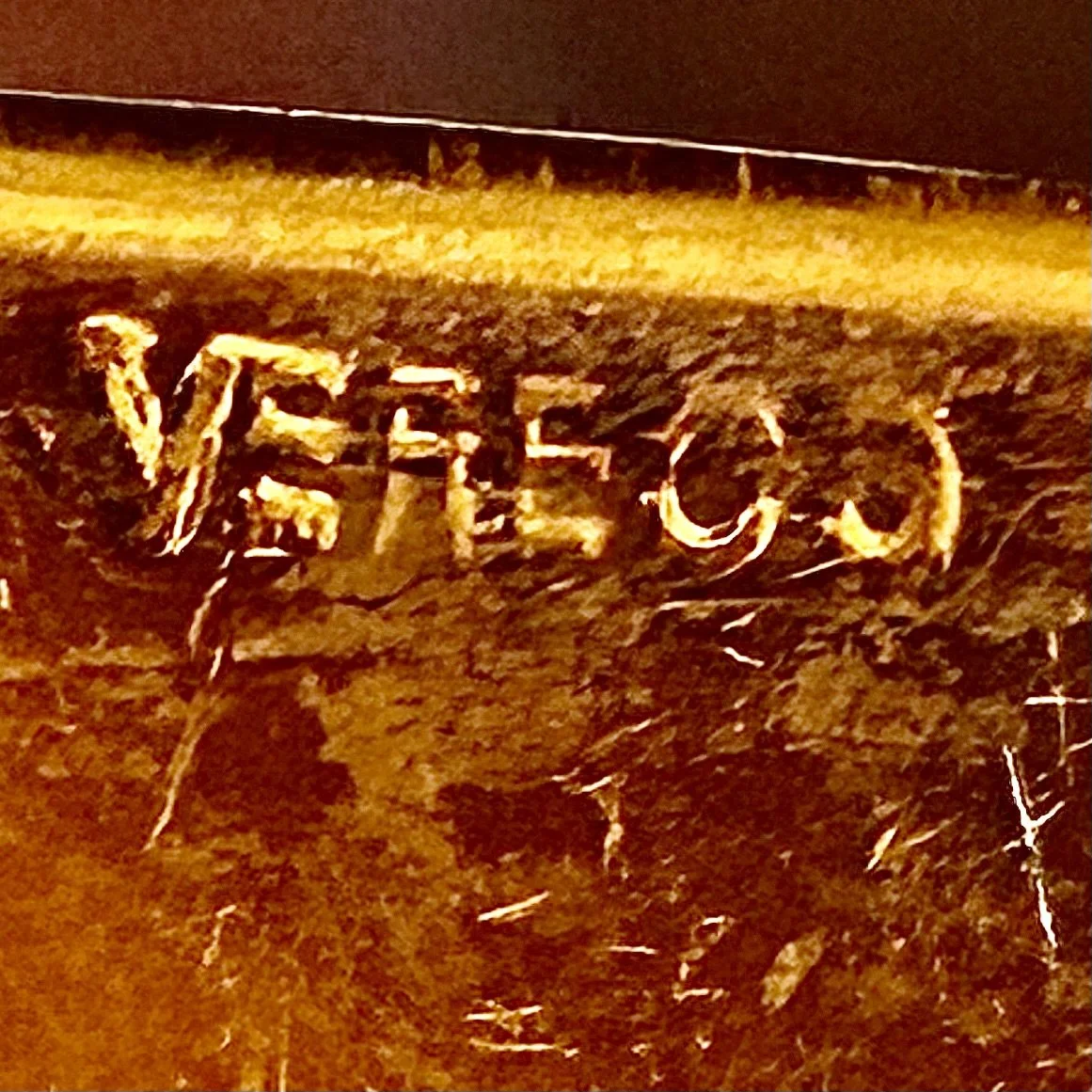 Image 15 of 17
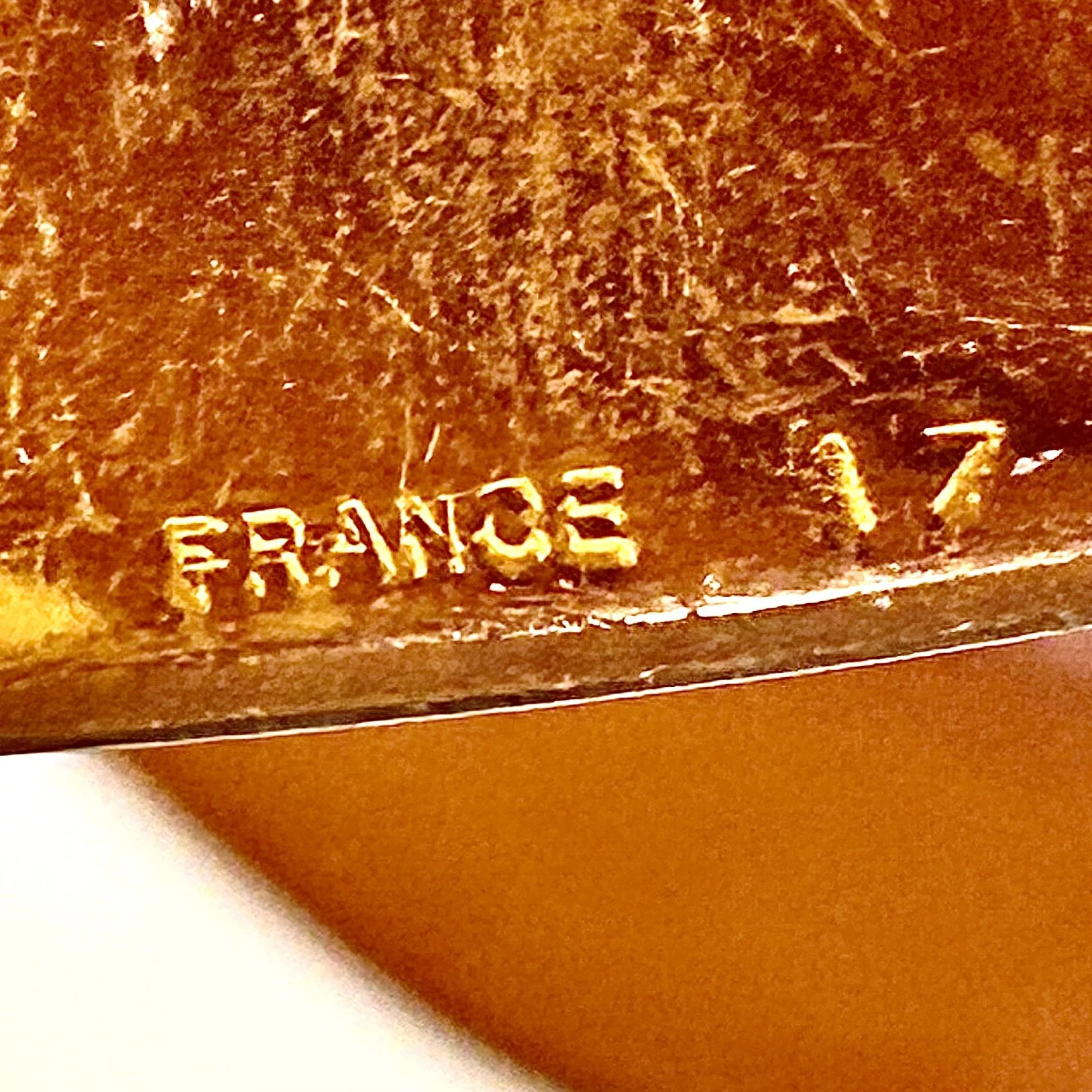 Image 16 of 17
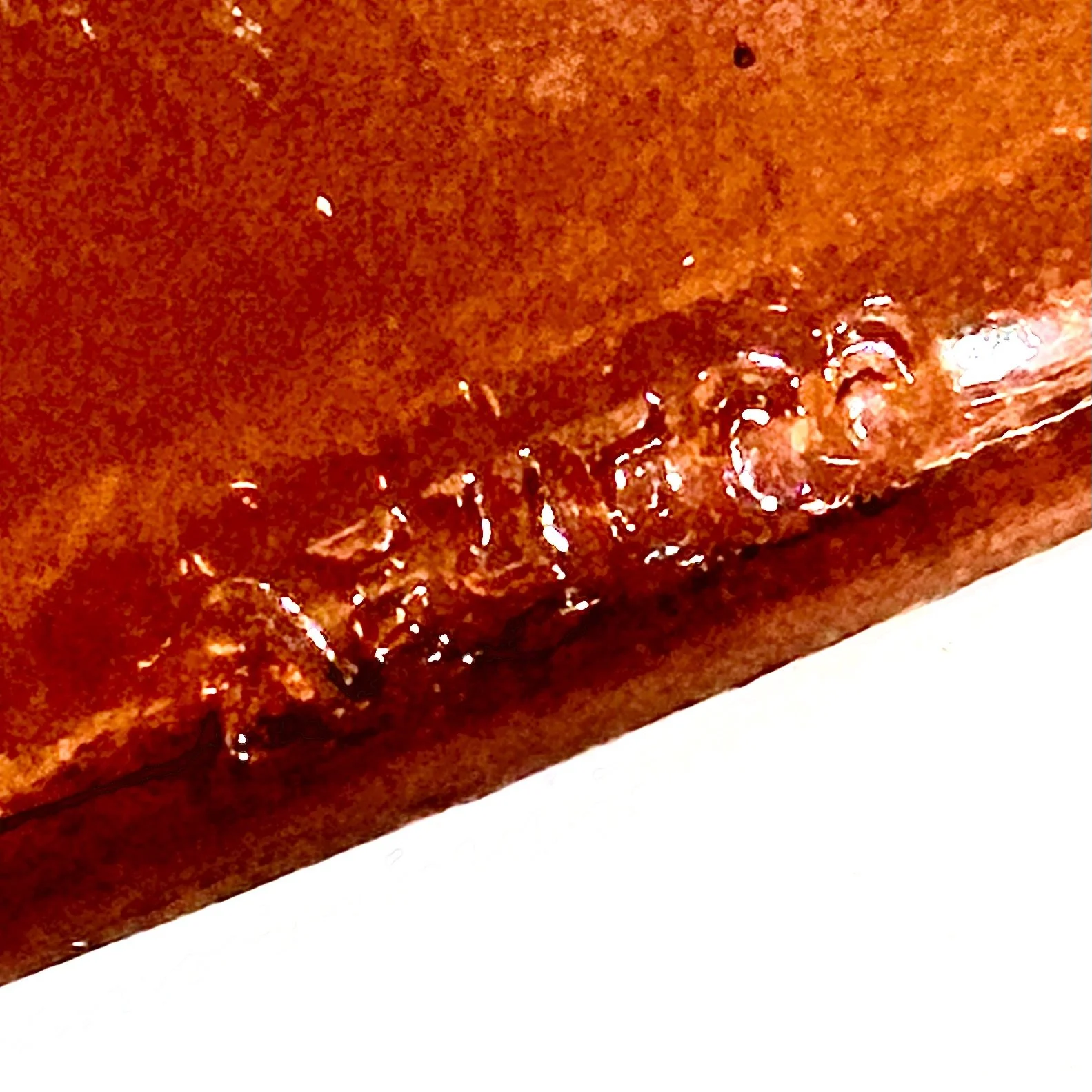 Image 17 of 17