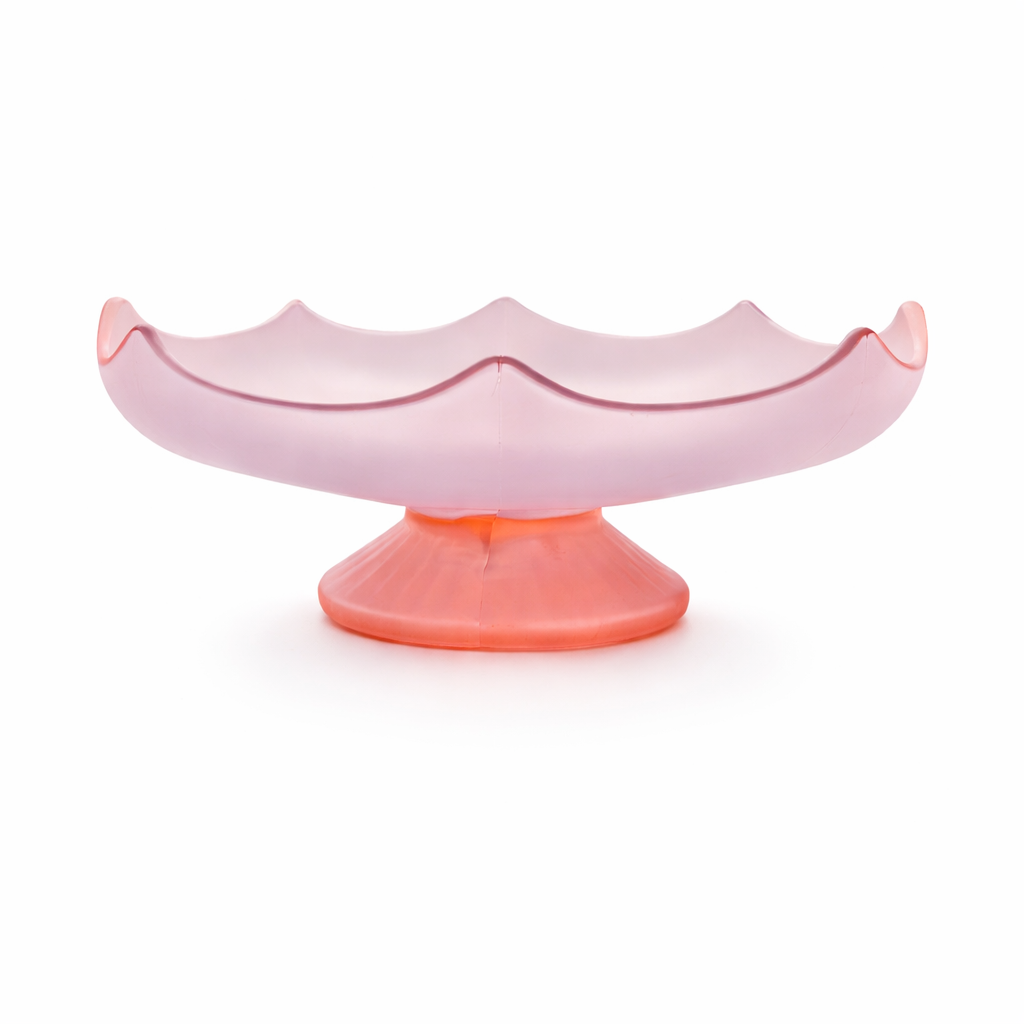
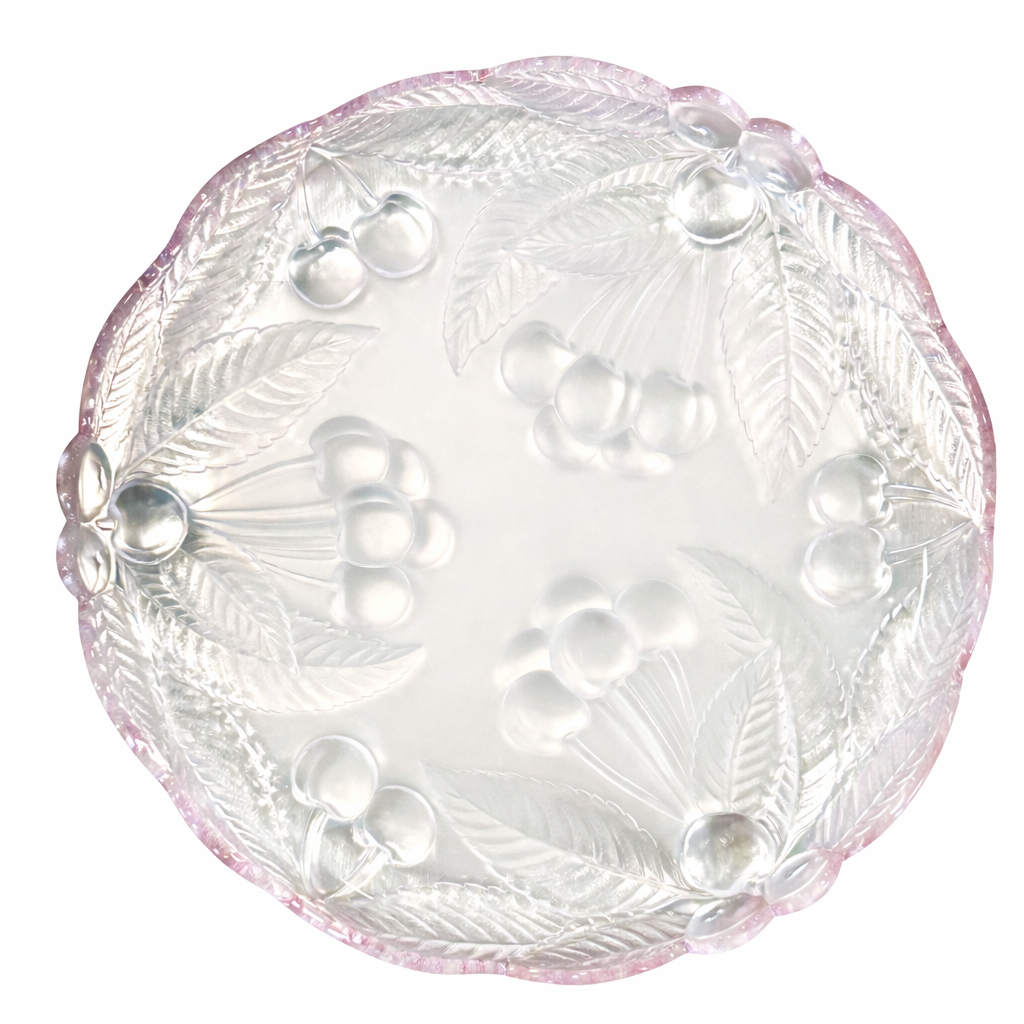
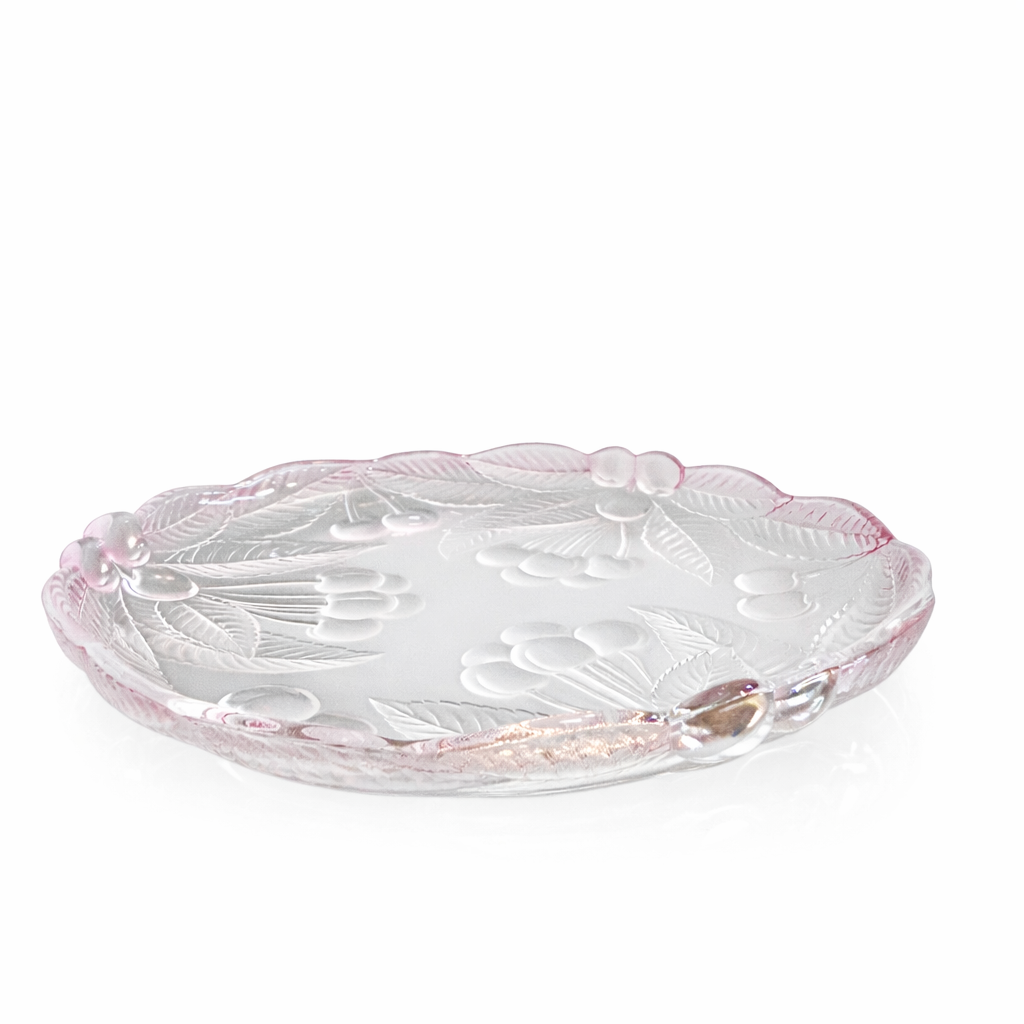
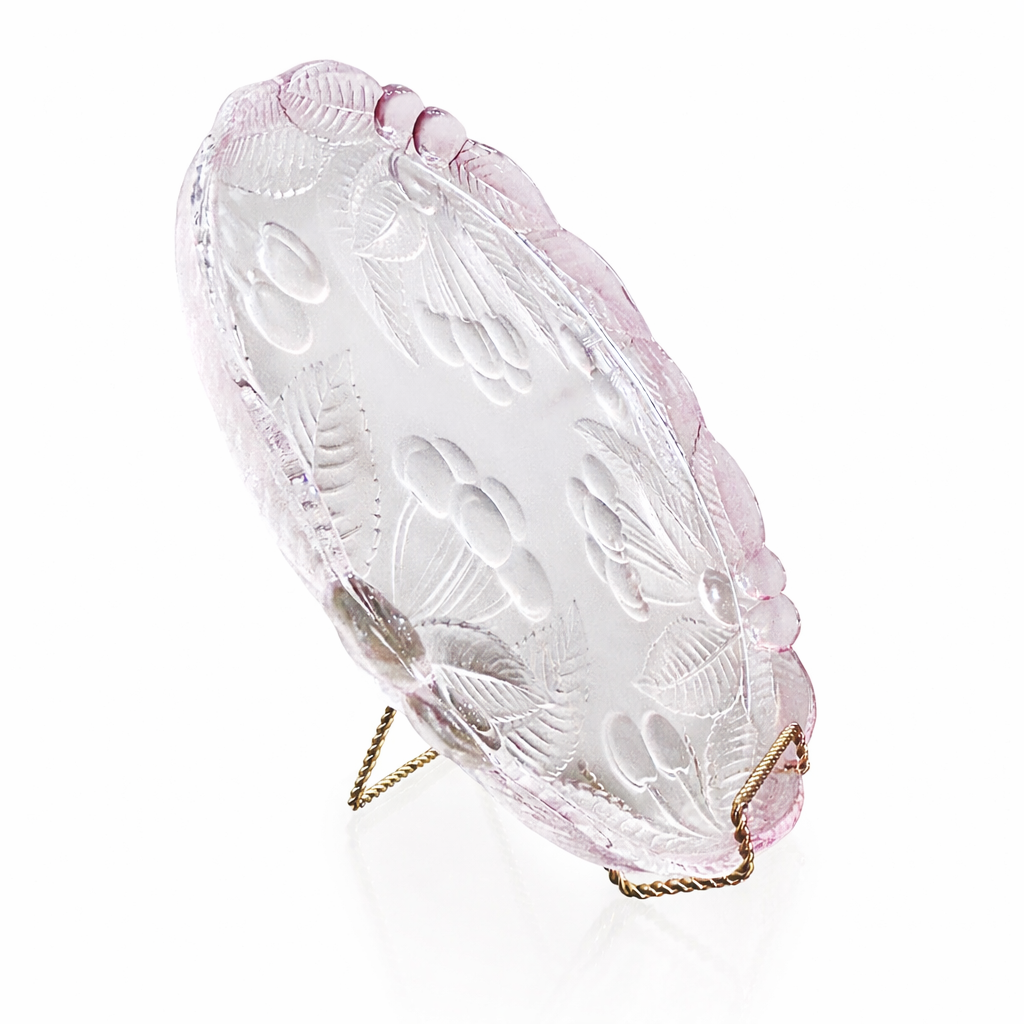
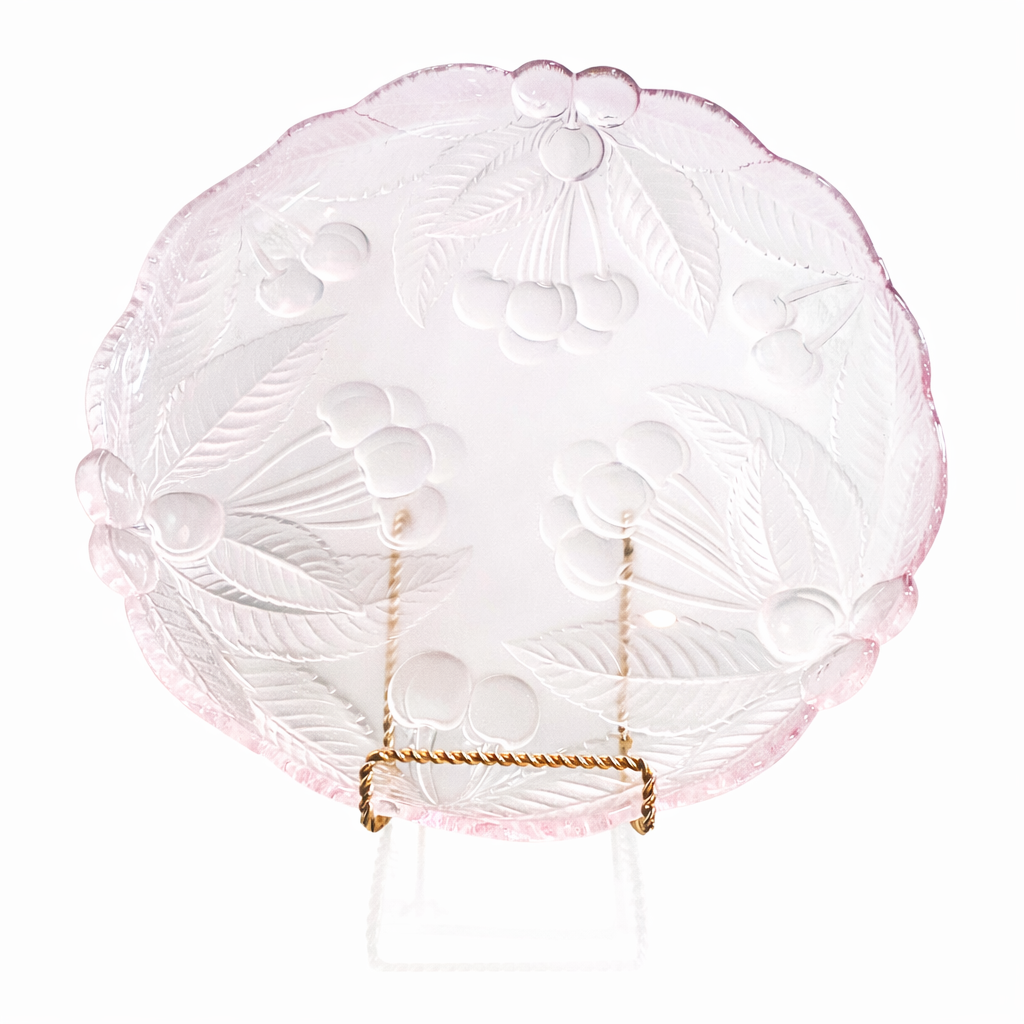
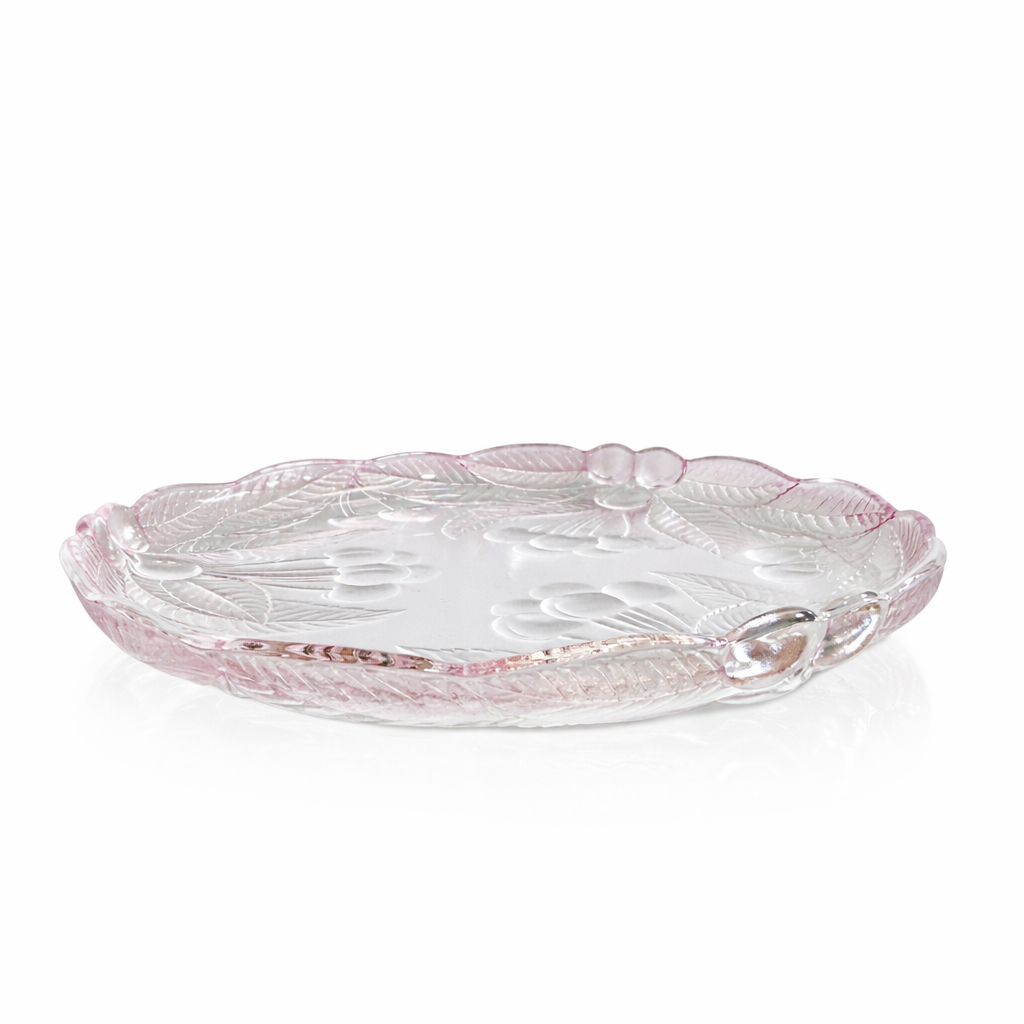
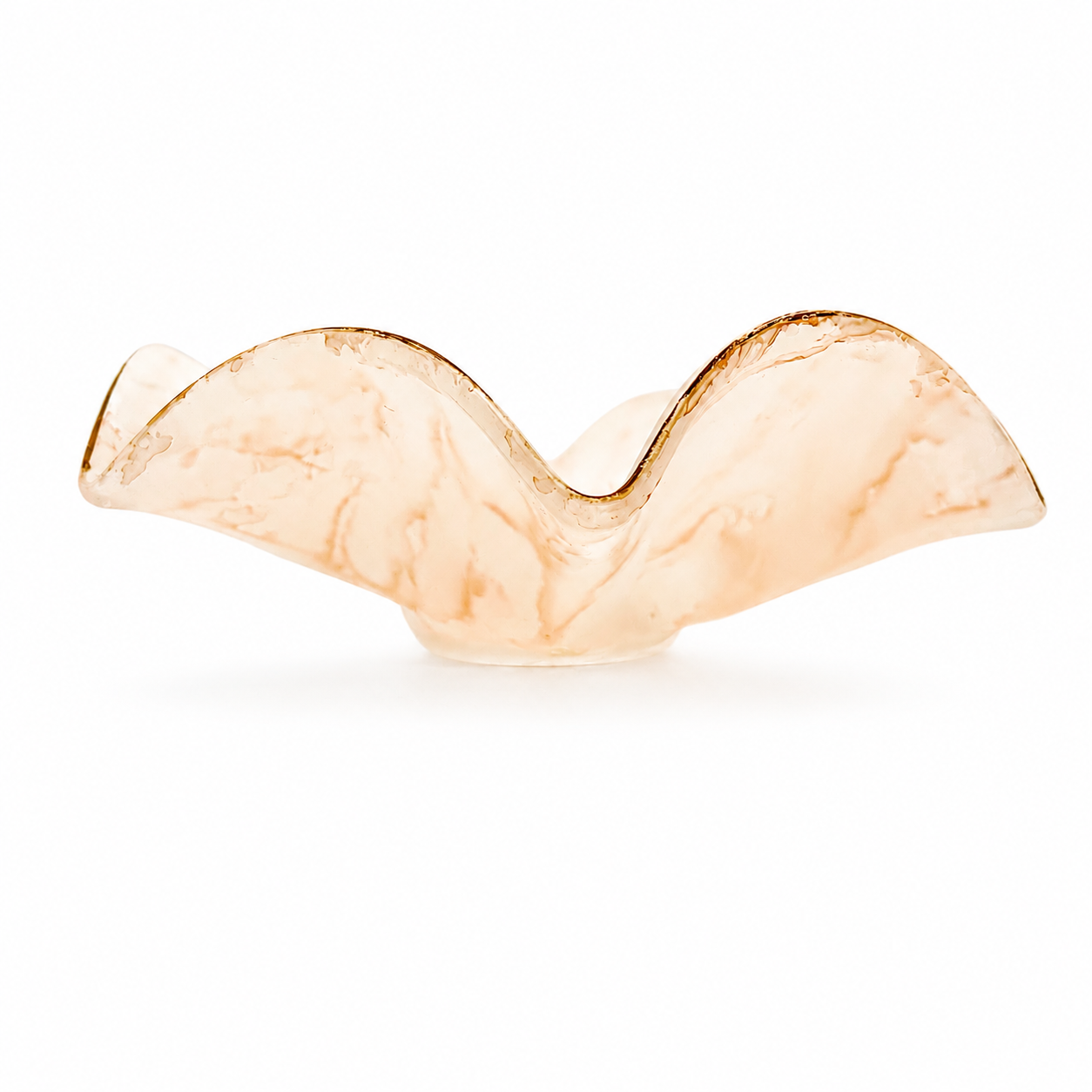
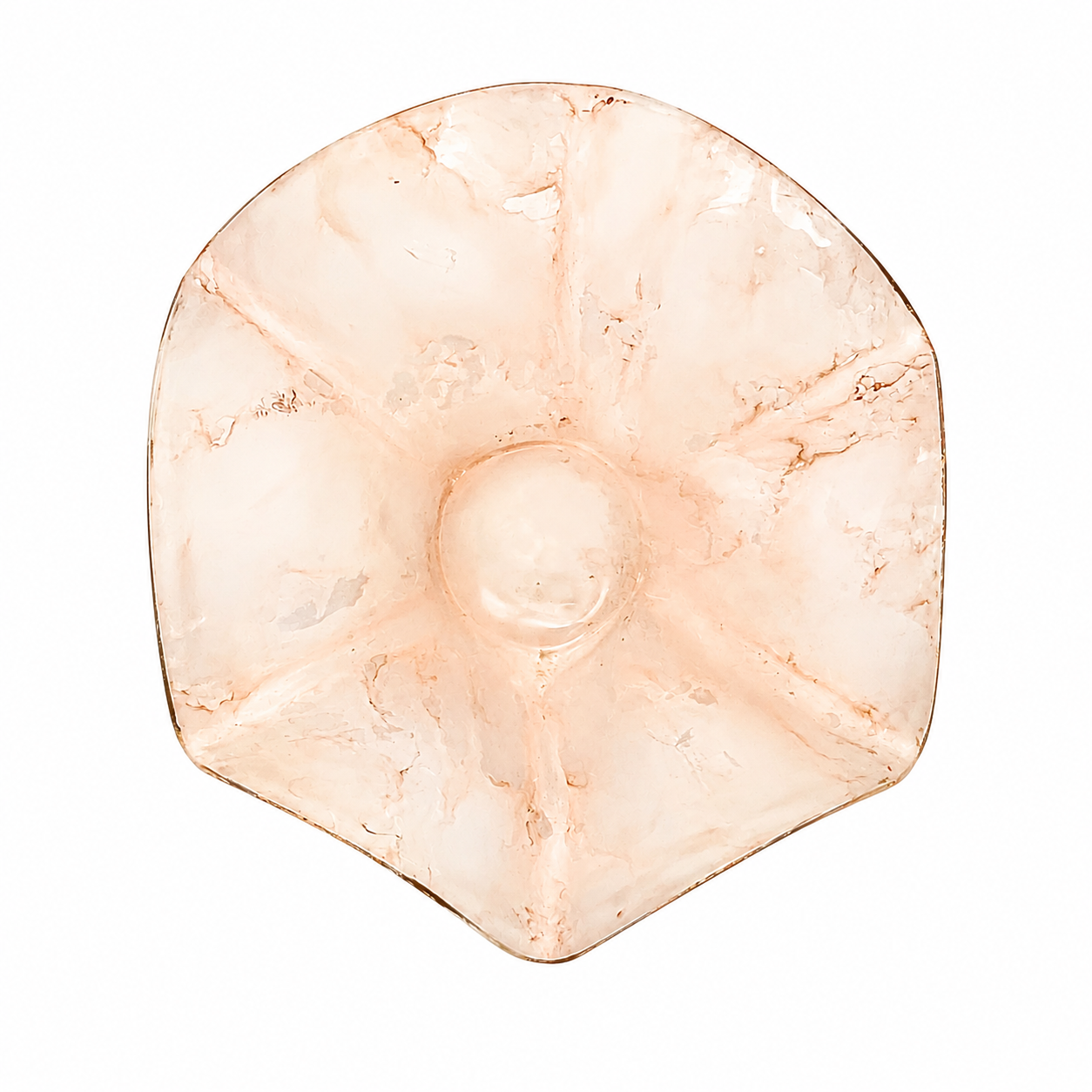
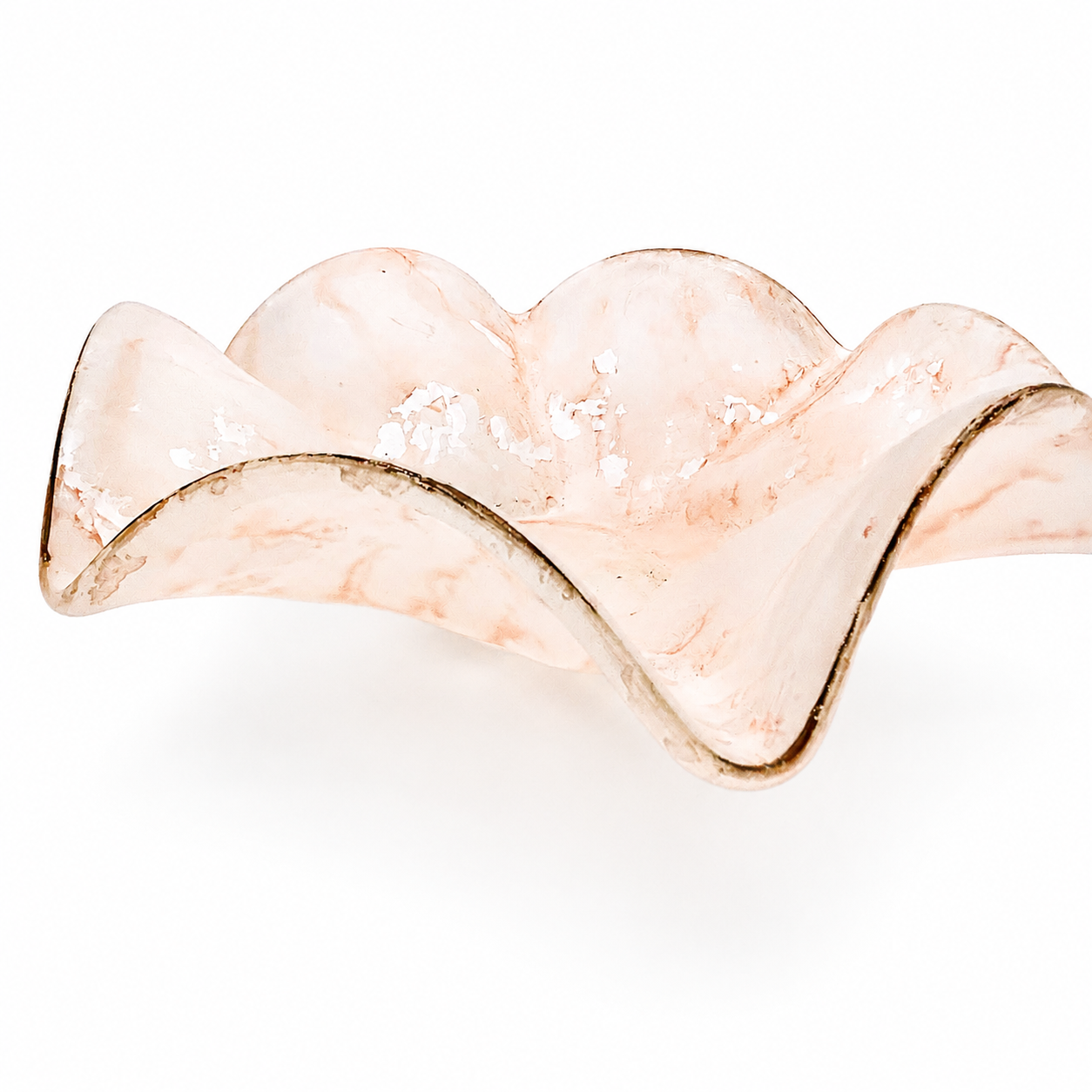
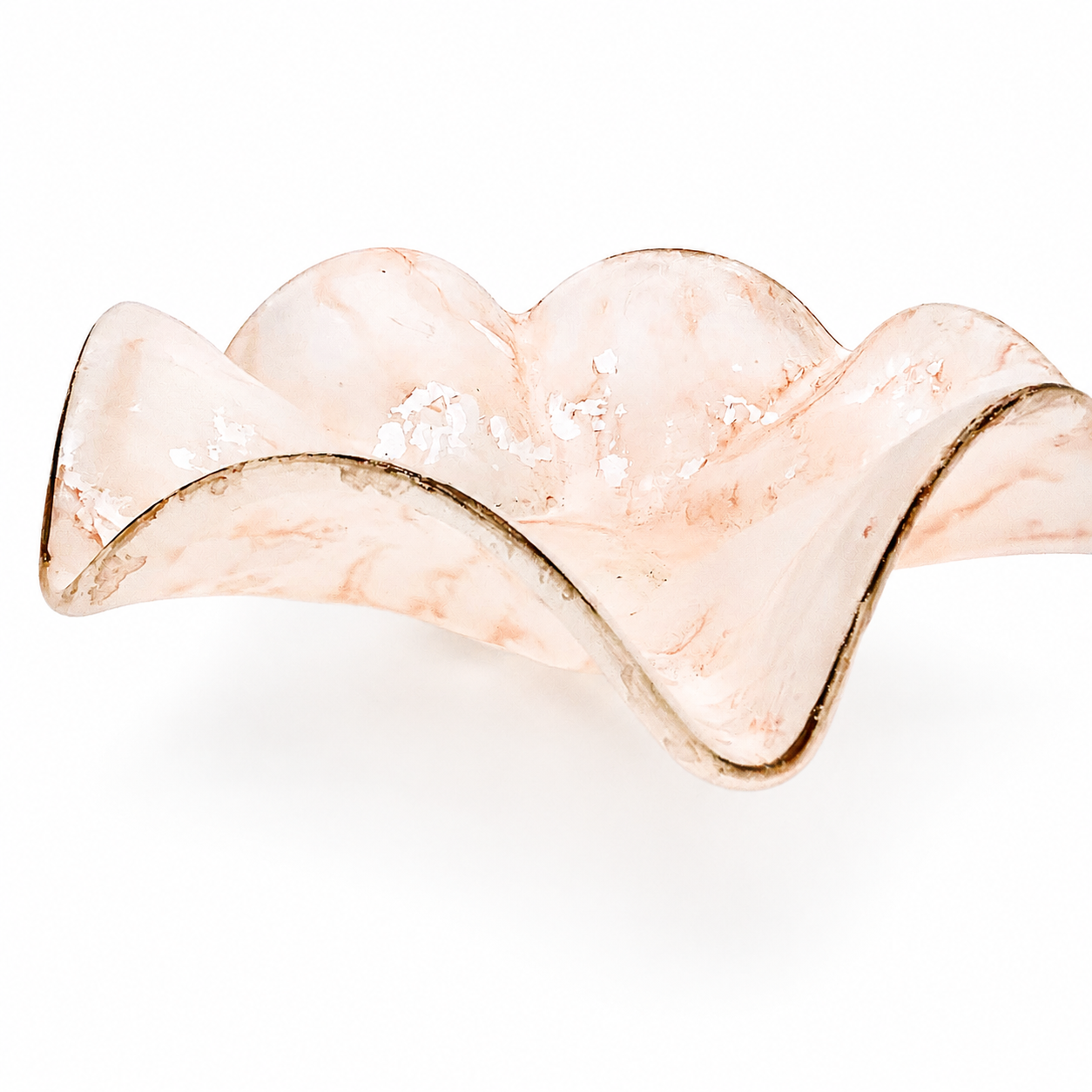
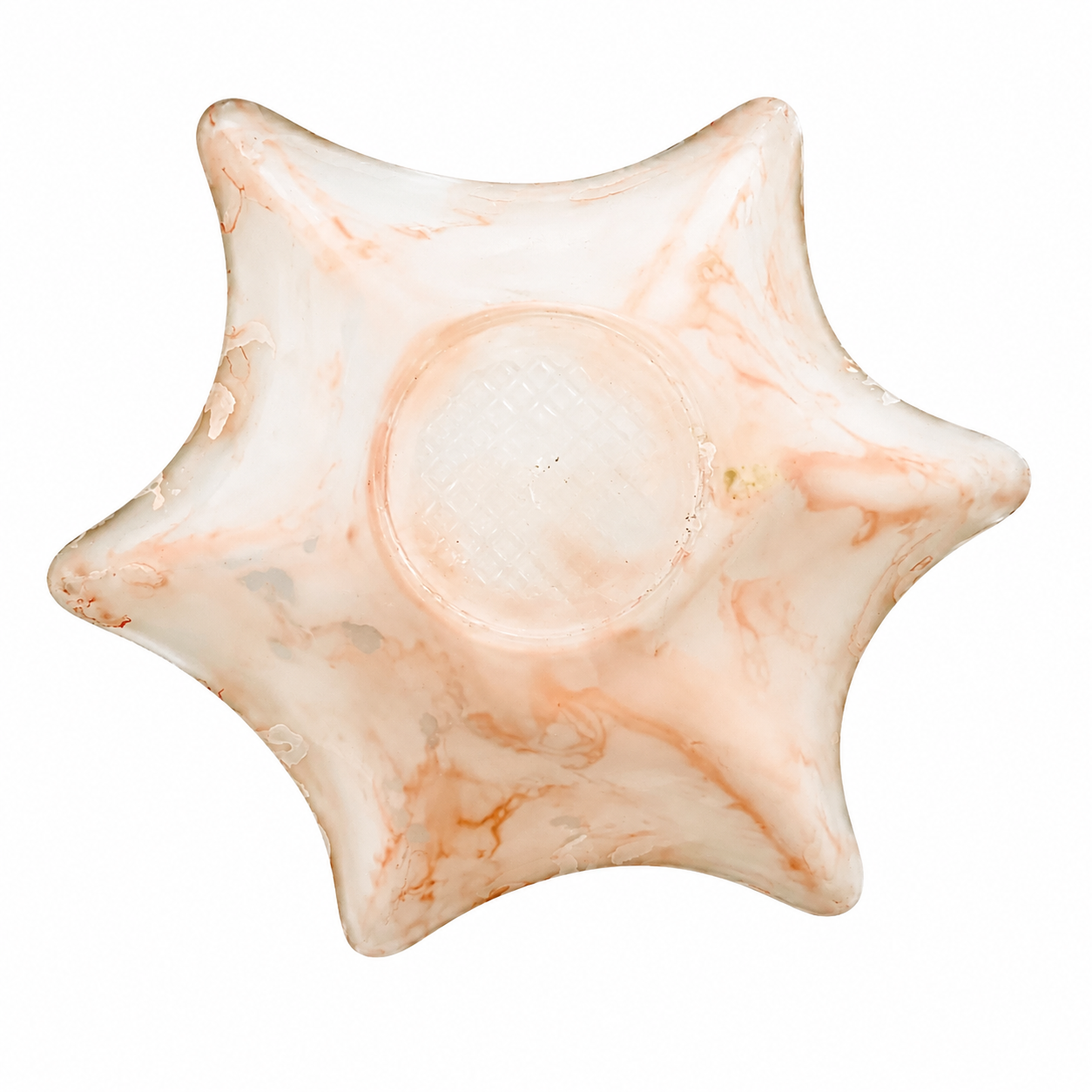
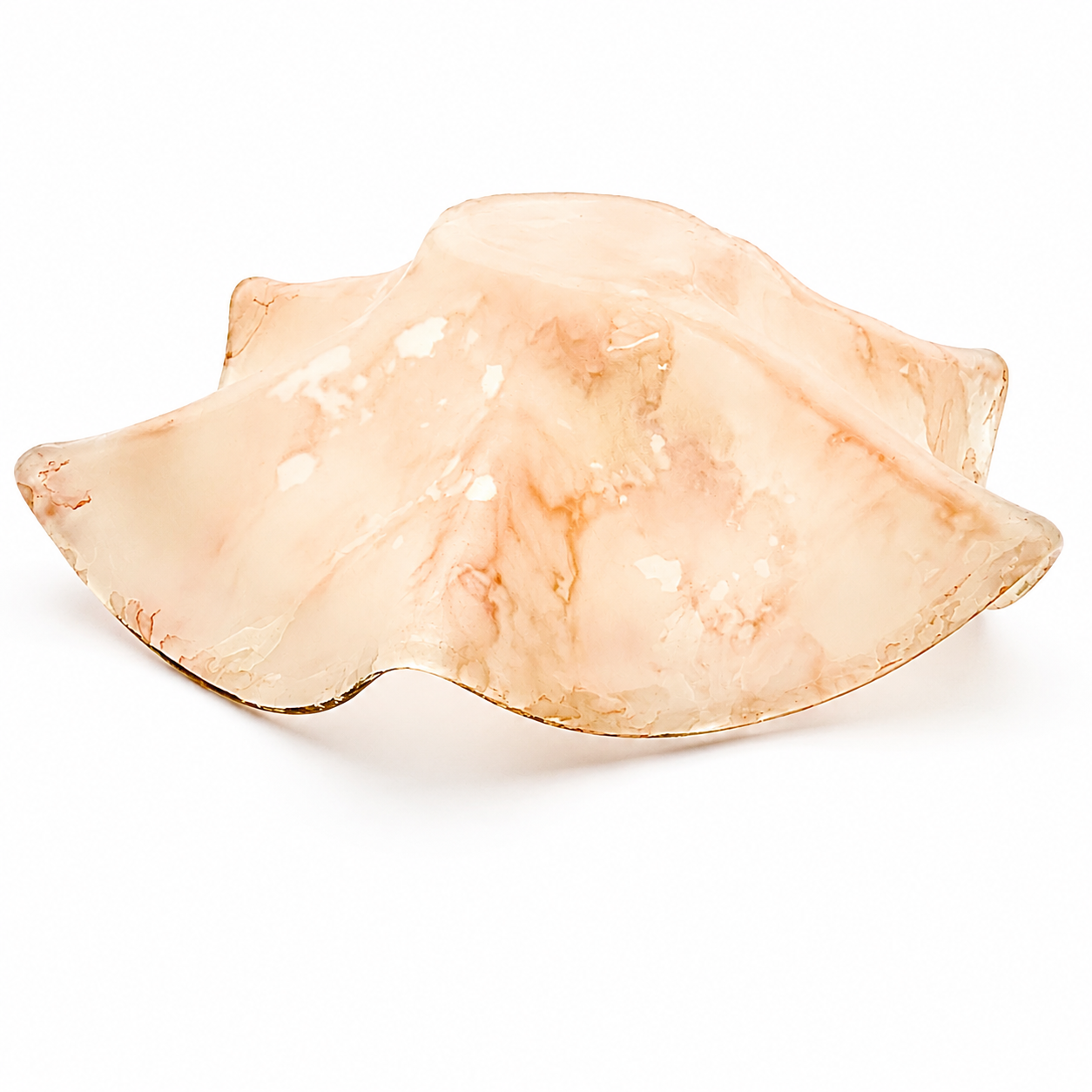
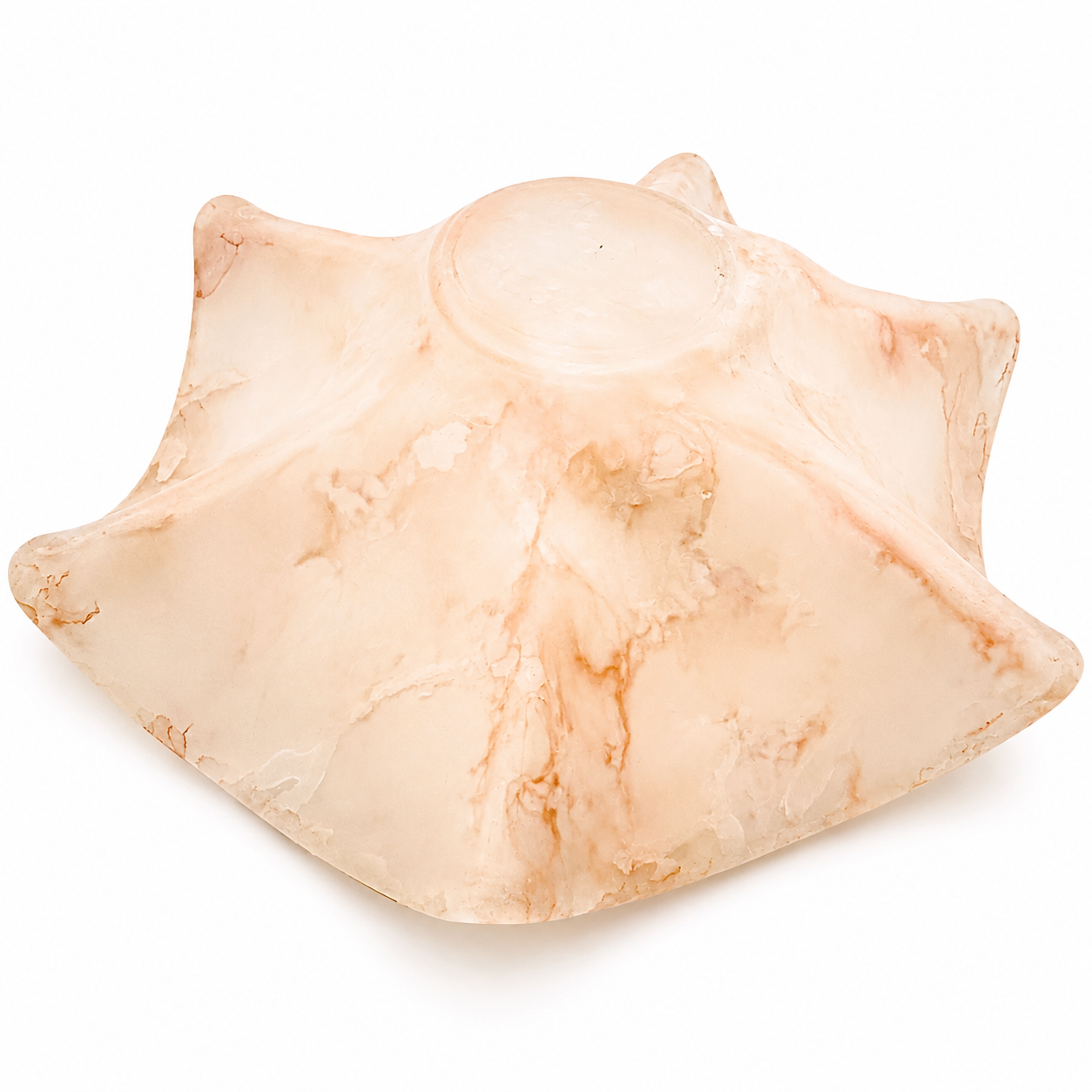
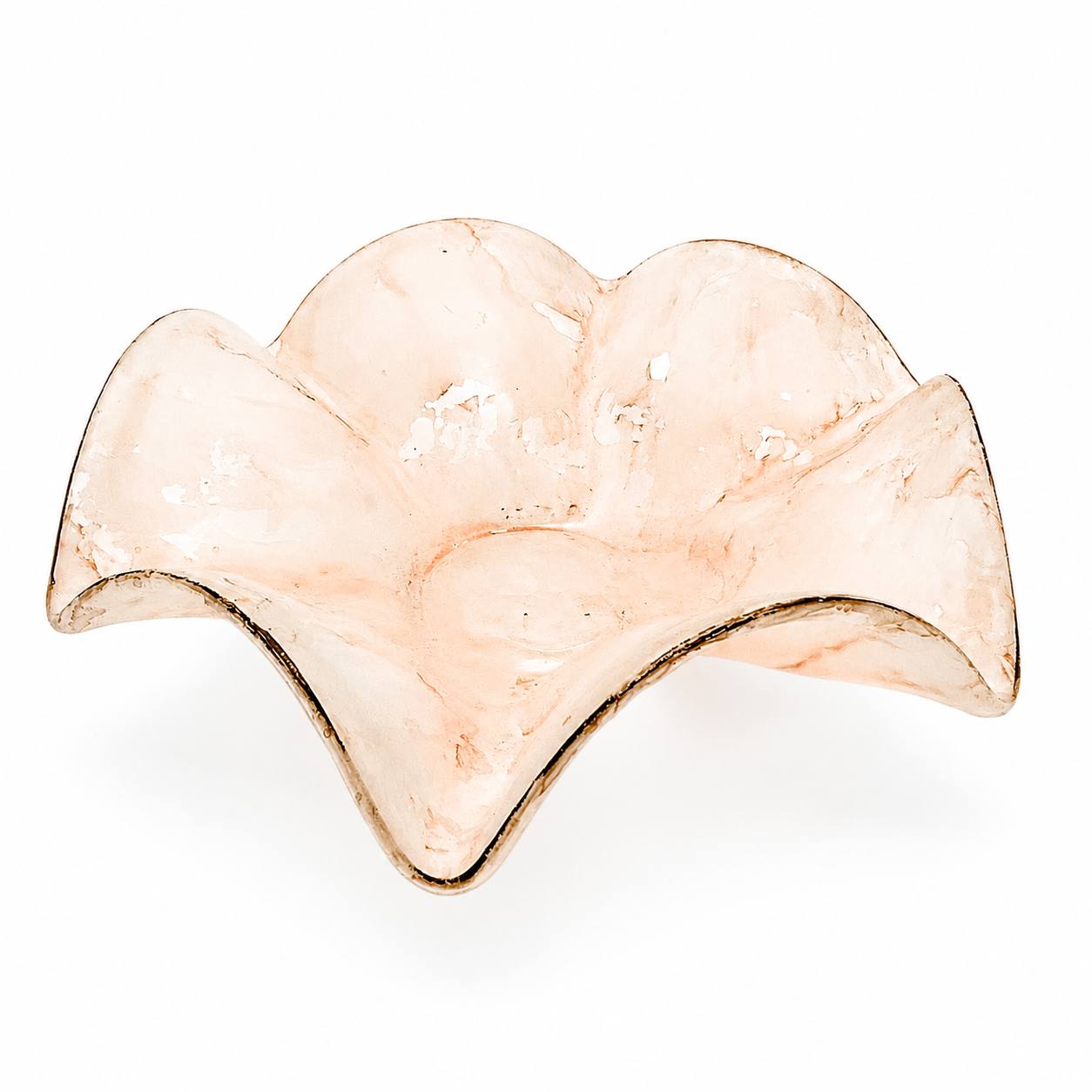
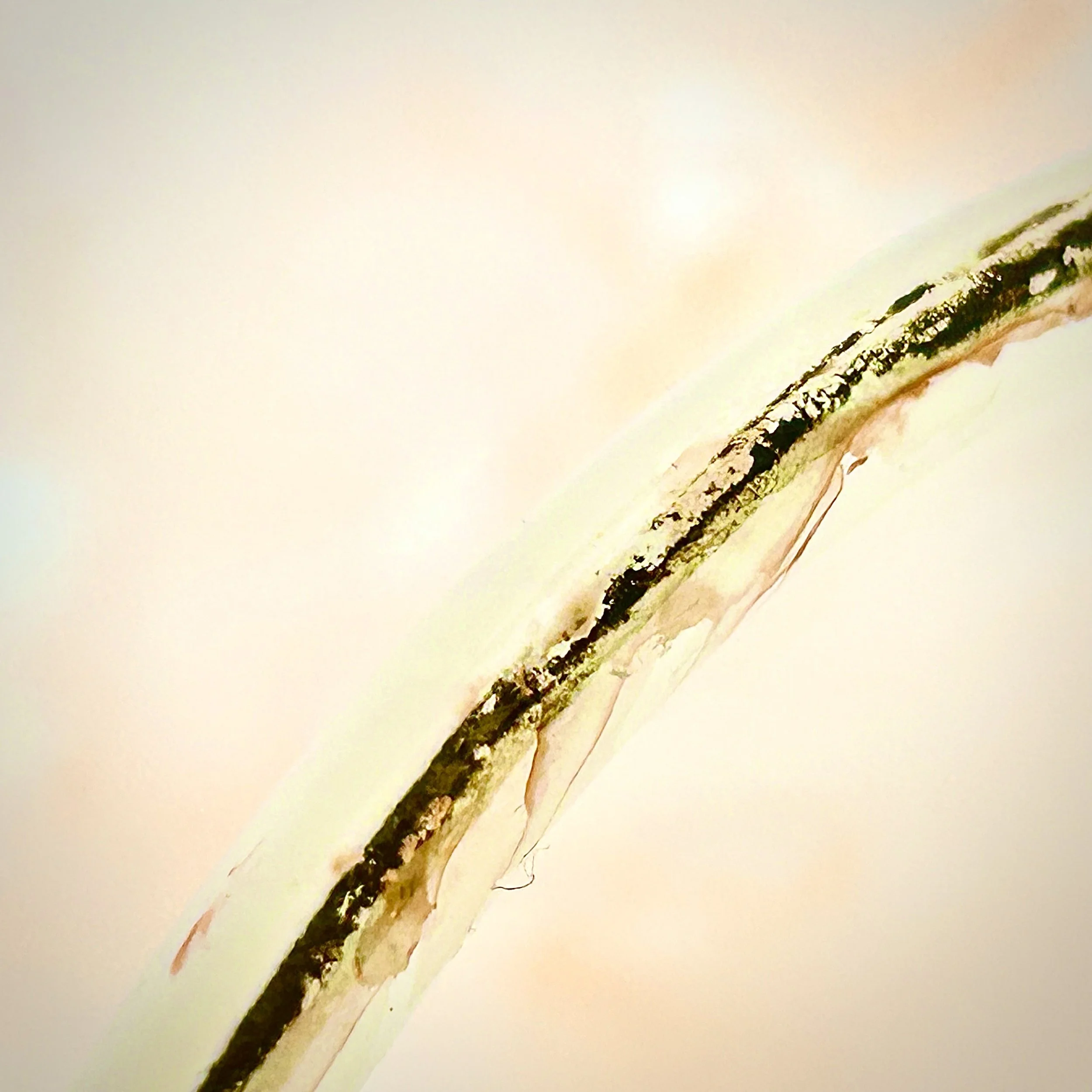
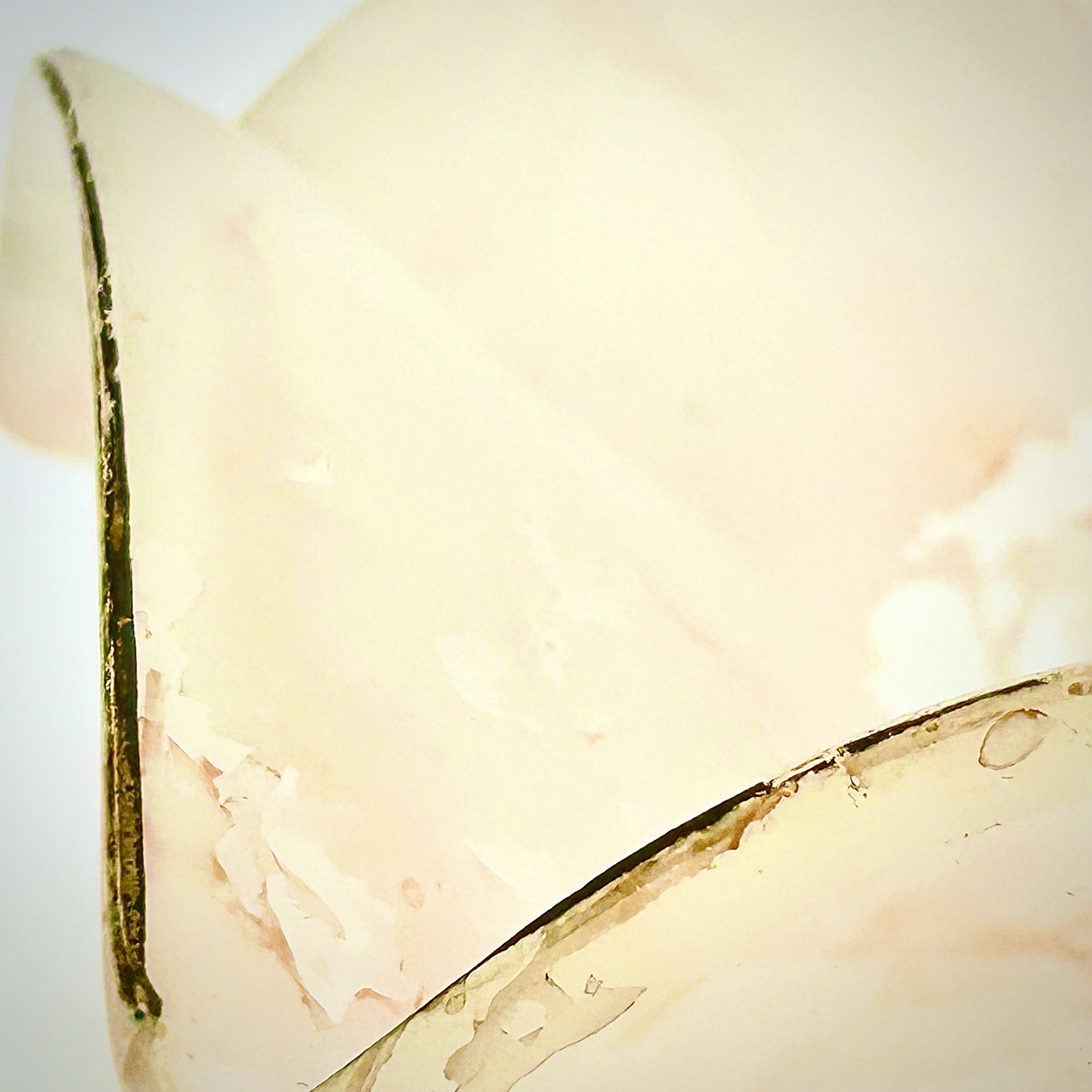
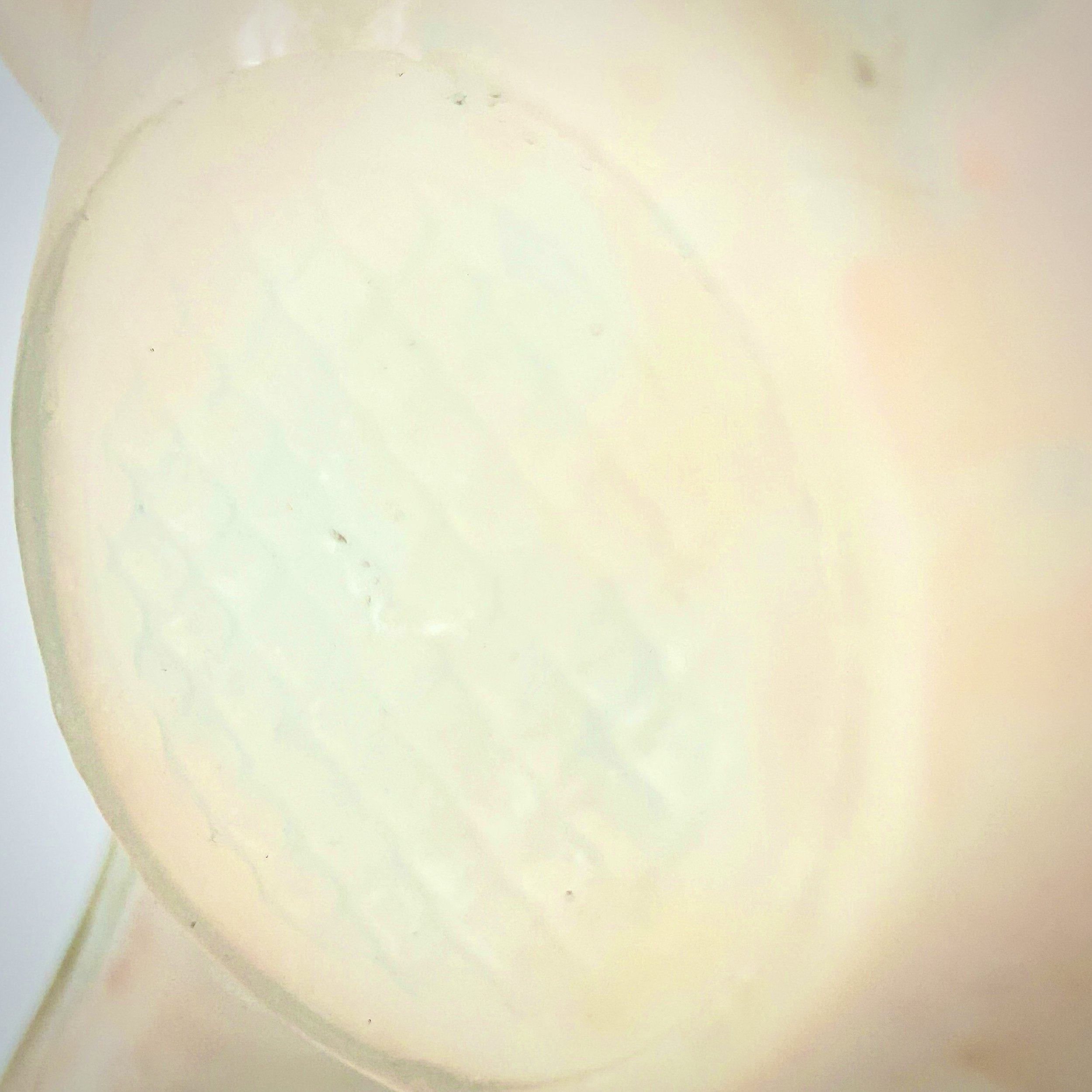
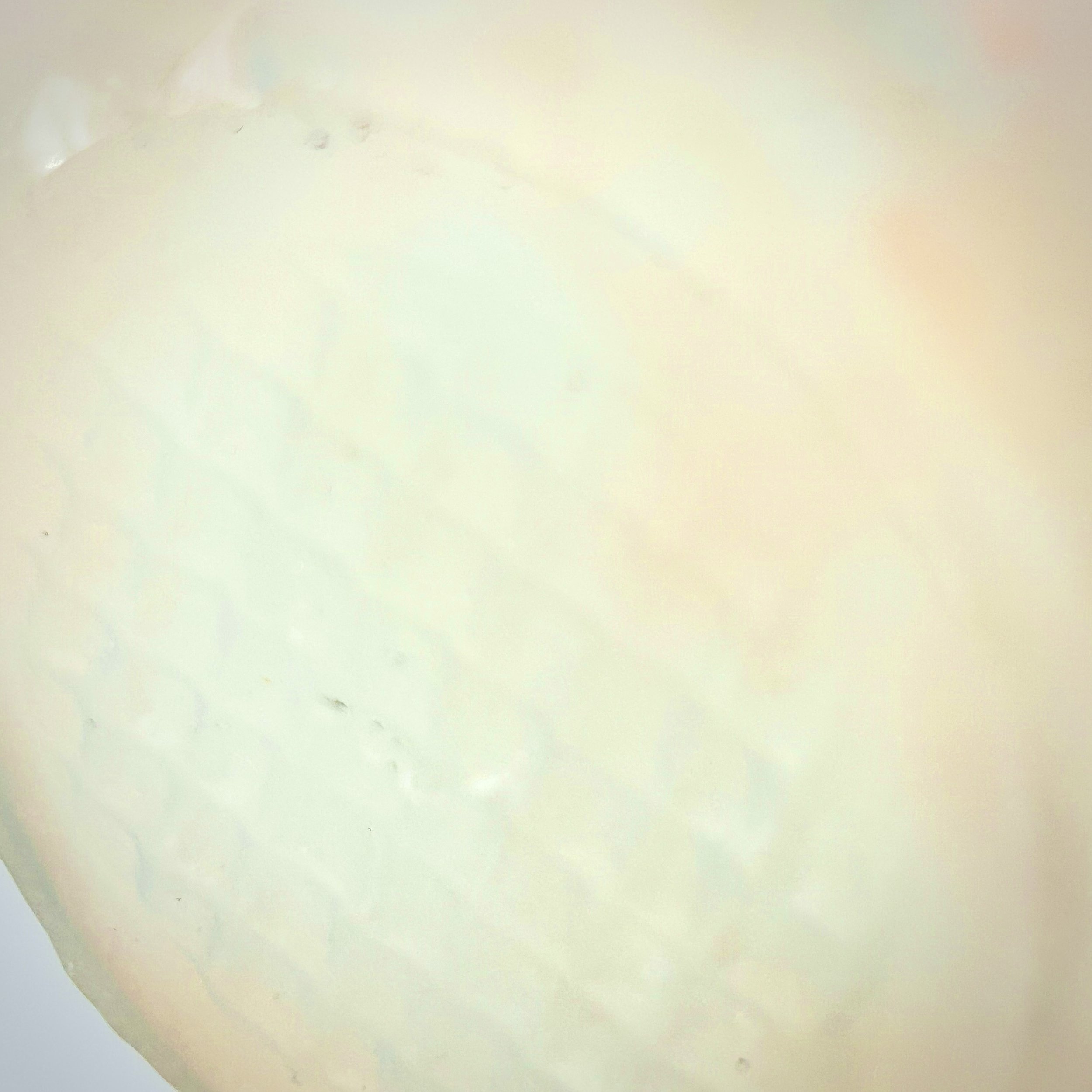
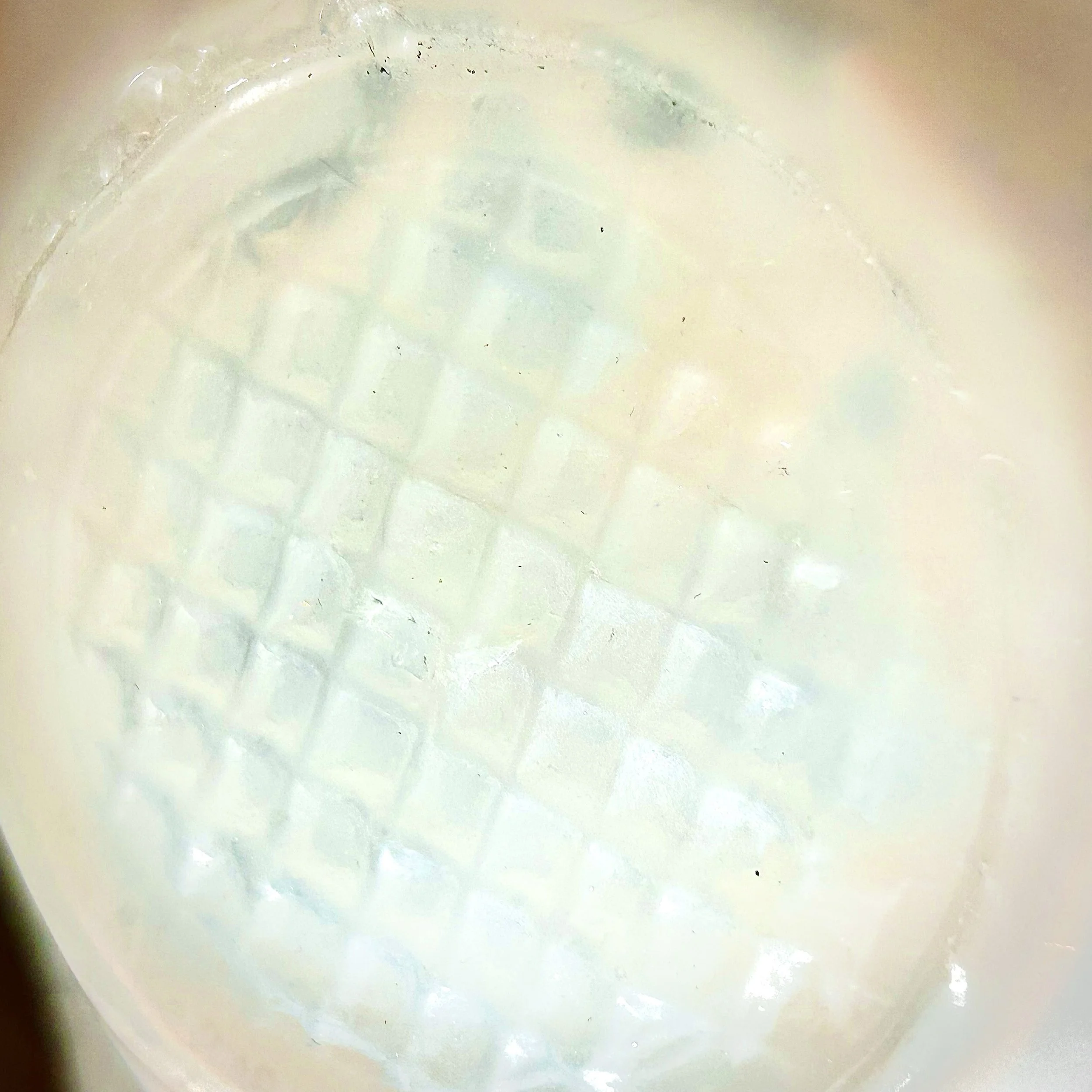
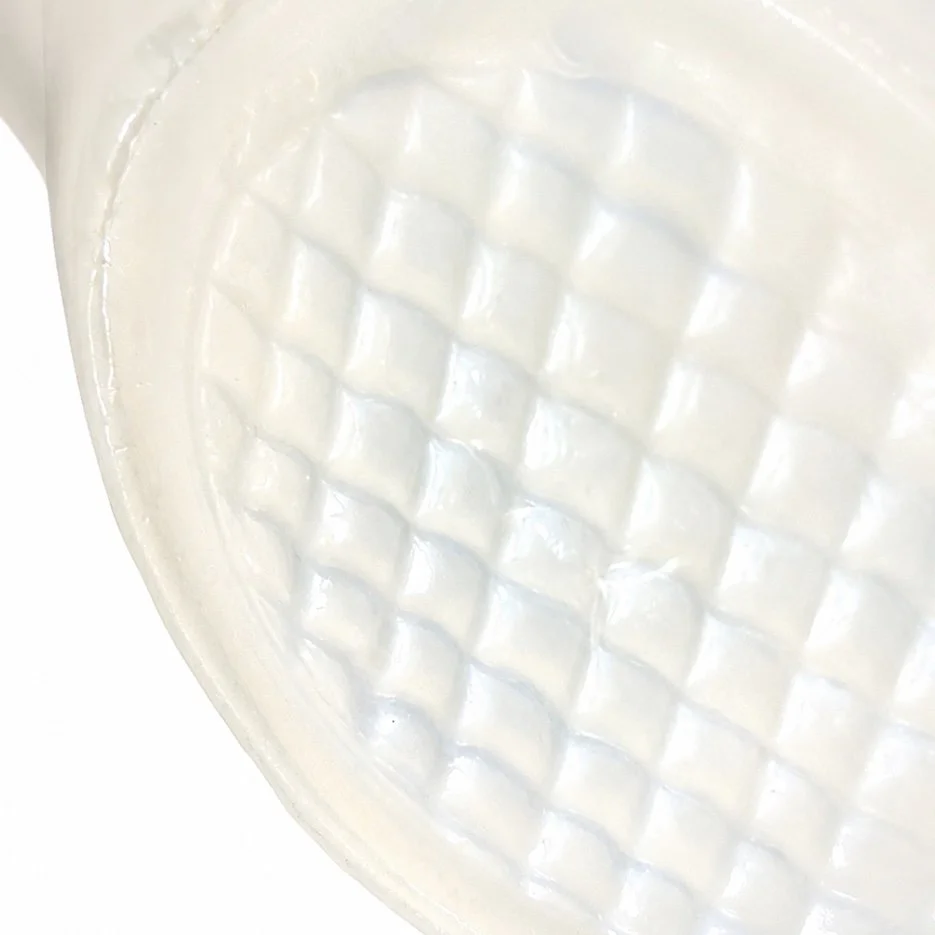
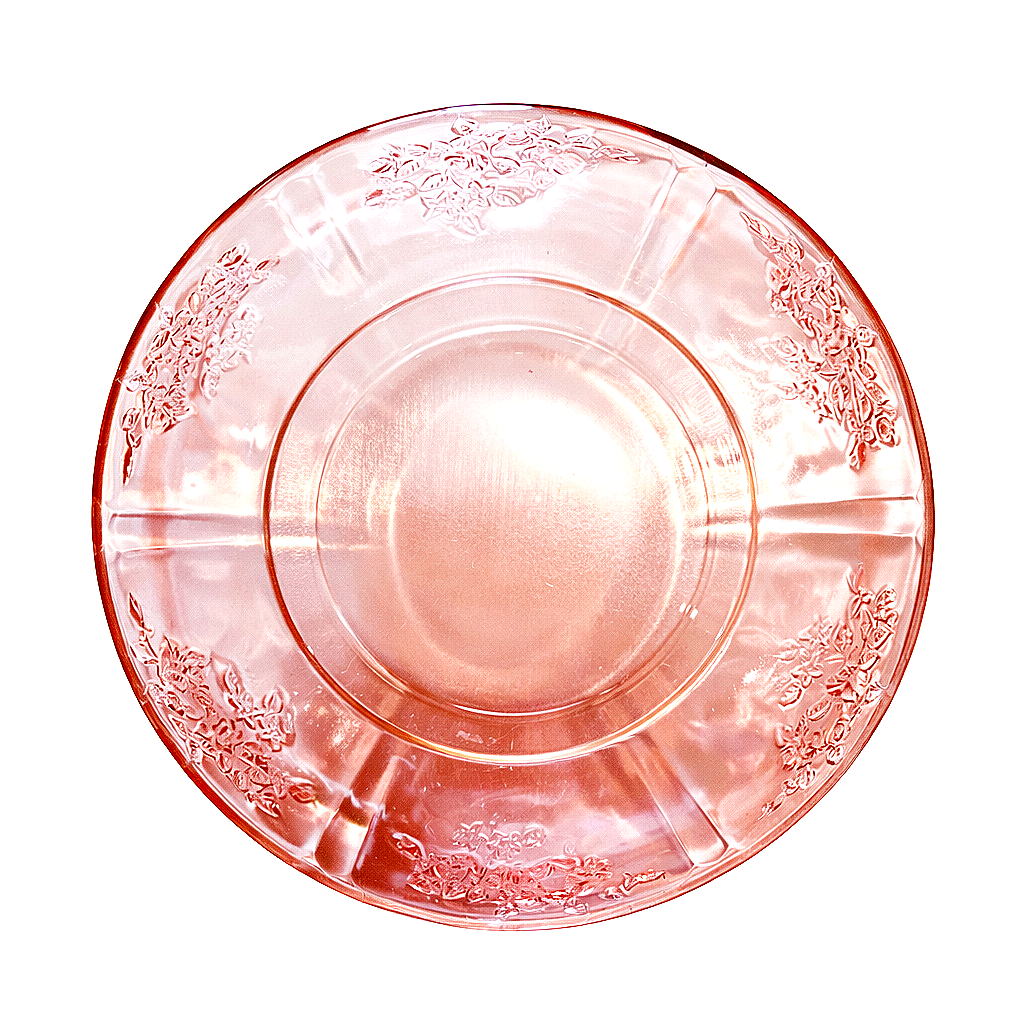
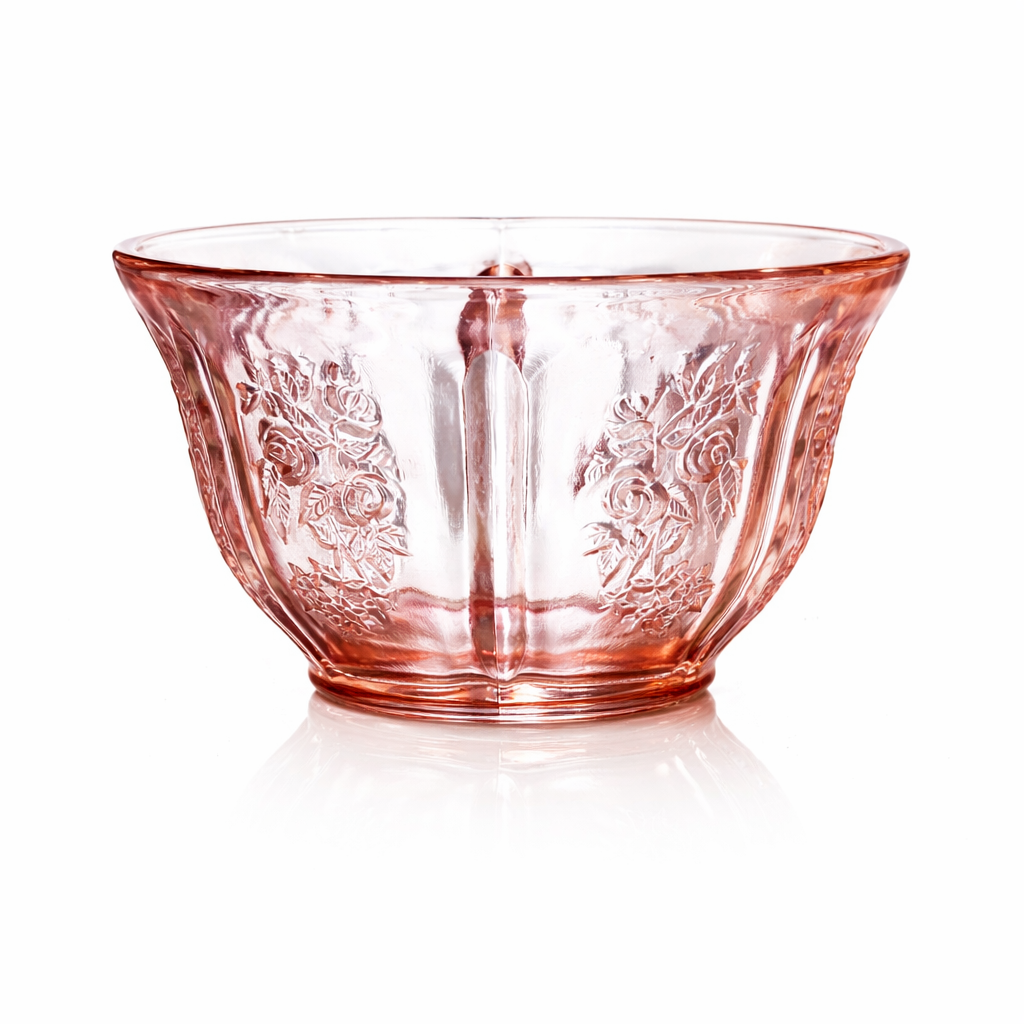
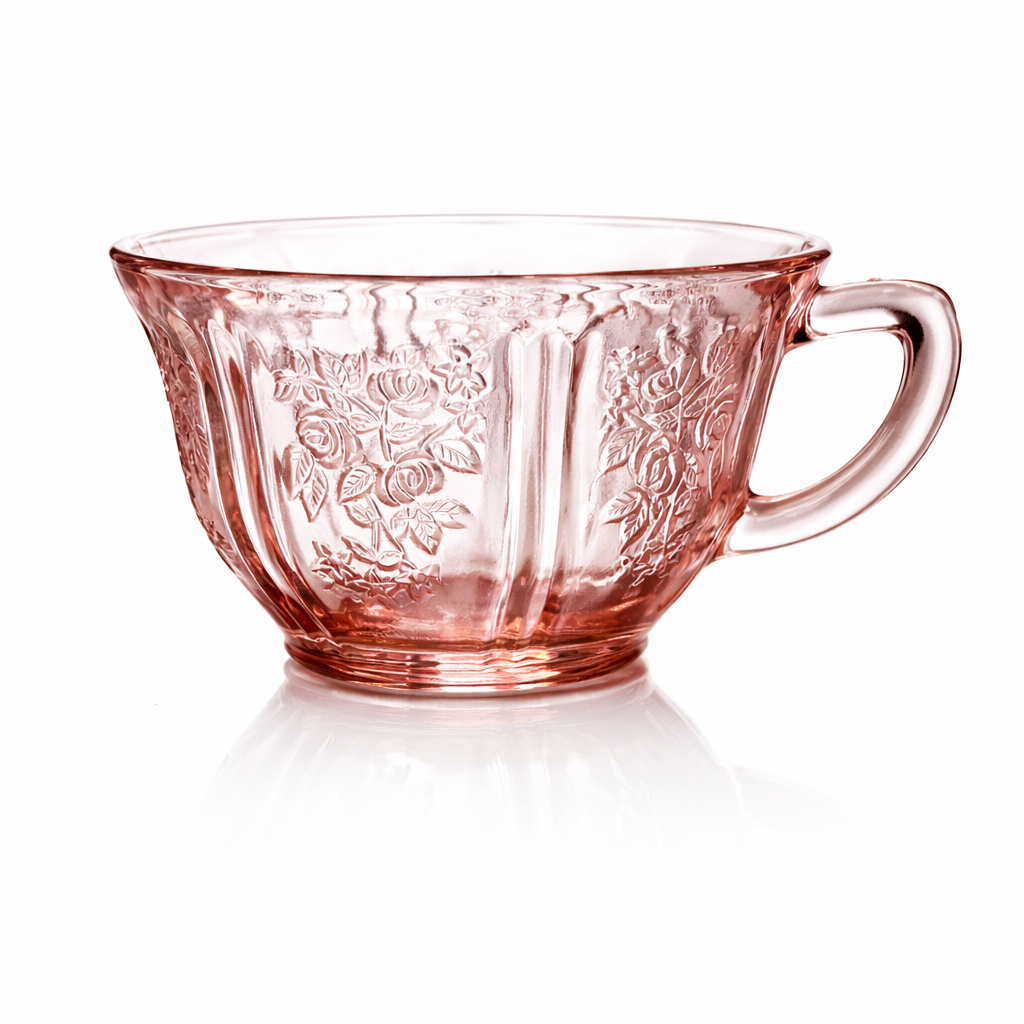
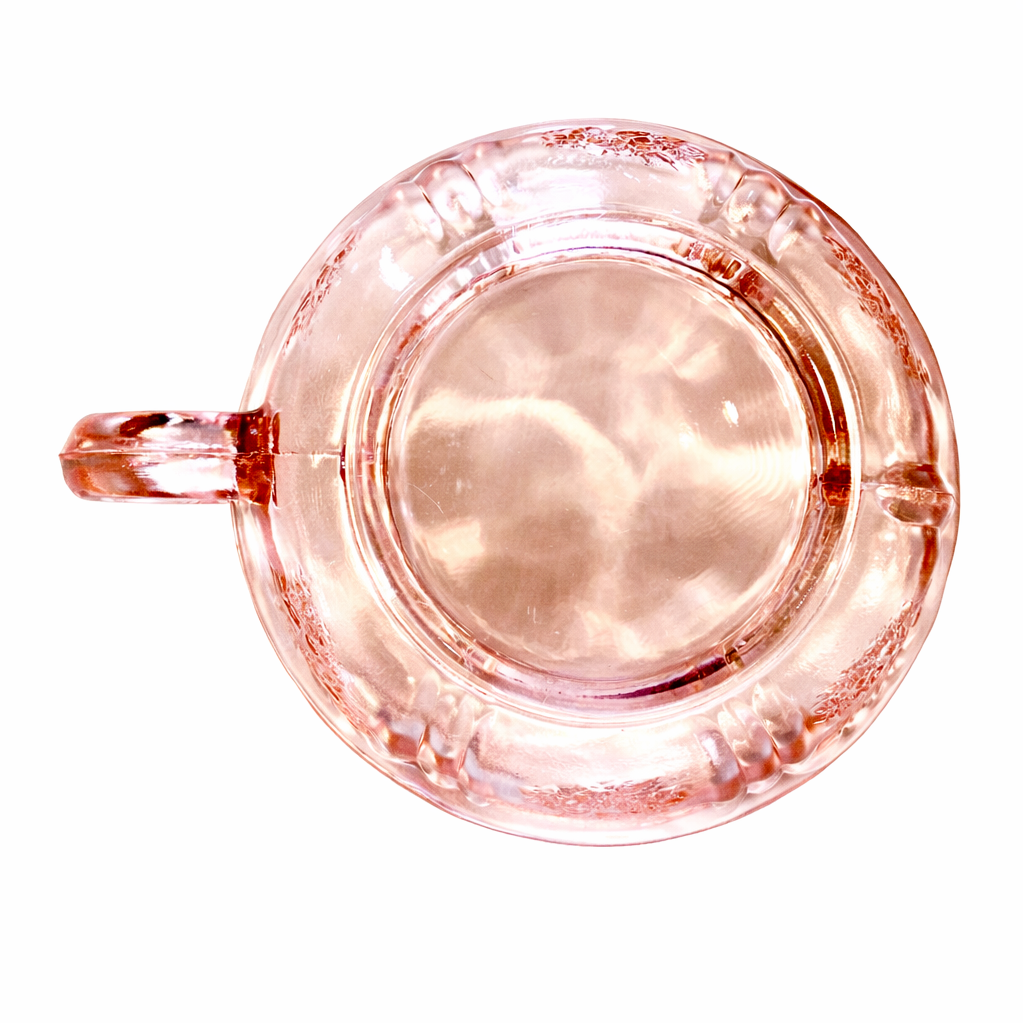
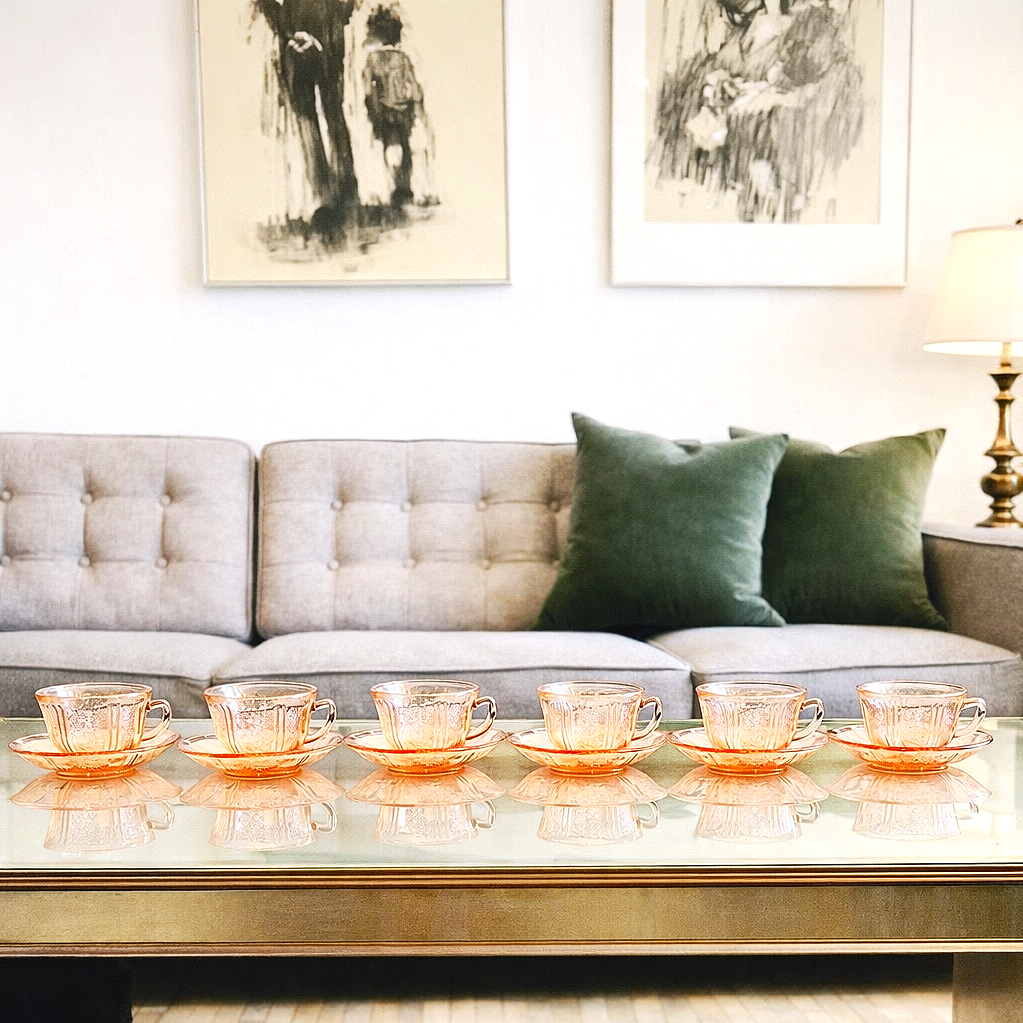
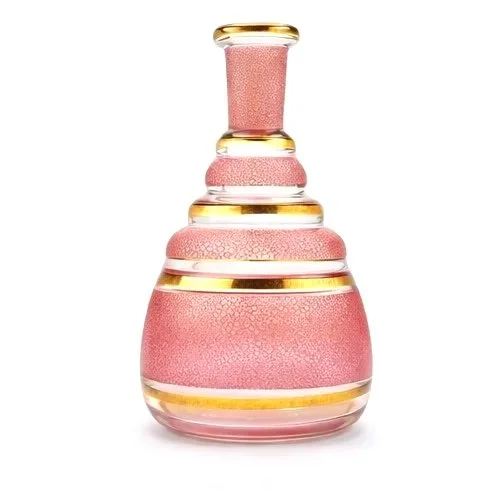
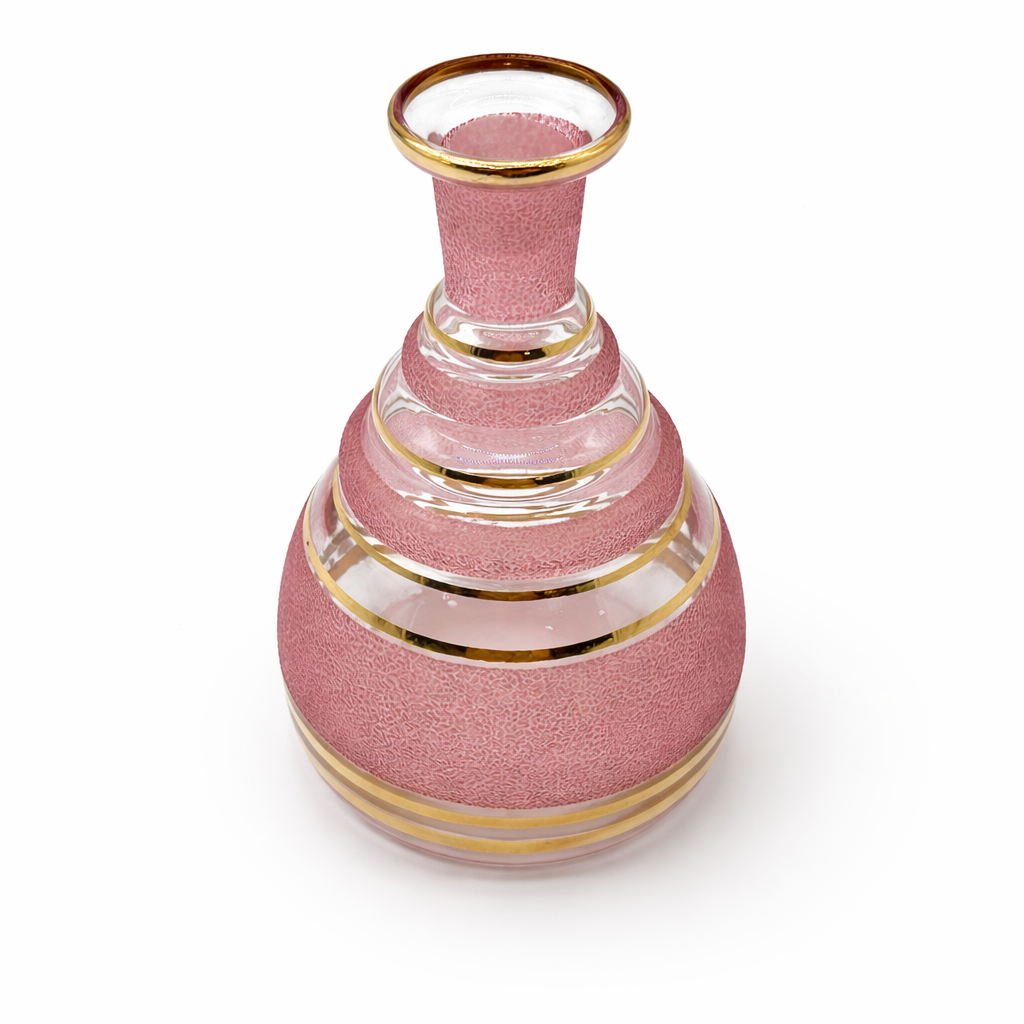
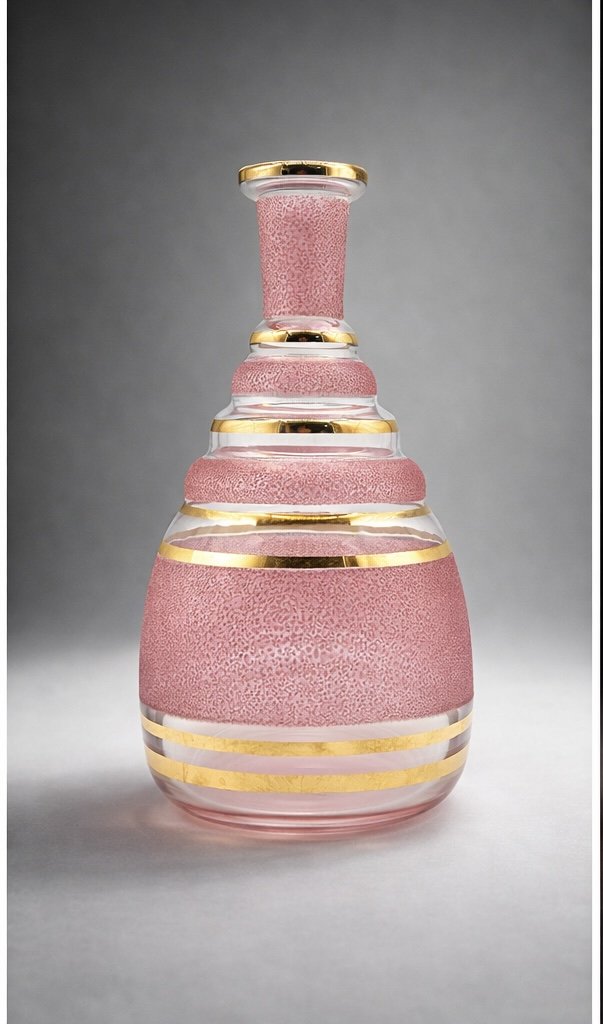
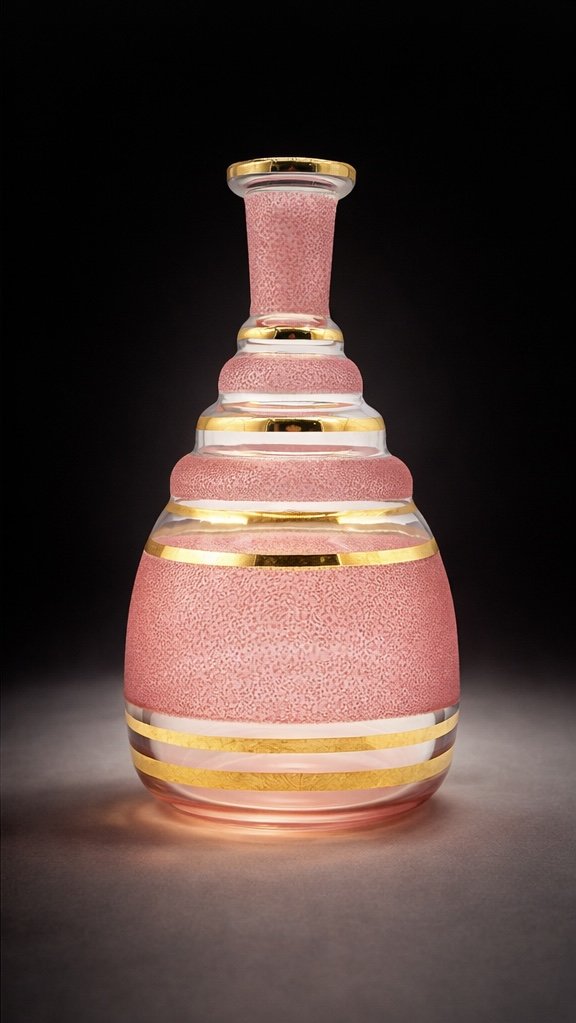
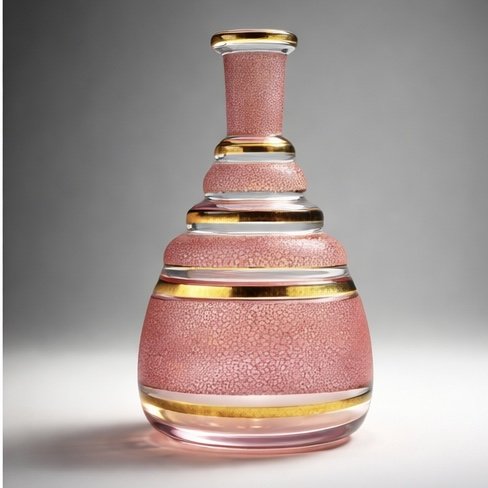
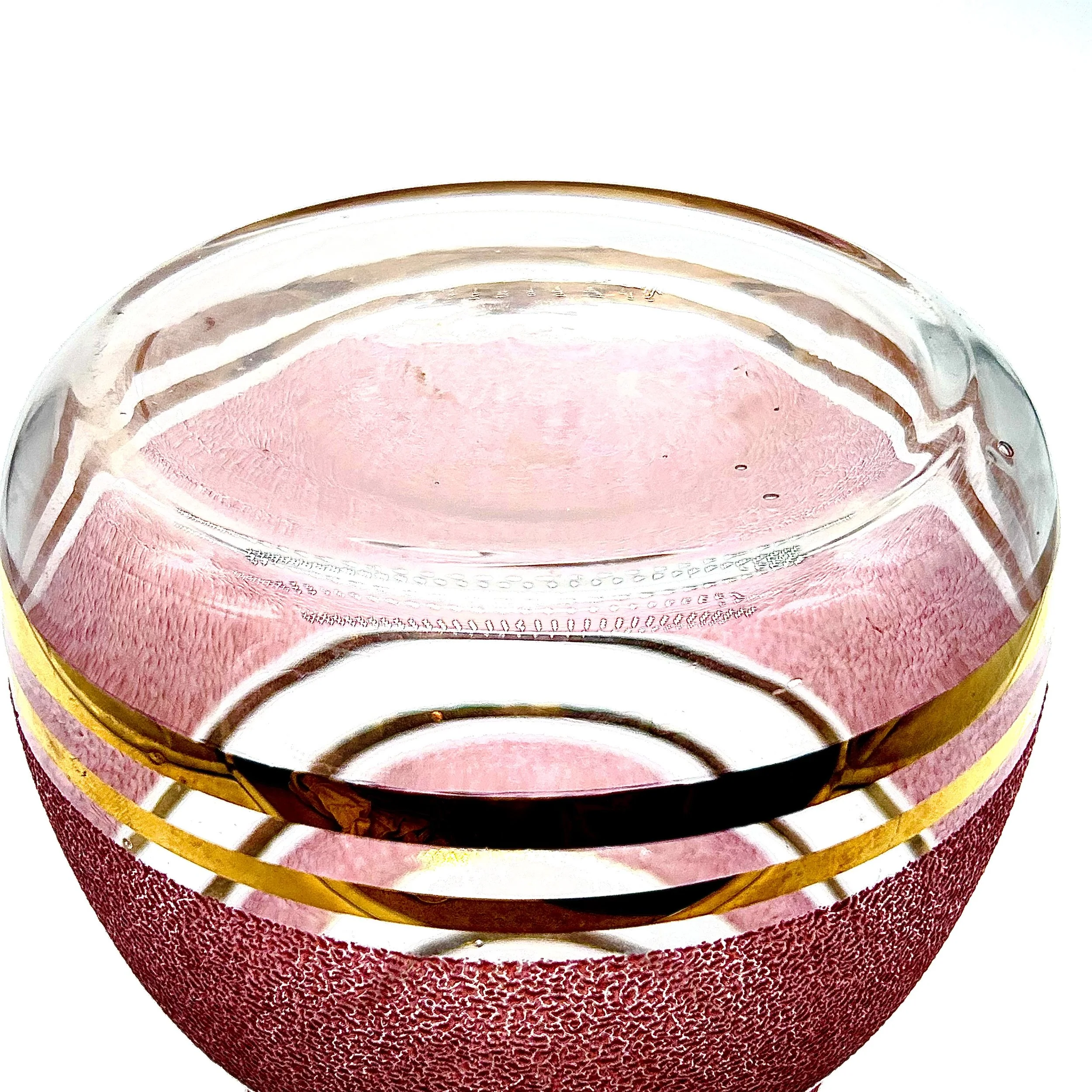
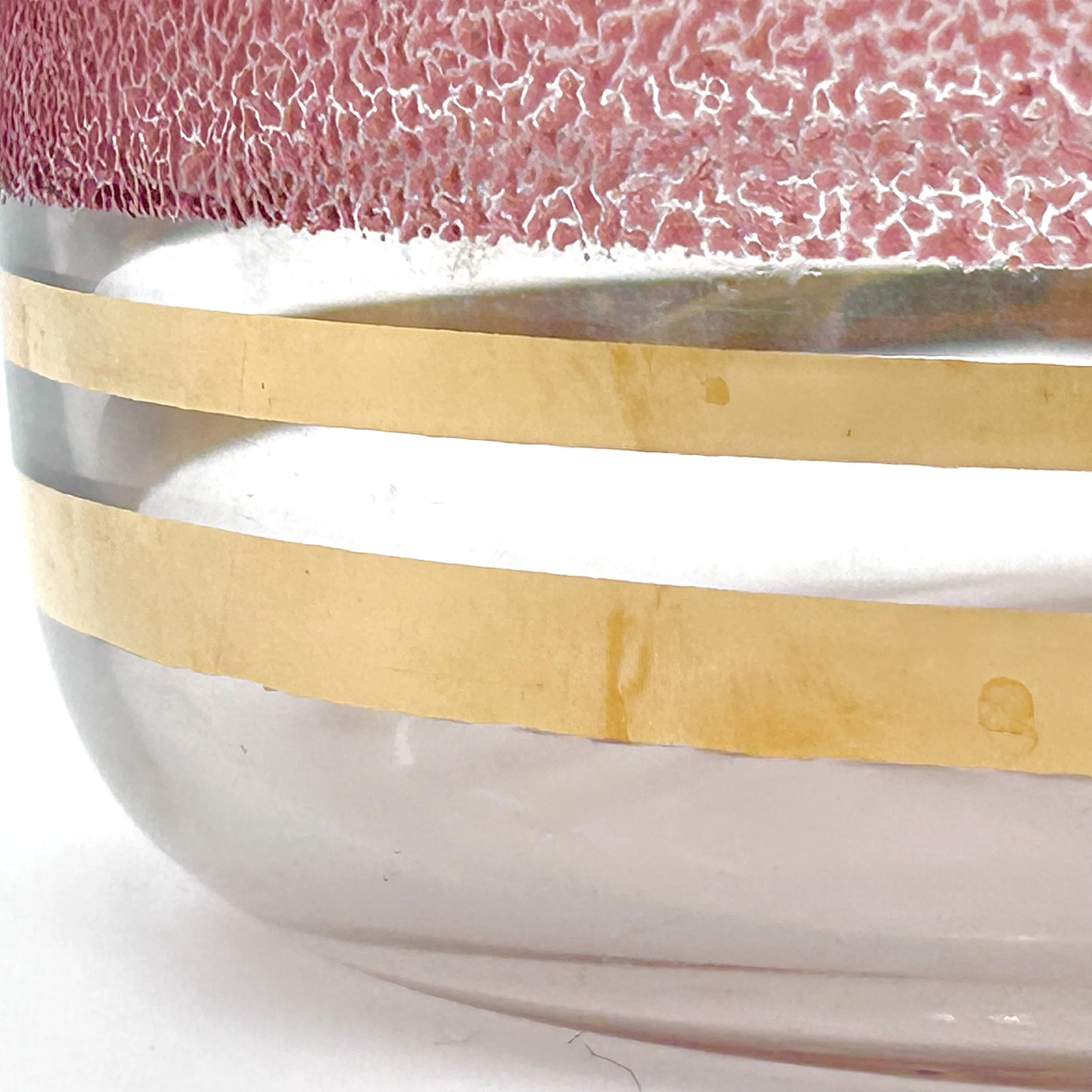
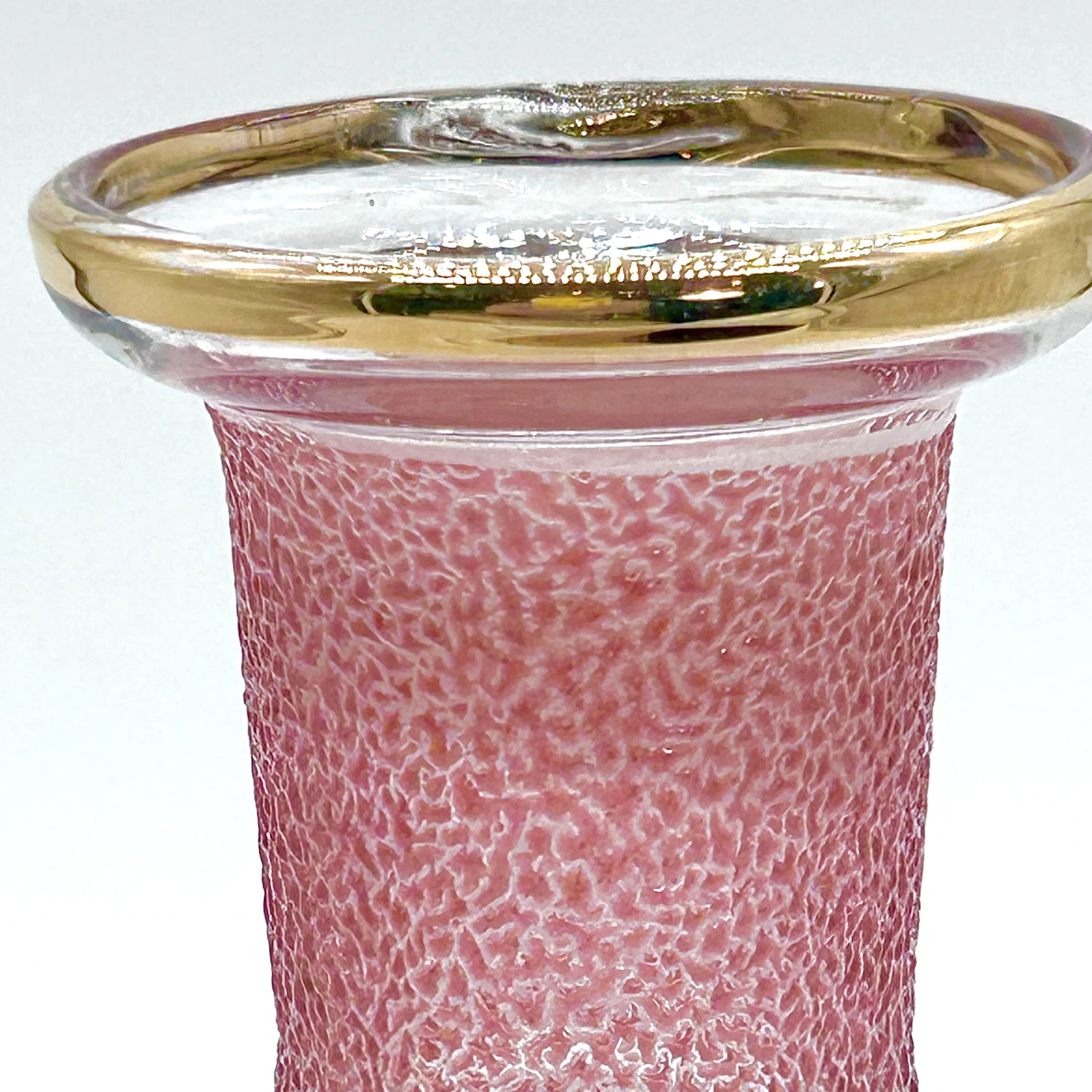
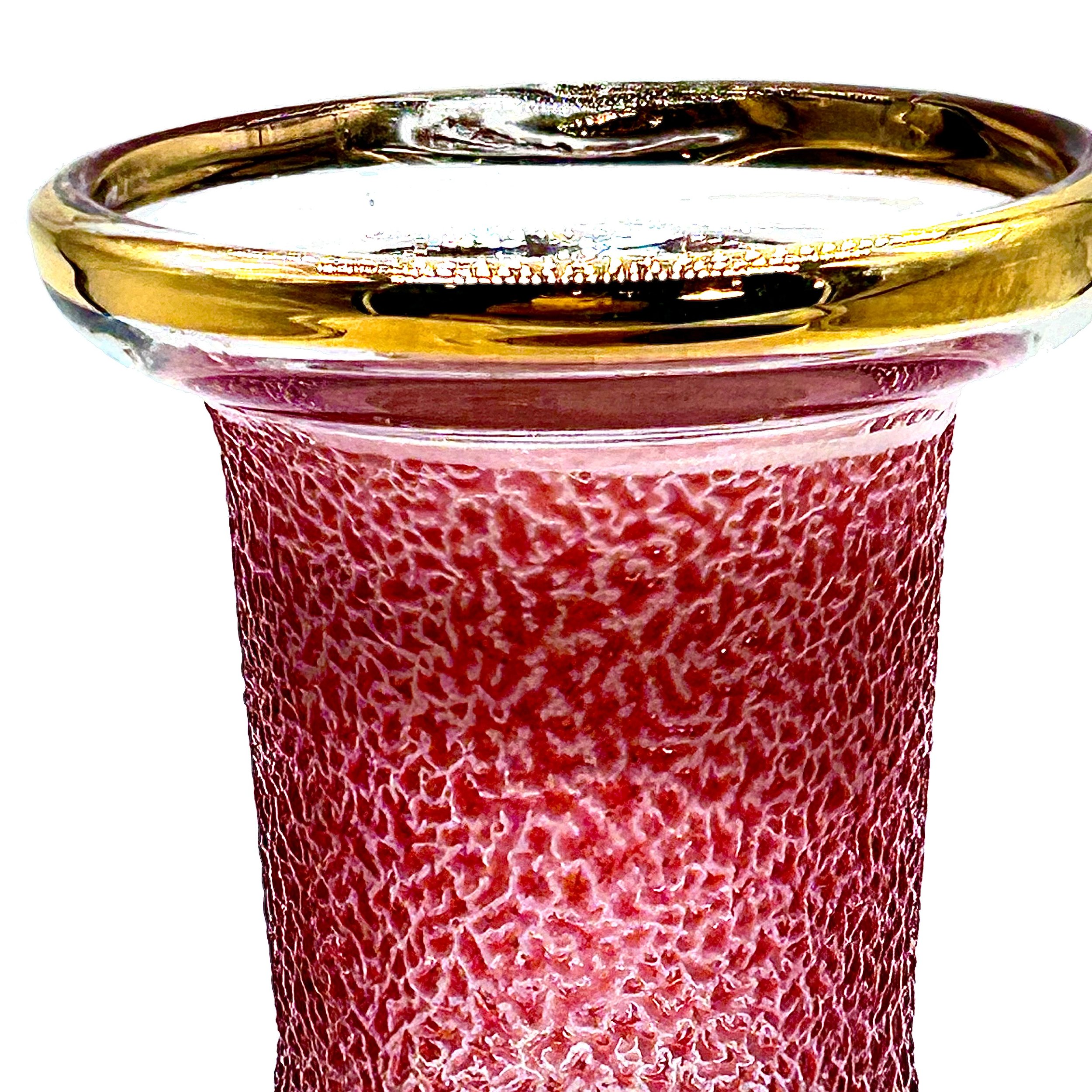
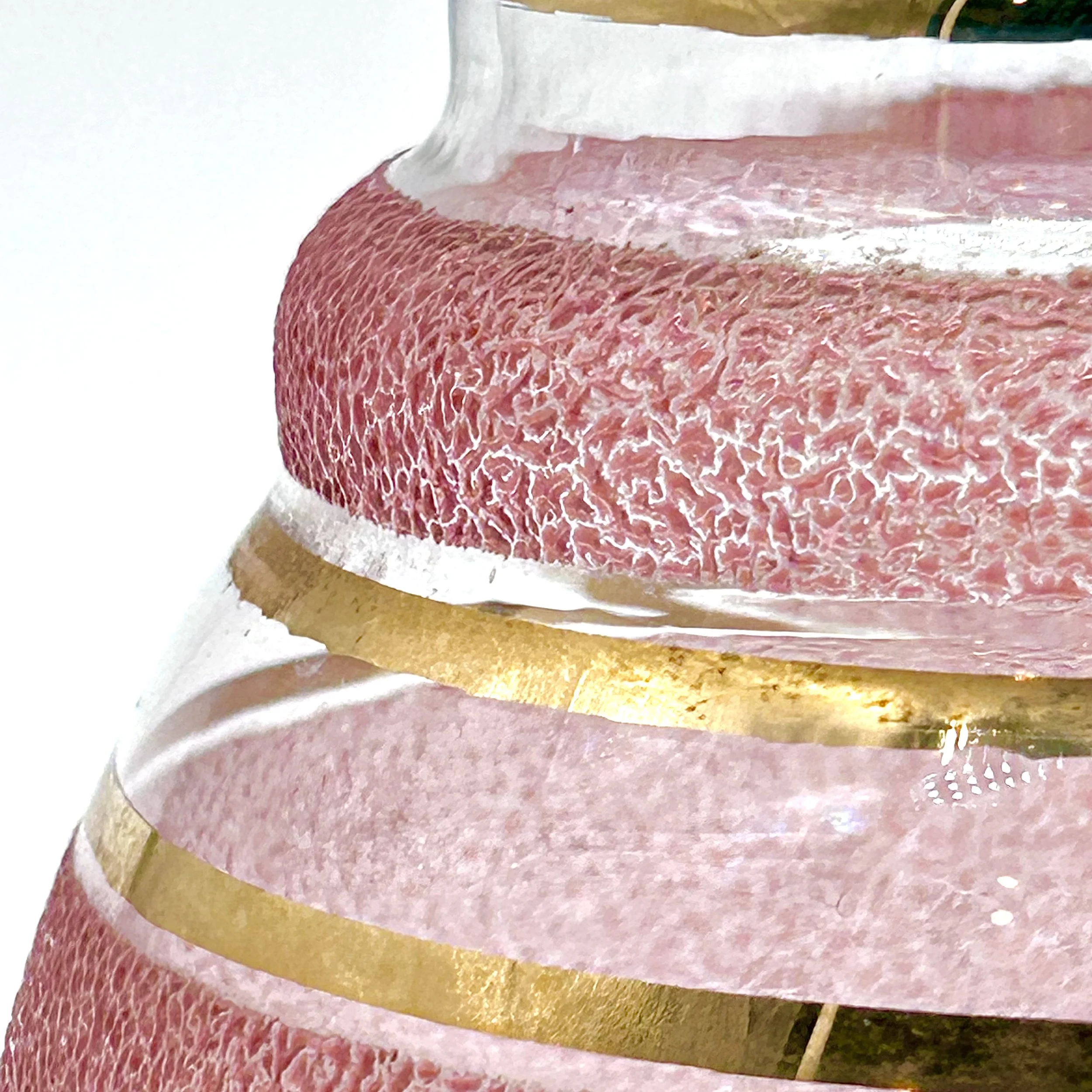
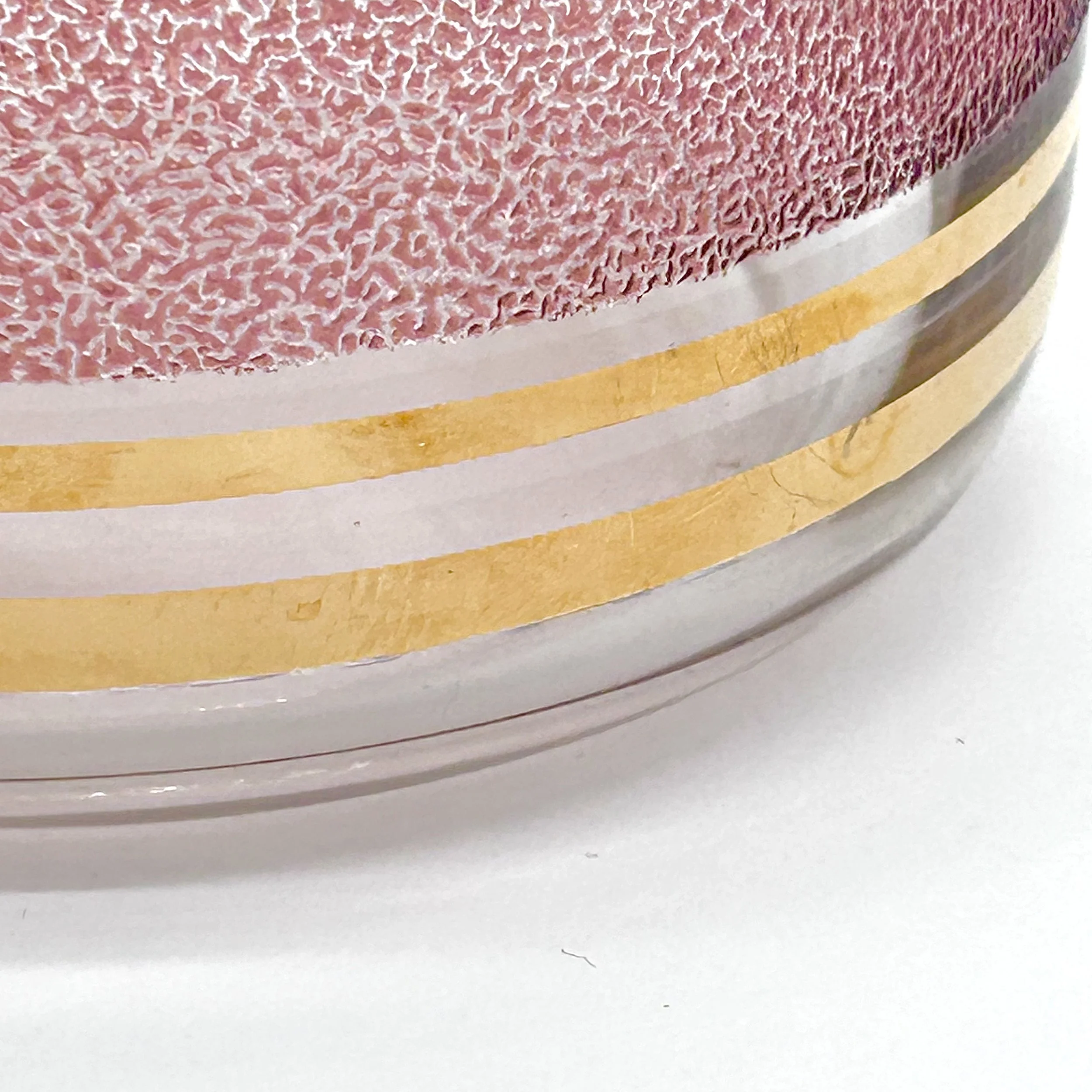
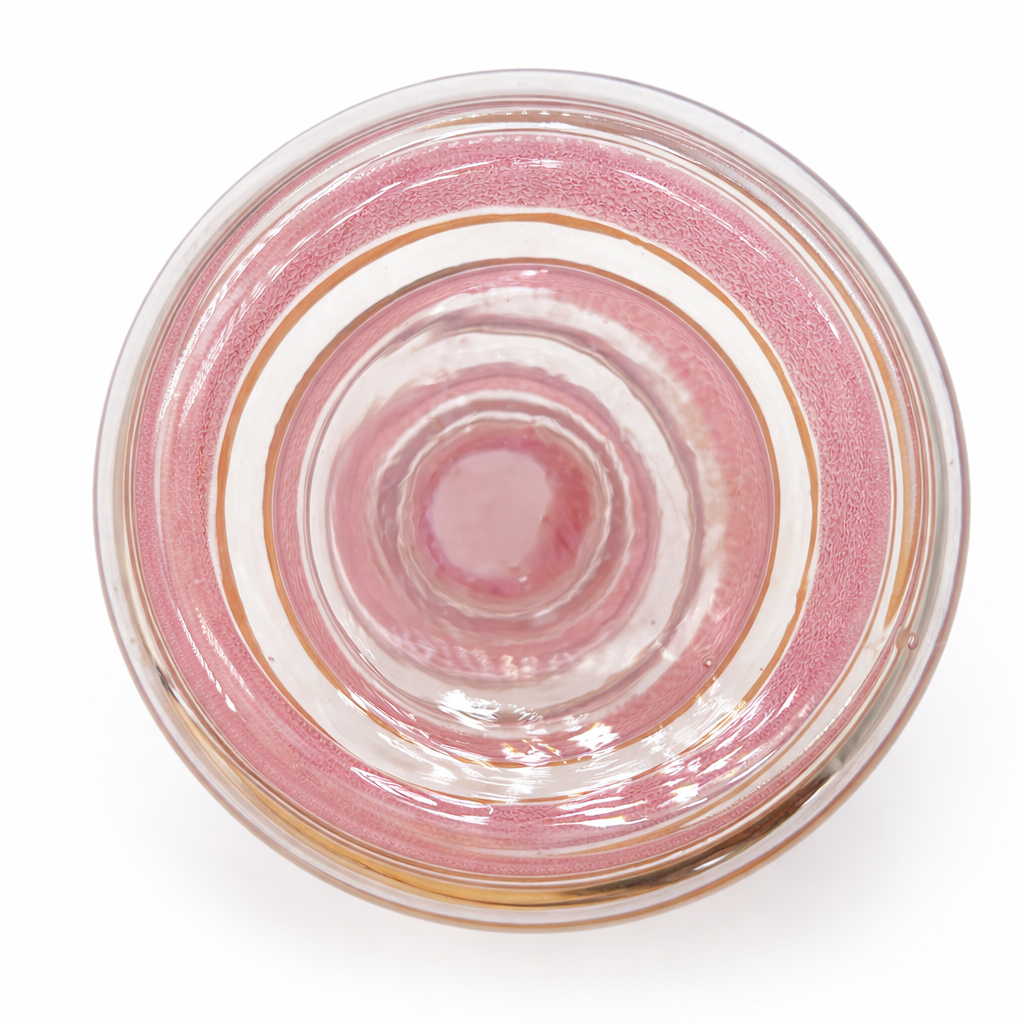
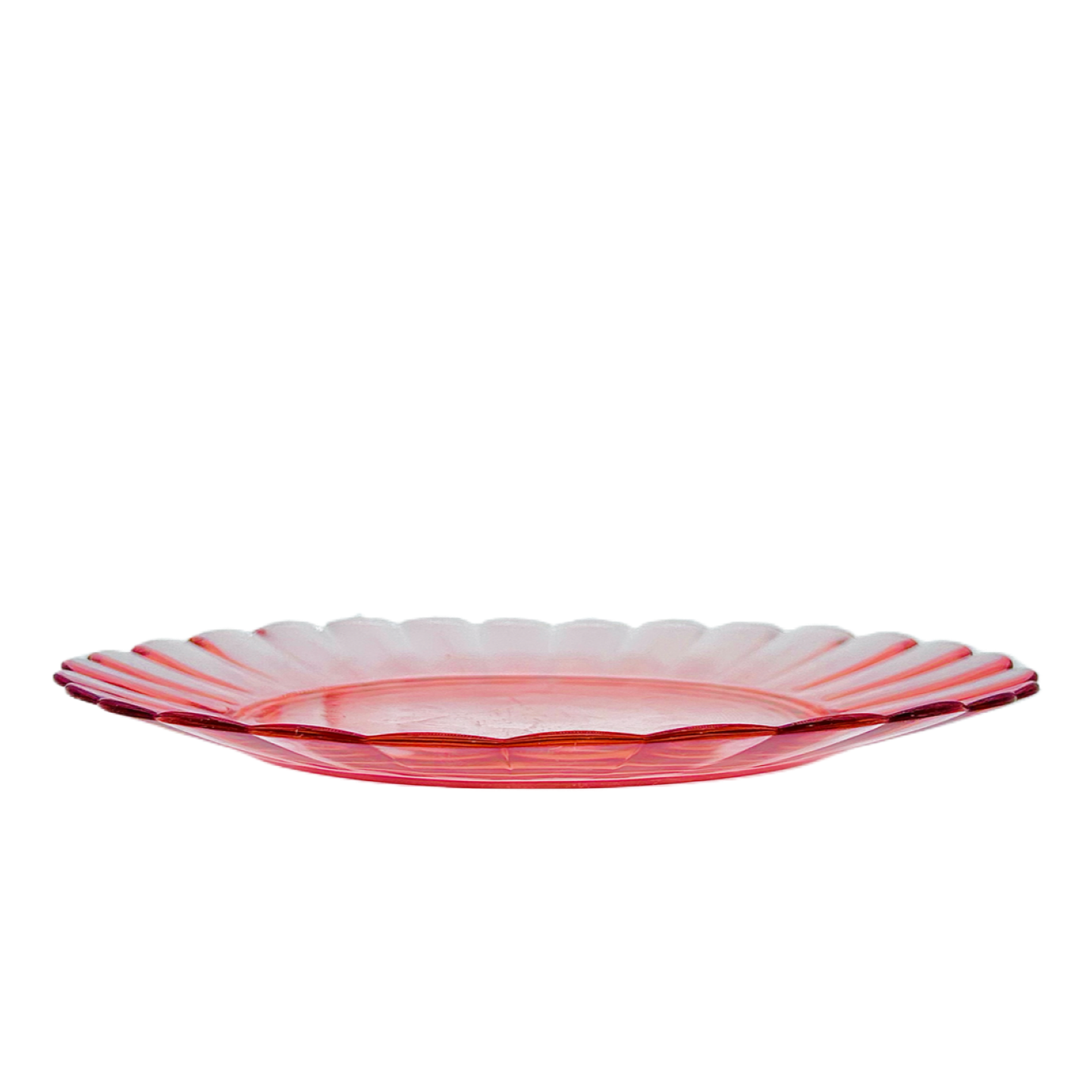
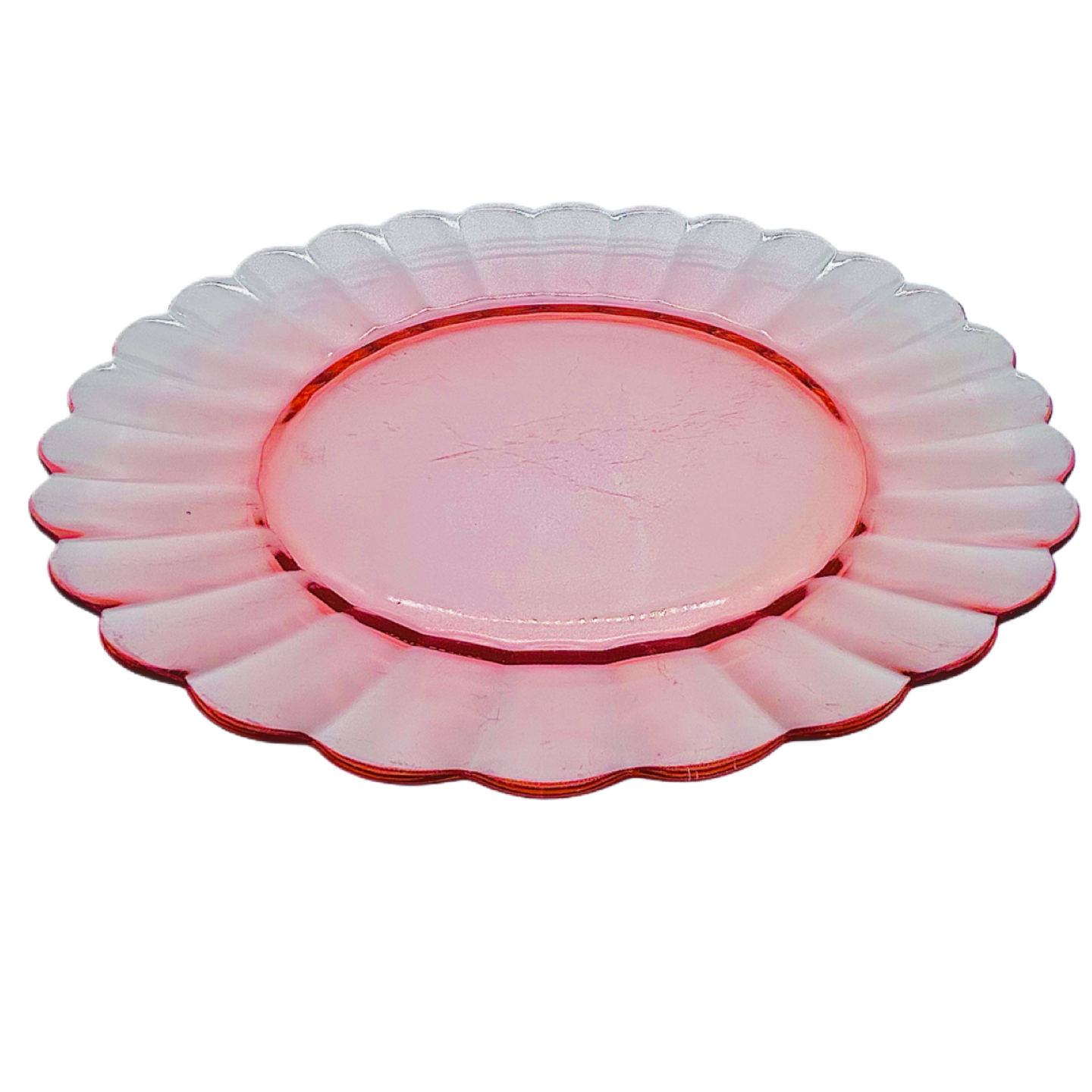
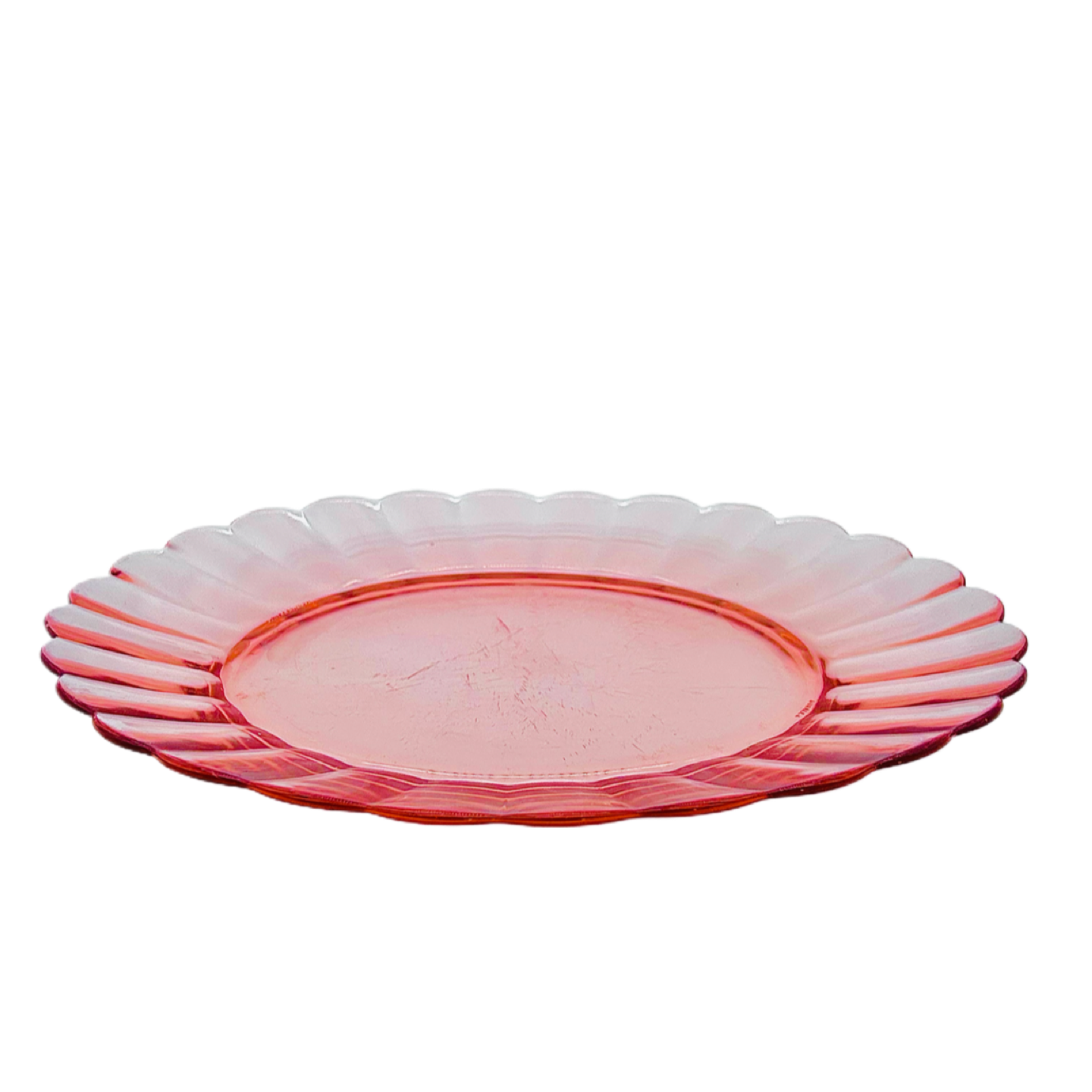
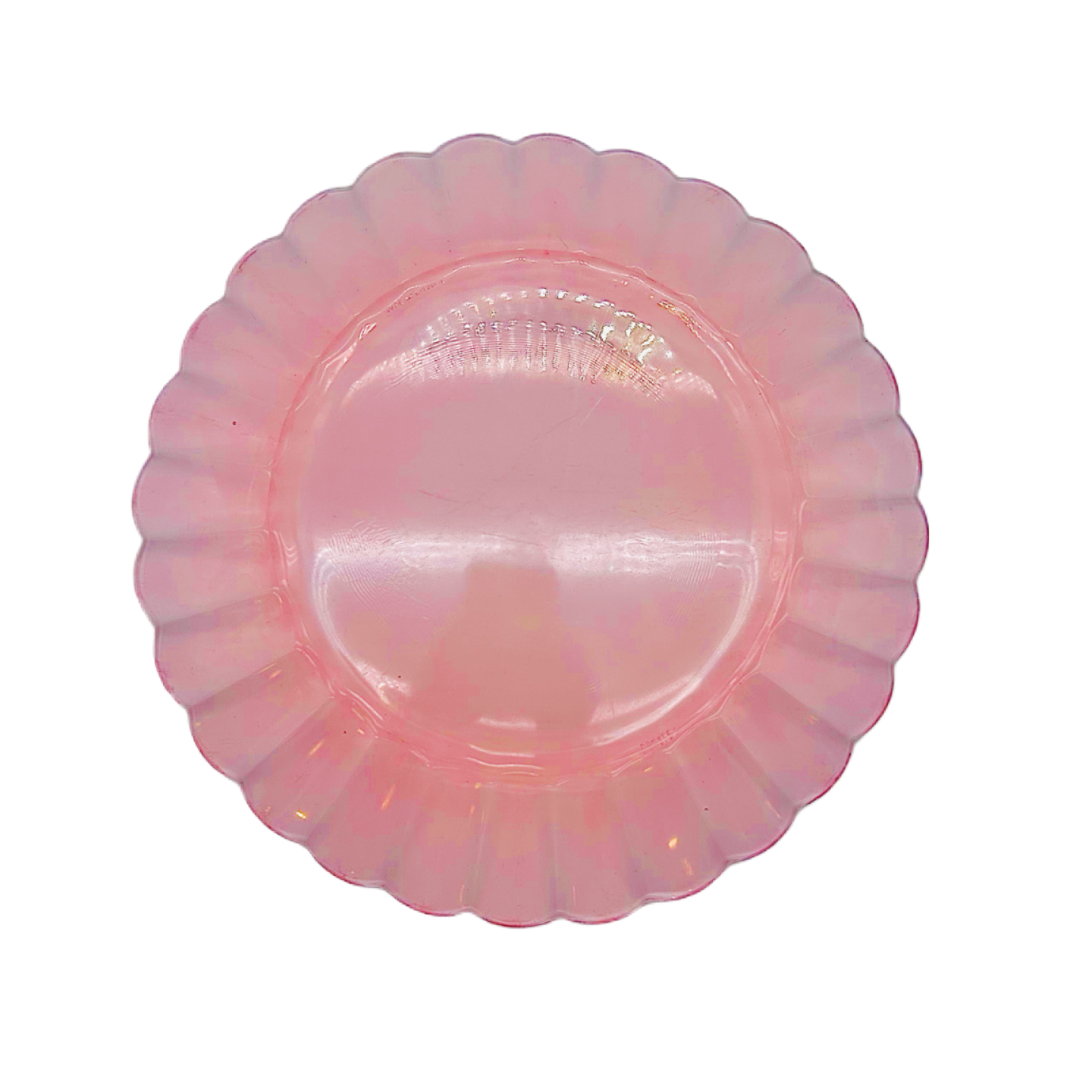
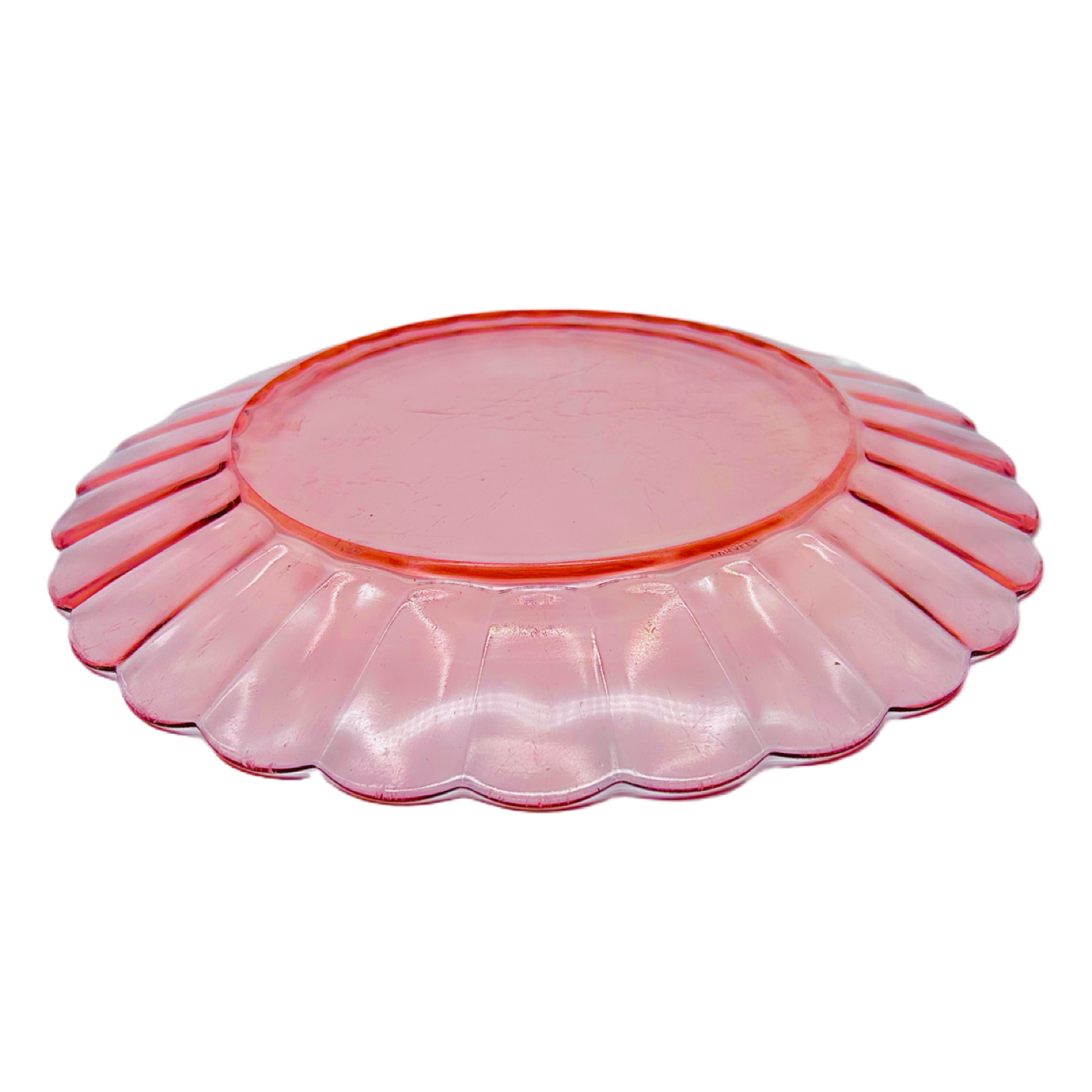
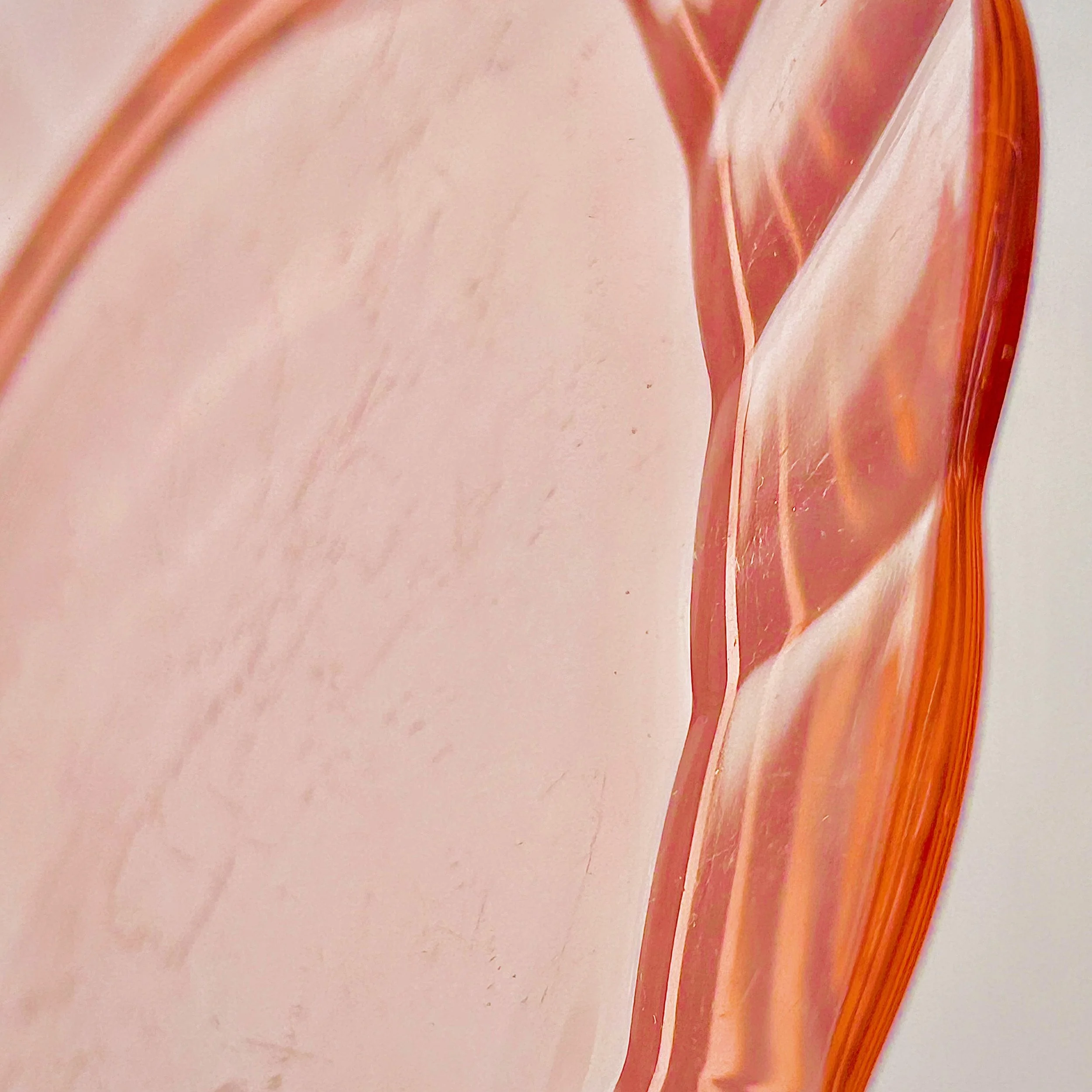
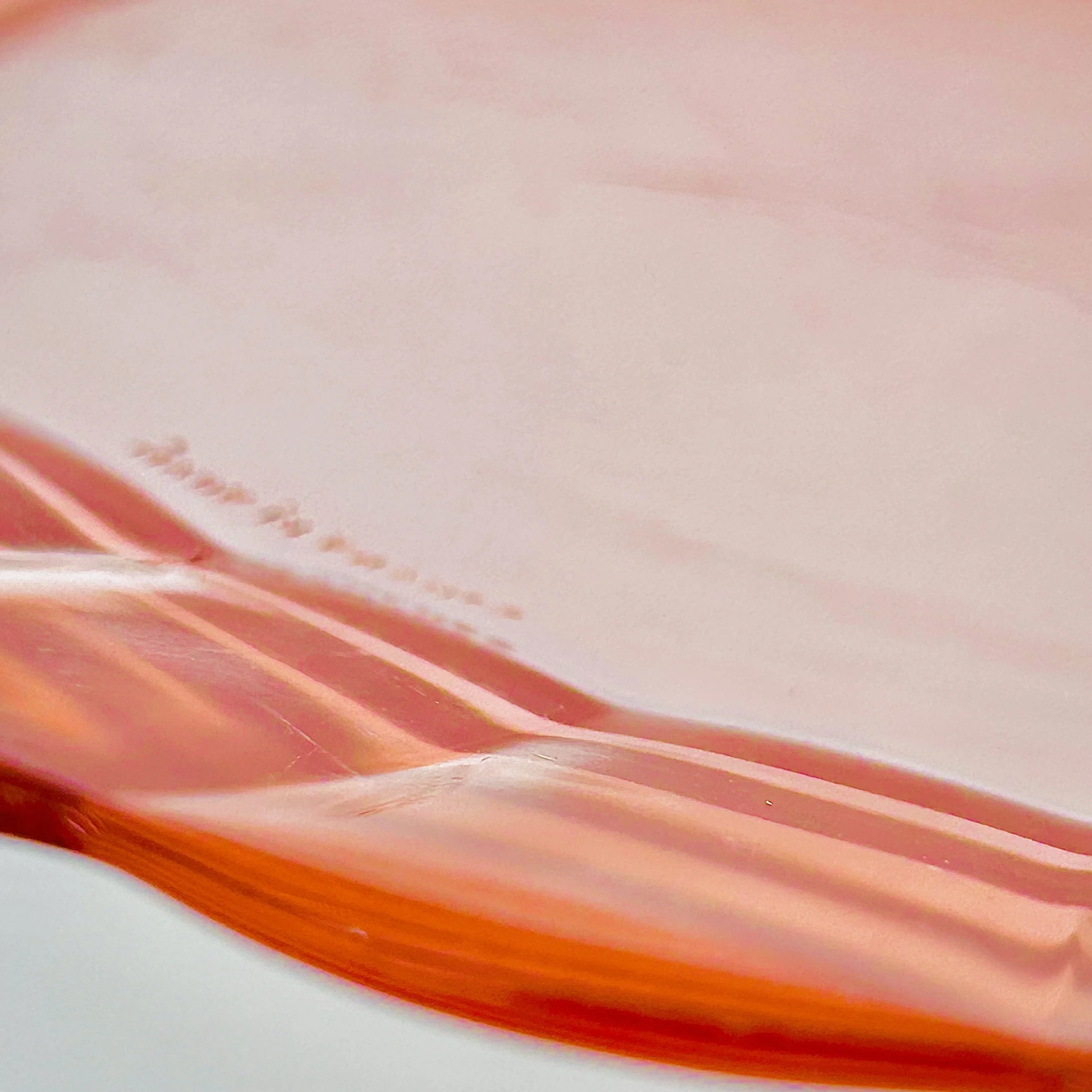
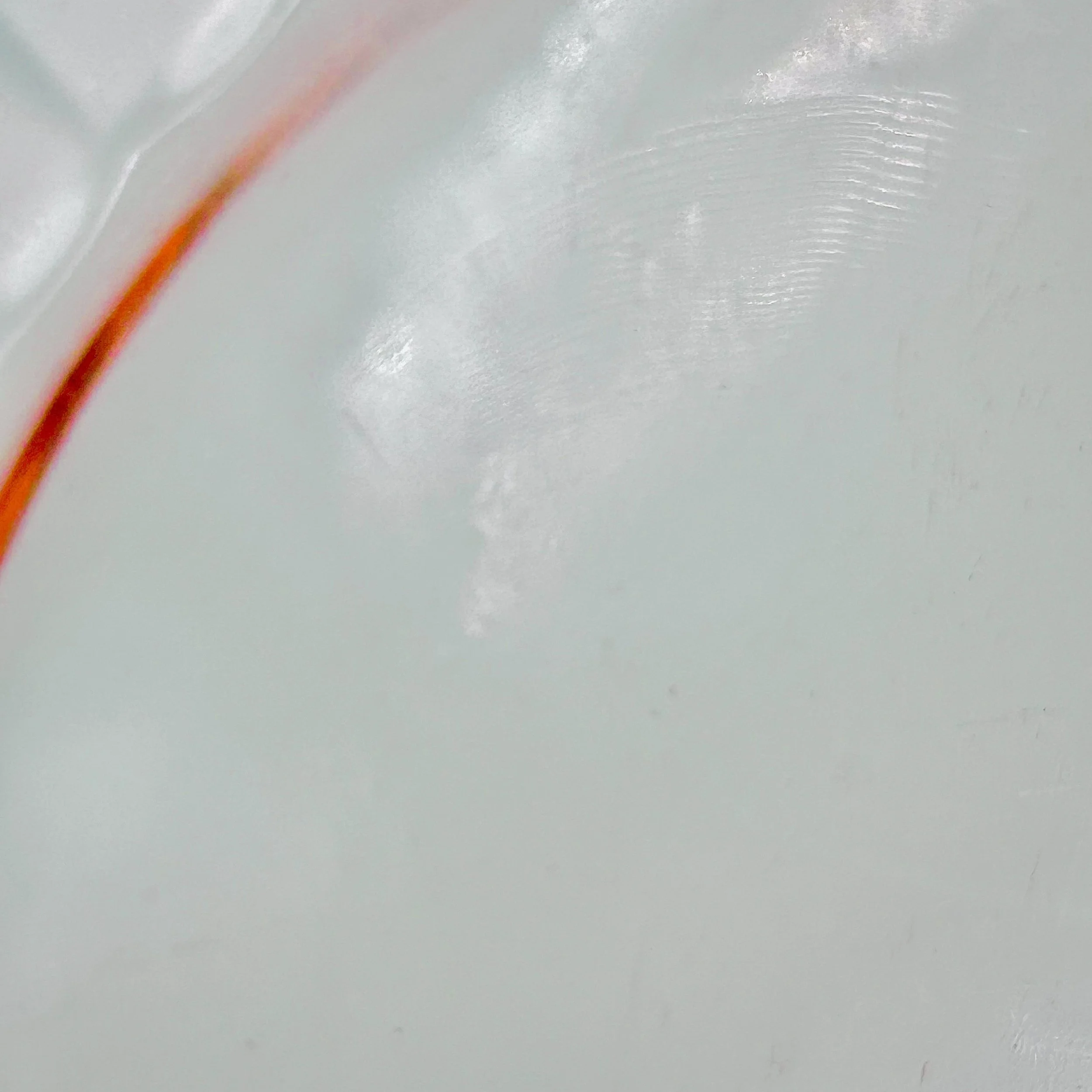
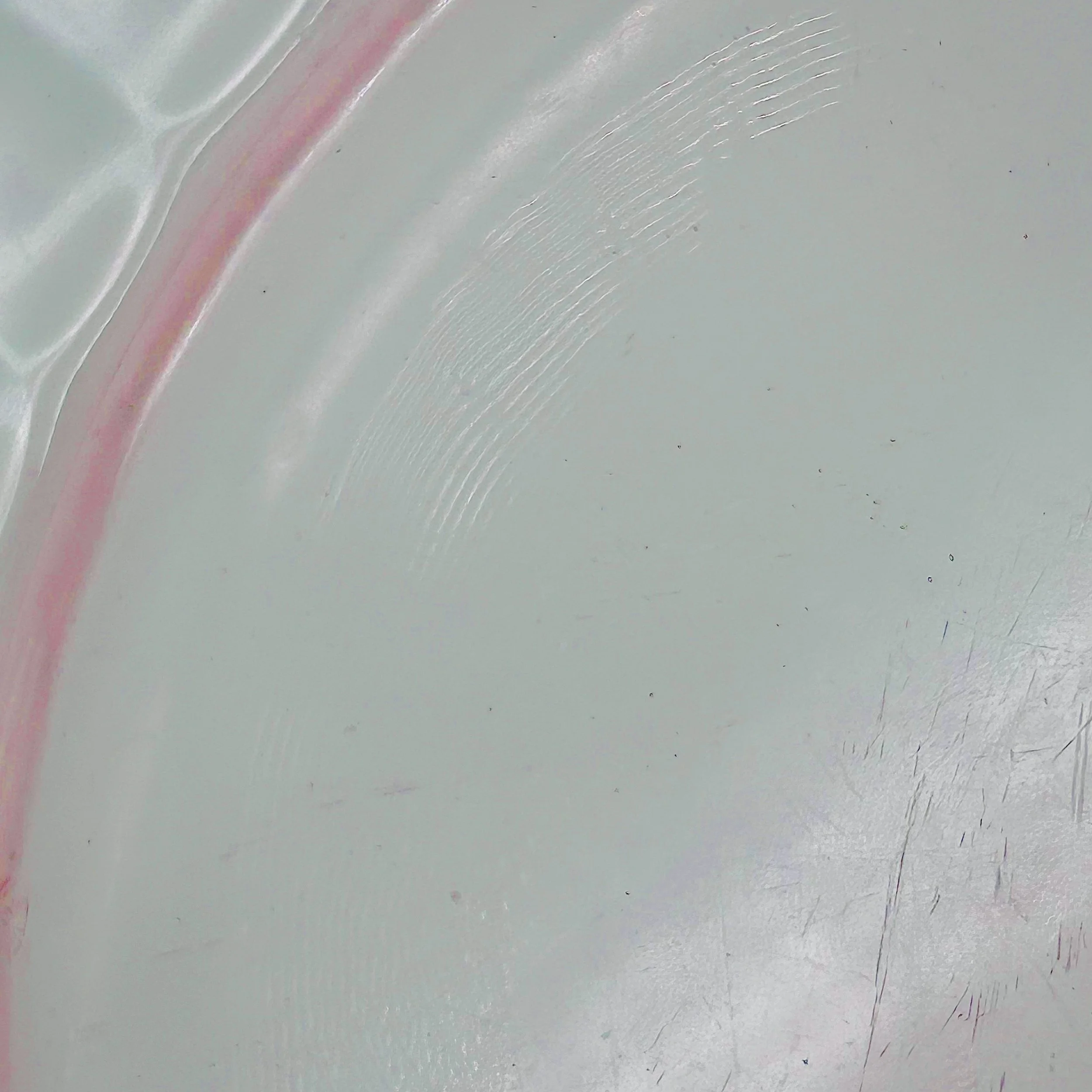
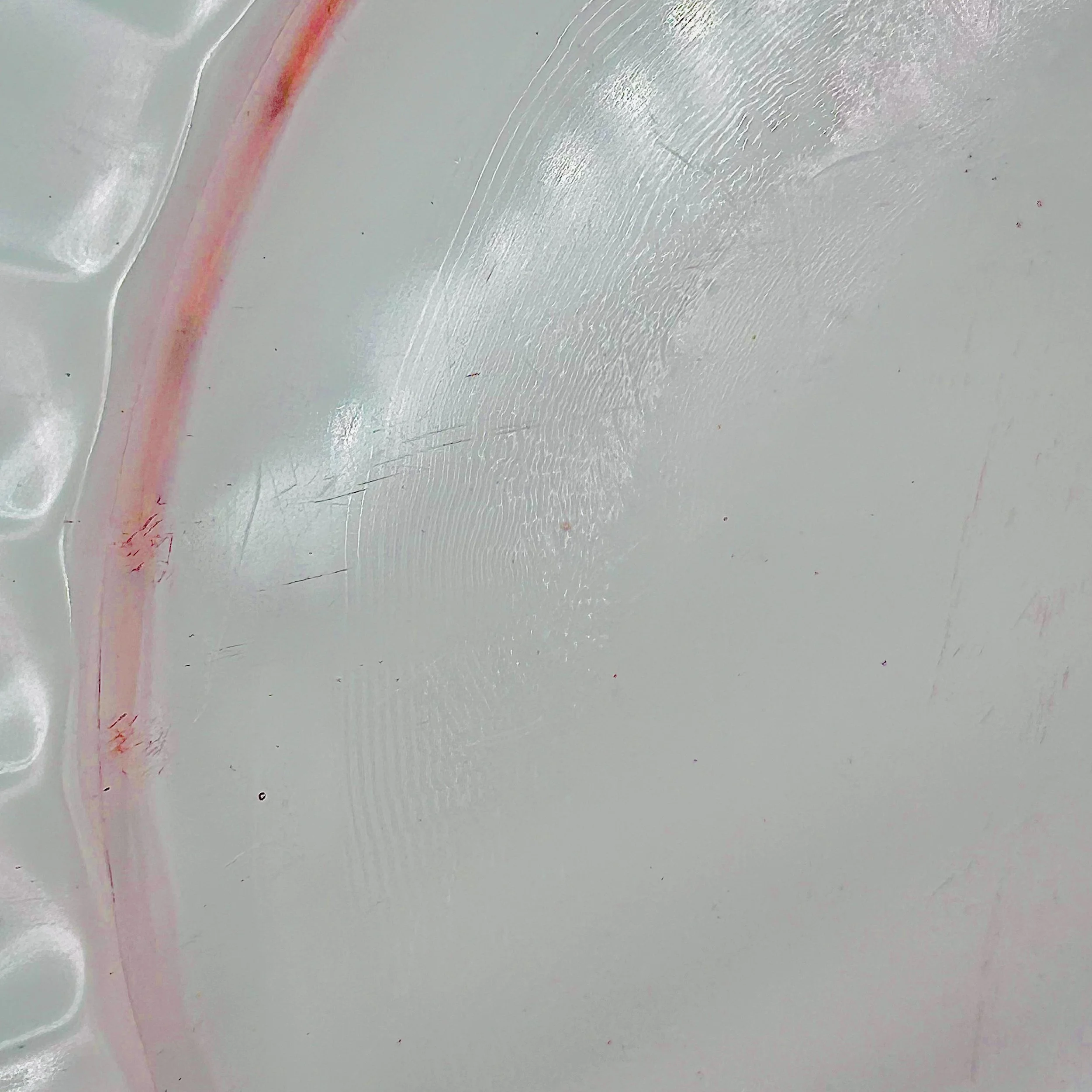
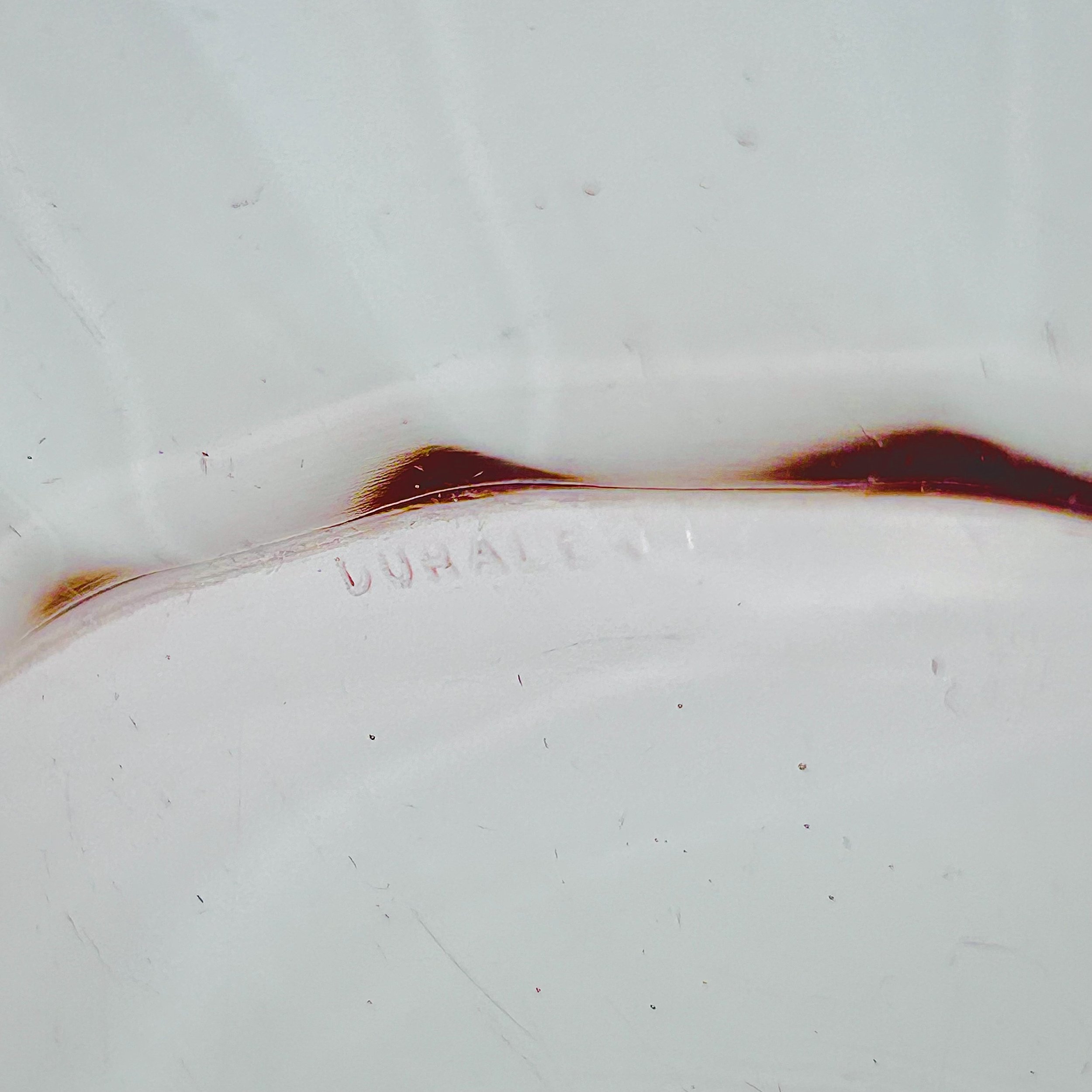
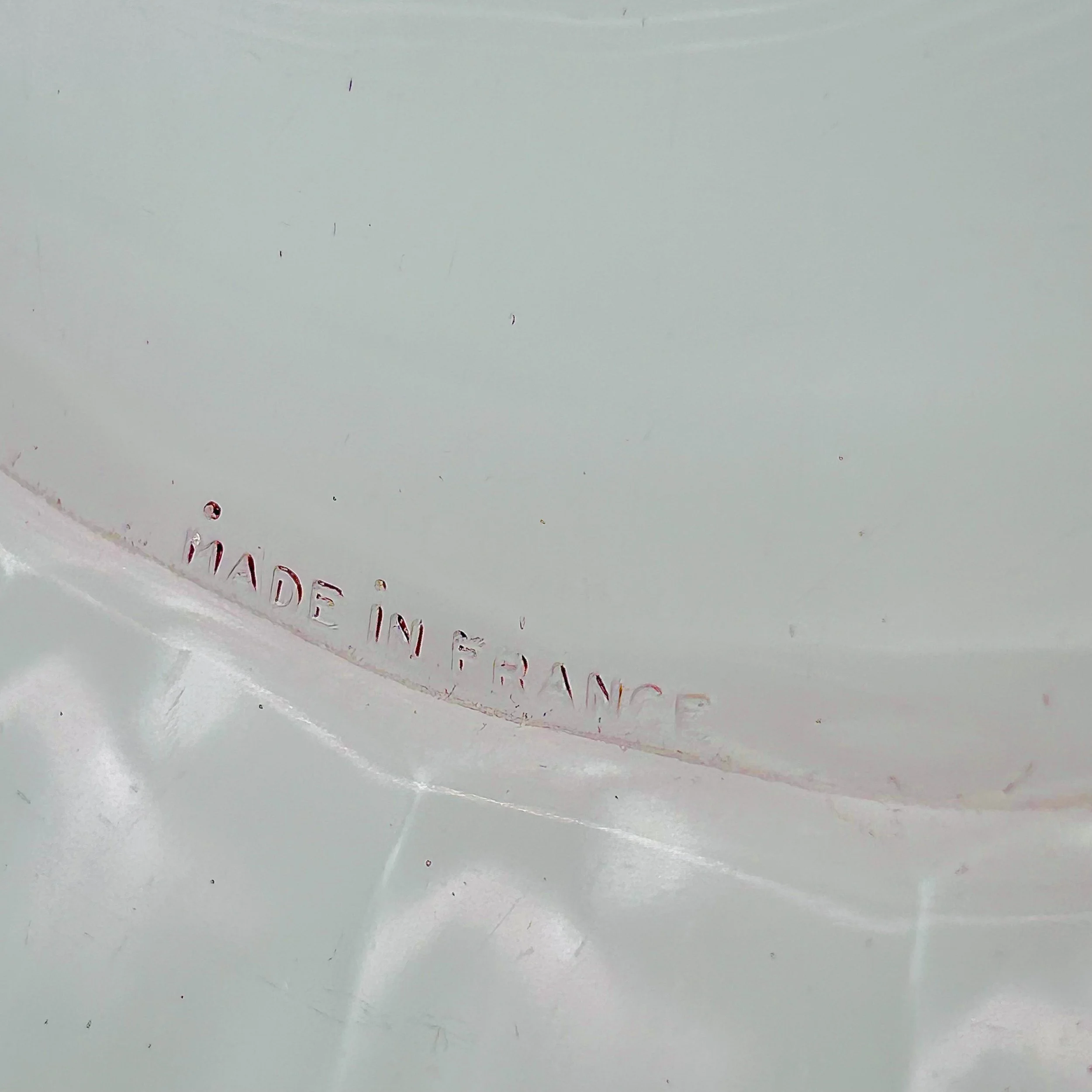
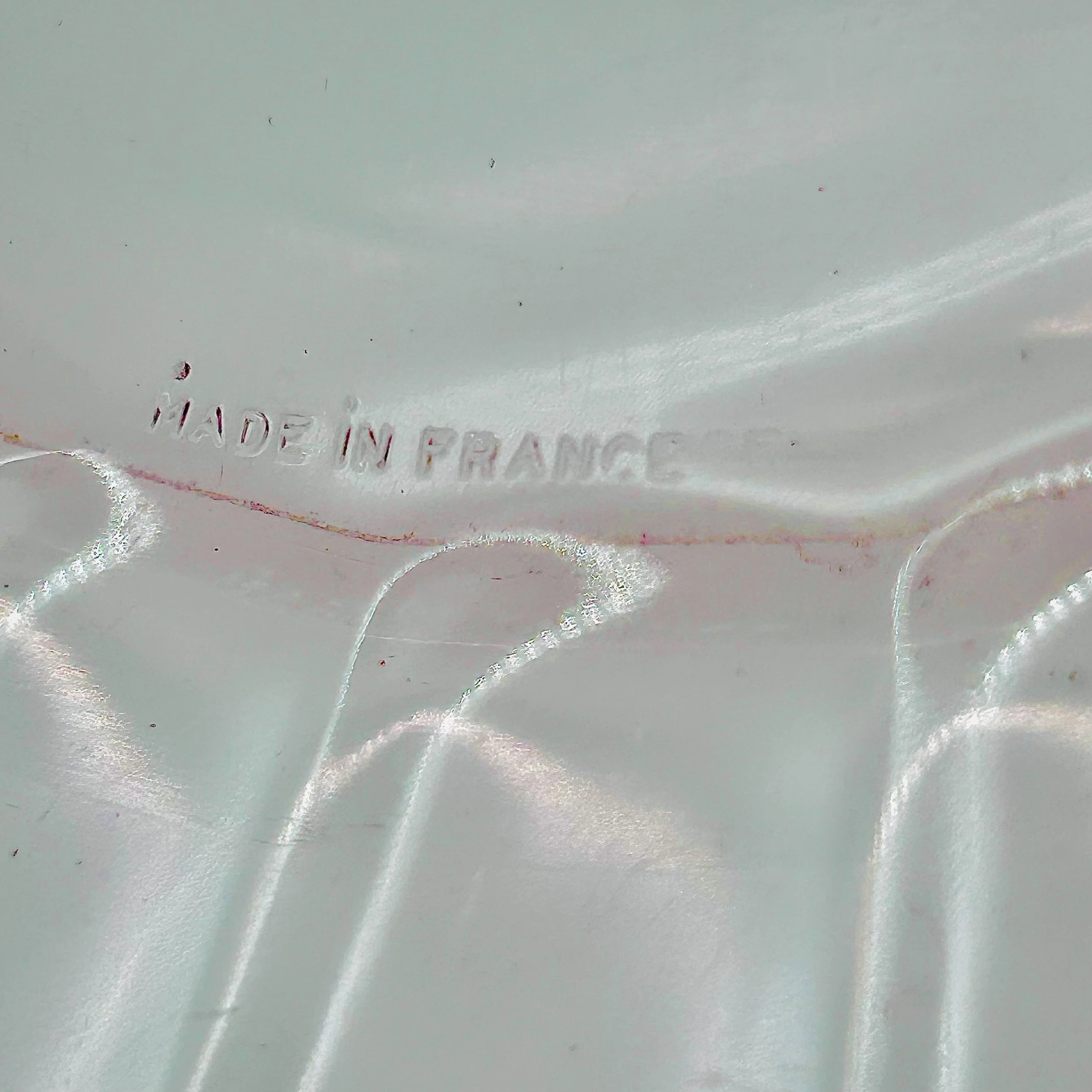
A refined satin-finished pink glass relish tray of elongated oval form, distinguished by its rhythmic fluted sides and softly scalloped rim. The surface carries a luminous opalescent glow, shifting subtly between blush, pearl, and faint lavender undertones under light. Architectural yet delicate, this piece embodies the restrained glamour of early 20th-century pressed art glass and pairs seamlessly with the coordinating satin compote pedestal (sold separately).
Attribution & Period
American pressed art glass, circa 1930s, firmly within the Art Deco period (1920–1939).
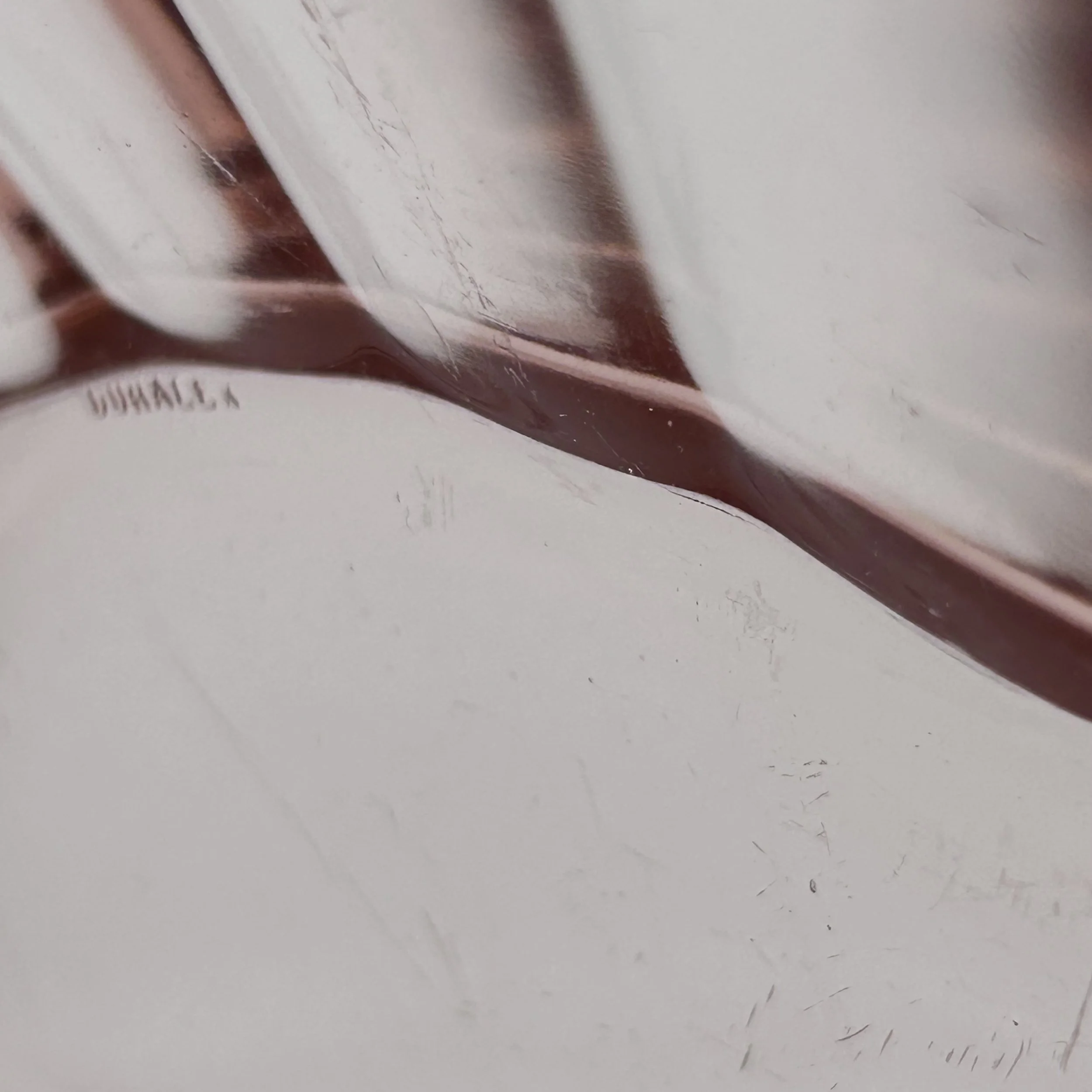
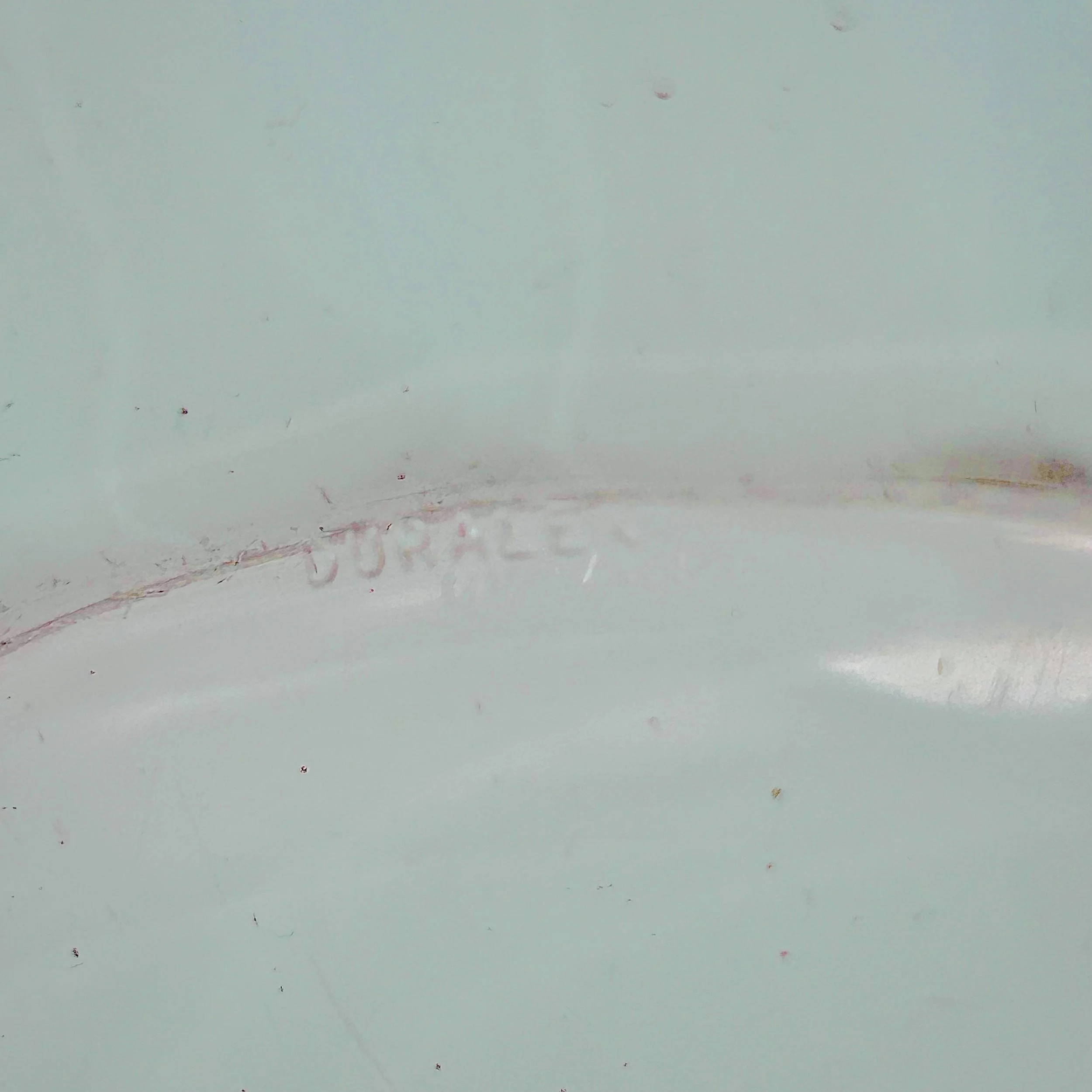
Unsigned. The form, satin finish, and precision-molded fluting are consistent with Depression-era American glass production, likely by one of the major pressed glass houses such as Indiana Glass, Federal Glass, or Jeannette Glass. While not definitively attributable without factory markings, the construction and finish align with documented examples from these manufacturers.
Dimensions & Weight
Length: 10.25 inches
Width: 3.5 inches
Height: 1 1/16 inches
Base: 8.25 inches x 2.5 inches
Weight: 0.792 lbs
Condition
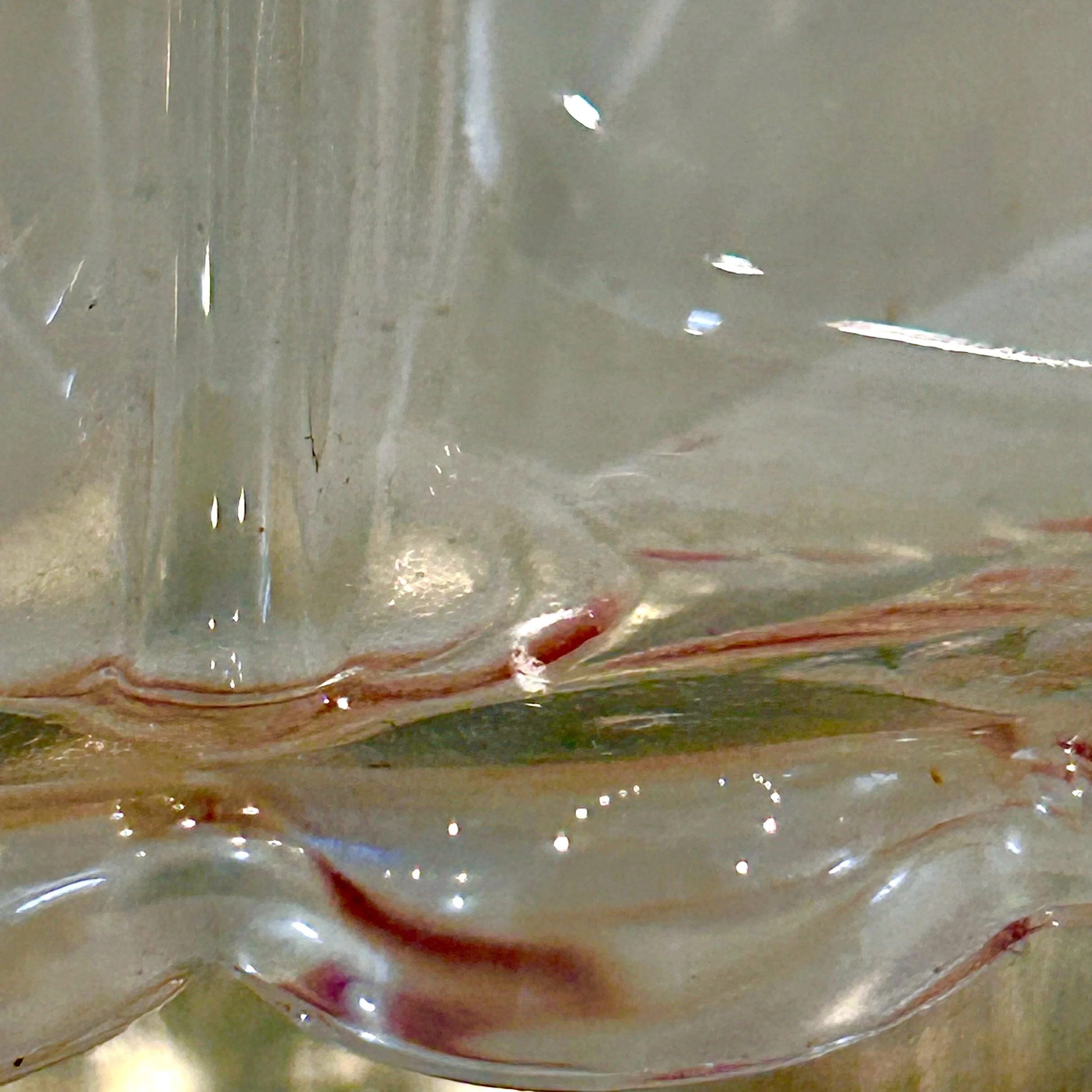
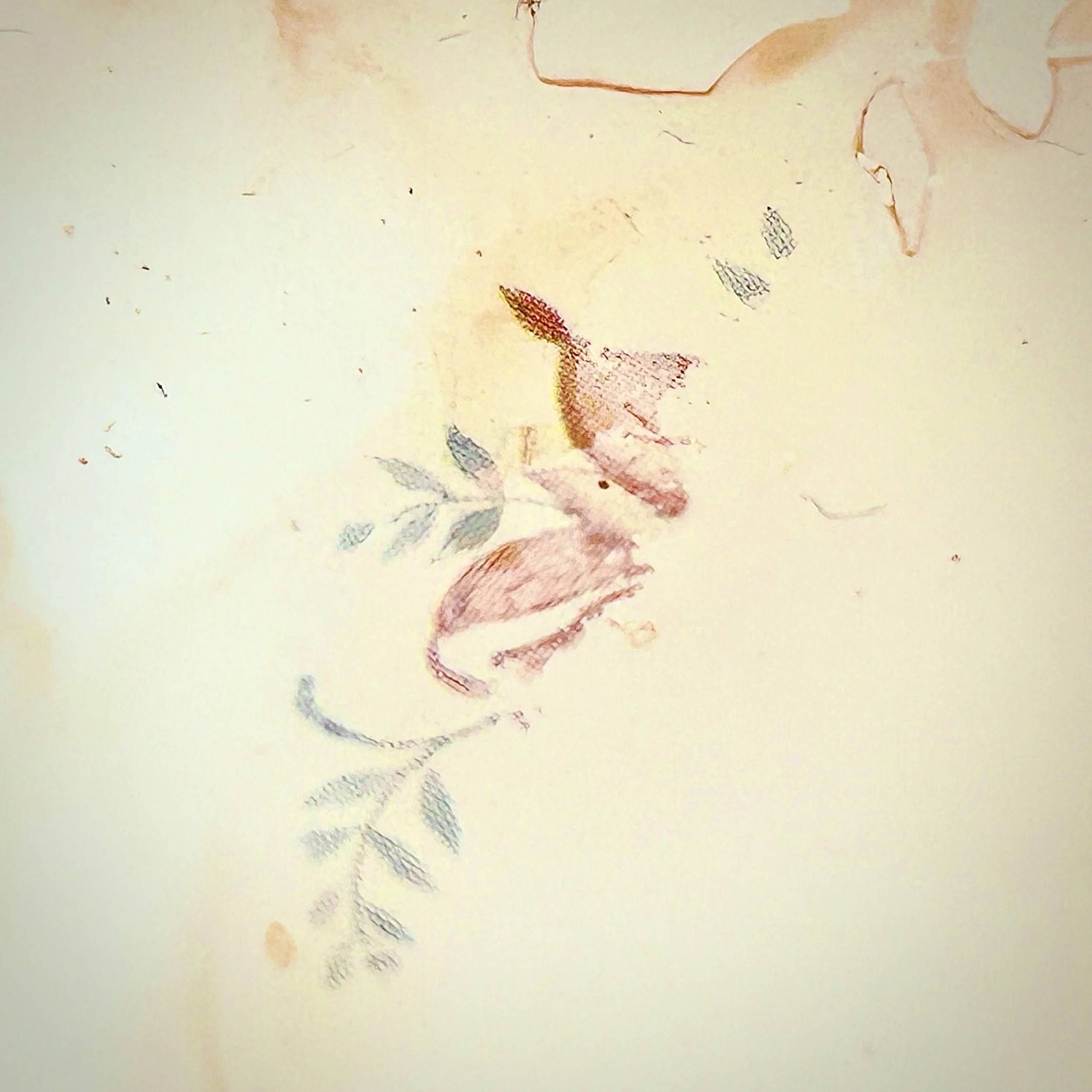
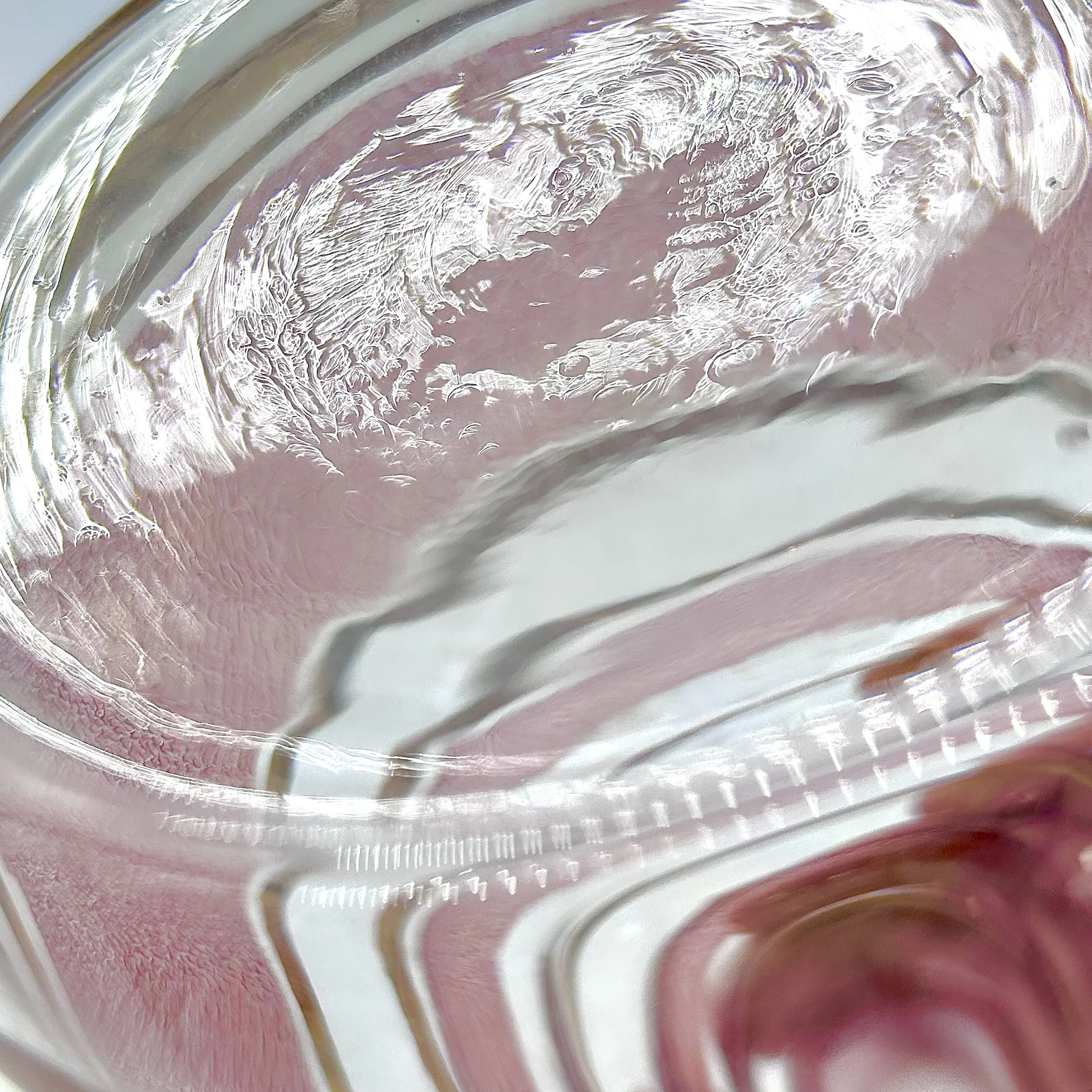
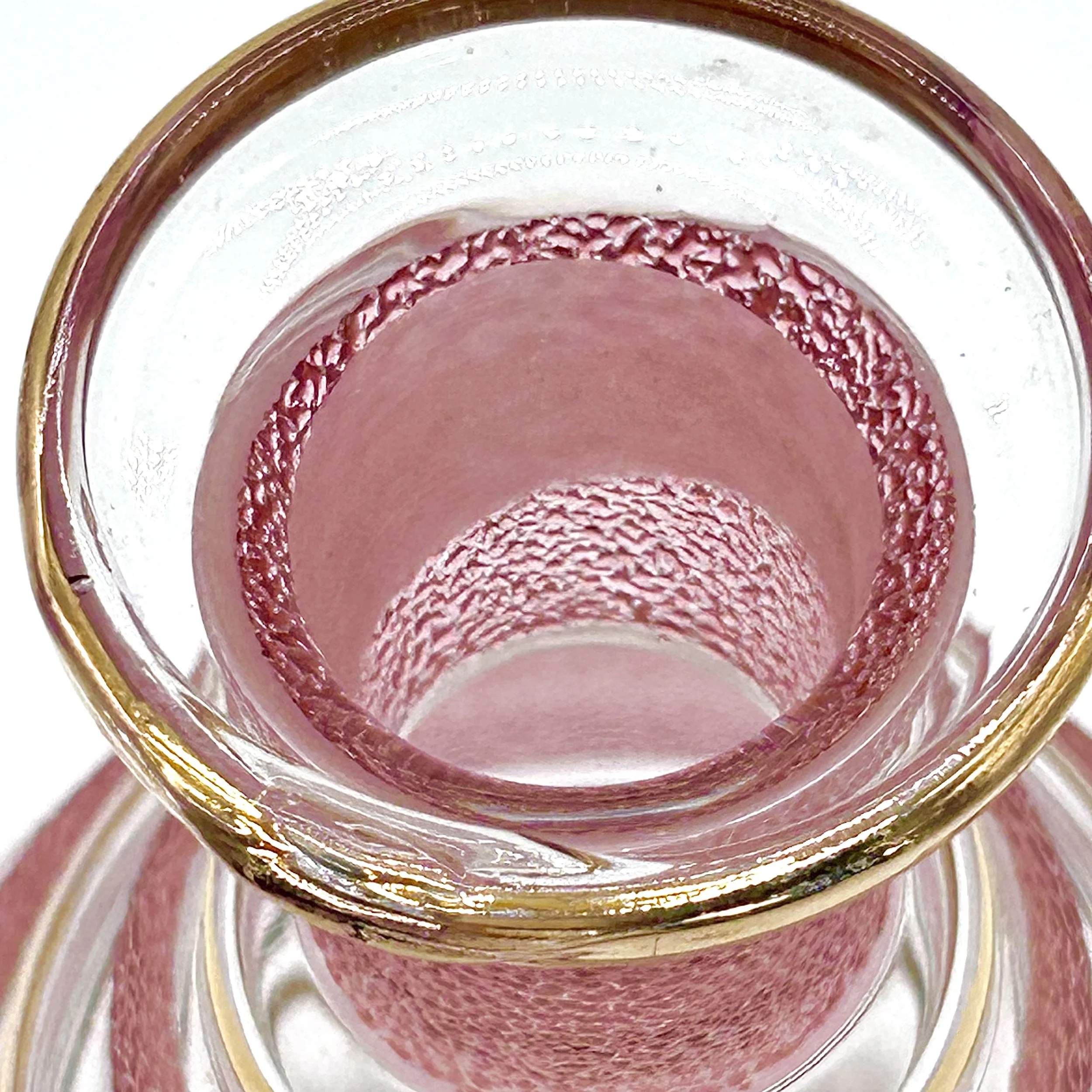
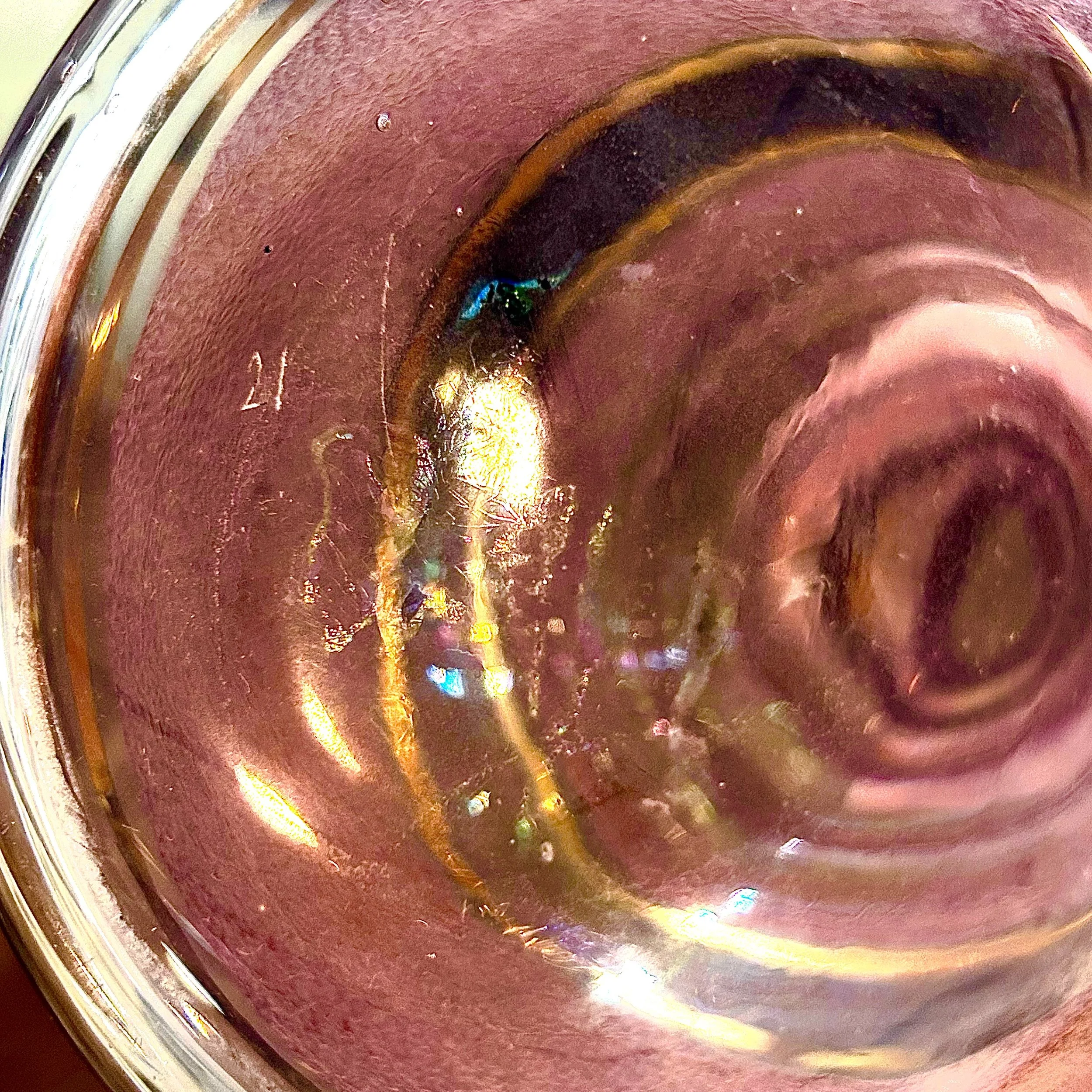
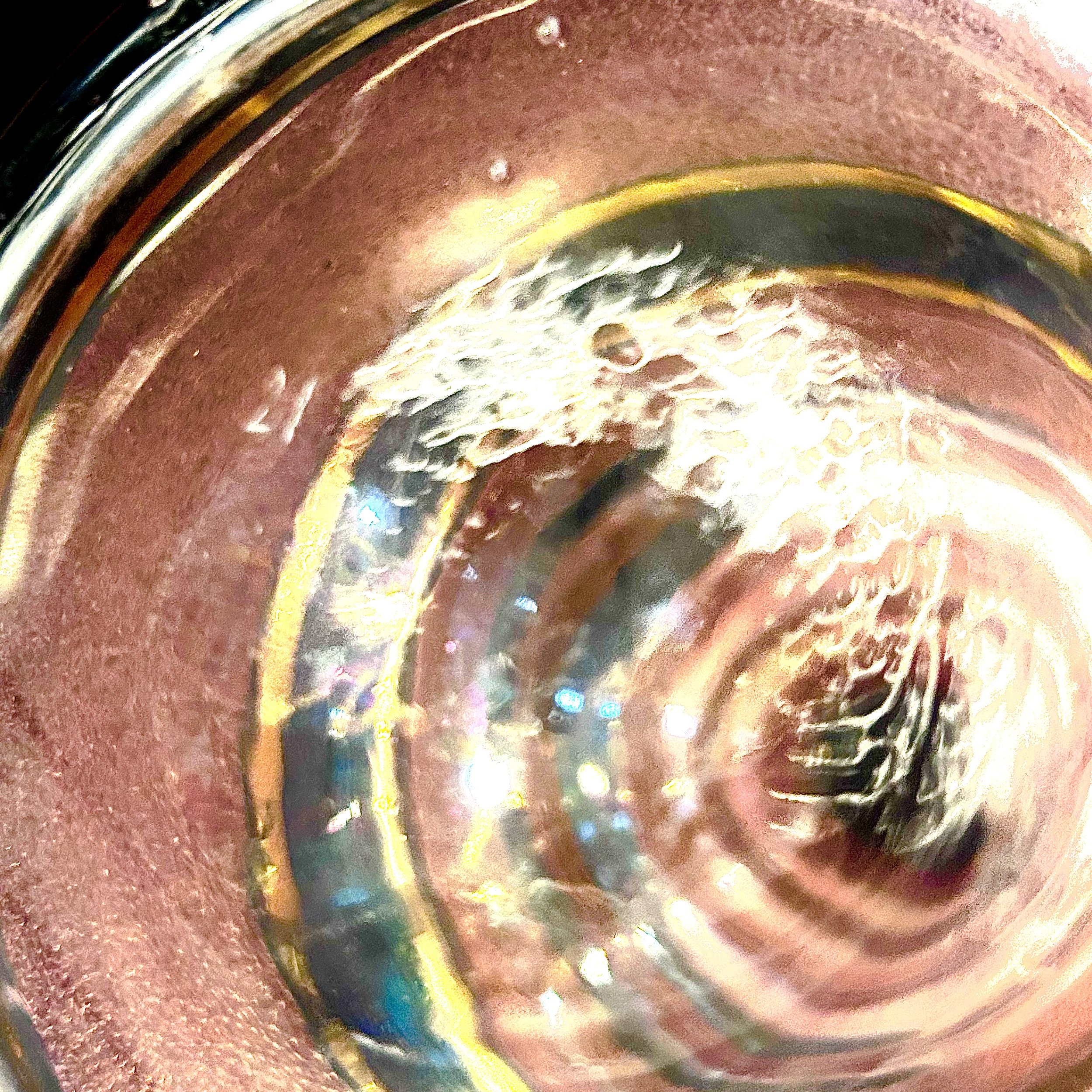
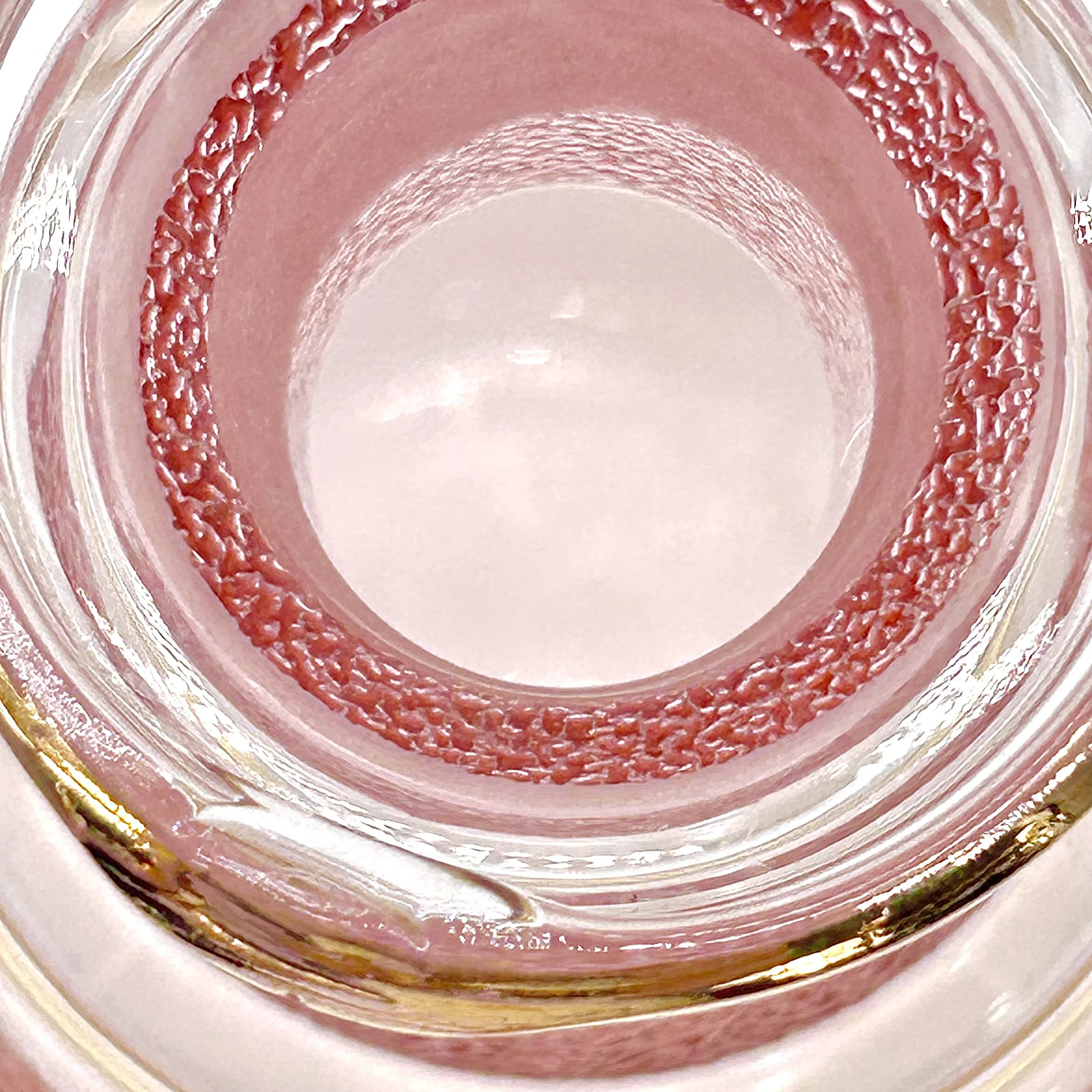
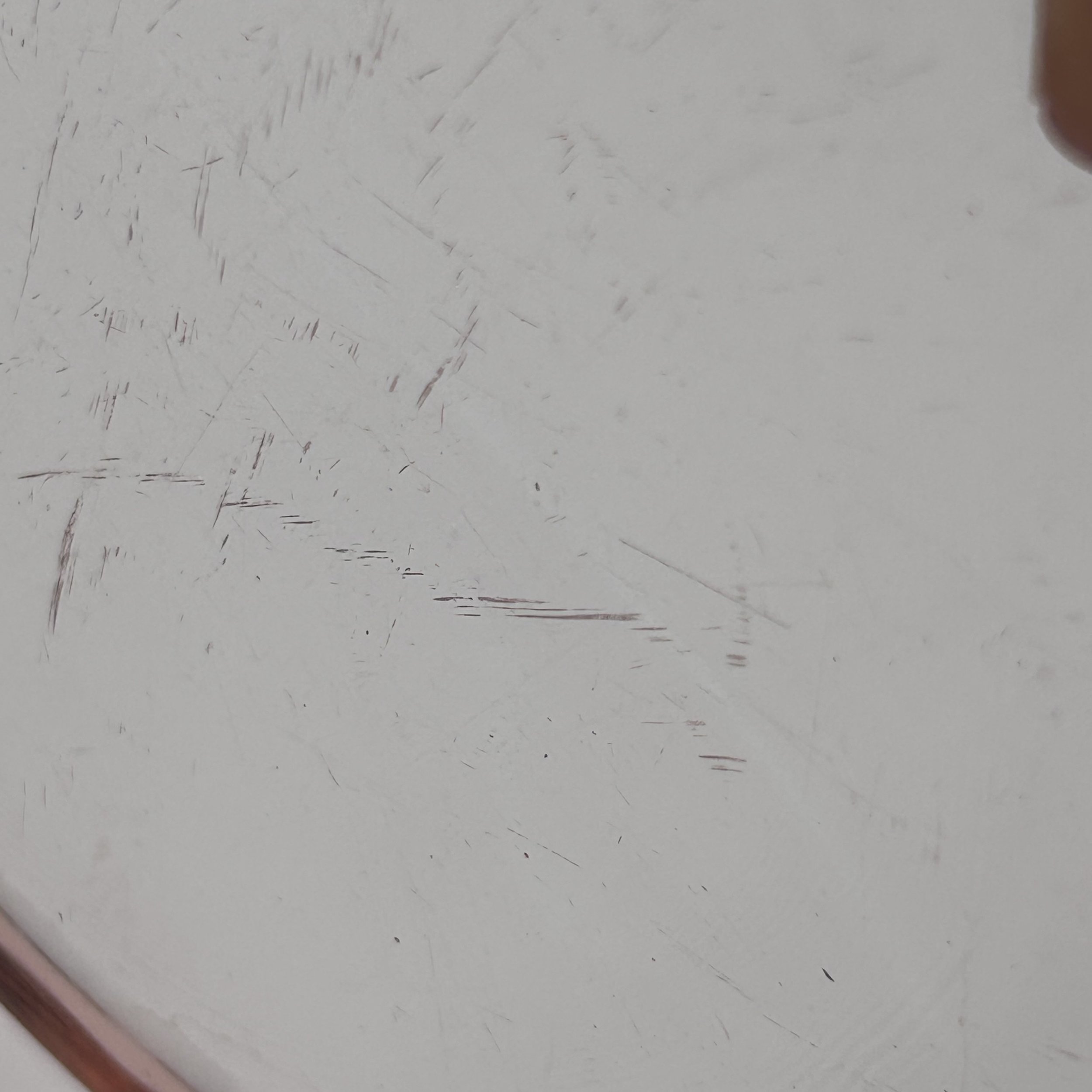
Excellent overall condition with no scratches observed. One minute edge chip is present (clearly documented in final photograph). The satin finish remains even and intact, with no signs of restoration. Structurally sound and displays beautifully.
Authenticity & Construction
Mold-pressed glass with consistent rib geometry and uniform wall thickness, indicative of early 20th-century mechanical pressing techniques. The satin surface was achieved through acid-etching, a common finishing process during the 1930s to soften brilliance and create a velvety, diffused glow.
The elongated oval form and disciplined fluting reflect the Art Deco preference for repetition, symmetry, and streamlined ornamentation. Unlike later studio glass, this example demonstrates industrial precision and period-correct proportions. The color is a soft pink often associated with Depression-era glass production, a tone that remains highly desirable among collectors for its warmth and display versatility.
Placement
Elegant as a cocktail garnish tray, olive dish, or architectural accent layered into a bar vignette. Particularly striking when paired with the matching satin compote pedestal (sold separately), creating a cohesive Deco serving arrangement. Works beautifully in Art Deco, Palm Beach Regency, French Coastal-inspired interiors, or layered maximalist settings.
STANDARD ATTRIBUTION & VALUE DISCLOSURE; This piece is described to the best of current scholarly and market knowledge. Any maker or regional attribution is based on visual analysis, materials, construction techniques, and documented stylistic comparisons. As with many antique glass objects, definitive attribution may not be possible without original labels or factory records. Pricing reflects condition, quality, decorative appeal, and current collector demand rather than a guaranteed maker identification.
A refined satin-finished pink glass relish tray of elongated oval form, distinguished by its rhythmic fluted sides and softly scalloped rim. The surface carries a luminous opalescent glow, shifting subtly between blush, pearl, and faint lavender undertones under light. Architectural yet delicate, this piece embodies the restrained glamour of early 20th-century pressed art glass and pairs seamlessly with the coordinating satin compote pedestal (sold separately).
Attribution & Period
American pressed art glass, circa 1930s, firmly within the Art Deco period (1920–1939).
Unsigned. The form, satin finish, and precision-molded fluting are consistent with Depression-era American glass production, likely by one of the major pressed glass houses such as Indiana Glass, Federal Glass, or Jeannette Glass. While not definitively attributable without factory markings, the construction and finish align with documented examples from these manufacturers.
Dimensions & Weight
Length: 10.25 inches
Width: 3.5 inches
Height: 1 1/16 inches
Base: 8.25 inches x 2.5 inches
Weight: 0.792 lbs
Condition
Excellent overall condition with no scratches observed. One minute edge chip is present (clearly documented in final photograph). The satin finish remains even and intact, with no signs of restoration. Structurally sound and displays beautifully.
Authenticity & Construction
Mold-pressed glass with consistent rib geometry and uniform wall thickness, indicative of early 20th-century mechanical pressing techniques. The satin surface was achieved through acid-etching, a common finishing process during the 1930s to soften brilliance and create a velvety, diffused glow.
The elongated oval form and disciplined fluting reflect the Art Deco preference for repetition, symmetry, and streamlined ornamentation. Unlike later studio glass, this example demonstrates industrial precision and period-correct proportions. The color is a soft pink often associated with Depression-era glass production, a tone that remains highly desirable among collectors for its warmth and display versatility.
Placement
Elegant as a cocktail garnish tray, olive dish, or architectural accent layered into a bar vignette. Particularly striking when paired with the matching satin compote pedestal (sold separately), creating a cohesive Deco serving arrangement. Works beautifully in Art Deco, Palm Beach Regency, French Coastal-inspired interiors, or layered maximalist settings.
STANDARD ATTRIBUTION & VALUE DISCLOSURE; This piece is described to the best of current scholarly and market knowledge. Any maker or regional attribution is based on visual analysis, materials, construction techniques, and documented stylistic comparisons. As with many antique glass objects, definitive attribution may not be possible without original labels or factory records. Pricing reflects condition, quality, decorative appeal, and current collector demand rather than a guaranteed maker identification.

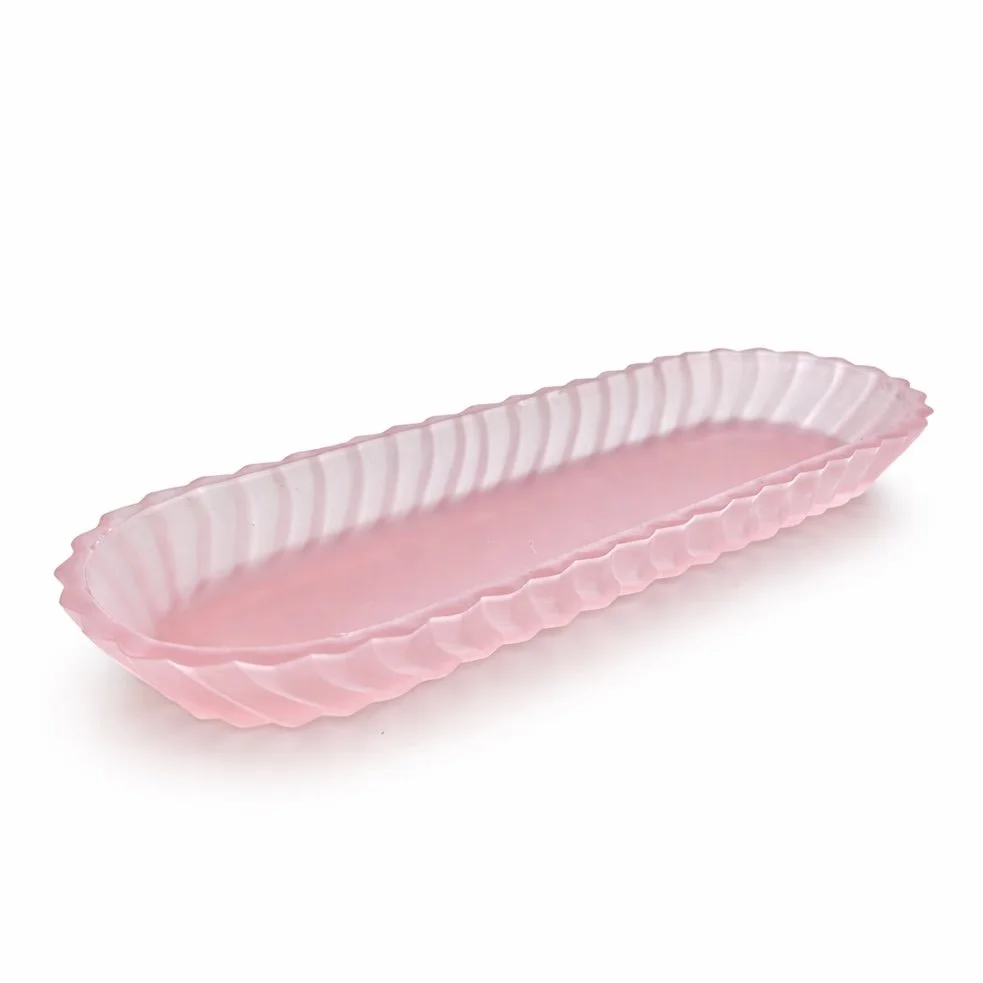 Image 1 of 11
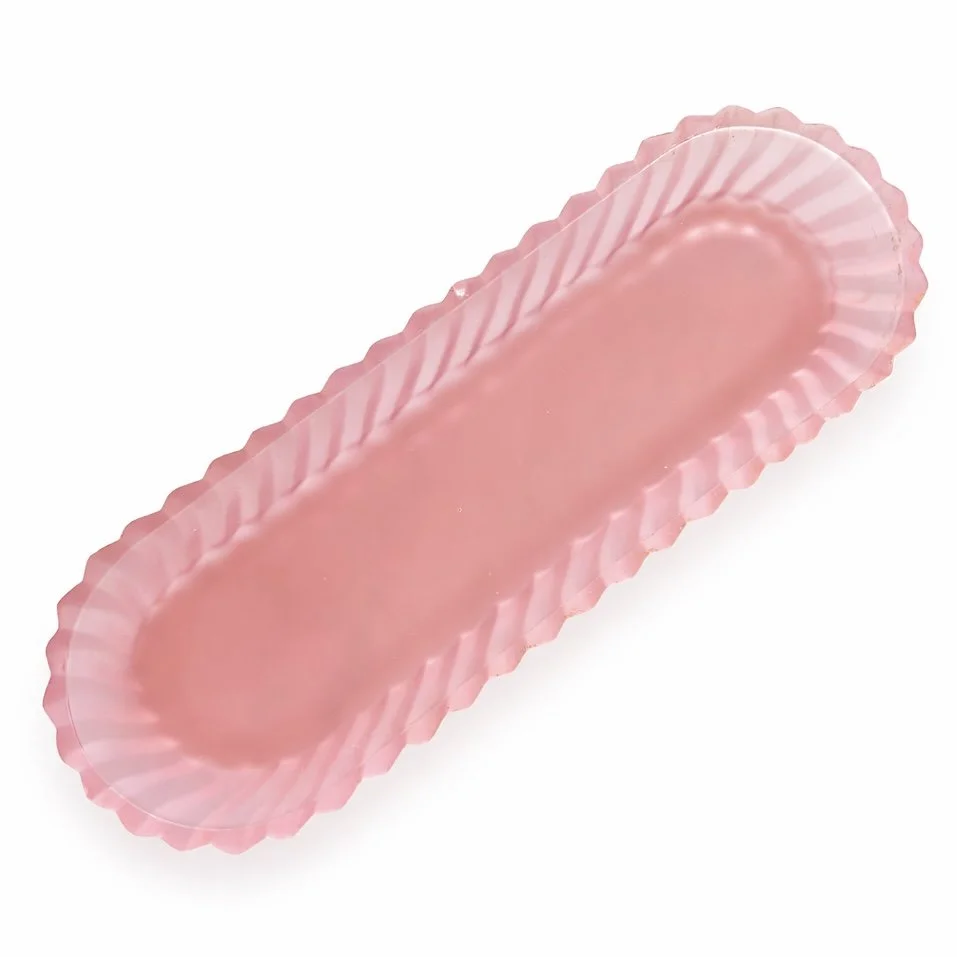 Image 2 of 11
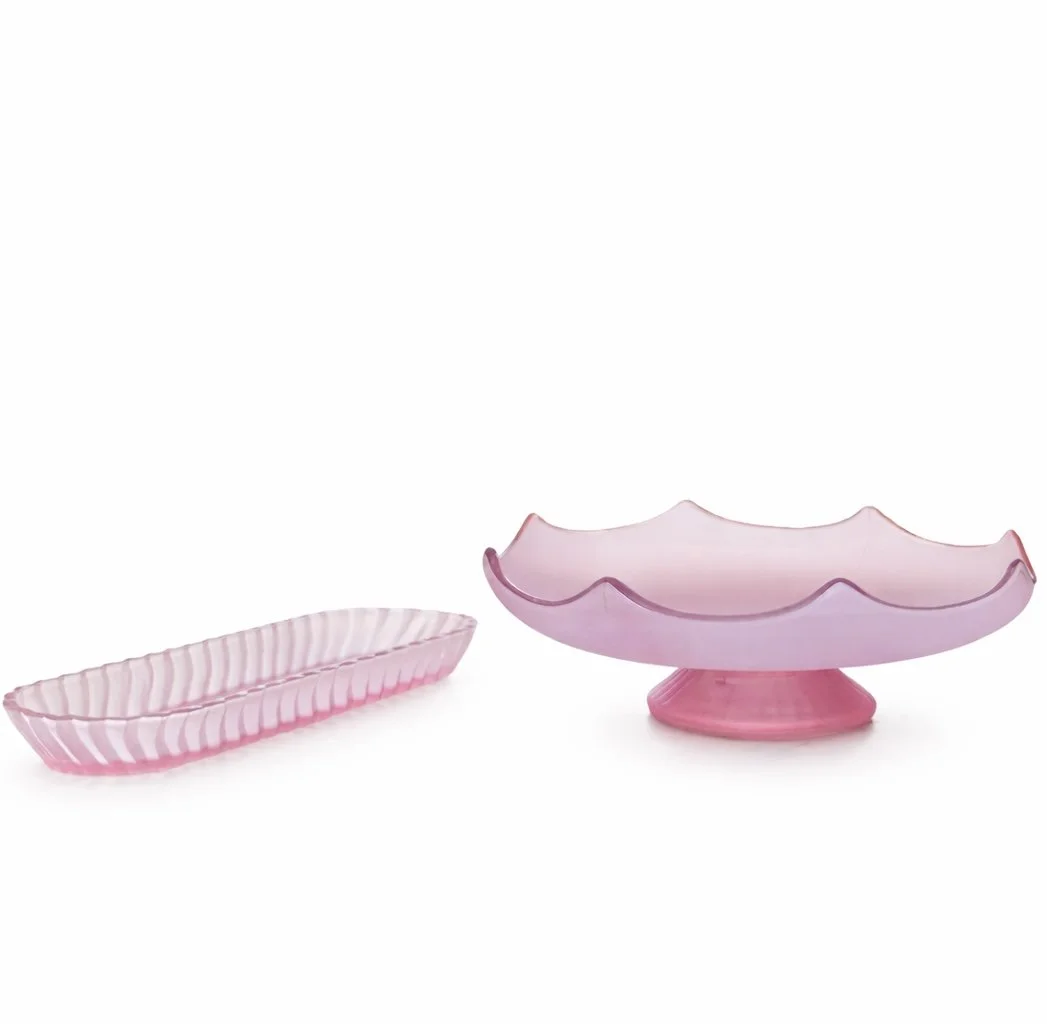 Image 3 of 11
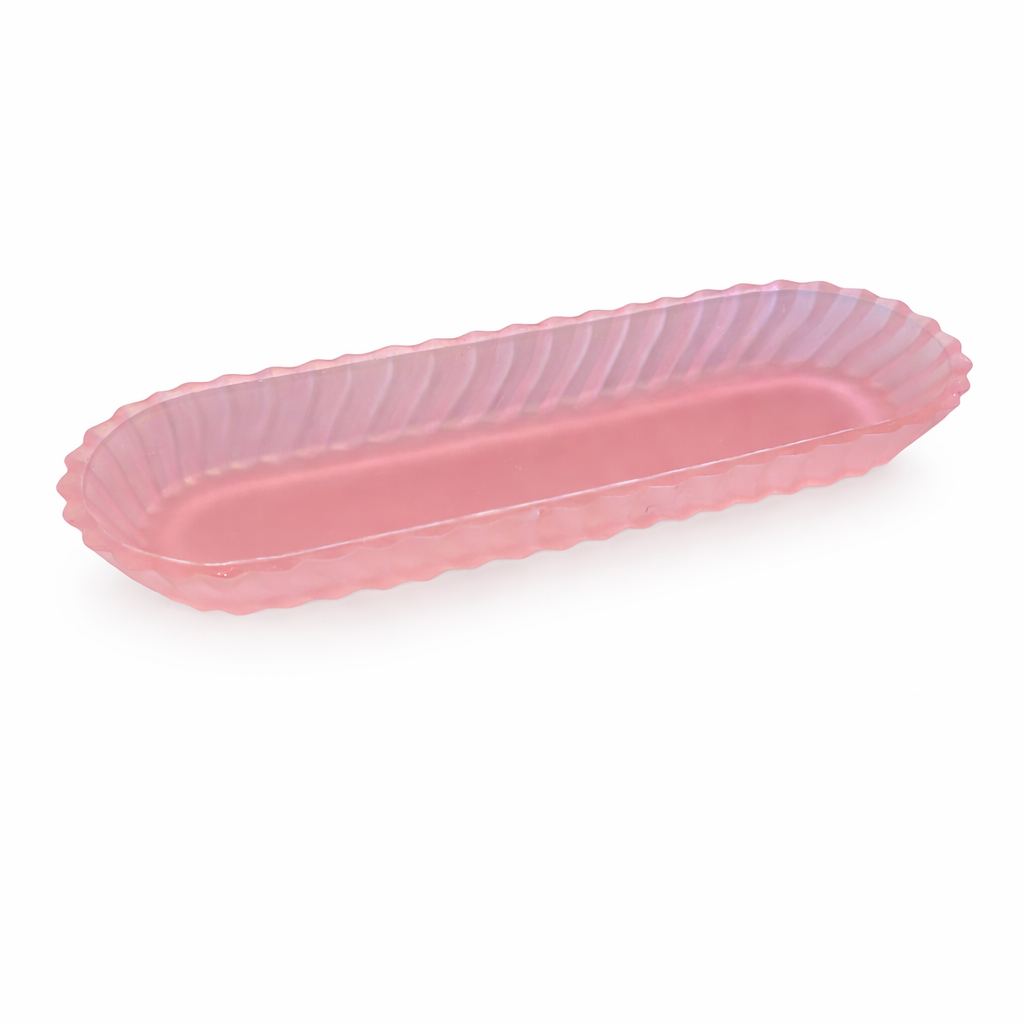 Image 4 of 11
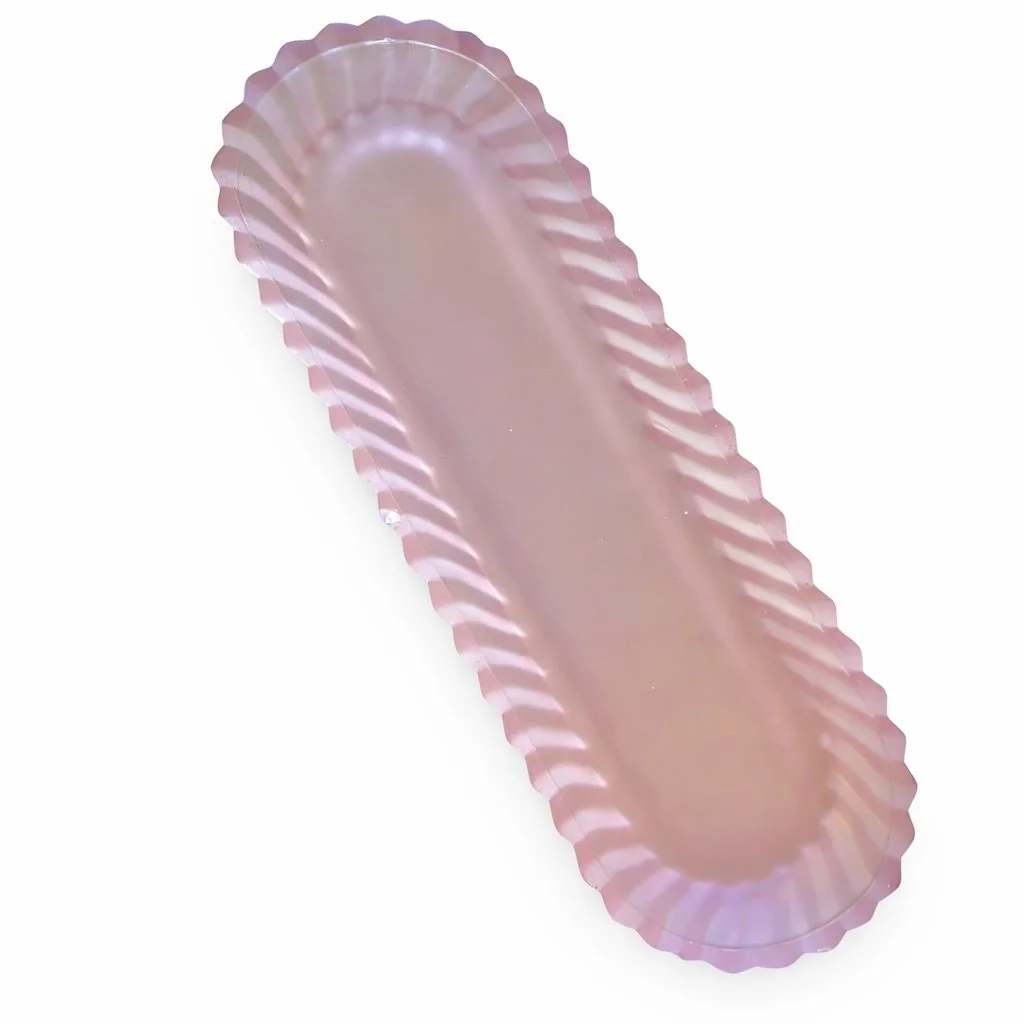 Image 5 of 11
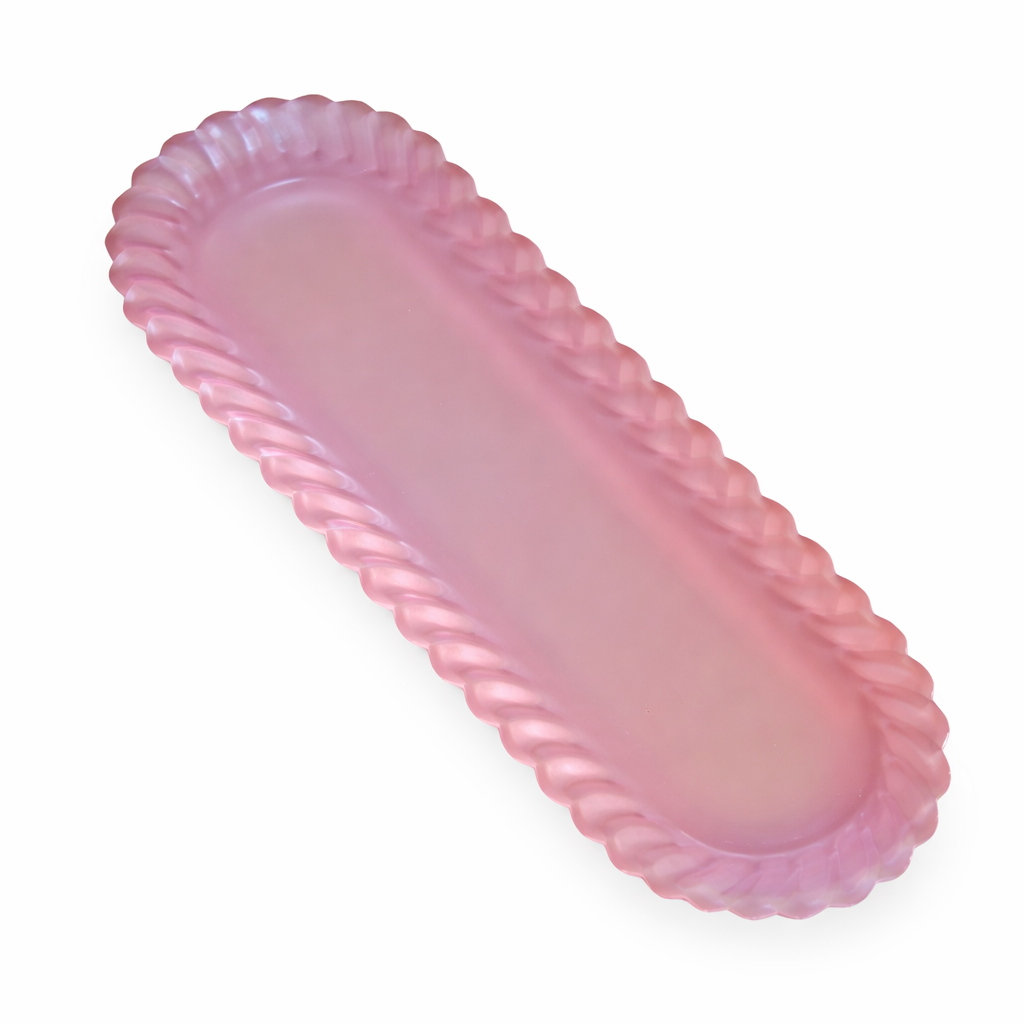 Image 6 of 11
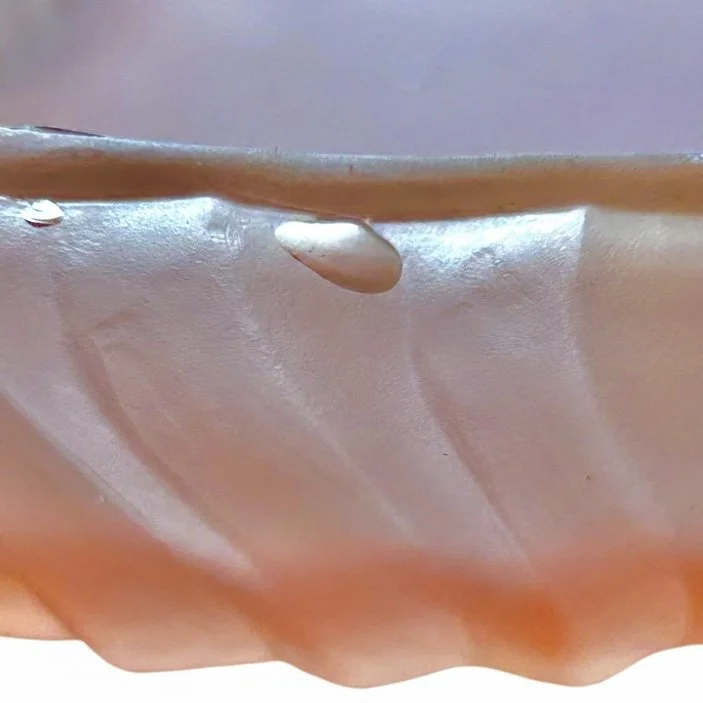 Image 7 of 11
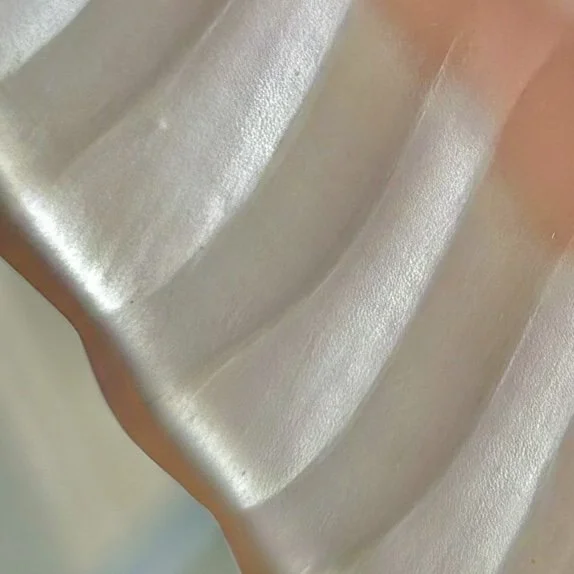 Image 8 of 11
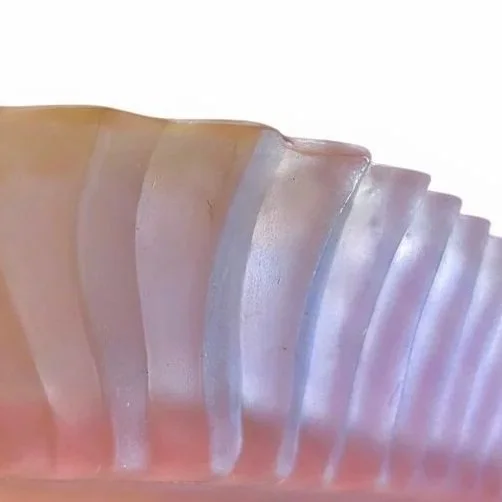 Image 9 of 11
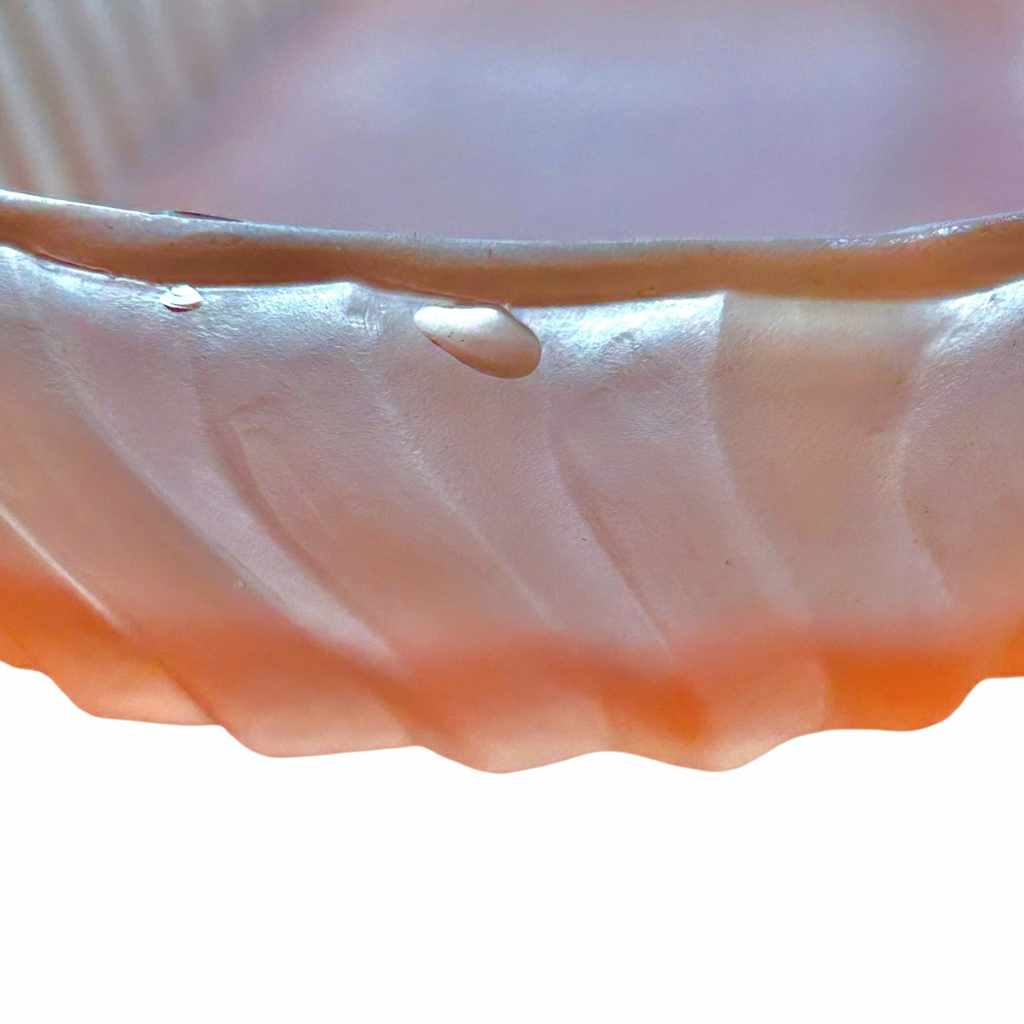 Image 10 of 11
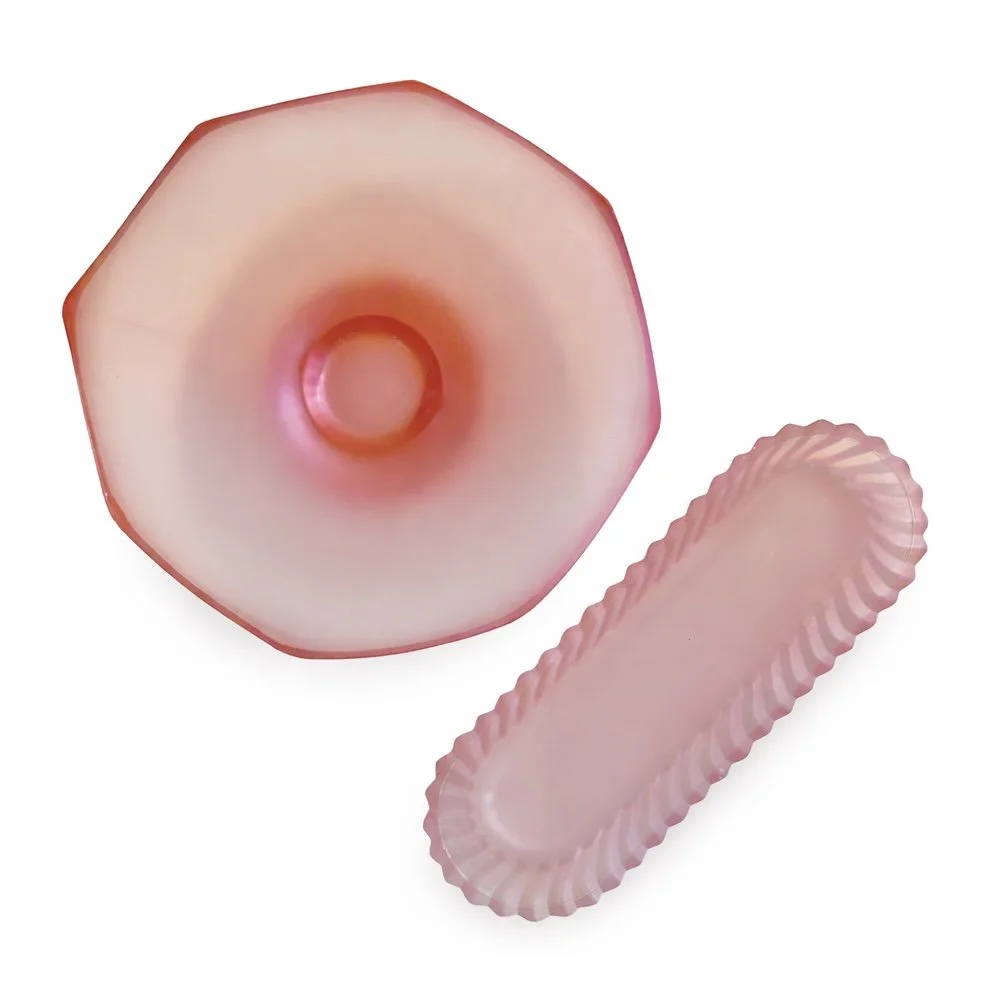 Image 11 of 11