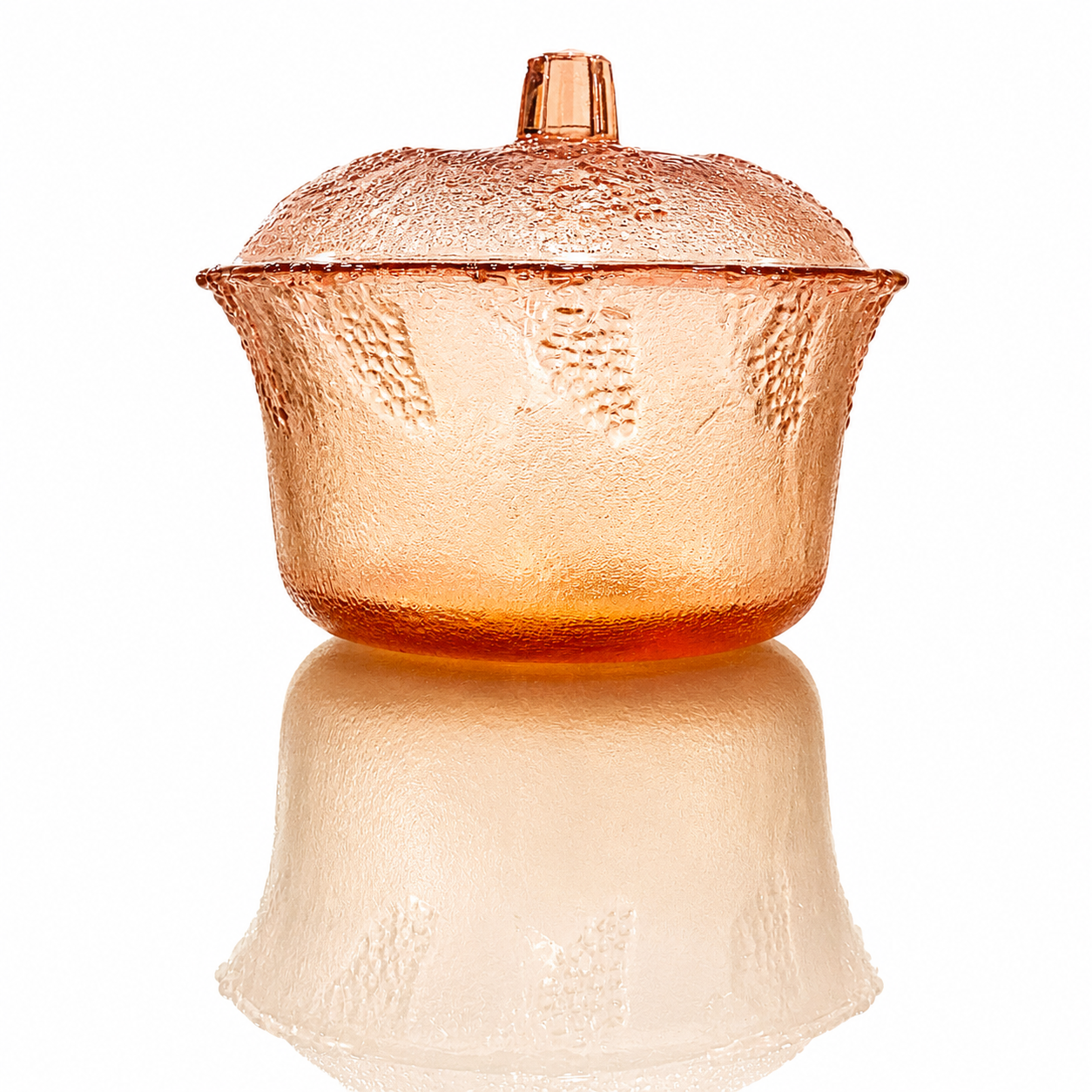
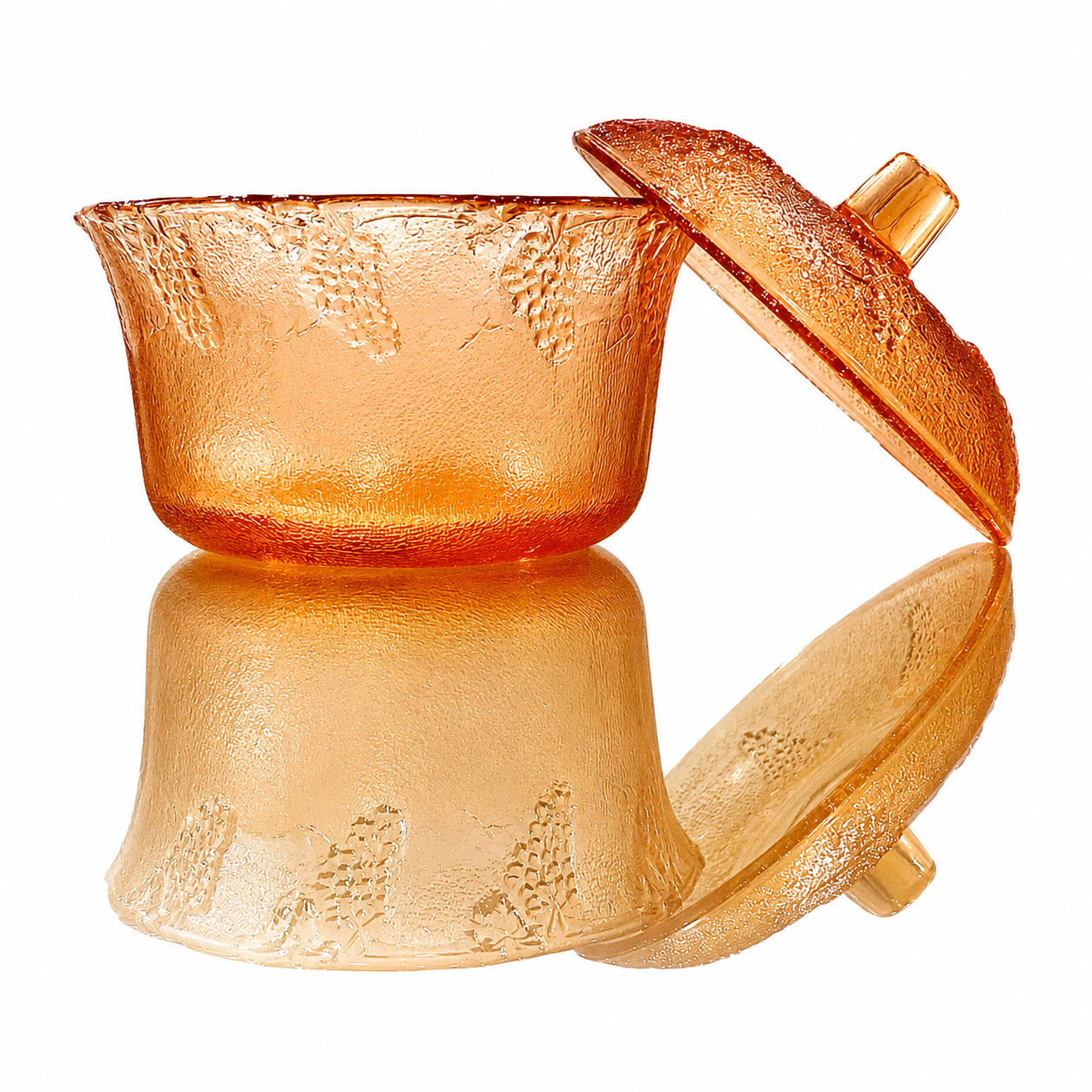
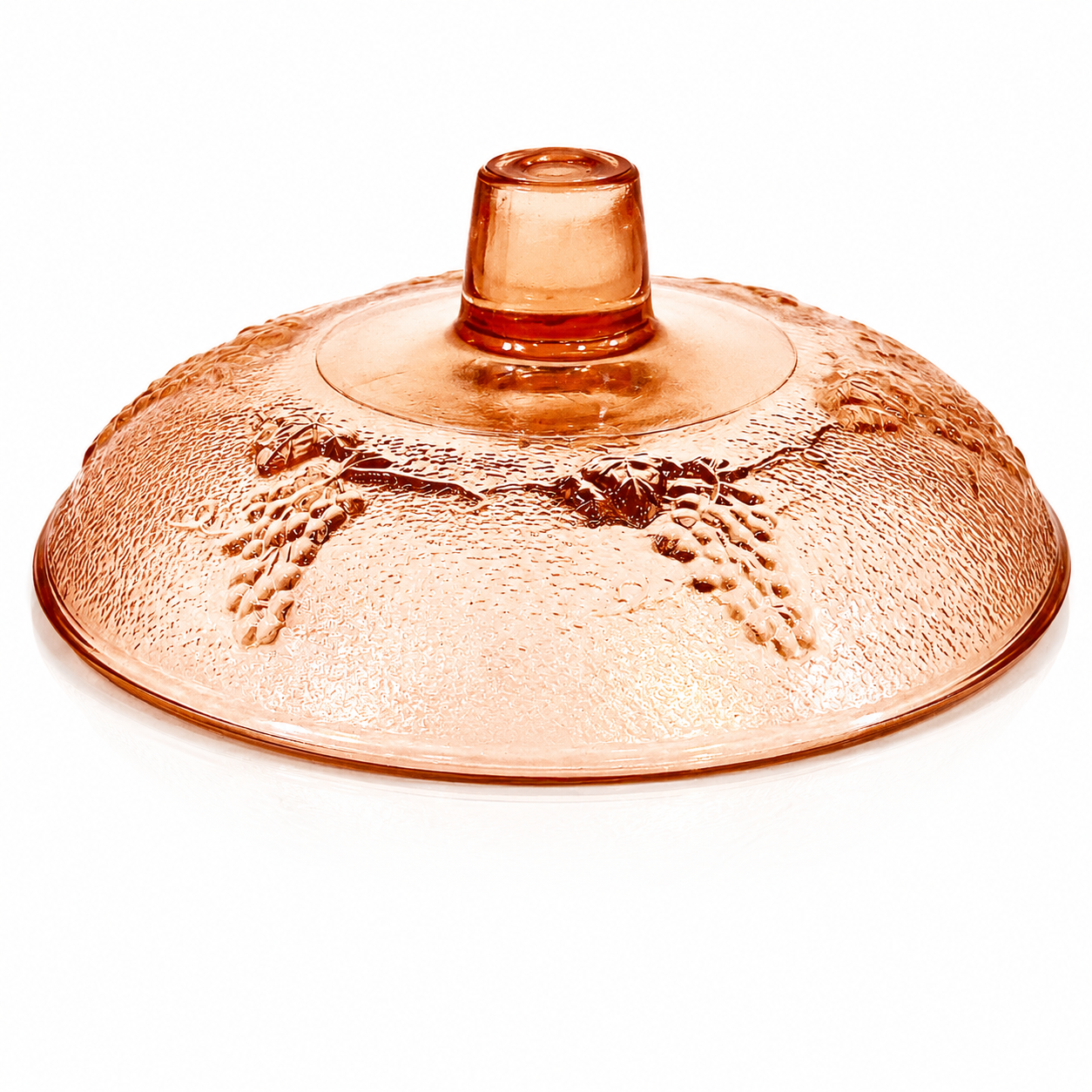
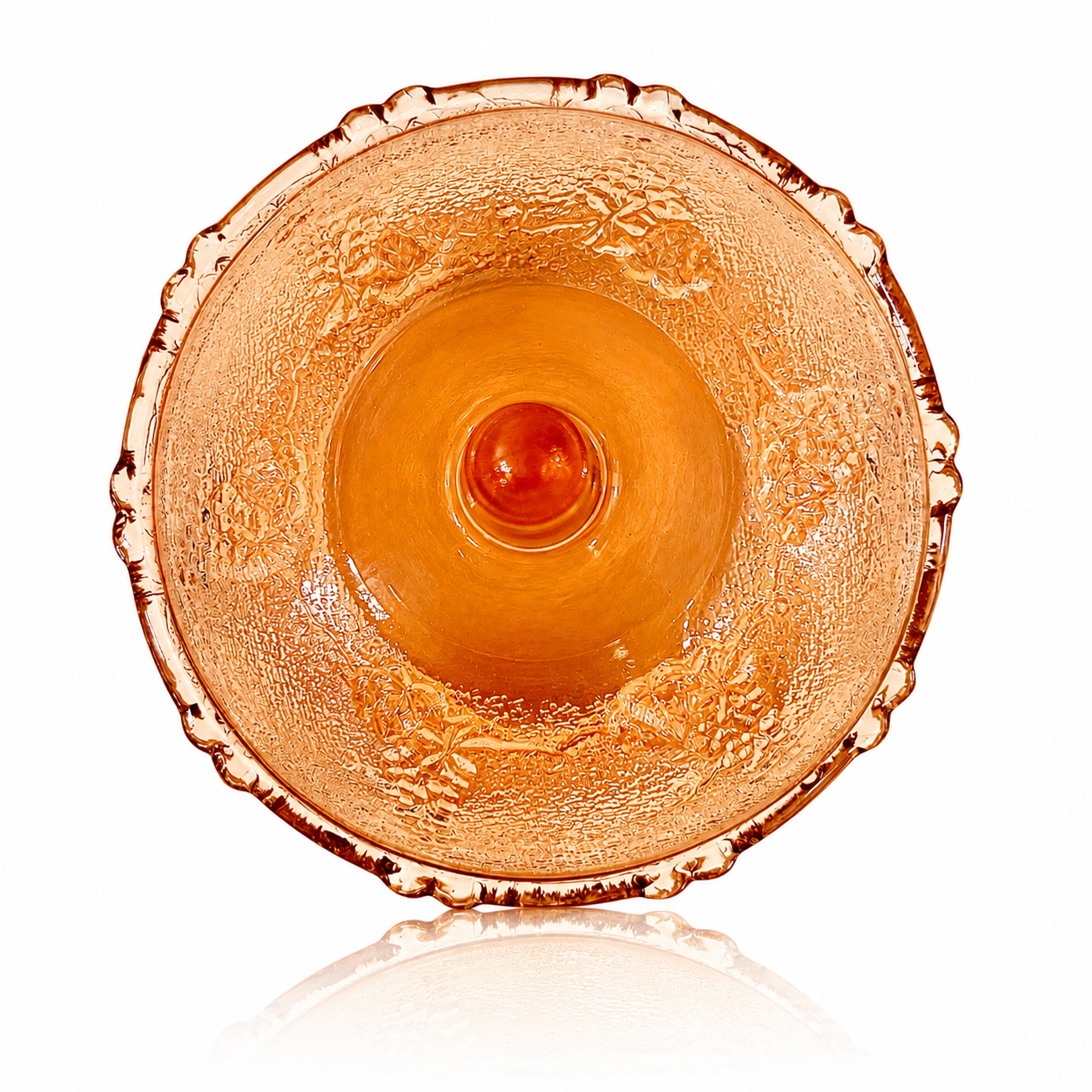
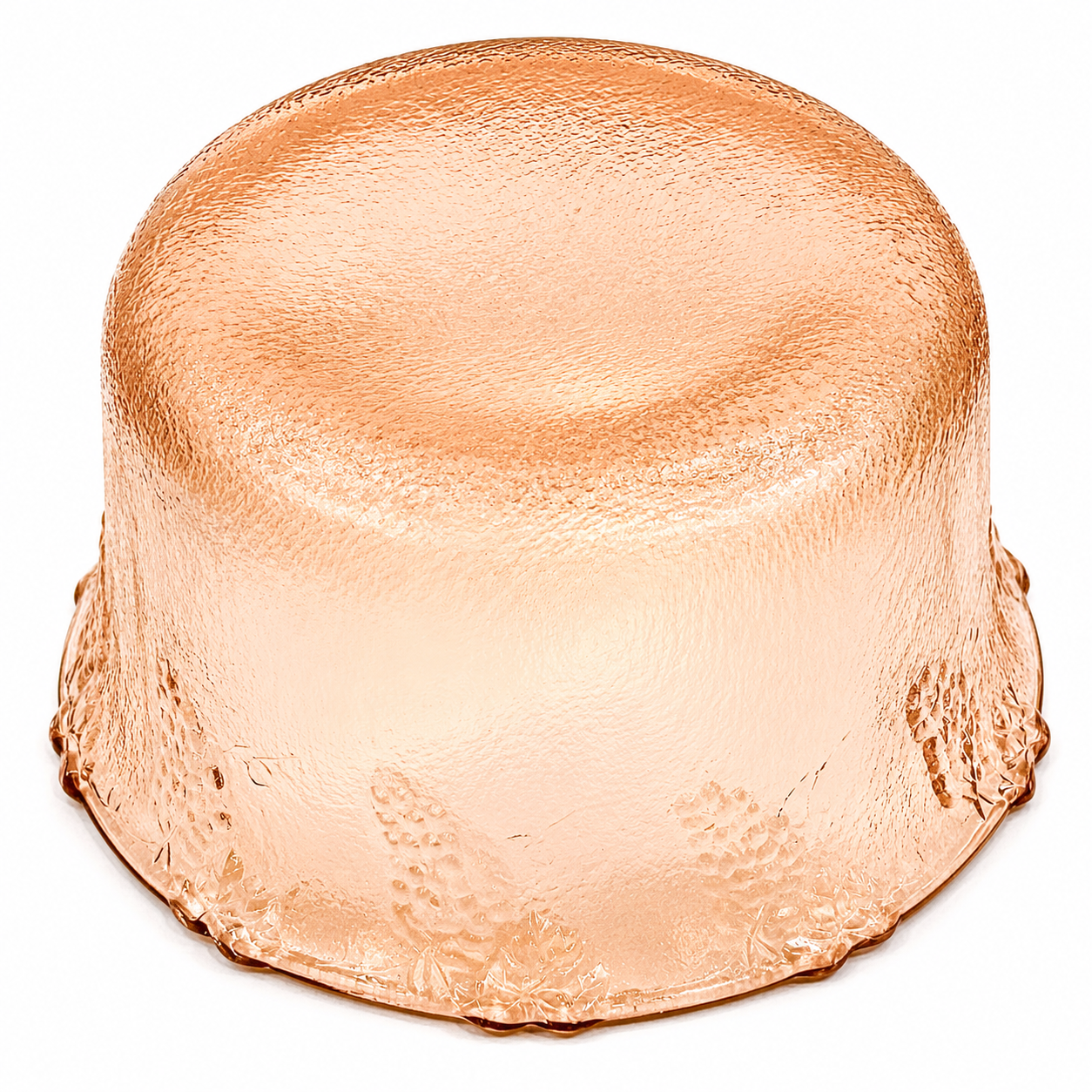
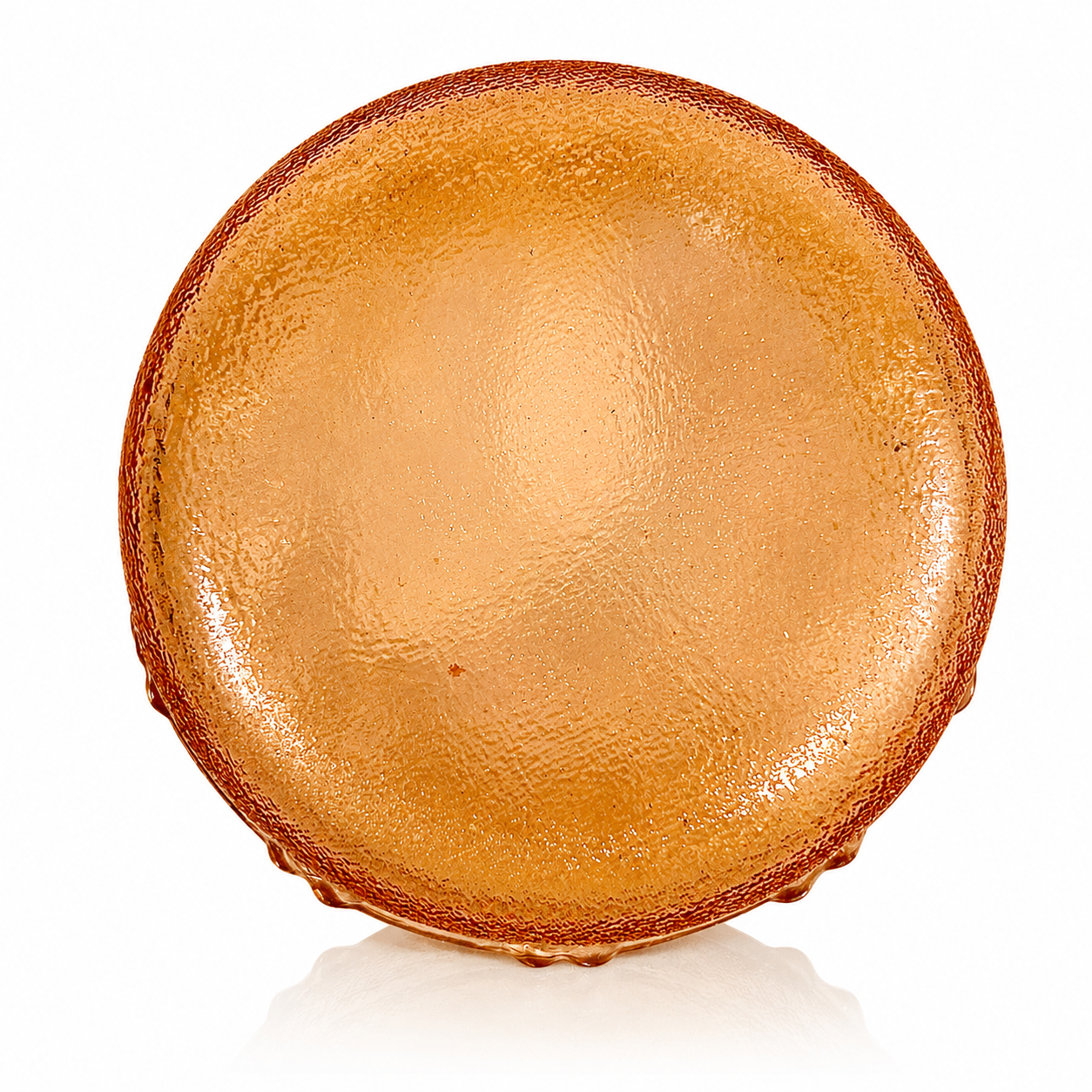
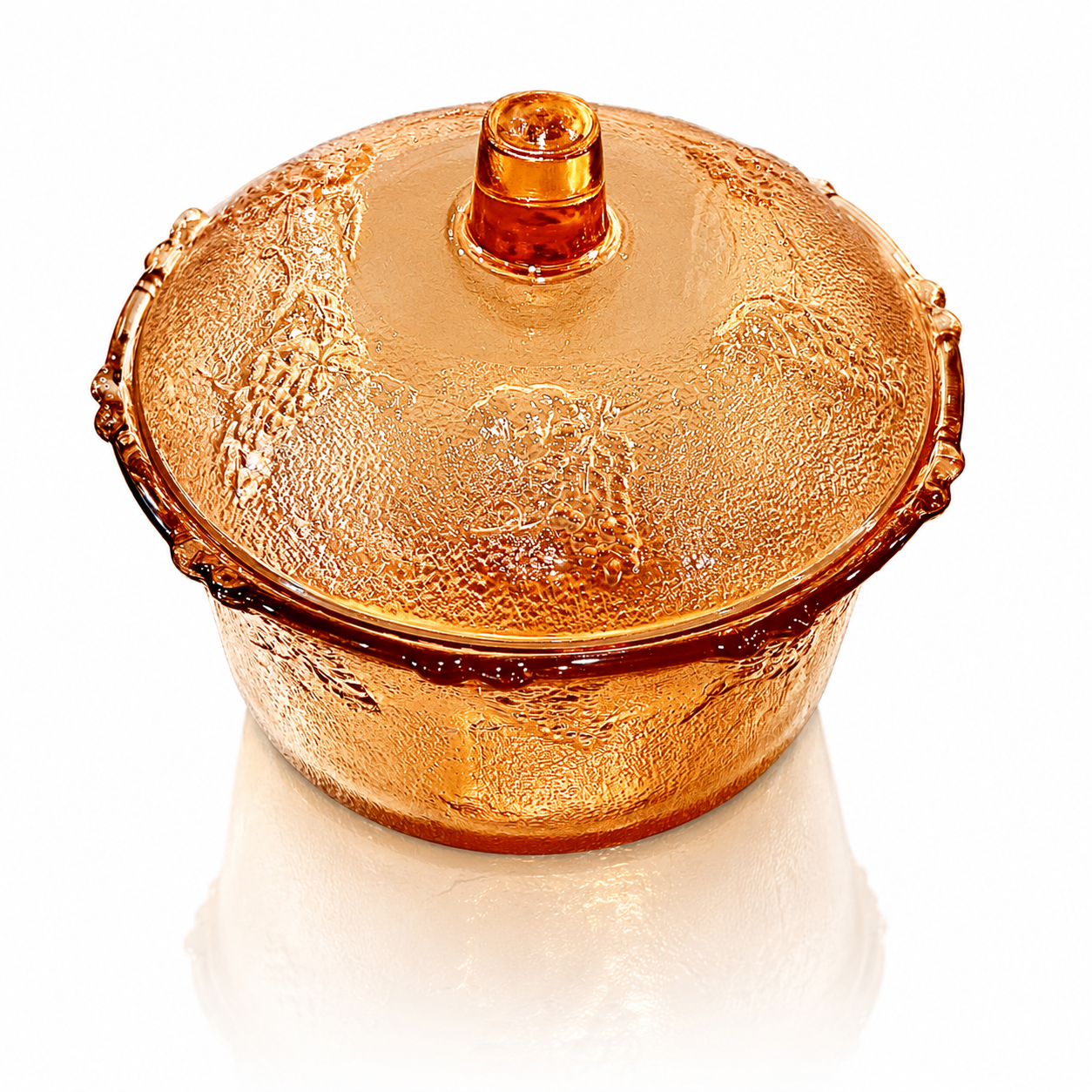
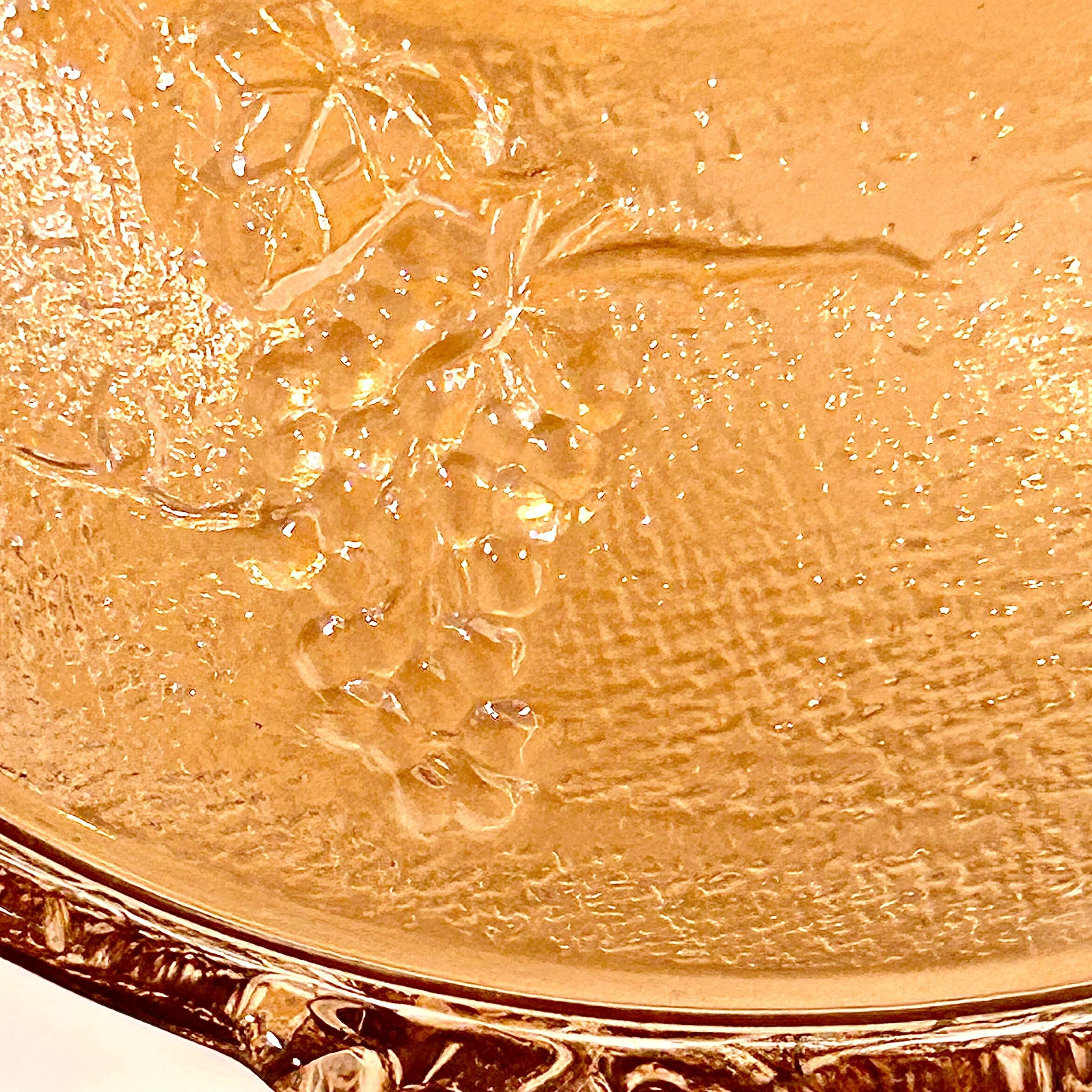
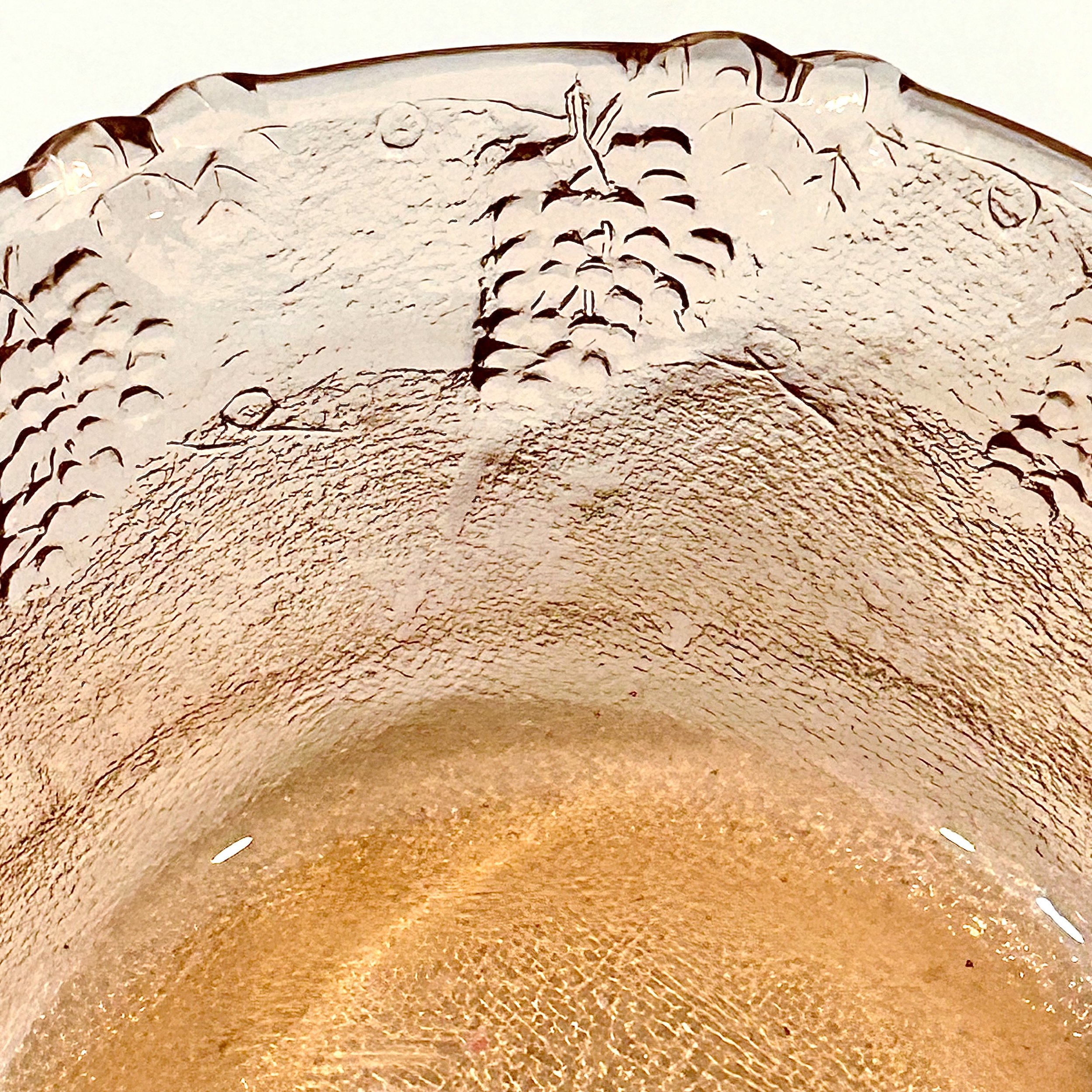
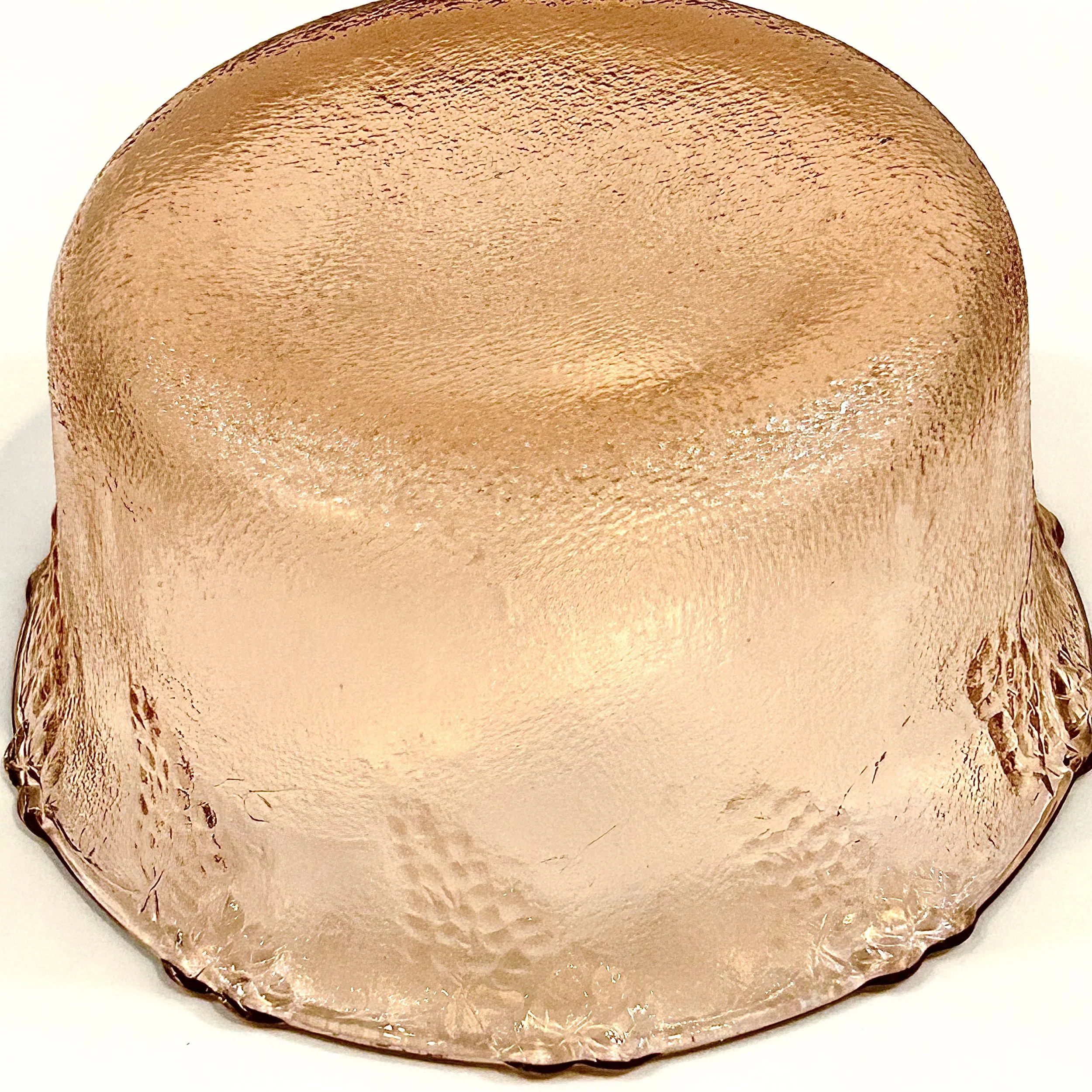
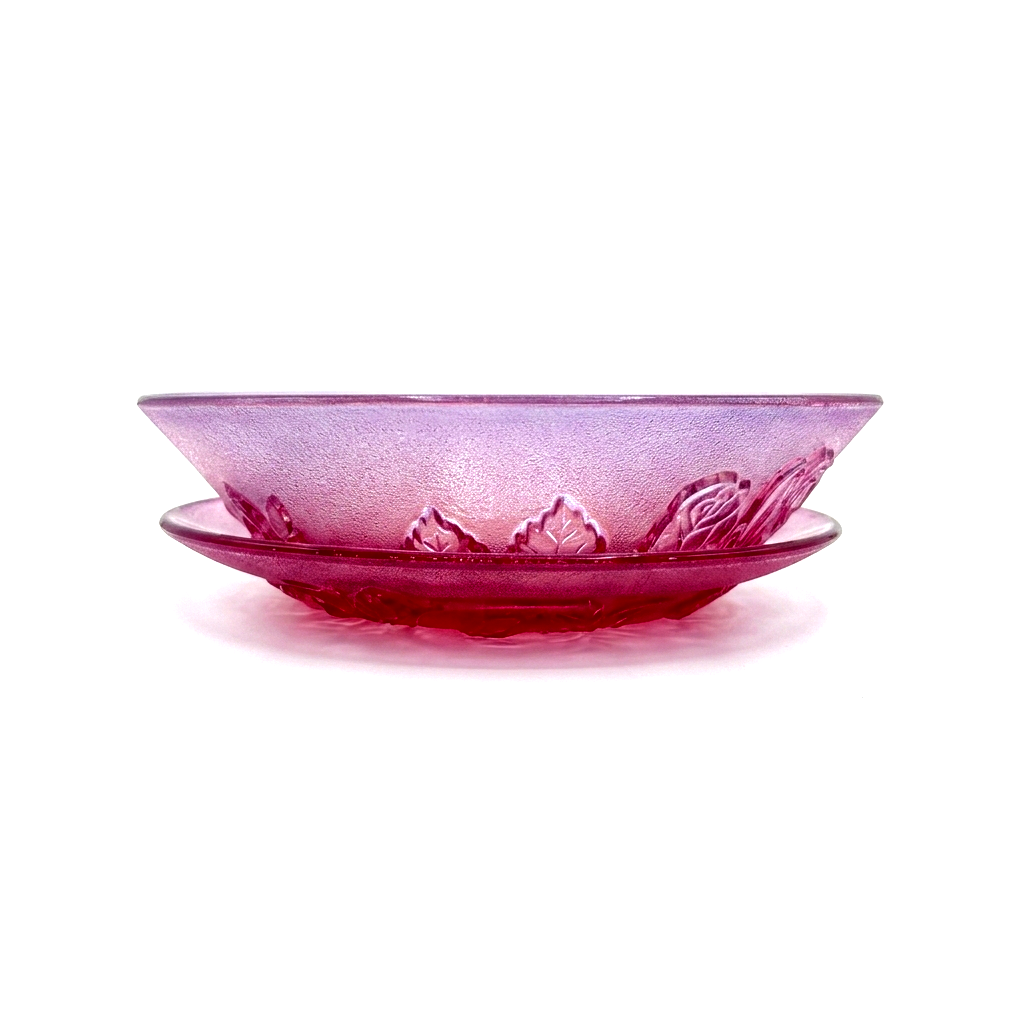
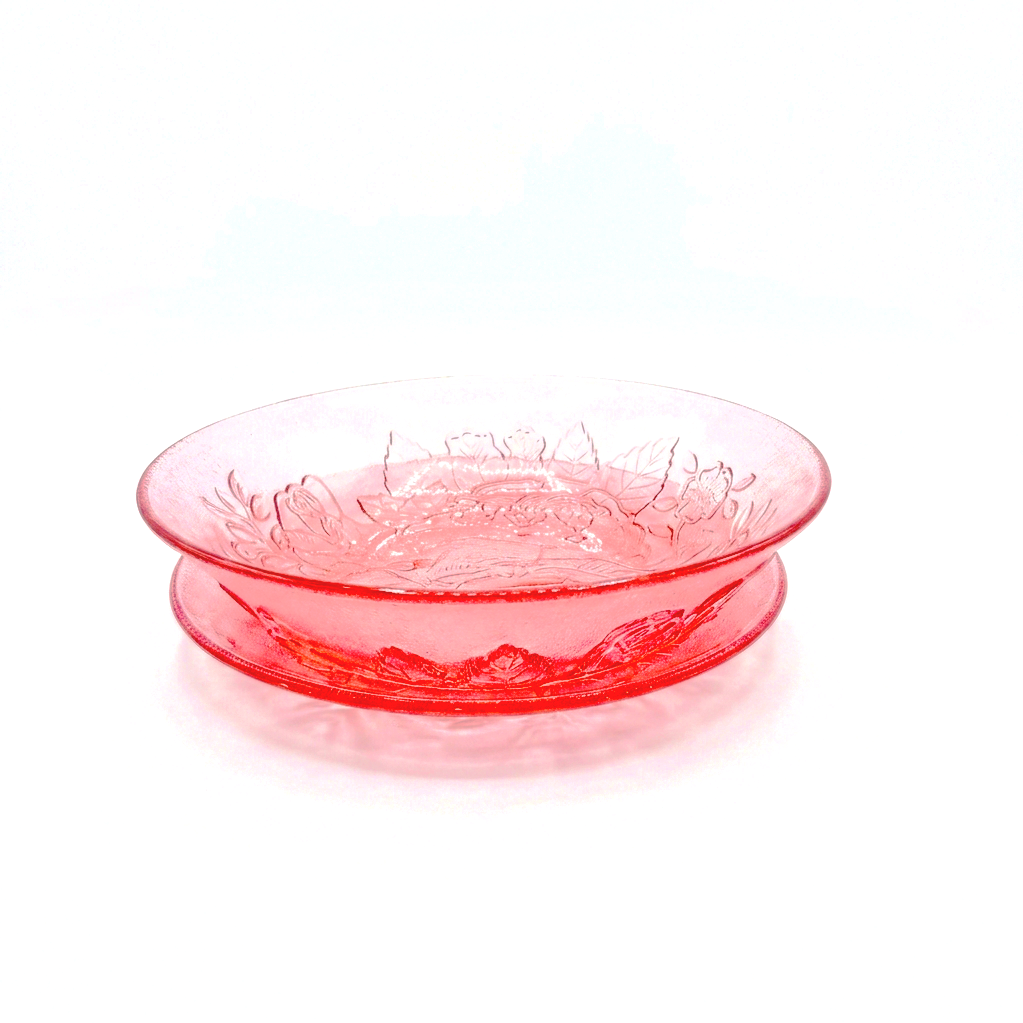
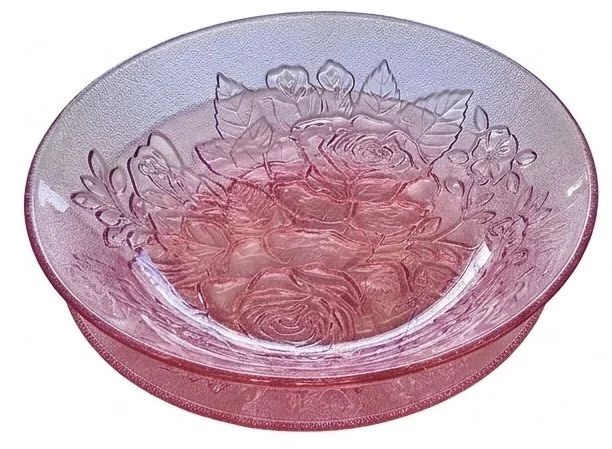
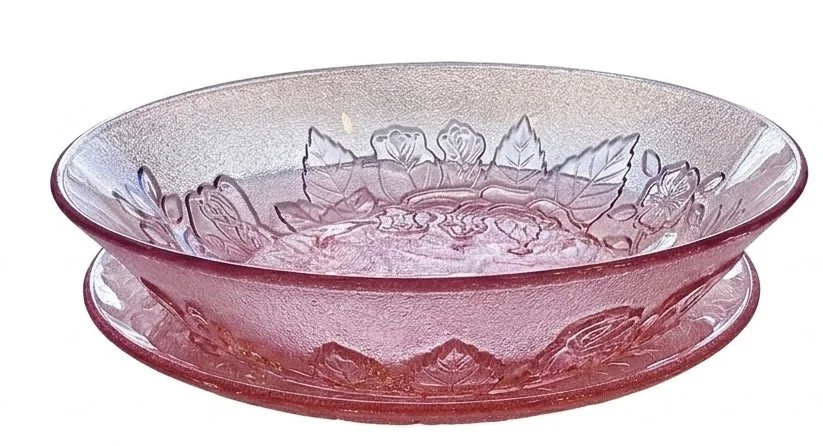
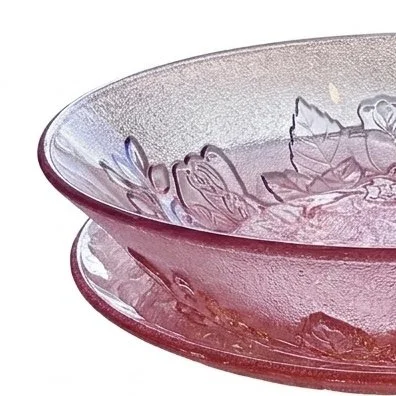
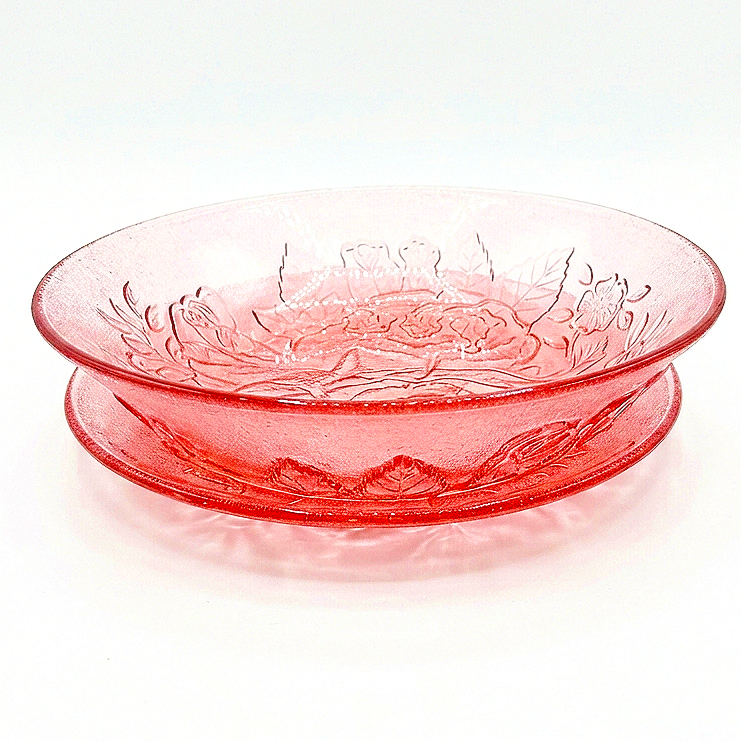
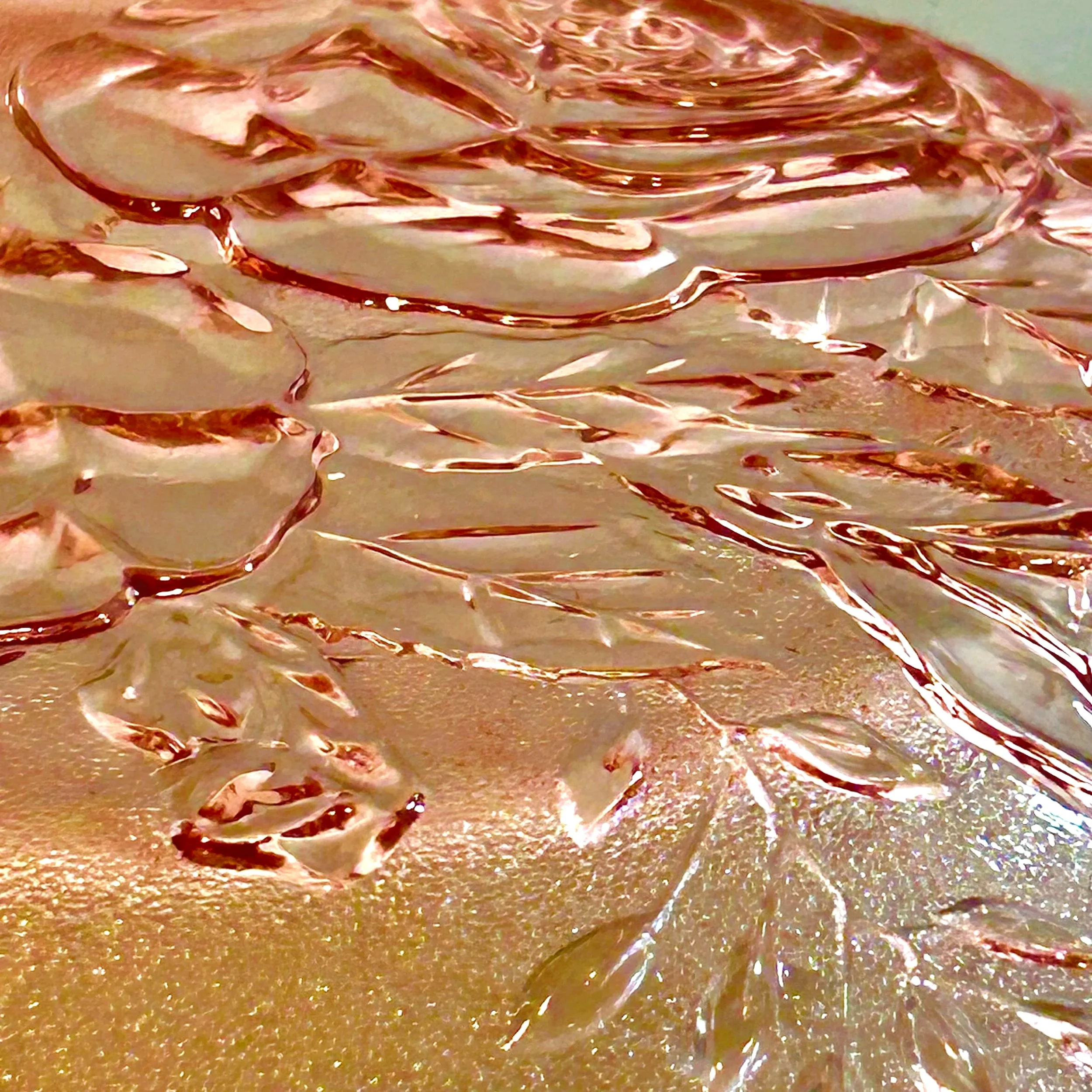
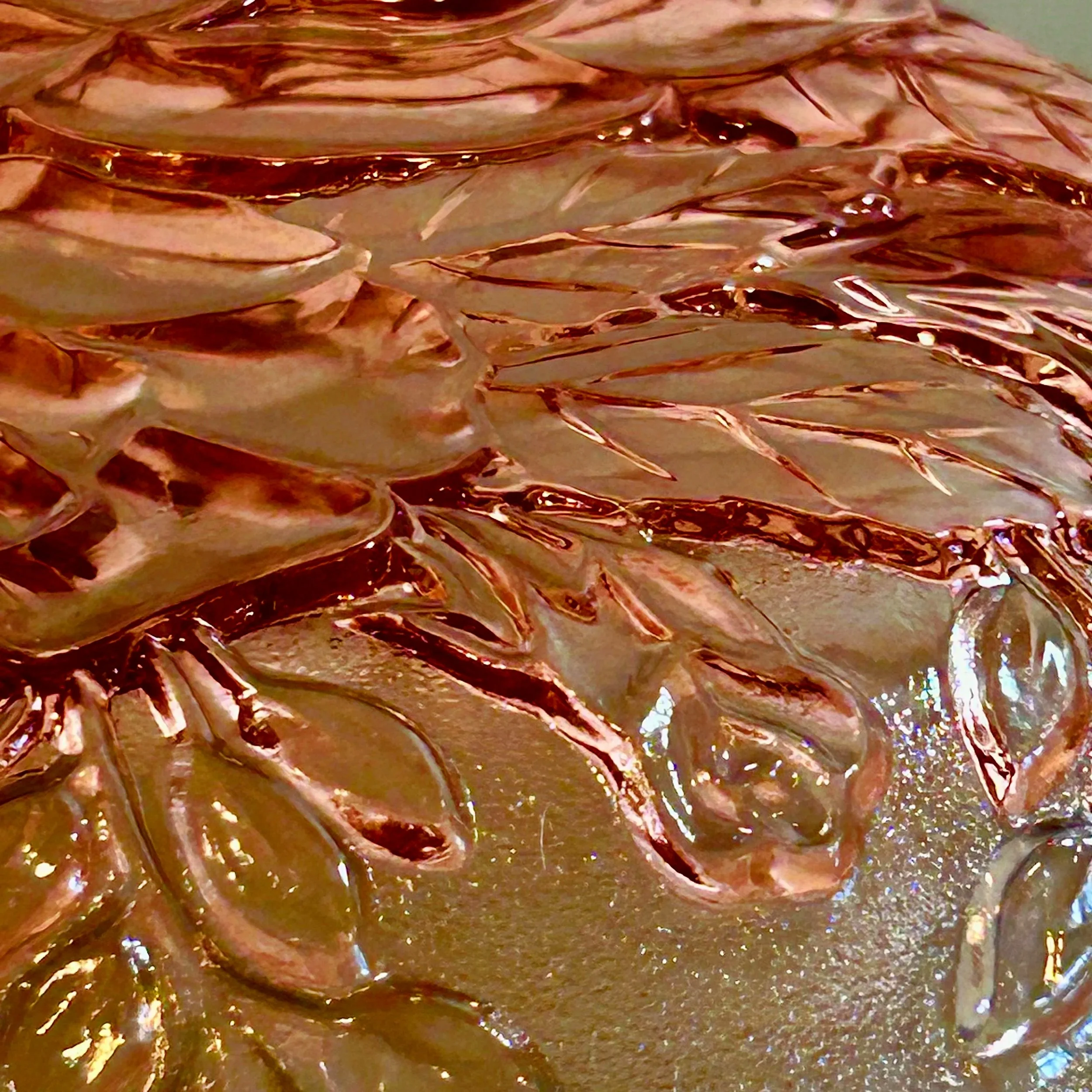
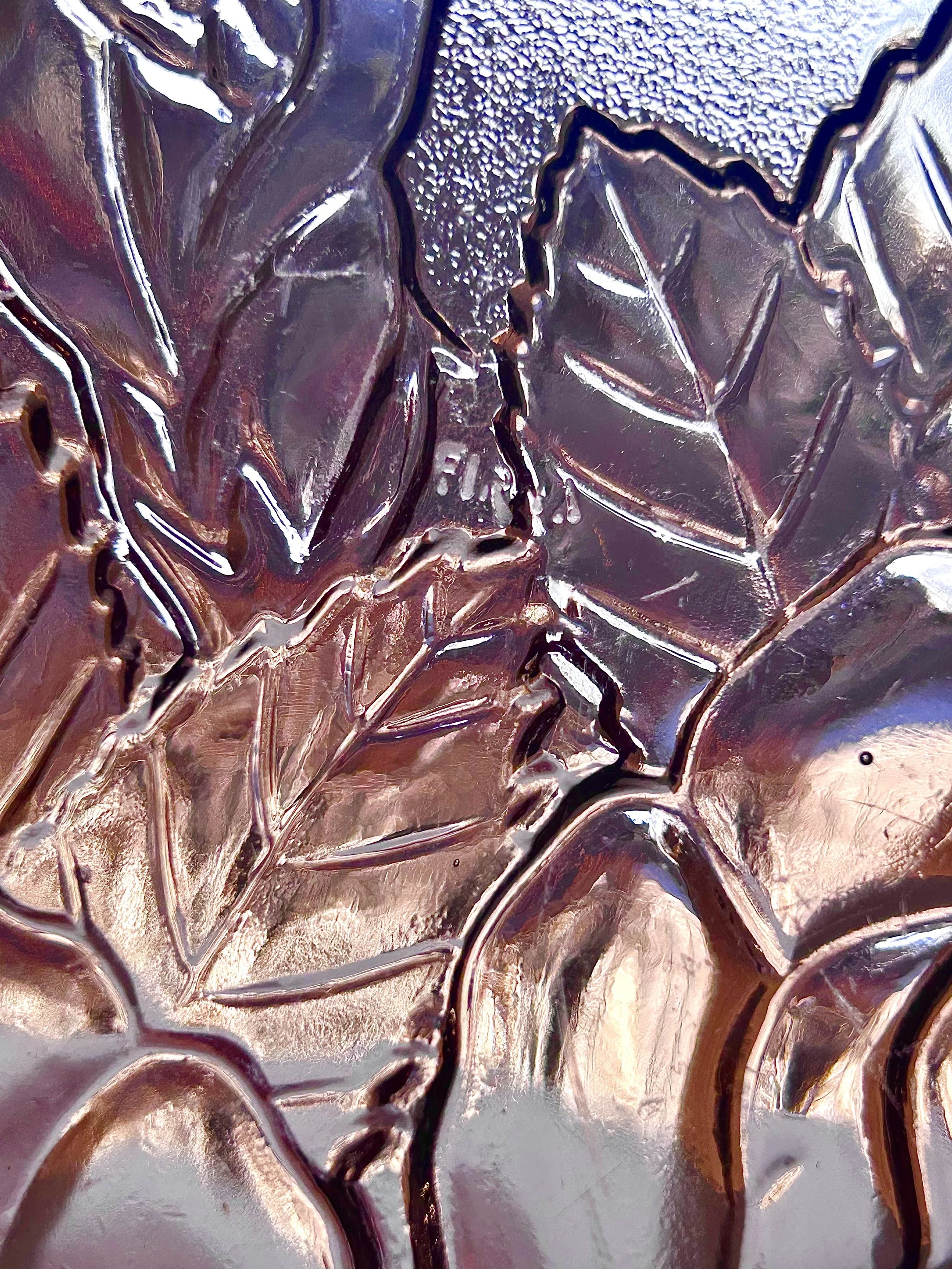
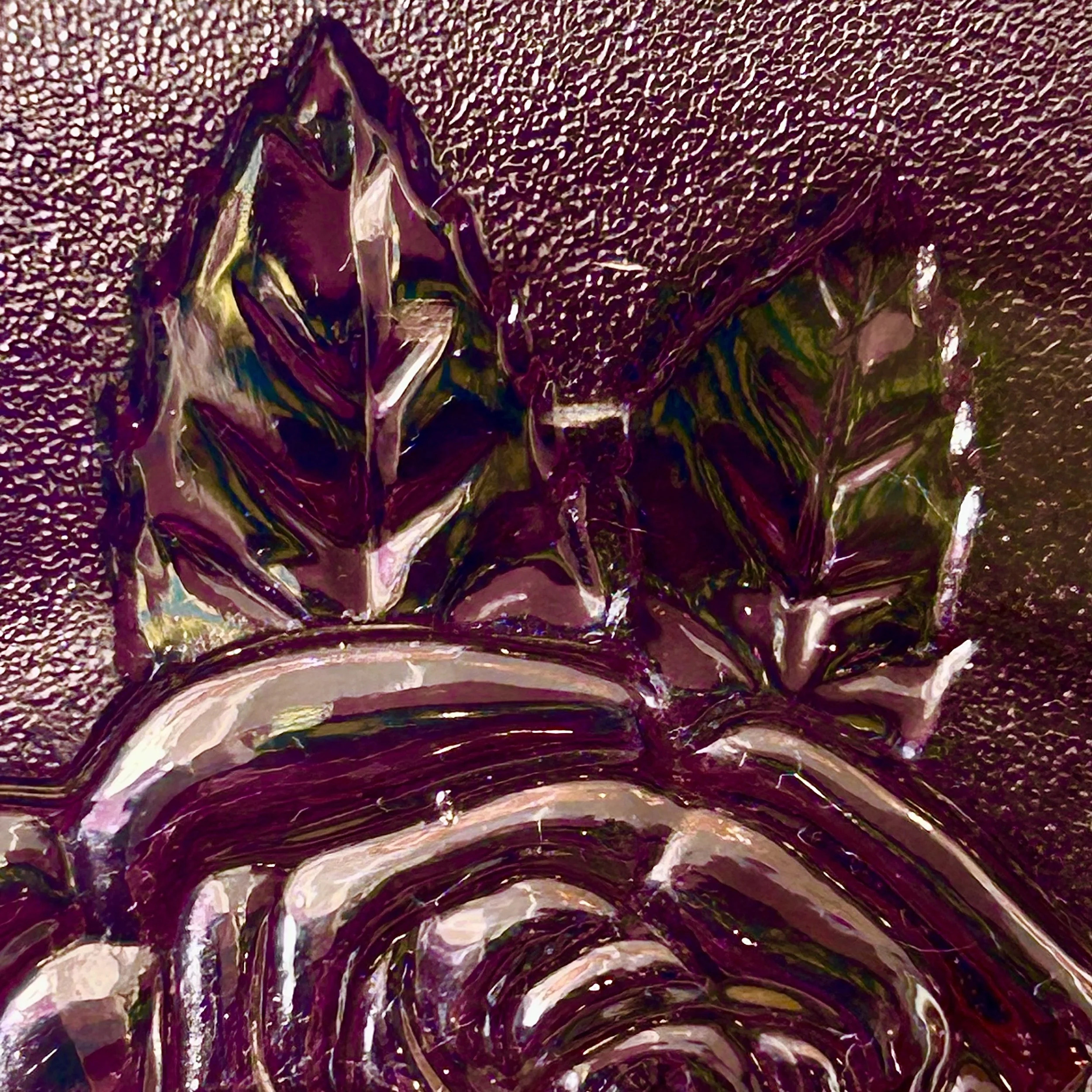
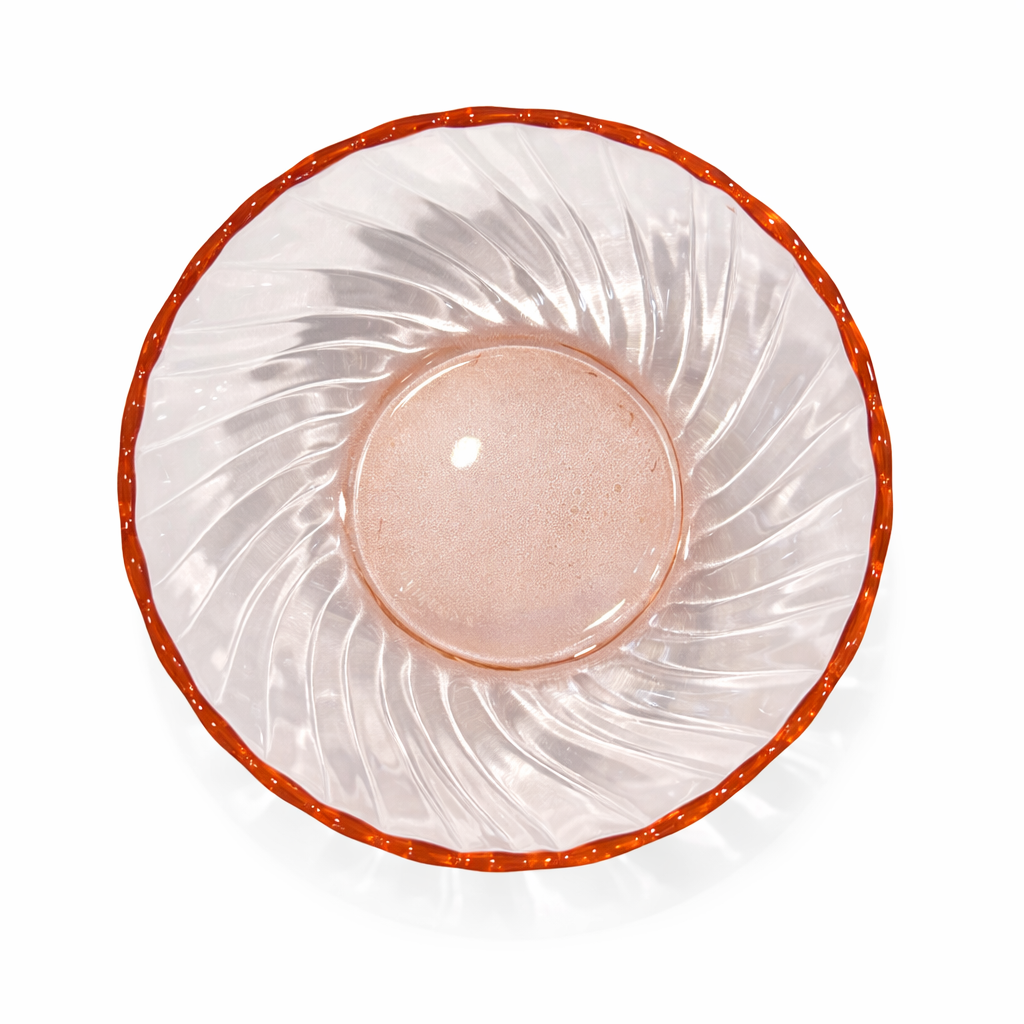
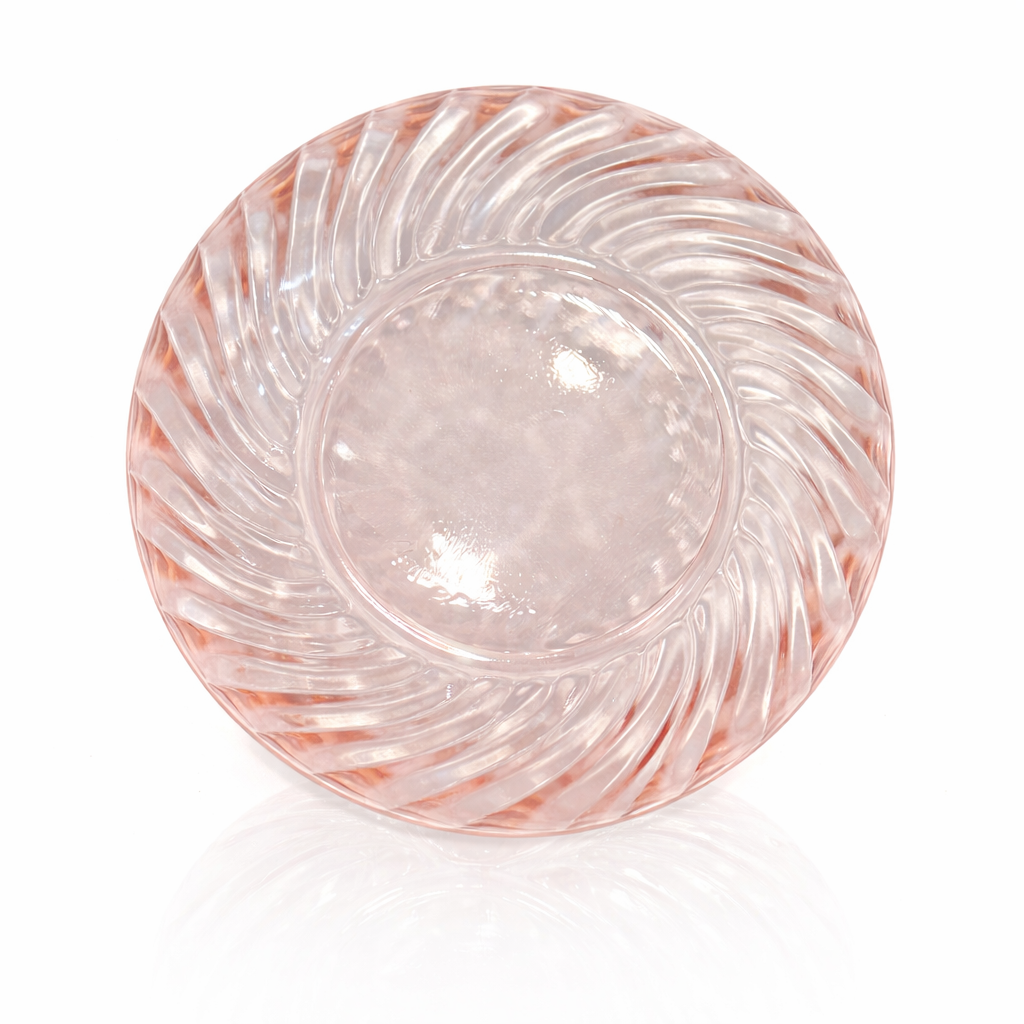
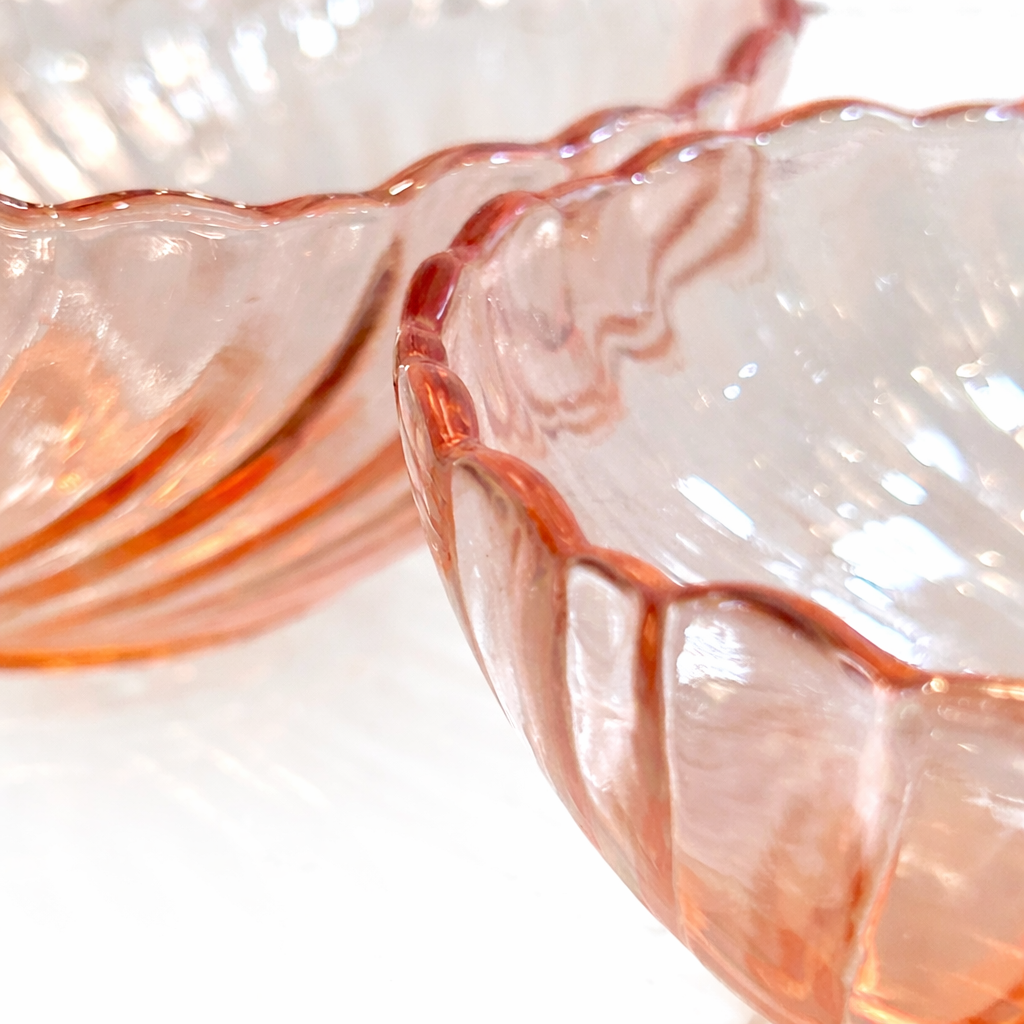
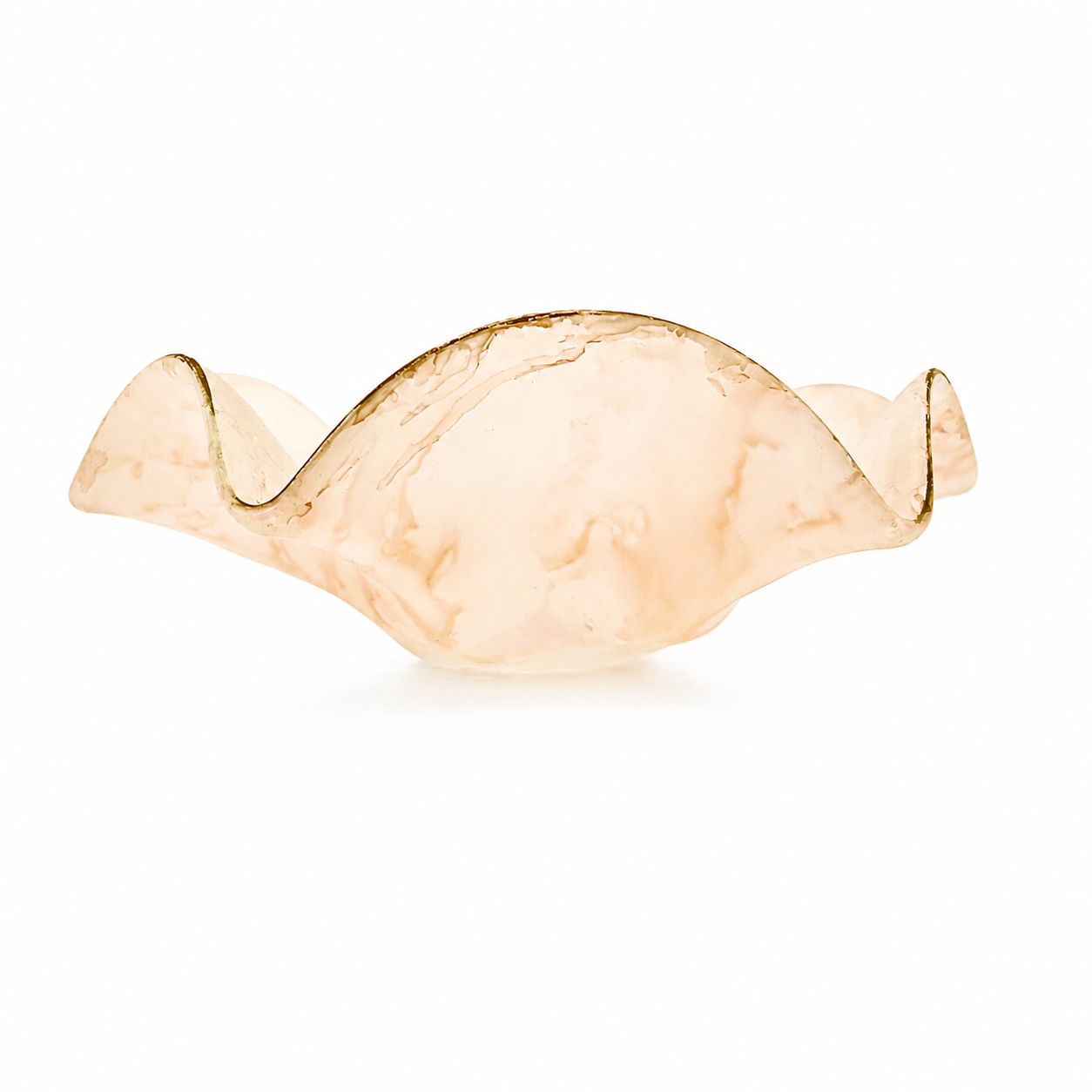
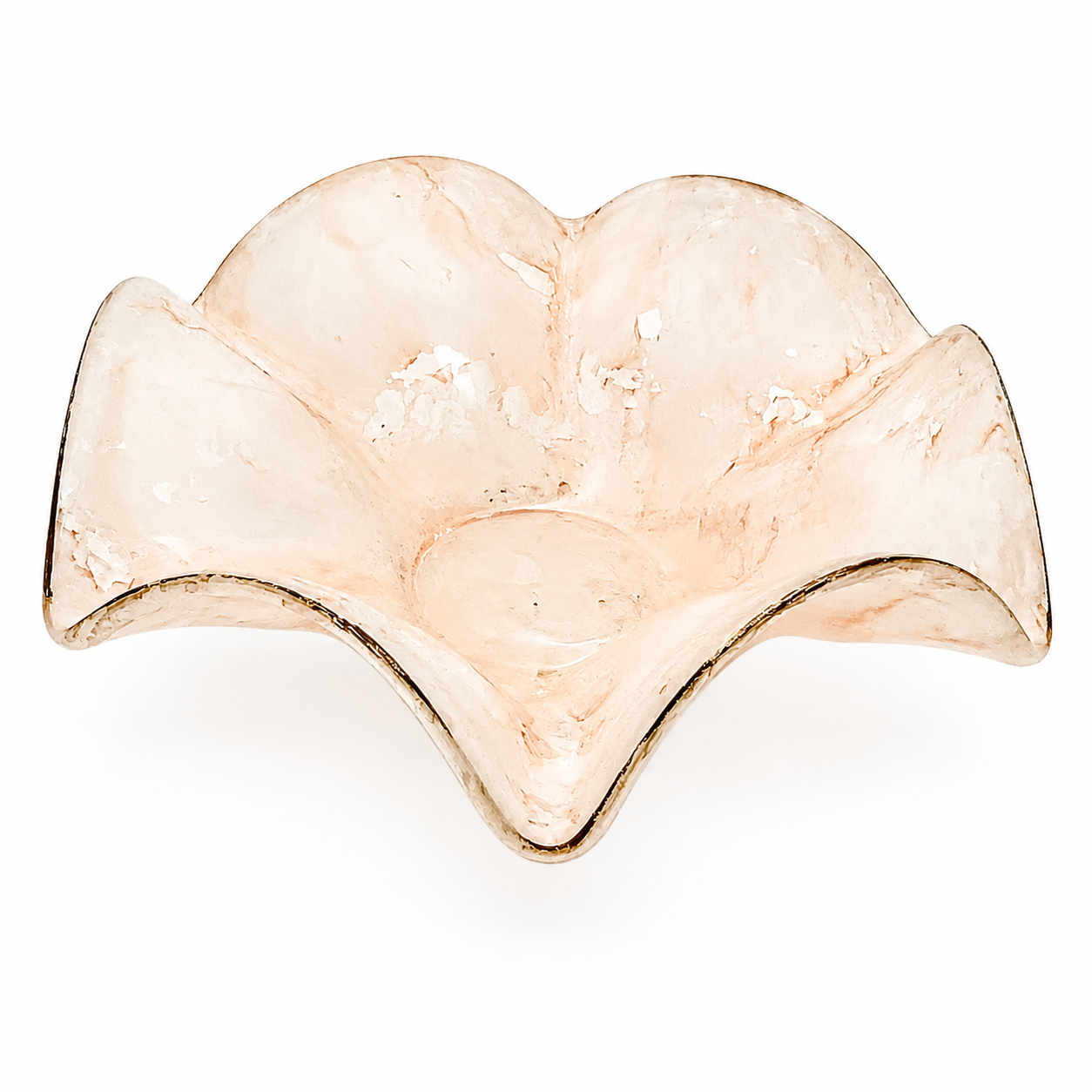
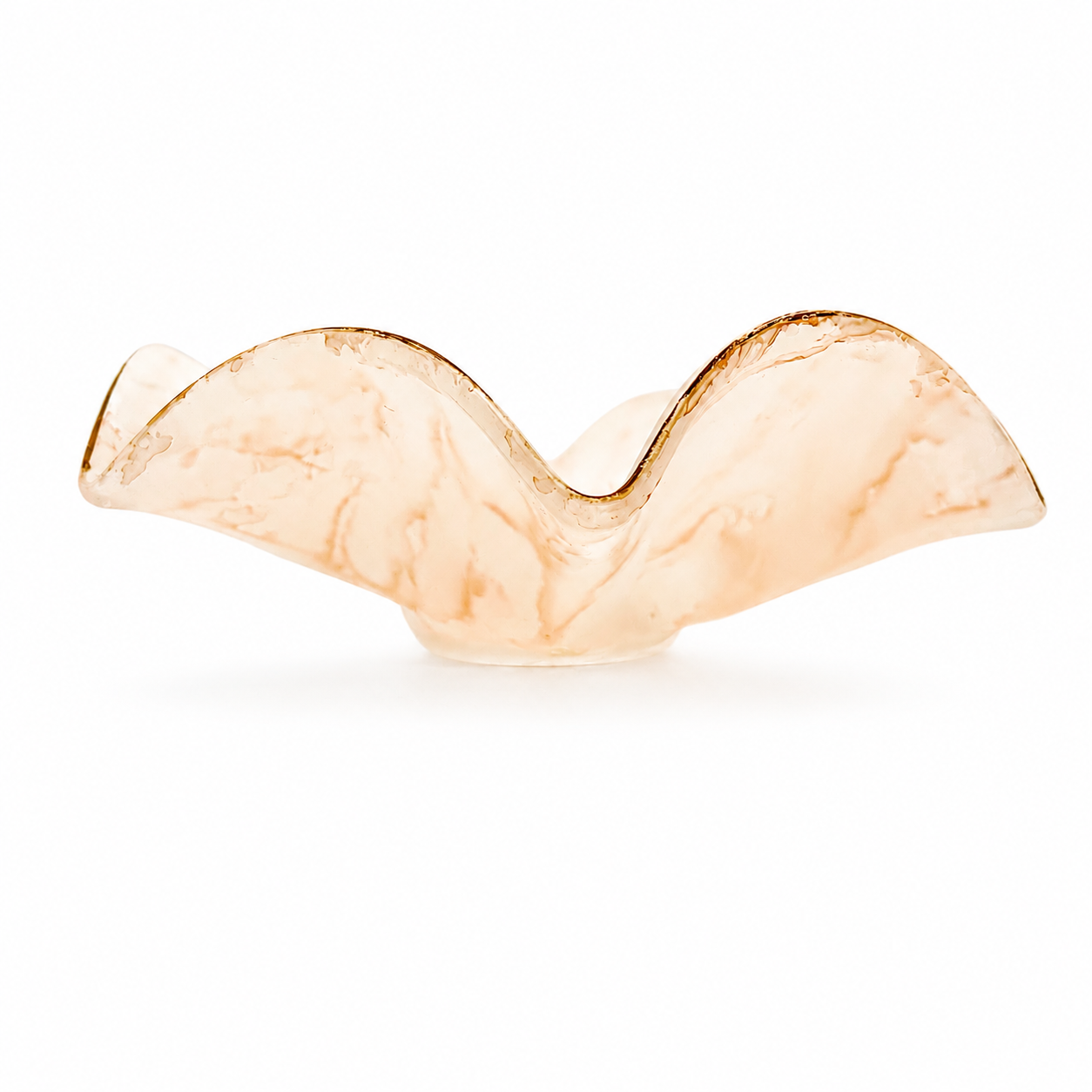
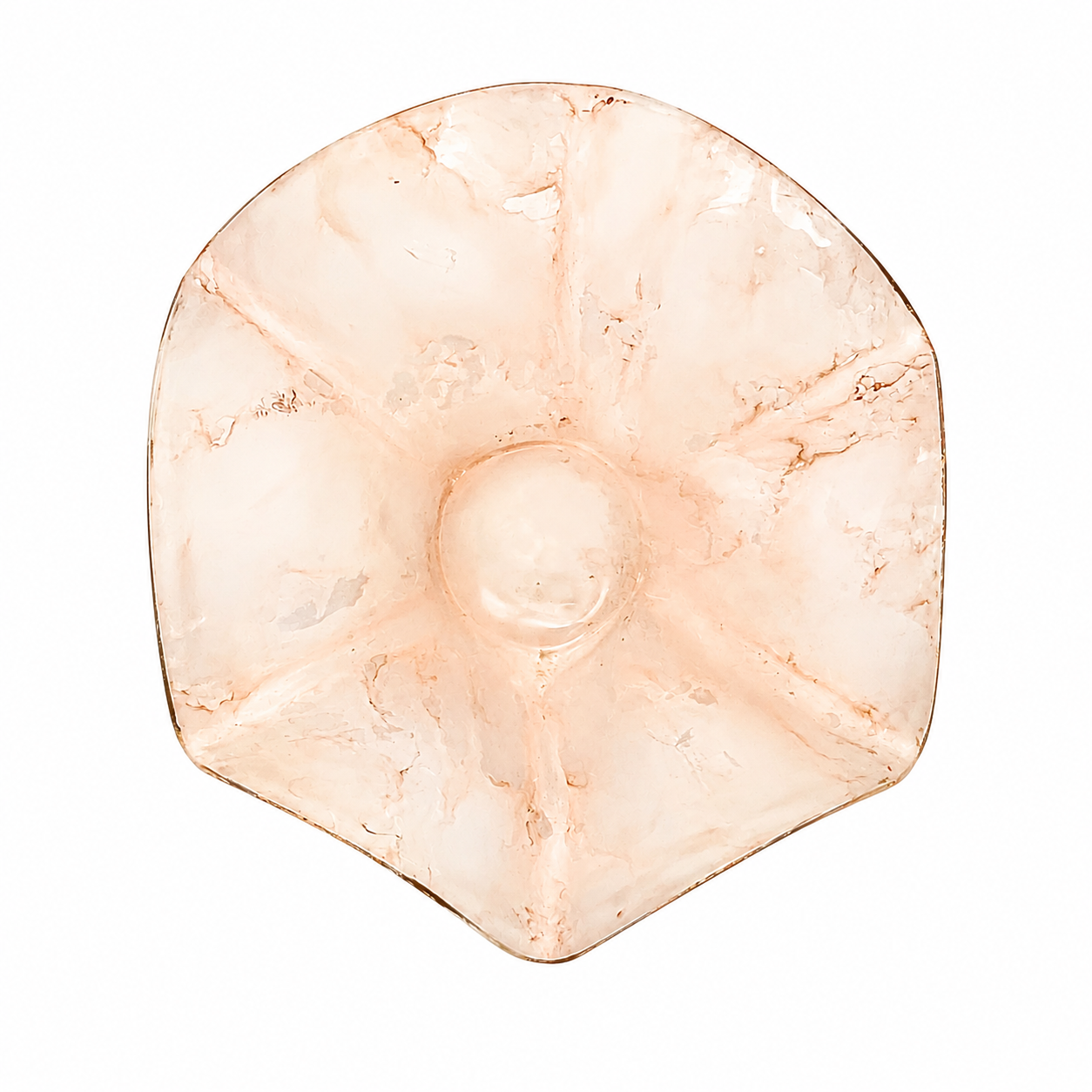
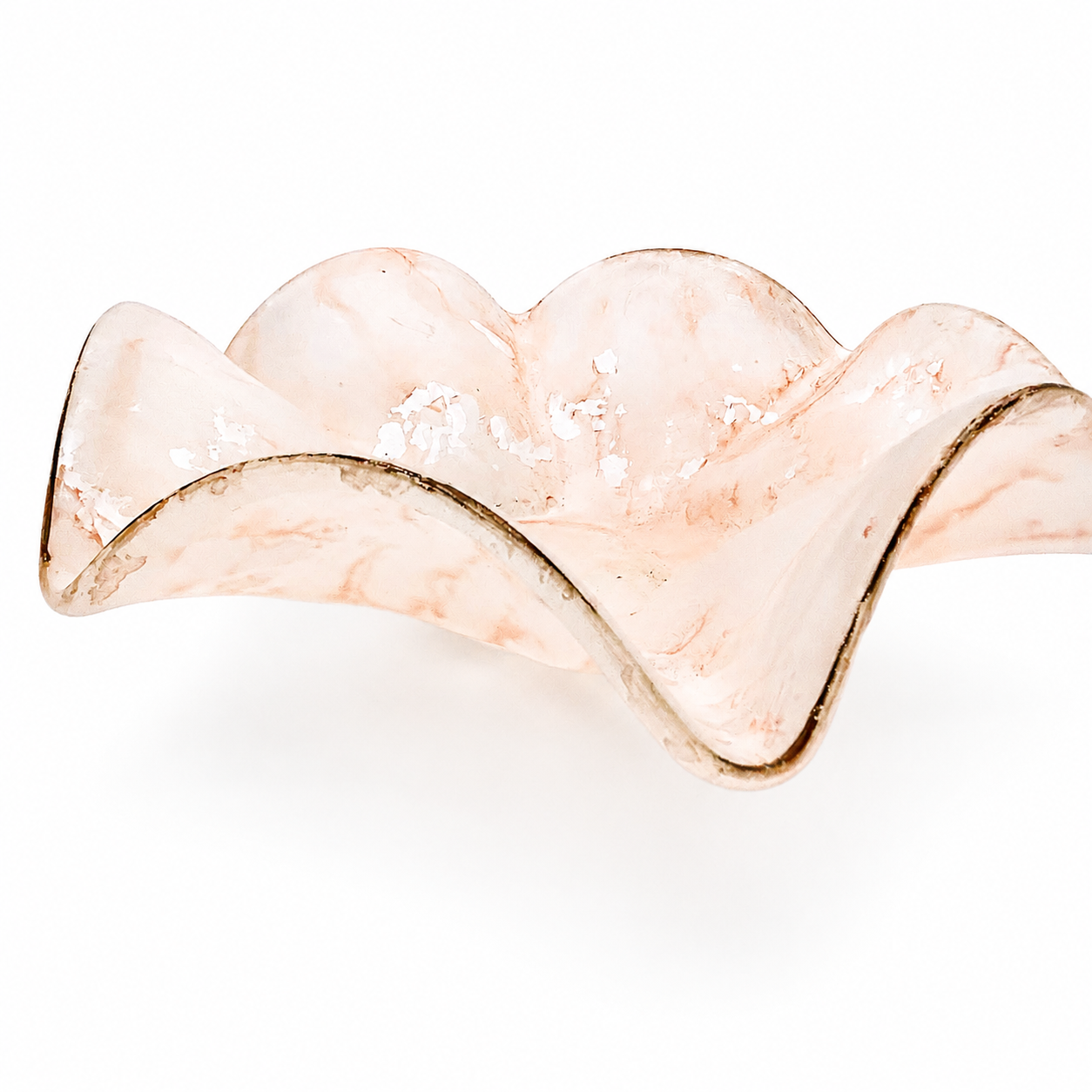
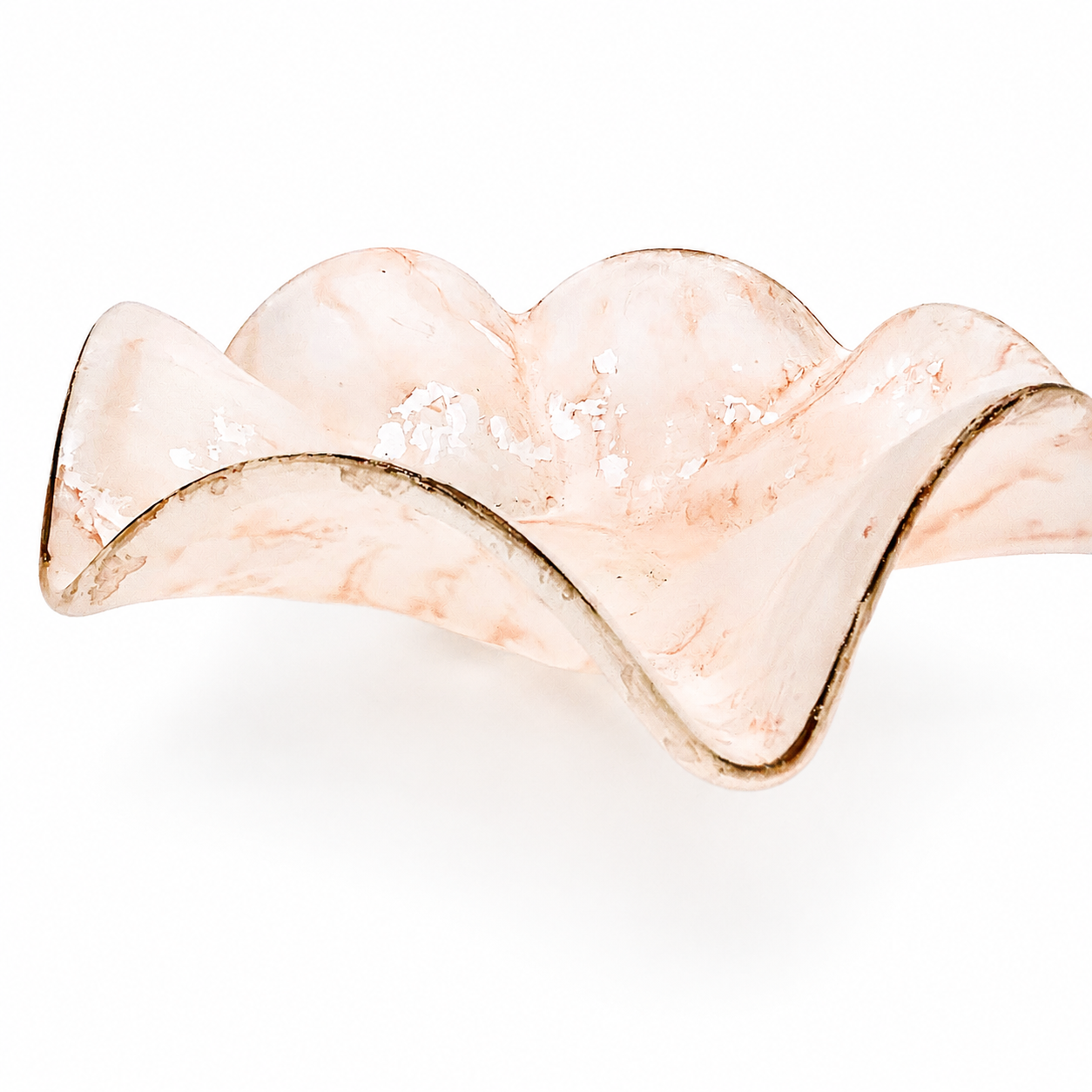
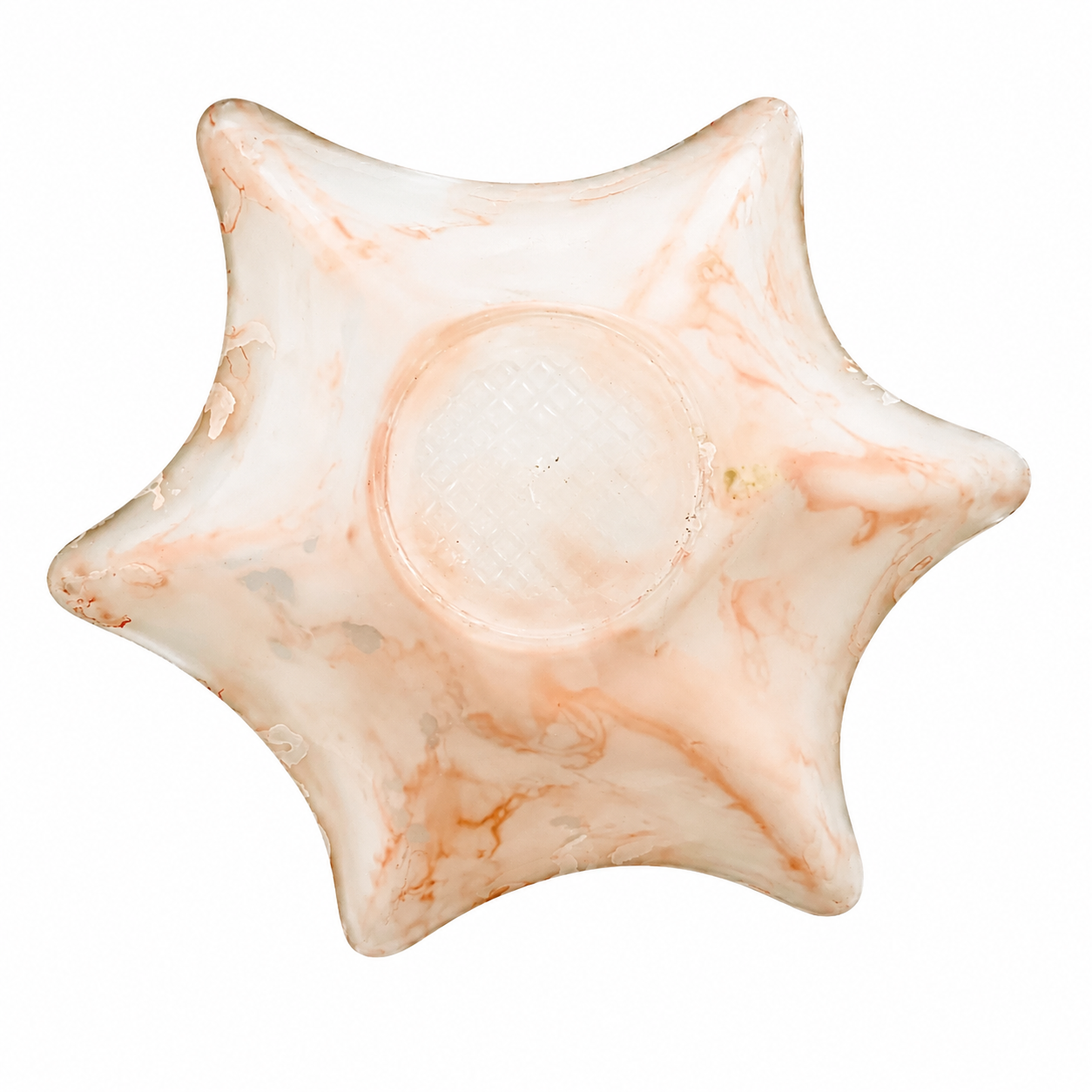
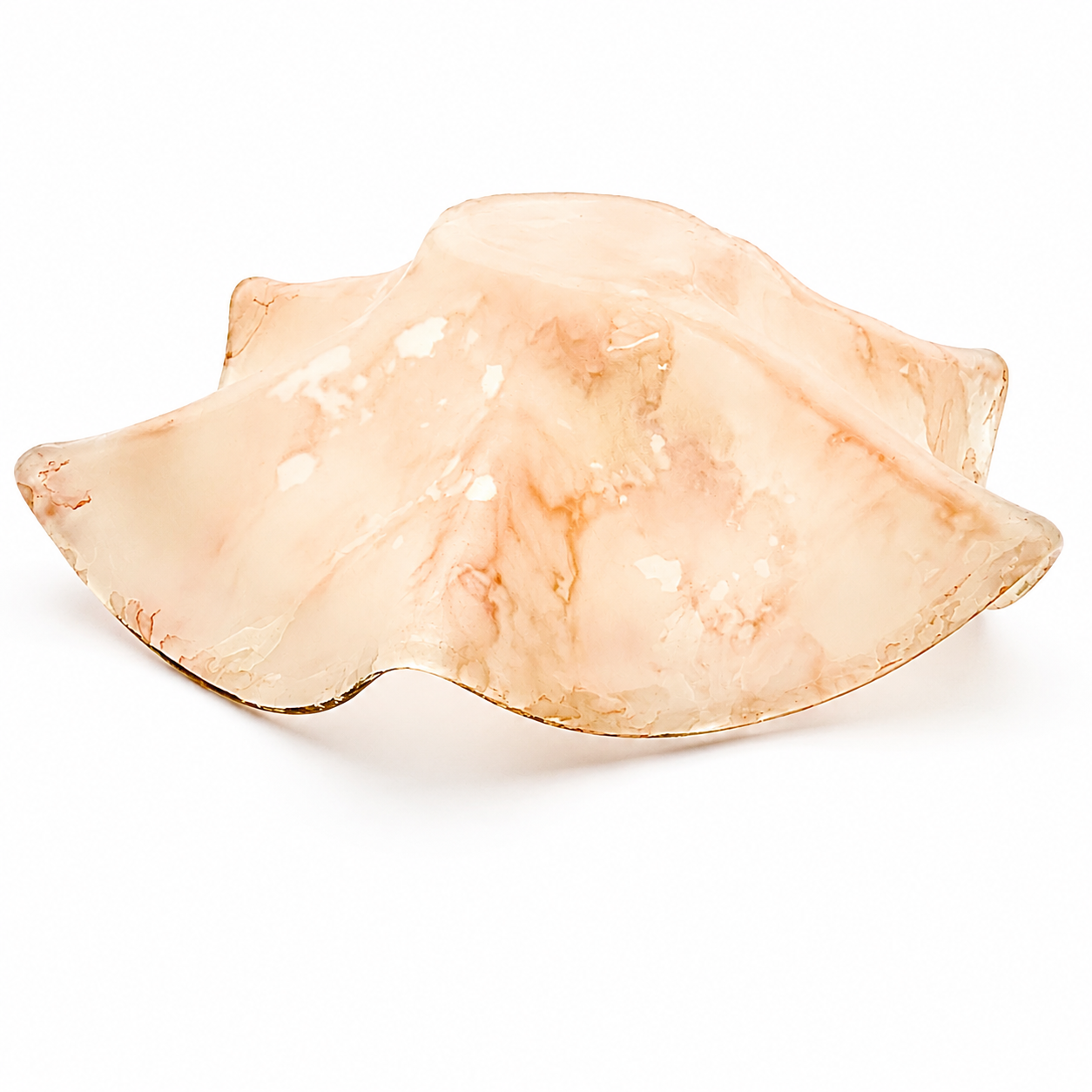
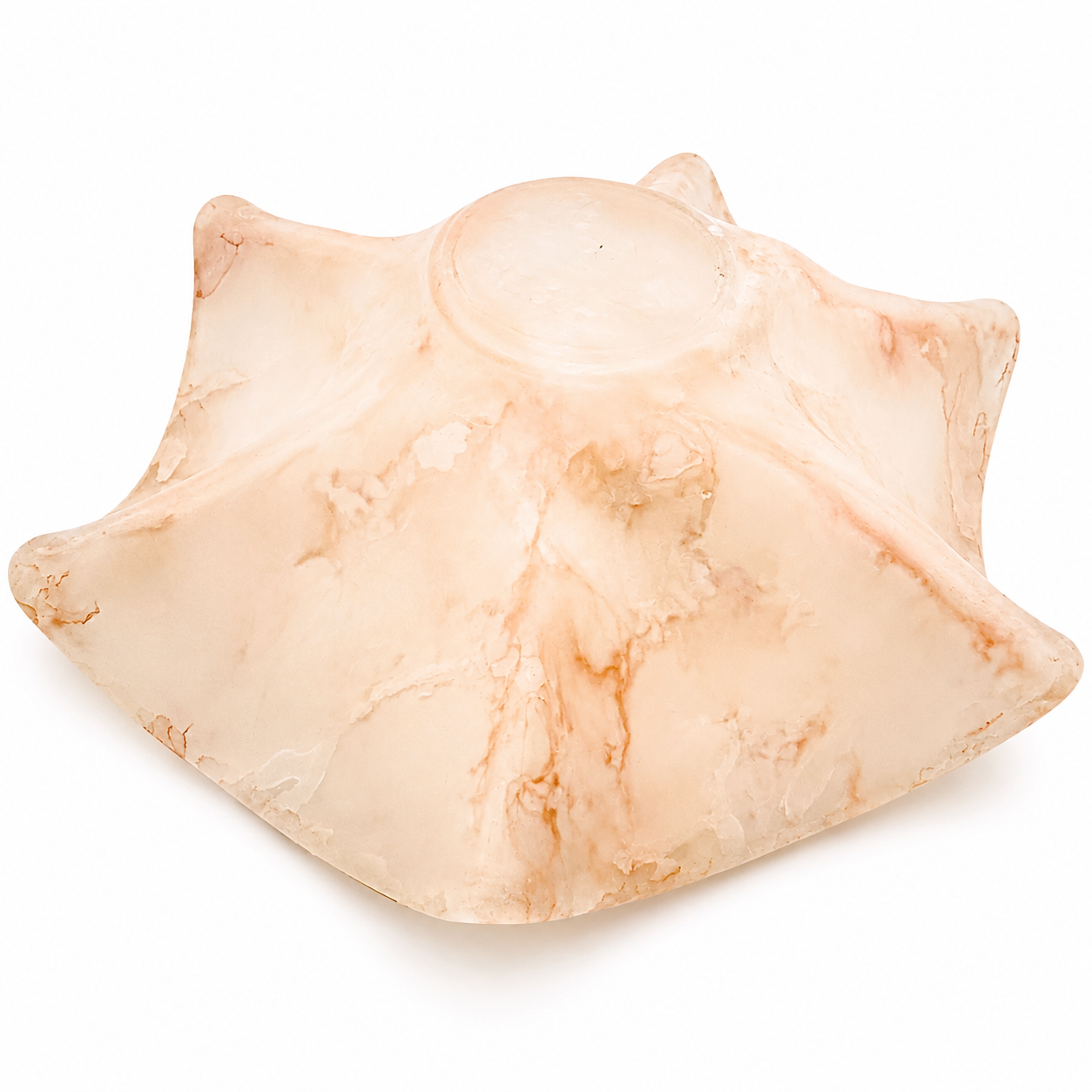
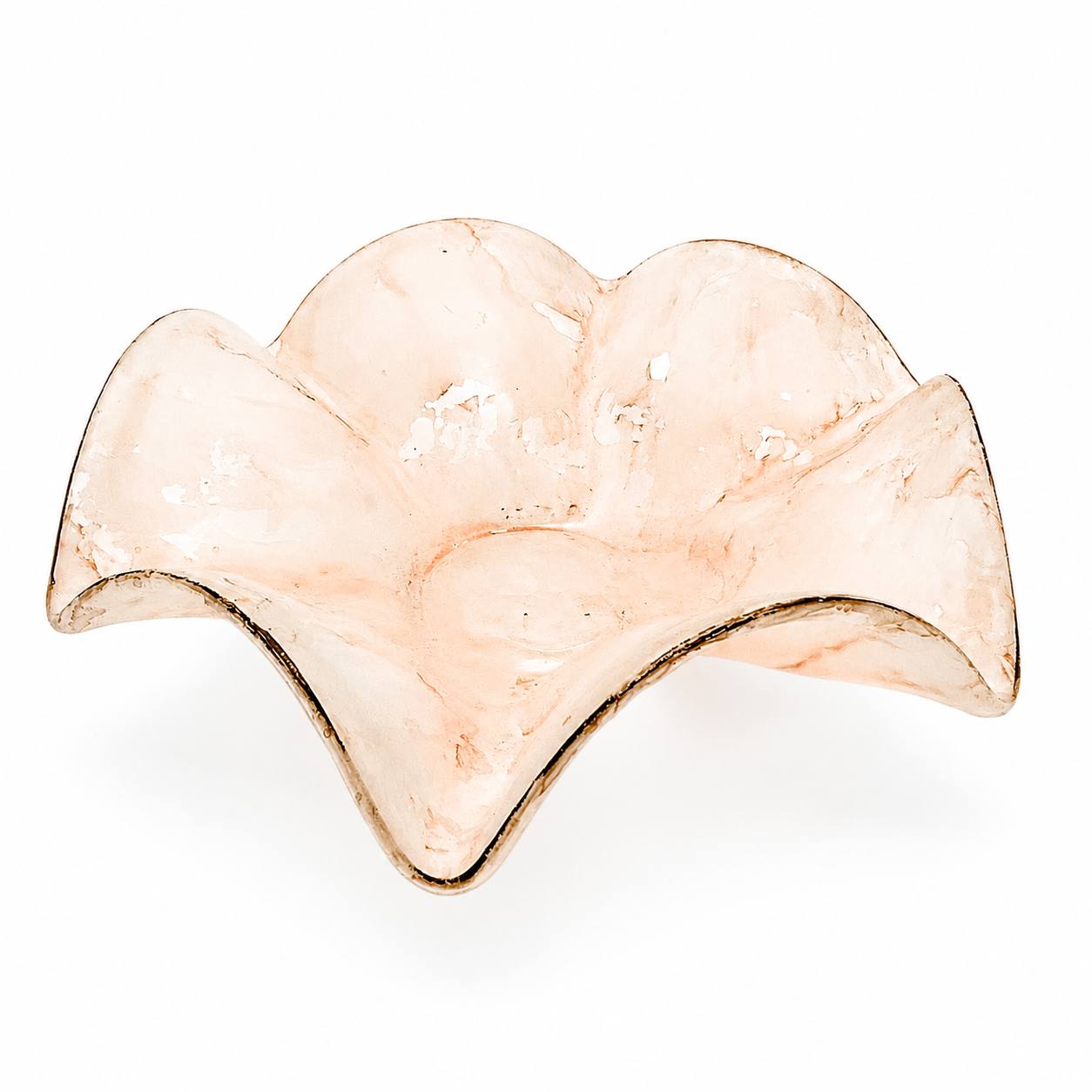
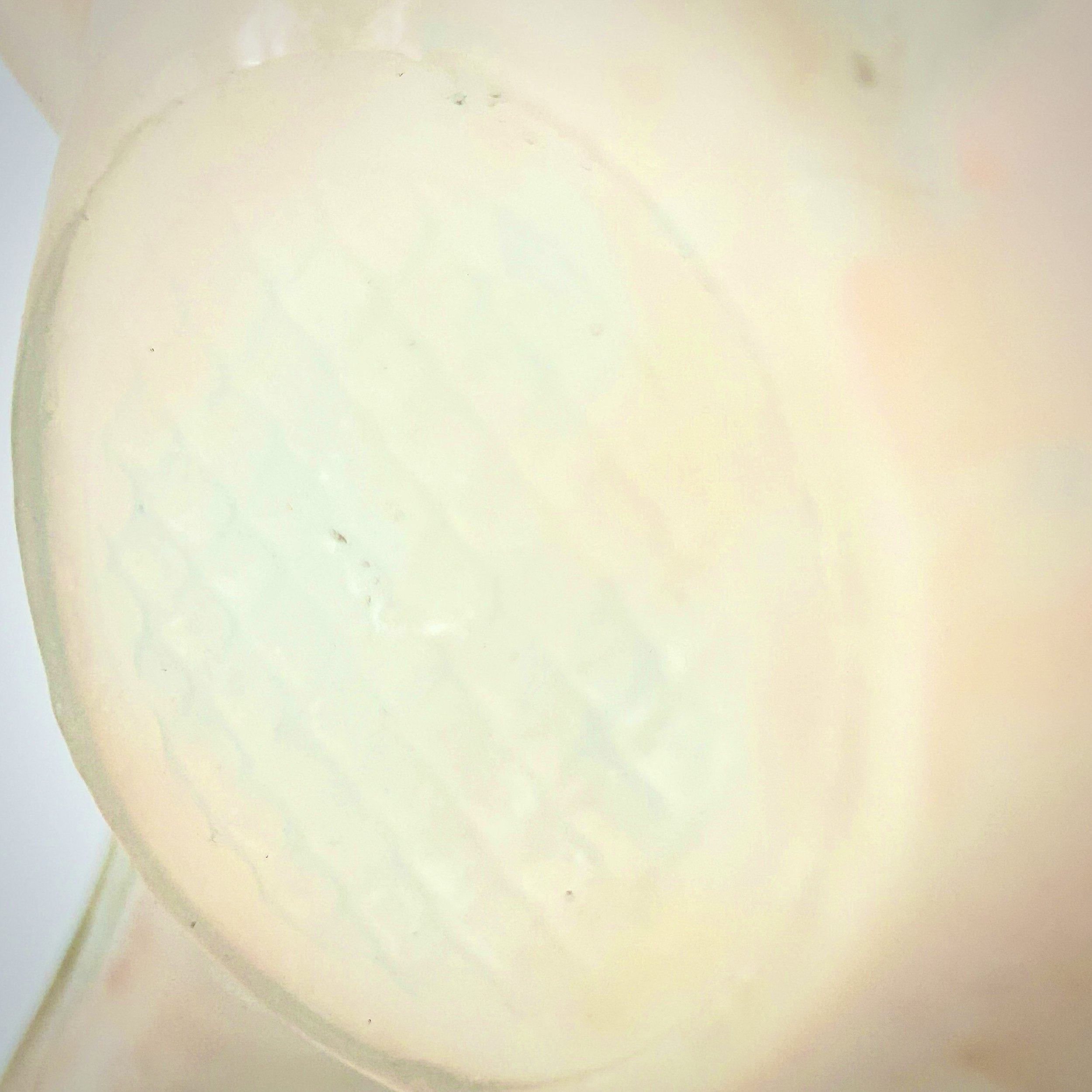
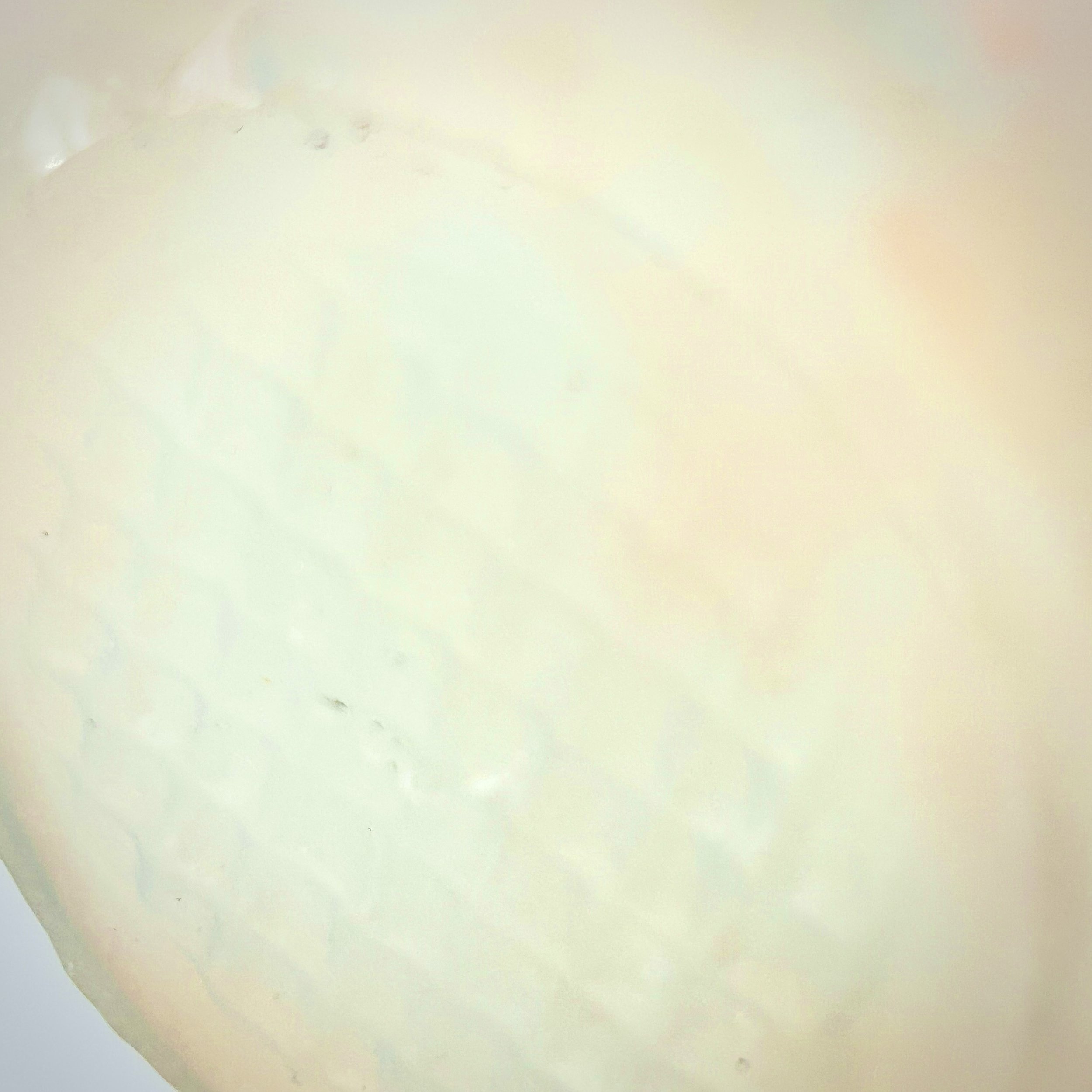
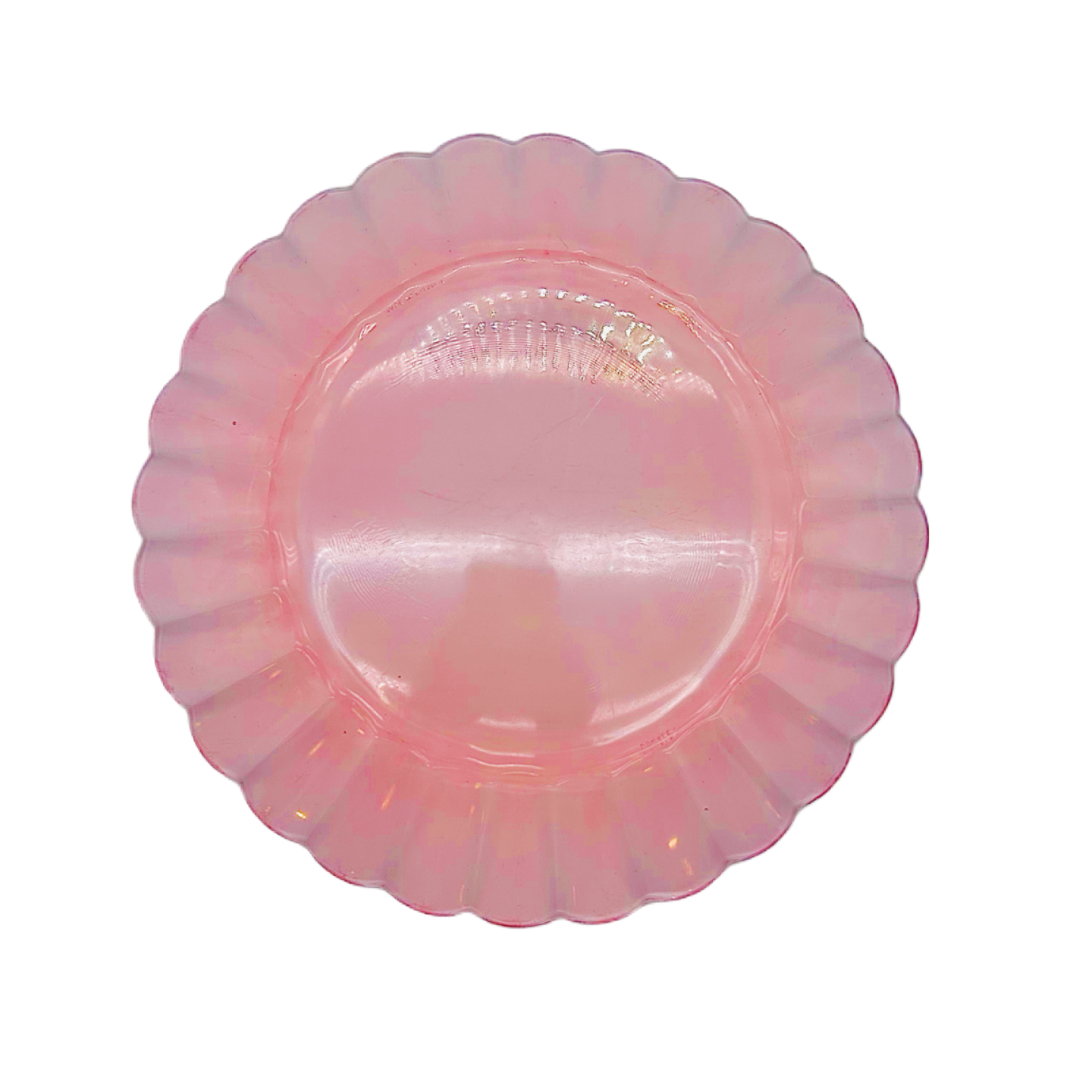
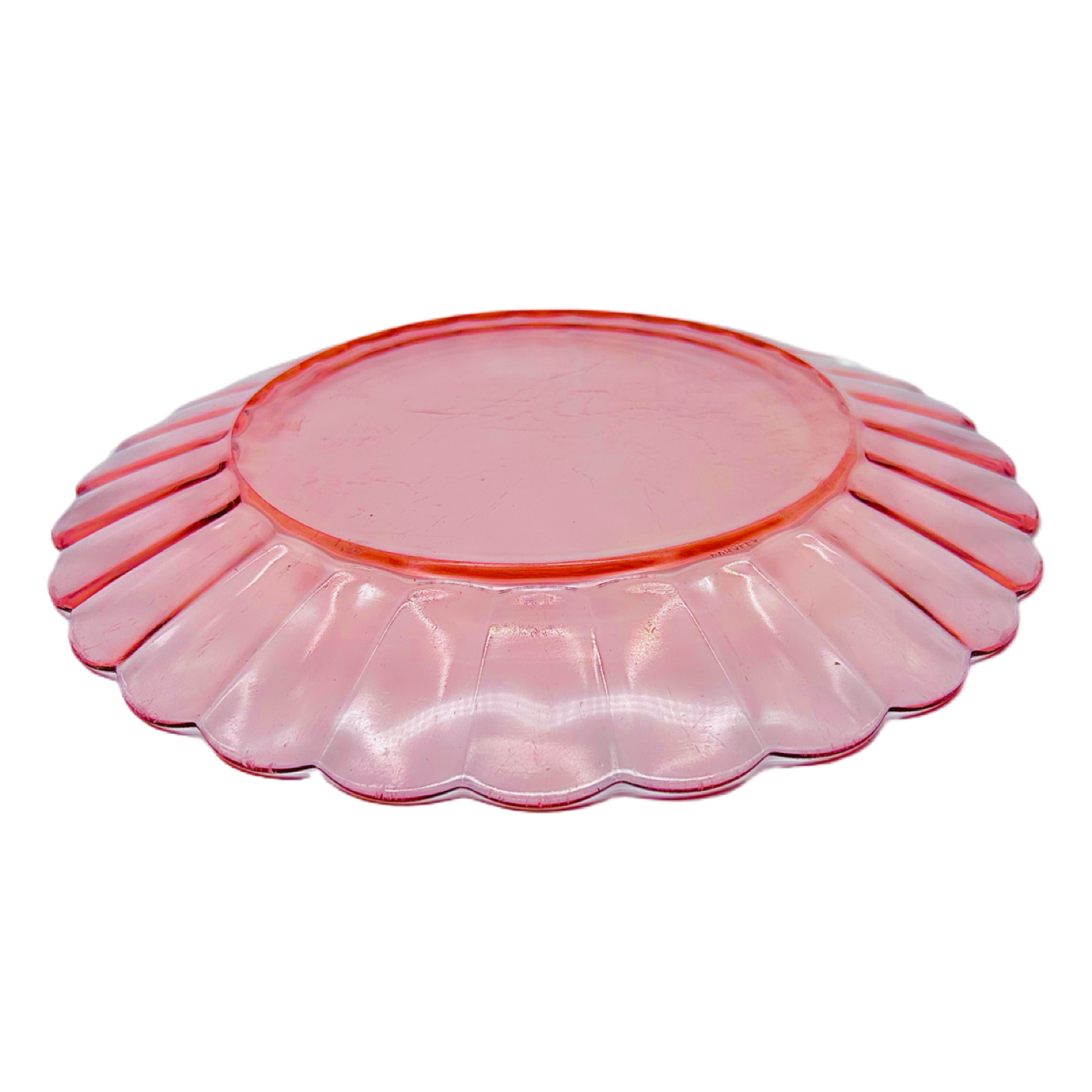
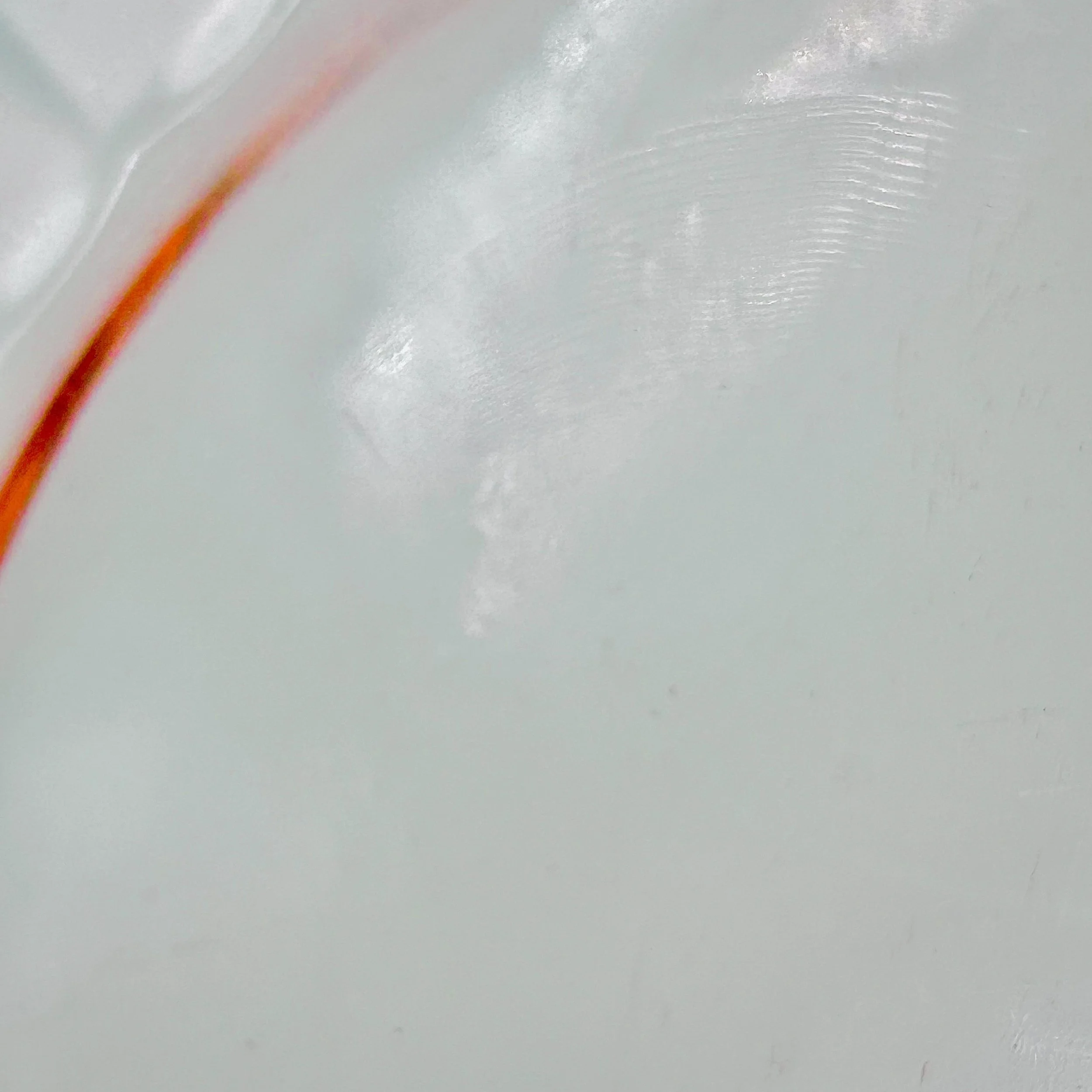
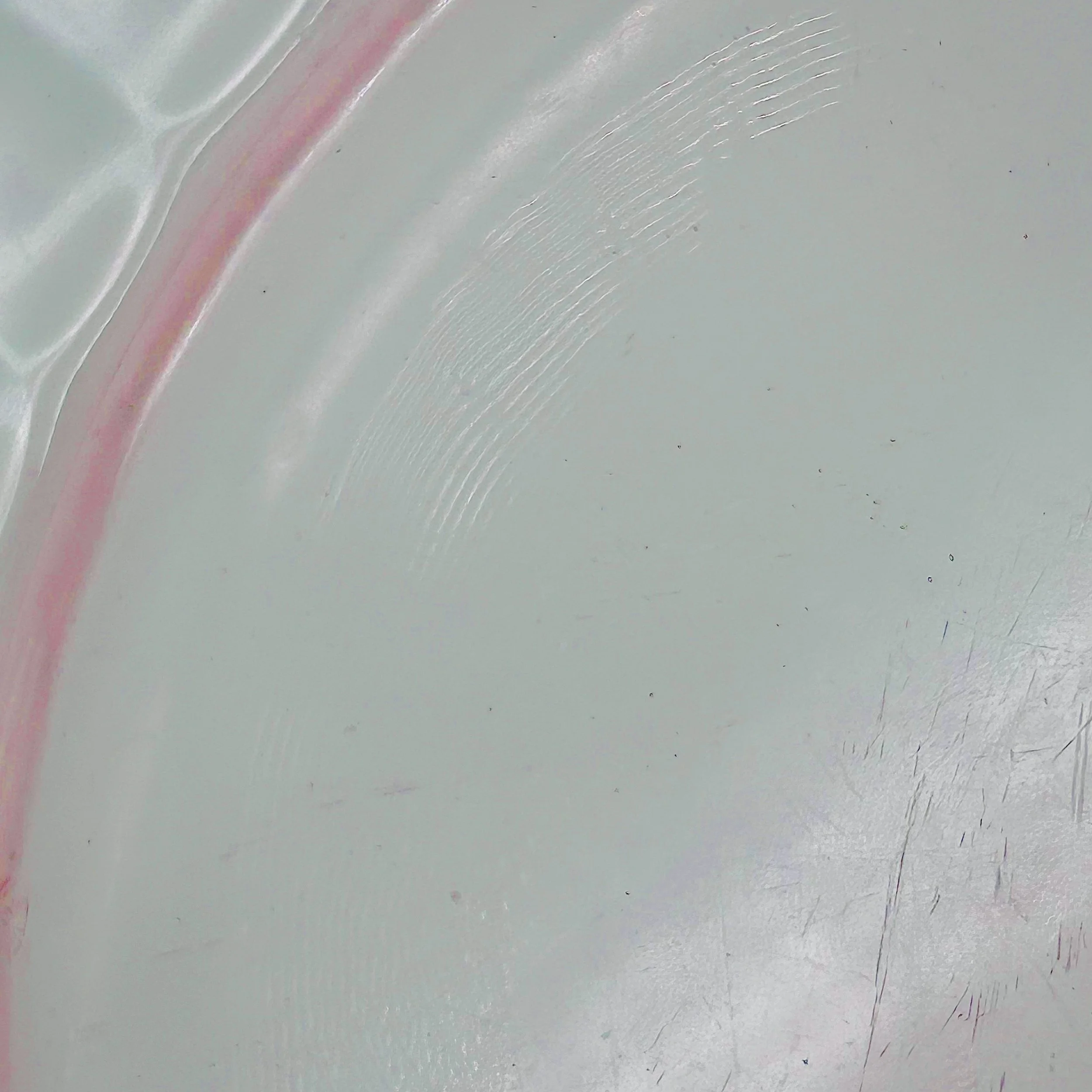
A sculptural mid-century pedestal comport defined by its architectural octagonal form and luminous cased coloration. The softly opalescent blush bowl appears suspended above a radiant coral foot, creating a subtle internal glow that intensifies under directional light. The satin “sandy” finish diffuses the surface, giving the piece a refined, almost alabaster-like presence while retaining the warmth of post-war American art glass.
Balanced, symmetrical, and quietly dramatic, this is a form rooted in mid-century optimism—where geometry met atmosphere and decorative objects were designed to anchor a room. The interplay between the glowing base and diffused upper body gives the piece depth well beyond its scale, making it equally suited to minimalist interiors and layered, moody environments.
Attribution & Period
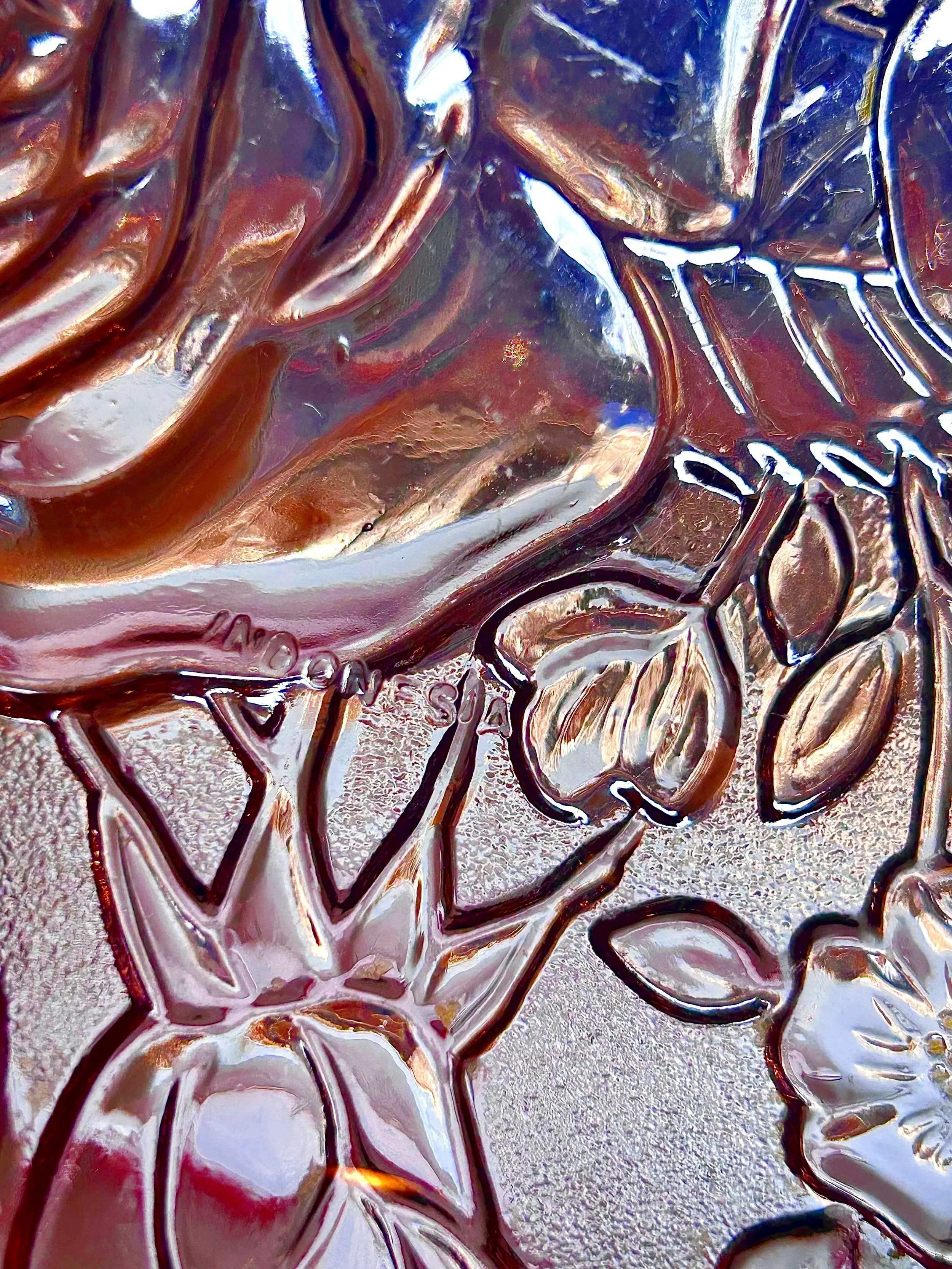
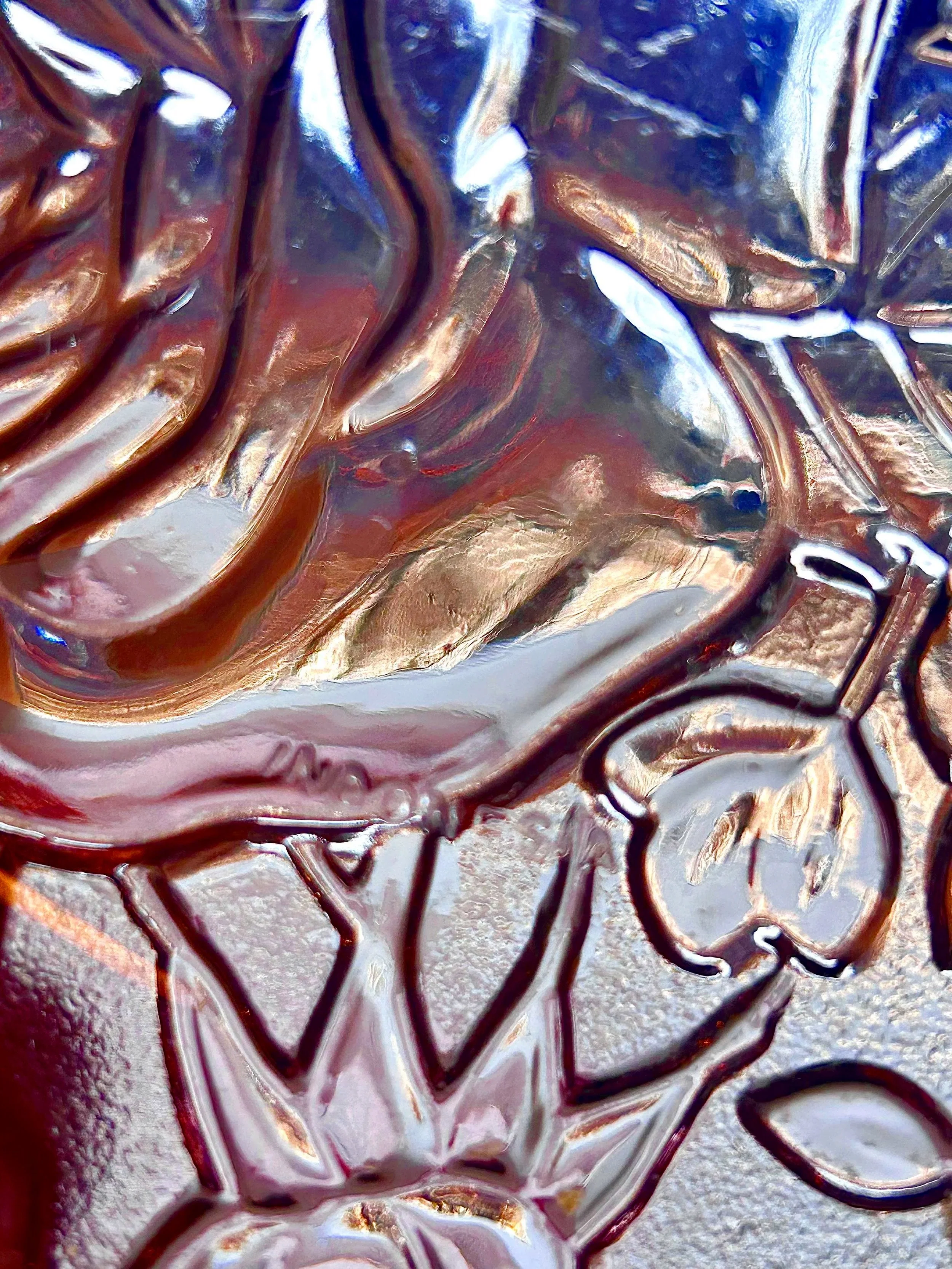
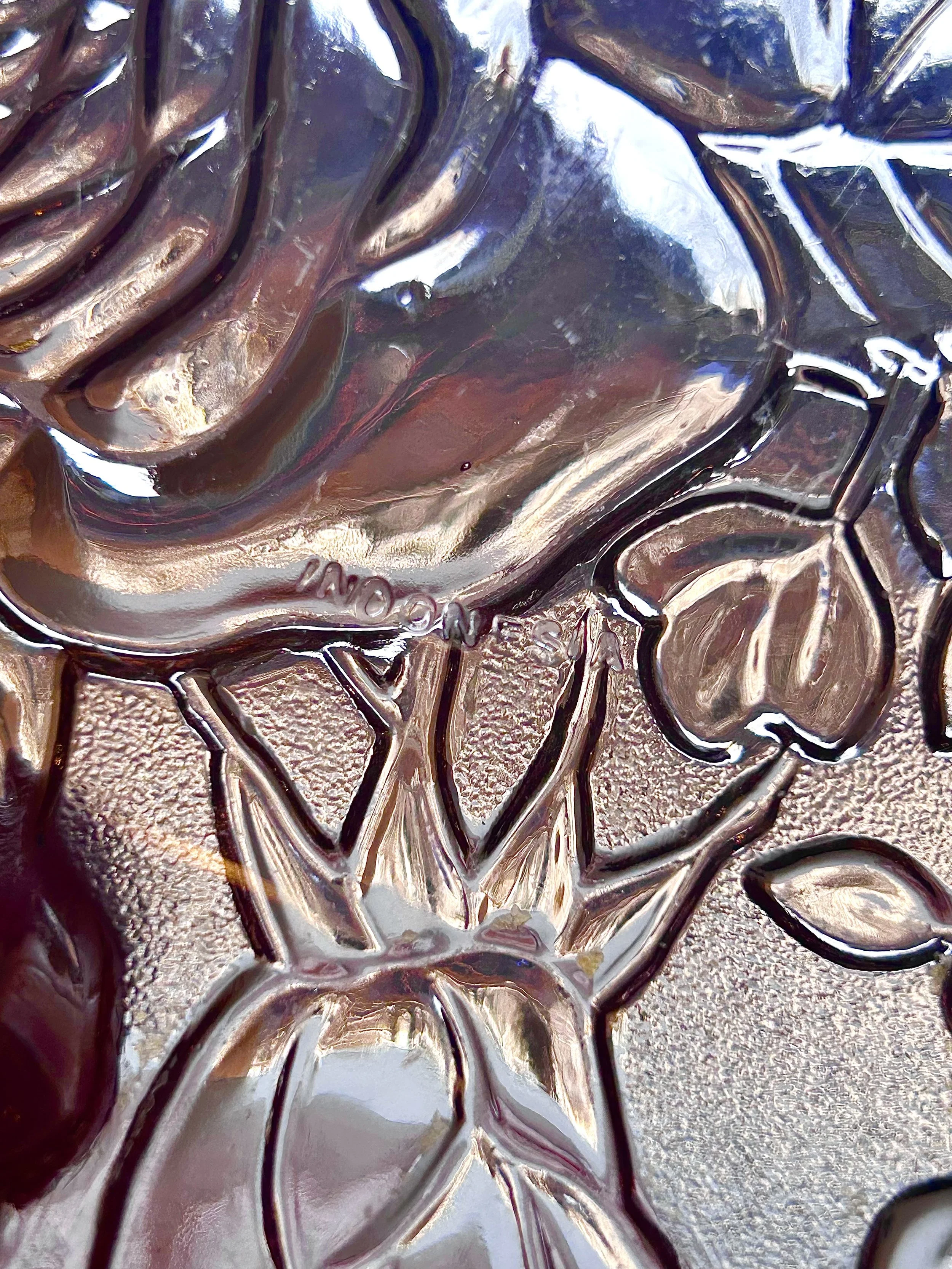
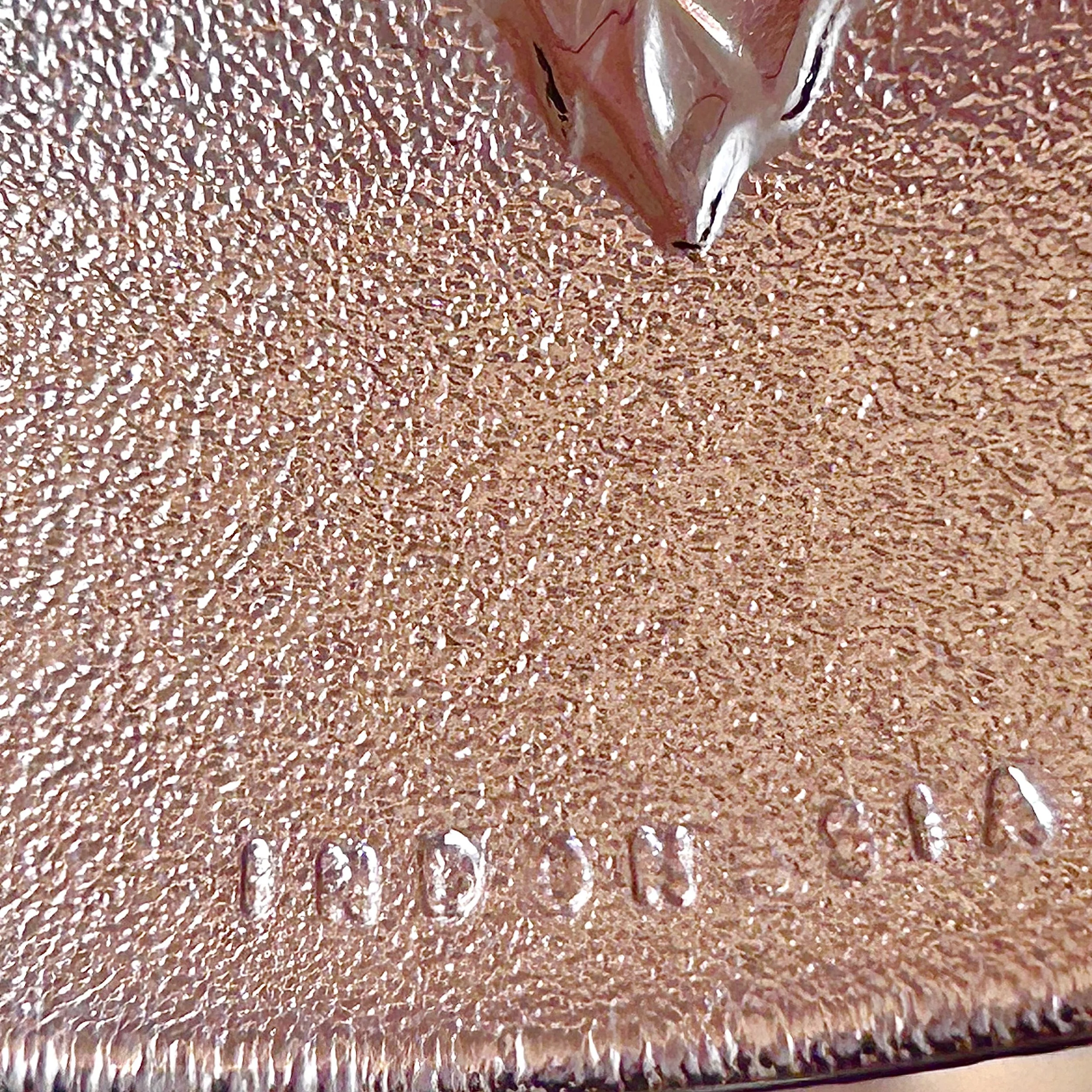
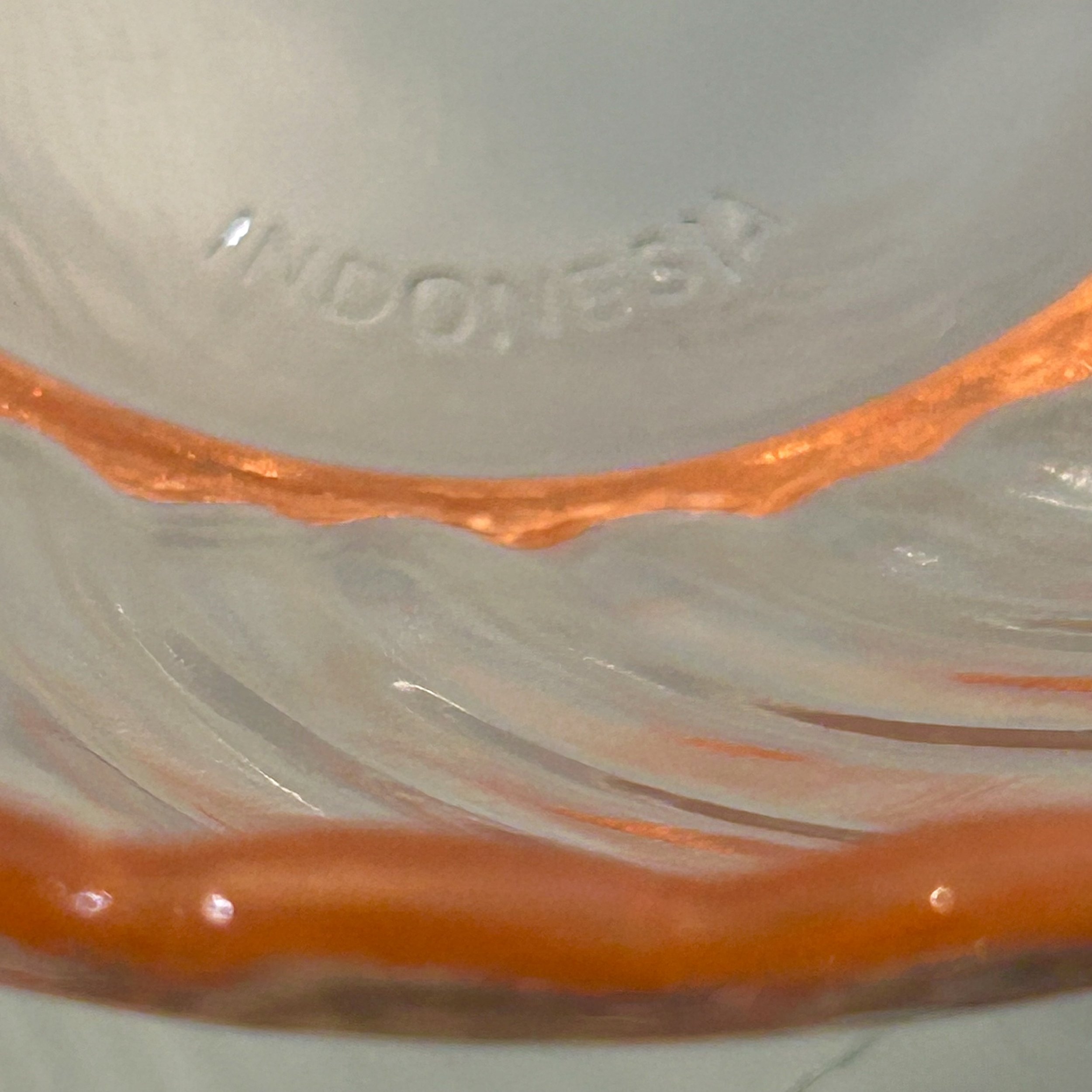
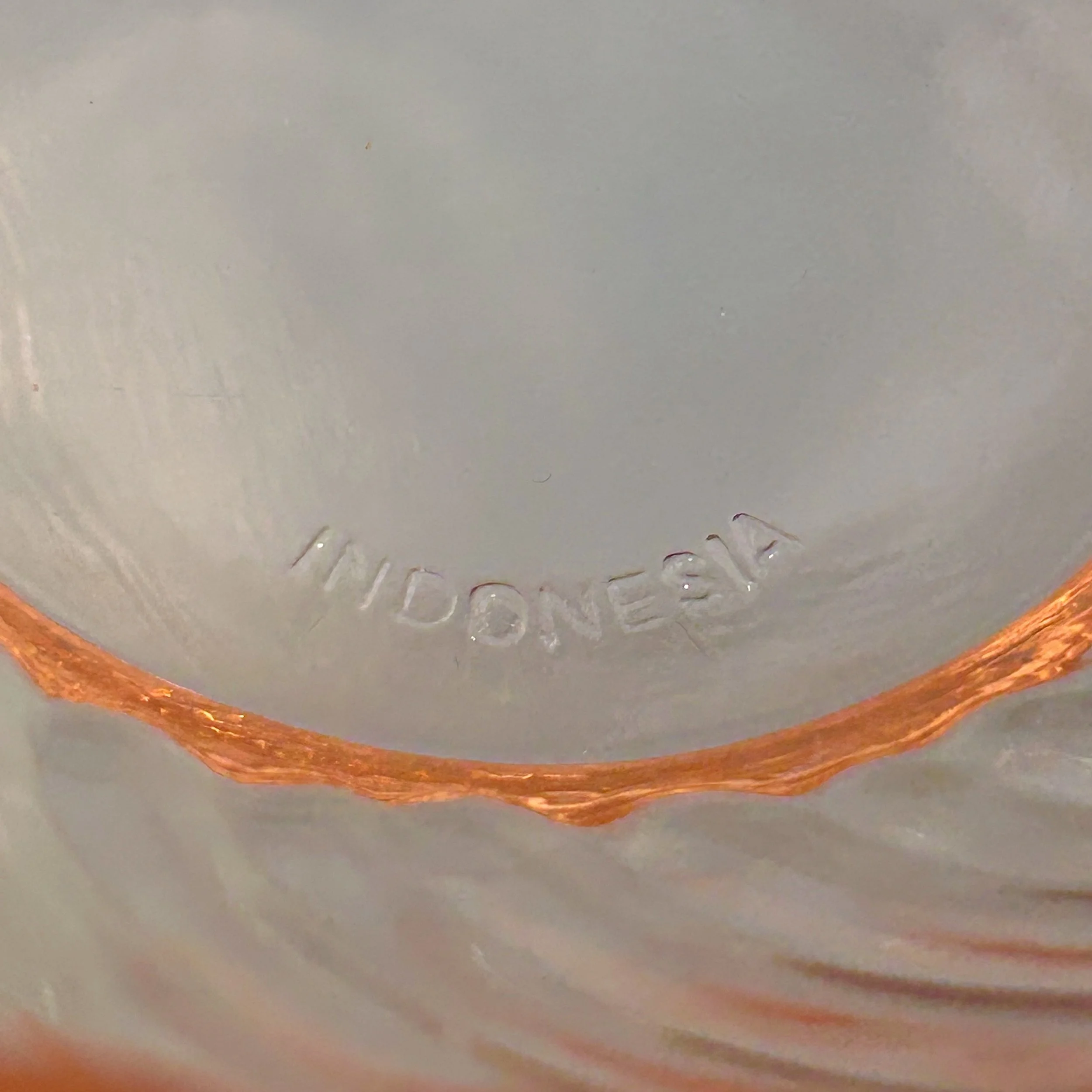
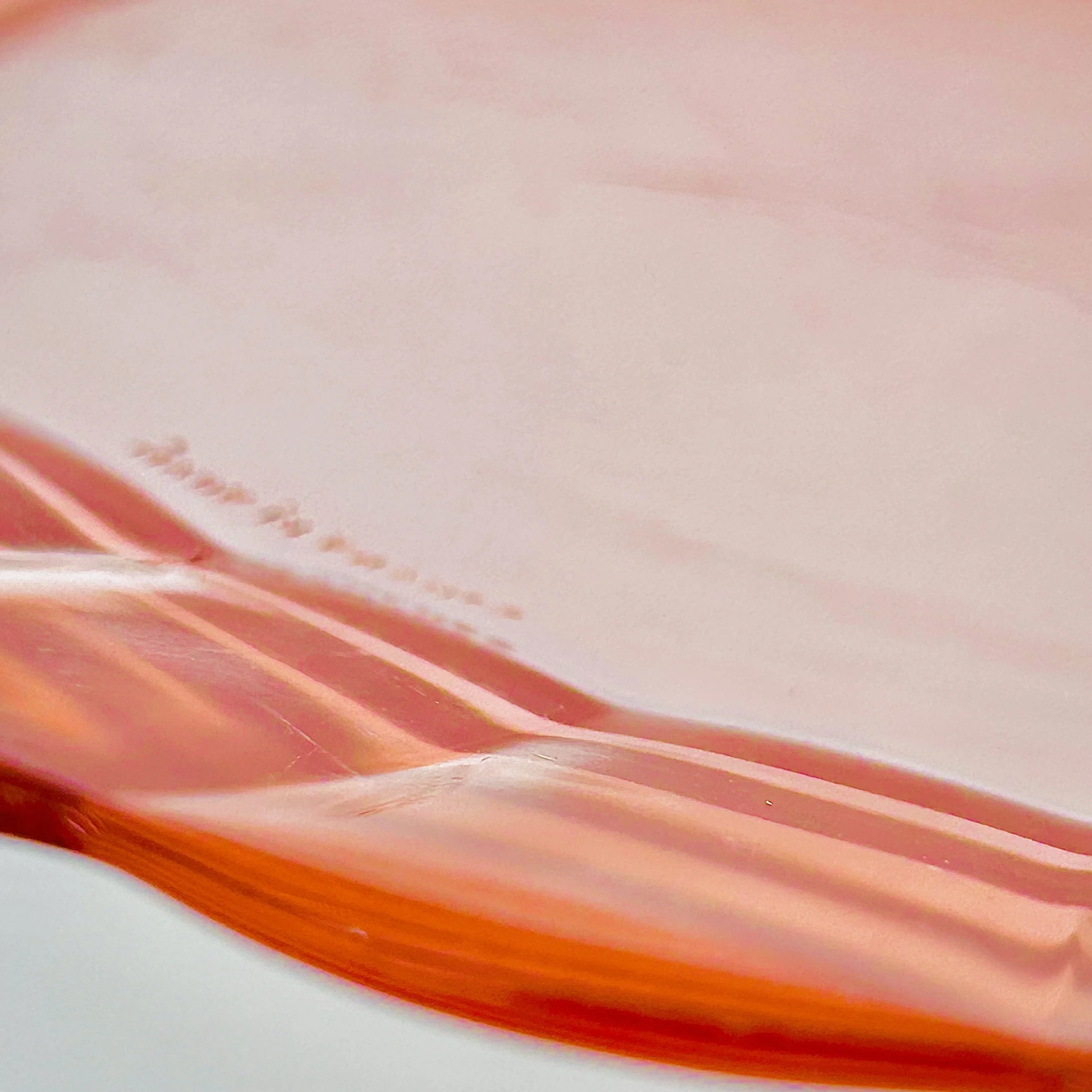
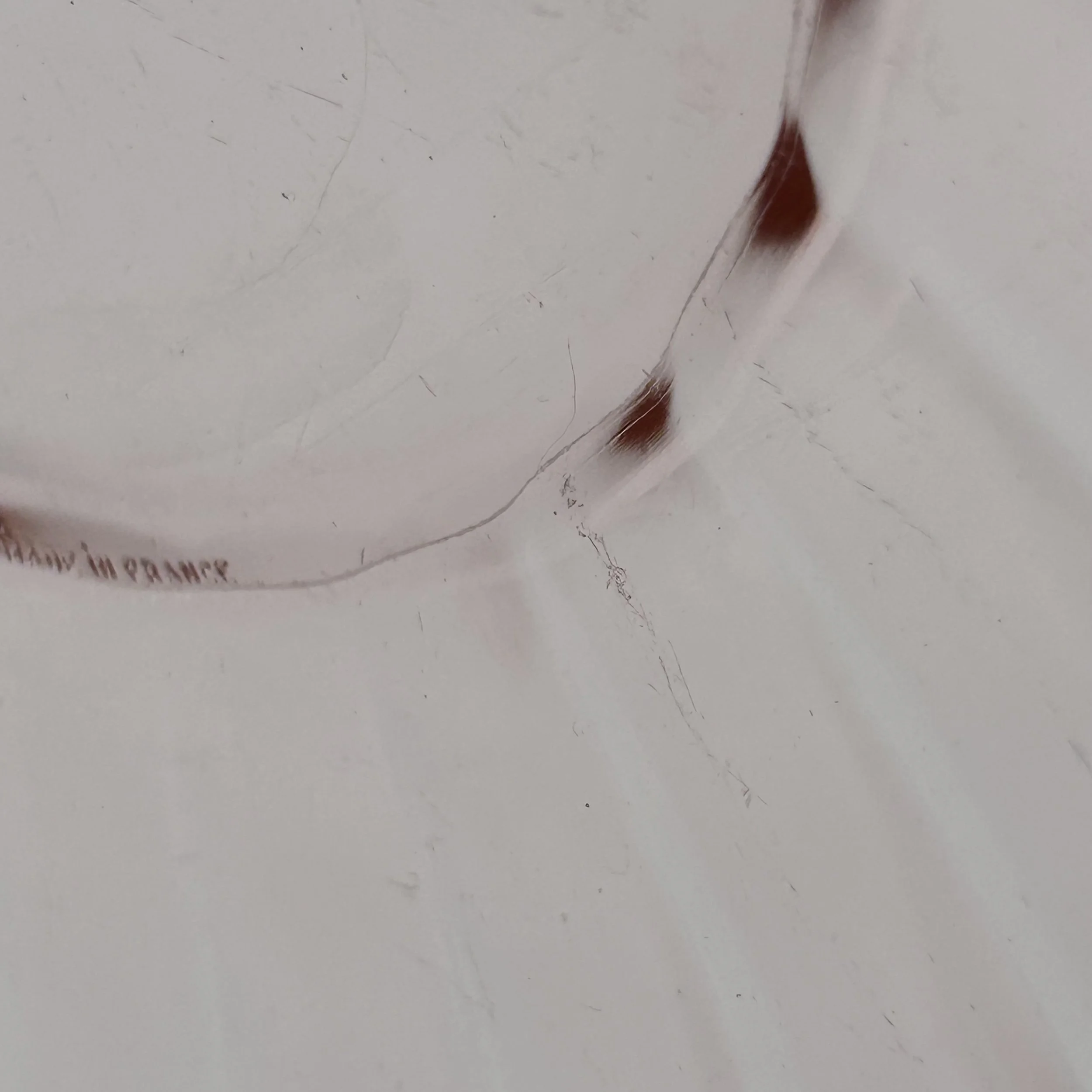
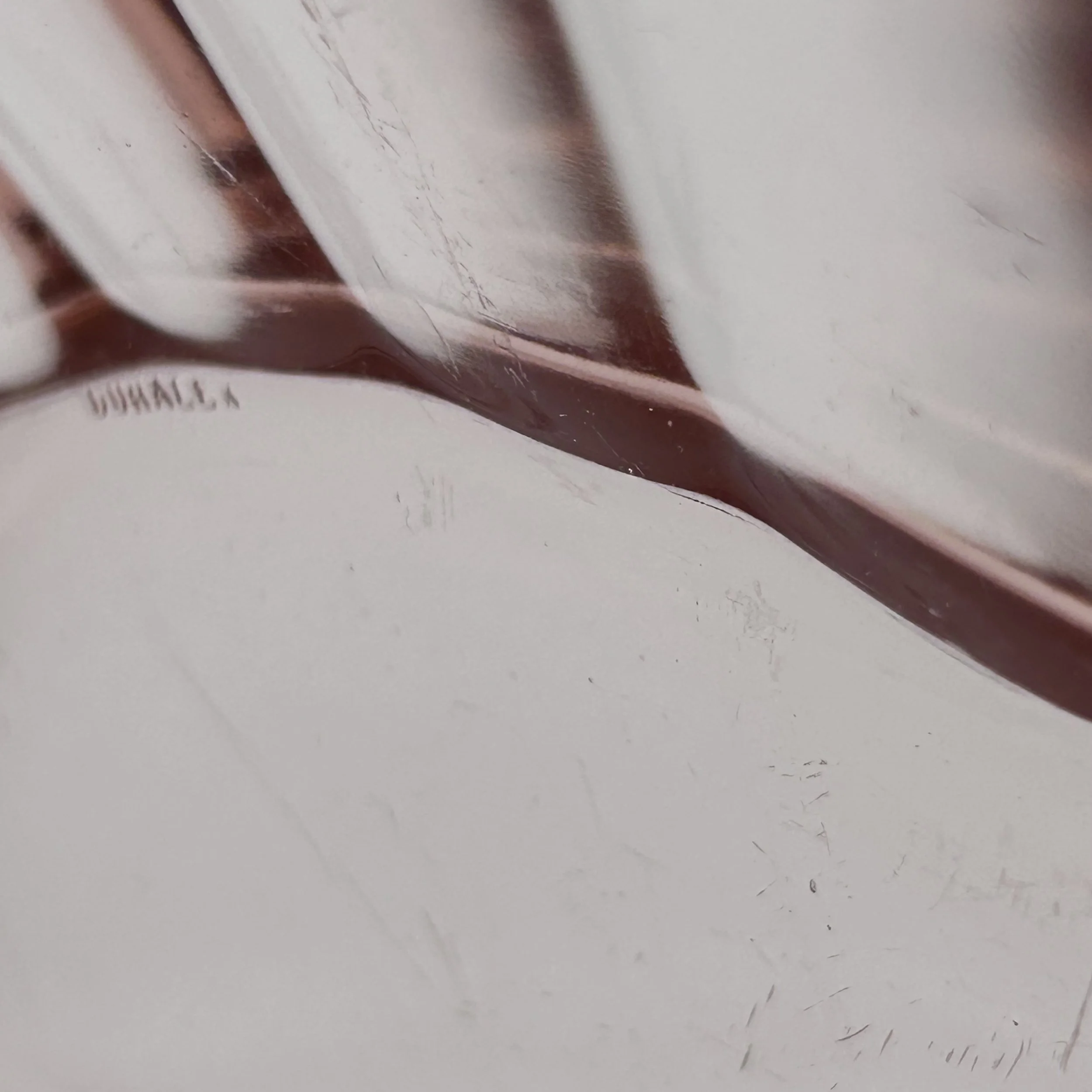
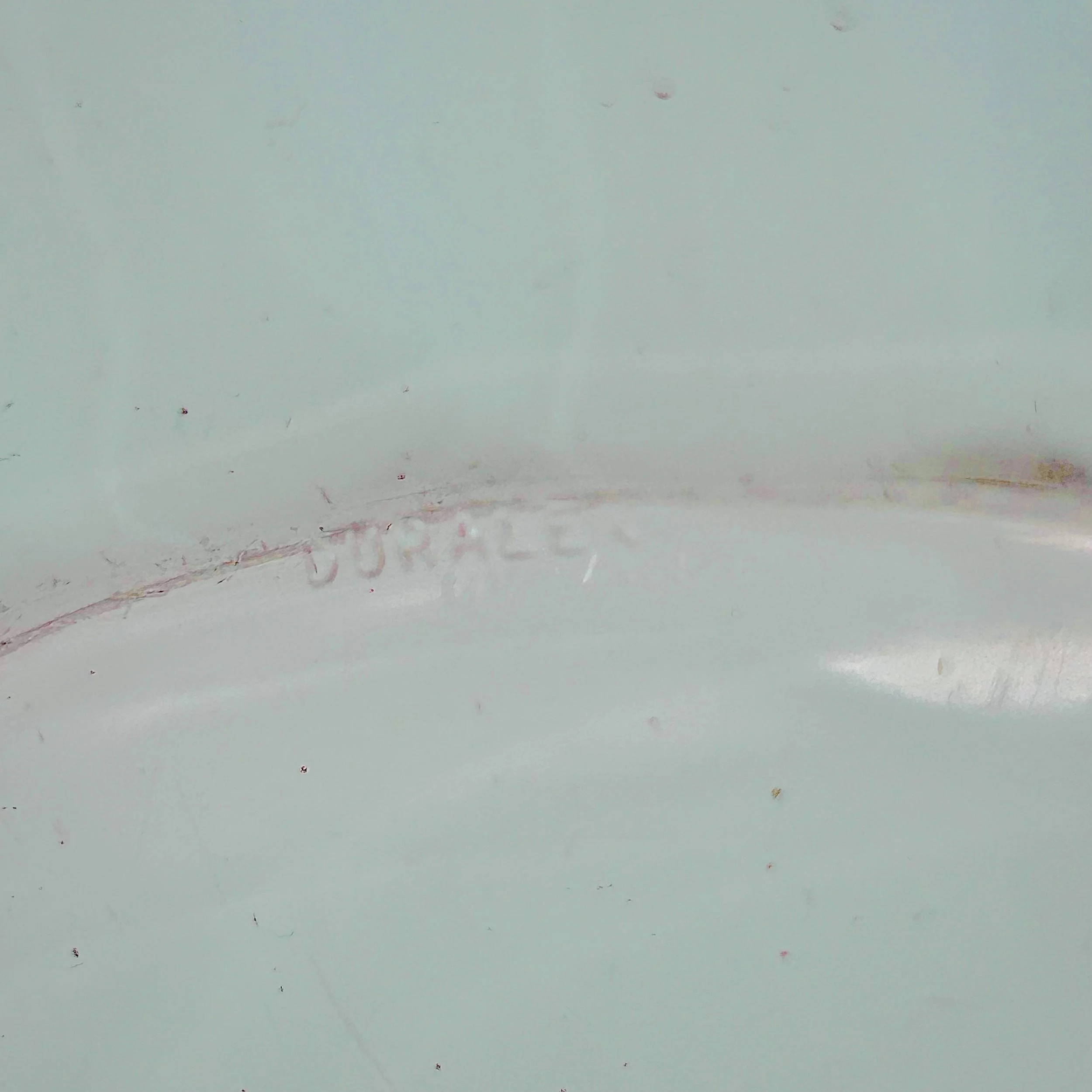
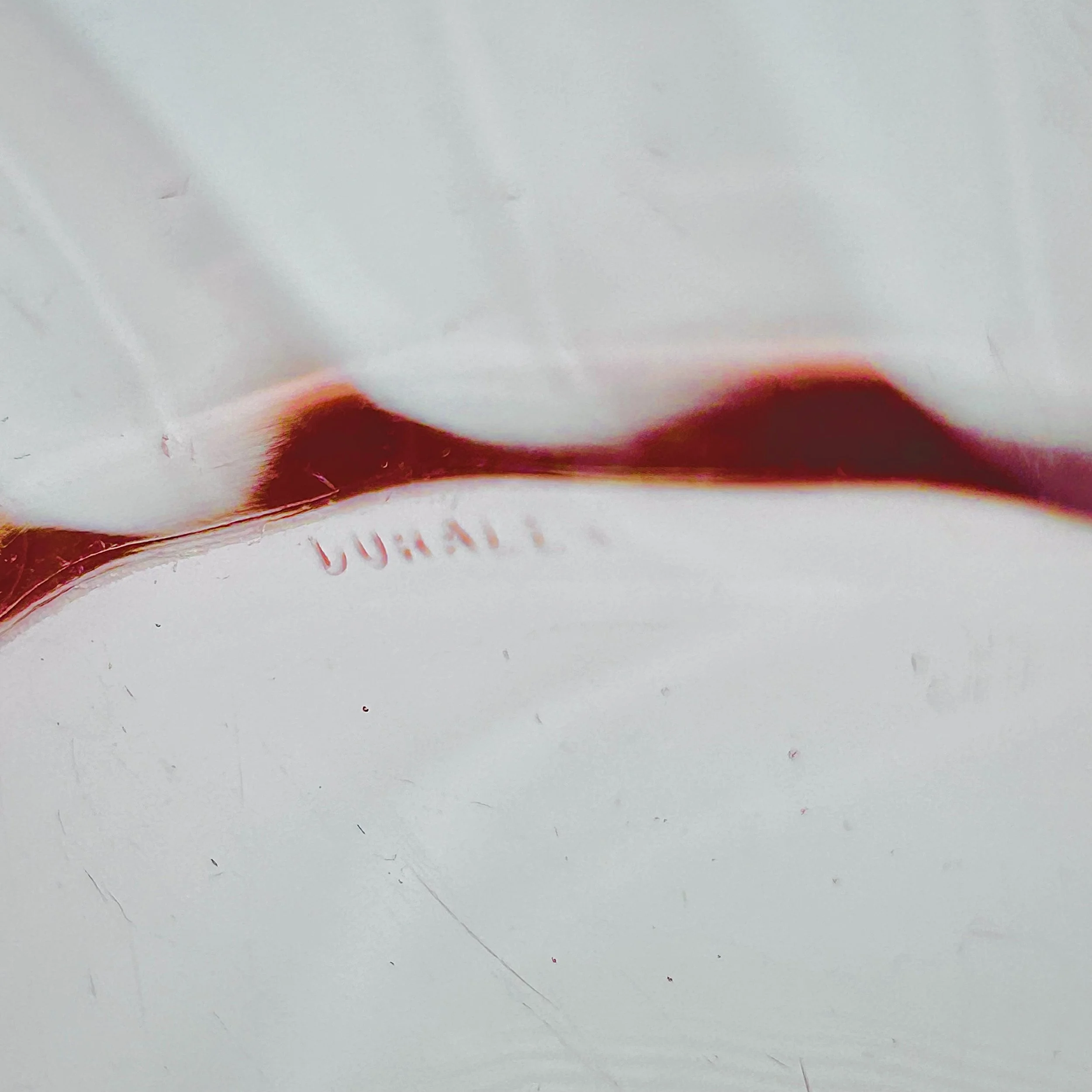
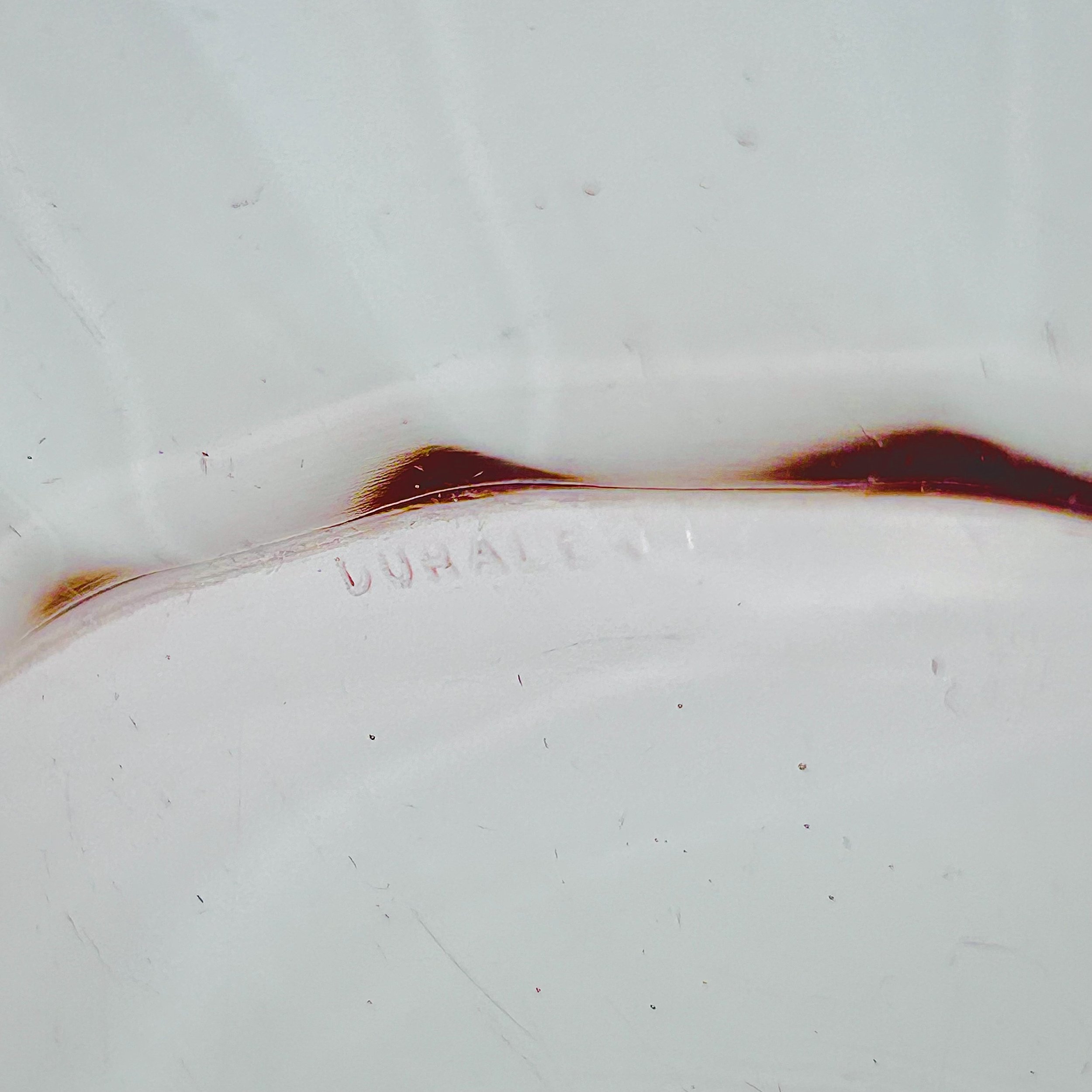
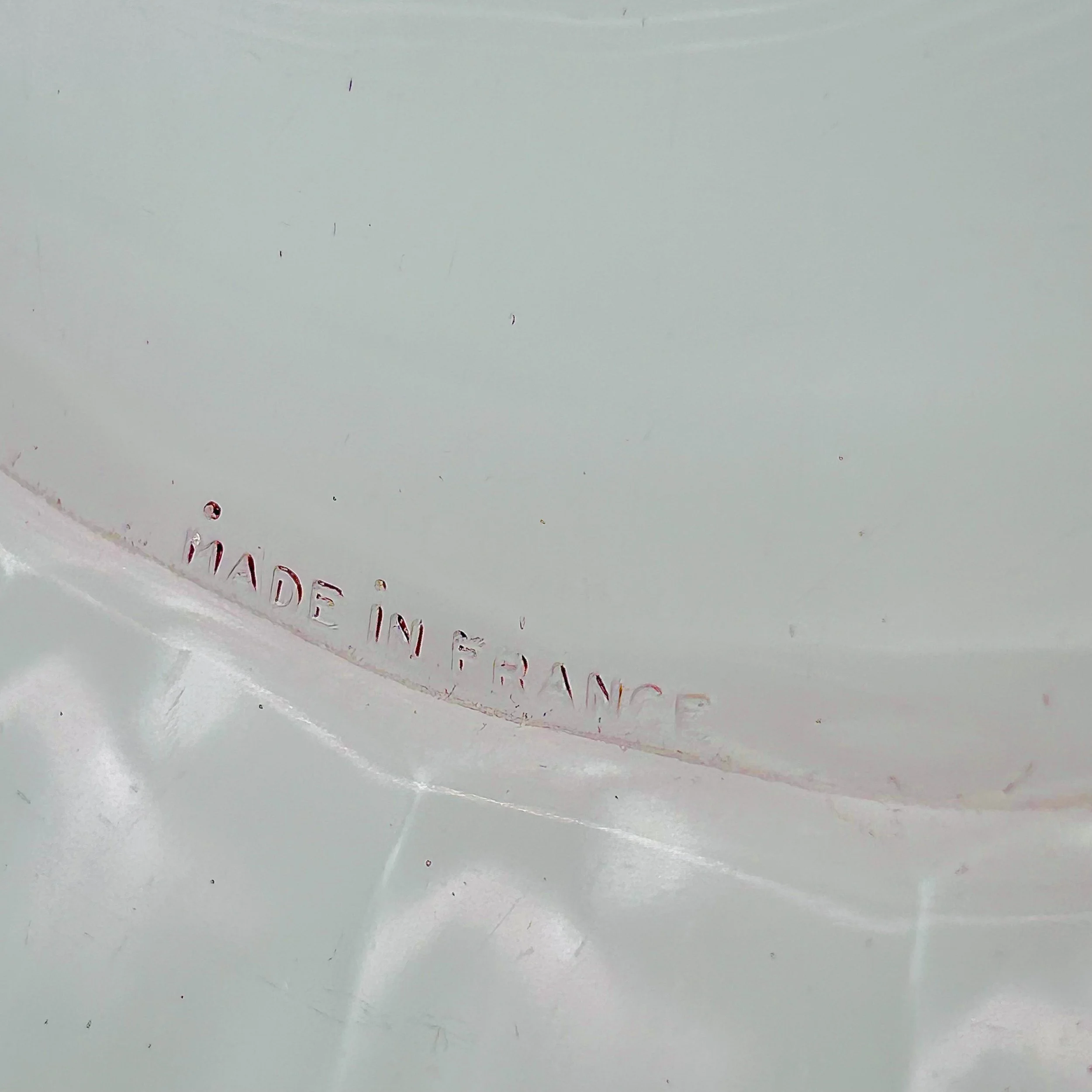
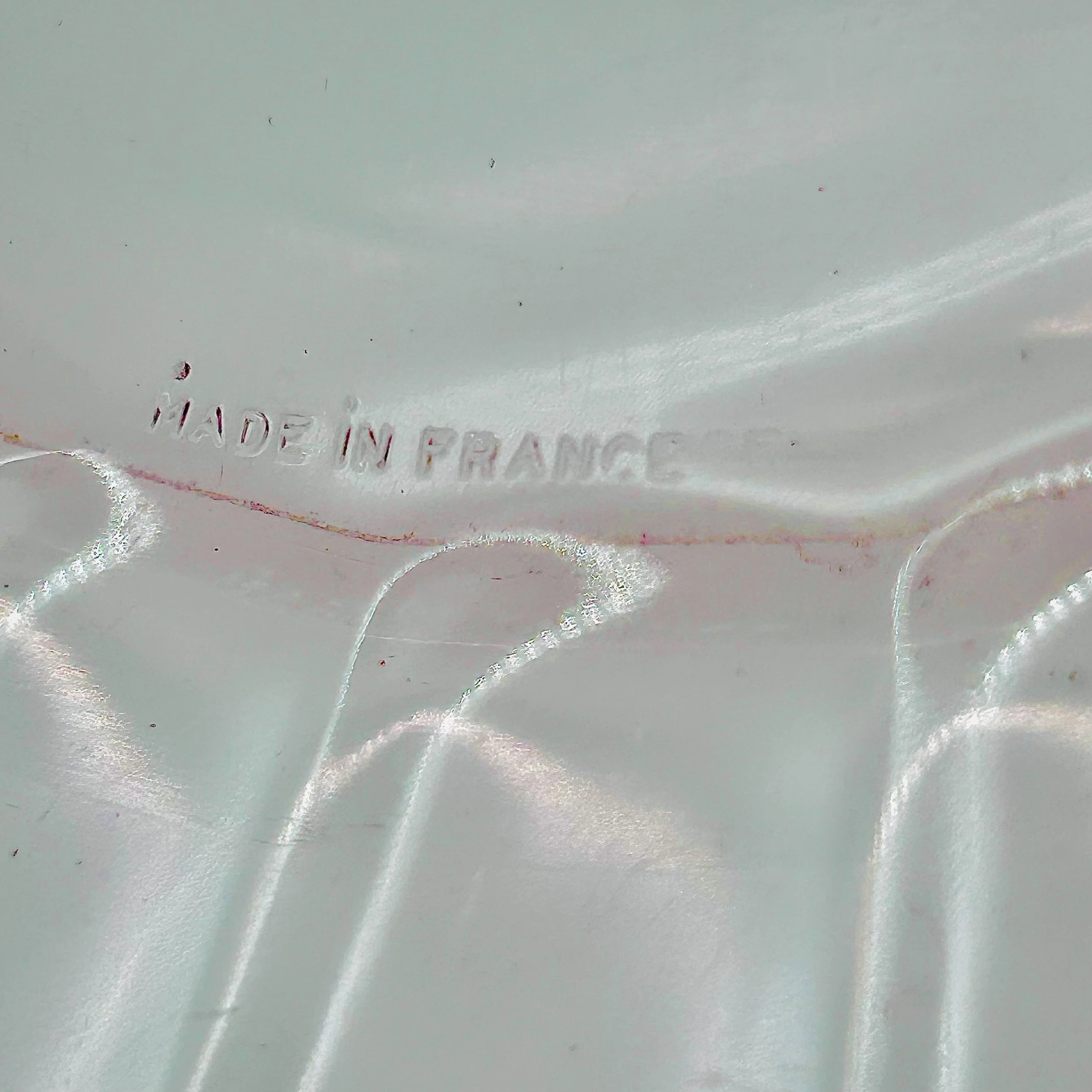
American art glass comport, Mid Century period, circa 1945–1965. The satin “sandy” surface, glowing cased coloration (opalized blush bowl over a vivid coral/orange base), molded octagonal plan, and visible vertical mold seam strongly indicate mid-20th century American pressed and mold-blown production in the tradition of Fenton Art Glass, Viking Glass, or a comparable U.S. art glass house. No signature present. Attribution is stylistic and construction-based.
Dimensions & Weight
Diameter: 9 inches
Height: 2.75 inches
Base diameter: 3.5 inches
Each of the 8 sides: approximately 3.5 inches
Weight: 1.3 lbs
Condition
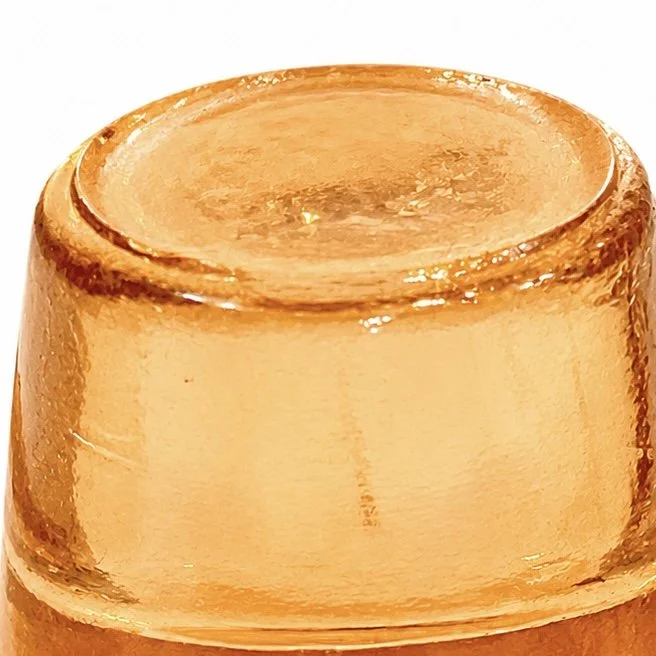
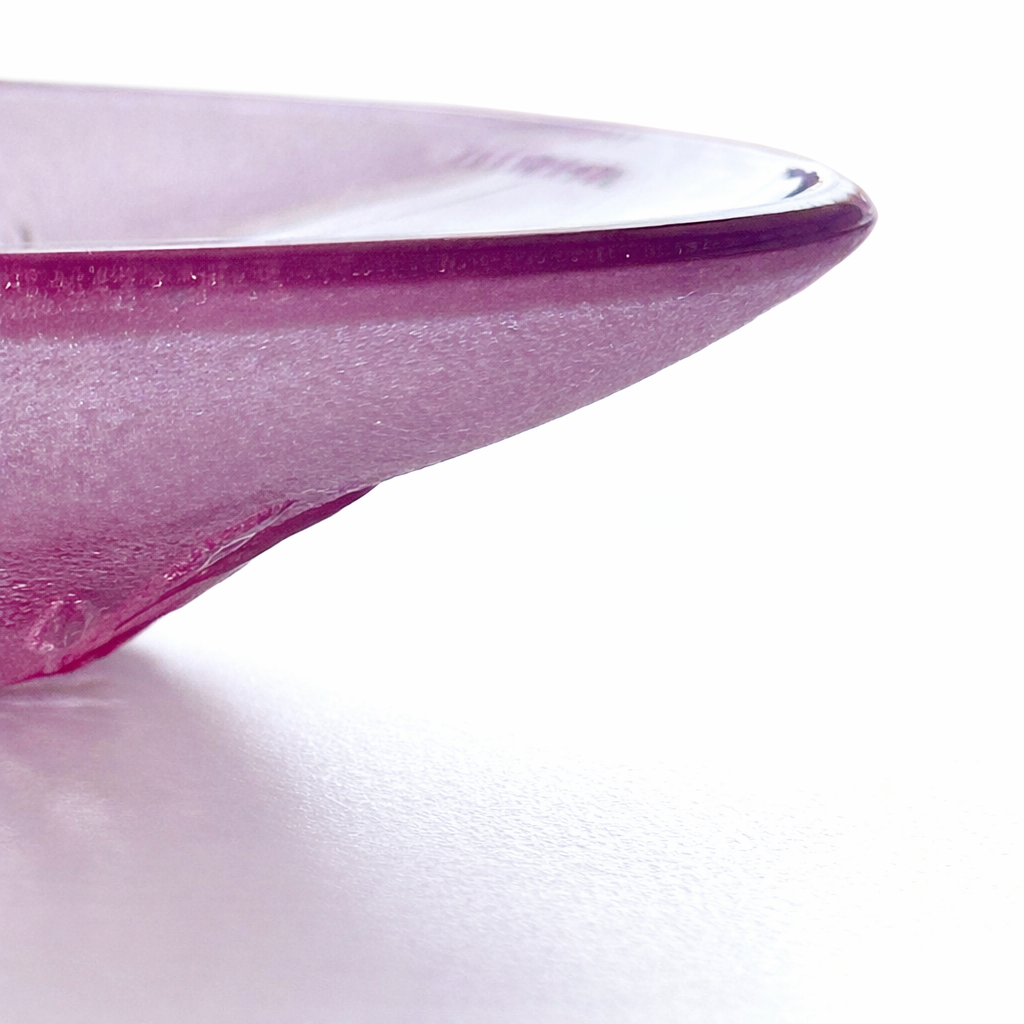
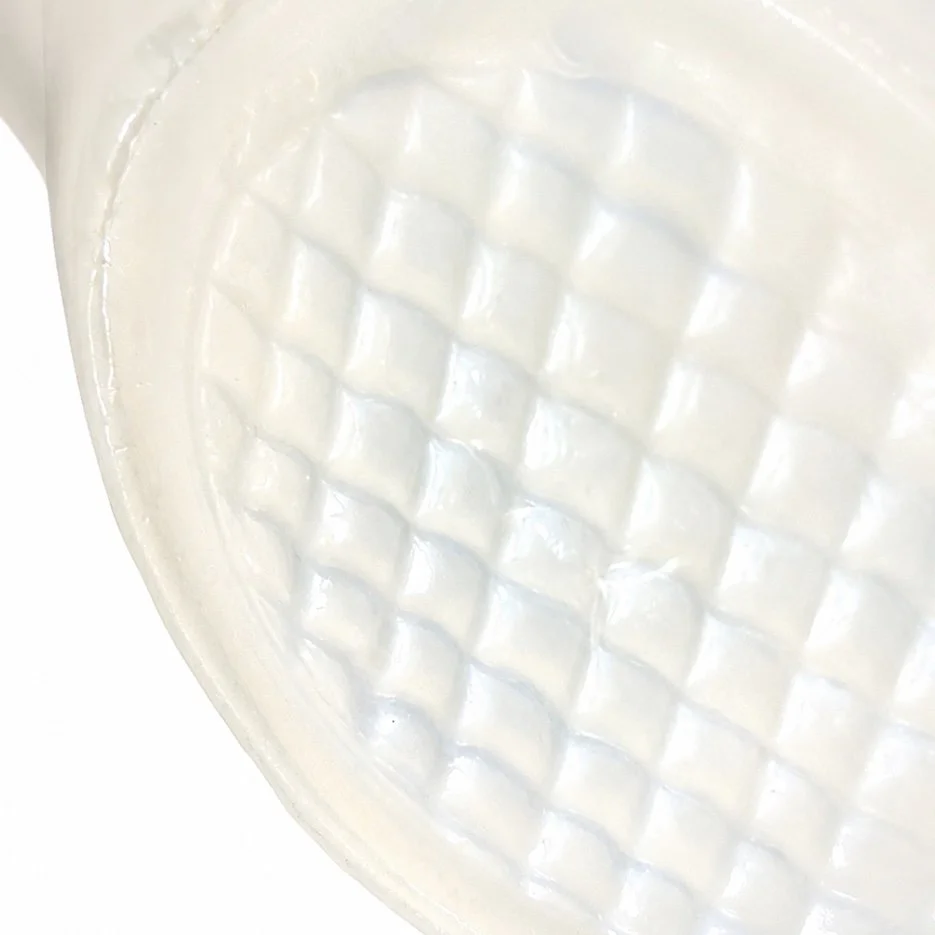
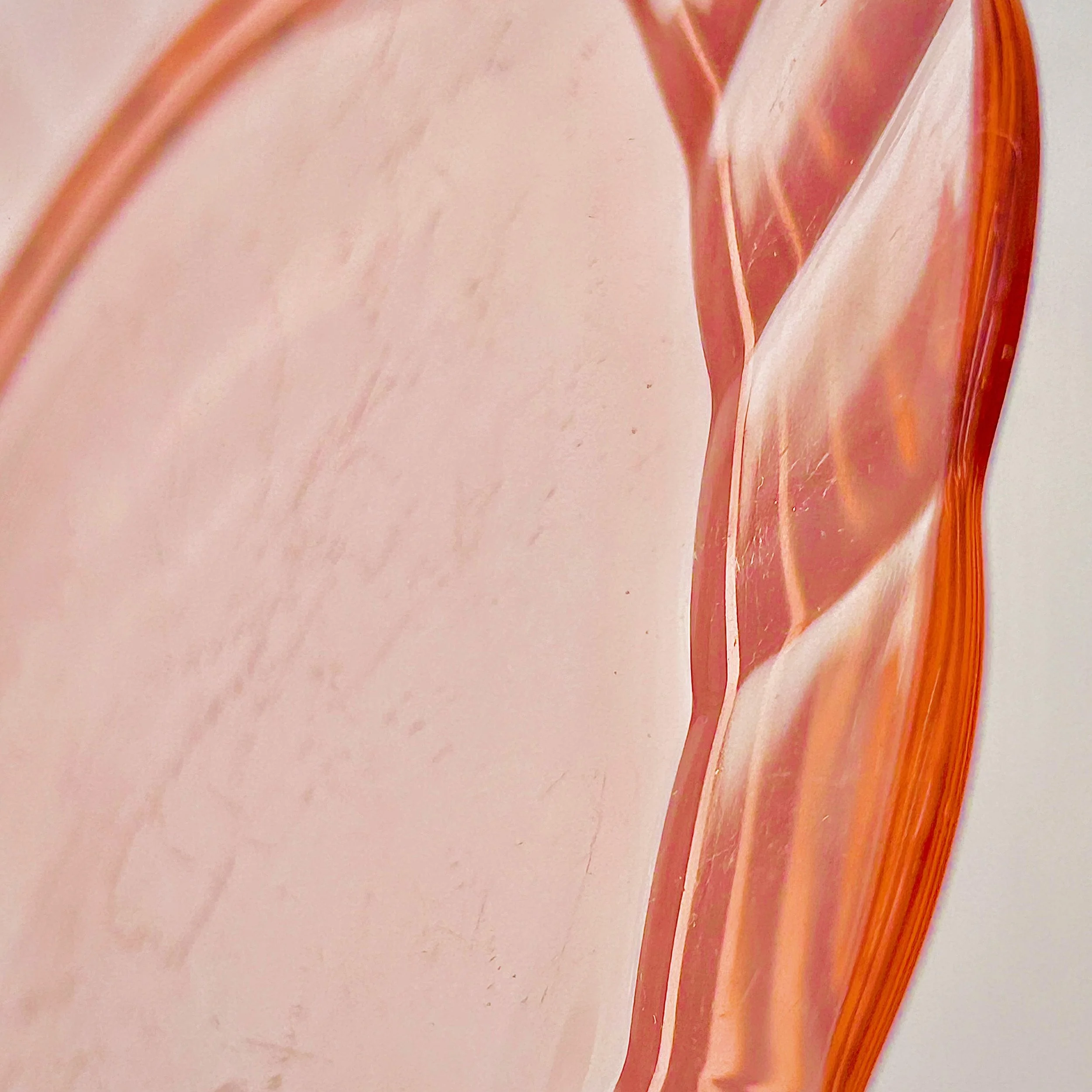
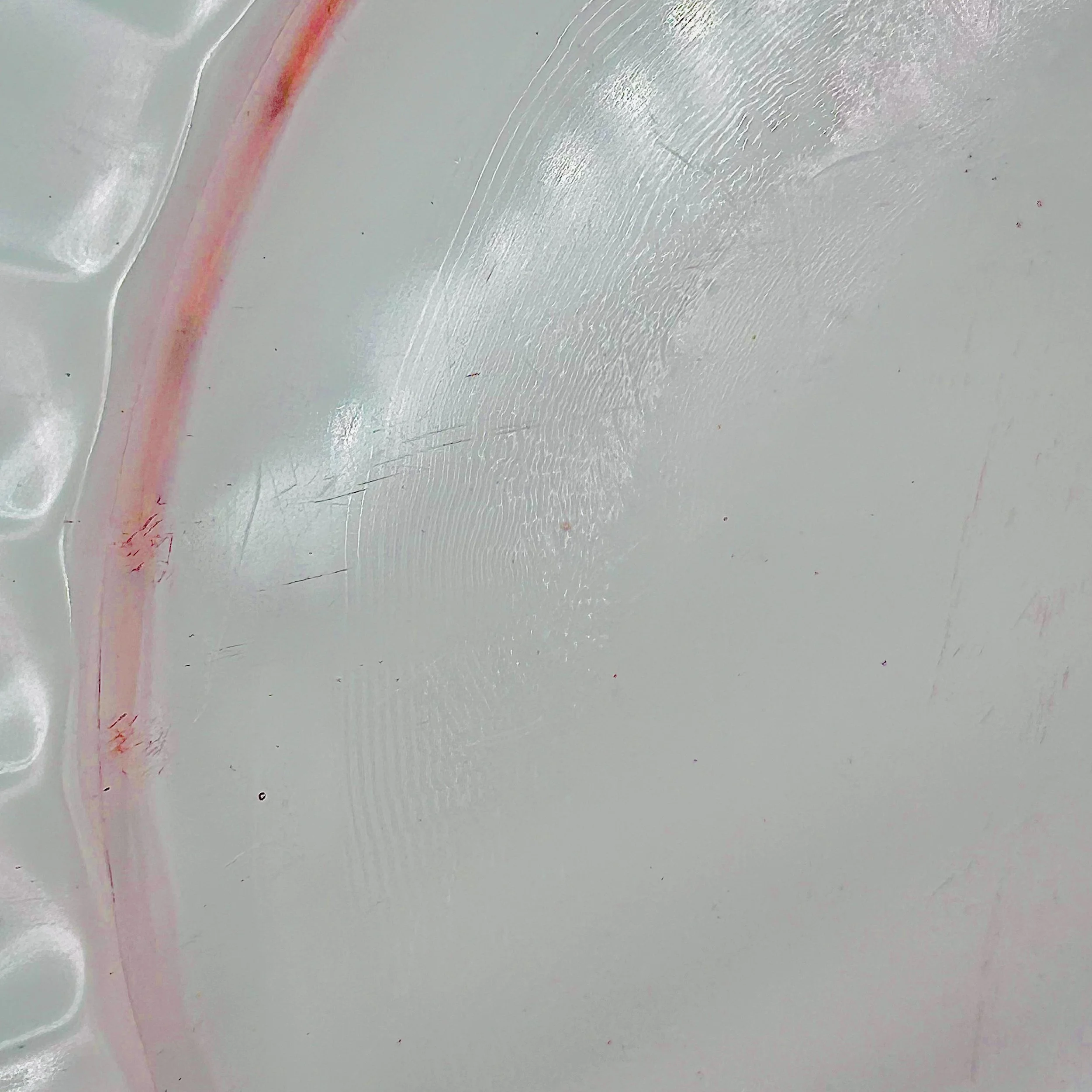
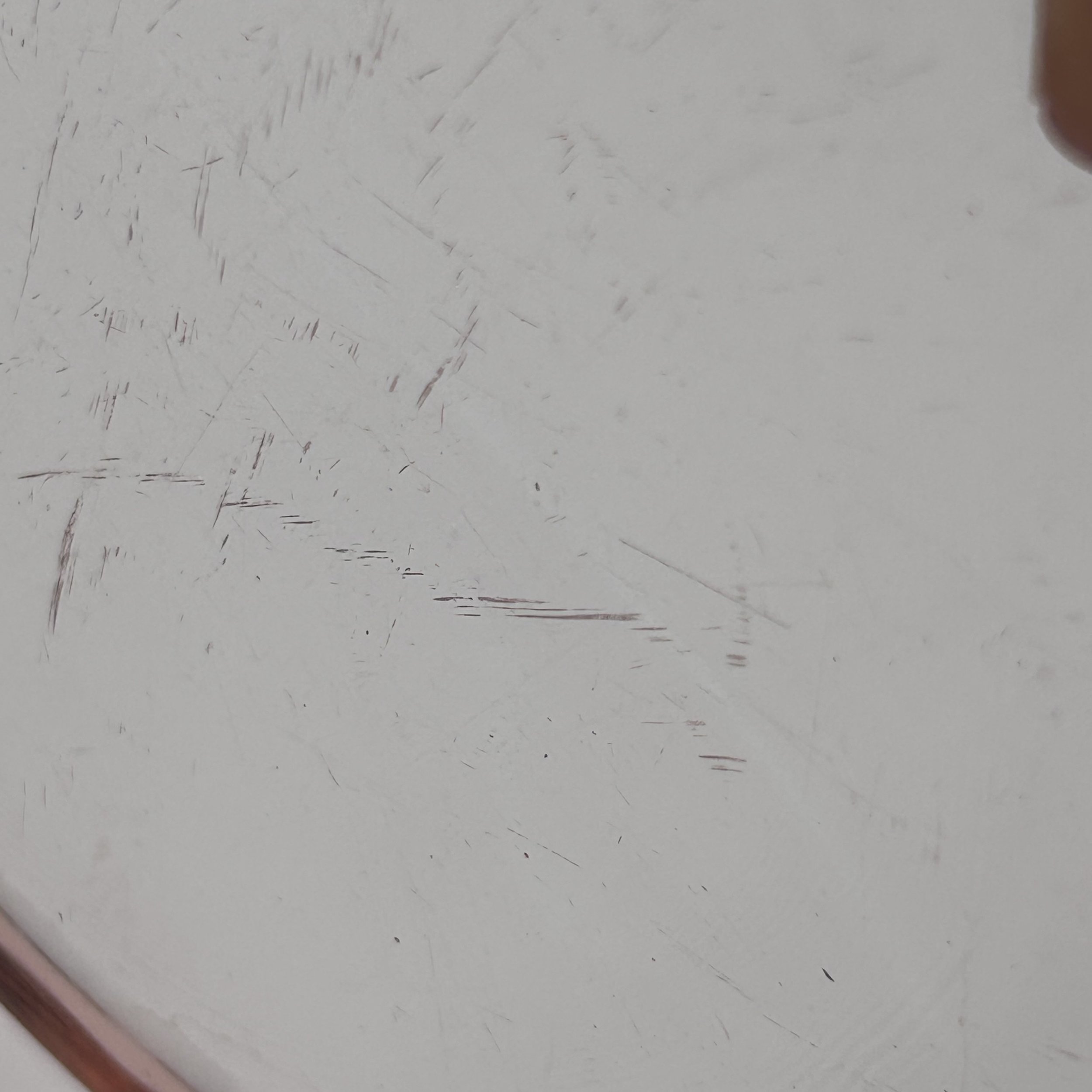
Excellent condition. No scratches, no chips, no cracks. Surface retains an even satin finish throughout. A visible mold seam is present, consistent with mid-century pressed/mold-blown production and not a condition issue. Interior and foot rim are clean and well-preserved.
Authenticity & Construction
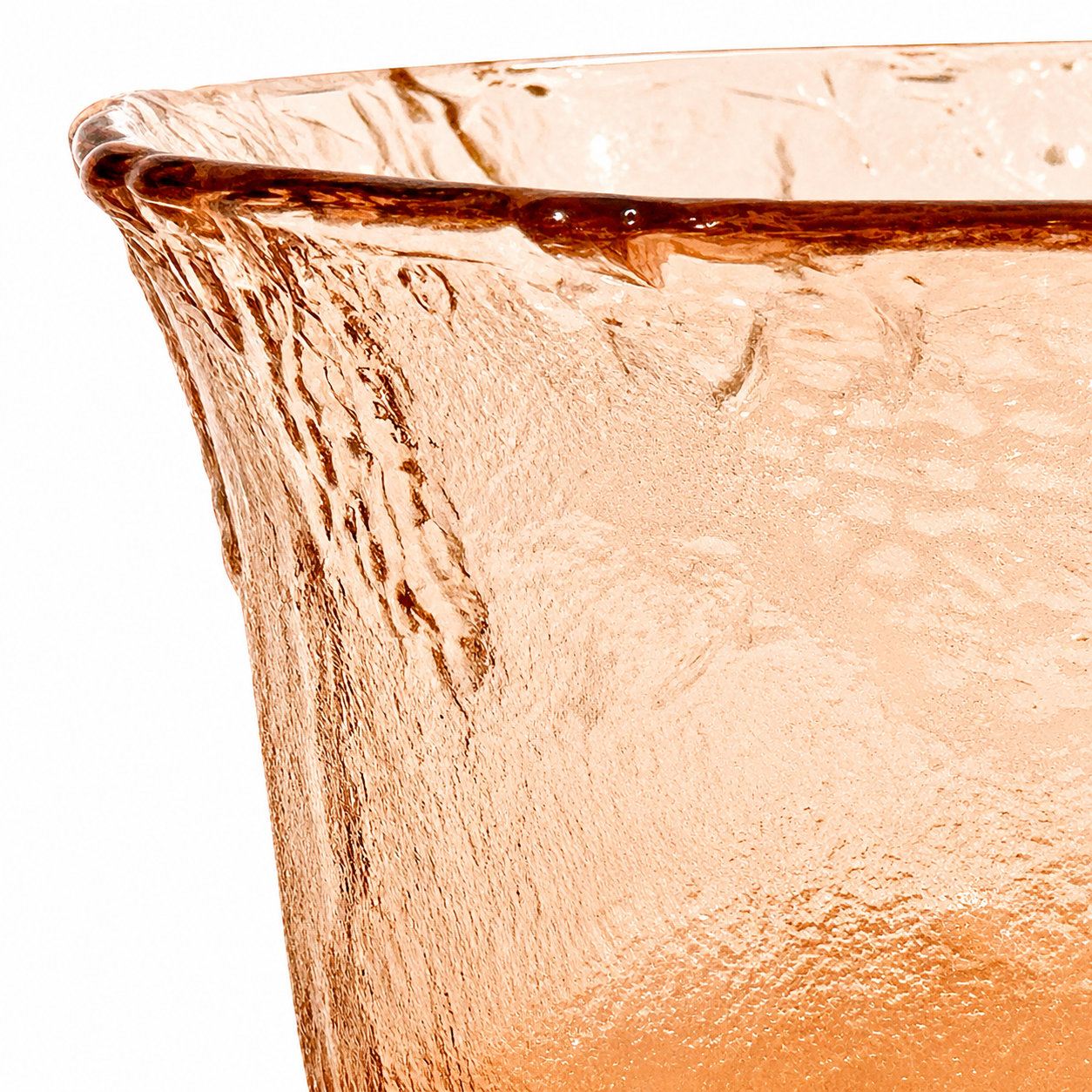
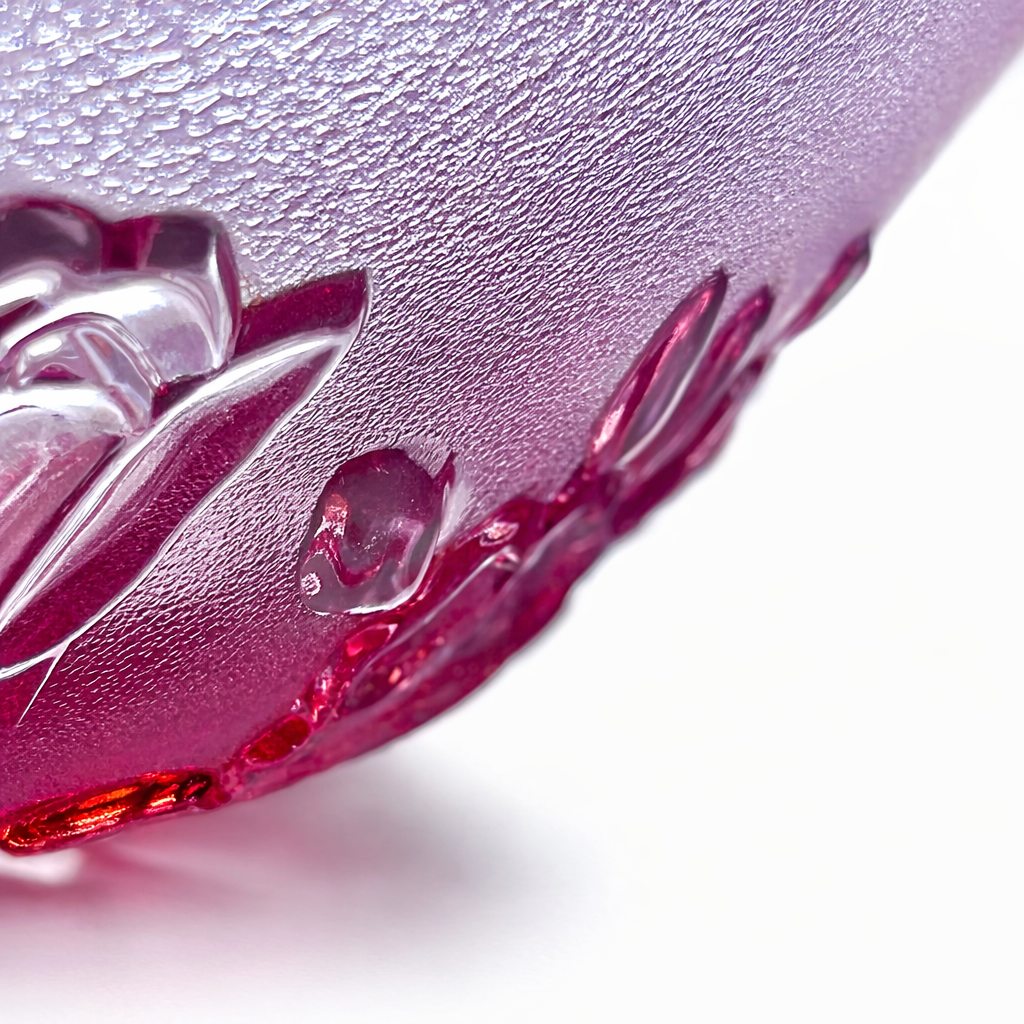
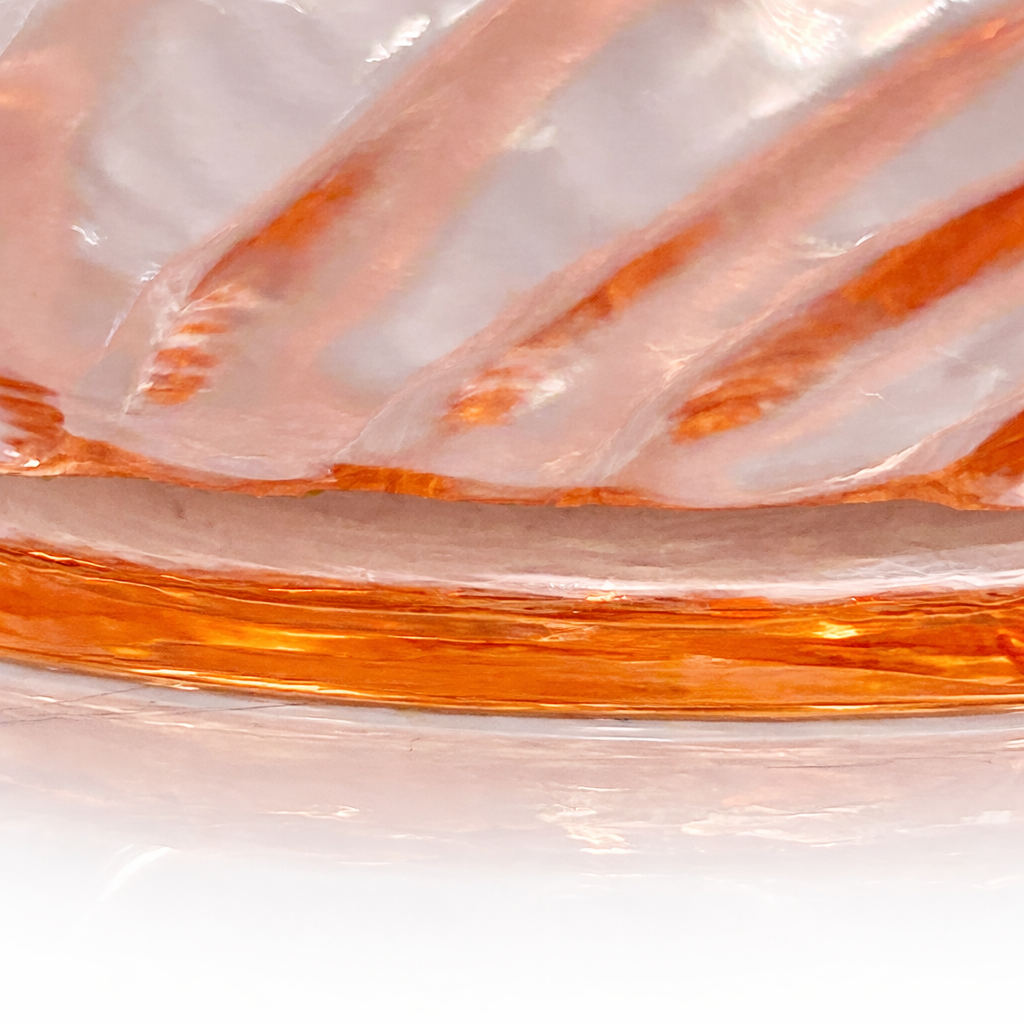
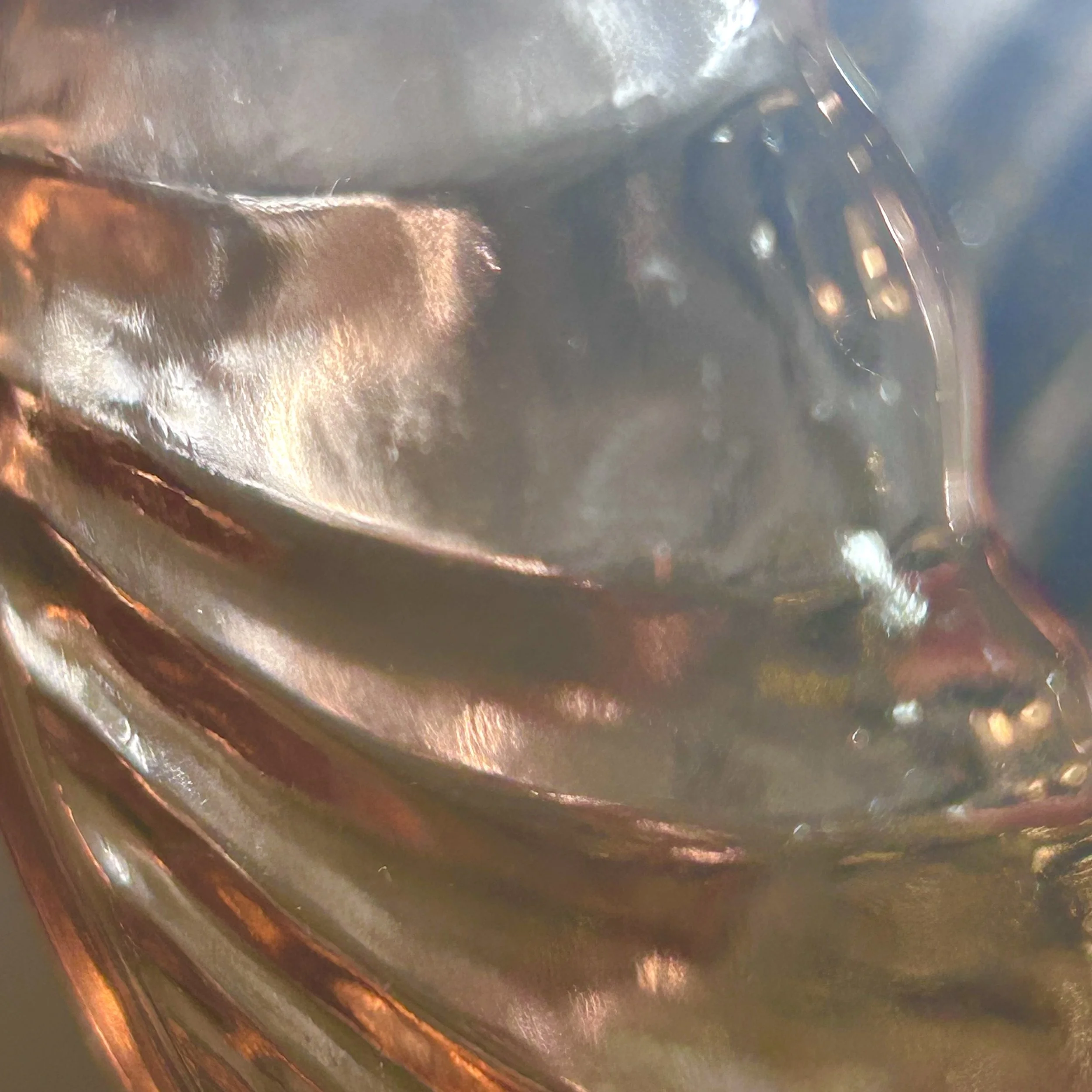
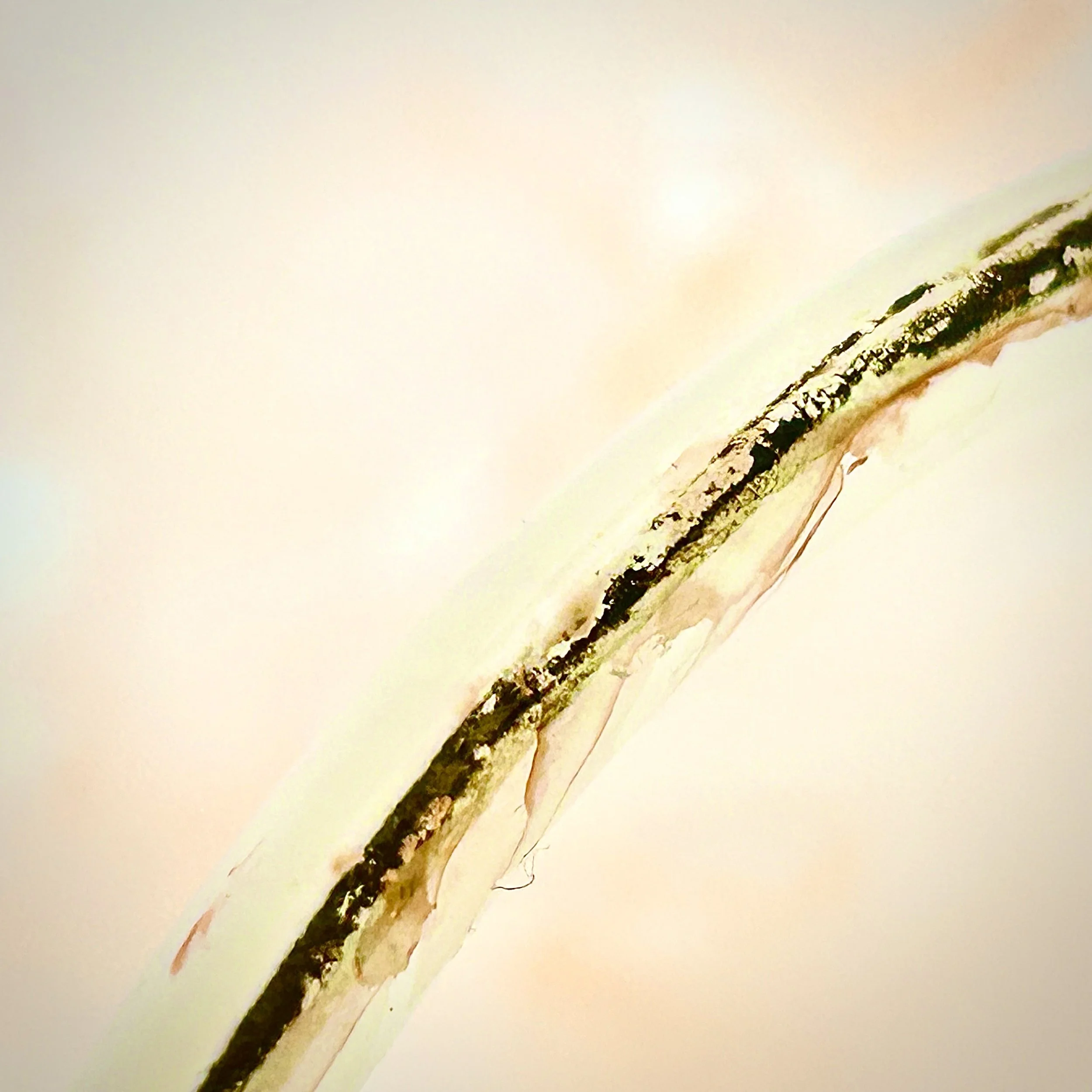
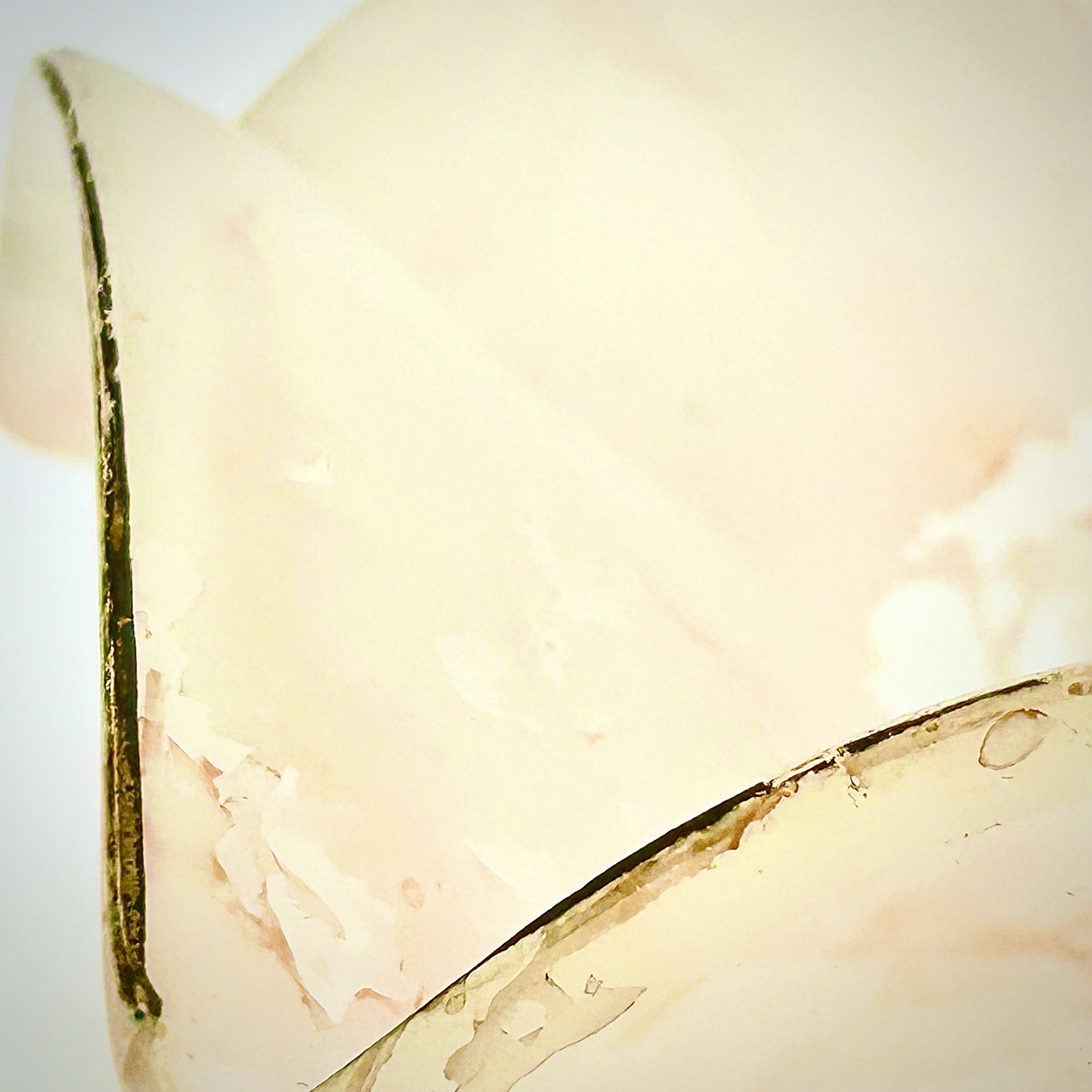
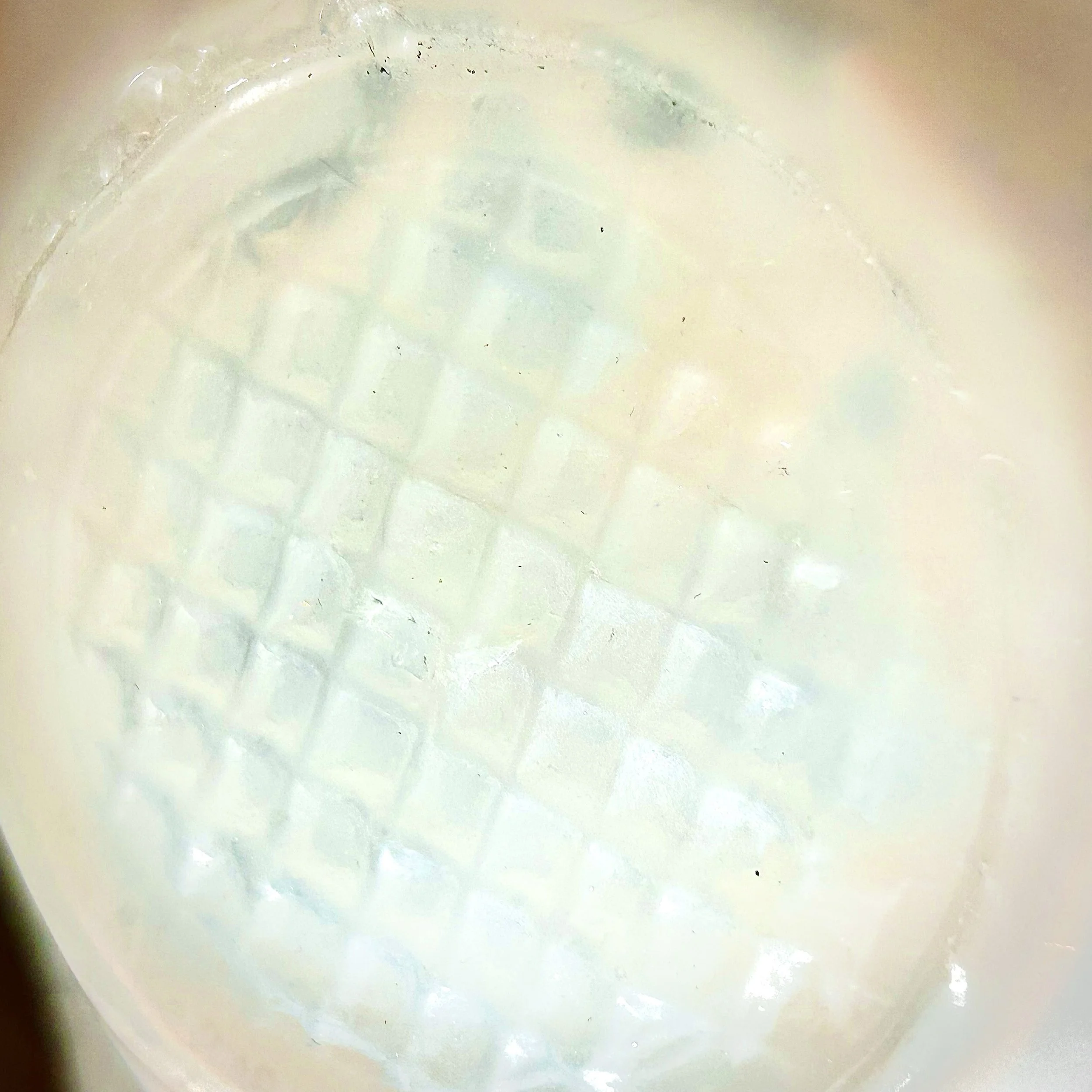
This piece was formed in a multi-part mold, evidenced by the vertical seam visible in close inspection. The octagonal footprint and scalloped rim were integrated into the mold design rather than tooled freehand.
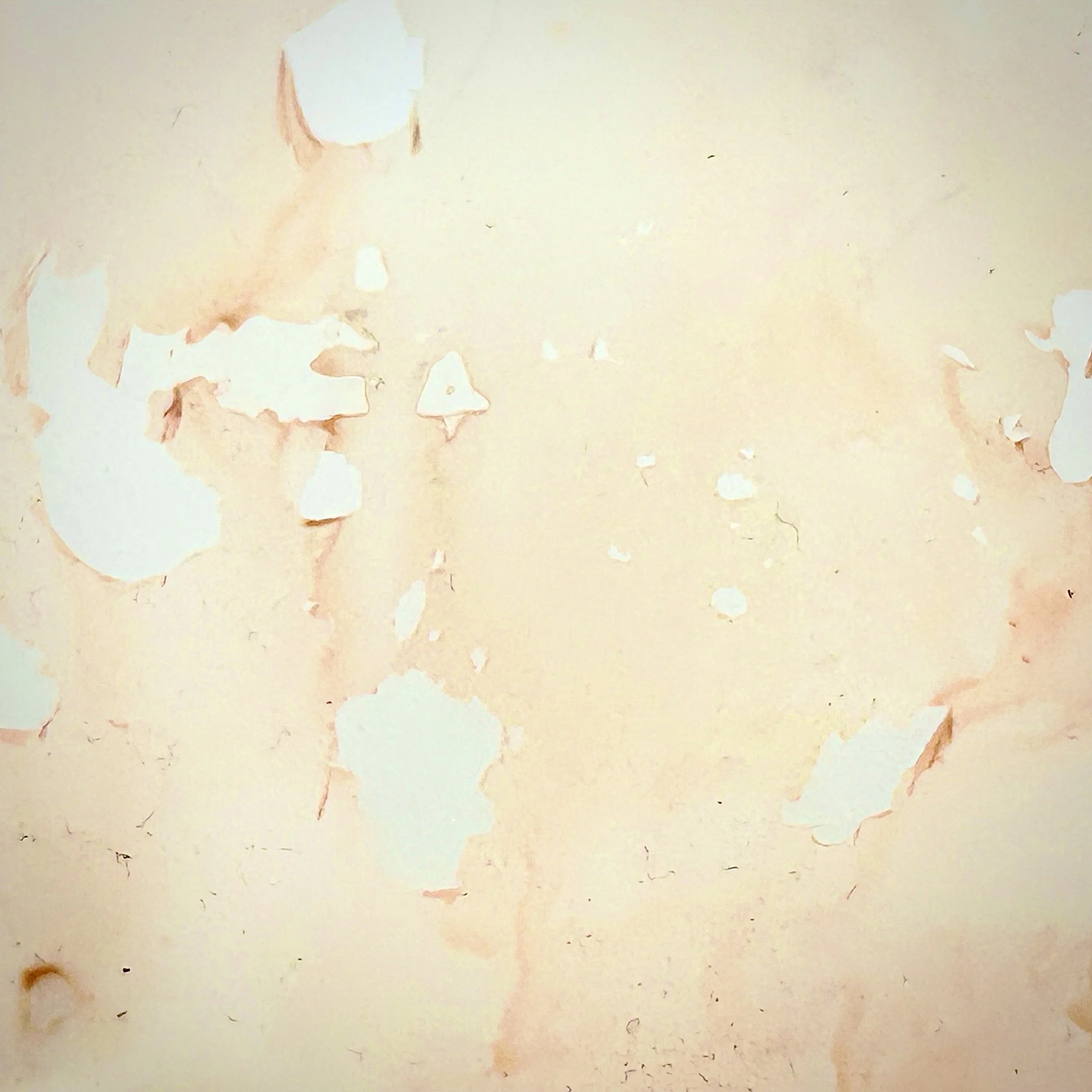
The coloration suggests cased glass construction: a soft opalescent pink upper layer fused over a more intensely pigmented coral/orange base. Under light, the foot glows with a saturated warmth while the bowl reads as diffused and architectural. The satin “sandy” surface is achieved through acid-etching or controlled surface treatment, a technique widely employed in American art glass factories during the mid-century era to soften form and enhance light diffusion.
The pedestal form and controlled symmetry align with post-war American decorative glass production, when companies such as Fenton and Viking explored sculptural yet accessible table forms in glowing pastels and sunset hues. While it shares characteristics with Fenton’s satin lines and Viking’s architectural silhouettes, there is no signature or original label; therefore, it is conservatively attributed to American mid-century production.
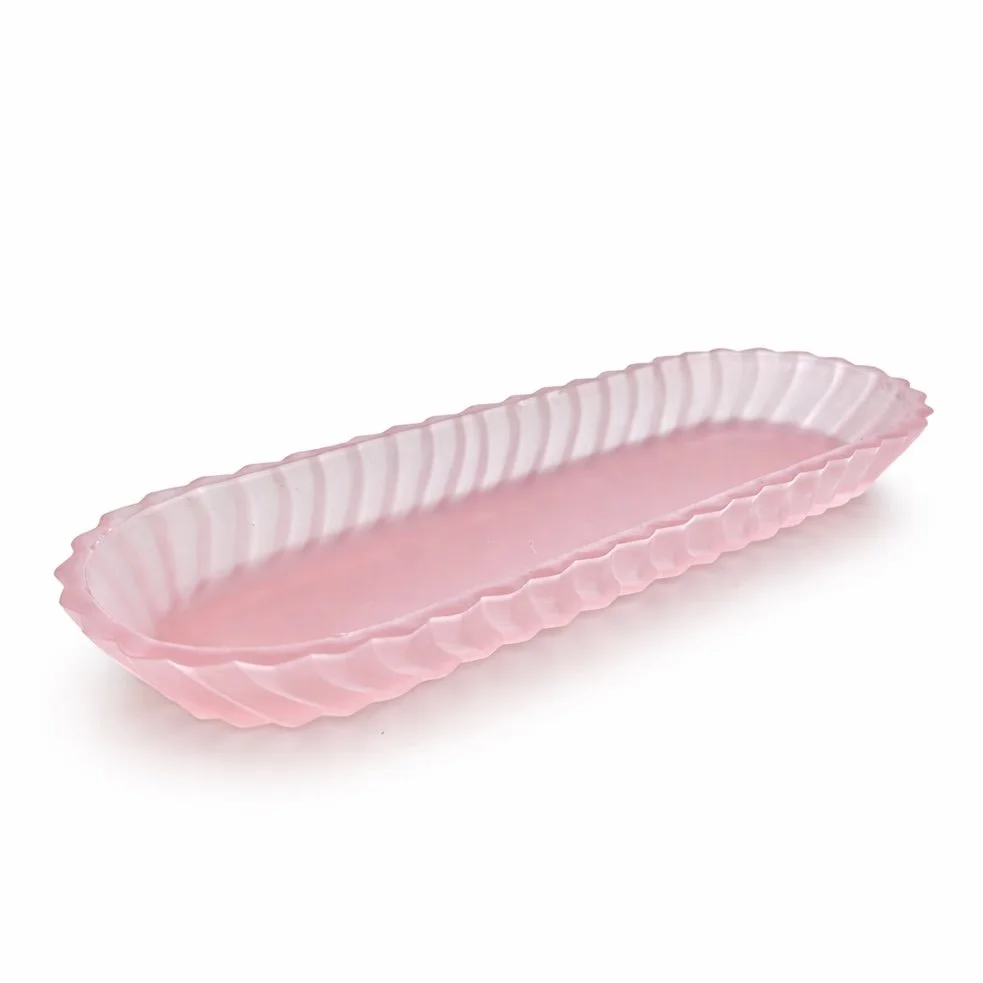
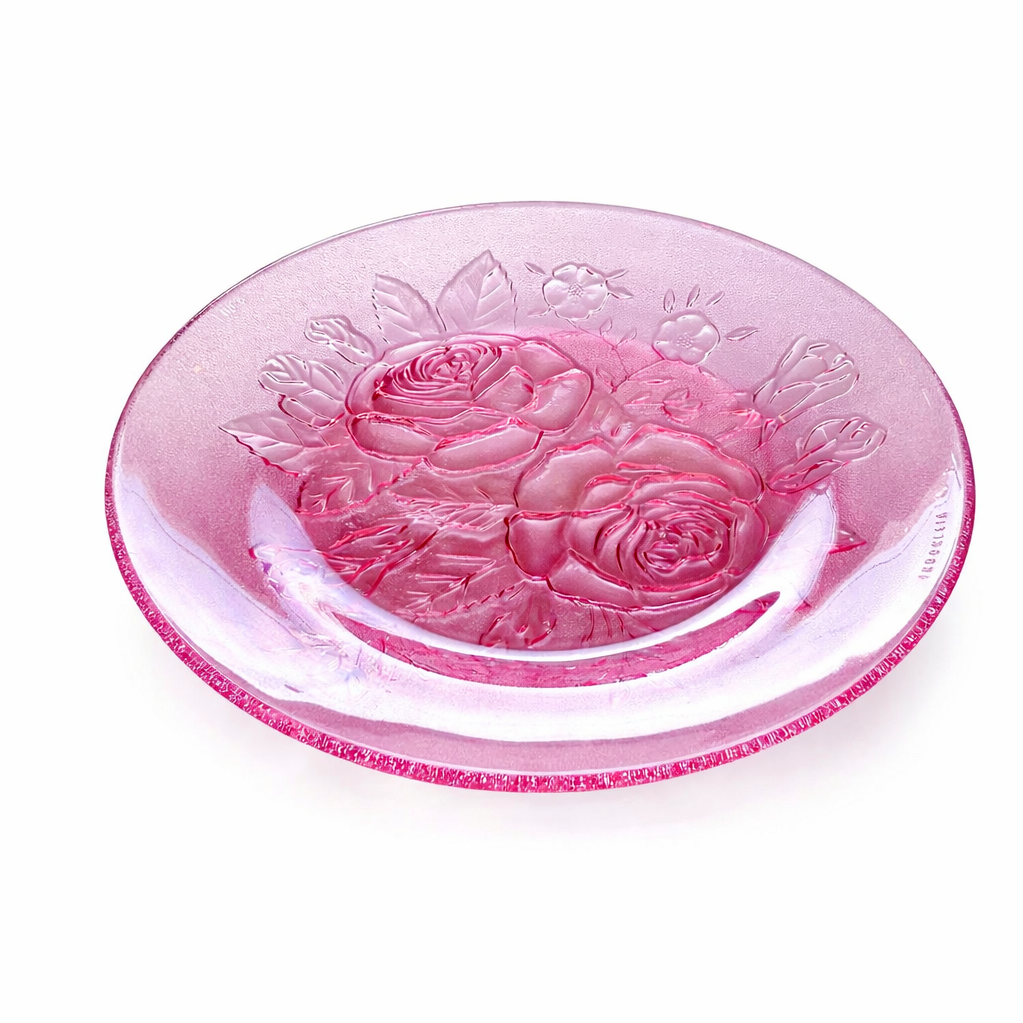
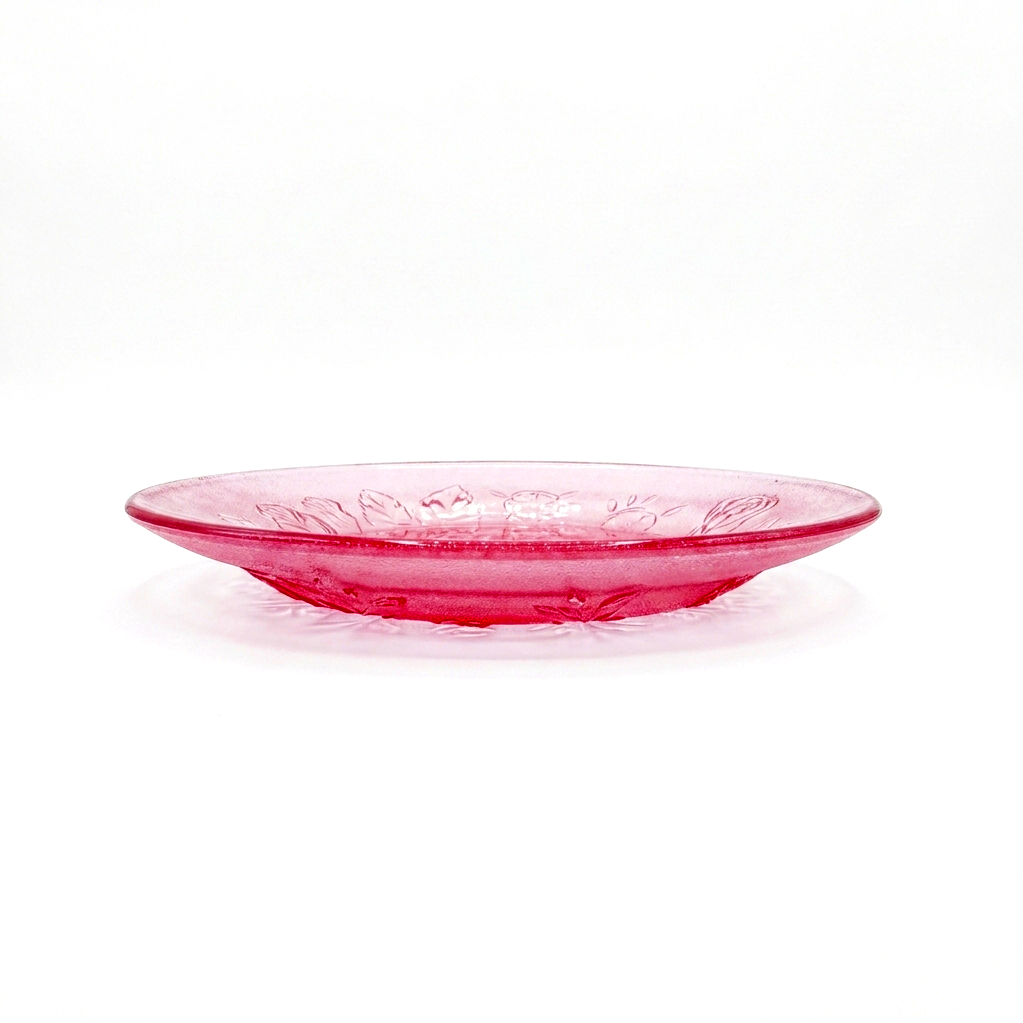
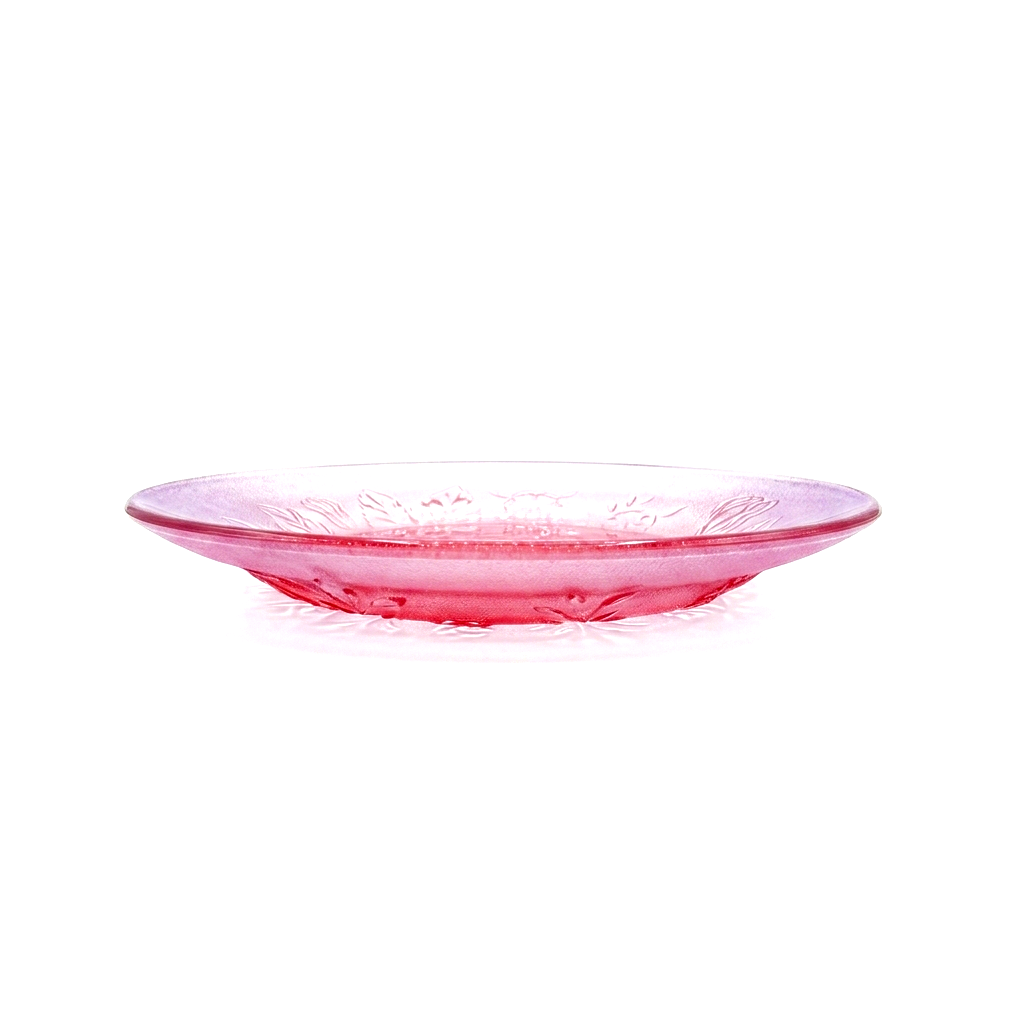
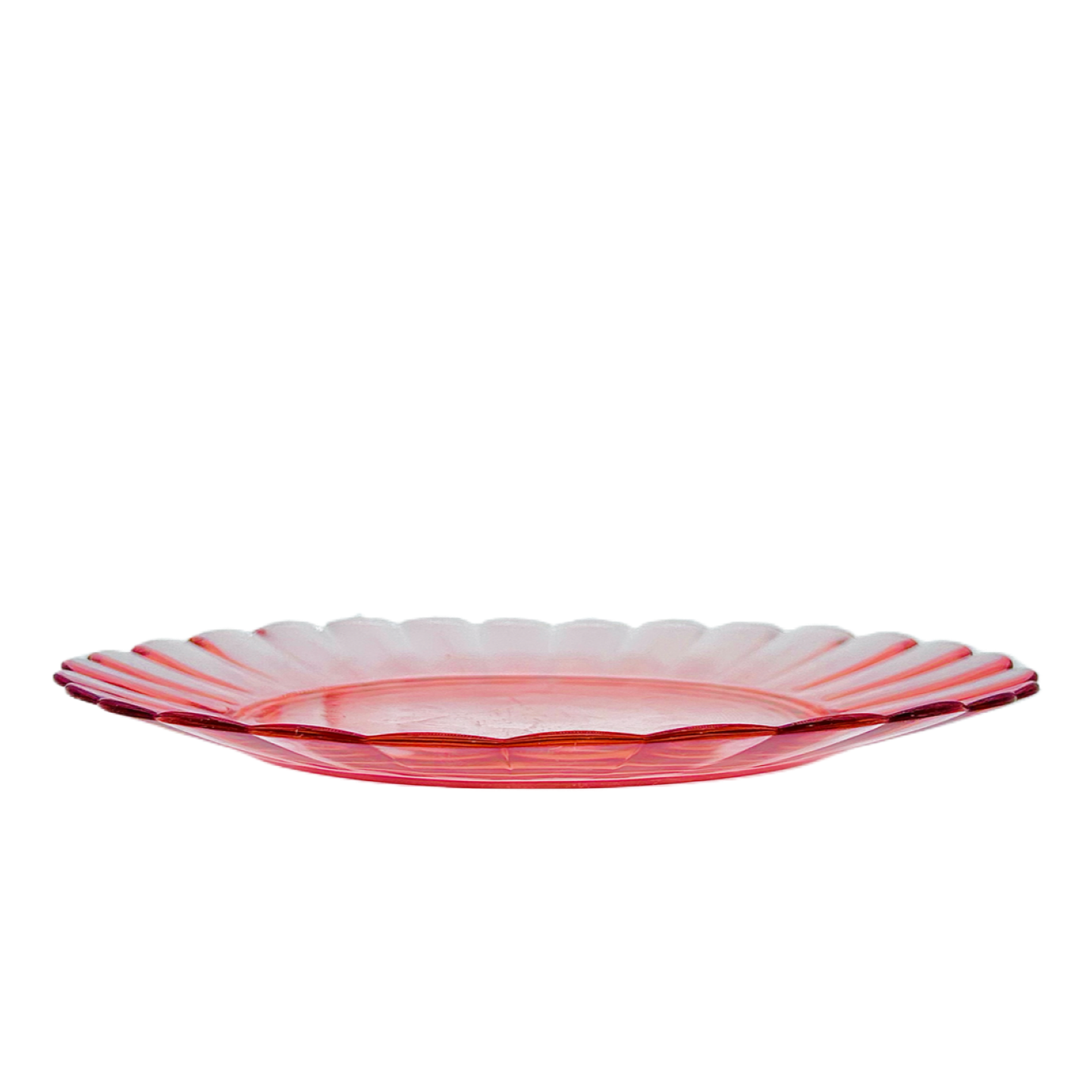
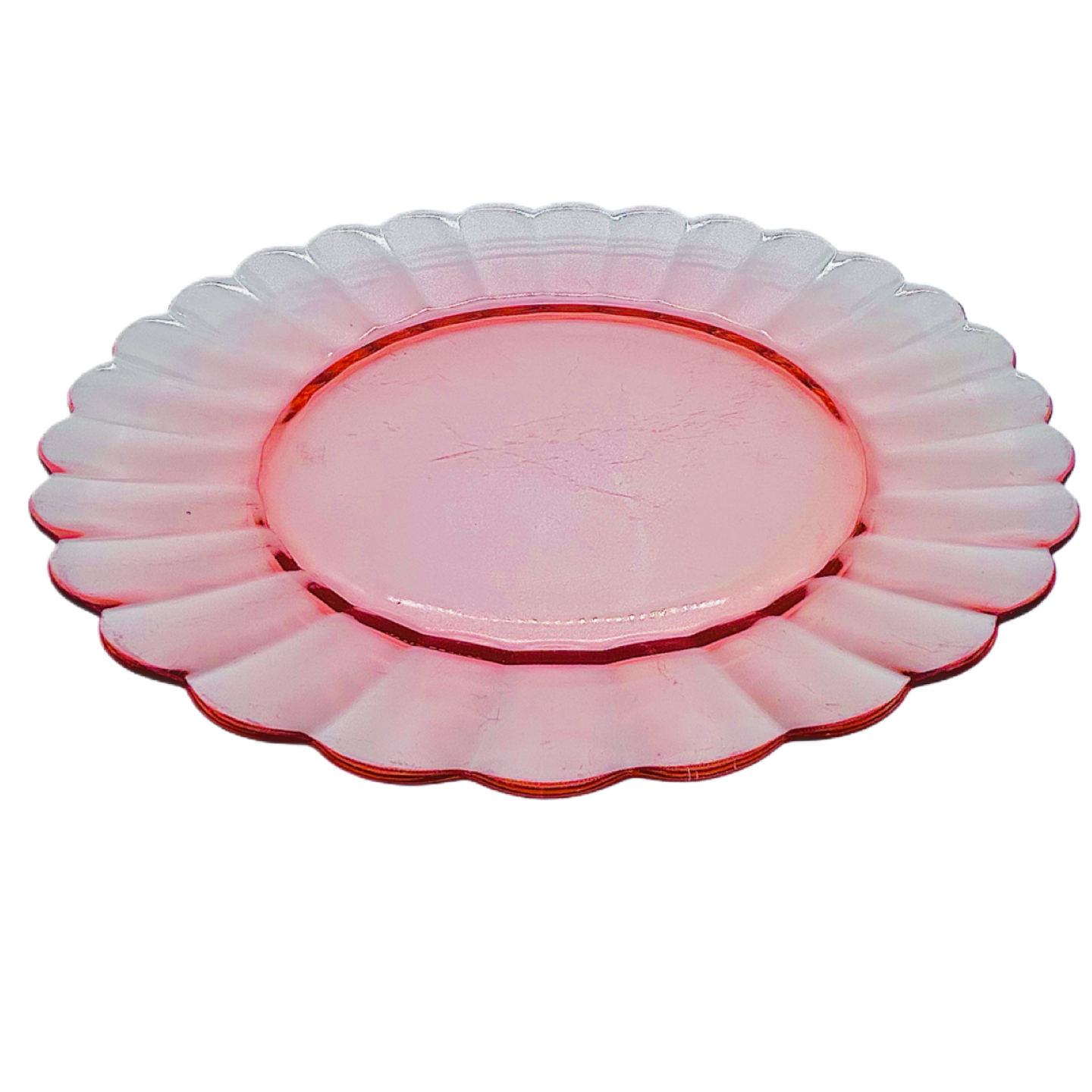
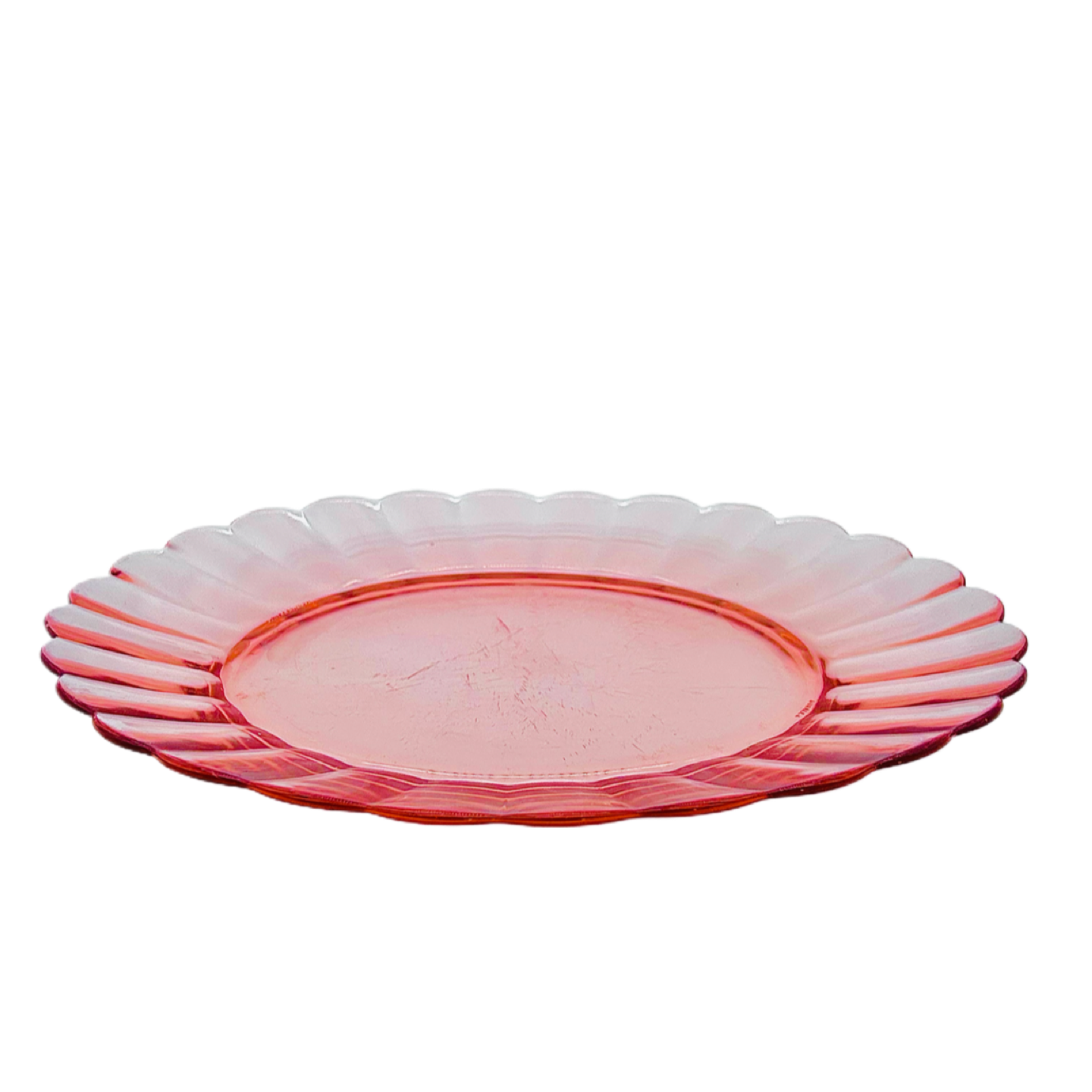
A coordinating elongated tray (shown in one image) is available separately.
Placement
Ideal as a low centerpiece, sculptural fruit bowl, or pedestal display for florals or objects. Its glowing coral foot and diffused blush bowl perform especially well under directional lighting or candlelight, where the base radiates warmth upward through the body. Works equally in restrained modern interiors and layered Art Deco-inspired settings.
STANDARD ATTRIBUTION & VALUE DISCLOSURE; This piece is described to the best of current scholarly and market knowledge. Any maker or regional attribution is based on visual analysis, materials, construction techniques, and documented stylistic comparisons. As with many vintage and antique glass objects, definitive attribution may not be possible without original labels or factory records. Pricing reflects condition, quality, decorative appeal, and current collector demand rather than a guaranteed maker identification.
A sculptural mid-century pedestal comport defined by its architectural octagonal form and luminous cased coloration. The softly opalescent blush bowl appears suspended above a radiant coral foot, creating a subtle internal glow that intensifies under directional light. The satin “sandy” finish diffuses the surface, giving the piece a refined, almost alabaster-like presence while retaining the warmth of post-war American art glass.
Balanced, symmetrical, and quietly dramatic, this is a form rooted in mid-century optimism—where geometry met atmosphere and decorative objects were designed to anchor a room. The interplay between the glowing base and diffused upper body gives the piece depth well beyond its scale, making it equally suited to minimalist interiors and layered, moody environments.
Attribution & Period
American art glass comport, Mid Century period, circa 1945–1965. The satin “sandy” surface, glowing cased coloration (opalized blush bowl over a vivid coral/orange base), molded octagonal plan, and visible vertical mold seam strongly indicate mid-20th century American pressed and mold-blown production in the tradition of Fenton Art Glass, Viking Glass, or a comparable U.S. art glass house. No signature present. Attribution is stylistic and construction-based.
Dimensions & Weight
Diameter: 9 inches
Height: 2.75 inches
Base diameter: 3.5 inches
Each of the 8 sides: approximately 3.5 inches
Weight: 1.3 lbs
Condition
Excellent condition. No scratches, no chips, no cracks. Surface retains an even satin finish throughout. A visible mold seam is present, consistent with mid-century pressed/mold-blown production and not a condition issue. Interior and foot rim are clean and well-preserved.
Authenticity & Construction
This piece was formed in a multi-part mold, evidenced by the vertical seam visible in close inspection. The octagonal footprint and scalloped rim were integrated into the mold design rather than tooled freehand.
The coloration suggests cased glass construction: a soft opalescent pink upper layer fused over a more intensely pigmented coral/orange base. Under light, the foot glows with a saturated warmth while the bowl reads as diffused and architectural. The satin “sandy” surface is achieved through acid-etching or controlled surface treatment, a technique widely employed in American art glass factories during the mid-century era to soften form and enhance light diffusion.
The pedestal form and controlled symmetry align with post-war American decorative glass production, when companies such as Fenton and Viking explored sculptural yet accessible table forms in glowing pastels and sunset hues. While it shares characteristics with Fenton’s satin lines and Viking’s architectural silhouettes, there is no signature or original label; therefore, it is conservatively attributed to American mid-century production.
A coordinating elongated tray (shown in one image) is available separately.
Placement
Ideal as a low centerpiece, sculptural fruit bowl, or pedestal display for florals or objects. Its glowing coral foot and diffused blush bowl perform especially well under directional lighting or candlelight, where the base radiates warmth upward through the body. Works equally in restrained modern interiors and layered Art Deco-inspired settings.
STANDARD ATTRIBUTION & VALUE DISCLOSURE; This piece is described to the best of current scholarly and market knowledge. Any maker or regional attribution is based on visual analysis, materials, construction techniques, and documented stylistic comparisons. As with many vintage and antique glass objects, definitive attribution may not be possible without original labels or factory records. Pricing reflects condition, quality, decorative appeal, and current collector demand rather than a guaranteed maker identification.

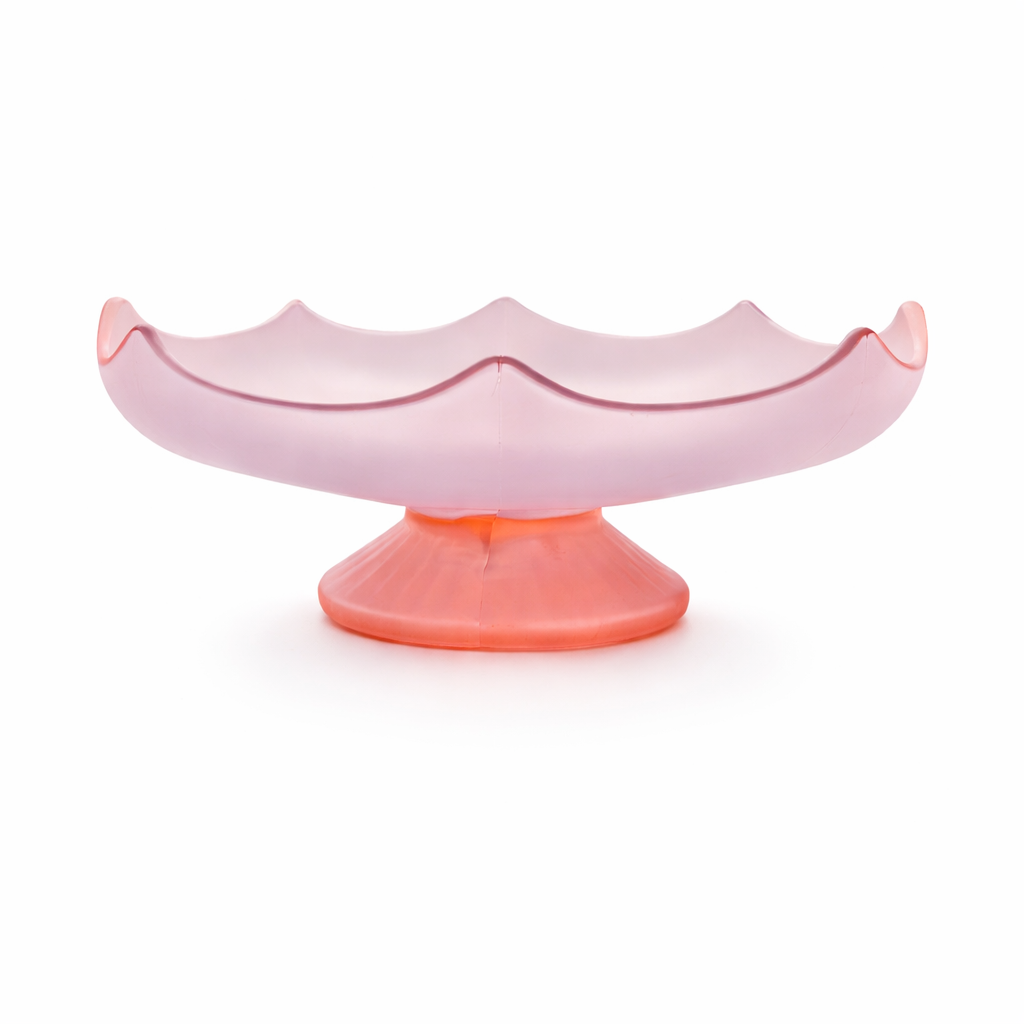 Image 1 of 15
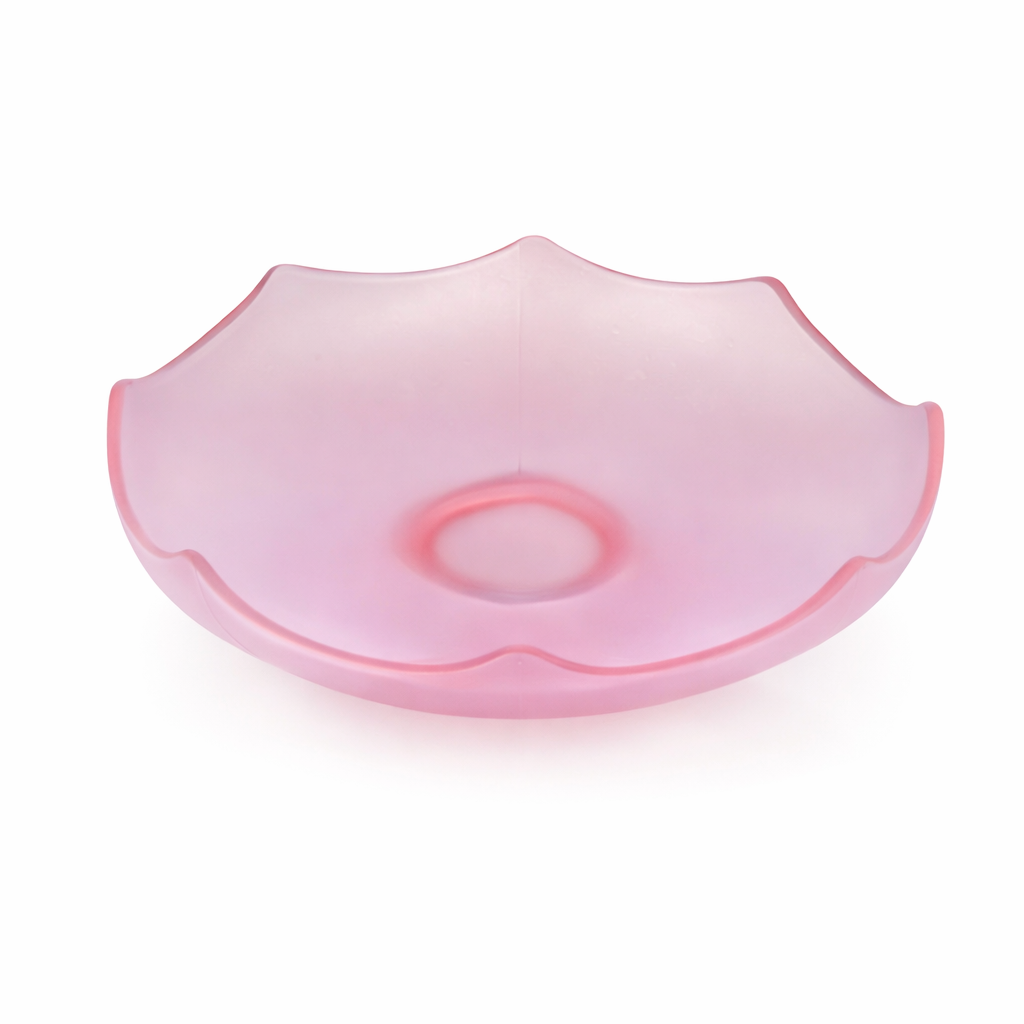 Image 2 of 15
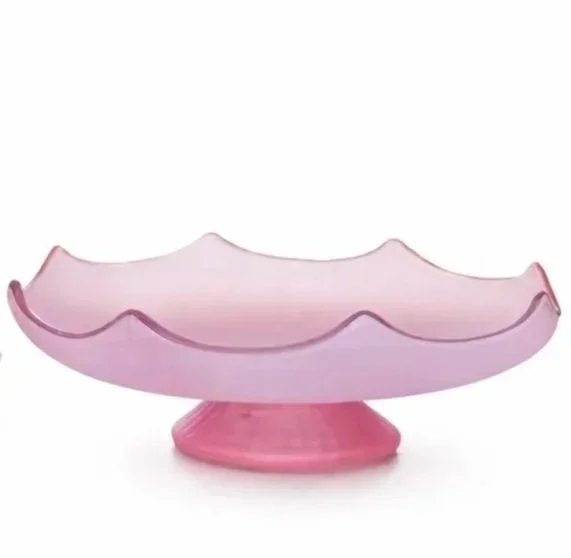 Image 3 of 15
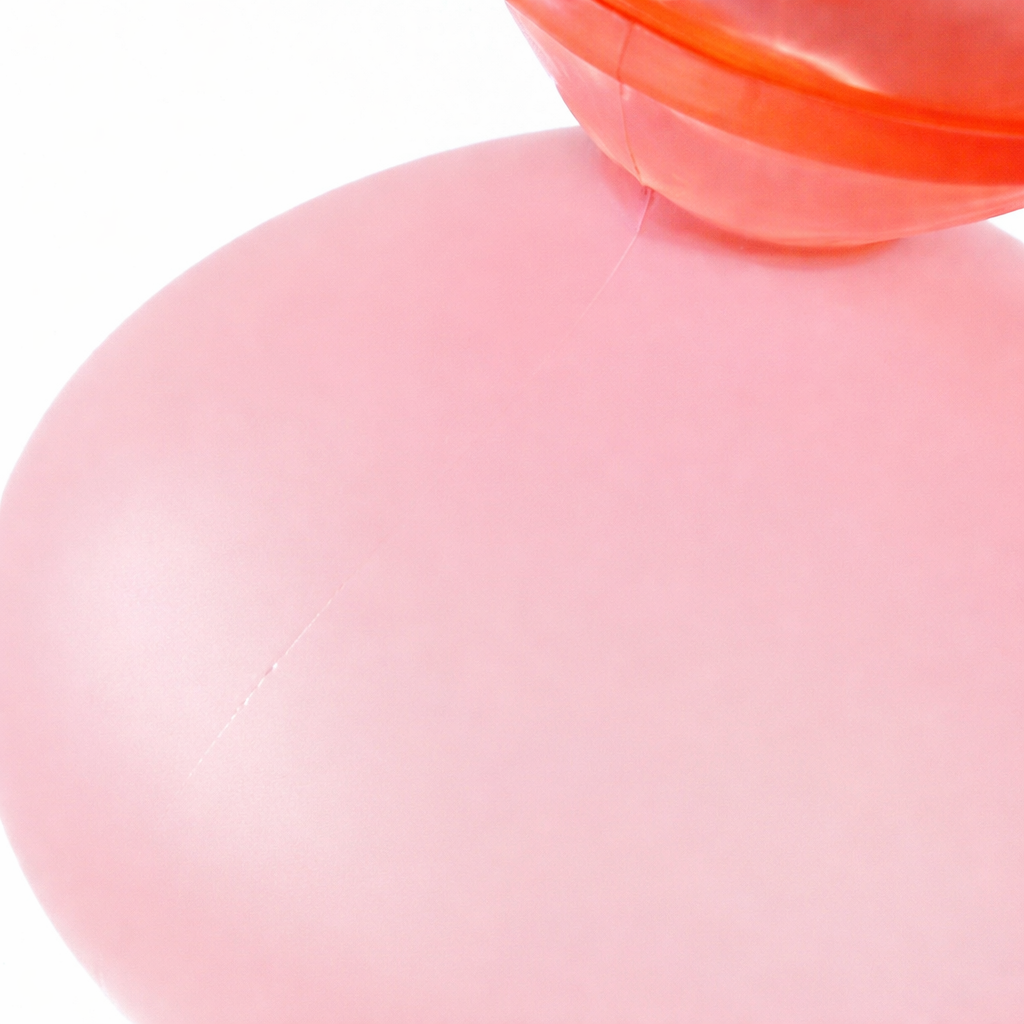 Image 4 of 15
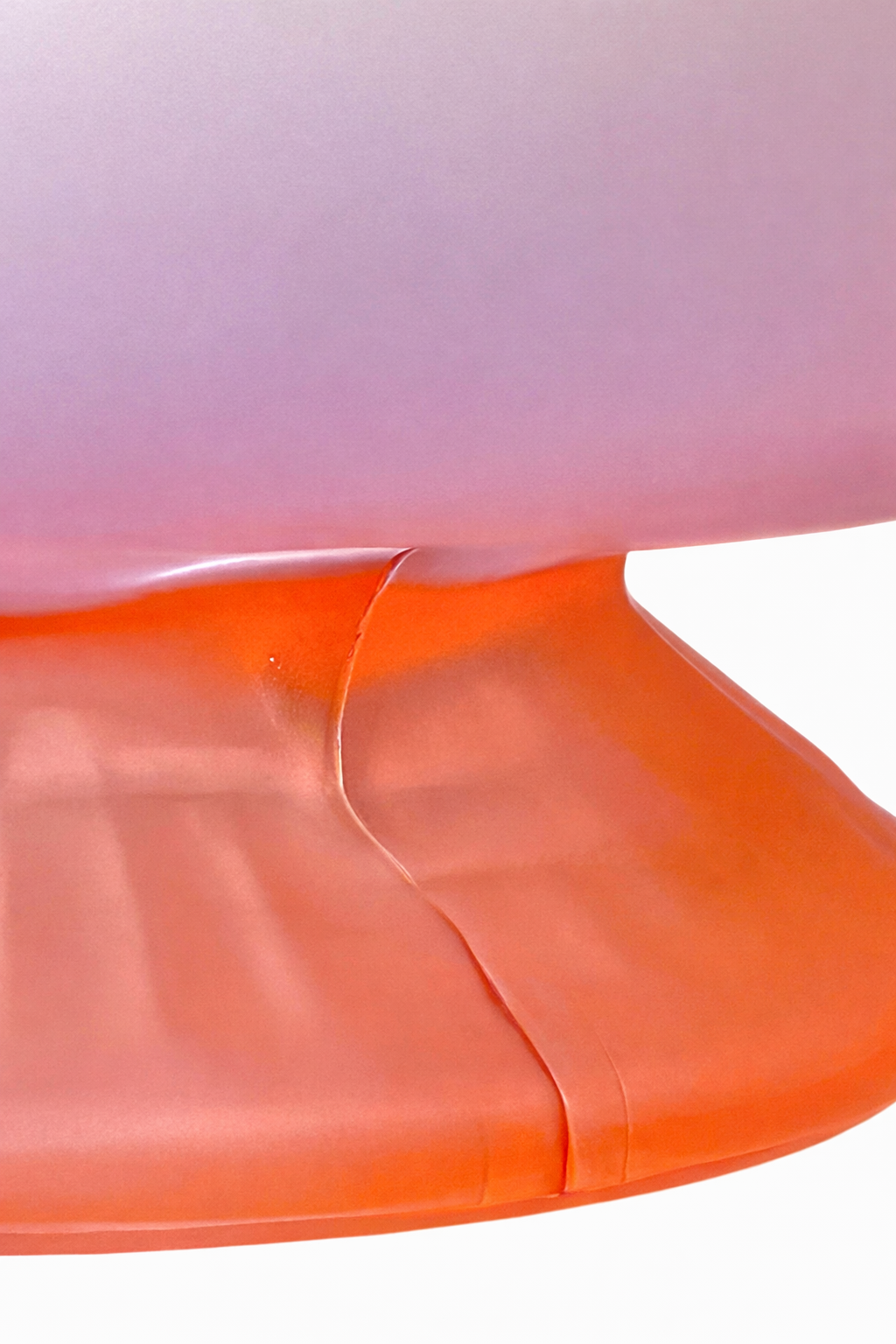 Image 5 of 15
 Image 6 of 15
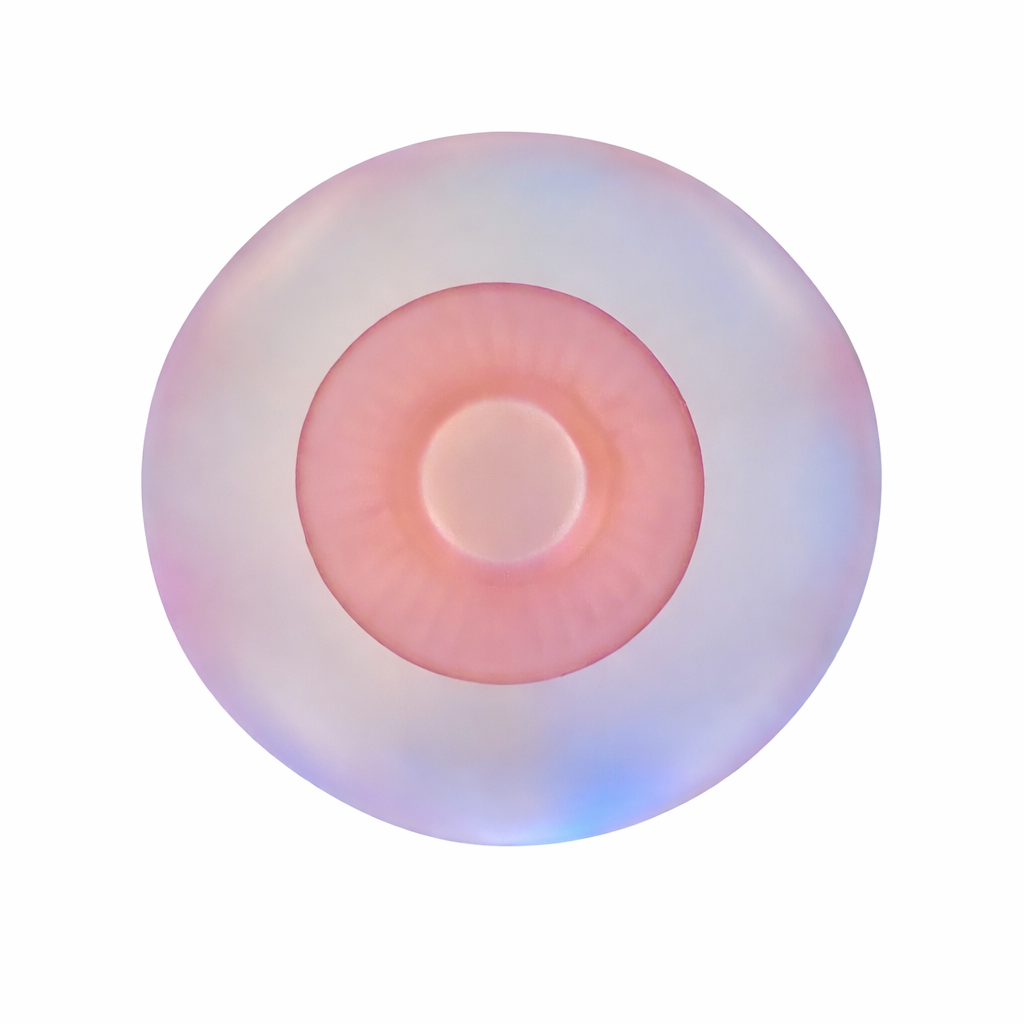 Image 7 of 15
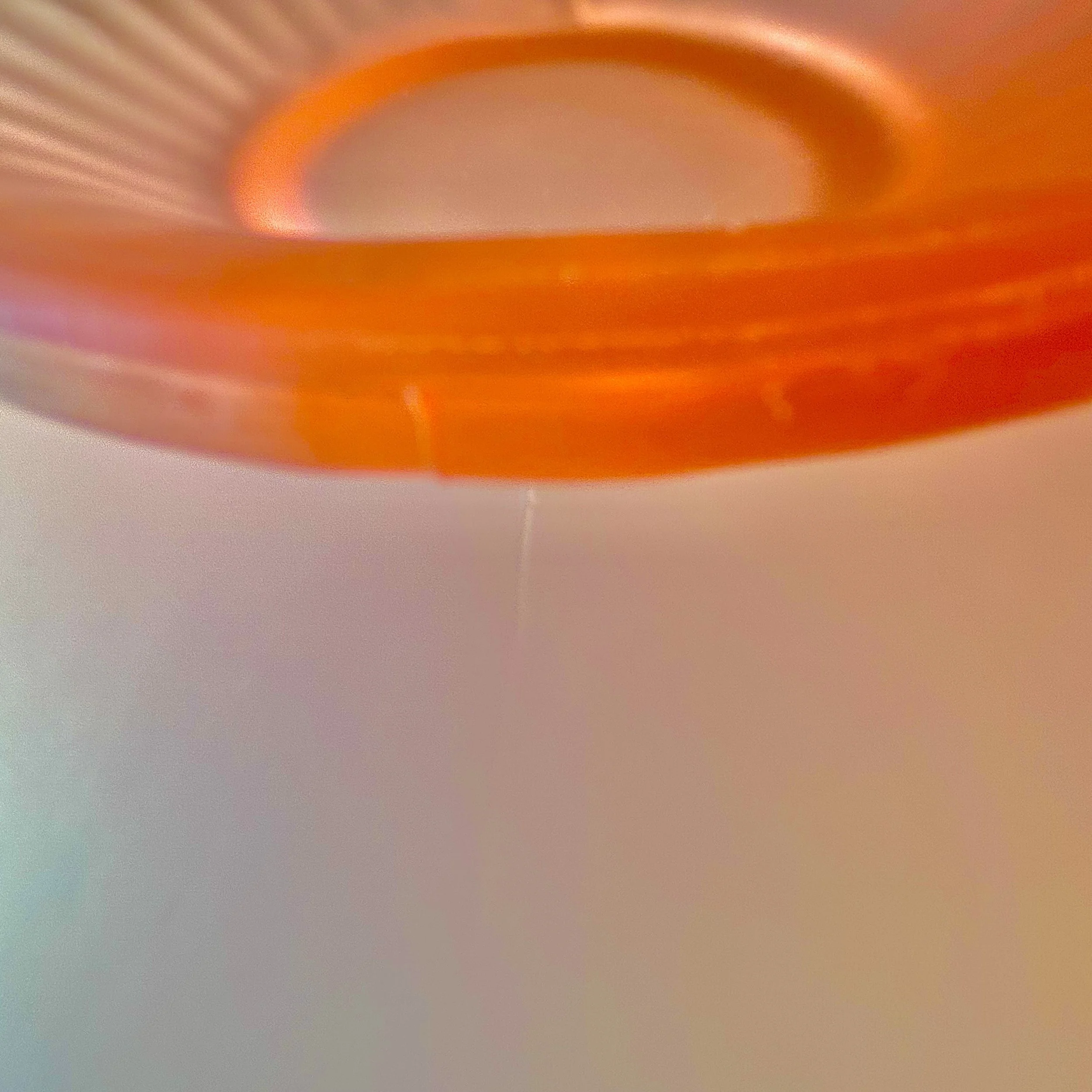 Image 8 of 15
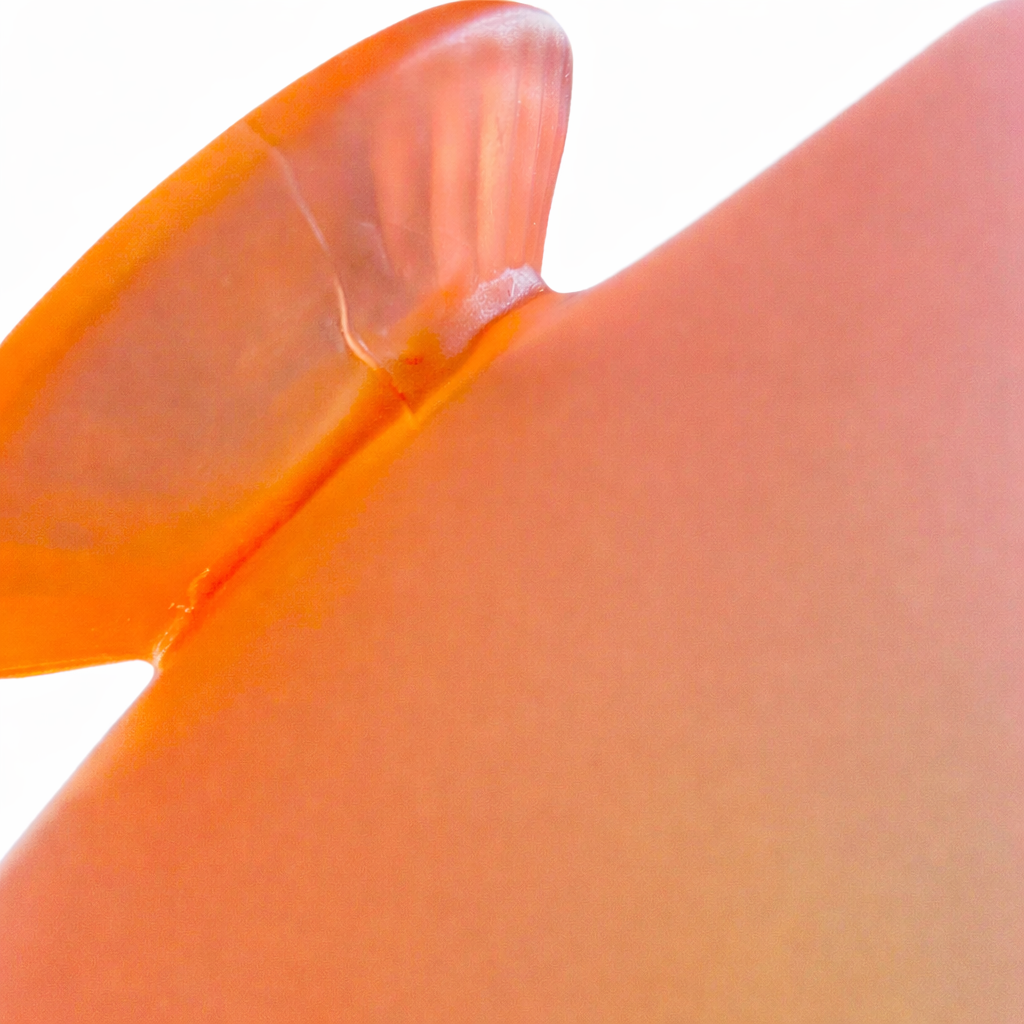 Image 9 of 15
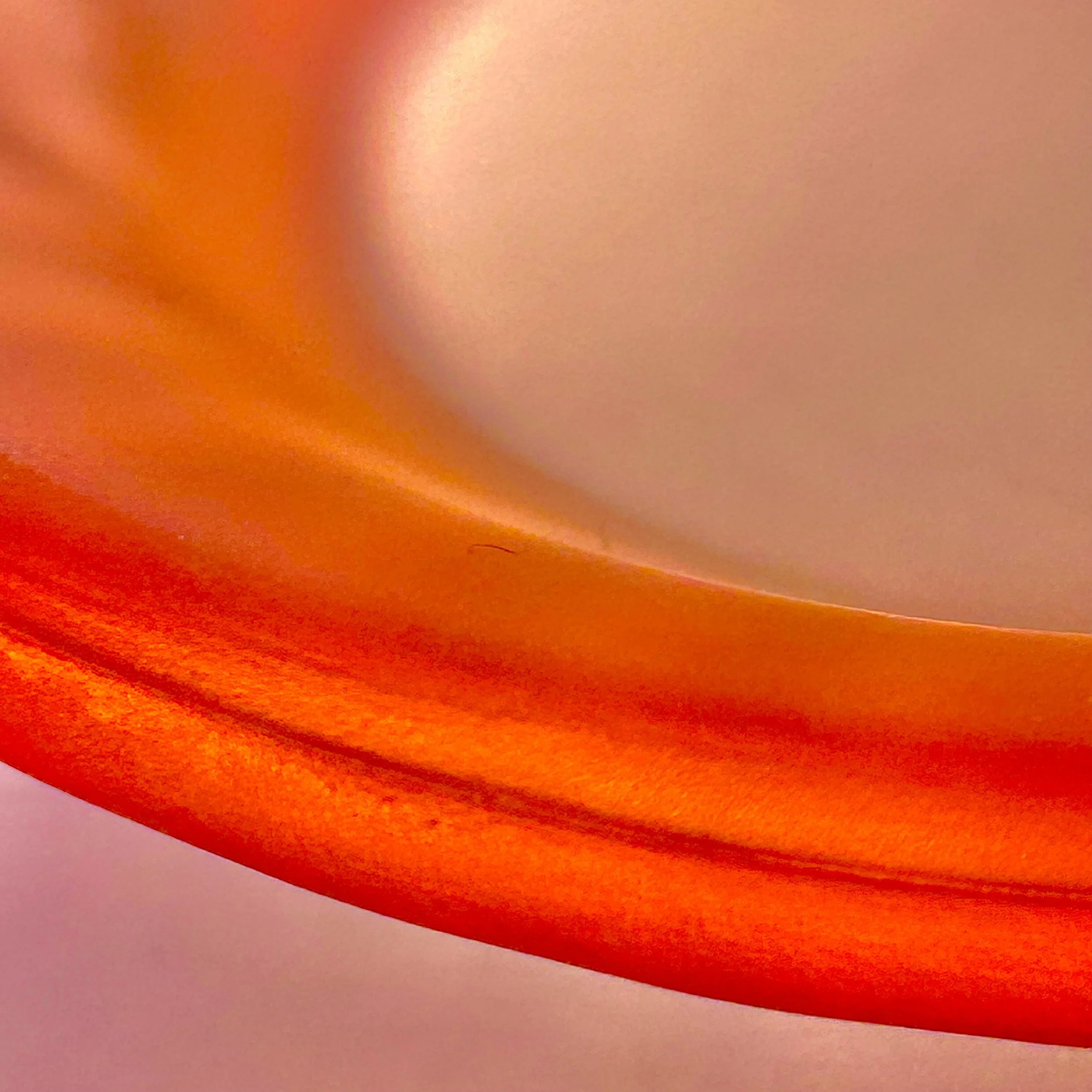 Image 10 of 15
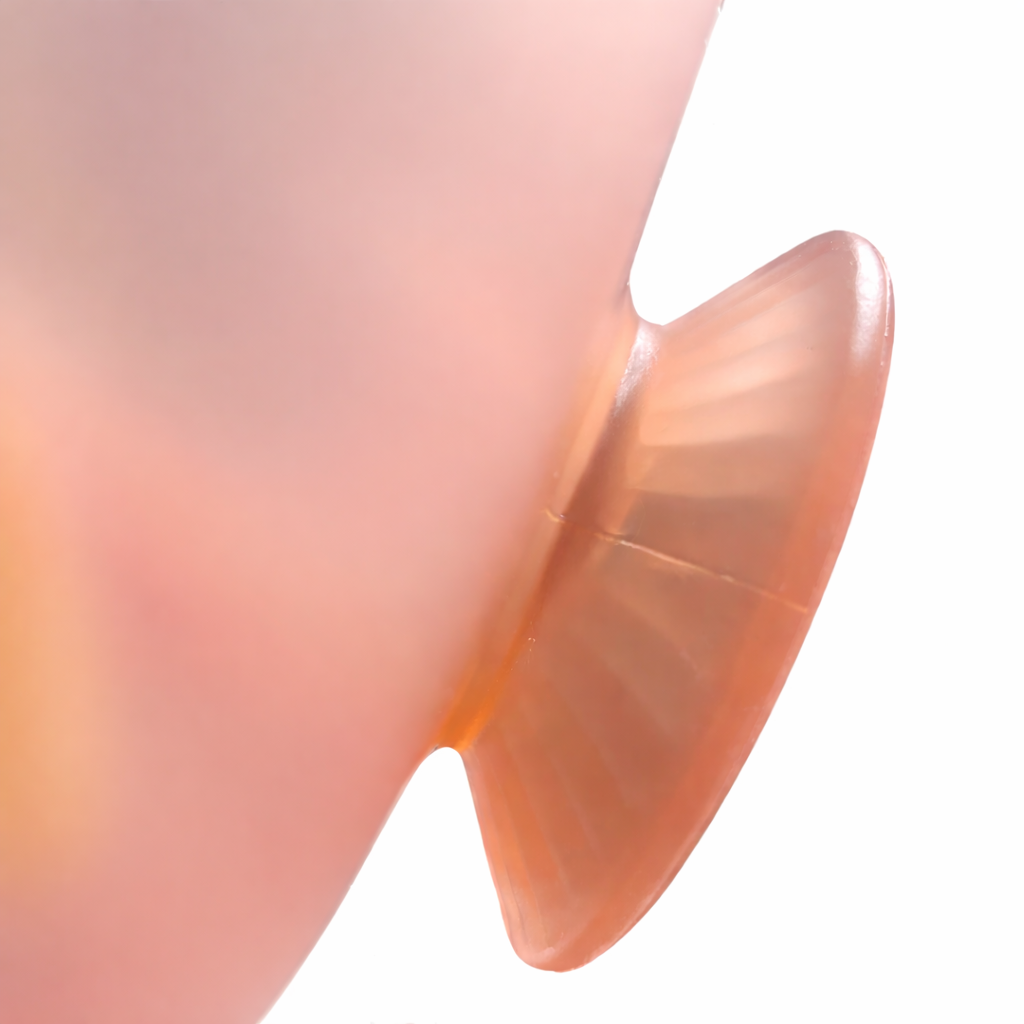 Image 11 of 15
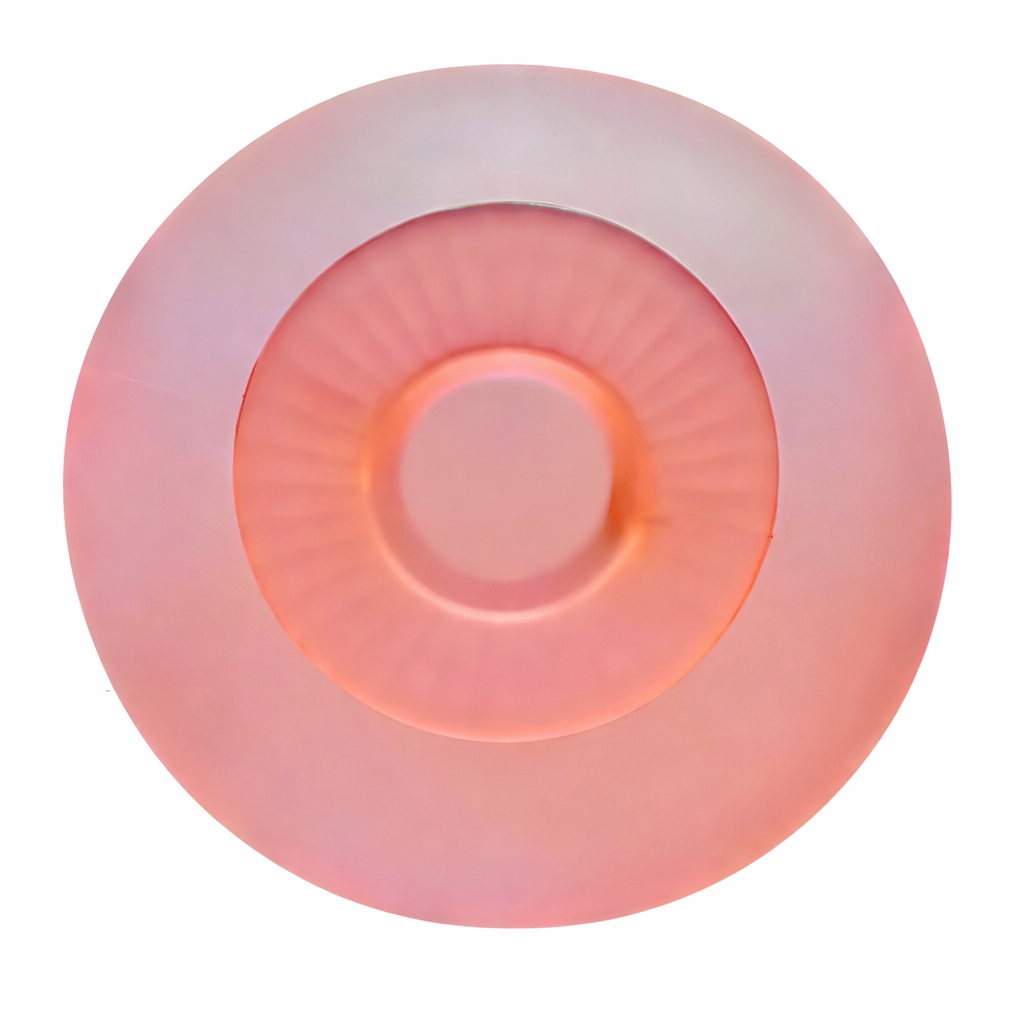 Image 12 of 15
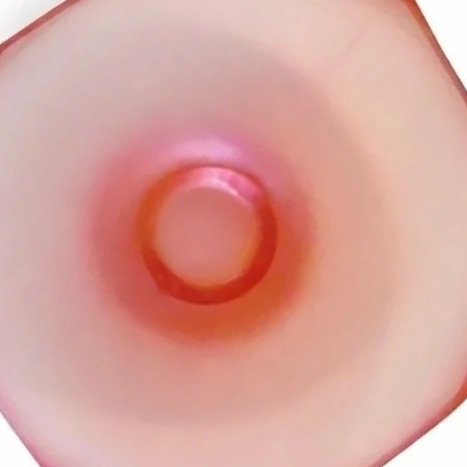 Image 13 of 15
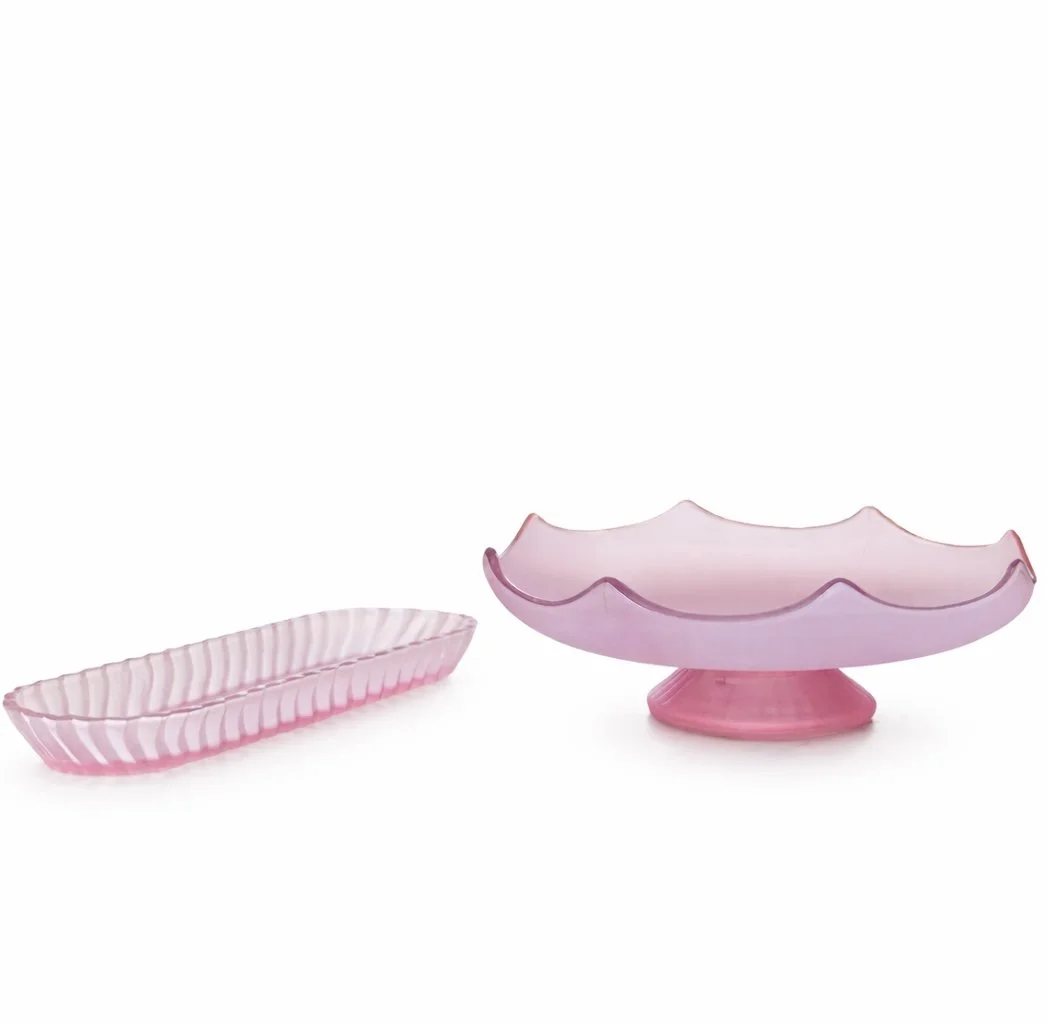 Image 14 of 15
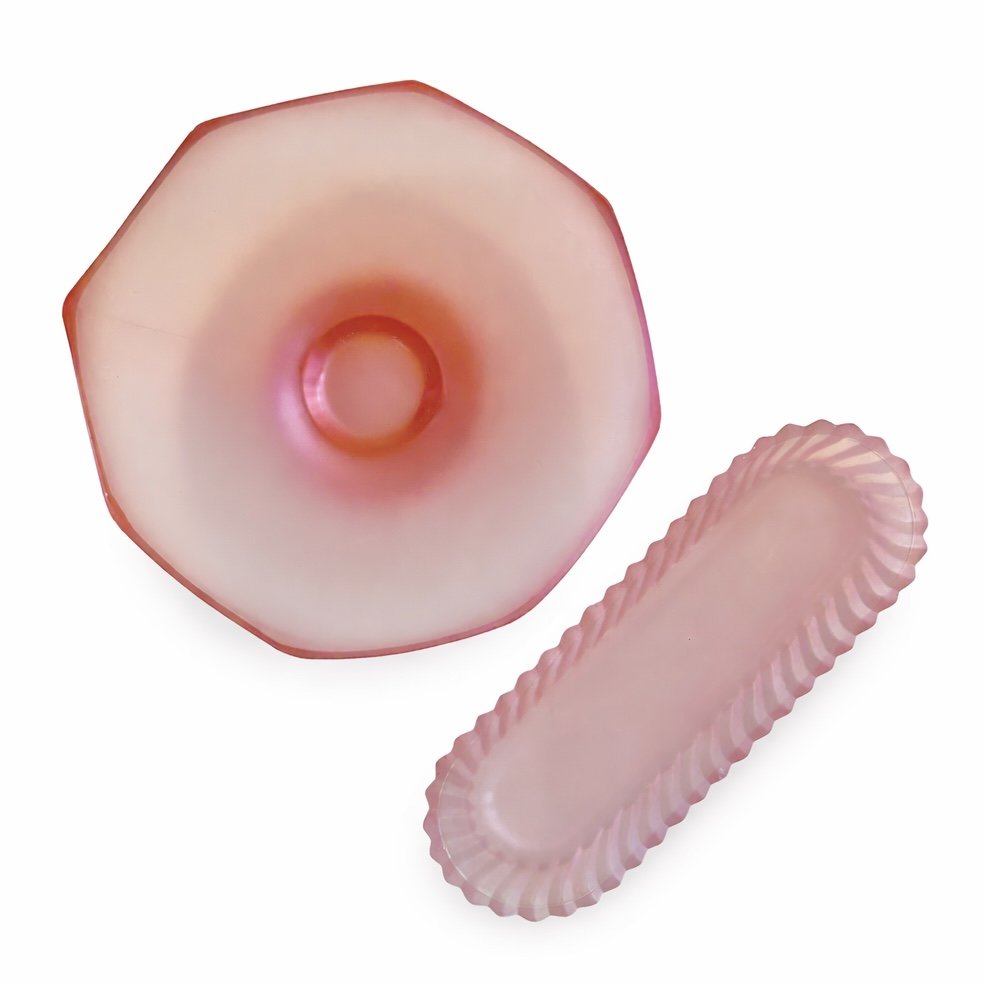 Image 15 of 15