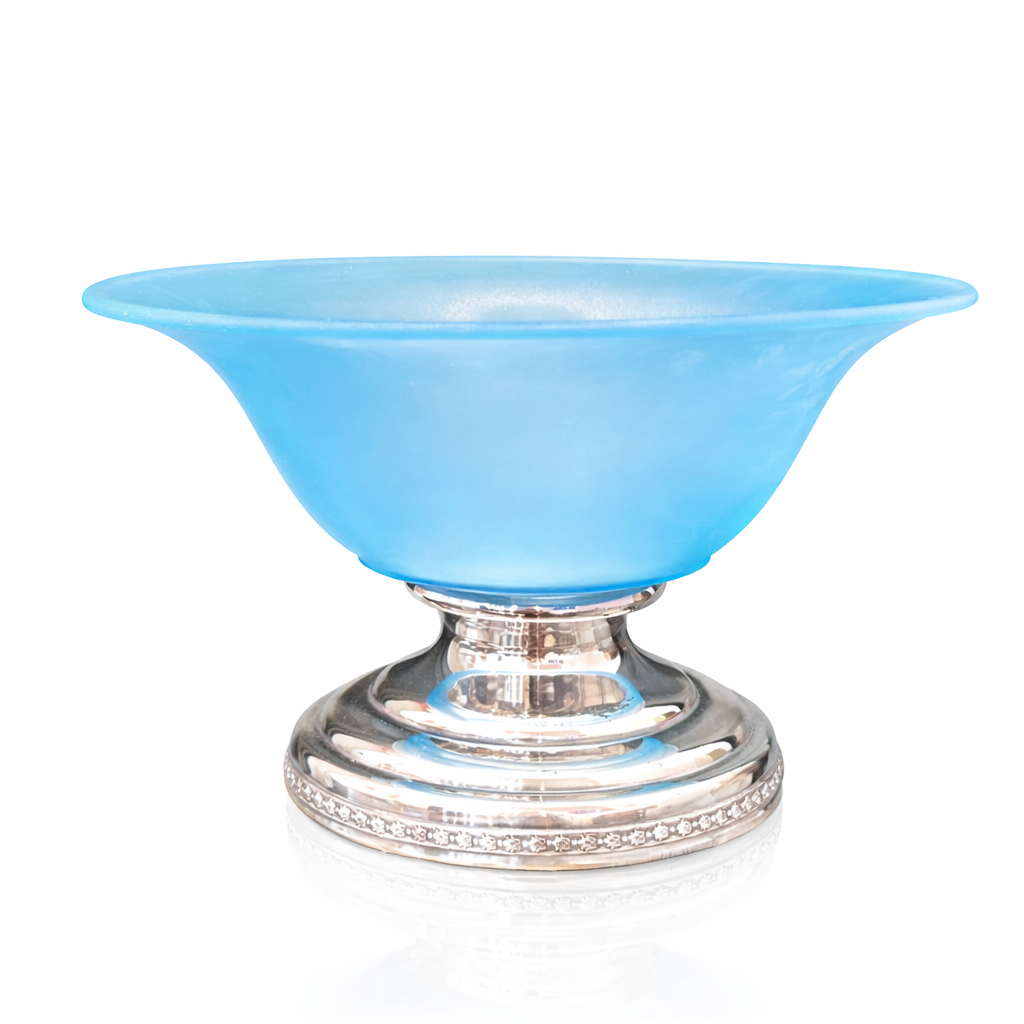
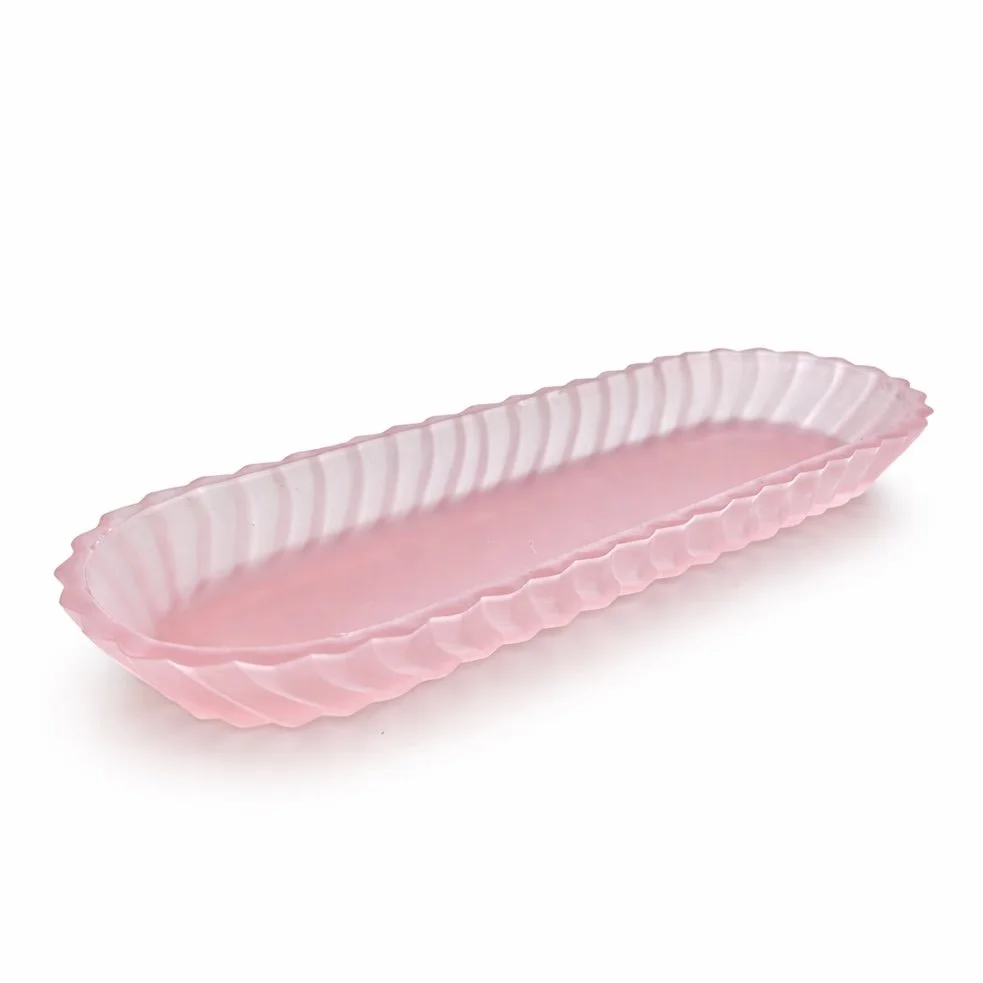
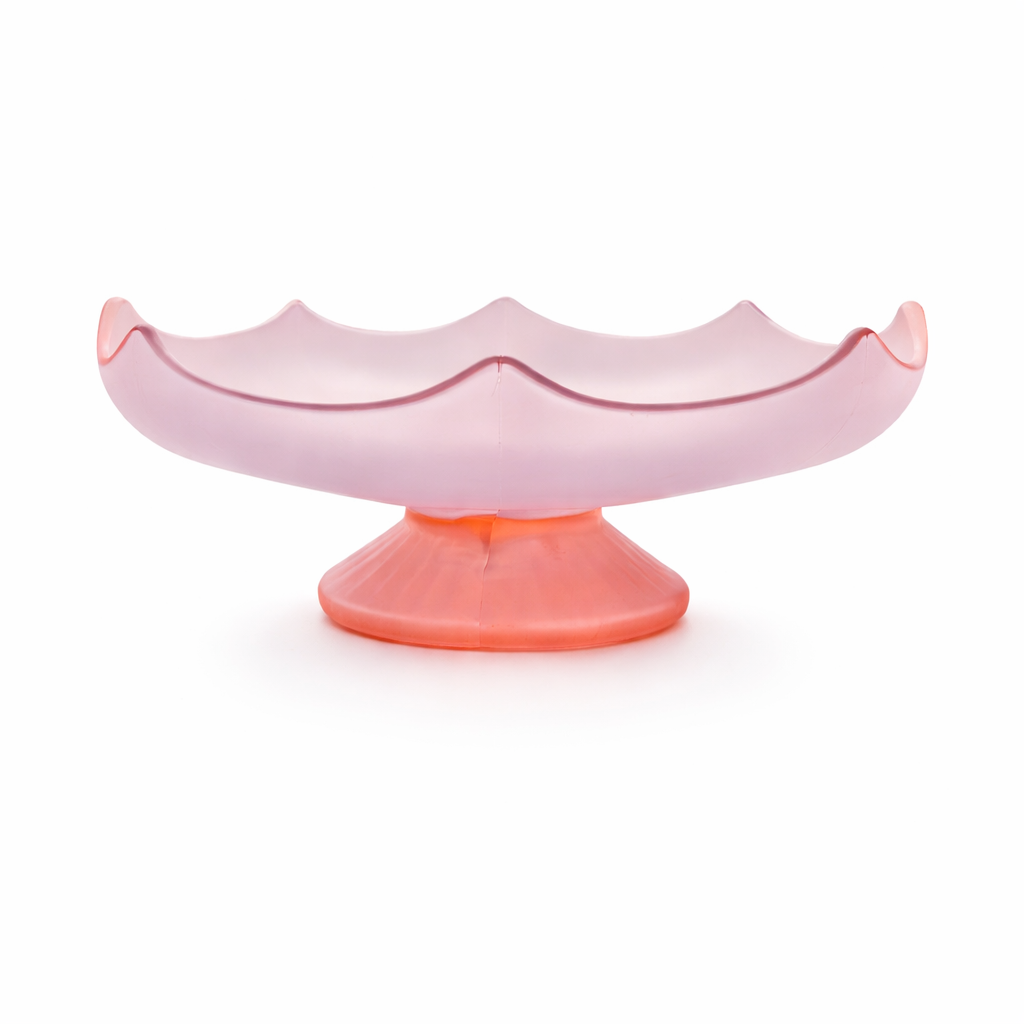
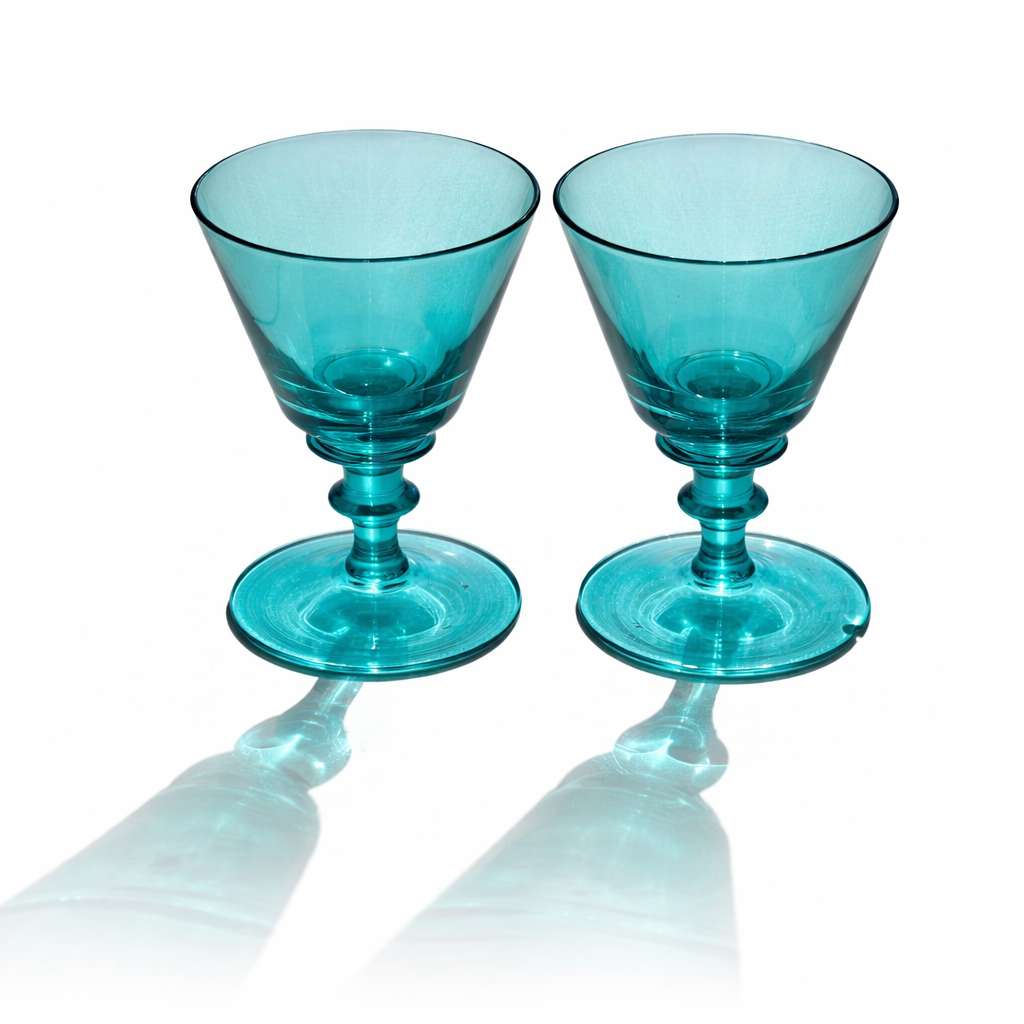
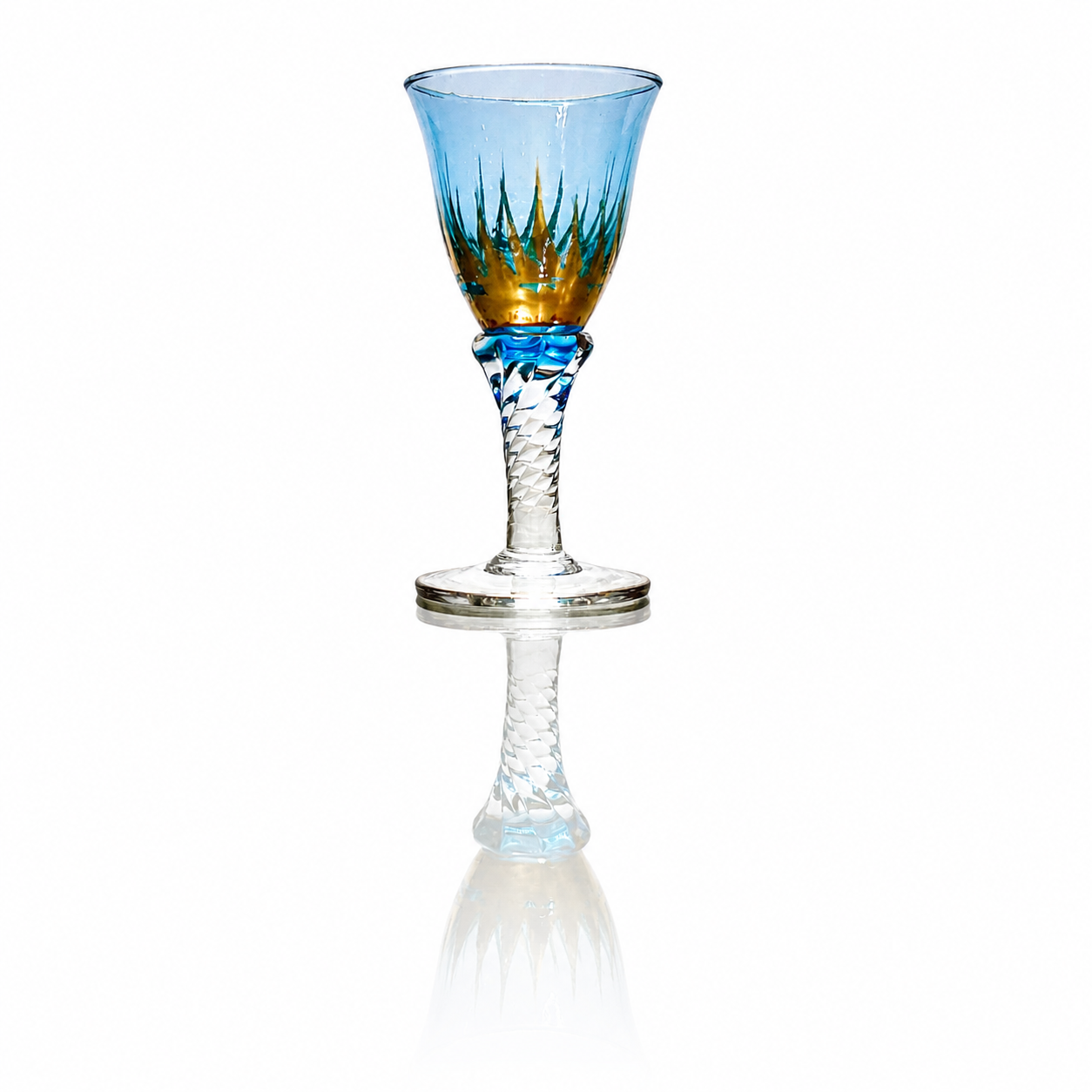
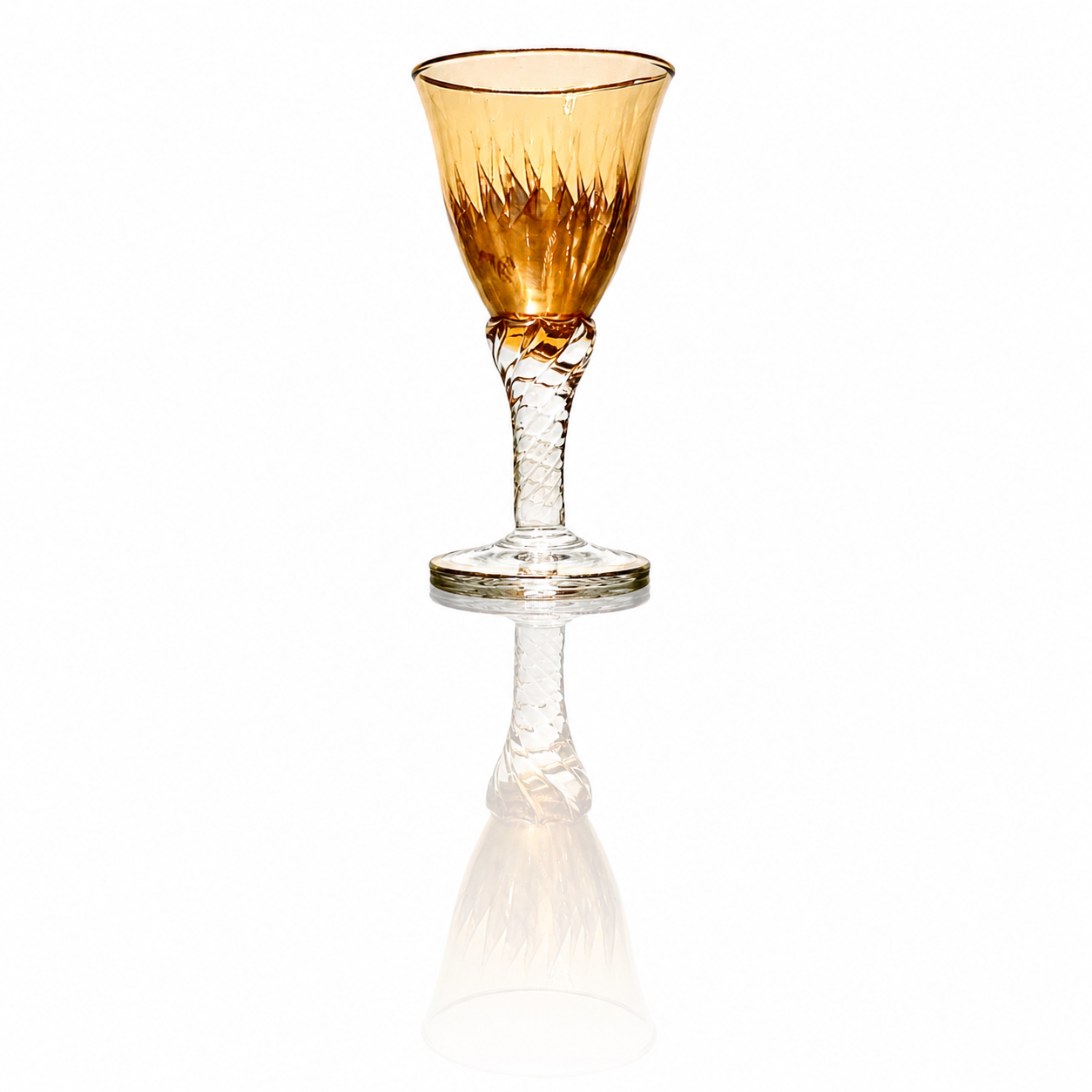
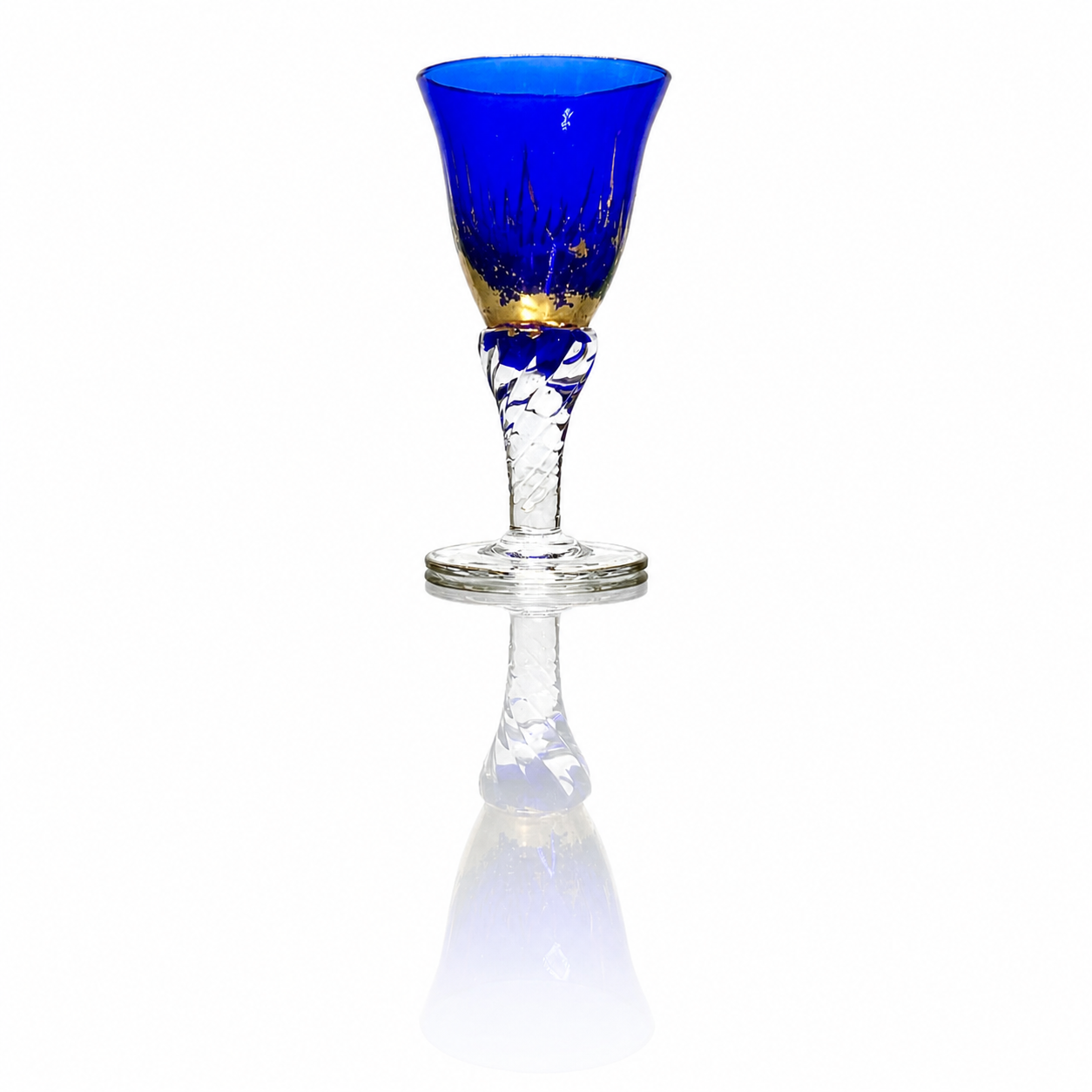
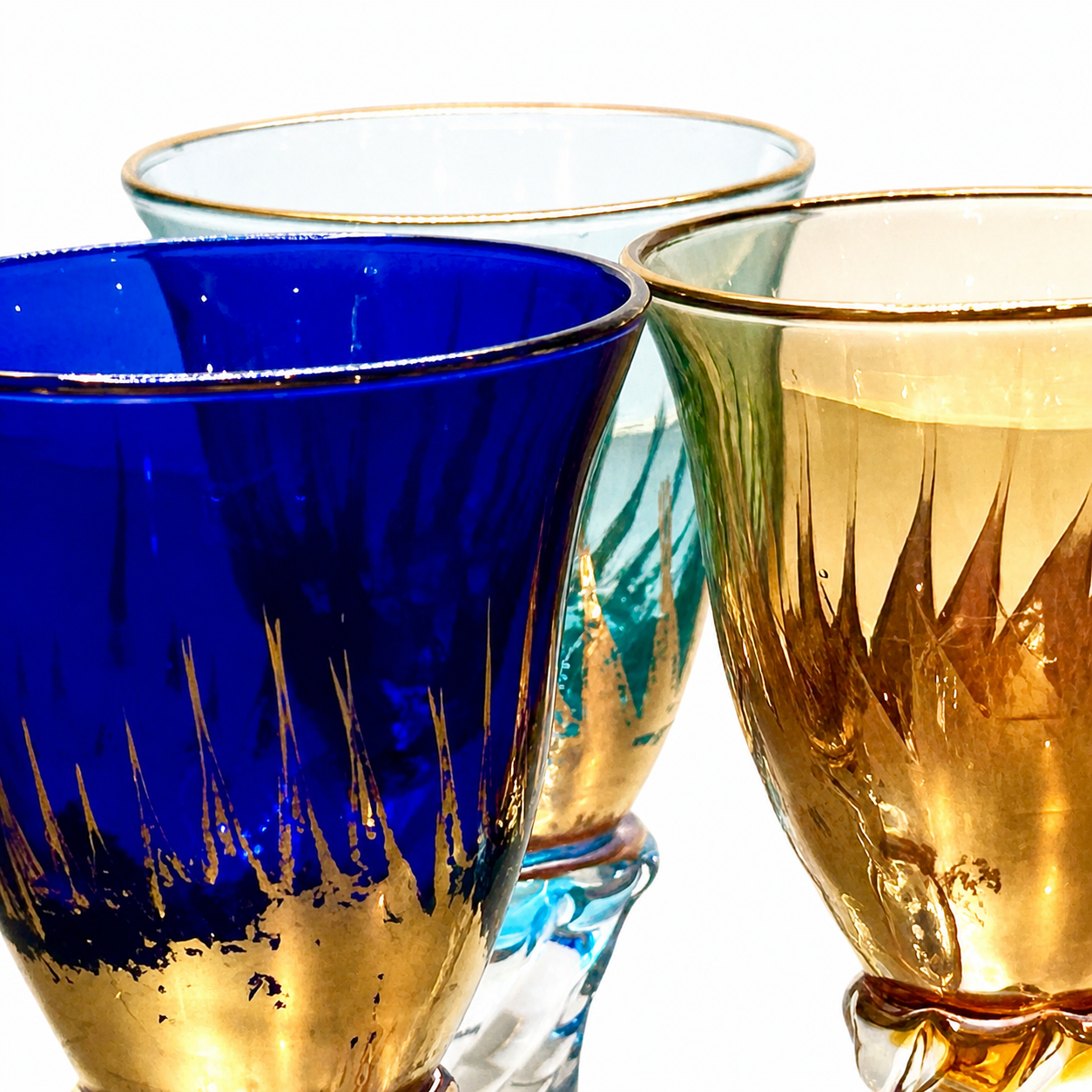
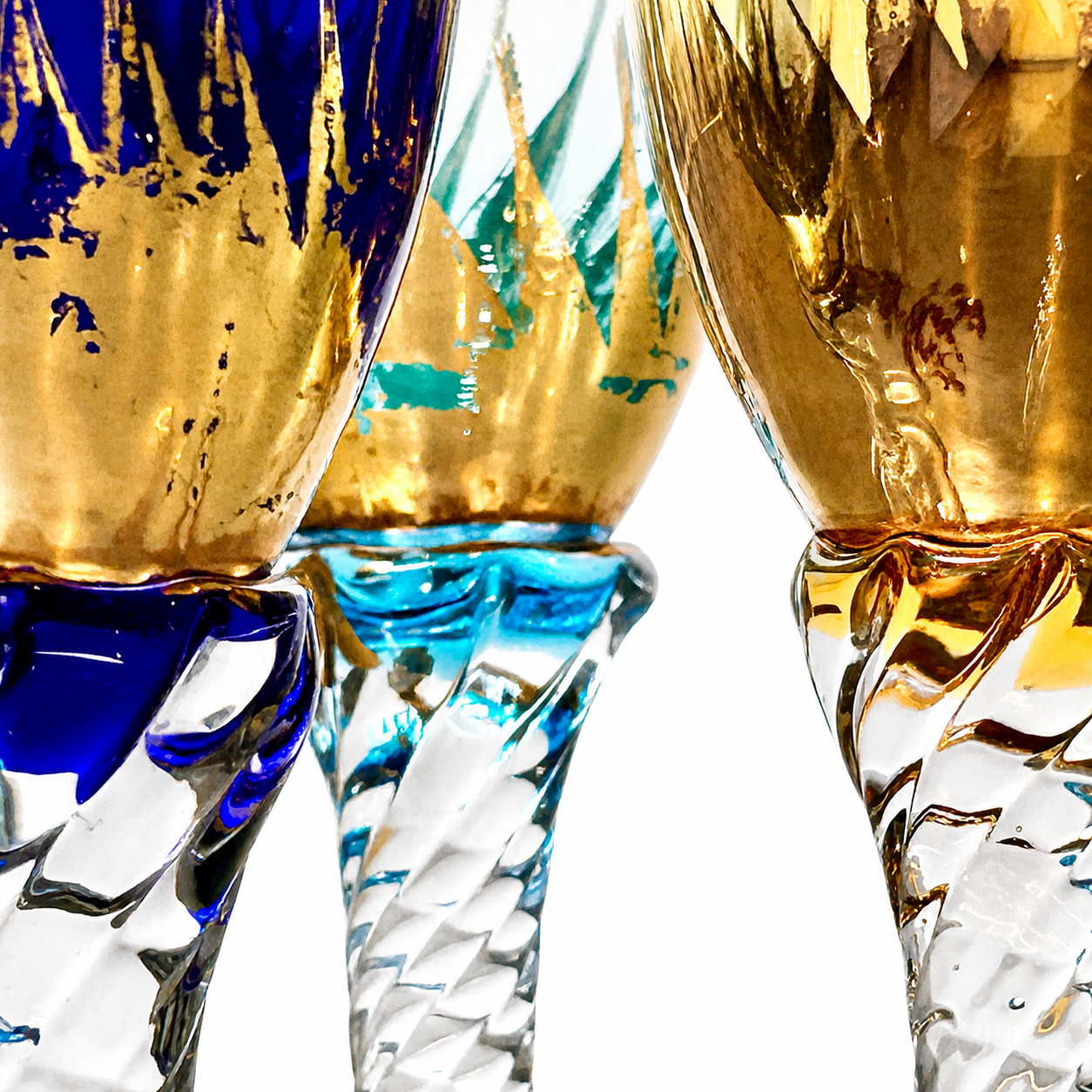
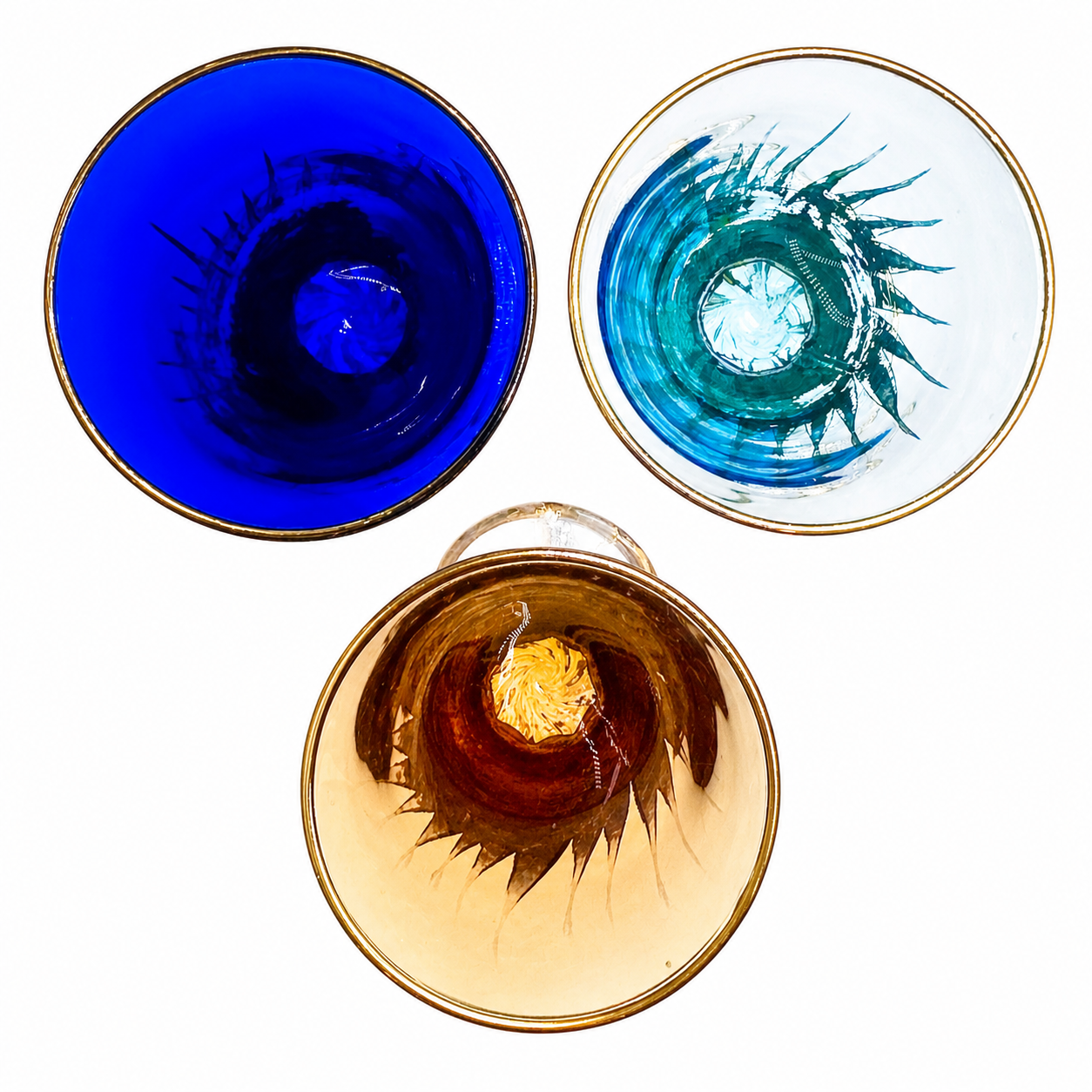
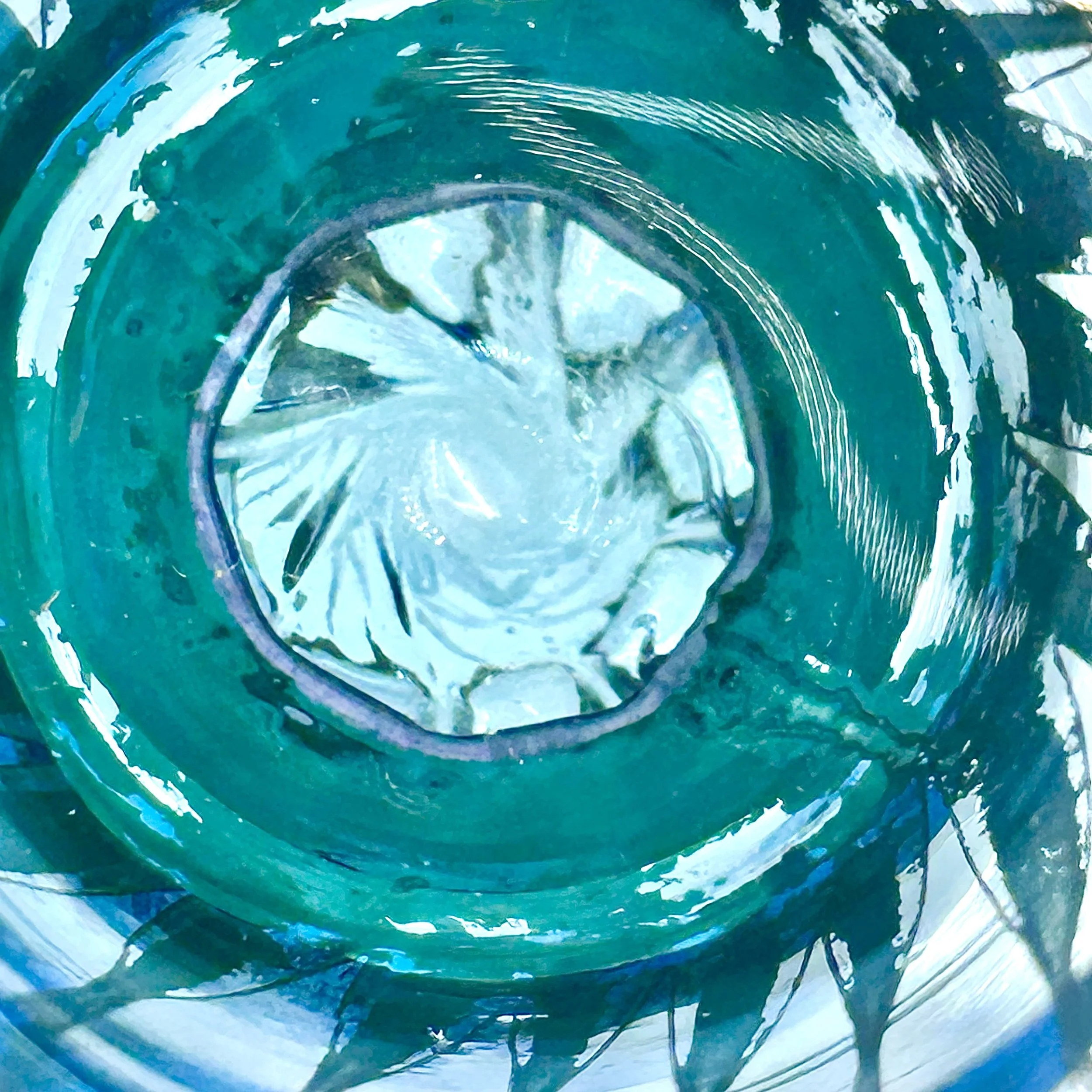
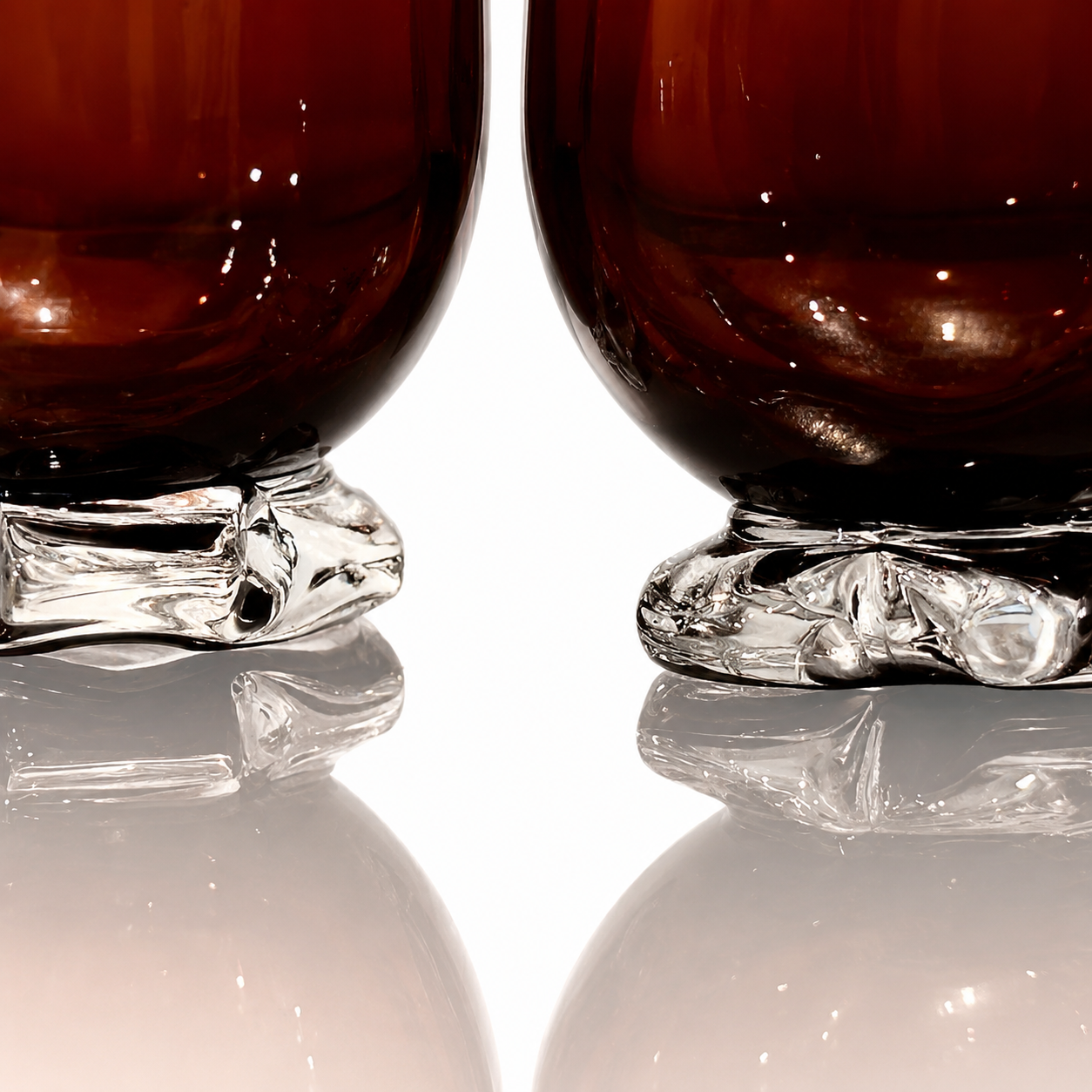
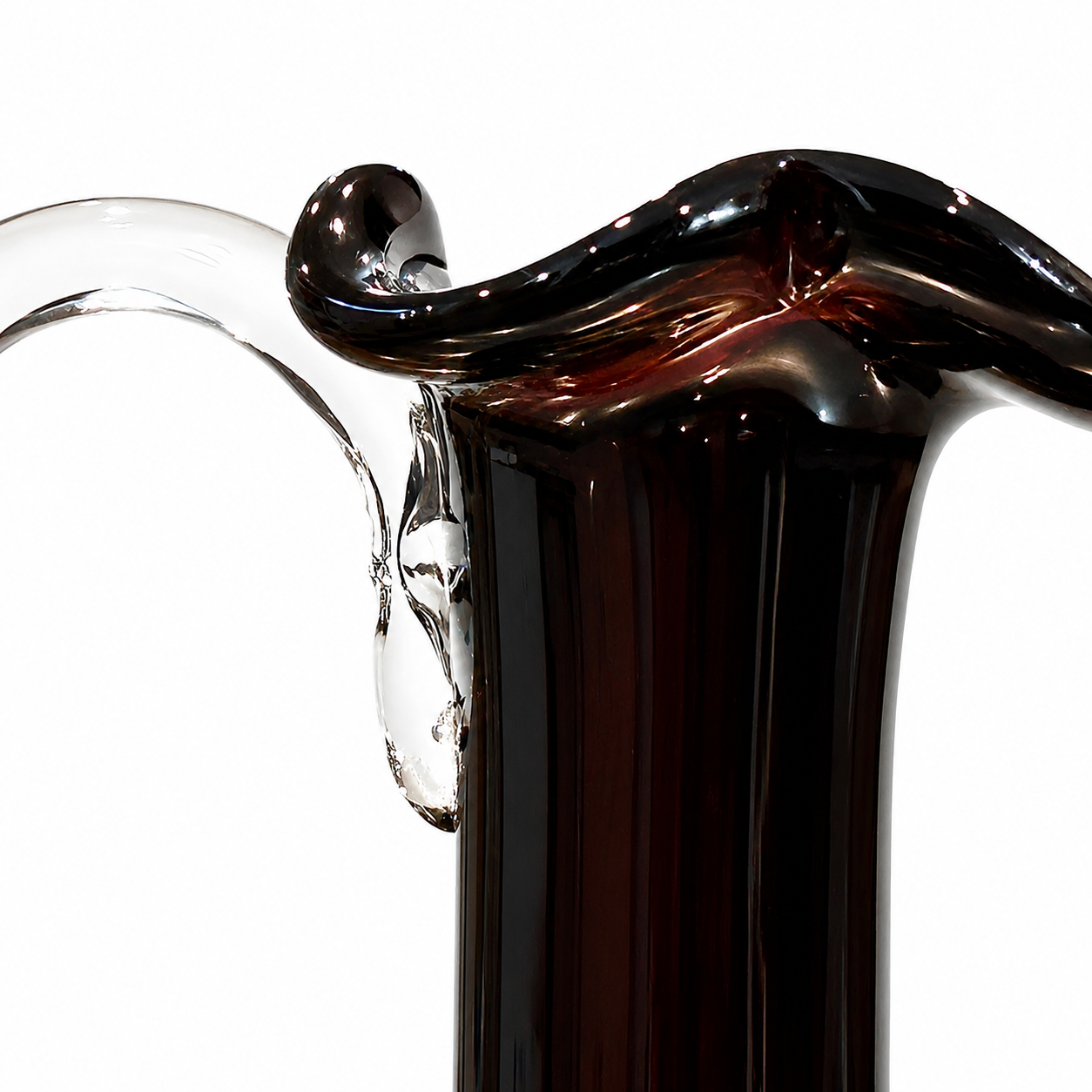
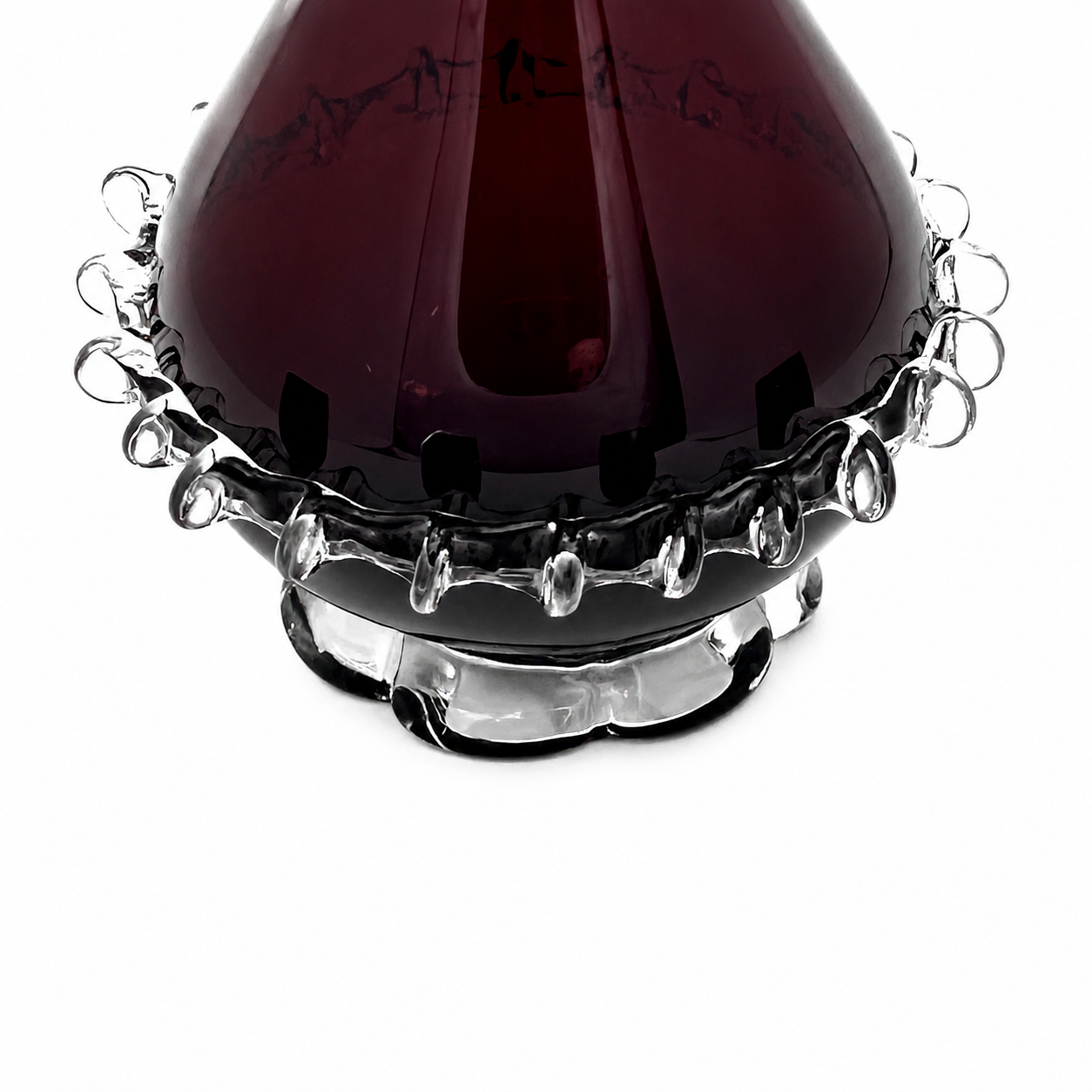
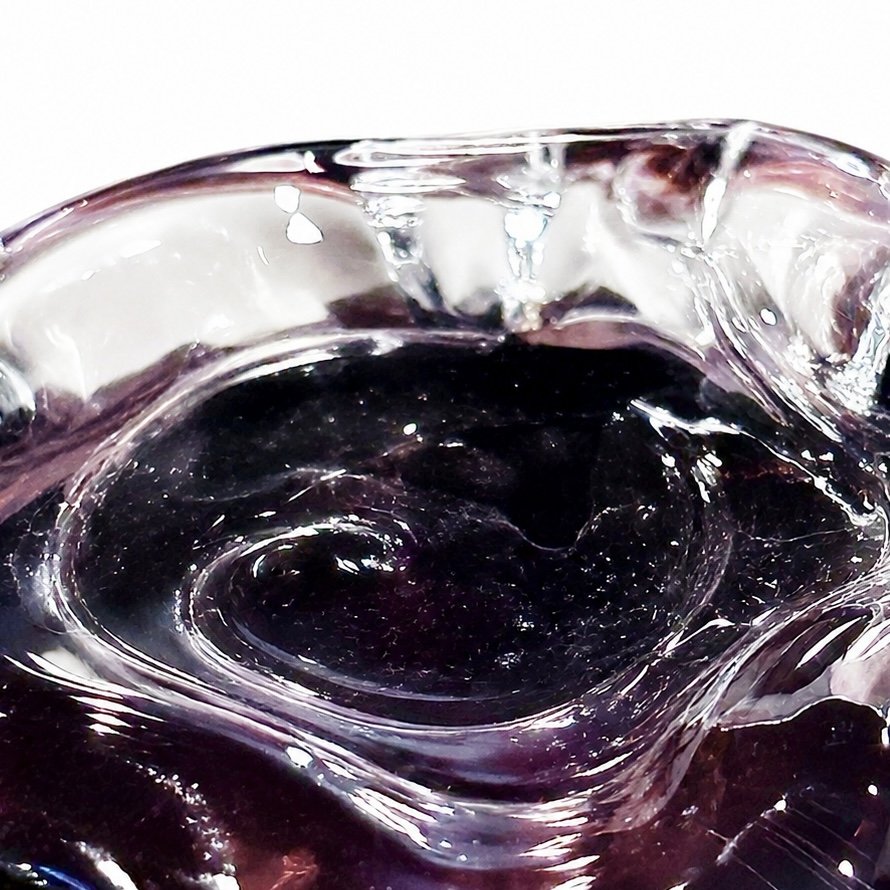
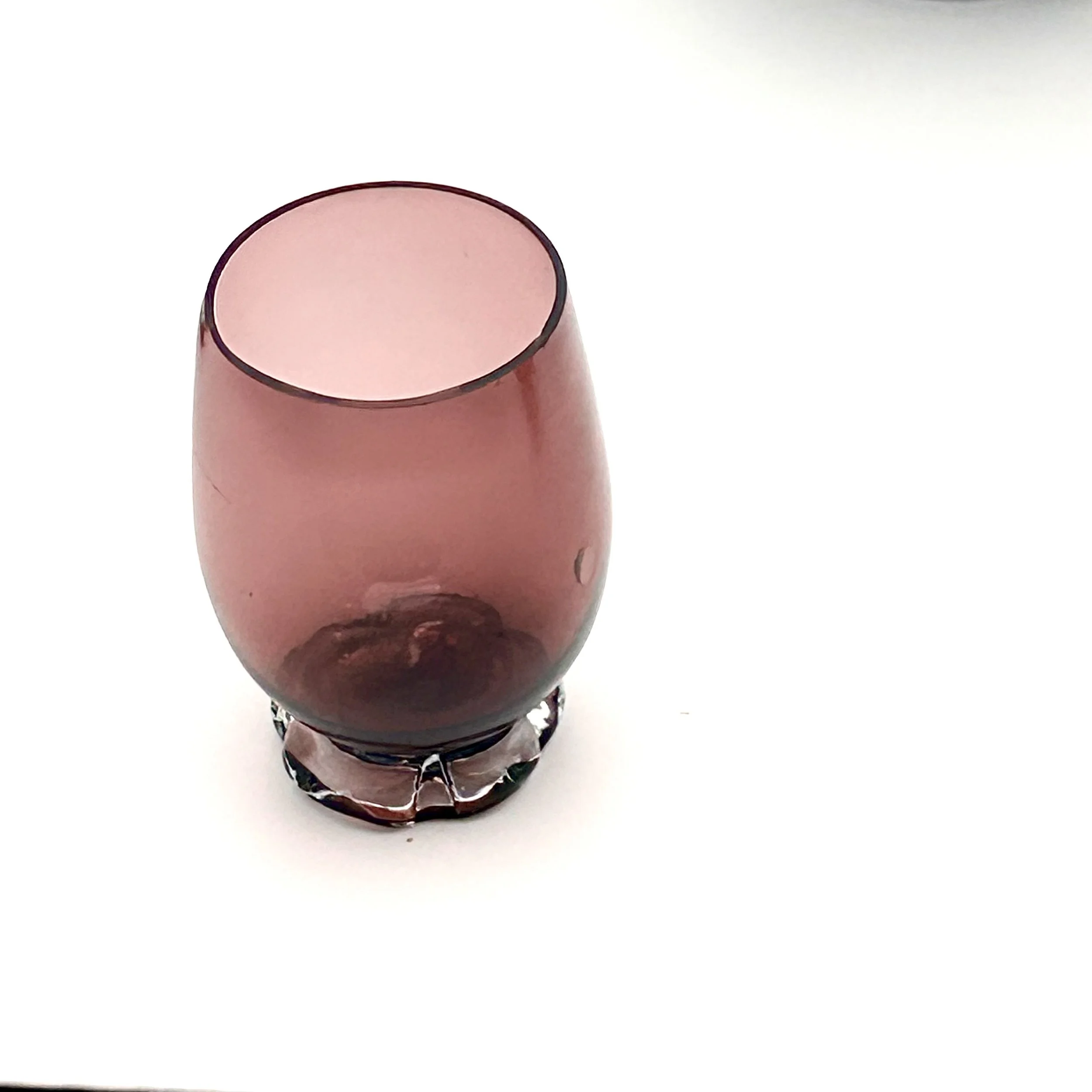
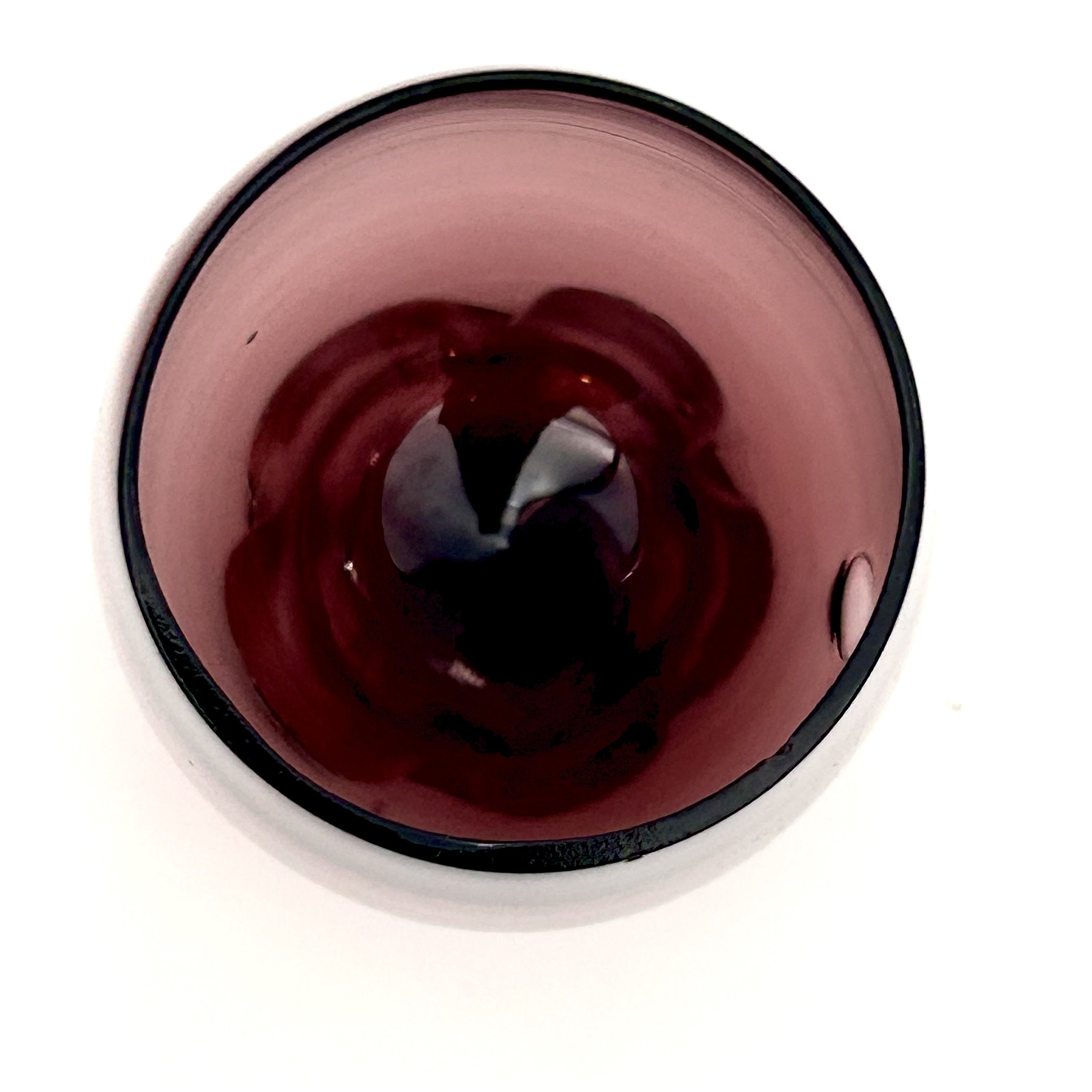
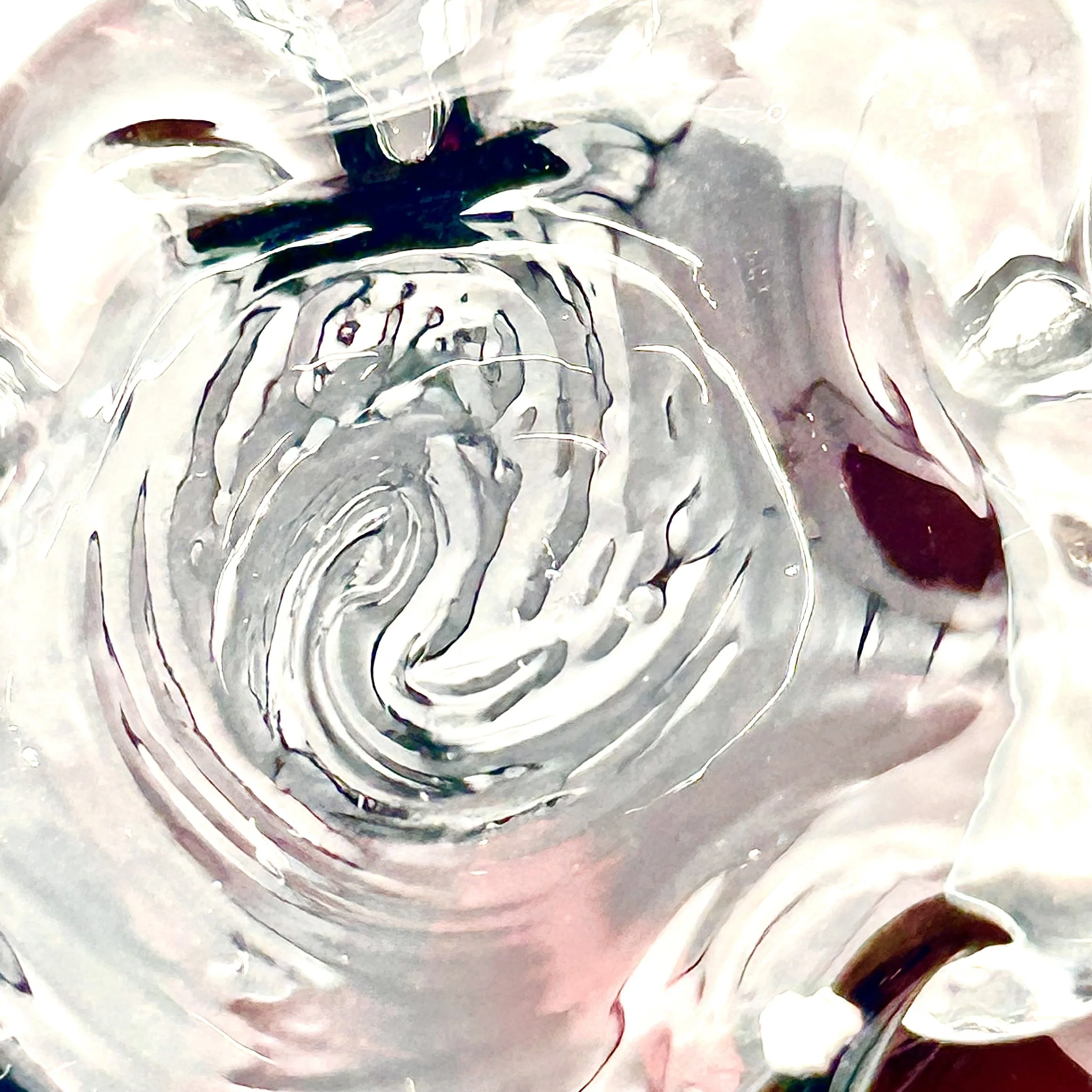
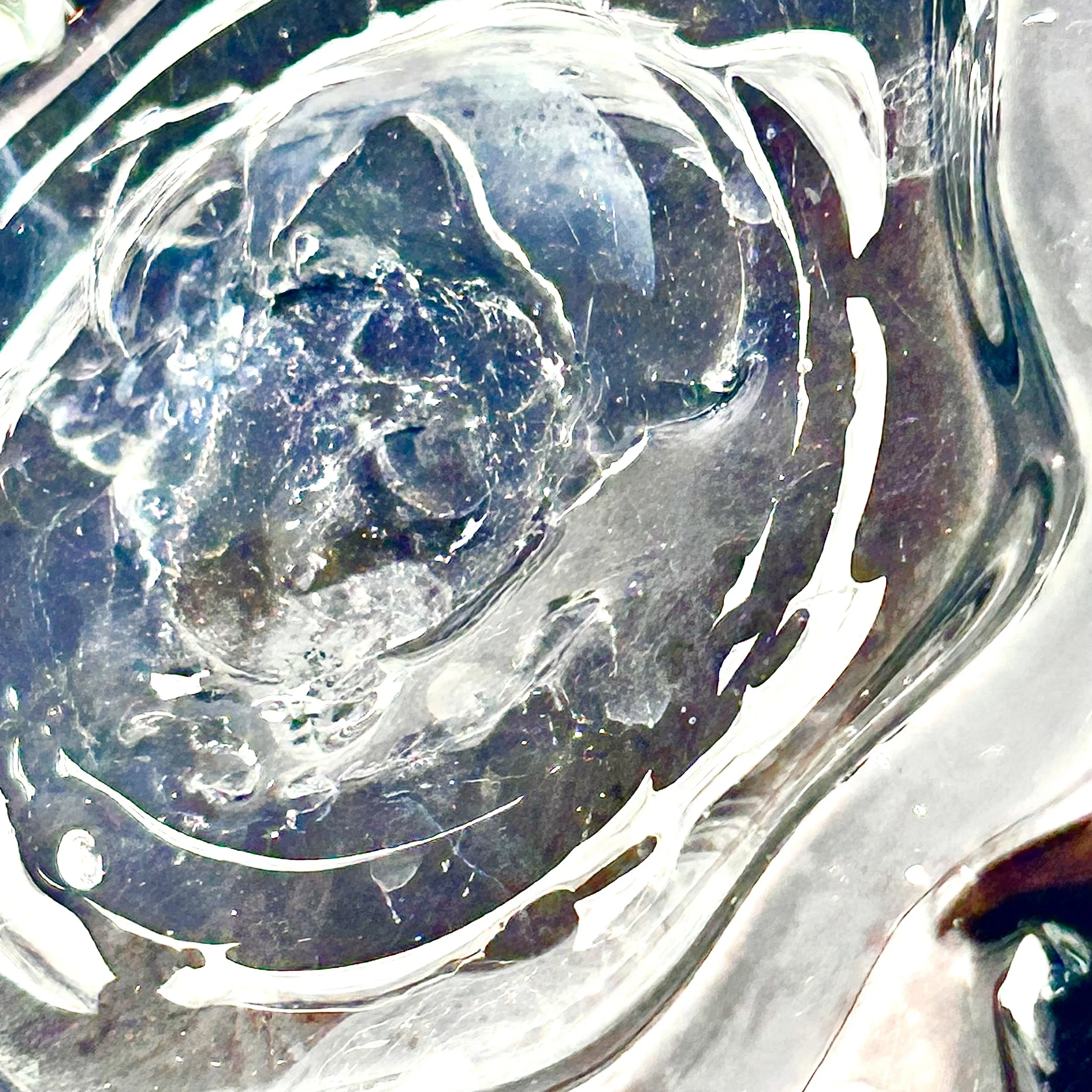
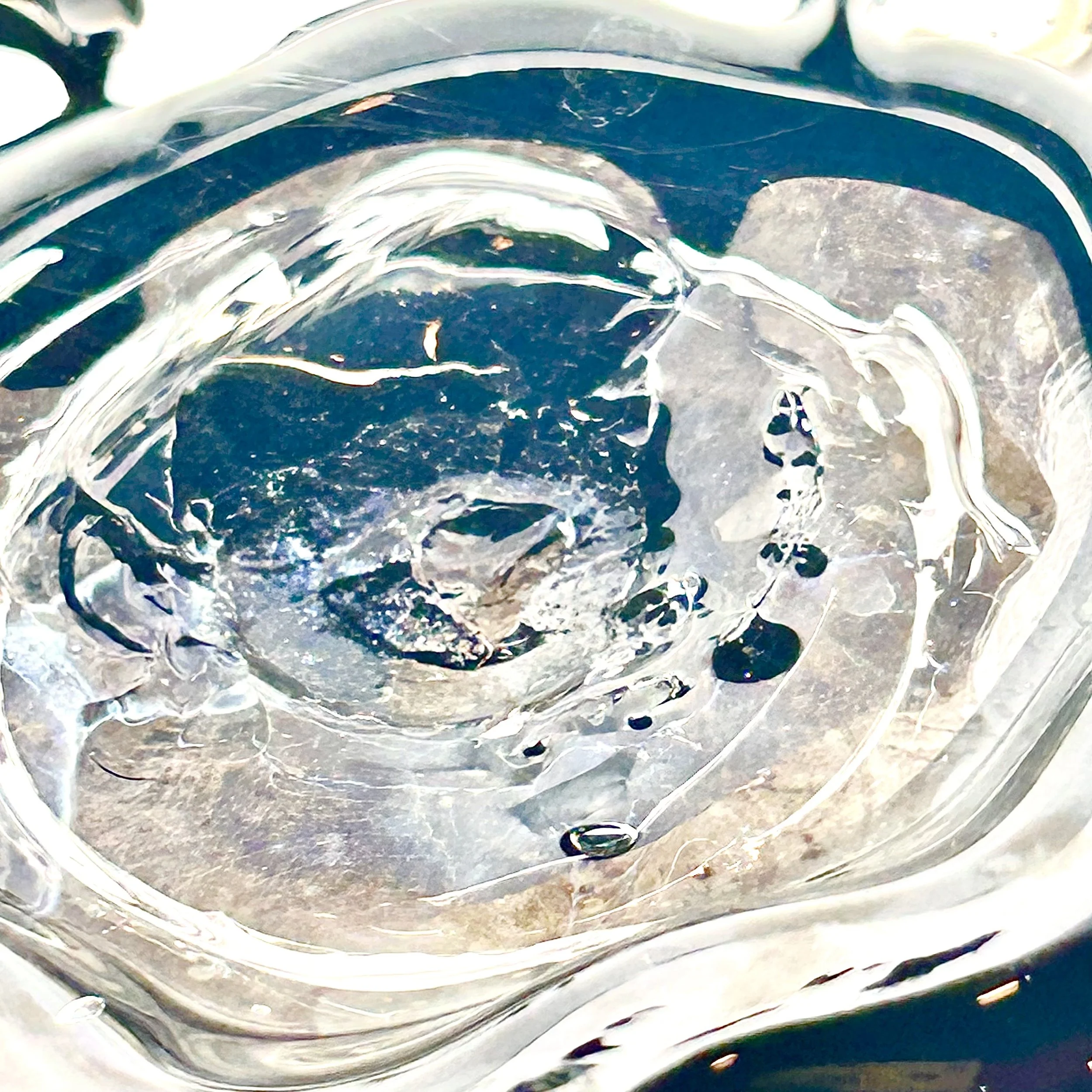
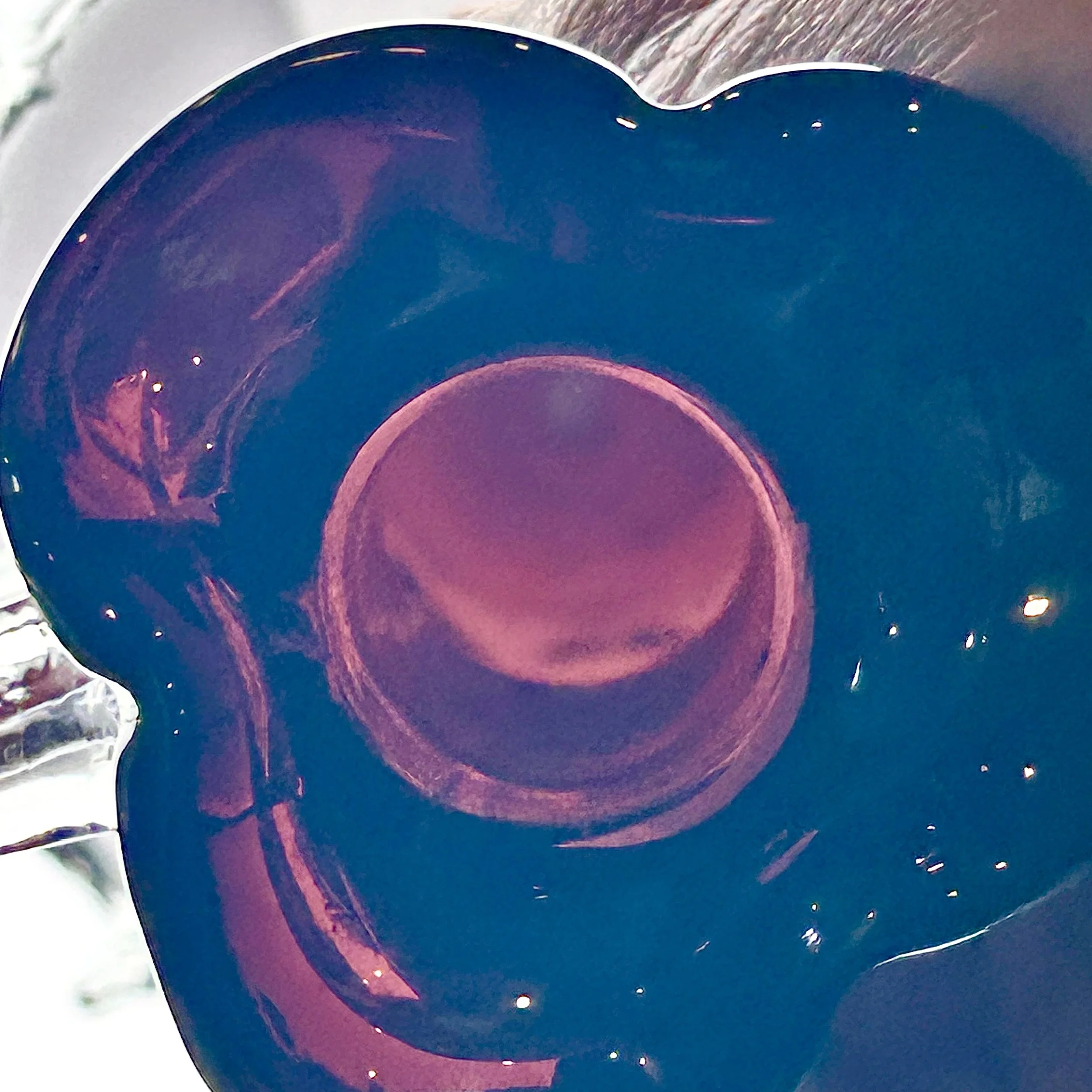
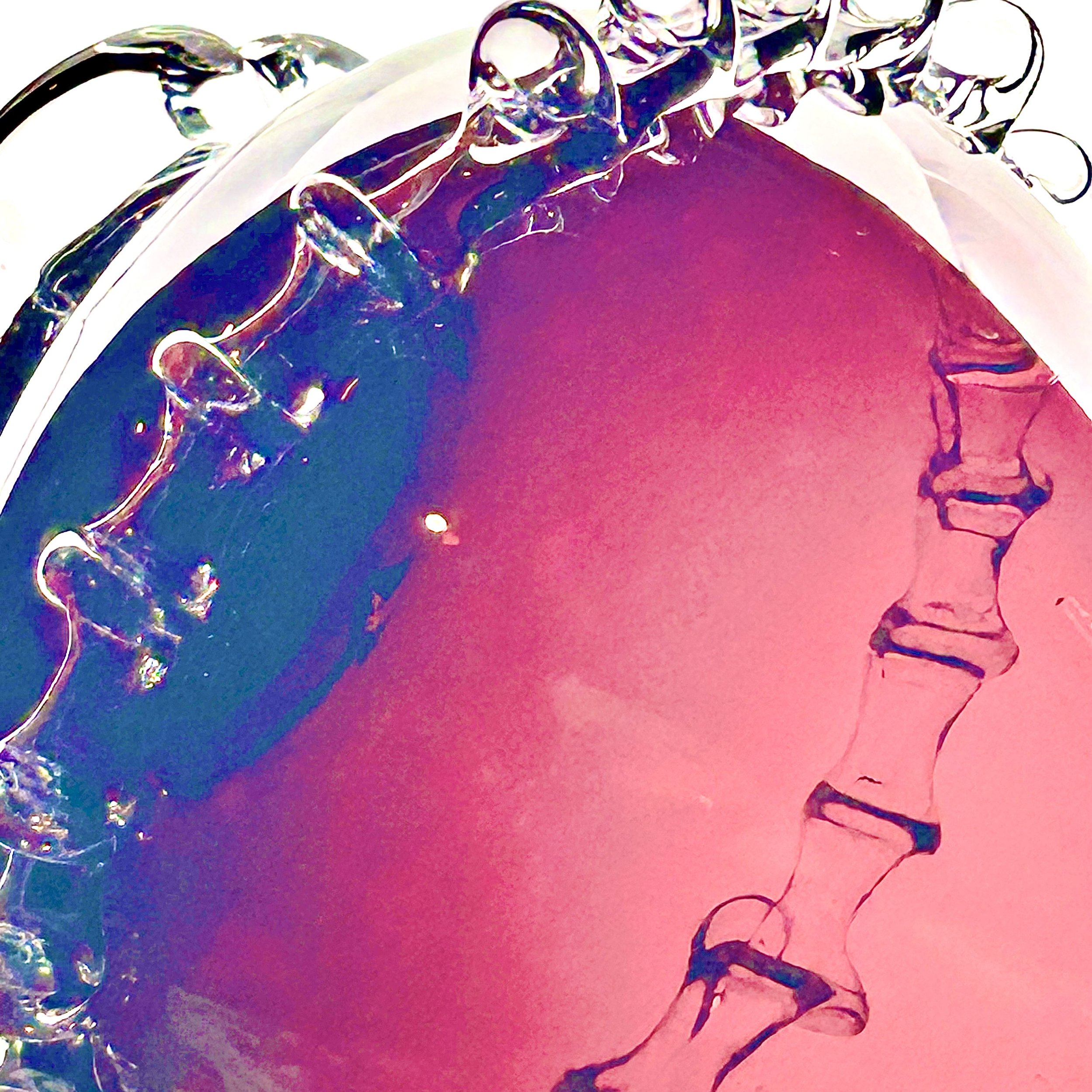
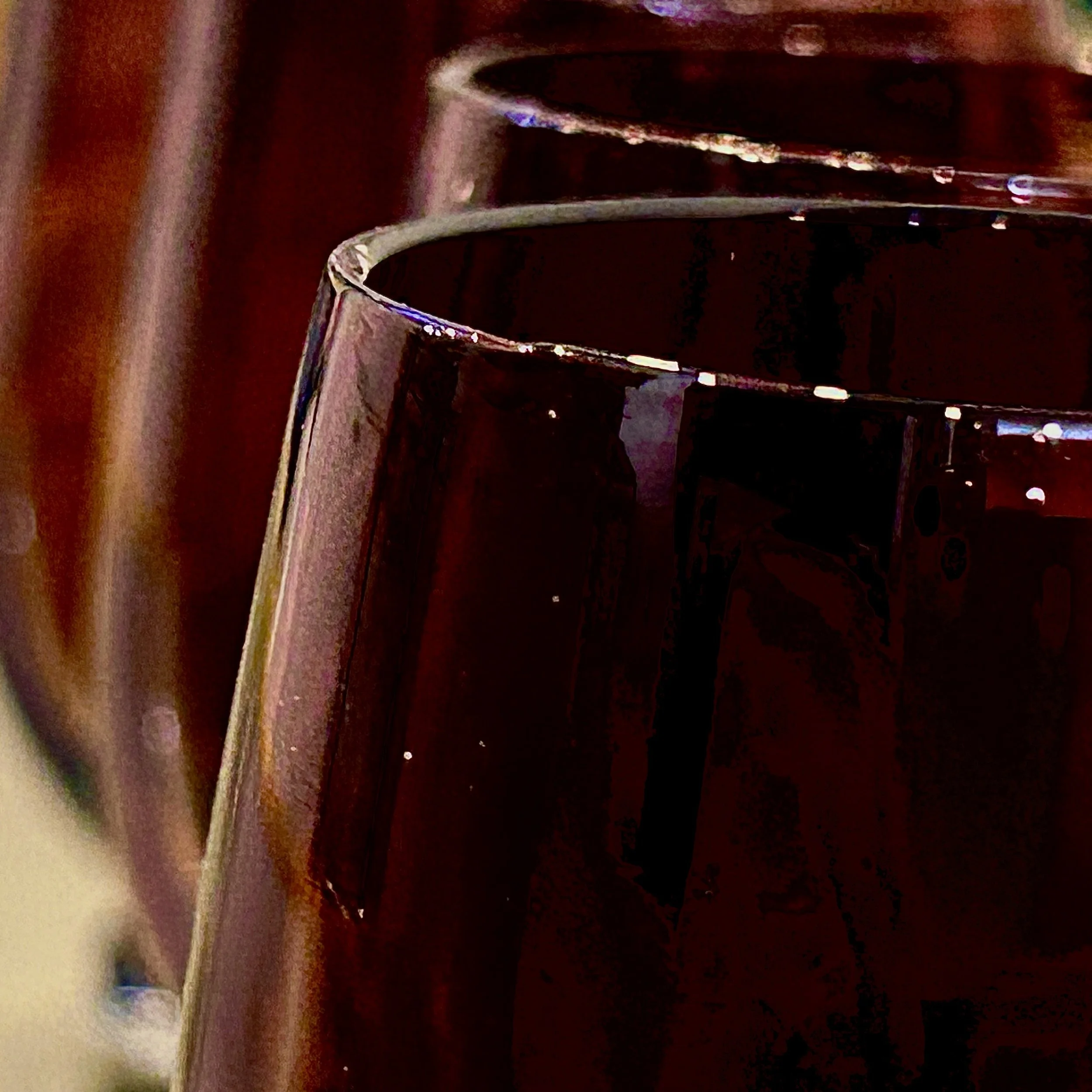
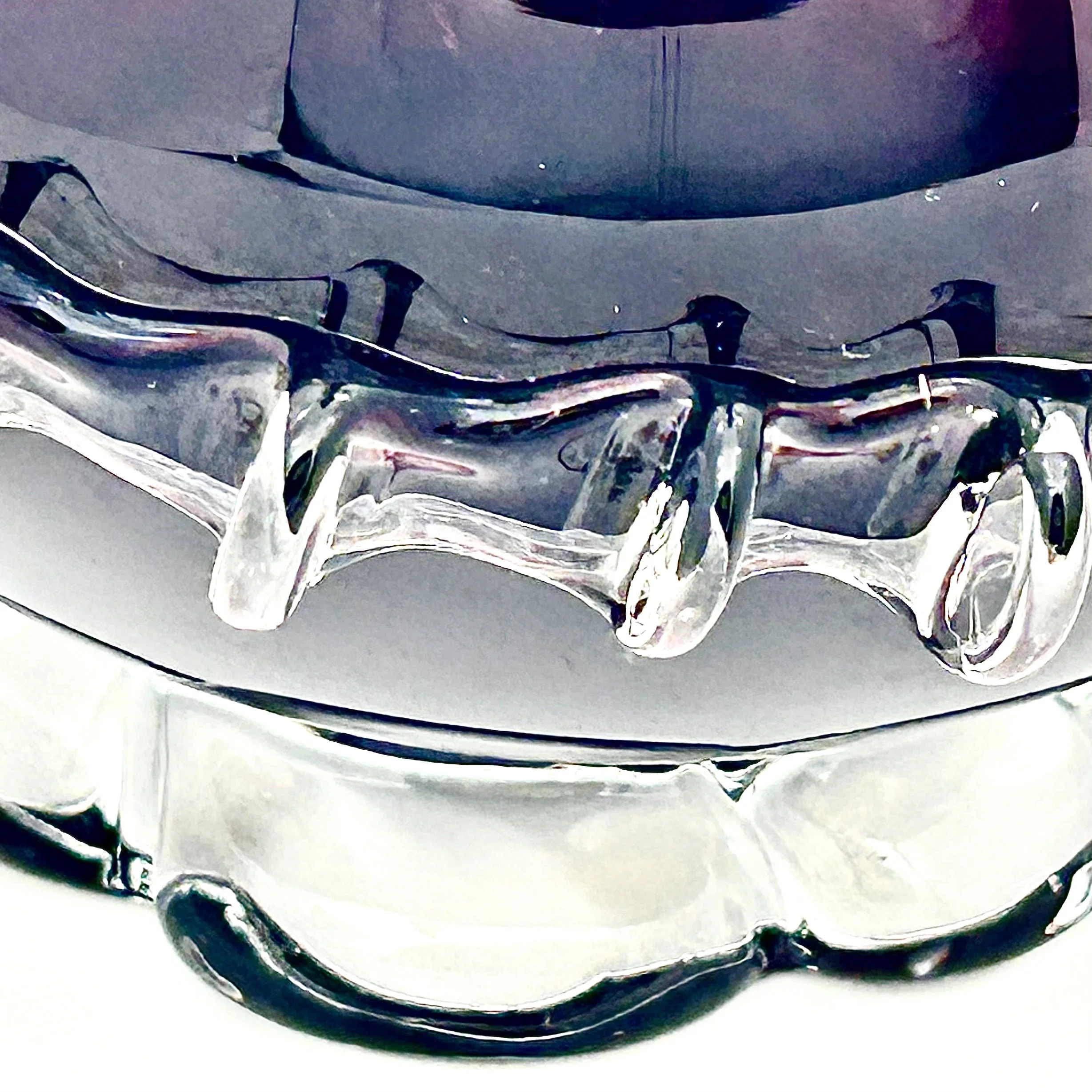
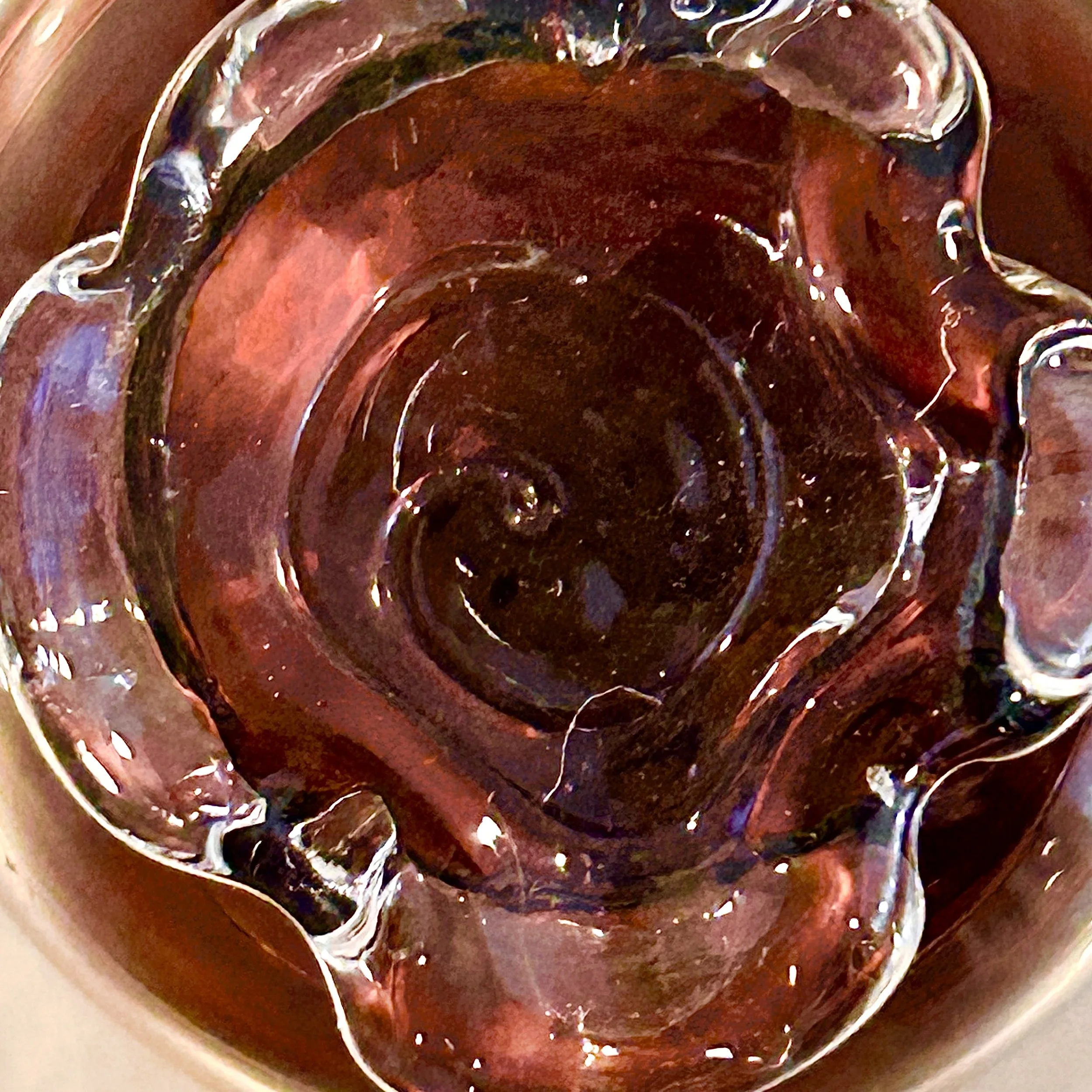
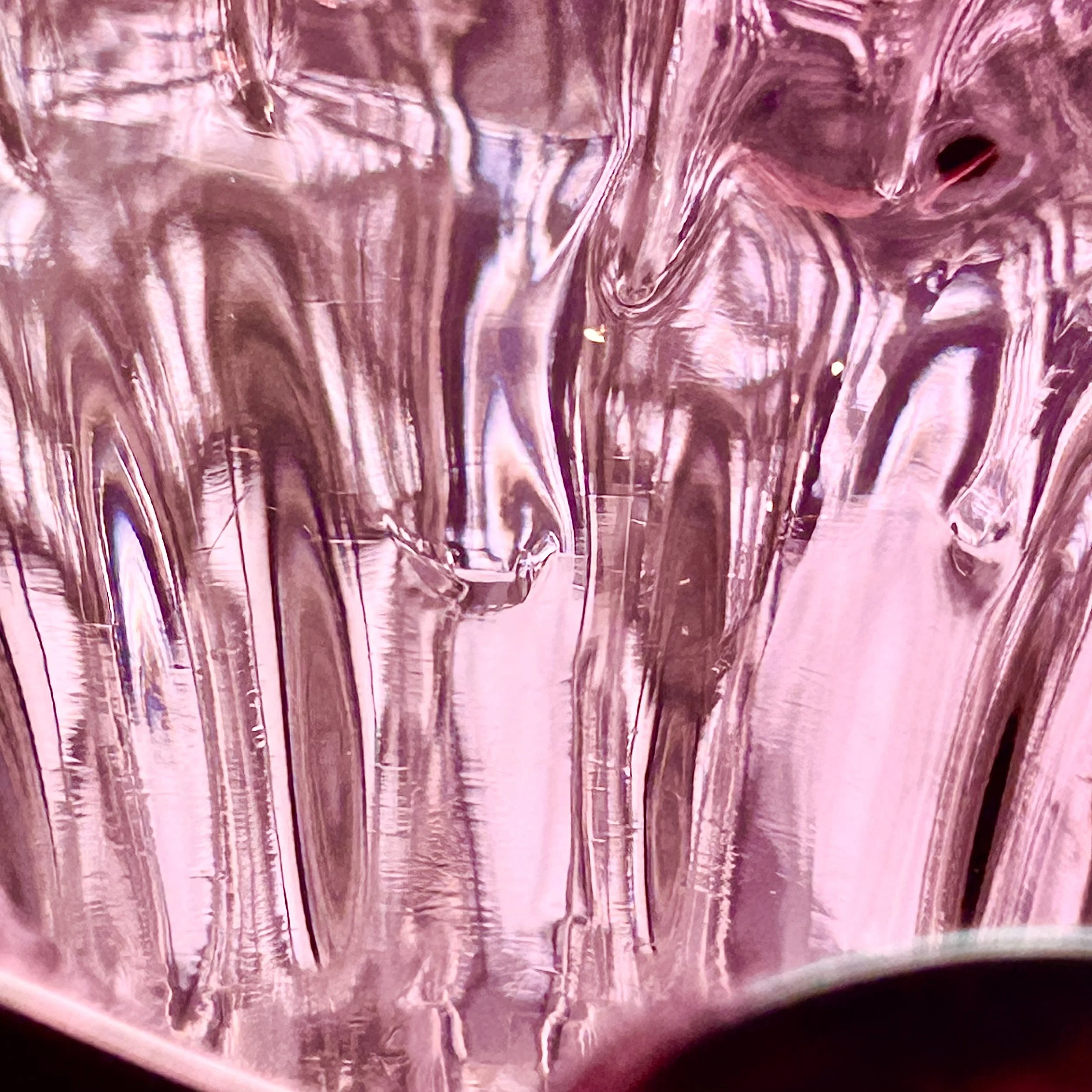
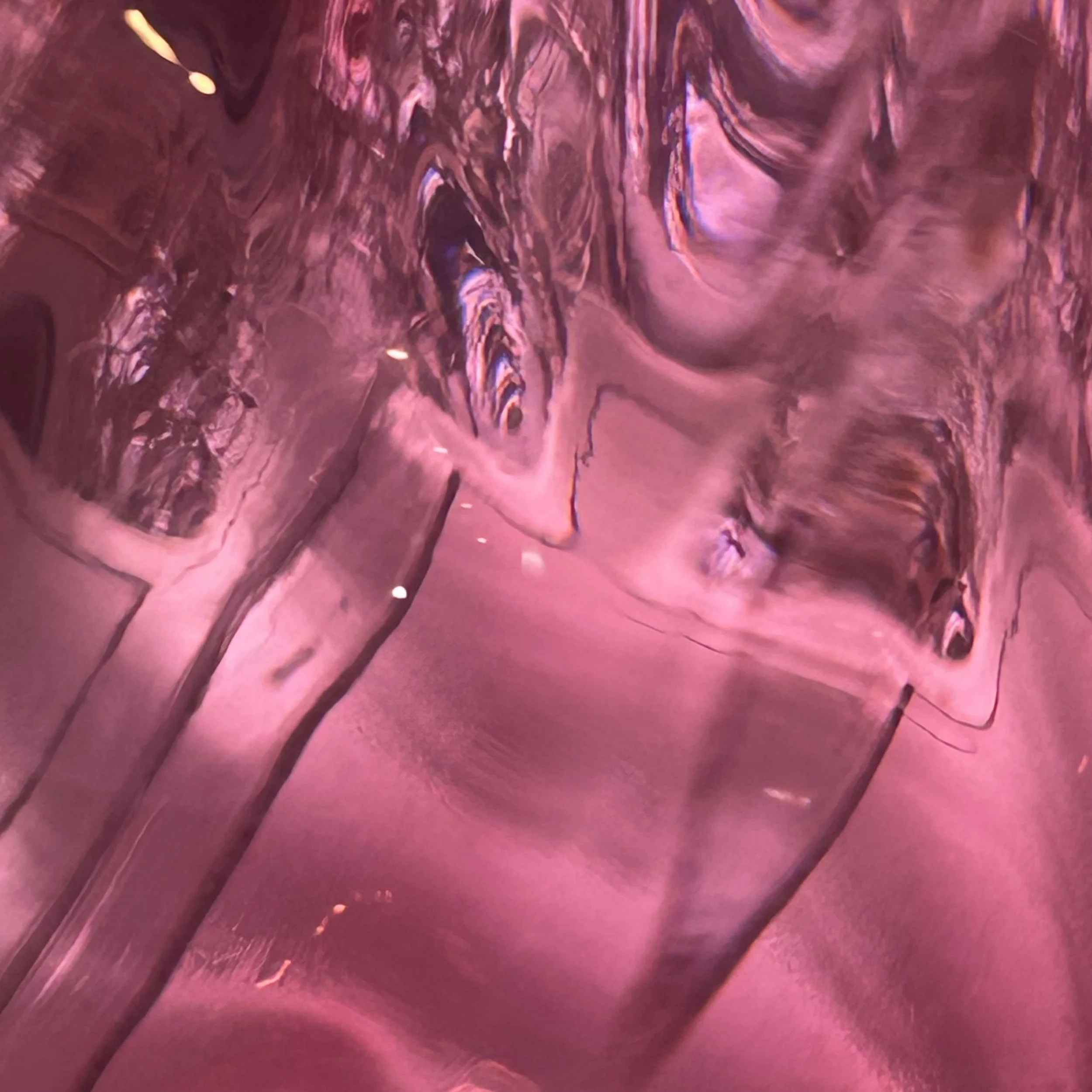
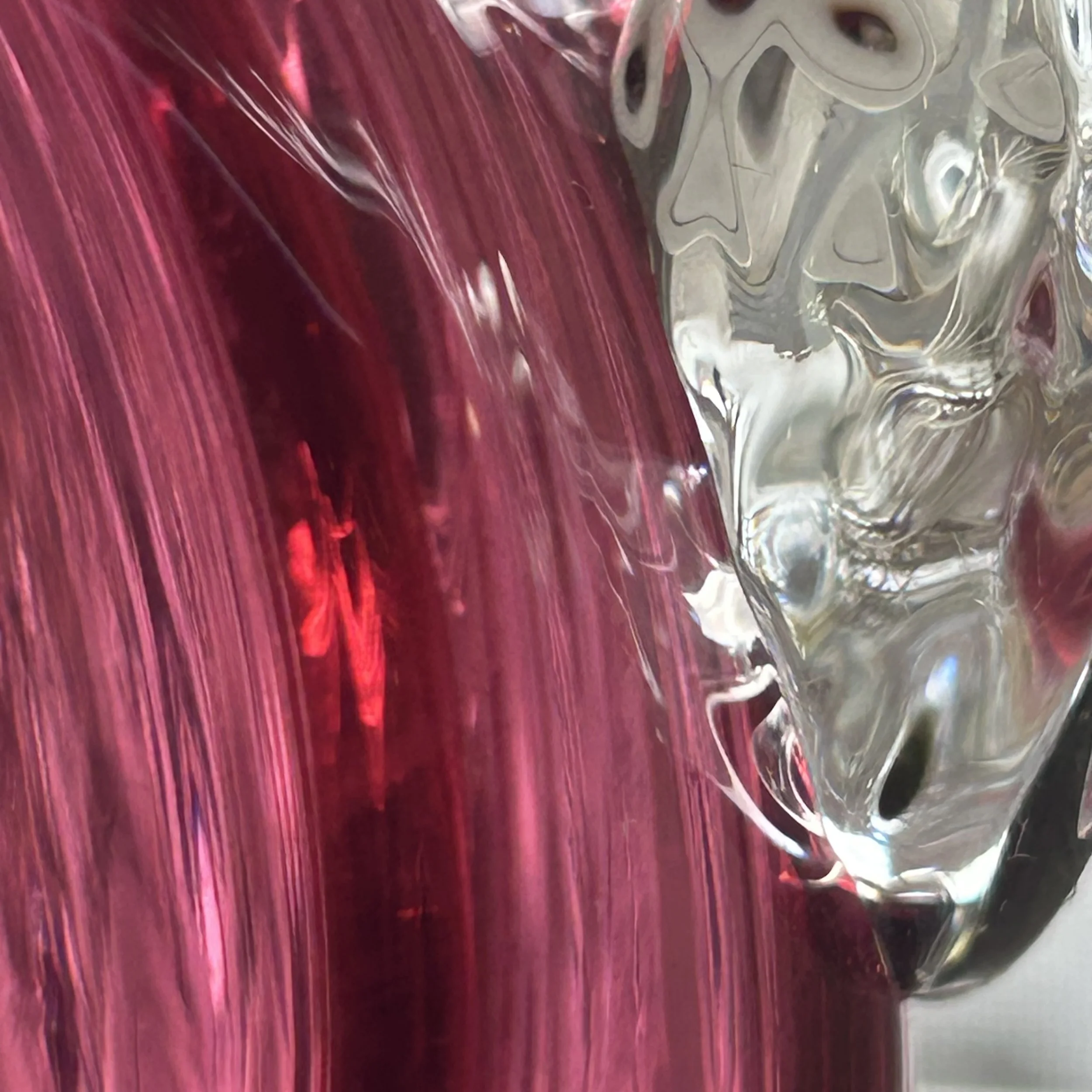
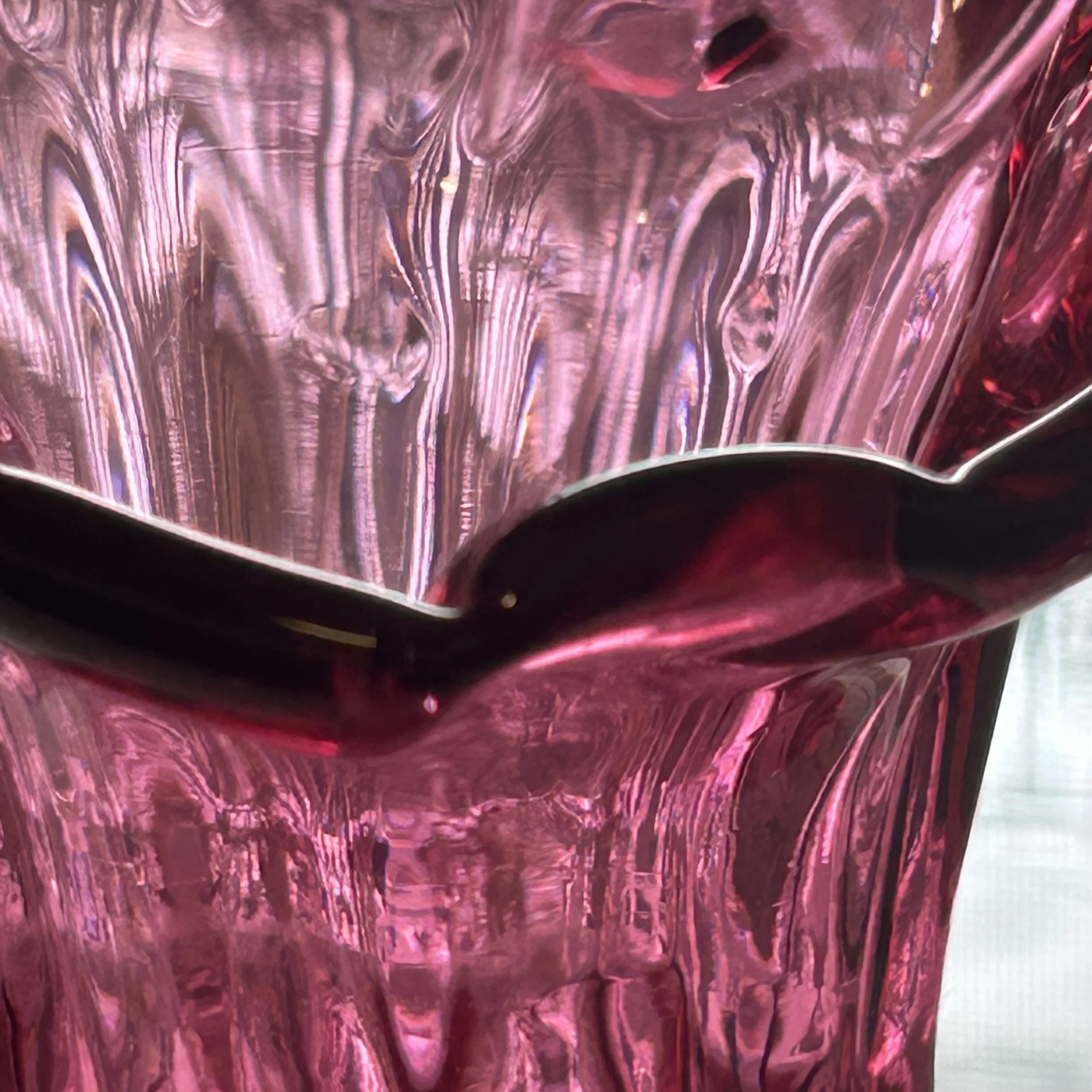
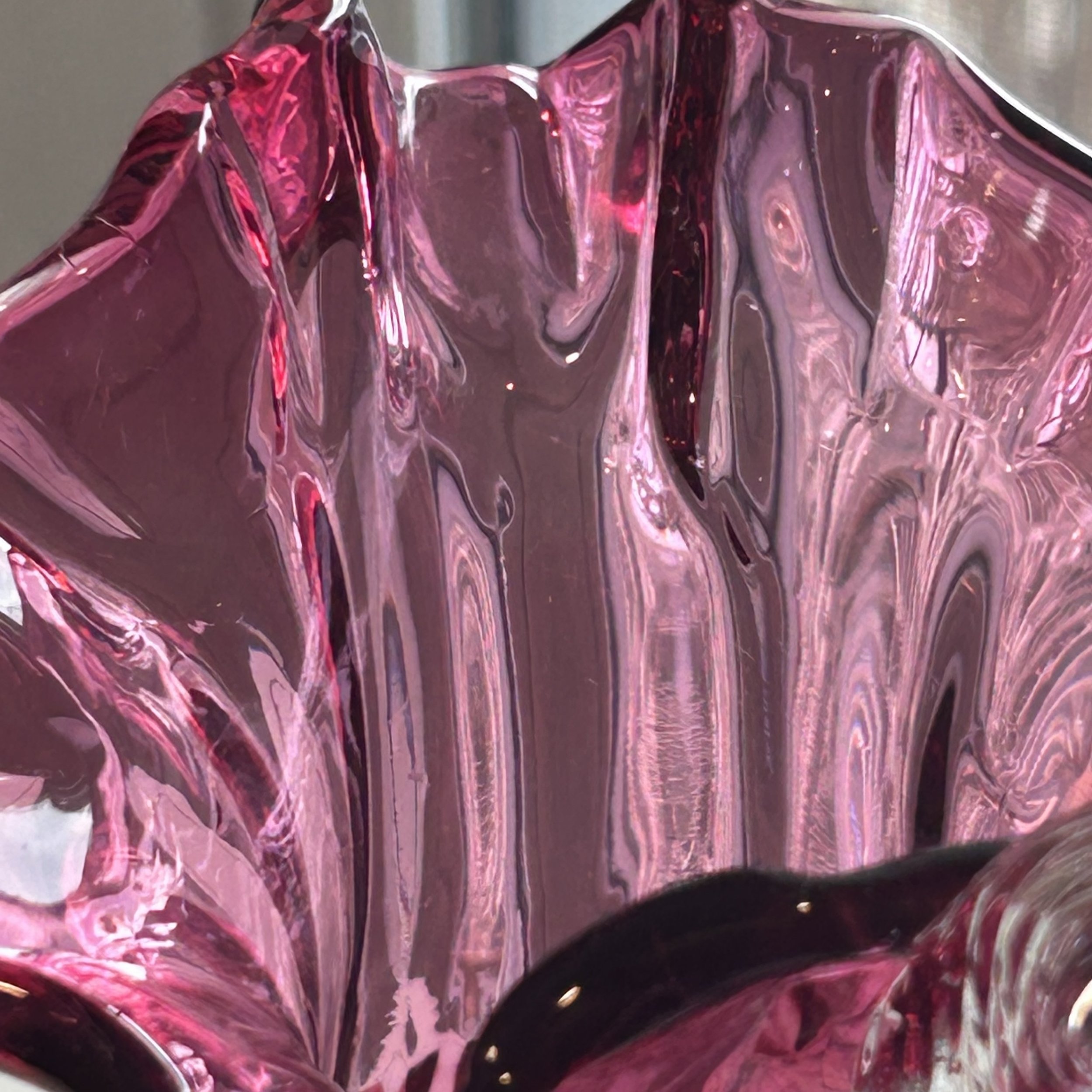
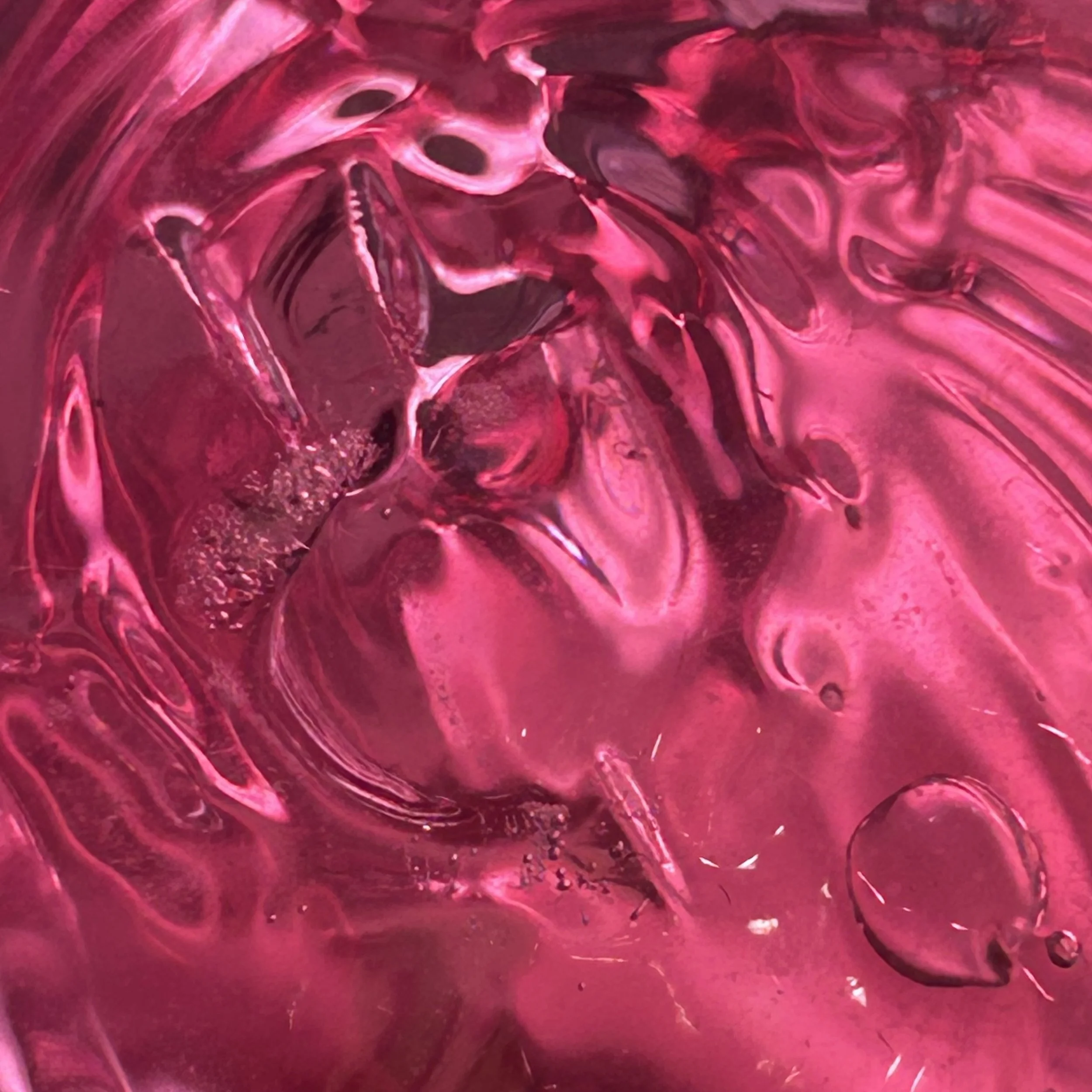
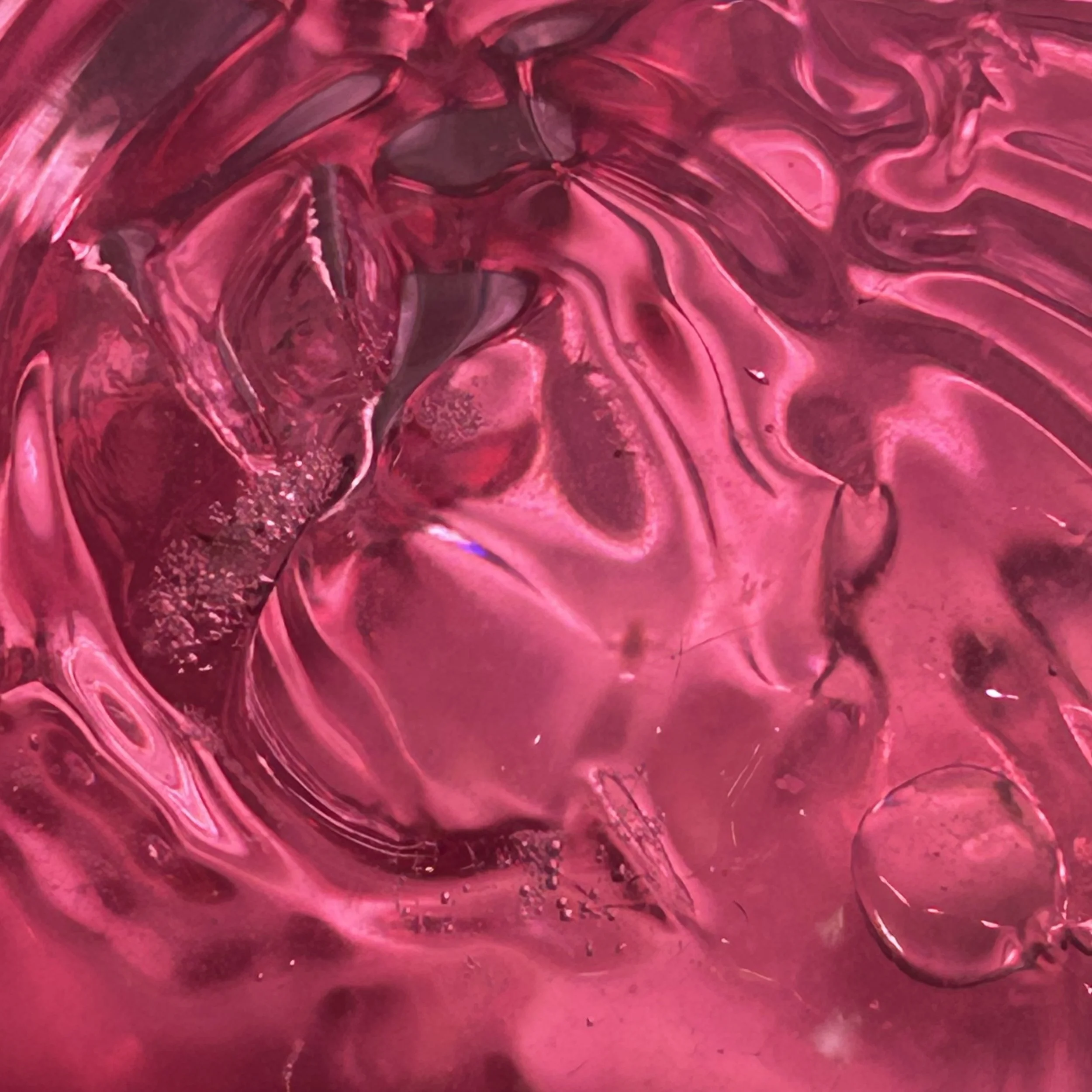
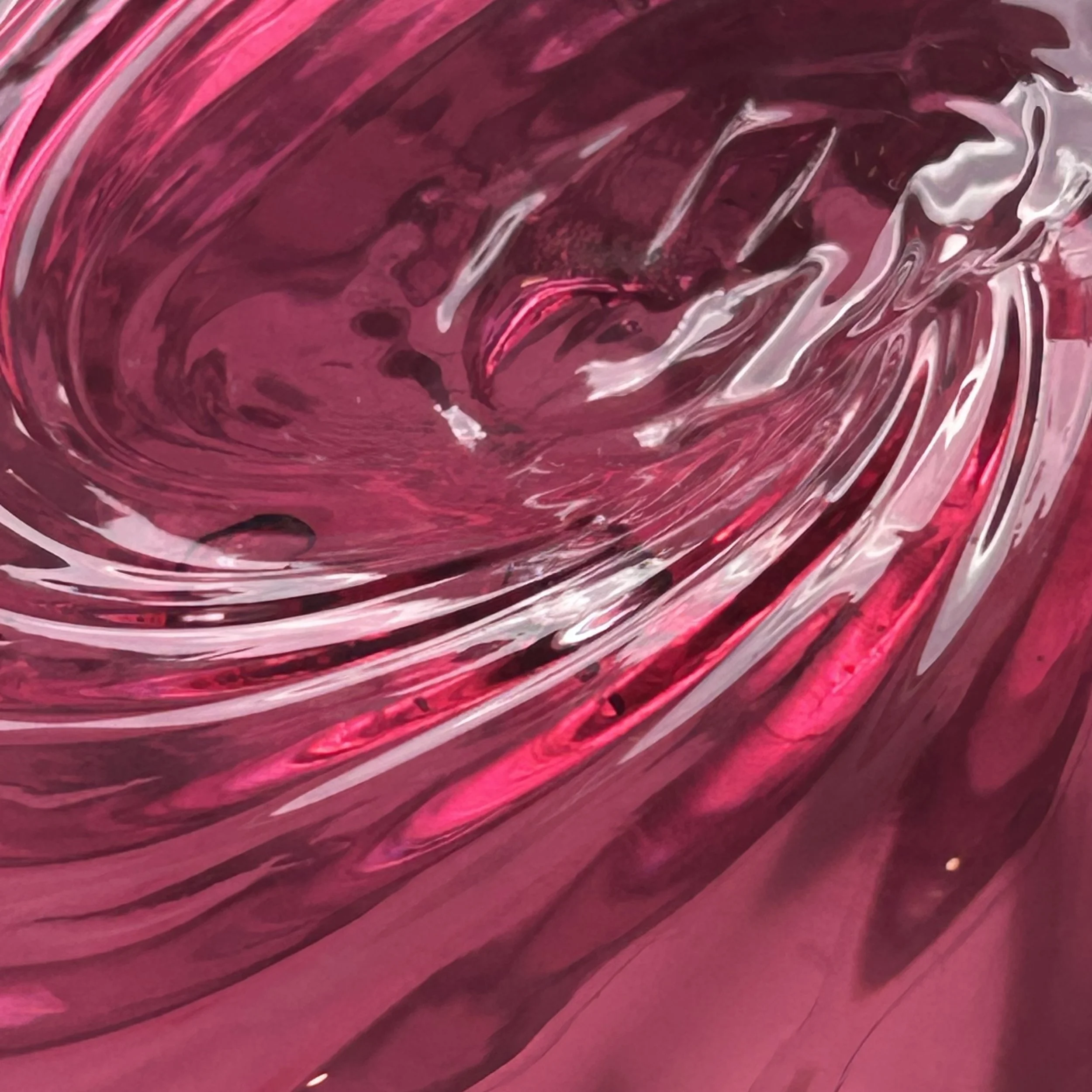
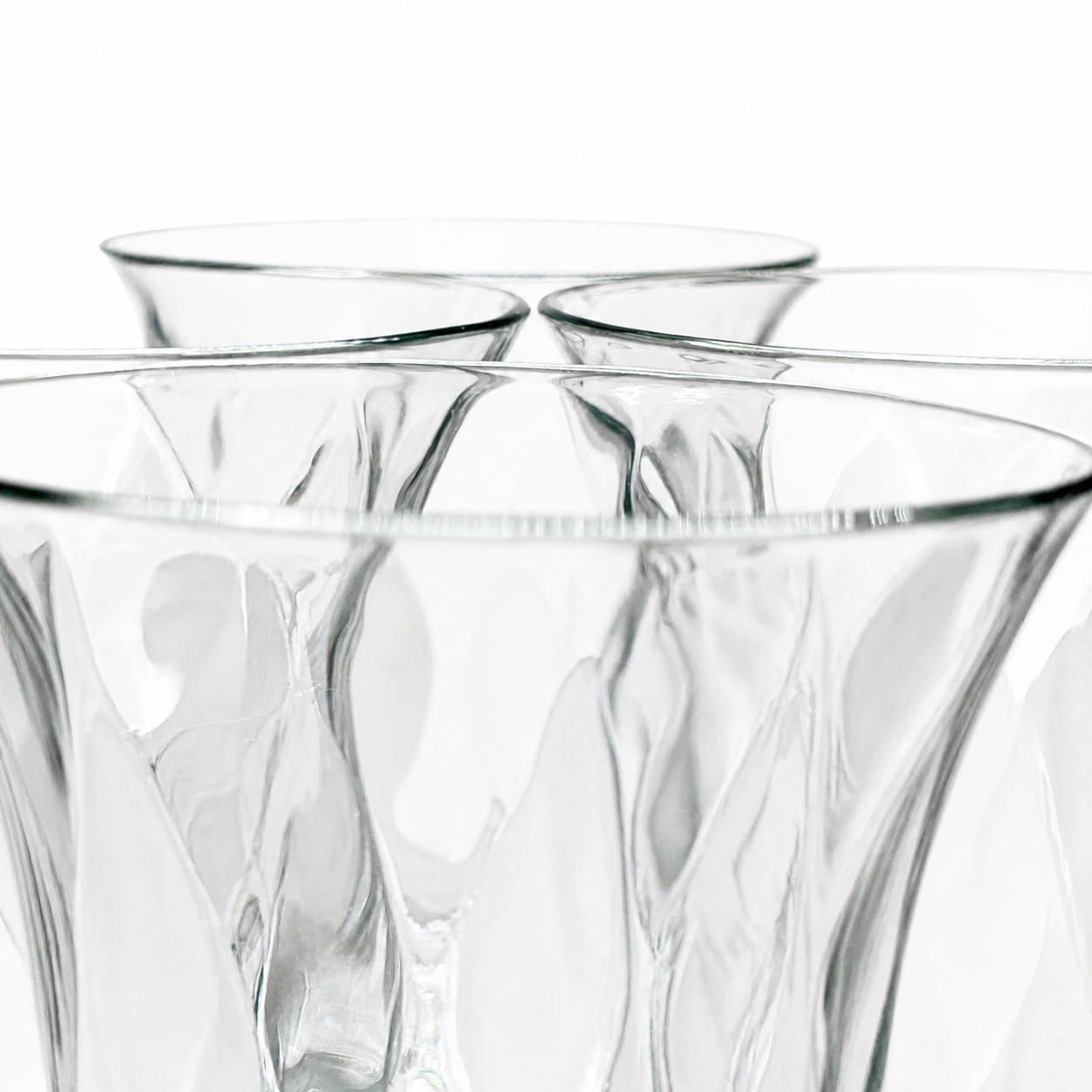
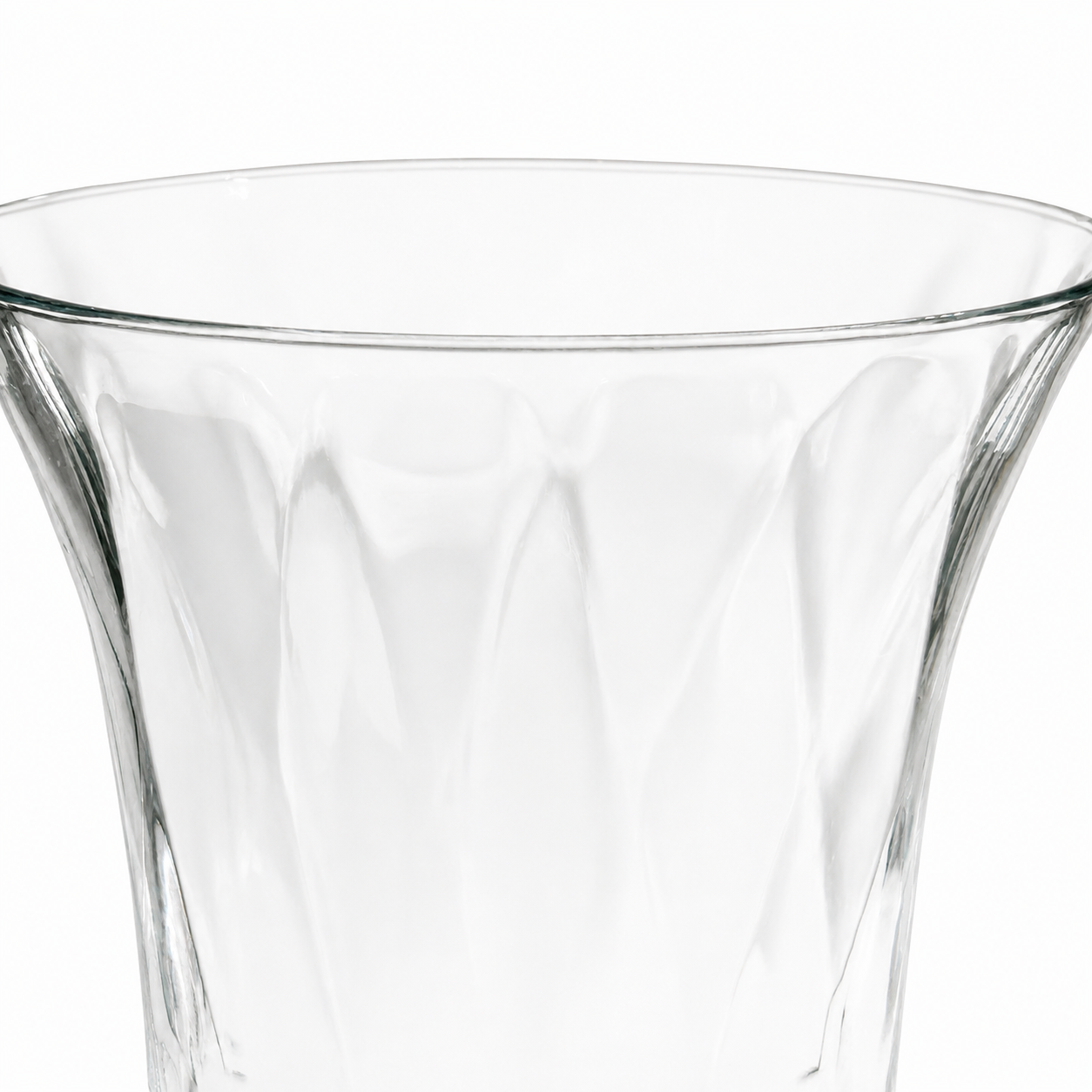
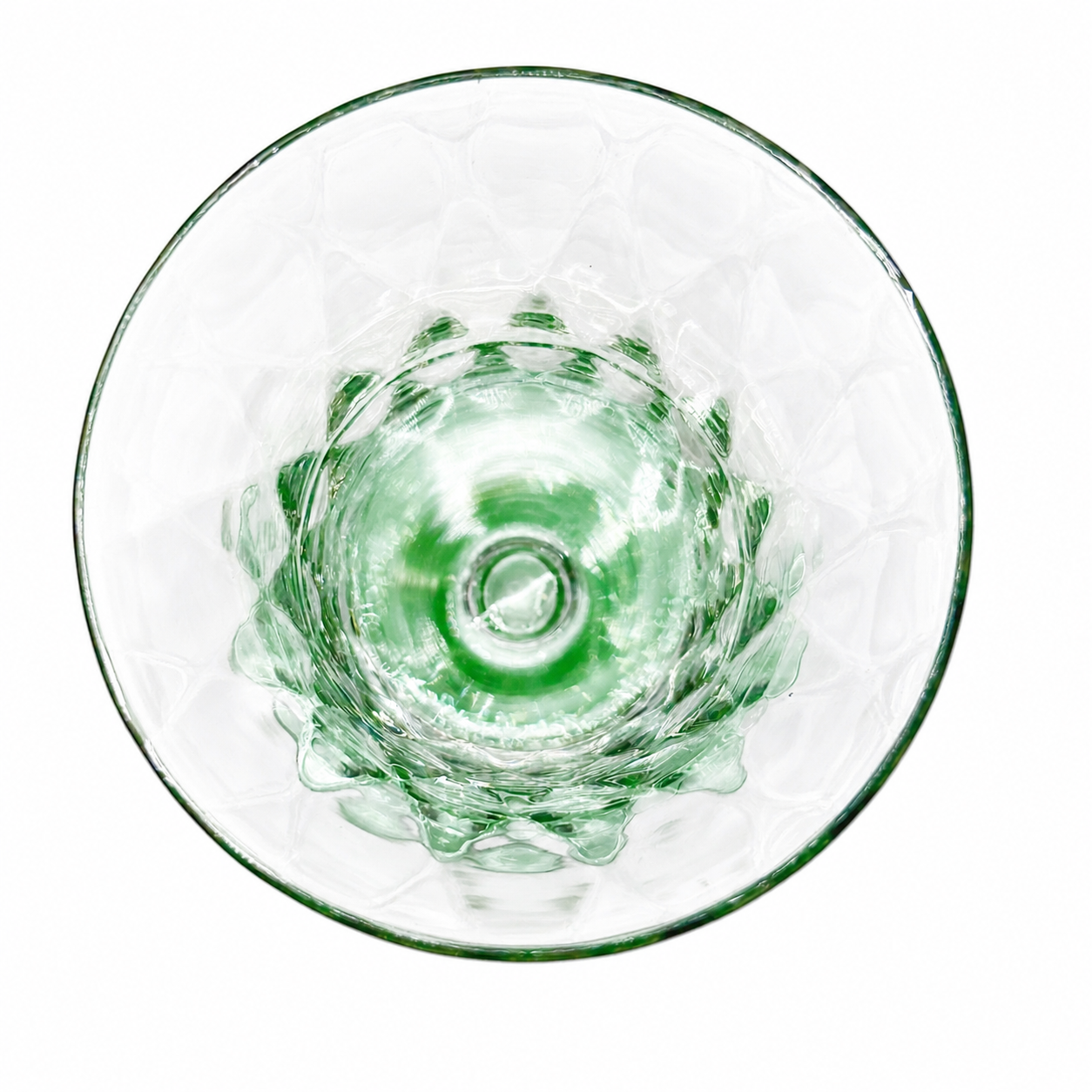
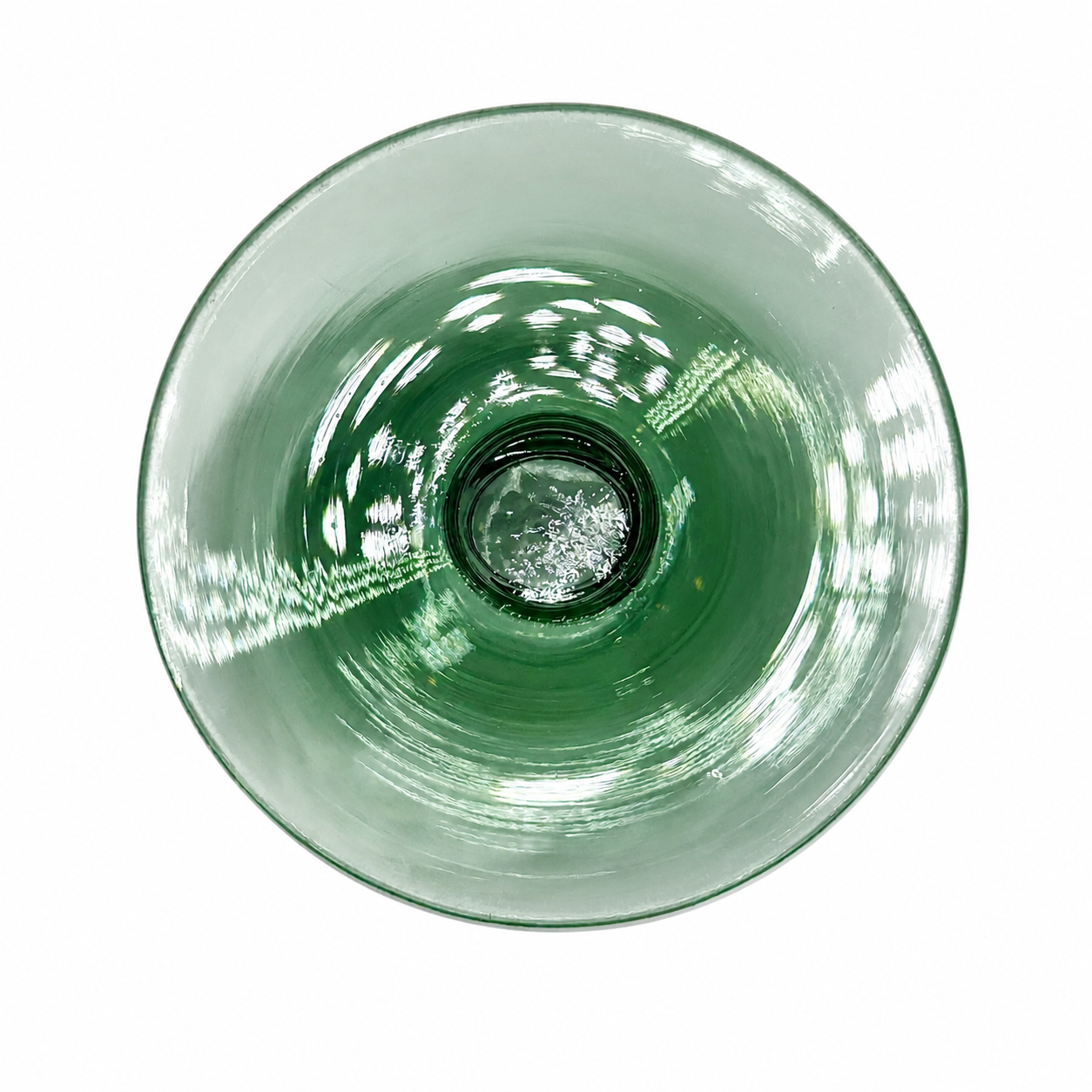
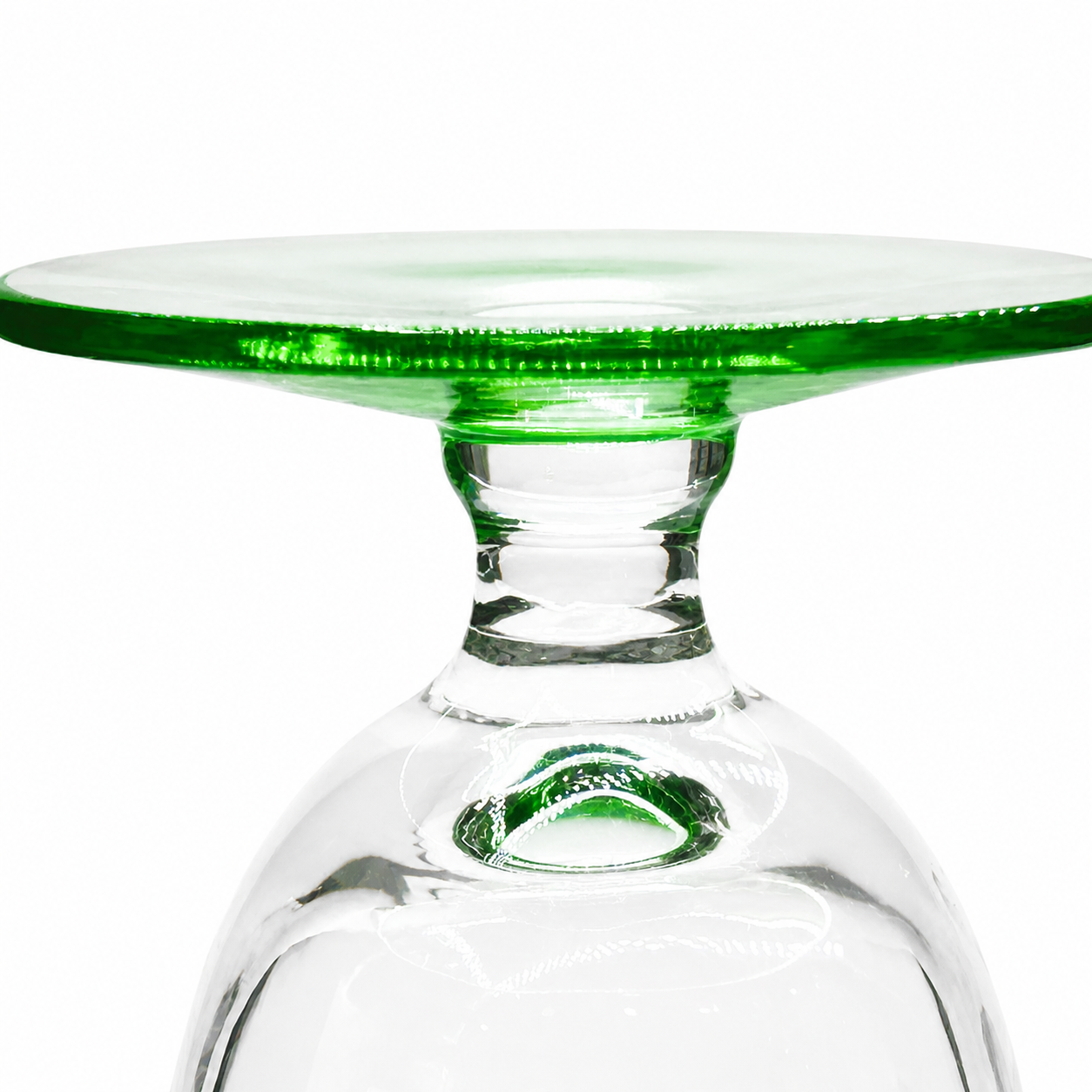
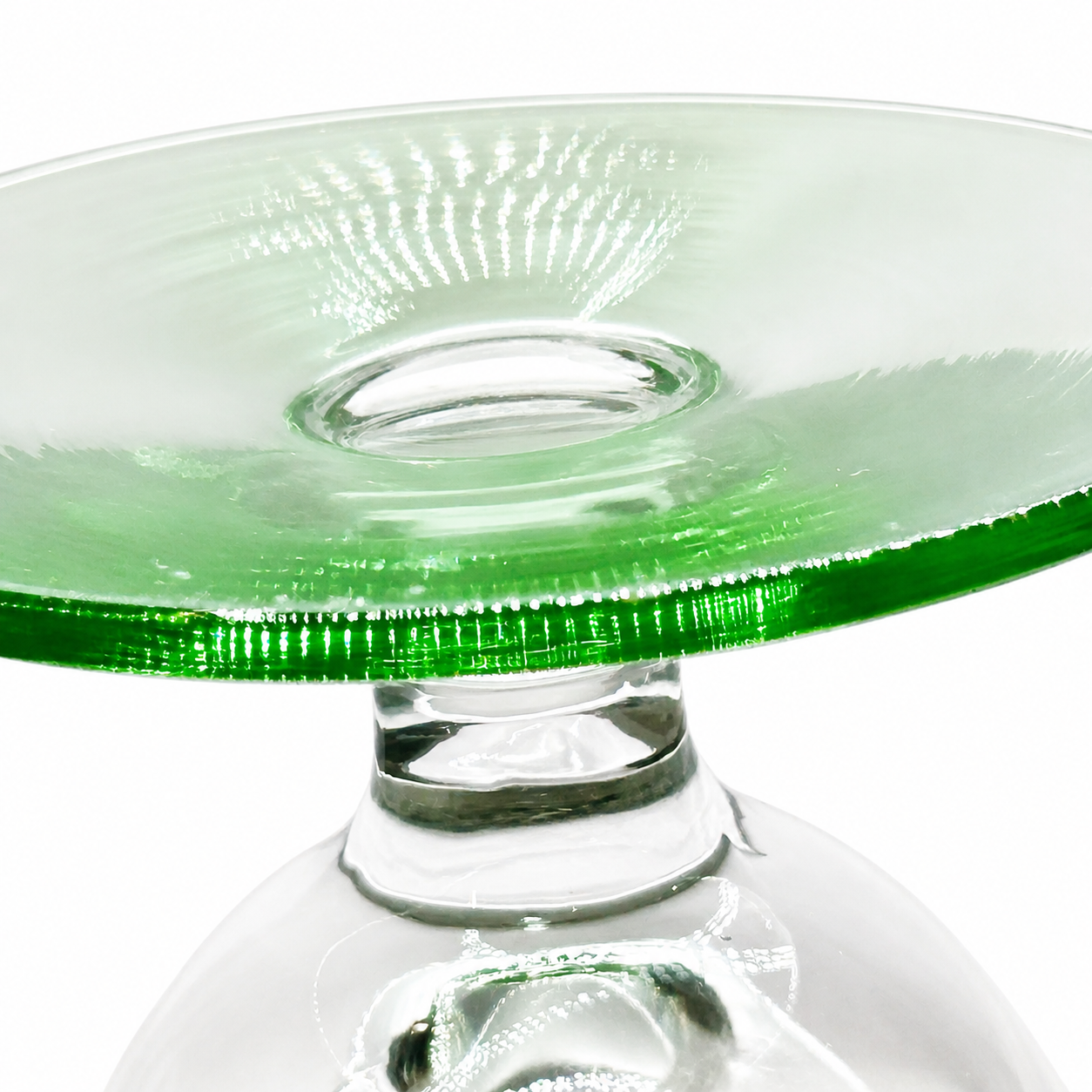
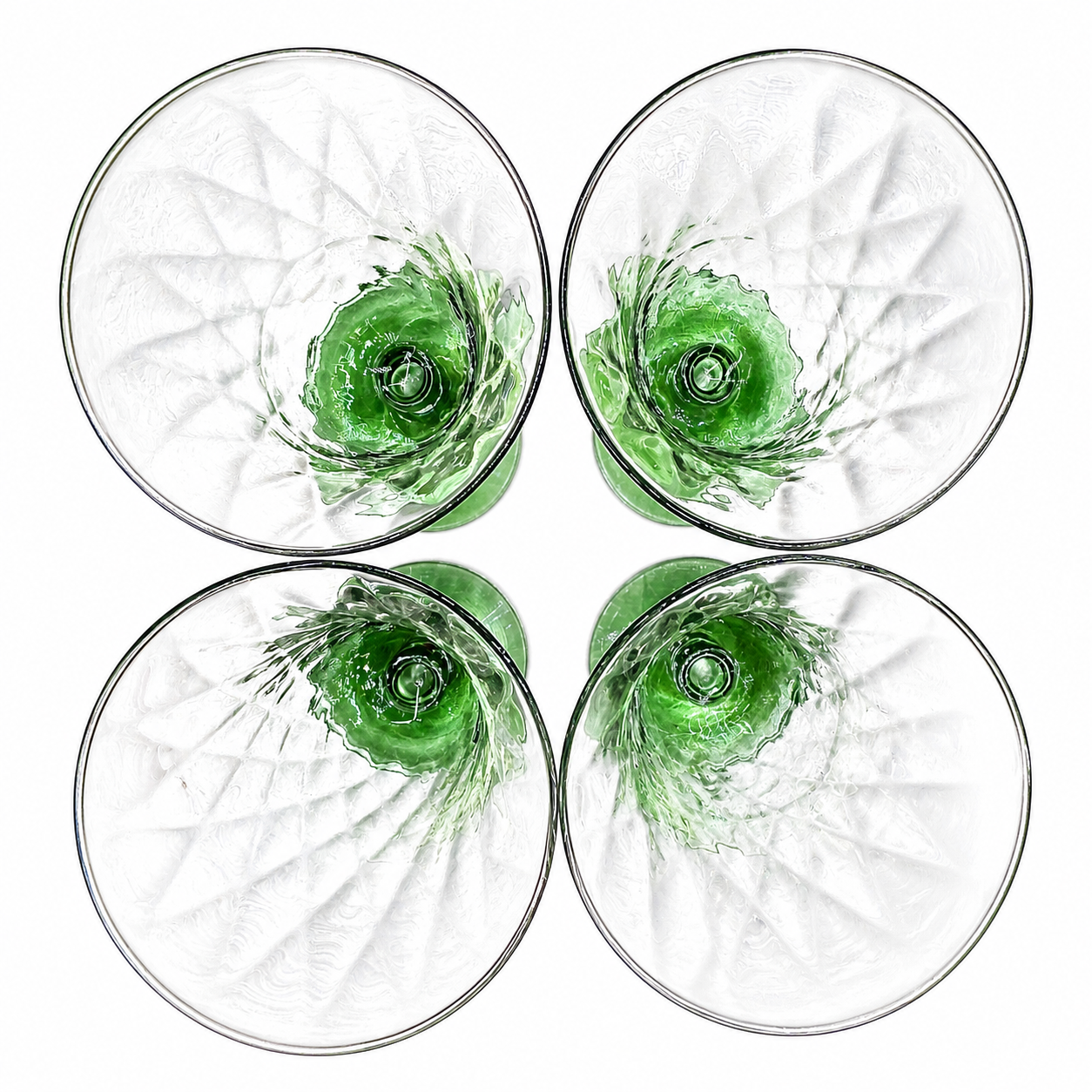
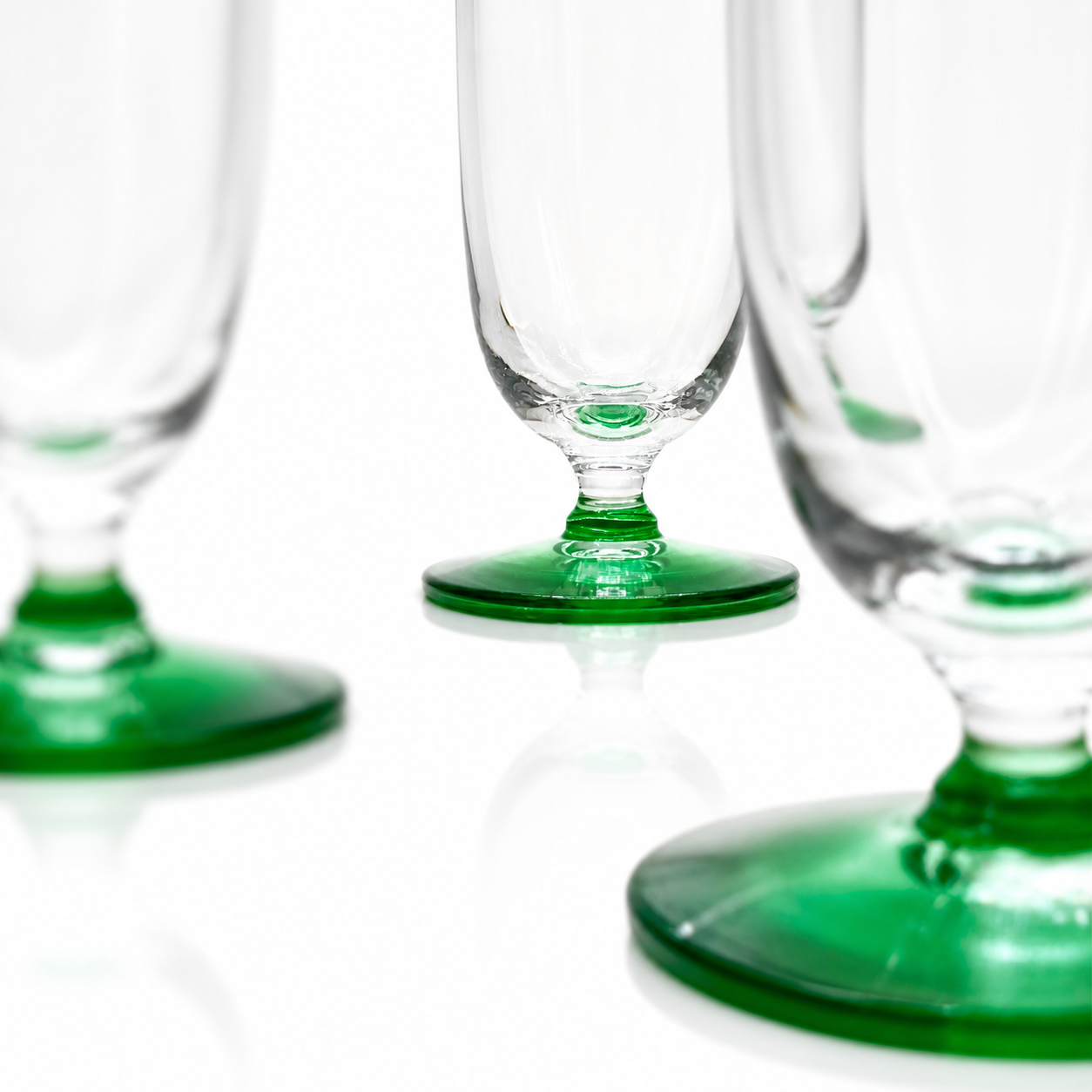
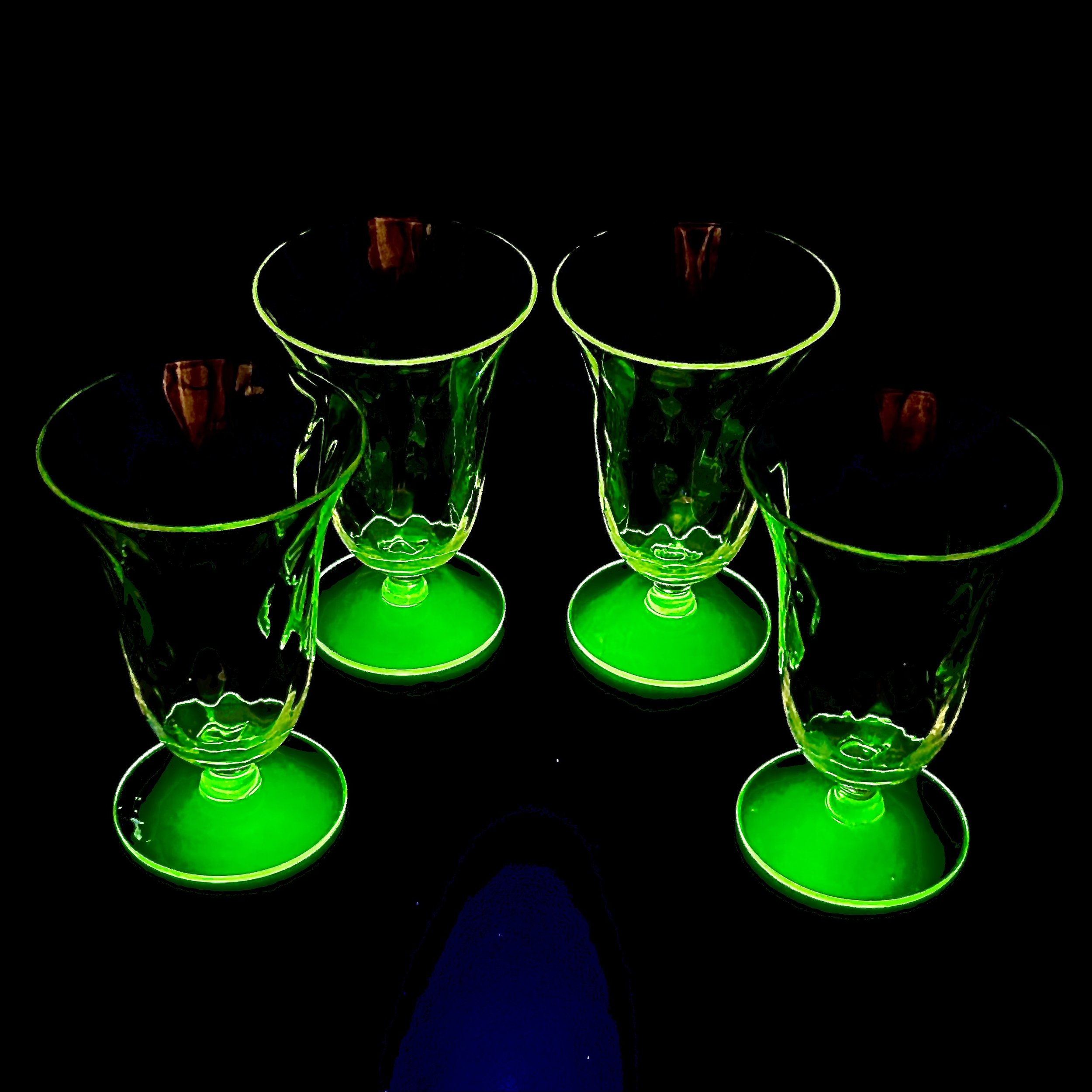
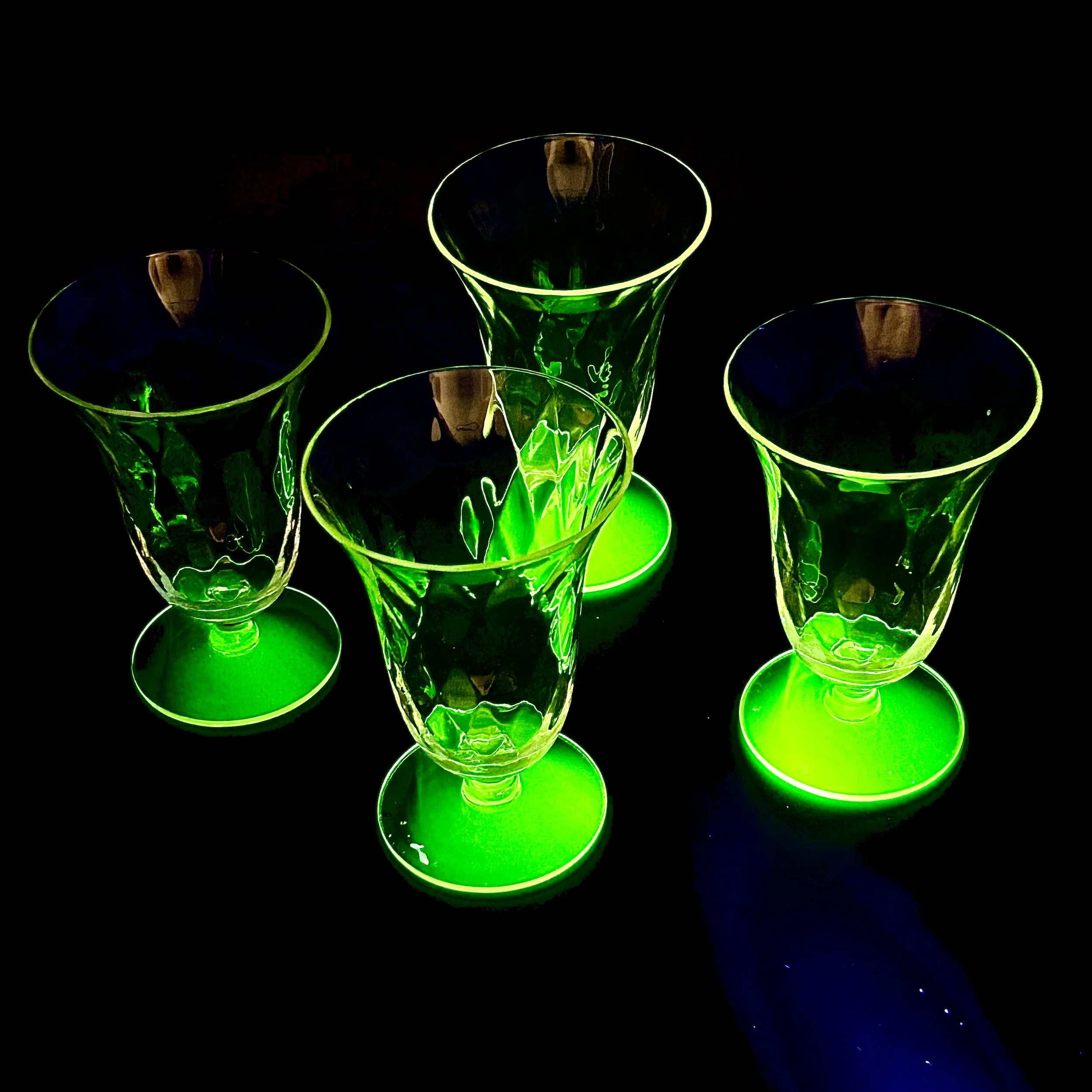
This extraordinary curated pair of pre-war American uranium glass decorative objects commands an unassailable presence, uniting a majestic footed centerpiece compote with a sleek geometric vide-poche. Both masterworks are executed in an identical, highly coveted aqua-blue/turquoise mineral formulation—a spectacular departure from standard green or yellow vaseline glass. The architectural pairing establishes a magnificent material tension: the grand, high-gloss facets of the footed compote find a sophisticated modernist counterpoint in the velvety, acid-etched satin surface of the diamond-point dish. When staged together in a sunlit interior, they create a mesmerizing layer of light diffusion, while hiding a dramatic, high-intensity neon fluorescence that ignites under 365nm UV light.
Attribution & Period
An exceptional, unified presentation of pre-war American decorative art glass, this curated duo is catalogued to circa 1938. The ensemble represents the sophisticated late-1930s revival of historic American patterns, executed during a period of intense experimentation with colored, chemically reactive glass batches.
The Footed Centerpiece Compote: Features the historic "Two Panel" geometric pattern, produced from high-precision regional molds reintroduced during the Depression era to satisfy the period's taste for structural, architectural glass forms.
The Diamond Point Vide-Poche: Attributed to the L.G. Wright Glass Company (Lawrence, Ohio), circa 1938–1939, commissioned from a proprietary geometric mold and expertly finished by an elite contemporary foundry such as Fenton or Westmoreland.
By cataloguing this pair to the same late-1930s production window, the vignette highlights a flawless material and chemical continuity, with both objects utilizing the exact same rare turquoise uranium-dioxide formulation.
Dimensions & Weight
Architectural "Two Panel" Compote:
Height: 7 1/4 inches
Width / Diameter: 7 inches (at widest point)
Mouth Diameter: 5 1/2 inches
Depth / Base Diameter: 3 3/4 inches
Weight: 1.996 pounds
Geometric "Diamond Point" Vide-Poche:
Condition
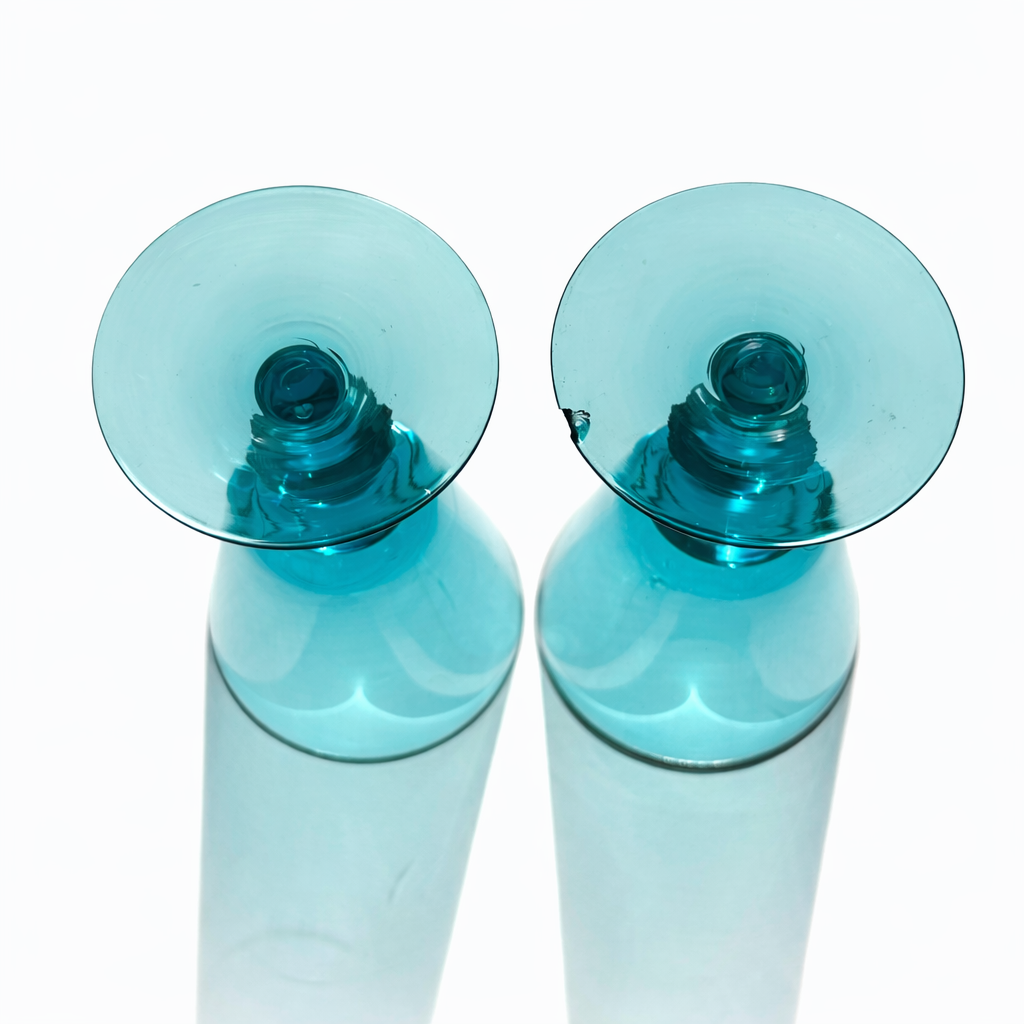
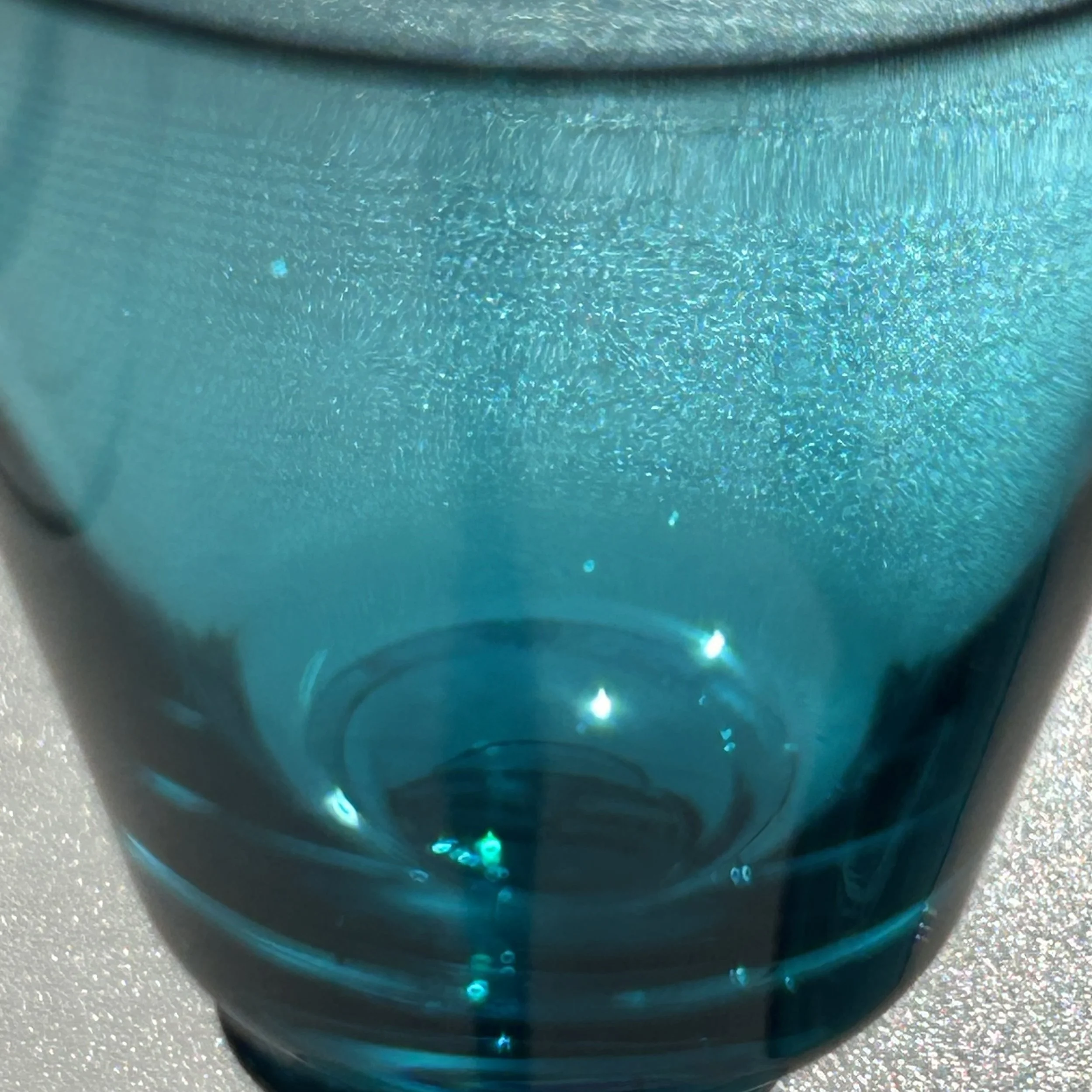
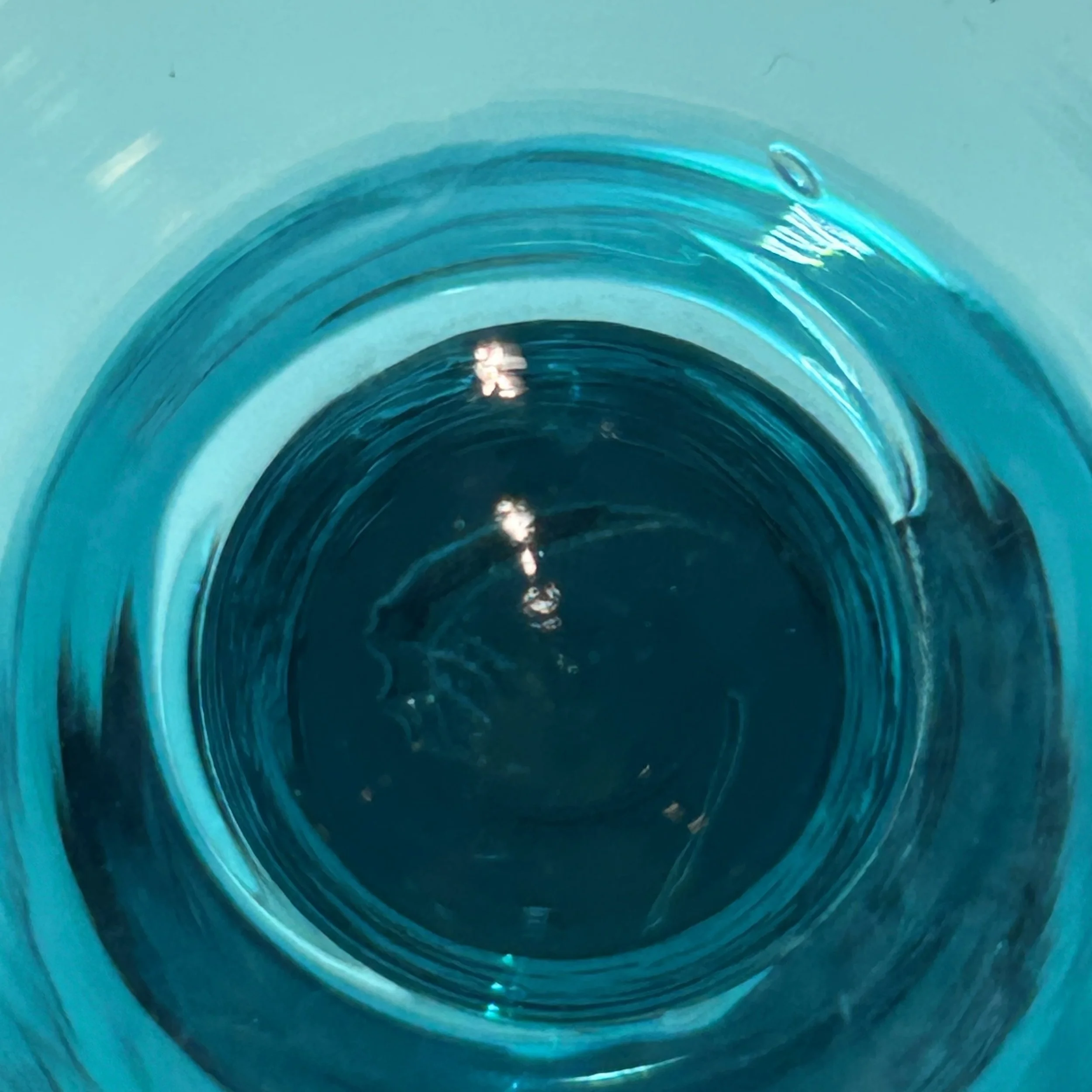
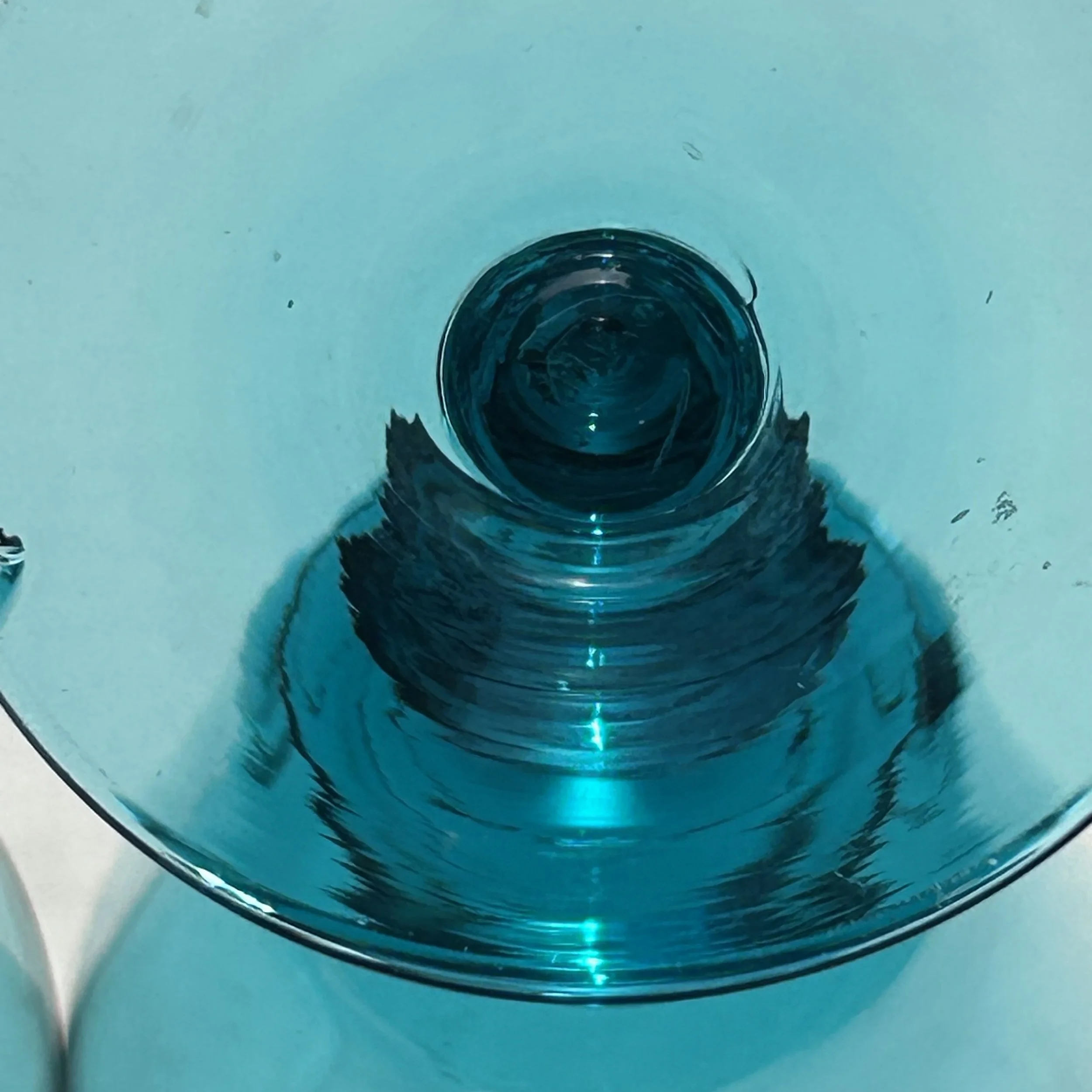
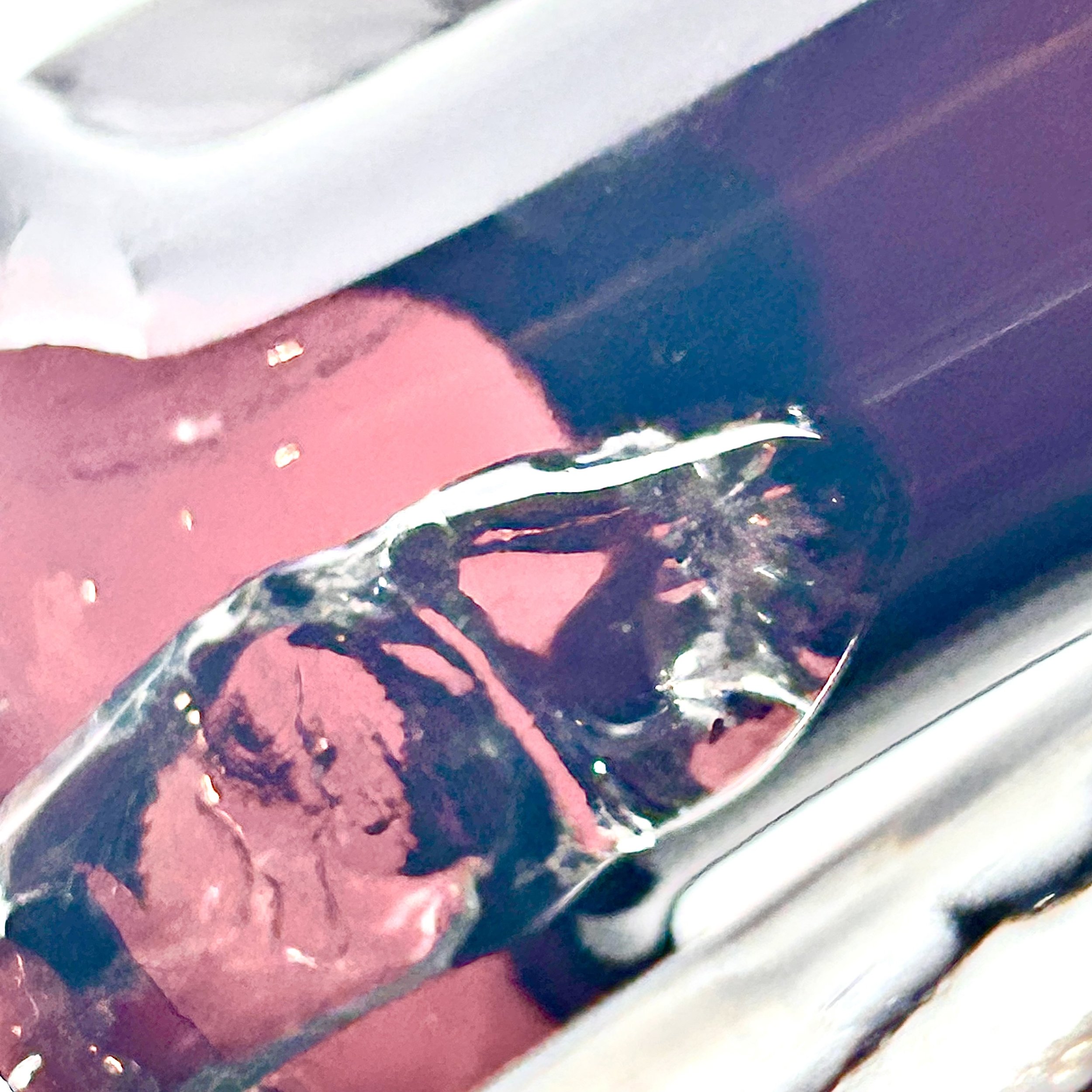
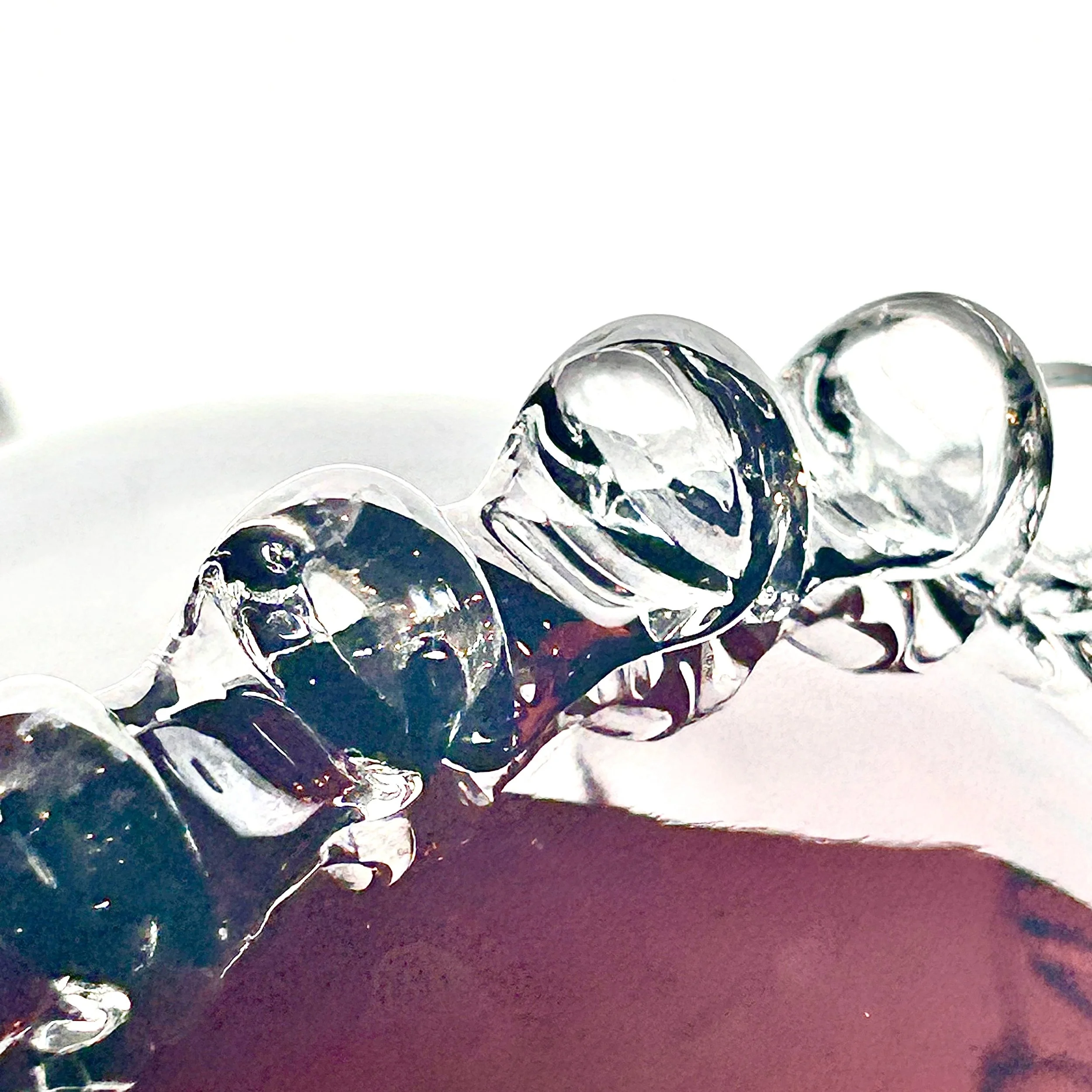
The ensemble is in excellent, collector-grade condition, beautifully retaining original structural integrity and high glass clarity. In accordance with strict archival standards, minor handling wear is transparently disclosed: the compote features one distinct chip on a single point of its sawtooth rim, while the satin dish exhibits a singular, minute macro-flea bite along its terminal sawtooth edge. These superficial variations are entirely commensurate with their pre-war age and do not compromise the striking profile or structural stability of either form. The frosted satin finish remains remarkably uniform, free of mineral staining or glass sickness.
Authenticity & Construction
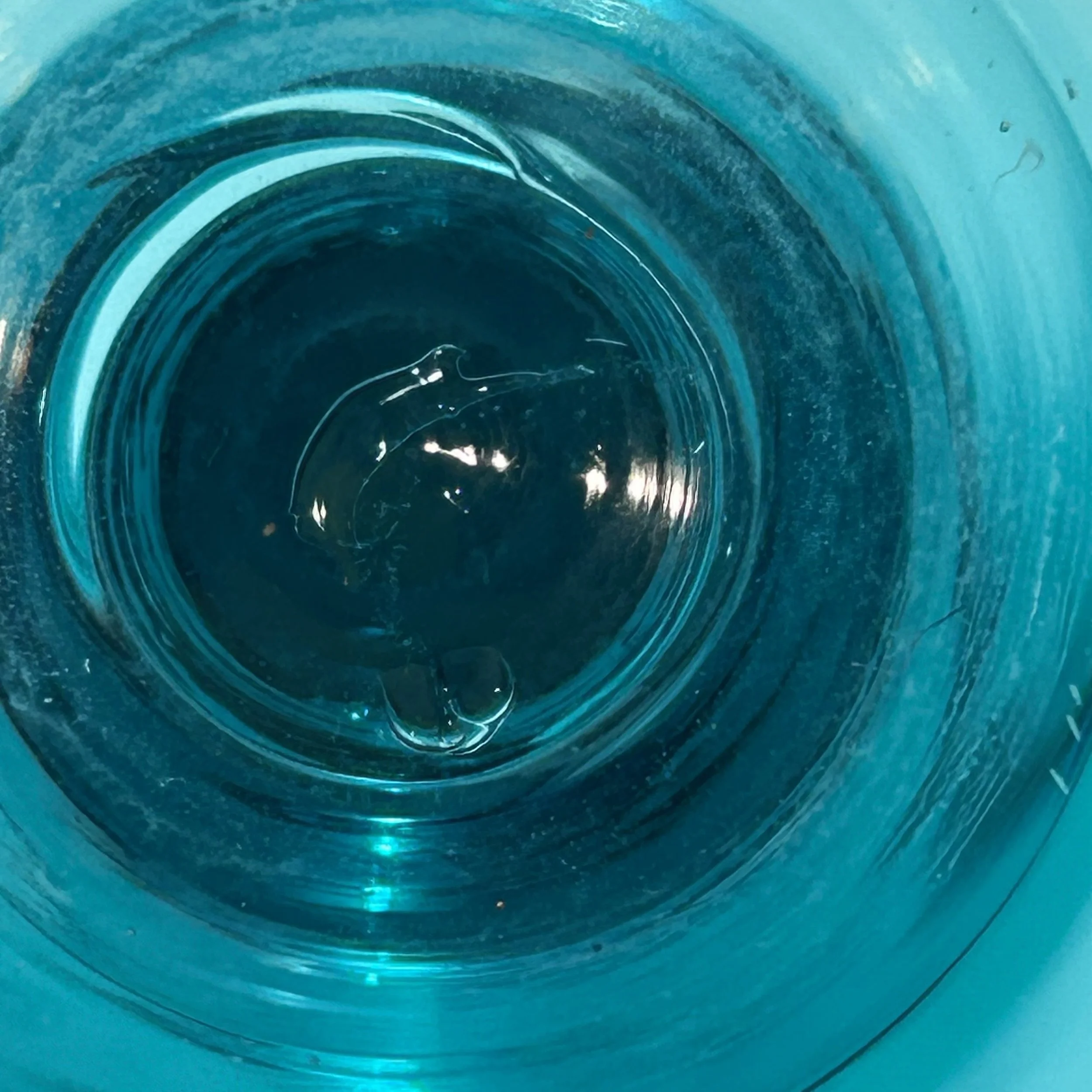
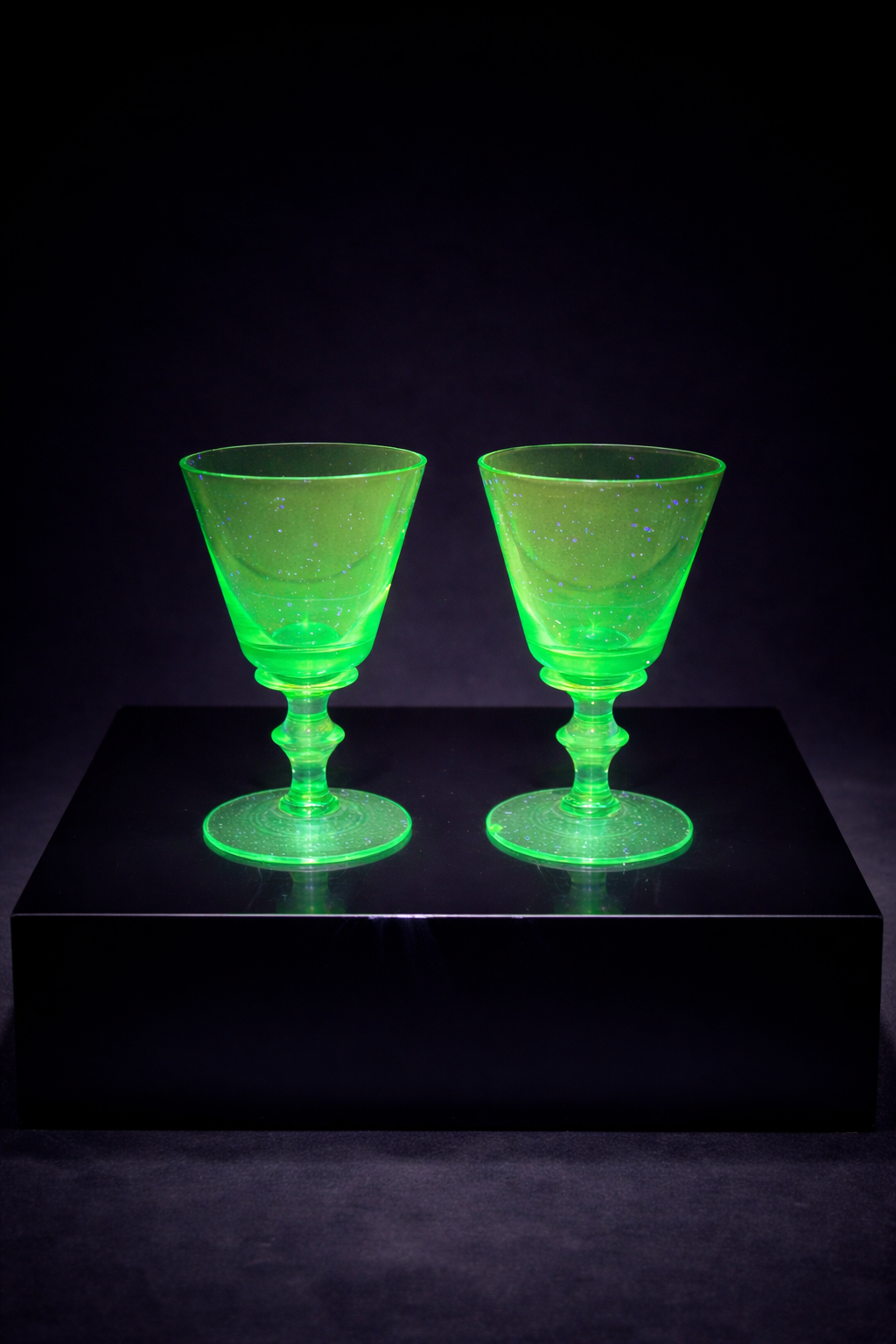
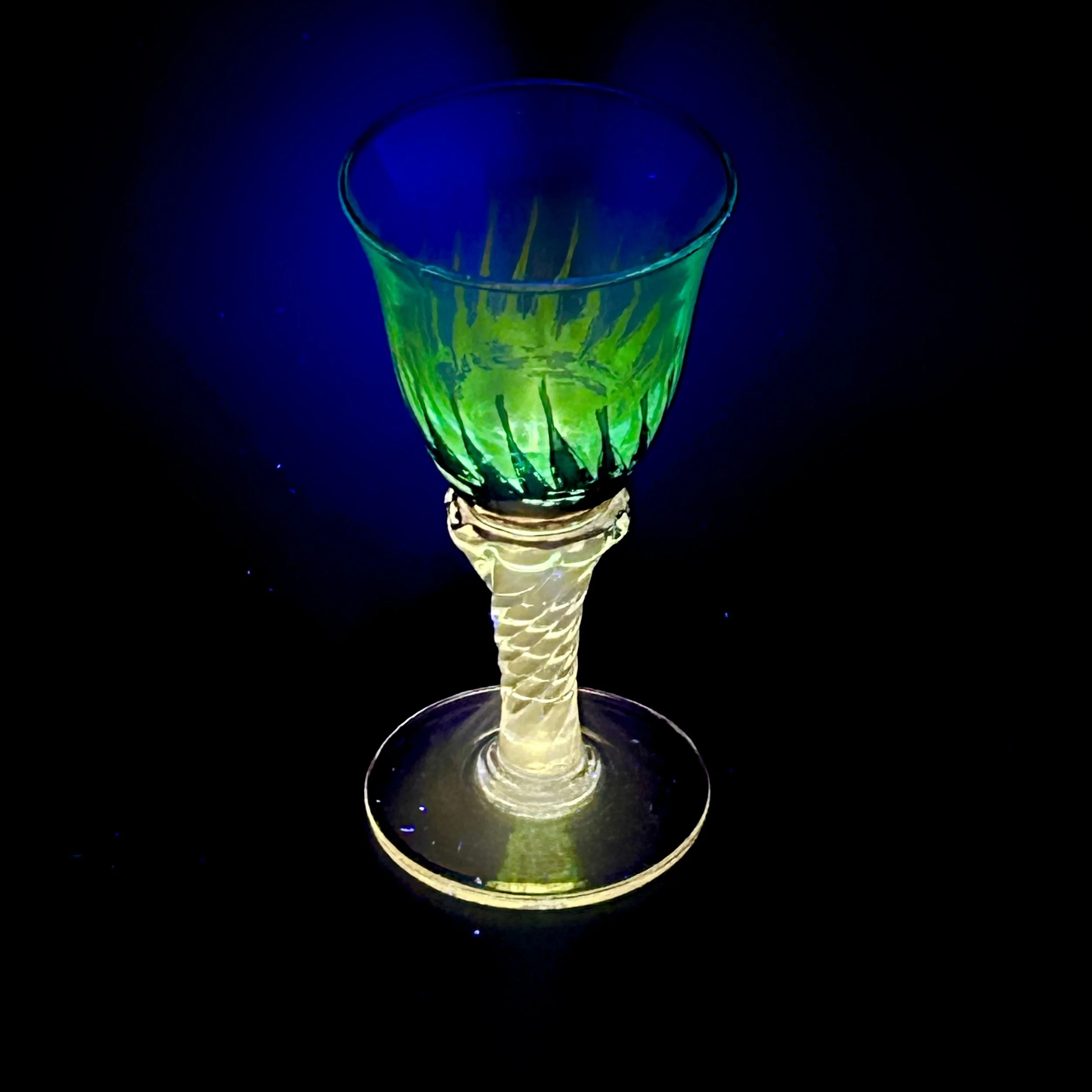
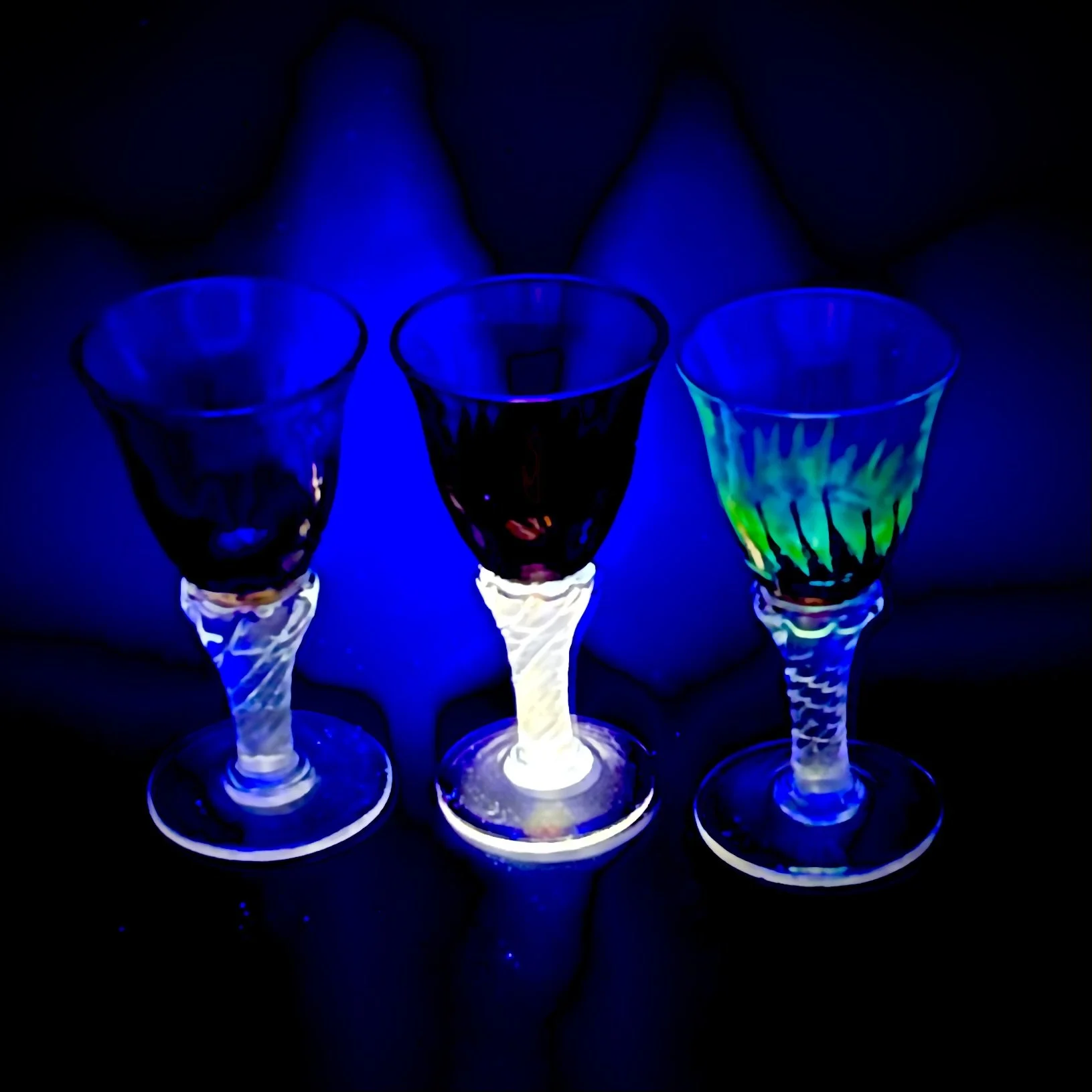
Both objects represent masterclasses in historical American mold-pressing techniques, requiring immense technical control to ensure the intricate, high-relief patterns and sharp sawtooth peaks remained defined during cooling. The vide-poche underwent a subsequent professional acid-bath treatment, transforming the high-gloss turquoise crystal into a velvet-soft, non-reflective satin finish that beautifully diffuses light. Notably, the glass composition of both pieces is highly uranium-reactive; under 365nm UV light, they radiate a matching, high-intensity neon-green fluorescence, serving as an unalterable signature of genuine, historical uranium-infused batching from the pre-war era.
Placement
An unparalleled acquisition for high-end 1stDibs interior designers and connoisseurs of rare glass, this curated duo offers immense editorial styling potential. The structural contrast makes them an immediate focal point when arranged together atop a low-slung mid-century credenza, a minimalist marble mantlepiece, or within a sun-drenched architectural window niche. Their striking aqua profile effortlessly pairs with natural wood grains, industrial concrete, or brutalist metal accents, serving as a sophisticated conversational bridge between classical geometries and sleek, modernist Art Deco design.
STANDARD ATTRIBUTION & VALUE DISCLOSURE; This piece is described to the best of current scholarly and market knowledge. Any maker or regional attribution is based on visual analysis, materials, construction techniques, and documented stylistic comparisons. As with many MCM and antique design objects, definitive attribution may not be possible without original labels or factory records. Pricing reflects condition, quality, decorative appeal, and current collector demand rather than guaranteed maker identification.
This extraordinary curated pair of pre-war American uranium glass decorative objects commands an unassailable presence, uniting a majestic footed centerpiece compote with a sleek geometric vide-poche. Both masterworks are executed in an identical, highly coveted aqua-blue/turquoise mineral formulation—a spectacular departure from standard green or yellow vaseline glass. The architectural pairing establishes a magnificent material tension: the grand, high-gloss facets of the footed compote find a sophisticated modernist counterpoint in the velvety, acid-etched satin surface of the diamond-point dish. When staged together in a sunlit interior, they create a mesmerizing layer of light diffusion, while hiding a dramatic, high-intensity neon fluorescence that ignites under 365nm UV light.
Attribution & Period
An exceptional, unified presentation of pre-war American decorative art glass, this curated duo is catalogued to circa 1938. The ensemble represents the sophisticated late-1930s revival of historic American patterns, executed during a period of intense experimentation with colored, chemically reactive glass batches.
The Footed Centerpiece Compote: Features the historic "Two Panel" geometric pattern, produced from high-precision regional molds reintroduced during the Depression era to satisfy the period's taste for structural, architectural glass forms.
The Diamond Point Vide-Poche: Attributed to the L.G. Wright Glass Company (Lawrence, Ohio), circa 1938–1939, commissioned from a proprietary geometric mold and expertly finished by an elite contemporary foundry such as Fenton or Westmoreland.
By cataloguing this pair to the same late-1930s production window, the vignette highlights a flawless material and chemical continuity, with both objects utilizing the exact same rare turquoise uranium-dioxide formulation.
Dimensions & Weight
Architectural "Two Panel" Compote:
Height: 7 1/4 inches
Width / Diameter: 7 inches (at widest point)
Mouth Diameter: 5 1/2 inches
Depth / Base Diameter: 3 3/4 inches
Weight: 1.996 pounds
Geometric "Diamond Point" Vide-Poche:
Condition
The ensemble is in excellent, collector-grade condition, beautifully retaining original structural integrity and high glass clarity. In accordance with strict archival standards, minor handling wear is transparently disclosed: the compote features one distinct chip on a single point of its sawtooth rim, while the satin dish exhibits a singular, minute macro-flea bite along its terminal sawtooth edge. These superficial variations are entirely commensurate with their pre-war age and do not compromise the striking profile or structural stability of either form. The frosted satin finish remains remarkably uniform, free of mineral staining or glass sickness.
Authenticity & Construction
Both objects represent masterclasses in historical American mold-pressing techniques, requiring immense technical control to ensure the intricate, high-relief patterns and sharp sawtooth peaks remained defined during cooling. The vide-poche underwent a subsequent professional acid-bath treatment, transforming the high-gloss turquoise crystal into a velvet-soft, non-reflective satin finish that beautifully diffuses light. Notably, the glass composition of both pieces is highly uranium-reactive; under 365nm UV light, they radiate a matching, high-intensity neon-green fluorescence, serving as an unalterable signature of genuine, historical uranium-infused batching from the pre-war era.
Placement
An unparalleled acquisition for high-end 1stDibs interior designers and connoisseurs of rare glass, this curated duo offers immense editorial styling potential. The structural contrast makes them an immediate focal point when arranged together atop a low-slung mid-century credenza, a minimalist marble mantlepiece, or within a sun-drenched architectural window niche. Their striking aqua profile effortlessly pairs with natural wood grains, industrial concrete, or brutalist metal accents, serving as a sophisticated conversational bridge between classical geometries and sleek, modernist Art Deco design.
STANDARD ATTRIBUTION & VALUE DISCLOSURE; This piece is described to the best of current scholarly and market knowledge. Any maker or regional attribution is based on visual analysis, materials, construction techniques, and documented stylistic comparisons. As with many MCM and antique design objects, definitive attribution may not be possible without original labels or factory records. Pricing reflects condition, quality, decorative appeal, and current collector demand rather than guaranteed maker identification.

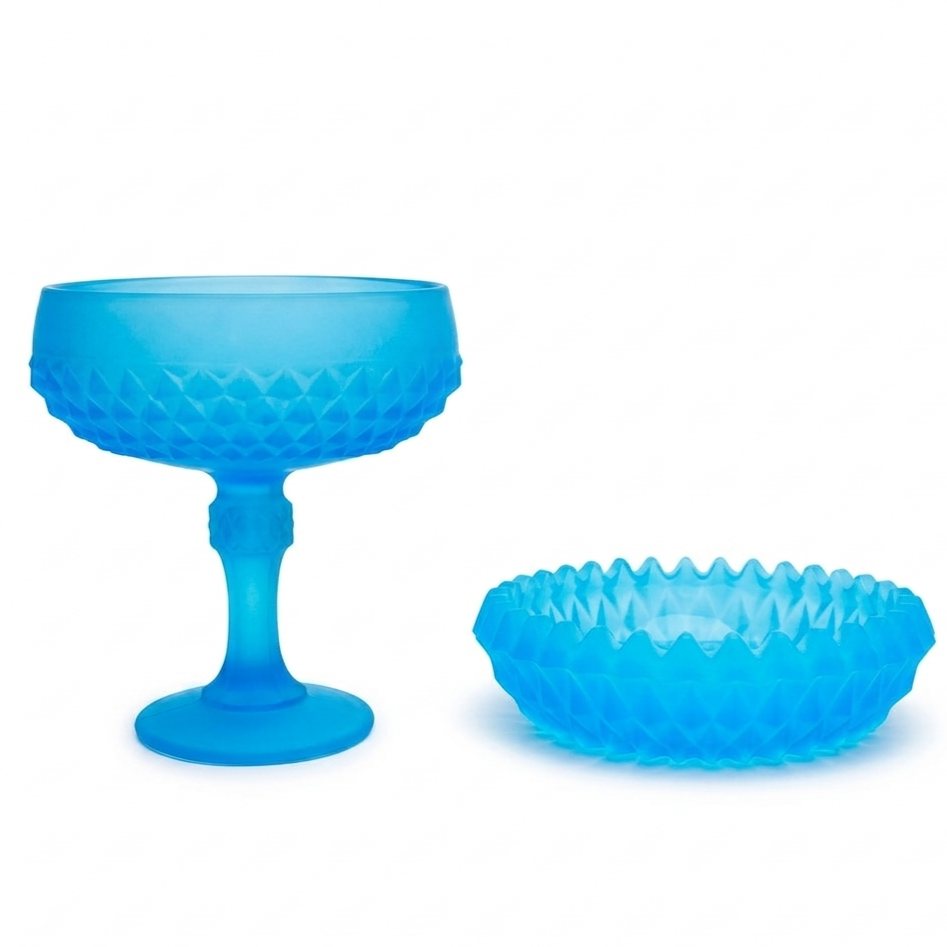 Image 1 of 32
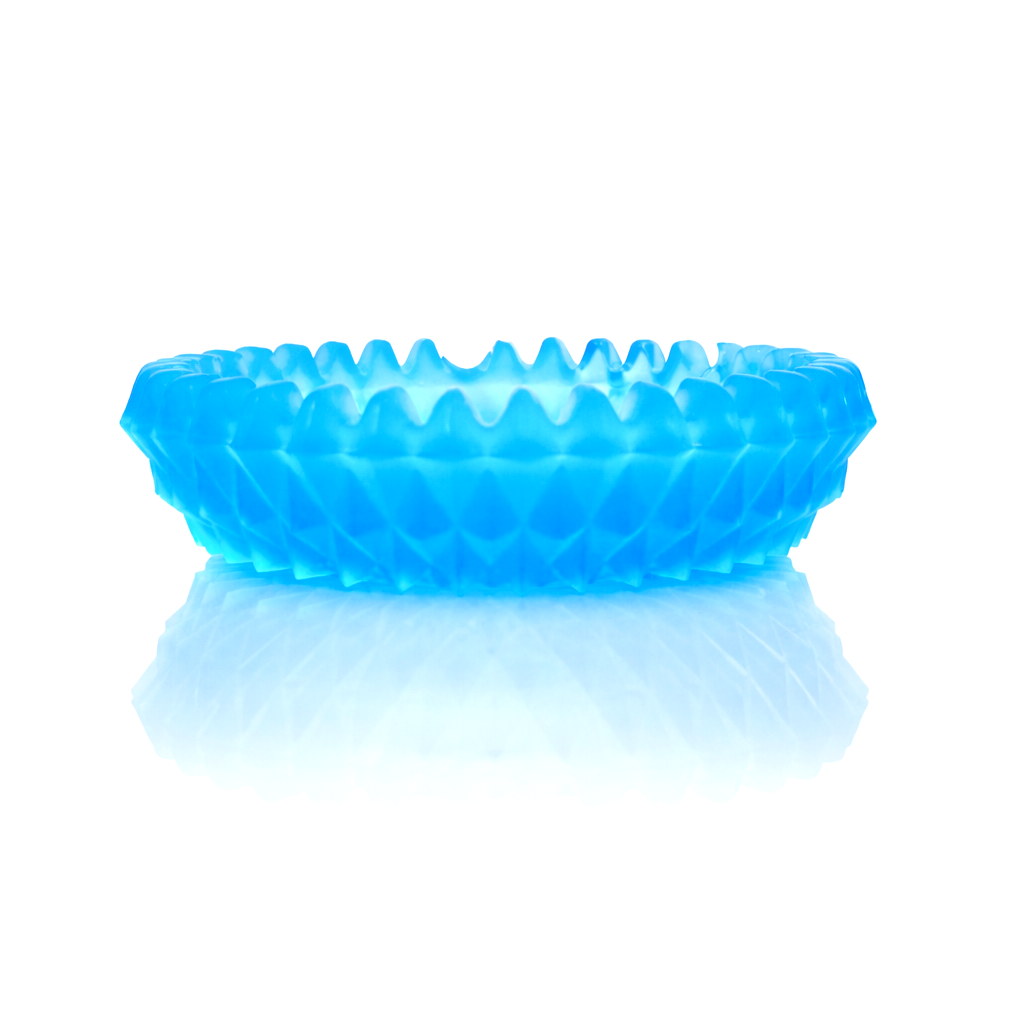 Image 2 of 32
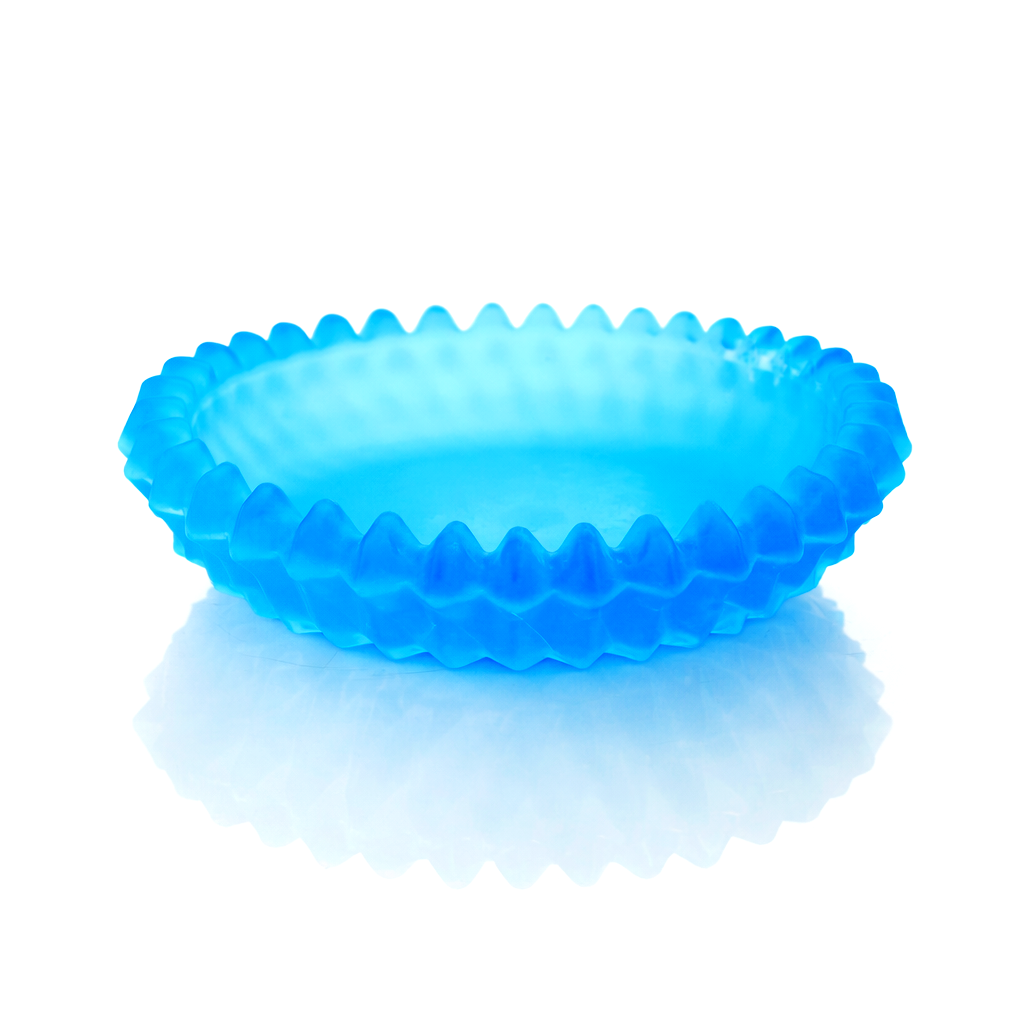 Image 3 of 32
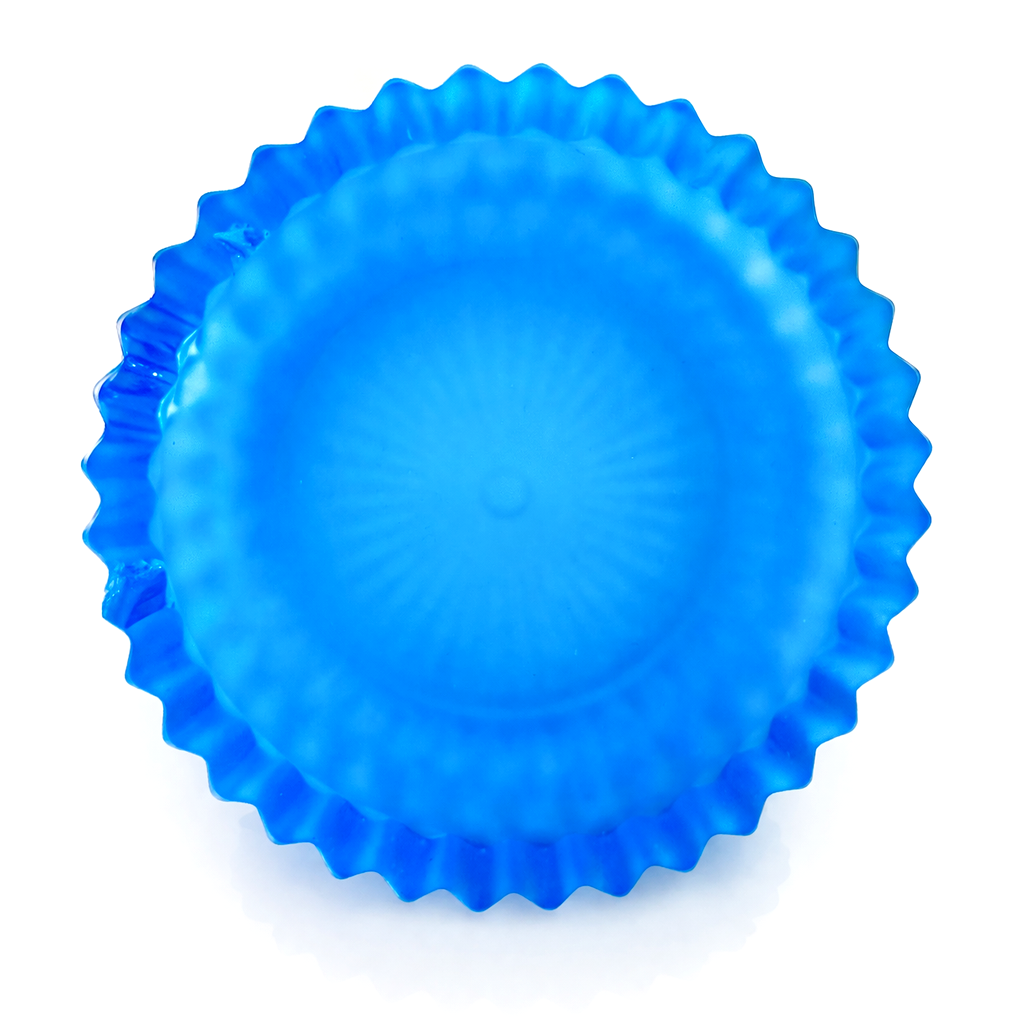 Image 4 of 32
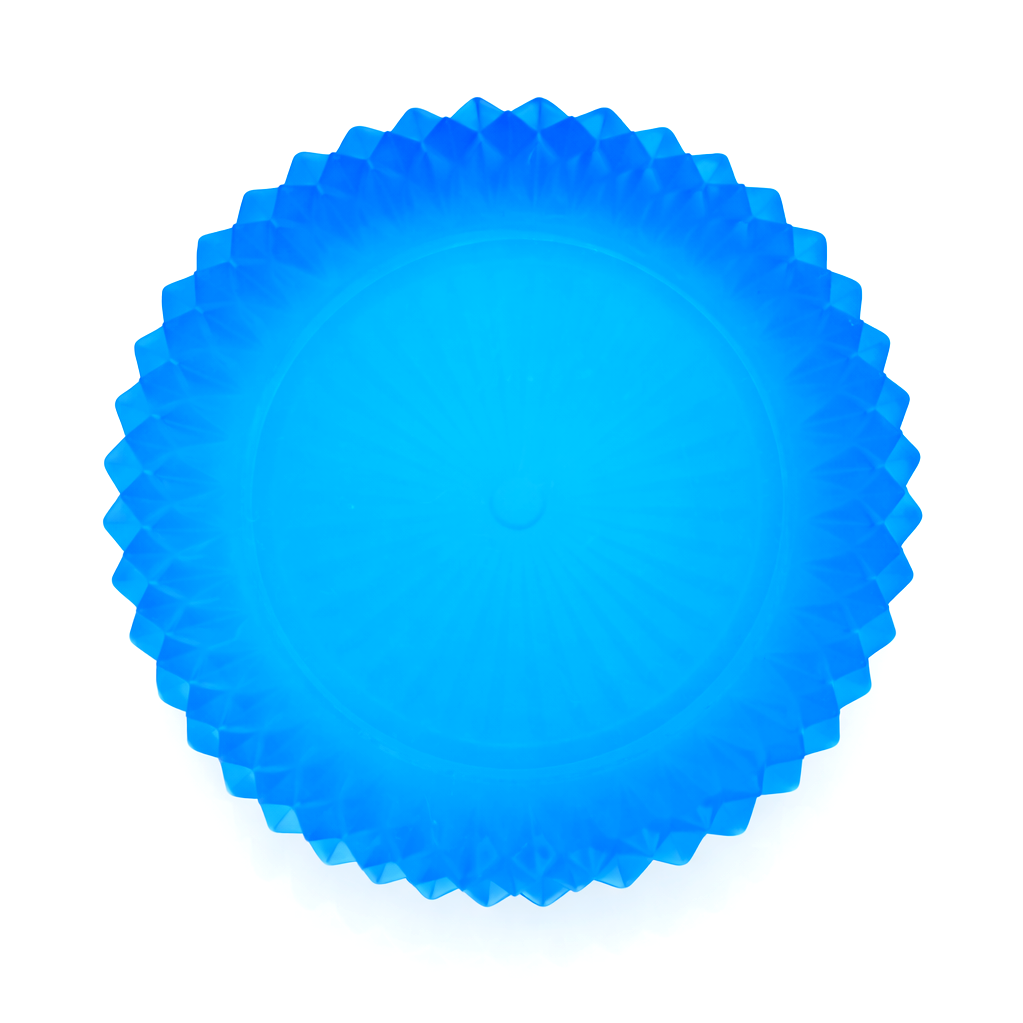 Image 5 of 32
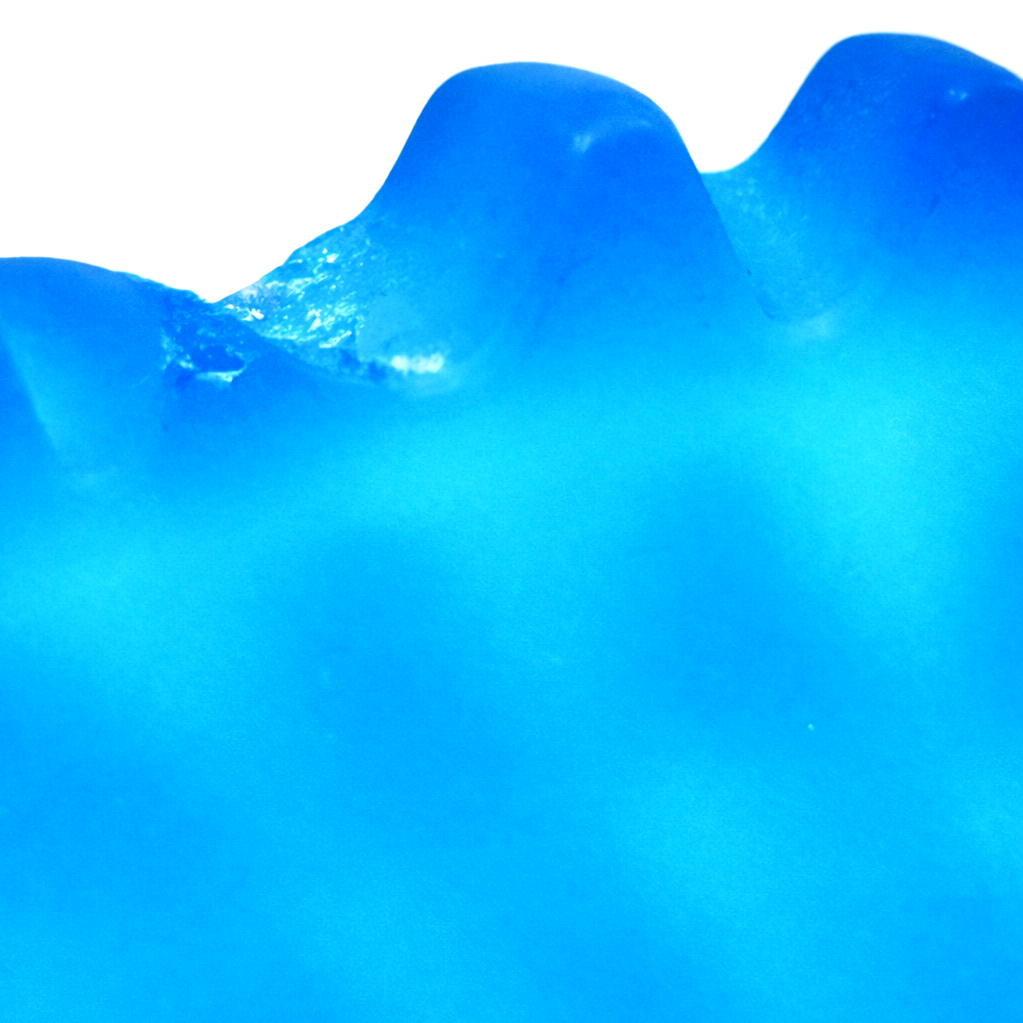 Image 6 of 32
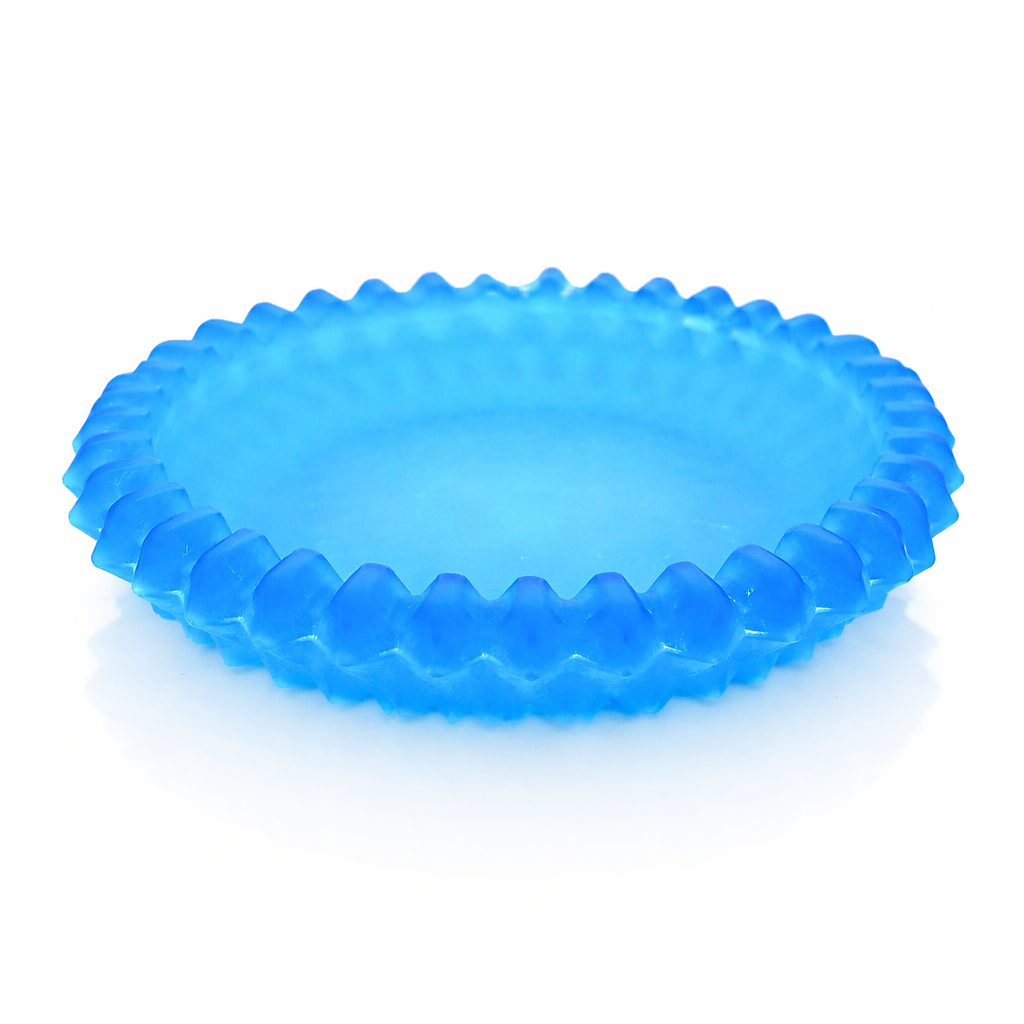 Image 7 of 32
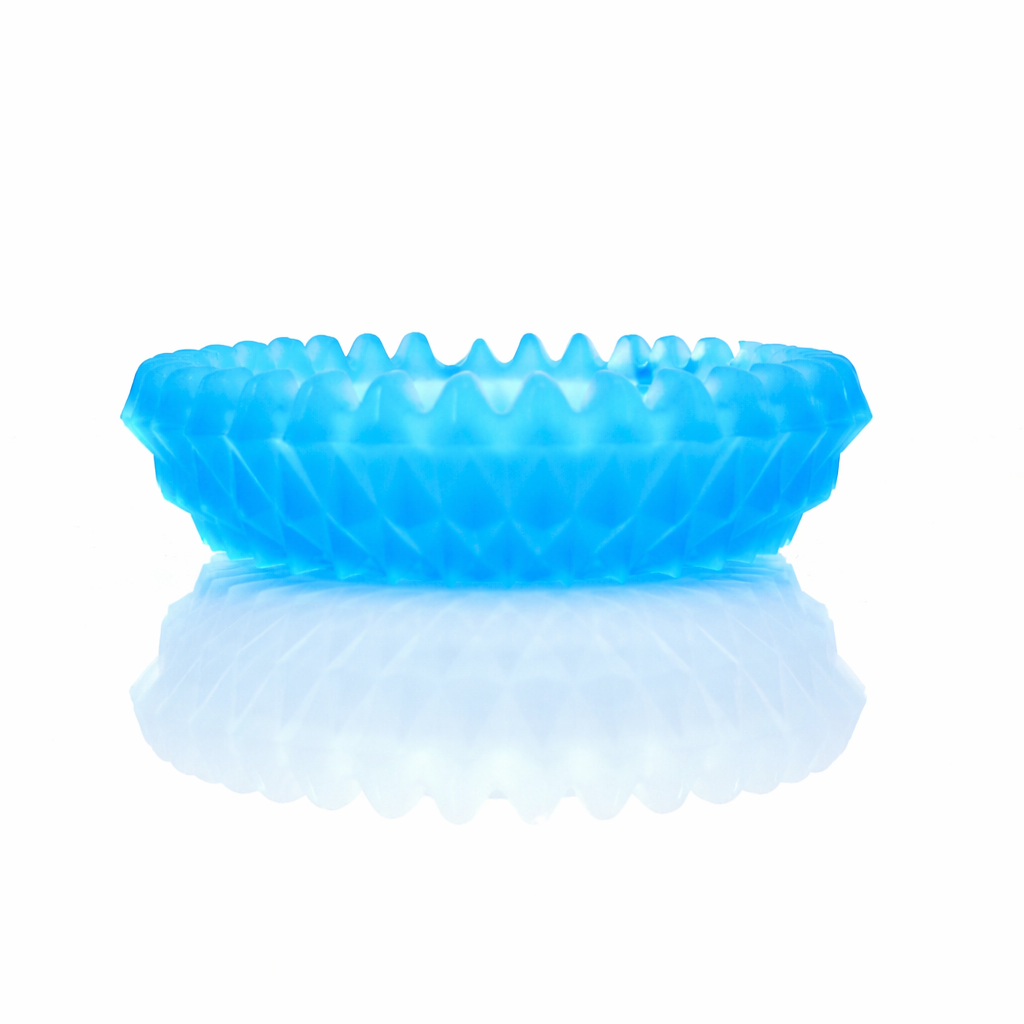 Image 8 of 32
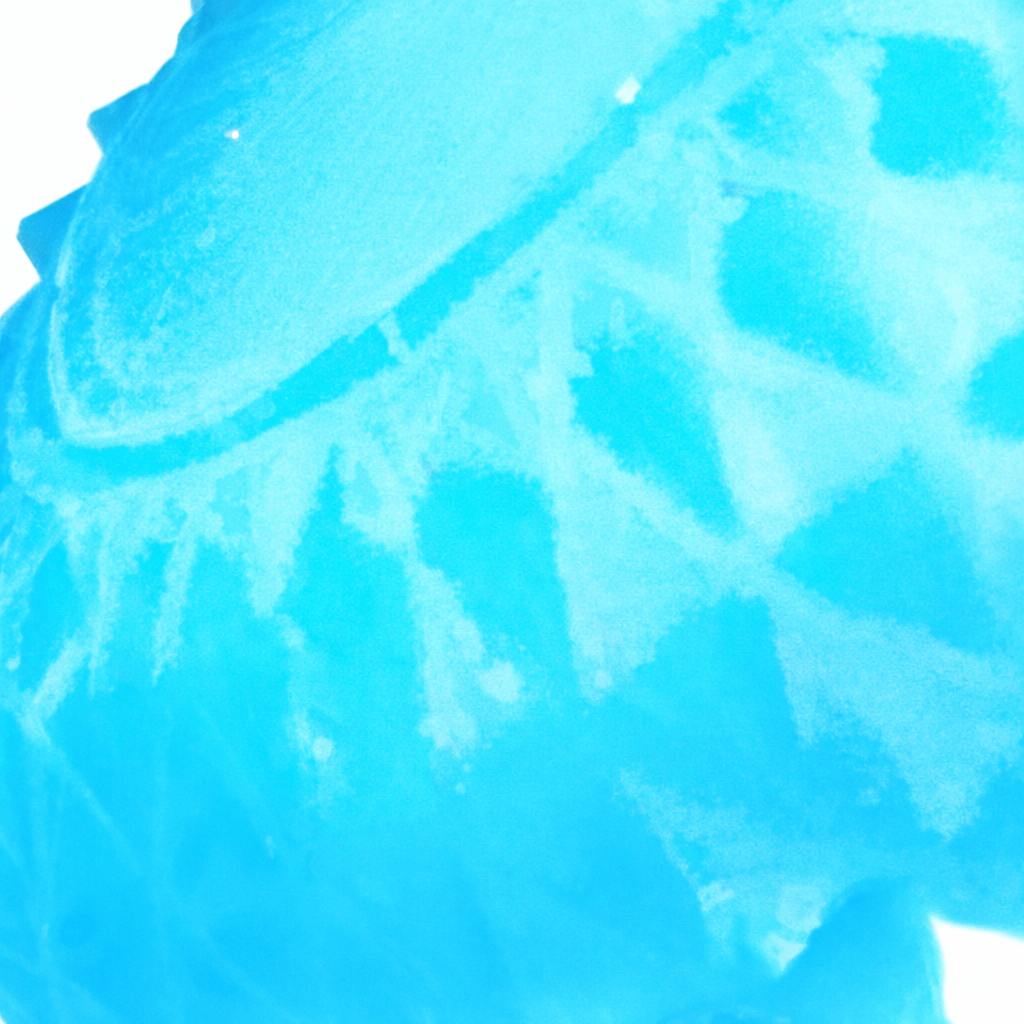 Image 9 of 32
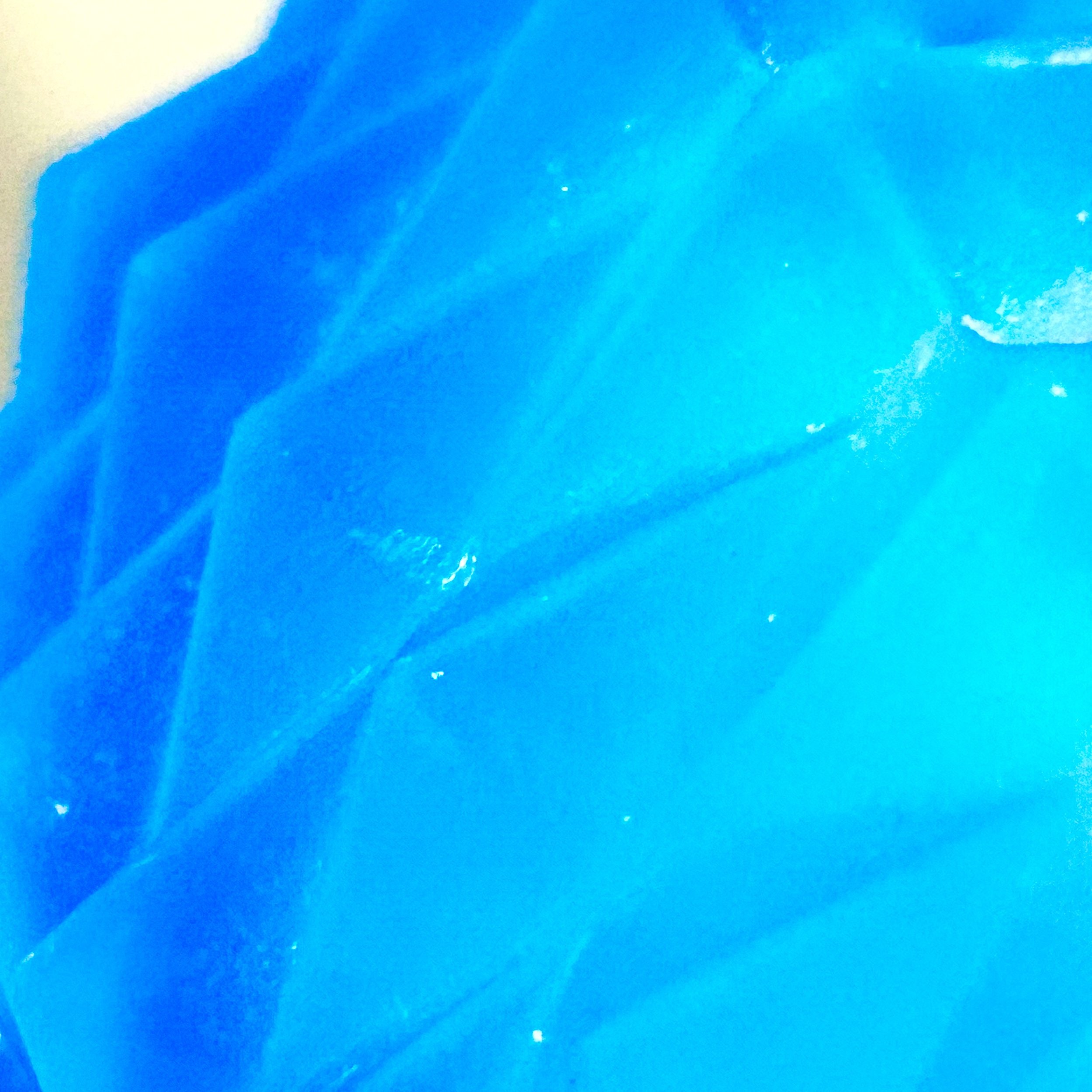 Image 10 of 32
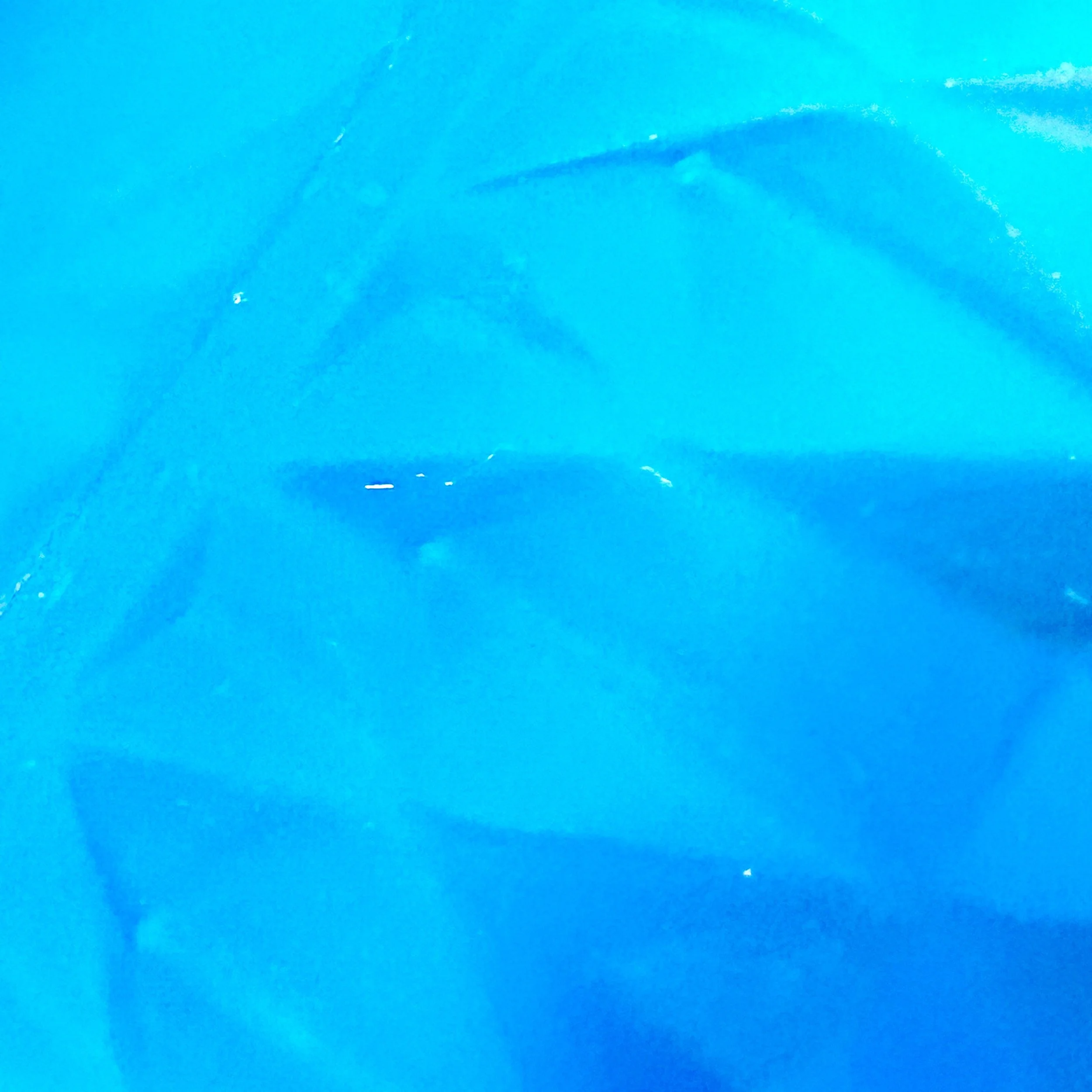 Image 11 of 32
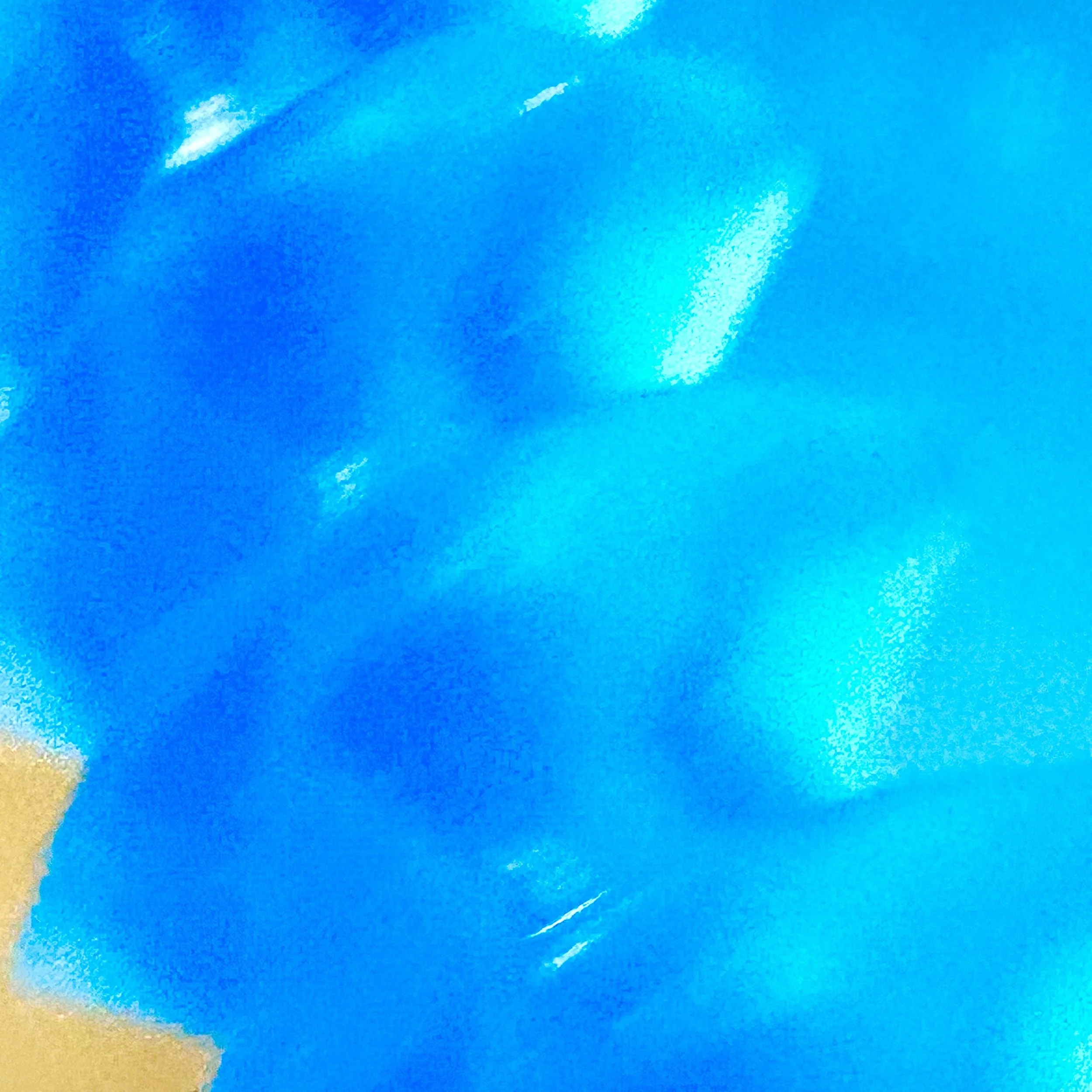 Image 12 of 32
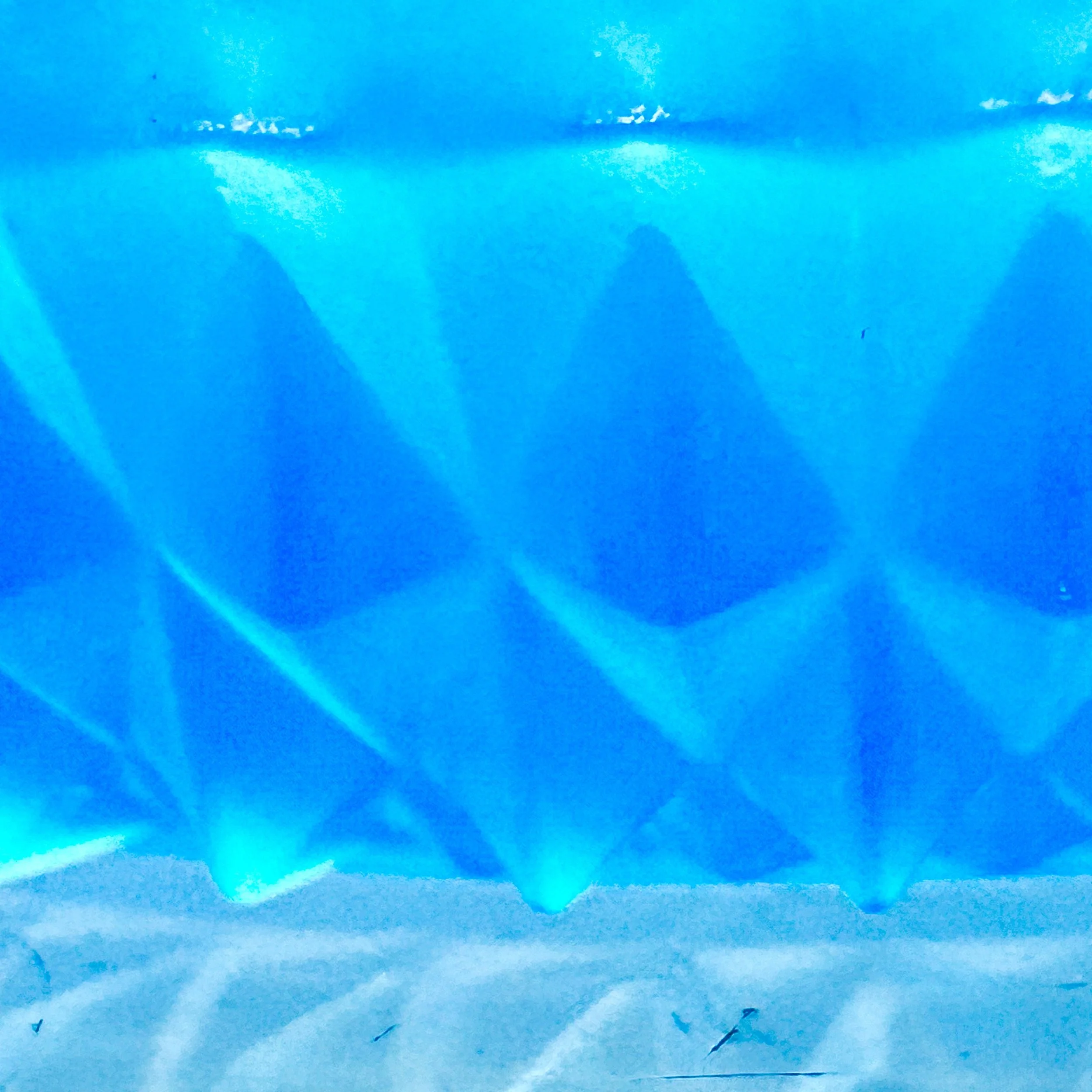 Image 13 of 32
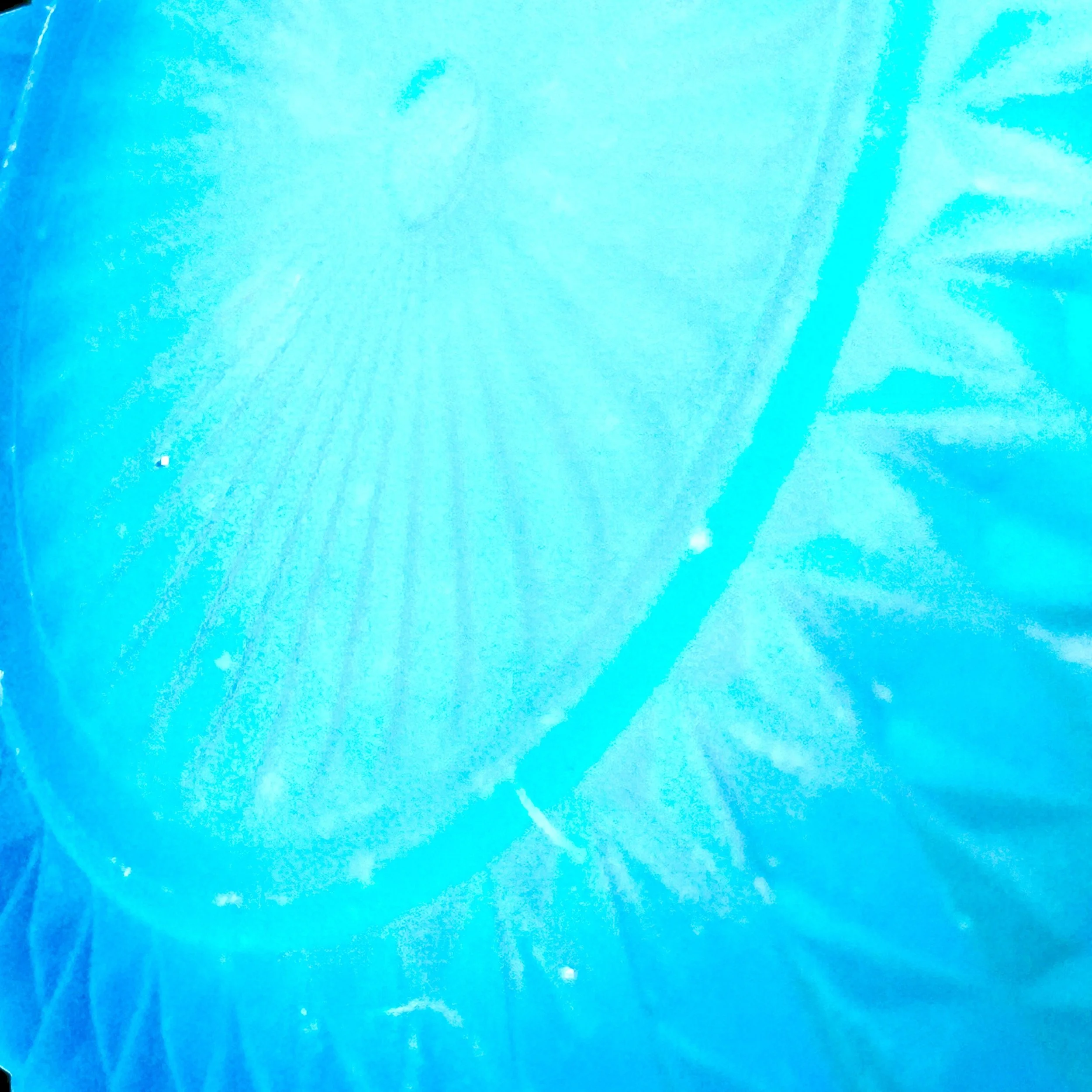 Image 14 of 32
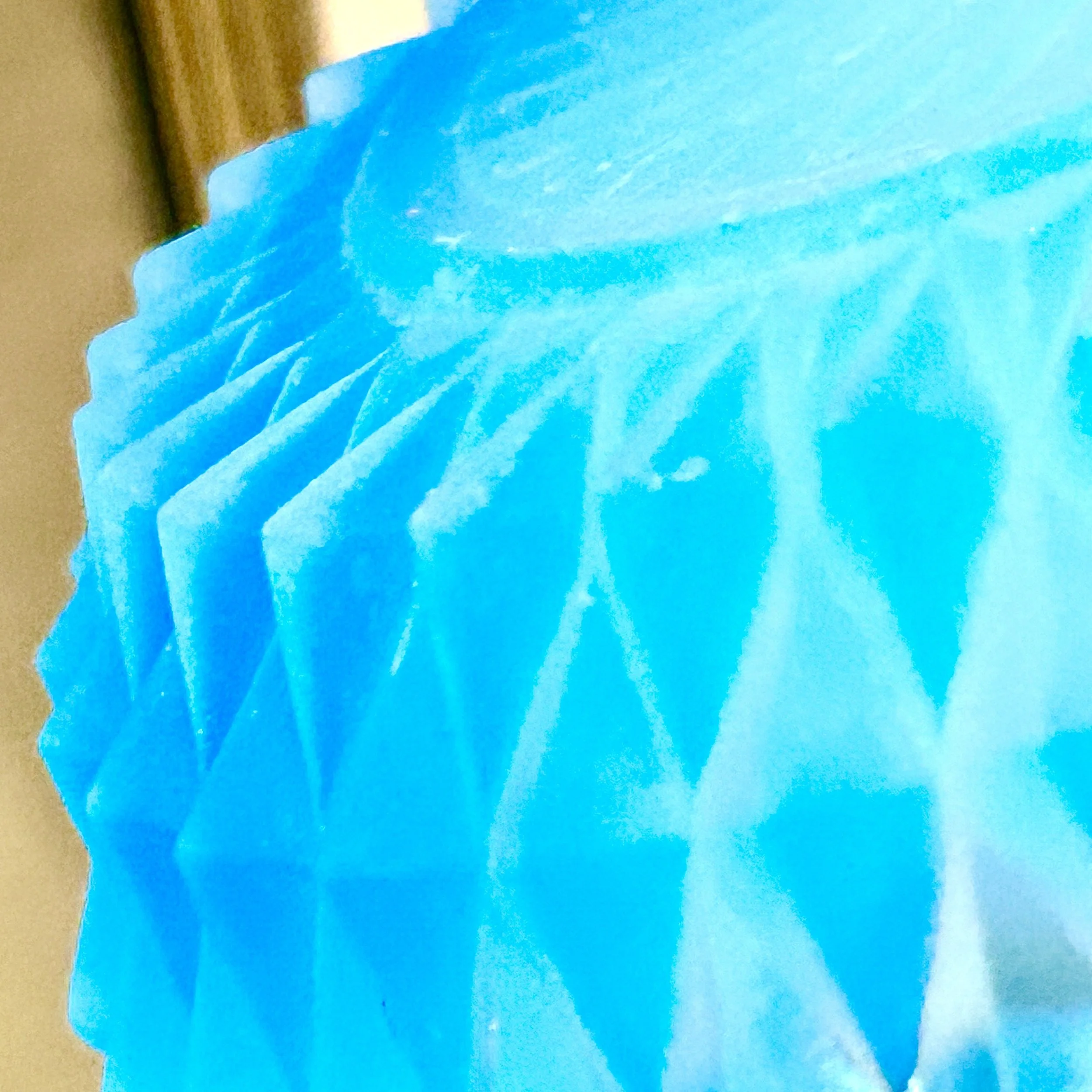 Image 15 of 32
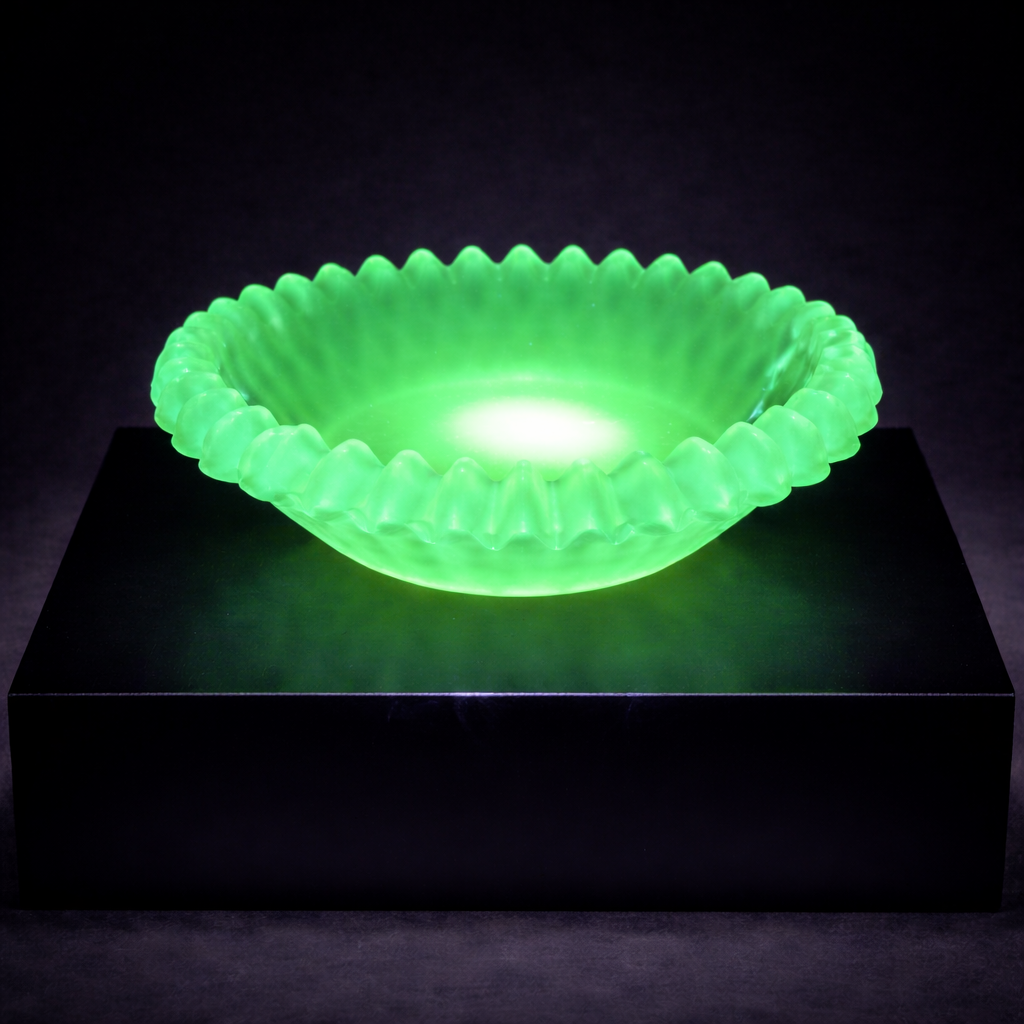 Image 16 of 32
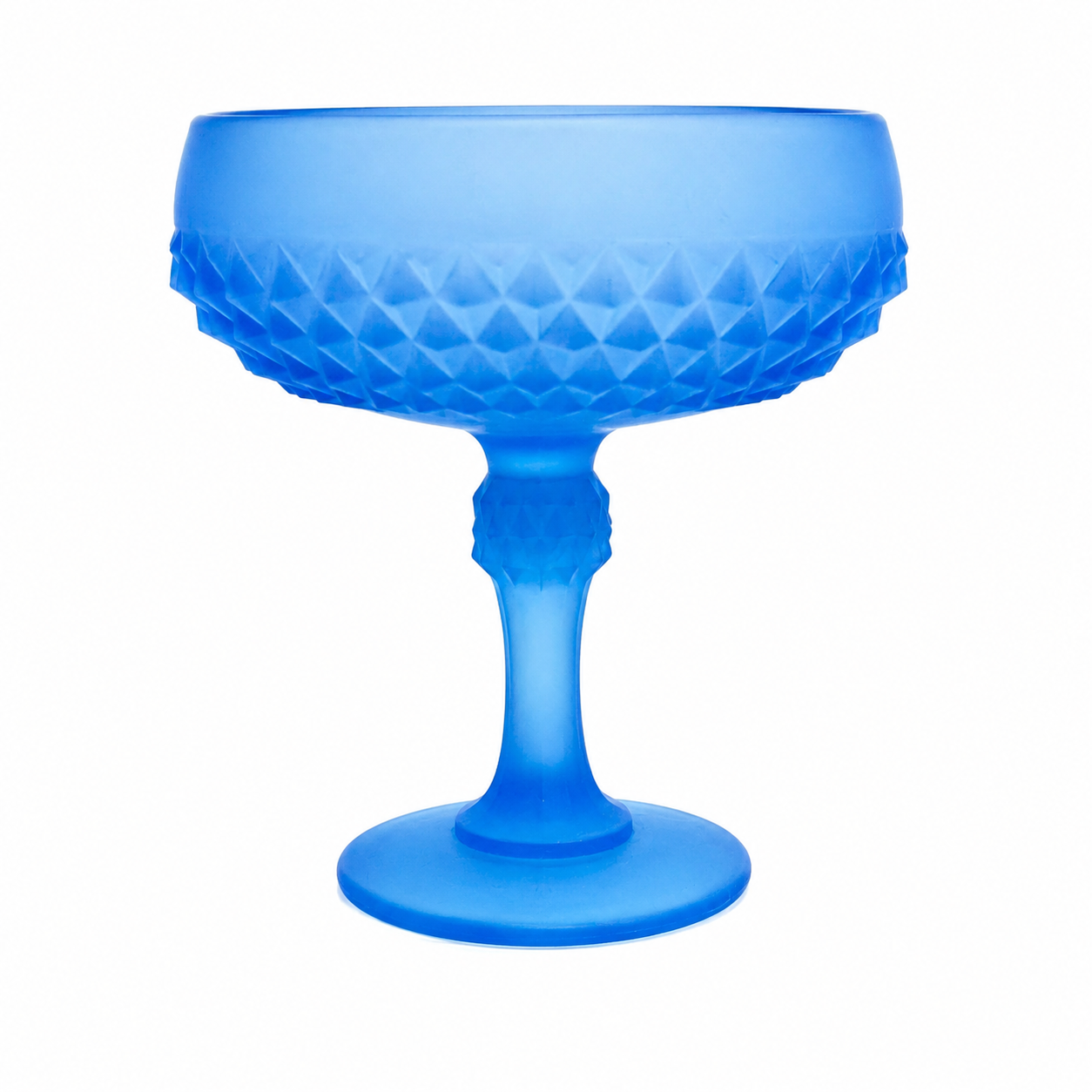 Image 17 of 32
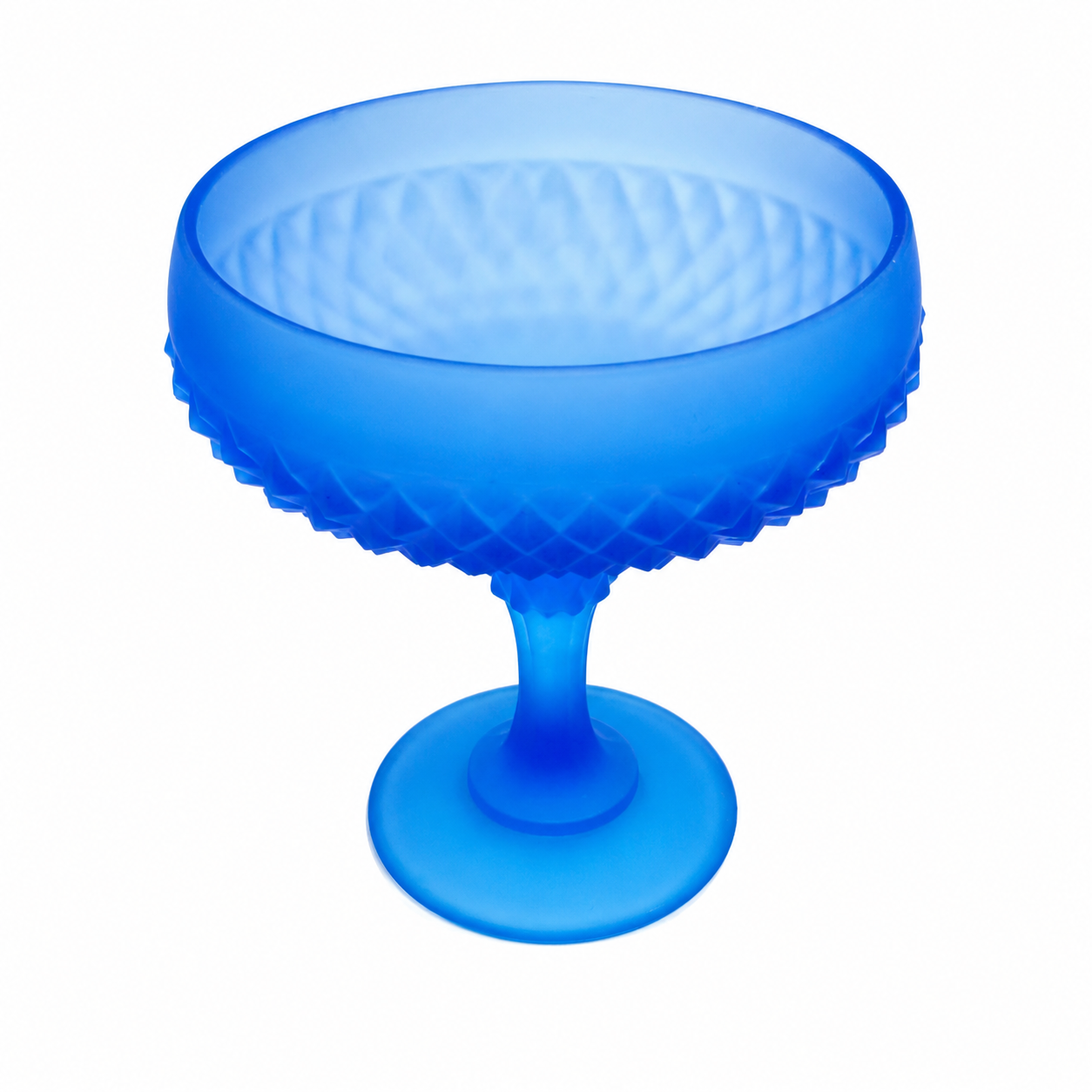 Image 18 of 32
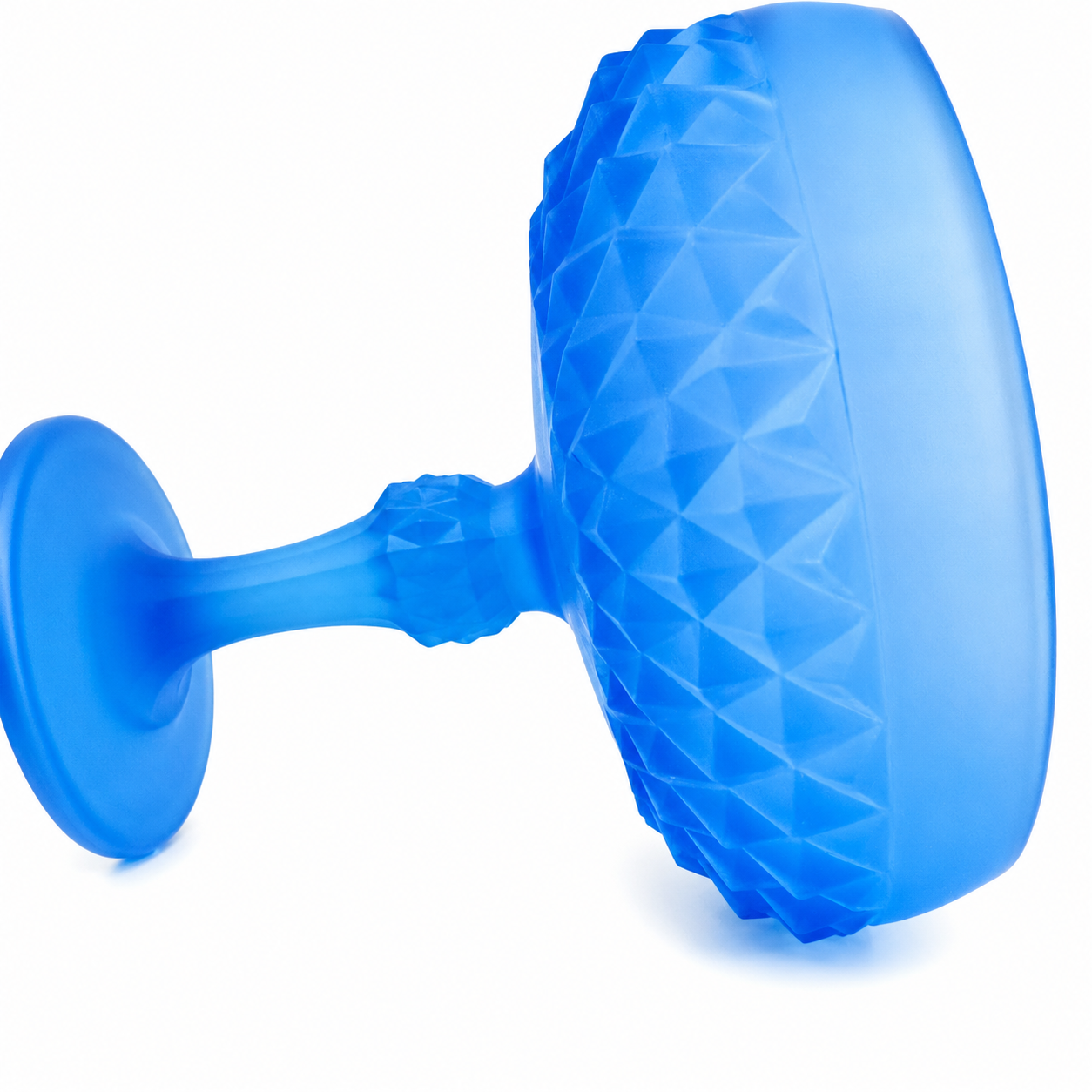 Image 19 of 32
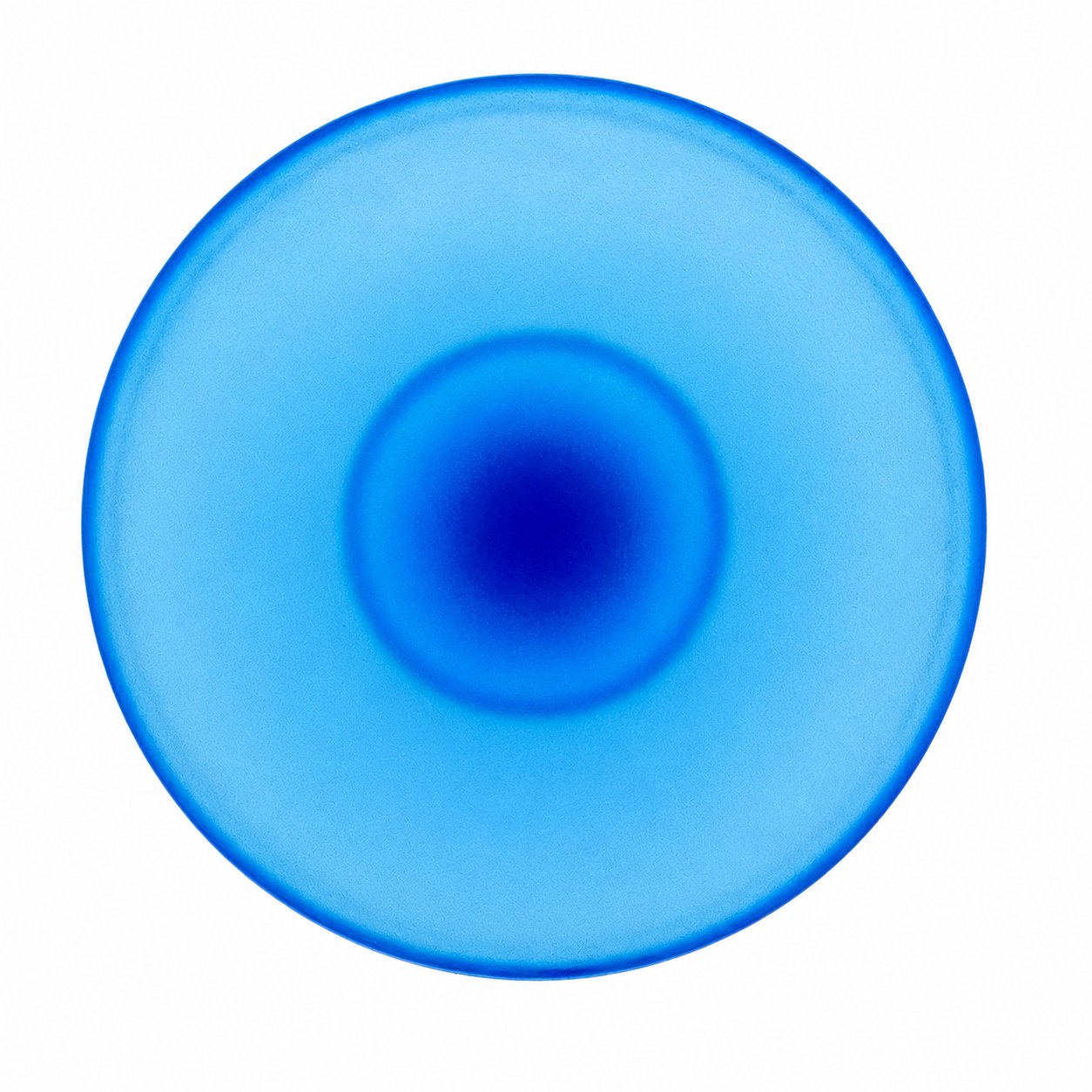 Image 20 of 32
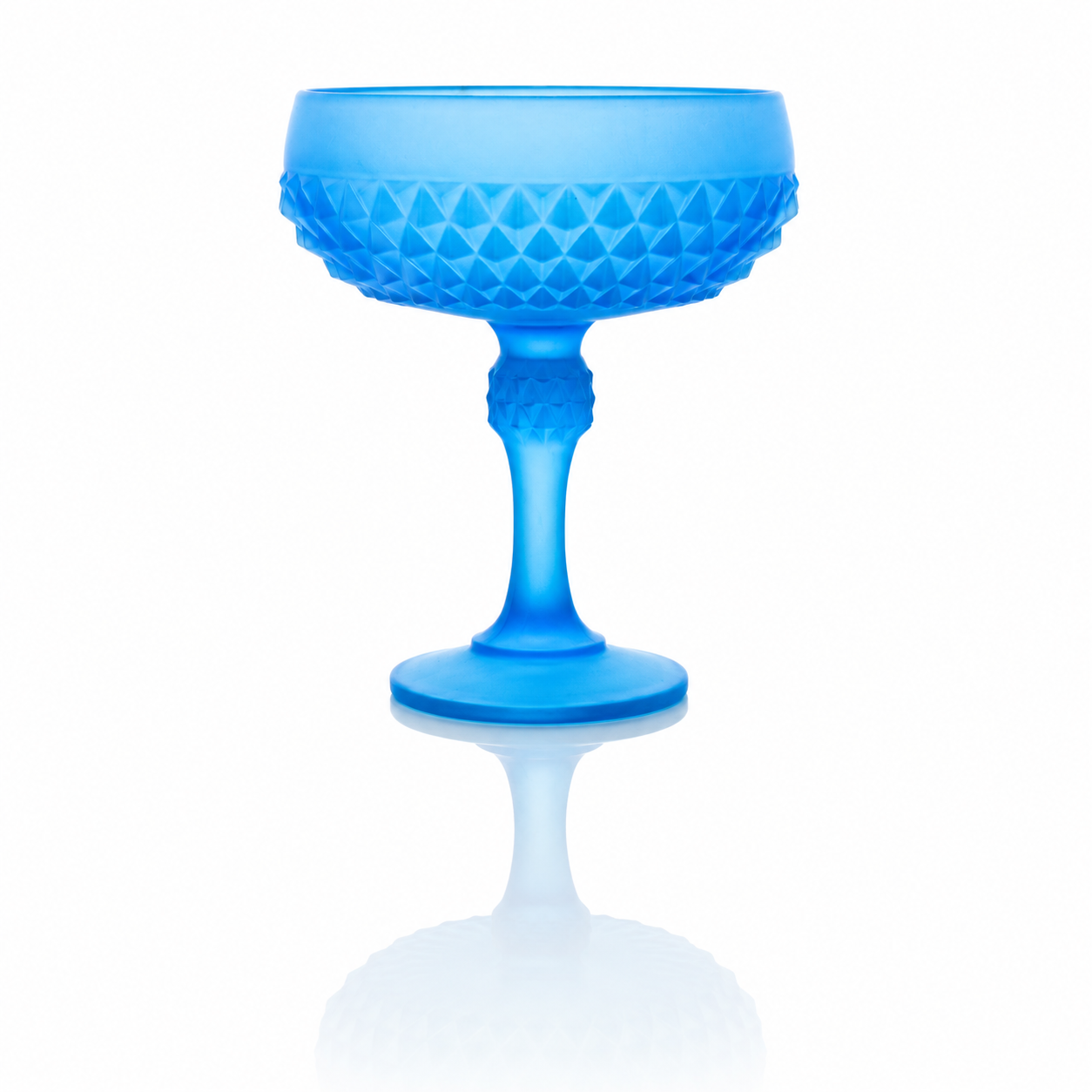 Image 21 of 32
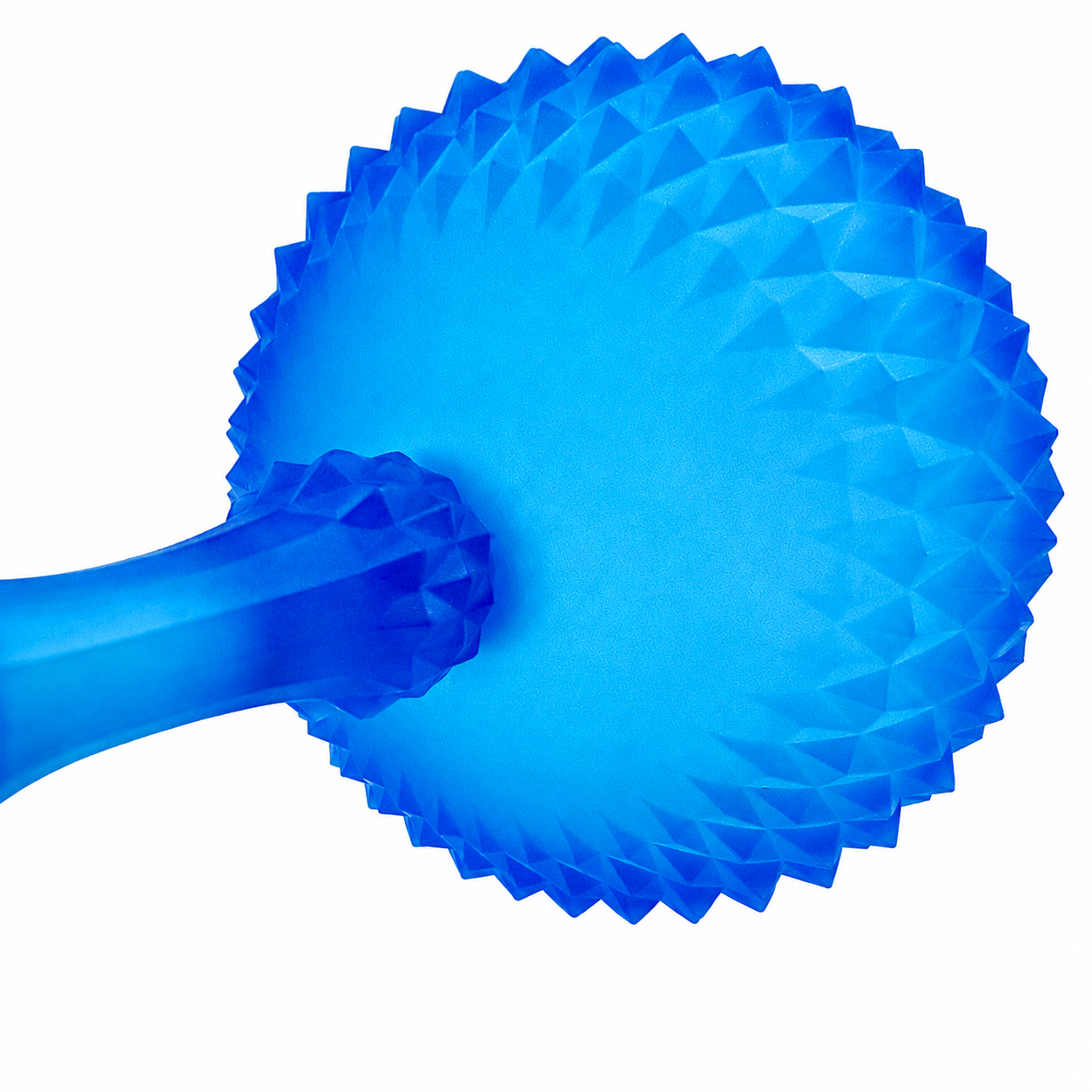 Image 22 of 32
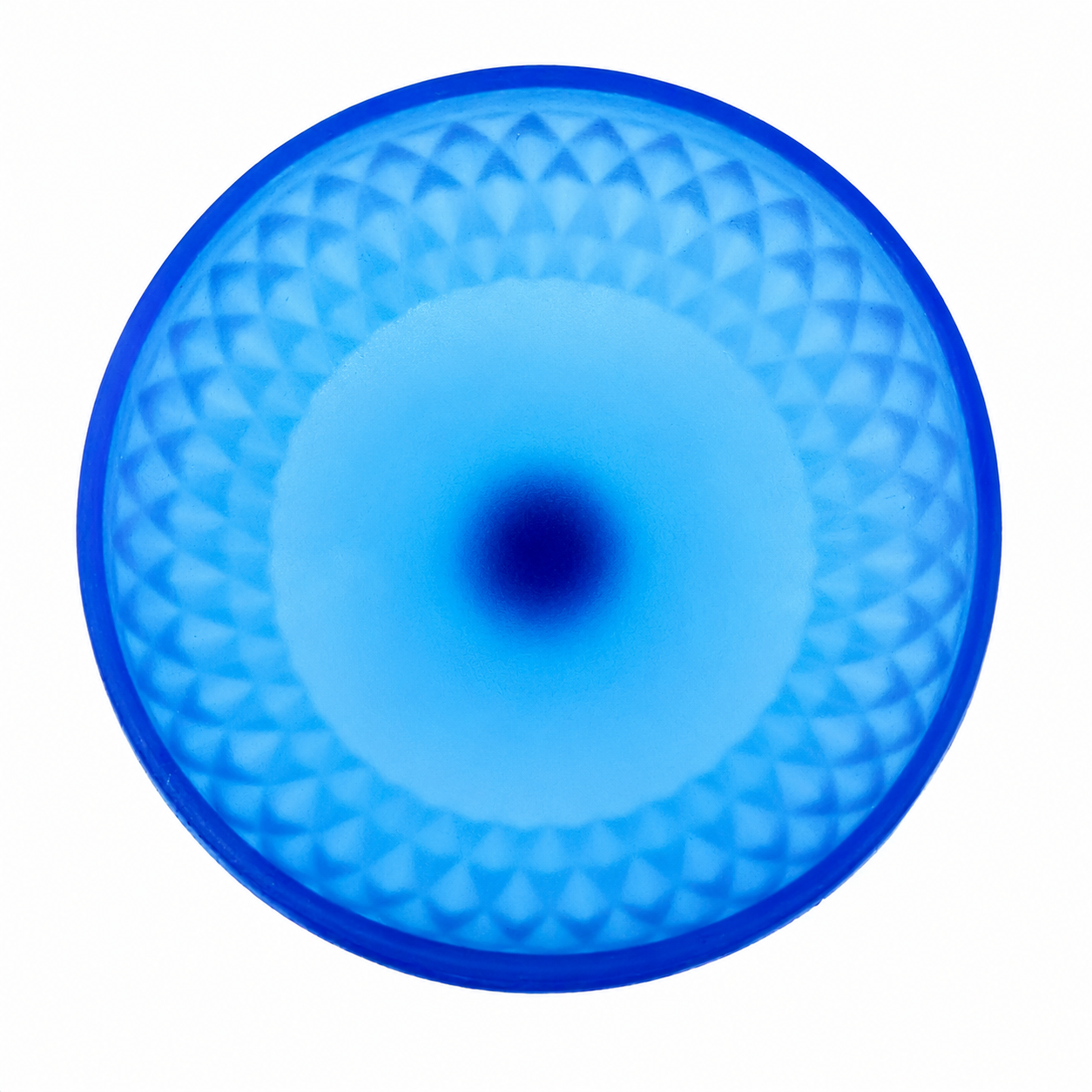 Image 23 of 32
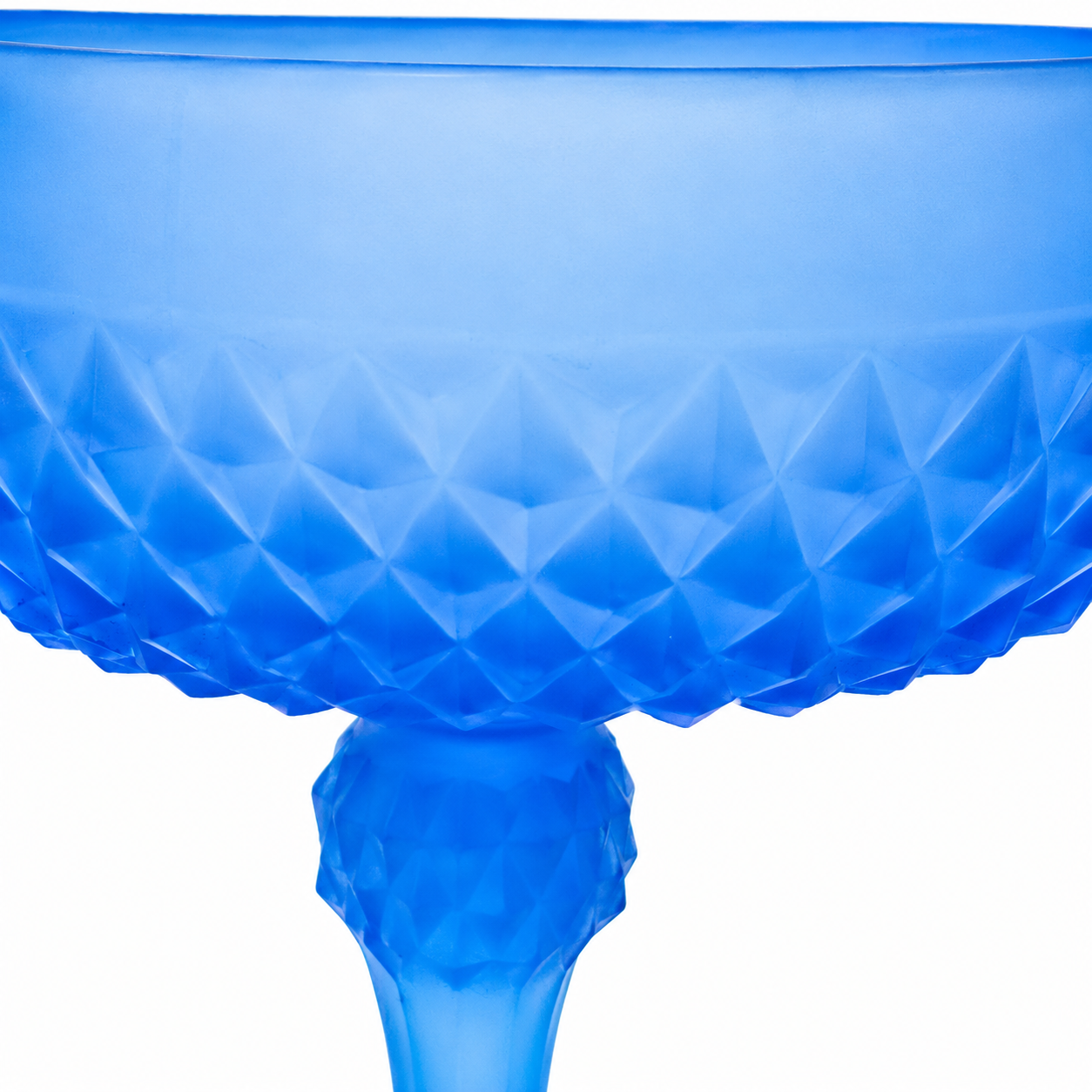 Image 24 of 32
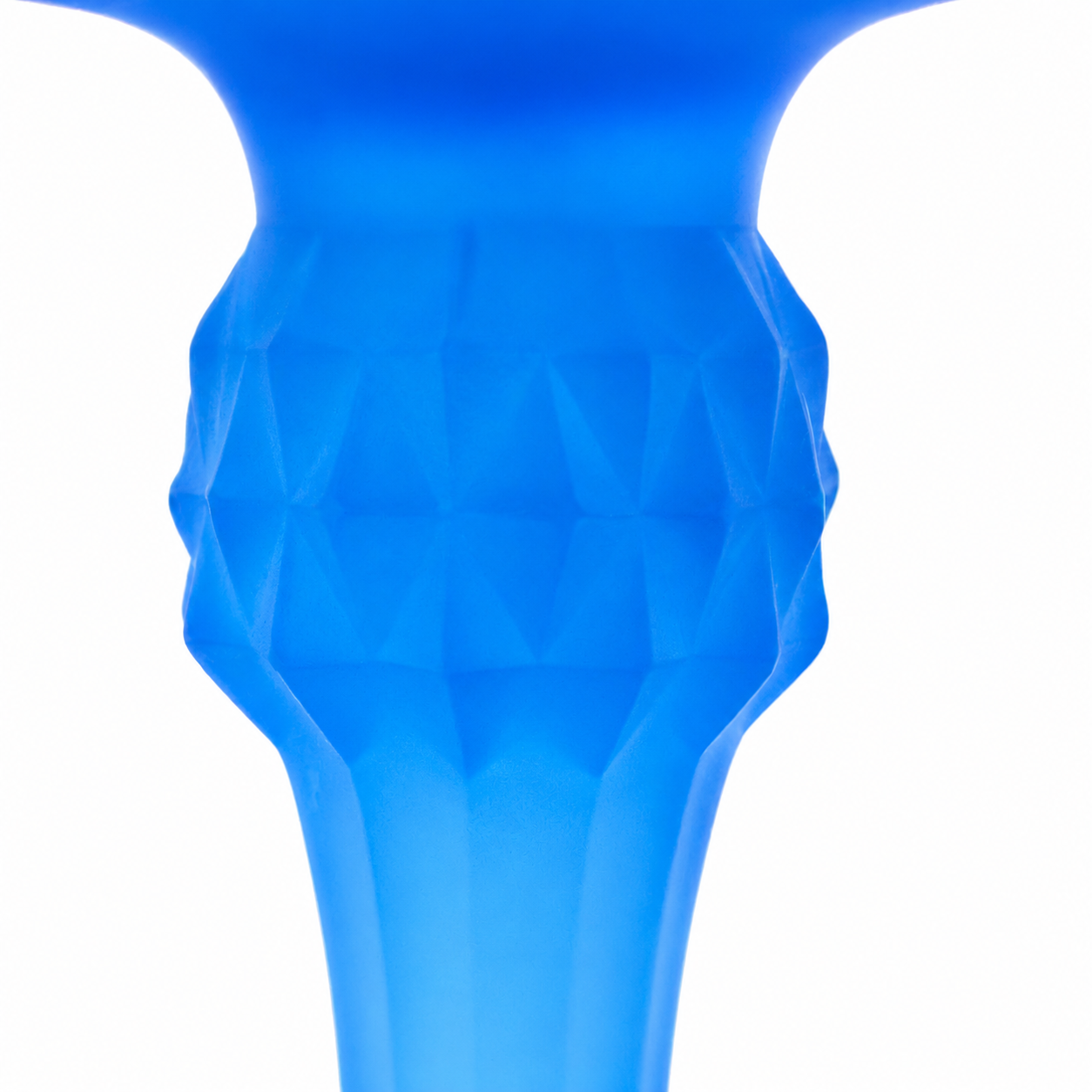 Image 25 of 32
 Image 26 of 32
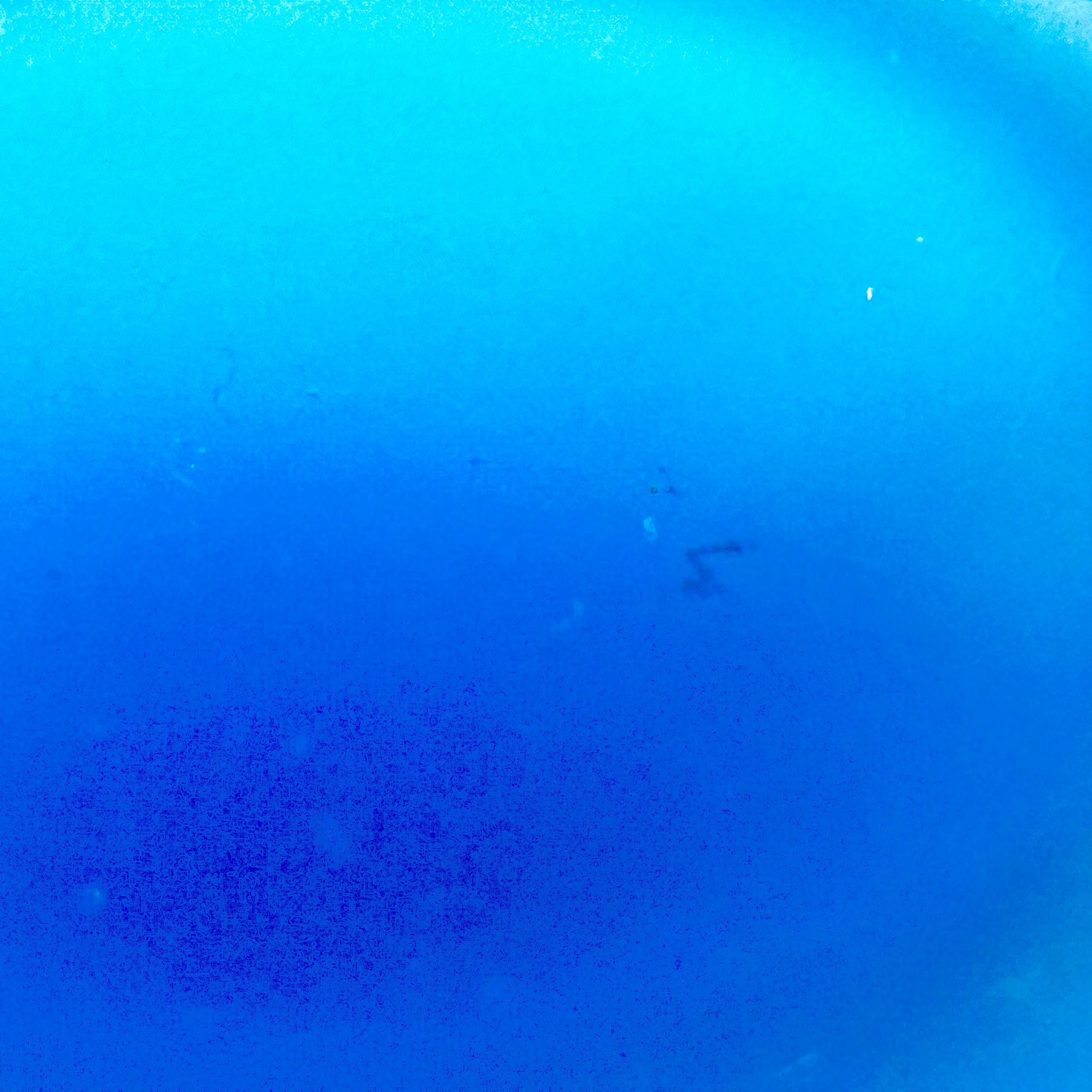 Image 27 of 32
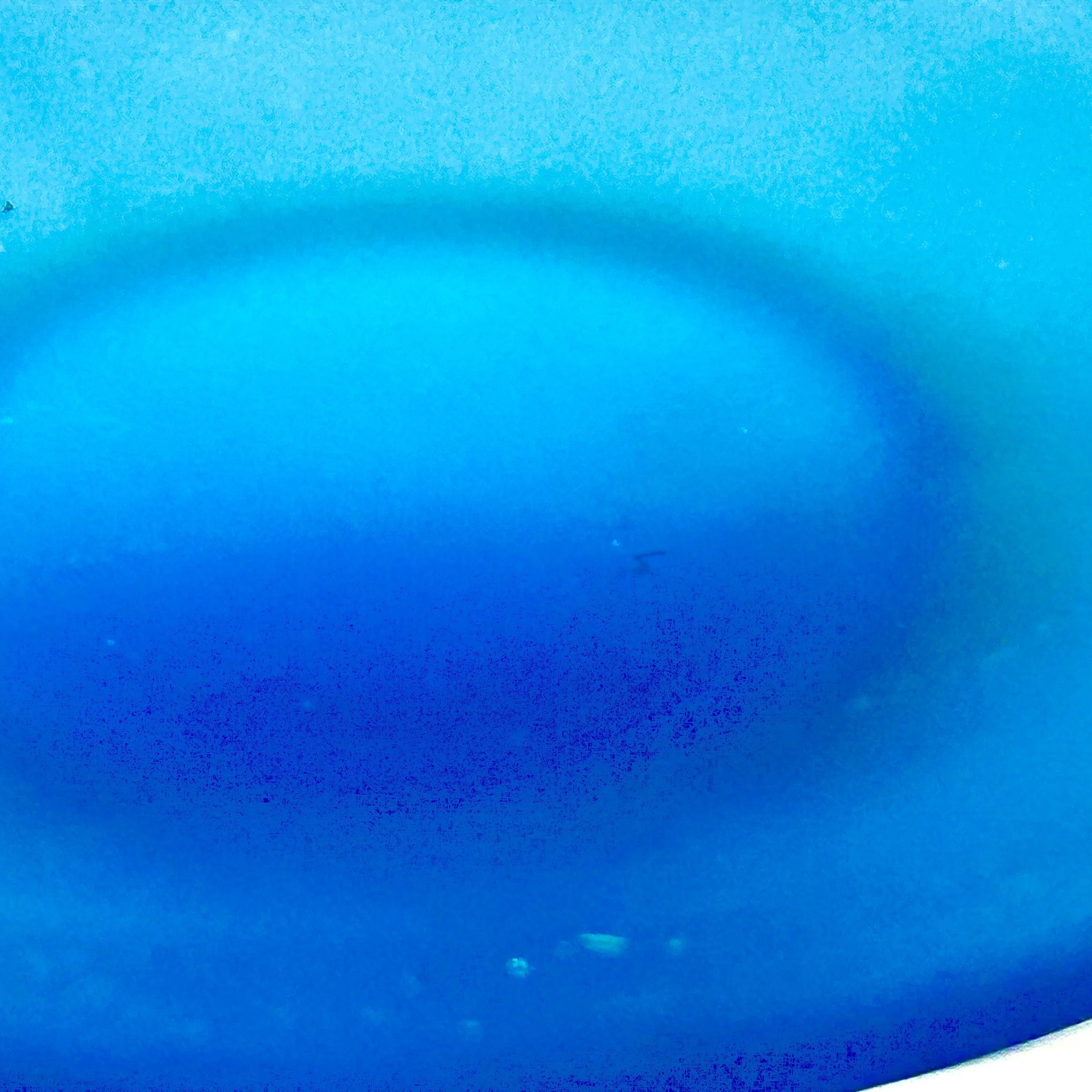 Image 28 of 32
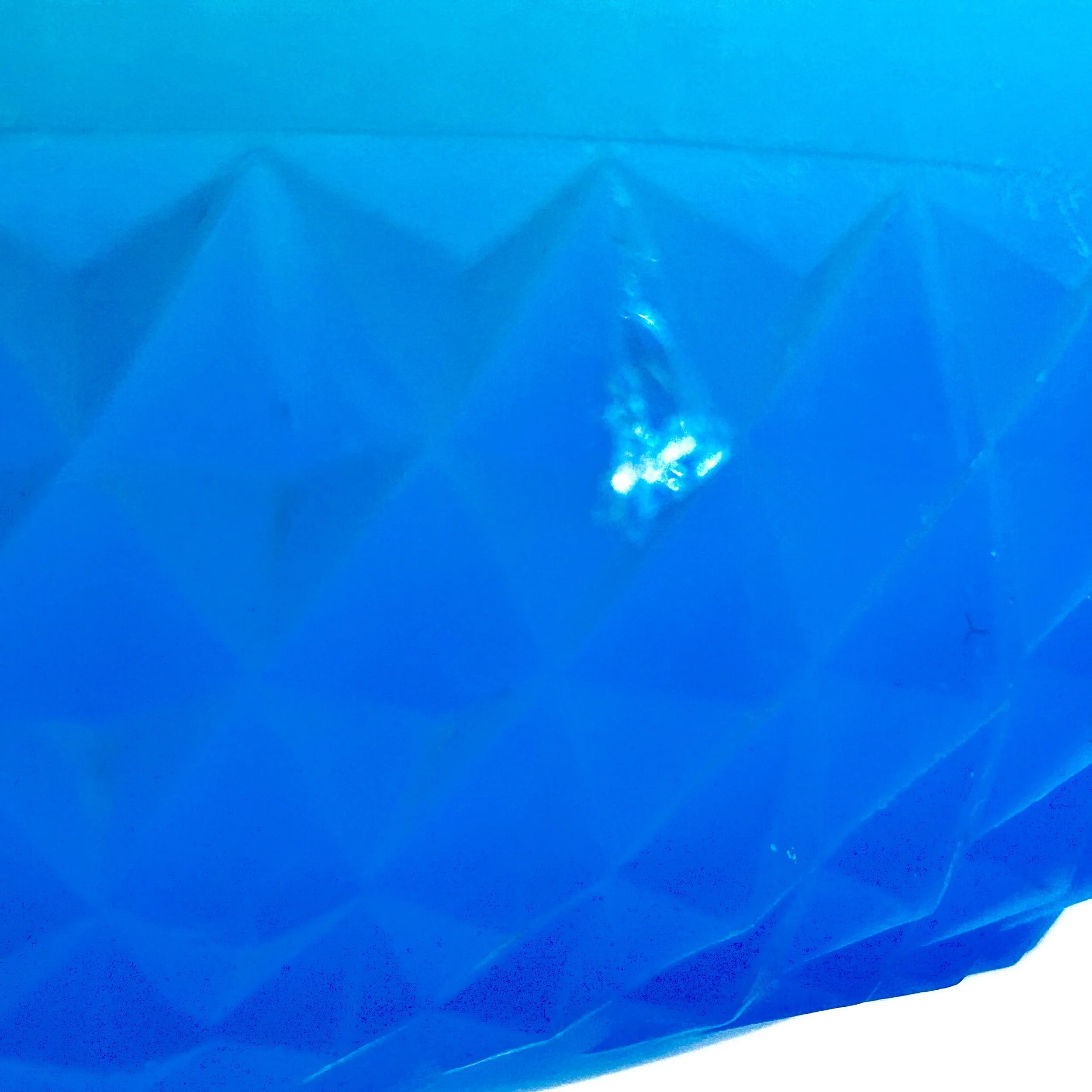 Image 29 of 32
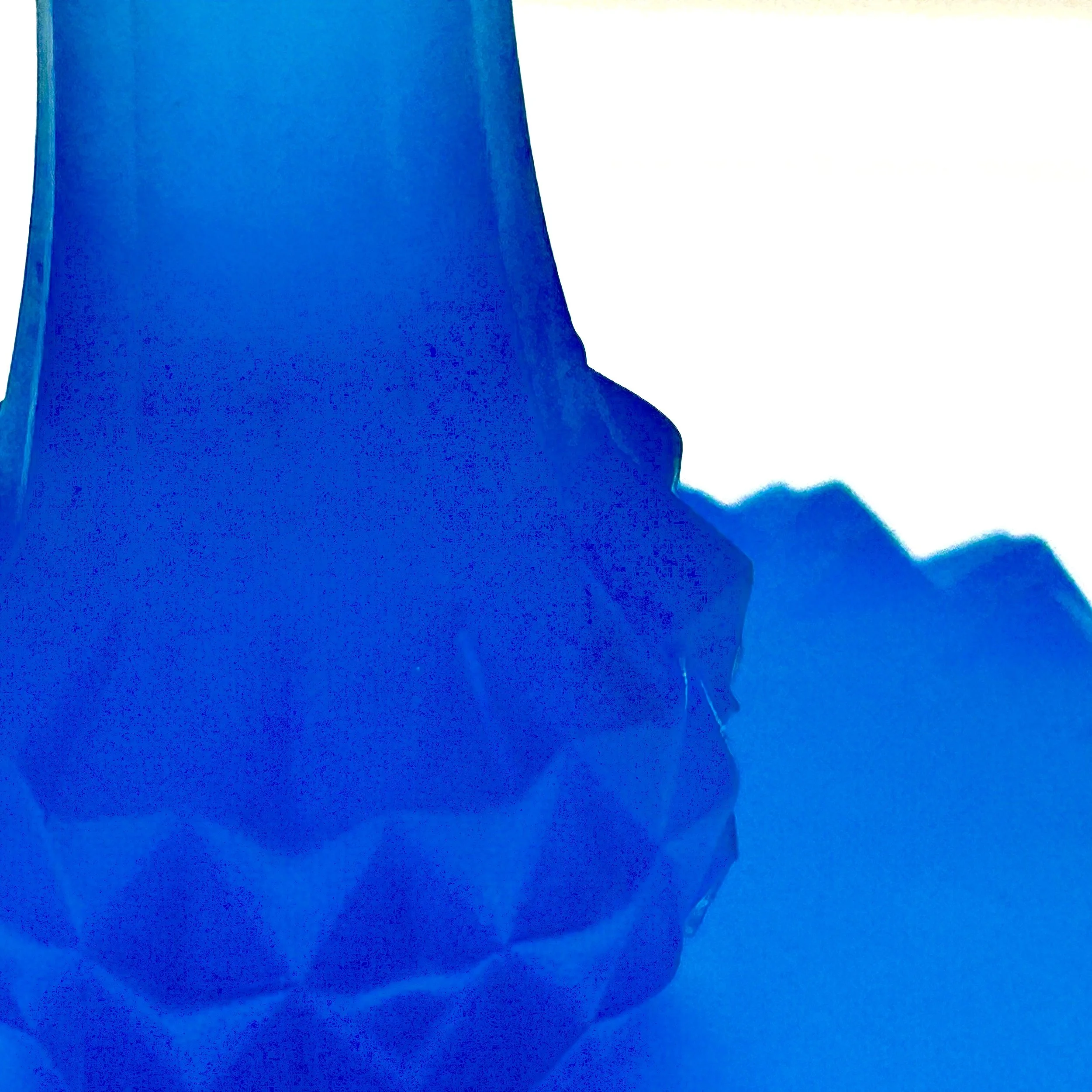 Image 30 of 32
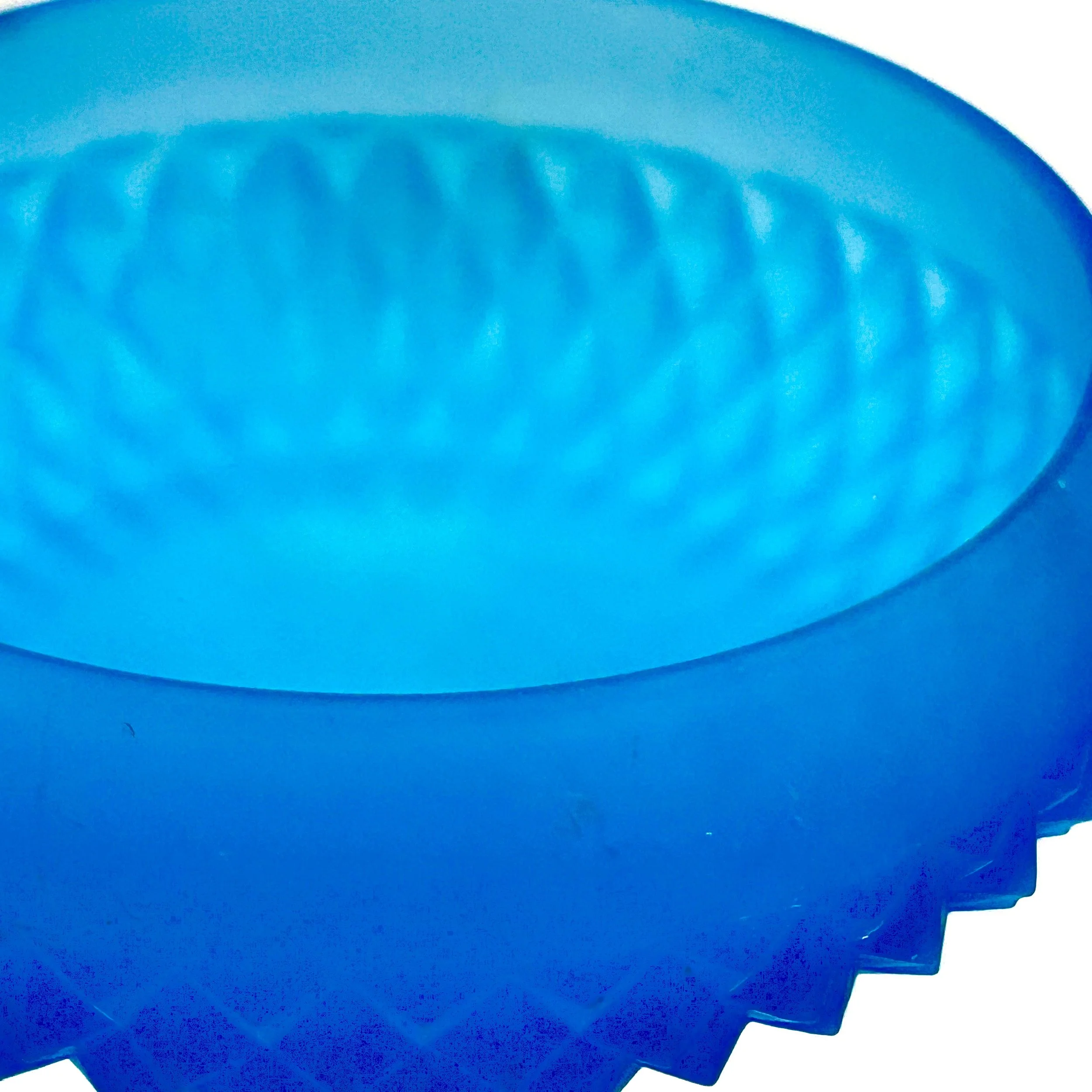 Image 31 of 32
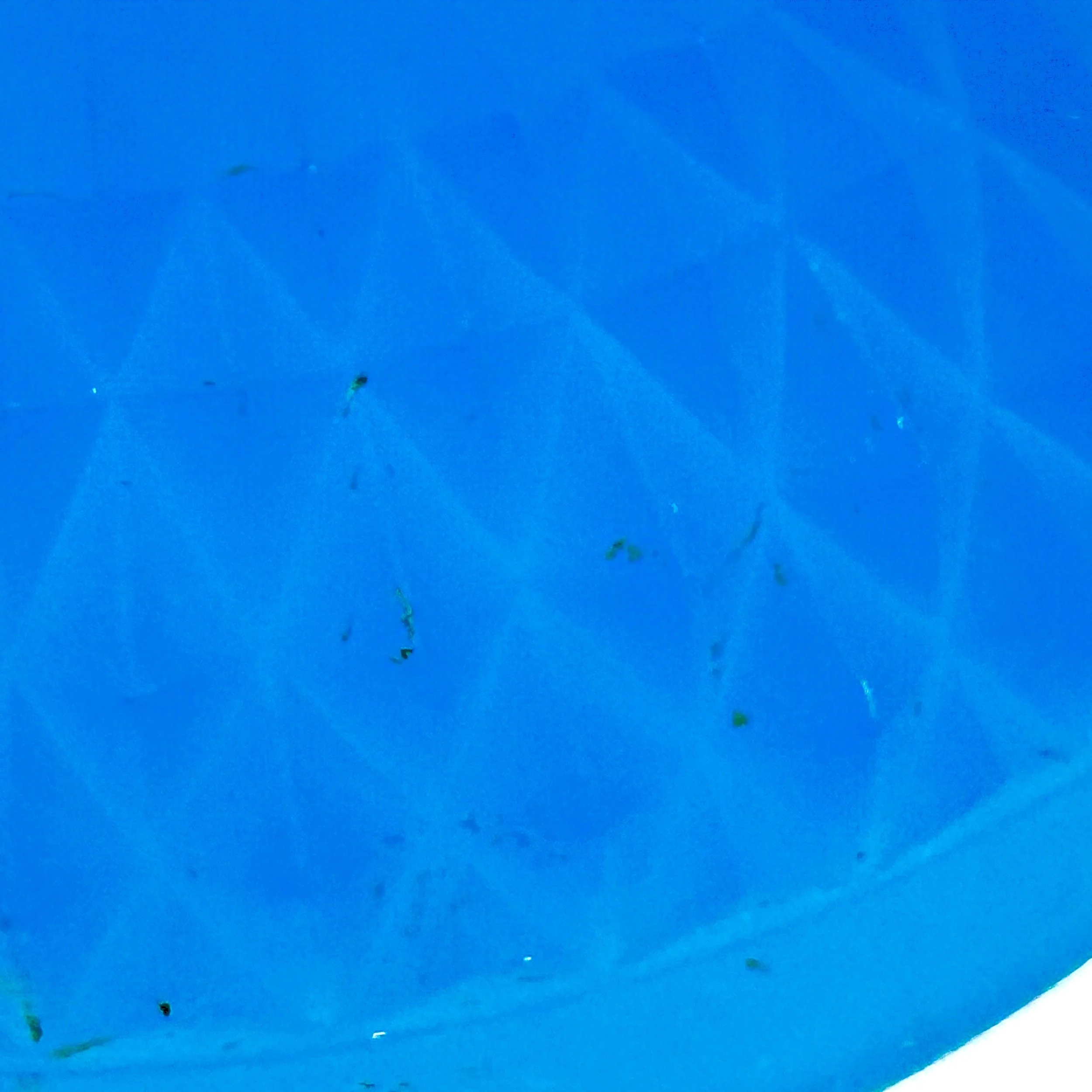 Image 32 of 32